RANCHO SECO CARE CENTER
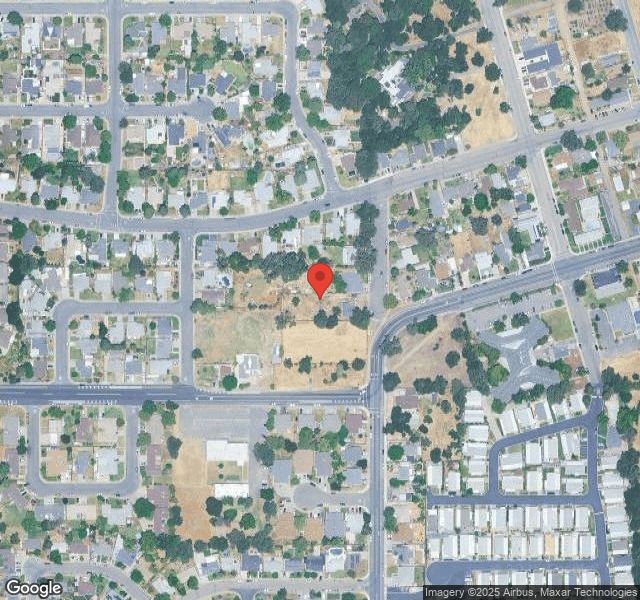

144 F STREET, GALT, CA 95632 (209) 745-1537
For profit - Limited Liability company 99 Beds AJC HEALTHCARE Data: November 2025 2 Immediate Jeopardy citations
Trust Grade
0/100
#1092 of 1155 in CA
Last Inspection: April 2025

Within standard 12-15 month inspection cycle. Federal law requires annual inspections.

Overview

Rancho Seco Care Center has received a Trust Grade of F, indicating significant concerns and poor quality of care. Ranked #1092 out of 1155 facilities in California and #37 out of 37 in Sacramento County, it falls within the bottom half of both state and county rankings. The facility appears to be worsening, with the number of reported issues increasing from 26 in 2024 to 29 in 2025. Although staffing is rated average with a 3/5 star rating and a turnover rate of 44%, the facility has alarming fines totaling $495,303, which is higher than 99% of California facilities, suggesting serious compliance issues. Notable incidents include the failure to protect residents from sexual abuse by a staff member, which affected nine residents, and a lack of timely care for a resident with a severe leg injury, leading to prolonged pain.

Trust Score
F
0/100
In California
#1092/1155
Bottom 6%
Safety Record
High Risk
Review needed
Inspections
Getting Worse
26 → 29 violations
Staff Stability
○ Average
44% turnover. Near California's 48% average. Typical for the industry.
Penalties
✓ Good
$495,303 in fines. Lower than most California facilities. Relatively clean record.
Skilled Nurses
⚠ Watch
Each resident gets only 21 minutes of Registered Nurse (RN) attention daily — below average for California. Fewer RN minutes means fewer trained eyes watching for problems.
Violations
⚠ Watch
88 deficiencies on record. Higher than average. Multiple issues found across inspections.
★☆☆☆☆
1.0
Overall Rating
★★★☆☆
3.0
Staff Levels
★★☆☆☆
2.0
Care Quality
★☆☆☆☆
1.0
Inspection Score
Stable
2024: 26 issues
2025: 29 issues

The Good

  • Full Sprinkler Coverage · Fire safety systems throughout facility
  • No fines on record
  • Staff turnover below average (44%)

    4 points below California average of 48%

Facility shows strength in fire safety.

The Bad

1-Star Overall Rating

Below California average (3.1)

Significant quality concerns identified by CMS

Staff Turnover: 44%

Near California avg (46%)

Typical for the industry

Federal Fines: $495,303

Well above median ($33,413)

Significant penalties indicating serious issues

Chain: AJC HEALTHCARE

Part of a multi-facility chain

Ask about local staffing decisions and management

The Ugly 88 deficiencies on record

2 life-threatening 1 actual harm
Jul 2025 1 deficiency
CONCERN (D) 📢 Someone Reported This

A family member, employee, or ombudsman was alarmed enough to file a formal complaint

Potential for Harm - no one hurt, but risky conditions existed

Accident Prevention (Tag F0689)

Could have caused harm · This affected 1 resident

**NOTE- TERMS IN BRACKETS HAVE BEEN EDITED TO PROTECT CONFIDENTIALITY** Based on interview, record review and policy review, the facility failed to provide supervision and monitoring for one of three ...

Read full inspector narrative →
**NOTE- TERMS IN BRACKETS HAVE BEEN EDITED TO PROTECT CONFIDENTIALITY** Based on interview, record review and policy review, the facility failed to provide supervision and monitoring for one of three sampled residents (Resident 1) when Resident 1, after two attempts, eloped from the facility. This failure had the potential to result in serious injury or death for Resident 1.Findings:Resident 1 was admitted to the facility in 2025 with diagnoses that included stroke, aphasia (a language disorder that affects a person's ability to communicate), and Dementia (problems with reasoning, planning, judgement, and memory).Resident 1's admission MDS (Minimum Data Set-an assessment tool), dated 4/10/25, documented Resident 1 as having clear speech, usually able to understand others, usually able to make self-understood and his Brief Interview for Mental Status (BIMS) summary score as an 11 (moderate impairment). The MDS described Resident 1 as having no delirium or behavioral symptoms. The MDS also described Resident 1 as needing little to no assistance with bed mobility, transfers, locomotion on and off unit, dressing, and toilet use.During a review of Resident 1's Order Summary Report, for July 2025, a physician's order, dated 4/10/25, indicated, MD (Medical Doctor) determines that the resident does NOT have the mental capacity to make healthcare decisions as per history & physical or transfer orders or preferred intensity of care. During a review of Resident 1's care plan, dated 7/17/25, indicated Resident 1 was At Risk for Elopement and described his elopement attempt earlier that day and Resident 1 stating that he wanted to go home. During a review of Resident 1's Nurses Progress Note (PN), dated 7/17/25 at 12:15 p.m., the PN indicated the following: Resident 1 was restless and pacing walking in hallways, patio and inside his room. When Resident 1 went back to his room he attempted to climb out of the window by removing the screw which prevented the window from being opened more than three inches. Resident 1's roommate alerted staff Resident 1 was climbing out of the window and staff were able to get Resident 1 back inside his room. Safety checks every 15 minutes for 72 hours were implemented to keep Resident 1 from eloping. During a review of Resident 1's PN, dated 7/22/25 at 10:42 a.m., the PN indicated, During rounds around 07:30a.m. charge nurse was notified that [Resident 1] was not in his room. DON (Director of Nursing) and charge nurse went to [Resident 1] room and [Resident 1] bed was found with two pillows placed under the bed sheets and the window open with the screen outside of the building on the ground. [Resident 1's] personal belongings (suitcase, clothing) are still on the nightstand at bedside. Staff attempted to locate [Resident 1] throughout the facility in the building and surrounding areas, with no success in finding the resident. [Resident 1] last seen by night shift staff at approximately 06:00am. Administrator notified at 07:40am. Social Service Director (SSD) placed call to resident's brother [name] and nephew [name] and left voicemails, unable to contact either party. SSD was able to speak with Resident's son [name] and make him aware. Son stated, He's hitchhiking, he grew up in the 70's. Call placed to [NAME] PD at 08:35 by the DON and notified of resident missing. Officer [Name] in the facility shortly after to take the missing person's report.During an interview with the DON, DON stated that after his first attempt on 7/17/25, Resident 1 was offered another room with increased staff visibility but Resident 1 declined. When asked if additional methods were used to prevent this resident from eloping, the DON stated in this case a Wanderguard (a mechanism used to visually and audibly alarm when a resident wearing a device triggers the alarm when passing threshold) would not have activated, due to the resident climbing out of the window. The DON stated there are no alarms on the windows. During an interview with Maintenance Manager (MM), the MM stated he repaired the window, on 7/17/25, in Resident 1's room, replacing the screw that was removed and placing an additional screw on top of the window frame to prevent Resident 1 from climbing out of the window. MM also indicated on C hallway there was not an additional exterior gate or enclosure like there was for the rest of the building. When MM was asked how Resident 1 had eloped, MM stated that he most likely used a butter knife or some other tool and unscrewed both the lower window frame screw and the upper window frame screw, opened the window pushed out the screen and was able to climb out of the window. A review of the policy provided by the facility titled, Elopements and Wandering Residents, copyrighted in 2025, described, This facility ensures that residents who exhibit wandering behavior and/or are at risk for elopement receive adequate supervision to prevent accidents, and receive care in accordance with their person-centered plan of care addressing the unique factors contributing to wandering or elopement risk. The policy further stipulated, .3. The facility shall establish and utilize a systematic approach to monitoring and managing residents at risk for elopement or unsafe wandering, including identification and assessment of risk, evaluation and analysis of hazards and risks, implementing interventions to reduce hazards and risks, and monitoring for effectiveness and modifying interventions when necessary. The policy directed, . The interdisciplinary team will evaluate the unique factors contributing to risk in order to develop a person-centered care plan . Interventions to increase staff awareness of the resident's risk, modify the resident's behavior, or to minimize risks associated with hazards will be added to the resident's care plan and communicated to appropriate staff . Adequate supervision will be provided to help prevent accidents or elopements . Charge nurses and unit managers will monitor the implementation of interventions, response to interventions, and document accordingly . and, The effectiveness of interventions will be evaluated, and changes will be made as needed. Any changes or new interventions will be communicated to relevant staff.
Jun 2025 2 deficiencies
CONCERN (D) 📢 Someone Reported This

A family member, employee, or ombudsman was alarmed enough to file a formal complaint

Potential for Harm - no one hurt, but risky conditions existed

Deficiency F0557 (Tag F0557)

Could have caused harm · This affected 1 resident

Based on observation, interview, and record review, the facility failed to provide care in a manner that promoted dignity and respect for one of four sampled residents (Resident 1) when Resident 1 was...

Read full inspector narrative →
Based on observation, interview, and record review, the facility failed to provide care in a manner that promoted dignity and respect for one of four sampled residents (Resident 1) when Resident 1 was observed spitting in hallways and was reported to open his bowels on the facility patio. This failure had the potential to minimize Resident 1's self esteem and to negatively impact the psychosocial well-being for other residents in the facility. Findings: During a review of Resident 1's clinical record, the record indicated Resident 1 was admitted in early 2023 with multiple diagnoses including Dementia (a decline in mental ability severe enough to interfere with daily life). A review of Resident 1's Minimum Data Set (MDS- a federally mandated assessment tool), Cognitive Patterns, dated 3/21/25, indicated Resident 1 had a Brief Interview for Mental Status (BIMS- tool to assess cognition) score of 3 out of 15 that indicated Resident 1 had severe cognitive impairment. During an interview on 6/18/25 at 12:36 p.m. with Certified Nurse Assistant (CNA 1), CNA 1 stated Resident 1 has been observed having bowel movements on the outside patio. During an interview on 6/18/25 at 12:49 p.m. with Licensed Nurse 1 (LN 1), LN 1 stated Resident 2 had bowel movements outside often and acknowledged it could be stressful for other residents to see. During an interview on 6/18/25 at 1:08 p.m. with Licensed Nurse 3 (LN 3), LN 3 stated that Resident 1 goes to the bathroom outside often and spits on the floor throughout the facility. LN 3 further confirmed Resident 1 was involved in an altercation with another resident who saw him with his pants down in the patio. During an observation on 6/18/25 at 3:51 p.m. Resident 1 was observed walking independently in the hallway while spitting on the floor. During a concurrent interview and record review on 6/18/25 at 3:09 p.m. with Director of Nursing (DON), the DON reviewed Resident 1's clinical record and stated there was no care plan or interventions related to Resident 1 having bowel movements outside and spitting on the facility floors. The DON further confirmed Resident 1 was involved in a physical altercation as a result of another resident seeing Resident 1 with his pants down in the patio. A review of the facility's policy and procedure titled 'Resident Rights and Dignity' dated 2/2021 indicated, Employees shall treat all residents with kindness, respect, and dignity. Furthermore, Federal and state laws guarantee certain basic rights to all residents of this facility. These rights include the right to: . a dignified existence .
CONCERN (D) 📢 Someone Reported This

A family member, employee, or ombudsman was alarmed enough to file a formal complaint

Potential for Harm - no one hurt, but risky conditions existed

Free from Abuse/Neglect (Tag F0600)

Could have caused harm · This affected 1 resident

Based on interview, and record review the facility failed to protect one of 4 sampled residents (Resident 1) from physical abuse when Resident 2 pushed Resident 1 in the face. This failure resulted i...

Read full inspector narrative →
Based on interview, and record review the facility failed to protect one of 4 sampled residents (Resident 1) from physical abuse when Resident 2 pushed Resident 1 in the face. This failure resulted in Resident 1 sustaining a bloody nose. Findings: During a review of Resident 1's clinical record, the record indicated Resident 1 was admitted in early 2023 with multiple diagnoses including Dementia (a decline in mental ability severe enough to interfere with daily life). A review of Resident 1's Minimum Data Set (MDS- a federally mandated assessment tool), Cognitive Patterns, dated 3/21/25, indicated Resident 1 had a Brief Interview for Mental Status (BIMS- tool to assess cognition) score of 3 out of 15 that indicated Resident 1 had severe cognitive impairment. During a review of Resident 2's clinical record, the record indicated Resident 2 was admitted in late 2024 with multiple diagnoses including Diabetes Mellitus (a chronic disease where the body doesn't produce enough insulin (a hormone) to regulate sugar levels in the body and can cause slow wound healing. A review of Resident 2's Minimum Data Set (MDS- a federally mandated assessment tool), Cognitive Patterns, dated 3/24/25, indicated Resident 1 had a Brief Interview for Mental Status (BIMS- tool to assess cognition) score of 15 out of 15 that indicated Resident 2 was cognitively intact. During a concurrent observation and interview on 6/18/25 at 12:14 p.m. in Resident 2's room, Resident 2 stated the incident happened in the patio area. Resident 2 indicated that he was blocking Resident 1 from hitting him and he pushed Resident 1's face with his forearm causing Resident 1 to have a bloody nose. During a concurrent observation and interview on 6/18/25 at 12:30 p.m., Resident 1 was observed in the dining room during the lunch meal. Resident 1 refused to be interviewed. During an interview on 6/18/25 at 12:36 p.m. with Certified Nurse Assistant (CNA 1), CNA 1 indicated Resident 1 pooped on the patio often. During a telephone interview on 6/18/25 at 1:02 p.m. with Licensed Nurse 2 (LN 2), LN 2 stated she walked to the patio when the incident occurred and saw Resident 1's nose covered with blood and Resident 2 said he hit Resident 1 in the face because Resident 1 had his pants down and was attempting to have a bowel movement on the patio. A review of Resident 1's 'Change In Condition' document dated 6/16/25 indicated in part, . resident had a bloody nose due to another resident hiting [sic] him in this [sic] nose. During an interview on 6/18/25 at 3:09 p.m. with Director of Nursing (DON), the DON confirmed the facility was aware Resident 1 was having bowel movements out in the patio area and that the situation could have been prevented. DON further stated the facility does not approve of residents harming each other. During a review of facility policy and procedure (P&P) titled Abuse and Neglect ., dated March 2018, the P&P indicated . Abuse is . willful infliction of injury . with resulting physical harm .
Jun 2025 1 deficiency
CONCERN (D) 📢 Someone Reported This

A family member, employee, or ombudsman was alarmed enough to file a formal complaint

Potential for Harm - no one hurt, but risky conditions existed

Free from Abuse/Neglect (Tag F0600)

Could have caused harm · This affected 1 resident

**NOTE- TERMS IN BRACKETS HAVE BEEN EDITED TO PROTECT CONFIDENTIALITY** Based on observation, interview and record review, the facility failed to ensure one of three sampled residents (Resident 1 and ...

Read full inspector narrative →
**NOTE- TERMS IN BRACKETS HAVE BEEN EDITED TO PROTECT CONFIDENTIALITY** Based on observation, interview and record review, the facility failed to ensure one of three sampled residents (Resident 1 and Resident 2) in a census of 95 were free from abuse when Resident 2 hit Resident 1 with a wooden and metal reacher. This failure increased the potential for physical injury and psychosocial distress. Findings: Resident 1 was admitted to the facility in the fall of 2024 with multiple diagnoses which included dementia (a general term for impaired thinking, remembering, or reasoning that can affect a person's ability to function safely), abnormality of gait and mobility, visual loss, depression and anxiety. During a review of Resident 1's Minimum Data Set (MDS, an assessment tool), dated 6/4/25, the MDS indicated Resident 1 had severe memory impairment. During a review of Resident 1's nurses notes (NN), dated 6/16/25, the NN indicated Resident had an altercation with roommate. She lost balance and fell across room mate's bed and room mate [Resident 2] started hitting her in the face with a stick. Resident 2 was admitted to the facility in the fall of 2024 with multiple diagnoses which included abnormalities of gait and mobility. During a review of Resident 2's MDS, dated [DATE], the MDS indicated Resident 2 was alert and oriented, able to make her needs known. During a review of Resident 2's SBAR [Situation, Background, Assessment, Recommendation] Communication Form, dated 6/16/25, indicated Resident had an altercation with roommate [Resident 1] which resulted with alleged abuse. Resident admitted to striking room mate across the face with a stick. This resident [Resident 2] received a skin tear to the right elbow. During a concurrent observation and interview on 6/19/25 at 6:19 a.m. with Resident 2, a wooden reacher with metal claw on one end and a metal hook on the other end was laying on the bedside table within reach. Resident 2 was asked about the 6/16/25 incident with her former roommate and said she didn't remember the incident but I think they [Resident 1] accidentally fell on me and I pushed them [Resident 1] off. I was half asleep and can't tell you how it happened. When asked about whether she used the reacher, Resident 2 indicated she didn't remember taking the reacher and hitting anyone. I don't remember getting in a fight with anyone. During a concurrent observation and interview on 6/19/25 at 7:06 a.m. with Resident 1, Resident 1 was asked about the 6/16/25 incident with her roommate. Resident 1 stated I do remember [Resident 2] grabbed a stick .It's kind of hard to remember if [Resident 2] was in the bed or the chair when it happened. I called out 'She's hitting me.' She's done it before, but I didn't report it .The stick hit me on one side of my face [pointed to the left upper cheek .]. When she grabbed the stick, I said 'You're not going to do that again.' [Resident 2] said, 'I'll do that again!' She said she's going to defend herself . During an interview on 6/19/25 at 7:48 a.m. with Certified Nurse's Assistant (CNA) 3, CNA 3 was asked about the resident-to-resident altercation on 6/16/25 and said, That day .I heard a commotion. I went into [Resident 1 and 2's room] and found [Resident 1] was laying at the foot of [Resident 2's] bed. [Resident 1] was trying to stop [Resident 2] who had a stick in her hand. I saw [Resident 2] hitting [Resident 1] with the stick. [Resident 2] had blood on her arm like a small scratch. [Resident 2] was the one with the stick. [Resident 1] .was trying to push the stick and [Resident 2] away . [Resident 2] said she felt [Resident 1] on top of her feet and she was startled and grabbed the stick and started hitting the person laying on her feet with it .They were like fist fighting but it was more like [Resident 1] was trying to keep [Resident 2] from hitting her face .They were both upset that night . During an interview on 6/19/25 at 8:32 a.m. with the Director of Nurses (DON), the DON was asked her expectations and said, Abuse is never OK . During a review of the facility policy and procedure (P&P) titled Abuse Prevention Program, revised 12/16, the P&P indicated Our residents have the right to be free from abuse .This includes but is not limited to freedom from .physical abuse .Abuse is defined as the willful infliction of injury .with resulting physical harm .As a part of the resident abuse prevention, the administration will .Protect our residents from abuse by anyone including .other residents .
Jun 2025 1 deficiency
CONCERN (D) 📢 Someone Reported This

A family member, employee, or ombudsman was alarmed enough to file a formal complaint

Potential for Harm - no one hurt, but risky conditions existed

Free from Abuse/Neglect (Tag F0600)

Could have caused harm · This affected 1 resident

Based on interview, and record review, the facility failed to protect one of four sampled residents from abuse (Resident 1), when another resident (Resident 2) hit Resident 1 on the arm repeatedly. Th...

Read full inspector narrative →
Based on interview, and record review, the facility failed to protect one of four sampled residents from abuse (Resident 1), when another resident (Resident 2) hit Resident 1 on the arm repeatedly. This failure caused fear and had the potential to cause physical injury to Resident 1. Findings: During a review of Resident 1's admission record, Resident 1 was admitted in March of 2016 with diagnoses of Flaccid Hemiplegia (a disorder where one side of the body is paralyzed, inability to move affected side due to lack of muscle function), Epilepsy (a seizure disorder) and muscle weakness. Resident 1's Minimum Data Set (MDS, a federally mandated resident assessment tool) indicated Resident 1 was cognitively intact. During a review of Resident 2's admission record, Resident 2 was admitted in September of 2024 with a diagnosis of Dysphagia (difficulty swallowing). Resident 2's MDS indicated the resident had severe cognitive impairment. During a review of a facility submitted document titled REPORT OF SUSPECTED DEPENDENT ADULT/ELDER ABUSE [SOC 341] dated 11/18 indicated that Resident 1 reported that Resident 2 hit her on the arm. It further indicated that a witness, Resident 3 reported that he saw Resident 2 slap Resident 1 on her arm. During an interview on 6/18/25 at 12:38 p.m. with Resident 1, Resident 1 stated, .he [Resident 2] hit my arm a few times .it is not ok for him to touch me .I got scared .years ago I was hurt really bad .I don't like to talk about how I got hurt .I suppressed it .I don't like people touching me because of that .he knows the difference between right and wrong .they had to give me a pill to calm down .he scares me because he stares at me like he is going to hurt me. During an interview on 6/18/25 at 1:10 p.m. with Licensed Nurse (LN 1) , LN 1 stated that she was aware that Resident 1 was hit by Resident 2. LN 1 reported, .she [Resident 1] was scared and crying .the charge nurse gave her Lorazepam [a medication to reduce nervousness] which she has PRN [as needed] to calm her down. During an interview on 6/18/25 at 1:25 p.m. with the Activities Director (AD), AD stated that Resident 1 reported that Resident 2 hit her. AD reported that Resident 3 witnessed the incident and that Resident 3 reported, .he [Resident 1] hit her [Resident 2]. During an interview on 6/18/25 at 2:05 p.m. with Resident 3, Resident 3 stated he saw him [Resident 2] hit her [Resident 1] .she [Resident 1] yelled. During an interview on 6/18/25 at 3:14 p.m. with the Director of Nursing (DON), when asked if a resident hitting another resident was abuse, the DON stated, Yes, it is considered abuse. The DON confirmed that Resident 1 was upset and required a medication to calm the nervousness. During a review of the facility's Policy and Procedure (P&P) titled Abuse and Neglect . dated March 2018, the P&P indicated, Abuse is defined at §483.5 as the willful infliction of injury, unreasonable confinement, intimidation, or punishment with resulting physical harm, pain or mental anguish .Instances of abuse of all residents, irrespective of any mental or physical condition, cause physical harm, pain or mental anguish. It includes verbal abuse, sexual abuse, physical abuse, and mental abuse .2. Neglect, as defined at §483.5, means the failure of the facility, its employees or service providers to provide goods and services to a resident that are necessary to avoid physical harm, pain, mental anguish or emotional distress.
May 2025 1 deficiency
CONCERN (D) 📢 Someone Reported This

A family member, employee, or ombudsman was alarmed enough to file a formal complaint

Potential for Harm - no one hurt, but risky conditions existed

Resident Rights (Tag F0550)

Could have caused harm · This affected 1 resident

**NOTE- TERMS IN BRACKETS HAVE BEEN EDITED TO PROTECT CONFIDENTIALITY** Based on observation, interview, and record review, the facility failed to ensure dignity was promoted for two of five sampled r...

Read full inspector narrative →
**NOTE- TERMS IN BRACKETS HAVE BEEN EDITED TO PROTECT CONFIDENTIALITY** Based on observation, interview, and record review, the facility failed to ensure dignity was promoted for two of five sampled residents (Resident 2 and Resident 3), when the residents room smelled with a very strong urine odor. This failure led Resident 2 to feel a sense of an undignified existence and Resident 3 felt uncomfortable and lacking in dignity. Findings: Resident 2 was admitted to the facility late 2024 with diagnoses which included high blood pressure and abnormalities of walking and mobility. During a review of Resident 2 ' s Minimum Data Set (MDS – a federally mandated resident assessment tool), dated 2/21/25, the MDS indicated Resident 2 had no memory impairment. Resident 3 was admitted to the facility in the middle of 2024 with diagnoses which included depression and anxiety. During a review of Resident 3 ' s MDS, dated [DATE], the MDS indicated Resident 3 had very mild memory impairment. During an observation on 5/21/25 at 1:43 p.m. in Resident 2 and Resident 3 ' s shared bedroom, upon entering the room, a discernible smell of a very strong urine odor was noted. Resident 3 was observed sitting in a wheelchair, awake, alert and verbally responsive. Resident 2 stated, I know you can smell something in here. It is very strong and it smells like that all the time. When asked how she felt about the smell in the room, Resident 2 stated, When they are leaving the urine smell in our room, it is undignified existence. They don't care what they're doing. I used the potty a little while ago, like this morning, and there is a diaper on top of the potty chair. Nobody came to clean. During a concurrent observation and interview on 5/21/25 at 1:46 p.m. with Resident 2 at the bedside, Resident 2 pointed the soiled diaper on the top of the potty chair and stated, It has been lying in there since this morning. I guess they don ' t have time to pick it up or clean the potty chair. During a concurrent observation and interview on 5/21/25 at 1:48 p.m. with Resident 3 in her room, Resident 3 was lying in bed, awake, alert, and verbally responsive. When asked how she was doing, Resident 3 stated, I have no problem. It ' s just that the smell of urine is so strong. It ' s very uncomfortable. I feel like I ' m inside the bathroom. There is no dignity here. During a concurrent observation and interview on 5/21/25 at 1:53 p.m. with Certified Nursing Assistant 1 (CNA 1) in Resident 2 and Resident 3 ' s room, when CNA 1 entered the room and was asked if she smelled a strong odor of urine, CNA 1 stated, This room smells like that all the time. CNA 1 verified there was a soiled brief on top of the potty chair, and stated, It must be the soiled diaper. During a concurrent observation and interview on 5/21/25 at 1:56 p.m. with Licensed Nurse 1 (LN 1) in Resident 2 and Resident 3 ' s room, LN 1 entered the room and verified the smell of urine and the soiled brief on top of the potty chair, and stated, Yes. The room smells urine and it is very strong .It is very undignified for the residents in here. During an interview on 5/21/25 at 2:51 p.m. with Social Service Director (SSD), when asked about Resident 2 and Resident 3 ' s room environment, the SSD stated, When I walked into that room, I did smell a strong urine odor. It smelled a little bit strong today .that is not dignified. During an interview on 5/21/25 at 3:58 p.m. with the Director of Nursing (DON), when asked what would the residents felt if their room smelled with urine odor, the DON stated, That is not acceptable. The resident ' s room should be maintained clean to promote the resident ' s dignity and quality of life. During an interview on 5/21/25 at 4:08 p.m. with the Administrator (ADM), the ADM stated, I would expect the CNAs to maintain the residents ' environment clean and safe to preserve their dignity. During a review of the facility ' s policy and procedures (P&P) titled, Dignity, dated 2/23, the P&P indicated, Each resident shall be cared for in a manner that promotes and enhances his or her sense of well-being, level of satisfaction with life, and feelings of self-worth and self-esteem .Residents are treated with dignity and respect at all times .Demeaning practices and standards of care that compromise dignity are prohibited. During a review of the facility ' s P&P tilted, Provision of Quality Care, dated 2/23, the P&P indicated, Each resident will be provided care and services to attain or maintain physical, mental and psychosocial well-being.
Apr 2025 1 deficiency
CONCERN (D) 📢 Someone Reported This

A family member, employee, or ombudsman was alarmed enough to file a formal complaint

Potential for Harm - no one hurt, but risky conditions existed

Free from Abuse/Neglect (Tag F0600)

Could have caused harm · This affected 1 resident

**NOTE- TERMS IN BRACKETS HAVE BEEN EDITED TO PROTECT CONFIDENTIALITY** Based on interview and record review, the facility failed to ensure 1 of 4 sampled residents (Resident 2) was free from abuse wh...

Read full inspector narrative →
**NOTE- TERMS IN BRACKETS HAVE BEEN EDITED TO PROTECT CONFIDENTIALITY** Based on interview and record review, the facility failed to ensure 1 of 4 sampled residents (Resident 2) was free from abuse when Resident 1 ran over Resident 2 ' s foot with his wheelchair two times. This failure had the potential to cause injury, fear, and distress to Resident 2. Findings: A review of Resident 1 ' s admission record indicated Resident 1 was admitted to the facility in early 2025 with multiple diagnoses including Depression (a condition with persistent sadness, loss of interest in activities, and difficulty in daily life). A review of Resident 1 ' s Minimum Data Set (MDS, a federally mandated resident assessment tool), dated 2/12/25, reflected a Brief Interview for Mental Status (BIMS-an assessment tool used by facilities to screen and identify memory, orientation, and judgement status of the resident) score of 15 out of 15 which indicated Resident 1 was cognitively intact. A review of Resident 2 ' s admission record indicated Resident 2 was admitted to the facility in late 2024 with multiple diagnoses including anxiety disorder (a disorder with experiences of excessive, persistent, and distressing fear and anxiety that interferes with normal functioning). A review of Resident 2 ' s MDS, dated [DATE], reflected a BIMS score of 12 out of 15 that indicated Resident 2 had moderate cognitive impairment. During a review of Resident 1 ' s progress note dated 4/27/25, the progress indicated, .[Resident 1] also ran over [Resident 2 ' s] foot with his wheelchair. The nurse told him you ran over [Resident 2 ' s] foot and [Resident 1] said i don ' t care and ran over [Resident 2 ' s] foot again with his wheelchair . During an interview on 4/29/25 at 11:42 a.m. with Resident 1, Resident 1 was observed sitting in bed in his room talking to self. Resident 1 stated on the date of the incident he does not remember running over Resident 2 ' s foot with his wheelchair but he was cited by the police. During an interview on 4/29/25 at 12:19 p.m. with Certified Nursing Assistant 1 (CNA 1) at the back nursing station, CNA 1 stated she was a witness to the incident. CNA 1 stated Resident 2 was sitting in his wheelchair near activities. CNA 1 stated Resident 1 was yelling and screaming at staff. CNA 1 stated she redirected Resident 1 and told him that other residents were present and that was when Resident 1 backed his wheelchair over Resident 2 ' s foot. CNA 1 further stated she notified Resident 1 that he ran over Resident 2 ' s foot and Resident 1 stated, I don ' t care and backed onto Resident 2 ' s foot again. During a concurrent observation and interview on 4/29/25 at 12:31 p.m. in Resident 2 ' s room, Resident 2 was observed sitting up on the left side of his bed. Resident 2 stated Resident 1 was angry, yelling, and screaming at staff in the hallway. Resident 2 started to look down and stated Resident 1 ran over his foot. Resident 2 stated he told Resident 1 to stop. Resident 2 told the State surveyor he did not want to be hit again. Resident 2 further stated that during the incident a CNA (CNA 1) told the other resident (Resident 1) he ran over his (Resident 2 ' s) foot, and Resident 1 yelled I don ' t care and ran over Resident 2 ' s foot again. During an interview on 4/29/25 at 1:32 p.m. with the Social Services Director (SSD), the SSD stated during interview with Resident 2, the resident had stated Resident 1 was yelling and ran over his foot twice with his wheelchair. During a telephone interview on 4/29/25 at 1:43 p.m. with Licensed Nurse Supervisor (LN Sup), the LN Sup stated she witnessed the incident. LN Sup stated Resident 1 was yelling at staff and banging on medication carts. LN Sup further stated Resident 2 was waiting near the activities area and Resident 1 ran over Resident 2 ' s foot. LN Sup further stated Resident 1 yelled, I don ' t care and ran over Resident 2 ' s foot again. LN Sup then stated Resident 2 told the LN Sup he wanted to press charges against Resident 1. During an interview on 4/29/25 at 3:12 p.m. with the Administrator (ADM), the ADM stated resident abuse is not tolerated at the facility. During a review of facility policy and procedure (P&P) titled, Abuse and Neglect – Clinical Protocol, dated March 2018, the P&P indicated, Abuse . the willful infliction of injury . Willful . defined .as . the individual must have acted deliberately, not that the individual must have intended to inflict injury or harm .
Apr 2025 14 deficiencies
CONCERN (D)

Potential for Harm - no one hurt, but risky conditions existed

Comprehensive Care Plan (Tag F0656)

Could have caused harm · This affected 1 resident

Based on observation, interview and record review, the facility failed to ensure comprehensive care plans for dysphagia (difficulty of swallowing) were developed for two out of 24 sampled residents, R...

Read full inspector narrative →
Based on observation, interview and record review, the facility failed to ensure comprehensive care plans for dysphagia (difficulty of swallowing) were developed for two out of 24 sampled residents, Resident 49 and Resident 79. This failure increased Resident 44 and Resident 79's risk of not receiving proper nursing care interventions for dysphagia and had the potential to cause choking and aspiration (inhale into the lungs). Findings: In a review of Resident 49's admission Record, Resident 49 was admitted in the facility on 3/25/25 with diagnosis that included Acute Respiratory Failure with Hypoxia (difficulty of breathing, low oxygen in the body), and Gastro-Esophageal Reflux (backflow of stomach contents into the mouth). In a review of Resident 79's admission Record, Resident 79 was admitted in the facility on 3/3/25 with diagnosis that included Acute Respiratory Failure with Hypoxia, and Pneumonia (lung infection making it difficult to breathe). During a concurrent observation, interview, and record review with Activity Director (AD) in the Dining room on 4/7/25 at 12:15 p.m., Resident 49 was observed to have drunk regular water from a cup. Review of Resident 49's meal ticket indicated, a diet order of nectar thick liquids. The AD confirmed that Resident 49's water should have been thickened (powder or gel, that is added to liquids like water to increase their viscosity and make them thicker) as indicated on his meal ticket as Resident 49 may choke or aspirate if his water is not thickened. During a concurrent observation and interview with the Director of Nursing (DON) in the Dining room on 4/7/25 at 12:45 p.m., Resident 79 was observed to drink hot chocolate from a mug. Resident 79's meal ticket indicated, a diet order of nectar thick liquids. The DON confirmed that Resident 79's hot chocolate drink should have been thickened as indicated on his meal ticket as Resident 79 may choke if his hot chocolate drink is not thickened. The DON further stated, they should have followed his diet order for consistency. In a review of Resident 49's Order Summary Report, ordered on 3/25/25 indicated, Dysphagia Level 1 Puree texture, Nectar-thick liquids consistency. In a review of Resident 79's Order Summary Report, ordered on 3/21/25 indicated, Dysphagia Level 3 Advanced Texture, Nectar-thick liquids consistency. In a review of Resident 49 and Resident 79's electronic medical record with Licensed Nurse 3 (LN 3) on 4/9/25 at 11:35 a.m., indicated no documented evidence a dysphagia care plan was done. LN 3 confirmed a dysphagia care plan was not done for Resident 49 and Resident 79. LN 3 stated a care plan should have been put in place as a means of communication for nursing staff. In a review of Resident 49 and Resident 79's electronic medical record with the DON on 4/9/25 at 12:42 p.m., indicated no documented evidence a dysphagia care plan was done for Resident 49 and Resident 79. The DON stated a care plan should have been put in place. In a review of the facility's policy and procedure, titled Comprehensive Care Plans, undated, indicated, It is the policy of this facility to develop and implement a comprehensive person-centered care plan for each resident, consistent with resident rights, that includes measurable objectives and timeframes to meet a resident's medical, nursing, and mental psychosocial needs and ALL services that are identified in the resident's comprehensive assessment and meet professional standards of quality .
CONCERN (D)

Potential for Harm - no one hurt, but risky conditions existed

Quality of Care (Tag F0684)

Could have caused harm · This affected 1 resident

**NOTE- TERMS IN BRACKETS HAVE BEEN EDITED TO PROTECT CONFIDENTIALITY** Based on interview and record review, the facility failed to ensure one out of 24 sampled residents (Resident 346) received trea...

Read full inspector narrative →
**NOTE- TERMS IN BRACKETS HAVE BEEN EDITED TO PROTECT CONFIDENTIALITY** Based on interview and record review, the facility failed to ensure one out of 24 sampled residents (Resident 346) received treatment and care in accordance with professional standards of practice, facility's policy and procedures (P&P), and physician's order when Resident 346's right ankle wound care order was not consistently done. This failure possibly resulted in Resident 346 experiencing right ankle pain, increased bleeding on the right ankle, increased confusion, increased heart rate (beat), and elevated temperature and ultimately getting Resident 346 transferred to an acute hospital and was diagnosed with right ankle infection. Findings: A review of Resident 346's clinical record indicated Resident 346 was initially admitted January of 2023 and had diagnoses that included multiple sclerosis (MS- a chronic, unpredictable disease of the nervous system which causes communication problems between the brain and the body leading to a range of symptoms, including vision problems, balance difficulties, fatigue, and cognitive changes), malnutrition (state of poor nutrition that occurs when the body does not receive enough or the right nutrients to function properly), depression (a mood disorder that causes a persistent feeling of sadness and loss of interest that can interfere with daily lives), and anxiety disorder (a mental health disorder characterized by feelings of worry, anxiety, or fear that are strong enough to interfere with one's daily activities). A review of Resident 346's Minimum Data Set (MDS- a federally mandated resident assessment tool) Cognitive Patterns, dated 1/25/25, indicated Resident 346 had a Brief Interview for Mental Status (BIMS- a tool to assess cognition) score of 15 out of 15 which indicated Resident 346 had an intact cognition (mental process of acquiring knowledge and understanding). During an interview on 4/7/25 at 9:53 a.m. with Resident 346, Resident 346 stated she has a wound on her right ankle which got infected because the staff was not cleaning it as often as what the doctor ordered. Resident 346 further stated she was sent to an acute hospital when her right ankle wound got infected. A review of Resident 346's care plan, dated 11/30/24, indicated, Resident has actual impairment to skin integrity r/t [related to] surgical wound on right ankle . A review of Resident 346's care plan intervention, dated 12/2/24, indicated, Monitor/document location, size and treatment of skin injury. Report abnormalities, failure to heal, s/sx [signs and symptoms] of infection, maceration [softening and breakdown of skin due to prolonged exposure to moisture] etc. to MD [medical doctor]. A review of Resident 346's physician's order, started on 1/30/25 and discontinued on 3/14/25, indicated, right ankle wound: Cleanse with normal saline [a mixture of sodium chloride and water commonly used in cleaning wounds], pat dry, apply calcium alginate with silver [wound dressing], wrap with kerlix [a type of bandage]. in the evening AND as needed as soiled or dislodged. A review of Resident 346's physician's order, started 3/14/25 and was held starting 3/19/25, indicated, right ankle wound: Cleanse with Dakins 1/4 strength (wound care product) pat dry, apply calcium alginate with silver, wrap with kerlix. in the evening . A review of Resident 346's treatment administration records (TAR - a daily documentation record used by a licensed nurse to document treatments given to a resident) for February and March 2025 indicated the treatment of Resident 346's right ankle wound was not done on 2/5/25, 2/10/25, 2/15/25, 3/8/25, and 3/15/25. During a concurrent interview and record review on 4/9/25 at 10:58 a.m. with the Nurse Supervisor (NS), Resident 346's clinical records were reviewed. The NS confirmed that Resident 346's right ankle wound care order was not consistently done. The NS stated Resident 346's right ankle wound care should be done consistently every evening because if not, it might cause a wound infection, or the wound might get worst which possibly could cause hospitalization. The NS further stated the physician's order for wound care should always be followed and nurses should document if the resident refused treatment. A review of Resident 346's progress note, dated 3/19/25, indicated, MD [medical doctor] notified d/t [due to] increase confusion, increase HR [heart rate], and elevated temp [temperature]. Orders to transfer to hospital for further evaluation. Res [Resident 346] refused initial transfer. Res finally agreed after 3 LNs [licensed nurse] attempt. Resident left with paramedics to [name of acute hospital] via gurney @ 0740 [7:40 a.m.]. Res called son prior to leaving. Res was noted to be anxious and crying while assisted onto the gurney and leaving. Able to calm res down . A review of Resident 346's hospital Discharge summary, dated [DATE], indicated, [Resident 346] was admitted on [DATE] for right ankle pain and increased bleeding from her right ankle. Wound vac [Wound vacuum- a machine that works by removing excess fluid and debris from the wound helping with wound healing] placement was deferred on 3/23 due to concern for possible infection with green purulence [containing pus] at the surgical site per Wound Care evaluation. Wound cultures 3/24 grew MRSA [Methicillin-resistant Staphylococcus aureus- a type of infection that is resistant to many common antibiotics] and Pseudomonas [a type of bacterial infection], and patient was treated with 7 day course of IV [intravenous- through a vein] Fortaz [a medication used to treat infection] and IV Vancomycin [a medication used to treat infection]. During an interview on 4/9/25 at 12:56 p.m. with the Director of Staff Development (DSD), the DSD stated that nurses must follow the frequency of wound treatment per the physician's order. The DSD also stated that if it was not documented, it would imply that it was not done. The DSD further stated that the risk if wound treatment was not done consistently were skin breakdown, possible wound infection and worsening of the wound. During an interview on 4/9/24 at 3:26 p.m. with the Director of Nursing (DON), the DON stated that she would expect staff to follow the wound treatment ordered by the physician. The DON further stated if wound treatment was not consistently done, it would be a risk for slow wound healing, wound infection, worsening of the wound, and/or development of wound complication(s). A review of the facility's P&P titled, Wound Treatment Management, undated, indicated, To promote wound healing of various types of wound, it is the policy of this facility to provide evidence-based treatments in accordance with current standards of practice and physician's orders .1. Wound treatments will be provided in accordance with physician orders, including the cleansing method, type of dressing, and frequency of dressing change. A review of the facility's P&P titled, Provision of Quality of Care, undated, indicated, .the facility will ensure that residents receive treatment and care by qualified persons in accordance with professional standards of practice, the comprehensive person-centered care plans .1. Each resident will be provided care and services to attain or maintain his/her highest practicable physical, mental, and psychosocial well-being.
CONCERN (D)

Potential for Harm - no one hurt, but risky conditions existed

Incontinence Care (Tag F0690)

Could have caused harm · This affected 1 resident

Based on interview and record review, the facility failed to ensure one out of 24 sampled residents (Resident 364) received treatment and care in accordance with professional standards of practice, an...

Read full inspector narrative →
Based on interview and record review, the facility failed to ensure one out of 24 sampled residents (Resident 364) received treatment and care in accordance with professional standards of practice, and facility's policy, procedure (P&P), and physician's orders when Resident 346's suprapubic catheter (a tube that drains urine from the bladder through a small incision in the lower abdomen) care and treatment was not done consistently. This failure had the potential to result in suprapubic catheter site infection, clogging of the catheter, and possible development of suprapubic catheter complications. Findings: A review of Resident 346's clinical record indicated Resident 346 was initially admitted January of 2023 and had diagnoses that included multiple sclerosis (MS- a chronic, unpredictable disease of the nervous system which causes communication problems between the brain and the body leading to a range of symptoms, including vision problems, balance difficulties, fatigue, and cognitive changes), malnutrition (state of poor nutrition that occurs when the body does not receive enough or the right nutrients to function properly), neuromuscular dysfunction of bladder (the nerves and muscles in the urinary bladder don't work together properly), depression (a mood disorder that causes a persistent feeling of sadness and loss of interest that can interfere with daily lives), and anxiety disorder (a mental health disorder characterized by feelings of worry, anxiety, or fear that are strong enough to interfere with one's daily activities). A review of Resident 346's Minimum Data Set (MDS- a federally mandated resident assessment tool) Cognitive Patterns, dated 1/25/25, indicated Resident 346 had a Brief Interview for Mental Status (BIMS- a tool to assess cognition) score of 15 out of 15 which indicated Resident 346 had an intact cognition (mental process of acquiring knowledge and understanding). A review of Resident 346's MDS Bladder and Bowel conditions, dated 1/25/25, indicated Resident 346 has Indwelling catheter [a flexible tube inserted into the bladder and left in place to drain urine] (including suprapubic catheter .) During an interview on 4/7/25 at 1:55 p.m. with Resident 346, Resident 346 stated she has a catheter in place and staff would miss days of care and treatment. A review of Resident 346's care plan, dated 10/16/23, indicated, The resident has Suprapubic Catheter related to: Neurogenic bladder. A review of Resident 346's care plan goal, dated 4/15/24, indicated, The resident will be/remain free from catheter-related trauma through review date. A review of Resident 346's physician's order, dated 11/29/24, indicated, Flush suprapubic catheter with 60 cc [cubic centimeter- unit of measurement] saline [a mixture of sodium chloride and water] every shift for prevent sedimentation and clogging. A review of Resident 346's treatment administration records (TAR - a daily documentation record used by a licensed nurse to document treatments given to a resident) for January and March 2025 indicated the care of Resident 346's suprapubic catheter was not done on the following shifts: 1/3/25- day shift 1/8/25- night shift 1/12/25- evening shift 1/15/25- evening shift 1/22/25- night shift 1/28/25- night shift 3/5/25- night shift 3/8/25- evening shift 3/15/25- evening shift 3/15/25- night shift A review of Resident 346's physician's order, dated 11/30/24, indicated, Cleanse suprapubic insertion site every evening shift related to NEUROMUSCULAR DYSFUNCTION OF BLADDER . A review of Resident 346's TAR for January, February, and March 2025 indicated the treatment of Resident 346's suprapubic catheter insertion site was not done on 1/21/25, 2/3/25, 2/25/25, 2/26/25, 3/8/25, and 3/17/25. During a concurrent interview and record review on 4/9/25 at 10:58 a.m. with the Nurse Supervisor (NS), Resident 346's clinical records was reviewed. The NS confirmed that Resident 346's suprapubic catheter care and treatment order was not done consistently. The NS stated Resident 346's suprapubic catheter care and treatment should be done consistently per the physician's order to prevent possible suprapubic catheter site infection and/or clogging of the catheter. During an interview on 4/9/25 at 12:56 p.m. with the Director of Staff Development (DSD), the DSD stated that nurses must follow the frequency of suprapubic catheter site care and suprapubic catheter flushing per the physician's order. The DSD also stated that if it was not documented, there would be no proof that it was not done. The DSD further stated that the risk if suprapubic catheter care and treatment was not consistently done were possible site infection, and the catheter might get clogged causing other catheter related complications. During an interview on 4/9/24 at 3:26 p.m. with the Director of Nursing (DON), the DON stated that she would expect staff to follow the suprapubic catheter care and treatment frequency ordered by the physician. The DON further stated that if suprapubic catheter care and treatment was not consistently done, it would be a risk for infection of the suprapubic catheter, risk for catheter clogging, and development of suprapubic catheter complications like UTI (Urinary tract infection- an infection in the bladder/urinary tract). A review of the facility's P&P titled, Suprapubic Catheterization, undated, indicated, 1. The care and maintenance of suprapubic catheters shall be in accordance with physician orders . A review of the facility's P&P titled, Provision of Quality of Care, undated, indicated, .the facility will ensure that residents receive treatment and care by qualified persons in accordance with professional standards of practice, the comprehensive person-centered care plans .1. Each resident will be provided care and services to attain or maintain his/her highest practicable physical, mental, and psychosocial well-being.
CONCERN (D)

Potential for Harm - no one hurt, but risky conditions existed

Deficiency F0694 (Tag F0694)

Could have caused harm · This affected 1 resident

Based on observation, interview, and record review, the facility failed to change the peripherally inserted central catheter (PICC) line (a thin flexible tube inserted into a vein in the upper arm and...

Read full inspector narrative →
Based on observation, interview, and record review, the facility failed to change the peripherally inserted central catheter (PICC) line (a thin flexible tube inserted into a vein in the upper arm and threaded into a larger vein near the heart to deliver medications) dressing for one of 24 sampled residents (Resident 3). This failure had the potential to result in a serious infection and/or further health complications. Findings: A review of Resident 3's admission Record indicated, Resident 3 was admitted in 2025 with diagnoses that included Osteomyelitis (an infection of the bone). A review of Resident 3's Minimum Data Set (MDS - an assessment tool used to guide care) Cognitive (having full understanding) Patterns, dated 3/31/25, indicated Resident 3 had a Brief Interview for Mental Status (a tool to assess a person's full understanding) score of 13 out of 15 which indicated Resident 3 was able to understand. During a concurrent observation and interview with Resident 3 on 4/7/25 at 9:17 a.m., Resident 3's PICC line dressing was dated 3/27/25. Resident 3 stated he was unsure of when the dressing was last changed. During a concurrent observation and interview with the Director of Nursing (DON) on 4/7/25 at 10:57 a.m., the DON verified the PICC line dressing was dated 3/27/25. The DON stated, PICC line dressings should be changed every seven days. The DON further stated, The dressing should have been changed on or before 4/3/25. Lastly, the DON stated, The expectation is for PICC line dressings to be changed weekly. A review of the Medication Administration Record dated, 4/1/25 indicated a physician's order for, PICC line to right upper arm dressing change every week . A review of the facility policy titled, PICC/Midline/CVAD Dressing Change dated 2024 indicated, It is the policy of this facility to change peripherally inserted central catheter (PICC), midline or central venous device (CVAD) dressing weekly or if soiled, in a manner to decrease potential for infection and/or cross-contamination. Physician's orders will specify type of dressing and frequency of changes.
CONCERN (D)

Potential for Harm - no one hurt, but risky conditions existed

Respiratory Care (Tag F0695)

Could have caused harm · This affected 1 resident

Based on observation, interview, and record review, the facility failed to follow a physician's order for oxygen therapy for one of 24 sampled residents (Resident 49). This failure had the potential ...

Read full inspector narrative →
Based on observation, interview, and record review, the facility failed to follow a physician's order for oxygen therapy for one of 24 sampled residents (Resident 49). This failure had the potential to result in hypoxia (a state where tissues in the body, including the brain, don't receive enough oxygen) and/or shortness of breath. Findings: A review of Resident 49's admission Record indicated, Resident 49 was admitted to the facility in 2022 with diagnoses that included chronic obstructive pulmonary disease and respiratory failure (lung disease that makes it difficult to breathe) with hypoxia. A review of Resident 49's Minimum Data Set (MDS - an assessment tool used to guide care) Cognitive (having full understanding) Patterns, dated 3/29/25, indicated Resident 49 had a Brief Interview for Mental Status (a tool to assess a person's full understanding) score of 12 out of 15 which indicated Resident 49 was able to understand. During a concurrent observation and interview with Resident 49 on 4/9/25 at 1:07 p.m., Resident 49's oxygen was set at three liters per minute. Resident 49 stated, I don't know what my oxygen is supposed to be set at, the nurses handle that. During a concurrent observation, interview, and record review with Licensed Nurse 3 (LN 3) on 4/9/25 at 1:14 p.m., LN 3 verified Resident 49's oxygen level was set at three liters per minute. LN 3 then verified the physician's order that indicated, four liters of oxygen per minute. LN3 stated, His oxygen should have been set at four liters and not three. A review of the Order Summary dated 4/3/25, indicated a physician's order for, Oxygen therapy at four liters per minute . A review of Resident 49's Care Plan dated 3/25/25 indicated to, Administer oxygen per MD (Medical Doctor) order. During a concurrent interview and record review with the Respiratory Therapist (RT) on 4/9/25 at 1:19 p.m., the RT verified Resident 49's oxygen should have been set at four liters and had no order to titrate (to adjust up or down). The RT stated, The O2 (oxygen) should have been set at four liters. During an interview with the Director of Nursing (DON) on 4/10/25 at 11:57 a.m., the DON stated, If a resident has an order for four liters of oxygen, the expectation is that the order is followed. A review of the facility policy titled, Oxygen Administration dated 2025 indicated, Oxygen is administered under orders of a physician .
CONCERN (D)

Potential for Harm - no one hurt, but risky conditions existed

Deficiency F0807 (Tag F0807)

Could have caused harm · This affected 1 resident

Based on observation, interview and record review, the facility failed to follow physician's diet orders regarding fluid consistency for two of 24 sampled residents, Resident 49 and Resident 79. This...

Read full inspector narrative →
Based on observation, interview and record review, the facility failed to follow physician's diet orders regarding fluid consistency for two of 24 sampled residents, Resident 49 and Resident 79. This failure placed Resident 49 and Resident 79 at risk for choking, aspiration (inhale into the lungs) and the possible development of pneumonia (a lung infection making it difficult to breathe). Findings: A review of Resident 49's admission Record, indicated Resident 49 was admitted in the facility on 3/25/25 with the diagnosis that included Acute Respiratory Failure with Hypoxia (difficulty of breathing, low oxygen in the body), and Gastro-Esophageal Reflux (backflow of stomach contents into the mouth). A review of Resident 49's Minimum Date Set (MDS, an assessment tool used to guide care) Cognitive Patterns K- Swallowing/Nutritional Status, dated 3/18/25, indicated, Coughing or choking during meals or when swallowing medications .C. Mechanically altered diet - require change in texture of food or liquids (e.g., pureed food, thickened liquids) . A review of Resident 49's Order Summary Report, ordered on 3/25/25 indicated, Dysphagia (difficulty in swallowing) Level 1 Puree texture, Nectar-thick liquids consistency. A review of Resident 79's admission Record, indicated Resident 79 was admitted in the facility on 3/3/25 with the diagnosis that included Acute Respiratory Failure with Hypoxia, and Pneumonia. A review of Resident 79's MDS, Cognitive Patterns K, dated 3/6/25, indicated, C. Mechanically altered diet - require change in texture of food or liquids (e.g., pureed food, thickened liquids). A review of Resident 79's Order Summary Report, ordered on 3/21/25 indicated, Dysphagia Level 3 Advanced, texture, Nectar-thick liquids consistency. During a concurrent observation and interview with the Activity Director (AD) in the Dining room on 4/7/25 at 12:15 p.m., Resident 49 drank regular water from a cup. Resident 49's meal ticket indicated, a diet order of nectar thick liquids. The AD confirmed that Resident 49's water should have been thickened (powder or gel, that is added to liquids like water to increase their viscosity and make them thicker) as indicated on his meal ticket because Resident 49 may choke or aspirate if his water is not thickened. During a concurrent observation and interview with the Director of Nursing (DON) in the Dining room on 4/7/25 at 12:45 p.m., Resident 79 coughed after he drank his hot chocolate from a mug. Resident 79's meal ticket indicated, a diet order of nectar thick liquids. The DON acknowledged that Resident 79 coughed after he drank his hot chocolate drink and stated his drink should have been thickened as indicated on his meal ticket as he may choke if his drink is not thickened. The DON further stated, they should have followed his diet order for consistency. A review of the facility's policy and procedure, titled Nutritional Management of Thickened Liquids, dated 2023, indicated, Dysphagia, or difficulty swallowing . Aspiration is, often, the result of dysphagia and prevention of aspiration is the goal when utilizing thickened liquids. Thickened liquids help to slow the movement of liquids/drinks, allowing resident to have better control over their swallow .
CONCERN (D)

Potential for Harm - no one hurt, but risky conditions existed

Deficiency F0808 (Tag F0808)

Could have caused harm · This affected 1 resident

Based on observation, interview, and record review, the facility failed to provide food in accordance with the physician's prescribed diet for one out of 24 sampled residents (Resident 30) when Reside...

Read full inspector narrative →
Based on observation, interview, and record review, the facility failed to provide food in accordance with the physician's prescribed diet for one out of 24 sampled residents (Resident 30) when Resident 30's prescribed fortified diet (a diet designed to increase the calorie level of foods commonly consumed by resident) was not followed. This failure had the potential for Resident 30 to continuously lose weight, to negatively affect Resident 30's medical condition, and for Resident 30 to not achieve his highest practicable well-being. Findings: A review of Resident 30's clinical record indicated Resident 30 was admitted September of 2019 and had diagnoses that included dementia (impairment of the ability to remember, think, or make decisions that interferes with everyday activities), Alzheimer's disease (a progressive disease that destroys memory and other important mental functions causing memory loss and confusion), dysphagia (swallowing difficulties), and major depressive disorder (persistently depressed mood or loss of interest in activities, causing significant impairment in daily life). A review of Resident 30's Minimum Data Set (MDS- a federally mandated resident assessment tool) Cognitive Patterns, dated 2/23/25, indicated Resident 30 was rarely/never understood. A review of Resident 30's MDS Functional Abilities, dated 2/23/25, indicated Resident 30 needed substantial/maximal assistance with eating. A review of Resident 30's care plan intervention, revised 2/28/22, indicated, Diet as ordered. A review of Resident 30's physician's order, dated 6/18/24, indicated, Dysphagia Level 1 Puree texture [food that has been blended or mashed to a smooth, uniform, and soft consistency], Thin consistency, fortify diet During a concurrent observation and interview on 4/7/25 at 1:14 p.m. with Certified Nurse Assistant (CNA) 3, in Resident 30's room, CNA 3 was observed assisting Resident 30 with her lunch meal. Resident 30's meal ticket was checked and indicated, .Alert: >FORTIFIED DIET . There was no observed extra butter or other means of fortifying Resident 30's meal on the meal tray. CNA 3 confirmed the observations. During another concurrent observation and interview on 4/8/25 at 1:04 p.m. with CNA 1, in Resident 30's room, CNA 1 was observed assisting Resident 30 with her lunch meal. CNA 1 confirmed that Resident 30's meal ticket indicated, .Alert: >FORTIFIED DIET . CNA 1 also confirmed that Resident 30's meal tray did not contain extra butter or other means of fortifying Resident 30's meal. During an interview on 4/8/25 at 1:16 p.m. with Facility [NAME] (FC) 1, FC 1 stated she was the cook for 4/8/25 lunch meal. FC 1 further stated that for residents who had an order of fortified diet, they would place a little packet of extra butter in the resident's meal tray to use for meal fortification. During an interview on 4/9/25 at 2:44 p.m. with the Registered Dietician (RD), the RD stated that fortified diet is prescribed to add extra calories for patients to eat. The RD also stated she would expect the diet order of residents to be followed. The RD further stated that the risk if a fortified diet order for a resident was not followed would be that the resident would not get enough calories causing the resident to lose weight. A review of Resident 30's Weight and Vitals Summary indicated Resident 30 had weights as follows: 9/5/24- 103 lbs. [pounds- unit of measurement] 10/3/24- 101 lbs. 11/5/24- 95 lbs. 12/6/24- 96 lbs. 1/8/25- 91 lbs. 2/5/25- 87 lbs. 3/6/25- 83 lbs. 4/3/25- 80 lbs. During an interview on 4/9/25 at 3:26 p.m. with the Director of Nursing (DON), the DON stated she would expect resident's diet order to be followed. The DON further stated that if the resident was not getting enough calories, it would be a risk for malnutrition and other nutritional problems. A review of the facility's policies and procedures (P&P) titled, Therapeutic Diet Orders, undated, indicated, The facility provides all residents with foods in the appropriate form and/or the appropriate nutritive content as prescribed by a physician, and/or assessed by the interdisciplinary team to support the resident's treatment/plan of care, in accordance with his/her goals and preferences .5. Dietary and nursing staff are responsible for providing therapeutic diets in the appropriate form and/or the appropriate nutritive content as prescribed.
CONCERN (D)

Potential for Harm - no one hurt, but risky conditions existed

Deficiency F0919 (Tag F0919)

Could have caused harm · This affected 1 resident

Based on observation, interview, and record review, the facility failed to ensure the call light system was accessible for two out of 24 sampled residents (Resident 85 and Resident 39) when the call l...

Read full inspector narrative →
Based on observation, interview, and record review, the facility failed to ensure the call light system was accessible for two out of 24 sampled residents (Resident 85 and Resident 39) when the call light buttons were observed not within reach. This failure had the potential to result in residents' needs not being met and prevent the residents' communication for assistance when needed. Findings: 1a. A review of Resident 85's clinical record indicated Resident 85 was admitted November of 2024 and had diagnoses that included dementia (a progressive state of decline in mental abilities). A review of Resident 85's Minimum Data Set (MDS- a federally mandated resident assessment tool) Cognitive Patterns, dated 2/21/25, indicated Resident 85 had a Brief Interview for Mental Status (BIMS- a tool to assess cognition) score of 6 out of 15 which indicated Resident 85 had a severely impaired cognition (mental process of acquiring knowledge and understanding). A review of Resident 85's MDS Functional Abilities, dated 2/21/25, indicated Resident 85 was dependent with eating, oral hygiene, toileting hygiene, and shower/bathing self, and needed substantial/maximal assistance with upper and lower body dressing, and personal hygiene. A further review of Resident 85's MDS Functional Abilities indicated Resident 85 was dependent with chair/bed-to-chair transfer, and tub/shower transfer, and needed substantial/maximal assistance with rolling left and right and sit to lying. During a concurrent observation and interview on 4/7/25 at 10:14 a.m. with Resident 85, in Resident 85's room, Resident 85 was observed lying on bed, awake, and his call light button was on the floor, on the bottom of his bed. Resident 85 stated he's able to use his call light button if he needed help. Resident 85 further stated he did not know where his call light button was at. During a concurrent observation and interview on 4/7/25 at 11:11 a.m. with Certified Nurse Assistant (CNA) 3, in Resident 85's room, CNA 3 confirmed that Resident 85's call light button was on the floor, on the bottom of his bed. CNA 3 stated the call light button should be placed where Resident 85 could reach it. 1b. A review of Resident 39's clinical record indicated Resident 39 was initially admitted September of 2024 and had diagnoses that included metabolic encephalopathy (a condition where the brain does not receive enough nutrients or oxygen to function properly, leading to altered brain function), schizophrenia (a disorder that affects a person's ability to think, feel, and behave clearly), and depression (a mood disorder that causes a persistent feeling of sadness and loss of interest that can interfere with daily lives). A review of Resident 39's MDS Cognitive Patterns, dated 2/24/25, indicated Resident 39 had BIMS score of 6 out of 15 which indicated Resident 39 had a severely impaired cognition. A review of Resident 39's MDS Functional Abilities, dated 2/24/25, indicated Resident 39 was dependent with toileting hygiene, shower/bathing, lower body dressing, and personal hygiene, and needed substantial/maximal assistance with oral hygiene and upper body dressing. A further review of Resident 39's MDS Functional Abilities indicated Resident 39 needed substantial/maximal assistance with rolling left and right, sit to lying, and lying to sitting on the side of bed. A review of Resident 39's care plan intervention, dated 9/24/24, indicated, Be sure The resident's call light is within reach and encourage the resident to use it for assistance as needed. Resident needs prompt response to all requests for assistance. During an observation on 4/7/25 at 10:28 a.m. in Resident 39's room, Resident 39 was observed lying on bed, awake, and his call light button was on the floor, at the bottom of his bed. Resident 75 stated he did know where his call light button was at. During a concurrent observation and interview on 4/7/25 at 11:12 a.m. with CNA 3, in Resident 39's room, CNA 3 confirmed that Resident 39's call light button was on the floor, at the bottom of his bed. CNA 3 confirmed that Resident 39 was able to use call light button when needed help. CNA 3 stated that the call light button should be placed within Resident 39's reach. During an interview on 4/9/25 at 12:56 p.m. with the Director of Staff Development (DSD), the DSD stated call light buttons should be placed within the reach of the resident. The DSD further stated if the call light button is not within the residents' reach, the residents would not be able to ask for help or assistance whenever they need assistance which could lead to potential accidents like falls resulting to injury. During an interview on 4/9/25 at 3:26 p.m. with the Director of Nursing (DON), the DON stated she would expect that call light buttons were placed within the reach of the residents so residents could use it when they need to call for assistance. A review of the facility's policies and procedures titled, Call Lights: Accessibility and Timely Response, undated, indicated, 5. Staff will ensure the call light is within reach of resident and secured, as needed. 6. The call system will be accessible to residents while in their bed or other sleeping accommodations within the resident ' s room.
CONCERN (E)

Potential for Harm - no one hurt, but risky conditions existed

ADL Care (Tag F0677)

Could have caused harm · This affected multiple residents

Based on observation, interview, and record review, the facility failed to ensure one out of 24 sampled residents (Resident 70) was assisted with nail care as part of her Activities of Daily Living (A...

Read full inspector narrative →
Based on observation, interview, and record review, the facility failed to ensure one out of 24 sampled residents (Resident 70) was assisted with nail care as part of her Activities of Daily Living (ADLs- normal daily functions required to meet basic needs) when Resident 70 had long fingernails and toenails. This failure had the potential for Resident 70 to sustain skin injury and/or to acquire an infection, and not achieve her highest practicable well-being. Findings: A review of Resident 70's clinical record indicated Resident 70 was admitted January of 2025 and had diagnoses that included metabolic encephalopathy (a condition where the brain does not receive enough nutrients or oxygen to function properly, leading to altered brain function), diabetes (elevated sugar in the blood), abnormalities of gait and mobility, and depression (a mood disorder that causes a persistent feeling of sadness and loss of interest that can interfere with daily lives). A review of Resident 70's Minimum Data Set (MDS- a federally mandated resident assessment tool) Cognitive Patterns, dated 1/12/25, indicated Resident 70 had a Brief Interview for Mental Status (BIMS- a tool to assess cognition) score of 9 out of 15 which indicated Resident 70 had a moderately impaired cognition (mental process of acquiring knowledge and understanding). A review of Resident 70's MDS Functional Abilities and Goals, dated 1/12/25, indicated Resident 70 required substantial/maximal assistance with toileting hygiene, shower/bathing, upper and lower body dressing, putting on/taking off footwear and personal hygiene. A review of Resident 70's care plan intervention, dated 1/5/25, indicated, BATHING/SHOWERING: Check nail length and trim and clean on bath day and as necessary. Report any changes to the nurse. During a concurrent observation and interview on 4/7/25 at 11:02 a.m. with Resident 70, in Resident 70's room, Resident 70 had long fingernails and toenails, and some of her toenails were curved and was irritating/poking her other toes. Resident 70 stated it has been more than a month since she asked facility staff to trim her nails and toenails, but they have not done it. Resident 70 further stated it has been uncomfortable for her because her toenails are scratching her skin and were already poking the other toes. During a concurrent observation and interview on 4/7/25 at 11:07 a.m. with Certified Nurse Assistant (CNA) 3, in Resident 70's room, CNA 3 confirmed that Resident 70 had long fingernails and toenails, and some of her toenails were curved and was irritating/poking her other toes. CNA 3 stated she has already noticed Resident 70's long fingernails and toenails about two weeks ago during Resident 70's showers and had reported it to the nurses. CNA 3 also stated that residents are schedule to receive two showers in a week and she does not know why Resident 70's fingernails and toenails were still not trimmed. CNA 3 further stated that for diabetic residents, the nurses can trim the resident's fingernails and toenails, but for residents who require special tools for their toenails, they would be referred to a podiatrist (a medical specialist who diagnoses and treats conditions affecting the foot, ankle, and related structures of the leg). A review of Resident 70's Skin Monitoring: Comprehensive CNA Shower Review sheets indicated the following: 3/6/25: Does the resident need his/her toenails cut? .Yes . Resident 70 was noticed to have scratches on her right shoulder. The sheet was signed by both the CNA and nurse. No intervention was documented. 3/10/25: Does the resident need his/her toenails cut? .Yes . The sheet was signed by both the CNA and nurse. No intervention was documented. 3/13/25: Does the resident need his/her toenails cut? .Yes . The sheet was signed by both the CNA and nurse. No intervention was documented. 3/20/25: Does the resident need his/her toenails cut? .Yes . The sheet was signed by both the CNA and nurse. No intervention was documented. 3/24/25: Does the resident need his/her toenails cut? .Yes . The sheet was signed by both the CNA and nurse. No intervention was documented. 3/31/25: Does the resident need his/her toenails cut? .Yes . The sheet was signed by both the CNA and nurse. No intervention was documented. 4/3/25: Does the resident need his/her toenails cut? .Yes . The sheet was signed by both the CNA and nurse. No intervention was documented. During a concurrent interview and record review on 4/9/25 at 10:09 a.m. with the Social Services Director (SSD), the list of podiatry referrals was reviewed. The SSD stated the podiatrist would visit the facility every other month and the next scheduled visit would be on 5/1/25. The SSD also stated that they only have two (2) residents referred to the podiatrist as of now and Resident 70 was not included in the list. The SSD further stated either the CNA or nurse could refer the resident to her so the resident would be included on the list for a podiatry visit. During an interview on 4/9/25 at 12:56 p.m. with the Director of Staff Development (DSD), the DSD stated that residents' nail care should be assessed and done on shower days. The DSD also stated that if a resident has diabetes, the nurses will do the fingernail and toenail care which would include nail filling. The DSD then stated that when the staff would need special tools because of the condition of the nails, the resident would have to be referred to a podiatrist. The DSD further stated if nail care was not done for a resident, it would be a risk for skin injury and possible infection issues. During an interview on 4/9/24 at 3:26 p.m. with the Director of Nursing (DON), the DON stated that resident's fingernails and toenails should be kept nice and clean. The DON also stated she would expect nail care to be done every day. The DON further stated that the risk if residents have long fingernails and toenails were possible infection and skin injury. A review of the facility's policy and procedures (P&P) titled, Activities of Daily Living (ADLs), undated, indicated, .3. A resident who is unable to carry out activities of daily living will receive the necessary services to maintain good nutrition, grooming, and personal and oral hygiene.
CONCERN (E)

Potential for Harm - no one hurt, but risky conditions existed

Deficiency F0679 (Tag F0679)

Could have caused harm · This affected multiple residents

Based on interview, and record review, the facility failed to ensure one out of 24 sampled residents (Resident 30) was provided with an ongoing activity program that meet psychosocial needs (a combina...

Read full inspector narrative →
Based on interview, and record review, the facility failed to ensure one out of 24 sampled residents (Resident 30) was provided with an ongoing activity program that meet psychosocial needs (a combination of mental health, emotional, spiritual, or behavioral needs that are important to a person) when Resident 30 was not provided with any activity that met her psychosocial needs from 2/17/25 to 3/3/25 and from 3/6/25 to 3/24/25. These failures had the potential for Resident 30 to not achieve her highest mental, emotional, spiritual, and psychosocial well-being. Findings: A review of Resident 30's clinical record indicated Resident 30 was admitted September of 2019 and had diagnoses that included dementia (impairment of the ability to remember, think, or make decisions that interferes with everyday activities), Alzheimer's disease (a progressive disease that destroys memory and other important mental functions causing memory loss and confusion), and major depressive disorder (persistently depressed mood or loss of interest in activities, causing significant impairment in daily life). A review of Resident 30's Minimum Data Set (MDS- a federally mandated resident assessment tool) Cognitive Patterns, dated 2/23/25, indicated Resident 30 was rarely/never understood. A review of Resident 30's MDS Preferences for Customary Routine and Activities, dated 8/30/24, indicated that it was very important for Resident 30 to have books, newspapers, and magazines to read, to listen to music she likes, to be around animals such as pets, to be kept up with the news, to do things with groups of people, to do her favorite activity, to go outside to get fresh air when the weather was good, and was somewhat important for her to participate in religious services or practices. A review of Resident 30's care plan, dated 2/24/25, indicated, Resident engages in activities of interest/choice and engages in self-initiated leisure activities. A review of Resident 30's care plan goal, dated 2/24/25, indicated, Resident will participate in 1-2 out of room activities a week x [for] 90 days. Resident will engage in 2-3 in room activities a week x 90 days. A review of Resident 30's care plan intervention, dated 2/24/25, indicated, Invite, encourage and assist as needed to activities of choice.interest [sic] as tolerated by the resident. During an observation on 4/7/25 at 10:05 a.m., in Resident 30's room, Resident 30 was observed lying on her bed, eyes were closed, and breathing was unlabored (something natural, flowing, or relaxed, and doesn't require effort). Resident 30 did not respond to greetings. There was no noted music playing in the room. During another observation on 4/8/25 at 2:23 p.m., in Resident 30's room, Resident 30 was again observed lying on her bed, eyes closed, and breathing was unlabored. Resident 30 again did not respond to greetings. There was no noted music playing in the room. During another observation on 4/9/25 at 9:23 a.m., in Resident 30's room, Resident 30 was again observed lying on her bed, awake, but again did not respond to greetings. There was no noted music playing in the room and the television was turned off. During a concurrent interview and record review on 4/9/25 at 10:33 a.m. with the Activities Director (AD), Resident 30's activity records were reviewed. The AD confirmed that Resident 30 was not provided any activity that meets her psychosocial needs from 2/17/25 to 3/3/25 and from 3/6/25 to 3/24/25. The AD stated the goal for Resident 30 was to maintain her activity level and she thinks that not getting activities from 2/17/25 to 3/3/25 and from 3/6/25 to 3/24/25 would not maintain Resident 30's level of activity. During an interview on 4/9/24 at 3:26 p.m. with the Director of Nursing (DON), the DON stated that residents who were unable to attend activity should be provide with bedside activity to keep them engaged. The DON also stated that having a resident who was not provided with any activity that meets her psychosocial needs for multiple weeks should not happen. The DON further stated that the risk if the resident was not provided with ongoing activity that meets psychosocial needs would be possible decline or loss of the activity level, and self-isolation which might lead to depression. During a review of the facility's policy and procedure (P&P) titled, Activities, undated, the P&P indicated, It is the policy of this facility to provide an ongoing program to support residents in their choice of activities based on their comprehensive assessment, care plan, and preferences. Facility-sponsored group, individual, and independent activities will be designed to meet the interests of each resident, as well as support their physical, mental, and psychosocial well-being. Activities will encourage both independence and interaction within the community .4.Activities may be conducted in different ways: a. One-to-One Programs. b. Person Appropriate - activities relevant to the specific needs, interests, culture, background, etc. for the resident they are developed for. c. Program of Activities - to include a combination of large and small groups, one-to-one, and self-directed as the resident desires to attend .6.Residents are encouraged, but not mandated, to participate in scheduled activities .9. Special considerations will be made for developing meaningful activities for residents with dementia and/or special needs .13. The facility will consider accommodations in schedules, supplies and timing in order to optimize a resident's ability to participate in an activity of choice .
CONCERN (E)

Potential for Harm - no one hurt, but risky conditions existed

Pharmacy Services (Tag F0755)

Could have caused harm · This affected multiple residents

**NOTE- TERMS IN BRACKETS HAVE BEEN EDITED TO PROTECT CONFIDENTIALITY** Based on observation, interview and record review, the facility failed to ensure that the completed and/or discontinued controll...

Read full inspector narrative →
**NOTE- TERMS IN BRACKETS HAVE BEEN EDITED TO PROTECT CONFIDENTIALITY** Based on observation, interview and record review, the facility failed to ensure that the completed and/or discontinued controlled medications (substances that have the potential for abuse and addiction and are therefore regulated by law) were remove from the medication cart and destroyed by two licensed facility staff nurses for two of 24 sampled residents, Resident 8 and Resident 59 when, controlled medications not being used were found in two medication carts. These failures had the potential for diversion (obtain or use of prescription medicines such as controlled medications illegally), medication errors, and/or misuse of controlled medications in the facility. Findings: In a review of Resident 8's admission Record, Resident 8 was admitted to the facility on [DATE] with diagnoses that included Radiculopathy, Lumbar Region (symptoms arise from compression or irritation of a nerve root. This often results in pain, numbness, tingling, and weakness), unspecified convulsions (rapid, involuntary muscle contractions and relaxation) and muscle spasm. During a concurrent observation and interview with Licensed Nurse 4 (LN 4) on 4/8/25 at 1:05 p.m., of the medication cart for LN 4, found was Resident 8's bubble pack (also known as unit dose packaging, typically sealed in compartments with protective bubbles) of Ativan 0.5 mg tablets with forty pills that remained in the pack. LN 4 stated, Resident 8's electronic medical record indicated there was no current/active order for Ativan 0.5 mg as the dose was completed on 2/20/25. LN 4 stated the medications should have been surrendered to the Director of Nursing (DON) for destruction. LN 4 further stated not removing the unused medications was a diversion temptation. During an interview with the DON on 4/8/25 at 1:31 p.m., the DON stated, any narcotics or psychotropic medications (used to treat mental health disorder) that were completed or discontinued should be removed from the medication cart and should have been given to the DON by the nurses for destruction. The DON confirmed the physician ordered Ativan 0.5 mg tablets for 14 days for Resident 8, and the bubble pack should have been surrendered to the DON when the 14 days was completed on 2/20/25. The DON further stated that together with the Pharmacy Consultant (PC), they destroy the unused discontinued/completed dose of controlled medications when order is complete. A review of Resident 8's MD Orders with the start date of 2/6/25, indicated, Ativan Oral Tablet 0.5 MG (Lorazepam), had an end date of 2/20/25. In a review of Resident 59's admission Record, Resident 59 was admitted to the facility on [DATE] with diagnoses that included Dementia (decline in memory), Psychotic disturbance (severe mental disorder), and pain. During a concurrent observation and interview with LN 3 on 4/9/25 at 11:35 a.m., of the medication cart for LN 3, observed were two bubble packs identified as belonging to Resident 59. One bubble pack of Ativan 0.5 mg tablets had four tablets that remained, and one bubble pack of Ativan 0.5 mg tablets had twenty-six pills that remained. LN 3 confirmed the two bubble packs of Ativan found in her medication cart for Resident 59 and stated the bubble packs should have been removed from the cart since both medications had been completed last year and the packs should have been given to the DON for destruction. LN 3 further stated it's not safe to keep completed and/or discontinued controlled medications in the medication cart as it may persuade other nursing staff to take it. During a concurrent interview and review of Resident 59's electronic medical records with the DON on 4/9/25 at 12:42 pm., the DON confirmed that the two separate bubble packs of Ativan 0.5 mg tablets for Resident 59 had been discontinued/completed in 2024. The DON stated the completed/discontinued controlled medications should have been removed from the medication cart along with the Controlled Drug Record, (CDR-record keeping). The DON further stated the medications, and the CDR should be signed by two licensed nurses and given to the DON to secure until destruction for safety purposes. During an interview with the PC on 4/9/25 at 2:30 p.m., the PC stated, all completed/discontinued controlled medications should have been surrendered to the DON as soon as the medications had been completed or discontinued for proper destruction. During a review of Resident 59's CDR, dated 1/30/24, the CDR indicated, the last dose of Ativan 0.5 mg tablet was given on 11/1/24. During a review of Resident 59's CDR, dated 4/11/24, the CDR indicated the last dose of Ativan 0.5 mg tablet was given on 9/16/24. In a review of the facility's policy and procedure, titled Discontinued Medications, dated 11/17, indicated, 1 . If a prescriber discontinues a medication, the medication container is removed from the medication cart immediately. 2. Medication awaiting disposal or destruction are stored in a locked secure area designated for that purpose until destroyed or disposed of through an authorized destruction center or licensed reverse distributor as allowed by regulations .
CONCERN (E)

Potential for Harm - no one hurt, but risky conditions existed

Deficiency F0804 (Tag F0804)

Could have caused harm · This affected multiple residents

Based on observation, interview, and record review, the facility failed to prepare pureed foods (food that has been ground, pressed, and/or strained to a soft, smooth consistency, like a pudding ) by ...

Read full inspector narrative →
Based on observation, interview, and record review, the facility failed to prepare pureed foods (food that has been ground, pressed, and/or strained to a soft, smooth consistency, like a pudding ) by methods that conserve nutritive value, flavor, and appearance for ten out of 91 residents (Resident 25, Resident 26, Resident 28, Resident 30, Resident 48, Resident 49, Resident 54, Resident 64, Resident 81, and Resident 347) when the recipes were not followed, and water was used to thin the pureed foods. Failure to ensure the flavor and nutritional value of food may result in decreased intake, weight loss and decreased nutritional value further compromising the medical status of residents. Findings: During an observation on 4/8/25, at 9:20 a.m., with Dietary [NAME] (DC) 1 in the kitchen, DC 1 was observed preparing pureed food for the lunch menu, which included: pasta, meatballs with gravy, and spinach. No pureed diet recipes were seen at the cook's station. During an observation of the preparation of pureeing the pasta, DC 1 poured an unmeasured amount of pasta into a blender. When asked, DC 1 stated that it was about five cups of pasta. DC 1 proceed to mix with an unmeasured amount of water. No measuring tools were used. During an observation of the preparation of brown gravy, DC 1 used approximately 12 ounces (oz, a unit of measure) of dry gravy mix to an unmeasured amount of water in a steam table pan, mixed it by hand, and left the gravy on the steam table covered (indicating it was complete). During an observation of pureeing the meatballs, DC 1 added an unspecified number of meatballs and three cups of water that the meatballs had boiled in (cooking juice). DC 1 proceeded to add three tablespoons (tbsp, a unit of measure) of dry gravy mix to the blender. DC 1 blended the items which resulted in a watery consistency. DC 1 added six more meatballs and another cup of cooking juice to the blender for further blending and transferred the pureed meatballs to the steam table and covered. During an observation of the preparation of pureeing the spinach, DC 1 added an unmeasured amount of spinach, four cups of water plus, an unmeasured amount of prepared spices, and ¼ cup of butter to the blender. DC 1 blended the mix and was unhappy with the texture. DC 1 added another cup of water and continued to blend. The pureed spinach was transferred to a steam table pan, covered, and placed on the steam table. During an interview on 4/9/25, at 3:12 p.m., with the Registered Dietitian (RD), the RD confirmed adding water to pureed food can dilute the taste and change the nutrient content of the meal. A review of the facility's document titled, REGULAR PUREED DIET/IDDSI LEVEL #4, dated 2024, indicated, Water is not used because it dilutes flavors and results in a poorly accepted product. A review of the facility's undated recipe titled, RECIPE: PUREED MEATS, from Healthcare Menus Direct, indicated, Puree .to paste consistency before adding any liquid. Gradually add warm liquid (low sodium broth or gravy). A review of the facility's undated recipe titled, RECIPE: PUREED VEGETABLES, from Healthcare Menus Direct, indicated, Puree .to paste consistency before adding any liquid. Gradually add warm liquid (low sodium broth or gravy).
CONCERN (E)

Potential for Harm - no one hurt, but risky conditions existed

Infection Control (Tag F0880)

Could have caused harm · This affected multiple residents

**NOTE- TERMS IN BRACKETS HAVE BEEN EDITED TO PROTECT CONFIDENTIALITY** 3. During a wound care observation which started on 4/8/25 at 10:06 a.m. with LN 1, in Resident 85's room, LN 1 pulled out treat...

Read full inspector narrative →
**NOTE- TERMS IN BRACKETS HAVE BEEN EDITED TO PROTECT CONFIDENTIALITY** 3. During a wound care observation which started on 4/8/25 at 10:06 a.m. with LN 1, in Resident 85's room, LN 1 pulled out treatment supplies from the treatment cart B for Resident 85's wound treatment and placed the supplies, which included multiple packs of silicone foam dressings (a non-adhesive wound dressing), an opened pack of small gauze sponges (a disposable medical supply used primarily in wound care and surgery to absorb fluids, clean wounds, and provide a protective barrier) in a paper packaging, and an opened pack of large gauze sponges in a paper packaging, on a bedside table. LN 1 then pulled the bedside table with treatment supplies inside Resident 85's room and performed the wound treatment. During Resident 85's wound treatment, LN 1 has used some of the silicone foam dressings, some of the small gauze sponges, and some of the large gauze sponges. After performing the wound treatment, LN 1 pulled the bedside table with excess treatment supplies which included multiple packs of silicone foam dressings, an opened pack of small gauze sponges in a paper packaging, and an opened pack of large gauze sponges in a paper packaging, and placed the supplies back into treatment cart B, next to other treatment supplies. During a subsequent interview on 4/8/25 at 10:45 p.m. with LN 1, LN 1 confirmed that the excess treatment supplies remaining from Resident 85's wound care treatment, which included multiple packs of silicone foam dressings, an opened pack of small gauze sponges in a paper packaging, and an opened pack of large gauze sponges in a paper packaging were all placed back into treatment cart B, next to other treatment supplies. LN 1 stated she should have not placed the excess supplies back into the treatment cart because it could contaminate the other supplies inside the treatment cart. During an interview on 4/9/25 at 12:34 p.m. with the IP, the IP stated excess treatment supplies remaining from a wound care treatment should not be placed back into the treatment cart because it would be a risk for cross-contamination (movement or transfer of harmful bacteria from one person, object, or place to another). The IP further stated the excess treatment supplies remaining from a wound treatment that could not be sanitized should be thrown out. During an interview on 4/9/25 at 3:26 p.m. with the DON, the DON stated if a staff takes out anything from the treatment cart, it should not be placed back in the cart, unless it was sanitized properly. The DON further stated that it was not a good practice to place excess treatment supplies remaining from a wound treatment back in the treatment cart because of the risk for cross-contamination and the spread of infection. A review of the facility's P&P titled, Clean Dressing Change, undated, indicated, It is the policy of this facility to provide wound care in a manner to decrease potential for infection and/or cross contamination . 2. During an observation of a medication administration on 4/8/25 at 3:25 p.m., in Resident 47's room, LN 9 used a blood pressure cuff for Resident 47 prior to giving him his medications. LN 9 did not clean and disinfect the blood pressure cuff. During an observation of a medication administration on 4/8/25 at 3:46 p.m. in Resident 68's room, LN 9 was observed to use the same blood pressure cuff on resident 68 that she had used for Resident 47 without disinfecting it between the two residents. During an observation of a medication administration on 4/8/25 at 3:56 p.m., in Resident 80's room, LN 9 used the same blood pressure cuff on Resident 80 without disinfecting it after using it on Resident 47 and Resident 68. During an interview on 4/8/25 at 4:27 p.m. with LN 9, LN 9 acknowledged that she had not disinfected the blood pressure cuff between use with Resident 47, Resident 68 and Resident 80. A review of the facility's policy and procedure titles, Cleaning and Disinfection of Resident-Care Equipment, undated, indicated, Multiple-resident use equipment shall be cleaned and disinfected after each use.Based on observation, interview, and record review, the facility failed to follow and maintain an effective infection prevention and control program for a census of 91 when: 1. Two facility staff did not wear required personal protective equipment (PPE) when they performed resident care for Resident 73 who was on enhanced barrier precaution (EBP- also known as enhanced standard precaution/ESP, infection control intervention designed to reduce transmission of multidrug-resistant organisms [MDROs- bacteria that resist treatment with more than one antibiotic] that employs targeted gown and glove use); 2. A facility staff, Licensed Nurse (LN) 9 did not disinfect a blood pressure cuff after using it on three residents, Resident 47, Resident 68 and Resident 80; and, 3. Excess treatment supplies remaining from Resident 85's wound care treatment were placed back into the treatment cart. These failures had the potential to spread germs and cause infection among residents, staff, and visitors. Findings: 1.A review of Resident 73's clinical record indicated Resident 73 was admitted [DATE] with diagnosis that included End Stage Renal Disease (a severe condition where the kidneys have permanently stopped functioning, necessitating dialysis or a kidney transplant to survive). Dialysis (treatment for individuals with kidney failure, replacing the kidneys' function of filtering blood and removing waste products and excess fluid) three days per week. A review of Resident 73's Minimum Data Set (MDS- a federally mandated resident assessment tool) Cognitive Patterns, dated 2/22/24, indicated Resident 73 had a Brief Interview for Mental Status (BIMS- a tool to assess cognition) score of 10 out of 15 which indicated Resident 73 had moderate cognitive impairment. A review of Resident 73's active order, dated 12/5/24, indicated, Use Enhanced barrier precautions during resident's care due to Arteriovenous (AV) (refers to the connection or relationship between arteries and veins) shunt (a direct connection between an artery and a vein, bypassing the normal capillary network.) for Dialysis. A review of Resident 73's care plan indicated, staff will follow EBP during care include: dressing, bathing/showering, transferring . During an observation on 4/9/25 at 11:10 a.m. of Resident 73's room, there was a sign posted above the resident's names outside the door indicating EBP with an orange circle sticker beside Resident 73's name. Certified Nurse Assistant (CNA) 1 and CNA 2 were observed dressing Resident 73 and transferring Resident 73 to a wheelchair for dialysis pick up, wearing gloves but not wearing gowns. During an interview on 4/9/25 at 11:12 a.m. with CNA 1 and CNA 2, CNA 1 and CNA 2 both confirmed the orange circle sticker was next to Resident 73's name, and indicated Resident 73 was on EBP. CNA 1 and CNA 2 confirmed the sign specified a gown and gloves were to be worn for dressing and transferring residents on EBP. CNA 2 confirmed he should have worn a gown. CNA 1 did not verbally respond, but nodded head up and down while walking away. During an interview on 4/9/25 at 11:29 a.m. with the Infection Preventionist (IP), the IP stated the expectation from staff for residents on EBP included wearing a gown and gloves for changing and transferring residents. The IP confirmed the facility process included posting a sign outside the residents' rooms with an orange sticker next to the resident's name. The IP confirmed Resident 73 had an EBP sign outside the resident's room and an orange sticker was next to Resident 73's name which indicated Resident 73 was on EBP. The IP confirmed CNA 1 and CNA 2 should have worn gowns while dressing and transferring Resident 73 to the wheelchair. During an interview on 4/10/25 at 1:37 p.m., with the Director of Nursing (DON), the DON stated the expectation for EBP is for staff to wear a gown and gloves to avoid transmitting or passing infection or communicable disease from staff to patient or patient to patient. The DON stated handwashing is per standard precautions. A review of the facility In-Service (professional development activities given to employees while they are employed to enhance their skills and knowledge) records for EBP, indicated CNA 1 had received in-service training on EBP on 3/24/25 and CNA 2 on 4/1/2025 prior to this observation. A review of the facility's policies and procedures (P&P) titled, Enhanced Barrier Precautions, undated, indicated, Enhanced barrier precautions (EBP) refer to an infection control intervention designed to reduce transmission of multi-resistant organisms that employs targeted gown and glove use during high contact resident care activities. 1a. All staff receive training on enhanced barrier precaution upon hire and at least annually . 4. High-contact resident care activities include: a. Dressing, b. Bathing, c. Transferring .
CONCERN (F)

Potential for Harm - no one hurt, but risky conditions existed

Food Safety (Tag F0812)

Could have caused harm · This affected most or all residents

Based on observation, interview and record review the facility failed to provide food storage and preparation, as well as maintain kitchen equipment and the kitchen environment in accordance with prof...

Read full inspector narrative →
Based on observation, interview and record review the facility failed to provide food storage and preparation, as well as maintain kitchen equipment and the kitchen environment in accordance with professional standards for food service safety when: 1. One bag of grits was found open and left unsealed, and was without open and use-by dates, 2. Kitchen environment was not maintained (e.g. walk-in refrigerator floor sealant was worn off with areas of missing metal and texture coating, kitchen walls and ceiling had areas of missing texture and paint, and showed signs of water damage), 3. Fruit and vegetable sink lacked an air gap (a backflow prevention device that prevents contaminated water from re-entering the sink), 4. Five metal bowls and nine steam table pans were stacked and stored wet, 5. Small wares were not discarded when damaged (e.g. fry pan surface covered in light and dark markings and scratches, discolored white cutting board, discolored water container lids -some with cracked and chipped plastic, and the tip of a can opener had missing metal), and 6. Mixer stand was stored with off-white crusted build-up, and dark reddish-brown rust colored debris behind mixing bowl. These findings had the potential to cause food borne illness for 91 residents eating the facility prepared meals. Findings: 1. During a concurrent observation and interview on 4/7/25, at 9:14 a.m., within the initial kitchen tour with the Registered Dietitian (RD), one bag of Quaker grits in the dry storage was observed opened but lacked an open date and was not resealed. The RD confirmed it lacked an open date, and it was not tightly sealed and stated, .a bug could still get into it. During a review of the facility's policy and procedure (P&P) titled, STORAGE OF FOOD AND SUPPLIES, dated 2020, indicated, Dry food items which have been opened .will be tightly closed, labeled and dated. A review of Food and Drug Administration's 2022 Food Code, section 3-501.17 (D)(3), titled Ready-to-Eat, Time/Temperature Control for Safety Food, Date Marking indicated that, Marking the date or day the original container is opened in a food establishment, with a procedure to discard the food on or before the last date or day by which the food must be consumed on the premises . was required. 2. During a concurrent observation and interview on 4/7/25, at 9:23 a.m., within the initial kitchen tour with the RD, a rough textured scratch, measuring approximately 3 feet (ft, unit of measure) in length and 2 inches (in, unit of measure) wide, was located behind a meat slicer and found on the wall in the dishwashing and storage area. The RD confirmed the damaged area and stated that it could harbor bacteria because it is not a smooth surface. The RD confirmed the wall required to be repaired/repainted. During an observation on 4/7/25, at 9:37 a.m., the walk-in refrigerator floor had a peeled and worn-out surface of missing paint, metal, and/or floor sealants. The floor was patchy with white, metal silver tones, dark brown, and reddish-brown rust-colored variations and textures affecting the entire surface of the floor. During an interview on 4/7/25, at 3:45 p.m., with Maintenance Supervisor (MS), MS stated they are aware of the condition of the walk-in refrigerator floor. MS stated maintenance needs should be communicated through the computer repair log system. MS stated the kitchen staff are responsible for logging their maintenance requests in the computer system to ensure it is logged, tracked and completed. During an observation on 4/7/25, at 9:43 a.m., the white wall to the left of the fruit and vegetable cleaning sink was observed discolored to a yellowish-light brown color, with peeled paint, and crumbling textures. An exposed pipe from the wall had white deposits, and dark brown debris at all joining points (where a pipe connects to a nut, bolt or other pipe fitting). During a concurrent observation and interview on 4/8/25, at 10:46 a.m., with Dietary Aide (DA) 1 in the kitchen, the ceiling above the food service area was observed with two cracks. One measured approximately 3 ft. in length by 1 in. wide, and the second was 2 ft. in length by 2 in. wide with exposed white, flaking paint and warped, brownish discolored surfaces. DA 1 stated the cracks and water damage formed on the ceiling after the heavy rains from the past winter. During an interview on 4/9/25, at 10:20 a.m., with the RD, regarding the kitchen environment and structural damage, RD stated, A cracked, and moist environment will promote bacteria growth. During a review of the facility's DIRECT SUPPLY TELS: WORK HISTORY REPORT, dated 10/31/24 to 3/31/25, indicated no requests had been made for maintenance to paint or repair the kitchen walls and ceiling, or repair the walk-in refrigerator floor. A review of the Food and Drug Administration's 2022 Food Code, section 4-202.16, titled Nonfood-Contact Surfaces indicated that, NonFOOD-CONTACT SURFACES shall be free of unnecessary ledges, projections, and crevices, and designed and constructed to allow easy cleaning and to facilitate maintenance. It further stated that Hard-to-clean areas could result in the attraction and harborage of insects and rodents and allow the growth of foodborne pathogenic microorganisms. 3. During a concurrent observation and interview on 4/7/25, at 9:43 a.m., with MS, within the initial kitchen tour, the fruit and vegetable preparation sink lacked an airgap. MS confirmed there was no airgap. A review of Food and Drug Administration's 2022 Food Code, section 5-202.13, titled Backflow Prevention, Air Gap indicated that, During periods of extraordinary demand, drinking water systems may develop negative pressure in portions of the system. If a connection exists between the system and a source of contaminated water during times of negative pressure, contaminated water may be drawn into and foul the entire system .To prevent the introduction of this liquid into the water supply through back siphonage, various means may be used .Providing an air gap between the water supply outlet and the flood level rim of a plumbing fixture or equipment prevents contamination that may be caused by backflow. 4. During a concurrent observation and interview on 4/7/25, at 9:47 a.m., within the initial kitchen tour with the RD, five metal bowls were stacked wet above the stove. The RD confirmed they were not properly stored and should be air dried before storing. Also, nine steam table pans were stored stacked wet under a food preparation table. The RD confirmed they were not properly stored, and the wet environment could lead to bacteria growth. During a review of the facility's P&P titled, DISH WASHING, dated 2018, indicated, Dishes are to be air dried in racks before stacking and storing. 5. During a concurrent observation and interview on 4/7/25, at 9:39 a.m., within the initial kitchen tour with the RD, a discolored fry pan was observed with light and dark markings, and scratches covering the cooking surface of the pan. The RD confirmed that it should not be used and should have been thrown away. During an observation on 4/7/25, at 9:50 a.m., within the initial kitchen tour with the RD, a white cutting board with light brown discoloration, and a dark brown smear was found stored in a cutting board rack. The RD stated the white board was used for cutting bread and cheese, and believed the discoloration was due to beets (a food the cutting board was not intended for). With a gloved hand, deep blade markings could be felt on the board. During a review of the facility's P&P titled, SANITATION, dated 2018, indicated in the following bullet, 17. After each use, chopping boards shall be thoroughly cleaned and sanitized. A review of Food and Drug Administration's 2022 Food Code, section 4-501.12, titled Cutting Surfaces indicated that Cutting surfaces such as cutting boards and blocks that become scratched and scored may be difficult to clean and sanitize. As a result, pathogenic microorganisms transmissible through food may build up or accumulate. These microorganisms may be transferred to foods that are prepared on such surfaces. During an observation on 4/7/25, at 10:00 a.m., within the initial kitchen tour with the RD, a can opener was found lying near the cook's dishwashing sink. The pointed blade had visible signs of metal peeling and was worn. The blade had an uneven surface when felt by a gloved finger. During a review of the facility's P&P titled, CAN OPENER AND BASE, dated 2018, indicated, Replace blade on can opener as needed. A review of Food and Drug Administration's 2022 Food Code, section 4-202.15, titled Can Openers indicated that Once can openers become pitted or the surface in any way becomes uncleanable, they must be replaced because they can no longer be adequately cleaned and sanitized. A review of Food and Drug Administration's 2022 Food Code, section 4-501.11, titled Good Repair and Proper Adjustment indicated that The cutting or piercing parts of the can openers may accumulate metal fragments that could lead to food containing foreign objects and, possibly, result in consumer injury. During an observation on 4/7/25, at 10:19 a.m., within the initial kitchen tour with the RD, several beverage pitcher lids were found with dark brown discoloration, as well as cracked and chipped plastic on the inside brim of the lid that would contact beverages. During a review of the facility's P&P titled, SANITATION, dated 2018, indicated in the following bullets, 9. All utensils, counters, shelves, and equipment shall be kept clean, maintained in good repair and shall be free from breaks, corrosions, open seam, cracks and chipped areas. 10. Plastic ware, china and glassware that becomes unsightly, unsanitary or hazardous because of chips, cracks or loss of glaze shall be discarded. 6. During a concurrent observation and interview on 4/7/25, at 10:09 a.m., within the initial kitchen tour with the RD, a large mixer was found covered by a black bag. An off-white, hardened, crusted build-up and reddish-brown rust discoloration was found adhered to the back of the mixer behind the mixer bowl. The RD confirmed it was dirty and needed to be cleaned. A review of Food and Drug Administration's 2022 Food Code, section 4-601.11, titled Equipment, Food-Contact Surfaces, Nonfood-Contact Surfaces, and Utensils indicated that, The objective to cleaning focuses on the need to remove organic matter from food-contact surfaces so that sanitization can occur and to remove soil from nonfood contact surfaces so that pathogenic
Apr 2025 2 deficiencies
CONCERN (D) 📢 Someone Reported This

A family member, employee, or ombudsman was alarmed enough to file a formal complaint

Potential for Harm - no one hurt, but risky conditions existed

Deficiency F0761 (Tag F0761)

Could have caused harm · This affected 1 resident

Based on observation, interview, and record review, the facility failed to ensure medications were stored locked for a census of 93 residents, when two medication carts were left unlocked and unattend...

Read full inspector narrative →
Based on observation, interview, and record review, the facility failed to ensure medications were stored locked for a census of 93 residents, when two medication carts were left unlocked and unattended. This failure had the potential for medication misuse and drug diversion. Findings: During an observation on 4/1/25 at 11:03 a.m. in the facility ' s lobby, medication cart B was unlocked and unattended. During an interview on 4/1/25 at 11:06 a.m. with Licensed Nurse 1 (LN 1), LN 1 confirmed medication cart B was unlocked and stated it should have been locked. LN 1 further stated other people might take the medications if the medication cart was unlocked. During a concurrent observation and interview on 4/1/25 at 11:25 a.m. with LN 2, LN 2 confirmed medication cart A was left unlocked and unattended and stated the medication cart should always be locked. During an interview on 4/1/25 at 12:25 p.m. with the Director of Nursing (DON), DON confirmed the medication cart should be locked at all times to prevent drug diversion. A review of the facility ' s policy titled, Medication Storage, dated 2024, indicated, All drugs and biologicals will be stored in locked compartments .
CONCERN (D) 📢 Someone Reported This

A family member, employee, or ombudsman was alarmed enough to file a formal complaint

Potential for Harm - no one hurt, but risky conditions existed

Infection Control (Tag F0880)

Could have caused harm · This affected 1 resident

Based on observation, interview, and record review, the facility failed to follow infection control practices for one of three sampled residents (Resident 1), when: 1. Licensed Nurse 2 (LN 2) did not ...

Read full inspector narrative →
Based on observation, interview, and record review, the facility failed to follow infection control practices for one of three sampled residents (Resident 1), when: 1. Licensed Nurse 2 (LN 2) did not maintain hand hygiene before donning gloves; and 2. LN 2, LN 3, and the Wound Doctor (WD) did not use required Personal Protective Equipment (PPE, a gown) while providing wound care assessment for Resident 1 ' s right foot; and This failure had the potential to spread infection among residents. Findings: A review of Resident 1 ' s admission Record, indicated Resident 1 was admitted to the facility in 2025 with a diagnosis of diabetic foot ulcer (an open sore or wound that develops on the foot of a person with diabetes). During a concurrent observation and interview on 4/1/25 at 11:30 a.m. with LN 2, Resident 1 ' s right foot wound was observed inside the room. LN 2 entered an Enhanced Barrier Precaution (EBP, infection control intervention to reduce transmission of resistant organisms) room without wearing a gown. LN 2 donned gloves without providing hand hygiene and opened the wound dressing. LN 2 stated she should have used a gown and used hand sanitizer before putting on gloves to prevent infection. During a concurrent observation and interview on 4/1/25 at 11:44 a.m. with WD and LN 3, Resident 1 ' s right foot wound was observed inside the EBP room. The WD and LN 3 entered the room to assess the wound without wearing gown. WD stated she should have used the PPE requirement of gown and gloves in the EBP room. LN 3 confirmed there was no gown by the door entrance nor inside the medication cart and stated the use of gown and gloves help prevent the spread of infection. During an interview on 4/1/25 at 12:31 p.m. with the Infection Preventionist (IP), IP stated staff should wash hands or use hand sanitizer before donning gloves. IP further stated the PPE (gown) was kept inside Resident 1 ' s closet and labeled supplies and the PPE requirement for the EBP room included gown and gloves. A review of the facility ' s policy titled, Enhanced Barrier Precautions, dated 2024, indicated, Make gowns and gloves available immediately near or outside of the resident ' s room. The policy further stipulated to use gown and gloves during high contact resident care activities like wound care. A review of the facility ' s policy titled, Hand Hygiene, dated 2024, indicated, The use of gloves does not replace hand hygiene. If your task requires gloves, perform hand hygiene prior to donning gloves, and immediately after removing gloves.
Mar 2025 1 deficiency
CONCERN (D) 📢 Someone Reported This

A family member, employee, or ombudsman was alarmed enough to file a formal complaint

Potential for Harm - no one hurt, but risky conditions existed

Free from Abuse/Neglect (Tag F0600)

Could have caused harm · This affected 1 resident

**NOTE- TERMS IN BRACKETS HAVE BEEN EDITED TO PROTECT CONFIDENTIALITY** Based on interview and record review, the facility failed to protect the resident's right to be free from physical abuse for one...

Read full inspector narrative →
**NOTE- TERMS IN BRACKETS HAVE BEEN EDITED TO PROTECT CONFIDENTIALITY** Based on interview and record review, the facility failed to protect the resident's right to be free from physical abuse for one of three sampled residents (Resident 1) when Resident 2 punched Resident 1 on the head. This failure resulted in Resident 2 punching Resident 1 and sustaining a fall with an abrasion to the elbow. Findings: During a review of Resident 1's face sheet (front page of the chart that contains a summary of basic information about the resident) indicated, Resident 1 was admitted to the facility in September 2022 with diagnoses including pancytopenia (abnormally low amounts of all three types of blood cells). Resident 1's Minimum Data Set (MDS- a federally mandated resident assessment tool), dated 3/18/25, indicated Resident 1 had moderate memory impairment. During a review of Resident 1's SBAR (situation, background, assessment, recommendation- a communication tool used by healthcare workers when there is a change of condition among the residents) Communication Form dated 3/18/25, indicated, Resident 1 .was the victim of physical abuse by another resident during the smoke break that culminated with the victim [Resident 1] being thrown in his wheelchair on the concrete slab on the patio, being hit by the abuser [Resident 2] on the head with his fists .left elbow, abrasion . During a review of Resident 2's face sheet, the face sheet indicated Resident 2 was admitted to the facility in December 2021 with unspecified dementia (a progressive state of decline in mental abilities) and anxiety. Resident 2's MDS, dated [DATE], indicated Resident 2 had severe memory impairment. During a review of Resident 2's Interdisciplinary Post Event Note, dated 3/18/25 indicated, Resident is the abuser in a physical abuse .resident is alert and oriented .he is aggressive towards a particular resident, confronting him, because he believes that he enters in his room at night [NAME] his wallet and $90 to do drugs . During an interview on 3/25/25 at 2:34 p.m., with Restorative Nursing Assistant (RNA), RNA stated Resident 2 walked toward Resident 1 in the smoking patio and suddenly punched Resident 1 in the head. RNA stated he was inside watching and supervising through the window when incident occurred. RNA further stated it happened so quickly that he did not have enough time to stop the physical altercation. RNA confirmed he witnessed Resident 2 hit Resident 1 and saw both residents fall to the ground as Resident 1 was trying to block and defend himself from Resident 2. During a review of Resident 1's Order entry dated 3/18/25, indicated, Monitor discoloration to Lt elbow for any pain/ discomfort and any active bleeding . During a concurrent observation and interview, on 3/26/25 at 3:50 p.m. in Resident 1's room, Resident 1 stated he felt really bad that the incident occurred. Resident 1 stated that his elbow still hurt, and a small dry scab was shown on his left elbow. Resident 1 further stated that his old room was in the same hallway as Resident 2 and Resident 2 had been accusing him of stealing money prior to the altercation. Resident 1 stated that staff were aware about Resident 2's accusations. During an interview on 3/25/25 at 4:15 p.m., with Director of Nursing (DON), DON stated that the altercation between Resident 1 and Resident 2 violated Resident 1's right to be free from abuse. DON further acknowledged that Resident 1 was mistreated. During a review of the facility's policy and procedure (P&P) titled, Abuse Prevention and Prohibition Program, dated 8/2020, the P&P indicated, .Each resident has the right to be free from mistreatment, neglect, abuse, involuntary seclusion and misappropriation of property . Staff must not permit .physical abuse .mistreatment .
Feb 2025 5 deficiencies 2 IJ (1 facility-wide)
CRITICAL (K) 📢 Someone Reported This

A family member, employee, or ombudsman was alarmed enough to file a formal complaint

Immediate Jeopardy (IJ) - the most serious Medicare violation

Free from Abuse/Neglect (Tag F0600)

Someone could have died · This affected multiple residents

**NOTE- TERMS IN BRACKETS HAVE BEEN EDITED TO PROTECT CONFIDENTIALITY** Based on observation, interview, and record review, the facility failed to protect the residents ' right to be free from sexual ...

Read full inspector narrative →
**NOTE- TERMS IN BRACKETS HAVE BEEN EDITED TO PROTECT CONFIDENTIALITY** Based on observation, interview, and record review, the facility failed to protect the residents ' right to be free from sexual abuse by a staff member for nine of ten sampled residents (Resident 1, Resident 2, Resident 3, Resident 4, Resident 5, Resident 6, Resident 7, Resident 8, and Resident 9) when Certified Nursing Assistant 1 (CNA 1) sexually assaulted (sexual contact upon a person without their consent or on a person who is incapable of providing consent. Includes rape, unwanted sexual touching, oral sex and exposure) Resident 1, Resident 2, Resident 3, Resident 4, Resident 5, Resident 6, Resident 7, Resident 8, and Resident 9. This failure caused the residents fear, anxiety, inability to sleep, to feel ashamed, embarrassed and at risk for long term psychosocial trauma such as social isolation, emotional instability, post-traumatic stress disorder and suicidal risk. On 2/21/25 at 7:25 p.m. an Immediate Jeopardy (IJ, a situation in which the facility ' s noncompliance with one or more requirements of participation has caused, or is likely to cause, serious injury, harm, impairment, or death to a resident) was identified in the presence of the facility ' s Administrator (ADM) and the Regional Director of Operations (RDO). The IJ began on 12/10/24 when the facility hired CNA 1 with a known criminal history of abuse. The ADM and RDO were informed of the facility ' s failure to have systems in place to ensure all residents were protected from sexual abuse. On 2/24/25 at 3:35 p.m. during an onsite visit, the Department verified and confirmed the IJ was removed after the facility presented an acceptable plan of action (POA, interventions to correct the deficient practice) on 2/21/25 at 9:21 p.m. which included: -Immediate suspension of CNA 1 on 1/24/25 -Physician visits to residents subjected to abuse - Activity Director visits to residents subjected to abuse - Psychosocial assessments, and trauma assessment completed for all victims -Every shift monitoring of victims by nursing staff, reviewed by ADM or designee -Audit of all current employee files for history of abuse, adverse actions on background -In-service on preventing abuse and reporting abuse -Physical assessment and interview of all victims Findings: During an interview on 1/30/25 at 1:42 p.m. with the Administrator (ADM) and Director of Nursing (DON), the ADM stated she first learned of the incident with CNA 1 and Resident 1 during the evening of 1/24/25. The ADM stated they suspended CNA 1, and he left the building at 9:15 p.m. on 1/24/25. The ADM stated CNA 1 was hired 12/10/24. During a concurrent interview and record review on 1/30/25 at 2:30 p.m. with the ADM of CNA 1 ' s BACKGROUND SCREENING REPORT [BSR], dated 12/3/24 the BSR indicated, County Criminal History in [name of county] .INFORMATION FOUND .Charge KNOWLINGY TOUCH WITH INTENTION TO INJURE/INSULT/PROVOKE PERSON .Crime Type MISDEMEANOR .Disposition PLEA OF GUILTY OR RESPONSIBLE; SENTENCE IMPOSED Filing date 10/23/2019 . The ADM confirmed she was aware of the BSR prior to CNA 1 being hired and stated, He did explain to the DSD [Director of Staff Development] that it was a fight between he and his husband . A review of Resident 1 ' s clinical record indicated Resident 1 was admitted to the facility in early 2022 with diagnoses which included muscle weakness, encephalopathy (a medical condition that affects the brain ' s function), and intracranial injury (injury to the brain). During a review of Resident 1 ' s Minimum Data Set (MDS, federally mandated resident assessment tool) dated 11/23/24, the MDS indicated a Brief Interview for Mental Status (BIMS-an assessment tool used by facilities to screen and identify memory, orientation, and judgement status of the resident) score of 4/15, which indicated severe cognitive impairment. During a review of Resident 1 ' s Order Summary Report [OSR], order date 3/28/22, the OSR indicated, Resident is incapable of making health care decisions . During a review of Resident 1 ' s Progress Notes [PN], dated 1/27/25 at 6:56 p.m. the PN indicated, On 1/24/25 at approximately [8:30 p.m.] CNA [CNA 2] notified this nurse that a male CNA [CNA 1] assigned to the resident has no shirt on when doing care to the resident . During a review of the police report (Interview of CNA 1), dated 1/28/25, the report indicated CNA 1 confirmed he had [sexually assaulted] Resident 1. During a review of Resident 1 ' s PN, dated 1/29/25 at 7:15 a.m. the PN indicated, Resident is noted to keep one hand in his brief covering his private area. CNA ' s [Certified Nursing Assistant] are having trouble with ADL [Activities of Daily Living: basic tasks such as bathing, toileting] care. They are able to do care but takes reassurance. During an interview on 2/3/25 at 9:30 a.m. with Police Officer (PO 1) in the police department, PO 1 confirmed CNA 1 admitted to [sexual assault] on Resident 1. During a concurrent observation and interview on 2/3/25 at 1:12 p.m. with Resident 1 in his bedroom, Resident 1 was sitting in a reclining wheelchair, he was unable to reposition himself or stand. Resident 1 was unable to have any meaningful conversation. During an interview on 2/3/25 at 3:19 p.m. with CNA 2, CNA 2 stated, I was doing my rounds [evening shift of 1/24/25] .I saw that Resident 1 ' s door was closed, and I was confused because I was his CNA .the curtain was all the way closed [around Resident 1 ' s bed] .I saw heels of shoes from under the curtain like they were kneeling .I saw [CNA 1] with Resident 1 ' s bed all the way to the floor. [CNA 1 ' s] shirt was off. Resident 1 ' s brief [adult incontinence undergarment] was all the way off. [CNA 1 ' s] hands were on [Resident 1 ' s] [groin area] . During an interview on 2/4/25 at 11:23 a.m. with CNA 3, CNA 3 stated since the incident with CNA 1 she has had difficulty providing care for Resident 1 [Resident 1] would cover his penis with his hands when I am assisting him with his brief. This is new behavior. During an interview on 2/4/25 at 11:43 a.m. with CNA 4, CNA 4 stated Resident 1 ' s appetite has not been the same . [Resident 1] has been constantly trying to hold and cover himself [indicated to groin], even when he is eating. A review of Resident 2 ' s clinical record indicated Resident 2 was admitted to the facility in late 2023 with diagnoses which included cerebral infarction (occurs when blood flow to the brain is interrupted, causing brain cells to die), cerebral edema (brain swelling), and depression. During a review of Resident 2 ' s MDS dated [DATE], the MDS indicated a BIMS score of 13/15, which indicated intact cognition. During a review of Resident 2 ' s OSR, order date 9/9/24, the OSR indicated, Resident is incapable of making his/her own health decisions . During a review of Resident 2 ' s PN dated 1/24/25 at 7:36 p.m. the PN indicated, A CNA informed me that [CNA 1] was sitting on his knee near the resident bed. the curtain was close (sic). when I went in, I asked the CNA 1what he was doing and he said, ' I was giving the resident urinal ' . During a review of Resident 2 ' s PN dated 1/24/25 at 9 p.m. the PN indicated, Resident verbalized that [CNA 1] [sexually assaulted him]. Resident stated the situation happened twice, but he did not mention it. He also said that the (sic) CNA entered his room to change him and [sexually assaulted him] . During a review of untitled facility document dated 1/25/25, the document indicated, [Resident 2] . Do you have any issues you would like to let us know of? Last week it happened twice, one male CNA entered my room to change me and [sexually assaulted him]. I told him [CNA 1] to stop. I had a hard time sleeping last night thinking he will come back in my room . During a review of the police report (Interview with CNA 1) dated 1/28/25, the report indicated CNA 1 confirmed he had [sexually assaulted] Resident 2. During an interview on 2/3/25 at 9:30 a.m. with PO 1 in the police department, PO 1 confirmed CNA 1 admitted to [sexual assault] on Resident 2. During a concurrent observation and interview on 2/3/25 at 12:45 p.m. with Resident 2 in his bedroom, Resident 2 was sitting in his wheelchair, and provided two instances of [sexual assault] by CNA 1. Resident 2 stated, Sometimes I hear a noise in the night I wake up and wonder if it could be him. After I wake up sometimes, I can ' t go back to sleep . During an interview on 2/3/25 at 1:33 p.m. with Licensed Nurse (LN 1), LN 1 confirmed she was working 1/24/25 and stated, .My CNA came to me and said CNA 1 [was in Resident 2 ' s room] and was kneeling on the floor with the curtain closed. I went to [Resident 2 ' s] room .Resident 2 ' s brief was open, and CNA 1 had a urinal in his hand . During an interview on 2/4/25 at 11:43 a.m. with CNA 4, CNA 4 stated Resident 2 had been upset, crying and told CNA 4 God is never going to forgive me for that . A review of Resident 3 ' s clinical record indicated Resident 3 was admitted to the facility in mid-2024 with diagnoses which included muscle weakness, and need for assistance with personal care. During a review of Resident 3 ' s MDS dated , 1/26/25 the MDS indicated a BIMS score of 9/15, which indicated moderate cognitive impairment. During a review of Resident 3 ' s OSR, the OSR did not indicate Resident 3 ' s capacity to make health care decisions. During a review of Resident 3 ' s PN dated 1/25/25 at 11:15 a.m., the PN indicated, Resident is verbalizing that when male CNA [CNA 1] was giving them (sic) shower yesterday .CNA took his shoes off .Then when the Resident opened his eyes, he said thatthe (sic) CNA was down to his underwear .Resident said he was shocked. Then the resident said the CNA became fully naked and started washing the resident. Resident said that the CNA proceeded to [sexually assault him]. Resident said he was embarrassed and shocked . During a review of the police report interview of Resident 3 dated 1/25/25, the report indicated Resident 3 stated, I was kind of embarrassed .this has been an ongoing thing basically since [CNA 1] got here .Things like exposing himself .[CNA1] [sexually assaulted Resident 3] .I am just embarrassed. I fear for my life in here. I couldn ' t believe how blatant he was . During a review of the police report (Interview of CNA 1) dated 1/28/25, the report indicated CNA 1confirmed he had [sexually assaulted] Resident 3. During an interview on 2/3/25 at 9:30 a.m. with PO 1 in the police department, PO 1 confirmed CNA 1 admitted to [sexual assault] on Resident 3. During an interview on 2/3/25 at 3:19 p.m. with CNA 2, CNA 2 stated on 1/24/25 Resident 3 had told her CNA 1 had taken him into the shower (evening of 1/24/25), taken his clothes off and [sexually assaulted him]. During an interview on 2/24/25 at 1:48 p.m. with Resident 3 in his bedroom, Resident 3 was asked about the incident on 1/24/25 with CNA 1, Resident 3 stated that when CNA 1 took him to the shower the CNA 1 took his own clothes off and was naked. Resident 3 said that CNA 1 put his privates in [Resident 3 ' s] face and Resident 3 said he kept jerking his head back. Resident 3 further stated that when CNA 1 put him back to bed he sexually assaulted him. Resident 3 stated, I was so upset that night I went to the hospital . A review of Resident 4 ' s clinical record indicated Resident 4 was admitted to the facility in late 2024 with diagnoses which included cognitive communication deficit, phocomelia (a congenital condition that causes malformation of the arms and legs), depression, dementia, schizophrenia (a disorder that affects a person ' s ability to think, feel and behave), anxiety disorder and adult failure to thrive (a syndrome in older adults characterized by a decline in overall health). During a review of Resident 4 ' s MDS dated [DATE], the MDS indicated a BIMS score of 9/15, which indicated moderate cognitive impairment. During a review of Resident 4 ' s OSR, order start date of 12/19/24, the OSR indicated, Resident is Capable Of Understanding Rights . During a review of Resident 4 ' s PN dated 1/29/25 at 4:37 p.m. the PN indicated, While in police, (sic) the abuser confessed that he sexually abused the resident. Staff interviewed the resident, and he states that the abuser [sexually assaulted him]. During a review of the police report (Interview of CNA 1) dated 1/28/25, the report indicated CNA 1 confirmed he had [sexually assaulted] Resident 4. During a review of the police report interview of Resident 4, dated 1/29/25, the report indicated Resident 4 stated, .this happened to me three times. [CNA 1] [sexually assaulted Resident 4] .I was scared when the nurse was [sexually assaulting him] .I never said anything to him and he never said anything to me .I did not want him to do this to me . Resident 4 stated in his interview that he felt scared when the nurse [CNA 1] was working at the care center. During an interview on 2/3/25 at 9:30 a.m. with PO 1 in the police department, PO 1 confirmed CNA 1 admitted to [sexual assault] on Resident 4. During a concurrent observation and interview on 2/3/25 at 11:33 a.m. with Resident 4 in his bedroom, Resident 4 was lying in bed. Resident 4 stated, He [CNA 1] came three or four times. The first time he [CNA1] masturbated himself and [sexually assaulted Resident 4]. The second time he [CNA 1] took off all his clothes. He [CNA 1] was masturbating himself and [sexually assaulted Resident 4] .I am afraid he has friends here that will do things to me .I did not tell him to stop because I was afraid and ashamed . Resident 4 stated he did not really feel safe in the facility. During an interview on 2/4/25 at 11:35 a.m. with CNA 6, CNA stated, [Resident 4] does have a change in behavior [since the incident] .As I start to wipe him he gets an erection, when I turn him he started to touch me .its new behavior. A review of Resident 5 ' s clinical record indicated Resident 5 was admitted to the facility in early 2023 with diagnoses which included need for assistance with personal care, traumatic brain injury (brain dysfunction cause by an outside force, usually a violent blow to the head), cognitive communication deficit, muscle weakness, and paraplegia (loss of motor function in the legs). During a review of Resident 5 ' s MDS dated [DATE], the MDS indicated a BIMS score of 11/15, which indicated moderate cognitive impairment. During a review of Resident 5 ' s OSR, the OSR did not indicate Resident 5 ' s capacity to make health care decisions. During a review of an untitled facility document dated 1/25/25, the document indicated, [Resident 5] . Do you have any issues you would like to let us know of? Yesterday, a male with [description of CNA 1] entered in my room, pulled his pants down and showed me his butt, and started masturbating in front of me. I told him to get out of my face and my room. This incident happened another time with the same male in my room . During a review of Resident 5 ' PN dated 1/27/25 at 1:47 p.m. the PN indicated, Resident appeared worried and anxious. Expressed his worries about alleged abuser returning to the building . During a review of Resident 5 ' s PN dated 1/27/25 at 6:38 p.m. the PN indicated, On 1/24/25 at approximately [8 p.m.], According to charge nurse resident was upset that the resident (sic) pants fell down, and he [Resident 5] saw his [CNA1 ' s] butt . During a review of the police report (Interview of CNA 1) dated 1/28/25, the report indicated CNA 1 confirmed he had [sexually assaulted] Resident 5. During an interview on 2/3/25 at 9:30 a.m. with PO 1 in the police department, PO 1 confirmed CNA 1 admitted to [sexual assault] on Resident 5. During a concurrent observation and interview on 2/3/25 at 1:40 p.m. with Resident 5 on the outside patio, Resident 5 stated, [CNA 1] came into my room and [sexually assaulted him]. I hollered and hit the wall and the call button. He did not leave the room . Resident 5 began to cry, visibly shake and stated, I get scared in my room. I ' m afraid he is going to come back and do it again .I don ' t feel safe. During an interview on 2/4/25 at 11:43 a.m. with CNA 4, CNA 4 stated, He [Resident 5] called me in to stay in his room [after the incident] because his roommate had walked out of the bathroom and was walking toward his bed and [Resident 5] was freaking out because he thought ' the guy ' was coming back. I stayed with him .he kept crying . A review of Resident 6 ' s clinical record indicated Resident 6 was originally admitted to the facility in early 2024 with diagnoses which included muscle weakness, dementia, and depression. During a review of Resident 6 ' s MDS, dated [DATE], the MDS indicated a BIMS score of 9/15, which indicated moderate cognitive impairment. During a review of Resident 6 ' s OSR order date 1/21/25, the OSR indicated, Resident is incapable Of Understanding Rights, Responsibilities, And Informed Consent . During a review of Resident 6 ' s PN dated 1/29/25 at 4 p.m. the PN indicated, While in custody, the abuser confessed that he sexually abuse (sic) the resident. Staff went to interview the resident, but the resident cannot communicate d/t [due to] mental condition. However, during the interview he became very tense . During a review of the police report (Interview of CNA 1) dated 1/28/25, the report indicated CNA1 confirmed he had [sexually assaulted] Resident 6. During an interview on 2/3/25 at 9:30 a.m. with PO 1 in the police department, PO 1 confirmed CNA1 admitted to [sexual assault] on Resident 6. During a concurrent observation and interview on 2/3/25 at 11:53 a.m. with Resident 6 in his room, Resident 6 was lying on his bed. He was unable to sit up or use his call light. Resident 6 closed his eyes, and his respirations increased when asked questions. He did not verbally respond to any questions. A review of Resident 7 ' s clinical record indicated Resident 7 was admitted to the facility mid-2023 with diagnoses which included need for assistance with personal care, depression, and anxiety. During a review of Resident 7 ' s MDS, dated [DATE], the MDS indicated a BIMS score of 15/15, which indicated no cognitive impairment. During a review of Resident 7 ' s OSR, order date 5/14/24, the OSR indicated, Resident is [Capable Of Understanding Rights, Responsibilities, And Informed Consent]. During a review of the department ' s On-Line Health Facility Complaint form, anonymously submitted, dated 1/31/25, the form indicated, Patient [Resident 7] confined (sic) in me and told me he has been a victim of sexual abuse by a CNA .CNA name is [CNA 1] . During a review of Resident 7 ' s PN dated 2/3/25 at 4:10 p.m., the PN indicated, Resident alleges that last month, a male CNA went into his room and [sexually assaulted] him and his roommate . During a concurrent observation and interview on 2/3/25 at 2:45 p.m. with Resident 7 in his bedroom, Resident 7 stated, I was talking to one of the CNAs about it .she said she had to report it. What happened was [CNA 1] walked into the room, he set my water down and touched my legs, rubbing them as he walked by. [Resident 7 demonstrated by running his hand down his upper thing from groin toward his knee] I told him not to do that, then he [CNA 1] pulled his pants down and [sexually assaulted him]. No underwear. It was very shocking to be honest . A review of Resident 8 ' s clinical record indicated Resident 8 was admitted to the facility mid-2024 with diagnoses which included depression, schizophrenia, bipolar disorder (a disorder associated with episodes of mood swing), and anxiety. During a review of Resident 8 ' s MDS, dated [DATE], the MDS indicated a BIMS score of 15/15, which indicated no cognitive impairment. During a review of Resident 8 ' s OSR, order date 5/14/24, the OSR indicated, Resident is [Capable Of Understanding Rights, Responsibilities, And Informed Consent]. During a review of Resident 8 ' s PN dated 2/3/25 at 4:17 p.m. the PN indicated, Resident alleges that last month one male CNA had [sexually assaulted him] in his room in front of himself and his roommate . During an interview on 2/3/25 at 3:02 p.m. with Resident 8 in his bedroom, Resident 8 stated, He [CNA 1] came into the room .he walked over to my bed and lifted his shirt up all the way to his chest, and then pulled his pants down, he was not wearing anything .I did not say anything .I felt shocked, I did not expect that . During an interview on 2/4/25 at 12:31 p.m. with LN 2, LN 2 stated, We have to do STD [sexually transmitted disease] testing on all the residents. It ' s a lot for the residents. During an interview on 2/4/25 at 2:30 p.m. with the ADM and DON, the ADM confirmed she was aware of CNA 1 ' s previous charges and chose to hire him. The ADM stated her expectations were, Residents are treated with dignity and respect. They are not to be abused. A review of Resident 9 ' s clinical record indicated Resident 9 was admitted to the facility late 2020 with diagnoses which included muscle weakness, anxiety disorder, and depression. During a review of Resident 9 ' s MDS, dated [DATE], the MDS indicated a BIMS score of 15/15, which indicated no cognitive impairment. During a review of Resident 9 ' s OSR, order date 9/27/24, the OSR indicated, Resident is Capable Of Understanding Rights, Responsibilities, And Informed Consent. During a review of Resident 9 ' s PN dated 2/18/25 at 12:36 p.m. the PN indicated, .the male CNA [CNA1] had exposed himself inappropriately by Pulled (sic) his pants down in (sic) dining room. [Resident 9] was able to describe she was closed (sic) to piano .I was able to see his blue underwear, then he pulled his pants up and left. During a review of Resident 9 ' s PN dated 2/24/25 at 9:48 p.m. the PN indicated, .[Resident 9] stated, ' I can still see the incident, I am not able to get over it, but I am working on it ' . During an interview on 2/18/25 at 11:08 a.m. with Resident 9 in her bedroom, Resident 9 stated, He [CNA 1] was standing across the room .It was evening time .He [CNA 1] took his pants and pulled them down so I could see his whole blue bikini underwear in the front. He hooked his thumbs into the waistband of his pants and pulled them down . I think it mentally hurt us . During a review of the facility ' s policy and procedure (P&P) titled, Abuse, Neglect and Exploitation, dated 2023, the P&P indicated, It is the policy of this facility to provide protections for the health, welfare and rights of each resident by developing and implementing written policies and procedures that prohibit and prevent abuse .[Criminal sexual abuse] . serious bodily also includes sexual intercourse with a resident who is incapable of declining to participate in the sexual act or lacks the ability to understand the nature of the sexual act .[Sexual abuse] is non-consensual sexual contact of any type with a resident .Possible indicators of abuse include, but are not limited to: sudden unexplained changes in behavior and/or activities such as fear of a person or place, or feelings of guilt and shame . During a review of the facility ' s P&P titled, Resident Rights, dated 2/21, the P&P indicated, Employees shall treat all residents with kindness, respect, and dignity .Federal and state laws guarantee certain basic rights to all residents of this facility. These rights include the resident ' s right to .a dignified existence .be free from abuse .
CRITICAL (L) 📢 Someone Reported This

A family member, employee, or ombudsman was alarmed enough to file a formal complaint

Immediate Jeopardy (IJ) - the most serious Medicare violation

Employment Screening (Tag F0606)

Someone could have died · This affected most or all residents

⚠️ Facility-wide issue

Based on interview and record review, the facility failed to protect nine out of 97 residents (Resident 1, Resident 2, Resident 3, Resident 4, Resident 5, Resident 6, Resident 7, Resident 8 and Reside...

Read full inspector narrative →
Based on interview and record review, the facility failed to protect nine out of 97 residents (Resident 1, Resident 2, Resident 3, Resident 4, Resident 5, Resident 6, Resident 7, Resident 8 and Resident 9) from sexual abuse and the potential to affect all residents in the facility when the facility knowingly employed Certified Nursing Assistant 1 (CNA 1) with a history of a criminal misdemeanor (an offense punishable under criminal law). This failure led to nine residents ' (Resident 1, Resident 2, Resident 3, Resident 4, Resident 5, Resident 6, Resident 7, Resident 8 and Resident 9) being sexually assaulted (sexual contact upon a person without their consent or on a person who is incapable of providing consent. Includes rape, unwanted sexual touching, oral sex and exposure) by CNA 1, with the potential to affect all residents in the facility who received care. On 2/21/25 at 7:25 p.m. an Immediate Jeopardy (IJ, a situation in which the facility ' s noncompliance with one or more requirements of participation has caused, or is likely to cause, serious injury, harm, impairment, or death to a resident) was identified in the presence of the facility ' s Administrator (ADM) and the Regional Director of Operations (RDO). The IJ began on 12/10/24 when the facility hired CNA 1 with a known criminal history of abuse. The ADM and RDO were informed of the facility ' s failure to have systems in place to ensure all residents were protected from sexual abuse when the facility hired CNA 1 with a history of assault/intent to harm to care for a vulnerable population. This caused residents to have fear, anxiety, inability to sleep, to feel ashamed, embarrassed and at risk for long term psychosocial trauma such as social isolation, emotional instability, post-traumatic stress disorder and suicidal risk. On 2/24/25 at 3:35 p.m. during an onsite visit, the Department verified and confirmed through observation, interview and record review the IJ was removed after the facility presented an acceptable plan of action (POA, interventions to correct the deficient practice) on 2/21/25 at 9:21 p.m. which included the following: -Immediate suspension of CNA 1 on 1/24/25 -Audit of all current employee files to review background investigations - RDO in-serviced ADM to not hire employees with background/history of abuse. -ADM and/or designee to review applicant backgrounds -Director of Staff Development (DSD) and/or designee will contact listed references for new hires. Findings: During an interview on 1/30/25 at 1:42 p.m. with the ADM and Director of Nursing (DON), the ADM stated on 1/24/24 at 9:15 p.m. CNA 1 was suspended and removed from the building after allegations of sexual abuse toward Resident 1 were brought forward by CNA 2. The ADM stated CNA 1 was hired 12/10/24. The ADM stated, We do an initial interview, we check references and do a background check. The ADM stated CNA 1 ' s background check was completed, and she believed the DSD (Director of Staff Development) checked references. During a concurrent interview and record review on 1/30/25 at 2:30 p.m. with the ADM of CNA 1 ' s BACKGROUND SCREENING REPORT [BSR], dated 12/3/24 the BSR indicated, County Criminal History in [name of county] .INFORMATION FOUND .Charge KNOWLINGY TOUCH WITH INTENTION TO INJURE/INSULT/PROVOKE PERSON .Crime Type MISDEMEANOR .Disposition PLEA OF GUILTY OR RESPONSIBLE; SENTENCE IMPOSED Filing date 10/23/2019 . The ADM confirmed she was aware of the BSR prior to CNA 1 being hired and stated, He did explain to the DSD [Director of Staff Development] that it was a fight between he and his husband . During an interview on 1/30/25 at 3:08 p.m. with the ADM, the ADM was asked if the staff had voiced any concerns regarding CNA 1 and stated, .he came in to work one day with a black eye . During an interview on 1/30/25 at 3:18 p.m. with the DSD, the DSD stated, .On Friday the 24th he had been late to his shift .He did have two blackened eyes and a small cut on his cheek . When asked about CNA 1 ' s BSR misdemeanor, the DSD stated, [CNA 1] came forward on 12/3/24 about the information on his BSR incident dated 2019. He mentioned that he had several job opportunities and had no problem getting them after he explained what happened . During an interview on 2/3/25 at 10:28 a.m. with the DSD, the DSD stated she did not contact CNA1 ' s previous employer [skilled nursing facility] she was not able to reach them .called and left messages, but they did not return the call. During a concurrent interview and record review on 2/4/25 at 10:45 a.m. with the DSD of text message between the DSD and CNA 1, the DSD was asked what reference she called and stated, There are no specifics of who I call .I will do personal and professional . The DSD provided a document which contained CNA 1 ' s text message on 12/3/24 to the DSD which indicated, .I [CNA 1] received an email for the background check .It ' s a long story, to shorten it down called the cops on myself. Due to the nature of the situation, I was arrested and later charged. It was involving me and my husband . The DSD stated she brought the information to the ADM on 12/3/24 and the ADM and DSD called CNA 1 on 12/3/24 who gave further details of the charges. During an interview on 2/4/25 at 2:30 p.m. with the ADM and DON, the ADM confirmed she was aware of CNA 1 ' s previous charges and chose to hire him and stated, . [CNA 1] explained it as a domestic abuse. The ADM stated her expectations, Residents are treated with dignity and respect. They are not to be abused. During a review of the facility ' s policy and procedure (P&P) titled, Abuse, Neglect and Exploitation, dated 2023, the P&P indicated, It is the policy of this facility to provide protections for the health, welfare and rights of each resident by developing and implementing written policies and procedures that prohibit and prevent abuse . ' Abuse ' means the willful infliction of injury . ' Physical Abuse ' includes, but is not limited to hitting, slapping .Potential employees will be screened for a history of abuse .Background, reference, and credentials ' checks shall be conducted on potential employees .
CONCERN (E) 📢 Someone Reported This

A family member, employee, or ombudsman was alarmed enough to file a formal complaint

Potential for Harm - no one hurt, but risky conditions existed

Report Alleged Abuse (Tag F0609)

Could have caused harm · This affected multiple residents

**NOTE- TERMS IN BRACKETS HAVE BEEN EDITED TO PROTECT CONFIDENTIALITY** Based on interview and record review, the facility failed to report immediately to the Department three allegations of sexual ab...

Read full inspector narrative →
**NOTE- TERMS IN BRACKETS HAVE BEEN EDITED TO PROTECT CONFIDENTIALITY** Based on interview and record review, the facility failed to report immediately to the Department three allegations of sexual abuse for three of ten sampled residents (Resident 1, Resident 2, and Resident 5), when the Department received the facility ' s reports of alleged sexual abuse after two hours of occurrence. This failure decreased the facility ' s potential to protect vulnerable residents and provide a safe environment. Findings: A review of Resident 1 ' s admission record indicated Resident 1 was admitted to the facility in early 2022. A review of Resident 1 ' s Minimum Data Set (MDS; federally mandated resident assessment tool), dated 11/23/24, indicated a Brief Interview for Mental Status (BIMS-an assessment tool used by facilities to screen and identify memory, orientation, and judgement status of the resident) score of four out of 15 with severe cognitive impairment. A review of the facility ' s document titled, Report of Suspected Dependent Adult/Elder Abuse, indicated the report was faxed to the Department on 1/25/25 at 12:21 a.m. The report further indicated the alleged abuse occurred on 1/24/25 around 8:30 p.m. and Resident 1 acknowledged that Certified Nursing Assistant 1 (CNA 1) was shirtless in his room. A review of Resident 2 ' s admission record indicated Resident 2 was admitted to the facility in late 2023. A review of Resident 2 ' s MDS, dated [DATE], indicated a BIMS score of 13 out of 15 with intact cognition. A review of the facility ' s document titled, Report of Suspected Dependent Adult/Elder Abuse, indicated the report was faxed to the Department on 1/25/25 at 12:31 a.m. The report further indicated the alleged abuse occurred on 1/24/25 around 8:30 p.m. and Resident 2 alleged that CNA 1 sexually assaulted him. A review of Resident 5 ' s admission record indicated Resident 5 was admitted to the facility in early 2023. A review of Resident 5 ' s MDS, dated [DATE], indicated a BIMS score of 11 out of 15 with moderate cognitive impairment. A review of the facility ' s document titled, Report of Suspected Dependent Adult/Elder Abuse, indicated the report was faxed to the Department on 1/27/25 at 1:49 p.m. The report further indicated the Interdisciplinary Team (IDT; a group of healthcare professionals from different disciplines who work together to provide care) arrived to Resident 5 ' s room on 1/27/25 at 6:30 a.m. and were notified by Resident 2 that CNA 1 was standing next to Resident 5 ' s room with his pants down and tried to open Resident 5 ' s brief. During a concurrent interview and record review on 2/21/25 at 12 p.m. with the Administrator (ADM), the facility ' s reports were reviewed. ADM confirmed reports were sent to the Department more than two hours after facility was made aware of the alleged abuse incidents and stated it should have been reported within two hours to ensure residents ' safety and to meet the requirements of abuse reporting. A review of the facility ' s policy and procedure titled, Abuse, Neglect and Exploitation, dated 2023, indicated, . Reporting/Response .The facility will have written procedures that include: Reporting of all alleged violations to the Administrator, state agency, adult protective services and to all other required agencies [e.g., law enforcement when applicable] within specified time frames . Immediately, but not later than 2 hours after the allegation is made, if the events that cause the allegation involve abuse or result in serious bodily injury .
CONCERN (F) 📢 Someone Reported This

A family member, employee, or ombudsman was alarmed enough to file a formal complaint

Potential for Harm - no one hurt, but risky conditions existed

Investigate Abuse (Tag F0610)

Could have caused harm · This affected most or all residents

Based on interview and record review, the facility failed to thoroughly investigate staff to resident allegations of sexual abuse (sexual contact upon a person without their consent or on a person who...

Read full inspector narrative →
Based on interview and record review, the facility failed to thoroughly investigate staff to resident allegations of sexual abuse (sexual contact upon a person without their consent or on a person who is incapable of providing consent. Includes rape, unwanted sexual touching, oral sex and exposure) for nine of ten residents (Resident 1, Resident 2, Resident 3, Resident 4, Resident 5, Resident 6, Resident 7, Resident 8 and Resident 9) by Certified Nursing Assistant (CNA 1) when additional victims were identified (Resident 4, Resident 5, Resident 6, Resident 7, Resident 8, Resident 9, and Resident 10) after the facility ' s initial investigation. This failure resulted in the facility not identifying all victims of abuse in a timely manner which delayed counseling, monitoring and increased the risk for unmet emotional trauma. Findings: A review of Resident 1's clinical record indicated Resident 1 was admitted to the facility in early 2022 with diagnoses which included muscle weakness, encephalopathy (a medical condition that affects the brain ' s function), and intracranial injury (injury to the brain). During a review of the facility's document titled, Report of Suspected Dependent Adult/Elder Abuse, faxed to the Department on 1/25/25 at 12:21 a.m. the report indicated Resident 1 was a victim of sexual abuse which occurred on 1/24/25 by CNA 1. A review of Resident 2's clinical record indicated Resident 2 was admitted to the facility in late 2023 with diagnoses which included cerebral infarction (occurs when blood flow to the brain is interrupted, causing brain cells to die), cerebral edema (brain swelling), and depression. During a review of the facility ' s document titled, Report of Suspected Dependent Adult/Elder Abuse, faxed to the Department on 1/25/25 at 12:31 a.m. the report indicated Resident 2 was a victim of sexual abuse which occurred on 1/24/25 by CNA 1. A review of Resident 3's clinical record indicated Resident 3 was admitted to the facility in mid-2024 with diagnoses which included muscle weakness and need for assistance with personal care. During a review of the facility's document titled, Report of Suspected Dependent Adult/Elder Abuse, faxed to the Department on 1/25/25 at 4:12 p.m. the report indicated Resident 3 was a victim of sexual abuse by CNA 1 and staff was not notified until the next day around lunchtime. A review of Resident 5's clinical record indicated Resident 5 was admitted to the facility in early 2023 with diagnoses which included need for assistance with personal care, traumatic brain injury (brain dysfunction cause by an outside force, usually a violent blow to the head), cognitive communication deficit, muscle weakness, and paraplegia (loss of motor function in the legs). During a review of the facility's document titled, Report of Suspected Dependent Adult/Elder Abuse, faxed to the Department on 1/27/25 at 1:49 p.m. the report indicated Resident 5 was a victim of sexual abuse by CNA 1. During a review of the Police Report, dated 1/28/25, the report indicated CNA 1 confirmed he had sexually assaulted Resident 1, Resident 2, Resident 3, Resident 4, Resident 5, and Resident 6. A review of Resident 6's clinical record indicated Resident 6 was originally admitted to the facility in early 2024 with diagnoses which included muscle weakness, dementia, and depression. During a review of the facility's document titled, Report of Suspected Dependent Adult/Elder Abuse, faxed to the Department on 1/29/25 at 6:19 p.m. the report indicated Resident 6 was a victim of sexual abuse by CNA 1. A review of Resident 4's clinical record indicated Resident 4 was admitted to the facility in late 2024 with diagnoses which included cognitive communication deficit, phocomelia (a congenital condition that causes malformation of the arms and legs), depression, dementia, schizophrenia (a disorder that affects a person ' s ability to think, feel and behave), anxiety disorder and adult failure to thrive (a syndrome in older adults characterized by a decline in overall health). During a review of the facility's document titled, Report of Suspected Dependent Adult/Elder Abuse, faxed to the Department on 1/29/25 at 6:28 p.m. the report indicated Resident 4 was a victim of sexual abuse by CNA 1. A review of Resident 7's clinical record indicated Resident 7 was admitted to the facility mid-2023 with diagnoses which included need for assistance with personal care, depression, and anxiety. During a review of the department's On-Line Health Facility Complaint form, anonymously submitted, dated 1/31/25, the form indicated, Patient [Resident 7] confined (sic) in me and told me he has been a victim of sexual abuse by a CNA .CNA name is [CNA 1] . A review of Resident 8's clinical record indicated Resident 8 was admitted to the facility mid-2024 with diagnoses which included depression, schizophrenia, bipolar disorder (a disorder associated with episodes of mood swing), and anxiety. During a review of the facility's document titled, Report of Suspected Dependent Adult/Elder Abuse, faxed to the Department on 2/3/25 at 7:16 p.m. the report indicated Resident 8 was a victim of sexual abuse by CNA 1. A review of Resident 9's clinical record indicated Resident 9 was admitted to the facility late 2020 with diagnoses which included muscle weakness, anxiety disorder, and depression. During a review of the facility's document titled, Report of Suspected Dependent Adult/Elder Abuse, faxed to the Department on 2/18/25 at 5:07 p.m. the report indicated Resident 9 was a victim of sexual abuse by CNA 1. During an interview on 1/30/25 at 1:42 p.m. with the Administrator (ADM) and Director of Nursing (DON), the ADM stated she first learned of the incident of alleged sexual abuse with CNA 1 and Resident 1 during the evening of 1/24/25. The ADM stated they suspended CNA 1, and CNA 1 left the building at 9:15 p.m. on 1/24/25. During review of the facility's five day follow up for Resident 1 dated 1/29/25, Resident 2 dated 1/29/25, Resident 3 dated 1/31/25, Resident 4 dated 2/4/25, Resident 5 dated 1/31/25, Resident 6 dated 2/4/25, Resident 7 dated 2/7/25, and Resident 8 dated 2/7/2. The facility unsubstantiated the allegations of abuse. During an interview on 2/24/25 at 3:25 p.m. with the ADM and Regional Director of Operations, when asked why they unsubstantiated the five day follow up reports the ADM stated, that they made the decision based on what they knew at the time and because the incidents were not witnessed. During a review of the facility's policy and procedure (P&P) titled, Abuse, Neglect and Exploitation, dated 2023, the P&P indicated, It is the policy of this facility to provide protections for the health, welfare and rights of each resident by developing and implementing written policies and procedures that prohibit and prevent abuse .Investigation of Alleged Abuse .An immediate investigation is warranted when suspicion of abuse, neglect or exploitation, or reports of abuse, neglect or exploitation occur .Identifying and interviewing all involved persons .Focusing the investigation on determining if abuse, neglect, exploitation, and/or mistreatment has occurred, the extent, and cause .
CONCERN (F) 📢 Someone Reported This

A family member, employee, or ombudsman was alarmed enough to file a formal complaint

Potential for Harm - no one hurt, but risky conditions existed

Administration (Tag F0835)

Could have caused harm · This affected most or all residents

Based on interview and record review, the facility failed to ensure the Administrator (ADM) managed the facility effectively to meet the need of all residents when a Certified Nursing Assistant (CNA)1...

Read full inspector narrative →
Based on interview and record review, the facility failed to ensure the Administrator (ADM) managed the facility effectively to meet the need of all residents when a Certified Nursing Assistant (CNA)1, was hired after the ADM and Director of Staff Development (DSD) had knowledge of CNA1 ' s history of abuse. This failure put all resident at risk of abuse and resulted in sexual abuse of nine residents. Findings: During an interview on 1/30/25 at 1:42 a.m. with the Administrator (ADM) and Director of Nursing (DON), the ADM stated CNA 1 ' s background check was completed, and she believed the DSD (Director of Staff Development) checked references. During a concurrent interview and record review on 1/30/25 at 2:30 p.m. with the ADM of CNA 1 ' s BACKGROUND SCREENING REPORT [BSR], the BSR indicated, County Criminal History in [name of county] .INFORMATION FOUND .Charge KNOWLINGY TOUCH WITH INTENTION TO INJURE/INSULT/PROVOKE PERSON .Crime Type MISDEMEANOR .Disposition PLEA OF GUILTY OR RESPONSIBLE; SENTENCE IMPOSED Filing date 10/23/2019 . The ADM confirmed she was aware of the BSR and stated, He did explain to the DSD [Director of Staff Development] that it was a fight between he and his husband . During an interview on 2/3/25 at 10:28 a.m. with the DSD, the DSD stated she did not contact CNA1 ' s previous employer [skilled nursing facility], but had called and left messages, but the facility did not return the calls. During a concurrent interview and record review on 2/4/25 a 10:45 a.m. with the DSD of text message between the DSD and CNA 1, the DSD provided a document which contained CNA 1 ' s text message on 12/3/24 to the DSD which indicated, .I [CNA1] received an email for the background check .It ' s a long story, to shorten it down called the cops on myself. Due to the nature of the situation I was arrested and later charged. It was involving me and my husband . The DSD stated she brought the information to the ADM, they called CNA 1 who gave further details of the charges. During a review of the facility ' s policy and procedure (P&P) titled, Abuse, Neglect and Exploitation, dated 2024, the P&P indicated, It is the policy of this facility to provide protections for the health, welfare and rights of each resident by developing and implementing written policies and procedures that inhibit and prevent abuse .The facility will designate an Abuse Prevention Coordinator in the facility who is responsible for reporting allegations or suspected abuse .the facility will provide ongoing oversight and supervision of staff in order to assure that its policies are implemented as written .Potential employees will be screened for a history of abuse .Background, reference, and credentials shall be conducted on potential employees . During a review of the facility ' s P&P titled, Hiring, dated 1/08, the P&P indicated, .The Administrator will determine which, if any applicants are qualified for consideration for the position(s) in question .
Nov 2024 1 deficiency
CONCERN (D) 📢 Someone Reported This

A family member, employee, or ombudsman was alarmed enough to file a formal complaint

Potential for Harm - no one hurt, but risky conditions existed

Free from Abuse/Neglect (Tag F0600)

Could have caused harm · This affected 1 resident

Based on observation, interview and record review, the facility failed to protect one of 3 sampled residents (Resident 1) from physical and verbal abuse when he was hit on the left leg by Resident 2 d...

Read full inspector narrative →
Based on observation, interview and record review, the facility failed to protect one of 3 sampled residents (Resident 1) from physical and verbal abuse when he was hit on the left leg by Resident 2 during an argument in the shared bathroom. Additionally, Resident 2 used profanity towards Resident 1. This failure resulted in Resident 1 sustaining an abrasion on the left shin and he was afraid of leaving the room for fear of coming into contact with Resident 2. Findings: According to Resident 1's admission Record, Resident 1 was originally admitted in mid-2023 with multiple diagnoses that included anxiety and depression. The most recent Brief Interview For Mental Status (BIMS, an assessment tool that tests memory and recall), dated 9/27/24, indicated the resident was cognitively intact. A review of a progress post event note, dated 11/6/24, indicated Resident 1 and Resident 2 had a physical and verbal altercation in their shared bathroom. Resident 1 was in the bathroom when Resident 2 opened the door to the bathroom from his side of the room and started using profanity directed towards Resident 1. When Resident 1 tried to close the door, Resident 2 kicked his left shin resulting to an abrasion. During an observation and concurrent interview with Resident 1 on 11/18/24 at 1:21 p.m. in his room, he stated he was recently moved to this room after Resident 2 opened the door to the shared bathroom from his side of the room while he was using the toilet. Resident 2 stated when he tried to close the door, Resident 2 kicked his leg causing a skin tear on the shin. Resident 1 stated he was afraid to move around the facility's hallways because he was afraid of getting into contact with Resident 2. Resident 1 stated he felt insulted and humiliated by Resident 2. A review of Resident 2's admission Record indicated he was admitted in August 2024 with multiple diagnoses that included anxiety and depression. Resident 2's BIMS, dated 8/20/24, indicated he was cognitively intact. Resident 2's post event note, dated 11/6/24, indicated he was found by staff in the shared bathroom and was noted as aggressive. Resident 2 had reported that he had a verbal altercation with Resident 1 and he hit Resident 1 with his foot. During an observation and concurrent interview with Resident 2 on 11/18/24 at 12:30 p.m., Resident 2 stated he had an altercation with Resident 1 in the shared bathroom. Resident 2 stated he opened the bathroom door from his side of the room because he wanted to use the toilet. Resident 2 acknowledged he hit Resident 1 with his foot. Resident 2 verbalized having used derogatory words towards Resident 1. During an interview conducted on 11/18/24 at 1:57 p.m. with Licensed Nurse (LN 1), LN 1 stated she was assigned to both residents. LN 1 stated Resident 2 had a problem sharing the bathroom with other residents, he instigated altercations with peers, was argumentative and was always bickering. LN 1 stated Resident 2 kicked Resident 1 and caused an abrasion on his leg during an altercation in a shared bathroom on 11/5/24. LN 1 stated Resident 1 kept to himself in his room but will occasionally come to the nurse to get a pain pill. During an interview on 11/18/24 at 2:09 p.m. with Certified Nursing Assistant (CNA 1), the CNA 1 stated Resident 1 and Resident 2 had issues sharing the bathroom. CNA 1 stated Resident 2 kicked Resident 1's leg a couple of weeks ago and caused an injury to his leg. CNA 1 stated Resident 1 was quiet and friendly to staff. On 11/18/24 at 2:54 p.m. an interview was conducted with the Administrator regarding the facility reported incident between Resident 1 and Resident 2. The Administrator reported the facility substantiated abuse occurred because Resident 2 kicked Resident 1 causing an injury to his left leg. The Administrator stated the two residents were separated by staff and her expectation was that residents were not supposed to be engaged in fights. A review of the facility's'Abuse Prevention and Prohibition Program' dated 8/2020 indicated under policy that, Each resident has the right to be free from mistreatment . abuse .[and] The facility has zero-tolerance for abuse . The policy also indicated the facility was committed to protecting residents from abuse by anyone including other residents.
Oct 2024 2 deficiencies
CONCERN (D) 📢 Someone Reported This

A family member, employee, or ombudsman was alarmed enough to file a formal complaint

Potential for Harm - no one hurt, but risky conditions existed

Resident Rights (Tag F0550)

Could have caused harm · This affected 1 resident

Based on observation and interview, the facility failed to promote and maintain dignity and respect for one of three sampled residents (Resident 1) when the resident waited for 38 minutes to be assist...

Read full inspector narrative →
Based on observation and interview, the facility failed to promote and maintain dignity and respect for one of three sampled residents (Resident 1) when the resident waited for 38 minutes to be assisted with feeding. This failure had the risk potential to minimize Resident 1's self-esteem and self-worth. Findings: A review of the facility ' s undated ' Promoting /Maintaining Resident Dignity During Mealtimes, ' policy, indicated, It is the practice of this facility to treat each resident with respect and dignity and care for each resident in a manner and in an environment that maintains or enhances his or her quality of life, recognizing each resident ' s individuality and protecting the rights of each resident .All staff members involved in providing feeding assistance promote and maintain resident dignity during mealtimes. A review of admission Record indicated the facility admitted Resident 1 in 2023 with multiple diagnoses which included dysphagia (difficulty in swallowing) and Huntington ' s disease (a disorder that causes nerve cells in the brain to die leading to problems with movement, behavior, and communication). A review of Minimum Data Set (MDS, a federally mandated resident assessment tool) dated 8/5/24 indicated that Resident 1 ' s cognition was severely impaired. A review of the physician progress notes dated 9/28/24 indicated that Resident 1 was alert, nonverbal and was dependent on staff for all activities of daily living (ADLs- routine tasks, such as bathing, dressing, toileting, feeding, any activities person performs daily to care for themselves). During a meal observation in the dining room on 10/10/24 at 11:45 a.m., 40 to 50 residents were observed eating their lunch. Several residents were done eating their lunch and were observed leaving the dining room. Two of the staff were observed offering coffee and drinks to residents, and collecting the meal trays. Resident 1 was observed sitting in his wheelchair in the right corner of the dining room next to the table. A female resident seated at the same table had finished eating her lunch. Resident 1 ' s lunch tray was on the table untouched. Resident 1 was noted lifting his head as he watched other residents eating, and stared at his food in front of him. Resident 1 smiled but did not respond when the Department attempted to talk to him. During a concurrent observation and interview on 10/10/24 at 11:46 a.m., a Certified Nursing Assistant (CNA 2) was observed collecting the trays and placing them inside the food cart. CNA 2 stated that lunch was served around 11:20 a.m. CNA 2 stated more staff came and helped to serve residents ' trays and then they left to pass trays and assist residents with feeding in their rooms. CNA 2 stated there were two CNAs assisting residents with feeding. CNA 2 acknowledged that close to 10 residents had already eaten their lunch and left. CNA 2 validated that Resident 1 have not had his lunch yet and stated that he had not attempted to assist him because he was collecting trays. CNA 2 stated, I am about to feed him. CNA 2 stated, He [Resident 1] should be eating at the same time. It is not okay that he is sitting and watching others eating. I should have assisted him with feeding as soon as I passed trays. During a continued observation on 10/10/24 at 11:50 a.m., CNA 2 continued collecting trays. Resident 1 was offered his first bite of food at 11:58 a.m., 38 minutes after the lunch trays were served and after about half of the residents left the dining room. A review of the facility ' s policy titled, Dignity, with the revision date of 2/17, indicated, Residents are treated with dignity and respect at all times .The facility culture supports dignity and respect for residents .When assisting with care, residents .provided with dignified dining experience .Staff are expected to treat cognitively impaired residents with dignity . During an interview with the Director of Nursing (DON) on 10/10/24 commencing at 12:15 p.m., the DON stated that a resident should not have to wait longer than 10-15 minutes before they were fed their food. The DON stated it was her expectation the Resident 1 was assisted with feeding at the same time other residents at the same table were eating. It was inappropriate to let the resident sit at the table and watch other residents eating.
CONCERN (E) 📢 Someone Reported This

A family member, employee, or ombudsman was alarmed enough to file a formal complaint

Potential for Harm - no one hurt, but risky conditions existed

Quality of Care (Tag F0684)

Could have caused harm · This affected multiple residents

Based on observation, interview, and record review, the facility failed to ensure one of three sampled residents (Resident 2), who had a known history of constipation, received treatment for bowel man...

Read full inspector narrative →
Based on observation, interview, and record review, the facility failed to ensure one of three sampled residents (Resident 2), who had a known history of constipation, received treatment for bowel management as ordered by the physician and, failed to notify the physician when the resident had no bowel movement for 6 days. This failure resulted in Resident 2 experiencing abdominal pain, discomfort, was upset, frustrated and visibly shaken from inability to open his bowels. Findings: A review of admission Record indicated the facility admitted Resident 2 in the summer of 2024 with multiple diagnoses which included diabetes (a disorder characterized by difficulty in blood sugar control), kidney disease with dependence on dialysis (a treatment to cleanse the blood of wastes and extra fluids artificially through a machine) and below knee amputation A review of Minimum Data Set (MDS, a federally mandated resident assessment tool) dated 8/14/24 indicated Resident 2 had intact cognition (ability to think, understand, and remember). The MDS further indicated Resident 2 was occasionally incontinent (having little or no control) for bowel movements. A review of Resident 2 ' s physician ' s Order Recap for the months of September and October 2024 indicated an order for Colace (a stool softener) and Senokot (laxative). In addition, Resident 2 ' s clinical records contained the following physician orders for bowel care dated 8/1/24: 1. Milk of Magnesia (MOM, (a medication used for a short time to treat to occasional constipation) oral suspension, give 30 ml (milliliters, unit of measurement for medication dosage) as needed for constipation if no bowel movement in 3 days; 2. Lactulose 20 gram/30 milliliters (units of measurement for medication dosage), 10 ml by mouth as needed for bowel care, daily; 3. Dulcolax rectal suppository (a medication in a solid, cone-shaped form that is inserted into the rectum where it dissolves) 10 mg every 24 hours as needed, if MOM is not effective and no BM (bowel movements) for 8 hours and, 4. Enema rectal 1 application as needed for bowel care if MOM and Dulcolax suppository are ineffective and no bowel movement in 8 hours. If no results from MOM, Dulcolax suppository, and enema, call physician. A review of Resident 2 ' s care plan initiated on 8/11/24 indicated the resident was at risk for constipation due to impaired mobility, kidney disease, and side-effects of medication. The care plan ' s goal for Resident 2 indicated, The resident will have a normal bowel movement at least every (3) day through the review date .Target Date 11/14/24. The interventions included, to administer medications as ordered, record bowel movement pattern each day, describe amount. color and consistency of stool, monitor/document/report as needed signs and symptoms] of complications related to constipation, including change in mental status, slow, low pulse, abdominal distension, vomiting, bowel sounds, diaphoresis, abdominal tenderness, rigidity, fecal impaction, and keep physician informed of any problems. During a tour of Hall 2 on 10/10/24 at 10:23 a.m., a crying voice was heard from the last room in the hall calling loudly, Nurse .nurse, CNA .I need help . At 10:25 a.m., Licensed Nurse (LN 1) and CNA 1 entered Resident 2 ' s room, and the resident cried out, Help me please. I am very constipated .Please, help me to unclog my bowel. I need an enema . I am about to die due to pain .I can ' t eat or drink, can ' t take my pain medication because it will clog me even more. LN 1 explained to the resident that he did not have a physician order for the enema. Resident 2 started moaning and groaning while he continued complaining of abdominal pain and being constipated. In a loud voice Resident 2 added, Send me to the hospital, they can give enema like they did last time I went there. LN 1 continuously insisted that she was not able to administer enema because he had no physician order. During an observation and interview on 10/10/24 at 10:40 a.m., Resident 2 was observed sitting at the edge of the bed while his Certified Nursing Assistant was assisting him with attaching his left leg prosthesis (artificial limb). The resident ' s face was noted red and he was in visible distress. Resident 2 stated, I need an enema, I am unable to poop for 5 days. I ' m freaking out, feeling so full, hurting bad, afraid to take pain medications. I don ' t know what to do . nobody is listening to me and nobody helps me. During an interview and record review on 10/10/24 at 10:45 a.m., LN 1 validated that Resident 2 had history of constipation. Upon reviewing Resident 2 ' s orders, LN 1 acknowledged that since admission, the resident had multiple medications prescribed by the physician ' as needed for bowel management, ' including order for enema, Lactulose and Dulcolax suppository. LN 1 confirmed that Resident 2 received none of the ' as needed ' laxatives recently. LN 1 stated, Yes, I ' ve told the resident earlier today that he has no enema or MOM ordered. I was not aware that he has them ordered. This was before I checked his orders. I shouldn ' t say that. LN 1 added that she would have to contact a physician if the resident requested laxatives and they were not prescribed. LN 1 reviewed Resident 2 ' s flow sheet and acknowledged that the resident had no bowel movement since 10/4/24, for six (6) days. LN 1 stated that earlier this morning the resident received the stool softener and another laxative that were ordered to be given twice a day, and added, He definitely needs something stronger than stool softener and Senokot. During a follow up observation and interview on 10/10/24 at 12 p.m., in Resident 2 ' s room, the resident was laying in bed and his lunch tray was sitting on the table untouched. Resident 2 ' s face was reddened and he grimaced and pointed to his food. Resident 2 stated, I can ' t eat, can ' t even have one bite. I ' m so uncomfortable, my abdomen is hard as a rock. I am diabetic, I know that I ' m supposed to eat because my blood sugar can drop, but I just can ' t. Resident 2 stated he was on the toilet for over 40 minutes and added, A small brick came out but I am still so full. Resident 2 stated that he has been having issues with constipation and explained that in September he was sent to ED because he was unable to urinate and to have a bowel movement. The resident stated that he begged nurses to give him an enema but they insisted that he had no order from physician. During a continued interview on 10/10/24 at 12 p.m., Resident 2 stated, I have told my nurses multiple times that I ' m constipated; in the last 2-3 days I asked [them] to give me the enema but they won ' t .They come, listen .and leave. The resident stated that because he felt lots of pain and was so uncomfortable, he had been refusing to go to dialysis and added, I have told them but nobody listens .They [nurses] .blame me for not wanting to go to dialysis. I just can ' t go when I ' m so uncomfortable and my abdomen is bloated and full, almost exploding. How am I going to sit in that chair for 4 hours .I ' m not going to dialysis in that condition. I shouldn ' t be mortified in public facility. During a follow up interview in Resident 2 ' s room with Director of Nursing (DON) present, on 10/10/24 at 12:15 p.m., Resident 2 stated, I need an enema to clean me out. I was on the toilet for more than half an hour and was able to get a small blob out, but still very uncomfortable and in a lot of belly pain .my stomach is hard and .full . I can ' t eat .I can ' t go to dialysis . It happened several times and the last time I had to go to the hospital to get the enema .I have asked several nurses to help me and they kept saying that I can ' t get the enema because it ' s not prescribed by physician .Everyone says the same . not prescribed . During an interview and record review with the DON on 10/10/24 at 12:40 p.m., the DON acknowledged the resident had no BM for 6 days. The DON was unable to find any progress note addressing the resident ' s constipation issue. The DON reviewed Resident 2 ' s medications list and stated that the resident had been prescribed multiple laxatives, including enema, lactulose, and MOM ' as needed ' . The DON validated that no ' as needed ' laxatives were administered, and there was no physician notification regarding Resident 2 ' s issues with constipation. The DON acknowledged that per food intake flowsheet, Resident 2 did not eat meals served and last meal eaten was dinner on 10/8/24. During a continued interview and record review on 10/10/24 at 12:40 p.m., the DON confirmed that dealing with constipation was an ongoing issue for Resident 2 in September 2024. The DON verified that there were multiple days when the resident had no bowel movement in September and the resident was not offered enema or Lactulose ordered to be given as needed. The DON acknowledged that the resident was not offered and was not administered enema or Lactulose during the entire month of September. The DON stated that the resident had change in condition on 9/21/24 at 4 p.m. and was sent to ED with excruciating abdominal pain and validated that his discharge diagnosis was constipation and inability to urinate. The DON stated it was her expectation the licensed nurses monitored Resident 2 ' s bowel movements every shift and if no BM in 2 days, they administered ' as needed ' laxatives ordered by the physician. The DON added, This should not have happened, and the resident should not be in so much pain due to constipation. The DON verified that the resident ' s ' at risk for constipation ' care plan was not followed. A review of the facility ' s ' Bowel (Lower Gastrointestinal Tract Disorders-Clinical Protocol, ' with last revision date of 9/17, indicated that the staff and physician will identify residents with previously identified lower gastrointestinal tract conditions and symptoms and will identify risk factors related to bowel dysfunction, including alteration in bowel movements. The policy indicated, The staff and physician will monitor the individual ' s response to interventions and overall progress; for example, overall degree of comfort and distress , frequency and consistency of bowel movements, and the frequency, severity and duration of abdominal pain.
Oct 2024 1 deficiency
CONCERN (D) 📢 Someone Reported This

A family member, employee, or ombudsman was alarmed enough to file a formal complaint

Potential for Harm - no one hurt, but risky conditions existed

Deficiency F0679 (Tag F0679)

Could have caused harm · This affected 1 resident

**NOTE- TERMS IN BRACKETS HAVE BEEN EDITED TO PROTECT CONFIDENTIALITY** Based on observation, interview, and record review, the facility failed to ensure resident-centered activities were implemented ...

Read full inspector narrative →
**NOTE- TERMS IN BRACKETS HAVE BEEN EDITED TO PROTECT CONFIDENTIALITY** Based on observation, interview, and record review, the facility failed to ensure resident-centered activities were implemented for one of six sampled residents (Resident 1) when one on one (1:1) visits were not done and documented for Resident 1. This failure decreased the facility's potential in supporting and enhancing the physical, mental, and psychosocial well-being for Resident 1. Findings: During a review of Resident 1's admission records, the records indicated Resident 1 was admitted [DATE] with diagnoses which included multiple sclerosis (a condition that affects nerves disrupting communication between the brain and the body) and depression. Resident 1's Minimum Data Set (MDS, an assessment tool) indicated Resident 1 had intact cognition. During a review of Resident 1's Annual MDS Assessment, dated 1/25/24, the assessment indicated it was very important for Resident 1 to have books, newspapers, and magazines to read while in the facility. The assessment further indicated it was very important for Resident 1 to do her favorite activities. During a review of Resident 1's care plan, initiated on 8/21/24, the care plan indicated, I would like to continue participating in the recreational activities I currently enjoy on the same level. Such as playing cards during room visits, conversing/discussions, doing word search puzzles. I also enjoy reading books and spending time on my tablet .Check in with me to make sure I can still do activities independently and have any supplies I need. During an interview on 10/8/24 at 2:20 p.m. with Certified Nursing Assistant 1 (CNA 1), CNA 1 stated, [Resident 1] was upset .The activities director doesn't do room visits, she doesn't do it. She never came to see the resident for 21 days .For bed-bound residents, she's never done room visits. During an interview on 10/8/24 at 3:08 p.m. with Resident 1, Resident 1 showed a calendar indicating the activities for September 2024. The calendar indicated room visits were scheduled at 9:15 a.m., Mondays to Fridays. Resident 1 stated she marked the calendar on the days she did not have room visits from the activities department and that there were no room visits done in September 2024. Resident 1 stated, [The] activities person is not doing her job, 21 days I've not seen her .I didn't get room visits. I don't have a calendar for this month. She could bring me puzzles, she can bring me pages, she can bring me books .It makes me feel like I don't matter. During an interview on 10/8/24 at 3:21 p.m. with the Activities Director (AD), when asked regarding documentation of the room visits, the AD stated, I do have a sheet that I'm supposed to be documenting, to be honest, I don't have the documents available but I'm in the process of organizing it up .I just don't know where the documentation is, but I know we have it .I write or document my visit in PCC (electronic chart), it's under activities, under tasks. During a review of Resident 1's Activity Participation Tasks, the tasks indicated Resident 1's activity participation for Cognitive, Motor Skills, Social, Spiritual, and Sensory, was 1:1, In Room, Independent. The tasks further indicated there was no documentation for each activity participation task for a look back of 14 days. During an interview on 10/8/24 at 4:24 p.m. with the Administrator (ADM), the ADM stated, It's important for these residents to have activities to promote their social abilities and to socialize with care staff .I expect the activities director to document what happened during 1:1 visits. During a concurrent interview and record review on 10/8/24 at 5:41 p.m. with the ADM, the ADM confirmed there was no documentation regarding 1:1 visits and that there was no documentation on the activity participation tasks. The ADM stated, The expectation is to document it. What's not documented did not happen. During a review of the facility's policy and procedure (P&P) titled Dignity, revised 2/2021, the P&P indicated, Each resident shall be cared for in a manner that promotes and enhances his or her sense of well-being, level of satisfaction with life, and feelings of self-worth and self-esteem .2. The facility culture supports dignity and respect for residents by honoring resident goals, choices, preferences, values and beliefs .5. When assisting with care, residents are supported in exercising their rights. For example, residents are: .b. encouraged to attend activities of their choice, including religious, political, civic, recreational, or social activities During a review of the facility's P&P titled Activities, dated 2024, the P&P indicated, It is the policy of this facility to provide an ongoing program to support residents in their choice of activities based on their comprehensive assessment, care plan, and preferences. Facility-sponsored group, individual, and independent activities will be designed to meet the interests of each resident, as well as support their physical, mental, and psychosocial well-being. During a review of the facility's P&P titled Resident Self-Determination and Participation (Activities), dated 2024, the P&P indicated, The facility's activity program is designed to promote and facilitate resident self-determination through support of resident choice and resident rights. Each resident has the opportunity to exercise his or her autonomy regarding those things that are important in his or her life .1. A resident ' s right to self-determination includes, but is not limited to: a. The right to choose activities, schedules .consistent with his or her interests, assessments, and plan of care .2. The Activity Director shall assist the resident to maintain as normal a lifestyle as possible while in the facility through the provision of activities consistent with the resident's interests.
Sept 2024 2 deficiencies
CONCERN (D) 📢 Someone Reported This

A family member, employee, or ombudsman was alarmed enough to file a formal complaint

Potential for Harm - no one hurt, but risky conditions existed

Assessment Accuracy (Tag F0641)

Could have caused harm · This affected 1 resident

Based on observation, interview and record review, the facility failed to ensure the Minimum Data Set (MDS, an assessment tool) for one of three sampled residents (Resident 1) accurately reflected Res...

Read full inspector narrative →
Based on observation, interview and record review, the facility failed to ensure the Minimum Data Set (MDS, an assessment tool) for one of three sampled residents (Resident 1) accurately reflected Resident 1's wound when his MDS Section M Skin Conditions was not accurately documented. This failure had the potential to result in Resident 1 not receiving interventions to improve skin condition. Findings: During a review of Resident 1's admission records, the records indicated Resident 1 was admitted in July 2024 with diagnoses which included right ankle and foot acute osteomyelitis (bone infection that occurs suddenly), cellulitis (bacterial skin infection) of right lower limb, and Type 2 Diabetes Mellitus (high levels of sugar in the blood). Resident 1's MDS indicated Resident 1 had intact cognition. During a review of Resident 1's Discharge Summaries Notes, dated 7/31/24, the notes indicated, [Resident 1] has a deep wound just medial [middle] to the right great toe which extends between the digits [toes] on the plantar (sole of the foot) side .The ulceration (break on the skin) is rather deep with dark discoloration . During a review of Resident 1's progress notes, dated 8/1/24, the notes indicated, Reason for admission: nursing care, wound care. During a review of Resident 1's MDS Section M Skin Conditions, dated 8/3/24, the MDS indicated Other Ulcers, Wounds and Skin Problems category which indicated to check all that apply if there are foot problems such as A. infection of the foot (e.g. cellulitis, purulent [containing pus] discharge), B. Diabetic foot ulcer(s), C. Other open lesion(s) [damaged tissues] on the foot. The category further indicated to check all that apply if there are other issues such as open lesion(s) other than ulcers, rashes, cuts, surgical wounds, burn, skin tear, and Moisture-Associated Skin Damage (MASD, skin is exposed to moisture for a prolonged period of time). The MDS indicated, None of the above were present. During a review of Resident 1's WOUND EVALUATION, dated 8/8/24, the evaluation indicated Resident 1 had an open wound present on admission on right plantar - 1st digit (Hallux) [big toe]. During a review of Resident 1's care plan, initiated on 8/21/24, the care plan indicated, resident has pain in right ankle, foot and calf with redness under great toe r/t open wound on plantar side of the right foot. During a concurrent observation and interview on 9/20/24 at 12:40 p.m. with Resident 1 in his room, Resident 1 was observed alert, calm, and verbally responsive to questions. Resident 1 was also observed having a bandage and black boot on his right foot. Resident 1 stated, The reason I'm here is because I can't keep my wound clean. During an interview on 9/20/24 at 1:22 p.m. with Certified Nursing Assistant 1 (CNA 1), CNA 1 stated, He has this sore on his foot. During a concurrent interview and record review on 9/20/24 at 2:42 p.m. with the Social Services Director (SSD), the SSD confirmed Resident 1 was admitted in July 2024 and stated, It was for rehab and nursing care for his wound. During a concurrent interview and record review on 9/20/24 at 3:54 p.m. with the Infection Preventionist (IP), the IP confirmed wound on foot was marked No on the MDS and stated, That's a mistake, it's actually an open wound .I've been working on that, and it is a wound. The IP further stated, [MDS] is not accurate because the resident has an actual wound .All the information is wrong .It can affect the care and the whole plan of care. During a concurrent interview and record review on 9/20/24 at 4:20 p.m. with the Director of Nursing (DON), the DON confirmed Resident 1 had a wound and verified no wound was indicated on the MDS. The DON confirmed the assessment was not accurate and stated, It can affect resident care if assessment is not accurate .Expectation is for assessments to be accurate. During a review of the facility's policy and procedure (P&P) titled Conducting an Accurate Resident Assessment, dated 2024, the P&P indicated, The purpose of this policy is to assure that all residents receive an accurate assessment, reflective of the resident ' s status at the time of the assessment, by staff qualified to assess relevant care areas .Accuracy of assessment means that the appropriate, qualified health professionals correctly document the resident ' s medical, functional, and psychosocial problems and identify resident strengths to maintain or improve medical status, functional abilities, and psychosocial status using the appropriate Resident Assessment Instrument (RAI) . 2. Qualified staff who are knowledgeable about the resident will conduct an accurate assessment addressing each resident ' s status, needs, strengths, and areas of decline. The assessment will be documented in the medical record. 3. The appropriate, qualified health professional will correctly document the resident's medical, functional, and psychosocial problems and identifies resident strengths to maintain or improve medical status, functional abilities, and psychosocial status. During a review of the facility's P&P titled MDS 3.0 Completion, dated 2024, the P&P indicated, Residents are assessed, using a comprehensive assessment process, in order to identify care needs and to develop an interdisciplinary care plan .1. According to federal regulations, the facility conducts initially and periodically a comprehensive, accurate and standardized assessment of each resident ' s functional capacity, using the RAI specified by the State . ii. Persons completing part of the assessment must attest to the accuracy of the section they completed by signature and indication of the relevant sections.
CONCERN (D) 📢 Someone Reported This

A family member, employee, or ombudsman was alarmed enough to file a formal complaint

Potential for Harm - no one hurt, but risky conditions existed

Deficiency F0658 (Tag F0658)

Could have caused harm · This affected 1 resident

Based on observation, interview, and record review, the facility failed to provide care and services in accordance with acceptable professional standards of quality for one of three sampled residents ...

Read full inspector narrative →
Based on observation, interview, and record review, the facility failed to provide care and services in accordance with acceptable professional standards of quality for one of three sampled residents (Resident 1) when referral to a podiatrist (a doctor who treats the foot, ankle, and related structures of the leg) was not ordered and carried out upon admission. This failure resulted in the delay in receiving necessary care and services for Resident 1. Findings: During a review of Resident 1's admission records, the records indicated Resident 1 was admitted in July 2024 with diagnoses which included right ankle and foot acute osteomyelitis (bone infection that occurs suddenly), cellulitis (bacterial skin infection) of right lower limb, and Type 2 Diabetes Mellitus (high levels of sugar in the blood). Resident 1's MDS indicated Resident 1 had intact cognition. During a review of Resident 1's Discharge Summaries Notes, dated 7/31/24, the notes indicated, Summary of Hospital Course .[Resident 1] has a deep wound just medial [middle] to the right great toe which extends between the digits [toes] .The ulceration (break on the skin) is rather deep with dark discoloration .He will need outpatient follow-up with podiatry as soon as possible. The notes further indicated, Discharge Activity .Additional Orders .Outpatient podiatry consultation soon as possible [sic]. During a review of Resident 1's Physician H&P [History and Physical] notes, dated 7/31/24, the notes indicated, Impression/plan: 1. Right foot osteomyelitis/cellulitis/wound .Continue wound care .follow-up with podiatrist . During a concurrent observation and interview on 9/20/24 at 12:40 p.m. with Resident 1 in his room, Resident 1 was observed alert, calm, and verbally responsive to questions. Resident 1 was also observed having a bandage and black boot on his right foot. Resident 1 stated, The reason I'm here is because I can't keep my wound clean. During a concurrent interview and record review on 9/20/24 at 1:49 p.m. with Licensed Nurse 1 (LN 1), LN 1 confirmed Resident 1 was admitted in July 2024. LN 1 stated, I don't really remember if he had an appointment .If it was dealt with earlier, it could have been better, [Resident 1] could have the wound treated right away .It could be healed better than it is. During a concurrent interview and record review on 9/20/24 at 2:42 p.m. with the Social Services Director (SSD), the SSD confirmed Resident 1 was admitted in July 2024 and stated, I don't remember if he had any appointments set even after he got admitted . The SSD verified the podiatry referral was ordered on 8/26/24, almost a month after Resident 1 was admitted . The SSD further stated, That's something I would have scheduled, I called [facility podiatrist], [Resident 1] was not on the list of residents to be seen. The SSD verified Resident 1 was seen by the facility podiatrist on 9/9/24. During a concurrent interview and record review on 9/20/24 at 3:03 p.m. with the Director of Nursing (DON), the DON confirmed Resident 1 was admitted in July 2024 for wound in right foot. The DON verified the discharge summary from the hospital indicated an order for outpatient podiatry consultation soon as possible [sic]. The DON stated there were no orders for referrals for outpatient podiatrist upon admission and the DON was not able to find any notes on sending referrals to outpatient podiatry. The DON stated, We put in the order and all nurses know how to schedule but I can ' t find documentation that it was carried out .The admission nurse [was] supposed to enter that order upon admission .If it was entered upon admission, something must have been done earlier. During a concurrent interview and record review on 9/20/24 at 3:54 p.m. with the Infection Preventionist (IP), the IP confirmed there were no orders to send the podiatry referral upon admission and stated, Medical records check all the documents from the hospital and give a note on what needs to be done .If you miss those, you forget .No orders and progress notes, that's my mistake [not to have scheduled the appointment]. During a review of the facility's policy and procedure titled, admission Orders, dated 2023, the P&P indicated, A physician, physician assistant, nurse practitioner or clinical nurse specialist must provide written and/or verbal orders for the residents' immediate care and needs .2. The orders should allow facility staff to provide essential care to the resident consistent with the resident's mental and physical status on admission. 3. The orders should provide information to maintain or improve the resident's functional abilities until staff can conduct a comprehensive assessment and develop an interdisciplinary care plan. During a review of the facility ' s P&P titled, Podiatry Services, dated 2024, the P&P indicated, It is the policy of this facility to ensure residents receive proper treatment and care within professional standards of practice and state scope of practice, as applicable, to maintain mobility and good foot health .Residents requiring foot care who have complicating disease processes will be referred to qualified professionals such as a Podiatrist .
Sept 2024 1 deficiency
CONCERN (D) 📢 Someone Reported This

A family member, employee, or ombudsman was alarmed enough to file a formal complaint

Potential for Harm - no one hurt, but risky conditions existed

Free from Abuse/Neglect (Tag F0600)

Could have caused harm · This affected 1 resident

**NOTE- TERMS IN BRACKETS HAVE BEEN EDITED TO PROTECT CONFIDENTIALITY** Based on interview and record review, for one of three sampled residents (Resident 1) the facility failed to protect the residen...

Read full inspector narrative →
**NOTE- TERMS IN BRACKETS HAVE BEEN EDITED TO PROTECT CONFIDENTIALITY** Based on interview and record review, for one of three sampled residents (Resident 1) the facility failed to protect the resident's right to be free from physical abuse by another resident when Resident 2 slapped Resident 1. This failure resulted in Resident 1 developing left eye swelling and experiencing pain. Findings: Resident 1 was admitted to the facility on [DATE] with diagnoses that included atrial fibrillation (irregular heartbeat), diabetes mellitus (high blood sugars) and mild cognitive impairment. Resident 1's Quarterly Minimum Data Set (MDS-an assessment tool), dated 8/26/24 described him as having clear speech, able to make himself understood and as able to understand others. Resident 1's Brief Interview for Mental Status (BIMS- a brief screening that aids in detecting cognitive impairment) score was 11 which indicated he was moderately impaired. The MDS described Resident 1 as having no delirium but as having verbal behavioral symptoms directed toward others (e.g., threatening others, screaming at others, cursing at others) and other behavioral symptoms not directed toward others (e.g., physical symptoms such as hitting or scratching self, pacing, rummaging, public sexual acts, disrobing in public, throwing or smearing food or bodily wastes, or verbal/vocal symptoms like screaming, disruptive sounds). Resident 2 was admitted to the facility on [DATE] with diagnoses that included chronic atrial fibrillation, cognitive communication deficit, and other symptoms and signs involving cognitive functions and awareness. Resident 2's admission MDS, dated [DATE], described him as having clear speech, usually able to make himself understood and able to understand others. Resident 2's BIMS score was 13 which indicated he was cognitively intact. The MDS described Resident 2 as having no delirium but as having physical behavioral symptoms directed toward others (e.g., hitting, kicking, pushing, scratching, grabbing, abusing others sexually), verbal behavioral symptoms directed toward others (e.g., threatening others, screaming at others, cursing at others) and other behavioral symptoms not directed toward others (e.g., physical symptoms such as hitting or scratching self, pacing, rummaging, public sexual acts, disrobing in public, throwing or smearing food or bodily wastes, or verbal/vocal symptoms like screaming, disruptive sounds). Review of the Facility Reported Event, dated 9/2/24, indicated under the section Describe incident: The incident occurred on 8/30/24 at approximately 3:00 p.m. [Resident 1] was in the hall outside his room. [Resident 2] was in his wheelchair in the hall when the CNA (Certified Nursing Assistant) heard yelling. The CNA went into the hallway and saw [Resident 2] in his wheelchair self propelling toward [Resident 1]. The CNA then saw [Resident 2] strike out at [Resident 1] hitting him in the face. The CNA was able to place herself between the two residents redirecting [Resident 2] and telling him not to hit the other resident when [Resident 2] began to hit her. Both residents were redirected. Review of the Facility Reported Event, under section Investigation Finding indicated .Nursing assessment completed, and no injuries noted. Review of the section Outcome of investigation indicated, The incident was substantiated. During a review of Resident 1's SBAR (Situation, Background, Appearance, Review and Notify) Communication Form dated 8/30/24, indicated, Summarize your observations and evaluation: @ 1500 (3 p.m.) resident was sitting up in the doorway of his room & suddenly the abuser wheeled himself across the hallway yelling at the victim you don't do that mother fucker & slap him on his left check & left eye which develop swelling without erythema with pain level 5 (moderately strong pain). The CNA was on the hallway, staff rushed to deescalate the situation & separate them, However, abuser became belligerent towards all staff, calling them fuck you, bitches continues to be combative. Police notified. During an interview on 9/4/24 at 11:39 a.m. with Resident 1, he was observed self-propelling himself out of his room. Resident 1 was asked several questions, but resident did not respond to any of the questions. During a review of the facility's policy and procedure (P&P) titled, Abuse, Neglect and Exploitation, undated, It is the policy of this facility to provide protections for the health, welfare and rights of each resident by developing and implementing written policies and procedures that prohibit and prevent abuse, neglect, exploitation and misappropriation of resident property.
Aug 2024 1 deficiency
CONCERN (D) 📢 Someone Reported This

A family member, employee, or ombudsman was alarmed enough to file a formal complaint

Potential for Harm - no one hurt, but risky conditions existed

Free from Abuse/Neglect (Tag F0600)

Could have caused harm · This affected 1 resident

**NOTE- TERMS IN BRACKETS HAVE BEEN EDITED TO PROTECT CONFIDENTIALITY** Based on observation, interview, and record review, the facility failed to protect the Resident's rights to be free from abuse f...

Read full inspector narrative →
**NOTE- TERMS IN BRACKETS HAVE BEEN EDITED TO PROTECT CONFIDENTIALITY** Based on observation, interview, and record review, the facility failed to protect the Resident's rights to be free from abuse for 1 of 3 sampled residents (Resident 1) when Resident 1's daughter witnessed Resident 2 throwing urine and feces at Resident 1. This failure resulted in Resident 1 abused by Resident 2 with the potential for Resident 1 to develop infection and emotional distress. Findings: A review of Resident 1 ' s admission record indicated he was admitted to the facility winter of 2024 with multiple diagnoses that included Chronic Osteomyelitis (infection in the bone), left ankle and foot. A review of Resident 1 ' s Minimum Data Set (MDS, an assessment tool), dated 5/27/24, indicated, he was cognitively intact. A review of Resident 1 ' s care plan, initiated, 8/19/24 indicated, The resident was the victim in a resident-to-resident altercation without injury on 8/19/2024 . A review of Resident 1 ' s SBAR [Situation, Background, Assessment, Recommendation] Communication form dated, 8/18/24, indicated, [Resident 1 ' s] neighbor [Resident 2] threw urine and feces on him and on floor . A review of Resident 2 ' s admission record indicated he was admitted to the facility summer of 2024 with multiple diagnoses that abscess of right foot. Resident 2 was discharged from the facility 8/21/24. A review of Resident 2 ' s MDS, dated [DATE], indicated, he was cognitively intact. His Behavior assessment indicated he exhibited verbal behavioral symptoms directed toward others. A review of Resident 2 ' s care plan, initiated 8/19/24, indicated, Resident had a res[resident]-to-resident altercation in which he threw on his next door neighbor urine and feces mixed . A review of Resident 2's Social Services Progress notes, dated 8/22/24, indicated, SSD [Social Service Director] spoke with resident regarding incident occurring 8/18 involving another resident. [Resident 2] states that he was very frustrated because he felt the other resident was smearing feces on a shared toilet on purpose. He also stated that he understood that it was wrong, and I shouldn't have done it. I should have called someone to clean it up. [Resident 2] stated that he was also upset because the other resident would often open the bathroom door when he was using it. He knows I am in there, but he still opens the door . During a concurrent observation and interview on 8/22/24 at 11:30 a.m., Resident 1 was in his room, sitting on his wheelchair. Resident 1 stated, He [Resident 2] tried to hit me and dumped his urine on me .it was water and toilet paper. The water went to my pants and the other stuff spilled on the floor by the door. It made me feel angry .He threatened to beat me when I was in the toilet, and it was in front of my daughter .It was embarrassing . During a telephone interview on 8/22/24 at 12:12 p.m., Resident 1 ' s Daughter (RD) stated she was with her father (Resident 1) when the incident happened. The RD stated, Resident 2 came to her father ' s room through the toilet, and he started yelling, saying there was a mess in the toilet. The RD stated, Resident 2 then took a plastic pan .with nasty pee water and toilet paper from the toilet. She stated, It had pee in it and maybe poop .something nasty in it .then I saw him throwing it on my dad, he poured it on him, it got it on his pants, shirt and his arm .I just feel bad for my dad . During a telephone interview on 8/22/24 at 12:20 p.m., the Licensed Nurse (LN) stated, Resident 1 ' s daughter approached the LN and reported that Resident 2 started yelling at Resident 1 and threw urine and feces at him. The LN stated, when she went to the room, there was urine and feces by the door. The LN further stated, I saw Resident 1 was wet with what Resident 2 had thrown at him and Resident 2 was upset yelling and was swearing, Resident 2 said it was an ongoing situation he [resident 1] uses the bathroom and leaves it dirty . During a telephone interview on 8/22/24 at 12:43 p.m., the Certified Nursing Assistant (CNA) stated, she was in another room when she heard the commotion and saw the nurses were in Resident 1 ' s room. The CNA stated the floor was wet and had dirty toilet paper. The CNA further stated, I saw [Resident1], his clothes were wet, and I helped him changed his clothes .shirt and the shorts were wet .it smelled like urine. The CNA stated, I heard [Resident 2] swearing, saying bad words to [Resident 1] .He said Fuck you . During an interview on 8/22/24 at 12:56 p.m., the Infection Preventionist Nurse (IP) verified the incident happened when Resident 1 ' s daughter was with him. The IP stated, All residents should be free from abuse .It [incident] should have not happened .we can prevent it from happening again . A review of Facility policy titled, Abuse Prevention Program, revised December 2016, indicated, Our residents have the right to be free from abuse . This includes but is not limited to freedom from .verbal, mental, .or physical abuse . As part of the resident abuse prevention, the administration will: 1. Protect our residents from abuse by anyone including .other residents .
Jul 2024 1 deficiency
CONCERN (D) 📢 Someone Reported This

A family member, employee, or ombudsman was alarmed enough to file a formal complaint

Potential for Harm - no one hurt, but risky conditions existed

Free from Abuse/Neglect (Tag F0600)

Could have caused harm · This affected 1 resident

**NOTE- TERMS IN BRACKETS HAVE BEEN EDITED TO PROTECT CONFIDENTIALITY** Based on observation, interview and record review, the facility failed to ensure a resident's right to be free from abuse for on...

Read full inspector narrative →
**NOTE- TERMS IN BRACKETS HAVE BEEN EDITED TO PROTECT CONFIDENTIALITY** Based on observation, interview and record review, the facility failed to ensure a resident's right to be free from abuse for one resident (Resident 2) of three sampled residents when staff witnessed Resident 1 hit Resident 2. This failure decreased the facility's potential to ensure Resident 2's right to be free from abuse. Findings: A review of an admission RECORD indicated Resident 1 was admitted to the facility middle of 2023 with multiple diagnoses which included dementia (memory problems), cognitive communication deficit (trouble reasoning and making decisions while communicating), and major depression. Resident 1's Minimum Data Set (MDS, a comprehensive assessment tool) dated 6/26/24, indicated mild cognitive decline. A review of Resident 1's undated Care Plan (CP) indicated, .[Resident 1] was the abuser in a resident to resident physical abuse with [Resident 2] on 7/3/24 . A review of an admission RECORD indicated Resident 2 was admitted to the facility middle of 2023 with multiple diagnoses which included stroke, anxiety, depression, and muscle weakness. Resident 1's MDS, dated [DATE], indicated zero cognitive decline. A review of Resident 2's Care Plan (CP), dated 7/3/24, indicated, .[Resident 2] was the victim on an [sic] resident to resident physical abuse without injury on 7/3/24 . A review of Resident 2's Nurses Notes dated 7/4/23, indicated, Resident has bruising on right forearm. The bruising is brownish/bluish . During a concurrent observation and interview on 7/18/24 at 11:03 a.m., in Resident 2's room, Resident 2 was alert and sitting in bed, a purplish color bruising on his left forearm about 2 inches wide and 4 inches long. Resident 2 stated, .Latest one, while I was in wheelchair, guy came yelling at me saying 'FU [fuck you]' . When Resident 2 was asked what the guy's name was, Resident 2 stated, . [Resident 1's name] came at me, he was punching me so I put my arms up and blocked the punches, if not he would have hit my face . while demonstrating how he blocked the punches with his forearms. Resident 2 also stated, . Made me angry, it should not have happened to me .The guy [Resident 1] who hit me caused this bruising .I see him [Resident 1] couple of times in the hallway but felt uncomfortable he might attack again .Feels like I can't go outside on the patio because if I see him and he is outside not sure what he's going to do . Resident 2 further stated, .Several weeks ago, guy [different resident] kicked me in the dining room because I asked to turn down the TV volume .I fear for my safety that I'd like to move to another facility . During a concurrent observation and interview on 7/18/24 at 11:23 a.m. in Resident 1's room, Resident 1 was alert and sitting in his wheelchair. Resident 1 was hard of hearing but seemed to understand the questions. Resident 1 stated, .Yes, I got into a fight with a 'white man' don't know the name. I was driving my wheelchair backwards and he hated it . During an interview on 7/18/24 at 12:58 p.m., with the Activity Director (AD), the AD stated, .Confirmed the incident happened on 7/3/24 at the back station .I was sitting in the nursing station in the back, saw Resident 2 went past Resident 1 who was already at the station .Resident 1 charged at Resident 2's direction and started yelling first saying 'fuck you' and flipping his finger, looking at Resident 2 and was really upset at Resident 2 for whatever reason .Saw Resident 1 hit Resident 2 in the arms, made contact with him [Resident 2] which made him upset .I actually saw this then I went in between them . During a concurrent interview and record review on 7/18/24 at 2:10 p.m., with the Director of Nursing (DON), Resident 2's Nurses Notes, dated 7/4/23, were reviewed. The DON confirmed and said Resident 2's bruising was caused when Resident 1 hit him in the arms. During an interview on 7/18/24 at 2:57 p.m., the DON confirmed the incident was abuse and it happened. The DON stated, .All residents should be free from any type of abuse . A review of the facility's undated policy and procedure titled, Compliance with Reporting of Abuse/Neglect/Exploitation, indicated, .The facility will identify events .that may constitue .abuse. The willfull infliction of injury .which can include .resident to resident altercations .Instances of abuse of all residents, irrespective of any mental or physical condition, cause physical harm, pain or mental anguish. It includes .physical abuse .
Jul 2024 1 deficiency
CONCERN (D) 📢 Someone Reported This

A family member, employee, or ombudsman was alarmed enough to file a formal complaint

Potential for Harm - no one hurt, but risky conditions existed

Pressure Ulcer Prevention (Tag F0686)

Could have caused harm · This affected 1 resident

Based on observation, interview, and record review, the facility failed to ensure treatment was consistent with professional standards of practice, for an existing pressure ulcer (localized damage to ...

Read full inspector narrative →
Based on observation, interview, and record review, the facility failed to ensure treatment was consistent with professional standards of practice, for an existing pressure ulcer (localized damage to the skin and/or underlying tissue that usually occur over a bony prominence as a result of pressure or pressure in combination with shear and/or friction) for one of four sampled residents (Resident 1), when Resident 1 did not receive wound care as ordered and the facility did not notify the physician when Resident 1 repeatedly refused wound care. This failure resulted in an infection of Resident 1's pressure ulcers and hospitalization. Findings: Resident 1 was admitted to the facility in February 2024 with multiple diagnoses that included osteomyelitis (inflammation or swelling that occurs in the bone), depression, pressure ulcer of right buttocks, and pressure ulcer of left buttocks. A review of the Minimum Data Set (MDS, an assessment tool), dated 7/8/24, indicated that Resident 1 did not have a cognitive assessment done and needed maximum assistance with mobility. During a review of Resident 1's most recent Order Summary, dated 5/23/24, indicated, Resident 1 had wound care orders for the right and left buttocks pressure ulcers. The Order Summary further indicated that wound care to the right and left buttocks pressure ulcers should have been done daily. There were no updates to the wound care orders or treatment plan since 5/23/24. During a review of Resident 1's Treatment Administration Record (TAR), dated June 2024, the TAR, indicated that Resident 1 refused wound care to both the right and left buttocks pressure ulcers on 6/1/24, 6/2/24, 6/4/24, 6/11/24, 6/13/24, 6/25/24. The TAR also indicated that the resident did not receive wound care to both the right and left buttocks pressure ulcers on 6/17/24, 6/20/24, 6/23/24, 6/26/24. Progress notes were not available indicating the facility notified the physician when Resident 1 refused wound care on 6/1/24, 6/2/24, 6/4/24, 6/11/24, 6/13/24, and 6/25/24. During a review of Resident 1's, Situation, Background, Assessment, Recommendation summary (SBAR), dated 6/26/24 at 8:49 a.m., the SBAR indicated, .maggots found in buttocks wound .send out to hospital . During an interview on 7/16/24, at 9:39 a.m., with Licensed Nurse 2 (LN 2), LN 2 stated that physicians should be notified about residents' pressure ulcer status through charting. LN 2 further stated the nursing supervisor, and the wound care doctor should also be notified. LN 2 further stated that weekly skin checks are done and if there are no changes (improvements) to the wound, the physician is contacted for new orders. LN 2 further stated that wound care orders should be followed, and the physician should be contacted for any questions. During an interview on 7/16/24, at 10:16 a.m., with LN 3, LN 3 confirmed Resident 1 was hospitalized (6/26/14) and (7/8/24) due to wound infections (buttocks). LN 3 stated Resident 1 had a decline in her condition due to refusal of care and risk management should have been done. LN 3 further stated when residents refuse care 2-3 times, the physician should be notified for a change of treatment. During an interview on 7/16/24, at 11:35 a.m., with the Infection Preventionist (IP), the IP stated the physician should be notified when residents refuse care. During a review of the facility's undated policy and procedure (P&P) titled, Wound Treatment Management , the P&P indicated, .wound treatments will be provided in accordance with physician orders .the facility will follow specific physician orders for providing wound care .the effectiveness of treatments will be monitored through ongoing assessment of the wound. Considerations for needed modifications include lack of progression towards healing .changes in resident's goals and preferences .
Jun 2024 1 deficiency
CONCERN (D) 📢 Someone Reported This

A family member, employee, or ombudsman was alarmed enough to file a formal complaint

Potential for Harm - no one hurt, but risky conditions existed

Deficiency F0583 (Tag F0583)

Could have caused harm · This affected 1 resident

**NOTE- TERMS IN BRACKETS HAVE BEEN EDITED TO PROTECT CONFIDENTIALITY** Based on interview and record review, the facility failed to ensure residents' right to privacy for one of four sampled resident...

Read full inspector narrative →
**NOTE- TERMS IN BRACKETS HAVE BEEN EDITED TO PROTECT CONFIDENTIALITY** Based on interview and record review, the facility failed to ensure residents' right to privacy for one of four sampled residents (Resident 1) by allowing an individual to enter their room without permission. This failure had the potential to negatively impact the resident's emotional well-being and sense of security. Findings: Resident 1 was admitted on [DATE], with diagnoses of hemiplegia (muscle weakness or inability to move on one side of the body) and epilepsy (brain condition that causes recurring seizures). During a review of Resident 1's Minimum Data Set (MDS, an assessment tool), dated 4/27/24, the MDS indicated Resident 1 had a Brief Interview for Mental Status (BIMS) score of 15 indicating she had no cognitive impairment. Resident 5 was admitted on [DATE] with diagnoses of cerebrovascular disease (disease that affects blood flow in the brain) and cognitive communication deficit (trouble participating in conversations). His admission notes, dated 6/18/24, indicated he was alert and oriented. During an interview on 6/26/2024, at 12:06 p.m., with the Licensed Nurse (LN 1), LN 1 confirmed hearing yelling coming from Res 1's room on 6/20/2024, at approximately 7 a.m. LN 1 stated that Resident 1 told her that someone tried to get into her bed. LN 1 stated she interviewed Resident 5 and Resident 5 admitted to trying to get into Resident 1's bed. LN 1 stated, He violated her privacy. During an interview on 6/26/2024, at 12:34 p.m., with Resident 1, Resident 1 stated, A man tried sitting on my bed .I started yelling for a CNA [Certified Nursing Assistant]. Resident 1 stated that she felt that her personal space was invaded. During an interview on 06/26/2024, at 2:20 p.m., the Director of Nursing (DON) stated, Residents are entitled to privacy and personal space, and the incident with Resident 1 was a violation of her privacy. During a review of the facility's policy and procedure (P&P) titled, Resident Rights, undated, the P&P indicated, The resident has a right to personal privacy .
Jun 2024 1 deficiency
CONCERN (D) 📢 Someone Reported This

A family member, employee, or ombudsman was alarmed enough to file a formal complaint

Potential for Harm - no one hurt, but risky conditions existed

Deficiency F0583 (Tag F0583)

Could have caused harm · This affected 1 resident

Based on interview and record review, the facility failed to ensure resident's right to privacy for one of four sampled residents (Resident 1) by allowing an individual to enter their room without per...

Read full inspector narrative →
Based on interview and record review, the facility failed to ensure resident's right to privacy for one of four sampled residents (Resident 1) by allowing an individual to enter their room without permission. This deficiency had the potential to negatively impact the resident's emotional well-being and sense of security. Findings: Resident 1 was admitted in early 2016 with diagnoses of hemiplegia (muscle weakness or inability to move on one side of the body) and epilepsy (brain condition that causes recurring seizures). During a review of Resident 1's Minimum Data Set (MDS, an assessment tool), dated 4/27/24, the MDS indicated Resident 1 had a Brief Interview for Mental Status (BIMS) score of 15 indicating she had no cognitive impairment. Resident 5 was admitted in mid 2024 with diagnoses of cerebrovascular disease (disease that affects blood flow in the brain) and cognitive communication deficit (trouble participating in conversations). His admission notes, dated 6/18/24, indicated he was alert and oriented. During an interview on 6/26/2024, at 12:06 p.m., with the Licensed Vocational Nurse (LN 1), LN 1 confirmed hearing yelling coming from Res 1's room on 6/20/2024, at approximately 7 a.m. LN 1 indicated that Resident 1 told her that someone tried to get into her bed. LN 1 indicated she interviewed Resident 5 and Resident 5 admitted to trying to get into Resident 1's bed. LN 1 stated, He violated her privacy. During an interview on 6/26/2024, at 12:34 p.m., with Resident 1, Resident 1 stated, A man tried sitting on my bed .I started yelling for a CNA [Certified Nursing Assistant]. Resident 1 indicated that she felt that her personal space was invaded. During an interview on 06/26/2024, at 2:20 p.m., the Director of Nursing (DON) stated, Residents are entitled to privacy and personal space, and the incident with Resident 1 was a violation of her privacy. During a review of the facility's policy and procedure (P&P) titled, Resident Rights, undated, the P&P indicated, The resident has a right to personal privacy .
Apr 2024 9 deficiencies
CONCERN (D)

Potential for Harm - no one hurt, but risky conditions existed

Deficiency F0583 (Tag F0583)

Could have caused harm · This affected 1 resident

Based on observation, interview, and record review the facility failed to ensure residents' rights to personal privacy and confidentiality of his or her personal medical information, when meal tray ti...

Read full inspector narrative →
Based on observation, interview, and record review the facility failed to ensure residents' rights to personal privacy and confidentiality of his or her personal medical information, when meal tray tickets were found thrown into the general trash. This had the potential to compromise resident privacy and confidentiality for the 92 residents residing in the facility. Findings: During a concurrent observation and interview on 4/18/24, at 8:25 a.m. with the Dietary Aide (DA) 3 in the kitchen, the DA 3 confirmed tray tickets with resident name and medical record number were in a regular garbage can. The DA 3 stated, this is how we do it. During a concurrent observation and interview on 4/17/24 at 8:27 a.m. with the Dietary Manager (DM), the DM confirmed there were tray tickets with resident protected health information (PHI) in the garbage. The DM stated, [she was] unaware of current practice. The DM confirmed resident name and medical record number are PHI and should not be in regular trash. The DM instructed DA 3 to remove tray tickets in the garbage and place in a shred bin. During a concurrent interview and record review on 4/18/24 at 8:15 a.m. with the Director of Nursing (DON), the facility's policy and procedure (P&P) titled, Confidentiality of Personal and Medical Records, dated 2023 was reviewed. The P&P indicated, the facility honors the resident right to secure and confidential personal medical records: #8. Paper .with resident's personal or medical information .will be disposed of in a way that will not compromise resident's personal or medical information. The DON stated tray tickets contained resident names and medical record numbers, which is private and should not be thrown in the regular trash. The tickets should be placed in the shredder.
CONCERN (D)

Potential for Harm - no one hurt, but risky conditions existed

ADL Care (Tag F0677)

Could have caused harm · This affected 1 resident

Based on observation, interview, and record review, the facility failed to ensure two out of 19 sampled residents (Resident 85 and Resident 77) were assisted with nail care as part of their Activities...

Read full inspector narrative →
Based on observation, interview, and record review, the facility failed to ensure two out of 19 sampled residents (Resident 85 and Resident 77) were assisted with nail care as part of their Activities of Daily Living (ADLs- normal daily functions required to meet basic needs) when Resident 85 and Resident 77 had long fingernails with blackish substance underneath the fingernails and had long toenails. These failures had the potential for Resident 85 and Resident 77 to sustain injury and/or for the residents to acquire an infection. Findings: 1a. A review of Resident 85's clinical record indicated Resident 85 was admitted October of 2023 and had diagnoses that included the need for assistance with personal care, muscle weakness, and adult failure to thrive. A review of Resident 85's Minimum Data Set (MDS- an assessment tool used to guide care) Cognitive Patterns, dated 4/7/24, indicated Resident 85's short-term memory was okay and Resident 85 could independently make decisions regarding tasks of daily life. A review of Resident 85's MDS Functional Abilities and Goals, dated 4/7/24, indicated Resident 85 required setup or clean-up assistance with eating and substantial/maximal assistance with personal hygiene. During a concurrent observation and interview on 4/15/24 at 10:52 a.m. with Resident 85, in Resident 85's room, Resident 85 had long fingernails with blackish substance underneath the fingernails, and long toenails. Resident 85 stated he wanted his fingernails to be clipped and trimmed, and he already told a facility staff before, but facility staff had not clipped his fingernails and toenails yet. During a concurrent observation and interview on 4/15/24 at 10:58 a.m. with Certified Nurse Assistant (CNA) 1, in Resident 85's room, CNA 1 confirmed that Resident 85 had long fingernails with blackish substance underneath the fingernails and had long toenails. CNA 1 stated, These [Resident 85's fingernails] looks long to me .[there's] a little bit of dirt too .These [Resident 85's toenails] looks long too .Anyone can trim his [Resident 85] nails. CNA 1 further stated he would expect Resident 85's fingernails and toenails to be clipped and cleaned. During a concurrent interview and record review on 4/17/24 at 11:22 a.m. with the Desk Nurse (DN), Resident 85's clinical records were reviewed. The DN confirmed that Resident 85 did not refuse hygiene care and had no documented refusals to nail care. The DN stated he would expect Resident 85's fingernails and toenails to be clean and trimmed. The DN further stated having long fingernails could cause skin injury to the resident and the substance underneath the nails was an infection control issue. A review of Resident 85's care plan intervention, initiated 10/23/23, indicated, Resident [Resident 85] will be assisted by staff to meet her [sic] daily ADL needs ( .Grooming .). 1b. A review of Resident 77's clinical record indicated Resident 77 was admitted June of 2023 and had diagnoses that included intracranial injury (brain injury), diabetes mellitus (a chronic condition causing too much sugar in the blood which inhibits the body's natural wound-healing capabilities), and cerebral infarction (damage to a part in the brain due to a disrupted blood flow). A review of Resident 77's MDS Cognitive Patterns, dated 3/29/24, indicated Resident 77 had a Brief Interview for Mental Status (BIMS- a tool to assess cognition) score of 9 out of 15 which indicated Resident 77 had moderate impairment on cognition. A review of Resident 77's MDS Functional Abilities and Goals, dated 3/29/24, indicated Resident 77 required setup or clean-up assistance with eating and substantial/maximal assistance with personal hygiene. During a concurrent observation and interview on 4/15/24 at 11:02 a.m. with Resident 77, in Resident 77's room, Resident 77 had long fingernails with blackish substance underneath the fingernails, and long toenails. Resident 77 nodded yes when asked if he wanted his nails to get trimmed and cleaned. During a concurrent observation and interview on 4/15/24 at 11:10 a.m. with CNA 1, in Resident 77's room, CNA 1 confirmed that Resident 77 had long fingernails with blackish substance underneath the fingernails and had long toenails. CNA 1 stated he would expect Resident 77's fingernails and toenails to be trimmed and cleaned. During a concurrent interview and record review on 4/17/24 at 11:22 a.m. with the DN, Resident 77's clinical records were reviewed. The DN confirmed that Resident 77 was not refusing hygiene care and had no documented refusals to nail care. The DN stated he would expect Resident 77's fingernails and toenails to be clean and trimmed. A review of Resident 77's Skin Monitoring: Comprehensive CNA Shower Review, dated 4/13/24, did not indicate an answer on the question if Resident 77 need his toenails cut. The CNA and the Licensed Nurse on duty signed the document on 4/13/24. A review of Resident 77's care plan, initiated 6/26/23, indicated, Resident [Resident 77] requires extensive assistance with ADL self care and performance .personal hygiene .A Review of Resident 77's care plan intervention, initiated 6/26/23, indicated, Resident [Resident 77] will be assisted by staff to meet her [her] daily ADL needs ( .Grooming .). During an interview on 4/17/24 at 3:29 p.m. with the Director of Nursing (DON), the DON stated, Expectation is standard, we [facility staff] do ADL care every day, every shift and as needed. I expect their [residents] nails to be clean and trimmed .That's [having long fingernails with blackish substance underneath the fingernails and long toenails] infection control issue, and dignity issue too .We [facility staff] don't want residents to have dirty fingernails. A review of the facility's policy and procedure titled, Activities of Daily Living (ADLs), dated 2/2023, indicated, .3. A resident who is unable to carry out activities of daily living will receive the necessary services to maintain good .grooming and personal .hygiene .
CONCERN (D)

Potential for Harm - no one hurt, but risky conditions existed

Tube Feeding (Tag F0693)

Could have caused harm · This affected 1 resident

Based on observation, interview, and record review, the facility failed to ensure one out of 19 sampled residents (Resident 72) was provided with appropriate care and services with enteral feeding (al...

Read full inspector narrative →
Based on observation, interview, and record review, the facility failed to ensure one out of 19 sampled residents (Resident 72) was provided with appropriate care and services with enteral feeding (also referred to as tube feeding/ feeding tube- the delivery of food and nutrients through a feeding tube directly into the stomach or part of the intestines) when Resident 72's physician's orders for tube feeding and gastrostomy tube (G-tube, a tube that is placed directly into the stomach through an abdominal wall incision for administration of food, fluids, and medications) site care were not followed. These failures had the potential for Resident 72 to experience complications of enteral feeding such as regurgitation (happens when digestive fluids and undigested contents in the stomach rise into the mouth), accidental aspiration of feeding formula into the lungs, increased blood sugar, skin breakdown problems, and/or infection. Findings: A review of Resident 72's clinical record indicated Resident 72 was admitted September of 2023 and had diagnoses that included cerebral infarction (damage to a part in the brain due to a disrupted blood flow), diabetes mellitus (a chronic condition causing too much sugar in the blood which inhibits the body's natural wound-healing capabilities), and dysphagia (swallowing difficulties). A review of Resident 72's Minimum Data Set (MDS- an assessment tool used to guide care) Cognitive Patterns, dated 3/10/24, indicated Resident 72 had a Brief Interview for Mental Status (BIMS- a tool to assess cognition) score of 15 out of 15 which indicated Resident 72 had an intact cognition. A review of Resident 72's MDS Swallowing/Nutritional Status, dated 3/10/24, indicated Resident 72 had feeding tube as a nutritional approach while he was a resident in the facility. During a concurrent observation and interview on 4/15/24 at 9:54 a.m. with Resident 72, in Resident 72's room, Resident 72 was observed lying on bed, awake, and connected to an enteral feeding. Resident 72's enteral feeding was turned on, running at 85 milliliters (ml- unit of measurement) per hour, and was connected to his G-tube. Resident 72's G-tube was inserted on left upper abdomen and had no dressing (a piece of material such as a pad applied to a wound to promote healing and protect it from further harm) applied on the insertion site. Resident 72 confirmed these observations. Resident 72 stated he had the G-tube for about 14 months and staff would leave it without a cover. During a concurrent observation and interview on 4/15/24 at 10:01 a.m. with Licensed Nurse (LN) 1, in Resident 72's room, LN 1 confirmed that Resident 72's enteral feeding was turned on and Resident 72's G-tube insertion site was not covered with a dressing. LN 1 stated, We [facility staff] usually leave it [Resident 72's G-tube insertion site] open to air .we [facility staff] stop it [Resident 72's enteral feeding] at 8 a.m., and turn it back on at 12 noon . A review of Resident 72's active physician's order, started 3/27/24, indicated, Enteral Feed Order every shift Jevity [enteral feeding formula] 1.2 Cal [calories] at 85 cc [cubic centimeter, same measurement as ml] / [per] hour .OFF @ [at] 0800 [8 a.m.] & ON @ 1200 [12 noon] . A review of Resident 72's active physician's order, started 9/7/23, indicated, GT [G-tube] SITE. Cleanse with NSS [Normal saline solution- a mixture of sodium chloride and water commonly used in cleaning wounds], Pat dry then apply 4 x 4 [4 inches by 4 inches- unit of measurement] gauge [sic] slit dressing .every day shift. During a concurrent interview and record review on 4/17/24 at 11:22 a.m. with the Desk Nurse (DN), Resident 77's clinical records were reviewed. The DN stated, It [Resident 72's enteral feeding] should be turned off at 8 a.m. and back on at 12 noon .It's not acceptable if it's still on at around 10 a.m .He's at risk for regurgitation and aspiration pneumonia [occurs when food or liquid is breathed into the airways or lungs, instead of being swallowed] .The [physician's] order should be followed .We [facility staff] don't want to mess their [residents who are on enteral feeding] stomach, he [Resident 72] could have diarrhea and all of that . The DN further stated. We [facility staff] always have to have a gauze in there [Resident 72's G-tube insertion site] to avoid infection .the risk [of not following the physician's order for G-tube care] is skin breakdown problems. A review of Resident 72's care plan intervention, initiated 9/7/23, indicated, Enteral feedings .as ordered. During an interview on 4/17/24 at 3:29 p.m. with the Director of Nursing (DON), the DON stated he would expect Resident 72's enteral feeding to be stopped at 8 a.m. and for facility staff to always follow the physician's orders for enteral feeding and G-tube wound care. A review of the facility's policy and procedure titled, Care and Treatment of Feedings Tubes, undated, indicated, 1. Feeding tubes will be utilized according to physician orders, which typically include: the kind feeding .duration, mechanism of administration .3. The resident's plan of care will address the use of feeding tube, including strategies to prevent complications .7. Direction for staff on how to provide the following care will be provided: .c. Examination and cleaning of the insertion site in order to identify, lessen, or resolve possible skin irritation and local infection.
CONCERN (E)

Potential for Harm - no one hurt, but risky conditions existed

Pharmacy Services (Tag F0755)

Could have caused harm · This affected multiple residents

Based on observation, interview, and record review, the facility failed to ensure accurate reconciliation and accountability of controlled medications (medications with high potential for abuse or add...

Read full inspector narrative →
Based on observation, interview, and record review, the facility failed to ensure accurate reconciliation and accountability of controlled medications (medications with high potential for abuse or addiction) and medication administration for a census of 92 when: 1. Random controlled medication use audits for Resident 83 and Resident 3 did not reconcile. The medications were signed out of the Controlled Drug Record (CDR, an inventory sheet in the narcotic book that keeps record of the usage of controlled medications) but was not documented on the Medication Administration Record (MAR, a legal document used to record medications given to the residents) on multiple occasions to indicate it was given to Resident 83 and Resident 3; 2. Resident 3's controlled pain medication was not administered in accordance with the physician's order; and, 3. Resident 14's medications were left unattended and unsupervised on her bedside table. These failures had the potential for diversion and/or misuse of controlled medications in the facility, possible under or over medicating Resident 3 and Resident 83, and potential harm to Resident 3, Resident 14, and other residents who could gain access to Resident 14's medications. Findings: 1a. A review of Resident 83's clinical record indicated Resident 83 was admitted October of 2023 and had diagnoses that included fracture (a break in the continuity of a bone) of right lower leg, schizophrenia (a disorder that affects a person's ability to think, feel, and behave clearly), and need for assistance with personal care. A review of Resident 83's Minimum Data Set (MDS- an assessment tool used to guide care) Cognitive Patterns, dated 1/17/24, indicated Resident 83 had a Brief Interview for Mental Status (BIMS- a tool to assess cognition) score of 11 out of 15 which indicated Resident 83 had moderately impaired cognition. A review of Resident 83's MDS Health Conditions, dated 1/17/24, indicated Resident 83 had received a scheduled pain medication regimen. A review of Resident 83's physician's order, dated 11/16/23, indicated, Norco [a medication for pain which contains a combination of Hydrocodone; a controlled pain medication, and Acetaminophen; a potent pain reliever that increases the effects of hydrocodone] Oral Tablet 10-325 MG [milligrams- unit of measurement] .Give 1 tablet by mouth every 4 hours as needed for moderate to severe pain not to exceed 3 grams [unit of measurement] x [for] 24 hours from all sources. A random audit of Resident 83's MAR and the CDR for Norco, with date range of 3/2024 to 4/2024, indicated nursing staff did not document Norco administration on the MAR when signed out from CDR as follows: 1 tablet on 4/6/24 at 12 noon, 1 tablet on 4/12/24 at 11:41 a.m., and 1 tablet on 4/12/24 at 4 p.m. During a concurrent interview and record review on 4/17/24 at 11:22 a.m. with the DN (Desk Nurse), Resident 83's CDR and MAR were reviewed. The DN confirmed the finding of Norco being signed out of the CDR but was not accurately documented on the MAR on three occasions. The DN stated, .it [CDR and MAR signatures] should reconcile and match . 1b. A review of Resident 3's clinical record indicated Resident 3 was admitted February of 2024 and had diagnoses that included fibromyalgia (a chronic disorder that causes pain and tenderness throughout the body), fracture of left leg, and need for assistance with personal care. A review of Resident 3's MDS Cognitive Patterns, dated 2/24/24, indicated Resident 3 had a BIMS score of 15 out of 15 which indicated Resident 3 had intact cognition. A review of Resident 3's MDS Health Conditions, dated 2/24/24, indicated Resident 3 had experienced occasional moderate pain or hurting. A review of Resident 3's physician's order, dated 2/20/24, indicated, oxyCODONE HCl [a controlled pain medication] Oral Tablet 15 MG [milligrams- unit of measurement] .Give 1 tablet by mouth every 4 hours as needed for severe pain (8-10 [scale rating of pain from 0 to 10]). A random audit of Resident 3's MAR and the CDR for oxycodone, for the month of April 2024, indicated nursing staff did not document oxycodone administration on the MAR when signed out from CDR as follows: 1 tablet on 4/5/24 at 3:30 a.m., 1 tablet on 4/7/24 at 6:05 a.m., 1 tablet on 4/9/24 at 3:53 p.m., 1 tablet on 4/10/24 at 6:10 a.m., 1 tablet on 4/11/24 at 2:30 a.m., 1 tablet on 4/13/24 at 6:08 a.m., and 1 tablet on 4/16/24 at 6:30 a.m. During a concurrent interview and record review on 4/17/24 at 11:22 a.m. with the DN, Resident 3's CDR and MAR were reviewed. The DN confirmed the finding of oxycodone being signed out of the CDR but was not accurately documented on the MAR on seven occasions. The DN stated, The process is you [facility staff] have to sign the CDR then sign the MAR. If not, then the documentation is wrong .It's [signing both CDR and MAR] part of being accountable . [Not accurately signing both CDR and MAR are a] Risk for [controlled substance] diversion . During an interview on 4/17/24 at 3:29 p.m. with the Director of Nursing (DON), the DON stated, Every signature [in the CDR] should match in the MAR. It [CDR and MAR signature] should reconcile .Everything should match .The risk, it's possible diversion of [controlled] medication . A review of the facility's policy and procedure (P&P) titled, Controlled Substances, revised 11/2022, indicated, .2. The system of reconciling the .dispensing and disposition of controlled substances includes the following: a. Records of personnel access and usage; b. Medication administration records . A review of the facility's P&P titled, Medication Administration, dated 2023, indicated, .17. Sign MAR after administered .18. If medication is a controlled substance, sign narcotic book. 2. A random review of Resident 3's CDR for oxycodone, for the month of April 2024, indicated nursing staff administered 1 tablet of oxycodone 15 mg on 4/9/24 at 2:10 p.m. and another 1 tablet of oxycodone 15 mg on 4/9/24 at 3:53 p.m. to Resident 3 which were less than two hours apart, not following the order which indicated to give the medication every four hours. During a concurrent interview and record review on 4/17/24 at 11:22 a.m. with the DN, Resident 3's CDR for oxycodone, for the month of April 2024 was reviewed. The DN confirmed the finding of oxycodone being administered to Resident 3 less than two hours apart. The DN stated, .the time is too short. The [physician's] order should be followed. [Administering oxycodone too early is a] risk for overdose. It's [oxycodone] a controlled substance and should be administered carefully . During an interview on 4/17/24 at 3:29 p.m. with the DON, the DON stated his expectation is that staff should follow the physician's order of administering oxycodone to Resident 3. A review of the facility's P&P titled, Medication Administration, dated 2023, indicated, Medications are administered by license nurses, or other staff who are legally authorized to do so in the state, as ordered by the physician . 3. A review of Resident 14's clinical record indicated Resident 14 was initially admitted December of 2023 and had diagnoses that included chronic obstructive pulmonary disease (a group of diseases that causes airflow blockage and breathing-related problems), respiratory failure (a serious condition that develops when the lungs can't get enough oxygen into the blood and makes it difficult for a person to breathe on his own), and need for assistance with personal care. A review of Resident 14's MDS Cognitive Patterns, dated 3/24/24, indicated Resident 14 had a BIMS score of 15 out of 15 which indicated Resident 14 had an intact cognition. A review of Resident 14's MDS Health Conditions, dated 3/24/24, indicated Resident 14 had shortness of breath or trouble breathing when lying flat. A review of Resident 14's active physician's order, started 3/22/24, indicated, Ipratropium-Albuterol Solution [also known as DuoNeb, a medication used to help control the symptoms of lung diseases] 0.5-2.5 (3) MG / [per] 3ML [milliliters- unit of measurement] 3ml inhale orally three times a day for SOB [shortness of breath] or Wheezing [a high-pitched whistling indicating a person may be having breathing problems] related to CHRONIC OBSTRUCTIVE PULMONARY DISEASE .via nebulizer. A review of Resident 14's active physician's order, started 3/22/24, indicated, Ipratropium-Albuterol Solution 0.5-2.5 (3) MG/3ML 3 ml inhale orally every 4 hours as needed for SOB or Wheezing related to CHRONIC OBSTRUCTIVE PULMONARY DISEASE, UNSPECIFIED .via nebulizer. During a concurrent observation and interview on 4/15/24 at 9:45 a.m. with Licensed Nurse (LN) 1, in Resident 14's room, LN 1 confirmed there were two plastic vials of DuoNeb 3 ml left unattended and unsupervised on Resident 14's bedside table. LN 1 stated, .It's [two plastic vials of DuoNeb 3 ml] supposed to be not there [Resident 14's bedside table] . During an interview on 4/17/24 at 3:29 p.m. with the DON, the DON stated, .I expect that no medication is left at bedside at all times . [There's] No patient on this building who is self-medicating .I know sometimes we [facility staff] get careless . A review of the facility's P&P titled, Medication Administration, dated 2023, indicated, .14. Administer medication as ordered .15. Observe resident consumption of medication .
CONCERN (E)

Potential for Harm - no one hurt, but risky conditions existed

Deficiency F0757 (Tag F0757)

Could have caused harm · This affected multiple residents

Based on interview and record review, the facility failed to ensure two out of 19 sampled residents (Resident 3 and Resident 59) did not receive unnecessary narcotic (a controlled substance used to tr...

Read full inspector narrative →
Based on interview and record review, the facility failed to ensure two out of 19 sampled residents (Resident 3 and Resident 59) did not receive unnecessary narcotic (a controlled substance used to treat pain) pain medication when Resident 3 and resident 59 received narcotic pain medications on multiple occasions which were not in accordance with the physician's order. This failure has the potential for Resident 3 and Resident 59 to overdose (an excessive and dangerous dose of a drug), experience oversedation (excessive state of calmness, relaxation, or sleepiness caused by certain drugs), and/or other side effects of narcotic medication. Findings: 1a. A review of Resident 3's clinical record indicated Resident 3 was admitted February of 2024 and had diagnoses that included fibromyalgia (a chronic disorder that causes pain and tenderness throughout the body), fracture (a break in the continuity of a bone) of left leg, and need for assistance with personal care. A review of Resident 3's Minimum Data Set (MDS- an assessment tool used to guide care) Cognitive Patterns, dated 2/24/24, indicated Resident 3 had a Brief Interview for Mental Status (BIMS- a tool to assess cognition) score of 15 out of 15 which indicated Resident 3 had intact cognition. A review of Resident 3's MDS Health Conditions, dated 2/24/24, indicated Resident 3 had experienced occasional moderate pain or hurting. A review of Resident 3's physician's order, dated 2/20/24, indicated, oxyCODONE HCl [a controlled pain medication] Oral Tablet 15 MG [milligrams- unit of measurement] .Give 1 tablet by mouth every 4 hours as needed for severe pain (8-10 [pain scale rating from 0 to 10]). A random review of Resident 3's MAR for the month of April 2024, indicated nursing staff administered 1 tablet of oxycodone 15 mg to Resident 3 on the following instances: 4/1/24 at 11:50 a.m. with a pain rating of 7, 4/3/24 at 10:11 a.m. with a pain rating of 4, 4/4/24 at 1:17 a.m. with a pain rating of 6, 4/4/24 at 9:32 a.m. with a pain rating of 4, 4/5/24 at 12:39 p.m. with a pain rating of 4, 4/7/24 at 12:51 p.m. with a pain rating of 7, 4/8/24 at 9:58 a.m. with a pain rating of 4, 4/9/24 at 5:01 a.m. with a pain rating of 0, 4/9/24 at 9:57 a.m. with a pain rating of 4, 4/9/24 at 2:09 p.m. with a pain rating of 4, 4/10/24 at 9:58 a.m. with a pain rating of 4, 4/11/24 at 9:45 p.m. with a pain rating of 4, 4/12/24 at 9:18 a.m. with a pain rating of 0, 4/12/24 at 1:36 p.m. with a pain rating of 0, 4/14/24 at 12:29 p.m. with a pain rating of 4, and 4/15/24 at 12:05 p.m. with a pain rating of 0. During a concurrent interview and record review on 4/17/24 at 11:22 a.m. with the Desk Nurse (DN), Resident 3's MAR for the month of April 2024 was reviewed. The DN confirmed the finding of oxycodone 15 mg being administered to Resident 3 on multiple occasions which were not in accordance with the physician's order. The DN stated if Resident 3's pain rating is less than 8, then the oxycodone 15 mg should not be administered. During an interview on 4/17/24 at 3:29 p.m. with the Director of Nursing (DON), the DON stated his expectation is that staff should follow the physician's order of administering oxycodone to Resident 3. 1b. A review of Resident 59's clinical record indicated Resident 59 was admitted March of 2024 and had diagnoses that included bullous pemphigoid (a rare skin condition causing large, fluid-filled blisters), pain in right knee, and need for assistance with personal care. A review of Resident 59's MDS Cognitive Patterns, dated 3/20/24, indicated Resident 59 had a BIMS score of 15 out of 15 which indicated Resident 59 had an intact cognition. A review of Resident 59's MDS Health Conditions, dated 3/20/24, indicated Resident 59 had experienced occasional moderate pain or hurting. A review of Resident 59's physician's order, dated 3/15/24, indicated, Norco [a medication for pain which contains a combination of Hydrocodone; a controlled pain medication, and Acetaminophen; a potent pain reliever that increases the effects of hydrocodone] Oral Tablet 10-325 MG .Give 1 tablet by mouth every 4 hours as needed for as needed for breakthrough pain [a sudden, more intense spike of pain]. A random review of Resident 59's MAR for the month of April 2024, indicated nursing staff administered 1 tablet of Norco 10-325 mg to Resident 59 on the following instances: 4/6/24 at 6:30 a.m. with a pain rating of 0, 4/9/24 at 5:01 a.m. with a pain rating of 0, 4/11/24 at 11:54 p.m. with a pain rating of 0, 4/12/24 at 5:36 a.m. with a pain rating of 0, 4/12/24 at 11:54 a.m. with a pain rating of 0, 4/13/24 at 12:40 a.m. with a pain rating of 0, and 4/16/24 at 11:39 a.m. with a pain rating of 0. During a concurrent interview and record review on 4/17/24 at 11:22 a.m. with the DN, Resident 59's MAR for the month of April 2024 was reviewed. The DN confirmed the finding of Norco 10-325 mg being administered to Resident 59 on seven occasions which were not in accordance with the physician's order. The DN stated, .Her [Resident 59] Norco for breakthrough pain, in between other [pain medication] dosage, if she [Resident 59] still has pain, it [Norco 10-325 mg] would be given. If [Resident 59's] pain is zero, it [Norco 10-325 mg] should not be given [to Resident 59] .It's [administering pain medication to Resident 59 which is not in accordance with the physician's order] a risk for overdose. During an interview on 4/17/24 at 3:29 p.m. with the DON, the DON stated, .If [Resident 59's] pain is zero, that means there's no pain, then it [Norco 10-325 mg] should not be given to the resident [Resident 59] . A review of the facility's P&P titled, Medication Administration, dated 2023, indicated, Medications are administered by license nurses, or other staff who are legally authorized to do so in the state, as ordered by the physician .
CONCERN (E)

Potential for Harm - no one hurt, but risky conditions existed

Deficiency F0761 (Tag F0761)

Could have caused harm · This affected multiple residents

**NOTE- TERMS IN BRACKETS HAVE BEEN EDITED TO PROTECT CONFIDENTIALITY** Based on observation, interview, and record review, the facility failed to ensure medications and supplies were properly labeled...

Read full inspector narrative →
**NOTE- TERMS IN BRACKETS HAVE BEEN EDITED TO PROTECT CONFIDENTIALITY** Based on observation, interview, and record review, the facility failed to ensure medications and supplies were properly labeled and properly stored in accordance with the facility's policies and procedures, and accepted professional principles for a census of 92 when: 1. A total of 22 loose pills were found in medication cart A and medication cart B; and, 2. An opened Tuberculin purified protein derivative (PPD) (used in a skin test to help diagnose a contagious lung infection called tuberculosis infection) vial (a glass container used for holding liquid medicines) was found stored in the medication refrigerator without an opened date label. These failures had the potential for diversion of the loose medications, and for residents to receive medication that was expired or with unsafe or reduced potency. Findings: 1. During a concurrent observation and interview on [DATE] at 8:56 a.m. with Licensed Nurse (LN) 2, of medication cart B, five loose pills were found inside the second-right drawer of medication cart B. LN 2 confirmed the observation. LN 2 stated she would not know what medication, dosage of the pill, or for which resident this medication was prescribed. LN 2 further stated, .It's [loose pills] not supposed to be there [medication cart] .A lot of risk .wrong patient . During a concurrent observation and interview on [DATE] at 10:23 a.m. with LN 4, of medication cart A, 15 loose pills were found inside the second-right drawer and two loose pills were found inside the third-right drawer of medication cart A. LN 4 confirmed the observation. LN 4 stated, It's [loose pills] supposed to not be there [medication cart] . [The risk is] Infection control and residents are at risk to use it [loose pills]. During an interview on [DATE] at 3:29 p.m. with the DON, the DON stated, Those things [loose pills] are suppose not to be there [inside medication carts]. All nurses are supposed to make their [medication] carts clean .It's [loose pills] a risk for running out of medication, diversion, and resident safety. A review of the facility's policy and procedure (P&P) titled, Medication Labelling and Storage, revised 02/2023, indicated, 1. Medications and biologicals are stored in the packaging, containers, or other dispensing system in which they are received .2. The nursing staff is responsible for maintaining medication storage and preparation areas in a clean, safe, and sanitary manner. 2. During a concurrent observation and interview on [DATE] at 10:44 a.m., with the Desk Nurse (DN), in front station medication room, an opened 1 ml (milliliters- unit of measurement) vial of PPD was found stored in the medication refrigerator without an opened date label. The DN confirmed the observation. The DN stated, It [vial of PPD] should be labeled when opened. We [facility staff] usually discard them [opened vial of PPD] for a maximum of a month .It's [labelling PPD vial with opened date] infection control and to know when to discard it [opened vial of PPD]. During an interview on [DATE] at 3:29 p.m. with the DON, the DON stated, It [opened vial of PPD with no opened date label] wasn't supposed to be there [inside the medication refrigerator]. It [opened vial of PPD] was supposed to be labeled. A review of the facility's policy and procedure (P&P) titled, Medication Labelling and Storage, revised 02/2023, indicated, 5. Multi-dose vials that have been opened or accessed (e.g. [for example], needle punctured) are dated and discarded within 28 days .
CONCERN (E)

Potential for Harm - no one hurt, but risky conditions existed

Food Safety (Tag F0812)

Could have caused harm · This affected multiple residents

Based on observation, interview, and record review the facility failed to store, prepare, and distribute food in accordance with professional standards for food service safety for residents who receiv...

Read full inspector narrative →
Based on observation, interview, and record review the facility failed to store, prepare, and distribute food in accordance with professional standards for food service safety for residents who received facility prepared foods for a total census of 92 when: 1.Food items were unlabeled and undated; 2.Expired items were found in dry storage room; 3.Dry storage areas temperatures were not monitored; 4.There was no thermometer in the open-door fridge and freezer; 5. The walk-in freezer was found with; a. food items that were unlabeled, undated and appeared freezer burned, b. temperature was not maintained at the required level, ice buildup on door rim and the gasket (a seal stripping around the edge of freezer door that provides an airtight seal, prevents warm air from entering the cold interior) was misshapen. 6. Certified Nursing Assistant (CNA 3) touched Resident 4's butter knife blade with his bare hands; and 7. Director of Staff Development (DSD) touched the inner part of the salad bowl's rim for Resident 30, Resident 49, Resident 4, Resident 32 and Resident 38. These failures had the potential to lead to food-borne illnesses. Findings: 1.During a concurrent observation and interview on 4/15/24 at 9:20 a.m. with the Dietary Manager (DM) in the kitchen, there were undated and opened containers containing items identified as basil leaves, oregano leaves, whole bay leaves and ground black pepper, and an unlabeled and undated opened bag of bread rolls. The DM stated the containers and bag should be labeled and dated so the staff knew when items were opened and when they expired. During a review of the facility's policy and procedure (P&P) titled, Storage of Food Supplies, dated RDS for Healthcare, Inc. 2020, the P&P indicated, Dry food items which have been opened .will be .labeled and dated. During a review of the Food and Drug Administration (FDA) Food Code 2022, 3-501.17 (A) (B) (C) (D) which discussed required food labeling and dating, the food code indicated, The day the original container is opened in the food establishment shall be counted as Day 1 .The date marked shall not exceed a manufacturer's use-by date . with a procedure to discard the food on or before the last date or day by which the food must be consumed on the premises. 2. During a concurrent observation and interview on 4/15/24 at 9:31 a.m. with the DM in pantry two, the DM confirmed four containers of white cooking wine, three containers of red cooking wine and a container of Zesty Orange Sauce were expired [per manufactures date]. The DM further confirmed, the expired items should be removed from the shelf and should not be served to residents. During a review of the facility's P&P titled, Storage of Food Supplies, dated RDS for Healthcare, Inc. 2020, the P&P indicated, no food will be kept longer that the expiration date on the product. 3.During a concurrent observation and interview on 4/15/24 at 9:30 a.m. with the DM, the DM confirmed there was no thermometer present in pantry one or two. The DM stated there should be a thermometer in each pantry to ensure food is maintained at a safe temperature. The DM further stated if the pantry is too hot or too cold .food items [quality] can be affected. During a review of the facility's P&P titled, Storage of Food Supplies, dated RDs for Healthcare, Inc. 2020, the P&P indicated, Thermometers should be placed in all storage areas and checked frequently. 4. During a concurrent observation and interview on 4/15/24 at 9:35 a.m. with the DM at the front open-door fridge and freezer, the DM confirmed the open-door fridge and freezer were monitored by the built in thermometer system. The DM stated each unit had only one thermometer for monitoring temperatures. During a concurrent interview and record review on 4/18/24 at 9:40 a.m. with DM, the facility P&P titled, titled, Procedure for Freezer Storage, dated RDs for Healthcare, Inc. 2018 was reviewed. The P&P indicated 2. Each freezer must have two thermometers that are easily visible. The DM confirmed there should be two thermometers for each open-door fridge and freezer to monitor inside temperatures for food safety. During a review of the facility P&P titled, Procedure for Freezer Storage, dated RDs for Healthcare, Inc. 2018, the P&P indicated 2. Each freezer must have two thermometers that are easily visible. During a review of the facility P&P titled, Procedure for Refrigerated Storage, dated RDs for Healthcare, Inc. 2019, the P&P indicated, 2. Two thermometers, placed to be easily visible for checking, should be inside all .reach-in refrigerators .the second thermometer is a check against the first thermometer for accuracy. 5.a. During a concurrent observation and interview on 4/15/24 at 9:47 a.m. with the DM in the walk-in freezer, there were two sealed packages, one containing pink meat like item and one sealed package with whitish yellow cubed items that were unlabeled and appear to have freezer burn. The DM acknowledged the freezer burn and stated the items were not labeled with item name, open date and use by date. The DM stated the items should be thrown away and not served due to freezer burn and no labeling [item name, date, time]. During a review of the facility P&P titled, Procedure for Refrigerated Storage, dated RDs for Healthcare, Inc. 2019, the P&P indicated, 13. Individual packages of .frozen food taken from the original packing box need to be labeled and dated. Freezer burn may occur before that and reduce the maximum shelf life. Food that has been freezer burned must be discarded. During a review of the facility P&P titled, Procedure for Freezer Storage, dated RDs for Healthcare, Inc. 2018, the P&P indicated, 6. All frozen food should be labeled and dated. 5.b. During a concurrent observation and interview on 4/15/24 at 9:47 a.m. with the DM in the walk- in freezer, the DM confirmed the inside thermometer read four degrees Fahrenheit (F, a scale of temperature). During a subsequent observation and interview on 4/16/24 at 1:06 p.m. with the DM by the walk-in freezer, the DM confirmed inside thermometer indicated six degrees F, there was ice buildup on the freezer door rim and the gasket was misshapen on both the left and right edges of the freezer door. The DM further states, maintenance is working on it .they know gasket is broken and [are] ordering parts. During an interview on 4/17/24 at 12:40 p.m. with Maintenance Director (MD), the MD confirmed the walk-in freezer gasket was broken. MD stated, freezer temps [temperatures] should be zero [degrees F]m we thought it should be below 10 [degrees F] .the gasket is broken on freezer, we are working on it .parts are expensive, and we are getting quotes. During a confirming interview and record review on 4/18/24 at 9:40 a.m. with DM, the facility's P&P titled, Procedure for Freezer Storage, dated RDs for Healthcare, Inc. 2018 was reviewed. The P&P indicated: 1. The freezer should be maintained at a temperature of 0 [degree] F or lower and 7. Freezer doors are to close tightly. The DM confirmed the freezer temperature should be zero [or less] per facility policy. According to the Food and Drug Administration (FDA) 2017 Food Code section 3-302.11 on Preventing Food and Ingredient Contamination, The freezer equipment should be designed and maintained to keep foods in the frozen state. Also found in the FDA Food Code 2017, section 4-501.11 on Good Repair and Proper Adjustment indicated: (A) EQUIPMENT shall be maintained in a state of repair and condition that meets the requirements specified under Parts 4-1 and 4-2. (B) EQUIPMENT components such as doors, seals, hinges, fasteners, and kick plates shall be kept intact, tight, and adjusted in accordance with manufacturer's specifications. (https://www.fda.gov/media/110822/download) 6. During a concurrent observation and interview in the dining room on 4/15/24 at 11:53 a.m., Resident 4 asked CNA 3 to help her open the packet of dressing for her salad. CNA 3 agreed, handled the butter knife blade with his bare hands and used it to open the salad dressing packet. When done, he returned the butter knife to Resident 4 to use. When asked, CNA 3 confirmed he touched the butter knife blade with his bare hands. CNA 3 stated, I'm supposed to hold the knife by the handles, and not by the blade to keep it clean. 7. During an observation in the dining room on 4/16/24 at 12:05 p.m., the DSD delivered Resident 30's meal tray to her table, removed the lid of the potato salad bowl and served her meal. As she moved the bowl from the meal tray to her table, the DSD touched the inner part of the bowl's rim with her thumb. After setting up Resident 30's food, she told her to enjoy her meal. During an observation in the dining room on 4/16/24 at 12:10 p.m., Resident 49 was having a conversation with the other residents when the DSD delivered her meal. The DSD removed the lid of the potato salad bowl and set up her dishes to her liking. As the DSD moved the bowl from the meal tray to her table, she touched the inner part of the bowl's rim with her thumb. During an observation in the dining room on 4/16/24 at 12:16 p.m., the DSD delivered Resident 4's meal tray to her table, removed the lid of the potato salad bowl and served her meal. As she moved the bowl from the meal tray to her table, DSD touched the inner part of the bowl's rim with her thumb. During an observation in the dining room on 4/16/24 at 12:21 p.m., the DSD delivered Resident 32's meal tray, removed the lid of the bowl and as she moves the bowl from the meal tray to her table, the DSD touched the inner part of the bowl's rim with her thumb. When done, she asked Resident 32 if she needed anything else. During an observation on 4/16/24 at 12:27 p.m., Resident 38 self-propelled himself to the dining room and positioned himself in one of the resident's tables. The DSD asked him if he wanted to eat so she could deliver his meal tray. She removed the lid of the potato salad bowl and as she moved the bowl from the meal tray to his table, the DSD touched the inner part of the bowl's rim with her thumb. During an interview on 4/16/24 at 12:35 p.m., the DSD acknowledged her thumb touched the inner part of the salad bowl's rim and stated, I should have not touched the inner rim of the bowl because it's not sanitary and it's an infection control issue. During an interview on 4/17/24 at 10:05 a.m., with the Infection Preventionist (IP), the IP stated, The staff should hold the butter knife by the handles for infection control reason, they should not touch the part of the utensils that come in contact with the food. She further stated the staff are not supposed to touch with their bare hands the inside opening of the bowls used by the residents. The IP also added, her expectation from the staff is to practice infection control all the time to prevent cross contamination. During a review of the facility's policy and procedure titled, SANITATION, dated 2018, indicated, .Cups and glasses are to be grasped firmly in the middle when picking them up or by the handle .Silverware must always be held by the handles; the eating portion which comes in contact with the food must never be touched .
CONCERN (E)

Potential for Harm - no one hurt, but risky conditions existed

Infection Control (Tag F0880)

Could have caused harm · This affected multiple residents

**NOTE- TERMS IN BRACKETS HAVE BEEN EDITED TO PROTECT CONFIDENTIALITY** Based on observation, interview, and record review, the facility failed to follow and maintain an effective infection prevention...

Read full inspector narrative →
**NOTE- TERMS IN BRACKETS HAVE BEEN EDITED TO PROTECT CONFIDENTIALITY** Based on observation, interview, and record review, the facility failed to follow and maintain an effective infection prevention and control program for a census of 92 residents when: 1. Resident 14's nebulizer (device used to deliver medicine to lungs) facemasks and tubing was not changed within seven days; 2. A shared blood pressure monitor was not cleaned and sanitized in between resident's use; 3. Non-pharmaceutical items were found stored in medication cart D and front station IV (intravenous- administration through a vein) cart with pharmaceutical products; and, 4. Uncovered linen cart contained clean personal clothes of the residents. These failures resulted in an increased risk for cross-contamination (movement or transfer of harmful bacteria from one person, object, or place to another), potential exposure of Resident 14 to germs, and may cause infection among residents, staff, and visitors. Findings: 1. A review of Resident 14's clinical record indicated Resident 14 was initially admitted December of 2023 and had diagnoses that included chronic obstructive pulmonary disease (a group of diseases that causes airflow blockage and breathing-related problems), respiratory failure (a serious condition that develops when the lungs can't get enough oxygen into the blood and makes it difficult for a person to breathe on his own), and need for assistance with personal care. A review of Resident 14's Minimum Data Set (MDS- an assessment tool used to guide care) Cognitive Patterns, dated 3/24/24, indicated Resident 14 had a Brief Interview for Mental Status (BIMS- a tool to assess cognition) score of 15 out of 15 which indicated Resident 14 had intact cognition. A review of Resident 14's MDS Health Conditions, dated 3/24/24, indicated Resident 14 had shortness of breath or trouble breathing when lying flat. During a concurrent observation and interview on 4/15/24 at 9:20 a.m. with Certified Nurse Assistant (CNA) 2, in Resident 14's room, CNA 2 confirmed that Resident 14 had a nebulizer machine on bed side connected to a nebulizer facemask and tubing which was labelled 4/7/24 and was ready to be used. A review of Resident 14's active physician's order, started 3/22/24, indicated, Ipratropium-Albuterol Solution [also known as DuoNeb, a medication used to help control the symptoms of lung diseases] 0.5-2.5 (3) MG [milligrams- unit of measurement] / [per] 3ML [milliliters- unit of measurement] 3ml inhale orally three times a day for SOB [shortness of breath] or Wheezing [a high-pitched whistling indicating a person may be having breathing problems] related to CHRONIC OBSTRUCTIVE PULMONARY DISEASE .via nebulizer. A review of Resident 14's active physician's order, started 3/22/24, indicated, Ipratropium-Albuterol Solution 0.5-2.5 (3) MG/3ML 3 ml inhale orally every 4 hours as needed for SOB or Wheezing related to CHRONIC OBSTRUCTIVE PULMONARY DISEASE, UNSPECIFIED .via nebulizer. A review of Resident 14's Medication Administration Record (MAR, a legal document used to record medications given to the residents), for the month of April 2024, indicated Resident 14 last received her DuoNeb medication via nebulizer on 4/15/24 at 8 a.m. During an interview on 4/17/24 at 3:29 p.m. with the Director of Nursing (DON), the DON stated, They [Resident's nebulizer facemask and tubing] should be changed every 7 days, or as ordered [by the physician], or as needed .That's [not changing nebulizer facemask and tubing every 7 days] an infection control and safety issue. A review of the facility's policy and procedure (P&P) titled, Nebulizer Therapy, dated 2023, indicated, Care of the Equipment .8. Change the nebulizer tubing every seven days . 2. During a medication administration observation which started on 4/16/24 at 8:56 a.m. with Licensed Nurse (LN) 2, in hall B, LN 2 was observed checking a resident's blood pressure using an electric wrist blood pressure monitor. After which, LN 2 placed the wrist blood pressure monitor on top of medication cart B without cleaning it and proceeded on administering medications to the resident. After the administration of medication to the resident, LN 2 grabbed the unsanitized electric wrist blood pressure monitor on top of the medication cart B and went on to check the blood pressure of the next resident. During a concurrent observation and interview on 4/16/24 at 9:40 a.m. with LN 2, in hall B, LN 2 confirmed that she did not clean and sanitized the shared electric wrist blood pressure monitor before using it to the next resident. LN 2 stated, It's [not cleaning and sanitizing shared blood pressure equipment in between resident's use] my mistake .It's [not cleaning and sanitizing shared blood pressure equipment in between resident's use] infection control issue .The germs from the first resident can transfer to second resident or to me . During an interview on 4/17/24 at 3:29 p.m. with the DON, the DON stated he would expect staff to clean shared resident care items such as blood pressure equipment in between resident's use. The DON further stated that not cleaning shared resident equipment in between resident's use is an infection control problem. A review of the facility's P&P titled, Cleaning and Disinfection of Resident-Care Items and Equipment, revised 10/2018, indicated, d. Reusable items are cleaned and disinfected or sterilized between residents (e.g. [for example], .durable medical equipment). 3. During a concurrent observation and interview on 4/15/24 at 3:21 p.m. with LN 3, of medication cart D, a black computer mouse, an approximately 4 inch- silver nail clipper, and an approximately 6 inch-white nail file were found stored on the right top drawer of medication cart D, next to four prescribed resident eye drops. LN 3 confirmed the observation. LN 3 stated, I'm not sure about those [non-pharmaceutical items stored next to pharmaceutical products]. Those [Non-pharmaceutical items] are not supposed to be in there [medication cart D drawer] because of infection control. It's [Non-pharmaceutical items] supposed to be in a separate container . During a concurrent observation and interview on 4/16/24 at 10:44 a.m. with the Desk Nurse (DN), of front station IV cart, an approximately 3 feet-white electronic tablet charger was found stored on the top drawer, on top of IV tubing and supplies. The DN confirmed the observation. The DN stated, It's not okay that it's [electronic tablet charger] there [on top of IV tubing and supplies] because of infection control . During an interview on 4/17/24 at 3:29 p.m. with the DON, the DON stated, Those [Non-pharmaceutical items] things are not supposed to be there [medication cart and IV cart]. That's why it's called medication cart [for a reason] .The risk [of non-pharmaceutical items stored in medication cart D and front station IV cart with pharmaceutical products] is infection control issues. A review of the facility's P&P titled, Medication Labelling and Storage, revised 02/2018, indicated, Medication Storage . 2. The nursing staff is responsible for maintaining medication storage and preparation areas in a clean, safe, and sanitary manner. 4. During a concurrent observation and interview on 4/15/24 at 1:10 p.m., the uncovered linen cart contained clean personal clothes was observed parked at the hallway outside of room [ROOM NUMBER]. Housekeeping/laundry staff (LS 1) confirmed the linen cart was not covered when she delivered clean personal clothes to the residents. LS 1 further stated the linen cart should be covered to prevent contamination. During an interview on 4/16/24 at 3:45 p.m., with the Maintenance Director/Housekeeping Supervisor (MD/HS), MD/HS stated linen carts with clean personal clothes must be covered at all the time. LS 1 should practice infection control by pulling out clothes to be delivered from the linen cart, cover the clean clothes again to protect it from dust and soil. MD/HS further stated this practice will also avoid other residents from randomly pulling out clothes from the linen cart. During a review of the facility's policy and procedure titled, Handling Clean Linen, undated, indicated, .4. Clean linens must be transported by methods that ensure cleanliness and protect from dust and soil during intra or inter-facility loading, transport and unloading, such as: .b. Placing clean linen in a properly cleaned cart and covering the cart with disposable material or a properly cleaned reusable textile material that can be secured to the cart .
CONCERN (E)

Potential for Harm - no one hurt, but risky conditions existed

Room Equipment (Tag F0908)

Could have caused harm · This affected multiple residents

Based on observation, interview and record review, the facility failed to maintain the walk-in freezer in safe operating condition when ice buildup was noted on the door rim and the gasket (a seal str...

Read full inspector narrative →
Based on observation, interview and record review, the facility failed to maintain the walk-in freezer in safe operating condition when ice buildup was noted on the door rim and the gasket (a seal stripping around the edge of freezer door that provides an airtight seal, prevents warm air from entering the cold interior) was found to be misshapen. This had the potential to affect the safety and quality of the food served for the residents eating facility prepared meals. Findings: During a concurrent observation and interview on 4/16/24 at 1:06 p.m. with the Dietary Manager (DM) by the walk-in freezer, the DM confirmed there was ice buildup on the walk-in freezer door rim and the gasket was misshapen on both the upper left and right edges [corners] of the freezer door. The DM stated, maintenance is working on it .they know gasket is broken and [are] ordering parts. During an interview on 4/17/24 at 12:40 p.m. with Maintenance Director (MD), the MD confirmed the walk-in freezer gasket was broken and ice buildup on the door rim. MD stated, .gasket is broken on freezer, we are working on it .parts are expensive, and we are getting quotes. During an interview on 4/18/24 at 9:40 a.m. with the DM, the DM confirmed a broken walk-in freezer can cause freezer burn .freezer burned food should not be served to residents . [freezer burned food] can cause food borne illnesses .should be thrown away. During a review of facility provided manual for the freezer, titled, Kolpak Walk-In Installation & Operation Manual, dated September 2017, the manual indicated on page 32 . Inspect the door .and sweep gasket monthly for ease of operation .any damaged hardware should be replaced immediately to prevent permanent damage to the door. Review of the website Commercial Equipment Service, (https://commercialequipmentserviceinc.com > 2021/07) indicated: One of the most common issues that occurs in commercial freezers is an excessive buildup of ice. Over time, icing can reduce the efficiency of the system, and potentially compromise the freshness and quality of the food due to the elevated moisture content in the unit .In most cases, ice buildup in a freezer is a result of a combination of warm, humid air in the cold environment of the freezer.If left unaddressed, the ice buildup caused by the above issues can damage freezer components, drastically increase operating costs and utility expenses and reduce the lifespan of your commercial freezer. Review of the United States Food and Drug (FDA) Food Code 2022 section 4-501.11 for Good Repair and Proper Adjustment indicated (A) EQUIPMENT shall be maintained in a state of repair and condition that meets the requirements specified under Parts 4-1 and 4-2. (B) EQUIPMENT components such as doors, seals, hinges, fasteners, and kick plates shall be kept intact, tight, and adjusted in accordance with manufacturer's specifications. Also found in the FDA Food Code 2017, section 4-501.11 on Good Repair and Proper Adjustment indicated: (A) EQUIPMENT shall be maintained in a state of repair and condition that meets the requirements specified under Parts 4-1 and 4-2. (B) EQUIPMENT components such as doors, seals, hinges, fasteners, and kick plates shall be kept intact, tight, and adjusted in accordance with manufacturer's specifications. (https://www.fda.gov/media/110822/download) Review of the United States Food and Drug (FDA) Food Code 2022 section 4-501.11 for Good Repair and Proper Adjustment indicated (A) EQUIPMENT shall be maintained in a state of repair and condition that meets the requirements specified under Parts 4-1 and 4-2. (B) EQUIPMENT components such as doors, seals, hinges, fasteners, and kick plates shall be kept intact, tight, and adjusted in accordance with manufacturer's specifications. Also found in the FDA Food Code 2017, section 4-501.11 on Good Repair and Proper Adjustment indicated: (A) EQUIPMENT shall be maintained in a state of repair and condition that meets the requirements specified under Parts 4-1 and 4-2. (B) EQUIPMENT components such as doors, seals, hinges, fasteners, and kick plates shall be kept intact, tight, and adjusted in accordance with manufacturer's specifications. (https://www.fda.gov/media/110822/download)
Apr 2024 2 deficiencies
CONCERN (E) 📢 Someone Reported This

A family member, employee, or ombudsman was alarmed enough to file a formal complaint

Potential for Harm - no one hurt, but risky conditions existed

Safe Environment (Tag F0584)

Could have caused harm · This affected multiple residents

Based on observation, interview, and record review, the facility failed to maintain a comfortable environment for three of six sampled residents (Resident 4, Resident 5, and Resident 6) when the heati...

Read full inspector narrative →
Based on observation, interview, and record review, the facility failed to maintain a comfortable environment for three of six sampled residents (Resident 4, Resident 5, and Resident 6) when the heating system in their rooms were not working. This failure caused the residents to be cold and uncomfortable. Findings: Resident 4 was admitted to the facility late 2023 with diagnoses which included multiple sclerosis (a progressive disease involving nerve cells). Resident 5 was admitted to the facility mid 2023 with diagnoses which included diabetes (elevated levels of blood sugars) Resident 6 was admitted to the facility early 2024 with diagnoses which included pain and infection. During a concurrent observation and interview on 4/4/24 at 10:37 a.m. with Resident 4 in her room, a small black portable space heater was plugged into the wall across from the bed. The heater was running and hot to the touch. Resident 4 stated her heater had been broken all winter and since she was cold the facility brought in a heater. During an interview on 4/4/24 at 10:52 a.m. with the Environmental Service Director (ESD), the ESD confirmed the space heater in Resident 4's room. The ESD stated the heater was used due to the room heater being out of service. The ESD stated he was not sure if it was, up to code, but due to cost of repairs they can only repair several units at a time and have been using space heaters for certain residents. During an interview on 4/4/24 at 11:46 a.m. with Resident 5 in his room, Resident 5 stated there was no heat in his room. Resident 5 stated, I'm cold, that's why I am wearing a jacket! During a concurrent observation and interview on 4/4/24 at 11:48 a.m. with Resident 6 in her room, Resident 6 had a jacket on over her clothes and stated her room had no heat and was, .too cold for me. During an interview on 4/4/24 at 11:50 a.m. with the ESD, the ESD was asked how many heaters did not work. The ESD stated seven units out of 50 units did not work. When asked how long the heaters had been out of service, the ESD stated, for about 6 weeks. During a concurrent observation and interview on 4/4/24 at 11:52 a.m. with the ESD and Administrator (ADM), several room temperatures were checked. Resident 5's room temperature was 66.2 degrees Farenheit (F), confirmed by ESD and ADM. Resident 6's room temperature was 63.7 degrees F, confirmed by ESD. An additional room was checked, and temperature was 63.5 degrees F, confirmed by ESD. The ESD confirmed the room temperatures were below range. During an interview on 4/4/24 at 11:59 a.m. with the ADM, the ADM stated her expectation for the temperatures was to be in the regulatory range. ADM stated they are moving the residents to different rooms and agreed the rooms were too cold. During a concurrent interview and record review on 4/4/24 at 12:52 p.m. with the ADM the facility provided document titled [Company name] .Estimate, dated 1/23/24, was reviewed. The document indicated, Estimate to replace 3 double shaft air blowers motors for 3 rooms .can have them installed with in (sic) 3 to 4 days from time of ordering . The ADM stated, We were told they were ordered, but he has not come out to install them . When asked if it was acceptable that the heaters were not ordered after an estimate was done in January, the ADM stated, Not acceptable, but we are working on it. During a concurrent interview and record review on 4/4/24 at 1:50 p.m. with the ESD, the facility provided document titled [Company name] .Estimate, dated 1/23/24, was reviewed. The document indicated, Estimate to replace 3 double shaft air blowers motors for 3 rooms .can have them installed with in (sic) 3 to 4 days from time of ordering . When asked why the estimate was in January without completion of the order, the ESD stated, We have not purchased the parts. He [mechanic for company] ordered and said he received them verbally but has not gotten back to us .he is not responding to our calls or texts. During a review of facility provided document titled, Daily Rounds, dated 1/1- 3/29/24, the document indicated the temperature in resident rooms was below 71 degrees for 44 out of 44 daily checks. During a review of the facility's policy and procedure (P&P) titled, Loss of Heating or Cooling, dated 2023, the P&P indicated, It is the policy of this facility to take immediate actions when the facility ' s heating or cooling system are inoperable in order to maintain temperatures within the facility at 68-82° F [Fahrenheit] .the Maintenance Director .is responsible for ensuring .maintenance of these systems . During a review of the facility ' s P&P titled Safe and Homelike Environment, dated 2023, the P&P indicated, .the facility will provide a .comfortable and homelike environment .maintenance services will be provided as necessary to maintain a .comfortable environment .
CONCERN (E) 📢 Someone Reported This

A family member, employee, or ombudsman was alarmed enough to file a formal complaint

Potential for Harm - no one hurt, but risky conditions existed

Accident Prevention (Tag F0689)

Could have caused harm · This affected multiple residents

Based on observation, interview, and record review, the facility failed to ensure the environment was free from accident hazards for a census of 91 when: 1. Bedframe without a mattress was stored in t...

Read full inspector narrative →
Based on observation, interview, and record review, the facility failed to ensure the environment was free from accident hazards for a census of 91 when: 1. Bedframe without a mattress was stored in the hallway; 2. Plastic trim edging was not attached to the beds footboard; 3. Portable space heater was used in a resident room; 4. Windowsills were missing and broken; and 5. Ceiling was damanged. There failures increased the risk for injury to residents in the facility. Findings: 1. During an observation on 4/4/24 at 10:10 a.m. in the hallway in front of the dining room across from the patio, there was a metal bedframe without a mattress stored against the wall. Several residents and staff passed by the bedframe. During a concurrent observation and interview on 4/4/24 at 10:13 a.m. in the hallway with the Business Office Manager (BOM), the BOM was asked if the hall was an appropriate place for the bedframe. The BOM stated, No, it ' s not an appropriate storage area for the bed, it ' s not safe for the residents. 2. During an observation on 4/4/24 at 10:26 a.m. in a resident room, the dark brown plastic trim of the footboard was partially attached to the wood. The rough edges of the wood footboard were exposed, and the unattached trim piece was touching the floor. The plastic trim had sharp edges and was not secured to the footboard. During an interview on 4/4/24 at 10:30 a.m. with Licensed Nurse (LN1), LN1 confirmed the finding of the footboard trim and when asked if the unattached trim was safe for residents LN1 stated it was not safe, The residents could trip. 3. During an observation on 4/4/24 at 10:37 a.m. in a resident room, a small black portable space heater was plugged into the wall across from the resident bed. The heater was hot to the touch. During an interview on 4/4/24 at 10:52 a.m. with the Environmental Service Director (ESD), the ESD confirmed the space heater in Resident 4 ' s room. The ESD stated the heater was used due to the room heater being out of service. The ESD stated he was not sure if it was, up to code, but due to cost of repairs they can only repair several units at a time and have been using space heaters for certain residents. 4. During a concurrent observation and interview on 4/4/24 at 11:44 a.m. in the hallway, near an exit door, with the ESD, there was a bucket on the floor which had water inside from a leak in the ceiling. There were brown and black stains surrounding a crack in the ceiling. There were pieces of tape drywall that had pulled away and were hanging from the ceiling. The ESD stated they had a work order for the ceiling, but was waiting for temperatures to rise in order to seal the roof. 5. During a concurrent observation and interview on 4/4/24 at 11:52 a.m. in a resident room with the ESD, the ESD was show a broken windowsill. The ESD confirmed the findings and stated there are more windowsills throughout the building that need to be fixed. During a concurrent observation and interview on 4/4/24 at 1 p.m. with the Administrator (ADM), the ADM confirmed the missing windowsills for two residents. Under one window the windowsill was broken. There were jagged pieces of wood exposed. In the other room the entire windowsill was missing, bare wood and sheetrock were visible. The ADM stated they are working on fixing them. During a review of the facility ' s policy and procedure (P&P) titled, Safe and Homelike Environment, dated 2023, the P&P indicated, .the facility will provide a safe, clean, comfortable homelike environment .this includes ensuring that the resident can receive care and services safely and that the physical layout of the facility .does not pose a safety risk .report any furniture in disrepair to Maintenance promptly . Based on observation, interview, and record review, the facility failed to ensure the environment was free from accident hazards for a census of 91 when: 1. Bedframe without a mattress was stored in the hallway; 2. Plastic trim edging was not attached to the beds footboard; 3. Portable space heater was used in a resident room; 4. Windowsills were missing and broken; and 5. Ceiling was damanged. There failures increased the risk for injury to residents in the facility. Findings: 1. During an observation on 4/4/24 at 10:10 a.m. in the hallway in front of the dining room across from the patio, there was a metal bedframe without a mattress stored against the wall. Several residents and staff passed by the bedframe. During a concurrent observation and interview on 4/4/24 at 10:13 a.m. in the hallway with the Business Office Manager (BOM), the BOM was asked if the hall was an appropriate place for the bedframe. The BOM stated, No, it's not an appropriate storage area for the bed, it's not safe for the residents. 2. During an observation on 4/4/24 at 10:26 a.m. in a resident room, the dark brown plastic trim of the footboard was partially attached to the wood. The rough edges of the wood footboard were exposed, and the unattached trim piece was touching the floor. The plastic trim had sharp edges and was not secured to the footboard. During an interview on 4/4/24 at 10:30 a.m. with Licensed Nurse (LN1), LN1 confirmed the finding of the footboard trim and when asked if the unattached trim was safe for residents LN1 stated it was not safe, The residents could trip. 3. During an observation on 4/4/24 at 10:37 a.m. in a resident room, a small black portable space heater was plugged into the wall across from the resident bed. The heater was hot to the touch. During an interview on 4/4/24 at 10:52 a.m. with the Environmental Service Director (ESD), the ESD confirmed the space heater in Resident 4's room. The ESD stated the heater was used due to the room heater being out of service. The ESD stated he was not sure if it was, up to code, but due to cost of repairs they can only repair several units at a time and have been using space heaters for certain residents. 4. During a concurrent observation and interview on 4/4/24 at 11:44 a.m. in the hallway, near an exit door, with the ESD, there was a bucket on the floor which had water inside from a leak in the ceiling. There were brown and black stains surrounding a crack in the ceiling. There were pieces of tape drywall that had pulled away and were hanging from the ceiling. The ESD stated they had a work order for the ceiling, but was waiting for temperatures to rise in order to seal the roof. 5. During a concurrent observation and interview on 4/4/24 at 11:52 a.m. in a resident room with the ESD, the ESD was shown a broken windowsill. The ESD confirmed the findings and stated there are more windowsills throughout the building that need to be fixed. During a concurrent observation and interview on 4/4/24 at 1 p.m. with the Administrator (ADM), the ADM confirmed the missing windowsills for two residents. Under one window the windowsill was broken. There were jagged pieces of wood exposed. In the other room the entire windowsill was missing, bare wood and sheetrock were visible. The ADM stated they are working on fixing them. During a review of the facility's policy and procedure (P&P) titled, Safe and Homelike Environment, dated 2023, the P&P indicated, .the facility will provide a safe, clean, comfortable homelike environment .this includes ensuring that the resident can receive care and services safely and that the physical layout of the facility .does not pose a safety risk .report any furniture in disrepair to Maintenance promptly .
Mar 2024 1 deficiency
CONCERN (D) 📢 Someone Reported This

A family member, employee, or ombudsman was alarmed enough to file a formal complaint

Potential for Harm - no one hurt, but risky conditions existed

Resident Rights (Tag F0550)

Could have caused harm · This affected 1 resident

Based on observation, interview, and record review, the facility failed to ensure residents' respect and quality of care were maintained for one of three sampled residents (Resident 2) when Resident 2...

Read full inspector narrative →
Based on observation, interview, and record review, the facility failed to ensure residents' respect and quality of care were maintained for one of three sampled residents (Resident 2) when Resident 2 was not able to reach the call light. This failure had the potential to increase Resident 2's fear of not being able to call for help when needing assistance. Findings: According to the admission Record, Resident 2 was admitted to the facility in 2023 with a medical history including falls and back pain. During a concurrent observation and interview on 3/19/24 at 12:46 p.m. inside Resident 2's room, Resident 2 was laying flat in bed and having a difficult time breathing. Resident 2 was trying to reach for the call light for assistant but was unable to because it was hanging off the bed, and the clip was not secured to anything. Later, Certified Nursing Assistant 1 (CNA 1) came into the room, picked up the call light, and placed it on Resident 2's bed. CNA 1 confirmed the call light should have been placed closer to the resident. During an interview on 3/19/24 at 1:52 p.m. with the Director of Nursing (DON), the DON confirmed the call light should have been placed within reach of the resident. Review of the facility's undated policy titled, Call Light: Accessibility and Timely Response, indicated, Staff will ensure the call light is within reach of resident and secured, as needed.
Feb 2024 1 deficiency
CONCERN (E) 📢 Someone Reported This

A family member, employee, or ombudsman was alarmed enough to file a formal complaint

Potential for Harm - no one hurt, but risky conditions existed

Deficiency F0655 (Tag F0655)

Could have caused harm · This affected multiple residents

**NOTE- TERMS IN BRACKETS HAVE BEEN EDITED TO PROTECT CONFIDENTIALITY** Based on observation, interview, and record review, the facility failed to develop a person-centered care plan for one of three ...

Read full inspector narrative →
**NOTE- TERMS IN BRACKETS HAVE BEEN EDITED TO PROTECT CONFIDENTIALITY** Based on observation, interview, and record review, the facility failed to develop a person-centered care plan for one of three sampled residents (Resident 1) who was admitted to the facility with a sacral (bony region of the lower spine) pressure ulcer stage 3 (full thickness loss of skin extending to the tissues). This failure had the risk potential for the pressure ulcer to deteriorate due to lack of appropriate interventions. Findings: According to Resident 1 ' s admission Record, the facility admitted him on 1/20/24 with multiple diagnoses including sacral ulcer stage 3 and diabetes. Resident 1 ' s admission assessment dated [DATE] indicated he had one unhealed stage 3 pressure ulcer that was present on admission. Resident 1 ' s ' At risk for skin breakdown ' care plan dated 1/22/24 indicated the resident was at risk for skin breakdown due to impaired mobility, incontinent of bowel and bladder and required assistance with toileting. The goal indicated the resident would maintain intact skin. The care plan contained no low air loss mattress (a special mattress designed to distribute the resident ' s body weight over a broad surface area and help prevent skin breakdown) and no turning and repositioning schedule. A review of Resident 1 ' s clinical records reflected no care plan for the management of the stage 3 pressure ulcer. A facility to hospital Transfer Form dated 2/4/24 indicated Resident 1 had no pressure ulcers or wounds. A review of Resident 1 ' s Physician ' s order summary report printed on 2/12/24 contained no orders for a low air loss mattress or a turning and repositioning schedule. An interview conducted on 2/12/24 at 2:07 p.m., with Licensed Nurse (LN 1), she stated she was a regular night shift nurse assigned to Resident 1. LN 1 stated she did not recall if the resident had pressure ulcers or any special mattress. LN 1 stated that residents with skin issues were supposed to be turned and repositioned in bed every 2 hours by the nursing assistants. During an interview with Certified Nursing Assistant (CNA 2) on 2/12/24 at 2:18 p.m., CNA 2 stated the residents who had pressure ulcers had low air loss mattress and were turned and repositioned every 2 hours in bed. CNA 2 further stated the repositioning of residents was documented under the resident ' s tasks. An interview conducted on 2/12/24 at 2:24 p.m., with CNA 3. CNA 3 stated she had seen residents with special mattresses if they had wounds. CNA 3 stated the residents who required repositioning in bed had the turning schedule included in their tasks where the CNAs documented. During a review of Resident 1 ' s clinical record concurrently with the Director of Nursing (DON) on 2/12/24 at 2:32 p.m., he validated there was no care plan for the stage 3 pressure ulcer. The DON stated the care plan should have been developed by the nurse who admitted the resident on 1/20/24. The DON stated the care plan should have included a low air loss mattress and turning and repositioning of the resident every 2 hours. The DON stated there was no documented evidence Resident 3 had a low air loss mattress and no documented evidence the resident was turned and repositioned in bed or wheelchair by the staff every 2 hours. The DON stated it was the facility ' s protocol to initiate a low air loss mattress and a repositioning schedule for all residents with pressure ulcers stage 3 and above and include these interventions in the care plan. The DON further validated that the nurse who sent the resident to the hospital on 2/4/24 did not document he had a sacral ulcer. The DON reported the facility did not have a wound nurse and the nurses were expected to provide wound care for their assigned residents. A review of the facility ' s policy titled, ' Baseline Care Plan ' dated 2023 indicated, The facility will develop and implement a baseline care plan for each resident that includes the instructions needed to provide effective and person-centered care of the resident that meet professional standards of quality .The baseline care plan will . Be developed within 48 hours of a resident ' s admission . Interventions shall be initiated that address the resident ' s current needs including: .Any health and safety concerns to prevent decline or injury, such as . pressure injury risks. Review of the facility ' s policy titled, ' Documentation of Wound Treatments ' dated 2/2023 indicated, The facility completes accurate documentation of wound assessment . Resident 1 ' s care plan for a stage 3 sacral pressure ulcer was not developed in 15 days.
Feb 2024 1 deficiency
CONCERN (D) 📢 Someone Reported This

A family member, employee, or ombudsman was alarmed enough to file a formal complaint

Potential for Harm - no one hurt, but risky conditions existed

Deficiency F0658 (Tag F0658)

Could have caused harm · This affected 1 resident

Based on observation, interview and record review, the facility failed to meet professional standards of quality when physician ' s laboratory orders were not done in a timely manner for one of 3 samp...

Read full inspector narrative →
Based on observation, interview and record review, the facility failed to meet professional standards of quality when physician ' s laboratory orders were not done in a timely manner for one of 3 sampled residents (Resident 1) when Resident 1 displayed increased signs of confusion. This failure had the risk potential to delay diagnoses of her increased confusion and delay disease management. Findings: According to Resident 1 ' s ' admission Record ' the facility admitted her recently with multiple diagnoses which included a cerebral ischemia (occurs when there is insufficient blood flow to the brain) and dementia. Resident 1 ' s admission Minimum Data Set (MDS, a tool used for assessment) indicated the resident had moderate cognitive impairment. A report received by the Department indicated Resident 1 was found on the floor on 1/29/24 and on x-ray to left hand indicated she sustained acute fractures (broken bone) to the 4th and 5thfingers. A buddy splint was ordered to stabilize the broken bones. During an observation and interview with Resident 1 on 2/5/24 at 11:07 a.m., the resident was observed sitting in her wheelchair. Resident 1 was able to answer simple prompted questions and was noted pleasantly confused. Resident 1 was observed as she removed the splints from the left 3rd and 4th fingers. During an interview with Resident 1 ' s Licensed Nurse (LN 2) on 2/5/24 at 11:25 a.m., LN 2 stated the resident was non-compliant with keeping the finger splints on and had removed them many times during the shift. LN 2 stated the resident was confused and unable to follow directions. A concurrent interview and Resident 1 ' s physician orders review with LN 2 on 2/5/24 at 1 p.m., reflected an order dated 2/2/24 for laboratory (lab) tests namely, complete blood count (CBC), basic metabolic panel (BMP, evaluates body metabolism, electrolytes, and kidney function among others) and urinalysis with culture and sensitivity (rule out urinary tract infection). LN 2 stated he was not aware of the order and confirmed the tests were not done from the lab logbook and the contracted lab website. LN 2 stated the nurse who received the order may have forgotten to complete a lab slip and notify the lab. During an interview with the Director of Nursing (DON) on 2/5/24 at 1:12 p.m., the DON validated the lab order for Resident 1 was not completed and stated he expected the nurses to carry out the physician orders in a timely manner and notify the contracted lab. A review of a facility ' s policy titled ' Verbal Orders ' revised 2/2023 directed staff to, Follow through with orders by making appropriate contact or notification (e.g. lab or .).
Nov 2023 1 deficiency
CONCERN (D) 📢 Someone Reported This

A family member, employee, or ombudsman was alarmed enough to file a formal complaint

Potential for Harm - no one hurt, but risky conditions existed

Deficiency F0761 (Tag F0761)

Could have caused harm · This affected 1 resident

Based on observation, interview and record review, the facility failed to secure medications were stored locked for a census of 96, when a medication cart and treatment cart in station A were open in ...

Read full inspector narrative →
Based on observation, interview and record review, the facility failed to secure medications were stored locked for a census of 96, when a medication cart and treatment cart in station A were open in the hallway unattended. These failures had the potential for medications misuse and drug diversion. Findings: During a concurrent observation and interview on 11/28/23 at 1:03 p.m. at nursing station A, the medication cart and the treatment cart were unlocked and unattended in the hallway. There were other residents and staffs in the hallway and nursing station. Licensed Nurse 1 (LN 1) confirmed the medication cart and the treatment cart should have been locked when unattended. During an interview on 11/28/23 at 1:27 p.m. with the Director of Nursing (DON), the DON confirmed the medication cart and treatment cart should have been locked when unattended. Review of the facility's policy titled, Medication Storage, dated 2023, indicated, All drugs and biologicals will be stored in locked compartments .
Sept 2023 1 deficiency
CONCERN (D) 📢 Someone Reported This

A family member, employee, or ombudsman was alarmed enough to file a formal complaint

Potential for Harm - no one hurt, but risky conditions existed

Accident Prevention (Tag F0689)

Could have caused harm · This affected 1 resident

**NOTE- TERMS IN BRACKETS HAVE BEEN EDITED TO PROTECT CONFIDENTIALITY** Based on interview and record review, the facility failed to ensure one of three sampled residents (Resident 1) was provided wit...

Read full inspector narrative →
**NOTE- TERMS IN BRACKETS HAVE BEEN EDITED TO PROTECT CONFIDENTIALITY** Based on interview and record review, the facility failed to ensure one of three sampled residents (Resident 1) was provided with adequate supervision when Resident 1 fell out of his bed during care. This failure resulted in Resident 1 sustaining a laceration of the plantar surface (sole of foot) of 2nd toe that required 5 sutures, a laceration of base of 3rd toe that required 3 sutures and a fracture of the right great toe. Findings: Resident 1 was admitted to the facility on [DATE], with diagnoses that included dorsalgia (back pain) and abnormal posture. Review of Resident 1's admission MDS (Minimum Data Set-an assessment tool), dated 6/19/23, described Resident 1 as able to make himself understood and able to understand others. Resident 1's BIMS (a brief screening that aids in detecting cognitive impairment) score was 15 which indicated he was cognitively intact. The MDS described Resident 1 as needing extensive assistance with bed mobility, dressing, toilet use and personal hygiene. During a review of Resident 1's care plan, with a revision date of 6/20/23, the care plan indicated, Resident requires assistance to meet basic ADL (activities of daily living) self care and performance--Bed mobility--bathing--dressing--eating--personal hygiene--toilet use--transfer, BLE (bilateral lower extremities) contractures and unable to walk. During a review of Resident 1's Progress Note, dated 8/22/23 at 4:20 p.m., a Licensed Nurse (LN) documented she was called into Resident 1's room by a Certified Nursing Assistant (CNA). According to the CNA, Resident 1 roll very fast and landed on the floor and landed on his right toes. Resident sustained lacerations with minimal bleeding to right 2nd, 3rd, and 4th toes. Review of Resident 1's Progress Note, dated 8/22/23 at 9:15 p.m., Resident 1 returned back to the facility from the hospital. Resident 1's Progress Note indicated, .Resident had fracture of right great toe, laceration of plantar surface of 2nd toe at toe base with 5 sutures and laceration to base of 3rd toe with three sutures. During a review of Resident 1's IDT-Interdisciplinary Post Event Note, dated 8/23/23, indicated on 8/22/23 Certified Nursing Assistant (CNA) 1 had gone in resident's room to get him ready for a shower. CNA 1 had brought in a sling, for the mechanical lift, to transfer Resident 1 from his bed to a shower chair. In the process, CNA 1 told Resident 1 she was about to roll him to the opposite side of the bed in order to get the sling under him. As CNA 1 moved Resident 1, he quickly rolled himself away too fast towards the opposite side of the bed, causing him to fall off the bed. Resident 1 landed on his right toes and sustained lacerations under his right 2nd, 3rd, and 4thtoes. Resident 1 ' s IDT Post Event Note indicated Resident 1 was dependent on staff for transfers. During a review of Resident 1's Emergency Department Reports, dated 8/22/23, the report indicated, Resident 1 had sustained an approximate 2 cm (centimeters) laceration at the base of the third toe, 3 cm laceration on the plantar surface of his second toe at the toe base. Contractures of the right lower extremity that is consistent with his baseline. The report indicated 5 sutures were placed along the 3 cm laceration and 3 sutures were placed along the 2 cm laceration. The report further indicated Resident 1 sustained an Intra-articular crush fracture (a fracture that crosses a joint surface) right great toe proximal phalanx (toe bone). During an interview on 8/29/23 at 10:14 a.m., with Resident 1, he stated CNA 1 came in to get him ready for a shower and was by herself. Resident 1 stated he is a two person transfer and staff use a Hoyer Lift (assistive device used for transfers) to transfer him. Resident 1 stated CNA 1 pushed him over onto his left side, he kept rolling and rolled off the bed. Resident 1 was asked about the height position of the bed at the time of the fall. Resident 1 stated his bed was up high and there were no siderails. Resident 1 stated the siderails on his bed were added after the fall. During an interview on 8/29/23 at 11:06 a.m., with CNA 1, she stated on p.m. [evening] shift she went into Resident 1's room to get him ready for a shower. CNA 1 stated a Hoyer Lift is used to transfer Resident 1. CNA 1 stated to save time she gets the resident ready, puts the Hoyer Lift sling under him and then gets another CNA to help with the transfer. CNA 1 confirmed the bed was up high and there were no siderails on the bed. CNA 1 stated she was on the Resident 1's right side and when she rolled him over onto his left he rolled off the bed. CNA 1 indicated Resident 1's bed was close enough to the wall that Resident 1 put his hands out on the wall. Resident 1's bottom half of his body fell off the bed first, with his feet hitting the ground, then the rest of his body followed. During a review of the facility's policy and procedure (P&P) titled, Safe Resident Handling/Transfers, dated 2022, the P&P indicated, it is the policy of this facility to ensure that residents are handled and transferred safely to prevent or minimize risk for injuries and provide and promote a safe, secure and comfortable experience for the resident while keeping the employees safe in accordance with current standards and guidelines. All residents require safe handling when transferred to prevent or minimize their risk for injury to themselves and the employees that assist them. Based on interview and record review, the facility failed to ensure one of three sampled residents (Resident 1) was provided with adequate supervision when Resident 1 fell out of his bed during care. This failure resulted in Resident 1 sustaining a laceration of plantar surface (sole of foot) of 2nd toe that required 5 sutures, a laceration of base of 3rd toe that required 3 sutures and a fracture of the right great toe. Findings: Resident 1 was admitted to the facility on [DATE] with diagnoses that included dorsalgia (back pain) and abnormal posture. Review of Resident 1's admission MDS (Minimum Data Set-an assessment tool), dated 6/19/23 described Resident 1 as able to make himself understood and able to understand others. Resident 1's BIMS (a brief screening that aids in detecting cognitive impairment) score was 15 which indicated he was cognitively intact. The MDS described Resident 1 as needing extensive assistance with bed mobility, dressing, toilet use and personal hygiene. During a review of Resident 1's care plan, with a revision date of 6/20/23, the care plan indicated, Resident requires assistance to meet basic ADL (activities of daily living) self care and performance--Bed mobility--bathing--dressing--eating--personal hygiene--toilet use--transfer, BLE (bilateral lower extremities) contractures and unable to walk. During a review of Resident 1's Progress Note dated 8/22/23 at 4:20 p.m. a Licensed Nurse (LN) documented she was called into Resident 1's room by a Certified Nursing Assistant (CNA). According to the CNA, Resident 1 roll very fast and landed on the floor and landed on his right toes. Resident sustained lacerations with minimal bleeding to right 2nd, 3rd, and 4th toes. Review of Resident 1's Progress Note dated 8/22/23 at 9:15 p.m., Resident 1 returned back to the facility from the hospital. Resident 1's Progress Note indicated, .Resident had fracture of right great toe, laceration of plantar surface of 2nd toe at toe base with 5 sutures and laceration to base of 3rd toe with three sutures. During a review of Resident 1's IDT-Interdisciplinary Post Event Note, dated 8/23/23, indicated on 8/22/23 Certified Nursing Assistant (CNA) 1 had gone in resident's room to get him ready for a shower. CNA 1 had brought in a sling, for the mechanical lift, to transfer Resident 1 from his bed to a shower chair. In the process, CNA 1 told Resident 1 she was about to roll him to the opposite side of the bed in order to get the sling under him. As CNA 1 moved Resident 1, he quickly rolled himself away too fast towards the opposite side of the bed, causing him to fall off the bed. Resident 1 landed on his right toes and sustained lacerations under his right 2nd, 3rd, and 4thtoes. Resident 1's IDT Post Event Note indicated Resident 1 was dependent on staff for transfers. During a review of Resident 1's Emergency Department Reports dated 8/22/23, the report indicated, Resident 1 had sustained an approximate 2 cm (centimeters) laceration at the base of the third toe, 3 cm laceration on the plantar surface of his second toe at the toe base. Contractures of the right lower extremity that is consistent with his baseline. The report indicated 5 sutures were placed along the 3 cm laceration and 3 sutures were placed along the 2 cm laceration. The report further indicated Resident 1 sustained an Intra-articular crush fracture (a fracture that crosses a joint surface) right great toe proximal phalanx (toe bone). During an interview on 8/29/23 at 10:14 a.m., with Resident 1, he stated CNA 1 came in to get him ready for a shower and was by herself. Resident 1 stated he is a two person transfer and staff use a Hoyer Lift (assistive device used for transfers) to transfer him. Resident 1 stated CNA 1 pushed him over onto his left side, he kept rolling and rolled off the bed. Resident 1 was asked about the height position of the bed at the time of the fall. Resident 1 stated his bed was up high and there were no siderails. Resident 1 stated the siderails on his bed were added after the fall. During an interview on 8/29/23 at 11:06 a.m., with CNA 1, she stated on p.m. [evening] shift she went into Resident 1's room to get him ready for a shower. CNA 1 stated a Hoyer Lift is used to transfer Resident 1. CNA 1 stated to save time she gets the resident ready, puts the Hoyer Lift sling under him and then gets another CNA to help with the transfer. CNA 1 confirmed the bed was up high and there were no siderails on the bed. CNA 1 stated she was on the Resident 1's right side and when she rolled him over onto his left he rolled off the bed. CNA 1 indicated Resident 1's bed was close enough to the wall that Resident 1 put his hands out on the wall. Resident 1's bottom half of his body fell off the bed first, with his feet hitting the ground, then the rest of his body followed. During a review of the facility's policy and procedure (P&P) titled, Safe Resident Handling/Transfers, dated 2022, the P&P indicated, it is the policy of this facility to ensure that residents are handled and transferred safely to prevent or minimize risk for injuries and provide and promote a safe, secure and comfortable experience for the resident while keeping the employees safe in accordance with current standards and guidelines. All residents require safe handling when transferred to prevent or minimize their risk for injury to themselves and the employees that assist them.
Jun 2023 2 deficiencies 1 Harm
SERIOUS (G) 📢 Someone Reported This

A family member, employee, or ombudsman was alarmed enough to file a formal complaint

Actual Harm - a resident was hurt due to facility failures

Free from Abuse/Neglect (Tag F0600)

A resident was harmed · This affected 1 resident

Based on observation, interview and record review, the facility failed to protect one of five residents (Resident 1) from neglect, when a severe left leg injury of unknown origin was originally observ...

Read full inspector narrative →
Based on observation, interview and record review, the facility failed to protect one of five residents (Resident 1) from neglect, when a severe left leg injury of unknown origin was originally observed by facility staff on 5/23/23, but not assessed, treated and reported until 5/27/23. This failure resulted in Resident 1 experiencing prolonged, under-treated and unnecessary pain. Findings: During a review of Resident 1's admission Record, the admission Record indicated Resident 1 was admitted to the facility in the winter of 2013 with diagnoses which included dementia, (problems with memory, language and other thinking abilities), osteoarthritis (joint disease), and chronic pain syndrome (pain lasting 3-6 months or longer associated with depression and anxiety). During a review of Resident 1's Minimum Data Set (MDS, an assessment tool), dated 4/30/23, the MDS indicated the BIMS (Brief Interview for Mental Status, an assessment tool), was 2 out of 15, which reflected severe knowledge and memory impairment. During an interview on 6/1/23, at 11 a.m., with the Director of Nurses (DON), the DON indicated he was notified on 5/27/23, at 10:28 p.m., by Licensed Nurse 2 (LN 2), that Resident 1's x-ray results reflected fractures of the left lower tibia and fibula (both bones of the lower leg) and that Resident 1 needed to be transported to the emergency department. During an observation on 6/1/23, at 11:45 a.m., of Resident 1, Resident 1 was lying in bed awake, alert and verbally responsive. Resident 1 was observed to be moaning and crying out. During a continued observation, Resident 1's left leg was observed to be yellow from knee to toes. Additional purple discoloration was observed around the heal and ankle. The left leg was observed to be swollen, with a possible deformity around the middle calf area extending to the ankle. During an interview on 6/1/23, at 11:45 a.m., Resident 1 indicated They hurt me. Resident 1 further indicated, People are mean. When asked to elaborate, Resident 1 repeated, They hurt me, indicating the door to the hallway. Resident 1 was not able to give further information but continued to moan and cry out. Tears were observed on Resident 1's face. It was further observed that there was not a splint on Resident 1's leg but that the splint was lying in a wheelchair, which was against a wall. During an interview on 6/1/23, at 11:55 a.m., with LN 1, LN 1 indicated he was not aware of what had happened to Residents 1's leg, other than Resident 1 refused to wear the splint provided by the acute care facility. LN 1 indicated he had not notified the physician that Resident 1 refused to wear the splint. When asked about pain medication for Resident 1, LN 1 indicted Resident 1 had received her routine hydrocodone at 8 a.m. and that he would give her some [brand name] acetaminophen if she was in pain. During an interview on 6/1/23, at 1:10 p.m., with CNA 1, CNA 1 indicated she had noticed a little swelling to Resident 1's left ankle on 5/23/23, and had reported it to LN 1. CNA 1 indicated she had again reported the bruising and pain to LN 1 on 5/26/23. CNA 1 further indicated that on 5/27/23, while providing care to Resident 1, she noticed Resident 1's left lower leg was bruised and painful to touch or move. CNA 1 indicated the bruises were yellow and purple, mostly purple close to the ankle. CNA 1 indicated she had reported the bruising and pain to LN 1. During a follow-up interview on 6/1/23, at 2 p.m., with LN 1, LN 1 indicated he had not medicated Resident 1 for pain and was waiting for a return call from the physician. During a subsequent interview and observation on 6/1/23, at 2:05 p.m., Resident 1 was observed moaning and crying while moving about in her bed and the splint remained laying in the wheelchair. The DON was summoned to the bedside, at which time he indicated he believed Resident 1 was in severe pain and rated it as 10/10 on the pain scale (zero represented no pain while ten represented the worst imaginable pain). Resident 1 was subsequently transported via ambulance to the emergency department at 3:05 p.m., on 6/1/23. During an interview on 6/12/23, at 2:17 p.m., with CNA 2, CNA 2 indicated she had observed Resident 1's left lower leg on 5/25/23 at change of shift. CNA 2 indicated that Resident 1's left lower leg was swollen and bruised and purple and green color. During an interview on 6/12/23, at 2:30 p.m., with LN 3, LN 3 indicated that she assessed Resident 1's left lower leg on 5/26/23, early in her shift (night shift) after overhearing the CNAs discussing Residents 1's leg. LN 3 indicated Resident 1's left lower leg appeared bruised, purple and blue, mostly around the lower leg and ankle. LN 3 further indicated she did not notify the Administrator (ADM) or the DON of her assessment. During an interview on 6/12/23, at 2:45 p.m., LN 2 indicated she was made aware about 9:30 p.m., on 5/26/23, of swelling to Resident 1's left lower leg. LN 2 indicated she did not assess Residents 1's left lower leg until the following day, 5/27/23, at the start of her shift (about 3 p.m.). LN 2 further indicated Resident 1's left lower leg appeared bruised purple and pink and deformed above the ankle. During an interview on 6/14/23, at 1 p.m., with the emergency room Physician (ERP), the ERP indicated he had cared for Resident 1 in the early morning hours of 5/28/23 for complaints of left leg pain. The ERP indicated Resident 1 was miserable and had a makeshift support on her left lower leg that was wrapped too tight. The ERP further indicated, based on the yellow bruising, he believed the injury was at least a week old. The ERP indicated he suspected a ground level fall. During a review of Resident 1's Emergency Department Report (EDR), dated 5/28/23, the EDR indicated Resident 1 was admitted to the emergency department on 5/28/23, at approximately 1 a.m., with complaints of pain in her left ankle and skin tears of her right elbow. EDP indicated left lower leg extensive bruising with yellowing of bruising, swelling present. During a review of Resident 1's radiology exam (RE), the RE indicated an angulated fracture [ends of broken bones are at an angle to each other] of the left lower tibia and fibula. Further record review indicated Pt [patient] here with .fracture likely days old, based on coloring of bruising .Do have concerns about timeliness of care and fact that wound looked old and progressive bruising . During a review of Resident 1's ED Provider Notes dated 6/1/23, at 9 p.m., the Provider Notes indicated .pain improved after the reduction and splint placement . During a review of a facility policy titled, Abuse Prevention Program, revised December 2016, the policy indicated, 'Neglect' is defined as failure to provide .services necessary to avoid physical harm, mental anguish .'Injury of unknown source' is defined as an injury that meets both of the following conditions: (1) .the source of the injury could not be explained by the resident; and (2) The injury is suspicious because of the extent of the injury, the location of the injury .
CONCERN (D) 📢 Someone Reported This

A family member, employee, or ombudsman was alarmed enough to file a formal complaint

Potential for Harm - no one hurt, but risky conditions existed

Report Alleged Abuse (Tag F0609)

Could have caused harm · This affected 1 resident

Based on interview and record review, the facility failed to ensure the health, safety and security of one of five residents (Resident 1) when the facility failed to report an alleged injury of unknow...

Read full inspector narrative →
Based on interview and record review, the facility failed to ensure the health, safety and security of one of five residents (Resident 1) when the facility failed to report an alleged injury of unknown source. This failure had the potential to endanger the health and well-being of Resident 1. Findings: During a review of Resident 1's admission Record, the admission Record indicated Resident 1 was admitted to the facility in the winter of 2013 with diagnoses which included dementia, (problems with memory, language, problem-solving and other thinking abilities), osteoarthritis (joint disease), and chronic pain syndrome (pain lasting 3-6 months or longer associated with depression and anxiety). During a review of Resident 1's Minimum Data Set (MDS, an assessment tool), dated 4/30/23, the MDS indicated the BIMS (Brief Interview for Mental Status, an assessment tool), was 2 out of 15, which reflected severe knowledge and memory impairment. During an interview on 6/1/23, at 11 a.m., with the Director of Nurses (DON), the DON indicated he was notified on 5/27/23, at 10:28 p.m., by Licensed Nurse 2 (LN 2), that Resident 1's x-ray results reflected fractures of the left lower tibia and fibula (both bones of the lower leg) and that Resident 1 needed to be transported to the emergency department. During an observation on 6/1/23, at 11:45 a.m., of Resident 1, Resident 1 was lying in bed awake, alert and verbally responsive. Resident 1 was observed to be moaning and crying out. During a continued observation, Resident 1's left leg was observed to be yellow from knee to toes. Additional purple discoloration was observed around the heal and ankle. The left leg was observed to be swollen, with a possible deformity around the middle calf area extending to the ankle. During an interview on 6/1/23, at 1:10 p.m., with CNA 1, CNA 1 indicated she had noticed a little swelling to Resident 1's left ankle on 5/23/23, and had reported it to LN 1. CNA 1 indicated she had again reported the bruising and pain to LN 1 on 5/26/23. CNA 1 further indicated that on 5/27/23, while providing care to Resident 1, she noticed Resident 1's left lower leg was bruised and painful to touch or move. CNA 1 indicated the bruises were yellow and purple, mostly purple close to the ankle. CNA 1 indicated she had reported the bruising and pain to LN 1. During an interview and observation on 6/1/23, at 2:05 p.m., Resident 1 was observed moaning and crying while moving about in her bed and the splint remained laying in the wheelchair. The DON was summoned to the bedside, at which time he indicated he believed Resident 1 was in severe pain and rated it as 10/10 on the pain scale (zero represented no pain while ten represented the worst imaginable pain). Resident 1 was subsequently transported via ambulance to the emergency department at 3:05 p.m., on 6/1/23. During an interview on 6/12/23, at 2:17 p.m., with CNA 2, CNA 2 indicated she had observed Resident 1's left lower leg on 5/25/23 at change of shift. CNA 2 indicated that Resident 1's left lower leg was swollen and bruised and purple and green color. During an interview on 6/12/23, at 2:30 p.m., with LN 3, LN 3 indicated that she assessed Resident 1's left lower leg on 5/26/23, early in her shift (night shift) after overhearing the CNAs discussing Residents 1's leg. LN 3 indicated Resident 1's left lower leg appeared bruised, purple and blue, mostly around the lower leg and ankle. LN 3 further indicated she did not notify the Administrator (ADM) or the DON of her assessment. During an interview on 6/12/23, at 2:45 p.m., LN 2 indicated she was made aware about 9:30 p.m., on 5/26/23, of swelling to Resident 1's left lower leg. LN 2 indicated she did not assess Residents 1's left lower leg until the following day, 5/27/23, at the start of her shift (about 3 p.m.). LN 2 further indicated Resident 1's left lower leg appeared bruised purple and pink and deformed above the ankle. During an interview on 6/14/23, at 1 p.m., with the emergency room Physician (ERP), the ERP indicated he had cared for Resident 1 in the early morning hours of 5/28/23 for complaints of left leg pain. The ERP indicated Resident 1 was miserable and had a makeshift support on her left lower leg that was wrapped too tight. The ERP further indicated, based on the yellow bruising, he believed the injury was at least a week old. The ERP indicated he suspected a ground level fall. During a review of Resident 1's Emergency Department Report (EDR), dated 5/28/23, the EDR indicated Resident 1 was admitted to the emergency department on 5/28/23, at approximately 1 a.m., with complaints of pain in her left ankle and skin tears of her right elbow. EDP indicated left lower leg extensive bruising with yellowing of bruising, swelling present. During a review of Resident 1's radiology exam (RE), the RE indicated an angulated fracture [ends of broken bones are at an angle to each other] of the left lower tibia and fibula. Further record review indicated Pt [patient] here with .fracture likely days old, based on coloring of bruising .Do have concerns about timeliness of care and fact that wound looked old and progressive bruising . During a review of a facility policy titled, Abuse Prevention Program, revised December 2016, the policy indicated, All alleged violations involving abuse, neglect, exploitation, or mistreatment, including injuries of an unknown source .will be reported by the facility Administrator, or his/her designee, to the following persons or agencies: The State licensing/certification agency responsible for surveying/licensing the facility .report allegations involving abuse (physical, mental, verbal, sexual,) not later than two (2) hours after the allegation is made, if the events that cause the allegation involve abuse or result in serious bodily injury .
May 2023 2 deficiencies
CONCERN (E) 📢 Someone Reported This

A family member, employee, or ombudsman was alarmed enough to file a formal complaint

Potential for Harm - no one hurt, but risky conditions existed

Accident Prevention (Tag F0689)

Could have caused harm · This affected multiple residents

Based on observation, interview and record review, the facility failed to ensure the safety of the residents for a census of 91 when Resident 1 left the facility unaccompanied multiple times to drink ...

Read full inspector narrative →
Based on observation, interview and record review, the facility failed to ensure the safety of the residents for a census of 91 when Resident 1 left the facility unaccompanied multiple times to drink alcohol in a convenience store. This failure resulted in a dangerous situation for Resident 1, who was assessed to have severe cognitive impairment, when he crossed a busy road in his wheelchair to the store and back. This failure had a high potential to result in serious injury or death from being struck by a car while crossing the road. Findings: According to Resident 1's 'admission Record' the facility admitted him last year with multiple diagnoses including traumatic brain injury (TBI, condition usually caused by a blow or other traumatic injury to the head or body), seizures (uncontrolled burst of electrical activity in the brain causing changes in body movements, behavior, feelings and level of consciousness) aphasia (a condition that affects communication and speech), bipolar disorder (a mental health condition that causes extreme mood swings ranging from depressive lows to manic highs) and unspecified hallucinations. Resident 1's quarterly Minimum Data Set (MDS, an assessment tool), dated 3/29/23, indicated he scored 5 out of 15 in a Brief Interview for Mental Status (BIMS, a tool that tests memory including recall) indicating severe cognitive impairment. A review of Resident 1's physician's 'Order Summary Report' indicated he was taking medications to manage seizures and behaviors related to complications of TBI. Review of 'Intake Information' received by the Department on 4/6/23, indicated in part, Patient was seen in a wheelchair on main road with a stranger drinking beer . During an onsite visit on 4/20/23, at 2:10 p.m., Resident 1 was observed in his wheelchair near the road at the corner entrance to the facility's parking lot, alone. During an interview with the Administrator on 4/20/23, at 2:15 p.m., she stated Resident 1 had a drinking problem and eloped to the store near the facility to drink alcohol. The Administrator stated staff had been going to the store to bring him back to the facility. The administrator validated Resident 1 was currently outside near the parking lot unaccompanied. When the Administrator was asked how the facility ensured Resident 1 was safe, she stated he has been re-educated about his safety. A review of Resident 1's 'Behavior Note,' dated 4/6/23, indicated a staff, .was heading out of the facility parking lot . saw the resident coming from the east . the direction of the corner gas station [name of the gas station] he was alone. He was being accompanied by a stranger . The man [unknown stranger] was being persistent on coming inside with the resident. The resident seemed to be disoriented at to [sic] what was exactly happening and his surroundings. He did also have a tall can of alcohol in his possession . and it was opened. At this point he had already consumed about a quarter of the drink. I wheeled the resident back inside. I believe that no staff had knowledge that the resident was no longer on the premises and had left to go purchase alcohol. I took the resident to DON [Director of Nursing] and told the administrator about the situation . Review of Resident 1's 'Nurses Notes,' dated 4/9/23, indicated that at 2:20 p.m., a staff member had .called the nurses station and informed me [the nurse] that the resident [Resident 1's name] is at the gas station, standing up from his wheelchair, drinking bear [sic], staff [name of staff] went to pick him up. He was asked how many bears [sic] he had, he states just one, and I am drunk. During a joint interview with the Director of Nursing (DON) and the Infection Preventionist Nurse (IPN) on 4/20/23, at 2:30 p.m., the DON and the IPN stated Resident 1 came into the facility with a canned drink about 2 weeks ago. The DON and the IPN were not clear how they decided the can contained an energy drink and not alcohol. The DON stated Resident 1 had multiple incidences of leaving the facility unaccompanied to the store and wheeled himself back. The IPN indicated Resident 1 was alert and responsible for himself and communicated by writing down on paper. An interview conducted with the Activity Staff (AS) on 4/20/23, at 2:46 p.m., the AS stated she had seen Resident 1 multiple times at the corner store (by name) drinking alcohol and had communicated to the administration about it. The AS stated recently Resident 1 brought in a canned drink that was labeled and contained 8% (alcohol brand). The AS stated she wheeled the resident to the DON's office and notified the facility's Administrator. During an observation and interview on 4/20/23, at 3:10 p.m., Resident 1 was observed sitting up in wheelchair in his room. Resident 1 was fully awake and able to carry out a meaningful conversation by writing on a pad. Resident 1 reported he went to the store near the facility at least 3 days per week to buy alcohol (brand name) when he had money. Resident 1 reported he drank the alcohol contained in a can while at the store and sometimes facility staff came to the store and brought him back. Resident 1 indicated he crossed the road to get to the wheelchair pathway twice and waited for the vehicles to pass. An observation of the road was conducted on 4/20/23. The road had one lane each heading East or West, had a blind corner coming from the [NAME] just before entering the parking lot where Resident 1 was observed sitting in his wheelchair. A drive to the convenience store totaled approximately 0.3-0.4 miles. The road heading East to the store from the facility was noted with no pathway and pedestrians would have to cross the road on the other side to walk to the store and then cross again to get to the store. The road was noted to be busy in either direction. An interview conducted with Licensed Nurse (LN 1) on 4/22/23, at 3:36 p.m., LN 1 stated Resident 1 was alert and oriented and communicated using non-verbal signs and by writing on a piece of paper. LN 1 stated Resident 1 goes to the facility's parking lot near the road unaccompanied. During a telephone interview on 4/21/23, at 1:08 p.m., with the Social Services Director (SSD), she stated she had witnessed Resident 1 exit the facility and found him sitting in his wheelchair by the entrance to the parking lot. The SSD stated the store closest to the facility was 2 blocks away and for Resident 1 to go there, he needed to cross the road in his wheelchair to get to the pathway and cross the road again to get to the store which was not safe. An interview conducted with the DON on 4/20/23, at 4:46 p.m., the DON stated it was not safe for Resident 1 to wheel himself to the store without supervision and the staff should be alert when he exited the entrance door. The DON stated he was not aware Resident 1 went to the store to buy alcohol. A review of the facility's policy titled, Safety and Supervision of Residents dated 7/2017 indicated, Our facility strives to make the environment as free from accident hazards as possible. Resident safety and supervision and assistance to prevent accidents are facility-wide priorities.
CONCERN (E) 📢 Someone Reported This

A family member, employee, or ombudsman was alarmed enough to file a formal complaint

Potential for Harm - no one hurt, but risky conditions existed

Smoking Policies (Tag F0926)

Could have caused harm · This affected multiple residents

**NOTE- TERMS IN BRACKETS HAVE BEEN EDITED TO PROTECT CONFIDENTIALITY** Based on interview and record review, the facility failed to ensure the smoking policies and procedures were implemented when re...

Read full inspector narrative →
**NOTE- TERMS IN BRACKETS HAVE BEEN EDITED TO PROTECT CONFIDENTIALITY** Based on interview and record review, the facility failed to ensure the smoking policies and procedures were implemented when residents were smoking in non-smoking areas of the facility and when the scheduled smoking times were too restrictive and did not accommodate the needs of the 7 residents who smoked for a census of 91. This failure resulted in some residents smoking in non-designated areas and without consideration for other residents, visitors, and employees. Findings: A review of 'Intake Information' received by the Department on 4/6/23 indicated in part, Resident . smokes . out of a pipe in front of the facility out in the open. When I go to visit family, the whole facility smells . in the front of the building, in the lobby, and in the back hallways. A review of the facility's 'Smoking Policy' dated 2022 indicated, It is the policy of this facility to provide a safe and healthy environment for residents, visitors, and employees, including safety as related to smoking. Safety protections apply to smoking and non-smoking residents . If a resident . does not abide by the smoking policy or care plan . the plan of care may be revised to include additional safety measures. According to Resident 1's 'admission Record' the facility admitted him on 9/22/22 with multiple diagnoses including traumatic brain injury (TBI, condition usually caused by a blow or other traumatic injury to the head or body), seizures (uncontrolled burst of electrical activity in the brain causing changes in body movements, behavior, feelings, and level of consciousness) and aphasia (a condition that affects communication and speech). A review of Resident 1's 'Smoking Evaluation' dated 4/1/23 indicated he had jerky movements and tremors, fell asleep easily during tasks or activities, burnt skin/clothing/ furniture .dropped ashes on self, unable to hold a cigarette safely, unable to light a cigarette safely, needed to smoke under supervision and was noted to go outside and smoke without supervision. The evaluation under mental status assessment indicated the resident was oriented to person, place, time, and situation. A review of Resident 1's 'Smoking Care Plan' initiated 11/23/22 and revised 1/25/23 indicated he was at risk for smoking related injury related to: resident has had frequent reminder regarding smoking guidelines. He has attempted to do independent smoking and refuses to turn over cigarettes and lighter. The goal was that the resident would have no smoking related injuries and under interventions, Patient not to have cigarettes or smoking material in person . Place patient in position to assure visualization of ashtray . Provide smoking apron while smoking . Assure smoking material is extinguished prior to leaving smoking area . Resident 1's smoking care plan was not initiated until 11/23/22, 2 months after admission. Resident 2's 'admission Record' was reviewed and indicated she was admitted to the facility on [DATE] with multiple diagnoses which included nicotine dependence. Resident 2's 'Smoking Safety Evaluation' dated 4/14/23 was reviewed and under the section on mental status assessment, indicated she was oriented to person, place, time and situation. Resident 2's 'Smoking Care Plan' dated 4/14/23 was reviewed and indicated the resident was, At risk for smoking related injury related to current smoke . Goal . Will have no smoking related injuries . Interventions . Assure smoking material is extinguished prior to patient leaving smoking area . Patient not to have cigarettes or smoking material in person . Provide smoking apron while smoking . Provide smoking assistive device . Resident 2's smoking safety evaluation and care plan were not initiated until 4/14/23, 23 days after admission. Resident 3's 'admission Record' was reviewed and indicated she was admitted to the facility recently with multiple diagnoses including alcohol use disorder. Resident 3's 'Smoking Safety Evaluation' was reviewed and did not contain the date it was completed or the signature of the staff who completed it. A review of Resident 3's 'Care Plan' initiated 4/21/23 indicated, . wishes to smoke and has been assessed as a/an [sic] . Independent, Dependent . smoker. Resident 3's smoking care plan did not indicate if she was independent or dependent in smoking and was initiated on 4/21/23, a day after the onsite visit. An interview conducted with the Activity Staff (AS) on 4/20/23, at 2:46 p.m., the AS stated she was in-charge of coordinating the smoking program. The AS stated there were 7 residents in the facility who smoked. The AS stated the smoking schedule was 4 times a day at 8:30 a.m., 1:30 p.m., 4 p.m. and 6 :30 p.m. The AS stated she kept all the cigarettes and lighter for the residents and supervised their smoking as per the schedule. The AS stated the nursing staff were responsible for coordinating the 6:30 p.m. smoking break. The AS stated Resident 1 and some other residents were non-compliant with the smoking policy and smoked outside the facility near the entrance door. The AS stated the facility had a designated smoking area located in the back hall. During an observation and interview on 4/20/23, at 3:10 p.m., Resident 1 was observed sitting up in wheelchair in his room. Resident 1 was fully awake and able to carry out a meaningful question and answer conversation by writing on a pad. Resident 1 reported he smoked cigarettes at the smoking area and sometimes outside the entrance door with other residents. Resident 1 reported he had no lighter but some residents who smoke do. Resident 1 reported sometimes there was no staff at the smoking area in the evening and he likes to smoke before he went to bed at 8 p.m. An interview conducted with Licensed Nurse (LN 1) on 4/22/23, at 3:36 p.m., LN 1 stated Resident 1 was alert and oriented and communicated using non-verbal signs and by writing on a piece of paper. LN 1 stated Resident 1 smoked cigarettes and he goes to the facility's parking lot near the road. LN 1 stated the smoking break for residents scheduled at 6:30 p.m. was not assigned to any staff, but 'whoever is available helps out to supervise the residents.' During an observation and interview with Resident 3 on 4/20/23, at 3:40 p.m., she stated she smoked 3 times per day. Resident 3 stated she had seen some residents smoking at the front of the building instead of the designated smoking area. During an observation and interview with Resident 2 on 4/20/23, at 3:51 p.m., she was resting in bed fully awake. Resident 2 stated she smoked 4 times a day and wished she could smoke more times if the facility allowed her to do so. Resident 2 said she used to smoke 2 packets of cigarettes per day at home. An interview conducted with the DON on 4/20/23, at 4:46 p.m., the DON indicated residents have a designated smoking area and the activity staff provided supervision. The DON stated some residents were non-compliant with the smoking policy. A review of the facility's 'Smoking Policy' dated 2022 indicated, It is the policy of this facility to provide a safe and healthy environment for residents, visitors, and employees, including safety as related to smoking. Safety protections apply to smoking and non-smoking residents . If a resident . does not abide by the smoking policy or care plan . the plan of care may be revised to include additional safety measures.
Mar 2023 1 deficiency
CONCERN (D) 📢 Someone Reported This

A family member, employee, or ombudsman was alarmed enough to file a formal complaint

Potential for Harm - no one hurt, but risky conditions existed

Safe Environment (Tag F0584)

Could have caused harm · This affected 1 resident

Based on observation and interview, the facility failed to ensure one resident (Resident 1) of three sampled residents was provided a comfortable and homelike environment when Resident 1's room had pa...

Read full inspector narrative →
Based on observation and interview, the facility failed to ensure one resident (Resident 1) of three sampled residents was provided a comfortable and homelike environment when Resident 1's room had paint and drywall compound peeling off the wall and the floor tiles near the foot of the bed were stained dark yellow and broken. These failures decreased the facility's potential to provide residents with a comfortable homelike environment. Findings: A review of an admission record indicated Resident 1 was admitted to the facility in the summer of 2018 with diagnoses which included type II diabetes (a chronic condition that affects the way the body processes blood sugar), difficulty in walking, bipolar disorder (a disorder associated with episodes of mood swings ranging from depressive lows to manic highs), and a need for assistance with personal care. A review of a Minimum Data Set (MDS, an assessment tool) dated 1/5/23 indicated Resident 1 was cognitively intact. In a concurrent observation and interview on 3/24/23 at 12:27 p.m., Resident 1 was observed in his bed. The wall behind the head of his bed was observed to have paint and drywall compound peeling and falling off in multiple places. The peeled areas measured approximately longer than 3 inches (a unit of measurement). The floor tiles at the foot of the bed were broken and stained a dark yellow. Resident 1 stated the unmaintained wall and flooring made the room uncomfortable. During a concurrent observation and interview on 3/24/23 at 2:18 p.m., the Maintenance Director (MaintDir) confirmed the peeling paint and drywall compound falling off the wall next to Resident 1's headboard and agreed it needed repairs. The MaintDir also confirmed the broken floor tiles near the foot of Resident 1's bed. The MaintDir stated the broken tiles should have been replaced. The MaintDir agreed the room environment was not homelike. In an interview on 3/24/23 at 3:14 p.m., the Director of Nursing (DON) and Administrator (Admin) agreed wall and floor disrepair did not create a homelike environment in Resident 1's room. A review of the facility's policy titled Maintenance Inspection, revised November 2017, indicated, The Director of Maintenance Services will perform routine inspections of the physical plant using the Maintenance Checklist .All opportunities will be corrected immediately by maintenance personnel.
Dec 2022 1 deficiency
CONCERN (D) 📢 Someone Reported This

A family member, employee, or ombudsman was alarmed enough to file a formal complaint

Potential for Harm - no one hurt, but risky conditions existed

Infection Control (Tag F0880)

Could have caused harm · This affected 1 resident

Based on observation, interview and record review, the facility failed to maintain an infection prevention and control program designed to prevent the development and transmission of communicable dise...

Read full inspector narrative →
Based on observation, interview and record review, the facility failed to maintain an infection prevention and control program designed to prevent the development and transmission of communicable diseases and infections when Physical Therapy Assistant (PTA) 1 had a full beard under an N95 mask without a proper seal. This failure had the potential for the spread of COVID-19 (an infectious respiratory disease) to a census of 87. During an initial observation and concurrent interview on 12/8/22, at 8:48 a.m., with PTA 1, PTA 1 had an N95 mask on with a full beard, which included sideburns, showing underneath the mask. PTA 1 was asked about his beard and sideburns showing under the mask and said, I knew I shouldn't have a beard showing at the seal. During an interview on 12/8/22, at 8:50 a.m., with the Director of Nurses (DON), the DON was asked his expectations when a staff member had a full beard and the DON said, We should trim the beard so there's a good seal. During an interview on 12/8/22, at 10:15 a.m., with Certified Nurses Assistant (CNA) 3, CNA 3 indicated there was a COVID-19 positive resident [Resident 4] on her hall. A copy of documented evidence of in-service classes for the wearing of N95's was requested but not provided. During a review of the facility policy and procedure (P&P), titled, Personal Protective Equipment (PPE), dated 2022, indicated, PPE refers to a variety of barriers used alone or in combination to protect mucous membranes, skin, and clothing from contact with pathogens [germs] .It includes face protection .All staff who have contact with residents and/or their environments must wear [PPE] as appropriate .PPE will be utilized as part of standard precautions regardless of a resident's suspected or confirmed infection status .Staff will receive training on the why, what, and how of PPE upon hire, annually, when new products are introduced, and as needed .
Nov 2022 2 deficiencies
CONCERN (D) 📢 Someone Reported This

A family member, employee, or ombudsman was alarmed enough to file a formal complaint

Potential for Harm - no one hurt, but risky conditions existed

Quality of Care (Tag F0684)

Could have caused harm · This affected 1 resident

Based on interview and record review, the facility failed to ensure one resident (Resident 1) received treatment and care in accordance with professional standards of practice, for a census of 87, whe...

Read full inspector narrative →
Based on interview and record review, the facility failed to ensure one resident (Resident 1) received treatment and care in accordance with professional standards of practice, for a census of 87, when: 1. There was no documentation and no measurements taken of Resident 1's PICC (peripherally inserted central catheter, a long, thin tube inserted through a vein in your arm) external catheter length; 2. There were no Physician's Orders for Resident 1's PICC line dressing change, removal of PICC line and for resident to be sent to the ER instead of being discharged to home; and, 3. There was no discharge care plan in place. These failures had the potential to negatively impact Resident 1's health and safety. Findings: Resident 1 was admitted to the facility in late 2022 with diagnoses that included cellulitis (a bacterial skin infection) of left lower limb. A concurrent interview and record review was conducted with the Director of Nursing (DON) on 11/15/22 starting at 2:28 p.m. for the following: There was no documentation that indicated the PICC external catheter length measurements were taken by the facility. In an interview with the DON on 11/15/22 at 3:44 p.m., the DON confirmed they did not have documentation for Resident 1's PICC line catheter external length measurements. The DON further stated they did not have the measurement from the hospital when Resident 1 was first admitted to the facility. The DON also stated they should have measurements of the PICC external catheter length. Review of Resident 1's Order Summary Report, dated 11/3/22, indicated, IV [intravenous, into a vein]-PICC to Right Upper arm Flush with 10 cc NS [normal saline] Q [every] shift and before and after IV medication administration . This order had a start date of 9/14/22. There was no Physician's order that indicate an order for PICC line dressing change. There was no documentation for a PICC line dressing change done. In an interview with the DON on 11/16/22 at 2:06 p.m., the DON confirmed there was no order for a PICC line dressing change for Resident 1 and no documentation of a PICC line dressing change that was done. The DON further stated there should have been an order for a PICC line dressing change. Review of Resident 1's care plan, date initiated 9/14/22, indicated, .Altered skin integrity . related to: pre admit PICC line RUA [right upper arm] .Interventions .treatments as ordered . Review of the CDC guidelines at https://www.cdc.gov/hai/pdfs/bsi/checklist-for-clabsi.pdf, titled, Checklist for Prevention of Central Line Associated Blood Stream Infections, indicated, . Handle and maintain central lines appropriately . Perform routine dressing changes using aseptic technique with clean or sterile gloves . change gauze dressings at least every two days or semipermeable dressings at least every seven days . For healthcare organizations . Educate healthcare personnel about indications for central lines . appropriate infection prevention measures . Periodically assess knowledge of and adherence to guidelines for all personnel involved . Review of the CDC guidelines at https://www.cdc.gov/mmwr/preview/mmwrhtml/mm5132a9.htm, titled, Summary of Recommended Frequency of Replacements for Catheters, Dressings, Administration Sets, and Fluids, indicated, . Central venous catheters including peripherally inserted central catheters . Replace gauze dressings every 2 days and transparent dressings every 7 days on short-term catheters. Replace the dressing when the catheter is replaced, or when the dressing becomes damp, loosened, or soiled, or when inspection of the site is necessary . Review of Resident 1's Physician Orders, dated 9/29/22, at 1:24 p.m., indicated, Discharge home with current meds [medications], home health RN/PT [Registered Nurse/ Physical Therapist], wheelchair and 3-in-1 commode on 10/2/22. Review of Resident 1's Interdisciplinary Discharge Summary, signed date 10/2/22, indicated, . Resident will discharge to motel with plans to move into an apartment soon . Review of Resident 1's Progress Notes, dated 10/2/22 at 2:14 p.m., indicated, .Patient discharged from facility with all meds including narcotic, all belonging and w/c [wheelchair]. Commode, picked up by son on private transportation, patient has an order to remove PICC, RN unable to remove PICC, resistive and clogged and kinked, able to flush, no s/sx [signs and symptoms] of bleeding or infection, spoken with Dr . [doctor], per Dr. call [PICC company] to remove, patient does not want to stay and ask to call .Hospital in radiology, spoken to ER Dr, they want to patient come to ER and can remove in ER, Patient going to [hospital] ER with her son after discharge. Patient left in w/c very happy to going home . There was no Physician's order that indicated Resident 1's PICC line may be removed. In an interview with the Infection Preventionist (IP) on 11/3/22 at 10:32 a.m., the IP stated she called Resident 1's doctor that she was having difficulty removing Resident 1's PICC. The IP stated she informed Resident 1's doctor about it. Resident 1 refused to have a PICC company come to the facility to remove her PICC line and opted to go to the ER for PICC line removal. Resident 1 also wanted her son to take her to the Emergency Room. IP stated Resident 1's doctor was made aware of what Resident 1 wanted. The IP stated it was not put in as a physician's order, but he called the doctor about sending Resident 1 to the ER for PICC line removal and transported by son and the doctor agreed to it. The IP stated there was no documentation that indicated Resident 1's PICC line was sutured in. In an interview with the DON on 11/3/22 at 2:59 p.m., the DON confirmed there was no order for Resident 1's removal of PICC line and stated there should have been a physician's order for Resident 1's PICC line to be removed. The DON further stated the nurse should have gone back and wrote an order from the doctor about removing Resident 1's PICC line. In an interview with the DON on 11/15/22 at 2:28 p.m., the DON stated there should have been a Physician's order that indicated Resident 1 may go to the ER accompanied by Resident 1's son. In an interview with the DON on 11/16/22 at 2:06 p.m., the DON stated they did not have any specific policy or reference for PICC line management. The DON further stated they did not have any proof of training staff on PICC lines. Review of an undated facility policy titled, Transfer and Discharge, indicated, .Residents are transferred/discharged based on physician order unless they sign themselves out against medical advice . There was no documentation of a discharge care plan for Resident 1. In an interview with the DON on 11/17/22 at 8:59 a.m., the DON stated they did not have a discharge care plan in place for Resident 1. The DON further stated a discharge care plan should have been in place. Review of a facility policy, revised 6/20, indicated, .The Facility's Interdisciplinary team (IDT) will develop a Baseline and/or Comprehensive Care Plan for each resident .The Care Plan serves as a course of action where the resident (resident's family and/or guardian or other legally authorized representative), resident's Attending Physician, and IDT work to help the resident move toward resident-specific goals that address the resident's medical, nursing, mental and psychosocial needs .
CONCERN (D) 📢 Someone Reported This

A family member, employee, or ombudsman was alarmed enough to file a formal complaint

Potential for Harm - no one hurt, but risky conditions existed

Medical Records (Tag F0842)

Could have caused harm · This affected 1 resident

**NOTE- TERMS IN BRACKETS HAVE BEEN EDITED TO PROTECT CONFIDENTIALITY** Based on interview and record review, the facility failed to maintain medical records for one resident (Resident 1), that are in...

Read full inspector narrative →
**NOTE- TERMS IN BRACKETS HAVE BEEN EDITED TO PROTECT CONFIDENTIALITY** Based on interview and record review, the facility failed to maintain medical records for one resident (Resident 1), that are in accordance with professional standards of practice, for a census of 87, when: 1.PICC (peripherally inserted central catheter, a long, thin tube inserted through a vein in your arm) flushing orders were not signed separately in the Medication Administration Record (MAR); 2. Licensed Vocational Nurses (LVN) signed administration of PICC line flushes in the MAR; 3. IV (intravenous, into a vein) flushing and IV antibiotics had missing signatures in the MAR; 4. Signed medication administration times for antibiotics were not in accordance to physician orders; 5. Laboratory orders were not transcribed in the physician's orders and were not clarified with the physician; and 6. There was no documentation the physician was made aware of laboratory orders that were not done in a timely manner. This failure had the potential for Resident 1 not receiving adequate and timely care. Findings: Resident 1 was admitted to the facility in late 2022 with diagnoses that included cellulitis (a bacterial skin infection) of left lower limb. A concurrent interview and record review was conducted with the Director of Nursing (DON) on 11/15/22 starting at 2:28 p.m. for the following: Resident 1's Medication Administration Record for September 2022 indicated, IV-PICC to Right upper arm Flush with 10 cc [cubic centimeter, a unit of measurement] NS [normal saline] Q [every] shift and before and after IV medication administration . The record also indicated the order needed to be signed as administered once on the day, evening, and night. The DON confirmed there were initials signed as administered by Licensed Vocational Nurses. The DON also confirmed it was not signed as administered on the following dates: 9/14/22 day, 9/16/22 day, 9/20/22 day, 9/23/22 night, 9/27/22 night, 9/29/22 night. The DON stated LVNs should not be signing PICC line orders as administered since the LVNs do not administer PICC line medications and flushes. The DON stated the Registered Nurses may have forgotten to sign the flushes after they administered them and the LVNs just got in the habit of signing off to get it done in the system. The DON stated the order should have been signed separately for flushing every shift and before and after IV medication administration. Resident 1's Medication Administration Record for September 2022 indicated, ceftriaxone Sodium Solution (a medication used to treat bacterial infections) Reconstituted 2 GM [grams, a unit of measurement] Use 1 dose intravenously every 24 hours . The medication was not signed as administered on the following dates: 9/14/22, 9/19/22, and 9/22/22. The medication administration times also varied as follows: 9/23/22 at 12:07 p.m.; 9/24/22 at 3:19 p.m.; 9/25/22 at 2:15 p.m.; 9/26/22 at 9:18 a.m.; 9/27/22 at 10:24 a.m., 9/28/22 at 9:17 a.m.; 9/29/22 at 9:16 a.m., and 9/30/22 at 11:03 a.m. The DON confirmed the missing administration dates as well as the varied times the medication was administered. Resident 1's Medication Administration Record for [DATE] indicated, Vancomycin HCl (hydrochloride) (a medication used to treat infections) in NACl (Sodium chloride) Solution . Use 1 dose intravenously every 24 hours for wound infection . This order had a start date of 9/14/22 at 8 a.m. The medication was not signed as administered on 9/14/22 and 9/19/22. The medication times also varied as follows: 9/15/22 at 7:50 a.m., 9/16/22 at 10:39 a.m., 9/17/22 at 7:58 a.m., 9/18/22 at 9:17 a.m., 9/21/22 at 8 a.m., 9/22/22 at 12:22 p.m., 9/23/22 at 9:35 a.m., 9/24/22 at 5:50 p.m., 9/25/22 at 6 p.m., 9/26/22 at 10:18 a.m., 9/27/22 at 1:02 p.m., 9/28/22 at 10:17 a.m., 9/29/22 at 12:16 p.m., and 9/30/22 at 1:13 p.m. The DON confirmed the missing administration dates as well as the varied times the medication was administered. The DON further stated his expectation was for the nurses to sign off on the MAR as soon as they give the medications. Review of a facility policy, revised 5/3/22, indicated, Medications are administered by licensed nurses, or other staff who are legally authorized to do so in this state, as ordered by the physician and in accordance with professional standards of practice . Sign MAR after administered . Review of Resident 1's Medication Administration Record for September 2022 indicated the following: .Vancomycin trough (lowest concentration reached by the medication before the next does is administered), BUN (blood urea nitrogen, blood test that reveals information about how well kidneys are working), Creatine (creatinine, a test to measure how well kidneys are working) due Thursday 9/22/22 30 minutes PRIOR to Vancomycin IV administration . Start Date 9/18/22 VANCO TROUGH BUN and Creatine TO BE DONE at 0730 on 9/23/22 BEFORE DOSE . This was signed as done on 9/23/22 at 16:50 p.m. VANCO TROUGH BUN and Creatine TO BE DONE at 0730 on 9/27/22 BEFORE DOSE . This was signed as done on 9/27/22 at 12:35 p.m. Check Vancomycin trough, BUN and creatinine on 9/29/22 at 1230PM . There was no documentation of the aforementioned laboratory orders in Resident 1's Physician Orders. Review of Resident 1 Lab Results Report for Vancomycin-trough/bun (urea nitrogen)/ creatinine with eGFR (estimated glomerular filtration rate, a test that measures your level of kidney function) indicated the following collection dates and times: 9/18/22 at 8:00 a.m. 9/23/22 at 1:08 p.m. 9/27/22 at 7:30 a.m. 9/29/22 at 12:32 p.m. There was no documentation that indicated the physician was informed the lab was not drawn timely on 9/23/22. In an interview with the DON on 11/21/22 at 8:50 a.m., the DON confirmed the orders were in the Medication Administration Record but were not in Resident 1's physician orders. The DON stated the orders should have been transcribed in the physician orders. In a follow-up interview with the DON on 11/21/22 at 10:49 a.m., the DON stated the nurses should adjust time on the MAR to reflect the actual time the labs came in to draw the lab. THE DON confirmed the lab order for Vancomycin trough with a start date of 9/18/22 should have been clarified. The DON also stated that once the nurse lets the doctor and pharmacy know that labs did not come on time, it should be documented. Review of a facility policy titled, Consulting Physician/Practitioner Order, revised 11/17, indicated, .For consulting physician/practitioner orders received via telephone, the nurse will . Document the order on the physician order form, notating the time, date, name and title of the person providing the order, and the signature and title of the person receiving the order . Call the attending physician to verify the order . Document the verification of the order by entering the time, date, name, and title of the physician/practitioner verifying the order, and the signature and title of the person receiving the verification order . Follow facility procedures for verbal or telephone orders including: noting the order, submitting to pharmacy, and transcribing to medication or treatment administration record .
May 2022 23 deficiencies
CONCERN (D)

Potential for Harm - no one hurt, but risky conditions existed

Resident Rights (Tag F0550)

Could have caused harm · This affected 1 resident

Based on observation, interview, and record review, the facility failed to ensure 2 of 22 sampled residents (Resident 15 and Resident 50) were treated with respect and dignity when, 1. Resident 15 was...

Read full inspector narrative →
Based on observation, interview, and record review, the facility failed to ensure 2 of 22 sampled residents (Resident 15 and Resident 50) were treated with respect and dignity when, 1. Resident 15 was not assisted to the bathroom for more than 2 hours; and 2. Certified Nursing Assistant (CNA) 6 referred to residents requiring assistance with eating as 'feeders,' while she was assisting Resident 50 with her breakfast. These failures had the potential to cause low self-esteem for Resident 50 and Resident 15, and placed Resident 15 at risk of urinary tract infection, pressure ulcers and fall with injury. Findings: 1. During an interview on 5/9/22 at 11:21 a.m., Resident 15 stated he needed to use the bathroom. During an observation on 5/9/22 at 11:25 a.m., Resident 15 pressed his call light. Resident 15 wore oxygen tubing in his nose. The tube was attached to a concentrator (a machine which converts room air into air with extra oxygen). During a continuous observation on 5/9/22 from 11:25 a.m., the following events occurred; At 11:29 a.m., CNA 1 answered Resident 15's call light. Resident 15 told CNA 1 that he needed to go to the bathroom for a bowel movement. CNA 1 responded to Resident 15 that he had already gone about 30 minutes ago, she had cleaned him up, and she would not take him to bathroom again now. CNA 1 left the room without assisting Resident 15 to the bathroom. At 11:35 a.m., Resident 15 wheeled his wheelchair toward the bathroom, as far as the oxygen tubing would allow him to move. At 11:40 a.m., Licensed Nurse (LN) 1 entered Resident 15's room. Resident 15 informed LN 1 that he needed to use the bathroom. LN 1 stated ok, and left without assisting Resident 15 to the bathroom. LN 1 informed this writer that Resident 15 was confused and forgetful. During an observation on 5/9/22 at 12:30 p.m., Resident 15 called this writer to his room from the hallway. Resident 15 stated he needed help to use the bathroom. Resident 15 stated no-one had assisted him to the bathroom yet. During a continuous observation on 5/9/22 from 12:30 p.m., the following events occurred; At 12:45 p.m., Resident 15 told LN 1 that he needed to use the bathroom. LN 1 stated ok, she would let the CNA know. At 12:50 p.m., Resident 15 stated, it's about to come out. I'm holding it. Resident wheeled himself to the bathroom doorway. At 12:54 p.m., LN 1 entered Resident 15's room. LN 1 moved Resident 15 with his wheelchair from the bathroom doorway to next to his bed and locked his wheelchair. Resident 15 told LN 1 that he needed to go to the bathroom. LN 1 told Resident 15 that she would ask one of the CNAs to come assist him. LN 1 further stated one of them would be here pretty soon. Resident 15 stated, I don't know if I can hold it. LN 1 stated, it's ok. It'll be alright. Hang tight. LN 1 left the room without assisting Resident 15 to the bathroom. At 1:02 p.m., CNA 2 entered Resident 15's room. Resident 15 told her that he needed to go to the bathroom. Subsequently, CNA 1 also entered Resident 15's room. CNA 1 told CNA 2 that she was going to feed Resident 15. CNA 2 informed CNA 1 that Resident 15 requested to use the bathroom. CNA 1 stated, yeah he says that. At 1:05 p.m., CNA 1 start feeding lunch to Resident 15. CNA 1 did not assist Resident 15 to the bathroom. At 1:10 p.m., Resident 15 stated he still needed to use the bathroom. At 1:13 p.m., CNA 1 stopped feeding Resident 15 and stated she was frustrated. CNA 1 stated she was going to take Resident 15 to the bathroom because this writer was observing. CNA 1 left Resident 15's room. At 1:15 p.m., CNA 1 and CNA 3 entered Resident 15's room and closed the room door. During an interview on 5/9/22 at 1:23 p.m., CNA 3 stated she assisted Resident 15 to the bathroom with CNA 1. CNA 3 stated Resident 15 had already urinated in his adult brief. CNA 3 added Resident 15 had a bowel movement in the toilet when they assisted him to the bathroom. CNA 3 stated Resident 15 sometimes went in the brief and sometimes able to tell when he needed to go. She added usually when Resident 15 was up in the wheelchair he was able to tell when he needed to go. CNA 3 stated she would assist Resident 15 to the bathroom if he asked again in 30 minutes to satisfy him. During an interview on 5/9/22 at 2:11 p.m., CNA 1 stated she changed Resident 15 around 11 a.m. and got him up in the wheelchair. CNA 1 verified Resident 15 asked her to assist him to the bathroom around 11:30 a.m. and she did not assist him because she already assisted him at 11 a.m. when he had a bowel movement. CNA 1 verified around 1pm CNA 2 told her that Resident 15 requested to use the bathroom. CNA 1 verified she did not assist Resident 15 to the bathroom and started feeding him. CNA 1 verified she assisted Resident 15 to the bathroom twice at 11 a.m. and then around 1:15 p.m. and did not assist him to the bathroom in between when he asked. CNA 1 stated incontinent residents were supposed to be checked and changed every 2 hours. CNA 1 stated residents who could speak for themselves needed to be taken to the bathroom right away. CNA 1 stated Resident 15 was continent (has ability to control bowel or bladder) when he was up in the wheelchair. During an interview on 5/9/22 at 2:39 p.m., LN 1 verified Resident 15 asked multiple times to be assisted to the bathroom and was not assisted for more than 2 hours. LN 1 stated Resident 15 should have been assisted to the bathroom sooner when he requested to use the bathroom. During an interview on 5/10/22 at 9:00 a.m., when asked how did he feel when he had to go to the bathroom, but staff did not assist him for more than 2 hours, Resident 15 stated, I can't walk. During an interview on 5/12/22 at 2:58 p.m., the Director of Staff Development (DSD) stated incontinent residents (who does not have ability to hold in urine or stool) should be checked every 1 to 2 hours. She added incontinent residents should be placed on the toilet because they may go in the toilet rather than going in the brief. The DSD stated somedays Resident 15 had better cognition than others. She added sometimes Resident 15 was able to make his needs known and sometimes he could not. The DSD stated when Resident 15 asked to go to the bathroom, staff should assist him to the bathroom immediately even if he was recently assisted. During an interview on 5/12/22 at 4:15 p.m., the Director of Nursing (DON) stated a resident should be assisted to the bathroom immediately when resident asked, whether resident was continent or incontinent or even if recently assisted. The DON stated staff should check incontinent residents every 2 hours or sooner if resident asked. The DON stated when a resident is not assisted to the bathroom immediately, the resident was placed at risk for urinary tract infection, pressure injuries, a resident may try to get up on his own and could fall, or the resident may go in the brief which was a dignity issue. Review of the admission Record indicated Resident 15 was originally admitted to the facility in 2011 with multiple diagnoses including abnormalities of gait and mobility, urinary tract infection, muscle weakness, acute kidney failure (a condition in which the kidneys suddenly cannot filter waste from the blood), and difficulty in walking. Review of Resident 15's Minimum Data Set (MDS: a standardized assessment tool that measures health status in nursing home residents) dated 3/18/22, indicated Resident 15 needed extensive assistance with toilet use and was not always incontinent of bowel movements. Review of Resident 15's undated care plan indicated, Resident requires assistance to meet basic ADL [Activities of Daily Living] self care and performance, Bed mobility, bathing, dressing, eating, personal hygiene, toilet use transfer .Be sure call light is within reach and encourage to use it for assistance. Respond promptly to all requests for assistance .Check resident frequently Q2hrs [every 2 hours] and prn [as needed] for soiling or wetness . Review of Resident 15's care plan revised on 5/5/22 indicated, Potential for impaired communication .Anticipate patient needs Encourage patient to verbalize needs .Listen carefully, validate verbal and non verbal expressions .Monitor for ability to make needs known and report significant findings .Monitor for any non verbal s/s [sign and symptoms] of pain and discomforts . Review of the facility policy titled, Bowel & Bladder Re-Training/Toileting Program revised on 3/21/2018, indicated, .Residents who are incontinent of bowel and/or bladder receive appropriate treatment and services to minimize urinary tract infection and to restore as much normal bowel and/or bladder function as possible in order to prevent skin breakdown/irritation, improve resident morale, and restore resident dignity and self-respect . Review of the facility policy titled, Resident Rights revised in 8/2020, indicated, .The facility must treat each resident with respect and dignity and care for each resident in a manner and in an environment, that promotes maintenance or enhancement of his/her quality of life . 2. A review of Resident 50's admission Record indicated Resident 50 was admitted to the facility in the Spring of 2022, with diagnoses which included dementia (Impairment of brain function including loss of memory and judgment; a general term for loss of memory, language, problem- solving and other thinking abilities that are severe enough to interfere with daily life) and depression (a mood disorder that causes a persistent feeling of sadness and loss of interest). During a concurrent observation and interview on 5/10/22, at 8:08 a.m., with CNA 6, in Resident 50's room, CNA 6 was observed assisting Resident 50 with breakfast. When asked if Resident 50's roommate had breakfast already, CNA 6 stated, No, her tray will come after we're done with the feeders. When CNA 6 was asked if it was appropriate to call a resident a 'feeder', CNA 6 stated, Maybe not . During an interview on 5/10/22, at 8:20 a.m., with Licensed Nurse (LN) 6, when asked if it was appropriate to call a resident a 'feeder', LN 6 answered, That's how I was taught. During an interview on 5/10/22, at 8:28 a.m., with the Regional Duty Officer, (RDO), when asked if residents should ever be called a 'feeder', the RDO stated, It's a dignity issue. When asked if it was ever appropriate to call a resident a 'feeder', the RDO stated, It would not be what I prefer to have done. During an interview on 5/12/22, at 2:10 p.m., with the Director of Nurses (DON), when asked if it was appropriate to call a resident a 'feeder', the DON stated, No, it's not appropriate. It's a resident dignity issue. A review of the facility's policy and procedure (P&P) titled, Resident Rights, revised 8/2020, indicated, Purpose: To promote and protect the rights of all resident at the Facility. Policy: .The Facility will ensure that the resident can exercise his or her rights without interference, coercion, discrimination, or reprisal from the Facility. Employees are to treat all residents with kindness, respect, and dignity and honor the exercise of residents rights.
CONCERN (D)

Potential for Harm - no one hurt, but risky conditions existed

Deficiency F0578 (Tag F0578)

Could have caused harm · This affected 1 resident

Based on interview and record review, the facility failed to ensure a copy of an Advance Directive (legal documentation explaining a person's medical preference if they are not able to make their own ...

Read full inspector narrative →
Based on interview and record review, the facility failed to ensure a copy of an Advance Directive (legal documentation explaining a person's medical preference if they are not able to make their own decisions) was kept in one of 22 sampled residents (Resident 66's) medical record. This failure placed Resident 66 at risk to not receive treatment in accordance with Resident 66's Advance Directive. Findings: Review of the admission Record indicated Resident 66 was admitted to the facility in January 2021 with diagnoses including but not limited to dementia (a group of thinking and social symptoms that interferes with daily functioning such as memory loss and judgement), cognitive communication deficit. Review of Resident 66's POLST (Physician Orders for Life Sustaining Treatment: Care directives during life threatening situations) dated 1/8/21, indicated Resident 66 had completed an Advance Directive. There was no copy of Advance Directives in Resident 66's medical record. During an interview on 5/10/22 at 2:37 p.m., the Director of Nursing (DON) stated the facility did not have a copy of Resident 66's Advance Directive. During an interview on 5/12/22 at 4:13 p.m., the DON stated a copy of Advance Directive should be kept in residents' medical record in the facility to prevent delay in resident care or treatment in case of emergency. Review of the facility policy titled Advance Directives revised in 8/2020, indicated, .The facility will honor resident's Advance Directives .A copy of the Advance Directive is maintained as part of the resident's medical record .Upon admission .If the resident has an Advance Directive, admission staff or designee will place a copy of the Advance Directive in the resident's medical record, and will notify the Director of Social Services of the existence of the Advance Directive. The Social Services will validate the advance directive .The Advance Directive is reviewed annually with the resident to ensure that the selections still reflect the wishes of the resident .A copy of the Advance Directive is provided to emergency personnel .in case of .emergency .
CONCERN (D)

Potential for Harm - no one hurt, but risky conditions existed

Comprehensive Assessments (Tag F0636)

Could have caused harm · This affected 1 resident

Based on interview and record review, the facility failed to ensure one of twenty-two sampled resident's (Resident 68) Minimum Data Set (MDS, an assessment tool) followed the specified timeframes outl...

Read full inspector narrative →
Based on interview and record review, the facility failed to ensure one of twenty-two sampled resident's (Resident 68) Minimum Data Set (MDS, an assessment tool) followed the specified timeframes outlined in the Resident Assessment Instrument (RAI) manual. This failure had the potential to result in Resident 68's preferences, goals, health status, and care plans not being addressed or updated by the facility. Findings: A record review of Resident 68's completed MDS's revealed an initial comprehensive admission assessment was completed in 4/2021. Further review revealed quarterly assessments were completed in 7/2021, 10/2021, 1/2022, and 4/2022. During a concurrent interview and record review on 5/11/22, at 12:26 p.m., the MDS nurse stated for each resident in the facility three quarterly MDS assessments were completed, and then an annual MDS assessment followed. When Resident 68's completed MDS's were reviewed, the MDS nurse confirmed the quarterly assessment completed in 4/2022 should have been an annual assessment. When asked about the difference between a quarterly assessment and an annual assessment, the MDS nurse stated the annual assessment was comprehensive. The MDS nurse went on to say a comprehensive assessment triggered a portion of the MDS referred to as CAA's (care area assessment) which was used by the facility to update the resident's plan of care. The MDS nurse stated the facility followed the RAI manual timeframe's for MDS assessments but a mistake was made on Resident 68's MDS schedule. According to the Centers for Medicare & Medicaid Services (CMS) RAI manual, dated 10/2019, .comprehensive assessments include the completion of both the MDS and the CAA process, as well as care planning. Comprehensive assessments are completed upon admission, annually .The Annual assessment is a comprehensive assessment for a resident that must be completed on an annual basis .
CONCERN (D)

Potential for Harm - no one hurt, but risky conditions existed

Deficiency F0655 (Tag F0655)

Could have caused harm · This affected 1 resident

**NOTE- TERMS IN BRACKETS HAVE BEEN EDITED TO PROTECT CONFIDENTIALITY** Based on interview and record review, the facility failed to ensure one of two sampled new admission resident's (Resident 532) b...

Read full inspector narrative →
**NOTE- TERMS IN BRACKETS HAVE BEEN EDITED TO PROTECT CONFIDENTIALITY** Based on interview and record review, the facility failed to ensure one of two sampled new admission resident's (Resident 532) baseline care plan (a plan of care completed and implemented by facility staff within 48 hours of a resident's admission which provides instructions for resident-centered care) was completed when the nutritional services section was incomplete. This failure put Resident 532 at risk for adverse events and had the potential to prevent continuity of care for Resident 532 among staff at the facility. Findings: Review of the admission Record indicated Resident 532 was admitted to the facility on [DATE] with diagnoses including heart failure, kidney failure, diabetes mellitus (a condition that results in too much sugar in blood), gastroesophageal reflux disease (a digestive disease in which stomach acid irritates the food pipe lining), hypercholesterolemia (high amounts of cholesterol in the blood), hyperkalemia (high level of electrolyte potassium in blood), and hypertension (high blood pressure). Review of Resident 532's baseline care plan dated 5/3/22, section 1 Nursing Services indicated Resident 532 was receiving insulin for diabetes and had the potential to develop hyperglycemia (high blood sugar level that can be caused due to consumption of a high carbohydrate meal) and hypoglycemia (lower blood sugar level than the standard range that can be caused by not consuming enough food). During a concurrent interview and record review on 5/11/22, at 12:16 p.m., Resident 532's nutritional baseline care plan was reviewed with the Dietary Manager (DM). The DM confirmed the nutritional services section of Resident 532's baseline care plan was blank. When asked about the importance of completing all sections of the baseline care plan, the DM confirmed the baseline care plan was important so as to avoid any unforeseen problems for the resident. The DM went on to say topics discussed when gathering information for the resident's baseline care plan included their current diet, food preferences, any loss of appetite, malnourishment, and trouble chewing or swallowing. The DM stated the facility was without a DM when Resident 532 arrived and the responsibility should have fell to other members of the IDT to fill out the nutritional services section. According to an article titled Ftag of the Week - F655 Baseline Care Plan by the CMS (Centers for Medicare & Medicaid Services) Compliance Group, Inc., dated 9/9/21, indicated, .The Baseline Care Plan (BCP) must be developed and implemented within 48 hours of admission and needs to include the necessary healthcare information to properly care for the resident immediately upon admission in order to reduce the likelihood of a negative outcome .The resident's admission orders, information provided by the transferring provider, and information gleaned from discussion with the resident/representative should serve as the basis for developing the BCP. The minimum health information required to be included in the BCP .Dietary orders https://cmscompliancegroup.com/2021/09/09/ftag-of-the-week-f655-baseline-care-plan/
CONCERN (D)

Potential for Harm - no one hurt, but risky conditions existed

Comprehensive Care Plan (Tag F0656)

Could have caused harm · This affected 1 resident

Based on observation, interview, and record review, the facility failed to develop a person-centered plan of care for 1 of 22 sampled residents (Resident 12), when Resident 12 did not have a care plan...

Read full inspector narrative →
Based on observation, interview, and record review, the facility failed to develop a person-centered plan of care for 1 of 22 sampled residents (Resident 12), when Resident 12 did not have a care plan for continuous use of oxygen. This failure placed Resident 12 at risk of not having his care needs met. Findings: Review of the admission Record indicated Resident 12 was admitted to the facility in the Spring of 2018. Review of medical diagnoses indicated Resident 12 was diagnosed with pneumonia due to corona virus disease in February 2022. Review of the MDS (Minimum Data Set: a standardized assessment tool that measures health status in nursing home residents) dated 5/4/22 indicated Resident 12 had severely impaired cognition. During an observation on 5/10/22 at 8:56 a.m., Resident 12 was receiving oxygen via a nasal cannula (a small, flexible tube that contains two open prongs intended to sit just inside the nostrils). During a concurrent observation and interview on 5/11/22 at 9:38 a.m., Resident 12 was receiving oxygen via nasal cannula and had family member (FM) 1 at his bedside. FM 1 stated Resident 12 had been receiving oxygen continuously for a few months. FM 1 added the facility staff tried once to wean Resident 12 off oxygen but were unsuccessful and had to put him back on oxygen. Review of Resident 12's physician order dated 2/14/22 indicated, May receive O2 [oxygen] at 2L[liters] as needed for low O2 sat [saturation=level] and/or SOB [shortness of breath] as needed. During an interview on 5/11/22 at 9:41 a.m., Licensed Nurse (LN) 4 stated Resident 12 had been using oxygen continuously for at least 2 months. LN 4 stated she needed to check Resident 12's medical record to find out the clinical indication for his oxygen use. During concurrent interview and record review on 5/11/22 at 9:52 a.m., LN 4 stated Resident 12 was probably taking oxygen due to his seasonal allergies. LN 4 added she didn't see any nursing care plans regarding his oxygen use. LN 4 further stated, that would be better if an oxygen care plan was developed. During an interview on 5/12/22 at 4:03 p.m., the Director of Nursing (DON) stated it was important to develop a care plan when a resident was on oxygen to indicate the reason or medical diagnosis the resident need oxygen, and to set resident goals for improvement and interventions to reach the goal. The DON stated if a care plan for a resident's oxygen use was not developed then, Resident will not get the care they need. Review of the facility policy titled, Care Planning revised in 6/2020 indicated, .person-centered Care Plan is developed for each resident based on their individual assessed needs .The Care Plan serves as a course of action where the resident .resident's Attending Physician, and IDT [Interdisciplinary Team: group of multiple professional disciplines who work together to provide the care resident need) work to help the resident to move toward resident-specific goals that address the resident's medical, nursing . needs .
CONCERN (D)

Potential for Harm - no one hurt, but risky conditions existed

ADL Care (Tag F0677)

Could have caused harm · This affected 1 resident

Based on observation, interview, and record review, the facility failed to ensure 2 of 22 sampled residents (Resident 15 and Resident 46) who were dependent on staff to carry out activities of daily l...

Read full inspector narrative →
Based on observation, interview, and record review, the facility failed to ensure 2 of 22 sampled residents (Resident 15 and Resident 46) who were dependent on staff to carry out activities of daily living (ADL) were assisted with necessary care and services, when, 1. Resident 15 requested help, and was not assisted to the bathroom for more than 2 hours; and 2. Resident 46 was not assisted out of bed twice a day as ordered by the physician. These failures placed Resident 15 at risk of urinary tract infection, skin breakdown, fall with injury, and low self-esteem; and Resident 46 at risk for functional decline and social isolation. Findings: 1. During an interview on 5/9/22 at 11:21 a.m., Resident 15 stated he needed to use the bathroom. During an observation on 5/9/22 at 11:25 a.m., Resident 15 pressed his call light. Resident 15 wore oxygen tubing in his nose. The tube was attached to a concentrator (a machine which converts room air into air with extra oxygen). During a continuous observation on 5/9/22 from 11:25 a.m., the following events occurred: At 11:29 a.m., CNA 1 answered Resident 15's call light. Resident 15 told CNA 1 that he needed to go to the bathroom for a bowel movement. CNA 1 responded to Resident 15 that he had already gone about 30 minutes ago, she had cleaned him up, and she would not take him to bathroom again now. CNA 1 left the room without assisting Resident 15 to the bathroom. At 11:35 a.m., Resident 15 wheeled his wheelchair toward the bathroom, as far as the oxygen tubing would allow him to move. At 11:40 a.m., Licensed Nurse (LN) 1 entered Resident 15's room. Resident 15 informed LN 1 that he needed to use the bathroom. LN 1 stated ok and left without assisting Resident 15 to the bathroom. LN 1 informed this writer that Resident 15 was confused and forgetful. During an observation on 5/9/22 at 12:30 p.m., Resident 15 called this writer to his room from the hallway. Resident 15 stated he needed help to use the bathroom. Resident 15 stated no-one had assisted him to the bathroom yet. During a continuous observation on 5/9/22 from 12:30 p.m., the following events occurred; At 12:45 p.m., Resident 15 told LN 1 that he needed to use the bathroom. LN 1 stated ok, she would let the CNA know. At 12:50 p.m., Resident 15 stated, it's about to come out. I'm holding it. Resident wheeled himself to the bathroom doorway. At 12:54 p.m., LN 1 entered Resident 15's room. LN 1 moved Resident 15 with his wheelchair from the bathroom doorway to next to his bed and locked his wheelchair. Resident 15 told LN 1 that he needed to go to the bathroom. LN 1 told Resident 15 that she would ask one of the CNAs to come assist him. LN 1 further stated one of them would be here pretty soon. Resident 15 stated, I don't know if I can hold it. LN 1 stated, it's ok. It'll be alright. Hang tight. LN 1 left the room without assisting Resident 15 to the bathroom. At 1:02 p.m., CNA 2 entered Resident 15's room. Resident 15 told her that he needed to go to the bathroom. Subsequently, CNA 1 also entered Resident 15's room. CNA 1 told CNA 2 that she was going to feed Resident 15. At 1:05 p.m., CNA 1 start feeding lunch to Resident 15. CNA 1 did not assist Resident 15 to the bathroom. At 1:10 p.m., Resident 15 stated he still needed to use the bathroom. At 1:13 p.m., CNA 1 stopped feeding Resident 15 and stated she was frustrated. CNA 1 stated she was going to take Resident 15 to the bathroom because this writer was observing. CNA 1 left Resident 15's room. At 1:15 p.m., CNA 1 and CNA 3 entered Resident 15's room and closed the room door. During an interview on 5/9/22 at 1:23 p.m., CNA 3 stated she assisted Resident 15 to the bathroom with CNA 1. CNA 3 stated Resident 15 had already urinated in his adult brief. CNA 3 added Resident 15 had a bowel movement in the toilet when they assisted him to the bathroom. CNA 3 stated Resident 15 sometimes went in the brief and sometimes able to tell when he needed to go. She added usually when Resident 15 was up in the wheelchair he was able to tell when he needed to go. CNA 3 stated she would assist Resident 15 to the bathroom if he asked again in 30 minutes to satisfy him. During an interview on 5/9/22 at 2:11 p.m., CNA 1 stated she changed Resident 15 around 11 a.m. and got him up in the wheelchair. CNA 1 verified Resident 15 asked her to assist him to the bathroom around 11:30 am and she did not assist him because she already assisted him at 11 a.m. when he had a bowel movement. CNA 1 verified around 1 p.m. CNA 2 told her that Resident 15 requested to use the bathroom. CNA 1 verified she did not assist Resident 15 to the bathroom and start feeding him. CNA 1 verified she assisted Resident 15 to the bathroom twice at 11a.m. and then around 1:15 p.m. and did not assist him to the bathroom in between when he asked. CNA 1 stated incontinent residents were supposed to be checked and changed every 2 hours. CNA 1 stated residents who could speak for themselves needed to be taken to the bathroom right away. CNA 1 stated Resident 15 was continent (ability to control bowel and bladder) when he was up in the wheelchair. During an interview on 5/9/22 at 2:39 p.m., LN 1 verified Resident 15 asked multiple times to be assisted to the bathroom and was not assisted for more than 2 hours. LN 1 stated Resident 15 should have been assisted to the bathroom sooner when he requested to use the bathroom. During an interview on 5/10/22 at 9:00 a.m., when asked Resident 15, how did he feel when he had to go to the bathroom, but staff did not assist him for more than 2 hours. Resident 15 stated, I can't walk. During an interview on 5/12/22 at 2:58 p.m., the Director of Staff Development (DSD) stated incontinent residents (who have problem holding in urine or stool) should be checked every 1 to 2 hours. She added incontinent residents should be placed on the toilet because they may go in the toilet rather than going in the brief. The DSD stated somedays Resident 15 had better cognition than others. She added sometimes Resident 15 was able to make his needs known and sometimes he could not. The DSD stated when Resident 15 asked to go to the bathroom, staff should assist him to the bathroom immediately even if he was recently assisted. During an interview on 5/12/22 at 4:15 p.m., the Director of Nursing (DON) stated a resident should be assisted to the bathroom immediately when resident asked, whether resident was continent or incontinent or even if recently assisted. The DON stated staff should check incontinent residents every 2 hours or sooner if resident asked. The DON stated when a resident was not assisted to the bathroom immediately, resident was placed at risk for urinary tract infection, pressure injuries, resident may try to get up on his own and could fall, or a resident may go in the brief which is a dignity issue. Review of admission Record indicated Resident 15 was originally admitted to the facility in 2011 with multiple diagnoses including but not limited to abnormalities of gait and mobility, urinary tract infection, muscle weakness, acute kidney failure (a condition in which the kidneys suddenly cannot filter waste from the blood), difficulty in walking. Review of the Minimum Data Set (MDS: a standardized assessment tool that measures health status in nursing home residents) dated 3/18/22, indicated Resident 15 needed extensive assistance with toilet use and was not always incontinent of bowel movements. Review of active physician orders of May 2022 indicated Resident 15 was getting treated with skin protectant paste for excoriation (skin damage caused by prolonged moisture and friction) to the tailbone area and redness to scrotal area. Review of a care plan revised on 5/5/22 indicated Resident 15 was at risk of developing pressure ulcer due to assistance required in bed mobility, difficulty in walking, weakness and to provide thorough skin care after incontinent episodes and turning and repositioning. Review of Resident 15's undated care plan indicated, Resident requires assistance to meet basic ADL [Activities of Daily Living] self care and performance, Bed mobility, bathing, dressing, eating, personal hygiene, toilet use transfer .Be sure call light is within reach and encourage to use it for assistance. Respond promptly to all requests for assistance .Check resident frequently Q2hrs [every 2 hours] and prn [as needed] for soiling or wetness . Review of Resident 15's care plan revised on 5/5/22 indicated, Alteration in elimination of bowel and bladder History of UTI's, occasionally incontinent .Goal .will have a soft formed bowel movement .will be free of UTI .Callbell within and reminders to use callbell as needed .Monitor and report changes in ability to toilet or continence status .Provide (one person) assistance to toilet .Use of briefs/pads for incontinence protection . Review of the facility policy titled, Activities of Daily Living (ADLs), Supporting revised in March 2018, indicated, .Appropriate care and services will be provided for residents who are unable to carry out ADLs independently .including appropriate support and assistance with .Elimination (toileting) . 2. A review of Resident 46's clinical record revealed a handwritten order from a FNP (family nurse practitioner), dated 1/26/22, which indicated, .Get patient up out of bed 2 times a day. Encourage use of [Resident 46's] walker. Leave up at least 30 min [minutes] . During an interview on 5/12/22, at 11:03 a.m., Resident 46 stated approximately once every two weeks a staff member assisted her out of bed to receive family visits. When asked, Resident 46 stated getting up every two weeks was not enough, and would like to get out of bed more often. During an interview on 5/12/22, at 11:06 a.m., Certified Nursing Assistant (CNA) 4 stated since being hired 21 days ago, he had not witnessed, helped, or been instructed to get Resident 46 up out of bed. During a concurrent interview and record review on 5/12/22, at 11:15 a.m., Licensed Nurse (LN) 2 stated since last month he witnessed Resident 46 up out of bed one time to visit with family. LN 2 confirmed no instructions were ever communicated to him to get Resident 46 up out of bed. LN 2 went on to say when a prescriber wrote a handwritten order, the order should be given to a nurse and entered into the resident's EHR (electronic health record). After entering the order in the EHR, the nurse would make a note in the 24-hour communication binder to communicate with other staff members across all shifts about the new order. LN 2 confirmed the order to get Resident 46 up out of bed twice a day was not entered into the EHR. During a concurrent interview and record review on 5/12/22, at 11:24 a.m., LN 3 stated the order to get Resident 46 out of bed and encourage the use of a walker was not entered as a task for the CNA's and was not entered into the nursing care plan. LN 3 stated it should have been entered into Resident 46's care plan and communicated with the CNA's, in order to meet Resident 46's needs.
CONCERN (D)

Potential for Harm - no one hurt, but risky conditions existed

Deficiency F0692 (Tag F0692)

Could have caused harm · This affected 1 resident

Based on interview and record review, the facility failed to maintain acceptable parameters of nutritional status for 1 resident (resident 54) who experienced weight loss of over 30 pounds (lbs.) in f...

Read full inspector narrative →
Based on interview and record review, the facility failed to maintain acceptable parameters of nutritional status for 1 resident (resident 54) who experienced weight loss of over 30 pounds (lbs.) in four months. This had the possibility of leading to a decline in physical health as well as a decline in functional status. Findings: Resident 54 was admitted in early 2022 with a history of depression, dementia, reflux and a femur fracture. Review of resident 54's electronic medical record showed her admission weight as 190 lbs. on 1/2/22. Further review showed her weight had decreased to 170 lbs. on 2/4/22 (a loss of 20 lbs./10.5 % of her body weight in one month, which is considered severe weight loss). Her diet order was for a No Added Salt (NAS) diet in which she had a history of poor intake. This was supplemented with a concentrated nutrition shake at 60 mL (milliliters, a unit of measurement) three times per day that provided an additional 360 calories (27% of total needs, calculated by RD as 1350 per day) and 15 grams of protein per day (28% of total needs, calculated by RD as 53 grams of protein per day). Review of a care plan initiated on 2/2/2022 lists weight loss of 20lbs. in 1 month as a problem. It showed the goal being to maintain desired weight range for resident 54, though the specifics were not included. Interventions included: to provide favorite foods, be followed by the weight management committee, to obtain food and fluid preferences, to provide food substitutions, to provide snacks, and to provide supplements. Review of the registered dietitian (RD) note performed on 2/7/22, indicated suspected fluid shift was the cause of weight loss and gave no diet recommendations or updates to food preferences. An additional RD note on 2/9/22 also did not include new recommendations or food preferences. Review of the following RD note which was performed on 3/10/22, showed that Resident 54 now had a 30 lb. weight loss. The RD mentioned difficulty conversing with Resident 54 and suggested a psych (psychiatric) evaluation as well a hearing test. No new diet recommendations or food preferences were included. Review of a Nutrition Assessment dated 4/14/22, completed by the sister facilty Certified Dietary Manager (CDM) included the following: Low po [by mouth] intake of less than 50%. Refer to RD, yet no RD notes were found after 3/10/2022. Review of the clinical record indicated the weight for resident 54 on 5/6/22 was listed as 159 lbs. (a total loss of 31 lbs. in 4 months/16.3% of her body weight which was severe weight loss). Review of food intake logs from 4/28/22 to 5/11/22 indicated Resident 54 ate 50% or less for 62% of her meals, with 31% being at an intake of 25% or less. During an interview on 5/12/22, at 9 am, the previous RD stated the purpose of the nutrition assessment was to help maintain nutritional status and/or improve it. The hope is to prevent weight loss before it happens, rather than to correct it after it has happened. She indictaed the Weight Committee consisted of the Director of Nurses and the dietary manager, and that she would try to connect by phone once a month. Other professionals would be referred to as needed (e.g., therapists, social worker, etc.). She further stated the facility process for weight loss was to initiate weekly weights, oral supplements (such as nutrition shakes), snacks, update food/beverage preferences and offer food substitutes. When asked about nutrition care plans, she said that they were not done by the RD, and that she was unsure who was responsible for creating them. During a subsequent interview and concurrent review of Resident 54's electronic chart, the previous RD found no orders for snacks in the computer system, though it was listed as a care plan intervention. She also concurred that Resident 54's electronic chart did not include food interventions. She explained that she had difficulty communicating with the resident. Resident 54 had three contacts listed on her face sheet, that did not appear to have been contacted. During an interview on 5/11/22 at 3:33 pm with the CDM, he explained that snacks were passed out at 10 am, 3 pm, and 8 pm for those residents who had orders. In reviewing resident 54's chart he stated Resident 54 did not have an order for snacks. He also could not find any food preferences listed in either her electronic record or the dietary department computer system. Review of the facility Weight Pathway and Process (undated), indicated: The weights should be reviewed for accuracy and completion prior to the Nutrition at Risk meeting so we are prepared bringing in the weight list, with updated weights, intakes, any information in change of condition and current intervention. Ensure nursing, dietary, social services minimally attend. Ensure each resident on weekly weights is assessed with insight as to why they are on weekly weights, current intake, compliance with supplements if any, and any intervention, note that family and md by nursing was updated of loss or gains, all such is care planned . Intervention options can include: 1. Restorative dining for assistance 2. OT [occupational therapy] assessment for seating while dining or adaptive equipment 3. ST [speech therapy] assessment 4. Pain assessment 5. Supplements, start small 6. Care conference with family for suggestions 7. Provisions for favorite foods 8. Extra snacks 9. More frequent snacks 10. Double portions 11. Divided plates or bowels 12. Medication for appetite stimulation or loss. Review of the Dietitian job description (MED-PASS, Inc. 2003) included the following duties: Interview residents or family members, as necessary, to obtain diet history. Participate in obtaining history of resident's food likes and dislikes. Visit residents periodically to evaluate the quality of meals served, likes and dislikes, mealtimes, bedtime snacks, food substitutions, etc. Involve the resident/family in planning dietary objectives and goals for the resident. Monitor food services to assure that all residents' dietary needs are being met.
CONCERN (D)

Potential for Harm - no one hurt, but risky conditions existed

Tube Feeding (Tag F0693)

Could have caused harm · This affected 1 resident

2. Review of the admission Record indicated Resident 28 was admitted to the facility early 2022 with diagnoses including dysphagia (difficulty swallowing), and dementia (a group of thinking and social...

Read full inspector narrative →
2. Review of the admission Record indicated Resident 28 was admitted to the facility early 2022 with diagnoses including dysphagia (difficulty swallowing), and dementia (a group of thinking and social symptoms that interfere with daily functioning such as memory loss and judgement). Review of the MDS (Minimum Data Set: a standardized assessment tool that measures health status in nursing home residents) dated 3/11/22, indicated Resident 28 had severely impaired cognition. Review of physician orders indicated Resident 28's enteral feeding was to be turned off at 8 a.m. and resumed at 12 p.m. daily. During an observation on 5/11/22, at 10:04 a.m., Resident 28's enteral feeding pump (an electronic medical device that controls the timing and amount of nutrition delivered to a person during enteral feeding) was off, but the feeding tube (flexible tubing used to administer enteral feeding from bag to the G-tube) was connected to Resident 28's G- tube. During a concurrent observation and interview on 5/11/22, at 10:13 a.m., Licensed Nurse (LN) 4 stated Resident 28's enteral feeding would be turned on at 12 p.m. LN 4 verified Resident 28 was not receiving enteral feeding but the feeding tube was still connected to his G-tube. LN 4 stated the feeding tube should be disconnected from Resident 28's G-tube when Resident 28 was not receiving the feeding. LN 4 further stated she needed to get a Certified Nursing Assistant (CNA) to help her since Resident 28 had an abdominal binder (a fitted cloth belt that encircles the abdomen) and the feeding tube was all tangled and wrapped around and underneath Resident 28. During an observation on 5/11/22 at 10:22 a.m., LN 4 asked CNA 7 to hold Resident 28's hands while she would disconnect the feeding tube from his G-tube since he had been pulling out his G-tube a lot lately. LN 4 detangled and disconnected the feeding tube from Resident 28's G-tube while CNA 7 held his hands. The feeding tube from the feeding pump on the right side of Resident 28's bed was wrapped from underneath Resident 28's back and over his stomach on the left side and was connected to his G-tube. During an interview on 5/11/22 at 10:33 a.m., LN 4 stated the feeding tube should have been disconnected from Resident 28's G-tube when she turned off the feeding pump at 8 a.m. LN 4 further stated the feeding tube should be disconnected when the feeding was off to prevent any discomfort to the resident and risk of the G-tube pulling out. LN 4 added Resident 28 had recently pulled out his G-tube many times and had been to the hospital multiple times for pulling his G-tube. LN 4 further stated Resident 28 had an abdominal binder to prevent him from pulling his G-tube, but he would still find a way to pull out his G-tube. LN 4 added Resident 28 had already pulled his G-tube out once even with abdominal binder on. Review of nurses' progress notes dated 5/2/22 and 5/8/22 indicated Resident 28 pulled his G-tube and was sent to the hospital for G-tube replacement. Review of Resident 28's care plan dated 5/2/22 indicated, Resident has a potential impairment to skin integrity r/t [related to] tendency to pulling the g tube . Staff will have place the abdominal binder/interventions in place . Avoid scratching and keep hands and body parts from excessive moisture . Identify/document potential causative factors and eliminate/resolve where possible . During an interview on 5/12/22 at 3:56 p.m., the Director of Nursing (DON) stated it was not appropriate to leave the feeding tube connected to the resident's G-tube when the enteral feeding was not on. The DON added, It has to be disconnected if it's not being used It becomes safety hazard, patient has to get-up, CNAs has to provide other cares. The DON stated Resident 28 was at risk of pulling his G-tube and had been in and out of hospital a lot for G-tube dislodgement. The DON added, He does not like it [G-tube]. The DON stated leaving the feeding tube connected when not in use increased Resident 28's risk of pulling the G-tube. Review of the facility's undated policy titled, Care and Treatment of Feeding Tubes indicated, .It is a policy of this facility to utilize feeding tubes in accordance with current clinical standards of practice, with interventions to prevent complications . Review of the facility's undated document titled, CLINICAL COMPETENCY VALIDATION Enteral Feeding: Administration by Pump indicated, .Disconnects feeding according to ordered schedule. a. Closes clamp on administration set and disconnects from enteral tube . Based on observation, interview, and record review, the facility failed to provide adequate enteral feeding (tube feeding: a way of delivering nutrition directly to the stomach via a tube) care and services for 2 of 22 sampled residents, when, 1. Resident 10's enteral feeding bag was not labeled with the rate of administration; and, 2. Resident 28's enteral feeding tube was not disconnected when not in use. These failures had the potential for: 1. Resident 10's enteral feeding being administered at the incorrect rate, resulting in decreased or increased caloric intake and increasing the risk of aspiration related to receiving enteral feeding too rapidly; and, 2. Resident 28 to experience discomfort and increased risk of Gastrostomy tube (G-tube: a tube inserted through the belly that brings nutrition directly to the stomach) dislodgement. Findings: 1. A review of Resident 10's admission Record indicated Resident 10 was admitted to the facility in the Fall of 2015 with diagnoses which included pain and a need for assistance with personal care. During an observation on 5/9/22, at 10:39, Resident 10 was in bed. An enteral feeding pump (an electronic medical device that controls the timing and amount of nutrition delivered to a person during enteral feeding) was next to the bed, and a container of formula attached was labeled with the time and date it was hung. There was no information on the container about the rate of administration. During a concurrent observation and interview on 5/9/22, at 10:58 a.m., with Licensed Nurse (LN) 5, in Resident 10's room, when asked if the rate was on the label, LN 5 stated, No it doesn't look like it. When asked what information needed to be on the enteral feeding tube label, LN 5 stated, Date, room number, his name, rate. When asked what the importance was of having the rate on the label, LN 5 stated, Making sure we are on the same rate and it's on order. During an interview on 5/12/22, at 2:10 p.m., with the Director of Nursing (DON), when asked what should be on enteral feeding labels, the DON stated, It should have name of nurse, date and time, dosage, rate should be there too. A review of Resident 10's Order Summary Report, with active orders as of 5/12/22, the Order Summary Page indicated, Enteral Feed Order .at 80 ml/hr (ml/hr milliliters - a unit of measure, hr - per hour). A review of the facility's document titled, Clinical Competency Validation: Enteral Feeding: Administration by Pump, undated, the document indicated, .12. Sets up feeding system: Closed ready to hang system: .b. Fills in the information on the container's label (patient name, room number, date, start time, and flow rate).
CONCERN (D)

Potential for Harm - no one hurt, but risky conditions existed

Respiratory Care (Tag F0695)

Could have caused harm · This affected 1 resident

Based on observation, interview, and record review, the facility failed to ensure respiratory care provided was consistent with professional standards of practice for 1 of 22 sampled residents (Reside...

Read full inspector narrative →
Based on observation, interview, and record review, the facility failed to ensure respiratory care provided was consistent with professional standards of practice for 1 of 22 sampled residents (Resident 12) when, Resident 12 did not receive oxygen at the prescribed flow rate and the physician was not notified of Resident 12's continued need to use oxygen. These failures placed Resident 12 at risk of respiratory distress and inadequate treatment. Findings: Review of the admission Record indicated Resident 12 was admitted to the facility in 2018. Review of medical diagnoses indicated Resident 12 was diagnosed with pneumonia due to Corona virus disease in February 2022. Review of the MDS (Minimum Data Set: a standardized assessment tool that measures health status in nursing home residents) dated 5/4/22 indicated Resident 12 had severely impaired cognition. Review of Resident 12's physician order dated 2/14/22 indicated, May receive O2 [oxygen] at 2L[liters: unit of measurement] as needed for low O2 sat [saturation=level] and/or SOB [shortness of breath] as needed. During an observation on 5/10/22 at 8:56 a.m., Resident 12 had oxygen on at a flow rate of 1.5 liters via nasal cannula (a small, flexible tube that contains two open prongs intended to sit just inside the nostrils). During a concurrent observation and interview on 5/11/22 at 9:38 a.m., Resident 12 had oxygen on at a flow rate of 1.5 liters via nasal cannula and family member (FM) 1 was at his bedside. FM 1 stated Resident 12 had been receiving oxygen continuously for a few months since he got COVID early this year. FM 1 added the facility staff tried once to wean Resident 12 off oxygen but were unsuccessful and had to put him back on oxygen. During a concurrent observation and interview on 5/11/22 at 9:43 a.m., LN 4 verified Resident 12 was receiving oxygen at a flow rate of 1.5 liters. LN 4 stated Resident 12's oxygen should be on at a flow rate of 2 liters. LN 4 further stated they tried to wean Resident 12 off the oxygen but kept him on because his oxygen level went low. Review of Resident 12's physician note dated 2/15/22, indicated, .Patient with . respiratory treatments for acute hypoxic respiratory failure [a condition in which there is not enough oxygen in a person ' s blood due to a failure in oxygen exchange in the lungs] and improved .Review of systems .Respiratory: occasional cough and wheezing .Impression/plan .COVID 19 pneumonia. Improved; O2 PRN [as needed] . Review of Resident 12's nurses progress note dated 2/25/22, indicated, .On O2 .LN turned off O2 to see if O2 sat desats [desaturation: low oxygen level] with room air and it desaturating, so had to put O2 back . Review of Resident 12's nurses progress notes indicated Resident 12 was continuously using oxygen since February 2022 and failed to show Resident 12's physician was notified of continuous use of oxygen. During a concurrent interview and record review on 5/11/22 at 9:52 a.m., LN 4 stated Resident 12 had a standard physician order to use oxygen at 2 liters if needed. LN 4 stated there should have been a physician order for continuous oxygen use, since Resident 12 had been using oxygen continuously for months. LN 4 stated she did not know if Resident 12's physician was notified that he had been using oxygen continuously. LN 4 stated giving oxygen at a lower flow rate than prescribed can cause shortness of breath, low oxygen levels and respiratory distress. During an interview on 5/12/22 at 4:03 p.m., the Director of Nursing (DON) stated the resident should receive oxygen at the flow rate prescribed by the physician. The DON stated the physician should be notified when the resident was placed on oxygen as needed, weaning off oxygen was attempted and failed, and the resident needed to use oxygen continuously. The DON further stated the physician should be notified so he could assess the resident for need of oxygen, other complications which could be causing low oxygen level, may obtain other orders, and needed to update the oxygen order from as needed to continuous. The DON stated giving oxygen at a lower flow rate than prescribed could cause respiratory distress. She stated the resident may not get assessed and receive appropriate treatment if the physician was not notified of the resident's need to use continuous oxygen. Review of the facility policy titled, Oxygen Administration revised in 6/2020, indicated, .A physician is to be contacted as soon as possible . for verification and . order for oxygen therapy consultation, and further orders .Turn on the oxygen at the prescribed rate .
CONCERN (D)

Potential for Harm - no one hurt, but risky conditions existed

Deficiency F0698 (Tag F0698)

Could have caused harm · This affected 1 resident

Based on observation, interview, and record review, the facility failed to ensure residents receiving dialysis (treatment of kidney failure that rids the blood of unwanted toxins, waste products and e...

Read full inspector narrative →
Based on observation, interview, and record review, the facility failed to ensure residents receiving dialysis (treatment of kidney failure that rids the blood of unwanted toxins, waste products and excess fluids by filtering the blood) received services consistent with professional standards of practice for one of 22 sampled residents (Resident 78) when Resident 78's noncompliance with his fluid restriction (when an individual is advised to take a limited amount of fluid each day) order was not reported to the physician and dialysis center. This deficient practice resulted in a lack of communication with accurate information of Resident 78's baseline for the nursing staff, physician, and dialysis center; and had the potential to result in adverse consequences. Findings: A review of Resident 78's admission Record indicated Resident 78 was admitted to the facility in the Spring of 2020 with diagnoses which included kidney failure (when kidneys suddenly become unable to filter waste products from the blood). According to the Minimum Data Set (MDS - an assessment tool) dated 4/19/22, Resident 78 scored 14 out of 15 in a Brief Interview for Mental Status (BIMS) which indicated he had intact cognition (normal reasoning, understanding and memory). Further review of the MDS indicated Resident 78 required dialysis. A review of Resident 78's Active Orders, indicated, .Fluid restriction of 1500 ml [milliliters- unit of measurement] /24 hours . A review of Resident 1's care plan, dated 1/21/21, indicated Resident 78 had an alteration in kidney function related to dialysis. The care plan outlined goals for Resident 78 and included, .Diet and fluid restrictions as ordered by Physician . During an interview on 5/10/22, at 12:02 p.m., Resident 78 stated he attended his dialysis appointments every Monday, Wednesday, and Friday. When asked if he had any special precautions to his diet such as a fluid restriction, Resident 78 stated he had no fluid restriction. During an interview on 5/11/22, at 2:43 p.m., certified nursing assistant (CNA) 7 stated she was not aware Resident 78 was on a fluid restriction. CNA 7 further stated being unaware of Resident 78's fluid restriction would risk Resident 78 receiving more fluids than ordered. During a concurrent interview and record review on 5/11/22, at 2:50 p.m., Resident 78's intake record was reviewed with licensed nurse (LN) 7. LN 7 confirmed Resident 78 went over his 1500 ml fluid restriction for a total of four days in the past 2 weeks on 5/5/22, 5/6/22, 5/7/22 and 5/8/22. LN 7 stated CNAs were responsible for documenting how much the resident was consuming, but the LNs would be responsible for making sure Resident 78 was not going over his fluid restriction. LN 7 further stated the risk for going over a fluid restriction would affect a resident's health. During a concurrent interview and record review on 5/11/22, at 3:36 p.m., Resident 78's health care record was reviewed with the Director of Nursing (DON). The DON stated Resident 78 was known to be noncompliant with his fluid restriction. The DON confirmed Resident 78 was noncompliant with his fluid restriction for four continuous days in the past two weeks. The DON further confirmed there was no documentation to indicate if the physician was notified about Resident 78's noncompliance for his fluid restriction. The DON stated she expected the licensed nurse to notify the physician about Resident 78's continuous noncompliance and it should have been done. The DON confirmed there was also no nursing documentation to indicate Resident 78 was educated about the risks of going over his fluid restriction order. During an interview on 5/12/22, at 8:22 a.m., the dialysis nurse (DN) 1 confirmed the dialysis center was not notified by the facility about Resident 78's noncompliance with his fluid restriction for dates 5/5/22 through 5/8/22. DN 1 stated a paper communication form was used to communicate between the facility and the dialysis center about the present condition of a dialysis resident. DN 1 confirmed Resident 78's communication forms for dates 5/6/22, and 5/9/22 were left blank under the fluid intake section. DN 1 stated the facility should have documented Resident 78's total fluid intake so the dialysis center would be aware of the resident's noncompliance. DN 1 further stated Resident 78's noncompliance was a risk of accumulating fluid in the body and would affect the resident's health. During a concurrent interview and record review on 5/12/22, at 9:03 a.m., the Dialysis/Observation Communication Form was reviewed with the nurse consultant (NC). The NC acknowledged multiple sections of the communication form including the fluid intake section were left blank. The NC stated she expected all sections of the communication form to be filled out by the licensed nurse. During an interview on 5/12/22, at 9:15 a.m., Medical Doctor (MD) confirmed he was not notified by the facility about Resident 78's continuous noncompliance of his current fluid restriction for dates 5/5/22 through 5/8/22. The MD stated he expected the facility to notify him when Resident 78 was going over his fluid restriction and it should have been done. The MD further stated he expected the facility to communicate with the dialysis center regarding Resident 78's noncompliance with the fluid restriction. The MD explained the risks involved for a dialysis resident being noncompliant with their fluid restriction would include edema (swelling that occurs when too much fluid is trapped in the tissues of the body), fluid overload (having too much fluid in the body), shortness of breath and rehospitalization. Review of facility policy titled, Dialysis Care, dated 6/2020, indicated, .Dialysis residents may have fluid restrictions as ordered by the physician .For residents who are alert .but are noncompliant to his/her fluid restriction .The Nursing Staff will notify the attending physician about resident's noncompliance to the fluid restriction .Nursing Staff will communicate pertinent information in writing to the Dialysis Staff which may include .Any recent changes in condition .the Facility will document this non-compliance .
CONCERN (D)

Potential for Harm - no one hurt, but risky conditions existed

Unnecessary Medications (Tag F0759)

Could have caused harm · This affected 1 resident

Based on observation, interview, and record review, the facility failed to maintain a medication error rate of less than 5% when the facility medication error rate was 10.71% and one resident, Residen...

Read full inspector narrative →
Based on observation, interview, and record review, the facility failed to maintain a medication error rate of less than 5% when the facility medication error rate was 10.71% and one resident, Resident 61, was administered medications: 1a. without a physician's order indicating the dosage of the medication, 1b. with the wrong dosage, and 1c. in the wrong form. These failures had the potential to negatively impact the health and well-being of Resident 61. Findings: A review of Resident 61's admission Record indicated Resident 61 was admitted to the facility in Winter 2022, with diagnoses which included Alzheimer's disease (A progressive disease that destroys memory and other important mental functions) and epilepsy (a central nervous system (neurological) disorder in which brain activity becomes abnormal, causing seizures or periods of unusual behavior, sensations and sometimes loss of awareness). 1a. During a medication pass observation on 5/11/22, at 8:47 a.m., with Licensed Nurse (LN) 2, LN 2 administered Vitamin B1 (thiamine a vitamin that aids in the growth and function of various cells) 50 mg (mg - milligrams a unit of measure) to Resident 61. During an interview on 5/11/22, at 10:39 a.m., with LN 2, when asked what the order said for Resident 61's Vitamin B1, LN 2 stated, It says give 1 tab. When asked if Vitamin B1 comes in different dosages, LN 2 stated, I believe it does. When asked if the dosage should be on the order, LN 2 stated, Yes, it should be. A review of Resident 61's Order Summary Report, dated for active orders as of May 12, 2022, the Order Summary Report indicated, Thiamine HCl (hydrochloride - a salt) Tablet Give 1 tablet by mouth one time a day for supplement, the order has no dosage indicated. 1b. During a medication pass observation on 5/11/22, at 8:48 a.m., with LN 2, LN 2 administered folic acid (a vitamin that helps the body make healthy new cells), 400 mcg (mcg - micrograms a unit of measure) to Resident 61. During a review of Resident 61's Medication Administration Record (MAR), dated 5/1/2022 - 5/31/2022, the MAR indicated, Folic Acid Tablet Give 1 mg [(1mg = 1000mcg)] by mouth one time a day for .supplement. A review of Resident 61's Order Summary Report, dated for active orders as of May 12, 2022, the Order Summary Report indicated, Folic Acid Tablet Give 1mg by mouth one time a day for .supplement. During a concurrent interview and record review on 5/11/22, at 10:35 a.m., with LN 2, LN 2 confirmed Resident 61 received 400 mcg of folic acid instead of the 1000 mcg of folic acid, per physician order. 1c. During a concurrent medication pass observation and interview on 5/11/22, at 8:56 a.m., with LN 2, LN 2 was observed preparing and administering a medication for Resident 61. The medication, Phenytoin Sodium, (used for seizure control) was in extended-release capsules. The bubble pack (package medication doses are kept in) had the following information on it, Do not chew or crush. LN 2 had previously crushed Resident 61's medications and poured them into a 30 ml (ml - milliliter a unit of measure) cup and opened the extended-release capsules and poured the contents of the capsules in with the other crushed medications. When asked if he should continue to give the medications crushed together, LN 2 continued with administering the medications to Resident 61. During an interview on 5/11/22, at 11 a.m., the Pharmacist indicated it was not appropriate to give phenytoin sodium extended-release capsules by opening the capsules and pouring the contents in with other medications to be administered. Pharmacist stated, .The only other option is the suspension [liquid], it is not timed released, or the 50 mg chewable, it's not timed released either. During an interview on 05/11/22, at 11:40 a.m., with the Director of Nursing (DON), when asked what it meant when a medication was labeled, 'do not crush or chew,' the DON stated, That means it shouldn't be crushed or chewed. The resident needs to be educated to swallow the capsule. When asked if it was appropriate to open an extended-release capsule and pour it in a medication cup for administration to a resident, the DON stated, No it's not. A record review of Resident 61's MAR, dated 5/1/2022 - 5/31/2022, indicated, Dilantin Capsule (Phenytoin Sodium Extended) Give 200 mg by mouth one time a day . A review of the facility policy and procedure (P&P) titled, Medication Administration, undated, indicated, Policy: Medications are administered by licensed nurses, or other staff who are legally authorized to do so in this state, as ordered by the physician and in accordance with professional standards of practice, in a manner to prevent contamination or infection. Policy Explanation and Compliance Guidelines: .11. Compare medication source (bubble pack, vial, etc.) with MAR to verify resident name, medication name, form, dose, route, and time .
CONCERN (D)

Potential for Harm - no one hurt, but risky conditions existed

Medical Records (Tag F0842)

Could have caused harm · This affected 1 resident

Based on interview and record review, the facility failed to ensure one of 22 sampled resident's (Resident 46) medical record was accurate and complete in accordance with professional standards when a...

Read full inspector narrative →
Based on interview and record review, the facility failed to ensure one of 22 sampled resident's (Resident 46) medical record was accurate and complete in accordance with professional standards when a handwritten Physician Orders for Life Sustaining Treatment (POLST, end-of-life planning signed by a physician) and a handwritten order from a Family Nurse Practitioner (FNP) was not entered into Resident 46's Electronic Health Record (EHR). These failures resulted in an inaccurate and incomplete representation of Resident 46's plan of care and had the potential to negatively affect communication between the different disciplines participating in the care of Resident 46. Findings: A review of Resident 46's clinical record revealed a handwritten POLST signed by the physician in Resident 46's paper record. During a concurrent interview and record review on 5/12/22, at 8:00 a.m., Licensed Nurse (LN) 2 stated when a POLST was signed by the physician it was considered a physician's order and a licensed nurse should enter the order into the resident's EHR and then file the POLST in the resident's paper record. During a review of Resident 46's EHR with LN 2, LN 2 confirmed Resident 46's POLST was never entered into the EHR. A subsequent clinical record review revealed a handwritten order from a FNP, dated 1/26/22, which indicated, .Get patient up out of bed 2 times a day. Encourage use of [Resident 46's] walker. Leave up at least 30 min [minutes] . During an interview on 5/12/22, at 11:03 a.m., Resident 46 stated approximately once every two weeks a staff member assisted her out of bed to receive family visits. When asked, Resident 46 stated getting up every two weeks was not sufficient and would like to get out of bed more often. During an interview on 5/12/22, at 11:06 a.m., Certified Nursing Assistant (CNA) 4 stated since being hired 21 days ago, he had not witnessed, helped, or been instructed to get Resident 46 up out of bed. During a concurrent interview and record review on 5/12/22, at 11:15 a.m., Licensed Nurse (LN) 2 stated since last month he has witnessed Resident 46 up out of bed one time to visit with family. LN 2 confirmed no instructions were ever communicated to him to get Resident 46 up out of bed. LN 2 went on to say when a prescriber wrote a handwritten order, the order should be given to a nurse and entered into the resident's EHR. After entering the order in the EHR, the nurse would make a note in the 24 hour communication binder to communicate with other staff members across all shifts about the new order. LN 2 confirmed the order to get Resident 46 up out of bed twice a day was not entered into the EHR. During an interview on 5/12/22, at 1:43 p.m., the Director of Nursing (DON) confirmed when a prescriber signed a POLST or wrote an order, both should be entered into the EHR of the resident. A review of an undated facility policy and procedure titled Physician Orders indicated, .Handwritten orders by the physician will be transcribed in the electronic health record .
CONCERN (D)

Potential for Harm - no one hurt, but risky conditions existed

Deficiency F0886 (Tag F0886)

Could have caused harm · This affected 1 resident

Based on interview and record review, the facility failed to ensure COVID-19 testing was completed in a timely manner for one of four sampled direct care staff when one exempted (an approved medical o...

Read full inspector narrative →
Based on interview and record review, the facility failed to ensure COVID-19 testing was completed in a timely manner for one of four sampled direct care staff when one exempted (an approved medical or religious reason to not receive the COVID-19 vaccine) direct care staff was not tested twice a week. This failure had the potential for staff whose COVID vaccination status is not up to date and who are at higher risk for contracting COVID-19, to spread the infection to residents, staff, and visitors. Findings: During a concurrent interview and record review on 5/12/22, at 4:25 p.m., certified nursing assistant (CNA) 3's testing records and staff schedule for 4/22 through 5/22 were reviewed with the Infection Preventionist (IP) 1. IP 1 confirmed CNA 3 was an exempted direct care staff and was not tested twice a week for COVID-19 during the week of 4/3/22. IP 1 stated it was her responsibility to make sure exempted staff or those who were not up to date with their COVID- 19 vaccination status needed to be tested twice a week and it should have been done. IP 1 further stated by not testing an exempted staff member there was a risk of spreading COVID-19 to others in the facility. During an interview on 5/12/22, 4:30 p.m., IP 2 stated CNA 3 was considered a full-time employee and he expected CNA 3 to be tested twice a week. IP 2 further stated the testing should have been done. Review of the facility policy titled, Employee COVID-19 Vaccination Exemption, dated 5/6/22, indicated, .HCP [Health Care Personnel] who are unvaccinated exempt .must undergo at least twice a week SARS-CoV-2 diagnostic screening testing .
CONCERN (E)

Potential for Harm - no one hurt, but risky conditions existed

Deficiency F0558 (Tag F0558)

Could have caused harm · This affected multiple residents

Based on observation and interview, the facility failed to accommodate the needs of four out of twenty-two sampled Residents (Resident 10, Resident 49, Resident 52, and Resident 68) and one non-sample...

Read full inspector narrative →
Based on observation and interview, the facility failed to accommodate the needs of four out of twenty-two sampled Residents (Resident 10, Resident 49, Resident 52, and Resident 68) and one non-sampled Resident (Resident 4) when their call lights (a device used to request assistance from facility staff) were out of reach. This failure placed Resident 10, Resident 49, Resident 52, Resident 68, and Resident 4 at increased risk for accidents, injuries, and their needs not being met. Findings: 1a. During a concurrent observation and interview on 5/9/22, at 2:36 p.m., Resident 68 was observed lying in bed awake, and the call light was on the floor, under the bed, and out of reach. Certified Nursing Assistant (CNA) 5 was at Resident 68's bedside and stated Resident 68 did not use the call light to ask for help due to intermittent confusion. When CNA 5 asked Resident 68 the purpose of the call light, Resident 68 answered the call light was used to call for help. During an interview on 5/12/22, at 1:39 p.m., the Director of Nursing (DON) stated a resident used their call light to call for assistance or help from staff at the facility and should always be within reach of the resident in case of emergency, to request assistance to the restroom, or even ask for a drink of water. 1b. A review of Resident 10's admission Record indicated Resident 10 was admitted to the facility in the Spring of 2022, with diagnoses which included amputation of the right lower leg and a need for assistance with personal care. During a concurrent observation and interview on 5/9/22, at 10:48 a.m., with CNA 7, in Resident 10's room, Resident 10's call light was observed to be out of reach behind a neighboring bed. When asked where Resident 10's call light was, CNA 7 stated, I can't tell you where it is, I will locate it. CNA 7 looked for Resident 10's call light and then stated, It's behind the [neighboring] bed on the floor . When asked what the importance was of Resident 10 having his call light within reach, CNA 7 stated, The call light needs to be within reach for their care and state of emergency for their needs. CNA 7 left the room per this writer's request, and brought Licensed Nurse (LN) 5 into the room. During a concurrent observation and interview on 5/9/22, at 10:54 a.m., with LN 5, in Resident 10's room, when asked where Resident 10's call light was, LN 5 confirmed Resident 10's call light was tangled up behind the neighboring bed and should have been within Resident 10's reach. 1c. A review of Resident 49's admission Record indicated Resident 49 was admitted to the facility in the Spring of 2022 with diagnoses which included heart failure and weakness. During a concurrent observation and interview on 5/9/22, at 10:17 a.m., with CNA 7, in Resident 49's room, Resident 49's call light was noted to be on the floor. CNA 7 confirmed the call light was on the floor. When asked if the call light should be within reach, CNA 7 stated, Yes absolutely, it should be pinned to the top of him. When asked what the importance was of Resident 49 having the call light within reach, CNA 7 stated, When they need to call for . they need help. During an interview on 5/9/22, at 10:21 a.m., with LN 5, in Resident 49's room, when asked what the importance was of Resident 49 having the call light within reach, LN 5 stated, To make sure if they need assistance, they can call us whenever needed. 1d. A review of Resident 52's admission Record indicated Resident 52 was admitted to the facility in the Spring of 2022, with diagnoses which included weakness and a history of falling. During a concurrent observation and interview on 5/9/22, at 9:55 a.m., with CNA 7, in Resident 52's room, Resident 52's call light was observed hanging out of reach. When asked where Resident 52's call light was, CNA 7 confirmed Resident 52's call light was out of reach. During an interview on 5/12/22, at 2:10 p.m., with the Director of Nurses (DON), when asked where the call lights should be, the DON stated, It should be right next to them where it is easily accessible to them. When asked why it was important for residents to have the call light within reach, the DON stated, It is very important, that is what they depend on for any needs and emergencies. During a review of the facility's policy and procedure (P&P) titled, Call Lights: Accessibility and Timely Response, undated, the P&P indicated, Policy: The purpose of this policy is to assure the facility is adequately equipped with a call light at each residents' bedside, toilet, and bathing facility to allow residents to call for assistance. Call lights will directly relay to a staff member or centralized location to ensure appropriate response. Policy Explanation and Compliance Guidelines: .5. With each interaction in the resident's room or bathroom, staff will ensure the call light is within reach of resident and secured, as needed.
CONCERN (E)

Potential for Harm - no one hurt, but risky conditions existed

Deficiency F0561 (Tag F0561)

Could have caused harm · This affected multiple residents

**NOTE- TERMS IN BRACKETS HAVE BEEN EDITED TO PROTECT CONFIDENTIALITY** Based on observation, interview, and record review, the facility failed to ensure menus from the kitchen were provided to five r...

Read full inspector narrative →
**NOTE- TERMS IN BRACKETS HAVE BEEN EDITED TO PROTECT CONFIDENTIALITY** Based on observation, interview, and record review, the facility failed to ensure menus from the kitchen were provided to five residents (Resident 74, Resident 72, Resident 59, Resident 36, and Resident 4) for 76 residents who received food from the kitchen. This failure had the potential to result in residents not being given the opportunity to exercise their right to make choices while at the facility which could negatively impact their mental and psychosocial well-being. Findings: A review of Resident 74's admission Record indicated Resident 74 was admitted to the facility in the Spring of 2022. According to the Minimum Data Set (MDS - an assessment tool) dated 4/20/22, Resident 74 scored 14 out of 15 in a Brief Interview for Mental Status (BIMS) which indicated she had intact cognition (normal reasoning, understanding and memory). A review of Resident 72's admission Record indicated Resident 72 was admitted to the facility in the Summer of 2021. According to the MDS dated [DATE], Resident 72 scored 13 out of 15 in a BIMS which indicated she had intact cognition. A review of Resident 59's admission Record indicated Resident 59 was admitted to the facility in late Spring of 2022. According to the MDS dated [DATE], Resident 59 scored 15 out of 15 in a BIMS which indicated she had intact cognition. A review of Resident 36's admission Record indicated Resident 36 was admitted to the facility in the Fall of 2020. According to the MDS dated [DATE], Resident 36 scored 15 out of 15 in a BIMS which indicated she had intact cognition. A review of Resident 4's admission Record indicated Resident 4 was admitted to the facility in the Spring of 2016. According to the MDS dated [DATE], Resident 4 scored 15 out of 15 in a BIMS which indicated she had intact cognition. During a concurrent observation and interview on 5/9/22, at 12:09 p.m., with Resident 74 in Resident 74's room. Resident 74 stated she had not received a menu since being admitted to the facility. Resident 74 further stated she asked everyone and even left a note, but never received a menu. Resident 74's room was noted with no menu found at the bedside table or posted on the walls of the resident's room. During an interview on 5/10/22, at 9:50 a.m., Resident 74 stated without a menu she felt the facility was not giving her the option to choose her food. During an interview on 5/10/22, at 10:21 a.m., Resident 72, Resident 59, Resident 36, and Resident 4 stated they did not receive a menu from the facility's kitchen. During an interview on 5/11/22, at 11:13 a.m., the Certified Dietary Manager (CDM) stated the dietary aide would pass out weekly menus on Saturday because the menu would start on Sunday. During an interview on 5/11/22, at 11:14 a.m., the CDM confirmed no menus were posted for the two-week period beginning 5/8/22. During an interview on 5/11/22, at 1:51 p.m., dietary aide (DA) 1 stated the dietary supervisor would give out the weekly menus and since there was no current dietary supervisor, the menus were not passed to the residents. During an interview on 5/14/22, at 5:40 p.m., the Administrator (ADM) acknowledged some of the residents did not receive a menu from the kitchen. The ADM stated it was the dietary manager's responsibility to pass out menus to the residents and post the menu. Review of facility policy titled, Resident Rights, dated 8/2020, indicated, .All residents have a right to a dignified existence, self- determination, and communication with and access to persons and services inside and outside the facility .The facility will ensure that the resident can exercise his or her rights .Each resident is allowed to choose activities, schedules and health care that are consistent with his or her interests .including: A. Sleeping, eating .
CONCERN (E)

Potential for Harm - no one hurt, but risky conditions existed

Deficiency F0657 (Tag F0657)

Could have caused harm · This affected multiple residents

**NOTE- TERMS IN BRACKETS HAVE BEEN EDITED TO PROTECT CONFIDENTIALITY** Based on interview and record review, the facility failed to ensure three out of twenty-two sampled resident's (Resident 10, Res...

Read full inspector narrative →
**NOTE- TERMS IN BRACKETS HAVE BEEN EDITED TO PROTECT CONFIDENTIALITY** Based on interview and record review, the facility failed to ensure three out of twenty-two sampled resident's (Resident 10, Resident 14, and Resident 16) care planning conferences were conducted on a quarterly basis. This failure denied Resident 10, Resident 14, and Resident 16 the opportunity to participate in their care planning process, with the potential for care areas and needs requiring additional interventions to go unrecognized, resulting in a delay in treatments. Findings: 1a. A review of Resident 14's clinical record indicated Resident 14 was admitted to the facility on [DATE]. During a concurrent interview and record review on 5/11/22, at 10:23 a.m., the Social Services Director (SSD) stated Resident 14 had a quarterly care planning conference scheduled for 2/16/22, but was not conducted. When asked what was discussed during care planning conferences, the SSD stated discharge plans, life sustaining measures, funeral plans, medications, weight loss or gain, meal intake, skin issues, and any concerns brought up by the resident, or their representative, were discussed and addressed. When asked about the importance of care planning conferences, the SSD stated the conferences were important to ensure the resident's plan of care was updated according to the resident's and their representative's wishes. The SSD went on to say the purpose of the conferences were to ensure a resident was benefiting from being at the facility and was happy. During an interview on 5/12/22, at 1:57 p.m., the Director of Nursing (DON) stated care planning conferences were important to measure resident goals in a timely fashion and should be conducted as required. 1b. A review of Resident 10's admission Record indicated Resident 10 was admitted to the facility in the Fall of 2015, with diagnoses which included muscle weakness and assistance with personal care. During a concurrent interview and record review on 5/12/22, at 10:31 a.m., the SSD verified Resident 10's care conference was due in November 2021 but was not found in Resident 10's medical record. The SSD stated, I don't know why it wasn't done, I can't remember if it was done, I will have to check. When asked how often care conferences should be done, the SSD stated, At least quarterly, with change condition, admission, and per request. During an interview on 5/12/22, at 10:45 a.m., with the Medical Records Director (MRD), in the SSD's office, when the MRD was asked about Resident 10's care conference that was due in November of 2021, the MRD stated, I don't have my calendar for that anymore, the MRD further stated, It's not in the chart. 1c. A review of Resident 16's admission Record indicated Resident 16 was admitted to the facility in the Spring of 2019, with diagnoses which included difficulty walking and communication deficit. During an interview on 5/12/22, at 10:41 a.m., with the SSD, when asked when Resident 16 was due for a care conference, the SSD stated, It looks like he was supposed to have a care conference in March 2022, I don't see it in his chart. The SSD looked through Resident 16's chart and stated, I didn't find it. The SSD further stated, Don't remember that one, referring to conducting the care conference for Resident 16. When asked if he had been on her calendar to conduct the care conference in March 2022, the SSD stated, I didn't see him on there, and further stated, No, I don't have it. During an interview on 5/12/22, at 2:10 p.m., with the Director of Nursing (DON), when asked how often care conferences were required to be done, the DON stated, Care conferences are done upon admission, quarterly, annually, change of condition and with the MDS (Minimum Data Set, one of three components of the Resident Assessment Instrument, (RAI)) schedule as well. A review of the Centers for Medicaid and Medicare Services (CMS) Long-Term Care Facility Resident Assessment Instrument 3.0 User's Manual [(RAI)], Version 1.17.1, dated October 2019, the RAI indicated, Ch 2: .05. Quarterly Assessment .The Quarterly assessment .must be completed at least every 92 days following the previous .assessment of any type. It is used to track a resident s status between comprehensive assessments to ensure critical indicators of gradual change in a resident's status are monitored .
CONCERN (F)

Potential for Harm - no one hurt, but risky conditions existed

Deficiency F0801 (Tag F0801)

Could have caused harm · This affected most or all residents

Based on observation, interview, and record review, the facility failed to employ sufficient staff with the appropriate competencies and skill sets to carry out the functions of the food and nutrition...

Read full inspector narrative →
Based on observation, interview, and record review, the facility failed to employ sufficient staff with the appropriate competencies and skill sets to carry out the functions of the food and nutrition service, when key food services positions were not filled. This failure placed the residents at risk of compromised food safety and insufficient nutrition care. The failure also resulted in supplies not being ordered to support the menus for a census of 80, and missed nutritional assessments for Resident 2, Resident 74, Resident 73, Resident 532, and Resident 81. Findings: During the initial kitchen tour on 5/09/22, at 8:42 am, staff from the business office and medical records were observed working in the dietary department. When asked to meet the Registered Dietitian (RD) or Director of Food Services (DFS), staff reported they currently did not have either. During an interview with the DFS from a sister facility on 5/11/22 at 11:14 am, he stated that the facility menu had not been followed due to poor ordering and lack of supplies. He confirmed there were no posted menus (current or coming week) in either the large or small dining room for resident reference. When asked about a substitution list for changes to the menu, he stated there was not one since it needed to be signed off by the director and RD. During an interview on 5/11/2022 at 1:52 pm, with the sister facility DFS, he discussed the dietary protocol for new admissions that is standard in the industry. Upon admission, he would interview a resident (or representative) to become familiar with their dietary needs. He stated he would visit with the resident within 48 hours (unless it was a weekend) to see if they had food allergies, to get familiar with their food preferences, to check for problems with chewing or swallowing, and to check for weight loss or gain in the past 90 days. He also stated that if the DFS went on vacation, this task would be assigned to someone in their absence. The information gathered would be documented in the assessment on the Nutritional Data form, as well as pasted into a nutritional progress note for the RD to use in their assessment. During a concurrent interview and record review with the previous RD on 5/12/2022, at approximately 9:00 am, she stated the purpose of a nutrition assessment was to maintain and/or improve the nutrition status of the resident as well as to prevent weight loss. She stated her last day working for the facility was in March. She confirmed assessments were not done for residents admitted within the past 30 days, for Resident 2, Resident 74, Resident 73, Resident 532, and Resident 81. A review of the RD hours provided from September 2021 through March 2022 showed the dietitian worked anywhere from a low of 4.5 hours per month (in October and November of 2021) to a high of 17 hours per month for March of 2022. This gave an average of 9 hours per month for the oversite of the department as well as nutritional care of residents. During this time, kitchen sanitation reviews were conducted on 9/17/21, 11/22/21, and 12/17/21. There were none found for January, February, and March 2022. Review of the Director of Food Services job description, MED-PASS Inc. (2003) states The primary purpose . is to assist the Dietitian in planning, organizing, developing, and directing the overall operation of the Food Services Department . to assure that quality nutritional services are provided on a daily basis and that the Food Services Department is maintained in a clean, safe, and sanitary manner. Review of Dietitian job description from MED-PASS Inc. (2003), states The primary purpose . is to plan, organize, develop and direct the overall operation of the Food Services Department in accordance with current federal, state, and local standards, guidelines, and regulations that governing our facility, and as may be directed by the Administrator, to assure that quality nutritional services are being provided on a daily basis and that the food services department is maintained in a clean, safe, and sanitary manner. A review of the job description duties for both the RD and the DFS include the following duties: Ensure that an adequate stock of staple/non-staple food, supplies, equipment, etc. are maintained at adequate levels at all times. Ensure that menus are maintained and filed in accordance with current industry standards of practice as well as established policies and procedures. Assist in planning regular and special diet menus as prescribed by the attending physician. Review therapeutic and regular diet plans and menus to assure they are in compliance with the physician's orders .Interview residents or family members, as necessary, to obtain diet history. Process diet changes and new diets as received from nursing services .Participate in obtaining history of resident's food likes and dislikes. Visit residents periodically to evaluate the quality of meals served, likes and dislikes, mealtimes, bedtime snacks, food substitutions, etc. Involve the resident/family in planning dietary objectives and goals for the resident. Ensure that all food service personnel are aware of changes in the resident's care plan when dietary needs are modified or changed. Monitor food services to assure that all residents' dietary needs are being met. Make weekly inspections of all food service functions to assure that quality control measures are continually maintained.
CONCERN (F)

Potential for Harm - no one hurt, but risky conditions existed

Menu Adequacy (Tag F0803)

Could have caused harm · This affected most or all residents

Based on observation, interview, and record review, the facility failed to follow the menu for a total of 76 residents who received meal services when: 1. Items served for lunch on 5/9/22 and 5/10/22 ...

Read full inspector narrative →
Based on observation, interview, and record review, the facility failed to follow the menu for a total of 76 residents who received meal services when: 1. Items served for lunch on 5/9/22 and 5/10/22 did not reflect what was listed on the menu; 2. Therapeutic diets were not plated as ordered for Resident 58, Resident 42, Resident 64 and Resident 79; and 3. Inaccurate portion sizes were served for the lunch meal on 5/10/22. This failure had the potential for resident's nutritional needs not to be met. Findings: 1. During an interview on 5/9/22, at 10:22 a.m., [NAME] 1 stated, she was instructed to make the Sunday lunch meal for Monday's lunch (5/9/22). [NAME] 1 stated she was currently cooking pork chops for the lunch meal on 5/9/22. During a concurrent observation and interview, on 5/9/22, at 12:33 p.m., Resident 43 was served his lunch tray. Resident 43 pointing to the meat covered with a white gravy on the plate stated he was not sure what the meat was, Maybe it's chicken. Resident 43 had a slice of pork covered in a white gravy, a baked potato, cooked carrots, and a chocolate mousse pie on his plate. During an interview on 5/10/22, at 12:02 p.m., [NAME] 1 confirmed white rice was made for the lunch meal on 5/10/22 instead of the rice pilaf that was listed on the menu for today. During an interview on 5/11/22, at 3:22 p.m., [NAME] 2 stated, we would write on the substitution log if something needed to be substituted, such as if a menu item was not available to serve. [NAME] 2 explained, we would use a like item for the substitution. [NAME] 2 confirmed there was no food substitution log started for May of 2022 and she could not locate the substitution log for April of 2022, but stated it needed to be found so the Registered Dietician could review it. During an interview on 5/11/22, at 11:12 a.m., the Certified Dietary Manager (CDM) stated, staff should prepare and serve what was listed on the menu. During an interview on 5/12/22, at 8:56 a.m., the Registered Dietician (RD) stated, the purpose of the menu was to ensure that residents received what they needed nutritional value wise. The RD confirmed the menus were balanced throughout the week to ensure they met all the food groups. Review of the facility undated menu for week 4 indicated the lunch meals were as follows; Sunday 5/8/22 - .POT ROAST GRAVY POTATOES & ONIONS CELERY & CARROTS WHEAT ROLL .CHOCOLATE PIE . Monday 5/9/22 - .CHICKEN AND DUMPLINGS SEASONED BROCCOLI WHEAT BREAD .APPLE CRISP . Tuesday 5/10/22 - .PARMESAN CRUSTED TILAPIA RICE PILAF HERBED GREEN BEANS WHEAT ROLL .STRAWBERRIES W/[with] WHIPPED TOPPING . Review of a facility policy and procedure (P&P) titled Menus, dated 12/20, indicated, To ensure that the facility provides meals to residents that meet the requirements of the Food and Nutrition Board of the National Research Council to the national Academy of Sciences .Food served should adhere to the written menu .When a substitution is requested, the substitute item should be: i. Compatable with the rest of the meal taking into consideration color, texture and flavor; ii. Comparable in nutritional value taking into consideration vitamins, minerals, and calories .Recorded on Substitution List . 2. During a concurrent observation and interview, on 5/10/22, at 12:02 p.m., during the lunch tray line in the kitchen, Dietary Aide (DA) 1 confirmed the following after completion of the tray preparation: • Resident 58's tray did not contain a bowl of pureed bread. • Resident 42 was served bread and cream sauce over the fish and was on a CCHO diet (consistent (or controlled) carbohydrate diet; helps people with diabetes keep their carb consumption at a steady level, through every meal and snack). • Resident 64 was served cream sauce over the fish and was on a NAS (no added salt) diet. • Resident 79 was served pureed bread (made with milk) and had lactaid milk listed on the meal ticket. DA 1 asked [NAME] 1 in regard to the pureed bread and [NAME] 1 stated to take it off of the tray. Review of the undated diet spread sheet for the lunch meal on 5/10/22, the CCHO diet indicated No cream sauce and No wheat roll. The NAS diet indicated No cream sauce. During an interview on 5/12/22, at 8:56 a.m., the RD stated, residents being served items not listed on their diet could be an issue. Review of a facility P&P titled Diet Tray Card, dated 12/20, indicated, Purpose To ensure that the resident receives the proper diet as ordered by the physician . Review of a facility P&P titled Therapeutic Diets, dated 12/20, indicated, Purpose To ensure that the facility provides therapeutic diets to residents that meet nutritional guidelines and physician orders. Policy Therapeutic diets are diets that deviate from the regular diet and require a physician order. Per the physician order, therapeutic diets are planned, prepared and served in consultation with the Dietitian . 3. During an observation on 5/10/22, at 11:22 a.m., [NAME] 1 placed the following scoops in the dishes in preparation for serving the lunch meal: • Placed a gray scoop (1/2 cup) in the pureed fish (3/8 cup to be served) • Placed a green scoop (1/3 cup) in the regular green beans (1/2 cup to be served) During a concurrent observation and interview on 5/10/22, at 12:01 p.m., [NAME] 2 scooped the pureed bread into bowls. [NAME] 2 confirmed she was using the blue scoop (1/4 cup, 1/3 cup to be served). During a concurrent interview and record review on 5/10/22 at 12:02 p.m., the undated diet spread sheet for the lunch meal on 5/10/22 was reviewed with [NAME] 1. [NAME] 1 confirmed the spread sheet indicated the residents on a regular diet were to receive 6 OZ of the parmesan crusted tilapia and 1/2 cup of the herbed green beans. [NAME] 1 weighed the prepared fish on a kitchen scale and confirmed it weighed 4.35 ounces. During an interview on 5/12/22, at 8:56 a.m., the RD stated, staff should follow the productions sheets for portion sizes. Review of the undated diet spread sheet for the lunch meal on 5/10/22, indicated a pureed diet to receive, .PARMESAN CRUSTED TILAPIA #10 SCOOPS [3/8 cup] .#12 SCOOP WHEAT ROLL [1/3 cup] . Review of an undated facility document titled Portion control Scoops Color Guide, indicated, .#8 GRAY Portion Size 1/2 c. [cup]4.00 fl. oz. [fluid ounces] #10 IVORY Portion Size 3/8 cup, 3.25 fl oz .#12 GREEN Portion size 1/3 c., 2.66 fl. oz. #16 BLUE Portion Size 1/4 c., 2.00 fl. oz .
CONCERN (F)

Potential for Harm - no one hurt, but risky conditions existed

Deficiency F0804 (Tag F0804)

Could have caused harm · This affected most or all residents

**NOTE- TERMS IN BRACKETS HAVE BEEN EDITED TO PROTECT CONFIDENTIALITY** Based on observation, interview, and record review, the facility failed to prepare foods to conserve nutritive value and flavor ...

Read full inspector narrative →
**NOTE- TERMS IN BRACKETS HAVE BEEN EDITED TO PROTECT CONFIDENTIALITY** Based on observation, interview, and record review, the facility failed to prepare foods to conserve nutritive value and flavor for 76 residents who received meal service when: 1. Recipes were not followed for the preparation of the lunch meal on 5/10/22 and; 2. Residents on a fortified diet (additional nutrients added to foods such as cream, butter, milk, and milk powder) received an additional menu item, tomato soup (two times a day, seven days a week). This failure had the potential for resident's nutritional needs not to be met. Findings: 1. During a concurrent observation and interview on 5/10/22, at 10:23 a.m., in the kitchen, [NAME] 1 prepared the pureed version of the main entree for the lunch meal. [NAME] 1 stated she made chicken broth. [NAME] 1 poured an unmeasured amount of chicken broth into the blender. [NAME] 1 then added Oven Ready Whole Grain Potato Crunch [NAME] Portions to the blender. [NAME] 1 blended the fish and chicken broth together. [NAME] 1 stated that she needed more liquid and added an unmeasured amount of hot water to the blender. [NAME] 1 blended the mixture again. [NAME] 1 then poured the pureed fish into a metal container. [NAME] 1 stated, Now I use the thickener. [NAME] 1 added one cup of thickener to the pureed fish mixture and whisked it together. [NAME] 1 covered the container and placed it on the steam table (to keep foods warm). During a concurrent observation and interview on 5/10/22, at 10:23 a.m., in the kitchen, [NAME] 1 prepared the main entree for the lunch meal. [NAME] 1 unwrapped individually wrapped four-ounce frozen fish (tilapia) fillets and placed them in a metal container. [NAME] 1 then poured an unmeasured amount of butter over the fish fillets. [NAME] 1 then scooped graham cracker crumbs out of a box. When asked what that was, [NAME] 1 stated bread crumbs. [NAME] 1 sprinkled an unmeasured amount of graham cracker crumbs over the fish fillets. [NAME] 1 then placed the pan in the oven. [NAME] 1 explained, there was a recipe for the parmesan crusted fish, but it was not located in the kitchen. [NAME] 1 stated that she had made this several times before and the recipe had not changed. [NAME] 1 confirmed that white rolls were already made for the lunch meal. During a concurrent observation and interview on 5/10/22, at 11:23 a.m., in the kitchen, [NAME] 1 prepared the pureed bread for the lunch meal. [NAME] 1 poured butter into the blender and confirmed she used two ounces of butter. [NAME] 1 then stated that she was adding 30 slices of bread to the blender. [NAME] 1 then poured an unmeasured amount of cold two percent milk into the blender. [NAME] 1 blended the bread, butter, and milk together. [NAME] 1 opened the lid and added an additional unmeasured amount of milk. [NAME] 1 then blended the mixture together again. [NAME] 1 poured the pureed bread into a bowl. [NAME] 1 confirmed she added one cup of thickener to the pureed bread to get it a little thick. During an interview on 5/10/22, at 4:37 p.m., the Certified Dietary Manager (CDM- from a sister facility) stated he was made aware that the fish was made with graham cracker crumbs. The CDM stated there was parmesan cheese available for use. During an interview on 5/11/22, at 11:13 a.m., the CDM stated staff should follow the recipe when making pureed food. The CDM explained a tablespoon of thickener should be used at a time to ensure that the food does not get too thick. The CDM stated, the liquid added while making the pureed food should be measured too. The CDM explained, minimal liquid should be used to reduce the amount of thickener needed. During an interview on 5/12/22, at 8:56 a.m., the Registered Dietician (RD) stated staff should follow the recipes when pureed food was prepared. The RD explained the recipes stated to add water as the liquid, but a flavorful liquid should be used instead, otherwise the pureed food did not have any flavor. Review of the facility undated menu for week 4 indicated the lunch meal for 5/10/22 was as follows, .PARMESAN CRUSTED TILAPIA RICE PILAF HERBED GREEN BEANS WHEAT ROLL .STRAWBERRIES W/[with] WHIPPED TOPPING . Review of an undated facility provided recipe for the pureed Parmesan Baked Fish titled [Company name] Production Recipe, indicated, .Ingredients & Instructions . *PARMESAN BAKED FISH 30Z [ounces] .1. PREPARE ACCORDING TO REGULAR RECIPE. - WATER 1 1/2 Quart 1/4 cup - FOOD THICKENER BULK 3/4 Cup 1 Tablespoon 2. PREPARE SLURRY 3. PROCESS UNTIL SMOOTH ADDING 1 OZ SLURRY PER PORTION .NOTE: AMOUNT OF THICKENER REQUIRED MAY VARY RELATIVE TO LIQUID CONTENT OF COOKED PRODUCT FOR BEST RESULTS, ALTERNATE ADDING THICKENER WITH PROCESSING, CHECKING PRODUCT PERIODICALLY . Review of an undated facility provided recipe for the pureed wheat roll titled [Company name] Production Recipe, indicated, .Ingredients & Instructions .* WHEAT ROLL (DOUGH) 96 1 EACH 1. PREPARE ACCORDING TO PACKAGE DIRECTIONS. - FOOD THICKENER BULK 1 1/2 Cup - WATER OR APPLE JUICE 3 Quart 2. PREPARE SLURRY AND PROCESS UNTIL SMOOTH ADDING 1 OZ SLURRY PER PORTION . Review of an undated facility provided recipe for the Parmesan Baked Fish titled [Company name] Production Recipe, indicated, .Ingredients & Instructions .-TILAPIA FIL [fillet] SKLS [skinless], 4 OZ .1. SPRAY UNHEATED PAN WITH NON-STICK COOKING SPRAY. ARRANGE FISH IN PAN. - FAT FREE MAYONNAISE BULK 1 Quart -GRATED PARMESAN CHEESE 1 1/2 Cup -CHIVES FRESH, CHOPPED 1 1/2 Cup - WORCESTERSHIRE SAUCE 2 Tablespoon 2. IN A SMALL BOWL COMBINE MAYONNAISE, PARMESAN, CHIVES AND WORCESTERSHIRE SAUCE. 3. SPREAD PARMESAN MIXTURE OVER THE FISH FILLETS . 2. During a concurrent observation and interview on 5/10/22, at 12:02 p.m., in the kitchen, resident meal tickets that stated fortified diet received a bowl of tomato soup. [NAME] 1 confirmed, residents on a fortified diet received a bowl of tomato soup on their lunch tray today. During an interview on 5/12/22, at 1:29 p.m, [NAME] 1 stated the can of tomato soup was prepared with a can of evaporated milk. [NAME] 1 explained, residents on a fortified diet get the tomato soup for lunch and dinner, every day of the week. During an interview on 5/10/22, at 4:37 p.m., the CDM stated, fortified food would consist of something that is added to the food, such as sour cream, cheese, or something that was high in nutrients and added calories. During an interview on 5/12/22, at 8:56 a.m., the RD stated instead of serving soup for residents who needed their meals fortified, something such as extra margarine should be added to an item that was already on the menu. The RD explained, the kitchen staff did not have any recipes or direction on what to serve for fortified diets. During an interview on 5/12/22, at 1:34 p.m., the CDM stated the kitchen staff did not have recipes to follow when they prepared the food items for residents on a fortified diet. The CDM stated, when soup was added in addition to the food residents already received, it could be overwhelming for the residents. The CDM explained, kitchen staff should add extra calories to food items the resident was already receiving so it would not appear different to them, such as extra butter on the mashed potatoes. Review of the [facility name] Diet Type Report, dated 5/12/22, indicated ten residents total were to receive a Fortified diet.
CONCERN (F)

Potential for Harm - no one hurt, but risky conditions existed

Food Safety (Tag F0812)

Could have caused harm · This affected most or all residents

Based on observation, interview, and record review, the facility failed to store and prepare foods in accordance with professional standards for food safety for a total of 76 residents who received fo...

Read full inspector narrative →
Based on observation, interview, and record review, the facility failed to store and prepare foods in accordance with professional standards for food safety for a total of 76 residents who received food from the kitchen when: 1. Food trays were stacked and put away wet; 2. There was no air gap under the food preparation sink; 3. There was expired and undated food in the dry storage (canned goods, flour, sugar, etc.), walk-in refrigerator, and in the cupboards located in the kitchen; 4. The walk-in freezer door gasket was torn; 5. There was a dirty fan located in the kitchen near the food preparation area; 6. A cardboard box was placed on top of fresh produce (potatoes and onions); 7. A box of thickened liquids was on the floor in the dry storage room; 8. Two green cutting boards were deeply gauged and unable to be properly sanitized; 9. There was peeling paint and a dirty wall located behind the food preparation sink; 10. A cupboard door was hanging by one hinge; 11. The temperature of the dry storage was 75 degrees and above the recommended temperature for dry food storage (50 to 70 degrees); 12. Food brought in from the outside and stored in the resident's refrigerator was not labeled with dates and/or names and; 13. Opened food was not placed in airtight containers and/or a re-sealable zipper storage bag. These failures had the potential to contribute to foodborne illnesses among residents who received meals from the kitchen. Findings: 1. During an observation on 5/9/22, at 10:17 a.m., in the kitchen, after the food trays came through the dishwasher, kitchen staff stacked the food trays on top of each other, still with water on them. During a concurrent observation and interview, on 5/10/22, at 9:11 a.m., in the kitchen, Dietary Aide (DA) 2 stacked wet food service trays on top of each other. DA 2 confirmed the tops and bottoms of the food service trays still had water on them. DA 2 stated she would wipe the trays down with a napkin prior to using them for lunch. DA 2 explained, when the food trays came out of the dishwasher, they were air dried for a minute and then she stacked them together. During an interview, on 5/11/22, at 11:13 a.m., the Certified Dietary Manager (CDM- from a sister facility) explained after dishes came out of the dishwasher machine, they were to be air dried and not put away wet. The CDM explained, when dishes were put away wet there was a risk for bacteria to grow. The CDM stated bacteria was more likely to grow in moist conditions. Review of a facility policy and procedure (P&P) titled Equipment Operation and Sanitation, dated 12/20, indicated, .Purpose To establish guidelines for safe equipment operation and sanitation . In the section Sanitation of Equipment, indicated, .All equipment must be thoroughly washed and sanitized between uses in different food preparation tasks .All items washed and sanitized will be air-dried . Review of the Food and Drug Administration (FDA) document titled Food Code, dated 2017, in the section, Drying 4-901.11 Equipment and Utensils, Air-Drying Required, indicated, Items must be allowed to drain and to air-dry before being stacked or stored. Stacking wet items such as pans prevents them from drying and may allow an environment where microorganisms can begin to grow. Cloth drying of equipment and utensils is prohibited to prevent the possible transfer of microorganisms to equipment or utensils . (https://www.fda.gov/media/110822/download) 2. During a concurrent observation and interview, on 5/10/22, at 8:48 a.m., in the kitchen, the Environmental Services Director (EVSD) confirmed there was no air gap (a break in the plumbing to prevent unsanitary water from flowing back into the sink) located under the food prep sink (where fruits and vegetables are washed), only a garbage disposal. Review of the FDA document titled Food Code, dated 2017, in the section 5-202.13 Backflow Prevention, Air Gap, indicated, .During periods of extraordinary demand, drinking water systems may develop negative pressure in portions of the system. If a connection exists between the system and a source of contaminated water during times of negative pressure, contaminated water may be drawn into and foul the entire system. Standing water in sinks, dipper wells, steam kettles, and other equipment may become contaminated with cleaning chemicals or food residue. To prevent the introduction of this liquid into the water supply through back siphonage, various means may be used. The water outlet of a drinking water system must not be installed so that it contacts water in sinks, equipment, or other fixtures that use water. Providing an air gap between the water supply outlet and the flood level rim of a plumbing fixture or equipment prevents contamination that may be caused by backflow . (https://www.fda.gov/media/110822/download) 3. During a concurrent observation and interview, on 5/9/22, at 2:11 p.m., the CDM stated the dietary manager would do a weekly walk through and if there was no manager then the task should be assigned to a designated person to ensure there was no expired food in the kitchen. The CDM explained, there should be two dates on opened food items, the opened date, and the use by date. The CDM confirmed the following expired/undated food in the kitchen should have been discarded: • Key lime flavoring - received date 3/4/21, best by date 10/28/21, and no use by date. • Corn flakes cereal - opened with no opened date or use by date. • Pasta - opened with no opened date or use by date. • Corn tortillas - manufacture date 2/27/22, opened date 5/1/22, and no use by date. • Bag of chips - opened date 3/17/22 and no use by date. • Caramel sauce - opened date 4/2/22 and use by date 5/2/22. • Grated parmesan cheese - opened and half used in the cupboard, no open date or use by date, bottle stated to refrigerate after opening. • Mediterranean style ground oregano - opened date 5/6/21 and use by date 5/6/22 • Rubbed sage - opened date 5/11/20 and no used by date. Review of a facility provided document titled DRY GOOD STORAGE GUIDELINES, dated 2018, indicated, Parmesan cheese, grated, shelf stable .Opened on shelf .Refrigerate .Tortillas, corn and flour .Opened, Refrigerated .[good for] 1 week .Spices, ground .Opened on Shelf . [good for] 1 year . Review of a facility P&P titled Food Storage, dated 12/20, indicated, .Food items will be stored, thawed, and prepared with good sanitary practice . In the section Dry Storage Guidelines, indicated, .Label and date storage products . 4. During a concurrent observation and interview, on 5/10/22, at 8:48 a.m., in the kitchen, the EVSD confirmed there was ice buildup/frost inside the walk-in freezer and on the door. The EVSD confirmed the gasket needed to be repaired and was likely the reason for the frost build up in the walk-in freezer. Review of the FDA document titled Food Code, dated 2017, in the section Equipment 4-501.11 Good Repair and Proper Adjustment, indicated, .EQUIPMENT components such as doors, seals, hinges, fasteners, and kick plates shall be kept intact, tight, and adjusted in accordance with manufacturer's specifications . (https://www.fda.gov/media/110822/download) 5. During a concurrent observation and interview, on 5/9/22, at 2:11 p.m., in the kitchen, the CDM confirmed the black fan near the food preparation area needed to be cleaned (dust build up on the fan blades). The CDM confirmed there was a possibility for dust/dirt particles to land on the food when the fan was in use. Review of the FDA document titled Food Code, dated 2017, in the section 4-602.13 Nonfood-Contact Surfaces., indicated, .NonFOOD-CONTACT SURFACES of EQUIPMENT shall be cleaned at a frequency necessary to preclude accumulation of soil residues. (https://www.fda.gov/media/110822/download) 6. During a concurrent observation and interview, on 5/9/22, at 9:01 a.m., the Medical Records Director (MRD) confirmed the cardboard box was on top of the onions and potatoes. The MRD stated the cardboard box should not be placed on top of the fresh vegetables, it was an infection control issue. During an interview, on 5/11/22, at 11:13 a.m., the CDM stated onions and potatoes should be left open to air. The CDM explained, a cardboard box, when placed on top of the fresh vegetables could contaminate the onions and potatoes. 7. During a concurrent observation and interview, on 5/9/22, at 2:11 p.m., in the dry storage room located in the kitchen, the CDM confirmed there was a box of thickened lemon-flavored water on the floor. The CDM stated food items should be stored at least six inches from the floor and not placed on the floor for pest control reasons. Review of a facility P&P titled Food Storage, dated 12/20, indicated, .Food items will be stored, thawed, and prepared with good sanitary practice . In the section Dry Storage Guidelines, indicated, .Foods should be stored off the floor . 8. During a concurrent observation and interview, on 5/9/22, at 2:11 p.m., the CDM confirmed the two green cutting boards had deep scratches on them and were porous. The CDM explained the cutting boards could not be sanitized properly in that condition and they needed to be replaced. Review of a facility P&P titled Equipment Operation and Sanitation, dated 12/20, indicated, .Purpose To establish guidelines for safe equipment operation and sanitation . In the section Sanitation of Equipment, indicated, .All equipment must be thoroughly washed and sanitized between uses in different food preparation tasks .Cutting boards: a. Cutting boards are to be constructed of seamless, non-porous material. b. Cutting boards will be thoroughly washed with hot water and sanitized after each use . Review of the FDA document titled Food Code, dated 2017, in the section Equipment 4-501.12 Cutting Surfaces, indicated, .Surfaces such as cutting blocks and boards that are subject to scratching and scoring shall be resurfaced if they can no longer be effectively cleaned and SANITIZED, or discarded if they are not capable of being resurfaced . (https://www.fda.gov/media/110822/download) 9. During a concurrent observation and interview, on 5/10/22, at 8:48 a.m., in the kitchen, the EVSD confirmed there was peeling paint and dried food on the wall behind the prep sink. The EVSD confirmed that the area would not be able to be sanitized thoroughly due to the peeling paint. Review of the FDA document titled Food Code, dated 2017, in the section Annex 3 - Public Health Reasons/Administrative Guidelines; 4-602.13 Nonfood-Contact Surfaces, indicated, .The presence of food debris or dirt on nonfood contact surfaces may provide a suitable environment for the growth of microorganisms which employees may inadvertently transfer to food. If these areas are not kept clean, they may also provide harborage for insects, rodents, and other pests . (https://www.fda.gov/media/110822/download) 10. During a concurrent observation and interview, on 5/9/22, at 2:11 p.m., in the kitchen, the CDM confirmed the cupboard door was hanging from one hinge. Review of the FDA document titled Food Code, dated 2017, in the section Annex 3 - Public Health Reasons/Administrative Guidelines; Premises, Structures, Attachments, and Fixtures, - Methods 6-501.11 Repairing., indicated, .Poor repair and maintenance compromises the functionality of the physical facilities. This requirement is intended to ensure that the physical facilities are properly maintained in order to serve their intended purpose . (https://www.fda.gov/media/110822/download) 11. During a concurrent observation and interview, on 5/11/22, at 9:21 a.m., in the dry storage room located in the kitchen, DA 1 confirmed the thermometer on the wall indicated the temperature of the room was at seventy-five degrees Fahrenheit (a unit of measurement). DA 1 explained, kitchen staff did not monitor the temperature of the dry storage room but believed that the maintenance staff did that task daily. During an interview, on 5/11/22, at 9:50 a.m., the EVSD stated maintenance does not check the temperature of the dry storage area. The EVSD explained, the maintenance department would not be responsible for that task, it should be completed by the kitchen staff. During an interview, on 5/11/22, at 11:13 a.m., the CDM stated the dry storage area where food is kept should be between 50 to 70 degrees Fahrenheit. The CDM explained, if the temperature was elevated above 70 degrees it could affect the quality of the food stored in the room. Review of a facility P&P titled Food Storage, dated 12/20, indicated, .Food items will be stored, thawed, and prepared with good sanitary practice . In the section Dry Storage Guidelines, indicated, .The area should be well lit and ventilated with a temperature of 50 [degrees] F [Fahrenheit] to 70 [degrees] F 12. During a concurrent observation and interview on 5/10/22, at 10:08 a.m., in medication room two, the resident refrigerator where outside food was kept was looked at with Licensed Nurse (LN) 6. LN 6 stated food brought in from the outside in the resident's refrigerator should be labeled and dated. LN 6 confirmed the following items in the refrigerator that were incorrectly labeled according to facility policy: • Chicken salad from a fast-food restaurant with resident's name and room number, no date it was brought in. • Vanilla pudding with resident's room number on it only. • Vanilla pudding with resident's name and room number on it, but no date it was brought in. • Yogurt with no name, room number, or date on it. • Energy drink with no name, room number, or date on it. • Pomegranate juice with resident's name and room number on it, but no date it was brought in. • Cranberry juice with resident's name and room number on it, but no date it was brought in. • Two vanilla flavored protein drinks with no name, room number, or date it was brought in. During an interview on 5/11/22, at 9:28 a.m., Licensed Nurse Supervisor (LNS) 1 stated food brought in from the outside and stored in the resident's refrigerator in the medication room would be labeled with the resident's name and date the food came in. LNS 1 explained the food was labeled with the date it came in so staff would know when to discard it. Review of a facility P&P titled Safe Food Procurement: Food from Outside Sources, dated 12/16/16, indicated, .Storing Food: Foods or beverages brought in from the outside will be labeled with the resident's name, room number and dated by nursing with the current date the item(s) was brought to the facility . 13. During a concurrent observation and interview, on 5/9/22, at 2:11 p.m., in the dry storage room located in the kitchen, the CDM confirmed there was opened corn flake cereal and pasta that was not in a storage container. The CDM confirmed, in the walk-in refrigerator, there was uncooked chicken in a metal pan, inside a plastic bag, and the bag was opened with the chicken exposed to the air. The CDM stated the uncooked chicken should be in a sealed bag and not open to air. The CDM explained, when food was left open, there was a possibility for air borne viruses to land on the food, the food could go stale quicker, and physical contaminates could drop onto the food. During an interview, on 5/11/22, at 11:13 a.m., the CDM stated when a food product was opened in the pantry it should be placed in a sealed container or a re-sealable zipper storage bag. Review of a facility P&P titled Food Storage, dated 12/20, indicated, .Food items will be stored, thawed, and prepared with good sanitary practice . In the section Dry Storage Guidelines, indicated, .Any opened products should be placed in storage containers with tight fitting lids .
MINOR (B)

Minor Issue - procedural, no safety impact

Deficiency F0567 (Tag F0567)

Minor procedural issue · This affected multiple residents

Based on interview and record review, the facility failed to ensure a process was in place for 24 residents, whose accounts were accessible by the facility, to request and receive personal funds on th...

Read full inspector narrative →
Based on interview and record review, the facility failed to ensure a process was in place for 24 residents, whose accounts were accessible by the facility, to request and receive personal funds on the weekends or after hours, for a census of 80. This failure had the potential to result in residents not having access to their personal funds for shopping, dining, or other resident centered activities after business hours and on the weekends. Findings: During an interview on 5/12/22, at 8:19 a.m., the Business Office Manager (BOM) stated the facility kept petty cash on hand but confirmed the residents did not have access to the funds on the weekends or after business hours when the business office was closed. The BOM went on to say residents were asked if they needed money for the weekend on Fridays, or a Certified Nursing Assistant (CNA) would leave a note for the BOM if a resident asked for spending money and the request would be fulfilled the next business day. The BOM confirmed residents may not know in advance if they needed personal funds on the weekends or after business hours. A review of a document provided by the facility titled, Resident Fund Management Service revealed a header titled, Manage Resident Accounts which indicated 24 resident accounts were accessible by the facility and included account balances for verification of resident funds. When asked, the facility was unable to produce a policy and procedure on resident personal funds
MINOR (B)

Minor Issue - procedural, no safety impact

Deficiency F0568 (Tag F0568)

Minor procedural issue · This affected multiple residents

Based on interview and record review, the facility failed to ensure a process was in place for the distribution of individual resident account statements for twenty-four out of twenty-four residents w...

Read full inspector narrative →
Based on interview and record review, the facility failed to ensure a process was in place for the distribution of individual resident account statements for twenty-four out of twenty-four residents who received them on a quarterly basis, for a census of 80. This failure denied residents who received quarterly account statements from the facility the right to be informed of the transactions and the available balances in their accounts. Findings: During an interview on 5/9/22, at 11:49 a.m., Resident 70 explained an account statement used to be delivered by the facility, but none had been provided recently. During an interview on 5/12/22, at 8:19 a.m., the Business Office Manager (BOM) stated when the quarterly account statements arrived at the facility they were either hand delivered to the resident, or sent to the resident's representative. When asked if the most recent quarterly statements were delivered to the residents or their representatives, the BOM stated the statements arrived at the facility between 3/24/22-4/10/22, when she was on leave, and had not yet been distributed. During a concurrent interview and record review of an undated document provided by the facility titled, Resident Fund Management Service, the BOM confirmed 24 residents had account statements sent to the facility for distribution to the resident or their representative. When asked, the facility was unable to produce a policy and procedure on resident personal funds.
MINOR (B)

Minor Issue - procedural, no safety impact

Grievances (Tag F0585)

Minor procedural issue · This affected multiple residents

Based on interview, and record review the facility failed to follow their policy to retain evidence of records of all grievances for the last three years for a 99 bed facility. This failure increased ...

Read full inspector narrative →
Based on interview, and record review the facility failed to follow their policy to retain evidence of records of all grievances for the last three years for a 99 bed facility. This failure increased the potential for the facility to not maintain evidence of records demonstrating that grievances were investigated. Findings: A review of the facility document titled, Grievance Concern Log was conducted on 5/9/22. There was no documented evidence of a grievance log for the years 2019 and 2020. The most recent log was from November 2021 to May 2022. During an interview on 5/9/22, at 5:01 p.m., the Social Services Director (SSD) confirmed the facility grievance log was maintained for only six months. The SSD stated the grievance log record needed to be maintained for three years. The SSD further stated she was responsible for maintaining the grievance log records and it should have been done. During an interview on 5/12/22, at 5:40 p.m., the Administrator (ADM) acknowledged the facility grievance log was not maintained for three years. The ADM stated it was the SSD's responsibility to maintain the grievance log records. Review of the facility policy titled, Grievances and Complaints, dated 8/2020, indicated, .The disposition of all resident grievances and/or complaints is recorded in the Facility's Resident Grievance/ Complaint Log .The log will be maintained for a period of no less than three (3) years .
Understanding Severity Codes (click to expand)
Life-Threatening (Immediate Jeopardy)
J - Isolated K - Pattern L - Widespread
Actual Harm
G - Isolated H - Pattern I - Widespread
Potential for Harm
D - Isolated E - Pattern F - Widespread
No Harm (Minor)
A - Isolated B - Pattern C - Widespread

Questions to Ask on Your Visit

  • "What changes have you made since the serious inspection findings?"
  • "What safeguards are in place to prevent abuse and neglect?"
  • "Can I speak with families of current residents?"
  • "What's your RN coverage like on weekends and overnight?"

Our Honest Assessment

Strengths
  • • 44% turnover. Below California's 48% average. Good staff retention means consistent care.
Concerns
  • • Multiple safety concerns identified: Federal abuse finding, 2 life-threatening violation(s), Special Focus Facility, 1 harm violation(s), $495,303 in fines. Review inspection reports carefully.
  • • 88 deficiencies on record, including 2 critical (life-threatening) violations. These warrant careful review before choosing this facility.
  • • $495,303 in fines. Extremely high, among the most fined facilities in California. Major compliance failures.
  • • Grade F (0/100). Below average facility with significant concerns.
Bottom line: This facility has a substantiated abuse finding. Extreme caution advised. Explore alternatives.

About This Facility

What is Rancho Seco's CMS Rating?

CMS assigns RANCHO SECO CARE CENTER an overall rating of 1 out of 5 stars, which is considered much below average nationally. Within California, this rating places the facility higher than 0% of the state's 100 nursing homes. A rating at this level reflects concerns identified through health inspections, staffing assessments, or quality measures that families should carefully consider.

How is Rancho Seco Staffed?

CMS rates RANCHO SECO CARE CENTER's staffing level at 3 out of 5 stars, which is average compared to other nursing homes. Staff turnover is 44%, compared to the California average of 46%. This relatively stable workforce can support continuity of care.

What Have Inspectors Found at Rancho Seco?

State health inspectors documented 88 deficiencies at RANCHO SECO CARE CENTER during 2022 to 2025. These included: 2 Immediate Jeopardy (the most serious level, indicating potential for serious harm or death), 1 that caused actual resident harm, 82 with potential for harm, and 3 minor or isolated issues. Immediate Jeopardy findings are rare and represent the most serious regulatory concerns. They require immediate corrective action.

Who Owns and Operates Rancho Seco?

RANCHO SECO CARE CENTER is owned by a for-profit company. For-profit facilities operate as businesses with obligations to shareholders or private owners. The facility is operated by AJC HEALTHCARE, a chain that manages multiple nursing homes. With 99 certified beds and approximately 95 residents (about 96% occupancy), it is a smaller facility located in GALT, California.

How Does Rancho Seco Compare to Other California Nursing Homes?

Compared to the 100 nursing homes in California, RANCHO SECO CARE CENTER's overall rating (1 stars) is below the state average of 3.1, staff turnover (44%) is near the state average of 46%, and health inspection rating (1 stars) is much below the national benchmark.

What Should Families Ask When Visiting Rancho Seco?

Based on this facility's data, families visiting should ask: "What changes have been made since the serious inspection findings, and how are you preventing similar issues?" "What safeguards and monitoring systems are in place to protect residents from abuse or neglect?" "Can I visit during a mealtime to observe dining assistance and food quality?" "How do you handle medical emergencies, and what is your hospital transfer rate?" These questions are particularly relevant given the facility's Immediate Jeopardy citations and the substantiated abuse finding on record.

Is Rancho Seco Safe?

Based on CMS inspection data, RANCHO SECO CARE CENTER has documented safety concerns. The facility has 1 substantiated abuse finding (meaning confirmed case of resident harm by staff or other residents). Inspectors have issued 2 Immediate Jeopardy citations (the most serious violation level indicating risk of serious injury or death). The facility is currently on the Special Focus Facility watch list (a federal program monitoring the lowest-performing 1% of nursing homes nationwide). The facility has a 1-star overall rating and ranks #100 of 100 nursing homes in California. Families considering this facility should ask detailed questions about what corrective actions have been taken since these incidents.

Do Nurses at Rancho Seco Stick Around?

RANCHO SECO CARE CENTER has a staff turnover rate of 44%, which is about average for California nursing homes (state average: 46%). Moderate turnover is common in nursing homes, but families should still ask about staff tenure and how the facility maintains care continuity when employees leave.

Was Rancho Seco Ever Fined?

RANCHO SECO CARE CENTER has been fined $495,303 across 3 penalty actions. This is 13.0x the California average of $38,032. Fines at this level are uncommon and typically indicate a pattern of serious deficiencies, repeated violations, or failure to correct problems promptly. CMS reserves penalties of this magnitude for facilities that pose significant, documented risk to resident health or safety. Families should request specific documentation of what issues led to these fines and what systemic changes have been implemented.

Is Rancho Seco on Any Federal Watch List?

RANCHO SECO CARE CENTER is currently an SFF Candidate, meaning CMS has identified it as potentially qualifying for the Special Focus Facility watch list. SFF Candidates have a history of serious deficiencies but haven't yet reached the threshold for full SFF designation. The facility is being monitored more closely — if problems continue, it may be added to the official watch list. Families should ask what the facility is doing to address the issues that led to this status.