SAN JACINTO VALLEY POST ACUTE
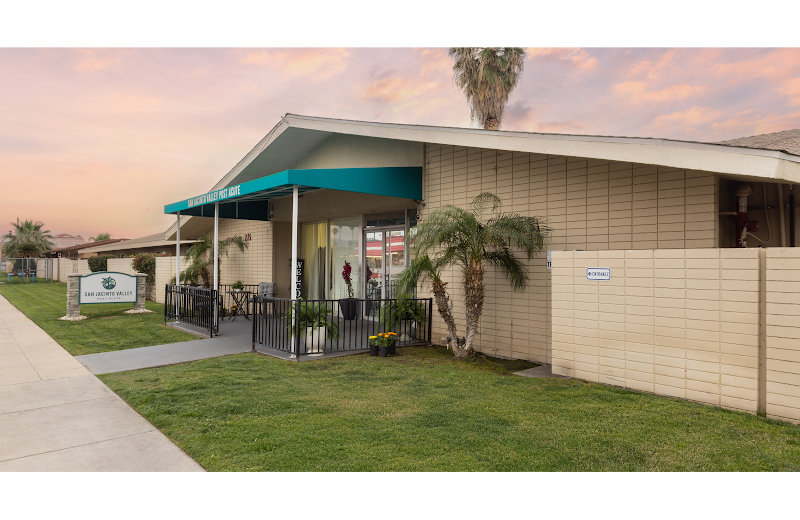
275 NORTH SAN JACINTO STREET, HEMET, CA 92543 (951) 658-9441
For profit - Limited Liability company 99 Beds CHARIS TRUST DTD 12/22/16 Data: November 2025
Trust Grade
80/100
#190 of 1155 in CA
Last Inspection: November 2024

Within standard 12-15 month inspection cycle. Federal law requires annual inspections.

Overview

San Jacinto Valley Post Acute has a Trust Grade of B+, indicating it is above average and recommended for families considering care options. The facility ranks #190 out of 1,155 in California, placing it in the top half of state facilities, and #6 out of 53 in Riverside County, suggesting only five local options are better. The facility is improving, with issues decreasing from 15 in 2024 to just 3 in 2025. Staffing is average, rated at 3 out of 5 stars, with a turnover rate of 35%, which is below the California average of 38%, indicating that staff tend to stay longer and build relationships with residents. Notably, there have been no fines recorded, which reflects positively on compliance; however, there have been concerns with food safety, including expired food items and unlabeled thawing meats, which could pose health risks for residents. Overall, while the facility has strengths in staff retention and a positive trend in compliance, families should be aware of the specific food safety issues that need addressing.

Trust Score
B+
80/100
In California
#190/1155
Top 16%
Safety Record
Low Risk
No red flags
Inspections
Getting Better
15 → 3 violations
Staff Stability
○ Average
35% turnover. Near California's 48% average. Typical for the industry.
Penalties
✓ Good
No fines on record. Clean compliance history, better than most California facilities.
Skilled Nurses
○ Average
Each resident gets 30 minutes of Registered Nurse (RN) attention daily — about average for California. RNs are the most trained staff who monitor for health changes.
Violations
⚠ Watch
35 deficiencies on record. Higher than average. Multiple issues found across inspections.
★★★★★
5.0
Overall Rating
★★★☆☆
3.0
Staff Levels
★★★★★
5.0
Care Quality
★★★★☆
4.0
Inspection Score
Stable
2024: 15 issues
2025: 3 issues

The Good

  • 5-Star Quality Measures · Strong clinical quality outcomes
  • Full Sprinkler Coverage · Fire safety systems throughout facility
  • No fines on record
  • Staff turnover below average (35%)

    13 points below California average of 48%

Facility shows strength in quality measures, fire safety.

The Bad

Staff Turnover: 35%

11pts below California avg (46%)

Typical for the industry

Chain: CHARIS TRUST DTD 12/22/16

Part of a multi-facility chain

Ask about local staffing decisions and management

The Ugly 35 deficiencies on record

Apr 2025 1 deficiency
CONCERN (D) 📢 Someone Reported This

A family member, employee, or ombudsman was alarmed enough to file a formal complaint

Potential for Harm - no one hurt, but risky conditions existed

Deficiency F0557 (Tag F0557)

Could have caused harm · This affected 1 resident

Based on interview and record review, the facility failed to ensure a system of safeguarding personal belongings, such as bank card and Identification (ID) card, were in place, for one of three reside...

Read full inspector narrative →
Based on interview and record review, the facility failed to ensure a system of safeguarding personal belongings, such as bank card and Identification (ID) card, were in place, for one of three residents reviewed (Resident 1). This failure resulted to unauthorized bank transactions on Resident 1's bank cards while at the facility without her knowledge. Findings: On April 14, 2025, at 9:20 a.m., an unannounced visit was conducted to investigate a facility reported incident regarding Resident 1 ' s missing ID Card and bank card with unauthorized transactions. On April 14, 2025, at 10:37 a.m., an interview was conducted with Social Worker 1 (SW 1). SW 1 stated during a resident's admission, an inventory list of personal belongings were conducted by the facility staff. SW 1 stated she was then notified by the staff if the resident had a cash money or bank and/or debit cards in their possession. SW 1 stated she would then let the resident know that the facility ' s safe can be used to store their valuables or personal belongings of value. SW 1 stated was aware Resident 1 had bank cards and ID card in her possession but Resident 1 did not want to put these in the facility safe. On April 14, 2025, Resident 1's record was reviewed. Resident 1 was admitted to the facilility on March 10, 2025 and was discharged on April 1, 2025. The HISTORY AND PHYSICAL EXAMINATION, dated March 11, 2025, indicated Resident 1 had the capacity to understand and make decisions. The INVENTORY OF PERSONAL POSSESSIONS, signed by Resident 1 and facility staff, dated March 10, 2025, indicated Resident 1 had a wallet/purse but the list did not indicate Resident 1 had bank cards and an ID card in her possession. The WAIVER OF RESPONSIBILITY FOR MONEY AND VALUABLES, signed by Resident 1 and a facility staff on March 11, 2025, did not indicate what personal belonging or valuable Resident 1 decided to keep in her possesion and not store at the facility safe for safe-keeping. On April 14, 2025, at 11:08 a.m., Family Member 1 (FM 1) was interviewed via telephone. FM 1 stated Resident 1's bank cards and ID cards went missing during her stay at the facility from March 10, 2025 to April 1, 2025. FM 1 stated several unauthorized transactions were made on Resident 1 ' s missing bank cards within the facility's surrounding area from March 26, 2025, through March 27, 2025. During her stay, FM 1 stated Resident 1 ' s bank cards and ID were in her wallet, which was placed inside her purse and at her bedside. FM 1 said Resident 1 did not know about these unauthorized bank transactions and her bank cards were missing until after her discharge in April 1, 2025. On April 14, 2025, at 2:31 p.m., an interview was conducted with the Director of Nursing (DON). the DON stated if a resident was admitted with valuables, such as jewelry, cash, bank cards, or ID Cards, the facility offers to keep them in a safe. The DON stated the resident will sign a waiver if they preferred to keep their valuable in their posession. The DON further stated they were made aware of the unauthorized transactions on Resident 1's bank cards after she was discharged on April 1, 2025. The DON stated these unauthorized transactions were made during Resident 1's stay in the facility and they were not able to identify the individual who conducted this unauthorized transactions. On April 16, 2025, at 2:41 p.m., and interview was conducted with SW 1. SW 1 stated Resident 1 had a signed a waiver indicating she preferred to keep her wallet in her possession at her bedside and not the facility safe. SW 1 stated she did not inspect the contents of Resident 1's wallet. SW 1 stated she was aware Resident 1 had bank cards and ID her card in her possessions and this was not documented in her personal belongings list. SW 1 further stated the staff was responsible for ensuring that residents ' items were kept safe. SW 1 stated that facility should safeguard the resident ' s possessions. SW 1 stated they knew Resident 1 had a wallet and that it was in her purse. SW 1 stated the facility should have had safeguards in place such as monitoring of personal belongings in a resident's posession. SW 1 stated the personal belongings inventory lists were used to keep track of resident's personal items. On April 17, 2025, at 1:43 p.m., a telephone interview was conducted with the DON. The DON stated the facility did not have specific monitoring system in place for residents who chose to keep their valuables. The DON stated Resident 1's personal belonging inventory lists should have been itemized and specific. The facility's policy and procedure titled, Personal Property, dated August 2022 was reviewed. The policy indictaed, .Resident belongings are treated with respect by facility staff, regardless of perceived value . The facility's undated policy and procedure titled, ' Safekeeping of Personal Funds and Valuables of Residents in the Facility, was reviewed. The policy indicated, .Personal funds or valuables may include: cash, checks, jewelries, ID Cards, wallet, credit/debit cards, etc . The facility shall have the responsibility to implement written procedures to prevent misappropriation of resident personal funds or valuables . The facility shall provide a resident a receipt for the personal funds or valuables, and retain a copy for its records . Upon admission, resident ' s belongings shall be itemized in the Inventory List . Resident's personal funds or valuables itemized during admission or at any time during the resident's stay int he facility, shall be turned over to the family or responsible party, and shall be accounted for, signed out, and witnessed in the Inventory List accordingly .
Jan 2025 2 deficiencies
CONCERN (D) 📢 Someone Reported This

A family member, employee, or ombudsman was alarmed enough to file a formal complaint

Potential for Harm - no one hurt, but risky conditions existed

Pharmacy Services (Tag F0755)

Could have caused harm · This affected 1 resident

**NOTE- TERMS IN BRACKETS HAVE BEEN EDITED TO PROTECT CONFIDENTIALITY** Based on observation, interview, and record review, the facility failed to ensure for one of two residents, Resident 1, a medica...

Read full inspector narrative →
**NOTE- TERMS IN BRACKETS HAVE BEEN EDITED TO PROTECT CONFIDENTIALITY** Based on observation, interview, and record review, the facility failed to ensure for one of two residents, Resident 1, a medication ordered by the doctor was given as prescribed. This failure had the potential for Resident 1 to have hypokalemia (low potassium level in the blood) which could cause Resident 1 to experience muscle cramps and abnormal heart rhythms. Findings: On January 22, 2024, at 9:28 a.m., at the north unit of the facility, a med pass (administration of medications) observation was conducted with Licensed Vocational Nurse (LVN) 1. LVN 1 prepared Resident 1 ' s medications which included potassium chloride. LVN 1 placed the box of potassium chloride oral packets, which were labeled for Resident 1 and dated October 24, 2024, on top of the medication cart. LVN 1 removed one oral potassium chloride packet from the box, prepared it, and administered it to Resident 1. A review of Resident 1 ' s medical record indicated she was admitted to the facility on [DATE], with diagnoses which included stroke with right sided weakness. A review of Resident 1 ' s physician ' s orders indicated .Potassium Chloride Oral Packet 20 MEQ (mEq-milliequivalent, a unit of measurement used to express number of electrolytes and medications) .Give 20 mEq by mouth one time a day for hypokalemia admin (administer) it with food/snack and full glass of water or other juices . was ordered on July 16, 2024. On January 22, 2024, at 10:00 a.m., during an interview with LVN 1, LVN 1 was asked to retrieve the box of potassium chloride packets for Resident 1. LVN 1 stated the box indicated it had 30 packets inside, it was opened on October 24, 2024. LVN 1 was asked to count how many packets were still in the box, LVN 1 stated there were 15 packets in the box. LVN 1 stated all of the packets should have been used by at least November 23, 2024. LVN 1 stated maybe Resident 1 refused the medication even before it was prepared for her, with the other licensed nurses. On January 22, 2024, at 10:10 a.m., a review of Resident 1 ' s Medication Administration Record for October and November 2024 was conducted with LVN 1. There was no documented evidence that Resident 1 refused potassium chloride packets in October and November 2024. LVN 1 stated the potassium chloride oral packets were administered to Resident 1 in October and November 2024. On January 23, 2024, at 4:15 p.m., during an interview, LVN 2 stated there were no other residents who were on potassium chloride oral packets in the north unit. On January 27, 2025, at 2:55 p.m., during a telephone interview with the Director of Nursing (DON), the DON stated she assumed Resident 1 ' s potassium chloride oral packets were not given as ordered. The DON stated the box of potassium chloride packets that was opened on October 24, 2024, should have already been empty, and that she expected the licensed nurses to administer the medications as ordered. The DON further stated if Resident 1 was not given her potassium chloride, she could have hypokalemia. A review of the facility ' s policy and procedure titled, Administering Medications, dated 2001, indicated .Medications are administered in a safe and timely manner .in accordance with prescriber orders .
CONCERN (D) 📢 Someone Reported This

A family member, employee, or ombudsman was alarmed enough to file a formal complaint

Potential for Harm - no one hurt, but risky conditions existed

Infection Control (Tag F0880)

Could have caused harm · This affected 1 resident

Based on observation, interview, and record review, the facility failed to ensure infection prevention protocols were implemented, for two of two residents, Residents 1 and 2, when a facility staff me...

Read full inspector narrative →
Based on observation, interview, and record review, the facility failed to ensure infection prevention protocols were implemented, for two of two residents, Residents 1 and 2, when a facility staff member did not perform hand hygiene in between residents ' care, and did not disinfect the automatic blood pressure cuff (BP cuff) before and after residents ' use. These failures had the potential for the vulnerable residents to be exposed to cross-contamination and the development of infections. Findings: On January 22, 2024, at 9:24 a.m., a medication pass was conducted with Licensed Vocational Nurse (LVN) 1. LVN 1 carried an automatic BP cuff machine from the top of the medication cart and went to Resident 1 ' s room. LVN 1 applied the BP cuff to Resident 1 ' s left wrist. After obtaining Resident 1 ' s BP reading, LVN 1 removed the automatic BP cuff from Resident 1 ' s wrist and place it on top of the medication cart. LVN 1 did not perform hand hygiene and did not disinfect the automatic BP cuff machine after use on Resident 1. LVN 1 prepared Resident 1 ' s medications, went back to Resident 1 and administered the medications. LVN 1 did not perform hand hygiene after preparing the medications and after administration of Resident 1 ' s medications. During the same medication pass observation, LVN 1 was observed taking the same BP machine from the top of the medication cart and go to Resident 2 ' s room. LVN 1 applied the BP machine on Resident 2 ' s left wrist. LVN 1 removed the BP machine from Resident 2 after obtaining Resident 2's BP reading. LVN 1 placed the BP machine on top of the medication cart. LVN 1 did not disinfect the BP machine and did not perform hand hygiene. LVN 1 prepared Resident 2 ' s medications and went back to Resident 2 and administered the medications. LVN 1 did not perform hand hygiene after preparing the medications and after administration of Resident 2 ' s medications. On January 22, 2024, at 10:00 a.m., during an interview, LVN 1 stated hand hygiene should be performed in between residents. LVN 1 stated she did not perform hand hygiene before and after preparing and after administering medications for Residents 1 and 2. LVN 1 stated she did not know that she had to perform hand hygiene before and after preparing medications. LVN 1 stated she should have performed hand hygiene in between Resident 1 and Resident 2. LVN 1 stated the BP cuff should be disinfected between residents ' use. LVN 1 stated she did not disinfect the BP cuff after using it on Resident 1. LVN 1 stated she should have disinfected the BP cuff after using it on Resident 1. On January 23, 2024, at 2:32 p.m., during an interview, the Director of Nursing (DON) stated hand hygiene and disinfection of the BP cuff should be performed between provision of care of residents, as this can lead to a possible spread of infection. A review of the facility ' s undated policy and procedure titled, Policy and Procedures for Med Pass indicated .Cleanse hands before handling medication and before contact with resident . A review of the facility ' s policy and procedure titled, Cleaning and Disinfection of Resident-Care Items and Equipment dated 2001 indicated .Resident-care equipment, including reusable items and durable medical equipment will be cleaned and disinfected according to the current CDC (Centers for Disease Control and Prevention- a nationally recognized disease control and prevention organization) recommendations for disinfection .Non-critical items are those that come in contact with intact skin but not mucous membrane .Non-critical resident-care items include .blood pressure cuffs . According to the CDC article titled, Disinfection and Sterilization Guideline for Disinfection and Sterilization in Healthcare Facilities, dated June 2024, .non-critical patient-care devices are disinfected when visibly soiled and on a regular basis .such as after use on each patient .
Nov 2024 6 deficiencies
CONCERN (D) 📢 Someone Reported This

A family member, employee, or ombudsman was alarmed enough to file a formal complaint

Potential for Harm - no one hurt, but risky conditions existed

Resident Rights (Tag F0550)

Could have caused harm · This affected 1 resident

**NOTE- TERMS IN BRACKETS HAVE BEEN EDITED TO PROTECT CONFIDENTIALITY** Based on observation, interview, and record review, the facility failed to ensure for one of four residents reviewed for urinary...

Read full inspector narrative →
**NOTE- TERMS IN BRACKETS HAVE BEEN EDITED TO PROTECT CONFIDENTIALITY** Based on observation, interview, and record review, the facility failed to ensure for one of four residents reviewed for urinary catheter (tube inserted into the bladder to drain urine), the urinary catheter drainage bag was covered with a dignity bag (a bag that covers and holds a catheter drainage to keep it out of sight). This failure resulted in violation of Resident 37's rights to be treated with dignity and respect. Findings: On November 4, 2024, at 10:17 a.m., Resident 37 was observed with the urinary catheter drainage bag not covered with a dignity bag. On November 4, 2024, at 10:20 a.m., during an interview with Certified Nursing Assistant (CNA) 1, she stated there should be a dignity bag over the urinary catheter drainage bag. CNA 1 stated not covering the drainage bag could cause embarrassment to the resident. On November 4, 2024, at 10:25 a.m., during an interview with the Licensed Vocational Nurse (LVN) 1, she stated the dignity bag should be placed over the urinary catheter drainage bag. LVN 1 stated the policy of the facility was to place a dignity bag over the urinary catheter drainage bag. On November 7, 2024, at 2:40 p.m., during an interview with the Director of Nursing (DON), she stated it was the facility policy to cover the urinary catheter drainage bag to provide dignity and respect to the resident. A review of Resident 37's admission record indicated Resident 37 was admitted to the facility on [DATE], with diagnoses which included Type 2 diabetes (chronic disease that occurs when the body does not use insulin properly), benign prostatic hyperplasia (BPH - enlarged prostate gland), hypertension (high blood pressure), and cerebrovascular accident (occurs when blood flow to the brain is suddenly cut off). A review of Resident 37's Minimum Data Set (MDS - a standardized comprehensive assessment and care planning tool), dated October 3, 2024, indicated Resident 37 had a BIMS (Brief Interview for Mental Status - a tool used to screen and identify cognitive condition of residents) score of 12 (moderate cognitive impairment). A review of Resident 37's physician orders dated September 27, 2024, indicated to change urinary catheter bag every 14 days for urinary retention secondary to BPH. A review of the facility's policy and procedure titled, Dignity, revised February 2021 indicated, Each resident shall be cared for in a manner that promotes and enhances his or her sense of well-being, level of satisfaction with life, and feelings of self-worth and self-esteem .demeaning practices and standards of care that compromise dignity are prohibited. Staff are expected to promote dignity and assist residents; for example: helping the resident to keep urinary catheter bags covered .
CONCERN (D) 📢 Someone Reported This

A family member, employee, or ombudsman was alarmed enough to file a formal complaint

Potential for Harm - no one hurt, but risky conditions existed

Comprehensive Care Plan (Tag F0656)

Could have caused harm · This affected 1 resident

**NOTE- TERMS IN BRACKETS HAVE BEEN EDITED TO PROTECT CONFIDENTIALITY** Based on observation, interview, and record review, the facility failed to ensure the care plan for the care of resident's surgi...

Read full inspector narrative →
**NOTE- TERMS IN BRACKETS HAVE BEEN EDITED TO PROTECT CONFIDENTIALITY** Based on observation, interview, and record review, the facility failed to ensure the care plan for the care of resident's surgical site and left hip dressing was initiated and developed for one of 19 residents reviewed (Resident 141). This failure had the potential for Resident 141 not to receive the necessary care and services if the surgical site developed infection and/or the resident experienced other complications. Findings: On November 4, 2024, at 12:15 p.m., Resident 141 was observed awake, alert, lying in bed. Resident 141 stated she fell at home and broke her left hip. She stated she had left hip surgery. Resident 141 stated the surgeon applied a special type of dressing and it should not be removed for seven days. On November 5, 2024, a record review was conducted for Resident 141. Resident 141 was admitted to the facility on [DATE], with diagnoses which included fracture of the left hip. The history and physical (H&P) indicated Resident 141 had the capacity to understand and make decisions. The physician's order dated November 1, 2024, indicated, .L (left) Hip Aquacel Dressing (a type of dressing that provides a moist environment that supports the growth of new blood vessels) .do not change for 7 days . The facility's document titled, NURSING-ADMISSION/readmission EVALUATION ASSESSMENT, dated October 31, 2024, indicated, .L (left) hip surgical incision . The nurse's notes from October 31, 2024 to November 5, 2024, were reviewed. There was no documented evidence the surgical site was assessed and monitored. There was no documented evidence the care plan was initiated and developed for the care of the left hip dressing and the surgical site. On November 6, 2024, at 9:45 a.m., a concurrent interview and record review was conducted with the Registered Nurse Supervisor (RNS) 1. RNS 1 stated Resident 141 was admitted with the left hip dressing and acknowledged the physician's order not to be removed for seven days. RNS 1 stated a care plan for Resident 141's aquacel left hip dressing should have been initiated and developed to monitor the integrity of the surgical site and the dressing. She stated the licensed nurse who performed the admission assessment for Resident 141 should have developed the care plan. A review of the facility's policy and procedure titled, Care Plans, dated April 2009, indicated, .Care plans shall incorporate goals and objectives that lead to the resident's highest obtainable level .care plan goals and objectives are derived from information contained in the resident's comprehensive assessment .
CONCERN (D) 📢 Someone Reported This

A family member, employee, or ombudsman was alarmed enough to file a formal complaint

Potential for Harm - no one hurt, but risky conditions existed

Deficiency F0658 (Tag F0658)

Could have caused harm · This affected 1 resident

**NOTE- TERMS IN BRACKETS HAVE BEEN EDITED TO PROTECT CONFIDENTIALITY** Based on observation, interview, and record review, the facility failed to ensure services provided met professional standards o...

Read full inspector narrative →
**NOTE- TERMS IN BRACKETS HAVE BEEN EDITED TO PROTECT CONFIDENTIALITY** Based on observation, interview, and record review, the facility failed to ensure services provided met professional standards of practice for two (Residents 45 and 12) of 19 residents reviewed, when: 1. For Resident 45, one opened tube of Voltaren cream (medication used to treat arthritis pain) and one opened bottle of Magnesium Ashwagandha tablets (a medication that supports mental health and sleep) were observed on top of the resident's bedside table; and 2. For Resident 12, one opened bottle of Calcium Carbonate (medication used to relieve heartburn, acid indigestion, and stomach upset) was observed on top of the resident's bedside table. These failures had the potential for Residents 45 and 12 to receive medications without a physician's order. Findings: 1. On November 4, 2024, at 11:46 a.m., Resident 45 was observed lying in bed. One opened tube of Voltaren cream and one opened bottle of Magnesium Ashwagandha tablets were observed on top of Resident 45's bedside table. During a concurrent interview with Resident 45, she stated the staff were aware she was using the Voltaren cream and the Magnesium Ashwagandha tablet. She stated she would apply the Voltaren cream to her right hip and right leg daily to treat her pain. On November 6, 2024, at 10:34 a.m., Resident 45 was observed with LVN (Licensed Vocational Nurse) 1. Resident 45 was observed lying in bed. Two tubes of Voltaren cream (one opened tube and one unopened tube) and one opened bottle of Magnesium Ashwagandha tablets were observed on top of Resident 45's bedside table. Resident 45 stated she was taking the Magnesium Ashwagandha tablet once a day for one and a half months. Resident 45 also stated she applied the Voltaren cream to her right hip and right leg once a day to treat her pain. In a concurrent interview with LVN 1, she stated medications were not allowed to be left at the resident's bedside. She stated Resident 45 did not have a physician's order for the Voltaren cream and the Magnesium Ashwagandha . She also stated the residents were not allowed to self-administer a medication without a physician's order. She stated medications from home should be verified with the physician and if ordered, the resident will receive the medications dispensed by the facility pharmacy. Resident 45's record was reviewed. Resident 45 was admitted to the facility on [DATE], with diagnoses which included muscle spasms and lower back pain. A review of the history and physical dated July 16, 2024, indicated Resident 45 did not have the capacity to understand and make decisions. 2. On November 4, 2024, at 3:03 p.m., Resident 12 was observed in the room sitting in the wheelchair. One opened bottle of calcium carbonate tablets was observed on top of Resident 12's bedside table. During a concurrent interview with Resident 12, he stated he was taking one tablet of calcium carbonate tablet daily to prevent heartburn. On November 6, 2024, at 11:05 a.m., Resident 12 was observed with LVN 2. One opened bottle of calcium carbonate was observed on top of Resident 12's bedside table. In a concurrent interview with LVN 2, she stated residents were not allowed to keep home medications at bedside and there should be a screening for medication self-administration. Resident 12's record was reviewed. Resident 12 was admitted to the facility on [DATE], with diagnoses which included gastroesophageal reflux disease (GERD - acid reflux). A review of Resident 12's medication self-administration safety screen dated March 20, 2019, indicated all medications will be administered by licensed nurse staff. On November 6, 2024, at 11:10 a.m., during an interview with Registered Nurse Supervisor (RNS) 2, he stated the residents were not allowed to keep their own medications at bedside. He also stated when a family member brought in a medication, the staff should call the physician for an order and the staff will only administer medications dispensed by the facility pharmacy. On November 6, 2024, at 11:20 a.m., during an interview with the Director of Nursing (DON), she stated the residents were not allowed to have medications left at bedside. She stated there should be a resident assessment for medication self-administration. She also stated when a family brought in medication from home or the hospital, the staff should verify the medication with the resident's physician and if ordered, the medication will be sent home with the family and removed from the resident's bedside. She stated the facility will provide all resident medications ordered by the physician. The facility policy and procedure titled, ADMINISTERING MEDICATIONS, dated, April 2019, indicated, .Medications are administered in accordance with prescriber orders .Residents may administer their own medications only if the Attending Physician, in conjunction with the Interdisciplinary Care Planning Team, has determined that they have the decision-making capacity to do so safely . The facility policy and procedure titled, STORAGE OF MEDICATIONS, dated, April 2007, indicated, .Drugs shall be stored in an orderly manner in cabinets, drawers, carts, or automatic dispensing systems . The facility policy and procedure titled, SELF-ADMINISTRATION OF MEDICATIONS, revised February 2021, indicated, .Any medications found at the bedside that are not authorized for self-administration are turned over to the nurse in charge for return to the family or responsible party .
CONCERN (D) 📢 Someone Reported This

A family member, employee, or ombudsman was alarmed enough to file a formal complaint

Potential for Harm - no one hurt, but risky conditions existed

Accident Prevention (Tag F0689)

Could have caused harm · This affected 1 resident

**NOTE- TERMS IN BRACKETS HAVE BEEN EDITED TO PROTECT CONFIDENTIALITY** Based on observation, interview, and record review, the facility failed to ensure for one of 19 residents (Resident 66) reviewed...

Read full inspector narrative →
**NOTE- TERMS IN BRACKETS HAVE BEEN EDITED TO PROTECT CONFIDENTIALITY** Based on observation, interview, and record review, the facility failed to ensure for one of 19 residents (Resident 66) reviewed who smoked in the facility did not have a lighter in her possession. This failure had the potential to result in injury or accident related to unsupervised smoking. Findings: On November 14, 2024, at 10:54 a.m., during a concurrent observation and interview with Resident 66, Resident 66 was brought back to her room in a wheelchair by a facility staff. Resident 66 stated she smokes four times a day and just came back from the smoking patio. Resident 66 stated she was allowed to keep her smoking materials with her and pulled out a pack of cigarettes and a lighter from her pocket. An oxygen concentrator (a machine that supplies oxygen) was observed at Resident 66's bedside. Resident 66 stated she used oxygen during the night. Resident 66 stated she was aware not to smoke in her room. On November 6, 2024, at 12:15 p.m., during an interview with the Activities Director (AD), the AD stated the residents were allowed to keep their cigarettes but not the lighter at bedside. The AD stated she was aware Resident 66 had a lighter in her possession and did not want to give it up. She stated Resident 66's lighter had been confiscated before and was not sure how she got a new one. The AD stated there was a safety issue with Resident 66 having an oxygen concentrator at the bedside and a lighter in her possession. On November 6, 2024, at 12:20 p.m., during an interview with Registered Nurse Supervisor (RNS) 1, she stated the residents were not allowed to keep smoking materials at bedside. She stated Resident 66's lighter had been previously confiscated and she was not aware the resident had a lighter in her possession. On November 6, 2024, at 12:28 p.m., during an interview with the Director of Nursing (DON), she stated the activity department should keep all the smoking materials. The DON stated the residents were not allowed to keep their smoking materials for safety reasons. Resident 66's record was reviewed. Resident 66 was admitted to the facility on [DATE], with diagnoses which included acute respiratory failure, hypertension (high blood pressure) and schizophrenia (a mental illness that is characterized by disturbances in thought). The history and physical dated September 11, 2024, indicated Resident 66 had intermittent (not continuous or steady) capacity to make decisions. The care plan dated June 25, 2024, indicated, .Resident is a smoker and is at risk for smoking related injury as evidenced by poor safety awareness .All matches and lighters will be kept in the activity office .Interventions .Smoking paraphernalia will be stored per facility guidelines . The undated facility policy and procedure titled, SMOKING POLICY, indicated, .No lighting materials (e.g. matches, lighters), tobacco products, or smoking devices will be allowed to be kept in the possession of the residents .All smoking materials will be retained by staff .The facility reserves the right to immediately confiscate smoking materials .
CONCERN (D) 📢 Someone Reported This

A family member, employee, or ombudsman was alarmed enough to file a formal complaint

Potential for Harm - no one hurt, but risky conditions existed

Food Safety (Tag F0812)

Could have caused harm · This affected 1 resident

Based on observation, interview, and record review, the facility failed to ensure expired food items were not stored in the refrigerator, readily available for use. This failure had the potential to ...

Read full inspector narrative →
Based on observation, interview, and record review, the facility failed to ensure expired food items were not stored in the refrigerator, readily available for use. This failure had the potential to result in foodborne illness to an already vulnerable facility population. Findings: On November 4, 2024, at 9:55 a.m., an initial tour of the kitchen was conducted with the Dietary Supervisor (DS). A one gallon size pitcher of water, that was almost full, dated 11/3/24, was observed in the refrigerator, readily available for use. In a concurrent interview, the DS stated the water was used for residents who preferred cold water and 11/3/24 was the use-by-date. The DS stated the water should have been discarded on or before the use-by-date. Additionally, a one-gallon pitcher with a thickened liquid, approximately a quarter-full, dated 10/30/24, was observed in the refrigerator, readily available for use. In a concurrent interview, the DS stated the liquid in the pitcher was used for residents who are on a diet with thick liquids and 10/30/24 was the use-by-date. The DS stated the thickener should have been discarded on or before the use-by-date and not stored in the refrigerator, readily available for use. The facility policy and procedure, titled, Storage of Food and Supplies, revised 2020, was reviewed. The policy and procedure indicated, .Food and supplies will be stored properly and in a safe manner .
CONCERN (D) 📢 Someone Reported This

A family member, employee, or ombudsman was alarmed enough to file a formal complaint

Potential for Harm - no one hurt, but risky conditions existed

Infection Control (Tag F0880)

Could have caused harm · This affected 1 resident

**NOTE- TERMS IN BRACKETS HAVE BEEN EDITED TO PROTECT CONFIDENTIALITY** Based on observation, interview, and record review, the facility failed to ensure infection prevention and control practices wer...

Read full inspector narrative →
**NOTE- TERMS IN BRACKETS HAVE BEEN EDITED TO PROTECT CONFIDENTIALITY** Based on observation, interview, and record review, the facility failed to ensure infection prevention and control practices were implemented for three of 19 residents reviewed (Residents 69, 86, and 140) when: 1. For Resident 69, the hand held nebulizer mouthpiece (a device that contains medication that turns into a mist) was left exposed on top of the bedside table near the resident's urinal; 2. For Resident 86, the Enhanced Barrier Precaution (EBP - infection control practices that use gowns and gloves to reduce the spread of multidrug-resistant organisms) was not followed when the resident was admitted with the colostomy (an operation in which a piece of the colon is diverted to an artificial opening in the abdomen that allows stool to pass through); and 3. For Resident 140, the Physical Therapy Assistant (PTA) was not wearing a gown when performing physical therapy exercises at the resident's bedside. Resident 140 was identified for EBP. These failures had the potential to increase the risk for cross contamination and the development of infection from staff to vulnerable residents. Findings: 1. On November 4, 2024, at 12:50 p.m., Resident 69 was observed awake, alert, sitting up at the edge of his bed with oxygen on at 5Liters/minute through nasal cannula (a plastic tubing with two prongs used to deliver oxygen through the nose). Resident 69 stated he was short of breath this morning, and had to use the hand held nebulizer for his breathing treatment. The hand held nebulizer mouth piece attached to a plastic tubing was observed on top of the resident's bedside table close to his urinal. On November 4, 2024, at 1:10 p.m., a concurrent observation and interview was conducted with Licensed Vocational Nurse (LVN) 3. LVN 3 stated the hand held nebulizer should be kept inside the plastic bag when not in use and should not be left above the bedside table next to the urinal. She stated Resident 69 was at risk for infection. On November 5, 2024, a review of Resident 69's record indicated Resident 69 was admitted to the facility on [DATE], with diagnoses which included Chronic Obstructive Pulmonary Disease (COPD - a lung disease). The physician's order dated October 27, 2024, indicated Resident 69 had an order for Albuterol Sulfate (a medication used for breathing treatment) 2.5milligram (mg- a unit of measurement) per 3 milliliter (ml), 1 inhalation via (through) nebulizer every 4 hours as needed for SOB/Dyspnea (shortness of breath/difficulty of breathing). On November 8, 2024, at 10:20 a.m., an interview was conducted with the Director of Nursing (DON). The DON stated the hand held nebulizer should be kept inside the plastic bag after use to prevent infection. She stated licensed staff who administered the nebulizer treatment for Resident 69 should have placed the nebulizer kit inside the plastic bag after cleaning. On November 8, 2024, at 12:25 p.m., an interview was conducted with the Infection Preventionist (IP). The IP stated the hand held nebulizer mouth piece should not be on top of the bedside table, and the urinal should be kept at the urinal holder. The IP stated the hand held nebulizer should be kept inside the plastic bag after use to prevent cross contamination and infection. A review of the facility's policy and procedure titled, Prevention of Infection Respiratory Equipment, dated November 2011, indicated.Infection Control Considerations Related to Medication nebulizers .Store the circuit in plastic bag, marked with date, and resident's name . 2. On November 4, 2024, at 12:25 p.m., Resident 86 was observed awake, lying in bed, alert and able to verbalize her needs. Resident 86 stated she had diarrhea at home for 3 weeks, and she lived alone, was getting weak and she called 911. She stated she had an emergency surgery for her bowel and had a colostomy. Resident 86 voluntarily pulled her shirt and showed her left colostomy. She stated the nurse changes the bag and the certified nursing assistant (CNA) would empty the stool from the bag. She stated it might be temporary and the surgeon might reverse it later. The colostomy bag was observed with brownish stool. Resident 86's room had no designated EBP sign and there was no Personal Protective Equipment (PPE - protective clothing, gloves, faceshields, goggles, facemasks and/or respirator designed to protect the wearer from tyhe spread of infection or illnesses) cart outside the room. On November 4, 2024, at 1p.m., Resident 86's room was observed without the EBP signage and PPE outside the door. On November 4, at 1:30 p.m., a concurrent observation and interview was conducted with the Infection Preventionist (IP) nurse. The IP stated Resident 86 should be on EBP on admission for her colostomy. The IP acknowledged Resident 86 had a bowel surgery and EBP should have been implemented to avoid cross contamination. On November 6, 2024, a review of Resident 86's record indicated Resident 86 was admitted to the facility on [DATE], with diagnoses which included diverticulitis of the intestines (inflammation or infection of small pockets on the inside of the colon). Resident 86 was at the acute facility on September 29, 2024, for large bowel obstruction and repair of the colovesicular fistula (an abnormal connection between the colon and urinary bladder) and a colostomy. The facility's admission assessment on October 12, 2024, indicated Resident 86 was admitted with a colostomy on the left lower area of her abdomen. The physician's history and physical dated October 13, 2024, indicated Resident 86 had the capacity to understand and make decisions. The care plan indicated Ostomy (opening)- Bowel: Resident has ileostomy and is at risk for complications .Observe signs and symptoms of complications .ostomy care . On November 8, 2024, at 10:15 a.m., an interview was conducted with the DON. The DON stated the licensed nurse who admitted Resident 86 on October 12, 2024, should have identified and placed the resident on EBP to avoid cross contamination and spread of infection. A review of the facility policy and procedure titled, Isolation - Categories of Transmission-Based Precautions, dated September 2022, indicated, .Enhanced Standard precautions . The facility will follow the current guidance .Wear gowns and gloves while performing the following high-contact tasks associated with the greatest risk .contamination of staff hands, clothes, and the environment such as .device care . 3. On November 4, 2024, at 11:10 a.m., Resident 140 was observed with Enhanced Barrier Precaution (EBP) signage outside his room, and a cart containing the PPE. The PTA was observed at the bedside assisting Resident 140 with upper and lower exercises. The PTA was observed having direct contact with the resident, and was not wearing the disposable gown. Resident 140 was sitting at the edge of the bed with the indwelling urinary catheter (a flexible tube inserted into the bladder to drain urine). On November 4, 2024, at 11:20 a.m the PTA was interviewed. He stated he just realized Resident 140 was on EBP for the indwelling urinary catheter. He stated he came in fast in the room without looking at the sign outside the residents' room. He stated he should have followed the EBP process. On November 4, 2024, at 11:45 a.m., an interview was conducted with RN Supervisor (RNS) 1. RNS 1 stated the PTA should have followed the EBP protocol. She acknowledged PTA was not wearing the disposable gown when having direct contact with Resident 140. On November 5, 2024, Resident 140's record was reviewed. Resident 140 was admitted to the facility on [DATE], with diagnoses which included history of falling, benign prostatic hypertrophy (BPH - enlarged prostate), and retention of urine. The physician's history and physical indicated Resident 140 had an indwelling urinary catheter in place. A Physician order indicated, .Observed Enhanced Barrier Precaution (EBP) Resident has Indwelling Foley Catheter for Urinary Retention due to Obstructive Uropathy Related to BPH every shift . On November 7, 2024, at 10:01 a.m., The DON was interviewed. The DON stated the PTA should have checked the EBP sign before entering Resident 140's room. On November 7, 2024, at 12:18 p.m., the IP was interviewed. She stated the PTA should have looked at the EBP sign at the door. The PTA should have donned (put on) the disposable gown prior to entering the room. A review of facility's policy and procedure titled Isolation- Categories of Transmission - Based Precautions, dated September 2022, indicated, .The facility will follow current guidance .regarding Enhanced Standard Precaution .Wear gowns and gloves while performing the high-contact tasks associated with the greatest risk .any care activity where close contact with the resident is expected to occur .
Jun 2024 2 deficiencies
CONCERN (D) 📢 Someone Reported This

A family member, employee, or ombudsman was alarmed enough to file a formal complaint

Potential for Harm - no one hurt, but risky conditions existed

Notification of Changes (Tag F0580)

Could have caused harm · This affected 1 resident

**NOTE- TERMS IN BRACKETS HAVE BEEN EDITED TO PROTECT CONFIDENTIALITY** Based on interview and record review, the facility failed ensure the resident's representative was informed of an incident of fa...

Read full inspector narrative →
**NOTE- TERMS IN BRACKETS HAVE BEEN EDITED TO PROTECT CONFIDENTIALITY** Based on interview and record review, the facility failed ensure the resident's representative was informed of an incident of fall for one of six resident reviewed (Resident C). This failure has the potential to result in the resident's representative to be unaware of the resident's condition which could delay the involvement of the representative in planning the care for their family member (Resident C). Findings: On May 24, 2024, at 10:30 a.m., an unannounced visit to the facility was conducted to investigate a complaint of quality of care. On May 28, 2024, Resident C ' s medical record was reviewed. Resident C was admitted to the facility on [DATE], with diagnoses which included Myocardial Infarction (heart attack) and Type 2 Diabetes Mellitus (a group of diseases that result in too much sugar in the blood). A review of Resident C ' s SBAR (stands for Situation, Background, Assessment, Recommendation- a form used to communicate)/Summary for Providers, dated for May 15/2024, at 7:15 a.m., indicated .falls .CNA (certified nursing assistant) informed writer resident was found on the floor next to her bed .lying on her right side .denies hitting head .MD (medical doctor) made aware .informed resident .Recommendations: no new orders at this time . On May 28, 2024, at 3:30 p.m., an interview and concurrent record review was conducted with the Director of Nursing (DON). The DON stated Resident C ' s family should have been notified about the fall, the nurse should have called the family. A review of the facility ' s protocol titled Acute Condition Changes, dated March 2018, indicated .the physician will discuss with the staff and resident/patient and/or family the pros and cons of diagnosing and managing the situation .discussion should consider the patient ' s overall condition .wishes (either direct or as conveyed by a substitute decision-maker) . A review of the facility ' s policy titled Falls/Fall Risk Management, dated September 2012, indicated .Staff will ask the resident and the caregiver or family about a history of falling .the nurse shall assess and document/report the following .recent injury .change in condition .neurological status .details on how fall occurred .Risk factors for subsequent falling .
CONCERN (D) 📢 Someone Reported This

A family member, employee, or ombudsman was alarmed enough to file a formal complaint

Potential for Harm - no one hurt, but risky conditions existed

Pressure Ulcer Prevention (Tag F0686)

Could have caused harm · This affected 1 resident

**NOTE- TERMS IN BRACKETS HAVE BEEN EDITED TO PROTECT CONFIDENTIALITY** Based on observation, interview, and record review, the facility failed to ensure that one (Resident D) of four residents review...

Read full inspector narrative →
**NOTE- TERMS IN BRACKETS HAVE BEEN EDITED TO PROTECT CONFIDENTIALITY** Based on observation, interview, and record review, the facility failed to ensure that one (Resident D) of four residents reviewed for pressure ulcers/injuries (PU/PI-localized damage to the skin and underlying soft tissue usually over a bony prominence resulting from intense or prolonged pressure), received care and services consistent with professional standards of practice, when the status of the pressure injuries, which included measurements, were not consistently documented. In addition, the facility failed to ensure provision of wound treatment was coordinated with the wound care team. These failures have the potential to result in inconsistent provision of wound treatment which could contribute to the delayed healing of the resident's pressure injuries. Findings: On May 24, 2024, at 10:30 a.m., an unannounced visit to the facility was conducted to investigate a complaint related to quality of care. On May 24, 2024, Resident D's medical record was reviewed. Resident D was admitted to the facility on [DATE], with diagnoses which included malignant neoplasm (cancer) of the thyroid gland (a gland at the base of the neck) and dementia (a group of thinking and social symptoms that can interfere with daily function). A review of Resident D's Medication Review Report indicated, on May 14, 2024, Bactrim DS (double strength-an antibiotic used to treat an infection) one tablet twice a day for 10 days for a wound infection was ordered and on May 23, 2024, an order for Mupirocin (medication used to treat skin infections) external ointment 2% apply to sacrum topically (to the skin) for wound infection was placed. A review of Resident D's Skin and Wound Evaluation, dated April 29, 2023, indicated a pressure wound, Stage 2, in-house acquired to coccyx, length 1.0 cm (centimeters-a type of measurement), width 3.0 cm, and depth 0.2 cm, slough (dead cell accumulation, yellow to white in color) to wound bed, light exudate (drainage). A record review of Resident D's Comprehensive Skin Evaluation/Assessment indicated: -On May 2, 2024, a left thigh rear abrasion and left lower leg skin tear were noted, no documentation indicating the presence of a PU/PI to the sacrum/coccyx area (the bony structure at the back of the pelvis and the tail bone). - On May 7, 2024, three wound sites were noted: a left thigh abrasion, a left lower leg skin tear, and a right inner thigh abrasion, no documentation was found indicating the presence of a PU/PI to the sacrum/coccyx area. -On May 14, 2024, a left thigh rear abrasion, a left lower leg skin tear, and a right inner thigh abrasion were noted, no documentation was found indicating the presence of a sacrum/coccyx PU/PI. Additional Skin and Wound Evaluations for Resident D were reviewed. -On May 20, 2024, records indicated a pressure wound, located on the coccyx had .Obscured full-thickness skin and tissue loss .in-house acquired . the wound measurements were 5.3 cm in length, 5.7 cm in width, and not applicable for the depth, with a wound bed of 10% granulation (development of new tissue and blood vessels in a wound) and 90% slough, unstageable, with evidence of infection, redness/inflammation and warmth, moderate exudate, surrounding tissue discolored, erythema (skin redness caused by underlying disease), fragile skin, macerated (condition that occurs when a wound experiences excessive moisture, leading to softening and breaking down of the surrounding skin), the Periwound (area around the wound) is warm, dressing with calcium alginate (a substance used in wound repair) and foam; .slightly macerated to peri wound, redness and foul odor .purplish discoloration noted to surrounding area of the wound extending to rt (right) buttock, intact . A review of Resident D's Wound Report, dated May 20, 2024, indicated an assessment by a provider (physician, physician assistant or nurse practitioner) .continue Bactrim DS .sacral .pre-debridement (removal of damaged tissue from a wound) wound .L (length) 4.6 (cm) W (width) 5.1 (cm) D (depth) 0.2 (cm) .apply Mupirocin 2% cover with Calcium Alginate .Q 2 days . A review of Resident D's Wound Report, dated May 27, 2024, indicated .wounds appear to be regressing (worse state), ongoing infection .Sacral .stage 4 .pre-debridement wound .size L 5.2 (cm) W 8.6 (cm) D 0.7 (cm) .exudate moderate .erythema mild .odor foul .cleansed with Dakin's (solution used to clean infected wounds) .apply Mupirocin 2% .cover with Alginate . and Resident D's progress note indicated .sacral region .pressure ulcer stage 4, pre debridement measurement (L x W x D) 5.2 x 8.6 x 0.7 cm .post debridement measurement 5.3 x 8.7 x 0.8 cm .bone exposed . A review of Resident D's Hospice Skin Assessment notes: -On April 16, 2024, indicated .coccyx area .stage II (two) .size (L, W, D) .LVN (Licensed Vocational Nurse) at facility reported that pt (patient) has 2 new stage 2 wounds to coccyx measuring 0.8 x 0.8 x 0.1 cm and 0.9 x 0.7 x 0.1 cm .wound care to be performed by facility staff . -On April 30, 2024, indicated .Coccyx area .stage 2 .0.8, 0.8, 0.1 .coccyx area stage 2 .0.9, 0.7, 0.1 .pt continues to have 2 stage 2 to coccyx .wound care done by treatment nurse at facility .provided education to staff .Facility made aware to contact HH (hospice) with any questions or concerns . -On May 7, 2024, indicated .Buttock-right .pressure injury stage II .new .coccyx area .stage II .coccyx area .unstageable .wound is worsening. Pt now has 2 quarter sized wounds to coccyx and 1 nickel sized wound to right buttocks. Wound to mid- coccyx has 40% white slough and is unstageable .treatment nurse made aware of new wound orders . -On May 14, 2024, indicated .Coccyx area pressure injury unstageable new .worsening wound to coccyx measures 2.3 x 3.3 .80% slough, dark areas surrounding slough .The mid coccyx, R (right) coccyx, and R (right) buttocks wounds has increased in size and have become one large wound . -On May 22, 2024, indicated .Coccyx area pressure injury .unstageable .size 4.7, 5.2, 0.3 .wound nurse at facility stated NP (nurse practitioner) from [name] Wound visited pt earlier .wound care to be performed by facility staff. New wound measurements from [name] Wound for coccyx 4.7 cm x 5.2 cm x 0.3 cm . Resident D's Care plans were reviewed, dated January 17, 2024, indicated .Resident has impaired skin integrity as evidence by skin tear/abrasion .Interventions .Record location, size (length, width, depth) color of surrounding skin . On May 24, 2024, at 1:20 p.m., and interview with concurrent record view was conducted with Licensed Vocational Nurse (LVN) 1. LVN 1 stated, Resident D was seen by the wound care treatment team and does not have a urinary catheter in place. LVN 1 stated the Comprehensive skin note for May 2, 2024 mentioned the skin tear and abrasion to Resident D's leg, there was no mention of the sacral/coccyx PU/PI, and the skin comprehensive evaluations dated May 7, 2024 and May 14, 2024 mentioned the skin tear and abrasions, and no mention of a sacral or coccyx pressure wound, the first note documenting the pressure injury to the sacrum/ coccyx was on May 20, 2024. LVN 1 stated the weekly comprehensive skin evaluation should have documentation for Resident D's sacral/coccyx wounds, with the measurements and description of the wound itself, LVN 1 could not find appropriate documentation. On May 24, 2024, at 2:35 p.m., an interview was conducted with the Hospice Nurse (HN). The HN stated he sees the Resident D about once a week, assess her, gets a set of vital signs, provides wound care, takes measurements, and reviews the current pressure injury with the hospice physician for additional orders. The HN stated Resident D's pressure ulcer has had rapid progression, Resident D is declining quickly, the pressure wound to her sacral area was small, a stage 1 or 2 and healed up, but reopened and is getting worse. On May 28, 2024, at 10:25 a.m. an interview and concurrent record review were conducted with LVN 2. LVN 2 stated comprehensive skin evaluations should be completed every week on each resident with any skin complications (skin tears, pressure injuries, rashes, abrasions), Resident D's pressure ulcer to her coccyx area would come and go. LVN 2 stated his comprehensive note from May 20, 2024, indicated the wound had re-opened and did not indicate a depth in his measurements, he did not think it needed to be measured because slough made it unstageable, a note from the HN on the same date stated it was a Stage 2, and he should have measured for a depth, and when slough is present it has to be considered a Stage 3 per wound care guidelines. LVN 2 could not find documentation of Resident D's pressure ulcer to her sacrum/coccyx after reviewing his notes on May 2, 2024, May 7, 2024, or May 14, 2024. LVN 2 stated he did not know a provider from the specialty wound care team, had treated Resident D's pressure injury on the same day he did, he did not make arrangements or collaborate with the wound team, and Resident D received two treatments on the same day, one from him and one from the wound care team. LVN 2 stated he forgot to include complete measurements and descriptions of Resident D's pressure injury in several of his notes, he overlooked the required documentation. A review of the facility's policy titled Hospice Program, dated July 2017, indicated .Hospice services are available to residents .certified as being terminally ill .it is the responsibility of the hospice to manage the resident's care as it relates to the terminal illness and related condition .it is the responsibility of the facility to meet the resident's personal care and nursing needs in coordination with the hospice representative, and ensure that the level of care provided is appropriately based on the individual resident's needs .coordinated care plans for residents receiving hospice services .in order to maintain the resident's highest practicable physical, mental and psychosocial well-being .coordinated care plan shall be revised and updated as necessary to reflect the resident's current status including .skin integrity .mobility and repositioning . A review of the facility's protocol titled Pressure Ulcers/Skin Breakdown, dated April 2018, indicated .the nurse shall describe and document/report the following .full assessment of pressure sore including location, stage, length, width and depth, present of exudate or necrotic (dead) tissue .The physician will clarify the status of relevant medical issues .the impact of comorbid conditions on healing an existing wound .physician will order pertinent wound treatments .
Apr 2024 1 deficiency
CONCERN (D) 📢 Someone Reported This

A family member, employee, or ombudsman was alarmed enough to file a formal complaint

Potential for Harm - no one hurt, but risky conditions existed

Accident Prevention (Tag F0689)

Could have caused harm · This affected 1 resident

**NOTE- TERMS IN BRACKETS HAVE BEEN EDITED TO PROTECT CONFIDENTIALITY** Based on interview and record review, the facility failed to ensure one of three sampled residents (Resident 1) was transferred ...

Read full inspector narrative →
**NOTE- TERMS IN BRACKETS HAVE BEEN EDITED TO PROTECT CONFIDENTIALITY** Based on interview and record review, the facility failed to ensure one of three sampled residents (Resident 1) was transferred with two person assist using the Hoyer lift (a portable total patient lifting tool to assist in transferring patients in and out of bed), from his Geri-chair (a large padded chair that can recline and is used for people with limited mobility), to bed. This failure had the potential to result in an injury to Resident 1. Findings: On March 19, 2024, at 10:59 a.m., an unannounced visit to the facility was condcuted to investigate quality care issues. A review of Resident 1's medical records indicated he was admitted on [DATE], with diagnoses which included CVA (cerebral vascular accident – stroke), affecting left side non-dominate, depression (a mood disorder that causes a persistent feeling of sadness and loss of interest), diabetes mellitus type 2 (a chronic condition that affects the way the body uses sugar. The body either resists the effects of insulin — a hormone that regulates the movement of sugar into the cells — or doesn't produce enough insulin to maintain normal sugar levels), osteoarthritis (a progressive disorder of the joints caused by gradual loss of cartilage and resulting in the development of bony spurs and cysts at the margins of the joints), epilepsy (a neurological disorder marked by sudden recurrent episodes of sensory disturbance, loss of consciousness, or convulsions, associated with abnormal electrical activity in the brain), and contracture (a condition of shortening and hardening of muscles, tendons, or other tissue, often leading to deformity and rigidity of joints) left knee. A review of Resident 1's History and Physical dated June 15, 2023, indicated he had the capacity to understand and make decisions. On March 19, 2024, at 11:59 a.m., observed Resident 1 in his room in a Geri-chair. Observed the Certified Nursing Assistant, (CNA) with a Hoyer lift, entered Resident 1's room. The CNA shut the door behind her. On March 19, 2024, at 12:25 p.m., Resident 1's door opened. Resident 1 was in bed, and the CNA wheeled the Hoyer lift out of Resident 1's room into the hallway. On March 19, 2024, at 12:25 p.m., an interview was conducted with the CNA. The CNA stated that she was assigned to Resident 1. The CNA stated that she used the Hoyer lift to transfer Resident 1 back into bed. The CNA stated that the Hoyer lift should be operated with two people to safely transfer residents. The CNA stated that she did not have another person assist with the Hoyer lift to transfer Resident 1 into bed. On March 19, 2024, at 12:28 p.m., an interview was conducted with Resident 1. Resident 1 stated he knew the staff should be using two persons with the Hoyer lift. On March 19, 2024, at 1:01 p.m., an interview was conducted with CNA 2. CNA 2 stated the Hoyer lift should be used with two staff members. On March 19, 2024, at 3:03 p.m., an interview was conducted with the Director of Nursing, (DON). The DON stated that the Hoyer lift required two persons to operate it. A review of Resident 1's Care Plan revised March 19, 2024, indicated .Focus .The resident has an ADL self- care deficit .performance deficits .Interventions .FMP TRANSFER: The resident requires Mechanical Lift with 2 staff assistance or may use hoyer lift for transfers . A review of the facility's policy and procedure titled Lifting Machine, Using a Mechanical revised July 2017, indicated .The purpose of this procedure is to establish the general principles of safe lifting using a mechanical lifting device .General Guidelines .1. At least two (2) nursing assistants are needed to safely move a resident with a mechanical lift .
Feb 2024 1 deficiency
CONCERN (E) 📢 Someone Reported This

A family member, employee, or ombudsman was alarmed enough to file a formal complaint

Potential for Harm - no one hurt, but risky conditions existed

Food Safety (Tag F0812)

Could have caused harm · This affected multiple residents

Based on observation, interview, and record review, the facility failed to ensure food safety requirements for food storage and preparation were followed when: - Multiple food items stored in the dry ...

Read full inspector narrative →
Based on observation, interview, and record review, the facility failed to ensure food safety requirements for food storage and preparation were followed when: - Multiple food items stored in the dry storage area and refrigerator were not labeled with the opened date, or use-by date, and expired food was available for resident use; - Thawing meat in the refrigerator was not labeled with the start and end date of thawing; - The facility log for the dish machine (dish washer) temperatures were not documented for 14 out of 79 entries; and - Two of the five kitchen food carts (large carts used to transport resident food to the floor for meal service) were observed with peeling duct tape. These failures had the potential to place the residents of the facility at risk for food-borne illness in a medically vulnerable resident population who consumed food in the facility. Facility census was 95. Findings: On February 27, 2024, at 11:25 a.m., an unannounced visit was conducted at the facility for a complaint allegation. On February 27, 2024, at 11:33 a.m., a kitchen tour was conducted with the Dietary Supervisor (DS) and the facility Registered Dietician (RD). During inspection of the dry goods area the following was identified: -A large bottle of beef broth base with no date. During inspection of the facilities refrigerators, the following were identified: -Tupperware container with approximately two cups of raisins dated January 16, 2024; -Hoisin Sauce bottle, half full, open date of August 12, 2023; -corn tortillas 2 bags with approximately 80 tortillas in one bag/60 tortillas in the other, best by date February 21, 2024; -four bunches of celery with no date; and -two turkeys, approximately 20 pounds of chicken, seven 5-pound tubes of ground hamburger, and three beef briskets with no labels indicating the name of the foods and when thawing was started and to be completed. During the inspection a concurrent interview was conducted with the DS and the RD. The DS and the RD stated the food should be labeled when it arrived at the facility and when it was opened. The DS and the RD stated expired food and/or food that had passed its best buy date needed to be removed and disposed of so the food would not be available for the residents. The DS and the RD stated the food items found should not have been available for resident use. The DS stated the thawing meat needed to be labeled when it was placed in the refrigerator and when thawing should be completed. The DS stated none of the thawing meat was labeled. The DS stated it was important to label thawing meats to prevent spoilage. On February 27, 2024, at 12:30 p.m., after the kitchen inspection was completed, the DS stated the food carts should be free from any breaks or open cracks for sanitation purposes and to prevent food borne pathogens (bacteria that can grow on surfaces that can lead to serious illnesses). The DS stated there were five meal carts used at the facility and they were wiped clean after each meal service. The DS stated the meal carts were out in the facility for lunch service. On February 27, 2024, at 12:50 p.m., the Dish Machine Temperature Log dated February 2024, was reviewed with the DS and the RD. During a concurrent interview, the DS stated the dishwasher was a low temperature dishwasher and used chemicals to maintain sanitation. The DS stated the dishwasher chemical concentrate needed to be checked and documented three times a day, before meal service. The RD and DS stated the facility log for February was missing several entries. The RD and the DS stated 14 of the evening checks of the dish machine temperature log were blank. The DS and the RD stated it was important for the dish machine to be checked as scheduled to maintain sanitation of resident utensils and dishes. On February 27, 2024, at 2:05 p.m., a follow up kitchen inspection was conducted with the DS and the RD of the facilities five food carts. Two of the yellow food carts were observed with white duct tape on the inside of both doors, and around the locking mechanisms. The tape appeared to be peeling and missing in several areas. Edges of the tape appeared to be lifting and curled up with brown edges. The DS and the RD stated there should not be any cracks or open areas on the food carts. The DS and the RD stated the food carts should not have duct tape. The DS and the RD stated the duct tape was a potential hazard for food borne pathogens to grow and could not be cleaned and sanitaized. The RD stated it was important for the food carts to be free from areas that could not be cleaned and sanitized. Review of the facility document titled, General Receiving of Delivery of Food and Supplies dated 2018, indicated, .Label all items with the delivery date or a use-by date . Review of the facility document titled, Storage of Food and Supplies dated 2020, indicated, .Labels should be visible, and the arrangement should permit rotation of supplies so that oldest items will be used first. All food will be dated-month, day, year. All food products will be used per the time specified .No food will be kept longer than the expiration date on the product .Dry food items .will be tightly closed, labeled and dated .Hoisin Sauce .Opened-Refrigerated .3 months .Dried fruit such as prunes & raisins .opened, refrigerated .1 month . Review of the facility document titled, Procedure for Refrigerated Storage dated 2019, indicated, .Frozen food should be left in a refrigerator to thaw .Once thawed, uncooked meat is to be used within 2 days . Review of the facility document titled, Food Preparation dated 2018, indicated, .POLICY: THAWING OF MEATS .PROCEDURE .In a refrigerator .Label defrosting meat with pull and use by date . Review of the facility document titled, Dish Washing dated 2018, indicated .All dishes will be properly sanitized through the dishwasher .A temperature log (and chlorine log for low-temperature machines) will be kept and maintained by the dishwashers to assure that the dish machine is working correctly. This log will be completed each meal prior to any dishwashing .Low-temperature machine .The proper chlorine level is crucial in sanitizing the dishes . Review of the facility document titled, Sanitation dated 2018, indicated, .The Food & Nutrition Services Department shall have equipment of the type and in the amount necessary for proper preparation, serving and storing of food .All equipment shall be maintained as necessary and kept in working order .Employees are to alert .immediately .any equipment needing repair .equipment shall be kept clean, maintained in good repair and shall be free from breaks, corrosions, open seam, cracks and chipped areas .
Feb 2024 4 deficiencies
CONCERN (D) 📢 Someone Reported This

A family member, employee, or ombudsman was alarmed enough to file a formal complaint

Potential for Harm - no one hurt, but risky conditions existed

Deficiency F0658 (Tag F0658)

Could have caused harm · This affected 1 resident

**NOTE- TERMS IN BRACKETS HAVE BEEN EDITED TO PROTECT CONFIDENTIALITY** Based on interview, and record review, the facility failed to ensure, for one of eight residents reviewed (Resident 3), professi...

Read full inspector narrative →
**NOTE- TERMS IN BRACKETS HAVE BEEN EDITED TO PROTECT CONFIDENTIALITY** Based on interview, and record review, the facility failed to ensure, for one of eight residents reviewed (Resident 3), professional standards of practice were followed when the facility practice for hospice services (focused care for end-of-life) evaluation was not conducted prior to the resident ' s discharge with hospice services. This failure had the potential for Resident 3 ' s family to not fully understand hospices services, and to potentially experience emotional distress. Findings: On January 30, 2024, at 10:35 a.m., an announced visit was conducted at the facility for a complaint investigation. On January 30, 2024, Resident 3 ' s medical record was reviewed. Resident 3 was admitted to the facility on [DATE], and re-admitted on [DATE], with diagnoses which included acute and chronic respiratory failure (sudden and chronic lung condition that makes it hard to breath), sepsis (severe blood infection), vascular dementia (brain damage caused by multiple strokes), cardiac arrhythmia (irregular heartbeat) and pneumonia (lung infection). Resident 3 was discharged home on hospice services January 19, 2024. Review of Resident 3 ' s Physician Order Summary indicated, .Per (name of Resident 3 ' s family member) .would like to discharge home .with family ' s choice (name of hospice) Hospice .DME (durable medical equipment) .will arrive 01/19/2024 @ (at) 9-11am .TRANSPORT WILL PICK UP @ 11:30am . Review of Resident 3 ' s nursing progress note dated January 18, 2024, at 10:37 a.m., indicated, .Family presented with three different options for hospice services . Review of Resident 3 ' s nursing progress note dated January 19, 2024, at 10:56 a.m., indicated, .Left another message to Dr. (name of physician) for discharge order. He agreed to discharge patient home today with family ' s choice of hospice . Review of Resident 3 ' s nursing progress note dated January 19, 2024, at 11:20 a.m., indicated, .Resident discharging home today with (name of Hospice) Services. Picked up @ 11:20 am via gurney .Spoke with (family member) over the phone explained discharge, medications and hospice services to . There was no documented evidence a hospice evaluation was conducted prior to Resident 3 ' s discharge home. On January 30, 2024, at 2:55 p.m., an interview was conducted with Licensed Vocational Nurse (LVN) 1. LVN 1 stated the facility practice for hospice referrals was for an evaluation to be done at the facility by the hospice service prior to discharge home. LVN 1 stated hospice would be notified and come discuss hospice with the family while evaluating the resident. LVN 1 stated the family, and the hospice nurse would discuss options to determine if they wanted to discharge home or remain in the facility. LVN 1 stated they hospice evaluation needed to be while the resident was still in the facility to make sure it was a good fit for the resident and their family. On January 31, 2024, at 10:45 a.m., a return visit was conducted at the facility. On January 31, 2024, at 11:10 a.m. hospice notes were requested. The Director of Nursing (DON) stated Resident 3 did not have any hospice records at the facility since he was discharged before the hospice evaluation was conducted. On January 31, 2024, at 12:12 p.m., an interview and concurrent record review was conducted with LVN 2. LVN 2 stated the facility practice after hospice services were ordered would be an evaluation done at the facility prior to discharge to see if hospice services were appropriate, and the family was happy with their choice. LVN 2 stated Resident 3 had orders for hospice services on January 18, and Resident 3 was discharged home on hospice services January 19, 2024. LVN 2 stated there was no hospice evaluation conducted prior to Resident 3 ' s discharge. LVN 2 stated there was no education from the hospice to Resident 3 ' s wife regarding hospice services. LVN 2 stated Resident 3 should have had a hospice evaluation prior to discharge. On January 31, 2024, at 12:39 p.m., an interview and concurrent record review was conducted with LVN 3. LVN 3 stated the facility practice was to have the hospice evaluation done at the facility prior to discharge so family could be informed regarding what hospice services meant, and have consents signed. LVN 3 stated Resident 3 had an order for hospice services on January 18, 2024, and Resident 3 discharged home on January 19, 2024, on hospice. LVN 3 stated Resident 3 did not have an evaluation for hospice prior to discharge and he should have. On January 31, 2024, at 1:07 p.m., an interview and concurrent record review was conducted with Registered Nurse (RN) 1. RN 1 stated the facility practice was to have a hospice evaluation done at the facility, so questions could be answered by family before discharging home on hospice services. RN 1 stated she provided care to Resident 3. RN 1 stated Resident 3 ' s wife requested to take Resident 3 home. RN 1 stated Social Services were contacted, the physician notified, and the hospice services were ordered. RN 1 stated there was no evaluation done for hospice services prior to Resident 3 ' s discharge on hospice. RN 1 stated there should have been an evaluation for hospice done prior to Resident 3 ' s discharge and there was not. On January 31, 2024, at 1:30 p.m., an interview was conducted with the Social Service Designee (SSD). The SSD stated when residents and family wanted hospice, hospice pamphlets were offered, and the family or resident could choose which hospice they preferred. The SSD stated the facility would contact the physician for orders, then contact the hospice company. The SSD stated the facility practice was to conduct a hospice evaluation at the facility prior to discharge, so consents could be signed, and the family educated regarding what hospice services provided. The SSD stated Resident 3 should have had a hospice evaluation prior to discharge per facility practice. On January 31, 2024, at 2:45 p.m., an interview was conducted with the Director of Nursing (DON). The DON stated the facility practice was to do a hospice evaluation at the facility prior to discharge to ensure the hospice was appropriate for the resident and for family to ask questions. The DON stated Resident 3 did not have a hospice evaluation done at the facility prior to discharge, and he should have. Review of the facility document titled Hospice Program revised July 2017, indicated, .Hospice services are available to residents at the end of life .will contact the hospice agency and request that a visit/interview with the resident/family be conducted to determine the resident ' s wishes relative to participation in the hospice program .
CONCERN (D) 📢 Someone Reported This

A family member, employee, or ombudsman was alarmed enough to file a formal complaint

Potential for Harm - no one hurt, but risky conditions existed

Deficiency F0660 (Tag F0660)

Could have caused harm · This affected 1 resident

**NOTE- TERMS IN BRACKETS HAVE BEEN EDITED TO PROTECT CONFIDENTIALITY** Based on interview and record review, the facility failed to ensure discharge planning activities were conducted and documented ...

Read full inspector narrative →
**NOTE- TERMS IN BRACKETS HAVE BEEN EDITED TO PROTECT CONFIDENTIALITY** Based on interview and record review, the facility failed to ensure discharge planning activities were conducted and documented for one of two residents reviewed (Resident 4). This failure had the potential to result for a delay in achieving Resident 4 ' s discharge goal. Findings: On January 19, 2024, at 1:04 p.m., an unannounced visit to the facility was conducted for an investigation of a complaint. On January 19, 2024, at 1:44 p.m., a concurrent observation and interview was conducted with Resident 4. Resident 4 was in his room, sitting on his bed, alert and oriented. Resident 4 stated he did not receive assistance from the facility to find housing. On January 19, 2024, Resident 4 ' s record was reviewed. Resident 4 was admitted to the facility on [DATE], with diagnoses which included Diabetes Mellitus (high blood sugar levels), Hypertension (high blood pressure) and Anemia (low blood oxygen levels). The Minimum Data Set (MDS – an assessment tool) dated November 1, 2023, indicated Resident 4 ' s cognition was intact. The MDS further indicated Resident 4 had an active discharge planning to return to the community. The Social Service assessment dated [DATE], indicated the discharge plans (resident ' s goals) was to be transferred to a lower level of care possibly a board and care. On January 19, 2024, at 3:15 p.m., a concurrent interview and record review was conducted with the Social Service Director (SSD). Resident 4's record was reviewed. The SSD stated that Resident 4's discharge goal was to be transferred to a lower level of care. There was no documented evidence that Resident 4 was referred to a board and care from November 1, 2023 up to January 19, 2024. On January 25, 2024, at 10:32 a.m., an interview was conducted with the SSD. The SSD stated Resident 4 should have been referred to a board and care. On January 25, 2024, at 1:11p.m., a concurrent interview and record review was conducted with the Director of Nursing (DON). The DON stated Resident 4 ' s discharge plan was to be transferred to a lower level of care, possibly a board and care. The DON stated there was no documented evidence that Resident 4 was referred to a board and care. In addition, the DON stated Resident 4 should have been referred to a board and care and it should be documented. The DON further stated that the facility did not follow its policy on discharge planning. The facility ' s undated policy, titled, Discharge Planning, was reviewed. The policy indicated, . where indicated for discharge planning, the SSD or Designee will work with then IDT (interdisciplinary team), MD (medical doctor), resident and, if known, resident ' s representative on the following: .discharge planning services (e.g. helping to place a resident on a waiting list for community congregate living, . assisting with transfer arrangements . and documenting in the resident ' s medical record all efforts to involve the resident in the discharge planning and efforts to create a successful transition of care . changes to the discharge plan will be discussed with the resident, and if indicated, the resident ' s representative and documented in the resident ' s medical record.
CONCERN (D) 📢 Someone Reported This

A family member, employee, or ombudsman was alarmed enough to file a formal complaint

Potential for Harm - no one hurt, but risky conditions existed

Quality of Care (Tag F0684)

Could have caused harm · This affected 1 resident

**NOTE- TERMS IN BRACKETS HAVE BEEN EDITED TO PROTECT CONFIDENTIALITY** Based on observation, interview, and record review the faciity failed to provide quality of care when: 1. The facility failed to...

Read full inspector narrative →
**NOTE- TERMS IN BRACKETS HAVE BEEN EDITED TO PROTECT CONFIDENTIALITY** Based on observation, interview, and record review the faciity failed to provide quality of care when: 1. The facility failed to ensure a change of condition (COC) was completed, monitoring done, and the care plan updated and/or revised for two of eight residents reviewed (Resident 1 and 2), when Resident 1 and 2 appeared to be intoxicated on December 14, 2023. This failure had the potential to result in Resident 1 and 2 to not be adequately monitored for safety risks, and possible medication(s) interactions. 2. The facility failed to accommodate the need for one of one resident, Resident 5, when a bariatric chair (specialized seating) was not available for his use. This failure had the potential for Resident 5 to be at risk for further decline in mobility. Findings: On January 30, 2024, at 10:35 a.m., an unannounced visit was conducted at the facility. On January 30, 2024, at 12:23 p.m., Resident 1 was observed sitting on his bed. During a concurrent interview, Resident 1 stated he had a history of alcohol use but had been sober for two years. On January 30, 2024, at 12:38 p.m., Resident 2 was observed sitting on his bed. During a concurrent interview, Resident 2 stated he did not drink alcohol or take drugs. On January 30, 2024, the medical record of Resident 1 was reviewed. Resident 1 was admitted to the facility on [DATE], and re-admitted to the facility on [DATE], with diagnoses which included alcohol abuse, pain, and neuralgia (pain caused by damaged or irritated nerves). Review of Resident 1 ' s physician History and Physical indicated Resident 1 had capacity to make decisions. Review of Resident 1 ' s care plan dated March 26, 2022, indicated, .Focus .History of ETOH (alcohol) abuse/intoxication .Interventions .Monitor for confusion, N/V (nausea and vomiting), ALOC (altered level of consciousness) . Review of Resident 1 ' s nursing progress note dated December 14, 2023, at 3:08 p.m., indicated, .Patient appears to be intoxicated. Patient has strong smell of alcohol noted on breath by multiple staff. Patient had blood shot eyes, slurred speech and unstable walking .Patient is making inappropriate comments .Patient is in room at this time .MD aware. Will monitor . Review of Resident 1 ' s electronic medication administration record (eMAR) for December 14, 2023, indicated Resident 1 received hydrocodone-acetaminophen (pain medication that can be highly addictive, and when combined with alcohol could cause respiratory distress) at 9 p.m., (6 hours after appearing intoxicated). There was no documented evidence a COC was created for Resident 1 ' s behavior. There was no documented evidence Resident 1 was monitored for safety risks. There was no documented assessment of Resident 1 prior to Resident 1 receiving hydrocodone-acetaminophen. There was no documented evidence the physician was notified regarding resident 1 ' s use of hydrocodone-acetaminophen before it was given. There was no documented evidence the care plan was updated for Resident 1 ' s behavior. On January 30, 2024, the medical record of Resident 2 was reviewed. Resident 2 was admitted to the facility on [DATE], with diagnoses which included epilepsy (a disorder in the nerve cells of the brain which can cause seizures), chronic pain, and peripheral venous insufficiency (a condition of the veins that causes the blood to not return to the heart effectively). Review of Resident 2 ' s physician History and Physical indicated Resident 2 had capacity to make decisions. Review of Resident 2 ' s nursing progress note dated December 14, 2023, at 3:11 p.m., indicated, .Patient appears to be intoxicated. Patient has strong smell of alcohol noted on breath by multiple staff. Patient had blood shot eyes, slurred speech and unstable walking .Patient is making inappropriate comments .Patient is in room at this time .MD aware. Will monitor . Review of Resident 2 ' s eMAR for December 14, 2023, indicated Resident 1 received Keppra (seizure medication-that combined with alcohol could have serious interactions) at 5 p.m., (2 hours after appearing intoxicated) and melatonin (a hormone used to promote sleep) at 9 p.m., (6 hours after appearing intoxicated). There was no documented evidence a COC was created for Resident 2 ' s behavior. There was no documented evidence Resident 2 was monitored for safety risks. There was no documented assessment of Resident 2 prior to Resident 2 receiving Keppra and melatonin. There was no documented evidence a care plan was created for Resident 2 ' s behavior. On January 30, 2024, at 2:55 p.m., an interview was conducted with Licensed Vocational Nurse (LVN) 1. LVN 1 stated when a resident appeared to be drunk, a change of condition would need to be created. LVN 1 stated the resident would need to be monitored for 72 hours for safety concerns. LVN 1 stated a care plan would need to be created or revised for the behavior. On January 31, 2024, at 10:30 a.m., a return visit was conducted at the facility. On January 31, 2024, at 12:12 p.m., an interview was conducted with LVN 2. LVN 2 stated when a resident appeared to be intoxicated a COC needed to be created. LVN 2 stated the resident needed to be monitored for 72 hours for safety concerns, and medication needed to be verified with the physician before given. LVN 2 stated the care plan needed to be updated or created for the behavior. During a concurrent record review of Resident 1 and 2 ' s medical records, LVN 2 stated Resident 1 and 2 both had nursing progress notes that indicated the residents appeared intoxicated on December 14, 2023. LVN 2 stated there were no COCs created, the care plans were not updated, and monitoring was not done for the residents. LVN 2 stated the physicians should have been notified regarding Resident 1 ' s hydrocodone-acetaminophen, and Resident 2 ' s Keppra and melatonin, to verify if the medication should have been held or given. LVN 2 stated the residents should have been monitored for safety concerns and there was no documentation that they were. On January 31, 2023, at 12:39 p.m., an interview was conducted with LVN 3. LVN 3 stated when a resident appeared drunk, a COC would be created, the resident monitored, and the care plan updated. During a concurrent record review of Resident 1 and 2 ' s medical record, LVN 3 stated Residents 1 and 2 had appeared intoxicated on December 14, 2023, per the nursing note. LVN 3 stated there was no documented evidence a COC was created for their behaviors, no monitoring done, and their care plans updated or revised. LVN 3 stated the physician should have been notified before Resident 1 received his hydrocodone-acetaminophen, and Resident 2 before he received his Keppra, and melatonin, to avoid possible interactions. On January 31, 2024, at 1:07 p.m., an interview was conducted with Registered Nurse (RN) 1. RN 1 stated when residents had a change in behavior and appeared intoxicated or drunk a COC was created for monitoring. RN 1 stated the care plans were updated and the physician notified for any medication that would be routinely given. During a concurrent record review, RN 1 stated Residents 1 and 2 had nursing progress notes on December 14, 2023, that indicated they appeared intoxicated. RN 1 stated there was no COC created for the residents, monitoring was not documented, the care plans were not updated, and the physicians were not notified regarding Resident 1 ' s use of hydrocodone-acetaminophen and Resident 2 ' s use of Keppra and melatonin. RN 1 stated there should have been documentation and there was not. RN 1 stated alcohol could have affected the medications both residents received. On January 31, 2024, at 2:45 p.m., an interview was conducted with the Director of Nursing (DON). The DON stated Residents 1 and 2 should have had a COC created, monitoring done for safety risks, and the care plans updated when they appeared intoxicated on December 14, 2023. The DON stated the residents ' physicians should have been notified regarding Resident 1 ' s use of hydrocodone-acetaminophen and Resident 2 ' s use of Keppra and melatonin to avoid possible drug interactions, and they were not. Review of the facility document titled, Change in a Resident ' s Condition or Status revised May 2017, indicated, .A significant change .Requires review and /or revision to the care plan .The nurse will record in the resident ' s medical record information relative to changes in the resident ' s medical/mental condition or status and monitor the medical/mental condition of resident . Review of the facility document titled, Acute Condition Changes-Clinical Protocol revised March 2018, indicated, .the nurse shall assess .Level of consciousness .Cognitive and emotional status .The physician will help identify medications and medication combinations that are associated with adverse consequences that could cause significant changes .The staff will monitor and document the resident/patient ' s progress .until the problem or condition has resolved or stabilized . 2. On February 8, 2024, at 10:26 a.m., an unannounced visit was conducted to the facility for an investigation of three complaints. On February 8, 2024, at 11:22 a.m., a concurrent observation and interview was conducted with Resident 5 in his room. Resident 5 was observed lying in bed, alert and oriented. Resident 5 stated he is bed ridden and used the overhead trapeze (a bar placed over the bed to help with movement) to move himself in bed. Resident 5 also stated he would like to get out of bed, but he did not have a wheelchair where he can fit. A review of Resident 5 ' s record indicated he was admitted to the facility on [DATE], with diagnoses which included heart failure (the heart doesn't pump enough blood), deep vein thrombosis (blood clot), morbid obesity (abnormally high body mass), type 2 diabetes mellitus (high blood sugar level). The Minimum Data Set (MDS-an assessment tool) dated January 16, 2024, indicated that Resident 5's cognition was intact. The care plan indicated Resident 5 requires assistance with ADL (activities of daily living) functions .the resident is dependent with 2 staff to turn and reposition in bed as necessary . the resident requires total assistance by 2 staff members to move between surfaces as necessary . On February 8, 2024, at 12:55 p.m., an interview was conducted with Certified Nurse Assistant (CNA) 2. CNA 2 stated Resident 2 was unable to get out of bed because he can hardly move. CNA 2 stated Resident 2 also refused to get out of bed when it was offered. CNA 2 stated Resident 2 required two to three person-assist to transfer or move in bed. CNA 2 stated that Resident 2 did not have a wheelchair suited his needs. In addition, CNA 2 stated if Resident 2 does not move in bed or get out of bed, Resident 2 can potentially have pressure sores, muscle weakness. On February 12, 2024, at 9:40 a.m., an unannounced follow up visit was conducted at the facility. On February 12, 2023, at 10:18 a.m., a concurrent observation and interview was conducted with Resident 2 in his room. Resident 2 stated staff offered to get him out of bed, but he refused. Resident 2 stated staff informed him about his new wheelchair. On February 12, 2023, at 2:00 p.m., an interview was conducted with the DON. The DON stated Resident 2 did not have a bariatric chair until the evening of February 8, 2024. A review of the facility's policy and procedure titled, Assistive Devices and Equipments, dated January 2020 was reviewed. The policy indicated . certain devices and equipment that assist with resident mobility, safety and independence are provided for residents . the following factors are addressed to the extent possible . Personal fit - the equipment or device . is measured to fit the resident's size and weight .
CONCERN (D) 📢 Someone Reported This

A family member, employee, or ombudsman was alarmed enough to file a formal complaint

Potential for Harm - no one hurt, but risky conditions existed

Deficiency F0688 (Tag F0688)

Could have caused harm · This affected 1 resident

**NOTE- TERMS IN BRACKETS HAVE BEEN EDITED TO PROTECT CONFIDENTIALITY** Based on interview and record review the facility failed to ensure that the restorative nurse assistant (RNA) exercises were pro...

Read full inspector narrative →
**NOTE- TERMS IN BRACKETS HAVE BEEN EDITED TO PROTECT CONFIDENTIALITY** Based on interview and record review the facility failed to ensure that the restorative nurse assistant (RNA) exercises were provided for two of three sampled residents, Resident 4 and 5 when: 1. Rehabilitation therapists ' recommendations for Resident 4 were not communicated to the nursing department and the RNA. 2. Resident 5 did not receive RNA exercises on January 15 and 31, 2024 and February 1, 2, 5 and 7, 2024. These failures had the potential for Resident 4 and 5 to have a decline of range of motion. On February 8, 2024, at 10:26 a.m., an unannounced visit was conducted to the facility for an investigation of three complaints. Findings: 1. On February 8, 2024, at 10:26 a.m., a concurrent observation and interview was conducted with Resident 4 in her room. Resident 4 was lying in bed, alert. Resident 4 stated she did not receive any exercises after her skilled therapy ended. A review of Resident 4's record was conducted and indicated that Resident 4 was admitted to the facility on [DATE], with diagnoses which included atrial fibrillation (irregular heart rhythm), chronic obstructive pulmonary disease (small airways in the lungs are damaged) and asthma (airways in the lungs are narrowed and swollen). The MDS dated [DATE], indicated Resident 4's cognition was intact. The physician's orders did not indicate any order for RNA exercises. The Rehab-Joint Mobility Screen dated December 26, 2023, indicated Resident 4 had full range of motion on her upper and lower extremities. On February 12, 2024, at 9:40 a.m., an unannounced follow up visit was conducted at the facility. On February 12, 2024, at 11:53 a.m., a concurrent interview with Physical Therapist Assistant (PTA) and record review of Resident 4's therapy notes were conducted. The PTA stated Resident 4 received physical therapy (PT) on November 28, 2023, to December 27, 2023. The PTA stated Resident 4 received occupational therapy (OT) on November 29, 2023, to December 26, 2023, The PTA also stated there were RNA exercises recommended for Resident 4. In addition, the PTA stated RNA exercises were recommended to maintain Resident 4's mobility. On February 12, 2024, at 1:00 p.m., a concurrent interview with the Assistant Director of Rehab (ADOR), who is also an Occupational Therapist and record review of Resident 4's therapy discharge summaries were conducted. The ADOR stated Resident 4 was discharged from PT on December 27, 2023, and had recommendations for RNA exercises for bed mobility, range of motion and ambulation. The ADOR stated Resident 4 was discharged from OT on December 26, 2023, and had recommendations for RNA for upper body and lower body exercises. The ADOR also stated the RNA recommendations were not communicated to the nurses and the (RNA). In addition, the ADOR stated the RNP recommendations should have been communicated to the nurses and the RNA on December 26 and 27, 2023. On February 12, 2024, at 2:00 p.m., an interview was conducted with the Director of Nursing (DON). The DON stated the RNA recommendations should have been communicated by the rehabilitation department to the nursing department. The DON further stated that Resident 4 could have a physical decline when the RNA exercises were not provided. A review of the facility's undated policy and procedure titeld,RNA Program Best Practice, was reviewed. The policy indicated . Therapy will generate the RNA referral form upon initiation . of RNA Program. A copy of the referral is given to the designated licensed nurse who writes the order for the RNA treatment modalities . 2. On February 8, 2024, at 11:22 a.m., a concurrent observation and interview was conducted with Resident 5 in his room. Resident 5 was observed lying in bed, alert and oriented. Resident 5 stated he is bed ridden and used the overhead trapeze (a bar placed over the bed to help with movement) to move himself in bed. Resident 5 also stated he did not receive any exercises in the facility. On February 8, 2024, a review of Resident 5's record was conducted. Resident 5 was admitted to the facility on [DATE], with diagnoses which included heart failure (the heart doesn't pump enough blood), deep vein thrombosis (blood clot), morbid obesity (abnormally high body mass), type 2 diabetes mellitus (high blood sugar level). The Minimum Data Set (MDS-an assessment tool) dated January 16, 2024, indicated that Resident 5's cognition was intact. The physician's order indicated RNA for UB/LB (upper body / lower body) AROM/AAROM (active range of motion / active assistive range of motion) 5 x (five times) a week or as tolerated was ordered on June 28, 2023. The Rehab-Joint Mobility Screen dated September 25, 2023, indicated that Resident 5 had full range of motion on his upper and lower extremities. The RNA documentation indicated there were missing initials on January 15 and 31, 2024 and February 1, 2, 5 and 7, 2024. On February 12, 2024, at 9:40 a.m., a follow up unannounced visit was conducted at the facility. On February 12, 2024, at 10:50 a.m. a concurrent interview with the RNA and record review of Resident 5's RNA documentation for January and February 2024 were conducted. The RNA stated that there were multiple gaps on Resident 5's RNA documentation for January and February 2024. The RNA stated she provided the exercises but forgot to sign. In addition, the RNA stated that if there were no signatures then the exercises were not provided. On February 12, 2024, at 2:00 p.m., an interview was conducted with the Director of Nursing (DON). The DON stated the RNA should sign after providing exercises. The DON also stated, if the exercises were not signed, it was not done. A review of the facility ' s policy and procedure titled, Charting and Documentation, dated December 2022 was reviewed. The policy indicated . documentation of procedures and treatments should include care-specific details, including items such as: .the date and time the procedure/treatment was provided . the name and title of the individual(s) who provided the care .
Jan 2024 1 deficiency
CONCERN (D) 📢 Someone Reported This

A family member, employee, or ombudsman was alarmed enough to file a formal complaint

Potential for Harm - no one hurt, but risky conditions existed

Quality of Care (Tag F0684)

Could have caused harm · This affected 1 resident

**NOTE- TERMS IN BRACKETS HAVE BEEN EDITED TO PROTECT CONFIDENTIALITY** Based on observation, interview and record review, the facility failed to provide treatment for one of three sampled residents (...

Read full inspector narrative →
**NOTE- TERMS IN BRACKETS HAVE BEEN EDITED TO PROTECT CONFIDENTIALITY** Based on observation, interview and record review, the facility failed to provide treatment for one of three sampled residents (Resident 1) when Resident 1 ' s foley catheter care was not provided every shift. This failure has the potential for an increased risk of recurrence of infection for Resident 1. Findings: On December 6, 2023, at 11:00 a.m., an unannounced visit was conducted at the facility to investigate a complaint allegation. On December 6, 2023, Resident 1 ' s record was reviewed. Resident 1 was admitted to the facility on [DATE], with diagnoses that include Urinary Tract Infection, Anemia (the body does not have enough red blood cells), Atrial Fibrillation (irregular and rapid heart rhythm), Heart Failure (the heart doesn ' t pump enough blood), Chronic Kidney Disease Stage 3 (kidneys are damaged), Anxiety (mental illness), Depression (mental illness), and Unstageable Pressure Injury of Sacral Region (breakdown of skin due to pressure at the bottom of the spine). The Minimum Data Assessment (MDS – an assessment tool) dated October 27, 2023, indicated Resident 1 ' s cognition was moderately impaired. The MDS further indicated Resident 1 had an indwelling catheter. A review of Resident 1 ' s physician orders, dated October 22, 2023, indicated, Foley catheter care with soap and warm water, rinse and pat dry every shift for Unstageable Pressure Injury to Sacrum. A review of Resident 1 ' s Treatment Administration Record (TAR) for November 2023, indicated the order for Foley catheter care with soap and warm water, rinse, and pat dry every shift for Unstageable Pressure Injury to Sacrum was not initiated by a licensed nurse in the day shift on November 12, in the evening shifts on November 2, 7, 14, 15 and 16 and in the night shift on November 8. On December 6, 2023, at 3:10 p.m., a concurrent interview with the Director of Nursing (DON) and record review of Resident 1 ' s November 2023 TAR was conducted. The DON stated that there are multiple gaps (missing initials) for the order Foley catheter care with soap and warm water, rinse and pat dry every shift for Unstageable Pressure Injury to Sacrum, on November 2023. The DON further stated if the treatment order was not signed, it was not done. The facility ' s policy and procedure (P&P) titled, Catheter Care, Urinary, revised August 2022, was reviewed. The P&P indicated, The following information should be recorded in the resident ' s medical record .2. The name and title of the individual(s) giving the catheter care .9. The signature and title of the person recording the data .
Oct 2023 1 deficiency
CONCERN (D) 📢 Someone Reported This

A family member, employee, or ombudsman was alarmed enough to file a formal complaint

Potential for Harm - no one hurt, but risky conditions existed

Pharmacy Services (Tag F0755)

Could have caused harm · This affected 1 resident

**NOTE- TERMS IN BRACKETS HAVE BEEN EDITED TO PROTECT CONFIDENTIALITY** Based interview and record review the facility failed to administer three routine medications (Quetiapine Fumarate, Mirtazapine,...

Read full inspector narrative →
**NOTE- TERMS IN BRACKETS HAVE BEEN EDITED TO PROTECT CONFIDENTIALITY** Based interview and record review the facility failed to administer three routine medications (Quetiapine Fumarate, Mirtazapine, and Lactulose) on August 9, 2023, in accordance with the policy and procedure for one of four sampled residents. This failure had the potential to result in harm to Resident 1. Findings: A review of Resident 1's admission record indicated the resident was admitted to the facility on [DATE], with diagnoses which included respiratory failure, COPD (chronic obstructive pulmonary disease- chronic respiratory distress- a condition that makes it difficult to oxygenate), diabetes mellitus (inability to regulate blood sugar) and dementia (loss of cognitive functioning- thinking, remembering, and reasoning). A review of Resident 1's physician orders for August 2023, indicated the resident had orders for the following: a. Quetiapine Fumarate (antipsychotic medication) 300 mg (milligram- a unit of measure), 1 tablet by mouth at bedtime for bipolar disorder (mental illness that causes unusual shifts in a person ' s mood) dated August 9, 2023 b. Mirtazapine (antidepressant) oral tablet 15 mg, give 1 tablet by mouth at bedtime for depression dated August 9, 2023 c. lactulose (laxative) oral solution 20 gm/30 ml (milliliter- a unit of measure), give 30 ml by mouth four times daily for bowel management dated August 9, 2023 A review of Resident 1's August 2023 Medication Administration Record (MAR) indicated the resident did not receive the following on August 9, 2023: a. Mirtazapine oral tablet 15 mg at 9:00 p.m. b. Lactulose oral solution 30 ml (20 gm/30 ml) at 9:00 p.m. c. Quetiapine Fumarate 300 mg oral tablet at 9:00 p.m. The MAR further indicated for each of the medications to See Nurse Notes. A review of Resident 1's Medication Administration Note dated August 9, 2023, indicated the following: a. At 10:34 p.m. the resident did not receive the medication Mirtazapine oral tablet 15 mg because the facility was awaiting the medication from the pharmacy. b. At 10:34 p.m. the resident did not receive the medication Lactulose oral solution 20 gm/30 ml because the facility was awaiting the medication from the pharmacy. c. At 10:35 p.m., indicated the resident did not receive the medication Quetiapine Fumarate oral tablet 300 mg because the facility was awaiting the medication from the pharmacy. On October 9, 2023, at 9:24 a.m., during an interview with the Registered Nurse Supervisor (RNS), she stated she has worked at the facility for 3 years. She stated the facility's process for administering medications to newly admitted resident included receiving a packet from the discharge hospital with a list of discharge medications. She stated the list would indicate whether to continue or to discontinue medications. She stated the facility would call the physician to reconcile the medications. She stated the medication orders would then be faxed to the pharmacy. She stated the facility would receive medications within 4 hours after sending to the pharmacy She stated certain medications like pain medications and antibiotics are in the facility's emergency kit. She stated if a resident is admitted , for example at 6 p.m., and the medication is due within the 4 hours at 9 p.m., She stated the facility would notify the physician if medications were not available and would ask the physician if the medication can be administered the following day. She stated the facility would make a note of the physician notification. On October 9, 2023, at 9:31 a.m., during a concurrent interview and record review with the Director of Nursing (DON), he stated the facility's practice for new admission and medications would be to reconcile the medication list from the hospital with the physician. He stated the medication list is then faxed to the pharmacy and a staff member would call to verify receipt. He stated medications are delivered within 4 hours from the time the medications were ordered from the pharmacy. He stated the facility's process is to notify the physician if a medication is not onsite for administration. He stated the physician notification is charted in the resident's record. He stated the physician was notified of the resident's arrival. He reviewed Resident 1's Medication Administration Note for the resident's quetiapine fumarate, mirtazapine, and lactulose. He confirmed the note did not indicate the physician was notified of the missing medication. A review of the facility's policy and procedure titled Physician Orders [undated] indicated, It shall be the facility's policy to provide care and services to the resident in accordance with physician orders. A review of the facility's policy and procedure titled, Oral Medications [undated] indicated, It is this facility's policy to administer medications following the correct route of administration as prescribed by the physician .Administer medication orally, if ordered by physician.
Mar 2023 1 deficiency
CONCERN (D) 📢 Someone Reported This

A family member, employee, or ombudsman was alarmed enough to file a formal complaint

Potential for Harm - no one hurt, but risky conditions existed

Quality of Care (Tag F0684)

Could have caused harm · This affected 1 resident

**NOTE- TERMS IN BRACKETS HAVE BEEN EDITED TO PROTECT CONFIDENTIALITY** Based on interview and record review, for one of three residents (Resident 1) reviewed, the facility failed to ensure a fall inc...

Read full inspector narrative →
**NOTE- TERMS IN BRACKETS HAVE BEEN EDITED TO PROTECT CONFIDENTIALITY** Based on interview and record review, for one of three residents (Resident 1) reviewed, the facility failed to ensure a fall incident, reported on January 30, 2023, was investigated and documented. The facility failure had the potential to result in a missed opportunity to identify potential injury and a delay in necessary treatment, thus compromising Resident 1's health and safety. Findings: On February 1, 2023, an unannounced visit to the facility was made to investigate a complaint involving Resident 1. On February 15, 2023, Resident 1's record was reviewed. The record indicated Resident 1 was admitted to the facility on [DATE]. Diagnoses included Lupus (an inflammatory disease caused when the immune system attacks its own tissues), congestive heart failure (CHF-a chronic condition in which the heart doesn't pump blood as well as it should), major depressive disorder (a mental health disorder characterized by persistently depressed mood or loss of interests in activities, causing significant impairment in daily life), anxiety (intense, excessive, and persistent worry and fear about everyday situations), and cachexia (a general state of ill health involving marked weight loss and muscle loss). On February 15, 2023, at 11:05 a.m., Resident 1's record was reviewed and Registered Nurse Supervisor (RNS) 1 and the Quality Assurance Nurse (QA Nurse) were interviewed. RNS 1 and the QA Nurse both verified that there never was an incident of fall reported in Resident 1's record. On February 15, 2023, at 12:41 p.m., Resident 1's family member (FM) was interviewed. Resident 1's FM stated that on January 30, 2023, he went to visit Resident 1 and found her laying on the floor. The FM stated he picked her up, put her back in bed, and sent another FM to report it to Registered Nurse (RN) 1. On February 15, 2023, at 1:19 p.m., RN 1 was interviewed over-the-phone in the presence of the QA Nurse. RN 1 stated he remembered Resident 1's FM coming in to visit. RN 1 stated he was told Resident 1 fell but the resident was already in bed when he came to check on the resident. RN 1 stated he did not initiate a fall monitoring incident for Resident 1. When RN 1 was asked what could potentially happen if an allegation of fall was not monitored and documented, RN 1 stated the facility would not then be able to monitor the resident for potential injury. RN 1 further stated that this could result in a delay in treatment of potential injury sustained from the fall. On February 15, 2023, at 1:30 p.m., the QA Nurse was interviewed. The QA Nurse stated that if there is an allegation made that a resident had fallen, whether it happened or not, it should be documented, an incident report made, the resident assessed, physician notified, and the resident monitored for possible injury. The QA Nurse further stated if the resident is not monitored, then potential injury could be missed, and treatment delayed. On March 22, 2023, at 3:51 p.m., the Director of Nursing (DON) was interviewed. The DON was asked what processes should be followed if there is an allegation that a resident had fallen. The DON stated the staff were supposed to report the incident to the supervisor, do an incident report, notify the physician and family, do an evaluation of the resident and put the resident on monitoring. The DON stated monitoring usually is for 72 hours to do neuro-checks, monitor for pain, check vital signs, and check for alterations in consciousness. Monitoring is to check for potential injury or any change in condition. The DON further stated that if monitoring is not conducted, there could be a change in condition, and this could be missed. Any allegation made had to be investigated and documented. A review of the facility policy titled, FALL PREVENTION PROGRAM , dated 2022, indicated, Policy: It is the policy of (name of facility) that residents shall received appropriate supervision and assistance devices to prevent accidents. Procedure: .3. A post fall evaluation .will be conducted .B. COMPONENTS OF A FALL REDUCTION PROGRAM: I. Monitoring and Reporting of Fall Incidences - each staff must report all incidents he or she is involved in or witnessed to, to his immediate supervisor or to the licensed nurse in charge of a resident's care .II. Recording of Fall Incidences: a) Incident Report - licensed nurse shall complete an Incident Report, indicating the name of the resident, date, & time of fall incident, description of incident, injuries that resulted from the fall, treatment rendered, and any other interventions necessary to keep the resident safe from any further injuries .c) Licensed Progress Notes - licensed nurse in charge of a resident's care should carefully & clearly document any fall incidences involving the resident. Documentation of incident shall include but not be limited to: *Date and time of fall incident; * Resident's account of fall incident, if applicable; * Eyewitness account of fall incident, if any; * Circumstances or factors leading to the fall incident; * Injury resulting from fall incident; * Interventions necessary to keep the resident safe .; * Physician notification and any orders received .; * Notification of surrogate decision maker or family member; and * Resident status and condition after the fall .
Feb 2023 1 deficiency
CONCERN (D) 📢 Someone Reported This

A family member, employee, or ombudsman was alarmed enough to file a formal complaint

Potential for Harm - no one hurt, but risky conditions existed

Accident Prevention (Tag F0689)

Could have caused harm · This affected 1 resident

Based on observation, interview, and record review, the facility failed to provide adequate supervision for one resident reviewed for elopement (Resident 1). Resident 1 had an elopement (incident when...

Read full inspector narrative →
Based on observation, interview, and record review, the facility failed to provide adequate supervision for one resident reviewed for elopement (Resident 1). Resident 1 had an elopement (incident when a resident leaves the facility without authorization or supervision necessary for his safety) episode. This failure resulted in Resident 1 being able to leave the facility undetected, which could have subsequently result in accidents, injuries, or even death to the resident. Findings: On September 14, 2022, at 10:30 a.m., an unannounced visit was conducted at the facility to investigate an incident of elopement. On September 14, 2022, at 11:15 a.m., an interview with Resident 1 was conducted. Resident 1 was alert and confused. Resident 1 stated he was told by the nurse doctor he can go home. He stated he exited a back door close to the room where he was before (did not remember the room number). Resident 1 did not remember if the exit door alarmed. Resident 1 stated he went to his friend's home and the police found him and took him to the hospital for a check-up. Resident 1 stated after the hospital check-up he was brought back to the facility. On September 14, 2022, at 12:20 p.m., an interview with Resident 2 was conducted. Resident 2 was alert and oriented. Resident 2 was the former roommate of Resident 1. Resident 2 did not witness the elopement incident but stated Resident 1 was talking nonsense at times and was saying he was going home to have a [NAME] Light. On September 14, 2022, at 1:08 p.m., during an interview, the Registered Nurse Supervisor (RNS) stated he received a call from Resident 1's friend on the evening of August 31, 2022. The friend stated the police found Resident 1 in the neighborhood and took him to (name of hospital). The RNS stated around 10 p.m., on the same evening, he called (name of hospital) and Resident 1 was there, in the Emergency Room. The RNS stated Resident 1 was confused at times. On September 14, 2022, at 1:22 p.m., during an interview, Certified Nursing Assistant (CNA) 1 stated on August 31, 2022, around 6:30 p.m., she noticed Resident 1 was missing and she reported it to the RNS. CNA 1 stated the facility conducted an immediate search and notified the police. CNA 1 stated Resident 1 was confused at times. CNA 1 stated she did not know how Resident 1 eloped. On September 14, 2022, at 1:40 p.m., an interview and a concurrent observation was conducted with the Janitor. The Janitor stated on August 31, 2022, around 6:30 pm he went to take the trash outside, using the hallway exit door by (room number of Resident 1 at the time). The Janitor stated when he came back inside he did not set the alarm because he went straight to the nursing station to wash his hands. The Janitor stated he returned and set the alarm on the door. Janitor 1 stated Resident 1 could have exited the facility through that exit door while he was washing hands at the nursing station. Resident 1's record was reviewed. Resident 1 was readmitted at the facility on August 17, 2022, with diagnoses which included, cerebrovascular disease (a group of conditions that affect blood flow to the brain); seizures (a brain abnormality that causes changes in behavior, movement, and level of consciousness); epilepsy (a disorder affecting the brain, causing seizures); metabolic encephalopathy (a disease that alters brain function); lack of coordination; and alcohol abuse with alcohol-induced psychotic disorder (disturbance in thoughts and perception) with hallucinations. Resident 1's plan of care, initiated on August 12, 2022, indicated: .The resident has impaired thought process r/t (related to) BIMS (Brief Interview for Mental Status - a tool used to assess cognition) 12/15 (moderately impaired) s/t (sic) effects of cerebrovascular disease, seizures, alcohol abuse .Monitor .any changes in cognitive function, specifically changes in: decision making ability, memory, recall and general awareness, difficulty expressing self, difficulty understanding others, level of consciousness, mental status . The facility policy and procedure titled, Wandering/Elopement, revised September 9, 2022, was reviewed. The policy indicated, .It shall be this facility's policy to evaluate a resident on admission and on as needed basis for risk of wandering/elopement and assure provision of services to the extent allowable, that will maintain a resident ' s safety .Formulate plan of care that will include interventions on maintaining Resident Safety .visual check and frequent monitoring of resident ' s whereabouts to assure he/she remains in the facility .Implement environmental controls such as .Functional alarm system for egress .Answer all alarm doors and reset .Monitor alarm doors (exit doors) that all are on and activated .Exit doors shall not be used as Egress except for emergency purpose, and must be kept activated and monitored by maintenance .
Jun 2022 4 deficiencies
CONCERN (D)

Potential for Harm - no one hurt, but risky conditions existed

Respiratory Care (Tag F0695)

Could have caused harm · This affected 1 resident

**NOTE- TERMS IN BRACKETS HAVE BEEN EDITED TO PROTECT CONFIDENTIALITY** 2a. On June 6, 2022, at 10:29 a.m., Resident 1 was observed in bed, awake and alert. Resident 1 was using oxygen at 2 LPM, admin...

Read full inspector narrative →
**NOTE- TERMS IN BRACKETS HAVE BEEN EDITED TO PROTECT CONFIDENTIALITY** 2a. On June 6, 2022, at 10:29 a.m., Resident 1 was observed in bed, awake and alert. Resident 1 was using oxygen at 2 LPM, administered via a NC. The NC did not have a date and the oxygen set-up bag had a date of 5/23/22. On June 7, 2022, at 12:30 p.m., Resident 1 was observed in bed with oxygen at 2 LPM via an NC. The NC was undated. The oxygen set-up bag was observed hanging on the oxygen concentrator with a date of 5/23/22. Resident 1 stated he would sometimes use oxygen when needed. Resident 1 stated the oxygen cannula was stored in the plastic bag when not in use. On June 7, 2022, at 12:46 p.m., a concurrent observation and interview was conducted with the DON in Resident 1's room. The DON stated the NC and the oxygen set-up bag should have been changed every week. On June 9, 2022, at 10:03 a.m., LVN 3 was interviewed. LVN 3 stated Resident 1 used oxygen as needed. She stated when the oxygen was not in use, the NC was stored in the oxygen set-up bag. LVN 3 stated the oxygen cannula and the oxygen set-up bag should be changed every week and should have a date. On June 9, 2022, Resident 1's record was reviewed. Resident 1 was admitted to the facility on [DATE], with diagnoses which included chronic obstructive pulmonary disease (COPD- lung disease that blocks airflow and makes it difficult to breath), heart failure (a condition in which the heart does not pump blood adequately), and hypertension (high blood pressure). The physician's order dated August 26, 2020, indicated, .o2 (sic) via nasal cannula @ 2 LPM as needed if O2 sat is below 94% as needed . Resident 1's care plan indicated, .Interventions/Tasks .Change and date oxygen tubing and bag weekly and as needed . 2b. On June 6, 2022, at 10:00 a.m., Resident 50 was observed in bed, awake. The NC was observed at Resident 50's bedside, and was not in use. The NC was observed stored inside the oxygen set-up bag and did not have a date. The oxygen set-up bag had a date of 5/23/22. On June 7, 2022, at 12:40 p.m., Resident 50 was observed in bed, asleep. Resident 50's oxygen was not in use. The oxygen cannula was observed stored inside the oxygen set-up bag and did not have a date. The oxygen set-up bag had a date of 6/7/22, written over a date of 5/23/22. On June 7, 2022, at 12:46 p.m., a concurrent observation and interview was conducted with the DON in Resident 50's room. The DON was observed to inspect Resident 50's NC. He stated the O2 set-up bag was dated 5/23/22. He also stated a date of 6/7/22 was written over the date of 5/23/22. The DON stated the NC and the oxygen set-up bag should have been changed and dated weekly. He stated the facility's practice was to change the NC and the oxygen set-up bag at the same time. On June 9, 2022, at 9:48 a.m., LVN 3 was interviewed. LVN 3 stated Resident 50 used oxygen as needed only for shortness of breath (SOB). She stated the NC was stored inside the oxygen set-up bag when not in use. LVN stated the NC should be changed every week. LVN stated the oxygen set-up bag should have been changed at the same time the NC was changed. She stated the NC and the oxygen set-up bag should have a date when it was last changed. On June 9, 2022, Resident 50's record was reviewed. Resident 50 was admitted to the facility on [DATE], with diagnoses which included COPD and hypertension. The physician order dated May 26, 2022, indicated, .O2 @ 2 liter/minute via nasal cannula as needed for SOB . Resident 50's care plan indicated, .Interventions/Tasks .Change and date oxygen tubing and bag weekly and as needed . Based on observation, interview, and record review, the facility failed to provide respiratory services according to professional standards of practice when: 1. The licensed nurses administered oxygen without the oxygen flow rate specified in the physician's orders for 14 shifts, from June 3, 2022, to June 8, 2022, for one of four residents reviewed for oxygen use (Resident 212). This failure had the potential for Resident 212 to receive ineffective or unnecessary oxygen therapy. 2. The facility did not change the oxygen nasal cannula (NC - a tube used to deliver oxygen through the nose) and oxygen set-up bag, for two of four residents reviewed for oxygen use (Residents 1 and 50). This failure had the potential for bacterial growth in the NC, which could cause respiratory infections in Residents 1 and 50. Findings: 1. On June 6, 2022, at 12 p.m., Resident 212 was observed awake, sitting up in bed, and conversant. Resident 212 was observed wearing a NC connected to a concentrator (a machine converting room air to oxygen) at the bedside. The oxygen flow rate on the concentrator was 1.5 Liters Per Minute (LPM). Resident 212 stated she did not use oxygen at home and was provided with oxygen only when she was in the acute hospital before coming to the facility. On June 7, 2022, at 9:36 a.m., Resident 212 was observed awake, sitting up in bed, and conversant. Resident 212 was observed wearing a NC connected to a concentrator. The oxygen flow rate on the concentrator was 3.5 LPM. On June 8, 2022, at 8:30 a.m., a concurrent observation, interview, and record review was conducted with Licensed Vocational Nurse (LVN) 1. LVN 1 observed the oxygen flow rate on Resident 212's concentrator and stated the oxygen flow rate was at 4 LPM. LVN 1 reviewed Resident 212's record and stated there was no oxygen flow rate specified in the physician's order for oxygen use. LVN 1 stated she should have checked if the oxygen flow rate on the concentrator was the same rate on the physician's order when she started her shift. LVN 1 stated she should have noticed there was no oxygen flow rate in the physician's order and called Resident 212's physician to verify the oxygen flow rate. On June 8, 2022, at 3 p.m., a concurrent interview and record review was conducted with LVN 2. LVN 2 stated she worked on June 4, 2022, on the evening shift and was assigned to Resident 212. LVN 2 confirmed Resident 212 was using oxygen via a NC on June 4, 2022. LVN 2 stated, No, when she was asked if she ensured the oxygen flow rate on the concentrator was the same rate as in the physician's order, during the evening shift on June 4, 2022. LVN 2 reviewed Resident 212 physician's order for oxygen use and stated there was no oxygen flow rate specified in the physician's order. LVN 2 stated she should have checked the oxygen order, called the physician, and verified the oxygen flow rate. Resident 212's record was reviewed. Resident 212 was admitted to the facility on [DATE], with diagnoses which included sedative, hypnotic (sleep) or anxiolytic (a drug used to treat symptoms of anxiety) dependence with withdrawal. The physician's order dated June 3, 2022, indicated, .O2 (oxygen) via nasal cannula @ (at) ___ LPM as needed if O2 sat (saturation) is below 90% . There was no oxygen flow rate specified in the order. Resident 212's electronic Medication Administration Record (eMAR) indicated there were 14 shifts in total from June 3, 2022, to June 8, 2022, when Resident 212 was receiving oxygen via a NC without an oxygen flow rate in the physician's order for oxygen use. On June 9, 2022, at 9:05 a.m., a concurrent interview and record review was conducted with the Director of Nursing (DON). The DON stated there should have been an oxygen flow rate specified in the physician's order. The DON stated licensed nurses were expected to ensure the residents received the correct oxygen flow rate from the concentrator. The DON stated licensed nurses needed to confirm the physician's order after checking the oxygen flow rate on the concentrator. The DON stated he had conducted a training session for all licensed nurses on March 7, 2022, regarding oxygen therapy and administration. The DON stated the training included the facility's policy and procedure on oxygen therapy. The undated facility policy and procedure titled, POLICY AND PROCEDURE ON OXYGEN THERAPY was reviewed. The policy and procedure indicated, .Licensed nurse shall also check and ensure that correct oxygen flow rate is administered in accordance with physician order .
CONCERN (D)

Potential for Harm - no one hurt, but risky conditions existed

Deficiency F0761 (Tag F0761)

Could have caused harm · This affected 1 resident

2a. On June 8, 2022, at 10 a.m., a treatment cart inspection was conducted with the RN. A tube of Santyl ointment labeled for a discharged resident was found stored in the treatment cart, readily avai...

Read full inspector narrative →
2a. On June 8, 2022, at 10 a.m., a treatment cart inspection was conducted with the RN. A tube of Santyl ointment labeled for a discharged resident was found stored in the treatment cart, readily available for use. The RN stated the tube of Santyl ointment should have been discarded or destroyed. 2b. On June 8, 2022, at 11:15 a.m., a medication cart inspection was conducted with LVN 3. A bottle of Narcan spray labeled for a discharged resident was found stored in the medication cart, readily available for use. LVN 3 stated the bottle of Narcan spray should have been removed from the cart when the resident was discharged . She stated all of the discharged residents' medications should be removed from the medication cart and destroyed. On June 8, 2022, the DON was interviewed. The DON stated when medications were discontinued, or the residents discharged , the licensed nurse should remove all of the residents' medications from the cart for destruction. He stated the facility's policy and procedure was to remove all medications and treatments from the medication cart when the residents were discharged . The undated facility policy and procedure titled, discharged Patients - Drug Disposition, indicated, .Patient's drugs supplied by prescription which have been discontinued and those which remain in the facility after discharge shall be destroyed by the facility . Based on observation, interview, and record review, the facility failed to follow the professional principles on storing medications when: 1. One bottle of antifungal powder, dated May 11, 2022, was found on Resident 49's nightstand and there was no physician's order for use. This failure had the potential for Resident 49 to receive antifungal powder unnecessarily. 2a. One tube of Santyl ointment (medication that removes dead tissue from wounds so they can start to heal) labeled for a discharged resident was found stored in the treatment cart readily available for use; and 2b. One bottle of Narcan (medication used for the treatment of a known or suspected use of opioid [medication used mostly to relieve pain] overdose) nasal spray labeled for a discharged resident was found stored in the medication cart readily available for use. These failures had the potential for the discontinued medications for discharged residents to be available for use by other residents. Findings: 1. On June 6, 2022, at 11:40 a.m., a bottle of antifungal powder, dated May 11, 2022, was found on Resident 49's nightstand. On June 7, 2022, at 9:47 a.m., a concurrent observation and interview was conducted with Resident 49. Resident 49 stated someone from the facility gave him the bottle and applied the powder around his groin area and the skin under his abdomen. Resident 49 stated he told a nurse that he felt itchy around his groin area and the skin under his abdomen a few days after he was admitted to the facility. Resident 49 stated he did not feel itchy at this time. On June 9, 2022, beginning at 9:15 a.m., an interview was conducted with the Registered Nurse (RN). The RN stated there should not be any medications left at a resident's bedside. An observation of Resident 49's groin area and the skin under his abdomen was conducted. Resident 49's skin was dry, intact, and clean. On June 9, 2022, at 9:20 a.m., an interview was conducted with Licensed Vocational Nurse (LVN) 1. LVN 1 stated she was assigned to Resident 49 and did not notice that a bottle of antifungal powder was on his nightstand when she was in Resident 49's room providing care. LVN 1 stated there should not be any medication at a resident's bedside. On June 9, 2022, at 9:25 a.m., a concurrent interview and record review was conducted with the RN. The RN reviewed Resident 49's record and stated there was no physician's order to apply the antifungal powder to Resident 49's groin area and the skin under his abdomen after Resident 49 was admitted to the facility. The RN stated there was no documented skin assessment indicating Resident 49 complained of itching on both his groin area and the skin under his abdomen. The RN stated the bottle of antifungal powder, dated May 11, 2022, was a house supply item from the facility. The RN stated nurses should not have provided the antifungal powder if Resident 49's physician did not order it. On June 9, 2022, at 9:05 a.m., an interview was conducted with the Director of Nursing (DON). The DON stated licensed nurses should not provide any medication to the residents if there was no physician's order. The DON stated when a resident requested to self-administer medication, the facility would conduct an assessment to determine if the resident could administer medication to him or herself, and his or her medication could be left at his or her bedside. The DON stated Resident 49 did not request to administer medication himself, so the facility did not conduct an assessment. The DON stated the bottle of antifungal powder should not have been provided to Resident 49 and left on his nightstand. A review of the undated facility's policy and procedure titled, MEDICATION STORAGE IN THE FACILITY, indicated, .bedside medication storage is permitted for residents who are able to self-administer medications, upon the written order of the prescriber and when it is deemed appropriate in the judgement of the facility's interdisciplinary resident assessment team .
CONCERN (D)

Potential for Harm - no one hurt, but risky conditions existed

Infection Control (Tag F0880)

Could have caused harm · This affected 1 resident

**NOTE- TERMS IN BRACKETS HAVE BEEN EDITED TO PROTECT CONFIDENTIALITY** Based on observation, interview, and record review, the facility failed to ensure proper infection prevention and control was pr...

Read full inspector narrative →
**NOTE- TERMS IN BRACKETS HAVE BEEN EDITED TO PROTECT CONFIDENTIALITY** Based on observation, interview, and record review, the facility failed to ensure proper infection prevention and control was practiced when: 1. One dirty bedpan was found on the floor in Resident 49's room; and 2. Resident 49's CPAP (Continuous Positive Airway Pressure - a common treatment for obstructive sleep apnea [breathing stops temporarily]) machine was not cleaned since his admission on [DATE]. These failures had the potential to increase the risk of bacterial growth, cross-contamination, and infections. Findings: 1. On June 6, 2022, at 11:40 a.m., a dirty bed pan was observed on the floor in the corner of Resident 49's room. On June 7, 2022, at 9:27 a.m., a dirty bed pan was observed on the floor in the corner of Resident 49's room. On June 8, 2022, at 10 a.m., an interview was conducted with the Certified Nurse Assistant (CNA). The CNA stated the bed pan should not be left on the floor. The CNA stated the bed pan should be kept clean and stored in the resident's drawer or closet. On June 8, 2022, at 11:25 a.m., an interview was conducted with Licensed Vocational Nurse (LVN) 4. LVN 4 stated the bed pan should not be on the floor. LVN 4 stated the bed pan on the floor could have bacterial growth and cause an infection to the resident. On June 8, 2022, at 11:45 a.m., an interview was conducted with the Infection Preventionist (IP). The IP stated the bed pan should not be on the floor. The IP stated the bed pan should be kept in the resident's drawer. A review of the undated facility policy and procedure titled, DISINFECTION OF BEDPANS ., indicated, .Cover and return bedpan .to resident's bedside cabinet . 2. On June 7, 2022, at 9:47 a.m., a concurrent observation and interview was conducted with Resident 49. A CPAP machine connected to a mask and tubing was observed on Resident 49's nightstand. Patches of white residue were observed inside the mask of the CPAP machine. Resident 49 stated the CPAP machine was brought from home and the mask and tubing of his CPAP machine needed to be cleaned. Resident 49 stated no one at the facility had cleaned it since his admission to the facility in May 2022. Resident 49's record was reviewed. Resident 49 was admitted to the facility on [DATE], with diagnoses which included obstructive sleep apnea. The undated History and Physical Examination, indicated Resident 49 had the capacity to understand and make decisions. On June 8, 2022, at 8:30 a.m., an interview was conducted with LVN 1. LVN 1 stated she did not know if someone in the facility had cleaned the mask and tubing of Resident 49's CPAP machine. LVN 1 stated she did not know how, or how often to clean the CPAP machine. LVN 1 stated she did not know when the CPAP machine was last cleaned because there was no documentation indicating the dates for cleaning of the CPAP machine. LVN 1 stated the mask and tubing should have been cleaned to prevent bacterial growth and infection to the resident. On June 8, 2022, at 11:45 a.m., an interview was conducted with the IP. The IP stated she did not know when the mask and tubing of Resident 49's CPAP machine was last cleaned. The IP stated there was no documentation indicating the dates for cleaning of the CPAP machine. The IP stated the mask and tubing of Resident 49's CPAP machine should have been cleaned according to the manufacturer's instructions. On June 9, 2022, at 9:05 a.m., an interview was conducted with the Director of Nursing (DON). The DON stated the mask and tubing of Resident 49's CPAP machine should have been cleaned according to the manufacturer's instructions. A review of the undated manufacturer's instructions for Resident 49's CPAP machine titled, AirSense 11 .CPAP .User guide, indicated, .cleaning .weekly .wash the components .rinse each component thoroughly in water .allow to dry out of direct sunlight or heat .
CONCERN (E)

Potential for Harm - no one hurt, but risky conditions existed

Food Safety (Tag F0812)

Could have caused harm · This affected multiple residents

Based on observation, interview, and record review, the facility failed to ensure undated/unlabeled and expired food items were not stored in the refrigerator, readily available for use. This failure...

Read full inspector narrative →
Based on observation, interview, and record review, the facility failed to ensure undated/unlabeled and expired food items were not stored in the refrigerator, readily available for use. This failure had the potential to result in foodborne illness to an already vulnerable facility population. Findings: On June 6, 2022, at 9:47 a.m., an initial tour of the kitchen was conducted with the Food Service Supervisor (FSS). One open bag of tofu (one piece of approximately half a pound of tofu) was observed in the refrigerator, readily available for use. The tofu bag had a date of May 31, 2022. In a concurrent interview, the FSS stated the May 31, 2022 label represented the date the tofu bag was opened. The FSS stated the facility did not have storage guidelines specific for tofu. He stated the tofu should not have been stored in the refrigerator past five days from the opening date and should have been discarded. Additionally, a container of dough was observed in the freezer, readily available for use. The dough did not have a label indicating an open date or a use by date (expiration date). In a concurrent interview, the FSS stated all food stored in the freezer should have a label with the expiration date. The FSS stated the dough should not have been stored in the freezer without a label and should have been discarded. The facility policy and procedure, titled, Labeling and Dating of Foods, dated 2020, was reviewed. The policy and procedure indicated, .All food items in the storeroom, refrigerator, and freezer need to be labeled and dated .
Jul 2019 10 deficiencies
CONCERN (D)

Potential for Harm - no one hurt, but risky conditions existed

Comprehensive Care Plan (Tag F0656)

Could have caused harm · This affected 1 resident

**NOTE- TERMS IN BRACKETS HAVE BEEN EDITED TO PROTECT CONFIDENTIALITY** 2. On July 22, 2019, at 10:51 a.m., an observation was conducted on Resident 29. Resident 29 was in his wheelchair in the dining...

Read full inspector narrative →
**NOTE- TERMS IN BRACKETS HAVE BEEN EDITED TO PROTECT CONFIDENTIALITY** 2. On July 22, 2019, at 10:51 a.m., an observation was conducted on Resident 29. Resident 29 was in his wheelchair in the dining room, and was participating in a table activity with the staff member. Resident 29 was observed to have involuntary facial movements, lip puckering, and had constant movement of his lower extremities while seated in his wheelchair. On July 23, 2019, Resident 29's record was reviewed. Resident 29 was admitted to the facility on [DATE], with diagnoses that included schizophrenia (type of mental disorder). Resident 29 had a history of Risperdal and Seroquel use (medications used to treat schizophrenia) upon admission. The medications Risperdal and Seroquel were eventually discontinued by the facility after gradual dose reductions attempt. The Risperdal was discontinued on April 2019 and the Seroquel was discontinued on July 2, 2019. The physician's order dated February 2, 2019, and discontinued July 16, 2019, indicated, Monitor for ASE (adverse side effects) of Quetiapine (generic name for Seroquel) q (every) shift. Common side effects .Tremors, restlessness .) The following licensed nurse progress notes indicated: - On May 15, 2019, Licensed Vocational Nurse (LVN) 2 notified Resident 29's physician because of observed tremors. The physician gave an order to hold the Seroquel medication; and - On May 16, 2019, LVN 2 notified Resident 29's physician because Resident 29 was observed with tremors again. The physcian gave an order to hold the Seroquel for three more days. The monitoring for ASE of Seroquel in the electronic Medication Administration Record (eMAR) from May 15 to 31, 2019, and June 1 to July 16, 2019, did not indicate Resident 29 exhibited body tremors and restlessnes. The psychiatrist (medical doctor who specializes in treating behavioral and mental disorder) consult notes dated June 18, 2019, indicated, .Asked to assess the pt (patient) for worsening tremors and possible EPS (Extrapyramidal Symptoms - drug induced movement disorders; common side effect of antipsychotic medications such as Risperdal and Seroquel) . A (assessment)/P (plan) .Artane (medication used to treat EPS) 2 mg (milligrams - unit of measurement) BID (twice a day) . A current physician's order dated June 18, 2019, indicated, Trihexyphenidyl HCl (generic name for Artane) Tablet 2 MG (milligrams) by mouth two times a day for EPS . There was no documented evidence a care plan was developed and initiated to address the EPS identified on Resident 29 since the symptoms were observed on May 15, 2019. On July 23, 2019, at 9:23 a.m., Resident 29's record was reviewed with LVN 2. LVN 2 stated Resident 29 had body tremors and restlessness and they thought it may have been a side effect of the antipsychotic medications the resident used. LVN 2 stated Resident 29 was currently on Artane for EPS. LVN 2 verified there was no evidence a care plan was developed and initiated to address the EPS identified on the resident. LVN 2 stated a care plan should have been developed. On July 23, 2019, at 3:18 p.m., Resident 29's record was reviewed with the Director of Nursing (DON). The DON stated when the resident is exhibiting EPS related to the use of antipsychotic medications, the physician should be notified and the resident should be monitored. The DON further stated a care plan for Resident 29 should have been developed and initiated to address the EPS. The DON stated the care plan should have included measures to keep the resident safe. The DON stated the facility should have initiated a care plan for Resident 29 when the EPS symptoms were identified in May 15, 2019 and the monitoring for EPS in the eMAR should have reflected the actual symptom of EPS observed on the resident. The facility's policy and procedure titled, POLICY AND PROCEDURE ON CARE PLAN, dated February 27, 2019, was reviewed. The policy indicated, .Consistent with the facility's policy of providing appropriate care and services to residents admitted to the facility, the facility shall ensure development of a comprehensive care plan for each resident to meet his/her medical, nursing, and mental and psychosocial needs . Based on observation, interview, and record review, the facility failed, for two of 19 residents (Resident 2 and 29) to ensure a care plan were develop and initiated when: 1. Resident 2 had a behavior of crying; and 2. Resident 29 had EPS (Extrapyramidal Symptoms - drug induced movement disorders; common side effect of antipsychotic medication) symptom exhibited since May 2019. These failures had the potential risk for delay in the necessary treatment and increase the behaviors for Residents 2 and 29. Findings: 1. On July 22, 2019, at 10:39 a.m., Resident 2 was observed lying in bed crying. A concurrent interview with Certified Nursing Assistant (CNA) 1 was conducted. CNA 1 stated crying was the usual behavior of Resident 2. On July 22, 2019, at 1:08 p.m., Resident 2 was observed eating lunch and being assisted by Licensed Vocational Nurse (LVN) 1. Resident 2 was observed crying uncontrollably. A concurrent interview was conducted with LVN 1. LVN 1 stated Resident 2 was always crying due to resident wanting to go home to Philippines. On July 22, 2019, at 3 p.m., the records of Resident 2 was reviewed. Resident 2 was readmitted to the facility on [DATE], with diagnoses that included major depressive disorder (mental illness). On July 23, 2019, at 1:32 p.m., Resident 2 was observed lying in bed. A concurrent interview was conducted with Resident 2. Resident 2 became tearful and started crying. Resident 2 stated she wanted her family to come. On July 23, 2019, at 2:37 p.m., an interview and record review was conducted with Licensed Vocational Nurse (LVN) 3. LVN 3 confirmed there was no documented evidence in the resident's record about her crying behavior, LVN 3 confirmed Resident 2 had diagnosis of major depression (mental illness). LVN 3 further stated there was no care plan developed for Resident 2 crying behavior. On July 24, 2019, at 3:38 p.m., an interview was conducted with the Director of Nurses (DON). The DON stated Resident 2's crying behavior should have been care planed and monitored due to Resident 2's diagnosis of major depression.
CONCERN (D)

Potential for Harm - no one hurt, but risky conditions existed

Deficiency F0676 (Tag F0676)

Could have caused harm · This affected 1 resident

**NOTE- TERMS IN BRACKETS HAVE BEEN EDITED TO PROTECT CONFIDENTIALITY** Based on observation, interview, and record review, the facility failed to ensure oral and dental hygiene were maintained for on...

Read full inspector narrative →
**NOTE- TERMS IN BRACKETS HAVE BEEN EDITED TO PROTECT CONFIDENTIALITY** Based on observation, interview, and record review, the facility failed to ensure oral and dental hygiene were maintained for one resident reviewed (Resident 175), when the necessary oral care and resident's upper partial denture care were not provided for two days. This failure resulted in Patient 175's partial upper denture not to fit properly, and had been pressing the lower lip causing discomfort. Findings: On July 22, 2019, at 11:17 a.m., Resident 175 was observed sitting up in his wheelchair, alert and oriented. Resident 175 was observed with dried blood in his lower lip. Resident 175's upper set of teeth was loose and was touching his lower lip when he spoke. In a concurrent interview Resident 175 stated his upper partial denture was loose without the denture glue. He stated he cleaned his upper partial denture on the first day he was admitted but in the last two days his upper partial denture was not brushed by the staff. He further stated he brought with him the denture cup, toothpaste and denture glue paste, but the staff did not offer to help rinse his mouth and brush his denture. He further stated he could have cleaned his denture if the staff would have assisted him. On July 23, 2019, at 9:03 a.m., Resident 175 was observed awake lying in his bed. On July 23, 2019, at 9:15 a.m., Certified Nursing Assistant (CNA) 2 was interviewed. CNA 2 stated she was not aware Resident 175 had an upper partial denture. CNA 2 further stated she did not provide oral and dental hygiene to Resident 175 during her shift on July 21, 2019. On July 23, 2019, at 9:25 a.m., the Director of Nursing (DON) was interviewed. The DON stated CNA 2 should have assessed Resident 175's need for oral and dental hygiene. The DON further stated direct care staff should have assessed Resident 175's oral and dental needs. On July 23, 2019, Resident 175's record was reviewed. Resident 175 was admitted to the facility on [DATE], with diagnoses that included right hip total arthroplasty (a surgery to replace a worn out or damaged hip joint). Resident 175's inventory list dated July 19, 2019, was reviewed. The list included resident's partial upper denture on admission. Resident 175's Activity of Daily Living (ADL) documentation from July 19 through July 21 were reviewed. The ADL record indicated Resident 175's personal hygiene needed limited assistance - Resident highly involved. There was no documented evidence the care was offered by the staff and refused by Resident 175. On July 24, 2019, at 2:30 p.m., CNA 3 was interviewed. CNA 3 stated he did not know Resident 175 had partial upper denture. He further stated he did not assessed Resident 175 for the presence of partial upper denture and did not provide oral and dental hygiene during his shift on July 20, 2019. CNA 3 stated he missed it. The facility's policy and procedure titled, Providing Assistance With ADL Care, dated February 27, 2019, was reviewed. The policy indicated, It is the policy of this facility to provide assistance to residents with performance of their activities of daily living .Direct caregivers (Certified Nursing Assistant) should encourage participation of resident in performance of activities of daily living .
CONCERN (D)

Potential for Harm - no one hurt, but risky conditions existed

Quality of Care (Tag F0684)

Could have caused harm · This affected 1 resident

**NOTE- TERMS IN BRACKETS HAVE BEEN EDITED TO PROTECT CONFIDENTIALITY** Based on observation, interview, and record review, the facility failed, for two of 19 residents reviewed (Residents 70 and 72),...

Read full inspector narrative →
**NOTE- TERMS IN BRACKETS HAVE BEEN EDITED TO PROTECT CONFIDENTIALITY** Based on observation, interview, and record review, the facility failed, for two of 19 residents reviewed (Residents 70 and 72), to ensure: 1. Resident 70, the facility assessed, monitored, and referred to the physician the skin discoloration identified on the resident's right forearm on July 21, 2019. This failure had the potential for the resident to not be monitored for complications related to the skin discoloration; and 2. Resident 72, the facility implemented the interventions developed to address the behavior of depression identified upon admission. This failure had the potential for the resident to not be monitored for the worsening symptoms of her behavior of depression. Findings: 1. On July 22, 2019, at 3:48 p.m., an observation with a concurrent interview was conducted with Resident 70. A purplish skin discoloration was observed on the resident's right forearm. In a concurrent interview, Resident 70 stated she did not remember when she had the skin discoloration on her right forearm. Resident 70 further stated the nurses were aware of it. On July 22, 2019, the Director of Staff Development (DSD) measured the skin discoloration on Resident 70's right forearm. The purplish skin discoloration was approximately 4 cm (centimeter - unit of measurement) x (by) 7.5 cm. On July 22, 2019, at 3:59 p.m., Resident 70's record was reviewed with Licensed Vocational Nurse (LVN) 1. Resident 70 was admitted to the facility on [DATE]. The physician order dated December 31, 2018, indicated to monitor resident for signs and symptoms of bleeding, bruising, skin discoloration related to the use of apixaban (blood thinning medication thay may cause bruising). The July 2019 elecronic Medication Administration Record (eMAR) did not indicate Resident 70 had bruising and/or discolorations on her skin. In a concurrent interview, LVN 1 stated if a skin discoloration or skin trauma or injury was identified on a resident, the resident should be assessed and the physcian should be notified for treatment orders. LVN 1 further stated a care plan should be developed and initiated to prevent complications related to the skin injury. LVN 1 stated there was no documented evidence the skin discoloration on Resident 70's right forearm was addressed and identified by the facility. On July 26, 2019, at 9:40 a.m., LVN 6 was interviewed. LVN 6 stated she was the licnesed nurse assigned to Resident 70 on July 21, 2019, during the evening shift. LVN 6 stated she had identified the skin discoloration on Resident 70's right forearm on her shift on July 21, 2019. She further stated Resident 70 had mentioned she had bumped her right arm somewhere causing the purplish skin discoloration. She further stated she did not know at that time if the resident was on blood thinning medication that may cause bruising. LVN 6 further stated the skin discoloration looked old and she thought it had already been addressed and identified. LVN 6 stated she did not notify Resident 70's physician and checked the resident's records if there was a treatment order because the skin discoloration looked old and fading. LVN 6 further stated she did not initiate or develop a care plan to prevent complication related to the skin discoloration. LVN 6 stated she should have assessed the resident and notified the physician for treatment orders when she identified the skin discoloration on Resident 70's right forearm on July 21, 2019. 2. On July 22, 2019, at 9 a.m., Resident 72 was observed by the entrance desk crying while talking to somebody over the phone. On July 22, 2019, at 9:53 a.m., an observation with a concurrent interview was conducted with Resident 72. Resident 72 was out by the smoking patio and did not appear to be in distress. In the middle of the interview, Resident 72 started crying again and stated she just missed her dog and she wanted to go home. On July 23, 2019, Resident 72's record was reviewed with Licensed Vocational Nurse (LVN) 3. Resident 72 was admitted to the facility on [DATE], with diagnoses that included depression. The facility's document titled, FACILITY VERIFICATION OF RESIDENT INFORMED CONSENT .PSYCHOTHERAPUETIC DRUGS ., dated July 3, 2019, indicated Resident 72's responsible party gave the consent to use Duloxetine (Brand name Cymbalta - medication used to treat depression) 30 milligrams once a day for verbalization of sadness. The care plan dated July 7, 2019, indicated, Resident needs Antidepressant medication for DEPRESSION M/B (manifested by) verbalization of sadness .Interventions .Assess daily for behaviors manifested .Monitor behaviors and report monthly to physician .Monitor for unsteady balance .Monitor weight and appetite . There was no documented evidence the intervention that address Resident 72's depression was implemented by the facility. In a concurrent interview, LVN 3 stated Resident 72 was on Cymbalta since admission but the indication was for neuropathy (pain caused by nerve damage). LVN 3 stated she had clarified with the responsible party and she had stated the Cymbalta was indicated for the resident's depression and not for neuropathy. LVN 3 stated the indication for the Cymbalta use should have been clarified upon the resident's admission to the facility. LVN 3 verified Resident 72 was not monitored for the the behavior of depression m/b verbalization of sadness since admission because the Cymbalta for depression had the incorrect indication for use. LVN 3 stated the care plan initiated on July 11, 2019, to address Resident 72's depression was not implemented because the care plan and interventions were not communicated to the nursing department. LVN 3 stated Resident 72 should have been monitored for the behavior of depression m/b verbalization of sadness since admission in July 2, 2019. The facility's policy and procedure titled, POLICY AND PROCEDURE ON CARE PLAN, dated February 27, 2019, was reviewed. The policy indicated, .Consistent with the facility's policy of providing appropriate care and services to residents admitted to the facility, the facility shall ensure development of a comprehensive care plan for each resident to meet his/her medical, nursing, and mental and psychosocial needs .
CONCERN (D)

Potential for Harm - no one hurt, but risky conditions existed

Deficiency F0726 (Tag F0726)

Could have caused harm · This affected 1 resident

Based on interview, and record review, the facility did not have documented evidence the competency skills check was performed upon hire for three of three employee files reviewed (Registered Nurse {R...

Read full inspector narrative →
Based on interview, and record review, the facility did not have documented evidence the competency skills check was performed upon hire for three of three employee files reviewed (Registered Nurse {RN} 1 and Licensed Vocational Nurse {LVN} 6 and 7). This failure had the potential for the licensed nurses to not be able to provide the appropriate services and care needed to meet the residents needs due to lack of skills and competency. Findings: On July 25, 2019, at 9:40 a.m., LVN 6 was interviewed regarding a skin discoloration identified on Resident 70's right forearm on July 21, 2019. LVN 6 stated she was the licensed nurse who had identified the skin discoloration on Resident 70 during her shift on July 21, 2019, in the evening shift. LVN 6 stated the cause of the skin discoloration was the resident's statement that she had bumped her arm into something. LVN 6 stated she did not document her initial investigation on the cause of the skin discoloration and she did not conduct a complete assessment. She further stated she did not notify her supervisors and the physician about the incident. In addition, she did not initiate a care plan to address the skin discoloration identified because she did know how to develop one. On July 25, 2019, at 4 p.m., an employee file review was conducted with the Director of Staff Development (DSD). The following licensed nurses (LN) did not have documented evidence a competency skills check were performed upon hire and/or prior to working on the nursing floor: 1. RN 1 - Date of HIre (DOH) March 5, 2019; 2. LVN 6 - DOH May 7, 2019; and 3. LVN 7 - DOH April 23, 2019. In a concurrent interview, the DSD stated the Director of Nursing (DON) was in charge of conducting the competency skills check for the LNs prior to assigning them to work on the nursing floor. The DSD stated the facility did not have a checklist on what kind of competency skills check were needed for the LNs prior to working on the floor by themselves. On July 25, 2019, at 4:35 p.m., the DON was interviewed. The DON stated the facility the newly hired LN shadowed another LN as a part of their orientation to the nursing floor. The DON stated the LN who oriented the newly hired LN will give her a verbal report after the orientation. The DON stated the facility did not have documented evidence on the performance evaluation for skills check for newly hired LN. The DON stated the facility did not have documented evidence on the required competency skills check conducted on the newly hired LN upon hire and/or prior to working by themselves on the floor.
CONCERN (D)

Potential for Harm - no one hurt, but risky conditions existed

Medication Errors (Tag F0758)

Could have caused harm · This affected 1 resident

**NOTE- TERMS IN BRACKETS HAVE BEEN EDITED TO PROTECT CONFIDENTIALITY** Based on observation, interview, and record review, the facility failed, for one of seven residents reviewed (Resident 72) for u...

Read full inspector narrative →
**NOTE- TERMS IN BRACKETS HAVE BEEN EDITED TO PROTECT CONFIDENTIALITY** Based on observation, interview, and record review, the facility failed, for one of seven residents reviewed (Resident 72) for unnecessary medications, to ensure the resident was assessed and evaluated on the use of Cymbalta (medication used to treat depression) upon admission. This failure resulted in Resident 72 to not be monitored appropriately for depression due to the medication's incorrect indication for use. Findings: On July 22, 2019, at 9 a.m., Resident 72 was observed by the entrance desk crying while talking to somebody over the phone. On July 22, 2019, at 9:53 a.m., an observation with a concurrent interview was conducted with Resident 72. Resident 72 was out by the smoking patio and did not appear to be in distress. In the middle of the interview, Resident 72 started crying again and stated she just missed her dog and she wanted to go home. On July 23, 2019, Resident 72's record was reviewed with Licensed Vocational Nurse (LVN) 3. Resident 72 was admitted to the facility on [DATE], with diagnoses that included depression, and neuropathy (weakness, numbness, and pain from nerve damage usually in the hands and feet). The facility's document titled, FACILITY VERIFICATION OF RESIDENT INFORMED CONSENT .PSYCHOTHERAPEUTIC DRUGS ., dated July 3, 2019, indicated Resident 72's responsible party gave the consent to use Duloxetine (Brand name Cymbalta - medication used to treat depression) 30 milligrams once a day for verbalization of sadness. The physician's order dated July 3, 2019, indicated to give duloxetine HCl (generic name for Cymbalta) one time a day for neuropathy. There was no documented evidence Resident 72 was assessed and evaluated on the appropriate indication for the use of Cymbalta upon admission on [DATE]. In a concurrent interview, LVN 3 stated Resident 72 was on Cymbalta since admission but the indication was for neuropathy. LVN 3 stated she had clarified with the responsible party that Cymbalta was ordered for the resident's depression and not for neuropathy. LVN 3 stated the indication for the Cymbalta use should have been clarifed upon the resident's admission to the facility. LVN 3 verified Resident 72 was not monitored for the the behavior of depression m/b verbalization of sadness since admission because the Cymbalta had the incorrect indication for use. LVN 3 verified the facility did not conduct an assessmetn to evaluate the appropriate use of Cymbalta upon admission. LVN 3 stated this should have been done. On July 23, 2019, at 3:24 p.m., the Director of Nursing (DON) was interviewed. The DON stated when a resident is admitted to the facility with orders for psychoactive medications (medications used to treat mental and/or behavioral disorders), the facility should conduct the Psychoactive Assessment/Evaluation on admission. The DON stated this would determine if the psychoactive medications were necessary. The assessment would include questions on how long the resident used the psychoactrive medications and what was the indication for use. The DON stated the Psychoactive Assessment/Evaluation should have been conducted on Resident 72 upon admission to clarify the appropriate indication for use of the medication Cymbalta.
CONCERN (D)

Potential for Harm - no one hurt, but risky conditions existed

Food Safety (Tag F0812)

Could have caused harm · This affected 1 resident

Based on observation, interview and record review, the facility failed to dispose a 32 ounces carton of protein shake after it was expired. This failure had the potential to result in food-borne illne...

Read full inspector narrative →
Based on observation, interview and record review, the facility failed to dispose a 32 ounces carton of protein shake after it was expired. This failure had the potential to result in food-borne illness in a highly susceptible population . Findings: On July 22, 2019, at 9 a.m., a tour of the kitchen was conducted with the facility's dietary supervisor (DS). An open carton of protein shake was observed inside the refrigerator readily available for use.The carton of protein shake indicated it was best used by June 14, 2019, labeled opened on July 20, 2019. A concurrent interview was conducted with the DS. The DS stated it should not be in use, it should be used by the best by date. The DS confirmed the open carton of protein shake was expired.
CONCERN (E)

Potential for Harm - no one hurt, but risky conditions existed

Notification of Changes (Tag F0580)

Could have caused harm · This affected multiple residents

**NOTE- TERMS IN BRACKETS HAVE BEEN EDITED TO PROTECT CONFIDENTIALITY** Based on interview and record review, the facility failed, for one of seven residents reviewed (Resident 60) for unnecessary med...

Read full inspector narrative →
**NOTE- TERMS IN BRACKETS HAVE BEEN EDITED TO PROTECT CONFIDENTIALITY** Based on interview and record review, the facility failed, for one of seven residents reviewed (Resident 60) for unnecessary medications, to ensure the physician was notified when six hypertensive medications (medications used to treat high blood pressure) were not given on multiple occasions from the period of May 2019 to July 21, 2019, due to a low Pulse Rate (PR) and blood pressure (BP). These failure had the potential for a delay in the treatment of Resident 60's low PR and BP, and the potential for Resident 70 to not be assessed by the physician for the appropriateness of the multiple hypertensive medications. Findings: On July 22, 2019, at 10:30 a.m., an interview with Resident 60 was conducted in his room. Resident 60 stated he was on multiple blood pressure medications and sometimes his blood pressure readings were low. Resident 60 was asked if his physician was made aware of his low BP and Resident 60 stated he did not know. On July 23, 2019, Resident 60's record was reviewed. Resident 60 was admitted to the facility on [DATE], with diagnoses that included hypertension (high blood pressure). Resident 60 had six medications used for hypertension with a physician's order that indicated to hold the medication if the systolic blood pressure (sbp - upper number reading in a blood pressure) is below 100 or pulse rate is less than 60: 1. Amlodipine besylate 10 milligrams (mg) one tablet by mouth (PO) one time a day (date ordered March 23, 2018); 2. Benazepril hydrochloride 40 mg one tablet PO one time a day (date ordered March 23, 2018); 3. Carvedilol tablet 12.5 mg one tablet PO one time a day (date ordered April 5, 2018); 4. Chlorthalidone tablet one tablet PO one time a day (date ordered June 29, 2018); 5 .Hydralazine hydrochloride 50 mg one tablet PO one time a day (date ordered March 23, 2019); and 6. Spironolactone tablet 25 mg one tablet PO one time a day. The care plan dated March 24, 2018, indicated, Focus .Potential for exacerbation (worsening) of elevated blood pressure and its acute and chronic complications HYPERTENSION .Goal .B/P (blood pressure) will be with in normal limits in the next 3 months .Interventions .Medications as ordered .Monitor B/P and frequency as ordered .Report abnormal findings to MD (Medical Doctor) as ordered . The electronic Medication Administration Record (eMAR) indicated the six medications used for hypertension were not given on the following dates because the sbp below 100 and/or PR below 60: - May 1, 2, 3, 5, 6, 9, 13, 14, 16, 19, 21, 27, and 31, 2019; - June 1, 3, 6, 7, 8, 12, 13, 14, 15, 16, 18, 20, 21, 23, 24, 26, and 30, 2019; and - July 1, 3, 7, 9, 13, 14, 17, 18, 19, and 21, 2019. There was no documented evidence Resident 60's physician was notified when the six medications used for hypertension were not given on those dates. On July 23, 2019, at 9:22 a.m., Resident 60's record was reviewed with the Director of Nursing (DON). The DON stated she expected the licensed nurses to report to the physician each time a medication was not given because of the low BP and/or PR. The DON stated the licensed nurses should have notified the physician, documented and then re-checked the blood pressure when the medication was held. On July 23, 2019 at 9:30 a.m., Resident 60's record was reviewed with Licensed Vocational nurse (LVN) 1. LVN 1 stated there was no documented evidence Resident 60's physician was notified by the licensed nurses when the six medications used for hypertension were not given to the resident from the period of May 2019 to July 21, 2019. LVN 1 stated the Resident 60's physician should have been notified. On July 23, 2019, at 9:44 a.m., Resident 60's record was reviewed with LVN 2. LVN 2 verified the dates she did not give the six medications for hypertension to Resident 60 from the period of May 2019 to July 21, 2019. LVN 2 stated she did not notify Resident 60's physician when she did not give the medications because the sbp was below 110 and/or PR was below 60. LVN 2 stated Resident 60 had a consistently low blood pressure and he may experience hypotension (low blood pressure that may cause dizziness or fainting because the brain does not receive enough blood). LVN 2 further stated she should have notified Resident 60's physician when the six medications were not given on multiple occasions from the period of May 2019 to July 21, 2019, because of the low sbp and/or PR. The facility's policy and procedure titled, .STANDING ORDERS FOR ROUTINE MEDICATION THERAPY MONITORING), dated February 27, 2019, was reviewed. The policy indicated, .ANTIHYPERTENSIVE MEDICATIONS .If (3) consecutive readings are low and/or resident is experiencing symptoms, contact physician . According to Lexicomp (drug resource) the following medications had these adverse side effects: .Amlodipine .Concerns related to adverse effects .Hypotension: symptomatic hypotension may occur .Blood pressure must be lowered at a rate appropriate for the patient's clinical condition . Benazepril .Hypotension/Syncope (fainting or sudden temporary loss of conciousness): Symptomatic hypotension with or without syncope can occur .blood pressure must be lowered at a rate appropriate for the patient's clinical condition . Carvedilol .Concerns related to adverse effects .Bradycardia (slow heart rate below 60 beats per minute): May occur; reduce dosage if heart rate drops to < (below) 55 beats/min (minute) .Hypotension/syncope: Symptomatic hypotension with or without syncope can occur .blood pressure must be lowered at a rate appropriate for the patient's clinical . Chlortharidone .Have patient report immediatley to prescriber signs of fluid and electrolyte problems (mood changes, confusion, muscle pain or weakness, abnormal heartbeat .) .Hydralazine .concerns related to adverse effects .Hypotension: postural hypotension may occur . Spironolactone .Have patient report immediatley to prescriber signs of fluid and electrolyle problems (mood changes, confusion, muscle pain or weakness, abnormal heartbeat .) .
CONCERN (E)

Potential for Harm - no one hurt, but risky conditions existed

Deficiency F0658 (Tag F0658)

Could have caused harm · This affected multiple residents

**NOTE- TERMS IN BRACKETS HAVE BEEN EDITED TO PROTECT CONFIDENTIALITY** Based on interview, and record review, the facility failed, for one of 19 residents reviewed (Resident 2), to ensure the regular...

Read full inspector narrative →
**NOTE- TERMS IN BRACKETS HAVE BEEN EDITED TO PROTECT CONFIDENTIALITY** Based on interview, and record review, the facility failed, for one of 19 residents reviewed (Resident 2), to ensure the regular insulin (Short acting insulin used to treat high blood sugar) per sliding scale coverage before meal and at bedtime administered were recorded in the electronic Medication Administration Record (eMAR) from October 11, 2018, to July 25, 2019, as ordered by the physician. This failure had the potential risk for the medication to not be administered for Resident 2. Findings: On July 22, 2019, at 3 p.m., the records of Resident 2 was reviewed. Resident 2 was readmitted to the facility on [DATE], with diagnoses that included diabetes mellitus (high blood sugar). The physician's order dated October 11, 2018, indicated, .Insulin regular human injectable 100 Less than 60 = 0 150-200= 3 units 201-250= 5 units 251-300= 7 units 301-350= 9 units 351- 400=11 units Greater than 400= units notify MD before meals and at bedtime for DM2. There was no documented evidence the regular Insulin were given when the blood sugar results of Resident 2's between meals and at bedtime were 150 and 400 for the month of October 11, 2018, until July 25, 2019, as follows: - For October 11 to October 31, 2018 = 78 times; - For November 1 to November 30, 2018 = 118 times; - For December 1 to December 31, 2018 = 123 times; - For January 1 to January 31, 2019 = 112 times; - For February 1 to February 28, 2019 = 112 times; - For March 1 to March 31, 2019 = 124 times; - For April 1 to 30, 2019 = 119 times; - For May 1 to May 31, 2019 = 121 times; - For June 1 to June 30, 2019 = 115 times; and - For July 1 to July 25, 2019 = 91 times On July 25, 2019, at 11:02 a.m., an interview and record review was conducted with Licensed Vocational Nurse (LVN) 4. LVN 4 stated she did give the insulin but she did not document the amount of regular insulin she administered to Resident 2 when the blood sugar were 150 and above. LVN 4 further stated she did not know where she will document the amount of regular insulin she had administered for Resident 2, because there were no more space on the eMAR. On July 25, 2019, at 11:25 a.m., an interview and record review was conducted with Licensed Vocational Nurse (LVN) 5. LVN 5 stated he did give the insulin but he did not document the amount of regular insulin he administered to Resident 2 when the blood sugar were 150 and above. LVN 5 further stated he did not know where he will document the amount of regular insulin he had administered for Resident 2, because there were no more space on the eMAR. On July 25, 2019, at 9:02 a.m., an interview and record review was conducted with the Director of Nurses (DON). The DON stated she was unaware and verified the Licensed Nurses (LN) did not documented the amount of regular insulin administered for Resident 2 from October 11, 2018, until July 25, 2019. The DON further stated the LN should have been documented in the eMAR.
CONCERN (E)

Potential for Harm - no one hurt, but risky conditions existed

Drug Regimen Review (Tag F0756)

Could have caused harm · This affected multiple residents

**NOTE- TERMS IN BRACKETS HAVE BEEN EDITED TO PROTECT CONFIDENTIALITY** Based on interview, and record review, the facility pharmacy consultant failed to identfy for one of 19 residents (Resident 2) t...

Read full inspector narrative →
**NOTE- TERMS IN BRACKETS HAVE BEEN EDITED TO PROTECT CONFIDENTIALITY** Based on interview, and record review, the facility pharmacy consultant failed to identfy for one of 19 residents (Resident 2) the regular insulin (short acting insulin used to treat high blood sugar) per sliding scale coverage administered were documented in the electronic Medication administration Record (eMAR) from October 11, 2018, to July 25, 2019. This failure had the potential risk for the medication to not be administered for Resident 2. Findings: On July 22, 2019, at 3 p.m., the records of Resident 2 was reviewed. Resident 2 was readmitted to the facility on [DATE], with diagnoses that included diabetes mellitus (high blood sugar). The physician's order dated October 11, 2018, indicated, .Insulin regular human injectable 100 Less than 60 = 0 150-200= 3 units 201-250= 5 units 251-300= 7 units 301-350= 9 units 351- 400=11 units Greater than 400= units notify MD before meals and at bedtime for DM2. There was no documented evidence the regular Insulin were given when the blood sugar results of Resident 2's between meals and at bedtime were 150 and 400 for the month of October 11, 2018, until July 25, 2019, as follows: - For October 11 to October 31, 2018 = 78 times; - For November 1 to November 30, 2018 = 118 times; - For December 1 to December 31, 2018 = 123 times; - For January 1 to January 31, 2019 = 112 times; - For February 1 to February 28, 2019 = 112 times; - For March 1 to March 31, 2019 = 124 times; - For April 1 to 30, 2019 = 119 times; - For May 1 to May 31, 2019 = 121 times; - For June 1 to June 30, 2019 = 115 times; and - For July 1 to July 25, 2019 = 91 times On July 25, 2019, at 11:02 a.m., an interview and record review was conducted with Licensed Vocational Nurse (LVN) 4. LVN 4 stated she did give the insulin but she did not document the amount of regular insulin she administered to Resident 2 when the blood sugar were 150 and above. LVN 4 further stated she did not know where she will document the amount of regular insulin she had administered for Resident 2, because there were no more space on the eMAR. On July 25, 2019, at 11:25 a.m., an interview and record review was conducted with Licensed Vocational Nurse (LVN) 5. LVN 5 stated he did give the insulin but he did not document the amount of regular insulin he administered to Resident 2 when the blood sugar were 150 and above. LVN 5 further stated he did not know where he will document the amount of regular insulin he had administered for Resident 2, because there were no more space on the eMAR. On July 25, 2019, at 9:02 a.m., an interview and record review was conducted with the Director of Nurses (DON). The DON stated she was unaware and verified the Licensed Nurses (LN) did not documented the amount of regular insulin administered for Resident 2 from October 11, 2018, until July 25, 2019. The DON further stated the LN should have been documented in the eMAR. On July 25, 2019, at 2:30 p.m., a review of the Drug Regimen Review (DRR) from October 11, 2018, through July 25, 2019, were conducted. The DRR did not identify the regular insulin per sliding scale coverage administered were not documented in the eMAR) from October 11, 2018, to July 25, 2019, for Resident 2. On July 25, 2019, at 3:30 p.m., an interview was conducted with the Pharmacy Consultant (PC). The PC stated he was not able to identify the LN were not documenting the amount of regular insulin administered per sliding scale coverage for Resident 2 from October 11, 2018, until July 25, 2019. The PC further stated he only reviewed the current physician orders but did not review the eMAR for Resident 2. The undated facility's policy and procedure titled, Drug Regimen Review, was reviewed. The policy indicated, .The consultant pharmacist is to review the drug regimen of each of the Facility's residents monthly .If a comment or recommendation is made for nursing follow-up, this will appear in the Consultant Pharmacist's DRR report. The area of the report for Follow-Through is to be used to document what action was taken by the facilit .The drug regimen review will generally include, but not limited to audit of the following .All current medication orders, Medication administration records .
CONCERN (E)

Potential for Harm - no one hurt, but risky conditions existed

Deficiency F0757 (Tag F0757)

Could have caused harm · This affected multiple residents

**NOTE- TERMS IN BRACKETS HAVE BEEN EDITED TO PROTECT CONFIDENTIALITY** Based on interview, and record review, the facility failed, for one of seven residents reviewed (Resident 60) for unnecessary us...

Read full inspector narrative →
**NOTE- TERMS IN BRACKETS HAVE BEEN EDITED TO PROTECT CONFIDENTIALITY** Based on interview, and record review, the facility failed, for one of seven residents reviewed (Resident 60) for unnecessary use of medications, to ensure Resident 60's six medications used for hypertension were evaluated for duplication of therapy. This failure had the potential for Resident 60 to use unnecessary medications. Findings: On July 22, 2019, at 10:30 a.m., an interview with Resident 60 was conducted in his room. Resident 60 stated he was on multiple blood pressure medications and sometimes his blood pressure readings were low. Resident 60 was asked if his physician was made aware of his low BP and Resident 60 stated he did not know. On July 23, 2019, Resident 60's record was reviewed. Resident 60 was admitted to the facility on [DATE], with diagnoses that included hypertension (high blood pressure). Resident 60 had six medications used for hypertension with a physician's order that indicated to hold the medication if the systolic blood pressure (sbp - upper number reading in a blood pressure) is below 100 or pulse rate is less than 60: 1. Amlodipine besylate 10 milligrams (mg) one tablet by mouth (PO) one time a day (date ordered March 23, 2018); 2. Benazepril hydrochloride 40 mg one tablet PO one time a day (date ordered March 23, 2018); 3. Carvedilol tablet 12.5 mg one tablet PO one time a day (date ordered April 5, 2018); 4. Chlorthalidone tablet one tablet PO one time a day (date ordered June 29, 2018); 5 .Hydralazine hydrochloride 50 mg one tablet PO one time a day (date ordered March 23, 2019); and 6. Spironolactone tablet 25 mg one tablet PO one time a day. The care plan dated March 24, 2018, indicated, Focus .Potential for exacerbation (worsening) of elevated blood pressure and its acute and chronic complications HYPERTENSION .Goal .B/P (blood pressure) will be with in normal limits in the next 3 months .Interventions .Medications as ordered .Monitor B/P and frequency as ordered .Report abnormal findings to MD (Medical Doctor) as ordered . The electronic Medication Administration Record (eMAR) indicated the six medications used for hypertension were not given on the following dates because the sbp below 100 and/or PR below 60: - May 1, 2, 3, 5, 6, 9, 13, 14, 16, 19, 21, 27, and 31, 2019; - June 1, 3, 6, 7, 8, 12, 13, 14, 15, 16, 18, 20, 21, 23, 24, 26, and 30, 2019; and - July 1, 3, 7, 9, 13, 14, 17, 18, 19, and 21, 2019. There was no documented evidence Resident 60's physician was notified when the six medications used for hypertension were not given on those dates. On July 25, 2019, at 8:57 a.m., Resident 60's record was reviewed with Registered Nurse (RN) 2 was interviewed. RN 2 stated the facility assess and review medications for duplicate therapy on residents upon admission and as needed. RN 2 stated the licensed nurses should have clarified with the physician if Resident 60 had multiple medications with the same effect. RN 2 stated Resident 60's medications were frequently held from the period of May 2019 to July 21, 2019, because of the persistent low BP and/or PR. RN 2 stated the use of the medications with the same indication should have been evaluated. RN 2 further stated the licensed nurses should have done their assessment and evaluated the use of the multiple medications used for hypertension that caused the low BP and/or low PR. RN 2 stated there was no documented evidence the licensed nurses assessed and evaluated for duplicate therapy on Resident 60's use of the six medications for hypertension from the period of May 2019 to July 21, 2019.
Understanding Severity Codes (click to expand)
Life-Threatening (Immediate Jeopardy)
J - Isolated K - Pattern L - Widespread
Actual Harm
G - Isolated H - Pattern I - Widespread
Potential for Harm
D - Isolated E - Pattern F - Widespread
No Harm (Minor)
A - Isolated B - Pattern C - Widespread

Questions to Ask on Your Visit

  • "Can I speak with families of current residents?"
  • "What's your RN coverage like on weekends and overnight?"

Our Honest Assessment

Strengths
  • • Grade B+ (80/100). Above average facility, better than most options in California.
  • • No major safety red flags. No abuse findings, life-threatening violations, or SFF status.
  • • No fines on record. Clean compliance history, better than most California facilities.
  • • 35% turnover. Below California's 48% average. Good staff retention means consistent care.
Concerns
  • • 35 deficiencies on record. Higher than average. Multiple issues found across inspections.
Bottom line: Generally positive indicators. Standard due diligence and a personal visit recommended.

About This Facility

What is San Jacinto Valley Post Acute's CMS Rating?

CMS assigns SAN JACINTO VALLEY POST ACUTE an overall rating of 5 out of 5 stars, which is considered much above average nationally. Within California, this rating places the facility higher than 99% of the state's 100 nursing homes. This rating reflects solid performance across the metrics CMS uses to evaluate nursing home quality.
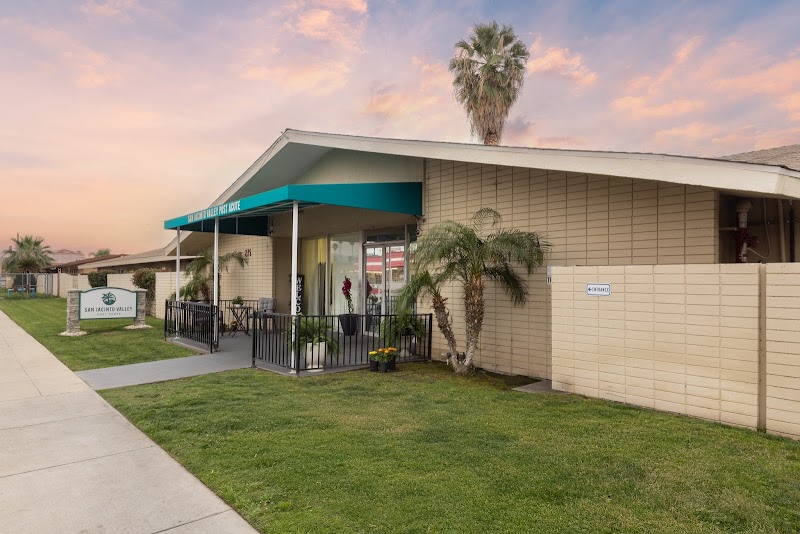
How is San Jacinto Valley Post Acute Staffed?

CMS rates SAN JACINTO VALLEY POST ACUTE's staffing level at 3 out of 5 stars, which is average compared to other nursing homes. Staff turnover is 35%, compared to the California average of 46%. This relatively stable workforce can support continuity of care.

What Have Inspectors Found at San Jacinto Valley Post Acute?

State health inspectors documented 35 deficiencies at SAN JACINTO VALLEY POST ACUTE during 2019 to 2025. These included: 35 with potential for harm.
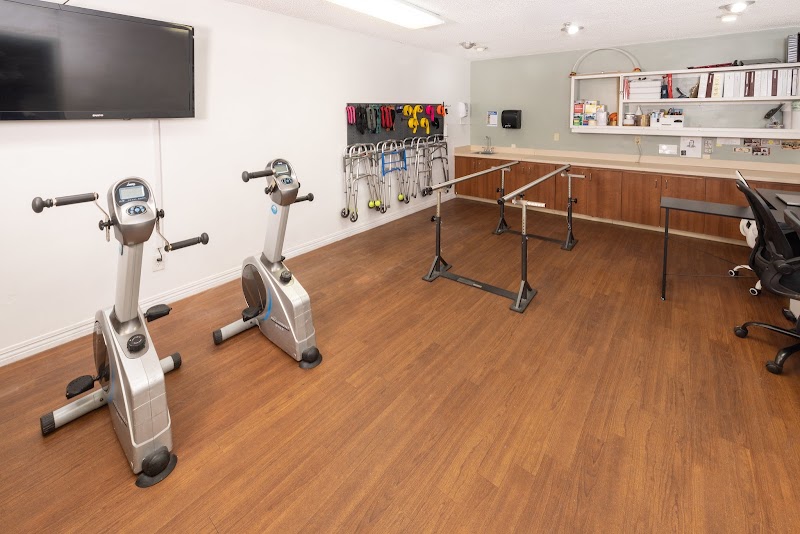
Who Owns and Operates San Jacinto Valley Post Acute?

SAN JACINTO VALLEY POST ACUTE is owned by a for-profit company. For-profit facilities operate as businesses with obligations to shareholders or private owners. The facility is operated by CHARIS TRUST DTD 12/22/16, a chain that manages multiple nursing homes. With 99 certified beds and approximately 92 residents (about 93% occupancy), it is a smaller facility located in HEMET, California.
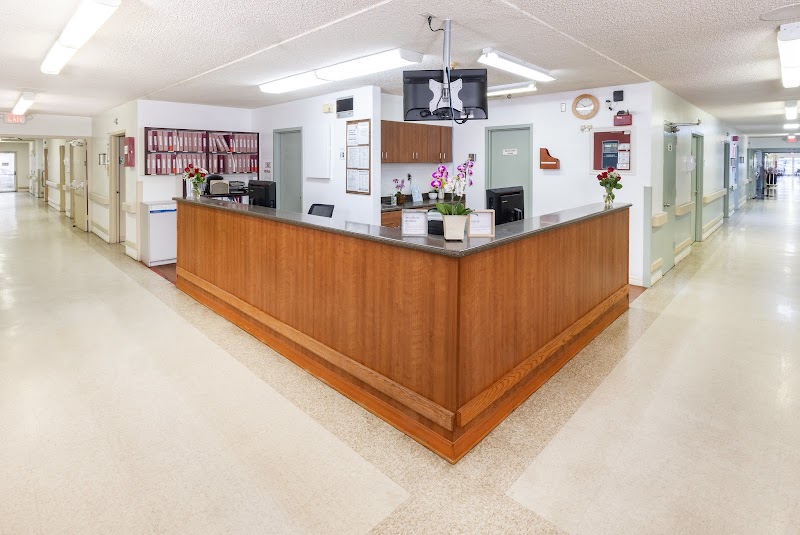
How Does San Jacinto Valley Post Acute Compare to Other California Nursing Homes?

Compared to the 100 nursing homes in California, SAN JACINTO VALLEY POST ACUTE's overall rating (5 stars) is above the state average of 3.2, staff turnover (35%) is significantly lower than the state average of 46%, and health inspection rating (4 stars) is above the national benchmark.

What Should Families Ask When Visiting San Jacinto Valley Post Acute?

Based on this facility's data, families visiting should ask: "Can I visit during a mealtime to observe dining assistance and food quality?" "How do you handle medical emergencies, and what is your hospital transfer rate?" "Can I speak with family members of current residents about their experience?"

Is San Jacinto Valley Post Acute Safe?

Based on CMS inspection data, SAN JACINTO VALLEY POST ACUTE has a clean safety record: no substantiated abuse findings (meaning no confirmed cases of resident harm), no Immediate Jeopardy citations (the most serious violation level indicating risk of serious injury or death), and is not on the Special Focus Facility watch list (a federal program monitoring the lowest-performing 1% of nursing homes). The facility has a 5-star overall rating and ranks #1 of 100 nursing homes in California. While no facility is perfect, families should still ask about staff-to-resident ratios and recent inspection results during their visit.

Do Nurses at San Jacinto Valley Post Acute Stick Around?

SAN JACINTO VALLEY POST ACUTE has a staff turnover rate of 35%, which is about average for California nursing homes (state average: 46%). Moderate turnover is common in nursing homes, but families should still ask about staff tenure and how the facility maintains care continuity when employees leave.

Was San Jacinto Valley Post Acute Ever Fined?

SAN JACINTO VALLEY POST ACUTE has no federal fines on record. CMS issues fines when nursing homes fail to meet care standards or don't correct problems found during inspections. The absence of fines suggests the facility has either maintained compliance or corrected any issues before penalties were assessed. This is a positive indicator, though families should still review recent inspection reports for the full picture.

Is San Jacinto Valley Post Acute on Any Federal Watch List?

SAN JACINTO VALLEY POST ACUTE is not on any federal watch list. The most significant is the Special Focus Facility (SFF) program, which identifies the bottom 1% of nursing homes nationally based on persistent, serious quality problems. Not being on this list means the facility has avoided the pattern of deficiencies that triggers enhanced federal oversight. This is a positive indicator, though families should still review the facility's inspection history directly.