
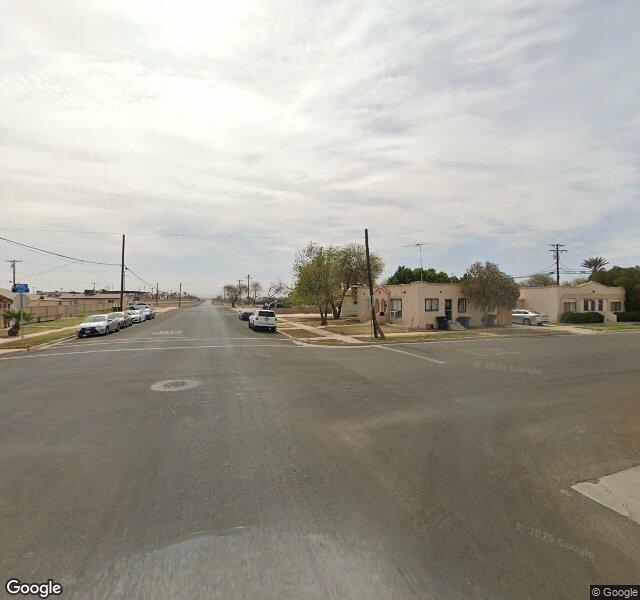
IMPERIAL MANOR

100 EAST 2ND STREET, IMPERIAL, CA 92251 (760) 355-2858
For profit - Limited Liability company 31 Beds Independent Data: November 2025
Trust Grade
45/100
#605 of 1155 in CA
Last Inspection: April 2025

Within standard 12-15 month inspection cycle. Federal law requires annual inspections.

Overview

Imperial Manor has a Trust Grade of D, indicating it is below average and raises some concerns for potential residents and their families. It ranks #1 out of 3 nursing homes in Imperial County, which means it is the best local option, but it falls within the bottom half of California facilities at #605 of 1155. The facility is showing an improving trend, decreasing issues from 13 in 2024 to 11 in 2025, but still has significant weaknesses. Staffing is a particular concern, rated at 1 out of 5 stars with a turnover rate of 47%, and there have been concerning fines totaling $58,927, higher than 97% of facilities in the state. RN coverage is also below average, with less availability than 92% of other California facilities, which could lead to potential care gaps; for instance, there was a failure to ensure an RN was present for 8 consecutive hours a day for three months, which may have affected the quality of care provided to residents. Additionally, there were incidents where a resident with swallowing difficulties did not receive adequate monitoring of their meal intake, and scales used for weighing residents were not properly calibrated, potentially leading to inaccurate weight assessments. While the facility has some strengths, such as excellent quality measures rated 5 out of 5, families should weigh these against the significant concerns highlighted in the inspection findings.

Trust Score
D
45/100
In California
#605/1155
Bottom 48%
Safety Record
Moderate
Needs review
Inspections
Getting Better
13 → 11 violations
Staff Stability
⚠ Watch
47% turnover. Above average. Higher turnover means staff may not know residents' routines.
Penalties
⚠ Watch
$58,927 in fines. Higher than 99% of California facilities. Major compliance failures.
Skilled Nurses
⚠ Watch
Each resident gets only 16 minutes of Registered Nurse (RN) attention daily — below average for California. Fewer RN minutes means fewer trained eyes watching for problems.
Violations
⚠ Watch
29 deficiencies on record. Higher than average. Multiple issues found across inspections.
★★★☆☆
3.0
Overall Rating
★☆☆☆☆
1.0
Staff Levels
★★★★★
5.0
Care Quality
★★★☆☆
3.0
Inspection Score
Stable
2024: 13 issues
2025: 11 issues

The Good

  • 5-Star Quality Measures · Strong clinical quality outcomes
  • Full Sprinkler Coverage · Fire safety systems throughout facility
  • No fines on record

Facility shows strength in quality measures, fire safety.

The Bad

3-Star Overall Rating

Near California average (3.1)

Meets federal standards, typical of most facilities

Staff Turnover: 47%

Near California avg (46%)

Higher turnover may affect care consistency

Federal Fines: $58,927

Above median ($33,413)

Moderate penalties - review what triggered them

The Ugly 29 deficiencies on record

1 actual harm
Apr 2025 11 deficiencies 1 Harm
SERIOUS (G)

Actual Harm - a resident was hurt due to facility failures

Deficiency F0692 (Tag F0692)

A resident was harmed · This affected 1 resident

**NOTE- TERMS IN BRACKETS HAVE BEEN EDITED TO PROTECT CONFIDENTIALITY** 2. Resident 2 was admitted to the facility was readmitted on [DATE] with diagnoses to include paranoid schizophrenia (subtype of...

Read full inspector narrative →
**NOTE- TERMS IN BRACKETS HAVE BEEN EDITED TO PROTECT CONFIDENTIALITY** 2. Resident 2 was admitted to the facility was readmitted on [DATE] with diagnoses to include paranoid schizophrenia (subtype of schizophrenia, a mental illness with persistent paranoid delusions), muscle spasm and dementia (memory loss) per the undated facility admission Record. A review of Resident 2's swallow evaluation dated 9/14/23 indicated Resident 2 had history of dysphagia (difficulty in swallowing) and examination performed was modified swallow impression positive laryngeal penetration. A review of Resident 2's weight records was conducted. The weight record indicated monthly weights from August 2024 to March 2025: 7/14/24 114.1 pounds (lbs.) 8/15/24 110.9 lbs. 9/12/24 108.3 lbs. 10/11/24 108 lbs. 11/12/24 105.8 lbs. 12/16/24 108 lbs. 2/14/25 108 lbs. 3/14/25 108 lbs. On 4/8/25 at 8:20 A.M., an interview was conducted with CNA 1. CNA 1 stated Resident 2's meal intake had been 75 to 100% lately. CNA 1 stated sometimes Resident 2's intake was 50%. On 4/8/25 at 10:26 A.M., an interview was conducted with CNA 2. CNA 2 stated Resident 2 was losing weight. CNA 2 stated when she started working in the facility, Resident 2 could eat by himself but now he needed assistance with eating. On 4/8/25 at 2:27 P.M., an interview was conducted with Licensed Nurse (LN) 1. LN 1 stated Resident 2 needed assistance with eating since 2023. LN 1 stated he was not aware that Resident 2 had poor meal intake. LN 1 stated CNAs were responsible of letting LNs know when residents had poor meal intake. On 4/9/25 at 3 P.M, an interview and joint record review were conducted with the Director of Nursing (DON). The DON stated Resident 2's weight loss was not significant. The DON acknowledged Resident 2 experienced weight loss from July through November 2024. The DON reviewed Resident 2's medical record. The DON stated she could not find documentation to show that Resident 2's weight loss was identified, discuss and addressed. On 4/9/25 at 5:16 P.M., an interview and record review were conducted with the DON and the Registered Dietician (RD). The RD stated Resident 2 should have been placed on weekly weights. The DON acknowledged Resident 2's weight loss should have been identified and discussed in the IDT (Interdisciplinary team - group of professionals from different fields who collaborate to achieve a common goal) meeting to address the resident's weight loss. The DON stated the Resident 2's physician should have been notified. A review of the facility policy title Weight Assessment and Intervention, revised March 2022 was conducted. The policy indicated .Resident weights are monitored for undesirable or unintended weight loss or gain .Evaluation .2. The physician and the multidisciplinary team identify conditions . that may be causing weight loss . Based on observations, interview, and record reviews, the facility failed to implement a comprehensive systemic approach, to ensure nutritional status were maintained for two of two sampled residents (Resident 12 and Resident 2) when: 1. Resident 12's unplanned significant weight loss (loss of body weight greater than 5% in a month) was not identified and addressed. 2. Resident 2's unplanned weight loss was not identified and addressed. As a result, the facility's system was not effective at identifying and addressing progressive weight loss. The staff were not consistent in identifying unplanned weight loss and significant weight loss. The interdisciplinary team (IDT - a group of professionals from different disciplines who collaborate to treat a patient's needs) did not developed a plan to monitor and address the residents' weight loss. The above cited systems failures had the potential to negatively impact and compromise the medical status of the residents. Unintentional weight loss in people older than 65 years is associated with increased morbidity and mortality. (American Family Physician, July 2021/Volume 104, Number 1) Findings: 1. According to the admission Record, Resident 12 was admitted to the facility on [DATE] and readmitted on [DATE] with diagnoses which included metabolic disorder (occurs when abnormal chemical reactions in your body disrupt this process), iron deficiency (a condition in which blood lacks adequate healthy red blood cells. Red blood cells carry oxygen to the body's tissues), paraplegia (loss of motor and/or sensory function in the lower part of the body, including the legs and lower abdomen), and gastrostomy status (an opening (gastrostomy) into the stomach, typically for feeding or draining purposes). During a review of the Minimum Data Set (MDS-an assessment tool), the MDS indicated, Resident 12 had a BIMS (Brief Interview for Mental Status - a tool to test cognition) score of 9 which meant a score between 8 and 12 indicated moderate to mild mental impairment. On 4/7/25 at 12:23 P.M., an observation was conducted during lunch. Resident 12 was observed in the dining room. Certified Nursing Assistant (CNA) 1 was feeding Resident 12. CNA 1 was observed holding a spoon of pureed food up to Resident 12's mouth. Resident 12 had her lips tightly closed shut, and she tilted her chin away from the spoon. On 4/8/25 at 7:13 A.M., a concurrent observation and interview was conducted in the dining room during breakfast with Licensed Vocational Nurse Student (LVNS) 1. Residents were observed walking out of the dining room. Resident 12 was sitting in a wheelchair, at a dining room table during breakfast, without a breakfast tray. LVNS 1 stated Resident 12 refused to eat breakfast, and her tray was taken away. LVNS 1 stated, .they're looking for something else to give her for breakfast . LVNS 1 stated Resident 12 has been refusing to eat meals and, .we give her [a supplemental drink] as alternative . On 4/09/25 at 3:00 P.M., an interview was conducted with CNA 2. CNA 2 stated Resident 12 had been refusing to eat during meals. CNA 2 stated she noticed Resident 12 was losing weight. CNA 2 stated, .Before when I would change her [briefs], it would be more difficult to put [the brief] around her .I think she uses the green [brief] which is size 2x. Now, the brief fits looser, we don't struggle as much to put it on her. That's how I could tell that she lost weight . During a review of Resident 12's Electronic Health Record, titled, the Weight Summary for August 2024 through March 2025 indicated: 8/15/24-190.4 pounds 9/12/24-182 pounds 10/11/24-173 pounds 11/22/24-171.7 pounds 12/12/24- 168 pounds 1/15/25- refused to be weighed 2/12/25-164 pounds 3/14/25-157 pounds Resident 12 experienced a 25-pound weight loss (13.7%) in six months, from 9/24 to 3/25. During a telephone interview with the Registered Dietitian (RD) on 04/08/25 02:19 P.M., the RD stated she was aware that Resident 12 had lost 7 pounds from 2/25 to 3/25. The RD stated the weight loss was unplanned and considered a significant weight loss. The RD stated in her opinion Resident 12's weight loss was not concerning because staff had reported that Resident 12 .had been eating good . and because Resident 12 was still in the obese category based on her height and weight. The RD stated, I feel like I'm more concerned [about weight loss] with someone who is not eating . The RD stated on 3/26/25 she wrote a progress note on 3/26/25, but did not do a comprehensive nutritional assessment for Resident 12. The RD stated comprehensive nutritional assessments were only done annually for all residents, regardless of any significant weight changes. During a review of Resident 12's Progress Notes, a note titled Weight Change Note dated 3/26/25 indicated, Weight loss of 7 lbs (pounds) in the past 1 month reported to RD. Resident 12 was reported to be eating well. Good appetite and good p.o. (oral) intake. BMI (Body Mass Index - a widely used measure that estimates body fat based on height and weight) of 30. No diet changes recommended at this time. Continue monitoring daily p.o. intake and monthly weights. Notify RD of significant changes . During a review of Resident 12's Weight Summary dated, 4/10/25 at 8:58 A.M., Resident 12's weight was recorded as 147.4 pounds, which indicated a weight loss of 10 pounds (6%, which is a significant weight loss) since 3/14/25. On 4/10/25 at 11:09 A.M., a follow up interview was conducted with the RD. The RD stated she wrote a progress note on 4/9/25 with interventions to address Resident 12's weight loss. The RD stated, .the interventions listed in the progress note was what I should have done to prevent even more weight loss from happening . On 4/10/25 at 8:20 A.M., an interview was conducted with the Director of Nursing (DON). The DON stated it was her expectation that a comprehensive nutritional assessment was done when a resident has significant weight loss. The DON stated, A comprehensive assessment should have been done, with interventions . The DON stated the resident was, .at risk of losing body mass, muscle mass, and losing function . During a review of the facility policy titled Nutrition revised 10/17 indicated, . 1. The dietitian, in conjunction with the nursing staff and healthcare practitioners, will conduct a nutritional assessment for each resident upon admission .and as indicated by a change in condition that places the resident at risk for impaired nutrition . During a review of the facility policy titled Nutrition (Impaired)/Unplanned Weight Loss-Clinical Protocol revised 9/2012, the document indicated, The physician and staff will monitor nutritional status, an individual's response to interventions, and possible complications .
CONCERN (D)

Potential for Harm - no one hurt, but risky conditions existed

Resident Rights (Tag F0550)

Could have caused harm · This affected 1 resident

**NOTE- TERMS IN BRACKETS HAVE BEEN EDITED TO PROTECT CONFIDENTIALITY** Based on observation, interview and record review, the facility failed to provide care that promoted dignity and respect for one...

Read full inspector narrative →
**NOTE- TERMS IN BRACKETS HAVE BEEN EDITED TO PROTECT CONFIDENTIALITY** Based on observation, interview and record review, the facility failed to provide care that promoted dignity and respect for one of 12 residents (Resident 5) reviewed for resident rights, when Resident 5's urinary catheter bag (tube inserted to drain urine) was not covered. As a result, Resident 5's urinary bag was visible to anybody passing by. Findings: Resident 5 was admitted to the facility on [DATE] with diagnose that included benign prostate hyperplasia with lower urinary symptoms (BPH -noncancer causing prostate enlargement) according to undated the facility admission record. A review of Resident 5's Minimum Data Set (MDS- a standardized, federally mandated assessment tool used in nursing homes) Section C, dated 1/31/25, was conducted. The document indicated Resident 5 had a Brief Interview of Mental Status (BIMS - an assessment tool used by facilities to screen and identify cognitive [thinking process] impairment of resident) score of 00 which indicated severe mental impairment. On 4/7/25 at 8:49 A.M., an observation was conducted of Resident 5. Resident 5 sat in a wheelchair in the dining room with his urinary bag uncovered, while other residents were present in the dining room. On 4/7/25 at 12:29 P.M., an observation was conducted of Resident 5. Resident 5 sat in a wheelchair in the dining room with his urinary bag uncovered, while other residents were present in the dining room. On 4/8/25 at 7:30 A.M., an observation was conducted of Resident 5. Resident 5 sat in a wheelchair in the dining room with his urinary bag uncovered, while other residents were present in the dining room. On 4/8/25 at 8:42 A.M., an interview was conducted with Certified Nursing Assistant (CNA) 1. CNA 1 stated she did not know she had to cover Resident 5's urinary bag. CNA 1 acknowledged that leaving the resident's urinary bag uncovered did not promote the resident's dignity and could result in the resident feeling embarrassed. On 4/8/25 at 10:20 A.M, an interview was conducted with CNA 2. CNA 2 stated Resident 5's urinary bag should be covered to promote the resident's dignity. On 4/9/25 at 2:45 P.M. an interview and record review were conducted with the Director of Nursing (DON). The DON stated Resident 5's urinary bag should be covered with to promote Resident 5's dignity. A review of the facility's policy and procedure titled Resident Rights, dated February 2021, was conducted. The policy indicated, .Employees shall treat all residents with kindness, respect and dignity .1 These rights include the resident's rights to: a. a dignified existence . A review of the facility's policy and procedure titled Dignity, revised in February 2021, was conducted. The policy indicated, .1. Residents are treated with dignity and respect at all times .
CONCERN (E)

Potential for Harm - no one hurt, but risky conditions existed

Unnecessary Medications (Tag F0759)

Could have caused harm · This affected multiple residents

Based on observation, interview and record review, the facility failed to ensure the medication error rate was less than five percent when two out of 31 medications were administered incorrectly. The ...

Read full inspector narrative →
Based on observation, interview and record review, the facility failed to ensure the medication error rate was less than five percent when two out of 31 medications were administered incorrectly. The facility's error rate was 6.45%. These failures had the potential to negatively affect the residents' health and safety. Findings: 1. On 4/9/25 at 8 A.M., a medication administration observation was conducted with licensed nurse (LN) 1. LN 1 prepared and administered three medications to Resident 27. One of the medication LN 1 administered to Resident 27 was Benztropine mesylate (a medication for [Parkinson's disease] a progressive disease of the nervous system affecting movement) 1 milligram (mg). A review of Resident 27's physician order was conducted. The physician order, dated 8/15/23, indicated an order to give Resident 27 .Benztropine Mesylate Oral Tablet 2 MG (Beztropine Mesylate) Give 1 mg by mouth one time a day . On 4/9/25 at 10:31 A.M., an interview and joint record review of Resident 27's physician order were conducted with LN 1. LN 1 stated the physician order was written as Benztropine mesylate 2 mg and give 1mg by mouth one time a day. LN 1 stated the pharmacy dispensed a blister pack of Benztropine mesylate in 20 mg tablet. LN 1 acknowledged that the order for Benztropine was unclear and should have been clarified with Resident 27's physician. On 4/9/25 at 4:54 P.M., an interview and joint record review were conducted with the Director of Nursing (DON). The DON stated Resident 27's Benztropine order should have been clarified with the resident's physician. 2. On 4/9/25 at 8:44 A.M., a medication administration observation was conducted with licensed nurse (LN) 1. LN 1 prepared and administered six medications to Resident 26. One of the medication LN 1 administered to Resident 26 was Olanzapine (a medication for [schizophrenia] mental illness characterized by disturbance in thought) 20 milligrams (mg). A review of Resident 26's physician order was conducted. The physician order, dated 8/20/24, indicated an order to give Resident 26 .OLANzapine Oral Tablet 10 MG (Olanzapine) .Give 10 mg by mouth one time a day . and .OLANzapine Oral Tablet 20 MG (Olanzapine) . Give 20 mg by mouth at bedtime . A review of Resident 26's Olanzapine blister pack label indicated . Olanzapine 20 mg TAB . TAKE 1 TABLET BY MOUTH IN THE MORNING & BEDTIME . On 4/9/25 at 4:55 P.M., an interview and joint record review were conducted with the Director of Nursing (DON). The DON stated according to the physician order, Resident 26 should have been given Olanzapine 10 mg in the morning. The DON stated Resident 26's physician order for Olanzapine was 10 mg for morning but pharmacy dispensed 20 mg for both morning and bedtime. The DON stated the medication was not administered in accordance with the physician order. A review of the facility's policy and procedure titled Administering Medications, revised in April 2019, was conducted. The policy indicated, .4. Medications are administered in accordance with prescriber orders .10. The individual administering the medication checks the label THREE (3) times to verify the .right dosage .before giving the medication .
CONCERN (E)

Potential for Harm - no one hurt, but risky conditions existed

Deficiency F0805 (Tag F0805)

Could have caused harm · This affected multiple residents

**NOTE- TERMS IN BRACKETS HAVE BEEN EDITED TO PROTECT CONFIDENTIALITY** Based on observation, interview, and facility document review, the facility failed to ensure pureed food was prepared in a consi...

Read full inspector narrative →
**NOTE- TERMS IN BRACKETS HAVE BEEN EDITED TO PROTECT CONFIDENTIALITY** Based on observation, interview, and facility document review, the facility failed to ensure pureed food was prepared in a consistency that met the needs for two of two sampled residents sampled residents (12, 13). This failure placed the residents at risk for choking and/or aspiration (inhaling food into the lungs). Findings: 1. Resident 12 was admitted to the facility on [DATE] and readmitted on [DATE] with diagnoses which included metabolic disorder (occurs when abnormal chemical reactions in your body disrupt this process), iron deficiency (a condition in which blood lacks adequate healthy red blood cells. Red blood cells carry oxygen to the body's tissues), paraplegia (loss of motor and/or sensory function in the lower part of the body, including the legs and lower abdomen), and gastrostomy status (an opening (gastrostomy) into the stomach, typically for feeding or draining purposes). A review of the of the facility document titled, Nutrition Quarterly Review assessment written by the dietary services supervisor (DDS) indicated, the Resident 12 was on a puree diet due to chewing problems. 2. Resident 13 was admitted to the facility on [DATE] with diagnoses which included underweight. During an observation of pureed foods preparation with [NAME] 1 and [NAME] 2 on 4/7/25 at 11:16 A.M., [NAME] 1 was preparing brussel sprouts in a pureed form. [NAME] 1 placed 2 4-ounce scoops of cooked brussel sprouts into a blender, with 1 ½ 4-ounce scoops of broth into the blender. After blending the brussel sprouts and the broth, [NAME] 1 placed a scoop of the blended brussel sprouts onto two plates, covered the plates, and then placed them on two trays. The blended brussel sprouts had pea sized chunks and was not smooth in appearance. On 4/7/25 at 11:25 A.M., an interview was conducted with [NAME] 2. [NAME] 2 stated the blended brussel sprouts, .needs more broth and more time in the blender . [NAME] 2 stated it was important to make the food smooth per recipe, .if they have a problem chewing the meat, it needs to not have chunks, we need to follow the recipe . During a record review, the recipe for Brussel Sprouts indicated, .PUREE DIET: Process each serving, gradually adding 2-4 tbsp [tablespoons] of vegetable or chicken stock until smooth and mixture meets the Spoon Tilt Test standard. Food should be smooth with no lumps .Pureed vegetables should have a smooth texture, no lumps, and hold shape on a spoon . During a record review of the policy titled, Pureed dated July 2019, the document indicated, PUREED .This modification is designed for people who have severe chewing and/or swallowing problems. Properly pureed foods elimitate the chewing phase .Puree all foods to a smooth, lump-free .consistency .Always refer to the recipe and spreadsheet for directions .
CONCERN (E)

Potential for Harm - no one hurt, but risky conditions existed

QAPI Program (Tag F0867)

Could have caused harm · This affected multiple residents

Based on interview and record review, the facility failed to identify weight loss trends in their Quality Assurance Performance Improvement (QAPI- a plan developed by the facility with the goal of imp...

Read full inspector narrative →
Based on interview and record review, the facility failed to identify weight loss trends in their Quality Assurance Performance Improvement (QAPI- a plan developed by the facility with the goal of improving conditions in the facility) as an area of improvement that required an action plan. As a result, the facility did not provide a systemic approach in adressing Resident 12 and Resident 2's weight loss. (Refer to F-692) Findings: During a interview and record review with the Director of Nursing (DON) on 4/10/25 at 2:05 P.M., the DON stated the issues that were discussed during the monthly QAPI meetings were elopement prevention and resident to resident altercations. The DON stated the weight losses should have been identified by the facility, and discussed in the monthly QAPI meetings. The DON stated, Yes, the weight losses should have been identified before [the recertification suvey] .it's part of patient care. Monitoring weight was part of patient care and should have been part of QAPI because it would sound an alarm . During a review of the facility's undated policy titled, QAPI Policy and Procedure, the policy indicated, the purpose of QAPI was, to monitor, evaluate, and improve the quality of resident care and services provided at [Facility's Name] . In addition, the policy indicated the objective of QAPI included to, .Engage staff at all levels in identifying and solving quality concerns .
CONCERN (E)

Potential for Harm - no one hurt, but risky conditions existed

Infection Control (Tag F0880)

Could have caused harm · This affected multiple residents

**NOTE- TERMS IN BRACKETS HAVE BEEN EDITED TO PROTECT CONFIDENTIALITY** Based on observation, interview and record review, the facility failed to follow their own infection prevention and control prog...

Read full inspector narrative →
**NOTE- TERMS IN BRACKETS HAVE BEEN EDITED TO PROTECT CONFIDENTIALITY** Based on observation, interview and record review, the facility failed to follow their own infection prevention and control program for two of two sampled residents (5, 12) when: 1. Resident 5's uncovered urinary bag touched the floor on multiple occasions for one of 12 residents (Resident 5). 2. The Centers for Disease Control and Prevention (CDC) guidelines for Enhanced Barrier Precautions (EBPs, an infection control intervention using protective gown and gloves) was not implemented for Resident 12. These failures could potentially contribute to Resident 5 acquiring a urinary tract infection. Also, failure to implement the CDC guidelines had the potential to result in the spread of Multiple Drug Resistant Organisms (MDROs, microorganisms, mainly bacteria, that are highly resistant to many types of antibiotics) throughout the facility. Findings: 1. Resident 5 was admitted to the facility on [DATE] with diagnose that included benign prostate hyperplasia with lower urinary symptoms (BPH -noncancer causing prostate enlargement) according to the undated facility admission record. A review of Resident 5's Minimum Data Set (MDS- a standardized, federally mandated assessment tool used in nursing homes) Section C, dated 1/31/25, was conducted. The document indicated Resident 5 had a Brief Interview of Mental Status (BIMS - an assessment tool used by facilities to screen and identify cognitive [thinking process] impairment of resident) score of 00 which indicated severe mental impairment. On 4/7/25 at 8:49 A.M., an observation was conducted of Resident 5. Resident 5 sat in a wheelchair in the dining room with his urinary bag uncovered and was touching the floor. On 4/7/25 at 12:29 P.M., an observation was conducted of Resident 5. Resident 5 sat in a wheelchair in the dining room with his urinary bag uncovered and was touching the floor. On 4/8/25 at 7:30 A.M., an observation was conducted of Resident 5. Resident 5 sat in a wheelchair in the dining room with his urinary bag uncovered and was touching the floor. On 4/8/25 at 8:37 A.M., an interview was conducted with Certified Nursing Assistant (CNA) 1. CNA 1 stated Resident 5's urinary bag and tubing should not be touching the floor. On 4/8/25 at 10:16 A.M, an interview was conducted with CNA 2. CNA 2 stated Resident 5's urinary bag and tubing was not supposed to be on the floor. CNA 2 stated the floor was contaminated and infection might go to Resident 5's urinary bag. CNA 2 stated Resident 5's urinary bag and tubing should be above the ground. On 4/9/25 at 2:50 P.M., an interview was conducted with the Director of Nursing (DON). The DON stated Resident 5's urinary bag and tubing should not touch the floor because of possibility of reintroducing the bacteria back to the urinary tract causing infection. A review of the facility's policy titled Urinary Tract Infections (Catheter-Associated), Guidelines for Preventing, revised September 2017 was conducted. The policy indicated .Steps in procedure . 6 .c .Do not place the drainage bag on the floor . 2. Resident 12 was admitted to the facility on [DATE] and readmitted on [DATE] with diagnoses which included metabolic disorder (occurs when abnormal chemical reactions in your body disrupt this process), iron deficiency (a condition in which blood lacks adequate healthy red blood cells. Red blood cells carry oxygen to the body's tissues), paraplegia (loss of motor and/or sensory function in the lower part of the body, including the legs and lower abdomen), and gastrostomy status (an opening (gastrostomy) into the stomach, typically for feeding or draining purposes). On 4/7/25 at 7:30 A.M., observations were conducted of the nursing unit. Residents 12 was identified with indwelling medical devices (a medical device inserted into the body and left in place for a period of time, either for treatment or to allow access for various procedures). There was no signage posted for EBP, or PPE available for staff use observed outside the residents' bedrooms. During an interview on 4/8/25 at 7:45 A.M., an interview was conducted with the Infection Preventionist (IP). The IP stated the residents with indwelling medical devices were not placed on EBP. The IP stated he did not know what Enhanced Barrier Precautions were or what the precaution entailed. On 4/9/25 at 11:03 A.M., an interview was conducted with the Director of Nursing (DON). The DON stated she did not know what Enhanced Barrier Precautions were, and that the facility had not implemented EBP for any residents with indwelling medical devices. During a review of the All Facilities Letter (AFL- a memorandum issued by the California Department of Public Health), dated 6/13/2024, the memo indicated skilled nursing facilities should implement EBP per Centers for Disease Control (CDC) guidance, as part of infection control for skilled nursing facilities. A review of the facility's policy titled Infection Prevention and Control Program, revised October 2018, indicated, The elements of the infection prevention and control program consist of coordination/oversight, policies/procedures .outbreak management, prevention of infection .policies and procedures reflect the current infection prevention and control standards of practice . During a review of the Quality, Safety and Oversight (QSO- a memorandum issued by the Centers for Medicare & Medicaid Services) 24-08-NH the memorandum indicated, EBP are indicated for residents with any of the following .Wounds and/or indwelling medical devices even if the resident is not known to be infected or colonized with a MDRO .Indwelling medical device examples include .urinary catheters, feeding tubes .EBP should be used for any residents who meet .the criteria, wherever they reside in the facility .
CONCERN (E)

Potential for Harm - no one hurt, but risky conditions existed

Deficiency F0882 (Tag F0882)

Could have caused harm · This affected multiple residents

Based on interview and record review, the facility failed to ensure the Infection Preventionist Nurse (IP) completed required annual specialized training related to infection control. This deficient ...

Read full inspector narrative →
Based on interview and record review, the facility failed to ensure the Infection Preventionist Nurse (IP) completed required annual specialized training related to infection control. This deficient practice had the potential to affect the facility's ability to maintain a safe environment and to prevent and manage transmission of diseases and infections. Findings: During an interview with the IP on 4//25 at 7:45 A.M., the IP stated he had been the IP at the facility, for about a year . The IP further stated he is scheduled to pass medications for 36 hours a week and dedicated approximately 2-4 hours weekly as an IP. A review of the IP's training certificates indicated, the IP completed a course titled, Infection Control and Prevention on 12/13/24 for 4 credit hours. In addition, the IP completed a course titled Hand Hygiene For Healthcare Online Course on 1/2/24 and a Personal Protective Equipment Online Course on 1/2/24. The courses had no listed CEU's (Continuing Education Units- a measure in ongoing education programs) or credit hours. During a concurrent interview and record review with the Director of Nursing (DON) on 4/10/25 at 10:38 AM., the Job Description for the facility's Infection Preventionist indicated, Specific Requirements .Must possess a current, unencumbered, active license to practice as a Registered Nurse in this state. The DON acknowledged the IP was a Licensed Vocational Nurse and not a Registered Nurse. During a record review of the Job Description for the facility's Infection Preventionist dated 2001, the Job Description indicated, Working Conditions .Attends and participates in continuing education programs .
CONCERN (F)

Potential for Harm - no one hurt, but risky conditions existed

Deficiency F0727 (Tag F0727)

Could have caused harm · This affected most or all residents

Based on observation, interview, and record review, the facility failed to ensure a registered nurse (RN) was on duty for 8 consecutive hours per day, for three months, October 1 to December 31, 2024....

Read full inspector narrative →
Based on observation, interview, and record review, the facility failed to ensure a registered nurse (RN) was on duty for 8 consecutive hours per day, for three months, October 1 to December 31, 2024. This failure had the potential for advanced care activities, that needed an RN, to not be provided to the residents due to the unavailable RN. Findings: During the initial tour of the facility on 4/07/2025 at 9 A.M., the only RN at the facility was the Director of Nursing (DON). A review of the facility's PBJ (payroll-based journal) Staffing Data Report, [NAME] Report 1705D (a report that can help Skilled Nursing Facilities identify areas for improvement in care and operations) of fiscal year 2025 Quarter 1, indicated the facility was triggered for no RN hours, which meant four or more days within the quarter with no RN hours. The Report indicated the following dates with no RN hours: - 10/1,10/2,10/3, 10/4,10/5, 10/6, 10/7, 10/8, 10/9, 10/10, 10/11, 10/12, 10/13, 10/14, 10/15, 10/16, 10/17, 10/18, 10/19, 10/20, 10/21, 10/22, 10/23, 10/24, 10/25, 10/26, 10/27, 10/28, 10/29, 10/30, and 10/31/24. - 11/1, 11/2, 11/3 (SU), 11/4, 11/5, 11/6, 11/7, 11/8, 11/9, 11/10, 11/11, 11/12, 11/13, 11/14, 11/15, 11/16, 11/17, 11/18, 11/19, 11/20, 11/21, 11/22, 11/23, 11/24, 11/25, 11/26, 11/27, 11/28, 11/29, and 11/30/24. - 12/1, 12/2, 12/3, 12/4, 12/5, 12/6, 12/7, 12/8, 12/9, 12/10, 12/11, 12/12, 12/13, 12/14, 12/15, 12/16, 12/17, 12/18, 12/19, 12/20, 12/21, 12/22, 12/23, 12/24, 12/25, 12/26, 12/27, 12/28, 12/29, 12/30, and 12/31/24. On 4/7/24 at 9:07 A.M., an interview was conducted with the Facility Assistant (FA). The FA stated the Director of Nursing (DON) was the only RN in the building. The FA stated the DON was not included in the schedule because the DON came to the facility on an as needed basis only. On 4/8/25 at 2:27 P.M., an interview was conducted with licensed nurse (LN) 1. LN 1 stated the DON was the only RN working in the facility. LN 1 stated the DON came to facility approximately twice times a week. On 4/9/25 at 11:17 A.M., an interview was conducted with the DON. The DON stated she was the only RN working in the facility. The DON stated she came to the facility to fill in for call offs or last-minute call in sick. The DON acknowledged there should be an RN for 8 consecutive hours in a 24-hour shift. On 4/10/25 at 8:17 A.M., an interview and joint record review of the facility's Direct Care Service Hours Per Patient Day (DHPPD- staffing requirement reporting) was conducted with the FA. The FA stated from January of 2025 to current, there was no RN scheduled to work at the facility. According to the DHPPD report for March 17 to 31, 2025, there were no RNs projected to work, and there were no RNs who actually worked on March 17 to 31, 2025. The FA stated the DON was the only RN in the facility. Th FA acknow;edged there was no consistent RN for eight (8) consecutive hours per day for seven (7) days. A review of the facility's policy titled Staffing, Sufficient and Competent Nursing, revised in August 2022, was conducted. The policy indicated .3. A registered nurse provides services at least eight (8) consecutive hours every 24 hours, seven (7) days a week. RNs may be scheduled more than eight (8) hours depending on the acuity needs of the resident .
CONCERN (F)

Potential for Harm - no one hurt, but risky conditions existed

Room Equipment (Tag F0908)

Could have caused harm · This affected most or all residents

Based on observation, interview, and record review the facility failed to ensure scales were calibrated per manufacturer's instructions. This failure had the potential for inaccurate weights to be ob...

Read full inspector narrative →
Based on observation, interview, and record review the facility failed to ensure scales were calibrated per manufacturer's instructions. This failure had the potential for inaccurate weights to be obtained. Findings: During an observation and interview on 4/9/25 at 9:22 A.M., the Maintenance Worker (MW) stated the maintenance department was responsible for calibrating (the process of checking a measuring instrument to see if it is accurate) scales used to weigh residents. The MW stated the facility used two different scales: a standing scale for residents who were able to stand, and a scale to weigh residents while they are sitting in the wheelchair. The MW stated to calibrate the standing scale, he will press the tare button to zero out the scale. The MW stated once the scale reads 0.0, the scale is calibrated. The MW stated he did not use any handheld weights, .I put a person on the scale, not weights . to ensure the machine was calibrated. On 4/9/25 at 10:02 A.M., an interview was conducted with the Maintenance Supervisor (MS). The MS stated to calibrate the standing scale and the wheelchair scale, he uses two five-pound hand weights. The MS stated to calibrate the wheelchair machine, he will zero it out . then place a five-pound weight on the machine. The MS stated if the machine reads five pounds, then it is calibrated. A review of the manufacturer's instructions for the standing scale titled, Medical Scale-Calibration Manual, indicated, .Calibration of the scale is performed using certified weights. 50/100/200/400 lbs [pounds] are employed as the calibration standards . A review of the manufacturer's instructions for the wheelchair scale titled, Weighing Indicator User Manual indicated, .The indicator is calibrated by the following procedures .The minimum test weight that can be used is 1% of the full-scale capacity . On 4/10/25 at 8:20 A.M., an interview was conducted with the Director of Nursing (DON). The DON stated her expectation was for maintenance to calibrate the scales according to the manufacturer's instructions. The DON stated, We should know how to calibrate the scales. The scales should be accurate because we want to obtain the residents' accurate weight. It can deter, or give false impressions of the [resident's] weight and therefore affect the patient's plan of care . During a review of the facility's policy titled Scale Use Policy, the policy indicated, .all residents will be weighted .using calibrated and facility-approved scales, following standard procedures to ensure accuracy, safety, and dignity .
MINOR (B)

Minor Issue - procedural, no safety impact

Deficiency F0911 (Tag F0911)

Minor procedural issue · This affected multiple residents

**NOTE- TERMS IN BRACKETS HAVE BEEN EDITED TO PROTECT CONFIDENTIALITY** Based on observation and record review, the facility failed to ensure that 1 of 9 resident rooms (room [ROOM NUMBER]) accommodat...

Read full inspector narrative →
**NOTE- TERMS IN BRACKETS HAVE BEEN EDITED TO PROTECT CONFIDENTIALITY** Based on observation and record review, the facility failed to ensure that 1 of 9 resident rooms (room [ROOM NUMBER]) accommodated 4 or less residents. Findings: During the initial facility tour on 4/7/25 at 9 A.M., room [ROOM NUMBER] was observed to have 6 resident beds in the room. During a review of the facility's Analysis of Accommodations (document with measurements of the square footage of the useable living space of individual resident rooms and approved capacities), the document indicated room [ROOM NUMBER] had 6 residents housed in the room. There were no quality of care or quality of life issues identified during the survey for the six residents that resided in room [ROOM NUMBER]. A contuinance of a waiver allowing the six-bed room was therefore recommended.
MINOR (B)

Minor Issue - procedural, no safety impact

Deficiency F0912 (Tag F0912)

Minor procedural issue · This affected multiple residents

**NOTE- TERMS IN BRACKETS HAVE BEEN EDITED TO PROTECT CONFIDENTIALITY** Based on observation and record review, the facility did not meet the minimum requirement of 80 square feet per resident in room...

Read full inspector narrative →
**NOTE- TERMS IN BRACKETS HAVE BEEN EDITED TO PROTECT CONFIDENTIALITY** Based on observation and record review, the facility did not meet the minimum requirement of 80 square feet per resident in rooms 1, 2, 3, 6, 7 and 8. Findings: An observation of resident rooms was conducted from 4/7/25 through 4/10/25 during the annual recertification survey. A review of the facility's Analysis of Accommodations indicated there were 6 of 9 resident rooms that did not meet the minimum room size requirement, as follows: 1. room [ROOM NUMBER], with 3-resident occupancy, 72 square feet per resident totaling 216 square feet. 2. room [ROOM NUMBER], with 3-resident occupancy, 74 square feet per resident totaling 222 feet. 3. room [ROOM NUMBER], with 3-resident occupancy, 72 square feet per resident totaling 216 square feet. 4. room [ROOM NUMBER] with 3-resident occupancy, 70 square feet per resident totaling 210 square feet. 5. room [ROOM NUMBER] with 3-resident occupancy, 73.66 square feet per resident totaling 221 square feet. 6. room [ROOM NUMBER], 4-resident occupancy, 70.75 square feet per resident totaling 283 square feet. The variations in room size requirements did not adversely affect the resident's health, safety, quality of care, or quality of life during the survey. A continuance of the room size waiver for all affected rooms were recommended.
Aug 2024 1 deficiency
CONCERN (D) 📢 Someone Reported This

A family member, employee, or ombudsman was alarmed enough to file a formal complaint

Potential for Harm - no one hurt, but risky conditions existed

Report Alleged Abuse (Tag F0609)

Could have caused harm · This affected 1 resident

**NOTE- TERMS IN BRACKETS HAVE BEEN EDITED TO PROTECT CONFIDENTIALITY** Based on interview and record review the facility failed to implement its abuse reporting policy when it had knowledge of an all...

Read full inspector narrative →
**NOTE- TERMS IN BRACKETS HAVE BEEN EDITED TO PROTECT CONFIDENTIALITY** Based on interview and record review the facility failed to implement its abuse reporting policy when it had knowledge of an allegation of genital exposure by Resident 3 to Resident 4 and did not report it to the State Agency (SA). This failure resulted in continued proximity of Resident 4 to Resident 3 who was the alleged aggressor, and prevented investigation by the SA. Resident 3 was admitted to the facility on [DATE] with diagnoses that included schizoaffective disorder bipolar type (a mental illness that can affect your thoughts, mood and behavior) and schizophrenia (a mental disorder characterized by disruptions in thought processes). Resident 4 was admitted to the facility on [DATE] with diagnoses that included paranoid schizophrenia (a pattern of behavior where a person feels distrustful of others and behaves accordingly) and anxiety disorder (a condition in which a person has excessive worry and feelings of fear, dread and uneasiness). On 7/16/24 at 12:20 P.M. an interview was conducted with Resident 4 who stated, (Resident 3) exposed his genitals to me and the staff aren ' t doing anything about it. On 7/16/24 at 12:39 P.M. an interview was conducted with the Director of Nursing (DON) who stated, (Resident 3) doesn ' t have any history of hypersexualization (a person ' s inability to control their sexual behavior and impulses). On 7/19/24 a review of Resident 3 ' s Imperial County Behavioral Health Services psychiatric note dated 5/22/24 indicated Resident 3 had history of hypersexual – stuck tongue out at female staff twice. On 7/22/24 at 10:37 A.M. a follow up telephone interview and concurrent record review was conducted with the DON who stated, I didn ' t see this in the record before now. On 7/19/24 a review of Resident 3 ' s Communication note dated 7/8/24 at 8:13 A.M. indicated, Female resident (Resident 4) pointed to male resident (Resident 3) claiming he exposed himself to her in the lunchroom near lunch hour. On 7/19/24 a review of Resident 4 ' s Communication Note dated 7/11/24 at 8:36 A.M. indicated, Writer check in with both the resident and fellow female resident (Resident 4) on claim made by (resident 4) on 7/8/24 about the resident exposing himself to her. On 7/19/24 at 2:14 P.M. a follow up telephone interview was conducted with the Social Worker (SW) who stated, I didn ' t report what (Resident 4) said because I wasn ' t here when it happened. On 7/16/24 at 12:39 P.M. an interview was conducted with the DON who stated, It was not reported to the SA. A review of the facility policy entitled Abuse, Neglect, Exploitation or Misappropriation – Reporting and Investigating revised September 2022 indicated, All reports of resident abuse . are reported to local, state and federal agencies (as required by current regulations) and thoroughly investigated by facility management. Findings of all investigations are documented and reported. A review of the facility policy entitled Abuse, Neglect, Exploitation and Misappropriation Prevent Program revised April 2021 indicated, Protect residents from any further harm during investigation.
Apr 2024 8 deficiencies
CONCERN (D)

Potential for Harm - no one hurt, but risky conditions existed

Deficiency F0578 (Tag F0578)

Could have caused harm · This affected 1 resident

Based on interview and record review, the facility failed to ensure 2 of 2 sampled residents (8, 24) had end of life wishes or a POLST (physician orders for life sustaining treatment) completely signe...

Read full inspector narrative →
Based on interview and record review, the facility failed to ensure 2 of 2 sampled residents (8, 24) had end of life wishes or a POLST (physician orders for life sustaining treatment) completely signed by the RP(responsible party) and physician respectively in their record. As a result there was a potential to not have their life end of life wishes honored. Findings: 1.On 4/17/24 at 9 A.M., an interview and record review was conducted with the DON. The DON stated Resident 8's POLST was the physician order for life sustaining treatment. The DON stated Resident 8's POLST was a legal document, which meant a major decision for sustaining life for Resident 8. The DON stated Resident 8's POLST should be reviewed, agreed upon by both parties, and signed to include the title or relationship to Resident 8. The DON further stated, Resident 8 's POLST was not valid without the signature. A review of Resident 8's medical record indicated Resident 8 was on a public conservatorship from 1/17/24 to 1/17/25. A review of Resident 8's POLST (Physician Orders for Life-Sustaining Treatment) indicated it was signed by the physician on 5/14/19. The section for Patient or Legally Recognized Decisionmaker had a box for Signature (required) and Relationship (write self if patient) which was left blank and was not completed. 2. On 4/18/24 at 11:23 A.M, an interview and record review were conducted with the DON. The DON stated Resident 24's POLST should have been signed by the physician because POLST was an order and needed a physician signature. A review of Resident 24's POLST (Physician Orders for Life-Sustaining Treatment) indicated the section for Signature of Physician/Nurse Practitioner/Physician Assistant (Physician/NP/PA) had the physician's name but there was no signature and date. Per the facility policy entitled Palliative/End-of-Life Care-Clinical Protocol, revised date March 2018 indicated, 1. Upon admission, the attending physician will help identify the prognosis for each resident .2. The physician and staff will identify individuals who desire or are likely candidates for palliative car .3. The physician will review the resident's decision-making capacity and support the resident's participation in the care plan to the extent possible .
CONCERN (D)

Potential for Harm - no one hurt, but risky conditions existed

Deficiency F0637 (Tag F0637)

Could have caused harm · This affected 1 resident

**NOTE- TERMS IN BRACKETS HAVE BEEN EDITED TO PROTECT CONFIDENTIALITY** Based on observation, interview and record review, the facility failed to complete a significant change in status assessment (SC...

Read full inspector narrative →
**NOTE- TERMS IN BRACKETS HAVE BEEN EDITED TO PROTECT CONFIDENTIALITY** Based on observation, interview and record review, the facility failed to complete a significant change in status assessment (SCSA) in minimum data set (MDS, an assessment tool) for one of 12 sampled residents (Resident 5). This was when Resident 5 had developed stage III pressure ulcer (full thickness tissue injury, open wound that goes deeper into the tissue beneath) of her coccyx (tailbone). This failure had the potential to result in Resident 5 to be unable to achieve or maintain optimal status of health, function, and quality of life. Findings: Resident 5 was admitted to the facility on [DATE], with diagnoses which included dementia (the loss of cognitive function like thinking, remembering, and reasoning to such an extent that interferes with a person's daily life and activities), per the facility's admission Record. A review of Resident 5's MDS dated [DATE], indicated her cognition (mental, thought processes) and brief interview for mental status (BIMS, cognition level) score was three, which indicated the resident's cognition was severely impaired. The MDS for skin conditions indicated Resident 5 had no skin conditions but was prone to developing skin damage. A review of Resident 5's physician's order dated 3/18/24, indicated there was an antibiotic (anti-infective) ointment order for Resident 5's pressure ulcer stage III of her tailbone which was completed on 4/9/24. A review of the facility's matrix (is used to identify pertinent care categories like pressure ulcer) dated 4/15/24 did not indicate Resident 5 had stage III pressure ulcer of her tailbone. A review of Resident 5's MDS for significant change in status assessment was conducted. There was no SCSA MDS for Resident 5's stage III pressure ulcer of the coccyx. During an observation and interview of Resident 5 in her room on 4/15/24 at 11:28 A.M., Resident 5 laid in bed, with her eyes closed and yelled out when her name was called. Resident 5 did not respond to questions. During an interview with Certified Nursing Assistant (CNA) 1 on 4/16/24 at 3:02 P.M., CNA 1 stated Resident 5 was alert, yelled out when she did not want to get up in bed. CNA 1 stated Resident 5 required assistance from her bed to her wheelchair but was able to wheel herself to the hallway. CNA 1 stated Resident 5 had strong hands but had no mobility on her legs. CNA 1 stated Resident 5 had a wound on her tailbone, and the Licensed Nurses (LNs) put some ointment and that the wound had gotten better. During a concurrent observation of Resident 5 and LN 2 performing wound treatment on Resident 5 on 4/18/24 at 9:17 A.M., LN 2 cleansed Resident 5's tailbone with normal saline (solution) and put some cream on Resident 5's pressure ulcer. During an interview with LN 2 on 4/18/24 at 9:18 A.M., LN 2 stated Resident 5's pressure ulcer had improved from a size of 2 centimeter (cm) by 2 cm to a scrape like and clean edges wound. During a joint review of Resident 5's clinical record and an interview with the Director of Staff Development (DSD) on 4/17/24 at 8:54 A.M., the DSD stated Resident 5's pressure ulcer had been treated with antibiotic ointment and the open area had closed. The DSD stated Resident 5's pressure ulcer stage III was identified on 3/16/24 and was not coded in MDS. The DSD stated the LNs who identified the change in Resident 5's skin condition should have triggered a situational alert to trigger the MDS tool. The DSD stated it was important to code Resident 5's changed in skin condition in MDS to communicate with the nursing staff what was the status of the resident and was a part of the resident's medical history. The DSD stated a comprehensive assessment was conducted to aid in developing a care plan for the residents. During an interview with the Director of Nursing (DON) on 4/18/24 at 10:43 A.M., the DON stated Resident 5's pressure ulcer was recent. The DON stated Resident 5's pressure ulcer was not coded in the MDS tool. The DON stated the LNs should be coding the resident's MDS as mandated. A review of the facility's policy titled, Comprehensive Assessment, revised October 2023 was conducted. The policy indicated, Comprehensive MDS assessments are conducted to assist in developing person-centered care plan .7. Significant Change in Status Assessment (SCSA) - the SCSA is a comprehensive assessment for a resident that must be completed when the IDT (Interdisciplinary Team - group of healthcare professionals with various areas of expertise who work together toward the goals of the residents) has determined that a resident meets the significant change guidelines for either major improvement .8. A significant change is a major decline or improvement in a resident's status .
CONCERN (D)

Potential for Harm - no one hurt, but risky conditions existed

Comprehensive Care Plan (Tag F0656)

Could have caused harm · This affected 1 resident

**NOTE- TERMS IN BRACKETS HAVE BEEN EDITED TO PROTECT CONFIDENTIALITY** Based on observation, interview and record reviews, the facility failed to develop a person-centered care plan for a resident (5...

Read full inspector narrative →
**NOTE- TERMS IN BRACKETS HAVE BEEN EDITED TO PROTECT CONFIDENTIALITY** Based on observation, interview and record reviews, the facility failed to develop a person-centered care plan for a resident (5) at risk for pressure ulcers (injuries to skin and underlying tissue resulting from prolonged pressure on the skin), and for a resident (19) involved in a resident-to-resident altercation for two of 12 sampled residents reviewed for care plans. These failures had the potential of Resident 5 and Resident 19 to not receive the care and services needed to preserve optimal health status and prevent further decline. Findings: 1. Resident 5 was admitted to the facility on [DATE], with diagnoses which included dementia (the loss of cognitive function like thinking, remembering, and reasoning to such an extent that interferes with a person's daily life and activities), per the facility's admission Record. A review of Resident 5's MDS dated [DATE], indicated her cognition (mental, thought processes) and brief interview for mental status (BIMS, cognition level) score was three, which indicated the resident's cognition was severely impaired. The MDS for skin conditions indicated Resident 5 had no skin conditions but was prone to developing skin damage. A review of Resident 5's physician's order dated 3/18/24, indicated there was an antibiotic (anti-infective) ointment order for Resident 5's pressure ulcer of her tailbone which was completed on 4/9/24. During an observation and interview of Resident 5 in her room on 4/15/24 at 11:28 A.M., Resident 5 laid in bed, with her eyes closed and yelled out when her name was called. Resident 5 did not respond to questions. During a joint review of Resident 5's clinical record and an interview with the Director of Staff Development (DSD) on 4/17/24 at 8:54 A.M., the DSD stated Resident 5's pressure ulcer was identified on 3/16/24. The DSD stated the LNs who identified the change in Resident 5's skin condition should have triggered a situational alert to trigger the system for the LNs to develop a care plan. The DSD stated a care plan should have been developed because it directed what kind of care was provided to the resident. During an interview with the Director of Nursing (DON) on 4/18/24 at 10:43 A.M., the DON stated Resident 5's pressure ulcer was recent. The DON stated a care plan should have been developed related to Resident 5's pressure ulcer because it was a way of implementing the treatment of care and a way of measuring if the targeted treatment goal was achieved. A review of the facility's policy titled, Goals and Objectives, Care Plans revised April 2009 was conducted. The policy indicated, .Care plan goals and objectives are defined as the desired outcome for a specific problem .4. Goals and objectives are entered on the resident's care plan so that all disciplines have access to such information and are able to report whether or not the desired outcomes are being achieved . 2. Resident 19 was admitted to the facility on [DATE], with diagnoses which included paranoid schizophrenia (a serious mental illness that affects how a person thinks, feels, and behaves), per the facility's admission Record. A review of Resident 19's history and physical dated 9/25/23 indicated Resident 19 was alert and oriented. During an interview with Resident 19 in the hallway on 4/15/24 at 4:10 P.M., Resident 19 stated her roommate hit her in the left side of her face while she was sleeping in her bed. Resident 19 stated, Now they are moving me to another room. I don't know why I am transferred. During an interview with Certified Nursing Assistant (CNA) 2 on 4/16/24 at 11:49 A.M., CNA 2 stated Resident 19 had an altercation with another resident on 4/15/24. CNA 2 stated there was no behavioral monitoring on Resident 19. During an interview with the Social Worker (SW) on 4/17/24 at 4:01 P.M., the SW stated Resident 19 had an altercation with her roommate. The SW stated she did not develop a care plan for Resident 19 after the altercation. The SW stated there was no care plan in Resident 19's clinical record. The SW stated a care plan should have been developed to know the plan for the residents' care like monitoring them after an altercation. During an interview with the Director of Nursing (DON) on 4/18/24 at 10:43 A.M., the DON stated a care plan should have been developed after an altercation between Resident 19 and her roommate because a care plan was a way of monitoring the care of the resident and to monitor them to prevent further incidents. A review of the facility's policy titled, Goals and Objectives, Care Plans revised April 2009 was conducted. The policy indicated, Care plan shall incorporate goals and objectives that lead to the highest obtainable level of independence .3. Care plan goals and objectives are derived from information .in the resident's .assessment and: a. are resident oriented; b. are behaviorally stated, c. are measurable .
CONCERN (E)

Potential for Harm - no one hurt, but risky conditions existed

Food Safety (Tag F0812)

Could have caused harm · This affected multiple residents

Based on observation, interview and record review, the facility failed to ensure safe and sanitary measures were met in the kitchen during dietary operations according to standards of practice when: 1...

Read full inspector narrative →
Based on observation, interview and record review, the facility failed to ensure safe and sanitary measures were met in the kitchen during dietary operations according to standards of practice when: 1. Food items were not properly labeled with the expiration or use by date, 2. Oven exhaust fan and the air vent were not kept cleaned; and, 3. Kitchen staff did not calibrate the food thermometer correctly. These findings had the potential to expose the facility's residents to unsafe and unsanitary food practices that could lead to widespread forborne illnesses. Findings: 1. On 4/15/24 at 9:54 A.M., an observation in the kitchen was conducted. The refrigerator labeled as refrigerator # (number sign) 1, contained the following food items: - a plastic bag of cilantro with preparation (prep) date on 4/10/24, no use by date. - a plastic bag of cut cabbage leaves with brownish core and leaves, and carrots with prep date on 4/9/24, no use by date. - a plastic bag of grated parmesan cheese with date opened on 3/21/24, no use by date. - a plastic bag of tortilla with opened date on 4/9/24, no use by date. - a plastic bag of Monterey cheese with opened date on 4/10/24, no use by date. - a bag of bagel with opened date on 3/26/24, no use by date. - a bag of cocoa with prep date on 11/28/23, no use by date. On 4/15/24 at 9:59 A.M., an observation in the dry food storage room was conducted. There was a rack that contained dry foods in plastic bins. The plastic bins contained the following dry foods with no use by date or expiration date: - Gelatino - prep date 10/31/23, no expiration date. - Marshmallow - prep date 10/24/23, no expiration date. On 4/15/24 at 10:56 A.M., a joint observation of the kitchen and an interview with the cook (Ck) and interpreted by the Facility Manager (FM) was conducted. Per the Ck, the policy was for the kitchen staff to indicate the use by date or the expiration date of the opened food items. Per the Ck, once the kitchen staff indicated the opened or the prep date of the food items, the kitchen staff knew when to discard them though there was no use by date or expiration date. Per the Ck, the policy was for the kitchen staff to write the expiration date of the food items that were not in their original boxes like the gelatin and the marshmallows. Per the Ck, some food items like the cheese should be discarded after seven days and with the bread and the bagel, the Ck stated the kitchen staff based it on the look of the bread and did not use them if it did not look or smell good. On 4/17/24 at 9:47 A.M., an interview with the Certified Dietary Manager (CDM) was conducted. The CDM stated the policy was for the kitchen staff to properly label the food items when they were opened and when was the expiration date or the use by date. On 4/18/24 at 10:43 A.M., an interview with the Director of Nursing (DON) was conducted. The DON stated the expectations was for the kitchen staff to label all food including fresh foods at the time of opening and indicate the expiration or used by date to prevent foodborne illness for the residents. A review of the facility's policy titled Food Service Policy dated 12/10/2010 was conducted. The policy indicated, .It is the policy of this facility to provide a means for the safe storage of refrigerated items that have been opened and may not be in their original container . 2. On 4/17/24 at 10:22 A.M., an observation and an interview with the Certified Dietary Manager (CDM) was conducted. There was dust and lint in the oven exhaust fan and in the air vent. The CDM stated the expectation was for the staff to maintain the cleanliness of the exhaust fan and the air vent in the kitchen for infection control because it could cause food related illness. On 4/18/24 at 10:43 A.M., an interview with the DON was conducted. The DON stated the oven exhaust fan and the air vent in the kitchen should be maintained clean to ensure there was no dust particles and microbes that goes into the residents' food that could potentially cause harm to the residents when ingested. A review of the facility's undated policy titled, Sanitation and Maintenance was conducted. The policy indicated, Policy: All kitchen and food storage areas will be maintained and sanitized according to state and federal regulations in order to assure sanitary conditions for food preparation and service .The Food Service Supervisors (FSS) is responsible for monitoring and maintaining department sanitation . 3. On 4/17/24 at 10:43 A.M., an observation of the Ck calibrating the food thermometer and an interview with the Ck and the CDM was conducted. The Ck placed some ice into a cup and added some water. The Ck immersed the food thermometer into the cup and let the thermometer rest with the tip of the thermometer touching the base of the cup. The CDM stated the tip should not be touching the base of the cup to get an accurate reading to ensure the temperature of the food was safe for the residents. On 4/18/24 at 10:43 A.M., an interview with the DON was conducted. The DON stated the kitchen staff should know how to calibrate the food thermometer to keep the food safe at a temperature that it should prevent foodborne illness. A review of the facility's policy titled, Calibrating Your Bi-Metal Stemmed Thermometer dated 12/10/2010 was conducted. The policy indicated, .The best method for calibrating the accuracy of this type of thermometer is the ice point procedure. 1. Fill an insulated container such as Styrofoam cup or thermos with crushed ice and water. The consistency of the solution must be a slurry to be at 32 degrees Fahrenheit (F). 2 When the slurry has stabilized .immerse the thermometer into the contents. Make sure the stem of the thermometer is away from the bottom and sides of the container .
CONCERN (E)

Potential for Harm - no one hurt, but risky conditions existed

Infection Control (Tag F0880)

Could have caused harm · This affected multiple residents

Based on interview and record review, the facility failed to follow infection control practices when the facility did not do water testing for germs. This failure had the potential to spread germs and...

Read full inspector narrative →
Based on interview and record review, the facility failed to follow infection control practices when the facility did not do water testing for germs. This failure had the potential to spread germs and placed residents at risk for infections. Findings: On 4/17/24 at 11:40 A.M., an observation and interview was conducted with the DON and Maintenance Personnel (MP) during a facility tour. MP stated there was no water testing done to check water level for germs and elements including Legionella (germs in water). The DON stated there was no illnesses noted with residents in the facility related to water-borne infections. There was no documented evidence provided by the facility to ensure water was being tested.
CONCERN (F)

Potential for Harm - no one hurt, but risky conditions existed

Staffing Data (Tag F0851)

Could have caused harm · This affected most or all residents

Based on interview and record review, the facility failed to electronically submit staffing information based on payroll data on a quarterly schedule to Centers for Medicare & Medicaid Services (CMS) ...

Read full inspector narrative →
Based on interview and record review, the facility failed to electronically submit staffing information based on payroll data on a quarterly schedule to Centers for Medicare & Medicaid Services (CMS) for one of four fiscal quarters (1st quarter of 2023 [10/01/23 to 12/31/23]). This failure resulted in lack of reporting of facility's direct care staffing as required by CMS. Findings: During a concurrent interview on 4/15/24 at 10:40 A.M. and 4/17/24 at 9:47 A.M. with the Director of Nursing (DON) and Facility Manager (FM), the Payroll -Based Journal Staffing Data Report (PBJ) for 1st quarter of 2023 (10/1/23 to 12/31/23) was reviewed.The DON and FM verified by stating the report indicated the 1st quarter was triggered because the facility did not submit the direct care staffing information data. The DON stated they did not submit PBJ because the facility residents were all with Medicaid insurance and this PBJ was only applicable for residents with Medicare insurance. FM stated we had not set up for PBJ submission because it was for Medicare and our facility had residents with Medicaid insurance. FM stated it was important to report the actual hours to make sure the facility was properly staffed for resident care. A review of the facility's [NAME] Report for Quarter 1 2024 October 1 to December 31, 2023 indicated the following Metric was Failed to Submit Data for the Quarter which resulted as triggered which by definition meant no data submitted for Quarter. A review of the CMS Electronic Staffing Data Submission Payroll-Based Journal; Long-Term Care Facility Policy Manual, version 2.6 , date June 2022 indicated .1.2 Submission Timeliness and Accuracy .Direct care staffing and census data will be collected quarterly, and is required to be timely and accurate .Submissions must be received by the end of the 45th calendar day 911:59 pm Eastern Time) after the last day in each fiscal quarter in order to be considered timely.
MINOR (B)

Minor Issue - procedural, no safety impact

Deficiency F0911 (Tag F0911)

Minor procedural issue · This affected multiple residents

**NOTE- TERMS IN BRACKETS HAVE BEEN EDITED TO PROTECT CONFIDENTIALITY** Based on observation and review of the Analysis of Client Accommodations, the facility failed to ensure one resident room accomm...

Read full inspector narrative →
**NOTE- TERMS IN BRACKETS HAVE BEEN EDITED TO PROTECT CONFIDENTIALITY** Based on observation and review of the Analysis of Client Accommodations, the facility failed to ensure one resident room accommodated no more than four residents. One of nine resident rooms (room [ROOM NUMBER]) accommodated six residents. Findings: During the recertification survey 4/15/24 through 4/18/24, room [ROOM NUMBER] was observed to accommodate six residents. There were no observed quality of care or quality of life concerns that negatively impacted the residents residing in that room. Continuance of a waiver allowing the six-bed room was therefore recommended.
MINOR (B)

Minor Issue - procedural, no safety impact

Deficiency F0912 (Tag F0912)

Minor procedural issue · This affected multiple residents

An observation of resident rooms was conducted from 4/15/24 through 4/18/24 during the annual recertification survey. The following resident rooms contained less than 80 square feet for each resident:...

Read full inspector narrative →
An observation of resident rooms was conducted from 4/15/24 through 4/18/24 during the annual recertification survey. The following resident rooms contained less than 80 square feet for each resident: Room number Number of Residents Room Size 1 3 216 (allowing 72 square feet per resident) 2 3 222 (allowing 74 square feet per resident) 3 3 216 (allowing 72 square feet per resident) 6 3 210 (allowing 70 square feet per resident) 7 3 221 (allowing 73.66 square feet per resident) 8 4 283 (allowing 70.75 square feet per resident) There were no observed quality of care or quality of life concerns that negatively impacted the residents residing in those rooms. Continuance of a waiver allowing the six rooms that contained less than 80 square feet per resident was therefore recommended.
Apr 2024 2 deficiencies
CONCERN (D) 📢 Someone Reported This

A family member, employee, or ombudsman was alarmed enough to file a formal complaint

Potential for Harm - no one hurt, but risky conditions existed

Assessment Accuracy (Tag F0641)

Could have caused harm · This affected 1 resident

Based on record review, the facility failed to correlate the Minimum Data Set (MDS) assessment with the elopement risk assessment prior to a facility outing that one resident, Resident 1, attended wit...

Read full inspector narrative →
Based on record review, the facility failed to correlate the Minimum Data Set (MDS) assessment with the elopement risk assessment prior to a facility outing that one resident, Resident 1, attended with four other residents supervised by one Certified Nursing Assistant (CNA). This failure resulted in Resident 1 ' s elopement from the outing and attempts to walk into oncoming traffic. Findings: Resident 1 has been conserved (a court appointed person has legal decision-making authority over another person), and has resided in the secured behavioral health facility since 7/29/2015. Resident 1 was assessed to have a Brief Interview for Mental Status (BIMS, a measure of thinking, learning, remembering, and using judgment) of 11 (moderate impairment) on 2/26/24. Resident 1 ' s admission record indicated diagnoses that included schizoaffective disorder (a mental health disorder that may include false beliefs and visual and auditory perceptions that are not real), mood disorder (a mental health condition that affects emotional state), major depressive disorder (a mental health condition that causes a persistently low or depressed mood), anxiety disorder (a mental health condition in which a person has excessive worry, feelings of fear, dread, and uneasiness), and suicidal ideations (thoughts, wishes and preoccupation with death and suicide). A review of the MDS section E0900 Wandering - Presence & Frequency dated 2/28/24 indicated Behavior of this type occurred 4 to 6 days. A review of facility Risk of Elopement Assessment conducted by the Director of Nursing (DON) dated 3/5/24 indicated, Client is not at risk at this time. On 3/12/24 Resident 1 went on a facility outing to a large store accompanied by four other residents and one Certified Nurse Assistant (CNA). Per the facility report of this event, Resident 1 declined to return to the facility at the end of the outing, ran away from the CNA and attempted to run into oncoming traffic. At approximately 7:20 P.M., four hours and 20 minutes after the CNA lost control of the resident, Resident 1 was found by the facility Social Worker (SW) at a local convenience store. Resident 1 tried to walk into oncoming traffic, then entered a local motel and locked the door. Resident 1 was transported to the local emergency department by 911 and discharged back to the facility on 3/13/24 at 12:30 A.M. Resident 1 again refused to get a car to be transported back to the facility. Resident was transported to the County Mental Health Crisis Center and remained for two days. Resident 1 returned to the facility on 3/14/24, two days after he eloped during the outing. A review of the facility policy, The facility will provide and residents will receive behavioral health services as needed to attain or maintain the highest practicable physical, mental and psychosocial well-being in accordance with the comprehensive assessment and plan of care. Behavioral Assessment, Intervention and Monitoring revised March, 2019 indicated, Behavioral symptoms will be identified using facility-approved behavioral screening tools and the comprehensive assessment.
CONCERN (D) 📢 Someone Reported This

A family member, employee, or ombudsman was alarmed enough to file a formal complaint

Potential for Harm - no one hurt, but risky conditions existed

Accident Prevention (Tag F0689)

Could have caused harm · This affected 1 resident

Based on observation, interview and record review, the facility failed to provide adequate supervision to Resident 1 who eloped during a facility outing. This failure had the potential for Resident 1 ...

Read full inspector narrative →
Based on observation, interview and record review, the facility failed to provide adequate supervision to Resident 1 who eloped during a facility outing. This failure had the potential for Resident 1 to suffer harm. Findings: Resident 1 has been conserved (a court appointed person has legal decision-making authority over another person) and has resided in the secured behavioral health facility since 7/29/2015. Resident 1 was assessed to have a Brief Interview for Mental Status (BIMS, a measure of thinking, learning, remembering, and using judgment) of 11 (moderate impairment) on 2/26/24. Resident 1 ' s admission record indicated diagnoses that included schizoaffective disorder (a mental health disorder that may include false beliefs and visual and auditory perceptions that are not real), mood disorder (a mental health condition that affects emotional state), major depressive disorder (a mental health condition that causes a persistently low or depressed mood), anxiety disorder (a mental health condition in which a person has excessive worry, feelings of fear, dread, and uneasiness), and suicidal ideations (thoughts, wishes and preoccupation with death and suicide). On 3/12/24 Resident 1 went on a facility outing to a large store accompanied by four other residents and one Certified Nurse Assistant (CNA). Per the facility report, Resident 1 declined to return to the facility at the end of the outing, ran away from the CNA and attempted to run into oncoming traffic. At approximately 7:20 P.M., Resident 1 was found by the facility social worker at a local convenience store. Resident 1 tried to walk into oncoming traffic, then entered a local motel and locked the door. Resident 1 was transported to the local emergency department by 911 and discharged back to the facility on 3/13/24 at 12:30 A.M. Resident 1 again refused to get a car to be transported back to the facility. Resident was transported to the County Mental Health Crisis Center and remained for two days. Resident 1 returned to the facility on 3/14/24. An interview was conducted with the Director of Nursing (DON) on 4/15/24 at 11:10 A.M. The DON stated, (Resident 1) verbalized he wants to be back on the street right now. An interview with Resident 1 was conducted on 4/15/24 at 12:05 P.M. Resident 1 stated, I want to go to Alaska to see (confidential name). I know I can get out of here if I hop the gate in the back and I ' m gonna do it. An observation of a door from the facility to a back yard was conducted on 4/15/24 at 12:25 P.M. The door was unlocked, unalarmed and led to a yard with a gate approximately five feet high. The facility had three prior elopements over the back gate and fence. A high-speed road was noted on the other side of the facility fence. During a ten-minute observation, four residents went through the door into the yard without any staff accompanying or observing them. A review of Resident 1 ' s care plan for elopement initiated on 8/11/2015 indicated, The resident is an elopement risk/ wanderer. A review of the Minimum Data Set (MDS) section E0900 Wandering - Presence & Frequency dated 2/28/24 indicated Behavior of this type occurred 4 to 6 days. A review of facility Risk of Elopement Assessment conducted by the Director of Nursing (DON) dated 3/5/24 indicated, Client is not at risk at this time. A review of Behavioral Health Services note dated 3/19/24 indicated (Resident 1) wants to go to his home. Was reminded that his home is the nursing facility of (name). Does not want to return there. Does not like that facility either. Resident 1 further stated he wanted to go to Oakland. A review of the facility policy entitled Off-Premises Activities revised June 2018 indicated An appropriately qualified and authorized individual will accompany the activity director/ coordinator during off-premise activities to help care for the residents and tend to any medical or behavioral problems that might arise.Resident safety is a priority when conducting off-premise activities. Residents are properly supervised and monitored for safety at all times during the outing.
Feb 2024 2 deficiencies
CONCERN (D) 📢 Someone Reported This

A family member, employee, or ombudsman was alarmed enough to file a formal complaint

Potential for Harm - no one hurt, but risky conditions existed

Deficiency F0576 (Tag F0576)

Could have caused harm · This affected 1 resident

Based on observation, interview and record review, the facility failed to ensure access to a telephone for one resident (Resident 1). This failure prevented Resident 1 from calling his mother. Finding...

Read full inspector narrative →
Based on observation, interview and record review, the facility failed to ensure access to a telephone for one resident (Resident 1). This failure prevented Resident 1 from calling his mother. Findings: A review of Resident 1 ' s admission record indicated diagnoses that included schizoaffective disorder bipolar type (a mental health disorder that includes increased risk taking behavior and mood swings) and major depressive disorder (a mood disorder that causes a persistent feeling of sadness). An observation and interview of Resident 1 was conducted on 1/25/24 at 11:30 A.M. Resident 1 stated that he had been very sad because he could not speak with his mother on the phone or visit her. Resident 1 stated They don ' t let me use a phone. A joint observation and interview with the Director of Nursing (DON) was conducted on 1/25/24 at 11:40 A.M. Resident 1 asked the DON if he could call his mother. The DON stated, There is no phone for you to use. An observation of common areas indicated there were no pay phones. An observation of resident rooms indicated there were no facility phones in the rooms. Resident 1 stated he did not own a cellular phone. A review of the facility policy titled Telephones, Resident Use of dated May 2017 indicated Designated telephones are available to residents to make and receive private telephone calls. The telephones at the nursing stations should ordinarily be reserved for staff use, unless no other alternative is available. Residents should use telephones at the nursing stations for as brief a period as possible.Resident telephones are located in the following areas: main office.
CONCERN (D) 📢 Someone Reported This

A family member, employee, or ombudsman was alarmed enough to file a formal complaint

Potential for Harm - no one hurt, but risky conditions existed

Accident Prevention (Tag F0689)

Could have caused harm · This affected 1 resident

Based on observation, interview and record review, the facility failed to supervise Resident 1. As a result, Resident 1 eloped from a secured mental health facility and suffered a laceration (cut) on ...

Read full inspector narrative →
Based on observation, interview and record review, the facility failed to supervise Resident 1. As a result, Resident 1 eloped from a secured mental health facility and suffered a laceration (cut) on his right hand and abrasions on his legs when he climbed over the facility gate to leave the facility. Findings: A review of Resident 1 ' s admission record indicated diagnoses that included schizoaffective disorder bipolar type (a mental health disorder that includes increased risk-taking behavior and mood swings) and major depressive disorder (a mood disorder that causes a persistent feeling of sadness). An interview was conducted with the Director of Nursing (DON) on 1/25/24 at 11:12 A.M. The DON stated staff became aware that Resident 1 was missing at 6 P.M. on 1/12/24. The DON stated surveillance footage was reviewed which showed Resident 1 climbed over a gate at 5:30 P.M. The DON stated Resident 1 was located by the local police department on 1/12/24 at approximately 10:00 P.M. after four- and one-half hours outside of the facility. Resident 1 was brought to the local emergency department by the police, where he was treated for a laceration on his right hand. A review of the nursing progress note dated 1/13/24 at 1:39 P.M. indicated, Patient arrived at 8:57 A.M. from (local hospital) via (name of facility) transportation.upon skin assessment patient was found with scattered abrasions to bilateral knees and a skin tear to left hand. An observation and interview of Resident 1 was conducted on 1/25/24 at 11:30 A.M. Resident 1 stated he was worried about his mother who was in the hospital and wanted to go see her. Resident 1 stated, I need to know how she is, so I went over the gate to go to her. I am so sad worrying about her. An observation of the secured mental health facility premises was conducted with the DON on 1/25/24 at 12:00 P.M. The door between the interior of the facility and the exterior yard was unlocked and unalarmed. The DON stated, The door is never locked and there is no alarm, even at night. Residents can go out whenever they want to. No staff member goes with them unless they are smoking. (Resident 1) doesn ' t smoke, so no one is required to go outside with him. A main road was noted on the other side of a facility fence. The DON stated, The road on the other side of the fence has fast traffic. A gate was noted in the perimeter fence. The DON stated a different resident eloped twice in 2023 by climbing over the same gate. A review of the facility policy titled Elopement Prevention dated July 2008 indicated It is the policy of SnF Healthcare to provide a safe and secure environment and ensure the safety of any resident attempting to elope from the facility.
Sept 2023 1 deficiency
CONCERN (D) 📢 Someone Reported This

A family member, employee, or ombudsman was alarmed enough to file a formal complaint

Potential for Harm - no one hurt, but risky conditions existed

Free from Abuse/Neglect (Tag F0600)

Could have caused harm · This affected 1 resident

**NOTE- TERMS IN BRACKETS HAVE BEEN EDITED TO PROTECT CONFIDENTIALITY** Based on observation, interview and record review, the facility to ensure a resident (Resident 1) was free from physical abuse w...

Read full inspector narrative →
**NOTE- TERMS IN BRACKETS HAVE BEEN EDITED TO PROTECT CONFIDENTIALITY** Based on observation, interview and record review, the facility to ensure a resident (Resident 1) was free from physical abuse when an employee 1 continued to work after an alleged incident of abuse was reported as witness by another staff member. This failure had the potential to negatively affect the resident's psychosocial well-being and the potential to expose all residents in the facility to abuse, increasing risk for resident injury and harm. Findings: On 8/22/2023 the Department of Public Health received a facility reported incident for alleged physical abuse from an employee to Resident 1 on 8/17/23 around 4:15 P.M. The employee 1 continued to work in the facility on 8/17/23. Per the report .[LN] reports to the social work[sic] [name] that same day, However, DON wasn't made aware until the next day, 8/18/23 Friday . On 9/14/23 at 1:26 P.M., an interview was conducted with LN 1. LN 1 stated 8/17/23 we were short staff, Resident 1 was pretty difficult to care for due verbal and physical combativeness and instructed all CNAs to leave Resident 1 in bed for dinner due to verbal and physical combativeness. LN 1 stated the employee 1 approached him and informed him that she would get Resident 1 up. LN 1 stated she would do this if Resident 1 agreed to it. LN 1 stated the employee 1 approached him and told him Resident 1 was screaming and the employee 1 would like LN 1 to speak to Resident 1. LN 1 stated the employee 1 informed him Resident 1 kept hitting the employee and Resident 1's brief was soiled and needed to be changed. LN 1 stated he went to Resident 1 but Resident 1 would not calm down. LN 1 stated he asked another CNA 1 to change Resident 1's soiled brief. LN 1 stated the employee 1 did not listen to him and went on the other side of Resident 1's bed. When Resident 1 was turned facing the employee 1, Resident 1 hit the employee 1. LN 1 stated he saw the employee 1 strike or slap Resident 1's arm. LN 1 stated Resident 1 stated did you see that she pinched me, she pinched me. LN 1 witness did not know what to do during an allegation of abuse and needed to know. LN 1 stated he spoke to the Social Worker (SW). LN 1 stated the SW advised him to report the witnessed incident to the Administrator Assistant (ADMA). LN 1 stated the ADMA would contact human resources, but it was 5 P.M. LN 1 stated it was a joint decision with the ADMA to allow the employee to continue to work the shift because we were short staffed and the employee would work on the other end of the facility. On 9/14/23 at 2:34 P.M. an interview was conducted with the ADMA. The ADMA stated LN 1 wanted to talk to me. The ADMA stated per LN 1 Resident 1 did not want employee 1 to have contact with Resident 1 and employee 1 continued to have contact with Resident 1. The ADMA stated the employee 1 would not listen to the LN 1 and Resident 1 was throwing punches and one person was not enough to change Resident 1's soiled brief. The ADMA stated when Resident 1 was between a CNA 1 and the employee 1 , LN 1 stated the employee 1 slapped Resident 1's arm. The ADMA stated I honestly do not take care of reporting, the DON does it. The ADMA stated it was past 5 P.M., the LN 1 is a fairly new employee and he is counting on us counting on guidance. The ADMA stated the employee 1 had no reports of past resident abuse. The ADMA stated I did not feel I needed to ensure the residents were safe because it was a random incident. Per the facility policy, Reporting Abuse to Facility Management, revised date December 2006, the facility's policy provided, did not guide staff how to immediately protect Resident 1 and other residents during an allegation of abuse
May 2023 4 deficiencies
CONCERN (D)

Potential for Harm - no one hurt, but risky conditions existed

Deficiency F0836 (Tag F0836)

Could have caused harm · This affected 1 resident

**NOTE- TERMS IN BRACKETS HAVE BEEN EDITED TO PROTECT CONFIDENTIALITY** Based on interview and record review, the facility failed to comply with the State regulation for not submitting a written notic...

Read full inspector narrative →
**NOTE- TERMS IN BRACKETS HAVE BEEN EDITED TO PROTECT CONFIDENTIALITY** Based on interview and record review, the facility failed to comply with the State regulation for not submitting a written notice and report to the State Agency per Title 22, § 72541 - Unusual Occurence (any condition or event which has jeopardized or could jeopardize the health, safety, security or well-being of any patient) when Resident 28 eloped from the facility on 3/27/2023 and 4/1/2023. This failure has put the facility out of compliance with Federal and State Regulations in regards to reporting unusual occurences. Findings: A review of undated Facesheet indicated that Resident 28 was admitted in the facility on 1/5/2023 for Schizoaffective Disorder (a mental health disorder that is marked by a combination of schizophrenia symptoms, such as hallucinations or delusions, and mood disorder symptoms, such as depression or mania.) On 5/11/2023 at 9 A.M., an interview was conducted with Resident 28's mother. Resident 28's mother stated she was concerned about Resident 28's safety; Resident 28 jumped over the facility's back patio's gated fence twice a few weeks ago. He was missing for a few hours the first time and was found in a store unharmed. The second time, he was caught immediately on the the other side of the fence. On 5/11/2023 at 10 A.M., an interview was conducted with the Assistant Administrator (AA). The AA stated that Resident 28 eloped twice a few weeks ago. Per AA, both incidents of elopement were reported the local police department, but not reported to California Department of Public Health (CDPH). On 5/11/2023 at 11:30 A.M., an interview and record review was conducted with the Director of Nursing (DON). The DON stated that on 3/27/2023 at 6:20 A.M., the staff noticed that Resident 28 was missing. Resident 28 was later found in a convenient store at around 8:30 A.M. Resident 28's mother was informed your son eloped. The DON stated the review of camera footage indicated that Resident 28 jumped over the back patio's gated fence. The DON further stated Resident 28 eloped again and jumped over the back patio's gated fence the second time on 4/3/2023 at 8:30 A.M. Per DON, both elopements were not reported to CDPH and to the State Ombudsman. It was important to report to CDPH and to the Ombudsman the elopements to be in compliance with Federal and State Regulations in regards to reporting unusual occurences. A review of Resident 28's Licensed Personnel Weekly Progress Notes dated 3/27/2023 at 6:20 A.M., indicated .While taking change of shift report, NOC (Night) staff notified NOC nurse that Resident 28 in [Room number] was nowhere to be found . Review of the cameras showed resident jumping over gate in back yard . A review of Resident 28's Licensed Personnel Weekly Progress Notes dated 4/3/2023 at 8:30 A.M., indicated .Resident re-attempts to AWOL (Absent without leave) - ran towards the gate in back of the building. And jumped over fence {sic} but was detained by the staff . A review of the facility's policy and procedure titled Policy and Procedure for Unusual Occurrences indicated .Policy: The unusual occurrence report is a guide to walk through a thorough investigation for a root cause analysis. An unusual occurrence report is to be completed for all injuries/accidents or any situation/occurrence that could pose a safety risk to patients or staff . What constitutes a serious incident: .G. Elopement . Immediate steps need taken: .F. Administrator and/or DON will notify the Dept. of Health Services within 24 hours of Incident. A written report to follow within 24 hours to either the local Ombudsman or local law enforcement agency . Report send to: California Department of Public Health .
CONCERN (D)

Potential for Harm - no one hurt, but risky conditions existed

Infection Control (Tag F0880)

Could have caused harm · This affected 1 resident

**NOTE- TERMS IN BRACKETS HAVE BEEN EDITED TO PROTECT CONFIDENTIALITY** Based on observation, interview and record review, the facility failed to ensure that two glucometers (machine that measures blo...

Read full inspector narrative →
**NOTE- TERMS IN BRACKETS HAVE BEEN EDITED TO PROTECT CONFIDENTIALITY** Based on observation, interview and record review, the facility failed to ensure that two glucometers (machine that measures blood sugar) were disinfected according to facility policy. This failure increased the potential of spreading a bloodborne (from blood) infection from the glucometer. Findings: On [DATE] at 9:45 A.M., a concurrent observation of medication cart 1 and interview with Licensed Nurse 1 (LN) was conducted. A glucometer was stored in the medication cart. LN1 stated they have 2 patients who get blood sugars drawn, and each has their own glucometer. LN1 stated the process he used to clean the exterior of the glucometers was to wipe them with alcohol pads. LN1 stated that he did not get formal training how to clean the glucometer, but using alcohol swabs was the way he was taught in nursing school. LN1 stated he was not sure if there was a facility policy for cleaning the glucometers. At 10:00 A.M., a concurrent interview with LN1 and record review of the manufacturer's manual for Evencare brand glucometer was conducted. User's manual indicates .Prepare CaviWipes towelette or other EPA-registered disinfecting wipe . LN1 stated they had CaviWipes, but they were expired so they had been using Lysol wipes for household disinfection, but he had always used only alcohol wipes for the glucometer. LN1 stated the importance of following manufacturer's guidelines in cleaning the glucometer was to prevent the spread of infection and to keep glucometer working correctly. On [DATE] at 3:30 P.M., an interview was conducted with Infection Preventionist (IP). IP stated that the licensed nurses should be using CaviWipes between use of glucometers, but that the facility's CaviWipes supply had expired and they were ordered. The IP stated that the expectation was to follow manufacturer's guidelines for care of glucometer. She stated the importance of following manufacturer's guidelines was to prevent spread of bloodborne infections to residents and staff. On [DATE] at 12:00 P.M., an interview was conducted with the Director of Nursing (DON) . The DON stated that the expectation was that licensed nurses should be following manufacturer's guidelines and facility's policy in disinfecting the glucometers. She stated the importance of disinfecting the glucometers was to prevent the spread of bloodborne illness to other residents and staff. A review of the facility's policy entitled, Obtaining a Fingerstick Glucose Level dated [DATE] was conducted. Policy indicates, Steps in procedure .18. Clean and disinfect reusable equipment between uses according to the manufacturer's instructions and current infection control standards of practice .
CONCERN (E)

Potential for Harm - no one hurt, but risky conditions existed

Safe Environment (Tag F0584)

Could have caused harm · This affected multiple residents

**NOTE- TERMS IN BRACKETS HAVE BEEN EDITED TO PROTECT CONFIDENTIALITY** Based on observation, interview, and record review the facility failed to provide a homelike environment for 27 of 27 residents....

Read full inspector narrative →
**NOTE- TERMS IN BRACKETS HAVE BEEN EDITED TO PROTECT CONFIDENTIALITY** Based on observation, interview, and record review the facility failed to provide a homelike environment for 27 of 27 residents. Findings: On 5/12/23 at 10:00 A.M., an observation of all resident accessible areas and concurrent interview with with the Director of Nursing (DON) and Maintenance Specialist (MS) was conducted. 1. In the small dining room of the facility, the following problems were noted (Each problem was reviewed with DON and MS): -The flooring had 3 areas of worn flooring each about 6-8 inches of missing linoleum. - One table had a 2 L brackets that were not secured to the wall and had the potential to do harm to resident. - The top few centimeters of a nail were sticking out of the molding near a bench that had potential to do harm to resident. 2. In the second larger dining room, the following problems were noted (Each identified problem was reviewed with DON and MS): - Four tables had L brackets (8 total brackets) that were not secured to the wall that had potential to do harm to resident. - There were tears in the vinyl to the booth in multiple areas that had potential to collect food and attract pests. - There was a chair with ripped vinyl cover that exposed the cushion that had the potential to collect to food and attract pests. 3. In the hallway of the facility, molding was separated from the wall with the potential of causing harm to a resident in each of the following areas (Each identified problem was reviewed with DON and MS): - On the right side of the entrance of larger dining room. - On the wall between rooms [ROOM NUMBERS] close to the water cooler. - On the left side of the entrance to the utility room. - On the left side of the entrance of room [ROOM NUMBER]. - On the left side of the entrance to room [ROOM NUMBER]. - On both sides of the entrance of room [ROOM NUMBER]. - On both sides of the entrance of room [ROOM NUMBER]. - On the wall between room [ROOM NUMBER] and 4. - On both sides of the entrance of room [ROOM NUMBER]. - On both sides of entrance of room [ROOM NUMBER]. 4. room [ROOM NUMBER] was observed to have the following problems (Each identified problem was reviewed with DON and MS): - Window with no molding around it. - Bedpost with no cover, sharp edge exposed potential for harm to resident. - Molding at the foot of the bed 1 broken sharp edge exposed with potential harm to resident. 5. room [ROOM NUMBER] was observed to have the following problems (Each identified problem was reviewed with DON and MS): -Window with no molding around it. - A nail was sticking out near window, removed that time of observation. - Bed 2 had a piece of broken headboard still attached to bed frame, sharp edges with potential to harm resident. - Broken floor molding between restroom and closet. - Broken molding near bed 1. 6. room [ROOM NUMBER] was observed to have the following problems (Each identified problem was reviewed with DON and MS): - Broken molding between restroom and closet; molding was bulging out from the wall 7. room [ROOM NUMBER] was observed to have the following problems (Each identified problem was reviewed with DON and MS): - Restroom with broken molding, - Molding sticking out near bed 1 potential to harm resident. 8. room [ROOM NUMBER] was observed to have the following problems (Each identified problem was reviewed with DON and MS): - Corner of the restroom with cracked wall, no molding, sharp edge with potential to harm resident - Restroom floor in disrepair, sharp edges coming up; possible pest entry, and black colored residue noted. - Molding behind bed 3 coming off wall. 9. room [ROOM NUMBER] was observed to have the following problems (Each identified problem was reviewed with DON and MS): - Floor and molding between restroom and closet broken. - Restroom floor with damaged linoleum. - Shower wall with water damage above shower. - 2 inch hole in first closet door. 10.room [ROOM NUMBER] was observed to have the following problems (Each identified problem was reviewed with DON and MS): - Bathroom floor with silver tape over linoleum directly in front of door; potential trip hazard for residents. - Restroom molding broken. 11. room [ROOM NUMBER] was observed to have the following problems (Each identified problem was reviewed with DON and MS): - [NAME] paneling on wall with large scrape across entirety of wall. - Broken bedside cabinet with molding on cabinet coming apart from main cabinet; possible trip hazard. - Restroom door entrance with broken molding; sharp edge with potential for harm to resident. - Restroom tile on wall broken. 12. room [ROOM NUMBER] was observed to have the following problems (Each identified problem was reviewed with DON and MS): - Two large areas of, about 2x1 ft linoleum replaced with non-matching pieces of linoleum; one T shaped and one rectangular with wear and tear around edges. - Molding around bed 6, 5, 1, 2, 3 all broken. - 2 inch hole in the wall behind entrance door; potential entry of pests and rodents. On 5/12/23 at 11:55 A.M., an interview was conducted with the DON. The DON stated that the expectation was the facility environment should make the residents feel safe and comfortable and that all problem areas should be fixed to accommodate the safety of the residents. Furthermore, she stated that the importance of repairing any disrepair was to make the residents feel at home. A review of the facility policy entitled Homelike Environment dated February 2021 was conducted. Policy indicates .Residents are to be provided with a safe, clean, comfortable and homelike environment .
CONCERN (E)

Potential for Harm - no one hurt, but risky conditions existed

Food Safety (Tag F0812)

Could have caused harm · This affected multiple residents

Based on observation, interview and record review, the facility failed to ensure food safety and sanitation for 27 of 27 residents when the kitchen staff failed to follow the 3 sink compartment method...

Read full inspector narrative →
Based on observation, interview and record review, the facility failed to ensure food safety and sanitation for 27 of 27 residents when the kitchen staff failed to follow the 3 sink compartment method for dishwashing and the sanitizer solution was out of range and tested at 200 parts per million (ppm) , twice the facility policy. This failure had the potential to place the residents at risk for developing a foodborne illness. Findings: On 5/9/2023 at 10:31 A.M., an observation was conducted in the kitchen. The 3 sink compartment method was used for cleaning and disinfecting the dishware and kitchen utensils. A review of the dishwashing procedure indicated Sanitize for at least 45 seconds using: Hot water at least 77 degrees Centigrade (C) (170 degrees Fahrenheit (F)) or A solution not less than 24 degrees C (75 degrees F) of one of these 100 ppm Chlorine . A review of the sanitation of dishware log for month of May 2023 indicated chemical strip test of sanitize sink (third sink with chlorine) indicated from 5/1/2023 to 5/8/2023 at 5 A.M. and 5 PM and 5/9/2023 at 5 A.M., was recorded at 200 ppm. On 5/9/2023 at 10:50 P.M., an observation and interview was conducted with the Dietary Supervisor (DS) and Kitchen Staff (KS) 1. Per DS, the facility used the 3 sink compartment method for dishwashing. The hot water and chemical were used on the third sink to sanitize the dishes and utensils. The DS stated the sanitation dishware log for month of May 2023 indicated chemical test results of 200 ppm. KS 1 filled the third sink with the hot water and was tested with a temperature of 120 degrees F. Per DS, there was no log sheet for water temperature. Per DS the chemical test strip result of 200 ppm was a .bit high and the water temperature of 120 degrees F was low and should be 180 degrees F. On 5/11/2022 at 11:15 A.M., the KS stated it was important that the facility's 3 sink compartment method for dishwashing was followed, water temperature and chemical test strip was documented to ensure proper sanitation and prevention of food borne illness. On 5/12/2023 at 12:30 P.M., an interview was conducted with the Director of Nursing (DON). The DON stated it was important to follow the 3 sink compartment method for dishwashing to ensure the residents' safety from food borne illness. A review of facility's policy and procedure on Temperature and Chlorine testing dated 12/10/2010 indicated .It is the policy of this facility to record temperature and chlorine data on a daily basis for all three meals . the final rinse temperature . minimum of 180 degrees F . Chlorine must be 100 ppm .
Understanding Severity Codes (click to expand)
Life-Threatening (Immediate Jeopardy)
J - Isolated K - Pattern L - Widespread
Actual Harm
G - Isolated H - Pattern I - Widespread
Potential for Harm
D - Isolated E - Pattern F - Widespread
No Harm (Minor)
A - Isolated B - Pattern C - Widespread

Questions to Ask on Your Visit

  • "Can I speak with families of current residents?"
  • "What's your RN coverage like on weekends and overnight?"

Our Honest Assessment

Strengths
  • • Licensed and certified facility. Meets minimum state requirements.
Concerns
  • • Multiple safety concerns identified: 1 harm violation(s), $58,927 in fines, Payment denial on record. Review inspection reports carefully.
  • • 29 deficiencies on record, including 1 serious (caused harm) violation. Ask about corrective actions taken.
  • • $58,927 in fines. Extremely high, among the most fined facilities in California. Major compliance failures.
  • • Grade D (45/100). Below average facility with significant concerns.
Bottom line: Trust Score of 45/100 indicates significant concerns. Thoroughly evaluate alternatives.

About This Facility

What is Imperial Manor's CMS Rating?

CMS assigns IMPERIAL MANOR an overall rating of 3 out of 5 stars, which is considered average nationally. Within California, this rating places the facility higher than 0% of the state's 100 nursing homes. This mid-range rating indicates the facility meets federal standards but may have areas for improvement.

How is Imperial Manor Staffed?

CMS rates IMPERIAL MANOR's staffing level at 1 out of 5 stars, which is much below average compared to other nursing homes. Staff turnover is 47%, compared to the California average of 46%.

What Have Inspectors Found at Imperial Manor?

State health inspectors documented 29 deficiencies at IMPERIAL MANOR during 2023 to 2025. These included: 1 that caused actual resident harm, 24 with potential for harm, and 4 minor or isolated issues. Deficiencies causing actual harm indicate documented cases where residents experienced negative health consequences.

Who Owns and Operates Imperial Manor?

IMPERIAL MANOR is owned by a for-profit company. For-profit facilities operate as businesses with obligations to shareholders or private owners. The facility operates independently rather than as part of a larger chain. With 31 certified beds and approximately 27 residents (about 87% occupancy), it is a smaller facility located in IMPERIAL, California.

How Does Imperial Manor Compare to Other California Nursing Homes?

Compared to the 100 nursing homes in California, IMPERIAL MANOR's overall rating (3 stars) is below the state average of 3.1, staff turnover (47%) is near the state average of 46%, and health inspection rating (3 stars) is at the national benchmark.

What Should Families Ask When Visiting Imperial Manor?

Based on this facility's data, families visiting should ask: "Can you walk me through typical staffing levels on day, evening, and night shifts?" "Can I visit during a mealtime to observe dining assistance and food quality?" "How do you handle medical emergencies, and what is your hospital transfer rate?" "Can I speak with family members of current residents about their experience?" These questions are particularly relevant given the below-average staffing rating.

Is Imperial Manor Safe?

Based on CMS inspection data, IMPERIAL MANOR has a clean safety record: no substantiated abuse findings (meaning no confirmed cases of resident harm), no Immediate Jeopardy citations (the most serious violation level indicating risk of serious injury or death), and is not on the Special Focus Facility watch list (a federal program monitoring the lowest-performing 1% of nursing homes). The facility has a 3-star overall rating and ranks #100 of 100 nursing homes in California. While no facility is perfect, families should still ask about staff-to-resident ratios and recent inspection results during their visit.

Do Nurses at Imperial Manor Stick Around?

IMPERIAL MANOR has a staff turnover rate of 47%, which is about average for California nursing homes (state average: 46%). Moderate turnover is common in nursing homes, but families should still ask about staff tenure and how the facility maintains care continuity when employees leave.

Was Imperial Manor Ever Fined?

IMPERIAL MANOR has been fined $58,927 across 10 penalty actions. This is above the California average of $33,668. Fines in this range indicate compliance issues significant enough for CMS to impose meaningful financial consequences. Common causes include delayed correction of deficiencies, repeat violations, or care failures affecting resident safety. Families should ask facility leadership what changes have been made since these penalties.

Is Imperial Manor on Any Federal Watch List?

IMPERIAL MANOR is not on any federal watch list. The most significant is the Special Focus Facility (SFF) program, which identifies the bottom 1% of nursing homes nationally based on persistent, serious quality problems. Not being on this list means the facility has avoided the pattern of deficiencies that triggers enhanced federal oversight. This is a positive indicator, though families should still review the facility's inspection history directly.