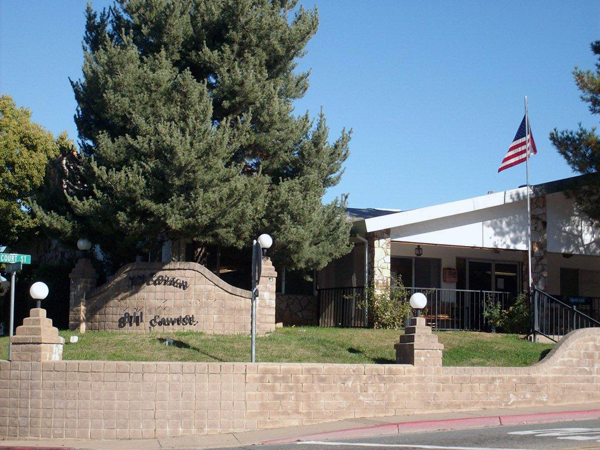
KIT CARSON NURSING & REHABILITATION CENTER

811 COURT STREET, JACKSON, CA 95642 (209) 223-2231
For profit - Corporation 199 Beds EVA CARE GROUP Data: November 2025
Trust Grade
28/100
#1052 of 1155 in CA
Last Inspection: August 2025

Inspected within the last 6 months. Data reflects current conditions.

Overview

Kit Carson Nursing & Rehabilitation Center has received a Trust Grade of F, indicating significant concerns about its quality of care. Ranking #1052 out of 1155 facilities in California places it in the bottom half, and while it is the only option in Amador County, this means families have limited choices. The facility's performance has remained stable over the years, with 23 issues reported in both 2024 and 2025. Staffing is a strong point, earning a 5/5 star rating with a turnover rate of 38%, which is on par with the state average. However, there are serious issues, including a resident suffering a fractured rib due to improper transfer methods and another resident being physically assaulted by a fellow resident, which raises concerns about safety and care practices. Additionally, the facility has faced fines totaling $9,110, which is average for California, and it offers more RN coverage than 90% of facilities, suggesting a potential for better oversight in patient care.

Trust Score
F
28/100
In California
#1052/1155
Bottom 9%
Safety Record
Moderate
Needs review
Inspections
Holding Steady
23 → 23 violations
Staff Stability
○ Average
38% turnover. Near California's 48% average. Typical for the industry.
Penalties
✓ Good
$9,110 in fines. Lower than most California facilities. Relatively clean record.
Skilled Nurses
✓ Good
Each resident gets 59 minutes of Registered Nurse (RN) attention daily — more than average for California. RNs are trained to catch health problems early.
Violations
⚠ Watch
59 deficiencies on record. Higher than average. Multiple issues found across inspections.
★☆☆☆☆
1.0
Overall Rating
★★★★★
5.0
Staff Levels
★☆☆☆☆
1.0
Care Quality
★☆☆☆☆
1.0
Inspection Score
Stable
2024: 23 issues
2025: 23 issues

The Good

  • 5-Star Staffing Rating · Excellent nurse staffing levels
  • Full Sprinkler Coverage · Fire safety systems throughout facility
  • No fines on record
  • Staff turnover below average (38%)

    10 points below California average of 48%

Facility shows strength in staffing levels, fire safety.

The Bad

1-Star Overall Rating

Below California average (3.1)

Significant quality concerns identified by CMS

Staff Turnover: 38%

Near California avg (46%)

Typical for the industry

Federal Fines: $9,110

Below median ($33,413)

Minor penalties assessed

Chain: EVA CARE GROUP

Part of a multi-facility chain

Ask about local staffing decisions and management

The Ugly 59 deficiencies on record

2 actual harm
Aug 2025 1 deficiency
CONCERN (D) 📢 Someone Reported This

A family member, employee, or ombudsman was alarmed enough to file a formal complaint

Potential for Harm - no one hurt, but risky conditions existed

Incontinence Care (Tag F0690)

Could have caused harm · This affected 1 resident

Based on observation, interview, and record review, the facility failed to ensure one of six residents (Resident 1) with an indwelling catheter (catheter; a thin, flexible tube inserted into the bladd...

Read full inspector narrative →
Based on observation, interview, and record review, the facility failed to ensure one of six residents (Resident 1) with an indwelling catheter (catheter; a thin, flexible tube inserted into the bladder to drain urine) received catheter care and services when:1. Resident 1's suprapubic catheter (a temporary or permanent drainage route for urine, through a small incision in the abdominal wall, from the bladder directly into a collection bag) was not changed as ordered by the physician;2. Resident 1's suprapubic catheter was not consistently monitored following suprapubic catheter changes; and3. Care plans (a personalized, written document that details a resident's specific health and personal care needs, goals, and interventions) were not in place for Resident 1's catheter changes and Resident 1's urinary tract infection (UTI - A condition in which bacteria invade and grow in the urinary tract) in June of 2025.These failures could have been the cause of Resident 1's UTI and 10 out of 10 pain, (pain scale of 1 through10; with 10 being the worst pain) which resulted in Resident 1 being transferred to the emergency room for an evaluation.1. During a review of Resident 1's clinical document titled, admission RECORD, (contains Resident 1's clinical and demographic data) indicated Resident 1 was admitted to the facility with diagnoses which included obstructive and reflux uropathy (a condition where the urinary tract becomes blocked and prevents the normal flow of urine). A review of Resident 1's clinical document titled, Order Summary Report, dated 4/17/25, indicated, . Routine Monthly Suprapubic Cath [catheter] changes at [local hospital] once a month starting on the 20th and ending on the 27th of every month . Order Date . 4/17/25 . During a concurrent interview and record review on 8/20/25, at 2:11 PM, with the Director of Nursing (DON), Resident 1's record titled, Progress Notes, dated 4/26/25 through 8/8/25 were reviewed. The DON confirmed Resident 1's suprapubic catheter changes were done every other month, not monthly as ordered. The DON explained the importance of completing the suprapubic catheter change was to ensure the physician orders were carried out. The DON further stated there was a risk for Resident 1 to acquire an infection and experience pain. A review of the facility policy titled, Physician's Orders, revised 7/12, indicated, . Physician's orders shall be carried out as prescribed . 2. A review of Resident 1's clinical document titled, Progress Notes, dated 4/26/25 through 4/28/25, 6/21/25 through 6/24/25, and 8/5/25 through 8/8/25 indicated Resident 1's post catheter change monitoring was not done for five out of nine opportunities for April of 2025, six out of nine opportunities for June of 2025, and three out of nine opportunities for August of 2025 as follows: 4/26/25 PM shift (2 PM through 10 PM); monitoring not noted 4/27/25 AM shift (6 AM through 2 PM); monitoring not noted 4/27/25 NOC shift (10 PM through 6 AM); monitoring not noted 4/28/25 AM shift; monitoring not noted 4/29/25 AM shift; monitoring not noted 6/21/25 PM shift; monitoring not noted 6/21/25 NOC shift; monitoring not noted 6/22/25 AM shift; monitoring not noted 6/22/25 NOC shift; monitoring not noted 6/23/25 AM shift; Resident 1 sent to emergency for 10 out of 10 pain 6/23/25 NOC shift; monitoring not noted 6/24/25 AM shift; monitoring not noted 8/5/25 NOC shift; monitoring not noted 8/7/25 AM shift; monitoring not noted 8/7/25 NOC shift; monitoring not noted A review of Resident 1's clinical document titled Progress Notes, dated 6/23/35, indicated, . Resident [1] sent out to [local hospital] via ambulance on 6/23/25 @ [at] 1317 [1:17 PM] for c/o [complaint of] 10/10 [assessment tool for pain - pain is rated 1 through 10 with 10 being the worst pain] pain in SP [suprapubic] catheter site. Catheter was just replaced at [local hospital] on 6/21/25. Resistance was noted when flushing [the process of rinsing the tube with sterile water or saline to clear out any blockages] and no output [urine] was noted during flush. Resident [1] requested to be sent out to ED [emergency department]. A review of Resident 1's clinical document titled, [Outside hospital] ED Provider Notes, dated 6/23/25, indicated, . UA [urinalysis - urine test that checks for signs of infection] suggests catheter-associated UTI [urinary tract infection] . Given UA consistent with UTI and prior culture [a laboratory test that checks a urine sample for bacteria, or other germs that can cause a UTI] history, empiric [brand name antibiotic] [antibiotic used to treat suspected infection] prescribed . During a concurrent interview and record review on 8/20/25 at 2:11 PM, with the DON, Resident 1's record titled, Progress Notes, dated 4/26/25 through 8/8/25 were reviewed. The DON confirmed Resident 1's suprapubic catheter monitoring were not consistently completed for the 72-hour duration as required on the above dates and shifts. The DON stated monitoring the suprapubic catheter for 72 hours after it was changed was to ensure if there was a change in Resident 1's condition, nursing could coordinate with the physician in case there were additional changes or orders that needed to be carried out. The DON further stated there was a risk for Resident 1 to acquire an infection and was at risk for pain. A review of the facility policy titled, Change of Condition, revised 7/24, indicated, . Routine Medical Change . All symptoms and unusual signs will be communicated to the physician promptly . Document resident change of condition and response in nursing progress notes . Follow-up . The licensed nurse responsible for the resident will continue assessment and documentation every shift for seventy-two (72) hours . 3. A review of Resident 1's clinical document titled, Care Plan Report, undated, indicated there was not a care plan in place for Resident 1's suprapubic catheter changes or for Resident 1's UTI from 6/23/25. During a concurrent interview and record review on 8/20/25 at 2:11 PM, Resident 1's care plans were reviewed with the DON. The DON confirmed Resident 1's care plans had not been updated to include Resident 1's UTI on 6/23/25 and it should have been. The DON further stated there was not a care plan in place for catheter changes and there should have been. The DON stated the importance of having the care plans in place was to ensure licensed nurses had a guide on how to take care of the Resident 1's suprapubic catheter. A review of the facility policy and procedure titled, Policy and Procedure - Care Plan, revised 9/2024, indicated, . A care plan is the summation of the resident concerns, goals, approaches and interventions in order to meet the goals and help minimize if not totally eradicate residents' problems . the evidence of a care plan that has been reviewed should include but not be limited to the new interventions that have been added in addition to the current ones .
Aug 2025 20 deficiencies
CONCERN (D)

Potential for Harm - no one hurt, but risky conditions existed

Resident Rights (Tag F0550)

Could have caused harm · This affected 1 resident

Based on observation, interview, and record review, the facility failed to ensure 1 out of 26 sampled residents (Resident 86) with urinary catheters (a thin flexible tube used to empty the bladder and...

Read full inspector narrative →
Based on observation, interview, and record review, the facility failed to ensure 1 out of 26 sampled residents (Resident 86) with urinary catheters (a thin flexible tube used to empty the bladder and collect urine in a drainage bag) were treated with dignity and their privacy was protected, when Resident 86's urinary catheter bag (a drainage bag attached to a catheter tube that is inside the bladder to collect urine) was exposed and was not placed in a dignity bag (a bag used to the cover and hold the catheter drainage/collection bag so it is not visible). This failure had the potential to negatively effect Resident 86's self-esteem and self-worth. During an observation on 8/11/2025 at 9:16 AM, Resident 86's urinary catheter bag was seen hanging on the side of the bed without a dignity bag. A review of Resident 86's clinical record titled, admission RECORD, indicated Resident 86 was admitted to the facility with diagnoses of, but not limited to, acute cystitis without hematuria (an inflammation of the bladder without blood in the urine), generalized muscle weakness.During an interview on 8/12/2025 at 10:24 AM with Certified Nurse Assistant (CNA) 7, CNA 7 stated the CNAs usually drain the catheter bag and the CNAs place the dignity/privacy bag for the residents but sometimes residents messed it up or it gets removed. CNA 7 acknowledged that there was no privacy cover for Resident 86's urinary catheter bag.During an interview on 8/12/2025 at 12:34 PM with Licensed Nurse (LN) 3, LN 3 stated part of urinary catheter care included the placement of a privacy cover for the catheter bag. LN 3 stated the urinary catheter bag should be hung on the side of the bed with a privacy cover.During an interview on 8/12/2025 at 2:36 PM with LN 5, LN 5 stated she expected the nurses to do daily rounds and assess the flow and color of the urine. LN 5 stated there should be a dignity bag on Resident 86's urinary catheter bag for privacy reasons. LN 5 stated Resident 86's urinary catheter bag would be exposed without the dignity bag and Resident 86 would feel embarrassed. During an interview on 8/13/2025 at 9:58 AM with the Director of Nursing (DON), the DON stated Resident 86 was just admitted to the facility a few days ago and the nursing staff could have forgotten to place the dignity cover. The DON stated there should have been a dignity cover placed on Resident 86's urinary catheter bag. A review of the facility's Policy titled, Resident Rights, revised 1/25, indicated, POLICY Employees shall treat all residents with kindness, respect and dignity.Federal and state laws guarantee certain basic rights to all residents of this facility. These rights include the resident's right to:.privacy and confidentiality.
CONCERN (D)

Potential for Harm - no one hurt, but risky conditions existed

Deficiency F0578 (Tag F0578)

Could have caused harm · This affected 1 resident

**NOTE- TERMS IN BRACKETS HAVE BEEN EDITED TO PROTECT CONFIDENTIALITY** Based on interview and record review, the facility failed to ensure that one of twenty-eight sampled residents (Resident 11) end...

Read full inspector narrative →
**NOTE- TERMS IN BRACKETS HAVE BEEN EDITED TO PROTECT CONFIDENTIALITY** Based on interview and record review, the facility failed to ensure that one of twenty-eight sampled residents (Resident 11) end of life wishes, and emergent treatment desires were accurate when Resident 11's POLST (Physician Orders for Life Sustaining Treatment: a medical order signed by both a patient and physician that specifies the types of medical treatment a patient wishes to receive toward the end of life) form and electronic medical record code status (the type of emergent treatment a person would or would not receive if their heart or breathing were to stop) had contradictory code status choices marked.This failure resulted in conflicting code status information for Resident 11 and placed Resident 11 at risk for having emergency treatment wishes not honored. Review of Resident 11's admission RECORD indicated Resident 11 was admitted to the facility with multiple diagnoses including but not limited to cerebral infarction (medical condition that occurs when the blood flow to the brain is disrupted) and vascular dementia (a type of dementia caused by impaired blood flow to the brain, leading to damage and eventual loss of brain cells).Review of Resident 11's POLST form dated [DATE], indicated an X in the box next to Do Not Attempt Resuscitation/DNR [Allow Natural Death], and an X in the box next to Full Treatment - primary goal of prolonging life by all medically effective means. The POLST form was signed by Resident 11's Responsible party on [DATE] and by Resident 11's attending physician on [DATE].Review of Resident 11's electronic physician's order dated [DATE], indicated Resident 11's code status was DNR (Do Not Resuscitate), full Treatment.During a concurrent interview and record review on [DATE] at 3:37 PM with Licensed Nurse (LN) 8, LN 8 stated that Resident 11's treatment options that had been marked with an X on the POLST form and the code status order entered into the electronic medical record contradicted each other. LN 8 stated that Resident 11 could not be a DNR and full treatment at the same time. LN 8 stated that if Resident 11 desired to receive full treatment, then CPR (chest compressions), not DNR should have been checked on the POLST form and the physician's code status order in the electronic medical record should reflect that choice. LN 8 stated that based on the POLST answers she would start CPR. LN 8 stated that the current POLST and physician order were confusing and placed Resident 11 at risk for not receiving end of life, emergency care per his wishes.During a concurrent interview and record review on [DATE] at 11:05 AM with LN 5, LN 5 stated that the definition of full treatment meant that everything possible to keep someone alive would be done, including CPR. LN 5 stated that Resident 11's POLST and physician order for code status contradicted each other and were confusing and could lead to the wrong level of care being administered.During an interview on [DATE] at 10:35 AM with Resident 11's Representative, the Representative stated that if Resident 11 was without a heartbeat or breathing they did not want CPR to be done, nor did they desire Resident 11 to have his life prolonged by any medically effective means. During a concurrent interview and record review on [DATE] at 11:20 AM with the Director of Nurses (DON), the DON confirmed that the POLST for Resident 11 had been completed incorrectly, was contradictory, confusing and needed to be updated. The DON stated that the risk of having a POLST completed incorrectly could lead to Resident 11 receiving care in a manner that Resident 11 had not chosen.Review of a facility policy titled Physician Orders for Life Sustaining Treatment (POLST) or Request Regarding Resuscitative Measures Form with revised date of 01/25 indicated When a POLST.form is completed the admission Coordinator, or other, shall review the documents for validity.
CONCERN (D)

Potential for Harm - no one hurt, but risky conditions existed

Deficiency F0604 (Tag F0604)

Could have caused harm · This affected 1 resident

Based on observation, interview, and record review, for 1 out of 26 sampled residents (Resident 42), the facility failed to ensure: the use of physical restraint was medically indicated;a care plan wa...

Read full inspector narrative →
Based on observation, interview, and record review, for 1 out of 26 sampled residents (Resident 42), the facility failed to ensure: the use of physical restraint was medically indicated;a care plan was developed for the use of restraint;an informed consent was obtained for the use of restraint. This failure resulted in Resident 42 not being able to move freely and potentially exposed Resident 42 to physical and psychological impact related to restraint. Findings: A review of Resident 42's admission RECORD, indicated Resident 42 was admitted to the facility with a diagnosis of, but not limited to, dementia (loss of memory, language, problem-solving and other thinking abilities that are severe enough to interfere with daily life) with agitation, altered mental status, and generalized muscle weakness. During a concurrent observation and interview on 8/11/25, at 9:41 AM, with Certified Nurse Assistant (CNA) 11, Resident 42 was observed sitting on a Geri chair (a specialized type of recliner designed to provide comfort, support, and positioning for individuals who need to sit for extended periods or have difficulty sitting upright in a traditional wheelchair) which was reclined with the chair footrest placed in an elevated position. Resident 42 was trying to, but could not, get out of the chair. CNA 11 stated Resident 42 was placed in a Geri chair as a fall precaution. During a concurrent interview and record review on 8/12/25, at 2:36 PM, with LN 5, Resident 42's medical record was reviewed. LN 5 stated the resident needed to be assessed by the rehabilitation department (department that helps improve function and reduce disability in people with health conditions so they can interact better with their environment) to check if the resident would be needing a Geri chair or a regular wheelchair. LN 5 confirmed that there was no order, care plan, or informed consent form for Resident 42's Geri chair. LN 5 stated that when Resident 42 was placed on a Geri chair, Resident 42 would be in a reclined position, and he would not fall because his movement would be restricted. LN 5 further stated it was considered a restraint when Resident 42 could not move freely from the Geri chair. LN 5 stated the Geri chair used for Resident 42 should have a doctor's order, an informed consent and a care plan. During a concurrent interview and record review on 8/12/25, at 12:34 PM, with License Nurse (LN) 3, Resident 42's medical record was reviewed. LN 3 stated the Geri chair use needed a doctor's order before the resident could use it because it was a specific need for the resident. LN 3 confirmed that Resident 42 did not have an order for the Geri chair. LN 3 stated Resident 42 was a fall risk and if Resident 42 used the regular chair he would not be able to sit still. LN 3 confirmed that there was no care plan in place for Resident 42's Geri chair use. During a concurrent interview and record review on 8/13/25, at 11:11 AM, with the Director of Nursing (DON), Resident 42's medical record was reviewed. The DON confirmed there was no order for the Geri chair use for Resident 42. The DON further confirmed that there was no informed consent obtained from Resident 42's responsible party regarding the use of the Geri chair. The DON stated there should have been a rehab assessment completed for the Geri chair. The DON stated the Geri chair was used for proper positioning and safety for fall precautions because the resident was not stable. The DON further stated that there was no care plan for the Geri chair, and according to the restraint assessment, a Geri chair had not been documented. The DON stated Resident 42 had 3 falls since admission. A review of the facility's policy titled, Resident Rights, revised 1/25, indicated, .Federal and state laws guarantee certain basic rights to all residents of this facility. These rights include the resident's right to.be free from corporal punishment or involuntary seclusion, and physical or chemical restraints not required to treat the resident's symptoms.be informed of, and participate in, his or her care planning and treatment. A review of the facility's Policy and Procedures titled, POLICY AND PROCEDURE ON RESTRAINT, revised 9/2024, indicated, Physical restraints are defined as any manual method or physical or mechanical device, material, or equipment attached or adjacent to the resident's body that the individual cannot remove easily, which restricts freedom of movement or normal access to one's body.If the restraint is needed, it has to indicate the medical necessity due to resident physical condition or psychosocial problem.Each resident retains the right to accept or refuse the use of restraint. Physical or chemical restraint will never be used for the convenience of the staff.PROCEDURE: 1. Residents are to be evaluated in care conference regarding safety measures, including the use of physical restraint as the protection of the resident from fall or other self-injury. 2. Based on the assessment result if either physical/chemical restraint is needed consent will be obtained by the doctor from the resident/resident representative or both of the use of such restraint. 3. Explain to the resident and/or resident's representative the benefit and adverse side effect to resident ADL function, social and emotional and as well as physical debilities.5. MD's order and consent will be documented in telephone/physician order in the informed consent form, license progress notes. If resident is on physical restraint it must be release [sic] every 2 hours or as needed for proper blood circulation. Licensed Nurse should document in the weekly nurse's notes the use of the restraint effectiveness and ineffectiveness. 8. Reevaluation/assessment of the use of restraint be done quarterly and as often as needed for immediate intervention necessary due to the use of restraint. Any sign of improvement should indicate that reduction or probable discontinuance or [sic] restraint is indicative.10. All necessary and possible human and non-pharmacological approaches should be implemented before the use of restraint.
CONCERN (D)

Potential for Harm - no one hurt, but risky conditions existed

Comprehensive Care Plan (Tag F0656)

Could have caused harm · This affected 1 resident

Based on observation, interview, and record review, the facility failed to ensure 1 of 26 sampled residents (Resident 46) received treatment and care in accordance with professional standards of pract...

Read full inspector narrative →
Based on observation, interview, and record review, the facility failed to ensure 1 of 26 sampled residents (Resident 46) received treatment and care in accordance with professional standards of practice when the care plan for oxygen use for Resident 46, was not developed. This failure had the potential to result in worsening respiratory function, and/or other serious medical complications.Review of Resident 46's admission RECORD, indicated Resident 46 was admitted to the facility in 2023 with diagnoses including chronic combined systolic congestive and diastolic congestive heart failure (the heart struggles to both effectively eject blood and receive blood leading to a range of symptoms such as shortness of breath, fatigue, swelling in legs and ankles, etc.).During a concurrent observation and interview on 8/11/25, at 9:50 AM, Resident 46 was noted to be on oxygen 2 liter/minute (LPM) via nasal cannula (NC, a device providing extra oxygen through a tube and into the nose) via concentrator (a medical device supplying extra oxygen). Resident 46 stated they were on oxygen therapy for a long time, but was unable to recall when it was initiated.During a concurrent observation and interview on 8/11/25, at 9:58 AM, Licensed Nurse (LN) 3 confirmed Resident 46 was on oxygen 2 LPM via NC. LN 3 stated Resident 46 was on oxygen via NC as needed (PRN) for shortness of breath (SOB).During a concurrent interview and record review on 8/13/25, at 8:30 AM, with LN 5, Resident 46's care plans were reviewed. LN 5 confirmed that the care plan for oxygen use was not developed for Resident 46. LN 5 stated that the care plan was a tool to set appropriate goals and to communicate interventions with all staff to provide resident-centered care to Resident 46. LN 5 further stated LNs were responsible for creating care plans for nursing interventions. LN 5 stated not creating a care plan had the potential to affect Resident 46's health and well-being.During a concurrent interview and record review on 8/13/25, at 3:25 PM, with the Director of Nursing (DON), the facility's policy and procedure (P&P) titled, Policy and Procedure - Care plan, revised on 9/2024, and Resident 46's care plans were reviewed. The DON confirmed that the care plan for oxygen use was not created. The DON stated creating a care plan was important and a care plan was a tool to guide nursing staff to provide resident focused care to meet Resident 46's needs. The DON further stated it was a potential to place Resident 46's well-being at risk. The DON stated her expectation from nurses was to create a care plan and implement the interventions. The DON further stated her expectation was not met. Further review of the P&P indicated, .A care plan is the summation of the resident concerns, goals, approaches and interventions in order to meet the goals and help minimize if not totally eradicate residents' problems. Each individual resident has a comprehensive care plan which is objective, measurable and time-framed.PROCEDURE.This individual comprehensive care plan identifies the professional services and the responsible person that evaluates the concerns and carried out the interventions to prevent or reduce re-occurrences of the same problems/concerns.It illustrates how the approaches being provided. The DON confirmed that the facility's P&P was not followed.
CONCERN (D)

Potential for Harm - no one hurt, but risky conditions existed

Deficiency F0658 (Tag F0658)

Could have caused harm · This affected 1 resident

Based on interview and record review the facility failed to provide services that meet professional standards of practice for two of twenty-eight sampled residents (Resident 5 and Resident 11) when Qu...

Read full inspector narrative →
Based on interview and record review the facility failed to provide services that meet professional standards of practice for two of twenty-eight sampled residents (Resident 5 and Resident 11) when Quarterly Abnormal Involuntary Movement Scale (AIMS - a 12-item assessment tool used to evaluate and monitor the severity of involuntary movements in individuals taking an antipsychotic medication [a class of medications use to treat a variety of mental health disorder]) were not completed for Resident 5 and Resident 11.This failure had the potential for Resident 5 and Resident 11 to experience side effects related to the use of antipsychotic medications to go unrecognized and untreated.1. Review of Resident 5's admission RECORD indicated that Resident 5 was admitted to the facility with diagnoses that included but not limited to unspecified dementia severe with psychotic disturbance (a condition where person has a progressive decline in cognitive functions like memory, thinking, language, judgment, and see or hear things those are not there or has false beliefs), unspecified mood disorder (diagnosis used when a person experiences mood symptoms that cause significant distress or impairment), and unspecified psychosis not due to a substance or known physiological condition (a mental health condition characterized by a loss of contact with reality but the cause isn't clear, and it's not linked to substance use or a known medical condition).During a concurrent interview and record review on 8/13/2025, at 9:10 AM, with Licensed Nurse (LN) 9, LN 9 confirmed that Resident 5 had been taking Seroquel (antipsychotic medication) 50mg (milligram) two times a day for restlessness and aggressive behaviors. Review for Resident 5's AIMS assessment initiated on 6/2/24 was completely blank with none of the questions in that assessment answered. Further review of Resident 5's medical record failed to show that any other AIMS assessment had been completed.2. Review of Resident 11's admission RECORD indicated that Resident 11 was admitted to the facility with diagnoses that included but not limited to vascular dementia (a type of cognitive decline caused by impaired blood flow to the brain due to damage to the blood vessels in the brain), psychotic disorder with delusions due to known physiological condition (a mental health condition characterized by disruptions in thought processes, perceptions, and emotional responses, often leading to a loss of touch with reality that arise as a direct result of a known medical illness or its physiological effects on the brain, mood disorder due to known physiological condition with mixed features (a mental health condition where a person experiences both depressive and manic symptoms), major depression disorder unspecified (a mood disorder that causes a persistent feeling of sadness and loss of interest), and anxiety disorder unspecified (a mental health condition characterized by ongoing, overwhelming, and disproportionate anxiety and fear that interferes with daily life, going beyond normal temporary worry).During a concurrent interview and record review on 8/12/25, at 3:46 PM, with LN 8, LN 8 confirmed that Resident 11 had been receiving Olanzapine (antipsychotic medication) 2.5mg one tablet one time a day.Review of Resident 11's AIMS assessment initiated on 8/4/25 was completely blank with none of the questions in that assessment answered. Further review of Resident 11's medical record failed to show that any other AIMS assessment had been completed.During a concurrent interview and record review on 8/14/25, at 4:37 PM, with the DON, the DON confirmed that Resident 5 had been taking an antipsychotic medication since 11/23/23. The DON confirmed the AIMS assessment for Resident 5 dated 6/2/24 was incomplete and there were no other AIMS completed for Resident 5. The DON confirmed that Resident 11 had been taking an antipsychotic medication since 4/28/24. The DON confirmed the AIMS assessment for Resident 11 dated 8/4/25 was incomplete and there were no other AIMS completed for Resident 11. The DON stated that the AIMS assessment should be completed quarterly for every resident who was taking an antipsychotic medication. The DON further stated that not completing the AIMS placed residents at risk for potential side effects related to antipsychotic use going unassessed and untreated and these side effects could permanently affect a resident's ability to complete ADL tasks.Review of a facility policy titled THE USE OF PSYCHOTROPIC MEDICATION revised 6/13 indicated .AIMS will be performed on any resident on an antipsychotic on a quarterly basis and changes will be reported to the physician.
CONCERN (D)

Potential for Harm - no one hurt, but risky conditions existed

Deficiency F0692 (Tag F0692)

Could have caused harm · This affected 1 resident

Based on observation, interview, and record review, the facility failed to ensure adequate hydration (process of providing fluid to the body) for two of 26 sampled residents (Resident 7 and Resident 4...

Read full inspector narrative →
Based on observation, interview, and record review, the facility failed to ensure adequate hydration (process of providing fluid to the body) for two of 26 sampled residents (Resident 7 and Resident 41), per facility policy and according to each resident's comprehensive plan of care (Care plan- a document detailing an individual's health needs, goals, and the steps needed to achieve those goals) when:1. Resident 7 did not have fluids available to drink at the bedside; and,2. Resident 41 did not have fluids available to drink at the bedside.These failures resulted in Resident 7 having dry mucous membranes (soft tissue that make up the inside the mouth, gums, tongue and lips), chapped lips, and dry and peeling skin on his left leg; in addition, these failures resulted in Resident 41 having dry mucous membranes, chapped and peeling lips and concentrated dark amber colored urine (deep yellow or orange-brown colored urine usually caused by dehydration) (dehydration -a harmful reduction in the amount of water in the body).Findings:1. During a concurrent observation and interview on 8/11/25 at 12:17 PM, in Resident 7's room, Licensed Nurse (LN) 3, confirmed Resident 7 did not have fluids available to drink at the bedside. LN 3 stated Resident 7 did not have any fluid restrictions (limiting the amount of fluids a resident may drink in a day) and should have had fluids available at the bedside. LN 3 further stated the risk to Resident 7 was dehydration.During a concurrent observation and interview on 8/14/25 at 11:36 AM, in Resident 7's room. Certified Nurse Assistant (CNA) 8 and LN 2 confirmed Resident 7 did not have fluids available in reach to drink at the bedside. LN 2 confirmed Resident 7 had dry skin, dry mouth, and chapped and peeling lips and skin on his left leg. LN 2 stated the dry mucous membranes, chapped and peeling lips and dry skin on his left leg, were signs and symptoms (objective, observable indications of a disease or condition that could be detected by someone other than the resident) of dehydration. LN 2 further stated Resident 7 was additionally at risk for a urinary tract infection (UTI -an infection of the urinary system which includes the kidneys, ureters, bladder and urethra) due to dehydration.A review of Resident 7's medical record titled, HYDRATION RISK ASSESSMENT, dated 1/6/25, indicated, .Resident [7] is at risk for Dehydration.POTENTIAL INTERVENTIONS.Place straw in glass so resident can drink independently.Keep fluids in reach.Encourage resident to drink all fluids.A review of Resident 7's Care Plan Report, dated 6/8/21, indicated .RISK FOR DEHYDRATION.Encourage oral fluids.Monitor for s/sx [signs and symptoms] of dehydration: dry mucous membranes.2. During a concurrent observation and interview on 8/12/25 at 9:23 AM, in Resident 41's room, CNA 3, confirmed Resident 41 did not have fluids available at bedside to drink. CNA 3 stated Resident 41 did not have any fluid restrictions, and it was important for Resident 41 to have fluids within reach because he had a catheter (a flexible tube inserted into the bladder to drain urine- hydration decreases the risk of infection by flushing out bacteria) and needed to stay hydrated.During a concurrent observation and interview on 8/12/25 at 11:50 AM, in Resident 41's room, LN 7 confirmed Resident 41 did not have fluids available to drink. LN 7 further confirmed Resident 41's urine was amber, dark in color and concentrated, which could have indicated Resident 41 did not enough fluids in the body. LN 7 further confirmed Resident 41 had dry mucous membranes and lips that were chapped and cracked. LN 7 stated the risk of Resident 41 not having enough fluids was dehydration and UTIs. LN 7 further added that Resident 41 should have always had fluids available.A review of Resident 41's medical record titled, HYDRATION RISK ASSESSMENT., dated 7/20/25, indicated, .Resident [41] is at risk for Dehydration.POTENTIAL INTERVENTIONS.Place straw in glass so resident can drink independently.Keep fluids in reach.Encourage resident to drink all fluids.A review of Resident 41's Care Plan Report, dated 3/30/25, indicated, .RISK FOR DEHYDRATION.Encourage oral fluids.Monitor for s/sx [signs and symptoms] of dehydration: dry mucous membranes.A review of Resident 41's Care Plan Report, dated 5/1/2025, indicated, .At risk for urinary tract infection R/T [related to] indwelling foley catheter use.Encourage fluids.During an interview on 8/14/25 at 1:22 PM, with the Director of Nursing (DON), the DON stated it was her expectation for residents to always have fluids available and within reach of the residents. The DON explained the facility's process was for the CNAs to bring fresh fluids to each resident at the beginning of each shift and with each meal. The DON further explained the fluids were important to prevent UTIs, dehydration and maintain the residents' nutrition and health. The DON stated residents without fluids available or within reach did not meet her expectations.Review of facility policy and procedure titled, Resident Hydration and Prevention of Dehydration, revised 12/2024, indicated, .It is the policy of this facility.to provide adequate hydration.to prevent and treat dehydration.Nursing will assess for signs and symptoms of dehydration during daily care.Nurses' aides will provide and encourage intake of.fluids.
CONCERN (D)

Potential for Harm - no one hurt, but risky conditions existed

Pharmacy Services (Tag F0755)

Could have caused harm · This affected 1 resident

Based on observation, interview, and record review, the facility failed to ensure the provision of routine and emergency medications were provided and/or documented for two of the 26 sampled residents...

Read full inspector narrative →
Based on observation, interview, and record review, the facility failed to ensure the provision of routine and emergency medications were provided and/or documented for two of the 26 sampled residents (Resident 66 and Resident 78), based on standards of practice and regulatory requirements when:1. Resident 66 did not receive a physician ordered, as needed (PRN), medication called Ipratropium-Albuterol (inhaled medication used to open the airways and make breathing easier) due to medication unavailability from the pharmacy; and, 2. Resident 78's intravenous antibiotic (IV antibiotics, medications administered directly into the bloodstream through a vein, typically used for serious infections) was removed from the Emergency Kit (E-kit, an emergency supply of medications that are used based on a doctor's order for urgent needs of a residents) without documentation the medication had been removed by facility staff. These failures could have resulted in increased difficulty with breathing for Resident 66 and did result in inaccurate record keeping of medications removed from the E-kit. 1. A review of Resident 66's medical record titled, admission RECORD, indicated Resident 66 was admitted to the facility with diagnoses of, but not limited to, chronic obstructive pulmonary disease (COPD - a progressive lung disease that makes breathing increasingly difficult) and dyspnea (difficulty breathing). A review of Resident 66's medical record titled, Care Plan, dated 7/30/2025, indicated “…Focus: At risk for chronic or intermittent shortness of breath, hypoxia [lack of oxygen] secondary to disease processes…Interventions…Ipratropium-Albuterol Inhalation Aerosol Solution 20-100 MCG/ACT (Ipratropium-Albuterol) as ordered…” During an interview on 8/11/2025 at 10:20 AM, with Resident 66, Resident 66 stated she has had problems with getting access to her inhaler (a portable device for administering medication to the lungs). Resident 66 stated she was admitted to the facility two weeks ago but had never received her Ipratropium-Albuterol inhaler. Resident 66 stated she requested the medication because there were times that she could not breath properly. During a concurrent observation, interview, and record review, on 8/11/2025 at 5:12 PM, with licensed nurse (LN) 4, LN 4 confirmed Resident 66 did not have the Ipratropium-Albuterol inhaler in the medication cart. LN 4 stated based on the Medication Administration Record (MAR- record of medications given and not given) the Albuterol inhaler had never been administered since Resident 66’s admission. LN 4 stated that if Resident 66 did not receive her PRN medication, there could have been problems with her airway, breathing, and circulation (oxygenated blood that circulates through the body). A review of Resident 66's MAR, dated 7/29/25 through 8/11/25, indicated Ipratropium-Albuterol Inhalation Aerosol Solution 20-100 Micrograms per Actuation (MCG/ACT - unit of measurement - amount of medication received per inhalation) (Ipratropium-Albuterol) 1 puff inhale orally every 4 hours as needed for shortness of breath or wheezing (high-pitched, whistling sound made when breathing, caused by a narrowed or airway). During an interview on 8/12/2025 2:36 PM, with LN 5, LN 5 stated the medications that were ordered from the hospital needed to be verified with the doctor upon admission, and the doctor would then approve the medication order. LN 5 stated if the medicine was not delivered from the pharmacy, the nursing staff needed to follow up with the pharmacy. LN 5 stated if the medication was not covered by insurance or there were other reasons why it was not delivered, the nurses needed to ask the pharmacy if there was another approved alternative. LN 5 stated the nurses should have informed the doctor and Resident 66 (or responsible party) for approval of an alternative. LN 5 stated the pharmacy would have sent a fax to the facility to notify them if there were medications that were not available or not covered and the DON would have reviewed it. During an interview on 8/13/2025 at 12:13 PM with the Director of Nursing (DON), the DON stated the facility’s process when ordering medication was to send the order summary to the pharmacy and the pharmacy would send the medication to the facility. The DON stated the pharmacy would contact the facility via fax or email to inform them that a certain medication was not available, or to inform them of other alternatives, and if the medication was not covered by the insurance. The DON confirmed there was no available Ipratropium-Albuterol inhaler for Resident 66 in the medication cart. The DON stated the medication for Resident 66 should have been available for Resident 66 to use. The DON stated she expected the nurses to call the pharmacy to ask for an alternative medication and inform the doctor. The DON stated that the nurses should have informed her and the doctor that the medication was not available. A review of the facility’s policy and procedure titled, “DRUG ORDERING AND RECEIVING”, revised 7/2024, indicated, “…Licensed nurse may transmit orders by fax to the pharmacist; however, all orders must be followed by phone call to the pharmacy…New medication orders: complete telephone order with identical orders to be sent to the prescriber…” 2. During a review of Resident 78's record titled, “admission RECORD”, the record indicated Resident 78 was admitted to the facility in July 2025 with diagnoses that included sepsis (a life-threatening medical emergency caused by the body’s overwhelming response to an infection), cellulitis (a bacterial infection of skin), and a displaced fracture (a bone fracture where the broken pieces of bone have moved out of their normal alignment) of the triquetrum bone (a bone located in the wrist) in the right wrist. A review of Resident 78’s record titled, “HOSPITALIST DISCHARGE SUMMARY”, dated 7/11/25, indicated, “…Sepsis…Right distal radius fracture [broken bone at the end of the arm, near the wrist] …Plan for 6 weeks of IV antibiotics. End date of antibiotic of 08/18/2025…” A review of Resident 78’s record titled, “MEDICATION ADMINISTRATION RECORD”, (MAR) dated 7/1/25 through 7/31/25, indicated Resident 78 was on Cefazoline 2 grams (GM - unit of measurement) IV antibiotics every eight hours for septic arthritis, (infection of the joint). During an interview on 8/13/25 at 1:14 PM, Licensed Nurse (LN) 1 explained the process when a resident was admitted to the facility with IV antibiotic orders. LN 1 stated nurses would enter the medication in the Electronic Health Record (EHR) of the resident and then the LNs would start IV medications as per physician orders. LN 1 further stated that in situations where an IV antibiotic was not available, LNs would take the IV antibiotic from the Emergency Kit (E-kit) and administer the IV antibiotic to the resident. LN 1 stated if an antibiotic dose was missed, there would be a risk to Resident 78 that the antibiotic would not be effective in clearing up the infection. During a concurrent follow up interview, and record review on 8/13/25 at 5:45 PM, with LN 1, Resident 78's progress notes, physician's orders, the medication log, and the pharmacy E-kit slips, were reviewed. LN 2 stated that when a resident was admitted to the facility with IV antibiotics, the facility admission nurse called the Medical Director (MD) and the medications would be reconciled (verified) with the physician's orders. The medication (including IV medication) orders were entered into the EHR, and the medication orders were faxed to the pharmacy. The pharmacy would then deliver the medications, IV pumps (device that administers medication through and IV tube), IV poles (pole that holds up the medication), and tubing (plastic tubing that assists in administering medication via IV). LN 1 stated Resident 78 was on IV Cefazoline 2 GM every 8 hours which was a continued medication order from the hospital. LN 1 added Resident 78 received the first dose in the facility on 7/11/25 at 10:00 PM. LN 1 further stated she pulled the IV antibiotic from the E-kit and administered it to Resident 78, as per physician's order. During a review of the medication log, pharmacy E-kit slips, and progress notes, the records indicated the removal of Cefazoline 2 GM (IV antibiotic) from the E-kit was not documented. LN 1 confirmed no documentation was found related to the removal of the IV antibiotic for Resident 78 from the E-kit. During an interview on 8/14/2025 at 12:35 PM, in the hallway across from the Director of Nursing's (DON) office, with the Director of Staff Development (DSD), the DSD explained the process of pulling out medications from the E-kits. The DSD stated that the LN filled out the pharmacy slips (which were located inside of the E-kits) and faxed the slips to the pharmacy, The DSD stated the LN also filled out the pharmacy log located in medication rooms. The DSD stated that the removal of the medication from the E-kit should have been documented. The DSD further stated filling out the pharmacy slips was an important way to notify the pharmacy to refill the emergency kits supplies and to have medications and supplies available in emergency situations. During a concurrent interview and record review on 8/14/2025 at 2:00 PM, with the DON, the facility’s Policy and Procedure (P&P) titled, “Medication Ordering and Receiving From Pharmacy Provider…3.4 EMERGENCY PHARMACY SERVICE AND EMERGENCY KITS”, dated 01/24, was reviewed, The P&P indicated, “…PROCEDURES…8. Upon removal of any medication or supply item from the emergency kit, the nurse documents the medication or item used on an emergency kit log. One copy of this information should be immediately faxed to the pharmacy or placed within the resealed emergency kit until is scheduled for exchange…The hard copy will be retained in the nursing care center…10. The faxed log sheet will inform the pharmacy of items used from the emergency kit. This will notify the pharmacy to replace the kit or item…” The DON stated antibiotics should be administered within four hours of ordering the medication, and in an emergency, the medications should be pulled out from the Ekits. The DON added the pharmacy log sheet should have been filled upon removing the medications from Ekit and faxed to the pharmacy to get the medication refilled, or Ekit replaced. The DON stated a copy should be kept in the medication room. The DON further stated her expectation from the LNs was to document when any medication was pulled from the Ekit. The DON confirmed that the facility’s P & P was not followed.
CONCERN (D)

Potential for Harm - no one hurt, but risky conditions existed

Deficiency F0806 (Tag F0806)

Could have caused harm · This affected 1 resident

Based on observation, interview, and record review, the facility failed to ensure special dietary requirements were implemented for two residents (Resident 53 and Resident 65) during the lunch meal ob...

Read full inspector narrative →
Based on observation, interview, and record review, the facility failed to ensure special dietary requirements were implemented for two residents (Resident 53 and Resident 65) during the lunch meal observation on 8/11/25 when Resident 53 did not receive milk with lunch and Resident 65 received corn with lunch which was a documented dislike. This deficient practice had the potential to result in meal dissatisfaction and decreased meal intake that may lead to further complications or Resident 53 and Resident 56's medical status and nutritional status and/or weight loss of both residents.Findings:During an observation of the lunch meal in the dining room with a concurrent review of Resident 53's and Resident 65's meal tickets (a ticket including resident's diet, date, allergies, specific food and beverage items, dislikes, and likes) on 8/11/25, beginning at 12:30 p.m., the following was noted:1. Resident 53's meal ticket indicated, Beverages: 8 ounces (oz., unit of measure) 2% Milk, Resident 53 did not receive 8 oz. 2% milk (1 cup (8 oz.) of milk that contains 2% of fat by weight).2. Resident 65's meal ticket indicated, Dislikes.Corn., Resident 65 received one cup of coleslaw containing corn.During an interview with the Dietary Supervisor (DS) on 8/13/25 at 2:31 p.m., the DS stated the kitchen staff should follow the meal tickets. The DS further stated Resident 53 should have received 8 oz. of 2% milk and Resident 65 should not have received coleslaw with corn. The DS stated residents could get upset when their likes and dislikes were not followed on the meal ticket. During an interview on 8/14/25 at 8:51 a.m. with the Registered Dietitian (RD), the RD stated meal tickets should have been followed, and residents' food preferences should have been honored. The RD stated her expectation was to have accurate meal trays. A review of facility policy and procedure (P&P) titled, JOB DESCRIPTION-Food and Nutrition Service Director (Dietary Supervisor), dated 2023, indicated .DUTIES AND RESPONSIBILITIES.Check trays to ensure diets are served as ordered.Visit residents to determine food acceptance and preferences.A review of facility P&P titled, FOOD PREFERENCES, dated 2023, indicated POLICY.Resident's food preferences will be adhered to within reason.Substitutes for all foods disliked will be given from the appropriate food group.
CONCERN (D)

Potential for Harm - no one hurt, but risky conditions existed

Deficiency F0810 (Tag F0810)

Could have caused harm · This affected 1 resident

Based on observation, interview, and record review, the facility failed to provide specialized eating utensils for Resident 14 and Resident 32 for the lunch meal on 8/12/25. This deficient practice ma...

Read full inspector narrative →
Based on observation, interview, and record review, the facility failed to provide specialized eating utensils for Resident 14 and Resident 32 for the lunch meal on 8/12/25. This deficient practice may lead to Resident 14 and Resident 32 consuming their meal improperly, cause a lack of self-independence during eating and could be a dignity issue, and may cause weight loss. Findings:A review of Resident 14's admission RECORD indicated Resident 14 was admitted to the facility with diagnoses that included severe protein-calorie malnutrition and dysphagia (a medical condition characterized by difficulty or inability to swallow). A review of Resident 32's admission RECORD indicated Resident 32 was admitted to the facility with diagnoses that included severe protein-calorie malnutrition and muscle weakness. On 8/12/25 at 12:50 p.m., during a meal distribution observation in the kitchen, Resident 14's meal ticket indicated, Devices: Scoop Plate [deeper on one edge than the other to allow the user to easily scoop food onto their eating utensil], Built up utensil [Specialized forks and spoons and other adaptive cutlery have built up handles that are either heavier or lightweight], Resident 14 was observed to have a regular plate and regular utensils for the lunch meal. Also noted was Resident 32 received regular utensils for the lunch meal, but Resident 32's meal ticket indicated, Devices: Built up utensil.On 8/12/25 at 2:35 p.m., during an interview with the Dietary Supervisor (DS), the DS stated the kitchen staff needed to provide assistive devices to Resident 14 and Resident 32 as the meal tickets indicated. The DS further stated kitchen staff needed to follow the meal tickets to provide accurate meals for the residents. On 8/13/25 at 11:38 a.m., a concurrent interview and chart review of Resident 14 and Resident 32's record was conducted with Licensed Nurse (LN) 1. LN 1 confirmed there was no physician order and no care plan for Resident 14 to have special utensils. When reviewing the chart of Resident 32, LN 1 confirmed a physician order dated 12/28/24 indicated, .needs special utensils, poor fine motor skills both hands. LN 1 further stated a care plan dated 12/29/24 indicated .Interventions.Special utensils for eating. LN 1 further stated the risk of Resident 14 and Resident 32 not getting special utensils as ordered could lead to consuming food improperly and might cause choking. LN 1 further stated it might cause poor nutrition for the residents if they needed the special utensils for eating per physician order when the utensils were not provided. LN 1 stated the staff should check the meal trays carefully against the meal tickets before the meals were delivered to the residents. On 8/14/25 at 8:14 a.m., during an interview with the Registered Dietitian (RD), the RD stated the kitchen staff should have followed what was indicated on the meal tickets for the residents. A record review of facility policy, titled SELF-FEEDING DEVICES, dated 2023, indicated, POLICY: Residents will receive self-feeding devices to maintain or improve their ability to eat or drink independently.PROCEDURE.Residents needing devices will receive them with each meal or snack, on their meal trays. Tray cards and diet profile will record which device is needed.
CONCERN (D)

Potential for Harm - no one hurt, but risky conditions existed

Deficiency F0883 (Tag F0883)

Could have caused harm · This affected 1 resident

Based on interview, and record review, the facility failed to provide education regarding the benefits and potential side effects for the Pneumococcal (a serious bacterial infection that can cause res...

Read full inspector narrative →
Based on interview, and record review, the facility failed to provide education regarding the benefits and potential side effects for the Pneumococcal (a serious bacterial infection that can cause respiratory illness) vaccine for one out of five sampled residents (Resident 23) when Resident 23's clinical record did not contain documented evidence that education for the pneumococcal vaccine was provided.This deficient practice violated Resident 23's right to make an informed choice to receive or not receive the pneumococcal vaccine.Findings:During an interview on 8/13/25, at 2:46 PM, with the Infection Preventionist (IP), the IP stated the pneumococcal vaccine was offered upon admission. The IP further stated before getting the vaccine, the staff educated or explained to the resident the indication of the vaccine (why a vaccine is recommended), the signs and symptoms or side effects that could occur such as inflammation. The IP stated they also educated those residents with low pain tolerance that the vaccine could be painful, fever could possibly occur, and some adverse reactions such as diarrhea (frequent, loose bowel movements) could occur. The IP further stated if a resident did not have the capacity to make decisions, the facility would get consent from the responsible party (RP). The IP stated the nurses should be documenting in the progress notes when they administered vaccines to the residents.A review of Resident 23's Immunization record indicated Resident 23 was given the PCV20 or Prevnar 20 (pneumococcal vaccine) on 7/8/24. Further review of the document did not indicate if education was provided.During a concurrent interview and record review on 08/14/25, at 8:46 AM, with the IP, Resident 23's Immunization Record was reviewed. The IP confirmed that education was not provided to Resident 23. The IP stated the risks of not providing education prior to vaccine administration would be the lack of resident awareness when and what to report to the staff. The IP further stated that educating residents prior to vaccination helped the residents identify and report signs and symptoms, including potential side effects.A review of the facility's policy titled, Resident Rights, revised 1/25, indicated, .Federal and state laws guarantee certain basic rights to all residents of this facility. These rights include the resident's right to.be informed of, and participate in, his or her care planning and treatment.
CONCERN (E)

Potential for Harm - no one hurt, but risky conditions existed

Deficiency F0605 (Tag F0605)

Could have caused harm · This affected multiple residents

**NOTE- TERMS IN BRACKETS HAVE BEEN EDITED TO PROTECT CONFIDENTIALITY** Based on interviews and record reviews, the facility failed to ensure that three of twenty-six sampled Residents (Resident 5, Re...

Read full inspector narrative →
**NOTE- TERMS IN BRACKETS HAVE BEEN EDITED TO PROTECT CONFIDENTIALITY** Based on interviews and record reviews, the facility failed to ensure that three of twenty-six sampled Residents (Resident 5, Resident 11 and Resident 37) were free from the use of chemical restraints (use of medication to restrict a person's freedom or movement) when:1. A gradual dose reduction (GDR: stepwise tapering of a dose to determine if symptoms, conditions, or risks can be managed by a lower dose or if the dose or medication can be discontinued) was not attempted for Resident 5 and Resident 11's antipsychotic medications (a class of medications used to treat a variety of mental health disorders),2. The use of the antipsychotic medication for Resident 5, Resident 11, and Resident 37 did not have an appropriate clinical indication, and3. The behaviors identified for Resident 5, Resident 11, and Resident 37's psychotropic medications (medications that affect the mind, emotions and behaviors that are used to treat various mental health conditions) use were not monitored every shift as ordered in June, July and August 2025.These deficient practices increased Resident 5, Resident 11, and Resident 37's risk of experiencing psychotropic medications' adverse effects (unwanted or dangerous medication-related side effects) such as drowsiness, dizziness, constipation, an increased risk of a fall or declines in their mental and physical condition and psychosocial well-being.1A. Review of Resident 5's admission RECORD indicated that Resident 5 was admitted to the facility with diagnoses that included but not limited to unspecified dementia severe with psychotic disturbance (a condition where person has a progressive decline in cognitive functions like memory, thinking, language, judgment, and see or hear things those are not there or has false beliefs), unspecified mood disorder (diagnosis used when a person experiences mood symptoms that cause significant distress or impairment), and unspecified psychosis not due to a substance or known physiological condition (a mental health condition characterized by a loss of contact with reality but the cause isn't clear, and it's not linked to substance use or a known medical condition). Review of Resident 5's Psychotropic Drug Assessment dated 6/6/2024, indicated that Resident 5 was receiving Seroquel (brand name of quetiapine fumarate, an antipsychotic medication) 50 mg (milligram) one tablet by mouth twice a day since 11/23/23 for restlessness and aggressive behaviors. The assessment did not indicate a reason to continue the medication or a contraindication to reduce the medication. Further review of Resident 5's medical record indicated that no other Psychotropic Drug Use Assessment had been completed since June of 2024.Review of Resident 5's Minimum Data Set (MDS - a federally mandated resident assessment tool) dated 5/14/25, indicated in section N that Resident 5 had received an antipsychotic daily since admission. The MDS assessment further indicated that a GDR had not been attempted and there was no documentation that indicated a reduction was clinically contraindicated.During a concurrent interview and record review on 8/13/2025, at 9:10 AM with Licensed Nurse (LN) 9, LN 9 confirmed that Resident 5 had been taking Seroquel 50mg two times a day for restlessness and aggressive behaviors. LN 9 stated that Resident 5 had not exhibited aggressive behaviors.During a concurrent interview and record review on 8/14/25, at 4:50 PM, the DON stated that the Psychotropic Drug Use assessment was used to review a resident's psychotropic medication use to determine the need to continue the medication or attempt a dose reduction. Resident 5's Psychotropic Drug Use Assessment was reviewed with the DON. The DON verified that Resident 5 had been receiving Seroquel 50 mg twice a day since 11/28/23. The DON confirmed that a GDR was not attempted for Resident 5's Seroquel use and there were no clinical contraindications for reduction documented. The DON stated that a GDR should be attempted quarterly unless clinically contraindicated.1B. Review of Resident 11's admission RECORD indicated that Resident 11 was admitted to the facility with diagnoses that included but not limited to vascular dementia (a type of cognitive decline caused by impaired blood flow to the brain due to damage to the blood vessels in the brain), psychotic disorder with delusions due to known physiological condition (a mental health condition characterized by disruptions in thought processes, perceptions, and emotional responses, often leading to a loss of touch with reality that arise as a direct result of a known medical illness or its physiological effects on the brain), mood disorder due to known physiological condition with mixed features (a mental health condition where a person experiences both depressive and manic symptoms), major depression disorder unspecified (a mood disorder that causes a persistent feeling of sadness and loss of interest), and anxiety disorder unspecified (a mental health condition characterized by ongoing, overwhelming, and disproportionate anxiety and fear that interferes with daily life, going beyond normal temporary worry). Review of Resident 11's Psychotropic Drug Use Assessment dated 8/4/25, indicated that Resident 11 had been receiving olanzapine (an antipsychotic medication) 5mg one tablet daily since 8/4/24 for agitation manifested by constantly getting out of bed. The assessment did not indicate a reason to continue the medication or a contraindication to reduce the medication.Review of Resident 11's Psychotropic Drug Use Assessment dated 8/4/25, indicated that Resident 11 had been receiving Ativan (an antianxiety medication used to reduce symptoms like excessive worry, panic attacks, and physical manifestations of anxiety such as a racing heart) 0.5 mg two times a day since 8/4/24 for restlessness manifested by sliding on the floor onto a mattress or pad. The assessment did not indicate a reason to continue the medication or a contraindication to reduce the medication.Review of Resident 11's MDS assessments dated 2/15/25 and 5/18/25, indicated in section N that Resident 11 had been receiving antipsychotic and antianxiety medications since admission. The MDS assessment further indicated that a GDR had not been attempted and had no clinical contraindication for reduction documented.During a concurrent interview and record review on 8/12/25, at 3:46 PM with LN 8, LN 8 confirmed that Resident 11 had been receiving olanzapine 2.5mg one tablet by mouth one time a day for agitation with constantly getting out of bed and Ativan 0.5mg one tablet by mouth two times a day for restlessness with sliding on the floor/mattress. LN 8 stated that the order for Ativan had been changed from as needed to routine on 8/4/25 but was unable to state why it had been changed to routine and could not find any documentation in Resident 11's medical record to support the increase.During a concurrent interview and record review on 8/14/25, at 4:37 PM, Resident 11's Psychotropic Drug Use Assessment were reviewed with the DON. The DON confirmed that there had been no documented review of Resident 11's Ativan and olanzapine orders prior to 8/4/25. The DON confirmed that a GDR was not attempted for Resident 11's olanzapine use nor was there a documented clinical contraindication for reduction. The DON confirmed that a GDR was not attempted for Resident 11's Ativan use instead it had been increased on 8/4/25 with no supporting documentation for the increase. The DON confirmed that there was no documented evidence of clinical contraindication for Resident 11's Ativan dosage reduction. The DON stated that a GDR should have been attempted quarterly for Resident 11's psychotropic medications.Review of facility policy titled THE USE OF PSYCHOTROPIC MEDICATION revised 6/13 indicated .Efforts to reduce dosage or discontinue of psychopharmacological medications will be ongoing, as appropriate, for the clinical situation.Psychotropic medication include: anti-anxiety/hypnotic, antipsychotic and antidepressant classes of drugs.Primary care physician, PA [Physician Assistant] or APN [Advanced Practice Nurse].Orders for psychotropic medication only for the treatment of specific medical and/or psychiatric conditions or when medication meets the needs of the resident to alleviate significant distress for the resident not met by the use of non-pharmacologic approaches.Attempt a gradual dose reduction (GDR) decrease or discontinue of psychotropic medications after no more than 3 months unless clinically contraindicated. Gradual dose reduction must be attempted for 2 separate quarters (with at least one month between attempts). Gradual dose reduction must be attempted annually thereafter or as the resident's clinical condition warrants.2A. Review of Resident 5's Psychotropic Drug Assessment dated 6/6/2024, indicated that Resident 5 was receiving Seroquel 50 mg one tablet by mouth twice a day since 11/23/23 for restlessness and aggressive behaviors related to unspecified psychosis due to a substance or known physiological condition. Review of Resident 5's annual comprehensive MDS assessment dated [DATE] indicated that Resident 5 did not exhibit any indicator of psychosis or behavioral symptoms and continued to receive an antipsychotic medication.Review of Resident 5's Consultant Pharmacist's Medication Regimen Review for February and March 2025 indicated, .Current diagnosis listed on Seroquel order (for restlessness) may not meet regulation . please clarify. During a concurrent interview and record review on 8/13/25 at 9:10 AM with LN 9, LN 9 stated that Resident 5 was on Seroquel for restlessness and aggressive behaviors. LN 9 stated that Resident 5 had not exhibited behaviors that would warrant the use of an antipsychotic. LN 9 stated the only behavior that Resident 5 exhibited was wandering and attempting to exit the building. During a concurrent interview and record review on 8/14/25 at 4:50 PM with the DON, the DON confirmed that the consultant pharmacist recommendations for Resident 5 made in February and March of 2025 to clarify the use of Resident 5's Seroquel order had not been followed up by the facility. The DON stated they should have informed the physician of the pharmacist recommendations to clarify the indication for the use of Resident 5's Seroquel. The DON confirmed the indication of restlessness and aggressive behavior was vague and not resident specific and there was no medical indication documented for the use of the Seroquel.2B. Review of Resident 11's Psychotropic Drug Use Assessment dated 8/4/25, indicated that Resident 11 had been receiving olanzapine 5mg one tablet daily since 8/4/24 for agitation manifested by constantly getting out of bed. Review of Resident 11's MDS assessments dated 2/15/25 and 5/18/25, indicated that Resident 11 displayed no indicators of psychosis and had displayed no physical or verbal aggressive behaviors and continued to receive antipsychotic medications.Review of Resident 11's Consultant Pharmacist's Medication Regimen Review for April 2025 indicated, .Resident is on Zyprexa [brand name for olanzapine] without clear dx [diagnosis] and has multiple falls. Please update the current antipsychotic order with a diagnosis and include a specific behavior(s) that can be quantitatively and objectively documented by the nursing staff. This behavior must have the potential to cause danger to themselves and/or others. Please note that agitation is neither a diagnosis or[sic] a specific behavior. Review of Resident 11's Consultant Pharmacist's Medication Regimen Review for June 2025 indicated, .Please update Zyprexa order with a diagnosis and include a specific behavior(s) that can be quantitatively and objectively documented by the nursing staff. This behavior must have the potential to cause danger to themselves and/or others. Please note that agitation is neither a diagnosis or [sic] a specific behavior. During a concurrent interview and record review on 8/12/25, at 3:46 PM, LN 8 stated that Resident 11 had active order for olanzapine (antipsychotic medication) 2.5mg one tablet one time daily for agitation with constantly getting out of bed. During a concurrent interview and record review on 8/14/25, at 4:40 PM, with the DON, the DON confirmed that the consultant pharmacist recommendations for Resident 11 made in April and June 2025 to update the olanzapine order with a diagnosis and a specific behavior that could be quantitatively and objectively documented by the nursing staff had not been followed up on by the facility. The DON stated they should have informed the physician of the pharmacist recommendations to clarify the indication for the use of Resident 11's olanzapine. The DON stated that the use of Zyprexa for restlessness and getting out of bed was not a proper indication and did not medically support the use of an antipsychotic medication. 2C. Review of Resident 37's active physician orders for August 2025, indicated Resident 37 had an active order for Seroquel 25 mg two tablets at bedtime for agitation and aggressive behavior.Resident 37's MDS assessments dated 9/23/24 and 6/26/25, indicated that Resident 37 displayed no indicators of psychosis or verbal or physical aggressive behaviors towards others and continued to receive an antipsychotic medication.Review of Resident 37's Consultant Pharmacist's Medication Regimen Review for January 2025 indicated, .Please update Seroquel order with a diagnosis and include a specific behavior(s) that can be quantitatively and objectively documented by nursing staff. This behavior must have the potential to cause danger to themselves and/or others. Please note that agitation is neither a diagnosis or [sic] a specific behavior deemed appropriate for antipsychotic treatment per CMS [Centers for Medicare & Medicaid Services] guidelines. Review of Resident 37's Consultant Pharmacist's Medication Regimen Review for April 2025 indicated, .Please update Seroquel order with a diagnosis and include a specific behavior(s) that can be quantitatively and objectively documented by nursing staff. This behavior must have the potential to cause danger to themselves and/or others. Please note that agitation is neither a diagnosis or [sic] a specific behavior deemed appropriate for antipsychotic treatment per CMS guidelines. Review of Resident 37's Consultant Pharmacist's Medication Regimen Review for July 2025 indicated, .Please update Seroquel order with a diagnosis and include a specific behavior(s) that can be quantitatively and objectively documented by nursing staff. This behavior must have the potential to cause danger to themselves and/or others. Please note that agitation is neither a diagnosis or [sic] a specific behavior deemed appropriate for antipsychotic treatment per CMS guidelines. During a concurrent interview and record review on 8/13/2025, at 11:37 AM, with LN 5, LN 5 stated Resident 37 was taking Seroquel 25mg 2 tablets at bedtime for agitation and aggressive behaviors. LN 5 stated that Resident 37 had not displayed any agitation or aggressive behaviors that LN 5 was aware of.During a concurrent interview and record review on 8/14/25, at 4:22 PM, with the DON, the DON confirmed that the consultant pharmacist recommendations made for Resident 37 for the months of January, April and July 2025 to update the Seroquel order with a diagnosis and to include a specified behavior had not been followed up by the facility. The DON stated they should have informed the physician of the pharmacist recommendations to clarify the indication for the use of Resident 37's Seroquel. The DON stated that the use of Seroquel for agitation and aggression was vague, and the indications were not resident specified. The DON stated that there was no medical indication documented in Resident 37's medical record to support the use Seroquel. Review of facility policy titled THE USE OF PSYCHOTROPIC MEDICATION revised 6/13 indicated .The facility will make every effort to comply with state and federal regulations related to the use of psychopharmacological medications in the long-term care facility to include regular review for continued need.Primary care physician, PA or APN.documents rationale and diagnosis for use and identifies target symptoms.3A. Review of Resident 5's active physician orders for the month of August 2025 indicated Seroquel Oral Tablet 50 MG (Quetiapine Fumarate) Give 1 tablet by mouth at bedtime for m/b [manifested by] restlessness and aggressive behavior. related to UNSPECIFIED PSYCHOSIS NOT DUE TO A SUBSTANCE OR KNOWN PHYSIOLOGICAL CONDITION.Review of Resident 5's Medication Administration Record (MAR) for the month of June 2025 indicated Resident 5's behaviors of restlessness and aggressive were not monitored nine times on the morning shift and four times on the evening shift.Review of Resident 5's MAR for the month of July 2025 indicated Resident 5's behaviors of restlessness and aggressive were not monitored eleven times on the morning shift and two times on the evening shift.During a concurrent interview and record review on 8/13/2025 at 9:10 AM with LN 9, LN 9 stated that the nurses should have monitored Resident 5 for the presence or absence of restlessness and aggressive behaviors every shift and should have documented on the MAR. LN 9 confirmed that Resident 5's behaviors were not monitored as ordered every shift in the months of June and July 2025. LN 9 stated inaccurate documentation of the presence or absence of a resident's behavior could result in resident receiving a medication longer than needed or a reduction in medication when resident should not have a reduction.3B. Review of Resident 11's active physician orders for the month of August 2025 indicated that Resident 11 had an active order for Olanzapine 2.5mg one tablet by mouth one time a day for agitation with constantly getting out of bed and for Ativan 0.5mg one tablet by mouth twice a day for restlessness with sliding on the floor mattress/pad.Review of Resident 11's MAR for the month of June 2025, indicated Resident 11's behavior of agitation with constantly getting out of bed was not monitored eight times on the morning shift and four times for the evening shift. Review of Resident 11's MAR for the month of June 2025, indicated Resident 11's behavior of restlessness with sliding on the floor mattress/pad behavior was not monitored eight times on the morning shift and four times on the evening shift.Review of Resident 11's MAR for the month of July 2025, indicated Resident 11's behavior of agitation with constantly getting out of bed was not monitored eleven times on the morning shift and two times on the evening shift. Review of Resident 11's MAR for the month of July 2025, indicated Resident 11's behavior of restlessness with sliding on the floor mattress/pad was not monitored nine times on the morning shift and two times on the evening shift.Review of Resident 11's MAR for the month of August 2025, indicated Resident 11's behavior of restlessness with sliding on the floor mattress/pad behavior was not monitored one time on the morning shift and one time on the night shift.Review of Resident 11's MAR for the month of August 2025, indicated Resident 11's behavior of agitation with constantly getting out of bed was not monitored one time on the morning shift and one time on the night shift. During a concurrent interview and record review with the DON on 8/14/25 at 4:37 PM, the DON confirmed that Resident 37's behaviors in June, July, and August were not monitored as ordered. The DON stated that the expectation was for the nurse to monitor Resident 37's behavior every shift and document if the behavior occurred during the shift.3C. Review of Resident 37's Physician Order Summary Report for August 2025, indicated resident 37 had active orders of Seroquel 25 mg two tablets at bedtime for agitation and aggressive behavior and Ativan (brand name for lorazepam) 1 mg every 12 hours for restlessness.Review of Resident 37's MAR for the month of June 2025, indicated Resident 37's behavior of restlessness was not monitored seven times on the morning shift and six times on the evening shift.Review of Resident 37's MAR for the month of June 2025, indicated Resident 37's agitation and aggressive behaviors were not monitored even times on the morning shift and six times on the evening shift.Review of Resident 37's MAR for the month of July 2025, indicated Resident 37's behavior of restlessness was not monitored twelve times on the morning shift and six times on the evening shift. Review of Resident 37's MAR for the month of July 2025, indicated Resident 37's agitation and aggressive behaviors were not monitored thirteen times on the morning shift and six times on the evening shift.Review of Resident 37's MAR for the month of August 2025, indicated Resident 37's behavior of restless was not monitored one time on the morning shift and one time on the evening shift. Review of Resident 37's MAR for the month of August 2025, indicated Resident 37's agitation and aggressive behaviors were not monitored two times on the morning shift and one time on the evening shift.During a concurrent interview and record review on 8/13/25, at 11:37 AM, with LN 5, LN 5 stated that the LN was to document the presence or absence of a resident's monitored behaviors on the MAR every shift. LN 5 confirmed that Resident 37's behaviors were not monitored as ordered every shift in the months of June, July, and August 2025. LN 5 stated the risk of not having complete and accurate entries regarding a resident's behavior placed the resident at risk for inaccurate assessment and medication use.During a concurrent interview and record review with the DON on 8/14/25 at 4:22pm, the DON confirmed that Resident 5, Resident 11 and Resident 37 were not monitored for the presence or absence of behaviors every shift as ordered for their psychotropic medication use. The DON stated that the missing information had the potential to lead to inaccurate assessment of psychotropic medication use and could lead to a resident receiving psychotropic medication at a dosage they no longer required.Review of facility policy titled. THE USE OF PSYCHOTROPIC MEDICATIONS dated 6/13, indicated, .Nursing.will monitor for the presence of target behaviors on a daily basis.Review of facility policy titled POLICY AND PROCEDURE ON DOCUMENTATIONS dated 09/24 indicated, .Documentation should reflect all findings after assessment was done.Clinical findings.should be included in the documentation.licensed nurses should be precises and accurate which will be reflected in the resident medical record.
CONCERN (E)

Potential for Harm - no one hurt, but risky conditions existed

Accident Prevention (Tag F0689)

Could have caused harm · This affected multiple residents

**NOTE- TERMS IN BRACKETS HAVE BEEN EDITED TO PROTECT CONFIDENTIALITY** Based on observation, interview, and record review, the facility failed to ensure an environment free of accidents or hazards fo...

Read full inspector narrative →
**NOTE- TERMS IN BRACKETS HAVE BEEN EDITED TO PROTECT CONFIDENTIALITY** Based on observation, interview, and record review, the facility failed to ensure an environment free of accidents or hazards for 2 of 26 residents (Resident 62 and Resident 46) when: 1. Resident 62's Smoking assessment was not updated and Resident 62 was left smoking and unsupervised; and,2. An oxygen in use sign was not posted at Resident 46's room entrance. These failures had the potential to place Resident 62, Resident 87, Resident 46 and other residents in the facility with a census of 75 residents, at risk of accidental burns and injuries.1. During a concurrent observation and interview on 8/11/2025 at 9:02 AM with Resident 62, Resident 62 stated she smokes cigarettes at scheduled times that were posted on her wall for 10 minutes each time. Resident 62 was observed to have a pack of cigarettes and 2 lighters on the table. A review of Resident 62's clinical record titled, admission RECORD, indicated Resident 62 was admitted to the facility with diagnoses of, but not limited to, generalized muscle weakness, difficulty in walking, cannabis (marijuana) use, and tobacco use. A review of Resident 62’s clinical record titled, “SMOKING RISK ASSESSMENT”, dated 7/11/2025, indicated, “…SMOKING SAFETY ASSESSMENT…nonsmoker at this time but former smoker…Evaluation Resident may not smoke…” During a concurrent observation and interview on 8/13/2025 at 8:47 AM in the courtyard smoking area, maintenance staff left the smoking area with a resident and Resident 62 was left unsupervised and smoking. The Director of Nursing (DON) came to the courtyard and saw Resident 62 was left unattended. The DON stated that there should be at least one staff member supervising the residents during smoking time. During an interview on 8/13/2025 at 9:07 AM with the Social Service Director (SSD) stated that the smoking assessment during admission could be completed by either the nurses or social services. SSD stated the social services department would be the one completing the quarterly and annual smoking reassessment. SSD stated if the resident was evaluated upon admission as a nonsmoker and the resident started smoking, the smoking assessment should have been revised. During a concurrent interview and record review on 8/13/2025 at 9:28 AM, the DON stated the smoking area was located at the courtyard’s gazebo and was supervised by activity staff or any staff member. The DON stated Resident 62 was assessed as a nonsmoker initially during admission. The DON stated Resident 62 does not have an updated smoking assessment. The DON stated that Resident 62 should have been reevaluated for smoking by the social services department. A review of facility’s policy titled, “SMOKING POLICY revised 12/24, indicated, “…Resident who is smoking will be re-evaluated/reassessed at least on admission, quarterly, annually and as needed… 2. Review of Resident 46's record titled, “admission RECORD” indicated, Resident 46 was admitted to the facility with diagnoses including heart failure (the heart’s impaired abilities to pump blood). During an observation on 8/11/25 at 9:50 AM Resident 46 was noted to be on oxygen 2 liters/minute (2L/min, flow rate of oxygen) via Nasal Cannula (NC, two prongs delivering oxygen through the nose) via concentrator (a machine that produces supplemental oxygen). During a concurrent observation and interview on 8/11/25 at 9:58 AM Licensed Nurse (LN ) 3 confirmed Resident 46 was on oxygen at 2 liters/minute via NC as needed (PRN) for shortness of breath (SOB). A review of Resident 46’s record titled, “TREATMENT ADMINISTRATION RECORD”, dated 8/1/2025 -8/31/2025, indicated an order for oxygen at 2L/min PRN via NC for SOB, initiated on 8/12/25. During an observation on 8/14/2025 at 3:06 PM oxygen in use signage was not posted at Resident 46’s room entrance to notify other residents, visitors, and staff members that Resident 46 was on oxygen therapy. During a concurrent observation and interview on 8/14/25 at 3:10 PM Certified Nurse Assistant (CNA) 9 confirmed oxygen in use signage was not posted at Resident 46’s room entrance (room [ROOM NUMBER]). CNA 9 stated there was a safety risk when there was no oxygen in use sign posted at the room’s entrance. CNA 9 added oxygen in use signage was a way to warn and notify other residents regarding Resident 46 being on oxygen. CNA 9 further stated in case of fire, oxygen could blow up and place all residents, staff, and visitors’ health and safety at risk. During a concurrent observation and interview on 8/14/25 at 3:19 PM with the Infection Prevention (IP) nurse, the IP confirmed oxygen in use signage was not posted at room [ROOM NUMBER]’s entrance. The IP confirmed that there was an oxygen concentrator next to Resident 46’s bed. IP stated there was a possible risk for fire, and added other residents may not be aware of oxygen being used in Resident 46’s room without signage. IP stated his expectation from licensed nurses was to place the oxygen in use signage at Resident 46’s room entrance, and added his expectation was not met by licensed nurses. During a concurrent interview and record review on 8/14/25 3:28 PM with IP the facility’s Policy and Procedures (P&P) titled,” Oxygen Therapy” revision date 1/2025 was reviewed. The review of P&P indicated, “…PROCEDURES: Equipments…B. One (1) “No smoking/oxygen” signs…3. Place “oxygen in use” sign on outside and inside of room or as State regulations require…” IP confirmed the facility P&P for “Oxygen Therapy” was not followed.
CONCERN (E)

Potential for Harm - no one hurt, but risky conditions existed

Deficiency F0757 (Tag F0757)

Could have caused harm · This affected multiple residents

Based on interview and record review, the facility failed to ensure safe monitoring and assessment of blood pressure (BP-the force of your blood pushing against the walls of your arteries as your hear...

Read full inspector narrative →
Based on interview and record review, the facility failed to ensure safe monitoring and assessment of blood pressure (BP-the force of your blood pushing against the walls of your arteries as your heart pumps blood and was measured as two numbers: systolic [when the heart beats] and diastolic [when the heart rests between beats]) and heart rate (HR-frequency of your heart beats per minute) for a medication used to treat low (hypotension) BP for 1 of 26 sampled residents (Resident 3) when Resident 3's physician prescribed hold parameters (a set of numbers that guide the nursing staff when to not give (hold) a medication) for Midodrine (a medication used to treat low blood pressure) was not followed 7 times between 7/1/25 and 8/14/25.These failures had the potential to put Resident 3 at risk of adverse drug effects including hypertension (HTN -high blood pressure) and increased Resident 3's chance of having a severe medical emergency.Findings:A review of Resident 3's admission RECORD indicated Resident 3 was admitted to the facility early 2024 with diagnoses including but not limited to: Hypertensive heart disease with heart failure, (occurs when chronic high blood pressure damages the heart, leading to its inability to pump blood effectively), and Acute on chronic systolic (congestive) heart failure, (CHF -a sudden worsening of symptoms in a resident with heart failure) (heart failure -a condition where the heart cannot pump enough blood to meet the body's needs).A review of Resident 3's Order Summary dated 5/24/25, indicated Midodrine was ordered by the Medical Director (MD) with parameters to .HOLD Midodrine for SBP [systolic blood pressure] > [greater than] 120 mmHg.During a concurrent interview and record review on 8/14/25 at 11:22 AM, Licensed Nurse (LN) 2, reviewed Resident 3's Medication Administration Record (MAR -a document used in healthcare setting to track and record medication given to residents) for July 2025. LN 2 confirmed Resident 3's ordered medication Midodrine had physician ordered parameters to hold (not give) the medication if Resident 3's systolic BP was greater than 120 mmHg (mmHg -Millimeters of mercury -a unit of pressure). LN 2 further confirmed Resident 3 was given Midodrine on 7/13/25, 7/14/25, 7/16/25, and 7/30/25 when the medication should have been held due to Resident 3's systolic blood pressure being greater than 120 mmHg. LN 2 additionally reviewed Resident 3's MAR for 8/1/25 - 8/14/25 and confirmed Resident 3 had also been given Midodrine in error on 8/3/25, 8/4/25, and 8/10/25. LN 2 explained the medication should not have been given on those 7 dates because Resident 3's blood pressure was already above the physician order parameters. LN 2 further explained that Midodrine was used to increase blood pressure, and they were to not give the medication if the BP was above 120 mmHg. LN 2 stated the facility process was to hold the Midodrine and document it in a note in the MAR. LN 2 stated it was clearly marked on the MAR when they clicked on the medication to hold when SBP was above 120 mmHg. LN 2 stated when a medication error occurs, they were supposed to notify the physician, notify their supervisor, and document it in the Resident's medical record. LN 2 checked Resident 3's medical record and could not find any documentation that 7 medication errors occurred. During an interview on 8/14/25 at 12:57 PM, the Director of Nursing (DON) reviewed Resident 3's MAR and confirmed Midodrine was given 7 times between 7/1/25 and 8/14/25 when it was supposed to be held. The DON confirmed the hold parameters for the Midodrine and stated she had not been made aware of any medication errors.Review of a facility policy and procedure, POLICY AND PROCEDURE IN MEDICATION ADMINISTRATION, revised 01/2025, indicated, .Medication.that requires parameter before administration should be complied with.Resident with this kind of order should be observed and be implemented.
CONCERN (E)

Potential for Harm - no one hurt, but risky conditions existed

Deficiency F0761 (Tag F0761)

Could have caused harm · This affected multiple residents

**NOTE- TERMS IN BRACKETS HAVE BEEN EDITED TO PROTECT CONFIDENTIALITY** Based on observation, interview, and record review the facility failed to ensure medications were stored safely, securely, and p...

Read full inspector narrative →
**NOTE- TERMS IN BRACKETS HAVE BEEN EDITED TO PROTECT CONFIDENTIALITY** Based on observation, interview, and record review the facility failed to ensure medications were stored safely, securely, and properly destroyed (discarding unused or expired medication) in two of three medication carts (a mobile cart containing medication used for administration of medication to residents) for a census of 75 when:1. Two prescription medications (drugs that require a written order from a licensed healthcare professional) of the same brand were found in a basket of over the counter (OTC -medications available without a prescription) medications that were loose in individual blister packs (a form of tamper-evident packaging where a medication is protected by sealed foil) and contained no resident label, expiration date, or indications for use; and,2. An opened multi-use bottle of cough syrup was not labeled with the date opened (date the medication was first opened); and,3. A medication's individual foil package was opened, undated and available for use; An unlabeled, opened and undated single use prescription nose spray was removed from the original box; and,4. A Schedule II controlled substance (a drug with a high potential for abuse leading to addiction) medication was punched through the blister pack and tapped back in; and,5. A Licensed Nurse (LN) did not properly dispose of a medication; and,6. A Licensed Nurse left medications unattended on top of a medication cart.These failures had the potential for medication diversion (medication taken by someone it was not intended for), and unsafe medication use in the facility.Findings:1. During a concurrent medication storage observation and interview on [DATE] at 2:41 PM accompanied by LN 2, the medication cart for Station 1/Wing 2 had loosely stored tablets of Zofran (a prescription only medication used for nausea and vomiting) stored in the top drawer in a basket with other loosely stored medications in individual foil packets for OTC stool softener use. LN 2 confirmed the 2 prescription Zofran tablets were stored improperly and stated they should be in the packaging with the label of the individual resident it belonged to, labeled with its indications for use, expiration date, and not stored with OTC stool softener medications.2. During a concurrent medication storage observation and interview on [DATE] at 2:41 PM accompanied by LN 2, the medication cart for Station 1/Wing 2 was observed to have an opened and undated multi-use bottle of Adult Tussin DM, cough syrup. LN 2 stated it was the facility's policy to write the opened date on the medication. LN 2 stated it was important to label medications with the date opened because some medications have a different expiration date once opened.3. During a concurrent medication storage observation of Station 2/Cart 2 and interview on [DATE] at 3:17 PM, accompanied by LN 4, the following was observed and confirmed by LN 4:a. An opened foil envelope of Budesonide Inhalation Suspension, (medication used to treat a breathing problem) vials was observed in the medication cart without being labeled with an opened date. The label on the container with the manufacturer's instructions for use indicated, .Once the foil envelope is opened, use the vials within 2 weeks.b. An opened bottle of Fluticasone Propionate, (a nasal spray used to treat inflammation of the nose caused by allergies) had and expiration date of 11/2024 and was observed without the packaging indicating its use instructions and without the resident's name and prescription label. LN 4 confirmed the findings and stated he was not aware of the two week expiration date after opening the Budesonisde Inhalation foil envelopes and further stated the expired nose spray should not be in the medication cart. LN 4 further stated using medication beyond its expiration date lowers the medications effectiveness.4. During a concurrent interview and inspection of the facility's medication cart Station 2/Cart 2, on [DATE] at 3:33 PM accompanied by LN 4, the controlled substance drawer was observed. A schedule II-controlled substance medication, Hydrocodone-Acetamin (a narcotic pain reliever with a high potential of abuse and misuse) 5-325 mg (Milligram mg-a unit of measure) was observed to have been punched through the protective foil package in the bubble package and tapped back in. LN 4 confirmed the finding and stated the medication should have been destroyed instead of being tapped back in. LN 4 stated the medication could lose effectiveness since it was no longer sealed and was at risk for diversion.5. During a concurrent observation and interview of medication administration on [DATE] at 9:25 AM, at Station 2, LN 4 was observed throwing a 1/2 tablet of vitamin D3 (a dietary supplemental) in the garbage can. LN 4 stated throwing medication away in the garbage was not part of the facility policy and he should have destroyed it in the facility's medication destroyer bottle. LN 4 stated he used the garbage can because he did not have a destroyer bottle on the medication cart.6. During an observation of medication administration on [DATE] at 9:38 AM at Station 2, the following was observed:a. A half tablet of an OTC vitamin D3 was observed left on top of the medication cart unattended while LN 4 gave medications to a resident on [DATE] from 9:50 AM to 10:05 AM.b. A tablet of the prescription medication Carvedilol 6.25 mg (a medication used to control high blood pressure and heart failure) was observed to be left unattended on top of the medication cart while LN 4 gave medications to a resident on [DATE] from 9:50 to 10:05 AM.During an interview on [DATE] at 10:10 AM at Station 2, LN 4 stated the medication should have been locked in the medication cart or destroyed prior to walking away from the medication cart. LN 4 further stated it was the policy of the facility to never leave medication unattended. LN 4 explained the risk of leaving the medication unattended was that anyone could walk up and take it.During an interview on [DATE] at 1:29 PM, the Director of Nursing (DON) stated medications should never be left unattended on the medication carts. The DON added it was an unsafe practice because the facility had residents who wander (walk or move aimlessly) and could walk by and take the medication without anyone knowing causing potential harm to a resident. The DON explained that loose prescription medication should not be stored with OTC medication and should contain the original package with prescribing information and added the risk was giving the wrong resident the wrong medication without proper labeling. The DON stated medications should never be thrown away in the garbage and the facility had proper medication disposal containers for destroying medication. The DON further stated any medication in the medication carts that were opened were expected to be in their original containers with the identifying information, indications for use and residents' information. The DON added expiration dates were expected to be written on all opened medication and disposed of when expired. The DON further added medications used beyond expiration dates could be less effective. The DON stated it was her expectation that medication was never to be tapped back into the bubble pack. The DON further stated a controlled medication should be wasted if pushed through the bubble pack. The DON added a medication pushed out of the bubble pack and tapped back in could be easily diverted, and the quality of the medication could be affected.Review of a facility policy and procedure (P&P), POLICY AND PROCEDURE IN MEDICATION ADMINISTRATION, revised 01/2025, indicated, .Medication shall be administered in accordance with our established policies.Medications ordered for one resident must not be administered to another resident.No medications should be left unattended or be left on the top of the cart at any time.Review of a facility P&P, LABELING AND STORING MEDICATION, revised 01/2025, indicated, .It is the policy of this facility that resident's medication will be properly labeled and stored.The label of each resident's individual prescription medication container will clearly indicate.resident's full name .Physician's name.Prescription number.Name and strength of drug.Date of issue.Expiration date.Liquid medication.Must be dated and initialed by the Licensed Nurse who first opened the container.medications of each resident are kept and stored in their originally received containers.medications which have expired will be disposed of in accordance with Federal and State Laws.Review of a facility P&P, POLICY AND PROCEDURE ON MEDICATION DESTRUCTION, Revised 01/2025, indicated, .the Licensed Nurse destroys the discontinued medications and placed the discarded medication in the biohazard medical waste container.
CONCERN (E)

Potential for Harm - no one hurt, but risky conditions existed

Menu Adequacy (Tag F0803)

Could have caused harm · This affected multiple residents

Based on observation, interview, and record review, the facility failed to ensure the menu, spreadsheet and recipe were followed for the therapeutic diets (the modifications of regular diet, tailored ...

Read full inspector narrative →
Based on observation, interview, and record review, the facility failed to ensure the menu, spreadsheet and recipe were followed for the therapeutic diets (the modifications of regular diet, tailored to fit the nutritional needs of the particular person. It could be part of a treatment or medical condition and is normally prescribed by a physician) served during the lunch meals on 8/11/25 and 8/12/25 when:1.Resident 71 with CCHO (Consistent Carbohydrate Diet or Controlled Carbohydrate Diet, this dietary approach focuses on maintaining a consistent intake of carbohydrates throughout the day), 2g Na diet (a low sodium diet, usually to manage high blood pressure and/or heart disease), received a ketchup package instead of no ketchup with meal; and,2.Eight residents (Resident 4, 11, 14, 42, 51, 52, 57, and 72) with fortified food (food products to which extra nutrients, like vitamins and minerals, have been added during processing to increase their nutritional value) with their diets did not get the fortified food items (1/2 ounce (oz., a unit of weight or volume) of melted margarine on the rice and 1/2 oz. of melted margarine on the peas and onion); and,3.Five residents (Resident 4, 7, 26, 38, and 66) with low fat and low cholesterol diet (diet usually to manage heart disease) received ice cream instead of sherbet and margarine instead of no margarine;4.Resident 2 with mechanical soft texture diet (foods that have been modified in texture to be easier to chew and swallow, often through chopping, grinding, or pureeing) received chopped chicken instead of mechanical soft texture chicken; and,5.Resident 56 with finger food (small, individual portions of food that are eaten out of hand) diet received peas and onions, rice, and an ice cream cup instead of green beans, diced potatoes, and an ice cream bar or popsicle; and,6.Resident 47 with CCHO and Renal diet (a specialized dietary plan designed for individuals with kidney disease) received ice cream instead of 1/2 cup (4oz.) of diet pineapple; and,7.Two Cooks did not follow the recipe while making puree (pureed food should be the texture of mashed potatoes or pudding) and the texture of the puree chicken, puree peas and onion were not appropriate for residents with swallowing problems. (There were eight residents who received puree diet (Resident 7, 11, 57 and 5 unsampled Residents)).These failures had the potential to result in compromising the medical and nutritional status of 21 residents for a census of 75.Findings:1.During an observation and concurrent review of meal tickets (a ticket including resident's diet, date, allergies, specific food and beverage items, dislikes, and likes) from the lunch meal service in the dining room on 8/11/25 at 12:32 p.m., it was noted Resident 71 had a meal tray with ketchup which was already eaten by Resident 71. Resident 71's meal ticket indicated, Diet: CCHO, 2g Na. A review of a document titled, SUMMER MENUS SPREADSHEET, Cooks spreadsheet indicated, Residents on 2g Na diet should not have received ketchup.During an interview with the Registered Dietitian (RD) on 8/14/25 at 8:51 a.m., the RD reviewed the spreadsheet and stated residents with 2g Na diet should not receive ketchup with their meal.2.During an interview with DS on 8/12/25 at 9:54 a.m., DS reviewed the weekly menu guideline and stated the guideline for fortified food for the 8/12/25 lunch meal was 1/2 oz. of melted margarine on the rice and 1/2 oz. of melted margarine on the peas and onions. During an observation of meal distribution on 8/12/25 at 12:50 p.m., it was noted that eight residents (Resident 4, 11, 14, 42, 51, 52, 57 and 72) with fortification with their diets did not get 1/2 oz. of melted margarine on the rice and 1/2 oz of melted margarine on the peas and onion with their meals.During an interview with the RD on 8/14/25 at 8:51 a.m., the RD stated the kitchen staff should have followed the order or menu spreadsheet. The RD further stated residents with an order of fortified food should have received fortified food.A review of the weekly menu guideline titled Weekly Guideline for Summer 2025 - Week 3 indicated TUESDAY.FORTIFIED LUNCH.Rice: 1/2 oz melted margarine, Peas with Onions: 1/2 oz melted margarine.3. During an observation of meal distribution on 8/12/25 at 12:50 p.m., it was noted that five residents (Resident 4,7,26,38 and 66) with low fat and low cholesterol diets received margarine instead of no margarine, and received ice cream instead of sherbet.During an interview with the RD on 8/14/25 at 8:51 a.m., the RD reviewed the spreadsheet and stated residents on the low fat and low cholesterol diet should not have received margarine and should have received sherbet instead of ice-cream per the menu spreadsheet.A review of weekly menu guideline titled, [NAME] Spreadsheet.SUMMER MENUS, dated 8/12/25, indicated .LOW FAT/CHOLESTROL.No Margarine.Sherbet [1/3 cup] .4. During an observation of meal distribution on 8/12/25 at 12:50 p.m., it was noted that Resident 2 with a mechanical soft texture diet received chopped chicken instead of mechanical soft chicken.During an interview with the RD on 8/14/25 at 8:51 a.m., the RD reviewed the spreadsheet and stated there was a specific size for bite size and mechanical soft food. RD stated residents with a mechanical soft texture diet should have received ground chicken or soft texture chicken instead of chopped chicken.A review of facility document titled, [NAME] Spreadsheet, SUMMER MENUS, dated 8/12/25, indicated mechanical soft chicken should have grind texture with sauce.A review of facility document titled, Recipe: Curry Lemon Chicken, Week 3 Tuesday, dated 2024, it indicated mechanical soft texture chicken should be ground with sauce.5. During an observation of meal distribution on 8/12/25 at 12:50 p.m., it was noted that Resident 56 with a finger food diet received peas and onions instead of green beans, and rice instead of diced potatoes, and an ice cream cup instead of an ice cream bar or popsicle.During an interview with the RD on 8/14/25 at 8:51 a.m., the RD reviewed the spreadsheet and stated residents with an order of finger foods should have diced potatoes instead of rice, popsicle instead of ice cream, and green beans instead of peas. The RD stated finger foods were for residents to promote self-feeding.A review of facility document titled, [NAME] Spreadsheet, SUMMER MENUS, dated 8/12/25, indicated, FINGER FOODS . [NAME] Beans 1/2 cup.sliced or diced potato 1/2 cup.Ice Cream Bar or Popsicle.6. During an observation of meal distribution on 8/12/25 at 12:50 p.m., it was noted that Resident 47 with a CCHO and Renal diet received ice cream instead of 1/2 cup of diet pineapple.During an interview with the RD on 8/14/25 at 8:51 a.m., the RD reviewed the spreadsheet and stated residents on CCHO and Renal diets should have received diet pineapple instead of ice-cream per the menu spreadsheet. The RD further stated the expectation was to have an accurate meal tray.A review of facility document titled, [NAME] Spreadsheet, SUMMER MENUS, dated 8/12/25, indicated CCHO and Renal diets should have 1/2 cup of diet pineapple for dessert.7. During an observation of puree food preparation for the meal on 8/12/25 at 11:58 a.m., Dietary Aide (DA) 3 stated the cook had left for the day and he was the interim cook for that same day. DA 3 stated he had cooked eight pieces (three oz. each piece) of chicken for eight residents on puree texture diet. DA 3 placed the chicken pieces in a blender (an electric mixing machine used in food preparation for liquefying, chopping, or pureeing) and added three ladles (a large, long-handled spoon with a cup-shaped bowl) of six oz. (total of 18 oz.) each of gravy in the blender and blended them. DA 3 stated the puree chicken needed to have a smooth and lump free texture and should be like a mashed potatoes consistency, not too thin and not too thick. It was observed there was no recipe available or visible for DA 3 to follow when preparing the puree chicken.During an observation of puree vegetable preparation on 8/12/25 at 12:13 p.m., [NAME] (CK) took over to puree peas and onions. CK poured peas and onion in a blender from a metal container without measuring the serving size. CK added three teaspoons of thickener (powder used to thicken the liquify food or beverage to a certain consistency and texture) and added hot water to the blender without any measurement. CK stated she had added water to the blender until the onion and peas were a smooth consistency. It was observed there was no recipe available or visible for CK to follow during preparation of the puree peas and onions. CK did not taste the puree peas and onion to ensure it was lump free or appropriate texture.During an observation of the meal distribution on 8/12/25 at 12:50 p.m., it was noted that all of the pureed meals (eight residents on puree diet) with puree chicken did not have gravy on top.During a concurrent interview and food tasting with DS on 8/12/25 at 2:16 p.m., DS tasted the puree chicken without gravy and puree peas and onions. DS confirmed and stated the puree chicken tasted grainy and dry, and the puree chicken should be blended more and needed to have gravy on top to moisten the chicken. He confirmed and agreed that the puree peas and onions were lumpy, and he stated that the puree peas and onions were not appropriate for pureed texture and the residents with swallowing difficulties.During a follow-up interview with DS on 8/12/25 at 2:35 p.m., DS acknowledged the issues during the puree preparation observation. DS stated the cook(s) needed to have the puree recipe available while making puree food. He stated the cook(s) had to follow the recipe and make the texture as accurate as possible. DS acknowledged the issues regarding the meal distribution today (lunch on 8/12/25) and dining observation yesterday (lunch on 8/11/25). He stated the fortified food needed to have extra 1/2 oz of melted margarine for the rice and 1/2 oz of melted margarine for the peas and onions. Diet with low fat and low cholesterol restriction should get no margarine and get sherbet as dessert. He stated if the meal ticket or the order stated an assistive device was needed, the kitchen needed to provide the device to the residents. He stated the staff needed to follow the spreadsheet, recipes, and the meal tickets to provide accurate meals for the residents. He stated his expectation was the staff should follow the likes and dislike of the residents per the meal tickets, and staff to follow the spreadsheet, recipes, and menu.During an interview with the RD on 8/14/25 at 8:51 a.m., the RD stated puree food should not have been grainy, and puree chicken should have had gravy to keep the meat moist and for ease of swallowing. The RD stated CK should have strained out the skin from the puree peas and onions until it was smooth without any pieces of skin. RD stated both dry and grainy chicken and peas with onion were not safe for the residents with swallowing difficulties. RD stated kitchen staff should have followed the recipe while making puree food. RD further stated the cook(s) should have followed the menu, spreadsheet and tasted the food before delivering to the residents to get the correct portion and food item for different therapeutic diets. A review of facility meal tickets of the lunch meal service for 8/12/25, the lunch meal tickets indicated a total of 8 residents (Resident 7, 11, 57 and 5 unsampled Residents) had diet orders that stated Consistency: Puree.A review of facility policy titled, JOB DESCRIPTION-FNS (Food and Nutrition Services) Director (Dietary Supervisor), dated 2023, indicated, QUALIFICATIONS .Ability to follow prepared menus and portion control guidelines.Ability to prepare special diets.DUTIES AND RESPONSIBILITIES.responsible for the preparation and service of all food and ensures that approved menus and accompanying recipes are followed.A review of facility policy, titled FOOD PREPARATION, dated 2023, indicated, POLICY.Food shall be prepared by methods that conserve nutritive value, flavor, and appearance.PROCEDURE.Recipes are specific as to portion yield, method of preparation, quantities of ingredients, and time.Prepared food will be sampled. The Food & Nutrition Services employee who prepares the food will sample it to be sure the food has a satisfactory flavor and consistency.
CONCERN (E)

Potential for Harm - no one hurt, but risky conditions existed

Deficiency F0887 (Tag F0887)

Could have caused harm · This affected multiple residents

Based on interview, and record review, the facility failed to provide education regarding the benefits and potential side effects of the COVID-19 vaccine, for three of five sampled residents (Resident...

Read full inspector narrative →
Based on interview, and record review, the facility failed to provide education regarding the benefits and potential side effects of the COVID-19 vaccine, for three of five sampled residents (Resident 9, Resident 25, and Resident 51) when all three residents' clinical record did not contain documented evidence that education regarding the risk and benefits of the COVID-19 vaccine were provided. This failure had the potential for the residents and resident's responsible parties to not be fully informed about the risks and benefits, and potential side-effects of the COVID-19 vaccination prior to receiving or declining the vaccination.Findings:During an interview on 8/13/25, at 2:46 PM, with the Infection Preventionist (IP), the IP stated the COVID-19 vaccines were offered upon admission. The IP further stated that before getting the vaccine, the staff educated or explained to the resident the indication of the vaccine, the signs and symptoms or side effects that could occur like possible inflammation. The IP stated they also educated those residents with low pain tolerance that the vaccine could be painful, and fever could possibly occur, and some adverse reactions like diarrhea (frequent, loose bowel movements) could occur. The IP further stated if the resident did not have the capacity to make decisions, the facility would get consent from the responsible party (RP). The IP stated the nurses should be documenting in the progress notes when they administered vaccines to the residents.A review of Resident 9's Immunization record indicated Resident 9 was given the COVID-19 vaccine on 7/8/24. Further review of the document did not indicate if education was provided.A review of Resident 25's Immunization record indicated Resident 25 was given the COVID-19 vaccine on 7/8/24. Further review of the document did not indicate if education was provided.A review of Resident 51's Immunization record indicated Resident 51 was given the COVID-19 vaccine on 7/8/24. Further review of the document did not indicate if education was provided.During a concurrent interview and record review on 08/14/25, at 8:46 AM, with the IP, the immunization records for Resident 9, Resident 25, and Resident 51 were reviewed. The IP confirmed education was not provided to Resident 9, Resident 25, and Resident 51. The IP stated the risks of not providing education prior to vaccine administration would be the lack of resident awareness when and what to report to the staff and if a resident feels unwell, they might not report it to the nurse, leaving staff unaware. The IP further stated that educating residents prior to vaccination helped the residents identify and report signs and symptoms, including potential side effects.A review of the facility's policy titled, Resident Rights, revised 1/25, indicated, .Federal and state laws guarantee certain basic rights to all residents of this facility. These rights include the resident's right to.be informed of, and participate in, his or her care planning and treatment. A review of the facility's policy and procedure titled, Coronavirus Disease (COVID-19) - Vaccination of Residents, revised January 2025, indicated, .Each resident is offered the COVID-19 vaccine unless the immunization is medically contraindicated or the resident is fully vaccinated .COVID-19 vaccine education, documentation and reporting are overseen by the infection preventionist and coordinated by his or her designee .Before the COVID-19 vaccine is offered, the resident is provided with education regarding the benefits, risks, and potential side effects associated with the vaccine .Residents must sign a consent to vaccinate form prior to receiving the vaccine .The resident's medical record includes documentation that indicates, at a minimum, the following: a. That the resident or resident representative was provided education regarding the benefits and potential risks associated with COVID-19 vaccine, including: (1) samples of the educational materials used; (2) the date the education took place; and (3) the name of the individual who received the education; b. Signed consent; and c. Each dose of COVID-19 vaccine that was administered to the resident.
CONCERN (F)

Potential for Harm - no one hurt, but risky conditions existed

Deficiency F0577 (Tag F0577)

Could have caused harm · This affected most or all residents

Based on observation, interview, and record review, the facility failed to ensure the results of the most recent federal recertification survey were readily accessible to residents, family members, an...

Read full inspector narrative →
Based on observation, interview, and record review, the facility failed to ensure the results of the most recent federal recertification survey were readily accessible to residents, family members, and legal representatives of residents, for a census of 75, when the facility's most recent survey results were not available.This failure violated the residents' right to the examination of the most recent survey results and prevented the residents and family members from accessing the facility's last survey results within in the facility.During the Resident Council Meeting on 8/12/2025 at 10:44 AM, when asked if they knew where to find the most recent survey results, the residents who were in attendance responded that they were not aware of where to find the results of the survey and they were also not aware that survey results were available for the residents to read.During an interview on 8/14/2025 at 11:55 AM with the Infection Preventionist (IP), the IP stated he did not know where the survey results were located, and the results could be with the administrator.During a concurrent observation and interview on 8/14/2025 at 12:01 PM with the administrator (ADM), the ADM stated the last survey results were located by the front door of the facility. With the ADM, the facility front door area where the survey results binder was supposed to be located was observed to be empty. The ADM stated it was updated a few days ago and it was just not there today. During an interview on 8/14/2025 at 12:03 PM with the DON, the DON stated if the survey result binder was not easily available for the residents to read, the residents would not be able to know the results from the last survey, and the residents would not know what the facility was working on (to fix the problems found during the survey). The DON stated she did not know how long the survey result binder had been unavailable.A review of the facility's Policy titled, Resident Rights, revised 1/25, indicated, .Federal and state laws guarantee certain basic rights to all residents of this facility. These rights include the resident's right to.examine survey results.
CONCERN (F)

Potential for Harm - no one hurt, but risky conditions existed

Food Safety (Tag F0812)

Could have caused harm · This affected most or all residents

**NOTE- TERMS IN BRACKETS HAVE BEEN EDITED TO PROTECT CONFIDENTIALITY** Based on observation, interview, and record review, the facility failed to store, prepare, and distribute food in accordance wit...

Read full inspector narrative →
**NOTE- TERMS IN BRACKETS HAVE BEEN EDITED TO PROTECT CONFIDENTIALITY** Based on observation, interview, and record review, the facility failed to store, prepare, and distribute food in accordance with professional standards for food service safety when:1. Food items with inconsistent labeling and dating practices were found in the reach-in refrigerators;2. A box of bacon was found to be passed the use by date but was not discarded in the reach-in refrigerator;3. An opened box of Italian sausage which read keep frozen was found in the reach-in refrigerator;4. Two cartons of health shakes (nutritional supplement provides extra calories and protein), and a tray with cartons of health shakes was found in the reach-in and walk-in refrigerators which did not have a date to identify when they were pulled from the freezer and when they were supposed to be used by; 5. Produce items were found not to be fresh in the walk-in refrigerator;6. The metal material of the can opener blade was worn off;7. One dietary aide (DA) with a mustache and beard was not wearing a facial hair restraint or beard net;8. Two residents' food refrigerators/freezers in nursing stations 1 and 2 had conditions:a. Food items found without labeling including residents' names and/or dates,b. Food items found were outdated and were not discarded9. One microwave for the residents located in nursing station 2 was found not clean with dry liquid splashes. These failures had the potential to put residents who consumed food prepared by the facility at risk for foodborne illness for 75 out of 75 residents. Findings:1. During a concurrent observation in the kitchen, interview, and review of the food storage guidelines with Dietary Supervisor (DS) was conducted on 8/11/25 beginning at 8:50 AM. There were food items found in the reach-in refrigerators and walk-in refrigerator with the following:a. A tub of shredded carrots were observed to have dated labels which read 8/02/25 to 9/02/25. The DS confirmed and reviewed the facility document titled, Produce Storage Guideline on the Refrigerator, dated 2023, which indicated the carrots can keep in the refrigerator for 2 weeks. DS stated the carrots should have had a use by date of 8/16/25 and stated the staff had put incorrect dates on the label.b. A tub of chopped ham with a date of 8/6/25 was observed. DS stated he was not sure if 8/6/25 was an open date or used by date. He stated if 8/6/25 was the open date, the used by date should be 8/11/25 per the Refrigerated Storage Guide. The guide indicated that an opened package of ham could be kept in the refrigerator for five days. DS stated he would discard the chopped ham because he did not know what the date of 8/6/25 was for. c. An opened box of bacon with an opened date of 8/6/25 and a use by date of 9/6/25 was observed. The DS confirmed and reviewed the facility document titled Refrigerated Storage Guide, which indicated bacon could be kept refrigerated for five days. He stated 8/11/25 was the last day to keep refrigerated. DS stated he was aware the staff had put use by dates incorrectly and inconsistently. He further stated he had instructed the staff to follow the storage guidelines for labeling and dating. During an interview with Registered Dietitian (RD) on 8/14/25 at 8:51 AM, RD stated the kitchen staff needed more training, and they needed to correct their practice by following the storage guides. RD further stated the opened packaged food items should have opened and use by dates based on the storage guide.A review of facility policy and procedure (P&P) titled, Labeling and Dating of Foods, dated 2023, indicated, .All food items in the.refrigerator.need to be labeled and dated.opened food items will need to be closed and labeled with an open date and used by date that follows the various storage guidelines.2. A follow-up kitchen observation and concurrent interview with DS was conducted on 8/12/25 at 9:54 AM. It was noted there was an opened box of bacon with an open date of 8/6/25 and a use by date of 8/11/25. DS confirmed and stated the bacon was passed the use by date and should have been discarded. During an interview with RD on 8/14/25 at 8:51 a.m., RD stated any food items passed the use by date should be discarded. She further stated that usually the person responsible for receiving orders would check the dates of the food items and rotate the old items out and put the new items in.A review of facility P&P titled, REFERIGERATED STORAGE GUIDELINE dated 2023, indicated .luncheon meats, ham, bacon.Maximum Refrigeration Time.5 days. 3. During a kitchen observation and concurrent interview with DS on 8/11/25 at 9:09 a.m., there was an opened box of raw and ground Italian sausage with a written received date of 7/17/25. There was no indication of a pull date from the freezer or a use by date. The box read that the product should be frozen at 0-degree F (Fahrenheit, a unit of measurement of temperature) or below. DS confirmed and stated the ground Italian sausage should be kept frozen in the freezer. He further stated if the sausage was pulled from the freezer for thawing, it should have a pulled date from the freezer and a use by date. He stated he did not know when the staff pulled out the meat from the freezer and should be discarded.A review of facility P&P titled, Procedure for Freezer Storage, dated 2023, indicated, .Frozen foods should be immediately stored in the freezer upon delivery. The freezer should be maintained at a temperature of 0-degree F or lower.Once thaw, uncooked meats are to be used within 2 days. Exception is cured meats, to be used within 5 days.A review of policy titled REFERIGERATED STORAGE GUIDELINE dated 2023, indicated .Meat Taken From Freezer to Thaw: .processed meat.Maximum Refrigeration Time Once Meat Has Thawed: 5 days.4. During the kitchen observation and a concurrent interview with DS on 8/11/25 at 9:25 a.m., there were two cartons of Health Shakes (no pull date and use by date) stored in a bucket with other cartons of milk and juice and the bucket was dated (8/10/25 and 8/12/25) in the reach-in refrigerator. Confirmed with DS and he stated he was not sure when those two cartons of health shake were pulled from the freezer and confirmed they did not have a use by date. He stated the health shakes should be separate items with pulled dates and use by dates. A concurrent review of the health shake instructions printed on the carton indicated the health shake should keep refrigerated for 14 days after it was thawed. DS agreed and stated he could not identify when they were pulled out from the freezer and when they should be discarded (or used by).During the observation of the walk-in refrigerator and concurrent interview with DS on 8/11/25 at 10:08 a.m., there was a tray with cartons of health shakes without a pull-out date and use by date. DS confirmed and agreed that he could not identify when those health shakes were pulled out from the freezer and when they should be discarded. DS agreed and stated there should be a system in place for pulled out and use by date for the health shakes.During an interview with RD on 8/14/25 at 8:51 a.m., RD stated health shakes needed to have pull out dates and use by dates. RD stated the health shakes needed to be thawed in the refrigerator and should be keep refrigerated for up to14 days for use.A review of facility P&P titled, PROCEDURE FOR REFERIGERATED STORAGE, dated 2023, indicated, .Supplemental shakes which are taken from the frozen state and thawed in the refrigerator must be dated as soon as they are placed in the refrigerator. Follow the manufacturer's recommendations (specifications) for shelf life.A review of label the manufacturers recommendation on the box of health shake indicated, .STORE FROZEN, THAW AT OR BELOW 40F. USE THAWED PRODUCT WITHIN 14 DAYS.KEEP REFERIGERATED. 5. During the observation of the walk-in refrigerator on 8/11/25 at 10:08 a.m., there were produce items found not fresh as follows:a. Three of three yellow onions with inside flesh exposed to the air, discolored with fuzzy greyish color cuts and mushy. Concurrent interview with DS and he stated the onions were not fresh and should be discarded.b. A box of cucumbers, three out of five cucumbers were mushy when touched, two of them with fuzzy white spots. Concurrent interview with DS and he stated the cucumbers were not fresh and should be discarded.In an interview on 8/14/25 at 8:51 a.m., RD stated that non-fresh produce should be discarded and checked by the cook or meal preparer before use.A review of facility P&P titled, PRODUCE STORAGE GUIDELINES, dated 2023, indicated, .Cucumbers: refrigerator 4 to 6 days.A review of facility P&P titled, STORING PRODUCE dated 2023, indicated, .Check boxes of fruit and vegetables for rotten, spoiled items. Throw away all spoiled items.6. During the initial kitchen tour on 8/11/25 at 9:17 a.m., it was noted the blade of the can opener had a metal part chipped off or worn off. Confirmed with DS and he stated the blade was worn off and needed to be replaced.During an interview with RD on 8/14/25 at 8:51 a.m., RD stated the coating of the blade was off and needed to be replaced. She further stated the coating worn off might get into the food and lead to physical contamination.A review of facility P&P titled, CAN OPENER AND BASE, dated 2023, indicated, Proper Sanitation and maintenance of the can opener and base is important to sanitary food preparation. Metal shavings and shredding can result from a dull cutting blade.Replace blade on can opener, as needed.7. During a follow up observation in the kitchen on 8/12/25 at 10:06 a.m., it was noted DA 4 with a mustache and beard was walking around the food preparation area without wearing a facial hair restraint or beard net. A concurrent interview with DS, and he confirmed and stated DA 4 needed the beard net to cover his mustache and beard.During an interview with RD on 8/14/25 at 8:51 a.m., RD stated DA 4 should have had a beard net on for hair restraint.A review of facility P&P titled, DRESS CODE, dated 2023, indicated, .PROPER DRESS: .beards and mustaches (any facial hair) must wear beard restraint. 8. An observation in the Residents food Refrigerator located in nurse station 1 and concurrent interview with Licensed Nurse (LN) 3 was conducted on 8/11/25 at 2:11 PM. There was food items found in the refrigerator and freezer as follows:Refrigerator:-An opened pack of Swiss cheese (confirmed with LN 3 there was no resident's name and use by date).- A lunch box with a resident's name and room number and a written date of 7/24/25. The lunch box had a bad odor and upon the box being opened there were white and greyish fuzzy substances on the beans, diced tomato, chicken strips and shredded cheese. (LN 3 confirmed and stated the food went bad and had mold. LN 3 further stated it was more than 3 weeks old and should be discarded)- A lunch box with a resident's name and room number, and a written date of 8/5/25 was observed. (Confirmed with LN 3 and stated the food should have been kept in the refrigerator for 7 days after being received)- An opened bag of [NAME] (Confirmed with LN 3 and stated it had no resident name and no received date and should be discarded)- An unopened prepack (ready-to-eat) salad bowl with manufacture's expiration date of 8/7/25 (Confirmed with LN 3 and stated the salad was expired and should be discarded)- A 1/2 consumed carton of supplement drink without a resident name and no opened date (Confirmed with LN 3 and stated it had no resident name, and she reviewed the instruction of the carton and stated that if opened should be used within 48 hours. She further stated she could not identify when it was opened, and it should be discarded)- A bowl of egg salad covered with saran wrap (Confirmed with LN 3 and stated it was from the kitchen and had no name or date, and it should be discarded)- An entree meal which included beans, a piece of meat with gravy, green beans and a muffin, with an insulated cover and bottom (Confirmed with LN 3 and stated it was from the facility kitchen, without name and date. She stated it should be discarded).- A plastic container with a white creamy custard-like food and two ceramic containers of white creamy dressing (Confirmed with LN 3 and stated they were from the facility kitchen without a name and date. She stated they should be discarded).- A grocery bag had a resident's name and room number. Inside the bag, there were two plastic containers (one with raw celery, and one with three raw cucumbers) without a date on them. The celery was a yellowish green color and brownish surroundings on the celery leaves, and the cucumbers were soft and mushy to touch. (Confirmed with LN 3 and stated those food items did not have any date, and they should be discarded).- A grocery bag without a name and date, contained an opened box of individually wrapped spreadable cheese (5 counts), one unopened packet of white string cheese (expiration date of 11/26/25), and two unopened individually packed string cheese (no expiration date) (Confirmed with LN 3 and stated they had no name and no received date and should be discarded).- two bags of milk chocolate (with resident's name, no received date) (both packed with expiration date of January 2025) (Confirmed with LN 3 and stated they had no name and were expired, and they should be discarded).- two bags of sandwiches without a resident's name and received date (Confirmed with LN 3 and stated they had no name and received date, and they should be discarded)Freezer:- A bag of green grapes with yellowish color with no name and received date (Confirmed with LN 3 and stated it should be discarded)- An opened box of popsicles without a resident's name and received date (Confirmed with LN 3 and stated it should be discarded)- An opened bag of frozen Crinkle cut French fries with (resident name and Room number) but no received and opened date, it had an expiration date of 3/3/27. (Confirmed with LN 3 and stated it had no received date and opened date)- An opened bag of mixed vegetables without a resident's name, received date and opened date, it had an expiration date of 7/24/26. (Confirmed with LN 3 and stated it had no name and received date; it should be discarded)During a follow-up interview with LN 3 on 8/11/25 at 2:11 PM, LN 3 stated the Certified Nurse Assistant (CNA) and Charge Nurse were responsible for checking residents' food. LN 3 further stated the process when receiving food from outside or from the family/visitors, staff should check the food and then label the food items with the resident's name and received date. LN 3 stated if the food items without resident's name and received date should be discarded. LN 3 stated the food could be kept in the refrigerator for a maximum to 7 days and depending on what kind of foods.During an observation of Residents' food refrigerator for nurse station 2 and concurrent interview with LN 4 on 8/11/25 at 2:19 PM, a poster on the door of the refrigerator read, All Licensed nurses and CNA please make sure that food stored in refrigerator or freezer have resident name and date placed otherwise it will be discarded at time of inspection, even not within 3 days of placing item in freezer or refrigerator. The other poster on the refrigerator stated, Label & Date all food items before placing in refrigerator, Unlabeled items will be thrown out. Food may only be kept for a maximum of three days. Items left after that date will be thrown out. There was food items found in the refrigerator and freezer as follows:Refrigerator:- A grocery bag without a resident's name and received date, containing an individual pack of yogurt (not opened but no name) and a cracked boiled egg. (Confirmed with LN 4 and stated they had no name and received date and should be discarded).- A container of ramen noodle soup with (resident's name) and a date of 8/7/25 (Confirmed with LN 4 and stated it was passed three days in the refrigerator and should be discarded)- A 1/2 consumed pink color beverage in a plastic cup and covered with napkin that read 36 and a date of 8/7/25 (Confirmed with LN 4 and stated 36 was the resident's room number and it should be discarded because it was passed three days for refrigeration)- A 1/4 sandwich in a zip lock bag without a resident's name and received date (Confirmed with LN 4 and stated it should be discarded without a name and date)- An opened carton of oat milk creamer without a resident's name and received date (confirmed with LN 4 and stated it should be discarded with no name and date)- A jug of Lemonade with a prep date of 7/25/25 and a use by date of 7/28/25 and a jug of apple juice with a prep date of 8/1/25 and a use by date of 8/4/25 (Confirmed with Ln 4 and stated the jugs of juice were passed the use by date and needed to be discarded)- A pack of chocolate pudding cups without a resident's name and received date (Confirmed with LN 4 and stated it should be discarded without a name and received date)- Three bottles of cranberry juice without a resident's name and received date (Confirmed with LN 4 and stated they should be discarded because there was no name and date)- An opened bottle of creamer without a resident's name and received date (Confirmed with LN 4 and stated it should be discarded due to no name and date).Freezer:- Five counts of opened tubs of ice cream with no residents' names and received dates (Confirmed with LN 4 and stated they should be discarded because they did not have a name and date).During a follow-up interview with LN 4 on 8/11/25 at 2:56 p.m., LN 4 stated when the nurses received food from family/visitor for the residents, they should check and label resident's name and received date. He further stated the food could be kept in the refrigerator for three days and would be discarded if three days passed. He stated the expired food, or food passed three days would increase the risk of microorganisms' growth and may cause contamination and cause the resident to get sick.During an interview with certified nursing assistant (CAN) 2 on 8/12/25 at 10:19 AM, CNA 2 stated when the family/visitor brought in food from the outside, they would check with the charge nurse if food was appropriate for the residents. CNA 2 stated the nurses would label the food with residents' name, room number and received date. CNA 2 stated food could be kept in the residents' food refrigerator for three days.During an interview with CNA 1 on 8/12/25 at 10:28 AM, CNA 1 stated when the family/visitor brought in outside food, she would take them to the charge nurse to check if the food was appropriate for the resident and their diets. CNA 1 further stated the food needed to be labeled with the resident's name, room number and the received date. CNA 1 stated the food could be kept in the refrigerator for 1-2 days, but she was not sure. She stated she would check the food in the refrigerator but usually the kitchen staff was responsible for monitoring the food in the resident's refrigerator.During an interview with LN 2 on 8/12/25 at 10:45 AM, LN 2 stated when the family brought food the nurses would check the food to ensure it was appropriate for the resident's diets. Then the nurses would label the food items with resident's name and received date. LN 2 stated the food would be kept in the resident's food refrigerator for three days. If the prepackaged food item was opened with the manufacturer's expiration date, it would go by the expiration date and depend on what kind of food was brought in. She stated the nursing supervisor, and the kitchen staff would check the food, and she stated the charge nurses were typically not responsible for monitoring the food in the refrigerator. LN 2 stated the microwaves in nurses' station 1 and 2 were designated for heating the residents' food.During an interview with Infection Preventionist Nurse (IP) on 8/11/25 at 3:15 p.m., IP stated the nurse supervisors and/or the charge nurses were responsible for monitoring the residents' food stored in the resident's food refrigerators located in nurse stations 1 and 2. IP stated he was also responsible for monitoring the refrigerators too. He stated per the P&P, Outside Food Policy and Guidelines, the P&P indicated the nurses should mark the food items with resident's name and received date, and the food could be kept in the resident's food refrigerators for three days. He further stated if the prepacked food items were unopened with the manufacturer expiration date, then they would go by the expiration date. He stated food from the facility kitchen should not be kept in the residents' food refrigerators.During an interview with RD on 8/14/24 at 8:51 AM, RD stated she never checked the resident's food refrigerators. She further stated she had been told the nurses were responsible for monitoring those refrigerators. She stated the nursing staff should follow the facility P&P for labeling of the resident's food items and the food should be discarded after three days storage in the refrigerators.A review of undated facility P&P titled, Outside Food Policy and Guidelines, indicated, .Guidelines for Storage of Outside Food.all food or beverages.for residents must be labeled with resident's name and date for food safety reasons.food or beverages that are in the original, unopened containers, including manufacturer expiration dates. Such foods do not need to be re-labeled but must still indicate the resident's name for proper identification.Foods brought from home or in containers that are not marked with manufacturer expiration dates must be reviewed by [facility] for storage.food or beverage past the manufacturer's expiration date will be thrown away by [facility] staff.Food and beverages that [facility] staff labels with the date of entry (received) will be thrown away after three days.9. During an observation of the microwave for residents' food in the nurse's station 2, and a concurrent interview with LN 4 on 8/11/25 at 2:56 PM, LN 4 confirmed the microwave was not clean and had dry food/liquid splashes at the interior of the microwave. LN 4 stated the microwave needed to be cleaned. LN 4 stated the housekeeping staff were responsible for cleaning the microwave but not sure how often.During an interview with IP on 8/11/25 at 3:15 PM, IP stated housekeeping was responsible for the cleaning of the microwaves for the residents' food in nurse's stations 1 and 2 weekly (usually on Wednesday). The housekeeping was also responsible for cleaning of the resident's food refrigerators in nurse's stations 1 and 2 monthly (usually 15th of each month). During a concurrent observation and interview with IP regarding the cleanliness of the microwave at nurse station 2, he stated it was not clean and should be clean. IP further stated if the microwave was not clean there may be a risk of food contamination.During an interview with RD on 8/14/25 at 8:51 a.m., RD stated the microwave at nurse station 2 should have been cleaned.A review of facility P&P titled, HOUSEKEEPING POLICIES & PROCEDURES Revised 1/2025, indicated, .Clean microwave.
CONCERN (F)

Potential for Harm - no one hurt, but risky conditions existed

Infection Control (Tag F0880)

Could have caused harm · This affected most or all residents

Based on observation, interview, and record review, the facility failed to practice appropriate infection prevention and control measures for a census of 75, when:1. The facility did not complete and ...

Read full inspector narrative →
Based on observation, interview, and record review, the facility failed to practice appropriate infection prevention and control measures for a census of 75, when:1. The facility did not complete and document a facility-wide assessment of potential Legionella (bacteria that can cause a severe lung infection called Legionnaire's disease) growth areas and did not implement adequate control measures and monitoring protocols.2. Resident 52's urinary catheter bag (a thin flexible tube used to empty the bladder and collect urine in a drainage bag) was touching the floor.3. Nebulizer face mask and tubing (equipment used with a nebulizer machine that delivers liquid medication to the lungs as a fine mist) for Resident 1 and Resident 86 were unlabeled. There was no documentation when Resident 1's nebulizer face mask/tubing was last changed. An order to monitor and change Resident 86's nebulizer mask/ tubing was not initiated.4. Personal Protective Equipment (PPE - specialized clothing and equipment used by healthcare professionals to minimize exposure to infectious agents and hazardous material) was not worn by staff when providing care to residents on Enhanced Barrier Precautions (an infection control strategy used in nursing homes that requires targeted use of gowns and gloves during high-contact resident care activities to reduce the transmission of multidrug-resistant organisms or MDROs).5. Resident 3's oxygen nasal cannula (a medical device used to deliver oxygen consisting of a flexible tube with two small prongs inserted into the nose) was placed on Resident 3 after being picked up off the floor by a Certified Nurse Assistant (CNA). In addition, Resident 3's nasal cannula and humidifier bottle were not changed. Resident 46's oxygen tubing was not dated and had no order to change the tubing. 6. EBP signage for Resident 78 was not posted.7. A CNA performed hand hygiene while wearing a wrist brace/splint.8. Resident 78's peripherally inserted central catheter (PICC, a long, thin, flexible tube inserted into a vein in the upper arm that is threaded into a large vein near the heart. PICC lines are used to deliver medications, fluids, nutrition, and blood products.) line dressing was not changed as per MD order.These failures had the potential to spread infection and cause health problems for the residents in the facility.Findings:1. During an interview on 8/14/25, at 8:46 AM, with the Infection Preventionist, the IP stated the facility reviewed and updated the water management plan annually. The IP further stated they did not have control measures and monitoring protocols to identify legionella growth. The IP stated they did not have a document that described or illustrated the water systems to identify where legionella and other opportunistic waterborne pathogens could grow. The IP further stated the risk of not having a comprehensive water management plan could place all the residents at risk for waterborne diseases. The IP explained they could develop fever, diarrhea (frequent, loose bowel movements), loss of appetite, and develop pneumonia (lung infection). The IP stated most of the residents were considered high risk because they were 80 years and above.A review of the facility's policy and procedures (P&P) titled, Legionella Water Management Program, revised 6/25, indicated, .The water management program include the following elements.A detailed description and diagram of the water system in the facility .The identification of areas in the water system that could encourage the growth and spread of Legionella or other waterborne bacteria.The identification of situations that can lead to Legionella growth.Specific measures to control the introduction and/or spread of legionella.The control limits or parameters that are acceptable and that are monitored.A diagram of where control measures are applied.A system to monitor control limits and the effectiveness of control measures.A plan for when control limits are not met and/or control measures are not effective and Documentation of the program.2. During an observation on 8/11/25, at 9:34 AM, in Resident 52's room, Resident 52's urinary catheter bag was observed hanging on the side of the bed and was touching the floor. During a concurrent observation and interview on 8/12/25, at 12:34 PM, with Licensed Nurse (LN) 3, in Resident 52's room. LN 3 confirmed Resident 52's urinary catheter bag was on the floor beside the bed of Resident 52. LN 3 stated Resident 52's urinary catheter bag should not have touched the floor.During an interview on 8/13/25 at 9:58 AM with the Director of Nursing (DON), the DON stated the urinary catheter should not have been on the floor because there was a risk for infection.A review of the facility's P&P titled, Indwelling/Foley Catheter, revised on 1/2025, indicated, .be sure the catheter tubing and drainage bag are kept off the floor .3a. During a concurrent observation and interview on 8/12/25, at 8:52 AM, in Resident 1's room, LN 5 confirmed Resident 1's nebulizer face mask and tubing was laying on Resident 1's nightstand and not in a protective bag. LN 5 further confirmed the face mask, and tubing was not labeled or dated with when it was last changed. LN 5 stated it was expected that the nebulizer mask and tubing was to be changed every Sunday night. During a subsequent concurrent interview and record review, LN 5 reviewed Resident 1's Treatment Administration Record (TAR -a document in healthcare used to track and manage the administration of medications and treatments to residents). LN 5 confirmed there was no order to change the nebulizer mask and tubing, and there was no documentation in the resident's medical record that it had ever been changed. LN 5 stated the risk to the resident for not changing the nebulizer mask and tubing was an infection and added that since it was not labeled or in a bag with the date and not documented, there was no way to know when it was last changed.A review of Resident 1's Care Plan Report, dated 6/20/25, indicated, .Resident [1] is on Enhanced Barrier Precautions.Infection Prevention practices to be observed.Monitor adherence to infection prevention and control practices.3b. During a concurrent observation and interview on 8/11/25, at 9:16 AM, with Resident 86, Resident 86 was observed with a nebulizer mask on with no date listed on the nebulizer tubing. Resident 86 stated he did not know how long he had been in the facility or how long he had been receiving the nebulizer treatment.During a concurrent interview and record review on 8/12/25, at 12:34 PM, with LN 3, Resident 86's medical record was reviewed. LN 3 stated the nurses usually placed a sticker with the date, time and initials on the tubing when it was changed. LN 3 further stated there should have been an order for changing the tubing, and it was usually done every Sunday. LN 3 confirmed there was no order for changing the nebulizer tubing for Resident 86.During a concurrent interview and record review on 8/13/25, at 9:58 AM, with the Director of Nursing (DON), Resident 86's medical record was reviewed. The DON stated the nebulizer tubing was changed once a week and as needed, and all tubing had to be replaced once a week. The DON further stated there should be an order in the resident's medical record for the changing of all tubing. The DON confirmed Resident 86 did not have an order for the tubing to be changed. A review of the facility's P&P titled, Respiratory Therapy - Prevention of Infection, revised on 1/2025, indicated, .Infection Control Considerations Related to Medication Nebulizers/Continuous Aerosol.Discard the administration set-up every seven (7) days.4. During a concurrent observation and interview on 8/14/25, at 10:20 AM, with CNA 12 and CNA 13, both CNA 12 and CNA 13 were observed entering Resident 52's room that had signage posted on the door for EBP. Both CNAs provided care without putting on a gown and assisted Resident 52 to lie down in bed and replaced Resident 52's underpad (flat, absorbent pad used to prevent moisture). CNA 12 removed her gloves and took out linen from the closet and went back to Resident 52 to continue assisting without performing hand hygiene and donning (putting on) gloves. CNA 12 and CNA 13 both acknowledged that they did not wear the appropriate PPE when providing care to Resident 52 on EBP. CNA 12 further acknowledged that she did not perform hand hygiene after doffing (taking off) her gloves. During a concurrent observation and interview on 8/14/25, at 10:28 AM, with the Director of Staff Development (DSD), in Resident 52's room, the DSD confirmed that both CNA 12 and CNA 13 did not wear the required PPE to provide care to EBP residents. The DSD stated that by staff not performing hand hygiene and not wearing appropriate PPE, it would increase the risk of transmission of infection to the residents. The DSD further stated she expected all CNAs to wear appropriate PPE when providing care to residents on EBP.A review of the facility's P&P titled, Enhanced Barrier Precautions Policy, revised on 1/2025 indicated, .The purpose of Enhanced Barrier Precautions is to prevent opportunities for transfer of MDROs to employee's hands and clothing during care, beyond situations in which staff anticipate exposure to blood or body fluids.Personal Protective equipment is required for all staff providing high-contact resident care activities. A review of the Centers for Disease Control (CDC) website, Implementation of Personal Protective Equipment (PPE) Use in Nursing Homes to Prevent Spread of Multidrug-resistant Organisms (MDROs), updated on 4/2/24, indicated .When implementing Contact Precautions or Enhanced Barrier Precautions, it is critical to ensure that staff have awareness of the facility's expectations about hand hygiene and gown/glove use, initial and refresher training, and access to appropriate supplies.Post clear signage on the door or wall outside of the resident room indicating the type of Precautions and required PPE (e.g., gown and gloves). For Enhanced Barrier Precautions, signage should also clearly indicate the high-contact resident care activities that require the use of gown and gloves.Make PPE, including gowns and gloves, available immediately outside of the resident room.5a. During a concurrent observation and interview on 8/11/25, at 3:01 PM, in Resident 3's room, CNA 4 was observed picking up Resident 3's nasal cannula from the floor and placing the cannula back in Resident 3's nose. CNA 4 stated that Resident 3 kept taking it off, however, she should not have put it back in his nose. CNA 4 further stated she should have gotten a new one. CNA 4 stated the risk to the resident was cross contamination (the process by which bacteria or other microorganisms [a microscopic organism, bacteria, virus or fungus] are unintentionally transferred from one substance or object to another) or infection.During an interview on 8/11/25, at 3:04 PM, in Resident 3's room, LN 6 confirmed that CNA 4 should have thrown away the contaminated nasal cannula and gotten a clean one. LN 6 stated obtaining a new nasal cannula would be best infection control practice (measures and practices implemented to prevent and reduce the spread of infection in healthcare settings) and placing a dirty one on Resident 3 was an infection control issue.During a concurrent observation and interview on 8/11/25, at 3:04 PM, in Resident 3's room, LN 6 confirmed Resident 3's humidifier bottle (a prefilled bottle of water used to add moisture to oxygen being delivered to a patient during oxygen therapy) was empty. During a subsequent interview and record review with LN 6, Resident 3's TAR was reviewed. LN 6 confirmed the oxygen tubing and the humidifier bottle were supposed to be changed on 8/10/25, but since the tubing was labeled with a date of 8/4/25 and the bottle was empty, she confirmed it was not done. LN 6 further confirmed it was not documented as being done and the date of 8/10 was left blank. LN 6 stated that when the nurses changed the tubing and humidifier bottles on Sunday nights per policy, they should also be documenting it in the TAR immediately. LN 6 further stated the risk to Resident 3 was infection, bacteria, contamination, as well as dry mouth due to the empty bottle of humidified water.During an interview on 8/14/25, at 12:57 PM, the DON stated it was her expectation for the oxygen tubing and humidifier bottles to be changed as ordered every Sunday night shift or sooner if needed, for example if the nasal cannula was on the floor, plugged or visibly dirty. The DON further stated it was important to change the tubing and bottles due to the risk of infection to the residents and added that if it was done timely, the fluids in the humidifier would be maintained. The DON explained it was expected to be changed at least weekly to prevent infection and ensure delivery of the medication to the residents. The DON further explained that documentation in the resident's medical records and TAR was expected to be done immediately after the procedure, treatment, or medication given, and it was expected to be accurate and truthful.A review of Resident 3's medical record titled, Order Summary, dated 5/24/25, indicated, .Change 02 [Oxygen] tubing per Facility Protocol every might shift every Sunday.A review of Resident 3's medical record titled, Order Summary, dated 5/24/25, indicated, .Change Prefilled humidifier Q 7 [every 7] days and PRN [as needed] when O2 [oxygen] in use every night shift every Sunday.A review of the facility P&P titled, Respiratory Therapy - Prevention of Infection, revised 01/2025, indicated, .The purpose of this procedure is to guide prevention of infection associated with respiratory therapy tasks and equipment.among residents .Check water level of any pre-filled reservoir every forty-eight (48) hours.Infection Control Consideration Related to Medication Nebulizers.Store circuit in plastic bag, marked with date and resident's name, between uses.Discard the administration set-up every seven (7) days.5b. During a concurrent observation and interview on 8/11/25, at 9:50 AM, LN 3 confirmed Resident 46 was on oxygen 2 liter/minute (2L/min) via nasal cannula (NC) via concentrator. LN 3 further confirmed that Resident 46's oxygen tubing was not dated.During an interview on 8/11/25, at 9:58 AM, LN 3 stated it was important to change the oxygen tubing every 7 days and as needed. LN 3 stated the oxygen tubing should be labeled with a date and the nurse's initials to inform other nurses to change the tubing on time and as ordered by doctor. LN 3 further stated there was a potential to place Resident 46's health at risk by not changing the oxygen tubing.During a concurrent interview and record review on 8/13/25, at 8:30 AM, with LN 5, Resident 46's TAR dated, 8/1/25 - 8/31/25 was reviewed. LN 5 confirmed the oxygen tubing change order was initiated on 8/12/25, and as a result there was no evidence of the date that the oxygen tubing was previously changed. LN 5 stated nurses were supposed to change oxygen tubing once a week on Sundays. LN 5 further stated there was a possibility of negatively impacting Resident 46's health status and placed Resident 46 at risk for developing pneumonia and/or other respiratory infections. During an interview on 8/13/25, at 9:30 AM, with the IP, the IP stated the oxygen tubing should be changed regularly and as needed every week as ordered by the Medical Doctor (MD). The IP nurse further stated nurses were responsible for changing and labelling the oxygen tubing with a date and their initials on a weekly basis.A review of the facility P&P titled, Oxygen Therapy, revised on 1/2025, indicated, .Label humidifier with resident name and date.Oxygen tubing is to be replaced once a week. Oxygen masks or nasal prongs are to be replaced once a week.Replace oxygen mask or oxygen cannula as necessary if indication of contamination.6. During a concurrent observation and interview on 8/11/25, at 3:56 PM, LN 4 confirmed Resident 78 was on an intravenous antibiotic (IV antibiotic; an antibiotic delivered into a vein through a catheter) associated with a diagnosis for cellulitis (a common and potentially serious bacterial skin infection) of the right upper limb. LN 4 stated posting an EBP sign near the entrance Resident 78's room was necessary to inform staff, residents, and visitors about the type of PPE that needed to be worn. LN 4 further stated there was a possibility of cross contamination that could contribute to spreading infection in the facility without the proper signage posted.During an interview on 8/13/25, at 8 AM, CNA 10 stated the type of isolation precaution signs would determine the type of PPE that needed to be worn prior to entering the rooms. CNA 10 further stated isolation precaution signs was a way to alert and warn staff to wear the proper PPE to protect all residents and themselves. CNA 10 explained posting isolation signage was helpful to minimize the possibility of spreading infection throughout the facility or introducing their own family to the infections.During an interview on 8/13/25, at 9:30 AM, with the IP, the IP stated EBP signs needed to be posted for residents who had invasive medical devices such as a PICC line, intravenous catheter (IV) line, feeding tube, wounds, and residents who were considered high risk for MRDO infections. The IP stated that posting of EBP signs were important in order to protect all residents and staff, and to prevent the spreading of microorganisms throughout the facility. The IP further stated the EBP sign should have been posted outside of Resident 78's room to inform staff, other residents, and visitors to wear the proper PPE prior to entering the room.During a concurrent interview and record review on 8/14/25, at 3:23 PM, with the IP, the facility's P&P titled, Enhanced Barrier Precautions Policy, revised on 1/2025, was reviewed. The P&P indicated, .the policy of this facility that Enhanced Barrier Precautions, in addition to Standard and Contact Precautions will be implemented during high-contact resident care activities when caring for residents that have an increased risk for acquiring a multidrug-resistant organism (MDRO) such as a resident with wounds, indwelling medical devices or residents with infection or colonization with an MDRO.Procedure.3. Enhanced Barrier Precautions are to be implemented in addition to Standard Precautions when other Transmission-based precautions do not apply, when facility identifies any resident with.c. Any indwelling medical device, for example: i. Central lines.4. Post clear signage on the door/wall outside resident room a. Type of precautions.iv. Enhanced Barrier Precautions. IP confirmed the facility P&P was not followed.7. During an observation on 8/13/25, at 4:52 PM, with CNA 6, CNA 6 was observed performing hand hygiene while wearing a wrist brace/splint made of fabric on her right hand. CNA 6 stated she used hand sanitizer while wearing a wrist splint which covered her skin on the wrist, part of the hand and forearm. CNA 6 further stated when she washed her hands, she removed the splint but when she needed to use sanitizer, she did not remove the splint. During an interview on 8/13/25, at 4:54 PM, with the IP, the IP stated he educated CNA 6 about using the purple sanitary wipes for cleaning her wrist splint/brace. The IP further stated that wearing a wrist splint could limit effective hand hygiene by causing a barrier to proper cleaning and could harbor bacteria. During an interview on 8/13/25, at 5:16 PM, with the DON, the DON stated CNA 6's wrist/splint could possibly build up bacteria inside the wrist and increase the risk of spreading infection.8. During a concurrent observation and interview on 8/11/25, at 2:12 PM, with Resident 78, Resident 78 stated she was receiving IV antibiotics through the PICC line every 8 hours for severe infection of the right wrist.During a concurrent observation and interview on 8/11/25, at 2:12 PM, in Resident 78's room, LN 4 was observed administering an antibiotic intravenously (within the vein) through Resident 78's PICC line. LN 4 confirmed Resident 78's PICC line dressing was dated 8/2/25.During an interview on 8/11/25, at 3:56 PM, LN 4 explained the process of a PICC line dressing change and stated transparent PICC line dressings should be changed every 7 days or when the dressing became soiled or dislodged as per facility protocol. LN 4 stated there was an infection control concern with a risk to compromise Resident 78's health when the PICC line dressing change was overdue. LN 4 further stated microorganisms could enter Resident 78's bloodstream that could lead to prolonged IV antibiotics therapy.During an interview on 8/13/25, at 9:30 AM, with the IP, the IP stated to prevent a bloodborne (transmitted in the blood stream) infection, the PICC line dressing should be changed every 7 days and as needed when soiled or became loose. The IP further stated there was a possibility to place Resident 78's health at risk for developing infection and compromising her immune system that could lead to unnecessary hospitalization. Review of the facility's P&P titled, Care of Peripheral Inserted Central Lines (PICC) - Dressing Change and Site Care, revised date of 1/2025 indicated, .Policy: Any IV qualified RN or an IV certified LVN may change dressing on PICCs. Purpose: 1). To assure safety and aseptic technique in the performance of this procedure. 2). To minimize the possibility of local and systemic infection.Guidelines.4). Transparent PICC line dressing are routinely changed every 7 days or when the dressing becomes loose, we or soiled.
CONCERN (F)

Potential for Harm - no one hurt, but risky conditions existed

Deficiency F0919 (Tag F0919)

Could have caused harm · This affected most or all residents

**NOTE- TERMS IN BRACKETS HAVE BEEN EDITED TO PROTECT CONFIDENTIALITY** Based on observation, and interview, the facility failed to maintain their resident call light system (system/device used by res...

Read full inspector narrative →
**NOTE- TERMS IN BRACKETS HAVE BEEN EDITED TO PROTECT CONFIDENTIALITY** Based on observation, and interview, the facility failed to maintain their resident call light system (system/device used by residents to call staff for assistance) when the call light system did not directly alert staff at Station 1 or a centralized staff work area for 47 of 47 residents.This failure resulted in the residents waiting longer periods of time for assistance and put their physical and emotional needs at risk for being unmet.Findings:During an observation on 8/12/25, at 8:46 AM, in Resident 1's room, Resident 1 pressed the call light to ask for assistance from staff. During an observation on 8/12/25, at 8:49 AM, in front of Resident 1's room, observed the call light outside of the room above the doorway was lit up, and no staff were observed in the hallway to come and answer the call light. During a concurrent observation and interview on 8/12/25, at 8:50 AM, at Nurses Station 1, Licensed Nurse (LN) 2 stated she did not answer the call light because she did not see it and could not hear it. LN 2 further stated the call light system had not been working properly and no longer lit up on a board or alarmed (makes a noise or sound) alerting the staff of an active call light at Station 1. LN 2 stated the staff were supposed to look for call lights lit up above the Resident's door and added if the staff were busy in other rooms, they would not see or know there was a call light on. LN 2 explained the call light system had not been functioning properly for at least one year. LN 2 stated the risk to the residents call lights not being answered when assistance was needed was falls and stated, anything could happen.During an observation and interview on 8/12/25, at 8:52 AM, LN 5 was observed walking past Resident 1's room when the call light was lit up. LN 5 stated she was thinking of something else and did not notice the call light on. LN 5 confirmed there was no box that lit up or alarmed with a resident's room number when a call light was on, so it was important to watch for the call light when the staff walked by the resident's rooms. During an observation on 8/13/25, from 10:16 AM to 10:21 AM, no staff were observed in the hallways of, or at Nurses Station 1. All residents' rooms were observed at Station 1 for a physical bell to ring in case of need, no residents at Station 1 had a bell in their room as an audible source to call for assistance.During a concurrent observation and interview on 8/13/25, at 10:21 AM, at Nurses Station 1, the Administrator (ADM) confirmed there were no staff at Nursing Station 1 to answer call lights. The ADM stated he had been aware the call light board/alarm had not been working since April 2025. The ADM further stated he asked the Maintenance Director (MTD) to look into getting a vendor to fix the issue sometime in July 2025. The ADM stated he did not have the specific date and the MTD was not available for interview due to being out of the country. The ADM explained it was important for residents to be able to call for assistance, so their needs were met.During an observation on 8/14/25, at 11:55 AM, of the Station 1 hallways, a call light was observed lit up above the door to room [ROOM NUMBER]. During this time, 2 staff members walked by and did not answer the call light.During a concurrent observation and interview on 8/14/25, at 12:13 PM, the ADM walked by and answered the call light. The ADM was informed that two staff members walked by and did not answer the call light and that the call light was observed on from 11:55 AM and not answered until he walked by at 12:13 PM, approximately 18 minutes later. The ADM confirmed the facility needed a box that had an audible ring at the nurse's station to alert staff of a resident's need for assistance.During an interview on 8/14/25, at 12:17 PM, in Station 1's hallway, LN 8 stated she did not see the call light. LN 8 further stated they used to have a call box that worked with the call lights at Nurses Station 1, but it had not worked in over a year. LN 8 explained it was important to hear and see the call lights from all over Station 1 in case a resident fell or needed something urgently.During an interview on 8/14/25, at 12:22 PM, the Director of Nursing (DON) stated an audible call alarm was important to alert staff when a resident had needs. The DON further stated that staff walking by and not seeing or answering call lights did not meet her expectations.A review of facility policy and procedure, CALL LIGHT/BELL, revised 01/2025, indicated, .It is the policy of this facility to provide the resident a means of communication with nursing staff.Answer the light within a reasonable time (3-5 minutes).If call light is defective, promptly report this information to the unit supervisor for immediate repair or replacement.
Jun 2025 1 deficiency
CONCERN (E) 📢 Someone Reported This

A family member, employee, or ombudsman was alarmed enough to file a formal complaint

Potential for Harm - no one hurt, but risky conditions existed

Accident Prevention (Tag F0689)

Could have caused harm · This affected multiple residents

Based on observation, interview, and record review, the facility failed to ensure an environment free of accidents or hazards for two of three sampled residents (Resident 2 and Resident 3) when: 1. Re...

Read full inspector narrative →
Based on observation, interview, and record review, the facility failed to ensure an environment free of accidents or hazards for two of three sampled residents (Resident 2 and Resident 3) when: 1. Resident 2 ' s and Resident 3 ' s Wander Guard devices (a monitoring device used to alert staff of a resident leaving the premises) were not checked for placement and functionality each shift (3 shifts in a 24 hour period) each day; and, 2. Resident 2 ' s and Resident 3 ' s Elopement (an act or instance when a cognitively impaired person leaves a safe area or premises unsupervised and undetected) Risk Assessments were not completed quarterly; and, 3. Resident 3 exited the facility on 6/4/25 and was missing for an unknown period of time before staff found her in the street on 6/4/25; and, 4. Resident 3 was not reassessed for Elopement Risk after she exited the facility on 6/4/25; and, 5. Weekly checks for the facility Wander Guard systems functionality were not documented by the Maintenance Supervisor. These failures had the potential to result in Resident 2 and Resident 3 sustaining life-threatening injuries from elopement. Findings: 1. a. A review of Resident 2 ' s admission Record indicated that Resident 2 was admitted to the facility in 2024 with diagnoses which included Alzheimer ' s Disease (the most common cause of dementia — a gradual decline in memory, thinking, behavior and social skills which causes the brain to shrink and brain cells to eventually die. These changes affect a person's ability to function). A review of Resident 2 ' s Physician Order Summary dated 4/23/25, the Physician Order Summary indicated, .May use wander guard for risk of elopement three times a day . A review of Resident 2 ' s Care Plan Report dated 12/7/24, the Care Plan Report indicated, .Focus .Resident is at risk for elopement .Date initiated: 12/7/24 .Goal: Resident will not leave facility unsupervised .Interventions: May use wander guard for precautions. Check placement and functionality of wander guard q (every) shift . A review of Resident 2 ' s Medication Administration Record (MAR, a document listing medications and monitoring parameters) dated 5/2025, the MAR indicated that Resident 2 ' s Wander Guard device was not checked for placement and functionality on 5/21/25 at 4PM, or on 5/30/25 at 4PM. A review of Resident 2 ' s MAR dated 6/2025, the MAR indicated that Resident 2 ' s Wander Gard device was not checked for placement and functionality on 6/5/25 at 4PM or on 6/8/25 at 4PM. During an interview on 6/10/25 at 12:35 p.m., with the facility Director of Nursing (DON), the DON stated that her expectation was that the Licensed Nurses (LN) checked the placement of the residents ' Wander Gard devices and documented the Wander Gard device checks in the residents ' electronic medical records (EMR, a digital version of a resident ' s medical history) every shift every day. The DON stated that the LNs notified the Maintenance Supervisor if the Wander Gard devices needed batteries or if they were not working properly. During an interview on 6/10/25 at 1:20 p.m. with LN 2 at the Station 2 nurses ' station, LN 2 confirmed that Resident 2 had a Wander Guard device on his ankle. LN 2 stated that Resident 2 had good days and bad days where he wandered in his wheelchair. During a concurrent interview and record review of Resident 2 ' s MAR for 5/2025 and 6/2025 with the DON on 6/10/25 at 2:55 p.m., the DON stated that her expectation was that LNs documented the Wander Guard device checks each shift, each day, for residents with a Wander Guard device. The DON confirmed that Resident 2 did not have documented Wander Guard device checks each shift each day on 5/21/25, 5/30/25, 6/5/25, and 6/8/25. The DON stated that LNs should have documented Wander Gard device checks for Resident 2 each shift, each day. The DON stated that the risk was elopement. The DON stated that the facility policy was not followed. b. A review of Resident 3 ' s admission Record indicated that Resident 3 was admitted to the facility in 2024 with diagnoses which included Vascular Dementia (impairment of brain function caused by impaired blood flow to the brain, including loss of memory, language, problem-solving and other thinking abilities that are severe enough to interfere with daily life). A review of Resident 3 ' s Physician Order Summary, dated 4/25/24, indicated, .May use wander guard for precautions. Check placement and functionality of wander guard .every shift . A review of Resident 3 ' s Care Plan Report dated 4/6/24 indicated, .Focus: .episodes of wandering .leaves unit r/t (related to) impaired cognition, poor judgment .Goal: Resident will remain safe within the facility daily .Interventions: .May use wander guard for precautions. Check placement and functionality of wander guard q (every) shift . A review of Resident 3 ' s MAR dated 5/2025, the MAR indicated that Resident 3 ' s Wander Guard device was not checked on 5/2/25 PM shift, 5/18/25 PM shift, or on 5/29/25 AM shift. A review of Resident 3 ' s MAR dated 6/2025, the MAR indicated that Resident 3 ' s Wander Guard device was not checked on 6/4/25 AM shift, 6/8/25 AM shift, 6/8/25 PM shift, 6/9/25 AM shift, or on 6/9/25 PM shift. During an interview with LN 1 on 6/10/25 at 11:35 a.m., LN 1 stated that Resident 3 was currently at an eye doctor appointment but that Resident 3 had a Wander Guard device on her right ankle. During a concurrent interview and record review of Resident 3 ' s MAR for 5/2025 and 6/2025 with the DON on 6/10/25 at 2:55 p.m., the DON confirmed that Resident 3 did not have documented Wander Guard device checks every shift on 5/2/25, 5/18/25, 5/29/25, 6/4/25, 6/8/25 and 6/9/25. The DON stated that LNs should have documented Wander Guard device checks each shift, each day, for Resident 3. The DON stated that the risk was elopement. The DON stated that the facility policy was not followed. 2. a. During a review of Resident 2 ' s Elopement Risk Assessment dated 12/7/24, the Elopement Risk Assessment indicated, .Observation date: 12/07/2024 .Description: Elopement Risk Assessment .1. Is the resident cognitively impaired with poor decision-making skills? Yes .2. Does the resident have a pertinent of .Alzheimer ' s .? Yes .7. Has the resident verbally expressed the desire to go home, packed belongings to go home or stayed near exit door? Yes .8. Does the resident wander .? Yes .Summary of Assessment A. Is the resident at risk for Elopement at this time? Did you answer YES to questions .8 .? If you answered YES, the resident is AT HIGH RISK FOR ELOPEMENT. During a concurrent interview and record review of Resident 2 ' s Elopement Risk Assessment with the facility DON on 6/10/25 at 2:17 p.m., the DON stated that her expectation was that residents were assessed for elopement risk upon admission, quarterly, and annually. The DON stated that the residents were also reassessed if the residents eloped. The DON stated that Resident 2 should have been assessed for elopement risk upon admission, quarterly, and annually as he wandered. The DON confirmed that Resident 2 was assessed for elopement risk on 12/7/24. The DON confirmed that no other elopement risk assessments were completed for Resident 2 after 12/7/24. The DON acknowledged that the LNs should have assessed Resident 2 for elopement risk quarterly (next on 3/2025 and 6/2025). The DON confirmed that the facility policy was not followed. b. A review of Resident 3 ' s Elopement Risk Assessment dated 1/6/25, indicated, .Observation date: 01/06/2025 .Description: Quarterly .1. Is the resident cognitively impaired with poor decision-making skills .? Yes .2. Does the resident have a pertinent of Dementia .Yes .3. Does the resident ambulate independently with or without the use of an assistive device (including a wheelchair?) Yes .4. Does the resident have a history of elopement while at home? Yes .5. Does the resident have a history of leaving the facility without need of supervision? Yes .6. Does the resident have a history of leaving the facility without informing staff? Yes .8. Does the resident wander .? Yes .9. Is the wandering behavior a pattern or routine tied to the resident ' s past .? Yes .11. Does the resident receive any medication that increases restlessness and agitation? Yes .13. Has the family/responsible party voiced concerns that would indicate the resident may have wandering tendencies or try to? Yes .II. Summary of Assessment A. Is the resident at risk for Elopement at this time? . Did you answer YES to question 4, 6, 8 or 13? If you answered YES, the resident is AT HIGH RISK FOR ELOPEMENT.B. Additional Comments .Wander Guard in use daily . During a concurrent interview and record review of Resident 3 ' s Elopement Risk Assessment with the facility DON on 6/10/25 at 2:17 p.m., the DON stated that her expectation was that residents were assessed for elopement risk upon admission, quarterly, and annually. The DON stated that the residents were also reassessed if the residents eloped. The DON stated that Resident 3 should have been assessed for elopement risk upon admission, quarterly, and annually as she wandered. The DON confirmed that Resident 3 was assessed for elopement risk on 1/6/25. The DON confirmed that no other elopement risk assessments were documented for Resident 3 since 1/6/25. The DON acknowledged that the LNs should have assessed Resident 3 for elopement risk quarterly (next on 4/2025). The DON stated that the risk was elopement. The DON confirmed that the facility policy was not followed. 3. During a concurrent observation and interview on 6/10/25 at 12:30 p.m. with Resident 3 and a Student Nursing Assistant (SNA) in the hallway near Resident 3 ' s room, Resident 3 stated that she did not feel well. Resident 3 repeated that she did not feel well when asked questions. Resident 3 was observed in her wheelchair with a Wander Guard device on her right ankle. The SNA stated that Resident 3 wandered in the hallway a lot, so she stayed with her. The SNA stated that Resident 3 went out of the facility exit door last week. The SNA stated that she was on Station 2 last week, and she heard the Wander Guard alarm. The SNA stated that the staff on duty that day told her that Resident 3 went out the exit door on Station I. The SNA stated that she did not know how long Resident 3 was outside the facility or when Resident 3 was brought back to the facility. During an interview with LN 1 on 6/10/25 at 1:20 p.m., LN 1 stated that last week the Wander Guard alarm went off at Station 1, but she did not know if a resident left the building because she worked at Station 2. During an interview with the Admitting Clerk (Admit) on 6/10/25 at 1:25 p.m., the Admit stated that she also was the receptionist. The Admit stated that Resident 3 left the facility, and the Dietary Supervisor brought her back into the facility last week. The Admit stated that she did not know when Resident 3 left the facility or how long Resident 3 was outside of the facility. During an interview on 6/10/25 at 1:30 p.m. with the Dietary Supervisor (DS), the DS stated that he worked at the facility for six weeks. The DS stated that he left the faciity on 6/4/25 at the end of his shift and went to his car in the parking lot outside the facility. The DS stated that he saw Resident 3 in her wheelchair in the street at around 2:40 p.m. and that he brought Resident 3 back into the facility. The DS stated that he did not know how Resident 3 got out of the facility. The DS stated that he did not know how long Resident 3 was outside of the facility. The DS stated that he did not hear any alarms when he left the facility to go to his car in the parking lot. The DS stated that he reported the incident to the Director of Staff Development (DSD) after he brought Resident 3 back into the facility. The DS stated that he spoke with the ADM and the DON the next day and they were aware of the incident. During an interview on 6/10/25 at 2:06 p.m. with LN 3 at Station 1, LN 3 stated that Resident 3 was quick. LN 3 stated that she was not sure how Resident 3 got out of the facility. LN 3 stated that Resident 3 may have left the facility with visitors. During an interview on 6/10/25 at 2:10 p.m. with Certified Nursing Assistant (CNA) 1, the CNA 1 stated Resident 3 tried to get out of the facility all day long every day. During a concurrent interview and record review of Resident 3 ' s EMR with the DON on 6/10/25 at 2:17 p.m., the DON confirmed that Resident 3 wandered. The DON stated that the incident regarding Resident 3 leaving the facility was reported to her and the ADM by the DSD. The DON stated that she did not know when Resident 3 left the facility. The DON stated that she did not know how long Resident 3 was outside of the facility before she was found by the DS. The DON stated that she was told that Resident 3 was not injured. The DON stated that she was told that the Wander Guard alarm sounded, and staff later found Resident 3 outside. The DON confirmed that there was no change in condition documentation by the LN on duty, no care plan update, no SBAR (a communication tool for sharing information with teams and stands for Situation, Background, Assessment, and Recommendation or Requests) documentation by the LN on duty, and no progress note documentation by the LN on duty regarding Resident 3 ' s elopement on 6/4/25. The DON confirmed that the facility policy was not followed. During a concurrent interview and record review on 6/10/25 at 2:41 p.m. with the DSD, the DSD confirmed that the DS reported to her that he found Resident 3 outside of the facility in the street on 6/4/25 after he brought her back inside. The DSD stated that she notified the ADM and the DON regarding the incident. The DSD stated that she was in her office and did not hear the Wander Guard alarm that day. The DSD stated that she did not know how long Resident 3 was outside the facility. The DSD stated that she did not document in Resident 3 ' s EMR regarding the incident. 4. During a concurrent interview and record review of Resident 3 ' s elopement risk assessments on 6/10/25 at 2:17 p.m. with the DON, the DON stated that her expectation was that the residents were reassessed if the residents eloped. The DON confirmed that Resident 3 was assessed for elopement risk on 1/6/25. The DON confirmed that Resident 3 was not reassessed for elopement risk after the incident on 6/4/25. The DON stated that the LN on duty should have documented an elopement risk reassessment in Resident 3 ' s EMR after the incident on 6/4/25. The DON confirmed that the facility policy was not followed. 5. During a concurrent interview and record review on 6/10/25 at 11:25 a.m. with the Maintenance Supervisor (MS), the MS stated that there were Wander Guard alarms on the facility exit doors in Station I, Station 2, and the Kitchen. The MS stated that the Wander Guard exit door alarms were checked weekly for functionality. The MS stated that he took the Wander Guard sensor to each exit door to see if the alarm triggered in order to test the functionality of the system. When asked, the MS stated that he did not keep a log of the weekly Wander Guard alarm checks. The MS stated that he reported the results of the Wander Guard weekly checks verbally at the meetings with the facility directors and the ADM. A review of a facility policy and procedure (P&P) titled, Safety of the Residents, Staff, and Visitors, revised April 2025, the P&P indicated, .Policy .To ensure that all possible measures be taken in order to safeguard residents, staff and visitors .Procedure .3. Exit doors are alarmed and/or Wanderguard [sp] which can be used as needed to make sure if any resident goes out unaccompanied by staff or resident ' s representative and/or not self-responsible, the staff will be alerted when he/she leaves the facility .The staff of the facility will be aware of all the safety measures and their implementation . A review of a facility P&P titled, Change of Condition, revised April 2025, the P&P indicated, .Routine Medical Change .Routine changes are a minor change in physical and mental behavior .6. Document resident change of condition and response in nursing progress notes, on Twenty-Four Hour Report and update resident Care Plan .7 .Documentation will include time and response .Follow Up .1. The licensed nurse responsible for the resident will continue assessment and documentation every shift for seventy-two (72) hours or until condition has stable [sp] . A review of a facility P&P titled, Policy and Procedure on Wanderguard, revised April 2025, the P&P indicated, .a wanderguard equipment is installed to have monitoring to residents who have tendency to wander out from the facility aimlessly .All residents who are assessed to be aimlessly wandering .without resident/resident representative consent and MD (physician) order will be wearing a wanderguard bracelet .Once resident with wanderguard leaves the facility, the wanderguard alarm will be activated. The staff at this time will be alerted that the resident is trying to go out from the facility. A staff will immediately proceed to the area where the alarm is activated to assist resident by redirecting him/her to proper direction . A review of the Manufacturer ' s document titled, [Brand Name Monitoring Device], provided by the manufacturer, published October 20, 2021, indicated, .Best practice: It is recommended to have the .battery checked at least once a week .Weekly testing and maintenance of this product, as described in the Product documentation, is essential to verify the system is operating correctly .
Mar 2025 1 deficiency 1 Harm
SERIOUS (G) 📢 Someone Reported This

A family member, employee, or ombudsman was alarmed enough to file a formal complaint

Actual Harm - a resident was hurt due to facility failures

Accident Prevention (Tag F0689)

A resident was harmed · This affected 1 resident

Based on interview and record review the facility failed to use appropriate and safe transfer methods according to resident's care needs for one of three sampled residents (Resident 2) when, Certified...

Read full inspector narrative →
Based on interview and record review the facility failed to use appropriate and safe transfer methods according to resident's care needs for one of three sampled residents (Resident 2) when, Certified Nursing Assistant (CNA) 2 transferred Resident 2 from the shower chair (a waterproof chair on wheels used to transport residents to and from the shower room) to her bed using a bear-hug (a transfer technique where a caregiver wraps their arms around the individual under the armpits, like a bear hug, to assist in standing and moving them) and one person assist. This failure resulted in a fracture of Resident 2's right seventh rib, and had the potential to cause increased pain, decreased mobility, skin breakdown, and other negative health outcomes for Resident 2. Findings: A review of Resident 2's admission RECORD, indicated Resident 2 was admitted to the facility in November of 2019, with diagnoses which included, age-related osteoporosis (condition that decreases bone density and strength, causing bones to be more fragile and susceptible to fractures) and muscle weakness. During a concurrent interview and record review on 3/28/25, at 11:03 AM, Licensed Nurse (LN) 1 confirmed she could not find any documentation in Resident 2's orders or active care plans to indicate how Resident 2 should be transferred. LN 1 stated the only transfer information she could find in the HER (Electronic Health Record) was in Resident 2's baseline care plan (document developed within 48 hours of admission to outline the initial care instructions needed to ensure effective and person-centered care) dated 2019, which indicated Resident 2 required a two-person assist for Bed Mobility (ability to move oneself in bed) and Transfer. LN 1 stated a two-person transfer was correct for Resident 2. A review of Resident 2's Minimum Data Set (MDS, a federally mandated resident assessment and screening tool which identifies care needs) with a target date of 5/23/24, indicated, .Section GG_ Functional Abilities and Goals .GG0170.Mobility . Sit to stand: The ability to come to a standing position from sitting in a chair, wheelchair, or on the side of the bed .E. Chair/bed to chair transfer: The ability to transfer to and from a bed to chair (or wheelchair) . Both areas were coded 02. The legend indicated, .Coding .02. Substantial/maximal assistance- Helper does MORE THAN HALF the effort. Helper lifts or holds trunk or limbs and provides more than half the effort . A review of Resident 2's clinical document titled, Care Plan Report, initiated 3/6/21, revision on 9/12/24, indicated, .Focus .[Resident 2] is at risk for spontaneous pathological fractures related to skeletal fragility and loss of bone mass secondary to AGE RELATED OSTEOPOROSIS .Interventions .Handle gently during care giving .Protect resident from sudden movement or bumps during care . A review of Resident 2's clinical document titled, Progress Notes, dated 1/26/25, at 7:33 AM, indicated, .Nurses Notes .Reported by CNA [Certified Nurse Assistant] in charge that after showering resident yesterday at 0745 [7:45 AM], and transferring resident back to bed, while pivoting back to bed hugging her to prevent resident from falling, resident shouted Ow my rib! CNA reported the incident to charge nurse right away Nursing assessment done along with charge -RN from NOC [night] shift, no noted skin discoloration at the complaint area at RT [right] upper quadrant of abdomen [area of the abdomen located above the waistline and below the ribs] just under the right breast .Pain scale 5/10 [a scale from 0-10 used to measure pain, 4-6 is considered moderate pain] .New order to send to .ER for further evaluation andtreatment [sic] . A review of Resident 2's clinical document titled, EMERGENCY DEPARTMENT PHYSICIAN NOTE, dated, 1/26/25, indicated, .CHIEF COMPLAINT .Rib pain .RADIOLOGY INTERPRETATION .Acute [ sudden or traumatic] anterolateral [in front and to the side] right seventh rib fracture . During a concurrent interview and record review on 3/28/25, at 10:35 AM, CNA 1 stated Resident 2 required two staff during transfers. CNA 1 further stated when Resident 2 was transferred she was placed in a seated position with a CNA on each side of her. CNA 1 stated the information on how to transfer residents was in the facility's electronic charting system. CNA 1 reviewed Resident 2's chart and confirmed she could not find any information to indicate how Resident 2 should be transferred. CNA 1 stated the nurse could access transfer information in the resident's electronic health record (EHR) and inform the CNA. A review of Resident 2's clinical document titled, Care Plan Report, initiated 1/26/25, indicated, Focus .At risk for recurrent pain secondary to witnessed transferring back to bed from shower wheelchair, and complaint of RT [right] rib pain .Goal .Resident will have less to no episodes of pain daily x 90 days if possible . A review of Resident 2's clinical document titled, Progress Notes, dated 1/25/25, at 11:12 AM, indicated, .Resident unable to stand up and hold weight on feet . signed by restorative nursing assistant (RNA, a CNA who specializes in helping patients regain or maintain physical function). A review of Resident 2's clinical document titled, Progress Notes, dated 1/25/25, at 12:55 PM, indicated, .Nurses Notes .pain 7/10 .resident on monitoring for pain under the right breast, res. [resident] was shouting it hurts under there, when attempting to assess/palpate [examine by touch] the area resident removed my hand and began to shield the area .after further assessment the area under the breast is slightly red, but skin tear present . A review of Resident 2's clinical document titled, Progress Notes, dated 1/26/25, at 6:15 AM, indicated, .Nurses Notes .Resident under monitoring for right breast redness. Noted redness, and resident refused touch on the area due to pain .0605 [6:05 AM] RN [registered nurse] supervisor requested undersigned to assess resident's right-lateral abdomen. Upon palpation by the RN Supervisor, the resident exhibited pain through her facial expression/withdraws to pain .RN supervisor will seek advise [sic] if resident will be sent out to [hospital] for further evaluation . During an interview on 3/28/25, at 12:38 PM, LN 1 stated on the morning of 1/25/25, she informed CNA 2 she would help transfer Resident 2 back to bed after her shower. LN 1 further stated when she went to Resident 2's room to help assist CNA 2 place Resident 2 back into the bed, Resident 2 was already in bed. LN 1 stated CNA 2 reported she may have hurt Resident 2. LN 1 further stated CNA 2 told her she heard a crack when she moved Resident 2. During an interview on 3/28/25, at 3:42 PM, Occupational Therapist 1 (OT, healthcare provider who helps residents regain or maintain skills needed for daily living, like dressing and bathing) stated OT staff helped to train CNAs on transfer techniques. OT 1 further stated when transferring a resident, a hug technique was not recommended. OT 1 stated a resident would require a two person assist to transfer, with a gait belt, if they could not stand and pivot. During an interview on 3/28/25, at 4:50 PM, CNA 2 stated she gave Resident 2 a shower on 1/25/25. CNA 2 further stated Resident 2 transferred from her bed to the shower chair with the assistance of two CNA's. CNA 2 stated Resident 2 was usually more awake after her shower and could transfer back to bed with one assist. CNA 2 further stated when she transferred Resident 2 back to bed from the shower chair on 1/25/25, she hugged her for support. CNA 2 stated when she sat Resident 2 on the bed, she did not sit her back far enough. CNA 2 further stated she had to stand up straighter to move Resident 2 further back on the bed. CNA 2 stated when she straightened up, she heard a crack from Resident 2, and it was very disturbing. CNA 2 stated after she finished getting Resident 2 back in bed, she explained to the nurse what had happened. CNA 2 stated she told the nurse she had held Resident 2 under her arms like she was giving her a hug, then she lifted her up more. CNA 2 stated she knew Resident 2 had fragile bones. CNA 2 further stated she was trained to transfer residents with two-person assistance if they needed more support and to use a gait belt. CNA 2 stated she was not taught to hug a resident to perform a resident transfer. During an interview on 4/1/25, at 12:50 PM, the Director of Staff Development (DSD) stated the DSD and the rehab staff (rehabilitation staff who work with residents to restore their function and mobility and improve overall physical health) trained the CNAs to perform transfers. The DSD further stated the CNAs were taught to always use a gait belt when they transferred a resident. The DSD stated to perform a two person transfer staff members stood on each side of the resident and grasped the gait belt. The DSD stated to transfer with one assist staff stood on one side of the resident and held the gait belt. The DSD stated a hug was never the appropriate way to transfer a resident. The DSD further stated transferring a resident using a hug could result in an injury to the resident and/or the staff. During a telephone interview on 4/4/25, at 10:27 AM, RNA 1 stated Resident 2 began to have difficulty standing in November 2024. RNA 1 stated Resident 2 required a two person transfer since then because she would not stand, and her feet would slide out from under her. During an interview on 4/4/25, at 11:38 AM, the Physician's Assistant (PA) stated Resident 2 had a history of osteoporosis and had fractured ribs in the past. The PA further stated osteoporosis made Resident 2's bones fragile, therefore it was possible that the method of transfer contributed to Resident 2's fractured rib. The PA stated the facility needed to have a protocol to ensure residents were transferred safely. A review of a facility policy and procedure (P&P) titled, Transfer/Gait Belt, dated, 6/12, indicated, . It is the policy of this facility to provide safety [sic] transfer by using gait belt for the dependent resident, to aid in transfer and to prevent injuries to employees and resident (i.e., back strain or potential for chronic disability, resident falls or fractures), and to allow the resident and aide to feel more secure during a transfer .TRANSFER FROM BED TO CHAIR, COMMODE, OR WHEELCHAIR ( One Person Transfer, Resident Able to Bear Weight) .Place gait belt around resident's waist; snug but not tight. Avoid ribs, hipbone, or breasts .Straighten your knees and, with spine straight, aid resident to lead with the strong leg and stand close to you with both feet flat on the floor .The residents hands may help to push on the bed or may be placed on your arms or shoulders but not around your neck .Using the gait belt to angle and lift residents buttocks, lower resident into chair while flexing your knees and pushing them against the residents to help position buttocks into chair . A review of an undated facility document titled, Nursing Supervisor (RN), indicated, .The primary purpose of your job position is to .ensure that the highest degree of quality care is maintained at all times .Ensure that all Nursing Service personnel follow established facility policies and procedures including .the use of proper body mechanics in lifting or moving residents or supplies, including the use of a gait belt .
Sept 2024 22 deficiencies 1 Harm
SERIOUS (G) 📢 Someone Reported This

A family member, employee, or ombudsman was alarmed enough to file a formal complaint

Actual Harm - a resident was hurt due to facility failures

Free from Abuse/Neglect (Tag F0600)

A resident was harmed · This affected 1 resident

**NOTE- TERMS IN BRACKETS HAVE BEEN EDITED TO PROTECT CONFIDENTIALITY** Based on observation, interview, and record review, the facility failed to provide a safe environment and the supervision needed...

Read full inspector narrative →
**NOTE- TERMS IN BRACKETS HAVE BEEN EDITED TO PROTECT CONFIDENTIALITY** Based on observation, interview, and record review, the facility failed to provide a safe environment and the supervision needed to ensure one of 24 sampled residents (Resident 39) was protected from physical abuse when another resident (Resident 79), who had a history of severe mental illness and violent behaviors, entered Resident 39's room and struck him in the face multiple times. This failure resulted in Resident 39 sustaining facial bruising and redness, a cut lower lip, overall head pain, and feelings of fearfulness. Findings: A review of Resident 39's clinical record titled. admission Record (a document that contained the resident's demographic information), indicated Resident 39's diagnoses included Multiple Sclerosis (a disease that blocks messages between the brain and body, causing a variety of symptoms, including muscle weakness). During a concurrent observation and interview on [DATE], at 11:14 a.m., with Resident 39, in his room, Resident 39 was observed to have a cut on his left lower lip, and his face was red with bruising around his eyes and nose. Resident 39's left hand and arm were observed to have contractures (permanent shortening of muscles that limit movement and causes stiffness), and his legs were unable to move. Resident 39 stated that Resident 79 came into his room and hit him in the face 15 times. Resident 39 stated if the nurses hadn't come to his room when they did, Resident 79 could have killed him. Resident 39 stated he still had pain in his head. A review of Resident 79's clinical record titled, admission Record, indicated Resident 79's diagnoses included schizophrenia (a serious mental health condition that affects how people think, feel and behave) and bipolar disorder (a mental illness that causes extreme mood swings). A review of Resident 79's clinical record titled, Progress Notes, dated [DATE], at 6:08 a.m., by Licensed Nurse (LN) 10, indicated a loud sound was heard at Nurses' Station 1. The progress note revealed that Resident 79 attacked a licensed nurse and pushed him against the door and had both hands around the nurse's neck. A female nurse tried to help the nurse when Resident 79 slammed her on the desk and to the floor. Resident 79 kept saying, he has a gun. A review of Resident 79's clinical record, titled Progress Notes, dated [DATE], at 6:48 p.m., by the Minimum Data Set Nurse (MDS nurse - nurse who assessed and monitored the health of patients in long-term care facilities), indicated Resident 79 shouted at a Certified Nursing Assistant (CNA), pulled his hair, and hit him on the head. A review of Resident 79's clinical record titled, Physician's Progress Notes/Psychological Evaluation, dated [DATE], by Medical Doctor (MD) 1, indicated Resident 79 had become more paranoid (suspiciousness, distrust, and feelings of persecution) over the past few days and his Schizophrenia and dementia (a decline in mental abilities that could affect a person's ability to perform everyday activities) was uncontrolled. A review of Resident 39's clinical record titled, Progress Notes, dated [DATE], at 2:09 a.m., indicated Resident 39 was hit repeatedly on his face by Resident 79. Resident 39's face was red and bruised along the nasal bridge (top of the nose) and under the eyes, and his eyes were blood shot (red/irritated). A review of Resident 39's clinical record titled, Progress Notes, dated [DATE], at 2:48 a.m., by LN 8, indicated that at around 12:58 a.m., Resident 79 was heard by staff stating, I'm going to kill him and went into Resident 39's room and beat him by slapping him in the face. Resident 39 stated he was hit in the face 15 times. A CNA ran over to the room and pulled Resident 79 off of Resident 39 by pulling him by the back of his pants. Resident 79 grabbed the CNA by the right arm and knocked her down. The police were called and arrived at the facility. The progress note indicated other residents in the facility were afraid. A review of Resident 79's clinical record titled, Progress Notes, dated [DATE], at 2:58 a.m., indicated Resident 79 had tried to bend a LN's hand backward. Resident 79 said there were people in his room with guns. A review of Resident 79's clinical record titled, Progress Notes, dated [DATE] at 8:59 a.m., by LN 1, indicated Resident 79 yelled, she's in there and he has her. A review of Resident 79's clinical record titled Progress Notes, dated [DATE], at 9:00 a.m., by LN 9, indicated Resident 79 was banging on the office doors stating there was an [AGE] year old lady trapped inside the office. A review of Resident 39's clinical record titled, Progress Notes, dated [DATE], at 2:34 p.m., by Social Services (SS), indicated, Resident 39 stated, 'He was yelling in the hallway saying stuff angry and I told him hey man calm down. He then came to my door still yelling and I told him man calm down. After I said that he came into my room all angry towards me and slammed my computer to the floor and he started to punch me. He punched me like 15 times .I was scared for my life. It took you guys a long time to come and save me . If they didn't stop him, he would have killed me' . Resident proceeded to express, 'Look at my face I was beat up . I could have died' . During a interview on [DATE], at 2:03 p.m., with LN 4, LN 4 stated after Resident 79 attacked Resident 39, Resident 39 was very afraid for his safety. LN 4 stated Resident 79 hit Resident 39 in the face approximately 15 times. LN 4 stated Resident 39 was a vulnerable resident who could not defend himself. LN 4 stated, Resident 39 was emotional and upset after the incident. During an interview on [DATE], at 8:55 a.m., with Resident 46, Resident 46 stated she did not feel safe when Resident 79 lived at the facility. During a concurrent interview and record review on [DATE], at 3:36 p.m., with the Administrator (ADM), the facility's Policy and Procedure (P&P) titled, [FACILITY NAME] Abuse Prohibition Policy and Procedure, dated 2021, was reviewed. The P&P indicated, . Abuse is defined as the willful infliction of injury . resulting physical harm, pain, injury, or mental anguish . physical abuse includes hitting, slapping, pinching, kicking, etc. Purpose - to ensure that [FACILITY NAME] staff are doing all that is within their control to prevent occurrences of abuse ( . physical) . for all patients . The ADM stated she did not deny that Resident 39 was attacked by Resident 79, but stated it was not abuse. A review of the facility's P&P titled Safety and Supervision of Residents, dated 4/24, indicated, . The care team shall target interventions to reduce individual's risks . including adequate supervision . A review of the facility's P&P titled, Resident Rights, dated 1/24, indicated, . Federal and state laws guarantee certain basic rights to all residents of this facility. These rights include the resident's right to: . be free from abuse .
CONCERN (D)

Potential for Harm - no one hurt, but risky conditions existed

Safe Environment (Tag F0584)

Could have caused harm · This affected 1 resident

Based on observation, interview, and record review, the facility failed to ensure a homelike environment was provided for 1 of 24 sampled residents (Resident 63), when Resident 63 could not store her ...

Read full inspector narrative →
Based on observation, interview, and record review, the facility failed to ensure a homelike environment was provided for 1 of 24 sampled residents (Resident 63), when Resident 63 could not store her personal belongings in her assigned closet space. This deficient practice did not ensure a homelike environment that encouraged the use of personal belongings to the extent possible. Findings: During an interview on 9/10/24 at 9:24 AM with Resident 63, Resident 63 stated that she could not use the top of her assigned closet space. Resident 63 also stated that Resident 60's belongings were placed in her section of the closet. Resident 63 further stated she did not want to move Resident 60's stuff to place her own items up there. During an observation on 9/10/24 at 9:28 AM in Resident 60's room, it was observed that Resident 60's belongings were placed in the top section of Resident 63's assigned closet space. During an interview on 9/10/24 at 11:20 AM with Certified Nurse Assistant (CNA) 2, CNA 2 stated Resident 60's stuff had always been in Resident 63's closet space. CNA 2 also stated that she was not sure why Resident 60's belongings were in Resident 63's closet. During an interview on 9/10/24 at 11:32 AM with Resident 63, Resident 63 stated that she wanted her own closet space. Resident 63 stated she showed the Administrator (ADM), but no one has helped her to place her belongings into the top section of her closet. Resident 63 also stated she had all her stuff just sitting there ready to be put away. Resident 63 also stated that she had her rights and not having the ability to use her closet made her upset. Resident 63 further stated she just wanted her stuff safe and protected. During an interview on 9/10/24 at 2:52 PM with the Social Services Director (SSD), the SSD stated Resident 63 was in a different part of the facility and was moved to her current room in the beginning of June. The SSD stated that Resident 63 should have her own bed and closet space and it should belong just to her specifically. The SSD also stated that Resident 63's closet should not be used as overflow for Resident 60. The SSD further stated that Resident 63 should feel like it is her room and her home. During an interview on 9/10/24 at 2:56 PM with CNA 3, CNA 3 stated that Resident 63's top closet had always had Resident 60's items in there. CNA 3 also stated Resident 60 has been here longer and it was just set up that way. During an interview on 9/11/24 at 2:30 pm with the Director of Nursing (DON), the DON stated that each resident should have their own designated closet space. A resident located in Bed B should have their belongings in their specific closet and should not crossover to Bed A. The DON further stated that each resident, should have a private area to store their belongings, just like at home. During an interview on 9/12/24 at 9:05 AM with the ADM, the ADM stated each resident should have their own closet space. The ADM also stated that both the top and bottom sections of the closets belong to the specific resident. The ADM further stated other people's things should not crossover to the other residents' closet. During a review of the facility's policy and procedure (P&P) titled, Homelike Environment, dated 1/2024, indicated, .The facility staff and management maximize, to the extent possible, the characteristics of the facility that reflect a personalized, homelike setting. These characteristics include . d. personalized furniture and room arrangements
CONCERN (D)

Potential for Harm - no one hurt, but risky conditions existed

Comprehensive Care Plan (Tag F0656)

Could have caused harm · This affected 1 resident

Based on observation, interview, and record review, the facility failed to ensure a comprehensive person-centered care plan was developed for one of twenty-four sampled residents (Resident 58), when a...

Read full inspector narrative →
Based on observation, interview, and record review, the facility failed to ensure a comprehensive person-centered care plan was developed for one of twenty-four sampled residents (Resident 58), when an indwelling catheter (urinary catheter: a hollow flexible tube that is inserted into the bladder to drain urine) care plan was not developed for Resident 58. This failure had the potential for Resident 58's catheter care needs not being met which could lead to infections and complications. Findings: Review of Resident 58's admission Record indicated Resident 58 was admitted to the facility in mid-2024 with multiple diagnoses including but not limited to chronic kidney disease and retention of urine. During a concurrent observation and interview on 9/9/24 at 10:24 AM, Resident 58 was observed to have an indwelling catheter. Resident 58 stated the indwelling catheter was put in when he was in the hospital. Resident 58 stated he thought he had the catheter so that he did not have to get up to go to the bathroom. Review of Resident 58's admission note dated 7/25/24, indicated, .Pt [Patient] noted with indwelling foley catheter 16fr [French: unit of measurement] 10cc [cubic centimeter: unit of measurement] balloon in place draining clear yellow urine . Further review of Resident 58's record failed to indicate an indwelling catheter care plan was developed. During a concurrent interview and record review on 9/11/24 at 8:48 AM, Licensed Nurse (LN) 1 stated Resident 58 was admitted with an indwelling catheter. LN 1 stated Resident 58 had an indwelling catheter because he was incontinent [lack of bladder control] and to make sure he did not develop urinary retention [build up of urine in the bladder]. Resident 58's care plans were reviewed with LN 1. LN 1 verified an indwelling catheter care plan was not developed for Resident 58. LN 1 stated an indwelling catheter care plan should have been developed to guide the treatment plan, explain the reason for the catheter, outline interventions for catheter care, instructions to ensure the catheter was patent [draining], and to prevent infections and complications. During a concurrent interview and record review on 9/11/24, at 10:32 AM, the Director of Nursing (DON) stated an indwelling catheter care plan should have been developed upon admission to indicate the plan for catheter care, resident needs, monitoring of fluid intake and output, monitoring for signs and symptoms of infections, and to prevent infections. Review of a facility policy titled Care Plan revised 4/24, indicated, A care plan is the summation of the resident concerns, goals, approaches and interventions in order to meet the goals and help minimize if not totally eradicate residents' problems. Each individual resident has a comprehensive care plan which is objective, measurable and time-framed .A care plan is accomplished through the interdisciplinary team .The resident care plan is developed within 7 days upon resident's admission, reviewed quarterly .
CONCERN (D)

Potential for Harm - no one hurt, but risky conditions existed

ADL Care (Tag F0677)

Could have caused harm · This affected 1 resident

**NOTE- TERMS IN BRACKETS HAVE BEEN EDITED TO PROTECT CONFIDENTIALITY** Based on interview and record review, the facility failed to ensure necessary care and services were provided for one of twenty-...

Read full inspector narrative →
**NOTE- TERMS IN BRACKETS HAVE BEEN EDITED TO PROTECT CONFIDENTIALITY** Based on interview and record review, the facility failed to ensure necessary care and services were provided for one of twenty-four sampled residents (Resident 239) when Resident 239 did not receive a shower as scheduled at least twice a week. This failure resulted in Resident 239 not receiving showers and had the potential for poor hygiene, poor skin integrity, and low self-esteem for Resident 239. Findings: Review of Resident 239's admission Record indicated Resident 239 was admitted to the facility in late 2024 with multiple diagnoses including but not limited to fracture of the lower end of the left femur (leg bone), muscle weakness, and difficulty walking. Review of Resident 239's MDS (Minimum Data Set: a standardized assessment tool that measures health status in nursing home residents) assessment dated [DATE], indicated Resident 239 needed maximum assistance with shower/bathing activity. During an interview on 9/9/24 at 4:48 PM, Resident 239's Family Member (FM) 1 stated Resident 239 was supposed to have a shower on Saturday (9/7/24), but she did not receive it. FM 1 stated she still had not received a shower. During a concurrent interview and record review on 9/11/24, at 9:35 AM, Certified Nursing Assistant (CNA) 1 stated Resident 239 was scheduled to receive showers on Wednesdays and Saturdays during the morning shift. CNA 1 stated Resident 239 had not been receiving her showers on Saturday mornings. CNA 1 stated Resident 239 and her family member informed her on Monday (9/9/24) that Resident 239 had not been receiving showers on Saturdays. CNA 1 stated Resident 239 and her family member were upset. CNA 1 stated she informed the nurse and thought the nurse would have her assigned CNA give her a shower on Monday, but it did not happen. CNA 1 further stated Resident 239 had an odor on Monday (9/9/24) and today (9/11/24) the odor was worse. CNA 1 added that was why she gave Resident 239 a shower first thing this morning. Resident 239's shower record was reviewed with CNA 1; CNA 1 confirmed Resident 239 did not receive showers on Wednesday 8/31/24, or Saturday 9/7/24, as per her shower schedule. During an interview on 9/11/24 at 9:58 AM, Licensed Nurse (LN) 1 stated residents received showers twice a week as per their shower schedule. LN 1 stated residents should get a shower even on their non-shower day if requested. LN 1 stated residents' shower schedule should be followed to keep residents well-groomed at all times. LN 1 stated if residents did not receive a shower, they would get agitated, would complain, would have an odor, would feel dirty, would stay more isolated, and would have low self-esteem. During a concurrent interview and record review on 9/11/24, at 10:19 AM, the Director of Nursing (DON) stated residents received showers twice a week as per their shower schedule. The DON stated residents should receive showers as per their schedule to be neat, clean, and odor free. The DON added if a resident asked to be showered daily, then facility staff accommodated the resident's request. The DON stated if a resident did not receive showers as per their schedule at least twice a week then the resident would feel dirty, uncomfortable, people might notice an odor, and the resident would have low self-esteem. Resident 239's shower record was reviewed with the DON. The DON verified Resident 239 had been receiving showers only once a week and not twice a week. The DON stated Resident 239 should have received at least 2 showers per week. Review of Resident 239's care plan dated 9/3/24, indicated, Impaired physical functioning .Shower twice weekly and PRN [as needed] . Review of a facility policy titled Resident ADL [Activities of Daily Living] Care (Shower) dated 3/24/24, indicated, .It is the policy of this facility to promote cleanliness, to stimulate circulation and to aid in relaxation .Shower days for residents is twice a week . Review of a facility policy titled Activities of Daily Living (ADLs), Supporting revised 1/2024, indicated, .Residents who are unable to carry out activities of daily living independently will receive the services necessary to maintain good nutrition, grooming and personal and oral hygiene .Appropriate care and services will be provided for residents who are unable to carry out ADLs independently, with the consent of the resident and in accordance with the plan of care, including appropriate support and assisted with .hygiene (bathing, dressing, grooming .
CONCERN (D)

Potential for Harm - no one hurt, but risky conditions existed

Deficiency F0685 (Tag F0685)

Could have caused harm · This affected 1 resident

Based on interview, observation, and record review, the facility failed to ensure access to bilateral hearing aids and to assist in arranging for audiologist (ear doctor) referral consult services for...

Read full inspector narrative →
Based on interview, observation, and record review, the facility failed to ensure access to bilateral hearing aids and to assist in arranging for audiologist (ear doctor) referral consult services for one of twenty-four sampled residents (Resident 44). This failure had the potential to impair Resident 44's ability to understand and communicate needs effectively. Findings: During a concurrent observation and interview with Resident 44, on 9/10/24, at 9:40 AM, Resident 44 was observed without hearing aids. Resident 44 stated that she thought she had hearing aids before but was not sure where she lost them and if it was before this current admission at this facility. Resident 44 stated she did not recall if she had notified the staff about the missing hearing aids because she was forgetful with her age now. During a phone interview with RP on 9/12/24, at 8:42 AM, RP stated that Resident 44 had hearing aids when she was first admitted at the facility. The RP stated that she bought the hearing aids for Resident 44. The RP stated that Resident 44 told her that the hearing aids got lost within the first week of her stay during mealtime when Resident 44 placed the hearing aids on a meal tray. The RP stated that this was reported to the facility staff and had not heard about the hearing aids since then. During an interview with Certified Nursing Assistant (CNA) 7, on 9/10/24, at 10:20 AM, CNA 7 stated that she was not sure if Resident 44 had hearing aids. CNA 7 returned and stated that she thought that Resident 44 had hearing aids during Resident 44's first admission. During an interview with CNA 8, on 9/11/24, at 8:52 AM, CNA 8 stated she had not seen Resident 44 with hearing aids and was not aware she even had them. CNA 8 stated that residents usually keep their hearing aids on their bedside table, and they put them on by themselves. CNA 8 stated the importance for residents to use their hearing aids is for them to be less confused and to understand or hear clearly. CNA 8 stated that sometimes the residents think they were being yelled at if they did not have their hearing aids on. During a concurrent interview and record review with Licensed Nurse (LN) 1, on 9/11/24, at 10:58 AM, Resident 44's admission NURSING ASSESSMENT, dated 5/16/24, was reviewed with LN 1. LN 1 verified that Resident 44 had hearing impairment based on the admission NURSING ASSESSMENT document. LN 1 stated that she was aware that Resident 44 had difficulty in hearing. LN 1 stated that Resident 44 did not inform her that she needed hearing aids. LN 1 stated that the inventory of personal belongings could be checked to see if Resident 44 had hearing aids when she got admitted . When asked what the process was for residents needing hearing aids, LN 1 stated that it would be noted in the progress notes if the resident had an appointment or referral sent to an ENT (eye, nose and throat) specialist. LN 1 stated that she did not find any specialist referral for Resident 44. LN 1 stated, if the Licensed Nurse identified the need for obtaining hearing aids for a resident, then the SSD would be notified. LN 1 stated that the importance for residents with hearing impairments to have access to their hearing aids was to ensure that they could use their sense of hearing and for communication. LN 1 stated that the care plan interventions would show up for both the licensed nurses and CNAs as triggered tasks during their shifts During an interview with the IP, on 9/11/24, at 9:50 AM, the IP stated that the admission process included checking of the residents' belongings by the CNA. The IP stated that the items were documented on the inventory list, and then the resident or the Responsible Party (RP) would review and sign the form. The IP stated that if a resident had a missing item, the CNA is usually notified first, then reported to the Licensed Nurse or the Nursing Supervisor, and lastly reported to the SSD. During a concurrent interview and record review with the IP, on 9/11/24, at 10:55 AM, Resident 44's paper medical record was reviewed. The IP verified that the paper medical record contained Resident 44's form titled, Inventory of Personal Effects, dated 6/13/24, which did not include hearing aids on the form. The IP stated that Resident 44's Inventory of Personal Effects from the first admission was not in the paper medical record. During a concurrent interview and record review with the IP on 9/11/24, at 3:03 PM, the IP stated that medical records could not locate Resident 44's inventory list from the first admission to the facility. The IP stated that the admitting nurse would determine if hearing aids were needed for residents with hearing impairment during the admission process. The IP stated that if the resident did not have hearing aids, then a referral for an ENT assessment would be arranged for them. The IP reviewed and verified Resident 44's care plans, dated 5/17/24 and 6/14/24, indicated the same information, .Impaired hearing related to advancing age. At risk for inability to comprehend information .Communication devices/techniques: bilat [bilateral] Hearing aids . Interventions listed on Resident 44's impaired hearing care plan included, .Ensure use of HA's [hearing aids] PRN [as needed] .Hearing evaluation-PRN . Review of Resident 44's admission NURSING ASSESSMENT, dated 5/16/24, indicated that resident 44 had poor hearing on the right and left side. Review of Resident 44's orders, dated 06/13/2024, indicated .Order Date: 6/13/2024 .Audiology consult PRN to include impedance and tympanometry [type of tests to check on hearing] . During a concurrent interview and record review, on 9/10/24, at 2:47 PM, Resident 44's admission NURSING ASSESSMENT, dated 5/16/24 and 6/13/24, was reviewed with the Social Services Director (SSD). The SSD confirmed Resident 44's admission nursing assessment from 5/16/24 indicated she had hearing aids upon admission and had difficulty hearing. The SSD stated Resident 44's admission nursing assessment did not indicate if Resident 44 had hearing aids. The SSD confirmed that there was no referral sent to evaluate Resident 44 for hearing aids. The SSD stated that she was not notified or had not heard of any complaints regarding Resident 44's hearing aids since readmission. During a concurrent interview and record review with the Director of Nursing (DON) on 9/12/24, at 2:26 PM, Resident 44's care plans were reviewed. The DON stated that the admitting staff determined that Resident 44 had a hearing impairment during the admission assessment based on Resident 44's impaired hearing care plan that was initiated on 5/17/24 and 6/14/24. The DON stated that his expectation was for the staff to review the residents care plans and that orders were carried out as needed. The DON stated that it was important for residents who had hearing impairment to have the necessary devices to hear and communicate properly. The DON added that it was also important for residents to have their hearing aids so when the residents participated in activities, they could understand what was going on.
CONCERN (D)

Potential for Harm - no one hurt, but risky conditions existed

Incontinence Care (Tag F0690)

Could have caused harm · This affected 1 resident

**NOTE- TERMS IN BRACKETS HAVE BEEN EDITED TO PROTECT CONFIDENTIALITY** Based on observation, interview, and record review, the facility failed to ensure one of six residents (Resident 58) who entered...

Read full inspector narrative →
**NOTE- TERMS IN BRACKETS HAVE BEEN EDITED TO PROTECT CONFIDENTIALITY** Based on observation, interview, and record review, the facility failed to ensure one of six residents (Resident 58) who entered the facility with an indwelling catheter (urinary catheter: a hollow flexible tube that is inserted into the bladder to drain urine) was assessed for catheterization necessity when Resident 58's record did not indicate the clinical condition for use of the indwelling catheter. This failure had the potential of unnecessary indwelling catheter use which could lead to urinary tract infections (UTI) and further complications for Resident 58. Findings: Review of Resident 58's admission Record indicated Resident 58 was admitted to the facility in mid-2024 with multiple diagnoses including but not limited to chronic kidney disease and retention of urine (the inability to eliminate all of the urine in the bladder). During a concurrent observation and interview on 9/9/24 at 10:24 AM, Resident 58 was observed to have an indwelling catheter. Resident 58 stated the indwelling catheter was put in when he was in the hospital. Resident 58 stated he thought he had the catheter so that he did not have to get up to go to the bathroom. Review of Resident 58's admission note dated 7/25/24, indicated, .Pt [Patient] noted with indwelling foley catheter 16fr [French: unit of measurement] 10cc [cubic centimeter: unit of measurement] balloon in place draining clear yellow urine . Further review of Resident 58's record failed to indicate the reason for indwelling catheter use. During a concurrent interview and record review on 9/11/24 at 8:48 AM, Licensed Nurse (LN) 1 stated Resident 58 was admitted with the indwelling catheter. LN 1 stated Resident 58 had the indwelling catheter because he was incontinent and to make sure he did not develop urinary retention. LN 1 stated urinary incontinence was an acceptable clinical indication for use of an indwelling catheter. LN 1 stated the indication for catheter use should be documented upon admission in the resident's admission note, physician orders, Medication Administration Record (MAR) and care plan. Resident 58's records were reviewed with LN 1. LN 1 verified Resident 58's admission note indicated Resident 58 had an indwelling catheter but did not indicate the reason. LN 1 verified Resident 58's physician order for the indwelling catheter did not indicate the reason for use. LN 1 verified there was no indwelling catheter care plan developed for Resident 58. LN 1 stated the indication for indwelling catheter use should be reflected in the resident's physician orders to make sure all staff were aware of the reason the resident had the indwelling catheter. During a concurrent interview and record review on 9/11/24, at 10:32 AM, the Director of Nursing (DON) stated if a resident was admitted with an indwelling catheter, then the resident was assessed upon admission for removal of the catheter unless the resident had an appropriate clinical indication for use of the catheter. The DON stated the indication for catheter use should be documented in the urinary assessment in the residents chart. Resident 58's urinary incontinence and indwelling catheter assessment dated [DATE], was reviewed with the DON. The DON verified the assessment indicated Resident 58 was incontinent, admitted with the catheter, but the indication for catheter use was not recorded. The DON verified indication for catheter use was not documented in Resident 58's admission note either. The DON stated indication for catheter use should have been documented in Resident 58's urinary incontinence and indwelling catheter assessment and progress note upon admission so that if the catheter was not medically appropriate then it would have been removed. The DON stated without a clinical indication it would be an unnecessary use of the catheter. The DON further stated the resident would be at risk of injury to the urethra (opening through which urine leaves the body) and UTI if there was no clinical indication for the catheters use.
CONCERN (D)

Potential for Harm - no one hurt, but risky conditions existed

Respiratory Care (Tag F0695)

Could have caused harm · This affected 1 resident

Based on observation, interview, and record review the facility failed to ensure respiratory care was provided in accordance with professional standards of practice for 3 of 14 residents (Resident 52,...

Read full inspector narrative →
Based on observation, interview, and record review the facility failed to ensure respiratory care was provided in accordance with professional standards of practice for 3 of 14 residents (Resident 52, Resident 5, and Resident 43) receiving oxygen therapy when: 1. Resident 52 and Resident 5's oxygen flow rate was not followed as prescribed by the doctor; and 2. Resident 43's oxygen tubing and humidifier (a device for keeping the atmosphere moist in a room) were not dated. These failures had the potential to result in negative health impacts such as ineffective oxygen therapy and respiratory distress for Resident 52, Resident 5, and Resident 43. Findings: 1a. A review of Resident 52's admission RECORD, indicated she was admitted to the facility with diagnoses which included acute respiratory failure (an inability to maintain adequate oxygenation for tissues or adequate removal of carbon dioxide from tissues) with hypoxia (an absence of enough oxygen in the tissues to sustain bodily functions). During an observation on 9/9/24 at 12:13 PM, Resident 52's oxygen was in use at 2.75 liters per minute (LPM) via nasal cannula (a small flexible tube that contains two open prongs intended to sit just inside the nostrils). A review of Resident 52's Order Summary Report,' indicated, Continuous O2 [oxygen] at 2 liter/minute via nasal cannula for SOB [shortness of breath], Wheezing, Chest Pain every shift related to acute respiratory failure with hypoxia. with a start date of 4/12/24. During a concurrent observation and interview on 9/9/24 at 2:20 PM, with the Infection Preventionist (IP), the IP stated Resident 52 was receiving oxygen at a flow rate of 3 LPM. The IP stated doctor's order for oxygen flow rate should be followed. The IP stated that respiratory issues could occur if the orders were not followed properly. During an interview on 9/11/24 at 12:20 PM, with Licensed Nurse (LN) 7, LN 7 stated if the oxygen flow rate did not match the exact doctor's order then doctor's order was not followed. During an interview on 9/11/24 at 2:35 PM, with the Director of Nursing (DON), the DON stated all staff should follow the doctor's orders. The DON stated it could be a risk for injury if the doctor's orders were not followed. The DON further stated if an oxygen order stated 2 LPM, then resident should receive oxygen at 2 LPM flow rate. During an interview on 9/11/24 at 2:52 PM, LN 8 stated nurses must follow the doctor's orders. LN 8 stated if a resident's oxygen order indicated 2 LPM then it should reflect delivering oxygen at 2 LPM on the oxygen concentrator (a medical device that separates nitrogen from the air around you so you can breathe up to 95% pure oxygen). LN 8 further stated the risk with improper oxygenation was that the body systems could shut down. 1b. A review of Resident 5's admission RECORD, indicated she was admitted to the facility with diagnoses which included respiratory failure. A review of Resident 5's Order Summary Report, indicated, Continuous O2 at 3 liter/minute via nasal cannula . with a start date 7/30/24. During a concurrent observation and interview on 9/9/24 at 2:18 PM, with the IP, the IP confirmed Resident 5 was receiving oxygen at a flow rate of 2.5 LPM. During an interview on 9/11/24 at 2:52 PM, LN 8 stated nurses had to follow the doctor's orders. LN 8 stated if the order indicated 3 LPM, then it should reflect delivering 3 LPM on the oxygen concentrator as well. LN 8 further stated the risks of under oxygenating the resident could be hypoxia (low levels of oxygen in body) or shortness of breath. A review of a facility policy and procedure titled, Oxygen Therapy, revised 1/24, indicated, Adjust oxygen flow, as ordered by physician . 2. A review of Resident 43's admission RECORD, indicated she was admitted to the facility with diagnoses which included hypotension (low blood pressure) and Parkinson's Disease (a brain disorder that causes unintended or uncontrollable movements, such as shaking, stiffness, and difficulty with balance and coordination). During an observation on 9/9/24 at 11:12 AM, Resident 43's oxygen was in use at 2 LPM via nasal cannula. The oxygen tubing was observed not to have a date on it. The humidifier container was also observed not to have a date on it. A review of Resident 43's Order Summary Report, indicated, .Change O2 Tubing per Facility Protocol .Change pre-filled humidifier Q [every] 7 days and PRN [as needed] when 02 in use as needed and one time a day every Sun. [Sunday] . with a start date of 9/7/24. During a concurrent observation and interview on 9/9/24 at 11:20 AM, LN 3 verified there were no dates listed on Resident 43's oxygen tubing and the humidifier. LN 3 stated it could be an infection control risk if the oxygen tubing or the humidifier were not dated. LN 3 stated there should have been dates on the oxygen tubing and the humidifier. During a concurrent observation and interview on 9/9/24 at 2:14 PM, the IP confirmed there were no dates listed on Resident 43's oxygen tubing and the humidifier. The IP stated the risk with the oxygen tubing not being dated was that the staff would not know when it was last replaced. The IP stated it was a failure to follow the facility policy. The IP stated if the oxygen tubing was not replaced, it could be a risk for infection. The IP stated the risks with the humidifier not being dated was it could be empty if no one checked it. The IP added the humidifier could be dried and could cause problems. The IP further stated he was not sure when it would be dated or changed and had no idea why the treatment nurse on Sunday did not change it as per facility protocol. During an interview on 9/10/24 at 11:27 AM, the DON stated that oxygen tubing should be dated. The DON stated the oxygen tubing could be there for a long time and could become soiled and dirty. The DON stated it was all about infection control and maintaining infection prevention practices. The DON further stated the humidifier should have also been dated and changed every week as per the doctor's orders. During an interview on 9/11/24 at 12:20 PM with LN 7, LN 7 stated oxygen tubing should be dated. LN 7 stated if the oxygen tubing was not dated, the nurses would not know how long it had been there and it could get dirty. LN 7 stated humidifier bottles should be dated as well. LN 7 further stated staff would not know how long the bottle had been there for if no date was listed. During an interview on 9/11/24 at 2:52 PM, LN 8 stated oxygen tubing and humidifiers should be dated. LN 8 stated that it posed an infection control risk. LN 8 further stated that not having dates listed on the oxygen tubing or the humidifiers, the nurses would not know when it was put on there or changed last. A review of a facility policy and procedure titled, Oxygen Therapy, revised 1/24, indicated, .Label humidifier with resident name and date. Change pre-filled humidifier per manufactures' recommendation .Oxygen tubing is to be replaced once a week .
CONCERN (D)

Potential for Harm - no one hurt, but risky conditions existed

Unnecessary Medications (Tag F0759)

Could have caused harm · This affected 1 resident

Based on observation, interview, and record review the facility failed to ensure safe medication administration practices when the medication error rate was more than 5% (% or percentage- number or ra...

Read full inspector narrative →
Based on observation, interview, and record review the facility failed to ensure safe medication administration practices when the medication error rate was more than 5% (% or percentage- number or ratio that expressed as a fraction of 100) for a census of 81 residents. Medication administration observations were conducted over multiple days, at varied times, in random locations throughout the facility. The facility had a total of two errors out of 38 opportunities which resulted in a facility wide medication error rate of 5.26 % in two out of 12 residents (Resident 45 and Resident 52) during medication administration observation. These failures resulted in unsafe medications use, medication errors, and not following the doctor's orders. Findings: 1. During a medication observation with Licensed Nurse (LN) 3, in station 2;s hallway, on 9/9/24, at 10:02 AM, LN 3 prepared and poured four medications for Resident 45 into a cup. The medications included vitamin D, aspirin and multivitamin with minerals and a medication labeled on the bottle as Mucus Relief (or guaifenesin 400mg; mg is milligram a unit of measure) which was used to loosen mucus and chest congestion. All four medications were administered to the Resident 45 and LN 3 explained what she was administering. Review of Resident 45's electronic medical record, titled Medication Administration Record (or MAR, where nurses document what and when ordered medications were administered), dated 9/2024, indicated an order as follow: guaiFENesin ER Oral Tablet Extended Release . 600 MG (Guaifenesin, ER or slow-release form of the drug); Give 1 tablet orally every 12 hours . -Order Date 2/21/24. The ordered medication was not what was administered. The ordered medication had a higher dosage and it was a slow-release formulation. LN 3 administered a lower dosage and a different formulation of the product. 2. During a medication observation with LN 3, in station 2's hallway, on 9/9/24, at 10:05 AM, LN 3 prepared and poured four medications for Resident 52 into a cup. The medications included vitamin C, Vitamin D, aspirin, and a medication labeled on the bottle as Mucus Relief (or guaifenesin 400mg). All four pills were administered to Resident 52. Review of Resident 52's electronic medical record, titled Medication Administration Record (or MAR), dated 9/2024, indicated an order as follow: guaiFENesin ER Oral Tablet Extended Release 12 Hour 600 MG (Guaifenesin); Give 1 tablet by mouth every 12 hours for cough -Order Date 2/ 9/24. The medication administered to Resident 52 had a lower dosage and it was not a slow-release formulation. LN 3 administered a lower dosage and a different formulation of the product. In an interview with LN 3 on 9/11/24, at 11:37 AM, at Station 2 hallway, LN 3 stated the mucus Relief bottle was the only product available in the medication cart for administration. LN 3 stated she did not realize that the dosage was lower than the ordered product. Review of the facility's policy, titled Medication Administration, dated 1/2024, the policy indicated drugs must be administered in accordance with the written orders of attending physician (5 rights)[five rights means Right Drug, Right Dose, Right Time, Right Resident and Right route].
CONCERN (D)

Potential for Harm - no one hurt, but risky conditions existed

Deficiency F0868 (Tag F0868)

Could have caused harm · This affected 1 resident

Based on interview and record review, the facility quality assessment and assurance (QAA) committee failed to meet quarterly with all required members for a census of 81, when: 1. Four of six required...

Read full inspector narrative →
Based on interview and record review, the facility quality assessment and assurance (QAA) committee failed to meet quarterly with all required members for a census of 81, when: 1. Four of six required committee members including the Medical Director (MD), the Director of Nursing (DON), the Infection Preventionist (IP) and the Administrator (ADM), owner, a board member or other individual in leadership role did not attend quarterly Quality Assurance Performance Improvement (QAPI: a data driven and proactive approach to improve the quality of life, quality of care and services delivered in nursing facilities) meeting on 6/28/2024, and 2. The DON and the IP did not attend quarterly QAPI meeting on 4/26/24. This failure had the potential of lack of necessary supervision, issues to go unidentified, quality care improvement activities not being evaluated, revised as needed and goals not being achieved which could lead to negative outcomes and declines in quality care of facility residents. Findings: During a concurrent interview and record review on 9/12/24 at 3:15 PM, the ADM stated facility QAA committee met quarterly and sometimes monthly for QAPI meetings when they reviewed quality reports, discussed quality safety concerns, and ensured corrective actions implemented, effective and concerns improving. QAPI meeting notes including QAA committee attendance sheets reviewed with the ADM. Quarterly QAPI attendance sheet dated 4/26/24 indicated required QAA committee members the DON and the IP did not attend the meeting. QAPI meeting attendance sheet dated 6/28/24 indicated required QAA committee members including the ADM, the DON, the IP, and the MD did not attend the meeting. The ADM verified all required QAA committee members did not attend the QAPI meetings as per attendance record. The ADM stated all required committee members should be present during the QAPI meetings so that they could discuss about systems effectiveness, identify areas need improvement, to make sure deliver good quality care and to be in compliance with the regulation. Review of a facility policy titled Quality Assurance and Performance Improvement (QAPI) revised 1/2024, indicated, .The quality assurance and performance improvement program is overseen and implemented by the QAPI committee, which reports its findings, actions and results to the administrator and governing body . The following individuals serve on the committee: a. Administrator, or a designee who is in a leadership role; b. Director of nursing services; c. Medical director; d. Infection preventionist .
CONCERN (E)

Potential for Harm - no one hurt, but risky conditions existed

Deficiency F0553 (Tag F0553)

Could have caused harm · This affected multiple residents

Based on interview and record review, the facility failed to honor resident's right to participate in care conference (a quarterly and annually meeting that takes place between health care professiona...

Read full inspector narrative →
Based on interview and record review, the facility failed to honor resident's right to participate in care conference (a quarterly and annually meeting that takes place between health care professionals and the resident and/or family to discuss and plan individualized resident care and allow the resident and/or their family to voice opinions, and concerns for the care given) meetings for five of twenty four sampled residents (Resident 70, Resident 61, Resident 29, Resident 37, and Resident 77) when Resident 29, Resident 61, Resident 70 Resident 37, and Resident 77' s quarterly and comprehensive care conference meetings were not held. This failure resulted in not providing the benefit to the residents and families of participating in the planning of their individualized care needs and to voice their care concerns. Findings: 1. During an interview on 9/10/24, at 10:07 AM, Resident 29 stated he was not familiar with care conferences and never attended one in the facility. Review of Resident 29's IDT (Interdisciplinary team: a group of health care professionals with various areas of expertise who work together to help residents receive the care they need) care conference record dated 12/26/23, 3/27/24, and 6/27/24 failed to show all IDT team members met together with the resident and/or family. There were notes entered only under dietary and activities section, rest of the sections were left blank. 2. During an interview on 9/9/24, at 2:45 PM , Resident 61 stated she had not attended any care conference meetings since been in the facility. Review of Resident 61's IDT care conference record dated 2/22/24, 5/24/24, and 8/23/24, failed to show all IDT team members met together with the resident and/or family. There were notes entered only under dietary and activities section, rest of the sections were left blank. 3. During an interview on 9/9/24, at 12:01 PM, Resident 70 stated he had not attended IDT care conference meetings in a long time. Resident 70 added the facility conducted care conferences for about first three months when he got here and nothing since then. Review of Resident 70's IDT care conference record dated 9/9/24 had only an activities staff members signature under IDT attendance section, the rest of the record was blank. Further review of Resident 70's IDT care conference record dated 6/10/24, 3/12/24, and 12/12/23 had only staff notes under the dietary and activities section and the rest of the sections were blank including IDT attendance for nursing, Minimum Data Set nurse, Social Services, therapist and Resident/ Resident Representative's participation section. During an interview on 9/11/24, at 12:17 PM, the Social Services Director (SSD) stated she was responsible for coordinating IDT care conferences. The SSD stated IDT team included herself, representatives from nursing, dietary, activities and therapy. The SSD stated IDT care conference meetings were held quarterly, annually, if there was any change in the residents condition or as needed or requested. Resident 29, Resident 61, and Resident 70's IDT care conference records were reviewed with the SSD. The SSD verified Resident 29, Resident 61, and Resident 70's IDT care conference records indicated all IDT team members had not been meeting with resident/family for care conferences. The SSD stated she met with the resident on her own and considered it a care conference. The SSD stated she did not have any care conferences scheduled for any residents. The SSD stated she had not been scheduling residents' care conferences. The SSD stated she had been contacting the resident or responsible party on the day written on the MDS schedule and considered it care conference. The SSD stated if resident or responsible party voiced concerns regarding another discipline then she endorsed it to that specific department. The SSD further stated all IDT team members had not been meeting together with residents/families for care conference. The SSD added all disciplines add their own notes individually under resident's IDT care conference record in their own time. The SSD confirmed residents' IDT care conference meetings had not been held. The SSD stated she knew IDT team should meet together with the resident and/or family to discuss all aspects of resident care such as nursing, food concerns, activities, ancillary services, therapy to ensure residents' needs were being met, any concerns addressed as a team at the same time, and the opportunity for the team to coordinate and plan residents' individualized care. During an interview on 9/11/24, at 4:43 PM, the Registered Dietitian (RD) stated she was told to copy her quarterly and comprehensive resident nutrition assessment notes and to enter them under the dietary section in the resident's IDT care conference record. The RD stated she met with residents herself for her nutrition assessments. The RD stated she had not attended any residents' IDT care conferences. The RD added she did not meet with residents and/or family along with all other IDT members for any of the residents living in the facility. During an interview on 9/11/24, at 5:18 PM, the MDS coordinator stated resident's quarterly and comprehensive IDT care conferences had not been held. The MDS coordinator added IDT team did not meet with resident or family for quarterly and annual care planning. The MDS coordinator stated each department updated residents' care plans on their own. 4. A review of Resident 37's admission Record indicated Resident 37 was admitted to the facility in early 2023. During a review of Resident 37's electronic health record (EHR) titled, IDT Care Conference Notes, indicated no IDT quarterly care conference meeting notes were documented for 2024 except comments documented in March of 2024 from the Activities Director and Dietary Director. 5. A review of Resident 77's admission Record indicated Resident 77 was admitted to the facility in early 2024. During a review of Resident 77's electronic health record (EHR) titled, IDT Care Conference Notes, indicated no IDT quarterly care conference meeting notes were documented for 2024 except comments documented in March 2024 from the Activities Director and Dietary Director. During an interview on 9/12/24, at 2:37 p.m., with the Social Services Director (SSD), the SSD stated IDT Care Conference meetings should be held within seven days of the resident's admission and then on a quarterly basis. The SSD further stated the SSD, Activities Director, Dietary Director, Director of Nursing (DON), and the Business Office (if there were insurance concerns) were required to attend. The SSD confirmed the IDT Care Conference meetings needed to include all required disciplines to meet in person. During a concurrent interview and record review on 9/12/24, at 2:50 p.m., the DON confirmed that there were no quarterly IDT Care Conference meetings held in 2024 and documented for Resident 37 and Resident 77. The DON further confirmed the facility policy was not followed for IDT Care Conferences. During an interview on 9/12/24, at 11:07 AM, the Administrator (ADM) stated residents' IDT care conferences were done initially upon admission within 2-4 days depending on the availability of the family, then again quarterly and annually, also if there was a significant change in condition and if requested by the family. The ADM stated Social Services, Activities, Dietary, Nursing, and Therapist if applicable met with resident and/or family for all IDT care conferences. The ADM stated all IDT members were expected to be present during the IDT care conference meetings and every department should be discussing their areas of care. The ADM stated it was important so that all departments could talk to the resident and/or family to discuss any questions they had, and to know their plan of care. The ADM added it was a group effort so that resident care could be coordinated rather than their individual assessments. The ADM stated IDT care conferences were important to discuss and coordinate resident's plans as a team and for all departments to be aware of the full picture of resident's health and goals. The ADM stated IDT members should be documenting care conference meeting notes in the resident's IDT care conference record on the same day the care conference was held to indicate what was discussed and who attended the meeting to ensure everyone was aware of what was going on and update the residents care plans. Review of a facility policy titled, Care Planning/Interdisciplinary Team revised 1/2024, indicated, The Care Planning/Interdisciplinary Team shall serve as the authority for overseeing resident care services .The Care Planning/interdisciplinary Team shall be composed of, but not necessarily limited to the following personnel: a. RN assessment coordinator; b. Director of nursing services (as applicable); c. Medical director d. Attending physicians; e. Therapists; f. Activity Director; g. Social services director; h. Dietician/food service manager; i. Pharmacist; and j. Other individuals as the resident's need dictates .The secretary to the team should;; be responsible for notifying team members when a meeting is scheduled, providing reports, etc., to be reviewed, and maintaining written reports of all meetings held .The RN assessment coordinator shall serve as chairperson of the Care Planning/Interdisciplinary Team .The Care Planning/Interdisciplinary Team shall meet as necessary to assure that each resident's care plan includes measurable objectives and timetables to meet the resident's medical, nursing, and psychosocial needs as defined on the resident's assessment (MDS) .Duties and responsibilities of the Care Planning/Interdisciplinary Team include, but are not limited to .Developing a comprehensive care plan for each resident .Reviewing care plans .reflect an interdisciplinary approach to maintain or improve functional abilities .The resident/family is involved in care planning .
CONCERN (E)

Potential for Harm - no one hurt, but risky conditions existed

Deficiency F0578 (Tag F0578)

Could have caused harm · This affected multiple residents

**NOTE- TERMS IN BRACKETS HAVE BEEN EDITED TO PROTECT CONFIDENTIALITY** 2 e. A review of Resident 10's clinical record titled, [FACILITY NAME] Addendum [change] to admission Agreement, dated [DATE], i...

Read full inspector narrative →
**NOTE- TERMS IN BRACKETS HAVE BEEN EDITED TO PROTECT CONFIDENTIALITY** 2 e. A review of Resident 10's clinical record titled, [FACILITY NAME] Addendum [change] to admission Agreement, dated [DATE], indicated . The original Advance Directives remain in effect . A review of Resident 10's Medical Record revealed there was not a copy of Resident 10's Advanced Directive on file. During a concurrent interview and record review on [DATE], at 9:42 a.m., with the BOM, the BOM stated during the admission process, staff asked the resident or resident's family if the resident had an advance directive. The BOM stated a copy of Resident 10's advance directive should have been in the file cabinet in the business office. The BOM confirmed she did not have a copy of Resident 10's advanced directive on file. During a phone interview on [DATE] at 10:01 a.m., with Resident 10's Responsible Party (RP - makes decisions on behalf of the resident), RP 1 stated she had given a copy of Resident 10's advance directive to the BOM after Resident 10 was admited to the facility. During an interview on [DATE], at 11:48 a.m., with LN 1, LN 1 stated Resident 10's advance directive should have been placed in the medical record to ensure Resident 10's end of life health care wishes were honored. During an interview on [DATE], at 11:48 a.m., with the Director of Nursing (DON), the DON stated it was important to have a copy of Resident 10's advanced directive in the medical record to ensure Resident 10's health care wishes were carried out. During a concurrent interview and record review with the Medical Records (MR) Department, Resident 10's medical record was reviewed. MR confirmed Resident 10 did not have a copy of her advance directive in her current medical record but found the advance directive in Resident 10's old chart from a previous admission to the facility. MR stated the advance directive should have been moved forward to the new medical. During a concurrent interview and record review on [DATE], at 3:04 p.m., with the Administrator, the Policy and Procedure (P&P) titled Advanced Directive Policy and Procedure, dated 1/24, was reviewed. The P&P indicated, . All advanced directive document copies will be obtained and located in the hardcopy chart behind the face sheet, in the business office file, and/or uploaded in the EMR under 'other' . The DON stated the P&P was not followed. Review of an undated facility policy titled HEALTH INFORMATION MANAGEMENT GUIDELINES. DIRECTIVES FOR POLST, ADVANCE DIRECTVIES. LIFE SUSTAINING TREATMENT AND MAINTENANCE OF THE DOCUMENTS indicated, .At the time of the admission or during the residents stay, it will be determined if a resident has an Advance directive. If the resident has a Power of attorney for Health Care a POLST form is to be completed by the Physician which is to match the wishes of the resident. Note that a POLST is Physicians order for Life sustaining treatment. At that time the Orders are to be entered into the electronic record and are to match the wishes of the resident. Directives for life sustaining treatment once completed (POLST) are to be placed in in (sic) the resident's record at the nursing stations .If at any time the directive is updated and changes the orders must change to correspond .The purpose is to have the original hard copy of the document available for CODE status to the licensed staff in the event the Electronic Medical Record (EMR) is not available . Based on interview and record review, the facility failed to ensure six of 24 sampled residents (Resident 10, Resident 21, Resident 61, Resident 70, Resident 75, and Resident 239) end of life wishes and emergent treatment desires were accurate and/or available to facility staff when: 1. Resident 70's POLST (Physician Orders for Life Sustaining Treatment: a medical order signed by both a patient and physician that specifies the types of medical treatment a patient wishes to receive toward the end of life) and documented code status (the type of emergent treatment a person would or would not receive if their heart or breathing were to stop) did not match; and, 2. A copy of Resident 10's, Resident 21's, Resident 61's, Resident 70's, Resident 75's, and Resident 239's Advance Directive (a written instruction, such as a living will or durable power of attorney for health care, recognized under State law relating to the provision of health care when the individual is incapacitated) was not available in their medical record or readily available to the facility staff. These failures resulted in conflicting code status information and Advance Directives not being available to facility staff and had the potential for Resident 10, Resident 21, Resident 61, Resident 70, Resident 75, and Resident 239's emergency treatment wishes not being honored. Findings: 1. Review of Resident 70's admission record indicated Resident 70 was admitted to the facility with multiple diagnoses including but not limited to acute embolism and thrombosis (blockage in a blood vessel), Cerebral arthrosclerosis (a disease that occurs when the arteries in the brain become hard, thick, and narrow due to the buildup of plaque). Review of Resident 70's POLST dated [DATE], revealed an X in the box next to Attempt Resuscitation/CPR [chest compressions and other life saving measures], a check mark in the box next to Do Not Attempt Resuscitation/DNR, and a check mark in the box next to Advance Directive not available. Further review of Resident 70's medical record confirmed a copy of his Advance Directive was not available. Review of Resident 70's electronic health record revealed a physician order dated [DATE], which indicated Resident 70 was a full code (chose to attempt CPR). During a concurrent interview and record review on [DATE], at 2:50 PM, Licensed Nurse (LN) 9 stated she would know a resident's code status from their POLST and physician ordered code status. Resident 70's record was reviewed with LN 9. LN 9 interpreted Resident 70's POLST as DNR since there was a checkmark in front of DNR and an X in front of the CPR option. LN 9 sated she would not perform CPR based on Resident 70's POLST if needed. LN 9 verified Resident 70's physicians order realted to his code status indicated Resident 70 was a full code [perform CPR]. LN 9 stated she did not know if she needed to perform CPR or not for Resident 70 based on the conflicting information in his medical record. LN 9 added, It's contradicting. LN 9 stated it needed to be clarified. LN 9 stated the POLST and the physcian ordered code status should be matching so in case of an emergency staff knew what to do and to ensure the resident's wishes were honored. LN 9 stated it was very confusing. LN 9 verified Resident 70's POLST indicated Resident 70 had an Advance Directive but was not available at the time the POLST was filled out on [DATE]. LN 9 verified a copy of Resident 70's Advance Directive was still not available in his record and there were no documented attempts by staff to obtain it. LN 9 stated an Advance Directive had information for resident wishes as to how they would like to have their end of life wishes managed, treatment choices in an emergent situation, and who would decide what was best for them if they were no longer able to make own decisions. 2a. During a concurrent interview and record review on [DATE], at 6:08 PM, the Business Office Manager (BOM) verified Resident 21's Acknowledgement of Advance Directive form dated [DATE], indicated Resident 21 had executed an Advance Directive. The BOM verified a copy of Resident 21's Advance Directive was not available in Resident 21's record. The BOM verified there were no recorded attempts made by staff to obtain a copy of Resident 21's Advance Directive. 2b. During a concurrent interview and record review on [DATE], at 6:11 PM, the BOM verified Resident 61's Acknowledgement of Advance Directive form dated [DATE], indicated Resident 61 had executed an Advance Directive. The BOM verified a copy of Resident 61's Advance Directive was not available in Resident 61's medical record. The BOM stated she did not receive a copy of Resident 61's Advance Directive and had never attempted to obtain a copy. 2c. During a concurrent interview and record review on [DATE], at 3:22 PM, the BOM verified Resident 75's Acknowledgement of Advance Directive form dated [DATE], indicated Resident 75 had executed an Advance Directive. The BOM verified a copy of Resident 75's Advance Directive was not available in Resident 75's record. 2d. During a concurrent interview and record review on [DATE], at 3:11 PM, LN 9 verified Resident 239's Acknowledgement of Advance Directive form dated [DATE], indicated Resident 239 had executed an Advance Directive. LN 9 verified a copy of Resident 239's Advance Directive was not available in Resident 239's record. LN 9 stated she did not ask residents about their Advance Directive or to provide a copy. During an interview on [DATE], at 5:55 PM, the BOM stated she asked the resident and/or family upon admission if they had an Advance Directive already executed and to provide a copy of the Advance Directive. The BOM stated she did not follow up with the resident/family to ensure a copy of their Advance Directive was provided to the facility. During an interview on [DATE], at 11:25 AM, the Administrator (ADM) stated a residents POLST and physician ordered code status should match to ensure staff knew what to do during an emergency for the resident. The ADM stated if a resident had an Advance Directive, then a copy of the resident's Advance Directive should be present in their medical record so that facility staff knew what the residents wishes were and could respect the residents wishes. The ADM stated an Advance directive included the residents wishes for their end-of-life treatment choices, code status information, and also included the information about the residents designated decision maker in case the resident was no longer able to make their own decisions. The ADM stated resident wishes might not be honored when a copy of the residents' Advance Directive was not available in their record. The ADM stated resident/family were asked to provide a copy of the Advance Directive upon admission. The ADM stated follow up should be done during the first care conference and again at quarterly care conferences to ensure a copy of the Advance Directive was made available. The ADM stated attempts to obtain a copy of the residents' Advance Directive should be documented in the residents' care conference meeting notes.
CONCERN (E)

Potential for Harm - no one hurt, but risky conditions existed

Deficiency F0658 (Tag F0658)

Could have caused harm · This affected multiple residents

Based on observation, interview, and record review, the facility failed to provide services which met professional standards of quality for a census of 81 when: 1. The Station 1 glucometer (a device u...

Read full inspector narrative →
Based on observation, interview, and record review, the facility failed to provide services which met professional standards of quality for a census of 81 when: 1. The Station 1 glucometer (a device used to measure how much glucose is in the blood) quality control test (QC, a test that verifies that the device or product meets specific quality standards) logbook was not consistently completed for all active glucometer devices stored in the medication carts at Station 1; and, 2. Resident 21's bedside table was left with a medication cup containing multiple pills. These failures had the potential to result in inaccurate resident blood glucose tests, a wrong medication dose due to the inaccurate test, medication errors, and for Resident 21 to experience a reduction in medication effectiveness due to missed doses. Findings: 1. During a concurrent interview and record review on 9/10/24, at 8:30 a.m., with Licensed Nurse (LN) 1 at Station I, the glucometer logbook was reviewed. LN 1 stated the glucometer quality control test was checked nightly and the results were recorded in the glucometer logbook. LN 1 further stated the importance of doing glucometer QC tests nightly was to ensure the accuracy of finger stick blood glucose tests (FSBS, poking a finger to apply a drop of blood to a test strip (material used to measure glucose level). LN 1 confirmed some of the required nightly QC tests were not done. LN 1 further confirmed some entries in the logbook did not have the QC lot numbers (unique identification number assigned to a batch of products) and the expiration dates recorded for the control solution (used to check the glucose meter and test strips are functioning correctly). LN 1 stated there was a total of 2 glucometers at Station 1 and each device should have a QC test completed every night. LN 1 further stated the logbook entries should have also recorded the QC lot numbers, and expiration dates used for the control solution and test strips. During a concurrent interview and record review on 9/10/24, at 9:15 a.m., with the Director of Nursing (DON), the glucometer log sheets for Station I were reviewed from June 2024 through September 2024. The DON confirmed the process for glucometer QC testing and recording was not followed. The DON stated he expected the night shift LNs to perform the glucometer QC testing on all the facility glucometers and record it in the logbook including the glucometer device numbers, the high and low limit QC results, the expiration dates for the test strips, the control solutions used for testing, and the staff who performed the testing. During a review of a facility policy and procedure (P&P) titled, Obtaining a Fingerstick Glucose Level, revised January 2024, indicated, .Procedure .4. Ensure that the equipment and devices are working properly by performing any calibrations or checks as instructed by the manufacturer . During a review of a facility P&P titled, Policy and Procedure on Glucometer Usage and Maintenance, revised January 2024, indicated, .Procedure .2. Checked by the night shift License Nurse using quality control solution every day for proper functioning .3. The procedure being implemented is based on the manufacturer guidelines of the glucometer .4. The daily logbook for the checking of the glucometer machine/equipment is maintained in a binder which is done daily .This will ensure that the machine/equipment for blood sugar testing is in good operating condition. This will give an accurate result of the blood sugar test conducted on the resident . During a review of a facility document titled, [Name Brand] Glucose Monitoring System Owner's Manual, revised February 2017, the document indicated, .Checking the System with Control Solutions .Our control solutions contain a known amount of glucose that react with test strips. By comparing the result of your control solutions test with the expected range printed on the test strip vial label, you can check if the meter and test strips are working properly, and if you're performing the test correctly. It is very important that you perform this simple check routinely to make sure you get accurate results . 2. Review of Resident 21's admission Record indicated Resident 21 was admitted to the facility in mid-2023 with diagnoses which included dementia (loss of brain function that affects a person's ability to think, remember, and reason), and anxiety (a mental health condition that causes excessive and persistent feelings of fear, worry, and dread that can interfere with daily living). During a concurrent observation and interview on 9/9/24, at 11:32 a.m., with Resident 21, a medication cup with multiple pills was observed on Resident 21's bedside table. Resident 21 stated he asked Licensed Nurse (LN) 2 to leave the pills on the bedside table because he wanted to take his pills one at a time. During a concurrent observation and interview on 9/9/24, at 12:06 p.m., with LN 2 in Resident 21's room, a medication cup containing medications was observed on Resident 21's bedside table. LN 2 stated Resident 21 asked her to leave the medications on the bedside table. LN 2 further stated she should have not left them, and she made a mistake. LN 2 explained she needed to watch Resident 21 take his medications or remove the medication cup from the bedside table. LN 2 stated Resident 21 had no issues with swallowing his medications. LN 2 further stated the risks of leaving Resident 21's medications on his bedside included Resident 21 not taking his medications or another resident could have taken Resident 21's medications. During a concurrent interview and record review on 9/12/24, at 2:50 p.m., with the Director of Nursing (DON), the facility policy and procedure on medication administration was reviewed. The DON stated the expectation for administering medications was for LNs to observe residents taking their oral medications and providing adequate water for them to drink. The DON acknowledged Resident 21's medications were found in a medication cup on Resident 21's bedside table. The DON confirmed the facility policy and procedure was not followed. During a review of a facility P&P titled, Policy and Procedure in Medication Administration, revised January 2024, indicated, .Policy: Medications shall be administered in accordance with our established policies and procedures .Procedures .16. No medications should be left unattended or be left on the top of the cart at any time .
CONCERN (E)

Potential for Harm - no one hurt, but risky conditions existed

Pharmacy Services (Tag F0755)

Could have caused harm · This affected multiple residents

Based on observation, interview, and record review, the facility failed to ensure safe pharmaceutical services for a census of 81 when: 1. Disposition [destruction] of non-controlled (non-narcotic) pr...

Read full inspector narrative →
Based on observation, interview, and record review, the facility failed to ensure safe pharmaceutical services for a census of 81 when: 1. Disposition [destruction] of non-controlled (non-narcotic) prescription medications were not documented. 2. The emergency kit (or E-kit, a box containing emergency medications for faster and easy access when needed) in the refrigerator at nurses Station 1 had been opened and left unsealed with no documentation of the medication that was removed, and the E-kit stored in a cabinet at Station 1 was left opened/unsealed for six days. 3. Prescription drug delivery manifests (receipts) were not consistently signed or reviewed upon delivery by licensed staff. 4. Narcotic medication was signed out on the Controlled Drug Record (CDR, a paper record that kept track of opioid medication use for accountability) but not signed out in the MAR (Medication Administration Record) for Resident 66. These failures had the potential to result in drug diversion, unsafe drug destruction/disposition and acquisition, unavailability of medications when needed from the E-kit, and unsafe storage of emergency drugs. Findings: 1. During a concurrent interview and inspection of the facility's medication room at Station 1 accompanied by Licensed Nurse (LN)6, on 9/9/24, at 2:46 PM, a cabinet in the medication room was observed to have stored discontinued and unusable prescription medications. LN 6 could not locate a binder for the medication destruction log of discontinued prescription drugs. In an interview with the Charge Nurse (CN), on 9/10/24, at 8:40 AM, at Station 1, the CN stated she was not sure who destroyed the discontinued medications and could not locate any record of destruction. The CN was not aware of a paper log that was used for a destruction record. In an interview with Director of Nursing (DON), in his office, on 9/10/24, at 9:22 AM, the DON stated the night shift should be destroying and documenting the medication disposition. The DON stated he will re-look at the workflow to see why no documentation was done. Review of the facility's policy titled Medication Destruction, dated 1/2024, indicated Make sure that all discontinued drugs and medications left in the facility, except controlled drugs which are not returnable to pharmacy, are discarded according to pharmaceutical disposal or discarding guidelines . Once a week, the RN supervisor destroys the discontinued medications and places the discarded medication in the biohazard medical waste container. 2a. During a concurrent interview and inspection of the facility's medication room at Station 1 accompanied by LN 6, on 9/9/24, at 2:46 PM, the refrigerator E-kit box was observed to be unsealed and left open. LN 6 stated she was not sure when it was opened. LN 6 stated the re-seal tag inside the box often didn't work very well. LN 6 could not find any documentation log for the use of the refrigerator Ekit. The refrigerator Ekit contained Insulin products (a medication used to treat diabetes or blood sugar disease) and a controlled medication (medications that have a potential for abuse/misuse) in injection form (injection into skin) called lorazepam (used to treat anxiety or seizures). 2b. During a concurrent interview and inspection of the facility's medication room at Station 1 accompanied by LN 6, on 9/9/24, at 2:46 PM, the oral medication E-kit stored in an unlocked cabinet was opened/resealed and had not been replaced since 9/3/24 (6 days ago from the time it was opened/used). LN 6 stated the nurse should have faxed the re-stock sticker to the provider pharmacy when first used/opened but the sticker was still on the E-kit box. Review of the facility's policy titled Emergency Pharmacy Service and Emergency Kits (E-Kits), dated 2007, the policy indicated the provider pharmacy supplies emergency medications . Emergency medications and supplies are kept secure, checked periodically for integrity and dating, and stored in accordance with State Board of Pharmacy and federal regulations . Upon removal of any medication or supply from the emergency kit, the nurse documents the medication or item used in an emergency kit log. One copy of this information should be immediately faxed to pharmacy with the original prescriber order or refill request form and placed within the re-sealed emergency kit until it is scheduled for exchange . The Faxed log sheet will inform the pharmacy of items used from the emergency kit. This will notify the pharmacy to replace the kit or item, as applicable per state laws. 3. During a concurrent interview and record review of the facility's medication delivery documents, at Station 1, accompanied by the CN, on 9/10/24, at 8:40 AM, the medication delivery slips located on a wall holder were reviewed. The CN stated the provider pharmacy made 3 deliveries per day and the nurses should fully check what was delivered by comparing the delivered medications with the delivery manifest. The CN stated the nurse should sign the document to make sure accurate medications and quantity were delivered for the residents. During a concurrent interview with the CN, on 9/10/24 at 8:40 AM, and record review of the pharmacy's delivery documents, titled Shipping Manifest for controlled and non-controlled medications, with a date range of 9/7/24 to 9/9/24, the records indicated inconsistent nursing documentation for both controlled and non-controlled medication delivery. The Shipping Manifest page read, .please check all drugs received against this manifest. Note any discrepancies on this form. Verify that the meds [medications] ordered for delivery have been requested for fill/refill . The record had a space for a nurses signature verifying the receipt. The CN acknowledged the inconsistent documentation on the shipping manifest. Review of the facility's policy, titled Ordering and Receiving Non-controlled Medications, dated 2010, indicated .Receiving medications from pharmacy: Licensed nurse or appropriate personnel as required by the law receives medication delivered to the nursing care center from the pharmacy and documents delivery on the medication delivery receipt/manifest .Retain a copy of delivery receipt for an appropriate time to reconcile any ordering issue . 4. During a comparative review of Resident 66's Controlled Drug Record (CDR) for oxycodone (a controlled drug used to treat pain) and the MAR documentation, for the date range of 5/23/24 to 6/21/24, MAR documentation of the medications use did not match the CDR as follows: The removal of oxycodone signed out on the CDR on 5/25/24 at 2:10 AM, 5/27/24 at 1:40 AM, 6/7/24 at 5 AM, and 6/21/24 at 11 PM did not have corresponding MAR administration documentation. In an interview with the DON, on 9/10/24 at 3 PM, the DON stated he reviewed Resident 66's CDR discrepancy versus the MAR and could not figure out why administration of the oxycodone was not signed out in the MAR to match the CDR. The DON stated the nurses involved were no longer working at the facility. Review of the facility's policy, titled Medication Administration, dated 1/2024, indicated, .Drugs must be administered in accordance with the written orders of the attending physician. The policy further indicated Medications must be immediately charted following the administration by licensed nurse who administer the medication .
CONCERN (E)

Potential for Harm - no one hurt, but risky conditions existed

Deficiency F0757 (Tag F0757)

Could have caused harm · This affected multiple residents

Based on interview and record review, the facility failed to ensure monitoring of Vital Signs (VS, including blood pressure (BP) and heart rate/pulse) and VS parameters (a set of VS numbers which doct...

Read full inspector narrative →
Based on interview and record review, the facility failed to ensure monitoring of Vital Signs (VS, including blood pressure (BP) and heart rate/pulse) and VS parameters (a set of VS numbers which doctors use to hold the drug to prevent adverse effects) ordered by a physician for use of high-risk medications (medications that pose significant side effects if not used and monitored safely) were followed for three out of 24 sampled residents (Resident 21, Resident 77 and Resident 13) when: 1.Resident 21's blood pressure (BP) medications were not held according to the VS parameters set by the physician for three different medications on 9/2/24 and 9/7/24. 2. Resident 77's heart and blood pressure medications were not held on 9/5/24 according to the VS parameters set by the physician resulting in Resident 77 being transferred to the emergency room due to very low blood pressure and dizziness later in the afternoon on 9/5/24. 3. Resident 13's heart medications used to control the heartbeat and rhythm were not held according to the VS parameters set by the physician on 9/6/24 and 9/9/24 for three different medications. These failed practices resulted in unsafe medication use for Resident 21, Resident 77, and Resident 13, and resulted in adverse effects to Resident 77's health due to improper monitoring and not following physician orders. Findings: 1. During a review of Resident 21's electronic medical record titled Medication Administration Record (or MAR, where all medication administration and vital signs were documented), dated 9/1/24 to 9/30/24, the record indicated three blood pressure medications with parameters to hold the drugs as follows: i.diltiazem . 120 MG (used to treat and lower both BP and heart beat; MG is milligram and unit of measure); Give 1 capsule orally one time a day related to . HYPERTENSION (high Blood Pressure or BP) Hold for SBP < 110 or HR < 60 (SBP stands for Systolic Blood Pressure- the pressure in arteries when heart contracts and pumps blood to the body; HR is Heart Rate or Heart beat and the < means less than); order date :10/6/23 . ii.Metoprolol Tartrate (drug used to slow the heartbeat and lower BP) Oral Tablet 25 MG; Give 1 tablet orally two times a day related to .Hold for SBP < 110 or HR < 60; order date 10/6/23 . iii.Lisinopril Oral Tablet 5 MG (drug used to lower the BP); Give 1 tablet orally one time a day related to . HYPERTENSION; Hold for SBP <110 or HR <60; order date 10/6/23 . Review of the first two weeks of September 2024 MAR, indicated on 9/2/24 and 9/7/24 the SBP readings were below 110 and documented at 106 and 107 respectively when all three blood pressure medications were administered. 2. During a record review of Resident 77's electronic medical record, titled Medication Administration Record or MAR, dated 9/1/24 to 9/30/24, the MAR record indicated Resident 77 was taking four different medications to treat his heart disease called Congestive Heart Failure (or CHF, when heart muscles are too weak to pump blood and function well) as follows: i.Sacubitril-Valsartan Oral Tablet 24-26 MG (also known as Entresto, used for treatment of CHF); Give 1 tablet by mouth two times a day related to . HEART FAILURE, HOLD IF BP <110 AND PR<60 (PR is Pulse rate or Heart rate); Order Date: 6/17/24 ii.Spironolactone Oral Tablet 25 MG (or Aldactone; used to lower blood pressure); Give 1 tablet by mouth one time a day for HELPING TO PREVENT HEART MUSCLE DAMAGE. Order Date 6/13/24 . iii.Carvedilol Oral Tablet 3.125 MG (or Coreg, drug used to lower heartbeat and blood pressure); Give 1 tablet by mouth two times a day for HTN (hypertension or high blood pressure) HOLD IF BP <110 AND PR <60 . Order Date: 6/12/24 . iv.Furosemide Oral Tablet 20 MG (or Lasix, also called water pill that lowers blood pressure and water content in body); Give 1 tablet by mouth two times a day for SWELLING AND SOB (shortness of Breath) HOLD IF BP <110 AND PR <60; Order Date: 6/13/24 . The MAR record on 9/5/24 indicated Resident 77's SBP was 105 (below the hold parameter set by the order) and all three medications with hold parameters were given at 9 AM despite low BP. Review of Resident 77's electronic medical record under Nursing Notes, dated 9/5/24, at 3PM, indicated .Resident is noted to have low BP upon sitting up on 82/42 (low BP numbers) and complaints of feeling dizzy. Residents stated that this happens every time he sits up. Resident stated he feels the best if he's laying down in bed . Call was made to Physician Assistance (PA). New orders was received to transfer resident to the hospital . 3. During a record review of Resident 13's electronic medical record, titled Medication Administration Record or MAR, dated 9/1/24 to 9/30/24, the MAR record indicated Resident 13 was taking three different medications to treat his heart failure and irregular heart rhythm as follow: i.Digoxin Tablet 125 MCG (used to control heart rate and rhythm; MCG is microgram, a unit of measure); Give 0.5 tablet by mouth one time a day related to VENTRICULAR TACHYCARDIA (a type of heart Rhythm disease) Hold for SBP <90 or <60 pulse. Notify MD (Medical Doctor); Order Date: 6/8/21 . ii.Carvedilol Tablet 3.125 MG (or Coreg drug used to lower BP and heartbeat); Give 1 tablet by mouth two times a day related to HYPERTENSIVE HEART . Hold for SBP <100 or pulse <60 or if resident is very symptomatic and notify MD; Order Date: 6/8/21 . iii.Amiodarone HCl Tablet 200 MG (drug used to correct heart rhythm irregularity); Give 0.5 tablet by mouth in the morning for heart rhythm related . HEART FAILURE; . Hold for SBP <100 or pulse <60 or if resident is very symptomatic and notify MD; Order Date 6/8/21 . The MAR record on 9/6/24 and 9/9/24 indicated Resident 13's heartbeat or pulse was documented at 57 and 58 (below the hold parameter number set by the order). All three drugs were administered at 8 AM on 9/6/24 and 9/9/24. In an interview with Certified Nurse Assistant (CNA) 4, at Station 2, on 9/12/24 at 2:06 PM, CNA 4 stated she measured Resident 13's Blood Pressure (BP) and pulse every morning and noted it on a piece of paper in addition to documenting it in thecomputer. CNA 4 stated if the numbers were critical or very low or high, she notified the nurse right away. In an interview with Licensed Nurse (LN) 2, at station 2, on 9/12/24, at 2:06 PM, LN 2 stated if vital signs were not within range, she measured them again before drug administration. LN 2 stated if the doctor needed to be notified, they would send a fax to the physicians office. LN 4 stated for urgent issues they called the office. In a concurrent interview and record review with the Director of Nursing (DON) on 9/12/24, at 2:51 PM Resident 13, Resident 77 and Resident 21's vital sign monitoring was reviewed. The DON stated the nursing staff should follow the MD order and take vital signs prior to drug administration if indicated. The DON stated he expected the nursing staff to call the doctor if they required the doctor's input. Review of the facility's policy, titled Medication Administration, dated 1/2024, the policy indicated Drugs must be administered in accordance with the written orders of the attending physician. The policy on section 9 indicated Medications for hypertension that requires parameter before administration should be complied with . Resident with this kind of order should be observed and be implemented unless otherwise this order is discontinued. The policy further indicated Medications must be immediately charted following the administration by licensed nurse who administer the medication.
CONCERN (E)

Potential for Harm - no one hurt, but risky conditions existed

Medication Errors (Tag F0758)

Could have caused harm · This affected multiple residents

Based on interview and record review the facility failed to ensure safe use and monitoring of psychotropic medications (or mind-alerting medications) for three residents (Resident 21, Resident 37, Res...

Read full inspector narrative →
Based on interview and record review the facility failed to ensure safe use and monitoring of psychotropic medications (or mind-alerting medications) for three residents (Resident 21, Resident 37, Resident 58) prescribed psychotropic medications in a sample of 24 when; 1.Non-Pharmacological nursing interventions (Referring to therapies that do not involve drugs, a science-based and non-drug approach that can have a measurable impact on health and quality of life; includes validation therapy, meaningful activities, and /or structured care based on resident's background or interests) were not documented for Resident 21 and Resident 37 with psychotropic medication use. 2. Resident 21's behavior monitoring for use of mind-altering drugs was non-specific and the behaviors did not pose a danger to self or others. 3. Resident 37 and Resident 58's use of psychotropic medications on an as needed or PRN basis continued beyond 14 days without an assessment of use and justification for its continuous need. These failed practices could contribute to the unsafe use of mind-altering medications affecting Resident 37 and Resident 58's well-being. Findings: 1a. During a record review of Resident 21's medical record, titled Medication Administration Record (or MAR- a record that listed the medication use and monitoring interventions by nursing staff), dated 9/2024, the record indicated Resident 21 was receiving three mood altering medications for anxiety, depression and behavioral disturbances related to dementia (a disease that affects a persons memory and behavior) as follows: i. Remeron Oral Tablet 15 MG (Mirtazapine is generic form and used for sleep and depression; MG is milligram a unit of measure); Give 1 tablet orally at bedtime for m/b (manifested by) verbalization of sadness/hopelessness related to DEPRESSION; Active order since 10/5/23. ii. Depakote . Oral Capsule 125 MG (or Divalproex; drug used for mood swings) Give 1 capsule by mouth one time a day for m/b easily irritable as evidenced by yelling at staff related to DEPRESSION; Order Date: 10/16/23. iii. SEROquel Oral Tablet 50 MG (or Quetiapine; antipsychotic and mood-altering drug); Give 1 tablet by mouth every morning and at bedtime for M/B Agitation and combativeness related to UNSPECIFIED PSYCHOSIS [a set of symptoms that cause a person to lose touch with reality and have difficulty distinguishing what is real and what is not]; Order Date:11/29/23. The MAR's nursing behavior monitoring pages did not show any nursing interventions for behavior modification with the use of non-pharmacological interventions (non-medication treatments). In an interview with Resident 21, in his room, on 9/9/24, at 11:30 AM, Resident 21 stated he took lots of pills that often got stuck in his throat. Review of Resident 21's medical record and notes from the mental health doctor (MD) 2, dated 9/6/23, indicated Continue current medication/s and nonpharmacologic measures. 1b. During a record review of Resident 37's medical record, titled Medication Administration Record, dated 9/2024, the record indicated Resident 21 was receiving three mood altering medications for anxiety, depression, and schizoaffective disease (a serious mental health disease) as follows: Sertraline HCl Oral Tablet 50 MG (drug for depression); Give 1 tablet . at bedtime for m/b verbalization of feeling down or depressed related to SCHIZOAFFECTIVE DISORDER, DEPRESSIVE TYPE (a mental health and mood disease) . Active since 8/14/24. ALPRAZolam Oral Tablet 0.25 MG (drug used for anxiety); Give 1 tablet by mouth every 12 hours as needed for anxiety manifested by restlessness. Active since 7/10/24. OLANZapine Oral Tablet 20 MG (Mood altering antipsychotic drug); Give 1 tablet . at bedtime for verbal aggressive behavior related to SCHIZOAFFECTIVE DISORDER . (a mental health disease) Active 7/5/24. The MAR's nursing monitoring pages did not show any nursing interventions for behavior modification with the use of non-pharmacological interventions (non-medication treatments). In an interview with the Director of Nursing (DON), in his office, on 9/11/24, at 3 PM, the DON stated the non-pharmacological interventions should be documented with every behavioral issue and medication use. Review of Resident 37's interdisciplinary team meeting notes (or IDT team a gathering of healthcare professionals from different disciplines to coordinate care for a patient in nursing home), dated for 3/16/24, 6/29/24 and 9/6/24, did not address mental health issues and medication use or their effectiveness. 2. During a record review of Resident 21's MAR, dated 9/2024, the record indicated use of an antipsychotic (mood altering drug) medication called Seroquel for behavioral disturbances related to unspecified psychosis. The MAR directed the nursing staff to use the Seroquel at bedtime for agitation and combativeness. In an interview with the DON on 9/11/24, at 3:15 PM, the DON stated the monthly meeting by nursing and social services addressed psychotropic medication use, the number of behaviors were added up for the month and the behavior monitoring was assessed. The team made recommendations to the physician as he had the ultimate say in continuing the medications. In an interview with Licensed Nurse (LN) 2, on 9/12/24, at 2:06 PM, LN 2 stated Resident 21 has had no agitation or combative behavior for a long time. LN 2 described the agitation or combative behavior as when resident wanted to go home or had exit seeking behavior. LN 2 acknowledged the behaviors monitored on a daily basis were not specific enough to address the resident's mental health issues. LN 2 stated Resident 21 was very pleasant, calm, followed nursing care directions, and his behavior was not a threat to self or others. 3a. Review of Resident 37's MAR, dated 9/2024, indicated Resident 37 was readmitted to the facility in mid-2024 and was ordered an anti-anxiety medication called alprazolam for use on a PRN (as needed) basis with no end date as follows: ALPRAZolam Oral Tablet 0.25 MG (or Xanax); Give 1 tablet by mouth every 12 hours as needed for anxiety manifested by restlessness -Order Date 07/10/24. The PRN order did not have a limit on its duration of use. Further review of Resident 37's MAR for the months of 7/2024, 8/2024 and 9/2024, the record indicated the medication was used 3 times on 7/12/24, 7/15/24, and 7/20/24 and no other usage was documented in the MAR. Review of a facility provided document on pharmacist review of Resident 37's medication orders, dated 7/1/24, the document on a section titled Psychotropic agent indicated PRN psychotropic orders needs a 14 day stop date . ask MD to re-evaluate continued need for the following medication(s) . PRN Alprazolam. The document further showed a handwritten signature of a nurse and a physician dated 7/8/24 and 7/2/24 respectively with no other notes. 3b. Review of Resident 58's MAR, dated 9/2024, indicated Resident 58 was readmitted to the facility in mid-2024 and was ordered an antipsychotic medication called olanzapine (or Zyprexa, a mood-altering drug) for use on a PRN (as needed) basis since 7/25/24 with no end date as follows: Olanzapine Oral Tablet 2.5 MG . (or Zyprexa); Give 1 tablet by mouth every 6 hours as needed for aggressive and uncontrolled yelling; Order date 7/25/24. The PRN order for Zyprexa did not have a limit on its duration of use. Review of Resident 58's electronic medical record under interdisciplinary team meeting (or IDT team a gathering of healthcare professionals from different disciplines to coordinate care for a patient in nursing home), on 9/11/24, the record did not show any documentation for a team meeting to address psychotropic medications use. Review of Resident 58's electronic medical record under psychotropic medication assessment, last performed on 7/25/24, indicated use of two antipsychotic medications and did not address the diagnosis or the PRN (as needed) use of the Zyprexa. In an interview with the DON on 9/11/24, at 3:15 PM, the DON stated PRN psychotropic medications use should follow the clinical and regulatory guidelines for the best interest of the residents. The DON acknowledged the IDT's responsibility to assess overall care and medication use had not been consistently documented. In an interview with the facility's MDS coordinator (MDS, a nurse who submit resident data and information to the federal government database), on 9/11/24, at 4:38 PM, in her office, the MDS stated the diagnosis and data on resident care were put in the facility's computer system by the admitting nurse. The MDS stated they relied on the information packet they received form the hospital and doctor's admission history and physical (or H&P). The MDS confirmed Resident 58's diagnosis in the medical chart for olanzapine (Zyprexa) had a diagnosis listed as anxiety while the MDS listed psychotic disorder on 7/31/24. In a telephone interview with facility's Consultant Pharmacist (CP), on 9/12/24, at 8:51 AM, the CP stated Resident 58 had been in the facility for a long time including the most recent readmission. The CP stated use of PRN antipsychotics was addressed in December of 2023 without any response from the doctor and or the facility. The CP stated he had told and educated the facility's staff on regulatory requirements on use of psychotropic medications including appropriate diagnosis/behavior monitoring and 14 day limits on the use of psychotropic PRN medications. Review of the facility's policy, titled The Use of Psychotropic Medications, dated 4/2024, the policy indicated the facility will make every effort to comply with state and federal regulations related to the use of psychopharmacological medications in the long-term care facility to include regular review for continued need, appropriate dosage, side effects, risks and or benefits. The policy further indicated Nursing reviews the use of medication with the physician and the interdisciplinary team (IDT) on a quarterly basis to determine the continued presence of target behaviors and/or the presence of any adverse effects of the medication use. The policy under Social Services indicated Coordinate the interdisciplinary team resident review of psychoactive medications. The policy under Pharmacist and/or Consulting pharmacist indicated Monitors psychotropic drug use in the facility to ensure that medications are not used in excessive doses or for excessive duration . Notifies the physician and the nursing unit if whenever a psychotropic medication is past due for review. The policy under Medical Director section indicated Identifies any resident care or potential regulatory issues with the use of psychotropic medications in the facility and discusses with the medical staff as appropriate . Participates in the interdisciplinary quarterly review of residents on psychoactive medications and facilitates communications with attending physician of any recommendation from the IDT.
CONCERN (E)

Potential for Harm - no one hurt, but risky conditions existed

Deficiency F0761 (Tag F0761)

Could have caused harm · This affected multiple residents

**NOTE- TERMS IN BRACKETS HAVE BEEN EDITED TO PROTECT CONFIDENTIALITY** Based on observation, interview, and record review, the facility failed to ensure safe medication and medical supply storage in ...

Read full inspector narrative →
**NOTE- TERMS IN BRACKETS HAVE BEEN EDITED TO PROTECT CONFIDENTIALITY** Based on observation, interview, and record review, the facility failed to ensure safe medication and medical supply storage in the medication cart, treatment cart, refrigerator, and the medication room for a census of 81 when: 1. Station 1's medication refrigerator had heavy frost where insulin (drug used to treat blood sugar disease) and vaccines (use for immunization against serious diseases) were stored, and the refrigerator temperature was not documented twice a day in the medication room. 2. Glucometer (a device used to measure blood sugar) control solution (a product used to calibrate the glucometer for accurate function) and test strips (test strips are used to measure blood sugar levels by soaking blood on the tip of it) bottles were expired (manufacturer beyond use date) and not dated when first opened in the medication room at Station 1. 3. The cabinet door housing the facility's emergency kits (E-kit; a supply of medications to be used in urgent basis), was not locked and could not be locked due to a malfunction in the medication room at Station 1. 4. Treatment Cart at station 2 (a cart that stored medication and supplies to treat wounds) stored expired topical drugs and opened products that were marked sterile and for one time use. 5. Undated insulin was stored in the medication cart at station 2 and single dose eye drop medication was stored next to single dose inhalation medication. 6. Hazardous labeled medications in pill and liquid form were not stored in a safe way to protect against touch contamination handling in the medication cart at Station 1 and the medication cart at Station 2. These failures could contribute to unsafe medication use, storage, and result in medication errors that could affect the wellbeing of the residents. Findings: 1. During a concurrent interview and observation in the facility's medication room at Station 1, accompanied by Licensed Nurse (LN) 6, on [DATE], at 2:46 PM, the medication refrigerator where insulin and vaccines were stored had heavy frost on the top section. Further observation indicated the refrigerator temperature monitoring was documented once a day on the night shift and missed documentation on [DATE], and [DATE]. LN 6 acknowledged the heavy frost and stated she was not sure whose responsibility it was to defrost it. LN 6 confirmed the missing temperatures on the form and verified the form had slots to document the temperature during the day shift as well. Review of the facility's policy titled medication Refrigerator Temperature, dated 1/2024, the policy indicated Check the temperature before using the medication in the refrigerator The policy did not address storage of biological and vaccine medications which are sensitive to extreme temperature changes. The policy did not address who in the facility was responsible for maintaining and defrosting the refrigerator. Review of the CDC (Center for Disease Control, a federal agency which protects public health) web site on vaccine storage, last accessed on [DATE] via https://www.cdc.gov/vaccines/hcp/admin/storage/toolkit/storage-handling-toolkit.pdf?ref=blog.traqo.io, the document indicated Exposure to any inappropriate conditions can affect potency of any refrigerated vaccine, but a single exposure to freezing temperatures . can actually destroy potency. The policy further indicated check and record the current temperature a minimum of two times per workday (at the start and end of the workday). 2. During a concurrent interview and observation in the facility's medication room at Station 1, accompanied by LN 6, on [DATE], at 2:46 PM, a container stored multiple open and unopened control solution bottles labeled as [Brand Name] Control Solution and test strip bottle labeled as [brand name] for glucometer calibration and blood sugar testing. Further observation indicated two of the opened bottles of the control solution were expired on [DATE] and [DATE] in addition to not having a date when they were opened. The test strip had manufacturer expiration date of [DATE]. LN 6 acknowledged the findings and stated she was not sure who used them and why expired one's were stored in active storage areas. 3. During a concurrent interview and observation in the facility's medication room at Station 1, accompanied by LN 6, on [DATE], at 2:46 PM, the cabinet door where emergency kits (EKit) were stored was open and could not be kept locked due to malfunction. Further observation indicated the cabinet stored both controlled drug (medications at high risk for misuse) EKit and non-controlled drug EKits. LN 6 acknowledged the findings and stated even locking the lock won't prevent the cabinet door being opened. Review of the facility's policy titled Emergency Pharmacy Service and Emergency Kits (E-Kits), dated 2007, the policy indicated the provider pharmacy supplies emergency medications . Emergency medications and supplies are kept secure, checked periodically for integrity and dating, and stored in accordance with State Board of Pharmacy and federal regulations . 4. During a concurrent interview and inspection of the facility's treatment cart at Station 2 hallway, accompanied by LN 5, on [DATE], at 4:29 PM, the cart stored products and medications for wound care. The cart stored in active storage area the following products: i. Single use product labeled as brand name (an oil based emollient product) marked as expired on 10/2019. ii. Opened packet and half used wound dressing product with marking Sterile on the outer packet. iii. Opened packet and half used wound dressing product with marking Do Not Reuse. iv. Opened packet and partially used wound dressing product labeled as with marking Sterile on the outer packet. v. Opened packet and partially used product labeled Suture Removal Kit, Metal Forceps with marking sterile and Do Not Reuse. LN 5 acknowledged the findings and stated the opened products should have been removed from the active storage area and not reused due to risk of infection. 5. During a concurrent interview and inspection of the facility's medication cart at Station 2 hallway, accompanied by LN 4, on [DATE], at 9:58 AM, the cart stored an insulin pen that was not dated when first removed from the refrigerator. The label from the pharmacy on the package indicated Discard after 28 days. LN 4 acknowledged the finding and stated she was not sure when it was placed in the medication cart. Further inspection of medications in the cart indicated the storage of the inhalation solution medications called Albuterol Inhalation Solution (drug used to treat shortness of breath or asthma via a nebulizer) in a box inside a foil wrap right next to two boxes of eye medication called Dorzolamide and Timolol Ophthalmic Solution (an eye drop used to treat eye disease affecting the eye sight) in a single use form inside a foil wrap inside an opened box that visually could have been mistaken as a inhalation product. LN 4 Acknowledged the findings. 6. During a medication pass observation with Licensed Nurse 3 (LN 3), at Station 1 hallway, on [DATE], at 9:40 AM, LN 3 used a bottle of a drug called Valproic Acid Oral Solution (A liquid medication used to treat mood disorder or brain seizure activity), labeled by pharmacy as HD (Hazardous Drug), with ungloved hands to pour into a cup for administration. The bottle had traces of liquid spill on its outer surface and was not stored inside a zip lock bag. During a medication pass observation with Licensed Nurse 3 (LN 3), at Station 1 hallway, on [DATE], at 10:10 AM, LN 3 with ungloved hands administered a medication to Resident 4, from a bubble pack (a card that packages doses of medication within plastic bubbles or blisters) pill form called Tamoxifen (a hormonal cancer drug), marked by pharmacy with a yellow sticker Caution: Antineoplastic Material Handle Properly (Antineoplastic means cancer drug). The medication bubble pack was not contained in a Zip lock bag to prevent touch contamination. During an inspection of the facility's medication cart at Station 2 hallway, accompanied by Licensed Nurse 4 (LN 4), on [DATE], at 9:58 AM, the cart stored two medications in bubble pack form marked as hazardous. The medication names were spironolactone (a drug used for blood pressure) and Divalproex Sprinkle capsules (drug used to treat mood disorder or prevent brain seizure) and had yellow warning sticker marked as HD: Caution: Hazardous Drug; Observe Special Handling; Administration and disposal requirements. In an interview with LN 3 on [DATE], at 11:37 AM, at Station 1 hallway, LN 3 stated she was not aware of safe handling of the hazardous drugs. LN 3 stated no one told her to use gloves or other protection when administering or handling these drugs. In an interview with Director of Nursing (DON), on [DATE], at 3:05 PM, the DON stated the hazardous drug label should be taken seriously especially when nurses were handling and were exposure on daily basis. Review of the facility's policy, titled Hazardous Drugs, dated 1/2024, the policy indicated Hazardous drugs are handled according to practice standards so as to minimize staff and resident exposure and environmental damage. The policy further indicated Hazardous drugs handled in this facility are identified according to criteria published by National Institute for Occupational Safety and Health ( or NIOSH; a federal and CDC affiliated agency with goal of protecting exposure to drugs that may cause short- or long-term harm via exposure). The policy further indicated Staff are trained on and required to wear personal protective equipment (PPE, glove, mask or gown) specific to the risk of exposure and activates performed. Review of the Center for Disease Control's National Institute for Occupational Safety and Health (CDC, and NIOSH, a federal agency sets standard of safety in health care) document, titled Managing Hazardous Drug Exposures: Information for Healthcare Settings, dated 4/2023, last accessed on [DATE] via https://www.cdc.gov/niosh/docs/2023-130/default.html the document indicated Workplace exposure to hazardous drugs can result in negative acute and chronic health effects in healthcare workers including adverse reproductive outcomes. Efforts should be made to reduce all worker exposures to hazardous drugs. Occupational exposure to hazardous drugs merits serious consideration, as workers may be exposed daily to multiple hazardous drugs over many years. Review of the facility's policy, titled Labeling and Storage Medications, dated 4/2024, the policy indicated It is the policy of this facility that resident's medications will be properly labeled and stored in the locked medication room/carts. The policy further indicated weekly Defrosting and Cleaning of the Refrigerator to be done by 11 PM-7 AM shift every Friday .Medications no longer in use or medications which have expired will be disposed of in accordance with federal and State Laws.
CONCERN (E)

Potential for Harm - no one hurt, but risky conditions existed

Deficiency F0802 (Tag F0802)

Could have caused harm · This affected multiple residents

Based on observation, interview and record review, the facility failed to ensure two food service personnel were able to safely and effectively carry out the functions of the food and nutrition servic...

Read full inspector narrative →
Based on observation, interview and record review, the facility failed to ensure two food service personnel were able to safely and effectively carry out the functions of the food and nutrition services when: 1. Dietary Aide (DA) 1 was unable to verbalize the process of manual dishwashing using a two-compartment sink, and, 2. [NAME] (CK) 2 did not thaw meat using a correct procedure. These failures had the potential to place 81 out of 81 residents who received food from the kitchen at risk for food-borne illness. Findings: 1. During an interview on 9/9/24, at 2:57 PM, DA 1 verbalized the process of manual dishwashing using a two compartment sink. DA 1 stated the process had three steps, sanitizing, rinsing, and washing. DA 1 then changed her answer to the steps being washing, rinsing, and sanitizing with cueing. She stated she was not sure what the water temperatures of washing and rinsing were, but she stated the water temperatures might be similar to the dishwasher which was around 120 degrees Fahrenheit (F). She stated after the rinsing step, she would use quaternary ammonia (a chemical solution as sanitizer) for the sanitizing step. DA 1 was not able to provide the temperature for the sanitizer or how long the dishes were to be submerged into the sanitizer. She stated she had received the training before but could not remember when. During an interview on 9/11/24, at 2:50 PM, the Registered Dietitian (RD) stated the dishwasher should have knowledge about manual dishwashing in case the dishwashing machine was not functioning. She stated the dishwasher needed training. During a follow up interview on 9/12/24, on 2:01 PM, the Dietary Supervisor (DS) verified DA 1 was incorrect and they used bleach as sanitizer instead of quaternary ammonia for the sanitizing step during the manual dishwashing process. A review of DA 1's employee file did not reveal a certificate related to food service handling was on file. A review of a facility in-service (training) document titled, Course Topic: Manual Dishwashing, completed on 3/6/23 by the RD, revealed DA 1's name was not on the attendance record. A review of a facility policy and procedure titled, 3-Compartment procedure for Manual Dishwashing, dated 2023, indicated the steps of wash, rinse and sanitize. The wash and rinse water temperatures were 110-120 degrees F. The sanitizer step was to use a bleach mix water solution with concentration of 100 ppm (parts per million, a measured unit of solution concentration) and the immersion time for the dishes was two minutes. 2. A concurrent observation and interview of thawing meats on 9/10/24, at 11:40 AM was conducted with CK 2 and DS. CK 2 was observed putting a metal container with 2 ½ loafs of frozen ground beef inside and submerged the ground beef in water. The water for submerging the beef was hot when touched and the temperature was taken which was 112.9 degrees (a measurement of temperature). CK 2 stated she was thawing the frozen ground beef. CK 2 stated she knew the proper way to thaw the meats and needed cold water instead of hot water but was not aware it needed to be running water. She stated she never received any training regarding thawing meats. The DS confirmed and stated the way CK 2 thawed meats was not acceptable. The DS explained thawing meats should be done under running room temperature (cool) water. During a follow up interview on 9/11/24, at 3:40 PM, the DS stated she did not provide any in-services for thawing meat. During an interview on 9/11/24, at 2:50 PM, the RD stated the frozen meats should thaw under running cool water. She stated the [NAME] needed more training and should have basic knowledge about the procedure of thawing meats. A review of CK 2's employee file, indicated a hire date of 12/14/22, with an expired food handler permit (5/27/24). A review of a facility document titled, Verification of Job Competency Demonstration-Cooks, for CK 2, completed on 9/5/24, indicated CK 2 was competent on Thawing meats and foods; state preferred methods and a quick method by demonstration and/or verbalization. A review of a facility policy and procedure titled, Thawing of Meats, dated 2023, indicated, Thawing meat properly .3. Submerge under running, portable water at a temperature of 70 degrees F (farenheit) or lower, with pressure sufficient to flush away loose particles .
CONCERN (E)

Potential for Harm - no one hurt, but risky conditions existed

Menu Adequacy (Tag F0803)

Could have caused harm · This affected multiple residents

Based on observation, interview, and record review, the facility failed to ensure that the menu was followed for residents on a therapeutic diet for the lunch meal on 9/10/24 when: 1. Sixteen residen...

Read full inspector narrative →
Based on observation, interview, and record review, the facility failed to ensure that the menu was followed for residents on a therapeutic diet for the lunch meal on 9/10/24 when: 1. Sixteen residents (Residents 4, Resident 6, Resident 8, Resident 9, Resident 11, Resident 17, Resident 21, Resident 24, Resident 30, Resident 38, Resident 59, Resident 66, Resident 74, Resident 77,Resident 82, and Resident 83) with CCHO (consistent carbohydrate) diet (a diet to treat diabetic disease or control blood sugar) received the diet gelatin without whipped topping instead of with whipped topping. 2. Twelve residents (Residents 16, Resident 23, Resident 24, Resident 29, Resident 35, Resident 38, Resident 47, Resident 49, Resident 56, Resident 70, Resident 80, and Resident 82) with a low fat/low cholesterol diet (a diet to reduce risk for heart disease) and 2 grams (a unit of measurement) sodium (salt) diets (diet with limited sodium intake to prevent heart disease and hypertension) received salad with regular dressing instead of fat free dressing for a low fat/low cholesterol diet and sodium free dressing for 2 gram sodium diet. 3.Six residents (Residents 5, Resident 10, Resident 41, Resident 43, Resident 53, and Resident 69) on a puree texture (food texture with pudding like consistency) diet did not receive pureed salad. 4. Resident 38 with diet of CCHO, 2 grams of sodium, double meat (two servings of meat) who received a single portion of meat instead of a double portion of meat. 5. Resident 55 on a Regular diet with chopped meat and finger foods received a turkey sandwich cut into sections, a cup of melon, and three bean salad. On the spreadsheet (a sheet with different therapeutic diets residents should receive according to planned food items with specific portion sizes and modified food texture), Resident 55 should have received bite size chicken, vegetable sticks, baked polenta, broccoli florets, and 2 small cookies. 6. Resident 35 on a diet for Dysphagia (difficulty swallowing) which included a mechanical texture (a diet with soft and moist food for people with swallowing and/or chewing difficulty) received chopped salad instead of puree salad as indicated on the menu spreadsheet. 7. Resident 20 on a regular fortified (added calories and/or protein) diet with small portions did not receive extra gravy as the fortified food on the chicken. These failures had the potential to result in the medical and nutritional status of 38 residents who received a therapeutic diet to be compromised. Findings: During an interview on 9/10/24 at 9:26 AM with [NAME] (CK) 1, CK 1 stated extra gravy applied to the chicken would make the meal fortified. During an interview on 9/10/24 at 12:20 with Dietary Aide (DA) 4, DA 4 stated she prepared only one kind of salad using regular Italian dressing. During an observation and concurrent review of the spreadsheet Fall Menu-Week 2 Tuesday of the lunch service on 9/10/24, beginning at 12:12 PM, it was noted: 1. Sixteen residents (Residents 4, Resident 6, Resident 8, Resident 9, Resident 11, Resident 17, Resident 21, Resident 24, Resident 30, Resident 38, Resident 59, Resident 66, Resident 74, Resident 77, Resident 82, and Resident 83) who were on a CCHO diet received their diet gelatin without the whipped toppings, however, the residents should receive diet gelatin with whipped topping per the spreadsheet. 2. Twelve residents (Resident 16, Resident 23, Resident 24, Resident 29, Resident 35,Resident 38, Resident 47, Resident 49, Resident 56, Resident 70, Resident 80, and Resident 82) with low fat/low cholesterol and 2 grams sodium diets received salad with regular dressing. A review of the spreadsheet indicated fat free dressing should have been used for the low fat/low cholesterol diet and sodium free dressing should have been used for the 2 grams of sodium diet. 3. Six residents (Residents 5, Resident 10, Resident 41, Resident 43, Resident 53, and Resident 69) on a pureed texture diet did not receive puree salad as indicated on the diet menu spreadsheet. 4. Resident 38 with a CCHO, 2 grams of sodium, double meat diet received a single portion of meat instead of two portions of meat. 5. Resident's 55 Regular diet with chopped meat and finger foods received a turkey sandwich cut into sections, a cup of melon, and a three-bean salad. A review of the spreadsheet indicated Resident 55 should have received bite sized chicken, vegetable sticks, baked polenta, broccoli florets, and two small cookies. 6. Resident 35 with a regular Dysphagia mechanical texture diet received chopped salad instead of pureed salad as indicated on the menu spreadsheet. 7. Resident 20 was on fortified regular diet with small portions and received no gravy on the chicken instead of extra gravy on the chicken per the interview with CK 1 who verified extra gravy should have been added on the chicken to be a fortified meal.
CONCERN (E)

Potential for Harm - no one hurt, but risky conditions existed

Infection Control (Tag F0880)

Could have caused harm · This affected multiple residents

**NOTE- TERMS IN BRACKETS HAVE BEEN EDITED TO PROTECT CONFIDENTIALITY** 2. During an observation on [DATE] at 3:10 PM, at the nurse's station located in Station 1, a hand sanitizer bottle with an expi...

Read full inspector narrative →
**NOTE- TERMS IN BRACKETS HAVE BEEN EDITED TO PROTECT CONFIDENTIALITY** 2. During an observation on [DATE] at 3:10 PM, at the nurse's station located in Station 1, a hand sanitizer bottle with an expiration date of [DATE] was sitting on the main table. During an observation on [DATE] at 3:15 PM, in Station 1 while walking down Wing 2, 4 out of the 5 isolation carts (carts that hold gowns, gloves, and masks) were noted to have expired hand sanitizer bottles stationed outside various rooms. An isolation cart outside room [ROOM NUMBER] had a bottle of hand sanitizer with an expiration date of [DATE]. An isolation cart outside room [ROOM NUMBER] had a bottle of hand sanitizer with an expiration date of 4/24. An isolation cart outside room [ROOM NUMBER] had a bottle of hand sanitizer with an expiration date of 4/24. An isolation cart outside room [ROOM NUMBER] had a bottle of hand sanitizer with an expiration date of [DATE]. During an observation on [DATE] at 3:20 PM, in Station 1 while walking down Wing 2, 4 out of the 4 isolation carts were noted to have expired hand sanitizer bottles stationed outside various rooms. An isolation cart outside room [ROOM NUMBER] had a bottle of hand sanitizer with an expiration date of 4/24. An isolation cart outside room [ROOM NUMBER] had a bottle of hand sanitizer with an expiration date of [DATE]. An isolation cart outside room [ROOM NUMBER] had a bottle of hand sanitizer with an expiration date of 4/24. An isolation cart outside room [ROOM NUMBER] had a bottle of hand sanitizer with an expiration date of [DATE]. During a concurrent observation and interview on [DATE] at 3:28 PM with the Central Supply (CS) and the Maintenance Supervisor (MS), the CS and the MS confirmed that there was a total of 9 hand sanitizers bottles that were expired throughout the Station 1 unit. The CS stated that the hand sanitizer bottles should not have been expired and that they will lose their efficacy by being expired. The MS stated hand sanitizers should not be expired and that they should have been within the proper date range. The MS also stated that the hand sanitizer bottles would not work at their 100% of intention if they are expired. During an interview on [DATE] at 8:25 AM with Certified Nurse Assistant (CNA) 5, CNA 5 stated that she used the hand sanitizer located on the isolation carts before and after doing any kind of patient care. During an interview on [DATE] at 8:27 AM with Certified Nurse Assistant (CNA) 6, CNA 6 stated that she used the hand sanitizer whenever she went into a precaution room. CNA 6 also stated she used the hand sanitizer before and after giving patient care. During an interview on [DATE] at 10:08 AM with the Infection Preventionist (IP), the IP stated that expired hand sanitizer bottles should have been tossed out. The IP also stated the expired items would not work as effective as non-expired items. During an interview on [DATE] at 2:40 PM with the Director of Nursing (DON), the DON stated that all items should be current and the manufacture guidelines should be followed. The DON also stated that expired items should be discarded. During a review of the facility's document titled, Enhanced Barrier Precautions Policy, dated 4/2024, the Policy and Procedure indicated, 6. Provide alcohol-based hand rub (ABHR) both in and outside resident room . Based on observation, interview, and record review, the facility failed to follow safe infection prevention practices for a census of 81 when: 1. A glucometer was used without being cleaned and disinfected between residents during medication pass observation. 2. Nine hand sanitizer bottles were in active use while expired. These failures had the potential to result in the spread of germs, infection, and the need for additional medical interventions (medications and/or treatments). Findings: 1. During a medication pass observation on [DATE], at 12:06 p.m., at Station 2, Licensed Nurse (LN) 2 performed a finger stick blood glucose test (FSBS, poking a finger to apply a drop of blood to a test strip. The test strip is inserted into a glucometer [small electronic device which measures the blood sugar level]) on a resident. LN 2 wore gloves, cleaned the resident's left hand, placed the glucometer on the resident's bedside table, poked the resident's left middle finger, and obtained the FSBS result. LN 2 was observed leaving the resident's room and returned the glucometer to the medication cart. LN 2 then took the glucometer to another resident's room, cleaned that resident's hand, poked the resident's left index finger, and performed a FSBS. LN 2 was further observed taking the glucometer back to medication cart, wiped the glucometer with a disposable disinfectant cloth wipe, then immediately placed the glucometer back in the case, and put the case back in the medication cart. During an interview on [DATE], at 12:20 p.m., with LN 2 at the medication cart in Station 2, LN 2 confirmed that she did not clean the glucometer after she checked the first resident's FSBS during medication pass observation, and she cleaned the glucometer after she checked the second resident's FSBS. LN 2 further confirmed she did not leave the disinfectant wipe on the glucometer for 2 minutes as she should have to disinfect the device. LN 2 stated the glucometer should be cleaned and disinfected between residents. LN 2 further stated that cleaning and disinfecting the glucometer was a two-step process. LN 2 explained cleaning the glucometer involved removing visible dirt and blood from the glucometer before disinfecting the glucometer. LN 2 stated the risk was the spread of germs by cross contamination (physical movement or transfer of harmful bacteria from one person, object, or place to another). During a concurrent interview and record review on [DATE], at 2:35 p.m., with the Infection Preventionist (IP), the glucometer manufacturer's recommended cleaning and disinfection process was reviewed. The IP stated the glucometers were to be cleaned and disinfected between residents. The IP further stated the two-step process was needed for cleaning and disinfecting glucometers with a minimum of a two-minute dwell time for the cleaning agent and disinfectant to be in contact with the glucometers between residents. During an interview on [DATE], at 3 p.m., with the Director of Nursing (DON), the DON stated he expected staff to clean and disinfect the glucometers after each use per the manufacturer's guidelines and the facility policy. The DON acknowledged the glucometer manufacturer's guidelines and facility policy, and procedure were not followed. During a review of a facility policy and procedure (P&P) titled, Obtaining a Fingerstick Glucose Level, revised [DATE], the P&P indicated, .Procedure .7. Always ensure that blood glucose meters intended for reuse are cleaned and disinfected between resident uses .19. Follow the instructions provided by the manufacturer of the glucose monitoring system .23. Clean and disinfect reusable equipment between uses according to the manufacturer's instructions and current infection control standards of practice . During a review of a facility document titled, [Brand name] Glucose Monitoring System Owner's Manual, revised February 2017, indicated, .How to Clean and Disinfect Your Meter .The meter must be cleaned prior to the disinfection. Use one disinfecting wipe to clean exposed surfaces of the meter thoroughly and remove any visible dirt or blood or any other body fluid with the wipe. Use a second wipe to disinfect the meter .Disinfecting Procedure .1. Take out one disinfecting wipe and squeeze out any excess liquid in order to prevent damage to the meter. 2. Wipe all meter's exterior surface display and buttons. Hold the meter with the test slot pointing down and wipe the area around the test slot but be careful not to allow excess liquid to get inside. Keep the meter surface wet with disinfection solution for a minimum of 2 minutes .Follow the instructions on the package label of disinfecting wipes. 3. Allow the meter surface to dry completely. 4. Discard the wipes and never reuse them. Wash your hands thoroughly with soap and water after handling the meter, lancing device, and test strips to avoid contamination . Review of an online document published by the Centers for Disease Control and Prevention (CDC) titled, Considerations for Blood Glucose Monitoring and Insulin Administration, last review dated [DATE], indicated, .Clean and disinfect blood glucose meters after every use, per the manufacturer's instructions .If healthcare providers use blood glucose testing or insulin administration devices on more than one patient, equipment and supplies may become contaminated. Unsafe practices include .using a blood glucose meter for more than one person without cleaning and disinfecting it in between uses .
CONCERN (F)

Potential for Harm - no one hurt, but risky conditions existed

Deficiency F0801 (Tag F0801)

Could have caused harm · This affected most or all residents

Based on observation, interview, and record review, the facility failed to ensure a Dietary Supervisor (DS) was onsite on a full time basis (while the DS was employed by the facility on full-time basi...

Read full inspector narrative →
Based on observation, interview, and record review, the facility failed to ensure a Dietary Supervisor (DS) was onsite on a full time basis (while the DS was employed by the facility on full-time basis, the DS was onsite for less than the minimum required 35 hours per week) to carry out the functions of the day-to-day operation of food and nutrition services, and the facility failed to ensure the Registered Dietitian (RD) provided frequently scheduled consultation to the DS to include overseeing food safety and sanitation, food preparation, meal services, and food storage for 81 residents who received food from the kitchen. The lack of consistent oversight by qualified staff had the potential to result in lapses in the delivery of food and nutrition services, meal distribution accuracy, and safe food handling and sanitation. Findings: During an interview on 9/9/24, at 9:47 AM, the RD stated she worked two days per week, usually on Monday and Thursday. The RD stated her responsibilities included: completion of assessments (new admission, annual, quarterly, high risk), completion of the MDS (minimum data sheet - a tool for implementing standardized assessment and for facilitating care management in nursing homes), completion of care plans, education for residents and families, monitoring weight and attending weekly weight meetings, and in-services for the kitchen staff. The RD stated she rarely checked the kitchen and has not completed any monthly kitchen sanitation audits. She stated the DS would be responsible for the kitchen sanitation. During a kitchen inspection and concurrent interview with the DS on 9/9/24, at 11:35 AM, the DS stated she usually walked through and checked everything for the kitchen. She stated she originally retired, but the administrator (ADM) called her for help and offered her the current (Dietary Supervisor) position. She stated they made an agreement that she only worked in the facility three days per week. The DS stated her workdays were on Monday, Tuesday and Thursday, and she added the RD would cover her for the days she was not in the facility. Then she acknowledged the RD worked the same work schedule (Monday and Thursday) as her, and she stated the Cooks would supervise and oversee the kitchen on Wednesday, Friday, Saturday and Sunday. During an interview on 9/9/24, at 2:32 PM, [NAME] (CK) 3 stated the DS worked in the facility three days per week on Monday, Tuesday and Thursday. CK 3 also stated the RD rarely visited the kitchen to communicate with the staff and oversee the kitchen during her work days. During an interview on 9/11/24, at 9:50 AM, the ADM stated she was aware the DS worked in the facility three days per week. During a follow up interview on 9/11/24, at 10:47 AM, the RD stated she worked 16 hours per week in the facility and barely could finish her clinical workloads. She confirmed 95-100% of her work hours were for clinical workload and stated she did not have much time to check the kitchen. The RD stated she worked the same work days (Monday and Thursday) as the DS since she started March 2023. She stated the days that the DS and her were not in the facility (Wednesday, Friday and weekend), the Cooks usually supervised the kitchen staff. During a follow up interview on 9/12/24, at 10:38 AM, CK 3 stated the DS worked in the facility on Monday, Tuesday and Thursday and her work hours were from 7:00 AM to 3-3:30 PM. She stated she received more support and guidance from other Cooks than from the DS. During an interview on 9/12/24, at 11:30 AM, DA 2 stated the DS was onsite on Monday, Tuesday and Thursdays and worked from 7:00 AM to 3:30-4:00 PM. DA 2 stated the kitchen experienced a lack of structure, organization and consistency, and she felt she needed more guidance. She added the kitchen was short of staff and it was hard to keep up with her job duties. During an interview on 9/12/24, at 11:55 AM, DA 3 stated his current position was dietary aide and previously was a dietary supervisor assistant until the DS was hired. He stated his extra responsibilities as a dietary aide were to help with stocking food items and scheduling work for the dietary staff. DA 3 stated the Cooks would supervisor the kitchen staff when the DS was off on Wednesday, Friday, and weekends. He added the job description for the Cooks should not be calling staff to work and supervising staff when the DS was not available. DA 3 verified the DS was onsite Monday, Tuesday and Thursday from 7:00 AM to 3:30 PM. A review of the DS's employee file, revealed the DS was hired by the facility on 12/2/22 as full-time. A review of DS's job description (JD) provided by the facility, revised 2/2018, stated, .Purpose of this position .to implement and maintain effective, efficient systems to operate the dietary department .determine the personnel requirements for sufficient staff .supervise preparation of menus .supervise the entire operation of the dietary department . A review of an undated Cook's JD provided by the facility, did not indicate the Cooks would be responsible to supervise kitchen staff. A review of a facility document titled, Personnel Management, dated 2023, read, .The responsibilities for the RD .the RD will provide in-service for food and nutrition service (FNS) and nursing staff, and consultations that assure the professional FNS needs of the facility .This will include, but is not limited to sanitation inspections, meal service accuracy .
CONCERN (F)

Potential for Harm - no one hurt, but risky conditions existed

Food Safety (Tag F0812)

Could have caused harm · This affected most or all residents

Based on observations, interview and record review, the facility failed to store, prepare, and distribute food in accordance with professional standards for food service safety when: 1. Several variou...

Read full inspector narrative →
Based on observations, interview and record review, the facility failed to store, prepare, and distribute food in accordance with professional standards for food service safety when: 1. Several various sizes of tray line pans and serving utensils were stacked and stored wet. 2. A significant amount of food items that was outdated and/or with incorrect and inconsistent label were found in the reach-in refrigerators. 3. Stale and expired produce food items were found available for use in the walk-in refrigerator, 4. The ice machines located in nursing station one and two were not cleaned and sanitized according to the manufactures guidelines; 5. Two refrigerators for residents' brought in food located in nursing station one and two had: -unlabeled food items; -outdated food items; -no temperatures monitoring. 6. Two microwaves located in nursing station one and two were not clean and the material of interior lining of the microwave was chipping; 7. [NAME] (CK) 1 did not have knowledge of and not following ambient (room temperature) food cooling process; 8. Dietary Aide (DA) 1 did not verbalize the process of manual dishwashing correctly; 9. [NAME] (CK) 2 did not thaw meat correctly; 10. Kitchen equipment (food processor) was not clean, with black substances accumulated on the side. These failures had the potential to put residents who consumed food prepared by the facility kitchen at risk for foodborne illnesses, for a census of 81 residents. Findings: 1. During the initial kitchen tour on 9/9/24 at 10:02 AM, metal pans and serving utensils were found stacked wet and stored away in the clean and ready-to-use storage areas. The items were: - 4 of full sheet size metal pans; - 3 of 1/2 sheet size metal pans; - 9 of serving utensils (ladles and scoops). During an interview on 9/9/24 at 10:07 AM, the Dietary Supervisor (DS) confirmed the above observation, and stated all the dishes, pans and pots and utensils needed to be completely dried before stored away. She explained the rationale was to prevent bacteria growth from the moist environment. During an interview on 9/11/24 at 2:50 PM, the Registered Dietitian (RD) acknowledged the issue and stated the utensils should be completely dried before stored away to prevent bacteria growth caused by moisture. A review of facility policy and procedure titled, DISHWASHING, dated 2023, indicated, .PROCEDURE: .Dishes are to be air dried in racks before stacking and storing . 2. An observation, concurrent interview with the DS and concurrent review of the food storage guidelines was conducted on 9/9/24 at 10:08 AM. The following were found in the reach-in refrigerators, and were acknowledged by the DS: - a container of iced coffee with an opened date (OD) on 8/18/24; the DS stated it should keep in the refrigerator for up to three days and should be discarded after three days; - a tub of tuna (from the can) with an OD of 9/5/24 and the used-by date (UBD) of 9/13/24; the DS stated opened can of tuna should keep in the refrigerator for up to three days. - a tub of Apple sauce (from the can) with an OD of 9/3/24 and the UBD of 10/3/24; the DS stated the opened can of applesauce should be kept in the refrigerator for up to three days and the staff dated the items incorrectly; - a tub of 3 bean salad (from the can) with an OD of 9/5/24 and the UBD of 9/10/24; the DS stated it should keep in the refrigerator for up to three days, it was expired, and should be discarded. - a tub of vanilla pudding with an OD of 9/4/24 and the UBD of 10/4/24; the DS stated it should keep in the refrigerator for up to three days, it was expired, and should be discarded. She added the staff put the UBD incorrectly. - a tub of egg salad with an OD of 9/3/24 and the UBD of 9/8/24; the DS stated it should keep in the refrigerator for up to three days and it was expired and should be discarded. She added the staff put the UBD incorrectly. - a tub of vegan baked bean with an OD of 9/3/24 and the UBD of 9/6/24; the DS stated it was expired and should be discarded. - a tub of baked bean with an OD of 9/4/24 and no UBD; the DS stated it should be kept in the refrigerator for up to three days; the UBD should be 9/7/24 and it was expired and should be discarded. - an opened box of bacon with an OD of 8/22/24 and no UBD; the DS stated it already expired and should be discarded. - a tub of loose lettuce leaves with a date of 9/2/24, with no UBD; the DS stated it should keep in the refrigerator for up to three days and the UBD should be on 9/5/24. She stated it was expired and should be discarded. - a tub of shredded carrots with a date of 8/18, with no UBD; the DS stated the written date was unclear. She reviewed the guideline and stated it should be kept in the refrigerator for up to 2 weeks, and it should be discarded. The DS also stated the staff should follow the refrigeration storage guideline to write the OD and UBD on all refrigerated items correctly. A review of facility policy and procedure titled, Labeling and Dating of Foods, dated 2023, showed, .All food items in the storeroom, refrigerator, and freezer need to be labeled and dated .Opened food items will need to be closed and labeled with an open date and used by date that follows the various storage guidelines .Refrigerated Storage Guidelines . 3. During an observation of the walk-in refrigerator and a concurrent interview and produce storage guideline review with the DS on 9/9/24 at 11:04 AM, the follow were found and acknowledged by the DS: - 16 of 17 cucumbers inside a box were mushy with indented white spots; the DS stated the cucumbers were molded and should be discarded. - an unopened bag of shredded lettuce with receiving date of 8/29/24 had wilted leaves with reddish color; the DS stated they were old and should be discarded. She stated the guideline indicated the lettuce should be kept in the refrigerator 3-5 days. - inside a box of 34 tomatoes, nine tomatoes were mushy with black indented spots, and one tomato had a large and indented spot with white fuzzy substance on it; the DS stated the white fuzzy substance was mold and the tomatoes were not fresh and should be discarded. - bags of red leaf lettuce (inside a box) had wilted leaves with received date of 8/25/24; the DS state the lettuce was old and should keep in the refrigerator for 3-5 days per guidelines. It needed to be discarded. - an unopened bag of green onion with received date of 8/19/25, looked yellow, wilted, and mushy; .the DS stated the green onion should be kept in the refrigerator for 3-5 days per guideline. She stated the green onion was old and should be discarded. During an interview on 9/11/24 at 2:50 PM, the RD acknowledged the issues and stated the staff needed retraining for properly dating the stored food items. The RD stated the spoiled produce should be discarded. The RD stated it was everyone's responsibility to check the food items and the dates. A review of the facility policy and procedure titled, STORING PRODUCE, dated 2023, indicated, 1. Check boxes of fruit and vegetables for rotten, spoiled items. One rotten tomato .in a box can cause the rest of the produce to spoil faster. Throw all spoiled items .9. Remove the wilted or spoiled portions of lettuce, celery, and other fresh vegetables in the refrigerator often so they don't cause the rest of the vegetable to spoil . A review of the facility policy and procedure titled, STORING OF FOOD AND SUPPLIES, dated 2023, indicated .Labels should be visible, and the arrangement should permit rotation of supplies so that the oldest items will be used first . A review of the document titled, Job Description and Performances Standards-Dietary Aide, dated 02/18, indicated .Store food in compliance with dietary procedures . A review of the undated document titled, Job Description and Performances Standards-Cook, indicated, .Stock food in compliance with dietary policies and procedures . A review of the document titled, Job Description and performances Standards-Dietary/Food Service Supervisor, dated 2/18, indicated, .Supervisor the entire operation of the dietary department .Primary functions/responsibilities: .supervise the receiving and storage of food .check expiration date all dietary supplies and food . 4. During an observation of two ice machines located at station one and two on 9/9/24 at 12:08 PM, it was noted the ice machine in station 2 had some black and slimy substances on the ice baffle (a plastic part inside the ice machine that directs the ice back to the ice storage and was easily removed with a paper towel). During an interview with the Maintenance Supervisor (MS) on 9/9/24 at 4:14 PM, the MS stated the Maintenance Assistant (MA) 1 was responsible for the deep cleaning of all the ice machines monthly. He stated the facility had the outside vender provide annually maintenance service for all the ice machines. During an observation and concurrent interview with MA 1 on 9/9/24 at 4:24 PM, he stated he was responsible for monthly cleaning with chemical cycle for the ice machines in station one and two. MA 1 confirmed the black and slimy substance found on the ice baffle in the ice machine located at nursing station 2, and he stated he was not aware of that. MA1 verbalized the process of cleaning of the ice machines. He stated he usually put the descaler (a cleaning solution) around three ounces in the water reservoir (a part where under the ice evaporator unit and the function is to supply the water to the ice maker to produce ice), then press the clean button to run the cleaning cycle for around 30 minutes, and then he would drain the water. He stated he would continue to run few more cleaning cycles with water until the cleaner solution was out of the system, then the machine was ready to use. During an interview with the RD on 9/11/24 at 2:50 PM, the RD acknowledged the issues of the ice machines and she stated the ice machine should be clean. She stated the process of cleaning and sanitizing should follow the manufacturer's guidance. A review of the facilities policy and procedures titled, ICE MACHINE CLEANING PROCEDURES, dated 2023, indicated, .The ice machine needs to be cleaned and sanitized monthly. The internal components cleaned monthly or per manufactures recommendations . A review of the two ice machine manufacturer manuals, both manuals indicated the ice machines should be cleaned by the cleaning solution and sanitized by the sanitizer solution. Therefore, the MA 1 did not follow the manufacturer's guidance and did not perform sanitizing step to maintain the ice machines. 5. During an interview on 9/9/24, at 2:57 PM, with the Dietary Aide (DA)1 regarding manual dishwashing by the two-compartment sink. DA1 verbalized the process of manual dishwashing with the 2-compartment sinks. She stated the steps were sanitize, wash, and rinse. Then she changed the answer to wash, rinse, and sanitizer with cueing. DA 1 stated she was not sure the water temperatures for the wash and rinse steps. She stated she thought it would be ~120 degrees F like the dishwashing machine. DA 1 stated the step of sanitizing was to use the sanitizer Quat (quaternary ammonium - a chemical agent as sanitizer). DA 1 was not sure how long the dishes should immerse into the solution. DA1 stated the last step was to air-dried the dishes. DA1 stated she got the in-service from the DS but could not remember when. During an interview on 9/11/24, at 2:50 PM, with the RD, She stated the staff should receive more training about the two compartment sink dishwashing. The kitchen staff should be familiar with the proper manual dishwashing process. A review of the departmental policy and procedure titled, 3-COMPARTMENT PROCEDURE FOR MANUAL DISHWASHING, dated 2023, indicated the steps were wash, rinse, sanitize and air-dried the dishes. The water temperatures for the wash and rinse steps should be 110-120 degrees F. The sanitizing step should use bleach as sanitizer, and the immersion time for the dishes was two minutes. 6. During observations of the resident's food refrigerators located at nurse station one and two on 9/10/24, at 10:05 AM and 10:23 AM, the following were observed: a. there were no temperature monitor logs for both refrigerators, and there was a poster on the refrigerator at nurse station two stated, Label & Date all food items before placing in the refrigerator. Unlabeled items will be thrown out. Food may only be kept for a maximum of three days. Items left after that date will be thrown out. b. Refrigerator at nurse station one had the following: - One carton of 18 eggs with a date of sell by of 6/9/22 and the eggs vary in color and show no evidence of being pasteurized, with no resident's name; - A white bag contained a tub of sour cream, bag of rice, lime, shredded coleslaw, and a small kitchen knife, with no resident's name or date; -A cup of half consumed coffee, with no resident's name or date; -A ziplock bag with frozen grapes in the freezer with no resident's name or date; -A frozen meal, with no resident's name or date; -A box of frozen meal with the expiration date of 11/3/23. c. Refrigerator at nurse station two had the following: - one container of cottage cheese and one container of fruit with no resident's name or date; - Two opened cartons of Lactaid milk with expired date of 9/2/24; - a container of pineapple with a date of 7/24/24 and resident's name, had had black spot inside the container, and a foul odor; - a pack of flan with manufacturer's expiration date, with no resident's name; - a loaf of chocolate cake with no resident's name or date; - a container with two layers: top layer was cottage cheese, and had orange round spot on it; the bottom layer contained four grapes with black and fussy white substance on them, with no resident's name or date; - a bag with two containers of chicken and mashed potato with gravy had no resident's name or date; - a paper bag with left over fast food with a resident's name had no date; - a tub of peanut butter cup ice cream had no resident's name or date; - a frozen meal in a clear bag had no resident's name or date; - a meal was removed from the package box and the manufacture expiration date was not present. During an interview on 9/10/24, at 10:44 AM with the Director of Nursing (DON), he observed and confirmed the found issues. He stated the food items that were not label and outdated, and the food with mold should be discarded. The DON stated he was not sure who was responsible to monitor the temperature and checked the foods for both refrigerators. During an interview on 9/10/24, at 11:08 AM with the MS, the MS stated the evening janitors were responsible to clean the refrigerators at station one and station two. The MS stated the janitors only cleaned the exterior of the refrigerators weekly and the interior twice a week. The MS stated the janitors were not responsible to monitor and dispose of any items inside the refrigerators. During a follow up interview on 9/10/24, at 3:43 with the DON, the DON stated he could not provide any refrigerator temperature logs for the resident refrigerators in nurse station one and two. The DON confirmed the temperature of both refrigerators had not been monitored. He added the facility had a policy and procedure regarding refrigerator and freezer and the person responsible to monitor the resident's food. The DON stated the night shift nurses were responsible for monitoring and logging the temperatures on both refrigerators. During an interview with the RD on 9/11/24 at 2:50 PM, the RD stated that she rarely checked those refrigerators unless she was looking for something specific. A review of facility policy and procedure titled, Refrigerators and Freezers, revised 4/24, indicated, .Monthly tracking sheets for all refrigerators and freezers will be posted to record temperatures .Food service supervisors or designated employees will check and record refrigerator and freezer temperatures daily with first opening and at closing in the evening .All food shall be appropriately dated to ensure proper rotation by expiration dates. Received dates (dates of delivery) will be marked on cases and on individual items removed from cases for storage. Use by dates will be completed with expiration dates on all prepared food in refrigerators. Expiration dates on unopened food will be observed and use by dates indicated once food is opened .Supervisors will be responsible for ensuring food items in pantry, refrigerators and freezers are not expired or past perish dates . 7. During an observation of the microwaves for resident's food located at nurse station one and two on 9/10/24, at 10:20 AM and 10:35 AM, it was noted: - The microwave at nurse station one had a variety of dry splattered food and liquid spills throughout inside the microwave, with a foul sour odor. The interior lining was chipping and displaying copper colored debris. -The microwave at nurse station two had dry food scattered on all sides of the microwave and old spills of liquid with a foul odor. During an interview with the DON on 9/10/24, at 10:50 AM, the DON verified the microwaves at station one and station two were not clean and the microwave in nurse station one was old with chipping lining and should need new replacement. Record review of the facilities policy and procedures titled SANITATION dated 2023, indicated All utensils, counters, shelves, and equipment shall be kept clean, maintained in good repair and shall be free from breaks, corrosions, open seam, cracks, and chipped areas. 8. During an interview with [NAME] (CK) 1 on 9/10/24, at 9:52 AM regarding ambient (room temperature) food (such as tuna salad, egg salad, etc.) cool down, CK 1 could not verbalize the process of ambient food cool down. She also stated the kitchen did not use any cool down log to monitor and record the temperature after the ambient foods were prepared. During an interview with the RD on 9/11/24, at 2:50 PM, the RD stated she was unaware of the use of the ambient food cool down method being practice in the kitchen and unsure if the kitchen had a system for the process. Review of the facility policy and procedure titled COOLING AND REHEATING OF POTENTIALLY HAZARDOUS OR TIME/ TEMPERATURE CONTROL FOR SAFETY FOOD indicated . Ambient Temperature Food .food shall be cooled within 4 hours to 41F or less, if prepared from ingredients at ambient temperature, such as reconstituted food and canned tuna. Use the Cool Down Log for Ambient Temperature Food . 9. An observation of thawing meats and concurrent interview with the DS and CK 2 was conducted on 9/10/24, at 11:40 AM. It was noted CK 2 placed 2 ½ loafs of frozen raw ground beef in a container of water without running water. The temperature of the water in the container was hot to touch and the temperature was 112.9 degrees F. CK 2 stated she was thawing the ground beef for the alternative option for dinner. CK 2 stated she knew to thaw meats with cold water but not aware with running water. The DS confirmed and stated the meat thawing process performed by CK2 was not acceptable. She stated the meat should thaw in cold and running water. During an interview with the RD on 9/11/24, at 2:50 pm, she stated the frozen meat should thaw under cool running water. She state the [NAME] needed more training. During a record review of the facilities policy and procedures titled POLICY: THAWING OF MEATS .Submerge under running, potable water at a temperature of 70F or lower, with a pressure sufficient to flush away loose particles 10. During an observation and a concurrent interview with the DS on 9/10/24 at 11:52 AM, it was noted some black substances accumulated inside the tube on the blender during the [NAME] preparing puree foods. The DS stated it was food debris stuck inside and it was hard to get out. The DS stated she was aware and had already placed an order for a new blender. During an interview with the RD on 9/11/24, at 2:50 PM, the RD stated she was aware of the issue and the blender should not be used, and the kitchen needed to replace it with a new one. Review of the facilities policy and procedures titled SANITATION dated 2023 indicated All utensils, counters, shelves, and equipment shall be kept clean, maintained in good repair and shall be free from breaks, corrosions, open seam, cracks, and chipped areas.
CONCERN (F)

Potential for Harm - no one hurt, but risky conditions existed

Garbage Disposal (Tag F0814)

Could have caused harm · This affected most or all residents

Based on observation, interview and record review, the facility failed to provide a clean environment for the residents and visitors. One out of three garbage disposal bins located outside by the kitc...

Read full inspector narrative →
Based on observation, interview and record review, the facility failed to provide a clean environment for the residents and visitors. One out of three garbage disposal bins located outside by the kitchen had trash inside and was not securely closed with the dumpster lid. This failure had the potential for an unsafe environment for the residents and visitors due to possible pest infestation and spread of diseases in the facility. Findings: During an observation of the dumpster on 9/9/24, at 8:08 AM, one out of three dumpster bins located outside nearby the facility kitchen had bags of trash inside and not securely closed by the dumpster lid. During an interview on 9/9/24, at 11:50 AM, the Dietary Supervisor (DS) acknowledged and stated the dumpster lid should be closed tightly all the time to prevent the attraction of pests and rodents. During an interview on 9/11/24, at 2:50 PM, the Registered Dietitian (RD) stated the garbage bin(s) needed to be closed tightly to prevent pest and rodent infestation. A review of departmental policy and procedure titled, Miscellaneous Areas, dated 2023, it stated, Garbage and Trash .All food waste must be placed in sealed leak-proof, non-absorbent, tightly closed containers .and shall be disposed of as necessary to prevent a nuisance or unsightliness .The trash collection area is a potential feeding ground for vermin and rodents . According to 2022 FDA (Food and Drug Administration) Food Code, dated 1/18/2023, .5-501.05 Outside Receptacles. (A) Receptacles and waste handling units for REFUSE, recyclables, and returnables used with materials containing FOOD residue and used outside the FOOD ESTABLISHMENT shall be designed and constructed to have tight-fitting lids, doors, or covers .
Jan 2024 1 deficiency
CONCERN (D) 📢 Someone Reported This

A family member, employee, or ombudsman was alarmed enough to file a formal complaint

Potential for Harm - no one hurt, but risky conditions existed

Accident Prevention (Tag F0689)

Could have caused harm · This affected 1 resident

**NOTE- TERMS IN BRACKETS HAVE BEEN EDITED TO PROTECT CONFIDENTIALITY** Based on interview and record review, the facility failed to ensure adequate supervision was provided to 1 of 3 sampled resident...

Read full inspector narrative →
**NOTE- TERMS IN BRACKETS HAVE BEEN EDITED TO PROTECT CONFIDENTIALITY** Based on interview and record review, the facility failed to ensure adequate supervision was provided to 1 of 3 sampled residents (Resident 1), when Resident 1 did not receive 1:1 supervision (a staff member assigned to watch one resident) on 12/12/23 as indicated in her fall care plan. As a result, Resident 1 fell and got a skin tear. Findings: Review of Resident 1's admission record indicated Resident 1 was admitted to the facility in late 2023 with multiple diagnoses including a fractured right humerus (upper arm bone), pain in the right arm, dementia (impaired ability to remember, think, or make decisions that interferes with doing everyday activities), and muscle weakness. Review of Resident 1's Minimum Data Set (MDS, an assessment tool that measures health status in nursing home residents) dated 12/1/23, indicated Resident 1 had severely impaired cognition (impaired ability to remember, think, or make decisions). Review of Resident 1's nurses progress note dated 12/5/23, indicated, At 1430H [2:30 p.m./hour], RN [Registered Nurse] was called to check on patient. Patient was seen lying on the floor with her wheelchair on her right side, being assessed by charge nurse and treatment nurse. Patient unable to tell if she hit her head when RN asked .Patient sustained a skin tear on right shin, flap intact [flap of skin] .Patient safely transferred back to her wheelchair .Chair alarm placed, seated near the nurse station for close visual and monitoring . Further review of Resident 1's nurses progress note dated 12/5/23, indicated, .Effective date 12/05/2023 17:40 [5:40 p.m.] .Heard a Thud .Resident found .laying on the floor on left side with head in a raised position .Assessment of resident was done .Resident pain on the head .Resident verbalizes pain on her right elbow .Resident is also noted to have right elbow laceration [cut] V- shaped, with flap, other end is approximately 4 inches and the other end is 3 inches, with noted red wound bed, with noted serosanguinous discharge [both blood and the mostly clear liquid part of blood called serum]. Bleeding control done. Activated 911 and has spoken to dispatch that resident is S/P [status post] fall and had a laceration on the right elbow will need suturing [to sew the skin together] and also resident hit her head. Per dispatch they will send an ambulance . Further review of Resident 1's nurses progress notes dated 12/5/23, indicated, .Resident returned to facility at around 2110 .[9:10 p.m.] via gurney escorted by .2 EMT [Emergency Medical Technician]. Noted right arm covered with bandage .from hospital. Report received from EMT, resident had stitches on right elbow . Review of Resident 1's nurses progress note dated 12/6/23, indicated, .discussed to RP [Responsible Party] about the fall that happened yesterday and the medications she [Resident 1] is currently taking. 1 on 1 staff has been assigned to the resident to avoid any more incident . Review of Resident 1's care plan dated 11/24/23, indicated, .Resident at risk for fall/injury from fall related to .Hx [History] of Fall and Fracture from fall Resident attempts to get up from bed or wheelchair without assistance. Resident has cognitive impairment, has dementia, unsteady gait, on psychotropic medication and has a behavior .Goal .Will prevent fall or will not have injury during fall .Interventions .1:1 sitter Date Initiated: 12/07/2023 . Review of Resident 1's care plan dated 12/5/23, indicated, .Resident found .laying on the floor .Goal .WILL HAVE NO EPISODE OF INCIDENT OF FALL .IF POSSIBLE .Interventions .1:1 sitter upon return from [Hospital] Date Initiated: 12/07/2023 . Review of Resident 1's nurse progress note dated 12/12/23, indicated, .At 1525 .[3:25 p.m.], charge nurse reported that resident had an unwitnessed fall. Per charge nurse, patient was sitting on her wheelchair, chair alarm active and working, CNA stepped out of patient's room to take out the trash then suddenly chair alarm turned on and heard the patient scream. This RN saw patient was lying on the floor on her back, wheelchair is right above her head, floor is dry and clutter free, 2 RNs assessing patient and giving first aid on her wound. Patient stated she was trying to go down the stairs and slipped. Assessment done, patient mentation within baseline, alert to self, sustained a skin tear on her right elbow measuring approximately 2cm [cm, a unit of measure] . guarded movements on RUE [Right Upper Extremity], she complained of right shoulder, right elbow and her lower back was hurting really bad, noted with grimaced face and with guarded movements on her right extremity. Splint in place on right arm. PA [Physician Assistant] .ordered to send to ER for further evaluation . During an interview on 1/10/24, at 1:45 p.m., Licensed Nurse (LN) 1 stated Resident 1 was on 1:1 supervision. LN 1 stated Resident 1 had fallen 3 times. LN 1 further stated the first time Resident 1 fell was on 12/5/23 during change of shift around 2:30 pm. LN 1 stated Resident 1 was not on a 1:1 at that time. LN 1 stated they put a bed and chair alarm on her after the fall. LN 1 stated Resident 1 fell again on 12/5/23 at 5:40 p.m. when supervisor heard the thud and found her in the hallway in front of her room. LN 1 added Resident 1 sustained a skin tear on her right elbow as a result of the fall and was sent to the hospital. LN 1 stated Resident 1 required sutures at the hospital to close the skin tear. LN 1 stated Resident 1 came back from hospital on [DATE] and was placed on 1:1. LN 1 stated Resident 1 fell again on 12/12/23 and it was an unwitnessed fall. LN 1 stated Resident 1 was on 1:1 supervision and Certified Nursing Assistant (CNA) 1 who was providing 1:1 stepped out of the room to throw trash away. LN 1 further stated CNA 1 left resident by herself. LN 1 added Resident 1 got up and by the time CNA 1 came back Resident 1 had already fallen on the floor. LN 1 stated CNA 1 was not supposed to leave Resident 1 by herself when providing 1:1 care. LN 1 stated staff was informed that even if they needed to go away for a minute or two, they should not leave the resident unattended. LN 1 added they should inform the charge nurse or another CNA to relieve them if they needed to step away. LN 1 stated the purpose of the 1:1 was to attend to Resident 1 around the clock to prevent falls, or any untoward incidents. LN 1 stated Resident 1 was taken to the hospital after the fall. LN 1 stated Resident 1 had another skin tear on her right elbow as a result of the fall, the same elbow that was injured before and required sutures. During an interview on 1/10/24, at 3:30 p.m., CNA 1 stated she was not providing 1:1 care when Resident 1 fell. CNA 1 stated she had other residents assigned to her besides Resident 1. CNA 1 confirmed Resident 1 fell when she was away. During a concurrent interview with the Administrator (ADM) and Interim Director of Nursing (IDON) on 1/10/24, at 4:45 p.m., the IDON stated Resident 1 fell 3 times, twice on 12/5/23 and again on 12/12/23. The IDON stated Resident 1 was placed on 1:1 after her second fall on 12/5/23 for safety precautions, and to prevent falls. The IDON stated 1:1 meant someone watching the resident constantly and would not have any other duties assigned. The IDON stated CNA 1 who was providing 1:1 on 12/12/23, took out the trash and left Resident 1 unattended with a resulting fall. The IDON stated staff providing 1:1 should not leave the resident unattended and should wait for a reliever if they needed to take a break or leave the resident's side. The ADM stated CNA 1 informed LN 2 when she left Resident 1 unattended to throw the trash away. During an interview on 1/10/24, at 5:07 p.m., LN 2 stated on 12/12/23, CNA 1 passed by him while pushing barrels or something in the hallway. LN 2 further stated he heard a scream and immediately went to Resident 1. LN 2 added another nurse also arrived at the same time. LN 2 stated Resident 1 was in her room doorway, on the floor. LN 2 stated Resident 1 complained of right shoulder and back pain. LN 2 further stated Resident 1 was sent to the hospital because her previously fractured shoulder was hurting and she a had skin tear on her right elbow. LN 2 stated no one asked him to watch Resident 1 while they stepped away. LN 2 stated he thought CNA 1 was providing 1:1 care for Resident 1 that day. LN 2 stated he did not know who was providing 1:1 at the time Resident 1 fell. LN 2 stated staff assigned to provide 1:1 were not supposed to leave Resident 1 unattended until another staff member was available to relieve them. LN 2 stated recently they started writing on the schedule who was assigned to provide 1:1. During a concurrent interview and record review on 1/10/24, at 5:21 p.m., the staff assignment schedule on 12/12/23 was reviewed with the ADM and the IDON. The ADM and the IDON stated the assignment schedule indicated CNA 1 was assigned as a float which meant CNA 1 was available to help out with whatever was needed. The ADM and IDON confirmed the assignment schedule did not indicate who was scheduled to provide 1:1 to Resident 1 on 12/12/23. The ADM and the IDON confirmed the assignment schedule did not reflect that Resident 1 had a 1:1 staff assigned to her on 12/12/23. The ADM stated since the last fall incident, the schedule clearly reflected who was providing 1:1 care to Resident 1. Review of a facility policy titled Fall Risk Intervention & Monitoring revised 12/14, indicated, .It is the policy of the company based on completed fall evaluation and current data to identify interventions related to the resident's specific risks and causes to try and prevent the resident from falling and to try to minimize complications from falling .The multidisciplinary team will identify and implement relevant interventions to try and minimize serious consequences of falling . Review of a facility policy titled Care Plan revised Sep. 2009, indicated, .A care plan is the summation of the resident concerns, goals, approaches and interventions in order to meet the goals and help minimize if not totally eradicate residents' problems .A care plan is accomplished through the interdisciplinary team .This individual comprehensive care plan identifies the professional services and the responsible person that evaluates the concerns and carried out the interventions to prevent or reduce reoccurrences of the same problems/ concerns. It furthers prevents, if feasible, further declines and deterioration of resident's function or status .The resident care plan is developed within 7 days upon resident's admission, reviewed quarterly, annually or as often as needed as there is a change of condition. The evidence of a care plan that has been reviewed should include but not be limited to the new interventions that have been added in addition to the current ones. These interventions should be in chronological order as implemented or carried out .
May 2023 1 deficiency
CONCERN (D) 📢 Someone Reported This

A family member, employee, or ombudsman was alarmed enough to file a formal complaint

Potential for Harm - no one hurt, but risky conditions existed

Deficiency F0806 (Tag F0806)

Could have caused harm · This affected 1 resident

Based on observation, interview, and record review, the facility failed to ensure dietary preferences were honored for two of five sampled residents, (Resident 1 and Resident 5) when Resident 1 was se...

Read full inspector narrative →
Based on observation, interview, and record review, the facility failed to ensure dietary preferences were honored for two of five sampled residents, (Resident 1 and Resident 5) when Resident 1 was served chocolate ice cream and Resident 5's dietary dislikes were not listed on her tray card (a card that indicates which foods a resident likes and dislikes and what food allergies a resident has). This failure had the potential for Resident 1 and Resident 5 to receive food they would not eat, and placed them at risk for inadequate nutrition. Findings: A review of Resident 1's admission Record indicated Resident 1 was admitted to the facility in Spring 2023, with diagnoses which included repeated falls and muscle weakness. During a record review on 5/9/23, of Resident 1's clinical document titled, Nutritional Assessment (Registered Dietitian) . dated 3/6/23, indicated, .Does not like fish, chocolate, or tomato juice .Other Problems Identified: Underweight/wt [weight] loss . During a concurrent observation and interview on 5/9/23, at 12:31 PM, in Resident 1's room, Resident 1 had chocolate ice cream on her bedside table and her lunch tray card indicated she disliked chocolate. Family Member (FM) stated the chocolate ice cream came with her lunch tray. During a concurrent observation and interview on 5/9/23, at 12:38 PM, in Resident 1's room with the DSS, the DSS confirmed Resident 1's tray card stated she disliked chocolate. The DSS confirmed the chocolate ice cream should not have been delivered with her lunch tray. A review of Resident 5's admission Record indicated Resident 5 was admitted to the facility in Spring 2023, with diagnoses which included repeated falls and muscle weakness. During a concurrent interview and record review on 5/9/23, at 11:48 AM, with the Dietary Services Supervisor (DSS), the DSS stated residents' dietary preferences were noted on the residents' tray cards. The DSS further stated there were no preferences listed on Resident 5's tray card. The DSS reviewed Resident 5's clinical document titled, Progress Notes: Nutrition Follow-up, and the DSS confirmed Resident 5 dislikes were fish (except talapia), broccoli, green beans, oatmeal, and sandwiches. During an interview on 5/9/23, at 2:06 PM, with the Administrator (Admin), the Admin stated it was important to have the preferences on the tray cards to respect the residents' food likes and dislikes. A review of the facility policy titled, Resident Food Preferences, dated revised 12/2014, indicated, .It is the policy of this facility that nutritional assessments will include an evaluation of individual food preferences .Upon the resident's admission or within twenty-four (24) hours after his/her admission, the dietitian or nursing staff will identify a resident's food preferences. When possible, this will be done by direct interview with the resident .The resident's clinical record (orders, care plan, or other appropriate locations) will document the resident's likes and dislikes .
Apr 2023 1 deficiency
CONCERN (E) 📢 Someone Reported This

A family member, employee, or ombudsman was alarmed enough to file a formal complaint

Potential for Harm - no one hurt, but risky conditions existed

Infection Control (Tag F0880)

Could have caused harm · This affected multiple residents

**NOTE- TERMS IN BRACKETS HAVE BEEN EDITED TO PROTECT CONFIDENTIALITY** Based on observation, interview and record review, the facility failed to ensure infection prevention measures were implemented ...

Read full inspector narrative →
**NOTE- TERMS IN BRACKETS HAVE BEEN EDITED TO PROTECT CONFIDENTIALITY** Based on observation, interview and record review, the facility failed to ensure infection prevention measures were implemented for a census of 75 when: 1. PPE (Personal Protective Equipment, equipment worn to minimize exposure to hazards in the workplace which could cause illness) trash bins for residents on contact and droplet precautions (steps taken by staff when entering and exiting resident rooms to help prevent the spread of germs through sneezes or coughs) were stored outside their rooms; and 2. Staff was observed emptying PPE trash bins without changing gloves, performing hand hygiene and disinfecting the bins. These failures had the potential to cause the spread of infection among a vulnerable resident population. Findings: 1. In a concurrent observation and interview, on 4/17/23 at 10:41 a.m., resident room numbers 2, 3, 5, 9, 25 and 26 were designated as COVID-19 (Coronavirus Disease 2019, a contagious respiratory illness caused by different viruses) positive and on contact and droplet precautions with a red sign posted at their doors. Resident room [ROOM NUMBER] was designated on contact and droplet precautions as well with a yellow sign posted at its doors. PPE trash bins were located outside the doors in the hallway. Licensed Nurse 1 (LN 1) confirmed all the residents were on precautions and the trash bins for PPE were in the hallway with discarded PPE in them. 2. In a concurrent observation and interview, on 4/17/23 at 11:26 a.m., Janitor 1 (JR 1) was observed wearing disposable gloves and removing trash from the PPE trash bin outside resident room [ROOM NUMBER]. JR 1 replaced the trash bin liner, went to his janitorial cart and threw the trash into it, touched the cart, went to room [ROOM NUMBER] and removed the trash from the PPE bin outside its door, replaced the liner and discarded the trash into his cart. JR 1 did not change his gloves, perform hand hygiene or disinfect the trash bins. JR 1 confirmed he had not changed his gloves and performed hand hygiene. In an interview, on 4/17/23 at 11:54 a.m., the Director of Nursing (DON) stated it was his expectation when staff cared for residents on contact and droplet precautions, they removed their PPE and disposed of it in trash bins inside the resident room just prior to exiting. The DON stated he expected janitorial staff to empty the PPE trash bins inside the residents' rooms after donning the appropriate PPE and stated JR 1 should have changed his gloves and performed hand hygiene between emptying the PPE trash bins. The DON stated if staff did not follow infection control guidelines it could lead to the spread of infection. In an interview, on 4/17/23 at 12:07 p.m., the Housekeeping Supervisor (HKS) stated it was her expectation all waste bins were disinfected after removing the trash and replacing the liner. A review of the facility's policy titled, Categories of Infection Precautions, last revised 6/12, indicated for residents on contact and droplet precautions staff would remove and discard PPE within the residents' rooms prior to exiting. A review of the facility's policy titled, Housekeeping Policies & Procedures, dated 1/9/13, stipulated, All infectious waste must be disposed of properly and carefully. Infectious waste products include .All waste products from isolation rooms .Clean all waste cans, containers or baskets thoroughly with a disinfectant after emptying and/or replace sanitary plastic liners.
Mar 2023 7 deficiencies
CONCERN (D)

Potential for Harm - no one hurt, but risky conditions existed

ADL Care (Tag F0677)

Could have caused harm · This affected 1 resident

**NOTE- TERMS IN BRACKETS HAVE BEEN EDITED TO PROTECT CONFIDENTIALITY** Based on observation, interview, and record review, the facility failed to ensure two residents (Resident 11 and Resident 36) we...

Read full inspector narrative →
**NOTE- TERMS IN BRACKETS HAVE BEEN EDITED TO PROTECT CONFIDENTIALITY** Based on observation, interview, and record review, the facility failed to ensure two residents (Resident 11 and Resident 36) were assisted with Activities of Daily Living (ADLs) when staff did not perform nail care for a census of 75. These failures resulted in fingernails that were long with blackish substance underneath them, and had the potential for Resident 11 and Resident 36 to sustain injury and/or acquire an infection. Findings: A review of Resident 11's clinical record indicated the resident had diagnoses that included dementia (memory loss that interferes with daily functions) and glaucoma (a condition that can cause vision loss). A Minimum Data Set (MDS, an assessment tool), dated 2/2/23, indicated Resident 11 had moderate cognitive impairment and required extensive assistance with personal hygiene. During a concurrent observation and interview on 3/6/23, at 10:35 a.m., Resident 11's fingernails were long with blackish substance underneath her nails. Resident 11 stated she wanted her fingernails to be trimmed and cleaned, and already informed the nurse about it. During a concurrent observation and interview on 3/6/23, at 11:55 a.m., with Certified Nurse Assistant (CNA) 3, CNA 3 confirmed the finding and stated Resident 11's fingernails were long and had blackish substance underneath them. During a concurrent observation and interview on 3/7/23, at 9:00 a.m., with CNA 4, CNA 4 confirmed that Resident 11's fingernails were still long and had a blackish substance underneath the nails. CNA 4 further stated, The fingernails are long and dirty. I will cut it if I see it like this. A Review of Resident 11's Care Plan Intervention, initiated 12/7/22, indicated, Keep fingernails clean and short, trim daily and PRN [as needed]. A review of Resident 36's clinical record indicated the resident had diagnoses that included dementia. A MDS, dated [DATE], indicated Resident 36 had severe cognitive impairment and required assistance with personal hygiene. In an initial observation on 3/6/23, at 11 a.m., in room [ROOM NUMBER]-A, Resident 36's fingernails were long with blackish substance underneath the nails. During a concurrent observation and interview on 3/6/23, at 4 p.m., with Licensed Nurse (LN) 7, LN 7 confirmed the finding and stated Resident 36's fingernails were long and had blackish substance underneath them. The LN 7 further stated he expected the fingernails to be trimmed if it was already that long and dirty. On a concurrent observation and interview on 3/7/23, at 9:05 a.m., Resident 36's fingernails were still long with blackish substance underneath the nails. Resident 36 stated he wanted his fingernails to be trimmed. During a concurrent observation and interview on 3/7/23, at 9:06 a.m., with CNA 2, CNA 2 confirmed the finding and stated, The fingernails need to be trimmed and the stuffs underneath the fingernails need to be removed. In an interview on 3/8/23, at 2:45 p.m., with LN 1, LN 1 stated whenever they saw the residents' fingernails needed to be trimmed and the residents wanted them to be trimmed, the nurses usually trimmed their fingernails. The LN 1 further stated if the resident was diabetic, the CNA can clean underneath the fingernails. In an interview on 3/8/23, at 3:25 p.m., with the Director of Nursing (DON), the DON stated if the residents' fingernails were long, the CNAs should check with the charge nurse to determine if the resident was diabetic: If the resident was diabetic, they should still clean underneath the nails so they would not be dirty; If the resident was not diabetic, they needed to make sure they trimmed the residents' fingernails if they were not too thick or complicated. A review of facility's policy and procedure (P&P) titled, Activities of Daily Living, revised 7/2015, indicated, The nursing assistant is responsible for the ADLs of the residents . A review of facility's P&P titled, Daily Hygiene and Grooming, revised 12/2004, indicated, Offer resident nail care as needed.
CONCERN (D)

Potential for Harm - no one hurt, but risky conditions existed

Infection Control (Tag F0880)

Could have caused harm · This affected 1 resident

**NOTE- TERMS IN BRACKETS HAVE BEEN EDITED TO PROTECT CONFIDENTIALITY** Based on observation, interview and record review, the facility failed to ensure infection control practice was maintained when:...

Read full inspector narrative →
**NOTE- TERMS IN BRACKETS HAVE BEEN EDITED TO PROTECT CONFIDENTIALITY** Based on observation, interview and record review, the facility failed to ensure infection control practice was maintained when: 1. Hand hygiene was not performed in accordance with facility policy and procedure (P&P) during medication administration between Resident 27 and 54 and 2. A nasal cannula (a plastic tubing to deliver oxygen from the concentrator to the patient via nostrils) placed on the floor was reused for Resident 13. These failures had the potential to result in cross contamination between Resident 27 and Resident 54 and Resident 13 being exposed to dust and dirt that could lead to respiratory illnesses or aggravate the existing lung disease. Findings: 1. Resident 27 was admitted on [DATE] with diagnoses including diabetes, heart disease, depression, and muscle weakness. Resident 54 was admitted to the facility on [DATE] with diagnoses including heart failure, muscle weakness, and pain. During a medication pass observation on 3/6/23, at 9:46 a.m., with Licensed Nurse 8 (LN 8), LN 8 was observed administering medications from a small paper cup to Resident 54. Immediately after, LN 8 walked to Resident 27's bed, located to the right of Resident 54, and administered her medications from a separate small paper cup. She did not perform hand hygiene between giving medications to Resident 54 and 27. During an interview on 3/6/23, at 9:49 a.m., with LN 8, LN 8 stated hand hygiene should be performed anytime staff touched or cared for a resident. LN 8 confirmed nursing staff should perform hand hygiene after administering medications to each resident and stated, I missed that one. During an interview on 3/6/23, at 12:24 p.m., with Director of Nursing (DON), DON stated the expectation for nursing staff was to perform hand hygiene after providing any care to a resident, including medication administration between residents. Review of the facility P&P titled, Medication Administration Orals, dated 11/2017, indicated, To administer oral medications in an organized, accurate and safe manner . Perform hand hygiene. 2. Resident 13 was a long term resident in the facility with diagnoses that included acute and chronic respiratory failure. In a concurrent observation and interview on 3/7/23 at 9:10 a.m., Resident 13 was in bed without wearing a nasal cannula while the oxygen concentrator was in operation next to her bed. The nasal cannula was placed on the floor connected to the operating oxygen concentrator which was set at a 2 liters per minute flow rate. Certified Nurse Assistant (CNA) 1 came into the resident's room and observed the nasal cannula laying on the floor. Resident 13 explained she took off the nasal cannula the night before as she could not sleep wearing it and stated she forgot to put the cannula back on that morning. CNA 1 picked up the nasal cannula that was placed on the floor and handed it to the resident. Resident 13 put the nasal cannula back on her face and inserted the prongs in her nostrils. Review of Resident 13's medical record included a physician order, dated 8/25/22, Change O2[Oxygen] tubing per Facility Protocol . In an interview on 3/7/23 at 9:25 a.m., CNA 1 acknowledged she handed the contaminated nasal cannula on the floor to the resident and stated Resident 13 should have been provided with a new nasal cannula. In an interview on 3/7/23 at 4 p.m., the DON stated, staff should have provided a new nasal cannula for Resident 13 and acknowledged reusing the contaminated nasal cannula could place Resident 13 at risk for infection.
CONCERN (E)

Potential for Harm - no one hurt, but risky conditions existed

Deficiency F0583 (Tag F0583)

Could have caused harm · This affected multiple residents

Based on observation, interview and record review, the facility failed to protect and keep secure when not in use, confidential resident health data and records for a census of 75. This failure had th...

Read full inspector narrative →
Based on observation, interview and record review, the facility failed to protect and keep secure when not in use, confidential resident health data and records for a census of 75. This failure had the potential to expose and disclose personal and confidential health information to unauthorized individuals. Findings: During a medication pass observation on 3/6/23, at 9:34 a.m., with Licensed Nurse 8 (LN 8), LN 8's computer screen was observed unlocked and accessible to residents and staff passing by when she left to administer medications to Resident 9. During an interview on 3/6/23, at 9:37 a.m., with LN 8, LN 8 stated she should have logged off the computer system when she left the medication cart to administer medications. During a medication pass observation on 3/6/23, at 9:51 a.m., with LN 8, LN 8's computer screen was observed unlocked and accessible to residents and staff passing by when she left to administer medications to Resident 18. During an interview on 3/6/23, at 9:52 a.m., with LN 8, LN 8 stated she should have logged off the computer system when she left the medication cart to administer medications. During a concurrent observation and interview on 3/6/23, at 1:37 p.m., with LN 8, LN 8's computer was observed unlocked and unattended, facing out towards the hallway. LN 8, again, confirmed the computer should have been logged off. During a concurrent interview and inspection of Medication Cart 3 on 3/6/23, at 4:07 p.m., with LN 4, LN 4's computer was observed unlocked, unattended, and facing out towards the resident hallway. When it was brought to LN 4's attention, she confirmed the computer should be locked when the cart was unattended. During a concurrent observation and interview on 3/7/23, at 4:02 p.m., with LN 7, Medication Cart 1's computer was observed unlocked, unattended, and facing outwards towards the resident hallway. LN 7 confirmed the computer should have been logged off when not in use. During an interview on 3/7/23, at 12:44 p.m., with Director of Nursing (DON), DON stated nursing staff were to sign out from the computer system or lock the computer every time they walked away from it so resident information would not be exposed. During a review of the facility policy and procedure titled, Electronic Medical Records, revised 1/2013, indicated, The protection of all resident data is the responsibility of the facility . and shall be protected from accidental or malicious destruction, disclosure, or modification . Place the display screens . in such a way that access is limited/restricted and not in public view . Log-off when leaving the terminal.
CONCERN (E)

Potential for Harm - no one hurt, but risky conditions existed

Pharmacy Services (Tag F0755)

Could have caused harm · This affected multiple residents

**NOTE- TERMS IN BRACKETS HAVE BEEN EDITED TO PROTECT CONFIDENTIALITY** Based on observation, interview, and record review, the facility failed to ensure accurate accountability and effective storage ...

Read full inspector narrative →
**NOTE- TERMS IN BRACKETS HAVE BEEN EDITED TO PROTECT CONFIDENTIALITY** Based on observation, interview, and record review, the facility failed to ensure accurate accountability and effective storage of controlled medications (those with high potential for abuse or addiction), and availability of routine and emergency drugs when: 1. Random controlled medication use audits for 5 out of 6 residents (Residents 18, 21, 22, 35, and 52) did not reconcile. The medications were signed out of the Controlled Drug Record (CDR, an inventory sheet that keeps record of the usage of controlled medications) but not documented on the Medication Administration Record (MAR) to indicate they were given to the residents; 2. Three out of 13 emergency kits (E-kit, a kit containing medications and supplies for immediate use during a medical emergency) were not replaced in accordance with the facility policy and procedures (P&P); and 3. Resident 48 did not receive two doses of famotidine (a medication used to treat acid reflux). These deficiencies created the potential for the facility to be unable to provide timely, appropriate, and necessary care to all residents, and maintain secure control of all medications; and medication not available had the potential for worsening of the resident's clinical condition. Findings: 1. The controlled medication CDR for 6 random residents receiving as-needed controlled medications were requested for review during the survey. During an interview on [DATE], at 12:29 p.m., with Licensed Nurse 6 (LN 6), LN 6 stated whenever a controlled medication was administered to a resident, the dose was to be documented in the MAR and the CDR. She stated it was important to document in both places for verification and documentation of when a medication was given. During an interview on [DATE], at 1:05 p.m., with the Director of Nursing (DON), DON confirmed the expectation was anytime a nurse needed to administer a controlled medication, they were expected to sign it out of the CDR and document it on the MAR. 1a. Resident 22 had a physician's order for hydrocodone/APAP (Brand: Norco, a pain medication) 5/325 milligram (mg), 1 tablet every 6 hours as needed for moderate to severe pain, dated [DATE]. During a concurrent interview and record review on [DATE], at 1:12 p.m., with DON a review of Resident 22's CDR for hydrocodone/APAP and 9/2022 to 3/2023 MAR reflected nursing staff removed the following from the medication cart and documented on the CDR without documenting the respective administration on the MAR: 1 tablet on [DATE], 1 tablet on [DATE], 1 tablet on [DATE], 1 tablet on [DATE], 1 tablet on [DATE], 1 tablet on [DATE], 1 tablet on [DATE], 1 tablet on [DATE], 1 tablet on [DATE], 1 tablet on [DATE], 1 tablet on [DATE], 1 tablet on [DATE], 1 tablet on [DATE], and 1 tablet on [DATE]. DON verified the finding and confirmed they should have been documented in the MAR. 1b. Resident 52 had a physician's order for hydromorphone (a pain medication) 2 mg, 1 tablet every 2 hours as needed for moderate to severe pain, dated [DATE]. During the same interview and record review on [DATE] with DON, a review of Resident 52's CDR for hydromorphone 2 mg and 2/2023 to 3/2023 MARs indicated nursing staff removed the following from the medication cart and documented on the CDR without documenting the respective administration on the MAR: 1 tablet on [DATE] at 5:20 p.m., 1 tablet on [DATE] at 5:20 p.m., 1 tablet on [DATE] at 4:30 p.m., 1 tablet on [DATE] at 4:01 p.m., 1 tablet on [DATE] at 10:50 p.m., and 1 tablet on [DATE] at 9:45 p.m. DON confirmed the finding. 1c. Resident 35 had a physician's order for alprazolam (a medication to treat anxiety) 0.25 mg, 1 tablet every 6 hours as needed for restlessness with feelings of nervousness related to anxiety, dated [DATE]. During a concurrent interview and record review on [DATE], at 1:28 p.m., with DON, a review of Resident 35's CDR for alprazolam and 11/2022 to 3/2023 MARs reflected nursing staff removed the following from the medication cart and documented on the CDR without documenting the respective administration on the MAR: 1 tablet on [DATE], 1 tablet on [DATE], 1 tablet on [DATE], and 1 tablet on [DATE]. DON verified this finding and stated, I'll have to do my investigation . if nurses are not careful enough, they might be able to check [the incorrect medication was administered] in the system. Regardless, whenever you are doing your documenting, especially narcotics, they should be especially careful. 1d. Resident 21 had a physician's order for hydrocodone/APAP 5/325 mg, 1 tablet every 6 hours as needed for moderate to severe pain, dated [DATE]. During the same interview and record review on [DATE] with DON, a review of Resident 21's CDR for hydrocodone/APAP and 2/2023 to 3/2023 MARs reflected the nursing staff removed 1 tablet on [DATE] at 9 p.m. and 1 tablet on [DATE] from the medication cart and documented on the CDR without documenting the respective administration on the MAR. DON verified the finding. 1e. Resident 18 had a physician's order for hydromorphone 8 mg, 1 tablet every 4 hours as needed for migraine, moderate to severe pain, dated [DATE]. During the same interview and record review on [DATE] with DON, a review of Resident 18's CDR for hydromorphone and 3/2023 MAR reflected the nursing staff removed the following from the medication cart and documented on the CDR without documenting the respective administration on the MAR: 1 tablet on [DATE] at 3:30 p.m., 1 tablet on [DATE] at 1:40 p.m., and 1 tablet on [DATE] at 1:30 p.m. During an interview on [DATE], at 1:29 p.m., with Consultant Pharmacist (CP), CP stated nursing staff were expected to document administered doses of controlled drugs in the MAR and CDR and stated, Must be in both places. A review of the facility P&P titled, Medication Administration, dated 11/2017, indicated, 4. When a controlled medication is administered, the licensed nurse administering the medication immediately enters the following information on the accountability record when removing dose from controlled storage: . a. Date and time of administration b. Amount administered c. Signature of the nurse administering the dose. 5. Administer the controlled medication and document dose administration on the MAR. 2. On [DATE] at 11:59 a.m., an inspection of Medication Storage room [ROOM NUMBER] with LN 2 identified a refrigerated E-kit expired [DATE] and an opened oral E-kit. Inside the refrigerated E-kit were 2 prochlorperazine (a medication to treat nausea) 25 mg suppositories expired 12/22. LN 2 confirmed the E-kit was expired and stated it was important to ensure E-kits were replaced before medications expired so drugs would be available for use in an emergency. Review of the drug removal records inside the oral E-kit indicated medications were removed from the E-kit on [DATE] and [DATE]. LN 2 stated as soon as an E-kit was opened, it was to be reordered from the pharmacy and replaced immediately. On [DATE] at 12:57 p.m., an inspection of Medication Storage room [ROOM NUMBER] with LN 2 identified 1 opened and 1 unopened refrigerated E-kits with identical contents. Review of the drug removal records inside the opened refrigerated E-kit indicated medication was removed from the E-kit on [DATE]. LN 2 looked at the drug removal record and stated, Oh that's my signature, I do recall requesting [a replacement]. I think the pharmacy brought the new one and forgot to take this one, referring to the unopened E-kit. During an interview on [DATE], at 12:50 p.m., with DON, DON stated once an E-kit was opened, staff was expected to coordinate with the pharmacy to have it replaced immediately. During an interview on [DATE], at 1:21 p.m., with CP, CP stated once nursing staff opened an E-kit, they were to contact the pharmacy timely so the pharmacy could have it replaced within 72 hours of the entry. He stated it was important to have the E-kit replaced on time for emergency medications to be available when needed for a resident. During a review of the facility's P&P titled, Medication Ordering and Receiving from Pharmacy Provider, Emergency Pharmacy Service and Emergency Kits (E-kits), dated 1/20, indicated, Upon removal of any medication or supply item from the emergency kit, the nurse documents the medication or item used on an emergency kit log. One copy of this information should be immediately faxed to the pharmacy . When the replacement kit arrives, the receiving nurse gives the used kit to the pharmacy personnel for return to the pharmacy . The nursing staff, consultant pharmacist and provider pharmacy designee check the emergency kits regularly for expiration dating of the contents. 3. Resident 48 was admitted on [DATE] with diagnoses including Parkinson's disease (a progressive disease of the nervous system marked by tremor, muscular rigidity, and slow, imprecise movement and which often effects the digestive system). Resident 48 had a physician's order for famotidine 20 mg, 1 tablet by mouth two times a day, dated [DATE]. During a medication pass observation on [DATE], at 8:48 a.m., with LN 2, LN 2 was observed preparing medications for Resident 48. She went to prepare the famotidine but was not able to locate the medication in the cart. She stated she would reorder it from the pharmacy. Resident 48 did not receive his morning dose of famotidine. During a concurrent interview and record review on [DATE], at 1:45 p.m., with LN 2, LN 2 reviewed all refills requests faxed to the pharmacy for [DATE]. She stated she knew to request refills from the pharmacy when a resident's supply was low, and it was approaching the Order after date indicated on the pharmacy label. LN 2 verified a refill request for Resident 48's famotidine had not been made prior to the request she made earlier that morning. Review of Resident 48's [DATE] MAR indicated the resident did not receive the famotidine two times on [DATE]: at 8 a.m. and 4 p.m. During an interview on [DATE], at 12:56 p.m., with DON, DON stated staff were trained to always keep at least a 3-day supply of a resident's medications on hand to avoid running out and missed doses. During a review of the facility's P&P titled, Medication Order and Receiving from Pharmacy Provider, dated 5/2016, indicated, The 'Order After' date located on the prescription label is the indicator for the nurse to request a refill . Record the prescription request in the facility reorder book. During a review of the facility's P&P titled, Drug Ordering and Receiving, undated, indicated, Refill orders should be ordered two to three days in advance.
CONCERN (E)

Potential for Harm - no one hurt, but risky conditions existed

Unnecessary Medications (Tag F0759)

Could have caused harm · This affected multiple residents

Based on observation, interview and record review, the facility had a 16.6% error rate when 5 medication errors out of 30 opportunities were observed during a medication pass for 5 out of 11 Residents...

Read full inspector narrative →
Based on observation, interview and record review, the facility had a 16.6% error rate when 5 medication errors out of 30 opportunities were observed during a medication pass for 5 out of 11 Residents (Residents 1, 18, 27, 48 and 54). These failures resulted in medications not given in accordance with the physician's orders and/or manufacturer specifications which resulted in residents not receiving the full therapeutic effect of the medications. Findings: 1. During a medication pass observation on 3/6/23, at 9:51 a.m., with Licensed Nurse 8 (LN 8), LN 8 was observed preparing and administering ibuprofen (a medication to treat pain) 200 milligrams (mg, a unit of measurement), 1 tablet to Resident 18. A review of Resident 18's medical record indicated a physician's order, dated 2/2/23, for ibuprofen tablet 600 mg every 6 hours as needed for breakthrough pain. During an interview on 3/6/23, at 1:57 p.m., with LN 8, LN 8 confirmed the ordered dose for ibuprofen was 600 mg, and she administered only 200 mg to Resident 18. LN 8 confirmed the correct dose was not given as ordered and stated, She's underdosed. During an interview on 3/7/23, at 12:28 p.m., with the Director of Nursing (DON), DON stated nursing staff were expected to administer medications as ordered by the physician. 2. During a medication pass observation on 3/6/23, at 9:43 a.m., LN 8 was observed preparing and administering vitamin D3 125 micrograms (mcg, a unit of measurement), 1 tablet to Resident 54. A review of Resident 54's medical record indicated a physician's order, dated 5/27/22, for vitamin D3 capsule 50 mcg, 1 capsule daily. During a concurrent observation and interview on 3/6/23, at 1:43 p.m., with LN 8, LN 8 pulled out the vitamin D3 125 mcg tablet she administered to Resident 54 from the medication cart and compared it with the physician's orders. She confirmed she did not give the correct vitamin D3 dose to Resident 54. 3. During a medication pass observation on 3/7/23, at 8:48 a.m., with LN 2, LN 2 was observed administering ciprofloxacin (an antibiotic to treat infection) 0.3% eye drop, 1 drop in each eye to Resident 48. A review of Resident 48's medical record indicated a physician's order, dated 1/26/23, for ciprofloxacin ophthalmic solution 0.3%, instill two drops in both eyes every 4 hours while awake. During a concurrent interview and record review on 3/7/23, at 1:42 p.m., with LN 2, Resident 48's order for ciprofloxacin eye drop was reviewed. When asked how she administered Resident 48's eye drops she stated, I opened the bottle and did 1 drop in each eye. LN 2 then reviewed the resident's order and stated, It should be two drops in each eye. During a review of the facility's policy and procedure (P&P) titled, Policy and Procedure in Medication Administration, revised 7/2013, indicated, Drugs must be administered in accordance with the written orders of the attending physician . 4. During a medication pass observation on 3/6/23, at 9:40 a.m., with LN 8, LN 8 was observed preparing five medications for Resident 27. After all medications were poured, LN 8 confirmed she had a total of five tablets to administer to Resident 27. A review of Resident 27's medication administration record (MAR), dated 3/6/23, indicated six medications were administered during the observed medication pass, one of which, pioglitazone (a medication to treat diabetes) 45 mg, was documented as given. A review of Resident 27's medical record indicated a physician's order, dated 6/30/19, for pioglitazone 45 mg, 1 tablet daily. During a concurrent interview and record review on 3/6/23, at 1:27 p.m., with LN 8, LN 8 reviewed Resident 27's MAR, dated 3/6/23, and confirmed she did not administer pioglitazone as documented. During an interview on 3/7/23, at 12:42 p.m., with DON, DON confirmed a medication should never be documented as given if it was not. He stated, In eMAR [electronic medication administration record], we cannot mark as given. During a review of the facility's P&P titled, Policy and Procedure in Medication Administration, revised 7/2013, indicated, Medications must be immediately charted following the administration by the license nurse who administered the medication. 5. During a medication pass observation on 3/6/23, at 11:30 a.m., with LN 5, LN 5 was observed administering divalproex (a medication to treat seizures) delayed release 125 mg capsule sprinkles. LN 5 placed a tablespoonful of pudding in a medication cup, opened and emptied the contents of 1 capsule onto the pudding and mixed thoroughly. During an observation on 3/6/23, at 11:30 a.m., with LN 5, LN 5 administered one spoonful of divalproex and pudding mixture to Resident 1. LN 5 exited the resident's room with the medication cup and spoon, still containing pudding mixed with divalproex sprinkles in hand. During a concurrent observation and interview on 3/6/23, at 11:35 a.m., with LN 5, LN 5 was asked if the entire dose of medication had been administered to Resident 1. LN 5 looked at the medication cup and stated, No. During an interview on 3/7/23, at 12:41 p.m., with the DON, DON stated if nursing staff mixed medications with applesauce or pudding, it was expected that all the medication was administered to the resident. During a review of the facility P&P titled, Medication administration, dated 11/2017, indicated, .ensure entire dose is given.
CONCERN (E)

Potential for Harm - no one hurt, but risky conditions existed

Deficiency F0761 (Tag F0761)

Could have caused harm · This affected multiple residents

**NOTE- TERMS IN BRACKETS HAVE BEEN EDITED TO PROTECT CONFIDENTIALITY** Based on observation, interview, and record review, the facility failed to ensure: 1. Opened biologicals, multi-dose inhalers an...

Read full inspector narrative →
**NOTE- TERMS IN BRACKETS HAVE BEEN EDITED TO PROTECT CONFIDENTIALITY** Based on observation, interview, and record review, the facility failed to ensure: 1. Opened biologicals, multi-dose inhalers and insulin (medication to lower blood sugar level) were dated with an open and discard dates to ensure they were not used beyond the discard dates and expired medications were not available for resident use and, 2. Medication carts were kept securely locked when left unattended. The deficient practices had a potential for residents to receive medications with unsafe or reduced potency from being used past their discard date, and diversion or misuse of medications from not being securely stored in medication carts. Findings: 1. On 3/6/23, at 11:59 a.m., an inspection of Medication Storage room [ROOM NUMBER] alongside Licensed Nurse 2 (LN 2) identified 1 vial Tubersol (an injectable testing solution use to test for tuberculosis) opened and unlabeled with an open date, 3 bottles FORA control solution (a test solution used to calibrate blood glucose monitors) expired 2/5/23, and 1 bottle vitamin B-6 100 milligram (mg, a unit of measurement) tablets expired 3/22. LN 2 verified all items as expired and stated they should have been removed from the facility's medication supply. Additionally, a refrigerated emergency kit (E-kit, an emergency supply of medications) labeled with an expiration of 3/1/23 was identified. Inside the E-kit were 2 prochlorperazine (a medication used to treat nausea and vomiting) 25 mg suppositories. LN 2 confirmed the E-kit was expired and stated it was important to ensure E-kits were replaced before medications expired so drugs would be available for use during an emergency. A review of the product labeling from the manufacturer for Tubersol, dated 10/2/12, indicated, A vial of Tubersol which has been entered and in use for 30 days should be discarded. On 3/6/23, at 12:57 p.m., an inspection of Medication Storage room [ROOM NUMBER] alongside LN 2 identified 1 box containing single use packets E-Z lubricating jelly expired 12/19. LN 2 stated the expired item should have been removed from the facility's stock of medications. On 3/6/23, at 3:43 p.m. an inspection of Medication Cart 1 alongside LN 3 identified 1 Advair Diskus (a medication used to treat asthma) 250/50 microgram/microgram (mcg/mcg) opened and unlabeled with open date. LN 3 confirmed it should be dated once opened because that would indicate when a medication expired. LN 3 read the manufacturer's specifications on the box of the inhaler and stated it read to discard the medication 1 month after first use. One bottle guaifenesin (a medication used to treat cough) 200 mg/ 10 milliliter (ml, a unit of measurement) expired 9/2022, 1 box omeprazole (a medication used to treat acid reflux) 20 mg tablets unlabeled with an expiration date, and 1 vial FORA G2 blood glucose test strips open and unlabeled with open date were also identified during the inspection. LN 3 agreed all medications should be labeled with an expiration date and removed from the medication cart once expired. She confirmed the test strips did not have an open date on the vial but should have been labeled with one to know when they expire. On 3/6/23, at 4:07 p.m., an inspection of Medication Cart 3 alongside LN 4 identified 1 bottle ferrous gluconate (an iron supplement) 240 mg tablets expired 7/2022, 1 bottle homeopathic (natural) leg cramp tablets without a pharmacy label or expiration date, 1 bottle guaifenesin 200 mg/ 10 ml expired 9/2022, 3 bottles FORA control solution expired 2/5/23, 3 single-use packets E-Z lubricating jelly expired 12/2019, 1 vial Humulin R (a short-acting insulin) opened 2/3/23 (7 days expired) without a pharmacy label, and 1 Humalog JR (a fast acting insulin) 100 unit/ml KwikPen open and unlabeled with an open date. LN 4 stated all medications should be labeled with an expiration date. She stated it was important to date insulin products with an open date because they expire 28 days after opening. When asked which resident the Humulin R belonged to, LN 4 stated, I'm not really sure, I think this is an emergency supply. During an interview on 3/7/23, at 12:45 p.m., with Director of Nursing (DON), DON stated, I always tell [night shift] to check for any expired meds or OTCs [over the counter] in their carts. He stated any expired medications were to be removed from active stock. DON stated nursing staff was trained to write the open date on medications that have shorter expiration dating after first use. He stated staff were expected to coordinate with the supplier pharmacy to have E-kits replaced after removing medication. During an interview on 3/8/23, at 1:20 p.m., with Consultant Pharmacist (CP), CP stated nursing staff were expected to check medication carts and storage rooms for expired medications and remove them from facility drug supply. During a review of the facility's policy and procedure (P&P) titled, Labeling and Storing Medications, revised 7/2012, indicated, The label of each resident's individual prescription medication container will clearly indicate; the resident's full name, physician's name, prescription number, name and strength of drug, date of issue, expiration date of all time-dated drugs, name, address and phone number of pharmacy issuing the drug . Vials, injectables . must be dated and initialed by the Licensed Nurse who first opened the container . Medications no longer in use or medications which have expired will be disposed of . 2. During a medication pass observation on 3/6/23, at 9:37 a.m., with LN 8, LN 8 left Medication Cart 2 unlocked and unattended when she walked away to administer medications to Resident 9. When LN 8 returned to the medication cart, she stated it should have been locked when she left to administer medication. During a second observation on 3/6/23, at 9:52 a.m., Medication Cart 2 was left unlocked and unattended when LN 8 went to administer medications to Resident 18. When it was brought to her attention upon her return to the cart, she again confirmed it should have been locked. During a third observation on 3/6/23, at 1:37 p.m., Medication Cart 2 was left unlocked and unattended when LN 8 walked away to go to the nursing station and sign for a delivery from the supplier pharmacy. During a fourth observation and interview on 3/6/23, at 4:02 p.m., with LN 7, Medication Cart 1 was observed unlocked and unattended. When asked if medication carts were to be locked when unattended LN 7 stated, Supposedly, and, Sorry. During an interview on 3/7/23, at 12:44 p.m., with DON, DON stated, Every time the nurse leaves, it [medication cart] needs to be locked. During an interview on 3/8/23, at 1:27 p.m., with CP, CP stated it was not acceptable for nursing staff to leave medication carts unlocked when unattended. During a review of the facility's P&P titled, Labeling and Storing Medications, revised 7/2012, indicated, Medication cart is to be locked at all times when not in direct use. Medication cart must be kept in direct line of vision and supervision by the Licensed Nurse.
CONCERN (E)

Potential for Harm - no one hurt, but risky conditions existed

Food Safety (Tag F0812)

Could have caused harm · This affected multiple residents

Based on observation, interview and review of the policies and procedures, the facility failed to maintain the kitchen in a sanitary condition when: 1. Accumulated dust was built up on the electric w...

Read full inspector narrative →
Based on observation, interview and review of the policies and procedures, the facility failed to maintain the kitchen in a sanitary condition when: 1. Accumulated dust was built up on the electric wires, sprinkler pipes, and water pipelines in the kitchen, 2. Undated open food items were available for use in the refrigerator, and 3. The kitchen appliances were not maintained in a safe operating condition. These failures had the increased risk for food borne illness for a census of 75. Findings: A concurrent observation and interview was conducted on 3/6/23 starting at 9:20 a.m., with the Registered Dietician (RD) and noted the below findings in the kitchen: 1. A heavy layer of grayish black build up dust was visible on the electric wires and on the insulated waterlines from the ceiling that were connected to the back of the ice machine. There were accumulated dust on the sprinkler pipelines above the toaster oven. On the 3-door refrigerator, the electric wires were coated with heavy build up dust and the black electric unit was covered with a thick layer of dust. The grayish thread like dust connected between the electric wires were visible floating in the air on the 3-door refrigerator. Review of the facility's 2021 policy and procedure manual, General Sanitation of Kitchen, stipulated, Food and nutrition services staff will maintain the sanitation of the kitchen through compliance with the written, comprehensive cleaning schedule. In a concurrent interview on 3/6/23 starting at 9:20 a.m., the RD verified the above findings and stated the built up dust should have been cleaned. The RD was in agreement that the built up dust must had been accumulated for many months, not just in a month. 2. Undated open food items were stored in the 3-door refrigerator and available for use as follows: a. Two bags of open hamburger buns b. One bag of hot dog buns c. One bag of dinner rolls d. One bag of two packs of English breakfast muffins e. One bag of unopened whipped cream f. One bag of unopened minestrone soup. Review of the facility's 2021 policy and procedure manual, Food Storage, indicated, All stock must be rotated with .order received .to assure the freshness and highest quality of all foods .Food should be dated .Date marking should be visible . In a concurrent observation and interview on 3/6/23 starting at 9:20 a.m., the RD verified the above food items were undated and stored in the refrigerator available for use. The RD acknowledged all food items should have been labeled with either open date or received date. 3. Kitchen appliances were noted in an unsafe or unsanitary condition as follows: a. Two of three oven doors did not close completely when the oven remained approximately 2 to 3 inches open at all times, b. Built up ice noted on the ceiling of the walk-in freezer, and c. The silver blade of the table mounted can opener was covered with dry food crust. Review of the facility's 2021 policy and procedure manual, Cleaning Instructions: Freezers, stipulated, For walk-in freezers .wash walls and ceiling . Review of the facility's 2021 policy and procedure manual, Cleaning Instructions: Can Opener, stipulated, The can opener will be cleaned after each use. In a concurrent observation and interview on 3/6/23 starting at 9:20 a.m., the RD verified the above findings and stated the oven doors should have been replaced. The RD acknowledged that using the ovens with the doors open posed safety concerns. The RD stated the ice should not have been built up on the ceiling in the walk-in freezer and acknowledged there was the potential for improper sealing in the freezer. The RD stated the table mounted can opener should have been washed after each use and acknowledged the unsanitary blade had the risk for spreading food borne illness.
Mar 2023 4 deficiencies
CONCERN (D) 📢 Someone Reported This

A family member, employee, or ombudsman was alarmed enough to file a formal complaint

Potential for Harm - no one hurt, but risky conditions existed

Report Alleged Abuse (Tag F0609)

Could have caused harm · This affected 1 resident

Based on interview and record review, the facility failed to ensure an allegation of suspected employee to resident physical abuse (Resident 5) was reported to the Department in a timely manner for a ...

Read full inspector narrative →
Based on interview and record review, the facility failed to ensure an allegation of suspected employee to resident physical abuse (Resident 5) was reported to the Department in a timely manner for a census of 68. This failure resulted in a delay in the abuse investigation process and decreased the facility's potential to protect Resident 5 and other residents from physical and psychosocial harm. Findings: A review of Resident 5's admission Record indicated Resident 5 was admitted to the facility in 2022 with diagnoses which included major depressive disorder (a mood disorder that causes a persistent feeling of sadness and loss of interest that can interfere with daily living). A review of Resident 5's clinical record, Progress Note, dated 12/29/22, at 8:03 p.m., indicated, .[Resident 5] is noted to have large skin tear to LFA [left forearm] .Resident was ask [sic] what happened and she stated that she was trying to get away from [Certified Nursing Assistant (CNA) 1] and hit the wall . During an interview on 2/9/23, at 3:25 p.m., the Director of Staff Development (DSD) stated she was not aware of Resident 5's allegation. The DSD further stated this incident should have been reported to the Department as an abuse allegation. During a concurrent interview and record review on 2/9/23, at 4:31 p.m., the Director of Nursing (DON) confirmed Resident 5's abuse allegation was documented in her clinical record on 12/29/22, but was not reported. The DON stated everyone was a mandated reporter and LN 6 should have reported it to her supervisor and the Administrator (ADM) right away in order to be reported to the proper agencies. During an interview on 2/9/23 at 5:35 p.m., the ADM acknowledged LN 6 failed to report Resident 5's claim against CNA 1 on 12/29/22 as an abuse allegation. The ADM stated it should have been done because it was the facility's policy to report abuse allegations immediately. During a telephone interview on 3/3/23, at 3:33 p.m., Licensed Nurse (LN) 6 stated Resident 5 told her about the incident with CNA 1 on 12/29/22. LN 6 stated she thought she had reported this to the ADM. LN 6 further stated it was a mistake, and she should have reported the incident as potential abuse to the ADM right away. Review of the facility policy titled, .Abuse Prohibition Policy and Procedure, dated 2021, indicated, .[Facility] will prohibit abuse, mistreatment, neglect .for all patients through the following .Investigation of incidents and allegations .Anyone who witnesses an incident of suspected abuse, neglect .report the incident to his/her supervisor immediately .
CONCERN (D) 📢 Someone Reported This

A family member, employee, or ombudsman was alarmed enough to file a formal complaint

Potential for Harm - no one hurt, but risky conditions existed

Comprehensive Care Plan (Tag F0656)

Could have caused harm · This affected 1 resident

Based on interview, and record review, the facility failed to implement care plan measures for one of six sampled residents (Resident 1) when staff did not follow Resident 1's care plan when she displ...

Read full inspector narrative →
Based on interview, and record review, the facility failed to implement care plan measures for one of six sampled residents (Resident 1) when staff did not follow Resident 1's care plan when she displayed aggressive behavior. This failure had the potential for Resident 1 to not receive care specific to her psychosocial and behavioral needs. Findings: A review of Resident 1's admission Record indicated Resident 1 was admitted to the facility in 2021 with diagnoses which included dementia (impaired ability to remember, think, or make decisions that interferes with doing everyday activities) and major depressive disorder (a mood disorder that causes a persistent feeling of sadness and loss of interest that can interfere with daily living). A review of Resident 1's nursing care plan, dated 1/8/22, indicated Resident 1 had socially inappropriate/ disruptive behavior evidenced by kicking, hitting, and aggressive behavior. The care plan outlined interventions for Resident 1 and included, .Maintain a calm environment and approach to [sic] the resident .Avoid over-stimulation . A review of Resident 1's clinical record, Progress Note, dated 1/27/23, at 8:30 a.m., indicated, .[Resident 1] noted with large discoloration to right side of arm. Multiple scattered bruises to left arm .During shift change this morning CNA [certified nursing assistant] informed this nurse to monitor for bruising because when the residents [sic] brief was being changed this morning the NOC [night shift] nurse was holding her arms to help and there may be bruising . During an interview on 2/10/23, at 12:24 p.m., CNA 5 stated on the day of the incident Resident 1 refused to be changed on two continuous shifts and smelled like urine. CNA 5 further stated there were a total of three staff members in Resident 1's room including two CNAs and one Licensed Nurse (LN) CNA 5 explained Resident 1 started swinging her arms when the LN was explaining the importance of being changed. CNA 5 stated the LN grabbed Resident 1's hands while the 2 CNAs quickly changed her incontinence brief. CNA 5 confirmed Resident 1's care plan interventions were not followed. During a concurrent interview and record review on 2/10/23, at 1:27 p.m., the Director of Nursing (DON) stated a behavior care plan was in place so staff would know how to control the behavior. The DON stated the intervention to provide a calm environment was not followed, and had the opposite effect. The DON further stated staff should have left Resident 1 alone when she refused to have her incontinence brief changed.
CONCERN (E) 📢 Someone Reported This

A family member, employee, or ombudsman was alarmed enough to file a formal complaint

Potential for Harm - no one hurt, but risky conditions existed

Free from Abuse/Neglect (Tag F0600)

Could have caused harm · This affected multiple residents

Based on interview, and record review, the facility failed to provide competent staff to meet the needs of residents for a census of 68, when certified nursing assistant (CNA 1) was considered not com...

Read full inspector narrative →
Based on interview, and record review, the facility failed to provide competent staff to meet the needs of residents for a census of 68, when certified nursing assistant (CNA 1) was considered not competent, oversight and necessary retraining were not provided, and CNA 1 was allowed to provide care to the residents in the facility. This failure had the potential to cause physical and psychosocial harm to the residents in the facility. Findings: Review of the facility records indicated Nursing Assistant Skills Competency Review was not completed for CNA 1 in 2020 and 2021. The Nursing Assistant Skills Competency Review dated 1/3/2022 identified 14 skills needing improvement. Review of a document titled, Nursing Assistant Skills Competency Review, dated 1/3/2022, indicated CNA 1 needed, .to practice .cleanliness of residents, and to handle residents with gentle care . The skills needing improvement included, .Transferring .Grooming .Preventative Skin Care .Repositioning . Review of In-services provided in 2022, indicated CNA 1 received training in five of the 14 areas identified as needing improvement: handwashing, incontinent care, oral hygiene, infection control and universal precautions (practices used to prevent spread of infections). During an interview on 2/9/23, at 11:42 a.m., Licensed Nurse (LN) 3 stated, I have to tell [CNA 1] to handle residents carefully .sometimes grabs the linen when .changes resident, pushes forcefully, and doesn't tell resident what [CNA 1] is doing. I told the DSD [Director of Staff Development] and DON [Director of Nursing] about [CNA 1's] care .continued to do it . During an interview on 2/9/23, at 1:06 p.m., LN 5 stated CNA 1 needed to be gentler with turning and repositioning of the residents. During an interview on 2/9/23, at 1:29 p.m., CNA 3 stated she had to intervene when she saw CNA 1 grab and push down a resident in the wheelchair. CNA 3 stated the resident looked frightened, so she offered to wheel the resident back in their room. CNA 3 explained residents complained CNA 1 was not nice during care. During an interview on 2/9/23, at 1:56 p.m., CNA 4 stated there were multiple incidents with residents receiving skin tears when CNA 1 took care of them. A review of Resident 5's admission Record indicated Resident 5 was admitted to the facility in 2022 with diagnoses which included major depressive disorder (a mood disorder that causes a persistent feeling of sadness and loss of interest that can interfere with daily living). A review of Resident 5's progress note, dated 12/29/22 at 8:03 p.m., indicated, .[Resident 5] is noted to have large skin tear to LFA [left forearm] .Resident was ask [sic] what happened and she stated that she was trying to get away from [CNA 1] and hit the wall . During a concurrent observation and interview on 2/9/23, at 2:40 p.m. Resident 5's left arm had a scabbed wound. Resident 5 stated, .about 1-2 months ago [CNA 1] slammed me in bed . Resident 5 explained she was leaving the bathroom and CNA 1 instructed her to get in bed, pushed her toward the bed, and she tripped and fell into bed. She indicated her left arm was bleeding and she had a pretty big skin tear on her left arm. During a concurrent interview and record review on 2/9/23, at 3:25 p.m., the DSD confirmed an annual skills competency for the years 2020 and 2021 could not be found for CNA 1. The DSD stated CNA 1 needed to improve and she did not feel residents were safe under CNA 1's care. The DSD stated, .These people are fragile. [CNA 1] has given skin tears to residents .I only used [CNA 1] if I had to. The DSD indicated based on the 2022 skills competency; CNA 1 was not competent to take care of residents. During an interview on 2/9/23, at 4:09 p.m., the DON stated based on the 2022 skills competency, CNA 1 was considered not competent in skills to perform the job duty as a CNA. The DON explained it was the DSD's responsibility to check the competencies for certified nursing assistants. The DON stated he would also be responsible for making sure all nursing staff were competent in their skills to provide care to the residents. During an interview on 2/10/23, at 11:45 a.m., Resident 5 stated, she would be repulsed if she saw CNA 1 again. Resident 5 further stated she did not want CNA 1 to care for her or any other residents in the facility. Resident 5 stated, .I wouldn't feel comfortable if [CNA 1] were taking care of me . During an interview on 3/3/23, at 4:06 p.m., CNA 1 stated there were some LNs who expressed concerns of roughness while providing care to residents. CNA 1 stated work status was full time as a CNA until 2/25/23. Review of the facility policy titled, .Abuse Prohibition Policy and Procedure, dated 2021, indicated, .[Facility] will prohibit abuse, mistreatment, neglect .for all patients .Neglect is defined as the failure of the facility, its employees or service providers to provide goods and services necessary to avoid physical harm, pain, mental anguish, or emotional distress .
CONCERN (E) 📢 Someone Reported This

A family member, employee, or ombudsman was alarmed enough to file a formal complaint

Potential for Harm - no one hurt, but risky conditions existed

Deficiency F0726 (Tag F0726)

Could have caused harm · This affected multiple residents

Based on observation, interview and record review, the facility failed to ensure one of six certified nursing assistants (CNA 1) possessed the competencies and skills required to provide for residents...

Read full inspector narrative →
Based on observation, interview and record review, the facility failed to ensure one of six certified nursing assistants (CNA 1) possessed the competencies and skills required to provide for residents' needs, when annual skills competency reviews were not documented for 2020, 2021 and 9 of 14 areas identified needing improvement in CNA 1's 2022 skills competency review were not addressed with additional training. This failure resulted in staff working without appropriate skills and competencies and placed residents at risk of not receiving safe and appropriate care. Findings: A review of CNA 1's job duties, dated 11/26/18, indicated, .The primary purpose of your job position is to provide each of your assigned residents with routine daily nursing care and services . Review of a document titled, Nursing Assistant Skills Competency Review, dated 1/3/2022, indicated CNA 1 needed, .to practice .cleanliness of residents, and to handle residents with gentle care . The skills needing improvement included, .Transferring .Grooming .Preventative Skin Care .Repositioning . Review of In-services provided in 2022, indicated CNA 1 received training in five of the 14 areas identified as needing improvement. During an interview on 2/9/23, at 11:42 a.m., Licensed Nurse (LN) 3 stated, I have to tell [CNA 1] to handle residents carefully .sometimes grabs the linen when changes resident, pushes forcefully, doesn't tell resident what [CNA 1] is doing. I told the DSD [Director of Staff Development] and DON [Director of Nursing] about [CNA 1's] care .continued to do it . During an interview on 2/9/23, at 1:29 p.m., CNA 3 stated she had to intervene when she saw CNA 1 grab and push down a resident in the wheelchair. CNA 3 stated the resident looked frightened, so she offered to wheel the resident back in their room. During a concurrent observation and interview on 2/9/23, at 2:40 p.m. Resident 5's left arm had a scabbed wound. Resident 5 stated, .about 1-2 months ago [CNA 1] slammed me in bed . Resident 5 explained she was leaving the bathroom and CNA 1 instructed her to get in bed, pushed her to the bed, and she tripped and fell into bed. She indicated her left arm was bleeding and she had a pretty big skin tear on her left arm. A review of Resident 5's progress note, dated 12/29/22 at 8:03 p.m., indicated, .[Resident 5] is noted to have large skin tear to LFA [left forearm] .Resident was ask [sic] what happened and she stated that she was trying to get away from [CNA 1] and hit the wall . During a concurrent interview and record review on 2/9/23, at 3:25 p.m., the DSD confirmed an annual skills competency for the years 2020 and 2021 could not be found for CNA 1. The DSD stated CNA 1 needed to improve and she did not feel residents were safe under CNA 1's care. The DSD stated, .These people are fragile. [CNA 1] has given skin tears to residents .I only used [CNA 1] if I had to. The DSD indicated based on the 2022 skills competency, CNA 1 was not competent to take care of residents. During an interview on 2/9/23, at 4:09 p.m., the DON stated based on the 2022 skills competency, CNA 1 was considered not competent in skills to perform the job duty as a CNA. The DON explained it was the DSD's responsibility to check the competencies for certified nursing assistants. The DON stated he would also be responsible for making sure all nursing staff were competent in their skills to provide care to the residents. During an interview on 2/10/23, at11:45 a.m., Resident 5 stated, . I wouldn't feel comfortable if [CNA 1] were taking care of me .I have a distaste .and a general fear. I would feel uneasy if [CNA 1] still works here . During an interview on 2/10/23, at 2:18 p.m., the Administrator (ADM) stated she expected all staff to be competent with their job duties in order to do their work. During an interview on 3/3/23, at 4:06 p.m., CNA 1 stated there were some LNs who expressed concerns of roughness while providing care to residents. CNA 1 stated work status was full time as a CNA until 2/25/23. Review of an undated facility policy titled, Competency of Nursing Staff, indicated, .All nursing staff must meet the specific competency requirements of their respective licensure and certification requirements defined by state law .demonstrate specific competencies and skill sets deemed necessary to care for the needs of residents .Facility and resident specific competency evaluations will be conducted upon hire, annually and as deemed necessary .
Understanding Severity Codes (click to expand)
Life-Threatening (Immediate Jeopardy)
J - Isolated K - Pattern L - Widespread
Actual Harm
G - Isolated H - Pattern I - Widespread
Potential for Harm
D - Isolated E - Pattern F - Widespread
No Harm (Minor)
A - Isolated B - Pattern C - Widespread

Questions to Ask on Your Visit

  • "Can I speak with families of current residents?"
  • "What's your RN coverage like on weekends and overnight?"

Our Honest Assessment

Strengths
  • • 38% turnover. Below California's 48% average. Good staff retention means consistent care.
Concerns
  • • 59 deficiencies on record, including 2 serious (caused harm) violations. Ask about corrective actions taken.
  • • Grade F (28/100). Below average facility with significant concerns.
Bottom line: Trust Score of 28/100 indicates significant concerns. Thoroughly evaluate alternatives.

About This Facility

What is Kit Carson Nursing & Rehabilitation Center's CMS Rating?

CMS assigns KIT CARSON NURSING & REHABILITATION CENTER an overall rating of 1 out of 5 stars, which is considered much below average nationally. Within California, this rating places the facility higher than 0% of the state's 100 nursing homes. A rating at this level reflects concerns identified through health inspections, staffing assessments, or quality measures that families should carefully consider.

How is Kit Carson Nursing & Rehabilitation Center Staffed?

CMS rates KIT CARSON NURSING & REHABILITATION CENTER's staffing level at 5 out of 5 stars, which is much above average compared to other nursing homes. Staff turnover is 38%, compared to the California average of 46%. This relatively stable workforce can support continuity of care.

What Have Inspectors Found at Kit Carson Nursing & Rehabilitation Center?

State health inspectors documented 59 deficiencies at KIT CARSON NURSING & REHABILITATION CENTER during 2023 to 2025. These included: 2 that caused actual resident harm and 57 with potential for harm. Deficiencies causing actual harm indicate documented cases where residents experienced negative health consequences.

Who Owns and Operates Kit Carson Nursing & Rehabilitation Center?

KIT CARSON NURSING & REHABILITATION CENTER is owned by a for-profit company. For-profit facilities operate as businesses with obligations to shareholders or private owners. The facility is operated by EVA CARE GROUP, a chain that manages multiple nursing homes. With 199 certified beds and approximately 68 residents (about 34% occupancy), it is a mid-sized facility located in JACKSON, California.

How Does Kit Carson Nursing & Rehabilitation Center Compare to Other California Nursing Homes?

Compared to the 100 nursing homes in California, KIT CARSON NURSING & REHABILITATION CENTER's overall rating (1 stars) is below the state average of 3.1, staff turnover (38%) is near the state average of 46%, and health inspection rating (1 stars) is much below the national benchmark.

What Should Families Ask When Visiting Kit Carson Nursing & Rehabilitation Center?

Based on this facility's data, families visiting should ask: "Can I visit during a mealtime to observe dining assistance and food quality?" "How do you handle medical emergencies, and what is your hospital transfer rate?" "Can I speak with family members of current residents about their experience?"

Is Kit Carson Nursing & Rehabilitation Center Safe?

Based on CMS inspection data, KIT CARSON NURSING & REHABILITATION CENTER has a clean safety record: no substantiated abuse findings (meaning no confirmed cases of resident harm), no Immediate Jeopardy citations (the most serious violation level indicating risk of serious injury or death), and is not on the Special Focus Facility watch list (a federal program monitoring the lowest-performing 1% of nursing homes). The facility has a 1-star overall rating and ranks #100 of 100 nursing homes in California. While no facility is perfect, families should still ask about staff-to-resident ratios and recent inspection results during their visit.

Do Nurses at Kit Carson Nursing & Rehabilitation Center Stick Around?

KIT CARSON NURSING & REHABILITATION CENTER has a staff turnover rate of 38%, which is about average for California nursing homes (state average: 46%). Moderate turnover is common in nursing homes, but families should still ask about staff tenure and how the facility maintains care continuity when employees leave.

Was Kit Carson Nursing & Rehabilitation Center Ever Fined?

KIT CARSON NURSING & REHABILITATION CENTER has been fined $9,110 across 1 penalty action. This is below the California average of $33,170. While any fine indicates a compliance issue, fines under $50,000 are relatively common and typically reflect isolated problems that were subsequently corrected. Families should ask what specific issues led to these fines and confirm they've been resolved.

Is Kit Carson Nursing & Rehabilitation Center on Any Federal Watch List?

KIT CARSON NURSING & REHABILITATION CENTER is not on any federal watch list. The most significant is the Special Focus Facility (SFF) program, which identifies the bottom 1% of nursing homes nationally based on persistent, serious quality problems. Not being on this list means the facility has avoided the pattern of deficiencies that triggers enhanced federal oversight. This is a positive indicator, though families should still review the facility's inspection history directly.