MERCED NURSING & REHABILITATION CTR

510 WEST 26TH STREET, MERCED, CA 95340 (209) 723-2911
For profit - Corporation 79 Beds CAMBRIDGE HEALTHCARE SERVICES Data: November 2025
Trust Grade
70/100
#404 of 1155 in CA
Last Inspection: April 2025

Within standard 12-15 month inspection cycle. Federal law requires annual inspections.

Overview

MERCED NURSING & REHABILITATION CENTER has a Trust Grade of B, indicating it is a good option for families seeking care, as this grade means they are solidly above average. They rank #404 out of 1,155 facilities in California, placing them in the top half, and #4 out of 10 in Merced County, meaning there are only three local facilities that rank higher. However, the facility is experiencing a worsening trend, with the number of issues increasing from 8 in 2024 to 13 in 2025. Staffing ratings are average, with a turnover rate of 48%, which is higher than the state average, suggesting that retaining staff could be a challenge. On the positive side, the facility has had no fines, which is a good sign; however, there were several concerning incidents noted in the inspections. For example, the kitchen was found with expired food and inadequate food storage, which could lead to contamination risks for residents. Additionally, the facility did not ensure that the garbage was properly disposed of, with uncovered dumpsters that could attract pests, further risking the health of residents. Overall, while there are strengths in certain areas, families should be aware of the recent concerns regarding food safety and sanitation.

Trust Score
B
70/100
In California
#404/1155
Top 34%
Safety Record
Low Risk
No red flags
Inspections
Getting Worse
8 → 13 violations
Staff Stability
⚠ Watch
48% turnover. Above average. Higher turnover means staff may not know residents' routines.
Penalties
✓ Good
No fines on record. Clean compliance history, better than most California facilities.
Skilled Nurses
⚠ Watch
Each resident gets only 25 minutes of Registered Nurse (RN) attention daily — below average for California. Fewer RN minutes means fewer trained eyes watching for problems.
Violations
⚠ Watch
24 deficiencies on record. Higher than average. Multiple issues found across inspections.
★★★★☆
4.0
Overall Rating
★★★☆☆
3.0
Staff Levels
★★★★★
5.0
Care Quality
★★★☆☆
3.0
Inspection Score
Stable
2024: 8 issues
2025: 13 issues

The Good

  • 5-Star Quality Measures · Strong clinical quality outcomes
  • Full Sprinkler Coverage · Fire safety systems throughout facility
  • No fines on record

Facility shows strength in quality measures, fire safety.

The Bad

Staff Turnover: 48%

Near California avg (46%)

Higher turnover may affect care consistency

Chain: CAMBRIDGE HEALTHCARE SERVICES

Part of a multi-facility chain

Ask about local staffing decisions and management

The Ugly 24 deficiencies on record

Jul 2025 1 deficiency
CONCERN (D) 📢 Someone Reported This

A family member, employee, or ombudsman was alarmed enough to file a formal complaint

Potential for Harm - no one hurt, but risky conditions existed

Free from Abuse/Neglect (Tag F0600)

Could have caused harm · This affected 1 resident

**NOTE- TERMS IN BRACKETS HAVE BEEN EDITED TO PROTECT CONFIDENTIALITY** Based on observation, interview, and record review, the facility failed to ensure one of five residents (Resident 1), was free f...

Read full inspector narrative →
**NOTE- TERMS IN BRACKETS HAVE BEEN EDITED TO PROTECT CONFIDENTIALITY** Based on observation, interview, and record review, the facility failed to ensure one of five residents (Resident 1), was free from physical and verbal abuse when on [DATE] Certified Nursing Assistant (CNA) 1 was witnessed grabbing Residents 1's left arm forcefully and escorting Resident 1 back to her room. Resident 1 was instructed by CNA 1 to then remain in her room with the door closed.This failure resulted in Resident 1 experiencing witnessed physical abuse by CNA 1 and isolation.During a concurrent observation and interview on [DATE] at 10:53 a.m. with Resident 1, Resident 1 was sitting on a chair in the lobby with a staff member. Resident 1 was pleasant, easily redirected, compliant and cooperative. The Registered Nurse Supervisor (RNS) escorted Resident 1 to her room for an interview. Resident 1 had a wander guard (a device designed to automatically alarm to prevent residents from leaving a designated safe area) on her left ankle. Resident 1 was Spanish speaking only and the RNS interpreted. Resident 1 was oriented (aware) of self only and answered simple questions. Resident 1 was unable to recall the incident on [DATE]. Resident 1 stated staff treated her well and stated she felt safe. During a record review of Resident 1's admission Record, dated [DATE], the AR indicated, Resident 1 was admitted on [DATE] with a history of Alzheimer's disease (a progressive neurological disorder that causes brain cells to degenerate [a gradual worsening or deterioration of the function or structure of cells, tissues, or organs over time, leading to a lower or less effective state], leading to memory loss, cognitive decline, and impaired daily functioning), Delusional disorders (a mental illness characterized by persistent, non-bizarre delusions lasting at least one month, without other symptoms of psychosis [a mental health condition characterized by a loss of contact with reality] and Bipolar disorder (a mental illness characterized by extreme shifts in mood, energy, and activity levels, alternating between periods of elevated mood and periods of depression). During a review of Resident 1's Brief Interview for Mental Status (BIMS- an assessment of a resident's cognitive status; the ability to remember, concentrate, learn new things, and/or make decisions that affect their everyday life), dated [DATE], the BIMS score was 3 (a score of 0 to 7 indicated severe impairment, 8 to 12 indicated moderate impairment, and 13 to 15 indicated minimal to no impairment).During a record review of Resident 1's Post-Event Review (PER), dated [DATE], the PER indicated, . 5. IDT [Interdisciplinary Team - a group of staff members consisting of nursing, dietary, rehabilitation, social services, activities, and administration who meet regularly to discuss incidents that occurred involving the well-being of residents and staff] Review: IDT met to review incident that occurred [DATE]. Per staff, they witnessed the CNA assigned to [Resident 1] grab her arm aggressively to pull her back into her room. Upon witnessing this, the CNA assigned was sent home immediately and suspended pending investigation. Upon investigation, it was determined that he did grab her in an aggressive manner and staff member will be terminated and not allowed back to work. [Resident 1] is not able to recall incident due to her [diagnosis] dementia (a medical condition characterized by a progressive decline in cognitive abilities, such as memory, thinking, language, and judgment, that interferes with daily functioning and social interactions). Body assessment was completed and no injuries noted. [Resident 1] continues to get up daily and ambulate around the facility per her normal routine. She was pleasant during interview. No signs of emotional distress noted. Staff will continue to monitor and address any changes if they occur.During a review of Resident 1's Care Plan Report (CPR), dated [DATE], the CPR indicated, The resident has impaired cognitive function/dementia or impaired thought processes [related to (r/t)] Alzheimer's, Dementia; Constantly pacing/wandering with no purpose. Interventions: Engage the resident in simple, structured activities that avoid overly demanding tasks. Keep the resident's routine consistent and try to provide consistent care givers as much as possible in order to decrease confusion.During a review of Resident 1's CPR, dated [DATE], the CPR indicated, Resident allegedly received physical aggression to her left arm from a staff member on [DATE]. Interventions: Monitor for emotional distress [every (Q)] shift [times (x)] 72 [hours (H)]. Monitor left upper arm for any redness, pain, swelling, or new skin discoloration x 72H. Notify [Medical Doctor (MD)] of any changes with resident.During an interview on [DATE] at 11:04 a.m. with Licensed Vocational Nurse (LVN) 1, LVN 1 stated on [DATE] she and CNA 3 witnessed CNA 1 grab Resident 1's left arm in the hallway and escorted Resident 1 back to her room. LVN 1 stated CNA 1 was forceful and agitated with Resident 1. LVN 1 stated CNA 3 informed the Administrator (ADM) immediately and the ADM instructed CNA 1 to leave the facility. LVN 1 stated Resident 1 was assessed with no physical or psychosocial harm. LVN 1 stated Resident 1 was ambulatory (able to walk without assistance) and had dementia. LVN 1 stated Resident 1 liked to wander in the facility and required redirecting. LVN 1 stated if a staff member was unable to redirect a resident, then the staff member was required to request other staff members for assistance. LVN 1 stated staff need to treat all residents with care and compassion. LVN 1 stated CNA 1 did not treat Resident 1 with dignity and respect during the incident. During an interview on [DATE] at 11:15 a.m. with CNA 2, CNA 2 stated she was currently assigned to Resident 1. CNA 2 stated Resident 1 had a history of dementia, was sweet and required assistance with activities of daily living (ADL- such as dressing, toileting, washing, feeding, mobility, and transferring). CNA 2 stated Resident 1 was noncombative and cooperative. CNA 2 stated Resident 1 had a history of wandering but was easily redirected. CNA 2 stated staff were required to treat residents with respect, dignity, and patience. During an interview on [DATE] at 11:23 a.m. with the Housekeeper (HK), the HK stated on [DATE] he had just finished cleaning the room across from Resident 1's room and was in the hallway. The HK stated CNA 3 gave report (communication between staff members to ensure the continuity of care of a patient by tracking a patient's condition and progress during shift changes) to CNA 1 and CNA 1 was in a foul mood (a bad or irritable state of mind, often characterized by anger, frustration, or unhappiness). The HK stated after CNA 1 received report from CNA 3, CNA 1 proceeded to obtain the residents' vitals (blood pressure, heart rate, respiration rate, and temperature). The HK stated Resident 1 was coming out of Resident 1's room and was walking in the hallway when he witnessed CNA 1 grab Resident 1's left arm and stated to Resident 1, You're starting already, this needs to stop. The HK stated CNA 1 was rough and dragged Resident 1 back to her room and sat Resident 1 on her bed. The HK stated, [CNA 1] grabbed a sweater and put it on Resident 1 aggressively (with force) and stated to Resident 1, You're always doing this, you need to stay in your room. The HK stated then CNA 1 left Resident 1 in the room and closed the door. The HK stated he was uncomfortable with what he had just witnessed and reported the incident to the Housekeeping Supervisor and the ADM. The HK stated CNA 1 was escorted out of the facility after the incident. The HK stated residents with dementia can be challenging but staff were required to treat all residents with dignity and respect. During an interview on [DATE] at 11:40 a.m. with CNA 3, CNA 3 stated on [DATE], CNA 3 gave report to CNA 1 during the afternoon shift change and shortly after, CNA 3 witnessed CNA 1 grab Resident 1's left arm in the hallway and stated to Resident 1, You're starting already, this needs to stop. CNA 3 stated CNA 1 escorted Resident 1 back to her room forcibly and instructed Resident 1 to stay in her room and closed the door. CNA 3 stated she informed LVN 1 and the ADM of the incident. CNA 3 stated staff were required to treat residents with respect and dignity. CNA 3 stated staff need to advocate (support and represent the interests) for the residents and the behavior displayed by CNA 1 was grounds for disciplinary action including termination. During an interview on [DATE] at 12:01 p.m. with CNA 1, CNA 1 stated on [DATE], he started his shift after receiving report from CNA 3. CNA 1 stated he was obtaining vitals on the residents he was assigned to when he saw Resident 1 in the hallway walking towards the exit door. CNA 1 stated Resident 1 had a history of dementia and wandering. CNA 1 stated Resident 1 had a history of wandering into other residents' rooms and recently had a fall. CNA 1 stated he was trying to keep Resident 1 safe while obtaining vitals. CNA 1 stated he escorted Resident 1 back to her room to prevent her from leaving or wandering into other residents' room. CNA 1 stated Resident 1 did not go into other residents' room and Resident 1 did not exit the facility. CNA 1 stated he escorted Resident 1 to her room and instructed Resident 1 not to go into other resident's room. CNA 1 stated he was not aggressive with Resident 1. CNA 1 stated he was provided the mandatory abuse prevention and reporting in-service (education and training) upon hire but did not know what to do when he got frustrated with the residents. CNA 1 stated the facility investigated the incident and he was terminated on [DATE]. CNA 1 stated he should have backed off Resident 1 and not grab her the way he did. CNA 1 stated he should have informed other staff members to help supervise Resident 1 to ensure her safety. CNA 1 stated staff were required to treat residents with dignity and respect. During an interview on [DATE] at 12:55 p.m. with the Director of Nursing (DON), the DON stated on [DATE] she was informed by the ADM that CNA 1 escorted Resident 1 back to her room and instructed Resident 1 to stay in her room. The DON stated CNA 1 should not have spoken to Resident 1 the way he did and put Resident 1 back in her room because Resident 1 had rights to a dignified existence. The DON stated Resident 1 had dementia and required supervision and redirecting. The DON staff were required to treat residents with respect and dignity. The DON stated CNA 1's behavior during the incident was inappropriate and unacceptable. The DON stated CNA 1 was suspended on [DATE] pending the investigation and was terminated on [DATE]. The DON stated mandatory abuse prevention and reporting in-services were provided annually and staff were required to request assistance when staff were unable to redirect a resident to ensure their safety.During an interview on [DATE] at 1:00 p.m. with the ADM, the ADM stated on [DATE] he was informed by staff of the incident with Resident 1 and CNA 1. The ADM stated CNA 1 was suspended immediately pending the investigation. The ADM stated staff witnessed CNA 1 mistreating Resident 1 during the incident. The ADM stated on [DATE], the ADM met with CNA 1 and CNA 1 stated he was only redirecting Resident 1 for her safety and that he did not understand what he did wrong. The ADM stated based on interviews with the witnesses, the decision was made to terminate CNA 1 on [DATE]. The ADM stated CNA 1's treatment of Resident 1 on [DATE] was unacceptable regardless of Resident 1's behavior. The ADM stated staff were required to treat residents with dignity and respect and staff were required to ask for assistance when needed. During a review of the facility's P&P titled, Resident Rights, dated 2/2021, the P&P indicated, Policy Statement: Employees shall treat all residents with kindness, respect, and dignity. Policy Interpretation and Implementation: 1. Federal and state laws guarantee certain basic rights to all residents of this facility. These rights include the resident's right to: a. a dignified existence; b. be treated with respect, kindness, and dignity; c. be free from abuse, neglect, misappropriation of property, and exploitation.During a review of the facility's P&P titled, Abuse Prevention Program, dated [DATE], the P&P indicated, Policy Statement: Our residents have the right to be free from abuse, neglect, misappropriation of resident property and exploitation. This includes but is not limited to freedom from corporal punishment, involuntary seclusion, verbal, mental, sexual or physical abuse, and physical or chemical restraint not required to treat the resident's symptoms. Interpretation and Implementation: As part of the resident abuse prevention, the administration will: l. Protect our residents from abuse by anyone including, but not necessarily limited to: facility staff, other residents, consultants, volunteers, staff from other agencies, family members, legal representatives, friends, visitors, or any other individual.
Apr 2025 11 deficiencies
CONCERN (D)

Potential for Harm - no one hurt, but risky conditions existed

Resident Rights (Tag F0550)

Could have caused harm · This affected 1 resident

Based on observation, interview, and record review, the facility failed to ensure one of eight sampled residents (Resident 3) was treated with dignity and respect when Resident 3's urinary catheter (a...

Read full inspector narrative →
Based on observation, interview, and record review, the facility failed to ensure one of eight sampled residents (Resident 3) was treated with dignity and respect when Resident 3's urinary catheter (a tube placed in the body to drain and collect urine from the bladder [a hollow, muscular organ located in the lower abdomen that stores urine]) bag was not placed in a dignity bag (a bag the catheter drainage bag is placed into, to shield the resident's urine from view). This failure violated Resident 3's dignity, respect, and need for urinary catheterization to remain private which could negatively impact Resident 3's psychosocial well-being. Findings: During a review of Resident 3's admission Record (AR), dated 4/16/25, the AR indicated, Resident 3 was admitted from an acute care facility with the following diagnosis, .Hydronephrosis [the swelling of one or both kidneys (bean-shaped organs located in the lower back, on either side of the spine) caused by a buildup of urine due to a blockage in the urinary tract (urine pipeline)] . urinary tract infection [an infection in the urinary tract] . muscle weakness . contracture [a permanent tightening of muscles, tendons (a tough, fibrous cord that connects a muscle to a bone), skin, and nearby tissues that causes the joints (a connection between two or more bones in the body that allows for movement) to shorten and become very stiff] of left hand . schizophrenia [a mental disorder that disrupts a person's thinking, perception, and emotions, leading to a distorted view of reality] . type 2 Diabetes [DM II - a condition where the body does not produce enough insulin, a hormone that helps regulate blood sugar, or the body's cells do not respond properly to the insulin that is produced] . During a review of Resident 3's Minimum Data Set (MDS), dated 4/7/25, the MDS Section C Brief Interview for Mental Status (BIMS - assessment of cognitive [mental], status for memory and judgement [score of 13-15 indicated cognitively intact, 08-12 indicated moderate impairment, 00-07 indicated severe impairment and 99 indicated resident was unable to complete assessment]) indicated Resident 3's BIMS score was 13 which indicated Resident 3 was cognitively intact. During a concurrent observation and interview on 4/15/25 at 11:16 a.m. with Certified Nurse Assistant (CNA) 2 in Resident 3's room, Resident 3's urinary catheter bag was hung on the end of Resident 3's bed without a dignity bag. The catheter bag was visible upon entry to Resident 3's room. CNA 2 stated, The catheter bag is to be covered at all times to protect the dignity of the resident. CNA 2 stated, The catheter at the end of the bed is not hung in the correct location and does not have a dignity bag. CNA 2 stated, Resident 3 could be embarrassed by having her urine exposed to anyone that enters her room. During a concurrent observation and interview on 4/15/25 at 11:20 a.m. with the Infection Preventionist (IP) in Resident 3's room, Resident 3's urinary catheter bag was hung on the end of Resident 3's bed without a dignity bag. The IP stated, The bag should not be visible to staff, residents or visitors. The IP stated, The catheter bag should be in a dignity bag unless it is being drained or observed by necessary staff. The IP stated, The uncovered catheter bag could embarrass or make Resident 3, other residents or visitor uncomfortable. During a review of the facility's policy and procedure (P&P) titled, Quality of Life - Dignity, dated 8/2001, the P&P indicated, .Demeaning practices and standards of care that compromise dignity is prohibited. Staff shall promote dignity and assist residents as needed by: a. Helping the resident to keep urinary catheter bags covered .
CONCERN (D)

Potential for Harm - no one hurt, but risky conditions existed

Deficiency F0561 (Tag F0561)

Could have caused harm · This affected 1 resident

**NOTE- TERMS IN BRACKETS HAVE BEEN EDITED TO PROTECT CONFIDENTIALITY** Based on observation, interview, and record review the facility failed to honor a resident's right to make choices about his hea...

Read full inspector narrative →
**NOTE- TERMS IN BRACKETS HAVE BEEN EDITED TO PROTECT CONFIDENTIALITY** Based on observation, interview, and record review the facility failed to honor a resident's right to make choices about his healthcare services for one of six sampled residents (Resident 175) when Resident 175's request to receive his melatonin (medication which helps promote sleep) at 11:00 p.m. was not honored. This failure caused Resident 175 to not be able to get a full night's sleep since he was admitted on [DATE]. Findings: During a review of Resident 175's admission Record (AR- a document that provides resident contact details, a brief medical history, level of functioning, preferences, and wishes), dated 4/18/25, the AR indicated, Resident 175 was admitted to the facility on [DATE] with a diagnosis of insomnia (disorder characterized by inability to sleep). During a review of Resident 175's Minimum Data Set (MDS- resident assessment tool which indicates physical and cognitive [ability to think, memorize and process information] abilities), dated 4/11/25, the MDS indicated, a brief interview for mental status (BIMS- an assessment used to determine the cognitive ability [mental skills used to think, learn, and reason] of a resident) score of thirteen (0-7 severe cognitive impairment, 8-12 moderate cognitive impairment, 13-15 no cognitive impairment), indicating Resident 175 had no cognitive impairment. During an interview on 11/14/25 at 11:35 a.m. with Resident 175, Resident 175 stated he has had trouble sleeping ever since being admitted to the facility. Resident 175 stated he was administered a melatonin pill and the nurses gave it to him too early in the night which caused him to awaken during the night time. Resident 175 stated he had asked nursing staff if he could get his melatonin at 11:00 p.m. or 12:00 a.m. in order to have a more restful sleep throughout the night but they told him that was not allowed. During an interview on 11/14/25 at 3:30 p.m. with Certified Nursing Assistant (CNA) 3, CNA 3 stated Resident 175 had mentioned he had trouble sleeping. CNA 3 stated she had reported it to a nurse and it was the nurses responsibility to change the residents medication orders to the time Resident 175 wanted. CNA 3 stated it was important to provide Resident 175 his melatonin whenever he requested because he needed to be able to sleep throughout the night, not being able to sleep could cause him to feel sad. During a concurrent interview and record review on 4/17/25 at 11:51 a.m. with Licensed Vocational Nurse (LVN) 2, Resident 175's Order Summary Report, dated 4/18/25 was reviewed. The Order Summary Report indicated Resident 175's order for melatonin was scheduled to be given every night to help with sleep. LVN 2 stated Resident 175 received his medication every night at 9:00 p.m. and she had seen Resident 175 awake during some nights, but she had not heard report from him or a CNA that he would like his melatonin given later. LVN 2 stated Resident 175's melatonin should have been rescheduled to receive it later if he had been awake during the night. LVN 2 stated it was important for Resident 175 to be able to have a full night's sleep because it was what he wanted, and he had the right to have medicine given at his preferred time. During an interview on 4/18/25 at 10:19 a.m. with the Director of Nursing (DON), The DON stated Resident 175 should have had his medication given to him at his preferred time. The DON stated it was Resident 175's right to make decisions about his healthcare and if he reported his issue to any staff member they should have followed up with her to ensure he received his medication when he actually needed it. During a review of the facility's policy and procedure (P&P) titled, Administering Medications, dated 12/12, indicated, if a dosage is believed to be inappropriate or excess for a resident, or a medication has been identified as having potential adverse consequences for the resident or is suspected of being associated with adverse consequences, the person preparing or administering the medication shall contact the resident's Attending physician or the facility's Medical Director to discuss the concerns . During a review of the facility's P&P titled, Resident Rights, dated 10/09, indicated, .guaranteed rights . c. choose a physician and treatment and participate in decisions .
CONCERN (D)

Potential for Harm - no one hurt, but risky conditions existed

Safe Environment (Tag F0584)

Could have caused harm · This affected 1 resident

**NOTE- TERMS IN BRACKETS HAVE BEEN EDITED TO PROTECT CONFIDENTIALITY** Based on observation, interview, and record review the facility failed to maintain a comfortable sound level for two of six samp...

Read full inspector narrative →
**NOTE- TERMS IN BRACKETS HAVE BEEN EDITED TO PROTECT CONFIDENTIALITY** Based on observation, interview, and record review the facility failed to maintain a comfortable sound level for two of six sampled residents (Resident 31 and Resident 65) when televisions were heard in the lobby from residents' rooms. This failure resulted in Resident 31 and Resident 65 to feel irritable, upset, and was unable to sleep. Findings: During an interview on 4/15/25 at 9:00 a.m. in Resident 65's room, Resident 65 stated the televisions were loud at night and it kept him up. Resident 65 stated he felt irritable when he was unable to sleep. During an interview on 4/15/25 at 9:56 a.m. during the resident council meeting, Resident 31 stated residents' televisions and staff shift changes were too loud at night. Resident 31 stated he was unable to sleep, and it kept him up at night. During an observation on 4/17/25 at 10:51 p.m. two televisions were heard from the front lobby when entering the facility. Using a NIOSH sound level meter (SLM-a device developed by Center for Disease Control and Prevention to measure workplace noise) application on the phone, one television volume was at 100.0 decibels (dB- a standard unit for measuring sound intensity, sounds at or above 85 decibels can cause hearing damage) from the hallway. During a concurrent observation and interview on 4/17/25 at 11:00 p.m. with Registered Nurse (RN) 3 in the lobby next to the nurse's station, RN 3 stated she was aware of residents' complaint of the televisions volume and shift changes volume at night being loud. RN 3 stated residents' televisions could be heard in the hallway and should have been lowered so other residents could sleep. RN 3 stated residents could have been irritable and unable to sleep when the noises were too loud. During a current observation and interview on 4/17/25 at 11:05 p.m. with Licensed Vocation Nurse (LVN) 1, LVN 1 confirmed the televisions were loud and could be heard from the front lobby. LVN 1 stated all televisions should be lowered to an acceptable volume at 10 p.m. so residents could sleep. LVN 1 stated Resident 29's television volume was loud, and it should have been lowered. During an interview on 4/15/25 at 11:10 p.m. in Resident 29's room, Resident 29 stated she was hard of hearing and needed her television to be loud. Resident 29 stated she could not hear the television when the volume was low. During an interview on 4/17/25 at 11:17 p.m. with LVN 1, LVN 1 stated she was responsible to keep the environment quiet during the nighttime. LVN 1 stated it was important to keep the noise level to a comfortable level so residents could sleep. LVN 1 stated Resident 29's television level was not a comfortable noise level. LVN 1 stated the televisions were loud and could be heard from the front lobby. LVN 1 stated, she should have asked Resident 29 to turn the television volume down. LVN 1 stated loud televisions and staff shift changes could have prevented residents from falling asleep. LVN 1 stated residents would have been irritable and not felt well if they were not able to sleep. LVN 1 stated residents could have been weaker from lack of sleep. During an interview on 4/18/25 at 9:22 a.m. with the Director of Nursing (DON), the DON stated, the staff should have worked with the residents to ensure the noise level was low during shift changes as well as residents' televisions at night. The DON stated the loud television and staff changes in shift could have woken residents up. The DON stated residents could have anxiety or irritability from not being able to sleep. The DON stated residents need sleep to participate in activities. The DON stated lack of sleep could cause residents to have a loss of appetite and could cause weight lost. The DON stated sleep was important for residents' overall wellbeing. The DON stated the facility staff were responsible for patient care and the staff should be concerned about the residents' ability to sleep at night. The DON stated, staff members should have made sure residents' television volume level were low and not heard from the front desk. During an interview on 4/18/25 at 9:44 a.m. with the Social Services Director (SSD), the SSD stated residents' television should have been low and not heard from the front lobby during the nighttime. The SSD stated it was important to keep the volume low for residents to sleep for general health. The SSD stated lack of sleep could have caused irritability and decline in health for residents. The SSD stated nurses should have asked the residents to reduce the volume level of their televisions. During an interview on 4/18/25 at 10:01 a.m. with the Administrator (ADM), the ADM stated he expected the noise to be comfortable. The ADM stated the noise level should have been comfortable for the residents to sleep. The ADM stated lack of sleep could cause residents to be grouchy, angry, and irritable. The ADM stated the charge nurse at the station should be the one to make sure noise level was comfortable. The ADM stated the facility did not maintain a reasonable noise level and we did not follow our policy. During a review of Resident 65's admission Record (AR-a document with personal identifiable and medical information), dated 4/22/25, the AR indicated, Resident 65 was admitted to the facility on [DATE] with diagnoses which included hypertension (high blood pressure), depression (a common and treatable mood disorder characterized by persistent feelings of sadness, hopelessness, and loss of interest in activities), muscle weakness ( a reduced ability of muscles to generate force, often resulting in difficulty performing daily tasks or feeling fatigued), and hemiplegia (a condition caused by brain damage or spinal cord injury that leads to paralysis on one side of the body). During a review of Resident 65's Minimum Data Set (MDS-a functional and cognitive abilities assessment) assessment, dated 3/27/25, the MDS assessment indicated, the Brief Interview for Mental Status (BIMS) score was 10 out of 15 (a BIMS score of 13-15 indicates cognitively intact (having clear thinking, learning, and memory, which allows someone to perform daily tasks), 8-12 indicates moderately impaired and 0-7 indicates severe impairment), which indicated Resident 65 was moderately impaired. During a review of Resident 31's AR, dated 4/18/25, the AR indicated, Resident 31 was admitted to the facility on [DATE] with diagnoses which included hypertension (high blood pressure), cirrhosis of the liver (a progressive disease where healthy liver tissue is replaced with scar tissue, leading to impaired liver function) depression (a common and treatable mood disorder characterized by persistent feelings of sadness, hopelessness, and loss of interest in activities), muscle weakness (a reduced ability of muscles to generate force, often resulting in difficulty performing daily tasks or feeling fatigued) and restless legs syndrome (neurological disorder characterized by an irresistible urge to move the legs, often accompanied by uncomfortable sensations like crawling, tingling, or itching, especially in the evenings and at night). During a review of Resident 31's MDS assessment, dated 3/3/25, the MDS assessment indicated the Brief Interview for Mental Status (BIMS) score was 15 out of 15, which indicated Resident 31 was cognitively intact. During a review of Resident 29's AR, dated 4/21/25, the AR indicated, Resident 29 was admitted to the facility on [DATE] with diagnoses which included diabetes mellitus (DM- chronic metabolic disorder characterized by high blood sugar levels), hypertension, muscle weakness, and headaches. During a review of Resident 29's MDS assessment, dated 2/25/25, the MDS assessment indicated the Brief Interview for Mental Status (BIMS) score was 7 out of 15, which indicated Resident 7's cognition was severely impaired. During a record review of the facility's Resident Council Meeting titled, Resident Council Meeting Minutes, dated 8/8/25, the Resident Council Meeting Minutes indicated, Resident Council Concerns: Can are [our] peers have a time to turn down there [their] t.v in the evening, they are loud .Department Response: Staff education provided to keep T.V's low in the evening and encourage to be turn off at 10 p.m . During a review of the facility's policy and procedure (P&P) titled, Quality of Life-Homelike Environment, dated 10/2009, the P&P indicated, The facility staff and management shall maximize, to the extent possible, the characteristics of the facility that reflect a personalized, homelike setting. These characteristic include .comfortable noise level .
CONCERN (D)

Potential for Harm - no one hurt, but risky conditions existed

Deficiency F0657 (Tag F0657)

Could have caused harm · This affected 1 resident

**NOTE- TERMS IN BRACKETS HAVE BEEN EDITED TO PROTECT CONFIDENTIALITY** Based on observation, interview, and record review, the facility failed to ensure the timeliness of each resident's person-cente...

Read full inspector narrative →
**NOTE- TERMS IN BRACKETS HAVE BEEN EDITED TO PROTECT CONFIDENTIALITY** Based on observation, interview, and record review, the facility failed to ensure the timeliness of each resident's person-centered, comprehensive care plan was reviewed and revised when fluid restriction (limit the amount of liquid you have each day) was ordered by the physician for one of six sampled residents (Resident 9) and Resident 9's care plan did not indicate the fluid restriction or the total number of fluid distribution among nursing and dietary disciplines. This failure placed Resident 9 at risk for not receiving person-centered nursing care which could have led to drinking too much fluid causing fluid overload (too much fluid in the body leading to swelling, shortness of breath), heart failure (HF-the heart is not able to pump enough blood for the kidneys to remove fluid) or kidney failure (when the kidneys are not able to work well to remove fluid). Findings: During a review of Resident 9's admission Record (AR- a document that provides resident contact details, a brief medical history, level of functioning, preferences, and wishes), dated 4/17/25, the AR indicated, Resident 9 was admitted to the facility on [DATE] with diagnoses: Fracture of Right Femur (broken thigh bone), Hypertensive Heart (heart problems caused by persistently high blood pressure over a long period), End Stage Renal Disease (ESRD-irreversible kidney failure), and HF. During a review of Resident 9's Order Summary Report, dated 3/23/25, the Order Summary Report indicated the physician ordered, Resident on fluid restriction of 960 milliliter (mL-one thousandth of a liter) within 24-hour period. Nursing-AM shift-120 mL; PM shift-120 mL; NOC shift 120 mL AND Dietary 600 mL every shift. During a review of Resident 9's Care Plan, dated 11/27/24, the Care Plan indicated the resident had renal failure related to end stage disease, was at risk for fluid deficit (a condition where the body loses more water than it takes in) with an intervention to monitor for signs or symptoms of hypovolemia (occurs when you do not have enough fluid (blood) volume circulating in your body) or hypervolemia (a condition where your body has too much fluid). The Care Plan indicated the resident was at risk for unavoidable weight loss related to ESRD, HF, Gastro-Esophageal Reflux Disease (GERD- stomach acid repeatedly flows back up into the tube connecting the mouth and stomach) and Depression. Resident 9's Care Plan did not indicate the fluid restriction or total number of fluid distribution among nursing and dietary disciplines. During a concurrent interview and record review on 4/16/25 at 2:32 p.m. with the Certified Dietary Manager (CDM) in the CDM's office, Resident 9's Order Summary Report, dated 4/16/25, Care Plan, dated 4/16/25, and the facility's policy and procedure (P&P) titled, Renal Dialysis (a treatment to cleanse the blood of wastes and extra fluids artificially through a machine when the kidney(s) have failed)- Care of Residents, dated 12/2013 were reviewed. The Order Summary Report indicated on 3/23/25 the physician ordered, Resident on fluids restriction of 960 milliliter (mL-one thousandth of a liter) within 24-hour period. Nursing-AM shift-120 mL; PM shift-120 mL; NOC shift 120 mL AND Dietary 600 mL every shift. The Care Plan did not indicate the fluid restriction or total number of fluid distribution among nursing and dietary disciplines. The P&P indicated, Dialysis Care Plan Documentation .the facility will document the following information in the resident's care plan: .7. Fluid restriction .Fluid Restriction Policy .5. The dietary services supervisor will ensure a care plan has been made. Total number of mL distribution among disciplines will be noted on the resident care plan . The CDM stated the Care Plan did not indicate the distribution of fluids between dietary and nursing as per the fluid restriction order. The CDM stated she was not aware the policy indicated the dietary services supervisor's responsibility to ensure a care plan had been made. The CDM stated she did not follow the facility's P&P titled, Renal Dialysis, Care of Residents. The CDM stated the risk of not having the fluid restriction distribution on the care plan could result in the resident receiving too much fluid which could cause pitting edema (an unhealthy condition in which fluid collects in the body tissues) and the resident requiring longer dialysis. During an interview on 4/17/25 at 2:59 p.m. with Certified Nurse Assistant (CNA) 2, CNA 2 stated care plans were reviewed to understand the resident's needs, range of motion, and assistance with the resident's level of care. CNA 2 stated the care plan should help staff understand whether there were specific instructions to care for the resident. CNA 2 stated the risk of not following the care plan could place the resident at risk for not receiving patient centered care. CNA 2 stated the CNAs would be aware of resident fluid restrictions when they received report from the nurse, when the CNA reviewed the meal ticket or when a resident requested additional fluids, the CNA would have to verify with the nurse. During a concurrent interview and record review on 4/17/25 at 3:19 p.m. with Licensed Vocational Nurse (LVN) 1 in the hallway, Resident 9's Order Summary Report, dated 4/17/25 and Care Plan, dated 4/17/25 were reviewed. The Order Summary Report indicated, Resident 9 had physician orders for fluid restriction written on 3/23/25. The Care Plan indicated the fluid restriction distribution amount was added to the Care Plan on 4/16/25. LVN 1 stated care plans should be developed upon admission and were based on the resident's diagnoses. LVN 1 stated the care plan should be revised when there was a change in the resident's treatment. LVN 1 stated the care plan should have been updated when the resident's care changed on 3/23/25. LVN 1 stated there could be a risk of not providing individualized care if the care plan was not updated when the resident's needs changed. LVN 1 stated when a resident had fluid restriction orders, nursing and dietary should determine the distribution of fluids and update the resident's care plan to ensure all staff were aware and could monitor the resident's response. LVN 1 stated if the resident consumed too much or too little fluid, the resident could develop fluid overload or become dehydrated which could require adjustments to the resident's treatment. During a concurrent interview and record review on 4/17/25 at 4:58 p.m. with the Director of Nurses (DON) in the DON's office, Resident 9's Order Summary Report, dated 4/17/25 and Care Plan, dated 4/17/25 were reviewed. The Order Summary Report indicated, Resident 9 had physician orders for fluid restriction written on 3/23/25. The Care Plan indicated the fluid restriction distribution amount was added to the Care Plan on 4/16/25. The DON stated the fluid restriction distribution was not added to the Care Plan timely. The DON stated the care plan should have been updated on 3/23/25 when the order was placed. The DON stated the purpose of the care plan was to plan how the facility would meet the needs of the resident. The DON stated the care plan identified the resident's problems, goals, and interventions so the team could provide individualized care and monitor the effectiveness of the resident's care. The DON stated if the care plan was not updated, the resident could be at risk for not receiving person-centered care. During review of the facility's document titled, Charge Nurse job description, undated, the job description indicated, Nursing Care Functions .review the resident's chart for specific treatments, medication orders, diets, etc., as necessary. Implement and maintain established nursing objectives and standards .Ensure that personnel providing direct care to residents are providing such care in accordance with the resident's care plan .Duties and Responsibilities: Care Plan and Assessment Functions .review care plans daily to ensure that appropriate care is being rendered, inform the nurse supervisor of any changes that need to be made on the care plan. Review resident care plans for appropriate resident goals, problems, approaches, and revisions based on nursing needs. During a review of the facility's document titled, Dietary Manager job description, undated, the job description indicated, Essential Duties and Responsibilities .adhering to all dietary policies and procedures of the facility. During review of the facility's document titled, Director of Nursing (DON) job description, undated, the job description indicated, Essential Duties and Responsibilities .the DON will maintain and update the policies and procedures that govern the nursing department daily functions and abide with all facility policies and procedures . During a review of the facility's P&P titled, Care Plans-Comprehensive, dated 10/2010, the P&P indicated, Policy Interpretation and Implementation .3. Each resident's comprehensive care plan is designed to: a. Incorporate identified problem areas; b. Incorporate risk factors associated with identified problems . Reflect treatment goals .objectives in measurable outcomes; f. Identify the professional services that are responsible for each element of care .8. Assessments of residents are ongoing, and care plans are revised within 72 hours as information about the resident and the resident's condition change. 9. The Care Planning/Interdisciplinary Team is responsible for the review and updating of care plans . During a review of the facility's P&P titled, Renal Dialysis, Care of Residents, dated 12/2013, the P&P indicated, Dialysis Care Plan Documentation .the facility will document the following information in the resident's care plan: .7. Fluid restriction .Fluid Restriction Policy .It is the policy of this facility to provide guidelines for providing adequate nutrition and hydration to dialysis residents .5. The dietary services supervisor will ensure a care plan has been made. Total number of cc's distribution among disciplines will be noted on the resident care plan .7. Nursing will note fluid restriction on the resident's care plan . During a review of professional reference review retrieved from https://www.nursingworld.org/~4af71a/globalassets/catalog/book-toc/nssp3e-sample-chapter.pdf , an article titled, The American Nurses Association- Nursing: Scope and Standards of Practice, Third Edition, dated 7/2015, the article indicated, .The Standards of Practice describe a competent level of nursing care as demonstrated by the critical thinking model known as the nursing process. The nursing process includes the components of assessment, diagnosis, outcomes identification, planning, implementation, and evaluation. Accordingly, the nursing process encompasses significant actions taken by registered nurses and forms the foundation of the nurse's decision-making . Standard 1. Assessment The registered nurse collects pertinent data and information relative to the healthcare consumer's health or the situation . During a review of professional reference review retrieved from https://www.ncbi.nlm.nih.gov/books/NBK499937/ the National Library of Medicine.org, an article titled, Nursing Process, dated 4/10/23, the article indicated, . Planning: The planning stage is where goals and outcomes are formulated that directly impact patient care based on guidelines. These patient-specific goals and the attainment [the level of knowledge, skills, or qualifications a learner has acquired at a specific point in time] of such assist in ensuring a positive outcome. Nursing care plans are essential in this phase of goal setting. Care plans provide a course of direction for personalized care tailored to an individual's unique needs. Overall condition and comorbid (having two or more medical conditions or diseases present in the same person at the same time) conditions play a role in the construction of a care plan. Care plans enhance communication, documentation, reimbursement, and continuity of care across the healthcare continuum . vital to positive patient outcomes . the nursing process to guide care is clinically significant going forward in this dynamic, complex world of patient care. Aging populations carry with them a multitude of health problems and inherent risks of missed opportunities to spot a life-altering condition .
CONCERN (D)

Potential for Harm - no one hurt, but risky conditions existed

Medication Errors (Tag F0758)

Could have caused harm · This affected 1 resident

**NOTE- TERMS IN BRACKETS HAVE BEEN EDITED TO PROTECT CONFIDENTIALITY** Based on interview and record review the facility failed to ensure a resident's medication regimen was free from unnecessary psy...

Read full inspector narrative →
**NOTE- TERMS IN BRACKETS HAVE BEEN EDITED TO PROTECT CONFIDENTIALITY** Based on interview and record review the facility failed to ensure a resident's medication regimen was free from unnecessary psychotropic medications for one of three sampled residents (Resident 12) when Resident 12 did not have an informed consent signed prior to receiving her duloxetine (psychotropic medication used to treat sadness) medication. This failure resulted in Resident 12 to not be informed of the risks and benefits of duloxetine and had the potential for Resident 12 to experience the side effects of duloxetine such as nausea, constipation, and drowsiness. Findings: During a review of Resident 12's admission Record (AR- a document that provides resident contact details, a brief medical history, level of functioning, preferences, and wishes), dated 4/17/25, the AR indicated, Resident 12 was admitted to the facility on [DATE] with a diagnosis of depression (mood disorder characterized by intense sadness). During a concurrent interview and record review on 4/17/25 at 3:29 p.m. with Registered Nurse (RN) 1, Resident 12's Order Summary Report (OSR), dated 4/18/25, and Informed Consent-Psychoactive Medication form, dated 3/14/25 were reviewed. The OSR indicated Duloxetine . give 1 capsule by mouth two times a day for depression Manifested by verbalizing sadness . order date 3/14/25 . start date 3/15/25. The Informed Consent-Psychoactive Medication form indicated Resident 12's Duloxetine consent was signed on 4/11/25. RN 1 stated all psychotropic medications required consents to be signed prior to the resident receiving them. RN 1 stated Resident 12 had been receiving duloxetine since 3/15/25 and was taking it consistently every day. RN 1 stated Resident 12 was her own Responsible Party (RP- a person designated to make medical decisions) so obtaining her signed consent should have been done upon her admission. RN 1 stated obtaining consents was important because it explained the risks and benefits of the medication and it ensured the resident agreed to take the medication despite possible side effects like nausea, constipation, and drowsiness. During an interview on 4/18/25 at 9:38 a.m. with the Minimum Dataset Nurse (MDSC), the MDSC stated Resident 12 had been taking duloxetine since her admission. The MDSC stated it was the floor nurse's responsibility to ensure consents were signed for and obtained prior to the resident receiving any psychotropic medications. The MDSC stated it was important to obtain consents for use of psychotropic medications because residents had the right to be informed of the possible risks associated with these medications. During an interview on 4/18/25 at 10:19 a.m. with the Director of Nursing (DON), the DON stated all psychotropic medication needed to have a signed consent prior to administration. The DON stated Resident 12's duloxetine consent should have been signed the same day she was admitted since she was her own RP. The DON stated obtaining consents was important so the resident or the representative was aware of possible side effects of duloxetine. During a review of the facility's policy and procedure (P&P) titled, Antipsychotic Medication Use, dated 7/22, the P&P indicated, . 13. Residents (and/or resident representatives) will be informed of the recommendation, risks, benefits, purpose and potential adverse consequences of antipsychotic medication use .
CONCERN (D)

Potential for Harm - no one hurt, but risky conditions existed

Deficiency F0761 (Tag F0761)

Could have caused harm · This affected 1 resident

**NOTE- TERMS IN BRACKETS HAVE BEEN EDITED TO PROTECT CONFIDENTIALITY** Based on observation, interview, and record review the facility failed to follow their policy for medication storage when: 1. An...

Read full inspector narrative →
**NOTE- TERMS IN BRACKETS HAVE BEEN EDITED TO PROTECT CONFIDENTIALITY** Based on observation, interview, and record review the facility failed to follow their policy for medication storage when: 1. An unsecured unlabeled single round white pill was found laying on a resident's dresser for one of six sampled residents (Resident 11). This failure had the potential to result in other residents having access to ingest the unidentified medication which could cause adverse side effects (side effect, bad reaction, unwanted response) or an allergic reaction. 2. Two bottles of Erythromycin Ophthalmic Ointment (eye medication) were labeled with an incorrect expiration date which were located in one of two sampled medication carts. This failure had the potential to result in the administration of expired medication to residents that may have lost their potency and effectiveness. Findings: 1.During a concurrent observation and interview on 4/14/25 at 11:45 a.m. with Resident 11 in the resident's room, an unlabeled unsecured round white pill was laying on the dresser next to a pair of non-skid gray socks. Resident 11 stated he was not aware there was a pill on his dresser. Resident 11 was alert and oriented to his name, the date, and the facility. Resident 11 was able to understand and answer questions appropriately. During a review of Resident 11's admission Record (AR- a document that provides resident contact details, a brief medical history, level of functioning, preferences, and wishes), dated 4/17/25, the AR indicated Resident 11 was admitted to the facility on [DATE] with diagnoses: Chronic Obstructive Pulmonary Disease (COPD-a chronic lung disease causing difficulty in breathing), congestive heart failure (CHF-a heart disorder which causes the heart to not pump the blood efficiently, sometimes resulting in leg swelling), dementia (a progressive state of decline in mental abilities), and cerebrovascular accident (CVA-stroke, loss of blood flow to a part of the brain). During a review of Resident 11's Minimum Data Set assessment tool (MDS- resident assessment tool which indicated physical and cognitive [a mental process such as memory, language, or problem-solving that helps someone to think and process information] abilities), dated 3/1/25, the MDS indicated a Brief Interview for Mental Status (BIMS- an assessment of cognitive function; 0-7 severe cognitive impairment, 8-12 moderate cognitive impairment, 13-15 no cognitive impairment) (a mental process such as memory, language, or problem-solving that helps someone to think and process information) score of 11, which indicated Resident 11 had moderate cognitive impairment. During a concurrent observation and interview on 4/14/25 at 11:54 am. with Certified Nurse Assistant (CNA) 1 in Resident 11's room, the unlabeled unsecured round white pill was laying on the resident's dresser. CNA 1 stated he was unaware there was a white pill on the dresser, picked up the pill and stated he would give the pill to the nurse for follow up. During a phone interview on 4/16/25 at 4:04 p.m. with the pharmacy consultant (RPh), the RPh stated the nurse should not leave unsecured pills with a resident. The RPh stated the nurse should ensure the resident took or refused the medication before they walked away. The RPh stated the risk of having left unsecured pills with a resident could lead to accidental ingestion of an unprescribed medication by another resident. The RPh stated unsecured pills left with a resident would have been improper medication storage and a potential infection control problem. During a concurrent observation and interview on 4/17/25 at 12:31 p.m. with the Infection Prevention (IP) Nurse, a photo of Resident 11's unlabeled unsecured round white pill lying on the dresser, undated was reviewed. The IP stated the nurse should have observed the resident swallow the medication as some residents may save pills to take after the scheduled time. The IP stated loose pills should not be left on the dresser. The IP stated there could be potential risk of other residents accessing and taking the unlabeled medication which could lead to the development of side effects (unwanted undesirable effects that are possibly related to a drug) without knowledge of what could have caused the change in condition. The IP stated if the unsecured pill was an antibiotic, the resident could miss a scheduled dose or develop antibiotic resistance (occurs when bacteria develop defenses against the antibiotics designed to kill them). During an interview on 4/17/25 at 2:59 p.m. with CNA 2, CNA 2 stated if the CNA identified an unsecured unlabeled pill, they should pick up the medication and take it to the licensed nurse (LN). CNA 2 stated the LN would need to investigate to identify the medication and which resident was prescribed the medication. CNA 2 stated the risk of unlabeled unsecured pills could lead to other residents to have access to the pill and could take the unnecessary medication, which could cause side effects. During an interview on 4/17/25 at 3:36 p.m. with the Licensed Vocational Nurse (LVN) 1, LVN 1 stated the nurse must watch the resident swallow their medication when administered to ensure the resident did not choke. LVN 1 stated when staff found an unsecured pill, they should alert the LN who would destroy the unlabeled medication. LVN 1 stated it would be unacceptable for a resident to have an unlabeled unsecured pill on their dresser. LVN 1 stated the risk of having unlabeled unsecured pills on the dresser would be a safety concern as the medication could be accessible to other residents who could take the unprescribed medication which could lead to side effects such as hypotension (low blood pressure). During an interview on 4/17/25 at 4:58 p.m. with the Director of Nurses (DON), the DON stated the nurse should not leave medications with a resident. The DON stated the nurse should observe the resident swallowing or refusing the medication. The DON stated if the medication was dropped by the nurse, the nurse should locate and dispose of the medication. The DON stated having unlabeled unsecured medication on the resident's dresser would be an unacceptable practice. The DON stated the risk of a resident having access to unlabeled unsecured medication could lead to other residents taking the unidentified unprescribed medication. During a review of the facility's policy and procedure (P&P) titled, Administering Medications, dated 12/2012, the P&P indicated, Policy Interpretation and Implementation .1. Only persons licensed or permitted by this state to prepare, administer and document the administration of medications may do so. 2. The Director of Nursing Services will supervisor and direct all nursing personnel who administer medications and/or have related functions. 3. Medications must be administered in accordance with the orders, including any required time frame. 4. Medications must be administered within one (1) hour of their prescribed time . 22. Staff shall follow established facility infection control procedures for the administration of medication .23. Medications ordered for a particular resident may not be administered to another resident . During a review of a professional reference review retrieved from https://medlineplus.gov/ency/patientinstructions/000534.htm#:~:text=Store%20your%20medicines%20in%20a,medicine%20in%20a%20bathroom%20cabinet Medlineplus.gov, an article titled, Storing your medicines, dated 2/8/24, the article indicated, Store your medicines in a cool, dry place .Always keep medicine in its original container .Get rid of old Medicines .do not keep .unused medicine around . During a review of a professional reference review retrieved from https://www.[NAME].org/docs/librariesprovider2/nursing-student-orientation/17med.pdf?sfvrsn=2#:~:text=All%20medications%20must%20be%20secured,medication%20at%20the%20patient's%20bedside [NAME].org, an article titled, Safe Medication Management Practices, dated 8/2017, the article indicated, Securing Medications .all medications must be secured and locked when not in use. Never leave medications unattended; never leave any medication at the patient's bedside . 2.During a concurrent observation and interview on 4/16/25 at 10:55 a.m. with Registered Nurse (RN) 5, at medication cart one, two bottles of Erythromycin Ophthalmic Ointment, were labeled with an opened date of 4/4/25 and an expiration date of 5/4/25. RN 5 stated, the medication was labeled to expire in 30 days, but the manufacturer's guidelines indicated the medication expired 28 days after opening not 30 days. RN 5 stated if the medication was administered to residents after the expiration date, the medication could lose its efficacy and not provide the desired results. During an interview on 4/16/25 at 1:35 p.m. with the DON, the DON stated, The medication should have been labeled with the correct expiration date, giving expired medication could lead to resident not receiving the strength of medication desired and not treating the residents condition . During an interview on 4/16/25 at 3:55 p.m. with the Pharmacy Consultant (PC), the PC stated, it was his expectation that nurses reviewed the medication carts at least once per day for expired medications. The PC stated expired medications could lead to adverse effects and reduce the efficacy of the medication. During a review of the facility's document titled, Charge Nurse job description, undated, the job description indicated, the Duties and Responsibilities Administrative Functions .ensure that all nursing personnel assigned to you comply with the written policies and procedures established by this facility .ensure that all nursing service personnel comply with the procedures set forth in the Nursing Service Procedures Manual .Drug Administrative Functions .prepare and administer medications as ordered by the physician, ensure that prescribed medication for one resident is not administered to another .dispose of drugs .as required, an in accordance with established procedures . During a review of the facility's document titled, Director of Nursing job description, undated, the job description indicated, the Position Summary .purpose of your job is to manage, develop, and direct the overall operation of the nursing department in accordance with current federal, state and local standards that govern the facility, and as directed by the Administrator and Medical Director .Essential Duties and Responsibilities .abiding with all facility policies and procedures . During a review of the facility's P&P titled, Storage of Medications, dated 4/2007, the P&P indicated, Policy Interpretation and Implementation .1. Drugs and biologicals shall be stored in the packaging, containers or other dispensing systems in which they are received .2. The nursing staff shall be responsible for maintaining medication storage .7. Drugs shall be stored in an orderly manner in cabinets, drawers, carts, or automatic dispensing systems. Each resident's medications shall be assigned to an individual cubicle, drawer or other holding area to prevent the possibility of mixing medications of several residents .
CONCERN (D)

Potential for Harm - no one hurt, but risky conditions existed

Deficiency F0806 (Tag F0806)

Could have caused harm · This affected 1 resident

Based on observation, interview, and record review, the facility failed to accommodate resident meal preferences for one of six sampled residents (Resident 43) when Resident 43 received his documented...

Read full inspector narrative →
Based on observation, interview, and record review, the facility failed to accommodate resident meal preferences for one of six sampled residents (Resident 43) when Resident 43 received his documented dislike of milk on 4/14/25. This failure resulted in Resident 43 refusing to eat lunch and missing out on the nutritional value of the meal which had the potential to cause Resident 43 to experience weight loss as a result of not eating. Findings: During a concurrent observation and interview on 4/14/25 at 12:15 p.m. in the dining room, Resident 43 was served milk with his lunch meal tray. Resident 43 stated he did not like milk and did not want to continue eating his meal. Resident 43 stated he had informed staff that he did not want milk served with his meals at all. During a concurrent observation and interview on 4/14/25 at 12:16 p.m. with Director of Staff Development (DSD) 2, DSD 2 stated Resident 43 was served milk with his lunch tray. DSD 2 verified Resident 43's meal ticket and confirmed he had a dislike of milk listed on it. DSD 2 stated Resident 43 should not have been served milk since it was listed as one of his dislikes. During an interview on 4/17/25 at 4:05 p.m. with Certified Nursing Assistant (CNA) 2, CNA 2 stated all CNAs and Nurses on the floor were responsible for ensuring resident meal trays were accurate to the residents listed preferences. CNA 2 stated Resident 43's meal tray should have been checked for accuracy by staff before he received it. CNA 2 stated ensuring residents received their preferred meal was important because it was their right to have food they wanted, and they could get upset and not want to eat if they received something they did not want. CNA 2 stated if Resident 43 did not eat, he could lose weight. During an interview on 4/17/25 at 5:20 p.m. with the Certified Dietary Manager (CDM), the CDM stated Resident 43 should not have been served milk with his lunch tray. The CDM stated Resident 43 had milk listed as his dislikes, so the facility needed to accommodate his preference. The CDM stated any staff member could have checked his tray for accuracy and his meal tray should be accurate for every meal. The CDM stated Resident 43 had the right to receive the food he wanted. During an interview on 4/18/25 at 10:19 p.m. with the Director of Nursing (DON), the DON stated Resident 43's meal ticket should have been followed. The DON stated nursing staff were responsible for checking the meal trays for accuracy and they should have checked Resident 43's meal tray more carefully. The DON stated if Resident 43's meal preferences were not followed, he would not eat, and it could have led to Resident 43 to not receive the nutrition he required. During a review of the facility's policy and procedure (P&P) titled, Resident Food Preferences, dated 7/23, the P&P indicated, . Individual food preferences will be assessed upon admission and communicated to the interdisciplinary team .
CONCERN (F)

Potential for Harm - no one hurt, but risky conditions existed

Deficiency F0801 (Tag F0801)

Could have caused harm · This affected most or all residents

Based on observation, interview, and record review, the facility failed to ensure a registered dietician consultant was able to conduct sanitation inspections and observe food safety and handling prac...

Read full inspector narrative →
Based on observation, interview, and record review, the facility failed to ensure a registered dietician consultant was able to conduct sanitation inspections and observe food safety and handling practices for 73 of 74 residents who consumed food prepped from the kitchen, when the consultant stated she worked remotely and would not be able to perform onsite tasks. This failure resulted in the facility not ensuring the dumpsters were kept closed and free of surrounding litter, the kitchen oven, stove, and steam tables were not without food residue which could have the potential to attract or harbor pests and increased the risk of cross contamination (the unintentional transfer of harmful bacteria or other contaminants from one food, surface, or object to another, often leading to foodborne illnesses and the growth of microorganisms) and had the potential to affect the nutrition and health status of medically compromised (easily gets sick) residents. Findings: During an observation on 4/14/25 at 10:31 a.m. in the kitchen, the steam table displayed areas of yellow residue at stainless-steel knob, the top perimeter and the recessed area where the knob lay had gray/yellow dried residue with small white particles. The stove had black plastic knobs with dried food residue on the knobs and the stainless-steel base. The oven had dried brown residue on the perimeter edges of the oven, small food particles on the bottom of the oven, the oven door had streaks of white residue, and the metal shelves had black and dark brown discolorations of varying patterns. During an observation 4/14/25 at 10:35 a.m. outside the kitchen back door, two piles of empty cardboard boxes were found stacked on the concrete walkway and the blue dumpster bin had cardboard boxes that extended above the rim, the dumpster was uncovered, and a separate stack of cardboard boxes laid on the ground next to a second dumpster. During a concurrent observation and interview on 4/16/25 at 2:32 p.m. with the Certified Dietary Manager (CDM), in the kitchen, the stainless-steel steam table knob had yellow residue at the top perimeter and the recessed area where the knob lay had gray/yellow dried residue with small white particles. The stove knobs had black plastic knobs with dried food residue on the knobs and the stainless-steel base. The oven had dried brown residue on the perimeter edges of the oven, small food particles on the bottom of the oven, the oven door had streaks of white residue, and the metal shelves had black and dark brown discolorations of varying patterns were reviewed. The CDM stated the stove, oven, and steam table were cleaned daily after every shift. The CDM stated the complete oven and stove were cleaned on Mondays. The CDM stated the steam table knobs were noted to have residue and build up. The CDM stated the kitchen staff followed a weekly cleaning schedule. The CDM stated the facility hired a new remote Registered Dietician (RD) since the onsite RN quit in March 2025. The CDM stated the onsite RD would perform monthly sanitation audits, but the audit had not been performed since the remote RD started in March. The CDM stated the risk of not having a clean and sanitized area could result in attracting pests which could create an infection control concern of cross contamination. During a concurrent phone interview and record review on 4/17/25 at 4:04 p.m. with the Registered Dietician (RD), the Nutrition from the Heart: Agreement to Provide Dietary Consultant Services (Agreement), dated 5/29/24 and three photos taken on 4/16/25 at 2:57 p.m. of the steam table knob, stove knobs, and the opened oven were reviewed. The RD stated, the Agreement indicated, Responsibilities of the Consultant .conduct sanitation inspection to ensure compliance with regulations and observe food safety and handling practices to ensure that standards are met and reinforced. The photo of the stainless-steel steam table knob had yellow residue at the top perimeter and the recessed area where the knob lay had gray/yellow dried residue with small white particles. The photo of the stove knobs had black plastic knobs with dried food residue on the knobs and the stainless-steel base. The photo of the opened oven had dried brown residue on the perimeter edges of the oven, small food particles on the bottom of the oven, the oven door had streaks of white residue, and the metal shelves had dark brown discoloration of varying patterns. The RD stated it was not possible to conduct sanitation inspections or observe food safety and handling practices as she lived in Southern California and worked remotely. The RD stated she would expect the kitchen equipment to be cleaned daily, without residue or food build up. The RD stated the steam table knobs look as if the stainless steel was worn down with food reside. The RD stated the photos of the stove knobs, oven, and steam table did not look neat/tidy and needed routine cleaning. The RD stated the stove needed routine cleaning and scrubbing. The RD stated the oven knobs looked like the staff touched the knobs with sticky hands and now the knobs were dirty and needed to be deep cleaned and routinely cleaned. The RD stated maintaining sanitation was important to reduce the risk of attracting pests, rodents, flies, bugs, and cockroaches which could lead to cross contamination. The RD stated the oven could be a fire hazard when greasy and dirty. During a concurrent interview and record review on 4/18/25 at 9:24 a.m. with the Administrator (ADM) in the ADM's office, the facility's policy and procedure (P&P) titled, Food-Related Garbage and Refuse Disposal, dated 10/2017, Nutrition from the Heart Dietary Consultant agreement, dated 5/29/24, and two photos taken on 4/14/25 at 10:35 a.m. of the dumpster and outside the kitchen back door were reviewed. The P&P indicated, Policy Interpretation and Implementation .2. All garbage and refuse containers are provided with tight-fitting lids or covers and must be kept covered when stored or not in continuous use .7. Outside dumpsters provided by garbage pick-up services will be kept closed and free of surrounding litter. The Agreement indicated, Responsibilities of the Consultant .a.4. Conduct sanitation inspection to ensure compliance with regulations. The photo of the kitchen back door had two piles of empty cardboard boxes stacked on the concrete walkway. The photo of the blue dumpster bin had cardboard boxes that extended above the rim, the dumpster was uncovered, and a separate stack of cardboard boxes laid on the ground next to a second dumpster. The ADM stated he expected the facility to maintain a clean area, as to not attract pests or rodents. The ADM stated the dumpsters should be kept clean and tidy with lids closed. The ADM stated the facility did not maintain the expectation of keeping the garbage lid closed and area free of clutter. The ADM stated the risk of not following the facility expectation could lead to attracting pests, cats, rats, mice, and flies. The facility was at risk of not presenting a home-like environment as the attraction of pests may cause the residents to feel the facility did not care to maintain a home-like environment. The ADM stated the facility did not follow the Food-Related Garbage and Refuse Disposal policy. The ADM stated the facility had 100% remote RD coverage who could not perform sanitary inspections or food safety and handling practice audits. The ADM stated the facility was actively recruiting for an onsite RD to ensure audit inspections could occur as per facility expectations. During a review of facility's document titled, Administrator (ADM) job description, undated, the job description indicated, Purpose of Your Job Position .the primary purpose of your job position is to direct the day-to-day functions of the facility in accordance with current federal, state, and local standards, guidelines, and regulations that govern long-term care facilities to assure that the highest degree of quality care can be provided to our residents at all times .Delegation of Authority .as the Administrator, you are delegated the administrative authority, responsibility and accountability necessary for carrying out your assigned duties .Administrative Functions ensure that all employees .follow established policies and procedures .Personnel Functions .assist in the recruitment and selection of competent .consultants .and delegate administrative authority, responsibility, and accountability to other staff personnel as deemed necessary to perform their assigned duties . During a review of facility's document titled, Dietary Manager job description, not dated, the job description indicated, Position Summary .the purpose of your job position is to organize, plan and supervise the dietary department functions in accordance with current applicable federal, state and local standards that govern the facility as directed by the Administrator and/or Dietician . Essential Duties and Responsibilities . the CDM will manage, hire .and train dietary staff; monitor staff to confirm they adhere to all sanitation, safety and procedural guidelines within the department .following safety regulations and precautions at all times; adhering to all dietary policies and procedures of the facility.
CONCERN (F)

Potential for Harm - no one hurt, but risky conditions existed

Food Safety (Tag F0812)

Could have caused harm · This affected most or all residents

Based on observation, interview, and record review, the facility failed to maintain safe food storage and food handling in accordance with professional standards for food service safety for 73 of 74 r...

Read full inspector narrative →
Based on observation, interview, and record review, the facility failed to maintain safe food storage and food handling in accordance with professional standards for food service safety for 73 of 74 residents who consumed food from the kitchen when: 1. Expired food was found in the refrigerator and in dry storage (storing/maintaining dry foods). 2. Food residue was stuck to the stove, oven, and steam table. These failures had the potential to place 73 residents at risk of food contamination (the unintended presence of potentially harmful substances, including, but not limited to microorganisms (tiny living things that are found all around us that are too small to be seen with the naked eye), chemicals, or physical objects in food) and potential food borne illnesses through cross contamination (the transfer of harmful substances or disease-causing microorganisms to food by hands, food contact surfaces, sponges, cloth towels, or utensils which are not cleaned after touching raw food, and then touch ready-to-eat foods.) Findings: 1. During an observation on 4/14/25 at 10:24 a.m. in the kitchen, the standing refrigerator next to the two-compartment sink had an open plastic container of red bell peppers labeled R: 3/24/25, UB: 3/31/25 and two whole watermelons labeled R: 4/7/25, UB 4/11/25. During an interview on 4/14/25 at 10:25 a.m. with [NAME] (COOK) 1, COOK 1 stated the labeled R indicated the date the facility received or opened the item and placed it into another container. COOK 1 stated the UB indicated the use by date which was calculated one year from the date the item was opened. COOK 1 stated an example would be if an item was opened today, the used by date would be one year from today. During an interview on 4/14/25 at 10:28 a.m. with the Certified Dietary Manager (CDM), the CDM stated the labeled R indicated the date the food was received by the supplier and the date the food was transferred from the original container into the refrigerated container. The CDM stated an example would be the apple sauce which was received by the supplier and placed into another container on 4/7/25. The CDM stated the UB indicated the date the food should be used by or consumed or discarded which is one year from the date the item was opened. The CDM stated the UB for shelf items were one year from the initial opened date. The CDM stated she monitored produce beyond the UB date and would continue to use the produce until signs of decay were identified at which time she would dispose of the item. The CDM stated she would inventory all items in the refrigerator every Monday and Friday to throw out items that had signs of decay. During an observation on 4/14/25 at 10:34 a.m. in the kitchen, the Italian Seasoning stored above the double sink was labeled R: 9/30/24, UB: 3/31/25, Op 10/17/24. The Parsley Flakes were labeled R: 4/15/24, UB 10/15/24, Open 4/17/24. During a concurrent observation and interview on 4/16/25 at 2:04 p.m. with COOK 2 in the kitchen, the Italian Seasoning labeled: Open 10/17/24, R: 9/30/24, UB 3/30/25 was observed. COOK 2 stated the food should be labeled with the date of opening R, and a used by (UB) date that was seven days after opening. COOK 2 stated foods should be used within seven days of opening. COOK 2 stated foods beyond seven days was not good and should be thrown away. COOK 2 stated the facility could continue to use the Italian Seasoning labeled with UB 3/30/25. During a concurrent observation and interview on 4/16/25 at 2:14 p.m. with the CDM in the kitchen, the Parsley Flakes labeled Open 4/17/24, R: 4/15/24, UB: 10/15/24 was observed. The CDM stated the Parsley Flakes should have been labeled with a UB date one year from the R date (4/15/25). The CDM stated food should be disposed of if beyond the use by date. The CDM stated the Italian Seasoning, and Parsley Flakes should have been thrown away. The CDM stated if expired food was served to a resident, there would be a potential for the resident to develop a food borne illness which could lead to nausea, vomiting, or death. During a phone interview on 4/17/25 at 4:04 p.m. with the Registered Dietician (RD), the RD stated she has not been able to observe food safety and handling practices to ensure food standards were met. The RD stated food should be labeled with the date when received from the supplier, opened date, and use by (UB) date. The RD stated the UB date of refrigerated food should be used within three to five days of the opened date. The RD stated the food should be disposed of when beyond the UB date. The RD stated an example: if apple sauce was opened 3/27/25, the label should indicate the open date 3/27/25, the UB date should be 4/1/25 the last day to use or consume. The RD stated if a resident were to eat food beyond the UB date it could cause the resident to develop a food borne illness. During a review of the facility's document titled, Cook job description, undated, the job description indicated, Essential Duties and Responsibilities .disposing of food and waste per facility regulations, obtaining food supplies for the next meal, following safety regulations and precautions at all times, adhering to all facility policies and procedures of the facility . During a review of the facility's document titled, Dietary Manager (CDM) job description, undated, the job description indicated, Essential Duties and Responsibilities . monitor staff to confirm they adhere to all sanitation, safety and procedural guidelines within the department, checking food storage rooms .for regulatory compliance; following safety regulations and precautions at all times; adhering to all dietary polices and procedures of the facility . During a review of Nutrition from the Heart: Agreement to Provide Dietary Consultant Services (Agreement), dated 3/29/24, the Agreement indicated, Responsibilities of the consultant .shall assume the exclusive duties of providing consultation to the Facility and personnel located on the premises of the Facility . shall give guidance and counsel to the nutrition services program: observe food safety and handling practices to ensure that standards are met and reinforced .General . the provider shall make recommendations necessary to comply with all rules and regulations of any Federal, State, or City Government, Bureau, or Department applicable to said food service facilities or the service of meals therein. The Facility, however, is responsible for approving, implementation and maintaining those recommendations made by the provider. During a review of the facility's document titled, Sanitation Audit (Audit), dated 1/12/25, the Audit indicated the tortilla expiration date was questionable. During a review of the facility's policy and procedure (P&P) titled, Food Receiving and Storage, dated 11/2022, the P&P indicated, Refrigerated/Frozen Storage .1. All foods stored in the refrigerator .are covered, labeled and dated (use by date) .7. Refrigerated foods are labeled, dated and monitored so they are used by their use by date, frozen or discarded . During a review of a professional reference review retrieved from the Food and Drug Administration (FDA) Food Code 2022, the article titled, 3-501.17 Ready-to-Eat, Time/Temperature Control for Safety Food, Date Marking, dated 2022, the Article indicated, Date marking (a mark to indicate the date or day by which food is to be consumed on the premises .or discarded ) 2. During an observation on 4/14/25 at 10:31 a.m. in the kitchen, the exterior left side and front of the stove had white dried liquid residue drop marks. Food particles were lying on the burnt orange tiled floor between the oven and steam table. The tile grout had brown with white patches. The oven door was opened and exposed the perimeter with black and brown staining. The oven metal grated shelves had brown and black residue on the edges. The knobs on the steam table had food particles beneath the knobs and food residue stuck to the stainless-steel knob base. The shelf below the steam table had a large gray pot covered with an upside-down lid that had a collection of small pieces of tan colored food particles and the middle of the lid had a circular shaped dried patch of orange and brown residue. There were shades of dark brown residue to the pot handle with more intense discoloration at the base of the handle. During a concurrent observation and interview on 4/16/25 at 2:32 p.m. with the CDM in the kitchen, the stainless-steel steam table knob had yellow residue at the top perimeter and the recessed area where the knob lay had gray/yellow dried residue with small white particles. The stove knobs had black plastic knobs with dried food residue on the knobs and the stainless-steel base. The oven had dried brown residue on the perimeter edges of the oven, small food particles on the bottom of the oven, the oven door had streaks of white residue, and the metal shelves had black and dark brown discolorations of varying patterns were observed. The CDM stated the stove, oven, and steam table were cleaned daily after every shift. The CDM stated the complete oven and stove were cleaned on Mondays. The CDM stated the steam table knobs were noted to have residue and build up. The CDM stated the kitchen staff followed a weekly cleaning schedule. The CDM stated the facility hired a new remote RD since the onsite RN quit in March 2025. The CDM stated the onsite RD would perform monthly sanitation audits, but the audit had not been performed since the remote RD started in March. The CDM stated the risk of not having a clean and sanitized area could result in attracting pests which could create an infection control concern of cross contamination. During a concurrent phone interview and record review on 4/17/25 at 4:04 p.m. with the RD, the Nutrition from the Heart: Agreement to Provide Dietary Consultant Services (Agreement), dated 5/29/25 and three photos taken on 4/16/25 at 2:57 p.m. of the steam table knob, stove knobs, and the open oven were reviewed. The Agreement indicated, Responsibilities of the Consultant .conduct sanitation inspection to ensure compliance with regulations and observe food safety and handling practices to ensure that standards are met and reinforced. The photo of the steam table knob had the stainless-steel steam table knob area had yellow residue at the top perimeter and the recessed area where the knob lay had gray/yellow dried residue with small white particles. The photo of the stove knabs displayed black plastic knobs with dried food residue on the knobs and the stainless-steel base. The photo of the open oven displayed dried brown residue on the perimeter edges of the oven, small food particles on the bottom of the oven, the oven door had streaks of white residue, and the metal shelves had dark brown discoloration of varying patterns. The RD stated it was not possible to conduct sanitation inspections or observe food safety and handling practices as she lived in Southern California and worked remotely. The RD stated she would expect the kitchen equipment to be cleaned daily, without residue or food build up. The RD stated the steam table knobs look as if the stainless steel was worn down with food reside. The RD stated it did not look neat/tidy and needed routine cleaning. The RD stated the stove needed routine cleaning and scrubbing. The RD stated the oven knobs looked like the staff touched the knobs with sticky hands and now the knobs were dirty and needed to be deep cleaned and routine cleaning. The RD stated maintaining sanitation was important to reduce the risk of attracting pests, rodents, flies, bugs, cockroaches which could lead to cross contamination. The RD stated the oven could be a fire hazard when greasy and dirty. During a review of the facility's document titled, Cleaning Schedule: Responsibility PM [NAME] (Schedule), dated 4/7/25-4/13/25, the Schedule indicated, chore .ovens scheduled for cleaning on Monday was not initialed as completed. During a review of the facility's document titled, Dietary Manager job description, undated, the job description indicated, Position Summary .the purpose of your job position is to organize, plan and supervise the dietary department functions in accordance with current applicable federal, state and local standards that govern the facility as directed by the Administrator and/or Dietician .Essential Duties and Responsibilities . will manage, hire .and train dietary staff; monitor staff to confirm they adhere to all sanitation, safety and procedural guidelines within the department .following safety regulations and precautions at all times; adhering to all dietary policies and procedures of the facility. During a review of Sanitation Audit, dated 1/12/25, the January RD audit indicated debris on wall by dish drying area, oven/range/hood have old and built-up food. During a review of Sanitation Findings, dated 2/26/25, the February RD audit indicated debris in drawer of serving spoons, rack above stove is dirty, some debris on vents . During a review of the facility's P&P titled, Sanitization, dated 12/2008, the P&P indicated, Policy Interpretation and Implementation .2. All .equipment shall be kept clean, maintained in good repair and shall be free from breaks, corrosions, open seams, cracks and chipped areas that may affect their use or proper cleaning .11. For fixed equipment .washing shall consist of the following steps: a. Equipment will be disassembled as necessary to allow access of the detergent/solution to all parts; b. Removable components will be scraped to remove food particle accumulation and washed according to manual or dishwashing procedures .16. Kitchen .surfaces not in contact with food shall be cleaned on a regular schedule and frequently enough to prevent accumulation of grime. 17. The Food Services Manager will be responsible for scheduling staff for regular cleaning of kitchen .Food service staff will be trained to maintain cleanliness throughout their work areas during all tasks, and to clean after each task before proceeding to the next assignment.
CONCERN (F)

Potential for Harm - no one hurt, but risky conditions existed

Garbage Disposal (Tag F0814)

Could have caused harm · This affected most or all residents

Based on observation, interview, and record review the facility failed to ensure the garbage was disposed of properly when the blue dumpster was found uncovered with carboard boxes stacked higher than...

Read full inspector narrative →
Based on observation, interview, and record review the facility failed to ensure the garbage was disposed of properly when the blue dumpster was found uncovered with carboard boxes stacked higher than the rim of the dumpster, a pile of cardboard was lying on the ground next to a second dumpster and two piles of cardboard boxes were on the concrete walkway outside of the kitchen back door. This failure had the potential to attract or harbor pests which could increase the risk of cross contamination (the unintentional transfer of harmful bacteria or other contaminants from one food, surface, or object to another, often leading to foodborne illnesses and the growth of microorganisms) and could affect the food prepared in the kitchen for 73 of 74 residents who received food from the kitchen. Findings: During an observation on 4/14/25 at 10:35 a.m. outside of the kitchen back door, two piles of empty cardboard boxes were found stacked on the concrete walkway and the blue dumpster bin was uncovered and overflowing with cardboard boxes that extended above the rim and a stack of cardboard boxes lying on the ground next to a second dumpster. During an interview on 4/16/25 at 2:32 p.m. with the Certified Dietary Manager (CDM), the CDM stated the facility had a garbage problem. The CDM stated several departments received deliveries on Monday, and the city service emptied the dumpsters on Tuesday. The CDM stated kitchen supplies were delivered every Monday so every Monday, the facility had cardboard boxes piled outside of the kitchen. The CDM stated the homeless population often uncovered the dumpster to rummage through and remove items which could be left out of the dumpster. The CDM stated the risk of having overflowing dumpsters and stacks of cardboard outside of the kitchen could lead to pests or cross contamination. During an interview on 4/17/25 at 12:12 p.m. with the Infection Preventionist (IP) Nurse, the IP stated the facility should ensure garbage was disposed and covered with a lid. The IP stated the homeless have been known to rummage through and remove trash leaving the dumpster uncovered. The IP stated on Mondays, the kitchen received their delivery, broke down cardboard boxes but may not be able to place all boxes in the dumpster because it was too full. The IP stated the bin was often full-on Monday with city service scheduled on Tuesday. The IP stated the city had concerns of the facility over filling the dumpster which impeded the lid closure. The IP stated it was important to cover the dumpster for sanitation. The IP stated it would not be sanitary to leave the dumpster uncovered as it may create odors or other airborne concerns that could become communicable or the risk for cross contamination. During a concurrent phone interview and record review on 4/17/25 at 4:04 p.m. with the Registered Dietician (RD), the Nutrition from the Heart: Agreement to Provide Dietary Consultant Services (Agreement), dated 5/29/25 was reviewed. The Agreement indicated, Responsibilities of the Consultant .the RD would conduct sanitation inspection to ensure compliance with regulations. The RD stated her position was 100% remote and she was not able to conduct sanitation inspections. The RD stated the garbage should be properly disposed in the dumpster with the lid closed. The RD stated the garbage should not be on the ground or uncovered to avoid rodents and flies creating a cross-contamination concern. During an interview on 4/17/25 at 5:17 p.m. with the Director of Nurses (DON), the DON stated the facility had issues with the homeless going through the garbage at night and leaving the lids open. The DON stated the facility received multiple department deliveries on Monday who all breakdown the cardboard boxes and throw away. The DON stated the kitchen staff should avoid leaving garbage on the ground. The DON stated the risk of having the dumpster uncovered or garbage on the ground could lead to the attraction of pests, development of smells or odors, and not maintaining a home-like environment for the residents and visitors. During a concurrent interview and record review on 4/18/25 at 9:24 a.m. with the Administrator (ADM) in the ADM's office, two photos: 4/13/25 at 10:35 a.m. of the kitchen back door, 4/13/25 10:36 a.m. of the facility's dumpster, the facility's policy and procedure (P&P) titled, Food-Related Garbage and Refuse Disposal, dated 10/2017 and the facility's document titled, Nutrition from the Heart Dietary Consultant agreement (Agreement), dated 5/29/24were reviewed. The photo taken on 4/13/25 at 10:35 a.m. of the kitchen back door indicated the facility had two stacks of cardboard lying on the ground immediately outside of the kitchen back door. The photo taken on 4/13/25 at 10:36 a.m. of the facility's dumpster indicated the blue dumpster was uncovered with cardboard boxes piled higher than the container rim with a pile of cardboard lying on the ground next to a second dumpster. The P&P indicated, Policy Interpretation and Implementation .2. All garbage and refuse containers are provided with tight-fitting lids or covers and must be kept covered when stored or not in continuous use .7. Outside dumpsters provided by garbage pick up services will be kept closed and free of surrounding litter. The Agreement indicated, Responsibilities of the Consultant .a.4. Conduct sanitation inspection to ensure compliance with regulations. The ADM stated he expected the facility to maintain a clean area, as to not attract pests or rodents. The ADM stated the dumpsters should be kept clean and tidy with lids closed. The ADM reviewed a photo taken 4/13/25 of the facility's dumpster-uncovered, cardboard boxes piled higher than the top of the container. The ADM stated the facility did not maintain the expectation of keeping the garbage lid closed and the area free of clutter. The ADM stated the risk of not following the facility expectation could lead to attracting pests, cats, rats, mice, or flies. The ADM stated the facility was at risk of not presenting a home-like environment as the attraction of pests may cause the residents to feel the facility did not care to maintain a home-like environment. The ADM stated the facility did not follow the Food-Related Garbage and Refuse Disposal policy. The ADM stated the facility had 100% remote RD coverage and could not perform sanitary inspections or food safety and handling practice audits. The ADM stated the facility was actively recruiting for an onsite RD to ensure audit inspections could occur as facility expectations. During a review of facility's document titled, Administrator (ADM) job description, undated, the job description indicated, Administrative Functions .make routine inspections of the facility to assure that established policies and procedures are being implemented and followed .Personnel Functions . the ADM will consult with department directors concerning the operation of their departments to assist in eliminating/correcting problem areas, and/or improvement of services . Safety and Sanitation .ensure that all facility personnel, residents, visitors, etc., follow established safety regulations, to include .infection control .assure that the facility is maintained in a clean, safe and sanitary manner . The Miscellaneous ensure that all residents receive care in a manner and in an environment that maintains or enhances their quality of life . During a review of the facility's document titled, Dietary Manager job description, undated, the job description indicated, Position Summary .the purpose of your job position is to organize, plan and supervise the dietary department functions in accordance with current applicable federal, state and local standards that govern the facility as directed by the Administrator and/or Dietician .Essential Duties and Responsibilities . will manage, hire .and train dietary staff; monitor staff to confirm they adhere to all sanitation, safety and procedural guidelines within the department .following safety regulations and precautions at all times; adhering to all dietary policies and procedures of the facility. During a review of the facility's document titled, Infection Preventionist job description, undated, the job description indicated, Position Summary . accountable for decreasing the incidence of transmission of infectious diseases between the patients, staff, visitors and the community .Essential Duties and Responsibilities .partners with facility leaders .local, state, and national agencies on activities related to infection prevention .authority and responsibility for ensuring appropriate intervention and education occurs with staff .when .non-compliance to infection control/OSHA are identified. During a review of the facility's document titled, Sanitation Audit (Audit), dated 1/12/25, the Audit indicated the January audit details indicated the RD identified dumpster propped open . During a review of professional reference review retrieved from https://www.osha.gov/laws-regs/regulations/standardnumber/1910/1910.141#:~:text=Waste%20disposal.&text=Any%20receptacle%20used%20for%20putrescible,regard%20to%20the%20aforementioned%20requirements.&text=All%20sweepings%2C%20solid%20or%20liquid,employment%20in%20a%20sanitary%20condition. OSHA.gov, an article titled 1910.141 (a)(4) Waste Disposal, dated 6/8/11, the article indicated 1910.141 (a)(4)(i) Any receptable used for .refuse shall be so constructed that it does not leak and may be thoroughly cleaned and maintained in a sanitary condition. Such a receptable shall be equipped with a solid tight-fitting cover .1910.141 (a)(4)(ii) All .refuse, and garbage shall be removed in such a manner as to avoid creating a menace to health and as often as necessary or appropriate to maintain the place of employment in a sanitary condition.
MINOR (B)

Minor Issue - procedural, no safety impact

Deficiency F0912 (Tag F0912)

Minor procedural issue · This affected multiple residents

**NOTE- TERMS IN BRACKETS HAVE BEEN EDITED TO PROTECT CONFIDENTIALITY** Based on observation and interview during the survey period of 4/14/25 to 4/18/25, the facility failed to provide the minimum of...

Read full inspector narrative →
**NOTE- TERMS IN BRACKETS HAVE BEEN EDITED TO PROTECT CONFIDENTIALITY** Based on observation and interview during the survey period of 4/14/25 to 4/18/25, the facility failed to provide the minimum of at least 80 square feet per resident for rooms occupied by residents for two of 29 rooms (rooms [ROOM NUMBERS]), when the amount of usable living space was not adequate for residents. This failure had the potential for residents in rooms [ROOM NUMBERS] to not have reasonable privacy or adequate space to move around and for personal belongings. Findings: During an environmental tour with the Maintenance Supervisor (MS), on 4/17/25 at 2:35 p.m., the inspection indicated the following rooms did not meet the minimum square footage as required by regulation. However, variations were in accordance with the particular needs of the residents. The residents had a reasonable amount of privacy. Closets and storage space were adequate. Bedside stands were available. There was sufficient room for nursing care and for residents to ambulate. Wheelchairs and toilet facilities were accessible. The waiver will not adversely affect the health and safety of residents. These rooms were as follows: Room number(#) Square feet #Residents 14 292 4 17 289 4 Recommend waiver to be continue in effect. _____________________________________ Health Facilities Evaluator Supervisor Signature Date:
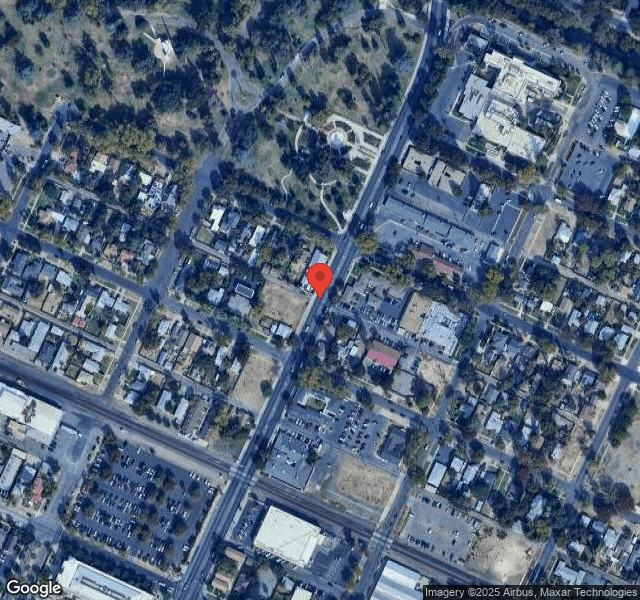
Feb 2025 1 deficiency
CONCERN (D) 📢 Someone Reported This

A family member, employee, or ombudsman was alarmed enough to file a formal complaint

Potential for Harm - no one hurt, but risky conditions existed

Accident Prevention (Tag F0689)

Could have caused harm · This affected 1 resident

**NOTE- TERMS IN BRACKETS HAVE BEEN EDITED TO PROTECT CONFIDENTIALITY** Based on observation, interview, and record review, the facility failed to ensure each resident received adequate supervision to...

Read full inspector narrative →
**NOTE- TERMS IN BRACKETS HAVE BEEN EDITED TO PROTECT CONFIDENTIALITY** Based on observation, interview, and record review, the facility failed to ensure each resident received adequate supervision to prevent accidents for two of four residents (Residents 1 and 2) when Certified Nursing Assistant (CNA) 3 left Residents 1 and 2 unattended in the dining room of the Memory Unit (a specialized care facility designed specifically for individuals experiencing memory loss due to conditions like Alzheimer's disease; a brain disorder that gradually destroys memory and thinking skills or Dementia; a loss of brain function that affects thinking, memory, and reasoning, providing a secure environment with tailored activities and 24/7; 24 hours/seven days a week supervision to support their needs) on [DATE]. This failure resulted in Resident 1 striking Resident 2 in the face and the potential for Resident 2 to be injured. Findings: During a concurrent observation and interview on [DATE] at 9:25 a.m. with Resident 1, in the Memory Unit dining room, Resident 1 was sitting in a chair eating graham crackers. Resident 1 was oriented (a person's state of awareness and cognitive function) to self only and was unable to answer simple questions. During a concurrent observation and interview on [DATE] at 9:30 a.m. with Resident 2, in the Memory Unit dining room, Resident 2 was sitting in a chair. Resident 2 was oriented to self only and was unable to answer simple questions. During a concurrent observation and interview on [DATE] at 9:35 a.m. with License Vocational Nurse (LVN) 1, in the Memory Unit dining room, LVN 1 was sitting in a chair watching six residents. LVN 1 stated one licensed staff member (an individual who is trained and authorized to work in a specialty area) was required to be in the dining room when residents were present. LVN 1 stated residents in the Memory Unit had a history of Alzheimer and Dementia and required supervision. LVN 1 stated some of the residents had a history of altercation (a heated argument or noisy dispute) and their behaviors were unpredictable (likely to change suddenly and without reason). During a review of Resident 1 ' s admission Record (AR), dated [DATE], the AR indicated, Resident 1 was admitted on [DATE] with a history of Other Specified Disorders of the Brain (disorders that are caused by brain damage and physical disease). During a review of Resident 1's Minimum Data Set (MDS; process for clinical assessment of all residents of long term care nursing facilities), dated [DATE], the MDS indicated, Resident 1's Brief Interview for Mental Status (BIMS; an assessment of a resident's cognitive status; the ability to remember, concentrate, learn new things, and/or make decisions that affect their everyday life) score was 4 (a score of 0 to 7 indicated severe impairment, 8 to 12 indicated moderate impairment, and 13 to 15 indicated minimal to no impairment). The MDS indicated, Resident 1 was independent (no assistance required) of ADL (activities of daily living, such as eating, dressing, walking). During a review of Resident 1 ' s Care Plan Report (CPR), dated [DATE], the CPR indicated, Resident 1 has displayed behaviors of agitation, striking out at staff, using vulgar language and refusing care. At risk for injury to self & others. Interventions: Frequently monitor resident ' s whereabouts. Staff to attempt activities that will distract him from others . During a review of Resident 2 ' s AR, dated [DATE], the AR indicated, Resident 2 was admitted on [DATE] with a history of Dementia. During a review of Resident 2's MDS, dated [DATE], the MDS indicated, Resident 2's BIMS score was 0. The MDS indicated Resident 2 required substantial assistance (helper does more than half the effort) of ADL. During a review of Resident 2 ' s CPR, dated [DATE], the CPR indicated, Resident 2 has increased agitation, aggression, and combative behaviors toward staff and other resident at times. Interventions: 1:1 (one staff member to one resident) as needed. Redirect Resident 1 as needed . During a review of Resident 2 ' s CPR, dated [DATE], the CPR indicated, At risk for elopement/wandering r/t (related to) cognitive loss, impaired decision making, Dementia, wanders into other resident ' s rooms. Interventions: Frequent visual checks of resident ' s whereabouts . During a review of Resident 1 and Resident 2 ' s Post-Event Review ([NAME]), dated [DATE], the [NAME] indicated, IDT (Interdisciplinary Team; a group of staff members consisting of nursing, dietary, rehabilitation, social services, activities, and administration who meet regularly to discuss incidents that occurred involving the well-being of residents and staff) met to review resident to resident altercation that occurred on [DATE]. Per interview with staff, (Resident 2) was walking around the dining room and stopped near (Resident 1) and started touching his shoulder. (Resident 1) became upset and hit (Resident 2) on the forehead with an open hand and stated, Don ' t touch me. Residents were separated immediately, and body assessment (gathering of information) completed. No injuries noted . During an interview on [DATE] at 10:18 a.m. with the Housekeeper (HK), the HK stated on [DATE] she was in the Memory Unit dining room mopping the floor when Resident 2 went and stood by Resident 1 and touched Resident 2 ' s shoulder and leg. The HK stated Resident 1 hit Resident 2 with his hand between the eyes. The HK stated she separated Resident 1 and Resident 2 and escorted Resident 2 to the nursing station. The HK stated Resident 1 ' s cheek and eyes were red. The HK stated there was no licensed staff in the dining room when the incident occurred. The HK stated one licensed staff member was required to be in the dining room when residents were present to ensure their safety. During an interview on [DATE] at 9:55 a.m. with CNA 1, CNA 1 stated one licensed staff member was required to be in the Memory Unit dining room when residents were present to ensure the safety of the residents. During an interview on [DATE] at 10:17 a.m. with CNA 2, CNA 2 stated one licensed staff member was required to be in the Memory Unit dining room when residents were present to ensure the safety of the residents. During an interview on [DATE] at 1:17 p.m. with CNA 3, CNA 3 stated on [DATE], CNA 3 was sitting in the Memory Unit dining room watching the residents when one of the residents had a bowel movement (defecated) all over himself. CNA 3 stated she escorted the resident to his room to clean him. CNA 3 stated there were two housekeepers in the dining room and CNA 3 thought it was safe to leave the dining room with the resident to clean him. CNA 3 stated, shortly after, there was an altercation between Resident 1 and Resident 2. CNA 3 stated one licensed staff member was required to be in the dining room when residents were present to ensure the safety of the residents. CNA 3 stated residents in the Memory Unit had a history of Dementia, were confused, and had unpredictable behaviors. CNA 3 stated she was provided education to alert licensed staff when stepping out of the dining room when residents were present. During an interview on [DATE] at 12:21 p.m. with the Director of Nursing (DON), the DON stated the standard of practice in the Memory Unit was that a trained and licensed staff was present in the dining room when residents were in the dining room to provide supervision to ensure the safety of the residents. DON stated licensed staff was required to complete the annual Alzheimer and Dementia in-service (education). The DON stated housekeeping staff were not trained to work in the Memory Unit and were not required to complete the annual Alzheimer and Dementia in-service. The DON stated residents in the Memory Unit had a history of Dementia, were confused and their behaviors were unpredictable which can lead to altercations. DON stated the residents should always be supervised by a licensed staff member in the Memory Unit dining room. During an interview on [DATE] at 12:30 p.m. with the Administrator (ADM), the ADM stated residents in the Memory Unit should always be supervised by trained and licensed staff to ensure the safety of the residents. The ADM stated it was unacceptable to leave the residents unattended even to assist another resident in another area. The ADM stated housekeeping staff were not trained to work in the Memory Unit and were not required to complete the annual Alzheimer and Dementia in-service. The ADM stated trained and licensed staff was required to alert another trained and licensed staff member when they were not able to supervise the residents in the Memory Unit dining room. During a review of the facility ' s Policy and Procedure (P&P) titled, Dementia – Clinical Protocol, dated 11/2018, the P&P indicted, Treatment/Management. 1. For the individual with confirmed dementia, the IDT will identify a resident-centered care plan to maximize remaining function and quality of life. 2. Nursing assistants will receive initial training in the care of residents with dementia and related behaviors . 4. Direct care staff will support the resident in the initiating and completing activities and tasks of daily living. a. Bathing, dressing, mealtimes, and therapeutic and recreational activities will be supervised and supported throughout the day as needed . During a review of the facility ' s P&P titled, Secure Unit, dated 10/2000, the P&P indicated, The Secure Unit (SU) is designed to provide a holistic approach of care for ambulatory or non-ambulatory residents with dementia. Using a team approach, the staff can work collaboratively with families to manage the most severe behavioral problems associated with this type of disease. The overall objective of the SU is to provide a therapeutic environment that will maximize the resident ' s independent functioning for as long as possible and help ease the burden for families . During a professional reference review retrieved from https://www.nccdp.org/three-key-things-every-senior-living-memory-care-manager-should-know/#:~:text=Memory%20care%20managers%20should%20undergo,understanding%20in%20the%20caregiving%20team titled, Three Key Things Every Senior Living Memory Care Manager Should Know, undated, the professional reference review indicated, Memory care managers in senior living and nursing homes play a critical role in ensuring the well-being and quality of life for residents living with dementia. Here are three essential things every memory care manager should know: Comprehensive Understanding of Dementia: A memory care manager must possess a deep understanding of various types of dementia, including Alzheimer ' s disease . This knowledge enables effective management of residents ' unique needs and behaviors. Familiarity with the progression of dementia and its impact on cognitive function, behavior, and daily living activities is crucial for providing personalized care plans tailored to each resident ' s stage of the disease. Understanding the emotional and psychological aspects of dementia is essential for creating a supportive environment that promotes dignity, respect, and person-centered care for residents and their families. Specialized Training in Dementia Care: Memory care managers should undergo specialized training in dementia care, including certification programs or workshops focused on evidence-based practices and techniques. Training should encompass various aspects of dementia care, such as communication strategies, behavior management techniques, and creating dementia-friendly environments. Knowledge of best practices in dementia care ensures that memory care managers can effectively train and supervise staff members, fostering a culture of empathy, patience, and understanding in the caregiving team .
Jul 2024 8 deficiencies
CONCERN (D)

Potential for Harm - no one hurt, but risky conditions existed

Resident Rights (Tag F0550)

Could have caused harm · This affected 1 resident

**NOTE- TERMS IN BRACKETS HAVE BEEN EDITED TO PROTECT CONFIDENTIALITY** Based on observation, interview, and record review, the facility failed to ensure dignity was provided for one of 26 sampled res...

Read full inspector narrative →
**NOTE- TERMS IN BRACKETS HAVE BEEN EDITED TO PROTECT CONFIDENTIALITY** Based on observation, interview, and record review, the facility failed to ensure dignity was provided for one of 26 sampled residents (Resident 4) when Resident 4's nephrostomy catheter (a tube that is inserted into the kidneys, allowing the urine to drain freely into a connected bag) bag was uncovered leaving the urine visible. This failure resulted in Resident 4 not being provided her right to have a dignified existence while in the facility. Findings: During a review of Resident 4's admission Record (AR), dated 7/11/24, the AR indicated Resident 4 had been admitted on [DATE]. Resident 4's admitting diagnoses included: a urinary tract infection (UTI- an infection in any part of the urinary system), hydronephrosis (swelling of one or both kidneys), and calculus of ureter (stone in the tubes responsible for the passage of urine). During an observation on 7/9/24 at 9:51 a.m. in Resident 4's room, Resident 4 was seen in a wheelchair with her nephrostomy catheter bag uncovered and, on her lap, leaving the urine visible. During a concurrent observation and interview on 7/9/24 at 3:40 p.m. with Certified Nursing Assistant (CNA) 3 in Resident 4's room, Resident 4's nephrostomy catheter bag was seen uncovered hanging on her bed. CNA 3 stated nephrostomy bags are treated like foley catheter (a tube that is inserted into the bladder, allowing the urine to drain freely into a connected bag) bags and they need to be covered. CNA 3 stated it was important to cover catheter bags because it provided dignity and privacy to resident. CNA 3 stated Resident 4 may have felt embarrassed or uncomfortable having her urine easily visible for people to see. During an interview on 7/11/24 at 9:48 a.m. with Licensed Vocational Nurse (LVN) 2, LVN 2 stated Resident 4 should have had a separate bag over her catheter bag to provide privacy. LVN 2 stated CNA's and LVN's can both apply a privacy bag. LVN 2 stated not having a bag could have caused Resident 4 to not feel respected while living in the facility. During an interview on 7/12/24 at 10:08 a.m. with the director of staff development (DSD), the DSD stated Resident 4's nephrostomy bag should have been covered by a privacy bag. The DSD stated it was the expectation of staff to always place catheter bags into a privacy bag to protect the dignity of the residents. During an interview on 7/12/24 at 10:38 a.m. with the director of nursing (DON), the DON stated Resident 4's nephrostomy bag should not have been exposed. The DON stated having the urine exposed did not provide Resident 4 with privacy or dignity. During a review of the facility's Policy and Procedure (P&P), titled, Dignity dated 02/2021, the P&P indicated, . Each resident shall be cared for in a manner that promotes and enhances his or her sense of wellbeing, level of satisfaction with life, and a feeling of self-worth and self-esteem . 1. Residents are treated with dignity and respect at all times . 12 Demeaning practices and standards of care that compromise dignity are prohibited. Staff are expected to promote dignity and assist residents; for example: a. helping the resident to keep urinary catheter bags covered .
CONCERN (E)

Potential for Harm - no one hurt, but risky conditions existed

Safe Environment (Tag F0584)

Could have caused harm · This affected multiple residents

**NOTE- TERMS IN BRACKETS HAVE BEEN EDITED TO PROTECT CONFIDENTIALITY** Based on observation, interview, and record review the facility failed to implement a clean, comfortable, homelike environment f...

Read full inspector narrative →
**NOTE- TERMS IN BRACKETS HAVE BEEN EDITED TO PROTECT CONFIDENTIALITY** Based on observation, interview, and record review the facility failed to implement a clean, comfortable, homelike environment for 7 of 29 sampled residents (Residents 1, 9,16, 18, 26, 27, 47) when: 1. Residents 1, 16, 26, and 47's room and privacy curtains were not properly hung on the hooks. This failure had the potential to result in Residents 1, 16, 26, and 47 not being provided their right to have privacy or a comfortable homelike environment. 2. The facility failed to honor the right of three of 23 sampled residents (9, 18, and 27), when the wall of residents 9,18 and 23's room had paint that missing, chipped and peeling. Findings: 1. During an observation on 7/9/24 at 10:39 a.m. in Resident 1, 16, and 26's room, the middle section of the window curtain was not properly hung on the hooks. During an observation on 7/9/24 at 10:44 a.m. in Resident 47's room, the end of Resident 47's privacy curtain was not properly hung on the hooks. During a concurrent observation and interview on 7/12/24 at 9:20 a.m. with Certified Nursing Assistant (CNA) 1 in Resident 1,16, and 26's room, the middle section of window curtain was not properly hung on the hooks. CNA 1 stated having the middle section of the window curtains not hanging on the hooks looked ugly and may not provide adequate light blocking. CNA 1 stated the curtain did not provide a homelike environment in its condition. During a concurrent observation and interview on 7/12/24 at 9:33 a.m. with CNA 1 in Residents 47's room, the end of Resident 47's privacy curtain was not hung properly on the hooks. CNA 1 stated the hooks on the curtains were missing and the curtain did not slide smoothly. CNA 1 stated the condition of the curtains in Resident 47's room was not homelike. CNA 1 stated the curtain may not be able to fully provide privacy to the resident. CNA 1 stated she would not have curtains in the same condition in her own home. During an interview on 7/12/24 at 9:40 a.m. with Licensed Vocational Nurse (LVN) 4, LVN 4 stated all the curtains in every resident room should be hung correctly. LVN 4 the curtains in Residents 1,16, 26 and 47's room did not provide a homelike environment. LVN 4 stated it was the responsibility of all staff to ensure the curtains were hung correctly. LVN 4 stated if curtains were not properly hung or don't function as they should it could have made the residents sad whenever they go back to their rooms. During an interview on 7/12/23 at 9:45 a.m. with the Maintenance Supervisor (MAINS), The MAINS stated he was aware of the condition of the Residents 1,16, 26, and 47's curtains and they should have been hung properly. The MAINS stated the curtains may have had damaged or missing hooks and it was important for the curtains to be in proper working order because it helped create a homelike environment. The MAINS stated the rooms were the residents' homes and things like appealing curtains help the residents feel better. During an interview on 7/12/24 at 9:54 a.m. with the Housekeeping Supervisor (HS), the HS stated all the curtains in each residents' room should have been hung properly on the hooks. The HS stated properly hanging the curtains was the responsibility of housekeeping staff and having proper working hooks was the responsibility of the maintenance department. The HS stated both departments should have fixed the problem when it was noticed. The HS stated if curtains weren't hung correctly, they would not provide privacy or a homelike environment to the residents. During an interview on 7/12/24 at 10:08 a.m. with the director of staff development (DSD), the DSD stated certified nursing staff should have reported the loose curtains to the maintenance or housekeeping department. The DSD stated properly hung curtains was important because it provides privacy and makes the room more homelike. During an interview on 7/12/24 at 10:38 a.m. with the director of nursing (DON), the DON stated privacy curtains in the residents' rooms should be hung correctly on the hooks. The DON stated it was important to have proper hanging curtains to provide a homelike environment for the residents. The DON stated the condition of Residents 1,16, 26, and 47's curtains was not homelike. During an interview on 7/12/24 at 11:41 am with the Administrator (ADM), the ADM stated residents should have been provided properly hanging curtains in their rooms. THE ADM stated properly hung curtains was important because it provided privacy to the residents. During a review of the facility's Housekeeper job description, (undated), the job description indicated, . the purpose of your job position is to maintain a clean and safe environment in accordance with the current federal, state and local standards that govern the facility, and as directed by housekeeping department and/ or the Administrator . During a review of the facility's Maintenance Supervisor job description, (undated), the job description indicated, The purpose of your job is to assist in supervising the day-today activities (installing, repairing, and upkeep) of the facility in accordance with current applicable federal, state, and local standards and regulations to ensure the safety if all residents and personal as directed . Essential duties and responsibilities . Performing regular inspections of resident rooms for order safety and proper performance of equipment. Providing or scheduling facility repairs as needed . During a review of the facility's policy and procedure (P&P) titled, Homelike environment, dated 2/21, the P&P indicated, . The facility staff and management maximizes, to the extent possible, the characteristics of the facility that reflect a personalized, homelike setting. These characteristics include: a. clean, sanitary, orderly environment . 2. During a review of Resident 9's admission Record (AR), dated 7/12/24, the AR indicated Resident 9 was admitted on [DATE] from an acute care facility with the following diagnoses, Type 2 Diabetes Mellitus (DM - a disease where the blood sugar is high), benign prostate cancer (not cancer, the prostate gland is larger than usual, can slow or block the flow of urine from the bladder), difficulty walking, oral phase dysphagia (difficulty swallowing food or liquid), Dementia (impaired ability to remember, think, or make decisions that interferes with doing everyday activities), Depression (a constant feeling of sadness and loss of interest, which stops you doing your normal activities), Viral Hepatitis (infection that causes liver inflammation and damage), and Chronic Obstructive Pulmonary Disease (COPD - a chronic inflammatory lung disease that causes obstructed airflow from the lungs). During a review of Resident 9's Minimum Data Set (MDS - a resident assessment tool used to identify cognitive [mental processes] and physical functional level assessment), dated 4/23/24, the MDS section C indicated, Resident 9 had a Brief Interview for Mental Status (BIMS - a test given by medical professionals to determine cognitive understanding on a scale of 1-15 ) score of 6 (a score of 0-7 suggests severe cognitive impairment, 8-12 suggests moderately impaired, 13-15 suggests cognitively intact), which indicated Resident 9 had severe cognitive impairment. During a review of Resident 18's AR dated 7/12/24, the AR indicated, Resident 18 was admitted from an acute care facility with the diagnoses of Dysphagia, Respiratory Failure (not enough oxygen in the body for survival, Pneumonia (infection of one or both lungs), DM, Dementia, and Anxiety (a chronic inflammatory lung disease that causes obstructed airflow from the lungs). During a review of Resident 18's MDS section C dated 4/19/24, the MDS section C indicated Resident 18 had a BIMS score of 0 which indicated Resident 18 had severe cognitive impairment. During a review of Resident 27's AR dated 7/12/24, the AR indicated, Resident 27 was admitted on [DATE] from an acute care facility with the diagnoses of Pyelonephritis (kidney infection), Dysphagia, muscle weakness, pressure ulcer to the right hip, anemia (low number of red blood cells), Peripheral Vascular Disease (PVD - the reduced circulation of blood to a body part other than the brain or heart), COPD, and Hemiplegia (total paralysis) of right side. During a review of Resident 27's MDS section C dated 4/23/24, the MDS section C indicated Resident 27 had a BIMS score of 9 which indicated Resident 27 had moderate cognitive impairment. During a concurrent observation and interview on 7/9/24 at 11:07 a.m. with Resident 27 in Resident 9,18, and 27's room, the walls were painted light green. On the wall closest to the door, there was an approximately 3 foot (unit of measure), by 2 foot section with chipped and missing paint exposing the white surfacepaint under the green paint. Resident 27 stated, if he was at his house, he would have painted the wall a long time ago. During an interview on 7/10/12 at 9:12 am with the Maintenance Supervisor (MAINS), the MAINS stated the missing paint from the bedroom wall did not provide a homelike environment for the residents, and the wall should have been painted and the peeling paint removed. During an interview on 7/12/24 at 2:36 p.m. with the Administrator (ADM), the ADM stated, the missing paint on the wall did not provide a homelike environment for the three residents in the room. During a review of the facility's policy and procedure (P&P) titled Homelike Environment, dated 1/2018, indicated . 2. The facility staff and management maximize, to the extent possible, the characteristics of the facility that reflect a personalized, home like setting. These characteristics include: a period clean, sanitary, and orderly environment . During a review of the facility's Maintenance Director job description, dated 10/19/2015, the job description indicated, . the maintenance director is responsible for the overall maintenance operation of the center, and he/she is responsible for performing repairs and maintenance on equipment . Responsibilities/Accountabilities 1. Performs overall supervision of the maintenance department including hands on performance of maintenance and repair work . 3. maintains the building and grounds in compliance with federal, state, and local laws . 15. performs other responsibilities, as may be required, and as directed by the administrator . 20. performs other duties as requested .
CONCERN (E)

Potential for Harm - no one hurt, but risky conditions existed

Comprehensive Care Plan (Tag F0656)

Could have caused harm · This affected multiple residents

**NOTE- TERMS IN BRACKETS HAVE BEEN EDITED TO PROTECT CONFIDENTIALITY** 2. During a review of Resident 1's admission record (AR), dated 7/11/24, the AR indicated Resident 1 was admitted on [DATE]. Res...

Read full inspector narrative →
**NOTE- TERMS IN BRACKETS HAVE BEEN EDITED TO PROTECT CONFIDENTIALITY** 2. During a review of Resident 1's admission record (AR), dated 7/11/24, the AR indicated Resident 1 was admitted on [DATE]. Resident 1's diagnoses included: Alzheimer's (a brain disorder that slowly destroys memory and thinking skills), dysphagia (difficulty swallowing), and bipolar disorder (condition which causes extreme mood swings) During a review of Resident 16's AR, dated 7/11/24, the AR indicated Resident 16 was admitted on [DATE]. Resident 16's diagnoses included: chronic obstructive pulmonary disease (condition which makes it difficult to breathe), dementia (condition characterized by loss of memory, language, problem-solving and other thinking abilities), dysphagia, and bipolar disorder. During a review of Resident 26's AR dated 7/11/24, the AR indicated Resident 26 was admitted on [DATE]. Resident 26's diagnoses included: dementia, schizoaffective disorder (a mental health condition that is marked symptoms such as hallucinations and delusions), muscle weakness, and contractures (a permanent tightening of the muscles, tendons, or skin) of left and right knees. During a review of Resident 1's Minimum Data Set (MDS - a resident assessment tool used to identify cognitive [mental processes] and physical functional level assessment, dated 6/25/24, the MDS indicated Resident 1's Cognitive Skills for Daily Decision-Making score was 3, indicating her cognitive ability was severely impaired. During a review of Resident 16 MDS, dated [DATE], the MDS indicated Resident 16's Cognitive Skills for Daily Decision-Making score was 3, indicating her cognitive ability was severely impaired. During a review of Resident 26's MDS, dated [DATE], the MDS indicated Resident 26's BIMS score was 2 out of 15, indicating severe cognitive impairment. During an observation on 7/9/24 at 10:38 a.m. in Residents 1, 16 and 24's room, Residents 1, 16 and 24's were observed lying in bed. During a concurrent observation and interview on 7/11/24 at 2:24 p.m. with Certified Nursing Assistant (CNA) 2, in Residents 1, 16, and 26 room, Residents 1, 16, and 26 were observed laying in their beds. CNA 2 stated staff had not gotten Residents 1,16, and 26 out of bed all day. CNA 2 stated the residents also did not get up the day before on 7/10/24. CNA 2 stated she does not know why Residents 1, 16, and 26 have not gotten up out of bed. CNA 2 stated there were no nursing instructions or directions to get the residents up out of bed. CNA 2 stated the residents should get up because it's important to socialize with other residents and so they don't develop pressure sores. During a concurrent observation and interview on 7/11/24 at 2:37 p.m. with Licensed Vocational Nurse (LVN) 3 in Residents 1, 16, and 26's room, Residents 1, 16, and 26 were observed laying in their beds. LVN 3 stated Residents 1, 16, and 26 don't get up every day. LVN 2 stated the residents get up to be showered twice a week but there was nothing care planned to get them up beyond that. LVN 3 stated Residents 1, 16, and 26 should be out of bed more so they don't develop pressure ulcers and can have a better quality of life. During a concurrent interview and record review on 7/11/24 at 2:34 p.m. with LVN 3, Resident 1's Clinical Record (CR) was reviewed. LVN 3 stated there was no documentation of attempts to get Resident 1 out of bed. LVN 3 stated there has never been communication or a plan to get Resident 1 out of bed. LVN 3 stated there was no care plan developed or implemented to ensure Resident 1 got out of bed. LVN 3 stated having an individualized care plan was important, so staff know the resident goals and what interventions were needed to reach those goals. During a concurrent interview and record review on 7/11/24 at 2:44 p.m. with LVN 3, Resident 16's CR was reviewed. LVN 3 stated there was no documentation of attempts to get Resident 16 out of bed. LVN 3 stated there has never been communication or a plan to get Resident 16 out of bed. LVN 3 reviewed Resident 16's care plan and stated there was no care plan developed or implemented to ensure Resident 16 got out of bed. LVN 3 stated a care plan should have been implemented to get Resident 16 out of bed so she would not develop pressure sores. LVN 3 stated having an individualized care plan was important, so staff know the resident goals and what interventions were needed to reach those goals. During a concurrent interview and record review on 7/11/24 at 2:50 p.m. with LVN 3, Resident 26's CR, undated, was reviewed. LVN 3 stated there was no documentation of attempts to try to get Resident 26 out of bed. LVN 3 stated there has never been communication or a plan to get Resident 26 out of bed. LVN 2 reviewed Resident 26's care plan and stated there was no care plan developed or implemented to ensure Resident 26 got out of bed. LVN 3 stated a care plan should have been implemented to try to get Resident 26 out of bed, so she does not develop pressure sores. During an interview on 7/11/24 at 3:29 p.m. with the Minimum Data Set Coordinator (MDSC), the MDSC stated nursing staff should have gotten Residents 1, 16, and 26 out of bed more often. The MDSC stated Resident 26 had violent behaviors and if it was too hard to get her up staff should have documented it. Th MDSC stated Residents 1 and 16 did not have violent behaviors and should have been out of bed regularly. The MDSC stated getting resident out of bed was important because staying in bed could have caused skin breakdown. During an interview on 7/11/24 at 3:57 p.m. with the Activities Coordinator (AC), the AC stated Residents 1, 16 and 24 received room visits regularly but no efforts were in place to ensure they got out of bed. The AC stated Residents 1, 16, and 24 should be getting out of bed. The AC stated if the residents stayed in bed all day it could have ruined their mood and led to pressure ulcers. The AC stated individualized care plans would allow staff to be aware of what goals they need to work on for each resident. The AC stated it was important to have the residents out of bed because they would have been able to socialize with others and prevent pressure ulcers. During an interview on 7/12/24 at 10:08 a.m. with the Director of Staff Development (DSD), the DSD stated nursing staff should have gotten Residents 1, 16, and 26 out of bed more frequently. The DSD stated getting out of bed was important, so the residents do not get pressure ulcers and because it was important for their mental health. During an interview on 7/12/24 at 10:38 a.m. with the DON, the DON stated nursing staff should have attempted to get residents 1, 16, and 26 out of bed. The DON stated there should have been documentation on the attempts to get the residents out of bed in the progress notes. The DON stated there should have been a care plan implemented to ensure staff were getting the residents out of bed. The DON stated getting out of bed was important because Residents 1, 16, and 26 would have been able to get range of motion (activity aimed at improving movement in the arms or legs) exercises and it would help the lungs to not build up fluids and breathe better. During an interview on 7/12/24 at 11:41 a.m. with the Administrator (ADM), the ADM stated staff were not capturing or monitoring the trends of getting out of bed for Residents 1, 16, and 26. The ADM stated if nursing staff did get the residents out of bed it was not reflected in the documentation. The ADM stated Residents 1, 16 and 26 should have had interventions or goals in place to ensure staff get them out of bed. During a review of the facility's Certified Nursing Assistant job description, (undated), the job description indicated, the purpose of your job position is to provide each resident with routine daily nursing care in accordance with the residents assessment plan along with federal state, and local standards that govern the facility, and as directed by your supervisors . essential duties and responsibilities . proper lifting and transitioning residence from wheelchair to bed, bed to chair, etc . helping residents, sit, stand and walk . transporting residents to dining area parenthesis for meals and activities parentheses and returning them to their room . documentation/charting . During a review of the facility's Licensed Vocational Nurse job description, (undated), the job description indicated, the purpose of your job position is to provide each resident with routine daily nursing care in accordance with current federal, state, and local standards that govern the facility, and as directed by your supervisors . Essential duties and responsibilities accurate and detailed charting of resident progress notes . During a review of the facility's Policy and Procedure (P&P) titled Care Plans, Comprehensive Person-Centered, dated 3/23, the P&P indicated, . A comprehensive, person-centered care plan that includes measurable objectives and timetables to meet the resident's physical, psychosocial and functional needs is developed and implemented for each resident . The comprehensive, person-centered care plan will: a. include measurable objectives and timeframes; b. describe the services that are to be furnished to attain or maintain resident's highest practicable physical, mental, and psychosocial well-being . c. includes the resident's stated goals upon admission and desired outcomes . Based on observation, interview, and record review, the facility failed to develop and implement comprehensive person-centered care plans (CP - a detailed approach to care customized to an individual resident's needs) for 5 of 16 sampled residents (Residents 1, 16, 26, 69, and 127) when: 1. Residents 69 and 127's care plan did not have an individualized care plan developed and implemented for Activities of Daily Living (ADL). This failure had the potential for Residents 69 and 127 ADL needs to not be met. 2. Residents 1, 16, and 26 did not have an individualized care plan developed and implemented to ensure they got out of bed. This failure had the potential to cause Residents 1, 16, and 26 to develop pressure ulcers (areas of damaged skin and tissue caused by sustained pressure that reduces blood flow to areas of the body). Findings: 1. During a review of Resident 69's admission Record (AR- a document that provides resident contact details, a brief medical history, level of functioning, preferences, and wishes), dated 7/11/24, the AR indicated, Resident 69 was admitted from acute hospital on 4/16/24 to the facility, with diagnoses that included Cerebrovascular Disease (CVA, stroke), Chronic Obstructive Pulmonary Disease (COPD - is a chronic inflammatory lung disease that causes obstructed airflow of the lungs), Hypertension (high blood pressure), Anemia (low in iron), Muscle Weakness, Hemiplegia (weakness on one side of the body), Difficulty in Walking, and Dependence on Supplemental Oxygen. During a review of Resident 69's Minimum Data Set (MDS, an assessment tool which indicates physical, medical, and cognitive abilities), dated 4/19/24, the MDS indicated Resident 69's Cognitive Skills for Daily Decision Making score was 3, indicating his cognitive ability was severely impaired (0 - Independent, 1 - Modified Independence, 2 - Moderately Impaired, and 3 - Severely Impaired). During an observation, on 7/9/24, at 3:25 p.m., inside Resident 69's room, Resident 69 was observed in bed, awake, and receiving continuous supplemental oxygen at 2 Liters per minute. One female direct care staff was observed providing personal care to Resident 69. During a concurrent interview and record review on 7/10/24, at 9:52 a.m., with Registered Nurse (RN) 1, Resident 69's care plan was reviewed. Resident 69's care plan stated, . The resident has an Activities of Daily Living (ADL) Self Care Performance Deficit related to hemiplegia, Stroke . date initiated:4/17/24 . RN 1 reviewed Resident 69's ADL care plan interventions and stated there was no specific interventions created to address Resident 69's transfer assistance needs. RN 1 stated Resident 69 is not independent with ADLs and requires one staff to assist during transfer from bed to chair and vice versa. RN 1 stated the facility failed to follow the policy on care planning, and potentially placed Resident 69 at risk for fall or injury. During a review of Resident 127's AR, dated 7/11/24, the AR indicated, Resident 127 was admitted from acute hospital on 6/26/24 to the facility, with diagnoses that included Osteomyelitis, Type 2 Diabetes Mellitus, Hypertension, Cerebrovascular Disease, Anemia, Muscle Weakness, Dependence on Supplemental Oxygen, and Pressure Ulcer of Sacral Ulcer Stage 4 (open sore to the coccyx area, loss of skin tissue with exposed bone or muscle tissues). During a review of Resident 127's MDS, dated [DATE], the MDS indicated Resident 127's Cognitive Skills for Daily Decision Making score was 3, indicating her cognitive ability was severely impaired. During an observation, on 7/9/24, at 10:22 a.m., inside Resident 127's room, Resident 127 was observed in bed, with both eyes open, and receiving continuous supplemental oxygen at 2 Liters per minute. Resident 127 was unable to respond to simple questions and unable to follow simple commands. During an interview on 7/10/24, at 9:00 a.m., with Licensed Vocational Nurse (LVN) 2, LVN 2 stated Resident 127 was bed bound and requires two staff to use a hoyer lift and to transfer Resident 127, from bed to a chair and vice versa. During a concurrent interview and record review on 7/10/24, at 9:54 a.m., with RN 1, Resident 127's care plan was reviewed. Resident 69's care plan stated, . The resident has an Activities of Daily Living (ADL) Self Care Performance Deficit related to confusion, impaired balance . date initiated: 6/26/24 . RN 1 reviewed Resident 127's care plan interventions and stated there was no specific interventions created to address Resident 69's transfer assistance needs. RN 1 stated Resident 127 requires total assistance with ADLs and requires two staff to assist during transfer, from bed to chair and vice versa. RN 1 stated the facility failed to follow the policy on care planning, and potentially placed Resident 127 at risk for fall or injury. During a concurrent interview and record review on 7/12/24, at 11:40 a.m., with the DON, Residents 69 and 127's nursing care plans were reviewed. The DON stated Residents 69 and 127's ADL care plan should have been resident-specific and it was not. The DON stated the care plan drove resident care to ensure resident's care and wishes were being met. The DON stated the facility failed to follow the facility's policy and procedures related to care planning process. The DON stated the failure could potentially result to injury. During a review of the facility's document titled, Job Description: Registered Nurse, undated, the document indicated, . Essential Duties and Responsibilities . Assessment and development of resident care plans . During a review of the facility's policy and procedure (P&P) titled Care Plans, Comprehensive Person-Centered, dated 3/23, the P&P indicated, . A comprehensive, person-centered care plan that includes measurable objectives and timetables to meet the resident's physical, psychosocial and functional needs is developed and implemented for each resident . The comprehensive, person-centered care plan will: a. include measurable objectives and timeframes; b. describe the services that are to be furnished to attain or maintain resident's highest practicable physical, mental, and psychosocial well-being . c. includes the resident's stated goals upon admission and desired outcomes .
CONCERN (E)

Potential for Harm - no one hurt, but risky conditions existed

Deficiency F0658 (Tag F0658)

Could have caused harm · This affected multiple residents

**NOTE- TERMS IN BRACKETS HAVE BEEN EDITED TO PROTECT CONFIDENTIALITY** Based on observation, interview, and record review, the facility failed to meet professional standards of practice for two of 26...

Read full inspector narrative →
**NOTE- TERMS IN BRACKETS HAVE BEEN EDITED TO PROTECT CONFIDENTIALITY** Based on observation, interview, and record review, the facility failed to meet professional standards of practice for two of 26 sampled residents (Residents 4 and 16) when: 1.No physician orders for oxygen were in place for Resident 4 2.The physician orders for oxygen delivery rate were not followed for Resident 16 These failures had the potential to cause Residents 4 and 16 to receive the incorrect amount of oxygen required for their individual needs. Findings: 1. During a review of Resident 4's admission Record (AR), dated 7/11/24, the AR indicated Resident 4 had been admitted on [DATE]. Resident 4's diagnoses included: chronic obstructive pulmonary disease (COPD- condition which makes it harder to breather) and dependence on supplemental oxygen. During an observation on 7/9/24 at 9:51 a.m. Resident 4 was seen with an oxygen concentrator next to her bed. During a concurrent observation and interview on 7/10/24 at 8:32 a.m. with Certified Nursing Assistant (CNA) 3 in Resident 4's room, Resident 4 was seen receiving oxygen via nasal cannula (tube which goes in the nose to deliver oxygen). CNA 3 stated Resident 4 received supplemental oxygen continuously. CNA 3 stated Licensed Vocational Nurses (LVN) were responsible for handling and providing the supplemental oxygen. CNA 3 stated an order was needed for a resident to receive oxygen. CNA 3 stated if an order was not present than the LVN would not be able to provide oxygen to a resident. CNA 3 stated It was important to have a doctor's orders in place for Resident 4 because she has COPD and may not get all the oxygen she medically needs. During a concurrent interview and record review on 7/11/24 at 9:48 a.m. with LVN 2, Resident 4's clinical record (CR) was reviewed. LVN 2 stated Resident 4 needed oxygen continuously due to her COPD. LVN 2 stated there were no physician orders in place for Resident 4's supplemental oxygen. LVN 2 stated there should have been a physician's order present for Resident 4's oxygen use. LVN 2 stated it was important to have proper physician orders in place so staff can deliver the correct amount of oxygen to Resident 4 and so no harm comes to her if she gets too much or too little. During an interview on 7/12/24 at 10:38 a.m. with the director of nursing (DON), the DON stated oxygen orders should have been in place before nursing staff administered oxygen. The DON stated the nurses should have checked the oxygen orders every shift. The DON stated it was important to verify if physician orders were in place because if the wrong amount of oxygen was delivered Resident 4 could have become dependent on the wrong amount of oxygen. During a review of the facilities policy and procedure (P&P) titled, Oxygen Administration, dated 2/24, the P&P indicated, . Preparation 1. Verify that there is a physician's order for this procedure. Review the physician's order or facility protocol for oxygen administration . During a review of the facilities policy and P&P titled, Physician Orders, dated 11/23, the P&P indicated, 1. Each resident must be under the care of a Licensed Physician . 2. A current list of orders must be maintained in chronological order . 3 . When recording orders for oxygen, specify, the rate of flow, route, and rationale . 2. During a review of Resident 16's AR, dated 7/11/2016, the AR indicated Resident 16 was admitted on [DATE]. Resident 16 was admitted with a primary diagnosis of COPD. During an observation on 7/9/24 at 10:38 a.m. in Resident 16's room, Resident 16 was observed receiving three liters of oxygen per minute via a nasal cannula. During a concurrent observation and interview on 7/11/24 at 2:24 p.m. with CNA 2 in Resident 16's room, Resident 16 was receiving oxygen via nasal cannula at three liters per minute. CNA 2 stated LVN's were responsible for setting the oxygen at the appropriate rate. CNA 2 stated LVN's have to verify what the doctor's order states before they place oxygen on any resident. CNA 2 stated Resident 16 had COPD and she needed oxygen continuously to help her breath. CNA 2 stated it was important to follow the physicians order, so residents receive the correct amount of oxygen they need for their condition. During a concurrent interview and record review on 7/11/24 at 2:37 p.m. with LVN 3, Resident 16's CR was reviewed. The CR indicated, apply oxygen at two liters per minute. LVN 3 reviewed Resident 16's care plan, the care plan indicated to apply two liters of oxygen per minute per doctor's orders. LVN 3 stated Resident 16 was receiving three liters per minute and the doctor's orders for oxygen delivery rate were not followed. LVN 3 stated it was important to follow the doctor's order, so residents did not receive the incorrect amount of oxygen. LVN 3 stated since Resident 16 had COPD, delivering the wrong amount of oxygen could have caused her to retain carbon dioxide (waste product made by the body which needs to be released) and lead to her not being able to breathe. During an interview on 7/12/24 at 10:38 a.m. with the DON, the DON stated nursing staff did not follow the doctors order for the proper rate of oxygen delivery. The DON stated it was important to verify the physician orders every shift because the wrong amount of oxygen delivered could have made Resident 16 dependent on the incorrect amount. The DON stated if higher levels of oxygen were needed, staff should have contacted the doctor for an updated order. During a review of the facilities policy and procedure (P&P) titled, Oxygen Administration, dated 2/24, the P&P indicated, . Preparation 1. Verify that there is a physician's order for this procedure. Review the physician's order or facility protocol for oxygen administration . During a review of the facilities policy and P&P titled, Physician Orders, dated 11/23, the P&P indicated, 1. Each resident must be under the care of a Licensed Physician . 2. A current list of orders must be maintained in chronological order . 3 . When recording orders for oxygen, specify, the rate of flow, route, and rationale .
CONCERN (E)

Potential for Harm - no one hurt, but risky conditions existed

Food Safety (Tag F0812)

Could have caused harm · This affected multiple residents

Based on observation, interview, and record review, the facility failed to ensure food was stored and/or prepared in accordance with professional standards for food services safety for 71of 73 residen...

Read full inspector narrative →
Based on observation, interview, and record review, the facility failed to ensure food was stored and/or prepared in accordance with professional standards for food services safety for 71of 73 residents when: 1. A plastic lid was discarded on the pantry shelf in the dry food storage area. 2. No air gap (an unobstructed vertical space between the water outlet and the flood level of a fixture), under the food preparation sink. 3. One canister of food in the dry food storage area and one box of food in the freezer had incorrect opened, use by and expiration dates. These failures put the residents at risk for food borne illness that could have eventually led to death. Findings: 1. During a concurrent observation and interview on 7/09/24 at 9:36 a.m. with the Certified Dietary Manager (CDM), in the dry food storage area, a plastic lid was observed on pantry shelving. The CDM stated, .the lid should not be on the shelf with the dry food, there should be trash with the food . During a concurrent observation and interview on 7/09/24 at 9:39 a.m. with the CDM, in the dry food storage area, a canister of oatmeal was labeled received on 6/3/24, use by 3/27/24, and opened on 7/6/24. The CDM stated the labeling was incorrect it could cause confusion and result in Residents receiving expired food. 2. During a concurrent observation and interview on 7/09/24 at 9:48 a.m. with the CDM, in the facility's kitchen, the food preparation sink did not have an air gap. The CDM stated she did not know anything about air gaps, maintenance handles that. During a concurrent observation and interview on 7/11/24 at 9:16 a.m. with the Maintenance Supervisor (MAINS), in the facilities kitchen, the food preparation sink did not have an air gap. The MAINS stated the food preparation sink should have an air gap, air gaps are to prevent the back up of sewage and contamination of food. During an interview on 7/12/24 at 2:36 p.m. with the facilities Administrator (ADM), the ADM stated there should be an air gap under the food preparation sink and there was not one. 3. During a concurrent observation and interview on 7/09/24 at 9:51 a.m. with the CDM, in the facility's freezer, a box of frozen mixed vegetables was labeled received on 7/8/24 and use by 3/8/24. The CDM stated the labeling was confusing and did not match the use by date listed by the manufacturer. During an interview on 7/10/24 at 4:08 p.m. with the Registered Dietitian (RD), the RD stated, .mislabeling of food could lead to residents receiving expired foods, the food could not taste well or lead to the Residents becoming sick .air gaps are required under sinks used for preparation to prevent food contamination from back flow of sewage .). During a review of the facility's policy and procedure titled, Labeling and Dating of Food dated 1/3/18, indicated, .All food will be dated, labeled, and prepared for storage to prevent contamination, deterioration, and dehydration . During a review of the CDM job description [undated], the CDM job description indicated . checking food storage rooms . for regulatory compliance . Adhering to all dietary policies and procedures .). During a review of the Food Code U.S Food and Drug Administration, dated 2022, indicated, . 5-202.13 Backflow Prevention, Air Gap. During periods of extraordinary demand, drinking water systems may develop negative pressure (when water flows in the opposite direction) in portions of the system. If a connection exists between the system and a source of contaminated (dirty) water during times of negative pressure, contaminated water may be drawn into and foul (to make dirty) the entire system. Standing water in sinks . and other equipment may become contaminated with cleaning chemicals or food residue .
CONCERN (E)

Potential for Harm - no one hurt, but risky conditions existed

Infection Control (Tag F0880)

Could have caused harm · This affected multiple residents

**NOTE- TERMS IN BRACKETS HAVE BEEN EDITED TO PROTECT CONFIDENTIALITY** Based on observation, interview, and record review, the facility failed to maintain an effective infection control program when:...

Read full inspector narrative →
**NOTE- TERMS IN BRACKETS HAVE BEEN EDITED TO PROTECT CONFIDENTIALITY** Based on observation, interview, and record review, the facility failed to maintain an effective infection control program when: 1. One of 23 sampled residents' (Resident 4) oxygen concentrator (a device that concentrates the oxygen from the ambient air) was being used without a filter. 2. Two of 23 sampled residents' (Residents 12 and 58) oxygen concentrator filters were found covered with lint and dust. These failures placed Residents 4, 12, and 58 at an increased risk to develop respiratory and healthcare-associated infections. Findings: 1. During a review of Resident 4's admission Record (AR, a document that provides resident contact details, a brief medical history, level of functioning, preferences, and wishes), dated 7/11/24, the AR indicated, Resident 4 was readmitted from an acute care hospital on 5/10/24 to the facility, with diagnoses which included Chronic Obstructive Pulmonary Disease (COPD - is a chronic inflammatory lung disease that causes obstructed airflow of the lungs), Type 2 Diabetes Mellitus (abnormal levels of blood sugar), Hypertension (high blood pressure), Schizophrenia (is a serious mental disorder in which people interpret reality abnormally) and Dependence on Supplemental Oxygen. During a review of Resident 4's Minimum Data Set (MDS, an assessment tool which indicates physical, medical, and cognitive abilities), dated 5/7/24, the MDS indicated Resident 4's Cognitive (mental) Skills for Daily Decision Making score was 1, indicating Moderate Independence with some difficulty in new situations (0 - Independent, 1 - Modified Independence, 2 - Moderately Impaired, and 3 - Severely Impaired). During a review of Resident 4's Order Summary Report (OSR), dated 7/11/24, the OSR indicated, . Order Summary . May have oxygen at 2L [Liters Per Minute, unit of measurement] via nasal cannula, continuous r/t (related) to COPD. During a review of Resident 4's Nursing Care Plan (CP), dated 6/29/24, the CP indicated, . The resident has Oxygen Therapy r/t COPD . Interventions . The resident has oxygen via nasal prongs at 2L continuously . During an observation on 7/10/24, at 9:30 a.m., in Resident 4's room. Resident 4 was sitting in her wheelchair and had an oxygen cannula (a device used to deliver supplemental oxygen) connected to an oxygen concentrator. The oxygen was being given at 2L/min continuously. The oxygen concentrator filter was operating without the filter installed. During a concurrent observation and interview, on 7/10/24, at 12:05 p.m., in Resident 4's room with Registered Nurse (RN) 1, RN 1 looked at Resident 4's oxygen concentrator and stated the oxygen concentrator was operating without a dust filter and it should. RN 1 stated using the oxygen concentrator without a filter was not acceptable. RN 1 stated Resident 4's respiratory condition could worsen. RN 1 stated maintaining the cleanliness of oxygen concentrator was the responsibility of all staff. During an interview on 7/12/24, at 11:45 a.m., with the Director of Nursing (DON), the DON stated using an oxygen concentrator without a filter was not acceptable and could potentially cause residents to become ill. The DON stated the purpose of the oxygen concentrator was to improve resident's oxygen level. The DON stated residents using dirty oxygen concentrators could have respiratory infection such as Pneumonia (lung infection caused by bacteria) and Bronchitis (inflammation of the airways). The DON stated she expects the oxygen concentrator to be cleaned weekly and as needed for the safety and well-being of all residents receiving oxygen. During a review of the facility's document titled, Job Description: Licensed Vocational Nurse, undated, the document indicated, . Essential Duties and Responsibilities . Ensuring equipment is in good operating order . Following Infection and Control policies . During a review of the facility's document titled, Job Description: Registered Nurse, undated, the document indicated, . Essential Duties and Responsibilities . Ensuring that all resident care rooms and treatment areas are clean and safe . Following Infection and Control policies . During a review of the facility's policy and procedure (P&P) titled, Infection Control, dated 10/18, the P&P indicated, . The facility's infection control policies and practices are intended to facilitate maintaining a safe, sanitary and comfortable environment . All personnel will be trained on our infection control policies and practices . During a review of the facility's P&P titled, Oxygen Administration, dated 2/24, the P&P stated, . Preparation . 3. Assemble the equipment and supplies as needed . Steps in the Procedure . Check the mask, tank, humidifier, etc., to be sure they are in good working order and are securely fastened . During a review of the facility's P&P titled, Maintenance Service, dated 12/23, the P&P stated, . 1. The maintenance department is responsible for maintaining the buildings, grounds, and equipment in a safe and operable manner at all times . 4. Maintenance personnel shall follow the manufacturer's recommended maintenance schedule . During a review of the oxygen concentrator manual titled, [Brand X] Oxygen Concentrator User Manual, dated 11/09, the manual indicated, . Routine Maintenance. Cleaning the Cabinet Filter. CAUTION. DO NOT operate the concentrator without the filter installed. 1. Remove the filter and clean at least once a week depending on environmental conditions. 2. Clean the cabinet filter with a vacuum cleaner or wash in warm soapy water and rinse thoroughly. 3. Dry the filter thoroughly before installation . 2. During a review of Resident 12's AR, dated 7/11/24, the AR indicated, Resident 12 was admitted from an acute care hospital on 6/3/24 to the facility, with diagnoses which included Congestive Heart Failure (CHF - weakness in the heart where fluid accumulates in the lungs), COPD, Muscle Weakness, Difficulty Walking, and Obesity (overweight). During a review of Resident 12's MDS, dated [DATE], the MDS indicated Resident 12's Brief Interview for Mental Status (BIMS) score was 10 out of 15 (0-7 indicated severe cognitive impairment [memory loss, poor decision making-skills], 8-12 moderate cognitive impairment, 13-15 cognitively intact). During a review of Resident 12's OSR, dated 6/3/24, the OSR indicated, . Order Summary . Oxygen 2 liter/min via Nasal Cannula continuously Dx. [Diagnosis]: COPD . During a review of Resident 12's CP, dated 6/29/24, the CP indicated, . The resident has Oxygen Therapy r/t CHF and COPD . Interventions . The resident has oxygen at 2 LPM [Liters Per Minute] via nasal canula continuously . During a concurrent observation and interview on 7/9/24, at 10:40 a.m., with Resident 12, in Resident 12's room. Resident 12 had an oxygen cannula connected to an oxygen concentrator. The oxygen was operating at 2L/min continuously. The oxygen concentrator filter was covered with white and gray material. Resident 12 stated the dirty oxygen concentrator filter was not acceptable and she wanted the oxygen concentrator filter to be cleaned or replaced. During a concurrent observation and interview, on 7/10/24, at 12:15 p.m., in Resident 12's room with RN 1, RN 1 looked at Resident 12's oxygen concentrator and stated the oxygen concentrator filter was covered with lint and dust. RN 1 stated using a dirty oxygen concentrator was not acceptable. RN 1 stated Resident 12's respiratory condition could worsen. RN 1 stated maintaining the cleanliness of an oxygen concentrator was the responsibility of all staff. During a review of Resident 58's AR, dated 8/24/23, the AR indicated, Resident 58 was admitted from an acute care hospital on 5/10/24 to the facility, with diagnoses which included Malignant Neoplasm of Thyroid Gland (cancer of the thyroid with symptoms such as neck swelling, voice changes, and difficulty swallowing), Type 2 Diabetes Mellitus, and Hospice Care (end of life care, with focus on symptom management). During a review of Resident 58's MDS, dated [DATE], the MDS indicated Resident 58's BIMS score was 13 out of 15 (0-7 indicated severe cognitive impairment [memory loss, poor decision making-skills], 8-12 moderate cognitive impairment, 13-15 cognitively intact). During a review of Resident 58's OSR, dated 10/30/23, the OSR indicated, . Order Summary . May have Oxygen 2 to 4 liter/min as needed via Nasal Cannula for SOB [shortness of breath] or respiratory distress . During a review of Resident 58's CP, dated 10/30/23, the CP indicated, . Resident may have oxygen at 2 to 4 L/M for SOB or respiratory distress . During a concurrent observation and interview on 7/9/24, at 10:45 a.m., with Resident 58, in Resident 58's room. Resident 58 had an oxygen cannula connected to an oxygen concentrator. The oxygen was operating at 2L/min continuously. The oxygen concentrator filter was covered with white and gray material. Resident 12 stated the dirty oxygen concentrator filter was not acceptable. During a concurrent observation and interview, on 7/10/24, at 12:20 p.m., in Resident 58's room with RN 1, RN 1 looked at Resident 58's oxygen concentrator and stated the oxygen concentrator filter was covered with lint and dust. RN 1 stated using a dirty oxygen concentrator was not acceptable. RN 1 stated Resident 58's respiratory condition could worsen. RN 1 stated maintaining the cleanliness of an oxygen concentrator is the responsibility of all staff. During an interview on 7/12/24, at 11:47 a.m., with the DON, the DON stated using a dirty oxygen concentrator was not acceptable and could potentially cause residents to become ill. The DON stated the purpose of the oxygen concentrator was to improve resident's oxygen level. The DON stated residents using a dirty oxygen concentrators could have respiratory infection such as Pneumonia or Bronchitis. The DON stated she expects the oxygen concentrator to be cleaned weekly and as needed for the safety and well-being of all residents receiving oxygen. During a review of the facility's document titled, Job Description: Licensed Vocational Nurse, undated, the document indicated, . Essential Duties and Responsibilities . Ensuring equipment is in good operating order . Following Infection and Control policies . During a review of the facility's document titled, Job Description: Registered Nurse, undated, the document indicated, . Essential Duties and Responsibilities . Ensuring that all resident care rooms and treatment areas are clean and safe . Following Infection and Control policies . During a review of the facility's policy and procedure (P&P) titled, Infection Control, dated 10/18, the P&P indicated, . The facility's infection control policies and practices are intended to facilitate maintaining a safe, sanitary and comfortable environment . All personnel will be trained on our infection control policies and practices . During a review of the facility's policy and procedure (P&P) titled, Oxygen Administration, dated 2/24, the P&P stated, . Preparation . 3. Assemble the equipment and supplies as needed . Steps in the Procedure . Check the mask, tank, humidifier, etc., to be sure they are in good working order and are securely fastened . During a review of the facility's policy and procedure (P&P) titled, Maintenance Service, dated 12/23, the P&P stated, . 1. The maintenance department is responsible for maintaining the buildings, grounds, and equipment in a safe and operable manner at all times . 4. Maintenance personnel shall follow the manufacturer's recommended maintenance schedule . During a review of the oxygen concentrator manual titled, [Brand X] Oxygen Concentrator User Manual, dated 11/09, the manual indicated, . Routine Maintenance. Cleaning the Cabinet Filter. CAUTION. DO NOT operate the concentrator without the filter installed. 1. Remove the filter and clean at least once a week depending on environmental conditions. 2. Clean the cabinet filter with a vacuum cleaner or wash in warm soapy water and rinse thoroughly. 3. Dry the filter thoroughly before installation .
CONCERN (F)

Potential for Harm - no one hurt, but risky conditions existed

Garbage Disposal (Tag F0814)

Could have caused harm · This affected most or all residents

Based on observation, interview and record review, the facility failed to follow their policy for garbage and refuse containers when the lids on two of two outside trash bins were left open. This fail...

Read full inspector narrative →
Based on observation, interview and record review, the facility failed to follow their policy for garbage and refuse containers when the lids on two of two outside trash bins were left open. This failure had the potential to attracts animals, insects and pests which could lead to infestations, unsanitary conditions and the spread of disease. Findings: During an observation on 7/9/24 at 9:43 a.m. in the alley behind the facility, a large blue trash bin was observed to be uncovered, the lid of the trash bin was hanging on the back of the bin with the contents inside the bin exposed. A large grey trash bin had the lid propped open with an empty cardboard box. Two cats were at the bottom of the bins. During a concurrent observation and interview on 7/9/24 at 9:43 am with the Certified Dietary Manager (CDM), the CDM stated the trash bins should always be closed to prevent pests from getting into the trash. During a concurrent observation and interview on 7/10/24 at 4:08 p.m. with the Registered Dietitian (RD), the RD stated the trash bins should always be closed to prevent insect infestation. During a concurrent observation and interview on 7/10/24 at 11:30 a.m. with the Maintenance (MAINT), the MAINT stated, the lids to the garbage bins should always be closed. There are a lot of cats in the area and leaving the trash bins open will attract cats and other animals which could bring disease. During an interview on 7/11/24 at10:30 a.m. with the Administrator (ADM), the ADM stated the trash bins should be closed. During a review of the facility's policy and procedure titled, Policy Statement dated 11/2023, the Policy Statement indicated, . The food service area is maintained in a clean and sanitary manner. 14. Garbage and refuse containers with lids (or otherwise covered).
MINOR (B)

Minor Issue - procedural, no safety impact

Deficiency F0912 (Tag F0912)

Minor procedural issue · This affected multiple residents

**NOTE- TERMS IN BRACKETS HAVE BEEN EDITED TO PROTECT CONFIDENTIALITY** Based on observation and interview during the survey period of 7/9/24 to 7/12/24, the facility failed to provide the minimum of ...

Read full inspector narrative →
**NOTE- TERMS IN BRACKETS HAVE BEEN EDITED TO PROTECT CONFIDENTIALITY** Based on observation and interview during the survey period of 7/9/24 to 7/12/24, the facility failed to provide the minimum of at least 80 square feet per resident for rooms occupied by residents for two of 29 rooms (rooms [ROOM NUMBERS]), when the amount of usable living space was not adequate for residents. This failure had the potential for residents in rooms [ROOM NUMBERS] to not have reasonable privacy or adequate space. Findings: During an environmental tour with the Maintenance Supervisor (MAINTS) and the Maintenance Staff (MAINT), on 7/11/24, at 4:35 p.m., the inspection indicated the following rooms did not meet the minimum square footage as required by regulation. However, variations were in accordance with the particular needs of the residents. The residents had a reasonable amount of privacy. Closets and storage space were adequate. Bedside stands were available. There was sufficient room for nursing care and for residents to ambulate. Wheelchairs and toilet facilities were accessible. The waiver will not adversely affect the health and safety of residents. These rooms were as follows: Room number(#) Square feet #Residents 14 292 4 17 289 4 Recommend waiver to be continue in effect. _____________________________________ Health Facilities Evaluator Supervisor Signature Date:
Dec 2022 1 deficiency
CONCERN (D) 📢 Someone Reported This

A family member, employee, or ombudsman was alarmed enough to file a formal complaint

Potential for Harm - no one hurt, but risky conditions existed

Accident Prevention (Tag F0689)

Could have caused harm · This affected 1 resident

**NOTE- TERMS IN BRACKETS HAVE BEEN EDITED TO PROTECT CONFIDENTIALITY** Based on observation, interview, and record review, the facility failed to ensure each resident received adequate supervision fo...

Read full inspector narrative →
**NOTE- TERMS IN BRACKETS HAVE BEEN EDITED TO PROTECT CONFIDENTIALITY** Based on observation, interview, and record review, the facility failed to ensure each resident received adequate supervision for one of three sampled residents (Resident 1), when Certified Nursing Assistant (CNA) 1 did not implement two persons assist during personal care by allowing Resident 1 to roll out of the bed. This failure resulted in a fall and had the potential for Resident 1 having more falls which could lead to serious injuries. Findings: Resident 1 was a seventy-one year old with Alzheimer's disease (a brain disorder that slowly destroys memory and thinking skills) with generalized muscle weakness and functional quadriplegia (no feelings and movements of arms, hands, trunk, legs, and pelvic organs) who was fully dependent on staff assistant for ADL (activities daily living). During a concurrent observation and interview on 9/29/21, at 3:30 p.m., in Resident 1's room, with CNA 1, Resident 1 was on an air mattress with the head of bed elevated, receiving a continuous G tube (Gastrostomy tube-an artificial tube inserted through the stomach wall to provide nutrients) feeding. Resident 1 was nonverbal. CNA 1 stated Resident 1 required two people to change her brief or turn in position. CNA 1 stated she usually provided routine care by herself, except to turn or change resident 1. CNA 1 stated she would called for help when she needed to turn Resident 1 because Resident 1 was not capable of supporting her body at all. CNA 1 stated it was her responsibility for calling other CNA or nurse for help. CNA 1 stated she was told not to change Resident 1's position if help was not available. During an interview on 9/29/22, at 3:20 p.m., CNA 3 stated if she was assigned to a resident requiring a two person assist, she would not to turn or change the resident alone. CNA 3 stated if she could not get help, she was to report to the nurse and not turn the resident alone. During an interview on 9/29/21, at 3:50 p.m., the Registered Nurse Supervisor (RNS) stated the Director of Nursing (DON) was in charge of the investigation of Resident 1's fall that occurred on 9/14/21. During a telephone interview on 9/30/21, at 8:39 a.m., with the DON, the DON stated she completed the investigation involving Resident 1's fall that occurred on 9/14/21. The DON stated she found that CNA 2 made a wrong decision to provide care alone, for a resident who required a two people assist. The DON stated CNA 2 was new and she did not implement the ordered care instruction. The DON stated Resident 1 was quadriplegic and she was not capable of staying in or holding position. The DON stated CNA 2 turned Resident 1 on her side and Resident 1 fell out of bed. During a telephone interview on 9/30/21, at 9:24 a.m., the Director of Staff Development (DSD) stated CNA 2 was hired on 8/19/21. The DSD stated CNA 2 received an orientation on 8/31/21. The DSD stated, [CNA] 2 was doing processes by herself. The DSD stated when CNA 2 turned her [Resident 1] she rolled off air mattress. The DSD stated CNA 2 was new and had went through safe lift video with CNA 2, and CNA 2 to demonstrated the safe way to leave Resident 1 on the bed. The DSD stated CNA 2 should have had someone with her or should have left Resident 1 in the middle of the bed until staff could help, instead of trying to finish the task by herself. Two attempts were made to conduct telephone interview with CNA 2 without any success. During a telephone interview on 11/1/22, at 9:23 p.m., with Licensed Vocational Nurse (LVN) 1. LVN stated CNA 2 knew Resident 1 required two persons assist. LVN 1 stated CNA 2 shouldn't have started changing Resident 1, unless someone was there to assist and prevent any kind of accident or injury. LVN 1 stated every CNA had their IPAD (handheld computer) tablet and when they clicked on their assigned residents, in section Transfer they could clearly see how many persons assist that residents required. During a review of Resident 1's MDS (minimum Data Set -Resident Assessment Instrument) dated 8/3/21, the MDS indicated, Bed mobility-how resident moves to and from lying position, turns side to side, and positions body while in bed or alternate sleep furniture: Self performance :Total dependence, Support: Two persons physical assist During a review of Resident 1's Care Plan, dated 9/14/21, the care plan indicated, Resident will be a 2 person assist with care and transfer. During a review of CNA 2's CNA Skills Evaluation/Orientation Checklist dated 8/31/21, the orientation check list contained Positioning the Resident and CNA 2 was satisfactory. During a review of CNA 2's Counseling/Disciplinary Notice dated 9/14/21, the disciplinary notice indicated, [CNA 2] was assigned to [Resident 1]. [CNA 2] reported to charge nurse that while doing ADL care, she turned resident to her left side and tried to grab the brief from the end of the bed and noted resident rolled down from low air loss mattress to the floor. [CNA 2] did reported to charge nurse immediately. [CNA 2] received training for the special needs of the resident. [CNA 2] failed to ask for extra help for her ADL care. During a review of the facility's documentation titled In-Service Meeting Minutes dated 9/14/21, the In- Service Meeting Minutes indicated, Topic: fall prevention, special needs, [NAME] (a computer system nurses use to communicate important information) for ADL Care .Resident's safety, 2 person assistance all times for care/transfer-Keep bed in ;low position after care, Ask for help .
Sept 2019 2 deficiencies
CONCERN (D)

Potential for Harm - no one hurt, but risky conditions existed

Infection Control (Tag F0880)

Could have caused harm · This affected 1 resident

Based on observation, interview, and record review, the facility failed to follow their infection prevention and control policy and procedures and hand washing standards for one of 13 sampled resident...

Read full inspector narrative →
Based on observation, interview, and record review, the facility failed to follow their infection prevention and control policy and procedures and hand washing standards for one of 13 sampled residents (Resident 19) when Certified Nurse Assistant (CNA) 1 touched Resident 19's bread with her bare hands while assisting Resident 19 with the lunch meal. This failure had the potential to place Resident 19 at risk for food borne illness and cross contamination. Findings: During an observation in the dining room, on 9/10/19, at 12:03 p.m., the dining room tables were covered with linen table cloths, the room was well lit and music was playing. There were thirteen residents waiting in the dining room for the lunch meal to be served. During an observation in the dining room, on 9/10/19, at 12:17 p.m., CNA 1, who was feeding a resident, got up from her chair and walked over to Resident 19's table. CNA 1 touched Resident 19's right shoulder then lifted and moved a slice of bread on Resident 19's plate with her bare hands. During an interview with CNA 1, on 9/10/19, at 12:18 p.m., CNA 1 stated she handled Resident 19's slice of bread without washing her hands. CNA 1 stated she should not have touched Resident 19's slice of bread with her bare hands because she could contaminate the slice of bread spread germs. During an interview with the Dietary Supervisor (DS) on 9/11/19, at 12:16 p.m., she stated staff should not touch resident's food with their bare hands because there was a high risk of cross contamination and a potential of spreading of germs from the CNA's bare hands onto the food Resident 19 was eating. During an interview with the Director of Staff Development (DSD), on 9/11/19, at 2:02 p.m., he stated CNA 1 should have used a fork to move Resident 19's bread or had gloves on her hands when she touched the Resident 19's bread. The DSD stated there was a high risk of food cross contamination when CNA 1 handled residents' food with their bare hands. The DSD stated he did not have documentation of staff training on meal handling and assisting residents with their food items in the dining room. During a review of the facility policy and procedure untitled dated, 12/14/17 indicated .Glove Use .Gloves will be used in such a manner as to prevent food contamination .Single use Gloves: a. Must be worn if bare hands are to contact ready to eat food, or raw animal food . During a review of the Food Code dated 2017, indicated 3-301.11 Preventing Contamination from Hands .FOOD EMPLOYEES may not contact exposed, READY-TO-EAT FOOD with their bare hands and shall use suitable UTENSILS such as deli tissue, spatulas, tongs, single-use gloves, or dispensing EQUIPMENT .
MINOR (B)

Minor Issue - procedural, no safety impact

Deficiency F0912 (Tag F0912)

Minor procedural issue · This affected multiple residents

**NOTE- TERMS IN BRACKETS HAVE BEEN EDITED TO PROTECT CONFIDENTIALITY** Based on observation and interview the facility failed to provide and maintain minimum square footage of at least 80 square feet...

Read full inspector narrative →
**NOTE- TERMS IN BRACKETS HAVE BEEN EDITED TO PROTECT CONFIDENTIALITY** Based on observation and interview the facility failed to provide and maintain minimum square footage of at least 80 square feet per resident for rooms occupied by four residents for two of 28 rooms. This failure had the potential risk to result in lack of sufficient space for the provision of care by facility staff and increase risk of not having enough room for their belongings and the potential to diminish visitation privacy for eight of eight sampled residents who resided in those rooms. Findings: On 9/12/19 at 10:00 a.m., during initial facility observations, the following rooms (rooms [ROOM NUMBERS]) failed to provide the minimum square footage as required by the regulation. However, variations were in accordance with the particular needs of the residents. The residents had a reasonable amount of privacy. Closets and storage space was adequate. Bedside stands were available. There was sufficient room for nursing care and for resident ambulation. Wheelchairs and toilet facilities were accessible. During an observation on 9/10/19, at 12:25 p.m., in room [ROOM NUMBER], there were four resident beds in the room. Resident 39 was self-maneuvering her wheelchair along the side of the bed without obstacles blocking her path. During a concurrent observation and interview, on 9/12/19, at 2:55 p.m., in room [ROOM NUMBER], there were four resident beds in the room. Resident 72, who was in bed B, stated she had enough room to move around, I have no problem. Resident 72 stated there was enough room for to get out of her bed and transfer to her wheelchair or walker and move around in the room. During an interview on 9/12/19, at 3:28 p.m., Resident 39 stated she could get her wheelchair to her bedside easily. The waiver involves the following rooms: Rm# SQ. FT. Number of Residents 14 292 4 17 289 4 Recommend waiver continue in effect. _____________________________________ Health Facilities Evaluator Supervisor Signature Date Request Waiver for above identified resident rooms. ______________________________________ Administrator Signature Date
Understanding Severity Codes (click to expand)
Life-Threatening (Immediate Jeopardy)
J - Isolated K - Pattern L - Widespread
Actual Harm
G - Isolated H - Pattern I - Widespread
Potential for Harm
D - Isolated E - Pattern F - Widespread
No Harm (Minor)
A - Isolated B - Pattern C - Widespread

Questions to Ask on Your Visit

  • "Can I speak with families of current residents?"
  • "What's your RN coverage like on weekends and overnight?"

Our Honest Assessment

Strengths
  • • No major safety red flags. No abuse findings, life-threatening violations, or SFF status.
  • • No fines on record. Clean compliance history, better than most California facilities.
Concerns
  • • 24 deficiencies on record. Higher than average. Multiple issues found across inspections.
Bottom line: Mixed indicators with Trust Score of 70/100. Visit in person and ask pointed questions.

About This Facility

What is Merced Nursing & Rehabilitation Ctr's CMS Rating?

CMS assigns MERCED NURSING & REHABILITATION CTR an overall rating of 4 out of 5 stars, which is considered above average nationally. Within California, this rating places the facility higher than 99% of the state's 100 nursing homes. This rating reflects solid performance across the metrics CMS uses to evaluate nursing home quality.

How is Merced Nursing & Rehabilitation Ctr Staffed?

CMS rates MERCED NURSING & REHABILITATION CTR's staffing level at 3 out of 5 stars, which is average compared to other nursing homes. Staff turnover is 48%, compared to the California average of 46%.

What Have Inspectors Found at Merced Nursing & Rehabilitation Ctr?

State health inspectors documented 24 deficiencies at MERCED NURSING & REHABILITATION CTR during 2019 to 2025. These included: 21 with potential for harm and 3 minor or isolated issues.

Who Owns and Operates Merced Nursing & Rehabilitation Ctr?

MERCED NURSING & REHABILITATION CTR is owned by a for-profit company. For-profit facilities operate as businesses with obligations to shareholders or private owners. The facility is operated by CAMBRIDGE HEALTHCARE SERVICES, a chain that manages multiple nursing homes. With 79 certified beds and approximately 69 residents (about 87% occupancy), it is a smaller facility located in MERCED, California.

How Does Merced Nursing & Rehabilitation Ctr Compare to Other California Nursing Homes?

Compared to the 100 nursing homes in California, MERCED NURSING & REHABILITATION CTR's overall rating (4 stars) is above the state average of 3.2, staff turnover (48%) is near the state average of 46%, and health inspection rating (3 stars) is at the national benchmark.

What Should Families Ask When Visiting Merced Nursing & Rehabilitation Ctr?

Based on this facility's data, families visiting should ask: "Can I visit during a mealtime to observe dining assistance and food quality?" "How do you handle medical emergencies, and what is your hospital transfer rate?" "Can I speak with family members of current residents about their experience?"

Is Merced Nursing & Rehabilitation Ctr Safe?

Based on CMS inspection data, MERCED NURSING & REHABILITATION CTR has a clean safety record: no substantiated abuse findings (meaning no confirmed cases of resident harm), no Immediate Jeopardy citations (the most serious violation level indicating risk of serious injury or death), and is not on the Special Focus Facility watch list (a federal program monitoring the lowest-performing 1% of nursing homes). The facility has a 4-star overall rating and ranks #1 of 100 nursing homes in California. While no facility is perfect, families should still ask about staff-to-resident ratios and recent inspection results during their visit.

Do Nurses at Merced Nursing & Rehabilitation Ctr Stick Around?

MERCED NURSING & REHABILITATION CTR has a staff turnover rate of 48%, which is about average for California nursing homes (state average: 46%). Moderate turnover is common in nursing homes, but families should still ask about staff tenure and how the facility maintains care continuity when employees leave.

Was Merced Nursing & Rehabilitation Ctr Ever Fined?

MERCED NURSING & REHABILITATION CTR has no federal fines on record. CMS issues fines when nursing homes fail to meet care standards or don't correct problems found during inspections. The absence of fines suggests the facility has either maintained compliance or corrected any issues before penalties were assessed. This is a positive indicator, though families should still review recent inspection reports for the full picture.

Is Merced Nursing & Rehabilitation Ctr on Any Federal Watch List?

MERCED NURSING & REHABILITATION CTR is not on any federal watch list. The most significant is the Special Focus Facility (SFF) program, which identifies the bottom 1% of nursing homes nationally based on persistent, serious quality problems. Not being on this list means the facility has avoided the pattern of deficiencies that triggers enhanced federal oversight. This is a positive indicator, though families should still review the facility's inspection history directly.