PACIFIC GROVE HEALTHCARE CENTER
200 LIGHTHOUSE AVENUE, PACIFIC GROVE, CA 93950 (831) 375-2695
For profit - Limited Liability company 51 Beds BVHC, LLC Data: November 2025
Trust Grade
58/100
#429 of 1155 in CA
Last Inspection: May 2024

Within standard 12-15 month inspection cycle. Federal law requires annual inspections.

Overview

Pacific Grove Healthcare Center has a Trust Grade of C, which means it is average and sits in the middle of the pack among nursing homes. It ranks #429 out of 1,155 facilities in California, placing it in the top half, and #7 out of 14 in Monterey County, indicating only a few local options are better. The facility is improving, having reduced issues from 18 in 2024 to just 3 in 2025. Staffing is a strength, with a rating of 4 out of 5 stars and more RN coverage than 75% of California facilities, ensuring residents receive attentive care. However, there have been some serious incidents, including a resident suffering a wrist fracture due to a lack of a fall prevention plan, and medication errors that could affect treatment effectiveness, highlighting areas that need attention despite other strengths.

Trust Score
C
58/100
In California
#429/1155
Top 37%
Safety Record
Moderate
Needs review
Inspections
Getting Better
18 → 3 violations
Staff Stability
⚠ Watch
46% turnover. Above average. Higher turnover means staff may not know residents' routines.
Penalties
✓ Good
$9,440 in fines. Lower than most California facilities. Relatively clean record.
Skilled Nurses
○ Average
Each resident gets 39 minutes of Registered Nurse (RN) attention daily — about average for California. RNs are the most trained staff who monitor for health changes.
Violations
⚠ Watch
50 deficiencies on record. Higher than average. Multiple issues found across inspections.
★★★★☆
4.0
Overall Rating
★★★★☆
4.0
Staff Levels
★★★★★
5.0
Care Quality
★★★☆☆
3.0
Inspection Score
Stable
2024: 18 issues
2025: 3 issues

The Good

  • 4-Star Staffing Rating · Above-average nurse staffing levels
  • 5-Star Quality Measures · Strong clinical quality outcomes
  • Full Sprinkler Coverage · Fire safety systems throughout facility
  • No fines on record

Facility shows strength in staffing levels, quality measures, fire safety.

The Bad

Staff Turnover: 46%

Near California avg (46%)

Higher turnover may affect care consistency

Federal Fines: $9,440

Below median ($33,413)

Minor penalties assessed

Chain: BVHC, LLC

Part of a multi-facility chain

Ask about local staffing decisions and management

The Ugly 50 deficiencies on record

2 actual harm
Sept 2025 1 deficiency
CONCERN (D) 📢 Someone Reported This

A family member, employee, or ombudsman was alarmed enough to file a formal complaint

Potential for Harm - no one hurt, but risky conditions existed

Accident Prevention (Tag F0689)

Could have caused harm · This affected 1 resident

Based on interview and record review the facility failed to ensure continuity of care when staff did not provide a transportation driver instructions for dropping off a resident to an appointment for ...

Read full inspector narrative →
Based on interview and record review the facility failed to ensure continuity of care when staff did not provide a transportation driver instructions for dropping off a resident to an appointment for one of three sampled resident (Resident 1). This failure resulted in the resident not being met by a family member at the appointment location and resulted to fall.Findings:During an interview on 8/28/25 at 1:37 p.m., a family member stated Resident 1 had dementia (loss of memory, language, problem-solving and other thinking abilities that are severe enough to interfere with daily life and had a hard time walking. The family member stated when he arrived at the doctor's office on 8/14/25 at 7:50 a.m. the office was not open and while waiting he received a call from a construction worker who informed him the resident rolled down a hill, hit her head and landed in dirt and bushes. He further stated facility staff said it was the driver's fault and the transportation company said the facility should have sent someone to accompany the resident. Review of Resident 1's Minimum Data Set (MDS, an assessment tool), dated 7/30/25, indicated the resident's brief interview for mental status (BIMS) scored 5, indicating she had memory problems and severe difficulty in daily-decision making skills.Resident 1 had a physician's order, dated 7/27/25, indicating the resident was not capable of understanding her rights and responsibilities.Review of Resident 1's Physician Certification Statement of Medical Necessity for Non-Emergency Medical Transport form, dated 8/5/25, indicated wheelchair transportation was requested for reasons including the resident was unable to self-transfer into public or private conveyance and her medical condition precluded the resident being able to reasonably ambulate to and from and to board a vehicle. The undated Transportation Services Request Form indicated Resident 1 had a physician's appointment on 8/14/25 at 8 a.m., and specified no attendant and use of a wheelchair. The Alliance Explanation Remarks form, dated 8/6/25, indicated transportation was being arranged for 8/14/25 7:30 a.m. pick up and return at 9 a.m. During an interview on 8/29/25 at 12:50 p.m., the director of nurses (DON) described Resident 1 to have confusion, was able to walk and usually used a wheelchair. The DON stated on the day of appointment a nurse was informed from a telephone call the resident was found down (fallen) by a construction worker, the driver thought the resident was dropped off at the front of the building but it was the back and a family member was waiting at the front.During an interview on 8/29/25 at 1 p.m., the receptionist (RCP) whose duties included arranging resident transportation. RCP stated if a resident had concerns such as confusion she would speak with a nurse but she did not recall what nurse she discussed with.Review of a Nurse's Note, dated 8/14/25 at 8:50 a.m., indicated the facility was informed Resident 1 fell while at the doctor's office and was transported to a hospital emergency department by a family member. During an interview on 9/24/25 at 12:40 p.m., the social services director (SSD) stated when making transportation arrangements the insurance assigns the transportation company and facility staff do not speak with the driver.During a follow-up interview on 9/24/25 at 1:53 p.m., the RCP stated facility staff did not provide any instructions to the driver.During an interview on 9/24/25 at 1:10 p.m., the DON stated there was no policy addressing making transportation arrangement or accidents.Review of Resident 1's acute hospital after visit summary, dated 8/14/25, indicated the resident was seen in the emergency department after a fall. The Computed Tomography (CT scan, medical imaging test used to diagnose and monitor a wide range of conditions) did not demonstrate any evidence of traumatic injury. It indicated to please ensure the patient is escorted into the building for any of her appointments.
Apr 2025 1 deficiency
CONCERN (D) 📢 Someone Reported This

A family member, employee, or ombudsman was alarmed enough to file a formal complaint

Potential for Harm - no one hurt, but risky conditions existed

Deficiency F0882 (Tag F0882)

Could have caused harm · This affected 1 resident

Based on interview and record review, the facility failed to ensure, they had designated an infection preventionist (IP) that had completed the specialized training in infection prevention and control...

Read full inspector narrative →
Based on interview and record review, the facility failed to ensure, they had designated an infection preventionist (IP) that had completed the specialized training in infection prevention and control when the facility did not have an IP with a completion certificate of infection prevention and control training. This failure had the potential for the facility programs and activities to prevent and control infections, not properly implemented that could affect the forty-eight residents currently residing in the facility. Findings: During the interview with the interim director of nursing (IDON) on 2/11/25 at 3:20 p.m., IDON acknowledged that the facility did not have an infection preventionist (IP) right now that had a certificate of infection prevention and control training or had completed the training. During the interview with the director of staff development (DSD) on 2/11/25 at 3:35 p.m., DSD also verified that the facility did not have an IP right now that had a certificate of infection prevention and control training or had completed the training. During an interview with the former administrator (FADM), on 2/24/25 at 10:25 a.m., he acknowledged that their IP now, did not have the certificate of infection prevention and control training yet and still had to complete the training. During an interview with the current designated infection preventionist (CDIP) on 3/13/25 at 4:06 p.m., CDIP verified that she did not have a certificate yet of infection prevention and control training and still had to complete the training. CDIP stated that she will finish the training as soon as possible. Review of the facility's report provided by the current acting administrator (CAADM) on 4/2/25 at 4:04 p.m. indicated, that the facility did not have an IP that had a certificate of infection prevention and control training or had completed the training since 2/1/2025. During the interview with the IDON on 4/10/25 at 3:40 p.m., IDON acknowledged that the CDIP started working at the facility last November, 2024 as DSD and then worked as the facility's infection preventionist last 2/1/25. Review of the facility's policy and procedure titled, Infection Prevention and Control Program revised October 2018, indicated, An infection prevention and control program (IPCP), is established and maintained to provide a safe, sanitary and comfortable environment and to help prevent the development and transmission of communicable diseases and infections The infection prevention and control program is coordinated and overseen by an infection prevention specialist (infection preventionist) Review of the All Facilities Letter (AFL, a letter from the Center for Health Care Quality, Licensing and Certification Program to health facilities that are licensed or certified) 20-84 of the Health and Human Services Agency, California Department of Public Health (CDPH), titled, CDPH Recommendations for Infection Prevention and Control: Training and Continuing Education, dated November 4, 2020 indicated, It is important that each skilled nursing facility's IP have training in fundamental infection prevention and control principles to effectively perform the IP duties. Ongoing education is necessary to remain aware of new information, trends, best practices, and to refresh existing knowledge. The designated IP, who is an existing skilled nursing facility employee and was designated to the IP role, must complete their initial IP training within 30 calendar days of designation
Apr 2025 1 deficiency
CONCERN (D) 📢 Someone Reported This

A family member, employee, or ombudsman was alarmed enough to file a formal complaint

Potential for Harm - no one hurt, but risky conditions existed

Deficiency F0583 (Tag F0583)

Could have caused harm · This affected 1 resident

Based on observation, interview and record review, the facility failed to ensure personal privacy were provided for three (Resident 1, Resident 2, and Resident 3) out of three sampled residents when p...

Read full inspector narrative →
Based on observation, interview and record review, the facility failed to ensure personal privacy were provided for three (Resident 1, Resident 2, and Resident 3) out of three sampled residents when privacy curtains were not provided. This failure had the potential to put residents in physical, social and emotional distress. Findings: During a concurrent observation and interview on 2/24/25 at 3:12 p.m. with the Administrator (ADM), the ADM stated, he received a call round 11 p.m. on 2/21/25 about the car crash incident in the facility. The affected room had a signage on the door that indicated, Unsafe to Occupy. A yellow tape labeled with Caution was in the middle of the room. No residents were observed inside the affected room. The ADM stated, the three residents who occupied the affected room were not injured and were transferred to the Day Room (activity/rehab room) due to unavailable other beds/rooms. In the Day Room, three beds were noted. Resident 1 was lying in the bed. There were no privacy curtains in between Resident 1, Resident 2 and Resident 3. There were thin drapes hung to cover the windows to the outside street. There was a uncovered big window on the right side of the Day Room, where the lobby/reception/visitor could seen Resident 1, Resident 2 and Resident 3 inside the room. A review of Resident 1's medical record indicated diagnoses of Unspecified dementia, unspecified severity, without behavioral disturbance, psychotic disturbance, mood disturbance, and anxiety,(the loss of cognitive functioning, thinking, remembering, and reasoning, to such extent that it interferes with a person's daily life and activities) and Other recurrent depressive disorders. (mental health conditions characterized by persistent sadness, loss of interest, and difficulty functioning, impacting daily life and relationships) A review of Resident 1's Minimum Data Set (MDS, an assessment tool), dated 1/31/25, indicated a brief interview for mental status score of 4 [BIMS, a tool used to assess cognition (knowing, learning, and understanding), a score of 0 to 7 indicates severe cognitive impairment, 8-12 moderate impairment, 13-15 patient is cognitively intact]. A review of Resident 2's medical record indicated diagnoses of Unspecified dementia, unspecified severity, without behavioral disturbance, psychotic disturbance, mood disturbance, and anxiety, Unspecified hearing loss, Need for assistance with personal care, Mild cognitive impairment of uncertain or unknown etiology. (mild memory or thinking difficulties, but not severe enough to interfere with daily life and cause is unclear) A review of Resident 2's Nurse's Note by Licensed Vocational Nurse (LVN) A dated 2/22/25 at 1:36 p.m. indicated, Res [resident] is currently housed in dining hall A review of Resident 2's Nurse's Note by Interim Director of Nursing (IDON) dated 2/24/25 at 3:41 p.m. indicated .resident with Autism and deaf . During an interview on 2/26/25 at 11:05 a.m. with LVN B, LVN B stated, It was around 9 p.m. when she heard a loud noise coming from Nurse Station 1. I heard a CNA [Certified Nurse Aide] asking to call 911 because a car crashed into the building. Another nurse with me checked the residents and when checked there was a person inside the car. LVN B stated, Resident 2 was outside the room and Resident 1 and Resident 3 were inside the room. LVN B also stated, Resident 3 was lying in her bed and wheeled herself out of the room after we checked her vital signs. LVN B also stated, Resident 1 was bed ridden and was confused. LVN B stated, Resident 1, Resident 2, and Resident 3 stayed in the dining room on their beds on the night of 2/21/25 after the incident. A review of Resident 3's medical record indicated diagnoses of Dementia in other diseases classified elsewhere, unspecified severity, without behavioral disturbance, psychotic disturbance, mood disturbance and anxiety, and Anxiety disorder. (a mental condition characterized by excessive and persistent worry, fear, and unease that can significantly interfere with daily life) A review of Resident 3's Minimum Data Set (MDS, an assessment tool), dated 12/23/24, indicated a brief interview for mental status score of 9 [BIMS, a tool used to assess cognition (knowing, learning, and understanding), a score of 0 to 7 indicates severe cognitive impairment, 8-12 moderate impairment, 13-15 patient is cognitively intact]. A review of facility's policy and procedure (P&P) entitled, Dignity indicated, .6. Residents' private space and property are respected at all times
Oct 2024 2 deficiencies
CONCERN (D) 📢 Someone Reported This

A family member, employee, or ombudsman was alarmed enough to file a formal complaint

Potential for Harm - no one hurt, but risky conditions existed

Deficiency F0567 (Tag F0567)

Could have caused harm · This affected 1 resident

**NOTE- TERMS IN BRACKETS HAVE BEEN EDITED TO PROTECT CONFIDENTIALITY** Based on observation, interview and record review, the facility failed to ensure the safety and proper monitoring of resident fu...

Read full inspector narrative →
**NOTE- TERMS IN BRACKETS HAVE BEEN EDITED TO PROTECT CONFIDENTIALITY** Based on observation, interview and record review, the facility failed to ensure the safety and proper monitoring of resident funds for one of three residents investigated, Resident 1, when Resident 1 lost money in his personal bank account. This failure had the potential to affect the resident's psychosocial and general well-being. Findings: During a concurrent observation and interview of Resident 1 on 8/13/24 at 4:20 p.m., Resident 1 was laying in his bed, alert and verbally responsive. He appears calm and comfortable. Resident 1 stated that the previous business office manager (PBOM), who was no longer working with the facility, had taken money from his bank account. Review of Resident 1's clinical records indicated, he was admitted to the facility on [DATE] with diagnoses including unspecified chronic obstructive pulmonary disease (COPD, a group of lung diseases that block airflow and make it difficult to breathe), essential primary hypertension (high blood pressure), and hyperlipidemia (a condition in which there are high levels of fat particles in the blood). Resident 1's brief interview for mental status (BIMS, an assessment used in long-term care facilities to monitor cognition) score was 10, dated 7/26/24, which suggests moderately impaired cognition. Review of the facility's investigation report dated 8/15/24 indicated, that PBOM was arrested by police. The police department reported this to the administrator of the facility. During an interview with the administrator (ADM), on 8/22/24 at 4:00 p.m., ADM verified that Resident 1 reported to them that PBOM had taken money from his bank account. ADM stated that the facility received copies of the account of Resident 1 and forwarded them to law enforcement. ADM further verified that they should have initiated checks and balance system for business office practices to safeguard resident funds and prevent this incident to happen because the personal money of Resident 1 was not protected. During an interview with the director of nursing (DON), on 9/24/24 at 3:15 p.m., DON verified that resident funds should be safe and protected. DON further verified that there should be checks and balance system for business office practices to protect resident funds, including Resident 1's money. Review of the facility's policy titled, Resident Rights, revised, December 2016 indicated, Employees shall treat all residents with kindness, respect and dignity. Federal and state laws guarantee certain basic rights to all residents of the facility. These rights include the resident's right to be free from abuse misappropriation of property, and exploitation
CONCERN (D) 📢 Someone Reported This

A family member, employee, or ombudsman was alarmed enough to file a formal complaint

Potential for Harm - no one hurt, but risky conditions existed

Deficiency F0687 (Tag F0687)

Could have caused harm · This affected 1 resident

**NOTE- TERMS IN BRACKETS HAVE BEEN EDITED TO PROTECT CONFIDENTIALITY** Based on observation, interview and record review, the facility failed to ensure that the resident receive proper foot care and ...

Read full inspector narrative →
**NOTE- TERMS IN BRACKETS HAVE BEEN EDITED TO PROTECT CONFIDENTIALITY** Based on observation, interview and record review, the facility failed to ensure that the resident receive proper foot care and treatment for one of three residents investigated, Resident 2, when Resident 2 did not get an immediate appointment to see a podiatrist. This failure had the potential to affect the resident's foot condition, general health and well-being. Findings: During a concurrent observation and interview with Resident 2 on 8/13/24 at 4:30 p.m., Resident 2 was laying in his bed, calm, alert, oriented and verbally responsive. Resident 2 stated that he told the nurses that he wanted to see a podiatrist for his toenails, a few months ago but until now, he was never seen by a podiatrist. His toenails were long and uncut. During another concurrent observation and interview with Resident 2 on 8/22/24 at 4:20 p.m., Resident 2's toenails remained uncut and long. Resident 2 stated that no podiatrist had seen him until this time. During an interview with the minimum data set coordinator (MDSC, collects data related to residents in order to develop and evaluate a comprehensive care plan) on 8/22/24 at 4:25 p.m., MDSC verified that Resident 2 was not seen by a podiatrist yet because it was not covered by his insurance. MDSC further verified that the previous administrator had not approved, for the facility to pay Resident 2's appointment with a podiatrist. During the interview with the administrator (ADM) on 8/22/24 at 4:30 p.m., ADM verified that Resident 2 had not seen a podiatrist yet but was scheduled to see one already. Review of Resident 2' clinical records indicated, Resident 2 was admitted to the facility on [DATE] with diagnoses including nondisplaced fracture (broken bone where the pieces remain aligned) of base of neck of right femur (the region just below the ball of the right hip joint), subsequent encounter for closed fracture (resident is receiving routine care for a condition after the active treatment phase) with routine healing, generalized muscle weakness (decrease in muscle strength that can make it harder to move the body) and unspecified obesity (a disorder that involves having too much body fat). Resident 2's brief interview for mental status (BIMS, an assessment used in long-term care facilities to monitor cognition) score was 15, taken on 8/15/24, which suggests cognitively intact. Review of Resident 2's order summary report, dated 8/22/24 indicated, that Resident 2 had an order for referral to in house podiatrist on 3/31/24. During a concurrent record review of Resident 2's clinical records and interview with the director of nursing (DON) on 9/24/24 at 2:30 p.m., DON verified that Resident 2 had a referral order to in house podiatrist on 3/31/24 but was not seen, until recently. DON further verified that Resident 2 just had an appointment with the podiatrist on 9/4/24. During an interview with the social services director (SSD) on 9/24/24 at 2:40 p.m., SSD verified that Resident 2's delayed appointment with the podiatrist was because, it was not covered by his insurance and the previous administrator did not approve, for the facility to pay for the coverage. Review of the facility's policy titled, Physician Services, revised April 2013 indicated, Physician orders and progress notes shall be maintained in accordance with current Omnibus Budget Reconciliation Act (OBRA, primary purpose was to improve the quality of care provided by long-term care facilities and to enhance the quality of life of the residents) regulations and facility policy Review of the facility's policy titled, Referrals, Social Services, revised December 2008 indicated, Social services personnel shall coordinate most resident referrals with outside agencies Referrals for medical services must be based on physician evaluation of resident need and a related physician order
Aug 2024 2 deficiencies
CONCERN (D) 📢 Someone Reported This

A family member, employee, or ombudsman was alarmed enough to file a formal complaint

Potential for Harm - no one hurt, but risky conditions existed

Deficiency F0868 (Tag F0868)

Could have caused harm · This affected 1 resident

Based on an interview and record review the facility failed to ensure to follow their policy and procedure (P&P) for quality assurance and performance improvement (QAPI: a program to enhance the quali...

Read full inspector narrative →
Based on an interview and record review the facility failed to ensure to follow their policy and procedure (P&P) for quality assurance and performance improvement (QAPI: a program to enhance the quality of care provided to residents in healthcare facilities) committee meeting attendees. This failure had the potential to result in to identify, monitor, implement and enhance the quality of facility wide system for infection prevention and control practices. Findings: Review of documents for QAPI Committee Minutes dated 1/24/2024 and 4/24/2024 indicated there was no infection preventionist (IP: a healthcare specialist who make sure healthcare workers and residents are doing all things they should to prevent infections in facility)'s signature under Attendees Present for quarterly QAPI meeting on 1/24/2024 and 4/24/2024. During an interview with minimum data set coordinator (MDSC: clinical and functional assessment tool coordinator) on 8/28/2024 at 2:00 p.m., MDSC stated she attended QAPI meetings on 1/24/2024 and 4/24/2024 but she was not certified for IP. During an interview with facility's director of nursing (DON) on 8/14/2024 at 3:30 pm., DON confirmed IP or designee did not attend QAPI quarterly meetings on 1/24/2024 and 4/24/2024. During a concurrent interview and record review on 8/14/2024 at 3:34 pm., with facility's administrator (ADMN), facility's QAPI Committee Minutes, dated 1/24/2024 and 4/24/2024 were reviewed. ADMN confirmed there was no IP signature on both meetings for list of attendees. ADMN stated IP must attend all QAPI meetings. ADMN also stated IP should have attended these meetings and discussed infection control concerns during meetings with other attendees. Review of facility's P&P titled, Quality Assurance and Performance Improvident (QAPI) Program-Governance and Leadership, revised March 2020, the P&P indicated, 6. The following individuals serve on the committee: a. Administrator, or a designee who is in a leadership role; b. Director of Nursing Services; c. Medical Director; d. Infection Preventionist
CONCERN (D) 📢 Someone Reported This

A family member, employee, or ombudsman was alarmed enough to file a formal complaint

Potential for Harm - no one hurt, but risky conditions existed

Infection Control (Tag F0880)

Could have caused harm · This affected 1 resident

**NOTE- TERMS IN BRACKETS HAVE BEEN EDITED TO PROTECT CONFIDENTIALITY** Based on observation, interview and record review, the facility failed to maintain an infection prevention and control practices...

Read full inspector narrative →
**NOTE- TERMS IN BRACKETS HAVE BEEN EDITED TO PROTECT CONFIDENTIALITY** Based on observation, interview and record review, the facility failed to maintain an infection prevention and control practices when: 1. Wet wash cloth (a small,soft and absorbent cloth that used for washing face and body) on sink and dry wash cloth on the floor in bathroom; 2. Medical doctor (MD) did not use required contact precautions (used for infections, diseases, or germs that spread by touching residents or resident's environment) personal protective equipment (PPE: any piece of clothing or equipment that is worn by healthcare workers to mitigate contracting the infections between residents and staff); 3. Laundry aide did not use required contact precautions PPE. These failures had the potential to result in transmission of infection among residents. Findings: 1.During an initial facility tour on 8/5/2024 at 11:50 a.m., observed one wet wash cloth on laying on sink and another dry washcloth on floor in resident room [ROOM NUMBER]'s bathroom. During an interview with certified nursing assistant A (CNA A) on 8/5/2024 at 1:00 p.m., CNA A confirmed wet wash cloth on sink and dry wash cloth on floor in Resident room [ROOM NUMBER] bathroom. CNA A stated wet wash cloth was placed on sink after use, and dry wash cloth was unused and fell on floo. CNA A also stated staff should not have placed used wash cloth on sink after use. CNA A further stated staff should have sent used and unused wash clothes to laundry for washing to maintain infection control practices. 2.During an observation on 8/5/2024 at 11:55 a.m., noted posting on the wall outside Resident room [ROOM NUMBER] and Resident room [ROOM NUMBER] for contact precautions. This posting indicated all staff and visitors must put on gloves and gown before room entry, discard gloves and gown before room exit. During an observation along with facility's director of nursing (DON) on 8/5/2024 at 1:22 pm., noted facility's medical doctor (MD) placed gloves, no gown on, walked into Resident room [ROOM NUMBER], and came out to hallway after few minutes with gloves on for both hands. During an interview with MD on 8/5/2024 at 1:26 pm., MD confirmed he did not wear gown before went to Resident room [ROOM NUMBER]. MD stated he should have worn gown along with gloves before entering to room and removed gloves before came out of the room to follow contact precautions. 3.During an observation on 8/5/2024 at 1:30 pm., noted facility's laundry aid (LA) walked into Resident room [ROOM NUMBER] without gloves and gown, and came out of the room after few minutes later. During an interview with LA on 8/5/2024 at 1:35 p.m., LA confirmed she forgot to wear gloves and gown before entered to Resident room [ROOM NUMBER] as posted for contact precautions for this room. LA stated she should have worn gloves and gown before entered to room and removed before came out and washed hands for infection control. During an interview with license vocational nurse B (LVN B) on 8/5/2024 at 1:40 pm., LVN B stated all staff should have worn gloves and gown before entering into resident rooms with contact precautions posting for infection control. During an interview with DON on 8/5/2024 at 2:15 p.m., DON stated facility following CDC nursing staff should not have left used wash cloth in bathroom sink and on the floor, they both should have sent for laundry for washing. DON also stated MD should have followed contact precautions for PPE before entered to resident room [ROOM NUMBER]. DON further stated all staff should have followed required PPE for contact precautions before entering to resident rooms with contact precautions posting on the wall for infection control practice. During a review of facility's policy and procedure (P&P) titled, Transmission-Based Precautions, revised August 2016, the P&P indicated, Contact Precautions: Wear gloves when contact with resident environment. Wear gown if you anticipate that your clothing may become contaminated. During a review of facility's P&P titled, Personal Protective Equipment, revised October 2018, the P&P indicated, PPE required for transmission-based precautions is maintained outside and inside the resident's room, as needed.
Aug 2024 2 deficiencies
CONCERN (D) 📢 Someone Reported This

A family member, employee, or ombudsman was alarmed enough to file a formal complaint

Potential for Harm - no one hurt, but risky conditions existed

Deficiency F0745 (Tag F0745)

Could have caused harm · This affected 1 resident

**NOTE- TERMS IN BRACKETS HAVE BEEN EDITED TO PROTECT CONFIDENTIALITY** Based on interview, and record review, the facility failed to ensure interdisciplinary team (IDT, a group of health care profess...

Read full inspector narrative →
**NOTE- TERMS IN BRACKETS HAVE BEEN EDITED TO PROTECT CONFIDENTIALITY** Based on interview, and record review, the facility failed to ensure interdisciplinary team (IDT, a group of health care professionals with various areas of expertise who work together toward the goals to their residents) quarterly care conference meeting arranged, conducted, and documented for two out of two sampled residents (Resident 1and 2). This failure had the potential for Resident/resident responsible party (RP: healthcare or financial decision maker for resident) to participate in the development and implement of person-centered plan of care decisions for Resident 1 and 2. Findings: Review of Resident 1's face sheet (FS: a document that gives a resident's information at a quick glance) indicated Resident 1 was admitted on [DATE]. Resident 1's FS also indicated Resident 1 was self-responsible for daily decision making. Review of Resident 1's custom IDT care conference forms indicated there was no documented evidence for quarterly IDT care conference was arranged, conducted, and documented for 6/2023, 12/2023, and 7/2024 for 3 quarters. Review of Resident 2's FS indicated Resident 2 was admitted to facility on 10/11/2023. Resident 2's FS also indicated Resident 2's significant family member was assigned as Resident 2's RP. Review of Resident 2's clinical documentation indicated there was no documented evidence for custom IDT care conference was arranged, conducted, and documented after Resident 2 admitted to facility on 10/11/2023 for 3 quarters in a row. During an interview with facility's director of nursing (DON) on 8/14/2024 at 12:10 p.m., DON confirmed quarterly IDT care plan meeting and documentation was not completed for Resident 1 and 2 on quarterly basis. DON stated facility's social service director (SSD) was responsible to arrange, conduct, and document IDT care conferences every quarter, and as needed all residents. During an interview with facility's SSD on 8/14/2024 at 12:43 p.m., SSD confirmed social service department was responsible to arrange, conduct and document for quarterly care conferences for residents. SSD also acknowledged facility was non-complainant with quarterly care conferences and documentation for residents. SSD stated she identified this concern, auditing for all residents and she will submit the audit report to quality assurance and performance improvement program (QAPI: data driven, proactive approach to improving the quality of life, care, and services for residents). SSD also stated social service staff should have arranged quarterly care plan meeting, documented every quarter, and as needed for all residents in the facility. During an interview with DON on 8/14/2024 at 12:55 p.m., DON stated SSD should have arranged quarterly IDT care conference with resident/RP and documented for all residents. Review of the facility's policy and procedure (P&P) titled, Care Planning-Interdisciplinary Team, revised September 2013, the P&P indicated, Every effort will be made to schedule care plan meetings at the best time of the day for the resident and family. The mechanics of how the Interdisciplinary Team meets its responsibilities in the development of the interdisciplinary care plan (e.g., face-to-face, teleconference, written communication, etc.) is at the discretion of the Care Planning Committee. Review of the facility's P&P titled, Social Worker, revised October 2020, the P&P indicated, Involve the resident/family in planning individualized objectives and goals for the resident.
CONCERN (D) 📢 Someone Reported This

A family member, employee, or ombudsman was alarmed enough to file a formal complaint

Potential for Harm - no one hurt, but risky conditions existed

Pharmacy Services (Tag F0755)

Could have caused harm · This affected 1 resident

**NOTE- TERMS IN BRACKETS HAVE BEEN EDITED TO PROTECT CONFIDENTIALITY** Based on an observation, interview and record review, the facility failed to ensure medications were administered as ordered by ...

Read full inspector narrative →
**NOTE- TERMS IN BRACKETS HAVE BEEN EDITED TO PROTECT CONFIDENTIALITY** Based on an observation, interview and record review, the facility failed to ensure medications were administered as ordered by the medical doctor (MD) for 2 of 2 sampled Residents (Resident 1and 2). This failure had the potential to adversely affects the health and well- being of Resident 1 and 2. Findings: A Record review of Resident 1's face sheet (FS: a document that gives a resident's information at a quick glance) indicated Resident 1 was admitted to the facility on [DATE]. Review of Resident 1's FS indicated Resident was admitted with diagnoses included dementia (loss of ability to think, remember, and reason to levels that affect daily life and activities), and anxiety (persistent and excessive worry and fear about active daily living situations). Review of Resident 1's physician's medication orders indicated quetiapine (antipsychotic medication to treat mental illness) 25 mg (mg: milligrams, unit of measurement of mass equal to a thousandth of a gram) 0.5 tablet one time a day, and before lunch for dementia ordered on 6/11/2024. Review of Resident 1's electronic medication administration record (EMAR: a legal document for medication administration record) for July 2024 indicated on 7/2, 7/3, 7/4, 7/7, 7/8, 7/9, 7/13, 7/14, 7/15, 7/18, 7/20, 7/21, 7/22, 7/25, 7/26, 7/27, 7/28, and 7/31, total 19 of 31 doses of quetiapine administration documented as 9 (EMAR chart codes for 9= Other/See Progress Notes) at 11:30 a.m., and on 7/1, 7/9, 7/13, 7/16, 7/17, 7/20, 7/23, and 7/24, total 8 doses documented as 9 for quetiapine administration at 9:00 p.m. During the record review of Resident 2's FS indicated Resident 2 was admitted to facility on 8/7/2024. Review of Resident 2's FS indicated she was admitted with diagnoses included diabetes type 2 (a condition when body unable to regulates and uses sugar as a fuel), hypertension (a condition in which the force of the blood against the blood vessels wall), and atrial fibrillation (an irregular, often rapid heart rate that commonly causes poor blood flow). Review of Resident 2's documentation for brief interview for mental status (BIMS) dated 8/12/2024 indicated Resident 2's BIMS score of 15 of 15 (score of 0-7: severe impaired cognition, 8-12: moderately impaired cognition, 13-15: intact cognition). Review of Resident 2's physician medication orders indicated potassium chloride (used to treat hypertension) ER 10 meq (milliequivalent: a unit of measurement used to express the amount of substance in a solution) one time a day, ordered on 8/7/2024. Medication tizepatide (to treat diabetes type 2) 2.5 mg/0.5 ml (milliliter: a unit of volume that measures the capacity of a liquid) inject subcutaneously (insertion of medication just under the skin) one time a day every 7 days ordered on 8/7/2024. Medication rosuvastatin (used to treat to lower cholesterol [fat like substance in the blood]) 10 mg one time a day, ordered on 8/8/2024. Review of Resident 2's EMAR for August 2024 indicated medication rosuvastatin 10 mg administered on 8/8, 8/9, 8/10, 8/11, 8/12, and 8/13 at 9:00 p.m., total 6 doses administered to Resident 2. Further review of EMAR documented as 9 for tirzepatide administration on 8/8/2024 at 9:00 a.m., and potassium chloride 20 meq medication administration documented at 9:00 a.m., as 9 on 8/8, 8/9, 8/10, 8/11, 8/12, 8/13, and 8/14, total 7 doses. During an interview with Resident 2 on 8/14/2024 at 11:22 a.m., Resident 2 stated she did not receive cholesterol medication 2 nights in row. Resident 2 also stated did not receive potassium and injection for diabetes since admitted to facility. Resident 2 also stated Resident 2 was told by charge nurse that the medications were not available and waiting for pharmacy to deliver. During on observation of medication cart (storage, secure, reliable and transport of medications to residents) 1 along with license vocational nurse A (LVN A) on 8/14/2024 at 12:15 p.m., for physician ordered medications supply for Resident 2, LVN A confirmed there was no supply of potassium chloride and tirzepatide in medication cart 1 or in medication supply room (drug preparation and storage room). LVN A also confirmed medication rosuvastatin 10 mg, 4 doses were given from supply of 15 tablets received from pharmacy since Resident 2 admitted on [DATE]. During an interview with LVN A on 8/14/2024 at 12:25 p.m., the RN A reviewed EMAR for Resident 2, acknowledged EMAR documentation of 9 means medications not administered. RN A confirmed potassium chloride, and tirzepatide were not given to Resident due to medications were not available to administer. RN A also confirmed Resident 2 received rosuvastatin 4 doses only based on tablets taken to administered from supply not administered 6 does as documented in EMAR. RN A stated license staff should have called pharmacy when medications were not available to administer to Resident 2. RN A also stated Resident 2 should have received medications as ordered. RN A further stated will call pharmacy today for these two medications. During an interview with RN A on 8/14/2024 at 12:35 p.m., RN A reviewed Resident 1' EMAR for June 2024, acknowledged medication quetiapine 25 mg was not administered for above dates due to unavailability of medication. RN A stated license nurses should have followed up with pharmacy for supply of quetiapine, received medication from pharmacy and administered to Resident 1 as ordered by MD. During an interview with facility's director nursing on 8/14/2024 at 12:58 p.m. DON confirmed Residents 1 and 2 did not receive medications as ordered. DON stated license staff should have followed up with pharmacy when medications were not available, received supply of medications and administered to Resident 1 and 2 as ordered by MD without missing doses of medications. DON also stated license staff should not have documented as administered medication rosuvastatin without giving to Resident 2. Review of facility's P&P titled, Administering Medications, revised April 2019, the P&P indicated, Medications are administered in according with prescriber orders, including nay required time frame. The individual administering the medication must initial the resident's MAR (medication administration record) on the appropriate line after giving each medication and before administering the next ones.
Aug 2024 1 deficiency
CONCERN (D) 📢 Someone Reported This

A family member, employee, or ombudsman was alarmed enough to file a formal complaint

Potential for Harm - no one hurt, but risky conditions existed

Deficiency F0679 (Tag F0679)

Could have caused harm · This affected 1 resident

**NOTE- TERMS IN BRACKETS HAVE BEEN EDITED TO PROTECT CONFIDENTIALITY** Based on observation, interview, and record review the facility failed to ensure to follow their policy and procedure (P&P) for ...

Read full inspector narrative →
**NOTE- TERMS IN BRACKETS HAVE BEEN EDITED TO PROTECT CONFIDENTIALITY** Based on observation, interview, and record review the facility failed to ensure to follow their policy and procedure (P&P) for activity assessments and preferred activities for one of two sample resident (Resident 1). This failure had the potential to affect to maintain and improve health, functional, cognitive, and emotional well-being for Resident 1. Findings: Record review of Resident 1's face sheet (FS: a document that gives a resident's information at a quick glance) indicated Resident 1 was admitted to the facility on [DATE]. Review of Resident 1's FS indicated diagnoses included schizoid personality disorder (a condition in which people avoid social activities and interacting with others), depression (a mood disorder that causes a persistent feeling of sadness and loss of interest in daily activities), anxiety (excessive, and persistent worry and fear about situations) and cerebral infarction (disrupted blood flow to brain). Review of Resident 1's assessments for activities-quarterly/annual indicated there were no assessments for activities for four quarters in a row. Last activities quarterly assessment was completed on 6/25/2023. Review of this assessment for Resident 1's preferences and participation level with activities indicated, resident sometimes sits in a chair outside his room and converse with staff and other residents. Review of Resident 1's activity notes for June 2024 and July 2024 indicated there was no evidence of documentation for preferred activities were provided to Resident 1. During multiple observations for Resident 1 on 7/5/2024 between 12:05 p.m., to 3:30 pm., Resident 1 observed sitting on bed, facing ceiling and no inside room or outdoor activities provided to Resident 1. During an interview with Resident 1 on 7/5/2024 at 1:19 pm, Resident 1 stated I like my activity to sit outside and get sunlight in the patio. Resident 1 also stated activity staff rarely offering activities to Resident 1. During an interview with certified nursing assistant A (CNA A) on 7/5/2024 at 1:28 pm., CNA A stated Resident 1 likes to sit outside in patio and talks to other residents. CNA A also stated activity staff were not taking Resident 1 out to patio. During an interview with license vocational nurse B (LVN B) on 7/5/2024 at 1:55 pm., LVN B stated Resident 1's favorite activity of sitting outside in the patio was not happening as it should be. LVN B also stated activity staff should have been provided to Resident 1 at least once a week when weather permits. During a concurrent interview and record review on 7/5/2024 at 2:05 pm., with director of nursing (DON), Resident 1's Activities-Quarterly/Annual, assessments and activity notes were reviewed. DON acknowledged there were no activities quarterly/annual assessments for four quarters since 6/25/2023 for Resident 1. DON also confirmed Resident 1' preferred activity of sitting outside patio was not happening on routine basis and there was no documentation for 1:1 room activities for Resident 1. DON stated currently there were no group activities, only 1:1 in room activity for all residents due to Covid-19 (contagious viral infection) outbreak (sudden increase) in the facility. DON also stated activity assessments should have been completed every quarter. DON further stated activity staff should have completed activities assessment every quarter and Resident 1's preferred activities should have been provided on routine basis. During a review of facility's P&P titled, Activity Evaluation, revised June 2018, the P&P indicated, The resident's activity evaluation is conducted by Activity Department personnel, in conjunction with other staff who evaluate related factors such as functional level, cognition and medical conditions that may affect activities participation. The completed activity evaluation is part of the resident's medical record and is updated as necessary, but at least quarterly. The activity evaluation is used to develop an individual activities care plan that will allow the resident to participate in activities of his/her choice and interest.
May 2024 10 deficiencies
CONCERN (D)

Potential for Harm - no one hurt, but risky conditions existed

Resident Rights (Tag F0550)

Could have caused harm · This affected 1 resident

Based on observation, interview, and record review, the facility failed to ensure privacy for one of 12 residents (Resident 21) when his body was exposed to public view. This failure had the potential...

Read full inspector narrative →
Based on observation, interview, and record review, the facility failed to ensure privacy for one of 12 residents (Resident 21) when his body was exposed to public view. This failure had the potential to cause emotional distress to the resident. Findings: During an observation on 5/21/24 at 9:15 a.m., Resident 21 and his two roommates were in Resident 21's room. Resident 21 had a long-sleeved shirt and was sitting in his wheelchair across from his roommate's bed. Resident 21 was not behind a privacy curtain and the door of the room was open. Licensed vocational nurse A (LVN A) asked Resident 21 to remove his sleeve in order to take his blood pressure on his right arm. Resident 21 removed his sleeve. Resident 21's upper chest and abdomen area (stomach) were exposed to public view, including in view of his roommates. During an interview on 5/21/24 at 12:32 p.m., Resident 21 stated he felt exposed when he was asked to remove his sleeve in front of his roommates and with the door was open wide. He stated he preferred if he was in privacy, with the door closed or behind a privacy curtain. During an interview on 5/21/24 at 3:26 p.m., LVN A stated she should have closed the door when she asked Resident 21 to remove his sleeve. Review of the facility's policy, Quality of Life - Dignity, revised 2/2020 indicated, Staff promote, maintain and protect resident privacy, including bodily privacy during assistance with personal care and during treatment procedures.
CONCERN (D)

Potential for Harm - no one hurt, but risky conditions existed

Deficiency F0698 (Tag F0698)

Could have caused harm · This affected 1 resident

Based on interview and record review, the facility failed to ensure documentation of post dialysis (a process that filters and purifies the blood using a machine and helps keep fluids and electrolytes...

Read full inspector narrative →
Based on interview and record review, the facility failed to ensure documentation of post dialysis (a process that filters and purifies the blood using a machine and helps keep fluids and electrolytes in balance) assessments for one of one resident (Resident 19) when numerous post dialysis assessments were not documented. This failure had the potential to result in not identifying post dialysis complications which could affect Resident 19's health. Findings: Review of Resident 19's clinical record indicated she was admitted to the facility with diagnoses of end stage renal disease. The record also indicated Resident 19 received dialysis in a dialysis center on Tuesdays, Thursdays, and Saturdays. Review of Resident 19's Dialysis Communication Record, dated 3/26/24, 4/18/24, 4/25/24, 5/18/24, and 5/21/24 indicated the post dialysis assessment was left blank. During an interview on 5/23/24 at 10:34 a.m., registered nurse D (RN D) stated after Resident 19 returns from dialysis, nurses should have check her access site, and document on the dialysis form. During an interview on 5/24/24 at 10:53 a.m., the director of nursing (DON) confirmed there was missing documentation on Resident 19's communication records. She stated nurses should have to assess Resident 19's access site, fill out the form, and sign every time Resident 19 returns from dialysis. Review of the facility's undated policy, Coordination of Care of Residents on Dialysis, indicated, A communication form will be initiated by the facility prior to sending the residents to the dialysis center with the vital signs and other pertinent information . Facility shall assess the resident coming back from the dialysis center and documents in the same form.
CONCERN (D)

Potential for Harm - no one hurt, but risky conditions existed

Deficiency F0725 (Tag F0725)

Could have caused harm · This affected 1 resident

Based on interview, and record review, the facility failed to provide sufficient number of nursing staff on a 24-hour basis based on Staffing Data Report, Census and Direct Care Service Hours Per Pati...

Read full inspector narrative →
Based on interview, and record review, the facility failed to provide sufficient number of nursing staff on a 24-hour basis based on Staffing Data Report, Census and Direct Care Service Hours Per Patient Day (DHPPD, a form containing daily staffing information), submitted to Centers for Medicare & Medicaid Services (CMS) for the Fiscal Year (FY) Quarter 1 2024 (October 1 to December 31). This failure had the potential to affect resident's care, health, and psychosocial well-being. Findings: During a document review titled, DHPPD, from October to December 2023, indicated the Actual Certified Nursing Assistant (CNA) DHPPD (requirement is 2.4) were below 2.4 on the following dates: 10/1/23 - 1.96; 11/4/23 - 2.24; 11/12/23 - 2.21; 11/16/23 - 2.06; 11/24/23 - 2.23; 11/25/23 - 2.34; 12/2/23 - 2.17; 12/10/23 - 2.32; 12/15/23 - 2.27; 12/20/23 - 2.38; and 12/29/23 - 2.29. Further review indicated for actual DHPPD (requirement is 3.5) were below 3.5 on the following dates: 10/1 - 2.99; 11/4/23 - 3.33; 11/12/23 - 3.25; 12/10/23 - 3.34; and 12/17/23 - 3.24. During a concurrent interview and record review on 5/24/24 at 10:36 a.m. with Director of Nursing, she confirmed the following dates are below the required DHPPD. The DON stated there are hours below the required hours 3.5 for Registered Nurses RN and 2.4 for CNAs. She further stated it was caused by call-ins and nursing staff was sick. During review of the All Facilities Letter (AFL) 21-11, dated March 17, 2021, indicated, The 3.5 DHPPD staffing requirement, of which 2.4 hours per patient day must be performed by CNAs, is a minimum requirement for SNFs [Skilled Nursing Facility]. SNFs shall employ and schedule additional staff and anticipate individual patient needs for the activities of each shift, to ensure patients receive nursing care based on their needs.
CONCERN (D)

Potential for Harm - no one hurt, but risky conditions existed

Pharmacy Services (Tag F0755)

Could have caused harm · This affected 1 resident

Based on interview and record review, the facility failed to ensure accurate controlled substance (CS, medications that can be easily abused and are under strict government control) accountability for...

Read full inspector narrative →
Based on interview and record review, the facility failed to ensure accurate controlled substance (CS, medications that can be easily abused and are under strict government control) accountability for one out of 12 sampled residents (Resident 299), when a CS medication was signed out of the Controlled Drug Record (CDR, an inventory sheet) but was not documented on the Medication Administration Record (MAR) as given to Resident 299. This failure resulted in the facility not having accurate accountability of CS medication and potential for abuse or misuse of these medications. Findings: A review of Resident 299's physician order, dated 4/26/24, indicated oxycodone (a CS medication for pain management) 5 milligrams (mg, unit of measure) 1 tablet every 4 hours as needed for severe pain. A review of Resident 299's CDR for May 2024, indicated a 5 mg oxycodone dose was documented removed from Resident 299's supply by licensed nursing staff on 5/19/24 at 9:29 p.m. A review of Resident 299's May 2024 MAR indicated no documentation for administration of oxycodone 5 mg dose on 5/19/24. During a concurrent interview and record review of Resident 299's MAR and progress notes on 5/22/24 at 11:40 a.m. with Registered Nurse (RN) D, RN D acknowledged there was no documented oxycodone dose given on 5/19/24. RN D also verified there was no documentation in Resident 299's progress notes if dose was refused or not given on 5/19/24. RN D stated it should have been documented on MAR if dose was given to the resident. A review of the facility's policy and procedure (P&P) titled, Administering Medications, dated November 2020, the P&P indicated, The individual administering the medication initials the resident's MAR on the appropriate line after giving medication and before administering the next one.
CONCERN (D)

Potential for Harm - no one hurt, but risky conditions existed

Deficiency F0761 (Tag F0761)

Could have caused harm · This affected 1 resident

**NOTE- TERMS IN BRACKETS HAVE BEEN EDITED TO PROTECT CONFIDENTIALITY** Based on observation, interview, and record review, the facility failed to ensure medications were stored appropriately when an ...

Read full inspector narrative →
**NOTE- TERMS IN BRACKETS HAVE BEEN EDITED TO PROTECT CONFIDENTIALITY** Based on observation, interview, and record review, the facility failed to ensure medications were stored appropriately when an expired medication was identified in one of two medication rooms and the temperature was not being monitored daily for two of two medication rooms and medication refrigerators. Findings: 1. During an observation of the medication room on [DATE] at 2:31 p.m. with Licensed Vocational Nurse (LVN) C, an expired Lorazepam Oral Concentrate was found. LVN C verified the expiration date was written 3/24. A review of the facility's policy and procedures (P&P) titled, Storage of Medications, dated [DATE], the P&P indicated, .Discontinued, outdated, or deteriorated drugs or biologicals are returned to dispensing pharmacy or destroyed. 2. During an observation on [DATE] at 10:49 a.m. inside the facility's medication room in Station B with Licensed Vocational Nurse A (LVN A), there was a medication refrigerator that contained medications. Review of the facility's temperature logs indicated the following: - The temperature log for Station A, dated [DATE] was missing refrigerator temperatures for [DATE], [DATE], [DATE], and [DATE]. The log was also missing room temperature documentation for [DATE]; - The temperature log for Station B, dated [DATE] was missing medication room temperatures and refrigerator temperatures for [DATE], [DATE], [DATE], and [DATE]; - The temperature log for Station B, dated [DATE] was missing medication room temperature and refrigerator temperature for [DATE]. - The temperature log for Station B, dated [DATE] was missing refrigerator temperatures for [DATE] and [DATE]. The log was also missing room temperature documentation for [DATE]. During an interview on [DATE] at 10:56 a.m., the director of nursing (DON) stated the medication room temperature and medication refrigerator temperature should have been recorded once a day. The DON confirmed there were missing room and refrigerator temperatures in March, April, and [DATE]. Review of the facility's Temperature Log form indicated, Complete this temperature log.
CONCERN (D)

Potential for Harm - no one hurt, but risky conditions existed

Infection Control (Tag F0880)

Could have caused harm · This affected 1 resident

Based on observation, interview, and record review, the facility failed to follow their infection prevention and control policy and procedures when an uncovered nebulizer mouthpiece past its due date ...

Read full inspector narrative →
Based on observation, interview, and record review, the facility failed to follow their infection prevention and control policy and procedures when an uncovered nebulizer mouthpiece past its due date was found on Resident 40's bedside table. These failures had the potential for the residents to acquire infection. Findings: During an observation on 5/20/24 at 9:16 a.m., an exposed nebulizer mouthpiece was found on Resident 40's bedside table. During a concurrent observation and interview with Licensed Vocational Nurse (LVN) C on 5/20/24 at 9:47 a.m., LVN C verified the date labeled on the nebulizer mouthpiece was 5/9/24. LVN C stated it should have been changed every week. LVN C stated it should have been change weekly. A review of the facility's policy and procedure (P&P) titled, Administering Medications through a Small Volume (Handheld) Nebulizer, dated October 2010, the P&P indicated, 29. When equipment is completely dry, store in a plastic bag with the resident's name and the date on it. 30. Change equipment and tubing every seven days, or according to facility protocol.
CONCERN (E)

Potential for Harm - no one hurt, but risky conditions existed

Unnecessary Medications (Tag F0759)

Could have caused harm · This affected multiple residents

Based on observation, interview, and record review, the facility had a medication error rate of 12% when three medication errors occurred out of 25 opportunities during the medication administration f...

Read full inspector narrative →
Based on observation, interview, and record review, the facility had a medication error rate of 12% when three medication errors occurred out of 25 opportunities during the medication administration for two residents (Residents 98 and 41): 1. Licensed vocational nurse A (LVN A) did not give Resident 98 a medication as scheduled; 2. Licensed Vocational Nurse B (LVN B) did not give Resident 41 the full dose of two ordered medications. Also, LVN B crushed a medication for Resident 41 that cannot be crushed. These failures resulted in medications not given according to the physician's orders and had the potential for them not receiving the full therapeutic effects of the medications. Findings: 1. Review of Resident 98 clinical record indicated he was admitted to the facility with diagnoses including respiratory failure (condition in which lungs cannot get adequate oxygen into the blood) with hypoxia (low levels of oxygen in the body) and chronic obstructive pulmonary disease (COPD, a disease that affects airflow in the lungs and makes it difficult to breathe). Resident 98 had a physician order for Dulera Inhalation Aerosol (breathing traetment) 200-5 micrograms per actuation(mcg/act, unit of measurement per puff) two puffs orally one time a day for COPD, dated 5/20/24. Review of Resident 41's medication administration record (MAR, record of medications given) indicated the Dulera inhaler was scheduled to be given at 9 a.m. During a medication pass observation on 5/21/24 at 8:47 a.m., LVN A prepared medications for Resident 98 and removed oral medications (pills) and the Dulera inhaler from the medication cart. LVN A entered Resident 98's room with the oral medications and the Dulera inhaler. Resident 98 was in the bathroom and LVN A stated she will wait in the hallway. LVN A walked to the medication cart and put the Dulera inhaler back into the medication cart. LVN A returned to Resident 98's room with the pills and checked on Resident 98 in the bathroom. After Resident 98 returned to his bed, LVN A gave Resident 98 the pills. LVN A did not give Resident 98 the Dulera inhaler. During an interview on 5/21/24 at 10:49 a.m., LVN A stated she was done with medication pass. During an interview on 5/21/24 at 11:07 a.m., LVN A was asked if she gave Resident 98 the Dulera inhaler. LVN A confirmed she did not give Resident 98 the Dulera inhaler. LVN A stated she should have give the Dulera inhaler to Resident 98 and document that it was given late. 2. Review of Resident 41's clinical record indicated he was admitted to the facility with diagnoses of liver cell carcinoma (liver cancer). The record indicated Resident 41 had the following physician orders: - Oxycodone HCl (OxyContin) extended release oral tablet 10 mg give one tablet by mouth two times a day for pain, dated 1/2/24 -Lorazepam oral tablet 1 mg give one mg by mounth three times a day for anxiety, dated 4/11/24. During a medication pass observation and concurrent interview on 5/21/24 at 4:25 p.m., LVN B prepared medications for Resident 41. She prepared lorazepam 1 mg tablet and OxyContin CR (controlled release) 10 mg tablet. LVN B began crushing the two tablets in a pill crusher. LVN B stated the OxyContin CR medication was difficult to crush. She stated it takes a while. After crushing the medications, LVN B poured the crushed tablets into a medication cup. Some of the crushed tablets fell on the medication cart. LVN B put hand sanitizer on a tissue, wiped up the crushed medication on the cart, and threw away the tissue. LVN B added applesauce to the medication cup and administered the medication to Resident 41. During an interview on 5/21/24 at 4:41 p.m., LVN B looked at the OxyContin medication card and confirmed it indicated, Swallow whole. Do not chew or crush. LVN B confirmed some medication fell onto the medication cart and Resident 41 did not get the full dose of the medications. During an interview on 5/22/24 at 11:25 a.m., registered nurse D (RN D) stated Resident 41 was able to swallow his medications as whole pills and she should not crush his medication. During an interview on 5/23/24 at 11:02 a.m., the consultant pharmacist (CP) stated extended release (ER) and controlled release (CR) are equivalent. The CP stated that ER and CR medications are not normally crushed. The CP stated if a CR medication was crushed, the effect of continuous release no longer occurs. Review of the facility's policy, Administering Medications, revised 4/2019 indicated medications are administered in accordance with prescribers orders, including any required time frame and medications are administered within one hour of their prescribed time.
CONCERN (E)

Potential for Harm - no one hurt, but risky conditions existed

Food Safety (Tag F0812)

Could have caused harm · This affected multiple residents

**NOTE- TERMS IN BRACKETS HAVE BEEN EDITED TO PROTECT CONFIDENTIALITY** Based on observation, interview, and record review, the facility failed to ensure sanitary conditions were maintained in the kit...

Read full inspector narrative →
**NOTE- TERMS IN BRACKETS HAVE BEEN EDITED TO PROTECT CONFIDENTIALITY** Based on observation, interview, and record review, the facility failed to ensure sanitary conditions were maintained in the kitchen when: 1. An undated and unrefrigerated bottle of sauce was found in the dry storage area; 2. Six small packs of sliced apples were beyond the use date; and 3. Potato salad was undated. These failures had the potential to cause food contamination and spread food-borne illness to residents who received their food from the kitchen. Findings: 1. During a concurrent kitchen observation and interview on 5/20/24 at 11:46 a.m. with the Dietary Manager (DM), there was an opened bottle of sauce without an open date in the dry storage area. The food label on the bottle also indicated, Refrigerate after opening. The DM confirmed the above observations and stated the bottle was open with no open date. During a review of the facility's undated policy and procedure (P &P) titled, Food Receiving and Storage, the P&P indicated, Foods shall be received and stored in a manner that complies with safe food handling practices . 7. Dry foods that are in bins will be removed from original packaging, labeled, and dated (use by date) . 9. Refrigerated foods must be stored at or below 41 degrees F unless otherwise specified by law. 2. During a concurrent kitchen observation and interview on 5/20/24 at 11:34 a.m., with the DM, there were six small packs of sliced apples beyond the use date of May 13, 2024. The DM confirmed the above observations and stated the sliced apples are no longer good and should have been tossed. During a review of the facility's undated policy and procedure (P &P) titled, Food Receiving and Storage, the P&P indicated, Foods shall be received and stored in a manner that complies with safe food handling practices . 7. Dry foods that are in bins will be removed from original packaging, labeled, and dated (use by date). 3. During a concurrent kitchen observation and interview on 5/20/24 at 11:52 a.m., with the DM, there were eight pounds of [NAME] Kitchen Potato Salad - Corn Syrup that was open and did not have an open date. The DM confirmed the above observation stated it should have open date. During a review of the facility's undated policy and procedure (P &P) titled, Food Receiving and Storage, the P&P indicated, Foods shall be received and stored in a manner that complies with safe food handling practices . 8. All foods stored in the refrigerator or freezer will be covered, labeled, and dated (use by date).
CONCERN (E)

Potential for Harm - no one hurt, but risky conditions existed

Garbage Disposal (Tag F0814)

Could have caused harm · This affected multiple residents

Based on observation, interview, and record review the facility failed to ensure refuse (any disposable materials, which includes recyclable and non-recyclable materials) was disposed properly when ga...

Read full inspector narrative →
Based on observation, interview, and record review the facility failed to ensure refuse (any disposable materials, which includes recyclable and non-recyclable materials) was disposed properly when garbage bags were not placed inside the garbage disposal bins, garbage bins were overflowing, and garbage bags were on the floor. This failure had the potential for an unsafe environment for the residents and visitors due to possible pest infestation and spread of diseases in the facility. Findings: During initial observation on 5/20/24 at 8:34 a.m., three garbage disposal bins were observed with bags of trash on top of the closed bins. There were bags of trash on the floor in front of the bins and one bin was overflowing with a black plastic bag. These garbage disposal bins were located in the facility's parking lot near the basement entrance. During observation on 5/21/24 at 8:31 a.m., six garbage disposal bins were observed with the with bags of trash on top of the closed bins and food boxes on top of a closed bin. One bin was overflowing, one bin's cover was open, and another bin was overflowing with a black plastic bag. These garbage disposal bins were located in the facility's parking lot near the basement entrance. During a concurrent observation and interview on 5/21/24 at 9:30 a.m. with the Maintenance Director (MD) and Dietary Manager (DM), the MD and DM confirmed the observation and MD stated the garbage should not be on the top of the bin and overflowing. During a review of the facility's policy and procedure (P&P) titled, Food-related Garbage and Refuse Disposal, revised date Oct. 2017, the P&P indicated, 5. Garbage and refuse containing food wastes would have been stored in a manner that is inaccessible to pests. 7. Outside dumpsters provided by garbage pickup services will be kept free of surrounding litter. The United States Food and Drug Administration's 2022 Food Code 5-501.110 indicated, Refuse, recyclables, and returnable shall be stored in receptacles or waste handling units so that they are inaccessible to insects and rodents. The Food Code further indicated, Outside receptacles must be constructed with tight-fitting lids or covers to prevent the scattering of the garbage or refuse by birds, the breeding of flies, or the entry of rodents.
MINOR (B)

Minor Issue - procedural, no safety impact

Deficiency F0912 (Tag F0912)

Minor procedural issue · This affected multiple residents

Based on observation, interview, and document review, the facility failed to ensure multiple resident rooms had at least 80 square feet per resident. Having less than 80 square feet per resident could...

Read full inspector narrative →
Based on observation, interview, and document review, the facility failed to ensure multiple resident rooms had at least 80 square feet per resident. Having less than 80 square feet per resident could potentially compromise the care and services the residents receive. Findings: The resident room measurements were as follows: Room Number Bed Capacity Square Feet Per Resident 1 2 72.00 2 3 66.12 3 2 79.25 4 3 68.45 5 2 74.29 6 3 75.03 7 3 75.03 10 3 74.20 11 2 72.00 12 2 72.00 14 2 72.00 17 4 69.70 18 2 72.00 19 2 72.00 20 2 78.00 22 3 76.00 During the survey, residents were observed in their rooms. Nursing care and services were not impacted by the shortage of space. The closets and storage were sufficient to accommodate the needs of the residents. Residents were interviewed and stated they did not have any concerns regarding room size, provision of care, or privacy. Staff members were interviewed and stated they were able to safely provide care to the residents, even in rooms with less than 80 square feet per resident. Recommend continuance of room waiver.
Mar 2024 1 deficiency 1 Harm
SERIOUS (G) 📢 Someone Reported This

A family member, employee, or ombudsman was alarmed enough to file a formal complaint

Actual Harm - a resident was hurt due to facility failures

Accident Prevention (Tag F0689)

A resident was harmed · This affected 1 resident

**NOTE- TERMS IN BRACKETS HAVE BEEN EDITED TO PROTECT CONFIDENTIALITY** Based on interview, and record review, the facility failed to develop and implement interventions for fall care plan to prevent ...

Read full inspector narrative →
**NOTE- TERMS IN BRACKETS HAVE BEEN EDITED TO PROTECT CONFIDENTIALITY** Based on interview, and record review, the facility failed to develop and implement interventions for fall care plan to prevent accidents for one of three sampled residents (Resident 1). The facility failed to initiate a fall care plan when Resident 1 was admitted with high fall risk and did not develop care plan for fall after subsequent falls at the facility. This failure resulted in Resident 1's fall with right wrist fracture (broken bone). Findings: Review of Resident 1's admission Record, it indicated, Resident 1 was admitted to the facility on [DATE] with diagnoses including multiple fractures of ribs, right side, unspecified injury of head, wedge compression fracture of thoracic vertebra (bone at the midback), paroxysmal atrial fibrillation (an irregular and often very rapid heart rhythm that can lead to blood clots in the heart), and dementia (decline in mental capacity affecting daily function). Review of Resident 1's hospital record titled, Clinical Decision Unit [CDU] Discharge/Transfer Summary, dated 3/17/2023, indicated, Resident 1, who presented with mechanical fall resulting in right sided rib fractures .CDU Impression/Plan: 1. Closed head injury and mechanical fall . 2. Right rib fractures with pneumothorax (air in the lungs) and pulmonary contusion (bruise caused by blow) on the right fourth sixth ribs . Review of Resident 1's Fall Risk Assessment, dated 3/17/2023, indicated a score of 20 (HIGH RISK score of 16-42), it means Resident 1 was high risk of falling. The Fall Risk Assessment indicated Resident 1 had history of falls. Review of Resident 1's admission minimum data set (MDS, assessment tool) dated 3/23/2023, indicated brief interview for mental status (BIMS, cognition [includes memory, problem solving, and thinking skills] level) score was 05 (05 suggests severe impairment). Resident 1 requires extensive assistance (staff provide weight-bearing support) with two-person physical assist for bed mobility, toilet use, dressing and personal hygiene. Resident 1 was not walking yet during the assessment. Further review of the MDS, indicated Resident 1 had a fracture related to a fall prior to entry at the facility. Review of Resident 1's physical therapist's note, dated 3/27/2023, indicated Resident 1 was able to take 5-6 steps forward and back from the end of bed, with the used of two wheeled walker, and required minimal one person physical assistance (only 25 % support needed). Another review of Resident 1's physical therapist's note, dated 4/11/2023, indicated Resident 1 walked 300 feet without assistive device. Both notes reviewed, indicated, Precautions: Fall risk, Confusion and HTN (hypertension-high blood pressure). Review of Resident 1's Change in Condition Evaluation, dated 3/27/2023, indicated Resident 1 had a fall in the afternoon and did not sustain an injury. Further review indicated, Patient was noted to be on the floor, sitting on her bottom . There were no fall care plan interventions develop to prevent fall for Resident 1's fall on 3/27/2023. Review of Resident 1's Nurse's note, dated 4/15/2023, indicated, resident found sitting on floor [on 4/14/2023] beside her bed. resident unable to describe what happened. denies any pain. Neuro checks started. all parties notified . There were no fall care plan interventions develop related to the fall on 4/14/2023. Review of Resident 1's Change in Condition Evaluation, dated 4/16/2023, it indicated Resident 1 had another fall in the morning. Further review indicated, resident looks weak, and unsteady, witnessed fall on the floor with right hand support fell on her back, no head injury .rt (right) hand pain. no swollen noted, right hand light red . During a concurrent interview and record review with the nurse supervisor (NS) on 7/7/2023 at 11:30 a.m., NS reviewed Resident 1's discharge summary from the hospital, fall risk assessment and care plans. NS confirmed the following: Resident 1 had a fall at home and sustained right rib fracture prior to admission to the facility, had a fall risk for fall assessment with a score of 20 and had no fall risk care plan in placed upon admission. NS stated Resident 1 should have a fall risk care plan for staff to know the interventions needed to prevent the fall. NS confirmed Resident 1 fell on 3/27/2023 and 4/14/2023 and there was no interdisciplinary team (IDT - a group of health care professionals from diverse fields who work toward a common goal for residents) meeting initiated related to the falls. NS stated IDT meeting was important for the team to discuss the contributing factors of Resident 1's falls, and developed a plan of care to prevent further falls or injuries. NS confirmed Resident 1 fell again on 4/16/2023 and sustained a right broken wrist. During a concurrent interview and record review with the licensed vocational nurse A (LVN A) on 7/7/2023 at 12:04 p.m., LVN A reviewed Resident 1's fall risk assessment and care plans. LVN A confirmed she took care of Resident 1 when Resident 1 was still at the facility. LVN A stated Resident 1 was oriented to self only and walked along the facility without a walker. LVN A confirmed Resident 1 was a fall risk upon admission and there was no fall risk care plan developed upon admission. LVN A stated it was important to develop a risk for fall care plan and an actual fall care plan for each falls to prevent further injuries. During an interview with the minimum data set nurse (MDSN) on 7/7/2023 at 1:30 p.m., MDSN confirmed nurses should have initiated a fall risk care plan upon admission when resident was identified a fall risk. MDSN stated an actual fall care plan should have been developed or updated every time a resident fall in the facility. MDSN confirmed she was also responsible to update the fall care plan once triggered in the MDS Care Area Assessment (CAA). Review of Resident 1's MDS CAA about Falls dated 3/23/2023, indicated, This area was triggered because a resident noted a balance problem when moving from seated to standing position, walking, turning around, moving on and off toilet and surface to surface transfer. Factors to consider on this trigger are: effects of medications, pain, poor safety awareness, medical condition and limitation of movement. At risk for injury and potential decline in ADLs (activities of daily living - activities related to personal care such as bathing or showering, dressing, walking, using the toilet, eating, and getting in and out of chair or bed) self-performance. Will proceed to CP (care plan) to prevent risk and keep res safe. Staff are anticipating and addressing needs to help prevent falls . Review of Resident 1's IDT Note - Fall dated 4/17/2023 at 10:24 a.m., indicated, Resident reported to have witnessed fall on 4/16/2023 .Resident was sent to emergency room for evaluation and treatment of right FA (forearm) swelling per MD (medical doctor), RP (responsible party) notified . Review of Resident 1's Nurse's Note, dated 4/17/2023 at 11:23 a.m., indicated, resident right hand swollen, c/o [complained of] pain prn [pro re nata - as needed] tylenol [brand name for acetaminophen, pain medication] given, ineffective . Further review indicated, the nurse called the doctor and received an order to send out Resident 1 to the acute hospital emergency room (ER) to get an x-ray. Resident was sent out to the acute hospital ER on [DATE] at 11:00 a.m. Review of Resident 1's acute hospital record titled, ED (Emergency Department) Provider Notes, dated 4/17/2023, indicated, Post-procedure Diagnoses: 1. Wrist fracture, right, closed, initial encounter . Review of Resident 1's Nurse's Note, dated 4/17/2023 at 5:26 p.m., indicated, resident arrived at 1715 (5:15 p.m.) via wheelchair .resident had broken right wrist .do not use right arm, it should be non-weight bearing[LI10] [do not put weight or carry heavy objects to broken part of the body] . During a review of the facility's policy and procedure titled, Falls and Fall Risk, Managing, date revised March 2018, indicated, Based on previous evaluations and current data, the staff will identify interventions related to the resident's specific risks and causes to try to prevent the resident from falling and to try to minimize complications from falling .Resident-Centered Approaches to Managing Falls and Fall Risk: 1. The staff, with the input of the attending physician, will implement a resident-centered fall prevention plan to reduce the specific risk factor(s) of falls for each resident at risk or with a history of falls; 2. If a systemic evaluations of resident's fall risk identifies several possible interventions, the staff may choose to prioritize interventions .; 5. If fall recurs despite initial interventions, staff will implement additional or different interventions, or indicate why the current approach remains relevant . During a review of the facility's policy and procedure titled, Falls - Clinical Protocol, date revised March 2018, indicated, For an individual who has fallen, the staff and practitioner will begin to try to identify possible causes within 24 hours of the fall .Based on the preceding assessment, the staff and physician will identify pertinent interventions to try to prevent subsequent falls and to address the risks of clinically significant consequences of falling .
Jun 2023 1 deficiency
CONCERN (D) 📢 Someone Reported This

A family member, employee, or ombudsman was alarmed enough to file a formal complaint

Potential for Harm - no one hurt, but risky conditions existed

Accident Prevention (Tag F0689)

Could have caused harm · This affected 1 resident

**NOTE- TERMS IN BRACKETS HAVE BEEN EDITED TO PROTECT CONFIDENTIALITY** Based on observation, interview and record review, the facility failed to provide adequate supervision to prevent accidents for ...

Read full inspector narrative →
**NOTE- TERMS IN BRACKETS HAVE BEEN EDITED TO PROTECT CONFIDENTIALITY** Based on observation, interview and record review, the facility failed to provide adequate supervision to prevent accidents for two out of seven sampled residents (Residents 1 and 3). 1. Resident 3 entered Residents 4 and 5's room through an adjoining bathroom, waving scissors in a jabbing motion at the residents and making verbal threats on killing them. Resident 4 stated he felt scared when he saw Resident 3 making these gestures. 2. After Resident 1 eloped (left the facility without authorization) on 3/13/2023, she was escorted back the facility by the Police and was sent to the emergency room for an evaluation. She was diagnosed in the emergency room with altered mental status and a head injury. She returned to the facility and a few hours later, Resident 1 blocked the entrance to her room shared with Resident 2 and pulled Resident 2 onto the floor which resulted in a facial injury to Resident 2. Resident 2 was sent to the ER for a head injury evaluation. 3. In addition, Residents 1 and 3 (both having a diagnosis of dementia - decline in memory or other thinking skills severe enough to reduce a person's ability to perform everyday activities), had episodes of leaving the facility without prior authorization. The facility failed to adequately supervise these residents resulting in both physical and psychological harm to multiple residents and had the potential to place injury and psychological harm to other residents. Findings: Review of the facility's Policy and Procedure (P&P) titled Safety and Supervision of Residents (revised date July 2017) showed the facility strives to make the environment as free from accident hazards as possible. Resident safety and supervision and assistance to prevent accidents are facility-wide priorities. The care team shall target interventions to reduce individual risks related to hazards in the environment, including adequate supervision . Resident supervision is a core component or systems approach to safety. Review of the facility's P&P titled Wandering and Elopement (revised date March 2019), showed the facility will identify residents who are at risk for unsafe wandering and strive to prevent harm while maintaining the least restrictive environment for residents. 1. On 3/13/2023 at 8:26 a.m., the Administrator had sent a facsimile (FAX) to the Department of Public Health (CDPH), notifying CDPH of Resident 3 threatening residents with a pair of scissors and verbalizing threats of killing them. Clinical record review for Resident 3 was initiated on 3/27/2023. Resident 3 was admitted with diagnoses including unspecified dementia. Review of Resident 3's Minimum Data Set (MDS-an assessment tool) dated 1/13/2023, showed a brief interview for mental status (BIMS) of 9 (8-12 suggests moderate impairment). In addition, behaviors were identified of Resident 3 having physical and verbal altercations and episodes of wandering throughout the facility. Review of Resident 3's Situation, Background, Appearance and Review (SBAR) Communication form dated 3/12/2023 at 10 a.m., indicated the resident's aggressive behaviors towards self and other residents had gotten worse. The behavioral evaluation showed he was a danger to self or others and had verbal and physical aggression. The summary of the report showed Resident 3 had scissors and making stabbing gestures towards other residents and towards himself, threatening other residents that he will kill them, and it is self-defense. He then yelled he wanted to kill himself. Resident 3 also left the facility and was redirected back to the facility but continued to yell I want to kill myself and made stabbing gestures to his own neck. Review of Resident 3's Nurse's Note dated 3/12/2023 at 4:14 p.m., showed the resident was verbally aggressive towards other residents and staff, holding scissors and making stabbing gestures. Resident 3 was sent to the ER at 10 a.m. for a psychiatric evaluation and returned to the facility at 3 p.m. A note dated 3/12/2023 at 4:20 p.m., showed Resident 3 opened the back door and stepped outside the facility, trying to leave the facility. Review of Resident 3's IDT Notes dated 3/13/2023 at 12:14, showed on 3/12/2023, the resident was reported to have made gestures of aggression and verbal threats toward Residents 4 and 5. Review of Resident 3's care plan problems showed: a. On 12/16/2022- resident noted to have increased aggressive behavior. b. On 12/19/2022-altered behavior patterns related to dementia manifested by wandering, becoming physical with the staff. Another problem identified on 12/19/2022-resident had an actual episode of elopement and behaviors of exit seeking out of the facility. c. A care plan to address Resident 3's threatening gestures with a scissor, stating he will kill himself and using verbal aggression towards staff and residents (revised date 3/12/2023) showed an intervention dated 3/13/2023 for the resident to have 15-minute (visual) checks. Review of Resident 3's every 15-minute visual check log showed the staff started doing the visual checks on 3/13/2023 at 3 p.m., 24 hours after the incident of Resident 3 jabbing the scissors at Residents 4 and 5 and threats of killing the residents and himself. The Administrator confirmed (via a text message) Resident 3's 15-minute visual checks did not start until 3/13/2023 at 3 p.m. Review of the facility's Report of Suspected Dependent Adult/Elder Abuse (SOC 341) dated 3/12/2023, showed Resident 3 entered Residents' 4 and 5's room through the connecting bathroom. Resident 3 made threatening gestures with a pair of scissors and yelled at the residents stating he was going to kill them. Resident 4 stated Resident 3 was using a lot of profanity and keeps standing close and over the bed. Resident 4 stated he felt scared. Review of the Administrator's documentation on his Follow Up Report after the Abuse SOC 341, showed Resident 3 had a diagnosis of dementia and had a history of wandering. He documented after Resident 3 entered Residents 4 and 5's room, the staff heard the commotion (Resident 3 yelling he is going to kill them and Residents 4 and 5 yelling back to get out of their room) and came to remove Resident 3 from the room. Review of Resident 4's written statement (not dated) showed Resident 3 had also previously entered his room through the sliding door. He stated one time Resident 3 had entered his room uninvited around 2 a.m. Review of Resident 5's written statement (not dated) showed Resident 3 came next to his bed and threatened to kill me. He stated he either came through the sliding door or the bathroom. Resident 5 documented we both shouted (Resident 4) and the staff came in. Resident 4's BIMS score (dated 2/20/2023) was 13 and Resident 15's BIMS score (dated 2/23/2023) was 15. Both Residents 4 and 5 were cognitively intact. On 3/27/2023 at 2:15 p.m., an interview was conducted with the Administrator. He stated Resident 3 has a diagnosis of dementia. When he was asked how Resident 3 obtained a pair of scissors, he stated somewhere in the Activities Room, they (scissors) could have been anywhere. He stated on 3/12/2023, Resident 3 entered Residents 4 and 5 ' s room through the adjoining bathroom and threatened the other residents. The Administrator stated the staff heard screaming and removed Resident 3 from their room. He stated a lock was then put on the bathroom door to stop Resident 3 from going into Resident 5's room. He stated he was aware Resident 3 wanders into other resident ' s rooms uninvited. On 3/27/2023 at 2:55 p.m., an interview was conducted with Certified Nursing Assistant (CNA) A. CNA A stated Resident 3 was one of the most aggressive residents. She stated he is confused, walks around the facility, and has physical behaviors both with the staff and other residents. When CNA A was asked how Resident 3 could have obtained the scissors, she stated Resident 3 goes into the dining room and nurses' stations and grabs whatever he could grab. On 3/27/2023 at 3:05 p.m., an interview was conducted with the Social Service Director (SSD). She stated Resident 3 wanders throughout the facility and has disagreements with other residents. The SSD stated she was unaware how Resident 3 obtained a pair of scissors. On 3/28/2023 at 9:10 a.m., a telephone interview was conducted with CNA B. She stated Resident 3 roams the hallways even at nighttime. CNA B stated she had seen Resident 3 go in and out of other residents ' rooms at night and sometimes he exits out the front door and the staff must bring him back into the facility. When CNA B was asked how Resident 3 could have obtained the scissors, she stated sometimes he goes into the Activity Room and takes stuff out of there, or he goes through the draws at the nurses' station. CNA B stated we (the staff) have to be careful or we would be stabbed by him (Resident 3). On 3/30/2023 at 12 p.m., a telephone interview was conducted with Licensed Vocational Nurse (LVN) C. She stated Resident 3 was forgetful. LVN C stated on 3/13/2023, Resident 3 had stepped out the back door and the door alarm sounded. She stated a CNA had to go out and bring Resident 3 back into the facility. On 3/30/2023 at 12:15 p.m., a telephone interview was conducted with Registered Nurse (RN) D. She stated Resident 3 was confused and ambulated throughout the facility independently with a walker. RN D stated previously, Residents 4 and 5 had complained of Resident 3 kept coming into their room (uninvited) through the adjoining bathroom. She stated on 3/13/2023, she had observed Resident 3 with a pair of scissors in his hand, making stabbing motions to the staff and residents. She stated she was able to get the scissors away from Resident 3 by offering him some juice. When RN D was asked if Resident 3 had ever eloped out of the facility, she stated on 3/13/2023, about five-10 minutes after the scissors were removed from Resident 3, she heard the door alarm sound at the back door and a CNA had to bring the resident back into the facility. 2. On 3/14/2023 at 11:21 a.m., the Administrator had sent a FAX to the CDPH, notifying CDPH of Resident 1 assaulting Resident 2, resulting in lacerations to Resident 2's face and hand. The Administrator had sent a report to the local Police Department regarding Resident 1 assaulting Resident 2. Review of the facility's Follow Up Report after Abuse dated 3/14/2023, the Administrator documented on 3/13/2023, Resident 1 had left the facility without informing the staff. This was discovered during the 15-minute checks because the staff had noticed some odd behaviors from Resident 1. He documented Resident 1 went to a neighboring house, entered their home, and went through to the back yard. The neighbors saw Resident 1's wristband and called the Police to have her transported back to the facility. Due to Resident 1's confusion, she was sent to the emergency room for an evaluation. The Administrator further documented the staff heard a commotion in Resident 1's room and discovered her room was completely disheveled. The staff saw Resident 1 in an agitated state and Resident 2 on the floor crying for help. Resident 2 told the staff Resident 1 attacked her and drug her off the bed onto the floor. Lacerations were noted on Resident 2's hand and cheek. Review of Resident 2's handwritten statement (not dated) showed she was in total fear. a. Clinical record review for Resident 1 was initiated on 3/27/2023. Resident 1 was admitted to the facility with diagnoses including unspecified dementia and bipolar disorder (extreme mood swings). Review of her Minimum Data Set (MDS-an assessment tool) dated 2/13/2023 showed a Brief Interview for Mental Status (BIMS) score of 14 (cognitively intact). Review of Resident 1's Elopement Risk assessment dated [DATE], showed she was a low risk of elopement. Review of Resident 1's After Visit Summary (from the Emergency Room) dated 3/13/2023, showed the reason for her visit was for altered mental status and a head injury. Review of Resident 1's Interdisciplinary Department Team (IDT) note dated 3/14/2023 at 2:38 p.m., showed on 3/13/2023, on the 3-11 shift, a dietary staff member reported to have noticed Resident 1 outside of the facility's sidewalk. Resident 1 was redirected back into her room and placed on every 15-minute checks (means every 15 minutes, a staff member would perform a safety check on the resident to keep the resident safe from themselves and each other). During a 15-minute check round, Resident 1 was reported to not be found in her room and was found to have exited the facility. Resident 1 was found and was returned to the facility by the Police. The Police reported Resident 1 had entered a neighboring home to the facility. Resident 1 was sent to the emergency room for an evaluation and returned to the facility on 3/14/2023 at 2:30 a.m., with a diagnosis of altered mental status and a head injury. At approximately 8:17 a.m. on 3/14/2023, a nurse reported Resident 1 was sitting in a wheelchair in the hallway by her room. The nurse attempted to enter Resident 1's room; however, the door was jammed. The nurse entered Resident 1's room through an adjoining bathroom and found Resident 2 sitting on the floor next to her bed. Resident 2 reported Resident 1 had pulled her off her bed onto the floor and sustained an injury to her left check. Review of Resident 1's 15-minute visual check log showed the visual checks started on 3/13/2023 at 5 p.m. At 7:15 p.m., Resident 1 was seen sitting on her bed; however, at 7:30 p.m., Resident 1 was not seen in her room. An hour later at 8:30 p.m., Resident 1 was escorted back to the facility by the Police. (During an observation of Resident 1's room on 3/27/2023 at 3:30 p.m., showed a sliding glass door that opened to the outside walkway. The Administrator stated all the sliding doors in the resident's rooms and Activity Room do not have alarms to alert the staff of the residents leaving without authorization. He stated only the entrance door and the back door near the Dietary Department had door alarms.) Review of Resident 1's care plan problem dated 3/13/2023 showed the resident is an elopement risk, exits the facility without informing the staff. Resident 1 was found by staff to have exited the facility and attempted to enter a neighboring home. On 3/27/2023 at 11:10 a.m., the Administrator stated on 3/13/2023, Resident 1 was agitated and non-compliant with staying in her room due to being on isolation. He stated she was placed on 15-minute visual checks and during one check, the staff were unable to locate Resident 1. The Administrator stated the Police found Resident 1 at a neighbor's house and brought her back to the facility but was sent to the ER for further evaluation. He stated Resident 1 returned to the facility on 3/14/2023 at 1:30 a.m. and later that morning the incident between Resident 1 and 2 occurred. He stated Resident 1 pulled Resident 2 off the bed by her arm. Resident 2 fell on to the floor and sustained a significant bruise on her cheek. The Administrator stated Licensed Vocational Nurse (LVN) E heard Resident 2 crying for help. When the Administrator asked if he reported Resident 1's elopement from the facility to the Department of Public Health (CDPH), he stated no, he did not feel it was an elopement because Resident 1 was her own responsible party and had the mental capacity (cognitively intact). b. Clinical record review for Resident 2 was conducted on 3/27/2023. Resident 2 was admitted to the facility with diagnoses including cognitive communication deficit and major depression. Review of her MDS dated [DATE], showed a BIMS score of 13 (cognitively intact). Review of Resident 2's Hospitalist History and Physical dated 3/14/2023 at 4:21 p.m., showed Resident 2 was evaluated in the emergency room (ER) after she was assaulted by her roommate at the skilled nursing facility. She was brought in for further evaluation and treatment with an abrasion to her left temple. The area over her left eye had some bleeding but did not require sutures. In addition, the Resident 2 had an anxiety attack in the ER requiring the administration of Ativan (medication used to treat anxiety). While at ER, Resident 2 had a computerized tomography scan of the head (CT scan - series of detailed pictures of a specific area of the body) and a chest x ray. Review of Resident 2's care plan problem dated 3/14/2023, showed the resident has a psychosocial well-being problem related to being pulled off her bed by her clothes and sustaining injury caused by her roommate. Review of Resident 2's Skin/Wound Note dated 3/14/2023 at 10:19 a.m., showed LVN E documented Resident 2 was on the floor when entering the resident ' s room through the bathroom. The room was in disarray. Resident 2 was in a sitting position on the floor with her hands extended forward holding herself up. The resident's robe was noted to be only held up by strings around her neck. Resident 2 stated her roommate (Resident 1) had walked over to her bed, reached over, and placed Resident 2 on the ground. LVN E documented Resident 2 had sustained a laceration to her left cheek. Resident 2 was sent to the emergency room for further evaluation. Review of Resident 2's IDT Note dated 3/14/2023 at 2:22 p.m., showed the Director of Nursing documented Resident 2 was reported to have been found on the floor sitting up next to her bed and was visibly frightened. He documented Resident 2 reportedly stated she was placed onto the floor from her bed by her roommate (Resident 1) when her roommate grabbed her by the clothes and pulled her to the floor. The DON continued to document Resident 2 was noted to have a left cheek laceration. Resident 2 was sent to the ER for an evaluation and treatment. Review of Resident 2's Nurse's Note dated 3/16/2023 at 9:26 p.m., showed Resident 2 returned from the Emergency Room. A skin assessment revealed Resident 2 had multiple right arm bruises and a bruise to her left cheek. Another Nurse's Note dated 3/17/2023 at 3:42 p.m., showed RN D documented Resident 2 expressed the feeling of scared about the past incident and wants to keep her (bedroom) door open. She documented Resident 2 called her family member to calm herself. On 3/27/2023 at 2:50 p.m., an interview was conducted with Certified Nursing Assistant (CNA) A. She stated Resident 2 was alert and oriented and able to make her needs known. She stated Resident 1 ambulated independently around the facility and tried to leave her room a lot. CNA A stated Resident 1 would go out the sliding glass door in her room and told LVN E on 3/13/2023, Resident 1 had increased agitation. When CNA A was asked about Resident 2, she stated the resident was confused but able to make her needs known. On 3/27/2023 at 3:10 p.m., an interview was conducted with the Social Service Director (SSD). She stated Resident 1 was alert and oriented and able to make her needs known. The SSD stated she was at the facility on 3/13/2023 or 3/14/2023, but heard Resident 1 left the facility, wandered to the neighbor ' s house and was knocking on the neighbor's doors. She stated she heard Resident 2 was on the floor crying after she was dragged out of her bed. On 3/27/2023 at 3:30 p.m., an observation and interview were conducted with Resident 2. She was lying in her bed with the head of the bed elevated. A visible bruising discoloration with a small abrasion was noted on her left cheek. She stated a few days ago, her roommate had dragged her out of her bed, and she fell to the floor. She placed her left hand on her cheek when she fell. A telephone interview was conducted on 4/4/2023 at 11:48 a.m. with LVN E. She stated Resident 1 was alert and oriented intermittently and able to make her needs known. LVN E stated Resident 1 ambulated around the facility independently but was confused at times and hard to redirect back to her room. In addition, she stated Resident 2 was alert and oriented, was very quiet and stayed in bed. LVN E stated Resident 2 would not be able to get out of bed independently. LVN E confirmed she documented the Skin/Wound Note dated 3/14/2023 at 10:19, at Resident 2 of an incident that occurred at 8:17 a.m. She stated she was passing medications after breakfast, when she saw Resident 1 sitting outside her room in a wheelchair. LVN E attempted to redirect Resident 1 back into her room, when she realized she could not open Resident 1's entrance door, she entered Resident 1's room through an adjoining bathroom. Upon entering Resident 1's room, she observed Resident 2's bed was pulled out of position, blocking the entrance door. She stated the room was in disarray, with cups thrown on the ground, clothes on the floor, furniture not in place, the privacy curtain hanging down with the hooks pulled out of place to, and Resident 1's handbag emptied out onto the floor. In addition, LVN E stated she observed Resident 2 sitting on the floor, with her only the neck straps of the hospital gown in place. She stated Resident 2's arms were out of her gown and her cheek was bleeding. LVN E stated she asked Resident 2 what happened, and Resident 2 told her, her roommate had put her there (on the floor). LVN E stated she was unable to determine how long Resident 2 had been sitting on the floor.
Mar 2023 2 deficiencies
CONCERN (D) 📢 Someone Reported This

A family member, employee, or ombudsman was alarmed enough to file a formal complaint

Potential for Harm - no one hurt, but risky conditions existed

Free from Abuse/Neglect (Tag F0600)

Could have caused harm · This affected 1 resident

Based on observation, interview and record review, the facility failed to protect a resident (Resident 1) from verbal abuse and intimidation (flexing, (WWW.dictionary.com - slang to show off the act o...

Read full inspector narrative →
Based on observation, interview and record review, the facility failed to protect a resident (Resident 1) from verbal abuse and intimidation (flexing, (WWW.dictionary.com - slang to show off the act of flexing is often criticized as a power movement) when Certified Nursing Assistant A (CNA A) subjected Resident 1 to inappropriate verbal language and inappropriate body language. This had the potential to result in intimidation and emotional distress for Resident 1. Findings: On 2/3/2023 at 10:13 a.m., the California Department of Public Health (CDPH) received a facsimile (FAX) from Director of Staff Development (DSD) at the facility notifying CDPH of an allegation of verbal abuse between Resident 1 and CNA A. The report showed the DSD heard some yelling in the hallway between Resident 1 and CNA A. She documented Resident 1 was yelling that she is going to check the (expletive) out. CNA a replied loudly check the (expletive) out then. In addition, the DSD documented Resident 1 commented who does he think he is flexing and that she is not afraid of him. Review of an interview statement report dated 2/3/2023, signed by Resident 1, showed He (CNA A) comes out of the kitchen and like flexed his arms and from there we were both yelling obscenities at each other. Clinical record review for Resident 1 was conducted on 3/16/2023. Resident 1's Minimum Data Set (MDS-an assessment tool) dated 1/26/2023, showed a Brief Interview for Mental Status (BIMS) score of 13 (cognitively intact). On 3/16/2023 at 12:50 p.m., an interview was conducted with CNA A. He stated on 2/3/2023 at approximately 7 a.m., Resident 1 was upset and told him she was going to check out and he responded go (expletive) check out while walking away from her. CNA A stated the DSD overheard the profanities between Resident 1 and him. He continued to state Resident 1 said he flexed on her, but he didn't. On 3/16/2023 at 1:25 p.m., an interview was conducted with CNA B. She stated on 2/3/2023, she heard Resident 1 cursing in the hallway. She stated CNA A was standing by Resident 1's room and told Resident 1 then go ahead (expletive) check out. When CNA B was asked to give examples of abuse, her examples included verbal abuse. An interview was conducted on 3/16/2023 at 1:50 p.m., with the Administrator. He confirmed he was the Abuse Coordinator. The Administrator stated on 2/3/2023, the DSD informed him of the allegation of verbal abuse between Resident 1 and CNA A. He stated, cursing is subjective and does not feel it was abuse. A telephone interview was conducted on 3/21/2023 at 3:30 p.m. with the Social Service Director (SSD). She stated Resident 1 was alert and oriented and was always sweet. The SSD stated the morning of 2/3/2023, while she was parking the car, she heard a CNA screaming, but does not know who it was.
CONCERN (D) 📢 Someone Reported This

A family member, employee, or ombudsman was alarmed enough to file a formal complaint

Potential for Harm - no one hurt, but risky conditions existed

Abuse Prevention Policies (Tag F0607)

Could have caused harm · This affected 1 resident

Based on Interviews and record review, the facility failed to implement their Abuse Policy and Procedure by allowing a witnessed staff member (CNA A) continue to work with residents after he used expl...

Read full inspector narrative →
Based on Interviews and record review, the facility failed to implement their Abuse Policy and Procedure by allowing a witnessed staff member (CNA A) continue to work with residents after he used expletive language with a Resident (Resident 1). This has the potential for other residents to be intimidated and have emotional distress. Findings: On 2/3/2023 at 10:13 a.m., the California Department of Public Health (CDPH) received a facsimile (FAX) from Director of Staff Development (DSD) at the facility notifying CDPH of an allegation of verbal abuse between Resident 1 and CNA A. The report showed the DSD heard some yelling in the hallway between Resident 1 and CNA A. She documented Resident 1 was yelling that she is going to check the (expletive) out. CNA a replied loudly check the (expletive) out then. In addition, the DSD documented Resident 1 commented who does he think he is flexing and that she is not afraid of him. (WWW.dictionary.com - slang to show off the act of flexing is often criticized as a power movement). Review of the facility's Policy and Procedure (revised date 7/2017) showed if the investigation reveals that the allegation(s) of abuse are founded, the employee(s) will be terminated. Review of an interview statement report dated 2/3/2023, signed by Resident 1, showed He (CNA A) comes out of the kitchen and like flexed his arms and from there we were both yelling obscenities at each other. Clinical record review for Resident 1 was conducted on 3/16/2023. Resident 1's Minimum Data Set (MDS-an assessment tool) dated 1/26/2023, showed a Brief Interview for Mental Status (BIMS) score of 13 (cognitively intact). On 3/16/2023 at 12:50 p.m., an interview was conducted with CNA A. He stated on 2/3/2023 at approximately 7 a.m., Resident 1 was upset and told him she was going to check out and he responded go (expletive) check out while walking away from her. CNA A stated the DSD overheard the profanities between Resident 1 and him. He continued to state Resident 1 said he flexed on her, but he didn't. On 3/16/2023 at 1:25 p.m., an interview was conducted with CNA B. She stated on 2/3/2023, she heard Resident 1 cursing in the hallway. She stated CNA A was standing by Resident 1's room and told Resident 1 then go ahead (expletive) check out. When CNA B was asked to give examples of abuse, her examples included verbal abuse. An interview was conducted on 3/16/2023 at 1:50 p.m., with the Administrator. He confirmed he was the Abuse Coordinator. The Administrator stated on 2/3/2023, the DSD informed him of the allegation of verbal abuse between Resident 1 and CNA A. He stated, cursing is subjective and does not feel it was abuse. A telephone interview was conducted on 3/21/2023 at 3:30 p.m. with the Social Service Director (SSD). She stated Resident 1 was alert and oriented and was always sweet. The SSD stated the morning of 2/3/2023, while she was parking the car, she heard a CNA screaming, but does not know who it was. Review of CNA A's Timecard Report showed on 2/3/2023 he clocked in at 7:03 a.m., and clocked out at 12:30 p.m. In addition, his Timecard Report showed he worked 2/8-2/11/2023, 2/13-2/15/2023 and continued to work at the facility.
Jun 2022 17 deficiencies
CONCERN (D)

Potential for Harm - no one hurt, but risky conditions existed

Deficiency F0553 (Tag F0553)

Could have caused harm · This affected 1 resident

Based on interview and record review, the facility failed to notify Res 13's responsible party (RP D) of interdiciplinary team (IDT, a group of health care professionals with various areas of expertis...

Read full inspector narrative →
Based on interview and record review, the facility failed to notify Res 13's responsible party (RP D) of interdiciplinary team (IDT, a group of health care professionals with various areas of expertise who work together toward the goals of their residents) care conference meetings to discuss the plan for Resident 13's well-being. This failure denies RP D the right to accept or deny any treatments or plans for Resident 13. Resident 13 was admitted with diagnoses which included schizoaffective disorder (a chronic mental health condition characterized primarily by symptoms of schizophrenia, such as hallucinations or delusions, and symptoms of a mood disorder, such as mania and depression), major depressive disorder, anxiety disorder, difficulty in walking, unsteady on feet, need for assistance with personal care, dementia (the impaired ability to remember, think, or make decisions that interferes with doing everyday activities), and Parkinson's disease (a brain disorder that causes unintended or uncontrollable movements, such as shaking, stiffness, and difficulty with balance and coordination). Resident 13 had low mental capacity. During a telephone interview with RP D on 6/7/22 at 2:12 p.m., RP D stated she had to request the care conferences. The facility had not initiated one. During an interview with the social services worker (SS) on 6/8/22 at 3:08 p.m., SS stated, From here on, I would let her know when we have a care conference. During an interview with SS on 6/9/22 at 8:53 a.m., SS confirmed RP D had emailed the SS to set up a meeting and for the quarterly schedule for the care conference but never got an answer. During a review of the facility's policy and procedure (P&P) titled, Care Plans, Comprehensive Person-Centered, revised December 2016, the P&P indicated, .The Interdisciplinary Team (IDT), in conjunction with the resident and his/her family or legal representative, develops and implements a comprehensive, person-centered care plan for each resident.The care planning process will: a. Facilitate resident and/or representative involvement.
CONCERN (D)

Potential for Harm - no one hurt, but risky conditions existed

Deficiency F0558 (Tag F0558)

Could have caused harm · This affected 1 resident

Based on observation, interview, and record review, the facility failed to ensure the needs were accommodated for one of four sampled residents (Resident 402) when the resident was not provided with a...

Read full inspector narrative →
Based on observation, interview, and record review, the facility failed to ensure the needs were accommodated for one of four sampled residents (Resident 402) when the resident was not provided with a proper call light (a device to call help when needed) and a call light was not within reach. This failure had the potential to put residents at risk for unmet needs and a diminished quality of life. Findings: During an observation on 6/8/22, at 8:17 a.m., in Resident 402's room, she was observed lying in bed, screaming, and a button call light was on the floor at her bedside. During a concurrent observation and interview on 6/8/22, at 8:36 a.m., in Resident 402's room, with Infection Preventionist (IP), she came into the room and placed the button call light within resident's reach. At 8:40 am, IP replaced the button call light to a soft touch call light and stated: She's always used the soft touch call light and we forget to transfer the soft touch call light for Resident 402 during her room change. During an interview with the Director of Nursing (DON) on 6/10/22, at 9:37 a.m., she stated: call lights are not allowed on the floor and should have been within reach of residents. A review of facility's policy titled Answering the Call Light, revised October 2010, indicated when the resident is in bed or confined to a chair be sure the call light is within reach of residents.
CONCERN (D)

Potential for Harm - no one hurt, but risky conditions existed

Transfer Notice (Tag F0623)

Could have caused harm · This affected 1 resident

Based on interview and record review, the facility failed to notify the Office of the Ombudsman of transfer when Resident 53 was transferred/discharged to the hospital. This failure had the potential ...

Read full inspector narrative →
Based on interview and record review, the facility failed to notify the Office of the Ombudsman of transfer when Resident 53 was transferred/discharged to the hospital. This failure had the potential for unsafe discharge. Findings Resident 53 was admitted to the facility with diagnoses which included malignant neoplasm (cancer) of colon, pneumonia (infection), moderate protein-calorie malnutrition, and need for assistance with personal care. Resident 53 had been transferred to the hospital on 4/11/22. During a review of Resident 53's electronic record, a notice of transfer to the hospital was not located by surveyor. During an interview with the director of nursing (DON) on 6/10/22 at 8:34 a.m., DON stated, the Ombudsman should have the transfer reports given at the end of the month and the ombudsman should have the report at end of April 2022.) During an interview with the social service worker (SS) on 6/10/22 at 8:49 a.m., SS stated, she did not find in the chart the a notice of transfer had been generated. During a telephone interview with the Ombudsman on 6/10/22 at 9:25 a.m., Ombudsman confirmed she did not receive a discharge notice for Resident 53. During a review of the facility's policy and procedure (P&P) titled, Transfer or Discharge Notice, revised December 2016, the P&P indicated, written notice will be given as soon as it is practicable, but before the transfer or discharge: .f. an immediate transfer or discharge is required by the resident's urgent medical needs; . 4. A copy of the notice will be sent to the Office of the State Long-Term Care Ombudsman.
CONCERN (D)

Potential for Harm - no one hurt, but risky conditions existed

Quality of Care (Tag F0684)

Could have caused harm · This affected 1 resident

**NOTE- TERMS IN BRACKETS HAVE BEEN EDITED TO PROTECT CONFIDENTIALITY** Based on observation, interview, and record review, the facility failed to ensure residents received treatment and care in accor...

Read full inspector narrative →
**NOTE- TERMS IN BRACKETS HAVE BEEN EDITED TO PROTECT CONFIDENTIALITY** Based on observation, interview, and record review, the facility failed to ensure residents received treatment and care in accordance with professional standards for three of four sampled residents (Residents 9, 33, 402 and 48) when: 1. Resident 9's right arm was not elevated as ordered by the physician. 2. Staff did not develop resident-centered care plans regarding communication issues for Resident 33 and Resident 402. 3. The facility failed to monitor one of one residents (Resident 48) for signs and symptoms of bleeding related to the use of Clopidogrel Bisulfate (a blood thinning medications to prevent blood clots or stroke). These failures had the potential to negatively affect the residents' health, safety, and well-being. Findings: 1. During a record review of the Resident 9's medical diagnosis record, dated on 9/8/21, indicated she had end stage renal disease (a medical condition in which a person's kidneys cease functioning on a permanent basis leading to the need for a regular course of long-term dialysis or a kidney transplant to maintain life) and type 2 diabetes mellitus (a chronic disease characterized by high levels of sugar in the blood). Her minimum data set (MDS, resident clinical assessment tool) dated 3/11/22 indicated BIMS 13 (Resident had no cognitive problems). During an observation on 6/6/22, at 10:59 a.m., Resident 9 was observed sitting in a chair, right arm with edema, and it was not elevated. During a subsequent observation on 6/7/22, at 1:40 p.m., in Resident 9' room, she was sitting in a chair, right hand with edema and it was not elevated. Review of physician order progress note dated on 1/28/22, indicated to elevate right arm with two pillows. During an interview and record review on 6/8/22 at 10:24 a.m., with Licensed Vocational Nurse J(LVN J) , she confirmed that the above written order on progress notes was not transcribed to the electronic medical administration record system. LVN J stated Resident 9's physician order should have been followed. A Review of facility's Policy titled Medication Orders, revised November 2014, indicated physician Orders/ Progress Notes must be signed and dated every thirty (30) days. 2. Review of Resident 33's clinical record, indicated a non-English speaking resident and her minimum data set (MDS, an assessment tool) dated 4/29/22 indicated BIMS 11 (a score of 11 means moderately impaired). Review Resident 402's clinical record, indicated she was non-English speaking resident and admitted on [DATE]. During an interview and record review on 6/10/22, at 8:50 a.m., with Minimum Data Set Coordinator (MDSC), she confirmed that Resident 33 and Resident 402 are non-English speaking residents. MDSC confirmed the communication care plan for Residents 33 and Resident 402 were not develop. A review of facility's Policy titled Care Plan, Comprehensive Person-Centered, revised December 2016, indicated the comprehensive, person-centered care plan will reflect currently recognized standards of practice for problem areas and conditions. 3. Review of Resident 48's clinical record indicated he was admitted with multiple diagnoses including hypertensive urgency (occurs when blood pressure increases), peripheral vascular disease (a blood circulation disorder that causes the blood vessels outside of your heart and brain to narrow, block, or spasm), hyperlipidemia (an abnormally high concentration of fats or lipids in the blood), transient ischemic attack (mini stroke-caused by a temporary disruption in the blood supply to part of the brain) and cerebral infarction (stroke - damage to tissues in the brain due to a loss of oxygen to the area). During a review of Resident 48's medication administration record (MAR) dated June 2022, the MAR indicated Clopidogrel Bisulfate 75 milligrams (mg, a unit of measurement) to give one tablet by mouth once a day for stroke prevention. During an interview on 6/9/22 at 10:42 A.M., with Registered Nurse B (RN), she stated the monitoring for signs and symptoms of bleeding related to medications was not documented on the MAR. RN B reviewed the MAR and there should have been a monitoring for signs and symptoms of bleeding for Resident 48. During a review of Resident 48's anticoagulant care plans dated June 2022, the care plan indicated resident's risk of bleeding and complications will be minimized with interventions Interventions included Monitor for bleeding, ecchymosis, hematoma, hematuria .and other signs and symptoms of bleeding. There was no documented evidence in the medical record Resident 48 received monitoring for signs and symptoms of bleeding. During a review of Lexicomp (an online drug reference, online.Lexi.com) Lexicomp indicated Clopidogrel increases the risk of bleeding
CONCERN (D)

Potential for Harm - no one hurt, but risky conditions existed

Deficiency F0687 (Tag F0687)

Could have caused harm · This affected 1 resident

Based on observation, interview, and record review, the facility failed to ensure one of four sampled residents (Resident 9) receive proper foot treatment and care when Resident 9 did not received pod...

Read full inspector narrative →
Based on observation, interview, and record review, the facility failed to ensure one of four sampled residents (Resident 9) receive proper foot treatment and care when Resident 9 did not received podiatrists (a medical doctor who specializes in treating the feet) referral. This failure had the potential to result to pain and discomfort for Resident 9. Findings: During a record review of the Resident 9's medical diagnosis record, dated 9/8/2021, indicated she was admitted with end stage renal disease (a medical condition in which a person's kidneys cease functioning on a permanent basis leading to the need for a regular course of long-term dialysis or a kidney transplant to maintain life) and type 2 diabetes mellitus (a chronic disease characterized by high levels of sugar in the blood). Her minimum data set (MDS, a resident clinical assessment tool) dated 3/11/22 indicated BIMS 13 (a score of 13 means cognitvely intact). During a concurrent observation and interview on 6/7/22, at 12:56 p.m., in Resident 9's room., Resident 9's toenails were long, thick, and yellowish color. She stated I wanted to cut my toenail, but I could not. Resident 9 stated he reported to the licensed nurses in January 2022, but the podiatrist never came in. During an interview on 6/9/22, at 10:45 a.m., with social services director, she confirmed that Resident 9 was not seen and he was currently not on the podiatry list for 5/27/22. A review of Resident 9's Order Summary Report, order dated, 9/8/21, indicated to have podiatry services as needed. During an interview with the Director of Nursing on 6/10/22, at 9:37 a.m., she stated the social service (SS) should have refer Resident 9 for podiatrist. A review of undated facility's policy titled, podiatry/foot services, indicated podiatry/foot services will be provided to those residents who have diabetes mellitus, serious circulatory conditions which restrict blood flow to the lower extremities and feet, heel spurs, nail disorders.
CONCERN (D)

Potential for Harm - no one hurt, but risky conditions existed

Deficiency F0692 (Tag F0692)

Could have caused harm · This affected 1 resident

**NOTE- TERMS IN BRACKETS HAVE BEEN EDITED TO PROTECT CONFIDENTIALITY** Based on observation, interview and record review, the facility failed to provide acceptable parameters of nutritional status wh...

Read full inspector narrative →
**NOTE- TERMS IN BRACKETS HAVE BEEN EDITED TO PROTECT CONFIDENTIALITY** Based on observation, interview and record review, the facility failed to provide acceptable parameters of nutritional status when the registered dietician's (RD's) recommendations for nutritional supplements and a fortified diet (a kind of diet the foods with nutrients added to them) were not carried out for one of 5 sampled residents (Resident 18). This failure had the potential to contribute to the risk of further weight loss and decline in health status for Resident 18. Findings: Review of Resident 18's clinical record indicated she was admitted on [DATE] with diagnoses including Alzheimer's disease (a progressive disease that affects memory, thinking and behavior), dementia with behavioral disturbances (mental disorder caused by brain disease or injury that affects behavior), and major depressive disorder (a mood disorder that causes persistent feelings of sadness or loss of interest). During an observation on 6/6/22 at 12:10 p.m., Resident 18 was sitting on the edge of her bed feeding herself her lunch. Her diet card on the tray read Mech Soft regular Diet Resident 18 had consumed all the contents of her lunch tray. Review of Resident 18's physician order, dated 4/15/21, indicated regular diet, mechanical soft texture, and thin liquids consistency. A review of Resident 18's Weights and Vitals Summary, indicated Resident 18's weight on 6/3/22 was 129.4 pounds (lbs, unit of measurement), which indicated a weight loss of 11.2 lbs from her weight of 140.6 lbs. on 5/3/22. Review of Resident 18's Interdisciplinary Team Weight Variance Review (IDT, team members from different departments involved in a resident's care), dated 6/2/22, indicated Resident 18 had a significant weight loss. IDT recommends Fortified Diet and Med Pass supplement During an interview and concurrent record review with the director of nursing (DON) on 6/10/22 at 10:32 a.m., she stated she participated in the IDT weight variance meeting for Resident 18 on 6/2/22. The DON stated the RD also attended the meeting and discussed Resident 18's weight loss and the RD had recommendations that included fortifying the diet and adding Med Pass supplements for Resident 18. The DON stated after IDT meetings the RD provides a list of her recommendations to the nursing department to carry out her recommendations. The DON reviewed the document titled Registered Dietician Recommendations dated 6/2/22 and stated I don't see any recommendations for Resident 18 on this list. The DON reviewed Resident 18's clinical record and stated she did not see an order for a fortified diet or Med Pass supplements. During an interview and concurrent record review with the RD on 6/10/22 at 10:00 a.m., she reviewed the interdisciplinary team (IDT, Weight Variance Review document dated 6/2/22. The RD confirmed Resident 18 had a significant weight loss and she recommended fortifying his diet and adding Med Pass supplements to address the weight loss. The RD reviewed the document titled Registered Dietician Recommendations dated 6/2/22 and confirmed she did not see any recommendations for Resident 18 related to significant weight loss. The RD stated I must not have carried over my recommendations for Resident 18 to this document so my recommendations were not carried out by the nursing department. The RD confirmed Resident 18 RD recommendations regarding fortified diet and supplements was not followed. Review of the facility's policy Weight Assessment and Intervention revised 9/2008, indicated the multidisciplinary team will strive to prevent, monitor, and intervene for undesirable weight loss. Nursing will immediately notify the dietician in writing for weight change of 5% or more and the dietician will respond within 24 hours of receipt of written notification.
CONCERN (D)

Potential for Harm - no one hurt, but risky conditions existed

Deficiency F0698 (Tag F0698)

Could have caused harm · This affected 1 resident

Based on observation, interview, and record review, the facility failed to ensure an ongoing assessment and oversight of the resident after dialysis treatments for one of two sampled residents (Reside...

Read full inspector narrative →
Based on observation, interview, and record review, the facility failed to ensure an ongoing assessment and oversight of the resident after dialysis treatments for one of two sampled residents (Resident 9) when licensed nurses did not provide hemodialysis (a medical procedure of removing waste products and excess fluid from the blood through an artificial kidney) access site assessment and complete the post- assessment report upon resident's return from the dialysis center. These failures had the risk of causing Resident 9's health complications. Findings: During a record review of the Resident 9's medical diagnosis record, dated on 9/8/21, it indicated she was admitted with end stage renal disease (a medical condition in which a person's kidneys cease functioning on a permanent basis leading to the need for a regular course of long-term dialysis or a kidney transplant to maintain life) and type 2 diabetes mellitus (a chronic disease characterized by high levels of sugar in the blood). Her minimum data set (MDS, a resident clinical assessment tool) dated 3/11/22 indicated BIMS 13 (Resident had no cognitive problems). During an observation and interview on 6/7/22, at 1:25 p.m., with Resident 9, a hemodialysis catheter (an access to blood vessels capable of providing rapid blood flow outside the body) was observed on her left upper chest. Resident 9 stated, I went to dialysis this morning, and nobody checked my dialysis catheter site after I came back from the dialysis center. A review of the Resident 9's dialysis communication records from March to June, indicated the post dialysis assessment part were not completed, dated and signed by LN on March, April, May, June 2 , 4 and 7, 2022. During an interview and record review on 6/8/22, at 10:24 a.m., with Licensed Vocational Nurse J(LVN J), she confirmed that she did not complete the assessment, date, and sign Resident 9's post- dialysis communication record. LVN J stated I had no idea that I needed to document post dialysis assessment on the dialysis communication record. I was not told to do so during the orientation. During an interview on 6/10/22, at 9:37 a.m., with the Director of Nursing, she confirmed that dialysis communication record should be filled out before and after resident dialysis treatment by LN. A review of facility's policy, titled Dialysis Policy, effective date: November 2017, indicated facility shall assess the resident coming back from the dialysis center and documenting in the same form.
CONCERN (D)

Potential for Harm - no one hurt, but risky conditions existed

Pharmacy Services (Tag F0755)

Could have caused harm · This affected 1 resident

**NOTE- TERMS IN BRACKETS HAVE BEEN EDITED TO PROTECT CONFIDENTIALITY** Based on observation, interview and record review, the facility failed to ensure controlled mediations (those with high potentia...

Read full inspector narrative →
**NOTE- TERMS IN BRACKETS HAVE BEEN EDITED TO PROTECT CONFIDENTIALITY** Based on observation, interview and record review, the facility failed to ensure controlled mediations (those with high potential for abuse and addiction) were fully accounted for when: 1. Random controlled medication use audit for one of three sampled residents' (Resident 46) routine pain medications did not reconcile. The medications were signed out of the Medication Administration Records (MAR) but not documented on the controlled drugs accountability sheet (Count Sheet, an inventory sheet that keeps the record of the usage of controlled medications) to indicate they were given to the resident. 2. An insulin (medication to treat high sugar level in the blood) was not readily available from the emergency kit (E kit, emergency medication). These failures had the potential for misuse or diversion of controlled medications, and the residents could miss the dose of insulin medication for treatment of diabetes. Findings: 1. During a concurrent interview and record review on [DATE], at 2:07 p.m. with licensed vocational nurse A (LVN A) and director of nursing (DON), a review of Resident 46's Count Sheet for morphine sulfate (a controlled medication to treat pain), 15 milligrams (mg, a unit of measurement) indicated five tablets were available while the blister pack (packaging that contains sealed space for medicines to be taken at particular times of the day) contained four tablets. Count Sheet for Oxycodone (narcotic pain medications) 10 mg indicated 12 tablets were available while the blister pack contained 11 tablets. Review of the medication administration record (MAR, a legal record of the drugs administered to a resident) indicated that morphine sulfate was given on [DATE], at 9:00 a.m. and oxycodone was given on [DATE], at 11:15 a.m. The DON stated that the right practice was to sign the count sheet after taking out a pill. Review of Resident 46's physician order for morphine sulfate 15 mg, give 1 tablet by mouth two times a day for chronic pain and oxycodone 10 mg, give 1 tablet by mouth every 4 hours as needed for pain. A review of facility's policy and procedure, titled Controlled Substances, revised [DATE], indicated 10. Upon Administration a. The nurse administering the medication is responsible for recording: (5) Quantity of the medication remaining; and (6) Signature of nurse administering medication. 2. During a concurrent observation and interview on [DATE], at 12:11 p.m., with registered nurse B (RN B) and director of staff development (DSD). RN F checked Resident 29's blood sugar and it was 195. Resident 29 required one unit insulin Lispro (rapid acting medication to treat high sugar in the blood) before lunch. After RN B, drew up the Insulin Lispro and before he gave it to Resident 29, the surveyor checked the Insulin Lispro box with RN B. The date written on the box indicated the vial was opened on [DATE] and it was open 67 days. RN B verified with director of staff development (DSD) that insulin Lispro was expired and RN B should have use a new insulin Lispro from the E kit. Review of Resident 29's physician order, dated [DATE], indicated she had an order of Insulin Lispro solution, 100 units/milliliter (ml, unit of measurement), as per sliding scale (a set of instructions for administering insulin dosages based on specific blood glucose readings), three times a day. During an interview on [DATE], at 12:15 p.m., with DSD. She stated that insulin Lispro should have been available from the E kit. During a follow up interview with RN B on [DATE] at 12:32 p.m., he stated that there was no supply of insulin Lispro in the E kit. During a review of facility's policy and procedure (P&P) titled Pharmacy Services Overview, dated 2001 (Revised [DATE]), the P&P indicated, #4 Residents have sufficient supply of their prescribed medications and receive medications (routine, emergency or as needed) in a timely manner.
CONCERN (D)

Potential for Harm - no one hurt, but risky conditions existed

Medication Errors (Tag F0758)

Could have caused harm · This affected 1 resident

**NOTE- TERMS IN BRACKETS HAVE BEEN EDITED TO PROTECT CONFIDENTIALITY** 5. Review of Resident 6's clinical record dated 9/4/20 indicated a diagnosis including anxiety disorder (excessive fear about ev...

Read full inspector narrative →
**NOTE- TERMS IN BRACKETS HAVE BEEN EDITED TO PROTECT CONFIDENTIALITY** 5. Review of Resident 6's clinical record dated 9/4/20 indicated a diagnosis including anxiety disorder (excessive fear about everyday situations), major depressive disorder, and dementia. A review of the physician's order of Resident 6, dated 3/22/21, indicated Seroquel tablet (medication for major depressive disorder) 50 milligram one tablet by mouth in the afternoon and one tablet by mouth at bedtime. During a concurrent record review and interview on 6/9/22, at 2:00 p.m., with DON, she reviewed the last GDR conducted for Resident 6 and she stated that the facility did not have a signed GDR document from Resident 6s physician since 3/22/21. During a phone interview on 6/9/22, at 2:05 p.m., with pharmacy consultant (PC), she stated that she was not aware of a signed GDR document and she validated that the facility should keep records of a GDR. Review of the facility's policy titled, Antipsychotic Medication Use revised December 2016, indicated, Antipsychotic medications will be prescribed at the lowest possible dosage for the shortest period of time and are subject to gradual dose reduction and re review. 3. Review of Resident 41's clinical record indicated she was admitted with multiple diagnoses including major depressive disorder (mental disorder), dementia, and cognitive communication deficit. Review of Resident 41's minimum data set (MDS, an assessment tool), dated 5/18/22, indicated he had a brief interview for mental status (BIMS) score of 12 (a score of eight to 12 indicates the resident was mildly impaired). During a review of Resident 41's orders and MAR on 6/7/22 dated June 2022, Resident 41's orders and MAR indicated Venlafaxine HCL ER (used to treat depression) 75 mg tablet. Give one tablet by mouth one time a day for depression. Take with food, started 5/5/22. During an interview and record review on 6/8/22 at 10:09 A.M. with MDSC, the MDS verified target behavior monitoring was not documented. During a review of Resident 41's care plan dated 5/9/22, the care plan indicated The resident will remain free of signs/symptoms of distress, symptoms of depression, anxiety or sad mood . monitor, document for side effects and effectiveness. During a review of Resident 41's clinical record on 6/8/2022 there was no documented evidence in the medical record Resident 41 received monitoring for signs and symptoms of distress, depression, anxiety or a sad mood. 4. Review of Resident 48's clinical record indicated he was admitted with multiple diagnoses including depression (medical illness that negatively affects how you feel, the way you think and how you act), need for assistance with personal care, and mild cognitive impairment (an early stage of memory loss). Review of Resident 48's minimum data set MDS, dated [DATE], indicated he had a BIMS score of 15 (a score of 13 to 15 indicates the resident is cognitively intact). During review of Resident 48's orders and MAR dated June 2022, the orders and MAR indicated Sertraline HCL tablet 50 mg. Give one tablet by mouth one time a day for depression, started 5/13/2022. During an interview on 6/9/22 at 10:42 A.M., with Registered Nurse B (RN), RN B indicated monitoring for side effects and effectiveness would be documented in the MAR. RN B reviewed the MAR, there was no evidence of monitoring for side effects and/or the effectiveness of Sertraline. During review of Resident 48's care plan, dated 5/13/2022, the care plan indicated to monitor for side effects and effectiveness. During a review of Resident 48's clinical record on 6/9/2022 there was no documented evidence in the medical record Resident 48 received monitoring for signs and symptoms of distress, depression, anxiety or a sad mood. During a review of the facility's policy Behavior Assessment, Intervention and Monitoring dated March 2019 revised, the policy indicated The nursing staff will identify, document, and inform the physician about the specific details regarding changes in an individual's mental status, behavior, and cognition, including a. Onset, duration, intensity and frequency of behavior symptoms; .c. Appearance and alertness of the resident and related observations 10. When medications are prescribed for behavior symptoms, documentation will include monitoring for efficacy and adverse consequences. Based on interview and record review, the facility failed to ensure five of 8 sampled residents (Residents 50, 19, 41, 48, and 6) were free from unnecessary psychotropic medications (medications capable of affecting the mind, emotions and behavior) when: 1. For Resident 50, the facility did not monitor target behaviors (specific behaviors intended to be reduced or eliminated by the medication), did not monitor side effects (undesirable effects from the medication), did not have a frequency of administration, and did not identify appropriate indications for the use of psychotropic medications; 2. For Resident 19, the facility did not monitor target behaviors and did not monitor side effects for psychotropic medications, and failed to ensure a prn (as needed) order was limited to 14 days; 3. For Resident 41, received Venlafaxine Hydrocloride extended release (used to treat depression) without target behavior monitoring; 4. For Resident 48, received Sertraline (an antidepressant) without target behavior monitoring; 5. For Resident 6, did not receive a gradual dose reduction (GDR, stepwise tapering of a dose to determine symptoms, conditions or risks can be managed by a lower dose or if the dose or medication can be discontinued). These failures had the potential to compromise the facility's ability to determine the effectiveness of the psychotropic medications and increase the residents' risk for adverse effects and increased risks associated with psychotropic medication use that include but are not limited to sedation, respiratory depression, falls, constipation, anxiety, agitation, and memory loss. Findings: 1. Review of Resident 50's clinical record indicated he was admitted to the facility on [DATE] with diagnoses including dementia (decline in mental capacity affecting daily function). Review of Resident 50's Order Summary Report indicated he had the following physician's orders: Mirtazapine (Remeron, an anti-depressant medication) 7.5 milligrams (mg, unit of measurement) to give one tablet by mouth at bedtime related to dementia AEB (as evidenced by) agitation; Quetiapine Fumarate (Seroquel, an anti-psychotic medication) 25 mg to give two tablets by mouth in the morning for agitation; Quetiapine Fumarate 25 mg. Give 3 tablets by mouth at bedtime for agitation; Quetiapine Fumarate 25 mg. Give one tablet by mouth as needed every six hours for agitation; Diazepam (Valium, an antianxiety medication) 10 mg. give one tablet by mouth every four hours as needed for agitation; Lorazepam (Ativan, an antianxiety medication) 0.5 mg. give one tablet as needed for agitation or nausea. The indications for the use of Remeron, Seroquel, Valium, and Ativan were identified as agitation for each of the four medications. The physician's orders did not specify target behaviors or side effects monitoring for Remeron, Seroquel, Valium, or Ativan. The prn order for Ativan did not specify a frequency for administration. During an interview and concurrent record review with registered nurse B (RN B) on 6/7/22 at 1:40 p.m., he confirmed Resident 50 had physician orders for Remeron, Seroquel, Valium, and Ativan with no physician orders to monitor target behaviors and side effects. RN B further stated nurses should monitor the resident for specific target behaviors and side effects for each medication and document this on the MAR (medication administration record). RN B reviewed Resident 19's MAR and confirmed there was no documentation of behavior monitoring and side effects monitoring for the use of Remeron, Seroquel, Valium, or Ativan. During an interview and concurrent record review with the director of nursing (DON) on 6/8/22 at 8:00 a.m., she confirmed Resident 50 had four medications ordered with agitation as the same indication for use. She stated there should be a specific behavior identified for each medication and both the behaviors and side effects should be monitored by the licensed nurses every shift on the MAR. She confirmed there was no behavior monitoring or side effect monitoring for Resident 50's use of Remeron, Seroquel, Valium, and Ativan. The DON reviewed the physician order for Resident 50's prn Ativan and acknowledged there was no frequency ordered for the Ativan. She confirmed Ativan medications should have a physician order for the frequency of administration. During an interview and concurrent record review with the pharmacy consultant (PC) on 6/8/22 at 11:00 a.m., she confirmed Resident 50 had Remeron, Seroquel, Valium, and Ativan with the same indication for use listed as agitation. She stated that was duplicate therapy and the usage indications should be specific for each medication. Review of the facility's policy Medication and Treatment Orders, revised 7/2016, indicated orders for medications and treatments will be consistent with principles of safe and effective order writing. Orders shall include dosage and frequency of administration. 2. Review of Resident 19's clinical record indicated she was admitted to the facility on [DATE] with diagnoses including dementia. Review of Resident 19's Order Summary Report indicated she had a physician's order, dated 5/6/22, for Ativan one milligram every 6 hours as needed for behavioral disturbances related to dementia. There were no physician orders to monitor specific target behaviors or monitor side effects for the use of Ativan During an interview and concurrent record review with registered nurse B (RN B) on 6/7/22 at 1:00 p.m., he confirmed Resident 19 had a physician order for prn Ativan with no stop date. LVN B stated the prn Ativan order should not be open-ended but should be for 14 days only and then re-evaluated by the physician. RN B further stated nurses should monitor the resident for specific target behaviors and side effects and document this on the MAR. RN B reviewed Resident 19's MAR and confirmed there was no documentation of behavior monitoring or side effects monitoring for the use of Ativan. During an interview and concurrent record review with the director of nursing (DON) on 6/7/22 at 1:25 p.m., she stated the facility must identify and monitor specific target behaviors for residents receiving psychotropic medications and monitor for side effects of those medications prescribed. The DON further stated there was no evidence of side effect or behavior monitoring for the use of Ativan documented in Resident 19's MAR. During an interview and concurrent record review with the pharmacy consultant (PC) on 6/8/22 at 11:06 a.m., she confirmed that Resident 19 had a physician order for prn Ativan dated 5/16/22 with no stop date. The PC stated after 14 days the prn Ativan should be discontinued unless the MD indicates rationale for continued use. She further stated there should have a specific target behavior, stop date for the use of the Ativan, and monitor the side effects of psychotropic medication. Review of the facility's policy titled Psychotropic Medication Use, revised 12/2016 indicated, The need to continue PRN orders for psychotropic medications beyond 14 days requires that the practitioner document the rationale for the extended order. The duration of the PRN order will be indicated in the order. A review of the facility's policy Behavior Assessment, Intervention and Monitoring, revised 3/2019, indicated When medications are prescribed for behavioral symptoms, documentation will include: specific target behaviors and expected outcomes; dosage; duration; and monitoring for efficacy and adverse consequences.
CONCERN (D)

Potential for Harm - no one hurt, but risky conditions existed

Deficiency F0761 (Tag F0761)

Could have caused harm · This affected 1 resident

Based on observation, interview and record review, the facility failed to ensure proper medication storage labeling and discarding of medications when: 1. Four expired medications were not removed fro...

Read full inspector narrative →
Based on observation, interview and record review, the facility failed to ensure proper medication storage labeling and discarding of medications when: 1. Four expired medications were not removed from stock. 2. Two opened medications were not labeled. 3. One opened pneumococcal vaccine (medication to prevent pneumonia (Pneumonia an infection of the lungs) vial that was not stored in the refrigerator. The failures had the potential for residents to receive medications with reduced potency from expired medications, improperly stored medications, and/or medication errors due to medications not being labeled, Findings: 1. During the medication pass observation on 6/6/22, at 12:11 p.m., with RN B (Registered Nurse B), he checked the blood sugar level of Resident 29 and it was 195. RN B then withdrew into a syringe, 1 unit of the medication from the Insulin Lispro (rapid acting insulin, medication to lower blood sugar level) vial. After RN B, drew up the Insulin Lispro and before he gave it to Resident 29, the surveyor checked the Insulin Lispro box with RN B. A date written on the box indicated the vial was opened on 4/1/22 (or 67 days from the date opened) During an inspection of a medication cart on 6/7/22, at 10:44 a.m., in station 2, with licensed vocational nurse A (LVN A) and director of nursing (DON), there was one opened Insulin Lispro (rapid acting medication to treat high sugar level in the blood) vial indicated that the vial was opened on 4/26/22. An opened glargine insulin (long -acting medication to treat high sugar level in the blood) with date opened 4/13/22. An opened latanoprost solution (medication drop to lower pressure within the eye) bottle with date opened 4/16/22. During an interview on 6/7/22, at 10:49 a.m., with director of staff development (DSD), she verified insulin vials should be thrown away after 28 days. The latanoprost should have been thrown away after six weeks. A review of Lexi-comp, a nationally recognized drug information resource, indicated that insulins should be discarded after 28 days. For latanoprost, Once opened, the container may be stored for 6 weeks. 2. During an inspection of a medication cart on 6/7/22, at 10:44 a.m., in station 2, with licensed vocational nurse A (LVN A) and director of nursing (DON), an opened Xylocaine (medication to treat pain) vial did not have a label and opened date. An opened albuterol sulfate (medication to treat short of breath) inhaler did not indicate when it was opened. During an interview on 6/7/22, at 10:50 a.m., with DSD, she stated that vials and puffers should have been labeled to monitor expiration date after opening. During a review of the facility's policy Storage of Medications, dated 2007, indicated Drug containers that have missing, incomplete, improper or incorrect labels are returned to the pharmacy for proper labeling before storing. 3. During an observation of a medication cart on 6/7/22, at 10:44 a.m., in station 2, with licensed vocational nurse A (LVN A) and DON, a pneumococcal vaccine vial was not stored in the refrigerator. During an interview on 6/7/22, at 10:51 a.m., with DSD, she verified that the pneumococcal vaccine should have been stored in the refrigerator to maintain efficacy. A review of Lexi-comp, a nationally recognized drug information resource indicated that pneumococcal vaccine vials should be stored under refrigeration at 36°F to 46°F. During a review of facility's policy Storage of Medications, dated 2007, indicated Medications requiring refrigeration are stored in a refrigerator located in the drug room at the nurses' station or other secured location.
CONCERN (D)

Potential for Harm - no one hurt, but risky conditions existed

Garbage Disposal (Tag F0814)

Could have caused harm · This affected 1 resident

Based on observation and interview, the facility failed to ensure garbage was disposed properly and a clean environment was maintained for the residents and visitors when garbage bags were not placed ...

Read full inspector narrative →
Based on observation and interview, the facility failed to ensure garbage was disposed properly and a clean environment was maintained for the residents and visitors when garbage bags were not placed in garbage disposal bins located outside, a dumpster was overflowing, and a dumpster was left open. This failure had the potential for an unsafe environment for the residents and visitors due to possible pest infestation and spread of diseases in the facility. Findings: During observation on 6/6/22 at 11:34 A.M, four garbage disposal bins were observed with bags trash and boxes on top of the closed bin and bags of trash in front of the bins, one bin overflowing and one bin with an open cover. These garbage disposal bins were located outside by the facility's parking lot near the basement entrance. During an interview on 6/6/22 at 11:37 P.M. with the Maintenance Assistant (MA), the MA confirmed the observation and stated, when he sees the trash on the ground, he throws it away. He was not sure who leaves trash there. Review of the facility's policy, Garbage and Refuse Disposal, (no date), the policy indicated, Garbage and refuse containing food wastes would be stored in a manner that is inaccessible to pests. Outside dumpsters provided by garbage pickup services will be kept free of surrounding litter.
CONCERN (D)

Potential for Harm - no one hurt, but risky conditions existed

Infection Control (Tag F0880)

Could have caused harm · This affected 1 resident

Based on observation, interview, and record review, the facility failed to ensure infection control practices were implemented when a staff wore gloves in the hallway and worked on multiple tasks usin...

Read full inspector narrative →
Based on observation, interview, and record review, the facility failed to ensure infection control practices were implemented when a staff wore gloves in the hallway and worked on multiple tasks using the same gloved hands, staff also did not perform hand hygiene before and after entering resident rooms. These failures have the potential to result in the spread of infection and disease. Findings: During an observation on 6/6/22, at 12:46 p.m., in station 1 hallway, Certified Nursing Assistant I (CNA I) came out from Room D without washing his hands or using alcohol-based hand sanitizer, directly knocked, and opened red zone (Isolated area for Covid 19 positive residents) Room B's door. CNA I used the same gloved hands to remove the trash can in front of the supply room, then opened the supply room door, got a towel, placed the towel on the top of the food tray, closed the supply room door, replaced the trash can in front of the supply room, carried the food tray, and delivered the food tray to red zone Room B. During an interview on 6/6/22, at 12:56 p.m., with CNA I, he confirmed the above observations, he further stated he should wash or sanitize his hands between rooms and changed gloves when performing multiple tasks. During an interview on 6/8/22, at 8:55 a.m., with Infection Protectionist. She confirmed that staffs should wash their hands before and after entering a residents' room. They should change gloves in between tasks, and staffs were not allowed to wear gloves in the hallway. During a review of the facility's policy and procedure(P&P), titled Handwashing /Hand hygiene, revised August 2019, indicated this facility considers hand hygiene the primary means to prevent the spread of infections. Use an alcohol-based hand rub containing at least 60% alcohol; or, alternatively, soap (antimicrobial or non-antimicrobial) and water before and after entering isolation precaution settings. During a review of the undated facility's policy and procedure titled Personal Protective Equipment-Gloves indicated gloves shall be used only once and discarded into appropriate receptacle located in the room in which the procedure is being performed.
CONCERN (E)

Potential for Harm - no one hurt, but risky conditions existed

Safe Environment (Tag F0584)

Could have caused harm · This affected multiple residents

Based on observation and interview, the facility failed to ensure a home like environment for three of five sampled rooms (Room A, C, and E) when the floor was not maintained, and the sliding screen d...

Read full inspector narrative →
Based on observation and interview, the facility failed to ensure a home like environment for three of five sampled rooms (Room A, C, and E) when the floor was not maintained, and the sliding screen doors were off tract. These failures had the potential to place residents at risk for low self-esteem and at risk for insects to come into to resident's room. Findings: During a concurrent observation and interview on 6/6/22, at 10:47 a.m., in Room A, with Certified Nursing Assistant H (CNA H) , observed the sliding screen door was off track, CNA H stated the door was like that since she started to work here in April 2022. During an observation on 6/7/22, 8:37 a.m., in Room C, the laminate layer of the floor was peeling off exposing pressed black board, and the sliding screen door was off track. During an observation on 6/7/22, 8:45 a.m., in Room E, the sliding screen door was off track. During an environmental tour on 6/9/22, at 08:51 a.m., with Maintenance Assistant (MA), he confirmed the above observations that the laminate layer of the floor was peeling off in Room C, and the sliding screen doors were off track in Room A, C, and E. MA stated those issues need to be fixed and there were no reports noted in maintenance logbook in station one and station two. A review of the facility's undated General Maintenance Policy and Procedure indicated maintenance director/designee will perform daily rounds in the building to identify general/minor maintenance issues. Issue identified will be logged in a Maintenance log located in each of the station.
CONCERN (E)

Potential for Harm - no one hurt, but risky conditions existed

Abuse Prevention Policies (Tag F0607)

Could have caused harm · This affected multiple residents

Based on interview and record review, the facility failed to ensure newly hired employees undergo a criminal background check (process used to check for any previous convictions or claims of crimes, i...

Read full inspector narrative →
Based on interview and record review, the facility failed to ensure newly hired employees undergo a criminal background check (process used to check for any previous convictions or claims of crimes, including abuse) prior to start of work for four of six randomly selected employees (Employee 1, 2, 3, and 4). This failure had the potential for the facility to hire employees with criminal backgrounds placing residents at risk for harm, abuse, and exploitation. Findings: During a record review of employee files with the infection preventionist (IP) on 6/9/22 at 1:09 p.m., the following employees did not have a criminal background check conducted: 1) Employee 1 was hired for the position of a certified nursing assistant. Certified Nurse Assistant E (CNA E) was hired on 5/26/2020. CNA E's employee file had no record of a background check conducted for CNA E 2) Employee 2 was hired for the position of a registered nurse. Registered Nurse F (RN F) was hired on 3/16/22. RN F's employee file had no record of a background check conducted for RN F. 3) Employee 3 was hired as the Infection Preventionist (IP), on 4/18/22. The IP's employee file had had no record of a background check conducted for the IP. 4) Employee 4 was hired for the position of a registered nurse. Registered Nurse G (RN G) was hired on 9/15/21. RN G's employee file had no record of a background check conducted for RN G. During an interview with the IP on 6/9/22, at 1:30 p.m., she confirmed that Employee 1, 2, 3 and 4 did not have a record of a background check in their file. The IP stated every new employee should have background screening performed before beginning to work in the facility. During an interview with the administrator (ADM) on 6/10/22, at 1:30 p.m., he confirmed all newly hired employees should have a criminal background check. The ADM stated the facility's application for employment form does not contain the applicant's date of birth as part of the required information on the form. He further stated that an employee's date of birth was required in order to do a background check. Review of the facility's policy dated 12/ 2016, Abuse Prevention Program, indicated as part of resident abuse prevention, the administration will conduct employee background checks. The policy further indicated the administration will not knowingly employ or otherwise engage any individual who has: been found guilty of abuse, neglect, exploitation, misappropriation of property, or mistreatment by a court of law; have a finding entered into the State nurse aide registry concerning abuse, neglect, exploitation, mistreatment of residents or misappropriation of resident property; or have a disciplinary action in effect against his or her professional license by a state licensure body as a result of a finding of abuse, neglect, exploitation, mistreatment of residents or misappropriation of resident property.
CONCERN (E)

Potential for Harm - no one hurt, but risky conditions existed

Unnecessary Medications (Tag F0759)

Could have caused harm · This affected multiple residents

**NOTE- TERMS IN BRACKETS HAVE BEEN EDITED TO PROTECT CONFIDENTIALITY** Based on observation, interview and record review, the facility had a medication error rate of 8.57% when three medication error...

Read full inspector narrative →
**NOTE- TERMS IN BRACKETS HAVE BEEN EDITED TO PROTECT CONFIDENTIALITY** Based on observation, interview and record review, the facility had a medication error rate of 8.57% when three medication errors occurred out of thirty opportunities during medication administration for three out of ten residents (Residents 41,17,29). These failures resulted in medications not given in accordance with the prescriber's orders and or manufacturer's specifications, which resulted in residents not receiving the full therapeutic effects of the medication. Findings: 1. During the medication pass observation on [DATE], at 9:20 a.m., with licensed vocational C (LVN C), she did not administer Dulera (a medication to control symptoms of asthma (respiratory disease) to Resident 41 as the medication was not available. A review of Resident 41's Physician Order dated [DATE], indicated Mometasone Furo- Formoterol Fum Aerosol 200 - 5 microgram/act (generic name for Dulera) 2 puffs inhale orally two times a day for SOB (shortness of breath). During a concurrent inspection and interview on [DATE], at 4:10 p.m., with LVN A, she verified that Dulera was in the medication cart, she also stated that the medication should have been given during the morning shift. During an interview on [DATE], at 1:21 p.m., with Director of Staff Development (DSD), she verified that physician ordered medication should be given to residents. A review of the facility's Pharmacy Services Overview, revised [DATE] indicated, Residents have sufficient supply of their prescribed medications and receive medications in a timely manner. 2. During the medication pass observation on [DATE], at 11:20 a.m., with LVN C, she did not administer Flonase (a medication to prevent asthma attacks) to Resident 17 when the medication was not available from the medication cart. During an interview on [DATE] at 10:05 a.m., with LVN C, she verified that Flonase was re-ordered on [DATE]. The last dose of the medication was given on [DATE]. During an interview on [DATE], at 1:21 p.m., with DSD, she stated medication should have been available for residents. Review of the Resident 17's Physician's Order, dated [DATE], indicated an order of Flonase Sensimist Suspension 27.5 micrograms (mcg, unit of measurement) per spray 2 sprays in both nostrils one time a day. A review of the facility's Pharmacy Services Overview, revised [DATE] indicated, Residents have sufficient supply of their prescribed medications and receive medications in a timely manner. 3. During the medication pass observation and interview on [DATE], at 12:11 p.m., with RN B (Registered Nurse B), he checked the blood sugar level of Resident 29 and it was 195. RN B then withdrew into a syringe, 1 unit of the medication before lunch from the Insulin Lispro (rapid acting insulin, medication to lower blood sugar level) vial. After RN B, drew up the Insulin Lispro and before he gave it to Resident 29, the surveyor checked the Insulin Lispro box with RN B. The date written on the box indicated the vial was opened on [DATE] and it was open for 67 days. Review of Resident 29's Physician Order, dated [DATE], indicated she had an order of Insulin Lispro solution, 100 units/milliliter (ml, unit of measurement), as per sliding scale (a set of instructions for administering insulin dosages based on specific blood glucose readings), three times a day. During an interview on [DATE], at 12: 15 p.m., with DSD, she verified that Insulin Lispro vial was expired and should have been discarded 28 days upon opening or removing from the refrigerator. Review of manufacturer's specification, humalog.com, indicated that opened Humalog vials must be thrown away 28 days after first use. A review of the facility's Pharmacy Services Overview, revised [DATE] indicated, Residents have sufficient supply of their prescribed medications and receive medications in a timely manner.
CONCERN (E)

Potential for Harm - no one hurt, but risky conditions existed

Food Safety (Tag F0812)

Could have caused harm · This affected multiple residents

Based on observation, interview, and document review, the facility failed to ensure food was stored and prepared under sanitary conditions when: 1. There were white substances on the outside of the ic...

Read full inspector narrative →
Based on observation, interview, and document review, the facility failed to ensure food was stored and prepared under sanitary conditions when: 1. There were white substances on the outside of the ice machine and black/brown substances on the inside of the ice machine; 2. The drainage pipe for the kitchen's food sink did not have an air gap (unobstructed vertical space) above the rim (top portion) of the floor drainage pipe. These failures had the potential to cause food contamination and spread illness to residents who received their food from the kitchen. Findings: 1. During an observation on 6/7/22 at 9:00 A.M., the ice machine was observed to have a white substance on the outside of the machine where the ice was dispensed During an observation and concurrent interview on 6/7/22 at 9:04 A.M., with the Maintenance Assistant (MA), the MA opened the ice machine, there was a black/brown substance on the inside of the ice machine. The MA acknowledge the substances, both inside and outside the ice machine, should not be there. The MA stated the Maintenance Director cleans the ice machine. The MA stated he was not sure how to clean the ice machine or where the supplies for cleaning the ice machine are kept. There was no evidence of the manufacture's supplies' available. During an interview on 6/10/22 at 10:54 A.M., with the facility Administrator (ADM), the ADM stated the ice machine is cleaned more often then indicated by the manufacture indicated supplies. The ADM stated the facility purchased the manufacture required supplies. During a review of the facility's policy Ice Machines and Ice Storage Chests dated August 2010 revised, the policy indicated Ice machines and ice storage/distribution containers will be used and maintained to assure a safe and sanitary supply of ice. 2. During an observation and concurrent interview on 6/10/22 at 10:45 A.M with the Dietary Manager and Registered Dietitian in the kitchen, the bottom of the food sink's drainage pipe was inside the floor drainage pipe. The RD and DM confirmed the observation and stated it would cause back up into the sink and cause contamination. According to the 2013 Federal Food Code, an air gap between the water supply inlet and the flood level rim of the plumbing fixture (floor sink), equipment, or non-food equipment shall be at least twice the diameter of the water supply inlet and may not be less than one inch. During periods of extraordinary demand, drinking water systems may develop negative pressure in portions of the system. If a connection exists between the system and a source of contaminated water during times of negative pressure, contaminated water may be drawn into and foul the entire system.
MINOR (B)

Minor Issue - procedural, no safety impact

Deficiency F0912 (Tag F0912)

Minor procedural issue · This affected multiple residents

Based on observation, interview, and document review, the facility failed to ensure multiple resident rooms had at least 80 square feet per resident. Having less than 80 square feet per resident could...

Read full inspector narrative →
Based on observation, interview, and document review, the facility failed to ensure multiple resident rooms had at least 80 square feet per resident. Having less than 80 square feet per resident could potentially compromise the care and services the residents receive. Findings: The resident room measurements were as follows: Room Number Bed Capacity Square Feet Per Resident 1 2 72.00 2 3 66.12 3 2 79.25 4 3 68.45 5 2 74.29 6 3 75.03 7 3 75.03 10 3 74.20 11 2 72.00 12 2 72.00 14 2 72.00 17 4 69.70 18 2 72.00 19 2 72.00 20 2 78.00 22 3 76.00 During the survey, residents were observed in their rooms. Nursing care and services were not impacted by the shortage of space. The closets and storage were sufficient to accommodate the needs of the residents. Residents were interviewed and stated they did not have any concerns regarding room size, provision of care, or privacy. Staff members were interviewed and stated they were able to safely provide care to the residents, even in rooms with less than 80 square feet per resident. Recommend continuance of room waiver.
Mar 2020 9 deficiencies 1 Harm
SERIOUS (G)

Actual Harm - a resident was hurt due to facility failures

Accident Prevention (Tag F0689)

A resident was harmed · This affected 1 resident

**NOTE- TERMS IN BRACKETS HAVE BEEN EDITED TO PROTECT CONFIDENTIALITY** Based on interview and record review, the facility failed to implement care plan to prevent fall for one of two residents review...

Read full inspector narrative →
**NOTE- TERMS IN BRACKETS HAVE BEEN EDITED TO PROTECT CONFIDENTIALITY** Based on interview and record review, the facility failed to implement care plan to prevent fall for one of two residents reviewed (Resident 49) who was assessed for fall high risk. Resident 49 had a fall on 12/19/19, hit her head and sustained a hematoma (blood leaks from blood vessel). Findings: During review of Resident 49's clinical record, indicated Resident 49 was admitted on [DATE], with diagnoses included Alzheimer's disease (memory loss and cognitive decline), muscle weakness and hypertension (high blood pressure). During review of Resident 49's minimum data set (MDS, resident tool assessment) dated 12/20/19, the MDS indicated Resident 49 was severely cognitively impaired and required supervision with two-person physical assist during transfer. During review of Resident 49's fall risk assessment dated [DATE], score indicated 22, which means high risk for fall. During review of Resident 49's situation, background, assessment and, recommendation (SBAR, form of prompt communication) note dated 12/19/19, indicated at 12:32 a.m., three staff witnessed Resident 49 got out of bed and fell while walking in the hallway near other resident's room, with no apparent injury noted. Recommendations: landing mat in place and resident to monitor closely with one to one person. During review of Resident 49's SBAR note dated 12/19/19, indicated Unwitnessed fall at 7:45 p.m., the Nurse Practitioner (NP) heard a thump (as in was hit heavily), then found Resident 49 on floor on her knees next to her bed. The NP and another staff assisted transfer Resident 49 back to bed, sustained 3 X (by) 3 centimeters (cm, metric unit of length) hematoma on right forehead. During review of Resident 49's transfer to hospital summary note dated 12/20/19, Resident 49's daughter requested transfer Resident 49 to hospital for further evaluation due to Resident 49's history of head injury. The Physician (MD) was notified and Resident 49 was sent to hospital at noon time. During an interview with certified nursing assistant B (CNA B) on 03/04/2020 at 3:00 p.m., CNA B stated she did not provide one to one close monitoring with Resident 49 because she had other residents assigned with her to care for. During review of the facility's CNA assignment sheet dated 12/19/19, indicated there was no CNA assigned to provide one to one close monitoring for Resident 49. During an interview with the administrator (Admin) and licensed vocational nurse A (LVN A) on 03/05/2020 at 9:02 a.m., they stated they were not able to provide close monitoring for Resident 49. During review of Resident 49's fall care plan dated 12/18/19, indicated Monitor closely with one on one possibly male orderly if available. Provide assistance as identified in transfer and mobility. During a review of the facility's policy and procedure (P&P), Falls and fall Risk, managing, revised 2007, the P&P indicated 4. If falling recurs, despite initial interventions, staff will implement additional or different interventions, or indicate why the current approach remains relevant.
CONCERN (D)

Potential for Harm - no one hurt, but risky conditions existed

Comprehensive Assessments (Tag F0636)

Could have caused harm · This affected 1 resident

**NOTE- TERMS IN BRACKETS HAVE BEEN EDITED TO PROTECT CONFIDENTIALITY** Based on observation, interview and record review, the facility failed to comprehensively analyze the use of merry walker (enclo...

Read full inspector narrative →
**NOTE- TERMS IN BRACKETS HAVE BEEN EDITED TO PROTECT CONFIDENTIALITY** Based on observation, interview and record review, the facility failed to comprehensively analyze the use of merry walker (enclosed walking and sitting safety device) for one of one resident reviewed (Resident 2). This placed the resident at risk for unidentified changes in mood, behaviors and decreased physical function status related to the use of the device. Findings: During review of the admission minimum data set (MDS, resident assessment tool) dated 12/01/19, indicated Resident 2 was admitted on [DATE], with diagnoses included dementia (memory loss), cerebrovascular disease (stroke) and Parkinson's (movement disorder). The MDS indicated the resident was severe cognitively impaired and required limited assistance with one-person physical assist for transfers and supervision with one-person physical assist for walk-in corridor, locomotion on and off unit. Wheelchair was the only one marked in section G0600 (Mobility devices). Resident 2 had not used a merry walker and had no history of falls. In multiple observations on 3/02/2020 at 10:24 a.m., 3/03/2020 at 10:00 a.m., and 3/04/2020 at 11:30 a.m., Resident 2 was seen in his merry walker in the hallways of the unit. The resident had lack of socialization with peers, staff, activities, engagement and supervision. He walked in his merry walker as needed. He would stand, take one to two steps and sit down. This repeated several times throughout the day. Resident 2 presented with a furrowed brow and with bruise on left hand. Staff did not offer him to sit in a standard chair. During review of Resident 2's MDS record, there was no comprehensive assessment done to reflect if Resident 2 had improved or worsened in functional status. In an interview with the MDS Coordinator (MDS-C) on 3/04/2020 at 9:05 a.m., the MDS-C confirmed the lack of comprehensive assessment done for Resident 2 other than physical therapy (PT) evaluation on 12/09/19. The MDS-C also stated it was unclear to her how the merry walker had improved Resident 2's functional status and she would not even know if she would code it as restraint or mobility device till the interdisciplinary team discuss this.
CONCERN (D)

Potential for Harm - no one hurt, but risky conditions existed

Comprehensive Care Plan (Tag F0656)

Could have caused harm · This affected 1 resident

Based on observation, interview, and record review, the facility failed to implement a comprehensive, collaborative care plan (directs the nursing care of the resident) for one of two hospice resident...

Read full inspector narrative →
Based on observation, interview, and record review, the facility failed to implement a comprehensive, collaborative care plan (directs the nursing care of the resident) for one of two hospice residents (Resident 12), when there was a 18 day delay for an order of a low air loss mattress (LAL,mattress designed to prevent and treat pressure ulcer). This failure could potentially not provide the resident the necessary care and comfort necessary in hospice care (care of terminally ill residents with focus on comfort). Findings: Review of Resident 12's Physician Summary report dated 3/3/2020, Resident 12 was admitted to the hospice program on 12/4/19 with terminal diagnosis of cerebral vascular accident (CVA, stroke). Resident 12 was also a bilateral knee amputee related to complications of diabetes (high blood sugar). An order dated 2/14/2020, indicated LAL mattress for comfort. During an observation of Resident 12 on 3/2/2020 at 9:09 a.m., Resident 12 was lying on a regular foam mattress. During an follow-up observation on 3/3/2020 at 8 a.m., Resident 12 had a regular foam mattress. During an observation on 3/4/2020 at 9 a.m., Resident 12 was lying on a LAL mattress. He stated it was delivered late last night. He stated it felt comfortable especially on his spine. Review of Resident's comprehensive care plan did not indicate use of the LAL mattress for resident's comfort. During an interview with the director of nursing (DON) on 3/4/2020 at 9:19 a.m., she stated the LAL mattress was ordered through hospice services. She stated the facility called hospice services for a follow-up but confirmed there was no documentation of a follow-up. She acknowledged nursing should have followed up more since it was a collaborative plan of care between the facility and hospice. During a telephone interview with the director of care services for hospice (DCSH), on 3/5/2020 at 8:49 a.m., she stated hospice received the order request on 2/20/2020. It was originally not approved. The DCSH stated on 3/3/2020, the facility contacted hospice services and stated Resident 12 would benefit highly from the LAL mattress. The DCHS stated it was approved and delivered the same day. Review of the facility's revised policy, Hospice Program, indicated . In general, It is the responsibility of the hospice to manage the resident's care as it relates to terminal illness and related conditions including providing medical supplies, durable medical equipment (DME), and medications for the palliation of pain and symptoms . Responsibility of the facility includes . Communicating with the hospice provider to ensure the needs of the resident are addressed and met 24 hours per day . Coordinated care plans for residents receiving hospice services will include the most recent hospice plan of care as well as the care and services provided by the facility in order to maintain the resident's highest practicable physical, mental, and psychosocial well-being.
CONCERN (D)

Potential for Harm - no one hurt, but risky conditions existed

Deficiency F0661 (Tag F0661)

Could have caused harm · This affected 1 resident

**NOTE- TERMS IN BRACKETS HAVE BEEN EDITED TO PROTECT CONFIDENTIALITY** Based on interview and record review, the facility failed to ensure discharge summaries were completed for two of three resident...

Read full inspector narrative →
**NOTE- TERMS IN BRACKETS HAVE BEEN EDITED TO PROTECT CONFIDENTIALITY** Based on interview and record review, the facility failed to ensure discharge summaries were completed for two of three residents' closed records reviewed (Residents 1 and 48), which had the potential to result in missed health information related to unmet care needs. Findings: 1. Review of Resident 1's admission Record indicated she was admitted to the facility on [DATE] and discharged to another facility on [DATE]. Review of Resident 1's clinical record indicated she did not have a discharge summary from the physician for her discharge to another facility. During an interview with the director of nursing (DON) on [DATE] at 10:05 a.m., she confirmed Resident 1 did not have a discharge summary from the physician. The facility's 4/2009 policy, Discharge Summary and Plan, indicated When the facility anticipates a resident's discharge to a private residence, another nursing care facility, a discharge summary and a post-discharge plan will be developed which will assist the resident to adjust to his or her new living environment.2. During review of Resident 48's closed record, Resident 48 was admitted on [DATE] with diagnoses included cerebral infarction (stroke), muscle weakness and dementia (memory loss). During review of Resident 48's progress notes dated [DATE], indicated Resident expired 1950. No signs of respiratory effort, no heart sounds. Hospice agency was notified. Family member called facility shortly after and was informed of resident passing. During review of Resident 48's clinical record, there was no discharge summary noted on the electronic medical record. During interview with medical record director (MRD) on [DATE] at 4:10 p.m., the MRD confirmed there was no discharge summary done because she missed the follow-up with the physician. During a review of the facility's 4/2009 policy and procedure (P&P), Discharge Summary and Plan, indicated 6. A copy of the post-discharge plan and summary will be provided to the resident and receiving facility, and a copy will be filed in the resident's medical records.
CONCERN (D)

Potential for Harm - no one hurt, but risky conditions existed

Unnecessary Medications (Tag F0759)

Could have caused harm · This affected 1 resident

**NOTE- TERMS IN BRACKETS HAVE BEEN EDITED TO PROTECT CONFIDENTIALITY** Based on observation, interview, and record review, the facility had a 13.3% medication error rate when four medication errors o...

Read full inspector narrative →
**NOTE- TERMS IN BRACKETS HAVE BEEN EDITED TO PROTECT CONFIDENTIALITY** Based on observation, interview, and record review, the facility had a 13.3% medication error rate when four medication errors out of 30 opportunities were observed during medication pass observation, for three of three randomly selected residents (Residents 27, 38, and 41). These failures could potentially jeopardize the residents' health. Findings: 1. During a medication pass observation on 3/2/2020 at approximately 4:55 p.m., registered nurse G (RN G) had four oral medications for Resident 27. The medications were Namenda 5 milligram (mg. a metric unit of mass) 1 tablet for Alzheimer's, a progressive disease that destroys memory; Quetiapine 50 mg. (an antispychotic, drug to treat psychosis, mental disorder where there is a disconnection from reality); Calcium 600 mg. Vitamin D3 400 U 1 tablet (a Vitamin supplement); and Carbidopa levodopa ER 50-200 mg.(extended release) 1 tablet for Parkinson's disease ( central nervous system disorder that affects causes tremors). RN G crushed all the medications and mixed them all in one cup with applesauce and administered it to Resident 27. During a concurrent interview with RN G, she stated she had to crush and mix the drugs with applesauce, as Resident 27 had trouble swallowing the pills. When informed that Carbidopa was an ER (drugs formulated so the drug is released over time providing a more consistent level of drug in the body), she acknowledged that it should have not been crushed. Review of Resident 27's physician order, dated 12/7/19, indicated an order of Carbidopa-Levodopa 50-200 mg. Give one tablet by mouth three times a day related to Parkinson's disease. Should be taken at least 30-60 minutes prior to any meals including protein. A physician's order, dated 11/9/18, indicated May crush all crushable medications together and give with applesauce. According to the website, http:// online.[NAME].com/lco/action/home,(online reference for clinical drugs), indicated Carbidopa-levodopa tablet should be swallowed whole; do not crush, or chew. Review of the facility's revised policy, dated 4/2007, Crushing medications, indicated . one of the guidelines to crushing a medication was . The medication administration record (MAR) or other documentation must indicate why it was necessary to crush the medication. 2. During a medication pass observation on 3/2/2020 at approximately 5 p.m., (RN G) stated she forgot to give one more medication to Resident 27. The medication was buspirone HCL (medication for anxiety, a nervous disorder characterized by a state of excessive uneasiness and apprehension) 15 milligram (mg., a metric unit of mass) orally. RN G crushed the medication, mixed it with applesauce and gave it to the resident. Review of Resident 27's physician order dated 12/19/19, indicated buspirone HCL tablet,15 mg. three times a day related to anxiety disorder. Review of Resident 27's medication administration (MAR) for March 2020, indicated it was scheduled for 0900 (9 a.m.), 1500 (3 p.m.), and 2000 (8 p.m.). During an interview with the day shift licensed vocational nurse H (LVN H), on 3/3/2020 at 2:30 p.m., she stated she gave the 3 p.m. dose on 3/2/2020 at 2 p.m. (one hour before) as 3 p.m. was not a good time since it was change of shift. The MAR indicated it was given at 3 p.m. During an interview with RN G on 3/3/2020 at 3:45 p.m., she stated she thought the buspirone was not yet administered because the e-mar (electronic MAR ) was yellow for the time indicated, which meant it was not yet given. However, she confirmed she did not check the MAR that indicated it was already given at 3 p.m. and that the next scheduled dose was at 8 p.m. RN G documented the medication as given at 8 p.m. 3. During a med pass observation on 3/3/2020 at 7:57 a.m., licensed vocational nurse C (LVN C) had 11 oral medications and 1 oral inhaler to administer to Resident 41. One of the oral medications to be administered was Gabapentine (a nerve pain medication and medication also for seizure) 600 mg, one tablet, which was not available at that time. During a concurrent interview with LVN C, she stated the nurse would usually send a refill request to pharmacy with enough time (i.e. three days before it runs out) for pharmacy to send the refill. LVN C peeled the sticker form the bubble pack (medication individually packed in a plastic bubble). She stated the pharmacist would usually send it through same day delivery and usually in the afternoon. Review of Resident 41's physician's order, dated 1/9/2020, indicated an order of Gabapentin 600 mg. one tablet by mouth two times a day related to other chronic pain. The resident missed the 9 a.m. medication and not given as documented in the MAR. 4. During a medication pass observation on 3/3/2020 at approximately 8:35 a.m., LVN C stated she had a nasal spray medication for Resident 38. She stated Resident usually administered her own nasal spray under her supervision. LVN C showed this surveyor Azelastine 0.1% nasal spray (medication used to relieve nasal symptoms such as runny/itching/stuffy nose, sneezing, and post nasal drip caused by allergies), Use 2 sprays in each nostril twice daily. Resident 38 stated she was a retired RN and administered 2 separate nasal sprays in each nostril. Review of Resident 38's physician's order, dated 1/20/2020, indicated Azelastine HCL Solution 137mcgs/spray, 1 spray in both nostrils two times a day. During an interview and concurrent record review with LVN C on 3/4/2020 at 9:30 a.m., she stated the label indicated ''2 sprays. She stated she knew it was a new order as Resident 38 had requested for two sprays. LVN C confirmed the order and acknowledged she did not check the physician's order and based it solely on the the label. She also confirmed there was no order clarification made from the physician. Review of the facility's revised policy, dated 12/2012, indicated .Medications must be administered in a safe and timely manner and as prescribed . Medications must be administered in accordance with the orders, including any required time frame.
CONCERN (D)

Potential for Harm - no one hurt, but risky conditions existed

Laboratory Services (Tag F0770)

Could have caused harm · This affected 1 resident

**NOTE- TERMS IN BRACKETS HAVE BEEN EDITED TO PROTECT CONFIDENTIALITY** Based on interview and record review, the facility failed to follow physician's orders for two of 12 residents (Residents 6 and ...

Read full inspector narrative →
**NOTE- TERMS IN BRACKETS HAVE BEEN EDITED TO PROTECT CONFIDENTIALITY** Based on interview and record review, the facility failed to follow physician's orders for two of 12 residents (Residents 6 and 12) when 1. Resident 6's hepatic function panel (a blood test to check how well the liver is working) and serum creatinine (a waste product that forms when creatine, which is found in the muscle, breaks down) and electrolytes panel (measures the blood levels of sodium, potassium, chloride, and carbon dioxide; creatinine and electrolytes levels are factors in determining the kidney health) were not done in 9/2019; and 2. Resident 12's hemoglobin A1C (HgA1C, blood test that indicate average level of blood sugar (BS) over a period of two-three months) every three months was not done in 12/2019. These failures had the potential to jeopardize the health and safety of the residents by causing a delay in appropriate treatment. Findings: 1. Review of Resident 6's admission Record indicated she was admitted on [DATE] with diagnoses including depressive disorder (a medical illness that causes feelings of sadness and/or a loss of interest in activities once enjoyed) and delusional disorder (a disorder where a person has trouble recognizing reality; a person with this illness holds a false belief firmly, despite clear evidence or proof to the contrary). Review of Resident 6's physician order indicated she had orders for Depakote (a drug used to treat manic-depressive illness; it may cause serious allergic reactions affecting multiple body organs such as liver or kidney) 250 milligrams (mg, a metric unit of mass) in the morning for depressive disorder, started on 3/1/19, and 500 mg in the evening for delusional disorder, started on 4/3/19. Resident 6 also had physician orders for hepatic function panel every six months, started on 3/19/19, and serum creatinine and electrolytes panel every six months, started on 3/28/19. Review of Resident 6's clinical record indicated hepatic function panel was done on 3/20/19, but it was not done in 9/2019, and serum creatinine and electrolytes panel was done on 3/29/19, but it was not done in 9/2019. During an interview with the director of nursing (DON) on 3/4/2020 at 4:58 p.m., she reviewed Resident 6's clinical record and was unable to locate 9/2019 laboratory results for hepatic function panel and serum creatinine and electrolytes panel.2. Review of Resident 12's clinical record, indicated he was originally admitted to the facility on [DATE] with diagnoses to include hemiplegia (paralysis of one side of the body) and hemeparesis (muscle weakness or partial paralysis on one side of the body) related to cerebrovascular disease (stroke), and diabetes (high blood sugar). Review of Resident 12's physician order dated 12/4/19, indicated an order for hemoglobin A1C (HgA1C, blood test that indicate average level of blood sugar (BS) over a period of two-three months) every three months related to diabetes. Resident 12 was on insulin medication (insulin, a hormone which regulates the amount of glucose in the blood. A lack of insulin causes a form of diabetes). Review of Resident's laboratory results for HgA1C, indicated results for the following months: 3/6/19 = 6 (H high), 6/6/19 = 6.3 (H), and 9/7/19 = 6.5 (H). There was no result for December. During an interview with licensed vocational nurse A (LVN A) on 3/5/2020 at 9 a.m., she confirmed the finding. She stated she would review the medical records. During an interview with the medical record director (MDR) on 3/5/2020 at 12: 29 p.m., she confirmed there was no HgA1C done for the month of December. Review of the California Board of Registered Nursing website, California Business and Professions Code, Division 2, Chapter 6, Article 2, Section 2725(b)(2), indicated registered nurses should ensure the safety, protection of residents; administration of medications, and therapeutic agents, necessary to implement a treatment, disease prevention, ordered by and within the scope of the licensure of a physician.
CONCERN (E)

Potential for Harm - no one hurt, but risky conditions existed

Deficiency F0726 (Tag F0726)

Could have caused harm · This affected multiple residents

**NOTE- TERMS IN BRACKETS HAVE BEEN EDITED TO PROTECT CONFIDENTIALITY** Based on observation, interview, and record review, the facility failed to ensure competent staffing to care for residents' need...

Read full inspector narrative →
**NOTE- TERMS IN BRACKETS HAVE BEEN EDITED TO PROTECT CONFIDENTIALITY** Based on observation, interview, and record review, the facility failed to ensure competent staffing to care for residents' needs for two of five residents reviewed (Residents 38 and 40) when: 1. Licensed nurses (LN) did not know Resident 38 had a pacemaker (a small device that's placed in the chest or abdomen to help control abnormal heart rhythms) and did not know how to assess the resident with a pacemaker as ordered by the physician; 2. Registered nurse F (RN F) did not follow physician order for Resident 40's wound treatment; and 3. LN did not complete Resident 40's weekly skin assessments. These failures had placed the residents at risk of being improperly assessed and unmet care needs. Findings: 1. Review of Resident 38's admission Record indicated she was admitted on [DATE] with diagnosis of presence of cardiac pacemaker. Review of Resident 38's physician orders dated 2/4/2020, indicated she had orders for LN to observe and document signs and symptoms of pacemaker malfunction such as dizziness, syncope (loss of consciousness resulting from insufficient blood flow to the brain), difficulty breathing, short of breath, chest pain, and weakness, and signs and symptoms of infection on the pacemaker site such as pain, swelling, redness, and discoloration every shift. During an interview with licensed vocational nurse C (LVN C) on 3/3/2020 at 1:50 p.m., she stated she monitored the malfunction of Resident 38's pacemaker by checking Resident 38's heart rate and monitored the pacemaker site for bleeding. During an interview with LVN D on 3/4/2020 at 9:16 a.m., she stated she monitored the pacemaker site to see if it was there, but she did not know where Resident 38's pacemaker was located. LVN D stated she monitored Resident 38's pacemaker malfunction by checking Resident 38's vital signs (pulse rate, respiratory rate, body temperature, and blood pressure). During an interview with LVN E on 3/5/2020 at 1:15 p.m., she stated she was not sure if Resident 38 had a pacemaker or not. LVN E stated she did not know what to monitor at the pacemaker site, and she monitored Resident 38's pacemaker malfunction by checking Resident 38's heart rate.2. During an observation on 03/03/2020 at 1:30 p.m., RN F removed the old dressing to Resident 40's buttocks with her gloved hand, cleansed the wound with saline, applied wet gauze soaked with Puracyn (wound cleanser) for five minutes, then applied the antibiotic powder with her gloved hand towards the wound. RN F did not apply sure prep before covering with gentle foam. During an interview with RN F on 03/03/2020 at 3:00 p.m., RN F stated she forgot to apply sure prep on the wound edges before covering with gentle foam to protect the skin. Review of Resident 40's physician order dated 3/2020, indicated Stage 4 pressure injury to sacrum: Apply sure prep before covering with gentle foam dressing. 3. During review of Resident 40's clinical record, there was lack of weekly skin assessment for the following periods: 12/30/19 to 1/03/2020; 1/13/2020 to 1/17/2020; 1/20/2020 to 1/24/2020; 1/27/2020 to 1/31/2020; and 2/24/2020 to 2/28/2020. During an interview with the director of nursing (DON) on 03/03/2020 at 3:45 p.m., she confirmed the lack of weekly skin assessments on those period dates because the designated licensed nurses missed to do it.
CONCERN (E)

Potential for Harm - no one hurt, but risky conditions existed

Medication Errors (Tag F0758)

Could have caused harm · This affected multiple residents

**NOTE- TERMS IN BRACKETS HAVE BEEN EDITED TO PROTECT CONFIDENTIALITY** Based on interview and record review, the facility failed to ensure 6 of 9 residents (5, 6, 27, 29, 43, and 49) were free from u...

Read full inspector narrative →
**NOTE- TERMS IN BRACKETS HAVE BEEN EDITED TO PROTECT CONFIDENTIALITY** Based on interview and record review, the facility failed to ensure 6 of 9 residents (5, 6, 27, 29, 43, and 49) were free from unnecessary psychotropic medications when 1. Resident 5 did not have the physician's rationale for maintaining the same dose for Remeron (a drug used to treat depressive disorder which is a medical illness that causes feelings of sadness and/or a loss of interest in activities once enjoyed); 2. Resident 6's manifested behaviors were not monitored; 3. Resident 29's recommendation from psychologist for gradual dose reduction (GDR) for buspirone (used to treat anxiety) was not presented to the physician; 4. Resident 43 did not have the physician's rationale for maintaining the same dose for Remeron; 5. Resident 27 did not have the physician's rationale for maintaining the same dose for Lexapro; and 6. There was no stop date for Resident 49's use of Zyprexa (as needed) within 14 days duration. Findings: 1. Review of Resident 5's admission Record indicated he was admitted with diagnosis of depressive disorder. Review of Resident 5's physician order indicated he had an order for Remeron 30 milligrams (mg, a metric unit of mass) at bedtime for depressive disorder, started on 8/28/19. Review of Resident 5's Note To Attending Physician/Prescriber, dated 12/29/2019, indicated the consultant pharmacist recommended to consider a dose reduction for Resident 5's Remeron. The physician responded to maintain the same dose but did not provide the rationale. During an interview with the director of nursing (DON) on 3/5/2020 at 10:07 a.m., she confirmed there was no rationale provided for maintaining Resident 5's Remeron at the same dose. 2. Review of Resident 6's physician order, dated 6/5/19, indicated she had an order for Celexa (used to treat depression) 15 mg in the morning for depressive disorder as manifested by refusal of care such as not changing clothes, not taking medications. But there was no monitoring for the manifested behaviors. During an interview with the DON on 3/4/2020 at 3:20 p.m., she reviewed Resident 6's clinical record and was unable to find the monitoring for refusal of care such as not changing clothes, not taking medications. 3. Review of Resident 29's admission Record indicated he was admitted with diagnosis of anxiety disorder (people with anxiety disorders frequently have intense, excessive and persistent worry and fear about everyday situations). Review of Resident 29's physician order, dated 5/4/19, indicated he had an order for buspirone 15 mg two times a day for anxiety disorder. Review of Resident 29's Psychological Consultation Report, dated 1/10/2020, indicated the psychologist recommended to consider GDR for Resident 29's buspirone. But there was no document that the psychologist's recommendation was presented to the physician. During an interview with the DON on 3/5/2020 at 10:10 a.m., she stated GDR needed to have the order from the physician, but the psychologist's recommendation for GDR for Resident 29's buspirone was not presented to the physician for review. 4. Review of Resident 43's admission Record indicated she was admitted on [DATE] with diagnosis of depressive disorder. Review of Resident 43's physician order, dated 2/5/19, indicated she had an order for Remeron 7.5 mg at bedtime for depressive disorder. Review of Resident 43's Note To Attending Physician/Prescriber, dated 1/23/2020, indicated the consultant pharmacist recommended to consider a dose reduction for Resident 43's Remeron. The physician responded to maintain the same dose but did not provide the rationale. During an interview with the director of nursing (DON) on 3/5/2020 at 10:14 a.m., she confirmed there was no rationale provided for maintaining Resident 43's Remeron at the same dose6. During review of Resident 49's physician order dated 12/17/19, indicated Zyprexa solution. Inject 2.5 mg intramuscularly every six hours as needed related to dementia. Zyprexa tablet 5 mg (Olanzapine). Give 1 tablet by mouth three times a day related to dementia. There was no stop date within duration of 14 days. During interview with LVN A on 03/05/2020 at 9:15 a.m., LVN A stated confirmed there was no stop date for the order and acknowledged that it should be limited to 14 days. 5. Review of Resident 27's clinical record indicated she was admitted on [DATE] with diagnoses to include major depressive disorder (a mental disorder with feelings of sadness, and loss of interest in activities). Review of Resident 27's physician order, dated 7/20/18, indicated an order for Lexapro 20 mg. by mouth one time a day for depression. Review of the consultant pharmacist's note, dated 7/24/19, indicated to evaluate the current dose and consider a dose reduction as Resident 27 was on the same dose since 2018. The physician's response was a check marked condition stable but did not provide a specific rationale for maintaining the dose. During a concurrent interview and record review with the DON on 3/5/2020 at 3:25 p.m., she acknowledged there was no specific rationale from the physician for maintaining the current dose.
MINOR (B)

Minor Issue - procedural, no safety impact

Deficiency F0912 (Tag F0912)

Minor procedural issue · This affected multiple residents

Based on observation, interview, and document review, the facility failed to ensure multiple resident rooms had at least 80 square feet per resident. Having less than 80 square feet per resident could...

Read full inspector narrative →
Based on observation, interview, and document review, the facility failed to ensure multiple resident rooms had at least 80 square feet per resident. Having less than 80 square feet per resident could potentially compromise the care and services the residents receive. Findings: The resident room measurements were as follows: Room Number Bed Capacity Square Feet Per Resident 1 2 72.00 2 3 66.12 3 2 79.25 4 3 68.45 5 2 74.29 6 3 75.03 7 3 75.03 10 3 74.20 11 2 72.00 12 2 72.00 14 2 72.00 17 4 69.70 18 2 72.00 19 2 72.00 20 2 78.00 22 3 76.00 During the survey, residents were observed in their rooms. Nursing care and services were not impacted by the shortage of space. The closets and storage were sufficient to accommodate the needs of the residents. Residents were interviewed and stated they did not have any concerns regarding room size, provision of care, or privacy. Staff members were interviewed and stated they were able to safely provide care to the residents, even in rooms with less than 80 square feet per resident. Recommend continuance of room waiver.
Understanding Severity Codes (click to expand)
Life-Threatening (Immediate Jeopardy)
J - Isolated K - Pattern L - Widespread
Actual Harm
G - Isolated H - Pattern I - Widespread
Potential for Harm
D - Isolated E - Pattern F - Widespread
No Harm (Minor)
A - Isolated B - Pattern C - Widespread

Questions to Ask on Your Visit

  • "Can I speak with families of current residents?"
  • "What's your RN coverage like on weekends and overnight?"

Our Honest Assessment

Strengths
  • • Licensed and certified facility. Meets minimum state requirements.
Concerns
  • • Multiple safety concerns identified: 2 harm violation(s), Payment denial on record. Review inspection reports carefully.
  • • 50 deficiencies on record, including 2 serious (caused harm) violations. Ask about corrective actions taken.
  • • Grade C (58/100). Below average facility with significant concerns.
Bottom line: Mixed indicators with Trust Score of 58/100. Visit in person and ask pointed questions.

About This Facility

What is Pacific Grove Healthcare Center's CMS Rating?

CMS assigns PACIFIC GROVE HEALTHCARE CENTER an overall rating of 4 out of 5 stars, which is considered above average nationally. Within California, this rating places the facility higher than 99% of the state's 100 nursing homes. This rating reflects solid performance across the metrics CMS uses to evaluate nursing home quality.
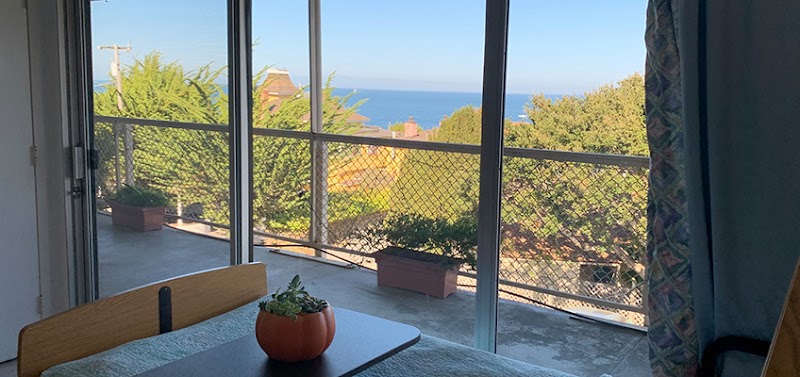
How is Pacific Grove Healthcare Center Staffed?

CMS rates PACIFIC GROVE HEALTHCARE CENTER's staffing level at 4 out of 5 stars, which is above average compared to other nursing homes. Staff turnover is 46%, compared to the California average of 46%.

What Have Inspectors Found at Pacific Grove Healthcare Center?

State health inspectors documented 50 deficiencies at PACIFIC GROVE HEALTHCARE CENTER during 2020 to 2025. These included: 2 that caused actual resident harm, 45 with potential for harm, and 3 minor or isolated issues. Deficiencies causing actual harm indicate documented cases where residents experienced negative health consequences.
Who Owns and Operates Pacific Grove Healthcare Center?

PACIFIC GROVE HEALTHCARE CENTER is owned by a for-profit company. For-profit facilities operate as businesses with obligations to shareholders or private owners. The facility is operated by BVHC, LLC, a chain that manages multiple nursing homes. With 51 certified beds and approximately 44 residents (about 86% occupancy), it is a smaller facility located in PACIFIC GROVE, California.
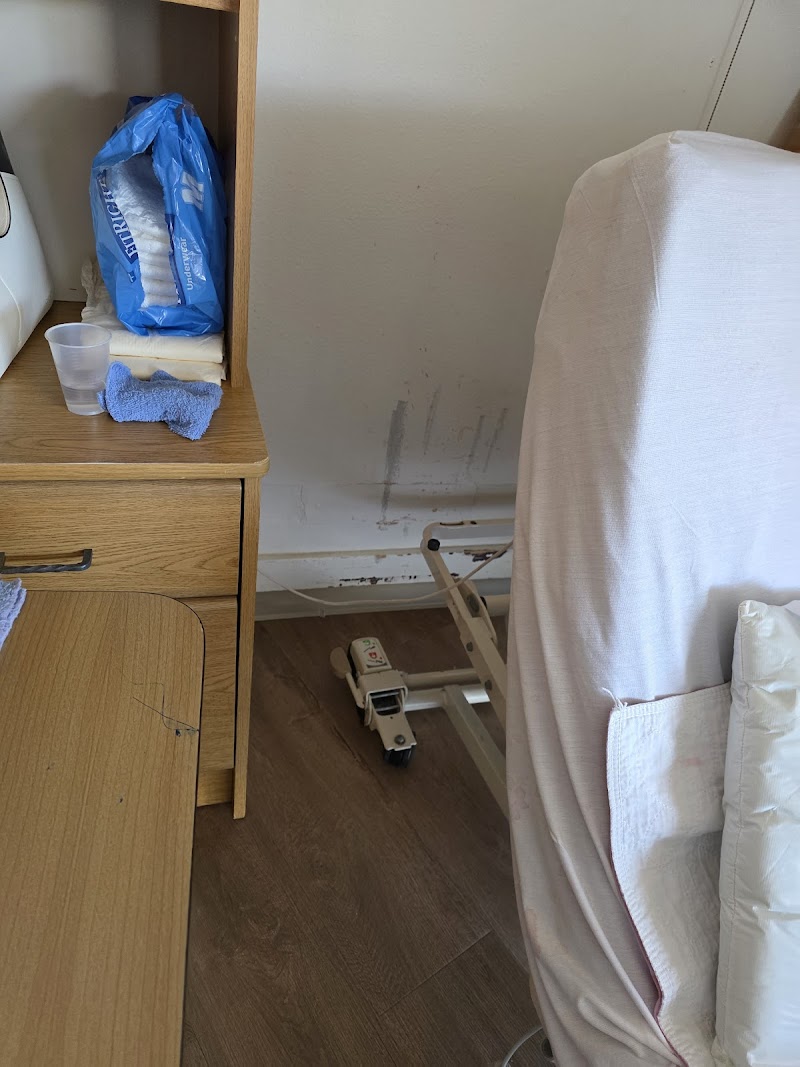
How Does Pacific Grove Healthcare Center Compare to Other California Nursing Homes?

Compared to the 100 nursing homes in California, PACIFIC GROVE HEALTHCARE CENTER's overall rating (4 stars) is above the state average of 3.2, staff turnover (46%) is near the state average of 46%, and health inspection rating (3 stars) is at the national benchmark.

What Should Families Ask When Visiting Pacific Grove Healthcare Center?

Based on this facility's data, families visiting should ask: "Can I visit during a mealtime to observe dining assistance and food quality?" "How do you handle medical emergencies, and what is your hospital transfer rate?" "Can I speak with family members of current residents about their experience?"

Is Pacific Grove Healthcare Center Safe?

Based on CMS inspection data, PACIFIC GROVE HEALTHCARE CENTER has a clean safety record: no substantiated abuse findings (meaning no confirmed cases of resident harm), no Immediate Jeopardy citations (the most serious violation level indicating risk of serious injury or death), and is not on the Special Focus Facility watch list (a federal program monitoring the lowest-performing 1% of nursing homes). The facility has a 4-star overall rating and ranks #1 of 100 nursing homes in California. While no facility is perfect, families should still ask about staff-to-resident ratios and recent inspection results during their visit.

Do Nurses at Pacific Grove Healthcare Center Stick Around?

PACIFIC GROVE HEALTHCARE CENTER has a staff turnover rate of 46%, which is about average for California nursing homes (state average: 46%). Moderate turnover is common in nursing homes, but families should still ask about staff tenure and how the facility maintains care continuity when employees leave.

Was Pacific Grove Healthcare Center Ever Fined?

PACIFIC GROVE HEALTHCARE CENTER has been fined $9,440 across 2 penalty actions. This is below the California average of $33,173. While any fine indicates a compliance issue, fines under $50,000 are relatively common and typically reflect isolated problems that were subsequently corrected. Families should ask what specific issues led to these fines and confirm they've been resolved.

Is Pacific Grove Healthcare Center on Any Federal Watch List?

PACIFIC GROVE HEALTHCARE CENTER is not on any federal watch list. The most significant is the Special Focus Facility (SFF) program, which identifies the bottom 1% of nursing homes nationally based on persistent, serious quality problems. Not being on this list means the facility has avoided the pattern of deficiencies that triggers enhanced federal oversight. This is a positive indicator, though families should still review the facility's inspection history directly.