RED BLUFF HEALTH CARE CENTER

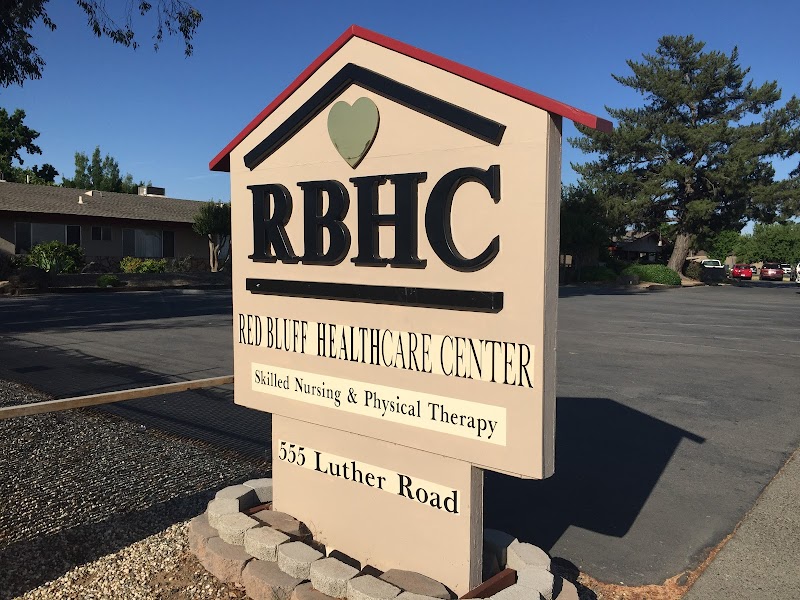
555 LUTHER ROAD, RED BLUFF, CA 96080 (530) 527-6232
For profit - Corporation 58 Beds Independent Data: November 2025
Trust Grade
75/100
#172 of 1155 in CA
Last Inspection: January 2025

Within standard 12-15 month inspection cycle. Federal law requires annual inspections.

Overview

Red Bluff Health Care Center has a Trust Grade of B, which means it is a good choice, indicating that it performs better than average but still has room for improvement. It ranks #172 out of 1,155 nursing homes in California, placing it in the top half of facilities statewide, and #1 of 2 in Tehama County, meaning it is the best option available locally. The facility is showing an improving trend, with the number of reported issues decreasing from nine in 2023 to four in 2025. Staffing is rated average with a score of 3/5 stars and a turnover rate of 48%, which is typical for the state. However, it has concerning fines totaling $54,692, which are higher than 90% of California facilities, indicating compliance issues. While the facility has good overall and health inspection ratings of 5/5 stars, it falls short in RN coverage, being below 86% of state facilities. Specific incidents noted by inspectors include dirty conditions in resident rooms, such as unclean sliding door tracks and stained curtains, as well as failures to properly assess residents for bed rail use and to secure advance directives for several residents. These findings suggest that while there are strengths in care quality, attention to cleanliness and compliance with safety policies needs improvement.

Trust Score
B
75/100
In California
#172/1155
Top 14%
Safety Record
Moderate
Needs review
Inspections
Getting Better
9 → 4 violations
Staff Stability
⚠ Watch
48% turnover. Above average. Higher turnover means staff may not know residents' routines.
Penalties
✓ Good
$54,692 in fines. Lower than most California facilities. Relatively clean record.
Skilled Nurses
⚠ Watch
Each resident gets only 15 minutes of Registered Nurse (RN) attention daily — below average for California. Fewer RN minutes means fewer trained eyes watching for problems.
Violations
⚠ Watch
18 deficiencies on record. Higher than average. Multiple issues found across inspections.
★★★★★
5.0
Overall Rating
★★★☆☆
3.0
Staff Levels
★★★★☆
4.0
Care Quality
★★★★★
5.0
Inspection Score
Stable
2023: 9 issues
2025: 4 issues

The Good

  • 4-Star Quality Measures · Strong clinical quality outcomes
  • Full Sprinkler Coverage · Fire safety systems throughout facility
  • No fines on record

Facility shows strength in quality measures, fire safety.

The Bad

Staff Turnover: 48%

Near California avg (46%)

Higher turnover may affect care consistency

Federal Fines: $54,692

Above median ($33,413)

Moderate penalties - review what triggered them

The Ugly 18 deficiencies on record

Jan 2025 4 deficiencies
CONCERN (D)

Potential for Harm - no one hurt, but risky conditions existed

Deficiency F0658 (Tag F0658)

Could have caused harm · This affected 1 resident

**NOTE- TERMS IN BRACKETS HAVE BEEN EDITED TO PROTECT CONFIDENTIALITY** Based on observation, interview and record review, the facility failed to ensure that Resident 19 was administered an inhaler wi...

Read full inspector narrative →
**NOTE- TERMS IN BRACKETS HAVE BEEN EDITED TO PROTECT CONFIDENTIALITY** Based on observation, interview and record review, the facility failed to ensure that Resident 19 was administered an inhaler without following manufacturer's instructions to meet Professional Standards of Care. This failure resulted in and had the potential for the medication to be ineffective for all residents that were ordered an inhaler routinely or as needed (prn). Findings: During a review of a policy revised 10/2021, titled, Administering Medications through a Metered Dose Inhaler, indicated the purpose of this procedure is to provide guidelines for the safe administration of inhaled medications. This policy indicated to explain the procedure to the resident. Administer the medication as follows: Shake the inhaler gently to mix the medication ., remove the cap from the mouthpiece, ask the resident to inhale and exhale deeply for a few breath cycles, on the last cycle, instruct the resident to exhale deeply. Instruct the resident to close his or her lips to form a seal .depress the medication .instruct the resident to inhale deeply and hold for several seconds. Rinse the mouthpiece with warm water. During a review of a record not dated, titled, Albuterol Inhaler Instructions For Use, indicated the following: Shake the inhaler hard 10 to 15 times before each use. Breathe out all the way. Try to push out as much air as you can. Breathe in slowly, Hold the inhaler with the mouthpiece down. Place your lips around the mouthpiece so that you form a tight seal. As you start to slowly breathe in through your mouth, press down on the inhaler one time. Keep breathing in slowly, as deeply as you can. Hold your breath, Take the inhaler out of your mouth. If you can, hold your breath as you slowly count to 10. This lets the medicine reach deep into your lungs. Pucker your lips and breathe out slowly through your mouth. If you are using inhaled, (beta-agonists), wait 1 to 2 minutes before you take your next puff. You do not need to wait between puffs for other medicines. Put the cap back on the mouthpiece and make sure it is firmly closed. After using your inhaler, rinse your mouth with water, gargle, and spit. Do not swallow the water. This helps reduce side effects from your medicine. A review of Resident 19's clinical record indicated Resident 19 was admitted to the facility on [DATE] with diagnoses that included Chronic Obstructive Pulmonary Disease (COPD, a progressive lung disease), muscle weakness, hypercalcemia (high calcium levels in the blood), heart disease and depressive episodes (constant feelings of sadness, loss of interest in doing activities). This record also indicated Resident 19 is his own responsible party (able to make medical decisions). During a review of Resident 19's medical record a document dated 1/9/25, titled, Active Orders, indicated Albuterol Sulfate 90 micrograms (Mcg, a unit of measurement) one puff every 4 hours inhalation as needed for wheezing. During an observation on 1/9/25 at 7:20 am, Licensed Nurse (LN) 2 handed the inhaler medication albuterol 90 mcg to Resident 19 as ordered, and did not provide any instructions for Resident 19 for breathing techniques for effectiveness and per manufacturer's guidelines as follows: Before you breathe in your dose from the inhaler, breathe out (exhale) as long as you can, inhale one puff of the albuterol inhaler, remove the inhaler from your mouth and hold your breath for about 10 seconds, or for as long as comfortable for you. Breathe out slowly as long as you can. During an interview on 1/9/25 at 9:05 am, the Director of Nursing (DON) confirmed the medication for Resident 19's inhaler was not administered correctly by LN 2 by not giving specific breathing instructions. DON stated, Resident 19 has COPD, and he might need a spacer, but I will do an inservice to all nurses to correctly administer all inhalers for effectiveness.
CONCERN (D)

Potential for Harm - no one hurt, but risky conditions existed

Respiratory Care (Tag F0695)

Could have caused harm · This affected 1 resident

**NOTE- TERMS IN BRACKETS HAVE BEEN EDITED TO PROTECT CONFIDENTIALITY** Based on observation, interview, and record review, the facility failed to ensure oxygen equipment was monitored, changed, and d...

Read full inspector narrative →
**NOTE- TERMS IN BRACKETS HAVE BEEN EDITED TO PROTECT CONFIDENTIALITY** Based on observation, interview, and record review, the facility failed to ensure oxygen equipment was monitored, changed, and dated as ordered for two out of five sampled residents (Resident 1 and Resident 34) when: 1. The oxygen tubing for Resident 1 was dated 12/25/24 during an observation on 1/7/25. 2. The oxygen bottle for Resident 34 was empty, not full of bubbling water and dated 12/1/24, and the oxygen tubing for Resident 34 was dated 12/25/24. This failure had the potential to cause discomfort, and the spread of infection to the residents, staff, and visitors. Findings: 1. A review of the facility's policy revised 10/2010, titled, Oxygen Storage and Use, indicated the purpose of this policy is to provide safe storage and use of oxygen equipment. A review of Resident 1's medical record indicated Resident 1 was admitted to the facility on [DATE] with diagnoses that included surgical aftercare of the digestive system, a colostomy (an opening for bowel elimination), diabetes, Chronic Pulmonary Obstructive Disease (COPD, a progressive lung disease), and heart disease. A review of the most recent Minimum Data Set, (MDS, a resident assessment tool) for Resident 1 dated 10/4/24, indicated that Resident 1 had a moderate cognitive deficit, with a brief interview for mental status (BIMS) score of 8 out of 15, and needed moderate assistance from staff with all activities of daily living (ADLs, basic needs as personal hygiene, dressing, toileting, transferring, walking, and eating). A review of Resident 1's medical record indicated a document dated 1/2025, titled, Active Orders, indicated Resident 1 was ordered Oxygen 2 liters (l) via nasal canula (n/c) to maintain oxygen levels above 90%. A review of Resident 1's medical record indicated a document dated 1/2025, titled, Active Orders, indicated Resident 34 was ordered change oxygen tubing every seven days and date and label all components every week on Tuesday. During an observation on 1/7/25 at 11:14 am, the oxygen tubing being used by Resident 1 was dated 12/25/24, seven days late being changed per the facility policy and orders. During an interview on 1/7/25 at 3:15 pm, the Director of Nursing (DON) confirmed the oxygen tubing needed to be changed for Resident 1, dated 12/25/24 every seven days and as needed. 2. A review of the facility's policy revised 10/2010, titled, Oxygen Administration, indicated the purpose of this procedure is to provide guidelines for safe oxygen administration. The following equipment and supplies will be necessary when performing the procedure humidifier bottle. Check the mask, tank, humidifying jar to be sure they are in good working order and securely fastened. Be sure there is water in the humidifying jar and the water level is high enough that the water bubbles as oxygen flows through Periodically re-check water level in the humidifying jar. Report other information in accordance with facility policy and professional standards of practice. A review of Resident 34's medical record indicated Resident 34 was admitted to the facility on [DATE] with diagnoses that included palliative care (specialized medical care for serious illness), acute respiratory failure (a condition when the lungs cannot get enough oxygen in the blood), heart disease, dependence on oxygen therapy, and dysphagia (difficulty swallowing). A review of the most recent MDS, for Resident 34 dated 9/15/24, indicated that Resident 34 had a moderate cognitive deficit, with a BIMS score of 10 out of 15, and needed maximum assistance from staff with all activities of daily living (ADLs, basic needs as personal hygiene, dressing, toileting, transferring, walking, and eating). A review of Resident 34's medical record indicated a document dated 1/2025, titled, Active Orders, indicated Resident 34 was ordered Oxygen 2 l via n/c to maintain oxygen levels above 90%. A review of Resident 34's medical record indicated a document dated 1/2025, titled, Active Orders, indicated Resident 34 was ordered change oxygen tubing every seven days and date and label all components every week on Tuesday. During an observation on 1/7/25 at 11:55 am, the oxygen water humidifier bottle was empty, there was no water present, and the date on the water bottle was 12/1/24. The oxygen tubing being used by Resident 34 was dated 12/25/24. During an interview on 1/7/25 at 2:54 pm, Licensed Nurse (LN) 4 stated, Our oxygen policy is change every Sunday on noch shift, but we should double check to make sure it is done for all residents using oxygen. The oxygen tubing and bags on the bedside and on wheelchairs and the water bottles should be changed every week. LN 4 confirmed not changing oxygen equipment per policy could cause an infection for residents that require oxygen administration. During an interview on 1/7/25 at 3:17 pm, the DON confirmed the oxygen water bottle humidifier for 34 should have never run low on water and needed to be changed. The DON also confirmed the oxygen tubing Resident 34 was using needed to be changed and any equipment not changed as ordered and per policy could cause a respiratory infection including pneumonia. DON stated, I will re-educate all the nurses because it is on the Treatment Administration Records to document, and the oxygen equipment should be changed per the orders.
CONCERN (D)

Potential for Harm - no one hurt, but risky conditions existed

Medication Errors (Tag F0758)

Could have caused harm · This affected 1 resident

**NOTE- TERMS IN BRACKETS HAVE BEEN EDITED TO PROTECT CONFIDENTIALITY** Based on interview and record review, the facility failed to document behaviors for an antipsychotic (medication used for moods ...

Read full inspector narrative →
**NOTE- TERMS IN BRACKETS HAVE BEEN EDITED TO PROTECT CONFIDENTIALITY** Based on interview and record review, the facility failed to document behaviors for an antipsychotic (medication used for moods and behaviors to treat mental illness) medication used for one of three sampled residents (Resident 31). This failure had the potential to not identify an increase in behaviors, identify new interventions needed, and a change in condition that should be reported to the physician for medication management. Findings: A review of the facility's policy revised 12/2016, titled, Antipsychotic Medication Use, indicated residents will only receive antipsychotic medications when necessary to treat specific conditions for which they are indicated and effective. The staff will observe, document, and report to the attending physician information regarding the effectiveness of any interventions, including antipsychotic medications. A review of the facility's policy revised 12/2016, titled, Behavioral Assessment, Interventions, and Monitoring, indicated behavioral symptoms will be identified using the facility approved behavioral screening tools and the comprehensive assessment. The facility will comply with regulatory requirements related to the use of medications to manage behavioral changes. This facility policy also indicated 10, .when medications are prescribed for behavioral symptoms, documentation will include and specific target behaviors and expected outcomes, and monitoring for efficacy and adverse consequences. A review of Resident 31's medical record indicated Resident 31 was admitted to the facility on [DATE] with diagnoses that included diabetes (too much sugar in the blood), high blood pressure, epilepsy (seizures), Parkinson's disease (a progressive brain disorder that causes involuntary movements such as shakiness and tremors) and Bi-Polar disorder (a mental health condition that causes extreme mood swings). A review of the most recent Minimum Data Set, (MDS, a resident assessment tool) for Resident 31 dated 11/20/24, indicated that Resident 31 had a very mild cognitive deficit, with a brief interview for mental status (BIMS) score of 13 out of 15, and needed moderate assistance from staff with all activities of daily living (ADLs, basic needs as personal hygiene, dressing, toileting, transferring, walking, and eating). A review of Resident 31's medical record indicated a document dated 1/2025, titled, Active Orders, indicated Resident 31 was ordered Seroquel (an antipsychotic medication used for moods and behaviors) 25 milligrams (mg, a unit of measure) give one tablet by mouth at bedtime. A review of Resident 31's medical record indicated documents dated 10/1/24 through 1/7/25, titled, Medication Administration Record (MAR), indicated only one behavior was documented on 11/16/24 for monitoring of manic (sudden and severe changes in mood, such as going from being joyful to being angry and hostile. Restlessness. Rapid speech and racing thoughts) episodes. During an interview on 1/9/25 at 9:20 am, the Director of Nursing (DON) confirmed the behaviors by Resident 31 were not documented appropriately on the MARs and she would complete an inservice for all the nursing staff to track specific behaviors and report as indicated. DON stated, They have an area to document behaviors on the MAR, but they are not tracking them. The progress notes for Resident 31 indicate behaviors and the medication is needed for moods.
CONCERN (E)

Potential for Harm - no one hurt, but risky conditions existed

Safe Environment (Tag F0584)

Could have caused harm · This affected multiple residents

**NOTE- TERMS IN BRACKETS HAVE BEEN EDITED TO PROTECT CONFIDENTIALITY** 8. During an observation on 1/7/25 at 10:48 am, in resident room [ROOM NUMBER], the track to the sliding glass door opening to t...

Read full inspector narrative →
**NOTE- TERMS IN BRACKETS HAVE BEEN EDITED TO PROTECT CONFIDENTIALITY** 8. During an observation on 1/7/25 at 10:48 am, in resident room [ROOM NUMBER], the track to the sliding glass door opening to the patio, appeared to be unclean and have an accumulation of dark brown dirt and debris. During a concurrent observation and interview on 1/7/25 at 11:00 am, with Resident 153 and Family Member (FM) in Resident 153's room [ROOM NUMBER], the sliding glass door track appeared to be unclean with an accumulation of dark brown dirt and debris. Resident 153 and FM stated, we have been here for 3 weeks and the glass door track has been dirty the entire time. During a concurrent observation and interview on 1/7/25 at 11:00 am, with Resident 153 and Family Member (FM) in Resident 153's room [ROOM NUMBER]. The off-white curtain to the sliding glass door was observed with a reddish-brown stain that appeared to have been blotted or cleaned but the stain remained. Resident 153 and FM stated, we have been here for 3 weeks and the stain on the curtain has been here the whole time. It is very noticeable; we have commented to staff, but it is very evident and anyone can see it. I think it is blood on the curtain. It looks like they tried to clean it with something which lightened it and turned it more brownish, but it is very unclean. During a concurrent observation and interview on 1/7/25 at 12:23 pm, with CNA C in room [ROOM NUMBER], the soiled curtain and sliding glass door track were observed. CNA C stated, I am not sure what is on the curtain, it looks brownish. It is dirty. The door track is definitely dirty, I don't know if anyone cleans it. All of them look like that. Based on observation and interview, the facility failed to provide a clean, safe, comfortable, and homelike environment for seven of 18 sampled residents (Residents 12, 18, 19, 31, 34, 42, and Resident 153) when: 1. Four of Four stand up mechanical lifts were unclean. 2. Patio doors to multiple resident rooms were unkept and unclean with cumulative dust and dark and brown debris. 3. Cumulative food and debris was on the floor and under the wooden side table in room [ROOM NUMBER] A. 4. A side table was unkept, faded, with visible chips in the wood in room [ROOM NUMBER] A. 5. Tile was missing on the floor in room [ROOM NUMBER] A. 6. A foot board was unkept, damaged, and had visible chips in the wood in room [ROOM NUMBER] A. 7. Resident privacy curtains had visible red and brown colored stains. 8. The curtains and tracks of the sliding glass doors in the resident rooms were unclean. This failure had the potential to negatively affect client's health, safety, and comfort and the potential to spread other bacteria in the facility to other residents, staff, visitors, and the community. Findings: 1. A review of the facility's policy revised 8/2010, titled, Cleaning and Disinfection of Resident-Care Items and Equipment, indicated resident-care equipment, including reusable items and durable medical equipment (DME) will be cleaned and disinfected according to current Centers for Disease Control and Prevention (CDC) recommendations for disinfection and the Occupational Safety and Health Administration (OSHA) Bloodborne Pathogens Standard. DME must be cleaned and disinfected before reused by another resident. Reusable resident care equipment will be decontaminated and/or sterilized between each residents according to manufacturer's instructions. During an observation on 1/7/25 at 10:11 am on the south hall, four of four stand up lifts were unclean with visible dried food particles, cumulative dust, and brown and black colored debris. During an interview on 1/7/25 at 10:12 am, Certified Nursing Assistant (CNA) A confirmed four stand up lifts used to transfer residents were unclean, with cumulative food, dust and debris and these lifts were shared by residents who need this lift for safety for transfers in and out of bed. During an interview on 1/7/25 at 10:45 am, the Director of Nursing (DON) confirmed the mechanical stand up lifts need to be cleaned and sanitized after each use for each resident and two times daily. DON confirmed not cleaning equipment could lead to the spread of infection to other residents and everyone in the facility. 2. A review of the facility's policy revised 8/2010, titled, Cleaning and Disinfection of Environmental Surfaces, indicated environmental surfaces will be cleaned and disinfected according to current CDC recommendations for disinfection of health care facilities and the OSHA Bloodborne Pathogens Standard. This policy indicated Housekeeping surfaces to include floors, tabletops, will be cleaned on a regular basis, when spills occur, and when these surfaces are visibly soiled. Environmental surfaces will be disinfected or cleaned on a regular basis such as daily or three times weekly, and when surfaces are visibly soiled. Walls, blinds, and window curtains in resident areas will be cleaned when these surfaces are visibly contaminated or soiled. During an observation on 1/7/25 from 10:15 am to 10:23 am, the patio sliding door windows, tracks, and corners of rooms for residents in Rooms 14, 15, 16, 17, 18, and room [ROOM NUMBER] were unkept and unclean with cumulative dust and dark brown debris. The sliding glass was not clean with visible dust and grime build up. During a follow up interview on 1/8/25 at 12:20 pm, the admin and House Keeping Supervisor (HS) confirmed all of the resident's environment including rooms, floors, sliding glass doors and the tracks of the sliding doors need a deep cleaning. HS stated, The policy does not include deep cleaning, but I will make sure all rooms are deep cleaned on a schedule and as needed moving forward. 3. During an observation on 1/7/25 at 10:37 am, there was cumulative food and debris on the floor and under the wooden side table in room [ROOM NUMBER] A. During an interview on 1/7/25 at 11:05 am, the Administrator (admin) confirmed there was a build up of food and debris in room [ROOM NUMBER] A. Admin stated, [Resident 42] needs assistance with feeding, and she drops cookie crumbs in her room. 4. During an observation on 1/7/25 at 10:42 am, the wooden side table (nightstand) beside the bed was unkept, faded, with visible chips in the wood in room [ROOM NUMBER] A. During an interview on 1/7/25 at 11:00 am, the admin confirmed the nightstand for Resident 42 needed to be repaired to be cleaned properly and was unkept. The admin stated, I have already ordered many new nightstands for multiple residents, and they should be here in a week or so, it has already been approved. 5. During an observation on 1/7/25 at 10:49 am, the floor under the bed in room [ROOM NUMBER] A was missing two tiles underneath the bed of Resident 18. During an interview on 1/7/25 at 11:00 am, the admin confirmed the floor tiles needed to be replaced in room [ROOM NUMBER] A to be cleaned properly for Resident 18. 6. During an observation on 1/7/25 at 10:52 am, the foot board of the bed for Resident 12 was unkept, damaged, and had visible chips in the wood in room [ROOM NUMBER] A. During an interview on 1/7/25 at 11:00 am, the admin confirmed the foot board for Resident 12 was unkept, damaged, and needed repair. During a follow up interview on 1/8/25 at 12:20 pm, the admin and House Keeping Supervisor (HS) confirmed all of the resident's environment including rooms, floors, sliding glass doors and the tracks of the sliding doors need a deep cleaning. HS stated, The policy does not include deep cleaning, but I will make sure all rooms are deep cleaned on a schedule and as needed moving forward. 7. During a follow up interview on 1/8/25 at 12:30 pm, the admin and HS confirmed resident privacy curtains needed to be replaced if washing the curtains are not removing visible stains. HS stated, We wash the privacy curtains, and it takes about 30 minutes to air dry, but we need more curtains if they are replaced, some of the stains will not come out during washing them.
Oct 2023 9 deficiencies
CONCERN (D)

Potential for Harm - no one hurt, but risky conditions existed

Deficiency F0655 (Tag F0655)

Could have caused harm · This affected 1 resident

Based on interviews, record review, and facility policy review, the facility failed to develop a baseline care plan that included the minimum healthcare information to properly care for 1 (Resident #1...

Read full inspector narrative →
Based on interviews, record review, and facility policy review, the facility failed to develop a baseline care plan that included the minimum healthcare information to properly care for 1 (Resident #195) of 3 residents reviewed for baseline care plans. Findings included: Review of a facility policy titled, Care Plans-Preliminary, revised 08/2006, revealed, A preliminary plan of care to meet the resident's immediate needs shall be developed for each resident within twenty-four (24) hours of admission. 1. To assure that the resident's immediate care needs are met and maintained, a preliminary care plan will be developed within 24 hours of the resident's admission. 2. The Interdisciplinary Team will review the Attending Physician's order (e.g. [for example], dietary needs, medications, and routine treatments, etc. [et cetera]), and implement a nursing care plan to meet the resident's immediate care needs. Review of an admission Record revealed the facility admitted Resident #195 on 09/12/2023 with diagnoses that included atrial fibrillation (an irregular heart rhythm), hypertension (high blood pressure), and other nonspecific abnormal finding of lung field, metabolic encephalopathy (a brain disturbance caused by problems with the body's metabolism), gastroesophageal reflux disease (occurs when stomach acid frequently flows back into the esophagus), and edema (swelling). Review of the admission Minimum Data Set (MDS), with an Assessment Reference Date (ARD) of 09/25/2023, and signed as completed on 10/05/2023, revealed Resident #195 had a Brief Interview for Mental Status (BIMS) score of 15, which indicated the resident was cognitively intact. The MDS indicated the resident required limited assistance with bed mobility, transfer, toilet use, and personal hygiene. Review of Resident #195's physician's Order Summary Report for the month of October 2023 revealed the following orders: - 09/12/2023: ipratropium-albuterol solution (a bronchodilator nebulizing treatment that opens the airways), inhale 3 milliliters (ml) of the solution every twelve hours as needed. - 09/12/2023: Asmanex inhalation aerosol powder (a corticosteroid that helps reduce inflammation) 220 mcg, inhale 2 puffs orally every 12 hours as needed. - 09/12/2023: sucralfate oral tablet (a medication to treat and prevent ulcers), one tablet by mouth before meals and at bedtime. - 09/13/2023: digoxin (a medication to treat heart failure or heart rhythm problems) 125 micrograms (mcg), one oral tablet by mouth one time a day. Review of Resident #195's undated baseline care plan revealed no focus areas nor interventions to direct staff how to treat the resident related to the use of bronchodilator medication, heart failure medications, corticosteroid medication, nor medication to treat and prevent ulcers. During an interview on 10/11/2023 at 8:58 AM, the MDS Nurse/Patient Care Coordinator stated she and the residents' admitting nurses were responsible for the baseline care planning process. She stated the baseline care plan should indicate what medications the resident was receiving, the kind of assistance needed, diagnoses, safety information, dietary and cultural information, and all minimum information to care for the resident. She stated Resident #195's baseline care plan was not completed with all the required components due to lack of oversight and missed information. She stated she expected the baseline care plan to contain the minimum healthcare information necessary to properly care for the resident. During an interview on 10/11/2023 at 2:54 PM, Registered Nurse (RN) #1 stated she completed a portion of Resident #195's baseline care plan but was not aware what information must be contained in the baseline care plan. During an interview on 10/11/2023 at 4:34 PM, the Director of Nursing (DON) stated the baseline care plan should include the minimum information to properly care for the resident. She stated the admitting nurse and MDS Coordinator were responsible for completing the baseline care plan, and she expected it to contain the minimum care and services to properly meet the resident's needs. During an interview on 10/12/2023 at 9:52 AM, the Administrator stated he had no knowledge about care planning and relied on the DON to ensure baseline care plans were developed as they should be.
CONCERN (D)

Potential for Harm - no one hurt, but risky conditions existed

Comprehensive Care Plan (Tag F0656)

Could have caused harm · This affected 1 resident

Based on observations, record review, interviews, and facility policy review, the facility failed to ensure the care and services related to oxygen use were addressed on the comprehensive care plan fo...

Read full inspector narrative →
Based on observations, record review, interviews, and facility policy review, the facility failed to ensure the care and services related to oxygen use were addressed on the comprehensive care plan for 1 (Resident #253) of 3 residents reviewed for respiratory care. Findings included: A review of a facility policy titled, Care Planning-Interdisciplinary Team, revised in 02/2014, specified, Our facility's Care Planning/Interdisciplinary Team is responsible for the development of an individualized comprehensive care plan for each resident. 1. A comprehensive care plan for each resident is developed within seven (7) days of completion of the resident assessment (MDS). A review of an admission Record indicated the facility re-admitted Resident #253 on 10/03/2023 with diagnoses that included a history of pulmonary embolism and dependence on supplemental oxygen. A review of a 5-day Minimum Data Set (MDS) with an Assessment Reference Date (ARD) of 10/06/2023 revealed Resident #253 had a Brief Interview for Mental Status (BIMS) score of 11, which indicated the resident had moderate cognitive impairment. The MDS indicated the resident did not receive oxygen therapy while a resident. A review of a hospital Interfacility Transfer Report, dated 10/03/2023, revealed Resident #253 had an order to continue oxygen at 3 liters per minute (LPM). Review of Resident #253's care plan for the admission date of 10/03/2023, revealed no documented evidence the facility developed a care plan for oxygen usage. An observation of Resident #253 on 10/09/2023 at 11:20 AM, revealed the resident receiving oxygen at 3 LPM. During an interview on 10/09/2023 at 1:10 PM, with Resident #253's family member revealed Resident #253 had been on oxygen since being re-admitted to the facility. An observation of Resident #253 on 10/10/2023 at 1:13 PM revealed the resident in their room, receiving oxygen at 3 LPM. An observation on 10/11/2023 at 2:33 PM revealed Resident #253 lying on their bed, receiving oxygen at 3 LPM. Resident #253 stated they had used oxygen since being admitted to the facility. During an interview on 10/11/2023 at 1:42 PM, Certified Nursing Assistant (CNA) #12 stated Resident #253 had always used oxygen, but the CNA did not know whether oxygen use was on the resident's care plan. She said she reviewed the care plans to determine how to take care of the residents. During an interview on 10/11/2023 at 1:50 PM, CNA #13 was aware Resident #253 wore oxygen. She also stated she reviewed care plans to determine how to take care of the residents. During an interview on 10/11/2023 at 2:03 PM, Licensed Vocational Nurse (LVN) #6 stated she readmitted Resident #253 from the hospital but did not process any of the physician orders. LVN #6 confirmed oxygen use was not addressed on the resident's care plan. During an interview on 10/11/2023 at 2:04 PM, Registered Nurse (RN) #1 stated she forgot to add oxygen usage to Resident #253's care plan. During an interview on 10/10/2023 at 8:54 AM, the MDS Nurse/Patient Care Coordinator revealed she expected nurses to make sure oxygen use was addressed on residents' care plans. During an interview on 10/11/2023 at 2:22 PM, the Director of Nursing (DON) stated they failed to update the care plan with Resident #253's oxygen therapy. She said she expected staff to follow through and update care plans. During an interview on 10/12/2023 at 11:16 AM with the Administrator, he said he expected staff to make sure physician orders were placed on the care plans.
CONCERN (D)

Potential for Harm - no one hurt, but risky conditions existed

Quality of Care (Tag F0684)

Could have caused harm · This affected 1 resident

Based on record review, interviews, and facility policy review, the facility failed to provide wound treatments as ordered by the physician for 1 (Resident # 26) of 3 sampled residents reviewed for wo...

Read full inspector narrative →
Based on record review, interviews, and facility policy review, the facility failed to provide wound treatments as ordered by the physician for 1 (Resident # 26) of 3 sampled residents reviewed for wound treatment. Findings included: A review of a facility policy titled, Medication and Treatment Orders, revised 02/2014, revealed, Orders for medications and treatments will be consistent with principles of safe and effective order writing. A review of an admission Record revealed the facility admitted Resident #26 on 06/24/2022 with diagnoses that included squamous cell carcinoma of skin, generalized muscle weakness, and vitamin deficiency. A review of Resident #26's quarterly Minimum Data Set (MDS), with an Assessment Reference Date (ARD) of 05/27/2023, revealed Resident #26 had a Brief Interview for Mental Status (BIMS) score of 13, which indicated the resident was cognitively intact. The MDS indicated the resident required applications of ointments and medications to the skin. Review of Resident #26's care plan, dated as initiated 05/02/2023 and revised 05/25/2023, revealed the resident had actual impairment to skin integrity related to a squamous cell carcinoma site to the resident's back. According to the care plan, the wound physician took a biopsy of the site and was awaiting results as of 05/02/2023. Interventions directed staff to follow facility protocols for treatment of injury and treat per physician's orders. A review of Resident #26's Progress Notes, dated 06/28/2023 at 2:07 PM, revealed a lesion to the resident's back re-opened and new orders for wound care were entered. A review of a physician's order dated 06/28/2023 revealed directions for staff to provide wound care to the skin lesion on Resident #26's back. The order indicated the area was to be washed with mild soap and water, then triple antibiotic ointment and a large conventional dressing were to be applied daily on evening shift. A review of Resident #26's June, July, and August 2023 Treatment Administration Records (TARs) revealed no documented evidence the facility provided the physician-ordered treatments to the resident's back from 06/28/2023 through 08/22/2023, when the treatment order was changed. Review of a Progress Note, dated 08/23/2023, revealed a new order was received to apply gentamicin sulfate external ointment to back sores topically every day shift for 30 days. During an interview on 10/11/2023 at 2:04 PM, Registered Nurse (RN) #1 confirmed she was responsible for adding the treatment order for Resident #26's back to the TAR but had failed to add the treatment. During an interview on 10/11/2023 at 2:17 PM, the Director of Nursing (DON) verified Resident #26 had a new wound treatment order on 06/28/2023 that was not transcribed onto the TAR and the treatments were not provided to the resident. She stated that RN #1 was responsible for transcribing orders to the resident's TAR. During an interview on 10/12/2023 at 11:16 AM, the Administrator stated he expected wound treatments to be provided.
CONCERN (D)

Potential for Harm - no one hurt, but risky conditions existed

Deficiency F0688 (Tag F0688)

Could have caused harm · This affected 1 resident

Based on observations, record review, interviews, and facility policy review, the facility failed to follow up on a recommendation from an orthopedic physician for the use of a left-hand splint for 1 ...

Read full inspector narrative →
Based on observations, record review, interviews, and facility policy review, the facility failed to follow up on a recommendation from an orthopedic physician for the use of a left-hand splint for 1 (Resident #42) of 1 sampled resident reviewed for range of motion and mobility. Findings included: A review of a facility policy titled, Contracture Prevention, dated 09/01/2008, revealed, It is the policy of the facility to implement interventions to prevent the onset of contractures and to provide interventions to prevent worsening of contractures for residents admitted with contractures. The policy also indicated the following: - 2. If the resident has contractures or is at risk for contractures, a therapy screening may be requested for measurement and treatment planning. - 7. Rehabilitation staff shall document all interventions in the medical record and communicate new interventions to the IDT [interdisciplinary team]. - 9. Social service staff shall assist the resident with obtaining assistive devices as needed and in adapting to new/altered lifestyles. A review of an admission Record revealed the facility admitted Resident #42 on 08/30/2023 with diagnoses that included hemiplegia (paralysis on one side of the body) following cerebral infarction (stroke) affecting the left non-dominant side. A review of an admission Minimum Data Set (MDS), with an Assessment Reference Date (ARD) of 09/12/2023, revealed Resident #42 had a Brief Interview for Mental Status (BIMS) score of 12, which indicated the resident had moderate cognitive impairment. The MDS indicated a restorative nursing program, including splint or brace assistance, was not provided during the seven-day look-back period. A review of a comprehensive care plan focus area, dated as initiated on 08/30/2023, revealed Resident #42 had limited physical mobility related to a stroke. A review of Physician's Progress Notes, dated 09/05/2023 and signed by Resident #42's orthopedic physician, revealed, Please have patient wear a L [left] wrist orthosis [a brace or other such device to correct alignment or provide support] to help fingers stay straight. During an observation on 10/09/2023 at 10:00 AM, Resident #42's left hand was flaccid and starting to contract. There was no brace or splint in place on Resident #42 left hand. During an interview on 10/10/2023 at 3:30 PM, the Director of Rehabilitation (DOR) stated she was unsure about a splint or brace for Resident #42's left hand. During an interview on 10/11/2023 at 10:40 AM, the Director of Nursing (DON) stated she was not aware there was a recommendation for Resident #42 to have a hand splint. Observation and interview on 10/11/2023 at 11:03 AM revealed the DOR and a therapy staff member were in Resident #42's room fitting the resident with a splint for their left hand. The DOR stated she was not aware of the recommendation made by the orthopedic physician on 09/05/2023. She stated the resident probably came back from the appointment and the nurse put the paperwork in the chart without noting it or following up on the recommendation. She stated the nurse should have reviewed the recommendation with the facility's physician and, once approved, a copy should have been given to therapy to follow up on. An additional review of Resident #42's care plan revealed the focus area and interventions addressing limited physical mobility had been updated on 10/12/2023 during the survey to reflect the use of a left-hand splint during waking hours.
CONCERN (D)

Potential for Harm - no one hurt, but risky conditions existed

Respiratory Care (Tag F0695)

Could have caused harm · This affected 1 resident

Based on observations, interviews, record review, and facility policy review, the facility failed to ensure respiratory equipment was stored properly for 2 (Resident #9 and Resident #195) of 3 residen...

Read full inspector narrative →
Based on observations, interviews, record review, and facility policy review, the facility failed to ensure respiratory equipment was stored properly for 2 (Resident #9 and Resident #195) of 3 residents reviewed for respiratory care. Findings included: Review of a facility policy titled, Oxygen Storage and Use, dated 10/22/2010, revealed, Purpose: to provide safe storage and use of oxygen. The policy indicated, 10. The oxygen cannula, mask, etc. [et cetera] shall be stored in a plastic bag when not in use. 1. Review of an admission Record revealed the facility admitted Resident #9 on 09/14/2022 with diagnoses that included chronic obstructive pulmonary disease (a group of lung conditions that make breathing difficult), hypertension (high blood pressure), and Alzheimer's disease. Review of a quarterly Minimum Data Set (MDS), with an Assessment Reference Date (ARD) of 06/24/2023, revealed Resident #9 had a Brief Interview for Mental Status (BIMS) score of 10, which indicated the resident had moderate cognitive impairment. The MDS indicated the resident required limited assistance with bed mobility and transfer and received oxygen therapy. Review of a care plan focus area, dated as initiated on 03/29/2023, revealed Resident #9 had a behavior problem of perseverating (continuous involuntary repetition of a thought or behavior) on the e-cylinder (a portable oxygen tank) running out of oxygen. Interventions directed staff to administer medications as ordered (initiated 03/29/2023) and to monitor the oxygen reading level throughout each shift as needed (initiated on 05/18/2023). A review of Resident #9's physician's Order Summary Report for the month of October 2023 revealed an order dated 09/14/2022 for oxygen at 2 liters per minute (LPM) via nasal cannula for shortness of breath and/or to maintain the resident's oxygen saturation greater than or equal to 90% every shift. A review of Resident #9's Medication Administration Record (MAR) for the months of September and October 2023 revealed the resident received oxygen therapy every shift. During an observation on 10/09/2023 at 10:14 AM, Resident #9 was observed lying in bed. There was an e-cylinder attached to the back of the resident's wheelchair. The oxygen tubing and nasal cannula were observed hanging off the left side and touching the back of the wheelchair. There was no storage bag for the respiratory supplies. During an observation on 10/09/2023 at 1:30 PM, Resident #9 was observed lying in bed. The resident had an e-cylinder attached to the back of their wheelchair. The oxygen tubing and nasal cannula were observed hanging off the left side and touching the back of the wheelchair. There was no storage bag for the respiratory supplies. During an interview at this time, Resident #9 stated they received oxygen therapy continuously and used the oxygen from the e-cylinder on their wheelchair when they went out of their room daily. During an interview on 10/11/20233 at 8:28 AM, Registered Nurse (RN) #1 stated all nurses who put on and took off oxygen should make sure there was a storage bag to put the nasal cannula and tubing in when not in use. She stated the nurses should also be checking to see if the items were stored properly in a bag. She stated respiratory equipment should be stored in a bag when not in use to prevent infections. During an interview on 10/11/2023 at 12:44 PM, Licensed Vocational Nurse (LVN) #2 stated the nurses were required to change the nasal cannula and oxygen tubing on Tuesday nights. He stated he was working on Tuesday and noticed there was no storage bag for Resident #9's wheelchair e-cylinder or for their oxygen concentrator, so had placed a storage bag on both. He stated the nasal cannula was hanging on the wheelchair on Tuesday. He stated the nurses were responsible for the proper storage of respiratory equipment daily and he expected respiratory equipment to be stored in a bag when not in use. During an interview on 10/12/2023 at 9:34 AM, Certified Nursing Assistant (CNA) #3 stated there should be a storage bag on the oxygen concentrator and/or e-cylinder to properly contain the nasal cannula and tubing when not in use. She stated that when she observed respiratory equipment without storage bags, she notified the nurse. She stated the nurses were in charge of ensuring the respiratory equipment was stored in a bag when not in use. During an interview on 10/12/2023 at 9:39 AM, LVN #4 stated that when respiratory equipment was not it use, it should be kept in a storage bag. She stated the nurses should be monitoring throughout the day to ensure the respiratory equipment was stored in a bag when not in use. During an interview on 10/11/2023 at 2:50 PM, the Infection Preventionist (IP) stated that respiratory equipment should be stored in a bag when not in use. During an interview on 10/11/2023 at 4:07 PM, the Director of Nursing (DON) stated the nasal cannula should be stored in a storage bag when not in use to prevent the risk of contamination. She stated the nasal cannula should not be stored on the wheelchair. She stated the nurses should be checking the respiratory equipment daily to ensure proper storage. During an interview on 10/12/2023 at 9:49 AM, the Administrator stated he expected oxygen tubing and nasal cannulas to be stored in a bag when not in use. 2. Review of an admission Record revealed the facility admitted Resident #195 on 09/12/2023 with diagnoses that included atrial fibrillation (irregular heart rhythm), hypertension (high blood pressure), other nonspecific abnormal finding of lung field, and metabolic encephalopathy (brain disturbance caused by problems with the body's metabolism). Review of an admission Minimum Data Set (MDS), with an Assessment Reference Date (ARD) of 09/25/2023, revealed Resident #195 had a Brief Interview for Mental Status (BIMS) score of 15, which indicated the resident was cognitively intact. The MDS indicated the resident required limited assistance with bed mobility and transfer and did not receive oxygen therapy while a resident. Review of Resident #195's physician's Order Summary Report for the month of October 2023 revealed an order dated 09/12/2023 for ipratropium-albuterol solution (a bronchodilator nebulizing treatment that opens the airways), to inhale 3 milliliters (ml) every twelve hours as needed for wheezing. Review of Resident #195's Medication Administration Records (MARs) for the months of September and October 2023 revealed the resident had received the as-needed nebulizing treatments on 09/30/2023 and 10/02/2023. During an observation on 10/09/2023 at 10:30 AM and 10/10/2023 at 8:25 AM, Resident #195 was observed in bed with a nebulizer in the room. The nebulizer mask was on the bedside table, not in a storage bag. During an interview on 10/11/2023 at 8:34 AM, Registered Nurse (RN) #1 stated the nebulizer mask should be stored in a bag after the nurse administered the medication. She stated she expected respiratory equipment to be stored properly in a bag when not in use. During an interview on 10/11/2023 at 12:47 PM, Licensed Vocational Nurse (LVN) #2 stated Resident #195 received nebulizing treatments as needed, and the nebulizer mask should be stored in a bag when not in use. During an interview on 10/11/2023 at 4:11 PM, the Director of Nursing (DON) stated a nebulizer mask should be stored in a bag when not in use. She stated she expected the nurses to store the nebulizer mask in a bag after administration of medication and cleaning of the mask. During an interview on 10/12/2023 at 9:52 AM, the Administrator stated nebulizer masks should be stored in a bag when not in use, and it was his expectation that they be stored properly.
CONCERN (D)

Potential for Harm - no one hurt, but risky conditions existed

Laboratory Services (Tag F0770)

Could have caused harm · This affected 1 resident

Based on record review, interviews, and facility document review, the facility failed to ensure laboratory testing was provided as ordered for 1 (Resident #42) of 5 sampled residents reviewed for unne...

Read full inspector narrative →
Based on record review, interviews, and facility document review, the facility failed to ensure laboratory testing was provided as ordered for 1 (Resident #42) of 5 sampled residents reviewed for unnecessary medications. Findings included: A review of an undated facility document titled, Two Easy Steps to Schedule Labwork, revealed, Step 1: Fill out a Laboratory Requisition. Fill out the lab requisition by completing the box in the top right-hand corner and marking the tests to be done. Step 2: Place the Requisition in the Lab Book. The Lab Book has tabs for days 1-31 and the months of the year. For a routine blood draw: place the order under the tab for tomorrow's date. If the draw is to be done in a future month, place the requisition under the tab that corresponds with the month that the blood draw should be done. The Frequently Asked Questions section of the document indicated, How do I track what was done? The test log in the front of the Lab Book shows exactly what was drawn, and the initials of the person who did the draw. You can check to make sure testing was done by looking at this log. A review of an admission Record revealed the facility admitted Resident #42 on 08/30/2023 with diagnoses that included hemiplegia (paralysis on one side of the body) following a cerebral infarction (stroke) affecting the left non-dominant side and convulsions (seizures). A review of an admission Minimum Data Set (MDS), with an Assessment Reference Date (ARD) of 09/12/2023, revealed Resident #42 had a Brief Interview for Mental Status (BIMS) score of 12, which indicated the resident had moderate cognitive impairment. The MDS indicated the resident a diagnosis of seizure disorder or epilepsy. A review of Resident #42's comprehensive care plan revealed a focus area, dated as initiated 08/30/2023, that indicated the resident had a seizure disorder related to the disease process of epilepsy. An intervention dated 08/30/2023 directed staff to monitor lab work and report any subtherapeutic or toxic results to the physician. A review of a physician's order with a start date of 08/30/2023 revealed the resident was to receive Keppra (an antiseizure medication) 750 milligram tablet, one tablet by mouth every 12 hours for seizures. An order with a start date of 09/01/2023 indicated a Keppra level was to be drawn every six months. During an interview on 10/10/2023 at 3:53 PM, the Director of Nursing (DON) confirmed Resident #42's Keppra level had not been drawn on the order start date of 09/01/2023 or at any time prior to 10/10/2023, during the survey. During an interview on 10/11/2023 at 3:09 PM, Registered Nurse (RN) #1 stated she collected Resident #42's Keppra level sample on 10/10/2023, and she did not know why the Keppra level had not been done previously. During an interview on 10/12/2023 at 10:15 AM, the DON stated that when lab work was ordered, it was placed in the Lab Book, and then laboratory staff came in between 3:00 AM and 4:00 AM to collect the sample and notated the collection of the sample in the Lab Book. During an interview on 10/12/2023 at 11:10 AM, Licensed Vocational Nurse (LVN) #7 stated that when she received an order for lab work to be done, she placed a resident sticker on the calendar that was kept in the Lab Book and wrote the lab that was due on the sticker. After reviewing the calendar and Lab Book on 10/12/2023 at 11:10 AM, the DON and LVN #7 confirmed the Lab Book did not reflect Resident #42's ordered Keppra level was done. They indicated the resident had other lab work collected on 08/31/2023, but the Keppra level was not one of them. During an interview on 10/12/2023 at 11:31 AM, the Administrator stated lab work needed to be done if it was ordered.
CONCERN (E)

Potential for Harm - no one hurt, but risky conditions existed

Deficiency F0578 (Tag F0578)

Could have caused harm · This affected multiple residents

Based on interview, record review and facility policy review, it was determined that the facility failed to ensure an advance directive was on file for 2 (Resident #26 and Resident #28) of 4 residents...

Read full inspector narrative →
Based on interview, record review and facility policy review, it was determined that the facility failed to ensure an advance directive was on file for 2 (Resident #26 and Resident #28) of 4 residents reviewed for advance directives. Findings included: A review of a facility policy titled, Advance Directives, revised April 2013, revealed, 3. Prior to or upon admission of a resident, the Social Services Director or designee will inquire of the resident, and/or his/her family members, about the existence of any written advance directives. 4. Information about whether or not the resident has executed an advance directive shall be displayed prominently in the medical record. 5. If the resident indicates that he or she has not established advance directives, the facility staff will offer assistance in establishing advance directives. The resident will be given the option to accept or decline the assistance, and care will not be contingent on either decision. Nursing staff will document in the medical record the offer to assist and the resident's decision to accept or decline. 1. A review of an admission Record indicated the facility admitted Resident #26 on 06/24/2022 with diagnoses that included COVID-19, post COVID-19 condition, paroxysmal atrial fibrillation, essential (primary) hypertension, muscle weakness, and edema. A quarterly Minimum Data Set (MDS), with an Assessment Reference Date (ARD) of 08/27/2023, revealed Resident #26 had a Brief Interview for Mental Status (BIMS) score of 12, which indicated the resident had moderate cognitive impairment. The MDS indicated the resident did not have an advance directive. Review of Resident #26's care plan, most recently revised in May 2023, revealed the resident's code status was not addressed. Review of an Advanced Directive Acknowledgment form, dated 06/24/2022, revealed the resident had an advance directive. Review of Resident #26's electronic and hard copy medical records revealed the resident's advance directive was not included in the records. During an interview on 10/10/2023 at 8:54 AM, the MDS Nurse/Staff Development Supervisor (SDS) stated she expected the advance directive documents to be requested during the admission process. During an interview on 10/11/2023 at 10:18 AM, the Social Services Director (SSD) stated the Activity Director/Admissions (AD/Admissions) employee conducted the admission process with the residents and their families. She said she was unaware Resident #26 had an advance directive until the survey team requested the documentation. She indicated she expected the AD/Admissions employee to ask the family to provide these documents, but she had failed to follow up to ensure Resident #26's advance directive was on file. During an interview on 10/11/2023 at 11:54 AM, the AD/Admissions employee stated she completed the admission process with the residents and their families, which included asking if they had an advance directive. She said she had completed an Advanced Directive Acknowledgement Form for Resident #26. She stated if the resident/family indicated on the form that the resident had an advance directive, she assumed the advance directive was obtained during the admission process. During an interview on 10/12/2023 at 10:15 AM, the Director of Nursing (DON) stated she thought there was a communication breakdown because the AD/Admissions employee did not know she had to request the advance directives from the residents or families. During an interview on 10/12/2023 at 10:50 AM, the SSD stated the AD/Admissions employee thought the facility already had residents' advance directives on file and had not requested the documents from the residents or their families. 2. A review of an admission Record revealed the facility admitted Resident #28 on 09/12/2022 with diagnoses that included malignant neoplasm (cancer) of the lung and chronic obstructive pulmonary disease. The significant change Minimum Data Set (MDS), with an Assessment Reference Date (ARD) of 08/22/2023, revealed Resident #28 had a Brief Interview for Mental Status (BIMS) score of 13, which indicated the resident was cognitively intact. Review of Resident #28's care plan revealed a focus area with an initiation date of 09/13/2022 that indicated the resident did not have an advance directive. Interventions included that if the resident did not have an advance directive, the social worker would offer information on how to get one. A review of Resident #28's Advanced Directive Acknowledgement form revealed the resident had an advance directive. The form was signed by the Activity Director/Admissions (AD/Admissions) employee on 09/12/2022. A review of Resident #28's paper chart and electronic health record (EHR) revealed no copy of the resident's advance directive. During an interview on 10/11/2023 at 1:01 PM, Resident #28 stated they had an advance directive, and that the facility should have a copy of it. The resident stated if the facility did not have a copy, their family member could bring one in. During an interview on 10/11/2023 at 11:56 AM, the AD/Admissions employee stated she assisted with admissions by completing the admission paperwork, and that included asking the residents if they had an advance directive and completing the acknowledgement forms. She stated she assumed the advance directives were already sent by the hospital as part of the residents' admission packets. During an interview on 10/11/2023 at 10:41 AM, the Social Service Director (SSD) stated she was not aware that Resident #28 had an advance directive, and she was going to call the resident's family member to see if she could obtain a copy. At 10:52 AM, the SSD stated she had called and left a message with the family member. During an interview on 10/12/2023 at 10:50 AM, the SSD stated the breakdown with the facility obtaining copies of residents' advance directives was due to the AD/Admissions employee thinking the facility already had them and she was therefore not requesting them. During an interview on 10/12/2023 at 10:15 AM, the Director of Nursing (DON) stated an advance directive was a resident's health care directive for their medical wishes. She stated the AD/Admissions employee went over advance directives with residents during the admission process. She stated there was a communication breakdown with the AD/Admissions employee because she did not know she was supposed to request a copy of the advance directive at the time of admission.
CONCERN (E)

Potential for Harm - no one hurt, but risky conditions existed

Deficiency F0700 (Tag F0700)

Could have caused harm · This affected multiple residents

Based on observations, interviews, record reviews, and facility policy review, the facility failed to ensure that before bed rails were installed, residents were assessed for risk and evaluated for ap...

Read full inspector narrative →
Based on observations, interviews, record reviews, and facility policy review, the facility failed to ensure that before bed rails were installed, residents were assessed for risk and evaluated for appropriate alternatives and that informed consent for bed rail use was obtained from the resident or their representative for 3 (Residents #42, #35, and #27) of 4 residents reviewed for bed rail use. Findings included: A review of the facility policy titled, Bed Safety, revised 12/2007, revealed, 5. If side rails are used, there shall be an interdisciplinary assessment of the resident, consultation with the Attending Physician, and input from the resident and/or legal representative. 6. The staff shall obtain consent for the use of side rails from the resident or the resident's legal representative prior to their use. 7. After appropriate review and consent as specified above, side rails may be used at the resident's request to increase the resident's sense of security (e.g. [for example], if he/she has a fear of falling, his/her movement is compromised, or he/she is used to sleeping in a larger bed). 8. Side rails may be used if assessment and consultation with the Attending Physician has determined that they are needed to help manage a medical symptom or condition, or to help the resident reposition or move in bed and transfer, and no other reasonable alternatives can be identified. 9. Before using side rails for any reason, the staff shall inform the resident and family about the benefits and potential hazards associated with side rails. 1. A review of an admission Record indicated the facility admitted Resident #42 on 08/30/2023 with diagnoses that included hemiplegia (paralysis on one side of the body) following cerebral infarction (stroke) affecting the left non-dominant side and convulsions (seizures). Review of an admission Minimum Data Set (MDS), with an Assessment Reference Date (ARD) of 09/12/2023, revealed Resident #42 had a Brief Interview for Mental Status (BIMS) score of 12, which indicated the resident had moderate cognitive impairment. The MDS indicated the resident required limited assistance with bed mobility and extensive assistance with transfer and did not use bed rails during the assessment period. A review of a care plan focus area, dated as initiated 08/30/2023, revealed Resident #42 had an activities of daily living (ADL) self-care performance deficit related to a stroke and deconditioning. An intervention dated as revised 10/02/2023 indicated the resident was able to pivot transfer with the assistance of one to two persons. The use of bed rails was not included on the resident's care plan. An observation on 10/09/2023 at 10:31 AM revealed Resident #42's bed with a half-length bed rail on one side of the bed. The rail was observed to be loose. The resident stated they used the bed rail for bed mobility and transfers. Resident #42 stated the bed rail dropped about three inches the other day and said they almost fell. The resident stated it made them nervous that the bed rail was loose. During an additional interview on 10/10/2023 at 11:41 AM, Resident #42 stated they were worried that the bed rail was going to come off when they used it. The resident said the staff had put in a work order to have it repaired, but nothing had been done. A review of Resident #42's paper health record and electronic health record (EHR) revealed no evidence of a consent or assessment for the use of bed rails. During an interview on 10/11/2023 at 7:35 PM, Licensed Vocational Nurse (LVN) #5 stated bed rails were there if a resident needed them and were put down if they did not need them. She stated she did not know about assessments or consents but did not think the bed rails were used as restraints. During an interview on 10/12/2023 at 10:15 AM, the Director of Nursing (DON) stated bed rails were used for mobility unless used for a medical condition. She stated assessments for side rails should be done quarterly during MDS care conferences. She stated they did need to have consents for the use of bed rails and confirmed they did not have a consent for the use of bed rails for Resident #42. During an interview on 10/11/2023 at 4:02 PM, the Administrator stated maintenance had tightened Resident # 42's rail, and it was as tight as it would go. The Administrator agreed the rail was loose and would be difficult for a resident that needed it for stability. He stated they were going to change out the bed with another bed with a stable rail. The Administrator said a corporate nurse had removed the side rail assessments from their system a couple of years ago and they had not done any assessments since that time. During an interview on 10/12/2023 at 11:31 AM, the Administrator stated consents and assessments for bed rails should be done prior to use but he was unsure of what the assessment included. 2. A review of an admission Record indicated the facility admitted Resident #35 on 05/15/2023 with diagnoses that included cerebrovascular disease with a history of transient ischemic attack (TIA - a temporary blockage of blood flow to the brain), cerebral infarction (stroke) without residual deficits, dementia, generalized muscle weakness, dizziness and giddiness, and repeated falls. Review of a quarterly Minimum Data Set (MDS), with an Assessment Reference Date (ARD) of 08/22/2023, revealed Resident #35 had a Brief Interview for Mental Status (BIMS) score of 8, which indicated the resident had moderate cognitive impairment. The MDS indicated the resident required limited assistance with bed mobility and transfer and did not use a bed rail during the assessment period. A review of a care plan focus area, dated as revised 08/24/2023, revealed the resident had an activities of daily living (ADL) self-care performance deficit related to dementia, impaired balance, and deconditioning with ADLs waxing and waning. An intervention dated as revised 05/15/2023 indicated the resident required supervision to extensive assistance with ADLs. The use of bed rails was not included on the resident's care plan. Observation on 10/09/2023 at 1:38 PM revealed Resident #35's bed was pushed up against the wall with half-length bed rails attached to both sides of the head of the bed and the bed rails were raised. A review of Resident #35's paper health record and electronic health record (EHR) revealed no evidence of a consent or assessment for the use of bed rails. During an interview on 10/12/2023 at 10:15 AM, the Director of Nursing (DON) confirmed the facility did not have a consent for the use of bed rails for Resident #35. During an interview on 10/11/2023 at 4:02 PM, the Administrator stated a corporate nurse had removed the side rail assessments from their system a couple of years ago and they had not done any assessments since that time. During an interview on 10/12/2023 at 11:31 AM, the Administrator stated consents and assessments for bed rails should be done prior to use but he was unsure of what the assessments included. 3. A review of an admission Record indicated the facility admitted Resident #27 on 03/31/2021 with diagnoses that included congestive heart failure (CHF), atrial fibrillation (irregular heart rhythm), and generalized muscle weakness. Review of a quarterly Minimum Data Set (MDS), with an Assessment Reference Date (ARD) of 06/21/2023, revealed Resident #27 had a Brief Interview for Mental Status (BIMS) score of 11, which indicated the resident had moderate cognitive impairment. The MDS indicated the resident required limited assistance with bed mobility and transfer and did not use bed rails during the assessment period. Observation on 10/09/2023 at 1:36 PM revealed Resident #27's bed had half-length bed rails attached to both sides of the head of the bed. A review of a care plan focus area, dated as initiated 10/11/2023 (during the survey), revealed Resident #27 requested side rails and gave verbal consent for half rails on both sides of the bed as an enabler for bed mobility and transfer. Interventions directed staff to discuss the risks involved with side rails with the resident if able to make decisions or surrogate decision maker and care giver, describe alternatives that may be safer and feasible, and re-evaluate the use of side rails quarterly and/or as needed. A review of Resident #35's paper health record and electronic health record (EHR) revealed no evidence of a consent or assessment for the use of bed rails. During an interview on 10/12/2023 at 10:15 AM, the Director of Nursing (DON) stated residents did need to have consents for the use of bed rails and confirmed the facility did not have a consent for the use of bed rails for Resident #27. During an interview on 10/11/2023 at 4:02 PM, the Administrator a corporate nurse had removed the side rail assessments from their system a couple of years ago and they had not done any assessments since that time. During an interview on 10/12/2023 at 11:31 AM, the Administrator stated consents and assessments for bed rails should be done prior to use but he was unsure of what the assessments included.
CONCERN (E)

Potential for Harm - no one hurt, but risky conditions existed

Infection Control (Tag F0880)

Could have caused harm · This affected multiple residents

Based on observations and interviews, the facility failed to offer or provide assistance to residents with hand hygiene prior to meal service. This was observed on two of four days of the survey on tw...

Read full inspector narrative →
Based on observations and interviews, the facility failed to offer or provide assistance to residents with hand hygiene prior to meal service. This was observed on two of four days of the survey on two of two halls (East Hall and South Hall) for which meal service was observed. Findings included: Review of a facility policy titled, Policies and Practices - Infection Control, revised 07/2014, revealed, 1. This facility's infection control policies and practices apply equally to all personnel, consultants, contractors, residents, visitors, volunteer workers, and the general public alike, regardless of race, color, creed, national origin, religion, age, sex, handicap, marital or veteran status, or payor source. The policy also indicated, 3. The Quality Assurance and Performance Improvement Committee, through the Infection Control Committee, shall oversee implementation of infection control policies and practices, and help department heads and managers ensure that they are implemented and followed. 1. During an observation on 10/10/2023 at 12:48 PM, Certified Nursing Assistant (CNA) #12 delivered Resident #26's meal tray on the East Hall. CNA #12 did not offer to assist Resident #26 with hand hygiene prior to the meal. During an interview on 10/11/2023 at 1:42 PM, CNA #12 said that she did not offer to wash the resident's hands before they ate, but she should have. 2. Observations on the South Hall beginning on 10/10/2023 at 12:18 PM revealed Certified Nursing Assistant (CNA) #11 and CNA #3 delivering meal trays to the residents residing on South Hall. CNA #11 and CNA #3 did not offer to assist the residents with hand hygiene prior to the meal. Additional observations on the South Hall on 10/11/2023 beginning at 12:16 PM revealed CNA #3 and the Nutritional Services Director (NSD) delivering meal trays to the residents residing on South Hall. CNA #3 and the NSD did not offer to assist the residents with hand hygiene prior to the meal. During an interview on 10/11/2023 at 1:44 PM, CNA #3 stated staff should give residents a washcloth to clean their hands prior to meals if they were in their room, and wipes were provided to residents in the dining room. During an interview on 10/12/2023 at 11:45 AM, the NSD stated hand hygiene should be offered to the residents either at the sinks in their rooms or with a washcloth prior to meals. During an interview on 10/11/2023 at 2:50 PM, the Infection Preventionist (IP) stated hand hygiene should be offered to residents prior to meals by offering them a warm washcloth or assisting them to use the sink in their rooms. During an interview on 10/12/2023 at 10:15 AM, the Director of Nursing (DON) stated residents in their rooms should be offered hand hygiene prior to meals by offering them a warm washcloth or assisting them to use the sink in their rooms.
May 2021 5 deficiencies
CONCERN (D)

Potential for Harm - no one hurt, but risky conditions existed

Pharmacy Services (Tag F0755)

Could have caused harm · This affected 1 resident

Based on observation, interview, and record review, the facility failed to ensure that the E-Kit (a container containing emergency medications) containing oral medications was replaced per facility po...

Read full inspector narrative →
Based on observation, interview, and record review, the facility failed to ensure that the E-Kit (a container containing emergency medications) containing oral medications was replaced per facility policy, after it had been accessed. This failure had the potential for the facility to not be able to meet the medication needs of each resident, if a certain emergency medication had not been restocked. Findings: During a concurrent observation, and interview, on 5/26/21, at 11:05 AM, with Licensed Vocational Nurse (LVN) B, she opened the E-Kit for an oral medication. The E-Kit contained two Emergency Drug Forms that were filled out. The forms identified that two tablets of Levofloxacin (an antibiotic) 250 milligrams (mg), had been removed from the E-Kit on 5/21/21 (5 days ago), at 3:15 PM, and two tablets of Flagyl (an antibiotic) 250 mg, had been removed from the E-Kit on 5/23/21 (3 days ago), at 2:00 PM. Posted on the top of the Emergency Drug Form were the words, ATTENTION: When a medication is used from this box, or opened for any reason, please: a.) Complete this form, b.) Fax a copy to pharmacy, c.) Place the form in the box, d.) Return box to the pharmacy. LVN B confirmed that when a drug was removed from the E-Kit, the nurse should fax the Emergency Drug Form to the pharmacy. The pharmacy should replace the E-Kit that same day. She agreed that the E-Kit had not been replaced, since those medications were removed. She did not know why. During an interview, with Pharmacist (PC) on 5/26/21, at 11:10 AM, the PC indicated that when an E-Kit was used, the facility would fax a slip to the pharmacy. The pharmacy would replace the E-Kit on the next medication delivery. The medications were delivered on scheduled runs twice daily on weekdays, and once daily on weekends. The PC confirmed that the E-Kit should have been replaced within 24-hours. The facility's policy titled, Emergency Medications, revised April 2007, was reviewed, and indicated that medications and supplies used from the emergency medication kit, must be replaced upon the next routine drug order.
CONCERN (D)

Potential for Harm - no one hurt, but risky conditions existed

Unnecessary Medications (Tag F0759)

Could have caused harm · This affected 1 resident

Based on observation, interview, and record review, the facility had an 8% medication error rate, when two medication errors out of 25 opportunities were observed during a medication pass. These failu...

Read full inspector narrative →
Based on observation, interview, and record review, the facility had an 8% medication error rate, when two medication errors out of 25 opportunities were observed during a medication pass. These failures resulted in medications not given in accordance with the prescriber's orders, and/or manufacturer's specifications, which may result in residents not receiving the full therapeutic effects of the medications. Findings: 1. During a concurrent observation, and interview, on 5/26/21, at 8:23 AM, with Licensed Vocational Nurse (LVN), she was observed dispensing medications to Resident 243. LVN C prepared seven medications for Resident 243, including Lorazepam (a medication used for anxiety) 0.5 milligrams (mg), give one tablet. When LVN C entered the room she agreed she had all the prescribed medication prepared, and was ready to administer the medications to Resident 243. LVN C was asked to count the amount of medications she was going to give to Resident 243. LVN C's count was one medication short of the required amount to be administered. She came back to her medication cart, and noticed the Lorazepam tablet was still in the bubble card (its original container), and not in her medication cup to be administered. LVN C agreed that she did not have the Lorazepam in her medication cup, and that Resident 243 would not have received that dose. During a review of Resident 243's Physician's Orders, dated 5/14/21, the physician's order indicated an order for Lorazepam Tab 0.5 mg, take one tablet by mouth every six hours as needed. 2. During a medication administration on 5/26/21 at 12:20 PM, LVN B was observed preparing 3 medications for Resident 380, including a Humalog (an insulin to control a persons blood sugar) injection. Resident 380 was to receive 13 Units of Humalog with a kwikPen (a small, lightweight pen that is prefilled with insulin). LVN B applied a needle to the end of the Humalog kwikPen, and turned the pen dial to 13 (indicating 13 Units of Insulin was prepared to be injected). She went into Resident 380's room, and administered the insulin. LVN B was not observed priming (to remove the air from the needle, and fill the needle with medication) the needle before dialing the pen to 13. When asked if she primed the pen she confirmed that she had not completed this step. During an interview, with the Director of Nursing (DON) and the Medical Director (MD) on 05/26/21 at 6:21 PM, the MD agreed that the insulin pen was required to be primed with two Units of medication in order for the resident to get the appropriate dose of medication. A review of the Humalog kwikPen dosage and administrating (2.2) instructions dated 11/2019, indicated how and why it was important to prime a Humalog kwikPen. The instructions indicated to, prime before each injection . Priming your pen means removing the air from the Needle and Cartridge that may collect during normal use and ensures that the Pen is working correctly. If you do not prime before each injection, you may get too much or too little insulin.
CONCERN (D)

Potential for Harm - no one hurt, but risky conditions existed

Deficiency F0761 (Tag F0761)

Could have caused harm · This affected 1 resident

Based on observation, interview, and record review, the facility failed to: 1. Monitor the medication refrigerator, that stored vaccines, for temperatures according to manufacture instructions for vac...

Read full inspector narrative →
Based on observation, interview, and record review, the facility failed to: 1. Monitor the medication refrigerator, that stored vaccines, for temperatures according to manufacture instructions for vaccines. This failure had the potential for decreased vaccine potency, and the increased risk of vaccine-preventable diseases. 2. Monitor the Assure Platimum Test Strips (the strips are used for the measurement of glucose [sugar] in blood from the fingertip when used with the Assure Plantinum Blood Glucose Meter). for their expiration date. This failure had the potential for obtaining inaccurate blood sugar readings for residents. 3. Maintain a clean and safe medication cart, and prevent the cart from being used to stored resident's personal items. This failure had the potential to contaminate medical supplies, and resident's medications causing a spread of disease. 4. The Emergency Medication Kit (E-Kit, a case containing a small amount of emergency medications) containing controlled medications (narcotics) were stored in a separately locked, permanently affixed compartment to minimize loss, or diversion of medications subject to abuse. This failure had the potential to allow for the potential diversion of controlled medications Findings: 1. During a concurrent observation, and interview, on 5/26/21 at 9:58 AM, with Licensed Vocational Nurse (LVN) B, in the medication room, it was observed that there were influenza (Flu) vaccines in a medication refrigerator. The medication refrigerator had an undated temperature log attached to the front of the refrigerator. The log indicated that the temperature range was to be from 36' - 46' degrees Fahrenheit. There was one documented reading for each day of the unmarked month. LVN B indicated that the medication refrigerator was checked once every day on the night shift. There were no times on the temperature log to indicate the time it was checked. During an interview on 5/26/21 at 11:05 AM, with the facility's Pharmacist Consultant (PC), the PC said the range for the refrigerator temperatures should be 38' - 46' degrees Fahrenheit. The temperatures should be checked morning and night. During an interview, on 5/26/21 at 5:19 PM, with the Director of Nursing (DON), the DON verified that the refrigerator with the vaccines were only recorded one time a day. The DON verified this was the same system they used during the most recent flu season. According to the facility's January 2021's temperature log, the temperature was out of desired range, 19 days out of 31 days ranging from 32' - 34' degrees Fahrenheit, and were recorded one time a day. In the month of April 2021, the refrigerator was out of desired range, 10 days out of 31 days ranging from 32' -34' degrees Fahrenheit, and were recorded one time a day. The facility did not provide medication refrigerator logs for the month of February 2021, or March 2021, when asked. The facility's policy titled, Medication Storage In The Facility, revised August 2014, was reviewed, and indicated that the facility should check the refrigerator or freezer in which vaccines are stored, at least two times a day, per Centers for Disease Control (CDC) guidelines. According to the CDC dated March 5, 2010, Inactivated vaccines (An influenza shot is an inactivated virus, which means the virus in the shot is killed and a recipient cannot get the flu from the getting the flu shot), should be stored in a refrigerator at 35° to 46°F [degrees Fahrenheit] (2° to 8°C), with a desired average temperature of 40°F (5°C). Exposure to temperatures outside this range results in decreased vaccine potency, and increased risk of vaccine-preventable diseases. 2. During a concurrent observation, and interview, on 5/26/21 at 11:43 AM, with LVN B, in the hallway with the south medication cart, bottles of glucometer test strips were observed in the drawer. Five out of five assure platinum test strip bottles were opened. There were no open dates marked on the bottles. The instructions on the bottles indicated, Use within 90 days of first opening. LVN B confirmed there were no open dates on any of the bottles, and that there should have been. She did not know when they had been opened. During an interview, on 5/26/21 at 6:35 pm, with the DON, she confirmed that when a test strip bottle was opened, the opened date should have been documented on the bottle. If the open date was not marked on the bottle, the bottle should have been thrown away. The DON confirmed that they were not doing this, and that there was no way to tell when the bottles were opened. The facility's policy titled, Medication Storage In the Facility, revised 8/2014, was reviewed, and indicated that certain medications or package types, such as IV solutions, multiple dose injectable vials, ophthalmic's, nitroglycerin tablets, blood sugar testing solutions and strips, once opened, require an expiration date shorter than the manufacturer's expiration date to insure medication purity and potency. 3. During an observation, and interview, on 5/26/21 at 9:30 AM, with LVN C in the hallway with the East medication cart, the cart had large, dried, dark spots, on the inside, of one of the drawers. LVN C stated it was from spilled medication. The mouse pad had many dried white spots all over it. LVN C indicated it was from the nutritional supplement called, Med Pass. The pill crusher machine had a large white gummy substance attached to the crushing area of the pill crusher. Stored in the bottom drawer of the medication cart (with other medical supplies) was a book and a watch. LVN C stated the items belonged to a discharged resident who had been discharged a while ago, and they were being stored in the cart in case the resident came back to claim them. The medication cart also contained, pay checks with a sign out sheet, an envelope of money, and a wallet. During an interview, on 5/26/21 at 5:19 PM, with DON, the DON agreed that the medication carts should be cleaned, and the above items should not be stored in them. The facility's policy titled, Storage of Medications, revised 4/07, was reviewed, and indicated that the nursing staff shall be responsible for maintaining medication storage, and preparation areas in a clean, safe, and sanitary manner. 4. The facility's policy titled Controlled Substances, revised 12/12, was reviewed, and indicated that controlled substances must be stored in the medication room in a locked container, separate from containers for any non-controlled medications. This container must remain locked at all times, except when it is accessed to obtain medications for resident. During a concurrent observation, and interview, on 5/26/21 at 11:05 AM, with Licensed Vocational Nurse (LVN) B, in the medication storage room, LVN B unlocked the medication room. An E-Kit for controlled medications was observed laying on the counter. LVN B indicated this was where it was stored. The E-Kit containing controlled medications were not observed stored in a locked container within the medication room (a double locked system). During an interview, on 5/26/21 at 6:21 PM, with the DON, she that agreed that the E-Kit containing controlled medications was to be double locked, and that it had not been.
CONCERN (D)

Potential for Harm - no one hurt, but risky conditions existed

Medical Records (Tag F0842)

Could have caused harm · This affected 1 resident

**NOTE- TERMS IN BRACKETS HAVE BEEN EDITED TO PROTECT CONFIDENTIALITY** Based on interview, and record review, the facility failed to maintain accurate and complete medical records for two of 34 sampl...

Read full inspector narrative →
**NOTE- TERMS IN BRACKETS HAVE BEEN EDITED TO PROTECT CONFIDENTIALITY** Based on interview, and record review, the facility failed to maintain accurate and complete medical records for two of 34 samples residents (Residents 12, and 42) when: 1. There was no documentation regarding the circumstances leading to Resident 42's transfer by ambulance to the acute care. 2. There was no documentation related to the follow up care for Resident 12's new Permanent Pacemaker RPM (a device that makes the heartbeat). These failures could lead to an inaccurate record of care provided to residents, which could lead to negative clinical outcomes, as well as problems with coordinating future care. Findings: 1. Resident 42 record was reviewed. Resident 42 was admitted on [DATE], with diagnoses that included; dehydration, hyperkalemia (high potassium level), muscle weakness, and history of a home fall. A record review of an acute care hospital's ambulance Run Sheet (ambulance report) dated 4/14/2021 at 9:55 AM, indicated that Resident 42 was transferred to a nearby acute care hospital at 9:55 AM, with the chief complaint of respiratory distress. The staff at skilled nursing facility found the patient not responding with rapid respirations. The document indicated that the ambulance team was called on 4/14/21 at 9:32 AM. A record review of the facility's progress notes dated 4/14/21 at 10:00 AM, indicated, Send to acute for evaluation and treatment. Although this record is dated and timed at 10:00, the above records indicated that the resident was transported out of the facility at 9:55 AM. During a concurrent interview, and record review, of Resident 42's record on 5/27/21 at 3:05 PM, with Director of Nursing (DON), she reported that Resident 42 was in respiratory distress that morning, so we called an ambulance. The DON confirmed that there was no documentation of the resident's change of condition, oxygen saturation, respiration rate or blood pressure, and that the nearest set of vital signs taken that morning were at 4/14/21 at 8:59 AM: 94.0 % Room Air (no supplemental oxygen), RR (respiration rate) 18, 140/82 BP (blood pressure), T (temperature) 98.3. The DON concurred that a review of Resident 42's record gave no indication of this resident being in crisis, no incident report, no clinical record other than above 10:00 progress note. The DON confirmed that they should have done additional documentation. 2. Resident 12's medical record was reviewed. Resident 12 was admitted on [DATE], with diagnosis that included; slow heart rate, sick sinus syndrome (is a group of heart rhythm problems causing the heart to slow down, pause or stop beating), and diabetes. Resident 12 is alert and oriented to person, and place with some memory loss During an interview, on 5/24/21, at 11 AM, Resident 12 said that she had not seen a heart doctor since she came home from the hospital with her PPM. During an interview, on 5/25/21 at 9 AM, with Licensed Vocational Nurse A, she stated there was no documentation in the clinical record on how to care for Resident 12's PPM. During a concurrent interview, and record review, on 5/26/21 at 10:30 AM, with Social Service Director (SSD) and DON, Resident 12's clinical record was reviewed. The SSD and DON confirmed there was no follow up appointment, or after care documented in the clinical record. The SSD stated that it is not within her job to set up follow up appointments for the residents, as that is handled by nursing.
CONCERN (E)

Potential for Harm - no one hurt, but risky conditions existed

Safe Environment (Tag F0584)

Could have caused harm · This affected multiple residents

**NOTE- TERMS IN BRACKETS HAVE BEEN EDITED TO PROTECT CONFIDENTIALITY** 6. During an interview, and observation, on 5/24/21, at 11:17 AM, in room [ROOM NUMBER] with Resident 11, room [ROOM NUMBER] was...

Read full inspector narrative →
**NOTE- TERMS IN BRACKETS HAVE BEEN EDITED TO PROTECT CONFIDENTIALITY** 6. During an interview, and observation, on 5/24/21, at 11:17 AM, in room [ROOM NUMBER] with Resident 11, room [ROOM NUMBER] was observed. The walls had old nail holes in the wall, there was a gouge in the wall at the head of Resident 11's bed, and there was no base boards around the room including the bathroom. There was a dried, dark, discolored, uneven texture where the base board was supposed to be. Resident 11 stated there had not been a base board in place since he was in that room. Resident stated he had been in this room for A long time. He confirmed that he had complained to management about it, but nothing had been done. Resident 11 also indicated that his bathroom was the same way, and it was very dirty. Resident 11 stated these conditions really bothered him. He had asked them to clean it. Resident 11 also complained that he had no pictures on his wall. He would love to put them up but he could not do it. During an interview, on 5/25/21, at 9:00 AM, with the Activities Director (AD), the AD confirmed that the base board needed replaced in room [ROOM NUMBER]. She had not noticed this before. She agreed that painting of the rooms needed to be done. She stated that they had lost their housekeeper, who did the deep cleaning of the rooms last week. During an interview, and observation, on 05/25/21, at 3:46 PM, in room [ROOM NUMBER] with Resident 13, Resident 13 said, The base boards in my room, and the bathroom had been bad for a very long time, and he really hated it. It made him feel bad. During an interview, and observation, on 05/25/21, at 3:47 PM, in room [ROOM NUMBER] with the Maintenance Supervisor (MS), the MS was observed in the process of replacing the base board in room [ROOM NUMBER]. MS stated he had just recently started working at this facility. He agreed the base boards needed to be fixed. 7. During an observation on 5/24/21, at 11:00 AM, in room [ROOM NUMBER], the privacy curtain was observed to be in poor repair. An area of the curtain that was supposed to have been screwed into the ceiling was detached, and hanging down from the ceiling. During an interview, on 5/25/21 at 3:48 PM, with the MS, the MS agreed that the curtain was loose, and needed to be replaced to prevent it from possibly falling. Based on observation, and interview, the facility failed to provide a safe, clean, and comfortable environment for at least five of 34 sampled residents (Residents 8, 11, 16, 25, and 242), when multiple housekeeping issues were observed throughout the facility. The facility also failed to ensure that proper housekeeping, and maintenance services were provided in order to maintain a sanitary, orderly, and comfortable interior. These failures put the residents, staff, and visitors at risk for infections, injuries, and the potential for experiencing a decreased quality of life, which could lead to negative clinical outcomes. Findings: 1. During an observation on 5/24/21, at 10:49 AM, in room [ROOM NUMBER] and 24's shared bathroom. The bathroom smelled of strong urine. The toilet had yellow stains on the outside of the bowl. The caulking around toilet was dirty, and missing in places. There were spider webs on the ceiling, with spiders, and the light fixture had small black bugs stuck on the outside of the fixture. During a concurrent observation, and interview, on 5/25/21, at 1:30 PM, Resident 8 stated that there was dirt, in a corner of room [ROOM NUMBER], where there was a pile of crumbled leaves. The room had a chipped nightstand in poor repair, and missing baseboards. An overhead shelf contained accumulated dust, and crumbled dried flowers and leaves. Resident 8 stated, They don't clean the rooms daily, just every once in a while. The bedside table has been like this forever. It's got all kind of gook on it. It is not homelike, as I would never let my home get this dirty. They let that shelf up there get icky. It doesn't even look presentable. During an interview, on 5/25/21, at 2:05 PM, Resident 16 pointed to a bedside dresser that was chipped, and in poor repair. Resident 16 stated, They won't let us bring in our own furniture. This is not something I would have in my home. It's damaged, and I don't know how they ever get it clean. If this were my home, it would have gone into the trash. During an interview, on 5/25/21 at 2:09 pm, Housekeeper (HSK) 1 confirmed the above findings. 2. On 5/25/21, at 2:20 PM, a blackish buildup in the damaged grout area of shower was observed in Shower room [ROOM NUMBER]. The substance transferred to a paper towel when wiped, appearing slimy and black. In a concurrent interview, with HSK 1 she stated, That appears to be mold. I try to clean it, one time I got it really clean with bleach, but it keeps coming back. 3. During a concurrent observation, and interview, on 5/25/21 at 1:51 PM, the rubber fall-prevention mat next to the resident's bed in room [ROOM NUMBER]-A was observed to be in poor repair. The mat was torn back with loose flaps sticking up above its surface. Certified Nursing Assistant (CNA) D stated, Yes, that fall mat is in disrepair. It could be tripped over. During an interview, on 5/25/21 at 1:51 PM, Resident 16 stated, The mat is ripped. When CNAs are working together, they sometimes trip over it. I can't get my wheelchair over it, and have to go around it, so I don't fall, makes it more difficult for me. 4. On 5/25/21 at 2:40 PM, Resident 242 was observed bundled up in her wheelchair and asking for more blankets. It was noted that above her head, the vent for the air conditioning appeared to be in poor repair, with louvers bent and air blowing straight down on where the resident normally sat to watch television. During a concurrent interview, Resident 242 stated, The airconditioning (AC) vent is broken. It's freezing in here, and I have to ask for blankets. They tried to fix it by knocking a broom into the slats, but it made it worse. During an interview, on 5/26/21 at 10:06 AM, the Maintenance Supervisor (MS) stated, Our AC system is designed for a certain amount of airflow. Vents are the only way to control air flow to each room. The resident or nurse should ask for me to change it if they are cold. Nobody should be poking at the louvers with a broom. There are fire dampers above the vents, and it could damage them so they wouldn't work in a fire. 5. On 5/26/21 at 9:33 AM, during the initial kitchen tour, the spice cabinet doors appeared to have a darkened discoloration from frequent use. The darkened areas indicate a lack of thorough cleaning associated with the accumulation of grime. In addition, several chips of paint are missing exposing underlying wood. The Nutrition Service Director (NSD) confirmed the condition of the doors stating, Yes, I see that. I think the doors are going to be replaced. They need replaced. During the initial kitchen tour two cracks approximately 3 inches in length could be seen in the ceiling above the spice cabinet. The NSD stated, They don't leak. They never have. An amber colored droplet was also seen next to the cracks, indicating at a minimum the area was not sufficiently cleaned.
Understanding Severity Codes (click to expand)
Life-Threatening (Immediate Jeopardy)
J - Isolated K - Pattern L - Widespread
Actual Harm
G - Isolated H - Pattern I - Widespread
Potential for Harm
D - Isolated E - Pattern F - Widespread
No Harm (Minor)
A - Isolated B - Pattern C - Widespread

Questions to Ask on Your Visit

  • "Can I speak with families of current residents?"
  • "What's your RN coverage like on weekends and overnight?"

Our Honest Assessment

Strengths
  • • Licensed and certified facility. Meets minimum state requirements.
Concerns
  • • 18 deficiencies on record. Higher than average. Multiple issues found across inspections.
  • • $54,692 in fines. Extremely high, among the most fined facilities in California. Major compliance failures.
Bottom line: Generally positive indicators. Standard due diligence and a personal visit recommended.

About This Facility

What is Red Bluff Health's CMS Rating?

CMS assigns RED BLUFF HEALTH CARE CENTER an overall rating of 5 out of 5 stars, which is considered much above average nationally. Within California, this rating places the facility higher than 99% of the state's 100 nursing homes. This rating reflects solid performance across the metrics CMS uses to evaluate nursing home quality.

How is Red Bluff Health Staffed?

CMS rates RED BLUFF HEALTH CARE CENTER's staffing level at 3 out of 5 stars, which is average compared to other nursing homes. Staff turnover is 48%, compared to the California average of 46%.

What Have Inspectors Found at Red Bluff Health?

State health inspectors documented 18 deficiencies at RED BLUFF HEALTH CARE CENTER during 2021 to 2025. These included: 18 with potential for harm.

Who Owns and Operates Red Bluff Health?

RED BLUFF HEALTH CARE CENTER is owned by a for-profit company. For-profit facilities operate as businesses with obligations to shareholders or private owners. The facility operates independently rather than as part of a larger chain. With 58 certified beds and approximately 54 residents (about 93% occupancy), it is a smaller facility located in RED BLUFF, California.

How Does Red Bluff Health Compare to Other California Nursing Homes?

Compared to the 100 nursing homes in California, RED BLUFF HEALTH CARE CENTER's overall rating (5 stars) is above the state average of 3.2, staff turnover (48%) is near the state average of 46%, and health inspection rating (5 stars) is much above the national benchmark.

What Should Families Ask When Visiting Red Bluff Health?

Based on this facility's data, families visiting should ask: "Can I visit during a mealtime to observe dining assistance and food quality?" "How do you handle medical emergencies, and what is your hospital transfer rate?" "Can I speak with family members of current residents about their experience?"

Is Red Bluff Health Safe?

Based on CMS inspection data, RED BLUFF HEALTH CARE CENTER has a clean safety record: no substantiated abuse findings (meaning no confirmed cases of resident harm), no Immediate Jeopardy citations (the most serious violation level indicating risk of serious injury or death), and is not on the Special Focus Facility watch list (a federal program monitoring the lowest-performing 1% of nursing homes). The facility has a 5-star overall rating and ranks #1 of 100 nursing homes in California. While no facility is perfect, families should still ask about staff-to-resident ratios and recent inspection results during their visit.

Do Nurses at Red Bluff Health Stick Around?

RED BLUFF HEALTH CARE CENTER has a staff turnover rate of 48%, which is about average for California nursing homes (state average: 46%). Moderate turnover is common in nursing homes, but families should still ask about staff tenure and how the facility maintains care continuity when employees leave.

Was Red Bluff Health Ever Fined?

RED BLUFF HEALTH CARE CENTER has been fined $54,692 across 13 penalty actions. This is above the California average of $33,626. Fines in this range indicate compliance issues significant enough for CMS to impose meaningful financial consequences. Common causes include delayed correction of deficiencies, repeat violations, or care failures affecting resident safety. Families should ask facility leadership what changes have been made since these penalties.

Is Red Bluff Health on Any Federal Watch List?

RED BLUFF HEALTH CARE CENTER is not on any federal watch list. The most significant is the Special Focus Facility (SFF) program, which identifies the bottom 1% of nursing homes nationally based on persistent, serious quality problems. Not being on this list means the facility has avoided the pattern of deficiencies that triggers enhanced federal oversight. This is a positive indicator, though families should still review the facility's inspection history directly.