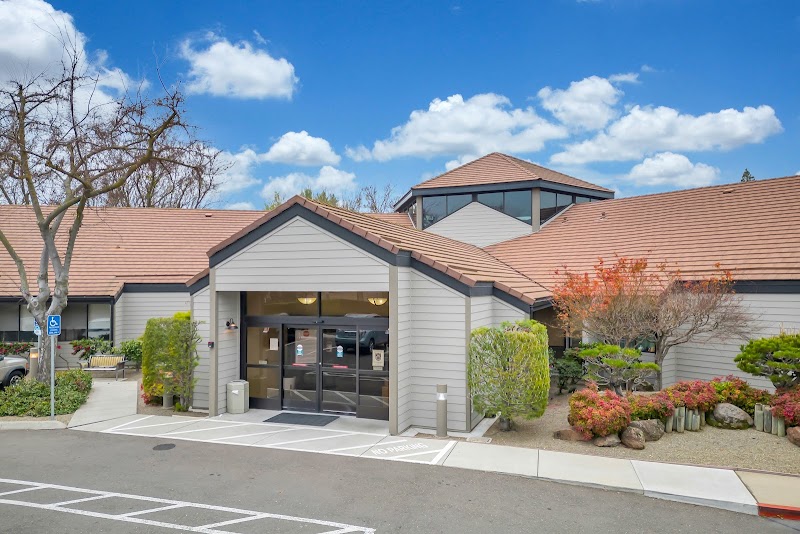
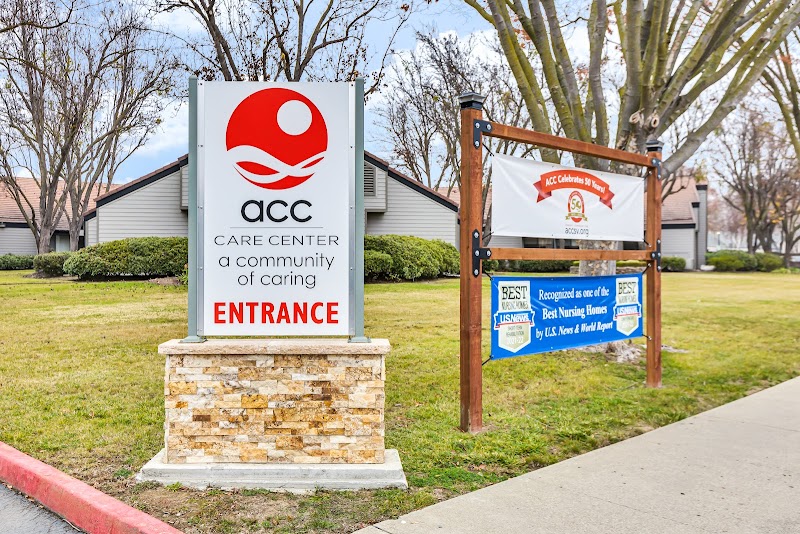
ACC CARE CENTER

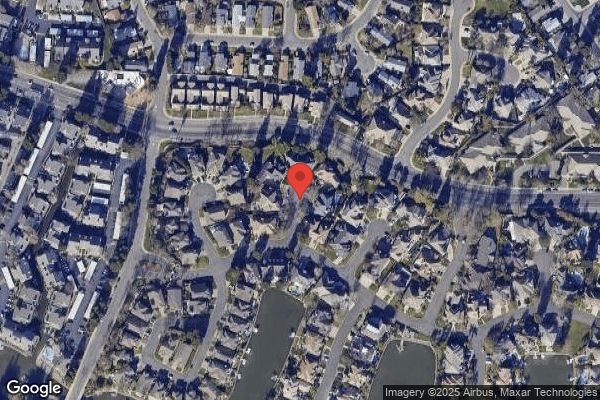
7801 RUSH RIVER DRIVE, SACRAMENTO, CA 95831 (916) 393-9020
Non profit - Corporation 99 Beds Independent Data: November 2025
Trust Grade
48/100
#730 of 1155 in CA
Last Inspection: August 2024

Within standard 12-15 month inspection cycle. Federal law requires annual inspections.

Overview

ACC Care Center in Sacramento, California has a Trust Grade of D, indicating below average quality with some significant concerns. It ranks #730 out of 1,155 facilities in California, placing it in the bottom half of the state, and #27 out of 37 in Sacramento County, meaning there are only a few local options that perform better. The facility shows an improving trend, having reduced its issues from 19 in 2024 to just 1 in 2025, which is a positive sign. Staffing is a relative strength with a rating of 4 out of 5 stars, although the turnover rate of 49% is concerning as it exceeds the state average of 38%. However, the care center has faced issues such as improper food storage and cleanliness, with several metal pans found dirty and outdated food items in the refrigerator, which could pose risks for foodborne illnesses among residents.

Trust Score
D
48/100
In California
#730/1155
Bottom 37%
Safety Record
Low Risk
No red flags
Inspections
Getting Better
19 → 1 violations
Staff Stability
⚠ Watch
49% turnover. Above average. Higher turnover means staff may not know residents' routines.
Penalties
○ Average
$24,087 in fines. Higher than 67% of California facilities. Some compliance issues.
Skilled Nurses
✓ Good
Each resident gets 49 minutes of Registered Nurse (RN) attention daily — more than average for California. RNs are trained to catch health problems early.
Violations
⚠ Watch
40 deficiencies on record. Higher than average. Multiple issues found across inspections.
★★☆☆☆
2.0
Overall Rating
★★★★☆
4.0
Staff Levels
★★★★☆
4.0
Care Quality
★★☆☆☆
2.0
Inspection Score
Stable
2024: 19 issues
2025: 1 issues

The Good

  • 4-Star Staffing Rating · Above-average nurse staffing levels
  • 4-Star Quality Measures · Strong clinical quality outcomes
  • Full Sprinkler Coverage · Fire safety systems throughout facility
  • No fines on record

Facility shows strength in staffing levels, quality measures, fire safety.

The Bad

2-Star Overall Rating

Below California average (3.1)

Below average - review inspection findings carefully

Staff Turnover: 49%

Near California avg (46%)

Higher turnover may affect care consistency

Federal Fines: $24,087

Below median ($33,413)

Minor penalties assessed

The Ugly 40 deficiencies on record

Jan 2025 1 deficiency
CONCERN (D) 📢 Someone Reported This

A family member, employee, or ombudsman was alarmed enough to file a formal complaint

Potential for Harm - no one hurt, but risky conditions existed

Deficiency F0658 (Tag F0658)

Could have caused harm · This affected 1 resident

Based on observation, interview, and record review, the facility failed to meet professional standards of quality for one of three sampled residents (Resident 1) when Resident 1's prophylactic (intend...

Read full inspector narrative →
Based on observation, interview, and record review, the facility failed to meet professional standards of quality for one of three sampled residents (Resident 1) when Resident 1's prophylactic (intended to prevent disease) aspirin was discontinued incorrectly. This failure resulted in Resident 1 not receiving aspirin as ordered and had increased potential for developing blood clots. Findings: Resident 1 was initially admitted in November 2024 with an admission diagnosis of a left broken thigh bone and was re-admitted in December 2024 with admission diagnoses of blood clot in the lungs and sudden development of a blood clot in the legs. Resident 1 had a BIMS (Brief Interview for Mental Status-an assessment tool used by facilities to screen and identify memory, orientation, and judgement status of the resident) score of 14 out of 15 which indicated Resident 1 was cognitively intact. During an interview on 1/6/25 at 10:36 a.m. with Resident 1, Resident 1 stated, I had a blood clot. I have no idea whatsoever what happened. I was here and next thing I knew I was back at the hospital. My kids said I was delirious, but I don't know. I was out of it. Review of Resident 1's Progress Note, dated 11/18/24, indicated Resident 1's physician (MD, Medical Doctor) ordered aspirin 81mg (milligrams) by mouth twice daily for six weeks until 12/24/24. During a concurrent interview and record review on 1/6/25 at 11:48 a.m. with Director of Nursing (DON), Resident 1's Medication Administration Record (MAR) for November 2024 was reviewed. The MAR indicated Resident 1's last dose of aspirin was given on 11/24/24 and the stop date was 11/24/24. The DON stated the stop date for the aspirin should have been 12/24/24 not 11/24/24. The DON explained she was notified by Resident 1's family member, after he was hospitalized , that Resident 1 wasn't receiving the prescribed aspirin. The DON stated, .somewhere a miscommunication occurred between the [name of doctor] and [name of Licensed Nurse 1 (LN 1)] regarding the aspirin stop date. The DON verified the MD signed a stop aspirin order on 12/24/24. The DON acknowledged LN 1 discontinued aspirin on the wrong date. During a phone interview on 1/6/25 at 12:48 p.m. with MD, MD stated he ordered the aspirin 81mg for Resident 1 to be continued until 12/24/24. MD stated, unfortunately, the aspirin was stopped before it was supposed to be discontinued. Review of the facility's policy and procedure titled, Medication and Treatment Order, dated 2001, indicated, Orders for medications .will be consistent with safe and effective order writing.
Oct 2024 3 deficiencies
CONCERN (E) 📢 Someone Reported This

A family member, employee, or ombudsman was alarmed enough to file a formal complaint

Potential for Harm - no one hurt, but risky conditions existed

Deficiency F0602 (Tag F0602)

Could have caused harm · This affected multiple residents

Based on interview and record review, the facility failed to ensure residents were free from misappropriation of property for a census of 84 when multiple doses of controlled pain medications and coun...

Read full inspector narrative →
Based on interview and record review, the facility failed to ensure residents were free from misappropriation of property for a census of 84 when multiple doses of controlled pain medications and count sheets were missing and unaccounted for. These failures resulted in the facility's lack of accountability of residents controlled medications with potential for uncontrolled pain and suffering. Findings: During a review of the facility provided statement signed by Licensed Nurse 2 (LN 2), dated 10/15/24, the statement indicated, I was assigned to the first cart on [name of the hall]. I received the report from [LN 3], the NOC [night shift] nurse, at around 0615 [6:15 a.m.]. When we counted the narcotics [controlled medications], we noticed that the medication for [Resident 1] was missing. The count sheet issued by the pharmacy for that medication was in the binder. We also discovered that the count sheet for the medication for [Resident 3] was missing, though the medication itself was present in the narcotic box .We thoroughly searched the narcotic and non-narcotic medications, but the missing medication was nowhere to be found .[LN 3] voiced out her concerns about the narcotics count, according to her the narcotic count from the previous night (10/14/24) had been accurate. Together, we asked [LN 1] if we could check the cart at the back, hoping the medication might be there, but we still couldn't locate it. [LN 1] then checked the computer and informed us that the order for [Resident 1] had been discontinued and changed to a different dose. [LN 1] took the count sheet for [Resident 1] and created a handwritten count sheet for [Resident 3]. I expressed my concerns to her and said I didn't feel comfortable taking over the first cart due to the missing narcotics. [LN 1] said It's okay, let's switch carts and I'll handle it. [LN 3] later mentioned that [LN 1] had borrowed the key to the first cart and searched through the medication cart while [LN 3] was administering medications to patients in another room. Then, [LN 3] and I found the torn pieces of the original narcotic count sheet for the missing medication .I checked the order and saw that the new order was placed earlier that morning. During a review of the facility provided statement by LN 3, dated 10/15/24, the statement indicated, .When [LN 1] and I counted her cart 2, the narcotics were fine. I then went to cart 1 and waited for [LN 2]. [LN 1] asked to borrow my keys for cart 1, so I gave it to her. She opened the cart to look for something, and I proceeded .to give medication. After about 5 mins [minutes], [LN 1] returned the keys. Once I gave report to [LN 2], we did the count and found out that the Oxycodone for [Resident 1] was missing. The count sheet in the narcotic book was still there, but the bubble pack with 20 Oxycodone tablets, delivered on 10/11/24 was gone. The count sheet for [Resident 3] was also missing, but the Oxycodone bubble pack [blister pack, a form of tamper-evident packaging] was still there. At that point, I told [LN 1] that narcotic meds were missing after she borrowed the keys. She responded not to worry because the order has been dc/d [discontinued] and changed. She suggested to [LN 2] that they switch carts and she'll take care of it. When I proceeded to [LN 2] cart 1, I noticed the paper for the missing narcotic meds was shredded. I called [LN 2] and showed her the shredded paper. [LN 2] also told me that [LN 1] had changed the order without any progress notes. During an interview on 10/24/24 at 1:45 p.m. with the Assistant Director of Nursing (ADON), the ADON stated, We had a nurse that we believe is diverting oxycodone, September and October. Thru [through] the audit, 1,915 doses unaccounted for .Initially it was reported, a nurse came to the DON (Director of Nursing) that there was a narcotic discrepancy, a bubble pack was missing and that there's a separate count sheet missing .Nurses said they found the bubble pack. There were handwritten count sheets. I looked on the bubble pack which is smashed on the side .There was a tape at the back of the blister pack .We audited all oxycodone within that timespan when there were missing count sheets .Those orders correlated with her on PCC (electronic chart). During an interview on 10/24/24 at 3:22 p.m. with LN 4, LN 4 stated, The process is to give pills to resident, sign the MAR and sign the narcotic sheet .If there are discrepancies, we try to find why is it off, maybe they make a mistake .If we can't find any reason, we notify the DON .It can mean people took the wrong medication out or maybe someone stole medication, that's a possibility. During an interview on 10/24/24 at 3:45 p.m. with LN 5, LN 5 stated, The expectation is making sure there are no discrepancies, and that we are giving the medication correctly and make sure the numbers are correct .Always protect yourself and make sure residents have what they need. During a continued interview on 10/24/24 at 4:17 p.m. with the ADON, the ADON stated, We believe that [LN 1] had put in an order and discontinued the order, she took the drug sheet as well as the drugs, it would appear that it was not missing, no order, no count sheet, and no drugs. During an interview on 10/24/24 at 4:33 p.m. with the Administrator (ADM), the ADM stated, , [LN 1]'s operation was she will order into PCC (electronic chart), write the prescription and sign it, fax it to [name pharmacy], she would come in the next day and discontinue the order, make sure it's in the cart, get the bubble pack and the count sheet before discontinuing the medication .The only reason why we were alerted was because that morning when she took one pack, she took the wrong count sheet, if she didn't get the wrong sheet, we wouldn't be able to know. During a review of the facility provided document titled F. Employee Conduct, undated, the document indicated, [Facility] expects its employees to act in a professional and respectful manner at all times. Examples of conduct that may lead to disciplinary action are identified below .Unauthorized possession, destruction, use, or removal of property .
CONCERN (E) 📢 Someone Reported This

A family member, employee, or ombudsman was alarmed enough to file a formal complaint

Potential for Harm - no one hurt, but risky conditions existed

Deficiency F0658 (Tag F0658)

Could have caused harm · This affected multiple residents

Based on interview and record review, the facility failed to ensure professional standards of practice were followed when Licensed Nurse (LN 1) entered orders, wrote prescriptions, and discontinued co...

Read full inspector narrative →
Based on interview and record review, the facility failed to ensure professional standards of practice were followed when Licensed Nurse (LN 1) entered orders, wrote prescriptions, and discontinued controlled medications without physician authorization for five of nine sampled residents (Residents 1, 3, 4, 5, and 6). This failure resulted in the facility not having accurate accountability of controlled medications, the potential for abuse or misuse of these medications, and the potential for not meeting the residents' therapeutic needs or worsening of their medical conditions. Findings: During a review of the facility provided statement signed by LN 2, dated 10/15/24, the statement indicated, I was assigned to the first cart on [name of the hall]. I received the report from [LN 3], the NOC [night shift] nurse, at around 0615 [6:15 a.m.]. When we counted the narcotics [controlled medications], we noticed that the medication for [Resident 1] was missing. The count sheet issued by the pharmacy for that medication was in the binder. We also discovered that the count sheet for the medication for [Resident 3] was missing, though the medication itself was present in the narcotic box .We thoroughly searched the narcotic and non-narcotic medications, but the missing medication was nowhere to be found .[LN 3] voiced out her concerns about the narcotics count, according to her the narcotic count from the previous night (10/14/24) had been accurate. Together, we asked [LN 1] if we could check the cart at the back, hoping the medication might be there, but we still couldn't locate it. [LN 1] then checked the computer and informed us that the order for [Resident 1] had been discontinued and changed to a different dose. [LN 1] took the count sheet for [Resident 1] and created a handwritten count sheet for [Resident 3]. I expressed my concerns to her and said I didn't feel comfortable taking over the first cart due to the missing narcotics. [LN 1] said It's okay, let's switch carts and I'll handle it. [LN 3] later mentioned that [LN 1] had borrowed the key to the first cart and searched through the medication cart while [LN 3] was administering medications to patients in another room. Then, [LN 3] and I found the torn pieces of the original narcotic count sheet for the missing medication .I checked the order and saw that the new order was placed earlier that morning. During a review of the facility provided statement by LN 3, dated 10/15/24, the statement indicated, .When [LN 1] and I counted her cart 2, the narcotics were fine. I then went to cart 1 and waited for [LN 2]. [LN 1] asked to borrow my keys for cart 1, so I gave it to her. She opened the cart to look for something, and I proceeded .to give medication. After about 5 mins [minutes], [LN 1] returned the keys. Once I gave report to [LN 2], we did the count and found out that the Oxycodone for [Resident 1] was missing. The count sheet in the narcotic book was still there, but the bubble pack with 20 Oxycodone tablets, delivered on 10/11/24 was gone. The count sheet for [Resident 3] was also missing, but the Oxycodone bubble pack [blister pack, a form of tamper-evident packaging] was still there. At that point, I told [LN 1] that narcotic meds were missing after she borrowed the keys. She responded not to worry because the order has been dc/d [discontinued] and changed. She suggested to [LN 2] that they switch carts and she ' ll take care of it. When I proceeded to [LN 2] cart 1, I noticed the paper for the missing narcotic meds was shredded. I called [LN 2] and showed her the shredded paper. [LN 2] also told me that [LN 1] had changed the order without any progress notes. During a review of Resident 1's physician order, dated 10/15/24 at 6:07 a.m., the order indicated, oxycodone HCl [a drug used to treat moderate to severe pain] Oral [by mouth] Tablet 10mg [milligrams, a unit of measurement] .Audit Details .Created By: [LN 1] .Created date: 10/15/24 06:07 [a.m.]. During a review of Resident 1's prescription, dated 10/15/24, the prescription indicated, Rx [prescription]: oxycodone HCl Oral tablet 10 MG .Give 1 tablet by mouth every 4 hours as needed for Pain - Severe (8-10) . The prescription further indicated the physician's signature and DEA [Drug Enforcement Administration, agency that enforces the controlled substance laws and regulations] number [an identifier assigned to a healthcare provider allowing them to write prescriptions for controlled substances]. During a review of Resident 3's physician order, dated 10/8/24 at 9:41 a.m., the order indicated, oxycodone HCl Oral Tablet 10mg .Audit Details .Created By: [LN 1] .Created date: 10/8/24 06:18 [a.m.]. During a review of Resident 3's physician order, dated 10/15/24 at 6:17 a.m., the order indicated, oxycodone HCl Oral Tablet 10mg .Audit Details .Created By: [LN 1] .Created date: 10/15/24 06:18 [a.m.]. During a review of Resident 3's Medication Administration Notes (MAR), dated for October 2024, the MAR indicated the oxycodone ordered on 10/8/24 was discontinued on 10/9/24 at 8:48 a.m., and no doses were given. The MAR further indicated the oxycodone ordered on 10/15/24 was discontinued on 10/15/24 at 7:58 p.m., and no doses were given. During a review of Resident 3's prescription, dated 10/15/24, the prescription indicated, Rx [prescription]: oxycodone HCl Oral tablet 10 MG .Give 1 tablet by mouth every 4 hours as needed for Pain - Severe (8-10) . The prescription further indicated the physician's signature and DEA number. During a review of Resident 4's physician order, dated 10/15/24 at 6:10 a.m., the order indicated, oxycodone HCl Oral Tablet 10mg .Audit Details .Created By: [LN 1] .Created date: 10/15/24 06:12 [a.m.]. During a review of Resident 4's prescription, dated 10/15/24, the prescription indicated, Rx [prescription]: oxycodone HCl Oral tablet 10 MG .Give 1 tablet by mouth every 4 hours as needed for Pain - Severe (8-10) . The prescription further indicated the physician's signature and DEA number. During a review of Resident 5's physician order, dated 10/15/24 at 6:51 a.m., the order indicated, oxycodone HCl Oral Tablet 10mg .Audit Details .Created By: [LN 1] .Created date: 10/15/24 06:52 [a.m.]. During a review of Resident 5's prescription, dated 10/15/24, the prescription indicated, Rx [prescription]: oxycodone HCl Oral tablet 10 MG .Give 1 tablet by mouth every 4 hours as needed for Pain - Severe (8-10) . The prescription further indicated the physician ' s signature and DEA number. During a review of Resident 6's physician order, dated 10/15/24 at 6:12 a.m., the order indicated, oxycodone HCl Oral Tablet 10mg .Audit Details .Created By: [LN 1] .Created date: 10/15/24 06:13 [a.m.]. During a review of Resident 6's prescription, dated 10/15/24, the prescription indicated, Rx [prescription]: oxycodone HCl Oral tablet 10 MG .Give 1 tablet by mouth every 4 hours as needed for Pain - Severe (8-10) . The prescription further indicated the physician ' s signature and DEA number. During a review of a facility provided document signed by the Medical Director (MD), dated 10/18/24, the document indicated the list of residents with a triplicate [document created in three copies] signed but verified by MD as not his signature. The list included the prescriptions for Residents 1, 3, 4, 5, and 6. During an interview on 10/24/24 at 3:45 p.m. with LN 4, LN 4 stated, For the process of entering orders, we would call the doctor first to confirm the orders, I don't write prescriptions .Nurses don't sign prescription, doctor needs to sign the prescription. During an interview on 10/24/24 at 4:17 p.m. with the Assistant Director of Nursing (ADON), the ADON stated, We believe that [LN 1] had put in an order and discontinued the order, she took the drug sheet as well as the drugs, it would appear that it was not missing, no order, no count sheet, and no drugs .Nurses are not able to write a prescription, not within a scope of nursing .We take orders from doctors, if signature is needed we let them sign. During an interview on 10/24/24 at 4:33 p.m. with the Administrator (ADM), the ADM stated, [LN 1]'s operation was she will order into PCC (electronic chart), write the prescription and sign it, fax it to [name pharmacy], she would come in the next day and discontinue the order, make sure it's in the cart, get the bubble pack [blister pack, a form of tamper-evident packaging] and the count sheet before discontinuing the medication . During a telephone interview on 10/25/24 at 11:03 a.m. with the Consultant Pharmacy Supervisor (CPS), when asked about the process of controlled meds dispensing, the CPS stated, The facility will request the provider to write a prescription, for SNF [Skilled Nursing Facility], they use a document where the doctor signs, it is faxed to the pharmacy and then the pharmacy prepares the meds and delivers it to the facility .prescription has the doctor's signature on it .[pharmacy] look for the DEA number which is specific to a doctor. During a review of the facility's policy and procedure (P&P) titled Medication Orders, dated 3/2018, the P&P indicated, Medications are administered only upon the clear, complete, and signed order of a person lawfully authorized to prescribe. During a review of the facility provided document titled F. Employee Conduct, undated, the document indicated, [Facility] expects its employees to act in a professional and respectful manner at all times. Examples of conduct that may lead to disciplinary action are identified below .Dishonesty (including falsification of a document or misrepresentations). During a review of the undated document titled, Nursing Practice Act Rules and Regulations, the document indicated, Article 2. Scope of Regulation 2725 (b). The practice of nursing within the meaning of this chapter means those functions, including basic health care, that help people cope with difficulties in daily living that are associated with their actual or potential health or illness problems or the treatment thereof, and that require substantial amount of specific knowledge of the following: .(2) Direct and indirect patient care services, including, but not limited to, the administration of medications and therapeutic agents, necessary to implement a treatment, disease prevention, or rehabilitative regimen ordered by and within the scope of licensure of a physician . (Nursing Practice Act Rules and Regulations Issued by Board of Registered Nursing - State of California Department of Consumer Affairs).
CONCERN (E) 📢 Someone Reported This

A family member, employee, or ombudsman was alarmed enough to file a formal complaint

Potential for Harm - no one hurt, but risky conditions existed

Pharmacy Services (Tag F0755)

Could have caused harm · This affected multiple residents

Based on interview, and record review, the facility failed to ensure accurate accountability of controlled medications (that have high potential for abuse, misuse and are addictive) for a census of 84...

Read full inspector narrative →
Based on interview, and record review, the facility failed to ensure accurate accountability of controlled medications (that have high potential for abuse, misuse and are addictive) for a census of 84 when: 1. Multiple doses of and Controlled Drug Records (CDR) for Oxycodone (medication used to treat moderate to severe pain) were missing and unaccounted for; 2. Random controlled medication audits of the Medication Administration Record (MAR) and CDRs for seven of nine sampled residents (Residents 1, 2, 3, 6, 7, 8, and 9) did not reconcile to indicate they were given to the residents; and 3. Licensed Nurse (LN 1) entered orders, wrote prescriptions, and discontinued controlled medications without physician authorization for five of nine sampled residents (Residents 1, 3, 4, 5, and 6). These failures resulted in the facility not having accurate accountability of controlled medications, the potential for abuse or misuse of these medications, and the potential for not meeting the residents' therapeutic needs or worsening of their medical conditions. Findings: 1. During a review of the facility provided statement signed by LN 2, dated 10/15/24, the statement indicated, I was assigned to the first cart on [name of hall]. I received the report from [LN 3], the NOC [night shift] nurse, at around 0615 [6:15 a.m.]. When we counted the narcotics [controlled medications], we noticed that the medication for [Resident 1] was missing. The count sheet issued by the pharmacy for that medication was in the binder. We also discovered that the count sheet for the medication for [Resident 3] was missing, though the medication itself was present in the narcotic box .We thoroughly searched the narcotic and non-narcotic medications, but the missing medication was nowhere to be found .[LN 3] voiced out her concerns about the narcotics count, according to her the narcotic count from the previous night (10/14/24) had been accurate. Together, we asked [LN 1] if we could check the cart at the back, hoping the medication might be there, but we still couldn't locate it. [LN 1] then checked the computer and informed us that the order for [Resident 1] had been discontinued and changed to a different dose. [LN 1] took the count sheet for [Resident 1] and created a handwritten count sheet for [Resident 3]. I expressed my concerns to her and said I didn't feel comfortable taking over the first cart due to the missing narcotics. [LN 1] said It's okay, let's switch carts and I'll handle it. [LN 3] later mentioned that [LN 1] had borrowed the key to the first cart and searched through the medication cart while [LN 3] was administering medications to patients in another room. Then, [LN 3] and I found the torn pieces of the original narcotic count sheet for the missing medication .I checked the order and saw that the new order was placed earlier that morning. During a review of the facility provided statement by LN 3, dated 10/15/24, the statement indicated, .When [LN 1] and I counted her cart 2, the narcotics were fine. I then went to cart 1 and waited for [LN 2]. [LN 1] asked to borrow my keys for cart 1, so I gave it to her. She opened the cart to look for something, and I proceeded .to give medication. After about 5 mins [minutes], [LN 1] returned the keys. Once I gave report to [LN 2], we did the count and found out that the Oxycodone for [Resident 1] was missing. The count sheet in the narcotic book was still there, but the bubble pack with 20 Oxycodone tablets, delivered on 10/11/24 was gone. The count sheet for [Resident 3] was also missing, but the Oxycodone bubble pack [blister pack, a form of tamper-evident packaging] was still there. At that point, I told [LN 1] that narcotic meds were missing after she borrowed the keys. She responded not to worry because the order has been dc/d [discontinued] and changed. She suggested to [LN 2] that they switch carts and she'll take care of it. When I proceeded to [LN 2] cart 1, I noticed the paper for the missing narcotic meds was shredded. I called [LN 2] and showed her the shredded paper. [LN 2] also told me that [LN 1] had changed the order without any progress notes. During an interview on 10/24/24 at 1:45 p.m. with the Assistant Director of Nursing (ADON), the ADON stated, We had a nurse that we believe is diverting oxycodone, September and October. Thru the audit, 1915 doses unaccounted for .Initially it was reported, a nurse came to the DON (Director of Nursing) that there was a narcotic discrepancy, a bubble pack was missing and that there's a separate count sheet missing .Nurses said they found the bubble pack. There were handwritten count sheets. I looked on the bubble pack which is smashed on the side .There was a tape at the back of the blister pack .We audited all oxycodone within that timespan when there were missing count sheets .Those orders correlated with her on PCC (electronic chart). During a continued interview on 10/24/24 at 4:17 p.m. with the ADON, the ADON stated, We believe that [LN 1] had put in an order and discontinued the order, she took the drug sheet as well as the drugs, it would appear that it was not missing, no order, no count sheet, and no drugs. During an interview on 10/24/24 at 4:33 p.m. with the Administrator (ADM), the ADM stated, , [LN 1]'s operation was she will order into PCC (electronic chart), write the prescription and sign it, fax it to [name pharmacy], she would come in the next day and discontinue the order, make sure it's in the cart, get the bubble pack and the count sheet before discontinuing the medication .The only reason why we were alerted was because that morning when she took one pack, she took the wrong count sheet, if she didn't get the wrong sheet, we won't be able to know. During a review of the facility's policy and procedure (P&P) titled Controlled Medication Storage, dated 3/2018, the P&P indicated, Medications included in the Drug Enforcement Administration (DEA) classification as controlled substances are subject to special handling, storage, disposal and recordkeeping in the facility in accordance with federal, state and other applicable laws and regulations . 2. During a review of Resident 1's MAR for October 2024, the MAR indicated, Roxicodone 5mg (Oxycodone HCl) 5 mg (milligrams, a unit of measurement) .Give 0.5 tablet by mouth every 6 hours as needed for Pain - Severe . The MAR indicated no doses were given to Resident 1 in October 2024. The MAR further indicated the oxycodone order was discontinued on 10/15/24 at 6:05 a.m. and another oxycodone order was entered. During a review of Resident 1's physician order dated 10/15/24 at 6:07 a.m., the order indicated, Oxycodone HCl Oral Tablet 10mg Give 1 tablet by mouth every 4 hours as needed for Pain . During a review of Resident 1's CDR dated 10/15/24, the CDR indicated the quantity of tablets received were 10 tablets. The CDR further indicated the last tablet count was 19 and one dose of oxycodone was given on 10/14/24, which was not reflected in the MAR. During a review of Resident 2's MAR for October 2024, the MAR indicated, Roxicodone .5 MG (Oxycodone HCl) Give 1 tablet by mouth every 6 hours as needed for Pain - Severe. The MAR indicated three doses of oxycodone were signed as administered, the last dose was given on 10/13/24 at 6 p.m. and there were no oxycodone doses given after. During a review of Resident 2's CDR for oxycodone, the CDR indicated 18 doses were received on 10/13/24. The CDR further indicated three doses were signed but the last tablet count was 14 which indicated one tablet was missing. During a review of Resident 3's blister pack label, dated 10/8/24, the label indicated, oxycodone HCl 5MG Take ½ tab every 6 hours as needed for moderate to severe pain. The blister pack indicated 30 tablets were dispensed for a total of 60 doses and one dose was popped-out. During a review of Resident 3's MAR for October 2024, the MAR indicated, Oxycodone HCl Oral Tablet 5 mg Give 0.5 tablet every 6 hours as needed for Pain . The MAR indicated the last dose of oxycodone was given on 10/10/24 at 6:56 a.m. and the order was discontinued on 10/15/24. During a review of Resident 3's CDR, the CDR indicated 59 tablets were received on 10/14/24 and the last tablet count was 59. There were no CDR for the oxycodone tablets given on 10/10/24. During a review of Resident 6's MAR for October 2024, the MAR indicated, Oxycodone HCl Oral Tablet 5 MG Give 1 tablet by mouth every 6 hours as needed for severe pain. The MAR indicated two doses were administered on 10/15/24. During a review of Resident 6's CDR, the CDR indicated there were four doses of oxycodone signed on 10/15/24 which was not reflected on the MAR. During a review of Resident 7's CDR, the CDR indicated oxycodone 10 mg tablet was given 10/1/24 at 3:40 a.m. and on 10/8/24 at [illegible time]. During a review of Resident 7's MAR for October 2024, the MAR indicated there were no doses administered on 10/1/24 and 10/8/24. During a review of Resident 8's CDR, the CDR indicated oxycodone 5 mg tab was signed once on 9/15/24 at 11 a.m., and twice on 9/18/24 at 6 a.m. During a review of Resident 8's MAR for September 2024, the MAR indicated there were no oxycodone doses administered on 9/15/24 at 11 a.m. and on 9/18/24 at 6 a.m. During a review of Resident 9's CDR, the CDR indicated doses for oxycodone 20 mg were signed on 9/11/24 at [illegible time] , on 9/13/24 at 1 p.m., on 9/14/24 at [illegible time], 9/15/24 at [illegible time], and on 9/16/24 at 1 p.m. and signed as wasted. During a review of Resident 9's MAR for September 2024, the MAR indicated there were no doses administered on 9/11/24 , 9/13/24 at 1 p.m., 9/14/24 , 9/15/24, and on 9/16/24 at 1 p.m. During an interview on 10/24/24 at 3:22 p.m. with LN 4, LN 4 stated, The process is to give pills to resident, sign the MAR and sign the narcotic sheet .If there are discrepancies, we try to find why is it off, maybe they make a mistake .If we can't find any reason, we notify the DON .It can mean people took the wrong medication out or maybe someone stole medication, that's a possibility. During an interview on 10/24/24 at 3:45 p.m. with LN 5, LN 5 stated, The expectation is making sure there are no discrepancies, and that we are giving the medication correctly and make sure the numbers are correct. During an interview on 10/24/24 at 4:17 p.m. with the ADON, the ADON stated, The expectation is for the MAR and CDR to reconcile and match .staff should be responsible and accountable. During a review of the facility's P&P titled Controlled Medication Storage, dated 3/2018, the P&P indicated, C. A controlled medication accountability record is prepared by the pharmacy .E. Any discrepancy in controlled substance medication counts is reported to the director of nursing immediately. The director or designee investigates and makes reasonable effort to reconcile all reported discrepancies. 3. During a review of Resident 1's physician order, dated 10/15/24 at 6:07 a.m., the order indicated, oxycodone HCl Oral Tablet 10mg Audit Details .Created By: [LN 1] .Created date: 10/15/24 06:07 [a.m.]. During a review of Resident 1's prescription, dated 10/15/24, the prescription indicated, Rx [prescription]: oxycodone HCl Oral tablet 10 MG .Give 1 tablet by mouth every 4 hours as needed for Pain - Severe (8-10) .Dispense 90. The prescription further indicated the physician signature and DEA [Drug Enforcement Administration] number. During a review of Resident 3's physician order, dated 10/8/24 at 9:41 a.m., the order indicated, oxycodone HCl Oral Tablet 10mg .Audit Details .Created By: [LN 1] .Created date: 10/8/24 06:18 [a.m.]. During a review of Resident 3's physician order, dated 10/15/24 at 6:17 a.m., the order indicated, oxycodone HCl Oral Tablet 10mg .Audit Details .Created By: [LN 1] .Created date: 10/15/24 06:18 [a.m.]. During a review of Resident 3's MAR, dated 10/24, the MAR indicated the oxycodone ordered on 10/8/24 was discontinued on 10/9/24 at 8:48 a.m., and no doses were given. The MAR further indicated the oxycodone ordered on 10/15/24 was discontinued on 10/15/24 at 7:58 p.m., and no doses were given. During a review of Resident 3's prescription, dated 10/15/24, the prescription indicated, Rx: oxycodone HCl Oral tablet 10 MG .Give 1 tablet by mouth every 4 hours as needed for Pain - Severe (8-10) .Dispense 90. The prescription further indicated the physician signature and DEA number. During a review of Resident 4's physician order, dated 10/15/24 at 6:10 a.m., the order indicated, oxycodone HCl Oral Tablet 10mg .Audit Details .Created By: [LN 1] .Created date: 10/15/24 06:12 [a.m.]. During a review of Resident 4's prescription, dated 10/15/24, the prescription indicated, Rx: oxycodone HCl Oral tablet 10 MG .Give 1 tablet by mouth every 4 hours as needed for Pain - Severe (8-10) .The prescription further indicated the physician signature and DEA number. During a review of Resident 5's physician order, dated 10/15/24 at 6:51 a.m., the order indicated, oxycodone HCl Oral Tablet 10mg .Audit Details .Created By: [LN 1] .Created date: 10/15/24 06:52 [a.m.]. During a review of Resident 5's prescription, dated 10/15/24, the prescription indicated, Rx: oxycodone HCl Oral tablet 10 MG .Give 1 tablet by mouth every 4 hours as needed for Pain - Severe (8-10) .The prescription further indicated the physician signature and DEA number. During a review of Resident 6's physician order, dated 10/15/24 at 6:12 a.m., the order indicated, oxycodone HCl Oral Tablet 10mg .Audit Details .Created By: [LN 1] .Created date: 10/15/24 06:13 [a.m.]. During a review of Resident 6's prescription, dated 10/15/24, the prescription indicated, Rx: oxycodone HCl Oral tablet 10 MG .Give 1 tablet by mouth every 4 hours as needed for Pain - Severe (8-10) .The prescription further indicated the physician signature and DEA number. During a review of a facility provided document signed by the Medical Director (MD), dated 10/18/24, the document indicated the list of residents with a triplicate [document created in three copies] signed but verified by MD as not his signature. The list included the prescriptions for Residents 1, 3, 4, 5, and 6. In an interview on 10/24/24 at 3:45 p.m. with LN 5, LN 5 stated, For the process of entering orders, we would call the doctor first to confirm the orders, I don't write prescriptions .Nurses don't sign prescription, doctor needs to sign the prescription. During an interview on 10/24/24 at 4:17 p.m. with the ADON, the ADON stated, We believe that [LN 1] had put in an order and discontinued the order, she took the drug sheet as well as the drugs, it would appear that it was not missing, no order, no count sheet, and no drugs .Nurses are not able to write a prescription, not within a scope of nursing .We take orders from doctors, if signature is needed we let them sign. In an interview on 10/24/24 at 4:33 p.m. with the ADM, the ADM stated, [LN 1]'s operation was she will order into PCC (electronic chart), write the prescription and sign it, fax it to [name pharmacy], she would come in the next day and discontinue the order, make sure it's in the cart, get the bubble pack [blister pack] and the count sheet before discontinuing the medication .Prescription forgery, the pharmacy did not catch it on their end. During a telephone interview on 10/25/24 at 11:03 a.m. with the Consultant Pharmacy Supervisor (CPS), when asked about the process of dispensing controlled medications, the CPS stated, The facility will request the provider to write a prescription, for SNF [Skilled Nursing Facility], they use a document where the doctor signs, it is faxed to the pharmacy and then the pharmacy prepares the meds and delivers it to the facility .prescription has the doctor's signature on it .[pharmacy] look for the DEA number which is specific to a doctor. When asked regarding the process of prescription verification, the CPS stated, [Pharmacy] just look at them, prescription has the doctor's signature on it .As far as I know they don't call doctor to confirm prescription .It's just like another prescription, it comes from the facility fax, its technically printed on the prescription as well, they don ' t necessarily call the doctor to verify the prescription. During a review of the facility ' s P&P titled Medication Orders, dated 3/2018, the P&P indicated, Medications are administered only upon the clear, complete, and signed order of a person lawfully authorized to prescribe. During a review of the facility provided document titled F. Employee Conduct, undated, the document indicated, [Facility] expects its employees to act in a professional and respectful manner at all times. Examples of conduct that may lead to disciplinary action are identified below .Dishonesty (including falsification of a document or misrepresentations).
Aug 2024 16 deficiencies
CONCERN (D)

Potential for Harm - no one hurt, but risky conditions existed

Resident Rights (Tag F0550)

Could have caused harm · This affected 1 resident

Based on observation, interview, and record review, the facility failed to ensure dignity was promoted for one of 19 sampled residents (Resident 22) when a Certified Nursing Assistant (CNA) stood up i...

Read full inspector narrative →
Based on observation, interview, and record review, the facility failed to ensure dignity was promoted for one of 19 sampled residents (Resident 22) when a Certified Nursing Assistant (CNA) stood up in front of the resident while assisting with her lunch meal. This failure had the potential to result in Resident 22 not attaining her highest practicable physical, mental and psychosocial well-being. Findings: o Resident 22 was admitted to the facility in late 2023 with diagnoses which included memory impairment and weakness. During a review of Resident 22's assessment titled, Functional Abilities and Goals, dated 6/25/24, the assessment indicated, Eating: The ability to use suitable utensils to bring food and/or liquid to the mouth .supervision or touching assistance. During an observation on 8/5/24 at 12:50 p.m. in the facility dining room, CNA 1 assisted Resident 22 during lunch meal. CNA 1 stood up at the side of Resident 22 and put food in the resident's mouth with a spoon. Resident 22 turned her face away and tried to push away the hands of CNA 1. During an interview on 8/5/24 at 12:52 p.m. with CNA 1, when asked what the process for assisting the residents with meals was, CNA 1 stated, We sit down to not hurt our back and to feed them properly. I am aware that we should not stand up while assisting them. During an interview on 8/5/24 at 1:10 p.m. with Restorative Nursing Aide 1 (RNA 1), when asked what the process for assisting residents with meals was, RNA 1 stated, When we are feeding the residents, we are sitting beside the resident. We are not supposed to be standing up .because the residents don't feel comfortable, and that's for respect and dignity to the resident. During an interview on 8/7/24 at 3:33 p.m. with the Director of Nursing (DON), when asked what the expectation from the CNA's or the RNA's on assisting resident with meals was, the DON stated, [CNAs and RNAs] are supposed to be sitting down and not standing while providing assistance with feeding .I mean, no one wants to be hovered over .it should be inappropriate to be standing in front of the resident to maintain respect and dignity for the resident. During a review of the facility's policy and procedure (P&P) titled, Dignity, dated 2/21, the P&P indicated, Each resident shall be cared for in a manner that promotes and enhances his or her sense of well-being, level of satisfaction with life, and feelings of self-worth and self-esteem .When assisting with care, residents are supported in exercising their rights. For example, residents are .provided with a dignified dining experience. During a review of the facility's P&P titled, Resident Rights, dated 8/09, the P&P indicated, Employees shall treat all residents with kindness, respect, and dignity.
CONCERN (D) 📢 Someone Reported This

A family member, employee, or ombudsman was alarmed enough to file a formal complaint

Potential for Harm - no one hurt, but risky conditions existed

Comprehensive Care Plan (Tag F0656)

Could have caused harm · This affected 1 resident

2. Resident 4 was admitted to the facility in mid-2024 with diagnoses which included Parkinson's disease (disorder of the central nervous system that affects movement, often including tremors), osteoa...

Read full inspector narrative →
2. Resident 4 was admitted to the facility in mid-2024 with diagnoses which included Parkinson's disease (disorder of the central nervous system that affects movement, often including tremors), osteoarthritis (joint break down), disorder of bone density and structure. During an interview and observation on 8/5/24 at 8:45 a.m. Resident 4 was seen with a splint on her left hand and stated in Spanish, I fell and cut my finger. During a concurrent interview and record review on 8/7/24 at 9:10 a.m. with Licensed Nurse (LN) 8, LN 8 reviewed Resident 4's records and confirmed there was no document assessment or care plan for the laceration. LN 8 stated, When residents return back from hospital the nurses receive the packet [discharge summary] and make sure we follow-up with the new orders, assessments, and care plans. During an interview on 8/7/24 at 1:46 p.m. with the DON, the DON stated, Resident 4 should have had the assessment and care plans completed for the new injuries so we can monitor for infection or worsening of the area. During a review of the facility's policy and procedure (P&P) titled, Care Plans, Comprehensive Person-Centered, revised 12/19, the P&P indicated, A comprehensive, person-centered care plan that includes measurable objective and timetables to meet the resident's physical, psychosocial and functional needs is developed and implemented for each resident .Identifying problem areas and their causes and developing interventions that are targeted and meaningful to the resident. Based on observation, interview, and record review, the facility failed to develop and implement comprehensive care plans for two out of 19 sampled residents (Resident 148 and Resident 4), when: 1. No activities care plan was developed or implemented for Resident 148; and, 2. No care plan was developed or implemented for a skin laceration with staples for Resident 4. These failures had the potential to result in residents not attaining their highest practicable physical, mental and psychosocial well-being. Findings: 1. Resident 148 was admitted in the middle of 2024 with diagnoses which included anxiety, depression, and difficulty walking. During a review of Resident 148's Baseline Care Plan (BCP), dated 7/23/24, the BCP had no documented evidence of an assessment for activities and hobby preferences. During a review of Resident 148's Nursing Care Plan (NCP) dated 7/23/24, the NCP indicated, [Resident 148] is Spanish speaking and has a language barrier with staff .prefers to communicate in Spanish. There was no documented evidence for an activities care plan developed or implemented. During a concurrent observation and interview on 8/5/24 at 10:33 a.m. in Resident 148's room, Resident 148 was in bed, awake, alert, and staring at the walls. When asked how he was doing, Resident 148 answered in Spanish, I don't understand. I don't speak English. During a concurrent observation and interview on 8/5/24 at 10:45 a.m. in Resident 148's room with Licensed Nurse 1 (LN 1), LN 1 stated, [Resident 148] is alert and oriented and speaks Spanish .I have not seen him go to activities .I guess because he does not speak English. During an interview on 8/5/24 at 10:48 a.m. with Certified Nursing Assistant 3 (CNA 3), CNA 3 stated, [Resident 148] is alert and oriented x4 .I have not seen any activities in the room .I know he is new and he speaks Spanish. During a concurrent observation and interview on 8/6/24 at 8:40 a.m. in Resident 148's room, with CNA 4, Resident 148 was in a wheelchair, awake and alert with no activity and the television turned off. CNA 4 was at the bedside, and stated, [Resident 148] does not go to activities. He just stays in his room. During an interview on 8/7/24 at 12:15 p.m. with the Activity Assistant (AA), when asked about Resident 148's assessment and plan of care, the AA stated, Who's that? I don't remember that name. [Resident 148] is probably a new admit. It has been like 15 days or something. He is not in our list of activities we've been doing lately. With the last name, he has not been with activities .I don't see any [assessment or care plan]. I cannot find his name. During an interview on 8/7/24 at 12:54 p.m. with the Activities Director (AD), when asked about Resident 148's activities assessment and plan of care, the AD stated, I have not assessed the resident .That should have been done. It has been like more than two weeks and it hasn't been done. During an interview on 8/7/24 at 3:33 p.m. with the Director of Nursing (DON), the DON stated, The activities department would do a plan of care for activities .but there should be an assessment.
CONCERN (D) 📢 Someone Reported This

A family member, employee, or ombudsman was alarmed enough to file a formal complaint

Potential for Harm - no one hurt, but risky conditions existed

Deficiency F0657 (Tag F0657)

Could have caused harm · This affected 1 resident

Based on observation, interview, and record review, the facility failed to revise the comprehensive care plan for one of 19 sampled residents (Resident 71), when the nutrition care plan was not update...

Read full inspector narrative →
Based on observation, interview, and record review, the facility failed to revise the comprehensive care plan for one of 19 sampled residents (Resident 71), when the nutrition care plan was not updated after an added intervention ordered by the physician. This failure had the potential to result in Resident 71 not attaining her highest practicable well-being. Findings: Resident 71 was admitted to the facility in early 2024 with diagnoses which included unspecified endocrine disorder (e.g. diabetes, abnormal blood sugar levels), hyperlipidemia (elevated levels of fat in the blood) and difficulty swallowing. During a review of Resident 71's Minimum Data Set (MDS, an assessment tool), dated 7/14/24, the MDS indicated Resident 71 had no memory impairment and needed partial assistance with activities of daily living. During a review of Resident 71's Nursing Care Plan (NCP), dated 7/19/24, the NCP indicated, Alteration in nutrition and at risk for weight loss related to poor meal intake. There was no documented evidence the NCP was revised or updated. During a review of Resident 71's Nursing Progress Notes (NPN), dated 8/1/24, the NPN indicated, [Resident 71] c/o [complained of] chills during night at times .verbal order of check glucose [blood sugar level] if signs of hypoglycemia [low blood sugar level] PRN [as needed]. During a concurrent observation and interview on 8/5/24 at 10:18 a.m. on the hallway in front of Resident 71's room, Resident 71 wheeled herself, alert and verbally responsive, and stated, The food is lousy. Food has no flavor .It's always the same, no variety, no quality kind of thing, and not healthy. During a concurrent observation and interview on 8/6/24 at 8:50 a.m. in Resident 71's room, Resident 71 sat in a wheelchair awake and alert, and stated, I remember we talked yesterday. Again, the only problem I have is the food .Food has no variety, no quality kind of thing, not enough healthy food. During a concurrent observation and interview on 8/7/24 at 10:20 a.m. in Resident 71's room, when asked about her low blood sugar, Resident 71 stated, I did have chills one night last week. They did not check my blood sugar. I remember exactly the chills .the doctor wanted to check my blood sugar. I just felt my blood sugar was off. If anything, I am hypoglycemic [state of having low blood sugar] and that's what I've had in the past .Nobody told me to tell the nurse. During an interview on 8/7/24 at 10:25 a.m. with Certified Nursing Assistant (CNA) 5, CNA 5 stated, [Resident 71] has problem with her food .she's a little bit weaker on her feet, and she has told me about low blood sugars .She is alert and oriented x4. During an interview on 8/7/24 at 10:27 a.m. with Licensed Nurse 2 (LN 2), LN 2 stated, [Resident 71] had chills and symptoms of hypoglycemia .She recently told me and I told the doctor that sometimes she feels jittery and had some chills .the doctor recently had me put an order in for PRN blood sugar checks if she had those symptoms. I did receive the order and I am aware of that. When asked if the order was put in as intervention in the Resident 71's nutrition care plan, LN 2 verified the intervention was not added in the care plan, and stated, I did not put any revision in the interventions to check blood sugars. During an interview on 8/7/24 at 3:33 p.m. with the Director of Nursing (DON), the DON stated, The nurse needs to do a new care plan or update and revise the existing care plan. If there's a new intervention, the nurses will review or revise the care plan .The expectation is for nurses to do an assessment and document in the care plan. During a review of the facility's policy and procedure (P&P) titled, Comprehensive Care Plans, dated 3/1/2023, the P&P indicated, It is the policy of this facility to develop and implement a comprehensive person-centered care plan for each resident, consistent with resident rights, that includes measurable objectives and timeframes to meet a resident's medical, nursing, and mental and psychosocial needs that are identified in the resident's comprehensive assessment .The comprehensive care plan will be reviewed and revised by the interdisciplinary team.
CONCERN (D)

Potential for Harm - no one hurt, but risky conditions existed

Deficiency F0658 (Tag F0658)

Could have caused harm · This affected 1 resident

2. During a review of Resident 65's admission record, Resident 65 was admitted to the facility during the late winter of 2018 with diagnoses which included pulmonary fibrosis (a disease in which there...

Read full inspector narrative →
2. During a review of Resident 65's admission record, Resident 65 was admitted to the facility during the late winter of 2018 with diagnoses which included pulmonary fibrosis (a disease in which there is scarring of the lungs that makes it difficult to breathe), major depressive disorder, and chronic cough. During a record review of Resident 65's Clinical Physician Order (CPO), dated 5/14/24, the CPO indicated, Oxygen Therapy at 2 liters per minute . During a review of Resident 65's Minimum Data Set (MDS-an assessment tool) Cognitive Patterns, dated 6/13/24, indicated a Brief Interview for Mental Status Score (BIMS-a tool to assess cognition) of 14 out of 15, which indicated cognitively intact. During a concurrent observation and interview with Resident 65 on 8/5/24 at 9:07 a.m. sitting on the bed, Resident 65 was observed not sitting upright with oxygen running via nasal cannula (a device that delivers extra oxygen through a tube into your nose) at 2.5 L (liters, a unit of measurement) per minute due to pulmonary fibrosis. Resident 65 stated, My nostrils are crusty, dry and are irritated. During a concurrent observation and interview with LN 3 on 8/5/24 at 9:10 a.m. in Resident 65's room, LN 3 confirmed that Resident 65's oxygen ran at 2.5L per minute and stated, Let me double check the physician's order. LN 3 confirmed that the physician's orders indicated administering 2L per minute. LN 3 acknowledged the importance of following physician orders and ensuring that Resident 65 received the correct amount of oxygen ordered by the physician. During an interview with the DON on 8/6/24 at 9:10 a.m. the DON stated that LNs are expected to follow the physician's orders as indicated. During a review of the facility's Policy and Procedure (P&P) titled Administrating Medications, revised 4/19, the P&P indicated, Medications are administered .with prescriber orders . Based on observation, interview, and record review, the facility failed to provide care and services in accordance with acceptable professional standards of quality for two out of 19 sampled residents (Resident 4 and Resident 65) when: 1. An assessment was not found for a new laceration to Resident 4's index finger; and, 2. Oxygen was not provided per physican's orders for Resident 65. These failures had the potential of worsening the residents' clinical conditions. Findings: 1. Resident 4 was admitted to the facility in mid-2024 with diagnoses which included Parkinson's disease (disorder of the central nervous system that affects movement, often including tremors), osteoarthritis (joint break down), disorder of bone density and structure. During an interview and observation on 8/5/24 at 8:45 a.m. Resident 4 was seen with a splint on her left hand. And stated in Spanish, I fall and cut my finger. During a concurrent interview and record review on 8/7/24 at 9:10 a.m. with Licensed Nurse (LN 8), LN 8 reviewed Resident 4's computerized records and confirmed there were no documented assessments for the laceration. LN 8 stated, When residents return back from hospital the nurses receive the packet [discharge summary] and make sure we follow-up with the new orders, assessments and care plans. During an interview on 8/7/24 at 1:46 p.m. with the Director of Nursing (DON), the DON stated, Resident 4 should have had the assessment and care plans completed for the new injuries so we can monitor for infection or worsening of the area.
CONCERN (D)

Potential for Harm - no one hurt, but risky conditions existed

Deficiency F0676 (Tag F0676)

Could have caused harm · This affected 1 resident

2. During a review of Resident 40's admission record, Resident 40 was admitted to the facility in the fall of 2019 with diagnoses which included dementia (the loss of cognitive functioning - thinking,...

Read full inspector narrative →
2. During a review of Resident 40's admission record, Resident 40 was admitted to the facility in the fall of 2019 with diagnoses which included dementia (the loss of cognitive functioning - thinking, remembering, and reasoning - to such an extent that it interferes with a person's daily life and activities) and cerebral infarction (lack of adequate blood supply to brain cells). During a review of Resident 40's Minimum Data Set (MDS-an assessment tool) Cognitive Patterns, dated 6/10/24, a Brief Interview for Mental Status Score (BIMS-a tool to assess cognition) of 6 out of 15 which indicated severe cognitive impairment. During the record review of Resident 40's care plan (CP), the CP indicated, Has a communication problem r/t [related to] cerebral intracranial hemorrhage and language barrier. Primary language is Taishanese .[Resident 40] .using a communication board . During a concurrent observation and interview with CNA 6 on 8/5/24 at 10:59 a.m. in Resident 40's room, CNA 6 looked by the bedside, confirmed there was no communication board and stated, .I am unsure if she was provided a communication board. During a concurrent observation and interview on 8/5/24 at 10:10 a.m. with LN 3 in Resident 40's room, LN 3 stated, I know she has a communication board, which should be here .I can't find one right now. During a concurrent observation and interview on 8/6/24 at 10:30 a.m. with the AD in Resident 40's room, the AD stated, I was not informed her communication board was missing, and she should always have one by the bedside. During a concurrent observation and interview on 8/7/24 at 11:10 a.m. with the Social Services Director (SSD) in Resident 40's room, the SSD stated, . there's none [communication board] by her bedside. During an interview on 8/7/24 at 12:10 p.m. with the DON the DON stated, The expectation is that care plans should be followed. During a review of the facility's policy and procedure (P&P) titled, Translation and/or Interpretation of Facility Services, dated 5/17, the P&P indicated, The facility's language access program will ensure that individuals with limited English proficiency (LEP) shall have meaningful access to information and services provided by the facility. During a review of facility's P&P titled, Resident Rights, dated 3/23, the P&P indicated, If a resident's knowledge of English or the predominant language of the facility is inadequate for comprehension, a means to communicate the information concerning rights and responsibilities in a language familiar to the resident will be made available and implemented. Based on observation, interview, and record review, the facility failed to ensure the communication needs were met for two of 19 sampled residents (Resident 148 and Resident 40), when there were no communication sheet or device accessible at the bedside for the staff to communicate with the residents. This failure had the potential to result in not meeting the resident's highest practicable well-being. Findings: 1. Resident 148 was admitted in the middle of 2024 with diagnoses which included anxiety, depression, right hip pain, and difficulty walking. During a review of Resident 148's Baseline Care Plan (BCP), dated 7/23/24, the BCP indicated, Health and Safety History and Potential Risks: Communication Barriers/Devices/Interpreter. During a review of Resident 148's Nursing Care Plan (NCP) dated 7/23/24, the NCP indicated, [Resident 148] is Spanish speaking and has a language barrier with staff .Resident prefers to communicate in Spanish .The resident is able to communicate by: using communication board (located at bedside). During a concurrent observation and interview on 8/5/24 at 10:33 a.m. in Resident 148's room, Resident 148 was in bed, awake, alert and staring at the walls. When asked how he was doing, Resident 148 answered in Spanish, I don't understand. I don't speak English. During a concurrent observation and interview on 8/5/24 at 10:35 a.m. in Resident 148's room, with Certified Nursing Assistant 2 (CNA 2), CNA 2 stated, [Resident 148] communicates in Spanish. CNA 2 verified there were no communication resources at the bedside for the staff to use, and stated, Some other residents have the communication boards and binders at their bedside. I don't see any communication board for him. That would help if there was one. He does not speak English at all. During a concurrent observation and interview on 8/5/24 at 10:45 a.m. in Resident 148's room with Licensed Nurse 1 (LN 1), LN 1 stated, [Resident 148] is alert and oriented and speaks Spanish. LN 1 verified and checked the resident's bedside, and stated, I have not seen a communication board or binder at the bedside. He is a new admit .There should be a communication binder so we can understand what he is saying when he needs something. During a concurrent observation and interview on 8/5/24 at 10:48 a.m. with CNA 3, CNA 3 stated, [Resident 148] is alert and oriented x4. He speaks Spanish .we communicate with him by signs and gestures, and sometimes it gets so difficult. CNA 3 verified there were no communication resources at the bedside, and stated, The other residents have them at the bedside .There should be always available communication resource at the bedside because you don't always guarantee somebody will translate for you. During a concurrent observation and interview on 8/6/24 at 8:40 a.m. in Resident 148's room, with CNA 4, Resident 148 was in a wheelchair, awake and alert with no activity and the television turned off. CNA 4 verified there were no communication binders at the bedside, and stated, [Resident 148] speaks Spanish and he does not speak English at all .when nobody is here and I cannot understand what he's talking about. We have to have resources like communication book or binders, pictures at the bedside for him to point at, so we can understand him and provide better care to him. During an interview on 8/7/24 at12:54 p.m. with the Activities Director (AD), the AD stated, The communication binder and other resources are at the bedside, or behind their bed and that's pretty standard. During an interview on 8/7/24 at 3:33 p.m. with the Director of Nursing (DON), when asked what the expectation for non-English speaking residents was, the DON stated, There is always communication boards .There should be a communication tool at the bedside as well for a quick reference in case of urgent need that you need to attend to. Each resident should have her or his own communication binder at the bedside.
CONCERN (D)

Potential for Harm - no one hurt, but risky conditions existed

Pressure Ulcer Prevention (Tag F0686)

Could have caused harm · This affected 1 resident

Based on observation, interview, and record review, the facility failed to ensure one of 19 sampled residents (Resident 63) received a specialty mattress used to treat a Stage 4 pressure injury (PI, i...

Read full inspector narrative →
Based on observation, interview, and record review, the facility failed to ensure one of 19 sampled residents (Resident 63) received a specialty mattress used to treat a Stage 4 pressure injury (PI, injury to the skin and underlying tissue from prolonged pressure on the skin. Stage 4, full thickness skin loss, wound can extend to muscle and bone). This failure had the potential for the wound to worsen and increased pain. Findings: Resident 63 was re-admitted to the facility in mid-2024 with diagnoses which included malnutrition, pressure injury of sacral region (tailbone) Stage 4, osteomyelitis (infection in the bone), right above the knee amputation, and rectal abscess. During a review of Resident 63's Braden Score [scale used to predict PI risk], dated 7/16/24, the Braden Score indicated Resident 63 was bedfast (confined to bed), and had very limited ability to change and control his body position. During a review of Resident 63's SKILLED NURSING FACILITY ORDERS FOR HOSPICE CARE, dated 7/16/24, the orders indicated, .continue with specialty bed- [brand name of low air loss mattress] . During a review of Resident 63's care plan (CP), dated 7/16/24, the CP indicated, The resident has pressure ulcer [PI] to sacrum .the resident requires pressure reducing mattress. The CP was updated on 8/7/24 and indicated, The resident requires Pressure (sic) relieving/reducing device- Low air loss mattress while in bed . During a concurrent observation and interview on 8/6/24 at 9:18 a.m. with Resident 63 in his bedroom, there was not any type of specialty mattress on his bed. Resident 63 stated, When I went to the hospital, they had me on an air mattress, when I came back, they did not . During an interview on 8/6/24 at 9:38 a.m. with Licensed Nurse (LN 6), LN 6 confirmed Resident 63 did not have a low air loss mattress on his bed. LN 6 stated, He is on hospice, so they need to provide a low air loss mattress. That is what I was told . When asked if Resident 63 would benefit from a low air loss mattress, LN 6 stated, Yes and I have recommended that to the [hospice nurse] . When asked if the facility had a low air loss mattress that could be used on Resident 63, LN 6 stated, Yes we do. When asked if there was any reason Resident 63 was not provided with a low air loss mattress since his admission date of 7/16/24, LN 6 stated, It's just my understanding hospice needs to supply the mattress . When asked if Resident 63 had pain, LN 6 stated, He is in pain everywhere, even turning him is painful. During an interview on 8/6/24 at 9:49 a.m. with the Assistant Director of Nursing (ADON), the ADON was asked if a resident with a Stage 4 PI would receive a low air loss mattress, the ADON stated, Typically they would have one. When asked if [hospice company] did not provide a low air loss mattress timely, would the facility use one of their mattresses, the ADON stated, Yes. When asked if Resident 63 should have a low air loss mattress, the ADON stated, I would expect him to be on one. During an interview on 8/7/24 at 10:13 a.m. with the Director of Nursing (DON), the DON confirmed Resident 63 had an order from the hospital for a specialty mattress, but did not have one on his bed. During a review of the facility's policy and procedure (P&P) titled, Pressure Ulcers/Skin Breakdown - Clinical Protocol, dated 4/18, the P&P indicated, .the physician will order pertinent wound treatments, including pressure reduction surfaces .
CONCERN (D)

Potential for Harm - no one hurt, but risky conditions existed

Pharmacy Services (Tag F0755)

Could have caused harm · This affected 1 resident

Based on observation, interview, and record review, the facility failed to implement pharmaceutical policies and procedures for one out of five sampled residents (Resident 29), when calcium-vitamin D ...

Read full inspector narrative →
Based on observation, interview, and record review, the facility failed to implement pharmaceutical policies and procedures for one out of five sampled residents (Resident 29), when calcium-vitamin D (a type of vitamin and mineral) was not available to be given to the resident during medication pass. This failure resulted in Resident 29 not receiving her morning medication as prescribed by the physician. Findings: During a medication pass observation on 8/5/24 at 8:22 a.m., with Licensed Nurse (LN 3), LN 3 prepared and administered Resident 29's medications which did not include calcium with vitamin D. During a review of Resident 29's Physician Orders (PO), dated 6/8/24, the PO indicated, Calcium-vitamin D 600-200 mg-u (milligram, unit of measure) give one tablet by mouth two times a day for supplement. During a review of Resident 29's Medication Administration Record (MAR), dated August 2024, the MAR indicated the morning dose of calcium-vitamin D was not administered on 8/5/24. During an interview on 8/5/24 at 1:15 p.m. with LN 3, LN 3 stated, The calcium with vitamin D for [Resident 29] was not ordered on time and it was not available for the medication pass. During an interview on 8/6/24 at 11:45 a.m. with the Director of Nursing (DON), the DON confirmed medications should be ordered on time and available to administer as ordered by the physician. During a review of the facility's policy and procedure (P&P) titled, Medication Storage in the Facility, dated 3/18, the P&P indicated, The facility must provide routine and emergency drugs and biologicals to its residents, or obtain them . During a review of the facility's P&P titled, Medication Administration - General Guidelines, dated 3/18, the P&P indicated, Medications are administered in accordance with the written orders of the attending physician.
CONCERN (D)

Potential for Harm - no one hurt, but risky conditions existed

Deficiency F0806 (Tag F0806)

Could have caused harm · This affected 1 resident

**NOTE- TERMS IN BRACKETS HAVE BEEN EDITED TO PROTECT CONFIDENTIALITY** 4. A review of Resident 3's admission record indicated she was admitted in 1/24 with diagnoses including dementia, diabetes, and...

Read full inspector narrative →
**NOTE- TERMS IN BRACKETS HAVE BEEN EDITED TO PROTECT CONFIDENTIALITY** 4. A review of Resident 3's admission record indicated she was admitted in 1/24 with diagnoses including dementia, diabetes, and vitamin deficiency. During a current observation, interview and record review on 8/5/24 at 12:51 p.m., with Resident 3, Resident 3's tray ticket (a ticket including resident's diet, date, allergies, specific food and beverage items, dislikes, likes) indicated Resident 3 should have a Healthshake (high protein supplement) and Udon (Japanese noodles) soup with her meal. A Healthshake and Udon soup was not present with Resident 3's meal, there was a tomato soup present. Resident 3 stated the tomato has no taste and she likes Udon soup it's good Japanese soup . A concurrent interview with Restorative Nursing Aide 1 (RNA 1), RNA 1 confirmed that the Healthshake and soup weren't present. During an interview on 8/5/24 at 1:00 p.m., with the Food Services Supervisor (FSS), the FSD also confirmed that Resident 3 did not receive the Healthshake and Udon soup. During an interview at 8/6/24 at 3:18 p.m., with the Registered Dietician (RD), the RD stated her expectation is that kitchen and the staff would honor the resident's preferences. During a record review on 8/7/24 at 12:40 p.m., titled Orders, physician's orders indicated that Resident 3 had orders for a High Protein Supplement two times a day on 1/22/24 and Japanese Udon noodle soup for lunches and dinners on 1/31/24. A review of the Nutritional assessment dated [DATE] and completed by the RD indicates resident is underweight with poor to fair food intake. During a review on 8/7/24 at 12:40 p.m., Resident 3's care plan indicated Honor food preferences and provide diet and supplements as ordered. The facility's policy and procedure (P&P) for Residents' food preferences was requested and the facility was not able to provide the policy. Based on observation, interview, and record review, the facility failed to ensure food preferences were honored for four of 19 sampled residents (Resident 19, Resident 47, Resident 77 and Resident 3), when: 1. Resident 19 had sausage on her meal plate and was not asked about her likes and dislike of food choices; 2. Resident 77 had scrambled eggs on her meal plate and not asked about her likes and dislikes; 3. Resident 47 dislikes were not honored; and, 4. Resident 3 preferences were not honored. These failures had the potential to result in meal dissatisfaction and decreased meal intake that may lead to further compromised medical and nutrition status and/or weight loss of residents. Findings: 1. During a conurrent interview and observation on 8/5/24 at 8:45 a.m. in Resident 19's room, her breakfast meal tray had sausage on the plate. Resident 19 stated, I don't like sausage, and they gave it to me any ways. I have never been asked what I like and dislike to eat. During a review of Resident 19's Minimum Data Set (MDS, an assessment tool), dated 7/3/24, the MDS indicated Resident 19's memory was intact. During a review of Resident 19's Dietary Profile (DP), dated 7/2/24, the DP had no documentation of her likes and dislikes. During a concurrent interview and recorded review on 8/7/24 at 2:15 p.m. with the Food Services Director (FSD), the FSD confirmed the DP section for likes and dislikes was blank. 2. During a concurrent observation and interview on 8/5/24 at 8:46 a.m. in Resident 77's room, her meal tray had scrambled eggs on the plate. Resident 77 stated, I have never liked scrambled eggs and they keep giving them to me. They have never asked me whether I like or not like my eggs scrambled. During a review of Resident 77's MDS, dated [DATE], the MDS indicated Resident 77's memory was intact. During a review of Resident 77's DP dated 6/26/24, the DP had no documentation of her likes and dislikes. During a concurrent interview and recorded review on 8/7/24 at 2:16 p.m. with the FSD, the FSD confirmed the DP section for likes and dislikes was blank. During an interview on 8/7/24 at 1:46 p.m. with the Director of Nursing (DON), the DON stated, I would expect the dietary person do the dietary profile on admission and complete their preference sheet with good documentation. 3. During a concurrent observation, inteview and record review on 8/5/24 at 1:15 p.m. with the Medical Record Assistant (MRA),the MRA confirmed Resident 47's meal ticket indicated the resdient did not like carrots. The MRA confirmed the the meal tray was served with carrots and Resident 47 was not eating her meal. During an interview on 8/7/24 at 1:46 p.m. with the DON, the DON stated, I would expect the dietary staff to follow the slip [meal ticket] for accuracy.
CONCERN (D)

Potential for Harm - no one hurt, but risky conditions existed

Infection Control (Tag F0880)

Could have caused harm · This affected 1 resident

3. During a review of Resident 35's admission record, Resident 35 was admitted to the facility in late winter of 2018 with diagnoses which included chronic obstructive pulmonary disease (a lung diseas...

Read full inspector narrative →
3. During a review of Resident 35's admission record, Resident 35 was admitted to the facility in late winter of 2018 with diagnoses which included chronic obstructive pulmonary disease (a lung disease causing restricted airflow and breathing problems), and bronchitis (a condition that develops when the airways in the lungs, become inflamed and cause coughing). During a review of Resident 35's Minimum Data Set (MDS-an assessment tool) Cognitive Patterns, dated 5/16/24, indicated a Brief Interview for Mental Status Score (BIMS-a tool to assess cognition) of 0 out of 15, which indicated severe cognitive impairment. During a concurrent observation and interview on 8/5/24 at 11:14 a.m. with LN 3 in Resident 35's room, LN 3 confirmed that Resident 35's oxygen tubing and face mask were unlabeled and undated. LN 3 stated, .I must have forgotten to label and date them . During an interview on 8/6/24 at 9:15 a.m. with the Infection Preventionist (IP), the IP stated, When the licensed nurses change the oxygen tubing or face masks .label and date any equipment immediately. During an interview on 8/6/24 at 9:37 a.m. with the DON, the DON stated, The expectation is that the licensed nurses should follow the physician's orders as indicated, as these orders are crucial for the resident's well-being and safety. During a review of the facility's P&P titled Policies and Practices-Infection Control, revised 11/11, the P&P indicated, This facility's infection control policies and practices . maintain a safe, sanitary and comfortable environment to help prevent and manage the transmission of diseases and infections .Provide guidelines for the safe cleaning and reprocessing 2. Resident 63 was re-admitted to the facility in mid-2024 with diagnoses which included pressure injury of sacral region (tailbone) Stage 4( PI, injury to the skin and underlying tissue from prolonged pressure on the skin. Stage 4, full thickness skin loss, wound can extend to muscle and bone.), osteomyelitis (infection in the bone), and rectal abscess. During a review of Resident 63's Order Summary Report [OSR], Active Orders As Of: 8/7/24, the OSR indicated, Enhanced Barrier Precaution [gown and glove use during high contact care for residents known to have multi drug resistant organisms] .every shift for MRSA, sacrococcygeal [tailbone] .wound. During a review of Resident 63's care plan (CP), dated 7/16/24, the CP indicated, Resident requires isolation/precautions TYPE: Enhanced Barrier Precaution REASON: related to MRSA and sacrococcygeal .wound . During a review of Resident 63's SKILLED NURSING FACILITY ORDERS FOR HOSPICE CARE, dated 7/16/24, the orders indicated, Infectious Disease Precautions: MRSA . During an observation on 8/6/24 at 11:03 a.m. of Resident 63's sacral wound bandage change with LN 6, and LN 7, LN 7 removed the soiled bandage, changed gloves, and began to clean Resident 63's wound. LN 7 sprayed wound cleanser into the wound and used her gloved hand to clean and dry the wound bed. LN 7 placed a new bandage onto the wound and without changing her gloves, used a pen provided by LN 6 to initial and date the bandage. LN 6 took the pen and placed the pen into her pants pocket without sanitizing it. Wearing soiled gloves, LN 7 touched the bedside table, moved a water glass, put all trash into a bag, then removed her gloves and washed her hands. During an interview on 8/6/24 at 11:22 a.m. with LN 6 and LN 7, LN 7 confirmed she did not change her gloves after cleaning Resident 63's wound. LN 6 confirmed she did not sanitize her pen after LN 7 used it. When asked why it was important to change gloves and sanitize items touched, LN 7 stated, To stop transmission of organisms. During an interview on 8/7/24 at 10:13 a.m. with the DON, the DON confirmed the hospital orders for Resident 63 indicated MRSA. When asked if it was acceptable to touch multiple items with soiled gloves, the DON stated, I would have expected hand hygiene .Especially if there is MRSA, we don't want to contaminate and spread. During a review of the facility's policy and procedure (P&P) titled, Handwashing/Hand Hygiene, dated 10/23, the P&P indicated, This facility considers hand hygiene the primary means to prevent the spread of healthcare-associated infections .hand hygiene is indicated .after contact with blood, body fluids, or contaminated surfaces . During a review of the facility's P&P titled, Policies and Practices - Infection Control, dated 7/19, the P&P indicated, This facility's infection control policies and practices are intended to facilitate maintain a safe, sanitary and comfortable environment and to help prevent and manage transmission of diseases and infections . Based on observation, interview, and record review, the facility failed to ensure proper infection practices were followed for three out of 19 sampled residents (Resident 47, Resident 63, and Resident 35) when: 1. Resident 47's oxygen and nebulizer tubing were not dated; 2. Licensed Nurses (LN) touched multiple items after performing a bandage change on Resident 63 who had Methicillin-resistant Staphylococcus aureus (MRSA, a bacteria that is resistant to many antibiotics) in his wound; and, 3. Unlabeled and undated oxygen tubing and face mask were found by Resident 35's bedside. These failures had the potential to spread infection. Findings: 1. Resident 47 was admitted to the facility mid-2024 with diagnoses which included cirrhosis of the liver (damaged liver tissue), hypertension (high blood pressure), renal failure, and diabetes (uncontrolled blood sugar). During a concurrent observation and interview on 8/5/24 at 8:45 a.m. with Licensed Nurse (LN) 9, LN 9 confirmed Resident 47's oxygen and nebulizer tubing were not labeled or dated, and stated, I think all tubing should be dated. During an interview on 8/7/24 at 1:46 p.m. with the Director of Nursing (DON), the DON stated, All tubing should be labeled and dated . I would expect someone would make sure they are labeled while doing treatments [breathing treatment]. During a review of a facility's policy and procedure (P&P) titled, Prevention of Respiratory Infections dated 11/11, the P&P indicated, Change the oxygen cannula and tubing every seven (7) days, or as needed .store the circuit in plastic bag, marked with date and resident's name, between uses.
CONCERN (E)

Potential for Harm - no one hurt, but risky conditions existed

Deficiency F0730 (Tag F0730)

Could have caused harm · This affected multiple residents

Based on interview and record review, the facility failed to complete annual performance evaluations and staff competency in skills and techniques for five of five sampled Certified Nursing Assistants...

Read full inspector narrative →
Based on interview and record review, the facility failed to complete annual performance evaluations and staff competency in skills and techniques for five of five sampled Certified Nursing Assistants (CNAs; CNA 7, CNA 8, CNA 9, CNA 10, and CNA 11). This failure increased the risk of residents receiving poor-quality care from the CNAs. Findings: During a concurrent interview and record review on 8/6/24 at 3:45 p.m. with the Director of Nursing (DON), the CNAs personnel records indicated the following dates of hire (DOH): CNA 7 - 11/16/04; CNA 8 - 11/22/22; CNA 9 - 11/9/15; CNA 10 - 7/20/15; and, CNA 11 - 8/1/1991. During a concurrent interview and record review on 8/6/24 at 5 p.m. with the DON, the DON confirmed, by looking at the performance evaluations and staff competency in skills and techniques documents, no performance evaluations nor staff competency in skills and techniques were completed in 2024. During a concurrent interview and record review on 8/6/24 at 5:20 p.m. with the Clinical Compliance Nurse (CCN), the CCN stated, We are having a hard time locating them [performance evaluations and staff competency skills]. During a concurrent interview and record review on 8/7/24 at 9:20 a.m. with the Administrator (ADM), the ADM stated, The personnel records for the CNAs were reviewed, and confirmed there were no performance evaluation nor staff competency in skills and techniques were completed in 2024. The ADM stated, If the performance evaluations and staff competency in skills and techniques were not completed annually, the staff skills could be decreased, affecting the CNAs' competency in providing care for the residents. During a review of the facility's Policy and Procedure (P&P) titled, Competency of Nursing Staff, revised 10/17, the P&P indicated, All nursing staff .requirements defined by State law .participate in a facility-specific, competency-based staff development and training program; and demonstrate specific competencies and skill sets .
CONCERN (E)

Potential for Harm - no one hurt, but risky conditions existed

Unnecessary Medications (Tag F0759)

Could have caused harm · This affected multiple residents

Based on observation, interview, and record review, the facility failed to ensure the medication error rate did not exceed 5% for one of five sampled residents (Resident 29), when: 1. A Licensed Nurse...

Read full inspector narrative →
Based on observation, interview, and record review, the facility failed to ensure the medication error rate did not exceed 5% for one of five sampled residents (Resident 29), when: 1. A Licensed Nurse (LN) crushed and administered the following uncrushable medications: oxybutynin ER (an Extended Release medication for overactive bladder) 100mg (milligram, unit of measure) and pantoprazole DR (a Delayed Release medication to reduce stomach acid) 20 mg; and, 2. An LN did not administer Resident 29's calcium-vitamin D (a combination of a vitamin and a mineral) 600-200 mg-u (milligram-unit, unit of measure) as ordered by the physician. These failures resulted in three errors identified out of 33 opportunities during the observation of medication administration; the facility medication error rate was 9.09%. Findings: 1. During a medication pass observation on 8/5/24 at 8:22 a.m., with LN 3, LN 3 crushed and administered all of Resident 29's medications together which included oxybutynin ER and pantoprazole DR tablets. LN 3 confirmed the medications were crushed prior to administering them to Resident 29. During a review of Residents 29's Physician Orders (PO), dated 7/12/24, the PO indicated, Oxybutynin ER 10 mg, give one tablet by mouth once daily, and pantoprazole DR 20 mg, give one tablet by mouth daily. During a concurrent interview and record review on 8/5/24 at 1:15 p.m. with LN 3, the facility's document titled, Medications To Not Be Crushed, was reviewed. The document indicated that oxybutynin ER and pantoprazole DR should have not been crushed. LN 3 also confirmed that pantoprazole DR and oxybutynin ER were both on the list. LN 3 then stated, These medications should not be crushed because they can work faster in the body if they are crushed, and they can have more side effects. During an interview on 8/6/24 at 11:45 a.m. with the Director of Nursing (DON), the DON confirmed pantoprazole DR and oxybutynin ER were not crushable medications. During a review of the facility's policy and procedure (P&P) titled, Medication Administration - General Guidelines, dated 3/18, the P&P indicated, Medications are administered as prescribed in accordance with good nursing principles and practices .Long-acting or enteric-coated dosage forms should generally not be crushed; an alternative should be sought. 2. During a review of Resident 29's PO, dated 6/8/24, the PO indicated, Calcium-vitamin D 600-200 mg-u give one tablet by mouth two times a day for supplement. During a review of Resident 29's MAR, dated August 2024, the MAR indicated the morning dose of calcium-vitamin D was not administered on 8/5/24. During an interview on 8/5/24 at 1:15 p.m. with LN 3, LN 3 stated, The calcium with vitamin D for [Resident 29] was not ordered on time and it was not available for the medication pass. During an interview on 8/6/24 at 11:45 a.m. with the DON, the DON confirmed that the medication should have been ordered on time and available to administer as ordered by the physician. During a review of the facility's P&P titled, Medication Administration - General Guidelines, dated 3/18, the P&P indicated, Medications are administered in accordance with the written orders of the attending physician.
CONCERN (E)

Potential for Harm - no one hurt, but risky conditions existed

Deficiency F0761 (Tag F0761)

Could have caused harm · This affected multiple residents

**NOTE- TERMS IN BRACKETS HAVE BEEN EDITED TO PROTECT CONFIDENTIALITY** Based on observation, interview, and record review, the facility failed to implement their medication storage policy when: 1. An...

Read full inspector narrative →
**NOTE- TERMS IN BRACKETS HAVE BEEN EDITED TO PROTECT CONFIDENTIALITY** Based on observation, interview, and record review, the facility failed to implement their medication storage policy when: 1. An expired vial of insulin was not removed from a medication cart; 2. A multi-dose inhaler did not have an open date label to determine its expiration date; and, 3. 16 pills were stored in a plastic cup without a proper pharmaceutical product label and expiration date. These failures had the potential for residents to receive medications with unsafe and reduced potency from being used past their discard date and incorrect medications from inadequate labeling. Findings: 1. During a concurrent observation and interview on [DATE] at 9:49 a.m., with Licensed Nurse (LN 1), at a medication cart, an expired 10 ml (milliliter, unit of measure) vial of Humulin R (a medication used to lower blood sugar level), with an expiration date of [DATE] was found in medication cart 2. LN 1 confirmed the insulin vial was expired and indicated this practice could lead to negative resident outcomes. During an interview on [DATE] at 11:45 a.m. with the Director of Nursing (DON), the DON confirmed that the expired insulin vial should have been removed from the active medication area. During a review of the facility's policy and procedure (P&P) titled, Medication Storage in the Facility, dated 3/18, the P&P indicated, Outdated, contaminated, or deteriorated medications and those in containers that are cracked, soiled, or without secure closures are immediately removed from stock, disposed of according to procedures for medication disposal .Drugs shall not be kept in stock after the expiration date on the label and no contaminated or deteriorated drugs shall be available for use. 2. During a concurrent observation and interview on [DATE] at 9:49 a.m., with LN 1, an inhaler of fluticasone propionate/salmeterol (a combination of two medications to help people with lung disorders breathe easier), 500mcg-50mcg (micrograms, a unit of measurement) was found without an open date. LN 1 indicated she was unable to confirm the expiration date without an open date. A review of the fluticasone propionate/salmeterol manufacturer box indicated to discard the product 30 days after opening. During an interview on [DATE] at 11:45 a.m. with the DON, the DON confirmed that inhalers should have had an open date and indicated that the open date was used to calculate the medication's shorter expiration date. During a review of the facility's P&P titled, Dating of Containers When Opened, dated 3/18, the P&P indicated, Some medications require the container to be dated when opened and discarded a number of days after opening as defined by the manufacturer .Pacific [NAME] Pharmacy's Policies and Procedures do not require the facility to put a date opened on a bulk or house supply item when those items are opened unless (per manufacturer) there is a shortened expiration date after the product is opened. 3. During a concurrent observation and interview on [DATE] at 9:49 a.m., with LN 1, a small clear plastic medication cup with 16 capsules were found with no label. LN 1 confirmed there was no label found to provide the needed information about the pills such as the name, strength, expiration date, and lot number. During an interview on [DATE] at 11:45 a.m. with the DON, the DON confirmed that medications should be kept in their original container with a verifiable expiration date. During a review of the facility's P&P titled, Medication Storage in the Facility, dated 3/18, the P&P indicated, Medications and biologicals are stored safely, securely, and properly, following manufacturer's recommendations or those of the supplier .The provider pharmacy dispenses medications in containers that meet legal requirements, including standards set forth by the United States Pharmacopeia (USP). Medications are kept in these containers. Transfer of medications from one container to another is done only by the pharmacy .The facility must label drugs and biologicals in accordance with currently accepted professional principles, and include the appropriate accessory and cautionary instructions, and the expiration date .Containers which are cracked, soiled or without secure closures shall not be used. Drug labels shall be legible .All drugs obtained by prescription shall be labeled in compliance with State and Federal laws governing prescription dispensing .The drugs of each patient shall be kept and stored in their originally received containers. No drug shall be transferred between containers.
CONCERN (E)

Potential for Harm - no one hurt, but risky conditions existed

Menu Adequacy (Tag F0803)

Could have caused harm · This affected multiple residents

Based on observation, interview, and record review, the facility failed to ensure the menu was followed for the therapeutic diet (a modification of a regular diet, tailored to fit the nutritional need...

Read full inspector narrative →
Based on observation, interview, and record review, the facility failed to ensure the menu was followed for the therapeutic diet (a modification of a regular diet, tailored to fit the nutritional needs of a particular person normally prescribed by a physician) during the lunch meals on 8/5/24 and 8/6/2024 when: 1. Six residents (Resident 14, 20, 29, 34, 64, and 545) were on fortified (enriched with extra nutrients) diets who did not receive extra melted butter on the vegetables; 2. Four residents (Resident 25, 31, 47 and 49) who were on small portion diets received the incorrect portion of salmon for their meals; 3. Three residents were on Dysphagia Mechanical Soft (a modified texture diet is soft and moist for people who has chewing or swallowing issues) texture diet when: a. Resident 46 and 85 received the incorrect consistency for their meal; and, b. Resident 292 received an incorrect portion of broth for her meal; 4. Resident 8 was on bite-size texture diet received ground (finely chopped) chicken instead of cut-up cubed chicken; and, 5. The cook did not follow the recipe when preparing pureed (blended smooth) vegetables. These failures had the potential to result in compromising the medical and nutritional status of 28 residents for a census of 91. Findings: 1. During an interview on 8/6/24 at 9:02 a.m., with the Food Services Director (FSD), the FSD stated that the fortified food for lunch today was add an extra one ounce (oz., a unit of measure) of melted butter on the bok choy (one type of leafy green vegetable). During an observation of the meal distribution on 8/6/24, beginning at 11:26 a.m., observed [NAME] 1 (CK 1) did not pour one oz. of extra butter on six residents' (Resident 14, 20, 29, 34, 64, and 545) bok choy who were on a fortified diet. 2. During a concurrent observation and review of the facility daily spreadsheet (a display data sheet is indicated what food items, textures, and portions to be served for each prescribed diet) on 8/6/24 at 11:30 a.m., it indicated that small portion diets should receive two oz. of salmon. Observed CK 1 gave three oz. of salmon for four residents (Resident 25, 31, 47 and 49) who were on small portion diets. During an interview on 8/6/24 at 11:30 a.m., with CK 1 and the Food Services Supervisor (FSS), the FSS and CK 1 stated that all the salmon (ginger teriyaki and baked) were 3 oz. on each serving. 3. Three residents were on dysphagia mechanical altered texture diet when: a. During a dining observation and the daily spreadsheet review on 8/5/24, at 12:30 p.m., in the dining room, observed Residents 46 and 85 were on dysphagia mechanical altered diets received puree chicken for their meals. On the daily spreadsheet, it indicated residents on dysphagia mechanical altered diet should receive ground chicken. During an interview on 8/6/24, at 1:04 p.m., with the Food Services Supervisor (FSS), the FSS reviewed the daily spreadsheet and confirmed the residents on dysphagia mechanical altered texture diet should get ground chicken instead of puree chicken and CK 1 did not follow the menu. b. During an observation of the meal distribution on 8/6/24, at 11:30 a.m., observed Resident 292 with dysphagia mechanical altered diet receive one oz. of broth poured onto salmon by CK 1. A concurrent review of the daily spreadsheet, it indicated dysphagia mechanical altered diet should have two oz. of broth on the salmon. 4. During a dining observation on 8/5/24 at 12:30 p.m., in the dining room, found Resident 8 was on bite-size texture diet received ground chicken instead of cut-up cubed chicken. During an interview on 8/5/23 at 1:04 p.m., with the FSS, the FSS she stated bite-size texture diet should have had chopped or cubed chicken instead of ground chicken. During a concurrent interview and a review of the [Company name] Diet Manual on 8/7/24 at 10:52 a.m., with the Food Services Director (FSD). Bite-size texture diet was not found in the diet manual, the FSD stated bite-size texture was cut-up cubes of the food items and usually for the residents who could not cut their food during meal. 5. During a concurrent observation and interview on 8/6/24 at 10:41 a.m., with CK 1, CK 1 was preparing the pureed vegetables. When CK 1 prepared the puree vegetables, observed the puree vegetables recipe was on the counter but did not see him review the recipe. Observed CK 1 pour the vegetables without measuring the servings with all the vegetable juice into the blender for processing, then he added the thickener (an additive that makes food thicker and helps people with swallowing problems safer to swallow) without any measurement. CK 1 stated from my experience, I know how much to put, and, I was not aware to drain the juice, when asked if he measured the serving of the vegetable and juice, and how much thickener were used. A concurrent review of the puree vegetables recipe which indicated .to drain the vegetables prior to blend . add 1 ½ Tbsp (tablespoon, a unit of measure) of thickener for 15 servings of vegetable .and gradually add thickener if needed .to ensure mixture achieves moist mashed potato or pudding-like consistency .volume of liquid required may vary slightly, depending on the texture of the product . A concurrent review of the daily spreadsheet for the lunch meal on 8/6/24, indicated puree vegetables (bok choy) were served to the residents with dysphagia mechanical altered diet and puree diet. A review of dietary document, titled Diet Order Tally Report-All Textures, printed on 8/5/24, it indicated there were nine residents on dysphagia mechanical altered diet and eight residents on pureed diet. During a concurrent food tasting, interview and recipe review on 8/6/24 at 12:32 p.m., with the Registered Dietitian (RD), the RD tasted the pureed bok choy and stated the puree bok choy was runny. She acknowledged how the [NAME] prepared the puree bok choy and stated the [NAME] needed to follow the recipe to make the right texture of puree. The RD also acknowledged the residents who were mentioned above received incorrect textures, incorrect measurements, and incorrect portion sizes for their diets, and she stated the staff and the [NAME] needed to follow the spreadsheet/recipe, and they had to check before delivering the meals to the residents. A review of facility document titled, [Company name] Diet Manual, dated June 2020, it indicated, a dysphagia mechanical altered diet must be shredded, ground, or chopped .Small portions .must be physician ordered. Care must be taken to assure resident's nutrient needs are being met; and Daily Spreadsheets - Display the specifics on how to serve meal items to those requiring a therapeutic diet. A review of the job description titled Care Center: Cook, it indicated, the essential job functions are .Measures and mixes food ingredients according to recipes and menus .and practices proper portion control according to prescribed diet .
CONCERN (E)

Potential for Harm - no one hurt, but risky conditions existed

Deficiency F0947 (Tag F0947)

Could have caused harm · This affected multiple residents

Based on observation, interview, and record review, the facility failed to ensure the required in-service training and competency in skills and techniques for seven out of seven sampled facility emplo...

Read full inspector narrative →
Based on observation, interview, and record review, the facility failed to ensure the required in-service training and competency in skills and techniques for seven out of seven sampled facility employed Certified Nursing Assistants (CNAs; CNA 7, CNA 8, CNA 9, CNA 10, CNA 11, CNA 12, and CNA 13) and two out of two Contracted Certified Nursing Assistants (CCNA; CCNA 14 and CCNA 15), when: 1. Four of seven CNAs (CNA 8, CNA 9, CNA 10, and CNA 11) and one of two CCNAs (CCNA 14) had no abuse prevention training. Two out of seven CNAs (CNA 7 and CNA 13) and two out of two CCNAs (CCNA 14 and CCNA 15) had no dementia (the loss of cognitive functioning - thinking, remembering, and reasoning - to such an extent that it interferes with a person's daily life and activities) management training. These failures had the potential to result in CNAs and CCNAs not identifying and reporting abuse nor being able to provide effective and competent care for residents. Findings: 1. During a concurrent interview and record review on 8/6/24 at 5:10 p.m. with the Director of Nursing (DON), the DON confirmed she could not find the missing training documentation to support the abuse prevention or dementia management training for the CNAs and CCNAs. During a concurrent interview and record review on 8/6/24 at 5:25 p.m. with the Clinical Compliance Nurse (CCN), the CCN stated, The facility used contracted staff through a staffing agency, and the contracted nursing staffing agency was expected to provide CCNAs with mandatory training documentation to the facility to review before scheduling the CCNAs to perform resident care. The CCN stated, I will check with the regional office and get back to you. The CCN did not provide the requested information. During a concurrent interview and record review on 8/7/24 at 9:25 a.m. with the Administrator (ADM), the ADM stated, After reviewing the CCNAs personnel records, I could not find any abuse prevention or dementia management mandatory training documentation for 2024. The ADM stated, If the abuse prevention or dementia management and the required in-services were not completed annually, the staff skills and competency could be decreased, which could affect the CNA's competency in providing care for the residents. During a review of the facility's Policy and Procedure (P&P) titled, Competency of Nursing Staff, revised 10/17, the P&P indicated, All nursing staff .requirements defined by State law .participate in a facility-specific, competency-based staff development and training program; and demonstrate specific competencies and skill sets .Competency in skills and techniques .preventing abuse, neglect and exploitation .dementia management .conducted upon hire, annually .
CONCERN (F)

Potential for Harm - no one hurt, but risky conditions existed

Food Safety (Tag F0812)

Could have caused harm · This affected most or all residents

Based on observation, interview, and record review, the facility failed to store, prepare, and distribute food in accordance with professional standards for food service safety when: 1. There were met...

Read full inspector narrative →
Based on observation, interview, and record review, the facility failed to store, prepare, and distribute food in accordance with professional standards for food service safety when: 1. There were metal pans and cooking pans found stored away in the clean and ready-to-use storage areas: a. Several various sizes metal sheet pans were found stacked wet with white substances and food debris on the inside and outside surfaces of the pans. b. Three various sizes of cooking pans were found stored wet, had food debris, significant scrapes on the cooking surfaces and black greasy substances on the cooking surfaces. 2. Ice machine in the kitchen was not clean. 3. There were outdated food items found in the resident's food refrigerator located in the family room. These failures had the potential to lead to foodborne illness for a total of 89 out of 91 residents who received facility prepared foods. Findings: During an observation of the kitchen on 8/5/24 at 9:12 a.m., there were several metal pans and cooking pans found stored in the clean and ready-to-use areas: - Ten of 1/3 metal sheet pans were stacked wet. - Seven of 1/4 metal sheet pans were stacked wet. - Two of 1/4 metal sheet pans found white food debris on inside and outside surfaces. - One small sized black frying pan appears to have dried food particles. - One medium sized frying pan appears to have multiple scrapes and four soiled black patches that are greasy to touch. - One large black frying pan appears to have multiple scrapes, multiple water droplets that are brown and oily to touch. During an interview on 8/5/24 at 9:14 a.m., with the Food Services Supervisor (FSS), she confirmed the conditions of the pans and stated the dishes and pans needed to be completely dried, without food debris or grease before being stored away. The FSS added the staff should check them before putting them away in the storage areas and the damaged pans should be discarded. During an interview at 8/6/24 at 3:18 p.m., with the Registered Dietician (RD), the RD stated her expectation was that pans needed to be clean and completely dried before being stored away, and the cooking pans with scrapes and black substances were not acceptable and needed to be replaced. During a review of the FDA Food Code 2022 Section 4-901.11 Equipment and Utensils, Air-Drying Required., indicated, Stacking wet items such as pans prevents them from drying and may allow an environment where microorganisms can begin to grow. During a review of the facility's policy and procedure titled, Sanitization, indicated, All utensils .and equipment shall be kept clean, maintained in good repair and shall be free from breaks, corrosions, open seams, cracks and chipped areas that may affect their use or proper cleaning. 2. During an observation of the ice machine on 8/5/24 at 10:57 a.m., it was noted there were slimy pink and black substances found on the ice baffle (a device that deflects ice in an ice storage bin to ensure even distribution and prevent clogs.) upon opening the ice bin door. Those substances could be removed when wiped with a paper towel. Upon opening the top (machinery) part of the ice machine, the following conditions were found: black and slimy pink substances were found on the inside of the water curtain (controls the flow of water to help the machine produce uniform ice cubes), black and slimy pink substances were found at the top and right and left sides of the rims of ice making panel (a panel where the ice cubes make and push out) significant black and slimy substances on the bottom of the evaporator unit (the unit where water freezes into ice cubes) All the substances were found were easily removed when wiped away with a paper towel. During an interview on 8/5/24 at 10:57 a.m., with the Plant Operations Manager (POM), the POM confirmed the presence of the pink and black slimy substances. He stated the maintenance department was responsible to do a deep cleaning (a thorough cleaning and sanitizing process with chemical solution and running chemical cycles) of the ice machine monthly. The POM stated he was new to his position and never performed any deep clean to the ice machine. A concurrent review of the ice machine cleaning log indicated the last deep clean was completed on 7/8/24. During an interview at 8/6/24 at 3:18 p.m., with the Registered Dietician (RD), the RD stated her expectation is that the ice machine needed to be clean. During a review of the facility's policy and procedure titled, Sanitization, indicated, Ice machines and ice storage containers will be drained, cleaned, and sanitized per manufacturer's instructions and facility policy. According to the FDA Food Code 2022, on section 4-602.11 Equipment Food-Contact Surface and Utensils, it stated equipment like ice makers and ice bins must be cleaned on a routine basis to prevent the development of slime, mold, or soil residues that may contribute to an accumulation of microorganisms (a living thing that is so small it must be viewed with a microscope, such as bacteria or algae). 3. During an observation of the residents' food refrigerator located in family room in nurse station on 8/6/24 at 9:20 a.m., there were outdated food items observed: - One unopened carton of 1.75 liter of orange peach mango juice with expired date of 6/26/24. - One opened 1/2 gallon of 2% milk with no opened date and a best by date of 8/3/24. - One container of sliced banana and watermelon dated 8/2/24. - One 4-pack of 11 oz protein supplement dated had a written date (received date) of 11/2/23 and had a best by date of 7/6/24. During a concurrent observation and interview on 8/6/24 at 10:06 a.m., with the Director of Nursing (DON), the DON confirmed that the food items were out of date, stated the best before or best by date, she considered expired and outdated food needed to be discarded During an interview at 8/6/24 at 3:18 p.m., with the Registered Dietician (RD), the RD stated that the refrigerator was nursing staff responsibility to monitor. During a review of the facility's policy and procedure titled, Foods Brought by Family and Visitors, revised October 2022, indicated, The nursing staff will discard perishable foods on or before the 'use by' date.
CONCERN (F)

Potential for Harm - no one hurt, but risky conditions existed

Room Equipment (Tag F0908)

Could have caused harm · This affected most or all residents

Based on observation, interview and record review, the facility failed to ensure equipment was maintained in safe operating condition when the dishwashing machine's required minimum temperatures and s...

Read full inspector narrative →
Based on observation, interview and record review, the facility failed to ensure equipment was maintained in safe operating condition when the dishwashing machine's required minimum temperatures and sanitizer concentration levels were not reached. This failure placed 89 out of 91 residents who received food from the facility kitchen at risk for food borne illness. Findings: During an interview with the Dietary Aide (DA) 2 on 8/5/24, at 9:40 a.m., she stated the wash and rinse water temperatures for the dishwashing machine should be at 120 degrees Fahrenheit (F) and the concentration for the sanitizer should be 100 PPM (part per million, a unit to measure the sanitizer concentration). The Food Service Supervisor (FSS) joined the interview and stated the dishwashing machine was new and installed a few weeks ago, and the machine company technician gave an in-service to some staff. FSS stated DA 2 did not get the in-service because she was on vacation. A follow up observation, interview and record review of the dishwashing machine operation with the DA 3 and the FSS were conducted on 8/5/24, at 10:30 a.m. Review of dishwashing machine log, it indicated the instruction stated the wash and rinse water temperatures should be at least 120 degrees F and the sanitizer concentration should be between in a range of 50-100 PPM. The log also indicated the recorded wash temperature was 124 degrees F and rinse water temperature was 123 degrees F, and the sanitizer concentration was 100 PPM on 8/5/24 at the breakfast time. An observation of DA 3 demonstrated to operate the dishwashing machine and observed the temperature gauge (a device for measuring the temperature attached to the dishwashing machine to monitor the temperatures during the washing and rinsing cycles) for wash and rinse water temperatures which did not reach 120 degrees F respectively. DA 3 used the test strip to test the concentration of the sanitizer but the strip did not have color change which indicated no sanitizer detected. DA 3 stated she started working at 5:30 a.m. and started the machine and it was functioning well. The FSS verified and reviewed the temperature gauge and confirmed the wash and rinse water temperatures did not reach 120 degrees F. The FSS tested the sanitizer concentration again and the test strip still did not change color. She stated the dishwashing machine worked fine earlier. The FSS stated to stop using the dishwashing machine and started using manual dishwashing with the three-compartment sink. She also added she would call the company to check the machine. During a follow up check of the dishwashing machine on 8/5/24, at 11:45 a.m., the surveyor's thermometer was placed inside one of the dishwashing cycles during dishwashing and holding thermometer indicated a temperature of 102 degrees F at the plate level. During an interview with the dishwashing machine company technician (DMCT) on 8/5/24, at 1:45 p.m., he stated it was possible the hot water pressure was not enough to let the dishwashing machine to reach the required temperature when the whole facility was using hot water at the same time. He stated the staff needed to prime (the process to remove the bubbles) the tubing of the sanitizer if there was none detected on the test strip. During a follow up interview with the Food Service Director (FSD) on 8/6/24, at 10:35 a.m., she stated the dishwashing machine was tested a few times in the morning at 5:30 a.m. and the water temperatures still did not reach 120 degrees F. A review of the facility policy and procedure titled, Dishwashing Machine Use, revised 3/2010, it showed, .the operator will monitor the gauge frequently during dishwashing machine cycle. Inadequate temperatures will be reported to the supervisor and corrected immediately .If chemical sanitation concentrations do not meet requirements, cease use of dishwashing machine immediately until the PPM are adjusted . According to Federal Drug and Administration (FDA) Food Code 2022, Section 4-204.115 Warewashing Machines, Temperature Measuring Devices, it showed, The requirement for the presence of a temperature measuring device in each tank of the warewashing machine is based on the importance of temperature in the sanitization step. In hot water machines, it is critical that minimum temperatures be met at the various cycles so that the cumulative effect of successively rising temperatures causes the surface of the item being washed to reach the required temperature for sanitization. When chemical sanitizers are used, specific minimum temperatures must be met because the effectiveness of chemical sanitizers is directly affected by the temperature of the solution. In addition, on Section 4-204.117, Warewashing Machines, Automatic Dispensing of Detergents and Sanitizers, it showed, The presence of adequate detergents and sanitizers is necessary to effect clean and sanitized utensils and equipment. The automatic dispensing of these chemical agents, plus a method such as a flow indicator, flashing light, buzzer, or visible open air delivery system that alerts the operator that the chemicals are no longer being dispensed, ensures that utensils are subjected to an efficacious cleaning and sanitizing regimen.
Dec 2023 1 deficiency
CONCERN (D) 📢 Someone Reported This

A family member, employee, or ombudsman was alarmed enough to file a formal complaint

Potential for Harm - no one hurt, but risky conditions existed

Accident Prevention (Tag F0689)

Could have caused harm · This affected 1 resident

Based on observation, interview and record review, the facility failed to provide safety and supervision for one of three sampled residents (Resident 1), when the resident walked out of the facility u...

Read full inspector narrative →
Based on observation, interview and record review, the facility failed to provide safety and supervision for one of three sampled residents (Resident 1), when the resident walked out of the facility unnoticed. This failure resulted in resident's injury and with the potential for further falls and injuries not maintaining his highest practicable well-being. Findings: Resident 1 was admitted in late 2023 with diagnoses which included dementia (memory impairment), communication impairment, difficulty walking, muscle weakness, and need for assistance with personal care. During a review of Resident 1's History and Physical (H&P), dated 11/28/23, the H&P indicated, At recent baseline, [Resident 1] is alert, able to follow commands, able to walk without a walker and most ADLs (activities of daily living) independently. During a review of Resident 1's Baseline Care Plan (BCP), dated 12/4/23, the BCP indicated Resident 1 was alert with periods of forgetfulness and a fall risk. During a review of Resident 1's Elopement Risk Assessment (ERA), dated 12/4/23, the ERA indicated Resident 1 was forgetful with a short attention span, and the mobility boxes were not checked. During a review of Resident 1's Nursing Care Plan (NCP), dated 12/4/23, the NCP indicated, At risk for falls secondary to initial safety assessment, New environment, and poor safety awareness related to dementia, [Resident 1] has multiple episodes of getting up and making precarious movement .Place resident within the view of nursing. During a review of Resident 1's Minimum Data Set (MDS, an assessment tool) dated 12/10/23, the MDS indicated Resident 1 had moderate memory impairment and walked within 50 feet with two turns with partial/moderate assistance. During a review of Resident 1's Nursing Care Plan (NCP), dated 12/11/23, the NCP indicated, [Resident 1] needs safety measures in place, as he forgets where he is, and overestimates his limitations and may get up and walk .Safety measures will be in place for wondering (sic) or Fall Risk. During a review of Resident 1's Progress Notes (PN), dated 12/15/23 at 4:18 p.m., the PN indicated, [Resident 1] was found outside the facility and witnessed fall . During a review of Resident 1's PN, dated 12/15/23 at 4:37 p.m., the NP indicated, [Resident 1] noted missing around 11:02 [a.m.] .Facility received a call from adjacent facility at around 11:07 .resident had lost his balance .was found on the ground . During a review of Resident 1's PN, dated 12/15/23 at 4:38 p.m., the PN indicated, [Resident 1] was sent out to ER [Emergency Room] .due to episode of elopement with fall, and sustained minor injury [abrasion on the right lateral elbow]. During an observation on 12/27/23 at 1:38 p.m. at the Bamboo Lane hallway where Resident 1 resided, the room was near to the nurse's station and at the end of the hallway was an alarmed exit door. During a concurrent observation and interview on 12/27/23 at1:50 p.m. with Housekeeper 1 (HSK 1) in the Bamboo Lane hallway with no nursing staff available, the HSK stated, Someone's not here. I don't know where they are. There are always staff in the nurse's station and they would be able to see if a resident goes out of the building. During an interview on 12/27/23 at 1:54 p.m. with Certified Nursing Assistant 1 (CNA 1) in the Bamboo Lane hallway, CNA 1 stated, I heard about the elopement .All exit doors are alarmed and there are cameras around .A resident can't leave without noticing because there are staff in the nurse's station and all the exit doors are alarmed. I heard, the exit door alarmed and a staff turned off the alarm without checking. During an interview on 12/27/23 at 2:03 p.m. with Licensed Nurse 1 (LN 1) in the hallway, LN 1 stated, The nurse's station has a desk nurse .there is always somebody in the front desk during office hours. If a resident exits in the front, they will notice that. All the exit doors are alarmed. During an interview on 12/27/23 at 2:05 p.m. with LN 1 in the hallway, LN 1 stated, [Resident 1] was able to walk but he also used a wheelchair. He was also alert but confused .He always attempted to stand and walk .During that time when he walked out of the facility, I was in a different lane .I was on break. It was 11 a.m. He was found in the neighboring building. I am not sure where he exited. If he exited in front, somebody would be able to notice him. If he exited in the back door, the door is alarmed and there are also cameras to monitor the residents. During an interview on 12/27/23 at 2:10 p.m. with CNA 2 in the hallway, CNA 2 stated, [Resident 1] was able to walk but unsteady and most of the time he was sitting in his wheelchair .I heard he exited on one of the alarmed doors and they found him in the next building. During an interview on 12/27/23 at 2:15 p.m. with the Social Services Director (SSD), the SSD stated, [Resident 1] went through the back door here (Bamboo Lane) .There is an alarm on the back door. I was told that somebody went to turn off the alarm and did not check .I found out late in the afternoon already that they found the resident in the next building. During an interview on 12/27/23 at 2:19 p.m. with 2:26 p.m. with the MDS Coordinator (MDSC), the MDSC stated, [Resident 1] is confused .He needs like constant redirection and supervision .I was seeing the episodes of wandering and he could be an elopement risk .It happened around 11 o'clock a.m. He exited through the Bamboo Lane exit door. The door has an alarm .We actually reviewed the cameras. The alarm was reset by our staff without checking who walked out the door .it was less than 10 to 15 minutes when they notice that [Resident 1] was not on his chair .he was able to walk up to 50 feet I guess . the resident could have falls, accidents and they can be hit by a car. It is a busy street out there. During a review of the facility's policy and procedure (P&P) titled, Safety and Supervision of Residents, revised 7/17, the P&P indicated, Resident safety and supervision and assistance to prevent accidents are facility-wide priorities .Resident supervision is a core component of the systems approach to safety. The type and frequency of resident supervision is determined by the individual resident's assessed needs .These risk factors and environmental hazards include bed safety .safe lifting and movement of residents, falls .water temperatures.
Aug 2023 11 deficiencies
CONCERN (D)

Potential for Harm - no one hurt, but risky conditions existed

Resident Rights (Tag F0550)

Could have caused harm · This affected 1 resident

Based on observation, interview, and record review, the facility failed to ensure dignity was promoted for two of 25 sampled residents (Resident 7 and Resident 46), when the urinary catheter bags were...

Read full inspector narrative →
Based on observation, interview, and record review, the facility failed to ensure dignity was promoted for two of 25 sampled residents (Resident 7 and Resident 46), when the urinary catheter bags were exposed. This failure had the potential to negatively impact Resident 7 and Resident 46's mental and psychosocial well-being. Findings: Resident 7 was admitted to the facility in mid 2019 with diagnoses which included bladder dysfunction and kidney failure. Resident 46 was admitted to the facility in mid 2022 with diagnoses which included bladder dysfunction, chronic kidney disease, and urine retention. During an observation on 7/31/23 at 8:25 a.m., Resident 7's urinary catheter bag was not covered by a privacy bag. During an observation on 7/31/23 at 3:27 p.m., Resident 46's urinary catheter bag was not covered by a privacy bag. During a concurrent observation and interview on 7/31/23 at 3:28 p.m. with the Certified Nursing Assistant 4 (CNA 4), CNA 4 confirmed neither Resident 7 nor Resident 46 had a privacy cover for their urinary catheter bags. CNA 4 stated, Neither resident has a privacy cover for their [urinary] catheter bags, the process is that they should have a cover to give them privacy. During an interview on 8/03/23 at 12:28 p.m., with the Director of Nursing (DON), the DON stated, The [urinary catheter] bags should have a privacy cover for their dignity. During a review of the facility's policy and procedure (P&P) titled, Dignity, dated 2/21, the P&P indicated, Demeaning practices and standards of care that compromise dignity are prohibited. Staff are expected to promote dignity and assist residents, for example .helping the resident to keep urinary catheter bags covered.
CONCERN (D)

Potential for Harm - no one hurt, but risky conditions existed

Deficiency F0658 (Tag F0658)

Could have caused harm · This affected 1 resident

Based on observation, interview, and record review, the facility failed to provide care and services in accordance with acceptable professional standards of quality for one of 25 sampled residents (Re...

Read full inspector narrative →
Based on observation, interview, and record review, the facility failed to provide care and services in accordance with acceptable professional standards of quality for one of 25 sampled residents (Resident 512), when nursing staff failed to verify the contents of a probiotic (a supplement to support and promote gut health) administered to Resident 512. This failure resulted in Resident 512 receiving the incorrect probiotic and the potential for worsening of their clinical condition or complications related to gut health such as diarrhea, nausea and vomiting. Findings: During a medication pass observation on 7/31/23 at 8:23 a.m. with Licensed Nurse 1 (LN 1), LN 1 was observed preparing ten medications for Resident 512, including Florastor (a probiotic used to maintain or promote gut health) 250 milligrams (mg, a unit of measurement) 1 capsule. During a review of Resident 512's medical record indicated a physician's order, dated 7/30/23, for lactobacillus (a probiotic) 500 million units, 1 capsule once daily for seven days for GI (gastrointestinal) prophylaxis (protection). During an interview on 7/31/23 at 10:55 a.m. with LN 1, LN 1 confirmed she was not aware of the difference between Florastor and lactobacillus, and stated, I was just informed that that's the probiotic that is used here. She stated she was told by other nursing staff that if she saw an order for lactobacillus in a resident's record, the Talyst (an automated drug delivery system) filled it with Florastor. LN 1 stated there were no drug information resources available on the medication cart to verify the contents of Florastor and that, I normally rely on the DON [Director of Nursing] to confirm information. During an interview on 8/01/23 at 9:35 a.m. with the Director of Nurses (DON), DON stated nursing staff were expected to review the medication administration record (MAR) and the physician's orders to ensure they administered medications accurately. During a review of the facility's policy and procedure (P&P) titled, IC-4 Drug Information, dated 3/2018, the P&P indicated, Policy: The licensed nursing staff has access to reference materials that include current information on medication effects, cautions, available strengths, dosage forms, recommended doses, and nomenclature .Procedure .G. Reference materials or the pharmacist are consulted before administering an unfamiliar medication. During a review of the facility's P&P titled, IIA-2 Medication Administration Guidelines, dated 3/2018, the P&P indicated, Policy: Medications are administered as prescribed in accordance with good nursing priniciples and practices .Procedures: A . 3) Prior to administration, the medication and dosage schedule on the resident's medication administration record (MAR) is compared with the medication label.
CONCERN (D)

Potential for Harm - no one hurt, but risky conditions existed

Deficiency F0676 (Tag F0676)

Could have caused harm · This affected 1 resident

Based on observation, interview and record review, the facility failed to ensure the communication needs were met for one of 25 sampled residents (Resident 41), when there was no communication sheet o...

Read full inspector narrative →
Based on observation, interview and record review, the facility failed to ensure the communication needs were met for one of 25 sampled residents (Resident 41), when there was no communication sheet or device accessible for the staff to communicate with the resident. This failure had the potential to result in not meeting the resident's highest practicable well-being. Findings: Resident 41 was admitted in the middle of 2020 with diagnoses which included anxiety, depression, right hip pain, and difficulty walking. During a review of Resident 41's Nursing Care Plan (NCP), dated 6/2/20, the NCP indicated, [Resident 41] has a communication problem r/t Language barrier. She speaks Spanish .Spanish communication sheets placed at bedside. During a review of Resident 41's Minimum Data Set (MDS, an assessment tool), dated 5/4/23, the MDS indicated Resident 41 had mild memory impairment, spoke Spanish language and needed interpreter to communicate, and required extensive assistance with activities of daily living. During a concurrent observation and interview on 7/31/23 at 9:58 a.m., Resident 41 sat in a wheelchair in her room, awake and alert and answered in Spanish when spoken to. Certified Nursing Assistant 2 (CNA 2) entered the room and indicated she knew the resident, and stated, [Resident 41] speaks Spanish. CNA 2 verified there was no communication resources in the room, and stated, There is no communication board in here. We don't use communication board when we talk to her. During a concurrent observation and interview on 7/31/23 at 11:20 a.m. with License Nurse 5 (LN 5), LN 5 verified there was no communication sheet at the bed side, and stated, [Resident 41] is Spanish speaking .The communication board should be at the bedside as a resource to make sure that care was provided on what the resident needs. During an interview on 7/31/23 at 12:08 p.m. with CNA 5, CNA 5 stated, I don't use any resource for communication with her .If they don't know how to communicate with her, I don't really know what they do or how they do it, we don't have any resource binder at the bedside, that would be difficult for them to communicate with the resident. During a concurrent observation and interview on 8/1/23 at 8:19 a.m. with Restorative Nursing Aide 2 (RNA 2), RNA 2 verified there was no communication resource at the bedside, and stated, They have the paper supposedly at the bedside, for her. There should be a communication binder here .Sometimes, we don't understand some of her language .I'm not sure what they do if there is no staff to interpret for her. During an interview on 8/3/23 at 7:43 a.m. with the Administrator (ADM), the ADM I don't necessarily negate the situation when there is a need for communication resources at the bedside for staff to use in case of urgent needs. During a concurrent observation and interview on 8/3/23 at 10 a.m. with the Minimum Data Set Coordinator (MDSC), the MDSC stated, [Resident 41] will talk but she will say it in Spanish. I would say there are some other language sometimes that she can understand. She can understand some simple words. When asked to review the NCP, the MDSC verified and confirmed Resident 41's care plan included the communication sheet at the bedside, and stated, If there's nobody around that can speak Spanish then we have to have the communication board or communication sheet at the bedside as a part of the intervention. During a review of the facility's policy and procedure (P&P) titled, Translation and/or Interpretation of Facility Services, dated 5/17, the P&P indicated, The facility's language access program will ensure that individuals with limited English proficiency (LEP) shall have meaningful access to information and services provided by the facility. During a review of facility's P&P titled, Resident Rights, dated 3/23, the P&P indicated, If a resident's knowledge of English or the predominant language of the facility is inadequate for comprehension, a means to communicate the information concerning rights and responsibilities in a language familiar to the resident will be made available and implemented.
CONCERN (D)

Potential for Harm - no one hurt, but risky conditions existed

Accident Prevention (Tag F0689)

Could have caused harm · This affected 1 resident

Based on observation, interview and record review, the facility failed to provide safety and supervision for one of 25 sampled residents (Resident 8), when the resident was left in a wheelchair unatte...

Read full inspector narrative →
Based on observation, interview and record review, the facility failed to provide safety and supervision for one of 25 sampled residents (Resident 8), when the resident was left in a wheelchair unattended and unsupervised during care with hot water left running in the resident's room sink. This failure had the potential to result in accidents and falls and not maintaining the resident's physical and psychosocial well-being. Findings: Resident 8 was admitted in the middle of 2020 with diagnoses which included traumatic brain injury (TBI, an injury that affects how the brain works), memory impairment, and anxiety. During a review of Resident 8's Nursing Care Plan (NCP), dated 11/2/18, the NCP indicated, [Resident 8] is at risk for falls secondary to poor safety awareness .impaired mobility .unsteady gait/balance .has history of falls .Assist with ADL's [activities of daily living]. During a review of Resident 8's Order Summary Report (OSR), dated 11/9/18, the OSR indicated, [Resident 8] has no mental capacity to make decisions. Due to TBI. During a review of Resident 8's Minimum Data Set (MDS, an assessment tool), dated 6/19/23, the MDS indicated Resident 8 had moderate memory impairment and needed extensive assistance with personal hygiene (washing/drying face and hands, brushing teeth) and ADLs. During a concurrent observation and interview on 7/31/23 at 10:44 a.m., Resident 8 sat in a wheelchair, alert and verbally responsive, and noted in the room was a sink left with a hot water running, with no staff supervising or monitoring the resident. Resident 8 stated, I can't see anyone to get help from. They left me alone and got the water running in the sink. The water gets hot and I'm afraid I will burn my face and hands. I wish I could get help. They do that every day. I think they don't have enough people to help. During a concurrent observation and interview on 7/31/23 at 10:47 a.m. with Housekeeper 1 (HSK 1) and Resident 8, HSK 1 entered Resident 8's room, and stated, Staff were here but I don't know where they are. I don't see any CNA around here, I think [the CNA] is on break. Resident 8 stated, Right now, I guess I don't have anyone to assist me. During a concurrent observation and interview on 7/31/23 at 10:48 a.m. with HSK 1, HSK 1 stated, I don't think it is safe to leave her with the hot water on. She could hurt herself. HSK 1 verified the water temperature at 111.6 F (Fahrenheit, measure for temperature), and stated, I've seen [Resident 8] sitting for a while with the water running with nobody assisting her. During a concurrent observation and interview on 7/31/23 at 10:50 a.m. with the Director of Nursing (DON) and Resident 8, the DON entered Resident 8's room, checked and verified the sink with the hot water was running and turned off the faucet. Resident 8 stated, It is very hot and I'm worried because I was left alone and nobody helped me. It's like that every day, like they just turn it on and leave the water on for me to clean my face and all that, and nobody's helping me. The DON stated, She needs to have standby assistance .It's a concern that we need to know what's going on, but we want to make sure the resident was safe. During an interview on 7/31/23 at 12:08 p.m. with Certified Nursing Assistant 5 (CNA 5), CNA 5 stated, [Resident 8] is forgetful .She has a little bit of dementia [impaired memory], so she needs to be supervised. I left somebody to take over for me because I had to go on my break .I think she does need supervision because she's forgetful as she has memory problems and she is unpredictable. She is vulnerable and she needs to be supervised to make her safe and not harmed. I mean, if she touched the hot water it would be unsafe .somebody has to be with her during her hygiene and don't leave her alone to prevent accidents and falls. During an interview on 8/2/23 at 8:24 a.m. with Licensed Nurse 5 (LN 5), LN 5 stated, [Resident 8] is confused as per her baseline. She is not safe when unsupervised. She's like independent with some activities but she is supposed to be watched. We really have to observe her closely like close monitoring, especially when she needs help. I mean, it's not really a lot of help but she needs monitoring all the time for her safety. During a review of the facility's policy and procedure (P&P) titled, Safety and Supervision of Residents, revised 7/17, the P&P indicated, Resident safety and supervision and assistance to prevent accidents are facility-wide priorities .Resident supervision is a core component of the systems approach to safety. The type and frequency of resident supervision is determined by the individual resident's assessed needs .These risk factors and environmental hazards include: bed safety .safe lifting and movement of residents, falls .water temperatures.
CONCERN (D)

Potential for Harm - no one hurt, but risky conditions existed

Infection Control (Tag F0880)

Could have caused harm · This affected 1 resident

Based on observation, interview, and record review, the facility failed to maintain an infection prevention and control program for one of 25 sampled residents (Resident 13), when an outdated nebulize...

Read full inspector narrative →
Based on observation, interview, and record review, the facility failed to maintain an infection prevention and control program for one of 25 sampled residents (Resident 13), when an outdated nebulizer mask (breathing treatment device) was still in use and should have been discarded. This failure increased the potential risk for respiratory infection. Findings: Resident 13 was admitted to the facility in the summer of 2019 with diagnoses which included malignant cancer and comfort care. During a record review of Resident 13's Order Summary Report (OSR), dated 7/18/23, the OSR indicated, Albuterol sulfate (a medication used to treat shortness of breath), one vial inhale orally via nebulizer every six hours as needed. During a concurrent observation and interview on 7/31/23 at 10:34 a.m. with Director of Nursing (DON), DON confirmed Resident 13's nebulizer mask was dated 7/30/23. The DON indicated 7/30/23 was the expiration date and the mask should have been replaced with a new one on that date. The DON stated, The mask should be replaced every seven days to prevent infection. During an interview on 8/2/23, at 2:30 p.m., with Director of Staff Development/Infection Preventionist (DSD/IP), the DSD/IP stated, The nebulizer masks should be changed every week or sooner if soiled to prevent infection. During a review of the facility's policy and procedure (P&P) titled, Prevention of Respiratory Infections, revised 11/11, the P&P indicated, Infection Control Considerations related to Medication Nebulizers .discard the administration set up every seven days.
CONCERN (E)

Potential for Harm - no one hurt, but risky conditions existed

Deficiency F0558 (Tag F0558)

Could have caused harm · This affected multiple residents

**NOTE- TERMS IN BRACKETS HAVE BEEN EDITED TO PROTECT CONFIDENTIALITY** 3. Resident 13 was admitted to the facility in the summer of 2019 with diagnoses which included malignant cancer and comfort car...

Read full inspector narrative →
**NOTE- TERMS IN BRACKETS HAVE BEEN EDITED TO PROTECT CONFIDENTIALITY** 3. Resident 13 was admitted to the facility in the summer of 2019 with diagnoses which included malignant cancer and comfort care. During a concurrent observation and interview on 7/31/23, at 10:34 a.m. with Director or Nursing (DON), the DON confirmed the call light device was on the floor next to the bed of Resident 13. The DON indicated the call light should be within reach of Resident 13 at all times. Resident 51 was admitted to the facility in the fall of 2022 with diagnoses which included amyotrophic lateral sclerosis (a nervous system disease that affects nerve cells in the brain and spinal cord, causing loss of muscle control) and quadriplegia (both arms and legs not working). During a review of Resident 51's MDS dated [DATE], the MDS indicated Resident 51 was able to think and reason. During a concurrent observation and interview on 7/31/23, at 9:53 a.m., with the DON, the DON came to Resident 51's bedside and confirmed the call light device was out of Resident 51's reach, and stated, [Resident 51] uses a blow light [a device that the resident blows into to turn on the call light]. The DON stated the call light device should be within reach of Resident 51 at all times. During a review of Resident 51's NCP dated 10/4/22, the NCP indicated, [Resident 51] uses a blow-in call light .and the resident is totally dependent. During a review of an undated facility's policy and procedure (P&P) titled, Call Light System, the P&P indicated, Each resident will have their call light system within reach at all times. During a review of the facility's P&P titled, Quality of Life - Accommodation of Needs, revised 3/09, the P&P indicated, Our facility's environment and staff behaviors are directed toward assisting the resident in maintaining and/or achieving safe independent functioning .including the need for adaptive devices. In order to accommodate individual needs and preferences, staff attitudes and behaviors must be directed towards assisting the residents in maintaining independence, dignity and well-being to the extent possible and in accordance with the residents' wishes. Based on observation, interview and record review, the facility failed to ensure the resident needs and preferences were accommodated for four of 25 sampled residents (Resident 14, Resident 23, Resident 13, and Resident 51), when: 1. Resident 14 did not receive bottled water and food requests; 2. Resident 23 did not receive food requests and an adaptive device; and 3. Resident 13 and Resident 51's call light buttons were found on the floor out of their reach. These failures had the potential to result in the residents not attaining their unmet needs, not maintaining their highest practicable physical, emotional and psychosocial well-being, as well the potential to result in compromised resident safety. Findings: 1. Resident 14 was admitted to the facility in the middle of 2016 with diagnoses which included stroke, acid reflux disease, and difficulty swallowing. During a review of Resident 14's Nursing Care Plan (NCP) dated 4/27/17, the NCP indicated, [Resident 14] exhibits excessive demands .Anticipate and meet [Resident 14's] needs. During a review of Resident 14's Order Summary Report (OSR) dated 8/15/19, the OSR indicated, Regular diet. During a review of Resident 14's Minimum Data Set (MDS, an assessment tool), dated 6/20/23, the MDS indicated Resident 14 had no memory impairment, was independent with eating and no problem with swallowing. During a concurrent observation and interview on 7/31/23 at 10:15 a.m., Resident 14 sat in a wheelchair, alert and awake, verbally responsive, and stated, I'm not getting what I order and my requests. I order my preferences, and on the menu, I make choices about what kinds I want and I choose what I like and then they don't give it to me .I also don't get bottled water as I requested for a while. They said they ran out since Saturday .Right now, we're not getting any bottled water. I don't like the pitcher of water. I told them I need bottled water and they know I want it .When you're close to [AGE] years old, you are not supposed to be treated like this. During an interview on 7/31/23 at 10:25 a.m. with Licensed Nurse 5 (LN 5), LN 5 stated, If she requested something like bottled water, she should get it. LN 5 verified there was no bottled water in the room, and stated, In her case, she has been requesting for bottled water. The last time we checked, the kitchen was out of the bottled water. I checked yesterday because I was here yesterday and there was none .Most of the time she gets the bottled water. Resident 14 stated, There has not been any bottled water since Saturday. During an interview on 7/31/23 at 11:25 a.m. with Family Member 1 (FM 1) and Resident 14, FM 1 stated, If you request something, they have to accommodate what your requests are, like the bottled water. Resident 14 stated, I want that bottled water and the other food requests which they're not providing. During an interview on 7/31/23 at 12:08 p.m. with Certified Nursing Assistant 5 (CNA 5), CNA 5 stated, [Resident 14] is very alert and oriented and she is able to make her needs known .She had requested bottled water every meal. Right now, I think the kitchen ran out of bottled water. I don't see a problem on how fast can the kitchen go and buy bottled water at the convenience store. During a concurrent observation and interview on 7/31/23 at 12:13 p.m., Resident 14 was having lunch in her room, appeared upset, and stated, I didn't get the garlic bread I requested .I don't know what's going on. Resident 14 indicated she circled the 'garlic bread' in the menu sheet she was provided before meals. The resident stated, I don't have the garlic bread. [LN 5] is aware and acknowledged it but she never said anything and never came back. During a concurrent observation and interview on 7/31/23 at 12:37 p.m. with the Restorative Nursing Aide 1 (RNA 1), RNA 1 confirmed Resident 14 circled garlic bread in the menu sheet and none was found on the meal tray, and stated, I know [LN 5] was aware of the issue .I don't think she went to get the garlic bread. During an interview on 8/1/23 at 8:45 a.m. with the Social Services Manager (SSM), the SSM stated, In terms of mood and emotional stability, [Resident 14's] orientation is intact. She wouldn't be saying something that's made up .I'll just take what she tells because she's very alert and oriented. Her needs and requests should be accommodated to maintain her emotional and psychosocial well-being. During an interview on 8/3/23 at 7:40 a.m. with the Administrator (ADM), the ADM stated, [Resident 14] is very alert and oriented and there are specific ways the staff provides care .If the regular CNA knows already what the resident wants, there is no problem. 2. Resident 23 was admitted to the facility early 2020 with diagnoses which included difficulty swallowing, facial nerve pain, and tremors. During a review of Resident 23's MDS, dated [DATE], the MDS indicated Resident 23 had no memory impairment and needed supervision with eating. During a concurrent observation and interview on 7/31/23 at 12:28 p.m., Resident 23 had lunch in her room, alert and verbally responsive, and stated, They did not give me what I wanted. I thought I had ginger chicken because that's what I circled in the menu sheet .but there is no ginger chicken .I don't know what the problem is. This morning I had no cream in my coffee. They have not given any bottled water for three days now. I asked for the bottled water and they told me they don't have any. I've been drinking bottled water and when I specifically asked them for a bottled water, they gave me a glass of water .I don't even have a sippy cup. During a concurrent observation and interview on 7/31/23 at 12:32 p.m. with CNA 2, CNA 2 verified there was no bottled water on the Resident 23's meal tray, and stated, She doesn't have one because they're out of bottled water .Everyone has been asking for a creamer and there is no creamer either. Resident 23's meal card indicated, Adaptive Equip: Sippy cups with handles. CNA 2 verified there was no sippy cup provided for Resident 23, and stated, There should be a sippy cup because she has some shakiness when she's drinking. During a concurrent observation and interview on 8/1/23 at 8:21 a.m. with RNA 2, Resident 23 sat in her wheelchair having breakfast, alert and verbally responsive. RNA 2 entered the room, and stated, I had to get her the sippy cup because if she does not have the double handed cup, she would spill the coffee. During an interview on 8/2/23 at 12:38 p.m. with LN 2, LN 2 stated, [Resident 23's] chief complaint is the pain in her face .She is alert and oriented times four (person, time, place and situation).
CONCERN (E)

Potential for Harm - no one hurt, but risky conditions existed

Comprehensive Care Plan (Tag F0656)

Could have caused harm · This affected multiple residents

**NOTE- TERMS IN BRACKETS HAVE BEEN EDITED TO PROTECT CONFIDENTIALITY** 2. Resident 53 was admitted to the facility in the winter of 2023 with diagnoses that included atrial fibrillation (irregular he...

Read full inspector narrative →
**NOTE- TERMS IN BRACKETS HAVE BEEN EDITED TO PROTECT CONFIDENTIALITY** 2. Resident 53 was admitted to the facility in the winter of 2023 with diagnoses that included atrial fibrillation (irregular heart rate). During a review of Resident 53's MDS, dated [DATE], the MDS indicated Resident 53 was receiving an anticoagulant medication. During a review of Resident 53's Order Summary Report (OSR), dated 7/13/23, the OSR indicated, Resident 53 received apixaban (blood thinner medication) irregular heart rate. During a concurrent interview and record review on 8/01/23 at 12:52 p.m. with LN 2 (LN 2), Resident 53's NCP was reviewed. LN 2 was unable to find any monitoring interventions related to anticoagulation medication. LN 2 stated it is important to monitor for signs of bleeding when a resident is on an anticoagulant medication, and this should be included in Resident 53's NCP. During an interview on 8/04/23 at 8:40 a.m. with the Director of Nursing (DON), DON indicated it was the expectation for residents on anticoagulant medications to have a NCP for monitoring in place, and stated, This is important because the resident could bleed out. During a review of the facility's policy and procedure (P&P) titled, Care Plans, Comprehensive Person-Centered, revised 12/19, the P&P indicated, A comprehensive, person-centered care plan that includes measurable objective and timetables to meet the resident's physical, psychosocial and functional needs is developed and implemented for each resident .Identifying problem areas and their causes and developing interventions that are targeted and meaningful to the resident. Based on interview and record review, the facility failed to develop and implement comprehensive care plan for two out of 25 sampled residents (Resident 41 and Resident 53), when: 1. Resident 41's communication care plan intervention was not implemented; and 2. Resident 53's care plan did not include interventions to monitor for side effects of an anticoagulation (blood thinner) medication. These failure had the potential to result in residents not attaining their highest practicable physical, mental and psychosocial well-being. Findings: 1. Resident 41 was admitted in the middle of 2020 with diagnoses which included anxiety, depression, right hip pain, and difficulty walking. During a review of Resident 41's Nursing Care Plan (NCP), dated 6/2/20, the NCP indicated, [Resident 41] has a communication problem r/t [related to] Language barrier. She speaks Spanish .Spanish communication sheets placed at bedside. During a review of Resident 41's Minimum Data Set (MDS, an assessment tool), dated 5/4/23, the MDS indicated Resident 41 had mild memory impairment, spoke the Spanish language and needed an interpreter to communicate, and required extensive assistance with activities of daily living (ADLs). During a concurrent observation and interview on 7/31/23 at 9:58 a.m., Resident 41 sat in a wheelchair, awake, alert, and answered and talked in Spanish when spoken to. Certified Nursing Assistant 2 (CNA 2) entered the room and indicated she knew the resident, and stated, [Resident 41] speaks Spanish. CNA 2 verified there was no communication resources in the room, and stated, There is no communication board in here. We don't use communication board when we talk to her. During a concurrent observation and interview on 7/31/23 at 11:20 a.m. with License Nurse 5 (LN 5), LN 5 verified there was no communication sheet at the bed side, and stated, [Resident 41] is Spanish speaking .The communication board should be at the bedside as a resource to make sure that care was provided on what the resident needs. During an interview on 7/31/23 at 12:08 p.m. with CNA 5, CNA 5 stated, I don't use any resource for communication with her because I don't use it .If they don't know how to communicate with her, I don't really know what they do or how they do it, we don't have any resource binder at the bedside, that would be difficult for [staff] to communicate with the resident. During a concurrent observation and interview on 8/1/23 at 8:19 a.m. with Restorative Nursing Aide 2 (RNA 2), RNA 2 verified there was no communication resource at the bedside, and stated, They have the paper supposedly in the bedside, for her. There should be a communication binder here .Sometimes, we don't understand some of her language .I'm not sure what they do if there is no staff to interpret for her. During an interview on 8/3/23 at 7:43 a.m. with the Administrator (ADM), the ADM stated, I don't necessarily negate the situation when there is a need for communication resources at the bedside for staff to use in case of urgent needs. During a concurrent observation and interview on 8/3/23 at 10 a.m. with the Minimum Data Set Coordinator (MDSC), the MDSC stated, [Resident 41] will talk but she will say it in Spanish. When asked to review the NCP, the MDSC verified and confirmed Resident 41's care plan included the communication sheet at the bedside, and stated, If there's nobody around that can speak Spanish then we have to have the communication board or communication sheet at the bedside as a part of the intervention.
CONCERN (E)

Potential for Harm - no one hurt, but risky conditions existed

Pharmacy Services (Tag F0755)

Could have caused harm · This affected multiple residents

Based on observation, interview, and record review, the facility failed to: 1. Ensure accurate accountability and effective storage of controlled medications (those with high potential for abuse or ad...

Read full inspector narrative →
Based on observation, interview, and record review, the facility failed to: 1. Ensure accurate accountability and effective storage of controlled medications (those with high potential for abuse or addiction) when random controlled medication audits for three out of four residents (Residents Resident 22, Resident 314, and Resident 315) did not reconcile. The medications were signed out of the Controlled Drug Record (CDR, an inventory sheet that keeps record of the usage of controlled medications) but were not documented accurately on the Medication Administration Record (MAR) to indicate they were given to the residents. 2. Have an efficient system in place to accurately document and secure emergency medications (E-Kit) for a census of 84. These failures resulted in the facility not having accurate accountability of controlled medications and potential for abuse or misuse of these medications, the potential for emergency medications to be unavailable when needed, and the potential for not meeting the residents' therapeutic needs or worsening of their medical conditions. Findings: 1. Resident 22 had a physician's orders, dated 8/30/22, for oxycodone (a medication to treat pain) 5 milligrams (mg, a unit of measurement), 1 tablet one time a day for pain management and 1 tablet every 4 hours as needed for moderate to severe pain. The CDR indicated 2 tablets were signed out on 7/11/23 and 1 tablet on 7/27/23 at 5:32 a.m. The MAR did not indicate oxycodone was administered to Resident 22 on these dates or times. Resident 314 had a physician's orders, dated 7/26/23, for hydrocodone/acetaminophen (a medication to treat pain) 5/325 mg, 1 tablet one time a day for pain management, give 1 hour prior to therapy; and 1 tablet every 4 hours as needed for moderate to severe pain. The MAR indicated 1 tablet was administered to the resident on 7/28/23 at 9 a.m., but the tablet was not signed out on the CDR. Resident 315 had a physician's order dated 7/25/23, for dronabinol (a medication to treat nausea) 2.5 mg, 1 capsule one time a day for nausea. The MAR indicated 1 capsule was administered on 7/31/23 but the capsule was not signed out on the CDR. During an interview on 7/31/23 at 4:12 p.m. with Licensed Nurse 4 (LN 4), LN 4 stated whenever a controlled drug was administered to a resident, the dose was to be documented on both the CDR and the MAR. During an interview on 8/1/23 at 9:43 a.m. with Director of Nursing (DON), DON stated whenever nursing staff administered a controlled medication, the expectation was to confirm the count then sign out the dose on the CDR. She stated once the dose was administered, it was to be documented in the MAR and the CDR. DON stated it was important to document administered doses on the MAR to inform the next shift when a medication was last administered. During a review of the facility's policy and procedure (P&P) titled, IIA-7 Controlled Medications, dated 3/2018, the P&P indicated, Procedures . D. When a controlled medication is administered, the licensed nurse administering the medication immediately enters the following information on the accountability record and the medication administration record (MAR): 1) Date and time of administration 2) Amount administered. 3) Signature of the nurse administering the dose, completed after the medication is actually administered. 2. During an inspection of the Medication Storage Room on 7/31/23 at 3:46 p.m. with LN 4, the E-Kit containing oral antibiotics was observed with a red tag (indicating the E-Kit had been opened by the facility). The E-Kit logs inside indicated 2 tablets ciprofloxacin (a medication to treat infection) 500 milligrams (mg, a unit of measurement) were removed on 7/29/23, and 1 tablet amoxicillin/clavulanate potassium (a medication to treat infection) 875/125 mg were removed on 7/30/23. During an inspection of the Medication Storage Room on 7/31/23 at 3:46 p.m. with LN 4, the narcotics (medications with a high potential for abuse or diversion) E-Kit was observed with a red tag. The E-Kit logs inside indicated 1 tablet lorazepam (a medicated to treat anxiety) 0.5 mg was removed on 7/18/23, 1 tablet oxycodone (a medication to treat pain) 5 mg was removed on 7/19/23, 1 bottle morphine sulfate (a medication to treat pain) 100 mg/5 ml was removed on 7/22/23, and 1 tablet oxycodone/acetaminophen (a medication to treat pain) 5/325 was removed on 7/25/23. An inspection of the list of contents affixed to the inside of the E-Kit indicated it was provided to the facility with 8 oxycodone/acetaminophen tablets, 1 that was documented on an E-Kit log, which left 1 tablet undocumented and unaccounted for. LN 4 confirmed the finding. During an interview on 7/31/23 at 3:53 p.m. with LN 4, LN 4 stated nursing staff were expected to re-order and replace the E-Kit from the pharmacy immediately after it was opened. LN 4 stated whenever a medication was needed from an E-Kit, nursing staff were expected to fill out the E-Kit log. During an interview on 8/01/23 at 9:51 a.m. with DON, DON stated nursing staff were expected to fill out the E-Kit log each time a medication as removed from the emergency supply. She stated if it was a medication from the narcotic E-Kit, nursing staff should call the pharmacy to get an authorization code and approval for removal. DON stated whoever opens the E-Kit was responsible for reordering it from the pharmacy so they would not end up in a situation where they would not have the medication available for use. During a review of the facility's P&P titled, IC-3 Emergency Pharmacy Service and Emergency Kits, dated 3/2018, the P&P indicated, Procedures .G. as soon as possible, the nurse records the medication use on the medication order form and notifies the pharmacy for replacement of the kit by transmitting the entire order for the resident and indicating that the first dose was used from the kit . I. The nurse opening the kit also records use of the kit in the emergency kit log book. The nurse records the date, time resident name, medication name, strength and dose . K. If exchanging kits, opened kits are replaced with sealed kits within 72 hours of opening. If replacing used medications, the replacement doses are added to the kit within 72 hours of opening.
CONCERN (E)

Potential for Harm - no one hurt, but risky conditions existed

Unnecessary Medications (Tag F0759)

Could have caused harm · This affected multiple residents

Based on observation, interview, and record review, the facility had a 11.11% error rate when three medication errors out of 27 opportunities were observed during a medication pass for two of five Res...

Read full inspector narrative →
Based on observation, interview, and record review, the facility had a 11.11% error rate when three medication errors out of 27 opportunities were observed during a medication pass for two of five Residents (Residents 21 and 512). This failure resulted in medications not given in accordance with the prescriber's orders and potential to affect the residents' clinical conditions. Findings: During a medication pass observation on 7/31/23 at 8:23 a.m. with Licensed Nurse 1 (LN 1), LN 1 was observed preparing ten medications, including glipizide (a medication to treat diabetes) 5 milligram (mg, a unit of measure) and aspirin (a medication to prevent blood clots) 81 mg delayed release (DR, a slow-release formulation) for Resident 512. LN 1 looked inside the medication cart and medication storage room for the aspirin but was unable to locate it. A review of Resident 512's medical record indicated the following physician's orders: - Glipizide 5 mg: 1 tablet two times a day. Give 30 minutes prior to meals, dated 7/26/23 - Aspirin (medication to prevent blood clots) 81 mg DR: 1 tablet one time a day for DVT (deep venous thrombosis, a blood clot in the legs), dated 7/26/23 During an interview on 7/31/23 at 10:50 a.m. with LN 1, LN 1 confirmed Resident 512's glipizide was ordered to be administered at 7 a.m. and stated, She got it maybe [at] 8:50 a.m. LN 1 stated it was administered after breakfast but it was important for the medication to be given before so it would work properly. She confirmed the resident did not receive her dose of aspirin scheduled for the day. When asked what the expectation was when a medication could not be administered on time, she stated the physician should have been contacted to see if it was still appropriate to administer the medication late or notified if it could not be given at all. LN 1 stated, I haven't called the doctor. During a medication pass observation on 7/31/23 at 9:38 a.m. with LN 2, LN 2 was observed preparing eight medications, including levothyroxine (a medication to treat thyroid disease) 175 micrograms (mcg, a unit of measure). A review of Resident 21's medication record indicated a physician's order, dated 6/26/23, for levothyroxine 175 mcg, 1 tablet once daily, give before breakfast. The administration time on the medication administration record (MAR) indicated the medication was scheduled to be administered at 7 a.m. (before breakfast). During an interview on 7/31/23 at 11:17 a.m. with LN 2, LN 2 confirmed levothyroxine should have been administered on an empty stomach but was not. When asked what the expectation was if a medication could not be administered as ordered by the physician or specified by the manufacturer he stated, I'll have to find that answer out and get back to you. A review of Lexi-comp, a nationally recognized drug information resource, indicated, Administer consistently in the morning on an empty stomach, at least 30 to 60 minutes before food . Taking levothyroxine with enteral nutrition may cause reduced bioavailability and may lower serum thyroxine levels leading to signs or symptoms of hypothyroidism. Soybean flour (infant formula), soy, grapefruit juice, espresso coffee, cottonseed meal, walnuts, calcium, iron, and dietary fiber may interfere with absorption of levothyroxine from the GI tract. (www.lexicomp.com; accessed 8/7/2023) During an interview on 8/01/23 at 9:35 a.m. with Director of Nursing (DON), DON stated nursing staff were expected to review the MAR and the physician's orders to ensure they administered medications correctly. She stated any changes that needed to be made to a resident's medications needed to be done so with the physician's review and approval. DON stated for time specific medications or medications ordered before or after meals, We [nursing staff] should be giving it according to the directions, however the order is written. DON stated nursing staff were expected to notify the physician for guidance if medications could not be given as ordered. During a review of the facility's policy and procedure (P&P) titled, IIA-2 Medication Administration- General Guidelines, dated 3/2018, the P&P indicated, B. Administration . 2. Medications are administered in accordance with written orders of the attending physician . Medications are administered within 60 minutes of scheduled time, except before or after meal orders, which are administered based on mealtimes .
CONCERN (E)

Potential for Harm - no one hurt, but risky conditions existed

Deficiency F0761 (Tag F0761)

Could have caused harm · This affected multiple residents

Based on observation, interview, and record review, the facility failed to ensure: - Medication carts were kept securely locked when left unattended; - Opened biologicals, multi-dose inhalers, and inh...

Read full inspector narrative →
Based on observation, interview, and record review, the facility failed to ensure: - Medication carts were kept securely locked when left unattended; - Opened biologicals, multi-dose inhalers, and inhalation solutions were dated with an open and discard date, to ensure they were not used beyond the discard date; - Medications and single resident over-the-counter (OTC) products were appropriately labeled with a pharmacy label or name to correctly identify which resident they were for; - Food was stored separately from resident medications in the Medication Storage Room refrigerator; - Expired medications were not available for resident use; and - Biologicals were stored in accordance with facility policy and procedure. The deficient practices had the potential for residents to receive medications with unsafe or reduced potency from being used past their discard date or improper storage, and diversion or misuse of medications from not being securely stored in medication carts. Findings: During an observation on 7/31/23 at 8:14 a.m., the Medication Cart (med cart) in Elm Hall was observed unlocked, unattended and facing towards the hall while a resident sat nearby in a wheelchair. During an interview on 7/31/23 at 8:18 a.m. with Certified Nursing Assistant 1 (CNA 1), CNA 1 stated the nurse responsible for the med cart was in the dining room attending a resident. During a concurrent observation and interview on 7/31/23 at 8:20 a.m. with Director of Nursing (DON), the med cart was observed still unlocked and unattended. DON stated nursing staff were expected to keep the med carts locked if they were unattended and the nurse responsible for the med cart was in the dining hall caring for a resident. During a review of the facility's policy and procedure (P&P) titled, IIA-2 Medication Administration- General Guidelines, dated 3/2018, the P&P indicated, Procedures . B. Administration 13) . the medication cart is kept closed and locked when out of sight of the medication nurse . During a concurrent observation and interview on 7/31/23 at 12:32 p.m. with Licensed Nurse 1 (LN 1), an inspection of Med Cart #2 in Bamboo Lane identified opened medications and biologicals unlabeled with an open date. LN 1 reviewed the manufacturer's labeling on each item and confirmed the specifications for use as follows: - 2 boxes levalbuterol (a medication to treat asthma) 0.042% inhalation solution, use within 1 week after opening - 2 Anoro Ellipta (a medication to treat chronic obstructive pulmonary disease) 62.5/25 microgram (mcg, a unit of measurement) inhaler, discard 6 weeks after removal from foil tray - 2 pouches ipratropium/albuterol (a medication to treat asthma) 0.5 mg/3 mg per 3 milliliters (ml, a unit of measurement), use within 2 weeks after opening - 1 vial EvenCare G2 test strips (used to test blood glucose levels), use within 6 months after opening During the same inspection of Med Cart #2 with LN 1, one vial Tubersol (an injectable solution used to test for tuberculosis) was identified stored at room temperature. LN 1 stated, This is supposed to be in the fridge. In addition, 1 opened bottle carbamide peroxide (used to remove ear wax) 6.5% ear drops were observed in the med cart without a label on it to identify which resident it was for. LN 1 agreed there should have been a label with a resident's name on the ear drops and stated, There's no clear instructions for this either. During a concurrent observation and interview on 7/31/23 at 12:46 p.m. with LN 3, an inspection of Med Cart #1 in Bamboo Lane identified opened medications and biologicals unlabeled with an open date. LN 1 reviewed the manufacturer's labeling on each item and confirmed the manufacturer's specifications for use as follows: - 1 pouch ipratropium/albuterol 0.5 mg/3 mg per 3 ml, use within 2 weeks after opening - Advair Diskus (a medication to treat asthma) 250 mcg/50 mcg inhaler, use within 60 days after first use - 1 Spiriva Respimat 2.5 mcg/puff (a medication to treat asthma) inhaler, use within 3 months after first use During the same inspection of Med Cart #1 with LN 3, 1 box EvenCare G2 control solutions (solutions used to calibrate blood glucose monitors) labeled opened on 4/10/23 was identified. LN 3 stated the solutions expired 90 days after opening and should have been discarded. Inside the med cart were four green tablets in plastic cups without a pharmacy label. LN 3 stated she was unsure what the tablets were, and it was not appropriate to have loose tablets inside the med cart. A vial of Tubersol was also observed in the med cart and LN 3 stated, Not sure how this got here. LN 3 confirmed a bottle of carbamide peroxide 6.5% ear drops and nitroglycerin (a medication to treat chest pain) 0.4 mg sublingual (under the tongue) were also in the med cart without resident identifiers or pharmacy labels them. During a concurrent observation and interview on 7/31/23 at 3:28 p.m. with LN 4, an inspection of the Medication Storage Room identified the following expired medications and medical supplies: - 6 tubes Cavilon (moisturizer to treat dry, itchy skin) cream, expired 6/2023 - 4 tubes clotrimazole (a topical to treat athlete's foot) 1% cream, expired 11/2022 - 7 tubes Coloplast (a topical to treat dry skin), 3 tubes expired 3/2023 4 tubes expired 2/2023 - 1 Theraworx relief (a topical to treat achy joints), expired 11/2021 - 1 jar Ca-Rezz (an antibacterial skin cream), no expiration date on package - 3 packets Phytoplex (a topical to treat dry skin) cream, expired 2/2020 - 1 packet Dyna-Hex 4 (a topical antiseptic), expired 6/2023 - 1 box hypodermic needle 25 g x 1'', expired 5/30/23 - 1 box compound benzoin tincture (a topical antiseptic) swabsticks, expired 6/20/23 - 2 boxes Biopatch (a topical used to clean the skin and prevent infection), expired 1/2023 & 3/2023 - 1 tube metronidazole (used to treat fungal infection) 0.75% cream, expired 8/2022 - 1 silicone super absorbent dressing (a wound dressing used to absorb large amounts of fluid and discharge from a wound), expired 11/14/22 - 2 Hydrofera antibacterial foam dressing, expired 1/1/23 - 1 Elasto-Gel (wound dressing used to control healing), expired 11/22 - 1 tube bacitracin (a topical to prevent infection) ointment, expired 2/22 LN 4 confirmed the items identified in the Medication Storage room were expired and should have been removed from the facility's stock and placed in the drug disposal bin. She stated any medications without an expiration date were to also be removed from stock. During a concurrent observation and interview on 7/31/23 at 3:58 with LN 4, the Medication Storage Room refrigerator was inspected. Inside the refrigerator were medications along with an opened bottle of de-alcoholized wine in the refrigerator door. LN 4 stated the de-alcoholized wine was stored in the refrigerator for one of the facility's residents. During an interview on 8/1/23 at 10:01 a.m. with DON, DON stated nursing staff were expected to check expiration dates of medications and supplies during medication administration. She stated it was not appropriate for expired medications to be in the facility's stock and should have been removed and disposed of. DON stated it was not acceptable to store Tubersol at room temperature in med carts and nursing staff were expected to store it in the refrigerator. DON confirmed any loose tablets in the med carts should be discarded and medications with shorter expiration dates after first use should have been labeled with an open date. DON stated any OTC medications that were isolated to one resident should be labeled with a resident identifier to ensure it was used for the correct individual each time. When asked if it was acceptable to store resident beverage or food items along with facility medications, DON stated she did not consider the de-alcoholized wine as food. During a review of the facility's policy and procedure (P&P) titled, IIA-3 Dating of Containers When Opened, dated 3/2018, the P&P indicated, Procedures .C. Medication in Multi-dose (injection) vials: are to be dated when opened and discarded after 28 days unless the manufacturer recommends shorter expiration date . E. Eye drops: .2) .Over-the-counter eye drops need to also have the resident (last) name on the container, not just a room number .E. Inhalers: Some inhalers require a shortened expiration date when first put in use .1) Inhalers dispensed by [supplier pharmacy] will either have a 'date opened' sticker place on the inhaler container or a shortened expiration date placed on the prescription label if once in use there is a shortened expiration date .F. Glucose Meter Test Strips: Glucose meter test strips need to be dated when opened and discarded after the specified number of days per manufacturer directions. During a review of the facility's P&P titled, Medication Storage in the Facility, dated 3/2018, the P&P indicated, Procedures .A. The provider pharmacy dispenses medications in containers that meet legal requirements . Medications are kept in these containers . K. Medications requiring 'refrigeration' .are kept in a refrigerator with a thermometer to allow temperature monitoring. Medications requiring storage 'in a cool place' are refrigerated unless otherwise directed on the label. L. Refrigerated medications are kept .separate from fruit juices, applesauce, and other foods .Other foods .are not stored in this refrigerator. M. Outdated, contaminated, or deteriorated medications .are immediately removed from stock, disposed of according to procedures for medication disposal .and reordered from the pharmacy .if a current order exists. During a review of the facility's P&P titled, IC-6 Medication Labels, dated 3/2018, the P&P indicated, Procedures .A. Labels are permanently affixed to the outside of the prescription container .If a label does not fit directly onto the product, e.g., eye drops, the label may be affixed to an outside container or carton, but the resident's name, at least, must be maintained directly on the actual product container .D. Nonprescription medications not labeled by the pharmacy are kept in the manufacturer's original container and identified with the resident's name. Facility personnel may write the resident's name on the container or label .
CONCERN (E)

Potential for Harm - no one hurt, but risky conditions existed

Food Safety (Tag F0812)

Could have caused harm · This affected multiple residents

Based on observation, interview, and record review, the facility failed to store, prepare, distribute, and serve food in accordance with professional standards for food service safety for the 67 resid...

Read full inspector narrative →
Based on observation, interview, and record review, the facility failed to store, prepare, distribute, and serve food in accordance with professional standards for food service safety for the 67 residents eating facility prepared meals, when: 1) Two concentrated juice boxes were not labeled and dated; 2) Five plastic tubs were found wet, stacked in the ready to use shelves; 3) Five pieces of equipment were found worn, dirty and/or rusted; 4) One diet aide did not cover his beard adequately while working around food; and 5) One cook failed to follow food safety/sanitation procedures while preparing pureed meals. These failures had the potential to lead to food-borne illnesses. Findings: 1) During the initial kitchen tour on 7/31/23 at 9:05 a.m., two 3.5-liter boxes of orange guava juice concentrate did not have a received, use-by, or expiration label. During a concurrent observation and interview on 7/31/23 at 9:40 a.m., with the Dietary Supervisor (DS), the DS confirmed that there was no label on the orange guava juice. The DS stated, The lack of labels mean we do not have any dates to show if it is fresh or if it should be thrown out. During a review of The Food and Drug Administration (FDA) Food Code 2022, 3-501.17 (A) (B) (C) (D), the food code indicated, Discussed required food labeling and dating. It states the day the original container was opened in the food establishment shall be counted as Day 1 .The date marked shall not exceed a manufacturer's use-by date .mark the date or day of preparation, with a procedure to discard the food on or before the last date or day by which the food must be consumed on the premises. 2) During the initial kitchen tour on 7/31/23 at 9:30 a.m., five plastic containers were observed to be stacked wet (wet nesting) on the bottom shelves in the food prep area, which indicated they were ready to use. During an interview on 7/31/2023, at 9:40 a.m., with the DS, the DS stated, Staff are trying to stay on top of things, but wet nesting is not desirable. During a review of the facility's policy and procedure (P&P) titled, Sanitizing, dated 2001, the P&P indicated, Food preparation equipment and utensils that are .washed will be allowed to air dry whenever practical. During a review of the Food and Drug Administration (FDA) Food Code 2022, the food code indicated, Items must be allowed to drain and to air-dry before being stacked or stored. Stacking wet items such as pans prevents them from drying and may allow an environment where microorganisms can begin to grow. (FDA Food Code Annex 4-901.11). 3.a. During the initial kitchen tour on 7/31/23 at 8:44 a.m., a green cutting board was observed with a deep gouge of approximately 1 inch in length. During a subsequent interview with the DS, the DS concurred there was a gouge and that deep gouges are hard to sanitize. During a review of the United States (US) Food and Drug Administration (FDA) 2022 Food Code, section 4-501.12, titled Cutting Surfaces, 1/18/23 version, the food code indicated, Cutting surfaces such as cutting boards and blocks that become scratched and scored may be difficult to clean and sanitize. As a result, pathogenic microorganisms transmissible through food may build up or accumulate. These microorganisms may be transferred to foods that are prepared on such surfaces. 3.b. During the initial kitchen tour on 7/31/23 at 8:57 a.m., the surface around the wok was observed with a build-up of black/brown residue of up to 6 inches in depth. The deep fryer, which had been used the previous day to make French fries, was observed to have a collection of tan food particles covering the sides and front of the fryer ledge. During a review of the US FDA 2022 Food Code, section 4-601.11, titled, Equipment, Food-Contact Surfaces, Nonfood-Contact Surfaces, and Utensils, 1/18/23 version, the food code indicated, .(C) Nonfood-Contact Surfaces of Equipment shall be kept free of an accumulation of dust, dirt, food residue, and other debris. 3.c. During the initial kitchen tour on 7/31/23 at 9:08 a.m., the table holding the steamer was observed with rust and a white residue covering the four legs and bottom ledge. The tray line area had a metal piece insert (approximately 10 inches by 24 inches) with an approximately 10-inch long section that was rusted. During a subsequent visit to the kitchen with the Plant Operations Manager (POM) on 7/31/23 at 3:02 p.m., the POM confirmed the presence of rust on these items, and indicated that he had not been asked to address them. 3.d. During the kitchen observation on 7/31/23 at 3:18 p.m., the can opener was observed with a worn tip (having metal chipped-off close to 1/4 inch) and food buildup above the tip. During a review of the 2022 Federal Food and Drug Administration Food Code, Section 4-501.11, Good Repair and Proper Adjustment, the food code indicated, (C) Cutting or piercing parts of can openers shall be kept sharp to minimize the creation of metal fragments that can contaminate food when the container is opened. During a review of the facility's policy and procedure (P&P) titled, Sanitation (MED-PASS, Inc., Revised October 2008), the P&P indicated, Food service area shall be maintained in a clean and sanitary manner. The following procedures were included: 1. All Kitchen areas and dining areas shall be kept clean, free from litter and rubbish and protected from rodents, roaches, flies and other insects; 2. All utensils, counters, shelves, and equipment shall be kept clean, maintained in good repair and shall be free from . corrosions .and chipped areas that may affect their use or proper cleaning; 3. All equipment, food contact surfaces and utensils shall be washed to remove or completely loosen soils by using the manual or mechanical means necessary and sanitized using hot water and/or chemical sanitizing solutions; and 7. Cutting boards will be washed and sanitized between uses. 4) During a visit to the kitchen on 8/1/23 at 9:17 a.m., Diet Aide 1 (DA 1) was observed washing dishes wearing a surgical mask. The mask partially covered his beard but allowed for at least an inch of his beard to escape under his chin. As he spoke, the mask moved, exposing more of his beard. During a review of facility P&P titled, Preventing Foodborne Illness-Employee Hygiene and Sanitary Practices (MED-PASS, Inc., Revised October 2017), the P&P indicated, Food and nutrition services employees will follow appropriate hygiene and sanitary procedures to prevent the spread of foodborne illness. The procedures included the following: 12. Hair nets or caps and/or beard restraints must be worn to keep hair from contacting exposed food, clean equipment, utensils, and linens. During a review of the 2022 Federal Food and Drug Administration (FDA) Food Code 2-402.11, the food code indicated, Food employees shall wear hair restraints such as .beard restraints .that are designed and worn to effectively keep their hair from .clean equipment, utensils, and linens; and unwrapped single-service and single-use articles. 5. During a kitchen visit on 8/1/23 at 10:30 a.m., [NAME] 1 (CK 1) demonstrated food preparation for lunch, including the steps needed for mechanically altered diets. While placing the salmon into a bowl to be pureed, a piece of the salmon fell next to the bowl. CK 1 removed the salmon piece from the counter with her gloved hand and placed it into her mouth. No handwashing or changing of her gloves occurred after her fingers entered her mouth. CK 1 proceeded to puree the fish. To check the consistency of the pureed fish, CK 1 placed some salmon on a spatula and used a spoon to spread it. Using this spoon, CK 1 took a bite of the pureed salmon, then placed the same spoon and spatula back into the bowl of fish. She then used the spoon and spatula to transfer the fish into a steam table pan and placed the pan on the stove for lunch service. During a interview on 8/1/23 at 11:17 a.m. with CK 1, CK 1 stated, Gloves should be changed after touching something, when working with raw meats, and when changing tasks. During a review of the P&P titled, Preventing Foodborne Illness-Employee Hygiene and Sanitary Practices (MED-PASS, Inc., Revised October 2017), the P&P indicated, Food and nutrition service employees will follow appropriate hygiene and sanitary procedures to prevent the spread of foodborne illness. The procedures included the following: 1. All employees who handle, prepare, or serve food will be trained in the practices of safe food handling and preventing foodborne illness. Employees will demonstrate knowledge and competency in these practices prior to working with food or serving food to residents .6. Employees must wash their hands: f. after handling soiled equipment or utensils; g. during food preparation, as often as necessary to remove soil and contamination and to prevent cross contamination .; and/or h. after engaging in other activities that contaminate their hands.
Aug 2019 8 deficiencies
CONCERN (D)

Potential for Harm - no one hurt, but risky conditions existed

Deficiency F0561 (Tag F0561)

Could have caused harm · This affected 1 resident

**NOTE- TERMS IN BRACKETS HAVE BEEN EDITED TO PROTECT CONFIDENTIALITY** 1. Resident 343 was admitted in 2019 with diagnoses which included dysphagia (difficulty swallowing) and a history of throat can...

Read full inspector narrative →
**NOTE- TERMS IN BRACKETS HAVE BEEN EDITED TO PROTECT CONFIDENTIALITY** 1. Resident 343 was admitted in 2019 with diagnoses which included dysphagia (difficulty swallowing) and a history of throat cancer. Review of Resident 343's physician's order, dated 8/7/19, indicated, Regular diet, Regular texture, Regular fluid consistency. Review of Resident 343's initial nutritional assessment, dated 8/8/19, indicated, Food Intake: .Intake meets [less than] 50% of estimated needs .Resident with poor intake. Food preferences obtained by [DFN]. Resident states that she has some swallowing difficulty .Diet order: Regular .Relevant Conditions/Diagnoses: .Cancer (advanced) .dysphagia, radiation/[chemotherapy] . Review of Resident 343's care plan, initiated on 8/8/19, indicated, [Resident 343 has an] Alteration in nutrition and [is] at risk for weight loss, dehydration due to poor intake [and] swallowing problem .she has her set preferences for her meals .honor resident's food preference. Review of all Resident 343's progress notes, between 8/8/19 and 8/20/19, showed no documented evidence of Resident 343's specific food preferences. Review of a document titled, Diet Profile, dated 8/10/19, indicated, Resident/ Family concerns about diet order: 'Resident only eats certain foods and they all have to be puree and soft'. Review of Resident 343's care plan initiated on 8/13/19 indicated, [Resident 343] threw lunch tray at the staff .yells at them because facility did not have food she requested .[Interventions:] Analyze key times, places, circumstances, triggers, and what de-escalates behavior and document . Review of Resident 343's latest MDS, dated [DATE], indicated she was cognitively intact. Review of Resident 343's progress note, dated 8/13/19, indicated Resident was followed up in regards to her outburst behavior and mood .resident states she was unhappy that dietary department did not serve her the food she requested .She reported she had already talked to [the DFN] about her food preference. Review of Resident 343's undated meal tray ticket, indicated Texture: Regular .Notes: [blank] .Alerts: [blank] .Dislikes: [blank]. In an interview on 8/19/19 at 9:20 a.m., Resident 343 stated she had a problem swallowing food; she came from the hospital with a regular diet and it was supposed to be soft; she did not eat meat; she told them she had problems swallowing. In a concurrent observation and interview on 8/20/19 at 12:17 p.m., Resident 343 stated she kept the milkshake and dessert from her tray. Resident 343's lunch tray was observed to contain a slice of pork and rice. In an interview on 8/20/19 at 2:18 p.m., CNA 6 stated Resident 343 had looked at her lunch tray, said she can eat the vanilla pudding, took the milkshake, and requested the rest of the food be taken away. In a concurrent interview and record review on 8/20/19 at 4:32 p.m., Licensed Nurse (LN) 9 stated if a resident was not eating and there were weight changes, RD (registered dietician) was consulted, physician notified and documented. There was no documented evidence a LN notified the doctor that Resident 343 did not eat or the reasons why she did not eat. In a concurrent observation and interview on 8/20/19 at 5:05 p.m., Resident 343 stated she would eat sauteed carrots or beans if pureed or soft. Resident 343's dinner tray was observed to have softened carrots, rice, breaded meat and chicken noodle soup. Resident 343 ate the carrots but stated she could not eat the rice because it stuck to her throat. A review of the facility's policy titled, Resident Food Preferences, revised 7/17, indicated, Upon the resident's admission the Dietician/ designee or nursing staff will identify a resident's food preferences .staff will interview the resident directly to determine current food preferences based on history and life patterns related to food .Documentation of the resident's .preferences will be reflected in the care plan, dietary assessment or progress notes .If the resident is unhappy with his or her diet, staff will create a care plan in collaboration with the resident . 2. Resident 39 was admitted in late 2017 with diagnoses which included dysphagia and end-of-life care. A review of a care plan, dated 9/19/18, indicated, [Resident 39] has a terminal prognosis .work with nursing staff to provide maximum comfort for the resident. A review of Resident 39's latest MDS, dated [DATE], indicated she had severe memory impairment and she needed extensive assistance with meals. A review of a Dietary Profile, dated 3/21/19, indicated Resident 39 preferred to eat meals out of a [NAME] box (multi-compartment box used for containing the different courses of a meal). A review of Resident 39's undated meal tray ticket, indicated, Texture: Pureed .Likes [NAME] Box. During an observation on 8/21/19 at 12:25 p.m., Resident 39's lunch meal was served on a regular plate. During a concurrent observation, interview and record review on 8/21/19 at 12:48 p.m., CNA 5 verified Resident 39's lunch meal was served on a regular plate and was supposed to be served in a [NAME] box. During an interview on 8/22/19 at 8:02 a.m., the Acting Director of Nursing (ADON) stated, It should be served in a [NAME] box. Resident preferences should be honored. A review of facility policy titled Resident Rights, dated 8/09, indicated, Employees shall treat all residents with kindness, respect and dignity .Federal and state laws guarantee certain basic rights to all residents .Residents are entitled to exercise their rights and privileges to the fullest extent possible. Based on observation, interview and record review, the facility failed to ensure residents' choices and preferences were honored for 3 of 27 sampled residents (Resident 13, Resident 343 and Resident 39) when: 1. Resident 343's meal requests were not honored; and 2. Resident 39's choice of meal presentation and diet texture were not honored. These failures placed Resident 13, Resident 343, and Resident 39 at potential risk for loss of their right to self-determination. Findings:
CONCERN (D)

Potential for Harm - no one hurt, but risky conditions existed

Comprehensive Care Plan (Tag F0656)

Could have caused harm · This affected 1 resident

Based on observation, interview and record review, the facility failed to develop and implement a comprehensive plan of care for one out of 27 sampled residents (Resident 63) when, safety precaution i...

Read full inspector narrative →
Based on observation, interview and record review, the facility failed to develop and implement a comprehensive plan of care for one out of 27 sampled residents (Resident 63) when, safety precaution interventions were not provided to prevent aspiration. This failure increased the potential risk of Resident 63 not attaining the highest practicable quality of life. Findings: Resident 63 was admitted in the middle of 2019 with diagnoses which included difficulty swallowing following a stroke (when blood flow to an area of brain is cut of). A review of Resident 63's baseline care plan, dated 7/12/19, indicated, The resident requires tube feeding .r/t [related to] Dysphagia [swallowing difficulty] .S/p [status post, after] gastrostomy [opening in the stomach] placement 7/09/19. There was no documented evidence of interventions for safety precautions at the bedside. A review of Resident 63's care plan, dated 7/12/19, indicated, [Resident 63] has an ADL [activities of daily living] self-care performance deficit r/t .Dysphagia due to recent Stroke .Interventions: EATING: The resident is NPO [nothing by mouth] requires Gastrostomy tube for eating. There was no documented evidence of interventions for safety precautions at the bedside. A review of the admission Minimum Data Set (MDS, an assessment tool), dated 8/1/19, indicated Resident 63 needed tube feeding (a tube inserted into the stomach to provide nutrition). A review of Resident 63's physician's order, dated 8/14/19, indicated, NPO diet NPO texture. In an observation on 8/19/19 at 8:45 a.m., Resident 63 was lying in bed. A pitcher of water was noted on top of the night stand. There was no indication or sign at the bedside Resident 63 was NPO. In a concurrent observation and interview on 8/20/19 at 8:05 a.m., Resident 63 was found lying in bed, awake, verbally responsive with slurred speech. When asked if he was doing alright, Resident 63 stated, Ya. A glass of water was noted on top of the night stand. In a concurrent observation and interview on 8/22/19 at 7:30 a.m., when asked about Resident 63's safety on aspiration precautions, Licensed Nurse 11 (LN 11) stated, There should be a sign on the bedside indicating the patient is NPO. Right now there is no sign to indicate the resident is NPO. LN 11 was observed to put sign on the door, STOP SEE NURSE BEFORE ENTERING. In an interview on 8/22/19 at 7:38 a.m., Certified Nursing Assistant 4 (CNA 4) stated, It will show on ADLs on my POC [plan of care] the resident is NPO. I am not sure if the family or visitors would know that the resident is unable to have water. In an interview on 8/22/19 at 7:46 a.m., the Director of Staff Development (DSD) stated, Aspiration precautions should be followed and a sign 'NPO' should be at the bedside. In an interview on 8/22/19 at 8:08 a.m., the Administrator (ADM) stated, We do track visitors when they come in. There should be a sign at the head of the bed for the safety of the resident. A review of a facility policy and procedure titled, Care Plans, Comprehensive Person-Centered, revised 12/16, indicated The comprehensive, person-centered care plan will incorporate risk factors associated with identified problems .Identifying problem areas and their causes, and developing interventions that are targeted and meaningful to the resident .When possible, interventions address the underlying source(s) of the problem are(s), not just addressing only symptoms and triggers .Describe the services that are to be furnished to attain or maintain the resident's highest practicable physical, mental and psychosocial well being.
CONCERN (D)

Potential for Harm - no one hurt, but risky conditions existed

Deficiency F0658 (Tag F0658)

Could have caused harm · This affected 1 resident

**NOTE- TERMS IN BRACKETS HAVE BEEN EDITED TO PROTECT CONFIDENTIALITY** 4. Resident 348 was admitted in 2019 with diagnoses which included broken back. A review of Resident 348's MDS, dated [DATE], in...

Read full inspector narrative →
**NOTE- TERMS IN BRACKETS HAVE BEEN EDITED TO PROTECT CONFIDENTIALITY** 4. Resident 348 was admitted in 2019 with diagnoses which included broken back. A review of Resident 348's MDS, dated [DATE], indicated Resident 348 had moderate memory impairment. A review of Resident 348's doctor's order, dated 8/10/19, indicated, [Brand Name for rivaroxaban - a medication used to thin blood to decrease risk of stroke], Give 10 tablet (sic) by mouth one time a day . A review of Resident 348's doctor's order, dated 8/10/19, indicated, Anticoagulant medication - Monitor for [potential side effects of unusual bleeding such as:] discolored urine, black tarry stool, sudden severe headache, [nausea] & [vomiting], diarrhea, muscle joint pain, lethargy, bruising, sudden changes in mental status and/or [vital signs], [shortness of breath], nose bleeds .every shift. A review of Resident 348's progress notes between 8/10/19 and 8/20/19 showed no documented evidence that any licensed nursing staff clarified the order for rivaroxaban with the doctor. A review of Resident 348's MAR (medication administration record) between 8/11/19 and 8/20/19 indicated Resident 348 was administered ten tablets of rivaroxaban per day for ten days which is a total of 100 tablets. In an interview on 8/21/19 at 7:34 a.m., LN 3 verified the order for rivaroxaban indicated licensed nurses were to give ten tablets of the medication, but stated it should indicate one tablet to be given. When asked what she would do if the rivaroxaban was scheduled to be administered on her shift, LN 3 stated she would not give the medication until she clarified the order and documented in the progress notes. In an interview on 8/21/19 at 8:51 a.m., the ADON stated she expected licensed nurses to have clarified the order with the doctor. The facility's policy titled, Medication Orders, dated 6/16, indicated, Any dose or order that appears inappropriate considering the residents age, condition, allergies, or diagnosis is verified with the attending physician. The prescriber is contacted to verify or clarify an order (e.g [for example] .there are contraindications to the medication, the directions are confusing). 3. Resident 63 was admitted to the facility in the middle of 2019 with a diagnosis of stroke and difficulty swallowing. A review of the latest MDS, dated [DATE], indicated Resident 63 had a feeding tube in place. A physician's order dated 8/16/19 indicated, Flush PEG tube with 30 ml water pre- [before], post [after]-bolus. In an observation and interview on 8/21/19 at 4:49 p.m., LN 4 gave Resident 63's tube feeding without flushing the tube with water prior to the feeding or between medications. When asked about whether she should have flushed the tube prior to the feeding and between medications, LN 4 stated, No ma'am, that is not ordered. In an interview on 8/21/19 at 5:10 p.m. LN 4 stated, I forgot to flush the tube. I didn't see the order. In a concurrent interview and record review on 8/21/19 at 5:20 p.m., the ADON confirmed there was an order for the feeding tube to be flushed prior to the tube feeding and the LN should have flushed the tube as ordered. A review of a facility policy titled, Enteral Tube Medication Administration, dated 6/16, indicated, Enteral tubes are flushed with at least thirty (30 ml) of water before administering medications, (5 ml) between each medication and (30 mL) after all medications have been administered .The enteral tubing is flushed with at least five (5) mls. Of water between each medication to avoid physical interaction of the medications. Based on observation, interview and review of facility documents, the facility failed to ensure physician's orders were followed for four of 27 sampled residents (Resident 345, Resident 85, Resident 63, and Resident 348) when: 1. A medication patch for Resident 345 was not removed per physician's order; 2. Resident 85's enteral feeding (food delivered directly into the stomach via a tube) was not given per physician's orders; 3. Resident 63's feeding tube (a tube inserted to the stomach to provide nutrition) was not flushed per physician's orders; and 4. A physician's order for Resident 348 was not clarified. These failures placed Resident 345, Resident 85, Resident 63, and Resident 348 at increased risk for a decline in their health and well being. Findings: 1. Resident 345 was admitted to the facility in the summer of 2019 with diagnosis which included cancer. Review of Resident 345's Medication Administration Record (MAR), dated 8/1/19 - 8/31/19, indicated the medication patch was removed 8/19/19 at 8 p.m. as initialed by the medication nurse. Review of Resident 345's care plan, dated 8/4/19, indicated, [Resident 345] is at risk for pain due to perforated appendicitis [a hole in the appendix] and small bowel obstruction .and new findings of [liver] carcinoma [cancer], Interventions included, Medication as ordered. Review of Resident 345's physician order, dated 8/5/19, indicated, Lidocaine 5% [medicated patch for pain] Apply topically [to the skin] one time a day for pain management apply two patches to skin. (sic) and remove per schedule. Review of Resident 345's Minimum Data Set (MDS, an assessment tool), dated 8/11/19, indicated he was alert, able to make his needs known and had frequent moderate pain which affected his functioning. During a concurrent medication pass observation and interview on 8/20/19 at 7:30 a.m., Licensed Nurse 5 (LN 5) removed a medication patch from Resident 345's lower back prior to applying a new medication patch, and said, The night shift forgot to remove it. LN 5 verified the physician's order indicated the patch was to be removed at 8 p.m. on 8/19/19, as was documented in the MAR. During a subsequent interview with the Acting Director of Nurses (ADON) on 8/21/19 at 2:25 p.m., she was asked what her expectations were for following Resident 345's physician order; she said, The nurse should follow the physician's order regarding removal and reapplication of the medication patch. 2. Resident 85 was admitted to the facility in early 2016 with multiple diagnoses which included a brain hemorrhage (bleeding), difficulty swallowing and memory impairment. Review of Resident 85's quarterly MDS, dated [DATE], indicated she had a memory problem and a feeding tube (tube inserted into the stomach for delivery of nutrition and medication). Resident 85's physician orders from 5/1/19 through 8/31/19, were reviewed. On 4/23/19, the physician ordered 237 ml (milliliters, a unit of volume) to be given as a bolus (an amount of nutrition given at one time) tube feeding. On 5/7/19, the physician order increased the bolus tube feeding to 300 ml. On 7/18/19, the physician order increased the bolus feeding to 320 ml. Review of Resident 85's Nutrition/Dietary Note, dated 7/17/19, indicated, Resident with unintentional weight loss trend; has decreased 5# [pounds] since 5/22/19 .Resident is unable to meet estimated needs orally [by mouth]; is receiving PEG [tube] feedings .Recommend bolus feeds of [name of tube feeding formula] @320 ml, 4x/day [4 times per day] regardless of intake .as resident with weight loss. Review of Resident 85's care plan titled, At risk for fluid imbalance/fluid deficit r/t [related to] .enteral feeding as nutritional supplement, revised 3/3/19, indicated, Administer fluid per MD [Medical Doctor] order. Review of Resident 85's care plan, revised 7/22/19, indicated, [Resident 85] has nutritional problem due to poor intake and [difficulty swallowing] .See MD orders for current feeding orders . During a concurrent observation and interview with LN 6 on 8/21/19 at 12:50 p.m., she poured one can (237 ml) of formula into the feeding tube of Resident 85. LN 6 was asked to recheck the physician order. LN 6 verified 320 ml four times a day was ordered. LN 6 verified the amount she gave was not what the physician ordered, and said, All licensed nurses giving meds (medications) should have caught it. During a subsequent interview and record review on 8/21/19 at 2:40 p.m., with LN 7 who had administered tube feeds to Resident 85, she was asked how much (volume of tube feeding formula) she gave to Resident 85 and said, I usually give her one can per feed. She was asked to review the physician order and re-read the label of the can. LN 7 acknowledged she gave 237 ml and not 320 ml per feeding. During an additional interview and record review on 8/21/19 at 2:45 p.m. with LN 2, she was asked how much tube feeding formula she gave to Resident 85 and said, I was giving one can for a long time .I noticed yesterday it was increased to 320 ml. She verified the bolus feeding order had been changed to 320 ml. During an interview with the ADON on 8/21/19 at 2:25 p.m., she was asked what her expectations were regarding tube feeds and said, The nurse should follow the physician's order for tube feeding as written in the order.
CONCERN (D)

Potential for Harm - no one hurt, but risky conditions existed

Pharmacy Services (Tag F0755)

Could have caused harm · This affected 1 resident

2. Review of a document titled, .Controlled Drug Record, dated August, was noted to have missing documentation of the physical inventory completed by two licensed nurses for five shifts. For August 2 ...

Read full inspector narrative →
2. Review of a document titled, .Controlled Drug Record, dated August, was noted to have missing documentation of the physical inventory completed by two licensed nurses for five shifts. For August 2 and August 13, under NOC [night] SHIFT no initials were present in the column marked INCOMING INITIAL. For August 2, and August 13, under NOC [night] SHIFT no initials were present in the column marked OUTGOING INITIAL. For August 17, no initials were present in the PM [evening] SHIFT no initials were present in the column marked INCOMING INITIAL. During an interview conducted with the ADM on 8/20/19 at 9:50 a.m., the ADM confirmed the expectation was for a two-person count between the ongoing and off going nurses should occur at the shift change and they should sign the narcotic log. A review of a policy titled Controlled Medication Storage, dated 6/16, indicated, At each shift change, a physical inventory of all controlled medications is to be conducted by two licensed nurses and is documented on the controlled medication accountability record. Based on observation, interview, and record review, the facility failed to provide accurate administration of medications and to follow it's own policy when: 1. The facility failed to administer medications for three residents (Resident 3, Resident 58, and Resident 70) at the accurate time; and 2. Five shifts for the month of August had no documented evidence of inventory of Scheduled II narcotics (pain medication) for a census of 94. These failures increased the potential for Resident 3, Resident 58, and Resident 70 to have adverse effects from medications not administered at the prescribed time and for the facility's potential risk of drug diversion. Findings: 1. An admission history indicated Resident 3 was admitted in 2012 with high blood pressure and urinary problems. A review of Resident 3's August 2019 physician orders included: calcium with vitamin D, and docusate sodium (a stool softener) to be administered at 7 a.m. daily, and lisinopril (a medication used to treat heart failure) to be administered at 8 a.m. daily. An admission history indicated Resident 58 was admitted in 2018, with heart failure, high blood pressure, and diabetes (abnormal amounts of sugar in the blood). A review of Resident 58's August 2019 physician orders included: amlodipine (a medication for high blood pressure), losartan (a medication for heart failure and high blood pressure), sitagliptin (a medication for diabetes), memantine (a medication for confusion with dementia), and docusate sodium to be administered at 8 a.m. daily. An admission history indicated Resident 70 was admitted in 2011 with atrial fibrillation (a heart disorder that increased the risk for stroke), dementia (memory impairment), and arthritis (joint inflammation). A review of Resident 70's August 2019 physician orders included: clopidogrel (a blood-thinning medication to prevent stroke), gabapentin (a medication for nerve pain), memantine, a multivitamin, and calcium with vitamin D to be administered at 8 a.m. daily. During a concurrent observation and interview on 8/19/19 at 1 p.m., a medication cart inspection was conducted. Medications due at 8 a.m. for three residents (Resident 3, Resident 58, and Resident 70) were discovered in the cart. Each resident's medications were in a sealed transparent envelope generated by the automated drug dispensing system (ADDS). The names of the medications and 8:00 a.m. was labeled on the outside of each envelope. Resident 3's envelope contained three medications, lisinopril, calcium with vitamin D, and docusate sodium. Resident 58's envelope contained five medications, amlodipine, losartan, sitagliptin, memantine, and docusate sodium. Resident 70's envelope contained five medications, clopidogrel, gabapentin, memantine, a multivitamin, and calcium with vitamin D. Licensed Nurse 1 (LN 1) acknowledged the medications due at 7 a.m. and 8 a.m. for Resident 3, and the medications due at 8 a.m. for Resident 58 and Resident 70 had not been given. In an interview with the administrator (ADM) on 8/20/19 at 9:55 a.m., she stated her expectation was medications should be administered within a one hour window of the scheduled time. A review of a facility policy titled Medication Administration - General Guidelines dated 6/16, indicated Medications are administered within 60 minutes of scheduled time .
CONCERN (D)

Potential for Harm - no one hurt, but risky conditions existed

Deficiency F0761 (Tag F0761)

Could have caused harm · This affected 1 resident

Based on observation, interview, and record review, the facility failed to follow medication storage and labeling practices for a census of 94 when: 1. There was no open date written on two residents...

Read full inspector narrative →
Based on observation, interview, and record review, the facility failed to follow medication storage and labeling practices for a census of 94 when: 1. There was no open date written on two residents' eye drop medication labels; and 2. Two expired medications were found in the medication room refrigerator. These failures had the potential to expose residents to deteriorated medications and contributed to an expired antibiotic being administered to Resident 80. Findings: 1. During a concurrent medication cart observation and interview with Licensed Nurse 8 (LN 8) on 8/19/19 at 1:40 p.m., two eye drop medications were found without an open date on the label. LN 8 verified the observation and confirmed eye drops should have an open date written on the label when opened. During an interview conducted with the Administrator (ADM) on 8/21/19 at 12:45 p.m., the ADM confirmed the expectation was for eye drops to be maintained and administered per policy. Review of the medication policy titled Eye Drop Administration, dated March 2018, indicated, Date bottle when initially opened and discard after 60 days unless shorter expiration date per manufacturer. 2. A review of Resident 80's medication administration record (MAR), indicated three doses of vancomycin were administered to Resident 80, one dose on each of the following dates: 8/14/19, 8/16/19, and 8/18/19. During a concurrent observation of the facility's medication room and an interview with the ADM, on 8/19/19 at 8:37 a.m., two bottles of oral vancomycin (a medication used to treat infection) were found to have expired between 8/13/19 and 8/14/19. During an interview with the Acting Director of Nursing (ADON), on 8/19/19 at 10:15 a.m., the ADON confirmed the two bottles of medication were expired. During a concurrent interview and record review with LN 6 on 8/21/19 at 1:54 p.m., LN 6 acknowledged she gave the expired medication on 8/16/19 and 8/18/19. A review of a facility policy titled Medication Storage in the Facility dated 8/16, indicated, Outdated .medications .are immediately removed from stock, disposed of according to procedures for medication disposal .
CONCERN (D)

Potential for Harm - no one hurt, but risky conditions existed

Medical Records (Tag F0842)

Could have caused harm · This affected 1 resident

Based on observation, interview, and record review, the facility failed to maintain accurate documentation in the medical records of three residents (Resident 3, Resident 58, and Resident 70), for a c...

Read full inspector narrative →
Based on observation, interview, and record review, the facility failed to maintain accurate documentation in the medical records of three residents (Resident 3, Resident 58, and Resident 70), for a census of 94. This failure had the potential for staff to be unable to reference accurate medication administration records for Resident 3, Resident 58, and Resident 70 and complicate any assessment of the changing status and needs of the residents. Findings: An admission history indicated Resident 3 was admitted in 2012 with high blood pressure and urinary problems. A review of Resident 3's August 2019 physician orders included: calcium with vitamin D and docusate sodium (a stool softener) to be administered at 7 a.m. daily, and lisinopril (a medication used to treat heart failure) to be administered at 8 a.m. daily. An admission history indicated Resident 58 was admitted in 2018 with heart failure, high blood pressure, and diabetes (abnormal amounts of sugar in the blood). A review of Resident 58's August 2019 physician orders included: amlodipine (a medication for high blood pressure), losartan (a medication for heart failure and high blood pressure), sitagliptin (a medication for diabetes), memantine (a medication for confusion with dementia), and docusate sodium to be administered at 8 a.m. daily. An admission history indicated Resident 70 was admitted in 2011 with atrial fibrillation (a heart disorder that increased the risk for stroke), dementia (memory impairment), and arthritis (joint inflammation). A review of Resident 70's August 2019 physician orders included: clopidogrel (a blood-thinning medication to prevent stroke), gabapentin (a medication for nerve pain), memantine, a multivitamin, and calcium with vitamin D to be administered at 8 a.m. daily. During an observation on 8/19/19 at 1 p.m., a medication cart inspection was conducted. Medications due at 8 a.m. for three residents (Resident 3, Resident 58, and Resident 70) were discovered in the cart. Each resident's medications were in a sealed transparent envelope generated by the automated drug dispensing system (ADDS). The names of the medications and 8:00 a.m. was labeled on the outside of each envelope. Resident 3's envelope contained three medications, lisinopril, calcium with vitamin D, and docusate sodium. Resident 58's envelope contained five medications, amlodipine, losartan, sitagliptin, memantine, and docusate sodium. Resident 70's envelope contained five medications, clopidogrel, gabapentin, memantine, a multivitamin, and calcium with vitamin D. During an interview on 8/19/19 at 1 p.m., Licensed Nurse 1 (LN 1) acknowledged the medications due at 7 a.m. and 8 a.m. for Resident 3 and the medications due at 8 a.m. for Resident 58 and Resident 70 had not been given. A review of an administration history report (AHR) for Resident 3 dated 8/19/19, indicated LN 1 inaccurately charted the administration time for lisinopril and docusate sodium as between 7:25 a.m. and 8:42 a.m. A review of an AHR for Resident 58 dated 8/19/19, indicated LN 1 inaccurately charted the administration time for amlodipine, losartan, sitagliptin, memantine, and docusate sodium as between 8:37 a.m. and 9:01 a.m. A review of an AHR for Resident 70 dated 8/19/19, indicated LN 1 inaccurately charted the administration time for clopidogrel, gabapentin, memantine, a multivitamin, and calcium with vitamin D as between 8:32 a.m. and 8:35 a.m. In an interview with the administrator (ADM), on 8/20/19 at 9:55 a.m., she stated her expectation was medications should be administered within a one hour window of the scheduled time. In an interview with the ADM, on 8/21/19 at 1:18 p.m., the ADM stated her expectation was that the documentation of medications being given should be completed at the time of administration. The ADM stated, We need to be in compliance with our policies. A review of a facility policy titled Medication Administration - General Guidelines dated 6/16, indicated, Medications are administered within 60 minutes of scheduled time .the individual who administers the medication dose records the administration on the resident's [medication administration record (MAR)] directly after the medication is given.
CONCERN (E)

Potential for Harm - no one hurt, but risky conditions existed

Infection Control (Tag F0880)

Could have caused harm · This affected multiple residents

2. Resident 348 was admitted in 2019 with diagnoses which included antibiotic resistant infection and urinary tract infection. During an observation on 8/19/19 at 10:17 a.m., Resident 328 had IV tubin...

Read full inspector narrative →
2. Resident 348 was admitted in 2019 with diagnoses which included antibiotic resistant infection and urinary tract infection. During an observation on 8/19/19 at 10:17 a.m., Resident 328 had IV tubing labeled, start 8/18/19 and discard 8/19/19. There was no documented time on the IV tubing. In a concurrent observation and interview on 8/19/19 at 10:33 a.m., Licensed Nurse (LN) 10 verified there was no documented time on Resident 348's IV tubing label. A review of Resident 348's doctor's orders on 8/20/19 at 3:37 p.m. revealed the following order: cefazolin [an antibiotic] . 2 g [grams, a unit of measure] intravenously every 8 hours .for 14 days. 3. Resident 59 was admitted in 2019 with diagnoses which included urinary tract infection. During an observation on 8/19/19 at 10:45 a.m., Resident 59 had an unlabeled IV catheter on her left wrist. In an interview on 8/19/19 at 10:52 a.m., LN 10 stated the IV catheter should be labeled with the date and time it was placed. A review of a facility policy and procedure titled, Intravenous Therapy: Peripheral I.V. Cannula Procedures, dated 4/12/19, indicated .All dressing changes will be labeled. 4. Resident 343 was admitted in 2019 with diagnoses which included shortness of breath. During an observation on 8/19/19 at 9:20 a.m., Resident 343 had a nasal cannula (a tubing used to deliver oxygen to the nostrils) dated 8/10/19. A review of Resident 343's doctor's order on 8/20/19 at 3:10 p.m., indicated, May have Oxygen Therapy at 2 liters per minute via Nasal Cannula as needed for Shortness of Breath . A review of the facility's policy titled, Protocol for Initiating .Ventilation Therapy, updated 7/9/18, indicated, Infection Control: Change oxygen tubing and mask weekly and as needed. Based on observation, interview, and record review the facility failed to ensure proper infection prevention practices for four out of 27 sampled residents (Resident 348, Resident 59, Resident 343, and Resident 242) when: 1. Personal equipment was unclean and unlabeled for Resident 242; 2. Staff did not label Resident 348's IV (intravenous, catheter through a vein) tubing with the time it was changed; 3. Staff did not label Resident 59's IV site with the date and time; and 4. Staff did not replace Resident 343's nasal cannula after 7 days. These failures placed Resident 348, Resident 59, Resident 343, and Resident 242 at potential risk for transmission of infection. Findings: 1. Resident 242 was admitted in the middle of 2019 with diagnoses which included right hip infection. A review of the Minimum Data Set (MDS, an assessment tool), dated 7/28/19, indicated Resident 242 needed extensive assistance with toileting. During a concurrent observation and interview on 8/19/19 at 8:20 a.m., two urinals and two bedpans were found in Resident 242's bathroom. One urinal and one bedpan were unlabeled. Certified Nursing Assistant 1 (CNA 1) verified one urinal and one bedpan were not labeled, and stated, I personally throw them away after use. During a concurrent observation and interview on 8/19/19 at 8:23 a.m., a dirty urinal was found at the top of the nightstand next to the bed, labeled with Resident 242's name and dated 7/24/19. CNA 1 verified the label, date and that it was 'soiled.' CNA 1 threw the urinal in the trash and stated, We label the urinals with the resident's name and date them. In a concurrent observation and interview on 8/21/19 at 7:52 a.m., Resident 242 was lying in bed, awake and verbally responsive. When asked if he was able to use the urinal, Resident 242 stated, I do it by myself. In an interview on 8/21/19 at 8:20 a.m., CNA 7 stated, He is both continent and incontinent and we assist [Resident 242] use the bed pan and urinal .On urinals and bed pans, we label them with their name, room number and date them. In an interview on 8/21/19 at 12:49 p.m., the Director of Staff Development (DSD) stated, The personal items are labeled and dated per policy and procedure. In an interview on 8/22/19 at 8:19 a.m., the Administrator (ADM), when asked her expectations on resident personal items, stated, [Staff] have to identify who the resident's personal equipment or item belongs to .They should identify and label each resident's personal item with the resident's name and date .If it is visibly soiled, it should be thrown away. A review of the facility policy and procedure titled, Cleaning and Disinfecting Non-Critical Resident-Care Items, dated 6/11, indicated Single resident use items are for single resident use only. [NAME] with the resident's name, date of initial use .Single resident-use items are cleaned between uses and disposed of (e.g. [for example], bedpans, urinals) as needed if visibly soiled.
CONCERN (F)

Potential for Harm - no one hurt, but risky conditions existed

Food Safety (Tag F0812)

Could have caused harm · This affected most or all residents

Based on observation, interview and record review, the facility failed to follow policy and procedure, ensure proper storage of food, and proper hand hygiene and sanitation in the kitchen for a census...

Read full inspector narrative →
Based on observation, interview and record review, the facility failed to follow policy and procedure, ensure proper storage of food, and proper hand hygiene and sanitation in the kitchen for a census of 94, when: 1. Food items were not dated, and scoops were observed in food bins; 2. Expired food was observed in the refrigerator; 3. Freezer-burned food was observed in the freezer; and 4. Proper hand hygiene and sanitation was not observed in the kitchen. These failures decreased the potential for residents to receive good quality food and increased the potential for food borne illnesses to be spread among residents. Findings: 1. During a tour of the kitchen on 8/19/19 between 7:40 a.m. and 8:30 a.m., the Director of Food and Nutrition (DFN) verified the following items were observed: A used by date was not found on two plastic containers labeled ground eggs and two plastic containers labeled sliced kamaboko (a processed seafood item) in the reach-in refrigerator. The four containers were dated 8/16/19. There was no best by date indicated on an opened, five pound bag, dated 2/27, three quarters full of frozen pineapple cubes, found in the reach-in freezer. In the dry storage room there were no best by dates indicated on: one opened bag of cereal, dated 8/18/19, with a quarter of the contents left; one opened bag of yellow cake mix, dated 8/6/19; one opened bag of chocolate cake mix dated 8/17/19; one opened bag of gingerbread cake mix dated 1/8/19; one opened 16 fluid ounce bottle of red food color, dated 6/13/19, with three quarters of the contents left; one opened 16 fluid ounce bottle of pure lemon extract, dated 10/9/18, with less than one quarter of the contents left; and on a large 25 to 50 pound plastic bin of dry milk. Also in the dry storage room the following was observed: there was no label which indicated the contents of a plastic 22 quart bin, dated 10/5/18; there was neither an opened date nor an expiration date indicated on a three liter bottle of mirin sauce (a type of rice wine used for cooking), with less than half of the contents left; and there were no delivered dates on large 25 to 50 pound plastic bins of oats, bread crumbs, white sugar, and flour. During a concurrent observation of the dry storage room and interview with the DFN on 8/19/19 at 8:09 a.m., the DFN verified that a plastic bowl, used as a scooper, was observed inside a plastic 22 quart bin, dated 10/5/18, with unlabeled contents. The DFN confirmed that scoopers should not be in the bins of food. During a concurrent observation of the dry storage room and interview with the DFN on 8/19/19 at 8:12 a.m., the DFN verified a silver bowl, used as a scooper, was observed inside an undated bin of rice in the dry storage room. In an interview on 8/21/19 at 2:41 p.m., the DFN stated, I expect all food items to have a received date [delivery date], open date, use by date, expiration date. A review of an undated facility policy titled, Food Storage & Safety Guide, indicated, Dry Storage: Clearly label all containers including the delivery date and best by date . 2. During an observation on 8/19/19 at 8:17 a.m., an opened five pound container of fat-free sour cream labeled with opened date 8/13/19 and expiration date 8/13/19 was observed on a shelf in the walk-in refrigerator. In a concurrent interview on 8/19/19 at 8:17 a.m., the DFN stated, It was opened the day it expired. It should've been thrown out. A review of the facility's policy titled, Refrigerators and Freezers, revised 12/14, indicated, This facility .will observe food expiration guidelines .All food shall be appropriately dated to ensure proper rotation by expiration dates. 'Received' dates (dates of delivery) will be marked on cases and on individual items .'Use by' dates will be completed with expiration dates on all prepared food in refrigerators. Expiration dates on unopened food will be observed and 'use by' dates indicated once food is opened. 3. During a concurrent observation and interview with the DFN on 8/19/19 at 8:18 a.m., an opened, unsealed plastic bag, dated 7/28/19, with 6 sausages covered with a layer of ice was observed on a shelf in the walk-in freezer. The DFN stated, The bag should be sealed properly to prevent freezer burn. A review of an undated facility policy titled Food Storage & Safety Guide, indicated Cold Storage- Freezers: Properly package and cover food to maintain quality and prevent freezer burn . 4. In an interview on 8/19/19 at 7:58 a.m., the DFN stated he expects staff to put on a hair net and wash their hands as soon as they enter the kitchen. In a concurrent observation and interview on 8/21/19 at 2:41 p.m., the DFN was observed entering the kitchen without washing his hands and pushed a kitchen cart out of the walk-way on the way to his office. The DFN verified he did not wash his hands. During an observation of the kitchen entrance on 8/22/19 at 8:53 a.m., the [NAME] (CK) was observed entering the kitchen without washing his hands. During an interview on 8/22/19 at 8:55 a.m., the CK verified he did not wash his hands when he entered the kitchen and stated, [You are supposed to] wash hands and put on hair net [when you enter the kitchen]. During a concurrent observation of the kitchen and interview with the Dietary Aide (DA) on 8/22/19 at 9 a.m., the DA walked into the kitchen from the dining room and pushed a cart of dirty dishes. She placed sanitizing solution into a tray of dirty utensils from the cart then rinsed the dirty gloves she wore under running water. She proceeded to the clean area of the dishwashing station and touched sanitized buckets that came from dishwashing machine. The DA verified she did not change gloves between touching dirty utensils and the sanitized black buckets and confirmed she was supposed to change gloves. A review of an undated facility policy titled, Food Storage & Safety Guide, indicated, Food Safety During Storage: Preventing Cross-Contamination or Food Borne Illnesses .Properly .prep work in order to reduce harmful bacteria .Washing hands and exposed areas of the arms as often as necessary, such as before or after all food handling, or when changing tasks during food prep . Establish personal hygiene policies for employees, and post reminders to stress importance.
Understanding Severity Codes (click to expand)
Life-Threatening (Immediate Jeopardy)
J - Isolated K - Pattern L - Widespread
Actual Harm
G - Isolated H - Pattern I - Widespread
Potential for Harm
D - Isolated E - Pattern F - Widespread
No Harm (Minor)
A - Isolated B - Pattern C - Widespread

Questions to Ask on Your Visit

  • "Can I speak with families of current residents?"
  • "What's your RN coverage like on weekends and overnight?"

Our Honest Assessment

Strengths
  • • No major safety red flags. No abuse findings, life-threatening violations, or SFF status.
Concerns
  • • 40 deficiencies on record. Higher than average. Multiple issues found across inspections.
  • • $24,087 in fines. Higher than 94% of California facilities, suggesting repeated compliance issues.
  • • Grade D (48/100). Below average facility with significant concerns.
Bottom line: Trust Score of 48/100 indicates significant concerns. Thoroughly evaluate alternatives.

About This Facility

What is Acc's CMS Rating?

CMS assigns ACC CARE CENTER an overall rating of 2 out of 5 stars, which is considered below average nationally. Within California, this rating places the facility higher than 0% of the state's 100 nursing homes. A rating at this level reflects concerns identified through health inspections, staffing assessments, or quality measures that families should carefully consider.

How is Acc Staffed?

CMS rates ACC CARE CENTER's staffing level at 4 out of 5 stars, which is above average compared to other nursing homes. Staff turnover is 49%, compared to the California average of 46%. RN turnover specifically is 64%, which is notably high. RNs provide skilled clinical oversight, so turnover in this role can affect medical care quality.

What Have Inspectors Found at Acc?

State health inspectors documented 40 deficiencies at ACC CARE CENTER during 2019 to 2025. These included: 40 with potential for harm.

Who Owns and Operates Acc?

ACC CARE CENTER is owned by a non-profit organization. Non-profit facilities reinvest revenue into operations rather than distributing to shareholders. The facility operates independently rather than as part of a larger chain. With 99 certified beds and approximately 89 residents (about 90% occupancy), it is a smaller facility located in SACRAMENTO, California.

How Does Acc Compare to Other California Nursing Homes?

Compared to the 100 nursing homes in California, ACC CARE CENTER's overall rating (2 stars) is below the state average of 3.1, staff turnover (49%) is near the state average of 46%, and health inspection rating (2 stars) is below the national benchmark.

What Should Families Ask When Visiting Acc?

Based on this facility's data, families visiting should ask: "Can I visit during a mealtime to observe dining assistance and food quality?" "How do you handle medical emergencies, and what is your hospital transfer rate?" "Can I speak with family members of current residents about their experience?"

Is Acc Safe?

Based on CMS inspection data, ACC CARE CENTER has a clean safety record: no substantiated abuse findings (meaning no confirmed cases of resident harm), no Immediate Jeopardy citations (the most serious violation level indicating risk of serious injury or death), and is not on the Special Focus Facility watch list (a federal program monitoring the lowest-performing 1% of nursing homes). The facility has a 2-star overall rating and ranks #100 of 100 nursing homes in California. While no facility is perfect, families should still ask about staff-to-resident ratios and recent inspection results during their visit.

Do Nurses at Acc Stick Around?

ACC CARE CENTER has a staff turnover rate of 49%, which is about average for California nursing homes (state average: 46%). Moderate turnover is common in nursing homes, but families should still ask about staff tenure and how the facility maintains care continuity when employees leave.

Was Acc Ever Fined?

ACC CARE CENTER has been fined $24,087 across 6 penalty actions. This is below the California average of $33,320. While any fine indicates a compliance issue, fines under $50,000 are relatively common and typically reflect isolated problems that were subsequently corrected. Families should ask what specific issues led to these fines and confirm they've been resolved.

Is Acc on Any Federal Watch List?

ACC CARE CENTER is not on any federal watch list. The most significant is the Special Focus Facility (SFF) program, which identifies the bottom 1% of nursing homes nationally based on persistent, serious quality problems. Not being on this list means the facility has avoided the pattern of deficiencies that triggers enhanced federal oversight. This is a positive indicator, though families should still review the facility's inspection history directly.