ASBURY PARK NURSING & REHABILITATION CENTER
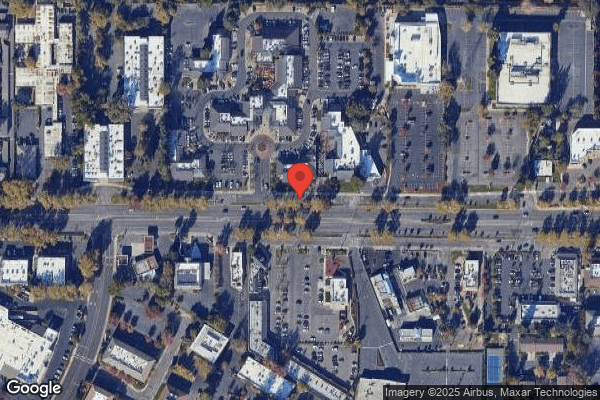
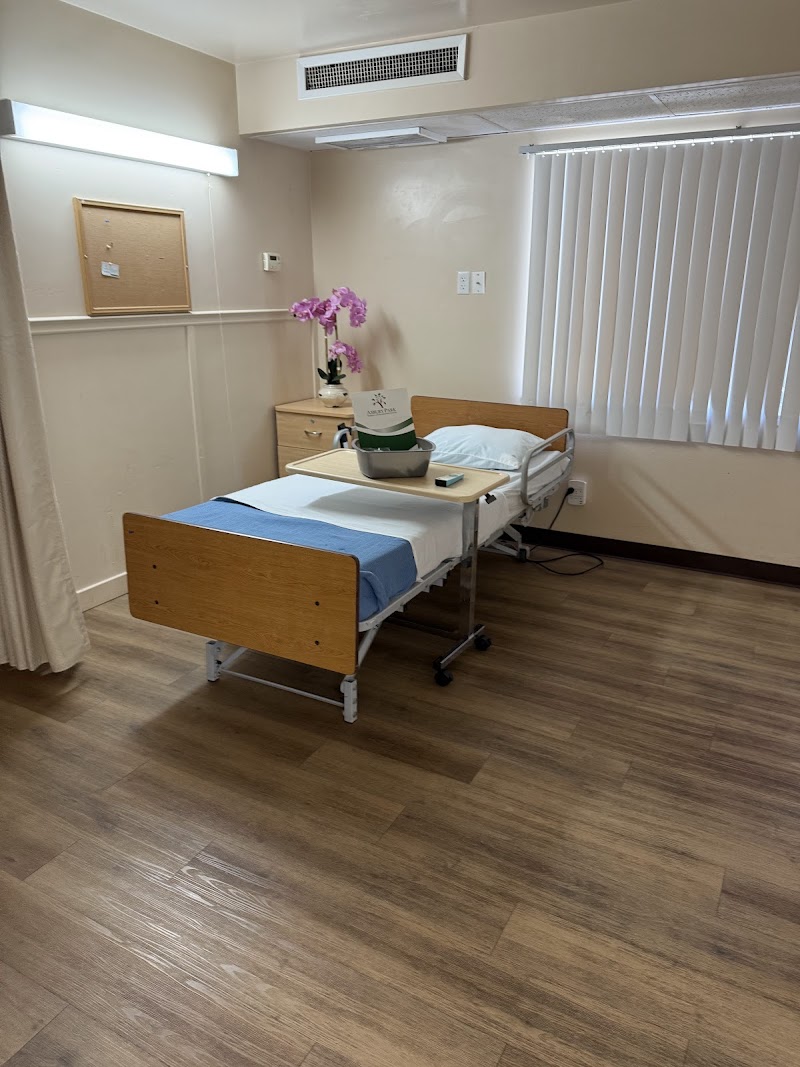
2257 FAIR OAKS BLVD., SACRAMENTO, CA 95825 (916) 649-2000
For profit - Limited Liability company 139 Beds CYPRESS HEALTHCARE GROUP Data: November 2025
Trust Grade
45/100
#742 of 1155 in CA
Last Inspection: January 2025

Within standard 12-15 month inspection cycle. Federal law requires annual inspections.

Overview

Asbury Park Nursing & Rehabilitation Center has received a Trust Grade of D, indicating below-average performance with some concerning issues. It ranks #742 out of 1155 facilities in California, placing it in the bottom half, and #29 out of 37 in Sacramento County, suggesting limited local options for better care. The facility is worsening, with reported issues increasing from 12 in 2024 to 22 in 2025. On a positive note, staffing is rated 4 out of 5 stars, indicating a relatively stable workforce, but the 43% turnover rate is around the state average. While the center has not incurred any fines, there have been serious incidents, such as a failure to reorder anticoagulant medication, which led to a resident developing a blood clot requiring hospitalization, and multiple failures in adhering to dietary guidelines, potentially risking the health of residents with specific dietary needs.

Trust Score
D
45/100
In California
#742/1155
Bottom 36%
Safety Record
Moderate
Needs review
Inspections
Getting Worse
12 → 22 violations
Staff Stability
○ Average
43% turnover. Near California's 48% average. Typical for the industry.
Penalties
✓ Good
No fines on record. Clean compliance history, better than most California facilities.
Skilled Nurses
✓ Good
Each resident gets 45 minutes of Registered Nurse (RN) attention daily — more than average for California. RNs are trained to catch health problems early.
Violations
⚠ Watch
50 deficiencies on record. Higher than average. Multiple issues found across inspections.
★★☆☆☆
2.0
Overall Rating
★★★★☆
4.0
Staff Levels
★★★★☆
4.0
Care Quality
★★☆☆☆
2.0
Inspection Score
Stable
2024: 12 issues
2025: 22 issues

The Good

  • 4-Star Staffing Rating · Above-average nurse staffing levels
  • 4-Star Quality Measures · Strong clinical quality outcomes
  • Full Sprinkler Coverage · Fire safety systems throughout facility
  • No fines on record
  • Staff turnover below average (43%)

    5 points below California average of 48%

Facility shows strength in staffing levels, quality measures, fire safety.

The Bad

2-Star Overall Rating

Below California average (3.1)

Below average - review inspection findings carefully

Staff Turnover: 43%

Near California avg (46%)

Typical for the industry

Chain: CYPRESS HEALTHCARE GROUP

Part of a multi-facility chain

Ask about local staffing decisions and management

The Ugly 50 deficiencies on record

1 actual harm
Aug 2025 1 deficiency
CONCERN (E) 📢 Someone Reported This

A family member, employee, or ombudsman was alarmed enough to file a formal complaint

Potential for Harm - no one hurt, but risky conditions existed

Deficiency F0925 (Tag F0925)

Could have caused harm · This affected multiple residents

Based on observation, interview, and record review, the facility failed to maintain an effective pest control program for a census of 134 residents, when flies were observed in the residents' rooms.Th...

Read full inspector narrative →
Based on observation, interview, and record review, the facility failed to maintain an effective pest control program for a census of 134 residents, when flies were observed in the residents' rooms.This failure decreased the facility's potential to maintain a pest free environment for the residents.Findings:A review of Resident 1's admission Record, dated 8/14/25, indicated Resident 1 was admitted to the facility in 2025.A review of Resident 2's admission Record, dated 8/14/25, indicated Resident 2 was admitted to the facility in 2021.During a concurrent observation and interview on 8/14/25 at 9:46 a.m. with Resident 1, Resident 1's room was observed. Resident 1 confirmed and stated there were flies in the room all the time. During a concurrent observation and interview on 8/14/25 at 9 a.m. with Resident 2, Resident 2's room was observed. The sliding door was opened and had no screen. Resident 2 confirmed and stated there were flies flying around the room.During an interview on 8/14/25 at 9:48 a.m. with Certified Nursing Assistance (CNA), CNA confirmed the sliding door in Resident 1 and Resident 2's room was opened and had no screen.During a concurrent observation and interview on 8/14/25 at 10:50 a.m. with the Administrator (ADM), ADM stated she had a blue light zapper to zap flies and bugs in her office.During a concurrent interview and record review on 8/14/25 at 11 a.m. with the Director of Maintenance (DOM), the May, June, and July 2025 invoices for pest control services were reviewed. DOM confirmed there was a fly issue in the building and stated 14 out of 16 sliding doors currently had no screening doors.During an interview on 8/14/25 at 11:43 a.m. with the Director of Nursing (DON), DON confirmed there were concerns regarding flies and expected staff to ensure the sliding doors were closed until maintenance install the screens.A review of the facility's policy titled, Pest Control, dated 5/2008, indicated, Our facility shall maintain an effective pest control program. This facility maintains an on-going pest control program to ensure that the building is kept free of insects and rodents.
Mar 2025 1 deficiency
CONCERN (D) 📢 Someone Reported This

A family member, employee, or ombudsman was alarmed enough to file a formal complaint

Potential for Harm - no one hurt, but risky conditions existed

Resident Rights (Tag F0550)

Could have caused harm · This affected 1 resident

Based on observation, interview, and record review, the facility failed to ensure dignity was promoted for one of three sampled residents (Resident 1), when the resident was left with a soiled brief f...

Read full inspector narrative →
Based on observation, interview, and record review, the facility failed to ensure dignity was promoted for one of three sampled residents (Resident 1), when the resident was left with a soiled brief for an extended period of time. This failure had the potential to result in Resident 1 not attaining his highest practicable social, physical, mental and psychosocial well-being. Findings: Resident 1 was admitted to facility summer 2016 with diagnosis of Muscle Atrophy and Wasting (weakening, shrinking, and loss of muscle). During a review of Resident 1's Minimum Data Set (MDS – a federally mandated resident assessment tool), dated 2/11/25, the MDS indicated Resident 1 had incontinence. During a review of Resident 1's Care Plan Report , dated 1/25, the care plan indicated, The resident is total dependent on 1 staff for toileting. During a concurrent observation and interview on 3/20/25 at 10:40 a.m. with Infection Preventionist (IP) outside Resident 1's room, the IP confirmed there was a strong odor coming from Resident 1's room. During an observation on 3/20/25 at 10:43 a.m. in Resident 1's room, there was a strong odor coming from Resident 1's room as Certified Nursing Assistant 1 (CNA 1) exited the room. CNA 1 did not check or changed Resident 1's incontinent brief. During an observation on 3/20/25 at 10:53 a.m. in Resident 1's room, Resident 1's call light was turned on. The strong odor in the Resident 1's room continued. During a concurrent observation and interview on 3/20/25 at 10:55 a.m. with Resident 1 in bed, Resident 1's call light remained turned on. Resident 1 indicated stated he was uncomfortable and upset because he was soiled. During a concurrent observation and interview on 3/20/25 at 10:58 with CNA 2 in Resident 1's room, CNA 2 entered and turned off the call light, and stated, I will let your CNA know. CNA 2 then left Resident 1's room and did not change his soiled brief. During an interview on 3/20/25 at 11:00 a.m. with CNA 2, CNA 2 stated, We check the patient and turn the light off. CNA 2 indicated she would get the primary CNA to change Resident 1's soiled brief. During an interview on 3/20/25 at 11:03 a.m. with the IP, the IP stated, Residents should not be lying in BM [bowel movements]. During a concurrent observation and interview on 3/20/25 at 11:20 a.m. with CNA 1 in Resident 1's room, CNA 1 indicated she would get his assigned CNA to change his soiled brief, and stated, I do not expect the resident to sit in BM. CNA 1 verified Resident 1 was soiled, and stated, It [soiled brief] can cause skin tears. During a concurrent observation and interview on 3/20/25 at 11:21 a.m. with Resident 1, Resident 1 remained lying in bed with strong odor of BM from his soiled brief. Resident 1 indicated he was still in his soiled brief and felt uncomfortable, and stated, They told me to wait. During an interview on 3/20/25 at 11:25 with Licensed Nurse 1 (LN 1), LN 1 stated, A soiled resident should be changed in a timely manner because of skin issues and dignity concerns. During an interview on 3/20/25 at 12:20 p.m. with Social Service Director (SSD), the SSD stated, [Resident 1] can tell you what he always needs and is alert and oriented. During an interview on 3/20/25 at 1:35 p.m. with Director of Nursing (DON), the DON stated her expectations for staff to change residents' incontinent briefs in a timely manner to avoid having their dignity effected, and stated, If the CNA was on break another person on break should cover and change the resident's soiled brief. During a review of the facility policy and procedures (P&P) tilted Dignity, dated 2025, the P&P indicated, Demeaning practices and standards of care that compromise dignity are prohibited. Staff are expected to promote dignity and assist residents for example .promptly responding to a residents request for toileting assistance.
Feb 2025 1 deficiency
CONCERN (D) 📢 Someone Reported This

A family member, employee, or ombudsman was alarmed enough to file a formal complaint

Potential for Harm - no one hurt, but risky conditions existed

Free from Abuse/Neglect (Tag F0600)

Could have caused harm · This affected 1 resident

**NOTE- TERMS IN BRACKETS HAVE BEEN EDITED TO PROTECT CONFIDENTIALITY** Based on interview, and record review, the facility failed to protect 3 of 6 sampled residents (Resident 2, Resident 4, and Resi...

Read full inspector narrative →
**NOTE- TERMS IN BRACKETS HAVE BEEN EDITED TO PROTECT CONFIDENTIALITY** Based on interview, and record review, the facility failed to protect 3 of 6 sampled residents (Resident 2, Resident 4, and Resident 6) from abuse by peer residents for a census of 136 when; 1. Resident 1 slapped Resident 2 in the face; 2. Resident 3 punched Resident 4 in the Thigh; and, 3. Resident 3 expressed verbal slurs to Resident 6. This failure resulted in 3 sampled residents being abused by peer residents and had the potential to cause physical injury and negatively impact their psychosocial well-being. Findings: 1. A review of Resident 1's admission record , indicated Resident 1 was admitted in January 2025 with multiple diagnoses including Major depressive disorder (a disorder that causes persistent feelings of sadness and loss of interest) and Schizophrenia (a chronic mental condition that affects how a person thinks, feels, and behaves). A review of Resident 1's Minimum Data Set (MDS-Federally mandated assessment tool), Cognitive Patterns, dated 1/15/2025, indicated Resident 1 had a Brief Interview for Mental Status (BIMS-tool to assess cognition) score of 15 out of 15 which indicated resident 1 was cognitively intact. During a concurrent observation and interview on 2/5/25 at 12:54 p.m. with Resident 1 in resident's room, Resident 1 was observed in wheelchair turning away from Department. Resident 1 stated does remember altercation last week with Resident 2. Resident 1 further stated, .I don't bug anyone I don't want anyone bugging me. It had to do something to make me mad . Resident no longer wanted to continue conversation regarding the altercation. A review of Resident 2's admission Record , indicated Resident was admitted on [DATE] with multiple diagnoses including Dementia (a condition that affects memory, thinking, and behavior), Diabetes Mellitus (when the body can't regulate sugar from the blood into the cells properly) and Repeated falls. A review of Resident 2's MDS, dated [DATE], indicated Resident 2's BIMS score of 4 out of 15 which indicated severe cognitive impairment. During a concurrent observation and interview on 2/5/25 at 12:48 p.m. at Resident 2's bedside, Resident 2 was observed sitting in wheelchair and was unable to answer questions regarding how long had been admitted at facility. Resident 2 stated could not remember altercation with another resident. During a telephone interview on 2/5/25 at 1:47 p.m. with Licensed Nurse 4 (LN 4), LN 4 stated earlier in the day on 1/30/25, Resident 2 was confused and went into Resident 1's room and later that day Resident 1 yelled at Resident 2 in the hallway and Resident 1 slapped Resident 2 in the face. During a record review of Resident 2's ' summary of change of condition' note dated 1/30/25, the note indicated, .Witness saw (Resident 1) . punch at resident 3x [3 times] . resident was questioned . He could not recall incident . During a record review of Resident 2's progress notes dated 1/30/25, the progress notes indicated, .the other resident was able to make physical contact with (Resident 2) . before staff intervened . During a record review of Resident 1's progress note dated 1/30/25, the progress indicated, . resident opened up .stated, that man got me messed up touching my bag .just keep him away from me . 2. A review of Resident 3's admission Record indicated Resident 3 was admitted [DATE] with multiple diagnoses including Cellulitis (bacterial skin infection) of abdominal wall and diabetes Mellitus. The record indicated resident was currently not at facility. A review of Resident 3's MDS dated [DATE] indicated Resident 3's BIMS score of 15 out of 15 which indicated Resident 3 was cognitively intact. A review of Resident 4's admission Record , indicated Resident 4 was admitted August of 2022 with multiple diagnoses including End Stage Renal Disease (Kidneys can no longer filter waste and excess fluids from the blood) and Chronic Respiratory Failure with Hypoxia (lungs are struggling to get enough oxygen into the blood). A review of Resident 4's MDS dated [DATE] indicated Resident 4 had a BIMS score of 5 out of 15 which indicated Resident 4 had severe cognitive impairment. During a concurrent observation and interview on 2/5/25 at 1:03 p.m. with Resident 4 at bedside, Resident 4 was observed laying supine in bed, Resident 4 stated, .You will die today . to Department. Resident 4 did not want to continue with the interview. A record review of Resident 3's summary of change of condition note dated 1/31/25 indicated, . [Resident 3] was seen grabbing [Resident 4's] thigh area with left hand and striking in a punching motion with his right hand to other resident thigh area . asked other resident if he was hit and resident stated yes . [Resident 3] continued to show verbal aggression to staff . During a telephone interview on 2/5/25 at 1:53 p.m. with Licensed Nurse 3 (LN 3), LN 3 stated that on 1/31/25, she saw Resident 3 at Resident 4's bed and Resident 3 punched Resident 4 in the thigh. LN 3 further stated Resident 3 had behaviors with their previous roommate during that shift. 3. A review of Resident 6's admission record indicated Resident 6 was admitted in January 2025 with multiple diagnoses including difficulty in walking and muscle weakness. During a concurrent observation and interview on 2/5/25 at 3:26 p.m. in facility lobby, Resident 6 was observed sitting in wheelchair with family members present and resident requested family member to translate. Resident 6 stated he was not comfortable in previous room with roommate (Resident 3). During a review of Resident 3's progress note dated 1/31/25 indicated . [Resident 3] woke up from a nap around 1930 [7:30 p.m.] agitated because roommate [Resident 6] had visitors . stating I can't sleep because those taco vendors are in their talking so loudly (started mocking their language). If I wanted to go to Mexico, I would've moved to Mexico . During a record review of resident 6's progress notes dated 1/31/25, the progress note indicated . Patient found in tears and emotionally upset; according to pt [ patient] and staff members who heard the interchange his roommate [Resident 3], was calling him names including nigger pt and all belongings moved into room . During a telephone interview on 2/5/25 at 2:15 p.m. with Licensed Nurse 5 (LN 5), LN 5 stated on 1/31/25, during medication administration Resident 3 was angry at his roommate (Resident 6) who had visitors. LN 5 further stated they did a room change because Resident 6 had a panic attack over the racial slurs yelled at him by Resident 3. During a review of Resident 6's Medication Administration Record (MAR) dated 1/1/25-1/31/25, the MAR indicated, . Hydroxyzine pamoate Oral Capsule 50 mg (Hydroxyzine Pamoate) Give 1 capsule by mouth one time only for anxiety for 1 day Start Date -1/31/2025- 2030 [8:30 p.m.] During a record review of Resident 6's care plan dated 1/31/25, the care plan indicated . Noted with impairment in psychosocial well-being related to verbal experience with former roommate . During an interview on 2/5/25 at 3:10 p.m. with Director of Nursing (DON), the DON stated Resident 6's room was changed after a discussion with nursing staff and the comments told to Resident 6 by Resident 3. DON further stated she did not know Resident 4 was moved with Resident 3 because Resident 4 had a history of verbal behaviors. DON further stated she was notified after the altercation between Resident 3 and Resident 4. The DON stated it was not permitted for a resident to abuse another resident. During a review of facility policy and procedure (P&P) titled, Abuse, Neglect, Exploitation or Misappropriation Prevention Program , Revised September 2025, the P&P indicated, . Residents have the right to be free from abuse . verbal, mental, or . physical abuse .
Jan 2025 19 deficiencies
CONCERN (D)

Potential for Harm - no one hurt, but risky conditions existed

Deficiency F0552 (Tag F0552)

Could have caused harm · This affected 1 resident

**NOTE- TERMS IN BRACKETS HAVE BEEN EDITED TO PROTECT CONFIDENTIALITY** Based on interview and record review, the facility failed to ensure informed consents were obtained from authorized resident rep...

Read full inspector narrative →
**NOTE- TERMS IN BRACKETS HAVE BEEN EDITED TO PROTECT CONFIDENTIALITY** Based on interview and record review, the facility failed to ensure informed consents were obtained from authorized resident representative for one of 31 sampled residents (Resident 97) when Resident 97's consent to treat, Physician Orders for Life-Sustaining Treatment (POLST - a form that contains written medical orders for healthcare professionals regarding specific medical treatments that can or cannot be done at the end-of life), and psychotropic medication (drugs that affect brain activities associated with mental processes and behaviors) consents were not signed by Resident 97's Responsible Party (RP). This failure increased the potential for Resident 97's RP to not be informed of the risks and benefits of treatment and medication. Findings: During a review of Resident 97's admission records, the records indicated Resident 97 was admitted in January 2024 with diagnoses that included major depressive disorder (a mood disorder that causes a persistent feeling of sadness and loss of interest) and dementia (a progressive state of decline in mental abilities). The records further indicated Resident 97's RP was the spouse. Resident 97's Minimum Data Set (MDS, a federally mandated resident assessment tool) indicated Resident 97 had severe cognitive impairment. During a review of Resident 97's Care Plan Conference Notes, dated 1/9/24, the notes indicated, Per physician's order, resident DOES NOT HAVE THE capacity to make his own decisions. Spouse remains responsible party (RP). During a review of Resident 97's Consent to Treat, dated 1/5/24, the consent indicated verbal consent was obtained from a name not listed on Resident 97's clinical record and was signed by two nurses. During a review of Resident 97's Physician Orders for Life-Sustaining Treatment (POLST), dated 1/5/24, the POLST indicated the form was signed by the same name not listed on Resident 97's clinical record. The form further indicated the verbal consent was obtained from Resident 97's daughter in law. During a review of Resident 97's Informed Consent, dated 5/21/24, the consent indicated Resident 97's consent for Seroquel (a psychotropic medication) was obtained verbally from Resident 97's son. During a review of Resident 97's Informed Consent for Psychotropic Medication Use, dated 11/4/24, the consent indicated Resident 97's consent for Seroquel was obtained verbally from Resident 97's son. During an interview on 1/9/25 at 8:44 a.m. with Licensed Nurse 1 (LN 1), LN 1 stated, During admission we have consents and get them sign by RP if they are here .If they are not here, we ask for verbal consent .It has to be responsible party .We have their name on the facesheet .It's important so we can provide the care they need. During an interview on 1/9/25 at 8:49 a.m. with the Assistant Director of Staff Development (ADSD), the ADSD stated, If resident is not able to sign the nurse will call the RP .If verbal, should be signed by two nurses .It's going to be the RP because families, they tend to [NAME], we can only give info to the RP because they are in charge for everything .We are not allowed to give info to anybody .If the name is not on the chart we can't give the information .They can't sign any document if they are not the RP .If the family member told us the RP gave them authority, we still verify and document. During a telephone interview on 1/9/25 at 1:19 p.m. with Resident 97's RP, the RP stated, I'm the responsible party for the resident. When asked if there are any other person deciding for Resident 97's care, the RP stated, Just me. During a concurrent interview and record review on 1/9/25 at 5 p.m. with the Nurse Supervisor/admission Nurse (NS), the NS stated, If the resident has capacity they sign it, if not we contact the responsible party .It can be over the phone then 2 nurses sign .The RP is on the chart or admission paper or hospital facesheet . The NS confirmed Resident 97's clinical records indicated Resident 97's RP was the spouse. The NS further confirmed Resident 97's admission consents and POLST were signed but not by the RP and stated, To be honest with you I can't remember .Maybe [RP] ask [daughter in law] to sign but there's no documentation .It could be a problem. During a concurrent interview and record review on 1/10/25 at 2:11 p.m. with the Director of Nursing (DON) and Nurse Consultant (NC) .The DON stated, For consents, we reach out for responsible party, it is indicated on their chart, not just any other person. The NC stated, Usually the hospital tells us who the RP, sometimes it is indicated as emergency contacts. The NC verified Resident 97's RP was the spouse and that Resident 97's admission consents, POLST and psychotropic medication were signed but not by Resident 97's RP and stated, We can't figure out how it happened .The expectation is, as the RP, she should have signed the consents upon admission .For psychotropic medications, it should be the RP .I'm not sure why they didn't call the RP .If emergency we can, but with consents, it has to be the responsible party .The RP has the decision making capacity whether they want to do or not to do the treatment .Issue is not honoring resident or RP rights. During a review of the facility's policy and procedure (P&P) titled Resident Representative, revised 2/2021, the P&P indicated, The facility treats the decisions of the resident representative as the decisions of the resident .2. If the resident is determined to be incompetent under the laws of the state .the rights of the resident will devolve to and will be exercised by the resident representative appointed to act on the resident's behalf . During a review of the facility's P&P titled Requesting, Refusing, and or Discontinuing Care or Treatment, revised 2/2021, the P&P indicated, Residents and resident representatives have the right to request, refuse and/or discontinue treatment .1. Resident/representatives are informed (in advance) of: a. the care that will be furnished or made available to the resident based on his or her assessment and plan of care; b. the risks and benefits of the proposed care, treatment, treatment alternatives or treatment options . During a review of the facility's P&P titled Psychotropic Medication Use, dated 7/2022, the P&P indicated, Residents (and/or representatives) have the right to decline treatment with psychotropic medications. a. The staff and physician will review with the resident/representative the risks related to not taking the medication as well as appropriate alternatives. b. The prescribing physician will obtain informed consent from the resident/and or representative for use of any psychotropic medication .c. The facility staff will verify with the resident and/or representative that informed consent was obtained by the prescribing physician prior to initiating psychotropic medications. Verification of informed consent should be documented in the medical record.
CONCERN (D)

Potential for Harm - no one hurt, but risky conditions existed

Deficiency F0583 (Tag F0583)

Could have caused harm · This affected 1 resident

Based on observation, interview, and record review, the facility failed to protect and keep secure, when not in use, confidential resident health data and records for a census of 132. This failure ha...

Read full inspector narrative →
Based on observation, interview, and record review, the facility failed to protect and keep secure, when not in use, confidential resident health data and records for a census of 132. This failure had the potential to expose and disclose personal and confidential health information to unauthorized individuals. Findings: During an observation on 1/7/25 at 4:30 p.m. in hallway 2A. Medication Cart 2A's computer was observed unattended and with a resident profile open in-between resident rooms facing out towards the resident hallway. During an interview on 1/7/25 at approximately 4:31 p.m. with Licensed Nurse 7 (LN 7), LN 7 stated he was aware the computer was left unlocked and unattended with resident records accessible. He stated resident records should never be left open and accessible to unauthorized individuals and that doing so would be a violation of their confidentiality. During an interview on 1/8/25 at 10:58 a.m. with the Director of Nursing (DON), the DON stated that it was her expectation that nursing staff ensured resident records were not visible to any unauthorized staff. During a review of the facility's policy and procedure (P&P) titled, Electronic Medical Records, dated March 2014, the P&P indicated, .Only authorized persons who have been issued a password and user ID code will be permitted access to the electronic medical records system .
CONCERN (D)

Potential for Harm - no one hurt, but risky conditions existed

Deficiency F0625 (Tag F0625)

Could have caused harm · This affected 1 resident

**NOTE- TERMS IN BRACKETS HAVE BEEN EDITED TO PROTECT CONFIDENTIALITY** Based on interview and record review, the facility failed to provide written notice of bed hold for one of 31 sampled residents ...

Read full inspector narrative →
**NOTE- TERMS IN BRACKETS HAVE BEEN EDITED TO PROTECT CONFIDENTIALITY** Based on interview and record review, the facility failed to provide written notice of bed hold for one of 31 sampled residents (Resident 15) when Resident 15 was transferred to the hospital and Resident 15's Responsible Party (RP) was not provided written notice of bed hold for return to the facility. This failure had the potential for Resident 15's RP to not be informed of Resident 15's right to return to the facility. Findings: A review of Resident 15's admission Record indicated Resident 15 was initially admitted to the facility in August 2022 with multiple diagnoses including end stage renal disease (loss of kidney function, kidneys cannot remove waste from the body) with dependence on dialysis (treatment that removes waste and excess fluid from the body), chronic respiratory failure (lungs cannot get enough oxygen into the blood or eliminate carbon dioxide), and heart failure (heart does not pump blood as well as it should). The admission Record indicated Resident 15 was readmitted to the facility in January 2025. A review of Resident 15's Minimum Data Set (MDS- a federally mandated assessment tool), Cognitive Patterns, dated 11/1/24, indicated Resident 15 had a Brief Interview for Mental Status (BIMS- tool to assess cognition) score of 5 out of 15 that indicated Resident 15 was severely cognitively impaired. A review of Resident 15's Order Summary Report indicated order dated 1/7/25 Resident does not have capacity to make his/her own decisions. A review of Resident 15's Order Audit Report, indicated order dated 12/26/24 .Transfer to acute 12/26/2024 for further evaluation one time only for 7 Days may hold bed up to 7 days . A review of Resident 15's Progress Note, dated 12/26/24, indicated .PT [patient] went to dialysis at 0800 [8:00 a.m.]. Pt was sent out of dialysis to [name of acute care hospital] .for hypotension and infected catheter site. MD [medical doctor] notified, nurse attempted to contact RP but the call went to voicemail . A review of Resident 15's clinical record indicated Transfer and Bed Hold Form(s), that reflected Resident 15's RP consent to bed hold were received for discharges on 7/23/24, 9/12/24, and 10/22/24. The clinical record did not contain documentation that Resident 15's RP was notified of or consented to bed hold for transfer to hospital on [DATE]. During a concurrent interview and record review on 1/9/25 at 4:20 p.m. with the Director of Nursing (DON), the DON acknowledged that Resident 15's clinical record did not reflect that Resident 15's RP was notified of bed hold for Resident 15's transfer to the hospital on [DATE]. The DON stated the Transfer and Bed Hold Form should have been completed when nurse was notified of Resident 15's transfer to the hospital and the Progress Note, dated 12/26/24, did not indicate RP was notified of bed hold. A review of the facility's Policy and Procedure (P&P) titled Bed-Holds and Returns, revised 3/22, indicated .All residents/representatives are provided written information regarding the facility bed-hold policies .at the time of transfer (or, if the transfer was an emergency, within 24 hours) . A review of the facility's P&P titled Transfer or Discharge, Facility-Initiated, dated 10/22, indicated .Once admitted to the facility, residents have the right to remain in the facility. Facility-initiated transfers and discharges, when necessary, must meet specific criteria and require resident/representative notification .Notice of Transfer or Discharge (Emergent or Therapeutic Leave) .Residents who are sent emergently to an acute care setting, such as a hospital, are permitted to return to the facility . Notice of Facilities Bed-Hold and Return policies are provided to the resident and representative within 24 hours .When a resident is transferred or discharged from the facility. the following information is documented in the medical record .That an appropriate notice was provided to the resident and /or legal representative .
CONCERN (D)

Potential for Harm - no one hurt, but risky conditions existed

Deficiency F0658 (Tag F0658)

Could have caused harm · This affected 1 resident

**NOTE- TERMS IN BRACKETS HAVE BEEN EDITED TO PROTECT CONFIDENTIALITY** Based on observation, interview, and record review, the facility failed to follow professional standards of quality as stipulate...

Read full inspector narrative →
**NOTE- TERMS IN BRACKETS HAVE BEEN EDITED TO PROTECT CONFIDENTIALITY** Based on observation, interview, and record review, the facility failed to follow professional standards of quality as stipulated by their admission policy and procedure to ensure accuracy of admission medications for one of 31 sampled residents (Resident 487) when a psychotropic (drugs that affects brain activities associated with mental processes and behavior) medication order was not carried over upon admission. This failure resulted in Resident 487 not receiving psychotropic medication for eight days and increased the potential for Resident 487 to experience emotional distress. Findings: A review of Resident 487's admission record, indicated Resident 487 was admitted [DATE] with multiple diagnoses including aftercare following joint replacement surgery. A review of Resident 487's Minimum Data Set (MDS- a federally mandated assessment tool), Cognitive Patterns, dated 1/3/25, indicated Resident 487 had a Brief Interview for Mental Status (BIMS- tool to assess cognition) score of 15 out of 15 indicating the resident was cognitively intact. A review of Resident 487's Hospital History and Physical (H and P) dated 12/30/24, indicated History of depression (a mental health condition that involves persistent feelings of sadness, hopelessness, and loss of interest in activities) and indicated current outpatient medications included Citalopram (Celexa, medication used to treat depression) 20 mg (milligram, a unit of measurement) take 1 tablet by mouth daily. A review of Resident 487's record titled, SNF [skilled nursing facility, from hospital] orders, dated 12/30/24 indicated, Citalopram 20 mg Take 1 tablet daily. During a review of Resident 487 Physician's progress note dated, 12/31/24, there was no Celexa order documented. During a review of Resident 487's clinical record on 1/7/25, there was no documented order for Celexa since admission. During a concurrent observation and interview on 1/7/25 at 4:34 p.m. with Resident 487, Resident 487 was observed shaking and crying when talking to surveyor with visible sweat running down face and arms. Resident 487 stated, she was not receiving her Celexa medication. Resident 487 continued to cry and further stated she was going through antidepressant withdrawal symptoms. Resident 487 stated she was not given Celexa for over a week now, and she told the facility staff about the medication. Resident 487 verbalized she currently felt jerking feelings, nausea, dizziness when trying to get out of bed and felt tired, and she wanted her Celexa. During a follow up interview on 1/8/25 at 8:52 a.m. with Resident 487, she stated her withdrawal symptoms including the dizziness, nausea, muscle pain, terrible headache had started on 1/7/25. Resident 487 further stated she had asked the nurses multiple times to ask the physician for the medication. Resident 487 further stated felt dizziness and heaviness, heard ringing in her ears and the symptoms were constant and did not go away. Resident 487 added, .not having my Celexa is interfering with my recovery and causing me harm. During a concurrent interview and record review on 1/8/25 at 9:02 a.m. with Licensed Nurse 2 (LN 2), LN 2 confirmed the order for Citalopram was not listed under resident medications. LN 2 further confirmed order for monitoring antidepressant medication side effects and order for monitoring target behaviors for depression were present with dates of 12/30/24. During a concurrent interview and record review on 1/8/25 at 4:24 p.m. with Nurse Supervisor (NS), the NS stated her responsibilities included reviewing admission records, entering admission orders, and notifying the pharmacy. NS confirmed she was the admitting nurse for Resident 487 and further confirmed there was a discharge order for Celexa from the hospital and it was missed upon admission. During a concurrent interview and record review on 1/10/25 at 9:55 a.m. with the Director of Nursing (DON), the DON stated the admission process was to review orders from the hospital and the orders were reconciled with the admitting physician. The DON further stated when residents arrive, the orders are reviewed and nursing staff input the orders and notify pharmacy. The DON confirmed Resident 487's Celexa was missed and further confirmed the medication was not given for over 8 days. During a review of the facility's policy titled, Reconciliation of Medications on Admission, revised July 2017, the policy indicated, .1. Medication reconciliation is the process of comparing pre-discharge medications to post-discharge medications by creating an accurate list of both prescription and over the counter medications that includes the drug name, dosage, frequency, route, and indication for use for the purpose of preventing unintended changes or omissions at transition points in care. 2. Medication reconciliation reduces medication errors . 4. Medication reconciliation helps to ensure that medications, routes and dosages have been accurately communicated to the Attending Physician and care team .
CONCERN (D)

Potential for Harm - no one hurt, but risky conditions existed

Deficiency F0687 (Tag F0687)

Could have caused harm · This affected 1 resident

**NOTE- TERMS IN BRACKETS HAVE BEEN EDITED TO PROTECT CONFIDENTIALITY** Based on observation, interview, and record review, the facility failed to ensure one of 31 sampled residents (Resident 51) rece...

Read full inspector narrative →
**NOTE- TERMS IN BRACKETS HAVE BEEN EDITED TO PROTECT CONFIDENTIALITY** Based on observation, interview, and record review, the facility failed to ensure one of 31 sampled residents (Resident 51) received necessary foot care when toenails were long and thick. This failure increased the potential for Resident 51 to experience pain and infection. Findings: A review of the admission Record indicated Resident 51 was initially admitted [DATE] with diagnoses including type 2 diabetes mellitus (DM- a disorder characterized by difficulty in blood sugar control and poor wound healing) with diabetic chronic kidney disease (high blood sugar levels damage the kidney's ability to function). A Brief Interview for Mental Status (BIMS- an assessment tool used by facilities to screen and identify memory, orientation, and judgement status of the resident) indicated Resident 51 was cognitively intact with a score of 15 out of 15. A review of Resident 51's physician order dated 12/16/24 indicated, May receive podiatry care [the foot doctor examines the foot and ankle to correct problems identified] Q [every] 2 months and treatment as needed. In an interview on 1/7/25 at 10:52 a.m., Resident 51 stated her toenails were long and she had not seen the podiatrist (a person that diagnose and treat any foot or ankle problem) since admission. A concurrent observation and interview was conducted on 1/8/25 starting at 8:34 a.m., with Certified Nursing Assistant 2 (CNA 2) inside Resident 51's room. Resident 51's toenails on both feet were long and thick. The CNA 2 stated she saw Resident 51's toenails about a month ago and she wrote need clipping. Resident 51 stated her toenails had not been trimmed since she was admitted . A follow-up interview was conducted on 1/8/25 at 8:41 a.m. with CNA 2. The CNA 2 stated the skin around Resident 51's toes were dry, toenails were long and thick, and toenails need to be clipped. The CNA 2 further stated every time she gives a shower to residents, she checks the nails and if nails were long, she puts a note in the shower sheet. In an interview on 1/9/25 at 11:55 a.m., the Assistant Director of Staff Development (ADSD) stated all concerns written in the shower sheet would be directed to the person responsible. The ADSD further stated the licensed nurse had to sign the shower sheet and had to notify the Social Services Director (SSD) for issues with toenails. A review of the shower sheets for December indicated Resident 51 had refused showers on 12/7, 12/11, and 12/31/24. The shower sheet dated 1/7/25 indicated toenails need clipping. In a concurrent interview and record review on 1/9/25 starting at 3:55 p.m., the SSD stated she made sure residents receive ancillary services like podiatry. The SSD further stated she never received a note or order from the nurse regarding Resident 51's toenails being long. The SSD confirmed the form used by podiatry dated 8/28/24 indicated on the next visit. The SSD stated Resident 51 goes to dialysis on Monday, Wednesday, and Friday and resident was on dialysis on 8/28/24 (Wednesday). The SSD further stated on the SSD assessment dated [DATE], Resident 51 requested to be seen by the podiatrist. A concurrent observation and interview was conducted with Nurse Supervisor (NS) on 1/9/25 at 4:23 p.m., inside Resident 51's room. When NS saw Resident 51's toenails, the NS stated resident needed podiatrist for nail care. The NS described Resident 51's toenails had overgrowth and possible fungus (cause toenails to become thick, brittle, discolored, and separated from the nail bed). In a concurrent interview and record review on 1/9/25 at 4:37 p.m., the NS stated it was another licensed staff who conducted the admission and readmission for Resident 51. The NS confirmed Resident 51's admission and readmission notes did not include the condition of the toenails. In a follow-up interview on 1/10/25 at 11:30 a.m., the SSD stated the facility had no documented evidence Resident 51's podiatry was rescheduled when resident was not seen by podiatrist on 8/28 and/or 10/30 as scheduled. The SSD further stated she checked the facility's internal communication and she did not receive a note regarding Resident 51's needing podiatry care. In an interview on 1/10/25 at 11:38 a.m., the Director of Nursing (DON) stated her expectation was for the licensed nurse (LN) to take a look at resident's toenails and if there was a note from the CNA in the shower sheets, then the LN will notify the SSD. A review of the facility's policy revised February 2018 and titled, Fingernails/Toenails, Care of indicated, The purpose of this procedure are to clean the nail bed, to keep nails trimmed, and to prevent infections .do not trim the nails of diabetic residents .Stop and report to the nurse supervisor if .nails are too hard or too thick .Resident may be referred to facility contracted podiatry services if facility is unable to trim toenails.
CONCERN (D)

Potential for Harm - no one hurt, but risky conditions existed

Deficiency F0698 (Tag F0698)

Could have caused harm · This affected 1 resident

Based on interview and record review, the facility failed to ensure an ongoing communication and collaboration for the development and implementation of the dialysis (a treatment to cleanse the blood ...

Read full inspector narrative →
Based on interview and record review, the facility failed to ensure an ongoing communication and collaboration for the development and implementation of the dialysis (a treatment to cleanse the blood of wastes and extra fluids artificially through a machine when the kidney(s) have failed) care plan by the facility and dialysis staff for one of 31 sampled residents (Resident 36), when Resident 36' s anemia (a condition where the body does not have enough healthy red blood cells) medication was not communicated with the dialysis clinic and was signed as given at dialysis. This failure resulted in the facility not being aware of Resident 36's current anemia management and decreased the facility's potential to monitor Resident 36 for the medication's effectiveness and side effects. Findings: During a review of Resident 36's admission record, the record indicated Resident 36 was admitted in October 2024 with diagnoses that included end-stage renal disease (ESRD, irreversible kidney failure), dependence on renal dialysis, and anemia. Resident 36's Minimum Data Set (MDS, a federally mandated resident assessment tool) indicated Resident 36 had intact cognition. During a review of Resident 36's care plan, revised on 11/27/24, the care plan indicated, The resident has anemia r/t [related to] ESRD .Give medications as ordered. Monitor for side effects, effectiveness . During a review of Resident 36's physician order, dated 12/5/24, the order indicated, Dialysis Mon Wed Fri check in time 9am Chair time 9:15am-12:30pm . During a review of Resident 36's Medication Administration Records (MARs), dated December 2024 and January 2024, the MARs indicated, Epoetin Alfa [a short-acting, lab-made version of erythropoietin (EPO), a hormone the kidneys naturally produce to stimulate red blood cell production in the bone marrow] Injection Solution 4000 UNIT/ML [milliliters, a unit of measurement] .Inject 1 syringe subcutaneously [given in the fatty tissue under the skin] every day shift every Mon, Wed, Fri for ANEMIA TO BE GIVEN AT DIALYSIS CENTER .START DATE 11/29/2024 . The MARs indicated the medication doses were signed every Monday, Wednesday, and Friday and were coded as given at dialysis. A review of Resident 36's dialysis communication sheets for December 2024 and January 2025 indicated Resident 36 did not receive Epoetin Alfa during dialysis. During a review of Resident 36's dialysis communication sheet, dated 12/20/24, the sheet indicated Resident 36 received Mircera (Epoetin beta - a long-acting erythropoiesis-stimulating agent used for the treatment of anemia) 175 mcg (micrograms, a unit of measurement). During an interview on 1/9/25 at 10:08 a.m. with Licensed Nurse 1 (LN 1), LN 1 stated, For epoetin, we document it as given at dialysis .When they come back it's written on the dialysis communication form . During a telephone interview on 1/10/25 at 12:37 p.m. with the Dialysis Nurse (DN), the DN confirmed Resident 36 received dialysis every Mondays, Wednesdays, Fridays, and on anemia protocol. DN further stated Resident 36 received Mircera 175 mcg every two weeks and that Epoetin Alfa was discontinued on 4/5/2023 and started on Mircera after. During a joint interview and record review on 1/10/25 2:11pm with the Director of Nursing (DON) and Nurse Consultant (NC), the NC stated, Generally dialysis will communicate meds, what they give .Since its one of the routine meds that they are giving, they don't always communicate. The DON confirmed the nurses are signing the Epoetin Alfa off. The NC reviewed dialysis communication sheets and stated, I could not find epo [Epoetin Alfa] and we will verify with dialysis if it was actually being given .We need to be aware of the meds they are on, for continuity of care. During an interview on 1/10/25 at 3:50 p.m. with the DON, the DON stated, We called dialysis, spoke with [DN], [dialysis company] only uses Mircera .[Resident 36] takes 175mg every 2 weeks and she's been on this since 10/30/24 and since admission [to the facility] .Acute dialysis uses [Epoetin Alfa] in the hospital but the clinics use Mircera . During a review of the facility's policy and procedure (P&P) titled Anemia - Clinical Protocol, revised 11/2018, 1. The nursing staff and physician will identify individuals with a history of anemia; for example, recent hospitalization with postoperative anemia, anemia associated with chronic renal failure .2. Nursing assessment will include: k. All current medications, any recent changes in medications and allergies . During a review of the facility's P&P titled End-Stage Renal Disease, Care of a Resident with, revised 9/2010, the P&P indicated, Residents with end-stage renal disease (ESRD) will be cared for according to currently recognized standards of care .4. Agreements between this facility and the contracted ESRD facility include all aspects of how the resident's care will be managed, including: a. how the care plan will be developed and implemented; b. how information will be exchanged between the facilities .
CONCERN (D)

Potential for Harm - no one hurt, but risky conditions existed

Drug Regimen Review (Tag F0756)

Could have caused harm · This affected 1 resident

Based on interview and record review, the facility failed to ensure the consultant pharmacist (CP) identified and reported to the facility irregularities related to the medication regimen for one of 3...

Read full inspector narrative →
Based on interview and record review, the facility failed to ensure the consultant pharmacist (CP) identified and reported to the facility irregularities related to the medication regimen for one of 31 sampled residents (Resident 128) during the Medication Regimen Review (MRR). This failure resulted in inadequate monitoring and had the potential for medications not being optimized for best possible health outcome. Findings: A review of Resident 128's medical record indicated Resident 128 was admitted to the facility in 12/9/24 with diagnoses including Major Depressive Disorder (a mood disorder that causes a persistent feeling of sadness and loss of interest), schizophrenia unspecified (a mental illness that is characterized by disturbances in thought) and diabetes (a chronic disease that affects how the body uses sugar for energy). A review of Resident 128's medical record indicated the following physician's order for Seroquel (an antipsychotic medication to treat mental illness): -Seroquel 25 mg (milligrams, a unit of measurement): give 1 tablet by mouth one time a day for depression (a constant feeling of sadness and loss of interest, which stops you doing your normal activities) m/b (manifested by) verbalization of being sad, dated 12/9/2024, discontinued on 12/10/2024; -Seroquel 25 mg: give 1 tablet by mouth one time a day for mood disorder m/b episodes of anger outburst, dated 12/10/2024, discontinued on 1/6/2025; and, -Seroquel: give 225 mg by mouth at bedtime for depression m/b nightmares, dated 1/4/2025, discontinued on 1/6/2025. A review of facility's MRRs dated December 2024 indicated the CP did not complete a MRR for Resident 128. During an interview on 1/9/2025 at 1:35 p.m. with Pharmacy Manager (PM), PM confirmed CP did not complete a MRR for Resident 128. PM stated It was the responsibility of the CP to ensure a MRR was completed for all residents. During a concurrent interview and record review on 1/9/2025 at 4:01 p.m. with Director of Nursing (DON), MRRs dated December 2024 were reviewed. The DON confirmed there was no MRR for Resident 128. During a review of the facility's policy and procedure (P&P) titled, Medication Regimen Reviews, dated May 2019, the P&P indicated, .The consultant pharmacist performs a medication regimen review (MRR) for every resident in the facility receiving medication . Medication regimen reviews are done upon admission .
CONCERN (D)

Potential for Harm - no one hurt, but risky conditions existed

Deficiency F0806 (Tag F0806)

Could have caused harm · This affected 1 resident

Based on observation, interview, and record review, the facility failed to accommodate the special dietary requirement for two residents (Resident 106 and 108) during the lunch observation on 1/7/25. ...

Read full inspector narrative →
Based on observation, interview, and record review, the facility failed to accommodate the special dietary requirement for two residents (Resident 106 and 108) during the lunch observation on 1/7/25. This deficient practice had the potential to result in meal dissatisfaction and decreasing meal intake that may lead to further compromising medical and nutrition status and/or weight loss of residents. Findings: A review of the admission Record for Resident 106 indicated Resident 106 had other diagnoses including dysphagia (difficulty swallowing). During a dining observation on 1/7/25 at 12:18 p.m., Resident 106's meal ticket (a ticket including resident's diet, date, allergies, specific food and beverage items, dislikes, and likes) indicated Puree (food has been ground to a soft, smooth consistency) with nectar thick liquids (like heavy syrup consistency) and Resident 106's dislikes included broccoli. During a concurrent observation and interview on 1/7/25 at 12:27 p.m., Certified Nursing Assistant (CNA) 1 stated the puree green vegetable in Resident 106's plate was broccoli. During an interview on 1/7/25 at 12:30 p.m., Resident 106 stated he did not like broccoli. During a follow-up interview on 1/7/25 at 12:47 p.m., CNA 1 stated she offered the broccoli to Resident 106 and resident did not want it. During an interview on 1/10/25 at 11:55 a.m., Director of Nursing (DON) stated her expectation was for staff to review the meal ticket when assisting resident for meals. The DON further stated if a dislike was served, the staff should get an alternative for that food item. An observation of lunch dining and a concurrent interview in the resident's dining room was conducted on 1/7/25 at 12:13 p.m. with Resident 108. Resident 108's meal ticket showed resident 108 was on mechanical soft diet (a texture-modified diet that consists of foods are easy to chew and/or swallow) and Resident 108 liked [Brand name] gelato (Italian ice-cream). It was noted Resident 108 did not receive the gelato on his meal tray. A concurrent interview with Assistant Director of Staff Development (ADSD), ADSD confirmed that there was no gelato on Resident 108's meal and stated that Resident 108 should receive gelato on his meal tray as stated on the meal ticket. During an interview with Director of Dietary Services (DDS) on 1/8/25 at 2:21 p.m., DDS stated likes on the meal ticket which indicated resident's preferences. She further stated the preferences needed to be honored. A review of facility policy and procedure titled, Food Preferences, dated 2023, indicated resident's food preferences should be followed and honored. For dislikes, facility would substitute all disliked foods to the appropriate food group.
CONCERN (D)

Potential for Harm - no one hurt, but risky conditions existed

Deficiency F0919 (Tag F0919)

Could have caused harm · This affected 1 resident

**NOTE- TERMS IN BRACKETS HAVE BEEN EDITED TO PROTECT CONFIDENTIALITY** Based on observation, interview, and record review, the facility failure to ensure a call light (a device used by a resident to ...

Read full inspector narrative →
**NOTE- TERMS IN BRACKETS HAVE BEEN EDITED TO PROTECT CONFIDENTIALITY** Based on observation, interview, and record review, the facility failure to ensure a call light (a device used by a resident to signal the need for help) were accessible for 2 of 31 sampled residents (Resident 22 and Resident 82), when Resident 22 and Resident 82 were not physically able to use the call light provided when it was out of reach. These failures had the potential to result in unmet resident needs and delayed staff response. Findings: 1a. A review of Resident 22's admission record, indicated Resident 22 was admitted with multiple diagnoses including generalized muscle weakness. A review of Resident 22's Minimum Data Set (MDS- a federally mandated assessment tool), Cognitive Patterns, dated 12/17/24, indicated Resident 22 had a Brief Interview for Mental Status (BIMS- tool to assess cognition) score of 11 out of 15 indicated moderate cognitive impairment and resident 22's mobility was for Substantial/maximal assistance (staff does more than half of the effort for any mobility needs). During a review of Resident 22's care plan dated 3/8/24 indicated, . Ensure call light is within reach when in room. Monitor q[every] 2hrs and prn[as needed]. During a concurrent observation and interview on 1/7/25 at 5:04 p.m. with Certified Nursing Assistant 5 (CNA 5), the CNA 5 confirmed observation of Resident 22's call light located on the floor, left side of the resident bed and out of resident's reach. 1b. A review of Resident 82's admission record, indicated Resident 82 was admitted 2024 with multiple diagnoses including generalized muscle weakness. A review of Resident 82's MDS, dated [DATE], indicated Resident 82 had a BIMs score of 15 out of 15 indicating Resident 82 was cognitively intact and Resident 82's mobility indicated was dependent on staff for mobility needs. During a review of Resident 82's care plan dated 11/16/24, the interventions included for call light to be in reach. During a concurrent observation and interview on 1/7/25 at 5:02 p.m., Resident 82's call light was observed pinned in between the bed rail and the bed frame, and it was out of reach for the resident. Resident 82 stated, I need help being repositioned, I can't reach my call light and call for help. During a concurrent observation and interview on 1/7/25 at 5:05 p.m. with CNA 5, CNA 5 confirmed call light was pinned in between the bed rail and out of reach for Resident 82. CNA 5 stated .that would be trouble for residents to call for help from staff, it is a risk for their safety. During an interview on 1/10/2025 at 9:55 a.m. with the Director of Nursing (DON), the DON was presented with the photos taken for Resident 22 and Resident 82's call lights. The DON confirmed the call lights for both residents were out of reach. The DON stated, her expectation was for call lights to be to be placed within easy reach. The DON further stated, .staff are to go into resident rooms and make call lights available for resident use. During a review of facility's policy titled, Call light System, Resident, dated September 2022, the policy indicated, . Each resident is provided with a means to call staff directly for assistance from his/her bed .
CONCERN (E)

Potential for Harm - no one hurt, but risky conditions existed

Pharmacy Services (Tag F0755)

Could have caused harm · This affected multiple residents

Based on observation, interview, and record review, the facility failed to ensure: 1. Accurate accountability and effective storage of controlled medications (those with high potential for abuse or ad...

Read full inspector narrative →
Based on observation, interview, and record review, the facility failed to ensure: 1. Accurate accountability and effective storage of controlled medications (those with high potential for abuse or addiction) when random controlled medication audits for three out of four residents (Residents 58, 65, and 69) did not reconcile. The medications were signed out of the Controlled Drug Record (CDR, an inventory sheet that keeps record of the usage of controlled medications) but were not documented accurately on the Medication Administration Record (MAR) to indicate they were given to the residents. 2. Medication accountability when two out of four medication carts' controlled drug sign-in/sign-out sheets (a sheet used to reconcile inventory of controlled medications in the medication cart by the outgoing and incoming nurse during a shift change) were missing signatures of the outgoing and incoming nursing shift; 3. An efficient system was in place to accurately document and secure emergency medications (E-Kit) for a census of 132. 4. Medications were secured safely when multiple bottles containing crushed and partially crushed medications, including controlled medications were found to be retrievable in three out of four medication carts (Med Cart). These failures resulted in the facility not having accurate accountability of controlled medications and potential for abuse or misuse of these medications, the potential for emergency medications to be unavailable when needed, and the potential for not meeting the residents' therapeutic needs or worsening of their medical conditions. Findings: 1. Resident 69 had a physician's order dated 11/27/23, for tramadol (a medication to treat pain) 50 milligrams (mg, a unit of measurement), 1 tablet by mouth every 6 hours as needed for moderate pain and 2 tablet by mouth every 6 hours as needed for severe pain. The CDR indicated 2 tablets were signed out on 12/29/24 at 7:50 a.m. and 2 tablets on 12/30/24 at 8:48 a.m. The MAR did not indicate tramadol was administered to Resident 69 on these dates or times. Resident 58 had a physician's order dated 12/12/24, for oxycodone (a medication to treat pain) 5 mg, 1 tablet by mouth every 4 hours as needed for moderate pain and give 2 tablets by mouth every 4 hours as needed for severe pain. The CDR indicated 2 tablets were signed out on 1/3/25 at 9 p.m. The MAR did not indicate oxycodone was administered to Resident 58 on that date or time. The CDR indicated 2 tablets were signed out on 1/5/25 at 8 p.m. and 2 tablets on 1/6/25 at 11:16 a.m. The MAR indicated only 1 tablet was administered on 1/5/25 and 1 tablet on 1/6/25 to Resident 58. Resident 65 had a physician's order dated 8/30/24, for tramadol 50 mg, 1 tablet by mouth every 12 hours as needed for moderate to severe pain and 1 tablet by mouth at bedtime for pain management. The CDR indicated 1 tablet was signed out on 12/6/24 at 5 p.m. but the MAR did not indicate tramadol was administered to Resident 65 on that date or time. During an interview on 1/8/25 at 11:03 a.m. with the Director of Nursing (DON), the DON stated nursing staff were expected to document administered doses of controlled medication on both the MAR and CDR. DON stated it was important to document administered doses on the MAR to inform the next nurse as to when a medication was last administered and the CDR was for accountability of how much controlled medication was in the medication cart. During a review of the facility's policy and procedure (P&P) titled, IIA-7 Controlled Medications, dated 3/2018, the P&P indicated, .When a controlled medication is administered, the licensed nurse administering the medication immediately enters the following information on the accountability record and the medication administration record (MAR): 1) Date and time of administration 2) Amount administered. 3) Signature of the nurse administering the dose, completed after the medication is actually administered . 2. During a concurrent interview and record review on 1/7/25 at 4:55 p.m. with Licensed Nurse 7 (LN7), the Shift to Shift Narcotic Count Verification for Controlled Drug Record (CDR), dated 1/2025 for Medication Cart 2A was reviewed. The sign-in/sign-out sheet indicated nine missing signatures. LN 7 confirmed the finding and stated the outgoing and incoming nurses were to both sign between shift changes to confirm the count of the controlled medications. During a concurrent interview and record review on 1/7/25 at 5:08 p.m. with LN 8, the Shift to Shift Narcotic Count Verification for Controlled Drug Record (CDR) dated 1/25 for Medication Cart 1C was reviewed. The sign-in/sign-out sheet indicated five missing signatures. LN 8 acknowledged there were missing signatures, including his own, and stated he should have signed the sheet at the beginning of his shift. During an interview on 1/8/25 at 11:03 a.m. with the DON, the DON stated the nurses were expected to do a shift-to-shift controlled medication count. She stated the nurses were expected to sign the sign-in/sign-out sheet every single shift and every single date should have been filled out. During a review of the facility's P&P titled, Controlled Substance, dated 4/19, the P&P indicated, .Controlled substances are reconciled upon receipt, administration, disposition and at the end of each shift . 11. At the End of Each Shift: a. Controlled medications are counted at the end of each shift. The nurse coming on duty and the nurse going off duty determine the count together . 3. During an inspection of the Medication Storage Room at Station 2 on 1/7/25 at 12:46 p.m. with LN 5, the E-kit containing controlled medications was observed with a red tag (indication the E-kit had been opened by the facility). The E-kit log inside indicated 1 tablet of oxycodone 5 mg was removed on 1/7/25. An inspection of the list of contents affixed to the outside of the E-kit indicated it was provided to the facility with 8 oxycodone 5 mg tablets, 1 that was documented on an E-kit log was removed, which left 1 tablet undocumented and unaccounted for. During an interview on 1/7/25 at 12:48 p.m. at Station 2 Medication Storage Room with LN 5, LN 5 confirmed there were 6 tablets of oxycodone left in the E-kit. LN 5 stated the nurse incorrectly documented on the E-kit removal log that 2 tablets were removed. During an inspection of the Medication Storage Room at Station 2 on 1/7/25 at 12:53 p.m. with LN 5, the E-kit inside the medication storage refrigerator was observed with a red lock. Two E-kit logs inside indicated that two Ativan (a medication used for anxiety and certain other conditions) 2 mg/ml vials were removed on 11/4/24 and 12/17/24. LN 5 stated nursing staff were expected to re-order and replace the E-kit immediately after it was opened. LN 5 stated if the E-kit was not re-ordered and replaced right away there could be a possible delay in care for the residents. During an interview on 1/8/25 at 11:01 a.m. with the DON, the DON stated that nursing staff were expected to ensure the E-kit logs were filled out accurately and replacements were requested right away. She stated the refrigerated E-kit should have been checked by nursing staff and replaced. During a review of the facility's P&P titled, IC-3 Emergency Pharmacy Service and Emergency Kits, dated 3/2018, the P&P indicated .G. As soon as possible, the nurse records the medication use on the medication order form and notifies the pharmacy for replacement of the kit . I. The nurse opening the kit also records use of the kit in the Emergency kit log book. The nurse records the date, time, resident name, medication name, strength, and dose . opened kits are replaced with sealed kits within 72 hours of opening . 4. During an inspection of Med Cart 2A on 1/7/25 at 4:40 p.m. alongside LN 7, an amber vial was identified. Inside the vial there were partially crushed medications, dry cotton on top, and powdery dry substance on the bottom. When asked what the vial was LN 7 stated the vial is used for drug destruction of controlled and non-controlled medications. The directions on the amber vial indicated, Drug destruction container. Please crush all meds. For refused doses, loose tablets found in drawers, and contaminated tablets solution from partially used ampules. All medication must be rendered unusable prior to placing in vial. During an inspection of Med Cart 2B on 1/7/25 at 5 p.m. alongside LN 4, an amber vial was identified. Inside the vial was dry cotton, opened capsules, whole medication tablets, partially crushed medications, and powdery dry substance on the bottom about a quarter full. LN 4 stated any kind of medication could go inside the vial so long as it was crushed. LN 4 opened the vial and a white puff of medication powder was observed going into the air. LN 4 confirmed there were whole pills in the container and agreed the disposed medications could easily be retrieved and had potential for unwanted exposure to nursing staff when the vial was opened. During an inspection of Med Cart 1A on 1/8/25 at 10:37 a.m. with LN 3, an amber vial was identified inside the controlled drugs drawer. Inside the vial were dry cotton, opened and unopened capsules, powdery dry substance on the bottom, and partially crushed medication tablets. LN 3 stated the vial was used for drug disposal. She confirmed the contents inside the vial were not all unusable. During an interview on 1/8/25 at 11:08 a.m. with the DON, the DON stated if a resident refused a controlled drug two nurses were to waste the medication and sign the CDR, then waste the medication in the vial. She stated nurses were expected to crush medications or open capsules and make them as irretrievable as they could before disposing in the vial. During a review of the facility's P&P titled, IE-5 Medication Destruction, the P&P indicated, .C. All non-controlled drugs that are eligible for disposal are placed in an approved waste container . E. Controlled medication destruction is done in the presence of a pharmacist and a registered nurse employed by the facility . G. All controlled drugs are placed in an approved waste container . The container shall be sealed and scheduled for destruction .J. Unintentional Wasting of Medication Doses . 2. If a single dose of medication is accidentally contaminated or is otherwise unusable . the following policies and procedures will apply . b. Controlled drugs-discarding shall be witnessed by one other licensed person . These are the same drugs for which the facility is required to maintain accountability and be destroyed by an RN and pharmacist .
CONCERN (E)

Potential for Harm - no one hurt, but risky conditions existed

Medication Errors (Tag F0758)

Could have caused harm · This affected multiple residents

**NOTE- TERMS IN BRACKETS HAVE BEEN EDITED TO PROTECT CONFIDENTIALITY** 3. A review of the admission Record indicated Resident 25 was admitted with diagnoses including bipolar disorder (sometimes call...

Read full inspector narrative →
**NOTE- TERMS IN BRACKETS HAVE BEEN EDITED TO PROTECT CONFIDENTIALITY** 3. A review of the admission Record indicated Resident 25 was admitted with diagnoses including bipolar disorder (sometimes called manic-depressive disorder; mood swings that ranges from the lows of depression to elevated periods of emotional highs), current episode manic severe with psychotic features (thoughts and emotions are so affected that contact is lost with reality). A Minimum Data Set (MDS- a federally mandated resident assessment tool) dated 10/30/24 indicated Resident 25 had severe cognitive impairment. A review of Resident 25's care plan dated 10/25/24 indicated Resident 25 used anti-anxiety medication manifested by inability to relax. The interventions included to monitor feelings of impending doom, repetitive physical movements, disrobing and provide non-pharmacological interventions for anxiety. A review of Resident 25's electronic Medication Administration Record (EMAR, a daily documentation record used by licensed nurse to document medications and treatments given to a resident) for October 2024 indicated an order dated 10/25/24 for Lorazepam (anti-anxiety medication) 1 mg (milligram, unit of measurement) 1 tablet by mouth three times a day for generalized anxiety disorder M/B (manifested by) inability to relax. Resident 25 had six documented episodes of inability to relax. A review of Resident 25's EMAR for November 2024 indicated Resident 25 had a change in the behavior order for Lorazepam to generalized anxiety disorder M/B feeling of impending doom. The behavior monitoring in the EMAR was not changed on 11/27 to reflect the new behavior order. Resident 25's behavior monitoring was still for inability to relax. Resident 25 had 7 documented episodes of inability to relax. A review of Resident 25's EMAR for December 2024 indicated Resident 25 had one documented episode of inability to relax. During an observation conducted on 1/7/25 at 10:15 a.m., Resident 25 was lying in bed on her right side and her eyes were closed. In an interview on 1/9/25 at 8:11 a.m., Certified Nursing Assistant 3 (CNA 3) stated Resident 25 was verbally responsive and was not cognitively there. The CNA 3 further stated when Resident 25 was awake she would lick her hands, spits on everything around her, put herself on the ground, and remove her clothes. The CNA 3 added Resident 25 easily calms down when staff talked to her. During an observation conducted on 1/9/25 at 8 a.m., Resident 25 was lying in bed on her right side and her eyes were closed. In a concurrent interview and record review on 1/9/25 at 5:09 p.m., Licensed Nurse 4 (LN 4) stated Resident 25 was being monitored for anxiety manifested by inability to relax. The LN 4 further described Resident 25 as restless, rocks back and forth, brings her legs up, and resident was constantly moving. The LN 4 confirmed the Lorazepam order indicated for feeling of impending doom. The LN 4 stated he had not heard Resident 25 verbalize feeling of impending doom on his shift. During an observation conducted on 1/10/25 at 12 p.m., Resident 25 was lying in bed on her right side and her eyes were closed. In an interview on 1/10/25 at 12 p.m., LN 12 stated Resident 25 was awake earlier and resident took her medications. The LN 12 further stated Resident 25 was active before and resident had been sleeping more lately. A concurrent interview and record review on 1/10/25 at 11:47 a.m. was conducted with the Director of Nursing (DON) and Nurse Consultant (NC). The NC stated it was brought to her attention yesterday (1/9/25) the behavior order for Lorazepam did not match the behavior being monitored for Resident 25. The NC further stated the Lorazepam order indicated for generalized anxiety disorder manifested by feeling of impending doom and the behavior monitoring was for inability to relax. In a telephone interview on 1/10/25 at 1:41 p.m., the Pharmacy Manager (PM) stated the behavior in the order should match the behavior monitoring order. The PM further stated the medication should be care planned, if behavior pops up they should document the non pharmacological interventions. In a follow-up interview and record review on 1/10/25 at 3:10 p.m., the NC stated her expectation was for the behavior in the order to match the behavior monitoring. When the NC was asked if there was documented evidence of licensed staff providing non pharmacological interventions when Resident 25 had behaviors, the NC stated activities had provided non pharmacological interventions to Resident 25. The NC further stated the non pharmacological interventions was not documented in the EMAR and it was scattered in Resident 25's clinical records. The facility was not able to provide documented evidence of non pharmacological interventions provided to Resident 25 when she had behaviors. A review of the facility's policy dated July 2022 and titled, Psychotropic Medication Use indicated, .Drugs in the following categories are considered psychotropic medications and are subject to prescribing, monitoring, and review requirements .Anti-anxiety medications .Consideration of the use of any psychotropic medication is based on comprehensive review of the resident. This includes evaluation of the resident's signs and symptoms .Non-pharmacological approaches are used (unless contraindicated) to minimize the need for medication . Based on observation, interview, and record review, the facility failed to ensure three of 31 sampled residents (Resident 7, Resident 128, and Resident 25) were free from unnecessary psychotropic medication (drugs that affects brain activities associated with mental processes and behavior) when: 1. Resident 7 received Seroquel (an antipsychotic to treat mental illness) without implementation of non-pharmacological (non-drug) interventions in an effort to lower the dose or discontinue the medication; and 2. Resident 128 received Seroquel without an adequate indication for its use. 3. Resident 25's behavior order was different from the behavior being monitored for the use of Lorazepam (anti-anxiety medication) and there was no documented evidence of non pharmacological interventions used when behavior occurred. These failures had the potential to result in unnecessary use of medication. Findings: 1. A review of Resident 7's medical record indicated Resident 7 was admitted to the facility on [DATE] with diagnoses including Alzheimer's disease (a disease characterized by a progressive decline in mental abilities) and bipolar disorder (sometimes called manic-depressive disorder; mood swings that range from the lows of depression to elevated periods of emotional highs). A review of Resident 7's physician's orders, dated 10/30/24, indicated quetiapine (generic name for Seroquel) 25 milligrams (mg, a unit of measurement), give one tablet by mouth at bedtime for bipolar disorder manifested by yelling and screaming to others. A review of Resident 7's care plan dated 8/1/17 indicated, The resident uses antipsychotic medication r/t [related to] bipolar disorder . administer antipsychotic medications (Seroquel) . A review of Resident 7's same care plan dated 8/1/17 indicated non-pharmacological interventions were not implemented for the resident in an attempt to use the lowest effective dose or discontinue the use of Seroquel. During an interview on 1/8/2025 at 2:45 p.m. with the Director of Nursing (DON), DON stated non-pharmacological interventions were care planned and implemented for residents on psychotropic medications. She stated nursing staff were expected to use non-drug interventions to meet resident needs, and to not just use medication alone. During a concurrent interview and record review on 1/8/2025 at 3:22 p.m. with the DON, Resident 7's care plan, dated 6/17/2017 was reviewed. DON confirmed Resident 7's care plans did not include non-pharmacological interventions for her diagnosis of bipolar disorder. During a review of the facility's policy and procedure (P&P) titled, Psychotropic Medication Use, dated July 2022, the P&P indicated, .Non-pharmacological approaches are used . to minimize the need for medications . 2. A review of Resident 128's medical record indicated Resident 128 was admitted to the facility on [DATE] with diagnoses including Major Depressive Disorder (a mood disorder that causes a persistent feeling of sadness and loss of interest) and schizophrenia (a mental illness that is characterized by disturbances in thought). A review of Resident 128's discharge summary from outside facility dated 12/8/24 indicated, Seroquel 150 mg: give 1 ½ tablet by mouth at bedtime for depression. A review of Resident 128's initial facility order for Seroquel dated 12/10/24 indicated, Seroquel 25 mg: give 1 tablet by mouth one time a day for depression (a constant feeling of sadness and loss of interest, which stops you doing your normal activities). A review of Resident 128's medical record indicated the following physician's orders with changed indication for the use of Seroquel: -Seroquel 50 mg: Give 3 tablet at bedtime for schizophrenia for 3 days and then take 2 tabs for 3 days then take 1 tab for 3 days .follow taper, ordered 1/8/2025, start date 1/14/2025, end date 1/17/2025; -Seroquel 200 mg: Give 1 tablet by mouth at bedtime for Schizophrenia manifested by hallucinations (to seem to see, hear, feel, or smell something that does not exist)/delusions (having false or unrealistic beliefs) for 3 days, ordered 1/8/2025, start date 1/8/2025, end date 1/11/2025; -Seroquel 150 mg: Give 1 tablet by mouth at bedtime for schizophrenia manifested by hallucinations and delusions for 3 days, ordered 1/8/2025, start date 1/11/2025, end date 1/14/2025; and, -Seroquel 50 mg: Give 1 tablet by mouth at bedtime for schizophrenia manifested by hallucinations and delusions for 3 days ordered 1/8/2025, start date 1/17/2025, end date 1/17/2025. During an interview on 1/9/2025 at 11:16 a.m. with Certified Nursing Assistant 1 (CNA 1), CNA 1 stated she had never observed Resident 128 yelling or hallucinating. During an interview on 1/9/2025 at 11:20 a.m. with Licensed Nurse 1 (LN 1), LN 1 stated she had only observed Resident 128 to have episodes of crying but never any hallucinations or delusions. A review of Resident 128's Nurse Progress note dated 1/6/2025 indicated, .resident requested to DC [discontinue] Seroquel . A review of Resident 128's Social Services note dated 1/7/25 indicated, .resident would like to discuss her schizophrenia diagnosis . 'I do not have schizophrenia' . A review of Resident 128's Physician Visit note dated 1/7/25 indicated, .she [Resident 128] was not taking Seroquel at home . patient [Resident 128] is psychiatrically stable . Denies current or past psychotic symptoms . no evidence of delusions . During an interview on 1/9/2025 at 10:57 a.m. with Resident 128 in Resident 128's room, she stated she suffered from depression but not schizophrenia. She stated it bothered her a lot when she found out she was misdiagnosed with schizophrenia. She stated she knew others in her personal life who suffered from the mental disorder, but she certainly did not have the same condition. During a concurrent interview and record review on 1/9/25 at 12:02 p.m. with the DON, Resident 128's progress notes from the time of her admission to current were reviewed. DON confirmed there was no documented evidence from physician or nursing staff indicating Resident 128 experienced any hallucinations or delusions. During a review of facility's P&P titled, Antipsychotic Medication Use, dated February 2024, the P&P indicated, Residents will not receive medications that are not clinically indicated to treat a specific condition . 1. Residents will only receive antipsychotic medications when necessary to treat specific conditions for which they are indicated and effective. 2. The attending physician and other staff will gather document information to clarify a resident's behavior, mood, function, medical condition, specific symptoms, and risks to resident and others .1. Residents who are admitted from the community or transferred from a hospital and who are already receiving antipsychotic medications will be evaluated for the appropriateness and indication for use . 9. Resident diagnosis is based on a comprehensive assessment and evidence-based criteria and is consistent with professional standards, such as the Diagnostic and Statistical Manual of Mental Disorders .
CONCERN (E)

Potential for Harm - no one hurt, but risky conditions existed

Unnecessary Medications (Tag F0759)

Could have caused harm · This affected multiple residents

Based on observation, interview and record review, the facility failed to ensure medication error rate was not 5% or greater when the error rate was 12.5% based on four medication errors out of 32 opp...

Read full inspector narrative →
Based on observation, interview and record review, the facility failed to ensure medication error rate was not 5% or greater when the error rate was 12.5% based on four medication errors out of 32 opportunities observed during a medication pass for three of five residents (Resident 12, 104, and 110). These failure resulted in medications not given in accordance with the prescriber's orders or manufacturer's specifications and potential to affect the resident's clinical conditions. Findings: 1. During a medication pass observation on 1/7/25 at 8:42 a.m. with Licensed Nurse 2 (LN 2), LN 2 was observed preparing 11 medications, including diclofenac gel (used to relieve joint pain) 4 grams (g, a unit of measurement) for Resident 110. LN 2 used a dosing card to measure topical medication. LN 2 measured 2 g. A review of Resident 110's medical record indicated a physician's order dated 12/30/24, for diclofenac gel apply 4 g topically (applied to the skin) three times a day to affected joints for arthritic pain (swelling and tenderness of one or more joints). During a concurrent interview and record review on 1/7/25 at 11:36 a.m. with LN 2, Resident 110's physician's order was reviewed. LN 2 confirmed she measured 2 g on the card when the physician's order indicated to measure 4 g. During an interview on 1/8/25 at 10:46 a.m. with the Director of Nursing (DON), the DON stated that it was her expectation that nursing staff ensured physician's orders were being followed. A review of the facility's policy and procedure (P&P) titled, Administering Medications, dated April 2019, the P&P indicated, .Medications are administered in accordance with prescriber's orders . 2. During a medication pass observation on 1/7/25 at 9:03 a.m. with LN 2, LN 2 was observed preparing 11 medications, including insulin aspart (a medication to treat diabetes) prefilled pen and ClearLax (medication used to treat constipation) 17 g for Resident 104. LN 2 dialed the insulin aspart prefilled pen to 1 unit and did not prime (a process to remove air bubbles from the needle and ensure the pen is working properly) the insulin pen. LN 2 then measured the ClearLax by pouring the dry powder into the cap approximately halfway up the white inner cap. A review of Resident 104's medical record indicated the following physician's orders: - Insulin aspart: Inject subcutaneously (injection given under the skin) with meals per sliding scale, dated 11/4/2024. - ClearLax: give 17 g by mouth one time a day mix in four to eight ounces of water, soda, coffee, or tea, dated 11/25/2024. During an interview on 1/7/25 at 11:40 a.m. with LN 2, LN 2 confirmed she measured ClearLax in the middle of the white cap. LN 2 stated she did not see the arrow inside the white inner cap that points to the top indicating 17 g and confirmed she had measured it incorrectly. During an interview on 1/7/25 at 11:42 a.m. with LN 2, LN 2 confirmed she forgot to prime the insulin pen. LN 2 stated it should have been primed to make sure the insulin pen was working properly and the air bubble was removed. A review of the manufacturer's labeling for ClearLax's dated 10/9/2009, indicated, .the bottle top is a measuring cap marked to contain 17 grams of powder when filled to the indicated line . fill to top of line in cup which is marked to indicate the correct dose . A review of the manufacturer's labeling for insulin aspart dated 3/2008, indicated, .Before each injection small amounts of air may collect in the cartridge . To avoid injecting air and to ensure proper dosing: E. Turn the dose selector to select 2 units . press the push-button all the way in . The dose selector returns to 0 . During an interview on 1/8/25 at 10:50 a.m. with the DON, the DON stated it was her expectation that nursing staff ensured correct measurement of medication and they asked for clarification if they were unfamiliar with a medication. During a review of the facility's P&P titled, Administering Medications, dated April 2019, the P&P indicated, .The individual administering the medication checks the label . to verify . right dosage . before giving the medication . During a review of the facility's P&P titled, Insulin Administration, dated September 2014, the P&P indicated, .nursing staff will have access to specific instructions (from the manufacturer if appropriate) on all forms of insulin delivery system(s) prior to their use . 3. During a medication pass observation on 1/7/25 at 9:24 a.m. with LN 3, LN 3 was observed preparing ten medications, including glipizide (a medication to treat diabetes) 5 milligrams (mg, a unit of measure) for Resident 12. LN 3 crushed all the tablets and emptied the capsules into the medicine cup and mixed with a spoonful of applesauce. During the same medication pass observation on 1/7/25 at 9:43 a.m. in Resident 12's room, Resident 12 took the medications mixed with applesauce. Resident 12 stated she did not eat breakfast. A review of Resident 12's medical record indicated a physician's order dated 9/8/2024, for glipizide 5 mg, give 1 tablet by mouth two times a day for diabetes. During an interview on 1/7/25 at 12:04 p.m. with LN 3, LN3 stated she was not sure of timing considerations for glipizide. She stated some orders would say with meals and some without. She stated the risk of taking glipizide without food would be the resident could bottom out, (meaning a dangerous drop in blood sugar levels that could lead to seizures, coma or death if left untreated). During a review of the manufacturer's labeling for glipizide dated 12/2023, indicated, . glipizide should be given approximately 30 minutes before a meal .Hypoglycemia is more likely to occur when caloric intake is deficient . During an interview on 1/8/25 at 10:51 a.m. with the DON, DON stated staff were to administer glipizide 30 minutes before a meal. She stated administering glipizide without a meal could lead to hypoglycemia (a dangerous drop in blood sugar levels that could lead to seizures, coma or death if left untreated). During a review of the facility's P&P titled, Administering Medications, dated April 2019, the P&P indicated, Medications are administered in a safe and timely manner . Medication administration times are determined by resident need and benefit . Factors that are considered include: a. enhancing optimal therapeutic effect of the medication .
CONCERN (E)

Potential for Harm - no one hurt, but risky conditions existed

Deficiency F0761 (Tag F0761)

Could have caused harm · This affected multiple residents

Based on observation, interview, and record review, the facility failed to ensure: -Medications were stored in accordance with manufacturer specifications; -Opened medications were dated with an open ...

Read full inspector narrative →
Based on observation, interview, and record review, the facility failed to ensure: -Medications were stored in accordance with manufacturer specifications; -Opened medications were dated with an open and discard date, to ensure they were not used beyond the discard date; -Expired and discontinued medications were disposed of in accordance with facility policy and procedure (P&P); -Medication carts were kept clean and orderly and single resident multidose medications were appropriately labeled with resident specific labels to ensure they were used for the right resident; -Controlled medications (those with high potential for abuse or addiction) were stored in accordance with facility P&P; and -Medication carts were kept securely locked when left unattended. - Resident 81's inhaler was observed at the resident's bedside. The deficient practices had the potential for residents to receive medications with unsafe or reduced potency from being used past their discard date or improper storage, incorrect medication, and diversion or misuse of medications from not being securely stored in medication carts. Findings: During an inspection of Medication Cart (Med Cart) 1A on 1/7/25 at 9:24 a.m. alongside Licensed Nurse 3 (LN 3), a bottle of acidophilus (a supplement to help promote the growth of good bacteria in the body) was observed with a manufacturer's label that indicated, Refrigerate after opening. During an interview on 1/7/25 at 12:01 p.m. with LN 3, LN 3 confirmed the label on the acidophilus bottle indicated to refrigerate after opening. She stated she was unaware it was to be refrigerated and had not done it before. During an interview on 1/8/25 at 10:47 a.m. with Director of Nursing (DON), DON stated it was her expectation that nursing staff asked for clarification from her, the pharmacist, or the doctor if they were unfamiliar with a medication. During an inspection of Station 1 Medication Storage Room on 1/7/25 at 12:30 p.m. alongside LN 5, one bottle acetic acid 0.25% (used to rinse bladder to help prevent infection) irrigation solution was identified opened and used without an open or discard date on it. The manufacturer's labeling on the bottle indicated, Sterile . Single-dose container. LN 5 confirmed the labeling and stated she was unsure when the acetic acid solution was opened, and single-dose meant it should have been discarded 24 hours after opening. During the same inspection of Station 1 Medication Storage Room on 1/7/25 at 12:34 p.m. with LN 5, an opened box of aformoterol (used to control shortness of breath, coughing and chest tightness) 15 microgram (mcg, a unit of measurement) inhalation solution was identified on top of the syringes on a shelf. LN 5 stated it was a discontinued medication and it should have been disposed of in the drug disposal bin. During the same inspection of Station 1 Medication storage room on 1/7/25 at 12:36 p.m. with LN 5, two drug disposal bins were observed, one bin had bubble packs (a card that packages doses of medication within small, clear plastic bubbles) with pills inside and IV (intravenous, into or within a vein) bags with resident labels attached. The second bin had loose pills and nebulizer vials inside foil pouches. LN 5 stated when disposing medications licensed nurses were expected to remove medications from manufacturer's original packaging and patient labels were removed prior to disposing in the bin. During an inspection of Med Cart 1C on 1/7/25 at 1:57 p.m. alongside LN 6, the following was identified: -1 bottle labetalol (used to treat high blood pressure) 200 milligrams (mg, a unit of measurement), expired 9/18/24 -1 bottle phenobarbital (a controlled medication, used to control seizure) 97.2 mg: in non-controlled section of med cart; -2 clonidine patches (to treat high blood pressure), comingled with oral medications; -1 Combivent Respimat (inhaler, a medication to treat chronic obstructive pulmonary-lungs disease) 20/100 mcg, 1 Spiriva Respimat 2.5 mcg (a medication to treat asthma) and one fluticasone/salmeterol 250/50 mcg (a medication used to prevent wheezing and shortness of breath) inhaler: all without resident-specific labels. During the same inspection of Med Cart 1C with LN 6, LN 6 confirmed the labetalol was expired, and the phenobarbital should have been locked separately in the controlled drug drawer. LN 6 stated patches should not have been comingled with oral medications and the three inhalers should have had resident specific labels to ensure they were used for the correct resident. During a concurrent observation and interview on 1/7/25 at 4:23 p.m. with LN 4, an inspection of Med Cart 2B identified the following: -1 pouch ipratropium bromide (a medication for asthma) 0.5/3mg per 3 milliliters (ml, a unit of measurement), comingled with over-the-counter oral medications; -1 Spiriva Respimat 2.5 mcg, without resident specific label -1 vial EvenCare G3 test strips (used to test blood glucose levels), opened and undated. During the same inspection of Med Cart 2B with LN 4, LN 4 confirmed the test strips vial was opened and undated and that the manufacturer's labeling indicated to dispose after XX months. LN 4 stated nebulizer vials should not have been loose in the med cart without a resident specific label and not comingled with oral medications. LN 4 stated it was not their regular practice to put resident specific label on the inhalers. During an observation on 1/7/25 at 4:30 p.m. in hallway 2A, Med Cart 2A was observed unlocked and unattended in-between resident rooms facing out towards the resident hallway. During an interview on 1/7/25 at 4:31 p.m. with LN 7, LN 7 confirmed the Med Cart was unlocked and unattended and should have been locked when he walked away. He stated residents could have access to medications if it were left unlocked and unattended. During an inspection of Med Cart 2A on 1/7/25 at 4:40 p.m. alongside LN 7, the following was identified: -Clonidine patches 0.1 mg, comingled with oral medications; -1 bottle fluticasone 50 mcg nasal spray (to treat nasal symptoms caused by allergies), without resident specific label; -1 pouch budesonide inhalation (a medication for asthma) 0.5 mg/2 ml: opened and undated; -1 tube erythromycin 0.5% (used to treat eye infection) ophthalmic ointment, without specific label; -1 medicine cup unlabeled with 4 tablets stored in controlled medication drawer. During the same inspection of Med Cart 2A with LN 7, LN 7 confirmed the nasal spray and eye ointment should have had resident specific labels. LN 7 confirmed the manufacturer's labeling on the budesonide inhalation solution indicated, Once the foil envelope is opened, use the ampules within 2 weeks. He confirmed the envelope did not have an opened date but should have in order to know when it expired. LN 7 stated he would prefer patches not comingled with oral medications. During an interview on 1/8/25 at 10:52 a.m. with the DON, DON stated she was unsure if resident specific labels needed to go on the box or the actual medication itself for single resident multidose medications. She stated the nurses were expected to check the med carts on the weekends to check for loose pills and expired medications. DON confirmed it was unacceptable to have pills sitting in a med cup in the drawer. She stated the nurses were expected to discard expired medications and any dropped or refused doses. DON also stated medications with different routes of administration were to be stored in separate compartments in the med carts. When asked about her expectation for nursing staff in keeping med carts secured when unattended she stated nurses must always lock the cart. During the same interview with the DON on 1/8/25 at 11:07 a.m. when asked about the process for disposal of non-controlled medications, DON stated medications were to be removed from manufacturer packaging before disposal, medications in bubble packs were punched out into the disposal bins, and resident labels were to be removed and placed in the shredder. During a review of the facility's P&P titled, Medication Storage in the Facility, dated 3/2018, the P&P indicated, Medications and biologicals are stored safely, securely, and properly, following manufacturer's recommendations . B. Only licensed nurses, pharmacy personnel, and those lawfully authorized to administer medications are allowed access to medications. Medication rooms, carts, and medication supplies are locked or attended by persons with authorized access. C. Orally administered medications are kept separate from externally used medications . I. Schedule II and V controlled medications are stored separately from other medications in a separate area under double lock . K. Medications requiring refrigeration .are kept in a refrigerator with a thermometer to allow temperature monitoring . M. Outdated, contaminated, or deteriorated medications and those in containers that are cracked, soiled, or without secure closures are immediately removed from stock, disposed of according to procedures for medication disposal . N. Medication storage areas are kept clean . 12. Drugs shall not be kept in stock after the expiration date on the label and no contaminated or deteriorated drugs shall be available . 14. Discontinue drug containers shall be marked, or otherwise identified, to indicate the drug has been discontinued, or shall be stored in a separate location which shall be identified solely for this purpose . During a review of the facility's P&P titled, IC-6 Medication Labels, dated 3/2018, the P&P indicated .resident's name, at least, must be maintained directly on the actual product container . A review of Resident 81's admission Record indicated Resident 81 was admitted to the facility in September 2022 with multiple diagnoses including intracranial injury (injury to the brain caused by external force), hemiplegia (paralysis on one side of the body) and hemiparesis (weakness on one side of the body) following cerebral infarction (stroke- disrupted blood flow to the brain causing brain tissue death), and chronic obstructive pulmonary disease (COPD- lung disease that blocks airflow and makes it difficult to breathe). A review of Resident 81's Minimum Data Set (MDS- a federally mandated assessment tool), Cognitive Patterns, dated 11/13/24, indicated Resident 81 had a Brief Interview for Mental Status (BIMS- tool to assess cognition) score of 11 out of 15 that indicated Resident 81 had moderate cognitive impairment. A review of Resident 81's Order Summary Report indicated order dated 11/2/24 .Albuterol Sulfate HFA Aerosol Solution .[medication to prevent and treat difficulty breathing and shortness of breath due to lung disease] 2 puff inhale orally every 6 hours as needed for COPD . A review of Resident 81's Care Plan, revised 11/19/24, The resident has COPD .Interventions .Give aerosol or bronchodilators as ordered . During an observation on 1/7/25 at 1:33 p.m. with Resident 81, observed albuterol inhaler in tissue box on overbed table. During a concurrent observation and interview on 1/7/24 at 1:53 p.m. with Licensed Nurse (LN) 11, observed Resident 81's albuterol inhaler at bedside. LN 11 stated that Resident 81 does not have an assessment or order to self administer the medication. LN 11 stated the medication should not be at bedside and not sure how it ended up there. LN 11 stated, Risk of overmedication. I should have removed it when I was in with the patient. Should have checked the area better. LN 11 further stated, Don't know how much he may have used. Should be kept in the med cart. During an interview on 1/8/25 at 8:36 a.m. with the Director of Nursing (DON), the DON stated, No medications should be at bedside. All medications should be taken at the time and not be left at bedside. The DON stated that Resident 81 did not have an order or assessment to self administer medications. During a concurrent observation and interview on 1/8/25 at 4:33 p.m. with Resident 81, observed same inhaler on night stand next to bed. Resident 81 stated he uses it himself and staff does not administer it. During a concurrent observation and interview on 1/8/25 at 4:40 p.m. with Certified Nursing Assistant (CNA) 6, CNA 6 confirmed inhaler on nightstand in Resident 81's room. CNA 6 stated medication should not be left at bedside. During a concurrent observation and interview on 1/8/25 at 4:51 p.m. and at 4:59 p.m. with LN 4, LN 4 confirmed Resident 81's albuterol inhaler was still at bedside. LN 4 stated it should be in the med cart. LN 4 stated Resident 81 does not have assessment to self administer medications and Resident 81 would not be able to do it by himself. LN 4 stated he spoke with the DON who indicated nurse on 1/7/25 did not pick up the medication and store it when notified. When asked what may happen to the resident if he uses it himself, LN 4 stated He may take too much and his heart rate may increase. A review of the facility's Policy and Procedure (P&P) titled Medication Storage in the Facility, dated 3/18, indicated .Medications and biologicals are stored safely, securely, and properly .The medication supply is accessible only to licensed nursing personnel, pharmacy personnel, or staff members lawfully authorized to administer medications .Storage of legend drugs [prescription drugs] at the bedside .Be limited to sublingual [under the tongue] or inhalation forms of emergency drugs . A review of the facility's P&P titled Bedside Medication Storage, dated 3/18, indicated .Bedside medication storage is permitted for residents who are able to self administer medications, upon the written order of the prescriber and when it is deemed appropriate in the judgment of the facility's interdisciplinary resident assessment team A written order for the bedside storage of medication is present in the resident's medical record .All nurses and aides are required to report to the charge nurse on duty any medications found at the bedside not authorized for bedside storage and to give unauthorized medications to the charge nurse .
CONCERN (E)

Potential for Harm - no one hurt, but risky conditions existed

Deficiency F0840 (Tag F0840)

Could have caused harm · This affected multiple residents

**NOTE- TERMS IN BRACKETS HAVE BEEN EDITED TO PROTECT CONFIDENTIALITY** 1c. A review of the admission Record indicated Resident 51 was initially admitted [DATE] with diagnoses including end stage rena...

Read full inspector narrative →
**NOTE- TERMS IN BRACKETS HAVE BEEN EDITED TO PROTECT CONFIDENTIALITY** 1c. A review of the admission Record indicated Resident 51 was initially admitted [DATE] with diagnoses including end stage renal disease and dependence on renal dialysis. Further review of Resident 51's clinical record indicated a physician order for Dialysis in the morning every Monday, Wednesday, Friday at [name and location of dialysis center]. In an interview on 1/10/25 at 2:42 p.m., the ADM stated the facility was still waiting for the contract from this location. 1b. A review of Resident 15's admission Record indicated Resident 15 was initially admitted to the facility in August 2022 with multiple diagnoses including end stage renal disease (loss of kidney function, kidneys cannot remove waste from the body with dependence on dialysis (treatment that removes waste and excess fluid from the body), chronic respiratory failure (lungs cannot get enough oxygen into the blood or eliminate carbon dioxide), and heart failure (heart does not pump blood as well as it should). A review of Resident 15's Minimum Data Set (MDS- a federally mandated assessment tool), Cognitive Patterns, dated 11/1/24, indicated Resident 15 had a Brief Interview for Mental Status (BIMS- tool to assess cognition) score of 5 out of 15 that indicated Resident 15 was severely cognitively impaired. A review of Resident 15's Order Summary Report indicated order dated 1/8/25 .Dialysis appointment T/Th/Sat [Tuesday and Thursday and Saturday], chair time 9:00am-1:30pm [length of treatment]. Location [address of dialysis clinic] .Gurney transportation .Pick up time at 8:00am . A review of Resident 15's Care Plan, dated 1/8/25 .This resident needs Hemodialysis r/t [related to] ESRD [End Stage Renal Disease] .Interventions .Encourage resident to go for scheduled dialysis appointments . During an interview on 1/8/25 at 5:13 p.m. with Resident 15, Resident 15 stated he goes to dialysis three times a week and has not had any issues with dialysis. During an interview on 1/9/25 at 8:00 a.m. with the DTS, the DTS stated she coordinates transportation to dialysis clinics. The DTS stated Resident 15 has been going to the same dialysis clinic since admit that he was going to prior to admit. The DTS stated she has been working on obtaining a contract (Nursing Home Transfer Agreement) with Resident 15's dialysis clinic, but currently the facility does not have a contract with Resident 15's dialysis clinic. The DTS stated she has made three attempts to obtain a contract before 1/8/25. The DTS stated she contacted Resident 15's dialysis clinic on 11/20/24 and was notified the dialysis clinic administrator would be notified and the contract would be faxed to the facility if located. The DTS stated she contacted the dialysis clinic on 12/5/24 and was told that the dialysis clinic does not provide individual clinic contracts any longer. The DTS stated she contacted the dialysis clinic on 12/13/24 and was told that there was not a contract on file and one would need to be drafted. The DTS stated she again contacted the dialysis clinic on 1/8/24 and was told that they do not have a contract yet. During an interview on 1/9/25 at 11:06 a.m. with the Administrator (ADM), the ADM stated the facility does not have a contract with Resident 15's dialysis clinic. The ADM stated the previous ADM indicated the facility had a contract, but she has been unable to locate it. The ADM stated it has been difficult to obtain a contract with Resident 15's dialysis clinic and is waiting for it to be sent over today. During an interview on 1/10/25 at 2:42 p.m. and subsequent interview on 1/10/25 at 3:45 p.m. with the ADM, the ADM stated she had not received contract from Resident 15's dialysis clinic. During an interview on 1/10/25 at 4:05 p.m. with the DTS, the DTS stated had not received a contract from Resident 15's dialysis clinic. The DTS stated when she spoke with the dialysis clinic, the request was still with the dialysis clinic legal team. Based on interview and record review, the facility failed to ensure services furnished by outside resources had written agreements when three out of 31 sampled residents' (Resident 15, Resident 36, and Resident 51) dialysis (a treatment to cleanse the blood of wastes and extra fluids artificially through a machine when the kidneys have failed) services were provided without existing agreements with dialysis clinics. This failure had the potential to result in the lack of responsibility and accountability in the dialysis services received by Resident 15, Resident 36, and Resident 51. Findings: 1a. During a review of Resident 36's admission record, the record indicated Resident 36 was admitted in October 2024 with diagnoses that included end-stage renal disease (ESRD, irreversible kidney failure) and dependence on renal dialysis. Resident 36's Minimum Data Set (MDS, a federally mandated resident assessment tool) indicated Resident 36 had intact cognition. During a review of Resident 36's care plan, initiated on 10/25/24, the care plan indicated, The resident needs dialysis hemodialysis r/t [related to] ESRD .DIALYSIS: [Dialysis company name and address] .SCHEDULE DAYS: M W F [Mondays, Wednesdays, Fridays] . During a review of Resident 36's physician order, dated 12/5/24, the order indicated, Dialysis Mon Wed Fri check in time 9am Chair time 9:15am-12:30pm .Ready for pick up at 12:45pm [Dialysis company name and address] . During an interview on 1/8/25 at 11:15 a.m. with the Administrator (ADM) and Director of Transportation Services (DTS), the ADM stated each dialysis clinic should have an agreement. The DTS provided an agreement, but the agreement did not indicate the name of the dialysis clinic and when it was signed. The DTS stated the agreement was from six years ago from previous administrator. During an interview on 1/9/25 at 11:13 a.m. with the ADM, the ADM stated, I don't have contract to produce .It's hard for us to receive contracts from dialysis clinics .I don't know if it's center to center .Legal will be sending it over from [dialysis company] . During an interview on 1/10/25 at 8:41 a.m. with the DTS, the DTS stated, They do have one on file they sent to legal, we are expecting 2 or 3 days to receive them. During an interview on 1/10/25 at 2:42 p.m. with the ADM, the ADM stated dialysis contracts were not available at this time. On 1/10/25 at 3:45 p.m., the facility was unable to provide requested Dialysis contracts for Resident 36's dialysis clinic at this time. During a review of the facility's policy and procedure (P&P) titled End-Stage Renal Disease, Care of a Resident with, revised 9/2010, the P&P indicated, Residents with end-stage renal disease (ESRD) will be cared for according to currently recognized standards of care .4. Agreements between this facility and the contracted ESRD facility include all aspects of how the resident's care will be managed, including: a. how the care plan will be developed and implemented; b. how information will be exchanged between the facilities . During a review of the facility's P&P titled Referral Agreement, revised 10/2008, the P&P indicated, The facility shall maintain written agreements with agencies providing services to our residents .1. To facilitate referrals, the facility has entered into referral agreements with agencies that will provide services to residents .When appropriate, the agreements will be reviewed and approved by other departments or disciplines (e.g. the medical director should review agreements to provide medical .as well as specialized services such as dialysis or psychiatric services). 2. The social services staff and the administrator will maintain copies of referral agreements .
CONCERN (E)

Potential for Harm - no one hurt, but risky conditions existed

Infection Control (Tag F0880)

Could have caused harm · This affected multiple residents

**NOTE- TERMS IN BRACKETS HAVE BEEN EDITED TO PROTECT CONFIDENTIALITY** 5. A review of the admission Record indicated Resident 3 was initially admitted [DATE] with diagnoses including quadriplegia (pa...

Read full inspector narrative →
**NOTE- TERMS IN BRACKETS HAVE BEEN EDITED TO PROTECT CONFIDENTIALITY** 5. A review of the admission Record indicated Resident 3 was initially admitted [DATE] with diagnoses including quadriplegia (paralysis from the neck down, including legs, and arms). A Brief Interview of Mental Status (BIMS- an assessment tool used by facilities to screen and identify memory, orientation, and judgement status of the resident) indicated Resident 3 was cognitively intact with a score of 15 out of 15. A review of Resident 3's physician order dated 8/30/24 indicated, Use oxygen while sleeping at night . A concurrent observation and interview was conducted on 1/9/25 at 9:10 a.m., inside Resident 3's room. The oxygen tubing was on the floor and the end of the tube was not visible. Resident 3 stated he had been using the oxygen at night. In a concurrent observation and interview on 1/9/25 at 9:20 a.m., the Certified Nursing Assistant 3 (CNA 3) confirmed Resident 3's oxygen tubing was on the floor and the nasal cannula was at the back of the oxygen concentrator. The CNA 3 further stated the oxygen tubing should have been inside the bag. In an interview on 1/10/25 at 11:43 a.m., the DON stated her expectation was for the oxygen tubing to be placed in a storage bag when it was not in use. 4. A review of Resident 71's admission Record indicated Resident 71 was admitted to the facility in November 2024 with multiple diagnoses including cellulitis (skin infection) of right lower limb, chronic obstructive pulmonary disease (lung disease that blocks airflow and makes it difficult to breathe), pressure ulcer (injury to skin and underlying tissues due to prolonged pressure) of right buttock, and diabetes (too much sugar in the blood). A review of Resident 71's Minimum Data Set (MDS- federally mandated assessment tool), Cognitive Patterns, dated 12/2/24, indicated Resident 71 had a Brief Interview for Mental Status (BIMS- tool to assess cognition) score of 12 out of 15 that indicated Resident 71 was moderately cognitively impaired. A review of Resident 71's Order Summary Report indicated order dated 12/3/24 Change Humidifier Bottle and 02 [oxygen] tubing Q [every] Sunday NOC [night shift] and PRN [as needed] . A review of Resident 71's Order Summary Report indicated order dated 12/24/24 Ipratropium-AlbuterolSolution [medication to treat and prevent SOB, difficulty breathing and wheezing] .3 ml [milliliters] inhale orally every 6 hours as needed for SOB [shortness of breath] or Wheezing via nebulizer . A review of Resident 71's Order Summary Report indicated order dated 12/29/24 Administer Oxygen at 2LPM via n/c [nasal cannula] or face mask as needed for SOB, Chest Pain, 02Sat [level of oxygen in the blood, normal level is between 95 % and 100 %] less than 90% . A review of Resident 71's Care Plan, 12/9/24, .The resident has risk for shortness of breath (SOB) r/t [related to] smoker .Interventions .Give 02 as indicated .Medication as ordered . During an observation on 1/7/25 at 8:56 a.m. with Resident 71, observed nebulizer mask and tubing laying, not stored in protective bag, in top dresser drawer. The nebulizer tubing and mask were not labeled with date changed. Observed oxygen concentrator tubing and humidifier. The humidifier bottle was not labeled with date changed. During a concurrent observation and interview on 1/7/25 at 10:30 a.m. with the IP in Resident 71's room, the IP confirmed Resident 71's nebulizer mask and tubing was laying in the drawer, not stored properly, and not labeled with date changed. The IP also confirmed that the oxygen concentrator humidifier was not labeled with date changed. The IP stated the nebulizer mask and tubing should be stored in a bag and dated, not laying in the drawer. The IP stated, It puts resident at risk for infection. The IP stated the nebulizer mask and tubing should be changed once a week and the oxygen concentrator bottle should be changed once a week. During an interview on 1/8/25 at 8:36 a.m. and subsequent interview on 1/10/25 at 8:37 a.m. with the Director of Nursing (DON), the DON stated that Resident 71's nebulizer mask and tubing should not be stored uncovered in the drawer and should be stored in protective bag. The DON stated the nebulizer mask and tubing should be changed weekly and labeled with date changed. The DON stated the oxygen concentrator humidifier bottle should be changed weekly or as needed and labeled with the date changed. The DON stated there does not need to be an order for nebulizer mask and tubing to be changed, the staff need to follow the policy to change and label with date weekly. A review of the facility's Policy and Procedure (P&P) titled Infection Prevention and Control Program, dated 12/23, indicated .An infection prevention and control program (IPCP) is established and maintained to provide a safe, sanitary and comfortable environment to help prevent the development and transmission of communicable diseases and infections .Policies and procedures reflect the current infection prevention and control standards of practice .Prevention of Infection .educating staff and ensuring that they adhere to proper techniques and procedures . A review of the facility's P&P titled Departmental {Respiratory Therapy)- Prevention of Infection, revised 11/11, indicated .The purpose of this procedure is to guide prevention of infection associated with respiratory tasks and equipment .Infection Control Considerations Related to Oxygen Administration .Change the oxygen cannulae and tubing every seven (7) days, or as needed .Infection Control Considerations related to Medication Nebulizers/ Continuous Aerosol .Store the circuit in plastic bag, marked with date and resident's name, between uses .Discard the administration set up every seven (7) days . Based on observation, interview, and record review, the facility failed to follow and maintain an effective infection prevention and control program for a census of 132 when: 1. Resident 36's nasal cannula (a medical device with two prongs that is connected to an oxygen source used to deliver supplemental oxygen directly into the nostrils) was observed on the floor when not in use; 2. Resident 46's nasal cannula was observed on the floor when not in use; 3. Dust particles were observed on the vents above the clean linen area and dust particles and moisture were observed at the back of the washers in the laundry room; 4. Resident 71's nebulizer (machine that transforms liquid medication into an inhalable mist that allows it to reach the lungs directly) tubing and mask was not stored properly, not labeled with date changed, and oxygen concentrator (machine that converts surrounding air into oxygen) humidifier bottle (used to humidify supplemental oxygen) was not labeled with date changed; and, 5. Resident 3's nasal cannula was observed on the floor when not in use. These failures resulted in an increased risk for cross-contamination (movement or transfer of harmful bacteria from one person, object, or place to another), and potential exposure of Resident 36, Resident 3, Resident 46, and Resident 71 to germs. Findings: 1. During a review of Resident 36's admission record, the record indicated Resident 36 was admitted in October 2024 with diagnoses that included pulmonary hypertension (a type of high blood pressure that affects the arteries in the lungs and in the heart), anemia (a condition where the body does not have enough healthy red blood cells), and chronic obstructive pulmonary disease (COPD, a chronic lung disease causing difficulty in breathing). Resident 36's Minimum Data Set (MDS, a federally mandated resident assessment tool) indicated Resident 36 had intact cognition. During a review of Resident 36's physician order, dated 12/3/24, the order indicated, ADMINISTER OXYGEN AT 2LPM (liters per minute, a unit of measurement) VIA NC [nasal canula] FOR SOB [shortness of breath] as needed for SOB. During an observation on 1/7/25 at 10:15 a.m. in Resident 36's room, Resident 36 was not in the room and nasal cannula was observed on the floor and connected to oxygen concentrator. During a concurrent observation and interview on 1/7/25 at 4:06 p.m. with Resident 36 in her room, Resident 36 stated she went to dialysis and stated, I use oxygen a lot lately. Resident 36's nasal cannula was observed on the floor. During an observation on 1/8/25 at 8:25 a.m. in Resident 36's room, Resident 36 was not in the room and had gone to dialysis. Nasal cannula was observed on the floor connected to oxygen concentrator. During a concurrent observation and interview on 1/8/24 at 8:32 a.m. with Licensed Nurse 10 (LN 10) in Resident 36's room, LN 10 stated, Cannulas are usually put in a black bag with name and room number .to keep it off the ground, just to have it contained in something. LN 10 confirmed Resident 36's nasal cannula was on the floor and stated, I just didn't trust if its clean enough and will change it. 2. During a review of Resident 46's admission record, the record indicated Resident 46 was admitted in June 2021 with diagnoses that included respiratory failure (a condition where there is not enough oxygen in the body), COPD, heart failure, and dependence on supplemental oxygen. Resident 46's MDS indicated Resident 46 had intact cognition. During a review of Resident 46's physician order, dated 12/22/24, the order indicated, OXYGEN D/T [due to] COPD at 2L [liters, a unit of measurement] PER MIN [minute] VIA NASAL CANNULA CONTINUOUS . During an observation on 1/7/25 at 10:16 a.m. in Resident 46's room, Resident 46 was not in the room and nasal cannula was observed on the floor connected to oxygen concentrator. During a concurrent observation and interview on 1/8/25 at 8:26 a.m. with Resident 46 in his room, Resident 46 was observed alert and calm, lying in bed, on oxygen at 3 lpm via nasal cannula. Resident 46 stated he always had oxygen. During an interview on 1/9/25 at 4:07 p.m. with the Infection Preventionist (IP), the IP stated, Expectation is tubing changed weekly, we have bags that should be attached to the concentrator or nebulizer, [staff] should be putting in the cannula or mask in the bag so it's not touching the ground .There is a possibility of infection. During a review of the facility's policy and procedure (P&P) titled Departmental (Respiratory Therapy) - Prevention of Infection, revised 11/2011, the P&P indicated, Infection Control Considerations Related to Oxygen Administration .8. Keep the oxygen cannulae and tubing used PRN in a plastic bag when not in use . 3. During a concurrent observation and interview on 1/9/25 at 11:33 a.m. with the Director of Environmental Services (DES) in the laundry room, laundry staff were observed folding linens on the clean linen area. Dust particles were observed on two vents above the clean linen table. The DES confirmed the observation and stated, That one is missed .The dust will get to the clean linens. During a concurrent observation and interview on 1/9/25 at 11:49 a.m. with the DES and Laundry Staff (LS) in the laundry room, the floor at the back of the washer was observed wet, pipes were observed with dust particles, one pipe was observed corroded and with greenish color. The DES and LS confirmed the observation and the DES stated, We called the company but no confirmation on when will be repaired .We think the company have to replace the pipe .There should not be leakage . During a concurrent observation and interview on 1/9/25 at 11:56 a.m. with the IP in the laundry room, housekeeping staff were observed cleaning the vents above the clean linen area, dust particles were observed falling on the table. The IP confirmed the observation and stated, [It can] contaminate [the linens] if there's dust on the vent, potentially allergies. The IP also confirmed the dust particles on the pipes on the back of the washers and the moisture on the ground and stated Looks like there's moisture and lint on the ground .It probably shouldn't be like that .Expectation is it shouldn't be like that. During a review of the facility's P&P titled Maintenance Service, revised 12/2009, the P&P indicated, 1. The maintenance department is responsible for maintaining the buildings, grounds, and equipment in a safe and operable manner at all times .2. Functions of maintenance personnel include, but are not limited to: .d. maintaining the heat/cooling system, plumbing fixtures, wiring, etc., in good working order .7. Maintenance personnel shall follow infection control precautions in the performance of their daily work assignments . During a review of the facility's P&P titled Departmental (Environmental Services) - Laundry and Linen, revised 1/2014, the P&P indicated, The purpose of this procedure is to provide a process for the safe and aseptic handling, washing, and storage of linen .7. Clean linen will remain hygienically clean (free of pathogens in sufficient numbers to cause human illness) through measures designed to protect it from environmental contamination .
CONCERN (E)

Potential for Harm - no one hurt, but risky conditions existed

Safe Environment (Tag F0921)

Could have caused harm · This affected multiple residents

Based on observation, interview, and record review, the facility failed to ensure the building and equipment were maintained in a functional and operable manner when pipes in the laundry room were dir...

Read full inspector narrative →
Based on observation, interview, and record review, the facility failed to ensure the building and equipment were maintained in a functional and operable manner when pipes in the laundry room were dirty, corroded, and leaking. This failure had the potential to result in the facility not providing safe and sanitary handling of laundry items used by residents for a census of 132. Findings: During a concurrent observation and interview on 1/9/25 at 11:49 a.m. with Laundry Staff (LS) and the Director of Environmental Services (DES) in the laundry room, the floor at the back of the washer was observed wet, pipes were observed with dust particles, one pipe was observed corroded and with greenish color. LS and the DES confirmed the observation. The DES stated the leakage was coming from the corroded pipe and stated, We called the company but no confirmation on when will be repaired, we think the company have to replace the pipe, there should not be leakage. During a concurrent observation and interview on 1/9/25 at 11:56 a.m. with the Infection Preventionist (IP), the IP confirmed the observations and stated, Looks like there's moisture and lint on the ground . Expectation is it shouldn't be like that. During a review of the facility's policy and procedure (P&P) titled Maintenance Service, revised 12/2009, the P&P indicated, Maintenance service shall be provided to all areas of the building, grounds, and equipment .1. The maintenance department is responsible for maintaining the buildings, grounds, and equipment in a safe and operable manner at all times .2. Functions of maintenance personnel include, but are not limited to: .b. maintaining the building in good repair and free from hazards .d. maintaining the heat/cooling system, plumbing fixtures, wiring, etc., in good working order .
CONCERN (F)

Potential for Harm - no one hurt, but risky conditions existed

Menu Adequacy (Tag F0803)

Could have caused harm · This affected most or all residents

Based on observation, interview, and record review, the facility failed to ensure the planned menu or spreadsheet (a menu excel sheet that indicated what items and portions to be served for each presc...

Read full inspector narrative →
Based on observation, interview, and record review, the facility failed to ensure the planned menu or spreadsheet (a menu excel sheet that indicated what items and portions to be served for each prescribed diet) was followed for the therapeutic diets during the lunch meal distribution on 1/8/25 when: 1. 20 residents (Resident 16, 17,18, 26, 28, 41, 44, 47, 60, 62, 64, 71, 80, 82, 92, 98, 100, 101, 110, and 386) with CCHO (control carbohydrate) diets (diet uses for person with diabetes and maintain a stable sugar level throughout the day) with regular portion received margarine instead they should not receive margarine, 2. Two Residents (Resident 34 and 37) with CCHO, Renal (refer to the kidney) diet (diet that manage a person with diabetes and kidney disease) did not receive baked fish and/or wheat roll but they should have as indicated on the spreadsheet, 3. Nine Residents (Resident 15, 21, 25, 56, 74, 95, 96, 106, and 109) with puree diet (diet with texture that is soft and smooth and prepares in a food processor or blender for people who have difficulty chewing and/or swallowing) did not receive puree wheat roll but they should have as indicated on the spreadsheet, and 4. 128 of 128 residents consumed and received meals from the kitchen did not receive garnish with parsley for their meals. These deficient practices had the potential to result in 128 of 128 residents receiving meals from the kitchen facility that did not meet their nutritional needs. Findings: During a concurrent observation and spreadsheet review on 1/8/25 beginning at 12:15 PM, it was noted as followed: 1. 20 residents (Resident 16, 17,18, 26, 28, 41, 44, 47, 60, 62, 64, 71, 80, 82, 92, 98, 100, 101, 110, and 386) with CCHO diet received margarine. A concurrent review of facility spreadsheet titled, Winter Menus, Week 2 Wednesday, indicated CCHO diet should not receive margarine. 2. Two residents with CCHO, Renal diet, Resident 34 did not receive a wheat roll and Resident 37 received oven crisp fish (with potato chip crunches on top) and no wheat roll. A concurrent review of facility spreadsheet titled, Winter Menus, Week 2 Wednesday, indicated CCHO, Renal diet should receive baked fish and a wheat roll. 3. Nine residents (Resident 15, 21, 25, 56, 74, 95, 96, 106, and 109) with puree diet did not receive puree wheat roll. A concurrent review of facility spreadsheet titled, Winter Menus, Week 2 Wednesday, indicated puree diet should receive puree wheat roll. 4. All meals for 128 residents prepared without parsley garnish. A concurrent review of facility spreadsheet titled, Winter Menus, Week 2 Wednesday, indicated all diets should receive parsley garnish. During an interview on 1/8/25 at 2:21 p.m. with Director of Dietary Services (DDS), DDS acknowledged the issues were found during lunch meal distribution. DSS stated that was her fault regarding the garnish because she did not order any parsley. She stated she would do the in-service with the staff and especially the cooks. She stated the staff should follow the menu/spreadsheet. During an interview on 1/9/25 at 1:45 p.m. with Registered Dietitian (RD), RD was aware the issues that were found during lunch meal distribution on 1/8/25. RD stated the staff should follow the menu/spreadsheet. A review of the facility policy and procedure (P&P) titled, Menu Planning, dated 2023, indicated, .menus are planned to meet nutritional needs of residents in accordance with established national guidelines .the facility's diet manual and diets are ordered by the physician should mirror the nutritional care provided by the facility .menus are written for regular and therapeutic diets in compliance with the diet manual . A review of document titled, Job Description, FNS (food and nutrition services) Director, dated 2023, indicated FNS Director (DDS) was to .ensures that approved menus and accompanying recipes are followed .
CONCERN (F)

Potential for Harm - no one hurt, but risky conditions existed

Food Safety (Tag F0812)

Could have caused harm · This affected most or all residents

Based on observation, interview and record review, the facility failed to ensure food safety when: 1. The ice machine was not clean, 2. Various sizes kitchenware in the clean and ready-to-use storage ...

Read full inspector narrative →
Based on observation, interview and record review, the facility failed to ensure food safety when: 1. The ice machine was not clean, 2. Various sizes kitchenware in the clean and ready-to-use storage areas: a. Were stacked and stored wet b. Had food particles 3. An air gap was not found on the food production sink, 4. Dietary Aide (DA) 1 did not verbalize the process of manual dishwashing correctly, 5. [NAME] (CK) 1 and CK 2 had beard and did not have beard restraint. These failures had the potential to result in food contamination which could cause illness in 128 out of 128 medically vulnerable residents who received and consumed food from the facility kitchen. Findings: 1. A concurrent observation and interview on 1/7/25 at 10:03 a.m. with Dietary Assistant Manager (DAM) and Director of Environmental Services (DES) regarding the ice machine was conducted. DAM stated the maintenance department was responsible for monthly cleaning and sanitizing for ice storage bin and the outside vendor was responsible for the deep cleaning (cleaning and sanitizing the machinery parts on the top section of the ice machine and ice storage bin on the bottom section of the machine with chemical solutions designed to remove lime scale and mineral deposits and to remove algae and slime, then sanitize with chemical agent) of the ice machine every three months. DES dissembled the top (machinery part) of the ice machine, it was noted there was significant dark brown and yellow substances on the bottom of the evaporator unit (a part where the water condenses and makes ice), and those substances were grainy and rough to touch. DES confirmed by touching the substances and stated it was calcium buildups. He stated he needed to call the outside vendor and put the machine out of order until it got cleaned. DES further stated the water filter was changed every three months. During the following up interview with DES on 1/8/25 at 10:50 a.m., DES stated he tried to look at the dark brown and yellow substances and tried to clean and scrub them. He further stated the ice machine was dirty. DES provided the last maintenance service invoice from the outside vendor, and it was performed on 12/9/24. A concurrent review of outside vendor invoice, it indicated the ice machine had maintenance, cleaning and sanitization performed, and water filter was renewed on 12/9/24. A review of facility policy and procedure (P&P) titled, Ice Machine Cleaning Procedures, dated 2023, indicated, .the internal components [of the ice machine] cleaned monthly or per manufacturer's recommendations . A review of the ice machine manual titled, [Manufacturer's brand] Ice machine Installation, Use & Care Manual, dated 5/2013, the manual indicated, .You are responsible for maintaining the ice machine in accordance with the instructions in this manual .Clean and sanitize the ice machine every six months for efficient operation. If the ice machine requires more frequent cleaning and sanitizing . According to 2022 Federal FDA (Food and Drug Administration) Food Code, on section 4-602.11 Equipment Food-Contact Surface and Utensils, it stated equipment like ice makers and ice bins must be cleaned on a routine basis to prevent the development of slime, mold, or soil residues that may contribute to an accumulation of microorganisms (a living thing that is so small it must be viewed with a microscope, such as bacteria or algae). In addition, on Section 4-202.11 Food-Contact Surfaces, it stated, .The purpose of the requirements for multiuse food-contact surfaces is to ensure that such surfaces are capable of being easily cleaned and accessible for cleaning. Food-contact surfaces that do not meet these requirements provide a potential harbor for foodborne pathogenic organisms. Surfaces which have imperfections such as cracks, chips, or pits allow microorganisms to attach and form biofilms. Once established, these biofilms can release pathogens to food. Biofilms are highly resistant to cleaning and sanitizing efforts . and .Multiuse Food-Contact Surfaces shall be: 1. Smooth; 2. Free of breaks, open seams, cracks, chips, inclusions, pits . 2. During a concurrent observation and interview on 1/7/25 at 9:37 a.m. with DAM, DAM confirmed several and various types of kitchenware were stored away at the clean and ready-to-use storage areas stacked wet and with food particles as followed: -Nine of ½ sheet metal pans (stacked wet) -Five of metal mixing bowls (stacked wet) -14 of 1/3 sheet metal pans (stacked wet) -Five of full sheet metal pans (stacked wet) -Two of ½ sheet metal pans (with food particles) -Two of ½ sheet metal pans (with white and brown substances) DAM stated the white and brown substances inside the metal pans were food debris. She stated the dishes, pots and pans should be clean and completely air dried before stored away. She further stated the dietary aide was responsible to check if they were dried and clean before stored away. During a follow up interview on 1/9/25 at 1:45 p.m. Registered Dietitian (RD), RD stated the dishes, pans and pans should be completely air dried before stored away. She stated the rationale for the kitchenware to be air-dried was to prevent bacteria growth from the moisture. A review of facility P&P titled, Sanitation, dated 2023, indicated, .All utensils, counters, shelves, and equipment shall be kept clean . A review of facility P&P titled, Dishwashing, dated 2023, indicated, .Gross food particles shall be removed by careful scraping and pre-rinsing in running water .Dishes are to be air dried in racks before stacking and storing . According to 2022 Federal FDA Food Code, on section 4-601.11 Equipment, Food-Contact Surfaces, Nonfood-Contact Surfaces, and Utensils, the document indicated, (A) Equipment food-contact surfaces and utensils shall be clean to sight and touch (C) Non-food-contact surfaces of equipment shall be kept free of an accumulation of dust, dirt, food residue, and other debris . 3. During an observation of the kitchen on 1/7/25 at 10:24 a.m., an air gap was not found for the fruit and vegetable prep sink. A concurrent interview with DES, he confirmed and agreed there was no visible break in the waste pipe under this sink. A review of facility P&P titled, Accident Prevention - Safety Precautions, dated 2023, indicated, .An air gap is the most reliable backflow prevention device. It is the physical separation of the potable and non-potable water supple systems by an air space. All steam tables, ice machines and bins, food preparation sinks .and other equipment that discharge liquid waste or condensate shall be drained through an air gap into an open floor sink .An air gap between the water supply inlet (drain pipe) and the flood level rim of the plumbing fixture (floor sink drain), equipment shall be at least twice the diameter of the water supply inlet and may not be less than one inch. According to 2022 Federal FDA Food Code, Section 5-202.13 stated, .an air gap between the water supply inlet and the flood level rim of the plumbing fixture .shall be at least twice the diameter of the water supply inlet and may not be less than 25 millimeters (1 inch). 4. During an initial kitchen tour, an interview with Dietary Aide (DA) 1 regarding manual dishwashing process on 1/7/25 at 9:53 a.m., DA 1 verbalized the process of wash and rinse procedure. When it came to the sanitizing procedure, she stated the dishes would immerse into the sanitizer solution for two seconds, and then air dried. A concurrent confirmation interview with DAM, DAM stated the sanitizer immersion time should be 60 seconds (one minute). During an interview with RD on 1/9/25 at 1:45 p.m., RD stated the dietary aides should know the procedure of the manual dishwashing well. She further stated it was the process of sanitation in case the dishwashing machine was not working. A review of facility P&P titled, 3-Compartment Procedure for Manual Dishwashing, dated 2023, indicated, .immerse all washed items for one minute . in the sanitizer compartment sink. 5. During an observation and concurrent interview with Director of Dietary Services (DDS) on 1/8/25 at 4:30 a.m., DDS acknowledged and confirmed [NAME] (CK) 1 and CK 2 did not have beard restraints on for their beard, instead they used the medical mask to cover the beard during the meal distribution service on 12:15 p.m. She stated they did not have beard net and thought they used the masks to replace the beard net. A review of facility P&P titled, Dress Code, dated 2023, indicated, .beards and mustaches (any facial hair) must wear beard restraint . According to 2022 Federal FDA Food Code, Section 2-402.11, it indicated, Food employees shall wear hair restraints such as hat, hair coverings or nets, beard restraints .that are designed and worn to effectively keep their hair from contacting exposed food; clean equipment, utensils and linens .
CONCERN (F)

Potential for Harm - no one hurt, but risky conditions existed

Garbage Disposal (Tag F0814)

Could have caused harm · This affected most or all residents

Based on observation, interview and record review, the facility failed to provide a clean environment for the residents and visitors when one of two garbage dumpsters, located outside the facility, wa...

Read full inspector narrative →
Based on observation, interview and record review, the facility failed to provide a clean environment for the residents and visitors when one of two garbage dumpsters, located outside the facility, was not closed securely with the dumpster lids. This failure had the potential for an unsafe environment for the residents and visitors due to possible pest infestation and spread diseases in the facility. Findings: During an observation and concurrent interview on 1/7/25 at 8:58 a.m. with Dietary Assistant Manager (DAM), observed one out of two outside garbage bins was covered with lids but not securely completely covered. The lids lacked integrity to securely cover the bin and left gaps on both sides. DAM confirmed and agreed the lids could not securely cover the bin. She stated it was not acceptable. During an interview with Registered Dietitian (RD) on 1/9/25 at 1:45 p.m., RD stated the dumpster garbage bins should be covered tightly with the lids. She added the bins should cover without any opening or gaps to prevent issues from the pests and rodents. A review of facility policy and procedure titled, Miscellaneous Areas, dated 2023, indicated, .1. All food waste must be placed in sealed leak proof, non absorbent, tightly closed containers .the trash collection area is a potential feeding ground for vermin and rodents and must be kept clean . According to the 2022 Federal Food and Drug Administration (FDA) Food Code, Section 5-501.15 Outside Receptacle, (A) Receptacles and waste handling units for refuse .used with materials containing food residue and used outside the food establishment shall be designed and constructed to have tight-fitting lids, doors, or covers .
Aug 2024 1 deficiency
CONCERN (D) 📢 Someone Reported This

A family member, employee, or ombudsman was alarmed enough to file a formal complaint

Potential for Harm - no one hurt, but risky conditions existed

Accident Prevention (Tag F0689)

Could have caused harm · This affected 1 resident

Based on observation, interview and record review, the facility failed to identify that one of three sampled residents (Resident 1) left facility without staff awareness or physician order for Leave o...

Read full inspector narrative →
Based on observation, interview and record review, the facility failed to identify that one of three sampled residents (Resident 1) left facility without staff awareness or physician order for Leave of Absence (LOA), when Resident 1 left facility with unidentified person and was not known to have left facility until he returned to the facility on his own. This failure resulted in Resident 1 going to an unsafe environment with risk for harm and injury. Findings: A review of Resident 1's admission Record indicated Resident 1 was admitted to the facility in June 2024 with multiple diagnoses including acute osteomyelitis (infection in a bone) of left ankle and foot, pressure injury to right hip, and generalized muscle weakness. A review of Resident 1's Minimum Data Set (MDS- an assessment tool), Cognitive Patterns, dated 6/20/24, indicated Resident 1 had a Brief Interview for Mental Status (BIMS- a tool to assess cognition) score of 14 out of 15 which indicated Resident 1 was cognitively intact. A review of Resident 1's MDS, Functional Abilities and Goals, dated 6/20/24, indicated Resident 1 was dependent for bed mobility and was not able to attempt transfers or standing. A review of Resident 1's Physical Therapy Treatment Encounter Note, dated 8/1/24, indicated Resident 1 was moderate assist for bed mobility and did not attempt transfers. A review of Resident 1's Leave of Absence sign out sheet from his chart at nursing station, did not indicate anyone had signed Resident 1 out of facility on 7/25/24. A review of Resident 1's Care Plan, initiated 6/13/24, indicated .Resident is at risk for falls . A review of Resident 1's Progress Notes, dated 7/25/24, indicated .This writer was informed by the friend/visitor that the pt [patient] is not in the room. As per the Assigned CNA [Certified Nursing Assistant] this writer was informed that a friend had picked him up. This pt had no approved LOA. Upon further investigation, this writer called [Family Member 1- FM 1] . to inquire re [regarding]: LOA. As per [FM 1], he's not aware of the LOA and will reach out to the friend. The friend brought the pt back to the facility .The pt and visitor was educated not to take the pt home without approved LOA. The assigned CNA was also educated by this writer to further check with the charge nurse prior to the pt leaving. A review of Resident 1's Progress Note, dated 7/29/24 at 1:47 p.m., indicated .This writer received a call and was informed by [FM 2] . regarding pt's recent visit to his home without an approved LOA. Per [FM 2] upon pt's friend [Name of friend]'s routine evening visit the pt was not in his room and questioned the charge nurse. The charge nurse further investigated and called [FM 1] who also was not aware of the pt's whereabouts. The pt's friend [Name of friend] went by the pt's home and brought the pt back to the facility. This writer assured the [FM 2]] that pt was not discharged and will further investigate. A review of Resident 1's Progress Note, dated 7/29/24 at 3:28 p.m., indicated .Upon further investigation, the charge nurse sch [scheduled] to work on Thursday PM [evening] shift was informed that the pt's [sic] had called someone to pick him up and had decided to leave the building without anyone's knowledge. This writer spoke with the pt along with the DON [Director of Nursing], per the pt, he was missing his son and had taken the [rideshare service] home to visit his son. This writer educated the pt that d/t [due to] safety reasons, the pt has to inform the charge nurse and to get an approved LOA from the MD [Medical Doctor] prior to leaving the building. The charge nurse was also educated to monitor the pt's whereabouts at all times A review of Resident 1's Progress Note, dated 8/13/24, indicated .This writer received a call from [FM 2] .re: .f/u [follow up] on the pt left the facility unattended. This writer informed [FM 2] that per the pt, he was missing his son therefore he had called [rideshare service] and left the facility without informing anyone. The pt and the staff were educated to follow the facility protocol for LOA . During a joint telephone interview on 8/21/24 at 10:37 a.m. with Resident 1's FM 1 and FM 3, FM 3 stated Resident 1's friend came to facility to visit and Resident 1 was not there. FM 3 stated the facility staff told him Resident 1 was discharged by mistake. FM 3 stated Resident 1's friend went to his home and found Resident 1 there and persuaded him to return to the facility. FM 1 stated the facility told him that I was the one who picked him up. FM 1 stated he did not pick up Resident 1 that day. FM 1 stated, later, the facility staff told him Resident 1 had arranged for an [rideshare service] ride to leave the facility and then said that a friend picked him up. FM 1 stated he had not had any discussions regarding Resident 1's discharge prior to this incident. FM 1 stated Resident 1 is unable to care for himself at home. FM 1 stated Resident was discharged mistakenly. During a joint interview on 8/22/24 at 11:59 a.m. with the Assistant Administrator (AADM) and the Director of Nursing (DON), the DON stated on 7/25/24 Resident 1 called a friend to pick him up and transport him home. The DON stated, It was a mistake. Resident 1 was moving rooms and may have been under the impression he was discharged . The DON stated a different friend came to visit Resident 1 on 7/25/24 and asked nurse where Resident 1 was. Resident 1 could not be located in the facility. The nurse asked the assigned CNA where Resident 1 was and the CNA reported a friend had picked up Resident 1. The DON stated the nurse called the son and Resident 1 was not with family. The DON stated a friend brought Resident 1 back to the facility. The DON stated that for residents to have LOA, they must have a physician order. When asked what may have happened if Resident 1 was left alone in his home, the DON stated, Unable to say what adverse outcome would be if friend had not been there. During an interview on 8/22/24 at 12:41 p.m. with the Case Manager (CM), the CM stated Resident 1's friend had come to visit and Resident 1 was nowhere to be found. Resident 1's friend questioned the charge nurse and was told Resident 1 had left for home. The CM stated she spoke with Resident 1 who told her he was missing his son and had called a [rideshare service] and went home, but planned to return to the facility. The CM stated she followed up with the charge nurse and educated her on LOA process. The CM stated Resident 1 is wheelchair bound and requires 1 to 2 person assist or mechanical lift for transfers. The CM stated there had not been any discharge planning for Resident 1 up to now. The insurance program is looking for placement for Resident 1. During an interview on 8/22/24 at 1:01 p.m. with Licensed Nurse (LN) 1, LN 1 stated Resident 1 had changed rooms the day of the incident. LN 1 stated a friend came to visit Resident 1 and asked where Resident 1 was. LN 1 stated she checked with Resident 1's assigned CNA. The CNA reported to her that Resident 1 told him his son had come to pick him up. Resident 1 had left the facility. LN 1 stated she looked for an LOA order but there was not an order. Resident 1's son called and reported he had not picked up Resident 1. LN 1 stated the CNA had transferred Resident 1 to a wheelchair. The CNA reported to LN 1 that he thought that the friend was his son and he was going with him. Resident 1 returned to the facility and reported to LN 1 that he was missing his son and booked a ride. LN 1 stated must have a physician's order for a LOA and a copy of identification of the person taking the resident out of facility. LN 1 stated the CNA was a new hire and may not have known what the LOA policy was. LN 1 stated that when she educated the CNA of the LOA policy, he reported to her that he did not know the policy and that Resident 1 stated that it was his son. LN 1 stated, Could have had bad consequences. Anything could have happened. During an interview on 8/22/24 at 2:08 p.m. with Resident 1, Resident 1 stated he does not know anything about incident when he left the facility. Did not provide any information about returning to his home or who had picked him up. During an interview on 8/22/24 at 2:20 p.m. with LN 2, LN 2 stated Resident 1 requires assist with transfers to wheelchair. LN 2 stated for a LOA a physician order is needed. Will need to obtain identification of person taking resident out and sign in and out at nursing station. During an interview on 8/22/24 at 2:24 p.m. with CNA 1, CNA 1 stated Resident 1 needs assistance with eating, changing, turning, and transfers to the wheelchair with two person assist. CNA 1 stated if someone came to take a resident out of the facility, she would check with the nurse. During an interview on 8/22/24 at 2:29 p.m. with CNA 2, CNA 2 stated a tall young male came in and Resident 1 told him that was his son. CNA 2 stated Resident 1 told him he wanted to go out with him. CNA stated he transferred Resident 1 to a wheelchair, went to get the nurse and when he returned Resident 1 was not in his room. CNA 2 stated he thought Resident 1 was still in the facility, but later he came back to facility with the same man. CNA 2 stated he saw Resident 1 back in his room and transferred him back to bed. CNA 2 stated if resident wants to leave the facility, he should tell the nurse first and have them sign everything at front desk. CNA 2 stated he was not aware of LOA sign out sheet in residents' charts. During a telephone interview on 8/29/24 at 2:26 p.m. with Resident 1's friend (FR), the FR stated he went to visit Resident 1 and he was not in his room. The FR stated he notified the nurse at the facility and the nurse looked for him but could not find him. The FR stated that staff told him Resident 1 had been discharged . The FR stated, He can't do anything for himself, how could he be discharged . Then staff told him the resident in bed next to Resident 1 had been discharged . The FR stated the staff told him a younger male had come in and Resident 1 had left with him. The FR stated he went to Resident 1's home and the younger male was attempting to transfer Resident 1 out of the car. The FR stated the younger male was a friend of Resident 1's but did not know his name. The FR stated he persuaded Resident 1 to return to the facility and the younger male transported him back. The FR stated, Don't understand how this could have happened. Shouldn't have happened. A review of the facility's Policy and Procedure (P&P) titled Resident Leave of Absence, revised 8/2006, .All residents requesting a personal leave of absence must have an MD order .Each resident leaving the premises (excluding transfers/discharges/appointments) must obtain an MD order for approved leave of absence (LOA) .Written and/or oral instructions on when and how to administer the medications will be provided to the resident or to the person signing the resident out .Restrictions noted on the resident's chart concerning who may not sign the resident out must be honored unless otherwise prohibited by the facility policy or state/federal law governing such releases . A review of the facility's P&P titled Transfer or Discharge, Facility-Initiated, dated 10/22, indicated .Facility-initiated transfers and discharges, when necessary, must meet specific criteria and require resident/representative notification and orientation, documentation as specified .A post-discharge plan is developed for each resident prior to his or her transfer or discharge. This plan will be reviewed with the resident, and/or his or her family, at least twenty-four (24) hours before the resident's discharge or transfer from the facility .A member of the interdisciplinary team will review the final post-discharge plan with the resident and family at least twenty-four (24) hours before the discharge is to take place .
Aug 2024 1 deficiency
CONCERN (E) 📢 Someone Reported This

A family member, employee, or ombudsman was alarmed enough to file a formal complaint

Potential for Harm - no one hurt, but risky conditions existed

Infection Control (Tag F0880)

Could have caused harm · This affected multiple residents

**NOTE- TERMS IN BRACKETS HAVE BEEN EDITED TO PROTECT CONFIDENTIALITY** Based on observation, interview, and record review the facility failed to follow and maintain an effective Infection Prevention ...

Read full inspector narrative →
**NOTE- TERMS IN BRACKETS HAVE BEEN EDITED TO PROTECT CONFIDENTIALITY** Based on observation, interview, and record review the facility failed to follow and maintain an effective Infection Prevention and Control Program (IPCP) for a census of 134 residents when: 1. A facility staff did not wear required personal protective equipment (PPE) while providing catheter care for Resident 1, who was on Enhanced Standard Precautions (ESP- also known as Enhanced Barrier Precaution/EBP). 2. Resident 1, Resident 2, and Resident 3, who were on ESP, did not have required PPE readily available outside the room. These failures resulted in increased risk for cross-contamination (transfer of bacteria from one person, object, or place to another) and may cause infections among residents. Findings: A review of an admission record indicated Resident 1 was admitted to the facility early 2024 with multiple diagnosis which included benign prostatic hyperplasia (BPH – enlarged prostate that can cause urinary difficulty) and Parkinson ' s Disease (a disorder of the central nervous system that affects movement). A review of Minimum Data Set (MDS, an assessment tool), dated 7/22/24, indicated Resident 1 was cognitively intact. A review of an admission record indicated Resident 2 was admitted to the facility early 2024 with multiple diagnosis which included paraplegia (paralysis of legs and lower body) and BPH. Review of MDS, dated [DATE], indicated Resident 2 was cognitively intact. A review of an admission record indicated Resident 3 was admitted to the facility middle 2024 with multiple diagnosis which included chronic kidney disease and BPH. Review of MDS, dated [DATE], indicated Resident 3 had severely impaired cognition. During a concurrent observation and interview on 8/21/24, at 10:50 a.m., with the Licensed Nurse (LN), the LN stated Enhanced Standard Precautions sign posted outside Resident 1 ' s room indicated Resident 1 had a previous infection. The Enhanced Standard Precautions sign posted outside Resident 1 ' s door indicated, .Everyone must: Perform hand hygiene before entering the room .Anyone participating in any of these six moments must also: [NAME] (put on) gown and gloves .caring for devices and giving medical treatments . The LN was not familiar with PPE that was necessary when entering Resident 1 ' s room or providing care to Resident 1. PPE was not available outside the room, including gowns and masks. The LN further stated LN did not use gown or mask when changing Resident 1 ' s indwelling urinary catheter ( a tube inserted into the bladder allowing urine to drain) earlier that day. During a concurrent observation and interview on 8/21/24, at 11:12 a.m., with the Certified Nursing Assistant (CNA). The CNA stated PPE for Resident 1 were not available outside of Resident 1's room. There were no gowns available inside the plastic covered shelf located in Resident 1 ' s room. The CNA further stated, PPE for all residents on ESP were not available outside the residents' rooms. During an observation on 8/21/24 at 11:50 a.m., there was an Enhanced Standard Precautions sign posted outside of Resident 2 ' s door. PPE including gowns, gloves, and masks, were not available outside of Resident 2 ' s room. During an observation on 8/21/24 at 12:02 p.m., there was an Enhanced Standard Precautions sign posted outside of Resident 3 ' s door. PPE including gowns, gloves, and masks, were not available outside of Resident 3 ' s room. During an interview on 8/21/24 at 12:24 p.m. with the Director of Nursing (DON). The DON acknowledged that not using required PPE while providing catheter care to residents with posted ESP signs can lead to infection. During a review of Resident 1 ' s care plan dated 5/3/24, the care plan indicated, .the resident has indwelling catheter related to urinary retention, BPH . During a review of Resident 1 ' s physician ' s orders dated 8/21/24, the physician ' s orders indicated, .change indwelling catheter . During a review of the facility ' s Policy and Procedure (P&P) titled, Enhanced Barrier Precautions dated 8/2022, the P&P indicated, .Enhanced barrier precautions (EBPs) are used as an infection prevention and control intervention to reduce the spread of multi-drug resistant organisms (MDROs) to residents . EBPs employ targeted gown and glove use during high contact resident care activities . of high-contact resident care activities requiring the use of gown and gloves for EBPs include . device care or use .urinary catheter . EBPs are indicated .for residents with .indwelling medical devices regardless of MDRO colonization . Staff are trained to caring for residents on EBPs . During a review of the Center for Disease Control ' s (CDC) Implementation of Personal Protective Equipment (PPE) Use in Nursing Homes to Prevent Spread of Multidrug-resistant Organisms (MDROs) dated 4/2/24, the guidelines indicated, .Enhanced Barrier Precautions (EBP) are an infection control intervention designed to reduce transmission of resistant organisms that employs targeted gown and glove use during high contact resident care activities . EBP may be indicated .for residents with any of the following . indwelling medical devices .regardless of MDRO colonization status .Effective implementation of EBP requires staff training on the proper use of personal protective equipment (PPE) and the availability of PPE and hand hygiene supplies at the point of care .Make PPE, including gowns and gloves, available immediately outside of the resident room .
Aug 2024 1 deficiency
CONCERN (E) 📢 Someone Reported This

A family member, employee, or ombudsman was alarmed enough to file a formal complaint

Potential for Harm - no one hurt, but risky conditions existed

Deficiency F0557 (Tag F0557)

Could have caused harm · This affected multiple residents

**NOTE- TERMS IN BRACKETS HAVE BEEN EDITED TO PROTECT CONFIDENTIALITY** Based on observation, interview, and record review, the facility failed to promote individual care and dignity, when the staff f...

Read full inspector narrative →
**NOTE- TERMS IN BRACKETS HAVE BEEN EDITED TO PROTECT CONFIDENTIALITY** Based on observation, interview, and record review, the facility failed to promote individual care and dignity, when the staff failed to respond to three of five sampled residents (Resident 1, Resident 2, and Resident 5), who needed assistance with personal care and the staff did not answer their call lights in a timely manner. This failure resulted in the residents' needs not being met, they experienced discomfort, embarrassment, and felt helpless. Findings: During a phone interview with Resident 1's family member (FM) on 8/1/24 at 10:20 a.m., FM stated that his father did not receive proper staff assistance with personal care while residing in the facility. The FM stated his father had to wait for an hour or longer to have his call light answered which caused him to feel anxious and frustrated. The FM stated that his father could maintain his bladder and bowel control and make his needs known, but by the time staff responded to his calls, he had already wet or soiled himself because he could not hold it any longer. The FM added, I was on a phone with him while he yelled for help and later, I have witnessed him having his call light on but not even one person responded for a long time. A review of the admission record indicated the facility admitted Resident 1 earlier this year following a neck surgery. A review of Minimal Data Set (MDS, an assessment tool), dated 7/22/24, indicated Resident 1 was cognitively intact and did not exhibit behaviors of rejection of care. A review of the initial nursing assessment, dated 7/15/24, indicated Resident 1 was assessed as always continent for bowel and bladder. A review of the MDS bowel and bladder assessment completed on 7/22/24, indicated that the resident was frequently incontinent for bladder and bowel. A review of the care plan dated 7/15/24 indicated Resident 1 was at risk for altered activities of daily living (ADL's, - activities done every day such as eating, personal hygiene, bathing, and toileting) related to immobility and surgery. Resident 1's goal indicated his needs would be met. One of the care plan intervention directed staff to provide assistance with ADLs. A review of Resident 1's care plan titled 'At risk for altered skin integrity,' and initiated on 7/15/24 indicated the following interventions, Keep clean and dry as possible. Minimize skin exposure to moisture .provide incontinence care as indicated. During an interview with Resident 5 on 8/1/24 at 3 p.m., Resident 5 was observed laying in his bed. Resident 5 was alert and oriented and was responding appropriately. When asked about the care he received, the resident stated, Call light response is not good. Have to wait, sometimes 30 minutes or longer [for staff] to help me. I need lots of help; need help to get out of bed . need them to empty my urine bottle, you see it's almost full. Next time I have to use it, I might spill it in my bed. A review of Resident 5's MDS dated [DATE] indicated the resident was cognitively intact. During an observation on 8/1/24, at 3:12 p.m., the call light outside Resident 2's door was on and the resident was calling, I need help, someone help me. The Department continued observation of facility staff responding to resident's call light and call for help. During an observation and interview on 8/1/24, at 3:15 p.m., A certified Nursing Assistant (CNA 1) was observed walking in the hall near where Resident 2 had call light on and was calling for help. CNA 1 stated she was making rounds and was checking if any of the residents assigned to her needed help. CNA 1 stated that the call lights should be answered immediately or as soon as the light was noted to be on. After the interview, CNA 1 did not enter the resident's room and continued walking in the hall past the room where Resident 2 had call light on and was calling for help. During a continued observation on 8/1/24, at 3:20 p.m., Resident 2 was observed standing in the doorway facing the hall. The resident was wearing pajama top and had no clothes from waist down. Resident 2 had her incontinence briefs with a visible blue line indicating the brief was wet. Due to being soaked with urine, the briefs were halfway down to the resident's knees. Resident 2 looked anxious and tearful and continued yelling, I need help, I need help. Resident 2 was visibly distressed and had tears in her eyes when she stated, I have to go to the bathroom. Have been waiting for over an hour and nobody comes to help me. Do you know how hard it is to hold your bowel? Observed CNA 2 entering the resident's room and offering to assist her. During an interview with CNA 2 on 8/1/24, at 3:25 p.m., CNA 2 was observed leaving Resident 2's room. CNA 2 stated that he assisted the resident to the bedside commode and the resident requested to send a female staff to assist her back to bed. CNA 2 explained that Resident 2 was not assigned to him, but he saw that she needed assistance and stopped to help her. CNA 2 validated that Resident 2's brief was soaked with urine and it looked like her brief had not been changed for an extended period. CNA 2 added that it was humiliating for the resident to stand in the doorway with no pants or clothing exposed to other residents and visitors. During a continued observation on 8/1/24, at 3:30 p.m., a call light above Resident 2's room was on and the resident was calling in loud voice for help. A moment later, Resident 2 was overheard on the phone explaining that she needed someone to come and wipe her bottom. Resident 2 stated, I can't get up by myself, I'm afraid that I will fall and hurt myself. I waited for over an hour to be put on commode and now waiting to have someone helping me and wiping .It hurts sitting for so long on that thing. Observed three staff walked by the resident's room but none of them stopped to check why the resident was calling for help and offer assistance. During an observation on 8/1/24, at 3:34 p.m., Licensed Nurse (LN 1) entered Resident 2's room. Resident 2 stated, I need someone to help me, to wipe me. I've been sitting here for too long. LN 1 informed the resident that he will get a CNA to help her and left the room without helping the resident. During an interview with LN 1 on 8/1/24, at 3:40 p.m., LN 1 confirmed that Resident 2 was very upset that she could not get help to the commode and assistance back to bed for an extended period. LN 1 stated that the resident should not have been waiting longer than 5 minutes to get toileting assistance. While interviewing LN 1 near Resident 2's room, observed CNA 3 entering her room and offered to assist her, almost 30 minutes after the resident was noted calling for help. During a concurrent observation and interview on 8/1/24, at 3:59 p.m., Resident 2 was sitting on the edge of her bed wearing the pajama top and brief, no pants. Resident 2 was alert and answered all questions appropriately. Resident 2 pointed to her call light that was hanging on her side rail and stated, This is useless, nobody pays attention to it .Nobody comes and checks on me or my roommate. They ignore us. Not sure why - because we are elderly, or this is their practice. Resident 2 was visibly upset and added that earlier today she waited for longer than an hour to get to the bedside commode. Resident 2 stated the urge to move her bowels was really bad, I was very uncomfortable, had my light on, and was calling for help .Finally somebody came and put me on the commode .then I was waiting, and nobody came to wipe me and put me back to bed .I am not supposed to get up by myself, I fell at home and hurt my shoulder. During a continued interview, Resident 2 stated that she could feel when she needed to urinate or have a bowel movement and wanted to use the bathroom or bedside commode, but the staff put the briefs on her and did not change them for a long time. Resident 2 added, It is so uncomfortable to hold it for an hour. I feel helpless and embarrassed. A review of the admission record indicated that the facility admitted Resident 2 in the summer of 2024 with multiple diagnoses including difficulty in walking and dislocation of right shoulder during a recent fall. A review of Resident 2's initial nursing assessment (NA), dated 7/31/24, indicated that the resident was alert and oriented, required one person assistance with personal hygiene, bathing, and transferring and was at increased risk for falls. Resident 2's ADL care plan indicated she was at risk for altered ADLs related to limited mobility and the goal indicated that the resident will have needs met. The interventions directed staff to provide assistance with ADLs as resident required. Resident 2's skin care plan indicated the resident was at risk for altered skin integrity due to her poor mobility and the interventions directed staff to keep the resident clean and dry as possible and to minimize skin exposure to moisture. The NA indicated Resident 2 was always continent for bowel and bladder and was at risk for constipation. During an interview on 8/1/24, at 4:10 p.m., CNA 3 stated Resident 2 was on her assignment. CNA 3 stated she came to work one hour late today. When asked who attended to her residents, CNA 3 stated, I hope other staff did, the nurses or other CNAs could answer her call lights. CNA validated that the resident was very upset and in tears when she went to help the resident from the commode, cleaned her, and assisted her back to bed. CNA 3 stated the resident did not ask for help to put on her pajama bottoms and she did not offer it. During an interview with the Director of Nursing (DON) on 8/1/24, at 4:30 p.m., the DON stated she was aware of Resident 2's concerns regarding call lights. The DON stated that Resident 2 was upset when she went to talk to him and complained that his call lights were not answered for a long time and staff did not assist him timely. The DON was asked what was done to improve call light response and she stated, I talked to the nurses and CNAs, instructed/reminded to answer call lights immediately, as soon as observed. The DON stated that when she followed up with Resident 2 later, he had told her that the call lights response got better, but some of the staff still ignored his calls. During a continued interview on 8/1/24, at 4:30 p.m., the DON was made aware of multiple staff walking by and ignoring Resident 2's call light and calls for help for almost 30 minutes. The DON acknowledged that this was inappropriate. The DON stated the expectation for call lights is to answer as soon as noticed and a reasonable response time should be 5-10 minutes, no longer than 15 minutes. The DON further stated if the assigned staff could not respond to a call right away, other staff members including nurses could answer a call light and assist the resident. A review of the facility's policy titled, Call System, Resident, dated 9/22, indicated, Residents are provided with a means to call staff for assistance .Calls for assistance are answered as soon as possible. Urgent requests for assistance are addressed immediately. A review of the facility's policy titled, Dignity, dated 2/2021 indicated, Residents are treated with dignity and respect at all times .Each resident shall be cared for in a manner that promotes and enhances his or her sense of well- being, level of satisfaction with life, and feeling of self-worth or self-esteem .Demeaning practices and standards of care that compromise dignity are prohibited. Staff are expected to promote dignity and assist residents .promptly responding for a resident's request for a toileting assistance.
Jun 2024 1 deficiency
CONCERN (D) 📢 Someone Reported This

A family member, employee, or ombudsman was alarmed enough to file a formal complaint

Potential for Harm - no one hurt, but risky conditions existed

Report Alleged Abuse (Tag F0609)

Could have caused harm · This affected 1 resident

Based on interview and record review, the facility failed to report the result of the 5-day investigation within the required timeframe for two residents (Resident 1 and Resident 2) when Resident 1 sc...

Read full inspector narrative →
Based on interview and record review, the facility failed to report the result of the 5-day investigation within the required timeframe for two residents (Resident 1 and Resident 2) when Resident 1 scratched Resident 2. This failure decreased the facility's potential to provide appropriate corrective actions to safeguard the health and safety of the residents. Findings: A review of Resident 1's progress note, dated 5/31/24 at 10:09 a.m. indicated, At [9:15 a.m.] .[Resident 1] had gotten into an altercation with her room mate [sic] .[Resident 2] approached [Resident 1] exclaiming 'get out of here! Get out of here!' [Resident 2] then swiped her hand towards [Resident 1]. In response [Resident 1] grabbed [Resident 2]'s hand and swiped her own hand towards [Resident 2]'s chest, making contact with her skin and leaving a wound of 3 prominent scratch marks on her chest . The facility was unable to provide the California Department of Public Health (CDPH) with documented evidence the facility submitted a summary of the investigation within 5 working days of the incident and the appropriate corrective actions the facility took for the incident. During an interview and record review on 6/12/24 at 12:44 p.m., with the Director of Nursing (DON), the DON validated a 5-day follow-up investigation summary was submitted within the required timeframe. A review of the facility's policy and procedure titled Abuse, neglect, exploitation and Misappropriation prevention program, revised April 2021, indicated, Investigate and report any allegations within timeframes required by federal requirements.
May 2024 1 deficiency
CONCERN (E) 📢 Someone Reported This

A family member, employee, or ombudsman was alarmed enough to file a formal complaint

Potential for Harm - no one hurt, but risky conditions existed

Safe Environment (Tag F0921)

Could have caused harm · This affected multiple residents

Based on observation, interview and documentation review, the facility failed to ensure a safe environment for the residents, staff, and the public when the evacuation routes were cluttered with carts...

Read full inspector narrative →
Based on observation, interview and documentation review, the facility failed to ensure a safe environment for the residents, staff, and the public when the evacuation routes were cluttered with carts, bedside commode, linen bins, and garbage bins in a 139-bed facility. This failure caused Resident 4 to feel unsafe in the facility and increased the potential for a delay in an evacuation should an emergent situation arise that would have the facility use this evacuation route. Findings: Review of Resident 4's clinical record, admission Record , indicated the resident was admitted to the facility for aftercare of back surgery. In an observation and concurrent interview on 5/23/24 starting at 3:23 p.m. in Resident 4's room, the resident stated that he had concerns regarding the resident safety in the building. Resident 4 stated, I want to show you something and got out of his bed and took the lead in his wheelchair to one of the emergency exit doors. It was a double exit door with a sign on the window of the door, EMERGENCY EXIT ONLY. NO RESIDENT IS ALLOWED THIS WAY. Below it, another sign marked on the door, EMERGENCY EXIT ONLY ALARM WILL SOUND. When Resident 4 pushed the door open, no alarm went off. Outside the double exit door, there was an approximate 32-gallon size yellow linen bin full of soiled linen placed blocking the left exit door. The exit double door was faced to the wooden fence and on the fence, a sign wrote, Emergency Evacuation Route with an arrow pointing to the right. The evacuation route was about 8 feet wide from the building wall to the wooden fence and about half of the width from the building was paved with concrete otherwise covered with soil and gravel towards the fence. A metal cart was observed below the evacuation route sign on the fence. On the paved route, there were three grey garbage bins, about the same size as the yellow linen bin, and a wheelchair occupied most of the paved route surface. Resident 4 demonstrated evacuating himself in his wheelchair on the paved route but was unsuccessful because one of the wheels of his wheelchair fell onto the gravel as the evacuation route surface was too narrow with the garbage bins for his wheelchair to pass through. Resident 4 stated, This will increase the injury for the residents in case of an emergency. Resident 4 pointed to the 2nd exit door closer to the lobby for the Department to check on his way back to his room. It was also a double exit door with a sign, EMERGENCY EXIT ONLY. NO RESIDENT IS ALLOWED THIS WAY. Below it, another sign wrote, EMERGENCY EXIT ONLY ALARM WILL SOUND. No alarm went off, either when the 2nd exit door opened. The configuration of the evacuation route outside the 2nd exit door was similar to that of the first evacuation route observed. On the wooden fence wall, a sign indicated, Emergency Evacuation Route with an arrow pointing to the left. Under the sign there were a cart and a bedside commode observed. There were two 32-gallon yellow soiled linen bins uncovered blocking the left exit door and four grey garbage bins, about the same size of the linen bins, placed on the paved route without lids. Review of the facility's January 2019 policy and procedure, Exits or Means of Egress, stipulated, Our facility has designated exits for each area of the building to allow for rapid evacuation .Primary and secondary exit routes have been assigned for rapid and orderly evacuation .All personnel shall do all they can to keep exits clear at all times. In a concurrent observation and interview on 5/23/24 at 3:34 p.m., the Director of Nursing (DON) verified the alarms did not go off for both exit doors when they opened. The DON verified there were carts, bedside commode, linen bins, garbage bins, wheelchair and bedside table in the evacuation routes and acknowledged those should have been removed to ensure the evacuation routes maintained free from clutter should the resident be evacuated quickly in an emergent situation. The DON verified the garbage bins and linen bins outside the exit doors were uncovered and should have been covered for infection control. In a concurrent observation and interview on 5/23/24 at 3:51 p.m., Certified Nurse Assistant (CNA 1) was observed to dump the dirty garbage bag into the garbage bin outside the first exit door. CNA 1 stated the dirty linen bins, and the garbage bins were always outside the exit doors for staff to dump garbage or soiled linens. CNA 1 stated she was aware the exit doors and the evacuation route were for an emergency use. In an interview on 5/23/24 at 4:23 p.m. at the administrator's office, the Administrator agreed that the evacuation routes should have been kept clutter-free at all times and acknowledged a resident's concern for the cluttered evacuation route was valid.
Mar 2024 3 deficiencies
CONCERN (D) 📢 Someone Reported This

A family member, employee, or ombudsman was alarmed enough to file a formal complaint

Potential for Harm - no one hurt, but risky conditions existed

Deficiency F0658 (Tag F0658)

Could have caused harm · This affected 1 resident

Based on observation, interview, and record review, the facility failed to meet professional standards of care when the physician order for one of three sampled residents (Resident 1) was not implemen...

Read full inspector narrative →
Based on observation, interview, and record review, the facility failed to meet professional standards of care when the physician order for one of three sampled residents (Resident 1) was not implemented according to the facility's policy and procedures. This failure resulted in Resident 1 to have received a thickened liquid diet despite the physician order and/or the resident's preference. Findings: Review of Resident 1's admission Record, the record indicated the resident was a long-term resident in the facility since 2011 with diagnoses that included difficulty swallowing after a stroke. During an observation and interview on 3/18/24 at 10:31 a.m., Resident 1 was observed lying in bed and stated the facility kept bringing her thickened liquids that she didn't like. The resident stated her sister brought her chicken, soda, [Brand Name] hamburgers but she did not, choke a bit. The resident stated, I know what I can eat, and indicated staff did not believe that she no longer needed thickened liquids. Resident 1 stated she spoke to her doctor a few weeks ago about her improvement with swallowing and the doctor told her that she did not need thickened liquid any longer, however, staff kept bringing her thickened liquids. The resident stated, I don't like my drink thickened .I don't like the baby food no more. In an interview on 3/18/24 at 11 a.m. at the nursing station, Licensed Nurse (LN 1) stated Resident 1 was on thickened liquids because of her difficulty swallowing. LN 1 stated, She chokes easily. She will choke for thin liquids and verified the facility provided the resident with nectar thickness consistency liquid for safety. Review of Resident 1's medical record, Order Summary, included a physician order, dated 1/11/24, for speech therapy, five times per week for four weeks, with the goal for the resident to intake food by mouth .safety/efficiency for mech [mechanical, texture of food consistency] soft solid textures and thin liquid consistencies given decreased assist. In addition, the Order Summary included a new physician order, dated 2/25/24, to change the resident's diet from nectar thickness consistency to .thin liquid consistency. In a concurrent interview and record review on 3/18/24 starting at 12:17 p.m., the Director of Nursing (DON) verified the physician diet order, dated 2/25/24, in the Order Summary, for .thin liquid consistency and stated that was the most recent diet order for Resident 1. The DON acknowledged the new diet order was not updated and had not been carried out. The DON stated the physician order change to thin liquid should have been implemented right away. Review of the facility's revised February 2020 policy and procedure, Medication and Treatment Orders, stipulated, Medication orders and treatment will be administered by nursing services as soon as the order has been received.
CONCERN (D) 📢 Someone Reported This

A family member, employee, or ombudsman was alarmed enough to file a formal complaint

Potential for Harm - no one hurt, but risky conditions existed

Deficiency F0807 (Tag F0807)

Could have caused harm · This affected 1 resident

Based on observation, interview, and record review, the facility failed to ensure one of three sampled residents (Resident 1) had access to water. This failure resulted in Resident 1 to be thirsty and...

Read full inspector narrative →
Based on observation, interview, and record review, the facility failed to ensure one of three sampled residents (Resident 1) had access to water. This failure resulted in Resident 1 to be thirsty and increased the potential for dehydration, urinary tract infection, pneumonia, skin infections, confusion and disorientation. Findings: Review of Resident 1's admission Record indicated the resident was a long-term resident in the facility with diagnoses that included stroke, lung disease, and heart problems. During a concurrent observation and interview on 3/18/24 starting at 10:31 a.m., in Resident 1's room, Resident 1 was observed lying in her bed and reported that she had skin issues. The resident uncovered the blanket and exposed her right leg that was wrapped in a white dressing from below her knee down to the ankle. The resident indicated she had frail skin. The resident then moaned, I am so thirsty and they don't give me water. The resident's mouth had stringy saliva and her lips partially peeled which appeared to be dry. There was a about 10-ounce size sippy cup (a spouted cup) with double handles on the bedside table empty. There was no water pitcher or any liquid available for the resident to drink. Resident 1 stated, I am very thirsty. In a concurrent observation and interview in the resident's room on 3/18/24 at 11 a.m., Licensed Nurse 1 (LN 1) verified the sippy cup on Resident 1's bedside table was empty and there was no water, juice or any drinks available for the resident. LN 1 stated Resident 1 was not on fluid restrictions and on nectar thickness consistency liquid diet; therefore, thickened water should have been available for the resident to drink. In an interview on 3/18/24 at 11:25 a.m., Certified Nurse Assistant 1 (CNA 1) for Resident 1 stated the resident had thickened milk that morning and did not want any water for breakfast. CNA 1 stated she took the breakfast tray out of the room at around 8 or 8:30 a.m. and acknowledged she left an empty sippy cup on the bedside table without filling the cup with water. CNA 1 stated Resident 1 was able to request water, but she did not do so that morning, however CNA 1 stated all residents should have access to water at all times unless they were on fluid restriction and acknowledged Resident 1 should have had water at her bedside table. Review of the facility's revised October 2017 policy and procedure, Resident Hydration and Prevention of Dehydration stipulated, The facility will strive to provide adequate hydration and to prevent and treat dehydration .Nursing aides will provide and encourage intake of bedside .and meal fluids, on a daily basis and routine basis as part of daily care. Review of Resident 1's care plan, initiated 5/29/23, for Resident 1 At risk for fluid volume deficit (Dyhydration) (sic) set goals to have moist mucous membranes with an implementation to Offer fluids as tolerated . During an interview on 3/18/24 at 12:17 p.m., with the Director of Nursing (DON), the DON stated it was her expectation that staff would provide water to all residents unless medically contraindicated. The DON stated hydration was especially important for residents as they were prone to dehydration.
CONCERN (D) 📢 Someone Reported This

A family member, employee, or ombudsman was alarmed enough to file a formal complaint

Potential for Harm - no one hurt, but risky conditions existed

Infection Control (Tag F0880)

Could have caused harm · This affected 1 resident

Based on observation, interview, and record review, the facility failed to ensure respiratory infection control practices were promoted for one of three sampled residents (Resident 1) when the residen...

Read full inspector narrative →
Based on observation, interview, and record review, the facility failed to ensure respiratory infection control practices were promoted for one of three sampled residents (Resident 1) when the resident's nasal cannula (a plastic tubing that supplies oxygen to the resident through their nostrils) was found on the floor and the tubing was dated 1/18/24. These failures place Resident 1 at increased risk for respiratory infections who had already compromised lung capacity. Findings: Review of Resident 1's admission Record indicated the resident was a long-term resident in the facility with diagnoses that included lung disease and personal history of other infectious and parasitic diseases. During an observation on 3/18/24 at 10:31 a.m., Resident 1 was observed lying in her bed with her eyes open. Next to her bed, there was an oxygen (O2) concentrator in operation and the nasal cannula connected to the concentrator was found on the floor. There was also crumbled white tissue paper next to the nasal cannula on the floor. The nasal cannula was dated 1/18/24. The oxygen concentrator was running at a 3 liters/minute flow rate. In a concurrent interview on 3/18/24 at 10:31 a.m., Resident 1 stated she received oxygen therapy for breathing but did not know where her oxygen tubing was. The resident indicated she did not wear the oxygen tubing that morning. In a concurrent observation and interview on 3/18/24 at 10:52 a.m., the Director of Nursing (DON) verified the oxygen concentrator was in operation and the nasal cannula was on the floor. The DON stated, [The nasal cannula] Shouldn't be on the floor .It concerns .infection control issues. The DON verified the tubing date was 1/18/24 and stated the frequency of tubing change depended on the physician order. Review of Resident 1's medical record, Order Summary Report , included a physician order, dated 5/29/23, to change O2 tubing every Sunday and as needed. In an interview on 3/18/24 at 12:17 p.m., the DON verified the physician order for weekly O2 tubing change and acknowledged there were at least seven to eight opportunities for Licensed Nurses to change the resident's oxygen tubing since 1/18/24.
Feb 2024 4 deficiencies
CONCERN (D) 📢 Someone Reported This

A family member, employee, or ombudsman was alarmed enough to file a formal complaint

Potential for Harm - no one hurt, but risky conditions existed

Resident Rights (Tag F0550)

Could have caused harm · This affected 1 resident

Based on interview, record review, and facility policy and procedure review, the facility failed to ensure one of three sampled residents (Resident 1) was treated with dignity and respect, when Reside...

Read full inspector narrative →
Based on interview, record review, and facility policy and procedure review, the facility failed to ensure one of three sampled residents (Resident 1) was treated with dignity and respect, when Resident 1 complained that a staff member cut her hair against her wishes. This failure caused Resident 1 to feel upset and distressed. Findings: Resident 1 was admitted to the facility initial admission in early January 2022 and readmission in March 2022, with diagnoses including muscle weakness, pressure ulcer (injury to skin and underlying tissue resulting from prolonged pressure on the skin) of sacral region stage 4 (the portion of spine between lower back and tailbone, Stage 4 extends to muscle, tendon, or bone), and Rheumatoid arthritis (a chronic inflammatory disorder usually affecting small joints in the hands and feet). Resident 1's latest Minimum Data Set (MDS, an assessment and care planning tool), dated 11/3/23, indicated resident scored 13 out of 15 on a Brief Interview for Mental Status, where score of 13 -15 indicated intact cognitive status. In an interview with Resident 1 on 2/6/24 at 12:57 p.m., Resident 1 stated that a Certified Nursing Assistant (CNA) cut her hair and she was very upset about it. The CNA was combing her hair and her hair was matted and it was hard to comb. The CNA stated that she was going to, cut a little bit and Resident 1 told her not to cut her hair. Resident 1 stated, The CNA tried to comb more and, but she could not do it, and she got scissors and I told her don't cut it. The CNA could not do it in small sections and started cutting her hair. Resident 1 stated that she asked her to stop but the CNA would not listen. Resident 1 felt terrible as it took her a long time to grow her hair. In an interview with CNA 4 on 2/7/24 at 2:39 p.m., CNA 4 stated that she was unable to fix Resident 1's hair as it was tangled, she could not see if her scalp was cleaned, and she asked the nurse if she could get scissors to cut the resident's hair. CNA 4 stated she told Resident 1, .I am not going to cut much, just to untangle, she [Resident 1] said untangle, do not cut too much . she gave me permission, then the nurse came and checked her hair, gave permission to untangle and cut little bit but not much, but I think I cut more when I was doing untangling. The resident did not tell me to stop, I was aware that I am not going to cut too much . In an interview with Director of Staff Development (DSD) on 2/7/24 at 12:22 p.m., the DSD stated they educated CNA 4 that, .we are not to cut resident's hair, it has to be reported to me so that I can take care of getting the tangles out . The DSD further stated that she told CNA 4 that what had happened was inappropriate . to cut a resident's hair. The DSD stated, .I think it was a bad judgment call, it was not intentional . In an interview with the Director of Nursing (DON) on 2/7/24 at 12:53 p.m., the DON stated it was unacceptable for a CNA to cut the Resident's hair. A review of the facility's policy, titled Resident Rights, revised December 2016, under the 'Policy Interpretation and Implementation' section, it indicated, .Federal and state laws offer basic rights to all residents of this facility. These rights include the resident's right to: dignified existence; be treated with respect, kindness, and dignity . self-determination; exercise his or her rights as a resident of the facility .
CONCERN (D) 📢 Someone Reported This

A family member, employee, or ombudsman was alarmed enough to file a formal complaint

Potential for Harm - no one hurt, but risky conditions existed

Deficiency F0658 (Tag F0658)

Could have caused harm · This affected 1 resident

Based on interview and record review, the facility failed to meet professional standards of quality for one of 3 sampled residents (Resident 7) when nursing staff did not follow the physician's order ...

Read full inspector narrative →
Based on interview and record review, the facility failed to meet professional standards of quality for one of 3 sampled residents (Resident 7) when nursing staff did not follow the physician's order for foley catheter (a tube inserted through the urethra to drain urine from the bladder) care. This failure resulted in Resident 7 having multiple urinary tract infections (UTIs) within two months of admission to the facility and was sent to the acute care hospital (ACH) with severe sepsis and acute organ dysfunction (the body's extreme reaction to infection). Findings: A review of Resident 7's 'admission Record,' indicated Resident 7 was admitted to the facility from the ACH on 12/6/23 with diagnoses including Benign Prostatic Hyperplasia (age-associated prostate gland enlargement that can cause urination difficulty) with lower urinary tract infection and urine retention. A review of Resident 7's latest Minimum Data Set (MDS, an assessment and care planning tool), dated 12/3/23, indicated Resident 7 scored 12 out of 15 on a Brief Interview for Mental Status (BIMS, tests cognition) which indicated he had moderate cognitive impairment. A review of Resident1's 'Physician's orders,' dated 12/1/23, indicated the following catheter care orders: Check indwelling [in the urinary bladder] catheter drainage bag placement in a privacy bag, every shift. Cleanse indwelling catheter site with warm water and soap, rinse then pat dry, every shift. Monitor for possible complications related to indwelling catheters such as s/s[sign and symptoms] of UTI, skin irritation/excoriation, leakage around the catheter, any catheter related injury/pain .every shift. Resident 1's clinical record was reviewed as follows: Care Plan, dated 12/18/23, indicated .monitor/record/report to MD for s/sx [signs/symptoms] UTI: pain, burning, blood-tinged urine .altered mental status . Physician Visit note, dated 12/13/23, indicated Resident 7 had a change of condition and was on antibiotic treatment for ongoing UTI. Progress notes, dated 1/3/23, indicated Resident 7 had a change in condition and was on antibiotic for UTI with hematuria (blood in urine). Progress notes, dated 1/19/24 at 10:20 a.m., indicated Resident 7 had a change of condition and the primary care provider sent him to the hospital for further evaluation. Nursing Progress notes, dated 1/19/24 at 3:51 p.m., indicated Licensed Nurse (LN)1 received an update from the ACH that Resident 7 was admitted with diagnosis of Urosepsis (sepsis caused by infections of the urinary tract) with multiple sources. ED [emergency department] Provider notes, dated 1/19/24, indicated, .Patient was picked up by EMS [Emergency Medical Services] and reported had a heart rate in the 200s .Patient appeared ill appearing .tachycardia [rapid heartbeat] present .indwelling foley catheter with cloudy urine .Patient has severe sepsis with acute organ dysfunction . The Medication Administration Record indicated the following doctor's orders with start date 12/1/23 were not followed on multiple dates during the resident's stay at the facility: 1. Check indwelling catheter drainage bag placement in a privacy bag, every shift 2. Cleanse indwelling catheter site with warm water and soap, rinse then pat dry, every shift. 3. Monitor for possible complications related [to] indwelling catheters such as s/s (signs and symptoms) of UTI, skin irritation/excoriation, leakage around the catheter, any catheter related injury/pain .every shift. During an interview and concurrent medical record review with the Director of Nursing (DON) on 2/1/24 at 4:10 p.m., the DON confirmed that the physician orders were not followed on various shifts and dates as follows: 12/12/23, 12/21/23, 12/26/23, 1/4/24,1/6/24,1/7/24 and 1/10/24, cleanse indwelling catheter site with warm water and soap, rinsing then patting dry, every shift. 12/12/23, 12/21/23, 12/26/23, 1/4/24,1/6/24,1/7/24 and 1/10/24, monitor for any possible complications r/t [related] indwelling catheter such as s/s of UTI, skin irritation/excoriation, leakage around the catheter, any catheter related injury/pain .every shift. 12/12/23, 12/21/23,12/26/23, 1/4/24,1/6/24, 1/7/24, and 1/10/24, check indwelling catheter drainage bag placement in a privacy bag, every shift. The DON further stated . there has been discrepancy in following Doctor's orders. Dr's orders were not followed .The staff did not follow some orders, some shifts did not cleanse and monitor, which could have [been] attributed to recurrent UTI's . A review of the facility's policy, titled Medication and Treatment Orders, revised February 2020, indicated, Medication orders and treatment will be administered by nursing service personnel as soon as the order has been received. Review of the California Business and Professions Code, Division 2, Chapter 6, Article 2, Section 2125(b)(2), indicated the nurses' functions include administration, of medications and therapeutic agents necessary to implement a treatment, disease prevention, ordered by and within the scope of the licensure of a physician.
CONCERN (D) 📢 Someone Reported This

A family member, employee, or ombudsman was alarmed enough to file a formal complaint

Potential for Harm - no one hurt, but risky conditions existed

Deficiency F0692 (Tag F0692)

Could have caused harm · This affected 1 resident

Based on observation, interview, and record review, the facility failed to intervene in a timely manner to prevent an abrupt weight loss for one of 3 sampled residents (Resident 1) when she had a patt...

Read full inspector narrative →
Based on observation, interview, and record review, the facility failed to intervene in a timely manner to prevent an abrupt weight loss for one of 3 sampled residents (Resident 1) when she had a pattern of meal refusals and lost 14.9 pounds (lb) in one month. This failure resulted in Resident 1 having an unplanned weight loss (14.9 lbs ) in one month and had the risk potential to have caused the resident's inability to fight infections. Findings: A review of the admission Record indicated Resident 1 was admitted to the facility in early January 2022 with diagnoses including muscle weakness, pressure ulcer of sacrum (the portion of spine between lower back and tailbone region) stage 4 (the ulcer presents as full thickness tissue loss with exposed bone, tendon or muscle), dysphagia (difficulty swallowing ), Endocarditis (inflammation of the inside lining of the heart due to bacterial infection), Rheumatoid arthritis (a chronic inflammatory disorder usually affecting small joints in the hands and feet) and a recent hospitalization due to Pneumonia and COVID-19. A review of Resident 1's latest Minimum Data Set (MDS, an assessment and care planning tool), dated 11/3/23, indicated the resident scored 13 out of 15 in a Brief Interview for Mental Status (BIMS, tests cognition) which indicated she was cognitively intact. According to the MDS, Resident 1 needed meal set-up for eating. Resident 1's Braden Scale (a tool used to assess risks for developing pressure ulcers) dated 2/6/24 (indicated the resident was at high risk), 10/21/23, 10/7/23 and 8/3/23 indicated she was at moderate risk. Resident 1's Nutritional Care Plan, dated 3/7/22 and 2/6/24, indicated the goal was to maintain and stabilize weight, avoid significant weight changes of greater than or less than 5%. The interventions directed staff to monitor/document/report prn (as needed) many s/sx (signs and symptoms) of dysphagia (difficulty swallowing) .refusing to eat. The care plan also directed staff to monitor/record/report to MD [medical doctor] prn (as needed) s/sx of malnutrition: .greater than 5% [weight loss] in one month. Resident 1's Care Plan, dated 10/7/23, indicated Resident 1 had chronic pain related to arthritis. The care plan interventions, dated 3/7/2022, directed staff to monitor/record/report to the nurse loss of appetite, refusal to eat and weight loss. Resident1's Care Plan, dated 3/7/22, indicated Resident 1 had potential for further skin impairment due to Stage 4 pressure ulcer. The interventions initiated on 3/7/22 directed staff to encourage good nutrition and hydration in order to promote healthier skin. Resident 1's Registered Dietician (RD) evaluation, dated 8/4/23, indicated the weight was 156 lbs. The diet order was regular with snacks BID (two times a day) and boost+ [supplement drink] BID. Resident 1's skin had a stage 4 pressure ulcer. The Calorie need was 2060-2400 per day, protein was 86-103 gms/d[ grams/day, (gms, unit of measurement)].The RD recommendation was to decrease the boost + to 1x/d. Resident 1's RD evaluation, dated 1/18/24, indicated the resident weighed 150.8 lbs. The Diet order was regular, Ensure+ 1x/d, snacks BID. The calories were reduced to 1385 per day and protein was reduced to 54-68 gms per day. Resident 1's RD evaluation, dated 2/6/24, indicated the resident weighed 151.7 lbs. The diet order was ' No Added Salt ' with boost+ BID and snacks BID. The calories need was documented as 1390-1622, and protein 55-68 gms per day. Resident 1's Progress notes, dated 10/9/23, indicated Resident1 was admitted to the hospital with diagnosis of Sepsis (body's extreme reaction to an infection) and Acute hypoxemic respiratory failure (a condition where you don't have enough oxygen ) secondary (due) to rhinovirus (causes common cold symptoms) and community acquired pneumonia (lung infection). Resident 1's Progress notes, dated 1/18/24, indicated Resident 1 had a change in condition and was reported to have respiratory infection. Resident 1's monthly weights summary record indicated the following: August 4, 2023, Resident 1 weighed 156 lbs (admission weight). September 7, 2023, weighed 160 lbs November 2, 2023, weighed 165.8 lbs December 1, 2023, weighed 166.7 lbs January 4, 2024, weighed 151.8 lbs February 1, 2024, weighed 149 lbs Resident 1's meal refusal for December 2023 indicated the following: 12/2/23- refused breakfast 12/3/23- refused breakfast 12/4/23- refused breakfast 12/6/23- refused breakfast and lunch 12/9/23- refused breakfast, lunch, and dinner 12/20/23-refused breakfast and lunch 12/23/23- refused breakfast 12/24/23-refused breakfast and lunch 12/29/23- refused breakfast Resident 1 lost 14.9 lbs between 12/1/23 (166.7) through 1/4/24 (151.8). During an interview with the RD on 2/9/24 at 8:48 a.m., when the RD was asked about Resident 1's weight loss of 14.9 lb in one month, she confirmed that it was unintentional weight loss. She further stated .I intervened on January 5th, she was avoiding desserts, she wanted to be her ideal weight of 130 to 136 lb, that was her original weight, that is what she was trying to get to. I gave her education that I do not want abrupt weight loss, I want it to be gradual . Regarding the meal refusals, the RD stated, .If a resident missed breakfast, they do not have to inform me, CNA will tell the charge nurse or supervisor, if res refuses breakfast and lunch in day, I expect the nurses to document that and let the RD know and the Doc [Doctor] know. If resident refuses all meals in a day, then, CNA will let the nurse know. It is not normal for the resident to not eat, should let the RD, Charge nurse and Doctor know . During an interview with the Director of Nursing (DON) on 2/13/24 at 1:12 p.m., DON confirmed that there was no documentation in the nurses' notes regarding Resident1's meal refusal on those dates. The DON stated that if it is not the resident's norm not to eat then that would be alarming if the resident does not eat the whole day. DON further stated that she would expect the nurse to follow up with the resident first, ask them and assess what the issue is and inform the doctor. Review of facility provided policy titled 'Resident Food Preferences' , revised July 2017, under the 'Policy Interpretation and Implementation' section, it indicated, .If the resident refuses or is unhappy with his or her diet, the staff will create a care plan that the resident is satisfied with . Review of facility provided policy titled 'Weight Assessment and Intervention' , revised March 2022, under the 'Policy Interpretation and Implementation' section, it indicated, .Evaluation . undesirable weight change is evaluated by the treatment team whether the criteria for significant weight change has been met .The physician and the interdisciplinary team identify conditions and medications that may be causing weight loss or increasing the risk for weight loss . Under Care Planning, it stated, .Care planning for weight loss or impaired nutrition is an interdisciplinary effort and includes the physician, nursing staff, the dietician, the consultant pharmacist, and the resident or resident ' s legal surrogate. Individualized care plans shall address to the extent possible: the identified causes of weight loss; goals and benchmarks for improvement; and time frames and parameters for monitoring and reassessment .
CONCERN (D) 📢 Someone Reported This

A family member, employee, or ombudsman was alarmed enough to file a formal complaint

Potential for Harm - no one hurt, but risky conditions existed

Infection Control (Tag F0880)

Could have caused harm · This affected 1 resident

Based on observation, interview and record review, the facility failed to ensure proper infection prevention and control practices were maintained during a Covid-19 (respiratory disease caused by a vi...

Read full inspector narrative →
Based on observation, interview and record review, the facility failed to ensure proper infection prevention and control practices were maintained during a Covid-19 (respiratory disease caused by a virus and spread from person to person) outbreak when four staff did not properly don (put on) PPE (personal protective equipment- mask/N95 respirator). This failure had the potential to result in the spread of infections among residents and staff. Findings: During an observation and interview on 2/6/23 at 12:55 p.m., a Certified Nurse's Assistant (CNA 1) was observed wearing an N95 (type of mask) mask with the top strings under the ear and the bottom string of the mask hanging under the face. When the CNA 1 was asked to explain the correct way to wear her mask, CNA 1 stated she wore it like that as she could not breathe. CNA 1 further stated that it was important to wear the mask correctly to protect herself and the residents from getting sick. During an observation and interview on 2/6/23 at 2:20 p.m., Licensed Nurse (LN 2) was observed wearing N95 mask on his chin and stated that he had a hard time breathing. During an observation and interview on 2/6/23 at 2:25 p.m., CNA 2 was observed wearing a surgical mask, with the lower string of the surgical mask hanging down. When CNA 2 was asked if she was wearing the mask properly, she stated, . oh I did not know that it was hanging down .it is important to wear N95 or any mask properly .to protect myself and protect the residents if I get sick it will be a consequence to the resident. Whoever comes to work will see the signage on the door and the signage clearly says what PPE we are supposed to wear . During an observation and interview on 2/6/23 at 2:30 p.m., CNA 3 was observed wearing an N95 mask with the bottom string dangling down the face. CNA 3 stated the mask was too tight on the neck. During an interview on 2/6/24 at 3:02 p.m. with the Infection Preventionist (IP), the IP stated that it was her expectation for all staff to read the sign posted on the main door when they come to work. The IP further stated all the staff were required to wear an N95 as the facility had patients who had tested positive for COVID 19. Her expectation was also that the staff wore N95 correctly covering the nose and mouth with both straps behind the head, upper one above the ears and the lower one at the base of the neck. Also, the mask must be on at all times except when they were out for lunch or outside the facility. The IP stated they have been doing ongoing in-services on proper donning and doffing of PPE since they had patients who had tested positive for Covid 19, and they were working on source control. The undated facility policy and procedure, titled, 'Personal Protective Equipment-using face mask' , indicated, .Staff is to wear the appropriate mask during the source control when there are more than three active infectious cases in the facility; signage is noted at the facility main entrance to alert staff when masks are required to be used in the facility .
Dec 2023 2 deficiencies
CONCERN (D)

Potential for Harm - no one hurt, but risky conditions existed

Grievances (Tag F0585)

Could have caused harm · This affected 1 resident

Based on interviews, record review, facility document review, and facility policy review, the facility failed to timely address a resident concern of missing prescription glasses for 1 (Resident #94) ...

Read full inspector narrative →
Based on interviews, record review, facility document review, and facility policy review, the facility failed to timely address a resident concern of missing prescription glasses for 1 (Resident #94) of 26 sampled residents. Findings included: Review of a facility policy titled, Grievances/Complaints, Filing, revised in April 2017, revealed, 6. When applicable, upon receipt of a grievance and/or complaint, the grievance officer will review and investigate the allegations and submit a written report if applicable of such findings to the administrator. Review of a facility policy titled, Lost and Found, revised in January 2008, revealed, 5. Resident or family complaints of missing items must be reported to the director of nursing services. The policy revealed, 7. Reports of misappropriation or mistreatment of resident property are immediately investigated. A review of Resident #94's admission Record indicated the facility admitted the resident on 09/13/2023, with diagnoses of orthopedic aftercare following surgical amputation and type 2 diabetes. A review of Resident #94's admission Minimum Data Set (MDS), with an Assessment Reference Date (ARD) of 09/19/2023, revealed Resident #94 had a Brief Interview for Mental Status (BIMS) score of 14, which indicated the resident was cognitively intact. A review of Resident #94's Inventory of Personal Effects dated 09/13/2023, revealed the resident had one pair of glasses as part of their personal property. During an interview on 12/18/2023 at 2:29 PM, Resident #94 stated they were missing some glasses. During a follow-up interview on 12/20/2023 at 8:24 AM, Resident #94 stated their glasses had been lost since about their second day at the facility. Resident # 94 stated several of the nursing staff members had been contacted. Resident #94 stated the Social Services Director (SSD) had not come to the resident about the glasses. During an interview on 12/20/2023 at 8:56 AM, Resident #94's Responsible Party (RP) stated Resident #94 had been missing their glasses for two to three months. The RP stated they had notified the nursing staff several times but had not heard anything back from the nursing staff. The RP said the resident was unable to see without the glasses. The RP stated no one from the facility had contacted them about a receipt for the glasses or the status of an investigation. Review of the facility's Theft/Loss Log for December 2023, revealed on 12/01/2023, Resident #94 was missing a pair of prescription eyeglasses. The resolution date was blank. During an interview on 12/20/2023 at 7:29 AM, the SSD stated it was the responsibility of the nursing staff to report a resident's missing items after the personal inventory forms were reviewed and a search of the resident area had been completed. The SSD stated she had completed a search and had been unable to locate the resident's missing pair of glasses. During a follow-up interview on 12/20/2023 at 11:20 AM, the SSD stated she had been made aware of Resident #94's missing pair of glasses on 12/01/2023. During an interview on 12/21/2023 at 8:40 AM, the Director of Nursing (DON) stated the expectation was for nursing staff to inform the SSD of a resident's missing personal items after review of the personal inventory form and search of the resident's room. The DON said she was not aware of Resident #94's and Resident #78's reports of missing personal items. During an interview on 12/21/2023 at 9:34 AM, the Administrator stated missing resident personal items should be reported to the SSD. The Administrator stated staff must first search the resident's room and review the personal effect inventory form. Per the Administrator, the SSD was responsible for following up with the resident or their RP regarding missing personal items.
CONCERN (D)

Potential for Harm - no one hurt, but risky conditions existed

Deficiency F0800 (Tag F0800)

Could have caused harm · This affected 1 resident

Based on interviews, record review, and policy review, the facility failed to ensure 1 (Resident #470) of 4 sampled residents reviewed for food was not provided dairy products. Findings included: Rev...

Read full inspector narrative →
Based on interviews, record review, and policy review, the facility failed to ensure 1 (Resident #470) of 4 sampled residents reviewed for food was not provided dairy products. Findings included: Review of a facility policy titled, Food Preferences, dated 2023, revealed, POLICY: Resident's food preferences will be adhered to within reason. Substitutes for all foods disliked will be given from the appropriate food group. Further review of the policy indicated, PROCEDURE: Food preferences will be obtained as soon as possible though the initial resident screen. Review of a facility policy titled, Food Allergies, dated 2023, revealed, POLICY: Residents with food allergies will be identified upon admission. Further review of the policy indicated, 5. Allergies will be noted on the tray card, the resident diet profile, and posted in the kitchen and nursing station, if necessary. A review of Resident #470's admission Record revealed the facility admitted the resident on 12/05/2023, with diagnoses that included left femur fracture, muscle weakness, and asthma. A review of Resident #470's admission Minimum Data Set (MDS), with an Assessment Reference Date (ARD) of 12/12/2023, revealed Resident #470 had a Brief Interview for Mental Status (BIMS) score of 13, which indicated the resident was cognitively intact. Review of Resident #470's care plan, initiated on 12/06/2023, revealed the resident was at risk for altered nutritional status. Interventions directed staff to honor the resident's food preferences and provide the resident's diet as ordered. A review of Resident #470's food and nutrition review dated 12/06/2023, revealed the resident had a food allergy to milk beverage and liked almond milk. A review of Resident #470's meal card dated 12/21/2023, revealed the resident was allergic to milk beverage. During an interview on 12/18/2023 at 12:12 PM, Resident #470 stated facility staff provided them with dairy products everyday such as yogurt. During an interview on 12/19/2023 at 1:01 PM, Resident #470 stated they were served milk for lunch on 12/19/2023. Certified Nurse Aide (CNA) #5 stated staff usually took the milk off the resident's meal tray. During an interview on 12/19/2023 at 1:26 PM, CNA #4 stated Resident #470 was allergic to milk and milk should not be on the resident's meal tray. CNA #4 stated she provided almond milk for Resident #470 after the milk was removed from the resident's meal tray during the lunch meal on 12/19/2023. During an interview on 12/20/2023 at 2:07 PM, CNA #8 stated there was milk on Resident #470's meal tray on 12/19/2023. CNA #8 stated staff were to check and verify that the meal on the tray matched the meal card before giving the tray to the resident. During an interview on 12/20/2023 at 2:20 PM, the Director of Staff Development (DSD) stated kitchen staff checked meal cards during preparation on the tray line and then meal trays were taken in a delivery cart to the areas where the residents resided. The DSD stated nursing staff were to check the items on each tray against the meal card to ensure accuracy before delivering a tray to a resident. According to the DSD, a licensed vocational nurse stated a napkin covered Resident #470's meal card on 12/19/2023 so she could not see the resident's preferences. The DSD said CNA #8 alerted her about Resident #470's tray that contained milk. During an interview on 12/20/2023 at 2:30 PM, the Dietary Manager (DM) stated she was responsible for ensuring items on the meal tray matched the meal cards during tray line. The DM stated two dietary staff also checked the trays for accuracy. The DM stated the milk provided on Resident #470's meal tray on 12/19/2023 was an error. During an interview on 12/21/2023 at 9:03 AM, the Administrator stated each meal tray had a meal card. The Administrator stated nursing staff were to verify what was on the meal tray was accurate before it was served to the resident. During an interview on 12/21/2023 at 9:35 AM, the Director of Nursing (DON) stated nursing staff were to check the food on the meal trays against the meal cards for accuracy. The DON stated she expected CNAs to report to the nurse if a resident received the wrong items on their meal tray more than once.
Oct 2023 1 deficiency
CONCERN (D) 📢 Someone Reported This

A family member, employee, or ombudsman was alarmed enough to file a formal complaint

Potential for Harm - no one hurt, but risky conditions existed

Deficiency F0658 (Tag F0658)

Could have caused harm · This affected 1 resident

Based on observation, interview and record review, the facility failed to adhere to professional standards of practice for one of 3 sampled residents (Resident 1) when baclofen (drug used for muscle s...

Read full inspector narrative →
Based on observation, interview and record review, the facility failed to adhere to professional standards of practice for one of 3 sampled residents (Resident 1) when baclofen (drug used for muscle spasms) was ordered for him without consideration of his kidney failure. This failure had the potential risk to result in drug toxicity. Findings: According to Resident 1's 'admission Record' the facility admitted him recently with multiple diagnoses which included End Stage Renal Disease (ESRD, kidneys no longer work properly) and was dependent on hemodialysis (a life sustaining procedure were a machine does some of the work of the kidneys by filtering harmful waste, salts, and fluids from the blood), diabetes and right below knee amputation. Resident 1 scored 14 out of 15 in a Brief Interview for Mental Status (BIMS, test memory and recall) contained in his Minimum Data Set (MDS, an assessment tool) which indicated he was cognitively intact. A review of the Resident 1's physician orders concurrently with the Nurse Practitioner (NP) on 9/27/23, at 2:05 p.m., the NP validated another NP ordered baclofen for the resident on 6/13/23, and the medication was discontinued on 6/27/23. The NP reported the facility's Pharmacist Consultant (PC) may have reviewed the medications and recommended discontinuation of baclofen due to its toxic nature to the resident's kidneys especially with his diagnosis of ESRD. The NP stated she was not sure why the other NP had ordered it. The NP stated she would have consulted the pharmacist, the nephrologist and/or the primary physician. On 9/29/23 at 5:18 p.m., the Director of Nursing (DON) had indicated in writing that the PC had not made recommendations for Resident 1's use of baclofen between 6/13/23 through 6/30/23. During an interview with the facility's PC on 10/3/23, at 2:53 p.m., he reported he had completed his medication reviews for the facility on 6/10/23 and on 7/12/23, before baclofen for Resident 1 was started and after it was discontinued respectively; and he did not come across that order. The PC stated his resources were mainly from clinical pharmacology and because 80% of the drug composition of baclofen is excreted by the kidneys, it should have been used with caution for this patient because of kidney failure. The PC stated the resident being on dialysis helped to eliminate some of the toxic effects of the medication when he got the dialysis treatments. The PC stated some of the side effects included confusion and sedation. Resident 1's 'Medication Administration Record (MAR)', dated 6/2023 indicated he received 6 doses of baclofen 5 milligrams (mg, unit of measurements) that was ordered to be given every 8 hours as needed for muscle spasms on 6/13, 6/15 two doses, 6/16, 6/17 and 6/18. According to 'Nursing 2013 Drug Handbook' baclofen is contraindicated or to be used cautiously in patients with impaired renal (kidney) function (pp. 180-182).
Aug 2023 1 deficiency
CONCERN (D) 📢 Someone Reported This

A family member, employee, or ombudsman was alarmed enough to file a formal complaint

Potential for Harm - no one hurt, but risky conditions existed

ADL Care (Tag F0677)

Could have caused harm · This affected 1 resident

Based on observation, interview, and record review, the facility failed to provide services to maintain grooming and personal hygiene for one of three residents (Resident 1), when Resident 1 did not r...

Read full inspector narrative →
Based on observation, interview, and record review, the facility failed to provide services to maintain grooming and personal hygiene for one of three residents (Resident 1), when Resident 1 did not receive a shower during her stay at the facility, for a census of 132. This failure resulted to Resident 1 developing a hair knot. Findings: A review of the clinical record indicated Resident 1 was admitted with diagnoses including a displaced intertrochanteric fracture of right femur (a type of break in the hip and bone moved out of position) and pathologic fracture (a break caused by underlying disease) of the right ankle. Further review of Resident 1's clinical record indicated the following: - Resident 1 had 35 days of facility stay. She stayed 17 days on the initial admission from 6/14-7/2/23 and 18 days on readmission from 7/9-7/27/23. Resident was in the acute care hospital from 7/2-7/9/23; - a Minimum Data Set (MDS, assessment tool) dated 6/20/23, indicated Resident 1 was cognitively intact; it was very important for Resident 1 to choose between a tub bath, shower, bed bath or sponge bath; Resident 1 required limited assistance with one person assist with personal hygiene which included combing hair; and Resident 1 was totally dependent on staff for bathing; -a care plan initiated 7/12/23 indicated Resident 1 was at risk for altered Activities of Daily Living (ADL's) related to impaired mobility and the intervention included shower /bathing schedule at least twice per week; -there was no care plan for refusal of shower and the knot on Resident 1's hair; -the Certified Nursing Assistants (CNAs) documentation of shower, tub bath, or bed bath from 6/14-7/28 indicated Resident 1 did not receive a shower, only bed/towel bath from 6/14-7/28/23. There were 3 documented refusals on 7/16 (refused 2x), on 7/25 (refused 1x), and on 7/28/23 (refused 1x). -there were three shower sheets provided by the facility. The shower sheet dated 7/24/23, indicated Resident 1 refused shower and bed bath. The shower sheets dated 6/28 and 7/17/23, indicated Resident 1 had a bed bath. A concurrent observation and interview was conducted with Resident 1 on 7/28/23, starting at 10:42 a.m. Resident 1 was lying in bed with a pillow underneath her head and an external fixator (a stabilizing frame with metal pins to hold the broken bone in proper alignment) on the right lower extremity. Resident 1 stated she never had a shower since she was admitted , she was getting bed baths occasionally prior to her hospital stay and, since her readmission, she never received a bed bath. Resident further stated she might have declined once or twice due to pain. Resident 1 turned her head on the side, and she pointed to a knot on her hair. Resident stated she asked the CNAs to remove the knot, and nobody helped her. In an interview on 7/28/23 starting at 11:19 a.m., the Licensed Nurse (LN) stated Resident 1 was scheduled for a shower every Monday and Thursday and the resident was supposed to have a shower yesterday. The LN further stated she was not aware of the knot in Resident 1's hair. In a concurrent interview and record review on 7/28/23 at 1:06 p.m., the Director of Staff Development (DSD) confirmed Resident 1 had three shower sheets dated 6/28, 7/17, and 7/24/23. The DSD stated her expectation was for the CNA to offer a shower as scheduled, if a resident refused a shower then CNA can give a bed bath or a sponge bath. An interview on 7/28/23 at 2:41 p.m. was conducted with the Director of Nursing (DON). The DON stated her expectation was for the CNA to offer showers or bed baths as scheduled. If a resident refused showers, bed baths should be offered and documented on the shower sheet. The DON further stated, the shower sheet should be completed for every scheduled shower whether the resident had the shower or not. The DON stated if a resident was admitted with a knot on the hair, it should be documented in the clinical records and for staff to offer to comb it out or for resident to have a haircut and all resident refusals should be documented and care planned. Review of a facility's policy titled, Bath, Shower revised 3/23, indicated, The purposes of this procedure are to promote cleanliness, provide comfort to the resident .Notify the supervising nurse if the resident refuses the shower . Review of a facility's policy titled, Activities of Daily Living (ADLs), Supporting, revised 3/18, indicated, .Residents who are unable to carry out activities of daily living independently will receive the services necessary to maintain .grooming and personal .hygiene.
Jun 2023 4 deficiencies 1 Harm
SERIOUS (G) 📢 Someone Reported This

A family member, employee, or ombudsman was alarmed enough to file a formal complaint

Actual Harm - a resident was hurt due to facility failures

Deficiency F0710 (Tag F0710)

A resident was harmed · This affected 1 resident

**NOTE- TERMS IN BRACKETS HAVE BEEN EDITED TO PROTECT CONFIDENTIALITY** Based on interview and record review, the facility failed to provide medication orders to meet the needs of one of five sampled ...

Read full inspector narrative →
**NOTE- TERMS IN BRACKETS HAVE BEEN EDITED TO PROTECT CONFIDENTIALITY** Based on interview and record review, the facility failed to provide medication orders to meet the needs of one of five sampled residents (Resident 1), when Resident 1's anticoagulant (blood thinner to prevent clots) medication was not reordered after his external fixator (device to stabilize a broken bone) surgery was canceled. This failure resulted in Resident 1 being diagnosed with a deep vein thrombosis (DVT, blood clot in a deep vein) of his left leg that required hospitalization and an unnecessary invasive procedure (placement of an IVC [inferior vena cava]) filter (a device implanted in a major vein to prevent blood clot in leg from traveling to lungs). Findings: A review of Resident 1's admission Record indicated that he was admitted [DATE], with diagnoses which included unspecified fracture (broken bone) of upper end of left tibia (shin bone), encounter for other specified surgical aftercare and encounter for prophylactic (preventative) measures. During a review of Resident 1's Minimum Data Set (MDS, an assessment tool), dated 5/12/23, the MDS indicated that Resident 1 was cognitively (ability to think and reason) intact. During a review of Resident 1's Order Recap Report (ORR) dated 5/6/23, the ORR indicated, [Name of first anticoagulant medication] Injection Solution Prefilled Syringe 30 MG [milligrams, a unit of measure]/0.3 ML [milliliter, a unit of measure] Inject 30 mg. subcutaneously [beneath the skin] two times a day for DVT prophylaxis until 5/12/23 OK to give the dose on the day of surgery. During a review of Resident 1's Nursing Progress Note (NPN), dated 5/12/23, at 4:54 a.m., the NPN indicated, Resident went to Orthopedic [branch of medicine dealing with bone deformities] surgery appt. via gurney [stretcher] at around 4:15 a.m. in stable condition. Resident 1's NPN dated 5/12/23, 6:14 a.m., indicated, Resident returned from Ortho [orthopedic] Surgery appt. Per patient and transport the pre-op center said that surgery was rescheduled to 5/22/23. During an interview and record review on 6/1/23, at 12:30 p.m., with Nurse Practitioner (NP) 1, NP 1 stated the (name of first anticoagulant medication) should have been renewed 5/12/23 after the cancelled surgery but there was no order from the surgeon to do so. NP 1 acknowledged she was responsible for writing medication orders for the residents in the facility. NP 1 was unable to find documentation in Resident 1's record that she communicated with the hospital team regarding the cancelled surgery. During a review of Resident 1's (hospital name) ED (emergency department) Provider Notes (EDPN), dated 5/17/23, at 6:04 p.m., the EDPN indicated, Exam for warmth and mild tenderness over his left lower extremity [leg]. CT [computerized x-ray] of the lower extremity with contrast notable for DVT and surrounding cellulitis [skin infection]. [Name of second anticoagulant medication] drip ordered. During a review of Resident 1's (hospital name) Internal Medicine Daily Progress Note (IMPN), dated 5/19/23, at 10:21 a.m., the IMPN indicated, .status post [meaning after] IVC filter [device to help prevent blood clots from moving into the lungs] placement with IR [interventional radiology] today, as he has LLE [left lower extremity] DVT and want to prevent embolization [movement] of clot during surgery. During a review of Resident 1's (hospital name) Discharge Summary (DS), dated 5/28/23, at 1:30 p.m., the DS indicated, .initially treated with [name of second anticoagulant medication] then switched to [name of third anticoagulant medication]. discharged with [name of third anticoagulant medication] ensure that it is taken for at least 6 months, prior to discontinuing, consider re-imaging .IVC filter retrieval when indicated. During a review of the facility's policy and procedure (P & P) titled, Physician Services, revised February 2021, the P & P indicated, Once a resident is admitted , orders for the resident's immediate care and needs can be provided by a physician nurse practitioner [NP] .Supervising the medical care of residents includes [but is not limited to]: .participating in the resident's assessment and care planning .prescribing medications and therapy.
CONCERN (D) 📢 Someone Reported This

A family member, employee, or ombudsman was alarmed enough to file a formal complaint

Potential for Harm - no one hurt, but risky conditions existed

ADL Care (Tag F0677)

Could have caused harm · This affected 1 resident

Based on observation, interview and record review the facility failed to provide the needed care and services for one of five sampled residents (Resident 1), when Resident 1 did not receive a shower o...

Read full inspector narrative →
Based on observation, interview and record review the facility failed to provide the needed care and services for one of five sampled residents (Resident 1), when Resident 1 did not receive a shower or bath during his eleven-day stay at the facility. This failure had the potential to result in Resident 1 not attaining his highest practicable physical, psychosocial and mental well-being. Findings: Resident 1 was admitted in mid-2023 with diagnoses including unspecified fracture (broken bone) of upper end of left tibia (shin bone), encounter for other specified surgical aftercare and encounter for prophylactic (preventative) measures. During a review of Resident 1 ' s Minimum Data Set (MDS, an assessment tool), dated 5/12/23, the MDS indicated that Resident 1 was cognitively (process of thinking and understanding) intact. During a telephone interview with Resident 1 on 5/31/23, at 3 p.m., Resident 1 stated that he had no shower or bath while in the facility. During a concurrent interview and record review on May 31, 2023, at 12 p.m., with the Director of Nursing (DON), the DON confirmed there was no documentation on the shower log of Resident 1 receiving a shower or bath for any date from 5/5/23-5/17/23. The DON confirmed there was no documentation of refusal in the nursing notes. During a review of the facility ' s policy and procedure (P & P) titled, Bath, Shower, revised February 2018, the P & P indicated, The purposes of this procedure are to promote cleanliness, provide comfort to the resident and to observe condition of the resident ' s skin .Notify the supervising nurse if the resident refuses the shower/tub bath.
CONCERN (D) 📢 Someone Reported This

A family member, employee, or ombudsman was alarmed enough to file a formal complaint

Potential for Harm - no one hurt, but risky conditions existed

Medical Records (Tag F0842)

Could have caused harm · This affected 1 resident

Based on interview and record review the facility failed to maintain accurate medical records for one of five sampled residents (Resident 1), when there was documentation for a treatment that was not ...

Read full inspector narrative →
Based on interview and record review the facility failed to maintain accurate medical records for one of five sampled residents (Resident 1), when there was documentation for a treatment that was not performed. This failure had the potential to result in Resident 1 not attaining his highest practicable physical, psychosocial and mental well-being. Findings: Resident 1 was admitted in mid-2023 with diagnoses which included unspecified fracture (broken bone) of upper end of left tibia (shin bone), encounter for other specified surgical aftercare and encounter for prophylactic (preventative) measures. During a review of Resident 1 ' s Minimum Data Set (MDS, an assessment tool), dated 5/12/23, the MDS indicated Resident 1 was cognitively (ability to think and reason) intact. During a review of Resident 1 ' s Order Recap Report (ORR), dated 5/6/23, the ORR indicated, External fixator [stabilizing frame to hold broken bones in place] to LLE [left lower extremity (leg)]. Showering daily, allowing water to rinse the frame and use of an antibacterial liquid soap. Pat to dry with clean towel leg and frame. No other care for pin sites needed. During a review of Resident 1 ' s Treatment Administration Record (TAR), the TAR indicated Resident 1 received these daily treatments as ordered above from 5/6/23-5/17/23. During an interview and record review with the Director of Nursing (DON) and Treatment Nurse (TN) 2, TN 2 confirmed that she documented on 5/6, 5/7, 5/11, 5/12, 5/16, and 5/17 that Resident 1 was showered daily. TN 2 went on to say that she did not shower Resident 1 but washed his leg. TN 2 confirmed that the physician ' s order was to shower daily. The DON also confirmed that the order read to shower daily, allowing water to rinse the frame. During a review of the facility ' s policy and procedure (P & P) titled, Charting and Documentation, revised July 2017, the P & P indicated, Documentation in the medical record will be objective and accurate.
CONCERN (D) 📢 Someone Reported This

A family member, employee, or ombudsman was alarmed enough to file a formal complaint

Potential for Harm - no one hurt, but risky conditions existed

Infection Control (Tag F0880)

Could have caused harm · This affected 1 resident

Based on observation, interview and record review, the facility failed to implement infection control practices for one of five sampled residents (Resident 1), when Resident 1 was on quarantine for Co...

Read full inspector narrative →
Based on observation, interview and record review, the facility failed to implement infection control practices for one of five sampled residents (Resident 1), when Resident 1 was on quarantine for Covid and transferred to [hospital name] without proper precautions. This failure had the potential to result in transmission of infection to others. Findings: Resident 1 was admitted in mid-2023 with diagnoses including unspecified fracture (broken bone) of upper end of left tibia (shin bone), encounter for other specified surgical aftercare and encounter for prophylactic (preventative) measures. During a review of Resident 1's Minimum Data Set (MDS, an assessment tool), dated 5/12/23, the MDS indicated that Resident 1 was cognitively (process of thinking and understanding) intact. During a review of Resident 1's Progress Notes (PN), dated 5/10/23, at 11:38 a.m., the PN indicated that Resident 1 had tested positive for Covid and did have complaints of a scratchy throat and a mild cough. The PN also indicated that Resident 1 would be moved to a Covid positive room for droplet isolation precautions with an anticipated de-isolation date of 5/21/23. During a concurrent interview and record review with the Director of Nursing (DON) and the Infection Preventionist (IP), in the DON's office on 6/1/23, at 12:15 p.m., the PN, dated 5/12/23, at 4:54 a.m., indicated that Resident 1 went to Orthopedic surgery appointment via gurney at around 4:15 a.m. in stable condition. DON and IP each confirmed that there was no documentation that Covid precautions were taken during transport or that (hospital name) was notified that Resident 1 was Covid positive. During a review of the facility's policy and procedure (P & P) titled, Charting and Documentation, revised July 2017, the P & P indicated, Documentation of procedures and treatments will include care-specific details. Requested any Covid specific policy for transporting of residents and the IP stated the facility follows the Centers for Disease Control and Prevention recommendations.
Jan 2023 1 deficiency
CONCERN (D) 📢 Someone Reported This

A family member, employee, or ombudsman was alarmed enough to file a formal complaint

Potential for Harm - no one hurt, but risky conditions existed

Deficiency F0658 (Tag F0658)

Could have caused harm · This affected 1 resident

Based on interview and record review, the facility failed to provide necessary care and perform an accurate skin assessment for one of three sampled residents (Resident 1) by failing to ensure Residen...

Read full inspector narrative →
Based on interview and record review, the facility failed to provide necessary care and perform an accurate skin assessment for one of three sampled residents (Resident 1) by failing to ensure Resident 1's surgical incision was identified during admission and monitored for signs and symptoms of infection. This failure had the potential to contribute to Resident 1 developing an infection at the surgery site for which resident had to be re-admitted to the hospital and had another surgery. Findings: A review of Resident 1's admission Record indicated Resident 1 was admitted to the facility earlier this year with multiple diagnoses, which included post-operative care after having a surgery on the back of her neck and diabetes (high blood sugar). A review of Resident 1's Minimum Data Set (MDS, an assessment and care screening tool), dated 11/23/22 indicated resident's cognition was intact (ability to think and process information) and she did not exhibit behaviors of rejecting treatments or care. A review of Resident 1's 48- hour baseline care plan (a document that included the necessary health information to properly care for the resident immediately upon admission in order to reduce the likehood of negative outcomes shortly after admission) dated 11/16/22, at 11:16 p.m., indicated resident's skin was intact. The care plan failed to identify that Resident 1 had a surgical incision on the back of her neck. A review of Resident 1's Initial admission Assessment, titled Skin Condition, dated 11/16/22 included a body image front and back with corresponding numbers to accurately identify the area of concern and/or location of the wound(s). The assessment indicated Resident 1 had a dry scab on her chest area and bruising on left arm but failed to identify the surgical incision on the back of her neck. During a telephone interview on 12/14/22, at 9:20 a.m., Resident 1 stated that her understanding was that she was admitted to the facility so the nurses will monitor her surgical incision site that it was healing well and monitor for signs of infection. Resident 1 stated that every day since being admitted she kept asking nurses to check on her surgical site, but they kept saying the, Doctor will check on it once I go to see him at the end of the month. Resident 1 stated that about two (2) days after her admission, she felt her neck dressing was wet and felt wet drainage down her neck. Resident 1 added, I .was sore and uncomfortable .I .begged them to check on my incision, kept saying it was painful .I was so scared I would develop an infection. Resident stated that about a week after her admission, one of the male nurses finally checked on her wet dressing and changed it. Resident stated she had told multiple staff, including her doctors that her dressing was wet and the wound site was painful, but they repeatedly told her that she will be seeing her surgeon soon. Resident 1 stated that when her surgeon checked her incision site on 11/28/22, he told her, Your wound is really infected .will need to perform another surgery. A review of Resident 1's clinical records indicated there was no documented evidence that the facility identified and assessed her surgical incision for three days after admission. On 11/19/22, three (3) days after her admission nurses identified that Resident 1 had surgical incision . to the back of the neck with steri-strips (strips of tape to keep the wound edges together). Resident 1's treatment administration record (TAR, a flowsheet where nurses document monitoring skin issues and wound care) indicated that on 11/20/22 nursing staff initiated monitoring the resident's incision on the back of her neck for signs of infection. A review of the skin/wound progress note dated 11/22/22, at 1:16 p.m., six days after admission, indicated Resident 1's surgical site was assessed by Treatment Nurse (TN). The TN documented, Posterior [back] neck dehiscence [when wound edges separated] 0.5x0.5 cm [centimeters, unit of measurement; equal to 0.39 inches]. The TN note indicated Resident 1's wound was draining small amount of bloody drainage. A review of the Physician Visit Note dated 11/22/22, at 3 p.m., indicated, Patient noted purulent [thick, white or green drainage indicating unhealthy wound or infection] drainage to back of hard neck collar .Posterior neck midline surgical incision noted with 0.1 cm small opening. A review of the clinical records indicated on 11/25/22 Resident 1 was prescribed Clindamycin (a medication to treat possible post operative infection) 150 milligram (unit of measurement), eight (8) days after she was admitted to the facility. Per Resident 1's clinical records, she was hospitalized after a visit with her surgeon on 11/28/22 and never came back to facility. During a concurrent interview and record review on 12/14/22, at 1:15 p.m., Nurse Practitioner (NP, trained, licensed, and independent health care clinician who concentrate on managing patient's illnesses) stated Resident 1 was transferred to the facility for postoperative care. The NP stated she was aware that Resident 1's surgical incisions edges separated and the resident had to have another surgery less than 2 weeks after staying in the facility. The NP was asked if the infection could have been prevented if it was assessed during admission and consistently monitored for signs of infection. Upon reviewing Resident 1's transfer orders, the NP stated there was no order to monitor resident's surgical wound. NP explained that Resident 1's surgical wound was covered with dressing, and she was not sure if the nurses checked on it or how often. During an interview with Treatment Nurse (TN, who performed wound care for facility) on 12/14/2022 at 1:30 pm, he stated that normally the admitting nurse notified him if resident had any skin issues or opened wounds, including surgical wounds, he would assess it, contact physician for treatment orders (if needed), and monitor daily. The TN stated that initially both treatment nurses were not aware that Resident 1 had recent surgery and resident's incision was not monitored for a few days. According to the TN, Resident 1's wound was slightly reddened, had drainage when he assessed it for the first time on 11/22/22. During an interview on 12/14/22, at 1:54 p.m., Licensed Nurse 1 (LN 1) stated if the resident had any skin issues, including surgical sites upon admission, the admitting nurse will inform treatment nurse (TN) and they assess and provide treatments if any as prescribed by the physician. LN 1 stated the floor nurses would change the dressing if it was soiled or wet after shower if the TN was not available. LN 1 stated he could not recall if he took care of Resident 1. During an interview on 12/14/22, at 2 p.m., LN 2 stated she did not remember Resident 1. LN 2 stated if resident was admitted after surgery with new incision, the nurses would monitor resident for pain and for signs of infection or other post-surgical complications and document in treatment administration record and/or nursing progress notes. During a concurrent interview and record review on 12/14/2022, at 12:40 p.m., Director of Nursing (DON) stated she was made aware of Resident 1's concerns with surgical incision care after the resident left the facility. Upon reviewing Resident 1's admission assessment the DON confirmed that no surgical incision was identified during admission and no assessment of the site was documented. The DON stated her expectation was for admitting nurse to perform a complete and thorough inspection of all skin issues and to accurately document on Resident 1's admission assessment. The DON added that if the resident had surgical incision, she expected nurses to assess it from day one, monitor the surgical site for signs and symptoms of infection, and document the assessments. The DON acknowledged that if Resident 1's surgical wound was identified and assessed early during admission, the outcome might be different, and the second surgery might have been avoided. A review of facility's policy titled, admission Assessment and Follow Up: Role of the Nurse, revised 9/12, indicated the purpose of the admission assessment was to gather the information about the resident's physical, emotional, and psychosocial condition upon admission for the purpose of managing the resident. The policy indicated the gathered information will be used to initiate the care plan guiding resident's care. The policy directed nurses to Conduct a physical assessment, including .skin and skin assessment .Contact .Physician to communicate and review the findings of the initial assessment and any other pertinent information and obtain admission orders that are based on these findings .Documentation .Information should be recorded in the resident's medical record: .date and time the assessment was performed.
May 2021 7 deficiencies
CONCERN (D)

Potential for Harm - no one hurt, but risky conditions existed

Deficiency F0558 (Tag F0558)

Could have caused harm · This affected 1 resident

Based on observation, interview, and record review, the facility failed to ensure that one (Resident 54) of 31 sampled residents had a call light that was accessible to him. This failure had the pote...

Read full inspector narrative →
Based on observation, interview, and record review, the facility failed to ensure that one (Resident 54) of 31 sampled residents had a call light that was accessible to him. This failure had the potential to cause injury to the resident if he was not able to use a call light to obtain assistance. Findings: A review of Resident 54's admission Record reflected he was admitted in May 2020 with multiple diagnoses including fracture of right femur (thigh bone), fracture of left radius (bone of the forearm), abnormalities of gait and mobility, and dementia (impaired ability to remember, think, or make decisions). A review of Resident 54's Minimum Data Set (MDS- an assessment tool) Section C- Cognitive Patterns, dated 3/4/21, indicated he had a Brief Interview for Mental Status (BIMS- a tool to assess cognitive functioning) of 9 out of 15 that indicated he had moderate cognitive impairment. A review of Resident 54's MDS Section G-Functional Status, dated 3/4/21, indicated he required supervision or limited assistance for Activities of Daily Living (ADLs). During a concurrent observation and interview on 5/4/21 at 10:06 a.m. with Resident 54, observed him sitting in a wheelchair at bedside. Resident 54 stated he can't walk but demonstrated he was able to stand up from the wheelchair. A call light was not at bedside or accessible to the resident. Resident 54 stated he did not have a call light and that he had to call out for help. During a subsequent observation on 5/5/21 at 2:10 p.m. with Resident 54, observed resident in bed. A call light was not at bedside or within reach of the resident. During a concurrent observation and interview on 5/6/21 at 9:06 a.m. with Certified Nursing Assistant (CNA) 5, she stated Resident 54 comes out of the room if he needs anything. She stated he is pretty independent. CNA 5 stated Resident 54 rarely puts the call light on. Observed with CNA 5 that Resident 54, in Bed A, did not have a call light at bedside. CNA 5 located Resident 54's call light on Bed B. CNA 5 acknowledged that the call light for Resident 54 was on the wrong bed and Resident 54 did not have access to it. During an interview on 5/6/21 at 9:58 a.m. with the Director of Nursing (DON), reviewed that Resident 54 did not have a call light that was accessible. The DON stated Resident 54 usually yells out or goes into the hall for assistance. She confirmed that all residents should have a call light to use. During an interview on 5/7/21 at 11:02 a.m. with CNA 6, when asked about accessibility to call lights, CNA 6 stated all residents should have a call light. She stated she checks routinely to see if residents have their call lights. She stated she encourages all residents to use the call light even if they yell out for help. During an interview on 5/7/21 at 11:05 a.m. with Licensed Nurse (LN) 3, when asked about call light accessibility, LN 3 stated, Anyone going into a room, checks if he has a call light. She stated that residents should have a call light available even if they don't want to use it. A review of Resident 54's Care Plan, revised 9/11/2020, indicated: Focus- Dx (diagnosis): FX (fracture) of Right femur intertrochanter (hip fracture) w/o (without) surgery; . dementia . Interventions/Tasks- .Call light in reach A review of the facility policy titled Answering the Call Light, revised 9/2003, indicated, The purpose of this procedure is to respond to the resident's requests and needs .When the resident is in bed or confined to a chair be sure the call light is within easy reach of the resident
CONCERN (D)

Potential for Harm - no one hurt, but risky conditions existed

Deficiency F0688 (Tag F0688)

Could have caused harm · This affected 1 resident

**NOTE- TERMS IN BRACKETS HAVE BEEN EDITED TO PROTECT CONFIDENTIALITY** Based on observation, interview, and record review, the facility failed to provide appropriate treatments and services for one o...

Read full inspector narrative →
**NOTE- TERMS IN BRACKETS HAVE BEEN EDITED TO PROTECT CONFIDENTIALITY** Based on observation, interview, and record review, the facility failed to provide appropriate treatments and services for one of 31 sampled residents (Resident 102), when his wrist splints were not applied and passive range of motion (PROM, physically exercising or stretching) of upper and lower extremities were not done consistently in accordance with the physician orders and resident's care plan. These failures had the potential to increase Resident 102's hand contractures which could lead to skin breakdown. Findings: According to the admission record, Resident 102 was admitted to the facility last year with multiple diagnoses which included quadriplegia (inability to move or bear weight to all extremities). Resident 102's medical history indicated he had bilateral hand contractures (tightening of the muscles and tendons). A review of the Minimum Data Set (MDS, a standardized comprehensive assessment tool used to guide resident's care), dated 4/3/21, indicated Resident 102 scored 14 out of 15 in a Brief Interview for Mental Status which indicated he was cognitively intact. Review of Resident 102's clinical records indicated the following: A physician's order dated 4/7/21, which directed RNA (restorative nursing assistant) to perform PROM on Resident 102's bilateral lower extremities 3 times a week, every Tuesday, Wednesday, and Friday. An RNA documentation for the month of April 2021, indicated Resident 102 did not have PROM for lower extremities started on 4/7/21 as ordered by the physician. The RNA documentation indicated the PROM for lower extremities was started 8 days later on 4/15/21 and that week resident's lower extremities were exercised twice as opposed to the order for three times a week. A physician's order dated 4/9/21, which directed RNA to perform PROM on Resident 102's bilateral upper extremities 3 times a week. There was no documented evidence Resident 102's PROM for upper extremities was done from 4/9/21 until 5/5/21. A physician's order dated 4/9/21 to apply bilateral resting hand splints for 4 hours each day or as tolerated. An occupational therapist (OT) Discharge summary, dated [DATE] indicated Resident 102 was discharged to RNA program. The OT documented that resident was tolerating bilateral hand splints for 4 hours without indication of pain or skin breakdown and will benefit from hand splints to prevent worsening tone. The OT noted, RNA training completed for BUE ROM & splinting .good return demo [demonstration]. An RNA documentation for the month of April 2021, indicated Resident 102's wrist splints were not started until 4/23/21, (three weeks later). The documentation from 4/9/21 until 5/5/21 revealed Resident 102 had his wrist splints on 5 times. A care plan 'Resident to participate in RNA program' initiated on 4/9/21, indicated Resident 102's goal was to maintain current level of physical ability. The care plan interventions included PROM of upper extremities 3 times a week, PROM of lower extremities 3 times a week, and bilateral hand splinting 4 hours a day 5 times a week. During a concurrent observation and interview on 5/4/21, at 11 a.m., Resident 102 was lying in bed. Resident's hands were contracted and fingernails were touching the palm of his hands. Resident 102 stated, Look at my hands - they are so contracted .I can't move my fingers, supposed to be wearing splints every day for 3 hours at least. The last time I had them on Friday, today is Tuesday . Resident 102 added that RNA was supposed to exercise his legs, arms, and put the splints on. Two splints were observed on top of the cardboard boxes in the corner of the room. During an observation on 5/5/21, at 11:29 a.m., Resident 102 was observed in bed without wrist splints on his hands. Resident's hands were contracted and looked like they were in a fist position. Resident 102 stated nobody had exercised his arms and legs since Friday. In a separate observation on 5/5/21, at 12:55 p.m., Resident 102 was observed in bed without wrist splints on his hands. Resident's hands were contracted and looked like they were in fist position. Resident 102 stated RNA came this morning to weight him, but did not exercise his arms and legs and did not put wrist splints on. In an interview with certified nursing assistant (CNA 1) in Resident 102's room on 5/5/21, at 12:55 p.m., CNA 1 stated sometimes RNA put splints on him, and added, Once a week maybe. In an interview on 5/5/21, at 1:40 p.m., RNA 1 stated she was assigned to exercise Resident 102's upper and lower extremities (PROM) three times a week and apply his wrist splints. RNA 1 explained that Resident 102 should have wrist splints on for 4 hours each day to prevent worsening of his contractures. RNA 1 stated she did not apply resident's splints today and yesterday and did not provide any further explanation. RNA 1 provided a document indicating the last time Resident 102 had his wrist splints was 5/3/21. A review of facility's policy and procedures titled, Rehabilitative Nursing Care, revised 4/2007, indicated, Rehabilitative nursing care is provided for each resident admitted .Our facility has an active program of rehabilitative nursing which is developed and coordinated through the resident's care plan .The program is designated to assist each resident to achieve and maintain an optimal level of self-care and independence. Rehabilitative nursing care is performed daily for those residents who require such service. Such program includes .assisting residents with their routine range of motion exercises .others as prescribed by the resident's physician. A concurrent interview and record review with the facility's Director of Nursing (DON) and Director of Rehab (DR) was conducted on 5/5/21, at 3:30 p.m. Upon review of Resident 102's records, the DR confirmed Resident 102's PROM of lower extremities and wrist splints were not followed consistently as ordered by the physician and as outlined in the resident's care plan. The DR acknowledged Resident 102's PROM for upper extremities was not started since physician's order was written on 4/7/21. The DR was not able to provide any explanation regarding the reason for delaying resident's PROM of upper extremities. The DR stated it was very important to have passive ROM on quadriplegic residents - to prevent further contractures, prevent skin breakdown, maintain the joint integrity and mobility. They both go together - ROM and wrists splints.
CONCERN (D)

Potential for Harm - no one hurt, but risky conditions existed

Incontinence Care (Tag F0690)

Could have caused harm · This affected 1 resident

Based on observation, interview, and record review, the facility failed to ensure one of 31 sampled residents (Resident 315), received the appropriate treatment and services to restore continence to t...

Read full inspector narrative →
Based on observation, interview, and record review, the facility failed to ensure one of 31 sampled residents (Resident 315), received the appropriate treatment and services to restore continence to the extent possible. This failure had the potential to cause Resident 315 to experience a loss of independence, physical discomfort, and worsening of her skin integrity which could have negatively impacted resident's quality of life. Findings: According to the admission record, Resident 315 was admitted to the facility recently with multiple diagnoses which included low back pain and muscle weakness. A review of the Brief Interview for Mental Status (BIMS, a screening tool used to assess intellectual function) dated 4/29/21, indicated Resident 315 scored 15 out of 15, which indicated she was cognitively intact. Resident 315's assessment indicated she required extensive assistance with bed mobility. Additionally, the Minimum Data Set (MDS, an assessment tool) indicated Resident 1 was frequently incontinent (unable to control the flow of urine) for bladder and was totally dependent on staff's assistance with toileting. The portion of the MDS, asking if a trial of any toileting program had been attempted since Resident 315 was noted to have urinary incontinence, indicated there was none. The portion of the MDS with a question if any toileting program, including scheduled toileting was currently used to manage Resident 315's urinary continence was left blank. The MDS indicated Resident 315 did not exhibit any behavioral symptoms including rejection of care. Review of Resident 315's care plan titled, Resident requires assistance with ADL functions [activities of daily living], initiated on 4/22/21, indicated the following resident's goals: Will use toilet/bedpan as needed, will be clean and dry at all times, will not have any skin breakdown. The interventions included a call light near resident and answer promptly, toilet before and after each meal and at bed time, and establish a routine which is in keeping with resident normal toileting. Review of 'bladder incontinence' care plan, dated 5/1/21, indicated the Resident 315's goal was to be continent during waking hours. The care plan did not contain the measures how the facility was going to assist resident to be continent. The care plan did not include the implementation of the toileting plan or other interventions to help resident restore her continence. During a concurrent observation and interview on 5/4/21, at 10:10 a.m., Resident 315 was observed lying in a bed. Resident 315 stated she was very uncomfortable because she was soaking wet and waiting from 8:30 a.m. for someone to come and change my briefs. Resident 315 stated she had asked several staff to assist her and was told they will be back in a minute and never came back. Resident 315 stated she had a sore on her bottom and the sore burned if she was laying wet for a long time. Resident 315 stated the last time she was changed was around 5:30 a.m., before the shift change. Resident 315 stated she was worried that lately she was more incontinent and had to wear incontinence briefs. Resident 315 added that she could feel when she needed to urinate, but could not hold for long and the staff was too busy and did not have time to give her bedpan or transfer to the bedside commode. In an interview with the treatment nurse (TN) on 5/4/21, at 1:15 p.m., Resident 315's wound care was discussed. The TN stated that Resident 315 was admitted 2 weeks ago with deep tissue injury (DTI, a category of pressure ulcer that is not visible as wound, with damage of the underlying soft tissue as a result of prolong pressure) on her bottom with intact skin. The TN stated Resident 315's wound got worse since the admission, and was opened now. A review of Resident 315's skin and wound note, dated 5/5/21, at 12:39 p.m., indicated resident developed an open area on her tailbone. The TN described resident's wound as MASD (moisture-associated skin damage, an injury/erosion of the skin resulting from prolonged exposure to moisture, including urine and stool). In a concurrent interview and record review with Director of Nursing (DON) conducted on 5/5/21, at 3:45 p.m., the DON stated that Resident 315 was classified as frequently incontinent upon admission. When discussing resident's skin injury, the DON stated, So, if she's incontinent, her skin fell off from wetness. It was unavoidable - limited mobility, incontinent, back pain. DON stated that upon admission staff was required to perform each resident's bladder assessment, which was based on resident's history, hospital records, and nursing documentation. The DON stated she could not find any documentation that the facility performed Resident 315's bladder observation/assessment upon admission. The DON acknowledged the facility did not do a toileting trial (part of a bladder training program where staff documented a person's pattern of urination to identify the individual's urination times and frequencies) which could of helped to restore resident's urinary continence. A review of the facility's 'Urinary Continence and Incontinence - Assessment and Management' policy, dated 4/2010 indicated: The physician and staff will provide appropriate services and treatment to help residents restore or improve bladder function .to the extent possible .The staff and practitioner will appropriately screen for, and manage individuals with urinary incontinence. The policy indicated, Nursing staff will seek and document details related to continence, including voiding patterns, frequency, nighttime or daytime .If the individual remains incontinent, the staff will initiate a toileting plan, which included scheduled toileting, prompted voiding, or other interventions to try to manage incontinence. Toileting programs will start with a 3-to-5 day toileting assistance. If the individual requires assistance to transfer to the toilet, staff will address resident's mobility problems. Incontinence care should be individualized . in order to maintain comfort and skin integrity.
CONCERN (D)

Potential for Harm - no one hurt, but risky conditions existed

Deficiency F0813 (Tag F0813)

Could have caused harm · This affected 1 resident

Based on interview and record review, the facility failed to ensure that residents were able to receive and consume food brought by family and other visitors. This failure limited residents from enjoy...

Read full inspector narrative →
Based on interview and record review, the facility failed to ensure that residents were able to receive and consume food brought by family and other visitors. This failure limited residents from enjoying favorite foods and reduced resident food options and choices that may lead to weight loss. Findings: During the initial tour on 5/4/21 at 10:03 AM, the Food and Nutrition Services director stated the facility did not have a refrigerator for storing resident food. She went on to say that due to COVID-19 no homemade foods were currently being allowed. Residents may order or have family bring in restaurant food, but it must be eaten immediately. Review of the policy for Bringing in Food For a Resident stated the facility does not provide refrigeration space for cooked or perishable food brought in. Prepared food brought in .must be consumed within one hour of receiving .
CONCERN (D)

Potential for Harm - no one hurt, but risky conditions existed

Infection Control (Tag F0880)

Could have caused harm · This affected 1 resident

Based on observation, interview, and record review, the facility failed to follow infection control practices when hand hygiene was not done between glove changes during wound care for two (Resident 6...

Read full inspector narrative →
Based on observation, interview, and record review, the facility failed to follow infection control practices when hand hygiene was not done between glove changes during wound care for two (Resident 69 and Resident 315) of 31 sampled residents. This failure had the potential to spread infection and delay wound healing. Findings: 1. During a review of Resident 69's admission Record, indicated she was admitted in September 2020 with multiple diagnoses and conditions that included Sepsis (infection in the body) Chronic ulcers (tissue damage that causes a raw wound that takes a long time to heal) on her legs, weakness and Hemiplegia and Hemiparesis of her left side (hemiplegia is slight weakness to paralysis. Hemiplegia is a severe or complete loss of strength or paralysis on one side of the body). Review of Resident 69's Minimum Data Set (MDS-assessment tool used to guide care) Section M-Skin Conditions, dated 3/11/21, indicated Resident 69 had two stage 3 pressure ulcers (full thickness tissue loss with subcutaneous fat visible). During an observation of Resident 69's wound care, on 5/7/21 at 10:30 a.m., the Treatment Nurse (TN) had donned a pair of gloves, raised Resident 69's bed, and repositioned her. He then removed the dressing off of the resident's left upper posterior thigh, removed his gloves, and put on a new pair without sanitizing his hands. The TN applied a new dressing to the wound and removed his gloves and put on a new pair of gloves without sanitizing his hands. He moved the bedside table to the other side of the bed and again repositioned the resident and removed the old dressing from her posterior right thigh wound. The TN again removed his gloves and put on a new pair, applied a new dressing to the wound, gathered his trash, covered up the resident, and exited the room to his cart outside the resident's room. 2. According to the admission record, Resident 315 was admitted to the facility recently with multiple diagnoses which included low back pain and muscle weakness. A review of the Minimal Data Set, (MDS, an assessment tool), dated 4/29/21, indicated Resident 315 had a stage 1 pressure ulcer (non-blanchable redness with intact skin). During an observation of wound care for Resident 315 on 5/4/21, at 1:15 p.m., the TN donned gloves and helped the resident to turn onto her side. The TN unzipped Resident 315's incontinence briefs, removed the old dressing and placed it on the bedside table. The TN did not remove his soiled gloves and did not perform hand hygiene (wash hands with soap and water or use alcohol based hand rub). The TN then reached to his side packet (wearing the same gloves), took the wound cleanser, cleaned the wound, pat dry with a gauge, applied a barrier cream with his gloved hand, and applied a new dressing without removing gloves and performing hand hygiene. During an interview on 5/7/21 at 10:35 a.m., with the TN, he stated he should have washed or sanitized his hands after every glove change. I have sanitizer here in my cart. I forgot. During an interview on 5/7/21 at 10:40 a.m., with the Infection Preventionist (IP), the IP stated that her expectation was that hands were washed after gloves are removed and before they are applied. A review of the facility policy and procedure titled, Handwashing, undated, indicated, To provide guidelines to employees for proper and appropriate handwashing techniques that will aid in the prevention of the transmission of infections .When to Wash Hands .After handling used dressings, .After contact with blood, or broken skin: .After handling items potentially contaminated with a patients's blood .After removing gloves .
CONCERN (E)

Potential for Harm - no one hurt, but risky conditions existed

Pharmacy Services (Tag F0755)

Could have caused harm · This affected multiple residents

Based on observation, interview, and record review, the facility failed to have efficient systems in place to accurately document and secure emergency medications (E-Kit) for a census of 129. This had...

Read full inspector narrative →
Based on observation, interview, and record review, the facility failed to have efficient systems in place to accurately document and secure emergency medications (E-Kit) for a census of 129. This had the potential for drug diversion by staff and for emergency medications to be unavailable for residents when needed. Findings: During an observation of the Medication Storage Room on Station 1, on 5/7/21 at 9:15 a.m., with the Director of Nurses (DON) and Licensed Nurse (LN 1), an E-Kit (1) containing injectable medications was observed locked with a red tag (indicating the E-Kit had been opened by the facility). In a concurrent interview and record review, the E-Kit and the Emergency Kit Log' did not contain documented evidence to indicate why or when E-Kit 1 had been opened by the facility. The DON and LN 1 confirmed the observations and that the procedure was not followed correctly. During a continued inspection of the injectable E-Kit 1 with the DON and LN 1 on 5/7/21 at 9:22 a.m., the injectable E-Kit was observed missing 1 vial of Insulin (medication used to help manage blood sugar levels). The DON and LN 1 confirmed there was no notation inside the E-Kit or in the Emergency Kit Log binder indicating the removal of the medication from the E-Kit. During an observation of the Medication Storage Room on Station 2, and concurrent interviews on 5/7/21 at 9:27 a.m., with the DON and LN 3, another E-Kit was observed with a red lock which indicated the E-Kit (2) had been opened. There was no written documentation as to why or when E-Kit 2 had been opened and if any medication had been removed. During an interview with LN 3, she stated that by not following the procedure there could be a danger of drug diversion from the staff and a resident may not get the medication they need. During a follow up interview on 5/7/21 at 9:55 a.m., with the DON, she stated they were unable to identify who the resident was that needed the insulin or who removed the Insulin from E-Kit 1. The facility's Policy and Procedure (P&P) titled, Emergency Pharmacy Service and Emergency Kits, dated March 2018, the P&P indicated that, .Emergency needs for medication are met by using the facility's approved emergency medication supply .When an emergency or starter dose of a medication is needed, the nurse breaks the container seal and removes the required medication .the nurse records the medication used on the medication order form and notifies the pharmacy for replacement of the kit by transmitting the entire order for the resident and indicating that the first dose was used from the kit. The nurse flags the kit with a red color-coded lock to indicate need for replacement of kit .The nurse opening the kit also records use of the kit in the Emergency kit log book. The nurse records the date, time, resident name medication name, strength, and dose .
CONCERN (F)

Potential for Harm - no one hurt, but risky conditions existed

Food Safety (Tag F0812)

Could have caused harm · This affected most or all residents

Based on observation, interview and record review the facility failed to ensure food safety when: 1) an air gap was not found on the food production sink, 2) freezer door would not close correctly, ...

Read full inspector narrative →
Based on observation, interview and record review the facility failed to ensure food safety when: 1) an air gap was not found on the food production sink, 2) freezer door would not close correctly, creating condensation and ice buildup, 3) drinking glasses were found stored wet, 4) food cool down logs not found in use, and 5) standing food mixer had visible food particles on the base. These failures had the potential to allow for microorganism growth that could result in food borne illness in facility residents. Findings: 1) During an observation of the kitchen on 5/5/21 at 8:42 AM, an air gap was not found on the fruit and vegetable prep sink. During a subsequent interview with both the Maintenance Director and the Food and Nutrition Services Director, they concurred that there was no visible break in the waste pipe under this sink. An air gap refers to a fixture that provides back-flow prevention. When installed and maintained properly, the air gap works to prevents drain water from backing up into the sink and possibly contaminating the area used for washing food. An air gap is a way to make certain wastewater and contaminants never enter the clean water supply. Review of 2017 FDA Food Code 5-202.13 stated an air gap between the water supply inlet and the flood level rim of the plumbing fixture .shall be at least twice the diameter of the water supply inlet and may not be less than 25 millimeters (1 inch). 2) During the initial tour of the kitchen on 5/4/21 at 9:40 AM, the walk-in freezer (behind the refrigerator) was found with multiple spots of ice on the ceiling and a large area (up to 6 inches deep) of ice around door. Ice was attached to the door gasket which interfered with the door being able to close. During subsequent interview with Maintenance Director, he stated the heat strip must not be working and found heat strip to be hanging unattached to door frame. Refrigerator and Freezer Policy (RD for Healthcare, Inc. 2018) states to keep your . freezer working efficiently: 1) Close the door when not in use. In the Procedure for Freezer Storage (RDs for Healthcare, Inc. 2018) bullet 7) Freezer doors are to close tightly and should be opened as little as possible to prevent storage temperature fluctuations. Ice buildup occurs when warm or humid air comes in contact with the cold evaporator coils in the freezer. The coils will freeze the moisture and it will accumulate as ice. Frost and icing can cause freezer burn which damages the integrity of food. 3) During a 5/5/21 interview with the Food and Nutrition Services (FNS) Director and Registered Dietitian at 9:32 AM, alternative meals were discussed. Review of the alternative recipe book included Egg and Tuna salad sandwiches. The Food and Nutrition Services Director described how they were made from room temperature (ambient air) ingredients, before being placed in the refrigerator. Per interview, no cool down log was filled out and monitored for these items. Review of the policy on Cooling and Reheating Potentially Hazardous Foods (RDs for Healthcare, Inc. 2018), included a section for ambient temperature foods. In this section it stated that potentially hazardous foods shall be cooled within 4 hours to 41 degrees Fahrenheit or less if prepared from ingredients at ambient temperature, such as . canned tuna. Use cool down log in section 7, for ambient temperature foods. Further on it states that the FNS Director will visually monitor the food service employees and review and sign all logs prior to filing. Keep logs on file for one year. Cooling from ambient temperature is necessary to prevent the outgrowth of spore-forming or toxin-forming bacteria. Improper cooling is a major contributor to bacterial foodborne illness. 4) During the initial kitchen tour on 5/4/21 at 10:12 AM, ten plastic cups (out of approximately sixty) were found stored wet (known as wet-nesting) in preparation for the next meal service. The Food and Nutrition Services Director acknowledge that they were wet inside and not appropriate for use. Review of the Dish Washing policy (RDs for Healthcare, Inc. 2018) in step 5. states dishes are to be air dried in racks before stacking and storing. Wet-nesting occurs when wet dishes or pots and pans are stacked, preventing them from drying, and creating conditions that are ripe for microorganisms to grow. FDA guidelines mandate that all wares should be air dried. 5) During the initial kitchen tour on 5/4/21 at 9:53 AM, a mixer covered in plastic (to protect from dust and dirt) was seen. This indicated it was clean and ready for use according to the Food and Nutrition Services Director. Once uncovered the mixer stand was noted to have areas of food buildup on the base of the stand. During subsequent interview of the Food and Nutrition Services Director while she rubbed food particles off with her fingers, she explained that the mixer is used several times a week, but the stand is cleaned once a week. Review of the Electrical Food Machines policy (RDs for Healthcare, Inc 2018) encourages mixers be kept in sanitary condition. In the directions in states under step 3) Clean the beater shaft and body of the machine with warm water and detergent following manufacturer's instructions. The U.S. Food and Drug Administration 2017 Food Code standards under 4-601.11 Equipment, Food-Contact Surfaces, Nonfood-Contact Surfaces, and Utensils states: (A) EQUIPMENT FOOD-CONTACT SURFACES and UTENSILS shall be clean to sight and touch, and C) Non-FOOD-CONTACT SURFACES of EQUIPMENT shall be kept free of an accumulation of dust, dirt, FOOD residue, and other debris.
Understanding Severity Codes (click to expand)
Life-Threatening (Immediate Jeopardy)
J - Isolated K - Pattern L - Widespread
Actual Harm
G - Isolated H - Pattern I - Widespread
Potential for Harm
D - Isolated E - Pattern F - Widespread
No Harm (Minor)
A - Isolated B - Pattern C - Widespread

Questions to Ask on Your Visit

  • "Can I speak with families of current residents?"
  • "What's your RN coverage like on weekends and overnight?"

Our Honest Assessment

Strengths
  • • No fines on record. Clean compliance history, better than most California facilities.
  • • 43% turnover. Below California's 48% average. Good staff retention means consistent care.
Concerns
  • • 50 deficiencies on record, including 1 serious (caused harm) violation. Ask about corrective actions taken.
  • • Grade D (45/100). Below average facility with significant concerns.
Bottom line: Trust Score of 45/100 indicates significant concerns. Thoroughly evaluate alternatives.

About This Facility

What is Asbury Park Nursing & Rehabilitation Center's CMS Rating?

CMS assigns ASBURY PARK NURSING & REHABILITATION CENTER an overall rating of 2 out of 5 stars, which is considered below average nationally. Within California, this rating places the facility higher than 0% of the state's 100 nursing homes. A rating at this level reflects concerns identified through health inspections, staffing assessments, or quality measures that families should carefully consider.
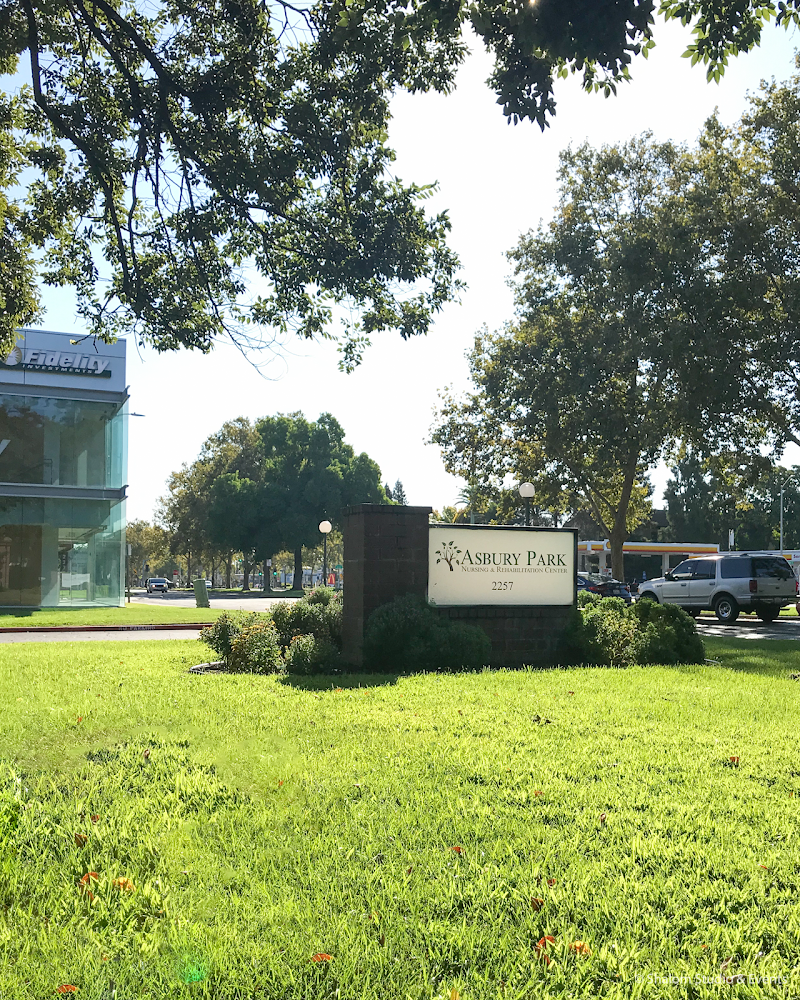
How is Asbury Park Nursing & Rehabilitation Center Staffed?

CMS rates ASBURY PARK NURSING & REHABILITATION CENTER's staffing level at 4 out of 5 stars, which is above average compared to other nursing homes. Staff turnover is 43%, compared to the California average of 46%. This relatively stable workforce can support continuity of care.

What Have Inspectors Found at Asbury Park Nursing & Rehabilitation Center?

State health inspectors documented 50 deficiencies at ASBURY PARK NURSING & REHABILITATION CENTER during 2021 to 2025. These included: 1 that caused actual resident harm and 49 with potential for harm. Deficiencies causing actual harm indicate documented cases where residents experienced negative health consequences.
Who Owns and Operates Asbury Park Nursing & Rehabilitation Center?

ASBURY PARK NURSING & REHABILITATION CENTER is owned by a for-profit company. For-profit facilities operate as businesses with obligations to shareholders or private owners. The facility is operated by CYPRESS HEALTHCARE GROUP, a chain that manages multiple nursing homes. With 139 certified beds and approximately 131 residents (about 94% occupancy), it is a mid-sized facility located in SACRAMENTO, California.
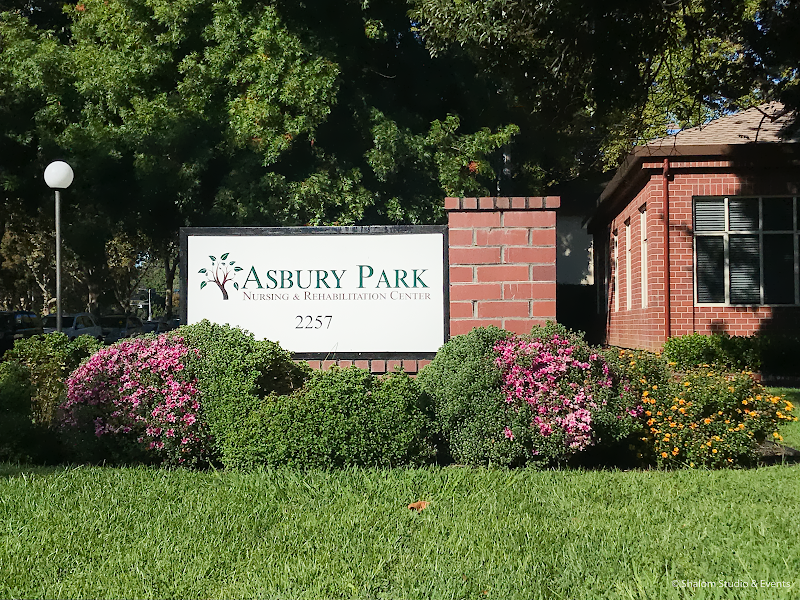
How Does Asbury Park Nursing & Rehabilitation Center Compare to Other California Nursing Homes?

Compared to the 100 nursing homes in California, ASBURY PARK NURSING & REHABILITATION CENTER's overall rating (2 stars) is below the state average of 3.1, staff turnover (43%) is near the state average of 46%, and health inspection rating (2 stars) is below the national benchmark.

What Should Families Ask When Visiting Asbury Park Nursing & Rehabilitation Center?

Based on this facility's data, families visiting should ask: "Can I visit during a mealtime to observe dining assistance and food quality?" "How do you handle medical emergencies, and what is your hospital transfer rate?" "Can I speak with family members of current residents about their experience?"

Is Asbury Park Nursing & Rehabilitation Center Safe?

Based on CMS inspection data, ASBURY PARK NURSING & REHABILITATION CENTER has a clean safety record: no substantiated abuse findings (meaning no confirmed cases of resident harm), no Immediate Jeopardy citations (the most serious violation level indicating risk of serious injury or death), and is not on the Special Focus Facility watch list (a federal program monitoring the lowest-performing 1% of nursing homes). The facility has a 2-star overall rating and ranks #100 of 100 nursing homes in California. While no facility is perfect, families should still ask about staff-to-resident ratios and recent inspection results during their visit.

Do Nurses at Asbury Park Nursing & Rehabilitation Center Stick Around?

ASBURY PARK NURSING & REHABILITATION CENTER has a staff turnover rate of 43%, which is about average for California nursing homes (state average: 46%). Moderate turnover is common in nursing homes, but families should still ask about staff tenure and how the facility maintains care continuity when employees leave.

Was Asbury Park Nursing & Rehabilitation Center Ever Fined?

ASBURY PARK NURSING & REHABILITATION CENTER has no federal fines on record. CMS issues fines when nursing homes fail to meet care standards or don't correct problems found during inspections. The absence of fines suggests the facility has either maintained compliance or corrected any issues before penalties were assessed. This is a positive indicator, though families should still review recent inspection reports for the full picture.

Is Asbury Park Nursing & Rehabilitation Center on Any Federal Watch List?

ASBURY PARK NURSING & REHABILITATION CENTER is not on any federal watch list. The most significant is the Special Focus Facility (SFF) program, which identifies the bottom 1% of nursing homes nationally based on persistent, serious quality problems. Not being on this list means the facility has avoided the pattern of deficiencies that triggers enhanced federal oversight. This is a positive indicator, though families should still review the facility's inspection history directly.