MCKINLEY PARK CARE CENTER

3700 H STREET, SACRAMENTO, CA 95816 (916) 452-3592
For profit - Partnership 86 Beds PACS GROUP Data: November 2025
Trust Grade
68/100
#399 of 1155 in CA
Last Inspection: October 2024

Within standard 12-15 month inspection cycle. Federal law requires annual inspections.

Overview

McKinley Park Care Center has a Trust Grade of C+, which indicates it is slightly above average in quality. It ranks #399 out of 1,155 facilities in California, placing it in the top half, and #14 out of 37 in Sacramento County, meaning only a few local options are better. The facility is improving, having reduced issues from 11 in 2024 to just 3 in 2025. Staffing is a weakness, with a rating of 2 out of 5 stars and a turnover rate of 46%, which is average for California. Recent inspections revealed concerning incidents, such as long call light response times due to insufficient staffing and issues with medication logs that could risk residents' health, highlighting both the need for improvement and areas where care may be compromised.

Trust Score
C+
68/100
In California
#399/1155
Top 34%
Safety Record
Low Risk
No red flags
Inspections
Getting Better
11 → 3 violations
Staff Stability
⚠ Watch
46% turnover. Above average. Higher turnover means staff may not know residents' routines.
Penalties
○ Average
$15,440 in fines. Higher than 61% of California facilities. Some compliance issues.
Skilled Nurses
⚠ Watch
Each resident gets only 24 minutes of Registered Nurse (RN) attention daily — below average for California. Fewer RN minutes means fewer trained eyes watching for problems.
Violations
⚠ Watch
53 deficiencies on record. Higher than average. Multiple issues found across inspections.
★★★★☆
4.0
Overall Rating
★★☆☆☆
2.0
Staff Levels
★★★★★
5.0
Care Quality
★★★☆☆
3.0
Inspection Score
Stable
2024: 11 issues
2025: 3 issues

The Good

  • 5-Star Quality Measures · Strong clinical quality outcomes
  • Full Sprinkler Coverage · Fire safety systems throughout facility
  • No fines on record

Facility shows strength in quality measures, fire safety.

The Bad

Staff Turnover: 46%

Near California avg (46%)

Higher turnover may affect care consistency

Federal Fines: $15,440

Below median ($33,413)

Minor penalties assessed

Chain: PACS GROUP

Part of a multi-facility chain

Ask about local staffing decisions and management

The Ugly 53 deficiencies on record

Aug 2025 1 deficiency
CONCERN (E) 📢 Someone Reported This

A family member, employee, or ombudsman was alarmed enough to file a formal complaint

Potential for Harm - no one hurt, but risky conditions existed

Safe Environment (Tag F0584)

Could have caused harm · This affected multiple residents

**NOTE- TERMS IN BRACKETS HAVE BEEN EDITED TO PROTECT CONFIDENTIALITY** Based on observation, interview and record review, the facility failed to provide a comfortable environment for 14 of 14 sampled...

Read full inspector narrative →
**NOTE- TERMS IN BRACKETS HAVE BEEN EDITED TO PROTECT CONFIDENTIALITY** Based on observation, interview and record review, the facility failed to provide a comfortable environment for 14 of 14 sampled residents, when the temperature in the residents' rooms were above 81 degrees Fahrenheit (F). This failure had the potential for the residents to have an uncomfortable room temperature and possible heat exhaustion.During a tour of the facility on 8/15/25 at 4:50 p.m. accompanied by the Administrator (ADM), the following resident's room temperatures were obtained with the facility's infrared (IR) temperature gun (an instrument that measures the temperature by detecting the IR radiation emitted by an object) which indicated the temperatures of the following rooms:room [ROOM NUMBER] - 84 degrees F;room [ROOM NUMBER] - 83 degrees F;room [ROOM NUMBER] - 83 degrees F; androom [ROOM NUMBER] - 82 degrees F. During an interview with the ADM on 8/15/25 at 5 p.m., the ADM indicated the ideal temperature ranges in the facility should be between 71 degrees to 81 degrees Fahrenheit. The ADM stated the rooms were primarily affected when the air conditioning unit failed to function and the temperature was too hot and could affect the residents health.During a review of Resident 1's Face Sheet (FS), the FS indicated Resident 1 was admitted to the facility with diagnoses which included heart failure (a condition when the heart cannot pump enough blood to meet the body's needs) and chronic obstructive pulmonary disease (COPD - a progressive lung disease that makes it hard to breathe).During an interview on 8/15/25 at 5:45 p.m. in Resident 1's room, Resident 1 indicated his room was hot, and stated, There is a large fan blowing air from the hallway, but it is still hot.During a review of Resident 2's FS, the FS indicated Resident 2 was admitted to the facility with diagnoses which included end stage renal disease (ESRD - the final stage of kidney disease where the kidneys have lost most or all of their ability to function).During an interview on 8/15/25 at 5:50 p.m. in Resident 2's room, Resident 2 stated his room was hot, but he has the use of a fan on top of his nightstand to cool off. Resident 2 stated he heard a large fan outside by the door of his room, which was trying to cool off his room, but his room still remained hot. Resident stated, I believe the air conditioner in this section of the building stopped working, and for a few days now, hence my room is hot.During a review of Resident 12's FS, the FS indicated Resident 12 was admitted with diagnoses which included respiratory failure and hypercapnia (a high level of carbon dioxide in the blood). During an interview on 8/15/25 at 6:30 p.m. in Resident 12's room, Resident 12 stated the room temperature was hot earlier, and stated, It seemed the room air conditioner (swamp cooler) was not working too well as the room was hot.During a review of facility's policy and procedure titled, Homelike Environment, revised 2/2021, the P&P indicated, .Residents are provided with a safe, clean, comfortable and homelike environment .h. comfortable and safe temperatures (71 degrees - 81 degrees Fahrenheit) .
Apr 2025 1 deficiency
CONCERN (D) 📢 Someone Reported This

A family member, employee, or ombudsman was alarmed enough to file a formal complaint

Potential for Harm - no one hurt, but risky conditions existed

Free from Abuse/Neglect (Tag F0600)

Could have caused harm · This affected 1 resident

Based on interview, and record review, the facility failed to protect one of four sampled residents from abuse (Resident 2) when another resident (Resident 1) hit Resident 2 on the thigh repeatedly. T...

Read full inspector narrative →
Based on interview, and record review, the facility failed to protect one of four sampled residents from abuse (Resident 2) when another resident (Resident 1) hit Resident 2 on the thigh repeatedly. This failure had the potential to cause injury, fear and distress to Resident 2. Findings: During a review of Resident 1's admission record, Resident 1 was admitted in April of 2025 with a diagnosis of Vascular Dementia (a type of dementia caused by brain damage resulting from impaired blood flow) with other behavioral disturbance. Resident 1 ' s Minimum Data Set (MDS, a federally mandated resident assessment tool) indicated Resident 1 had severe cognitive impairment. During a review of Resident 2 ' s admission record, Resident 2 was admitted in January of 2024 with a diagnosis of Rhabdomyolysis (a muscle condition manifested by muscle pain, feeling weak and tired) and crushing injury of the left shoulder and upper arm. Resident 2 ' s MDS indicated he was cognitively intact. During a review of a facility submitted document titled REPORT OF SUSPECTED DEPENDENT ADULT/ELDER ABUSE [SOC 341] dated 4/08/25 indicated that Resident 1, during activities rolled over to Resident 2 and smacked his leg with an open hand. During a review of Resident 1 ' s physician orders dated 4/1/25, Resident 1 had an order directing staff to, Monitor Episodes of Behavioral and Psychological symptoms of Dementia AEB [as evidenced by]: verbal and physical aggression. Drug: Depakote every shift. During a review of the Medication Administration Record (MAR) for Resident 1, the nurses documented Resident 1 had verbal and/or physical aggression noted 4/2/25. During an interview on 4/16/25 at 3:04 p.m. with Licensed Nurse (LN) 1, LN 1 stated that she was familiar with Resident 1, who is a resident for Station 2. LN 1 reported, I am the fulltime nurse for Station 2. When asked about Resident 1 ' s behavior, LN 1 stated, He (Resident 1) is confused due to his diagnosis of dementia .he gets agitated at times . During an interview on 4/16/25 at 3:23 p.m. with Resident 2, Resident 2 stated, .he [Resident 1] raised his hand and hit me a couple of times .I thought maybe he was going to exit the room, but he didn ' t, he came right at me and hit me like 3 to 4 times. During a telephone interview on 4/16/24 at 4:46 p.m. with the Director of Nursing (DON), when asked if facility staff had the responsibility to protect the residents from abuse, the DON stated, Yes, we are responsible to make sure residents would be free from abuse .physical abuse, misappropriation of goods and verbal abuse. During a telephone interview on 4/17/25 at 11:55 a.m. with the Activities Assistant (AA), the AA stated, .he [Resident 1] rolled very quickly towards him [Resident 2] and smacked him 2 to 3 times on his knee. During a review of the facility ' s Policy and Procedure (P&P) titled Abuse, Neglect, Exploitation and Misappropriation Prevention, dated April 2021, the P&P indicated, Residents have the right to be free from abuse, neglect, misappropriation of resident property and exploitation. This includes but is not limited to freedom from corporal punishment, involuntary seclusion, verbal, mental, sexual or physical abuse, and physical or chemical restraint not required to treat the resident ' s symptoms . Protect residents from abuse . by anyone including, but not necessarily limited to: . other residents.
Jan 2025 1 deficiency
CONCERN (D) 📢 Someone Reported This

A family member, employee, or ombudsman was alarmed enough to file a formal complaint

Potential for Harm - no one hurt, but risky conditions existed

Resident Rights (Tag F0550)

Could have caused harm · This affected 1 resident

Based on observation, interview and record review, the facility failed to treat one of five sampled residents (Resident 4) with respect and dignity when Resident 4 stated, through an interpreter, that...

Read full inspector narrative →
Based on observation, interview and record review, the facility failed to treat one of five sampled residents (Resident 4) with respect and dignity when Resident 4 stated, through an interpreter, that Certified Nursing Assistant (CNA 2) was rough, aggressive, and raised her voice when she performed care to Resident 4. This deficient practice had the potential to cause psychological harm and emotional distress to Resident 4. Findings: A review of Resident 4 ' s admission Record, indicated, Resident 4 was admitted to the facility in December 2024, and had diagnosis that included left side hemiplegia (partial or complete paralysis on one side of the body) and hemiparesis (one-sided muscle weakness), and dysarthria (speech disorder). A review of Resident 4 ' s Brief Interview for Mental Status, Section C, (BIMS, cognitive screening test), indicated, Resident 4 had moderate cognitive impairment. A review of Resident 5 ' s admission Record, indicated, Resident 5 was admitted to the facility in November 2024, and had diagnosis that included End Stage Renal Disease (kidney disease) and difficulty in walking. A review of Resident 5 ' s Brief Interview for Mental Status, Section C, (BIMS, cognitive screening test), indicated, Resident 5 had moderate cognitive impairment. During an interview on 1/6/25 at 10:55 a.m., with Family Member 1 (FM 1), FM 1 stated, she visited Resident 4 on December 29, and the resident told her he did not sleep well last night (12/28/24) because The mean lady did it again, and Resident 4 started to cry. FM 1 said the resident then said that CNA 2 grabbed his mouth and shut it closed with her bare hands, rolled him to his side, pushed him, and hit the left side of his face on the rails of the bed. According to FM 1, Resident 4 ' s roommate, Resident 5 heard CNA 2 yell, scream, and cuss at Resident 4 and Resident 4 made an aw, aw, aw, ' sound as she cleaned him. FM 1 also stated, Resident 5 heard the supervisor remind CNA 2 to keep her voice down as it was past 10:30 p.m., and other residents were asleep. During a concurrent observation and interview on 1/6/25 at 12:25 p.m., with Resident 4 and FM 3 to interpret in Spanish. Resident 4 was seated on his wheelchair. FM 3 stated, Resident 4 can speak and understand some English. When Resident 4 was asked if he remembered the incident, Resident 4 started to cry, grabbed FM 3 ' s left arm with his right hand, hugged her and started talking in Spanish. According to Resident 4, FM 3 stated, he was in his room, his brief needed to be changed so he rang his call light and CNA 2 came. He said CNA 2 cleaned Resident 4, was rough, aggressive, and yelled at him. Resident 4 continued and said that CNA 2 pushed him hard to his side and he hit his face on the siderails of the bed, he also said she covered and squeezed his mouth and turned his face away from her. While crying, Resident 4 demonstrated the movements by grabbing the left hand of FM 3 with his right hand and then pushed FM 3 ' s hand, afterwards he covered his mouth with his right hand and squeezed it. According to FM 3, Resident 4 wanted to go home and did not want CNA 2 in his room, that he felt hurt with how they treated him. During an interview on 1/6/25 at 1:12p.m., with Resident 5, Resident 5 stated, the incident happened after Christmas around 10:30 p.m., he was asleep in his room when CNA 2 ' s loud voice woke him up when CNA 2 said to Resident 4 that she ' s sick of this and she shouldn ' t be doing it, she then left the room, came back, and complained about the mess. Resident 5 further stated that CNA 2 yelled the whole time and Resident 5 heard Resident 4 moan aw, aw, aw, as if he was in pain. Resident 5 heard CNA 2 say move over, and spoke to Resident 4 with no respect at all. Resident 5 stated, CNA 2 was unprofessional, very loud and felt bad for Resident 4 on how she treated him. During an interview on 1/6/25 at 1:45 p.m., with CNA 2, CNA 2 confirmed she worked night shift on December 28, and had Resident 4 under her care. CNA 2 remembered the incident when Resident 4 needed to be changed, and stated, she cleaned him and left the room when done. CNA 2 confirmed Resident 5 was Resident 4 ' s roommate and was independent, alert, and oriented. CNA 2 further confirmed a nurse came in Resident 4 ' s room and reminded her not to yell as residents were asleep. During an interview on 1/6/25 at 2:41 p.m., with Licensed Nurse 1 (LN 1), LN 1 stated, on December 29, at around 1 p.m., FM 1 and FM 2 of Resident 4 spoke with her and complained about the night shift CNA 2. They said the CNA 2 abused him, covered his mouth, and turned his face away from her while she cleaned him. Resident 4 tried to talk but CNA 2 said to keep quiet, turned his head away and covered his mouth. Resident 4 was scared and cried as he described the incident. FM 1 and FM 2 stated they did not want CNA 2 around Resident 4. During an interview on 1/8/25 at 2:25 p.m., with LN 2, LN 2 confirmed she worked with CNA 2 on December 28. LN 2 stated she was in the hallway and heard CNA 2 yell at Resident 4, she went inside Resident 4 ' s room and reminded CNA 2 to keep her voice down. LN 2 stated, Resident 5 was seated on his bed with his head bend down on the bedside table. LN 2 then stated that on December 29, around 3:30 p.m., FM 2 reported to LN 2 that CNA 2 was rough with Resident 4, squeezed his hands until it hurt and when he tried to talk, she placed her hand over his mouth, and squeezed it tight. LN 2 stated that FM 2 told her that CNA 2 took Resident 4 ' s right hand and pushed it towards the siderails and told him to hold on to it. LN 2 continued and said that FM 2 said CNA 2 was rough, and aggressive to Resident 4 and did not respect him. Resident 4 wanted to go home and was afraid to stay in the facility. LN 2 spoke with Resident 4 in his room with the family members and interpreted for LN 2. Resident 4 cried as he described the incident and was emotionally hurt and felt unsafe in the facility. LN 2 stated she cried when she saw Resident 4 cry. During an interview on 1/8/25 at 2:25 p.m., with FM 2, FM 2 stated, this is the second time Resident 4 complained to FM 2 about CNA 2 for being rough and aggressive to him. Resident 4 described CNA 2 as African American, short lady and worked on the graveyard shift(11pm-7am). FM 2 further stated, on December 28, CNA 2 cleaned Resident 4, rolled him aggressively to his sides and hit his face on the rails. CNA 2 was very rough and yelled at Resident 4 while she cleaned him. Resident 4 complained of pain, but CNA 2 grabbed his mouth, and squeezed it hard. After this incident, Resident 4 cried and begged FM 2 to take him home. FM 2 further stated, CNA 2 was unprofessional and manhandled Resident 4. During an interview on 1/9/25 at 1:45 p.m., with the Director of Nursing (DON), the DON stated, her expectation from the staff is to respect the residents, and staff should not yell or cover resident ' s mouths but instead treat them with respect. The DON added, the basic conduct behavior was to treat the resident with respect and conduct good communication. During a review of Resident 4 ' s Progress Notes, dated, 12/29/24, indicated, .son c/o [complained] related to NOC [night] shift CNA being rough during patient care . she placed her hand on father mouth and squeeze tight as if he [sic] does not want him to say a word cuz my Dad ask her what did he do why she rough, my Dad told me that she hold his right hand too tight and throw it towards the bedrail so he can hold on to it, she even point fingers to him a threatening way . patient appears upset . I did not realize I can be treated this was [sic] . During a review of Resident 4 ' s Care Plan, date initiated 12/30/24, indicated, [name of resident] has a psychosocial well-being problem (actual or potential) r/t [related to] allegation of abuse, Dependent behavior., Ineffective coping, . During a review of facility ' s policy and procedure, titled, Dignity, dated February 2021, indicated, Each resident shall be cared for in a manner that promotes and enhances his or her sense of well-being, level of satisfaction with life, and feelings of self-worth and self-esteem .1. Residents are treated with dignity and respect at all times .8. Staff speak respectfully to residents at all times .
Dec 2024 1 deficiency
CONCERN (D) 📢 Someone Reported This

A family member, employee, or ombudsman was alarmed enough to file a formal complaint

Potential for Harm - no one hurt, but risky conditions existed

Deficiency F0657 (Tag F0657)

Could have caused harm · This affected 1 resident

**NOTE- TERMS IN BRACKETS HAVE BEEN EDITED TO PROTECT CONFIDENTIALITY** Based on interview, and record review, the facility failed to ensure the comprehensive care plan was updated and revised for one...

Read full inspector narrative →
**NOTE- TERMS IN BRACKETS HAVE BEEN EDITED TO PROTECT CONFIDENTIALITY** Based on interview, and record review, the facility failed to ensure the comprehensive care plan was updated and revised for one of four sampled residents (Resident 1), when the fall care plan was not revised timely after Resident 1's fall. This failure decreased the facility's potential to prevent Resident 1 from sustaining another fall and had the potential to result in Resident 1 not attaining his highest practicable well-being. Findings: During a review of Resident 1's admission records, the record indicated Resident 1 was admitted in December 2024 with diagnoses that included and hemiparesis hemiplegia (paralysis and weakness of the arm, leg, and trunk on the same side of the body), and muscle weakness. Resident 1's Minimum Data Set (MDS, a federally mandated resident assessment tool) indicated Resident 1 had moderate cognitive impairment. During a review of Resident 1's Fall Risk Observation/Assessment, dated 12/11/24, the assessment indicated Resident 1 scored 22, which indicated Resident 1 was high risk for falling. During a review of Resident 1's care plan, initiated on 12/11/24, the care plan indicated, Falls: Resident is at risk for falls with or without injury related to altered balance while standing and/or walking .decreased muscular coordination .Will minimize risk for falls to extent possible . During a review of Resident 1's SBAR [Situation, Background, Assessment, Review] Communication Form, dated 12/17/24, the form indicated, .at approx. [sic] 2145hr [9:45 p.m.] res [resident] was found on the floor next to bed by staff. per res stated he slipped out the bed. res stated he hit back of head .PA [Physician Assistant] orders to send out [Resident 1] for further evaluation. During a review of Resident 1's Nurse's Note, dated 12/19/24 at 8:48 p.m., the note indicated, .[Resident 1] adjusting well to room [room number], to accommodate to patient safety and prevent any risk of falling on weak side .plan of care continues . During a review of Resident 1's Nurse's Note, dated 12/20/24, the note indicated, CNA [Certified Nursing Assistant] called writer's attention, patient on the floor. Found lying on his back, head touching the floor in supine position. Asked him if he hit his head, he said he did so hard .Asked what he was trying to do, he said, he wants to use the bathroom but he end up on the floor due to left sided weakness .Got an order to send [Resident 1] to the hospital for further evaluation and management . During a review of Resident 1's care plan, initiated 12/20/24, the care plan indicated, Falls: Resident had unwitnessed [sic] in room. 12/19/24 . During an interview on 12/26/24 at 12:25 p.m. with Licensed Nurse 1 (LN 1), LN 1 confirmed Resident 1 moved to his current room after the fall on 12/17/24. LN 1 stated, He fell a week ago .He did fall again after getting move .Every single time, we do change in condition for every fall .The nurse would update the care plan, whole new goals if there's a new event or fall .It's important to see what we can do differently. During a concurrent interview and record review on 12/26/24 at 12:38 p.m. with the Director of Nursing (DON), the DON stated, For residents that are high risk for falls .we try to involve all the team .we update the care plan .If there's an incident of fall, we update the care plan, to cover the root cause . The DON verified Resident 1 had a fall on 12/17/24 and on 12/19/24. The DON confirmed Resident 1's care plan for fall was initiated on 12/11/24 and was not updated when Resident 1 fell on [DATE]. The DON stated, I don't have a new intervention for the 12/17/24 fall .There should be one, to minimize the risk and put intervention to minimize the risk .It's a blueprint on how to take care of the resident . During a review of the facility's policy and procedure (P&P) titled Falls and Fall Risk, Managing, revised 3/2018, the P&P indicated, Based on previous evaluations and current data, the staff will identify interventions related to the resident's specific risks and causes to try to prevent the resident from falling and to try to minimize complications from falling .1. The staff, with the input of the attending physician, will implement a resident-centered fall prevention plan to reduce the specific risk factor(s) of falls for each resident at risk or with a history of falls .5. If falling recurs despite initial interventions, staff will implement additional or different interventions, or indicate why the current approach remains relevant . During a review of the facility's P&P titled Care Plans, Comprehensive Person Centered, revised 3/2022, the P&P indicated, 11. Assessments of residents are ongoing and care plans are revised as information about the residents and the residents' conditions change .12. The interdisciplinary team reviews and updates the care plan: a. when there has been a significant change in the resident's condition; b. when the desired outcome is not met; c. when the resident has been readmitted to the facility from a hospital stay .
Oct 2024 7 deficiencies
CONCERN (D)

Potential for Harm - no one hurt, but risky conditions existed

Deficiency F0658 (Tag F0658)

Could have caused harm · This affected 1 resident

Based on observation, interview, and record review, the facility failed to provide care and services in accordance with acceptable professional standards of quality for three (3) of 20 sampled residen...

Read full inspector narrative →
Based on observation, interview, and record review, the facility failed to provide care and services in accordance with acceptable professional standards of quality for three (3) of 20 sampled residents (Resident 25, Resident 73, Resident 63) when: 1. Magnetic resonance imaging (MRI, a non-invasive medical imaging technique) prescriber's order for osteomyelitis (a type of bone infection) for Resident 25 was not processed promptly per facility policy. 2. Resident 73's medication order was not clarified with the prescribing physician. 3. Resident 63's feeding formula was not labeled. These failures had the potential for Resident 25, Resident 73, and Resident 63 to received inaccurate and inadequate care. Findings: 1. The following documents were reviewed in Resident 25's medical record: - admission Record, dated 10/1/24 (print date), indicated Resident 25 was admitted to the facility in August of 2024 with diagnoses including pneumonia (a lung infection) and type 2 diabetes (inability to properly process blood sugar). - A review of prescriber's handwritten orders, dated 9/30/24 and signed by a Nurse Practitioner (NP), indicated MRI of Right foot to r/i [rule in (confirm diagnosis)] osteomyelitis. During concurrent interview and record review on 10/4/24 at 9:18 a.m. with Infection Preventionist (IP), Resident 25's order history and scanned prescriber orders, diagnostic imaging results, and progress notes were reviewed. The IP confirmed that previously ordered x-ray results were available on 9/30/24 and suggested osteomyelitis in the right toe, and MRI order was written by NP on 9/30/24. IP was not able to find evidence if MRI order was processed or cancelled. The IP walked over to Social Services Director (SSD), who also checked the records and was not able to show the evidence that the MRI order was processed and an appointment for the imaging services outside of the facility was scheduled. During a concurrent interview and record review on 10/04/24 at 10:32 a.m. with the Director of Nursing (DON), Resident 25's progress notes were reviewed. The progress notes indicated there was a note written by SSD on 10/4/24 at 10:01 a.m. Followed up with the SSA [Social Services Assistant] for update on resident's MRI status. Provided hx [history]: referral faxed and awaiting decision. PCP (Primary Care Physician) was contacted for additional and expedited services .DON confirmed that SSD wrote notes addressing MRI order after surveyor enquired about it on 10/4/24 and few days have passed since the order was written by the prescriber. In an interview on 10/4/24 at 12:13 p.m. NP confirmed that she wrote the order for Resident 25's MRI and she expected it to be processed either on the same day or on the following day if the order was written late in the day and social services were not available to process it and schedule an MRI appointment with the hospital. The NP also stated that she expected the MRI results to be available at this time and she wanted to follow up with nursing staff on the status of this order. A review of facility's policy and procedure titled, Request for Diagnostic Services, dated April 2007, indicated, All orders for diagnostic services must be entered into the resident's medical record and signed by the Attending Physician . Orders for diagnostic services will be promptly carried out as instructed by the physician's order . 2. Resident 73 was admitted to the facility with diagnoses including Displaced Fracture of Medial Malleolus (fracture on the bone on the inside of ankle) and difficulty in walking. During a record review of Resident 73's Physician's orders, indicated on 8/10/24, Resident 73 was prescribed a medication of Valacyclovir (medication to treat herpes virus infections) 500 mg by mouth one time a day for herpes suppression (no end date). Further review of the Physician's orders indicated there was no date or duration on the the administration of the medication ordered. Further review of the Nurse's progress notes did not indicate there were any documented attempts made by the Licensed Nurses (LN) to clarify the medication order of Valacyclovir with the physician when the order indicated no end date. During an interview with the Registered Nurse Consultant (RNC) on 10/04/24 at 12:47 p.m., she confirmed the medication Valacyclovir was prescribed on 8/10/24 with No End Date. The RNC stated the LN must confirm with the physician on the duration of the medication treatment. The RNC stated she would clarify with the MD why there was no indication on the duration of treatment. During an interview with the RNC and the Director of Nursing (DON) on 10/04/24 at 1:09 p.m., the RNC stated the LNs' should have clarified with the physician why the Valacyclovir medication was prescribed without a medication stop date. The RNC confirmed there were no nursing progress notes that the nurses had attempted to clarify the medication Valacyclovir medication order with the physician. The RNC stated the medication Valacyclovir prescribed on 8/10/24, Resident 73 had received the medication a total of 54 days without the LNs' clarification of orders from the physician. The DON and the RNC both stated it was an expectation the LNs' were to call and clarify with the physician any medication order without a stop date. The DON was asked for a copy of the policy and procedure that the facility follows for stop orders of the resident's medications. Review of an undated (Name of Pharmacy) General Policies and Procedures provided by the DON indicated: .New medication orders are subject to automatic stop orders unless the medication orders specify the number of doses or duration .A. New medication orders are subject to automatic stop orders unless the medication orders specify the number of doses or duration of medication .Procedures .All other medications are stopped automatically after forty-five (45) days unless reordered .All medication orders that do not specify duration or number of doses are automatically discontinued in accordance with the the Stop Order Policy. When the prescriber gives the order for a medication covered by the Stop Order Policy [sic], the nurse requests a specific duration of therapy for that order . 3. Resident 63 was admitted with diagnoses of Hemiplegia (paralysis of one side of the body) and Hemiparesis (weakness or the inability to move on one side of the body) following cerebral (brain) infarction (obstruction of the blood supply to an organ causing tissue death), Encounter for attention to gastrostomy (a small flexible feeding tube inserted into the stomach). During an initial pool tour on 10/1/24 at 9:12 a.m., Resident 63 was observed asleep in bed. Resident 63's bedside was observed to have a feeding pump that was turned off and not connected to the resident. The bottle (name of feeding formula) was connected to the pump. Upon closer observation the feeding formula bottle was found to have a label that was incomplete. The label had no indication of name of the resident, room number, date and time the infusion was begun, and the rate of infusion. On 10/1/24 at 9:15 a.m. during an interview with the DON, the DON confirmed the feeding equipment was for Resident 63. The DON stated the LN who hung the feeding formula should have completed the label on the bottle with the resident's name, date and time when hung and the rate of infusion. The DON confirmed the label was blank and incomplete. The DON confirmed the Resident 63 was the only one receiving tube feedings in the room. During and interview with the DON and RNC on 10/02/24 at 11:19 a.m., the DON and the RNC stated there were no policies on the labeling of the enteral feeding. The DON confirmed that the expectations were for the LN to complete and label the feeding formula with the resident's information. During a review of an article from ASPEN (American Society for Parenteral and Enteral Nutrition) Journal of Parenteral and Enteral Nutrition (EN) published 11/4/2016 indicated: .Practice Recommendations. Include all the critical elements of the EN order on the EN label: patient identifiers, formula type, enteral delivery site (route and access), administration method and type, and volume and frequency of water flushes .
CONCERN (D)

Potential for Harm - no one hurt, but risky conditions existed

Deficiency F0725 (Tag F0725)

Could have caused harm · This affected 1 resident

Based on interview and record review, the facility failed to ensure sufficient staffing was provided for a census of 80 residents when: 1. Multiple staff stated the facility was insufficiently staffed...

Read full inspector narrative →
Based on interview and record review, the facility failed to ensure sufficient staffing was provided for a census of 80 residents when: 1. Multiple staff stated the facility was insufficiently staffed; and 2. Resident 55 had five unwitnessed falls in one month. These failures decreased the facility's potential to provide residents with timely, necessary care and services to maintain their highest practicable physical, mental, and psychosocial well-being. Findings: 1. During a concurrent interview and record review on 10/2/24 at 3:44 p.m., with the Staffing Coordinator (SC), the September 2024 staffing spreadsheet was reviewed, the SC stated she writes a schedule to ensure each resident receives a minimum 3.5 hours per patient day (PPD) of direct nursing care. The SC presented the September 2024 staffing spreadsheet which had two columns: projected PPD and actual PPD. The SC confirmed that the projected column indicated how many nursing hours she scheduled and acknowledged 17 of the 29 days on the spreadsheet indicated she scheduled under the goal of 3.5 hours PPD. The SC acknowledged, when she writes a schedule under the minimum 3.5 hours PPD, it would be unlikely the residents would receive the minimum of 3.5 hours PPD of nursing care. An interview on 10/3/24 at 4:49 p.m., Certified Nursing Assistant 1 (CNA 1) stated she normally worked the night (PM) shift and stated the facility used to schedule more CNAs but have taken one away on the night shift, so even when no staff call out, they feel like they must rush to provide care and doesn't feel she has time to provide all the care residents deserve. An interview on 10/4/24 at 5:45 a.m., Licensed Nurse 2 (LN 2) stated she works the PM shift normally but also will work the overnight (NOC) shift too. LN 2 acknowledged, there have been delays answering resident call lights due to low staffing. An interview on 10/4/24 at 6:10 a.m., CNA 3 stated due to short staffing, care has been provided in a rush and the attention towards residents has been cut shorter. An interview on 10/4/24 at 6:20 a.m., CNA 4 stated she normally works the morning (AM) shift and confirmed, sometimes residents complain that staff took a long time to respond to call lights during the NOC shift. CNA 4 stated she believed the NOC shift is short staffed the most and when she comes in for AM shift, the AM staff have to work hard to provide incontinence care and fix the residents from the short-staffed NOC shift. CNA 4 disclosed she believed there needed to be more CNAs scheduled. During a concurrent interview and record review on 10/4/24 at 6:49 a.m., with Human Resources (HR), the September staffing spreadsheet was reviewed. HR stated she is familiar with the spreadsheet with the projected and actual PPD columns. HR explained she is responsible for entering the actual PPD by calculating the actual hours worked for each date. HR confirmed the goal was to provide 3.5 PPD each day to ensure residents are getting the amount of care they require. HR acknowledged, honestly CNA [staffing] always seems a little low. HR confirmed the facility had failed to provide 3.5 PPD on at least 12 dates in September. During a concurrent interview and record review on 10/4/24 at 7:45 a.m., with the Administrator (ADM), the facility assessment (a document with information about the residents served and how the facility will serve them) was reviewed. The ADM stated he was familiar with facility assessment and confirmed the facility assessment indicated the facility's staffing plan included a goal to provide 3.5 PPD. The ADM acknowledged, to ensure appropriate staffing the facility wanted to schedule at least 3.5 PPD. 2. A review of Resident 55's admission record, indicated Resident 55 was admitted to the facility in late August of 2024 with diagnoses including difficulty walking and muscle weakness. A review of Resident 55's admission/re-admission summary note, dated 8/30/24, indicated, .[Resident 55] had an accidental fall and sustained a right pelvis fracture .per [Resident 55's responsible Party: a person who is responsible for making healthcare decisions when someone is not able to make decisions for themselves] are hoping that [Resident 55] can be placed into a LTC [long term care] .that [Resident 55] can be cared better when she is on [sic] a place that can watch her due to her multiple falls . A review of Resident 55's Minimum Data Set (MDS: an assessment tool), dated 9/4/24, indicated Resident 55 had severe memory problems, was always continent with bowel movements, required substantial assistance with transfers to and from the toilet, and had a history of falling with a fracture in the month prior to admission to the facility. A review of Resident 55's fall care plan, initiated 9/19/24, indicated, .Resident is at risk for falls with or without injury related to altered balance while standing and/or walking, decreased muscular coordination, history of falls .goal .will not experience a fall related to risk factors .interventions/tasks .keep within supervised view as much as possible . An interview on 10/4/24 at 5:54 a.m., CNA 2 stated staffing is the problem here and expressed concerns that in September 2024 staffing was bad and staff could not keep an eye on Resident 55, who fell several times during the month. An interview on 10/4/24 at 10:23 a.m., CNA 5 stated she would be worried about residents with fall risks, such as Resident 55, and the inability for staff to keep an eye on them when facility is short staffed. An interview and concurrent record review on 10/4/24 at 11:16 a.m., with the Director of Nursing (DON), Resident 55's medical records were reviewed, the DON stated for staffing the facility has a goal to provide 3.5 PPD and if the facility is not meeting that goal, she would be concerned there were less hours available to provide resident care. The DON acknowledged short staffing could also have a concern for resident safety. The DON confirmed in the month of September 2024 the facility had dates where the actual PPD was under the 3.5 PPD goal, and Resident 55 had five unwitnessed falls during the month of September 2024. A review of the facility's policy and procedure (P&P) titled, Staffing, Sufficient and Competent Nursing, revised August 2022, indicated, .Our facility provides sufficient number of nursing staff with the appropriate skills and competency necessary to provide nursing and related care and services for all residents in accordance with resident's care plans and the facility assessment . A review of the facility's P&P titled, Safety and Supervision of Residents, revised July 2017, indicated, .Our facility strives to make the environment as free from accident hazards as possible. Resident Safety and supervision and assistance to prevent accidents are facility-wide priorities .Individualized, Resident-Centered Approach to Safety .the care team shall target interventions to reduce individual risks related to hazards in the environment, including adequate supervision .implementing interventions to reduce accident risks and hazards shall include the following .ensuring that interventions are implemented correctly and consistently .
CONCERN (D)

Potential for Harm - no one hurt, but risky conditions existed

Deficiency F0804 (Tag F0804)

Could have caused harm · This affected 1 resident

Based on observation, interview, and record review the facility failed to provide food that was palatable when one of 20 sampled residents (Resident 60) was served a burnt cookie. This failure had the...

Read full inspector narrative →
Based on observation, interview, and record review the facility failed to provide food that was palatable when one of 20 sampled residents (Resident 60) was served a burnt cookie. This failure had the potential for Resident 60 to experience dissatisfaction with food served, leading to decreased intake with possible weight loss. Findings: During a concurrent interview and observation on 10/1/24 at 10:35 a.m., in Resident 60's room, Resident 60 stated the food served in the facility is sometimes served burnt. Resident 60 showed a cookie the facility had served her that was black on the bottom. During a concurrent interview and observation on 10/1/24 at 10:45, in Resident 60's room, the [NAME] Clerk 1 (WC 1) confirmed Resident 60's cookie was burnt and stated she would not eat a burnt cookie like that. During an interview on 10/1/24 at 12:51 p.m., Resident 10 stated food provided by facility is sometimes served burnt. An interview on 10/4/24 at 11:08 a.m., the Registered Dietician (RD) stated she was aware the facility had an issue with an oven affecting the foods not being cooked evenly. The RD stated burnt foods being served to residents is a concern not only because residents could be disappointed but also because the residents may not eat enough food. An interview on 10/4/24 at 11:16a.m., the Director of Nursing (DON) stated she expected that staff would not serve burnt food to residents. An interview on 10/4/24 at 11:49 a.m., the Certified Dietary Manager (CDM) confirmed there was an issue with the oven causing foods to be burnt and she expected staff to not serve burnt foods. The CDM added she recently did an in-service training with kitchen staff regarding complaints about residents being served burnt foods. A review of food and nutrition services in-service sign in sheet, dated 9/24/24, indicated topic of in-service was food prep. Complaints of burnt food facilitated by the CDM and indicated five staff members attended the in-service. A review of the facility's policy and procedure titled, food preparation, undated, indicated, .Food shall be prepared by methods that conserve nutritive value, flavor, and appearance .Poorly prepared food will not be served-such food is to either be improved, prepared again, or replaced with an appropriate substitution .
CONCERN (D)

Potential for Harm - no one hurt, but risky conditions existed

Infection Control (Tag F0880)

Could have caused harm · This affected 1 resident

Based on observation, interview, and record review, the facility failed to maintain infection prevention and control practices designed to provide a safe, sanitary, and comfortable environment and to ...

Read full inspector narrative →
Based on observation, interview, and record review, the facility failed to maintain infection prevention and control practices designed to provide a safe, sanitary, and comfortable environment and to help prevent the development and transmission of communicable diseases and infections when: 1. The Treatment Nurse (TN) did not perform hand hygiene (handwash with soap and water or alcohol-based hand rub) in between glove change during the wound dressing change to Resident 70; and, 2. A blood glucose machine was not sanitized after use. These failures had the potential to result in infection and spread of infection among census of 80. Findings: 1. A review of Resident 70's admission Record dated 10/4/24 (print date), indicated resident 70 was admitted to the facility in Summer of 2024 with diagnoses including orthopedic aftercare following surgical amputation, osteomyelitis (bone infection) and diabetes (inability to properly process blood sugar). A review of Resident 70's Order Summary Report (OSR) dated 10/4/2024 indicated, [order start date 8/6/24] right 2nd side MASD [Moisture Associated Skin Damage]: clean with normal saline pat dry apply silver alginate dressing [a type of wound dressing material] on the site and cover with gauze wrap. every day shift . Another order with start date of 10/4/24, right big toe surgical amputation : clean with wound cleanser pat dry apply iodosorb (iodine gel) cover with gauze wrap and tape to secure. During wound care observation on 10/3/24 at 9:05 a.m., TN reviewed wound care orders for Resident 70 near Resident 70's room. TN gathered wound care supplies and used alcohol hand rub for hand hygiene and applied gown and gloves prior to entering room to provide wound care. TN brought in wound care supplies which included paper tape and saline solution cartridges to the Resident 70's bedside table. She provided treatments to the left and right toe sites per order and after removal of old dressing she removed gloves and without performing hand hygiene applied new gloves and applied new dressing. Upon completion of the dressing change, TN brought the remaining supplies (paper tape and a saline cartridge) out of Resident 70's room and placed them on the treatment cart. During an interview on 10/3/24 at 9:33 a.m., TN admitted that she did not use hand hygiene after removal of Resident 70's old dressing and removing gloves and before applying new gloves. She confirmed that hand hygiene needs to be done between glove changes. She also acknowledged that wound care supplies that are taken to resident's room should not be brought back to the wound card and should be either discarded or left in resident's room. She agreed that paper tape and saline cartridge due to their surface nature can't be sanitized using sanitizing wipes, and the act of wiping them after bringing them back from resident's room indicated intent to use it again on a different resident. In an interview on 10/3/24 at 12:01 p.m. Infection Preventionist (IP) stated that hand hygiene should be performed between glove changes, and agreed that wound supply items like paper tape and saline cartridge cannot be sanitized with sanitizing wipes and should not be brought back to the supply cart from the resident's room. A review of facility's Policy and Procedure (P&P) titled, Hand Washing/Hand Hygiene, revised October 2023, indicated, Indications for Hand Hygiene . immediately after glove removal . A review of facility's P&P titled, Wound Care, revised October 2010, indicated, Take only the disposable supplies that are necessary for the treatment into the room. Disposable supplies cannot be returned to the cart. 2. During a medication pass observation with Licensed Nurse 1 (LN 1) on 10/3/24 at 4:15 p.m., The LN 1 was observed to have performed a capillary blood sugar check to the resident in their room. Upon completion of the blood sugar testing, the LN 1 was observed to remove her disposable gloves and held the blood sugar machine in her hand. The blood sugar machine was not sanitized after use by the LN 1. During an interview with the LN 1 on 10/3/24 at 4:30 p.m., she was asked if she had performed any cleaning or sanitation of the blood sugar testing machine. The LN 1 confirmed and stated she did not sanitized the blood glucose machine. The LN 1 stated the blood glucose machine should have been sanitized by wiping it down with an alcohol prep pad or equipment sanitizer after every use to prevent the spread of infection. Review of a facility policy Obtaining a Fingerstick Glucose Level revised 10/2011 indicated: .3. Always ensure that the blood glucose meters intended for reuse are cleaned and disinfected between resident uses . 18. Clean and disinfect reusable equipment between uses according to the manufacturer's instructions and current infection control standards of practice.
CONCERN (D)

Potential for Harm - no one hurt, but risky conditions existed

Antibiotic Stewardship (Tag F0881)

Could have caused harm · This affected 1 resident

Based on observation, interview, and record review, the facility failed to maintain an antibiotics stewardship program for one (1) of 20 sampled residents (Resident 25) when infection screening evalua...

Read full inspector narrative →
Based on observation, interview, and record review, the facility failed to maintain an antibiotics stewardship program for one (1) of 20 sampled residents (Resident 25) when infection screening evaluation was not conducted for Resident 25's two newly prescribed antibiotics to treat osteomyelitis (bone infection). This failure had the potential for antibiotics to be used when it was not indicated and the development of antibiotic-resistant bacteria. Findings: The following documents were reviewed in Resident 25's medical record: - admission Record, dated 10/1/24 (print date), indicated Resident 25 was admitted to the facility in August of 2024 with diagnoses including pneumonia (a lung infection) and type 2 diabetes (inability to properly process blood sugar). - Order Summary Report (OSR) dated 10/4/24, indicated that on 9/30/24 Resident 25 was started on two different antibiotic prescriptions for right foot osteomyelitis: Trimethoprim/Sulfamethoxazole and Cefalexin. - Review of assessments history indicated latest infection screening evaluation was completed on 8/13/24 [admission assessment and no assessments for the current infection]. In an interview on 10/1/24 at 10:47 a.m. Resident 25 stated that he had a right foot infection and facility took an x-ray of his foot and gave him some pills for it. During a concurrent interview and record review on 10/4/24 at 9:18 a.m. Infection Preventionist (IP) reviewed Resident 25's orders and assessments and confirmed that there were no antibiotic use assessments done for resident's two antibiotics that were prescribed for osteomyelitis on 9/30/24. IP confirmed that this assessment should have been done promptly when antibiotics were started. IP confirmed that facility was using McGeer's criteria (an antibiotic use surveillance tool) for antibiotic surveillance. IP was not able to state within what timeframes assessment must be completed. A review of facility's policy and procedure (P&P) titled, Antibiotic Stewardship - Review and Surveillance of Antibiotic Use and Outcomes, revised December 2016, indicated, As part of the facility antibiotic stewardship program, all clinical infections treated with antibiotics will undergo review by the infection preventionist, or designee . The IP, or designee, will review antibiotic utilization as part of the antibiotic stewardship program and identify specific situations that are not consistent with the appropriate use of antibiotics . At the conclusion of the review, the provider will be notified of the review findings . A review of California Department of Public Health publication titled, Skilled Nursing Facility Antibiotic Stewardship Program Implementation Toolkit, updated 8/12/2019, indicated, Implement an antibiotic review process or antibiotic time out at 48-72 hours after initiation of antibiotics to reevaluate treatment based on clinical response and culture results.
CONCERN (D)

Potential for Harm - no one hurt, but risky conditions existed

Deficiency F0883 (Tag F0883)

Could have caused harm · This affected 1 resident

Based on interview and record review, the facility failed to ensure one of five residents reviewed for immunizations (Resident 25) received the pneumococcal vaccine (a medical treatment that helps to ...

Read full inspector narrative →
Based on interview and record review, the facility failed to ensure one of five residents reviewed for immunizations (Resident 25) received the pneumococcal vaccine (a medical treatment that helps to prevent or reduce severity of pneumonia, a lung infection). This failure had the potential for the Resident 25 to be at higher risk for pneumonia and related complications. Findings: The following documents were reviewed in Resident 25's medical record: - admission Record, dated 10/1/24 (print date), indicated Resident 25 was admitted to the facility in August of 2024 with diagnoses including pneumonia (a lung infection) and type 2 diabetes (inability to properly process blood sugar). - Informed consent form signed by resident on 8/13/24 indicated that resident consented to receive pneumococcal vaccination. - Order Summary Report (OSR) dated 10/4/24, contained no orders for pneumococcal vaccine administration. - No records of prior pneumococcal vaccination history were found or provided by the facility. In an interview on 10/3/24 at 12:01 p.m. Infection Preventionist stated that Resident 25 provided consent for pneumococcal vaccine administration on 8/13/24, but it was not entered correctly in the system and the order for immunization was not placed. IP confirmed that this vaccine is normally provided within a couple of days of receiving consent and waiting for it over a month was not acceptable. A review of facility's policy and procedure titled Pneumococcal Vaccine, revised October 2023, indicated, All residents are offered pneumococcal vaccines to aid in preventing pneumonia/pneumococcal infections . Assessments of pneumococcal vaccination status are conducted within five (5) working days of the resident's admission if not conducted prior to admission. Pneumococcal vaccines are administered to residents (unless medically contraindicated, already given, or refused) per our facility's physician-approved pneumococcal vaccination protocol.
CONCERN (E)

Potential for Harm - no one hurt, but risky conditions existed

Food Safety (Tag F0812)

Could have caused harm · This affected multiple residents

Based on observation, interview, and record review the facility failed to store, prepare, and serve food in accordance with professional standards when: 1. Food equipment was not working properly, 2...

Read full inspector narrative →
Based on observation, interview, and record review the facility failed to store, prepare, and serve food in accordance with professional standards when: 1. Food equipment was not working properly, 2. Employees were unable to state sanitation process, 3. Expired food, food without proper labeling/dating, and foods that were not covered were found in food storage, 4. A dirty lid, and 6 wet containers were found in the ready to use storage area, 5. Worn food preparation equipment that was no longer able to be sanitized was not discarded, 6. Vents and sprinklers over trayline and residents' microwave found dirty, 7. Buckets containing sanitizer found on food preparation counter, and 8. An air gap was not found under the fruit/vegetable preparation sink. These failures had the potential to lead to food borne illness for the 78 residents eating facility prepared meals. Findings: 1. During the initial kitchen tour on 10/1/24, beginning at 8:20 a.m., Dietary Aide 1 (DA 1) was cleaning the pots and pans from breakfast. As she demonstrated the process for putting them through the dish machine, she noted that she needed to log the wash/rinse temperatures before running dishes through the machine. As she ran several items through the dish machine, the temperature gauge was noted to be between 120-130 degrees Fahrenheit (F, a unit of measurement), even when the door was left open and the machine was not running. During a subsequent interview on 10/1/24 at 8:53 a.m., with the Certified Dietary Manager (CDM), the CDM confirmed that the gauge was not working and stated she would have maintenance take a look. She further added that this was an issue to make sure washing and sanitizing temperature were effective. A review of the facility's policy and procedure titled Dishwashing/3-Compartment Procedure For Manual Dishwashing, (Healthcare Menus Direct, LLC 2023), indicated dishwasher to be serviced regularly by a technician to ensure accurate sanitizing measurements .temperatures should be within manufacturer's recommendations .and if temperatures are not achieved, alert maintenance for help .follow and use appropriate policy, procedures, and supplies during manual dishwashing . During this same observation on 10/1/24 at 9:01 a.m., the sink faucet dish sprayer was noted to be leaking moderate amount of water in off position. DA 1 stated that this had been a problem and that maintenance had changed it last week but it continues to leak. During an interview with the Maintenance Supervisor (MS) on 10/1/24 at 11:06 a.m., the MS confirmed the leaking dish sprayer stated that is an easy fix, it's brand new, we can tighten that up. During observation of the meat freezer (freezer #1) on 10/1/24 at 10:44 a.m., noted an approximate 6-inch length of ice buildup lining the inside lower frame of door. During a subsequent interview with CDM at 10:49 a.m., the CDM confirmed the ice buildup, and stated an outside vendor ordered new parts for freezer a couple of weeks ago. She further stated ice buildup may indicate freezer temperature fluctuation which may affect food quality and safety. During an interview with MS on 10/1/24 at 10:56 a.m., the MS stated it is because food is being stacked too high interfering with the blower to do its job. During a review of recent invoice from outside vendor for freezer #1, dated 8/20/24, indicated .Unit has been serviced .Temp control replaced .Unit does need 2 gaskets and one hinge pin . CDM confirmed that there is only one repair invoice for freezer #1. A review of the facility's policy and procedure titled Procedure For Refrigerated Storage/Sanitation, (Healthcare Menus Direct, LLC 2023), indicated .employees are to alert dietary manager immediately for any kitchen equipment repair .maintenance will assist with kitchen item repairs, cleaning/janitorial duties and maintain records .equipment will be kept clean, in good repair, and free from breaks/corrosions/cracks/chipped areas and will be discarded if hazardous or can't be kept clean . According to the Food and Drug Administration (FDA) Food Code 2022, 4-501.11 Good Repair and Proper Adjustment. Proper maintenance of equipment to manufacturer specifications helps ensure that it will continue to operate as designed. Failure to properly maintain equipment could lead to violations of the associated requirements of the Code that place the health of the consumer at risk. For example, refrigeration units in disrepair may no longer be capable of properly cooling or holding time/temperature control for safety foods at safe temperatures . 2. During the initial kitchen tour on 10/1/24 at 8:53 a.m., DA 1 performed the red bucket quaternary (Quat, a type of sanitizing solution) sanitizer test. When asked to test the Quat solution, DA 1 took a test strip and held it in the solution for one second. When asked to read the directions, DA 1 noted that it should be place in solution for 10 seconds. DA 1 did the test two more times with the second test strip being held in solution for six seconds, and the third test strip for over 20 seconds. The fourth attempt was done with the surveyors counting aloud for 10 seconds. Once removed, the strip correlated to the color at 500 parts per million (ppm) and DA 1 stated the goal should be between 200-400 ppm. Concurrent interview with the CDM, the CDM confirmed that the sanitizer solution was too high, stating it is not safe for seniors to be exposed to too much sanitizer. During the initial kitchen tour on 10/1/24 at 9:04 a.m., DA 1 was asked to describe the 3-compartment manual dish washing process. The CDM stated that while they had only 2 sinks, a third basin would be brought over to ensure all steps were taken. DA 1 was not able to accurately describe the facility's process as she was unsure as to when she would rinse the dishes. During a concurrent interview with the CDM, the CDM stated this confusion could affect the sanitizing of dishes washed manually. During a concurrent observation and interview on 10/2/24 at 4:50 p.m., DA 2 was asked to test the red bucket Quat sanitizer. DA 2 stated she was unsure and that DA 3 may know. DA 2 and DA 3 were not able to find the testing strips so [NAME] 1 (C 1) brought over an unopened new test strip container. DA 3 held the test strip in the solution for approximately 6 seconds and stated, it is between 200 and 400. The Registered Dietitian (RD) who was standing nearby, provided additional prompting regarding manufacturer's testing strip and solution guidelines. DA 3 tried again and held the test strip in the solution for 10 seconds, which resulted in a reading of 500 ppm per comparison to colored coded container. Neither DA 2 nor DA 3 could explain what the results meant. When asked to troubleshoot the issue, DA 2 and DA 3 decided to take the temperature of the solution water. Their thermometer read 120 degrees F. DA 2 and DA 3 stated that the water was cold and that caused the elevated ppm. DA 2 and DA 3 decided to change the Quat solution in the red bucket. Upon testing with a new test strip, it continued to read 500 ppm. DA 3 stated this has never happened to me before. The RD continued to provide prompting questions to assist staff in finding the correct answer with no success. DA 2 and DA 3 were not aware that the laminated instructions were posted above the sink. DA 2 and DA 3 were also not able to describe the facility's process for 3-compartment manual dishwashing. Subsequent interview with RD on 10/2/24 at 5:06 p.m., RD acknowledged that the dietary aides had failed to perform red bucket Quat solution testing correctly, did not know where to find those instructions, and how to correctly perform the manual dishwashing process. The RD stated high concentrations of sanitizer could make the residents sick. Review of the in-service binder on 10/2/24 at 10:08 a.m., showed that there were no documented in-services for kitchen staff related to red bucket sanitizing and manual dishwashing. During an interview on 10/2/24 at 5:11 p.m., the RD acknowledged that there were no documented in-services for kitchen staff related to red bucket sanitizing and manual dishwashing. During an interview with CDM and RD on 10/3/24 at 2:00 p.m., the CDM acknowledged that staff were not clear on how to perform Quat testing and manual dishwashing which could result in lack of proper sanitation. A review of the facility's policy and procedure titled Multi-Quat Sanitizer: for red buckets and 3 compartment sink, (undated), indicated .test strips are located under the air conditioning unit .testing solution should be at room temperature .dip the paper test strip in the solution for 10 seconds .test should read between 200-400 ppm .if not the correct ppm, either dilute or add more solution . 3. During the initial kitchen tour on 10/1/24 at 9:12 a.m. the cook's reach-in refrigerator was observed with the CDM. An opened bag of grated cheddar cheese had been placed inside of a clear bag but had not been closed. The CDM confirmed the bag was not sealed. In the same refrigerator was a bag of tortillas with an open date of 9/17/24. The CDM checked the facility storage guidelines and stated that once opened, tortillas were good for 1 week and could not confirm if they were still safe to eat. During the initial kitchen tour on 10/1/24 at 9:25 a.m., above the fruit and vegetable wash sink were various opened containers of seasonings. Three of the seasoning containers (thyme, sage, and garlic and herb) had no open date. The CDM confirmed and stated that seasonings were good for 1 year after opening but could not verify that these seasonings were within that period. A review of the facility's policy and procedure titled Procedure For Refrigerated Storage/Sanitation, (Healthcare Menus Direct, LLC 2023), indicated .no food item will be kept longer than the food storage guideline/expiration date . During the initial kitchen tour on 10/1/24 at 9:36 a.m., in the dry storage area, the reach-in refrigerator containing vegetables had five bags of green beans and a bag of broccoli with heavy ice buildup inside of the bags. The CDM confirmed the ice and stated it indicated that the vegetables had undergone temperature changes which could affect the quality and safety of the vegetables. In this same freezer was an opened blue bag of frozen ears of corn. The CDM confirmed that the opening exposed the corn to air, and the corn needed to be put in another bag. During the initial kitchen tour on 10/1/24 at 9:53 a.m., in the dry storage area was a reach-in refrigerator that had an opened plastic bag with a head of lettuce that had turned brown. The CDM confirmed the lettuce and stated it needed to be thrown away. A review of the facility's policy and procedure titled Procedure For Refrigerated Storage/Sanitation, (Healthcare Menus Direct, LLC 2023), indicated .food items opened will be tightly closed, labeled and dated. During the initial kitchen tour on 10/1/24 at 10:14 a.m., in the main kitchen by the hall door was another reach-in refrigerator with an opened carton of thickened dairy drink that appeared to be dated 2/24/21. In a concurrent interview with the CDM and DA1, they looked at the date and concurred that it should not be kept. During a visit to the staff breakroom on 10/1/24 at 3:00 p.m., the resident's freezer contained a bag of burritos that was opened to air, was labeled with a name, but with no open or brought in date. The resident refrigerator had a container of milk that included the resident's name, but no open or brought in date. During a concurrent observation and interview on 10/3/24 at 1:32 p.m., the Director of Staff Development (DSD) was escorted to the resident's refrigerator/freezer. The DSD confirmed the opened carton of milk without a date and the opened bag of burritos (exposed to the air) without a date. The DSD stated the milk should have the appropriate label, and that the bag of burritos should have been closed tightly and labeled with the resident's name and an opened date. She went on to say that it is not healthy to eat old or expired food .the burritos will now need to be thrown out . staff know that foods need to be labeled with the date, name and room number .not only for infection control but also for food safety to prevent illness .it is not just for the CNAs (certified nursing assistants) to do, all staff need to know what to do when food is brought in .properly labeled with name, date, and time. A review of the facility's policy and procedure titled Foods Brought by Family/Visitors, (2001 MED-PASS, Inc. (Revised March 2022)), indicated .foods are stored in tightly sealed containers in the refrigerator .containers labeled with resident's name, the item and the use by date .nursing staff will discard perishable foods which have expired . 4. During the initial kitchen tour on 10/1/24 at 9:50 a.m., with the CDM, a steam table lid was observed with dried food particles stored with clean lids. Six square plastic 4-quart containers were stacked wet on top of each other in the clean, ready to use area. The CDM confirmed that the lid was dirty, and that the containers were stored wet. She stated this was an issue in that dirt could lead to cross contamination if it contacted the food. The moisture in the containers could lead to mold and mildew buildup which is not good for the resident's safety. A review of the facility's policy and procedure titled Dishwashing, (Healthcare Menus Direct, LLC 2023), indicated .all dishes will be properly sanitized through the dishwasher .dishes are to be air dried in racks before stacking and storing . 5. During initial tour on 10/1/24 at 10:17 a.m., with the CDM, the can opener was observed with a worn metal blade tip. The CDM confirmed the observation and stated once the metal has worn, the tip can't be sanitized correctly. During initial tour on 10/1/24 at 10:34 a.m., with the CDM, a green cutting board was observed with deep gouges and grooves, as well as stained on the surface. The CDM confirmed and stated that the deep grooves indicate that the cutting board can't be sanitized correctly. According to the Food and Drug Administration (FDA) Food Code 2022, 4-501.11 Good Repair and Proper Adjustment. .Proper maintenance of equipment to manufacturer specifications helps ensure that it will continue to operate as designed. Failure to properly maintain equipment could lead to violations of the associated requirements of the Code that place the health of the consumer at risk .The cutting or piercing parts of can openers may accumulate metal fragments that could lead to food containing foreign objects and, possibly, result in consumer injury . According to the Food and Drug Administration (FDA) Food Code 2022, 4-501.12 Cutting Surfaces. Cutting surfaces such as cutting boards and blocks that become scratched and scored may be difficult to clean and sanitize. As a result, pathogenic microorganisms transmissible through food may build up or accumulate. These microorganisms may be transferred to foods that are prepared on such surfaces. 6. During the initial kitchen tour on 10/1/24 at 10:49 a.m. with the CDM, the meat freezer (freezer #1) was observed with a dried, frozen, reddish substance that had dripped from the bottom shelf onto the freezer floor. The two ceiling air vents over the food trayline area were observed dark and discolored. A ceiling fire extinguisher sprinkler head was noted with dark, dusty spots. During an observation of the resident refrigerator on 10/2/24 at 3:05 p.m., the resident's microwave was opened and noted to have orange and black spots along the back wall and ceiling as well as dried food particles on the food tray. During an interview on 10/1/24 at 11:10 a.m., with the MS, the MS acknowledged that the vents, sprinkler, and microwave needed cleaning. The MS stated that vents are cleaned monthly. MS reached up and rubbed one of the vents, the index fingertip was covered with a greasy, black substance. The MS stated that the resident's microwave is cleaned by housekeeping and that that Maintenance Staff 1 (MS 1) would have the information regarding the monthly cleaning logs for his department. During an interview on 10/1/24 at 11:22 a.m., with MS 1, MS 1 stated that There are no logs, and that cleaning of kitchen vents, lighting, and sprinklers are cleaned monthly. A review of the facility's policy and procedure titled Procedure For Refrigerated Storage/Sanitation, (Healthcare Menus Direct, LLC 2023), indicated .refrigeration should be routinely cleaned . all utensils, equipment will be kept clean, in good repair, and free from breaks/corrosions/cracks/chipped areas and will be discarded if hazardous or can't be kept clean . 7. During initial tour on 10/1/24 at 9:20 a.m., with the CDM, a red sanitation bucket full of liquid and towels was observed on food preparation counter near the food processor and blender. The CDM confirmed the chemical sanitation solution was sitting on the food prep counter and stated that this was a risk for cross contamination. A review of the facility's policy and procedure titled Procedure For Refrigerated Storage/Sanitation, (Healthcare Menus Direct, LLC 2023), indicated .do not use cleaning products or sanitizers in the food preparation area . According to the Food and Drug Administration (FDA) Food Code 2022, 3-305.14 Food Preparation. Food preparation activities may expose food to an environment that may lead to the food's contamination. Just as food must be protected during storage, it must also be protected during preparation. Sources of environmental contamination may include splash from cleaning operations, drips form overhead air conditioning vents, or air from an uncontrolled atmosphere such as may be encountered when preparing food in a building that is not constructed according to Food Code requirements. 8. During the initial kitchen tour on 10/1/24 at 10:44 a.m., with the CDM, an air gap (a backflow prevention device that prevents contaminated water from re-entering the sink) was not observed under the fruit/vegetable preparation sink. The CDM confirmed that there was not an air gap on the food preparation sink. A review of the facility's policy and procedure titled Accident Prevention-Safety Precautions, dated 2023, indicated .an air gap is the most reliable backflow prevention device .discharge liquid waste shall drain through into an open floor sink.
Sept 2024 1 deficiency
CONCERN (D) 📢 Someone Reported This

A family member, employee, or ombudsman was alarmed enough to file a formal complaint

Potential for Harm - no one hurt, but risky conditions existed

Transfer Notice (Tag F0623)

Could have caused harm · This affected 1 resident

**NOTE- TERMS IN BRACKETS HAVE BEEN EDITED TO PROTECT CONFIDENTIALITY** Based on observation, interview, and record review, the facility failed to provide a correct discharge notice to one of three sa...

Read full inspector narrative →
**NOTE- TERMS IN BRACKETS HAVE BEEN EDITED TO PROTECT CONFIDENTIALITY** Based on observation, interview, and record review, the facility failed to provide a correct discharge notice to one of three sampled residents (Resident 1), when Resident 1 received a Discharge Notice for a facility-initiated discharge that did not contain the discharge location, or the updated date of discharge. This failure had the potential to result in an unsafe discharge for Resident 1. Findings: A review of Resident 1's admission Record indicated Resident 1 was admitted to the facility in March 2023 for multiple diagnoses including multiple polyneuropathies (disease affecting nerves causing weakness or numbness), paraplegia (paralysis of the legs), right foot drop (difficulty lifting the front part of the foot), and protein calorie malnutrition (inadequate intake of food). A review of Resident 1's Minimum Data Set (MDS-an assessment tool), Cognitive Patterns, dated 6/1/24, indicated Resident 1 had a Brief Interview for Mental Status (BIMS- tool to assess cognition) score of 15 out of 15 which indicated Resident 1 was cognitively intact. A review of Resident 1's MDS, Functional Abilities and Goals, dated 6/1/24, indicated Resident 1 was independent with bed mobility, transfers to chair, toilet, and shower, required set up for toileting, showering, dressing, and personal hygiene. A review of Resident 1's Facility Smoking Contract, signed by Resident 1 on 3/9/23, indicated .It is our policy at [Name of Facility] that all residents who choose to smoke will be supervised by staff member .Patients and visitors who choose to smoke on facility grounds will do so during the approved smoking schedule and only under the direct supervision of a staff member .Any resident .who does not comply with the facility smoking policy will face the following consequences .Continued non-compliance will result in the issuance of a 30- day notice of intent to discharge. The reason for the intent to discharge is that the non-compliant patient is putting himself/herself and other residents in danger of physical harm . A review of Resident 1's Discharge Notice, dated 8/7/24, indicated .Due to failure to adhere to the terms and conditions of the Facility Smoking Policy, you are hereby provided a thirty (30) day notice of discharge for noncompliance .The facility will help you find placement if you are unable to find it, ensuring a safe, sound and secure environment .This discharge will be effective in 30 calendar days (09/07/24) . A review of Resident 1's Progress Note, dated 7/19/24, indicated .Provided 1:1 education to patient .in regards to Smoking policy .patient understands we have a policy and agrees to obey the policy pt [patient] is aware of the smoking schedule that we provide, pt understands and verbalized back the times we hold smoking breaks .and understands we have a designated area for smoking, pt understands that smoking in any other area outside of designated or any other times outside the designated time is not permitted for safety reasons. patient understand if he continues to be non complaint [sic] a 30 day eviction notice will be provided . A review of Resident 1's Progress Note, dated 8/7/24, indicated .Resident was delivered a 30 day eviction notice by the Administrator for violating the smoking policy repeatedly. Resident verbalized understanding of the notice and reason it was given and said I need to collect my thoughts can we talk about this tomorrow . A review of Resident 1's Progress Note, dated 8/8/24, indicated .Email correspondence w/ [Representative of Placement Agency] notifying of the issued 30 Day Notice to resident due to non-compliance of the smoking policy. Continued assistance with agency and representative for active discharge planning with effective date on 09/07/2024 . A review of Resident 1's Progress Note, dated 8/13/24, indicated . [Name of room and board owner] informed me that patient refused placement at her room and board facility . A review of Resident 1's Progress Note, dated 9/4/24, indicated .Pt is independent with ADLs [Activities of Daily Living], ambulates independently with the use of WC [wheelchair]. Pt is currently stable, has met his admission goals and has been working on discharge placement with the assistance of social worker . A review of Resident 1's Progress Note, dated 9/5/24 at 1:29 p.m., indicated . [Name of Placement] followed with up regarding resident's decision for discharge. Notified of provided concern from resident to Ombudsman and Administrator for alleged change in finances for placements . Representative followed up with resident. Representative confirmed rates with $800 for R&B [room and board], $900-$950 for R&B with full meals as well as private room rate .Resident cited dislike for prices stating he didn't feel he should use his money for placements and after paying rent he would be left with $100 .Resident declined placement . A review of Resident 1's Progress Note, dated 9/5/24 at 1:30 p.m., indicated .Informed of extension provided by Administrator. Resident informed he had a couple of locations to look into. Administrator approved 1 week extension date of 09/14/2024. Continued assistance for care and discharge planning . A review of Resident 1's Progress Note, dated 9/6/24, indicated .[Name of Placement] followed up with resident in regards to continued discharge planning. Representative follow back up with writer after and provided update. Resident declined previous placement still .Resident was offered an additional placement . A review of Resident 1's Smoking Observation/Assessment, dated 8/16/24, indicated .All resident in facility are supervised smoking 4 times per day. Resident is non compliant and has been caught numerous times in non smoking areas and out back in parking lot . During an interview on 9/6/24 at 12:30 p.m. and a subsequent interview at 3:36 p.m. with Resident 1, Resident 1 stated he was being evicted because, I was busted smoking outside of approved smoking times and areas multiple times. Resident 1 acknowledged he signed a smoking contract upon admission to the facility but did not think it could be enforced. Resident 1 acknowledged he was given a 30-day eviction notice on 8/6/24 or 8/7/24 and was supposed to be discharged on 9/7/24 but received an extension until 9/14/24 after meeting with ombudsman. Resident 1 stated he wanted to see if the eviction notice was given correctly so he could get a 30 day extension if it needed to be redone. Resident 1 stated he is independent for transfers, showers, toileting, and managing medications. Resident 1 stated the facility keeps giving him room and board information, but he does not want to pay $900 month because he only receives $1000 a month and it does not leave him enough for other expenses including cigarettes, streaming services, and special food he likes. During a telephone interview on 9/6/24 at 2:26 p.m. with the Administrator (ADM), the ADM stated Resident 1 had repeated noncompliance of the smoking policy including smoking outside of designated areas and times and without supervision. The ADM stated Resident 1 had been provided education and a copy of the signed smoking policy. The ADM issued a 30-day notice on 8/7/24. The ADM stated Resident 1 did not sign it but should have had Resident 1 sign a copy, but it was documented it was given in the progress notes. After meeting with the ombudsman, Resident 1 was granted an extension until 9/14/24. The ADM stated he did not update Resident 1's Discharge Notice with new date of discharge to reflect extension. The ADM stated Resident 1 had been provided multiple locations for room and board placement but has declined them. The ADM stated Resident 1 is totally independent with wheelchair and ADLs. During an interview on 9/6/24 at 2:41 p.m. with the Social Services Director (SSD), the SSD stated Resident 1 is noncompliant with the smoking policy. Resident 1 has been provided with multiple room and board options in his budget of $900 or less per month but has declined. A room and board representative came today and accepted him, but he declined. The SSD stated the facility has been actively looking for placement since May 2024. The SSD stated that once Resident 1 confirms a discharge address, she will begin process for In Home Support Services (program to provide assistance at home) but need to have address first. During an interview on 9/6/24 at 3:43 p.m. with Certified Nursing Assistant (CNA) 1, CNA 1 stated Resident 1 is very independent, goes to bathroom by himself, and showers himself. During a telephone interview on 9/9/24 at 1:14 p.m. with the Director of Nursing (DON), the DON acknowledged that Resident 1's Discharge Notice' did not contain address for discharge. The DON stated that Resident 1 had been unwilling to agree to discharge location offered to him. The DON acknowledged that new Discharge Notice with another 30- day notice should be issued with the discharge address. A review of the facility's Policy and Procedure (P&P) titled Transfer or Discharge, Facility-Initiated, revised 10/22, indicated .Facility-initiated transfers and discharges, when necessary, must meet specific criteria and requires resident/representative notification and orientation as specified in this policy .Each resident will be permitted to remain in the facility, and not be transferred or discharged unless: .the safety of individuals in the facility is endangered due to the clinical or behavioral status of the resident .the resident and his or her representative are given thirty (30) day advance written notice of an impending transfer or discharge from this facility .The resident and representative are notified in writing of the following information .The effective date of the transfer or discharge The specific location (such as the name of the new provider or description and/or address if the location is a residence) to which the resident is being transferred or discharged . A review of the facility's P&P titled Smoking Policy- Residents revised 10/23, indicated .Prior to, and upon admission, residents are informed of the facility smoking policy, including designated smoking areas .Smoking is only permitted in designated resident smoking areas, which are located outside of the building. Smoking is not allowed inside the facility under any circumstances .
Sept 2024 2 deficiencies
CONCERN (D) 📢 Someone Reported This

A family member, employee, or ombudsman was alarmed enough to file a formal complaint

Potential for Harm - no one hurt, but risky conditions existed

Safe Environment (Tag F0584)

Could have caused harm · This affected 1 resident

Based on interview and record review, the facility failed to provide a safe and homelike environment for one of five sampled residents (Resident 2) when the Resident's personal property was not protec...

Read full inspector narrative →
Based on interview and record review, the facility failed to provide a safe and homelike environment for one of five sampled residents (Resident 2) when the Resident's personal property was not protected from theft or loss, and it was not promptly investigated. This failure resulted in Resident 2 losing her personal property. Findings: During a review of Resident 2's admission Record, the admission Record indicated, Resident 2 was admitted initially on 6/13/23, with diagnoses that included Hemiplegia (condition where one side of the body is paralyzed), Type 2 Diabetes Mellitus (condition where the body has high blood sugar levels), hypertension (condition where the blood pressure is high) and hyperlipidemia (condition where there is too much fat in the blood.) During a review of Resident 2's Minimum Data Set (MDS, an assessment and care screening tool), dated 7/24/24, the MDS indicated Resident 2 had a Brief Interview Mental Status (BIMS-test to check someone's memory and thinking abilities) score of 15 (score of 15 means a person has no memory problem.) During a concurrent observation and interview on 6/9/24 at 1:56 p.m. with Resident 2 in the Resident's room, Resident 2 had the facility's cordless telephone on the overbed table. Resident 2 stated that she had a cellphone, but it has been missing since around October or November 2023. Resident 2 stated that she had reported it to the facility's staff when it went missing last year. During a concurrent interview and record review on 9/6/24 at 2:03 p.m. with Social Services Director (SSD), Resident 2's Inventory of Personal Items (Inventory), dated 6/13/23 was reviewed. The inventory indicated that Resident 2 had two cellphones. SSD stated that they can reimburse a missing item if it is in the inventory. During an interview on 9/6/24 at 2:25 p.m., with SSD, SSD stated staff should have filled out the missing items form once it was reported to them that Resident 2's cellphone was missing. During a review of the facility's policy and procedure (P&P) titled, Investigating Incident of Theft and/or Misappropriation of Resident Property, dated April 2021, the P&P indicated, Our facility exercises reasonable care to protect the resident from property loss or theft, including . inventorying resident belongings upon admission . promptly responding to and investigating complaints of theft or misappropriation of property.
CONCERN (E) 📢 Someone Reported This

A family member, employee, or ombudsman was alarmed enough to file a formal complaint

Potential for Harm - no one hurt, but risky conditions existed

Deficiency F0726 (Tag F0726)

Could have caused harm · This affected multiple residents

**NOTE- TERMS IN BRACKETS HAVE BEEN EDITED TO PROTECT CONFIDENTIALITY** Based on observation, interview and record review, the facility failed to ensure that nursing staff had the necessary competenci...

Read full inspector narrative →
**NOTE- TERMS IN BRACKETS HAVE BEEN EDITED TO PROTECT CONFIDENTIALITY** Based on observation, interview and record review, the facility failed to ensure that nursing staff had the necessary competencies and skill sets to meet the care and services for two out of five sampled residents (Resident 2 and Resident 4) when: 1. Certified Nursing Assistant (CNA) 3 transferred Resident 2 using a mechanical lift by herself 2. Nursing staff did not answer resident call lights 3. Resident 4 had to wait for about 15 minutes or longer to get changed. These failures resulted to Resident 2 sustaining a fall and had the potential to result in Resident 4's physical and psychosocial harm. Findings: 1. During a review of Resident 2's MDS (an assessment and care screening tool), Section GG-Functional Abilities and Goals (measures resident's performance and independence in various functional tasks related to self-care and mobility), dated 7/24/24, the MDS Section GG indicated, Resident 2 needed the assistance of two or more staff for her chair/bed-to-chair transfer (the ability to transfer to and from a bed to a chair (or wheelchair.) During a review of Resident 2's Nurse's Notes by Licensed Vocational Nurse (LVN) 3, dated 8/5/24, indicated, that the CNA yelled for help in the room and as she went in the room, Resident 2 was lying on the left side laterally. Resident 2 verbalized that she fell while getting transferred from wheelchair to bed, the CNA was using the Hoyer lift (type of mechanical lift used to safely transfer individuals with limited mobility from one place to another) and got unbalanced. The Nurse's Note indicated, Resident 2 complained of pain in her left side-shoulder, back, elbow, ankle. During a review of Resident 2's Nurse Practitioner Note (NP Notes), dated 8/5/24, the NP Note indicated the patient nurse called to report a witnessed fall, patient fell off a Hoyer lift during transfer landing on her side on the floor. The NP note indicated Resident 2 reports hitting the back of her head, left rib, hip and ankle pain and wants to go to the hospital, LLE (left lower extremity) tender when touched and reports 9/10 pain scale (very severe pain). During an interview on 9/6/24, at 12:07 p.m. with Director of Staff Development (DSD), DSD stated that Hoyer lift transfers should always be done with two staff for safety purposes. During a telephone interview on 9/6/24, at 12:19 p.m., with LVN 3, LVN 3 stated that during the incident she was standing across the room when she heard a sound of a patient falling in the room. LVN 3 stated she asked CNA 3 why she was transferring Resident 2 by herself, CNA 3 just said she acknowledged that it was her fault, and she made that decision to transfer her alone. During an interview on 9/6/24, at 1:18 p.m. with Director of Nursing (DON), DON stated it was important to have two persons during Hoyer lift transfer so the second person would spot check any potential for accidents or falls, it was for safety purposes to have another person while using the lift, the second person would be guiding the movement of the machine and also the resident on it. During a concurrent interview and record review on 9/6/24 at 1:23 p.m. with DON, Resident 2's Care Plan, dated 7/4/23 was reviewed. The Care Plan indicated, a focus of At risk for fall with or without injury due to: use of mechanical lift transfer. The DON confirmed that there was no documented intervention addressing the use of a mechanical lift during transfer. DON stated that interventions should have included 2 staff should be present during transfer using a mechanical lift. DON stated there is no corresponding intervention to the identified problem. During a telephone interview on 9/6/24, at 1:41 p.m. with CNA 3, CNA 3 stated that Hoyer lift transfers should always be two person and when she was asked why she transferred Resident 2 by herself, she stated that the nurse was outside the room but acknowledged that it was not a two-person transfer at that time. During an interview on 9/6/24 at 2:57 p.m. with DON, DON stated that care plans were in place because of the identified care needs of each resident, it was a blueprint of how the facility staff should provide care for the resident and it was a guide on how the care should be provided. During a review of the facility ' s P&P titled, Lifting Machine, Using a Mechanical, dated July 2017, the P&P indicated, General Guidelines . At least two (2) nursing assistants are needed to safely move a resident with a mechanical lift. 2. During an observation on 9/6/24 at 10:34 a.m. in Station 3 nursing station, the call light panel was observed beeping and have the call lights on for the following rooms: 4, 16, 25, 33 and 37. LVN 1 was observed to be in the nursing station and was observed to have left the nursing station without looking at the call light panel and went to his medication car and took a water pitcher from the cart and left. At 10:38 a.m. the call light panel was showing that call lights were on for the following rooms: 4, 6, 16, 25, 33 and 37. During an observation on 9/6/24 at 10:39 a.m., LVN 1 was observed to have walked past room [ROOM NUMBER] which still had the call light on and went to the other hallway. During an interview on 9/6/24 at 10:44 a.m., with LVN 1, LVN 1 stated that all staff can answer the call lights even if the resident was not under their care. Call lights are provided to residents to let staff know if they needed something, the call light panel in the nursing station would light up when the call light has been pressed. During an interview on 9/6/24 at 10:58 a.m., with DON, DON stated that it was everybody's responsibility to answer the call light and to answer the call light at least not beyond 5 minutes. During an observation on 9/6/24 at 11:22 a.m., call light panel in Station 3 nursing station was observed be beeping and have the lights on for following room: 2, 3, 34 and 37. LVN 2 was in the nurse's station on the computer. During a concurrent observation and interview on 9/6/24 at 11: 31 a.m. in Station 3 nursing station, call light panel was beeping and indicated lights on for the following rooms: 3, 4, 6, and 35 and LVN 2 was in the nurse's station on the computer. LVN 2 stated that everyone in the facility should answer the call lights even if the resident was not under their care. LVN 2 stated it was important to answer call lights right away because residents might need something important. During an interview on 9/6/24 at 12:01 p.m. with DSD, the DSD stated that everyone should answer the call light, and it should be answered between 2-5 minutes or as soon as they see the call light. DSD stated it was important to answer it immediately because they would never know if it was an emergency or as simple as needing water. During a review of the facility ' s P&P titled, Answering the Call Light, dated October 2010, the P&P indicated, General Guidelines . Answer the resident's call as soon as possible. 3. During a review of Resident 4's MDS, dated [DATE], the MDS indicated, Resident 4 had no memory problems. The MDS indicated that for Toileting Hygiene (the ability to maintain perineal hygiene, adjust clothes before and after voiding or having a bowel movement) Resident 4 does most of the effort and needed the assistance of a staff as support. During a review of Resident 4's admission Record, the admission Record indicted, Resident 4 was admitted on [DATE] with diagnoses that included but was not limited to displaced fracture (broken bone where the bone pieces have moved out of alignment, creating a gap around the fracture) of medial malleiolus of right tibia (bony bump on the inside of the ankle), hypertension, muscle weakness and difficulty in walking. During an observation on 9/6/24 at 10:34 a.m. in Station 3 nursing station, the call light panel was observed beeping and have the call lights on for the following rooms: 4, 16, 25, 33 and 37. During an observation on 9/6/24 at 10:38 a.m. in the back nursing station the call light panel is showing that cal lights were on for the following rooms: 4, 6, 16, 25, 33 and 37. During an interview on 9/6/24 at 10:44 a.m. with LVN 1, LVN 1 stated that Resident 4 needed assistance to go to the toilet and get changed. During a concurrent observation and interview on 9/6/24 at 10:46 a.m. with Resident 4, in Resident 4's room (16), Resident 4 stated that her call light has been on for about 15 minutes and that she needed to be changed. When Resident 4 was asked what she was wearing at that time, Resident 4 was observed to have checked under the gown and confirmed that she had pullups (incontinent brief) on. Resident 4 stated that LVN 1 and LVN 4 checked in on her. At 10:47 a.m. LVN 4 came in the room and asked Resident 4 if she had been helped to which she replied No, I'm still wet. Resident 4 only got changed at 10:51 a.m. when Restorative Nursing Assistant (RNA) 1 came in the room. During an interview on 9/6/24 at 10:52 a.m. with LVN 1, LVN 1 stated that both CNAs assigned to the hallway were currently assisting other residents and were unavailable to change Resident 4 at this time. During an interview on 9/6/24 at 11:25 a.m. with Resident 4, Resident 4 stated that she had put on her call light earlier because she had peed 3 times and her pullups were wet. Resident 4 stated it is uncomfortable sitting in a wet pullup and if she has welts or slits on the skin it would sting. She also stated that the edges of the pullups or briefs could dig into the skin when it is wet and could cause wounds. During an interview on 9/6/24 at 12:57 p.m. with DON, DON stated that nurses can do incontinence care and are able to assist residents to the toilet. DON stated as nurses they must do it especially if the CNA was unable to because they were with another resident doing ADL care. DON stated that sitting in a wet pullup could have the potential to result in skin irritation or infection. During a review of the facility P&P titled Activities of Daily Living (ADL), Supporting, dated March 2018, the P&P indicated, Appropriate care cand service will be provided for residents who are unable to carry out ADLs independently, with the consent of the resident and in accordance with the plan of care, including appropriate support and assistance with: b. mobility, c. elimination.
Dec 2023 1 deficiency
CONCERN (D) 📢 Someone Reported This

A family member, employee, or ombudsman was alarmed enough to file a formal complaint

Potential for Harm - no one hurt, but risky conditions existed

Deficiency F0697 (Tag F0697)

Could have caused harm · This affected 1 resident

Based on interview and record review, the facility failed to ensure effective pain management was provided for one of three sampled residents (Resident 1), when the facility's licensed staff did not n...

Read full inspector narrative →
Based on interview and record review, the facility failed to ensure effective pain management was provided for one of three sampled residents (Resident 1), when the facility's licensed staff did not notify Resident 1's physician that the resident's pain medications were not effective. This failure resulted in unnecessary pain for Resident 1, affected his sleep, and had the potential to result in further decline in the resident's overall health condition. Findings: A review of the facility's policy and procedure titled, Pain Assessment and Management, with the revision date of 10/22, indicated that the facility was committed to appropriate assessment and treatment of pain based on professional standards of practice, the comprehensive care plan, and the resident's choices. The policy indicated the facility shall assess for pain on admission, during ongoing assessments, and if the resident experiencing worsening of the pain. The licensed staff should assess the resident's pain, including location, severity, alleviating and exacerbating (increasing intensity) factors, current treatment, response to treatment, impact of pain on quality of life, and the resident's satisfaction with the current level of pain control. The policy indicated that if the pain had changed or was not relieved with current medications, the licensed nurse was to contact the prescriber immediately and the multidisciplinary team, including the physician shall reconsider approaches and make adjustments as indicated. The policy directed licensed nurses to document the resident's reported level of pain .and the effectiveness of interventions for pain .in accordance with the pain management program. A review of the admission record indicated the facility admitted Resident 1 in the fall of 2023 with multiple fractures of ribs, fracture of right shoulder blade, and aftercare for surgery to his left knee. A review of Resident 1's Minimum Data Set (MDS, an assessment and care planning tool) dated 11/10/23, indicated that the resident was cognitively intact. A review of the Pain Assessment, dated 11/8/23 at 6:31 a.m., indicated Resident 1 reported having pain at six out of 10 on the standardized pain scale (0 no pain, 1-3 mild, 4-6 moderate, 7-10 severe pain). Resident 1 indicated he had pain frequently and the pain had made it hard for him to sleep and affected his day-to-day activities. A review of the clinical record for Resident 1, dated 11/6/23, indicated the physician orders for Tylenol (a medication for pain) 325 milligram (mg, unit of measurement) 2 tablets every 4 hours as needed for mild pain and Baclofen (muscle relaxant) 10 mg, 0.5 tablet every 8 hours as needed for muscle spasms. Physician's order, dated 11/8/23, indicated to administer Percocet (a strong narcotic pain medication) 5-325 mg, 2 tablets every 4 hours as needed for pain. A review of the physician order, dated 11/11/23, directed nurses to check Resident 1's pain level every 4 hours, six times a day, per resident's request for prn (as needed pain medications). During a phone interview on 11/28/23, at 4:15 p.m., Resident 1 stated he was admitted to the facility for therapy after a brief hospitalization. Resident 1 stated he had constant pain while in the facility and on some days the medications he was receiving for pain did not relieve his pain and, some days he called for his pain medications, but it was difficult to get hold of his nurses. Resident 1 stated that a lot of times he had to lay in bed in pain waiting for his pain medications for more than one hour. Resident 1 added, I had to work with therapy and when you're in a lot of pain it's very difficult. I couldn't relax during daytime and couldn't sleep well at night . Sometimes they [nurses] asked if my pain was better, sometimes I'd call and report that pain is still 7-8 out of 10. All they would say that I had to wait until another dose is due. A review of Resident 1's electronic Medication Administration Record (eMAR) indicated that during his 12 days stay in the facility, from 11/6/23 to 11/18/23, the nurses documented that the resident's pain relief was ineffective on six (6) occasions after they administered his pain medications. There was no documented evidence the nurses communicated to the resident's physician that his pain regimen was not effective. A review of the eMAR indicated that Resident 1 reported to the nurse that his pain relief was ineffective after he had received pain medication on 11/7 at 4:17 p.m. Resident 1's record indicated that no other pain medications were offered until 8:29 p.m., when his next dose of Percocet was administered. According to eMARs, on 11/8 Resident 1 received Percocet 2 tablets at 6:23 p.m., and the nurse documented that the resident reported it was ineffective. There was no documented evidence Resident 1 received any other pain medication until he received the next dose of Percocet 4 hours later, at 10:23 p.m., and there was no records that the nurse contacted the physician and reported the pain medication was ineffective to control Resident 1's pain. A review of Resident 1's eMAR indicated that he received Percocet for pain level 9 out of 10 on 11/11 at 10:22 a.m. At 4 p.m., the resident reported his pain to be 6 out of 10, however he did not receive any pain medication until one hour later, at 5 p.m., when he received Baclofen 0.5 tablet. At 6:39 p.m., the resident received Percocet 2 tablets and per nursing documented reassessment, Resident 1's pain relief was ineffective. At 8 p.m., the resident reported again that his pain was 5 out of 10, but there was no documentation that Resident 1 received any other pain medications until 11:09 p.m. There was no documented evidence that nurses communicated with the physician that Resident 1's pain was not managed effectively. A review of the eMAR indicated that Resident 1 was medicated with Percocet 2 tablets for pain level 7 out of 10 on 11/13 at 4:19 a.m. The eMAR indicated that at 12 p.m., Resident 1 reported his pain level was 7 out of 10, severe pain. At 4 p.m., Resident 1 reported his pain to be severe, 7 out of 10. The resident was due for his next dose of Percocet after 8 a.m., and 12 p.m., however, Resident 1's records indicated that he did not receive Percocet until 4:56 p.m. At 8 p.m., Resident 1 reported his pain level at 8 out of 10, but did not receive any pain relief until 9:05 p.m. A review of the eMAR indicated that on 11/16 at 5:34 a.m., Resident 1 was medicated with Percocet 2 tablets for severe 7 out of 10 pain. At 8 a.m., Resident 1 reported his pain level to be 4 out of 10 and no Tylenol or Baclofen was offered. At 12 p.m., Resident 1 reported his pain level was 6 out of 10, however he was not given pain medication until 4:01 p.m., 11.5 hours after his last dose of Percocet. Per the physician's order, the resident could have been offered pain medication at 9:30 a.m., and 1:30 p.m. A review of the eMAR indicated that on 11/17/23 at 4 p.m., Resident 1 reported to his nurse that his pain was 5 out of 10, but he was not given pain medication until 6:15 p.m. Per the nurse's reassessment, the resident's pain relief was ineffective, and at 8 p.m., Resident 1 continued complaining that he was still in pain, rating his pain as 5 out of 10. Resident 1 had to wait for over 2 hours, until 10:15 p.m., when he received his next dose of Percocet. A review of Resident 1's clinical records, including the nursing progress notes, indicated no documented evidence the nurses reported to his physician that his current pain management was ineffective and needed to be readjusted. A review of Resident 1's 'At risk for pain or discomfort' care plan, dated 11/7/23, directed licensed nurses to assess pain .administer medications as ordered .notify physician if resident experiences unmanageable or intolerable pain. During an interview on 11/28/23 at 12:10 p.m., Licensed Nurse (LN 1) stated that Resident 1 was in a lot of pain due to his fractures and had orders for a few pain medications. When LN 1 was asked if Resident 1's pain medications were effective to control his pain, LN 1 stated, It would wear off in 3-4 hours and he required another dose. LN 1 stated the pain reassessment was done 30 minutes after the resident was given pain medication and, if it was ineffective, nurses were to offer Tylenol. LN 1 added that if the resident continued to be in pain after Percocet was given, nurses were to notify the resident's physician and document it in the nursing progress notes. LN 1 stated she could not recall if she reported to Resident 1's physician that his pain medications were ineffective, and he required additional pain medications. During an interview on 11/28/23 at 12:35 p.m., Certified Nursing Assistant (CNA 1) stated that Resident 1 frequently complained of severe pain in his legs and shoulder. CNA 1 stated Resident 1 was upset and sometimes complained that the nurses ignored his request for pain and were late to administer his pain medications. During an interview on 11/28/23 at 11:45 a.m., the Director of Nursing (DON) stated she was aware of Resident 1's issues with pain medications. The DON stated that Resident 1 complained that it was difficult to get hold of the nurses, and it took forever to get his pain medications. Upon reviewing Resident 1's eMARs, the DON acknowledged that on some days the resident did not receive pain medications every 4 hours as ordered even when he reported that he was in severe pain. The DON acknowledged that during Resident 1's 12 days stay at the facility, there were 6 days that his pain medications regimen was ineffective. The DON stated, Pain is what the resident says it is, and if the pain was severe and the pain regimen was not working, expected the nurses to inform the physician and request additional dose or a readjustment of the pain regimen orders. The DON verified there were no nursing progress notes and no further communication was sent to the physician regarding Resident 1's continued pain and that his pain regimen was not effective.
Nov 2023 1 deficiency
CONCERN (D) 📢 Someone Reported This

A family member, employee, or ombudsman was alarmed enough to file a formal complaint

Potential for Harm - no one hurt, but risky conditions existed

Accident Prevention (Tag F0689)

Could have caused harm · This affected 1 resident

Based on observation, interview and record review, the facility failed to provide adequate supervision to ensure the safety for one resident (Resident 1) of four sampled residents, when Resident 1 elo...

Read full inspector narrative →
Based on observation, interview and record review, the facility failed to provide adequate supervision to ensure the safety for one resident (Resident 1) of four sampled residents, when Resident 1 eloped from the facility unaccompanied via unmonitored sliding doors and was found in the adjacent office building. This failure decreased the facility's potential to prevent physical injury and psychosocial harm to Resident 1 during her unsupervised time away from the facility. Findings: A review of an admission record indicated Resident 1 was readmitted to the facility in October of 2023 with diagnoses which included encephalopathy (a group of conditions that cause brain dysfunction). This admission record also indicated Resident 1 was not her own Responsible Party (RP). A review of Resident 1's discharge paperwork from a recent hospital stay, dated 10/2/23, indicated Resident 1 lacked capacity and had a designated decision maker. A review of a Minimum Data Set (MDS, an assessment tool), dated 10/6/23, indicated Resident 1 had severe cognitive impairment. A review of the facility's elopement care plan for Resident 1, initiated 11/15/23 and revised on 11/17/23, indicated, [Resident 1] is at risk for elopement/exit seeking related to altered cognitive status, exit seeking behaviors .Equip with a device that alarms when resident wanders. Check for proper functioning of the device and alarms every shift .Allow wandering in safe areas within the facility. A review of Resident 1's interdisciplinary team note, dated 11/20/23, indicated, Resident noted with wandering behavior thus resident identified as elopement risk and [alarm-triggering system] put in place. On 11/17/2023 at around [1:30 p.m.], resident could not be found in the facility. Multiple staff went around the area to locate the resident. She was found by the staff behind the facility`s parking lot .Resident was brought back in the facility, assessed for any injury sustained from the incident and no injury noted. When resident was brought in [alarm-triggering system] noted functioning . In an interview on 11/28/23 at 9:53 a.m. with Resident 1, Resident 1 stated she was aware of her, dog alarm and she was determined to talk to the, FBI which she believed was located across from the facility's back parking lot. Resident 1 explained she went through a sliding door and eventually ended up in the neighboring office building across from the parking lot. In an interview on 11/28/23 at 10:20 a.m. with Resident 3, Resident 3 stated the facility was so loosely monitored she would have no problem leaving the facility unnoticed by staff. In an interview on 11/28/23 at 11 a.m. with Resident 2, Resident 2 recalled having witnessed an unsupervised female resident roll herself through the sliding doors in a wheelchair to the back parking lot of the facility. In an interview on 11/28/23 at 3:10 p.m. with Director of Staff Development (DSD), the DSD confirmed Resident 1 was discovered missing from the facility on 11/17/23, at around 2:45 p.m. and that was when she initiated her search. The DSD found Resident 1 at an adjacent office building of a different organization at around 3 p.m. and took her back to the facility. The DSD confirmed the alarm-triggering monitoring sensors were only installed at the main exit doors and not on the sliding doors in residents' rooms; therefore, the alarm would not sound when a resident walked out through the sliding door. In an interview on 11/28/23 at 3:35 p.m. with the Restorative Nursing Assistant (RNA), the RNA stated Resident 1 learned how the alarm functioned and avoided the main exit doors with the alarm sensors. The RNA also stated Resident 1 used the sliding doors in the resident rooms which had access to the outside streets. In an interview on 11/28/23 at 5 p.m. with the Director of Nursing (DON), the DON confirmed Resident 1 eloped on 11/17/23 and was found in a neighboring building that did not belong to the facility. The DON stated after Resident 1 eloped, Resident 1 was moved to a different room with a sliding door with access only to the internal patio space. However, the DON agreed residents continued to be able to elope from the facility unsupervised because the sliding doors which provided direct access to the streets did not have an alarm system in place. A review of the facility's policy and procedure (P&P) titled, Wandering and Elopments, revised March 2019, indicated, The facility will identify residents who are at risk for unsafe wandering and strive to prevent harm while maintaining the least restrictive environment for residents.
Oct 2023 2 deficiencies
CONCERN (D) 📢 Someone Reported This

A family member, employee, or ombudsman was alarmed enough to file a formal complaint

Potential for Harm - no one hurt, but risky conditions existed

Accident Prevention (Tag F0689)

Could have caused harm · This affected 1 resident

Based on observation, interview, and record review the facility failed to provide adequate supervision and required assistance for one resident (Resident 4) of five sampled residents when nursing staf...

Read full inspector narrative →
Based on observation, interview, and record review the facility failed to provide adequate supervision and required assistance for one resident (Resident 4) of five sampled residents when nursing staff did not respond to Resident 4's request for assistance to use the restroom in a timely manner and Resident 4 fell attempting to transfer herself from the toilet to the wheelchair (WC). This failure resulted in Resident 4's fall while attempting to transfer herself from the toilet to the wheelchair. Findings: A review of Resident 4's admission record, indicated Resident 4 was admitted to the facility in March of 2023, and diagnosed with hemiparesis (weakness or the inability to move on one side of the body), and right below the knee leg amputation (surgical removal of a limb). A review of Resident 4's Minimum Data Set (MDS: an assessment tool), dated 9/30/23, indicated Resident 4 had no memory problems with a Brief Interview for Mental Status (BIMS: an assessment for cognition and orientation) score of 15, was occasionally incontinent (lack of voluntary control over urination and/or bowel movements) of urine and bowel movements, required assistance by one person for toileting, was not steady moving on and off the toilet and was only able to stabilize with staff assistance. A review of Resident 4's Care Plan (CP: a document that outlines a resident's health and care needs), initiated on 3/24/23, indicated, .Focus: falls: Resident at high risk for fall and injuries r/t [related to]: Unsteady gait . Interventions/Tasks: Anticipate and meet needs .Be sure call light is within reach and encourage to use it for assistance . The CP further indicated, Focus: Patient referred to OT [occupational therapy] due to new onset of decrease in functional mobility, decrease in strength, increased need for assistance .Date Initiated: 5/9/23 Revision on: 9/14/23 Target Date: 12/30/23 . A review of Resident 4's SBAR (Situation, Background, Assessment, and Recommendation) communication form, dated 9/23/23, indicated, .resident fell. Went immediately to rm. 30, seen resident was sitting on the floor inside the room, facing the w/c [wheelchair] that was inside the bathroom. Pt [patient] stated that she put her light on for assistance but did not wait for staff and decided to transfer her self, she transfer her self from toilet to her w/c, missed the w/c, slide down to floor, landed on her back .Primary Care clinician notified . 9/23/23 .4 p.m . In an interview on 10/10/23 at 10:05 a.m., Resident 4 confirmed she was dependent on staff for assistance with transfers (moving from one surface to another) from bed to WC, from WC to toilet, and from toilet to WC. Resident 4 described an incident that occurred during the late afternoon on Saturday 9/23/23 when she used the call light for assistance to the bathroom, staff had not responded for hours , so she attempted to go to the bathroom independently but fell trying to get from the toilet back into the WC. Resident 4 stated the fall would not have happened if staff had responded to the call light and provided the needed assistance in a timely manner. Resident 4 indicated being angry about the delays in care and resultantly falling. In an interview on 10/10/23 at 7:38 a.m., Resident 5 stated she has had to wait, quite a long time [for call light response and assistance] . no particular time of day or night is worse. In an interview on 10/10/23 at 8:04 a.m., Resident 3 stated, Sometimes it takes [staff] forever [to respond to call light and provide care] . other night [herself and roommate] waited 45 minutes but last night [herself and roommate] waited a long time .[the facility] gets short staffed around here a lot. In an interview on 10/10/23 at 9:08 a.m., Resident 1 stated sometimes it takes hours for call light response. In an interview on 10/10/23 at 6:43 a.m. CNA 2 stated when there is a CNA who calls-out, she does not have enough time to provide timely care on her shifts. CNA 2 added residents complain of long call light response times. In an interview on 10/10/23 at 8:20 a.m., CNA 1 stated when there is a call-off management will split the residents among the CNAs working and sometimes residents must wait a long time to get help. In an interview on 10/10/23 at 8:38 a.m., CNA 4 stated she is regularly assigned 11-15 residents, but if a CNA calls-out they will divide the work so her and the other CNAs will get more residents assigned to them and indicated care is delayed due to the short staffing. In an interview on 10/10/23 at 9:46 a.m., Licensed Nurse 2 (LN 2) stated it is a strain trying to provide timely care to the residents and acknowledged herself and CNAs try to get all tasks done but they are rushed and residents get upset with delays in care. In an interview on 10/13/23 at 10:02 a.m. CNA 5 stated short staffing happens a lot, it delays the care for the other residents, and I feel really bad for the residents because they are in pain and suffering and I feel like we can't give them the care they deserve. In an interview on 10/18/23 at 8:17 a.m., the Director of Nursing (DON) stated, if a resident had a call light on, care should be provided as soon as possible and acknowledged a resident should not wait an hour for care because that is way too long. The DON added CNAs were expected to assist residents with transfers to the bathroom and back when indicated on their care plan. The DON verified there was at least one CNA who called off on Saturday 9/23/23. In an interview on 10/18/23 at 9:07 a.m., the Staffing Coordinator (SC) stated for the morning (AM: 6:30 a.m.-2:30 p.m.) and night (PM: 2:30 p.m.-10:30 p.m.) shifts he scheduled eight CNAs. The SC disclosed every single weekend we have call offs, and management will attempt to get the shift covered but, on the weekends, often there is no one who will cover the shift. The SC added the CNAs have been assigned more residents due to the short staffing. The SC verified that on Saturday 9/23/23 the facility was short staffed that day. A review of the facility's CNA Job Description, dated February 2019, indicated, .The primary purpose of your position is to provide each of your assigned resident with routine daily nursing care and services in accordance with the resident's assessment and care plan .Essential Duties .answer resident calls promptly. Check residents routinely to ensure that their personal care needs are being met .Assist with lifting, turning, moving, positioning, and transporting residents into and out of beds, chairs, bathtubs, wheelchairs, lifts, etc . A review of facility policy titled, Staffing, revised April 2016, indicated, Our Facility provides adequate staffing to meet needed care and services for our resident population .Our facility maintains adequate staffing on each shift . to ensure that our resident's needs and services are met . Certified Nursing Assistants and Licensed Nurses are available on each shift to provide the needed care and services of each resident as outlined on the resident's comprehensive care plan .
CONCERN (F) 📢 Someone Reported This

A family member, employee, or ombudsman was alarmed enough to file a formal complaint

Potential for Harm - no one hurt, but risky conditions existed

Deficiency F0725 (Tag F0725)

Could have caused harm · This affected most or all residents

**NOTE- TERMS IN BRACKETS HAVE BEEN EDITED TO PROTECT CONFIDENTIALITY** Based on observation, interview, and record review, the facility failed to ensure sufficient staffing was provided for a census ...

Read full inspector narrative →
**NOTE- TERMS IN BRACKETS HAVE BEEN EDITED TO PROTECT CONFIDENTIALITY** Based on observation, interview, and record review, the facility failed to ensure sufficient staffing was provided for a census of 77 residents when: 1. Multiple residents reported long call light response times from facility staff; and 2. Multiple staff stated the facility was insufficiently staffed. These failures decreased the facility's potential to provide residents with timely, necessary care and services to maintain their highest practicable physical, mental, and psychosocial well-being. Findings: 1. A review of Resident 1's Minimum Data Set (MDS: an assessment tool), dated 7/21/23, indicated Resident 1 was admitted to the facility in January of 2023, had a brief interview for mental status (BIMS: an assessment for cognition and orientation) score of 13 (indicated cognitively intact), had diagnoses that include Parkinson's disease (causes uncontrollable movements and difficulty with coordination), cervical spinal stenosis (a narrowing of spinal canal in the neck that puts pressure on the spinal cord and nerves and can cause numbness and weakness in arms and hands), and was on a diuretic (medicine that reduces fluid buildup in the body and causes an increase in urination). The MDS further indicated, Resident 1 was frequently incontinent (lack of voluntary control over urination and/or bowel movements) with urine and bowel movements and required extensive assistance by one person for toileting and personal hygiene. During a concurrent observation and interview on 10/10/23 at 6:29 a.m., Resident 1 was lying in bed, his call light (a device to alert nursing staff when a resident needs care) was on (indicating the need for assistance) and there was a strong urine odor in the room. Resident 1 stated he was incontinent and had his call light on for an hour waiting for care. Resident 1 added it can take hours for nursing staff to answer his call light and provide the assistance he needs throughout the night. A review of resident 1's Care Plan (CP: a document that outlines a resident's health and care needs), the CP was initiated on 5/30/23 and indicated, . Focus: the resident has an alteration in musculoskeletal status of cervical region r/t [related to] spinal stenosis . Goal: the resident will remain free of injuries or complications related to cervical region spinal stenosis. Interventions/tasks . respond promptly to all requests for assistance . A review of Resident 2's admission record (AR), indicated Resident 2 was admitted with diagnoses which included a sacral region (an area between lower back and tailbone) pressure ulcer (a wound which forms from prolonged pressure on skin, usually occurs when a person has problems moving), muscle weakness, and difficulty walking. A review of Resident 2's MDS, dated [DATE], indicated Resident 2 had a BIMS score of 15 (indicated cognitively intact), was frequently incontinent of urine and bowel movements, and is dependent (helper does all the effort and resident does none of the effort) for toileting and perineal (area of the body that includes the vagina and anus) hygiene. During an observation on 10/10/23 at 7:33 a.m. outside of room [ROOM NUMBER], the call light was on and a woman was heard yelling, help . help in here . help from inside room [ROOM NUMBER]. At 7:34 a.m. the Activity Director (AD) entered the room and Resident 2 stated she needed incontinence care. The AD stated she would get Resident 2's Certified Nursing Assistant (CNA) and left the room. During a concurrent observation and interview on 10/10/23 at 7:50 a.m. in room [ROOM NUMBER], Resident 2 was lying in bed and the sheet underneath Resident 2 was wet. Resident 2 stated she had been incontinent, she was cold because her sheets were wet, had been waiting for care for 30 minutes, and the night before she waited for hours for incontinence care. Resident 2 added waiting so long for assistance and having to lay in wet sheets, makes me feel like I am in prison. During an observation on 10/10/23 at 8:08 a.m. a CNA entered room [ROOM NUMBER] and stated she was not Resident 2's CNA but would provide the incontinence care and change linens. A review of Resident 3's MDS, dated [DATE], indicated Resident 3 was admitted in May of 2023, required extensive assistance by one person for toileting and personal hygiene, is frequently incontinent with urine and always incontinent with bowel movements, and diagnosed with right ankle fracture and difficulty walking. In an interview on 10/10/23 at 8:04 a.m., Resident 3 stated, Sometimes it takes [staff] forever [to respond to call light and provide care] . other night [herself and roommate] waited 45 minutes but last night herself and roommate] waited a long time .they get short staffed around here a lot . they are always short staffed. A review of Resident 3's CP, the CP was initiated on 5/21/23 and indicated, .Focus: falls: Resident at high risk for fall and injuries r/t [related to] unsteady gait, right ankle fracture, weakness/impaired mobility, pain, incontinence .Interventions/Tasks: Anticipate and meet needs, be sure call light is within reach and encourage to use it for assistance as needed . A review of Resident 4's MDS, dated [DATE], indicated Resident 4 was admitted in March of 2023, had a BIMS of 15, required limited assistance by one person for toileting and extensive assistance by one person for personal hygiene, with diagnoses which included hemiparesis (weakness or the inability to move on one side of the body), and right leg amputation (surgical removal of a limb) below the knee. In an interview on 10/10/23 at 10:05 a.m., Resident 4 stated being dependent on staff for assistance with transfers (moving from one surface to another) from bed to wheelchair (WC), from WC to toilet, and from toilet to WC. Resident 4 added staff call light response time was long on all shifts/day parts and had waited hours for assistance and care on occasions. Resident 4 described an incident on 9/23/23 when Resident 4 used the call light for assistance to the bathroom, staff had not responded for hours , so she attempted to go to the bathroom independently but fell trying to get from the toilet back into the WC. Resident 4 stated the fall would not have happened if staff had responded to the call light and provided her with needed assistance in a timely manner. Resident 4 indicated being angry about the delays in care and resultantly falling. A review of Resident 4's Care Plan (CP: a document that outlines a resident's health and care needs), initiated on 3/24/23, indicated, .Focus: falls: Resident at high risk for fall and injuries r/t [related to]: Unsteady gait . Interventions/Tasks: Anticipate and meet needs .Be sure call light is within reach and encourage to use it for assistance . 2. An interview on 10/10/23 at 6:40 a.m. CNA 1 stated there is too much work for the morning (AM) shift CNAs because when she starts her shift, she needs to do incontinence care that the overnight/nocturnal (NOC) shift did not complete. CNA 1 added the facility has cut back CNA hours to only seven and a half-hour shifts. An interview on 10/10/23 at 6:43 a.m. CNA 2 stated she used to be assigned eight residents a shift but frequently has up to 16 residents a shift. CNA 2 explained that when a CNA calls out, the shift doesn't get covered by another staff member but instead the other CNAs working will get more residents assigned to them. CNA 2 added, because of the extra resident assignments, CNAs who are working through the short staffing get frustrated, tired, and it leads to further absences. CNA 2 stated NOC shift is regularly short staffed with as few as three CNAs working for the entire facility (up to 86 residents), the AM shift CNAs must do the work NOC shift did not get to, and residents complain of long call light response times. An interview on 10/10/23 at 6:50 a.m., CNA 3 stated when she comes in for AM shifts residents complain about long call light response times during the NOC shift. An interview on 10/10/23 at 8:38 a.m., CNA 4 stated she works the AM shift and regularly has 11-15 residents assigned to her per shift, but if a CNA calls out for a shift, she will get assigned more residents. CNA 4 added sometimes there have been two CNAs that call out on the same shift and their shifts are not covered by another CNA. An interview on 10/10/23 at 9:21 a.m., Licensed Nurse 1 (LN 1) stated it is challenging to get tasks completed without asking for help and staying late to do the charting she can't accomplish during her shift. An interview on 10/10/23 at 9:46 a.m., LN 2 stated she strained trying to provide timely care and added when a CNA calls out, management will divide up and assign the residents among the other staff and it becomes stressful for the CNAs and patient care suffers. LN 2 acknowledged herself and CNAs try to get all task done but they are rushed and residents get upset with delays in care. An interview on 10/13/23 at 10:02 a.m., CNA 4 stated she works NOC shift, the facility used to schedule five CNAs on the NOC shift but now we are lucky enough if we get four CNAs . sometimes we get two [CNAs]. CNA 4 stated two to three times a week one CNA calls-in on the NOC shift in which she has been assigned 26-28 residents and if only two CNAs on shift, she will be assigned half of the residents in the entire 86 bed facility. CNA 4 admitted care is delayed for residents and it's worse when short staffed. CNA 4 disclosed residents complain about long call light response times and I feel really bad for the residents because they are in pain and suffering and I feel like we can't give them the care they deserve. In an interview on 10/18/23 at 8:17 a.m., the Director of Nursing (DON) stated, if a resident had a call light on, care should be provided as soon as possible and acknowledged a resident should not wait an hour for care because that is way too long. The DON added all staff were responsible for answering call lights and CNAs were expected to assist residents with transfers to the bathroom and back when indicated on their care plan. In an interview on 10/18/23 at 9:07 a.m., the Staffing Coordinator (SC) stated for the morning (AM: 6:30 a.m.-2:30 p.m.) and night (PM: 2:30 p.m.-10:30 p.m.) shifts he scheduled eight CNAs and four CNAs for the nocturnal shift (NOC: 10:30 p.m.-6:30 a.m.). The SC confirmed he scheduled CNAs seven and a half hour shifts and that the facility Administrator has advised to keep CNA hours low because the facility does not need to meet the State's CNA minimum hour requirement. The SC stated the AM shift CNAs should be assigned eight to eleven residents, PM shift CNAs should be assigned nine to 13 residents, and NOC shift CNAs should be assigned 18-20 residents. The SC disclosed an assignment of 15 residents for AM shift CNAs and an assignment of 23 residents for NOC shift CNAs would be too many residents and the CNAs would not be able to get their work done, would result in long call light response times, and resident care would be delayed. The SC further disclosed, every single weekend we have call offs, and while management will attempt to get the shift covered, on the weekends often there is no one who will cover the shift, and the CNAs have been assigned more residents due to the short staffing. In an interview on 10/18/23 at 10:10 a.m., the Nurse Supervisor (NS) stated the facility has at least one CNA call-in on the weekends and at least one CNA call-in every other day during the week. The NS added on weekends and NOC shifts the CNAs shift often will not get covered and added we are on our own to divide up the resident assignments among the CNAs that are present. The NS disclosed that he has received complaints from residents about long call light times and NOC shift often has longer wait times for call light response and provision of assistance. A review of the facility report titled NHPPD [Nursing Hours Per Patient Day] audit, dated 9/23/23, indicated six CNAs worked during the AM shift and five CNAs worked the PM shift until 5:36 pm when a sixth CNA came on shift. A review of the facility's CNA Job Description, dated February 2019, indicated, .The primary purpose of your position is to provide each of your assigned residents with routine daily nursing care and services in accordance with the resident's assessment and care plan .Essential Duties .answer resident calls promptly. Check residents routinely to ensure that their personal care needs are being met .Assist with lifting, turning, moving, positioning, and transporting residents into and out of beds, chairs, bathtubs, wheelchairs, lifts, etc. A review of facility policy titled, Staffing, revised April 2016, indicated, Our Facility provides adequate staffing to meet needed care and services for our resident population .Our facility maintains adequate staffing on each shift . to ensure that our resident's needs and services are met . Certified Nursing Assistants and Licensed Nurses are available on each shift to provide the needed care and services of each resident as outlined on the resident's comprehensive care plan .
Oct 2023 1 deficiency
CONCERN (D) 📢 Someone Reported This

A family member, employee, or ombudsman was alarmed enough to file a formal complaint

Potential for Harm - no one hurt, but risky conditions existed

Deficiency F0745 (Tag F0745)

Could have caused harm · This affected 1 resident

**NOTE- TERMS IN BRACKETS HAVE BEEN EDITED TO PROTECT CONFIDENTIALITY** Based on observation, interview, and record review, the facility failed to ensure Resident 1's use of medical transport service ...

Read full inspector narrative →
**NOTE- TERMS IN BRACKETS HAVE BEEN EDITED TO PROTECT CONFIDENTIALITY** Based on observation, interview, and record review, the facility failed to ensure Resident 1's use of medical transport service was properly coordinated ahead of time by the Social Services Department. This failure resulted in Resident 1 experiencing anxiety and missing her doctor's appointment. Findings: A review of Resident 1's facesheet (FS) indicated, Resident 1 was last re-admitted to the facility on [DATE] with diagnoses which included epilepsy (a neurological disorder that results from abnormal activities in the brain with symptoms which include temporary confusion, episodes of staring blankly, jerking and/or twitching of arms and legs) and stiff-man syndrome (a rare and mysterious disorder that makes muscles rigid and painful, especially in the trunk and limbs). A review of Resident 1's interfacility transfer order (IFTO) dated 8/7/23, the IFTO indicated, .General Orders/ Treatment Orders .Follow-up with [Physician's Name (Neurology specialist)] in next 1 month . A review of Resident 1's physician history and physical, dated 8/8/23 at 10:32 a.m. indicated, .Patients hospital HPI [history and physical information] and medications reviewed and will follow along with NP [Nurse Practitioner], Nursing staff and Therapists . A review of Resident 1's social service notes, dated August 2023 to September 2023, showed no documented evidence an appointment was booked with the Neurology specialist nor that transportation had been arranged. A review of Resident 1's nurse's note, dated 9/5/23 at 6 p.m. indicated, .saw resident with the Charge Nurse crying .Resident was very concern [sic] that she will miss her Neurology appointment and it's very important for her to go. According to her there's no transportation set up . During an observation and interview with Resident 1 on 9/26/23 at 1:29 p.m., Resident 1 stated she missed her neurology appointment scheduled on 9/6/23, becasue the facility had not arranged transportation ahead of time. Resident 1 stated the facility knew of her neurology appointment ahead of time and yet there was no appropriate transport service arranged. During an interview and record review with the Social Services Director (SSD) on 9/26/23 at 2:11 p.m., the SSD stated social services monitored when patients had follow up appointments in a variety of ways, including upon discharge from the hospital. The SSD also stated residents must give the social services department two weeks notice prior to the appointment to arrange transportation. During an interview and record review with the Director of Nursing (DON) on 9/26/23 at 2:39 p.m., the DON validated Resident 1 missed her medical appointment because there was no medical transport service arranged to bring Resident 1 to her neurology appointment. During a review of the facility's policy and procedure (P/P) titled, Transportation, Social Services, dated 2008, The P/P indicated, Facility shall arrange transportation for residents as needed .Social Services will help the resident arrange as needed to obtain transportation.
Jul 2023 6 deficiencies
CONCERN (D) 📢 Someone Reported This

A family member, employee, or ombudsman was alarmed enough to file a formal complaint

Potential for Harm - no one hurt, but risky conditions existed

Comprehensive Care Plan (Tag F0656)

Could have caused harm · This affected 1 resident

**NOTE- TERMS IN BRACKETS HAVE BEEN EDITED TO PROTECT CONFIDENTIALITY** Based on interview, and record review, the facility failed to develop a comprehensive person-centered care plan for one resident...

Read full inspector narrative →
**NOTE- TERMS IN BRACKETS HAVE BEEN EDITED TO PROTECT CONFIDENTIALITY** Based on interview, and record review, the facility failed to develop a comprehensive person-centered care plan for one resident (Resident 1) of five sampled residents when Resident 1 did not have a Care Plan (CP) which addressed the use of a Wearable Cardioverter Defibrillator (WCD, equipment that provides electric shock in case of abnormal heart rhythm) requiring periodical battery changes and equipment assessment. This failure decreased the facility's potential to provide person-centered care for Resident 1 which placed Resident 1 at a higher risk for a sudden cardiac arrest (a condition when the heart malfunctions and stops beating) without timely defibrillation (electric shock to normalize the heart rhythm). Findings: A review of Resident 1's clinical record indicated the following: - An admission record, dated 5/26/23, indicated re-admission on [DATE] with multiple diagnoses which included heart failure (a condition when heart cannot pump or fill with blood adequately), hemiplegia and hemiparesis (muscle weakness or partial paralysis on one side of the body), and type 2 diabetes (a chronic condition that affects the way the body processes blood sugar). - A Minimum Data Set (MDS, an assessment tool), dated 2/17/23, indicated Resident 1 had severe cognitive deficit. -A Medication Administration Record (MAR) dated March 2023 indicated an order for WCD monitoring, to change its battery every 24 hours, and to charge the battery. The order was initiated on 1/5/23 and was discontinued on 3/12/23. There was also an order to monitor the function of the WCD and document the charge status of the WCD every shift which was initiated on 11/30/22 and discontinued on 4/20/23. -A search of Resident 1's care plan history revealed no care plans for the WCD monitoring and maintenance. In a phone interview on 6/16/23 at 9:53 a.m., the WCD Monitoring Service Representative (MSR 1) stated their company remotely monitored the WCD equipment and data was routed wirelessly to the company every time the WCD battery was changed. The MSR 1 stated the equipment was functional and was provided with two batteries so while one battery was being used, the second could be charged. The MSR 1 also stated based on Resident 1's monitoring data, there were multiple occasions when the battery was not changed and replaced every 24 hours as indicated. The MSR 1 further stated the monitor had been completely drained of power which left Resident 1 without the intended ability to deliver defibrilation in an episode of sudden cardiac arrest. A review of the WCD Monitoring company's report titled Customer Call Report indicated the following: -On 11/15/22 the WCD data transmission had not occurred for 11 days and multiple attempts by the WCD Monitoring company were conducted to contact the facility to fix the issue. -On 12/31/22 the WCD battery had not been changed at the facility for more than 40 hours and the battery was depleted. In an interview on 6/16/23 at 3:24 p.m., the LN 6 stated she worked with Resident 1 for about 3 months. The LN 6 stated she had to check if the WCD system was on, but she did not change or witnessed other nurses change the WCD battery. In a phone interview on 6/16/23 at 3:47 p.m., the LN 7 stated she received phone calls from the WCD Monitoring Company which asked her to check on the WCD battery. The LN 7 recalled technicians from the WCD Monitoring Company came to the facility to replace the battery. In a phone interview on 7/11/23 at 2:53 p.m., the DON confirmed the facility had not created a CP specific to Resident 1's WCD device. A review of the facility ' s policy titled, Care Plans, Comprehensive Person-Centered, revised March 2022, indicated .The care plan interventions should be derived from information obtained from the resident and his/her family/responsible party, with possible discretionary modifications resulting from the comprehensive assessment . The interdisciplinary team should review and update the care plan .
CONCERN (D) 📢 Someone Reported This

A family member, employee, or ombudsman was alarmed enough to file a formal complaint

Potential for Harm - no one hurt, but risky conditions existed

Deficiency F0658 (Tag F0658)

Could have caused harm · This affected 1 resident

**NOTE- TERMS IN BRACKETS HAVE BEEN EDITED TO PROTECT CONFIDENTIALITY** Based on interview and record review, the facility failed to provide services which met professional standards of nursing for on...

Read full inspector narrative →
**NOTE- TERMS IN BRACKETS HAVE BEEN EDITED TO PROTECT CONFIDENTIALITY** Based on interview and record review, the facility failed to provide services which met professional standards of nursing for one resident (Resident 1) out of five sampled residents when: 1. Nursing staff did not notify the physician of abnormal vital signs. 2. Nursing staff did not measure and record vital signs as ordered. These failures decreased the facility's potential to provide necessary medical care to prevent Resident 1's decline in health condition and hospitalization. Findings: 1. A review of Resident 1's clinical record indicated the following: - An admission record indicated re-admission on [DATE] with multiple diagnoses which included heart failure (a condition when the heart cannot pump or fill with blood adequately), hemiplegia and hemiparesis (muscle weakness or partial paralysis on one side of the body), type 2 diabetes (a chronic condition that affects the way the body processes blood sugar), syncope (fainting) and collapse, and acquired absence of right leg below knee. - A review of a weights and vitals summary indicated on 5/20/21 at 12:19 a.m. Resident 1's Blood Pressure (BP) measured 81/49 mmHg (millimeters of mercury, a unit of measurement). In a phone interview on 7/11/23 at 2:53 p.m., the Director of Nursing (DON) stated Resident 1's BP (81/49 mmHg) recorded on 5/20/23 at 12:19 a.m. was below the threshold required for reporting to the physician. The DON confirmed there were no reports of an abnormal vital sign to the physician in the record and it should have been reported. 2. A review of Resident 1's clinical record indicated the following: - A Medication Administration Record (MAR) dated May 2023, indicated, Monitor Vital signs q4hrs [every 4 hours] for exposure to Covid 19 [coronavirus pathogen] .Start Date- 04/05/2023 1600 [4p.m.] -D/C [discontinue] Date- 05/22/2023 2227 [10:27 p.m.]. The MAR also indicated on 5/20/23: -Resident 1 had the same exact vital signs at 12 a.m. and 4 a.m.; -Vital signs were not applicable to Resident 1 at 12 p.m.; and, -Resident 1 had the same exact vital signs at 4 p.m. and 8 p.m. - A review of a weights and vitals summary indicated on 5/20/23 there were two instances when Resident 1's temperatures were taken approximately eight hours apart (at 7:25 a.m. and 3:59 p.m. and 3:59 p.m. and 11:44 p.m.) instead of four hours apart as the physician ordered. - A nursing progress note, dated 5/21/23 at 12:34 a.m., indicated Resident 1 had, unresolved vomits, increased loss of consciousness, fixed pupil, difficult to arouse, unresponsive to verbal and physical stimuli. Audible gurgling sound heard in distant, crackles in both lungs on auscultation, abnormal vital signs . patient went to . hospital at approximately [12:34 a.m.] on 5/21/23. In a phone interview, on 6/30/23 at 1:36 p.m., the Medical Doctor 1 (MD 1) stated the facility did not notify him of Resident 1's abnormal BP on 5/20/23. The MD 1 also confirmed Resident 1's vital sign was not recorded as ordered. In a phone interview on 7/11/23 at 2:53 p.m., the DON acknowledged there were two instances of approximately 8 hours for Resident 1's temperature entries and agreed all vital signs should have been taken as ordered every 4 hours. A review of the facility policy titled Change in a Resident's Condition or Status, revised February 2021, indicated, .The nurse will notify the resident's attending physician or physician on call when there has been a(an) .significant change in the resident ' s physical/emotional/ mental condition .specific instruction to notify the physician of changes in the resident ' s condition .
CONCERN (D) 📢 Someone Reported This

A family member, employee, or ombudsman was alarmed enough to file a formal complaint

Potential for Harm - no one hurt, but risky conditions existed

ADL Care (Tag F0677)

Could have caused harm · This affected 1 resident

Based on observation, interview and record review, the facility failed to ensure nail care was provided for one resident (Resident 2) of five sampled residents when Resident 2's toenails and fingernai...

Read full inspector narrative →
Based on observation, interview and record review, the facility failed to ensure nail care was provided for one resident (Resident 2) of five sampled residents when Resident 2's toenails and fingernails were left untrimmed and excessively long. This failure decreased the facility's potential to ensure Resident 2's hygiene and diminish the Resident 2's dignity and psychosocial well-being. Findings: A review of Resident 2's admission record indicated re-admission to the facility on 5/10/23 with multiple diagnoses including heart failure (a condition when the heart does not pump enough blood), dementia (impaired ability to remember, think, or make decisions), and adult failure to thrive (describes a syndrome of generalized health status decline). A review of a Minimum Data Set (MDS, an assessment tool), dated 5/5/23, indicated Resident 2 had severe cognitive deficit and was totally dependent on staff for bathing and personal hygiene which required two-person assistance. A renal insufficiency care plan for Resident 2, revised 5/15/23, indicated, Assist resident with ADLS [activities of daily living] and ambulation as needed. Watch for SOB [shortness of breath] and match level of assistance to residents current energy level. During a concurrent observation and interview on 5/26/23 at 1:40 p.m., with Licensed Nurse 4 (LN 4), at the Resident 2's bedside, Resident 2 had long fingernails and toenails. The LN 4 acknowledged Resident 2's nails were, dirty with black substance under a few of the nails and were excessively long and needed to be trimmed. The LN 4 also acknowledged Resident 2's toe nails were so long they curled downward would touch the floor surface if the resident was standing. In an interview on 5/26/23 at 1:55 p.m., the Director of Nursing (DON) stated nursing staff can provide nail care and podiatry services (foot and ankle specialty which often provides toenail care) were available during podiatry visits on a quarterly basis and as needed for certain situations. The DON stated resident nails were expected to be trimmed and clean. A review of the facility ' s most recent podiatry service visits indicated podiatry services were provided in the facility on 12/22/22, 2/15/23, and 4/20/23. A cross reference review of census data indicated Resident 2 was present at the facility on 4/20/23, but was not listed to receive podiatry services. During a concurrent observation and interview on 6/16/23 at 12:20 p.m., at Resident 2's bedside, Resident 2's fingernails were observed untrimmed extending more than 5 millimeters (unit of measurement) beyond the nail beds. Resident 2 stated he would like them trimmed, but nobody offered to help him. In an interview on 6/16/23 at 1:45 p.m., the DON stated staff attempted to cut Resident 2's toenails, but the nails were too thick and a podiatry referral was made to cut them. The DON confirmed Resident 2's fingernails were, not looked at. A review of facility ' s policy and procedure titled Fingernails/Toenails, Care of, revised February 2018, indicated, .Nail care includes daily cleaning and regular trimming .
CONCERN (D) 📢 Someone Reported This

A family member, employee, or ombudsman was alarmed enough to file a formal complaint

Potential for Harm - no one hurt, but risky conditions existed

Accident Prevention (Tag F0689)

Could have caused harm · This affected 1 resident

**NOTE- TERMS IN BRACKETS HAVE BEEN EDITED TO PROTECT CONFIDENTIALITY** Based on interview and record review the facility failed to provide adequate supervision to ensure safety for one resident (Resi...

Read full inspector narrative →
**NOTE- TERMS IN BRACKETS HAVE BEEN EDITED TO PROTECT CONFIDENTIALITY** Based on interview and record review the facility failed to provide adequate supervision to ensure safety for one resident (Resident 1) of five sampled residents when Resident 1 was left unsupervised in the wheelchair and fell to the floor. This failure had the potential for Resident 1 to sustain a physical injury. Findings: A review of Resident 1's clinical record indicated the following: - An admission record indicated re-admission to the facility on [DATE] with multiple diagnoses which included hemiplegia and hemiparesis (muscle weakness or partial paralysis on one side of the body), type 2 diabetes (a chronic condition that affects the way the body processes blood sugar), syncope (fainting) and collapse, and acquired absence of right leg below knee. - A Physical Therapy (PT) Evaluation and Plan of Treatment, dated 11/11/22, indicated Resident 1 used a wheelchair and was assessed to have been unable to wheel himself in the wheelchair due to medical conditions or safety concerns. - A nursing progress note, dated 11/18/22, indicated, Resident was found on floor at approximately [4:30 p.m.] by CNA [Certified Nursing Assistant] on duty . he stated that he slid out of his [wheelchair] . Resident is a mechanical lift transfer .Lifted with mechanical lift from floor. C/O [complains of] pain to lower back/buttocks when moved to bed. Placed into bed and sling removed. Body checked for bruising or redness. None found .New order received for x-ray of lumbar spine to r/o [rule out] fracture. - A care plan related to an actual fall was initiated on 11/18/22 and interventions to prevent additional falls included, .Continue interventions on the at-risk plan .For no apparent acute injury, determine and address causative factors of the fall . - A progress note by the nurse practitioner, dated 11/26/22, indicated, Morse Fall Scale 50 . [a score between 25-50 indicates a low fall risk and the need for standard fall precautions]. - A PT Treatment/Encounter Note, dated 1/4/23, indicated, Patient continues to demonstrate poor insight on current medical condition and difficulty, with following directions and sequencing of transfers contributing to difficulty performing transfers in a safe manner without risk of injury .Chair/bed-to-chair transfer = Substantial/maximal assistance. - A Minimum Data Set (MDS, an assessment tool), dated 2/17/23, indicated Resident 1 was having severe cognitive deficit and had one fall without injuries during the assessment period. - A care plan related to high risk for fall and injuries related to cognitive deficit and right hemiparesis was initiated on 3/27/23. In an interview on 6/16/23 at 1:18 p.m., Licensed Nurse 5 (LN 5) confirmed she assessed Resident 1 after his fall on 11/18/23. The LN 5 confirmed Resident was left unsupervised on the wheelchair in his room prior to this unwitnessed fall. In an interview on 6/16/23 at 1:53 p.m., Physical Therapy Assistant 1 (PTA 1) stated, He [Resident 1] would not be safe in a wheelchair if left alone. The PTA 1 also added Resident 1 was even unsafe in a full body lift when moving around (due to mental condition) and nearly dropping out of the harness. In an interview on 6/16/23 at 2:54 p.m., the CNA 2 stated, [Resident 1 was] total care .alert but very disoriented .if we were putting him in the wheelchair, we will be asking for trouble . In an interview on 6/16/23 at 3:45 p.m., the Director of Nursing (DON) acknowledged due to the fall risk, Resident 1 should not have been left unsupervised on the wheelchair. A review of the facility ' s policy titled, Falls and Falls Risk, Managing, revised March 2018, indicated, Based on previous evaluations and current data, the staff will identify interventions related to the resident's specific risks and causes to try to prevent the resident from falling and to try to minimize complications from falling.
CONCERN (D) 📢 Someone Reported This

A family member, employee, or ombudsman was alarmed enough to file a formal complaint

Potential for Harm - no one hurt, but risky conditions existed

Room Equipment (Tag F0908)

Could have caused harm · This affected 1 resident

**NOTE- TERMS IN BRACKETS HAVE BEEN EDITED TO PROTECT CONFIDENTIALITY** Based on interview and record review, the facility failed to maintain resident care equipment in safe, operating condition for o...

Read full inspector narrative →
**NOTE- TERMS IN BRACKETS HAVE BEEN EDITED TO PROTECT CONFIDENTIALITY** Based on interview and record review, the facility failed to maintain resident care equipment in safe, operating condition for one resident (Resident 1) of five sampled residents when a Wearable Cardioverter Defibrillator (WCD, equipment that provides electric shock in case of abnormal heart rhythm) battery was not properly charged or changed. This failure increased the risk for sudden cardiac arrest (SCA, a condition when heart malfunctions and stops beating) without timely defibrillation (an electric shock to normalize heart rhythm) for Resident 1. Findings: A review of Resident 1's clinical record indicated the following: - An admission record indicated re-admission on [DATE] with multiple diagnoses which included heart failure (a condition when the heart cannot pump or fill with blood adequately), hemiplegia and hemiparesis (muscle weakness or partial paralysis on one side of the body), syncope (fainting) and collapse, and acquired absence of right leg below knee. - A Minimum Data Set (MDS, an assessment tool), dated 2/17/23, indicated Resident 1 had heart failure, hypertension (high blood pressure), and a severe cognitive deficit. -A Medication Administration Record (MAR) dated March 2023 indicated an order for WCD monitoring, to change its battery every 24 hours, and to charge the battery. The order was initiated on 1/5/23 and was discontinued on 3/12/23. There was also an order to monitor the function of the WCD and document the charge status of the WCD every shift which was initiated on 11/30/22 and discontinued on 4/20/23. - A review of Resident 1's care plan history search revealed no care plans were initiated for the WCD monitoring and maintenance. In a phone interview on 6/16/23 at 9:53 a.m., the WCD Monitoring Service Representative (MSR 1) stated their company remotely monitored the WCD equipment and data was routed wirelessly to the company every time the WCD battery was changed. The MSR 1 stated the equipment was functional and was provided with two batteries so while one battery was being used, the second could be charged. The MSR 1 also stated based on Resident 1's monitoring data, there were multiple occasions when the battery was not changed and replaced every 24 hours as indicated. The MSR 1 further stated the monitor had been completely drained of power which left Resident 1 without the intended ability to deliver defibrillation in an episode of sudden cardiac arrest. A review of the WCD Monitoring company's report titled Customer Call Report indicated the following: -On 11/15/22 the WCD data transmission had not occurred for 11 days and multiple attempts by the WCD Monitoring company were conducted to contact the facility to fix the issue. -On 12/31/22 the WCD battery had not been changed at the facility for more than 40 hours and the battery was depleted. In an interview, on 6/16/23 at 3:11 p.m., LN 8 recalled working with Resident 1 and recalled having to note a WCD was worn by the resident. LN 8 stated, he did not change the WCD battery, and he did not receive any in-facility training on how to take care of WCD. In an interview on 6/16/23 at 3:24 p.m., the LN 6 stated she worked with Resident 1 for about 3 months. The LN 6 stated she had to check if the WCD system was on, but she did not change or witnessed other nurses change the WCD battery. The LN 6 stated she had not received any training on the care of Resident 1's WCD device from the facility. In a phone interview on 6/16/23 at 3:47 p.m., the LN 7 stated she received phone calls from the WCD Monitoring Company which asked her to check on the WCD battery. The LN 7 recalled technicians from the WCD Monitoring Company came to the facility to replace the battery. The LN 7 acknowledged she had not received any training on how to maintain WCD device from the facility. In an interview on 6/16/23 at 3:45 p.m., the Director of Nursing stated the facility had not ensured the nursing staff received training for Resident 1's WCD device. The DON acknowledged a completely drained WCD battery would have left Resident 1 without the opportunity to receive timely defibrillation in an episode of sudden cardiac arrest. A review of the facility ' s policy titled, Assistive Devices and Equipment, revised January 2020, indicated, .Staff and volunteers are trained and demonstrate competency on the use of devices and equipment prior to assisting or supervising residents . Device condition-devices and equipment are maintained on schedule and according to manufacturer's instructions. Defective or worn devices are discarded or repaired .
CONCERN (D) 📢 Someone Reported This

A family member, employee, or ombudsman was alarmed enough to file a formal complaint

Potential for Harm - no one hurt, but risky conditions existed

Deficiency F0940 (Tag F0940)

Could have caused harm · This affected 1 resident

**NOTE- TERMS IN BRACKETS HAVE BEEN EDITED TO PROTECT CONFIDENTIALITY** Based on interview and record review the facility failed to ensure training for staff on the proper care of the Wearable Cardiov...

Read full inspector narrative →
**NOTE- TERMS IN BRACKETS HAVE BEEN EDITED TO PROTECT CONFIDENTIALITY** Based on interview and record review the facility failed to ensure training for staff on the proper care of the Wearable Cardioverter Defibrillator (WCD, equipment that provides electric shock in case of abnormal heart rhythm) used for one resident (Resident 1) of five sampled residents. This failure decreased the facility's potential to ensure staff knew how to care for Resident 1's WCD device and what to do in the event Resident 1 had an episode of sudden cardiac arrest (a condition when the heart malfunctions and stops beating). Findings: A review of Resident 1's clinical record indicated the following: - An admission record indicated re-admission on [DATE] with multiple diagnoses which included heart failure (a condition when the heart cannot pump or fill with blood adequately), hemiplegia and hemiparesis (muscle weakness or partial paralysis on one side of the body), and type 2 diabetes (a chronic condition that affects the way the body processes blood sugar). - A Minimum Data Set (MDS, an assessment tool), dated 2/17/23, indicated Resident 1 had severe cognitive deficit. -A Medication Administration Record (MAR) dated March 2023 indicated an order for WCD monitoring, to change its battery every 24 hours, and to charge the battery. The order was initiated on 1/5/23 and was discontinued on 3/12/23. There was also an order to monitor the function of the WCD and document the charge status of the WCD every shift which was initiated on 11/30/22 and discontinued on 4/20/23. In a phone interview on 6/16/23 at 9:53 a.m., the WCD Monitoring Service Representative (MSR 1) stated their company remotely monitored the WCD equipment and data was routed wirelessly to the company every time the WCD battery was changed. The MSR 1 stated the equipment was functional and was provided with two batteries so while one battery was being used, the second could be charged. The MSR 1 also stated based on Resident 1's monitoring data, there were multiple occasions when the battery was not changed and replaced every 24 hours as indicated. The MSR 1 further stated the monitor had been completely drained of power which left Resident 1 without the intended ability to deliver defibrilation in an episode of sudden cardiac arrest. A review of the WCD Monitoring company's report titled Customer Call Report indicated the following: -On 11/15/22 the WCD data transmission had not occurred for 11 days and multiple attempts by the WCD Monitoring company were conducted to contact the facility to fix the issue. -On 12/31/22 the WCD battery had not been changed at the facility for more than 40 hours and the battery was depleted. In an interview on 6/16/23 at 3:24 p.m., the LN 6 stated she worked with Resident 1 for about 3 months. The LN 6 stated she had to check if the WCD system was on, but she did not change or witnessed other nurses change the WCD battery. The LN 6 stated she had not received any training on the care of Resident 1's WCD device from the facility. In a phone interview on 6/16/23 at 3:47 p.m., the LN 7 stated she received phone calls from the WCD Monitoring Company which asked her to check on the WCD battery. The LN 7 recalled technicians from the WCD Monitoring Company came to the facility to replace the battery. The LN 7 acknowledged she had not received any training on how to maintain WCD device from the facility. In an interview on 6/16/23 at 3:45 p.m., the Directo of Nursing stated the facility had not ensured the nursing staff received training for Resident 1's WCD device. The DON acknowledged a completely drained WCD battery would have left Resident 1 without the opportunity to receive timely defibrilation in an episode of sudden cardiac arrest. In a phone interview on 7/11/23 at 2:53 p.m., the DON confirmed the facility had not created a CP specific to Resident 1's WCD device. A review of the facility ' s policy titled, Care Plans, Comprehensive Person-Centered, revised March 2022, indicated .The care plan interventions should be derived from information obtained from the resident and his/her family/responsible party, with possible discretionary modifications resulting from the comprehensive assessment . The interdisciplinary team should review and update the care plan .
Apr 2023 1 deficiency
CONCERN (D) 📢 Someone Reported This

A family member, employee, or ombudsman was alarmed enough to file a formal complaint

Potential for Harm - no one hurt, but risky conditions existed

Deficiency F0658 (Tag F0658)

Could have caused harm · This affected 1 resident

**NOTE- TERMS IN BRACKETS HAVE BEEN EDITED TO PROTECT CONFIDENTIALITY** Based on interview and record review the facility failed to ensure services provided met professional standards of quality for o...

Read full inspector narrative →
**NOTE- TERMS IN BRACKETS HAVE BEEN EDITED TO PROTECT CONFIDENTIALITY** Based on interview and record review the facility failed to ensure services provided met professional standards of quality for one resident (Resident 1) of three sampled residents when blood sugar (BS) levels were not monitored as ordered. This failure had the potential to compromise Resident 1's care and cause health complications. Findings: A review of Resident 1's clinical record indicated Resident 1 was admitted on [DATE] with diagnoses including type 2 diabetes (a chronic condition that affects the way the body processes blood sugar), dementia (an impaired ability to remember, think, or make decisions that interferes with doing everyday activities), aphasia (loss of ability to understand or express speech, caused by brain damage), and long term use of insulin (an injectable medication used to control blood sugar). A review of Resident 1's hospital discharge orders titled After Visit Summary, dated 3/15/23, indicated, Blood glucose [Sugar] monitoring .four times daily. A review of Resident 1's facility order history indicated Blood Glucose [Sugar] level check two times a day .start date: 3/18/23 . There was no documented evidence the facility blood sugar level orders were found prior to 3/18/23. A review of Resident 1's Medication Administration Record (MAR) history indicated blood sugar checks were initiated on 3/18/23 with no checks performed for three days after admission. In an interview and record review on 4/4/23 at 4:54 p.m., the Minimum Data Set Coordinator 1 (MDS 1) confirmed Resident 1's hospital discharge orders. The MDS 1 stated the hospital discharge orders included an order for blood sugar checks, and no blood sugar checks were performed on the resident for few days from admission to the facility until 3/18/23 according to her search of Resident 1's MAR. In a phone interview on 4/5/23 at 1:14 p.m., the Director of Nursing (DON) stated she expected hospital discharge orders to be timely and accurately transcribed and clarified by clinical staff as needed.
Feb 2023 1 deficiency
CONCERN (E) 📢 Someone Reported This

A family member, employee, or ombudsman was alarmed enough to file a formal complaint

Potential for Harm - no one hurt, but risky conditions existed

Infection Control (Tag F0880)

Could have caused harm · This affected multiple residents

**NOTE- TERMS IN BRACKETS HAVE BEEN EDITED TO PROTECT CONFIDENTIALITY** Based on observation, interview, and record review the facility failed to ensure staff donned isolation gowns (protective appare...

Read full inspector narrative →
**NOTE- TERMS IN BRACKETS HAVE BEEN EDITED TO PROTECT CONFIDENTIALITY** Based on observation, interview, and record review the facility failed to ensure staff donned isolation gowns (protective apparel used by health care workers) when entering resident rooms in the yellow zone (area where residents are under investigation for Covid-19, a respiratory illness). This failure increased the facility's potential to spread Covid-19 among residents. Findings: A review of a face sheet indicated Resident 2 was admitted to the facility late in 2022 with a diagnosis of a right ankle fracture. A review of the Minimum Data Set (MDS, a comprehensive assessment tool) dated 11/11/22 indicated the resident was cognitively intact. During an observation on 2/14/23 at 10:40 a.m., Certified Nurse Asssistant 1 (CNA 1) was observed entering room [ROOM NUMBER] in the yellow zone without wearing an isolation gown. During an interview on 2/14/23 at 10:46 a.m., CNA 1 confirmed she had not worn an isolation gown when she entered room [ROOM NUMBER] in the yellow zone. The CNA 1 acknowledged full Personal Protective Equipment (PPE, equipment worn to minimize exposure to hazards) should be worn when entering resident rooms in the yellow zone to minimize the spread of germs to other residents. During an interview on 2/14/23 at 11:20 a.m., Resident 2 stated some of the staff on evening and night shift did not always wear PPE. During an observation on 2/14/23 at 12:15 p.m., CNA 3 and CNA 4 were observed passing meal trays and entered resident rooms in the yellow zone without isolation gowns. During an interview on 2/14/23 at 12:19 p.m., CNA 3 confirmed she had not worn an isolation gown when she entered resident rooms in the yellow zone to pass meal trays. The CNA 3 acknowledged she should have worn an isolation gown when she entered resident rooms in the yellow zone to ensure proper infection control. During an interview on 2/14/23 at 12:41 p.m., CNA 4 confirmed he did not wear an isolation gown in the yellow zone when he entered resident rooms to pass out meal trays. The CNA 4 acknowledged he should have worn an isolation gown when he entered resident rooms in the yellow zone to minimize the spread on germs. During an interview on 2/14/23 at 1:50 p.m., the Assistant Facility Administrator (ADM) stated all staff are required to wear full PPE when entering resident rooms in the yellow zone. During an interview on 2/14/23 at 2:06 p.m., the Infection Preventionist (IP) stated all staff should wear full PPE when entering resident rooms in the yellow zone. During an interview on 2/14/24 at 2:30 p.m., the Director of Nursing (DON) stated the expectation is all staff should wear full PPE when entering resident rooms in the yellow zone. A review of the facility's policy and procedures titled, Pandemic Covid-19, Infection Control Measures During, revised April 2011, indicated, Early prevention of Covid-19 outbreak consists of .use of appropriate PPE .strict adherence to .transmission-based precautions [additional measures focused on the mode of transmission and are always in addition to standard precautions, minimum infection prevention practices that apply to all patient care] . A review of the facility's policy and procedures titled, Infection Prevention and Control Program, revised August 2016, indicated, Important facets of infection prevention include .ensuring that they adhere to proper techniques and procedures .
Jan 2023 1 deficiency
CONCERN (D) 📢 Someone Reported This

A family member, employee, or ombudsman was alarmed enough to file a formal complaint

Potential for Harm - no one hurt, but risky conditions existed

Deficiency F0658 (Tag F0658)

Could have caused harm · This affected 1 resident

Based on observation, interview, and record review, the facility failed to ensure treatments were administered for one resident (Resident 1) of four sampled residents according to physician orders. Th...

Read full inspector narrative →
Based on observation, interview, and record review, the facility failed to ensure treatments were administered for one resident (Resident 1) of four sampled residents according to physician orders. This failure reduced the facilities potential to administer treatments for residents 1 as ordered. Findings: A review of the face sheet for Resident 1 indicated the resident was admitted to the facility in late 2022 with multiple diagnosis including heart failure (heart does not pump blood adequately), chronic kidney disease stage 4 (kidneys are moderately or severely damaged and are not working well enough to filter waste from the blood), anemia (lack of red blood cells), dizziness, and giddiness. A review of the Minimum Data Set (MDS, a comprehensive assessment tool) dated 12/13/22 indicated the resident has very mild memory problems. During a concurrent observation and interview on 1/20/23, at 12:16 p.m., Resident 1 was observed lying in bed with no compression socks and no abdominal binder. Resident 1 stated the nurses do not follow physician orders all the time. During a record review of Resident 1's physician orders, dated 1/11/23, the orders indicated, Every shift for hypotension [low blood pressure] abdominal binder .every shift for hypotension compression socks . During a record review of Resident 1's Treatment Administration Record (TAR), dated 1/1/23 to 1/31/23, physician orders pertaining to the abdominal binder and the compression socks indicated there were no treatments administered on 1/13/23, 1/14/23, 1/15/23, 1/17/23, and 1/19/23. During an interview on 1/20/2023, at 2:38 p.m., the Licensed Nurse 1 (LN 1) confirmed treatments were not done. LN 1 stated the expectation was all orders should be carried out as the physician had written them. During a telephone interview on 1/23/23, at 1:21 p.m., LN 2 stated he was the charge nurse on 1/14/23. LN 2 confirmed the treatments were not completed. LN 2 stated the treatments still needed to be completed for Resident 1. LN 2 acknowledged the orders should be completed as written. During an interview on 1/20/2023, at 2:42 p.m., the Director of Nursing (DON) confirmed the orders were not completed. The DON stated the expectation is for the nurses to carry out the orders as the physician orders are written. The DON stated if no treatment nurse is available then the expectation is for the charge nurse to complete the treatment orders. During an interview on 1/20/23, at 2:45 p.m., the DON stated physician orders should be carried out in a timely manner. A review of the facility's policy and procedures titled, Medication and Treatment Orders, revised July 2016, indicated, Orders for .treatment .shall be administered . upon the written order of a person duly licensed . A review of the facility's policy and procedures titled, Administering Medications, revised April 2019, indicated, .administered in a safe and timely manner . as prescribed .
Jan 2023 1 deficiency
CONCERN (D) 📢 Someone Reported This

A family member, employee, or ombudsman was alarmed enough to file a formal complaint

Potential for Harm - no one hurt, but risky conditions existed

Report Alleged Abuse (Tag F0609)

Could have caused harm · This affected 1 resident

Based on interview, and record review, the facility failed to report an allegation of abuse, neglect, and mistreatment within two hours for one resident (Resident 1) of three sampled residents when st...

Read full inspector narrative →
Based on interview, and record review, the facility failed to report an allegation of abuse, neglect, and mistreatment within two hours for one resident (Resident 1) of three sampled residents when staff allegedly did not change Resident 1's soaked incontinence brief. This failure decreased the facility's potential to report an allegation of abuse, neglect, and mistreatment timely in order to protect and provide residents with a safe environment. Findings: Resident 1 was re-admitted to the facility in middle 2022 with multiple diagnoses which included hemiplegia and hemiparesis following cerebral infarction affecting right dominant side (loss of strength on right side of the body after stroke), dysarthria following cerebral infarction (difficulty in speech after stroke), muscle weakness, and urinary tract infection (bladder infection). A review of a Minimum Data Sheet (MDS, an assessment tool), dated 12/2/22, indicated Resident 1 had no memory problems. During an interview on 1/12/23, at 11:17 a.m., the Staff 1 (S1) stated on 12/23/22 Resident 1 reported close to dinner time she had a hard time getting up in the morning because she was weak. The CNA [certified nursing assistant] was rude and did not help change her and not help her go to the bathroom during the NOC (nocturnal, graveyard shift) shift. Based on the shift schedule it was CNA 1. Resident 1 mentioned the Licensed Nurse 1 (LN 1) told her to go to the bathroom by herself. The S1 also stated she emailed the Director of Nursing (DON) and the Administrator in Training (AIT) on 12/23/22 about the incident. The LN 1 was then assigned to another hallway. A review of a facility document titled Grievance Report, dated 12/23/22, indicated, I just wanted to bring attention to something that was reported to me .I took a report directly from [Resident 1] and she said .She soaked her brief and when [Resident 1] asked the CNAs for help, they became very rude and aggressive towards her. [LN 1] then came in with the CNA's and said they would not change her and that she needed to .go by herself .and [LN 1] then said to [Resident 1] 'We can change you just this once, but we won't in the future .' During an interview on 1/12/23 at 10:50 a.m., the AIT confirmed allegations of abuse must be reported within two hours after it is reported. During an interview on 1/12/23 at 11:20 a.m., the S1 stated on 12/24/22 Resident 1 reported it happened again the night before with the LN 1 and CNA 1. Resident 1 told the S1 the CNA and entered Resident 1's room at 2 a.m. and told Resident 1 not to expect to be changed. A review of Resident 1's Interdisciplinary note, dated 12/29/22, indicated, On 12/24/2022 resident reported to the ward clerk about an incident that took over on 12/23/2022 sometime during the graveyard shift .resident made an allegation that a CNA and an LVN .refused to help her with incontinent care and she felt like staff were rude and bullies . The Department received notification of the alleged abuse, neglect, and mistreatment incident on 12/29/22. There was no documented evidence the Department was notified of the initial allegation of abuse within two hours. During an interview on 1/12/22 at 1:39 p.m., the DON acknowledged the Department must be notified within 2 hours with any allegations of abuse. A review of the facility's policy titled, Abuse, Neglect, Exploitation or Misappropriation - Reporting and Investigating, revised September 2022, indicated, Reporting Allegations .If resident abuse, neglect .must be reported immediately .to the .state licensing/certification agency responsible for surveying/licensing the facility .within two hours of an allegation involving abuse .
Jan 2023 1 deficiency
CONCERN (D) 📢 Someone Reported This

A family member, employee, or ombudsman was alarmed enough to file a formal complaint

Potential for Harm - no one hurt, but risky conditions existed

ADL Care (Tag F0677)

Could have caused harm · This affected 1 resident

Based on interview and record review, the facility failed to ensure one resident (Resident 1) of two sampled residents received timely incontinent care when Resident 1 was transferred to the hospital ...

Read full inspector narrative →
Based on interview and record review, the facility failed to ensure one resident (Resident 1) of two sampled residents received timely incontinent care when Resident 1 was transferred to the hospital soiled with urine. This failure decreased the facility's ability to prevent skin injury and ensure Resident 1 was cleaned promptly after episodes of incontinence. Findings: A review of a face sheet indicated Resident 1 was re-admitted in December 2022 with diagnoses which included right hemiplegia and hemiparesis (weakness), severe protein-calorie malnutrition, chronic pain and moisture associated skin damage (MASD, caused by prolonged exposure to moisture). A review of a minimum data set (MDS, an assessment tool) dated 10/25/22 indicated, Resident 1 required total dependent with toilet use. A review of Resident 1's activities of daily living (ADL) care plan indicated, toilet use, assist [by] 1 [staff member]. A review of Resident 1's pressure ulcer care plan indicated, Incontinent care after episodes. During an interview and record review on 12/30/22 at 9:56 a.m., the Treatment Nurse validated there was a problem with Certified Nurse Assistant (CNA) not changing residents when soiled with feces or urine which resulted in residents waiting a longer period of time than expected. A review of a face sheet indicated Resident 2 was admitted to the facility in November 2022 with a right foot fracture. A review of a MDS indicated Resident 2 had no memory problems. In an interview on 12/30/22 at 10:52 a.m., Resident 2 stated she has experienced having to wait to for her incontinence brief to be changed and expressed frustration over the situation. Resident 2 also stated she was fortunate enough to be able to speak up, but other residents cannot. Resident 2 stated she voiced her concern at a Resident Council meeting and found other residents had the same concern. During an interview on 12/30/22 at 11:54 a.m., the Director of Nurses (DON) stated she expected CNAs to check the incontinence brief of residents who were going to leave the facility and change it if it were soiled. The DON also stated the patient may have to wait in the emergency room for a long time before being changed, which can increase the chance of skin break down to occur. During an interview on 12/30/22 at 12:03 p.m., the Licensed Nurse (LN) stated he was not sure whether Resident 1 was provided with incontinence care prior to the change of condition episodes. The LN also stated nobody should be sitting in feces and urine for a longer period of time. A review of the facility's policy and procedure titled, Activities of Daily Living, Supporting, revised March 2018, indicated, Appropriate care and services will be provided for residents who are unable to carry out ADLs independently .including appropriate support and assistance with elimination [toileting] . A review of the facility's policy and procedure titled, Prevention of Pressure Injuries, revised April 2020, indicated, .Identification of risk factors and intervention for specific risk factors: Prevention: Clean promptly after episodes of incontinence.
Nov 2022 20 deficiencies
CONCERN (D)

Potential for Harm - no one hurt, but risky conditions existed

Deficiency F0558 (Tag F0558)

Could have caused harm · This affected 1 resident

**NOTE- TERMS IN BRACKETS HAVE BEEN EDITED TO PROTECT CONFIDENTIALITY** Based on observation, interview, and record review, the facility failed to ensure one resident (Resident 42) of 19 sampled resid...

Read full inspector narrative →
**NOTE- TERMS IN BRACKETS HAVE BEEN EDITED TO PROTECT CONFIDENTIALITY** Based on observation, interview, and record review, the facility failed to ensure one resident (Resident 42) of 19 sampled residents received assistance to obtain Resident 42's full dentures. This failure decreased the facility's potential to ensure Resident 42 was able to properly chew her food. Findings: A review of a face sheet indicated Resident 42 was admitted on [DATE] with diagnoses including mild protein-calorie malnutrition, cognitive communication deficit, and aphasia (the loss of the ability to understand or express speech). A review of a social service note dated 5/6/22, indicated Resident 42 verbalized both of her dentures were left at her home. A review of a physician's order dated 5/22/22, indicated Resident 42 was on a regular diet with mechanical soft texture and thin liquids due to the diagnosis of aphasia. A review of a Minimum Data Set (MDS, an assessment tool), dated 6/9/22, indicated Resident 42's thought process was mildly impaired, she did not have natural teeth, and required supervision/cueing with one-person assist with eating. A review of Resident 42's chart indicated no documented evidence Resident 42's was provided assistance to acquire her dentures from home. During the initial screening and interview on 11/1/22 at 10:01 a.m., Resident 42 stated she needed to go out to have her dentures fixed. During subsequent observations and an interview on 11/2/22 at 10:36 a.m. and on 11/4/22 at 12:58 p.m., Resident 42 was eating by herself and stated she needed to get her dentures fixed. During an interview and record review on 11/2/22 at 2:52 p.m., the Social Services Director (SSD) validated Resident 42 had no teeth. The SSD confirmed Resident 42 had verbalized her dentures were at her home during the initial encounter. The SSD also validated Resident 42 should have been assisted to secure her dentures from home but was not. A review of the facility's policy and procedure titled, Referrals to Social Services, dated December 2015, indicated, Residents and families will be made aware of the social worker's role upon admission and throughout the course of the resident's stay. They will be encouraged to communicate any concerns or referrals needs.
CONCERN (D)

Potential for Harm - no one hurt, but risky conditions existed

Grievances (Tag F0585)

Could have caused harm · This affected 1 resident

Based on observation, interview, and record review, the facility failed to provide timely replacement for one resident's missing clothing (Resident 338) of five sampled residents. This failure result...

Read full inspector narrative →
Based on observation, interview, and record review, the facility failed to provide timely replacement for one resident's missing clothing (Resident 338) of five sampled residents. This failure resulted in residents' expression of discontent with the facility's quality of care and negatively impacted his dignity and quality of life. Findings: A review of a face sheet indicated Resident 338 was admitted to the facility in October 2022 with multiple diagnoses which included cerebral infarction without residual effect (stroke) and major depressive disorder. A review of a Minimum Data Set (MDS, an assessment tool), dated 10/16/22, indicated, Resident 338 had moderate cognitive impairment. During a concurrent observation and interview on 11/2/22 at 8:11 a.m., Resident 338 stated four sets of clothes his family brought him were missing. During a concurrent interview and record review on 11/3/22 at 8:15 a.m., the Licensed Nurse 5 (LN 5) stated resident belongings are accounted for on the resident belongings document in the paper chart. A review of a personal items inventory indicated Resident 338 had multiple articles of clothing and the document was signed and dated by the resident's family member. During a concurrent observation and interview on 11/3/22 at 9:14 a.m., Resident 338 stated he was still in his gown without pants because, My clothes are gone. Resident 338 was laying in bed when he removed his blanket to show his bare legs and a hospital gown which covered his torso. He widened his eyes and grimaced his face to show his discontent. During a concurrent observation and interview on 11/3/22 at 9:25 a.m., Certified Nurse Assistant 4 (CNA 4) opened Resident 338's closet to show one shirt hanging on a hanger. The CNA 4 did not find any pants in Resident 338's closet and verbally confirmed the fact. The CNA 4 went to the laundry to look for Resident 338's clothes. The CNA 4 and the laundry staff were unable to locate Resident 338's clothes. During a concurrent observation and interview on 11/4/22 at 8:46 a.m., the LN 5 entered Resident 338's room and opened his closet to show the same shirt hanging on a hanger as observed the day before. The LN 5 stated staff were looking for Resident 338's clothes last week. The LN 5 also stated Resident 338's family previously came to the facility to look for his clothes. Resident 338 was observed in his bed with a gown, not clothes. During a phone interview on 11/4/22 at 11:19 a.m., Resident 338's family member confirmed bringing multiple sets of clothing to the facility especially pants which frequently got soiled. The family member stated items were properly labeled with Resident 338's name, clothes were checked by the staff, and added to the inventory sheet. The family member expressed great frustration with Resident 338's clothing being lost and not returned from the laundry. The family member denied taking any clothes out of the facility to wash at home. The family member also stated, He [Resident 338] .needs some dignity. During an interview on 11/4/22 at 11:50 a.m., the Social Services Director (SSD) stated Resident 338 had one piece of clothing hanging in his closet when she checked on Monday of this week. The SSD also stated she expected clothes to be returned from the laundry to the residents within one to two days. If clothes are not found, the resident or family get reimbursed by the facility. During a concurrent observation and interview on 11/4/22 at 11:58 a.m., Resident 338 was observed in his bed wearing a shirt and blue oversized scrub pants. Resident 338 stated the shirt and socks belonged to him, the rest were provided by the facility. Resident 338 also stated he missed out on activities multiple times because he did not have appropriate clothes. Resident 338 further stated, I would have walked out of the facility if I had pants. During an interview on 11/4/22 at 10:21 a.m., the Director of Nursing stated the facility makes an effort to find lost items and if items could not be found, a replacement should be provided within a day or two. A review of the facility's policy titled Theft and Loss of Personal Property, dated July 2017, indicated, The Center [facility] will make reasonable efforts to safeguard personal items brought to the Center.
CONCERN (D) 📢 Someone Reported This

A family member, employee, or ombudsman was alarmed enough to file a formal complaint

Potential for Harm - no one hurt, but risky conditions existed

Report Alleged Abuse (Tag F0609)

Could have caused harm · This affected 1 resident

Based on interview and record review, the facility failed to report an allegation of sexual abuse to the Department within the regulatory timeframe for one (Resident 1) of five sampled residents. This...

Read full inspector narrative →
Based on interview and record review, the facility failed to report an allegation of sexual abuse to the Department within the regulatory timeframe for one (Resident 1) of five sampled residents. This failure had the potential for Resident 1 to experience emotional distress and for abuse allegation investigation to be delayed. Findings: Review of Resident 1's Face Sheet indicated Resident 1 was admitted to the facility in May 2022 with multiple diagnoses including heart failure (the heart does not pump blood as well as it should), systemic lupus erythematosus (an inflammatory disease that can affect the joints, skin, kidneys, blood cells, brain, heart, and lungs), generalized anxiety disorder (severe ongoing anxiety that interferes with daily activities), and major depressive disorder (mood disorder that causes a persistent feeling of sadness and loss of interest). Review of Resident 1's Minimum Data Set (MDS- an assessment tool), dated 8/27/22, indicated Resident 1 had a Brief Interview for Mental Status (BIMS- tool to assess cognition) score of 7 out of 15 that indicated Resident 1 was severely cognitively impaired. Review of Resident 1's Progress Note, dated 6/27/22 at 5:15 p.m., indicated around 1300 [1:00 p.m.] SS [social services] notified this writer that pt. [patient] stated to SS that she wanted to kill herself by slitting her wrists, SS searched pt. belongings and found a razor and 2 nail trimers [sic] in a bag at her bedside .pt. began to report severe pain to BLE [bilateral lower extremities-legs], reporting 10/10 pain .pt. stated she will not live in pain and she will do whatever it takes to stop the pain .Received new orders from [physician] to send pt. to [acute hospital] for psych eval [psychiatric evaluation] . Review of Resident 1's Progress Note, dated 6/29/22, indicated Resident .arrived to [facility] at 06/29/2022 .from [acute hospital] .Resident was presented to [acute hospital] for Depression . Review of Resident 1's Progress Note, dated 6/30/22, indicated IDT [Interdisciplinary Team] Note .pt. was sent to [acute hospital] ED [emergency department] for reports of suicidal ideations with a plan to slit her wrists, razors found at bedside. pt. was eval'd [evaluated] by Psych [psychiatry] while in the ED . During her stay at [acute hospital] she reported to the SW [social worker] that a CNA [certified nursing assistant] took off the tip of his glove off from his finger and scratched her vaginal area and was tossing her around roughly during care. SOC [SOC 341- Report of Suspected Dependent Adult/Elder Abuse] was filed by [acute hospital] .patient was able to identify the alleged CNA who she claim [sic] did the aforementioned. the CNA has been removed from her care .Ombudsman [person who investigates and helps settle complaints] made a visit today to speak with the patient .she did not report any other incidents other than the aforementioned incident regarding the CNA scratching her vaginal area and tossing her around . Review of Resident 1's hospital ED Provider Note, dated 6/27/22, indicated . [Resident 1] .presents to the Emergency Department for chief complaint of suicidal ideation in the setting of unhappy with care at her SNF [skilled nursing facility] .states that a tech who was changing her took of [sic] his glove and touched her external vaginal area with his bare finger. Denies penetration or current pain/symptoms . Review of Resident 1's hospital Medical Social Work Note, dated 6/27/22, indicated Impressions: Explored patient's allegations regarding her care facility. She stated, '[Name of CNA 2] a tech, was changing me and took off a fingertip of his glove and scratched me in my vaginal area. He scratched me and then I hit him. He did it on purpose, he was also tossing me around while changing me' .Intervention: Completed SOC 341, phoned in the report and faxed to Ombudsman . Review of Resident 1's hospital ED Case Management note, dated 6/28/22, indicated .PCC [patient care coordinator- case manager] s/w [spoke with] [name of licensed nurse] at SNF who understands pt. will be returning and pt. concerns that were reported to Ombudsman by SW [social worker] . Review of a police report taken on 6/28/22 at the hospital, indicated On 6/28/22, at approximately 2238 hours [10:38 p.m.], I contacted [Resident 1] .and obtained her statement .'[CNA 2] was trying to hurt me. I told him I did not want him touching me no more. After that, he was telling the nurses She's just trippin, needs her meds. [CNA 2] is a technician .I had come back from physical therapy, and he was giving me my last bath. He scratched me on my vagina. he was cleaning me. He kept telling me to turn different ways and he scratched me from behind. I do not think he meant anything sexual. I asked him why he did not cut his nails. I believe he was trying to hurt me physically because when I asked what he was doing he continued doing it. This was around the Super Bowl time. I did not report it because they would not let me talk to the Police.' Review of the facility's 5-day follow-up for [Resident 1], dated 7/1/22, indicated, This is a follow up to allegation made on 6/29/22 regarding allegations made by [Resident 1] . [Resident 1] alleges an incident occurred prior to 6/29/22. [Resident 1] claims that during patient care [CNA 2] broke the tip of his glove and scratched her private area. [Resident 1] stated, 'he just scratched me, nothing sexual but just to hurt me & he did not put his finger in just outside' . Review of an email sent on 10/4/22 from the Administrator (ADM), indicated It looks like no police report was filed by the facility . During an interview on 9/28/22 at 8:40 a.m. with the Assistant Director of Nursing (ADON), the ADON stated that Resident 1 was sent to the hospital for suicidal ideations a couple of months ago and told hospital staff that she was touched inappropriately by a staff member. The facility was notified by the hospital PCC of the allegation. The ADON stated he was not sure if the incident had been reported to the Department. The ADON stated the policy is to notify the Department, law enforcement, the facility abuse coordinator and complete the SOC 341 within 24 hours of an allegation of abuse. During a telephone interview on 9/28/22 at 9:15 a.m. with the ADM, the ADM stated Resident 1 was sent to the hospital and reported an allegation of abuse to the hospital. The ADM stated the incident was not reported by the facility because the hospital had already reported it. The ADM was notified by the Social Services Director (SSD) that the hospital had reported the allegation in June 2022. The ADM stated, when asked if the Department had investigated the allegation, I did wonder why it had not been investigated at the facility by the Department. During an interview on 9/28/22 at 10:15 a.m. with the SSD, the SSD stated she was informed by the hospital of Resident 1's allegation of abuse by CNA 2. The SSD stated the allegation needed to be reported to the Department and APS [Adult Protective Services]. The SSD spoke with Resident 1 who did not want it reported to APS or the police. Resident 1 did not want to make a report. The hospital PCC contacted the SSD when Resident 1 returned to the facility and notified her of abuse allegation. The SSD stated the policy for abuse allegations is to file a report, but if the resident does not want it to be reported, a report is not filed. The SSD would have reported it if Resident 1 had wanted it to be reported. The policy for reporting abuse is to notify the ADM, APS, the Department, and the police within 24 hours. The SSD was not aware of any investigation report done by the facility.
CONCERN (D)

Potential for Harm - no one hurt, but risky conditions existed

Comprehensive Assessments (Tag F0636)

Could have caused harm · This affected 1 resident

Based on observation, interview, and record review, the facility failed to ensure one resident (Resident 42) of 19 sampled residents was assessed within 14 calendar days of admission to determine her ...

Read full inspector narrative →
Based on observation, interview, and record review, the facility failed to ensure one resident (Resident 42) of 19 sampled residents was assessed within 14 calendar days of admission to determine her dental needs. This failure decreased the facility's potential to ensure Resident 42 was able to properly chew her food and independently feed herself. Findings: A review of a face sheet indicated Resident 42 was admitted in May 2022 with diagnoses including mild protein-calorie malnutrition, cognitive communication deficit, and aphasia (the loss of the ability to understand or express speech). A review of a social service note dated 5/6/22, indicated Resident 42 verbalized both of her dentures were at her home. A review of a physician's order dated 5/22/22, indicated Resident 42 was on a regular diet with mechanical soft texture and thin liquids due to the diagnosis of aphasia. A review of a Minimum Data Set (MDS, an assessment tool), dated 6/9/22, indicated Resident 42's thought process was mildly impaired, she did not have natural teeth, and required supervision/cueing with one- person assist with eating. A review of Resident 42's chart indicated no documented evidence Resident 42's dental needs were properly assessed within 14 calendar days of admission. During the initial screening and interview on 11/1/22 at 10:01 a.m., Resident 42 stated she needed to have her dentures fixed. During subsequent observations and an interview on 11/2/22 at 10:36 a.m. and on 11/4/22 at 12:58 p.m., Resident 42 was eating by herself and stated she needed to get her dentures fixed. During an interview and record review on 11/2/22 at 2:52 p.m., the Social Services Director (SSD) validated Resident 42 had no teeth. The SSD confirmed Resident 42 had verbalized her dentures were at her home during the initial encounter. The SSD also validated Resident 42 should have been fully assessed for dental needs but was not. A review of the facility's policy and procedure titled, Referrals to Social Services, dated December 2015, indicated, Residents and families will be made aware of the social worker's role upon admission and throughout the course of the resident's stay. They will be encouraged to communicate any concerns or referrals needs.
CONCERN (D)

Potential for Harm - no one hurt, but risky conditions existed

Comprehensive Care Plan (Tag F0656)

Could have caused harm · This affected 1 resident

Based on observation, interview, and record review, the facility failed to develop a comprehensive care plan regarding Post-Traumatic Stress Disorder (PTSD, a disorder in which a person has difficulty...

Read full inspector narrative →
Based on observation, interview, and record review, the facility failed to develop a comprehensive care plan regarding Post-Traumatic Stress Disorder (PTSD, a disorder in which a person has difficulty recovering after experiencing or witnessing a terrifying event) for one resident (Resident 75) of 19 sampled residents. This failure decreased the facility's potential to address Resident 75's mental and behavioral care needs. Findings: A review of a face sheet indicated Resident 75 was admitted in May 2022 with diagnoses including major depressive disorder, PTSD, and schizophrenia (a disorder that affects a person's ability to think, feel and behave clearly). A review of all care plans indicated no documented evidence a comprehensive care plan was developed to address Resident 75's PTSD. In an interview and record review on 11/2/22 at 3:02 p.m., the Social Services Director (SSD) validated there should have been a comprehensive care plan developed to address Resident 75's PTSD diagnosis but there was none. A review of the facility's policy and procedure titled, Care Plan-Comprehensive, revised October 2010, indicated, An individualized comprehensive care plan that includes measurable objectives and timetables to meet the resident's medical, nursing, mental and psychosocial needs is developed for each resident.
CONCERN (D)

Potential for Harm - no one hurt, but risky conditions existed

ADL Care (Tag F0677)

Could have caused harm · This affected 1 resident

Based on observation, interview, and record review, the facility failed to provide necessary services to maintain grooming for one resident (Resident 31) of 19 sampled residents. This failure decrease...

Read full inspector narrative →
Based on observation, interview, and record review, the facility failed to provide necessary services to maintain grooming for one resident (Resident 31) of 19 sampled residents. This failure decreased the facility's potential to meet Resident 31's grooming needs. Findings: A review of a face sheet indicated Resident 31 admitted to the facility in June 2021 with multiple diagnoses which included stroke, hemiplegia (one-sided paralysis due to a brain or spinal cord injury or condition), hemiparesis (weakness on one side of the body) affecting the left side, contracture of the muscle on the left hand, osteoarthritis (wear and tear joint disease), and depression. A review of a Minimum Data Set (MDS, a comprehensive assessment tool) dated 10/12/22, indicated Resident 31 had a mild memory problem. During a concurrent observation and interview on 11/1/22 at 11:10 a.m., Resident 31's fingers on the left-hand were contracted. Both left and right fingernails were untrimmed, dirty with a dark, black substance underneath the fingernails. Resident 31 stated, I prefer them [his fingernails] clean .I like them clean and trimmed .I don't like them dirty . During an interview on 11/1/22 at 11:10 a.m., the Licensed Nurse 3 (LN 3) acknowledged, They're [Resident 31's fingernails] dirty .They need to be cleaned and trimmed . During an interview on 11/1/22 at 12:55 p.m., the Director of Nursing (DON) stated licensed nurses can clean and trim fingernails of residents diagnosed with diabetes. A review of the facility's policy and procedure titled, Activities of Daily Living (ADLs), Supporting, revised March 2018, indicated, .Residents who are unable to carry out activities of daily living .will receive the services necessary to maintain good .grooming .and hygiene.
CONCERN (D)

Potential for Harm - no one hurt, but risky conditions existed

Deficiency F0740 (Tag F0740)

Could have caused harm · This affected 1 resident

Based on observation, interview, and record review, the facility failed to ensure one resident (Resident 75) of 19 sampled residents was referred to psychiatry services. This failure increased Residen...

Read full inspector narrative →
Based on observation, interview, and record review, the facility failed to ensure one resident (Resident 75) of 19 sampled residents was referred to psychiatry services. This failure increased Resident 75's risk for delayed psychiatry evaluations and interventions. Findings: A review of a face sheet indicated Resident 75 was admitted in May 2022 with diagnoses including major depressive disorder, Post Traumatic Stress Disorder (PTSD, a disorder in which a person has difficulty recovering after experiencing or witnessing a terrifying event), and schizophrenia (a disorder that affects a person's ability to think, feel and behave clearly). A review of a Minimum Data Set (MDS, an assessment tool) dated 5/30/22 indicated Resident 75's thinking process was intact, she had trouble falling/staying asleep or sleeping too much, felt tired, and had a poor appetite and overeating. A review of Resident 75's physician's progress notes dated 5/24/22 indicated [psychiatry follow-up]. A review of Resident 75's medical chart indicated no documented evidence Resident 75 was referred to psychiatry services. In an interview and record review on 11/2/22 at 3:02 p.m., the Social Services Director (SSD) together with the Social Services Assistant (SSA) confirmed Resident 75 should have been referred to psychiatry services but was not. The SSD stated the psychiatry referral should have been pursued since admission. A review of the facility's policy and procedure titled, Behavioral Health Services, revised February 2019, indicated, The facility will provide and residents will receive behavioral health services as needed to attain or maintain the highest practicable physical, mental, and psychosocial well-being .
CONCERN (D)

Potential for Harm - no one hurt, but risky conditions existed

Deficiency F0810 (Tag F0810)

Could have caused harm · This affected 1 resident

Based on observation, interview, and record review, the facility failed to ensure one resident (Resident 86) of five sampled residents was provided a cock-up wrist splint with adaptive feeding handle ...

Read full inspector narrative →
Based on observation, interview, and record review, the facility failed to ensure one resident (Resident 86) of five sampled residents was provided a cock-up wrist splint with adaptive feeding handle (an assistive device enabling a resident with weak grasp to hold eating utensils). This failure decreased the facility's potential to ensure a resident's ability to reach their highest potential physical and psychosocial wellbeing. Findings: A review of a face sheet indicated Resident 86 was admitted to the facility in April of 2022 with multiple diagnoses which included Guillain-Barré syndrome (a condition in which person's own immune system harms their body's nerves causing muscle weakness and sometimes paralysis). A review of a Minimum Data Set (MDS, an assessment tool), dated 8/5/22, indicated Resident 86 was cognitively intact and required set up and one-person physical assist for meals. A review of an occupational treatment encounter note dated 4/29/22 at 3:06 p.m. indicated, .Skilled interventions to facilitate independence with Self Feeding abilities included adaptive equipment instruction to facilitate safety, self feeding techniques and training in one-handed techniques during self feeding. Pt [patient] had wrist cock-up splint with adaptive feeding handle. Pt able to complete task . During a concurrent observation and interview on 11/2/22 at 9:05 a.m., Resident 86 stated his desire to be independent and mentioned previously having an assistive device which enabled him to hold eating utensils and eat independently. He presently confirmed having Certified Nursing Assistants (CNA) to assist him with eating. During an observation on 11/2/22 at 12:33 p.m., Resident 86 was observed asking Licensed Nurse 1 (LN 1) about his assistive device for holding eating utensils. The LN 1 confirmed Resident 86 had an order for a plate guard (a curved metal assistive device which attaches to the plate to allow the resident to scoop food onto a fork or spoon), but not for a wrist splint with adaptive feeding handle. During an observation on 11/2/22 at 12:46 p.m., the CNA 1 was observed using regular utensils to feed Resident 86. In an interview on 11/2/22 at 12:56 p.m., the LN 1 confirmed Resident 86 used to have an eating utensil holder made from a foam-type material which tied to his hand. She also mentioned Resident 86's significant improvements since admission and his ability to hold a medicine cup. She stated it had been over a month since she saw Resident 86 use the adaptive device for holding eating utensils. The LN 1 confirmed Resident 86 had previously asked for it. She also confirmed there was no order for this adaptive device in the medical records. In an interview on 11/2/22 at 1:18 p.m., the CNA 1 confirmed Resident 86 previously had a device that strapped to his hand and would hold eating utensils, but it was lost so now Resident 86 must be fed. In an interview on 11/3/22 at 1:54 p.m., the Rehabilitation Department Director (RDD) confirmed Resident 86's therapy notes included the use of a cock-up wrist with adaptive feeding handle. The RDD also stated the order for the adaptive feeding handle had not been entered into the computer system used for nurses and physicians. The RDD stated her expectation was for the order to be entered in the computer system used for nurses and physicians to ensure the resident uses the recommended adaptive equipment. In an interview on 11/4/22 at 10:21 a.m., the Director of Nursing stated she expected orders for assistive devices to be entered into the system so nursing staff can ensure the device could be provided as ordered. A review of the facility's policy titled Assistive Devices and Equipment, revised January 2020, indicated, Certain devices .that assist with resident mobility, safety, and independence are provided for the residents. These may include .Specialized eating utensils and equipment.
CONCERN (D)

Potential for Harm - no one hurt, but risky conditions existed

Medical Records (Tag F0842)

Could have caused harm · This affected 1 resident

Based on observation, interview, and record review, the facility failed to protect resident health information when meal tickets were disposed of in the facility's regular trash. These failures decrea...

Read full inspector narrative →
Based on observation, interview, and record review, the facility failed to protect resident health information when meal tickets were disposed of in the facility's regular trash. These failures decreased the facility's potential to protect sensitive health information for a census of 63 residents. Findings: During a tour of the kitchen on 11/4/22 at 1:36 p.m., the Dishwasher (DW) was seen removing trays from the soiled tray carts to prepare them to be washed. The DW sorted the tray contents and threw residents' meal tray tickets into the garbage can along with scraps of food. During a concurrent interview with the DW she stated residents' meal tickets are thrown into the garbage with food scraps. An observation of the contents of the garbage can included Resident 8, Resident 180, and Resident 181's meal tickets. The DW confirmed the name, room number, diet order, allergies, and likes and dislikes were visibly clear to read. The DW confirmed there were no locked confidential information bins for the disposal of residents' meal tickets. In a subsequent interview on 11/4/22 at 1:45 p.m., the Dietary Manager (DM) confirmed the meal tickets were disposed of by the DW together with the food scraps into the regular trash and not into a locked confidential information bin for shredding. The DM validated the residents' meal tray tickets used to guide the dietary staff during the tray line preparation had the residents' names, room number, diet order, texture, food allergies and the residents' food likes and dislikes were printed on the meal tickets. During an interview on 11/4/22 at 2 p.m., the Registered Nurse Consultant (RNC) stated any information with residents' identifiers were not to be disposed of in the regular trash. The RNC confirmed residents' meal tickets contained the resident's name, room number, diet order and texture, food likes and dislikes, and food allergies which are part of the residents' health information; therefore, it should be disposed of in a locked confidential information bin for shredding. A review of the facility's policy titled Confidentiality of Information and Personal Privacy revised 2017, indicated, Our facility will protect and safeguard resident confidentiality and personal privacy .The facility will safeguard the personal privacy and confidentiality of all resident personal and medical records.
CONCERN (E)

Potential for Harm - no one hurt, but risky conditions existed

Deficiency F0657 (Tag F0657)

Could have caused harm · This affected multiple residents

**NOTE- TERMS IN BRACKETS HAVE BEEN EDITED TO PROTECT CONFIDENTIALITY** Based on observation, interview, and record review, the facility failed to update and revise the care plans for four residents (...

Read full inspector narrative →
**NOTE- TERMS IN BRACKETS HAVE BEEN EDITED TO PROTECT CONFIDENTIALITY** Based on observation, interview, and record review, the facility failed to update and revise the care plans for four residents (Resident 31, Resident 124, Resident 75, Resident 22) of 19 sampled residents. These failures resulted in residents' person-centered plan of care not reviewed and revised timely to meet the residents' needs. Findings: A review of a face sheet indicated Resident 31 admitted to the facility in June 2021 with multiple diagnoses which included stroke, hemiplegia (one-sided paralysis due to a brain or spinal cord injury or condition), hemiparesis (weakness on one side of the body) affecting the left side, contracture of the muscle on the left hand, osteoarthritis (wear and tear joint disease), and depression. A review of a Minimum Data Set (MDS, a comprehensive assessment tool) dated 10/12/22, indicated Resident 31 had a mild memory problem. During a concurrent observation and interview on 11/1/22 at 11:50 a.m., Resident 31's four fingers were contracted (curled toward the palm) on the left hand. Resident 31 stated, It is painful to open the fingers .I'm not able to open and use them . The Licensed Nurse 3 (LN 3) confirmed Resident 31 had left hand was contracted. A review of Resident 31's medical records indicated the following: A MDS, dated [DATE], indicated an upper extremity (UE) impairment on one side. A comprehensive care plan for contracture was created on 6/3/22. A review of a face sheet indicated Resident 124 was admitted to the facility in September 2022 with multiple diagnoses which included stroke, hemiplegia and hemiparesis affecting the right side and muscle weakness. A review of a MDS, dated [DATE], indicated Resident 124 has no memory problem. A review of Resident 124's medical records indicated the following: A MDS, dated [DATE], indicated an upper extremity (UE) impairment on one side and a lower extremity (LE) impairment on both sides. A comprehensive care plan for Restorative Nursing Aid (RNA) Range of Motion (ROM)/strength care plan was created on 10/19/22. During an interview on 11/3/22 at 12:11 p.m., the Director of Nursing (DON) stated, .Comprehensive care plan need to be completed .comprehensive care plan should be done 7 days from [the completion of the] MDS . A review of the facility's policy and procedure titled, Care Plans, Comprehensive Person-Centered, revised March 2022, indicated, .[The] care plan is developed within seven (7) days of the completion of the .MDS assessment . A review of a face sheet indicated Resident 75 was admitted with diagnoses including major depressive disorder, post-traumatic stress disorder (PTSD, a disorder in which a person has difficulty recovering after experiencing or witnessing a terrifying event) and a prosthetic left eye. A review of Resident 75's physician's order, dated 5/23/22, indicated, [Resident 75] may participate in activities not in conflict with treatment plan. A review of a physician's progress note, dated 5/24/22, indicated, [Resident 75] had the capacity to make decisions. A review of Resident 75's activity care plan regarding the risk of decreased participation in activities indicated staff was supposed to implement the following, .offer in room [ROOM NUMBER]:1 [one-to-one, when one staff member works with one resident] programming at least three times per week as indicated .offer in room supplies and have 1:1 conversations .offer materials such as radio/music, [television], [digital video disk], etcetera, will occasionally work on word search .provide in room supplies as indicated .encourage family and friends to visit routine as indicated for social interaction .encourage participation in group programming of choice .offer activities that corresponds to lifetime values (customary routine) and include family/friends in planning needs as indicated .staff to escort/coordinate assistance to activity programs as indicated, will encourage to come. During several observations on 11/1/22 at 1:07 p.m.; on 11/3/22 at 9:47 a.m.; on 11/4/22 at 9:43 a.m.; and, on 11/4/22 at 2:24 p.m., Resident 75 was not escorted or assisted to attend activities, was not provided with activity supplies, and was not encouraged to come out of the room to participate in ongoing group activities. During an interview on 11/3/22 at 9:56 a.m., Resident 75 verbalized she mostly stayed in her room and was not encouraged to come out of the room. A review of Resident 75's medical chart showed no documented evidence the care plan approaches were reviewed and revised to reflect Resident 75's current activity interests. In an interview and record review on 11/3/22 at 10:21 a.m., the Activity Director (AD) validated she should have reviewed and revised Resident 75's activity care plan to reflect Resident 75's activities she was currently interested in, but she did not. A review of a face sheet indicated Resident 22 was admitted in June 2014 with diagnoses including right hemiplegia, aphasia (the loss of the ability to express speech), and dementia (memory loss and judgment). A review of a physician's order dated 6/21/22 indicated, [Resident 22] is incapable of understanding rights, responsibilities, and informed consent and may participate in activities not in conflict with treatment. A review of Resident 22's activity care plan regarding the risk of decreased participation in activities indicated staff was supposed to implement the following, .encourage/assist participation in group programming of choice, resident enjoys sitting in the sun .offer in room [ROOM NUMBER]:1 programming at least three times per week as indicated .resident enjoys hand massage .encourage family and friends to visit as indicated for social interaction .offer activities that corresponds to lifetime values (customary routine) and include family/friends in planning needs as indicated .offer material such as [television]; provide in room supplies as indicated .staff to escort/coordinate assistance to activity programs as indicated. During several observations on 11/1/22 at 8:28 a.m.; on 11/3/22 at 8:50 a.m. and 11:45 a.m.; on 11/3/22 at 2:04 p.m., 2:41 p.m., 2:50 p.m.; and, on 11/4/22 at 9:42 p.m., 1:08 p.m. and at 2:23 p.m., Resident 22 was laid in bed, was not escorted out of the room, was not provided any activity supplies, and was not offered any 1:1 activity she could comprehend. In an interview on 11/3/22 at 8:50 a.m., the CNA 3 stated Resident 22 could only shake her head to answer yes or no. In an interview on 11/3/22 at 2:41 p.m., the Licensed Nurse 3 (LN 3) confirmed Resident 22 was mostly in the room because of the contracture. The LN 3 stated Resident 22 was non-verbal. There was no documented evidence the activity care plan approaches were reviewed and revised to reflect Resident 22's ability to participate in activities. In an interview and record review on 11/3/22 at 3:05 p.m., the AD stated Resident 22 could not comprehend and understand. The AD stated Resident 22 usually preferred staff company. The AD validated she should have reviewed and revised Resident 22's activity care plan, but she did not. A review of Resident 22's physician's order, dated 6/9/22, indicated, Bilateral heel blanchable redness: [Brand Name boots] when in bed every shift. A review of Resident 22's contracture care plan, dated 5/28/22, indicated, [Bilateral Lower Extremities] contractures .continue with Rehabilitative Nursing Assistance (RNA) exercises as ordered .encourage and assist with out of bed activities .pain management as tolerated .place pillow in between legs to prevent friction. There was no documented evidence LNs incorporated the use of the [Brand Name] boots in Resident 22's contracture care plan. During observations on 11/1/22 at 1:28 p.m. and on 11/3/22 at 8:44 a.m., Resident 22 was in bed, the bilateral lower extremities were severely contracted and [Brand Name] boots were in place. In an interview on 11/3/22 at 8:46 a.m., the Certified Nurse Assistant 3 (CNA 3) confirmed Resident 22's lower legs were contracted. The CNA 3 stated she noticed Resident 22 started wearing the [Brand Name] boots a couple of months ago. In an interview and record review, on 11/3/22 at 10:01 a.m., the LN 4 stated Resident 22 had an order to wear the [Brand Name] boots on bilateral lower extremities for blanchable redness on the heel and for contracture. A review of the facility's policy and procedure tiled, Assessment and Care Planning, revised October 2010, indicated, The Care Planning/Interdisciplinary Team is responsible for the review and updating of the care plan.
CONCERN (E)

Potential for Harm - no one hurt, but risky conditions existed

Deficiency F0658 (Tag F0658)

Could have caused harm · This affected multiple residents

Based on observation, interview, and record review, the facility failed to ensure nursing standards of practice were practiced for two residents (Resident 31 and Resident 22) of 19 sampled residents w...

Read full inspector narrative →
Based on observation, interview, and record review, the facility failed to ensure nursing standards of practice were practiced for two residents (Resident 31 and Resident 22) of 19 sampled residents when: 1. Licensed Nurses did not follow Resident 31's physician order for a left-hand contracture (a permanent tightening of the muscles, tendons, skin, and nearby tissues that causes the joints to shorten and become very stiff); and, 2. Licensed Nurses did not monitor Resident 22's use of a boot to prevent pressure injury of the lower extremities. These failures decreased the facility's potential to meet residents' needs and prevent further decline in the use of their upper and lower extremities. Findings: 1. A review of a face sheet indicated Resident 31 admitted to the facility in June 2021 with multiple diagnoses which included stroke, hemiplegia (one-sided paralysis due to a brain or spinal cord injury or condition), hemiparesis (weakness on one side of the body) affecting the left side, contracture of the muscle on the left hand, osteoarthritis (wear and tear joint disease), and depression. A review of a Minimum Data Set (MDS, a comprehensive assessment tool) dated 10/12/22, indicated Resident 31 had a mild memory problem. A review of Resident 31's physician order dated 7/8/21, indicated, Cleanse left hand contracture site daily, pat dry, ensure placement of wash cloth or dry gauze roll. During a concurrent observation and interview on 11/1/22 at 11:50 a.m., Resident 31's four fingers were contracted (curled toward the palm) on the left hand. Resident 31 stated, It is painful to open the fingers .I'm not able to open and use them . The Licensed Nurse 3 (LN 3) confirmed Resident 31 had left hand was contracted. During a concurrent observation and interview on 11/3/22 at 9:23 a.m., Resident 31's left hand did not have rolled gauze or a washcloth underneath the fingers. Resident 31's untrimmed fingernails were pushing into the palm, leaving indention marks. Resident 31 stated, It hurts. During an interview on 11/3/22 at 9:26 a.m., the Licensed Nurse 5 (LN 5) stated, It was expected to have a rolled cloth underneath the fingers. During an interview on 11/3/22 at 12:24 p.m., the Director of Nursing (DON) stated physician orders must be carried out accordingly. A review of the facility's undated policy and procedures titled, Medication Administration-General Guidelines, indicated, .The physician's orders are .administered in accordance with written orders of the attending physician. 2. A review of a face sheet indicated Resident 22 was admitted in June 2014 with diagnoses including peripheral vascular disease (a circulatory condition in which narrowed blood vessels reduce blood flow to the limbs) and idiopathic necrosis (death of body tissue due to disrupted blood supply) of the left great toe. A review of Resident 22's physician's order, dated 6/9/22, indicated, Bilateral heel blanchable redness: [Brand Name boots] when in bed every shift. In an interview and record review on 11/3/22 at 10:01 a.m., the LN 4 stated Resident 22 had an order to wear the [Brand Name] boots on bilateral lower extremities for blanchable redness on the heel and for the contracture. The LN 4 validated there was no skin monitoring in place to ensure Resident 22's circulation to the lower extremities were checked. The LN 4 also validated there was no order obtained from the physician to check for skin circulation. In an interview and record review on 11/3/22 at 11:04 a.m., the LN 3 stated there should have been monitoring for skin circulation underneath any boots or devices but there was none. In an interview on 11/3/22 at 12:20 p.m., the DON stated she expected the LNs to monitor Resident 22's skin underneath the device, to check for signs and symptoms of impaired circulation and an order for skin monitoring should have been obtained from the physician. The DON also stated she expected the LNs skin monitoring should have been incorporated in the physician's order and should have been incorporated in the care plan. A review of the manufacturer's specification for the use of the [branded] boots indicated, Pressure injuries (bed sores) can develop when pressure is put on bony areas for long period of times. This can occur in bed when your heels rub on the sheets.
CONCERN (E)

Potential for Harm - no one hurt, but risky conditions existed

Deficiency F0676 (Tag F0676)

Could have caused harm · This affected multiple residents

Based on observation, interview, and record review, the facility failed to provide a communication binder for one resident (Resident 22) of 19 sampled residents for use during the provision of care. ...

Read full inspector narrative →
Based on observation, interview, and record review, the facility failed to provide a communication binder for one resident (Resident 22) of 19 sampled residents for use during the provision of care. This failure decreased the facility's potential to meet Resident 22's ability to communicate her basic needs. Findings: A review of a face sheet indicated Resident 22 was admitted in June 2014 with diagnoses including aphasia (the inability to comprehend or formulate language) and dementia (a group of thinking and social symptoms that interferes with daily functioning). A review of a Minimum Data Set (MDS, an assessment tool) dated 8/24/22 indicated Resident 22's cognition was severely impaired, was non-verbal, was rarely understood, and sometimes understands. A review of Resident 22's communication care plan indicated, At risk for altered communication related to dementia, Alzheimer's disease [a type of dementia that affects memory, thinking and behavior], depression, and or language barrier speaks, hearing [manifested by]: may miss part or most of message(s) sent. A listed intervention staff was to implement was to provide Resident 22 with a communication binder. During several observations on 11/1/22 at 8:28 a.m.; and, on 11/3/22 at 8:01 a.m., 8:32 a.m., and 10:32 a.m., Resident 22 was non-verbal and there was no communication binder within reach. In a concurrent observation and interview on 11/3/22 at 8:32 a.m., the Certified Nurse Assistant 3 (CNA 3) validated Resident 22 was non-verbal and every time she provided care, she had difficulty figuring out what the Resident 22 was trying to say. The CNA 3 confirmed there was no communication binder in the room to use and that it would help her communicate with the resident. In another observation and interview on 11/3/22 at 10:32 a.m., the Licensed Nurse 3 (LN 3) validated there was no communication binder provided for Resident 22. The LN 3 stated the communication board should have been available for use to help staff communicate better with non-verbal residents, but there was none. A review of the facility's policy and procedure titled, Activities of Daily Living (ADLs), Supporting, revised March 2018, indicated, Appropriate care and services will be provided for residents who are unable to carry out ADLs independently .including appropriate support and assistance with .communication .
CONCERN (E)

Potential for Harm - no one hurt, but risky conditions existed

Deficiency F0679 (Tag F0679)

Could have caused harm · This affected multiple residents

**NOTE- TERMS IN BRACKETS HAVE BEEN EDITED TO PROTECT CONFIDENTIALITY** Based on observation, interview, and record review, the facility failed to ensure activity care plan approaches were consistentl...

Read full inspector narrative →
**NOTE- TERMS IN BRACKETS HAVE BEEN EDITED TO PROTECT CONFIDENTIALITY** Based on observation, interview, and record review, the facility failed to ensure activity care plan approaches were consistently implemented for three residents (Resident 75, Resident 90, and Resident 22) of 19 sampled residents. These failures increased the risk of deterioration of social and psychological well-being among residents. Findings: A review of a face sheet indicated Resident 75 was admitted in May 2022 with diagnoses including major depressive disorder, Post Traumatic Stress Disorder (PTSD, a disorder in which a person has difficulty recovering after experiencing or witnessing a terrifying event), and schizophrenia (a disorder that affects a person's ability to think, feel and behave clearly). A review of Resident 75's activity care plan regarding the risk of decreased participation in activities indicated staff was supposed to implement the following, .offer in room [ROOM NUMBER]:1 [one-to-one, when one staff member works with one resident] programming at least three times per week as indicated .offer in room supplies and have 1:1 conversations .offer materials such as radio/music, [television], [digital video disk], etcetera, will occasionally work on word search .provide in room supplies as indicated .encourage family and friends to visit routine as indicated for social interaction .encourage participation in group programming of choice .offer activities that corresponds to lifetime values (customary routine) and include family/friends in planning needs as indicated .staff to escort/coordinate assistance to activity programs as indicated, will encourage to come. During several observations: on 11/1/22 at 1:07 p.m., on 11/3/22 at 9:47 a.m., on 11/4/22 at 9:43 a.m., and on 11/4/22 at 2:24 p.m., Resident 75 was not escorted or assisted to attend activities, was not provided with activity supplies, and was not encouraged to come out of the room to participate in ongoing group activities. During an interview on 11/3/22 at 9:56 a.m., Resident 75 verbalized she mostly stayed in her room and was not encouraged to come out of the room. In an interview and record review on 11/3/22 at 10:21 a.m., the Activity Director (AD) validated activity care plan approaches should have been consistently implemented for Resident 75 but were not. A review of a face sheet indicated Resident 90 was admitted in May 2022 with diagnoses including left hemiplegia (weakness) and Chronic Obstructive Pulmonary Disease (COPD, a group of diseases that cause airflow blockage and breathing-related problems). A review of a physician's order dated 5/1/22 indicated, [Resident 90] was capable of understanding rights, responsibilities, and informed consent and may participate in activities not in conflict with treatment plan. A review of Resident 90's activity care plan regarding the risk of decreased participation in activities indicated staff was supposed to implement the following, .encourage family and friends to visit routine as indicated for social interaction .encourage participation in group programming of choice .offer activities that corresponds to lifetime values (customary routine) and include family/friends in planning needs as indicated .offer in room [ROOM NUMBER]:1 programming at least three times per week as indicated .offer materials such as radio/music, [television], [digital video disk] .provide in room supplies as indicated .staff to escort/coordinate assistance to activity programs as indicated. During the initial screening tour observation and interview on 11/1/22 at 9:10 a.m., Resident 90 was in bed, alert and oriented and able to express her needs. During several observations on 11/1/22 at 9:10 a.m.; on 11/2/22 at 9:33 a.m.; on 11/3/22 at 8:03 a.m., 10:39 a.m., and 2:56 p.m.; and, on 11/4/22 at 9:40 a.m., 1:09 p.m., and 2:20 p.m., Resident 90 remained in her room, was not escorted to attend activity, was not provided with activity supplies and was not offered activities that corresponds to lifetime values. In an interview on 11/3/22 at 8:04 a.m., the Certified Nurse Assistant 3 (CNA 3) confirmed Resident 90 remained in the room and was not involved in activities. In an interview and record review on 11/3/22 at 3:02 p.m., the AD validated the activity approaches for Resident 90 should have been consistently implemented but were not. A review of a face sheet indicated Resident 22 was admitted in June 2014 with diagnoses including aphasia (the inability to comprehend or formulate language) and dementia (a group of thinking and social symptoms that interferes with daily functioning). A review of a physician's order dated 6/21/22 indicated, [Resident 22] is incapable of understanding rights, responsibilities, and informed consent and may participate in activities not in conflict with treatment. A review of Resident 22's activity care plan regarding the risk of decreased participation in activities indicated staff was supposed to implement the following, .encourage/assist participation in group programming of choice, resident enjoys sitting in the sun .offer in room [ROOM NUMBER]:1 programming at least three times per week as indicated .resident enjoys hand massage .encourage family and friends to visit as indicated for social interaction .offer activities that corresponds to lifetime values (customary routine) and include family/friends in planning needs as indicated .offer material such as [television]; provide in room supplies as indicated .staff to escort/coordinate assistance to activity programs as indicated. During several observations on 11/1/22 at 8:28 a.m.; on 11/3/22 at 8:50 a.m.; 11:45 a.m., 2:04 p.m., 2:41 p.m., 2:50 p.m.; and, on 11/4/22 at 9:42 p.m., 1:08 p.m. and 2:23 p.m., Resident 22 was laid in bed, was not escorted out of the room, was not provided any activity supplies, and was not offered any 1:1 activity she could comprehend. In an interview on 11/3/22 at 8:50 a.m., the CNA 3 stated Resident 22 was not brought out of the room. In an interview and record review, on 11/3/22 at 3:05 p.m., the AD validated activity approaches should have been consistently implemented for Resident 22 but were not. A review of the facilities policy and procedure titled, Care Plans-Comprehensive, revised October 2010 indicated, .the purpose of the care plan is designed to aid in preventing or reducing declines in the resident's functional status and or functional levels .
CONCERN (E)

Potential for Harm - no one hurt, but risky conditions existed

Unnecessary Medications (Tag F0759)

Could have caused harm · This affected multiple residents

Based on observation, interview, and record review, the facility failed to ensure the medication error rate did not exceed 5% for two of 19 sampled residents (Resident 86 and Resident 124) during obse...

Read full inspector narrative →
Based on observation, interview, and record review, the facility failed to ensure the medication error rate did not exceed 5% for two of 19 sampled residents (Resident 86 and Resident 124) during observation of medication administration when: 1. A wrong medication of Vitamin D3 (a vitamin needed to build and maintain healthy bones) was administered to Resident 86; and, 2. A wrong dose of amlodipine (a medication to treat high blood pressure and heart disease) was administered to Resident 124. These failures resulted in two medication errors out of 27 opportunities which resulted in the facility having a medication error rate of 7.41%. Findings: 1. Resident 86 was admitted to the facility early 2022 with multiple diagnoses which included Guillain-Barre syndrome (a rare disorder in which the body's immune system attacks the nerves causing weakness and tingling in arms and legs). During a medication administration observation on 11/1/22 starting at 8:14 a.m., with Licensed Nurse 1 (LN 1), the LN 1 was observed administering one tablet of vitamin D3, 125 mcg (microgram, a unit of measurement) by mouth along with four other medications to Resident 86. A review of Resident 86's physician orders, dated 4/28/22, indicated, Vitamin D3 (cholecalciferol (vitamin D3) tablet; 125 mcg (5,000 unit); amt: 125 mcg [amount]; oral. A review of Resident 86's vitamin D3 medication bottle label on 11/1/22 at 9:30 a.m., indicated, each Vitamin D3 tablet also had 90 mg (milligrams, a unit of measurement) of calcium. A review of Resident 86's medication administration history dated 10/24/22 to 11/3/22 indicated, .vitamin D3 (cholecalciferol (vitamin D3) tablet; 125 mcg (5,000 unit); Amount to Administer: 125 mcg; oral. During a concurrent observation and interview on 11/1/22 at 10:30 a.m., the LN 1 showed the bottle of vitamin D3 she used for Resident 86. The LN 1 verified the bottle contained 90 mg of calcium. The LN 1 stated she never really noticed the vitamin D3 had calcium. During an interview on 11/3/22 at 1:43 p.m., the Pharmacy Consultant (PC) stated if the order is for vitamin D3 only, then it should not have calcium in it. During an interview on 11/3/22 at 12:21 p.m., the Director of Nursing (DON) stated if the doctor's order is to administer only vitamin D3, she expected staff to administer only vitamin D3 tablet without the calcium. 2. Resident 124 was admitted to the facility late 2022 with multiple diagnoses which included essential hypertension (high blood pressure). During a medication administration observation on 11/1/22 at 8:29 a.m., the LN 1 was observed administering one tablet of amlodipine 10 mg by mouth along with five other medications to Resident 124. A review of Resident 124's physician order, dated 10/14/22, indicated, amlodipine tablet 10 mg; amt: 7.5 mg; oral. A review of Resident 124's medication administration history, dated 10/24/22 to 11/3/22 indicated, amlodipine tablet; 10 mg; Amount to Administer: 7.5 mg; oral. During a concurrent observation and interview with LN 1 on, 11/1/22 at 10:30 a.m., the LN 1 confirmed Resident 124's amlodipine blister pack contained 10 mg amlodipine tablets. The LN 1 stated she gave one tablet of amlodipine to Resident 124 this morning. The LN 1 also confirmed in Resident 124's electronic record the order was to give amlodipine 7.5 mg., oral. The LN 1 stated she had a verbal order from Resident 124's physician to give 10 mg of amlodipine. The LN 1 was unable to provide documentation of the said verbal order. During an interview on 11/3/22 at 3:09 p.m., the DON stated she expected nurses to follow the physician's order. The DON stated if the medication was not available, and it was not possible to split the medication, the nurses should call the doctor for the order to be changed; but do not administer the 10 mg (amlodipine). A review of the facility's policy titled, .Medication Administration-General Guidelines, (undated), indicated, Medications are administered as prescribed in accordance with good nursing principles and practices .Prior to administration, the medication and dosage .on the resident's medication administration records (MAR) is compared with the medication label .if the label and MAR are different .the physician's orders are checked for the correct dosage .Medications are administered in accordance with written orders of the attending physician.
CONCERN (E)

Potential for Harm - no one hurt, but risky conditions existed

Deficiency F0761 (Tag F0761)

Could have caused harm · This affected multiple residents

Based on observation, interview and record review, the facility failed to ensure medications were labeled, stored, and disposed of consistently according to standards of practice for a census of 63, w...

Read full inspector narrative →
Based on observation, interview and record review, the facility failed to ensure medications were labeled, stored, and disposed of consistently according to standards of practice for a census of 63, when: 1. Expired medications were not removed from the medication cart and the medication storage room; 2. Resident's medications were found in medication cups on top of the medication cart; 3. Loose pills were found in the first drawer of the medication cart; 4. Pharmaceutical products were found in the medication cart without an opened date; 5. A bottle of antifungal powder with an unclear and torn label was found in the treatment cart; and, 6. discharged resident's medications were not removed from the treatment cart. These failures had the potential to result in the lack of effectiveness of the medications, increase the potential for medication administration errors and jeopardize residents' health and safety. Findings: 1. During an inspection of the Station 3, medication cart 2 on 11/1/22 at 11:01 a.m. with Licensed Nurse 2 (LN 2), one bottle of vitamin B 12 100 mcg (microgram, a unit of measurement) with label on the container indicating the expiration date was 4/22, one bottle of ASA (Acetylsalicylic Acid, Aspirin, a medication used to reduce pain and fever) 325 mg (milligram, a unit of measurement) with label on the container indicating the expiration date was 8/22, and one bottle of calcium 250 mg plus vitamin D, with label on the container indicating the expiration date was 7/22 were found inside the medication cart 2. The LN 2 confirmed, the three medications were expired. During an inspection of the medication storage room on 11/1/22 at 12:12 p.m. with LN 3, one vial of ceftriaxone (a medication used to treat bacterial infections) with label on the container indicating the expiration date was 7/22 was found in an opened E-Kit. LN 3 confirmed the vial of ceftriaxone was expired. During an interview on 11/3/22 at 3:09 p.m., the Director of Nursing (DON) stated medication carts should not have expired medications. Expired medications and discharged resident's medications should be taken out from the medication cart. A review of the facility's policy titled, Medication storage in the Facility, (undated), indicated, .Drugs shall not be kept in stock after the expiration date on the label . 2. During an inspection of the Station 3, medication cart 2 on 11/1/22 at 11:01 a.m. with LN 2, two medication cups, one with two tablets and one with six tablets was found on top of the medication cart. The LN 2 stated the medications were for Resident 102. The LN 2 stated he prepared the medication at 10 a.m. to 10:20 a.m., but the resident went to the activity room. The LN 2 further stated he will give the medications to Resident 102 later once the Resident comes back from the activity room. During an interview on 11/3/22 at 3:09 p.m., the DON stated once medications are pulled and the resident refuses, or the resident is not in the room, nurses are expected to discard the medications. The DON further stated if it is an important medication, like blood pressure medications, the nurses should refer the missed dose to the doctor. The DON stated the nurses should not put the medication back to the bubble pack, nurses should discard it. The DON also stated, They should not keep the medication in the cup and give it later .anything can happen, loose pills should not be in the cart. A review of the facility's policy titled, .Medication Administration-General Guidelines, (undated), indicated, .Prior to removal from the packaging, the LN checks to make sure the resident is willing and ready to take the medications .Medications removed from the prescription packaging and refused by the resident are not kept (on the cart .in the medication room) for attempts at administering at a later time. 3. During an inspection of the Station 3 medication cart 2 on 11/1/22 at 11:01 a.m. with LN 2, two blue colored loose pills were found inside the first drawer of the medication cart 2. During an interview on 11/3/22 at 3:09 p.m., the DON stated, loose pills should not be in the cart [medication cart]. A review of the facility's policy titled, Medication storage in the Facility, (undated), indicated, Medications and biologicals are stored safely, securely, and properly, following manufacturer's recommendations .The provider pharmacy dispenses medications in containers that meet legal requirements, including standards .by the United States Pharmacopeia (USP) .Medications are kept in these containers. 4. During an inspection of the Station 3 medication cart 2 on 11/1/22 at 11:01 a.m. with LN 2, one opened (Brand Name) fluticasone propion-salmeterol 250/50 mcg inhaler (medication to treat asthma), one opened vial of 10 ml (Brand Name) insulin detemir (a long acting insulin, a medication used to treat high blood sugar), one opened (Brand Name) ipratropium-albuterol 20/100 mcg inhaler (medication to treat asthma), and one opened bottle of glucose test strips were found in the medication cart 2 without opened date labels. The LN 2 confirmed the presence of the medication, and the glucose strip did not have an opened date. When asked regarding the expiry dates of the medications and the glucose strip, the LN 2 read the expiry dates as stated in the medication label and not based on the opened date. During an interview on 11/3/22 at 1:43 p.m., the Pharmacy Consultant (PC) stated the nurses are supposed to know the short expiration dates of medications because she recently passed out sheets indicating expiration dates for medications with shorter expiration dates like the inhalers and insulins. The PC further stated, The inhalers should be labeled with opened dates, the nurses know that they have to date those items because they have shorter discard dates once opened. During an interview on 11/3/22 at 3:09 p.m., the DON stated she expected medications with shorter expiration dates like eyedrops, inhalers, insulin, eardrops to be dated with opened dates. The DON further stated medications, like insulin for example, once opened is good for only 28 days, that is why it is important to have an opened date. A review of the facility's policy titled, Medication storage in the Facility, (undated), indicated, Level B Requirement: Labeling of drugs and biologicals .The facility must label drugs and biologicals in accordance with currently accepted professional principle, and include the appropriate .instructions, and the expiration date. 5. During an inspection of treatment cart 1 on 11/1/22 11:41 a.m., with the LN 3, a 15-gram bottle of (Brand Name) nystatin powder (medication used to treat fungal infections) with a torn and unclear label was found inside the treatment cart 1. The LN 3 stated the order was already discontinued for the resident. The LN 3 was observed removing the bottle from the treatment cart. A review of the facility's policy titled, Medication storage in the Facility, (undated), Regulation-CCR- Title 22 §72357. Pharmaceutical Service - Labeling and Storage of Drugs .Drug labels shall be legible. 6. During an inspection of treatment cart 2 and 3 on 11/1/22 11:41 a.m., with the LN 3, one tube of clobetasol proprionate (medication used to treat certain skin and scalp conditions), one bottle of (Brand Name) nystatin 100,000 units were found in treatment cart 2 and two jars of triamcinolone (medication used to treat variety of skin conditions such as dermatitis and allergies) 1% ointment 120-gram jar were found in treatment cart 3. The LN 3 stated the creams and ointments were medications of discharged residents. The LN 3 was observed removing the creams and bottle for discharged residents from the two treatment carts thereafter. The LN 3 further stated she only uses the treatment cart 1 and does not check the other two treatment carts. During an interview on 11/3/22 at 3:09 p.m., the DON stated medications of discharged residents should be taken out from the cart [treatment cart]. The DON further stated there is a bucket in medication storage room for discharged residents' medications. A review of the facility's policy titled, Medication storage in the Facility, (undated), indicated, .Discontinued drug .shall be marked .or shall be stored in a separate location .discontinued drugs shall be disposed of within 90 days .
CONCERN (F)

Potential for Harm - no one hurt, but risky conditions existed

Pharmacy Services (Tag F0755)

Could have caused harm · This affected most or all residents

Based on observation, interview, and record review, the facility failed to provide pharmaceutical services to meet the needs of the residents for a census of 63 when: 1. The narcotic (medication that ...

Read full inspector narrative →
Based on observation, interview, and record review, the facility failed to provide pharmaceutical services to meet the needs of the residents for a census of 63 when: 1. The narcotic (medication that may be abused or cause addiction) count sheet for Resident 24 was not filled out after medication administration; 2. Emergency Kit (E-Kit, limited number of medications for use in an emergency) log was not properly filled out for two opened refrigerator E-Kits (E-Kit number 086 and 052) which was missing six vials of lorazepam (a controlled medication used to treat anxiety); and, 3. Opened E-Kits (E-Kit number 067 and 056) were not properly sealed, logged, and replaced within 72 hours. These failures increased the potential for abuse, misuse, or diversion of the controlled substances and not have the needed medications available during emergencies that could jeopardize resident's health and safety. Findings: 1. During an inspection of the Station 3 Medication Cart 2 on 11/1/22 at 11:01 a.m. with Licensed Nurse 2 (LN 2), the narcotic sheet for Resident 24's oxycodone (pain medication) 10 mg (mg, unit of measurement) was not accurate. There was one tablet of oxycodone 10 mg in the medication bubble pack and the narcotic count sheet indicated there should be two oxycodone tablets in the bubble pack. The LN 2 stated he gave the medication to Resident 24 at 9:02 a.m. The LN 2 further stated he will sign the narcotic count sheet before the end of the shift at 3 p.m. The LN 2 stated, I do not think it will cause an issue if the narcotic count sheet is signed at the end of the shift. During an interview on 11/3/22 at 1:43 p.m., the Pharmacy Consultant (PC) stated the nurses are supposed to sign the narcotic count sheet as soon as they administer any controlled medication. During an interview on 11/3/22 at 3:09 p.m., the Director of Nursing (DON) stated nurses should sign the narcotic count sheet right away, after it is administered, and not at the end of the day. A review of the facility's undated policy titled, . Controlled Medications, indicated, Medications included in the Drug Enforcement Administration (DEA) classification as controlled substances are subject to special handling .recordkeeping .in accordance with federal and state laws and regulations .When a controlled medication is administered, the licensed nurse immediately enters .on the accountability record and the medication administration record (MAR) . 2. During an inspection of the Medication Storage room on 11/1/22 at 12:12 p.m. with LN 3, two refrigerator E-Kits with injectable medications (medications to be administered by injection into the vein or muscle) were observed with used red plastic locks. Each E-kit was observed missing three vials of lorazepam 2 mg/ml (milligram per milliliter, a unit of measurement) for a total of six vials of lorazepam for the two E-kits. The LN 3 confirmed, the two E-kits were previously opened, and the three vials of lorazepam were missing in each E-Kit (a total of 6 vials missing). The LN 3 tried to look in the E-Kit log, but LN 3 was not able to find any records when the two E-Kits were accessed. During an interview on 11/2/22 at 10:30 a.m., the DON stated when E-Kits are accessed, the staff are supposed to fill out the E-Kit log. The DON further stated she will check the E-Kit log regarding the missing lorazepam vials. During an interview on 11/2/22 at 1 p.m., the DON confirmed the two refrigerator E-Kits were replaced by the pharmacy in the morning. The DON stated a pharmacy authorization was needed prior to opening the controlled medications (regulated by the DEA and can cause physical and mental dependence) in the E-Kit. During an interview on 11/2/22 at 3:02 p.m., the Nursing Consultant (NC) confirmed there were no orders for any resident to use lorazepam from 9/22 to 11/22. During a telephone interview on 11/2/22 at 3:10 p.m., the Pharmacy Technician (PT) confirmed three vials of lorazepam were missing from each box of the E-Kit which was returned to them from the facility in the morning. During an interview on 11/2/22 at 4:38 p.m., the NC stated the Pharmacy could not find any authorization for the use of lorazepam from the two E-Kits. A review of the Pharmacy Narcotic authorization call log between September 2022 to November 2022 confirmed there was no authorization given for the use of lorazepam vials from the two E-Kits. During an interview on 11/3/22 at 1:43 p.m., the PC confirmed there was no pharmacy authorization for the use of the six vials of lorazepam, there were no lorazepam prescription from the pharmacy, and the E-Kit log form was not filled out for the two opened E-Kits. During an interview on 11/3/22 at 3:9 p.m., the DON confirmed, the E- Kits with the missing lorazepam had no authorization from the pharmacy, no E-Kit log and slips were not filled out, and according to the facility's record, there was no order for any resident to use the lorazepam from September 2022 to November 2022. During an interview on 11/4/22 at 10:55 a.m., the DON stated a report has been filed to the Sacramento police department regarding the missing lorazepam vials. A review of the facility's policy titled, . Emergency Pharmacy Service and Emergency Kits, (undated), indicated, .For controlled substances .Pharmacy must have a valid prescription before a licensed nurse may remove a dose from the emergency kit .Nursing must call pharmacy for authorization and note the name of the authorizing pharmacist and 6-digit code in the e-kit logbook .have a system in place to maintain accountability .of the emergency supply. 3. During an inspection of the Medication Storage room on 11/1/22 at 12:12 p.m. with the LN 3, two E-kits with injectable, oral, and sublingual medications were observed with red plastic locks. The red plastic locks on the two E-Kits were observed to be previously opened, they were not closed and resealed. The LN 3 confirmed the two E-Kits were both opened. The LN 3 confirmed she was not able to find any records in the E-Kit log when the two E-Kits were accessed. During an interview on 11/2/22 at 10:30 a.m., the DON stated nurses were supposed to fill out the log and keep the yellow sheet for the facility's record. The DON further stated nurses were supposed to fill out the log and keep the yellow sheet for facility's record, the white slip is supposed to be kept inside the E-Kit. The DON also stated E-Kits should be replaced every time it is used. The DON acknowledged there was no log for the two opened E-Kits and the facility did not know when the E-Kits were opened. During an interview on 11/3/22 at 3:09 p.m., the DON stated E-Kits should be replaced within 72 hours. The nurse who opened the E-Kit should peel off the sticker and fax the sticker to the pharmacy and within 72 hours the pharmacy will replace the E-Kit. The DON further stated documentation should include a reason why the E-Kit medication was used. A review of the facility's policy titled, .Emergency Pharmacy Service and Emergency Kits, (undated), indicated, .Emergency parenteral medications are kept .in a sealed portable container .As soon as possible, the nurse records the medication use on the medication order form and notifies the pharmacy for the replacement of the kit .the nurse flags the kit with red color-coded lock .The nurse opening the kit .records use .in the Emergency kit log book. The nurse records .date, time, resident name, medication name .
CONCERN (F)

Potential for Harm - no one hurt, but risky conditions existed

Food Safety (Tag F0812)

Could have caused harm · This affected most or all residents

Based on observation, interview, and record review the facility failed to maintain a sanitary kitchen for a census of 63 residents when there were multiple brown spots on the ceilings and walls near t...

Read full inspector narrative →
Based on observation, interview, and record review the facility failed to maintain a sanitary kitchen for a census of 63 residents when there were multiple brown spots on the ceilings and walls near the food preparation area. This failure increased the potential for food contamination from the brown spots dropping onto resident trays. Findings During the initial tour of the kitchen on 11/1/22 at 8:38 a.m. multiple brown areas were observed on the ceiling near the dishwashing station and steam table (tables which keep ready-to-serve food at set temperatures). In an interview on 11/1/22 at 8:40 a.m., the Dietary Manager (DM) confirmed the presence of brown spots on the ceilings by the dishwashing machine and the steam table. The DM stated she did not know what the brown spots were composed of, but they should not be there. During an observation and concurrent interview on 11/1/22 at 8:45 a.m., an inspection of the kitchen near the oven revealed round brown spots on the wall approximately the size of the quarter. The DM stated the Maintenance Director (MD) had installed insulating foam into the wall. After completion of the project, the brown spots on the walls were not painted over. The DM stated she will ask the MD to paint the ceilings and the quarter sized brown spots on the wall because the spots on the wall and the ceilings were unsightly. A review of the U.S. Food & Drug Administration's Food Code, dated 2007, indicated, .outer openings of a food establishment shall be protected against the entry of insects and rodents by .Filling or closing holes and other gaps along floors, walls, and ceilings .Walls and ceilings that are of smooth construction, nonabsorbent, and in good repair can be easily and effectively cleaned .
CONCERN (F)

Potential for Harm - no one hurt, but risky conditions existed

Infection Control (Tag F0880)

Could have caused harm · This affected most or all residents

**NOTE- TERMS IN BRACKETS HAVE BEEN EDITED TO PROTECT CONFIDENTIALITY** Based on observation, interview, and record review, the facility failed to ensure proper infection prevention and control practi...

Read full inspector narrative →
**NOTE- TERMS IN BRACKETS HAVE BEEN EDITED TO PROTECT CONFIDENTIALITY** Based on observation, interview, and record review, the facility failed to ensure proper infection prevention and control practices were followed for a census of 63 when: 1. A reusable blood pressure device was not disinfected between resident use; 2. Hand hygiene was not performed during medication administration; 3. Resident 8's oxygen tubing was undated and unlabeled; and, 4. The facility's water management for the prevention of Legionella disease was not conducted. These failures had the potential to transmit infectious disease among residents. Findings: 1. During a medication administration observation on 11/1/22 starting at 8:14 a.m., the Licensed Nurse 1 (LN 1) was observed preparing medications for Resident 86 which included blood pressure medications. The LN 1 was observed taking Resident 86's blood pressure prior to giving Resident 86's medications. The LN 1 did not clean the blood pressure machine after using it with Resident 86. After giving resident 86 his medications, the LN 1 proceeded to prepare medications for Resident 124 which also included blood pressure medications. The LN 1 was observed taking Resident 124's blood pressure with the same machine used on Resident 86. The LN 1 did not disinfect the blood pressure machine before and after using the machine to Resident 124. During an interview on 11/2/22 at 3:59 p.m., the LN 1 stated, the blood pressure machines should have been cleaned with bleach wipes every after use and in between residents. During an interview on 11/2/22 at 3:59 p.m., the Director of Nursing (DON) stated she expected staff to clean the blood pressure machine before and after each resident use. A review of the facility's policy titled, Cleaning and Disinfection of Resident-Care Items and Equipment, revised October 2009, indicated, .Resident- care equipment, including reusable items and durable medical equipment will be cleaned and disinfected according to current CDC [Centers for Disease Control] recommendations .Reusable items are cleaned and disinfected or sterilized between residents .Reusable resident care equipment will be decontaminated and/or sterilized between residents . 2. During a medication administration observation on 11/1/22 starting at 8:14 a.m., the LN 1 was observed preparing and administering Resident 86's medications in his room. The LN 1 did not perform hand hygiene prior to preparing and after administering Resident 86's medications. The LN 1 then proceeded to prepare and administer medications for Resident 124. The LN 1 did not perform hand hygiene prior to preparing Resident 124's medications. During an interview on 11/2/22 at 3:59 p.m., the LN 1 stated hand hygiene should have been done in between residents and between tasks. During an interview on 11/2/22 at 3:59 p.m., the DON stated staff should sanitize their hands between tasks but should hand wash with soap and water if with contact with bodily fluids. The DON further stated she expected the staff to perform hand hygiene before and after providing care to residents using alcohol hand rub. A review of the facility's policy titled, Handwashing/Hand Hygiene, revised August 2019 indicated, The facility considers hand hygiene the primary means to prevent the spread of infection .Use an alcohol-based hand rub .for the following situations .Before and after direct contact with residents .Before preparing or handling medications . 3. A review of a face sheet indicated Resident 8 was admitted [DATE] with diagnoses including shortness of breath (SOB), respiratory failure and edema (swelling) to right lower leg. A review of Resident 8's physician's order dated 5/11/22 indicated, Oxygen at 3 liters/minute via nasal cannula (continuous) (Medical [diagnoses]: SOB). Call [Medical Doctor] Every shift: [morning][evening][nocturnal]. During the initial screening tour and observation on 11/1/22 at 10:50 a.m., Resident 8 was in bed receiving oxygen through a tube to his nose. The oxygen tubing was unlabeled and undated, and the oxygen water humidifier bottle was empty. In a concurrent observation and interview on 11/1/22 at 10:50 a.m., the LN 1 validated Resident 8's oxygen tubing was undated, unlabeled and the water humidifier bottle was empty. The LN 1 stated oxygen tubing should have been labeled and dated and water humidifier bottle should not have been left running empty. In an interview on 11/1/22 at 12:57 p.m., the DON stated she expected LNs to check the oxygen saturation as needed, every shift, during rounds, and every medication pass. The DON also stated she expected the LNs to label and date the oxygen tubing and change the oxygen tubing every week and as needed. The DON further stated the LNs should ensure the oxygen water humidifier bottle should not have been left running empty. A review of the facility's policy and procedure titled, Departmental (Respiratory Therapy) - Prevention of Infection, revised November 2011, indicated, Steps in the Procedure: Infection control consideration related to oxygen administration .Obtain equipment ([example], oxygen tubing, reservoir, and distilled water) .Use distilled water for humidification per facility protocol .Mark bottle with date and initial upon opening and discard after twenty-four (24) hours .Check water levels of refillable humidifier units daily .Change oxygen cannula and tubing every seven (7) days, or as needed. 4. A review of the facility's policy and procedure titled, Legionella Water Management Program, revised September 2022, indicated, The purposes of the water management program are to identify areas in the water system where Legionella bacteria can grow and spread, and to reduce the risk of Legionella's disease .The water management program is reviewed at least once a year . In an interview and record review on 11/4/22 at 11:25 a.m., the Maintenance Supervisor validated he should have collected water sample from the facility's water system to test for Legionella, but it was not done since after the change of facility's ownership. In an interview on 11/4/22 at 3:35 p.m., the Administrator (ADM) validated there was no record of the Legionella test results since after 2019. The ADM stated there should have been, but the corporate office was unable to find the results.
CONCERN (F)

Potential for Harm - no one hurt, but risky conditions existed

Deficiency F0912 (Tag F0912)

Could have caused harm · This affected most or all residents

**NOTE- TERMS IN BRACKETS HAVE BEEN EDITED TO PROTECT CONFIDENTIALITY** Based on observation, interview, and record review, the facility failed to provide the required minimum square footage of 80 squ...

Read full inspector narrative →
**NOTE- TERMS IN BRACKETS HAVE BEEN EDITED TO PROTECT CONFIDENTIALITY** Based on observation, interview, and record review, the facility failed to provide the required minimum square footage of 80 square feet per resident for a census of 63. This failure had the potential to affect residents' safety due to the reduced space for staff to deliver care. Findings: The facility submitted a letter titled, Request for Continuation of Facility Room Waiver, dated 2/19/19 for rooms 1, 2, 4, 6, 8, 14, 15, 17, 18, 19, 20, 21, 22, 23, 24, 26, 228, 30, 31, 33, 34, and 35. During general observation of the facility on 11/1/22 and 11/2/22 respectively, the above listed rooms were identified as deficient in square footage. During an interview on 11/3/22, at 11 a.m., with the Registered Nurse Consultant (RNC) and Maintenance Supervisor (MS), the RNC and MS confirmed that rooms 1, 2, 4, 6, 8, 14, 15, 17, 18, 19, 20, 21, 22, and 23 are identical in room size and square footage, rooms [ROOM NUMBER] were identical in room size and square footage, rooms 30, 31, 33, 34, and 35 were identical in room size and square footage. The MS confirmed there were no room construction done since the last survey in 2019. Throughout the four-day survey from 11/1/22 through 11/4/22, staff were observed to give care to residents in the listed rooms above. The residents were interviewed and were not adversely affected by the room size. The Department recommends approval for all rooms requested.
CONCERN (F)

Potential for Harm - no one hurt, but risky conditions existed

Safe Environment (Tag F0921)

Could have caused harm · This affected most or all residents

Based on observation, interview, and record review, the facility failed to maintain complete and accurate maintenance logs for the kitchen dish machine. These failures decreased the facility's potenti...

Read full inspector narrative →
Based on observation, interview, and record review, the facility failed to maintain complete and accurate maintenance logs for the kitchen dish machine. These failures decreased the facility's potential to ensure sanitation of dishes for a census of 63 residents. Findings: During the initial kitchen tour accompanied by the Dietary Manger (DM) on 11/1/22 at 8:15 a.m., a review of the kitchen's dish machine temperature log for October 2022 indicated there were no entries for 10/26/22, 10/27/22, 10/29/22, and 10/30/22. In a concurrent interview, the DM confirmed the dish machine temperature log was incomplete. A review of the facility's policy titled Dish Washing dated 2018 indicated, .All dishes will be properly sanitized through the dish washer. The dish washer will be kept clean and in good working order .A temperature log (a chlorine log for low-temperature machines) will be kept and maintained by the dishwashers to assure that the dish machine is working properly. This log will be completed each meal prior to any dish washing.
Feb 2019 3 deficiencies
CONCERN (D)

Potential for Harm - no one hurt, but risky conditions existed

Respiratory Care (Tag F0695)

Could have caused harm · This affected 1 resident

Based on observation, interview, and record review the facility failed to follow their policy and procedures to provide ongoing assessments for respiratory care for one of 18 sampled residents (Reside...

Read full inspector narrative →
Based on observation, interview, and record review the facility failed to follow their policy and procedures to provide ongoing assessments for respiratory care for one of 18 sampled residents (Resident 114). This failure had the potential for Resident 114 to receive oxygen without adequate assessment and monitoring for usage which had the potential to result in complications due to inadequate or excessive oxygen intake. Findings: Resident 114 was recently admitted to the facility from an acute care hospital after a fall. Resident 114 was alert and oriented and was admitted with a physician order for oxygen use. In an observation and concurrent interview with Resident 114 on 2/5/19 at 11:17 a.m., Resident 114 was seen lying in bed. She had a nasal canula (a device used to deliver supplemental oxygen or increased airflow to a patient or person in need of respiratory help) in her nose with oxygen flowing at 2 liters a minute. Resident 114 stated she was not on oxygen previous to her fall and she did not like it. She stated she hoped it would be discontinued soon. When asked, Resident 114 stated she had been put on the oxygen in the hospital because her oxygen saturation level was low. She further stated that no one had checked her oxygen saturation level here in the facility since she had been admitted . Review of the clinical record Physician Order Report for Resident 114, indicated with a start date of 2/2/19, Oxygen- Goal: Maintain Oxygen Saturations above 90% .May titrate Oxygen up/down as indicated .Every Shift; Nights, Mornings and Evenings. Review of the clinical records for Resident 114 showed no documented evidence of oxygen saturation levels and there was no written care plan for the use of oxygen. The record also did not reflect an assessment of Resident 114's respiratory status or response to oxygen therapy. In an interview with Licensed Nurse 2 (LN 2) on 2/5/19 at 1 p.m., LN 2 confirmed that the oxygen order was not clear and she was planning on following up with the doctor regarding the parameters and when to discontinue the oxygen. LN 2 also confirmed there was no documentation of oxygen saturation levels for Resident 114. The facility policy and procedure titled Oxygen Administration revised dated October 2010, indicated, Assessment- Before administering oxygen, and while the resident is receiving oxygen therapy, assess for the following: .oxygen saturation . Documentation .The reason for p.r.n.(as needed) administration . Review of the National Center for Biotechnology Information, U.S. National Library of Medicine, dated 9/19/1988 article titled, Acute oxygen therapy indicated, when administered correctly it [oxygen] may be life saving, but oxygen is often given without careful evaluation of its potential benefits and side effects. Like any drug there are clear indications for treatment with oxygen and appropriate methods of delivery. Inappropriate dose and failure to monitor treatment can have serious consequences.
CONCERN (E)

Potential for Harm - no one hurt, but risky conditions existed

Food Safety (Tag F0812)

Could have caused harm · This affected multiple residents

Based on observation, interview and facility policy review, the facility failed to ensure safe and proper storage when food items were not dated and labeled for a census of 71. This failure had the po...

Read full inspector narrative →
Based on observation, interview and facility policy review, the facility failed to ensure safe and proper storage when food items were not dated and labeled for a census of 71. This failure had the potential to result in the use of expired food items and increased the risk of staff mistakenly adding unintended ingredients to menu items. Findings: During the initial tour of the kitchen with the Dietary Supervisor (DS) on 2/5/19 at 7:35 a.m., two large plastic bins were stored in the dry storage area. Both bins were noted to have white food product but did not have a label indicating the contents. During a concurrent interview on 2/5/19 at 7:45 a.m., the DS acknowledged there were no labels and dates on the bins. DS verified the bins contained flour and thickener. DS further stated, It should have been dated and labeled. The facility policy titled General Receiving of Delivery of Food and Supplies dated 2018 indicated, Food deliveries will be inspected to assure high quality food and .to .carefully inspect deliveries for proper labeling .Label all items with delivery date or a use-by date. According to the Federal Food code 2013, Section 3-602.11 Food Labels, it instructed, Label information shall include: (1) The common name of the FOOD, or absent a common name, an adequately descriptive identity statement . Section 3-302.12 Food Storage Containers, identified with Common Name of Food' also included, Certain foods may be difficult to identify after they are removed from their original packaging. Consumers may be allergic to certain foods or ingredients. The mistaken use of an ingredient .may result in severe medical consequences.
MINOR (B)

Minor Issue - procedural, no safety impact

Deficiency F0912 (Tag F0912)

Minor procedural issue · This affected multiple residents

**NOTE- TERMS IN BRACKETS HAVE BEEN EDITED TO PROTECT CONFIDENTIALITY** Based on observation and staff interview, the facility failed to provide the required minimum square footage of 80 square feet p...

Read full inspector narrative →
**NOTE- TERMS IN BRACKETS HAVE BEEN EDITED TO PROTECT CONFIDENTIALITY** Based on observation and staff interview, the facility failed to provide the required minimum square footage of 80 square feet per resident in room [ROOM NUMBER] for a census of 71. This failure had the potential to affect residents' safety due to the reduced space for staff to deliver care and resulted in not enough space for residents' personal belongings. Findings: The facility submitted a letter requesting a room variance waiver. The request included: Rooms 1, 2, 4, 6, 8, 14, 15, 16, 17, 18, 19, 20, 21, 22, and 23, each measuring 156 square feet for two beds, giving each Resident 78 square feet of bedspace; Rooms 24, 26, 28, 30, 31, 33, 34, and 35, each measuring 234 square feet for three beds, giving each resident 78 square feet of bedspace. During general observation of the facility on 2/5/19, the above listed rooms were identified as being deficient in square footage. Throughout the four day survey from 2/5/19 through 2/8/19, staff were observed to give care to residents in the listed rooms above. The residents interviewed, were not adversely affected by the room size, except for Resident 34, in room [ROOM NUMBER]. Bedside stands were available. Each resident had room to use assistive devices (e.g. walkers and wheelchairs) to access their room's toilet facilities. Review of the admission Record indicated Resident 34 was admitted to the facility mid to late 2017 with diagnoses which included muscle weakness and difficulty in walking. During an observation on 2/5/19 at 9:30 a.m., it was noted room [ROOM NUMBER] contained three resident beds. Resident 34 resided in Bed B. Bed B's bedside table and wheelchair were placed at the foot of his bed and his commode was placed at the foot of Bed C. Between Bed B and Bed C there was a transfer pole, a bedside table and wheelchair. Bed A's Oxygen concentrator was placed adjacent to Bed B. Bed A's wheelchair and commode was placed between Bed A and Bed B. Both Bed A and Bed C were pushed against the wall. The room was observed to be small and crowded for three beds. During an interview on 2/5/19 at 10:33 a.m., Resident 34 stated that the room felt crowded. Resident 34 also stated, Bed A's respirator is in my space and Bed C's table and wheelchair is taking up the space on the other side. Resident 34 further stated, I'm not happy. During an interview on 2/6/19 at 9:40 a.m., Certified Nursing Assistant 1 (CNA 1) stated that room [ROOM NUMBER] looked small. CNA 1 also stated that room [ROOM NUMBER] residents bumped with each other when they're trying to get out of the room. During an observation on 2/6/19 at 12 p.m., Maintenance Supervisor (MS) measured room [ROOM NUMBER]'s square footage and came up with a result of 13 feet by 18 feet, which equaled to 234 square feet. MS acknowledged that the room [ROOM NUMBER]'s total square footage was less than 240 square feet which was required for three beds. During an interview on 2/6/19 at 1:10 p.m., the Administrator (ADM) stated that Resident 34 had 78 square feet of bed space. ADM acknowledged that Resident 34 should have had 80 square feet. The Department recommends approval for all rooms requested, except for room [ROOM NUMBER].
Understanding Severity Codes (click to expand)
Life-Threatening (Immediate Jeopardy)
J - Isolated K - Pattern L - Widespread
Actual Harm
G - Isolated H - Pattern I - Widespread
Potential for Harm
D - Isolated E - Pattern F - Widespread
No Harm (Minor)
A - Isolated B - Pattern C - Widespread

Questions to Ask on Your Visit

  • "Can I speak with families of current residents?"
  • "What's your RN coverage like on weekends and overnight?"

Our Honest Assessment

Strengths
  • • No major safety red flags. No abuse findings, life-threatening violations, or SFF status.
Concerns
  • • 53 deficiencies on record. Higher than average. Multiple issues found across inspections.
  • • $15,440 in fines. Above average for California. Some compliance problems on record.
Bottom line: Mixed indicators with Trust Score of 68/100. Visit in person and ask pointed questions.

About This Facility

What is Mckinley Park's CMS Rating?

CMS assigns MCKINLEY PARK CARE CENTER an overall rating of 4 out of 5 stars, which is considered above average nationally. Within California, this rating places the facility higher than 99% of the state's 100 nursing homes. This rating reflects solid performance across the metrics CMS uses to evaluate nursing home quality.
How is Mckinley Park Staffed?

CMS rates MCKINLEY PARK CARE CENTER's staffing level at 2 out of 5 stars, which is below average compared to other nursing homes. Staff turnover is 46%, compared to the California average of 46%. This relatively stable workforce can support continuity of care.

What Have Inspectors Found at Mckinley Park?

State health inspectors documented 53 deficiencies at MCKINLEY PARK CARE CENTER during 2019 to 2025. These included: 52 with potential for harm and 1 minor or isolated issues. While no single deficiency reached the most serious levels, the total volume warrants attention from prospective families.
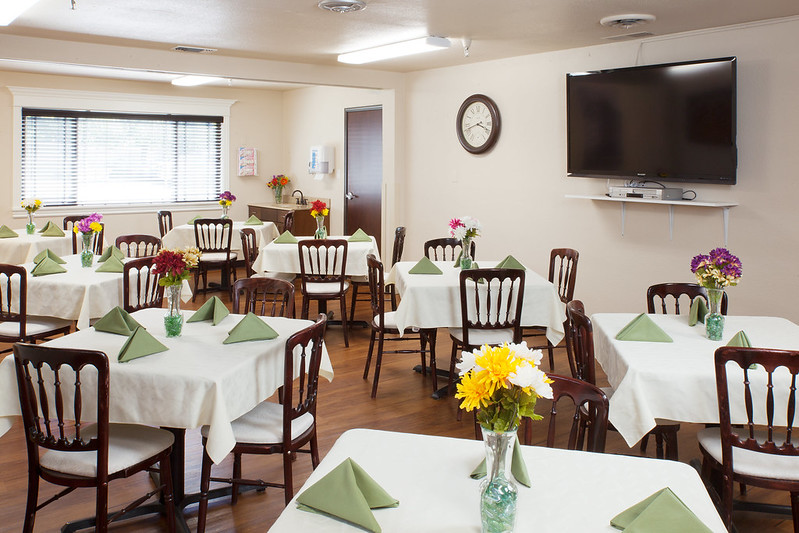
Who Owns and Operates Mckinley Park?

MCKINLEY PARK CARE CENTER is owned by a for-profit company. For-profit facilities operate as businesses with obligations to shareholders or private owners. The facility is operated by PACS GROUP, a chain that manages multiple nursing homes. With 86 certified beds and approximately 76 residents (about 88% occupancy), it is a smaller facility located in SACRAMENTO, California.

How Does Mckinley Park Compare to Other California Nursing Homes?

Compared to the 100 nursing homes in California, MCKINLEY PARK CARE CENTER's overall rating (4 stars) is above the state average of 3.2, staff turnover (46%) is near the state average of 46%, and health inspection rating (3 stars) is at the national benchmark.

What Should Families Ask When Visiting Mckinley Park?

Based on this facility's data, families visiting should ask: "Can you walk me through typical staffing levels on day, evening, and night shifts?" "Can I visit during a mealtime to observe dining assistance and food quality?" "How do you handle medical emergencies, and what is your hospital transfer rate?" "Can I speak with family members of current residents about their experience?" These questions are particularly relevant given the below-average staffing rating.

Is Mckinley Park Safe?

Based on CMS inspection data, MCKINLEY PARK CARE CENTER has a clean safety record: no substantiated abuse findings (meaning no confirmed cases of resident harm), no Immediate Jeopardy citations (the most serious violation level indicating risk of serious injury or death), and is not on the Special Focus Facility watch list (a federal program monitoring the lowest-performing 1% of nursing homes). The facility has a 4-star overall rating and ranks #1 of 100 nursing homes in California. While no facility is perfect, families should still ask about staff-to-resident ratios and recent inspection results during their visit.

Do Nurses at Mckinley Park Stick Around?

MCKINLEY PARK CARE CENTER has a staff turnover rate of 46%, which is about average for California nursing homes (state average: 46%). Moderate turnover is common in nursing homes, but families should still ask about staff tenure and how the facility maintains care continuity when employees leave.

Was Mckinley Park Ever Fined?

MCKINLEY PARK CARE CENTER has been fined $15,440 across 1 penalty action. This is below the California average of $33,233. While any fine indicates a compliance issue, fines under $50,000 are relatively common and typically reflect isolated problems that were subsequently corrected. Families should ask what specific issues led to these fines and confirm they've been resolved.

Is Mckinley Park on Any Federal Watch List?

MCKINLEY PARK CARE CENTER is not on any federal watch list. The most significant is the Special Focus Facility (SFF) program, which identifies the bottom 1% of nursing homes nationally based on persistent, serious quality problems. Not being on this list means the facility has avoided the pattern of deficiencies that triggers enhanced federal oversight. This is a positive indicator, though families should still review the facility's inspection history directly.