SAYLOR LANE HEALTHCARE CENTER
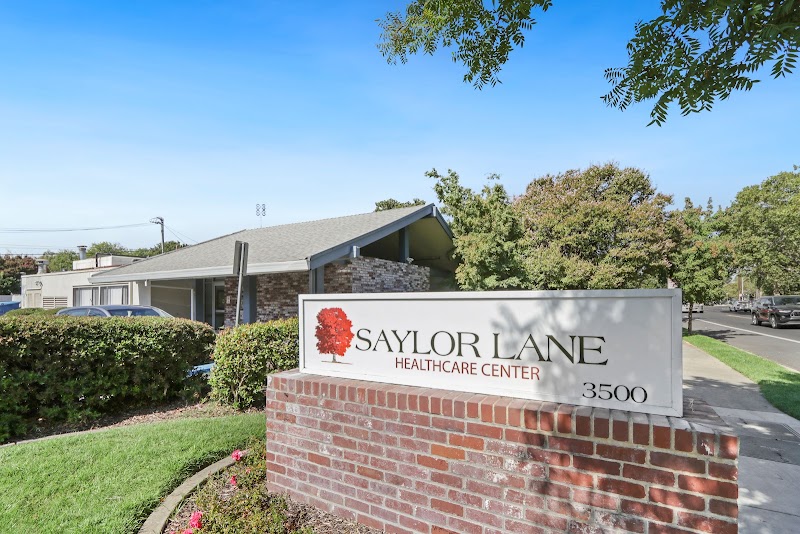
3500 FOLSOM BOULEVARD, SACRAMENTO, CA 95816 (916) 457-3500
For profit - Limited Liability company 42 Beds CYPRESS HEALTHCARE GROUP Data: November 2025
Trust Grade
68/100
#455 of 1155 in CA
Last Inspection: May 2025

Inspected within the last 6 months. Data reflects current conditions.

Overview

Saylor Lane Healthcare Center has a Trust Grade of C+, indicating it is slightly above average but not outstanding. It ranks #455 out of 1155 nursing homes in California, placing it in the top half of facilities statewide, and #16 out of 37 in Sacramento County, meaning only a few local options are better. Unfortunately, the facility is currently worsening, with issues increasing from 11 in 2024 to 15 in 2025. Staffing is rated average with a turnover rate of 45%, which is higher than the state average, suggesting some instability among caregivers. Additionally, they have $4,893 in fines, which is average but still raises concerns about compliance. Notably, there are serious concerns about food safety, with issues such as unclean ice machines and improper food storage that could lead to foodborne illnesses for residents. The facility also failed to maintain a clean environment, with a dumpster that was not securely closed, posing a risk for pests. Although there are some strengths, like a good quality measures rating, families should be aware of these significant weaknesses when considering this nursing home for their loved ones.

Trust Score
C+
68/100
In California
#455/1155
Top 39%
Safety Record
Low Risk
No red flags
Inspections
Getting Worse
11 → 15 violations
Staff Stability
⚠ Watch
45% turnover. Above average. Higher turnover means staff may not know residents' routines.
Penalties
✓ Good
$4,893 in fines. Lower than most California facilities. Relatively clean record.
Skilled Nurses
⚠ Watch
Each resident gets only 23 minutes of Registered Nurse (RN) attention daily — below average for California. Fewer RN minutes means fewer trained eyes watching for problems.
Violations
⚠ Watch
41 deficiencies on record. Higher than average. Multiple issues found across inspections.
★★★★☆
4.0
Overall Rating
★★★☆☆
3.0
Staff Levels
★★★★★
5.0
Care Quality
★★★☆☆
3.0
Inspection Score
Stable
2024: 11 issues
2025: 15 issues

The Good

  • 5-Star Quality Measures · Strong clinical quality outcomes
  • Full Sprinkler Coverage · Fire safety systems throughout facility
  • No fines on record

Facility shows strength in quality measures, fire safety.

The Bad

Staff Turnover: 45%

Near California avg (46%)

Higher turnover may affect care consistency

Federal Fines: $4,893

Below median ($33,413)

Minor penalties assessed

Chain: CYPRESS HEALTHCARE GROUP

Part of a multi-facility chain

Ask about local staffing decisions and management

The Ugly 41 deficiencies on record

May 2025 13 deficiencies
CONCERN (D)

Potential for Harm - no one hurt, but risky conditions existed

Tube Feeding (Tag F0693)

Could have caused harm · This affected 1 resident

Based on observation, interview, and record review, the facility failed to ensure one out of 14 sampled residents (Resident 8) was provided with appropriate care and services with enteral feeding (als...

Read full inspector narrative →
Based on observation, interview, and record review, the facility failed to ensure one out of 14 sampled residents (Resident 8) was provided with appropriate care and services with enteral feeding (also referred to as tube feeding/ feeding tube- the delivery of food and nutrients through a feeding tube directly into the stomach or part of the intestines) when Resident 8's percutaneous endoscopic gastrostomy tube (PEG tube- a tube that is placed directly into the stomach through an abdominal wall incision for administration of food, fluids, and medications) placement was not checked before enteral feeding. This failure had the potential for Resident 8 to experience complications of enteral feeding such as regurgitation (digestive fluids and undigested contents in the stomach rise into the mouth) and/or accidental aspiration (accidental inhalation) of feeding formula into the lungs. Findings: A review of Resident 8's clinical record indicated Resident 8 was admitted January of 2025 and had diagnoses that included diabetes mellitus (a chronic condition causing too much sugar in the blood), gastroesophageal reflux disease (GERD- a condition where stomach contents flow back up into the food pipe, causing heartburn and other symptoms), and encounter for attention to gastrostomy. A review of Resident 8's Minimum Data Set (MDS- a federally mandated resident assessment tool) Cognitive Patterns, dated 4/30/25, indicated Resident 8 had a Brief Interview for Mental Status (BIMS- a tool to assess cognition) score of 10 out of 15 which indicated Resident 8 had a moderately impaired cognition (mental process of acquiring knowledge and understanding). A review of Resident 8's MDS Swallowing/Nutritional Status, dated 4/30/25, indicated Resident 8 had feeding tube on admission and while a resident in the facility. A review of Resident 8's care plan, revised 2/13/25, indicated, [Resident 8] requires tube feeding. On supplemental enteral feeding. A review of Resident 8's care plan intervention, dated 9/11/24, indicated, The resident is dependent with tube feeding and water flushes. See MD [medical doctor] orders for current feeding orders. A review of Resident 8's active physician's order, dated 3/24/25, indicated, PEG TUBE FEEDING: [feeding formula] 1.2 via BOLUS FEEDING [formula is delivered in large doses through a syringe or gravity drip over a short period] of 330 mL [milliliters- unit of measurement] after LUNCH and after DINNER. two times a day for Supplement. A review of Resident 8's active physician's order, dated 3/24/25, indicated, Check placement and residual [quantity of feeding formula remaining in the stomach] .every shift. During an observation on 5/6/25 at 12:59 p.m. with Licensed Nurse (LN) 2, in Resident 8's room, LN 2 was observed doing Resident 8's bolus feeding. LN 2 positioned Resident 8 properly and checked Resident 8 for the presence of active bowel sounds and feeding residual amount but did not check for PEG tube placement prior to starting the enteral feeding. Resident 8 was observed to have intermittent coughing all throughout the formula feeding. During a subsequent interview on 5/6/25 at 1:20 p.m. with LN 2, LN 2 confirmed that she did not check Resident 8's PEG tube placement prior to starting the enteral feeding. LN 2 stated the PEG tube placement should be checked before enteral feeding to know that the tube was in the stomach, and it was safe to proceed with the enteral feeding. LN 2 further stated that the risk of not checking the PEG tube placement before enteral feeding was possible aspiration of feeding formula into the lungs. During an interview on 5/7/25 at 11:28 a.m. with the Director of Staff Development (DSD), the DSD stated that the standard of practice before enteral feeding was to check for the placement of the PEG tube by injecting air into the tube and listening using a stethoscope (a medical instrument used to amplify sounds) to confirm that the end of the PEG tube was in the stomach. The DSD further stated that if the PEG tube was displaced, the feeding formula could go into the other organs, like the lungs, which could cause aspiration pneumonia (a lung infection that occurs when foreign material, like food or liquid, is inhaled into the lungs instead of being swallowed). During an interview on 5/7/25 at 2:49 p.m. with the Director of Nursing (DON), the DON stated she would expect staff to always check PEG tube placement before enteral feeding to make sure the feeding formula would go in the stomach. The DON further stated that the resident would be the risk for possible aspiration pneumonia or regurgitation of feeding formula if the PEG tube placement was not checked before enteral feeding. A review of the facility's policy and procedures titled, Enteral Tube Feeding via Syringe (Bolus), revised 11/2018, indicated, Steps in the Procedure .7. Verify placement of tube. 8. If anything suggests improper tube positioning, do not administer feeding or medication. Notify the Charge Nurse or Physician. 9. When correct tube placement has been verified, flush tubing with at least 30 mL warm water (or prescribed amount) .
CONCERN (D)

Potential for Harm - no one hurt, but risky conditions existed

Deficiency F0887 (Tag F0887)

Could have caused harm · This affected 1 resident

Based on interview and record review, the facility failed to document and maintain records of COVID -19 (mild to severe, viral, respiratory infections) vaccination status for seven of 80 facility staf...

Read full inspector narrative →
Based on interview and record review, the facility failed to document and maintain records of COVID -19 (mild to severe, viral, respiratory infections) vaccination status for seven of 80 facility staff, Licensed Nurse 4 (LN 4), LN 5, Laundry Aide 2 (LA 2), Certified Nursing Assistant 6 (CNA 6), [NAME] 2 (CK 2), CNA 4, and CNA 5. This deficient practice increased the risk for residents to acquire, transmit, or experience complications from COVID -19 infections, compromising the residents, and the visitor's safety. Findings: During a concurrent interview and record review with the Director of Staff Development (DSD) and Infection Control Nurse (IC) on 5/8/25/ at 12:11 p.m., the DSD and IC confirmed they did not find vaccination records for COVID -19 for 7 facility staff in their Employee Records. The DSD stated they offered immunizations such as COVID -19 to the newly hired employees during their first day of orientation in the facility. The DSD searched the Employee Records and did not find documentation of COVID -19 vaccination status for the following facility staff: 1. LN 4, date of hire 9/3/24; 2. LN 5, date of hire 1/14/25; 3. LA 2, date of hire 1/24/25; 4. CNA 6, date of hire 4/17/25; 5. CK 2, date of hire 4/13/23; 6. CNA 4, date of hire 4/1/25; and 7. CNA 5, date of hire 1/4/25. During an interview with the Administrator on 5/8/25 at 12:25 p.m., the Administrator stated the facility supported and encouraged employees to get immunized with the COVID -19 vaccine for everyone's safety. During an interview with the Nurse Consultant (NC) on 5/8/25 at 12:39 p.m., the NC stated it was recommended for the facility staff to get immunized with COVID -19 to prevent potential risk of respiratory infection. In a review of the facility's policy and procedure titled, Employee Infection and Vaccination Status, Revision Date, January 2024, indicated, Prior to or upon an employee's duty assignment, the facility will assess the status of an employee's vaccination against infectious conditions, screening for tuberculosis, and recent history of communicable diseases . and vaccinations are documented on the Employee Record of Vaccination . 1. Employees will be current with mandated vaccinations prior to performing direct resident care .
CONCERN (E)

Potential for Harm - no one hurt, but risky conditions existed

Deficiency F0658 (Tag F0658)

Could have caused harm · This affected multiple residents

Based on observation, interview, and record review, the facility failed to ensure professional standards were followed when nursing staff failed to label the flush bag (used to provide hydration) with...

Read full inspector narrative →
Based on observation, interview, and record review, the facility failed to ensure professional standards were followed when nursing staff failed to label the flush bag (used to provide hydration) with the date and time attached to the Gastrostomy Tube (a tube inserted into the stomach through the abdomen to provide nutrition, fluids, and medication) for Resident 25, document pain assessment before and after administration of pain medication to Resident 19, verify or recheck vitals taken by Certified Nursing Assistants (CNAs) prior to withholding blood pressure medications, and wear appropriate personal protective equipment (PPE) while handling hazardous medication (medications that can cause serious effects including cancer, organ toxicity, fertility problems, genetic damage, and birth defects if not handled appropriately). These failures had the potential to result in worsening resident health conditions and unwanted exposure to hazardous medications leading to health complications. Findings: A review of Resident 25's admission Record indicated, Resident 25 was admitted to the facility in 2024 with diagnoses that included Dysphagia (difficulty swallowing) following Cerebral Infarction (occurs when blood supply to part of the brain is interrupted causing brain damage or death). A review of Resident 25's, Order Summary dated 4/22/25, indicated an order for water flushes of 150 milliliters (ML, unit of measurement) every four hours via the Gastrostomy Tube (GT). A review of Resident 25's, Minimum Data Set (MDS - an assessment tool used to guide care) Cognitive (having full understanding) Patterns, dated 2/8/25, indicated Resident 25 had a Brief Interview for Mental Status (a tool to assess a person's full understanding) score of 99 which indicated Resident 25 did not have full understanding and thus, not interviewable. During an observation on 5/7/25 at 1:25 p.m., Resident 25's flush bag label had no date or time it was hung. During an interview with Licensed Nurse 1 (LN 1) on 5/7/25 at 1:39 p.m., LN 1 verified Resident 25's flush bag label had no date or time. LN 1 stated, The flush bag should be labeled with the date and time. During an interview with the Nurse Consultant (NC) on 5/8/25 at 10:34 a.m., the NC stated, The facility expectation is for the tube feeding flush bag to be labeled with the date and time. A review of the facility policy titled, Enteral Feedings - Safety Precautions dated 2018 indicated, Document date and time . During a medication pass observation on 5/6/25 at approximately 7:30 a.m. with LN 1, LN 1 was observed preparing twelve medications for Resident 19, including hydrocodone/APAP (a narcotic medication to treat pain) 5/325 milligrams (mg, a unit of measurement), 1 tablet. A review of Resident 19's medical record indicated physician's orders for the following: - Hydrocodone/APAP 5/325 mg: give 1 tablet by mouth two times a day for moderate to severe pain, ordered 4/21/25 - Metoprolol tartarate (a medication to lower high blood pressure 25 mg: give 0.5 tablet by mouth two times a day for HTN (hypertension, high blood pressure) hold for SBP (systolic blood pressure, the pressure in your arteries when your heart beats and pumps blood out) below 110, HR (heart rate) below 60, ordered 4/9/25 During an interview on 5/6/25 at 10:47 a.m. with LN 1, LN 1 confirmed he did not administer Resident 19's metoprolol because his blood pressure was 94/68 and his heart rate was 62. LN 1 stated resident vitals were taken by Certified Nursing Assistants (CNAs). He stated Resident 19's hydrocodone/APAP was a scheduled medication for arthritis pain but he still assessed the resident's pain level before and after. He stated he had not documented the resident's pain score before administering the hydrocodone/APAP and still had not reassessed Resident 19's pain level after administering the medication 3 hours prior. During an interview on 5/6/25 at 3:58 p.m. with Director of Nursing (DON), DON stated nursing staff were expected to complete and document pain assessments on a resident before administering pain medication to make sure the medication was effective, and pain was properly managed. She stated she would expect to see a follow up assessment completed after administering the pain medication. During a medication pass observation on 5/6/25 at 7:50 a.m. with LN 2, LN 2 was observed preparing 11 medications for Resident 18, including bicalutamide (a hormone-based chemotherapeutic medication to treat prostate cancer) 50 milligrams (mg, a unit of measurement), 1 tablet. The pharmacy label affixed to the bubble pack indicated the medication was hazardous. LN 2 prepared the medications without wearing gloves or any other personal protective equipment. LN 2 stated she would not administer Resident 18's carvedilol (a medication to treat high blood pressure) because the CNA's had measured the resident's vitals and his SBP was less than 100. She stated the CNA's took Resident 18's blood pressure at 7:08 a.m. that morning that they were the ones to take the first set of vitals. A review of Resident 18's medical record indicated the following physician's orders: - Bicalutamide 50 mg: give 1 tablet by mouth in the morning for prostate cancer, ordered 2/5/25 - Carvedilol 6.25 mg: give 1 tablet by mouth two times a day for CHF (congestive heart failure, a disease where the heart does not pump as well as it should leading to fluid buildup in the body) hold for SBP less than 100 or HR less than 60, ordered 2/6/25 During an interview on 5/6/25 at 10:18 a.m. with LN 2, LN 2 confirmed Resident 18 received bicalutamide to treat prostate cancer and stated she did not know and was not aware of any special handling requirements. She stated she would expect to see directions in the physician's order to wear gloves if it was a hazardous medication but did not see that in Resident 18's order. During an interview on 5/6/25 at 10:23 a.m. with LN 2, LN 2 stated some residents had low blood pressure upon waking up and that it would go up after breakfast. She stated Resident 18's blood pressure was 100/67 after breakfast. She stated the morning vitals obtained by CNAs were what was used to determine if a blood pressure medication was given or held based off any parameters in the physician's order. LN 2 stated if the resident's blood pressure was out of their baseline, only then would nursing staff recheck the vitals. She stated it was difficult to recheck vitals because breakfast often collided with morning med pass so it was not ideal to retake until the resident finished eating. During an interview on 5/6/25 at 3:49 p.m. with DON, DON stated nursing staff were made aware that a medication was hazardous and required special handling under special instructions in the computer system. She stated whichever staff inputted the order into the system had to put in special handling instructions. DON confirmed special handling instructions were not put in for Resident 18's bicalutamide. She stated if nursing staff were unfamiliar with a medication, they were expected to call the pharmacy about what type of special precautions they would need to take for that medication. A review of OSHA's current recommendations for addressing the health and safety hazards faced by healthcare workers titled, Controlled Occupational Exposure to Hazardous Drugs, dated XXX, indicated, IV. Work Areas . A. Administration of Drugs to Patients: Administration of HDs to patients is generally performed by nurses or physicians. The potential for occupational exposure exists for every route of drug administration . Drug Administration: HDs [hazardous drugs] are administered through many different routes, in several types of settings, and for numerous disease states, Safe handling is required for all HDs no matter how they are used . (https://www.osha.gov/hazardous-drugs/controlling-occex; accessed 5/13/25) During a medication pass observation on 5/6/25 at 8:15 a.m. with LN 2, LN 2 was observed preparing six medications for Resident 7, including oxycodone (a narcotic medication to treat pain) 10 mg, 1 tablet. LN 2 stated vitals were obtained by a CNA at 7:12 a.m. that morning and she would not administer metoprolol to Resident 7 since the heart rate was 58. A review of Resident 7's medical record indicated the following physician's orders: - Oxycodone 10 mg: give 1 tablet by mouth every 6 hours as needed for pain, ordered 4/25/25 - Metoprolol tartarate 25 mg: give 1 tablet by mouth two times a day for HTN Hold if SBP less than 100 or HR less than 60, ordered 3/29/25 During an interview on 5/6/25 at 3:55 p.m. with DON, DON stated vitals should be obtained within 30 minutes of medication administration. She stated if the vitals obtained were from more than 30 minutes prior to the medication pass, nursing staff were expected to obtain a new assessment. She stated it was acceptable for nursing staff to use vitals obtained by CNAs as long as it was within the 30 minute window and did not expect them to verify the vitals. DON stated for pain medications ordered as needed without a pain scale, nursing staff were expected to get clarification on the order to indicate when it was appropriate to administer the medication. During a review of the facility's policy and procedure (P&P) titled, Administering Medications, revised 4/2019, the P&P indicated, Policy heading: Medications are administered in a safe and timely manner . Policy Interpretation and Implementation . 8. If a dosage is believed to be inappropriate or excessive for a resident, or a medication has been identified as having potential adverse consequences for the resident or is suspected of being associated with adverse consequences, the person preparing or administering the medication will contact the prescriber, the resident's attending physician or the facilities medical director to discuss the concerns . 11. The following information is checked/verified for each resident prior to administering medications: a. Allergies to medications; and b. Vital signs, if necessary . 22. As required or indicated for a medication, the individual administering the medication records in the resident's medication record . e. any results achieved and when those results were observed .
CONCERN (E)

Potential for Harm - no one hurt, but risky conditions existed

Respiratory Care (Tag F0695)

Could have caused harm · This affected multiple residents

Based on observation, interview, and record review, the facility failed to ensure safe and proper delivery of respiratory care consistent with the facility's policy and procedures (P&P) for one out of...

Read full inspector narrative →
Based on observation, interview, and record review, the facility failed to ensure safe and proper delivery of respiratory care consistent with the facility's policy and procedures (P&P) for one out of 14 sampled residents (Resident 3) when: 1. Resident 3's physician's order for oxygen therapy was not followed; and, 2. Resident 3's oxygen nasal cannula (NC- a medical device with two prongs that is connected to an oxygen source used to deliver supplemental oxygen directly into the nostrils) was not changed every seven days. These failures had the potential to result in unsafe and unsanitary delivery of oxygen to Resident 3 and to not achieve her highest practicable well-being. Findings: 1. A review of Resident 3's clinical record indicated Resident 3 was admitted April of 2025 and had diagnoses that included congestive heart failure (a condition in which the heart cannot pump oxygen-rich blood efficiently to the rest of the body), chronic obstructive pulmonary disease (COPD- a group of diseases that causes airflow blockage and breathing-related problems), pleural effusion (a condition where excessive fluid accumulates in the area between the lungs and the chest wall), and malignant neoplasm (cancer) of pleura (a membrane surrounding the lungs). A review of Resident 3's Minimum Data Set (MDS- a federally mandated resident assessment tool) Cognitive Patterns, dated 4/18/25, indicated Resident 3 had a Brief Interview for Mental Status (BIMS- a tool to assess cognition) score of 13 out of 15 which indicated Resident 3 had an intact cognition (mental process of acquiring knowledge and understanding). A review of Resident 3's MDS Health Conditions, dated 4/18/25, indicated Resident 3 experienced shortness of breath or trouble breathing when lying flat. A review of Resident 3's MDS Special Treatments, Procedures, and Programs, dated 4/18/25, indicated Resident 3 had received oxygen therapy on admission and while she was a resident in the facility. A review of Resident 3's care plan, revised 4/22/25, indicated, The resident has oxygen therapy r/t [related to] COPD. A review of Resident 3's care plan intervention, dated 4/13/25, indicated, OXYGEN SETTINGS: O2 [oxygen] via NC per MD [medical doctor] orders. A review of Resident 3's physician's order, dated 4/16/25, indicated, OXYGEN: Administer continuous oxygen at 3 LPM (liters per minute- unit of measurement for oxygen administration flow rate)(may titrate [measure and adjust] O2 to maintain saturation [percentage of oxygen carried in the blood] above 92% [percent- measurement of one part in every hundred]) via NASAL CANNULA at all times for COPD. every shift Document LPM and O2 saturation. During a concurrent observation and interview on 5/5/25 at 10:14 a.m. with Resident 3, in Resident 3's room, Resident 3 was lying on bed, awake, and was on oxygen via nasal cannula with the oxygen concentrator (machine) set at 4.5 lpm. Resident 3 stated she uses oxygen all the time and the nurses adjust the settings of it. During a concurrent observation and interview on 5/5/25 at 10:45 a.m. with Licensed Nurse (LN) 3, in Resident 3's room, LN 3 confirmed that Resident 3's oxygen was set at 4.5 lpm. A review of Resident 3's clinical record did not indicate that Resident 3's oxygen was being titrated. During another concurrent observation and interview on 5/6/25 at 8:59 a.m. with Resident 3, in Resident 3's room, Resident 3 was lying on bed, awake, and was on oxygen via nasal cannula with the oxygen concentrator set at 4.5 lpm. During a concurrent observation and interview on 5/6/25 at 9:50 a.m. with LN 2, in Resident 3's room, LN 2 confirmed that Resident 3's oxygen was set at 4.5 lpm. LN 2 then confirmed that the order for Resident 3 was only at 3 lpm with an order for titration. LN 2 also confirmed that Resident 3's oxygen was not being titrated. LN 2 stated Resident 3's oxygen setting should be at 3 lpm per the doctor's order. LN 2 also stated that if Resident 3's oxygen setting is being titrated, it should be documented in the resident's chart and the doctor should be notified. 2. A review of Resident 3's physician's order, dated 4/18/25, indicated, OXYGEN: Change .oxygen tubing and nasal cannula once a week. Label accordingly (use orange label sticker with LN initials and date). every night shift every Fri [Friday]. During a concurrent observation and interview on 5/5/25 at 10:14 a.m. with Resident 3, in Resident 3's room, Resident 3 was lying on bed, awake, and was on oxygen via nasal cannula which was labelled 4/19/25. During a concurrent observation and interview on 5/5/25 at 10:45 a.m. with LN 3, in Resident 3's room, LN 3 confirmed that Resident 3's oxygen nasal cannula was labelled 4/19/25 which was already more than 2 weeks. LN 3 stated the nasal cannula should be changed every week for infection control. During an interview on 5/7/25 at 11:28 a.m. with the Director of Staff Development (DSD), the DSD stated oxygen orders should be followed as prescribed, and that there should always be documentation that the oxygen is being titrated, and the doctor should be notified of titration. The DSD also stated the resident would be at risk for oxygen toxicity (lung damage that happens from breathing in too much extra supplemental oxygen) if the physician's order is not followed. The DSD further stated that oxygen tubing should be changed every seven days, and that the resident would be at risk of infection if the nasal cannula was not changed every seven days. During an interview on 5/7/25 at 2:49 p.m. with the Director of Nursing (DON), the DON stated she would expect nurses to follow doctors order for oxygen administration and if the oxygen is being titrated, she would expect documentation of the titration and communication to the doctor. The DON further stated she would expect nasal cannula to be changed every seven days for infection control. A review of the facility's P&P titled, Oxygen Administration, revised 10/2010, indicated, 1. Verify that there is a physician's order for this procedure. Review the physician's orders or facility protocol for oxygen administration. A review of the facility's P&P titled, Departmental (Respiratory Therapy) - Prevention of Infection, revised 11/2011, indicated, Infection Control Considerations Related to Oxygen Administration .5. Change the oxygen cannula and tubing every seven (7) days, or as needed.
CONCERN (E)

Potential for Harm - no one hurt, but risky conditions existed

Pharmacy Services (Tag F0755)

Could have caused harm · This affected multiple residents

Based on observation, interview and record review, the facility failed to ensure: 1. Controlled substance medications (medication with a high potential for abuse and addiction) were accurately account...

Read full inspector narrative →
Based on observation, interview and record review, the facility failed to ensure: 1. Controlled substance medications (medication with a high potential for abuse and addiction) were accurately accounted for on the medication administration record (MAR) and the Controlled Drug Record (CDR, an accountability record) for one of six randomly selected residents (Residents 288); 2. Controlled drug shift-to-shift count records (a record used to reconcile inventory of controlled medications in the medication cart by the off-going and on-coming nurse during a shift change) were routinely signed by the off-going and on-coming nursing shifts; 3. The narcotic emergency kit (e-kit; a kit/box containing medications and supplies for immediate use or during a medical emergency) was replaced according to facility policy and procedure (P&P) after use; 4. Routine medication for one of 14 sampled residents (Resident 3) was available for administration. These failures resulted in the facility not having accurate accountability of controlled medications, potential for abuse or misuse of these medications, the potential for emergency medications to be unavailable when needed, and the potential for not meeting the residents' therapeutic needs or worsening of their medical conditions. Findings: 1. Resident 288 had a physician's order for tramadol (a narcotic medication to treat pain) 50 milligrams (mg, a unit of measurement), give 0.5 tablet by mouth every 8 hours as needed for moderate (4-6) to severe (7-10) pain, dated 5/4/25. The CDR indicated tramadol was removed from the medication cart on the following dates and times, but their respective administrations were not documented on the MAR: 0.5 tablet on 4/25/25 at 7:45 p.m. and 0.5 tablet on 4/29/25 at 7:42 p.m. The MAR indicated 0.5 tablet was administered to Resident 288 on 4/30/25 at 7:41 p.m. but the removal of the medication from the cart was not documented on the CDR. During an interview on 5/5/25 at 10:03 a.m. with Licensed Nurse 1 (LN 1), LN 1 stated whenever a controlled drug was administered to a resident, nursing staff were expected to document the resident's pain level and location then sign out the medication on the CDR and MAR. He stated it was expected to document on both the CDR and MAR to ensure accuracy of controlled medication inventory. During a concurrent interview and record review on 5/6/25 at 4:11 p.m. with Director of Nursing (DON), Resident 288's CDR and MAR dated April 2025 were reviewed. DON confirmed the identified discrepancies and stated every tablet removed from the medication cart should have been documented on the CDR. She stated the administration should have been documented on the MAR as well. DON stated not documenting on both the CDR and the MAR could place a resident at risk for not having adequate pain management. During a review of the facility's P&P titled, Controlled Medications, dated March 2018, the P&P indicated, Procedures . D. When a controlled medication is administered, the licensed nurse administering the medication immediately enters the following information on the accountability record and the medication administration record (MAR): 1. Date and time of administration. 2. Amount administered. 3. Signature of the nurse administering the dose, completed after the medication is actually administered. 2. During a concurrent interview and record review on 5/6/25 at 10:37 a.m. with LN 2, the controlled drug shift-to shift count records for the Back Hall dated May 2025 were reviewed. LN 2 confirmed there were missing signatures for the on-coming and off-going nursing shifts. She stated nurses were expected to sign the record to indicate the controlled medication count was completed between shift change, everything was in order, and no discrepancies were identified. She stated nurses should have been mindful to sign at beginning and end of their shift with the other nurse. During a concurrent interview and record review on 5/6/25 at 4:08 p.m. with DON, the controlled drug shift-to-shift count records dated May 2025 for Front and Back Hall Medication Carts were reviewed. The Back Hall record indicated three missing signatures, and the Front Hall record indicated one missing signature by the off-going and on-coming nurse for various shifts. DON acknowledged and confirmed the finding and stated nursing staff were expected to sign before and after their shift to confirm all controlled medications were accounted for. During a review of the facility's P&P titled, Controlled Medications, dated March 2018, the P&P indicated, Medications included in the Drug Enforcement Administration (DEA) classification as controlled substances are subject to special handling, storage, disposal and record keeping in the facility . During a review of the facility's document titled, Controlled Drug Count Record, used to ensure controlled drug accountability from shift to shift, the document indicated at the top, Signing below acknowledges that you have counted the controlled drugs on hand and have found that the quantity of medication counted is in agreement with the quantity stated on the controlled drug administration record. 3. During a concurrent interview and inspection on 5/5/25 at 10:04 a.m. of Medication Cart 1 with LN 1, a narcotic e-kit with a red plastic tie (indicating it had been opened) was identified. Inside the e-kit were two logs, indicating medication had been removed from the e-kit twice. LN 1 confirmed the finding and stated e-kits were to be reordered from the pharmacy as soon as they were opened but it had not. During a review of the facility's P&P titled, Emergency Pharmacy Service and Emergency Kits, dated 3/2018, the P&P indicated, Procedures . E. The emergency supply is maintained at a designated area, along with a list of supply contents as follows . 4) Emergency Schedule 2 controlled substances are kept at designated nursing stations or the medication room, as determined by the facility, under double lock in a sealed, portable container. This kit is optional. The kit is examined at the time of the shift count. The off-going nurse is responsible for reordering the kit, and reports such to the on-coming nurse if the kit is found to have been opened at the time of the shift count . G. As soon as possible, the nurse records the medication use on the medication order form and notifies the pharmacy for replacement of the kit by transmitting the entire order for the resident and indicating that the first dose was used from the kit . K. If exchanging kits, opened kits are replaced with sealed kits within 72 hours of opening. If replacing used medications, the replacement doses are added to the kit within 72 hours of opening. 4. A review of Resident 3's medical record indicated the following physician's orders for Ozempic (a medication used to treat diabetes): - Ozempic 2 mg/dose subcutaneous (under the skin) pen injector 8 mg/3 ml: inject 2 mg subcutaneously (under the skin) one time a day every Mon for DM2 (Diabetes type 2, a type of diabetes where the body does not respond properly to insulin), ordered 4/18/25 to 5/5/25 - Ozempic 2 mg/dose subcutaneous pen injector 8 mg/3 ml: Inject 2 mg subcutaneously one time a day every Fri for DM2, ordered 5/5/25, start 5/9/25 A review of Resident 3's MAR dated April 2025 indicated she received her weekly doses on 4/21/25 and 4/27/25 (every Monday). A review of Resident 3's MAR dated May 2025 indicated she was due for her weekly dose on 5/5/25 but the nurse documented an administration note and the medication was not administered to the resident as was scheduled. A review of the administration note dated 5/5/25 at 10:01 indicated, Pending for pharmacy delivery. During a concurrent interview and record review on 5/7/25 at 12:01 p.m. with LN 2, Resident 3's May 2025 MAR and notes were reviewed. LN 2 confirmed Resident 3 was not administered her scheduled dose of Ozempic on 5/5/25 because the medication was pending delivery from the pharmacy. She then stated she recalled that the medication was supplied by the family and that communication should have been made with them to ensure the resident did not miss a dose. LN 2 reviewed Resident 3's record but was unable to find documentation that the family had been contacted to supply the medication. LN 2 stated she needed to follow up on it. During a concurrent interview and record review on 5/7/25 at 12:51 p.m. with the DON, Resident 3's May MAR and notes were reviewed. DON stated the notes indicated the medication was pending pharmacy delivery. She stated when the last dose was administered, the facility asked her son if he could bring the medication. She stated the expectation was that before the last dose is administered, when the last dose is administered and before the next dose is due that it would be communicated with the family that the medication needs to be brought to the facility. She stated she expected nursing staff to document the communications with the family in the resident's record. DON reviewed the record and stated she did not see any communication made with the family. During a review of the facility's P&P titled, Medication Ordering and Receiving from Pharmacy, dated 3/2018, the P&P indicated, Procedures . 2 . a. Reorder medication three to four days in advance of need to assure an adequate supply is on hand . During a review of the facility's P&P titled, Establishing Pharmacy Services, dated 3/2018, the P&P indicated, Policy: Regular and reliable pharmaceutical service is available to provide residents with prescription and nonprescription medications .
CONCERN (E)

Potential for Harm - no one hurt, but risky conditions existed

Deficiency F0757 (Tag F0757)

Could have caused harm · This affected multiple residents

**NOTE- TERMS IN BRACKETS HAVE BEEN EDITED TO PROTECT CONFIDENTIALITY** Based on interview and record review, the facility failed to ensure one of 14 sampled residents (Resident 3) was free from unnec...

Read full inspector narrative →
**NOTE- TERMS IN BRACKETS HAVE BEEN EDITED TO PROTECT CONFIDENTIALITY** Based on interview and record review, the facility failed to ensure one of 14 sampled residents (Resident 3) was free from unnecessary medication when Resident 3 received insulin glargine (a type of long-acting insulin to treat diabetes) without adequate monitoring. This failure had the potential to result in the worsening clinical conditions of Resident 3. Findings: A review of Resident 3's medical record indicated she was admitted to the facility on [DATE] with diagnoses including urinary tract infections, congestive heart failure (a condition where the heart cannot pump effectively to meet the body's needs), glaucoma (increased pressure in the eye leading to vision loss or blindness) and diabetes type 2 (a chronic condition that affects how your body uses sugar for energy). A review of Resident 3's physician's orders indicated the following: - Insulin glargine 100 units/milliliter (u/ml, a unit of measurement): Inject 8 unit subcutaneously at bedtime for DM2 (diabetes type 2) hold for FSBS (fingerstick blood sugar) <100. Notify MD/NP if FSBS<100 or >300, ordered from 4/12/25 to 4/21/25 - Insulin glargine 100 units/ml: inject 15 units SQ (subcutaneous, under the skin) at bedtime for DM, hold for FSBS<110 notify MD/NP if FBS<100 or >300, ordered 4/21/25 During a concurrent interview and record review on 5/7/25 at 12:57 p.m. with Director of Nursing (DON), Resident 3's progress notes and Medication Administration Records (MARs) dated April 2025 and May 2025 were reviewed. DON confirmed Resident 3's MARs indicated her blood sugar readings taken at 2100 (9 p.m., when insulin glargine was scheduled to be administered) were above 300 milligrams/deciliter (mg/dl, a unit of measurement) on the following dates: 310 mg/dl on 4/27/25, 341 mg/dl on 5/1/25, 311 mg/dl on 5/2/25, and 329 mg/dl on 5/5/25. DON stated she would expect nursing staff to have notified the physician or nurse practitioner as indicated in the order on those dates. DON reviewed Resident 3's medical record for documentation that they were notified of high blood sugar readings and stated, No I don't see any. During a concurrent interview and record review on 5/7/25 at 1:07 p.m. with DON, Resident 3's orders for monitoring of high and low blood sugar were reviewed. DON stated there should have been monitoring parameters in place to monitor Resident 3 for signs and symptoms of hyperglycemia (high blood sugar) and hypoglycemia (low blood sugar). DON reviewed Resident 3's orders and stated she only saw an order to monitor for signs and symptoms of hypoglycemia and not hyperglycemia. During a review of the facility's policy and procedure (P&P) titled, Administering Medications, revised 4/2019, the P&P indicated, Policy heading: Medications are administered in a safe and timely manner, and as prescribed . During a review of the facility's P&P titled, Obtaining a Fingerstick Glucose Level, revised 10/2011, the P&P indicated, Documentation: The person performing this procedure should record the following information in the resident's medical record . 6. The blood sugar results. Follow facility policies and procedures for appropriate nursing interventions regarding blood sugar results (if resident is on sliding scale coverage, and/or physician intervention is needed to adjust insulin or oral medication dosages), etc . Reporting: 1. Report results promptly to the supervisor and the attending physician . 3. Report other information in accordance with the facility policy and professional standards of practice.
CONCERN (E)

Potential for Harm - no one hurt, but risky conditions existed

Unnecessary Medications (Tag F0759)

Could have caused harm · This affected multiple residents

Based on observation, interview, and record review, the facility had a 5.56% error rate when two medication errors out of 36 opportunities were observed during a medication pass for two of nine Reside...

Read full inspector narrative →
Based on observation, interview, and record review, the facility had a 5.56% error rate when two medication errors out of 36 opportunities were observed during a medication pass for two of nine Residents (Residents 1 and 12). This failure resulted in medications not given in accordance with the manufacturer's specifications and potential to affect the residents' clinical conditions. Findings: During a medication pass observation on 5/5/25 at 11:32 a.m. with Licensed Nurse 1 (LN 1), LN 1 was observed preparing insulin lispro (a fast-acting insulin to treat diabetes) pen for Resident 12. LN 1 removed the cap from the pen, twisted the needle on, then dialed the dose knob to 1 unit. LN 1 did not prime (a process to ensure the pen measures and delivers the correct dose) the insulin pen before he dialed the dose. During a second medication pass observation on 5/5/24 at 11:37 a.m. with LN 1, LN 1 was observed preparing insulin lispro for Resident 1. LN 1 removed the cap from the pen, twisted the needle on, then dialed the dose knob to 8 units. LN 1 did not prime the pen before he dialed the dose. During an interview on 5/5/25 at 1:58 p.m. with LN 1, LN 1 stated the process for preparing the insulin pens was to twist off the cap, put the needle on, then dial the correct dose. He confirmed he did not prime the insulin pens prior to dialing the dose and was not aware that it was a necessary step in preparing the medication. During an interview on 5/6/25 at 3:47 p.m. with Director of Nursing (DON), DON stated nursing staff were expected to prime insulin pens with 2 units before dialing the dose. A review of the manufacturer's labeling for insulin lispro pen, revised 5/2012, indicated, Follow these instructions for each injection . 2. Priming Humalog KwikPen (brand for insulin lispro). Caution: If you do not prime before each injection, you may get too much or too little insulin. A. Pull of Outer Needle Shield. Do not throw away. Pull off Inner Needle Shield and throw away. B. Dial 2 units by turning the Dose Knob C. Point Pen up. Tap cartridge Holder to collect air at top. D. With needle pointing up, push Dose Knob in until it stops and 0 is seen in the Dose Window. Hold Dose Knob in and count to 5 slowly. Priming is complete when a stream of insulin appears from the needle tip and you have counted to 5 slowly. If a stream of insulin does not appear, repeat priming steps 2 B-D up to four times. If the Pen still does not prime, change the needle and repeat the priming steps above. Note: If you do not see a stream of insulin from the tip of the needle and the Dose Knob becomes hard to push, then change the needle and prime the Pen. During a review of the facility's policy and procedure (P&P) titled, Administering Medications, revised 4/2019, the P&P indicated, Policy heading: Medications are administered in a safe and timely manner, and as prescribed .
CONCERN (E)

Potential for Harm - no one hurt, but risky conditions existed

Deficiency F0761 (Tag F0761)

Could have caused harm · This affected multiple residents

Based on observation and interview, the facility failed to ensure refrigerated medications and biologicals were stored at temperatures in accordance with facility policy and procedure (P&P). This fail...

Read full inspector narrative →
Based on observation and interview, the facility failed to ensure refrigerated medications and biologicals were stored at temperatures in accordance with facility policy and procedure (P&P). This failure had the potential for residents to receive dangerous or inadequate treatment for their medical conditions, leading to further health complications. Findings: During an inspection of the Medication Storage Room refrigerator on 5/7/25 at 11:40 a.m. with the Director of Nursing (DON), the temperature was observed on the thermometer at 28°F. Inside the refrigerator were various types of insulin (medication to treat diabetes), and Afluria Quadrivalent (flu vaccine). DON confirmed the temperature was 28°F, in the freezing range indicated by the thermometer. She stated the medications in the refrigerator were to be stored at 36°F to 46°F. A review of an article by ConsumerMedSafety.org (a nationally recognized medication safety organization) indicated, Safety Tips for Storing Insulin . Do not keep insulin in places that freeze. Never store insulin products in a freezer. If insulin is frozen, do not use even after thawing. Freezing temperatures will breakdown the insulin and then it will not work well to lower your blood sugar. (https://www.consumermedsafety.org/insulin-safety-center/insulin-basics/storage-of-insulin; accessed 5/13/25) A review of the manufacturer's labeling for Afluria Quadrivalent (undated) indicated, 16.2 Storage and Handling: Store refrigerated at 2-8°C (36-46°F). Do not freeze. Discard if product has been frozen. During a review of the facility's P&P titled, Medication Storage in the Facility, dated 3/2018, the P&P indicated, Procedures . K. Medications requiring 'refrigeration' or 'temperatures between 2°C (36°F) and 8°C (46°F)' are kept in a refrigerator with a thermometer to allow temperature monitoring . N. Medication storage areas are kept clean, well-lit, and free of clutter and extreme temperatures. O. Medication storage conditions are monitored by facility staff on a monthly basis and corrective action taken if problems are identified.
CONCERN (E)

Potential for Harm - no one hurt, but risky conditions existed

Deficiency F0802 (Tag F0802)

Could have caused harm · This affected multiple residents

Based on observation, interview and record review, the facility failed to ensure Dietary Aide (DA) 1 and DA 2 had the appropriate skill set to safely perform the daily operations of the food and nutri...

Read full inspector narrative →
Based on observation, interview and record review, the facility failed to ensure Dietary Aide (DA) 1 and DA 2 had the appropriate skill set to safely perform the daily operations of the food and nutrition services department when: 1. DA 1 and DA 2 were unable to verbalize the proper procedure of manual dishwashing by the 2-Compartment sink (cross refer to F812, #6), and 2. DA 2 was unable to verbalize and demonstrate the proper testing and correct concentration of the sanitizer of dishwashing with the machine (cross refer to F812, #7). These failures had the potential to place 31 out of 33 highly susceptible residents who consumed food from the facility kitchen at risk for food borne illness. Findings: 1. An interview with DA 1 and Dietary Manager (DM) regarding manual dishwashing by using the 2-compartment sink on 5/5/25 at 10:14 a.m. was conducted. DA 1 stated the steps for the 2-compartment sink manual dishwashing were rinse, wash, and sanitize. DA 1 was not sure of the water temperature of the wash and rinse steps, the immersion time for the dishes in the sanitizer, and the correct concentration of the sanitizer. DM prompted DA 1 for the answers by using the posted instructions on the wall. Confirmed with DM and he agreed the staff, especially the dishwasher, needed to have good knowledge about the procedure for manual dishwashing. During an interview with DA 2 on 5/6/25 at 9:26 a.m., DA 2 stated the process of 2-compartment sink manual dishwashing involved washing, rinsing, and sanitizing. DA 2 stated the water temperatures for the wash and rinse steps were 120 degrees Fahrenheit (F). She stated the immersion time for the dishes in the sanitizer was 20 seconds, and the concentration of the sanitizer was 50 ppm. During an interview with RD on 5/6/25 at 3:29 p.m., RD stated the staff should have a good knowledge about manual dishwashing because the procedure replaced the dishwashing machine if not working in case of emergency. A review of facility P&P titled, 3-Compartment Procedure for Manual Dishwashing, dated 2023, indicated the process involved washing, rinsing, sanitizing, and air-dried, and .sanitizer solution .must read 200 ppm .immerse all washed items (in the sanitizer solution) for at least 60 seconds . 2. An observation and concurrent interview with DA 2 on 5/6/25 at 9:20 a.m. for the process of dishwashing by the machine was conducted. DA 2 stated the washing and rinsing water temperatures should be 120-140 degrees F. She demonstrated the process with the machine and the final temperature for the washing cycle was 125 degrees F, and the rinsing cycle was 127 degrees F. DA 2 was not able to state the method to show the effectiveness of the sanitizer of the dishwashing. DA 2 stated using the test strip to test the concentration of the sanitizer with prompt. She was not able to answer the correct concentration of the sanitizer. DA 2 demonstrated using the test strip to test the concentration level. She dipped the test strip in the sanitizer during the washing cycle, and the test strip did not register any color (the change of color shows the levels of concentration of the sanitizer). Then she used the same test strip to test three times until the color was changed. By prompt, she used the new test strip to test again after the washing and rinsing cycles were completed. The test strip showed the concentration was 50 ppm (parts per million - a measurement unit for the concentration of the sanitizer), but she stated the concentration should be 200 ppm. During an interview with RD on 5/6/25 at 3:29 p.m., RD acknowledged the issue above and stated the staff, especially dishwashers, should be able to know the dishwashing procedure which the dishes would be washed and sanitized properly to avoid food borne illness. A review of facility P&P titled, Dishwashing, dated 2023, indicated, .the Chlorine (sanitizer for dishwashing machine) should read 50-100 ppm on dish surface in final rinse (after the wash and rinse cycles). The proper chorine level is crucial in sanitizing the dishes . A review of the test strip vial with instruction, it stated, .to remove strip of paper from vial, dip strip into solution to be tested, without agitation and compare immediately with color chart on label. This color indicates approximate strength of the solution in parts per million (ppm) available chlorine. Time for test 1 second . There were four different colors that indicated different levels of concentration with 10 ppm, 50 ppm, 100 ppm, and 200 ppm. A review of job description of dietary aides, dated 6/2020, it indicated dietary aides should .perform dishwashing/cleaning procedures .prepare food, etc., in accordance with sanitary regulations as well as with our established policies and procedures .ensure that the department is maintained in a clean and safe manner . A review of DA 1's employee file with his date of hire (DOH) was on 1/9/25 for the dietary aide position. The document titled, Verification of Job Competency Demonstration - Dietary Aides, completed for the year of 2025 by DM, indicated DA 1 was competent on the category, Emergency dish washing procedure and when to use it. An interview with DM on 5/7/25 at 10:06 a.m., DM confirmed and stated DA 1 was competent on the emergency dish washing procedure. A review of DA 2's employee file with her DOH was on 4/21/20 for the dietary aide position. The document titled, Verification of Job Competency Demonstration - Dietary Aides, completed for the year of 2025 by DM, indicated DA 2 was competent on the categories of Sanitation method used in dish machine and proper concentration and Emergency dish washing procedure and when to use it. It indicated DA 2 was competent for both categories with verbal and demonstration methods. A review of departmental document titled, Food and Nutrition Services In-Service, Topic: 3-compartment sink, completed on 3/3/2025, given by DM, indicated DA 1 and DA 2 attended. A review of departmental document titled, Food and Nutrition Service In-Service, Topic: Dishwashing Machine, completed on 2/17/25, given by DM, indicated DA 2 attended. A review of job description of dietary manager, dated 6/2020, it indicated the DM should, .shall oversee facility .assist in the development of an participate in the planning, conducting, .in-service training classes that provide instructions on how to do the job, and that ensure a well-educated food services department .monitor food services service personnel to assure that they are following established safety regulations in the use of equipment and supplies .ensure that all food services service personnel follow established departmental policies and procedures .
CONCERN (E)

Potential for Harm - no one hurt, but risky conditions existed

Menu Adequacy (Tag F0803)

Could have caused harm · This affected multiple residents

Based on observation, interview and record review, the facility failed to ensure the menu was followed for the therapeutic diet during lunch on 5/6/25 when: 1. Five residents (Resident 1, 8, 10, 19 an...

Read full inspector narrative →
Based on observation, interview and record review, the facility failed to ensure the menu was followed for the therapeutic diet during lunch on 5/6/25 when: 1. Five residents (Resident 1, 8, 10, 19 and 139) with mechanical soft (MS) texture diets (a diet consisting of soft, moist foods for people who have chewing and/or swallowing difficulties) received a smaller portion of mechanical soft meatballs. 2. Resident 16 with fortified diets (added calories and/or protein) did not get fortified foods with Resident 16's meal. These failures had the potential to result in compromising the medical and nutrition status of 6 out of 31 residents who received meals from the facility kitchen. Findings: During the lunch meal distribution on 5/6/25 beginning at 12:05 p.m., it was noted as follows: 1. During an interview with [NAME] (CK) on 5/6/25 at 9:37 a.m. before meal distribution started, CK stated the fortified foods for lunch on 5/6/25 were to give extra one ounce (oz.) of gravy on the meat and extra ½ oz. of melted margarine on the vegetables. Resident 16 with fortified diet did not receive extra one oz. of gravy on the meatballs and extra ½ oz. of melted margarine on the vegetables. 2. Five residents (1, 8, 10, 19 and 139) with MS texture diets received two oz. (#16 scoop of MS meatballs. During an interview with CK on 5/6/25 at 12:34 p.m., CK confirmed and stated he used #16 scoop (two oz.) to serve the MS meatballs for the residents with MS texture diets. A concurrent review of facility spreadsheet (a menu excel sheet that indicated what items and portions to be served for each prescribed diet) titled, Spring Cycle Menus, Week 2 Tuesday, indicated that MS texture diet should receive #10 scoop (three oz.) of MS meatballs. During an interview with Registered Dietitian (RD) on 5/6/25 at 3:29 p.m., RD acknowledged the issues found above during the meal distribution. She stated the staff, or CK should follow the fortification as indicated in the spreadsheet. She further explained the fortified food provided extra calories to the residents who needed the extra nutrition. If the fortified foods were not provided, those who needed them may lead to at risk of weight loss. RD stated the CK needed to follow the spreadsheet to provide the correct portion (scoop) size for the food to the residents. RD further stated providing the wrong portion size of the meat may affect wound healing and/or limit the protein for the residents to meet their protein need. A review of the facility policy and procedures titled, Menu Planning, dated 2023, indicated, .The menus are planned to meet nutritional needs of residents in accordance with established national guidelines, Physician's orders . A review of the facility document titled, Dietary Supervisor - Job Duties and Responsibilities, dated 6/2020, indicated the therapeutic and regular diets and menus should be followed per the physician's orders. A review of facility document titled, Job Description: Cook, dated 9/1/23, indicated, .Essential job functions .follow recipes and prepares foods that correspond to menu cycles and recipes .Inspect trays following meal service to monitor and record resident acceptance of menu items .able to understand and to follow written and verbal directions including menus, tray tickets . A review of facility document titled, Dietary Aide-Job Duties and Responsibilities, dated 1/10/2025, indicated, .Food services .served food in accordance with established portion control procedures .assist in checking diet trays before distribution .
CONCERN (E)

Potential for Harm - no one hurt, but risky conditions existed

Infection Control (Tag F0880)

Could have caused harm · This affected multiple residents

**NOTE- TERMS IN BRACKETS HAVE BEEN EDITED TO PROTECT CONFIDENTIALITY** Based on observation, interview, and record review, the facility failed to follow and maintain an effective infection prevention...

Read full inspector narrative →
**NOTE- TERMS IN BRACKETS HAVE BEEN EDITED TO PROTECT CONFIDENTIALITY** Based on observation, interview, and record review, the facility failed to follow and maintain an effective infection prevention and control program for a census of 33 residents when: 1. A staff handled resident's food with bare hands; 2. Clean linen touched the floor and touched employee's clothes; 3. Safe infection control practices were not followed for cleaning and disinfecting a shared glucometer (a device used to measure blood sugar) in-between resident care and aseptic technique was not followed during medication preparation; 4. Nursing staff did not perform hand hygiene when moving from one route of medication administration to another and after handling a contaminated medical device; 5. A facility staff held Resident 15's 5/5/25 lunch meal with bare hands; 6. Resident 3's nebulizer (machine that turns liquid medicine into a mist that can be easily inhaled) face mask was not changed every seven days; These failures resulted in an increased risk for cross-contamination (movement or transfer of harmful bacteria from one person, object, or place to another), potential exposure of residents to germs, and may cause infection among residents, staff, and visitors. Findings: 1. A review of Resident 142's admission Record, indicated, Resident 142 was admitted to the facility on [DATE] with diagnosis that included legal blindness (a level of visual impairment that limits the activities performed by individuals without assistance), need for assistance with personal care and difficulty walking. A review of Resident 142's MDS Section B - Hearing, Speech, and Vision, indicated, Resident 142 had a score of 4 for vision, which indicated, severely impaired vision. During a concurrent observation and interview inside the room of Resident 142 with CNA 1 on 5/5/25 at 1:05 p.m., CNA 1 delivered Resident 142's meal tray and assisted him with his lunch. CNA 1 picked up the taco from Resident 142's plate with her bare hands, placed it in Resident 142's hands, instructed him to eat, and Resident 142 ate his taco. CNA 1 acknowledged she held Resident 142's taco with her bare hands. CNA 1 stated she should not hold Resident 142's food with her bare hands to promote infection control. 2. During a concurrent observation and interview inside the clean laundry room with Laundry Aide 1 (LA 1) on 5/7/25 at 10:42 p.m., as LA 1 was folding the white clean linen, the clean linen touched her clothes and the floor. LA 1 stated as she clutched the clean linen close to her body, that it was okay for the clean linen to touch her clothes. During an interview with the Housekeeping and Laundry Supervisor (HLS), on 5/7/25 at 9:54 a.m., the HLS stated LA 1's clothes should not touch the clean linen or the floor. The HLS further stated that the floor was contaminated, and LA 1 should wash the linens again. During an interview with the DON on 5/7/25 at 3:50 p.m., the DON stated, CNA 1 should not hold Resident 142's food with her bare hands as an infection control protocol. The DON also stated that LA 1 should keep the clean linen away from her clothes and off the floor when folding it to keep it clean. The DON continued, LA 1 should use the laundry basket while folding the clean linens, to keep if off the contaminated/dirty floor. A review of the facility's policy and procedure, titled Hand Hygiene for Staff Providing Feeding Assistance, undated, indicated, Purpose: To prevent the transmission of infection and ensure safe and sanitary conditions while assisting residents with feeding, by enforcing strict hand hygiene practices among staff . A review of the facility's policy and procedure, titled Departmental (Environmental Services) - Laundry and Linen revised date January 2014, indicated, The purpose of this procedure is to provide a process for the safe and aseptic handling, washing, and storage of linen . 3. During a medication pass observation on 5/5/25 at 11:33 a.m. with Licensed Nurse 1 (LN 1), LN 1 was observed measuring Resident 12's blood sugar level with an Evencare G3 glucometer. LN 1 placed the glucometer into a black plastic tray, went into the resident's room, measured the resident's blood sugar then went to clean the glucometer and tray. LN 1 removed one cleaning and disinfecting wipe from the container, then wiped both the tray and the glucometer. LN 1 then prepared Resident 12's insulin lispro (a fast-acting insulin) pen. LN 1 removed the cap from the pen, then attached a needle onto the rubber seal without first sanitizing and disinfecting it. During a second medication pass observation on 5/5/25 at 11:37 a.m. with LN 1, LN 1 was observed measuring Resident 1's blood sugar with the same glucometer. Once the resident's blood sugar was measured, LN 1 removed one sanitizing and disinfecting wipe from the container and used it to clean both the black plastic tray used to carry the glucometer and the device itself. LN 1 then prepared Resident 1's insulin lispro pen. LN 1 removed the cap from the pen, then attached a needle onto the rubber seal without first sanitizing and disinfecting it. During a third medication pass observation on 5/5/25 at 11:48 a.m. with LN 1, LN 1 was observed measuring a Resident 17's blood sugar with the same glucometer. Afterwards, LN 1 used one wipe to clean the black plastic tray and the glucometer. During an interview on 5/5/25 at 1:58 p.m. with LN 1, LN 1 stated he was not aware of any special steps taken to clean or disinfect the insulin pen rubber seal prior to placing the needle on. He stated it was a simple process; he would twist off the cap, put the needle on, then dialed the dose. He stated he did not ever wipe the pen rubber seal with an alcohol pad prior to placing a needle on. LN 1 stated there had not been any training regarding proper sanitizing and disinfecting of blood glucose monitors. He stated nursing staff were to use their judgement to determine if one wipe was adequate for sanitizing and disinfecting multiple surfaces. During an interview on 5/6/25 at 3:44 p.m. with Director of Nursing (DON), DON stated nursing staff were educated to sanitize and disinfect the glucometers before, after and in-between residents. She stated nursing staff were expected to use a new wipe for each type of surface or device that was cleaned. A review of an article published by the Centers for Disease Control and Prevention (CDC) titled, Considerations for Blood Glucose Monitoring and Insulin Administration, the article indicated, Recommend practices in healthcare settings . Blood glucose meters . If blood glucose meters must be shared, the device should be cleaned and disinfected after every use, per the manufacturer's instructions, to prevent the spread of blood and infectious agents. If the manufacturer does not specify how the device should be cleaned and disinfected, it should not be shared. A review of the operations manual for EvenCare G3's indicated, Cleaning and Disinfecting . Step 1. Wash hands with soap and water. Step 2. Put on single-use medical protective gloves. Step 3. Inspect for blood, debris, dust, or lint anywhere on the meter. Blood and bodily fluids must be thoroughly cleaned from the surface of the meter. Step 4. To clean the meter, use a moist (not wet) lint-free cloth dampened with a mild detergent. Wipe all external areas of the meter including both the front and back surfaces until visibly clean. Avoid wetting the meter test strip port. Step 5. To disinfect your meter, clean the meter surface with one of the approved disinfecting wipes . During a review of the manufacturer's labeling for insulin lispro pen, dated 5/2012, the labeling indicated, Follow these instructions for each injection 1. Preparing the Humalog Kwikpen [brand name for insulin lispro pen] A. Pull Pen Cap to remove B. Remove Paper Tab from Outer Needle Shield. C. Push capped needle straight onto the Pen. Screw needle on until secure . Use an alcohol swab to wipe the Rubber Seal on the end of the Cartridge Holder. During a review of the facility's policy and procedure (P&P) titled, Obtaining a Fingerstick Glucose Level, revised 10/2011, the P&P indicated, Steps in the Procedure . 18. Clean and disinfect reusable equipment between uses according to the manufacturer's instructions and current infection control standards of practice. 4. During a medication pass observation on 5/6/25 at 8:11 a.m. with LN 2, LN 2 observed preparing and administering medications to Resident 18, including bicalutamide (a hazardous chemotherapeutic medication used to treat prostate cancer) 50 milligrams (mg, a unit of measurement), Breyna (an inhaler to treat asthma) 160/4.5 microgram (mcg, a unit of measurement) inhaler, and Refresh Tears (an eye drop used to lubricate dry eyes) 1% eye drops. LN 2 prepared the medications in separate plastic cups and placed the medications in a tray that she carried into the Resident 18's room. LN 2 put on gloves to administer the oral medications first, then administered two puffs from the inhaler to the resident. LN 2 used a tissue to wipe the inhaler then administered the resident's eye drops without changing gloves or performing hand hygiene in-between. During an interview on 5/6/25 at 10:29 a.m. with LN 2, LN 2 stated that best practice during the medication pass for Resident 18 would have been to perform hand hygiene and change gloves between administering the oral medications and eye medications. During an interview on 5/6/25 at 3:44 p.m. with DON, DON stated she had educated nursing staff to perform hand hygiene between care for different residents and between administration of medication through different routes. During a review of the facility's P&P titled, Handwashing/Hand Hygiene, revised 8/2019, the P&P indicated, Policy Interpretation and Implementation . 7. Use an alcohol-based hand rub containing at least 62% alcohol; or, alternatively, soap (antimicrobial or non-antimicrobial) and water for the following situations . k. After handling used dressings, contaminated equipment, etc. During a review of the facility's policy P&P, revised 4/2019, the P&P indicated, Policy Interpretation and Implementation . 24. Staff follows established facility infection control procedures (e.g., hand washing, antiseptic technique, gloves, isolation precautions, etc.) for the administration of medications, as applicable. 5. A review of Resident 15's clinical record indicated Resident 15 was admitted April of 2025 and had diagnoses that included malnutrition (state of poor nutrition that occurs when the body does not receive enough or the right nutrients to function properly), and need for assistance with personal care. A review of Resident 15's Minimum Data Set (MDS- a federally mandated resident assessment tool) Cognitive Patterns, dated 4/13/25, indicated Resident 15 had a Brief Interview for Mental Status (BIMS- a tool to assess cognition) score of 13 out of 15 which indicated Resident 15 had an intact cognition (mental process of acquiring knowledge and understanding). A review of Resident 15's MDS Functional Abilities, dated 4/13/25, indicated Resident 15 needed setup or clean-up assistance with eating. During an observation on 5/5/25 at 1:04 p.m. of Resident 15 and Certified Nurse Assistant (CNA) 1, in front of Resident 15's room, CNA 1 was observed assisting Resident 15 with her lunch meal. Resident 15's lunch meal was a vegetarian soft taco. CNA 1 placed the soft tortilla on her bare left hand and proceeded on filling it up with beans and vegetables using a fork. CNA 1 then held the soft taco with two bare hands and placed it on Resident 15's plate. CNA 1 was observed to have a small white dressing on the side of her left pointing finger. During a subsequent interview on 5/5/25 at 1:08 p.m. with Resident 15, in front of Resident 15's room, Resident 15 stated she was not comfortable, and she did not like it when staff handled her taco with her bare hands. During a subsequent interview on 5/5/25 at 1:12 p.m. with CNA 1, CNA 1 confirmed she held Resident 15's taco meal with her bare hands when she assisted Resident 15 with her meal. CNA 1 also confirmed she had a small white dressing on the side of her left pointing finger and stated she has a cut on her finger. CNA 1 stated it would be a risk for food contamination if resident's meal is handled with bare hands. During an interview on 5/7/25 at 11:28 a.m. with the Director of Staff Development (DSD), the DSD stated handling ready-to-eat food such as taco with bare hands would place the resident at risk for infection. The DSD further stated it was okay for CNA 1 to assist residents with their meals as long as her cut was covered. During an interview on 5/7/25 at 2:49 p.m. with the Director of Nursing (DON), the DON stated she would expect staff to use utensils and observe infection control properly when assisting residents with their meals. A review of the United States (US) Food and Drug Administration (FDA) 2022 Food Code, section 3-301.11, titled, Preventing Contamination from Hands, 1/18/23 version, indicated, (B) .FOOD EMPLOYEES may not contact exposed, READY-TO-EAT FOOD with their bare hands and shall use suitable UTENSILS such as deli tissue, spatulas, tongs, single-use gloves, or dispensing EQUIPMENT. A review of the US FDA 2022 Food Code, section 2-401.13, titled, Use of Bandages, Finger Cots, or Finger Stalls, 1/18/23 version, indicated, If used, an impermeable cover such as a bandage .located on the wrist, hand or finger of a FOOD EMPLOYEE working with exposed FOOD shall be covered with a single-use glove. 6. A review of Resident 3's clinical record indicated Resident 3 was admitted April of 2025 and had diagnoses that included congestive heart failure (a condition in which the heart cannot pump oxygen-rich blood efficiently to the rest of the body), chronic obstructive pulmonary disease (COPD- a group of diseases that causes airflow blockage and breathing-related problems), pleural effusion (a condition where excessive fluid accumulates in the area between the lungs and the chest wall), and malignant neoplasm (cancer) of pleura (a membrane surrounding the lungs). A review of Resident 3's MDS Cognitive Patterns, dated 4/18/25, indicated Resident 3 had a BIMS score of 13 out of 15 which indicated Resident 3 had an intact cognition. A review of Resident 3's MDS Health Conditions, dated 4/18/25, indicated Resident 3 experienced shortness of breath or trouble breathing when lying flat. A review of Resident 3's physician's order, dated 4/24/25, indicated, Ipratropium-Albuterol Inhalation Solution [a combination medication used to treat COPD] 0.5-2.5 (3) MG [milligrams- unit of measurement] /3ML [milliliters- unit of measurement] .3 ml inhale orally every 6 hours for wheezing/SOB [shortness of breath]. During a concurrent observation and interview on 5/5/25 at 10:14 a.m. with Resident 3, in Resident 3's room, Resident 3's nebulizer face mask tubing was labelled 4/12/25. Resident 3 stated she last used her nebulizer this morning. During a concurrent observation and interview on 5/5/25 at 10:45 a.m. with Licenses Nurse (LN) 3, in Resident 3's room, LN 3 confirmed that Resident 3's nebulizer face mask tubing was labelled 4/12/25 which was already more than 3 weeks. LN 3 stated Resident 3 uses her nebulizer four times a day. LN 3 stated the face mask tubing should be changed every week for infection control. During an interview on 5/7/25 at 11:28 a.m. with the DSD, the DSD stated that nebulizer face mask should be changed every seven days because nebulizer is used to deliver medication directly into the lungs. The DSD further stated there would be a risk of infection if the nebulizer face mask was not changed every seven days. During an interview on 5/7/25 at 2:49 p.m. with the DON, the DON stated she would expect nebulizer face mask to be changed weekly for infection control. A review of the facility's policy and procedures (P&P) titled, Administering Medications through a Small Volume (Handheld) Nebulizer, revised 10/2010, indicated, 25. Change equipment and tubing every seven days, or according to facility protocol.
CONCERN (F)

Potential for Harm - no one hurt, but risky conditions existed

Food Safety (Tag F0812)

Could have caused harm · This affected most or all residents

Based on observation, interview and record review, the facility failed to ensure food was prepared, stored, served, or distributed in accordance with professional standards of food safety when: 1. The...

Read full inspector narrative →
Based on observation, interview and record review, the facility failed to ensure food was prepared, stored, served, or distributed in accordance with professional standards of food safety when: 1. The ice machine was not clean per manufacturer's guidance, 2. The reach-in freezer was not clean, 3. The blade of the can opener was not well maintained, 4. The cutting boards had deep grooves, 5. Several metal pans were stacked wet and stored in the clean and ready-to-use storage areas, 6. Dietary Aide (DA) 1 and DA 2 were unable to verbalize the proper procedure of manual dishwashing with the 2-compartment sink, 7. DA 2 was unable to verbalize and demonstrate the proper testing and correct concentration of the sanitizer for the dishwashing with the dishwashing machine and 8. DA 3 was noted with long artificial nails with gem décor. These failures had the potential to cause food contamination which could cause food borne illnesses for 31 out of 31 medically vulnerable residents who consumed food from the facility kitchen. Findings: 1. During an observation and concurrent interview with Maintenance Supervisor (MS) on 5/6/25 at 11 a.m., MS stated he was responsible for doing deep cleaning (cleaning and sanitizing the machinery parts on the top section of the ice machine and ice storage bin on the bottom section of the machine with chemical solutions designed to remove lime scale and mineral deposits and to remove algae and slime, then sanitize with chemical agent) of the ice machine monthly. He stated the last deep cleaning was completed on 4/17/25. He further stated the water filter was changed every six months. MS dissembled the top (machinery) part of the ice machine; it was noted there were black substances on the inside of the water curtain (a plastic cover rest on the ice making panel to redirect the ice to the ice storage bin), and the substances could be removed when wiping with paper towel. The water trough (a plastic tray under the evaporator unit) was detached and observed there were pink substances on the side and could be removed when wiping the paper towel. There were significant black substances found on the bottom of the evaporator unit (a unit where to make ice). The black substances were hard to remove by wiping with paper towel and were rough to touch. MS confirmed the findings and agreed the ice machine was dirty. MS explained the deep cleaning steps of the ice machine as followed: 1. Discard the ice from the ice storage bin, 2. Dissemble the removable components (water curtain and water trough) to clean with descaler (cleaner) solution and then sanitize them with sanitizer (MS stated the water level probe and the ice thickness probe could not be removed, therefore, he did not dissemble them to clean and sanitize.), 3. Use the descaler and sanitizer to clean and sanitize the components, wall and ice storage bin, 4. Assemble the parts (water curtain and water trough) together, 5. Pour the descaler solution in the water reservoir and run the cleaning cycle (MS confirmed and stated he only used the descaler to run the cleaning cycle, and he stated No, when asked if he used any other solution to run different kind of cycle.) and 6. After the cleaning cycle is done, turn on ice mode to start making ice. Discard the first batch of ice, and the second batch would be ready to use. During an interview with Registered Dietitian (RD) on 5/6/25 at 3:29 p.m., RD stated the ice machine needed to be cleaned to prevent bacteria or other dirt getting into the ice that may possibly cause food borne illness. A review of [Manufacturer's Name] Ice Machines Installation, Operation and Maintenance Manual, dated 2/2020, indicated, .Ice machine cleaner/descaler is used to remove lime scale and mineral deposits .sanitizer disinfects and removes algae and slime .Parts removal for detailed descaling and sanitizing .remove the water curtain .remove the ice thickness probe .remove water trough .remove the water level probe .remove the water distribution tube(s) . It further indicated when cleaning and sanitizing needed to pay attention to the following areas: side walls, base (area above water trough), evaporator plastic parts (including top, bottom and sides), and the ice storage bin. The ice machine needed to run the cleaning cycle with descaler solution and then run the sanitizing cycle with sanitizer solution after the components put back together. A review of facility policy and procedure (P&P) titled, Ice Machine Cleaning Procedures, dated 2023, indicated, .the ice machine needs to be cleaned and sanitized monthly .the internal components cleaned monthly .Information about the operation, cleaning and care of the ice machine can be obtained from owner's manual . According to 2022 FDA (Food and Drug Administration) Food Code, on section 4-602.11 Equipment Food-Contact Surface and Utensils, it stated equipment like ice makers and ice bins must be cleaned on a routine basis to prevent the development of slime, mold, or soil residues that may contribute to an accumulation of microorganisms (a living thing that is so small it must be viewed with a microscope, such as bacteria or algae). In addition, on Section 4-202.11 Food-Contact Surfaces, it stated, .The purpose of the requirements for multiuse food-contact surfaces is to ensure that such surfaces are capable of being easily cleaned and accessible for cleaning. Food-contact surfaces that do not meet these requirements provide a potential harbor for foodborne pathogenic organisms. Surfaces which have imperfections such as cracks, chips, or pits allow microorganisms to attach and form biofilms. Once established, these biofilms can release pathogens to food. Biofilms are highly resistant to cleaning and sanitizing efforts . and .Multiuse Food-Contact Surfaces shall be: 1. Smooth; 2. Free of breaks, open seams, cracks, chips, inclusions, pits . 2. During an observation of the reach-in freezer on 5/5/25 at 9:13 a.m., it was noted there were brown liquid spills on the top of the freezer, the top shelf, on the card board boxes on the middle shelf, on the bottom of the freezer, and the spill splashed on the freezer door. The liquid spills were sticky when touched and able to remove by wiping using paper towel. During an interview with [NAME] (CK) on 5/5/25 at 9:25 a.m., CK confirmed and stated the spills and splashes were from the explosion of the soda can. He further stated the staff usually would clean up spills immediately and the staff checked the cleanliness every morning and evening. During an interview with RD on 5/6/25 at 3:29 p.m., RD stated the freezer should be clean with no spills. She further stated the staff should clean up the spills immediately. A review of facility P&P titled, Refrigerator and Freezer, dated 2023, indicated, .Maintaining a clean refrigerator and freezer can improve the safety and quality of your foods .wipe up spills immediately . 3. During the kitchen observation and a concurrent interview with CK on 5/5/25 at 9:41 a.m., it was noted that the blade of the can opener had discoloration and the blade surface metal part worn off. CK confirmed and stated the blade was old and needed to be replaced. He further stated the metal worn off could potentially lead to physical contamination and that the piece of metal may fall into the food. A review of facility P&P titled, Can Opener and Base, dated 2023, indicated, Proper sanitation and maintenance of the can opener .is important to sanitary food preparation. Metal shavings and shredding can result from a dull cutting blade or worn out cogwheel .Replace blade on can opener, as needed . 4. During the kitchen observation and a concurrent interview with CK on 5/5/25 at 9:30 a.m., it was noted two cutting boards (red and brown color coded) with significant deep grooves on the surfaces. CK confirmed and stated the cutting boards were old and should be replaced. During an interview with RD on 5/6/25 at 3:29 p.m., RD stated the boards with deep grooves needed to be replaced. She further stated the deep grooves made the boards hard to clean and may trap food or bacteria that cause contamination. A review of undated facility P&P titled, Cutting Board Maintenance Policy and Procedure, indicated, .Inspection and Replacement .cutting boards must be inspected for deep grooves, stains, warping, or cracking .boards that cannot be fully cleaned or have significant surface damage must be removed from service and replaced immediately . 5. During the kitchen inspection and a concurrent interview with CK on 5/5/25 at 9:38 a.m., it was noted there were six full sheet metal pans that were stacked wet and stored in the clean and ready-to-use storage areas. CK confirmed and stated the pans and dishes needed to be completely air-dried before stored away. During an interview with RD on 5/6/25 at 3:29 p.m., RD stated the dishes and pans need to be air-dried before stored away to prevent bacteria growth. A review of facility P&P titled, Dishwashing, dated 2023, indicated, .Dishes are to be air dried in racks before stacking and storing . 6. DA 1 and DA 2 were unable to verbalize the proper procedure of manual dishwashing by the 2-compartment sink when: a. During an interview with DA 1 and Dietary Manager (DM) on 5/5/25 at 10:14 a.m., DA 1 stated if the dishwashing machine was not working, he would switch to manual dishwashing with the 2-Compartment sink. DA 1 stated first he would soak the dishes, then the following steps were rinse, wash and sanitize, he repeated the same steps three times when asked for confirmation. DA 1 was not sure of the water temperature for the wash and rinse steps. DM cued DA 1 with the posted manual dishwashing instruction on the wall and DA 1 stated the temperature should be at least 110 degrees Fahrenheit (F). DA 1 could not answer the immersion time for the dishes in the sanitizer. DM cued DA 1 again with the posted instruction and DA 1 stated the immersion time should be 60 seconds. DA 1 did not know the correct concentration of the sanitizer until DM 1 cued him to read the poster and DA 1 stated 200 ppm (parts per million - a measurement unit for the sanitizer solution). Confirmed with DM and he agreed the staff, especially the dishwasher, needed to have good knowledge about the procedure for manual dishwashing. b. During an interview with DA 2 on 5/6/25 at 9:26 a.m., DA 2 stated she would start to use the 2-Compartment sink for dishwashing when the dishwashing machine was not working. DA 2 stated the steps were to wash, rinse and sanitize. She stated the water temperatures for the wash and rinse steps were 120 degrees F. DA 2 stated she used a big tub served as the third compartment for the sanitizer solution for the sanitizing step and the immersion time of the dishes was 20 seconds. She stated by using the test strip to check the concentration of the sanitizer and the correct concentration should be 50 ppm. During an interview with RD on 5/6/25 at 3:29 p.m., RD stated the staff should have a good knowledge about manual dishwashing because the procedure replaced the dishwashing machine if not working in case of emergency. A review of facility P&P titled, 3-Compartment Procedure for Manual Dishwashing, dated 2023, indicated the process involved washing, rinsing, sanitizing, and air-dried, and .sanitizer solution .must read 200 ppm .immerse all washed items (in the sanitizer solution) for at least 60 seconds . 7. During an observation and concurrent interview with DA 2 on 5/6/25 at 9:20 a.m., DA 2 verbalized and demonstrated the process of dishwashing by the machine. DA 2 stated the temperatures for the washing and rinsing cycles in the dishwashing machine were 120-140 degrees F. She demonstrated the process with the machine and the final temperature for the washing cycle was 125 degrees F and the rinsing cycle was 127 degrees F. DA 2 could not answer when asked how she ensured if the sanitizer was effective during dishwashing with the machine. She stated that by using the test strip to test the concentration of the sanitizer with prompt. She could not answer the correct concentration of the sanitizer for testing by using the test strip. DA 2 demonstrated using the test strip to test the concentration level. She used the test strip to test the concentration during the washing cycle and the test strip did not register any color (the change of color shows the levels of concentration of the sanitizer). Then she used the same test strip to test three times until the color was changed. Then she used the new strip by cueing to test again after the washing and rinsing cycles were completed. The test strip showed the concentration was 50 ppm, but DA 2 stated the concentration should be 200 ppm. During an interview with RD on 5/6/25 at 3:29 p.m., RD acknowledged the issue above and stated the staff, especially dishwashers, should be able to know the dishwashing procedure which the dishes would be washed and sanitized properly to avoid food borne illness. A review of facility P&P titled, Dishwashing, dated 2023, indicated, .the Chlorine (sanitizer for dishwashing machine) should read 50-100 ppm on dish surface in final rinse (after the wash and rinse cycles). The proper chorine level is crucial in sanitizing the dishes . A review of the test strip vial with instruction, it stated, .to remove strip of paper from vial, dip strip into solution to be tested, without agitation and compare immediately with color chart on label. This color indicates approximate strength of the solution in parts per million (ppm) available chlorine. Time for test 1 second . There were four different colors indicating different levels of concentration with 10 ppm, 50 ppm, 100 ppm, and 200 ppm. 8. During the kitchen inspection on 5/6/25 at 9:17 a.m., it was noted DA 3 had long (approximately one inch) artificial nail with gems décor. Observed DA 3 was using bare hands to touch the food contact surfaces of the pans, clean dishes from the clean side of the dishwashing machine, and the ready-to-use utensils at 10:24 a.m., 11:25 a.m., and 11:35 a.m. respectively. During an interview with DM on 5/6/25 at 12:56 p.m., DM acknowledged and stated the long artificial nails were not acceptable and DA 3 should not have artificial nails, and the nails should be trimmed. During an interview with RD on 5/6/25 at 3:29 p.m., RD stated she preferred the kitchen staff to keep their fingernails short and trimmed. She further stated the artificial nails, and the gems décor had potential to fall into the food and cause contamination. A review of facility P&P titled, Dress Code, dated 2023, indicated, .fingernails kept short and well groomed .no nail polish . According to Food and Drug Administration (FDA) Food Code 2022, Section 2-302.11 Maintenance, indicated, (A). Food Employees shall keep their fingernails trimmed, filed, and maintained so the edges and surfaces are cleanable and not rough .(B) Unless wearing intact gloves in good repair, a food employee may not wear fingernail polish or artificial fingernails when working with exposed food . In addition, on Section 2-301.12 Cleaning Procedure, indicated, .the greatest concentration of microbes exists around and under the fingernails of the hands .The area under the fingernails .by far the largest concentration of microbes on the hand and it is also the most difficult area of the hand to decontaminate .
CONCERN (F)

Potential for Harm - no one hurt, but risky conditions existed

Garbage Disposal (Tag F0814)

Could have caused harm · This affected most or all residents

Based on observation, interview and record review, the facility failed to provide a clean environment for the residents and visitors when one out of one garbage dumpster, located outside the facility,...

Read full inspector narrative →
Based on observation, interview and record review, the facility failed to provide a clean environment for the residents and visitors when one out of one garbage dumpster, located outside the facility, was not closed securely due to deformed dumpster lids. This failure had the potential for an unsafe environment for the residents and visitors due to possible pest infestation and spread of diseases in the facility. Findings: During a concurrent observation and interview with [NAME] (CK) on 5/5/25 at 9:44 a.m., observed one out of one dumpster was covered with its two lids. However, the lids were bowed away from the edge of the dumpster and leaving a one- to two-inch gap in between. The deformed lids lacked the integrity to securely cover the bin. There were a few bags of trash with few flies flying around the trash inside the dumpster observed. CK confirmed and stated the lids needed to close tightly and agreed the lids were deformed. He further stated the dumpster should be closed tightly with its lids. CK stated he would call the waste management company to get new replacement. During an interview with Registered Dietitian (RD) on 5/6/25 at 3:29 p.m., RD stated the dumpster needed to be closed or sealed tightly with the lids to prevent rodents getting in the dumpster. A review of undated facility policy and procedure titled, Trash and Dumpster Management Policy and Procedure, Commercial Kitchen, it indicated, .Dumpster lids must remain closed at all times .Dumpster area inspections should occur weekly and be documented . According to the Food and Drug Administration (FDA) Food Code 2022, Section 5-501.15 Outside Receptacle, referenced 7/23/24, (A) Receptacles and waste handling units for refuse .used with materials containing food residue and used outside the food establishment shall be designed and constructed to have tight-fitting lids, doors, or covers.
Apr 2025 2 deficiencies
CONCERN (D) 📢 Someone Reported This

A family member, employee, or ombudsman was alarmed enough to file a formal complaint

Potential for Harm - no one hurt, but risky conditions existed

Free from Abuse/Neglect (Tag F0600)

Could have caused harm · This affected 1 resident

**NOTE- TERMS IN BRACKETS HAVE BEEN EDITED TO PROTECT CONFIDENTIALITY** Based on interview, and record review, the facility failed to protect one of four sampled residents (Resident 4) from physical a...

Read full inspector narrative →
**NOTE- TERMS IN BRACKETS HAVE BEEN EDITED TO PROTECT CONFIDENTIALITY** Based on interview, and record review, the facility failed to protect one of four sampled residents (Resident 4) from physical abuse when Resident 1 hit Resident 4 with a walker on his left knee in the rehabilitation room. This failure had the potential to cause serious injury, fear and distress to Resident 4 and other facility residents that were present in the rehabilitation room during the incident. Findings: A review of Resident 1 ' s admission record indicated Resident 1 was admitted to the facility in early 2025 with multiple diagnoses including Huntington ' s Disease (a progressive brain disorder that worsens over time causing gradual decline in movement, thinking, and mood). A review of Resident 1 ' s Minimum Data Set (MDS, a federally mandated resident assessment tool), dated 3/24/25, reflected a Brief Interview for Mental Status (BIMS-an assessment tool used by facilities to screen and identify memory, orientation, and judgement status of the resident) score of 14 out of 15 indicating Resident 1 had intact cognition. A review of Resident 4 ' s admission record indicated Resident 4 was admitted to the facility in early 2025 with multiple diagnoses which included chronic kidney disease. A review of Resident 4 ' s MDS, dated [DATE], reflected a BIMS score of 13 out of 15 which indicated Resident 4 was cognitively intact. During a review of Resident 1 ' s physician orders dated 4/10/25, indicated, Olanzapine Oral tablet 2.5 MG [MG-Milligram – a unit of measurement] (Olanzapine) Give 1 tablet by mouth two times a day for Huntington ' s Disease physical abuse (throwing stuff to others). ICO [informed consent obtained] by MD from patient, verified by LN [Licensed Nurse] 4/10/2025 . During a review of the Medication Administration Record (MAR) for Resident 1, dated 4/10/25, Resident 1 had an order directing staff to, Target behavior for [NAME]-psychotic monitor episodes of Huntington ' s Disease M/B [sic manifested by] physical abuse (throwing stuff to others) & Doc [document] # Times each occurs per shift. Record non-pharmacological intervention if behavior is noted .DC [discontinue] date 04/11/2024 . A review of progress notes dated 4/10/2025 indicated Resident 1 claimed the Asian man [Resident 4] grunted towards him, making him feel inferior to [Resident 4] . [Resident1] states that the grunt and feelings of inferiority and dislike triggered him to throw his walker towards [Resident 4] . During a telephone interview on 4/15/25 at 11:34 a.m. with Director of Rehab (DOR), the DOR stated Resident 1 came back from a walk with staff and returned to the rehab room. While in the rehab room and out of nowhere, Resident 1 threw their walker at Resident 4. DOR stated the situation was unprovoked. DOR confirmed what he observed was a resident-to-resident abuse. During an interview on 4/15/25 at 1:15 p.m. with Physical Therapy Assistant (PTA) in the rehabilitation room, the PTA stated she witnessed the incident together with the DOR. PTA stated she saw [Resident 4] get hit by the walker, saw it hit [Resident 4 ' s] left knee, we checked it. PTA further stated after the walker was thrown by Resident 1, Resident 1 got up again and attempted to attack Resident 4 and tried to hit him again and was screaming at him. PTA stated the DOR and PTA held him back, he wasn ' t responding to questions and was focused on that situation. PTA further stated they managed to get him [Resident 1] in the wheelchair and to leave the rehab room. PTA confirmed other residents were present in the rehabilitation room during the incident. During an interview on 4/15/25 at 11:43 a.m. with LN 1 assigned to Resident 1 and Resident 4 in the hallway, the LN 1 stated Resident 1 reported Resident 4 grunted at him in rehab room which is why he tried to throw a walker towards Resident 4 and tried to harm Resident 4. LN 1 further stated Resident 1 ' s family member had told LN 1 he had a history of throwing things at others due to diagnoses of Huntington ' s disease. During a follow up interview on 4/15/25 at 12:56 p.m. with LN 1 assigned to Resident 1 and Resident 4, LN 1 stated this was a resident-to-resident altercation that was unprovoked and the LN 1 added she had interviewed both residents. LN 1 further stated it should have been reported to the Department. During an interview on 4/15/25 at 11:57 a.m. with Director of Nursing (DON) in the DON's office, the DON stated [Resident 1] stated [Resident 4] grunted at him and it provoked him. DON further stated it was not deemed resident to resident abuse by the facility because it was a behavioral outburst so the IDT [interdisciplinary- a group of professionals that collaborates patient care] team treated it as an outburst. During a concurrent follow up interview and record review on 4/15/25 at 1:56 p.m. with DON, the Nurse ' s progress note dated 4/10/25 was reviewed. The DON stated this was a behavioral incident where Resident 1 tried to harm Resident 4. A review of the facility ' s policy and procedure titled, Abuse Prevention Program, dated December 2016 indicated, .residents have the right to be free from abuse, neglect, misappropriation of resident property and exploitation. This includes but is not limited to freedom from corporal punishment, involuntary seclusion, verbal, mental, sexual or physical abuse, and physical or chemical restraint not required to treat the resident ' s symptoms.
CONCERN (D) 📢 Someone Reported This

A family member, employee, or ombudsman was alarmed enough to file a formal complaint

Potential for Harm - no one hurt, but risky conditions existed

Report Alleged Abuse (Tag F0609)

Could have caused harm · This affected 1 resident

**NOTE- TERMS IN BRACKETS HAVE BEEN EDITED TO PROTECT CONFIDENTIALITY** Based on interview and record review, the facility failed to report allegations of abuse to the Department for 2 of 4 sampled re...

Read full inspector narrative →
**NOTE- TERMS IN BRACKETS HAVE BEEN EDITED TO PROTECT CONFIDENTIALITY** Based on interview and record review, the facility failed to report allegations of abuse to the Department for 2 of 4 sampled residents (Resident 1 and Resident 4), when Resident 1 was witnessed throwing a walker at Resident 4 hitting his left knee in the facility's rehabilitation room. This failure decreased the facility ' s potential to protect vulnerable residents and provide a safe environment. Findings: A review of Resident 1 ' s admission record indicated Resident 1 was admitted to the facility in early 2025 with multiple diagnoses including Huntington ' s Disease (a progressive brain disorder that worsens over time causing gradual decline in movement, thinking, and mood). A review of Resident 1 ' s Minimum Data Set (MDS, a federally mandated resident assessment tool), dated 3/24/25, reflected a Brief Interview for Mental Status (BIMS-an assessment tool used by facilities to screen and identify memory, orientation, and judgement status of the resident) score of 14 out of 15 indicating Resident 1 had intact cognition. A review of Resident 4 ' s admission record indicated Resident 4 was admitted to the facility in early 2025 with multiple diagnoses which included chronic kidney disease. A review of Resident 4 ' s MDS, dated [DATE], reflected a BIMS score of 13 out of 15 which indicated Resident 4 was cognitively intact. A review of progress notes dated 4/10/2025 indicated Resident 1 claimed the Asian man [Resident 4] grunted towards him, making him feel inferior to [Resident 4] . [Resident1] states that the grunt and feelings of inferiority and dislike triggered him to throw his walker towards [Resident 4] . During a telephone interview on 4/15/25 at 11:34 a.m. with Director of Rehab (DOR), the DOR stated Resident 1 came back from a walk with staff and returned to the rehab room. While in the rehab room and out of nowhere, Resident 1 threw their walker at Resident 4. DOR stated the situation was unprovoked. DOR confirmed what he observed was a resident to resident abuse. DOR stated that he informed the facility ' s Administrator and DON (Director of Nursing) of the incident, and they had informed the DOR that it had been reported and they would handle the documentation further. DOR confirmed he is a mandated reporter. During an interview on 4/15/25 at 1:15 p.m. with Physical Therapy Assistant (PTA) in the rehabilitation room, the PTA stated she witnessed the incident together with the DOR. PTA stated she saw [Resident 4] get hit by the walker, saw it hit [Resident 4 ' s] left knee, we checked it. PTA further stated after the walker was thrown by Resident 1, Resident 1 got up again and attempted to attack Resident 4 and tried to hit him again and was screaming at him. PTA stated the DOR and PTA held him back, he wasn ' t responding to questions and was focused on that situation. PTA further stated they managed to get him [Resident 1] in the wheelchair and to leave the rehab room. PTA further stated she understood there was a state telephone line that could have been called for reporting witnessed altercations and confirmed she was a mandated reporter. During an interview on 4/15/25 at 11:43 a.m. with Licensed Nurse 1 (LN 1) assigned to Resident 1 and Resident 4 in the hallway, the LN 1 stated Resident 1 reported Resident 4 grunted at him in rehab room which is why he tried to throw a walker towards Resident 4 and tried to harm Resident 4. LN 1 further stated Resident 1 ' s family member had told LN he had a history of throwing things at others due to diagnoses of Huntington ' s disease. During a follow up interview on 4/15/25 at 12:56 p.m. with LN 1 assigned to Resident 1 and Resident 4, LN 1 stated this was a resident-to-resident altercation that was unprovoked and the LN added she had interviewed both residents. LN further stated it should have been reported to the Department. During an interview on 4/15/25 at 11:57 a.m. with Director of Nursing (DON) in the DON's office, the DON stated [Resident 1] stated [Resident 4] grunted at him and it provoked him. DON further stated it was not deemed resident to resident abuse by the facility because it was a behavioral outburst so the IDT [interdisciplinary- a group of professionals that collaborates patient care] team treated it as an outburst. During a concurrent follow up interview and record review on 4/15/25 at 1:56 p.m. with DON, the Nurse ' s progress note dated 4/10/25 was reviewed. The DON stated this was a behavioral incident where Resident 1 tried to harm Resident 4. A review of the facility ' s policy and procedure titled, Abuse Investigation and Reporting, dated July 2017 indicated, . Reporting . all alleged violations involving abuse, neglect, exploitation or mistreatment . will be reported by the facility Administrator and or his/her designee to . State licensing/certification agency . local ombudsman . Law enforcement official . will be reported immediately but not later than: . Immediately, but not later than 2 hours after the allegation is made, if the events that cause the allegation involve abuse or result in serious bodily injury .Twenty-four (24) hours if the alleged violation does not involve abuse AND has not resulted in serious bodily injury .
May 2024 11 deficiencies
CONCERN (D)

Potential for Harm - no one hurt, but risky conditions existed

ADL Care (Tag F0677)

Could have caused harm · This affected 1 resident

Based on observation, interview, and record review, the facility failed to ensure two out of 15 sampled residents (Resident 232 and Resident 23) were assisted with nail care as part of their Activitie...

Read full inspector narrative →
Based on observation, interview, and record review, the facility failed to ensure two out of 15 sampled residents (Resident 232 and Resident 23) were assisted with nail care as part of their Activities of Daily Living (ADLs- normal daily functions required to meet basic needs) when Resident 232 and Resident 23 had long fingernails with blackish substance underneath the fingernails. This failure had the potential for Resident 232 and Resident 23 to sustain injury and/or for the residents to acquire an infection. Findings: 1. A review of Resident 232's clinical record indicated Resident 232 was admitted April of 2024 and had diagnoses that included chronic obstructive pulmonary disease (a group of diseases that causes airflow blockage and breathing-related problems), atrial fibrillation (an irregular, often rapid heart rate that commonly causes poor blood flow) and need for assistance with personal care. A review of Resident 232's Minimum Data Set (MDS- an assessment tool used to guide care) Cognitive Patterns, dated 4/29/24, indicated Resident 232 had a Brief Interview for Mental Status (BIMS- a tool to assess cognition) score of 11 out of 15 which indicated Resident 232 had a moderate impairment of cognition. A review of Resident 232's MDS Mood Status, dated 4/29/24, indicated Resident 232 had problem like feeling down, depressed, or hopeless for half or more of the days in two weeks. A review of Resident 232's MDS Functional Abilities and Goals, dated 4/29/24, indicated Resident 232 required setup or clean-up assistance with personal hygiene and eating. During a concurrent observation and interview on 5/13/24 at 9:55 a.m. with Resident 232, in Resident 232's room, Resident 232 had fingernails that were long and with blackish substance underneath the fingernails. Resident 232 stated he wanted his fingernails to be cleaned and trimmed. During a concurrent observation and interview on 5/13/24 at 10 a.m. with Certified Nurse Assistant (CNA) 3, in Resident 232's room, CNA 3 confirmed that Resident 232 had long fingernails and with blackish substance underneath the fingernails. CNA 3 stated she would expect that Resident 232's fingernails to be trimmed and cleaned for infection control. During a concurrent interview and record review on 5/14/24 at 3:34 p.m. with Licensed Nurse (LN) 4, Resident 232's clinical records were reviewed. LN 4 confirmed that Resident 232 had no care plan of refusing personal hygiene care and had no documented refusals of nail care. LN 4 stated Resident 232 had no issues like declining the trimming or cleaning of his fingernails. During an interview on 5/15/24 at 1:51 p.m. with the Director of Nursing (DON), the DON stated, It is important to keep resident's fingernails clean and short for infection control .to avoid skin cuts or tears. A review of Resident 232's care plan intervention, undated, indicated, Provide assistance with ADLs as indicated. A review of Resident 232's care plan intervention, dated 5/14/24, indicated, The resident [Resident 232] needs their [sic] nails kept short to reduce risk of scratching or injury from picking at skin. A review of the facility's policy and procedure titled, Activities of Daily Living (ADLs), Supporting, revised 3/2018, indicated, .2. Appropriate care and services will be provided for residents who are unable to carry out ADLs independently .in accordance with the plan of care, including appropriate support and assistance with .a. hygiene ( .grooming .). 2. Review of Resident 23's admission Record indicated the resident was a long-term resident in the facility with diagnoses that included muscle weakness and need for assistance with personal care. During the initial pool observation and interview on 5/13/24 at 9:10 a.m., Resident 23 was lying in bed and complained that he had long fingernails and would like them to be trimmed and be cleaned. The resident was observed to have long overgrown fingernails with black substance underneath the distal edges of the fingernails. The resident stated, I don't like long fingernails .I can't cut them by myself, and someone has to help. The resident stated his long fingernails were getting caught in the blankets and clothes and that was inconvenient. In a concurrent observation and interview on 5/13/24 at 9:25 a.m., in the resident's room, LN 1 verified Resident 23 had long overgrown fingernails that were unsanitary. LN 1 stated LNs cut the resident's fingernails every Sunday and Resident 23's fingernails should have been trimmed then.
CONCERN (D)

Potential for Harm - no one hurt, but risky conditions existed

Quality of Care (Tag F0684)

Could have caused harm · This affected 1 resident

Based on observation, interview, and record review, the facility failed to ensure two out of 15 sampled residents (Resident 233 and Resident 234) received treatment and care in accordance with profess...

Read full inspector narrative →
Based on observation, interview, and record review, the facility failed to ensure two out of 15 sampled residents (Resident 233 and Resident 234) received treatment and care in accordance with professional standards of practice, and facility's policy and procedure (P&P) when: 1. Resident 233's physician's order for stage 3 pressure ulcer/injury (PU/PI- injury to skin and underlying tissue resulting from prolonged pressure which extends through the skin into deeper tissue and fat but do not reach muscle or bone) on the coccyx (area on the lower back where the bottom/base of the spine is) treatment was not followed; and, 2. Resident 233 and Resident 234's wound dressings was not labeled with the nurse initials, and time and date it was applied. These failures had the potential for Resident 's 233's coccyx wound to get worse, and Resident 233 and Resident 234 to not achieve their highest practicable well-being and to not receive appropriate wound care treatment. Findings: 1. A review of Resident 233's clinical record indicated Resident 233 was admitted April of 2024 and had diagnoses that included cutaneous abscess of right lower limb (a localized collection of pus in the skin), cutaneous abscess of head, and stage 3 pressure ulcer (PU/PI- injury to skin and underlying tissue resulting from prolonged pressure which extends through the skin into deeper tissue and fat but do not reach muscle or bone). A review of Resident 233's Minimum Data Set (MDS- an assessment tool used to guide care) Cognitive Patterns, dated 4/22/24, indicated Resident 233 had a Brief Interview for Mental Status (BIMS- a tool to assess cognition) score of 13 out of 15 which indicated Resident 233 had intact cognition. A review of Resident 233's physician's order, dated 4/24/24, indicated, TX [treatment] : STAGE 3 PRESSURE ULCER TO COCCYX, CLEANSE WITH NS [normal saline- a mixture of water and edible salt commonly use in cleaning wounds, help with dry eyes, and used to treat dehydration], PAT DRY, APPLY CALCIUM ALGENATE (used to treat moderate to heavily exuding wounds) FOLLOWED BY DRY DRESSING [a dry piece of gauze used to cover a wound to protect the wound from injury, prevent introduction of bacteria, reduce discomfort, and assist with healing] QD [every day] AND PRN [as needed] IF SOILED/DISLODGED . During a concurrent observation and interview on 5/13/24 at 10:56 a.m. with Licensed Nurse (LN) 4, in Resident 233's room, LN 4 confirmed that Resident 233 had no dry dressing covering his stage 3 PU on the coccyx. LN 4 stated he would expect Resident 233's stage 3 PU on the coccyx to be covered with a dry dressing as per the physician's order to help with wound healing. During an interview on 5/15/24 at 1:51 p.m. with the Director of Nursing (DON), the DON stated she would expect the dressing for Resident 233 to be on him because that's the physician's order. A review of the facility's P&P titled, Wound Care, revised 10/2010, indicated, 1. Verify that there is a physician's order for this procedure .Dressing material, as indicated ( .gauze .) . 2a. A review of Resident 233's physician's order, dated 4/16/24, indicated, TX: .GROIN DRAIN: CLEAN WITH NS, PAT DRY, COVER WITH T-DRAIN SPONGE [ a sponge with pre-cut T-slit that provides a snug fit around the drain tubing] FOLLOWED BY CLEAR/TRANSPARENT FILM DRESSING .ONCE A WEEK OR PRN [as needed] IF SOILED OR DISLODGED . A review of Resident 233's physician's order, dated 5/7/24, indicated, TX: OCCIPITAL [back of the head] ABSCESS, CLEANSE WITH NS, PAT DRY, APPLY MEDIHONEY [medical-grade honey intended for wound care] FOLLOWED BY .DRY DRESSING QD AND PRN IF SOILED/DISLODGED . During a concurrent observation and interview on 5/13/24 at 10:56 a.m. with Licensed Nurse (LN) 4, in Resident 233's room, LN 4 confirmed that Resident 233 dry dressing on the back of his head and inner right thigh was not labeled with the initials of the nurse who applied the dressing, and the date and time it was applied. LN 4 stated, It [dry dressing on Resident 233's head and inner right thigh] should be labeled [of the date and time when it was applied] to know when it [dry dressing] was last changed. 2b. A review of Resident 234's clinical record indicated Resident 234 was admitted May of 2024 and had diagnoses that included encounter for other orthopedic aftercare (a care provided after a surgery that involves bones, muscles, and joints), and need for assistance with personal care. A review of Resident 234's ADMISSION-NURSING ASSESSMENT, dated 5/10/24, indicated, .Patient [Resident 234] is A&Ox4 [the patient is alert and oriented to person, place, time, and situation] and has the capacity to make medical decisions . A review of Resident 234's physician's order, dated 5/10/24, indicated, TX: SURGICAL SITE ON LEFT KNEE: CLEANSE WITH NS, PAT DRY, APPLY XEROFORM [a medicated non-adherent primary dressing that promotes wound healing] .AND COVER WITH DRY DRESSING DAILY AND PRN [as needed] IF SOILED OR DISLODGED . During a concurrent observation and interview on 5/13/24 at 1:20 p.m. with Resident 234, in Resident 234's room, Resident 234 was observed to have 2 dry dressing on the left knee; one vertically placed on the left knee, and one placed on the outer side of the left knee. Both dry dressings on the left knee was not labeled with the initials of the nurse who applied the dressing, and the date and time it was applied. Resident 234 confirmed the observation. During an interview on 5/15/24 at 1:51 p.m. with the Director of Nursing (DON), the DON stated, .The [dry] dressings should be labelled properly .Label the date and time [on the dry dressing] to keep track if it [dressing change] was done as scheduled and if the [physician's] order is being followed . A review of the facility's P&P titled, Wound Care, revised 10/2010, indicated, .11. Dress wound . [NAME] tape with initials, time, and date and apply to dressing .
CONCERN (D)

Potential for Harm - no one hurt, but risky conditions existed

Respiratory Care (Tag F0695)

Could have caused harm · This affected 1 resident

Based on observation, interview, and record review, the facility failed to ensure proper handling and delivery of respiratory care consistent with the facility's policy and procedures (P&P) and the pr...

Read full inspector narrative →
Based on observation, interview, and record review, the facility failed to ensure proper handling and delivery of respiratory care consistent with the facility's policy and procedures (P&P) and the professional standards of practice for one out of 15 sampled residents (Resident 14) when: 1. Resident 14 had no oxygen in use sign placed on the outside of the room entrance door; and, 2. Resident 14's physician's orders for oxygen therapy was not followed. These failures had the potential to result in unsafe delivery of oxygen to Resident 14 and potential harm to all the residents in the facility. Findings: 1. A review of Resident 14's clinical record indicated Resident 14 was admitted April of 2024 and had diagnoses that included respiratory failure (is a serious condition that develops when the lungs can't get enough oxygen into the blood and makes it difficult for a person to breathe on his own), chronic obstructive pulmonary disease (COPD- a group of diseases that causes airflow blockage and breathing-related problems, heart failure (a condition in which the heart cannot pump oxygen-rich blood efficiently to the rest of the body), and dependence on supplemental oxygen. A review of Resident 14's Minimum Data Set (MDS- an assessment tool used to guide care) Cognitive Patterns, dated 4/15/24, indicated Resident 14 had a Brief Interview for Mental Status (BIMS- a tool to assess cognition) score of 12 out of 15 which indicated Resident 14 had moderately impaired cognition. A review of Resident 14's MDS Health Conditions, dated 4/15/24, indicated Resident 14 had shortness of breath or trouble breathing with exertion such as when walking, bathing, or transferring and when lying flat, and was a current tobacco user. A review of Resident 14's MDS Special Treatments, Procedures, and Programs, dated 4/15/24, indicated Resident 14 had continuous oxygen therapy on admission and while he is a resident in the facility. A review of Resident 14's physician's order, dated 4/8/24, indicated, OXYGEN D/T [due to] SOB [shortness of breath]/COPD at _2_L PER MIN [liters per minute/lpm- unit of measurement for oxygen administration] VIA NASAL CANNULA [a medical device with two prongs that is connected to an oxygen source used to deliver supplemental oxygen directly into the nostrils] CONTINOUS [sic]. every shift. During a concurrent observation and interview on 5/13/24 at 10:14 a.m. with Licensed Nurse (LN) 4, in Resident 14's room, LN 4 confirmed that there was no oxygen in use sign placed on the outside of Resident 14's room entrance door. LN 4 stated, .I don't put those [oxygen in use sign] signs up . During an interview on 5/15/24 at 1:51 p.m. with the Director of Nursing (DON), the DON stated, .We [facility staff] put the oxygen in use sign so we [facility staff] can prevent potential harm towards patient or staff .It's [oxygen in use sign] a precautionary reminder for everyone . A review of the facility's P&P titled, Oxygen Administration, revised 10/2010, indicated, Steps in the Procedure .2. Place an Oxygen in Use sign on the outside of the room entrance door. 2. During a concurrent observation and interview on 5/14/24 at 8:50 a.m. with Resident 14, in Resident 14's room, Resident 14 was observed lying on bed and was using an oxygen delivered using a nasal cannula with oxygen concentrator set at 3 LPM. Resident 14 stated, .No, it should be at 2 [liters per min] . During a concurrent observation and interview on 5/14/24 at 8:51 a.m. with Certified Nurse Assistant (CNA) 3, in Resident 14's room, CNA 3 confirmed that Resident 14 was using an oxygen delivered using a nasal cannula with oxygen concentrator set at 3 lpm. During a concurrent interview and record review on 5/14/24 at 3:34 p.m. with LN 4, Resident 14's clinical records were reviewed. LN 4 confirmed that Resident 14 had no documented notes that he needed more than 2 lpm of oxygen. LN 4 stated, .He's not asking for more than 2 [lpm of oxygen] .He should be at 2 lpm . LN 4 further stated facility staff should follow the physician's order when providing oxygen therapy. During an interview on 5/15/24 at 1:51 p.m. with the DON, the DON stated she would expect the staff to follow the physician's order when administering oxygen therapy to a resident. The DON further stated, .That's [administering 3 lpm instead of 2 lpm of oxygen] too much .there should be monitoring .It [administering 3 lpm instead of 2 lpm of oxygen] could cause hyperoxygenation [a condition in which the body is exposed to an unusual amount of oxygen causing respiratory and/or neurological problems]. A review of Resident 14's care plan intervention, undated, indicated, OXYGEN SETTINGS: O2 [oxygen] via nasal cannula at 2L [liters] continuously . A review of the facility's P&P titled, Oxygen Administration, revised 10/2010, indicated, 1 .Review the physician's orders or facility protocol for oxygen administration .Steps in the Procedure .6. Adjust the oxygen delivery device so that .the proper flow of oxygen is being administered.
CONCERN (D)

Potential for Harm - no one hurt, but risky conditions existed

Deficiency F0698 (Tag F0698)

Could have caused harm · This affected 1 resident

Based on interview and record review, the facility failed to ensure one out of 15 sampled residents (Resident 14) received dialysis care services consistent with professional standards of practice, fa...

Read full inspector narrative →
Based on interview and record review, the facility failed to ensure one out of 15 sampled residents (Resident 14) received dialysis care services consistent with professional standards of practice, facility's policy and procedure (P&P), and physician's order when: 1. Resident 14's post-dialysis weight was not consistently documented in the resident's chart; and, 2. Resident 14's the dialysis communication sheet was not consistently completed. These failures had the potential for Resident 14 to not achieve the highest practicable well-being and to not receive appropriate dialysis care treatment and services. Findings: 1. A review of Resident 14's clinical record indicated Resident 14 was admitted April of 2024 and had diagnoses that included diabetes mellitus (a chronic condition causing too much sugar in the blood that can affect kidney function and breathing), stage 5 chronic kidney disease (a condition in which the kidneys are severely damaged and have stopped doing their job to filter waste from the blood), and dependence on renal dialysis (the process of removing excess water, particles, and toxins from the blood in people whose kidneys can no longer perform these functions naturally). A review of Resident 14's Minimum Data Set (MDS- an assessment tool used to guide care) Cognitive Patterns, dated 4/15/24, indicated Resident 14 had a Brief Interview for Mental Status (BIMS- a tool to assess cognition) score of 12 out of 15 which indicated Resident 14 had moderately impaired cognition. A review of Resident 14's MDS Special Treatments, Procedures, and Programs, dated 4/15/24, indicated Resident 14 was on hemodialysis (a treatment to filter wastes and water from the blood) on admission and while he is a resident in the facility. A review of Resident 14's physician's order, dated 4/8/24, indicated, Document Post [after] dialysis weight in the evening every Mon [Monday], Wed [Wednesday], Fri [Friday]. PM SHIFT MUST COMPLETE . During an interview on 5/15/24 at 1:51 p.m. with the Director of Nursing (DON), the DON stated, We [facility staff] refer it [post-dialysis weight] from the dialysis sheet .If they [dialysis center] don't write down anything we [facility staff] call them [dialysis center]. The DON further stated, I expect nurses to document the post-dialysis weight always .so we [facility staff] can check if there's a significant weight change .That's the [physician's] order. During a concurrent interview and record review on 5/15/24 at 3:23 p.m. with Licensed Nurse (LN) 4, Resident 14's clinical records were reviewed. LN 4 confirmed that there were no documented weights of Resident 14 on his electronic medical record on Wednesday, 5/1/24; Friday, 5/3/24; Monday, 5/6/24; Wednesday 5/8/24, and Friday 5/10/24. LN 4 stated the post-dialysis weight should always be documented in resident's chart. 2. A review of Resident 14's physician's order, dated 4/8/24, indicated, Complete Dialysis Communication Sheet BEFORE and Upon Return from Dialysis two times a day every Mon [Monday], Wed [Wednesday], Fri [Friday]. PM SHIFT MUST COMPLETE FORM UPON RETURN . During an interview on 5/15/24 at 1:51 p.m. with the DON, the DON stated, It [Dialysis Communication Sheet] should always be completed .if not, the nurse should call the dialysis center . During a concurrent interview and record review on 5/15/24 at 3:23 p.m. with LN 4, Resident 14's Dialysis Communication Sheet, dated 5/6/24, was reviewed. LN 4 confirmed that Resident 14's dialysis communication sheet, dated 5/6/24, was not complete and did not indicate Resident 14's pre [before] and post [after] dialysis weights. During a concurrent interview and record review on 5/15/24 at 3:23 p.m. with LN 4, Resident 14's Dialysis Communication Sheet binder was reviewed. LN 4 confirmed that Resident 14's dialysis communication sheet on 5/10/24 was not in the binder. LN 4 stated, The [Dialysis Communication Sheet] binder sometimes gets lost .All dialysis sheet is in there [Dialysis Communication Sheet binder] .If it's not there .I don't know . A review of Resident 14's care plan intervention, dated 5/13/24, indicated, Complete Dialysis communication form pre and post dialysis, which includes VS [vital signs], changes in condition, nutritional status, access site . A review of the facility's P&P titled, Hemodialysis Access Care, revised 09/2010, indicated, Documentation. The General medical nurse should document in the resident's medical record pre/post-dialysis as follows: .4. Any part of report from dialysis nurse post-dialysis being given. 5. Observations post-dialysis.
CONCERN (E)

Potential for Harm - no one hurt, but risky conditions existed

Deficiency F0692 (Tag F0692)

Could have caused harm · This affected multiple residents

Based on interview and record review, the facility failed to assess and evaluate the Intake and Output (I&O, the measurement of fluids entering and leaving the body) weekly summaries for two of 15 sam...

Read full inspector narrative →
Based on interview and record review, the facility failed to assess and evaluate the Intake and Output (I&O, the measurement of fluids entering and leaving the body) weekly summaries for two of 15 sampled residents (Resident 20 and Resident 23) when the residents were on fluid restriction. This failure placed the residents at risk for unnoted fluid overloads and/or dehydration as well as difficulty to gauge fluid balance of the residents to determine the effects of the treatment and the progress of the disease. Findings: Review of Resident 20's admission Record indicated the resident was a long-term resident in the facility with diagnoses that included hemodialysis (a treatment to filter wastes and fluid from the blood using a dialysis machine, an artificial kidney), heart disease, lung problem with localized swelling issues. Review of Resident 20's medical record, Order Summary, indicated the resident was on fluid restriction of a total of 2000 ml (milliliter, 2 Liters) per 24 hours with the specification for, Dietary Allotment 1200 ML; Nursing allotment 800 ML/24 Hrs, AM-350 ML, PM-350 ML, NOC [night shift]-100 ML . Record total amount of fluid intake in ML. Review of Resident 23's admission Record indicated the resident was a long-term resident in the facility with diagnoses that included chronic kidney disease and was on an anticoagulant (blood thinner) therapy for heart problems. Review of Resident 23's Medication Administration Record (MAR) indicated the resident had a physician order for 1500 ml daily fluid restriction. The fluid quota specified for dietary allotment of 840 ml and nursing allotment of 660 ml, for AM 300 ml, PM 300 ml, and Noc 60 ml respectively with the start date of 7/5/23. Review of the facility's revised October 2010 policy and procedure, Encouraging and Restricting Fluids, stipulated Licensed Nurse (LN) to Record the amount of fluid consumed on the intake side of the intake and output record. Record fluid intake in mLs [milliliters] for the resident who was on fluid restriction. The policy instructed, The licensed nurses should complete a summary of fluid intake/hydration status at least once per week and notify the doctor if any signs or symptoms of fluid overload or dehydration. Review of Resident 20's and Resident 23's medical records indicated LNs recorded the residents' fluid intake each shift respectively in the MAR; however, there was no documented evidence that LNs summed up the residents 24-hour fluids intake totals or completed the weekly fluid intake summary for Resident 20 or for Resident 23. In a concurrent interview and medical record review on 5/15/24 at 11:13 a.m. at the nursing station, LN 2 stated LNs on Saturday PM shift were to complete the weekly I&O summary for the residents who were on fluid restrictions. LN 2 verified there was no weekly I&O evaluations for Resident 20 and Resident 23 and stated they should have the weekly I&O summaries as the residents were on fluid restriction. LN 2 acknowledged the weekly I&O summary was important to determine the fluid balance and to evaluate the fluid restriction orders were effective for the residents. In an interview on 5/15/24 at 12:14 p.m., at the nursing station, the Director of Nursing (DON), with the Nurse Consultant (NC) present, stated all residents on fluid restrictions were I&O monitoring. The DON verified there was no weekly I&O evaluation for Resident 20 and Resident 23 and stated without the weekly or monthly I&O evaluations, it was hard to understand the accurate fluid status of the residents.
CONCERN (E)

Potential for Harm - no one hurt, but risky conditions existed

Drug Regimen Review (Tag F0756)

Could have caused harm · This affected multiple residents

Based on interview and record review, the facility failed to provide thorough drug regimen reviews (DRR) for one of 15 sampled residents (Resident 23) when the facility did not act on the facility pha...

Read full inspector narrative →
Based on interview and record review, the facility failed to provide thorough drug regimen reviews (DRR) for one of 15 sampled residents (Resident 23) when the facility did not act on the facility pharmacist (FP) report on irregularities and the expired medications were mixed with other medications available for use in the medication storage room refrigerator. These failures resulted in unresolved irregularities of antipsychotic (to treat symptoms of psychosis) medication therapy for Resident 23 and increased the potential for medication errors. Findings: Review of Resident 23's medical record, admission Record, indicated the resident was a long term resident in the facility with diagnoses that included unspecified memory problems with behavioral disturbance. Review of Resident 23's medication administration record (MAR) for March, April, and May 2024 indicated the resident was on antipsychotic medication monitoring every shift as follows: 1. Monitor side effect of Antispychotic medication (Risperidone) episodes of facial/tongue movement, decreased mental status, inability to sit still, tremors, drooling, rigidity every shift with the order date of 8/8/23. 2. Monitor behavior for Antipsychotic (Risperidone) episodes of verbally aggressive outbursts every shift, order date of 8/8/23. 3. Monitor behavior for Antipsychotic (Risperidone) episodes of threats self harm every shift, order date of 8/8/23. Review of Resident 23's medical record, Order Listing Report, indicated the residents had two physician orders for Risperidone that were discontinued on 3/25/24 as follows: 1. Risperidone 0.25 mg (milligram) 1 tablet by mouth once a day for dementia with psychotic features until 3/28/24 as evidenced by threats self harm and verbally aggressive outburst with the order date of 2/29/24 2. Risperidone 0.25 mg 1 tablet by mouth twice a day for dementia with psychotic features until 3/14/24 as evidenced by threats self harm and verbally aggressive outburst with the order date of 2/29/24 Review of Resident 23 monthly DRR for 3/1/24 through 3/27/24 included the FP's report on the irregularities of the Risperidone therapy monitoring and recommended, Since this patient [Resident 23] was DC [discontinued] off of Risperidone, you may remove any SE [Side Effect] or behavior monitoring associated with the order if no longer needed. Review of Resident 23's medical record included no documented evidence that the facility did act upon the FP's March DRR recommendation, either discontinued the monitoring or documented the rationale for continuation of the monitoring pertinent to the Risperidone even though the medication was discontinued. Review of Resident 23's monthly DRR for 4/1/24 through 4/21/24 included a FP's note, The following is a list of residents [Resident 23 included] which were reviewed during the consultant pharmacist's visit, but did not require any recommendations while the facility had not resolved the FP's recommendation in March and the irregularities continued in the absence of Risperidone administration. Review of the facility's May 2019 policy and procedure, Medication Regimen Reviews, stipulated, the medication regimen reviews involved, a thorough review of the resident's medical record to prevent, identify, report and resolve medication related problems .other irregularities . In an interview on 5/15/24 at 11:52 a.m. at the nursing station, the Director of Nursing (DON) stated the facility practice was to monitor residents for 72 hours after the discontinuation of antipsychotic medications and drop the monitoring if no issues noted and acknowledged Resident 23 had no issues post Risperidone monitoring period. The DON verified the FP's March DRR recommendation for Resident 23 and stated the facility should have acted on it to complete the DRR process. The DON verified there was no FP's recommendation in April DRR for Resident 23. In a telephone interview on 5/15/24 at 2:15 p.m., the FP explained the monthly DDR process was for the FP reviewing each resident's medications and making recommendations if indicated and the facility was to act upon the FP's recommendation. The FP acknowledged the March 2024 recommendation for Resident 23 was not resolved and had the potential for confusion and miscommunication among the healthcare providers regarding the antipsychotic therapy for the resident. The FP stated the pharmacist who conducted the April DRR should have identified the irregularities for Resident 23 and made a re-recommendation for the facility to act on. During the medication storage room observation on 5/13/24 starting at 2:45 p.m. with Licensed Nurse (LN 3), there were multiple identical boxes of pre-filled flu syringes stored in the medication refrigerator drawer available for use. Some of the boxes were open and some were not; two open boxes were 5 milliliter pre-filled Influenza Vaccine afuria® Quadrivalent for 2022-2023 and each box contained six and three syringes apiece, nine total, with the expiration date of 6/30/23. The expired syringes were mixed with Influenza Vaccine afuria® Quadrivalent 2023-22024 flu vaccines in the drawer. In a concurrent interview on 5/13/224 starting at 2:45 p.m., LN 3 verified the name, quantity and the expiration date of the flu vaccines. In a telephone interview on 5/15/24 at 2:15 p.m., the FP stated checking the medication storage room was a part of monthly DRR process and the expired medications should have been found during the DRR monthly visits. Based on interview and record review, the facility failed to provide thorough drug regimen reviews (DRR) for one of 15 sampled residents (Resident 23) when the facility did not act on the facility pharmacist's (FP) report on irregularities. This failure resulted in unresolved irregularities of antipsychotic (to treat symptoms of psychosis) medication therapy for Resident 23. Findings: Review of Resident 23's medical record, admission Record, indicated the resident was a long-term resident in the facility with diagnoses that included unspecified memory problem with behavioral disturbance. Review of Resident 23's medication administration record (MAR) for March, April, and May 2024 indicated the resident was on antipsychotic medication monitoring every shift as follows: a. Monitor side effect of Antipsychotic medication (Risperidone) episodes of facial/tongue movement, decreased mental status, inability to sit still, tremors, drooling, rigidity every shift with the order date of 8/8/23. b. Monitor behavior for Antipsychotic (Risperidone) episodes of verbally aggressive outbursts every shift, order date of 8/8/23 c. Monitor behavior for Antipsychotic (Risperidone) episodes of threats self harm every shift, order date of 8/8/23 Review of Resident 23's medical record, Order Listing Report, indicated the resident had two physician orders for Risperidone that were discontinued on 3/25/24 as follows: 1. Risperidone 0.25 mg (milligram) 1 tablet by mouth once a day for dementia with psychotic features until 3/28/24 as evidenced by threats self harm and verbally aggressive outburst with the order date of 2/29/24 2. Risperidone 0.25 mg 1 tablet by mouth twice a day for dementia with psychotic features until 3/14/24 as evidenced by threats self harm and verbally aggressive outburst with the order date of 2/29/24 Review of Resident 23 monthly DRR for 3/1/24 through 3/27/24 included the FP's report on the irregularities of the Risperidone therapy monitoring and recommended, Since this patient [Resident 23] was DC [discontinued] off of Risperidone, you may remove any SE [Side Effect] or behavior monitoring associated with the order if no longer needed. Review of Resident 23's medical record included no documented evidence that the facility did act upon the FP's March DRR recommendation, either discontinued the monitoring or documented the rationale for continuation of the monitoring pertinent to the Risperidone even though the medication was discontinued. Review of Resident 23's monthly DRR for 4/1/24 through 4/21/24 included a FP's note, The following is a list of residents [Resident 23 included] which were reviewed during the consultant pharmacist's visit but did not require any recommendations while the facility had not resolved the FP's recommendation in March and the irregularities continued in the absence of Risperidone administration. Review of the facility's May 2019 policy and procedure, Medication Regimen Reviews, stipulated, the medication regimen reviews involved, a thorough review of the resident's medical record to prevent, identify, report and resolve medication related problems .other irregularities . In an interview on 5/15/24 at 11:52 a.m. at the nursing station, the Director of Nursing (DON) stated the facility practice was to monitor residents for 72 hours after the discontinuation of antipsychotic medications and drop the monitoring if no issues noted and acknowledged Resident 23 had no issues post Risperidone monitoring period. The DON verified the FP's March DRR recommendation for Resident 23 and stated the facility should have acted on it to complete the DRR process. The DON verified there was no FP's recommendation in April DRR for Resident 23. In a telephone interview on 5/15/24 at 2:15 p.m., the FP explained the monthly DDR process was for the FP reviewing each resident's medications and making recommendations if indicated and the facility was to act upon the FP's recommendation. The FP acknowledged the March 2024 recommendation for Resident 23 was not resolved and had the potential for confusion and miscommunication among the healthcare providers regarding the antipsychotic therapy for the resident. The FP stated the pharmacist who conducted the April DRR should have identified the irregularities for Resident 23 and made a re-recommendation for the facility to act on.
CONCERN (E)

Potential for Harm - no one hurt, but risky conditions existed

Deficiency F0761 (Tag F0761)

Could have caused harm · This affected multiple residents

Based on observation, interview and documentation review, the facility failed to discard expired medications for a census of 38 when the expired flu vaccines were mixed with non-expired flu vaccines i...

Read full inspector narrative →
Based on observation, interview and documentation review, the facility failed to discard expired medications for a census of 38 when the expired flu vaccines were mixed with non-expired flu vaccines in the medication refrigerator, available for use. This failure increased the potential for medication errors and placed the residents at risk for drug safety. Findings: During the medication storage room observation on 5/13/24 starting at 2:45 p.m. with Licensed Nurse (LN 3), there were multiple identical boxes of flu vaccines stored in the medication refrigerator drawer in the room. There were 5 milliliter pre-filled Influenza Vaccine afuria® Quadrivalent for 2022-2023 mixed with 2023-2024 flu vaccines; two boxes of 2022-2023 vaccines were open and each contained six and three pre-filled syringes apiece, a total of nine syringes, with the expiration date of 6/30/23. Review of the facility's March 2018 policy and procedure, Medication Storage in the Facility, stipulated, Outdated .are immediately removed from stock, disposed of according to procedures for medication disposal . In a concurrent interview on 5/13/224 starting at 2:45 p.m., LN 3 verified the name, quantity and the expiration date of the flu vaccines and stated night shift nurses were to discard the expired medication in the medication storage room and stated the expired flu vaccines should have been disposed. LN 3 acknowledged storing expired medications with non-expired medications, especially when they were identical, increased the potential for medication errors.
CONCERN (E)

Potential for Harm - no one hurt, but risky conditions existed

Medical Records (Tag F0842)

Could have caused harm · This affected multiple residents

Based on interview and record review, the facility failed to maintain accurate, consistent, and complete medical records for three of 15 sampled residents (Resident 23, Resident 4 and Resident 20) and...

Read full inspector narrative →
Based on interview and record review, the facility failed to maintain accurate, consistent, and complete medical records for three of 15 sampled residents (Resident 23, Resident 4 and Resident 20) and one randomly selected resident (Resident 3) for a census of 38. These failures resulted in the residents' health and care status to be inaccurately reflected in the medical records and placed the residents at risk for inadequate care due to the potential miscommunication among the healthcare providers. Findings: 1. a) Review of Resident 23's medical record, admission Record, indicated the resident was a long-term resident in the facility with diagnoses that included unspecified memory problem with behavioral disturbance. Resident 23 was on fluid restriction due to a heart problem. Review of Resident 23's medication administration record (MAR) for March, April, and May 2024 indicated the resident was on antipsychotic medication monitoring every shift for Risperidone (to treat symptoms of psychosis). The antipsychotic monitoring included the side effect of Risperidone and for the behavior manifestation of verbal aggression and threats to self-harm. Review of Resident 23's medical record, Order Listing Report, indicated Risperidone therapy was discontinued as of 3/25/24. In an interview on 5/15/24 at 11:52 a.m. at the nursing station, the Director of Nursing (DON) verified the MARs were inconsistent with Resident 23's antipsychotic medication therapy and acknowledged the inaccurate documentation did not reflect the resident's mental status correctly and stated it could create confusion among the healthcare providers. b) Review of Resident 23's MAR indicated the resident was on a 1500 ml (milliliter) daily fluid restriction therapy with the specific fluid daily allotments for dietary 840 ml and nursing 660 ml respectively. Review of the facility's revised October 2010 policy and procedure, Encouraging and Restricting Fluids, stipulated residents who were on fluid restriction therapy: The nurse should record the 24hr fluid intake at least once per day .the licensed nurse should complete a summary of fluid intake/hydrations status at least once per week . Review of Resident 23's medical record had no weekly I&O evaluation. In a concurrent interview and record review on 5/15/24 at 11:13 a.m. at the nursing station, Licensed Nurse (LN 2) explained Resident 23 had no weekly I&O evaluation because LNs inaccurately checked no in the I&O section in the LN weekly summary chart. LN 2 stated, otherwise the LN weekly summary would open the task screen where LNs to enter the summary of the resident's I&O weekly total. The most recent four LN weekly summaries, dated 5/11/24, 5/4.24, 4/27/24 and 4/20/24, were reviewed and noted all four summaries check marked that the resident was not on I&O monitoring. In an interview on 5/15/24 at 12:14 p.m., the DON, with the Nurse Consultant present, verified Resident 23's LN weekly summaries were inaccurate. The DON stated the resident should have been evaluated for weekly I&O and acknowledge the resident's medical record was incomplete. 2. Review of Resident 4's admission Record indicated the resident admitted to the facility recently for aftercare of neck surgery. During the medication administration observation on 5/14/24 starting at 8:59 a.m., Licensed Nurse (LN 4) administered Resident 4's morning medications including a 30-milliliter cup of 15-gram liquid protein supplement. Resident 4 took all her morning medications but refused the liquid protein and didn't take it. Review of Resident 4's 5/14/24 AM medications was reconciled with the MAR. The MAR reflected that the liquid protein was administered to the resident with other morning medications. There was no documented evidence LN 4 noted the resident refused the liquid protein in the progress note or notified the DON or the RD (Registered Dietician). In a concurrent interview and record review on 5/15/24 at 10:50 a.m., LN 4 stated it was a typo that the protein liquid was administered to Resident 4 the previous morning and stated it should have been coded 2 for the medication refusal and progress note should have been created for the resident's refusal. LN 4 explained it was the facility practice to let DON know when the resident refused prescription medications two to three times and to document in the progress notes for the reason of the resident's refusal. LN 4 stated when resident refused other supplements or over-the-counter medications, LNs do not notify the DON or the physician. In an interview on 5/15/24 at 12:06 p.m., the DON stated it was her expectation LNs to notify the RD (Registered Dietician) when residents refused supplements and notify the DON for all medication refusal not only prescription medications, but vitamins and over-the-counter medications as well. 3. a) Review of Resident 20's admission Record indicated the resident was a long-term resident in the facility with diagnoses that included hemodialysis (a treatment to filter wastes and fluid from the blood using a dialysis machine, an artificial kidney) and had an above knee amputation recently. Resident 20 was on fluid restriction due to hemodialysis treatment. Review of Resident 20's weight variance from 1/12/24 through 5/13/24 indicated the resident had a 12.2 lb. (pound) weight loss for less than half a month period from 131.6 lbs. (2/23/24) down to 119.4 lb. (3/12/24). Since March 2024, the resident continued exhibited insidious weight loss and on 4/24/24 the resident weight was down to 50.7 lb. In a concurrent interview and record review on 5/15/24 at 10:11 a.m. at the nursing station, the RD explained Resident 20 was on hemodialysis and frequently exhibited weight fluctuation up to 10 lbs. in a short period of time. The RD stated 50.7 lb. on 4/24/24 was inaccurate and explained it was a typo that must have been kilograms and not pounds. b) Review of Resident 20's MAR indicated the resident was on a 2000 ml daily fluid restriction therapy with the specific fluid daily quota for 1200 ml dietary and 800 ml nursing respectively. Review of the facility's revised October 2010 policy and procedure, Encouraging and Restricting Fluids, stipulated residents who were on fluid restriction therapy were to be evaluated for the resident's intake hydration status every week (weekly I&O summary). Review of Resident 20's medical record included no documented evidence of the weekly I&O summary evaluation. In a concurrent interview and record review on 5/15/24 at 11:32 a.m. at the nursing station, LN 2 stated Resident 20 had no daily I&O total summary or weekly I&O evaluation summary. LN 2 reviewed the most recent four weeks of nursing weekly summaries and stated they were inaccurate in that LNs documented Resident 20 was not on I&O monitoring. LN 2 stated without the weekly I&O summary, LNs were not able to know whether the resident's intakes were met with the doctor's order and had the potential for unnoted fluid overload, dehydration or skin integrity. In an interview on 5/15/24 at 12:14 p.m., the DON, with the Nurse Consultant present, verified Resident 20 was on fluid restriction and therefore should have been evaluated weekly for the intake/hydration status. The DON acknowledge the resident's medical record was inaccurate and incomplete. 4. Review of Resident 3's admission Record indicated he was a long-term resident in the facility with diagnoses that included a mood disorder. Review of Resident 3's April and May 2024 MAR indicated LNs monitored the resident for the side effect of an antipsychotic medication, Abilify, for facial/tongue movement, drooling, rigidity, decreased mental status, tremors, and inability to sit still. In addition, the resident was being monitored for his behaviors in relation to Abilify therapy, for verbal aggressive outburst in the absence of Abilify administration which was discontinued on 4/19/24. Review of the facility's policy and procedure, revised July 2017, Charting and Documentation, stipulated, The medical record should facilitate communication between the interdisciplinary team regarding the resident's condition and response to care .Documentation in the medical record will be .complete, and accurate. In an interview on 5/15/24 at 11:52 a.m., the DON verified the Abilify therapy monitoring had been continued in the absence of the Abilify administration for Resident 3. The DON acknowledged the resident's medical record was inaccurate and inconsistent with the care provided and it could mislead the healthcare providers on the resident's health status.
CONCERN (E)

Potential for Harm - no one hurt, but risky conditions existed

Infection Control (Tag F0880)

Could have caused harm · This affected multiple residents

Based on observation, interview, and record review, the facility failed to follow and maintain an effective infection prevention and control program for a census of 38 residents when: 1. A facility st...

Read full inspector narrative →
Based on observation, interview, and record review, the facility failed to follow and maintain an effective infection prevention and control program for a census of 38 residents when: 1. A facility staff did not wear required personal protective equipment (PPE) when assisting Resident 233 and Resident 234 with mobility exercises who were both on enhanced standard precaution (ESP- also known as enhanced barrier precaution/EBP, infection control intervention designed to reduce transmission of multidrug-resistant organisms [MDROs- bacteria that resist treatment with more than one antibiotic] that employs targeted gown and glove use); and, 2. Resident 14's nasal cannula (a medical device with two prongs connected to an oxygen source used to deliver supplemental oxygen directly into the nostrils) was left uncovered and hanging on the resident's bedside rail when not in use. These failures resulted in an increased risk for cross-contamination (movement or transfer of harmful bacteria from one person, object, or place to another), potential exposure of Resident 233, Resident 234, and Resident 14 to germs, and may cause infection among residents, staff, and visitors. Findings: 1a. A review of Resident 233's clinical record indicated Resident 233 was admitted April of 2024 and had diagnoses that included cutaneous abscess (a localized collection of pus in the skin) of right lower limb, cutaneous abscess of head, and stage 3 pressure ulcer (PU/PI- injury to skin and underlying tissue resulting from prolonged pressure which extends through the skin into deeper tissue and fat but do not reach muscle or bone). A review of Resident 233's Minimum Data Set (MDS- an assessment tool used to guide care) Cognitive Patterns, dated 4/22/24, indicated Resident 233 had a Brief Interview for Mental Status (BIMS- a tool to assess cognition) score of 13 out of 15 which indicated Resident 233 had an intact cognition. A review of Resident 233's physician's order, dated 5/13/24, indicated, Enhanced Based [sic] Precaution (EBP) d/t [due to] stage 3 pressure ulcer (PU- also known pressure injury/PI, injury to skin and underlying tissue resulting from prolonged pressure which extends through the skin into deeper tissue and fat but do not reach muscle or bone) and occipital [back of the head] abscess. every shift. During an observation on 5/13/24 at 10:29 a.m., of Resident 233's room had a sign posted on the door which indicated, Enhanced Standard Precaution .ANYONE PARTICIPATING IN ANY OF THESE SIX MOMENTS MUST ALSO: [NAME] [put on] gown and gloves .Mobility assistance . During an observation on 5/13/24 at 10:36 a.m. in the therapy gym, Physical Therapy Assistant (PTA) was observed not wearing a gown or gloves while assisting Resident 233 with his mobility exercises in using the stairs. PTA went in contact with Resident 233's clothing multiple times and touched Resident 233's shoulder. PTA was also observed assisting Resident 233 to sit on his walker and proceeded on checking Resident 233's oxygen level using a pulse oximeter (an electronic device that clips onto a resident's finger to measure the oxygen level in the blood) without using gown or gloves. During an interview on 5/13/24 at 10:37 a.m. with PTA, PTA confirmed she did not wear a gown or gloves while assisting Resident 233 in his mobility exercises and when checking Resident 233's oxygen level using a pulse oximeter. PTA stated, .We [therapy staff] don't wear those in therapy [gym] because his [Resident 233] wound is covered .Our practice is not to wear them [gown and gloves] in the therapy gym. PTA further stated the importance of following ESP is for infection control and prevention of bacterial transmission. During a concurrent observation and interview on 5/13/24 at 10:56 a.m. with Licensed Nurse (LN) 4, in Resident 233's room, LN 4 confirmed that Resident 233 had no dry dressing covering his stage 3 PU on the coccyx (area on the lower back where the bottom/base of the spine is). LN 4 stated he would expect Resident 233's stage 3 PU on the coccyx to be covered with a dry dressing. A review of Resident 233's care plan, undated, indicated, [name of Resident 233] is on enhanced based [sic] precautions d/t stage 3 pressure injury to coccyx and occipital abscess. A review of Resident 233's care plan intervention, undated, indicated, Don .PPE as indicated when doing one of the following: .mobility assistance . 1b. A review of Resident 234's clinical record indicated Resident 234 was admitted May of 2024 and had diagnoses that included encounter for other orthopedic aftercare (a care provided after a surgery that involves bones, muscles, and joints), and need for assistance with personal care. A review of Resident 234's ADMISSION-NURSING ASSESSMENT, dated 5/10/24, indicated, .Patient [Resident 234] is A&Ox4 [the patient is alert and oriented to person, place, time, and situation] and has the capacity to make medical decisions . A review of Resident 234's physician's order, dated 5/13/24, indicated, Enhanced Based [sic] Precaution (EBP) d/t surgical site to L [left] knee. every shift. During an observation on 5/13/24 at 11:25 a.m., in Resident 234's room there was a sign posted on the door which indicated, Enhanced Standard Precaution .ANYONE PARTICIPATING IN ANY OF THESE SIX MOMENTS MUST ALSO: [NAME] [put on] gown and gloves .Mobility assistance . During an observation on 5/13/24 at 11:27 a.m. in the therapy gym, PTA was observed not wearing a gown or gloves while assisting Resident 234 with his sit-to-stand mobility exercises. PTA went in contact with Resident 234's clothing multiple times while standing closely to Resident 234 during the mobility exercises. A review of Resident 234's care plan, undated, indicated, [name of Resident 234] is on enhanced based [sic] precautions d/t stage surgical site to L knee. A review of Resident 233's care plan intervention, undated, indicated, Don .PPE as indicated when doing one of the following: .mobility assistance . During an interview on 5/13/24 at 1:11 p.m. with the Chief Clinical Officer (CCO), the CCO stated they are aware about the new QSO (policy, memos, and guidance from the Centers for Medicare & Medicaid Services [CMS]) regarding ESP and the facility follows it. During an interview on 5/15/24 at 1:51 p.m. with the Director of Nursing (DON), the DON stated facility staff should be observing ESP if a resident is placed under ESP to avoid potential spread of diseases, if there's any. A review of the facility's policy and procedure (P&P) titled, Enhanced Standard Precautions, revised 8/2022, indicated, 1. Enhanced standard precautions (ESPs) are used as an infection prevention and control intervention to reduce the spread of multi-drug resistant organisms (MDRO's) to residents. A review of the QSO-24-08-NH memorandum from CMS with the subject, Enhanced Barrier Precautions in Nursing Homes, dated 3/20/24, indicated, .Outside the resident's room, EBP should be followed .when working with residents in the therapy gym . 2. A review of Resident 14's clinical record indicated Resident 14 was admitted April of 2024 and had diagnoses that included respiratory failure (is a serious condition that develops when the lungs can't get enough oxygen into the blood and makes it difficult for a person to breathe on his own), chronic obstructive pulmonary disease (COPD- a group of diseases that causes airflow blockage and breathing-related problems, heart failure (a condition in which the heart cannot pump oxygen-rich blood efficiently to the rest of the body), and dependence on supplemental oxygen. A review of Resident 14's Minimum Data Set (MDS- an assessment tool used to guide care) Cognitive Patterns, dated 4/15/24, indicated Resident 14 had a Brief Interview for Mental Status (BIMS- a tool to assess cognition) score of 12 out of 15 which indicated Resident 14 had a moderately impaired cognition. A review of Resident 14's MDS Health Conditions, dated 4/15/24, indicated Resident 14 had shortness of breath or trouble breathing with exertion such as when walking, bathing, or transferring and when lying flat, and was a current tobacco user. A review of Resident 14's MDS Special Treatments, Procedures, and Programs, dated 4/15/24, indicated Resident 14 had continuous oxygen therapy on admission and while he is a resident in the facility. A review of Resident 14's physician's order, dated 4/8/24, indicated, OXYGEN D/T SOB [shortness of breath]/COPD at _2_L PER MIN [liters per minute/lpm- unit of measurement for oxygen administration] VIA NASAL CANNULA CONTINOUS [sic]. every shift. During a concurrent observation and interview on 5/13/24 at 10:14 a.m. with LN 4, in Resident 14's room, LN 4 confirmed that Resident 14's nasal cannula was left wrapped around and hanging on resident's bedside rail when not in use. LN 4 stated Resident 14 went to his dialysis (the process of removing excess water, particles, and toxins from the blood in people whose kidneys can no longer perform these functions naturally) treatment and was picked up before 9 a.m. today. LN 4 further stated he would expect the nasal cannula to be placed inside a bag when not in used, for infection control. During an interview on 5/15/24 at 1:51 p.m. with the DON, the DON stated, .It [nasal cannula] should be bagged when not in use . for infection control . A review of the facility's P&P titled, Departmental (Respiratory Therapy)- Prevention of Infection, revised 11/2011, indicated, Steps in the Procedure .8. Keep the oxygen cannula and tubing .in a plastic bag when not in use.
CONCERN (F)

Potential for Harm - no one hurt, but risky conditions existed

Food Safety (Tag F0812)

Could have caused harm · This affected most or all residents

Based on observation, interview, and record review, the facility failed to ensure food safety when food storage temperature logs and sanitization solution logs were not being consistently documented. ...

Read full inspector narrative →
Based on observation, interview, and record review, the facility failed to ensure food safety when food storage temperature logs and sanitization solution logs were not being consistently documented. This failure had the potential to lead to food borne illnesses for 38 residents eating facility prepared meals. Findings: During a concurrent observation and interview on 5/13/24, at 8:21 a.m., with [NAME] (CK1), the Dry Food Storage Temperature Control Log was reviewed. CK1 stated the temperature for the dry foods' storage room was taken and documented twice daily, once on morning shift and once on evening shift. CK1 confirmed 4 entries were missing for the month of May 2024. CK1 stated it was not acceptable for entries to be missing and not monitoring the temperature could lead to food safety concerns. During a concurrent observation and interview on 5/13/24, at 8:24 a.m., with Kitchen Aid (KA) 2, the red bucket sanitizing solution was observed near the dishwashing sink. KA 2 tested the solution and stated the sanitizing solution is tested twice daily and results are written on a log. KA 2 showed the Quaternary Ammonium Log and confirmed there were 7 missing entries for the month of May 2024. During a concurrent observation and interview on 5/13/24, at 8:33 a.m., with CK1, the Cold Storage Temperature Control Log was reviewed. CK1 stated the temperature for the refrigerator and freezer are taken and documented twice daily, once on morning shift and once on evening shift. CK1 confirmed 14 entries were missing for the month of May 2024. CK1 stated not monitoring the temperature can potentially lead to spoiled food and was a safety concern for residents. During a concurrent observation and interview on 5/13/24, at 8:43 a.m., with the Dietary Supervisor (DS), the food storage temperature logs and sanitation solution log were reviewed. The DS confirmed entries were missing on the Dry Food Storage Log, Cold Storage Temperature Log and Quaternary Ammonium Log. The DS stated kitchen staff were expected to complete the logs twice daily and not doing so could potentially lead to resident harm. During a review of the facility's policy and procedure (P&P) titled, Preventing Foodborne Illness-Food Handling, revised 7/14, the P&P indicated, Food will be stored .so that the risk of foodborne illness is minimized .refrigeration and food temperatures will be monitored at designated intervals throughout the day and documented . During a review of the facility's policy and procedure (P&P) titled, Quaternary Ammonium Log Policy, dated 2023, the P&P indicated, The concentration of the ammonium in the quaternary sanitizer will be tested to ensure the effectiveness of the solution .concentration will be tested at least every shift .staff will record the readings twice a day .
MINOR (C)

Minor Issue - procedural, no safety impact

Deficiency F0583 (Tag F0583)

Minor procedural issue · This affected most or all residents

Based on observation, interview, and record review the facility failed to ensure residents' rights to personal privacy and confidentiality of his or her personal medical information, when meal tray ti...

Read full inspector narrative →
Based on observation, interview, and record review the facility failed to ensure residents' rights to personal privacy and confidentiality of his or her personal medical information, when meal tray tickets were found thrown into the general trash. This had the potential to compromise resident privacy and confidentiality for the 38 residents residing in the facility. Findings: During a concurrent observation and interview on 5/14/24, at 9:13 a.m., with Kitchen Aide (KA) 2 in the kitchen, KA 2 was observed throwing away residents' meal tickets into a garbage can. Resident meal tickets listed residents' names, diet, and room number. KA 2 stated meal tickets that are left on meal trays are thrown into the kitchen garbage can and the garbage can is then later emptied into the outside garbage bin. During an observation on 5/14/24, at 10:06 a.m., in the kitchen, KA 1 was observed removing residents' meal tickets from meal trays and throwing them away into the kitchen garbage can. During a concurrent observation and interview on 5/14/24, at 10:13 a.m., with the Dietary Supervisor (DS), the DS confirmed there were residents' meal tickets in the kitchen garbage can and staff was not following policy. The DS stated kitchen staff are expected to collect residents' meal tickets for shredding to protect resident's confidential information. The DS stated, [Residents' meal tickets] Should not be in garbage can .has patient info. During a review of the facility's policy and procedure (P&P) titled, Confidentiality of Information and Personal Privacy, revised 10/17, the P&P indicated, Our facility will strive to ensure privacy in matters related to patient care .Access to resident personal and medical records will be limited to authorized staff .
May 2022 15 deficiencies
CONCERN (D)

Potential for Harm - no one hurt, but risky conditions existed

Resident Rights (Tag F0550)

Could have caused harm · This affected 1 resident

Based on observation, interview, and record review, the facility failed to maintain residents' dignity when the urinary catheter (a tube that collects urine from the bladder and leads to a drainage ba...

Read full inspector narrative →
Based on observation, interview, and record review, the facility failed to maintain residents' dignity when the urinary catheter (a tube that collects urine from the bladder and leads to a drainage bag) was not covered with a privacy bag for two residents (Resident 7 and Resident 17) of 14 sampled residents. This failure increased the potential to negatively impact the residents' self-esteem. Findings: A review of an admission record indicated Resident 17 was admitted to the facility in March 2022 with multiple diagnoses which included aphasia (loss of ability to understand or express speech) and obstructive and reflux uropathy (a condition in which the flow of urine is blocked). In an observation on 5/16/22 at 9:26 a.m., Resident 17 was lying in bed. A urinary catheter tubing with a drainage bag attached to it was observed on the floor without a privacy bag. In a concurrent observation and interview on 5/16/22 at 9:43 a.m., the Director of Nursing (DON) acknowledged Resident 17's urinary catheter bag should be covered with a privacy bag. In an interview on 5/17/22 at 12 p.m., Resident 17 gestured and communicated with short words the exposed urine bag violated his dignity. A review of a face sheet indicated Resident 7 was admitted to the facility in early 2022 with multiple diagnoses which included neuromuscular dysfunction (dysfunction of the muscles due to problems with the nerves) of the bladder. A review of Resident 7's order summary report, dated 3/1/22, indicated, Resident does not have capacity to make own decisions. In an observation on 5/18/22 at 11 a.m., Resident 7 was lying in bed. A urinary catheter tubing with a drainage bag attached to it was observed on the floor without a privacy bag. In a concurrent observation and interview on 5/18/22 at 11:03 a.m., the Licensed Nurse 4 (LN 4) acknowledged Resident 7's urinary catheter did not have a privacy bag. The LN 4 stated the drainage bag should be covered for residents' dignity and privacy. In an observation and concurrent interview on 5/18/22 at 11:05 a.m., the DON acknowledged Resident 7's urinary catheter did not have a privacy bag. The DON stated the foley catheter drainage bag should be covered for resident's dignity and privacy. In a review of the facility's policy titled, Quality of life- Dignity, revised August 2009 indicated, .Demeaning practices and standards of care that compromise dignity are prohibited. Staff should promote dignity and assist residents as needed by .Helping the resident to keep urinary catheter bags covered, including re-covering if found to be uncovered.
CONCERN (D)

Potential for Harm - no one hurt, but risky conditions existed

Transfer Notice (Tag F0623)

Could have caused harm · This affected 1 resident

Based on interview and record review the facility failed to ensure a written notice of transfer or discharge was provided to the long-term care Ombudsman (an advocate for residents in nursing homes) a...

Read full inspector narrative →
Based on interview and record review the facility failed to ensure a written notice of transfer or discharge was provided to the long-term care Ombudsman (an advocate for residents in nursing homes) and to one resident (Resident 36) for a census of 39 residents. This failure resulted in the facility's reduced compliance to provide a written notice of transfer or discharge to the long-term care Ombudsman and to Resident 36. Findings: A review of the face sheet and admission record indicated, Resident 36 was admitted to this facility in early 2022 with multiple diagnoses which included recurrent major depressive disorder and urinary tract infection (UTI). During an interview on 5/17/2022 at 12:50 p.m., the Clinical Consultant (CC) stated the notice of transfer was done using an electronic documentation system and the Responsible Party (RP) was notified verbally only and the Ombudsman was not notified of transfers. The CC also stated, It [was] not in our policy and procedure. A review of the facility's policy and procedure titled Transfer or Discharge, Emergency, revised 8/18, indicated, Should it become necessary to make an emergency transfer or discharge to a hospital or other related institutions, our facility will .Notify the resident's attending physician .Notify the representative (sponsor) or other family member . The facility's policy did not include the requirement to notify the long-term care Ombudsman.
CONCERN (D)

Potential for Harm - no one hurt, but risky conditions existed

Deficiency F0625 (Tag F0625)

Could have caused harm · This affected 1 resident

Based on interview and record review the facility failed to issue a written bed hold notice for one resident (Resident 36) out of 12 sampled residents, when Resident 36 was transferred to the hospital...

Read full inspector narrative →
Based on interview and record review the facility failed to issue a written bed hold notice for one resident (Resident 36) out of 12 sampled residents, when Resident 36 was transferred to the hospital. This failure had the potential for Resident 36 to be prohibited from returning to the facility leading to emotional and psychological stress. Findings: A review of the face sheet and admission record indicated Resident 36 was admitted to the facility in early 2022 with diagnoses which included recurrent major depressive disorder and urinary tract infection (UTI). A review of a nurse's note dated 3/20/22 at 10:54 a.m. indicated, [Resident 36] endorsed to staff that he wants to kill himself and die .Notified MD [Medical Director], DON [Director of Nursing] and Administrator. Ordered to send to ER [Emergency Room] for psych evaluation .RP [Responsible Party] notified . During a concurrent interview and record review on 5/17/2022 at 11:30 a.m., the Medical Records person stated, There is no documentation of bed hold for this patient. During an interview on 5/17/2022 at 3 p.m., the Clinical Consultant acknowledged staff did not provide a written bed hold notice to the RP prior to Resident 36's transfer. A review of the facility's policy titled Bed-Holds and Returns, dated 2017 indicated, Prior to transfers and therapeutic leaves, resident or resident representative are to be notified of the opportunity for a bed hold.
CONCERN (D)

Potential for Harm - no one hurt, but risky conditions existed

Assessment Accuracy (Tag F0641)

Could have caused harm · This affected 1 resident

**NOTE- TERMS IN BRACKETS HAVE BEEN EDITED TO PROTECT CONFIDENTIALITY** Based on observation, interview, and record review, the facility failed to ensure accurate assessments were documented for one r...

Read full inspector narrative →
**NOTE- TERMS IN BRACKETS HAVE BEEN EDITED TO PROTECT CONFIDENTIALITY** Based on observation, interview, and record review, the facility failed to ensure accurate assessments were documented for one resident (Resident 15) for a census of 39 residents. This failure decreased the facility's potential to identify current and future residents' care needs and well-being. Findings: A review of an admission record indicated Resident 15 was re-admitted to the facility early 2021 with multiple diagnoses which included contracture (a permanent tightening of the muscles, tendons, skin, and tissues which causes joints to shorten and become very stiff) of the left hand and muscle weakness. A review of an annual and quarterly Minimum Data Set (MDS, an assessment tool), dated 12/8/21 and 3/9/22 respectively, indicated Resident 15 had no functional impairment to the range of motion of the upper extremities. A review of a MDS, dated [DATE], indicated Resident 15 had moderate memory problems. A review of a care plan, dated 3/18/22, indicated Resident 15 had a left hand contracture. A review of a physician order, dated 4/1/22, indicated, Resident 15 was in a Restorative Nursing Assistant (RNA) for Range of Motion (ROM) program and was to receive treatment to the left hand seven times per week or as tolerated. During a concurrent observation and interview on 5/17/22 at 8:56 a.m., Resident 15 was lying in bed, alert, calm, cooperative, with a left hand contracture. Resident 15 stated, My left hand is useless. Can't use it. Can't use to pick up, hold or pull anything. During an interview on 5/18/22 at 2:45 p.m., the Physical Therapy Assistant (PTA) 1 stated, .Contracture is considered an impairment, a disability . During an interview on 5/18/22 at 2:50 p.m., the MDS Nurse (MDSN) stated, Yes, [Resident 15's left hand contractures] should have then coded [identified as impaired] . During an interview on 5/18/22 at 3:15 p.m., the Corporate Clinical Consultant (CC) stated a contracture is an impairment. The CC further stated, The MDS assessment should have captured the [left contracture hand as] impairment on one side. The CC confirmed it was an inaccurate assessment. A review of the facility's policy titled Resident Assessment Instrument, revised September 2010, indicated, A comprehensive assessment of a resident's needs shall be made .to identify significant impairments in functional capacity .attesting to the accuracy of such information. A review of Centers for Medicare and Medicaid Services (CMS) Resident Assessment Instrument Version 3.0 Manual, dated October 2019, indicated, A resident's potential for maximum function is .based on accurate assessment .
CONCERN (D)

Potential for Harm - no one hurt, but risky conditions existed

Deficiency F0646 (Tag F0646)

Could have caused harm · This affected 1 resident

Based on interview, and record review, the facility failed to ensure the physician was aware of a resident's wound for one resident (Resident 5) out of 14 sampled residents when, Resident 5 was admitt...

Read full inspector narrative →
Based on interview, and record review, the facility failed to ensure the physician was aware of a resident's wound for one resident (Resident 5) out of 14 sampled residents when, Resident 5 was admitted with purple discoloration on the sacrum and the physician was not notified. This failure had the potential to delay the physician's assessment and intervention. Findings: A review of an admission record indicated Resident 5 was admitted to the facility in mid-2022 with diagnoses including chronic obstructive pulmonary disease (a condition involving constriction of the airways and difficulty or discomfort in breathing). A MDS (Minimum Data Set, an assessment tool), dated 2/23/22, indicated Resident 5 had moderate memory problems. A review of facility document titled, Admission- Nursing Assessment, dated 5/11/22, indicated, .purple discoloration on sacrum [the bottom of the spine] measuring 8 cm [centimeters, a unit of measurement] in length, 6 cm in width. During an interview on 5/16/22 at 9:20 a.m., Resident 5 stated staff told her she had a wound on her sacrum. A review of an order summary report, printed on 5/18/22, indicated, Purplish discoloration to sacrum: cleanse with normal saline, pat dry and apply [skin protectant] to prevent skin breakdown every shift. During a phone interview on 5/19/22 at 11:30 a.m., the Wound Doctor (WD) stated he was in the facility on 5/17/22. He further stated the Director of Nurses (DON) provided him with the list for residents to be seen and Resident 5 was not on the list. During an interview on 5/19/22 at 1 p.m., the DON stated the nurse should have notified the physician of any new wounds and get a treatment order. During a phone interview on 5/19/22 at 2:05 p.m., the Licensed Nurse 5 (LN 5) stated she did not notify the physician of Resident 5's sacrum discoloration. A review of facility's policy titled, admission Assessment and Follow Up: Role of the Nurse stipulated, revised 9/2012, indicated, .purpose .to gather information about the resident's physical . condition upon admission for the purpose of managing the resident .Contact the attending physician to communicate and review the findings of the initial assessment any other pertinent information and obtain admission orders that are based on these findings .
CONCERN (D)

Potential for Harm - no one hurt, but risky conditions existed

Deficiency F0655 (Tag F0655)

Could have caused harm · This affected 1 resident

Based on observation, interview and record review, the facility failed to develop a person-centered care plan for one resident (Resident 5) out of 14 sampled residents. This decreased the facility's p...

Read full inspector narrative →
Based on observation, interview and record review, the facility failed to develop a person-centered care plan for one resident (Resident 5) out of 14 sampled residents. This decreased the facility's potential to provide prompt and proper wound care to Resident 5. Findings: A review of an admission record indicated Resident 5 was admitted to the facility in mid-2022 with diagnoses including chronic obstructive pulmonary disease (a condition involving constriction of the airways and difficulty or discomfort in breathing). A review of a Minimum Data Set (MDS, an assessment tool), dated 2/23/22, indicated Resident 5 had moderate memory problems. A review of a facility document titled, Admission- Nursing Assessment, dated 5/11/22 indicated, .purple discoloration on sacrum [the bottom of the spine] measuring 8 cm [centimeters, a unit of measure] in length, 6 cm in width. A review of an order summary report indicated, Purplish discoloration to sacrum: cleanse with normal saline, pat dry and apply [skin protectant] to prevent skin breakdown every shift. During an interview on 5/16/22 at 9:20 a.m., Resident 5 stated staff told her she had a wound on her sacrum. In an interview and record review on 5/18/22 at 2:42 p.m., the Director of Nurses (DON) confirmed there was no baseline care plan for the wound. The DON stated there should be a care plan for the wound with interventions. The DON also stated care plans direct staff on interventions and if there is no care plan staff would not know there was a wound that required care. In a review of facility's policy titled Care Plans- Baseline, dated December 2016, stipulated, A baseline plan of care to meet the resident's immediate needs shall be developed for each resident within forty-eight (48) hours of admission.
CONCERN (D)

Potential for Harm - no one hurt, but risky conditions existed

Quality of Care (Tag F0684)

Could have caused harm · This affected 1 resident

Based on observation, interview, and record review, the facility failed to ensure a call light was within reach and a proper sized wheelchair was provided for one resident (Resident 16) of 14 sampled ...

Read full inspector narrative →
Based on observation, interview, and record review, the facility failed to ensure a call light was within reach and a proper sized wheelchair was provided for one resident (Resident 16) of 14 sampled resident when Resident 16 stated she could not reach the call light because her feet were not able to touch the floor completely. This failure decreased the facility's potential to support Resident 16's independence to move freely within the facility and to call for assistance when needed. Findings: Resident 16 was admitted to the facility late 2021 with multiple diagnoses which included diabetes, heart disease, respiratory disease, and muscle weakness. A review of a Minimum Data Sheet (MDS, a comprehensive assessment tool), dated 3/14/22, indicated Resident 16 had no memory problems and used a wheelchair for mobility. During a concurrent observation and interview on 5/16/22 at 9:57 a.m., Resident 16 was in her wheelchair; her feet were unable to reach the floor completely, and her call light button was on her bed. Resident 16 tried to move her wheelchair, but was unable to easily turn and reach the call light button. She reported, I [could] not reach my call light .I [could not] move the wheelchair to get out of the room .I told therapy about 1 month ago now and they did not do anything. Resident 16 further stated the wheelchair was brought from home and belonged to her husband who had passed. During an interview on 5/17/22 at 2:18 p.m., the Director of Nursing (DON) stated the therapy department usually assess the fitting of the wheelchair. The DON confirmed the wheelchair should be fitted for the resident and the resident's feet should be able to touch the floor completely. During a concurrent observation and interview on 5/17/22 at 2:36 p.m., the Director of Rehabilitation (DOR) assessed Resident 16's wheelchair and confirmed the wheelchair could fit better and would need maintenance to lower the footrest when the resident was in bed. During an interview on 5/17/22 at 2:40 p.m., Resident 16 stated she would be able to move better on the wheelchair if her feet could completely touch the floor. A review of the facility policy and procedure titled, Call Lights, dated 8/18, indicated, Call lights will be placed within reach . A review of the facility policy and procedure titled, Wheelchair, dated 8/18, indicated, .Resident has a concern regarding wheelchair fit or comfort .The therapy department .Can assess for proper fit and positioning.
CONCERN (D)

Potential for Harm - no one hurt, but risky conditions existed

Deficiency F0804 (Tag F0804)

Could have caused harm · This affected 1 resident

Based on observation, interview, and record review, the facility failed to follow the pureed recipe for two residents (Resident 7 and Resident 26) out of 14 sampled residents when staff: 1. Did not fo...

Read full inspector narrative →
Based on observation, interview, and record review, the facility failed to follow the pureed recipe for two residents (Resident 7 and Resident 26) out of 14 sampled residents when staff: 1. Did not follow the recipe for pureed BBQ chicken, pureed carrots, and pureed bread rolls; and 2. Did not hold food at the right temperature to maintain it's nutrient value. These failures placed Resident 7 and Resident 26 at risk for malnutrition and weight loss. Findings: 1. In an observation on 5/17/22 at 11:39 a.m., the [NAME] 2 placed an unmeasured amount of chicken broth from a bag and placed five pieces of chicken in the food processor to make pureed BBQ chicken for lunch. In a subsequent interview, the [NAME] 2 acknowledged she did not follow any recipe. The [NAME] 2 stated that was how she always did it. In an observation on 5/17/22 at 11:49 p.m., the [NAME] 2 placed 3/4 quarter of a cup water and three scoops (which measured 4 ounces per scoop) of cooked carrots in the food processor to make pureed carrots. In a subsequent interview, the [NAME] 2 acknowledged she did not follow any recipe. The [NAME] 2 then placed 3/4 quarter cup of water and three rolls of bread in the food processor to make pureed bread rolls. In a subsequent interview, the [NAME] 2 acknowledged she did not follow any recipe. The [NAME] 2 stated she just guessed as she had been doing it for very long time. In an interview on 5/17/22 at 12 p.m., the Dietary Supervisor (DS) acknowledged dietary staff must follow the recipes. During a test tray trial on 5/17/22 at 2 p.m., the DS tasted the pureed carrots and stated they were bland. The DS also stated the [NAME] 2 added extra water to make it smooth and cooked them for an extra hour, which changed the taste of food. The DS acknowledged the food would not be appetizing to the resident and the resident would not eat it and could lose weight. A review of an facility recipe, dated 3/17 titled, Fresh Carrots, indicated, puree carrots. The recipe did not indicate water was to be added. A review of an facility recipe titled Pureed breads, Cakes, Pancakes, French Toast, Sweet rolls, Waffles, Tortillas, Sandwiches and other Bread products, dated 3/17 indicated, Items per recipe- 6 servings. Warm milk or cold milk if product is to be served cold .Complete regular recipe. Measure out the number of portions needed for puree diets .Puree on low speed adding milk gradually A review of an undated facility recipe titled BBQ Chicken indicated, Puree chicken. The recipe did not include instructions to add chicken broth. A review of facility's policy titled Food Preparation, dated 2018, indicated, Food should be prepared by methods that conserve nutritive value, flavor and appearance .The facility will use approved recipes, standardized to meet the resident census .Recipes are specific as to portion, yield, method of preparation, amounts of ingredients, and time and temperature guide. 2. In an observation on 5/17/22 at 12 p.m., the pureed carrots, pureed BBQ chicken, and pureed bread were placed in separate containers. The containers were then placed in boiling water with a full flame stove running underneath it. In an observation and subsequent interview on 5/17/22 at 12:20 p.m., the [NAME] 2 did not measure the temperature of the ready to serve food kept on the steam table (a countertop food warming system) prior to serving tray line. In an observation and subsequent interview on 5/17/22 at 1:15 p.m., the DS acknowledged the pureed foods were still on the full flamed stove. Temperatures were recorded with two thermometers which read 201 Fahrenheit (F, a unit of measure) and 198 F. The DS stated pureed food should have been kept in the holding unit. The DS further stated the food could be overcooked and lost nutritive value and taste which could result in residents losing weight. A review of the facility's policy titled, Meal Service, dated 2018, stipulated, The Food and Nutrition Services staff member will take the food temperatures prior to service of the meal. In an interview on 5/18/22 at 11 a.m., the Registered Dietician (RD) stated dietary staff must follow the recipes. If recipes were not followed then food's nutritive value could be changed, the food would not be appetizing, and residents could choke. The RD also stated food cooked on the stove for longer periods could be overcooked, burned, the texture and consistency could change, and vitamins and minerals could diminish.
CONCERN (D)

Potential for Harm - no one hurt, but risky conditions existed

Medical Records (Tag F0842)

Could have caused harm · This affected 1 resident

**NOTE- TERMS IN BRACKETS HAVE BEEN EDITED TO PROTECT CONFIDENTIALITY** Based on observation, interview, and record review, the facility failed to maintain a complete and accurate medical record for t...

Read full inspector narrative →
**NOTE- TERMS IN BRACKETS HAVE BEEN EDITED TO PROTECT CONFIDENTIALITY** Based on observation, interview, and record review, the facility failed to maintain a complete and accurate medical record for two residents (Resident 15 and Resident 36) of 14 sampled residents when: 1. Resident 15's Minimum Data Sheet (MDS, a comprehensive assessment tool) was inaccurate; and, 2. Resident 36's medical record was incomplete. These failures decreased the facility's potential to maintain complete and accurate medical records and decreased the potential for Resident 15's and Resident 36's accurate clinical and functional representation. Findings: 1. A review of an admission record indicated Resident 15 was re-admitted to the facility early 2021 with multiple diagnoses which included contracture (a permanent tightening of the muscles, tendons, skin, and tissues which causes joints to shorten and become very stiff) of the left hand and muscle weakness. A review of an annual and quarterly MDS, dated [DATE] and 3/9/22 respectively, indicated Resident 15 had no functional impairment to the range of motion of the upper extremities. A review of a MDS, dated [DATE], indicated Resident 15 had moderate memory problems. A review of a care plan, dated 3/18/22, indicated Resident 15 had a left hand contracture. A review of a physician order, dated 4/1/22, indicated, Resident 15 was in a Restorative Nursing Assistant (RNA) for Range of Motion (ROM) program and was to receive treatment to the left hand seven times per week or as tolerated. During a concurrent observation and interview on 5/17/22 at 8:56 a.m., Resident 15 was lying in bed, alert, calm, cooperative, with a left hand contracture. Resident 15 stated, My left hand is useless. Can't use it. Can't use to pick up, hold or pull anything. During an interview on 5/18/22 at 2:45 p.m., the Physical Therapy Assistant (PTA) 1 stated, .Contracture is considered an impairment, a disability . During an interview on 5/18/22 at 2:50 p.m., the MDS Nurse (MDSN) stated, Yes, [Resident 15's left hand contractures] should have then coded [identified as impaired] . During an interview on 5/18/22 at 3:15 p.m., the Corporate Clinical Consultant (CC) stated a contracture is an impairment. The CC further stated, The MDS assessment should have captured the [left contracture hand as] impairment on one side. The CC confirmed it was an inaccurate assessment. A review of the facility's policy titled Resident Assessment Instrument, revised September 2010, indicated, A comprehensive assessment of a resident's needs shall be made .to identify significant impairments in functional capacity .attesting to the accuracy of such information. A review of Centers for Medicare and Medicaid Services (CMS) Resident Assessment Instrument Version 3.0 Manual, dated October 2019, indicated, A resident's potential for maximum function is .based on accurate assessment . 2. A review of the face sheet and admission record indicated Resident 36 was admitted to the facility in early 2022 with diagnoses which included recurrent major depressive disorder and urinary tract infection (UTI). A review of a nurse's note dated 3/20/22 at 10:54 a.m. indicated, [Resident 36] endorsed to staff that he wants to kill himself and die .Notified MD [Medical Director], DON [Director of Nursing] and Administrator. Ordered to send to ER [Emergency Room] for psych evaluation .RP [Responsible Party] notified . During a concurrent interview and record review on 5/17/2022 at 11:30 a.m., the Medical Records person stated, There is no documentation of bed hold for this patient. During an interview on 5/17/2022 at 3 p.m., the Clinical Consultant acknowledged staff did not provide a written bed hold notice to the RP prior to Resident 36's transfer. During an interview on 5/19/22, at 3 p.m., during exit conference, the Social Service Director clarified and confirmed no written notice of transfer was made. A review of the facility's policy titled, Transfer or Discharge, Preparing a Resident for, revised December 2016, indicated, When a resident is scheduled for transfer or discharge . Providing the resident or representative (sponsor) with .our facility's .bed-holding policies .and .Others as appropriate or as necessary. A review of the facility's policy titled, Charting and Documentation, revised July 2017, indicated, .The medical record will be .complete, and accurate.
CONCERN (E)

Potential for Harm - no one hurt, but risky conditions existed

Pharmacy Services (Tag F0755)

Could have caused harm · This affected multiple residents

Based on observation, interview, and record review the facility failed to maintain pharmacy services, when two opened refrigerated emergency kits (E-kit 15 and E-kit 66) out of three refrigerated E-ki...

Read full inspector narrative →
Based on observation, interview, and record review the facility failed to maintain pharmacy services, when two opened refrigerated emergency kits (E-kit 15 and E-kit 66) out of three refrigerated E-kits were not replaced by the pharmacy for a census of 39 residents. This failure reduced the facility's potential to provide emergency pharmacy services to residents. Findings: A concurrent observation and interview was conducted on 5/16/22 at 2:35 p.m., with the Licensed Nurse 3 (LN 3) in the medication storage room. A medication order slip inside E-kit 15 indicated 25 units of Regular Human Insulin (Humulin R; a drug used to control high blood sugar) was withdrawn from a 100 u/ml (units per milliliters; a unit of measure) vial on 3/15/22. The LN 3 confirmed the E-kit 15 was opened and 25 units of Humulin R was withdrawn from the vial on 3/15/22. A concurrent observation and interview was conducted with the LN 3 in the medication storage room on 5/16/22 at 2:37 p.m. A 100 u/ml vial of Humulin R and a medication order slip were missing from E-kit 66. The LN 3 confirmed the missing Humulin R vial and medication order slip from E-kit 66. During an interview on 5/16/22 at 3:11 p.m., the Director of Nursing (DON) stated, The date of the slip [inside E-kit 15 was] 3/15/22. This [E-kit 15] they [the pharmacy] forgot to pick up, because I don't see a sticker. The nurses should have sent [the E-kits] straight away. It's [the E-kit 66] missing the insulin and slip for return to pharmacy. A review of the facility's undated policy and procedure titled Emergency Pharmacy Service and Emergency Kits, indicated, As soon as possible, the nurse records the medication use on the medication order form and notifies the pharmacy for replacement of the kit .and indicating that the first dose was used from the kit .The nurse opening the kit also records use of the kit in the Emergency kit log book. The nurse records the date, time, resident name, medication name, strength, and dose .opened kits are replaced with sealed kits within 72 hours of opening. If replacing used medications, the replacement doses are added to the kit within 72 hours of opening. The kits are inventoried for completeness .of the contents by the provider pharmacy when re-stocked .
CONCERN (E)

Potential for Harm - no one hurt, but risky conditions existed

Deficiency F0761 (Tag F0761)

Could have caused harm · This affected multiple residents

**NOTE- TERMS IN BRACKETS HAVE BEEN EDITED TO PROTECT CONFIDENTIALITY** Based on observation, interview, and record review the facility failed to properly label and store medications and products for ...

Read full inspector narrative →
**NOTE- TERMS IN BRACKETS HAVE BEEN EDITED TO PROTECT CONFIDENTIALITY** Based on observation, interview, and record review the facility failed to properly label and store medications and products for four residents (Resident 8, Resident 16, Resident 17, and Resident 20) out of a census of 39, when: 1. One expired kit of glucagon (an emergency drug used to treat low blood sugar) was stored in a medication cart; 2. One open bottle of blood glucose strips was stored in a medication cart without an opened date label; 3. Three expired vials of insulin glargine (long-acting insulin; drug used to control blood sugar levels) were stored in a medication cart; 4. Loose pills were stored in a medication cart; 5. One expired tube of diclofenac (a drug used to relieve pain, swelling, and joint stiffness) was stored in a treatment cart; and 6. One expired cream of triamcinolone (a drug used to treat the itching, redness, dryness, crusting, and discomfort of various skin conditions) was stored in a treatment cart. This failure increased the potential for drug diversion and unsafe administration of medications to residents. Findings: 1. During a concurrent observation and interview on [DATE] at 9:47 a.m., with the Licensed Nurse 1 (LN 1) and the Director of Nursing (DON), one expired kit of glucagon 1 mg (milligram; a unit of measure) was stored in the back hall medication cart. The glucagon kit's expiration date was 1/22 and was prescribed for Resident 16. The LN 1 and the DON confirmed the expiration date for the glucagon kit was 1/22. 2. During a concurrent observation and interview on [DATE] at 9:48 a.m., with the LN 1 and the DON, one opened bottle of blood glucose strips was stored in the back hall medication cart without an opened date label. The manufacturer's instructions on the bottle of blood glucose strips indicated, Use within 6 months after first opening . The LN 1 and the DON confirmed the missing opened date for the blood glucose strips. The LN 1 stated, [the blood glucose strips have] no opening date, so I'll go to the med room and check the box to know the date it was received and based on that I will label. 3. During a concurrent observation and interview on [DATE] at 9:49 a.m., the LN 1 and the DON confirmed one vial of insulin glargine 100 unit/ml (unit per milliliter; a unit of measure) was stored in the back hall medication cart with opened date on [DATE], expired on [DATE], and prescribed for Resident 16. The manufacturer's instructions on the vial indicated, Use within 28 days after initial use. During a concurrent observation and interview on [DATE] at 9:51 a.m., the LN 1 and the DON confirmed there was one vial of insulin glargine 100 unit/ml stored in the back hall medication cart with an opened date of [DATE] and expired on [DATE], and was prescribed for Resident 17. The manufacturer's instructions on the vial indicated, Use within 28 days after initial use. During a concurrent observation and interview on [DATE] at 9:51 a.m., the LN 1 and the DON confirmed there was one vial of insulin glargine 100 unit/ml was stored in the back hall medication cart with opened date on [DATE], expired on [DATE], and prescribed for Resident 16. The manufacturer's instructions on the vial indicated to Use within 28 days after initial use. 4. During a concurrent observation and interview on [DATE] at 10:13 a.m., the LN 1 and the DON confirmed there were one white whole tablet, one blue whole tablet, and three broken white pieces of tablets stored in the back hall medication cart's second right drawer behind the medication bubble cards. 5. During a concurrent observation and interview on [DATE] at 10:17 a.m., the Clinical Consultant (CC) confirmed there was one opened tube of diclofenac sodium topical gel 1% (percent) stored in the treatment cart with was expiration date of 4/22 and was prescribed for Resident 20. 6. During a concurrent observation and interview on [DATE] at 10:22 a.m., the CC confirmed there was one opened tube cream of triamcinolone 0.1% stored in the treatment cart with expiration date [DATE] and was prescribed for Resident 8. A review of the facility's policy and procedure (P&P), titled Administering Medications, revised 12/12, indicated, The expiration/beyond use date on the medication label must be checked prior to administering. When opening a multi-dose container, the date opened shall be recorded on the container. A review of the facility's P&P, titled Storage of Medications, revised 4/07, indicated, The nursing staff shall be responsible for maintaining medication storage .in a .safe .manner .Drug containers that have missing, incomplete, improper, or incorrect labels shall be returned to the pharmacy for proper labeling before storing .The facility shall not use .outdated .drugs or biologicals. All such drugs shall be returned to the dispensing pharmacy or destroyed .Drugs shall be stored in an orderly manner in cabinets, drawers, carts .
CONCERN (E)

Potential for Harm - no one hurt, but risky conditions existed

Infection Control (Tag F0880)

Could have caused harm · This affected multiple residents

**NOTE- TERMS IN BRACKETS HAVE BEEN EDITED TO PROTECT CONFIDENTIALITY** 3. A review of an admission record indicated Resident 17 was admitted to the facility in March 2022 with a diagnoses of reflux u...

Read full inspector narrative →
**NOTE- TERMS IN BRACKETS HAVE BEEN EDITED TO PROTECT CONFIDENTIALITY** 3. A review of an admission record indicated Resident 17 was admitted to the facility in March 2022 with a diagnoses of reflux uropathy (a condition in which the flow of urine is blocked). In an observation on 5/16/22 at 9:26 a.m., Resident 17 was lying in bed. A urinary catheter tubing with a drainage bag attached to it was observed touching the floor. In a concurrent observation and interview on 5/16/22 at 9:43 a.m., the Director of Nursing (DON) acknowledged Resident 17's urinary catheter bag was touching the floor. The DON stated urinary catheter bags should not touch the floor. A review of a face sheet indicated Resident 7 was admitted to the facility in early 2022 with multiple diagnoses which included neuromuscular dysfunction (dysfunction of the muscles due to problems with the nerves) of the bladder. In an observation on 5/18/22 at 11 a.m., Resident 7 was lying in bed. A urinary catheter tubing with a drainage bag attached to it was observed touching the floor. In a concurrent observation and interview on 5/18/22 at 11:03 a.m., the Licensed Nurse 4 (LN 4) acknowledged Resident 7's urinary catheter was touching the floor. The LN 4 stated it should not touch the floor. A review of the facility's policy titled Catheter Care, Urinary, revised September 2014, indicated, .The purpose of this procedure is to prevent catheter-associated urinary tract infections .Be sure the catheter tubing and drainage bag are kept off the floor . Based on observation, interview, and record review, the facility failed to ensure proper infection control practices were performed for a census of 39 residents when: 1. Staff did not perform proper hand hygiene; 2. Laundry Staff (LS) did not wear a gown when handling soiled and clean linen; and 3. Staff placed urinary catheter bags on the floor. These failures had the potential to result in the spread of infections. Findings: 1. During a concurrent observation and interview on 5/16/22 at 9:20 a.m., the Certified Occupational Therapy Assistant (COTA) entered room [ROOM NUMBER]. The COTA did not wash or sanitize her hands prior to entering the room. The COTA was then observed to push down the contents of the garbage bin, immediately put on gloves, and assisted the resident in room [ROOM NUMBER]B onto the wheelchair. Hand hygiene was not observed after the COTA touched the garbage bin. The COTA stated she was not aware she had not performed hand hygiene and confirmed she should have performed hand hygiene before assisting the resident. A review of an admission record indicated Resident 11 was admitted to the facility in 2022 with multiple diagnoses which included heart disease and diabetes (a chronic condition that affects the way the body processes blood sugar, which decreases the body 's ability to heal wounds). During an observation on 5/17/22 at 12:39 p.m., the License Nurse 1 (LN 1) was at Resident 11's bedside preparing to do wound care. The LN 1 donned (put on) gloves but had forgotten a cotton swab. The LN 1 then removed the gloves and left the room to get a cotton swab. The LN 1 returned to the room, donned a new pair of gloves, applied medication to the wound using the cotton swap, applied an island foam dressing to the wound, and then removed the gloves. The LN 1 immediately donned a new pair of gloves and changed Resident 11's brief. After changing Resident 11's brief, the LN 1 removed the gloves. The LN 1 immediately donned a new pair of gloves to reposition the resident, straighten the bed linen, elevate the head of the bed, and reposition the bedside table. The LN 1 then removed the gloved and used hand sanitizer after exiting the room. The LN 1 did not perform hand hygiene prior to donning new gloves and after taking off soiled gloves. In an interview on 5/17/22 at 12:47 p.m., the LN 1 stated, I do know that I have to use hand sanitizer before putting on gloves and after removing gloves. In an interview on 5/18/22 at 10:39 a.m., the Infection Preventionist (IP) stated staff should perform hand hygiene prior to donning gloves and after discarding gloves. A review of an admission record indicated Resident 5 was admitted to the facility in mid-2022 with diagnoses including chronic obstructive pulmonary disease (a condition involving constriction of the airways and difficulty or discomfort in breathing). A MDS (Minimum Data Set, an assessment tool), dated 2/23/22, indicated Resident 5 had moderate memory problems. During an observation on 5/18/22 at 11:13 a.m., the Director of Nurses (DON) assessed Resident 5's sacral wound with gloved hands. After conducting the assessment, the DON immediately removed her gloves and exited the room. The DON did not perform hand hygiene after removing her gloves nor prior to exiting the room. In an interview on 5/18/22 at 11:15 a.m., the DON stated, I forgot to wash or sanitize my hands. In an interview on 5/18/22 at 12:10 p.m., IP stated, Hand hygiene must be performed before and after touching the wound and after taking off gloves to prevent transmissions of infection. If staff did not perform hand hygiene after taking off the gloves, that is infection control issue. A review of the facility's policy and procedure titled Handwashing/Hand Hygiene, revised 8/19, indicated, The facility considers hand hygiene the primary means to prevent the spread of infections .Use an alcohol-based hand rub .Before and after direct contact with residents .Before handling clean or soiled dressing .After removing gloves .Hand hygiene is the final step after removing and disposing of personal protective equipment [PPE]. 2. In an interview on 5/19/22 at 10:15 a.m., the Laundry Staff (LS) confirmed he had not used any gown when handling soiled linens. The LS confirmed there was a potential for contamination when LS's clothes touched the soiled linen and then the clean linen. The LS 1 also stated there were no gowns in the dirty laundry room. In a concurrent observation with the LS 1, the Department observed no gowns provided for staff in the soiled linen room. In an interview on 5/19/22 at 11:23 a.m., the IP confirmed there was a potential for soiled linens to touch staff's clothes while handling soiled linen. The IP stated wearing proper PPE helps to prevent cross contamination. A review of the facility's policy and procedure titled Laundry and Bedding, Soiled, revised 10/18, indicated, Soiled laundry/bedding shall be handled, transported and processed according to best practices for infection prevention and control .Proper PPE will be available for use by laundry personnel.
CONCERN (E)

Potential for Harm - no one hurt, but risky conditions existed

Deficiency F0887 (Tag F0887)

Could have caused harm · This affected multiple residents

Based on observation, interview, and record review, the facility failed to ensure proper personal protective equipment (PPE) usage for unvaccinated staffs were performed for five out of 86 staffs when...

Read full inspector narrative →
Based on observation, interview, and record review, the facility failed to ensure proper personal protective equipment (PPE) usage for unvaccinated staffs were performed for five out of 86 staffs when five unvaccinated staffs for COVID-19 (a virus attacking the respiratory system in people) were working in the facility. This failure decreased the facility's potential to protect the vulnerable population against COVID-19. Findings: During an observation on 5/17/22 at 12:10 p.m., Certified Nursing Assistant 2 (CNA 2) was in the hall wearing surgical mask and face shield. During an interview on 5/18/22 at 12:10 p.m., the Infection Preventionist (IP) confirmed unvaccinated staffs were provided with N95 mask, the facility did not enforce unvaccinated staff to use N95 mask while on the floor. The IP confirmed CNA 2 was not vaccinated and had a religion exemption. The IP confirmed there were 5 unvaccinated staffs with exemptions. During a review of an undated facility's policy and procedure titled, Facility COVID-19 Mitigation Plan Manual, indicated, All staff will wear recommended PPE while in the building per current CDPH PPE guidance .
CONCERN (F)

Potential for Harm - no one hurt, but risky conditions existed

Deficiency F0727 (Tag F0727)

Could have caused harm · This affected most or all residents

Based on interview and record review, the facility failed to ensure Registered Nurse (RN) coverage for eight consecutive hours a day, seven days per week for a census of 39 residents. This failure pre...

Read full inspector narrative →
Based on interview and record review, the facility failed to ensure Registered Nurse (RN) coverage for eight consecutive hours a day, seven days per week for a census of 39 residents. This failure prevented the facility's ability to provide consistent RN services and supervision of care. Findings: During a concurrent interview and record review on 5/17/22 at 3:15 p.m., the Human Resources/Payroll (HRP) stated the Director of Nursing (DON) was on leave on 4/14/22, 4/15/22, and 5/13/22. A review of the Employee Timesheet (ET) indicated, the DON was on vacation on 4/14/22, 4/15/22, and 5/13/22. The HRP also stated Licensed Nurse 2 (LN) 2 worked on 4/14/22 and 4/15/22 for 4 hours each day. The ET indicated, the LN 2 worked on 4/14/22, 4/15/22 from 11:19 a.m. to 3:19 p.m., and 11 a.m., to 3 p.m., respectively. The HRP confirmed there was no documented evidence there was a RN at the facility for 8 consecutive hours on 4/14/22, 4/15/22, 5/13/22, 5/14/22, and 5/15/22. During an interview on 5/17/22 at 2:45 p.m., the Clinical Consultant (CC) stated there was no RN coverage on the weekend. The CC confirmed there was no documented evidence there was a RN at the facility for eight consecutive hours a day on 4/14/22, 4/15/22, 5/13/22, 5/14/22, and 5/15/22. During an interview on 5/19/22 at 9:20 a.m., the DON confirmed there was no documented evidence there was a RN at the facility for eight consecutive hours a day on 4/14/22, 4/15/22, 5/13/22, 5/14/22, 5/15/22. A review of facility's policy titled, Staffing, revised October 2017, indicated, .We will have at least one registered nurse .awake and on duty, in the facility at all times .
CONCERN (F)

Potential for Harm - no one hurt, but risky conditions existed

Food Safety (Tag F0812)

Could have caused harm · This affected most or all residents

Based on observation, interview, and record review, the facility failed to ensure food was procured, stored and served under sanitary conditions for 39 residents to prevent food borne illness when: 1...

Read full inspector narrative →
Based on observation, interview, and record review, the facility failed to ensure food was procured, stored and served under sanitary conditions for 39 residents to prevent food borne illness when: 1. Opened food items were not labeled with an opened date; 2. Expired food was not discarded from the refrigerator; 3. Staff personal items were found in the food prep and ready-to-use areas; 4. Ready-to-use service items were dirty and kitchen surfaces were in poor condition; 5. An opened food item was uncovered, not properly labeled, and stored in the dry goods storage area; 6. Staff wore face masks improperly; and 7. Staff was unable to properly demonstrate the manual dishwashing process These failures decreased the facility's potential to prepare, store, and provide food under sanitary conditions for a census of 40 residents. Findings: 1. In an observation of a walk-in refrigerator with the Dietary Supervisor (DS) and the [NAME] 1 on 5/16/22 at 8:35 a.m., the following items were found open and not labeled with an opened date: a half container of coleslaw dressing; one carton of soy milk; one open carton of med plus. Both the DS and the [NAME] 1 acknowledged all the opened products. The DS stated open products were good for one month. The [NAME] 1 stated opened products were good for 1 week. In a review of the facility's policy titled, Labeling and Dating of Foods, dated 2020, indicated, All food items in the storeroom, refrigerator, and freezer need to be labeled and dated .newly opened items will need to be closed and labeled with an open date and used by date. 2. In an observation of a walk-in refrigerator with the DS and the [NAME] 2 on 5/16/22 at 8.35 a.m., the following expired items were found: -one container of low fat cottage cheese with an opened date of 5/6/22 and no use by date; and -one plastic bag of eight hard-boiled eggs with a prepared date of 5/10/22 and a use by date of 5/17. In a subsequent interview, the [NAME] 1 stated the items were good for one week from the open date. The DS was unable to state when the products should have been discarded. A review of the facility's document titled Refrigerated Storage Guide, dated 2020, indicated, .Refrigeration Time Once Meat Has Thawed .hard boiled eggs (peeled or with shells) [are good for a maximum refrigeration time of] 5 days .cottage cheese .follow expiration date or 7 days after opening, whichever comes first . 3. In an observation on 5/16/22 at 8:47 a.m., the Dietary Aide 1 (DA 1) was observed drinking from a cup in her right hand and holding a packet of bread in her other hand in the kitchen food prep area. The DA 1 stated she ate and drank in the kitchen all the time and had never been stopped from doing so. In a subsequent interview the DS confirmed the observation and stated staff should not eat food in the kitchen because it could contaminate residents' food. In an observation of the ready-to-use service area on 5/16/22 at 9:20 a.m., one bottle of soda and one empty food container belonging to staff were found. The DA 1 acknowledged the items were her personal items. The DS acknowledged the containers and stated the staff had a designated area to store their personal belongings. The DA further stated staff should not store their personal food items in ready-to-use service areas as it could cause cross contamination and could make residents sick. A review of the FDA Food Code, 2017 7-209.11 indicated, .storage-other personal care items .personal belongings are properly stored to maintain clean and sanitary facility and protect food. A review of the California Health and Safety Code §113977, undated, indicated, .an employee shall eat, drink .only in designated areas where contamination of nonprepackaged food; clean equipment, utensils, and linens; unwrapped single-use articles; or other items needing protection cannot result. 4. In an observation of the kitchen appliances on 5/16/22 at 8:48 a.m., dried food particles were found on a ready-to-use blender and food processor. In a concurrent interview, the DS confirmed the appliances should have been cleaned to ensure there were no food particles on them. The DS also stated unclean equipment could cause cross contamination. In an observation of the kitchen on 5/16/22 at 9 a.m., the wall under the dishwasher was found to have a black substance on the surface and paint peeling off. The DS acknowledged the black substance and peeling paint could be moister associated and needed to be cleaned and repainted. The DS further stated it could cause cross contamination and make residents sick. In an observation of the food prep area on 5/16/22 at 9:14 a.m., one cabinet was observed to have chipped wood on multiple areas. The DS acknowledged and stated this could lead to the harbor pests. In an observation of the ready-to-use service item area on 5/16/22 at 9:18 a.m., three shelves were found dirty with dried food crumbs on them. The DS acknowledged the observation and stated the area must be clean at all the times. The DS also stated this could cause cross contamination. During an observation of the ready-to-use service item area on 5/16/22 at 9:19 a.m., ten prep pans were found dirty with food particles in them. In a concurrent interview, the DS confirmed the pans were dirty and stated the pans should have been cleaned. A review of the Food and Drug Administration (FDA) Food Code 2017 4-602.13, indicated, .The presence of food debris or dirt on nonfood contact surfaces may provide a suitable environment for the growth of microorganisms which employees may inadvertently transfer to food. If these areas are not kept clean, they may also provide harborage for insects, rodents, and other pests . A review of facility's policy titled Sanitation, dated 2018, indicated, .All utensils, counters, shelves and equipment shall be kept clean, maintained in good repair and shall be free from breaks, corrosions, open seam, cracks and chipped areas. 5. In an observation of the dry goods storage on 5/16/22 at 8:58 a.m., an open box of cream of wheat was found undated and uncovered. The DS confirmed it should have been dated and covered. The DS further acknowledged open containers could attract pests which could lead to food contamination. In a review of the facility's policy titled Labeling and Dating of Foods, dated 2020, indicated, All food items in the storeroom, refrigerator, and freezer need to be labeled and dated .newly opened items will need to be closed and labeled with an open date and used by date. A review of the Food and Drug Administration (FDA) Food Code 2017, 3-501.17 (A) (B) (C) (D) indicated, .required food labeling and dating. It states the day the original container is opened in the food establishment shall be counted as Day 1 .The date marked shall not exceed a manufacturer's use-by date .mark the date or day of preparation, with a procedure to discard the food on or before the last date or day by which the food must be consumed on the premises. 6. During an observation on 5/17/22 at 10 a.m., the DA 2 had a face mask on her chin and was not covering the nose and mouth. The facility's Infection Preventionist (IP) acknowledged the observation and stated wearing a mask inappropriately could expose food to viruses and make residents sick. The IP also stated it was the facility's policy a mask should be covering the nose and mouth at all the times while in the facility. A review of the facility's document titled Facility COVID-19 Mitigation Plan Manual, undated, indicated, .Staff will be trained on proper donning [putting on] .procedures .All staff will wear a facemask while in the facility for source control . 7. During an observation on 1/12/21 at 10:30 a.m., the DA 1 was unable to articulate the manual dishwashing process. The DA 1 was unable to state or demonstrate the step of cleaning and sanitizing the sinks and work surfaces before each use and to sanitize and allow surfaces to air dry. A review of the facility's document titled Steps for 3 Compartment Washing, undated, indicated, .Clean and sanitize sinks and work surfaces before each use .Flush, scrape or soak equipment and utensils before washing .Wash items in sink bay 1 in a solution of 9 oz [ounces, a unit of measurement] golden suds detergent and a 5-gal [gallon, a unit of measurement] hot water. Water temperature must be at least 110 degrees F [Fahrenheit, a unit of measure] .Rinse items thoroughly in sink bay 2 in clean, clear water with a temp of at least 110 degrees F. As items are removed allow the excess water to drain .Add 6 oz of quat sanitizer and 24 gal of water to sink bay 3. Check with test strip dipped in sanitizer solution 1-2 seconds. Must read 150-200 PPM. Immerse all washed items for 1 minute .Remove items from sink bay 3 and invert to drain allow items air dry only .Do not wipe dry.
Understanding Severity Codes (click to expand)
Life-Threatening (Immediate Jeopardy)
J - Isolated K - Pattern L - Widespread
Actual Harm
G - Isolated H - Pattern I - Widespread
Potential for Harm
D - Isolated E - Pattern F - Widespread
No Harm (Minor)
A - Isolated B - Pattern C - Widespread

Questions to Ask on Your Visit

  • "Can I speak with families of current residents?"
  • "What's your RN coverage like on weekends and overnight?"

Our Honest Assessment

Strengths
  • • No major safety red flags. No abuse findings, life-threatening violations, or SFF status.
  • • $4,893 in fines. Lower than most California facilities. Relatively clean record.
Concerns
  • • 41 deficiencies on record. Higher than average. Multiple issues found across inspections.
Bottom line: Mixed indicators with Trust Score of 68/100. Visit in person and ask pointed questions.

About This Facility

What is Saylor Lane Healthcare Center's CMS Rating?

CMS assigns SAYLOR LANE HEALTHCARE CENTER an overall rating of 4 out of 5 stars, which is considered above average nationally. Within California, this rating places the facility higher than 99% of the state's 100 nursing homes. This rating reflects solid performance across the metrics CMS uses to evaluate nursing home quality.
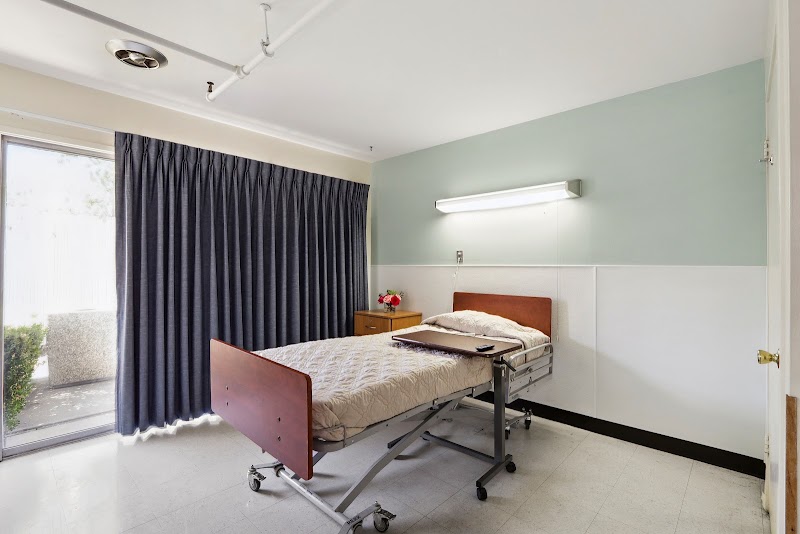
How is Saylor Lane Healthcare Center Staffed?

CMS rates SAYLOR LANE HEALTHCARE CENTER's staffing level at 3 out of 5 stars, which is average compared to other nursing homes. Staff turnover is 45%, compared to the California average of 46%. This relatively stable workforce can support continuity of care.

What Have Inspectors Found at Saylor Lane Healthcare Center?

State health inspectors documented 41 deficiencies at SAYLOR LANE HEALTHCARE CENTER during 2022 to 2025. These included: 40 with potential for harm and 1 minor or isolated issues.

Who Owns and Operates Saylor Lane Healthcare Center?

SAYLOR LANE HEALTHCARE CENTER is owned by a for-profit company. For-profit facilities operate as businesses with obligations to shareholders or private owners. The facility is operated by CYPRESS HEALTHCARE GROUP, a chain that manages multiple nursing homes. With 42 certified beds and approximately 36 residents (about 86% occupancy), it is a smaller facility located in SACRAMENTO, California.
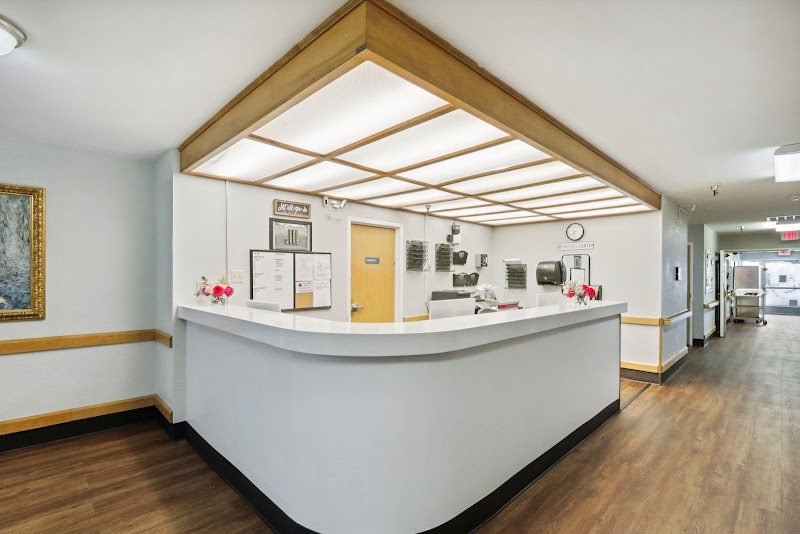
How Does Saylor Lane Healthcare Center Compare to Other California Nursing Homes?

Compared to the 100 nursing homes in California, SAYLOR LANE HEALTHCARE CENTER's overall rating (4 stars) is above the state average of 3.2, staff turnover (45%) is near the state average of 46%, and health inspection rating (3 stars) is at the national benchmark.

What Should Families Ask When Visiting Saylor Lane Healthcare Center?

Based on this facility's data, families visiting should ask: "Can I visit during a mealtime to observe dining assistance and food quality?" "How do you handle medical emergencies, and what is your hospital transfer rate?" "Can I speak with family members of current residents about their experience?"

Is Saylor Lane Healthcare Center Safe?

Based on CMS inspection data, SAYLOR LANE HEALTHCARE CENTER has a clean safety record: no substantiated abuse findings (meaning no confirmed cases of resident harm), no Immediate Jeopardy citations (the most serious violation level indicating risk of serious injury or death), and is not on the Special Focus Facility watch list (a federal program monitoring the lowest-performing 1% of nursing homes). The facility has a 4-star overall rating and ranks #1 of 100 nursing homes in California. While no facility is perfect, families should still ask about staff-to-resident ratios and recent inspection results during their visit.

Do Nurses at Saylor Lane Healthcare Center Stick Around?

SAYLOR LANE HEALTHCARE CENTER has a staff turnover rate of 45%, which is about average for California nursing homes (state average: 46%). Moderate turnover is common in nursing homes, but families should still ask about staff tenure and how the facility maintains care continuity when employees leave.

Was Saylor Lane Healthcare Center Ever Fined?

SAYLOR LANE HEALTHCARE CENTER has been fined $4,893 across 2 penalty actions. This is below the California average of $33,128. While any fine indicates a compliance issue, fines under $50,000 are relatively common and typically reflect isolated problems that were subsequently corrected. Families should ask what specific issues led to these fines and confirm they've been resolved.

Is Saylor Lane Healthcare Center on Any Federal Watch List?

SAYLOR LANE HEALTHCARE CENTER is not on any federal watch list. The most significant is the Special Focus Facility (SFF) program, which identifies the bottom 1% of nursing homes nationally based on persistent, serious quality problems. Not being on this list means the facility has avoided the pattern of deficiencies that triggers enhanced federal oversight. This is a positive indicator, though families should still review the facility's inspection history directly.