GOLDEN SAN ANDREAS CARE CENTER
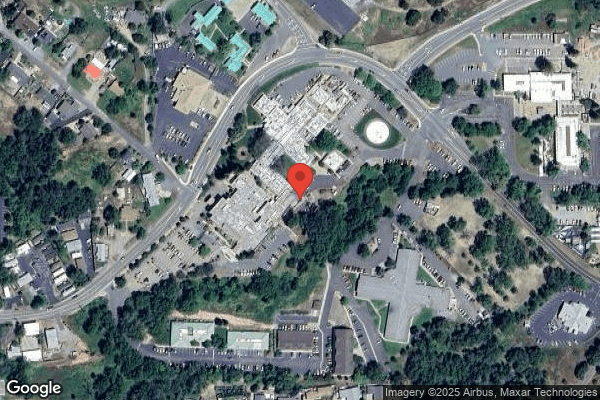
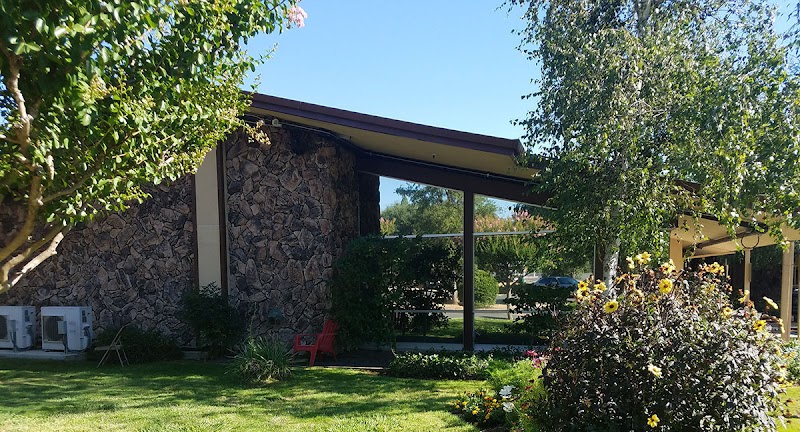
900 MOUNTAIN RANCH ROAD, SAN ANDREAS, CA 95249 (209) 754-3823
For profit - Limited Liability company 99 Beds GOLDEN SNF OPERATIONS Data: November 2025 1 Immediate Jeopardy citation
Trust Grade
0/100
#1031 of 1155 in CA
Last Inspection: February 2025

Within standard 12-15 month inspection cycle. Federal law requires annual inspections.

Overview

Golden San Andreas Care Center has received a Trust Grade of F, indicating significant concerns about the quality of care provided. Ranking #1031 out of 1155 facilities in California places it in the bottom half, although it is the only option in Calaveras County. The facility is showing signs of improvement, with issues decreasing from 36 to 21 over the past year. Staffing is average with a 3-star rating, but the 50% turnover rate is concerning compared to the state average of 38%. Serious incidents have been reported, including a failure to protect a resident from sexual abuse and inadequate care leading to pressure ulcers and falls, which resulted in injuries. While there are some improvements in trends, families should be aware of the significant challenges this facility faces.

Trust Score
F
0/100
In California
#1031/1155
Bottom 11%
Safety Record
High Risk
Review needed
Inspections
Getting Better
36 → 21 violations
Staff Stability
⚠ Watch
50% turnover. Above average. Higher turnover means staff may not know residents' routines.
Penalties
✓ Good
$99,362 in fines. Lower than most California facilities. Relatively clean record.
Skilled Nurses
⚠ Watch
Each resident gets only 27 minutes of Registered Nurse (RN) attention daily — below average for California. Fewer RN minutes means fewer trained eyes watching for problems.
Violations
⚠ Watch
90 deficiencies on record. Higher than average. Multiple issues found across inspections.
★☆☆☆☆
1.0
Overall Rating
★★★☆☆
3.0
Staff Levels
★☆☆☆☆
1.0
Care Quality
★☆☆☆☆
1.0
Inspection Score
Stable
2024: 36 issues
2025: 21 issues

The Good

  • Full Sprinkler Coverage · Fire safety systems throughout facility
  • No fines on record

Facility shows strength in fire safety.

The Bad

1-Star Overall Rating

Below California average (3.1)

Significant quality concerns identified by CMS

Staff Turnover: 50%

Near California avg (46%)

Higher turnover may affect care consistency

Federal Fines: $99,362

Well above median ($33,413)

Moderate penalties - review what triggered them

Chain: GOLDEN SNF OPERATIONS

Part of a multi-facility chain

Ask about local staffing decisions and management

The Ugly 90 deficiencies on record

1 life-threatening 6 actual harm
Jul 2025 1 deficiency
CONCERN (D) 📢 Someone Reported This

A family member, employee, or ombudsman was alarmed enough to file a formal complaint

Potential for Harm - no one hurt, but risky conditions existed

Quality of Care (Tag F0684)

Could have caused harm · This affected 1 resident

Based on interview, and record review, the facility failed to ensure treatment and care was provided in accordance with professional standards of practice for two of three sampled residents (Resident ...

Read full inspector narrative →
Based on interview, and record review, the facility failed to ensure treatment and care was provided in accordance with professional standards of practice for two of three sampled residents (Resident 1 and Resident 2) when:1. Resident 1's low pulse rate (PR) readings of 46 on 3/19/25 were not rechecked and not reported to the medical doctor (MD) in a timely manner; and,2. Resident 2's left knee x-ray result was received and not reported to the MD.These failures had the potential for the facility not to recognize Resident 1 and Resident 2's potential change in conditions which could result in delays in their care and physical harm.Findings:1. A review of Resident 1's admission RECORD, indicated Resident 1 was admitted to the facility in 2025 with diagnoses which included hypertension (a condition with high blood pressure [BP]), type 2 diabetes mellitus (disorder characterized by difficulty in blood sugar control and poor wound healing), presence of a pacemaker (a small device that helps maintain a healthy heart beat using electrical impulses) and cardiomyopathy (a disease of the heart muscle that makes it harder for the heart to pump blood effectively).A review of Resident's 1 medical record titled, Weights and Vitals Summary, for the month of March 2025, indicated Resident 1 had three PR readings on 3/19/25 of 46 bpm (beats per minute) at 8:30 a.m., 8:32 a.m., and 5:08 p.m. which all had a warning message of Low of 60.0 exceeded.During an interview on 7/2/25, at 2:03 p.m., with the Certified Nurse Assistant (CNA), CNA stated that a resident's VS (Vital signs - basic measurements that indicate the body's essential functions that include temperature, pulse, respiration rate, blood pressure, and oxygen saturation) should be checked at least once per shift around 7 a.m. for the morning shift and would be documented on the hall sheet or on the resident's chart. CNA further stated if a resident was on alert charting or on neurological checks (an exam that evaluates brain and nervous system functioning) the vitals needed to be checked more frequently. CNA stated if a resident had an abnormal VS, she would report to the LN and the LN would have assessed the resident to recheck the VS themselves. CNA confirmed that a resident's PR reading of 46 was low and if she had this reading during the first check she would have rechecked again and if it was still low, she would have notified the nurse as soon as possible. CNA stated it was important to report abnormal VS readings because if the readings were too high or too low, the resident could lose consciousness, and it could impact the safety and well-being of the resident. CNA further stated it was also important to keep track of a resident's VS and to have reported any abnormalities to have caught if there was something going on with the resident.During an interview on 7/3/25, at 9:06 a.m., with Licensed Nurse (LN) 3, LN 3 stated that a resident's VS should be checked at least every shift and if they were on alert charting it would be more frequent. LN 3 further stated it was important to check a resident's VS so she would know what the resident's state was at the time. LN 3 stated that if the nurse knew the resident and their baseline, the nurse would be able to tell if there was a potential change of condition just by checking the resident's VS. LN 3 further stated the resident could be at risk of falls, dizziness, hypotension (condition for low BP), bradycardia (heart rate that is slower than normal, typically below 60 beats per minute in adults) or everything could have dropped. LN stated the normal range for a PR would be 60 to 100 bpm. LN 3 further stated if a resident had a PR reading of 46, she would do a full set of VS and would have assessed and monitored the resident to check for any changes. LN 3 stated at that point, she would have rechecked VS every 15 minutes and would have notified the MD and potentially could have sent the resident out to the hospital if they had gotten worse. LN 3 further stated if a resident had a PR reading of 46, she would have initiated alert charting and would have endorsed it to the next shift. LN 3 stated it was important to start the alert charting for a change of condition for abnormal VS readings because it was not the resident's baseline and needed to be communicated to the MD for their suggestions. LN 3 further stated that the residents at the facility are elderly, and their condition could have changed quickly so it would have been important to have reported to the physician right away for abnormal VS readings.During a concurrent interview and record review on 7/1/25, at 1:32 p.m., with LN 1, Resident 1's PR readings on 3/19/25 were reviewed. LN 1 confirmed Resident 1 had three PR readings of 46 entered at 8:30 a.m., 8:32 a.m., and 5:08 p.m. LN 1 stated the first two PR readings on 3/19/25 were taken in the morning shift and the third was taken for evening shift. LN 1 further stated that by looking at Resident 1's overall PR readings, the PR ranged from 60 to 90, and that a PR reading of 46 was low. LN 1 stated if she was the nurse who got the PR reading of 46, she would have monitored Resident 1 and rechecked the PR to have been sure. LN 1 further stated the nurse should have assessed Resident 1 for symptoms and should have notified the MD. LN 1 stated it was important to have checked Resident 1's vitals to have seen if there was a potential change in resident's condition, so the resident needed to be monitored.During a concurrent interview and record review on 7/1/25, at 2:14 p.m., with LN 2, Resident 1's EHR (electronic health record) was reviewed. LN 2 confirmed the PR readings of 46 on 3/19/25 were low and stated she was the LN who entered those PR readings on Resident 1's EHR. LN 2 stated she got Resident 1's vitals from the CNA's vitals on 3/19/25 and was entered in Resident 1's chart. LN 2 further stated she did not recall if she had reported the low PR to the MD or if she questioned the CNA about the low PR readings. LN 2 stated she did not recall if Resident 1 had symptoms or issues on 3/19/25. LN 2 reviewed Resident 1's EHR and confirmed no notes were found for endorsing low PR to the next shift or reporting to the MD.During a concurrent interview and record review on 7/1/25, at 5:09 p.m., with the Director of Nursing (DON), Resident 1's EHR was reviewed. The DON stated the CNA staff were primarily taking vitals for the residents. The DON further stated it was expected for the CNA to have reported abnormal vital signs to the LN and the LN to have reviewed the resident's vitals. The DON confirmed the three 46 PR readings on 3/19/25 were all the same and stated it was her expectation for the LN to have rechecked these PR readings. The DON stated it was important to check resident's vitals so the staff could follow the physician's orders for medication administration and to follow the correct MD order.2. A review of Resident 2's admission RECORD, indicated Resident 2 was admitted to the facility in 2018 with diagnoses that included generalized muscle weakness, rheumatoid arthritis (a chronic autoimmune disease that causes inflammation and damage to the joints), subluxation of the left knee (a partial or incomplete dislocation of the kneecap) and lumbosacral scoliosis (lower part of the spine is curved sideways).A review of Resident 2's progress notes for alert charting following Resident 2's fall on 3/1/25 indicated no noted injuries from the fall incident.A review of Resident 2's physician orders indicated Resident 2 had an order dated 3/5/25 for left knee x-ray due to fall.A review of Resident 2's left knee x-ray result, dated 3/5/25, via fax received on 3/6/25 at 3:55 a.m., indicated, .IMPRESSION: Arthroplasty [surgical replacement of a joint] is seen however the prostheses [artificial joint] appear to be dislocated at the knee joint . with handwritten noted with staff initials and dated 3/5/25.During an interview on 7/3/25, at 9:06 p.m., with LN 3, LN 3 stated she was the LN who completed the change of condition when Resident 2 had an unwitnessed fall on 3/1/25. LN 3 further stated she did not recall if Resident 2 had any injuries when she had the fall on 3/1/25. LN 3 stated she did not recall Resident 2 complaining of knee pain when she had the fall and was just complaining of her usual hip or leg pain which was routine for Resident 2. LN 3 further stated she was not aware that Resident 2 had a left knee x-ray ordered on 3/5/25 and of the result. LN 3 stated if the x-ray result was abnormal, the LN would call the MD and then fax the result. LN 3 further stated if the MD or the physician assistant could not be reached then the x-ray result would be faxed over. LN 3 stated once an x-ray result was faxed over to the physician, the staff would use a stamp to note that it was sent and then would be sent to medical records and the LN would also add a progress note in the resident's chart to document the call and fax to the MD. LN 3 further stated it was important to report any test result to the MD because the MD would dictate or determine the plan of care for the resident. LN 3 stated the risk of not reporting x-ray results to the MD including the potential to worsen or if there was a fracture it could impact the resident's care and reduce the resident's quality of life.During a concurrent interview and record review on 7/3/25, at 1:18 p.m., with LN 4, Resident 2's medical record was reviewed. LN 4 stated she was the one who obtained the physician's order for Resident 2's left knee x-ray because Resident 2 was complaining of left knee pain on 3/5/25. LN 4 confirmed there were no progress notes indicating the MD was notified about the left knee x-ray results. LN 4 stated it was important to report diagnostic results to the MD because they oversaw Resident 2's care. LN 4 further stated if x-ray results were not reported to the MD, it could potentially put Resident 2's health at stake or her condition could get worse.During a concurrent interview and record review on 7/1/25, at 3:50 p.m., with UM 2, Resident 2's medical record was reviewed. UM 2 stated the expectation was for the LN to have noted the result and faxed to the MD if there were no abnormalities. UM 2 further stated if there were abnormalities in the x-ray then the LN should have called the MD to have reported the result. UM 2 confirmed that Resident 2's left knee x-ray result dated 3/5/25 should have been reported to the MD and faxed over. UM 2 further confirmed Resident 2's left knee x-ray result did not indicate that it was faxed over and there were no notes found indicating it was sent to the MD. UM 2 confirmed Resident 2 was seen by the MD on 3/7/25 at the facility and there was no note that the left knee x-ray result was reviewed. UM 2 stated the LN should have contacted the MD and documented if the result was relayed to the MD.During a concurrent interview and record review on 7/1/25, at 5:09 p.m., with the DON, Resident 2's medical record was reviewed. The DON stated that her expectation was that the MD would have already reviewed the diagnostic result if the LN already noted that the result was received. The DON reviewed Resident 2's left knee x-ray dated 3/5/25 and confirmed it was received by the LN based on the date and initials on it. The DON stated that usually a result report with a similar note would have meant that the LN would have reported it to the MD. The DON further stated the importance of reporting any normal or abnormal diagnostic results to the MD was for the MD to prescribe treatment if needed.
May 2025 3 deficiencies
CONCERN (D) 📢 Someone Reported This

A family member, employee, or ombudsman was alarmed enough to file a formal complaint

Potential for Harm - no one hurt, but risky conditions existed

Deficiency F0678 (Tag F0678)

Could have caused harm · This affected 1 resident

**NOTE- TERMS IN BRACKETS HAVE BEEN EDITED TO PROTECT CONFIDENTIALITY** Based on interview and record review, the facility failed to ensure that nursing staff followed established protocols for the in...

Read full inspector narrative →
**NOTE- TERMS IN BRACKETS HAVE BEEN EDITED TO PROTECT CONFIDENTIALITY** Based on interview and record review, the facility failed to ensure that nursing staff followed established protocols for the initiation and discontinuation of Cardio-Pulmonary Resuscitation (CPR – an emergency lifesaving procedure performed when the heart stops beating) for one out of three sampled residents (Resident 5) when, nursing staff discontinued CPR prior to the arrival of Emergency Medical Services (EMS - a system that provides emergency medical care) and without a physician's order or confirmation of death. This failure resulted in a lack of adherence to professional standards of practice and the facility's policies regarding life-saving interventions. Findings: During a review of Resident 5's clinical record titled, admission RECORD, indicated Resident 5's diagnoses included Orthopedic Aftercare (follow-up care and rehabilitation services provided to Resident 5 after surgery) and Hypertension (high blood pressure). A review of Resident 5's Physician Orders for Life Sustaining Treatment, (POLST, a medical order that directed emergency health care professionals what to do during a medical crisis where the patient cannot speak for him/herself) dated [DATE], indicated, .Attempt Resuscitation/CPR . A review of Resident 5's clinical record titled [Facility] Progress Notes, dated [DATE], at 7:47 a.m., indicated the following chain of events: The Certified Nurse Assistant (CNA) 4 notified the Licensed Nurse (LN) 4 that Resident 5 appeared to have no signs of life. LN 4 assessed Resident 5 and documented . verified the absence of apical pulse [a pulse point on your chest at the bottom tip of the heart] and respirations, pupils fixed and dilated at approx [approximately] 0505 [5:05 a.m.] . LN 5 verified POLST of Resident 5 as Full Code (if Resident 5's heart stopped beating and/or Resident 5 stopped breathing, all means would be provided to keep Resident 5 alive) and ordered CNA 4 to call 911 (phone number used to contact the emergency services). CPR was administered by LN 4 and LN 5. At 5:20 a.m., the time of death was declared by LN 4. During a telephone interview on [DATE], at 2:23 p.m., LN 5 stated that LN 4 decided to stop CPR and declared that Resident 5 had died before EMS arrived. LN 4 stated she was unable to recall the exact time EMS arrived in the facility. LN 5 acknowledged that CPR should not have been discontinued until EMS assumed care of Resident 5. During a telephone interview on [DATE], at 1:46 p.m., LN 4 stated that she was covering (taking over someone's duty) for Resident 5's primary nurse (LN 5) when CNA 4 told her that Resident 5 was unresponsive. LN 4 stated she assessed Resident 5 and based off her assessment; Resident 5 had already expired (died). LN 4 stated that when LN 5 verbalized that Resident 5 was a Full Code, LN 4 and LN 5 started CPR. LN 4 stated that they stopped doing CPR before EMS arrived because there were no signs of viability (having a reasonable chance of resuming a heartbeat). LN 4 acknowledged that a licensed nurse could not declare Resident 5's time of death and that CPR should have been continued until EMS arrived. LN 4 was unable to recall the exact time EMS arrived in the facility. During an interview on [DATE], at 3:37 p.m., with the Director of Nursing (DON), the DON stated she was unsure if she would have stopped doing the CPR before EMS arrived. The DON confirmed that per the facility's policy, only a physician is authorized to pronounce a resident's time of death, and that licensed nursing staff do not have the authority to do so. During a telephone interview on [DATE], at 1:26 p.m., with Physician Assistant (PA) 1, PA 1 stated that he was notified of Resident 5's death. PA 1 stated, The only thing that they [LN 4 and LN 5] did not do right was to stop CPR and declared Resident 5 had expired. A review of an undated facility's policy and procedure (P&P) titled, Death of a Resident, Documenting, the P&P indicated .1. A resident may be declared dead by a Licensed Physician or Registered Nurse with physician authorization in accordance with state law . A review of an undated facility's P&P titled, Emergency Procedure-Cardiopulmonary Resuscitation, the P&P indicated .8. Continue with CPR/BLS (basic life support - set of life-saving medical procedures performed in the early stages of an emergency) until emergency medical personnel arrive.
CONCERN (D) 📢 Someone Reported This

A family member, employee, or ombudsman was alarmed enough to file a formal complaint

Potential for Harm - no one hurt, but risky conditions existed

Accident Prevention (Tag F0689)

Could have caused harm · This affected 1 resident

Based on interview and record review, the facility failed to ensure that adequate supervision and safety interventions were implemented for one out of three residents (Resident 3) when Resident 2 grab...

Read full inspector narrative →
Based on interview and record review, the facility failed to ensure that adequate supervision and safety interventions were implemented for one out of three residents (Resident 3) when Resident 2 grabbed Resident 3 ' s right wrist and shirt and attempted to strike her. This incident occurred 3 days after Resident 2 had been involved in a separate incident with another resident (Resident 4). This failure had the potential to negatively affect Resident 3 ' s physical and psychosocial well-being. Findings: During a review of Resident 2 ' s clinical record titled admission RECORD, the record indicated Resident 2's diagnoses included Dementia (a condition that caused a progressive decline in mental abilities), Paranoid Schizophrenia (a serious mental health condition that included symptoms of altered thinking, feeling and behavior), and Alzheimer ' s Disease (a progressive neurodegenerative disease that altered memory, thinking, and behavior). A review of Resident 3 ' s clinical record titled admission RECORD, the record indicated Resident 3's diagnoses included Dementia, Bipolar Disorder (a mental health condition characterized by extreme shifts in mood, energy, and behavior), and Anxiety Disorder (a mental health condition characterized by excessive and persistent worry, fear, and nervousness that interfered with daily life). A review of Resident 2 ' s care plan, dated 10/05/24, indicated . Attempt to keep pt. [Patient-(Resident 2)] away from female pt. [Resident 3] and not be alone with other female pts [patients] . Attempt to keep pt away from females pts . A review of Resident 2 ' s clinical record titled, IDT [Interdisciplinary Team; a group of healthcare professionals] POST INCIDENT MEETING, dated 10/09/24, at 10 a.m., indicated, .Per charge nurse, the aggressor [Resident 2] was sitting in the hallway of A-wing in a wheelchair and the victim [Resident 3] was sitting next to the aggressor in a wheelchair. At approx. [approximately] 1900 [7 p.m.] the CNA observed the aggressor grabbing the victim ' s right wrist and holding the victim ' s shirt . During an interview on 5/22/25, at 10:03 a.m., with Licensed Nurse (LN) 2, LN 2 stated that he was informed about the incident between Resident 2 and Resident 3. LN 2 stated he was unaware of the previous incident involving Resident 4 or whether a care plan had been initiated for Resident 2 to be kept away from any female residents or not be alone with other female residents. LN 2 confirmed that Resident 2 had a care plan in place but the care plan was not followed because both residents (Resident 1 and Resident 3) were sitting next to each other during the incident. LN 2 stated that the care plan should have been communicated and followed by staff, which could have protected Resident 3. During a telephone interview on 5/23/25, at 4:31 p.m., with Certified Nursing Assistant 3, CNA 3 stated that she witnessed the incident between Resident 2 and Resident 3 but was not aware there was a care plan in place for Resident 2 to be away from other female residents. During an interview on 5/22/25, at 12:08 p.m., with the Director of Nursing (DON), the DON stated that staff attempted to follow the care plan, but it was difficult to completely monitor Resident 2 and Resident 3 and other residents. The DON acknowledged that Resident 2 was not placed on a 1 to 1 monitoring (provided one to one nursing or observation care to an individual patient for a period of time) after the first incident.
CONCERN (E) 📢 Someone Reported This

A family member, employee, or ombudsman was alarmed enough to file a formal complaint

Potential for Harm - no one hurt, but risky conditions existed

Medical Records (Tag F0842)

Could have caused harm · This affected multiple residents

Based on interview and record review, the facility failed to maintain a complete and accurate medical record for one of three sampled residents (Resident 1) when, Resident 1's Activity of Daily Living...

Read full inspector narrative →
Based on interview and record review, the facility failed to maintain a complete and accurate medical record for one of three sampled residents (Resident 1) when, Resident 1's Activity of Daily Living (ADL - refer to the basic self-care tasks essential for independent living, like bathing, dressing, eating and toileting) charting tasks for July of 2024 had multiple shifts that lacked Certified Nursing Assistant (CNA) entries. This failure had the potential to provide insufficient information regarding the condition, care, and services provided to Resident 1. Findings: 1. A review of Resident 1's clinical document titled Documentation Survey Report v2, a report that lists all the ADL areas that CNAs are to chart on each shift had missing documentation for the following care areas and dates: Behavior:10 PM-6 AM shift for July 2,3,7,8,17,20,24,26,30,31; 2 PM-10 PM shift for July 4,9,11,17,18,19; and 6 AM-2 PM shift for July 4,11,13,15,17,18,19 Bladder Continence:10 PM-6 AM shift for July 2,3,7,8,17,23,24,26,30,31; 2 PM-10 PM shift for July 4,9,11,17,18,19; and 6 AM-2 PM shift for July 4,9,11,13,15,17,18,19 Bowel Continence:10 PM-6 AM shift for July 2,3,7,8,17,24,26,30,31; 2 PM-10 PM shift for July 4,9,11,17,18,19; and 6 AM-2 PM shift for July 4,11,13,15,17,18,19 Bowel Movements:10 PM-6 AM shift for July 2,3,7,8,17,24,26,30,31; 2 PM-10 PM shift for July 4,9,11,17,18,19,29; and 6 AM-2 PM shift for July 4,11,13,15,17,18,19 Fall Interventions:10 PM-6 AM shift for July 2,3,7,8,12,17,24,26,30,30,31; 2 PM-10 PM shift for July 4,9,11,17,18,19; and 6 AM-2 PM shift for July 4,11,13,15,17,18,19 Fluid Intake:10 PM-6 AM shift for July 2,3,7,8,12,17,24,26,30,31; 2 PM-10 PM shift for July 4,9,11,17,18,19,29; and 6 AM-2 PM shift for July 4,11,13,15,17,18,19 GG (A section of an assessment tool related to a resident's functional abilities and goals)-1 Step (Curb):10 PM-6 AM shift for July 2,3,7,8,17,24,26,30,31; 2 PM-10 PM shift for July 4,9,11,17,18,19; and 6 AM-2 PM shift for July 4,11,13,15,17,18,19 GG-12 Steps:10 PM-6 AM shift for July 2,3,7,8,17,24,26,30,31; 2 PM-10 PM shift for July 4,9,11,17,18,19; and 6 AM-2 PM shift for July 4,11,13,15,17,18,19 GG-4 Steps:10 PM-6 AM shift for July 2,3,7,8,17,24,26,30,31; 2 PM-10 PM shift for July 4,9,11,17,18,19; and 6 AM-2 PM shift for July 4,11,13,15,17,18,19 GG-Car Transfer:10 PM-6 AM shift for July 2,3,7,8,17,24,26,30,31; 2 PM-10 PM shift for July 4,9,11,17,18,19; and 6 AM-2 PM shift for July 4,11,13,15,17,18,19 Chair/Bed-to-Chair Transfer:10 PM-6 AM shift for July 2,3,7,8,17,24,26,30,31; 2 PM-10 PM shift for July 4,9,11,17,18,19; and 6 AM-2 PM shift for July 4,11,13,15,17,18,19 GG-Eating:10 PM-6 AM shift for July 2,3,7,8,17,24,26,30,31; 2 PM-10 PM shift for July 4,9,17,18,19; and 6 AM-2 PM shift for July 4,11,13,15,17,18,19 GG-Lower Body Dressing:10 PM-6 AM shift for July 2,3,7,8,17,24,26,31,31; 2 PM-10 PM shift for July 4,9,11,17,18,19; and 6 AM-2 PM shift for July 4,11,13,15,17,18,19 GG-Lying to Sitting on Side of Bed:10 PM-6 AM shift for July 2,3,7,8,17,24,26,30,31; 2 PM-10 PM shift for July 4,9,11,17,18,19; and 6 AM-2 PM shift for July 4,11,13,15,17,18,19 GG-Oral Hygiene:10 PM-6 AM shift for July 2,3,7,8,17,24,26,30,31; 2 PM-10 PM shift for July 4,9,11,17,18,19; and 6 AM-2 PM shift for July 4,11,13,15,17,18,19 GG-Personal Hygiene:10 PM-6 AM shift for July 2,3,7,8,17,24,26,30,31; 2 PM-10 PM shift for July 4,9,11,17,18,19; and 6 AM-2 PM shift for July 4,11,13,15,17,18,19 GG-Picking Up Object:10 PM-6 AM shift for July 2,3,7,8,17,24,26,30,31; 2 PM-10 PM shift for July 4,9,11,17,18,19; and 6 AM-2 PM shift for July 4,11,13,15,17,18,19 GG-Pulling On/Taking Off Footwear:10 PM-6 AM shift for July 2,3,7,817,24,27,30,31; 2 PM-10 PM shift for July 4,9,11,17,18,19; and 6 AM-2 PM shift for July 4,11, 13,15,17,18,19 GG-Roll Left and Right:10 PM-6 AM shift for July 2,3,7,8,17,24,26,30,31; 2 PM-10 PM shift for July 4,9,11,17,18,19; and 6 AM-2 PM shift for July 4,11,13,15,17,18,19 GG-Shower/Bathe Self:10 PM-6 AM shift for July 2,3,7,8,17,24,26,30,31; 2 PM-10 PM shift for July 4,9,11,17,18,19; and 6 AM-2 PM shift for July 4,11,13,15,17,18,19 GG-Sit to Lying:10 PM-6 AM shift for July 2,3,7,8,17,24,26,30,31; 2 PM-10 PM shift for July 4,9,11,17,18,19; and 6 AM-2 PM shift for July 4,11,13,15,17,18,19 GG-Sit to Stand:10 PM-6 AM shift for July 2,3,7,8,17,24,26,30,31; 2 PM-10 PM shift for July 4,9,11,17,18, 19; and 6 AM-2 PM shift for July 4,11,13,15,17,18,19 GG-Toilet Transfer:10 PM-6 AM shift for July 2,3,7,8,17,24,26,30,31; 2 PM-10 PM shift for July 4,9,11,17,18,19; and 6 AM-2 PM shift for July 4,11,13,15,17,18,19 GG- Toileting Hygiene:10 PM-6 AM shift for July 2,3,4,7,8,17,24,26,30,31; 2 PM-10 PM shift for July 4,9,17,18,19; and 6 AM-2 PM shift for July 4,11,13,15,17,18,19 GG-Tub/Shower Transfer:10 PM-6 AM shift for July 2,3,4,7,8,17,24,26,30,31; 2 PM-10 PM shift for July 4,9,11,17,18,19; and 6 AM-2 PM shift for July 4,11,13,15,17,18,19 GG-Upper Body Dressing:10 PM-6 AM shift for July 2,3,7,8,17,24,26,30,31; 2 PM-10 PM shift for July 4,9,11,17,18,19; and 6 AM-2 PM shift for July 4,11, 13, 15, 17, 18, 19 GG-Walk 10 Feet:10 PM-6 AM shift for July 2,3,7,8,17,24,26,30,31; 2 PM-10 PM shift for July 4,9,11,17,18,19; and 6 AM-2 PM shift for July 4,11, 13, 15, 17, 18, 19 GG-Walk 150 Feet:10 PM-6 AM shift for July 2,3,7,8,17,24,26,30,31; 2 PM-10 PM shift for July 4,9,11,17,18,19; and 6 AM-2 PM shift for July 4,11, 13, 15, 17, 18, 19 GG-Walk 50 Feet with Two Turns:10 PM-6 AM shift for July 2,3,7,8,17,24,26,30,31; 2 PM-10 PM shift for July 4,9,11,17,18,19; and 6 AM-2 PM shift for July 4,11, 13, 15, 17, 18, 19 GG-Walk 10 Feed on Uneven Surfaces:10 PM-6 AM shift for July 2,3,7,8,12,17,24,26,30,31; 2 PM-10 PM shift for July 4,9,11,17,18,19; and 6 AM-2 PM shift for July 4,11, 13, 15, 17, 18, 19 GG-Wheel 150 Feet:10 PM-6 AM shift for July 2,3,7,8,12,17,24,26,30,31; 2 PM-10 PM shift for July 4,9,11,17,18,19; and 6 AM-2 PM shift for July 4,11, 13, 15, 17, 18, 19 GG-Wheel 50 Feet with Two Turns:10 PM-6 AM shift for July 2,3,7,8,12,17,24,26,30,31; 2 PM-10 PM shift for July 4,9,11,17,18,19; and 6 AM-2 PM shift for July 4,11, 13, 15, 17, 18, 19 GG-Wheelchair/Scooter Use:10 PM-6 AM shift for July 2,3,7,8,12,17,24,26,30,31; 2 PM-10 PM shift for July 4,9,11,17,18,19; and 6 AM-2 PM shift for July 4,11, 13, 15, 17, 18, 19 Amount Eaten: 2 PM-10 PM shift for July 4,9,11,17,18,19; and 6 AM-2 PM shift for July 4,11,13,15,17,18,19 Bath/Shower Monday/Thursday AM (time on the form also indicated 1700 and is assigned to 2 PM-10 PM shift): 2 PM-10 PM shift for July 4,11,15,18.22,25; There was no documentation option for entry by the 6 AM-2 PM shift. Bowel and Bladder Training: 10 PM-6 AM shift for July 1,3,4,7,8,9,18,25,27,28,31; 2 PM-10 PM shift for July 2,3,4,5,7,8,9,10,11,13,14,15,17,18,19,20,21,22,24,25,26,27,27,30,31; and 6 AM-2 PM shift for July 4,5,9,10,11,13,14,15,17,18,19,20,21,22,24,25.26,27 During a phone interview with CNA 1 on 5/23/25, at 11:55 AM, CNA 1 stated that there were times she would complete the ADL task but was not able to complete the documentation. CNA 1 stated she was aware of the facility's expectation that CNAs would complete their charting by the end of their shift. CNA 1 stated that the risk of not completing the assigned documentation could have placed Resident 1 at risk for not receiving proper care by the following shift or receiving unnecessary care. CNA 1 stated, If I don't chart a resident had a bowel movement when they actually did, then the charge nurse might give the resident a laxative [medication to help someone have a bowel movement] they didn't need. During a phone interview with Licensed Nurse 1 (LN) on 5/23/25, at 10:30 AM, LN 1 stated that CNAs were supposed to complete documentation on resident specific CNA tasks every shift. LN 1 further stated that it was part of a charge nurses' responsibility to hold the CNAs accountable and ensure that they had completed their documentation before they left at the end of their shift, but she did not always complete that task. During a concurrent interview and record review on 5/22/25 at 4:15 PM, with the Director of Staff Development (DSD), the DSD confirmed that there were multiple missing CNA documentation entries on Resident 1's document titled Documentation Survey Report v2 for July 2024. The DSD stated that the risk of CNAs not documenting in the Electronic Health Record (EHR) could have placed Resident 1 at risk for miscommunication of care between shifts, placed the CNA and/or facility at risk for not being able to prove that a task or tasks had been completed, and would have made it difficult for other departments to have accurately assessed Resident 1. The DSD further stated that the expectation was for all CNAs to complete all assigned documentation in full before the end of their shift. During a concurrent interview and record review on 5/22/25, at 4:30 PM, the Director of Nurses (DON) verified there were multiple missing entries for multiple CNA tasks in Resident 1's document titled Documentation Survey Report v2, dated 7/24. The DON stated the expectation was that CNAs would document throughout their shift and ensure that all required charting was completed before they left the facility. The DON also stated that she expected the LN would have reviewed all CNA documentation by the end of the shift to ensure it was completed. The DON stated that the risk of nurses not ensuring all documentation was completed by the end of the shift had the potential to place Resident 1 at risk for not receiving the care and services required in a timely and accurate manner. A review of an undated facility provided policy and procedure (P&P) titled Charting and Documentation, the P&P indicated, .All services provided to the resident, progress toward the care plan goals, or any changes in the resident's medical, physical, functional or psychosocial condition, shall be documented in the resident's medical record .Documentation in the medical records will be objective (no opinionated or speculative), complete and accurate .
May 2025 1 deficiency 1 Harm
SERIOUS (G) 📢 Someone Reported This

A family member, employee, or ombudsman was alarmed enough to file a formal complaint

Actual Harm - a resident was hurt due to facility failures

Pressure Ulcer Prevention (Tag F0686)

A resident was harmed · This affected 1 resident

Based on observation, interview, and record review, the facility failed to ensure two of three sampled residents (Resident 1 and Resident 2) received care to prevent the development of pressure ulcers...

Read full inspector narrative →
Based on observation, interview, and record review, the facility failed to ensure two of three sampled residents (Resident 1 and Resident 2) received care to prevent the development of pressure ulcers/injuries (PU/PI - areas of damaged skin caused by staying in one position for too long, usually over an area on the body where a bone is close to the skin's surface (bony prominence)) when: 1. Resident 1 was at risk for developing pressure ulcers and worsening of a shearing wound (a force that causes the skin and underlying tissues to move in opposite directions, often due to pressure and friction) on the coccyx (tailbone). Resident 1's skin assessments and wound documentation were incomplete, the physician was not notified the wound had worsened, and PU preventative measures were not correctly identified and implemented upon admission; and, 2. Resident 2 was at risk of developing pressure ulcers and worsening of a shearing wound on the coccyx and blanchable redness (a temporary reddening of the skin that disappears when pressure is applied) to both heels. Resident 2's skin assessments and wound documentation were incomplete and measures to prevent PU development were not implemented. These failures resulted in Resident 1 having wound pain and required surgical intervention at a hospital with the placement of a wound vacuum (VAC -a medical treatment that uses negative pressure to help severe wounds heal). In addition, these failures resulted in Resident 2 developing a deep tissue injury (DTI - deep skin and tissue loss where the extent of the damage cannot be determined because it is covered by eschar (black dead tissue)) to the left heel and had the potential to result in increased pain, infection (the invasion and growth of germs in the body), and muscle or bone loss. Findings: 1. A review of Resident 1's admission RECORD, indicated Resident 1 was admitted to the facility in Spring 2025 with diagnoses which included but not limited to: sepsis (a life-threatening infection), arthritis (swelling and tenderness where two or more bones meet, causing joint pain and/or stiffness) due to other bacteria (an infection in the joint fluid and tissues caused by bacteria), chronic obstructive pulmonary disease (COPD -a chronic lung disease causing difficulty breathing), and muscle weakness. A review of Resident 1's Minimum Data Set (MDS -an assessment tool), dated 4/22/25, in the section, M -Skin Conditions, indicated, Resident 1 was at risk of developing pressure ulcers. During a concurrent interview and record review on 5/13/25, at 1:19 PM, Resident 1's electronic health record (EHR) was reviewed with Licensed Nurse (LN) 1. LN 1 stated Resident 1 was admitted with two wounds, one on the left hand, and a shearing wound on the coccyx. Resident 1's admission -readmission Nursing Evaluation . dated 4/18/25, indicated, .Indicate Pressure Ulcers and/or other wound types .Sacrum [triangular shaped bone in the lower back located between the hip bones] .Type: Pressure [injury to skin and underlying tissue resulting from prolonged pressure on the skin] .Length 1.8 [cm- centimeter -a metric unit of length], Width 0.8 [cm], Depth 0.1 [cm], Stage II [2 -partial-thickness skin loss, presenting as a shallow open wound; wounds are classified into stages to indicate the depth of tissue damage and includes stages 1 through 4 and unstageable (when dead tissue is covering the wound making it unable to determine the depth of the wound)] . LN 1 stated the nurse who completed Resident 1's Admission-readmission Nursing Evaluation was not a wound nurse. LN 1 stated he updated the description of the wound on the order he entered after he assessed Resident 1's wounds. LN 1 confirmed he entered .Cleanse [clean] shearing wounds to coccyx . to Resident 1's orders on 4/18/25 which changed the type of wound listed on the order from pressure ulcer to shearing wound. LN 1 stated he did not document in a progress note (a written record that documents a resident's health status, treatment progress, and any changes in their condition over time) the measurements, location, and description of what the wound looked like after his initial assessment. LN 1 further stated he needed to get better at documentation, and he tried to make weekly progress notes but stated he missed the charting. LN 1 confirmed Resident 1's BRADEN SCALE [a widely used tool in healthcare to assess and predict a patient's risk for developing pressure ulcers] FOR PREDICTING PRESSURE SORE RISK, dated 4/18/25, indicated, .MOISTURE .Rarely Moist [the degree to which skin is exposed to moisture ranging from rarely moist to constantly moist], .MOBILITY [the ability to move or be moved freely and easily] .Very Limited: Makes occasional slight changes in body or extremity [arms and/or legs] position but unable to make frequent or significant changes independently .[Resident 1 was] AT RISK [risk levels for pressure ulcer development range from at risk, moderate risk, high risk, or very high risk based off of the score obtained from the Braden scale assessment tool] . for pressure ulcers. LN 1 stated he disagreed with Resident 1's initial Braden scale assessment risk level since Resident 1 was fully incontinent of bowel and bladder (involuntary loss of urine or feces), had a high moisture risk, was immobile (not capable of movement), and required assistance to turn or reposition in bed. LN 1 stated Resident 1's Braden Scale assessment should have been assessed as a high risk for pressure ulcer development. LN 1 further stated it was his expectation for Resident 1 to be turned and repositioned every two hours to prevent the wound from worsening. LN 1 explained he completed Resident 1's wound care based on the treatment listed on the treatment administration record (TAR - a document used to track the administration of various treatments, including medications, therapies, and procedures). LN 1 stated he noted on 4/24/25 Resident 1's wound to the coccyx worsened and the wound size increased. LN 1 reviewed Resident 1's Progress Notes, dated 4/24/25, written by LN 1, which indicated, .LATE ENTRY .Provided wound care for resident with shearing wound to coccyx .Wound size went from 3.5x1.5x0.1 [length, width, depth in cm] on admission to 6.2x3x0.1 .discolored sheared skin. Periwound [around the wound] is macerated [softening and breaking down of the skin resulting from prolonged exposure to moisture] .Resident complains of discomfort wound pain 6/10 [pain scale 0-no pain to 10-worse pain] with wound care . LN 1 confirmed that the late entry for the worsening of Resident 1's wound was written in Resident 1's EHR on 5/7/25. LN 1 stated he forgot to document Resident 1 had a worsening condition of the wound on 4/24/25 and confirmed he did not notify the doctor. LN 1 further stated it was facility policy to notify the doctor and to document worsened conditions immediately to obtain new physician orders for wound treatment. Resident 1's EHR was reviewed by LN 1, and he was unable to locate any further documentation regarding Resident 1's worsening wounds. During a follow up interview on 5/13/25 at 2:49 PM, LN 1 stated documentation in a resident's medical record was important because it provided accurate and efficient documentation on what was happening with the resident. LN 1 further explained it was important to document timely and notify the doctor of a change in a resident's medical condition to keep the doctor and care team up to date, and the doctor could give new orders to prevent wounds from getting worse. LN 1 stated the risk to a resident not being turned every two hours (q2h -a patient care practice where a patient is repositioned every two hours) was it increased skin breakdown, decreased circulation (inadequate blood flow through the body's blood vessels), was not good for anyone to stay in one position too long, and for comfort of the resident. LN 1 reviewed Resident 1's medical record but could not find evidence Resident 1 was turned every 2 hours, or where Resident 1 refused to be turned. During a concurrent telephone interview and record review on 5/14/25, at 1:16 PM, LN 4 (a nurse from the hospital Resident 1 was sent from and back out to), confirmed she wrote Resident 1's Progress Note, dated 4/18/25 (day Resident 1 discharged from the hospital and was admitted to the facility) and took photos of the wound to Resident 1's coccyx during her stay at the hospital. LN 4 further stated Resident 1's Progress Note, indicated, .Coccyx continues to have an area of friction [force of rubbing between two surfaces] to left coccyx, wound bed is pink with red frayed [ragged] edges, blanchable erythema [a reddening of the skin that disappears when pressure is applied and returns to normal color when pressure is released], hyperpigmentation [areas of skin that appear darker than the surrounding areas] is noted at gluteal cleft [the deep groove or crease that separates the two buttocks] .skin intact .goals are to .reduce friction and pressure .turn q2hours . LN 4 further stated when Resident 1 returned to the hospital on 4/27/25, Resident 1's wound was re-evaluated and confirmed Resident 1's coccyx had worsened. LN 4 stated the wound covered both sides of Resident 1's buttocks creating an unstageable pressure ulcer with a foul odor (likely indicating infection). LN 4 confirmed Resident 1 required surgical debridement (removal of damaged tissue from a wound) on 5/3/25 and Resident 1 had to have a wound vacuum placed on the coccyx to help close the wound. A review of Resident 1's, Care Plan Report, dated 4/19/25, indicated, . [Resident 1] has skin sheering to her coccyx upon admit .Goal [Resident 1's] skin will show signs of improvement .Interventions/Tasks .Monitor for s/sx [signs and symptoms] of infection .Notify MD [medical doctor] of s/sx of infection . A review of Resident 1's, Nursing Progress Note, dated 4/24/25 (late documentation on 5/7/25), indicated, .LATE ENTRY .Provided wound care for resident with shearing wound to coccyx, increase in size r/t [related to] persistent watery stools. Wound size went from 3.5x1.3x0.1 on admission to 6.2x3x0.1. Wound bed is 100% [percent] granulation [pink or red, fleshy skin growth] with discolored sheared skin. Periwound is macerated. Resident complains of discomforting wound pain 6/10 with wound care . A review of Resident 1's Order Details, order date 4/18/25, indicated, .Cleanse shearing wounds to coccyx with NS [normal saline -salt water], pat dry .every day shift for skin shearing . A review of Resident 1's Order Details, order date 4/18/25, indicated, .Monitor shearing wounds to coccyx for s/s [signs/symptoms] of infection until resolved . A review of Resident 1's Order Details, order date 4/19/25, indicated, .Cleanse shearing wounds to coccyx with NS, pat dry .cover with foam dressing [an absorbent wound covering to promote wound healing] .every day shift for skin shearing AND as needed for soiled, lifting or missing [dressing] . A review of Resident 1's Nursing Progress Note, dated 4/26/25, indicated, . [Resident 1] transferred to ER [Emergency Room] . [Resident 1] was having hallucinations [sensing things such as visions, sounds, or smells that seem real but are not] and thinking people were in bed with her, nurse noted grayish appearance . Review of an online version of a published book titled NURSING FUNDAMENTALS SECOND EDITION, dated 2024, in the section 10.5 Braden Scale, indicated, .Each risk factor on the Braden Scale is rated from 1 to 4 based on the client's assessment findings. When using the Braden Scale, start with the first category and review each description listed across the row for each of the ratings from 1 to 4, and choose the one that best describes the client's current status. Continue this process for all rows. Add all six numbers to determine a total score, and then use the total score to determine if the client is at mild, moderate, high, or severe risk for developing a pressure injury. The lower the score, the higher the risk of developing a pressure injury. Additionally, customized nursing interventions are implemented based on the rating in each category. The lower the score, the more aggressive actions are taken to prevent or heal a pressure injury . (https://wtcs.pressbooks.pub/nursingfundamentals/chapter/10-5-braden-scale/) 2. A review of Resident 2's admission RECORD indicated Resident 2 was admitted to the facility in the Summer of 2022 with diagnoses which included but not limited to: Cerebral Infarction (otherwise known as Ischemic Stroke -the death of brain tissue due to a lack of blood supply), difficulty in walking, muscle weakness, and heart failure (when the heart is unable to pump enough blood to meet the body's needs). A review of Resident 2's Minimum Data Set (MDS -an assessment tool), dated 3/02/25, in the section, M -Skin Conditions, indicated, Resident 2 was at risk of developing pressure ulcers. During a concurrent interview and record review on 5/13/25 at 2 PM, Resident 2's EHR was reviewed with LN 1. LN 1 stated Resident 2's shearing wound to the coccyx was first documented on 3/11/25 and confirmed Resident 2 obtained the wound while residing in the facility. LN 1 confirmed Resident 2 also had blanchable redness (a red or discolored area that turns white or pale when pressed) documented to both the right and left heels on 4/5/25. LN 1 confirmed monitoring of Resident 2's coccyx and heels was placed on the TAR and began on 4/5/25. LN 1 confirmed Resident 2 was immobile, depended on staff for all care, and stated Resident 2 needed to be turned q2h and had heel lift boots (a type of boot or device designed to elevate the heel) applied to both heels to prevent worsening redness and pressure ulcer development. LN 1 further stated the heel lift boots were required anytime Resident 2 was in bed. LN 1 further stated the care plan indicated Resident 2 was to be turned every 2 hours and was incontinent of bladder and bowel. LN 1 further explained it was important that these interventions were implemented to prevent pressure ulcers or other skin wounds from worsening. LN 1 confirmed Resident 2 should be turned every 2 hours by the CNA's (Certified Nursing Assistants). LN 1 confirmed Resident 2's EHR showed no evidence she had been turned every 2 hours per the care plan. During a concurrent interview and record review on 5/13/25 at 2:31 PM, CNA 3 stated the CNA's do not turn residents every 2 hours because they did not have any residents that required it. CNA 3 reviewed Resident 2's EHR and confirmed the care plan for Resident 2 indicated for her to be turned at least every 2 hours, however, CNA 3 stated she would have no way of knowing what was in resident's care plans. CNA 3 further stated she relied on the nurses to tell them, and she stated she had never been told any resident's required being turned or repositioned every 2 hours. During a concurrent observation and interview on 5/13/25 at 2:09 PM, with LN 1, in Resident 2's room, Resident 2 was observed lying in bed on her back. LN 1 exposed Resident 2's legs by removing the covers. Resident 2 had on the right sided heel lift boot; however, the left heel was lying on the bed and not in the boot. LN 1 then proceeded with wound care to the left heel. LN 1 removed a foam bandage on Resident 2's left heel. Resident 2's left medial (situated toward the middle of the body) heel where the foam bandage was removed was indented with the bandage and exposed a 2-3 cm dark black puffy circle. LN 1 stated when he last saw the left heel on 5/10/25 it was not like this. LN 1 further stated it was unusual for the wound to turn from just redness to black calling it a deep tissue injury with eschar (dry, leathery, black or brown dead tissue that forms over a wound). LN 1 further explained he was off for the last 2 days and was not notified of any changes, and did not see any documentation in Resident 2's medical record to indicate worsening to the left heel. LN 1 cleansed the wound and replaced the bandage. LN 1 then rolled Resident 2 directly onto her right side exposing her back and buttocks. LN 1 removed the foam bandage covering the wound to Resident 2's coccyx. Resident 2's coccyx had two opened areas actively bleeding and just above on the sacrum was a round opened, and bleeding wound consistent with a Stage 3 pressure ulcer (full-thickness skin loss that extends into the deepest layer of skin) circular in size on a bony prominence, surrounded by non-blanchable redness (a red or discolored area that does not turn white or pale when pressed). LN 1 stated he still believed the wound to the coccyx and sacrum was a shearing wound due to the odd shape and stated it was not a pressure ulcer because it was not circular, but did state the wound was larger. During a concurrent interview and record review on 5/13/25 at 2:49 PM, LN 1 stated the last measurement of the wound was 1.9 x 1.2 cm that he had documented on a written piece of paper that listed each resident with wounds for the week of 4/24/25. LN 1 confirmed there was not any additional written documentation of the wound to Resident 2's coccyx or left heel other than checking off the wound care was completed in the TAR. LN 1 confirmed his documentation was lacking due to time restraints and could be better, but would document the changes he observed today, including getting the wound care clinic involved in treating Resident 2 since the wounds worsened. LN 1 reviewed Resident 2's EHR and stated the only documentation of the skin was done on 5/11/25 on the Long Term Care Weekly Evaluation . form and stated the nurse who completed the evaluation checked the box that indicated, .No New Impairment. Skin clean, dry and intact . LN 1 confirmed the skin was not intact and stated it was his understanding the wounds to the coccyx and left heel were healing and not worsening. During a concurrent interview and record review on 5/13/25 at 2:39 PM, LN 2 stated the expectation for residents who are unable to turn themselves or adjust their own body position in bed was to turn them every 2 hours. LN 2 explained that the CNA's were responsible for this task. Review of Resident 2's, Care Plan Report dated 8/25/22, indicated, . [Resident 2] has an ADL [activities of daily living] performance deficit related to s/p [status post] CVA [Cerebral Vascular Accident; otherwise known as stroke] . [Resident 2] requires substantial/maximal assistance by staff to turn and reposition in bed . In addition, LN 2 confirmed the same care plan report indicated . [Resident 2] was at risk for skin breakdown/pressure injury . [Resident 2] needs assistance to turn/reposition at least every 2 hours, more often as needed . LN 2 stated the residents were turned every two hours because it was a known standard of care. LN 2 further explained she was unable to find evidence in Resident 2's EHR which showed Resident 2 was turned every 2 hours per Resident 2's care plan. LN 2 stated it was important to document the residents turns to help prevent further skin breakdown and it allowed everyone to capture the whole picture of care being provided. LN 2 further stated the risk of not being turned every 2 hours was further skin breakdown or the creation of a new skin wound that could cause pain or infection. During a concurrent interview and record review on 5/15/25 at 8:46 AM, LN 3 confirmed she wrote Resident 2's Long Term Care Weekly Evaluation ., dated 5/11/25. LN 3 stated she did not recall the status of Resident 2's coccyx or left heel but stated if there was a change she would have documented the change instead of checking the box that indicated, .No new Impairment. Skin clean, dry and intact . LN 3 stated she did not take measurements of the wound on 5/11/25 and did not document the condition of the wounds. During an interview on 5/13/25 at 3:53 PM, the Director of Nursing (DON) stated they do not document in the EHR when residents were turned. When asked if she had a way to know if the residents were being turned, the DON stated she did not know, because turning the residents was not charted, but stated they should since it was her expectation. The DON further stated they only document when a resident refused care. The DON stated her expectation to document and chart a change in condition or wound, would be to document the worsened condition, put the resident on 72-hour alert charting (typically consists of nursing staff documenting on the change of condition every shift, three times a day, over a 72 hour period), and document the doctor was notified after the assessment was done by the nurse. The DON explained notifying the doctor was important so he can give further orders for care. During an interview on 5/13/25, at 5:09 PM, the Administrator (ADM) stated her expectation for documenting an assessment was for the assessment to be documented by the end of the nurse's shift. The ADM confirmed documentation of an assessment several days after an assessment and change in condition, did not meet her expectation. The ADM stated her expectation to notify the doctor of a change in condition was about 24 hours. The ADM further stated the risk to the resident if the doctor was not notified in a timely manner would be the resident not getting the treatment needed to improve. The ADM explained the importance of turning and repositioning a resident was to change pressure points. A review of Resident 2's care plan dated 3/11/25, indicated, . [Resident 2] has a sheering wound on coccyx .Goal . [Resident 2] will not have any complications related to sheering wound .Interventions .Assist pt [patient] or remind her to change positions when in bed .Monitor for worsening condition daily . A review of Resident 2's care plan dated 4/7/25, indicated, . [Resident 2] has blanchable redness to her left heel .Goal .Redness will resolve without complications .Interventions .Heel protectors while in bed .Monitor for increased redness, swelling, drainage or open areas and report any adverse changes [undesired effects] to MD/PA [medical doctor/physician's assistant] until resolved . A review of Resident 2's care plan dated 8/25/22, indicated, .[Resident 2] is at risk for skin breakdown/pressure injury development related to malnutrition [lack of sufficient nutrients in the body], incontinence and requires staff assistance with ADL's .Goal .[Resident 2 will have intact skin, free of redness, blisters or discoloration .Interventions .[Resident 2] needs assistance to turn/reposition at least every 2 hours, more often as needed or requested .Monitor/document/report PRN [as needed] any changes in skin status: appearance, color, wound healing, s/sx [signs/symptoms] of infection, wound size . A review of Resident 2's Order Details, dated 3/11/25, indicated, .Monitor sheering wound to coccyx for s/s of infection or worsening condition until resolved .every day and evening shift . A review of Resident 2's Order Details order date 4/5/25, indicated, .Cleanse open area to coccyx with normal saline, pat dry with gauze, apply [brand name bandage] to wound bed, cover with dry dressing .every day shift Change dressing PRN [as needed] if soiled or dislodge . A review of Resident 2's Order details, dated 4/5/2025, indicated, .Monitor left heel blanchable redness for skin breakdown .every shift . A review of Resident 2's Order details, dated 5/13/25, indicated, .Apply skin prep to L [left] heel DTI .every day and evening shift for DTI pressure injury . A review of a facility policy and procedure (P&P) titled, Charting and Documentation, revised 7/17, indicated, .All services provided to the resident, progress toward the care plan goals, or any changes in the resident's medical, physical, functional or psychosocial condition, shall be documented in the resident's medical record .The following information is to be documented in the resident medical record .treatments or services performed .changes in the resident's condition .progress toward or changes in the care plan goals .documentation of procedures and treatments will include care-specific details .The date and time the procedure/treatment was provided .The assessment date and/or any unusual findings obtained during the procedure/treatment .How the resident tolerated the procedure/treatment .Notification of family, physician or other staff . A review of a facility P&P titled, Change in a Resident's Condition or Status, revised 11/15, indicated, .Our facility shall promptly notify the resident, his or her Attending Physician .of changes in the resident's medical .condition and/or status .A significant change of condition is a decline or improvement in the resident's status that: a. Will not normally resolve itself without intervention by staff or by implementing standard disease related clinical interventions .notifications will be made within twenty-four (24) hours of a change . A review of a facility P&P titled, Goals and Objectives, Care Plans, revised 4/09, indicated, .Care plan goals and objectives are defined as the desired outcome for a specific resident problem .When the goals and objectives are not achieved, the resident's clinical record will be documented as to why the results were not achieved .Goals and objectives are entered on the resident's care plan so that all disciplines have access to such information and are able to report whether or not the desired outcomes are being achieved . A review of an undated facility P&P titled, Wound Prevention, indicated, .The purpose of this program is to assist the facility in the care, services and documentation related to the occurrence, treatment, and prevention of pressure as well as, non-pressure related wounds .Upon admission .and when a significant change in the resident status occurs, the resident's skin will be evaluated head-to-toe by licensed nurse .Weekly skin checks will be conducted by the licensed nurse. This will be documented in the resident's Electronic Medical Record (EMR) . A review of an undated facility P&P titled, Pressure Ulcers/Skin Breakdown - Clinical Protocol, indicated, .The nursing staff and practitioner will assess and document an individual's significant risk factors for developing pressure ulcers .the nurse shall describe and document/report .full assessment of pressure sore including location, stage, length, width and depth, presence of exudates or necrotic tissue .pain assessment .Resident's mobility status .current treatments, including support surfaces . A review of an online John Hopkins Medicine article, copyright 2024, titled, Bedsores [pressure ulcers], indicated, .Bedsores can happen when a person is bedridden or otherwise immobile .Bedsores are ulcers that happen on areas of the skin that are under pressure from lying in bed, sitting in a wheelchair, or wearing a cast for a prolonged time. Bedsores are also called pressure injuries, pressure sores, pressure ulcers, or decubitus ulcers. Bedsores can be a serious problem among frail older adults. They can be related to the quality of care the person receives. If an immobile or bedridden person is not turned, positioned correctly, and given good nutrition and skin care, bedsores can develop .A bedsore develops when blood supply to the skin is cut off for more than 2 to 3 hours. As the skin dies, the bedsore first starts as a red, painful area, which eventually turns purple. Left untreated, the skin can break open and the area can become infected. A bedsore can become deep. It can extend into the muscle and bone. Once a bedsore develops, it is often very slow to heal. Depending on the severity of the bedsore, the person's physical condition, and the presence of other diseases .bedsores can take days, months, or even years to heal . The most severe sores may require a hospital stay to fight infection or surgery may be needed . (https://www.hopkinsmedicine.org/health/conditions-and-diseases/bedsores#:~:text=A%20bedsore%20develops%20when%20blood,A%20bedsore%20can%20become%20deep.) Based on observation, interview, and record review, the facility failed to ensure two of three sampled residents (Resident 1 and Resident 2) received care to prevent the development of pressure ulcers/injuries (PU/PI – areas of damaged skin caused by staying in one position for too long, usually over an area on the body where a bone is close to the skin's surface (bony prominence)) when: 1. Resident 1 was at risk for developing pressure ulcers and worsening of a shearing wound (a force that causes the skin and underlying tissues to move in opposite directions, often due to pressure and friction) on the coccyx (tailbone). Resident 1's skin assessments and wound documentation were incomplete, the physician was not notified the wound had worsened, and PU preventative measures were not correctly identified and implemented upon admission; and, 2. Resident 2 was at risk of developing pressure ulcers and worsening of a shearing wound on the coccyx and blanchable redness (a temporary reddening of the skin that disappears when pressure is applied) to both heels. Resident 2's skin assessments and wound documentation were incomplete and measures to prevent PU development were not implemented. These failures resulted in Resident 1 having wound pain and required surgical intervention at a hospital with the placement of a wound vacuum (VAC -a medical treatment that uses negative pressure to help severe wounds heal). In addition, these failures resulted in Resident 2 developing a deep tissue injury (DTI - deep skin and tissue loss where the extent of the damage cannot be determined because it is covered by eschar (black dead tissue)) to the left heel and had the potential to result in increased pain, infection (the invasion and growth of germs in the body), and muscle or bone loss. Findings: 1. A review of Resident 1's admission RECORD, indicated Resident 1 was admitted to the facility in Spring 2025 with diagnoses which included but not limited to: sepsis (a life-threatening infection), arthritis (swelling and tenderness where two or more bones meet, causing joint pain and/or stiffness) due to other bacteria (an infection in the joint fluid and tissues caused by bacteria), chronic obstructive pulmonary disease (COPD -a chronic lung disease causing difficulty breathing), and muscle weakness. A review of Resident 1's Minimum Data Set (MDS -an assessment tool), dated 4/22/25, in the section, M -Skin Conditions, indicated, Resident 1 was at risk of developing pressure ulcers. During a concurrent interview and record review on 5/13/25, at 1:19 PM, Resident 1's electronic health record (EHR) was reviewed with Licensed Nurse (LN) 1. LN 1 stated Resident 1 was admitted with two wounds, one on the left hand, and a shearing wound on the coccyx. Resident 1's admission -readmission Nursing Evaluation . dated 4/18/25, indicated, .Indicate Pressure Ulcers and/or other wound types .Sacrum [triangular shaped bone in the lower back located between the hip bones] .Type: Pressure [injury to skin and underlying tissue resulting from prolonged pressure on the skin] .Length 1.8 [cm- centimeter -a metric unit of length], Width 0.8 [cm], Depth 0.1 [cm], Stage II [2 -partial-thickness skin loss, presenting as a shallow open wound; wounds are
Feb 2025 15 deficiencies
CONCERN (D)

Potential for Harm - no one hurt, but risky conditions existed

Deficiency F0558 (Tag F0558)

Could have caused harm · This affected 1 resident

Based on observation, interview, and record review, the facility failed to accommodate the needs of 3 of 25 sampled residents (Resident 16, Resident 58, and Resident 83) when: 1. Resident 16's call l...

Read full inspector narrative →
Based on observation, interview, and record review, the facility failed to accommodate the needs of 3 of 25 sampled residents (Resident 16, Resident 58, and Resident 83) when: 1. Resident 16's call light was not within reach; 2. Residents 58's call light was attached to the bottom of the bed rail not within reach; and, 3. Resident 83's call light was on a chair not within reach. These failures placed Resident 16, Resident 58, and Resident 83 at risk of falls and unmet needs due to the inability to request assistance from staff. Findings: 1. During a concurrent observation and interview on 2/3/25, at 11:31 AM, with Licensed Nurse (LN) 1 in Resident 16's room, Resident 16 was observed trying to find the call light to call for help. LN 1 confirmed the call light was not in reach. LN 1 stated the call light was found under the pillows and pulled it out and handed it to Resident 16. LN 1 further stated Resident 16 had limited movement and would not have been able to find the call light under the pillows. LN 1 explained the call light not being in reach was a risk to residents who depend on staff for help, getting up, and other needs. During an interview on 2/6/25, at 9:56 AM, with the Director of Nursing (DON), the DON stated it was her expectation residents to have call lights in reach and expected staff to check and make sure it was in reach every time they came into the resident's rooms. The DON further stated the residents should have clips on the call lights so they can be secured to the bed, so the call light stayed in place and within reach. The DON explained the risk to the residents was getting hurt, or not getting their needs met. Review of Resident 16's care plan revised 9/26/24, indicated, .[Resident 16] has behavior of independently getting out of bed and attempting to stand at bedside .Be sure to answer call light timely .Remind [Resident 16] to use call light for assistance . 2. During a concurrent observation and interview on 2/03/25, at 11:50 AM, with Certified Nurse Assistant (CNA) 1 in Resident 58's room, Resident 58 attempted to access her call light while lying in bed. The call light was attached to the bottom of the bed rail a few inches from the floor. CNA 1 stated Resident 58's call light was out of reach. CNA 1 further stated without access to the call light, Resident 58 was at risk of not being able to call staff for help and unable to make her needs known. During a concurrent observation and interview on 2/03/25, at 11:50 AM, with Licensed Vocational Nurse (LN) 2, LN 2 stated Resident 58's call light was tangled to the bottom of the bed rail and Resident 58 was unable to access the call light. LN 2 further stated that Residents should always have the call light within reach. LN 2 stated the risk for not having the call light within reach was that Resident's care needs could not have been met. 3. During a concurrent observation and interview on 2/03/25, at 12:49 PM, with LN 1 in Resident 83's room, LN 1 stated Resident 83's call light was in a chair, not within reach. LN 1 further stated the call light should have been within reach. LN 1 stated, the risk for not having the call light within reach was Resident 83 could have fallen and not been able to call staff when he needed assistance. During an interview on 2/04/25, at 12:19 PM, with the DON, the DON stated if residents did not have their call lights within reach, they would be at risk of falling or not getting what they needed in a timely manner. A review of the facility policy titled, Call Light Answering, updated August 2023, indicated, .Place the call device within resident's reach before leaving room .
CONCERN (D)

Potential for Harm - no one hurt, but risky conditions existed

Quality of Care (Tag F0684)

Could have caused harm · This affected 1 resident

**NOTE- TERMS IN BRACKETS HAVE BEEN EDITED TO PROTECT CONFIDENTIALITY** Based on interview, and record review, the facility failed to ensure one of three residents (Resident 91) sampled for a closed r...

Read full inspector narrative →
**NOTE- TERMS IN BRACKETS HAVE BEEN EDITED TO PROTECT CONFIDENTIALITY** Based on interview, and record review, the facility failed to ensure one of three residents (Resident 91) sampled for a closed record review, received care in accordance with Resident 91's Physician Orders for Life-Sustaining Treatment (POLST; a medical document that outlines a resident's treatment preferences for when they are seriously ill or dying ) when, Resident 91's POLST indicated Do Not Resuscitate (DNR; a medical order that instructs healthcare providers not to perform CPR (cardiopulmonary resuscitation; an emergency lifesaving procedure performed when the heart stops beating) and the facility provided CPR to Resident 91 on [DATE]. This failure resulted in Resident 91 receiving CPR against Resident 91's wishes to be DNR, with the potential to cause trauma and psychosocial harm to Resident 91 and Resident 91's family. Findings: A review of Resident 91's clinical record titled, admission RECORD, indicated Resident 91's diagnoses included atrial fibrillation (a condition where the upper chambers of the heart beat irregularly and rapidly) and dementia (a brain disorders that cause a decline in cognitive abilities, such as memory, thinking, reasoning, and judgment). A review of Resident 91's physician's orders, dated [DATE], indicated, .Order Summary: Code Status - FULL CODE (CPR) . A review of Resident 91's clinical record titled, POLST, dated [DATE], indicated, .Do Not Resuscitate/DNR (Allow Natural Death) . Resident 91's POLST was signed by Resident 91's Responsible Party (RP), Resident 91's son, and the Physician's Assistant. A review of Resident 91's code status (the type of emergent treatment a person would or would not receive if their heart or breathing were to stop) care plan (a list of resident specific problems, goals, and interventions), dated [DATE], indicated, .Focus [Resident 91's name] HAS A POLST - DO NOT ATTEMPT RESUSCITATION/DRN [sic] .Date Initiated: [DATE] . A review of Resident 91's clinical record titled, Progress Notes, written by Licensed Nurse (LN) 7, dated [DATE], at 2:51 AM, indicated, .CODE BLUE [usually means that someone is experiencing a life-threatening medical emergency such as a cardiac arrest, when the heart stops, or respiratory arrest, when breathing stops] .[Resident 91] was found by CNA [Certified Nursing Assistant] @0139 [1:39 AM] .Code [status] checked and compression [CPR started] on bed .with back board [used to assist in delivering effective chest compressions] in place and Bag-Valve mask [oxygen delivery system] started .by RNs [registered nurse .EMS [Emergency Medical Services] arrival @0147 [1:47 AM] and taken over CPR .IV [intravenous; insertion of a tube into a vein to deliver fluids and/or medications] insertion 0157 [1:57 AM] (500 ml [milliliters a unit of volume] fluids started) total fluid 1500ml, total epi [epinephrine; an emergency medication administered to increase the chance of restoring a heartbeat] administered [given via] IV (4 [times]) @ (0201 [2:01 AM], 0206 [2:06 AM], 0211 [2:11 AM], 0215 [2:15 AM]) .Time of death [the time when a person's vital signs, like breathing and heart, permanently stop] declared by [Medical Doctor (MD) 2] @0221 [2:21 AM]- CPR terminated [stopped] . During an interview on [DATE], at 3:50 PM, LN 3 stated Resident 91's POLST was created on [DATE]. LN 3 explained Resident 91's POLST was signed by the physician on [DATE]. LN 3 further explained, until [DATE], Resident 91 was a full code (to provide life saving measures such as CPR), which reflected Resident 91's discharging hospitals records. LN 3 stated when Resident 91's POLST was updated and signed by the Physician's Assistant on [DATE], the facility should have updated Resident 91's electronic health record (EHR; an electronic version of a resident's medical history, that is maintained by the provider over time] to reflect the DNR status as indicated on Resident 91's POLST. During an interview on [DATE], at 4:19 PM, LN 4 stated to check a resident's code status you would check the binder that has the residents POLST forms and the residents EHR. LN 4 explained he would check both the POLST and the EHR. During an interview on [DATE], at 9:13 AM, LN 6 stated a (unidentified) CNA was rounding and found Resident 91 not breathing and called for help [on [DATE]]. LN 6 explained Resident 91's code status was checked in Resident 91's EHR, indicating Resident 91 was a full code. LN 6 further explained they started CPR, got the AED (automated external defibrillator; a portable device that delivers an electric shock to a person when their heart suddenly and unexpectedly stops beating), put the backboard in place, and called 911. LN 6 stated she initiated CPR. LN 6 explained the difference between the EHR and the POLST was confusing because Resident 91's POLST said DNR. LN 6 further explained they found out Resident 91's POLST indicated Resident 91 was DNR while EMS was there and informed them, but they had already provided life saving measures to Resident 91 for a few minutes. LN 6 stated the process for finding out a resident's resuscitation status was to look in the EHR. LN 6 stated the risk to performing CPR on someone who was DNR would be trauma to the resident and the resident's family. LN 6 stated they would want to follow the residents', and the families' wishes. During an interview on [DATE], at 9:23 AM, LN 7 explained they did two to three cycles of CPR on Resident 91, stating they had applied the AED pads at the same time they started compressions. LN 7 stated he was not aware Resident 91 was DNR, stating Resident 91's EHR indicated full code, so CPR was initiated. LN 7 stated the process for determining a resident's code status was by checking the POLST to see what the resident's wishes were, full code or DNR. LN 7 stated he did not check the POLST, only the EHR. LN 7 explained the EHR was usually updated with the most current POLST. LN 7 explained the risk of performing CPR on a resident who was DNR was unnecessary damage and trauma to the resident and the resident's family. During an interview on [DATE], at 12:01 PM, the Administrator (ADM) stated the process for determining code status was by the POLST or by what they tell us in their care plan conference (a meeting where a resident's care team which typically consists of the resident, their family, and medical personnel from the facility, to discuss and update a resident's plan of care). The ADM explained the importance of knowing the residents code status was to respect the residents wishes. The ADM further explained not following the residents' wishes could cause psychosocial harm. A review of the facility policy titled, Cardiopulmonary Resuscitation (CPR), updated [DATE], indicated, .CPR is initiated for those residents who .Have requested, through advanced directive [a legal document that states your wishes for medical care if you cannot make them yourself] or POLST .to have CPR initiated when cardiac or respiratory arrest occurs . A review of the facility policy titled, Advance Directive, revised [DATE], indicated, It is the policy of this facility that residents have the right to request, refuse, and/or discontinue treatment .and to formulate an advance directive .POLST: This document, signed by an authorized health care professional, is a medical order that records residents' treatment wishes so that emergency personnel know what treatments to provide in the event of a medical emergency .
CONCERN (D)

Potential for Harm - no one hurt, but risky conditions existed

Deficiency F0692 (Tag F0692)

Could have caused harm · This affected 1 resident

Based on observation, interview, and record review, the facility failed to ensure proper hydration (process of providing fluid to the body) for 1 of 25 sampled residents (Resident 16) per facility pol...

Read full inspector narrative →
Based on observation, interview, and record review, the facility failed to ensure proper hydration (process of providing fluid to the body) for 1 of 25 sampled residents (Resident 16) per facility policy and Resident 16's care plan when Resident 16's water was out of reach. This failure resulted in Resident 16 having dry, cracked lips and had the potential to have complications associated with fluid imbalance (when the body loses or gains too much water/fluids). Findings: During a concurrent observation and interview on 2/3/25, at 11:31 AM, with Licensed Nurse (LN) 1 in Resident 16's room, Resident 16 stated she was thirsty. Resident 16 looked on the bedside table for something to drink but nothing was there. LN 1 stated the risk to Resident 16 not having fluids available to drink at bedside was becoming dehydrated (when the body loses too much fluid). During a concurrent observation and interview on 2/3/25 at 11:42 AM, with Certified Nursing Assistant (CNA) 3 in Resident 16's room, Resident 16 stated the staff got her water but moved her bedside table with the water on it out of reach. Resident 16 stated she was still thirsty. CNA 3 confirmed Resident 16's bedside table and water was not in reach. CNA 3 confirmed Resident 16's lips were chapped (cracked, rough or sore) and peeling (lose parts of its outer layer). CNA 3 stated the risk to the resident was dehydration. During an interview on 2/6/25, at 9:56 AM, with the Director of Nursing, the DON stated fluids should always be in reach and available to the residents, especially if the resident had signs of dehydration like dry lips. A review of the resident's care plan revised 9/26/24, indicated, .[Resident 16] will have no s/sx [signs and symptoms] dehydration .Nursing staff will cue [Resident 16] to have frequent sips of fluid . A review of the facility's policy and procedure titled, Hydration Program, updated 9/2023, indicated, .Water is available at bedside for residents not on altered fluid .The nurses observe for signs and/or symptoms of dehydration .dry cracked lips .
CONCERN (D)

Potential for Harm - no one hurt, but risky conditions existed

Respiratory Care (Tag F0695)

Could have caused harm · This affected 1 resident

Based on observation, interview, and record review, the facility failed to ensure respiratory care was provided in accordance with professional standards of practice for 2 of 19 residents when: 1. Oxy...

Read full inspector narrative →
Based on observation, interview, and record review, the facility failed to ensure respiratory care was provided in accordance with professional standards of practice for 2 of 19 residents when: 1. Oxygen therapy was provided without a physician order for Resident 192 and an oxygen in use sign was not posted outside of Resident 192's room; and, 2. An oxygen in use sign was not posted outside of the room for Resident 296. These failures had the potential to result in negative impacts on the residents' health and safety including risks for ineffective oxygen therapy, and respiratory distress. Findings: 1. A review of Resident 192's admission Record indicated Resident 192 was admitted to the facility with diagnoses which included chronic obstructive pulmonary disease (COPD: a group of lung diseases that block airflow and make it difficult to breathe). During an observation on 2/03/25, at 11:25 a.m., Resident 192 was observed in her room with the oxygen concentrator on at a flow rate of 1.5 liters per minute (LPM-unit of measurement for oxygen delivery) via nasal cannula (a small flexible tube that contains two open prongs intended to sit just inside the nostrils). When asked, Resident 192 stated she had been using oxygen since she had been at the facility. During a concurrent interview and record review on 2/03/25, at 11:55 a.m., with Licensed Nurse (LN) 2, LN 2 confirmed Resident 192 did not currently have a physician order for oxygen use. LN 2 stated Resident 192 was known to use oxygen so she should have an order for it. LN 2 further stated the resident was at risk for receiving incorrect dosage of oxygen without an order from the physician which could have led to respiratory complications. During a concurrent observation and interview on 2/03/25, at 2:30 p.m., with LN 2 outside of Resident 192's room, LN 2 confirmed there was no oxygen in use sign posted outside Resident 192's room. LN 2 stated Resident 192 was known to use oxygen and there should have been a sign posted outside her room. LN 2 further stated the risk for not having an oxygen in use sign could have made it difficult for staff to keep track of Residents who are using supplemental oxygen in the event of fire. During an interview on 2/04/24, at 12:23 p.m., the Director of Nursing (DON) stated she expected oxygen in use signs to be posted outside of the rooms for any resident who used oxygen. The DON explained the risk for not having an oxygen order was that the resident's oxygen saturation (a measure of how much oxygen is in your blood) could have dropped. 2. During a concurrent observation and interview on 2/3/25, at 1:01 PM, in front of Resident 246's room with Certified Nurse Assistant (CNA) 4, CNA 4 confirmed Resident 246 was on oxygen and there was no sign on the door that indicated oxygen was in use. CNA 4 stated it was important to have the sign because oxygen was a potential fire hazard. During an interview on 2/3/25, at 1:05 PM, with LN 2, LN 2 stated they did not usually put signs on the resident's doorways to alert that oxygen was in use. LN 1 overheard and corrected LN 2 and stated it was policy to place the oxygen in use sign on the doorway entrance. LN 1 further stated the risk to the residents and staff when the sign was not placed was that oxygen was combustible and others may not be aware oxygen was in use. During an interview on 2/6/25, at 12:42 PM, the DON stated the residents who were on oxygen were supposed to have signage on their door to alert staff that oxygen was in use. The DON further stated it was important, so people knew to not smoke or use electronic cigarette devices in the room due to its flammability (capable of catching fire and burning). The DON confirmed the policy was not followed when the signs were not placed outside of the doors. Review of the facility policy titled, Respiratory Care; Oxygen Administration, dated, 12/2017, indicated, .Oxygen is administered per physician order .Oxygen liter flow is set by a Licensed Nurse in accordance with physician's orders .No Smoking signs are posted in accordance with State and Federal regulation .
CONCERN (D)

Potential for Harm - no one hurt, but risky conditions existed

Deficiency F0697 (Tag F0697)

Could have caused harm · This affected 1 resident

**NOTE- TERMS IN BRACKETS HAVE BEEN EDITED TO PROTECT CONFIDENTIALITY** Based on observation, interview, and record review, the facility failed to ensure 1 of 25 sampled residents (Resident 3) was pro...

Read full inspector narrative →
**NOTE- TERMS IN BRACKETS HAVE BEEN EDITED TO PROTECT CONFIDENTIALITY** Based on observation, interview, and record review, the facility failed to ensure 1 of 25 sampled residents (Resident 3) was provided pain management that met professional standards of practice when Resident 3's Lidocaine patch (used to relieve nerve pain) was signed off by licensed nurse (LN) 9 as if it had been applied as ordered by the physician but was not placed until three hours later. This failure resulted in Resident 3's pain being unrelieved, negatively impacting Resident 3's health and well-being. Findings: A review of Resident 3's clinical document titled, admission RECORD, indicated Resident 3 was admitted to the facility with diagnoses which included, MALIGNANT NEOPLASM OF AMPULLA OF [NAME], (a type of cancer) and rheumatoid arthritis (a disease that causes pain, swelling, and stiffness in the joints). During a concurrent observation and interview on 2/3/25, at 10:56 AM, with Resident 3, Resident 3 stated LN 9 had not applied her Lidocaine Patch and she was in pain. Resident 3 stated the Lidocaine patch was supposed to be placed on her back and pointed to where it was supposed to be applied. There was not a Lidocaine Patch observed on Resident 3's back. A review of Resident 3's clinical document titled, Order Summary Report, dated 2/3/25, indicated, .Lidocaine External Patch 5% .Apply to lower extremities topically [on the skin] one time a day related to RHEUMATOID ARTHRITIS ., with a started date of 7/15/24. During an interview on 2/3/25, at 10:58 AM, with LN 9, LN 9 stated Resident 3's Lidocaine Patch was due to be placed at 8 AM. LN 9 further stated she signed off the Lidocaine Patch as being applied but had not applied it to Resident 3 yet. LN 9 explained the importance of applying the pain patch on time was to ensure Resident 3's pain was controlled. During a follow up interview on 2/3/25, at 11:06 AM, with Resident 3, Resident 3 explained she was in pain and her Lidocaine patch was important. A review of Resident 3's clinical document related to, Acute Pain/Chronic Pain r/t [related to] chronic knee pain, and scoliosis (curve in the spine). She is at risk for uncontrolled pain .Goal Resident Will Report Satisfactory Pain Control .Interventions Administer pain medications per order .Determine Resident's satisfactory pain level . During an observation on 2/3/25, at 11:07 AM, LN 9 was observed applying Resident 3's Lidocaine Patch. During an interview on 2/5/25, at 10:34 AM, with the Director of Nurses (DON), the DON stated the importance of administering/applying pain medication was to ensure residents pain was managed. The DON explained medications should not be signed off prior to administration. The DON further explained the risk to signing off pain medication prior to administration/application was not receiving the medication and not managing the residents' pain. A review of the facility policy titled, Pain Management, updated 1/2015, indicated, .Residents are evaluated for pain upon admission, routinely, and prn [as needed] .resident is evaluated every shift for signs and symptoms of pain, receiving pain management according to the Preliminary Plan of Care and/or physician order .For residents using PRN pain medication, a 0-10 pain scale is used to document .levels of pain .
CONCERN (D)

Potential for Harm - no one hurt, but risky conditions existed

Pharmacy Services (Tag F0755)

Could have caused harm · This affected 1 resident

**NOTE- TERMS IN BRACKETS HAVE BEEN EDITED TO PROTECT CONFIDENTIALITY** Based on observation, interview, and record review, the facility failed to ensure 2 of 25 sampled residents' (Resident 3 and Res...

Read full inspector narrative →
**NOTE- TERMS IN BRACKETS HAVE BEEN EDITED TO PROTECT CONFIDENTIALITY** Based on observation, interview, and record review, the facility failed to ensure 2 of 25 sampled residents' (Resident 3 and Resident 24) medications were administered as prescribed when: 1. Resident 3's PRN (as needed) pain medication, acetaminophen, was left at the bedside; and, 2. Resident 24's medication Sucralfate (used to prevent stomach ulcers) was not administered before meals as prescribed. These failures resulted in Resident 3's pain going unrelieved, the potential for Resident 3 to accumulate the medication, or for another resident to take the medication, and for Resident 24 to experience abdominal discomfort, negatively impacting Resident 3's and Resident 24's health and well-being. Findings: 1. A review of Resident 3's clinical document titled, admission RECORD, indicated Resident 3 was admitted to the facility with diagnoses which included, MALIGNANT NEOPLASM OF AMPULLA OF [NAME] [cancer], and rheumatoid arthritis (causes pain, swelling, and stiffness in the joints). During a concurrent observation and interview with Resident 3, on 2/3/25, at 12:44 PM, Resident 3 stated her nurse did not watch her took her medications and she still had the pills. Resident 3 showed the Department the medications she still had. A review of Resident 3's clinical document titled, Order Summary Report, dated 2/3/25, indicated a physician's order for, .Tylenol Oral Tablet (Acetaminophen) Give 650 mg [milligrams a unit of measure] every 6 hours as needed for PRN PAIN related to OTHER CHRONIC PAIN .Start Date 03/26/2024 . During a concurrent observation and interview with licensed nurse (LN) 9, on 2/3/25, at 12:48 PM, LN 9 stated she administered Resident 3's acetaminophen at 10:06 AM. LN 9 explained she did not watch Resident 3 take her acetaminophen. LN 9 explained the importance of watching the residents taking their medication was to make sure they took it, did not accumulate it, and to ensure another resident does not take a medication that was not prescribed to them. LN 9 confirmed Resident 3 still had pills and asked Resident 3 why she did not take the medication. Resident 3 stated, You didn't tell me anything about the medication. You just handed it to me and left. During an interview with the Director of Nurses (DON), on 2/3/25, at 1:14 PM, the DON stated medications should not be left at the residents' bedside. The DON stated the importance of ensuring the resident takes the medication was there was a risk another resident might take it. A review of the facility policy titled, MEDICATION ADMINISTRATION-GENERAL GUIDELINES, effective 10/2017, indicated, .Medications are administered as prescribed in accordance with good nursing principles and practices .The person who prepares the dose for administration is the person who administers the dose .The resident is always observed after administration to ensure that the dose was completely ingested . 2. A review of Resident 24's clinic document titled, admission RECORD, indicated Resident 24 was admitted to the facility with diagnoses which included gastro-esophageal reflux disease (a condition where stomach contents flow back up causing irritation and inflammation) and gastrointestinal (GI) hemorrhage (any type of bleeding that starts in the digestive tract). A review of Resident 24's clinical document titled, Order Summary Report, dated 2/3/25, indicated, .Sucralfate Oral Tablet 1 GM (gram a unit of measure) (Sucralfate) Give 1 tablet by mouth before meals for gi bleed ., with a start date of 1/25/25. During a concurrent medication administration observation and interview with LN 8, on 2/5/25, at 8:08 AM, LN 8 was observed administering the medication Sucralfate while Resident 24 was eating cold cereal. LN 8 confirmed the medication was due at 6:30 AM and should have been administered before the meal. During an interview with the Director of Nurses (DON), on 2/6/25, at 1:13 PM, the DON stated it was important to administer medications on time and to follow physician orders. The DON stated if medications were administered late the physician should be notified. A review of the facility policy titled, MEDICATION ADMINISTRATION-GENERAL GUIDELINES, effective 10/2017, indicated, .Medications are administered as prescribed in accordance with good nursing principles and practices and only by persons legally authorized to do so .Medications are administered within 60 minutes of scheduled time (1 hour before and 1 hour after), except before or after meals, which are administered based on mealtimes .
CONCERN (D)

Potential for Harm - no one hurt, but risky conditions existed

Garbage Disposal (Tag F0814)

Could have caused harm · This affected 1 resident

Based on observation, interview, and record review, the facility failed to maintain a closed garbage dumpster bin. This failure had the potential to lead to insect and rodent (mice and rats) infestati...

Read full inspector narrative →
Based on observation, interview, and record review, the facility failed to maintain a closed garbage dumpster bin. This failure had the potential to lead to insect and rodent (mice and rats) infestation for the 89 residents who lived at the facility. Findings: During a concurrent observation and interview on 2/3/25, at 9:59 AM, with the Dietary Manager (DM), the lid to one of the garbage dumpster bins located outside behind the building was observed propped open. The DM confirmed the lid was open. The DM stated the garbage dumpster lid should be kept closed and secured to avoid attracting rodents. During an interview on 2/4/25, at 12:58 PM, with the Registered Dietician (RD), the RD stated his expectation was for the garbage dumpster bin to be closed. The RD further stated the risk of it being opened was attracting rodents. A review of the 2022 Food Code, published by the Food and Drug Administration (FDA), dated 1/18/23, in the Section 5-501.15, 111, and 115, indicated, .Proper storage and disposal of garbage and refuse are necessary to minimize the development of odors, prevent such waste from becoming an attractant and harborage or breeding place for insects and rodents .Outside receptacles must be constructed with tight-fitting lids or covers to prevent the scattering of the garbage or refuse by birds, the breeding of flies, or the entry of rodents . (https://www.fda.gov/media/164194/download)
CONCERN (D)

Potential for Harm - no one hurt, but risky conditions existed

Medical Records (Tag F0842)

Could have caused harm · This affected 1 resident

Based on interview, and record review, the facility failed to maintain complete and accurate medical records for 2 of 25 sampled residents (Resident 43 and Resident 77) when: 1. Protected Health Infor...

Read full inspector narrative →
Based on interview, and record review, the facility failed to maintain complete and accurate medical records for 2 of 25 sampled residents (Resident 43 and Resident 77) when: 1. Protected Health Information (PHI - any information that can be used to identify a person and is related to their health including any information about a person's physical or mental health, treatment, and payment for healthcare) of another person was found in Resident 43's medical record; and, 2. The facility failed to ensure psychotropic medication (type of drug that affects behavior, mood, thoughts, or perception) informed consent documents included the frequency, dose, and duration for Resident 77. These failures resulted in an inaccurate account of information in Resident 43 and Resident 77's medical records. Findings: 1. During a concurrent interview and record review on 2/3/25, at 8:56 AM, with the Director of Nursing (DON), the DON confirmed laboratory results for another Resident were in Resident 43's medical record. The DON stated this was done by accident. The DON further stated that this could have led to wrong results being reported to the physician of Resident 43. 2. During a record review of the facility's, PSYCHOTROPIC DRUGS DISCLOSURE AND CONSENT, form for Resident 77, dated 1/5/25, the form indicated, trazodone 50 milligram (trazadone, a drug used to treat depression). During a record review of the facility's, PSYCHOTROPIC DRUGS DISCLOSURE AND CONSENT, form for Resident 77, dated 1/6/25, the form indicated, abilify (abilify, a drug used to regulate mood, behaviors, and thoughts). During a record review of the facility's, PSYCHOTROPIC DRUGS DISCLOSURE AND CONSENT, form for Resident 77, dated 1/5/25, the form indicated, divalproex sodium (divalproex sodium, a mood stabilizing drug). During a concurrent interview and record review on 2/4/25, at 2 PM, with the Director of Nursing (DON), the DON confirmed that the PSYCHOTROPIC DRUGS AND DISCLOSURE AND CONSENT, forms for Resident 77 did not include the frequency, dose, or duration for trazodone, abilify, and divalproex sodium. During a concurrent interview and record review on 2/4/25, at 2:10 PM, with the DON, the facility's policy and procedure (P&P) titled, Informed Consent for Psychotropic Drugs, last updated September 2017, was reviewed. The P&P indicated, .the licensed nurse reviews/completes the following with the resident and or responsible party .the drug, dose, frequency .discuss the rational/benefits for the orders .discuss potential risk factors .documented in the progress notes along with individuals reviewed with, and their responses to the information provided . The DON confirmed in Resident 77's medical record that no progress notes were made and the facility's P&P was not followed.
CONCERN (D)

Potential for Harm - no one hurt, but risky conditions existed

Deficiency F0883 (Tag F0883)

Could have caused harm · This affected 1 resident

**NOTE- TERMS IN BRACKETS HAVE BEEN EDITED TO PROTECT CONFIDENTIALITY** Based on interview, and record review, the facility failed to ensure 1 of 25 sampled residents (Resident 75) was offered the Pne...

Read full inspector narrative →
**NOTE- TERMS IN BRACKETS HAVE BEEN EDITED TO PROTECT CONFIDENTIALITY** Based on interview, and record review, the facility failed to ensure 1 of 25 sampled residents (Resident 75) was offered the Pneumococcal booster Vaccine (vaccine to prevent pneumonia) even though Resident 75 was eligible to receive the vaccine. This failure resulted in Resident 75 being at higher risk for contracting pneumonia from not receiving the pneumococcal vaccine when eligible. Findings: 1. A review of Resident 75's admission Record indicated Resident 75 was admitted to the facility with diagnoses which included muscle weakness, anemia (when the body does not have enough red blood cells), Type 2 Diabetes Mellitus (the inability to regulate sugar levels in the body) and chronic obstructive pulmonary disease (lung disease). A review of Resident 75's medical record titled, Immunization Record and History, dated 10/25/17, indicated Resident 75 had received the PCV13 vaccination (protects against 13 types of bacteria that can cause pneumonia) on 10/25/17. During a concurrent interview and record review on 2/6/25, at 8:10 AM, with the Infection Preventionist (IP), the IP stated Resident 75 was eligible for the PPSV23 vaccine (protects against 23 types of bacteria that can cause pneumonia) and should have been offered the PPSV23 for increased risk for pneumococcal disease in adults over the age of 65. The IP stated the risk for not offering pneumonia vaccination was that Resident 75 could have acquired pneumonia which could have led to hospitalization. During an interview on 2/06/25, at 9:06 AM, with the Director of Nursing (DON), the DON stated Resident 75 should have been offered the PPSV23. The DON further stated the risk for not offering pneumonia vaccination was that the Resident could have gotten pneumonia. A review of the Centers for Disease Control and Prevention (CDC) document titled, Vaccines & Immunizations, reviewed 10/30/19, indicated, .Pneumococcal polysaccharide vaccine (PPSC23) can prevent pneumococcal disease .These bacteria can cause many types of illness, including pneumonia, which is an infection of the lungs .people with certain medical conditions, adults [AGE] years older .are at the highest risk .PPSV23 protects against 23 types of bacteria that cause pneumococcal disease .PPSV23 is recommended for all adults 65 years or older .People 65 years or older should get a dose pf PPSV23 even if they have already gotten one or more doses of the vaccine before they turned 65 . A review of the CDC document titled, Vaccines & Immunizations, reviewed 10/26/24, indicated, .People at increased risk for pneumococcal disease include .adults 65 years or older .Chronic lung conditions that increase someone's risk include chronic obstructive pulmonary disease .CDC recommends pneumococcal vaccination .Adults age [AGE] years or older have the option to receive 1 dose of PCV 20 or 1 dose of PCV21 (a pneumococcal vaccine) at least 1 year after the last PCV13 dose (a pneumococcal vaccine) .and PPSV23 (a pneumococcal vaccine) at or after the age of [AGE] years old .PPSV23 .give to adults who have received an earlier vaccine called PCV13. This vaccine protects against serious infections caused by 23 types of pneumococcal bacteria .
CONCERN (D)

Potential for Harm - no one hurt, but risky conditions existed

Room Equipment (Tag F0908)

Could have caused harm · This affected 1 resident

Based on observation, interview, and record review, the facility failed to maintain kitchen equipment for 89 residents who received food from the kitchen when the steamer (small appliance that cooks f...

Read full inspector narrative →
Based on observation, interview, and record review, the facility failed to maintain kitchen equipment for 89 residents who received food from the kitchen when the steamer (small appliance that cooks food using steam) was leaking water onto the ground. This failure had the potential to injure staff due to a wet floor and compromise food safety for the 89 residents receiving food from the kitchen. Findings: During the initial kitchen tour on 2/3/25, at 9:01 AM, the steamer (which sat next to the stove) was observed leaking water from the bottom onto a maroon kitchen tray and then overflowed onto the ground. There were no signs that cautioned wet floors in the area. During a concurrent observation and interview on 2/5/25, at 10:14 AM, standing water was observed puddling onto an overflowing maroon serving tray on the floor under the steamer and being tracked across the kitchen. Dietary [NAME] (CK) 1 stated they needed to keep emptying the tray or it overflowed. CK 1 stated it has been repaired a few times but continuously leaked. CK 1 confirmed a wet floor caution sign was not in use. During an interview on 2/5/25, at 1:10 PM, with the Dietary Manager (DM), the DM stated the risk of the steamer leaking water was the water could harbor bacteria or create a fall hazard for kitchen staff. The DM confirmed the steamer needed to be repaired again, the floor should be dry, and a wet floor caution sign should be used. Review of the facility's policy and procedure titled, Equipment, revised 2/2017, indicated, .All equipment will be routinely cleaned and maintained in accordance with manufacturer's direction .All staff members will be properly trained in the cleaning and maintenance of all equipment .The Dining Services Director will submit requests for maintenance or repair to the Administrator and/or Maintenance Director as needed .
CONCERN (E)

Potential for Harm - no one hurt, but risky conditions existed

Deficiency F0578 (Tag F0578)

Could have caused harm · This affected multiple residents

**NOTE- TERMS IN BRACKETS HAVE BEEN EDITED TO PROTECT CONFIDENTIALITY** Based on interview, and record review, the facility failed to ensure 7 of 25 sampled residents (Resident 56, Resident 69, Reside...

Read full inspector narrative →
**NOTE- TERMS IN BRACKETS HAVE BEEN EDITED TO PROTECT CONFIDENTIALITY** Based on interview, and record review, the facility failed to ensure 7 of 25 sampled residents (Resident 56, Resident 69, Resident 91, Resident 24, Resident 3, Resident 75, and Resident 82) rights related to treatment choices were known and protected when: 1. Resident 69, Resident 24 and Resident 3's POLST (Physician Orders for Life Sustaining Treatment: care directives during life threatening situations), did not have documented evidence that an Advance Directive (legal documentation consistent with a person's medical preference when they were no longer able to make decisions for themselves) was requested/discussed with Resident 69, Resident 24 and Resident 3; 2. Resident 56's and Resident 91's code status order (to provide or not provide life saving measures in the event of an emergency) in the electronic medical record (EMR) did not match the code status listed on the POLST; 3. Resident 75's POLST did not have documented evidence that an Advanced Directive was discussed with Resident 75's Resident Representative who had Power of Attorney (POA - a legal document that allows someone to act on behalf of another person); and, 4. Resident 82's POLST, Section D was incomplete. These failures resulted in Resident 91 receiving CPR when her POLST indicated Do Not Resuscitate (DNR - allow natural death to occur) (Refer to F684), and had the potential for Resident 82, Resident 69, Resident 24, Resident 56, Resident 3, and Resident 75's wishes regarding emergency treatment to not be followed. Findings: 1a. A review of Resident 69's admission RECORD, indicated Resident 69 was admitted to the facility with diagnoses which included dementia (the loss of cognitive functioning - thinking, remembering, and reasoning - to such an extent that it interferes with a person's daily life and activities). A review of Resident 69's clinical document titled, .POLST, dated [DATE], indicated Section D, Information and Signatures, did not have documented evidence of the discussion of Resident 69's Advanced Directives. 1b. A review of Resident 24's admission RECORD, indicated Resident 24 was admitted to the facility with diagnoses which included mild cognitive impairment (a condition in which people have more memory or thinking problems than other people their age). A review of Resident 24's clinical document titled, .POLST, dated [DATE], indicated Section D, Information and Signatures, did not have documented evidence of the discussion of Resident 24's Advanced Directives. 1c. A review of Resident 3's admission RECORD, indicated Resident 3 was admitted to the facility with diagnoses which included cancer. A review of Resident 3's clinical document titled, .POLST, dated [DATE], indicated Section D, Information and Signatures, did not have documented evidence of the discussion of Resident 3's Advanced Directives. During an interview on [DATE] at 2:55 PM with the Social Services Director (SSD), the SSD stated she was unaware it was her responsibility to ask about Advance Directives. The SSD stated she thought if there was an Advance Directive then someone would bring it to her. The SSD stated no one told her she should reach out to families and residents about their Advance Directives. During a concurrent interview and record review with the SSD, on [DATE], at 11:29 AM, the SSD acknowledged Resident 69, Resident 24, and Resident 3's POLST, Section D was not filled out. The SSD explained It was important to fill out Section D of the POLST to know whether the resident had an advance directive, and if they have one, the facility needs to ask for a copy and upload it to the residents medical record, it was required.: During an interview on [DATE], at 11:40 a.m., the Director of Nursing (DON), stated social services should ask for a copies of Advance Directives. The DON further stated, if it says advanced directive not available, the facility should contact the family, .code status should match because you don't know what the wishes of the patient are and what can happen. If it doesn't match you could do CPR when they have no CPR order. A review of the facility policy titled, Advance Directive, published 1/2025, indicated, .POLST .This document, signed by an authorized health care professional, is a medial order that records residents' treatment wishes so that emergency personnel know what treatments to provide in the event of a medical emergency. This is not an advance directive .the resident's comprehensive care plan is reviewed and updated routinely in order to incorporate the resident's choices regarding these rights into treatment, care and services . 2a. During a concurrent interview and record review of Resident 56's medical record on [DATE], at 1:57 p.m., Licensed Nurse (LN) 2 stated Resident 56's POLST dated [DATE] indicated a code status of Attempt Resuscitation/CPR (cardiopulmonary resuscitation. It is an emergency life-saving procedure that is done when someone's breathing or heartbeat has stopped) and Resident 56's health record revealed a code status of DNR (do not resuscitate. A medical order that instructs health care providers not to perform CPR). LN 2 further stated the risk of not knowing the correct code status was the resident's correct wishes not being followed. 2b. A review of Resident 91's clinical record titled, admission RECORD, indicated Resident 91's diagnoses included atrial fibrillation (a condition where the upper chambers of the heartbeat irregularly and rapidly). A review of Resident 91's physician's orders, dated, [DATE], indicated, .Order Summary: Code Status - FULL CODE (CPR should be performed) . A review of Resident 91's clinical record titled, POLST, dated [DATE], indicated, .Do Not Resuscitate/DNR . The POLST was signed by Resident 91's Responsible Party (RP), Resident 91's son, and the Physician's Assistant. A review of Resident 91's clinical record titled, Care Plan, (a list of resident specific problems, goals, and interventions), dated, [DATE], indicated, .Focus [Resident 91's name] HAS A POLST - DO NOT ATTEMPT RESUSCITATION/DRN [sic] .Date Initiated: [DATE] .Goal I will have my desires and wishes followed . During an interview with LN 3, on [DATE], at 3:50 PM, LN 3 stated Resident 91's POLST was created on [DATE]. LN 3 explained the POLST was signed by the physician on [DATE]. LN 3 further explained, until [DATE], Resident 91 was a full code, reflecting the discharging hospitals records. LN 3 stated when the POLST was updated we should have updated the EHR to reflect DNR. During an interview with LN 4, on [DATE], at 4:19 PM, LN 4 stated to check a resident's code status you would check the binder that has the POLST and the EHR. LN 4 explained he would check both. During an interview with the Administrator (ADM), on [DATE], at 12:01 PM, the ADM stated the process for determining code status was by the POLST or by what they tell us in their care plan conference (a meeting where a patient's care team reviews and adjusts their care plan. The ADM explained the importance of knowing the residents code status was to respect the residents' wishes. The ADM further explained not following the residents wishes could cause psychosocial harm. The ADM confirmed facility staff performed CPR on Resident 91 when she should have been a DNR on [DATE]. 3. A review of Resident 75's clinical document titled, admission RECORD, indicated Resident 75 was admitted to the facility with diagnoses which included bipolar disorder (a mental health condition characterized by significant and alternating mood swings between periods of extreme highs and lows. Resident 75's admission Record indicated Resident 75's son was her legally recognized representative and her Power of Attorney (POA). Section D of Resident 75's POLST indicated Advanced Directives were discussed with Resident 75, and not Resident 75's son. During an interview with Family Member (FM) 1, on [DATE], at 11:04 AM, FM 1 stated he had POA for Resident 75's medical decisions prior to her admission. FM 1 explained if the facility discussed Resident 75's Advanced directive with her, she would not understand what they were talking about. During an interview with the SSD, on [DATE], at 11:39 AM, the SSD confirmed Resident 75's Advanced Directives were discussed with Resident 75 and should have been discussed with FM 1, as Resident 75 did not have capacity (ability to make decisions for yourself). , 4. A review of Resident 82's clinical record titled, POLST, dated [DATE], revealed Section D, Information and Signatures, was left blank. During a concurrent interview and record review on [DATE] at 3:28 PM with the Social Services Director (SSD), the SSD confirmed Resident 82's POLST Section D had not been filled out. The SSD stated, Section D lets the facility know if Resident 82 has an Advanced Directive and who was spoken to about it. A review of the facility policy titled, Advance Directive, revised [DATE], indicated, It is the policy of this facility that residents have the right to request, refuse, and/or discontinue treatment, to participate in or refuse to participate in experimental research, and to formulate an advance directive .POLST: This document, signed by an authorized health care professional, is a medical order that records residents' treatment wishes so that emergency personnel know what treatments to provide in the event of a medical emergency . A review of the facility policy titled, Advance Directive, published 1/2025, indicated, .POLST .This document, signed by an authorized health care professional, is a medial order that records residents' treatment wishes so that emergency personnel know what treatments to provide in the event of a medical emergency. This is not an advance directive .the resident's comprehensive care plan is reviewed and updated routinely in order to incorporate the resident's choices regarding these rights into treatment, care and services . A review of the facility policy titled, Cardiopulmonary Resuscitation (CPR), updated [DATE], indicated, .CPR is initiated for those residents who .Have requested through advanced directive [a legal document that states your wishes for medical care if you cannot make them yourself] or POLST .to have CPR initiated when cardiac or respiratory arrest occurs .Have not formulated an advance directive nor have a POLST in their medical record .Do not have a valid DNR order .
CONCERN (E)

Potential for Harm - no one hurt, but risky conditions existed

Comprehensive Care Plan (Tag F0656)

Could have caused harm · This affected multiple residents

**NOTE- TERMS IN BRACKETS HAVE BEEN EDITED TO PROTECT CONFIDENTIALITY** Based on observation, interview, and record review, the facility failed to develop and implement care plans (a list of resident ...

Read full inspector narrative →
**NOTE- TERMS IN BRACKETS HAVE BEEN EDITED TO PROTECT CONFIDENTIALITY** Based on observation, interview, and record review, the facility failed to develop and implement care plans (a list of resident specific problems, goals, and interventions) for 3 of 25 sampled residents (Resident 8, Resident 18, Resident 91) when: 1. Resident 8 and Resident 18, who were roommates, were on Enhanced Barrier Precautions (EBP - use of gown and gloves to prevent the spread of Multi-Drug Resistant Organisms (MDRO's illnesses/infections resistant to some antibiotics) but did not have a care plan for MDRO's developed and implemented; and, 2. Resident 91's care plan for Do Not Resuscitate (DNR - allow natural death to occur) was not implemented (Refer F684). These failures placed Resident 8 and Resident 18 at risk for infection and had the potential for other residents residing in the facility to acquire an MDRO, and resulted in facility staff initiating a Full Code (CPR cardiopulmonary resuscitation is emergency treatment when someone's breathing or heartbeat has stopped) on Resident 91 against her wishes. Findings: 1a. A review of Resident 8's clinical document titled, admission RECORD, indicated Resident 8 was admitted to the facility with diagnoses which included a urinary tract infection (an infection in any part of the urinary system). A review of Resident 8's clinical document from an outside facility titled, Urine Culture, dated [DATE], indicated, .Escherichia coli .Extended Spectrum Beta Lactamase producer .[a type of bacteria resistant to certain antibiotics], an active MDRO infection. A review of Resident 8's clinical document regarding MDRO's indicated, .Focus [Resident 8] is on Enhanced Barrier Precautions .to reduce transmission of MDROs .Date Initiated: [DATE] .Goal [Resident 8] will be free from acute infections through review date .Date Initiated: [DATE] .Interventions Enhanced barrier precautions (EBP) wear gowns and gloves when providing high contact resident care activities .Date Initiated: [DATE] .Observe enhanced barrier precautions for infection control .Date Initiated: [DATE] .Orange dot next to name tag to identify residents on Enhanced Barrier Precautions .Date Initiated: [DATE] . b. A review of Resident 18's clinical document titled, admission RECORD, indicated Resident 18 was admitted to the facility with diagnoses which included a history of urinary tract infections. A review of Resident 18's clinical document from an outside facility titled, Urine Culture, dated [DATE], indicated, .Escherichia coli .Extended Spectrum Beta Lactamase producer ., an active MDRO infection. A review of Resident 18's clinical document regarding MDRO's indicated, .Focus [Resident 18] is on Enhanced Barrier Precautions .to reduce transmission of MDROs .Date Initiated: [DATE] .Goal [Resident 18] will be free from acute infections through review date .Date Initiated: [DATE] .Interventions Enhanced barrier precautions (EBP) wear gowns and gloves when providing high contact resident care activities .Date Initiated: [DATE] .Observe enhanced barrier precautions for infection control .Date Initiated: [DATE] .Orange dot next to name tag to identify residents on Enhanced Barrier Precautions .Date Initiated: [DATE] . During a concurrent observation and interview, on [DATE], at 10:41 AM, the Infection Preventionist (IP) was observed carrying an EBP sign, and personal protective equipment (PPE) to hang on Resident 8 and Resident 18's door in A Hall. The IP explained Resident 18 and Resident 8 should have signage on the outside of their door indicating both residents were on EBP since they both had MDRO's. The IP stated the importance of EBP was to stop the spread of MDRO's. The IP explained it was important because the facility population was at risk of acquiring MDRO's and they do not want to spread them in the facility. During a follow up interview with the IP, on [DATE], at 10:10 AM, the IP acknowledged Resident 8 and Resident 18's EBP care plans were not developed until [DATE]. The IP explained the importance of care plans was so that everyone was aware of and following the residents plan of care. A review of the facility policy titled, Enhanced Barrier Precautions, revised [DATE], indicated, .Enhanced Barrier Precautions (EBP) are initiated to reduce transmission of multidrug resistant organisms (MDRO's) employing targeted gown and glove use during high contact resident care activities. Initiated for residents known to be colonized [when microorganisms are present on the body without causing disease] or infected with MDRO . 2. A review of Resident 91's clinical record titled, admission RECORD, indicated Resident 91's diagnoses included atrial fibrillation (a condition where the upper chambers of the heartbeat irregularly and rapidly). A review of Resident 91's clinical record titled, POLST [Physician Orders for Life Sustaining Treatment: care directives during life threatening situations], dated [DATE], indicated, .Do Not Resuscitate/DNR (Allow Natural Death) . The POLST was signed by Resident 91's Responsible Party (RP), Resident 91's son, and the Physician's Assistant. A review of Resident 91's clinical record titled, Care Plan, dated, [DATE], indicated, .Focus [Resident 91's name] HAS A POLST - DO NOT ATTEMPT RESUSCITATION/DRN [sic] .Date Initiated: [DATE] .Goal I will have my desires and wishes followed . During an interview with the Administrator (ADM), on [DATE], at 12:01 PM, the ADM stated the importance of knowing the residents code status was to respect the residents wishes. The ADM further explained not following the residents wishes could cause psychosocial harm. The ADM confirmed CPR was administered to Resident 91 on [DATE] against her wishes. A review of the facility policy titled, Cardiopulmonary Resuscitation (CPR), updated [DATE], indicated, .CPR is initiated for those residents who .Have requested, through advanced directive [a legal document that states your wishes for medical care if you cannot make them yourself] or POLST .to have CPR initiated when cardiac or respiratory arrest occurs .Have not formulated an advance directive nor have a POLST in their medical record .Do not have a valid DNR order . A review of the facility policy titled, Care Plans, Comprehensive Person-Centered, revised 3/2022, indicated, .A comprehensive, person-centered care that includes measurable objectives and timetables to meet the resident's physical, psychosocial and functional needs is developed and implemented for each resident .The care plan interventions are derived from a thorough analysis of the information gathered as part of the comprehensive assessment .The comprehensive, person-centered care plan .includes measurable objectives and timeframes reflects currently recognized standards of practice for problem areas and conditions .
CONCERN (E)

Potential for Harm - no one hurt, but risky conditions existed

Deficiency F0805 (Tag F0805)

Could have caused harm · This affected multiple residents

Based on observation, interview, and record review, the facility failed to ensure food from the kitchen was prepared and served to meet the needs of 3 out of 13 Residents (Resident 8, Resident 42, and...

Read full inspector narrative →
Based on observation, interview, and record review, the facility failed to ensure food from the kitchen was prepared and served to meet the needs of 3 out of 13 Residents (Resident 8, Resident 42, and Resident 54) on a fortified (added calories) diet, and 1 of 1 Residents (Resident 65) on a finger food diet, for the lunch meal on 2/5/25, when: 1. Resident 8, Resident 42, and Resident 54, who were on an ordered fortified diet did not receive the added food items to increase calories; and, 2. Resident 65 did not receive his/her ordered diet of finger foods. These failures had the potential to result in residents not receiving adequate nutrients, which could lead to unplanned weight loss, vitamin imbalances, and further compromise their medical status. Findings: 1. During an observation on 2/5/25, at 11:48 AM, the lunch tray line staff prepared the trays for Resident 8, Resident 42, and Resident 54 with regular mashed potatoes instead of the fortified mashed potatoes. During an interview on 2/5/25, at 1:24 PM, the Dietary Manager (DM) stated the importance of following the ordered diets and preferences was to prevent unintended weight loss or worsening medical conditions. The DM further stated the lunch menu on 2/5/25 had fortified mashed potatoes that had extra butter and added half and half (half milk and half heavy cream) for additional calories. The DM further stated the cooks follow the fortified diet recipes, however, could not find a fortified diet policy. A review of an undated facility provided document titled, Fortified Potatoes, Mashed (mix) - ½ Cup [unit of measurement], indicated, .Ingredient: Mix, Mashed Potato, dry, water, boiling, creamer, half and half, bulk, margarine . 2. During an observation on 2/5/25, at 11:48 AM, the tray line staff was observed preparing the lunch tray for Resident 65. Resident 65 was served a regular tray of an open-faced (a piece of bread topped with sliced meat, covered in gravy) pork sandwich with mashed potatoes and gravy, sliced glazed carrots, and lemon cake. During an interview on 2/6/25, at 9:37 AM, the Registered Dietician (RD) confirmed Resident 65's meal card indicated finger foods and the policy for finger foods was not followed. The RD stated finger foods were available in the kitchen for residents. The RD further stated the importance of following the policy was to provide dignity to the resident who needed it to self-feed instead of being fed by staff. Review of a facility provided record titled, NUTRITION NOTE, dated 1/2025, for Resident 65, indicated, .Diet/Texture Order: Regular diet, Regular textures, Thin liquids, finger foods . A review of the facility's policy and procedure titled, Therapeutic Diets, (Healthcare Services Group, Inc. and its subsidiaries) revised 2/2022, indicated, .Therapeutic diet is defined as a diet ordered by a physician, or delegated registered or licensed dietician, as part of the treatment for a disease or clinical condition .The purpose of a therapeutic diet is to .increase specific nutrients in the diet . Review of the facility's policy and procedure titled, Diet and Nutrition Care Manual, Finger Food Diet, dated 2019, indicated, This diet allows independence in eating for individuals who wish to maintain self-feeding and independence .Foods allowed: Any foods that are easy to pick up and eat using fingers. Bite size pieces, or foods that are easily bitten and chewed such as half or quarter sliced sandwiches, chicken nuggets, French fries .Foods to avoid .Any slippery foods that may be difficult to pick up .mashed potatoes .vegetables or pastas with dressing or sauce .
CONCERN (E)

Potential for Harm - no one hurt, but risky conditions existed

Food Safety (Tag F0812)

Could have caused harm · This affected multiple residents

Based on observation, interview, and record review, the facility failed to provide safe food storage and preparation, as well as maintain kitchen equipment and food contact surfaces in accordance with...

Read full inspector narrative →
Based on observation, interview, and record review, the facility failed to provide safe food storage and preparation, as well as maintain kitchen equipment and food contact surfaces in accordance with professional standards for food safety for the 89 residents who received facility prepared meals when: 1. The stove, oven, convection oven (ovens that have a fan to circulate heat and bake more evenly), back splash, and sides of oven contained grease, buildup of food particles, and white, black, brown colored encrusted grimy areas; and, 2. Sliced yellow cheese was removed from its original package and was stored in the refrigerator without being labeled; Food stored in the refrigerator was available for use beyond the use by date (UBD). 3. The kitchen was found with following unsanitary conditions: a. A floor sink located between the oven and a commercial food steamer was observed to have rust-colored stains, chipped, peeling white paint, debris, dirt, and unknown type of liquid splatter marks on the metal wall behind it. b. A wall behind a food preparation table was damaged with areas of chipped away paint and exposed dry wall. The wall contained pieces of dried food particles, and brown liquid splatter. c. Clean metal sheet pans stored on a shelf had food particles and grease marks. d. The steam table had black encrusted food residue, white, black, and brown stains of grease and grime, and food particles stuck on it. 4. An industrial meat slicer, and mixer were wrapped in dirty clear plastic, as clean, and were both found to be stained and splattered with food particles. 5. A baked cake was not sealed properly and stored on a shelf that contained dried food particles; and, 6. A baked cake was prepared in a pan with encrusted black, brown, and rust colored residue stuck to it and served to residents. These failures had the potential to put the 89 residents who ate the facility prepared meals at risk for foodborne illnesses. Findings: 1. During the initial kitchen tour on 2/3/25, at 8:53 AM, with the Dietary Manager (DM), the convection oven, stove, oven, range top, metal back splash and sides of the equipment was observed with moderate grease buildup, crumbs, black and white ashes, and tan and brown colored stained liquid residue on the outside, and inside the ovens. The side of the range had stuck on tan tape with food particles attached. The DM stated the ovens, range, and surrounding areas should be cleaned after each use and weekly. The DM further stated the risk to the residents was cross contamination of bacteria and residents getting sick. During an interview on 2/4/25, at 12:28 PM, with the Registered Dietician (RD), the RD stated his expectation was for the ovens and areas near the ovens to be cleaned, wiped down every night, cleaned weekly, and the lack of cleanliness did not meet his expectations. The RD further stated the importance of cleanliness was to ensure organisms (bacteria) did not grow and prevented cross contamination to the residents. 2. During the initial kitchen tour on 2/3/25, at 9:02 AM, with the DM, a large gallon container of sliced yellow cheese had been removed from its original package and placed in an unlabeled and undated container that was available for use in the refrigerator. During a concurrent observation and interview on 2/3/25, at 9:05 AM, with the DM, a container of pumpkin with a UBD of 1/31/25, and a container of cranberry sauce with a UDB of 1/29/25 was available for use in refrigerator. The DM stated the risk to the residents was illness from expired foods or contamination. During an interview on 2/4/25, at 12:28 PM, the RD stated unlabeled and undated foods available for use did not meet his expectation. The RD also explained foods available for use beyond the UBD was not acceptable. The RD further stated it was important to label and date food for the kitchen staff to know when to use the food by. The risk to the residents was getting sick from foodborne illness. The RD explained the residents were already at risk and were vulnerable to illness. 3. During the initial kitchen tour on 2/3/25, at 9:01, AM the following was observed and confirmed by the DM: a. A floor sink located between the oven and a commercial food steamer was observed to have rust-colored stains, chipped, peeling white paint, debris, dirt, and unknown type of liquid splatter marks on the metal wall behind it. b. A wall behind a food preparation table was damaged with areas of chipped away paint and exposed dry wall. The wall contained pieces of dried food particles, and brown liquid splatter. c. Clean metal sheet pans stored on a shelf had food particles and grease marks. d. The steam table had black encrusted food residue, white, black, and brown stains of grease and grime, and food particles stuck on it. During an interview on 2/4/25, at 12:28 PM, the RD stated the floor drain looked stained and aged, with dirt and debris, including the wall panels behind it. The RD stated it should be cleaned and wiped down every night. The RD stated the broken dry wall behind the food preparation area should be flat, easily cleaned, and without broken parts. Risk to residents was the pieces of broken wall can hold bacteria. The RD further stated the importance of cleanliness in the kitchen was to ensure organisms did not grow and to prevent cross contamination. The RD explained it was his expectation the steam table be cleaned out after each use. The risk to the residents was cross contamination. 4. During a concurrent observation and interview on 2/4/25, at 9:46AM, with the Certified Dietary - District Manager (CD-DM), the meat slicer was observed to be covered in clear plastic that had food residue and particles on it. The meat slicer was uncovered from the dirty plastic and observed with dried brown liquid substance on it. The industrial mixer was found to have food particles stuck to the top of it and was also wrapped as clean. The CD-DM stated when wrapped with plastic the meat slicer and mixer are considered clean. The CD-DM confirmed the meat slicer, the mixer, and the plastic covering were not clean. The CD-DM stated it was important to keep the equipment clean to prevent bacteria growth, cross-contamination, and foodborne illness to the residents. During an interview on 2/6/25 at 9:26 AM, the RD stated it was his expectation for the meat slicer and mixer to be cleaned per facility guidelines. The RD further stated they should be cleaned after each use. The RD explained the risk to the residents was a biological hazard for cross contamination which could lead to foodborne illness. 5. During a concurrent observation and interview on 2/5/25, at 10 AM, with [NAME] (CK) 2, CK 2 stated she prepared and baked a lemon cake yesterday (2/4/25). CK 2 stated the cake had been sitting on a shelf under the convection oven since it was baked. The cake was baked on a large metal two-inch deep sheet pan, and was covered with another sheet pan of the same size. The cake was not tightly sealed, and gaps were noted between the sheet pans, exposing the cake. During a concurrent observation and interview on 2/5/25 at 10 AM, the DM stated the storage of the cake did not meet expectations and should be tightly wrapped with foil or plastic wrap. The DM further stated since the cake covering left gaps, it was at risk for pests or bugs to get into it. During an interview on 2/6/25, at 9:37 AM, the RD confirmed the cake should have been wrapped tightly in plastic and not left with open gaps. The risk was contamination from pests. 6. During a concurrent observation and interview on 2/5/25, at 10:18 AM, the DM confirmed the lemon cake was baked in a two-inch sheet pan. The sheet pan had encrusted rust and black colored markings stuck on the sides. The DM stated the markings were from the pan being old. During an interview on 2/6/25, at 9:37 AM, the RD stated the cake pan should not be used and did not meet expectations. The RD stated it should be replaced or lined with foil. The RD further stated the risk to the residents could be cross contamination, or a physical hazard if bits from encrusted cake pan were consumed by residents. Review of a facility policy and procedure titled, Equipment, revised 9/2017, indicated, .All equipment will be routinely cleaned and maintained .All staff members will be properly trained in the cleaning and maintenance of all equipment .All food contact equipment will be cleaned and sanitized after each use .All non-food contact equipment will be clean and free of debris . Review of a facility policy and procedure titled, Food: Preparation, revised 2/2023, indicated, .All refrigerated, ready-to-eat TCS prepared foods that are to be held for more than 24 hours at a temperature of 41 F or less, will be labeled and dated with a prepared date (Day 1) and a use by date (Day 7) . Review of a facility policy and procedure titled, Environment, revised 9/2017, indicated, .The Dining Services Director will ensure that the kitchen is maintained in a clean and sanitary manner, including floors, walls .will ensure that all employees are knowledgeable in the proper procedures for cleaning and sanitizing of all food service equipment and surfaces . Review of a facility policy and procedure titled, Food Storage: Cold Foods, revised 2/2023, indicated, .All food will be wrapped or in covered containers, labeled and dated, and arranged in a manner to prevent cross contamination . Review of a facility policy and procedure titled, Food: Preparation, revised 2/2023, indicated, .Dining Services staff will be responsible for food preparation procedures that avoid contamination by potentially harmful physical, biological, and chemical contamination . Review of the United States (US) Food and Drug Administration (FDA) 2022 Food Code section 4-601.11 Equipment, Food-Contact Surfaces, Nonfood-Contact Surfaces, and Utensils indicated, (A) EQUIPMENT FOOD-CONTACT SURFACES and UTENSILS shall be clean to sight and touch. (B) The FOOD-CONTACT SURFACES of cooking EQUIPMENT and pans shall be kept free of encrusted grease deposits and other soil accumulations. (C) NonFOOD-CONTACT SURFACES of EQUIPMENT shall be kept free of an accumulation of dust, dirt, FOOD residue, and other debris. Review of the FDA 2022 Food Code section 4-202.11 indicated, .The purpose of the requirements for multiuse food-contact surfaces is to ensure that such surfaces are capable of being easily cleaned and accessible for cleaning. Food contact surfaces that do not meet these requirements provide a potential harbor for foodborne pathogenic organisms. Surfaces which have imperfections such as cracks, chips, or pits allow microorganisms to attach and form biofilms. Once established, these biofilms can release pathogens to food. Review of the FDA 2022 Food Code Section 3-302.11 (A)(4) Covering stored food: .Food is protected from cross contamination by storing the food in packaged, covered containers, or wrappings . Review of the FDA 2022 Food Code section 4-204.12 .Equipment and covers that are used to protect storage, stored or prepared food from contaminants are to have covers that overlap the opening .
CONCERN (E)

Potential for Harm - no one hurt, but risky conditions existed

Infection Control (Tag F0880)

Could have caused harm · This affected multiple residents

Based on observation, interview, and record review, the facility failed to maintain its infection prevention and control program, for a census of 89 residents, when: 1. Physical therapy assistant (PTA...

Read full inspector narrative →
Based on observation, interview, and record review, the facility failed to maintain its infection prevention and control program, for a census of 89 residents, when: 1. Physical therapy assistant (PTA) 1 was not wearing an N95 respirator (a respiratory protective device designed to achieve a very close facial fit and very efficient filtration of airborne particles) in a COVID 19 positive resident room; 2. Certified nurse assistant (CNA) 5 was not wearing a gown when transferring a resident on enhanced barrier precautions (EBP a set of infection control measures that use gowns and gloves to reduce the spread of multidrug-resistant organisms (MDROs microorganisms that are resistant to multiple classes of antibiotics and antifungals)), from her wheelchair to her bed; 3. Two residents (Resident 8 and Resident 18), who were roommates with MDROs, were not placed on EBP; and, 4. A glucometer (used to check blood sugar) was not sanitized between resident's use. These failures had the potential to spread COVID-19, MDROs, and bloodborne illnesses to residents residing in the facility. Findings: 1. During a concurrent observation and interview, on 2/3/25, at 3:13 PM, PTA 1 was observed wearing a surgical mask (a loose-fitting mask disposable face mask) in a COVID 19 positive resident room. PTA 1 confirmed that he was wearing a surgical mask and not the required N95 respirator. PTA 1 explained wearing an N95 respirator was important to prevent himself from being infected with COVID 19 and passing it on to residents residing in the facility and staff. During an interview with the Infection Preventionist (IP), on 2/4/25, at 12:08 PM, the IP stated when entering a room with COVID 19 positive residents, staff were required to wear a gown, gloves, N95 respirator, and a face shield. The IP explained a surgical mask would not be sufficient protection from COVID 19, it would not protect you. A review of the facility policy titled, SARS-CoV2 [severe acute respiratory syndrome coronavirus 2] (COVID-19) SNF [Skilled Nursing Facility], published 1/2025, indicated, .Centers observe source control for all healthcare personnel (HCP) as follows .N-95 respirators that are in use for source control are removed and discarded and a new N-95 respirator donned [put on] following resident care encounters for those with known or suspected SARS-CoV-2 infection . 2. During a concurrent observation and interview, on 2/5/25, at 4:25 PM, CNA 5 was observed transferring a resident, on EBP, from her wheelchair to her bed without wearing a gown. CNA 5 acknowledged she was not wearing a gown, and she should have been wearing a gown due the resident having an indwelling urinary catheter (tube placed into the bladder to drain urine). CNA 5 explained wearing a gown helped prevent the spread of MDROs. During an interview with the IP, on 2/6/25, at 10:45 AM, the IP explained the whole purpose of wearing a gown and gloves was to reduce the spread of MDROs. The IP further explained when you have a gown on you have a barrier between yourself and the resident. The IP explained not wearing a gown when caring for a resident with an MDRO risks transferring the MDRO from one resident to another. A review of the facility policy titled, Enhanced Barrier Precautions, revised 3/26/24, indicated, .Enhanced Barrier Precautions (EBP) are initiated to reduce transmission of multidrug resistant organisms (MDRO's) employing targeted gown and glove use during high contact resident care activities. Initiated for residents known to be colonized [when microorganisms are present on the body without causing disease] or infected with MDRO or have open wound or indwelling medical devices .EBP are indicated for residents with any of the following .Wounds and/or indwelling medical devices even if the resident is not known to be infected or colonized with a MDRO . 3a. A review of Resident 8's clinical document titled, admission RECORD, indicated Resident 8 was admitted to the facility with diagnoses which included a urinary tract infection. A review of Resident 8's clinical document from an outside facility titled, Urine Culture, dated 10/25/24, indicated, .Escherichia coli .Extended Spectrum Beta Lactamase producer ., an active MDRO infection. b. A review of Resident 18's clinical document titled, admission RECORD, indicated Resident 18 was admitted to the facility with diagnoses which included a history of urinary tract infections. A review of Resident 18's clinical document from an outside facility titled, Urine Culture, dated 2/8/24, indicated, .Escherichia coli .Extended Spectrum Beta Lactamase producer ., an active MDRO infection. During a concurrent observation and interview, on 2/3/25, at 10:41 AM, the IP was observed carrying an EBP sign, and personal protective equipment (PPE) to hang on Resident 8 and Resident 18's door in A Hall. The IP explained Resident 18 and Resident 8 should have signage on the outside of their door indicating both residents were on EBP since they both had MDRO's. The IP stated the importance of EBP was to stop the spread of MDRO's. The IP explained it was important because the facility population was at risk of acquiring MDRO's and they do not want to spread them in the facility. A review of the facility policy titled, Enhanced Barrier Precautions, revised 3/26/24, indicated, .Enhanced Barrier Precautions (EBP) are initiated to reduce transmission of multidrug resistant organisms (MDRO's) employing targeted gown and glove use during high contact resident care activities. Initiated for residents known to be colonized [when microorganisms are present on the body without causing disease] or infected with MDRO . 4. During a concurrent medication pass observation, interview, and record review with licensed nurse (LN) 8, on 2/6/25, at 6:50 AM, LN 8 was observed performing a blood sugar (BS) test with a glucometer (device used to test residents blood sugar level) on a resident residing in the facility. Following the BS test, LN 8 was observed wiping the glucometer with a [brand name] bleach wipe and then wrapping the glucometer in a paper towel without allowing the bleach solution to remain visibly wet (dwell time) on the surface of the glucometer for the required time for sanitization (to reduce or eliminate bacteria on the surface) to occur. LN 8 stated the process for cleaning and sanitizing the glucometer was to wipe the glucometer with the bleach wipe and then wrap it in a paper towel to dry. LN 8 stated she did not know what dwell time/wet time was. LN 8 reviewed the container specifications for the [brand name] bleach wipe, which indicated, .4 minute wet contact time. During an interview with the Director of Nurses (DON), on 2/6/25, at 8:37 AM, the DON stated the process for cleaning and sanitizing the glucometer was to wipe it off with a bleach wipe, and let it dry. During an interview with the IP, on 2/6/25, at 10:02 AM, the IP stated the importance of cleaning and sanitizing the glucometer was to make sure it was clean, so you do not pass on germs to the next person, and to sanitize the glucometer so it was ready to use on the next resident, and you are not contaminating the medication cart. The IP explained if the glucometer was not sanitized after cleaning it residents could be exposed to bacteria and blood that was on the glucometer from another person, which could cause bloodborne illness in other residents. A review of the facility policy titled, Disinfecting Glucometer .Machine, updated 2/2017, indicated, .The Center disinfects the multiuse glucometer .between each resident use .Multi-resident use glucometers are cleaned/disinfect [kill most germs on the surface] with appropriate bleach product .between residents, and when visibly soiled . A review of the bleach wipe document titled, Trusted protection for critical environments., updated 9/2024, indicated, .Effective against .multi-drug resistant bacteria and bloodborne pathogens . A review of the bleach wipe document titled, General Guidelines For Use, updated 4/2024, indicated, .Allow surface to remain visibly wet for four (4) minutes. Use additional wipe(s) if needed to ensure continuous 4 minute wet contact time. Let air dry .
Jan 2025 1 deficiency
CONCERN (D) 📢 Someone Reported This

A family member, employee, or ombudsman was alarmed enough to file a formal complaint

Potential for Harm - no one hurt, but risky conditions existed

Accident Prevention (Tag F0689)

Could have caused harm · This affected 1 resident

Based on interview, and record review, the facility failed to ensure one of four sampled residents (Resident 1) remained free of accidents and hazards when Certified Nursing Assistant (CNA) 1 gave Res...

Read full inspector narrative →
Based on interview, and record review, the facility failed to ensure one of four sampled residents (Resident 1) remained free of accidents and hazards when Certified Nursing Assistant (CNA) 1 gave Resident 1 a vape pen (also known as using an electronic cigarette - the act of inhaling an aerosol from a battery-powered device) that contained tetrahydrocannabinol (THC – the mind-altering compound of marijuana - a federally illegal drug that can cause increased heart rate and blood pressure, and confusion). This failure could have resulted in Resident 1 having an adverse reaction to the drug such as lung injury, confusion, and/or injury from the vape pen which could have been being laced with an unknown drug. Findings: A review of Resident 1 ' s clinical record titled, admission RECORD, indicated Resident 1 ' s diagnoses included anxiety (an emotion that could feel like dread or fear) and chronic obstructive pulmonary disease (COPD - a chronic lung disease that made it difficult to breathe). A review of Resident 1 ' s clinical record titled, N Adv – Smoking and Safety, (smoking assessment) dated 12/4/24, at 1:54 p.m., indicated Resident 1 did not use marijuana or vape products. A review of Resident 1 ' s clinical record titled, Nursing Note, dated 12/14/24, at 6:38 p.m., by Licensed Nurse (LN) 1 indicated, .Resident [Resident 1] informed a staff member that she had taken some puffs of a vape she was given, but it is not hers. She gave the vape to the staff member and apologized. Resident [Resident 1] told the writer she was unsure if there was THC in the vape . A review of Resident 1 ' s clinical record titled, Care Plan, (a document that contained Resident 1 ' s specific problems, goals, and interventions) dated 12/14/24, indicated Resident 1 was continuously on two liters (L – unit of measurement) of supplemental (additional) oxygen via nasal canula (a device that gives additional oxygen through a thin, flexible tube that goes around the head and into the nose). A review of Resident 1 ' s clinical record titled, Care Plan, dated 12/14/24, indicated Resident 1 used a vape pen with possible THC and was monitored for 72 hours for adverse reactions. During an interview on 1/21/25, at 9:40 a.m., with LN 2, LN 2 stated CNA 1 was not supposed to share a personal vape pen with Resident 1. LN 2 further stated the vape pen could have been laced (a drug or drink mixed with another substance) with an unknown substance and could have caused illness or injury. LN 2 stated CNA 1 should have told a LN about Resident 1 ' s anxiety, and the nursing staff could have then tried relaxation techniques, changed Resident 1 ' s environment, or called the physician for a medication order. During an interview on 1/21/25, at 10 a.m., with CNA 2, CNA 2 stated the residents in the facility were not permitted to smoke marijuana via a vape pen or any other form of the drug. During an interview on 1/21/25, at 10:30 a.m., with CNA 3, CNA 3 stated CNA 1 used to be a hard worker, however; in the last few months CNA 1 had not produced quality work. CNA 3 further stated vape pens that contained THC were not permitted at the facility. CNA 3 stated CNA 1 should have used relaxation techniques with Resident 1 to try and calm down her anxiety, and if that was not effective, CNA 1 should have informed the LN. CNA 3 further stated the LN could have completed an assessment and then called the physician for a medication order. During an interview a record review, on 1/21/25, at 10:40 a.m., with the Administrator (ADM), the ADM provided an internet photo of the vape pen CNA 1 gave Resident 1. The ADM stated Resident 1 told CNA 1 that she was feeling anxious and wished she had a joint (marijuana – THC) or a drink of alcohol. The ADM further stated CNA 1 gave Resident 1 a vape pen and stated, this should help. The ADM stated she called CNA 1 on 12/16/24 and CNA 1 admitted to giving Resident 1 a vape pen. The ADM further stated she knew the vape pen contained THC because the vape pen had a photo of a marijuana leaf. During an interview on 1/21/25, at 12:47 p.m., with Resident 1, Resident 1 stated CNA 1 gave her a vape pen after Resident 1 stated she was feeling anxious. Resident 1 further stated she smoked the vape pen one time and then gave it back to nursing staff the next day. During an interview on 12/21/25, at 1:10 p.m., with the Physician Assistant (PA), the PA stated he was made aware (after the fact) that CNA 1 had given Resident 1 a vape pen that contained THC. The PA stated he told nursing staff to get that pen out of the facility and that Resident 1 could not have THC. PA instructed nursing staff to monitor for adverse effects of the THC such as altered mental status (confusion) and respiratory difficulty. A review of the facility ' s document titled, CNA/HHA/CHT Report of Misconduct, dated 12/14/24, indicated, .[CNA 1] gave a resident [Resident 1] a vape pen with THC in it for the resident to smoke . During a joint concurrent interview and record review on 1/21/25, at 2 p.m., with the ADM and the Director of Nursing (DON), the facility ' s Policy and Procedure (P&P) titled, Smoking Policy – Residents, dated 8/22, was reviewed. The P&P indicated, .15. Staff members and volunteer workers are not permitted to purchase and/or provide any smoking items for residents .Electronic Cigarettes 1. Electronic cigarettes .are considered a risk for residents related to: a. potential health effects for the smoker, such as respiratory illness or lung injury which may present with symptoms of breathing difficulty, shortness of breath, chest pain .c. overdose by ingestion .d. explosion or fire caused by the battery . The ADM and the DON acknowledged the P&P was not followed when CNA 1 shared her THC vape pen with Resident 1. During a follow up joint concurrent interview and record review on 1/21/25, at 2:05 p.m., with the ADM and DON, the record titled, Drug-Free Workplace Policy, dated 11/19, and signed by CNA 1 on 2/1/23, was reviewed. The Policy indicated, .Illegal Drugs (Including Marijuana) The possession, .distribution or use of illegal drugs (defined as any drug or drug-like substance whose sale, use or possession is unlawful in federal, state, and /or local laws) is inconsistent with the Company ' s objective of operating in a safe and efficient manner. Accordingly, no .employee shall use, or have in his or her possession, illegal drugs (including marijuana) during working hours or on Company property at any time. The ADM and the DON acknowledged the P&P was not followed when CNA 1 brought a vape pen with THC to the facility and shared the pen with Resident 1.
Oct 2024 1 deficiency 1 Harm
SERIOUS (G) 📢 Someone Reported This

A family member, employee, or ombudsman was alarmed enough to file a formal complaint

Actual Harm - a resident was hurt due to facility failures

Accident Prevention (Tag F0689)

A resident was harmed · This affected 1 resident

**NOTE- TERMS IN BRACKETS HAVE BEEN EDITED TO PROTECT CONFIDENTIALITY** Based on observation, interview, and record review, the facility failed to ensure one of five sampled residents (Resident 1) rec...

Read full inspector narrative →
**NOTE- TERMS IN BRACKETS HAVE BEEN EDITED TO PROTECT CONFIDENTIALITY** Based on observation, interview, and record review, the facility failed to ensure one of five sampled residents (Resident 1) received adequate supervision and that care plan (an individualized set of goals and interventions specific to the Resident 1 ' s needs) interventions were implemented to prevent an injury when, Resident 1 ' s care plan interventions of a fall mat (a soft pad at the side of the bed to soften a fall) and two person staff assist with activities of daily living (ADL ' s; a term used to collectively describe fundamental skills required to independently care for oneself, such as eating, bathing, and mobility) were not implemented and Resident 1 fell from the bed on 9/24/24. This failure led to Resident 1 sustaining multiple skin tears, pain, a broken clavicle (also called collarbone; is a long, slightly curved bone that connects your arm to your body and located in your upper chest area), and a decline in ability to feed herself. Findings: During a review of Resident 1 ' s undated clinical record titled admission RECORD, (a document that contained Resident 1 ' s demographic information) indicated, Resident 1 ' s diagnosis included encephalopathy (a brain dysfunction that caused confusion, memory loss, and personality changes), muscle weakness, and Parkinson ' s disease (a long-term brain disorder that caused involuntary body movements, stiffness, and difficulty with balance and coordination). A review of Resident 1 ' s clinical record titled, Brief Interview of Mental Status, (BIMS – an interview that assessed Resident 1 ' s mental function), dated 6/26/24, indicated Resident 1 ' s BIMS score was 11 (8 to 12 points suggests moderate cognitive impairment; Problems with a person's ability to think, learn, remember, use judgement, and make decisions). A review of Resident 1 ' s clinical record titled, Morse Fall Scale, (an assessment tool that determined Resident 1 ' s fall risk factors and targeted interventions to reduced fall risks), dated 1/12/24, indicated Resident 1 ' s fall risk score was 55 (45 and higher indicated a high risk for falls). Resident 1 ' s contributing factors for falls included a history of falls, use of a wheelchair, overestimated or forgot physical limits, and had more than one medical diagnosis. A review of Resident 1 ' s clinical record titled, [FACILITY NAME] Progress Notes *New* Post Fall Evaluation, dated 9/10/24, at 4:42 p.m., by the Licensed Nurse (LN 1), indicated the Certified Nursing Assistant (CNA 1) witnessed Resident 1 fall on 9/10/24, at 4:07 p.m., in Resident 1 ' s room. At the time of the fall, CNA 1 was changing Resident 1 ' s brief (adult diaper). After the fall, Resident 1 was sent to the Emergency Department (ED) at [ACUTE CARE HOSPITAL NAME] where it was determined Resident 1 had a fractured (broken) left clavicle. A review of Resident 1 ' s clinical record titled, [ACUTE CARE HOSPITAL NAME] Progress Notes *New*, dated 9/10/24, at 9:06 p.m., by LN 5, indicated Resident 1 rolled out of bed and had complaints of pain scored at 10 out of 10 using the Numerical Rating Pain Scale (assessment tool 0 through 10; 0 = no pain and 10= the worst pain). A review of Resident 1 ' s fall risk care plan, initiated on 8/29/22, indicated Resident 1 was at risk for falls related to her diagnosis of Parkinson's disease, weakness, urinary incontinence (unable to hold urine), use of antianxiety and antidepressant medications, history of falls, and required staff assistance with transfers and toileting. Interventions included fall mats at the bedside which was initiated on 9/1/2022. A review of Resident 1 ' s clinical record titled, Post Fall Evaluation, dated 9/10/24, at 4:42 p.m., indicated there was no fall mat in place at the time of the fall. A review of Resident 1 ' s clinical record titled, Interdisciplinary Team [IDT – a group of health care providers and other staff members that work together to discuss the care of Resident 1] Post Fall Meeting, dated 9/11/24, at 9:55 a.m., by LN 1, indicated Resident 1 rolled out of bed on 9/10/24, at 4:07 p.m. and sustained a fracture to her left clavicle, skin tears to the right and left side of her wrists, skin tears to the right index (finger next to the thumb) finger, a knot (bump) to the left side of her head, and complained of severe left shoulder pain that radiated (sent out) down to the elbow. At 4:45 p.m., Resident 1 was sent to [ACUTE CARE HOSPITAL NAME] for further evaluation. A review of Resident 1 ' s clinical record titled, [ACUTE CARE HOSPITAL NAME] Progress Notes *New*, dated 9/11/24, at 2:12 a.m., by LN 4, indicated Resident 1 returned to the facility from [ACUTE CARE HOSPITAL NAME] on 9/11/24, at 1:31 a.m. During a concurrent observation and interview on 10/16/24, at 11:50 a.m., in Resident 1 ' s room, Resident 1 had skin tears on her right hand that had steri-strips (thin, sticky bandages that are applied to the skin to help small cuts or wounds stay closed as they heal) in place, and a scabbed wound (a rough surface made of dried blood that forms over a cut or broken skin while it is healing) on her left fourth finger. There was no fall mat on either side of the bed. Resident 1 stated she was unsure how she fell out of bed on 9/10/24. During a concurrent observation and interview on 10/16/24, at 11:57 a.m., with LN 2, LN 2 stated Resident 1 required two staff members on each side of the bed when Resident 1 was turned and/or her brief was changed because Resident 1 was very fragile. LN 2 acknowledge there was not a fall mat at the bedside and that Resident 1 required a fall mat as part of her fall precaution interventions. During an interview on 10/15/24, at 12:05 p.m., with CNA 2, CNA 2 stated Resident 1 was a one person assist with brief changes and transfers (move from bed to wheelchair). CNA 2 stated she was unsure if Resident 1 needed a fall mat and was not sure where to look in Resident 1 ' s clinical record to verify if Resident 1 needed a one person or a two person assist with care needs. CNA 2 was unsure where to locate Resident 1 ' s care plan. During an interview on 10/15/24, at 12:10 p.m., with LN 3, LN 3 stated Resident 1 was a two person assist with brief changes (staff assistance to remove and replace an absorbent cloth or disposable products which is worn by humans who are incapable of, or have difficulty, controlling their bladder or bowel movements) and transfers because of her limited ability to assist with cares and because Resident 1 was very weak. During a phone interview on 10/15/24, at 12:36 p.m. with CNA 1, CNA 1 stated before Resident 1 ' s fall on 9/10/24, Resident 1 sometimes required a one person assist and sometimes required a two person assist with cares (depending on Resident 1 ' s strength on a given day). CNA 1 stated on the day of the fall, CNA 1 rolled Resident 1 ' s body away from her on the bed and then CNA 1 turned to grab the brief off of the nightstand. CNA 1 stated that was when Resident 1 fell out of bed. CNA 1 stated after the fall, Resident 1 declined in her physical ability to be helpful with her own cares. CNA 1 stated after the fall Resident 1 complained her head and shoulder hurt and Resident 1 was later transferred to [ACUTE CARE HOSPITAL NAME]. During a concurrent interview and record review on 10/15/24, at 1:20 p.m., with the Minimum Data Set (MDS - standardized assessment of Resident 1) Nurse, Resident 1 ' s clinical record titled, Section GG – Functional Abilities and Goals (a section of a comprehensive assessment that reviewed Resident 1's physical abilities), dated 6/30/24 and Section GG – Functional Abilities and Goals, dated 9/16/24, were reviewed. Section GG, dated 6/30/24 (before the fall), indicated Resident 1 required supervision or touch assistance (the helper provided verbal cues and/or touching/steadying assistance and the helper set up or cleaned up, but Resident 1 completed the activity) when she ate her meals. Resident 1 was dependent on staff when she rolled to the right and to the left (the helper did all the effort) and with all other ADLs. Section GG – Functional Abilities and Goals, dated 9/16/24 (after the fall), indicated Resident 1 was dependent on assistance when she ate her meals (the helper did all the effort and Resident 1 did none of the effort to complete the activity). Resident 1 remained dependent on staff when she rolled to the right and to the left and with all other ADLs. The MDS Nurse stated before the fall, Resident 1 was able to feed herself most of the time and after the fall she needed total assistance with eating. The MDS Nurse stated Resident 1 ' s care plan was supposed to be read and followed by all CNAs, Licensed Vocational Nurses (LVN), Registered Nurses (RNs), and the entire care team to guide them in how to specifically care for Resident 1. During an interview on 10/15/24, at 2:04 p.m., with the Occupational Therapist (OT), the OT stated before the fall, Resident 1 was able to feed herself independently more often than she was not able to feed herself independently and Resident 1 had started Occupational Therapy on 10/7/24 to increase independence with ADLs. The OT stated before the fall Resident 1 had use of both of her arms (Resident 1 was right-handed). The OT stated after the fall, Resident 1 had increased trouble with feeding and did not have use of her left arm (arm was in a sling; a device used to support and keep still (immobilize) an injured part of the body). The OT stated all health care professionals were supposed to read and follow Resident 1 ' s care plan to ensure safety during cares and treatments. A review of Resident 1 ' s clinical record titled, Occupational Therapy (exercises designed to increase independence with Activities of Daily Living (ADLs – brushing teeth, getting dressed, toileting, eating) Treatment Encounter Note(s), dated 10/11/24, at 2:24 p.m., by the Occupational Therapist (OT - health care provider who assisted Resident 1 with Occupational Therapy), indicated Resident 1 attempted therapy and then immediately requested to lay back down in bed. A two-person assist (two health care providers assisted Resident 1) was used when Resident 1 was repositioned. Resident 1 ' s body movements led to pain (as evidenced by Resident 1 yelled out) and limited her functional activities. During a phone interview on 10/15/24, at 2:39 p.m., with the Medical Director (MD), the MD stated the facility should have provided the correct number of staff while providing cares to Resident 1 to ensure quality care was delivered. During a follow-up interview on 10/15/24, at 2:50 p.m., with CNA 1, CNA 1 stated on 10/15/24, the Director of Staff Development (DSD) showed CNA 1 (for the first time) that the information regarding the amount of assistance Resident 1 required was located in Resident 1's care plan in the Electronic Heath Record ( a digital version of a patient's medical history that can be used to improve patient care) and in the [NAME] (a system that nurses used to organize and access resident ' s information for care planning). CNA 1 stated prior to 10/15/24, CNA 1 was unsure where to find information regarding the amount of assistance Resident 1 required during cares. CNA 1 stated after Resident 1 ' s fall, Resident 1 had a decline in her ability to feed herself. CNA 1 stated before the fall, Resident 1 used to call CNA 1 by name and after the fall Resident 1 did not recall CNA 1 ' s name. During a concurrent phone interview and record review on 10/16/24, at 12:27 p.m., with the Director of Nursing (DON), Resident 1 ' s Medication Administration Record (MAR – a document that indicated when and what medication was administered to Resident 1), dated 9/24, was reviewed. The DON stated Tramadol (a government regulated pain mediation used to treat moderate pain (4 through 6 on the Numerical Rating Pain Scale) to severe pain (7 through 9 on the Numerical Rating Pain Scale) 50 milligrams (mg – unit of measurement) was ordered to be given every 6 hours following the fall on 9/10/24. The DON verified Resident 1 was given Tramadol 54 times for pain control in the month of September 2024. A review of Resident 1 ' s left clavicle fracture care plan, initiated on 9/11/24, in the section titled Interventions, indicated for Resident 1 to use a sling to her left arm at all times and was not supposed to put weight on the left arm. During a concurrent interview and record review on 10/15/24, at 3:25 p.m., with the DON, the following documents were reviewed: - Resident 1 ' s care plan related to ADL deficits, initiated on 8/30/22, - [Resident 1 ' s] [NAME], undated, - Certified Nursing Assistant Job Description, dated 10/20, - The facilities Fall and Fall Risk, Managing Policy and Procedure (P&P), dated 9/23, and - The facilities Care Plan, Comprehensive Person-Centered P&P, dated 3/22. The DON confirmed Resident 1 ' s ADL deficit care plan, initiated on 8/30/22, indicated Resident 1 ' s ADL interventions, also initiated on 8/30/22, included: extensive assistance by two staff members when Resident 1 was turned in bed and toileted. The DON confirmed Resident 1 ' s clinical record titled, [NAME], indicated Resident 1 required two staff members to assist Resident 1 when she was repositioned in bed, turned in bed, and with brief changes. A concurrent interview and record review with the DON continued with a review of the facility ' s document titled, Certified Nursing Assistant Job Description, indicated, . Duties and Responsibilities .review care plans daily to determine if changes in the resident ' s daily care routine have been made on the care plan The facility ' s P&P titled, Fall and Fall Risk, Managing, indicated, . the staff will identify interventions related to the resident ' s specific risks and causes to try to prevent the resident from falling and to try to minimize complications from falling . The facility ' s P&P titled, Care Plan, Comprehensive Person-Centered, indicated, . The . team . develops and implements a . person centered care plan for each resident . After reviewing Resident 1 ' s ADL deficit care plan, Resident 1 ' s [NAME], the Certified Nursing Assistant Job Description, the Fall and Fall Risk, Managing P&P, and the Care Plan, Comprehensive Person-Centered P&P, the DON stated that CNA 1 should have used a two person assist to turn Resident 1 and two persons assist to change Resident 1 ' s brief. The DON stated Resident 1 ' s care plan was created to ensure Resident 1 received safe care from the healthcare team. The DON stated her expectation was that all the staff members would have read and followed Resident 1 ' s care plan. The DON verified Resident 1 ' s care plan, the CNA Job Description, and the above listed P&Ps were not followed. A review of the facility ' s undated educational power point titled, Lifting and Transferring, indicated, .WHEN CHANGING A RESIDENT-TIPS AND REMINDERS . Ensure there are appropriate staff to assist. For example, if the resident requires a 2 person assist, be sure to have 2 CNAs to assist . Ensure that all supplies are within reach, so you do not have to leave the resident ' s side. Always review the Care Plan or [NAME] prior to providing care to ensure proper plan of care is maintained . A review of the facility ' s P&P titled, Repositioning, dated 5/13, indicated, .check the care plan, . or the communication system to determine resident ' s specific positioning needs including Resident level of participation and the number of staff required to complete the procedure .
Mar 2024 3 deficiencies
CONCERN (D) 📢 Someone Reported This

A family member, employee, or ombudsman was alarmed enough to file a formal complaint

Potential for Harm - no one hurt, but risky conditions existed

Free from Abuse/Neglect (Tag F0600)

Could have caused harm · This affected 1 resident

**NOTE- TERMS IN BRACKETS HAVE BEEN EDITED TO PROTECT CONFIDENTIALITY** Based on interview and record review, the facility failed to protect the rights of Resident 3 to be free from physical abuse, wh...

Read full inspector narrative →
**NOTE- TERMS IN BRACKETS HAVE BEEN EDITED TO PROTECT CONFIDENTIALITY** Based on interview and record review, the facility failed to protect the rights of Resident 3 to be free from physical abuse, when on [DATE] unsupervised Resident 2 with history of inappropriate behavior and aggression grabbed Resident 3 by the neck. This deficient practice resulted in Resident 3 sustained skin marks to the neck and voicing safety concerns, distress of being chocked by the beast (Resident 2), and having a hurt reputation. Findings: A review of Resident 2 ' s medical record included the following documents: -An admission record printed on [DATE], indicated that resident was admitted to the facility in October of 2023 with diagnoses including Alzheimer ' s disease, dementia, psychosis (a collection of symptoms that affect the mind, where there has been some loss of contact with reality) and anxiety (a feeling of fear, dread, and uneasiness). - A care plan dated [DATE], indicated, [Resident 2] has had a wander guard [electronic monitoring alarm system] placed for safety precautions after several incidents of pt wandering outside and defecating on lawn. - A care plan dated [DATE], indicated, [Resident 2] experiences visual hallucinations and uses antipsychotic med [medication]. - A care plan dated [DATE], indicated, [Resident 2] had an actual fall on [DATE] r/t [related to] aggressive behavior and assaulting a staff. - A care plan dated [DATE], indicated, Resident had aggressive outburst, with physical altercation with other resident on [DATE]. -A progress note dated [DATE], indicated, pt [patient] was in the Lounge trying to exit the building to go onto the patio. pt has an order to have a staff member present while outside. A staff member was trying to prevent [Resident 2] from going outside. Pt became very agitated and lifted from his wheelchair physically assaulting the Nurse staff and fell onto the floor. The pt did not hit his head and no injuries were assessed. The pt began to complain of pain .groaning and grimacing showing nonverbal signs of pain. Pt was transported to [Hospital name] for further evaluation. - A progress note dated [DATE], indicated, Resident is on alert charting for confusion, aggressive assaultive behavior towards staff and other residents and for a witnessed fall . [Staff] were both in there with me encouraging the resident to get back into his own bed, he had told both [Staff] to shut up. He finally got into his bed. - A progress note dated [DATE], indicated, This Resident [Resident 2] Was found (in room [Resident 3 ' s room number]) with both hands around this resident's neck after CNA heard, a scream from Room, entered quickly, she immediately released hands from, victim, separating them both calling for assistance. Victim was examined, some noted red marks, noted at back of neck, of victim, no injuries noted from aggressor. MD/ [Medical Doctor] and emergency contact notified, And MD notified orders to transfer to ER [Emergency Room] for acute physical aggression. Local authorities notified and came to assess., orders to discontinued to transfer and placed on one on one for safety [staff monitoring]. - A Minimum Data Set (MDS, an assessment tool) dated [DATE], indicated, Resident 2 was cognitively intact having anxiety disorder and receiving antianxiety and antipsychotic medication. A review of Resident 3 ' s medical record included the following documents: - An admission record printed on [DATE], indicated Resident 3 was most recently admitted to the facility in summer of 2023 with diagnoses including muscle weakness, anxiety, depression (a mental condition of feeling down), and dementia. - A care plan dated [DATE], indicated, [Resident 3] has a potential for psychosocial well-being problem r/t [related to] dementia and depression. He is at risk for deceased socialization, depression and further decline. - A care plan dated [DATE], indicated, [Resident 3] was the victim of physical altercation with another resident on [DATE]. - A Nursing note dated [DATE], indicated, [Resident 3] reports c/o [complains of] Patient was the victim in a resident to resident incident. patient was choked by peer. Patient noted with redness to neck. that began on [DATE] 4:50 PM and have gotten better since the onset. resident in close contact with aggressor make the symptoms worse, while keeping patient separate from aggressor improve the symptoms. These symptoms have not occurred before. - A Nursing note dated [DATE], indicated, Heard Yelling coming from room [Resident 3 ' s room number] while passing my meds, upon entering room seen CNAs between patients separating them, patient was screaming and stating he was getting chocked, upon assessment seen red marks around his neck. no major injuries sustained, will continue to monitor for any changes. - A MDS dated [DATE], indicated that Resident 3 was cognitively intact and had diagnoses of anxiety and depression. During a concurrent observation and interview on [DATE] at 9:00 a.m. with Resident 3 in his room, Resident 3 was observed sitting on the wheelchair next to his bed facing outside window, no red marks or scratches observed on his neck. Resident 3 stated that he was safe until he had been chocked by this beast (referring to Resident 2). Resident 3 stated that he did not know what triggered Resident 2 to attack him and they used to be roommates in the past. Resident 3 stated that he heard Resident 2 entering his room he probably said [Resident 2 ' s name] it ' s your lucky day. Resident 3 described how on the day of the incident he was sitting on the wheelchair facing window and how Resident 2 approached him and grabbed his neck with both hands. Resident 3 stated that he screamed for help and staff shortly came and separated both residents. Resident 3 stated, it hurts my reputation. Resident 3 expressed concern that he could possibly be attacked again because Resident 2 still wonders the hall. In an interview on [DATE] at 12:52 p.m. LN 1 stated that on [DATE] he helped responding to calls for help in separating Resident 2 and Resident 3 and as he walked in Resident 3 ' s room at the time of the incident he saw Resident 3 on the wheelchair and Resident 2 nearby and CNA 3 on the side separating the residents. LN 1 also confirmed that Resident 2 had prior history of aggression toward staff. In a phone interview on [DATE] at 9:15 a.m. CNA 3 stated that on [DATE] she responded to creaming from Resident 3 ' s room and as she walked in the room, she saw Resident 3 sitting in the wheelchair facing the window and Resident 2 standing by the side with hands over Resident 3 ' s neck. CNA 3 asked Resident 2 to stop and separated both residents. In a phone interview on [DATE] at 2:36 p.m. Director of Nursing (DON) confirmed that Resident 2 had history of aggressive behavior prior to the reported incident that occurred on [DATE]. DON also stated that she expects facility residents to be free from physical or verbal harm from staff or other residents. A review of the facility ' s Policy and Procedure (P&P), revised [DATE], titled, Safety and Supervision of Residents, indicated, Our facility strives to make the environment as free from accident hazards as possible. Resident safety and supervision and assistance to prevent accidents are facility-wide priorities .Safety risks and environmental hazards are identified on an ongoing basis through a combination of employee training, employee monitoring, and reporting processes .Employees shall be trained on potential accident hazard and demonstrate competency on how to identify and report accident hazards, and try to prevent avoidable accidents .risk factors and environmental hazards include the following .falls .unsafe wondering. A review of the facility ' s P&P dated 11/2017, titled, Freedom From Abuse, Neglect and Exploitation Abuse, indicated, The facility will keep residents free from abuse, neglect, misappropriation of resident property, and exploitation . Definition of Abuse: The willful infliction of injury . Instance of abuse of all residents, irrespective of any mental or physical condition, cause physical harm, pain or mental anguish . Resident to resident abuse: a. Cognitive impairment or mental disorder does not preclude a resident from being abusive . c. Facility will assess the resident and care plan interventions to address resident behaviors that may indicate a risk for abusive, aggressive interactions (e.g. physical, sexual or verbal aggression; taking, touching or rummaging through another ' s property; wandering into another ' s rooms/space).
CONCERN (D) 📢 Someone Reported This

A family member, employee, or ombudsman was alarmed enough to file a formal complaint

Potential for Harm - no one hurt, but risky conditions existed

Quality of Care (Tag F0684)

Could have caused harm · This affected 1 resident

Based on interview and record review, the facility failed to ensure professional standards were met when Licensed Nurse (LN2) left refused medications scheduled for the morning administration at Resid...

Read full inspector narrative →
Based on interview and record review, the facility failed to ensure professional standards were met when Licensed Nurse (LN2) left refused medications scheduled for the morning administration at Resident 4 ' s bedside, marked them as administered and took medications back during the evening shift, crushed them and mixed them with food and attempted to administer the medications to the Resident 4. These failures resulted in Resident 4 ' s distrust of staff, refusing care and food, and stating that staff are trying to poison her. These failures also had the potential for unattended medications to be taken by other residents which could result in bodily harm. Findings: A review of Resident 4 ' s admission record indicated Resident 4 was most recently admitted to the facility early 2024 with diagnoses which included sepsis (A life-threatening complication of an infection), diabetes (a chronic health condition that affects how body processes sugar), depression (a mental condition of feeling down), and anxiety (a feeling of fear, dread, and uneasiness). A review of Resident 4 ' s Medication Administration Record (MAR) for February of 2024 indicated that the following medications were marked as refused or administered to Resident 4 at scheduled times by LN 2 on 2/25/24: -Ascorbic Acid (a vitamin medication) Tablet 500 mg (milligram, unit of measurement), give 1 tablet by mouth one time a day. Marked as given at 8:00 a.m. -Ferrous Gluconate (a supplement used to treat red blood cell deficiency) Oral Tablet 240 mg, give one tablet by mouth in the morning .with breakfast. Marked as given at 7:30 a.m. -Furosemide (a medication that stimulates higher urine output) Oral Tablet 20 mg, give one tablet by mouth one time a day for BLE (bilateral lower extremities) edema. Marked as given at 8:00 a.m. -Insulin Glargine (a medication for lowering blood sugar) Subcutaneous Solution 100 unit/ml (units per milliliter, concentration) inject 10 units subcutaneously (under the skin) at bedtime. Marked as refused at 8:00 p.m. -Lovenox (a blood thinning medication used to prevent blot clots) injection solution 40mg/0.4ml (a concentration ratio of milligrams to milliliters), inject 0.4 ml subcutaneously one time a day. Marked as given at 8:00 a.m. -Magnesium Oxide (a mineral supplement medication) oral tablet 400 mg, give one tablet by mouth one time a day for supplementation. Marked as given at 8:00 a.m. -Metoprolol Succinate ER (a blood pressure medication in extended release formulation) 25 mg, give 3 tablets by mouth one time a day for high blood pressure. Marked as given at 8:00 a.m. -Multiple Vitamin Tablet, give 1 tablet by mouth one time a day for supplementation. Marked as given at 8:00 a.m. -Zinc Sulfate Capsule 220 mg, give 1 capsule by mouth one time a day for supplementation. Marked as given at 8:00 a.m. -Active Liquid Protein, two times a day for supplementation give 30ml. Marked as given at 8:00 a.m. and 4:00 p.m. - No orders to administer scheduled medications at 5:30 p.m. (with administration window of 1 hour prior and after scheduled time 4:30 p.m. to 6:30 p.m.) were found. A review of Resident 4 ' s Order Summary Report, active orders as of 2/25/24, indicated, May crush crushable meds in applesauce or other carrier PRN [as needed] During a concurrent observation and interview on 3/8/24 at 2:47 p.m. Resident 4 was observed in her room sitting on the wheelchair near her bedside and drinking diet soda from an aluminum can (original container). Full pitcher of water with full cup of water were noted by the surveyor and Resident 4 stated that she doesn ' t drink water because she can ' t trust what ' s in that water. Resident recalled events that happened around 2/25/24 and stated, One of the CNAs took ice cream and spiked it with medication. She continued by stating that staff who brought the ice cream did not tell her that it contained medications. Resident 4 stated that she looked at the ice cream and told the staff that it was tainted with something and staff replied that it was fine and she can get another one if resident wanted the ice cream. Resident 4 further stated that the same staff member brought her ice cream again stating that it was a new ice cream, but it was the same tainted ice cream with medications. Resident 4 stated that staff were trying to poison her. In an interview on 3/8/24 at 1:33 p.m. Social Services Director stated that after incident on 2/25/24 involving Resident 4, she had to follow up after Resident was refusing to eat and drink stating that something is being added to her food and after some negotiations resident agreed to eat packaged or sealed foods and drinks. In a phone interview on 3/26/24 at 10:12 a.m. CNA 4 stated that she was working with Resident 4 on 2/25/24 both morning and evening shifts, and around 5:30 p.m. on that day, she went to Resident 4 ' s room to discuss food options and Resident 4 asked for an ice cream. In the room, she noted a medicine cup half full of medications was at the resident ' s bedside and she brought it to the nurse who was in the doorway. CNA 4 stated that LN 2 was near the entry to the room working on medications cart. CNA 4 stated that LN 2 confirmed that medications brought in the cup were left with the resident since the morning administration. CNA 4 observed how LN 2 crushed medications out of the cup that was brought from the Resident 4 ' s bedside. When CNA 4 brought the ice cream for Resident 4, LN 2 took the ice cream and added crushed medications to it and mixed it up. Later, LN 2 came out of the room and informed that Resident 4 refused the ice cream because it was contaminated and asked CNA 4 to get another ice cream. When CNA 4 brought another ice cream, LN 2 took it and added a top portion from the first ice cream containing most crushed medications and mixed in into the new ice cream that was brought. Shortly LN 2 came out of the Resident 4 ' s room and threw away the second ice cream that was brought. CNA 4 added that later, during room rounds Resident 4 was refusing all care including being changed because she didn ' t trust staff. In a phone interview on 3/29/24 at 12:23 p.m. LN 2 confirmed that on the morning of 2/25/24 Resident 4 refused her morning medications and the cup with medications was left on the bedside table. LN 2 also confirmed that medications remained in Resident 4 ' s room at around 5:30 p.m. and LN 2 took those medications and crushed them and tried to administer them with ice cream. Resident 4 refused. LN 2 confirmed that she did not notify the physician of Resident 4 ' s medication refusal. In a phone interview on 3/29/24 at 2:36 p.m. Director of Nursing (DON) stated that she did not believe Resident 4 was allowed to manage her own medications, and LN 2 should have observed Resident 4 swallowing the morning medications and not leave them in the room. She also confirmed that unlabeled medications should not have been taken back from the room for further administration attempts, and nurse should have informed resident of the medications that were added in food (ice cream). DON confirmed that each medication should be crushed separately. DON also stated that residents have the right to refuse medications and nurses should educate residents on risk and benefits of medications and notify doctors regarding refusals. DON confirmed that the risk of not administering timely blood pressure medications scheduled for Resident 4 ' s administration on 2/25/24 included stroke and other complications. A review of the facility ' s policy and procedure (P&P) titled Administering Medications, revised April 2019, indicated, Medications are administered in a safe and timely manner, and as prescribed .Factors that are considered include .honoring resident choices and preferences .Medications are administered within one (1) hour of their prescribed time .If a drug is withheld, refused, or given at the time other than the scheduled time, the individual administering the medication shall initial and circle the MAR space provided to that drug and dose .
CONCERN (D) 📢 Someone Reported This

A family member, employee, or ombudsman was alarmed enough to file a formal complaint

Potential for Harm - no one hurt, but risky conditions existed

Accident Prevention (Tag F0689)

Could have caused harm · This affected 1 resident

**NOTE- TERMS IN BRACKETS HAVE BEEN EDITED TO PROTECT CONFIDENTIALITY** Based on observation, interview, and record review, the facility failed to provide an environment free of accident hazards for o...

Read full inspector narrative →
**NOTE- TERMS IN BRACKETS HAVE BEEN EDITED TO PROTECT CONFIDENTIALITY** Based on observation, interview, and record review, the facility failed to provide an environment free of accident hazards for one of two sampled residents (Resident 1) with falls when, Resident 1 was left alone in the wheelchair in her room while staff attempted to locate the footrests for the wheelchair and Resident 1 sustained a fall from the wheelchair during that time on the morning of 2/15/24. These deficient practices resulted in Resident 1 sustaining an avoidable fall [NAME] resulted in a scalp laceration (cut on the head). Findings: A review of Resident 1 ' s admission Record indicated Resident 1 was admitted to the facility in fall of 2018 with diagnoses that included Alzheimer ' s disease (A progressive disease that destroys memory and other important mental functions), muscle weakness, need for assistance with personal care, and unspecified convulsions. A review of Resident 1 ' s progress note dated 2/15/24 indicated, patient had an unwitnessed fall with injury that began on 02/15/2024 6:30 AM and have gotten worse since the onset. patient has been leaning foward in her chair more frequently, poor trunk control make the symptoms worse, while will assess in IDT [Interdisciplinary Team] improve the symptoms. These symptoms have occurred before . other history of unspecified convulsions A review of Resident 1 ' s Minimum Data Set (MDS, an assessment tool) dated 1/4/24, indicated Resident 1 has impaired function of both lower extremities and is fully dependent on staff assistance for transfers and repositioning in bed. MDS also indicated that Resident 1 had severely impaired mental status. A review of Resident 1 ' s fall risk assessment documentation titled Morse Fall Scale dated 1/17/24, indicated, Resident 1 was at high risk for falling. A review of Resident 1 ' s care plan record indicated the following care plans: - [Resident 1] had an actual fall on 2/15/24 with laceration to Right lateral forehead Date Initiated: 02/15/2024. - [Resident 1] is on the Fall Program Date Initiated: 02/16/2024. - Bed Mobility: [Resident 1] requires extensive assistance by (1-2) staff to turn and repositioning in bed. Date Initiated: 09/20/2018 Revision on: 06/23/2019. - Transfer: [Resident 1] is limited/extensive assist of (1-2) staff for transferring. Date Initiated: 09/20/2018 Revision on: 09/15/2020. - [Resident 1] has had an actual fall on 1/17/24 without injury. Date Initiated: 04/14/2019 Revision on: 01/17/2024. In an interview on 3/8/24 at 12:01 p.m. Certified Nursing Assistant (CNA 1) stated that on 2/15/24 she was assigned to take care of Resident 1. In the morning of that day, she used assistance from CNA 2 to transfer Resident 1 to a wheelchair using a full body lift. After moving resident over to the wheelchair, CNA 2 left the room to take care of her assigned residents, and CNA 1 remained in the room accommodating Resident 1 on the wheelchair without leg rests and without safety lap belt or straps. CNA 1 stated that it was important to use leg rests on a given wheelchair as it was giving Resident 1 additional support to prevent her from falling forward. CNA 1 was not able to find leg rests in the room and she stepped out of the room and walked over to the nurse ' s station looking for leg rests. While being out of the room CNA heard a noise from the room and rushed back as she was concerned that Resident 1 had significant leaning forward behavior while sitting. I know she [Resident 1] has been leaning . she may fall. CNA 1 came to the room and found Resident 1 on the floor with a bleeding cut on the forehead. CNA 1 called for help from the nurses. CNA 1 also stated that she was reluctant to ask for assistance from other CNA's for getting wheelchair leg rests or for monitoring Resident 1 while she searched for the leg rests because they were busy caring for other residents. During a concurrent observation and interview on 3/8/24 at 12:31 p.m. with CNA 2 in the hallway near Resident 1 ' s room, CNA 2 confirmed that she helped CNA 1 transferring Resident 1 from bed to the wheelchair on the morning of 2/15/24 prior to Resident 1 ' s fall incident, and she left the room before the incident occurred. CNA 2 also stated that Resident 1 had prior history of leaning forward on the wheelchair and had a few instances when she nearly fell. CNA 2 explained that Resident 1 required special Geri-chair that would position resident nearly horizontal to prevent tilting forward and falling. CNA 2 pointed at corner of the hallway where Resident 1 was laying in the Geri-chair positioned nearly horizontal (in laying rather than in sitting position) and stated that Resident 1 is much better (safer) in this newer chair. In an interview on 3/8/24 at 12:52 p.m. Licensed Nurse (LN 1) confirmed that Resident 1 had history of seizures and tilting forward behavior that existed prior to her fall on 2/15/24. LN 1 also stated that it would not be safe to use regular wheelchair for Resident 1 as she [Resident 1] would fall out. In an interview on 3/8/24 at 1:33 p.m. CNA 1 confirmed that on the morning of 2/15/24, prior to fall incident, Resident 1 was placed on a wheelchair that had some tilt back adjustment, but it was only small angle recline. CNA 1 stated that Geri-chair currently used by Resident 1 was provided after the incident and it reclines considerably farther, and it has a different (more stable) leg rest adjustment. A review of the facility ' s Policy and Procedure revised March 2018, titled, Falls and Fall Risk, Managing, indicated, Based on previous evaluations and current data, the staff will identify interventions related to the resident ' s specific risks and causes to try to prevent the resident from falling and to try to minimize complications from falling.
Feb 2024 2 deficiencies
CONCERN (D) 📢 Someone Reported This

A family member, employee, or ombudsman was alarmed enough to file a formal complaint

Potential for Harm - no one hurt, but risky conditions existed

Deficiency F0658 (Tag F0658)

Could have caused harm · This affected 1 resident

Based on interview and record review, the facility failed to ensure professional standards of care were met for Resident 1, when neurological checks (neuro checks, assessment of nerve and motor respon...

Read full inspector narrative →
Based on interview and record review, the facility failed to ensure professional standards of care were met for Resident 1, when neurological checks (neuro checks, assessment of nerve and motor responses to determine if the nervous system is impaired) and 72-hour alert charting (documentation of assessments and observations) were not completed after Resident 1 sustained a fall in the facility. These failures increased the risk of unrecognized injuries for Resident 1, and could result in a delay in treatment for an injury. Findings: A review of Resident 1 ' s admission RECORD, indicated she was admitted to the facility in 2022 with diagnoses which included dementia (condition characterized by memory disorders, personality changes and impaired reasoning), muscle weakness, and difficulty in walking. A review of Resident 1 ' s clinical record, Progress Notes dated 1/31/24, at 8:30 PM, indicated, .writer was called to room, saw [Resident 1] sitting on the floor next to wheelchair by restroom. Stated she was coming from restroom and fell on floor .stated she was not hurt. Writer and aide assisted resident on her feet was able to move all extremities and walk back to bed .Will continue to monitor and do neuro checks . A review of Resident 1 ' s care plan initiated 2/1/2024, indicated, .had an actual fall on 1/31/24 with no injury r/t [related to] Poor Balance .Interventions .Monitor/document/report PRN [as needed] x 72 h [times 72 hours] to MD [medical doctor] for s/sx [signs and symptoms]: Pain, bruises, Change in mental status, New onset: confusion, sleepiness, inability to maintain posture, agitation .Neuro checks x 72 hours . A review of Resident 1 ' s clinical document titled, NEUROLGICAL OBSERVATION, dated 1/31/24 through 2/2/24, indicated, neurological checks were to be assessed every 15 minutes for 1 hour, every half hour for 2 hours, every hour for 4 hours, every 4 hours for 16 hours, then every 8 hours for 24 hours, starting at 8:30 PM on 1/31/24. The document indicated; On 1/31/24 at 10:45 PM, 11:15 PM and 2/1/24 at 12:15 AM, .Paper not available . On 2/1/24 at 7:30 PM, the form was blank in the sections titled PUPILS and HAND GRIPS. On 2/1/24 at 11:30 PM, and 2/2/24 at 3:30 AM, the form was blank in the sections titled, LOC [level of consciousness], PUPILS and HAND GRIPS All areas were blank in the sections titled, 24th hour, 32nd hour, 40th hour and 48th hour. A review of Resident 1 ' s progress notes indicated 72-hour alert charting was not completed during the am shift on 2/2/24 and 2/3/24. A review of Resident 1 ' s clinical record, Progress Note, dated 2/3/24 at 5:29 PM indicated, .CNA [certified nurse assistant] informed writer that resident wasn ' t feeling well, she is in too much pain to get out of bed. Upon assessment resident kept saying my back hurts I can ' t get up .upon palpating her back resident verbalized pain .MD [medical doctor] notified order to be sent to HLOC [higher level of care] for further evaluation . A review of Resident 1 ' s clinical record, Progress Note, dated 2/3/24, at 11:55 PM, indicated, .resident returned from [hospital name] via gurney .patient information .states Thoracic compression fracture [break in a mid-spine bone], UTI [urinary tract infection] . During a concurrent interview and record review on 2/13/24, at 1:20 PM, the Director of Nurses (DON) confirmed Resident 1 ' s clinical record did not contain 72-hour alert charting for the am shift on 2/2/24 and 2/3/24. The DON stated the purpose of alert charting was to monitor for injury to ensure the resident received any necessary treatments. The DON further stated neuro checks were performed to assess for bleeding in the brain and to determine if there were any changes in cognition or neurological signs. The DON stated if the assessments were not completed there was the potential for an injury to be missed. A review of the facility policy and procedure (P&P) titled, Neurological Assessment, revised October 2010, indicated, .The purpose of this procedure is to provide guidelines for a neurological assessment .General Guidelines .Neurological assessments are indicated .Following an unwitnessed fall .Any change in vital signs or/ neurological status .should be reported to the physician immediately .Perform neurological checks with the frequency as ordered or per falls protocol .information should be recorded in the resident ' s medical record . A review of a facility job description titled, Licensed Practical Nurse/Licensed Vocational Nurse, revised 6/2018, indicated, .implements appropriate nursing interventions consistent with the resident plan of care, plans for episodic nursing care and documents appropriately in the medical record .regarding resident surveillance and monitoring, observation for signs and symptoms and changes in resident condition .Implement plan of care consistently .
CONCERN (D) 📢 Someone Reported This

A family member, employee, or ombudsman was alarmed enough to file a formal complaint

Potential for Harm - no one hurt, but risky conditions existed

Accident Prevention (Tag F0689)

Could have caused harm · This affected 1 resident

Based on observation, interview, and record review, the facility failed to ensure fall prevention measures were implemented according to the plan of care for Resident 1, when Resident 1 ' s anti-slip ...

Read full inspector narrative →
Based on observation, interview, and record review, the facility failed to ensure fall prevention measures were implemented according to the plan of care for Resident 1, when Resident 1 ' s anti-slip pad was not on her wheelchair and her fall risk bracelet was not in place. These failures had the potential for Resident 1 to sustain further falls and injuries. Findings: A review of Resident 1 ' s admission RECORD, indicated she was admitted to the facility in 2022 with diagnoses which included dementia (condition characterized by memory disorders, personality changes and impaired reasoning), muscle weakness, and difficulty in walking. A review of Resident 1 ' s care plan revised on 11/22/23, indicated, .is at risk for falls related to Confusion, Incontinence, osteoporosis, history of falls .Goal .will not sustain serious injury .dycem [anti-slip pad] on wheelchair . A review of Resident 1 ' s clinical record, Progress Notes, dated 1/31/24, at 8:30 PM, indicated, .writer was called to room, saw resident sitting on the floor next to wheelchair by restroom. Stated she was coming from restroom and fell on floor .stated she was not hurt. Writer and aide assisted resident on her feet was able to move all extremities and walk back to bed . A review of Resident 1 ' s care plan initiated 2/1/24, indicated, .will be on the fall program .Interventions .Blue bracelet placed on wrist .dycem to w/c [wheelchair] . During an interview on 2/13/24, at 11:22 AM, Licensed Nurse (LN) 1 stated she was called to the room on 1/31/24 and Resident 1 was sitting on the ground. LN 1 further stated she was not sure if Resident 1 had anything on her wheelchair to prevent sliding on the day of the fall. LN 1 stated Resident 1 ' s fall precautions were anticipating her needs and keeping her bed in the low position. During an observation in Resident 1 ' s room, on 2/13/24, at 11:12 AM, Certified Nurse Assistant (CNA) 1 confirmed Resident 1 was not wearing a blue bracelet and did not have an anti-slip pad on her wheelchair. CNA 1 stated he was not aware of Resident 1 using an anti-slip pad on her wheelchair. CNA 1 further stated Resident 1 ' s fall precautions included keeping her bed in a low position and reminding her to use the call light. During an interview on 2/13/24, at 2:02 PM, CNA 3 stated Resident 1 was in the group of residents she routinely cared for. CNA 3 confirmed Resident 1 had not had an anti-slip pad on her wheelchair. CNA 3 further stated she could not recall if an anti-slip pad was in place on the day of the fall. CNA 3 stated Resident 1 ' s fall precautions included trying to not let her get up by herself and moving her into the bed closest to the bathroom. During an interview on 2/13/24, at 1:20 PM, the Director of Nurses (DON) stated it was her expectation that all fall precautions would be implemented per the care plan. The DON further stated the purpose of the care plan interventions were to prevent Resident 1 from sustaining a fall related injury. A review of a facility policy and procedure titled, Falls and Fall Risk, Managing, revised August 2023, indicated, .the staff will identify interventions related to the resident ' s specific risks and causes to try to prevent the resident from falling and to try to minimize complications from falling .if falling recurs despite initial interventions, staff will implement different or additional interventions .The fall program identifies high risk fall residents by Blue arm band . A review of a facility job description titled, Licensed Practical Nurse/Licensed Vocational Nurse, revised 6/2018, indicated, .implements appropriate nursing interventions consistent with the resident plan of care .Implement plan of care consistently .Assume responsibility for care interventions .
Jan 2024 30 deficiencies 1 IJ
CRITICAL (J)

Immediate Jeopardy (IJ) - the most serious Medicare violation

Free from Abuse/Neglect (Tag F0600)

Someone could have died · This affected 1 resident

Based on interview and record review, the facility failed to protect the right of Resident 45, 1 of 25 female residents in the facility with a diagnosis of dementia (impaired ability to remember or ma...

Read full inspector narrative →
Based on interview and record review, the facility failed to protect the right of Resident 45, 1 of 25 female residents in the facility with a diagnosis of dementia (impaired ability to remember or make decisions) to be free from sexual abuse, when interactions of a sexual nature occurred between a male resident (Resident 36) who had a history of known sexual behaviors directed towards females in the facility, and Resident 45; and the facility lacked a process to evaluate the capacity for residents in the facility to consent to sexual activity. This deficient practice resulted in three instances of sexual contact between Resident 36 and Resident 45 on 12/15/23, 12/17/23, and 12/23/23, and placed other vulnerable residents in the facility at risk of sexual abuse due to the facility's inadequate response to sexual activities and lack of a process to evaluate capacity to consent to sexual activity. This created a likelihood serious physical and/or psychosocial harm (negative impact on physical, emotional, and/or mental wellness) would occur, if not corrected immediately. The Immediate Jeopardy (IJ-a threat to resident health or safety which requires immediate corrective action due to the likelihood of serious injury or harm) began on 12/15/23, when the facility failed to assess Resident 45's ability to consent to sexual activity and did not identify the sexual contact by Resident 36 as possible abuse. The Administrator (ADM) and Director of Nursing (DON) were notified of the IJ on 1/26/24, at 11:18 AM. On January 26, 2024, at 5:19 PM, a removal plan was provided by the facility. The State Agency verified the facility's implementation of the removal plan while onsite at the facility. On 1/26/24, at 5:58 PM, the ADM and DON were notified the IJ immediacy was removed. There was no non-compliance identified at a lower level upon removal. Findings: A review of Resident 45's admission Record indicated Resident 45 was admitted to the facility with a primary diagnosis of dementia (loss of memory, language, problem-solving and other thinking abilities that are severe enough to interfere with daily life). A review of Resident 36's admission Record indicated Resident 36 was admitted in Spring of 2023 and was his own Responsible Party (RP - able to make medical and personal decisions for himself). A review of Resident 36's Brief Interview for Mental Status (BIMS) showed a score of 8, indicating moderate cognitive (mental process involved in knowing, learning, and understanding things) impairment. A review of Resident 36's clinical record titled, Progress Notes: Type: Alert Note, dated 10/4/23, at 4:02 PM, indicated, Resident has been placed on alert charting for monitoring for inappropriate/sexual behaviors with staff and peers. Resident has been moved from A Wing to C Wing in result of demonstrating unwarranted inappropriate behaviors with a female peer. The residents were immediately separated and placed on continuous monitoring for further interactions .collected witness statements from staff members/witnesses. Resident is currently residing in bed .Will continue to monitor. A review of Resident 36's Care Plan, dated 10/19/23, indicated .Focus [Resident 36] will not share a bathroom or any joined bathrooms with any females .Goal [Resident 36] will not have no [sic] incidents with sharing a bathroom with a female .Intervention/Tasks Room change with unshared bathroom with females and will be redirected to his own room when trying to use other bathrooms . A review of Resident 36's Care Plan, dated 12/15/23, indicated, .Focus [Resident 36] is going into female peer rooms and engaging in personal contact .Goal [Resident 36] will not go into female residents rooms unsupervised .Interventions/Goals resident educated on not going into female patients room unsupervised and/or without consent .resident is on alert charting for inappropriate gestures with female staff and peers .staff will provide redirection as needed when in close personal contact with female peers . A review of Resident 36's clinical records titled, Progress Notes, ranging 12/15/23 through 1/8/24 indicated Resident 36's behavior with other residents as follows: .12/15/2023 11:26 [AM] Note Text: CNA [certified nursing assistant] reported to writer that she witness [sic] [Resident 36] in female peers room touching and kissing peer . .12/19/2023 17:00 [5 PM] patient noted following female peer around facility. patient [sic] unreceptive to redirection. patient stated im [sic] not gonna stop, do you know how many times ive [sic] kissed her? . attempted to counsel patient however patient continued to be non-redirectable . .12/20/2023 16:15 [4:15 PM] . pt [Patient] was observed attempting to kiss [Resident 45] on the cheek . .12/23/2023 14:49 [2:49 PM] .patient observed kissing and touching peer. staff attempted to provide redirection and counsel however patient became agitated and was unreceptive. patient asked, how am i [sic] supposed to get a girlfriend in this place then. writer again reminded that boundaries and personal space should be maintained and respected. patient [sic] did not respond . .12/24/2023 13:12 [1:12 PM] . Resident had inappropriate language towards staff and peers . .12/27/2023 12:55 . Resident had personal contact with female peer . .01/03/2024 13:05 [1:05 PM] . Staff member reported to writer, that [Resident 36] was seen with inappropriate touching with female residents at 1300 [1 PM] . .01/03/2024 13:15 [1:15 PM] . He [Resident 36] was found going down the hallway B towards [Resident 45's] room . .01/08/2024 13:21 [1:21 PM] . [Resident 36] was trying to hold hands with another resident. Redirected several times . A review of Resident 45's clinical records titled, Progress Notes, ranging 12/15/23 through 12/23/23 indicated as follows: .12/15/2023 11:26 [AM] .CNA reported that a male resident was in room with patient and both patients were seen kissing. Writer asked male resident to leave the room . .12/17/23 17:46 [5:46 PM] . Resident caught kissing [Resident 36] in front of the nurses station at dinner time. No inappropriate touching with hands. Female resident is confused and both residents were separated. .12/23/23 14:49 [2:49 PM] . patient observed kissing peer. patient consenting however patient is not self-responsible . A review of Resident 36's clinical document titled, IDT [Interdisciplinary Team - ADM, DON, ADON [Assistant Director of Nursing], Infection Preventionist, Licensed Nurses, etc.,] Care Conference, dated 1/4/24, indicated, .Topics Discussed at Resident . Request: resident's inappropriate behaviors towards staff and a ressident [sic] [Resident room number] [Resident 45] .Psychosocial Mood/behavior risk and interventions to manage: resident has particiapated [sic] in the meeting. he has acknowledged that he did touch staff. he was advised not to do so. he understood that this type of behavior is not appropriate and it is unacceptable. he was advised to ask staff or reach out to staff via verbal queue [prompt] such as by saying excuse me, can you help me instead of trying to touch them to get their attention .describe additional care areas and person-centered approaches: he was also advised on his approaches to resident [45] and/or to any other female peer in the facility. he has been advised not to touch his female peers or to go in their rooms even if invited .additional comments: resident will be reminded and redirected when he is in his peers or [Resident 45's] personal space. staff will focus on the approaches they use to redirect resident wothout [sic] trying to upset him. staff can redirect him to social services or other areas . A review of Resident 36's clinical document titled, Nursing Weekly Observation, dated 1/20/24, indicated, .M. Mental/Emotional/Behavioral Status .2. Mood and behavior patterns .Alert .Oriented .Friendly .Sexually inappropriate . During an interview with Resident 45 on 1/25/24, at 9:26 AM, Resident 45 could not verbalize her name when asked. During an interview with CNA 2 on 1/25/24, at 9:56 AM, CNA 2 stated Resident 36 wandered all day and went into other rooms. CNA 2 further stated she had only seen him went into Resident 45's room. CNA 2 explained Resident 36 made inappropriate jokes and showed nude photos on his telephone. During an interview with Licensed Nurse (LN) 5 on 1/25/24, at 10:05 AM, LN 5 stated she thought Resident 45 was vulnerable. LN 5 explained she did not believe Resident 45 had the capacity to consent to sexual activity. During an interview with LN 2 on 1/25/24, at 10:11 AM, LN 2 stated Resident 45 did not have the capacity to make decisions and she was forgetful. LN 2 further stated Resident 45 was alert and oriented to self only. LN 2 stated she informed the DON and ADM and asked if the incident on 12/15/23 should be reported to the authorities as possible abuse. LN 2 explained she was informed by the ADM and DON it was not necessary as Resident 45 was engaging and welcoming the behavior exhibited by Resident 36. During an interview with LN 4 on 1/25/24, at 10:37 AM, LN 4 stated she was told to be careful of Resident 36 as he was inappropriate. LN 4 explained she was informed he was to be monitored for inappropriate comments and to redirect him. During an interview with the Psychiatric Nurse Practitioner (PNP) on 1/25/24, at 11:34 AM, the PNP stated she evaluated Resident 45 on 1/5/24. The PNP stated Resident 45's Responsible Party (RP) wanted Resident 45 assessed due to inappropriate contact with a male resident and the facility requested an evaluation of Resident 45's mental status changes. The PNP stated she was not asked to evaluate Resident 45's ability to consent to sexual activity and stated Resident 45 did not have the capacity to consent to sexual interactions due to dementia. During an interview with Family Member (FM) 2 on 1/25/24, at 2:27 PM, FM 2 stated Resident 45 did not have the ability to consent to a sexual relationship. FM 2 stated Resident 45 had a history of sexual abuse as a child. During an interview with Family Friend (FF) 1 on 1/25/24, at 2:48 PM, FF 1 stated when she visited Resident 45 in December, Resident 45 expressed that a couple of men were making sexual advances and she was upset about it and wanted to be left alone. During an interview with the Medical Director (MD) on 1/25/24, at 3:03 PM, the MD stated Resident 45's dementia would impact her informed decision-making capacity. MD explained if someone lacked the capacity to give informed consent that would be a concern, and if someone were being taken advantage of that would be wrong. The MD stated, .I don't know what the facility process is for establishing consent .there should be some kind of procedure for that . During an interview with the ADM on 1/25/24, at 3:38 PM, the ADM stated they had not seen any indication that Resident 45 did not want the sexual interactions and did not view the incidents as potential abuse. The facility could not provide documented evidence of Resident 45's decisional capacity to consent to the sexual advances from Resident 36 on 12/15/23, 12/17/23, and 12/23/23. During an interview with Resident 45 on 1/26/24, at 10:14 AM, Resident 45 stated she would not want a man kissing or touching her. During an interview with the Director of Nursing (DON) and the Administrator (ADM) on 1/26/24, at 11:36 AM, neither could confirm whether Resident 45 had been assessed for the ability to consent to sexual contact. A review of the facility policy titled, FREEDOM FROM ABUSE, NEGLECT and EXPLOITATION Abuse, dated 11/2017, the policy indicated, PURPOSE: To keep residents free from abuse, neglect and corporal punishment of any kind by any person. POLICY: The facility will provide a safe resident environment and protect residents from abuse .This includes freedom from .sexual or physical abuse .GUIDELINES: .For allegations of abuse, the facility will: a. immediately implement safeguards to prevent further potential abuse b. Immediately report the allegation to appropriate authorities c. Conduct a thorough investigation of the allegation d. Document and report the result of the investigation of the allegation .Resident to resident abuse: .Facility will assess the resident and care plan interventions to address resident behaviors that may indicate a risk for abusive, aggressive interactions (e.g .sexual or verbal aggression .wandering into another's room/space) .Types of Abuse: .4. Sexual Abuse a. Non-consensual sexual contact of any type with a resident who appears to want the contact to occur but lacks the cognitive ability to consent or a resident who does not want the contact to occur. b. Investigations of an allegation of sexual abuse will start with a determination of whether the sexual activity was consensual or not, taking into consideration the cognitive ability of the resident to consent. c. Residents without the ability to consent will not engage in sexual activity .
SERIOUS (G)

Actual Harm - a resident was hurt due to facility failures

Deficiency F0688 (Tag F0688)

A resident was harmed · This affected 1 resident

Based on observation, interview, and record review, the facility failed to provide the necessary care and services to ensure that two of twenty-one sampled residents (Resident 64 and Resident 49) func...

Read full inspector narrative →
Based on observation, interview, and record review, the facility failed to provide the necessary care and services to ensure that two of twenty-one sampled residents (Resident 64 and Resident 49) functional abilities did not diminish when: 1. Resident 64 had a decline in her ability to feed herself and services were not provided to determine the cause and/or maintain her abilities. 2. Resident 49 was not provided Restorative Nursing Assistant (RNA, nursing aide program that helps residents to maintain their function and joint mobility) services per her care plan interventions. These failures resulted in Resident 64's decline in range of motion (ROM, the full movement potential of a joint) to her right arm, left arm and hand, increased pain, and a loss of the ability to feed herself; and in a decline in Resident 49's ability to transfer from a sit to stand position, requiring substantial to maximum assistance when transferring from a bed or chair. Findings: 1. A review of Resident 64's admission RECORD, indicated, Resident 64 was admitted to the facility in May of 2023, with diagnoses which included Alzheimer's disease (a progressive disease that affects the parts of the brain that control thought, memory and language) and muscle weakness. During a concurrent observation and interview, in Resident 64's room, on 1/23/24, at 8:58 AM, Certified Nurse Assistant (CNA) 1 stated Resident 64 had been able to move both of her arms and feed herself. CNA 1 further stated Resident 64 declined and stopped moving her arms after she had COVID-19 (a respiratory virus which can cause serious health complications and requires 10 days isolation) in June 2023. During an observation on 1/24/24, at 9:02 AM, Home Health Aide (HHA-a hospice staff who provides personal care) 1 was observed putting a t-shirt on Resident 64. Resident 64 was grimacing and gasping when HHA 1 moved her arms and attempted to uncurl her fingers from her palm. A review of Resident 64's MDS (minimum data set, a resident assessment and screening tool) Section GG, dated October 17, 2023, indicated, .Functional limitation in Range of Motion .upper extremity [arm] . no impairment .lower extremity [leg] .no impairment .Eating .Supervision or touching assistance . A review of Resident 64's MDS Section GG, dated December 12, 2023, indicated, .Functional limitation in Range of Motion .upper extremity . Impairment on both sides .lower extremity .impairment on both sides .Eating .Dependent . A review or Resident 64's care plan, revised on 8/18/2023, indicated, .Goal . [Resident 64] will remain free of complications related to immobility, including contractures [a permanent tightening of the muscles, tendons, skin and nearby tissues that causes the joints to shorten and become very stiff] . During an interview on 1/24/24, at 3:12 PM, the Hospice Case Manager (CM) stated Resident 64's arms had no, obvious contractures on admission to hospice on 12/5/23. During an interview on 1/30/24, at 8:04 AM, the Director of Staff Development (DSD) stated staff should have informed the charge nurse or unit manager of the change in Resident 64's condition so they could intervene and request occupational therapy or RNA services. During a concurrent observation and interview, in Resident 64's room, on 1/30/24, at 9:27 AM, Licensed Nurse (LN) 2 confirmed Resident 64 had contractures to both arms and her left hand. LN 2 stated Resident 64 had been able to feed herself with set up assistance previously. LN 2 further stated when a resident's condition declined the physician and the responsible party should be informed. LN 2 stated social services should have been contacted and a care conference (a meeting with everyone involved in the person's care) should have occurred when Resident 64's mobility had significantly changed. LN 2 further stated the decline should have been documented to indicate the changes in her mobility. LN 2 confirmed there was no documentation in Resident 64's clinical record indicating her upper extremity contractures. LN 2 stated had the issue been addressed there would have been opportunities to increase her ROM and prevent the contractures from getting worse, prevent pain and further decline. LN 2 further stated Resident 64 should have a hand roll (device placed in the palm of the hand to prevent skin breakdown) to prevent her nails cutting into her hand. LN 2 stated the lack of documentation and follow up put resident 64 at risk of more severe contractures. During a telephone interview on 1/30/24, at 2:51 PM, the Medical Director (MD) stated RNA services would have helped Resident 64 with her mobility and made her more comfortable. The MD further stated the goal of care was to emphasize comfort and quality of life. 2. A review of Resident 49's admission RECORD, indicated Resident 49 was admitted to the facility in October of 2023 with diagnoses which included hydronephrosis (swelling of one or both kidneys) and muscle weakness. A review of Resident 49's MDS Section GG, dated November 27, 2023, indicated, .03 Partial /moderate assistance-Helper does LESS THAN HALF the effort .Sit to stand: the ability to come to a sitting position from sitting in a chair, wheelchair, or side of the bed .Chair/bed-to-chair transfer .Toilet transfer .Tub/shower transfer . A review of Resident 49's MDS Section GG, dated December 8, 2023, indicated, .02. Substantial/maximal assistance-Helper does MORE THAN HALF the effort . Sit to stand: the ability to come to a sitting position from sitting in a chair, wheelchair, or side of the bed .Chair/bed-to-chair transfer .Toilet transfer .Tub/shower transfer . During an interview on 1/22/24, at 11:34 AM, Resident 49 stated, .I can't move my legs, they don't exercise them . During an interview on 1/25/24, at 7:47 AM, LN 3 stated Resident 49 was unable to move her lower extremities. A review of Resident 49's care plan initiated on 11/26/21 with a revised date of 11/9/2023., indicated, [Resident 49] has limited physical mobility .Interventions .NURSING REHAB/RESTORATIVE: ACTIVE ROM [active range of motion, moving a part of your body by using your muscles] Program to both legs, 5x/week [5 times per week] . A review of Resident 49's Progress Note dated 11/9/2023, indicated, .RNA meeting held this AM with DSD and RNAs in attendance. Resident will continue RNA for AROM [active range of motion, moving a part of your body by using your muscles] and walking . A review of facility documents titled, RNA program assignment sheet, dated December 1-31, 2023, indicated Resident 49 did not receive RNA services in the month of December 2023. A review of facility documents titled, RNA program assignment sheet, dated January 1-24, 2024, indicated, Resident 49 refused RNA services on January 1, 2024, and received them on January 2, 2024. Resident 49 did not receive RNA services January 3 through January 24, 2024, During an interview on 1/30/24, at 7:42 AM, the DSD confirmed Resident 49's care plan indicated she was to receive RNA services 5 times per week. The DSD stated the purpose of the RNA services was for Resident 49 to receive ROM to maintain her level of function and decrease her risk of contractures. The DSD stated it was her expectation that residents on the RNA program would be provided services. A review of a facility policy and procedure (P&P) titled, Resident Mobility and Range of Motion, revised July 2017, indicated, .Residents will not experience an avoidable reduction in range of motion (ROM) .Residents with a limited range of motion will receive treatment and services to increase and/or prevent a further decrease in ROM . A review of a facility P&P titled, Activities of Daily Living (ADL's-essential basic self care tasks), Supporting, revised March 2018, indicated, .Residents will be provided with care treatment and services as appropriate to maintain or improve their ability to carry out activities of daily living (ADLs) .Interventions .will be in accordance with the resident's assessed needs, preferences, stated goals and recognized standards of practice . A review of a facility P&P titled, Restorative Nursing Services, revised July 2021, indicated, .Residents will receive restorative nursing care as needed to help promote optimal safety and independence .Restorative nursing care consists of nursing interventions that may or may not be accompanied by formalized rehabilitative services .
CONCERN (D)

Potential for Harm - no one hurt, but risky conditions existed

Deficiency F0558 (Tag F0558)

Could have caused harm · This affected 1 resident

Based on observation and interview the facility failed to ensure 2 of 21 sampled residents (Resident 6 and Resident 67) needs were accommodated when their call lights were not in reach. These failures...

Read full inspector narrative →
Based on observation and interview the facility failed to ensure 2 of 21 sampled residents (Resident 6 and Resident 67) needs were accommodated when their call lights were not in reach. These failures had the potential risk of falls and unmet care needs for Resident 6 and Resident 67. Findings: 1a. A review of Resident 6's admission RECORD, indicated she was admitted to the facility in March of 2022 with diagnoses which included Alzheimer's disease (a progressive disease that affects the parts of the brain that control thought, memory and language) and muscle weakness. A review of Resident 6's care plan initiated 2/23/23, indicated, .risk for falls related to .impaired coordination/poor balance with dx of Alzheimer's disease .Interventions .Be sure resident's call light is within reach . During an observation on 1/23/24, at 10:22 AM, Resident 6 was sitting up on the edge of her bed calling for help. Resident 6's call light was observed on the floor on the opposite side of the bed from where she was sitting. During an observation and interview on 1/23/24, at 10:32 AM, Certified Nurse Assistant (CNA) 6 entered Resident 6's room and confirmed the call light was not in reach. CNA 6 stated Resident 6 was at risk of falls when her call light was not in reach. 1b. A review of Resident 67's admission RECORD, indicated she was admitted to the facility in June of 2023 with diagnoses which included dementia (condition characterized by memory disorders, personality changes and impaired reasoning) and muscle weakness. A review of Resident 67's care plan initiated 6/6/23, indicated, .risk for falls r/t [related to] poor balance, and confusion .Interventions .Be sure resident's call light is within reach . During a concurrent observation and interview on 1/22/24, at 9:24 AM, Resident 67 was observed lying in bed. Resident 67 stated, .I do not know where my call light is . Licensed Nurse (LN) 3 confirmed Resident 67's call light was not in reach and should have been. LN 3 stated if Resident 67's call light was not in reach she could get up on her own and fall. A review of a facility policy and procedure (P&P) titled, Answering the Call light, revised March 2021, indicated, .The purpose of this procedure is to ensure timely responses to the resident's requests and needs .When the resident is in bed or confined to a chair be sure the call light is within easy reach of the resident . A review of a facility P&P titled, Falls and Fall Risk, Managing, revised September 2023, indicated, .the staff will identify interventions related to the resident's specific risks and causes to try to prevent the resident from falling .The facility can use the following interventions .call lights in reach .
CONCERN (D) 📢 Someone Reported This

A family member, employee, or ombudsman was alarmed enough to file a formal complaint

Potential for Harm - no one hurt, but risky conditions existed

Notification of Changes (Tag F0580)

Could have caused harm · This affected 1 resident

Based on interview and record review the facility failed to report a change of condition (COC, a change in the residents normal physical, mental, or behavioral state) to the responsible party (RP) and...

Read full inspector narrative →
Based on interview and record review the facility failed to report a change of condition (COC, a change in the residents normal physical, mental, or behavioral state) to the responsible party (RP) and the physician for 1 of 21 sampled residents (Resident 54) when Resident 54 had a weight loss of 17.6 pounds (Lbs) in 3 weeks and his responsible party and physician were not informed of the change. This failure had the potential for a delay in interventions and care for Resident 54 and resulted in the RP not being able to participate in and make decisions about Resident 54's plan of care. Findings: A review of Resident 54's admission RECORD, indicated he was admitted to the facility in October of 2022 with diagnoses which included, dementia (a condition characterized by memory disorders, personality changes and impaired reasoning) and protein calorie malnutrition (a condition that occurs when not enough protein and calories are consumed resulting in muscle loss). A review of Resident 54's clinical document titled, Weights and Vitals Summary, indicated, .01/01/2024 .188.6 Lbs.01/21/2024 .171 Lbs -9.3%, -17.6 lbs . In twenty days, Resident 54 lost 17.6 pounds, 9.3% of his total body weight. During a telephone interview on 1/29/24, at 1:15 PM, Family Member (FM) 4 stated the facility told her he had lost some weight, they did not tell her how much. FM 4 further stated the facility did not give her a reason for the weight loss. FM 4 stated during COVID isolation Resident 54 was not eating as well. A review of Resident 54's clinical document titled, IDT [Inter disciplinary team, team of healthcare professionals who assess and coordinate care]- WEIGHT MEETING, dated 1/26/24, indicated, .RESIDENT HAS HAD A .WEIGHT LOSS .ATTENDEES .RD [registered dietician] .ADON [assistant director of nurses] .Dietary manager . During an interview and record review on 1/29/24, at 2:28 PM, the ADON stated when a weight loss occurred the facility assessed the resident to determine the cause of the weight change and the physician and responsible party would be informed. The ADON confirmed there was no documentation in Resident 54's clinical record to indicate the RP or physician were informed of his weight loss. The ADON stated it was important to update the RP to keep her informed of Resident 54's condition. The ADON further stated the physician should have been informed to allow him to provide input into the resident's health condition, evaluate his medications, and make recommendations based on his expertise. A review of a facility policy and procedure titled, Change in Resident's Condition or Status, revised February 2021, indicated, . Our facility promptly notifies the resident, his or her attending physician, and the resident representative of changes in the resident's medical/mental condition and/or status .
CONCERN (D)

Potential for Harm - no one hurt, but risky conditions existed

Deficiency F0582 (Tag F0582)

Could have caused harm · This affected 1 resident

**NOTE- TERMS IN BRACKETS HAVE BEEN EDITED TO PROTECT CONFIDENTIALITY** Based on interview and record review the facility failed to provide one of three sampled Residents (Resident 273) a Notice of Me...

Read full inspector narrative →
**NOTE- TERMS IN BRACKETS HAVE BEEN EDITED TO PROTECT CONFIDENTIALITY** Based on interview and record review the facility failed to provide one of three sampled Residents (Resident 273) a Notice of Medicare Non-Coverage (NOMNC, a form that contains information regarding the end date of Medicare covered services and how to initiate an appeal). This failure had the potential for Resident 273 to be uninformed of her specific rights and protections related to financial liability for potential incurred medical expenses as well as the right to appeal the discharge. Findings: A review of Resident 273's admission RECORD, indicated, she was admitted to the facility in October of 2023 with diagnoses which included nontraumatic intracerebral hemorrhage (bleeding in the brain). A review of Resident 273's clinical document titled, Occupational Therapy OT [occupational therapy] Discharge Summary, indicated .Dates of Service 10/21/23 - 11/23/23 .Destination: Home .Reason: Highest Practical Level Achieved . A review of Resident 273's clinical document titled, Social Service Discharge, dated 11/21/23, indicated, .Planned discharge date [DATE] .Discharge to: Own Home- with Home Services .Expected transport time 3-5pm .Resident will discharge home with family .Arranged Home Health Services .Visiting Nurse Services .PT [physical therapy]/OT Home Health . A review of Resident 273's Notice of Proposed Transfer/Discharge, dated 11/21/24, indicated, .Facility Discharge .Date Resident Notified 11/21/23 . During a telephone interview on 1/29/24, at 9:14 AM, Resident 273 stated she did not recall signing a form that indicated she could appeal. During a concurrent interview and record review on 1/29/24, at 9:21 AM, the MDSC (Minimum data set (resident assessment tool, coordinator) stated if a discharge notice was not received from the therapy department, the MDSC did not provide residents with a NOMNC. The MDSC confirmed the OT discharge documentation indicated Resident 273's last therapy date was 11/23/24. The MDSC confirmed there was no documentation indicating Resident 273's discharge was unplanned. The MDSC stated the facility knew Resident 273's Medicare services were ending, and she was going home. During a telephone interview on 1/29/24, at 10:01 AM, Resident 273's family member (FM) 3, stated the facility planned the discharge and FM 3 provided the transportation. A review of a facility policy and procedure tiled, Medicare Advanced Beneficiary Notice, dated April 2021, indicated, .Residents are informed in advance when changes will occur to their bills .If the residents Medicare Part A benefits are terminating for coverage reasons . the benefits coordinator issues the Notice of Medicare Non-Coverage to the resident at least two calendar days before Medicare covered services end .The Notice of Medicare Non-Coverage informs the resident of the pending termination of coverage and of his/her right to an expedited review of service determination .
CONCERN (D)

Potential for Harm - no one hurt, but risky conditions existed

Transfer Requirements (Tag F0622)

Could have caused harm · This affected 1 resident

**NOTE- TERMS IN BRACKETS HAVE BEEN EDITED TO PROTECT CONFIDENTIALITY** Based on interview and record review, the facility failed to ensure one of three sampled residents' (Resident 273) discharge inf...

Read full inspector narrative →
**NOTE- TERMS IN BRACKETS HAVE BEEN EDITED TO PROTECT CONFIDENTIALITY** Based on interview and record review, the facility failed to ensure one of three sampled residents' (Resident 273) discharge information was documented in the medical record when Resident 273 was discharged home and the facility did not document the date or time of her discharge, where she discharged to, how she was transported, a summary of her stay, or the disposition (a detailed list) of her personal effects and her medications. This failure had the potential risk of Resident 273 receiving inadequate care or services after discharge. Findings: A review of Resident 273's admission RECORD, indicated she was admitted to the facility in October of 2023 with diagnoses which included nontraumatic intracerebral hemorrhage (bleeding in the brain). A review of Resident 273's clinical document titled, Social Service Discharge, dated 11/21/23, indicated, .Planned discharge date [DATE] . During an interview on 1/29/24, at 9:21 AM, the Minimum Data Set (a resident assessment and screening tool) Coordinator (MDSC) confirmed Resident 273's clinical record had no discharge information documented on 11/24/23 indicating where she discharged to, how she was transported, and if she took her belongings. During an interview on 1/30/24, at 9:18 AM, LN 2 confirmed the only discharge documentation in Resident 273's clinical record was a social services discharge assessment. LN 2 further stated the clinical record should have contained a physician's order, discharge progress notes communicating how the resident presented on discharge (health status and appearance), a medication review, a skin assessment, documentation that indicated medication and belongings were sent with her, information about pending appointments, and a review of home services with provider contact information. LN 2 stated it was important to document discharge information to ensure the resident was safely discharged , was aware of their discharge instructions, and had the necessary contact information. LN 2 further stated Resident 273 would need to know what medications to take after discharge and when she had appointments scheduled. A review of a facility policy and procedure titled, Transfer or Discharge Documentation, revised December 2016, indicated, .When a resident is transferred or discharged from the facility the following information will be documented in the medical record: c. the date and time of the transfer or discharge; d. the new location of the resident; e. the mode of transportation; f. A summary of the residents overall medical, physical, and mental condition; g. disposition of personal effects; h. disposition of medications .
CONCERN (D)

Potential for Harm - no one hurt, but risky conditions existed

Transfer Notice (Tag F0623)

Could have caused harm · This affected 1 resident

**NOTE- TERMS IN BRACKETS HAVE BEEN EDITED TO PROTECT CONFIDENTIALITY** Based on interview and record review, the facility failed to issue a transfer/discharge notice for one of three closed record re...

Read full inspector narrative →
**NOTE- TERMS IN BRACKETS HAVE BEEN EDITED TO PROTECT CONFIDENTIALITY** Based on interview and record review, the facility failed to issue a transfer/discharge notice for one of three closed record review sampled residents (Resident 72), when Resident 72 was transferred from the facility to the hospital on [DATE] and the facility did not provide a transfer/discharge notice to Resident 72's Responsible Party (RP) and the State Long-Term Care Ombudsman (an advocate for residents in long term care facilities). This failure resulted in the State Long-Term Care Ombudsman being unaware of Resident 72's transfer and removed the opportunity for Resident 72's RP and/or the State Long-Term Care Ombudsman to advocate on their behalf. Findings: During a review of Resident 72's admission RECORD, the record indicated that Resident 72 was admitted to the facility in 2023 with diagnoses which included Cirrhosis of the liver (a condition in which the liver is damaged). During a telephone interview on 1/29/24, at 12:09 p.m., with Resident 72's RP 2, Resident 72's RP 2 stated a transfer/discharge notice was not provided to her. During a concurrent interview and record review on 1/29/24, at 2:28 p.m., with the Director of Staff Development (DSD), Resident 72's notice of proposed transfer was reviewed. The DSD stated the notice dated 10/26/23 was incomplete. The DSD confirmed the transfer/discharge notice was not provided to Resident 72, Resident 72's representative, or ombudsman. The DSD explained the transfer/discharge notice should have been provided to Resident 72 and/or their representative, as well as the ombudsman to notify and inform them where Resident 72 was going, and if there was an option for bed hold (a facility may hold a resident's room/bed for up to 7 days under certian circumstances). During an interview, on 1/30/24, at 3:51p.m., the Director of Nursing (DON) stated a transfer/discharge notice should be given to the resident or the resident representative when a resident was transferred to the hospital. The DON further stated the resident and the resident representative needed to be informed as to why the resident was being transferred. During a review of the facility's policy and procedure titled, Transfer or Discharge Documentation, revised December 2016, indicated, .When a resident is transferred or discharged from the facility, the following information will be documented in the medical record .that an appropriate notice was provided to the resident and /or legal representative .
CONCERN (D)

Potential for Harm - no one hurt, but risky conditions existed

Deficiency F0645 (Tag F0645)

Could have caused harm · This affected 1 resident

Based on interview and record review, the facility failed to ensure the Pre-admission Screening and Resident Review (PASARR- a federal requirement to screen all potential nursing home residents for me...

Read full inspector narrative →
Based on interview and record review, the facility failed to ensure the Pre-admission Screening and Resident Review (PASARR- a federal requirement to screen all potential nursing home residents for mental illness and intellectual disability, to help ensure that individuals are not inappropriately placed in a nursing home, and to ensure they receive any specialized services that are required) provided accurate information for 3 of 21 sampled residents, (Resident 14, Resident 15, and Resident 23) when Resident 14 and Resident 15's PASARR screenings did not include diagnoses of schizophrenia (a mental disorder that affects a person's ability to think, feel and behave clearly) and Resident 23's PASARR did not reflect diagnoses of bipolar disorder (a mental illness that causes unusual shifts in a person's mood, energy, activity levels, and concentration) and anxiety disorder These failures had the potential for Resident 14, Resident 15, and Resident 23 to not receive the necessary services to meet their mental and psychosocial (the link between social factors and individual thought and behavior) needs. Findings: 1. A review of Resident 14's admission RECORD, indicated she was admitted to the facility in September of 2022 with diagnoses which included schizophrenia, psychotic disorder with delusions (mental disorder characterized by an unshakable belief in something that is untrue), major depressive disorder ( a mood disorder that causes a persistent feeling of sadness and loss of interest), and anxiety disorder (feelings of worry, anxiousness or fear that interfere with one's daily activities). A review of Resident 14's PASARR level 1 (screening assessment), dated 9/12/2022, Section III, indicated, .Does the individual have a diagnosed mental disorder such as Depression, Anxiety, Panic, Schizophrenia/Schizoaffective Disorder, Psychotic, Delusional, and /or Mood Disorder? -Yes .Explain anxiety, depression, and unspecified psychosis [a collection of symptoms that affect the mind, where there has been some loss of contact with reality] . A review of Resident 14's PASARR level 1, dated 9/12/2022, Section V, indicated, .all current physical diagnoses-anxiety, depression, unspecified psychosis . No other mental illnesses were listed. A review of Resident 14's PASARR level II, dated 9/15/22, indicated, .After reviewing the Positive Level I screening and speaking with the staff, a Level II Mental Health Evaluation was not scheduled for the following reason: The individual has no serious mental illness .This case is now closed. To reopen please submit a new Level I screening . During a concurrent interview and record review on 1/30/24, at 9:08 AM, Licensed Nurse (LN) 2 confirmed the information on Resident 14's PASARR did not include a diagnosis of schizophrenia and was inaccurate. LN 2 further stated she was not sure who was responsible for checking the accuracy of the PASARR's. LN 2 stated if the PASARR was inaccurate Resident 14 would not receive optimal care while she was in the facility. LN 2 further stated it was necessary for the information to be correct to accommodate the residents needs. LN 2 stated someone should be verifying the accuracy of the PASARR to ensure the facility was aware of the services needed to provide the required care for the resident. 2. A review of Resident 15's admission RECORD, indicated she was admitted to the facility in October of 2022 with diagnoses which included schizophrenia, major depressive disorder, and anxiety disorder. A review of Resident 15's PASARR level 1, dated 10/10/2022, Section III, indicated, .Does the individual have a diagnosed mental disorder such as Depression, Anxiety, Panic, Schizophrenia/Schizoaffective Disorder, Psychotic, Delusional, and /or Mood Disorder? -Yes .Explain MAJOR DEPRESSIVE DISORDER .ANXIETY DISORDER . A review of Resident 1's PASARR level 1, dated 10/10/2022, Section V, indicated, .all current physical diagnoses-ANXIETY DISORDER, MAJOR DEPRESSIVE DISORDER . No other mental illnesses were listed. A review of Resident 14's PASARR level II, dated 10/14/22, indicated, .After reviewing the Positive Level I screening and speaking with the staff, a Level II Mental Health Evaluation was not scheduled for the following reason: The individual has no serious mental illness .This case is now closed. To reopen please submit a new Level I screening . During a concurrent interview and record review on 1/30/24, at 9:02 AM, LN 2 stated the purpose of the PASARR was to evaluate residents for mental illness or any special needs. LN 2 confirmed Resident 15's clinical record indicated a diagnosis of schizophrenia, but her PASARR did not reflect that information. LN 2 stated she did not know who was responsible for verifying the accuracy of the PASARR. LN 2 further stated she did not review PASARR's for accuracy on admission. During an interview on 1/30/24, at 11:29 AM, the Admissions Coordinator (AC) stated the PASARR's were usually completed by the transferring hospital prior to admission to the facility. The AC further stated she did not review the PASARR for accuracy. The AC stated upon receipt she uploaded the PASARR into the electronic health record. The AC further stated she thought the admitting nurses were reviewing the PASARR's for accuracy. During an interview on 1/30/24, at 3:47 PM, the Director of Nurses (DON) stated she was unaware the PASARR's were not being reviewed for accuracy. The DON further stated not reviewing the PASARR's was a problem. The DON stated if PASARR's were inaccurate the residents would not receive the necessary services. A review of a facility policy and procedure, tiled admission Criteria, revised March 2019, indicated, All new admissions and readmissions are screened for mental disorders (MD) .per the Medicaid Pre-admission Screening and Resident Review (PASARR) process .The admitting nurse notifies the social services department when a resident is identified as having a possible (or evident) (MD) . 3. A review of Resident 23's admission Record indicated, Resident 23 was admitted to the facility with diagnoses which included bipolar disorder and anxiety disorder. A review of Resident 23's medical record, from transferring hospital, titled, Preadmission Screening and Resident Review (PASRR) Level 1 Screening, dated 11/19/23, indicated, .Section III - Serious Mental Illness - Definition .Does the individual have a serious diagnosed mental disorder such as .Anxiety Disorder .Mood Disturbance . the box is marked No. During an interview with licensed nurse (LN) 2, on 1/30/24, LN 2 stated the transferring hospital completes the PASRR. LN 2 explained if there were a change in condition a new PASSR would be completed. LN 2 explained the Admissions Director receives the PASSR. LN 2 further explained she was not sure who checked the PASSR for accuracy. The LN 2 stated the purpose of the PASSR was to see if a Resident had a serious mental illness and if the resident required special services while at the facility. During a follow up interview with LN 2, on 1/30/24, at 9:14 AM, LN 2 stated the PASSR needed to be accurate in case the resident required a level II PASSR. LN 2 confirmed Resident 23's PASSR was inaccurate. LN 2 explained Resident 23 had bipolar disorder and mood disorders and confirmed the PASSR was checked No in those areas. LN 2 explained someone should have noticed the inaccuracies. LN 2 further explained the importance was to ensure Resident 23 received the care she needed and accommodated those needs. During an interview on 1/30/24, at 3:47 PM, the Director of Nurses (DON) stated she was unaware the PASARR's were not being reviewed for accuracy. The DON further stated not reviewing the PASARR's was a problem. The DON stated if PASARR's were inaccurate the residents would not receive the necessary services. A review of the facility policy titled, admission Criteria, revised March 2019, indicated, All new admissions and readmissions are screened for mental disorders (MD), .per the Medicaid Pre-admission Screening and Resident Review (PASARR [PASSR]) process .The facility conducts a Level 1 PASSAR screen for all potential admissions .to determine if the individual meets the criteria for a MD .If the level 1 screen indicates that the individual may meet the criteria for a MD .he or she is referred .for the Level II evaluation .The admitting nurse notifies the social services department when a resident is identified as having a possible (or evident) MD .
CONCERN (D)

Potential for Harm - no one hurt, but risky conditions existed

Comprehensive Care Plan (Tag F0656)

Could have caused harm · This affected 1 resident

Based on observation, interview, and record review, the facility failed to develop and/or implement a person-centered care plan for 3 of 21 sampled residents (Resident 10, Resident 44, and Resident 49...

Read full inspector narrative →
Based on observation, interview, and record review, the facility failed to develop and/or implement a person-centered care plan for 3 of 21 sampled residents (Resident 10, Resident 44, and Resident 49) when: 1.Resident 10's fall risk care plan intervention of a fall mat at bedside (a specially designed floor mat that is placed on the floor near the bed to protect the elderly from serious physical injury resulting from a fall) was not implemented; and 2. Resident 44 did not have a care plan developed for his fluid restriction (physician ordered limited amount of fluid per day) ; and 3. Resident 49 did not have a care plan developed for the use of a foley catheter (flexible tube that empties urine from the bladder into a collection bag). These failures had the potential to result in a fall with the potential for injury for Resident 10, and the potential for Resident 44 and Resident 49's care needs to not be addressed. Findings: 1. During a concurrent observation and interview on 1/23/24 at 10:47 a.m., in Resident 10's Room, Licensed Nurse (LN) 2 confirmed Resident 10 did not have fall mats in place, and Resident 10 was in bed. LN 2 stated that Resident 10 was at risk for falls, and the expectation was that all fall risk interventions were in place while Resident 10 was in bed. LN 2 stated the risk of not having the fall risk interventions implemented could include the resident's needs not being met, and a fall with injury could occur. Review of Resident 10's Morse [tool used to identify fall risk] Fall Scale V1 assessment, dated 1/18/24, indicated, High Fall Risk Review of Resident 10's Fall Risk Care Plan, initiated 6/9/18, in the section, Focus indicated, .[Resident 10] is at risk for falls . The section, Interventions indicated, .Fall mat on both sides of bed while in bed . 2. A review of Resident 44's admission RECORD indicated he was admitted to the facility in the Summer of 2023 with diagnoses which included heart failure (a chronic condition in which the heart does not pump effectively causing fluid to build up in the feet, arms, lungs and other organs). A review of Resident 44's Order Summary Report indicated, .Fluid restriction 1920 ml [milliliter, a unit of measure]/24h[per 24 hours] .every shift document fluid intake for the shift . start date 10/17/2023. During an interview on 1/30/24, at 1:23 PM, Family Member (FM) 5 stated Resident 44 was doing better since the fluid restriction started. FM 5 further stated Resident 44 had heart failure, and the fluid restriction was in his best interest. During an interview on 1/30/24, at 2:19 PM, the Assistant Director of Nurses (ADON) confirmed Resident 44's clinical record did not contain a care plan for his fluid restriction. The ADON stated the care plan was the map that indicated how to care for the resident. The ADON further stated Resident 44 should have had a fluid restriction care plan in place. 3. A review of Resident 49's admission RECORD, indicated she was readmitted to the facility in the Fall of 2023 with diagnoses which included acute kidney failure (a condition in which the kidneys cannot filter waste from the blood) and muscle weakness. A review of Resident 49's Order Summary Report, indicated, .Foley catheter to gravity drain . with a start date of 12/4/23. A review of Resident 49's care plan, initiated 12/6/21 indicated, . [Resident 49] has bladder incontinence [loss of bladder control] .will remain free from skin breakdown due to incontinence .is incontinent .briefs [disposable incontinence underwear] . During a concurrent interview and record review on 1/30/24 at 10:32 AM, the Minimum Data Set (a resident assessment tool) coordinator (MDSC) confirmed Resident 49 had a care plan indicating she was incontinent of bladder and did not have a care plan developed for her foley catheter. The MDSC stated the care plan should have been updated when the catheter was ordered. The MDSC further stated the care plan directed the care of the resident and informed the staff of the care to provide. During a concurrent interview and record review on 1/30/24, at 10:51 AM, the Infection Preventionist (IP) confirmed Resident 49 did not have a care plan in place for her foley catheter. The IP stated a foley catheter presented a risk of infection. The IP stated Resident 49 should have had a care plan so the facility could monitor her needs and direct her care appropriately. Review of a facility policy and procedure titled CARE PLANS, COMPREHENSIVE PERSON-CENTERED, revised 3/2022, indicated, .The Interdisciplinary Team (IDT, a group of professionals coordinating the care of residents), in conjunction with the resident and his/her family or legal representative, develops and implements a comprehensive, person-centered care plan for each resident .The comprehensive, person-centered care plan: includes measurable objectives and timeframes, describes the services that are to be furnished to attain or maintain the resident's highest practicable physical, mental, and psychosocial well-being .Services provided for or arranged by the facility and outlined in the comprehensive care plan are: a. provided by qualified persons .
CONCERN (D)

Potential for Harm - no one hurt, but risky conditions existed

Quality of Care (Tag F0684)

Could have caused harm · This affected 1 resident

Based on interview and record review, the facility failed to ensure neurological checks (neuro checks, assessing mental status, pupil response, strength, and sensation) were completed for one of three...

Read full inspector narrative →
Based on interview and record review, the facility failed to ensure neurological checks (neuro checks, assessing mental status, pupil response, strength, and sensation) were completed for one of three sampled residents (Resident 30) who had a fall with injury when Resident 30 had a fall with a head laceration. This failure had the potential to result in unrecognized head trauma negatively impacting Resident 30's health and well-being. Findings: A review of Resident 30's admission Record indicated Resident 30 was admitted to the facility with diagnoses which included generalized (all over) muscle weakness and osteoarthritis (a joint disease in which the tissues in the joint break down over time, causing pain and stiffness). A review of Resident 30's clinical document titled, Morse Fall Scale [an assessment used to determine a resident's risk for falls] . dated 11/28/23, indicated a score of 55, with the range as follows, High Risk: 45 and higher . A review of Resident 30's clinical document titled, Morse Fall Scale ., dated 12/29/23, indicated a score of 75, with the range as follows, High Risk: 45 and higher . A review of Resident 30's clinical document titled, IDT [Interdisciplinary Team, a group of professionals who coordinate the care of residents], dated, 1/2/24, at 9:40 AM, indicated, .patient had witnessed fall at approx [approximately] 1509 [3:09 PM] .Fall was witnessed by social service assistant .patient slid out of her wheelchair onto her knees and then fell forward, face down into a laying position. patient did not block fall with hands but fell directly onto her face/head causing injury. patient with blood coming from head area .neuro checks initiated .Alert monitoring [documentation from nursing staff that monitors a residents health status] x 72hrs [for 72 hours] . A review of Resident 30's Care Plan, dated 1/2/24, indicated, .Focus: [Resident 30] had an actual fall on 12/29/23 with injury .Goal: [Resident 30] will resume usual activities without further incident or ADL [Activities of Daily Living] decline .Interventions: .Monitor/document /report PRN [as needed] x 72 h [hours] to MD [physician] for s/sx [signs and symptoms]: Pain, bruises, Change in mental status. New onset: confusion, sleepiness, inability to maintain posture, agitation .Neuro checks . A review of Resident 30's clinical document titled, Neurological Observation, dated 12/29/23 to 12/31/23, indicated times for neurological checks to be done at, 2:10 AM, 6:10 AM, 10:10 AM, 3:10 PM, 11:10 PM, 7:10 AM, and 3:10 PM. The clinical record for the neurological checks was noted to be blank for the 6:10 AM and 10:10 AM checks on 12/30/23. During a concurrent interview and record review with the Assistant Director of Nursing (ADON), on 1/29/24, at 2:55 PM, the ADON confirmed the Neurological checks for 12/30/23, due at 6:10 AM and 10:10 AM were not documented. The ADON explained the importance of conducting the neurological checks was, .there could be a change in condition, anything could happen, you can have a change in condition from one neuro check to the next. She could have more bleeding, anything . A review of the facility policy titled, Neurological Assessment, revised October 2010, indicated, .The purpose of this procedure is to provide guidelines for a neurological assessment .subsequent to a fall with a suspected head injury .General Guidelines .Neurological assessments are indicated .Following a fall or other accident/injury involving head trauma .Steps in the procedure .Perform neurological checks with the frequency as ordered or per falls protocol .
CONCERN (D)

Potential for Harm - no one hurt, but risky conditions existed

Pressure Ulcer Prevention (Tag F0686)

Could have caused harm · This affected 1 resident

Based on observation, interview, and record review, the facility failed to ensure interventions were in place for the prevention of pressure ulcers (PU, areas of damaged skin typically caused by stayi...

Read full inspector narrative →
Based on observation, interview, and record review, the facility failed to ensure interventions were in place for the prevention of pressure ulcers (PU, areas of damaged skin typically caused by staying in one position for too long) for two of twenty-one sampled residents (Resident 18 and Resident 49) when: 1. Resident 18 was at risk for developing pressure ulcers and her care plan interventions were inadequate to prevent skin breakdown from occurring; and, 2. Resident 49 was at risk for a worsening pressure ulcer and her care plan interventions were inadequate to prevent further skin damage, and did not address Resident 49's refusal to reposition. These failures put Resident 18 and Resident 49 at potential risk of increased pain, infection, and muscle or bone loss. Findings: 1. A review of Resident 18's admission RECORD, indicated she was admitted to the facility in August of 2023 with diagnoses which included, multiple sclerosis (a disease in which the body eats away at the protective covering of nerves) and muscle weakness. A review of Resident 18's care plan revised on 8/25/23, indicated, . [Resident 18] has an ADL [activities of daily living, activities related to personal care] self-care performance deficit .Bed mobility .[Resident 18] is totally dependent on (2) staff for repositioning and turning in bed . A review of Resident 18's care plan revised on 8/25/23, indicated, . [Resident 18] has potential for impairment of skin integrity r/t limited mobility .She is at risk for skin breakdown . Goal .The resident will maintain or develop clean and intact skin .Interventions/Tasks .Monitor for skin breakdown/pressure ulcer formation daily . The care plan had no other interventions. A review of Resident 18's MDS section M, dated November 5, 2023, under the heading .Determination of Pressure Ulcer/ Injury Risk . indicated, Resident 18 did not have any pressure ulcers. Under the heading .Is this resident at risk of developing pressure ulcers/injuries . indicated, yes. Under the heading .Skin and Ulcer /Injury Treatments ., indicated, .Pressure reducing device for bed . A review of Resident 18's clinical document titled, BRADEN SCALE FOR PREDICTING PRESSURE SORE RISK ORIGINAL, dated 1/19/2024, indicated .degree of physical activity Bedfast confined to bed .ability to control and change body position Completely Immobile. Does not make even the slightest changes in body or extremity position without assistance .FRICTION & SHEAR [Friction wounds occur when an object is dragged or rubbed across the skin. Shearing wounds occur when forces are applied to body tissues or parts that cause these tissues to move in opposite directions] Problem Requires moderate to maximum assistance in moving . During an observation on 1/22/24, at 10:39 AM, Resident 18 was observed in her bed, on a regular mattress, sitting at a 45-degree angle. During an observation on 1/23/24, at 7:24 AM, Resident 18 was observed in bed sitting at a 45-degree angle. During an observation on 1/24/24 at 1:49 PM, Resident 18 was observed in bed sitting at a 45-degree angle. During a concurrent observation and interview on 1/25/24, at 10:58 AM, Resident 18 was observed in bed sitting at a 45-degree angle. Resident 18's family member (FM) 1 was at the bedside. FM 1 stated Resident 18 had previously had a pressure ulcer on her coccyx (tail bone). FM 1 further stated if Resident 18 had a PU anywhere else it was new. During an interview on 1/25/24, at 7:27 AM, Licensed Nurse (LN) 3 stated she had not observed any open areas on Resident 18 last week. LN 3 further stated Resident 18 was bed bound and required frequent position changes. A review of Resident 18's Progress Notes dated 1/22/24 at 9:52 PM, indicated, .CNA informed writer patient having bedsore. Patient noted with bedsore/pressure ulcer . A review of Resident 18's Progress Note dated 1/23/24, indicated, .patient has UTD [tissue damage in which the depth of the pressure ulcer is obscured] 4cm [centimeters, unit of measure] x 3cm at ischial tuberosity [sit bone-the area where much of the body's weight is while sitting] with slough [dead, non-viable tissue] noted . A review of Resident 18's Order Summary Report, indicated, .Air mattress for pressure reduction .order date 1/25/24 . During an interview on 1/30/24, at 9:57 AM, LN 2 stated a lack of repositioning most likely led to Resident 18's pressure injury. LN 2 further stated Resident 18 was totally dependent and would not verbalize if she was uncomfortable. LN 2 stated frequent repositioning would have helped her and was important to prevent skin breakdown. 2. A review of Resident 49's admission RECORD, indicated, she was readmitted to the facility in October of 2023 with diagnoses which included, muscle weakness and difficulty in walking. A review of Resident 49's care plan dated 11/26/21, indicated, . [Resident 49] has potential for impairment to skin integrity r/t [realted to] impaired mobility .Goal .The resident will maintain or develop clean and intact skin .Interventions .Keep skin clean and dry. Use lotion on dry skin .Use a draw sheet [a small bed sheet used for lifting and repositioning] or lifting device to move resident .Use caution during transfers and bed mobility . The care plan had no other interventions listed. During a concurrent observation and interview on 1/24/24, at 10:17 AM, LN 2 performed wound care to Resident 49's existing PU to her left heel. When LN 2 removed the dressing, a dark purple area was observed on Resident 49's heel below the existing PU. LN 2 confirmed there was no documentation of the dark purple area in Resident 49's clinical record. A review of Resident 49's Progress Note, dated 1/25/24, at 4:41 PM, indicated, .Newly identified pressure injury to left medial [toward the middle] heel that began on 1/25/24, at 4:43 PM and have gotten [sic] worse since the onset. Pressure make [sic] the symptoms worse, while offloading [removing pressure] improve the symptoms. These symptoms have not occurred before . During an interview on 1/25/24, at 7:41 AM, LN 3 confirmed the darkened area on Resident 49's heel was new. LN 3 stated Resident 49's heels touched all the time, and she did not like them to be elevated. A review of Resident 49's Progress Note, dated, 1/25/24, 3:46 PM, indicated, .Newly identified Left Medial Heel DTI Pressure Injury measuring 0.9 x 0.6 x UTD .new order .offload .[Brand name] boots [ cushioned boot used to reduce pressure and elevate heel off the bed] . During an interview on 1/30/24, at 9:48 AM, LN 2 confirmed there was no documentation in Resident 49's clinical record to indicate she refused repositioning of her legs. LN 2 stated if Resident 49 refused care it should have been documented and her care plan should have been updated. LN 2 further stated it was important to provide repositioning to prevent wounds and injuries at pressure points and to keep the resident comfortable. A review of a facility policy and procedure (P&P) titled, Prevention of Pressure Injuries, revised April 2021, indicated, .Reposition all residents with or at risk of pressure injuries on an individualized schedule .choose a frequency for repositioning based on the residents risk factors and current clinical practice guidelines .Select appropriate support surfaces based on the residents risk factors, in accordance with current clinical practice .Review the interventions and strategies for effectiveness on an ongoing basis . A review of an online National Institutes of Health (NIH) article, titled, Assessment and management of pressure ulcers in the elderly: current strategies, dated April 1, 2010, indicated, .Pressure ulcers (pressure sores) continue to be a common health problem, particularly among the physically limited or bedridden elderly . For many elderly patients, pressure ulcers may become chronic .and remain so for prolonged periods, even for the remainder of the patient's lifetime . and the afflicted patient may even die from an ulcer complication (sepsis [life threatening infection] or osteomyelitis [infection in the bone]). https://pubmed.ncbi.nlm.nih.gov/20359262/ A review of an online John Hopkins Medicine article, copyright 2024, titled, Bedsores, [pressure ulcers] indicated, .Bedsores can happen when a person is bedridden or otherwise immobile, unconscious, or unable to sense pain. Bedsores are ulcers that happen on areas of the skin that are under pressure from lying in bed, sitting in a wheelchair, or wearing a cast for a prolonged time. Bedsores are also called pressure injuries, pressure sores, pressure ulcers, or decubitus ulcers. Bedsores can be a serious problem among frail older adults. They can be related to the quality of care the person receives. If an immobile or bedridden person is not turned, positioned correctly, and given good nutrition and skin care, bedsores can develop .A bedsore develops when blood supply to the skin is cut off for more than 2 to 3 hours. As the skin dies, the bedsore first starts as a red, painful area, which eventually turns purple. Left untreated, the skin can break open and the area can become infected. A bedsore can become deep. It can extend into the muscle and bone. Once a bedsore develops, it is often very slow to heal. Depending on the severity of the bedsore, the person's physical condition, and the presence of other diseases .bedsores can take days, months, or even years to heal . https://www.hopkinsmedicine.org/health/conditions-and-diseases/bedsores#:~:text=A%20bedsore%20develops%20when%20blood,A%20bedsore%20can%20become%20deep.
CONCERN (D)

Potential for Harm - no one hurt, but risky conditions existed

Accident Prevention (Tag F0689)

Could have caused harm · This affected 1 resident

Based on observation, interview, and record review, the facility failed to implement interventions to prevent falls and accidents for 1 of 21 sampled residents (Resident 45) when: 1. Resident 45's bed...

Read full inspector narrative →
Based on observation, interview, and record review, the facility failed to implement interventions to prevent falls and accidents for 1 of 21 sampled residents (Resident 45) when: 1. Resident 45's bed was not in a low position and Resident 45's call light was not within reach; 2. Resident 45's wheelchair (W/C) seatbelt with an alarm was not secure; and the alarm was not on when Resident 45 was in her W/C; and, 3. Staff were not knowledgeable in how to check the [Brand Name] signaling bracelet (device which alarms if the wearer leaves the building without staff knowledge) for functioning. These failures had the potential to result in Resident 45 sustaining injuries from falls, being unable to call for help, staff being unaware of Resident 45 getting out of her WC, and for Resident 45 to leave the facility without staff knowledge. Findings: 1. A review of Resident 45's admission Record indicated, Resident 45 was admitted to the facility with diagnoses which included dementia (the loss of cognitive functioning - thinking, remembering, and reasoning - to such an extent that it interferes with a person's daily life and activities) and muscle weakness. A review of Resident 45's medical record titled, Morse Fall Scale ., dated 11/11/23, indicated a score of 55, meaning Resident 45 was at high risk for falling. A review of Resident 45's medical record titled, Morse Fall Scale ., dated 11/27/23, indicated a score of 75, meaning Resident 45 was at high risk for falling. A review of Resident 45's Care Plans (a person's health conditions, specific care needs, and current treatments), undated, indicated, .Focus . [Resident 45] is at high risk for falls r/t [related to] dx [diagnosis] of dementia with decreased safety awareness .h/o [history of] falls .decreased ROM [range of motion] .use of wheelchair and walker for mobility .Interventions/Tasks .low bed . During an observation on 1/29/24, at 9:39 AM, in Resident 45's room, Resident 45 was in her bed. Resident 45's bed was not in the lowest position and her call light was not within reach. During an interview with licensed nurse (LN) 13, on 1/29/23, at 9:43 AM, LN 13 confirmed Resident 45's bed was not in the low position and that Resident 45's call light was not within reach. LN 13 explained Resident 45 was at risk for falling, and the bed should have been in the lowest position, and her call light should have been within reach. A review of the facility policy titled, Falls and Fall Risk, Managing, Revised August 2023, indicated, .Based on previous evaluations and current data, the staff will identify interventions related to the resident's specific risks and causes to try to prevent the resident form falling and to try to minimize complications from falling .The facility can use the following interventions .bed in lowest position .all lights in reach . 2. A review of Resident 45's Care Plan, undated, indicated, .Focus . [Resident 45] is at high risk for falls r/t dx of dementia with decreased safety awareness .h/o [history of] falls .use of wheelchair and walker for mobility .Seatbelt alarm on wc [wheelchair] . During an observation of Resident 45 on 1/29/24, at 10:55 AM, Resident 45 was observed going into the dining room, and then exiting the dining room in her wheelchair (w/c). The W/C seatbelt was not secure. During a concurrent observation and interview with LN 13 and the Assistant Director of Nursing (ADON), on 1/29/24, at 10:57 AM, LN 13 and the ADON confirmed Resident 45's seatbelt was not secure and that the seatbelt alarm was off. LN 13 stated the facility had not trained her on how to use the seatbelt alarm. The ADON explained staff should be trained on how to turn the seatbelt alarm on. A review of the facility policy titled, Falls and Fall Risk, Managing, Revised August 2023, indicated, .Based on previous evaluations and current data, the staff will identify interventions related to the resident's specific risks and causes to try to prevent the resident form falling and to try to minimize complications from falling .any other interventions that are resident centered . 3. A review of the facility document titled, Elopement [refers to residents leaving a facility without staff knowledge] List, indicated Resident 45 was one of nine residents classified as at risk for elopement. A review of Resident 45's Care Plan, undated, indicated, .Focus . [Resident 45] is an elopement risk/wanderer .Goal . [Resident 45] will not leave facility unattended .Interventions/Tasks .Wonder [sic] guard to monitor for attempt to elope . During an interview with CNA 11, on 1/29/24, at 9:47 AM, CNA 11 stated Resident 45 had a departure signaling device and nursing was responsible for checking that it was working. During an interview with LN 13, on 1/29/24, at 9:52 AM, LN 13 stated she checked to ensure Resident 45 was wearing her departure signaling device. LN 13 explained she did not know how to check if the departure signaling device was functioning. LN 13 further explained she should know how to check the departure signaling device for functioning because she was charting it. During an interview with LN 6, on 1/29/24, at 9:56 AM, LN 6 explained to check the departure signaling device you had to wheel the resident by the door every shift. During an interview with LN 4, on 1/29/24, at 9:57 AM, LN 4 stated she did know how to check the departure signaling device. During an interview with LN 1, on 1/29/24, at 9:59 AM, LN 1 stated you should not walk residents by the doors to check if the departure signaling device was functioning. LN 1 explained there was a sensor used to check if the departure signaling device was functioning. During an interview with the Infection Preventionist (IP), on 1/29/24, at 10:01 AM, the IP stated the importance of checking the departure signaling device for functioning was to make sure it was working and for the safety of the resident. A review of the facility supplied document titled, [Brand Name] Departure Alert System, undated, indicated, .Features of the [departure signaling device] Universal Tester .The Universal Tester is a hand-held, battery-powered device used to test . [departure signaling device] bracelets . A review of the facility policy titled, 'Wandering and Elopements, undated, indicated, .The facility will identify residents who are at risk of unsafe wandering and strive to prevent harm while maintaining the least restrictive environment for residents .If identified as at risk for wandering, elopement, or other safety issues, the resident's care plan will include strategies and interventions to maintain the resident's safety .
CONCERN (D)

Potential for Harm - no one hurt, but risky conditions existed

Respiratory Care (Tag F0695)

Could have caused harm · This affected 1 resident

Based on observation, interview, and record review the facility failed to ensure respiratory care was provided in accordance with professional standards of practice for 2 of 16 residents (Resident 5 a...

Read full inspector narrative →
Based on observation, interview, and record review the facility failed to ensure respiratory care was provided in accordance with professional standards of practice for 2 of 16 residents (Resident 5 and Resident 15) receiving oxygen therapy when: 1. Resident 15's physician order did not indicate parameters for increasing or decreasing her oxygen flow rate; and, 2. Resident 5 and Resident 15's oxygen concentrator (machine used to deliver oxygen to a person) filters contained dust and debris. Findings: 1. A review of Resident 15's admission RECORD, indicated she was admitted to the facility in the Fall of 2022 with diagnoses which included bronchiectasis (a lung condition that causes persistent cough and excess mucous [a slippery sticky substance] produced by the lungs) and shortness of breath. During an observation on 1/22/24, at 2:20 PM, Resident 15's oxygen was in use at 2 liters per minute (flow rate) via nasal cannula (small flexible tube that contains two open prongs intended to sit just inside the nostrils). A review of Resident 15's Order Summary Report,' indicated, .Oxygen 1-4 liters per nasal cannula or mask. Document 02 sats [oxygen saturation level, amount of oxygen circulating in your blood] and liters per minute every shift start date 11/29/2023. During a concurrent interview and record review on 1/30/24, at 9:59 AM, Licensed Nurse (LN) 2 confirmed Resident 15's oxygen orders did not indicate parameters for adjusting the oxygen flow rate. LN 2 stated the order was inappropriate and should be more specific. LN 2 further stated there was a risk to the resident of getting too little or too much oxygen which could be detrimental to her respiratory status. During an interview on 1/30/24, at 3:50 PM, the Director of Nurses (DON) stated not having parameters for the oxygen rate put the resident at risk of harm from receiving too little or too much oxygen. A review of a facility policy and procedure titled, Medication and Treatment Orders, revised July 2016, indicated, .Order for medications and treatments will be consistent with principles of safe and effective order writing .Orders for medications must include dosage and frequency of administration .clinical condition or symptoms for which the medication is prescribed . 2a. A review of Resident 5's admission RECORD, indicated she was admitted to the facility in March of 2008 with diagnoses which included chronic obstructive pulmonary disease (COPD, long term lung disease that causes shortness of breath and cough). During an observation in Resident 5's room, on 1/22/24, at 10:11 AM, Resident 5's oxygen concentrator filter was observed to be misshapen and contained gray dust and white debris. During a concurrent observation and interview in Resident 5's room, on 1/22/24, at 4:51 PM, LN 8 confirmed Resident 5's oxygen concentrator filter contained dust and debris. A review of Resident 5's Order Summary Report, indicated, .Change oxygen tubing, concentrator bottle (if needed) and clean filter every week . order date 7/26/23. 2b. During a concurrent observation and interview, in Resident 15's room, on 1/22/24, at 4:47 PM, LN 8 confirmed Resident 15's oxygen concentrator filter was unlcean and contained dust and debris. LN 8 stated there was a risk to Resident 15 of dust entering her nose and causing infection and congestion. During an interview on 1/24/24, at 9:10 AM, the Director of Nurses (DON) stated it was her expectation that oxygen filters would be cleaned weekly. A review of Resident 15's Order Summary Report, indicated, .Change oxygen tubing, concentrator bottle (if needed) and clean filter every week . Order date 10/4/23. A review of the manufacture recommendation booklet for Resident 5 and Resident 15's oxygen concentrators, titled, Service Manual, in the section Routine Maintenance . indicated, .To ensure accurate output and efficient operation of the unit .must perform .simple routine maintenance tasks .Clean the air intake gross particle filter . NOTE : .must clean this filter weekly .may require daily cleaning .wash the filter in warm soapy water, and rinse .use a soft absorbent towel to remove excess water .
CONCERN (D)

Potential for Harm - no one hurt, but risky conditions existed

Deficiency F0730 (Tag F0730)

Could have caused harm · This affected 1 resident

Based on interview and record review the facility failed to complete annual performance evaluations for 2 of 3 sampled nursing assistants when Certified Nurse Assistant (CNA) 3 and CNA 4 did not have ...

Read full inspector narrative →
Based on interview and record review the facility failed to complete annual performance evaluations for 2 of 3 sampled nursing assistants when Certified Nurse Assistant (CNA) 3 and CNA 4 did not have annual performance evaluations completed every 12 months. This failure had the potential for resident needs to go unmet by CNA's whose competence had not been determined through annual performance evaluations. Findings: During a concurrent interview and review of employee files, on 1/29/24, at 7:55 AM, the Director of Staff Development (DSD) confirmed CNA 3's performance evaluation was due in November of 2023 and CNA 4's performance evaluation was due in September of 2023. The DSD confirmed the annual performance evaluations were not completed on an annual basis. The DSD stated performance evaluations were important to determine if staff were competent to provide care to the residents and to recognize any areas of weakness that may need improvement. The DSD further stated resident care could be affected if CNA performance was not evaluated. During an interview on 1/30/24, at 3:43 PM, the Director of Nurses (DON) stated performance evaluations were important to ensure staff were competent to perform their job duties. The DON further stated resident care could be affected if staff were not competent. A review of a facility policy and procedure titled, Performance Evaluations, revised September 2020, indicated, .The job performance of each employee shall be reviewed and evaluated at least annually .Performance evaluations may be used in determining employee promotions .demotions .and to improve the quality of the employee's work performance .
CONCERN (D) 📢 Someone Reported This

A family member, employee, or ombudsman was alarmed enough to file a formal complaint

Potential for Harm - no one hurt, but risky conditions existed

Medication Errors (Tag F0758)

Could have caused harm · This affected 1 resident

Based on interview and record review, the facility failed to ensure one out of ten residents (Resident 30) on anti-psychotic medication had an appropriate diagnosis obtained by a comprehensive assessm...

Read full inspector narrative →
Based on interview and record review, the facility failed to ensure one out of ten residents (Resident 30) on anti-psychotic medication had an appropriate diagnosis obtained by a comprehensive assessment for anti-psychotic drug use; and that a gradual dose reduction (GDR) was completed. This failure resulted in Resident 30 receiving an anti-psychotic medication without an appropriate diagnosis and potentially resulted in Resident 30 receiving the medication unnecessarily, placing Resident 30 at risk for adverse effects from the use of an anti-psychotic medication. Findings: a. A review of Resident 30's admission Record indicated Resident 30 was admitted to the facility with a primary diagnosis of dementia (the loss of cognitive functioning - thinking, remembering, and reasoning - to such an extent that it interferes with a person's daily life and activities), and unspecified psychosis (symptoms include disordered thinking and disconnection from reality, may be caused by mental illnesses or other medical conditions) which was given as a diagnosis 1 year and 4 months after she was admitted to the facility. A review of Resident 30's medical record titled, Minimum Dataset, (MDS - a set of mandatory clinical assessments of nursing home residents reported to the federal government), dated 11/27/23, section I under Psychiatric/Mood disorder, indicated, Anxiety Disorder: [box checked]; Depression (other than bipolar): [ box checked]; Manic Depressive (bipolar disease): [box not checked]; Psychotic Disorder (other than schizophrenia): [ box checked] . A review of Resident 30's Care Plan (a written plan that listed and addressed how the nursing home staff will help a resident with their medical, physical, or emotional problems), revised 2/12/23, with a target date of 3/10/24, indicated, [Resident 30] uses antipsychotic medication r/t [related to] dx [diagnosis] of Unspecified Psychosis .m/b [manifested by] persistent word repetition and at risk for potential side effects or adverse reaction for Olanzapine . A review of Resident 30's medical record, titled, Medication Audit Report, (a list of all physician orders with diagnosis and dates and times medications were administered), dated 1/24/24, indicated Resident 30 was on multiple mind-altering medications including Olanzapine (an anti-psychotic medication used to treat schizophrenia - a serious mental illness that affects how a person thinks, feels, and behaves) for Unspecified Psychosis . as follows: Olanzapine Tablet 5 MG (milligrams - a unit of measure) Give 1 tablet by mouth one time a day for M/B Constant Yelling And Screaming Out . During an interview with the Infection Preventionist (IP), on 1/30/24, at 1:54 PM, the IP stated she had spoken with the Medical Director (MD) today asking him to review Resident 30's chart. The IP explained the MD came back with a diagnosis of bipolar disorder and she had put it into Resident 30's chart. A review of Resident 30's admission Record updated January 30, 2024, indicated a diagnosis of Bipolar Disorder, with an onset of 1/30/24. b. A review of Resident 30's Care Plan (a written plan that addresses how the nursing home staff will help a resident with their medical, physical, or emotional problems), revised 2/12/23, with a target date of 3/10/24, indicated, [Resident 30] uses antipsychotic medication r/t [related to] dx [diagnosis] of Unspecified Psychosis .m/b persistent word repetition and at risk for potential side effects or adverse reaction for Olanzapine .Interventions .Monitor pharmacist's drug regimen review for identification of potential drug interactions and for recommendations .Consult with pharmacy, MD (Medical Director) to consider dosage reduction when clinically appropriate at least quarterly . A review of a communication record between the Consultant Pharmacist (CPharm) and the Medical Director (MD), dated 4/3/23 and signed by the MD on 4/17/23, indicated, .[Resident 30] has received an antipsychotic, olanzapine 5 mg. Recommendation: Please consider discontinuing olanzapine while monitoring withdrawal symptoms . The MD responded to the communication note as follows: I decline the recommendation(s) above because GDR [gradual dose reduction] is CLINICALLY CONTRAINDICATED for this individual as indicated below .The resident's target symptoms returned or worsened after the most recent GDR attempt . A review of Resident 30's medical record, titled, Medication Administration Record, with dates August 2023 through January 2024, indicated Resident 30 had episodes of behaviors such as, .Constant Yelling And Screaming Out ., during the following months: August 2023: 3 episodes of behavior out of 93 shifts. September 2023: 6 episodes of behavior out of 90 shifts. October 2023: 5 episodes of behavior out of 93 shifts. November 2023: 6 episodes of behavior out of 90 shifts. December 2023: 3 episodes of behavior out of 93 shifts. January 2024: 0 episode of behavior out of 86 shifts. During a concurrent interview and record review with the CPharm, on 1/30/24 12:19 PM, the CPharm stated he had notes from the previous pharmacy provider indicating a GDR had been requested and declined by the MD due to a return of behaviors. During an interview with the MD on 1/30/24, at 2:36 PM, the MD stated not conducting a GDR was an oversight on their part. The MD explained there should have been a GDR, stating they may have missed an opportunity to reduce the Olanzapine. Review of the facility's policy titled, Psychotropic Medication Use, revised December 2016, indicated, .Antipsychotic medications will be prescribed at the lowest possible dosage for the shortest period of time and are subject to gradual dose reduction and re-review .only receive antipsychotic medications when necessary to treat specific conditions for which they are indicated and effective .staff will gather and document information to clarify a resident's behavior, mood, function, medical condition, specific symptoms, and risks to the resident and others .Antipsychotic medications will not be used if the only symptoms are one or more of the following .Uncooperativeness .The physician shall respond appropriately by changing or stopping problematic doses or medications, or clearly documenting (based on assessing the situation) why the benefits of the medication outweigh the risks or suspected or confirmed adverse consequences .
CONCERN (D)

Potential for Harm - no one hurt, but risky conditions existed

Deficiency F0800 (Tag F0800)

Could have caused harm · This affected 1 resident

Based on observation, interview, and record review, the facility failed to provide the correct portion size for one of five residents (Resident 12) during dinner tray line on 1/23/24, when Resident 12...

Read full inspector narrative →
Based on observation, interview, and record review, the facility failed to provide the correct portion size for one of five residents (Resident 12) during dinner tray line on 1/23/24, when Resident 12's preference was a small portion size and [NAME] (CK)1 did not follow Resident 12's preference. This failure had the potential to negatively impact Resident 12's health and well-being. Findings: During a review of Resident 12's admission RECORD, the record indicated that Resident 12 was admitted to the facility in 2022 with diagnoses which included body myositis (a condition of the muscles that causes weakness), hypothyroidism (a condition when the small, butterfly-shaped gland located at the base of the neck does not produce enough thyroid hormones), gastroesophageal reflux disease (acid reflux and/or heartburn), diverticulum of esophagus (a pouch that protrudes outward in a weak portion of the throat) and dysphagia (difficulty swallowing). During an observation on 1/23/24, at 5:02 p.m., with CK 1 in the kitchen, CK 1 was observed plating Resident 12's dinner tray using a measured scoop. CK 1 plated Resident 12's tray with half a cup of cilantro rice and half a cup of salsa salad. During a record review of Resident 12's dinner meal ticket dated 1/23/24, Resident 12's dinner meal ticket indicated, SMALL PORTIONS PER RESIDENT REQUEST. During an interview on 1/23/24, at 5.45 p.m., with CK 1 in the kitchen, CK 1 confirmed Resident 12 received a regular portion size for dinner but should have received a small portion size. During an interview on 1/23/24, at 5:59 p.m., with the Certified Dietary Manager (CDM) in the kitchen, the CDM stated Resident 12 should have received small portion sizes. During a review of the facility's undated document titled, .2023-24 Diet Guide Sheet, the Diet Guide Sheet indicated, small portion size for Tuesday's dinner were 3/8 cup (unit of measurement) of cilantro rice and 3/8 cup of salsa salad. During a telephone interview on 1/24/24, at 12:24 p.m. with the Registered Dietitian (RD), the RD stated the kitchen staff should follow residents' meal tickets. The RD further stated residents' food preferences such as portion sizes should be respected. During a review of the facility's policy and procedure (P&P) titled, Dining and Food Preferences dated 10/2022, the P&P indicated, .The individual tray assembly ticket will identify all food items appropriate for the resident/patient .preferences. During a review of the facility's document titled, TRAYLINE ACCURACY/ MENU COMPLIANCE, dated 2010, the tray line accuracy /menu compliance indicated, .Foods should be served according to the portion .Care should be taken before each meal to make sure that the correct scoops, ladles .are .appropriate .for the meal .
CONCERN (D)

Potential for Harm - no one hurt, but risky conditions existed

Antibiotic Stewardship (Tag F0881)

Could have caused harm · This affected 1 resident

Based on interview and record review, the facilty failed to implement an antibiotic stewardship program and monitor antibiotic use when 1 of 21 sampled residents (Resident 14) received an antibiotic w...

Read full inspector narrative →
Based on interview and record review, the facilty failed to implement an antibiotic stewardship program and monitor antibiotic use when 1 of 21 sampled residents (Resident 14) received an antibiotic without an ending date. This failure could contribute to antibiotic resistance for Resident 14. A review of Resident 14's admission Record indicated Resident 14 was admitted to the facility with diagnoses which included diabetes (problems with blood sugar) and adult failure to thrive (when an older adult has a loss of appetite, eats and drinks less than usual, loses weight, and is less active than normal). A review of Resident 14's medical record titled, Order Summary Report, indicated, Doxycycline Hyclate (an antibiotic - used to treat infections) Oral Tablet 100 MG (milligrams - a unit of measure) .Give 1 tablet by mouth one time a day for prophylaxis against chronic UTI (urinary tract infections) .Order Date 11/29/23 .Start Date 11/30/23 .End Date [blank] . During a concurrent interview and record review with the Infection Preventionist (IP), on 1/26/24, at 1:26 PM, the IP reviewed Resident 14's order for Doxycycline. The IP confirmed the Doxycycline was ordered indefinitely with no end date. The IP explained antibiotics should not be ordered indefinitely. The IP further explained the antibiotic was not effective and Resident 14 could build antibiotic resistance (when germs like bacteria and fungi develop the ability to defeat the drugs designed to kill them) and Resident 14 was being administered a medication she did not need. The IP stated antibiotics should be re-evaluated for effectiveness. During an interview with the Medical Director (MD), on 1/30/24, at 2:27 PM, the MD stated every antibiotic should have an end date. The MD explained antibiotics should be prescribed for a certain time period to avoid resistance to antibiotics. The MD further explained antibiotics should be used appropriately and only when necessary for antibiotic stewardship (the effort to measure and improve how antibiotics are prescribed by clinicians and used by patients). A review of the facility policy titled, Antibiotic Stewardship, revised December 2016, indicated, .Antibiotics will be prescribed and administered to residents under the guidance of the facility's antibiotic stewardship program .purpose .monitor use of antibiotics in our residents .If an antibiotic is indicated, prescribers will provide complete antibiotic orders including the following elements .Duration of treatment .Start and stop date; or .Number of days of therapy .
CONCERN (D)

Potential for Harm - no one hurt, but risky conditions existed

Deficiency F0883 (Tag F0883)

Could have caused harm · This affected 1 resident

**NOTE- TERMS IN BRACKETS HAVE BEEN EDITED TO PROTECT CONFIDENTIALITY** Based on interview and record review, the facility failed to ensure residents received vaccine education and residents were offe...

Read full inspector narrative →
**NOTE- TERMS IN BRACKETS HAVE BEEN EDITED TO PROTECT CONFIDENTIALITY** Based on interview and record review, the facility failed to ensure residents received vaccine education and residents were offered the Pneumococcal (vaccine to prevent pneumonia) vaccine when: 1. The facility did not have documented evidence of educating one of five sampled residents (Resident 26) on the influenza and Pneumococcal vaccines received; and, 2. The facility did not offer the Pneumococcal vaccine to two of five sampled residents (Resident 30 and Resident 48) when they were eligible to receive the vaccine. These failures resulted in Resident 26 not receiving information on the risk and benefits of the vaccines administered and Resident 30 and 48 being at higher risk for pneumonia from not receiving the pneumococcal vaccine when eligible. Findings: 1. A review of Resident 26's admission Record indicated Resident 26 was admitted to the facility with diagnoses which included obesity and muscle weakness. A review of Resident 26's medical record titled, Update Immunization, dated 9/28/23, indicated Resident 26 had refused the influenza (flu) vaccine and there was no documented evidence Resident 26 was educated on the risk and benefits of the influenza vaccine. A review of Resident 26's medical record titled, Update Immunization, dated 11/23/22, indicated Resident 26 had received the Pneumococcal vaccine (vaccine to prevent pneumonia). There was no documented evidence Resident 26 was educated on the risk and benefits of the Pneumococcal vaccine. A review of the facility policy titled, Vaccination of Residents, revised October 2019, indicated, .Prior to receiving vaccinations, the resident or legal representative will be provided information and education regarding the benefits and potential side effects of the vaccinations .Provision of such education shall be documented in the resident's medical record . 2a. A review of Resident 30's admission Record indicated Resident 30 was admitted to the facility with diagnoses which included chronic obstructive pulmonary disease (COPD - a common lung disease causing restricted airflow and breathing problems) and heart disease. A review of Resident 30's medical record titled, Update Immunization, dated 4/10/2018, indicated Resident 30 had received the PCV13 (Pneumococcal conjugate (part of a germ) vaccine) vaccination. Resident 30 was eligible for the PPSV23 (Pneumocococcal polysaccharide (target an immune response to germs that are encased in a layer of sugar) vaccine) and there was no documented evidence the vaccine had been offered or received. During a concurrent interview and record review with the IP, on 1/29/24, at 9:26 AM, the IP stated Resident 30 was eligible for the PPSV23 vaccine and should have been offered the PPSV23. 2b. A review of Resident 's 48's admission Record indicated Resident 48 was admitted to the facility with diagnoses which included chronic hepatitis (liver disease). A review of Resident 48's medical record titled, Update Immunization, dated 10/12/2017, indicated Resident 30 had received the PCV13 vaccination. Resident 48 was eligible for the PPSV23 and there is no documented evidence the vaccine had been offered or received. During a concurrent interview and record review with the IP, on 1/29/24, at 9:29 AM, the IP stated Resident 48 was eligible for the PPSV23 vaccine and should have been offered the PPSV23. A review of the facility policy titled, Pneumococcal Vaccine, revised October 2019, indicated, .All residents will be offered pneumococcal vaccines to aid in preventing pneumonia/pneumococcal infections .Prior to or upon admission, residents will be assessed for eligibility to receive the pneumococcal vaccine series, and when indicated, will be offered the vaccine series within thirty (30) days of admission to the facility .Before receiving a pneumococcal vaccine, the resident or legal representative shall receive information and education regarding he benefits and potential side effects of the pneumococcal vaccine .Provision of such education shall be documented in the resident's medical record .Administration of the pneumococcal vaccines ore revaccinations will be made in accordance with current Centers for Disease Control and Prevention (CDC) recommendations at the time of vaccination . A review of the CDC document titled, Pneumococcal Vaccination: What Everyone Should Know, reviewed 9/21/23, indicated, .Pneumococcal disease is common in young children, but older adults are at greater risk of serious illness and death .CDC recommends pneumococcal vaccination for .Adults 65 and older .Adults 65 years or older have the option to get the PCV 20 (a pneumococcal vaccine) if they have already received - PCV13 (a pneumococcal vaccine) (but not PCV 15 or PCV 20) at any age AND PPSV23 (a pneumococcal vaccine) at or after the age of [AGE] years old .PPSV23 [pneumovax23] .give to adults who have received an earlier vaccine called PCV13. This vaccine protects against serious infections caused by 23 types of pneumococcal bacteria .
CONCERN (D)

Potential for Harm - no one hurt, but risky conditions existed

Deficiency F0887 (Tag F0887)

Could have caused harm · This affected 1 resident

Based on interview and record review the facility failed to ensure one of five sampled residents (resident 30) received education regarding the COVID-19 vaccine when Resident 30's clinical record did ...

Read full inspector narrative →
Based on interview and record review the facility failed to ensure one of five sampled residents (resident 30) received education regarding the COVID-19 vaccine when Resident 30's clinical record did not contain documented evidence that Resident 30 was educated regarding the risk and benefits of the COVID-19 vaccine. This failure had the potential to result in Resident 30 being unaware of the risks and benefits to receiving the vaccination and being unable to make an educated decision on whether to receive the vaccine. Findings: A review of Resident 30's admission Record indicated Resident 30 was admitted to the facility with diagnoses which included chronic obstructive pulmonary disease (COPD - a common lung disease causing restricted airflow and breathing problems) and heart disease. A record review of Resident 30's medical record titled, Update Immunization, dated 8/10/22, indicated Resident 30 received the COVID-19 Vaccine. There was no documented evidence Resident 30 was educated on the risk and benefits of the COVID-19 vaccine. During a concurrent interview and record review with the Infection Preventionist (IP), on 1/29/24, at 9:31 AM, the IP stated the importance of educating residents on vaccines was residents had the right to know what they were receiving and to receive risk and benefits information on the vaccine so residents could make informed decisions. A review of the facility policy titled, Vaccination of Residents, revised October 2019, indicated, .Prior to receiving vaccinations, the resident or legal representative will be provided information and education regarding the benefits and potential side effects of the vaccinations .Provision of such education shall be documented in the resident's medical record . A review of the facility policy titled, Coronavirus Disease (COVID-19) - Vaccinations of Residents, revised November 2023, indicated, .Before the COVID-19 vaccine is offered, the resident is provided with education regarding the benefits, risks, and potential side effects associated with the vaccine .The resident's medical record includes documentation that indicates, at a minimum, the following: That the resident or resident representative was provided education regarding the benefits and potential side effects associated with COVID-19 vaccine, including: .samples of the educational materials used; .the date the education took place; and the name of the individual who received the education .
CONCERN (D)

Potential for Harm - no one hurt, but risky conditions existed

Room Equipment (Tag F0908)

Could have caused harm · This affected 1 resident

**NOTE- TERMS IN BRACKETS HAVE BEEN EDITED TO PROTECT CONFIDENTIALITY** Based on observation and interview the facility failed to ensure equipment utilized by residents received preventative maintenan...

Read full inspector narrative →
**NOTE- TERMS IN BRACKETS HAVE BEEN EDITED TO PROTECT CONFIDENTIALITY** Based on observation and interview the facility failed to ensure equipment utilized by residents received preventative maintenance when 2 of 13 facility owned oxygen concentrators (machine used to deliver oxygen to a person) annual preventative maintenance (PM) checks were not performed, and the concentrators were in use by Resident 5 and Resident 15. This failure had the potential to affect the health and well being of Resident 5 and Resident 15. Findings: 1a. A review of Resident 5's admission RECORD, indicated she was admitted to the facility in March of 2008 with diagnoses which included chronic obstructive pulmonary disease (COPD, long term lung disease that causes shortness of breath and cough). A review of Resident 5's Order Summary Report, indicated, .02 [oxygen] @ 2LPM VIA NC [at 2 liters per minute by nasal cannula], PRN [as needed] . During an observation on [DATE], at 10:11 AM, an oxygen concentrator was observed next to Resident 5's bed with a PM sticker dated 7/2022. 1b. A review of Resident 15's admission RECORD, indicated she was admitted to the facility in October of 2022 with diagnoses which included bronchiectasis (a lung condition that causes persistent cough and excess mucous [a slippery sticky substance produced by the lungs]) and shortness of breath. During an observation on [DATE], at 2:20 PM, Resident 15 was observed lying in bed with oxygen in use at 2 liters per minute via nasal cannula. The PM sticker on her oxygen concentrator indicated 9/2022. During a concurrent observation and interview on [DATE], at 8:55 AM, Central Supply (CS) staff confirmed the concentrator in use by Resident 5 was due for preventative maintenance in September of 2023 and the concentrator in use by Resident 5 was due for preventative maintenance in July of 2023. The CS further stated the facility contracted with an outside oxygen vendor to perform their annual PM checks. During a telephone interview on [DATE], at 8:42 AM, the patient technician (PT), for the facility contracted oxygen vendor, stated oxygen concentrators required preventative maintenance every six months to one year. The PT stated she did not enter resident rooms, concentrators were brought to her in the hallway, to perform the PM checks. The PT further stated the two concentrators with expired PM stickers were owned by the facility. The PT stated the last time she was in the facility she was asked to only check the concentrators the facility rented from her company and not the facility owned machines. A review of a facility policy and procedure (P&P) titled, Maintenance Services, revised [DATE], indicated, .Maintenance service shall be provided to all areas of the building, grounds, and equipment .Maintaining all equipment required for patient care services according to manufacture guideline .Providing routinely scheduled maintenance service .The Maintenance Director is responsible for .maintaining a schedule of maintenance service to assure .equipment are maintained in a safe and operable manner . A review of an undated facility P&P titled, RECEIVING OXYGEN EQUIPMENT,' indicated, .To ensure that oxygen concentrators .provided to clients at Skilled Nursing Facilities are appropriately received, cleaned, maintained .The equipment is appropriately identified, and the proper maintenance has been performed .
CONCERN (E)

Potential for Harm - no one hurt, but risky conditions existed

Report Alleged Abuse (Tag F0609)

Could have caused harm · This affected multiple residents

Based on observation, interview, and record review, the facility did not implement its abuse program for 1 of 21 sampled residents (Resident 45) when Resident 45 was involved in sexual interactions wi...

Read full inspector narrative →
Based on observation, interview, and record review, the facility did not implement its abuse program for 1 of 21 sampled residents (Resident 45) when Resident 45 was involved in sexual interactions with another resident (Resident 36) who had a history of sexually inappropriate behavior with staff and residents, and the facility did not report the incidents as possible sexual abuse. This failure resulted in three instances of possible sexual abuse on 12/15/23; 12/17/23; and 12/23/23 not being reported; and resulted in the State Agency being unaware of potential danger to Resident 45. Findings: A review of Resident 45's admission Record indicated Resident 45 was admitted to the facility with diagnoses which included dementia (the loss of cognitive functioning - thinking, remembering, and reasoning - to such an extent that it interferes with a person's daily life and activities). A review of Resident 36's admission Record indicated Resident 36 was admitted to the facility with diagnoses which did not include dementia. A review of Resident 36's clinical records titled, Progress Notes, ranging 12/15/23 through 1/8/24 indicated Resident 36's behavior with other residents as follows: .12/15/2023 11:26 [AM] Note Text: CNA [certified nursing assistant] reported to writer that she witness [sic] [Resident 36] in female peers room touching and kissing peer . .12/19/2023 17:00 [5 PM] patient noted following female peer around facility. patient [sic] unreceptive to redirection. patient stated im [sic] not gonna stop, do you know how many times ive [sic] kissed her? . attempted to counsel patient however patient continued to be non-redirectable . .12/20/2023 16:15 [4:15 PM] . pt [Patient] was observed attempting to kiss [Resident 45] on the cheek . .12/23/2023 14:49 [2:49 PM] .patient observed kissing and touching peer. staff attempted to provide redirection and counsel however patient became agitated and was unreceptive. patient asked, how am i [sic] supposed to get a girlfriend in this place then. writer again reminded that boundaries and personal space should be maintained and respected. patient [sic] did not respond . A review of Resident 45's clinical records titled, Progress Notes, ranging 12/15/23 through 12/23/23 indicated as follows: .12/15/2023 11:26 [AM] .CNA reported that a male resident was in room with patient and both patients were seen kissing. Writer asked male resident to leave the room . .12/17/23 17:46 [5:46 PM] . Resident caught kissing [Resident 36] in front of the nurses station at dinner time. No inappropriate touching with hands. Female resident is confused and both residents were separated. .12/23/23 14:49 [2:49 PM] . patient observed kissing peer. patient consenting however patient is not self-responsible . During an interview with the Long-Term Care (LTC) Ombudsman (an advocate for residents in long term care facilities) on 1/25/24, at 9:18 AM, the LTC Ombudsman stated she would expect to be notified if there were issues with sexually inappropriate behavior, and stated she had not been notifed of the interactions between Resident 45 and Resident 36. The LTC Ombudsman further stated that sexually inappropriate behavior was very serious. During an interview with the Social Services Assistant (SSA), on 1/25/24, at 9:26 AM, the SSA stated she was not aware if there should have been any follow-up regarding the sexual interactions between Resident 45 and Resident 36 because Resident 45 was not complaining about Resident 36 doing anything to her. During an interview with Resident 45, on 1/25/24, at 9:47 AM, Resident 45 was unable to respond to her name and stared off in the distance. During an interview with CNA 3, on 1/25/24, at 9:56 AM, CNA 3 stated Resident 36 was flirtatious and hands on grabby with Resident 45. CNA 3 stated that Resident 45 has told him no in the past. CNA 3 explained Resident 45 would not remember an incident that occurred the day before and she did not think Resident 45 would say anything. CNA 3 stated Resident 45 did not know Resident 36's name. CNA 3 further stated she did not think Resident 45 was aware of her actions, stating Resident 45 will do something and then forget. CNA 3 further stated Resident 36 was aware of his actions. CNA 3 explained she has witnessed Resident 45 and Resident 36 when Resident 45 was not happy with Resident 36's presence. CNA further explained she reported the incident to the nurse, stating it had been about month ago on the PM (evening) shift, and stated she was not interviewed regarding the incident. During an interview with licensed nurse (LN) 5, on 1/25/24, at 10:05 AM, LN 5 stated she thought Resident 45 was vulnerable and did not think Resident 45 had the capacity to consent to sexual interaction. LN 5 stated she had heard of some incidents between Resident 45 and Resident 36, but was not aware if the incidents had been reported to the LTC Ombudsman or the State Agency. During an interview with LN 2, on 1/25/24, at 10:11 AM, LN 2 stated Resident 45 did not have the capacity to make decisions, She is pretty forgetful. LN 2 further stated Resident 45 was alert and oriented times 1 or 2, explaining that Resident 45 was oriented to self and where she was, but not to what was going on. LN 2 explained she had asked the Director of Nursing (DON) and the Administrator (ADM) if the sexual interactions should be reported. LN 2 further explained the DON and ADM told her the sexual interactions did not have to be reported because Resident 45 was engaging and welcoming the behavior from Resident 36. During an interview with the Psychiatric Nurse Practioner (PNP), on 1/25/24, at 11:34 AM, the PNP stated the facility contacted her regarding Resident 45 because Resident 45's daughter wanted her to be assessed due to possible inappropriate contact with a male resident (Resident 36). The PNP explained Resident 36 was his own responsible party, and it had been reported to her on 12/30/23 that Resident 30 was being sexual inappropriate towards females. The PNP futher explained she went to the facility on 1/5/24 and evaluated Resident 36 and ordered psychotherapy for him due to the risk of sexually inappropriate behavior. The PNP stated she tried to explain to Resident 36 that he could not touch people with dementia, stating Resident 36 got angry but he listened. Regarding Resident 45, the PNP stated she did not have the capacity to consent to sexual activity, she had dementia. The PNP explained Resident 45 was confused and her cognition had changed. The PNP further explained it was a natural progression of Resident 45's dementia. During an interview with Family Friend (FF) 1, on 1/25/24, at 2:48 PM, FF 1 stated she had been Resident 45's best friend for 35 years and she regularly visits Resident 45. FF 1 stated during a visit at Christmas time Resident 45 had stated to her there were a couple of fellows making advances and Resident 45 was upset about it and wanted to be left alone and did not appreciate it. FF 1 further explained Resident 45 had male friends in the past but it was never anything physical and that was her preference. During an interview with the Medical Director (MD), on 1/25/24, at 3:03 PM, the MD stated Resident 45's dementia would impact her informed decision making. The MD explained there should be be consent from both parties wanting to engage in sexual interactions, and if one of them lacked the capacity to make informed consent, that was a concern. The MD stated he would expect staff to inform him if there was a concern regarding inappropriate sexual interactions between residents, that it was his role as Medical Director to oversee the quality of care at the facility. During an interview with the Administrator (ADM) and the Director of Nurses (DON), on 1/25/24, at 3:38 PM, the ADM stated, If the activity is consensual and both parties participate and are agreeable and the responsible party agrees .have not had that extensive sexual contact. Regarding capacity for Resident 45 to consent to sexual interactions, the DON stated they would look at the residents Brief Interview for Mental Status (BIMS) and look at their diagnoses to see if they were physically able and cognitively able to make that decision. The DON stated, .[Resident 45] is confused, so is our male resident .I think it is not so much a cognitive decision as a natural instinct or impulse .She is .kind and very loving person . The DON stated she did not see Resident 45 avoiding physical contact. The ADM stated they had not seen signs that Resident 45 did not want to engage in the sexual interactions with Resident 36. The DON stated she did not think Resident 45 had the capacity to give consent. The ADM and DON confirmed the incidents were not reported as potential abuse. During an interview with the ADM, on 1/30/24, at 5:32 PM, the ADM stated the purpose of reporting abuse was the protection of residents, to keep them safe. The ADM further stated if there was abuse it should be reported. A review of the facility's policy titled, Freedom From Abuse, Neglect and Exploitation, dated 11/2017, indicated, Purpose: To keep residents free from abuse, neglect, and corporal punishment of any kind by any person .The facility will provide a safe environment and protect residents from abuse .For allegations of abuse, the facility will .Immediately implement safeguards to prevent further potentia abuse .Immediately report the allegation to approriate authorities .Conduct a thorough investifation of the allegation .Document and report the result of the investigation of the allegation .Sexual Abuse .Non-consensual sexual contact of any type with a resident who appears to want the contact to occur, but lacks the cognitive ability to consent .Investigations of an allegation of sexual abuse will start with a determination of whether the sexual activity was consensual or not, taking into consideration the cognitive ability of the resident to consent .Residents without the ability consent will not engage in sexual activity .
CONCERN (E)

Potential for Harm - no one hurt, but risky conditions existed

Investigate Abuse (Tag F0610)

Could have caused harm · This affected multiple residents

Based on observation, interview, and record review, the facility did not implement its abuse program for 1 of 21 sampled residents (Resident 45) when Resident 45 was subjected to sexual interactions w...

Read full inspector narrative →
Based on observation, interview, and record review, the facility did not implement its abuse program for 1 of 21 sampled residents (Resident 45) when Resident 45 was subjected to sexual interactions with another resident (Resident 36) who had a history of sexually inappropriate behavior with staff and residents, and the facility did not investigate the incidents. This failure resulted in three instances of sexual interaction on 12/15/23; 12/17/23; and 12/23/23, not being investigated, and had the potential for further incidents to occur. Findings: A review of Resident 45's admission Record indicated Resident 45 was admitted to the facility with diagnoses which included dementia (the loss of cognitive functioning - thinking, remembering, and reasoning - to such an extent that it interferes with a person's daily life and activities). A review of Resident 36's admission Record indicated Resident 36 was admitted to the facility with diagnoses which did not include dementia. A review of Resident 36's clinical records titled, Progress Notes, ranging 12/15/23 through 1/8/24 indicated Resident 36's behavior with other residents as follows: .12/15/2023 11:26 [AM] Note Text: CNA [certified nursing assistant] reported to writer that she witness [sic] [Resident 36] in female peers room touching and kissing peer . .12/19/2023 17:00 [5 PM] patient noted following female peer around facility. patient [sic] unreceptive to redirection. patient stated im [sic] not gonna stop, do you know how many times ive [sic] kissed her? . attempted to counsel patient however patient continued to be non-redirectable . .12/20/2023 16:15 [4:15 PM] . pt [Patient] was observed attempting to kiss [Resident 45] on the cheek . .12/23/2023 14:49 [2:49 PM] .patient observed kissing and touching peer. staff attempted to provide redirection and counsel however patient became agitated and was unreceptive. patient asked, how am i [sic] supposed to get a girlfriend in this place then. writer again reminded that boundaries and personal space should be maintained and respected. patient [sic] did not respond . .12/24/2023 13:12 [1:12 PM] . Resident had inappropriate language towards staff and peers . .12/27/2023 12:55 . Resident had personal contact with female peer . .01/03/2024 13:05 [1:05 PM] . Staff member reported to writer, that [Resident 36] was seen with inappropriate touching with female residents at 1300 [1 PM] . .01/03/2024 13:15 [1:15 PM] . He [Resident 36] was found going down the hallway B towards [Resident 45's] room . .01/08/2024 13:21 [1:21 PM] . [Resident 36] was trying to hold hands with another resident. Redirected several times . A review of Resident 45's clinical records titled, Progress Notes, ranging 12/15/23 through 12/23/23 indicated as follows: .12/15/2023 11:26 [AM] .CNA reported that a male resident was in room with patient and both patients were seen kissing. Writer asked male resident to leave the room . .12/17/23 17:46 [5:46 PM] . Resident caught kissing [Resident 36] in front of the nurses station at dinner time. No inappropriate touching with hands. Female resident is confused and both residents were separated. .12/23/23 14:49 [2:49 PM] . patient observed kissing peer. patient consenting however patient is not self-responsible . During an interview with the Social Services Assistant (SSA), on 1/25/24, at 9:26 AM, the SSA stated she was not aware if there should have been any follow-up regarding the sexual interactions between Resident 45 and Resident 36 because Resident 45 was not complaining about Resident 36 doing anything to her. During an interview with Resident 45, on 1/25/24, at 9:47 AM, Resident 45 was unable to respond to her name and stared off in the distance. During an interview with certified nursing assistant (CNA) 3, on 1/25/24, at 9:56 AM, CNA 3 stated Resident 36 was flirtatious and hands on grabby with Resident 45. CNA 3 stated that Resident 45 has told him no in the past. CNA 3 explained Resident 45 would not remember an incident that occurred the day before and she did not think Resident 45 would say anything. CNA 3 stated Resident 45 did not know Resident 36's name. CNA 3 further stated she did not think Resident 45 was aware of her actions, stating Resident 45 will do something and then forget. CNA 3 further stated Resident 36 is aware of his actions. CNA 3 further explained she reported the incident to the nurse, stating it had been about month ago on the PM (evening) shift. CNA 3 stated she was not interviewed regarding the incident. During an interview with the Psychiatric Nurse Practioner (PNP), on 1/25/24, at 11:34 AM, the PNP stated the facility contacted her regarding Resident 45 because Resident 45's daughter wanted her to be assessed due to possible inappropriate contact with a male resident Resident 36. The PNP explained Resident 36 was his own responsible party, and it had been reported to her on 12/30/23 that Resident 30 was being sexual inappropriate towards females. The PNP futher explained she went to the facility on 1/5/24 and evaluated Resident 36 and ordered psychotherapy for him due to the risk of sexually inappropriate behavior. The PNP stated she tried to explain to Resident 36 that he could not touch people with dementia, stating Resident 36 got angry but he listened. Regarding Resident 45, the PNP stated she does not have the capacity to consent to sexual activity, she had dementia. The PNP explained Resident 45 was confused and her cognition had changed. The PNP further explained it was a natural progression of Resident 45's dementia. During an interview with Family Friend (FF) 1, on 1/25/24, at 2:48 PM, FF 1 stated she had been Resident 45's best friend for 35 years and she regularly visits Resident 45. FF 1 stated during a visit at Christmas time Resident 45 had stated to her there were a couple of fellows making advances and Resident 45 was upset about it and wanted to be left alone and did not appreciate it. FF 1 further explained Resident 45 had male friends in the past but it was never anything physical and that was her preference. During an interview with the Medical Director (MD), on 1/25/24, at 3:03 PM, the MD stated Resident 45's dementia would impact her informed decision making. The MD explained there should be be consent from both parties wanting to engage in sexual interactions, and if one of them lacks the capacity to make informed consent, that was a concern. The MD stated he would expect staff to inform him if there was a concern regarding inappropriate sexual interactions between residents, that it was his role as Medical Director to oversee the quality of care at the facility. During an interview with the Administrator (ADM) and the Director of Nurses (DON), on 1/25/24, at 3:38 PM, the ADM stated, If the activity is consensual and both parties participate and are agreeable and the responsible party agrees .have not had that extensive sexual contact. Regarding capacity for Resident 45 to consent to sexual interactions, the DON stated they would look at the residents Brief Interview for Mental Status (BIMS) and look at their diagnoses to see if they were physically able and cognitively able to make that decision. The DON stated, .[Resident 45] is confused, so is our male resident .I think it is not so much a cognitive decision as a natural instinct or impulse .She is .kind and very loving person . The DON stated she did not see Resident 45 avoiding physical contact. The ADM stated they had not seen signs that Resident 45 did not want to engage in the sexual interactions with Resident 36. The DON stated she did not think Resident 45 had the capacity to give consent. The ADM and DON confirmed the incidents were not investigated as potential abuse. A review of the facility's policy titled, Freedom From Abuse, Neglect and Exploitation, dated 11/2017, indicated, Purpose: To keep residents free from abuse, neglect, and corporal punishment of any kind by any person .The facility will provide a safe environment and protect residents from abuse .For allegations of abuse, the facility will .Immediately implement safeguards to prevent further potentia abuse .Immediately report the allegation to approriate authorities .Conduct a thorough investifation of the allegation .Document and report the result of the investigation of the allegation .Sexual Abuse .Non-consensual sexual contact of any type with a resident who appears to want the contact to occur, but lacks the cognitive ability to consent .Investigations of an allegation of sexual abuse will start with a determination of whether the sexual activity was consensual or not, taking into consideration the cognitive ability of the resident to consent .Residents without the ability consent will not engage in sexual activity .
CONCERN (E)

Potential for Harm - no one hurt, but risky conditions existed

Deficiency F0657 (Tag F0657)

Could have caused harm · This affected multiple residents

Based on interview and record review the facility failed to consistently complete Interdisciplinary Team (IDT, care team consisting of different disciplines who assess and coordinate care) care plan c...

Read full inspector narrative →
Based on interview and record review the facility failed to consistently complete Interdisciplinary Team (IDT, care team consisting of different disciplines who assess and coordinate care) care plan conferences (a meeting which provides opportunities for the resident's and/or their representative, and each discipline to revise the residents care plans) for 5 of 21 sampled residents (Resident 54, Resident 2, Resident 18, Resident 45, and Resident 30). These failures had the potential for unmet care needs for Resident 54, Resident 2, Resident 18, Resident 45, and Resident 30. Findings: 1a. A review of Resident 54's admission RECORD, indicated he was admitted to the facility in October of 2022 with diagnoses which included, dementia (condition characterized by memory disorders, personality changes and impaired reasoning) and major depressive disorder (a mood disorder that causes a persistent feeling of sadness and loss of interest). During an interview on 1/22/24, at 11:56 AM, Family Member (FM) 4 stated she remembered attending only one care conference since Resident 54 had been in the facility. A review of Resident 54's clinical document titled, .IDT Care Plan Conference/Welcome Meeting Form , dated 1/25/2023, indicated, . Areas Reviewed and & Discussed .Physicians Orders/Medications, Advanced Directive/Code Status .Nursing Assessment/Careplan .Mood/Behavior .Resident Care Plan .Discharge Potential/PLAN .Payer Sources .Dental, Vision, Podiatry [care of the feet] .Attendance .[Social Services Director] (SSD) .(LVN[licensed vocational nurse]/UNIT MANAGER) .(WIFE) . During a concurrent interview and record review on 1/29/24, at 10:56 AM, the Social Services Director (SSD) confirmed Resident 54's last care conference was in January of 2023. The SSD stated Resident 54 should have had a care conference in April, July, and October of 2023. 1b. A review of Resident 2's admission RECORD, indicated she was admitted to the facility in September of 2021 with diagnoses which included, type 2 diabetes (a chronic disease in which the body cannot process sugar normally). During an interview on 1/23/24, at 7:41 AM, Resident 2 stated she had not attended any care conferences and they did not sound familiar. A review of Resident 2's clinical document titled, .IDT Care Plan Conference/Welcome Meeting Form ., dated 1/6/2023, indicated, . Areas Reviewed and & Discussed .Physicians Orders/Medications, Advanced Directive/Code Status . Mood/Behavior .Activity Participation .Resident Care Plan .Dental, Vision, Podiatry .Hearing .Attendance . (SSD) .(LVN) .(RESIDENT) . During a concurrent interview and record review on 1/26/24, at 4:57 PM, the Medical Records Director (MRD) confirmed the care conference document dated 1/6/23 was the most recent in Resident 2's electronic health record (EHR). 1c. A review of Resident 18's admission RECORD, indicated she was admitted to the facility in August of 2023 with diagnoses which included multiple sclerosis (MS, a disease in which the body eats away at the protective covering of nerves). During an interview on 1/23/24, at 8:11 AM, FM 1 stated he had never been invited to a care conference since Resident 18's admission. During a concurrent interview and record review on 1/26/24, at 4:57 PM, the SSD confirmed there were no care conferences documented in Resident 18's EHR. During a concurrent interview and record review on 1/29/24, at 2:05 PM, the SSD stated the purpose of the Care Conferences were to allow each department to review their areas of concern, discuss changes with the resident and the family, and provide follow up as needed including updating the care plans. The SSD stated care conferences were held within the first 48- 72 hours of admission, every quarter thereafter and annually. The SSD further stated care conferences were attended by the resident, the responsible party, the activity department, the nutritional department, the therapy department, the social services department and sometimes the MDS (minimum data set, a resident assessment and screening tool) department. The SSD stated when care conferences did not occur significant changes could be missed, care plans would not be updated and important assessments, such as the psychosocial (the link between social factors and individual thought and behavior) assessment, would not be done. The SSD stated it was not acceptable that care conferences did not occur. 1d. A review of Resident 45's admission Record indicated Resident 45 was admitted to the facility with diagnosis which included dementia. During a concurrent interview and record review with the SSD on, 1/29/24, at 2:13 PM, the SSD stated Resident 45's most recent care conference was on 1/26/24. The SSD stated prior to that her most recent care conference was on 5/10/22. The SSD confirmed seven care conferences were missed. The SSD explained care conferences were suppose to be done every quarter. The SSD further explained missing seven care conferences was significant as it was part of the requirements to conduct quarterly care conferences. The SSD stated, We may have missed so much in between with all the changes and significant changes and all the care plans we worked on and if they needed any other kind of assessments like psychosocial. The SSD further stated it was unacceptable to miss any care conferences. 1e. A review of Resident 30's admission Record indicated Resident 30 was admitted to the facility with diagonoses which included dementia (the loss of cognitive functioning - thinking, remembering, and reasoning - to such an extent that it interferes with a person's daily life and activities) and an anxiety disorder. During a concurrent interview and record review with the SSA, on 1/26/24, at 10:05 AM, the SSA stated Resident 30's last care conference was done in August, 2023 and was incomplete. A review of the August 2023 care conference with the SSA showed the care conference document was blank. The SSA confirmed the last care conference was in January 2023, and they should have been done quarterly. The SSA stated the purpose of the care conference was to evaluate and update residents progress. The SSA explained an interdisciplinary team meets with nursing, therapy, activities, social services, the office manager, the family, and the resident. The SSA confirmed four care conferences had been missed. The SSA further explained care plans are updated after the care conferences. A review of a facility policy and procedure (P&P) titled, Care Plans, Comprehensive Person- Centered, revised March 2022, indicated, .Each resident's comprehensive person-centered care plan is consistent with the resident's rights to participate in the development and implementation of his or her plan of care .The resident is informed of his or her right to participate in his or her treatment, and provided advance notice of care planning conferences .The interdisciplinary team reviews and updates the care plan .at least quarterly . A review of a facility P&P titled, Care Planning-Interdisciplinary Team, revised March 2022, indicated, .Care plan meetings are scheduled at the best time of day for the resident and family .If it is determined that participation of the resident and his/her resident representative is not practicable for development of the care plan, an explanation is documented in the residents medical record .
CONCERN (E)

Potential for Harm - no one hurt, but risky conditions existed

Deficiency F0658 (Tag F0658)

Could have caused harm · This affected multiple residents

Based on observation, interview, and record review, the facility failed to ensure professional standards of quality were met when: 1. One of five sampled residents' (Resident 15) medical record was ma...

Read full inspector narrative →
Based on observation, interview, and record review, the facility failed to ensure professional standards of quality were met when: 1. One of five sampled residents' (Resident 15) medical record was marked with schizophrenia (a serious mental illness that affects how a person thinks, feels, and behaves) as a diagnosis for use of risperidone (antipsychotic drug class, a mind-altering medication used to treat mental disease) with no prior history of such a diagnosis; 2. The facility did not ensure an accurate psychiatric (mental health) diagnosis was documented in the medical record for one resident (Resident 30) based on the standards of practice; and, 3. The facility did not ensure 1 of 3 sampled residents (Resident 49) with a Foley catheter (a flexible tube used to empty the bladder and collect urine in a drainage bag) had an appropriate diagnosis for Foley catheter use. These failures had the potential to result in unsafe treatment and care of the residents. Findings: 1. Review of Resident 15's medical record from a previous hospitalization (Hospital A) titled, History and Physicals (H&P-medical History and Physical), dated 8/21/22, Active Problems section in the H&P did not indicate Resident 15 had Schizophrenia. During a review of Resident 15's admission RECORD (AR), the record indicated Resident 15 was admitted to the facility in October 2022. Resident 15's AR section DIAGNOSIS INFORMATION indicated, the diagnosis of Schizophrenia was listed, and the onset date was 12/21/22, two months after admission. During a review of Resident 15's clinical document titled care plan, initiated 10/18/22 indicated, .uses psychotropic medications .DEPRESSION & SCHIZOPHRENIA .Medications as ordered by physician. Monitor for side effects and effectiveness . Review of Resident 15's clinical document titled Medication Administration Record (MAR- a document listed medications and monitoring parameters), for date range of 12/21/22 to 12/28/22, the monthly record for Risperidone behavior monitoring .Hallucinations, showed 0 episodes of behavior out of 19 shifts. During a review of Resident 15's Minimum Data Set (MDS- a comprehensive care assessment tool) section I dated 12/24/23, indicated Resident 15 had schizophrenia. A review of Resident 15's medical record titled, History and Physical, dated 12/26/23, written by the facility Medical Director (MD), did not indicate Resident 15 had a diagnosis of schizophrenia. During an interview on 1/30/24, at 2:45 p.m., with Resident 15, Resident 15 stated she was not aware of her Schizophrenia diagnosis. During an interview on 1/30/24, at 2:55 p.m., with Resident 15's Responsible Party (RP) 1, RP 1 stated she was never informed or told that Resident 15 had schizophrenia. RP 1 further stated Resident 15 started hallucinating after her surgery in August 2022. During a telephone interview on 1/30/24, at 12:19 PM with the Medical Director (MD), the MD stated he did not know where the schizophrenia diagnosis for Resident 15 came from. The MD also stated they should have looked at Resident 15's diagnosis closely for accuracy. Review of the facility's policy titled, Psychotropic Medication Use, revised December 2016, indicated, .The attending physician and other staff will gather and document information to clarify a resident's behavior, mood, function, medical condition, specific symptoms, and risks to the resident and others .the attending physician will identify, evaluate and document, with input from other disciplines and consultants as needed, symptoms that may warrant the use of antipsychotic medications .Diagnosis of a specific condition for which antipsychotic medications are necessary to treat will be based on a comprehensive assessment of the resident . 2. A review of Resident 30's admission Record indicated Resident 30 was admitted to the facility with a primary diagnoses of dementia (the loss of cognitive functioning - thinking, remembering, and reasoning to such an extent that it interferes with a person's daily life and activities), and unspecified psychosis (a disorder characterized by a disconnection from reality) which was given as a diagnosis 1 year and 4 months after she was admitted to the facility. An additional review of Resident 30's admission Record, updated January 30, 2024, indicated a diagnosis of Bipolar Disorder, with an onset of 1/30/24. A review of Resident 30's medical record, titled, Medication Audit Report, (a list of all physician orders with diagnosis and dates and times medications were administered), dated 1/24/24, indicated Resident 30 was on multiple mind-altering medications including Olanzapine (a medication used to treat schizophrenia - a serious mental illness that affects how a person thinks, feels, and behaves) for Unspecified Psychosis . as follows: Olanzapine Tablet 5 MG (milligrams - a unit of measure) Give 1 tablet by mouth one time a day for M/B [manifested by] Constant Yelling And Screaming Out . A review of Resident 30's medical record, titled, Medication Administration Record, with dates August 2023 through January 2024, indicated Resident 30 had episodes of behaviors such as, .Constant Yelling And Screaming Out ., during the following months: August 2023: 3 episodes of behavior out of 93 shifts. September 2023: 6 episodes of behavior out of 90 shifts. October 2023: 5 episodes of behavior out of 93 shifts. November 2023: 6 episodes of behavior out of 90 shifts. December 2023: 3 episodes of behavior out of 93 shifts. January 2024: 0 episode of behavior out of 86 shifts. A review of Resident 30's Care Plan (a written plan that listed and addressed how the nursing home staff will help a resident with medical, physical, or emotional problems), revised on 2/12/23, with a target date of 3/10/24, indicated, [Resident 30] uses antipsychotic medication r/t [related to] dx [diagnosis] of Unspecified Psychosis .m/b persistent word repetition and at risk for potential side effects or adverse reaction for Olanzapine . A review of Resident 30's medical record titled, Minimum Dataset, (MDS - a set of mandatory clinical assessments of nursing home residents reported to the federal government), dated 11/27/23, section I under Psychiatric/Mood disorder, indicated, Anxiety Disorder: [box was checked]; Depression (other than bipolar): [ box was checked]; Manic Depressive (bipolar disease): [box was not checked]; Psychotic Disorder (other than schizophrenia): [box was checked] . During a concurrent interview and record review with the Consultant Pharmacist (CPharm), on 1/30/24, at 12:19 PM, the CPharm stated they would not continue the antipsychotic with the limited number of behaviors. During an interview with the Infection Preventionist (IP), on 1/30/24, at 1:54 PM, the IP stated she had spoken with the MD today asking him to review Resident 30's chart. The IP explained the MD came back with a diagnosis of bipolar disorder and she had input it into Resident 30's chart. During an interview with the MD on 1/30/24, at 2:36 PM, the MD stated facility staff called today and asked him to review Resident 30's chart because the Department was at the facility asking about Resident 30's order for an antipsychotic. The MD explained that it was an oversight not to have the bipolar diagnosis in Resident 30's chart. Review of the facility's policy titled, Psychotropic Medication Use, revised December 2016, indicated, .Antipsychotic medications will be prescribed at the lowest possible dosage for the shortest period of time and are subject to gradual dose reduction and re-review .only receive antipsychotic medications when necessary to treat specific conditions for which they are indicated and effective .staff will gather and document information to clarify a resident's behavior, mood, function, medical condition, specific symptoms, and risks to the resident and others .Antipsychotic medications will not be used if the only symptoms are one or more of the following .Uncooperativeness .The physician shall respond appropriately by changing or stopping problematic doses or medications, or clearly documenting (based on assessing the situation) why the benefits of the medication outweigh the risks or suspected or confirmed adverse consequences . 3. A review of Resident 49's admission RECORD, indicated she was admitted to the facility in the Fall of 2023 with diagnoses which included hydronephrosis (swelling of one or both kidneys) and muscle weakness. During an interview on 1/22/24, at 11:23 AM, Resident 49 stated she was unsure why she had a Foley catheter. A review of Resident 49's Order Summary Report, indicated, .Foley [urinary] catheter to gravity drain .every shift for monitoring . Start date 12/4/2023. During a concurrent interview and record review on 1/30/24, at 9:43 AM, Licensed Nurse (LN) 2 confirmed Resident 49's clinical record indicated monitoring as the diagnosis for the Foley catheter. LN 2 stated monitoring was not an appropriate diagnosis. LN 2 further stated a Foley catheter increased Resident 49's risk of infection that could potentially lead to sepsis (a life-threatening complication of an infection). LN 2 stated there were specific diagnoses appropriate for Foley catheter use. LN 2 further stated if Resident 49 did not have an appropriate diagnosis, the facility should have attempted to discontinue the catheter. During a concurrent interview and record review on 1/30/24, at 10:51 AM, the Infection Preventionist (IP) stated it was important to have the correct diagnosis and be aware of the reason a Foley catheter was in use. The IP further stated if it was not needed, the Foley catheter put Resident 49 at risk of infection. A review of a facility policy and procedure (P&P) titled, Medication and Treatment Orders, revised July 2016, indicated, . Orders for medications and treatments will be consistent with prinicples of safe and effective order writing .Orders .must include .clinical condition or symptoms for which .is prescribed . A review of a facility document titled JOB DESCRIPTION, revised 6/2018, indicated, .Licensed Vocational Nurse .Transcribe physician . orders appropriately and accurately .Ask for clarification of questionable orders from the ordering physician .
CONCERN (E) 📢 Someone Reported This

A family member, employee, or ombudsman was alarmed enough to file a formal complaint

Potential for Harm - no one hurt, but risky conditions existed

Deficiency F0725 (Tag F0725)

Could have caused harm · This affected multiple residents

Based on interview and record review the facility failed to provide adequate and sufficient nursing staff to ensure the Restorative Nursing Aide program (RNA, nursing aide who helps residents to maint...

Read full inspector narrative →
Based on interview and record review the facility failed to provide adequate and sufficient nursing staff to ensure the Restorative Nursing Aide program (RNA, nursing aide who helps residents to maintain their function and joint mobility) services were available for the 19 residents on the RNA schedule for the month of January. This failure had the potential to decrease the residents' range of motion and mobility, which could adversely affect their overall function. Findings: A review of a facility handwritten document, provided by RNA 1, listed the names of 19 residents receiving RNA services for the month of January. A review of facility documents titled, RNA Program Assignment sheet, which listed the names of the residents who received RNA services each day, indicated: .January 1, 2024 . 16 resident names were listed .January 2, 2024 . 14 resident names were listed .January 3, 2024 . 3 resident names were listed .January 4, 2024 . 0 resident names were listed .January 5, 2024 . 5 resident names were listed .January 6, 2024 . 0 resident names were listed .January 7, 2024 . 0 resident names were listed .January 8, 2024 . 13 resident names were listed .January 9, 2024 . 9 resident names were listed .January 10, 2024 .14 resident names were listed .January 11, 2024 . 0 resident names were listed .January 12, 2024 . 0 resident names were listed .January 13, 2024 . 0 resident names were listed .January 14, 2024 . 0 resident names were listed .January 15, 2024 . 0 resident names were listed .January 16, 2024 . 0 resident names were listed .January 17, 2024 . 0 resident names were listed .January 18, 2024 . 0 resident names were listed .January 19, 2024 . 0 resident names were listed .January 20, 2024 . 0 resident names were listed .January 21, 2024 . 0 resident names were listed .January 22, 2024 . 9 resident names were listed .January 23, 2024 . 12 resident names were listed .January 24, 2024 . 2 resident names were listed The assignment sheets listed reasons RNA services were not provided as, .covered CNA's [certified nurse assistants] lunch .nailcare .front desk .pass trays on all wings .assist with feeding both meals .called off .one on one .CNA all shift .sick .vacation .COVID . From January 1 - 24, 2024, there were 14 days with no RNA services provided. During an interview on 1/30/24, at 10:15 AM, licensed nurse (LN) 2 stated she was not surprised residents did not receive RNA services. LN 2 further stated there were staffing issues in all departments. During an interview on 1/30/24, at 8:35 AM, the staffing coordinator (SC) stated the facility employed 3 full time RNA's and two should be scheduled per day to provide RNA services. The SC further stated from December 31, 2023 -January 27, 2024, RNA 1 worked 8 RNA shifts, RNA 2 worked 10 RNA shifts and RNA 3 worked 7 RNA shifts. During an interview on 1/30/24, at 7:56 AM, the Director of Staff Development (DSD) stated it was her expectation that all residents on the RNA list would receive services per their orders. The DSD further stated the RNAs were not always able to focus on their job because they were reassigned to work on the floor, the front desk, or called off by scheduling when the facility census was low. The DSD stated it was not acceptable that RNA services were not provided for 14 days in the month of January. The DSD stated she had not been reviewing the RNA book recently to determine how often services were provided to the residents. A review of a facility policy and procedure (P&P) titled, Restorative Nursing Services, revised July 2017, indicated, .Residents will receive restorative nursing care as needed to help promote optimal safety and independence . A review of a facility P&P titled, Activities of Daily Living (ADL's), Supporting, revised March 2018, indicated, .Residents will be provided with care treatment and services as appropriate to maintain or improve their ability to carry out activities of daily living (ADLs) .Interventions to improve or minimize a residents' functional abilities will be in accordance with the resident's assessed needs, preferences, stated goals and recognized standards of practice .
CONCERN (E) 📢 Someone Reported This

A family member, employee, or ombudsman was alarmed enough to file a formal complaint

Potential for Harm - no one hurt, but risky conditions existed

Pharmacy Services (Tag F0755)

Could have caused harm · This affected multiple residents

Based on observation, interview, and record review, the facility failed to ensure narcotic medication patches were disposed of and accounted for appropriately, non-narcotic medications were disposed o...

Read full inspector narrative →
Based on observation, interview, and record review, the facility failed to ensure narcotic medication patches were disposed of and accounted for appropriately, non-narcotic medications were disposed of properly, and medications were administered in a timely manner when: 1. Licensed nurses were not aware of where to dispose of narcotic medication patches (Fentanyl patch-a very strong narcotic which is absorbed through the skin) and did not co-sign the disposal of narcotic medication patches; 2. The facility did not ensure non-narcotic medications were disposed of appropriately; and, 3. Medications were not administered in a timely manner for 1 sampled resident (Resident 30), and 9 unsampled residents (Resident 22, Resident 3, Resident 41, Resident 60, Resident 12, Resident 56, Resident 4, Resident 31, and Resident 11). These failures had the potential for: 1. Accidental exposure to narcotics by residents and staff, and diversion of controlled substances; 2. Access to medications by unauthorized persons; and, 3. Ineffective medication therapy for the ten residents who received their medications late. Findings: 1a. During an interview with licensed nurse (LN) 6, on 1/30/24, at 8:52 AM, LN 6 stated for the disposal of a fentanyl patch, she puts the old patch in the sharp's container (a container for needles and other sharp objects). During an interview with LN 7, on 1/30/24, at 9:37 AM, LN 7 stated she disposed of the fentanyl patches in the sharp's container. During an interview with the Consultant Pharmacist (CPharm), on 1/30/24, at 10:15 AM the CPharm stated the fentanyl patches should be folded together and then put in the drug buster (inactivates medications). During an interview with the Director of Nurses (DON), on 1/30/24, at 10:39 AM, the DON stated the process for removing the fentanyl patches and disposing of them was to put gloves on, remove the patch, fold the patch in half, pull a glove over the patch and put the patch in the sharps container. During an interview with the Assistant Director of Nurses (ADON), on 1/30/24, at 10:41 AM, the ADON stated she thought the narcotic patch should be put in the drug buster and a second nurse should sign off the disposal. The ADON further explained the issue with putting the narcotic patch in the sharp's container was that anyone could get a hold of it and put it on. During an interview with the Registered Nurse Consultant (RNC), on 1/30/24, at 10:58 AM, the RNC stated the patches should never be put in the sharp's container. The RNC explained anyone could get into the sharp's container. The RNC further explained it was important to dispose of the narcotic patches correctly to prevent drug diversion. A review of the facility policy titled, Disposal of Medications and Medication-Related Supplies, dated October 2017, indicated, .All medications are placed in the proper waste container .Controlled substances are retained in a securely locked area using double-lock procedures, with restricted access until destroyed by the facility director of nursing or a registered nurse employed by the facility and a consultant pharmacist . A review of the facility policy titled, Preparation and General Guidelines .Controlled Medications, with an effective date, August 2014, indicated, .Medications included in the Drug Enforcement Administration (DEA) classification as controlled substances are subject to special handling, storage, disposal, and record keeping in the facility .When a dose of a controlled medication is removed from the container for administration but refused by the resident or not given for any reason, it is not placed back in the container. It must be destroyed .in the presence of two licensed nurses and the disposal documented on the accountability record on the line representing that dose . 1b. A review of the clinical documents titled, Controlled Drug Record . dated December 2023 through January 2024, for two sampled residents (Resident 19 and Resident 15) and one unsampled resident (Resident 34), indicated: Resident 19- Fentanyl 50mcg (micrograms - a unit of measure)/hr (hour) patch removed 1/7/24 at 7:39 AM. There was no counter signature for the disposal of the patch. Resident 34- Buprenorphine 5mcg/hr patch (a narcotic medication), applied on 12/13/23 and 12/20/23. There were no corresponding counter signatures for the removal of either patch that was applied. Resident 15- Fentanyl 25mcg/hr patches were applied on the following days: 1/7/24, 1/10/24, 1/13/24, 1/16/24. There were no corresponding removals or signatures for the removal of patches. During an interview with LN 6 on 1/30/24, at 9:33 AM, LN 6 stated she was not sure if another nurse needed to counter sign the removal and disposal of the fentanyl patch. LN 6 explained she was not getting a counter signature when she removed fentanyl/narcotic patches. During an interview with the DON on 1/30/24, at 10:39 AM, the DON stated, when the patch was removed the nurse who removed it should sign it off on the controlled drug record. During an interview with the RNC, on 1/30/24, at 10:58 AM, the RNC stated the importance of the counter signature was validation that the patch was removed, they were not putting a secondary patch on the resident, and to ensure the medication was administered properly. The RNC further explained the process was to ensure the facility was properly disposing of the patch and that there was a witness to prevent drug diversion. During a concurrent interview and record review with the DON and ADON, on 1/30/24, at 11:04 AM, the ADON and DON confirmed there were not double signatures for the removal and disposal of fentanyl patches on the above listed dates. A review of the facility policy titled, Disposal of Medications and Medication-Related Supplies, with an effective date, October 2017, indicated, .All medications are placed in the proper waste container .Controlled substances are retained in a securely locked area using double-lock procedures, with restricted access until destroyed by the facility director of nursing or a registered nurse employed by the facility and a consultant pharmacist . A review of the facility policy titled, Preparation and General Guidelines .Controlled Medications, with an effective date, August 2014, indicated, .Medications included in the Drug Enforcement Administration (DEA) classification as controlled substances are subject to special handling, storage, disposal, and record keeping in the facility .When a dose of a controlled medication is removed from the container for administration but refused by the resident or not given for any reason, it is not placed back in the container. It must be destroyed .in the presence of two licensed nurses and the disposal documented on the accountability record on the line representing that dose . 2. During a concurrent observation and interview, with LN 10, on 1/24/24, at 6:09 AM, LN 10 was observed disposing of a medication in the side trash bin of the medication cart for C-wing. LN 10 stated the medication was not a narcotic medication and would throw the bag in the trash when she finished her medication pass. During an interview with the Infection Preventionist (IP), on 1/24/24, at 7:45 AM, the IP explained medications should be destroyed. The IP further explained there was a container on the medication carts called Drug Buster and the medications should go in there. The IP stated medications should not go in the garbage on the side of the medication cart. The IP further stated the importance was to prevent anyone from getting medications that are not prescribed to them; it was a safety issue. A review of the facility polity titled, Disposal of Medications and Medication-Related Supplies, dated October 2017, indicated, .All medications are placed in the proper waste container per facility policy .Non-controlled medication destruction occurs in the presence of two licensed nurses . 3. During a concurrent observation and interview with licensed nurse (LN) 11, on 1/24/24, at 10:14 AM, LN 11 was observed passing Resident 30's (a sampled resident) medications late as follows: Cranberry (dietary supplement) Tablet 450 MG (Milligrams - a unit of measure), one time a day, due at 8 AM, administered at 10:19 AM; Furosemide (water pill) Tablet 40 MG, one time a day, due at 8 AM, administered at 10:22 AM; Cefuroxime (an antibiotic), 250 MG, one tablet by mouth every 12 hours, due at 8 AM, administered at 10:19 AM; Memantine HCI (used to treat moderate to severe confusion), 5 MG, 2 tablets twice a day, due at 8 AM, administered at 10:19 AM; Olanzapine (antipsychotic medication used to treat conditions that involve some loss of contact with reality) 5 MG Tablet, once a day, due at 8 AM, administered at 10:19 AM Buproprion HCI (used to treat depression) 37.5 MG tablet, once a day, due at 8 AM, administered at 10:19 AM. Miralax Oral Powder (used to promote bowel movement) 17 GM (gram - a unit of measure)/Scoop, once a day, due at 8 AM, administered at 10:19 AM. LN 11 stated he had the entire hall. LN 11 explained there were normally two nurses for the hall because it contained residents on COVID-19 isolation and confirmed he was not able to pass the medications on time due to having to put on and take off all the personal protective equipment. During a concurrent interview and record review with the Director of Nurses (DON), on 1/24/24, at 1:48 PM, the DON confirmed the medications were passed late for the following unsampled residents (Resident 22, Resident 3, Resident 41, Resident 60, Resident 12, Resident 56, Resident 4, Resident 31, and Resident 11) as follows: For Resident 22, a total of 8 medications were due between 7 AM and 8 AM, and administered at 10:09 AM; For Resident 3, a total of 3 medication were due at 8 AM, and administered at 9:50 AM; For Resident 41, a total 5 medications were due at 8 AM, and administered at 9:39 AM; For Resident 60, a total of 7 medications were due at 8 AM, and administered between 9:25 AM and 9:27 AM; For Resident 12, a total of 5 medications were due at 8 AM, and administered at 9:44 AM; For Resident 56, a total of 6 medications were due at 8 AM, and administered between 9:30 AM and 9:32 AM; For Resident 4, a total of 11 medications were due at 8 AM, and administered between 9:17 AM and 9:22 AM; For Resident 31, a total of 5 medications were due at 8 AM, and administered at 9:58 AM; and For Resident 11, 1 medication due at 7 AM and administered at 9:37 AM, and 10 medications due at 8 AM and administered between 9:36 AM and 9:37 AM. The DON explained she gave a copy of the clinical document titled, Medication Audit Report, dated 1/24/24, to LN 11, and he was to call the physician to determine if there were any issues for the residents regarding the late medication administration. The DON stated she understood there was a concern. A review of the facility policy titled, Administering Medications, revised April 2019, indicated, .Medications are adminsitered within one (1) hour of their prescribed time .
CONCERN (E)

Potential for Harm - no one hurt, but risky conditions existed

Unnecessary Medications (Tag F0759)

Could have caused harm · This affected multiple residents

Based on observation, interview, and record review, the facility failed to ensure a medication rate of less than 5 % when 5 of 33 opportunities resulted in an error rate of 15.15 % as follows: 1. A me...

Read full inspector narrative →
Based on observation, interview, and record review, the facility failed to ensure a medication rate of less than 5 % when 5 of 33 opportunities resulted in an error rate of 15.15 % as follows: 1. A medication was not administered in a timely manner for 1 of 21 sampled residents (Resident 30); 2. Medications for administration were crushed for one unsampled resident (Resident 12), who did not have an order to crush her medications. This failure had the potential to negatively impact the therapeutic benefits of the medications prescribed to residents receiving medications in the facility. Findings: 1. During a concurrent observation and interview with licensed nurse (LN) 11, on 1/24/24, at 10:14 AM, LN 11 was observed passing Resident 30's medication as follows: Cefuroxime (an antibiotic), 250 MG, one tablet by mouth every 12 hours, due at 8 AM, was administered at 10:19 AM. During a concurrent interview and record review with the Director of Nurses (DON), on 1/24/24, at 1:48 PM, the DON confirmed the medication was passed late. The DON explained she gave a copy of the clinical document titled, Medication Audit Report, dated 1/24/24, to LN 11, and he was to call the physician to determine if there were any issues for the resident regarding the late medication administration. The DON stated she understood there was a concern. 2. During a concurrent observation and interview, during medication observation, with LN 5 on 1/25/24, at 7:58 AM, LN 5 was observed passing medications to one unsampled resident (Resident 12), after crushing them as follows: Vitamin C (dietary supplement) 250 MG one tablet two times a day by mouth Colace (promotes bowel movement) 100 MG one capsule two times a day by mouth Prednisone (steroid medication) oral tablet, 5 MG, by mouth, two times a day Multivitamins with minerals, 1 tablet by mouth. LN 5 stated Resident 12 liked her medications crushed and in pudding. During a follow-up interview with LN 5, on 1/25/24, at 8:43 AM, LN 5 stated she did not see an order to crush Resident 12's medications and confirmed there should have been an order in place to crush the medications before she crushed the medications and administered them. During an interview with the Assistant Director of Nurses (ADON) and Director of Nurses (DON) on, 1/25/24, at 8:46 AM, the ADON and DON stated an order was required to crush a medication. During an interview with the Registered Nurse Consultant (RNC), on 1/25/24, at 8:51 AM, the RNC confirmed there was no order in place to crush Resident 12's medications. A review of the facility policy titled, Crushing Medications, revised April 2018, indicated, .Medications shall be crushed only when it is appropriate and safe to do so, consistent with physician orders .
CONCERN (E)

Potential for Harm - no one hurt, but risky conditions existed

Deficiency F0761 (Tag F0761)

Could have caused harm · This affected multiple residents

Based on observation, interview, and record review, the facility failed to ensure medications were labeled and stored appropriately when: 1. The facility did not ensure consistent temperature monitori...

Read full inspector narrative →
Based on observation, interview, and record review, the facility failed to ensure medications were labeled and stored appropriately when: 1. The facility did not ensure consistent temperature monitoring in the Central Supply room where over the counter (OTC) medications were stored; 2. The facility did not ensure two of five medication carts were locked when left unattended; and, 3. The facility did not ensure a bottle of turberculin solution (a medication used to test for a severe lung disease called tuberculosis) was labeled with the use-by date after opening. These failures had the potential to affect all residents in the facility, with the potential to result in medications losing their efficacy (the therapeutic benefit of the medications), and for mobile residents to gain access to the unsupervised, unlocked medication carts resulting in residents self-administering medications they were not prescribed. Findings: 1. During a concurrent interview and record review with Licensed Nurse (LN) 2, in the Central Supply room where OTC medications were stored, on 1/22/24, at 8:54 AM, LN 2 confirmed the document titled, Central Supply Daily Temperature Record, for January 2024, was incomplete, with temperatures on the following days not logged; January 10, 2024, through January 16, 2024, and January 21, 2024. LN 2 explained the importance of monitoring the temperature in rooms where medications were stored was to ensure medications were maintained at a stable temperature. LN 2 further explained medications that were not stored at stable temperatures could affect the medications and when the medications were administered to residents, it could have a negative effect on the resident. A review of the facility policy titled, Medication Storage in the Facility, effective date April 2008, indicated, Policy: Medications .are stored safely, securely, and properly, following manufacturer's recommendations or those of the supplier .Medications requiring storage at 'room temperature' are kept at temperatures ranging from 15 [degrees] C [Celsius - a unit of measure] (59 [degrees] F [Fahrenheit - a unit of measure] to 30 [degrees] C (86 [degrees] F). A review of the facility policy titled, Storage of Medications, revised April 2019, indicated, .Drugs .used in the facility are stored in locked compartments under proper temperatures . 2. During an observation with LN 9, on 1/24/24, at 5:45 AM, LN 9 was observed walking away from A-wing Medication Cart, with the medication cart unlocked and the keys in the medication cart. During an interview with LN 9, on 1/24/24, at 6:40 AM, LN 9 confirmed she walked away from the A-wing Medication Cart, with the medication cart unlocked and the keys still in the cart. LN 9 explained the importance of locking the medication cart was to prevent residents from getting into the cart and taking medications that were not prescribed to them. During a concurrent observation and interview with LN 10, on 1/24/24, at 6:09 AM, LN 10 was observed walking away from a C-wing Medication cart with the cart unlocked. LN 10 confirmed she left the C-wing Medication Cart unlocked and walked away. LN 10 explained the importance of locking the C-wing Medication Cart was so residents did not get into the medication cart. LN 10 further explained, Anything can happen. During an interview with the Infection Preventionist (IP), on 1/24/24, at 7:45 AM, the IP stated the importance of locking the medication cart was to prevent anyone from getting into the cart. The IP explained the medications could harm people. A review of the facility policy titled, Administering Medications, revised April 2019, indicated, .During administration of medications, the medication cart is kept closed and locked .must be inaccessible to residents or others passing by . A review of the facility policy titled, Storage of Medications, Revised November 2020, indicated, .The facility stores all drugs and biologicals in a safe, secure, and orderly manner .Compartments (including, but not limited to, drawers, cabinets, rooms, refrigerators, carts, and boxes) containing drugs and biologicals are locked when not in use. Unlocked medication carts are not left unattended . 3. During a concurrent observation and interview with LN 2, in the medication storage room, on 1/22/24, at 8:38 AM, LN 2 pulled a bottle of Tuberculin solution, used to test for tuberculosis, with an opened date of 1/19/24. LN 2 confirmed there was not a discard date on the bottle and stated, It should have a discard date. LN 2 explained the importance of having a discard date was, so it was not used after the discard date. LN 2 further explained using the solution past its discard date would affect the reliability of the test. A review of the facility policy titled, Administering Medications, .The expiration/beyond use date on the medication label is checked .
CONCERN (E)

Potential for Harm - no one hurt, but risky conditions existed

Food Safety (Tag F0812)

Could have caused harm · This affected multiple residents

Based on observation, interview, and record review, the facility failed to ensure safe food production when: 1. Multiple food items were found not labeled with a use by date in the refrigerator, freez...

Read full inspector narrative →
Based on observation, interview, and record review, the facility failed to ensure safe food production when: 1. Multiple food items were found not labeled with a use by date in the refrigerator, freezer, and the dry storage area (foods that do not require to be kept cold), and were available for resident consumption; 2. Expired (outdated) food products were not removed from the kitchen, and were available for resident consumption; 3. Kitchen appliances were dirty with grease and food particles; 4. Kitchen drawers containing clean utensils had dirt and debris; 5. Kitchen staff were not wearing a hairnet properly while handling food; and, 6. Plastic cups were stacked wet. These failures had the potential to expose 73 residents who received meals from kitchen to food borne illnesses (illnesses caused by the ingestion of contaminated food or beverages). Findings: 1.a. During a concurrent observation and interview on 1/22/24, at 8:48 a.m., with the Certified Dietary Manager (CDM) in the reach in freezer, the CDM confirmed an opened box of 100 frozen biscuit dough was not labeled with a use by date. b. During a concurrent observation and interview on 1/22/24, at 8:49 a.m., with the CDM in the reach in freezer, the CDM confirmed an opened bag with 20 cinnamon rolls was not labeled with a use by date. c. During a concurrent observation and interview on 1/22/24, at 8:57 a.m., with the CDM in the reach in freezer, the CDM confirmed an opened bag of approximately 15 lbs (pound, a unit of weight) of corn had no use by date. d. During a concurrent observation and interview on 1/22/24, at 8:59 a.m., with the CDM in the reach in freezer, the CDM confirmed an opened box containing 16 individually packed deep pie shells were not labeled with a use by date. e. During a concurrent observation and interview on 1/22/24, at 9:17 a.m., with the CDM in the reach in freezer, the CDM confirmed an opened box of 5 lbs. of ground white turkey patties had no use by date. f. During a concurrent observation and interview on 1/22/24, at 9:36 a.m., with the CDM in the dry storage room, the CDM confirmed 9 bags, each bag containing 24 oz (ounces, unit of weight) of strawberry gelatin had no use by date. 2. a. During a concurrent observation and interview on 1/22/24, at 9:25 a.m., with the CDM in the walk-in refrigerator, the CDM confirmed a plastic tray containing 10 lettuce heads had a use by date of 1/21/24. The lettuce leaves were wilted, and the stem was red. The CDM confirmed the lettuce heads were expired and should not be in the refrigerator. b. During a concurrent observation and interview on 1/22/24, at 9:44 a.m., with the CDM in the dry storage room, a clear bag of 16 slices of bread had green substance on it. The CDM confirmed the bag of bread had mold. The CDM stated the bread with mold should not be in the dry storage room. 3. a. During a concurrent observation and interview on 1/22/23, at 9:05 a.m., with the CDM in the kitchen, the CDM confirmed there was grease on the door of the cooking oven. The CDM also confirmed the doors were stained and rusted. b. During a concurrent observation and interview on 1/22/23, at 9:59 a.m., with the CDM in the kitchen, the CDM confirmed the bread toaster had dirt and debris. The CDM also confirmed the bread toaster was rusted. The CDM stated, the bread toaster should be cleaned after each use. c. During a concurrent observation and interview on 1/23/24, at 8:30 a.m., with the CDM in the kitchen, the CDM confirmed there was dirt and debris on the gas stove. The CDM also confirmed the gas stove had grease and grime. The CDM stated the kitchen appliances should be clean. The CDM also stated the unclean kitchen appliances could pose a health risk to the residents. 4. During a concurrent observation and interview on 1/23/24, at 2:55 p.m., with the CDM in the kitchen, the CDM confirmed the two drawers containing clean utensils had dirt and debris. The CDM stated the drawers should be clean. The CDM further stated the risk was infection to the residents. 5. During a concurrent observation and interview on 1/23/24, at 2:52 p.m., with the CDM in the kitchen, the CDM confirmed the cook was not wearing a hair net properly while handling food. The cook's hair on the back of the head was not covered with the hair net. The CDM stated when hair was not covered with a hairnet, hair could fall into the food and cause illness to the residents. 6. During a concurrent observation and interview on 1/23/24, at 2:58 p.m., with the CDM in the kitchen, the CDM confirmed the plastic cups were stacked wet. The CDM stated the wet glasses should not be stacked. The CDM stated stacking wet glasses could cause bacteria (germs) to form and could be a health risk to residents. During a telephone interview on 1/24/24 at 12:24 p.m., with the Registered Dietitian (RD), the RD stated the kitchen staff should label all food products and items with a use by date. The RD further stated expired food should not be in the kitchen and should be thrown away. The RD stated residents could be exposed to food borne illnesses if served expired food. The RD explained the kitchen and kitchen appliances should be clean, if they were not clean it could cause infection and food borne illnesses to the residents. The RD stated everyone in the kitchen should be wearing hairnets. The RD further stated all hair should be covered with the hairnets. The RD mentioned if hairnets were not worn properly, the hair could fall in the food and cause food borne illnesses to the residents. During a review of the facility policy titled, Cleaning dated 2010, indicated, .within the food service/dietary department, cleaning should be done on specific schedules including: after each use .Ovens .Wipe off .grease . from inside the oven and on door . During a review of the facility policy titled, INFECTION CONTROL OVERVIEW AND POLICY revised 9/5/2017, indicated, .employees can be exposed to or expose residents to diseases through .improper food handling .It is important for dietary staff to wear hair restraints .hairnet .while in the kitchen areas to prevent their hair from contacting exposed food . During a review of the facility policy titled, LABELING AND DATING, undated, indicated, .Proper labeling and dating ensures that all foods are stored, rotated, and utilized in a First In First Out manner. This will minimize waste and also ensures that the items that are passed their due date are discarded .Food labels must include . the date of receipt/removal .
CONCERN (E) 📢 Someone Reported This

A family member, employee, or ombudsman was alarmed enough to file a formal complaint

Potential for Harm - no one hurt, but risky conditions existed

Infection Control (Tag F0880)

Could have caused harm · This affected multiple residents

**NOTE- TERMS IN BRACKETS HAVE BEEN EDITED TO PROTECT CONFIDENTIALITY** Based on observation, interview, and record review, the failed to maintain and implement its infection protection and control pr...

Read full inspector narrative →
**NOTE- TERMS IN BRACKETS HAVE BEEN EDITED TO PROTECT CONFIDENTIALITY** Based on observation, interview, and record review, the failed to maintain and implement its infection protection and control program when: 1a. Resident 50 was not placed on contact precautions (residents with known or suspected infections that could be spread by contact. Health care personnel must wear a gown and gloves for all interactions that involve contact with the patient and the patient environment) for MRSA (methicillin resistant staphylococcus aureus - a multi-drug resistant organism also called an MDRO); 1b. Resident 6 was not placed on airborne (for residents with known or suspected to be infected with microorganisms transmitted by airborne droplet germs) and droplet (used to prevent the spread of pathogens that are passed through respiratory secretions and do not survive for long in transit) precautions for shingles and COVID-19; 1c. Staff were not wearing the appropriate personal protective equipment (PPE- equipment worn to minimize exposure to hazards that cause serious workplace injuries and illnesses); 2. In the B-wing shower, a shower chair, available for resident use, contained a red substance on the seat; 3. In the B-wing shower, unlabeled personal hygiene products, for single resident use, were available for residents' use; and, 4. A glucometer was not cleaned and sanitized prior to putting it back in the medication cart. These failures had the potential to spread illness to all residents residing in the facility and to staff working in the facility. Findings: 1a. A review of Resident 50's admission Record indicated Resident 50 was admitted to the facility with diagnoses which included MRSA. During an interview, on 1/22/24, at 10 AM, Resident 50, was in bed and roomed with two other residents. Resident 50 stated she had surgery on her back and her incision opened up. Resident 50 explained while at the hospital they discovered she had MRSA in her wound. There were no signs posted on Resident 50's door for contact isolation. A review of Resident 50's physicians' orders, dated 12/20/23, indicated, .2 tablet .for .MRSA in wound .first dose now . Document provided by facility did not give name of medication. During a concurrent interview and record review with licensed nurse (LN) 11, on 1/24/24, at 7:41 AM, LN 11 stated if a resident had MRSA they should be on contact precautions. LN 11 confirmed Resident 50 was still on antibiotics for MRSA. During an interview with the Infection Preventionist (IP), on 1/24/24, at 7:45 AM, the IP stated when Resident 50 came off the COVID-19 unit on 1/13/24, they did not put her back on contact precautions for MRSA and placed her in a room with two other residents who did not have MDRO's. The IP confirmed Resident 50 should still be on contact precautions and was not. The IP explained Resident 50 was diagnosed with MRSA on 12/20/23 and was placed on contact precautions at that time. The IP further explained Resident 50 should not have been roomed with two residents who did not have an MDRO. The IP stated the importance was to prevent the spread of MRSA and keep residents safe. 1b. A review of Resident 6's admission RECORD, indicated she was admitted to the facility in March of 2022 and diagnosed with COVID-19 (a contagious and potentially fatal respiratory virus) on 1/14/2024. During a concurrent observation and interview, outside Resident 6's room, on 1/23/24, at 10:23 AM, signage which indicated the type of personal protective equipment (PPE, items used to prevent the spread of germs and infection) required for entering the room indicated contact precautions were required. The Infection Preventionist (IP) confirmed the signage outside Resident 6's room should indicate droplet and airborne precautions due to Resident 6's current diagnoses of shingles (a viral infection that causes a painful rash) and COVID 19. The IP further stated it was important to have the correct signage outside of the resident's room to inform staff of the appropriate PPE to wear to prevent the spread of infection. 1c. During an observation, on 1/22/24, at 11:05 AM, certified nurse assistant (CNA) 7 was observed entering room [ROOM NUMBER], a room with COVID-19 positive residents, without donning (putting on) goggles or a face shield. During an interview with CNA 7, on 1/22/24, at 11:10 AM, CNA 7 stated she should have been wearing a face shield or goggles and confirmed that she was not. CNA 7 explained the importance of wearing the goggles or face shield was to protect from pathogens (germs) getting on her face. CNA 7 confirmed she was providing personal care to a resident with COVID-19. During an interview with the Infection Preventionist, on 1/24/24, at 7:45 AM, the IP stated staff need to wear a face shield or goggles over glasses for protection from droplets. The IP explained the goggles and face shield prevent droplets, from the disease, from getting on your face. During an observation, on 1/23/24, at 7:54 AM, CNA 8 was observed entering room [ROOM NUMBER], a room with COVID-19 positive residents, wearing a surgical mask under her N-95 (DEFINE) respirator. During an interview, on 1/23/24, at 7:58 AM, with CNA 8, CNA 8 confirmed she had a surgical mask on under her N95 and stated she should not have. CNA 8 explained she did not know if it was a rule or not. CNA 8 further explained if you did not have a good seal, you can get the virus and get sick. CNA 8 went to go speak with Director of Nurses (DON) about whether she could wear a surgical mask under her N95 when caring for COVID-19 positive residents. During a concurrent observation and interview with the DON, on 1/23/24, at 8:04 AM, the DON was explaining to CNA 8 that she could wear a surgical mask under her N95. The DON explained she was not aware of a rule or regulation that indicated staff could not wear a surgical mask under an N95. During an interview with the Registered Nurse Consultant (RND), on 1/23/24, at 8:05 AM, the RNC stated the importance of wearing the N95 correctly was so that the infection did not get the employee sick. The RNC further explained if CNA gets infected, she could expose other residents and staff to the virus. During an interview with the Infection Preventionist (IP), on 1/24/24, at 7:45 AM, the IP stated the surgical mask prevented the N95 from creating a seal. The IP explained the seal was important for staff protection from COVID-19 and airborne diseases. The IP state the importance of wearing the N95 correctly was so staff did not become infected and spread the disease. During a concurrent observation and interview with CNA 9 and the IP, on 1/25/24, at 7:09 AM, CNA 9 was observed escorting a COVID-19 positive resident (shoulder to shoulder) from the smoking area into the facility. CNA 9 confirmed she was not wearing an isolation gown, gloves, goggles, or an N95 while escorting the COVID-19 positive resident back into the facility. The IP explained CNA 9 should have been wearing an isolation gown, gloves, goggles or face shield, and an N95 mask. A review of the facility policy titled, Infection Prevention and Control Program, Revised October 2018, indicated, .An infection prevention and control program (IPCP) is established and maintained to provide a safe, sanitary and comfortable environment and to help prevent the development and transmission of communicable diseases and infections .Prevention of infection .infection prevention include .following established general and disease-specific guidelines such as those of .(CDC) .) . A review of the Centers for Disease Control and Protection (CDC) document titled, Interim Infection Prevention and Control Recommendations for Healthcare Personnel During the Coronavirus Disease 2019 (COVID-19) Pandemic, updated May 8, 2023, indicated, . Personal Protective Equipment .HCP (health care provider) who enter the room of a patient with suspected or confirmed SARS-CoV-2 infection should adhere to Standard Precautions (a set of infection control practices used to prevent transmission of diseases that can be acquired by contact with blood, body fluids, non-intact skin (including rashes), and mucous membranes) and use a .respirator with N95 (a respiratory protective device designed to achieve a very close facial fit and very efficient filtration of airborne particles) filters or higher , gown, gloves, and eye protection (i.e., goggles or a face shield that covers the front and sides of the face) . 2. During a concurrent observation and interview with CNA 10, on 1/23/24, at 3:46 PM, CNA 10 confirmed there was a red substance on a shower chair in the B-wing shower room, available for resident use. During a concurrent observation and interview with licensed nurse (LN) 12, on 1/23/24, at 3:48 PM, LN 12 observed the red substance on the B-wing shower chair, in the B-wing shower room and stated the red substance, Looked like blood. LN 12 explained the red substance could spread germs and they did not want the residents to get sicker. LN 12 further stated, Who knows what is in the blood. During an interview with the DON, on 1/23/24, at 3:49 PM, the DON confirmed there was a red substance on the B-wing shower chair, in the B-wing shower room. The DON further stated the red substance could be a stain. The Department requested the DON try to wipe off the red substance. The DON was observed using a wet paper towel to wipe the red substance on the shower chair and the red substance was easily wiped away. The DON explained she did not know when the shower chairs should be cleaned. During an interview with the IP, on 1/24/24, at 7:45 AM, the IP shower chairs should be cleaned after every use to prevent spread of disease. 3. During a concurrent observation and interview with CNA 10, on 1/23/24, at 3:46 PM, CNA 10 confirmed there were unlabeled personal items, available for resident use. CNA 10 explained resident personal items should have the residents name and room number on them. During a concurrent observation and interview with licensed nurse (LN) 12, on 1/23/24, at 3:48 PM, LN 12 confirmed there were unlabeled personal items in the B-wing Shower room. During an interview with the DON, on 1/23/24, 3:49 PM, the DON confirmed items were unlabeled. The DON further stated they should have the residents name on them. 4. During a concurrent observation and interview with LN 10, on 1/24/24, at 6:09 PM, LN 10 was observed using the glucometer (device that tests blood sugar) to test a resident's blood sugar. LN 10 was then observed placing the glucometer in the medication cart without cleaning or sanitizing it. LN 10 confirmed she put the dirty glucometer in the medication cart and stated it was an issue with infection control. During an interview with the IP, on 1/24/24, at 7:45 AM, the IP stated the glucometers needed to be cleaned and sanitized after each use to prevent the spread of infection.
Dec 2023 1 deficiency
CONCERN (D) 📢 Someone Reported This

A family member, employee, or ombudsman was alarmed enough to file a formal complaint

Potential for Harm - no one hurt, but risky conditions existed

Accident Prevention (Tag F0689)

Could have caused harm · This affected 1 resident

Based on observation, interview, and record review, the facility failed to ensure a safe environment free of accidents and hazards when: 1 of 16 residents at risk for falls did not have all the requir...

Read full inspector narrative →
Based on observation, interview, and record review, the facility failed to ensure a safe environment free of accidents and hazards when: 1 of 16 residents at risk for falls did not have all the required fall prevention interventions in place (Resident 2) This failure had the potential to contribute to an injury related to a fall or elopement while residing at the facility. Findings: Review of Resident 2 ' s clinical record, admission RECORD, indicated Resident 2 ' s diagnoses included benign neoplasm of meninges (non-cancerous brain tumors), muscle weakness, dementia (impaired ability to remember, think, or make decisions that interferes with doing everyday activities), and difficulty walking. A review of Resident 2 ' s clinical record, MORSE FALL SCALE, (an assessment tool used to determine a resident ' s risk for falls) dated 12/1/23, 12/5/23, and 12/11/23, indicated Resident 2 had a fall risk score of 75 (score of 45 and higher = high risk for falls). A review of Resident 2 ' s clinical record, [HOSPITAL NAME] ED [EMERGENCY DEPARTMENT] HP, [History and Physical] dated 12/4/23, at 8:21 AM, by the ED Physician (ED Phys.), indicated Resident 2 presented to the ED via Emergency Medical Services (EMS - ambulance) for left shoulder pain, left forehead pain, and neck pain after sliding out of her bed at the facility. The X-ray of the shoulder indicated there was a fracture (break). A review of Resident 2 ' s clinical record titled, Progress Notes, dated 12/4/23, at 10:05 PM, by the Licensed Nurse (LN 1), indicated Resident 2 had an unwitnessed fall on 12/4/23, at 6:50 AM. Resident 2 was found lying on the right side of the bed on her right side. Resident 2 complained of left arm pain and was transferred to a hospital for further evaluation. Resident 2 had a history of multiple falls. A review of Resident 2 ' s clinical record indicated, Resident 2 had a fall on: 04/28/23 05/08/23 05/22/23 05/24/23 05/30/23 06/30/23 07/05/23 07/19/23 08/05/23 09/05/23 09/20/23 09/22/23 09/27/23 10/15/23 10/27/23 11/19/23 11/30/23 12/04/23 12/08/23 A review of Resident 2 ' s clinical record titled, Care Plan, dated 11/29/23, indicated Resident 2 was part of the Fall Program (list of residents at risk for falls and resident specific safety measures put in place) with interventions that included: blue fall bracelet, blue fall intervention sign above the head of bed, blue name sign by the door, commonly used items within reach, fall mat (soft mat on the floor by the bed), and an alarmed seatbelt. During a concurrent observation and interview on 12/12/23, at 11:15 AM, with LN 2, Resident 2 was in the hallway by the nurse ' s station in her wheelchair. Resident 2 had a sling around her left arm and did not have a blue fall band on her person or wheelchair. LN 2 stated the blue fall bracelet was supposed to be on Resident 2 ' s wrist at all times as a reminder to staff that she was a fall risk. LN 2 stated it was her responsibility to check placement of the fall risk band at the beginning of the day. During an interview on 12/12/23, at 12:11 PM, with Certified Nursing Assistant (CNA) 1, CNA 1 stated Resident 2 had intermittent confusion and was a fall risk. CNA 1 stated it was the LN and CNA ' s responsibility to check placement of the blue fall bracelet at the beginning of each shift. CNA 1 stated fall risk interventions included a blue fall risk bracelet and the resident ' s name on a blue card outside of the room. During a concurrent interview and record review on 12/19/23 at 10:45 AM, with the Assistant Director of Nursing (ADON), the facility ' s document titled, Falls and Fall Risk, Managing, dated 8/2023, was reviewed. The Policy and Procedure (P&P) indicated, Policy Statement- Based on previous evaluations and current data, the staff will identify interventions related to the resident ' s specific risks and causes to try to prevent the resident from falling and to try to minimize complications from falling The Fall Program identifies high fall risk residents by blue arm band, non-skid socks, blue door tag, blue information sheet . The ADON stated the P&P was not followed when Resident 2 did not have a blue fall risk band on her wrist.
Nov 2023 2 deficiencies 2 Harm
SERIOUS (G) 📢 Someone Reported This

A family member, employee, or ombudsman was alarmed enough to file a formal complaint

Actual Harm - a resident was hurt due to facility failures

Quality of Care (Tag F0684)

A resident was harmed · This affected 1 resident

**NOTE- TERMS IN BRACKETS HAVE BEEN EDITED TO PROTECT CONFIDENTIALITY** Based on interview and record review the facility failed to ensure quality care was provided to one of three sampled residents (...

Read full inspector narrative →
**NOTE- TERMS IN BRACKETS HAVE BEEN EDITED TO PROTECT CONFIDENTIALITY** Based on interview and record review the facility failed to ensure quality care was provided to one of three sampled residents (Resident 2) when: 1. Staff were notified on [DATE] that Resident 2 had signs and symptoms of a urinary tract infection (UTI, a common infection which happens when bacteria, often from the skin or rectum, enter the urinary system) by Resident 2's family member but assessment and monitoring of Resident 2's condition was not done; and, 2. Resident 2 had a lung infection which began on [DATE]. Resident 2's physician examined her on [DATE] and did not document an assessment of Resident 2's lung infection was done; and, 3. Resident 2 had one instance of bleeding from her rectum with a medium sized blood clot on [DATE] and the nurse removed hard stool from the rectum without a physician's order, the physician was never notified, and monitoring of Resident 2's condition was not done. These failures resulted in Resident 2 being sent to acute care hospital (ACH) 1 on [DATE] with diagnoses of pneumonia (an infection that affects one or both lungs. It causes the air sacs of the lungs to fill up with fluid or pus), UTI, and anemia (when your blood produces a lower-than-normal amount of healthy red blood cells) then transferred to ACH 2 the next day ([DATE]) with diagnoses of septic shock (most severe form in which the infection causes low blood pressure, resulting in damage to multiple organs, Sepsis), pneumonia, and UTI which ultimately contributed to her death on [DATE]. A review of Resident 2's Face Sheet was admitted to the facility in mid-2023 with diagnoses which included diabetes (an abnormal amount of sugar in the blood which can affect the eyes, kidneys, and nerves of the body), overactive bladder (causes a frequent and sudden urge to urinate that may be difficult to control) and had a history of urinary tract infections. A review of Resident 2's Quarterly MDS, dated [DATE], revealed a score of 4 on the BIMS which indicated significant cognitive impairment. Resident 2's mobility documented on the [DATE] MDS indicated Resident 2 needed the assistance of one person for bed mobility and transfers. The MDS also revealed Resident 2 was frequently incontinent of bowel and bladder and was not on a toileting program (scheduled or prompted use of the bathroom for bowel or bladder retraining.) 1. A review of Resident 2's assessment titled, .Bowel and Bladder Screener ., dated [DATE], revealed a score of 9 which indicated Resident 2 was a .good candidate for retraining . During a concurrent interview and record review on [DATE], at 12:38 p.m., LN 1 confirmed Resident 2 had not been on a toileting program. A review of Resident 2's care plans indicated, .[Resident 2] has bladder incontinence [little or no control of bladder] .at risk for .UTI's .Date initiated [DATE] .risk for septicemia [the body's most extreme response to an infection, Sepsis] will be minimized/prevented via prompt recognition and treatment of symptoms of UTI .monitor/document for s/sx [signs and symptoms] of UTI: pain, burning .deepening of urine color .foul smelling urine .altered mental status [confusion] . During an interview on [DATE] at 11:47 a.m., CNA 3 stated she could not remember the exact date but when she took over care for Resident 2 one morning, she was soaked with urine and her bed was wet (large amounts of urine can be a symptom of UTI called polyuria.) CNA 3 added Resident 2 would not drink much water but would complain about going more frequently but then she won't pee, but she had the feeling to go. I think it was happening for days . During an interview on [DATE] at 9:32 a.m., Certified Nursing Assistant (CNA) 4 remembered Resident 2's urine had a strong odor but was unsure of the date. She was not drinking enough water. A review of Resident 2's nurse progress note dated [DATE] indicated, .This writer received in report that resident [2] had one episode of emesis [vomit, throwing up] during lunch . A review of Resident 2's nurse progress note dated [DATE] at 6:53 a.m., indicated, .Resident appears to have increased confusion .all information endorsed to oncoming shift . A review of Resident 2's nurse progress note dated [DATE] indicated, .notified charge nurse resident [2] was found on the floor . A review of Resident 2's nurse progress note dated [DATE] at 2:29 p.m., indicated, .Per resident's [family member], the way her mom has been acting is like when she has a UTI. Resident has no symptoms of UTI [symptoms can include poor appetite, drowsiness, frequent falls, foul smelling urine, dark colored urine, vomiting, and confusion] .will place on alert charting [charting done by nurses on all shifts to monitor a change of condition] to increase water intake and monitor for s/sx of UTI . During an interview on [DATE], at 12:38 p.m., with Licensed Nurse (LN) 1, LN 1 verified a nurse documented Resident 2 would be placed on alert charting for signs and symptoms of a UTI. LN 1 confirmed Resident 2 was never put on alert charting to monitor for signs and symptoms of a UTI. During an interview with the Administrator (ADM) on [DATE] at 4:15 p.m., the ADM stated if family was concerned about Resident 2 having a UTI, they (staff at the facility) should have notified the doctor and should have followed up on the family's concern. Staff should follow up if there was any concern from the resident or the family. During an interview with the Director of Nursing (DON) on [DATE] at 11:29 a.m., the DON stated if staff were alerted that a resident had symptoms of a UTI staff should monitor for temperature changes, urinary symptoms, vital sign changes, color of urine, and if they are retaining (urine is unable to leave the body). Interventions could have been cranberry supplements and forcing fluids. I expect them (staff) to monitor for a UTI. The risk of not monitoring for symptoms would be the infection could travel to the kidneys. It could lead to worsening infection. She should have been tested for a UTI if she had a history of UTI's. A review of Resident 2's ACH 2 records dated [DATE]-[DATE] indicated, .Discharge Diagnosis .septic shock .Likely secondary combination of underlying pneumonia and UTI .acute [sudden] encephalopathy [alteration of mental status] .very likely secondary to hypercapnic respiratory failure [when you have too much carbon dioxide (CO2), a gas waste product from the lungs when breathing out] and UTI .Acute hypercapnic respiratory failure: Very likely secondary to decompensated CHF [congestive heart failure, a weakened heart condition that causes fluid buildup in .lungs], and possibly underlying pneumonia .due to patients advanced age, being very frail, in septic shock and CHF as well, respiratory failure, patients prognosis is guarded .afternoon of [DATE], patient expired peacefully 1850 [6:50 p.m.] . 2. A review of Resident 2's nurse progress note dated [DATE] indicated, .coughing and fine crackles [a series of short, explosive sounds that can also sound like bubbling, rattling, or clicking] noted during shift. Resident appears to have increased confusion .MD notified of findings .This writer requested order for chest x ray (an image of the lungs and heart to diagnose disease) .all information endorsed to oncoming shift . A review of Resident 2's nurse progress note dated [DATE] indicated, .reports .crackles all lung bases [bottom of the lungs] .anxious .[physician assistant] notified and made aware of the resident's current status .orders were received: Levaquin [antibiotic], Duoneb [an inhaled medication used to treat breathing problems], Robitussin [cough medicine] . A review of Resident 2's nurse progress note dated [DATE] indicated, .productive cough [a cough that brings up mucus], sputum [mucus/spit] is light yellow in color. Expiratory wheezes [a whistle type sound when breathing out] heard to upper lobes [upper lungs] . A review of Resident 2's Physician Assistant's (PA) note indicated the PA examined Resident 2 on [DATE] which read, .complaints: none .lungs .exam .yes . Further review revealed under the area for the Physician Assistant (PA) to write a Plan the area was blank. During an interview on [DATE] at 2:12 p.m., with Resident 2's PA, the PA stated if a nurse notified him or the physician that a resident had signs and symptoms of an infection, one of us would go and see the patient the same day. The PA explained for respiratory infections he would listen to residents' lungs, heart and throat and make a diagnosis and treat them. I saw her (Resident 2) on [DATE] (no documentation was found) and she had no complaints that day. On [DATE] her chest was clear. When asked why antibiotics were ordered on [DATE] if Resident 2's chest was clear, the PA stated she had crackles. The PA confirmed he did not order an x-ray of Resident 2's chest and told staff We will see if that medicine helps. The PA stated when he visits the facility Everyone wants to talk to me, and I forget to document. She [Resident 2] was getting better on [DATE], there is no documentation because I was busy. During an interview on [DATE], at 12:38 p.m., with Licensed Nurse (LN) 1, LN 1 confirmed a transfer form (outlining Resident 2's basic information for the ACH) was done on the day of discharge ([DATE]) but there was not a nurse's progress note/change in condition note done that outlined Resident 2's signs and symptoms or the reason she was sent to the ACH. A review of Resident 2's ACH 2 records dated [DATE]-[DATE] indicated, .Discharge Diagnosis .septic shock .Likely secondary combination of underlying pneumonia and UTI .acute [sudden] encephalopathy [alteration of mental status] .very likely secondary to hypercapnic respiratory failure [when you have too much carbon dioxide (CO2), a gas waste product from the lungs when breathing out] and UTI .Acute hypercapnic respiratory failure: Very likely secondary to decompensated CHF [congestive heart failure, a weakened heart condition that causes fluid buildup in .lungs], and possibly underlying pneumonia .due to patients advanced age, being very frail, in septic shock and CHF as well, respiratory failure, patients prognosis is guarded .afternoon of [DATE], patient expired peacefully 1850 [6:50 p.m.] . 3. A review of Resident 2's nurse progress note dated [DATE] indicated, .Called to room by CNA, pt [patient] having moderate amount of blood coming out of rectum with a medium size blood clot, I could see hard stool inside of rectum, I removed what I could see and noticed the rest was soft. Pt tolerated procedure well with minimal discomfort. I notified RN [registered nurse] on duty and will endorse to Day shift to let MD know if bleeding continues . During an interview on [DATE] at 10:09 a.m., LN 5 stated the amount of blood from Resident 2's rectum was moderate, enough to soak a peri pad (a soft absorbent pad worn in the underwear used to catch urine or blood) and there was a large blood clot. When asked, LN 5 stated she should have notified Resident 2's physician and completed a change of condition assessment for Resident 2. If the assessment was done the CNAs would have done vital signs and if any changes were noted Resident 2 would have been sent to the hospital. During an interview with the DON on [DATE] at 11:29 a.m., the DON stated the risk of the physician not being notified of a change in condition was the condition could get worse. The DON confirmed bleeding from the rectum was a change in condition and the physician should have been notified immediately. The DON stated, You can't guess where it's [blood] coming from. The DON added Resident 2 should have been put on alert charting because her hemoglobin (Hgb, red blood cells that are responsible for delivery of oxygen to the body) could have dropped (due to abnormal bleeding), and harm could have come to Resident. The DON confirmed a nurse should not have removed stool from Resident 2's rectum without a physician's order. A review Resident 2's ACH 1 records dated [DATE] indicated, .Hgb 8.1 L [low, normal Hgb is 12.0-16.0] .OB [occult blood, a test used to detect blood in the stool] positive stool .worsening anemia 8.1 now, 11 in March this year . A review of the facility's policy and procedure (P&P) titled, Change in Resident's Condition or Status, revised 2/2021, indicated, .Our facility promptly notifies the .physician .resident representative of changes in the resident's medical/mental condition and/or status .The nurse will notify the resident's .physician .when there has been a(an) .significant change in the resident's physical .mental condition .need to alter the resident's medical treatment significantly .A significant change of condition is a major decline .in the resident's status that .will not normally resolve itself without intervention by staff .Prior to notifying the physician or healthcare provider, the nurse will make detailed observation and gather relevant and pertinent information for the provider .The nurse will record in the resident's medical record information relative to changes in the resident's medical/mental condition or status . A review of the facility's policy and procedure (P&P) titled, .Surveillance for Infections, revised 9/2017, indicated, .The infection preventionist will conduct ongoing surveillance for healthcare-associated infection .that have substantial impact on potential resident outcome .and that may require .other preventative interventions .clinically significant .mortality [death] associated with infection .pneumonia, UTI's .nursing staff will monitor residents for signs and symptoms that may suggest infection .and will document and report suspected infections to the charge nurse .The charge nurse will notify the attending physician .of suspected infections . A review of an article by the National Library of Medicine published [DATE] indicated, .Urinary tract infection (UTI) is a common infection in the elderly, mainly due to age-related risk factors like .inadequately controlled diabetes mellitus, poor bladder control leading to urinary retention or incontinence .and altered mental state .UTIs are responsible for around 25% of all geriatric hospitalizations attributing to almost 6.2% of deaths due to infectious diseases and repeated emergency department and office visits yearly .UTI usually presents with localized symptoms like painful urination, new onset or worsening urinary urgency or frequency .but symptoms of UTI are atypical in the elderly population. UTI manifests more atypically for this age group as delirium, confusion, dizziness, drowsiness, falls, urinary incontinence, or poor appetite . https://www.ncbi.nlm.nih.gov/pmc/articles/PMC9827929/#:~:text=Symptoms%20of%20UTI%20are%20atypical,the%20absence%20of%20a%20fever.
SERIOUS (G) 📢 Someone Reported This

A family member, employee, or ombudsman was alarmed enough to file a formal complaint

Actual Harm - a resident was hurt due to facility failures

Pressure Ulcer Prevention (Tag F0686)

A resident was harmed · This affected 1 resident

**NOTE- TERMS IN BRACKETS HAVE BEEN EDITED TO PROTECT CONFIDENTIALITY** Based on interview and record review the facility failed to evaluate resident specific risk factors and changes in health condit...

Read full inspector narrative →
**NOTE- TERMS IN BRACKETS HAVE BEEN EDITED TO PROTECT CONFIDENTIALITY** Based on interview and record review the facility failed to evaluate resident specific risk factors and changes in health conditions that caused the development of pressure ulcers (an injury that breaks down the skin and underlying tissue caused by being in one position for too long) for two of three residents (Resident 1 and Resident 2) when: 1. Resident 1's person centered risk factors to prevent and treat pressure ulcers were not documented on a risk for skin breakdown care plan, risk factor interventions were not implemented to prevent/heal pressure ulcers, and Resident 1's nursing assessment was not completed on 8/3/23 upon the discovery of a stage three pressure ulcer (affecting the deepest layer of your skin) to Resident 1's ischial tuberosity (also known as the sitting bone, as this is where the weight of the body is held when seated); and, 2. Resident 2's person centered risk factors to prevent and treat pressure ulcers were not documented on a risk for skin breakdown care plan, risk factor interventions were not implemented to prevent/heal pressure ulcers, and Resident 2's nursing assessment done on 8/8/23 was not completed upon the discovery of a stage two pressure ulcer (Partial thickness loss of the middle layer of skin presenting as a shallow open ulcer) to Resident 2's tailbone. These failures resulted in the development of a stage three pressure ulcer to Resident 1's right ischial tuberosity and the development of a stage two pressure ulcer to Resident 2's tailbone. Findings: 1. Resident 1 was admitted to the facility on [DATE] with diagnoses which included weakness on the right side of the body, hyperglycemia (an abnormal amount of sugar in the blood which can affect the eyes, kidneys, and nerves of the body ) chronic wounds (a wound that does not heal in a predictable amount of time), edema (swelling caused by too much fluid trapped in the body's tissues) to both lower legs and nicotine dependence. A review of Resident 1's Quarterly Minimum Data Set (MDS, an assessment tool), dated 7/9/23, revealed a score of 12 on the Brief Interview for Mental Status which indicated slight cognitive impairment (BIMS, a score of 0-15, zero being significant impairment and fifteen being no impairment.) Further review of the MDS indicated Resident 1 was at risk for developing pressure ulcers and was not on a turning/repositioning program. Resident 1's mobility documented on the 7/9/23 MDS indicated Resident 1 did not walk, needed the assistance of two people for bed mobility and transfers, and used a wheelchair. The MDS also revealed Resident 1 was frequently incontinent of bowel and bladder (little or no control of bowel and bladder function) and was not on a toileting program (scheduled or prompted use of the bathroom for bowel or bladder retraining.) A review of Resident 1's assessment titled, .Bowel and Bladder Screener ., dated 7/3/23, revealed a score of 9 which indicated Resident 2 was a .good candidate for retraining [bladder retraining] . During a concurrent interview and record review on 11/10/23, at 12:38 p.m., LN 1 confirmed Resident 1 had not been on a toileting program and incontinence was a risk factor for pressure ulcers. A review of Resident 1's assessment titled, BRADEN SCORE FOR PREDICTING PRESSURE SORE RISK [an assessment used to determine if a resident is at risk for developing pressure ulcers], dated 4/19/23, revealed a score of 18 which indicated Resident 1 was at risk of developing pressure ulcers on admission to the facility. The next Braden completed was dated 7/3/23 and revealed a score of 13 which indicated a moderate risk for developing pressure ulcers (at risk 15-18, moderate risk 13-14, high risk 10-12, very high risk 9 or below). During a concurrent interview and record review on 11/10/23, at 12:38 p.m., Resident 1's meal intake for the months of July, August, and September of 2023 were reviewed. LN 1 confirmed Resident 1 was on a low salt, double portioned diet and that in July facility staff did not document Resident 1's meal intake for breakfast 7 times, for lunch 8 times, and for dinner 3 times. Resident 1 refused three meals, ate 0-25 percent of his meals 10 times, and ate 26-50 percent of his meals 12 times. In August facility staff did not document Resident 1's meal intake for breakfast 11 times, and for lunch 12 times. Resident 1 refused 11 meals, ate 0-25 percent of his meals 11 times, ate 26-50 percent of his meals 5 times, and N/A (non-applicable) was documented 2 times. In September Resident 1 was in the facility for 12 days. Facility staff did not document Resident 1's meal intake for breakfast 5 times, and for lunch 7 times. Resident 1 ate 0-25 percent of his meals 6 times and ate 26-50 percent of his meals 2 times. LN 1 confirmed Resident 1 consumed 50 percent or less of his meals over half the time and there was no offer of an alternative meal documented or any type of calorie replacement supplements ordered. LN 1 confirmed the findings and verified poor nutrition was a risk factor for the development of pressure ulcers. During a concurrent interview and record review on 11/10/23, at 12:38 p.m., Resident 1's weights were reviewed. On 4/25/23 (six days after admission) Resident 1 weighed 235.4 pounds, on 8/1/23 (three months after admission) Resident 1 weighed 202 pounds. LN 1 stated Resident 1's weight loss was attributed to a medication used to reduce the fluid accumulation in his lower legs. LN 1 confirmed Resident 1 was admitted to the facility with 2-3+ pitting edema (a score given to measure how long it takes for the skin to rebound after being pressed) to both lower legs according to his admission assessment dated [DATE]. A review of Resident 1's daily nursing monitors to measure the edema revealed from 8/1/23-8/14/23 Resident 1 continued to have 2-3+ pitting edema. From 4/25/23-8/1/23 Resident 1 lost 33.4 pounds (a 14 percent loss). During an interview on 11/10/23, at 12:38 p.m., LN 1 stated pressure ulcer risks for Resident 1 included being a daily smoker, refusal of care, incontinence, right sided weakness, right sided hand, and knee contractures (a fixed tightening of muscle, tendons, and ligaments which prevents normal movement of the associated body part) and a decline in mobility. LN 1 stated on admission in early 2023 Resident 1 was able to transfer himself from bed to his wheelchair, and around June of 2023 Resident 1 was no longer able to transfer himself and required staff to use a lift device to transfer Resident 1. During a concurrent interview and record review on 11/10/23, at 12:38 p.m., Resident 1's care plans and clinical record were reviewed with LN 1. The first care plan reviewed, dated 4/27/23, indicated, .Focus .alteration in skin integrity due to: edema, PVD [peripheral vascular disease, a disease affecting the veins], stasis ulcers [a wound that takes longer to heal due to vein and blood flow issues] .Interventions .Assess/record changes in skin status .avoid pressure .complete skin report weekly . LN 1 confirmed during the nurses required weekly summary of Resident 1, the summary should include a skin report. LN 1 verified in June 2023 two summaries were completed (out of 4), and one summary in August 2023 (out of 4) was completed. An additional care plan reviewed, dated 5/1/23, indicated, .[Resident 1] has potential for impairment to skin integrity r/t [related to] .venous stasis ulcers .to lower extremities, with episodes of incontinence .he is at risk for further skin breakdown .Interventions .Monitor for skin breakdown/pressure ulcer formation daily . LN 1 confirmed on both of Resident 1's at risk for skin breakdown care plans the care plans did not include other identified risk factors such as being a daily smoker, poor mobility, refusal of care, weakness on the right side, and contractures. During a concurrent interview and record review on 11/10/23, at 12:38 p.m., Resident 1's nurses notes were reviewed with LN 1. LN 1 confirmed there was not a progress note, a change in condition note, or any other type of entry from a nurse that Resident 1's pressure ulcer to his right ischial tuberosity was assessed for cause, location, stage, size (length, width, depth), odor, or necrotic/eschar tissue (dead skin tissue) but should have been to monitor if the pressure ulcer was improving or worsening. During a concurrent interview and record review on 11/10/23, at 12:38 p.m., Resident 1's care plans were reviewed with LN 1. LN 1 confirmed on 8/3/23 a care plan was initiated which read, .Focus .[Resident 1] has cellulitis (a skin infection) to wound right ischium UTD [unable to determine, unable to see the wound entirely due to dead skin tissue] PU [pressure ulcer] .Goal .The resident will have no complications resulting from the cellulitis through the review date .Interventions .Educate the resident that prevention of cellulitis starts with good hygiene .importance of compliance with showers and turning and repositioning .give antibiotics .monitor/document and report to MD [medical doctor] the following symptoms of Cellulitis .WOUND/DRESSING per MD order . LN 1 confirmed the care plan was geared towards the potential infection of the pressure ulcer as opposed to person centered interventions to treat/heal the pressure ulcer. LN 1 confirmed there was never a specific care plan initiated for the pressure ulcer discovered on 8/3/23 to Resident 1's right ischial tuberosity outlining interventions to prevent worsening of the pressure ulcer. A review of Resident 1's Physician Assistant's (PA) note, dated 8/9/23, indicated the PA examined Resident 1 on 8/9/23 (six days after the discovery of the pressure ulcer) which read, .complaints: none .Skin .exam .yes . Further review of the note revealed under the area for the PA to write a Plan the area was blank. A review of Resident 1's wound physician's note, dated 8/10/23, indicated, .Patient has a large pressure injury on right ischium. He now spends most of his time in his wheelchair. I discussed repositioning with him. I also am recommending a LAL mattress [an air mattress that redistributes pressure] and a Roho cushion [a chair cushion designed to relieve pressure] for his wheelchair .Initial wound encounter measurements are 7cm [centimeters, a unit of measure] length x 6.5cm width with no measurable depth, with an area of 45.5 sq [square] cm .wound bed has 100% eschar .surgical debridement .removed .necrotic/eschar .used .scalpel .post debridement measurements: 7cm length x 6.5cm width x 3cm depth . A review of Resident 1's wound physician's note, dated 8/17/23, indicated, .Right Ischium is a Stage 3 Pressure Injury .no change in the wound progression . During an interview with Certified Nursing Assistant (CNA) 1 on 10/26/23, at 5:24 p.m., CNA 1 stated Resident 1 would get up into his wheelchair on the day shift and not go back to bed until approximately 9 p.m.[Resident 1] would just want to stay in his chair .we told nurses every time he did not want to go back to bed. Sometimes he won't let us change him either . During an interview with the Director of Nursing (DON) on 11/1/23, at 11:29 a.m., the DON stated Resident 1 should have had a Roho cushion prior to the pressure ulcer forming because he shifted to one side due to his right sided weakness and was up in his wheelchair most of the time which put him at risk for skin injury or further skin injury. During a concurrent interview and record review on 11/10/23, at 12:38 p.m., LN 1 confirmed Resident 1 spent more time up in his wheelchair than in bed. LN 1 stated there was no documentation to verify that Resident 1 was being repositioned in his wheelchair or in bed. LN 1 confirmed Resident 1's Roho cushion and LAL mattress were not added to a care plan. LN 1 added care plans were the documented plan of care the resident should receive. Prior to 8/10/23, LN 1 verified Resident 1 did not have any other pressure relieving devices to help prevent pressure ulcers except for the same mattress every resident had in the building. A review of Resident 1's change in condition nurse's note, dated 9/12/23, indicated, .Resident [1] presented with .foul odor from wound to R [right] ischium, lethargic [drowsy], pale and clammy .MD advised to send resident to acute for further evaluation for .sepsis [your body's extreme reaction to an infection. Without prompt treatment, it can lead to organ failure, tissue damage and death] . 2. Resident 2 was admitted to the facility in mid-2023 with diagnoses which included diabetes (an abnormal amount of sugar in the blood which can affect the eyes, kidneys, and nerves of the body), hypothyroidism (when the thyroid gland doesn't make enough thyroid hormones to meet your body's needs which can cause fatigue, constipation, and dry skin), overactive bladder (causes a frequent and sudden urge to urinate that may be difficult to control), and had a history of urinary tract infections (UTI, a common infection which happens when bacteria, often from the skin or rectum, enter the urinary system.) A review of Resident 2's Quarterly MDS, dated [DATE], revealed a score of 4 on the BIMS which indicated significant cognitive impairment. Further review of the MDS indicated Resident 1 was at risk for developing pressure ulcers, had a stage two pressure ulcer (developed three months after admission), and was not on a turning/repositioning program. Resident 2's mobility documented on the 8/13/23 MDS indicated Resident 2 needed the assistance of one person for bed mobility and transfers and used a wheelchair. The MDS also revealed Resident 2 was frequently incontinent of bowel and bladder and was not on a toileting program. A review of Resident 2's assessment titled, .Bowel and Bladder Screener ., dated 8/10/23, revealed a score of 9 which indicated Resident 2 was a .good candidate for retraining . During a concurrent interview and record review on 11/10/23, at 12:38 p.m., LN 1 confirmed Resident 2 had not been on a toileting program and incontinence was a risk factor for pressure ulcers. A review of Resident 2's assessment titled, BRADEN SCORE FOR PREDICTING PRESSURE SORE RISK, dated 5/17/23, revealed it was blank (not done on admission to the facility.) The next Braden was completed on 8/10/23 and revealed a score of 16 which indicated Resident 2 was at risk for developing pressure ulcers. During a concurrent interview and record review on 10/26/23, at 4:49 p.m., LN 1 confirmed Resident 2's 5/17/23 Braden assessment was incomplete. LN 1 stated the Braden should be completed upon admission to the facility, so staff are able to properly identify pressure ulcer risk for each resident. LN 1 stated the Braden should be done on admission and quarterly thereafter. A review of Resident 2's nurse progress note dated 8/5/23, indicated, .coughing and fine crackles [a series of short, explosive sounds that can also sound like bubbling, rattling, or clicking] noted during shift. Resident appears to have increased confusion .MD notified of findings .This writer requested order for chest x-ray . During an interview on 10/4/23 at 11:47 a.m., CNA 3 stated she could not remember the exact date but when she took over care for Resident 2 one morning, she was soaked with urine and her bed was wet. CNA 3 added Resident 2 had a rash on her bottom, and she notified the nurse. CNA 3 went on to say Resident 2 would not drink much water. During an interview on 10/31/23 at 2:44 p.m., LN 4 stated he witnessed Resident 2 up in her recliner a couple times on the PM shift (shift between AM shift and Night shift.) LN 4 added Resident 2 was not eating well, would not drink enough water, and stayed in bed while she was sick. LN 4 stated these factors contributed to Resident 2 developing a pressure ulcer. During an interview on 11/1/23 at 11:29 a.m., the DON stated Resident 2 developed a pressure ulcer because Resident 2 was not repositioned frequently or often enough. The DON added Resident 2's nutrition was not good. During an interview on 11/10/23 at 12:38 p.m., LN 1 stated Resident 2 would get up to her wheelchair for meals then transfer to the recliner in her room each day. LN 1 confirmed Resident 2 did not have any other pressure relieving devices to help prevent pressure ulcers except for the mattress every other resident had in the building. LN 1 verified there was no documentation to indicate Resident 2 was on a turning/repositioning program. A review of Resident 2's care plans indicated, .Focus .[Resident 2] has bladder incontinence and requires extensive assistance with toileting .She is at risk for skin breakdown .date initiated 5/25/2023 .Interventions .Briefs [used for incontinence in adults] .encourage fluids . An additional care plan indicated, .[Resident 2] has potential for pressure ulcer development r/t [related to] bowel and bladder incontinence, immobility and she requires extensive assistance with bed mobility .date initiated 5/23/2023 .Interventions .Encourage and assist patient to turn and reposition frequently .monitor nutritional status .provide good .care with each incontinent episode . A review of Resident 2's change of condition nurse's note, dated 8/8/23, indicated, .pressure ulcer on [tailbone] . A subsequent review of Resident 2's care plans revealed staff did not initiate a care plan for Resident 2's pressure ulcer with interventions to treat/heal the pressure ulcer. During an interview on 11/1/23 at 11:29 a.m., the DON stated staff should have initiated a care plan after the pressure ulcer was identified. During a concurrent interview and record review on 11/10/23, at 12:38 p.m., Resident 2's nurses notes were reviewed with LN 1. LN 1 confirmed there was not a progress note, a change of condition note, or any other type of entry from a nurse that verified Resident 2's pressure ulcer to her tailbone was assessed for cause, location, stage, size (length, width, depth), odor, or necrotic/eschar tissue (dead skin tissue) but should have been. A review of Resident 2's Physician Assistant's (PA) note indicated the PA examined Resident 2 on 8/9/23 (one day after the pressure ulcer was discovered) which read, .complaints: none .Skin .exam .yes . Further review revealed under the area for the PA to write a Plan the area was blank. A review of the facility's policy and procedure titled, Prevention of Pressure Injuries, revised 4/2020, indicated, .Review the resident's care plan and identify the risk factors as well as the interventions designed to reduce or eliminate those considered modifiable .Assess the resident on admission (within eight hours) for existing pressure injury risk factors. Repeat the risk assessment [The facility uses the Braden Scale] weekly and upon any changes in condition .inspect the skin on a daily basis .identify any signs of developing pressure injuries .inspect pressure points .[tailbone] .ischium .reposition resident as indicated on the care plan .Reposition all residents with or at risk of pressure injuries on an individualized schedule, as determined by the interdisciplinary care team [team of professionals providing day to day care of the resident] .Choose a frequency for repositioning based on the resident's risk factors .Evaluate, report and document potential changes in the skin .Review the interventions and strategies for effectiveness on an ongoing basis . A review of the facility's policy and procedure titled, Pressure Ulcers/Skin Breakdown-Clinical Protocol, Revised 4/2018, indicated, .The nursing staff and practitioner will assess and document an individual's significant risk factors for developing pressure ulcers; for example immobility, recent weight loss .Full assessment of pressure sore [ulcer] including location, stage, length, width and depth, presence of .necrotic tissue .pain assessment .mobility status .current treatment, including support surfaces .all active diagnoses .The physician will help identify factors contributing .to skin breakdown .medical instability .friable [fragile] skin .the physician will order .pressure reduction surfaces .During resident visits, the physician will evaluate and document the progress of wound healing .The physician will guide the care plan as appropriate .Current approaches should be reviewed for whether they remain pertinent to the resident .medical conditions, are affected by factors influencing wound development or healing, and the impact of specific treatment choices made by the resident .
Oct 2023 2 deficiencies
CONCERN (D) 📢 Someone Reported This

A family member, employee, or ombudsman was alarmed enough to file a formal complaint

Potential for Harm - no one hurt, but risky conditions existed

Comprehensive Care Plan (Tag F0656)

Could have caused harm · This affected 1 resident

Based on observation, interview, and record review, the facility failed to implement person centered care planned interventions including the use of a seat belt alarm and sensory blanket to prevent ac...

Read full inspector narrative →
Based on observation, interview, and record review, the facility failed to implement person centered care planned interventions including the use of a seat belt alarm and sensory blanket to prevent accidents for one of three sampled residents (Resident 1). These failures potentially resulted in Resident 1 having three falls including one that required transfer to an acute care hospital for staples (used to close deep cuts in the skin) to her head. Findings: A record review of Resident 1's clinical record indicated a history of Parkinson ' s Disease (a brain disorder that causes unintended or uncontrollable movements, such as shaking, stiffness, and difficulty with balance and coordination) and confusion. During a concurrent observation and interview on 10/3/23, at 12:35 p.m., with Resident 1 and Family Member 1, in the facility dining room, Resident 1 was seated in her wheelchair. There was not a seat belt alarm or sensory lap blanket (a blanket that can have weight, and sensory items to touch) observed to be in place for Resident 1 in her wheelchair. Family Member 1 stated Resident 1 had several falls, and he was concerned she would continue to fall as there was no alarm to remind her to sit back down when she was attempting to get up without assistance. Resident 1 stated the seat belt alarm was important and helped her stay safe. During a concurrent interview and record review on 10/3/23, at 1:40 p.m., with Licensed Nurse (LN) 1, Resident 1's Fall Risk Care Plan, revised on 7/3/23, was reviewed. The Fall Risk Care Plan indicated, .Sensory blanket to be on resident lap when up in wheelchair. Date initiated: 7/20/23 .The resident uses seatbelt alarm on chair. Date initiated: 5/16/23 . LN 1 confirmed Resident 1 did not have a sensory blanket or seat belt alarm in place as indicated in Resident 1 ' s Fall Risk Care Plan. During an interview on 10/3/23, at 1:45 p.m., with Certified Nurse Assistant (CNA) 1, CNA 1 stated the seat belt alarm was helpful in preventing Resident 1 from falls and, like Family Member 1, she would like to see it in place. A review of Resident 1's interdisciplinary team note (IDT, a group of professionals who plan, coordinate and deliver personalized health care), dated 9/21/23, indicated, .Unwitnessed fall .on 09/20/2023 6:00 PM .no fall alarm make the symptoms worse, while fall alarm improve the symptoms .symptoms have occurred before .patient no longer has fall alarm to alert staff if resident is getting up on her own despite RPs [responsible party] request for pt [patient] to have one and pt history of frequent falls . A review of Resident 1's nurse progress note, dated 9/22/23, indicated, .15:30 [3:30 p.m.]: CNA came got nurse .says come quick .there was a bad accident .saw resident [1] on floor .on right side with blood flowing from right side of head .CNA .witnessed the fall .[Resident 1] started to stand and walked to the wall across from her wheelchair .stumble and fell . A review of Resident 1's IDT note, dated 9/28/23, indicated, Resident [1] had a witnessed fall on 9/27/23 .Resident was sent to the emergency room for evaluation. No evidence of fracture noted. This resident has had multiple falls in a short period of time .Resident has extreme short term memory impairment. Responds to sensory blanket for distraction .recent head injury with staples [used to close deep cuts on the skin] in place currently . During a review of the facility's policy and procedure titled, Falls-Clinical Protocol dated 3/2018, indicated, .Treatment /Management .staff will identify pertinent interventions to try to prevent subsequent falls .Monitoring and Follow-Up .If interventions have been successful in fall prevention, the staff will continue with current approaches .
CONCERN (D) 📢 Someone Reported This

A family member, employee, or ombudsman was alarmed enough to file a formal complaint

Potential for Harm - no one hurt, but risky conditions existed

Accident Prevention (Tag F0689)

Could have caused harm · This affected 1 resident

Based on observation, interview, and record review, the facility failed to consistently implement care planned interventions including the use of a wheelchair seatbelt alarm and a sensory lap blanket ...

Read full inspector narrative →
Based on observation, interview, and record review, the facility failed to consistently implement care planned interventions including the use of a wheelchair seatbelt alarm and a sensory lap blanket (a blanket that can have weight, and sensory items to touch) to prevent falls and injury for one of three sampled residents (Resident 1). These failures potentially allowed for Resident 1 to have three falls including one that required transfer to an acute care hospital for staples (used to close deep cuts in the skin) to her head. Findings: A review of Resident 1's clinical record indicated a history of Parkinson ' s Disease (a brain disorder that causes unintended or uncontrollable movements, such as shaking, stiffness, and difficulty with balance and coordination) and confusion. During a concurrent observation and interview on 10/3/23, at 12:35 p.m., with Resident 1 and Family Member 1, in the facility dining room, Resident 1 was seated in her wheelchair. There was not a seatbelt alarm or sensory lap blanket observed to be in place for Resident 1 in her wheelchair. Family Member 1 stated Resident 1 had several falls, and he was concerned she would continue to fall as there was no seatbelt alarm to remind her to sit back down when she was attempting to get up without assistance. Family Member 1 stated the facility no longer allowed Resident 1 to have the seatbelt alarm. Resident 1 stated the seatbelt alarm was important and helped her stay safe. During a concurrent interview and record review on 10/3/23, at 1:40 p.m., with Licensed Nurse (LN) 1, Resident 1's Fall Risk Care Plan, revised on 7/3/23, was reviewed. The Fall Risk Care Plan indicated, .Sensory blanket to be on resident lap when up in wheelchair. Date initiated: 7/20/23 .The resident uses seatbelt alarm on chair. Date initiated: 5/16/23 . LN 1 confirmed Resident 1 did not have a sensory blanket or seat belt alarm in place as indicated in Resident 1's Fall Risk Care Plan. LN 1 stated the seatbelt alarm was no longer in place due to corporate (in charge of making major decisions for the facility) requirements. During an interview on 10/3/23, at 1:45 p.m., with Certified Nurse Assistant (CNA) 1, CNA 1 stated the seat belt alarm was helpful in preventing Resident 1 from falls and, like Family Member 1, she would like to see it in place. During an interview on 10/3/23, at 1:55 p.m., with CNA 2, CNA 2 stated corporate took the seatbelt alarm away. CNA 2 further stated Resident 1 has requested to have the seatbelt alarm back. During a review of Resident 1's record, dated 9/21/23, indicated, .Unwitnessed fall .on 09/20/2023 6:00 PM .no fall alarm make the symptoms worse, while fall alarm improve the symptoms .symptoms have occurred before .patient no longer has fall alarm to alert staff if resident is getting up on her own . During a review of Resident 1's record, dated 9/22/23, indicated, .at 15:30 [3:30 p.m.], Resident stood up from her wheelchair .She stumbled sideways and fell hitting her head on the floor in the process. she was bleeding from the back of her head .she was transported to the hospital . [Resident 1 returned] with 2 staples to the back of her head .Care Plan was updated. During a review of Resident 1's record, dated 9/28/23, indicated, Resident [1] had a witnessed fall on 9/27/23 .Resident was sent to the emergency room for evaluation .This resident has had multiple falls in a short period of time .Resident has extreme short term memory impairment. Responds to sensory blanket for distraction .recent head injury with staples in place currently . During a review of the facility's policy and procedure titled, Falls-Clinical Protocol dated 3/2018, indicated, .Treatment /Management .staff will identify pertinent interventions to try to prevent subsequent falls . Monitoring and Follow-Up .If interventions have been successful in fall prevent, the staff will continue with current approaches .
Sept 2023 1 deficiency
CONCERN (D) 📢 Someone Reported This

A family member, employee, or ombudsman was alarmed enough to file a formal complaint

Potential for Harm - no one hurt, but risky conditions existed

Accident Prevention (Tag F0689)

Could have caused harm · This affected 1 resident

Based on observation, interview, and record review, the facility failed to ensure one of three sampled residents (Resident 1), who was assessed at a high risk for falls due to a history of falls, rece...

Read full inspector narrative →
Based on observation, interview, and record review, the facility failed to ensure one of three sampled residents (Resident 1), who was assessed at a high risk for falls due to a history of falls, received adequate supervision and assistance to prevent a further fall and a left thigh bone fracture. This failure resulted in Resident 1 to experience pain related to the fall and having a surgical procedure to fix the bone fracture which led to decreased level of functioning. Findings: A review of the admission record, indicated the facility admitted Resident 1 in the spring of 2023 with multiple diagnoses that included muscle weakness, difficulty in walking, and repeated falls. Resident 1's history and physical indicated that prior to the admission, the resident fell and sustained a left arm fracture. A review of Resident 1's Minimal Data Set (MDS, a standardized assessment and care screening tool), dated 7/7/23, indicated the resident had no cognitive impairment. The MDS assessment indicated that Resident 1 required assistance with transferring, ambulation, toileting, and was frequently incontinent. Per MDS, resident used a front wheel walker for mobility. A review of Resident 1's admission Fall Risk Evaluation, dated 4/17/23, indicated a score of 17 which represented high risk for falls. A review of the care plan dated 4/17/23 indicated that Resident 1 was at risk for falls related to gait and balance problems, multiple falls, and fracture of left arm. The care plan goals indicated that Resident 1 will be free of falls .free on minor injury. The care plan measures directed staff to anticipate and meet the resident's needs, to ensure that commonly used personal items were within the resident's reach prior to leaving the room, and to respond promptly to resident's calls for assistance. A review of the nursing progress note, dated 8/19/23, at 4:43 pm., indicated, Resident [1] was witnessed ambulating without walker and was redirected to her room by her CNAs [Certified Nursing Assistants] to retrieve it. Less than a minute later there was a loud crash and resident heard crying out. Found resident laying on her side on the floor next to her dresser .Resident was . transferred . to .ER [Emergency Room.] Per nursing progress note, Resident 1 explained that she hit her head and back on the dresser. A review of the Situation, Background, Assessment, and Recommendation, (SBAR, a communication technique for communication between facility's staff and the physician to notify of changes in a resident's condition), completed 8/19/23, at 6:39 p.m., indicated that Resident 1 complained of neck and back pain that started on 8/19/23 at 3:15 p.m. The nurse documented that Resident 1 complained that the pain got worse since the onset, that the resident had limited movement of lower extremities, and unable to feel touch to left foot. Make [sic] the symptoms worse. During an interview on 9/5/23, at 3:42 p.m., CNA 1 stated Resident 1's gait was not stable before the fall, but the resident was able to ambulate around the facility with her walker. CNA 1 stated she was assigned to Resident 1 on 8/19/23 when she fell. CNA 1 recalled that she was assisting a resident in the room next to Resident 1's room and when she stepped out for a minute, she saw Resident 1 standing in the doorway. CNA 1 stated Resident 1 was without her walker and was leaning onto the wall. CNA 1 continued, I reminded her [Resident 1] to go back to her room and grab the walker. I saw her turning around and [I] went back to finish helping the resident I was helping. Then the next minute I heard a very loud thud and resident's scream. I went back and the resident was on the floor, laying on her left side. She was crying out and moaning. I didn't see her falling, only heard. I .should have brought her a walker instead of sending her to grab it. CNA 1 stated Resident 1 was at increased risk for falls due to her poor balance. During an observation and interview on 9/5/23, at 3:50 p.m., Resident 1 was laying in her bed dressed in a hospital gown. Resident 1 was able to carry on a conversation and stated she had been hospitalized recently and had surgery on her hip. Resident 1 stated that she did not remember how she fell. The resident stated, Hurt bad at first, [pain is] better now if I don't move. Resident 1 became sad and added, I used my walker .to walk around and now I'm in bed all day. Need to learn to walk again . Had my therapy today and was able to walk in the hall several steps. Sad that I can't walk around, but happy that I finally could get out of bed. During an interview on 9/5/23, at 3:58 p.m., CNA 2 stated Resident 1 needed help with transferring out of her bed and was very active ambulating with her walker in the hall prior to her thigh bone fracture. CNA 2 stated that since the surgery, Resident 1 stayed in her bed all day long and needed more help with activities of daily living, like turning in bed, personal care, toileting, and bathing. During an interview on 9/5/23, at 4:10 p.m., Licensed Nurse (LN 1) stated that Resident 1's cognition was better before the fall, and she was able to retain more information. LN 1 stated Resident 1 was at fall risk and needed frequent reminders to use the call light when she needed help and to use the walker because she had poor balance and had falls in the past. During a concurrent interview and record review on 9/5/23, at 4:50 p.m., the Director of Nursing (DON) stated that Resident 1 was admitted with a fractured arm and had a history of multiple falls prior to admission. The DON confirmed that the resident scored 17 which indicated she was assessed as high risk for falls. The DON stated that measures to prevent residents falls included frequent checks on residents identified at high fall risk, offering toileting or any other assistance that the resident might need, call light within the resident's reach, and answering call lights promptly. The DON stated Resident 1's fall was totally avoidable if the CNA actually assisted the resident back to the room to grab the walker or handed resident the walker instead of redirecting the resident to her room alone. A review of the facility's policy titled Fall and Fall Risk, Managing, dated 3/18, indicated, Based on previous evaluations and current data, the staff will identify interventions related to the resident's specific risks and causes .to prevent the resident from falling and to .minimize complications from falling . The staff . will implement a resident-centered fall prevention plan . for each resident at risk or with history of falls.
Sept 2023 1 deficiency
CONCERN (D) 📢 Someone Reported This

A family member, employee, or ombudsman was alarmed enough to file a formal complaint

Potential for Harm - no one hurt, but risky conditions existed

Quality of Care (Tag F0684)

Could have caused harm · This affected 1 resident

Based on interviews and record reviews the facility failed to provide two of two sampled residents (Resident 1 and 2) with quality care in accordance with professional standards when: 1. Staff did not...

Read full inspector narrative →
Based on interviews and record reviews the facility failed to provide two of two sampled residents (Resident 1 and 2) with quality care in accordance with professional standards when: 1. Staff did not monitor Resident 1's ostomy (An ostomy is a medical device that provides a means for the collection of waste from the body) output. 2. Staff did not monitor Resident 1's clinical laboratory values (blood tests) while on intravenous fluids (liquids given to replace water, sugar and salt given through the vein.) 3. Staff did not perform dressing changes per policy on Resident 1 and Resident 2's Peripherally Inserted Central Catheters (PICC, a long thin tube which is inserted in the vein in the arm then passes through the larger veins and ends near the heart). 4. Staff did not monitor Resident 2's foley catheter (a tube inserted into the bladder to drain urine) for signs and symptoms of infection or injury. These failures led to hospitalizations for critical laboratory values and signs and symptoms of infection including sepsis (the body's extreme response to an infection. It is a life-threatening medical emergency.) which could lead to cardiac arrest. Findings: A review of Resident 1's demographic information indicated he was admitted to the facility with diagnoses which included dehydration (caused by not drinking enough fluid or by losing more fluid than you take in), hypovolemia (a condition that occurs when your body loses fluid, like blood or water), and muscle weakness. A review of Resident 2's demographic information indicated he was admitted to the facility with diagnoses which included pneumonia, urinary tract infection, and sepsis (a life-threatening complication of an infection). 1. A review of Resident 1's physician's order for Ringer's Lactate (used for replacing fluids and electrolytes in those who have low blood volume or low blood pressure), dated 5/11/23, indicated, Lactate Ringers Sol [solution] 1000 ml [milliliters, a unit of measure] daily over 24 hours, for 90 days, hold if Res [Resident 1] reports ostomy output < [less than] 1.5L [liters, a unit of measure]. A review of Resident 1's Treatment Administration Record (TAR) for ostomy output during the months of June and July 2023, indicated, 21 shifts for June 2023 and three shifts for July 1st through July 8th, 2023, output was not recorded. The TAR also did not have any indication of a total ostomy output in a 24-hour period. The TAR indicated, .Document ileostomy [ostomy] output every shift . During an interview, on 8/8/23, at 12:30 p.m., with the Director of Nurses (DON), she stated she did not doubt that the output for Resident 1 was not recorded correctly. During an interview, on 8/8/23, at 1:25 p.m., the DON confirmed there was no cumulative amount for output for Resident 1's ostomy in the record. When asked how nursing staff would know when to hold the Ringer's Lactate if there was no total the DON stated she had the same question. 2. A review of Resident 1's physician's order for Ringer's Lactate, dated 5/11/23, indicated, Lactate Ringers Sol [solution] 1000 ml [milliliters] daily over 24 hours, for 90 days . A review of Resident 1's Medication Administration Record indicated Resident 1 received Ringer's Lactate six times in May 2023, 23 times in June 2023, and two times in July 2023 A review of Residents 1's clinical records indicated one laboratory draw was done on 7/7/23. During an interview, on 8/8/23, at 1:25 p.m., the DON confirmed the only laboratory results in the record for Resident 1 was from 7/7/23. A review of Resident 1's laboratory results drawn on 7/7/23, at 12:55 p.m., indicated Resident 1's sodium (salt) was at 116 mmol/L (millimoles per liter. A mole is a scientific unit often used to measure chemicals. The normal range for sodium is 137-145 mmol/L. The body needs sodium for fluid balance, blood pressure control, as well as the nerves and muscles. Hyponatremia occurs when your blood sodium level goes below 135 mmol/L. Low sodium can result in potentially dangerous effects, such as rapid brain swelling, which can result in a coma and death.) During an interview, on 8/29/23, at 1:00 p.m., Pharmacist 1 stated because there was potassium and sodium in Ringer's Lactate, usually physicians order routine laboratory tests to monitor electrolytes. Pharmacist 1 stated this solution has the risk to drive Resident 1's sodium below normal and should be monitored. During an interview, on 8/30/23, at 1:30 p.m., Physician 1 stated laboratory tests should have done for Resident 1 about a week after Ringer's Lactate was started (5/11/23) and from there on a weekly basis. Physician 1 stated harm for low sodium is bad, it has a bad effect on the whole body including the nervous system (highly complex part of the body that coordinates its actions and sensory information by transmitting signals to and from different parts of the body.) He stated nothing works right if you have low sodium and eventually it could lead to cardiac arrest (when the heart suddenly stops beating.) 3. A review of a report from an outside hospital, dated 7/10/23, indicated, .His [Resident 2] Picc line dressing wasn't changed since 6/24/23. There was no claves [the needleless connector cap at the end of the PICC line] or caps on the Picc line lumens [tubes]. They were open to air . During an interview, on 8/7/23, at 10:15 a.m., the Outside Hospital Licensed Nurse 1 stated when Resident 2 came to the emergency room of the Outside Hospital, on 7/8/23, the dressing on the PICC line was dated 6/24/23, which was from when he was an inpatient at the outside hospital. There was dried blood under the dressing, and the line had no caps or claves. Outside Licensed Nurse 1 stated this put Resident 2 at risk for infection because the PICC line goes straight into the heart. A review of Resident 1's PICC INSERTION RECORD, dated 6/4/23, indicated, the line was placed on 6/4/23 and staff could begin to use the line. During a concurrent interview and record review on, 8/8/23. at 1:25 p.m., the DON stated there was no evidence in the record of PICC dressing changes being done for either Resident 1 or Resident 2. The DON stated the PICC line for Resident 1 should have been discontinued and she was sure the dressing was overdue. During an interview on 8/29/23, at 11:00 a.m., Licensed Nurse 1 (LN 1) stated she had changed the PICC line dressings for Resident 1, three times from June 20 something until he left. When asked if she documented the dressing changes, she stated she only documented once on 7/1/23. When asked if she changed Resident 2's PICC line dressings she stated she had not. During an interview on 8/28/23, at 2:50 p.m., Physician Assistant 1 stated, If there is a central line [PICC line] and there are no caps or dressing changes of course it can cause infection, including sepsis . During a review of the facility ' s policy and procedure titled, Central Venous Catheter Care and Dressing Changes, dated 3/22, indicated, Change the dressing . at least every 7 days . 4. A review of a report from an Outside Hospital, dated 7/10/23, indicated, Foley catheter . tip had green/brown discharge. During an interview, on 8/7/23, at 10:15 a.m., Outside Hospital Licensed Nurse 1, stated when Resident 2 came to the emergency room of the Outside Hospital, on 7/8/23, his catheter was kinked and twisted and attached to his leg with Coban (self-adherent tape). She stated the tip of Resident 2's penis was eroded (split) and when she removed the catheter it had a beige/green discharge on the tip. A review of Resident 2's, Treatment Administration for June 2023, indicated, Foley catheter to gravity drain . every shift [monitor] there were 28 shifts (three shifts in a day) without a nurse's signature for the month. During an interview, on 8/28/23, at 11:25 a.m., LN 2 stated she transferred Resident 2 to the hospital on 7/8/23. LN 2 stated she did not flush Resident 2's foley catheter that day and she was supposed to every shift. LN 2 stated she did not know there was an injury to Resident 2's penis and she did not look at the opening where the catheter was inserted, but she was supposed to every shift. During a review of the facility's policy and procedure titled, Catheter Care, Urinary dated 9/2012, indicated, Check the resident frequently . to keep the catheter and tubing free of kinks . the following information should be recorded in the resident's medical record . any problems noted at the catheter-urethral [where the catheter is inserted] junction during . care such as drainage, redness, bleeding, irritation, crusting or pain.
Apr 2023 1 deficiency
CONCERN (E) 📢 Someone Reported This

A family member, employee, or ombudsman was alarmed enough to file a formal complaint

Potential for Harm - no one hurt, but risky conditions existed

Accident Prevention (Tag F0689)

Could have caused harm · This affected multiple residents

**NOTE- TERMS IN BRACKETS HAVE BEEN EDITED TO PROTECT CONFIDENTIALITY** Based on observation, interview and record review, the facility failed to ensure the cigarettes and lighters of three of six sam...

Read full inspector narrative →
**NOTE- TERMS IN BRACKETS HAVE BEEN EDITED TO PROTECT CONFIDENTIALITY** Based on observation, interview and record review, the facility failed to ensure the cigarettes and lighters of three of six sampled residents (Resident 2, Resident 3, and Resident 4) were stored at the nurses' station per smoking assessment. This failure increased the risk for injury or explosion in resident rooms where the roommate was receiving oxygen therapy. Findings: Resident 2 was admitted to the facility in the summer of 2022 with diagnoses which included altered mental status and cognitive communication deficit (difficulty with thinking and how someone uses language). During a review of Resident 2's Minimum Data Set (MDS, an assessment tool), the MDS indicted Resident 2 had moderate impairment of his memory. During a review of Resident 2's physician orders (PO), dated 10/27/22, the PO indicated, Resident is incapable of participating in his own plan of care. During a review of Resident 2's NSG [nursing] Smoking Screen [SS], dated 2/7/23, the SS indicated, The resident has cognitive loss .Can .light his/her own cigarette .Intervention: Cigarettes (or other smoking materials) and lighter are required to be stored at the nurse's station . During an observation on 2/17/23, at 10:58 a.m., Resident 2 was asked if he had any cigarettes and resident said, My family brings them here. I smoke one at a time. Two cigarette lighters were noted partially covered by his pillow. Resident pointed to them and verified he had two lighters at the bedside and said, They work. Asked if he could use it and said, I did use it myself . During an observation and concurrent interview on 2/17/23, at 11:07 a.m., with Licensed Nurse (LN) 2, LN 2 verified Resident 2 had two lighters by his pillow and said, I don't know how long he's had a lighter at the bedside. I don't know how he got it .I don't think he should have them at the bedside. Last week, he wouldn't give the lighter back. We just let him have it .He smokes for fun once or twice a day . Resident 3 was admitted to the facility in the winter of 2021 with diagnoses which included a stroke, weakness and paralysis of one side. During a review of Resident 3's MDS, dated [DATE], the MDS indicted Resident 3 had moderate impairment of his memory. During a review of Resident 3's SS, dated 1/15/23, the SS indicated, The resident has cognitive loss .Intervention: Cigarettes (or other smoking materials) and lighter are required to be stored at the nurse's station . During a concurrent observation and interview on 2/17/23, at 11:24 a.m., with Resident 3, Resident 3 said, I keep my lighter with me. During a subsequent observation and interview on 2/17/23, at 11:50 a.m., with Resident 3, Resident 3 was observed in his room. A request was made to check for cigarettes and lighters at his bed side. Resident 3 said, in agitation, I already gave her [anonymous staff] the lighter. You're not getting my cigarettes [Resident 3 pulled a package of cigarettes out of his right jacket pocket]. Resident 3 refused to have his dresser searched for a lighter. Resident 6 (roommate to`Resident 3) was admitted to the facility in the summer of 2019 with diagnoses which included heart and lung disease with shortness of breath. During a review of Resident 6's MDS, dated [DATE], the MDS indicted Resident 2 was alert and oriented, able to make his needs known. During a review of the Resident 6's PO, dated 7/1/20, the PO indicated, Oxygen 2 liters [a unit of volume] per nasal cannula [thin tube leading from oxygen source to provide oxygen to the nose of the resident]. PRN [as needed]. Titrate [increase or decrease] to maintain O2 [oxygen] sats > [more than] 90% . During an observation on 2/17/23, at 11:50 a.m., of Resident 6, Resident 6 was wearing nasal cannula with oxygen flowing to his nose. Resident 4 was admitted in the summer of 2020 with diagnoses which included nicotine dependence and lack of coordination. During a review of Resident 4's MDS, dated [DATE], the MDS indicted Resident 4 was alert and oriented, able to make her needs known. During a review of Resident 4's SS, dated 2/7/23, the SS indicated, The resident has cognitive loss .Yes .Can the resident light his/her own cigarette .Yes .Intervention: Cigarettes (or other smoking materials and lighter) are required to be stored at the nurse's station . During a concurrent observation and interview on 2/17/23, at 11:50 a.m., with Resident 4, Resident 4 was asked if she kept cigarettes or lighters at the bedside. Resident 4 held up her personal container which held a pack of cigarettes and lighter and said, I've had them on my person for the last 3 years . Resident 5 (roommate to Resident 4) was admitted to the facility in the spring of 2020 with diagnoses which included cancer. During a review of Resident 5's MDS, dated [DATE], the MDS indicated Resident 5 had moderate impairment of her memory. During a review of the Resident 5's PO, dated 12/12/22, indicated, Oxygen 1-4 liters per nasal cannula to keep sats > 90% . During an observation on 2/17/23, at 11:50 a.m., Resident 5 was wearing nasal cannula with the oxygen flowing at 3 liters per minute. During an interview on 2/27/23, at 11:55 a.m., with the Director of Nurses (DON), the DON was asked what her expectations were for cigarettes and lighters at the bedside whie roommates were on oxygen therapy and said, Cigarettes and lighters should not be left at the bedside. Looking at room assignments, it would probably be prudent not to have a resident who smokes to be a roommate with a resident who is receiving oxygen therapy to avoid potential harm. During a review of the facility policy and procedure titled, PHYSICAL ENVIRONMENT Facility with Independent and Supervised Smokers, revised 5/18, indicated, Residents deemed safe to be independent in smoking will be provided an individual storage box for their personal smoking paraphernalia. The individual storage box will be maintained in a secure area, not in the resident's room . During a review on 2/2723, at 11:31 a.m., of the online reference (OR) https://www.vitas.com/family-and-caregiver-support/caregiving/providing-care-at-home/turn-it-off-a-patients-advice-about-oxygen-and-smoking, undated, the OR indicated, Oxygen and Fire Safety Tips .Never smoke while using oxygen .Warn visitors not to smoke when you are using oxygen .Keep oxygen 10 feet from any source of heat.
Mar 2023 3 deficiencies
CONCERN (D) 📢 Someone Reported This

A family member, employee, or ombudsman was alarmed enough to file a formal complaint

Potential for Harm - no one hurt, but risky conditions existed

Pressure Ulcer Prevention (Tag F0686)

Could have caused harm · This affected 1 resident

**NOTE- TERMS IN BRACKETS HAVE BEEN EDITED TO PROTECT CONFIDENTIALITY** Based on interview and record review, the facility failed to ensure that one of two sampled residents (Resident 1) with a pressu...

Read full inspector narrative →
**NOTE- TERMS IN BRACKETS HAVE BEEN EDITED TO PROTECT CONFIDENTIALITY** Based on interview and record review, the facility failed to ensure that one of two sampled residents (Resident 1) with a pressure ulcer/pressure injury (PU/PI - areas of damaged skin caused by staying in one position for too long) received the necessary treatment and services consistent with professional standard of practices when: 1. The facility identified a Stage 1 pressure ulcer (characterized by superficial reddening of the skin that when pressed does not turn white) for Resident 1 on 11/25/2022 and no documentation occurred following the identification of the pressure ulcer; and 2. Licensed staff stated that barrier cream was applied for the treatment of Resident 1's stage 1 pressure ulcer but did not actually apply the treatment on 1/23/23 and barrier cream was not consistently documented as applied at least twice a day. These failures had the potential to result in worsening of the pressure ulcer and delayed treatment of a pressure ulcer for Resident 1. Findings: 1. A review of Resident 1's admission Record indicated Resident 1 was re-admitted to the facility on [DATE] with diagnoses which included displaced Intertrochanteric fracture of the right femur (type of hip fracture or broken hip bone), difficulty in walking, and muscle weakness. A review of Resident 1's NSG [Nursing] Admission/ readmission Evaluation- V4, dated 11/25/22, indicated, .Is a skin issue present? Yes [was checked] .Record skin observation .Site .Coccyx .Description .pressure ulcer . During a concurrent record review and interview, on 1/23/23, at 12:09 p.m., Resident 1's medical record was reviewed with Unit Manager (UM) 1. The UM 1 confirmed Resident 1's medical record indicated that a stage 1 pressure ulcer was identified when Resident 1 was readmitted to the facility on [DATE]. UM 1 confirmed there was no evidence in Resident 1's medical record of weekly skin assessments being performed after 11/25/22. UM 1 stated there was an order to apply barrier cream twice a day to Resident 1's coccyx (a small bone located at the bottom of the spine; also known as the tailbone) and the expectation was that licensed staff looked at the pressure ulcer when the barrier cream was applied. During an interview on 1/23/23, at 3:07 p.m., the Director of Nursing (DON) stated the expectation when a resident had a pressure ulcer was for licensed staff to assess the wound and document the findings in the medical record. The DON stated a wound assessment should be completed and documented weekly. The DON explained the documentation would include a photo of the wound, measurements, location, and a description of what the wound looked like. The DON explained the importance of assessing and documenting the wound would be to know if the treatment was effective or not. The DON stated if staff did not assess the wound and document the findings how would the facility know if the wound was getting better or getting worse. Review of a facility policy and procedure titled Quality of Care Skin Integrity, dated 8/2018, indicated, .The facility will assess residents upon admission, and thereafter, to identify if the resident is at risk for developing or has a PU/PI (Pressure Ulcer/Pressure Injury) or has pre-existing signs suggesting that tissue damage has already occurred .PU/PI [Pressure ulcer/pressure injury] documentation will include: a. The type of injury (pressure versus non-pressure) b. The stage C. A description of the PU/PI's characteristics .Daily monitoring of PU/PI will include: a. Evaluation of the PU/PI A weekly evaluation of the PU/PI will be documented . A review of a facility policy titled, ADMINISTRATION Resident Records - Identifiable Information, dated 7/2018, indicated, .The facility will maintain a complete and accurate medical record for each resident .The medical record will reflect a resident's progress toward achieving their person-centered plan of care objective and goals and the improvement and maintenance of their clinical .status . 2. During an interview on 1/23/2023, at 1:37 p.m., Resident 1 stated no one had been checking his skin or putting barrier cream on his bottom. During an interview on 1/23/2023, at 1:44 p.m., Licensed Nurse (LN) 1 confirmed barrier cream was applied to Resident 1's coccyx on the day shift of 1/23/23 but did not actually apply the barrier cream or assess Resident 1's coccyx. LN 1 stated she gave the barrier cream to a certified nurse assistant (CNA) to apply to Resident 1's skin and signed off on Resident 1's Treatment Administration Record (TAR) that it was done. LN 1 stated that she was not aware of any skin breakdown for Resident 1. LN 1 stated it was the responsibility of the LN to apply the treatment of the barrier cream to Resident 1's coccyx as it was a nursing task. LN 1 stated the risk to not assessing the skin could include further breakdown which would delay treatment in a timely manner. During an interview on 1/23/23, at 1:32 p.m., CNA 1 stated that she did not apply any barrier cream to Resident 1's coccyx today, nor was she aware of any skin breakdown for Resident 1. During a concurrent interview and record review on 1/23/22, at 12:09 p.m., Resident 1's Treatment Administration Record [TAR], dated for the months of 11/2022, 12/2022, 1/2023, was reviewed with Unit Manager (UM) 1. Resident 1's TAR indicated, .Apply barrier cream to stage one pressure ulcer to coccyx until resolved every day and evening shift . with a start date of 11/29/22. UM 1 confirmed there were days on Resident 1's TAR when the application of the barrier cream was not documented as applied. UM 1 stated the expectation was for licensed staff to apply the barrier cream as ordered. Review Resident 1's of the TAR's indicated the barrier cream was not applied and/or documented on: 12/5/22 (evening shift), 12/11/22 (day shift), 12/16/22 (day shift), 12/25/22 (day shift), 12/28/22 (evening shift), 1/4/23 (day shift), 1/6/23 (day shift), 1/7/23 (day shift) 1/11/23 (day shift), 1/13/23 (evening shift), and 1/21/23 (day shift). During an interview on 1/23/23, at 3:07 p.m., the Director of Nursing (DON) stated if licensed staff were not applying the barrier cream but documenting that it had been done, then it was a falsification (false details) of the record. The DON stated the nurse assigned to the resident should be the one applying the treatment and documenting that the treatment was completed. A review of Resident 1's pressure ulcer care plan, initiated on 4/7/22, indicated, [Resident 1] has a pressure ulcer to coccyx and potential for impairment [damage] to skin integrity [structure] . In the section Interventions, indicated, .Monitor for skin breakdown/pressure ulcer formation daily and PRN [as needed] - Notify MD [medical doctor] of any s/s [signs or symptoms] of skin breakdown . A review of a facility's policy titled Quality of Care Skin Integrity, dated 8/2018, indicated, .If PU/PI is present, the facility will provide treatment to heal it and will provide treatment in an effort to prevent the development of additional PU/PIs .
CONCERN (D) 📢 Someone Reported This

A family member, employee, or ombudsman was alarmed enough to file a formal complaint

Potential for Harm - no one hurt, but risky conditions existed

Deficiency F0760 (Tag F0760)

Could have caused harm · This affected 1 resident

**NOTE- TERMS IN BRACKETS HAVE BEEN EDITED TO PROTECT CONFIDENTIALITY** Based on interview and record review, the facility failed to ensure one of two sampled residents (Resident 3) was free from any ...

Read full inspector narrative →
**NOTE- TERMS IN BRACKETS HAVE BEEN EDITED TO PROTECT CONFIDENTIALITY** Based on interview and record review, the facility failed to ensure one of two sampled residents (Resident 3) was free from any significant medication errors when, Resident 3 was discharged from the hospital on warfarin (a medication used to prevent blood clots) and a provider order for warfarin was not obtained upon admission to the facility which resulted in Resident 3 to not receive warfarin for two consecutive days. This failure had the potential to result in worsening of Resident 3's physical condition. Findings: Review of Resident 3's admission RECORD indicated that Resident 3 was admitted to the facility on [DATE] with diagnoses which included cerebral infarction (dead brain tissue) and atrial fibrillation (a condition that causes irregular and fast heart rate). During a concurrent interview and record review on 1/23/23, at 12:09 p.m., Resident 3's AFTER VISIT SUMMARY from the hospital, dated 1/9/23-1/14/23 and warfarin medication order, dated 1/15/23, were reviewed with Unit Manager (UM) 1. UM 1 confirmed the AFTER VISIT SUMMARY indicated, .Warfarin 3mg [milligram - a unit of measre] Tab [tablet] Dose: 3mg Take one Tab by mouth daily Patient needs to closely monitor PT INR [International Normalized Ratio - a blood test that measures how long it takes blood to clot/a blood test to monitor the blood-thinner treatment] at least every other day until [Resident 3's] INR is stable [therapeutic level] between 2 and 3 .When to take next dose: Today [1/14/23] . UM 1 confirmed Resident 3's medication order indicated, .Warfarin Sodium Oral Tablet 3 MG [a unit of measurement] .Take one tab by mouth daily . Start Date 1/16/2023 . UM 1 confirmed Resident 3 was admitted to the facility on [DATE], received a dose of warfarin from the hospital last on 1/13/23, and received the first dose of warfarin from the facility on 1/16/23. UM 1 stated that staff should had noted that Resident 3 was on warfarin at the time of discharge from the hospital and the medication should had been ordered upon Resident 3's arrival to the facility. UM 1 stated the risk to missing does of warfarin could result in blood clots in the body. The UM 1 stated that it was possible that Resident 3 was not currently within the therapeutic range (level of medication in the body) because the INR had not been obtained by the facility as of 1/23/23. During an interview on 2/27/23, at 2:10 p.m., the Physician Assistant (PA) stated the risk to a resident when doses of warfarin were missed could result in a heap of trouble for the resident. Review of a publication created by the Agency for Healthcare Research and Quality (AHRQ) titled, Blood Thinner Pills: Your Guide to Using Them Safely, dated 9/2015, indicated, .Your doctor has prescribed a medicine called a blood thinner to prevent blood clots. Blood clots can put you at risk for heart attack [usually occurs when a blood clot blocks blood flow to the heart and is a medical emergency], stroke [occurs when a blood vessel that carries oxygen and nutrients to the brain is either blocked by a clot or bursts], and other serious medical problems .Blood thinner drugs work well when they are used correctly .How to Take Your Blood Thinner Always take your blood thinner as directed .Never skip a dose .You will have to have your blood tested often if you are taking warfarin. The blood test helps your doctor decide how much medicine you need . (https://www.ahrq.gov/sites/default/files/wysiwyg/patients-consumers/diagnosis-treatment/treatments/btpills/btpills.pdf) Review of the facility policy and procedure titled Resident Assessments admission Physician Order for Immediate Care, dated 7/2018, indicated, .The facility will have physician orders for the resident's immediate care, at the time of admission .These orders will be in place to facilitate care for the resident until staff can conduct a comprehensive assessment and develop an interdisciplinary care plan .
CONCERN (E) 📢 Someone Reported This

A family member, employee, or ombudsman was alarmed enough to file a formal complaint

Potential for Harm - no one hurt, but risky conditions existed

Laboratory Services (Tag F0770)

Could have caused harm · This affected multiple residents

**NOTE- TERMS IN BRACKETS HAVE BEEN EDITED TO PROTECT CONFIDENTIALITY** Based on interview and record review, the facility failed to ensure laboratory services were available for a census of 69 and la...

Read full inspector narrative →
**NOTE- TERMS IN BRACKETS HAVE BEEN EDITED TO PROTECT CONFIDENTIALITY** Based on interview and record review, the facility failed to ensure laboratory services were available for a census of 69 and laboratory tests were ordered and/or obtained for three of five sampled residents (Resident 3, Resident 4, and Resident 5) when; 1. A laboratory blood test for a PT/INR (a blood test that measures how long it takes blood to clot/a blood test to monitor the blood-thinner treatment) was not obtained per the physician's order for Resident 4 and a laboratory blood test to measure the level of valproic acid (a medication used to treat seizure disorders, mental/mood conditions, and headaches) in the body was not obtained in a timely manner and per the physician's order for Resident 5; 2. A laboratory blood test was not ordered to monitor Resident 3's PT/INR; and 3. The facility's laboratory contract (an agreement to provide laboratory services for the facility) with an outside provider was expired and there was no immediate plan in place to provide lab services for a census of 69. These failures had the potential to result in Resident 3 and Resident 4 not receiving a therapeutic dose of a medication to prevent a blood clot and delayed potential medication dose adjustments for Resident 5. This failure had the potential to delay laboratory draws and test results for a census of 69. Findings: 1a. A review of Resident 4's admission RECORD indicated Resident 4 was admitted to the facility late 2022 with diagnoses which included atrial fibrillation (an irregular and often very rapid heart rhythm [arrhythmia] that can lead to blood clots in the heart). Review of Resident 4's orders, dated [DATE], indicated, .PT/INR daily one time a day for warfarin [a medication used to prevent blood clots from forming or growing larger in your blood and blood vessels] monitor .Start Date: [DATE] . Review of Resident 4's orders, dated [DATE], indicated, .PT/INR one time a day every other day for for [sp] warfarin monitor .Start Date: [DATE] . Review of Resident 4's lab results related to the PT/INR, indicated the PT/INR was obtained only on the following dates: [DATE] and [DATE]. During an interview on [DATE], at 3:16 p.m., the Director of Nursing (DON) stated some PT/INR labs were missed for Resident 4 and were scheduled to be done daily. The DON stated that the Physician Assistant (PA) was called, and the PT/INR order was switched to every other day for Resident 4. The DON stated, delayed labs could delay the treatment option and the providers are waiting on the lab results to make care decisions. During an interview on [DATE], at 2:10 p.m., the Physician Assistant (PA) stated the expectation would be to obtain the labs the day that they were order or by the next day. The PA stated the risk to a resident to not having the PT/INR drawn could result in potentially two much of the medication (coumadin) in the system. The PA explained two much coumadin in the system could result in bleeding for the resident. Review of an online article posted by the Mayo Clinic titled, Prothrombin time test, dated [DATE], indicated, .INR This ratio .is used if you take blood-thinning medications .In healthy people an INR of 1.1 or below is considered normal. An INR range of 2.0 to 3.0 is generally an effective therapeutic range for people taking warfarin for certain disorders. These disorders include atrial fibrillation or a blood clot in the leg or lung. In certain situations, such as having a mechanical heart valve, you might need a slightly higher INR. When the INR is higher than the recommended range, it means that your blood clots more slowly than desired. A lower INR means your blood clots more quickly than desired. (https://www.mayoclinic.org/tests-procedures/prothrombin-time/about/pac-20384661#:~:text=In%20healthy%20people%20an%20INR,in%20the%20leg%20or%20lung.) 1b. A review of Resident 5's admission RECORD indicated Resident 5 was admitted to the facility late 2022 with diagnoses which included dementia (a general term for loss of memory, language, problem-solving and other thinking abilities that are severe enough to interfere with daily life) and headache syndrome (characterized by recurrent headache). Review of Resident 5's Consultation Report, dated [DATE], indicated, .[Resident 5] receives Divalproex [medication used to treat certain types of seizures, bipolar disorder, and headaches] A CBC [complete blood count - a blood test that measures many different parts and features of your blood] and a LFT [liver function tests - groups of blood tests that provide information about the state of a patient's liver] have not been documented in the medical record withing the previous 6 months. Recommendation: Please monitor a CBC and LFT on the next convenient lab day and every 6 months . Review of Resident 5's Consultation Report, dated [DATE], indicated, .[Resident 5] receives Divalproex Sodium and does not have orders for routine therapeutic drug monitoring. Recommendation: Please monitor a valproic acid trough concentration [indicate drug levels in an individual's body] on the next convenient lab day, and, every 6 months . During a concurrent interview and record review on [DATE], at 12:08 p.m., Resident 5's laboratory orders, dated [DATE], were reviewed with Unit Manager (UM) 1. A laboratory order, dated [DATE], for Resident 5 indicated, .Order Summary: valproic acid one time a day every 6 month(s) starting on the 26th .An additional laboratory order for Resident 5, dated [DATE], indicated, .Order Summary: CBC, LFT one time only .Start Date: [DATE] . UM 1 stated she was unaware of why the labs were ordered on the 21st with a start date of [DATE]. UM 1 confirmed the two labs ordered were not obtained until [DATE]. UM 1 explained that there were limited staff who could draw labs at the facility and there was not always staff at the facility who could draw labs. UM 1 stated labs were not getting done when they should had been done. UM 1 stated when labs were not obtained in a timely manner the facility staff would not know what was going on with the resident, the facility would not have the most accurate up to date information about the resident ' s condition, and there was a possibility that treatment (based off the laboratory result) could be delayed. Review of Resident 5's laboratory results, dated [DATE], indicated, date blood was collected was on [DATE]. Resident 5's AST (Aspartate transaminase, a liver enzyme that's released in the blood when the liver is damaged) showed a result of 41 with a reference range of 5-34 and Valproic Acid level of 14 with a reference range of 50-100. Review of Resident 5's Medication Administration Record (MAR, a record of medication administered), dated for the month of [DATE], indicated, .Divalproex Sodium Oral Capsule .Give 1 capsule by mouth a bedtime related to SYNCOPE [temporary loss of consciousness caused by a fall in blood pressure] AND COLLAPSE .COMPLICATED HEADACHE SYNDROME .Start Date XXX[DATE] . During an interview on [DATE], at 2:10 p.m., the Physician Assistant (PA) stated he did not recommend for the labs to be drawn later then when ordered for Resident 5 (labs ordered on [DATE] with a start date of [DATE]). The PA stated the lab levels were important to know what the level of medication in the system was, if the dose needed to be adjusted because of a high level or low level. 2. A review of Resident 3's admission RECORD indicated Resident was admitted to the facility on [DATE] with diagnoses which included cerebral infarction (dead brain tissue) and atrial fibrillation (a condition that causes irregular and fast heart rate). During a review of Resident 3's coumadin (blood thinner medication) order, dated [DATE], in the section additional directions indicated, .Need to closely monitor PT/INR at least every other day until his INR is stable between 2 and 3 . During a review of Resident 3's laboratory order, dated [DATE], indicated, .PT/INR in the morning every other day .Start Date [DATE]. During a concurrent record review and interview, on [DATE], at 12:09 p.m., Resident 3's [DATE] Medication Administration Record (MAR; a record of medication administered) and provider orders was reviewed with Unit Manager (UM) 1. UM 1 confirmed the MAR indicated that Resident 3 received the first dose of coumadin from the facility on [DATE]. UM 1 confirmed the coumadin medication order from [DATE] indicated for PT/INR labs to be drawn every other day. UM 1 confirmed the lab order to monitor the PT/INR was not entered into Resident 1 ' s medical record until [DATE], with a start date of [DATE]. UM 1 stated she was unaware of why the lab order was missed but should had been entered when Resident 3 was admitted to the facility. UM 1 stated since labs were not ordered and obtained, there was a possibility that Resident 1 was not within a therapeutic range to prevent a blood clot from occurring. Review of a facility policy and procedure titled, RESIDENT ASSESSMENTS admission Physician Order for Immediate Care, dated 7/2018, indicated, .To provide each resident with necessary care and services upon admission .The facility will have physician orders for the resident ' s immediate care, at the time of admission .These orders will include .Medications .Routine care to maintain or improve the resident ' s functional abilities . 3. During an interview on [DATE], at 3:07 p.m., the Director of Nursing (DON) stated that the facility contract for laboratory services was canceled on [DATE]. The DON stated there were a few labs that were delayed after the contract ended on [DATE]. The DON stated there was a possibility for treatment to be delayed if labs were missed. During an interview on [DATE] at, at 4:23 p.m., the Administrator (ADM) confirmed he received notification on [DATE] that the contracted lab services would no longer be performed at the facility. The ADM stated they had received a new lab contract in 2017, but it was not signed. The ADM stated he was not sure what happened. Review of a facility provided document titled, CLINICAL LABORATORY SERVICES AGREEMENT, dated [DATE], indicated, This CLINICAL LABORATORY AGREEMENT (the Agreement) is entered into effective the later of [DATE], or the last date signed below (the Effective Date) .Laboratory agrees to provide clinical laboratory testing for Facility .This Agreement shall be effective as of the Effective Date and shall remain in effect for two (2) years . The document showed the facility administrator did not sign the document, but was signed by the President of the laboratory facility on [DATE]. Review of a facility provided document titled, CLINICAL LABORATORY SERVICES AGREEMENT, dated [DATE], indicated, This CLINICAL LABORATORY AGREEMENT (the Agreement) is entered into effective the later of [DATE], or the last date signed below (the Effective Date) .Laboratory agrees to provide clinical laboratory testing for Facility .This Agreement shall be effective as of the Effective Date and shall remain in effect for two (2) years . The document showed the facility administrator signed the document on [DATE]. Review of a facility policy and procedure titled, LABORATORY AND DIAGNOSTICS SERVICES indicated .The facility will have a mechanism for tracking laboratory and diagnostic order transcription, specimen collection, receipt of results and reporting .The facility will have an agreement to obtain diagnostic services not provided by the facility from a provider that meets applicable requirements .
Feb 2023 1 deficiency 1 Harm
SERIOUS (G) 📢 Someone Reported This

A family member, employee, or ombudsman was alarmed enough to file a formal complaint

Actual Harm - a resident was hurt due to facility failures

Deficiency F0692 (Tag F0692)

A resident was harmed · This affected 1 resident

**NOTE- TERMS IN BRACKETS HAVE BEEN EDITED TO PROTECT CONFIDENTIALITY** Based on interview and record review, the facility failed to maintain acceptable parameters of nutrition for one of three sample...

Read full inspector narrative →
**NOTE- TERMS IN BRACKETS HAVE BEEN EDITED TO PROTECT CONFIDENTIALITY** Based on interview and record review, the facility failed to maintain acceptable parameters of nutrition for one of three sampled residents (Resident 1) when Resident 1's decreased food intake and 18-pound weight loss was not recognized, addressed, or reported to the physician in a timely manner. This failure resulted in a delay of treatment and Resident 1 being hospitalized . Findings: A review of Resident 1's admission Record indicated Resident 1 was admitted to the facility on [DATE] with diagnoses which included tongue cancer and dysphagia (difficulty swallowing). Review of Resident 1's POLST (Physician Orders for Life Sustaining Treatment: care directives during life threatening situations) dated 9/6/22, indicated, .Attempt Resuscitation/CPR [cardiopulmonary resuscitation, an emergency lifesaving procedure performed when the heart stops beating] . was checked. A review of Resident 1's electronic health record titled, Weight Summary, indicated the following: 12/1/22-118.2 Lbs (pounds) 12/5/22-100 Lbs During a concurrent interview and record review on 12/22/22, at 3:41 p.m., Certified Nursing Assistant (CNA) 1 reviewed Resident 1's medical record for meal intake, Task:Nutrition-Amount Eaten . and confirmed Resident 1 refused all his meals from 11/25/22 through 12/4/22, with the exception of one meal on 12/2/22, when Resident 1 ate 0-25% of the morning meal. CNA 1 stated it was dangerous to Resident 1's health to continuously refuse his meals, and this was an important issue to report to the nurse. During a concurrent interview and record review on 12/22/22, at 4:55 p.m., Resident 1's medical record was reviewed with Licensed Nurse (LN) 1. LN 1 stated she did not know the resident had refused his meals during this time period, and she expected the CNA to report it to the nurse. LN 1 further stated she did not know about Resident 1's weight loss, but 18 pounds lost in four days was a lot and the physician should have been notified by the nurse. LN 1 stated there was no documentation to indicate the physician was notified about Resident 1's refusals to eat or his 18-pound weight loss. During a concurrent interview and record review on 12/22/22, at 5:49 p.m., Resident 1's medical record was reviewed with the Director of Nursing (DON). The DON acknowledged Resident 1's weight loss of 18 pounds and stated Resident 1 was dehydrated. The DON stated she considered it a significant weight loss. The DON stated she was unaware Resident 1 refused his meals between 11/25/22 and 12/4/22. The DON further stated there was no documentation to show if the physician was notified about Resident 1's weight loss and his refusal of meals. The DON stated she expected the CNA to report it to the nurse and the nurse should have reported it to her. The DON further stated Resident 1's refusals to eat should have been addressed and better coordination of care should have been provided. The DON reviewed Resident 1's medical record and stated a Skin and Nutrition review was held to address Resident 1's weight loss on 12/9/22 and confirmed Resident 1 was hospitalized as of 12/5/22 and was not in the facility on 12/9/22. During an interview on 12/28/22, at 3:15 p.m., Medical Doctor (MD) 1 stated he was not notified Resident 1 had refused to eat from 11/24/22-12/4/22 and was also unaware Resident 1 had lost 18 pounds. MD 1 further stated the nursing staff should have notified him, so he could have addressed these issues. MD 1 explained it was not acceptable for a resident to lose 18 pounds in 4 days. MD 1 stated the risk of this decline in food intake and weight was serious including metabolic (chemical reactions in the body that breakdown food into energy) problems, dehydration (body loses too much water) and the resident would suffer serious medical problems. During an interview on 1/4/23, at 4:33 p.m., LN 2 stated she was aware Resident 1 was refusing meals but did not know he had an 18-pound weight loss. LN 2 further stated she did not address Resident 1's refusal to eat or weight loss to the physician. LN 2 stated Resident 1 experienced a significant change of condition with refusals of all meals and a further assessment of Resident 1 should have been completed. LN 2 stated Resident 1 had an appointment on 12/5/22 with an Oncologist (cancer doctor). LN 2 indicated she should have sent Resident 1 to the hospital for an evaluation, rather than to his appointment on 12/5/22, and indicated it was not safe for Resident 1 to be sent out of the facility for his appointment. During a concurrent interview and record review on 1/5/23, at 11:06 a.m., the Registered Dietician (RD) confirmed she was not notified by the facility about Resident 1's 18-pound weight loss. The RD stated nursing should have called her in order to address the weight loss. The RD further stated Resident 1's 18-pound weight loss was considered a significant weight loss because the resident had lost 15 percent in four days. The RD explained significant weight loss could be harmful because Resident 1 was losing weight drastically. During an interview on 1/23/23, at 12:37 p.m., the Oncology Nurse (ON) 1 stated Resident 1 arrived for his oncology appointment from the facility on 12/5/22. ON 1 further stated Resident 1's eyes were closed, he was cyanotic (bluish discoloration of the skin from poor circulation or lack of oxygen in the blood), his nail beds were gray, and all his extremities were cold. ON 1 explained she could not get any vital signs on him and considered Resident 1 in an unstable condition. During an interview on 1/23/23, at 12:44 p.m., the Oncologist (ON MD) stated Resident 1 arrived for his appointment on 12/5/22 and was found to be unresponsive. A sternal rub (the application of a painful response with the knuckles of closed fist to the center chest of a person who is not alert and does not respond to verbal commands) was performed with no response. The ON MD further stated he ordered Resident 1 to be taken to the emergency room. The ON MD explained he did not understand why Resident 1 was brought to his office when Resident 1 looked out of it and needed to go to the hospital. The ON MD stated he was not notified about Resident 1's weight loss and expected the facility to communicate with him. The ON MD further stated Resident 1 was at risk for malnutrition (lack of proper nutrition), dehydration, delirium (a disturbed state of mind or consciousness), and kidney failure. A review of the hospital document titled, History and Physical, dated 12/5/22, indicated, .REASON FOR ADMISSION/ CHIEF COMPLAINT: Worsening mentation [mental activity] .In the ER [emergency room] the patient [Resident 1] has been unresponsive. He is hypothermic [the body gets very cold and can't warm up on its own], hypotensive [low blood pressure]. Lab work shows severe hyponatremia [sodium level in the blood is low] . A review of the hospital document titled, Emergency Department Reports, dated 12/5/22, indicated, .[Resident 1] presents for evaluation of worsening mentation. Over the past few days the patient's become increasingly less interactive and nonverbal. They note he has not been eating and has had weight loss. He was at the infusion center here and directed here because he was looking more ill per staff .I spoke with [Resident 1's responsible party] who would like to continue fluids and antibiotics but agrees would not be appropriate for dialysis [a process by which blood is filtered to remove toxins when kidneys don't work properly]. I explained that the patient is gravely ill and will likely likely [sic] not survive this. [RP] voiced good understanding of this and would like the patient to be admitted here . A review of the hospital document titled, Discharge Summaries Notes, dated 12/8/23, indicated, HOSPITAL COURSE .The patient [Resident 1] was admitted to the hospitalist service. He was given IV [intravenous, in the vein] fluid hydration and antibiotics without improvement in his sodium level or mentation. Given his advanced age, protein, nutrition with cachexia [weakness and wasting of the body] acute kidney injury, I discussed the patient's prognosis with his son and decision was made to transition [Resident 1] to comfort measures . Review of the facility policy titled, Resident Rights . dated July 2018, indicated, .The facility will promptly inform the resident, consult with the resident's physician .when there is .A significant change in the resident's physical, mental, or psychosocial status . Review of an undated facility policy titled, Nutrition and Hydration, indicated, .Residents who experience weight loss will be reviewed during the Skin and Nutrition meeting .
Jun 2022 21 deficiencies
CONCERN (D)

Potential for Harm - no one hurt, but risky conditions existed

Deficiency F0558 (Tag F0558)

Could have caused harm · This affected 1 resident

Based on observation, interview, and record review, the facility failed to ensure the needs were accommodated for one of 20 sampled residents (Resident 1) when Resident 1's hearing aids were not acces...

Read full inspector narrative →
Based on observation, interview, and record review, the facility failed to ensure the needs were accommodated for one of 20 sampled residents (Resident 1) when Resident 1's hearing aids were not accessible. This failure had the potential to put Resident 1 at risk for unmet needs and a diminished quality of life. Findings: A review of Resident 1's admission Record indicated Resident 1 was admitted to the facility in the Summer of 2020 with diagnoses which included the need for assistance with personal care and cognitive communication deficit (difficulty with thinking and speaking). Resident 1's Minimum Data Set (MDS - an assessment tool) dated 4/25/22, indicated Resident 1 had highly impaired hearing and required a hearing aid or other hearing appliance. During an interview on 6/6/22, at 12 p.m., family member (FM) 3 stated he did not know what happened to Resident 1's hearing aids, but he had to yell to speak to Resident 1. FM 3 further stated the missing hearing aids had been addressed about one month ago with the social services director (SSD) and he still had not heard anything. During a concurrent observation and interview on 6/7/22, at 1:05 p.m., certified nursing assistant (CNA) 4 confirmed Resident 1 was not wearing hearing aids. During a concurrent interview and record review on 6/7/22, at 1:35 p.m., licensed nurse (LN) 1 confirmed Resident 1 had an order to wear hearing aids and they were to be stored in the medication room. LN 1 further stated Resident 1 should be wearing his hearing aids and they were probably in the medication room. During a concurrent observation and interview on 6/7/22, at 1:38 p.m., LN 1 confirmed Resident 1's hearing aids were not in the medication room and did not know where they could be. During a concurrent observation and interview on 6/8/22, at 11:44 a.m., CNA 5 confirmed Resident 1 was not wearing hearing aids. CNA 5 stated he never saw Resident 1 wearing hearing aids for the past 2 months. CNA 5 further stated that he did not know Resident 1 needed hearing aids. During an interview on 6/8/22, at 11:54 a.m., CNA 6 stated Resident 1 was known to be hard of hearing and never saw him wear hearing aids for the past two weeks. CNA 6 further stated something should be done about Resident 1's hearing impairment because it was a risk for his needs not being met. During an interview on 6/8/22, at 2:18 p.m., the SSD confirmed Resident 1's hearing aids were in his office since Sunday because he had purchased new batteries to replace the old hearing aid batteries. The SSD stated he was unaware of Resident 1's hearing aids to be missing because he was told only on Sunday by staff that Resident 1's hearing aids were not working. The SSD further stated he expected staff to notify him if there was an issue with Resident 1's hearing aids. During a concurrent interview and record review on 6/8/22, at 2:34 p.m., the SSD confirmed Resident 1's activities of daily living (ADL) care plan intervention for assisting the resident with the hearing aids in the morning and returning them at bedtime was not being followed. The SSD stated it should have been done and the risk for hearing aids not being available to Resident 1 was miscommunication. During a concurrent interview and record review on 6/9/22, at 11:14 a.m., the Director of Nursing (DON) confirmed Resident 1's medication administration record (MAR) for the months of February, March, May and June of 2022 had discrepancies with the charting. The DON stated it was not acceptable for some licensed nurses to document the Resident 1's hearing aids were not available while others were charting the task as done. The DON further stated she expected licensed nurses to look for the hearing aids if they were not available and notify management immediately. The DON stated she expected the licensed nurses to make sure Resident 1 was wearing his hearing aids every day for the entire day and have them removed in the evening. The DON further stated it should have been done and the risk for Resident 1 not wearing his hearing aids would include miscommunication and the resident would not be able to make choices. Review of the facility policy titled, Resident Rights, dated, 07/2018, indicated, .The accommodation of resident needs and preferences is critical to creating an individualized homelike environment .The resident has the right to .receive services in the facility with reasonable accommodation of resident needs . Reasonable accommodations may be directed toward assisting the resident in maintaining and/or achieving independent functioning, dignity, and well-being .
CONCERN (D)

Potential for Harm - no one hurt, but risky conditions existed

Comprehensive Care Plan (Tag F0656)

Could have caused harm · This affected 1 resident

Based on observation, interview, and record review, the facility failed to implement a fall care plan to prevent falls for one of 20 sampled residents (Resident 1), when a fall risk care plan interven...

Read full inspector narrative →
Based on observation, interview, and record review, the facility failed to implement a fall care plan to prevent falls for one of 20 sampled residents (Resident 1), when a fall risk care plan intervention, an alarm on Resident 1's bathroom door, was turned off. This failure had the potential to result in further falls and potential injuries for Resident 1. Findings: A review of Resident 1's admission Record indicated Resident 1 was admitted to the facility in the Summer of 2020 with diagnoses which included muscle weakness, difficulty in walking, lack of coordination and abnormalities of gait and mobility. According to the Minimum Data Set (MDS - an assessment tool) dated 4/25/22, Resident 1 scored 8 out of 15 in a Brief Interview for Mental Status (BIMS) which indicated he had moderate cognitive impairment (reasoning, understanding and memory are mildly affected). During an interview on 6/6/22, at 12 p.m., family member (FM) 3 stated Resident 1 had a history of falls while in the facility. A review of Resident 1's Progress Note, dated 5/7/22, indicated, .[Resident 1] found lying on his back in his restroom on the floor .transporting himself via w/c [wheelchair] into the bathroom and trying to change himself . A review of Resident 1's IDT (Interdisciplinary Team, a team of professional staff or a care team consisting of different disciplines) Note, dated 5/9/22, indicated, .IDT meeting held to address [Resident 1's] fall on 5-7-22 .Will place an alarm to bathroom door to alert staff when patient is attempting to use restroom without assistance . A review of Resident 1's care plan, dated 1/25/22, indicated Resident 1 was a high risk for falls related to episodes of confusion. The care plan outlined interventions for Resident 1 and included, .Alarm to be placed on bathroom door . initiated on 5/9/22. During a concurrent observation and interview on 6/7/22, at 1:30 p.m., certified nursing assistant (CNA) 4 confirmed the alarm located on the top of Resident 1's bathroom door was off. CNA 4 stated the alarm was used for a previous resident and was not intended for Resident 1. During an interview on 6/7/22, at 1:31 p.m., licensed nurse (LN) 1 stated Resident 1 was considered a fall risk. LN 1 further stated he was unaware of an alarm being used as Resident 1's fall care plan intervention. During a concurrent interview and record review on 6/7/22, at 1:32 p.m., LN 1 confirmed Resident 1's current fall care plan included the use of an alarm on the bathroom door as an intervention to prevent falls. LN 1 stated Resident 1's fall care plan was currently not being followed because the alarm was off. LN 1 further stated the risk of not following Resident's fall care plan could result in Resident 1 falling again. During an interview on 6/7/22, at 2:55 p.m., the Director of Nursing (DON) stated the expectation of a fall care plan was to prevent a fall from happening again. The DON stated fall interventions for a fall care plan should be followed by staff. The DON further stated there would be a risk of fall or injury to the resident if fall interventions were not followed. Review of the facility policy titled, Comprehensive Care Plans, dated, 11/2017, indicated, .Interventions identified by the comprehensive care plan will be provided by qualified, competent persons .The care plan will be person-specific with measurable objectives, interventions and timeframes .Resident care needs and care plan interventions will be communicated to direct care staff . Review of the facility policy titled, Quality of Care, dated 07/2018, indicated, .Efforts to minimize risk to residents will include individualized, resident-centered interventions to reduce individual risks related to hazards .Individual interventions will be developed to reduce the potential for accidents .When a resident experiences a fall, the facility will .aid in the development and implementation of .individualized interventions to reduce the likelihood of future occurrences .
CONCERN (D)

Potential for Harm - no one hurt, but risky conditions existed

Deficiency F0661 (Tag F0661)

Could have caused harm · This affected 1 resident

**NOTE- TERMS IN BRACKETS HAVE BEEN EDITED TO PROTECT CONFIDENTIALITY** Based on interview and record review, the facility failed to ensure a discharge summary was completed for one of three sampled c...

Read full inspector narrative →
**NOTE- TERMS IN BRACKETS HAVE BEEN EDITED TO PROTECT CONFIDENTIALITY** Based on interview and record review, the facility failed to ensure a discharge summary was completed for one of three sampled closed record review residents (Resident 65), when there was no record of discharge assessment, medication education, medication list and medications provided on discharge for Resident 65. This failure had the potential to result in missing health information that could lead to unmet care needs and risk of medical complications after discharge from the facility for Resident 65. Findings: Review of the admission Record indicated Resident 65 was admitted to the facility in early 2022 with multiple diagnoses including periprosthetic osteolysis of internal prosthetic left hip joint (a serious complication of total hip replacement.) Review of the facility document titled, IDT: Discharge Planning and Summary indicated, Resident [65] .discharge date : [DATE] .Discharge Reason: REQUESTING TO DISCHARGE HOME .Medication Review .following documents .will be sent with resident .a. Order Summary for Pharmacy .At this time [Resident 65] has a discharge plan to return home .She will be transported home by her daughter . consent/acknowledgment received by .Date Consent Received: 4/15/22 [responsible party's signature] Signed By .SSD [Social Services Director] Signed date 4/16/22 Review of Resident 65's physician order dated 4/16/22, indicated, may discharge home with all meds Further review of Resident 65's medical record failed to show Resident 65 was provided medication education by a Licensed Nurse (LN), was discharged with medications and a list of medications with instructions. There was no record of when Resident 65 left the facility, with whom, how and in what health condition. During a concurrent interview and record review on 6/8/22 at 3:57 p.m., the Unit Manager (UM) stated LNs were responsible to educate residents on medication, ensured all medications and packet of discharge documents including medication list sent with resident upon discharge. The UM stated after resident left the facility, LN would document all that information in the progress notes. The UM stated original packet of discharge documents stayed in the medical records at the facility and residents were sent with a copy of discharge packet. The UM verified there was no nurses progress note in Resident 65's medical record indicating medication education, medications or medication list was given upon discharge. The UM stated it was important to facilitate safe discharge. During an interview on 6/8/22 at 4:13 p.m. the Medical Record (MR) stated she did not always get all the discharge packet documents including a list of medications after resident discharged . When asked if there were any records indicating Resident 65 was given medications, medication list and medication education upon discharge, the MR stated there should be a progress note, nurse saying resident discharged , what time discharged , they went over the medications with them and how they left the facility you know daughter picked her up During a concurrent interview and record review on 6/8/22 at 4:34 p.m., The UM verified IDT: Discharge Planning and Summary document indicated; Order Summary for Pharmacy (medication list with instructions) will be given to Resident 65 but there was no documentation that it was given to Resident 65 upon discharge. During a concurrent interview and record review on 6/9/22 at 11:20 a.m., The DON verified IDT Discharge Planning and Summary document indicated medication education was given which was completed by SSD. The DON stated it was not acceptable. The DON further stated medication education should be given by LNs only. She added there should be nurses progress note by the LN who provided the education or discharge the resident indicating what education was given, resident sent with medication and medication list. The DON verified there was no documentation by LN of Resident 65's discharge including medication education, medication list and medications given upon discharge, vital signs at the time of discharge and how and when Resident 65 left. The DON stated there was possibility Resident 65 was discharged home without medications, medication education and medication list which would be unsafe discharge. The DON further stated Resident 65 could have taken incorrect medications that could cause health issues. During concurrent interview and record review on 6/9/22 at 12:24 p.m., the SSD verified he completed Resident 65's IDT Discharge Planning and Summary document indicating medication education provided to Resident 65 because LN told him that she was going to do it. The SSD further stated, They (Nurses) tell me they gonna do it, didn't see them visually doing it. The SSD stated LNs were responsible to review medications with residents. He added, I don't document on behalf of nurses. They have to do their own document. The SSD stated he prepared the document prior to the discharge date so that it was ready at the time of discharge. He further stated LN would document if resident was sent with medications, medication list and medication education was given. The SSD stated, I don't see any nurses notes that anything was reviewed. During a concurrent interview and record review on 6/9/22 at 2:06 p.m., the Regional Nurse Consultant (RNC) stated the SSD should not complete the medication review section on IDT Discharge Planning and Summary, it should be completed by discharge nurse. The RNC further stated LN who discharged the resident should educate resident on medications in layman terms and should give a list of medication with instructions in layman's language. The RNC added LN should also do head to toe assessment of the resident upon discharge and should document it. The RNC verified there was no documentation of Resident 65 educated on medications, medications explained, medication list and medications given to Resident 65 and was assessed before discharged . The RNC stated LN should have assessed Resident 65 to determine Resident 65 was in stable condition when left the facility and was appropriate to discharge to next level of care. The RNC stated there was possibility that medications were not available to Resident 65, education was not given that placed Resident 65 at risk of decline in health condition and risk of rehospitalization. Review of the facility policy titled,COMPREHENSIVE CARE PLANS Discharge Summary dated 11/2017 indicated, .A final summary of the resident's status at the time of discharge will .include .health conditions .Medications .The facility .will conduct a reconciliation [the process of comparing a patient's medication orders] of pre-discharge medications with the post-discharge medications (prescription and over-the-counter) .the facility will provide the discharge instructions to the resident and/or representative. The discharge care instructions will be discussed with the resident and/or representative . Review of the facility policy titled, ADMINISTRATION Resident Records - Identifiable Information dated 7/2018 indicated, .The facility will maintain a complete, accurate, readily accessible and systematically organized medical record, in accordance with accepted professional standards and practices for each resident .The medical record will reflect the resident's condition and the care and services provided .The medical record will contain .A record of the resident's assessments .care and services provided .
CONCERN (D)

Potential for Harm - no one hurt, but risky conditions existed

Deficiency F0685 (Tag F0685)

Could have caused harm · This affected 1 resident

Based on interview and record review, the facility failed to follow up medically related hearing evaluation for one of 20 sampled residents (Resident 36). This failure had the potential to result in ...

Read full inspector narrative →
Based on interview and record review, the facility failed to follow up medically related hearing evaluation for one of 20 sampled residents (Resident 36). This failure had the potential to result in miscommunication with staff regarding care needs and treatments. Findings: During an interview on 6/6/22, at 9:38 a.m., Resident 36 stated she had trouble hearing on both ears and would like to have an appointment to get a hearing aid. Resident 36 further stated the facility has yet to set up an appointment to get a hearing aid for her. Review of Resident 36's admission Record indicated, Resident 36 was admitted to the facility early 2021, and was readmitted in early 2022 with diagnoses of, but not limited to, major depressive disorder, and unspecified hearing loss, unspecified ear. A record review of Resident 36's Minimum Data Set (MDS- a comprehensive assessment and care screening tool) dated 9/14/21, indicated the resident had moderate difficulty in hearing. Review of Resident 36's physician orders dated 4/3/21, indicated, May have .hearing .consults as needed . A subsequent review of Resident 36's physician orders dated 11/15/21, indicated, Referral to ENT (a physician specialized in medical conditions of the ear, nose, and throat) for dizziness and hearing loss one time only related to UNSPECIFIED HEARING LOSS, UNSPECIFIED EAR . for 7 Days Review of Resident 36's physician progress notes dated 12/17/21, indicated Resident 36 was seen by an Audiologist Physician, had a hearing test, had hearing loss in both ears, and was trying to get new hearing aids through insurance. The physician progress notes further indicated .I will complete the necessary forms on [Resident 36] behalf. A subsequent review of Resident 36's medical record indicated no follow up was done after the physician progress notes. During an interview on 6/9/22, at 10:50 a.m., Certified Nurse Assistant (CNA) 2 stated Resident 36 is hard of hearing, and Resident 36 sometimes asked CNA 2 to repeat what she said. CNA 2 further stated Resident 36 understood CNA 2 most of the time. When asked if CNA 2 was aware if Resident 36 had any hearing aids, CNA 2 stated she was not aware if Resident 36 had any hearing aids. CNA 2 also stated she would talk to Social Services if a resident expressed an interest in getting a hearing aid and Social Services would be the one who would set up the appointment for a hearing exam. During a concurrent interview and record review on 6/9/22, at 10:54 a.m., the Social Services Director (SSD) stated the process for a resident who was hard of hearing and needed hearing aids, a referral would be made to the audiologist (hearing doctor), the audiologist would make an assessment, and if it was medically appropriate the audiologist would send out the paperwork or treatment plan for a resident to receive hearing aids. The SSD further stated he followed up once the audiologist sent the paperwork for approval. The SSD stated he would follow up in 4-6 weeks and would document it as a social service note in the resident's chart. The SSD reviewed Resident 36's physician progress note and stated he had not received a copy of the progress note nor was he aware Resident 36 had already been seen by the audiologist. The SSD further stated this was a facility's miscommunication error that happened, and this should had been communicated to him. The SSD stated Resident 36 was at risk for misunderstanding the communication because she had no hearing aids. The SSD also mentioned there was a potential for Resident 36's needs not being met due to not having hearing aids. During a concurrent interview and record review on 6/9/22, at 12:22 p.m. the Director of Nursing (DON) stated if a resident had a desire to have a hearing aid they would reach out to the physician, get an appointment made for ENT, and follow through with the order. The DON also stated she was unsure if the SSD had any involvement and would have to check. The DON further mentioned the unit manager or licensed nurse would receive the audiologist recommendation and do a follow up if it was necessary. The DON reviewed Resident 36's Physician Orders and Physician Progress Note. The DON confirmed there was a miscommunication error on the facility's part, and a follow up was not done for Resident 36. The DON also stated the potential risk for Resident 36 would be for her to not hear things correctly. The DON further mentioned there was a potential for Resident 36's needs not being met due to miscommunication. A review of the facility's policy and procedure titled, QUALITY OF CARE Hearing and Vision, dated 8/2018, the policy indicated, .The facility will assist residents to receive treatment and assistive devices to maintain .hearing abilities.
CONCERN (D)

Potential for Harm - no one hurt, but risky conditions existed

Deficiency F0688 (Tag F0688)

Could have caused harm · This affected 1 resident

Based on observation, interview, and record review, the facility failed to ensure one of twenty sampled residents (Resident 57) received restorative nursing services to provide range of motion (ROM; t...

Read full inspector narrative →
Based on observation, interview, and record review, the facility failed to ensure one of twenty sampled residents (Resident 57) received restorative nursing services to provide range of motion (ROM; to improve or maintain mobility) at the frequency indicated weekly, when Resident 57 was not provided with restorative nursing services three times a week. This failure had the potential to result in a decline in function for Resident 57. Findings: Review of Resident 57's admission RECORD, indicated Resident 57 was admitted to the facility in mid 2018 with diagnoses which included, unsteadiness on feet, difficulty in walking, need for assistance with personal care, muscle weakness, and abnormalities of gait and mobility. During an observation on 6/6/22 at 9:39 a.m., Resident 57 was sitting up in his wheel chair. Resident 57's hands were resting on his lap and his fingers on both hands were curled into his palms. During an interview on 6/8/22 at 12:08 p.m., Nursing Aide (NA) 1 stated Resident 57's arms and legs were contracted (a result of stiffness or constriction in the connective tissues of your body due to inactivity) and his hands were partially contracted. During an interview on 6/8/22 at 3:27 p.m., Restorative Nurse Aide (RNA) 1 stated she attempted to provide range of motion at least four times a week to Resident 57's upper and lower extremities, including his hands, but was not always able to see Resident 57 that many times a week. RNA 1 explained, the certified nursing assistants can do ROM with dressing, but it was not an active treatment for a prolonged period of time. RNA 1 stated, when she worked with Resident 57 she provided 15 continuous minutes of restorative nursing services. During an interview on 6/8/22 at 4:13 p.m., Restorative Nurse Aide (RNA) 1 stated, Resident 57 used to be able to walk, about a year ago, but he can not walk anymore. RNA 1 explained, for the last two to three years RNAs had been pulled to the floor to work as CNAs instead of providing restorative nursing services. RNA 1 stated that she had noticed a decline in Resident 57, that the contraction in his hands were a lot worse then they were before. RNA 1 stated that she had noticed a general decline in residents since they have not been able to regularly provide the restorative nursing services to residents. During a concurrent interview and record review, on 6/8/22 at 3:54 p.m., Resident 57's care plan, initiated 6/7/18, was reviewed with the Regional Nurse Consultant (RNC). The RNC confirmed that Resident 57's care plan indicated, .[Resident 57] has limited physical mobility . with an intervention of .NURSING REHAB/RESTORATIVE: Level 3 ACTIVE ROM Program to both upper and lower extremities, 3x[times]/week Date Initiated: 08/03/2021 . The RNC stated when residents did not receive restorative nursing services there was a risk for decline in a residents functional abilities. Review of Resident 57's PATIENT RESTORATIVE PROGRAM, dated 7/18/21, indicated, ROM UE [upper extremities, arms] + LE [lower extremities, legs] do hands also .ROM to preserve function . The box next to ' .3x/wk [3 times a week] was checked. Review of the RNA [Restorative Nurse Aide] Program Assignment sheet[s], for the months of 5/22 and 6/22, indicated that Resident 57 received or refused ROM services on the following dates: May 13th, May 20th, May 21st, May 26th, June 1st, and June 2nd. This indicated that Resident 57 received ROM services one time for the week of May 9th, two times for the week of May 16th, one time for the week of May 23rd, and two times for the week of May 30th. Review of a facility policy and procedure titled QUALITY OF CARE Restorative Nursing Programs, revised 6/18, indicated, .PURPOSE: The facility provides services, care and equipment to assure that a resident maintains and/or improves his/her level of range of motion and mobility unless a reduction if clinically unavoidable. A resident with limited range of motion and mobility maintains or improves function unless it is unavoidable based on residents' clinical condition. POLICY: To assist our residents in obtaining and maintaining their highest practicable functional levels, prevent unnecessary declines, and provide an active and healthy living environment .
CONCERN (D)

Potential for Harm - no one hurt, but risky conditions existed

Deficiency F0691 (Tag F0691)

Could have caused harm · This affected 1 resident

Based on interview and record review, the facility failed to ensure one of one residents (Resident 14) who had a colostomy (an opening that connects the digestive tract to the surface of the belly to ...

Read full inspector narrative →
Based on interview and record review, the facility failed to ensure one of one residents (Resident 14) who had a colostomy (an opening that connects the digestive tract to the surface of the belly to allow for waste material and gas to leave the body), urostomy (an opening in the belly that's made during surgery to re-direct urine away from a bladder), and/or ileostomy (the small intestine is diverted through an opening in the belly) received care consistent with professional standards of practice when, Resident 14's urostomy and colostomy bag and wafer (part of the appliance that is cut to size and applied to the skin) was changed by unlicensed staff and licensed staff had documented it was completed. This failure had the potential to cause infection or injury to Resident 14's colostomy and/or urostomy sites. Findings: During an interview on 6/8/22 at 12:08 p.m., Nurse Aide (NA) 1 stated Resident 14's colostomy and urostomy appliances were changed at least every three days and as needed, but was typically more often than every three days. NA 1 explained that she had changed both the urostomy and colostomy wafer in the past. NA 1 stated that the facility trained her how to change the bag and wafer for the colostomy and urostomy appliances. NA 1 confirmed that she changed Resident 14's urostomy and colostomy wafer on Sunday, 6/5/22. NA 1 stated that other certified nursing assistants (CNA) also change Resident 14's urostomy and colostomy appliances, but if the CNA did not know how to, the nurse would change it. During an interview on 6/8/22 at 12:49 p.m., the Director of Staff Development (DSD) stated the CNA's were able to empty the urostomy and colostomy bags, but were not taught the procedure on how to remove and apply a new wafer. The DSD explained, licensed staff should replace the wafer in order to assess the skin where the wafer was placed. The DSD stated, if a task was on the Treatment Administration Record (TAR) then the licensed staff should complete that treatment. During an interview on 6/08/22 at 1:16 p.m., the Certified Nursing Assistant Instructor (CNAI) stated that CNA's were only trained on how to empty a urostomy and colostomy bag, but not how to change the bag or the wafer. The CNAI stated that licensed staff were responsible for changing the bag and the wafer. The CNAI explained, that there could be a risk for infection and/or injury that could lead to surgery when a CNA changed the colostomy and urostomy wafer since the CNA's did not have the competency or training to complete the wafer change. During a concurrent interview and record review on 6/9/22 at 11:56 a.m., with the Infection Preventionist (IP), Resident 14's June 2022 TAR was reviewed. The IP confirmed that she was assigned to Resident 14 on 6/5/22. The IP explained that licensed nurses were responsible for replacing the urostomy and colostomy bag and wafer for Resident 14. The IP confirmed it was her initials on Resident 14's TAR on 6/5/22 for the task .Replace colostomy bag and wafer every 72 hours for ostomy care . and .Replace urostomy bag and wafer every 72 hours for ostomy care . The IP explained that she did not change Resident 14's urostomy or colostomy bag and wafer on 6/5/22, but knew that it was changed because she saw the used bag and wafer in the garbage. The IP stated that she should not have documented the task of changing the appliances as completed, when she did not complete it. The IP explained that sometimes the CNA's changed the bag and wafer for the urostomy and colostomy, however the CNA's should not change them because it was out of their scope of practice. The IP stated specifically when CNA's changed the appliances that there was a chance that the appropriate size hole would not be cut in the wafer and urine and/or stool could get on intact skin. The IP concluded that the CNA's could not assess the skin under the wafer and licensed staff should ensure that the skin was intact and that there was no signs of infection. During an interview on 6/09/22 at 1:02 p.m., the Director of Nursing (DON) explained, if the licensed nurse documented on the TAR they were acknowledging that they completed the task. The DON stated it was a licensed nurse task to change the colostomy and urostomy wafer. Review of Resident 14's urostomy and colostomy care plan, initiated on 12/13/21, indicated the intervention was, Tx [treatment] as ordered . with the Position to complete the intervention listed as, LPN [licensed practical nurse] RN [registered nurse]. Review of a facility policy and procedure titled QUALITY OF CARE Colostomy, Urostomy or Ileostomy Care, dated 8/18, indicated, .The facility will provide care and services consistent with professional standards of practice for residents who require colostomy, urostomy or ileostomy care .
CONCERN (D)

Potential for Harm - no one hurt, but risky conditions existed

Deficiency F0760 (Tag F0760)

Could have caused harm · This affected 1 resident

Based on interview, and record review, the facility failed to administer the prescribed antibiotics to Resident 36 for ten days with facility's census of 57. This failure may have resulted in worsenin...

Read full inspector narrative →
Based on interview, and record review, the facility failed to administer the prescribed antibiotics to Resident 36 for ten days with facility's census of 57. This failure may have resulted in worsening the respiratory infection and untreated medical condition of Resident 36. Findings: During review of Resident 36's medical record titled Nursing Note, dated 5/25/22 at 15:34 PM, the record indicated resident has c/o (complain of ) cough and congestion, wheezing in the upper b/l (both lungs) lungs; notified Physician Assistant 1 (PA-1); gave verbal order for Doxycycline Hyclate (an antibiotic) tablet 100 mg x 7 days (mg is measure of unit for drug dosage) for bronchitis (bronchitis is an inflammation or infection of lungs that helped with breathing) . gave the first dose from eKit ( emergency medication kit). During review of Resident 36's medical record titled Nursing Note, dated 5/25/22 at 16:28 PM, the record indicated Res (resident) seen by PA-1 , new orders received for doxycycline 100 mg BID (means twice daily) for 10 days . for bronchitis . During review of Resident 36's medical record titled Nursing Note, dated 5/25/22, at 20:02 PM , the record indicated patient continue on alert charting for positive COVID-19 (disease caused by a virus) . Expiratory wheezes (the wheeze or breathing noise happened on an exhale of breath) noted .Patient has some SOB (Shortness of Breath) while laying flat . During review of Resident 36's medical record titled Nursing Note, dated 5/26/22, at 21:13 , the record indicated Doxycycline . not on cart had to order During review of Resident 36's medical record titled Nursing Note, dated 5/27/22, at 04:19 AM, the record indicated lungs sounds are pleural friction bilateral (means the breathing is difficult and makes noises with breathing). Sat (means oxygen saturation in the lung) declined at 0400 to 77% RA (means at Room Air without Oxygen; A normal level of oxygen is usually 95% or higher). During review of Resident 36's medical record titled Medication Administration Record (or MAR, a legal document listed the medication for administration), with date range of 5/1/22 to 5/31/22, the MAR indicated the following orders for an antibiotic called doxycycline: Doxycycline Hyclate tablet 100mg; Give 1 tablet by mouth two times a day every 10 day (s) for BRONCHITIS until 6/4/22 23:59 ; GIVE ONE PO BID ( means give by mouth twice daily) x 10 days ; Start Date 5/25/22 20:00 D/C date 5/25/2022 20:01; Doxycycline Hyclate tablet 100mg; Give 1 tablet by mouth two times a day every 10 day(s) for BRONCHITIS for 10 days; Give one PO BID X 10 days Start Date: 5/26/2022 2000; Further review of MAR administration record indicated no doxycycline antibiotic administration were documented in the MAR for period of 5/25/22 to 5/31/22. During review of Resident 36's medical record titled Medication Administration Record (or MAR, a legal document listed the medication for administration), with date range of 6/1/22 to 6/30/22, the MAR indicated the following orders for an antibiotic called doxycycline: Doxycycline Hyclate tablet 100 mg; Give 1 tablet by mouth two times a day every 10 day(s) for BRONCHITIS for 10 days; Give one PO BID X 10 days Start Date: 5/26/2022 2000; Further review of MAR administration record indicated no doxycycline antibiotic administration were documented in the MAR for period of 6/1/22 to 6/8/22 with exception of one dose administered on 6/5/22 at 08:00 AM. During a concurrent interview with Director of Nursing (DON) and Nurse Consultant (RN-C), on 6/8/22, at 10:30 AM, the DON stated the order for Doxycycline was entered in the computer in a way that did not show it needed to be administered. RN-C stated this was considered a medication error and they are notifying the doctor for missed doses. Review of medical progress note written by PA-1, dated 6/8/22, the hand written note indicated please check lungs, Pt (patient) had bronchitis, doing better . Review of the facility's policy number 759, titled Pharmacy Services; Medication Administration, dated 08/2018, the policy indicated the facility . will keep residents free of significant medication errors. the policy further indicated The relative significance of medication errors is a matter of professional judgement. However, three general guidelines can be used in determining is a medication error is significant or not: a. Resident condition; b. Drug category; c. frequency of error.
CONCERN (D)

Potential for Harm - no one hurt, but risky conditions existed

Room Equipment (Tag F0908)

Could have caused harm · This affected 1 resident

Based on observation, interview and record review the facility failed to maintain kitchen equipment when: 1. The stove lacked the bottom cover. 2. The steamer was not working properly. 3. The freezer ...

Read full inspector narrative →
Based on observation, interview and record review the facility failed to maintain kitchen equipment when: 1. The stove lacked the bottom cover. 2. The steamer was not working properly. 3. The freezer handles were not attached properly. This had the potential to injure staff and compromise food safety for the 57 residents receiving food from the facility. Findings: 1. During the initial kitchen tour on 6/6/22 starting at 8:19 a.m., the bottom of the stove lacked a cover which exposed pipes that were covered with grime and dark particles. In a concurrent interview with the Certified Dietary Manager (CDM), she verified that a piece of the stove had been removed, and the pipes were exposed. 2. During the initial tour on 6/6/22 starting at 8:19 a.m., the steamer (which sat next to the stove) was ejecting hot water into a floor drain at a constant rate. During a subsequent interview with the CDM on 6/6/22 at 3:40 p.m., she stated this was not the normal operation and that they were waiting on a part. Invoice requested but not provided. 3. During the initial tour on 6/6/22 starting at 8:19 a.m., the middle freezer door handle fell to the floor when pulled, and the right door handle jiggled when pulled making it hard to open. During a subsequent interview on 6/6/22 at 3:40 p.m., with the CDM, she stated the handles have been a problem but that she can make it work better than maintenance. Review of policy titled Equipment (Healthcare Services Group, Inc. and its subsidiaries) revised 9/2017, listed the following under procedures: 1. All equipment will be routinely cleaned and maintained in accordance with manufacturer's directions .
CONCERN (E)

Potential for Harm - no one hurt, but risky conditions existed

Deficiency F0567 (Tag F0567)

Could have caused harm · This affected multiple residents

Based on interview and record review, the facility failed to ensure that petty cash was available for 11 of 15 residents (Resident 61, Resident 20, Resident 59, Resident 36, Resident 10, Resident 58, ...

Read full inspector narrative →
Based on interview and record review, the facility failed to ensure that petty cash was available for 11 of 15 residents (Resident 61, Resident 20, Resident 59, Resident 36, Resident 10, Resident 58, Resident 8, Resident 48, Resident 43, Resident 6, and Resident 40) who had a trust account with the facility, when personal funds were not available after business hours or on weekends. This failure resulted in personal funds not being available after business hours, with the potential to negatively effect a resident's psychosocial well-being. Findings: During an interview on 6/6/22 at 3:04 p.m., Resident 61 stated that he was not able to withdraw his money that the facility kept for him on the weekends. Resident 61 explained that he would have to wait until Monday to get money from the business office. Resident 61 stated that it was inconvenient to not be able to get money on the weekends. Resident 61 stated it was convenient to have money in your pocket, .you never know when you might need it. During a concurrent observation and interview on 6/7/22 at 4:11 p.m., Licensed Nurse (LN) 2 stated there was petty cash kept on the B Wing medication cart for residents who requested money after business hours. LN 2 checked the B Wing medication cart and confirmed there was no petty cash located in the medication cart. During a concurrent observation and interview on 6/7/22 at 4:14 p.m., LN 1 checked the C Wing medication cart and confirmed that there was no petty cash located in the cart. During an interview on 6/7/22, at 4:24 p.m., the Administrator (ADM, from a sister facility) stated, the nurse would retrieve petty cash from the medication cart after business hours and weekends if a resident requested money. The ADM explained, money was to be kept in a pouch in the medication cart on B Wing. The ADM stated it was the responsibility of the Business Office Manager (BOM) to place the petty cash in the medication cart, however the BOM had already left for the day. The ADM confirmed there was no petty cash in the B Wing medication cart and there should have been. During an interview on 6/8/22 at 9:34 a.m., the BOM stated that petty cash was always available in the B Wing medication cart and was only removed temporarily to count the money and to reconcile the resident accounts. The BOM explained that she did not remove the money daily to count it and the last time it was counted was on 5/31/22. The BOM confirmed that the petty cash was potentially not available to residents after business hours and on weekends since the 31st of May since the money that was in there (on 5/31/22) was currently unaccounted for. The BOM confirmed that eleven out of fifteen residents with trust accounts currently had money available to withdraw which included Resident 61, Resident 20, Resident 59, Resident 36, Resident 10, Resident 58, Resident 8, Resident 48, Resident 43, Resident 6, and Resident 40. The BOM stated, not having money available for residents after business hours and on weekends could have the potential to affect a residents psycho-social well-being. The BOM explained further, .if we take that one thing away from them, then it could have a negative effect on them. The BOM stated, residents would also have to wait until business hours to retrieve money from their account when petty cash was not available in the B Wing medication cart.
CONCERN (E)

Potential for Harm - no one hurt, but risky conditions existed

Deficiency F0578 (Tag F0578)

Could have caused harm · This affected multiple residents

**NOTE- TERMS IN BRACKETS HAVE BEEN EDITED TO PROTECT CONFIDENTIALITY** Based on interview and record review, the facility failed to follow their policy/procedure for Advance Directives (legal documen...

Read full inspector narrative →
**NOTE- TERMS IN BRACKETS HAVE BEEN EDITED TO PROTECT CONFIDENTIALITY** Based on interview and record review, the facility failed to follow their policy/procedure for Advance Directives (legal documentation consistent with the known requests or desires of a person's medical preference if they are incapacitated) for 5 of 20 sampled residents (Resident 5, Resident 22, Resident 62, Resident 215, and Resident 415) when: 1. A copy of Resident 415 and Resident 22's Advance Directives was not kept in their medical record; 2. There was no evidence that Advance Directive were discussed and offered to Resident 215; and, 3. Resident 5's and Resident 62's code (resuscitation in the event of an emergency) status order did not match with their POLST (Physician Orders for Life Sustaining Treatment: Care directives during left threatening situations) and/or Advance Directive. These failures had the potential to result in a missed opportunity for Resident 215 to opt for alternatives in provision of health care and placed Resident 5, Resident 22, Resident 62, and Resident 415 at risk to not receive the necessary treatment as per their wish when needed in accordance with their Advance Directives. Findings: 1a. A review of Resident 415's admission Record indicated, Resident 415 was admitted to the facility in [DATE], with diagnoses of, but not limited to, compression fracture of T11-T12 vertebra (small breaks or cracks in the vertebrae bones that make up the spinal column), atrial fibrillation (a type of heart rhythm disease), and type 1 diabetes mellitus (condition in which the pancreas produces little or no insulin). A review of Resident 415's POLST prepared on [DATE], indicated Advance Directive not available. During a concurrent interview and record review on [DATE], at 12:53 p.m., Licensed Nurse (LN) 2 stated the doctor and the licensed nurse fills out the POLST form and this is done at the time of admission. LN 2 reviewed Resident 415's POLST form and stated she did not know what Advance Directive not available meant. During a concurrent interview and record review on [DATE], at 2:03 p.m., the Social Services Director (SSD) stated he helps complete the POLST form with the residents. The SSD further stated the POLST form has 4 sections, and section D was about the advance directives. The SSD also mentioned Advance Directive not available meant the resident has an advance directive and the family would have to bring it in to the facility. The SSD reviewed Resident 415's POLST form and stated section D was marked Advance Directive not available. The SSD stated he was not able to reach Resident 415's family member and was not able to ask for a copy of Resident 415's advance directives. During a telephone interview on [DATE], at 8:56 a.m., the family member (FM) 1 stated he did not talk to anyone from the facility and was not asked to bring in Resident 415's advance directive to the facility. During a concurrent interview and record review on [DATE], at 9:09 a.m. the SSD reviewed the facility document titled RESIDENT RIGHTS Advance Directives, dated 11/17, and confirmed Resident 415's Advance Directive was not readily available according to their facility's policy and procedure. During an interview on [DATE], at 11 a.m., the Director of Nursing (DON) stated advance directives should be discussed upon admission and if the resident has an advance directive, then the facility should obtain a copy in the resident's record. The DON further stated if the facility did not obtain the resident's advance directive, then they would not have the resident's updated wishes and risk of not honoring their wishes in case of an emergency. During a concurrent interview and record review on [DATE] at 1:33 p.m., with LN 1, Resident 62's medical record was reviewed. LN 1 confirmed Resident 62's POLST indicated that Resident 62 wished not to be resuscitated (DNR; do not resuscitate). LN 1 reviewed Resident 62's orders and confirmed the order for code status indicated Resident 62 was full code (to provide life saving measures such as resuscitation). LN 1 stated when there was a discrepancy between the POLST document and the code status orders there could be a chance that a residents wishes would not be full-filled. LN 1 stated when there was a difference between the order and the POLST he would automatically start with life saving measures until he was able to confirm what the residents wishes were. During an interview on [DATE] at 10:56 a.m., the DON stated residents' code status order in electronic profile and POLST/Advance Directive should match. The DON stated if they did not match, it should be clarified. The DON stated when there was conflicting information in electronic profile and POLST/Advance Directives such as order indicated CPR and POLST/Advance Directives indicated DNR, Someone would have performed CPR and injuries during CPR to residents that they didn't wish for. Review of the a facility policy and procedure (P&P) titled QUALITY OF LIFE Cardio-Pulmonary Resuscitation (CPR), dated 11/17, indicated, .A physician's order reflecting the resident wishes related to CPR will be obtained as soon as possible. If the resident wishes change, a physician order reflecting the change will be obtained . Review of the facility P&P titled, RESIDENT RIGHTS Refusal of Treatment dated 11/2017 indicated, .If a resident (directly or through an advance directive) declines treatment, the resident may not be treated against his or her wishes . Review of the facility policy titled, RESIDENT RIGHTS Advance Directives dated 11/2017, indicated, .The facility staff will not be required to provide care that is in conflict with the advance directive .The facility identifies, clarifies and periodically reviews .the existing care instructions . 1b. Review of the admission Record indicated Resident 22 was admitted to the facility in [DATE] with diagnoses including Diabetes Mellitus (a disorder that causes blood sugar levels to be abnormally high), infective dermatitis (a condition that causes infection and inflammation of skin) disorder of kidney and ureter (disorders that can occur from blockage of tubes that carry urine from the kidneys to the bladder). Review of the Minimum Data Set (MDS: a standardized assessment tool that measures health status in nursing home residents) dated [DATE], indicated Resident 22 had moderately impaired cognition. Review of Resident 22's physician order dated [DATE], indicated Resident 22 was incapable of understanding and exercising rights. Review of Resident 22's POLST dated [DATE], indicated, .POLST complements an Advance Directive and is not intended to replace that document .D . Discussed with: Patient .Advance Directive not available . During a concurrent interview and record review on [DATE] at 12:54 p.m., LN 2 stated she did not know what Advance Directives not available meant on Resident 22's POLST. During a concurrent interview and record review on [DATE] at 2:02 p.m., the SSD stated Resident 22's POLST indicating Advance Directives not available meant Resident 22 had Advance Directives at home and waiting for family to bring into the facility. The SSD stated Family Member (FM) 2 had Resident 22's Advance Directives and he informed FM 2 to bring in Resident 22's Advance Directives. The SSD stated he did not document and was not able to recall when he contacted FM 2 to bring Resident 22's Advance Directives. When asked, the SSD stated he followed up once again with FM 2 a week later to bring in the Advance Directives. The SSD stated he did not document the follow up call with FM 2. The SSD stated he followed up only once and that's it. The SSD added, I am not gonna demand it from them. The SSD verified it had been 3 months since Resident 22's POLST was prepared and did not have a copy of his Advance Directives available in his medical record at the facility. The SSD stated it was important to have a copy of Advance Directives readily available in Resident 22's medical records so that Resident 22's wishes could be honored in case of emergency and to know who Resident 22 appointed as his legal health agent when no longer able to make his own decisions. During an interview on [DATE] at 9:17 a.m., FM 2 did not know what Advance Directives were. FM 2 stated nobody from the facility asked her about Resident 22's Advance Directives. FM 2 stated she would like to formulate Advance Directives for Resident 22 and was willing to come to the facility to sign documents if needed. FM 2 stated the facility did not discuss or offer assistance to formulate Advance Directives for Resident 22. During an interview on [DATE] at 10:15 a.m., Resident 22 stated facility staff talked little bit about a legal document or Advance Directive. Resident 22 stated he thought he had already created a legal document with FM 2 and his county social worker, but he did not know where it was. Resident 22 further stated FM 2 or his county social worker might know. Review of Resident 22's care plan dated [DATE] indicated, .I will have my desires and wishes followed according to my directive .Facility will place my Advance Directive in my medical record .Staff will understand and follow my healthcare directives . During a concurrent interview and record review, the Director of Nursing (DON) stated it was not appropriate that Resident 22 was admitted 3 months ago and still did not have a copy of his Advance Directives available in his medical records at the facility. The DON added the SSD should have continued to follow up with Resident 22's family until he was able to obtain a copy of Resident 22's Advance Directives. The DON stated the facility might not have the most updated information of Resident 22's wishes since the facility did not have a copy of his Advance Directives and there was a risk of not honoring Resident 22's wishes in case of emergency. During an interview on [DATE] at 1:30 p.m., the Administrator (ADM, from a sister facility) stated their facility policy was to obtain and maintain a copy of residents' Advance Directives in their medical record. The ADM stated staff had been trained to contact residents' family daily until a copy of Advance Directives obtained or should offer resident to formulate new Advance Directives. The ADM stated it was their standard of practice. 2. Review of admission Record indicated Resident 215 was admitted to the facility in [DATE] with diagnoses including but not limited to atrial fibrillation (an irregular heartbeat that can lead to blood clots, stroke, heart failure and other heart-related complications), embolism and thrombosis of iliac artery (blood clots that reduce or block blood flow inside the blood vessel). Review of MDS dated [DATE], indicated Resident 215 had intact cognition. Review of physician order dated [DATE], indicated Resident 215 was capable of understanding and exercising rights. Review of Resident 215's POLST dated [DATE], indicated section D Advance Directive was not completed. Further review of Resident 215's progress notes failed to show that Advance Directive was discussed and offered to Resident 215. During a concurrent interview and record review on [DATE] at 2:15 p.m., the SSD stated he was responsible to complete the POLST and discuss Advance Directives with residents or their families. The SSD stated he documented the Advance Directives discussion on the POLST in section D. The SSD verified section D Advance Directive of Resident 215's POLST was blank and not completed. The SSD stated, I probably missed checking the box. The SSD stated he did not have evidence to show that Advance Directives were discussed with Resident 215. During an interview on [DATE] at 8:56 a.m., Resident 215 stated he did not know what Advance Directives were. When explained, Resident 215 stated he did not have Advance Directives. Resident 215 stated the facility staff did not ask him for his Advance Directives. Resident 215 stated the facility staff did not discuss Advance Directives with him, and did not offer assistance to formulate one. During a concurrent interview and record review on [DATE] at 11 a.m., the DON verified section D Advance Directives of Resident 215's POLST was blank. The DON stated that indicated it was not done. The DON stated Advance Directives should be discussed upon admission with resident/family and should be documented. The DON further stated resident should be offered to formulate Advance Directives and assisted accordingly. Review of the facility policy titled, RESIDENT RIGHTS Advance Directives dated 11/2017, indicated, .Upon admission, staff will verify the formulating of an advance directive or the resident's wishes with regards to formulating an advance directive. Resident's wishes may be communicated through the resident representative .The facility will provide information on advance directives in a manner easily understood by the resident or the resident representative .and to formulate an advance directive .Upon admission .the facility will inform the resident of his or her right to establish advance directives and provide assistance to the resident in the development of advance directives in accordance with state law .Documentation in the medical record will reflect the discussion of advance directives occurred, and that assistance has been offered to the resident, and the resident's acceptance or declination of assistance .Information about whether or not the resident has an Advance directive in place is featured in the medical record .the resident's Advance directives will be maintained in the Medical record and are readily retrievable by the facility staff . 3. Review of admission Record indicated Resident 5 was admitted to the facility in late 2020 with multiple diagnoses including lack of coordination, other symptoms and signs involving cognitive functions and awareness. Review of MDS dated [DATE] indicated Resident 5 had severely impaired cognition. Review of Resident 5's POLST dated [DATE] indicated if resident had no pulse and was not breathing, do not attempt resuscitation (DNR), allow natural death. Review of Resident 5's Advance Directive executed on [DATE], indicated, .ARTICLE TWO. INSTRUCTIONS FOR HEALTHCARE 2.1 End-of-Life Decisions .I do not want efforts made to prolong my life and I do not want life-sustaining treatment to be provided .I am signing this advance health care directive .to show that I have read this provision and that it reflects my desires . Review of Resident 5's care plan revised on [DATE], indicated, I have a code status that states DNR .I will have my desires and wishes followed according to my directive .staff will understand and follow my healthcare directives . Review of Resident 5's active code status order in her electronic profile, dated [DATE], indicated, CPR [cardiopulmonary resuscitation: an emergency life-saving procedure consisting of chest compressions often combined with artificial ventilation when someone's breathing, or heartbeat has stopped] During a concurrent interview and record review on [DATE] at 1:01 p.m., LN 2 stated Resident 5's code status order in her electronic profile indicated to perform CPR in case of emergency. LN 2 confirmed Resident 5's POLST indicated not to perform CPR. LN 2 stated Resident 5's code status order was not updated in her electronic profile. LN 2 further stated Resident 5's code status order should have been updated to reflect her correct code status which was DNR as per her POLST. LN 2 stated Resident 5 was at risk of receiving CPR against her wishes when code status order was not updated in her electronic profile. LN 2 added someone could have looked at the code status order in her electronic profile and performed CPR in case of emergency.
CONCERN (E)

Potential for Harm - no one hurt, but risky conditions existed

Deficiency F0657 (Tag F0657)

Could have caused harm · This affected multiple residents

Based on interview and record review, the facility failed to complete four consecutive quarterly Interdisciplinary Team (IDT, a team of professional staff or a care team consisting of different discip...

Read full inspector narrative →
Based on interview and record review, the facility failed to complete four consecutive quarterly Interdisciplinary Team (IDT, a team of professional staff or a care team consisting of different disciplines) care plan conferences (a meeting which provides opportunities for the resident's and/or their representative, and each professional discipline to revise the residents' care plans) for a period of one year for 1 of 20 sampled residents (Resident 63). This failure had the potential for unmet care needs for Resident 63. Findings: A review of Resident 63's admission Record indicated Resident 63 was admitted to the facility in late winter of 2020 with diagnoses which included multiple sclerosis (a chronic disease affecting the central nervous system which includes the brain and spinal cord) and major depressive disorder (persistently depressed mood or loss of interest in activities, causing significant impairment in daily life). According to the Minimum Data Set (MDS - an assessment tool) dated 5/5/22, Resident 63 scored 12 out of 15 in a Brief Interview for Mental Status (BIMS) which indicated he had moderate cognitive impairment (reasoning, understanding and memory are mildly affected). During an interview with Resident 63 on 6/6/22, at 12:47 p.m., Resident 63 stated he did not remember attending a care plan conference and he was never invited to attend a care plan conference. Resident 63 further stated he felt frustrated not knowing what his plan of care was while staying in the facility which gave him a feeling of uncertainty. A review of Resident 63's electronic health record showed no documentation of care plan conferences for the year of 2021. Further review of Resident 63's record indicated an IDT care plan conference was last documented on 12/17/2020. During a concurrent interview and record review with the Social Services Director (SSD) on 6/8/22, at 4:15 p.m., the SSD confirmed Resident 63 did not receive four consecutive quarterly care plan conferences for the entire year of 2021. The SSD stated he did not know what happened, and the care plan conferences should have been done. The SSD further stated a care plan conference required the presence of three separate disciplines of the IDT. The SSD confirmed he never had three IDT members present in the past year at any meeting to go over Resident 63's care plan. The SSD stated it was possible for a resident to have a negative psychosocial impact from not attending care plan conferences and not being aware of their care plan. During an interview with the Director of Nursing (DON) on 6/9/22, at 11:05 a.m., the DON stated the purpose of a care plan conference was to have multiple department heads meet to discuss a resident's care plan with the resident or resident's family if possible. The DON further stated an IDT meeting with one discipline would not be considered a care plan conference it would just be a meeting. The DON stated a resident not receiving care plan conferences for one year was not appropriate. The DON further stated the quarterly care plan conferences should have been done. The DON explained the risks for not holding care plan conferences included the facility missing an opportunity to improve the resident's quality of care and a resident would not be able to voice their concerns. Review of the facility policy titled, Comprehensive Care Plans, dated, 11/2017, indicated, .The facility Interdisciplinary Team (IDT) will develop and implement a comprehensive, person-centered care plan for each resident that includes measurable objectives at timeframes to meet a resident's medical, nursing, physical, mental, and psychosocial needs .It will be prepared by an IDT which may include, but not limited to .Attending physician or designee .Registered nurse .Nurse aide .Food and nutrition services staff member .Resident and/or resident representative .Other staff .The comprehensive care plan will be reviewed and revised by the IDT following both comprehensive and quarterly review assessments .the resident and/or resident representative will be notified in advance of care planning meeting .
CONCERN (E)

Potential for Harm - no one hurt, but risky conditions existed

Accident Prevention (Tag F0689)

Could have caused harm · This affected multiple residents

2.A review of Resident 49's admission Record indicated Resident 49 was admitted to the facility in early 2022 with multiple diagnoses including generalized muscle weakness, difficulty in walking, alte...

Read full inspector narrative →
2.A review of Resident 49's admission Record indicated Resident 49 was admitted to the facility in early 2022 with multiple diagnoses including generalized muscle weakness, difficulty in walking, altered mental status (confused), and dementia (impairment of brain function including loss of memory and judgment). A review of Resident 49's medical record titled Progress Notes dated: 1. 5/2/22, 5/7/22, 5/12/22, 5/15/22, 5/19/22, and 6/5/22, indicated Resident 49 was found on the floor. 2. 6/6/22, indicated Resident 49 had fallen out of her wheelchair, and was found face down on the floor. She sustained injuries to her face, right forearm, and complaints of pain to her right hip. During a concurrent observation and an interview on 6/6/22, at 9:15 a.m., conducted in the hallway outside of Resident 49's room, Resident 49 was in a wheelchair in her room facing the hallway. Certified Nurse Assistant 1 (CNA 1) stated, Resident 49 needs extensive assistance, help with everything. She is a high fall risk. When she gets up in the wheelchair you have to monitor her closely. During a concurrent observation and interview on 6/6/22, at 10:21 a.m., Resident 49 had a bump the size of an egg to her right forehead. She was transported by the paramedics out of her room to an acute care hospital for evaluation. The interview was conducted in the hallway outside of Resident 49's room, CNA 1 stated, I came after [Resident 49] was on the floor in [her room], I was giving another resident a shower. I was not in [Resident 49's] room. During an interview on 6/7/22, at 2:14 p.m., Licensed Nurse (LN) 1 stated, Normally [the CNA] would put [Resident 49] by the nursing station. She would be in front of the nursing station [for nurses] to watch her, she has a tendency to slide.she should be in direct sight monitoring. [Resident 49] tends to slide out of her wheelchair The accident was avoidable. During an interview on 6/8/22, at 11:08 a.m., CNA 1 responded to how to prevent Resident 49's 6/6/22 fall with, If I had waited until her husband was here then got her up into the wheelchair, that is the usual activity. She was hollering and wanted to get up. I could have asked another CNA to keep an eye on her in the wheelchair or taken her to the nurse's station while I was showering the other resident. During an interview on 6/8/22, at 12:28 p.m., the RNC confirmed there was no monitoring listed as an intervention to prevent falls in Resident 49's plan of care. During an interview on 6/8/22, at 12:50 p.m., the Infection Preventionist (IP) stated, [Resident 49] is usually in bed, unless her husband is with her, then we'll get her up into the wheelchair. She was up in the wheelchair on Saturday with family. She stays in bed unless she is up for showers or therapy .She is not taken out of bed unless someone is with her. A review of Resident 49's plan of care records titled Focus/Goal/Interventions dated 4/20/22 with revisions up to 6/6/22, indicated Resident 49 was at risk for falls . [Resident 49] will be free of minor injury . and an intervention to reach the goal to be free of minor injury was Anticipate and meet [the] resident's needs. Review of the facility's policy titled Accident Hazards / Supervision / Devices dated 7/2018, indicated the purpose was .To provide an environment that is free from controllable accident hazards and provision of supervision and devices needed to prevent avoidable accidents . Efforts to minimize risk to residents will include individualized, resident-centered interventions to reduce individual risks related to hazards in the environment. Interventions will be modified when necessary Individualized interventions will be developed to reduce the potential for accidents . The facility will initiate and implement a comprehensive, resident-centered fall prevention plan for residents at risk for falls or with a history of falls. Based on observations, interviews, and record reviews, the facility failed to ensure two of twenty sampled residents (Resident 61 and Resident 49) received adequate supervision to prevent an avoidable accident when: 1. A smoking assessment was not completed and a smoking care plan was not created for Resident 61; and 2. Resident 49 sustained seven falls between 5/2/22 and 6/6/22. These failures had the potential to cause an avoidable injury to Resident 61 and Resident 49. Findings: Review of Resident 61's admission RECORD indicated Resident 61 was admitted to the facility in early 2021 with a diagnosis of nicotine dependence. During an interview on 6/6/22 at 3:25 p.m., Resident 61 stated that he was able to smoke whenever he wanted to, but today the facility took away his lighter, but he still kept his own cigarettes. When asked about the smoking apron he was wearing, Resident 61 explained, the staff put that on me today, but they have never put that on me before. During a concurrent interview and record review, on 6/7/22 at 4 p.m., Resident 61's assessments and care plans were reviewed with Licensed Nurse (LN) 1. LN 1 confirmed that Resident 61 had smoked cigarettes since at least October of 2021. LN 1 reviewed Resident 61's assessment and stated that Resident 61 had not had a smoking assessment completed since around the time he was admitted to the facility. The smoking assessment, dated 1/13/21, indicated that Resident 61 did not smoke. LN 1 confirmed that there was no smoking care plan created for Resident 61. LN 1 stated, residents that smoked should have a care plan created to ensure the residents safety while smoking. During an interview on 6/7/22 at 4:16 p.m., the Regional Nurse Consultant (RNC) stated residents who smoked should have a smoking assessment completed on admission and based on the smoking assessment a care plan would be developed. The RNC explained, if a resident did not smoke when they were admitted to the facility and wanted to start smoking while at the facility the staff should complete a smoking assessment/evaluation. The RNC stated, the purpose of the smoking evaluation is to determine if a resident is safe to smoke unsupervised or needed supervision. The RNC stated, residents could be at risk for injury to themselves or others when an assessment had not been completed. Review of a facility policy and procedure (P&P) titled QUALITY OF CARE Accidents Hazards / Supervision / Devices, dated 7/18, indicated, PURPOSE: To provide an environment that is free from controllable accident hazards and provision of supervision and devices needed to prevent avoidable accidents . In the section titled Resident Smoking, indicated, The facility may choose to permit residents to smoke tobacco products. If the facility permits residents to smoke the following guidelines should be considered. 1. The facility will assess the resident's capabilities and deficits to determine if the resident requires supervision while smoking. 2. The resident's care plan will reflect the extent of supervision, if any, is needed during smoking. This information will be reviewed and revised periodically, as needed . Review of a facility P&P titled PHYSICAL ENVIRONMENT Facility with Independent and Supervised Smokers, revised 5/18, indicated, .Residents who wish to smoke will be assessed for smoking safety by nursing .Smoking assessments will be completed on admission, quarterly, with significant change of condition and as needed for residents who wish to smoke .
CONCERN (E)

Potential for Harm - no one hurt, but risky conditions existed

Respiratory Care (Tag F0695)

Could have caused harm · This affected multiple residents

**NOTE- TERMS IN BRACKETS HAVE BEEN EDITED TO PROTECT CONFIDENTIALITY** Based on observation, interview, and record review, the facility failed to ensure respiratory care was provided in accordance wi...

Read full inspector narrative →
**NOTE- TERMS IN BRACKETS HAVE BEEN EDITED TO PROTECT CONFIDENTIALITY** Based on observation, interview, and record review, the facility failed to ensure respiratory care was provided in accordance with professional standards of practice when: 1. Oxygen therapy was provided without a physician order for Resident 5 and Resident 365; 2. Oxygen therapy was initiated for Resident 5 by unlicensed staff; 3. Oxygen tubing was not dated or was outdated for Resident 4, Resident 5, Resident 27, and Resident 57; 4. Nebulizer masks (used to deliver an inhaled medication) were not changed at least weekly for Resident 27 and Resident 57; and, 5. A humidification bottle attached to the oxygen concentrator (a machine used to deliver extra oxygen to a person) was not dated for Resident 13. These failures had the potential to result in negative impacts on residents' health and safety including risks for ineffective oxygen therapy, respiratory distress, cross-contamination and the spread of infection. Findings: 1a. A review of Resident 365's admission Record indicated Resident 365 was admitted to the facility in the Summer of 2022 with diagnoses which included shortness of breath, pulmonary edema (a condition involving fluid buildup in the lungs causing difficulty breathing), and respiratory failure (a serious condition in which the respiratory system fails in one or both of its gas exchange functions: oxygenation and carbon dioxide elimination). According to the Minimum Data Set (MDS - an assessment tool) dated 6/8/22, Resident 365 scored 15 out of 15 in a Brief Interview for Mental Status (BIMS) which indicated he had intact cognition (normal reasoning, understanding and memory). During a concurrent observation and interview on 6/7/22, at 12:52 p.m., Resident 365 was observed in his room with the oxygen concentrator on at a flow rate of 2 liters per minute (LPM-unit of measurement for oxygen delivery) via nasal cannula (a small flexible tube that contains two open prongs intended to sit just inside the nostrils). Resident 365 stated he knew that his oxygen saturation (blood oxygen level) needed to be 92- 93 percent on room air and he had been needing oxygen for the past week. During a concurrent observation and interview on 6/7/22, at 1:06 p.m., Licensed Nurse (LN) 1 confirmed Resident 365's oxygen concentrator was on at 2 LPM. LN 1 stated Resident 365 required to be on oxygen. During a concurrent interview and record review on 6/7/22, at 1:07 p.m., LN 1 confirmed Resident 365 did not have a physician's order for oxygen. LN 1 stated Resident 365 should have had an order for oxygen since the resident was currently using oxygen. During a concurrent interview and record review on 6/7/22, at 1:27 p.m., LN 1 confirmed Resident 365's hospital discharge orders included an order for oxygen use. LN 1 stated the nurse that admitted Resident 365 to the facility did not carry out the oxygen order from the hospital and it should have been done. During an interview with the Director of Nursing (DON), on 6/7/22, at 3 p.m., the DON stated she expected all residents using oxygen to have an active physician order for oxygen use. The DON further stated it was the responsibility of the licensed nurses to check for an oxygen order. The DON stated there was a risk of missing a resident's change of condition when using oxygen without an active physician's order. 4b. During a concurrent observation and interview on 6/07/22, at 12:54 p.m., LN 1 confirmed Resident 57's nebulizer mask and tubing located inside a plastic bag was dated 2/10/22. LN 1 confirmed that Resident 57 had an order for an as needed nebulizer treatment. LN 1 explained that he was unsure of when the tubing for the nebulizer should be changed. LN 1 stated there was not a place in the medical record to document when the tubing was changed for the nebulizer mask and tubing like there was for the oxygen tubing. During an interview on 6/9/22 at 1:40 p.m., the DON stated nebulizer masks should be changed weekly. The DON stated residents were placed at risk of infection and respiratory issues when a nebulizer mask was not changed weekly. 5. During a concurrent observation and interview on 6/07/22, at 12:54 p.m., LN 1 confirmed Resident 13 received oxygen therapy. LN 1 confirmed the humidification bottle attached to the concentrator for Resident 13 was not dated and it should have been. Review of Resident 13's orders in the medical record, dated 8/15/19, indicated, .CHANGE O2 [oxygen] HUMMIDIFIER [sic] BOTTLE AND TUBING Q [every] week . Review of the facility policy titled, QUALITY OF CARE Respiratory Care/ Tracheostomy Care & Suctioning dated 7/2018 indicated, .The facility will assure respiratory care .provided to residents .will be consistent with professional standards of practice .Resident Care Policies .may include, but are not limited to .cleaning .Maintenance of equipment for respiratory care .Infection control measures during implementation of care, handling, cleaning, storage and disposal of equipment, supplies . 1b. Review of admission Record indicated Resident 5 was admitted to the facility in late 2020 with multiple diagnoses including need for assistance with personal care. Review of MDS assessment dated [DATE], indicated Resident 5 had severely impaired cognition. During a concurrent observation and interview on 6/7/22, at 8:58 a.m., LN 2 verified Resident 5 was receiving oxygen at a rate of 4 liters per minute via nasal cannula. LN 2 stated she believed Resident 5 had an order of oxygen at 2 liters per minute as needed for oxygen level lower than 90%. LN 2 further stated she needed to check Resident 5's physician orders. During a concurrent interview and record review on 6/7/22, at 9:08 a.m., LN 2 verified Resident 5 did not have an order for oxygen. During an interview on 6/7/22, at 9:10 a.m., LN 2 stated giving oxygen without an order could cause adverse reactions to the resident. LN 2 added if resident got too much oxygen it could cause issues. LN 2 further stated Resident 5 used to have an order for oxygen previously, but it was discontinued. During a concurrent interview and record review on 6/7/22, at 9:18 a.m., LN 2 verified Resident 5's oxygen level had been above 90% on room air (without the use of supplemental oxygen). LN 2 stated Resident 5 did not need the supplemental oxygen. During an interview on 6/9/22, at 10:42 a.m., the Director of Nursing (DON) stated there should be an order to initiate oxygen. The DON stated it was important to have an oxygen order, to know it's at appropriate volume, to know it's appropriate at first place. The DON stated a resident would receive too much oxygen if given without a physician order, and that could cause respiratory issues and a change in the resident's health condition. Review of the facility policy titled, QUALITY OF CARE Respiratory Care/ Tracheostomy Care & Suctioning dated 7/2018, indicated, .The facility will assure respiratory care .provided to residents .will be consistent with professional standards of practice .There will be a practitioner's order for oxygen therapy to include the indication for use. The type of equipment to use, baseline SpO2 [oxygen saturation] levels SpO2 levels to initiate .oxygen therapy . 2. During a concurrent observation and interview on 6/7/22 at 8:58 a.m., LN 2 verified Resident 5 was receiving oxygen at a rate of 4 liters per minute via nasal cannula. During an interview on 6/7/22, at 9:08 a.m., LN 2 stated Resident 5 did not have an active physician order for oxygen. LN 2 stated Resident 5 did not have oxygen on when she gave her morning medications around 7:30 a.m. LN 2 stated she did not know who initiated the oxygen therapy for Resident 5. During a concurrent interview with LN 2 and Certified Nursing Assistant (CNA) 3 on 6/7/22, at 9:10 a.m., CNA 3 stated Resident 5's oxygen was not turned on in the morning, I put it on. CNA 3 stated she turned the oxygen on and initiated oxygen therapy for Resident 5. LN 2 stated Resident 5 did not have an order for oxygen and CNA started the oxygen. It was not necessary. LN 2 stated CNAs should not start residents on oxygen. LN 2 further stated the oxygen concentrator should have been removed from Resident 5's room to prevent this from happening. During an interview on 6/9/22, at 9:18 a.m., the Director of Staff Development (DSD) stated CNAs were not allowed to start the residents on oxygen because oxygen was a physician ordered medication. The DSD stated CNAs could give too much or too little oxygen which could cause harm to the residents. During an interview on 6/9/22, at 10:45 a.m., the DON stated LNs were the qualified staff to initiate the oxygen therapy for residents. The DON stated it was not in CNAs' scope of practice to initiate the oxygen therapy for residents. The DON further stated LNs needed to do an assessment to ensure if oxygen therapy was needed. Review of the facility policy titled, QUALITY OF CARE Respiratory Care/ Tracheostomy Care & Suctioning dated 7/2018, indicated, .The facility will assure respiratory care .provided to residents .will be consistent with professional standards of practice .The facility will provide staff qualified to provide needed respiratory services, based on professional standards of practice . 3a. Review of admission Record indicated Resident 27 was admitted to the facility in mid-2021 with multiple diagnoses including Chronic Obstructive Pulmonary Disease (COPD: a group of lung diseases that block airflow and make it difficult to breathe). Review of Resident 27's physician order dated 10/27/21, indicated, Change oxygen tubing, concentrator bottle and clean filter every Thursday . Review of care plan revised on 5/9/22, indicated, [Resident 27] is at risk for falls related to .COPD with use of O2 [oxygen] .Assure and teach resident to assure that O2 tubing is clear of resident . During a concurrent observation and interview on 6/7/22, at 8:42 a.m., LN 2 verified Resident 27 was receiving oxygen. LN 2 confirmed Resident 27's oxygen tubing was not labeled with a date and was too long, tangled around the bedside table on the floor. LN 2 stated, it's dragging on the floor and getting dirty. LN 2 stated oxygen tubing should be changed weekly. LN 2 further stated, it should be dated so we can verify it is changed weekly. 3b. During a concurrent observation and interview on 6/7/22, at 8:58 a.m., LN 2 verified Resident 5 was receiving oxygen and her oxygen tubing was not labeled with a date. LN 2 stated oxygen tubing should be labeled with a date to ensure it was changed timely, was clean and was properly functioning. 3c. During a concurrent observation and interview on 6/7/22, at 12:54 p.m., LN 1 confirmed Resident 4 received oxygen therapy and Resident 4's oxygen tubing was not dated. Review of Resident 4's orders in the medical record, dated 11/18/21, indicated, .Change oxygen tubing, concentrator bottle and clean filter every Thursday PM shift . 3d. During a concurrent observation and interview on 6/7/22, at 12:54 p.m., LN 1 confirmed Resident 57 received oxygen therapy and Resident 57's oxygen tubing connected to the portable oxygen tank was dated 5/5/22. LN 1 stated Resident 57 used the portable oxygen tank while up in the chair or when getting a shower. LN 1 stated the oxygen tubing connected to the portable oxygen tank should also be changed weekly. LN 1 stated if oxygen tubing was not changed, there was a risk for using contaminated tubing and the tubing could grow bacteria which could worsen the residents condition or cause complications. Review of Resident 57's orders in the medical record, dated 5/5/22, indicated, .Change oxygen tubing, concentrator bottle (if needed) and clean filter every week . During an interview on 6/9/22, at 10:42 a.m., the DON stated oxygen tubings should be labeled with a date to ensure they were changed weekly. The DON stated oxygen tubings were needed to be changed weekly for the integrity of the tubing and possible risk of infection from buildup in the tubing. The DON stated oxygen tubing should not be dragging on the floor and should be wrapped up to prevent tripping and falling. 4a. Review of Resident 27's May 2022 and June 2022 Medication Administration Record (MAR) indicated Resident 27 received breathing treatment via nebulizer three times every day. During a concurrent observation and interview on 6/7/22, at 8:42 a.m., LN 2 verified Resident 27's nebulizer mask was dated 5/18/22. LN 2 stated the nebulizer mask should be changed weekly to ensure clean, functioning properly.
CONCERN (E)

Potential for Harm - no one hurt, but risky conditions existed

Deficiency F0757 (Tag F0757)

Could have caused harm · This affected multiple residents

Based on observation, interview, and record review, the facility failed to ensure safe medication monitoring for high risk medications (medications that may pose harm without monitoring) in four resid...

Read full inspector narrative →
Based on observation, interview, and record review, the facility failed to ensure safe medication monitoring for high risk medications (medications that may pose harm without monitoring) in four residents (Resident 23, Resident 46, Resident 49, and Resident 365 ) out of 20 sampled residents when: 1. Resident 49 and Resident 365's blood thinner medications (drug used to prevent blood clots and can cause bleeding) were not monitored for adverse effects of the medication. 2. Resident 23 and Resident 46's blood sugar monitoring did not have parameters (a set of measurable factors as condition of medication use) on when to notify the medical doctors for out of range blood levels. 3. Resident 46's medications for heart and blood pressure did not have hold parameters or when to call the doctor if vital signs (VS, the measure of heart beat, blood pressure level) were out of range. These failed practices could pose unsafe medication use for Resident 49, Resident 365, Resident 23 and Resident 46. Findings: 1a. During a concurrent interview and medication administration observation on 6/6/22, at 9:09 AM, with Licensed Nurse 1 (LN-1), in the facility's Unit number C (a unit in the facility), LN-1 administered a blood thinner medication called Xarelto (or rivaroxiban, drug that prevent blood clot and can cause bleeding) to Resident 365. LN-1 documented the administration and did not have a monitoring parameter to monitor or document for risks associated with the blood thinner. Review of Resident 365's medical record titled Medication Administration Record (or MAR, listed the monitoring parameters and medications for administration), on 6/6/22, the record did not indicate a monitoring parameter to watch for sign and symptoms of bleeding from the blood thinner medication. Further review of Resident 365's electronic medical record for medication list, titled orders (list of doctor's order), on 6/8/22, the record indicated a doctor's order to hold the blood thinner medication due to bloody Sputum. 1b. During a review of Resident 49's electronic medical record titled Medication Administration Record (or MAR, it listed the medication lists and monitoring parameters for administration), on 6/7/22, the record indicated Resident 49 was prescribed a blood thinner medication called Eliquis (or apixaban, medication to prevent blood clot and could cause bleeding). Further review of the MAR did not indicate a monitoring parameter to watch for sign and symptoms of bleeding associated with the blood thinner use. In an interview with Nurse Consultant (RN-C), on 6/8/22, at 1:45 PM, the RN-C stated the blood thinner medications should be known to nursing staff for the risk of bleeding especially in the event a resident had an accident or fall. RN-C stated the resident's care plan (the plan of care on how the nursing staff provide safe care or what to watch for warning signs) for side effect monitoring should have been transferred to the MAR for daily monitoring. RN-C acknowledged no side effect monitoring was documented in the MAR for the nurses to watch for bleeding related side effects. 2a. During a concurrent medication administration observation and interview on 6/6/22, at 09:00 AM, with Licensed Nurse 1 (LN-1), in the facility's Unit number C, LN-1 administered two medications for control of blood sugar to Resident 46 as follows: Glimepiride 2 mg (drug to treat blood sugar; mg is a measure of unit) ; Give 1 tablet by mouth two times a day related to . diabetes (blood sugar disease); start date 2/13/2022 metFORMIN 1000 mg (drug to control blood sugar); Give 1 tablet by mouth two times a day related to . diabetes .; start date 2/13/2022 LN-1 stated the blood sugar measured earlier that day was within normal range for giving the medications. Review of the Resident 46's medical record titled Medication Administration Record (or MAR, it listed the medication instruction and monitoring parameters for administration), with date range of 6/1/22 to 6/30/22, the record indicated two doctor's order for checking blood sugar as follows: Blood Glucose (sugar) Check at bed time related to . diabetes . Start Date 2/17/2022; Blood Glucose (sugar) Check before meals related to . diabetes . Start Date 2/17/2022; The record for checking blood sugar did not give any guideline or parameters for the nursing staff to act on fluctuations or when to call the doctor if the level was not within target range for this resident. During an observation and interview with LN-1 on 6/7/22 at 11:55 AM, in the facility's Unit C, LN-1 measured Resident 46's blood sugar prior to lunch. LN-1 stated the doctor's order did not specify what to do with the measured blood sugar. LN-1 stated, based on his own knowledge, if the level was below 60 or above 300 (blood sugar range to prevent adverse results of very low or very high levels), he would have called the provider for further guidance. 2b. During a review of Resident 23's medical record titled Medication Administration Record (or MAR, it listed the medication lists and monitoring parameters for administration), with date range of 6/1/22 to 6/30/22, the record indicated a doctor's order for checking the blood sugar as follows: Blood glucose (sugar) check before meals and at bedtime related to . diabetes . Start Date 4/23/2022; The record for checking blood sugar did not give any guidance or parameters for the nursing staff for a target range or how to act on the fluctuations and/or when to call the doctor. Further review of Resident 23's MAR, with date range of 6/1/22 to 6/30/22, the record indicated a doctor's order for two medications for control of diabetes as follows: Basaglar KwikPen Solution Pen-injector .(Insulin Glargine) Inject 22 units subcutaneously at bedtime related to . diabetes . Start Date 5/16/2022 [ type of insulin medication shot to treat blood sugar in a pen like device; unit is measure of amount to be given]; Trulicity Solution Pen injector 0.75 MG/0.5ML (Dulaglutide); Inject 0.75mg subcutaneously (shot under the skin) one time a day every Sun (Sunday) related to . diabetes . Start Date 4/24/2022 [Type of medication given as shot under the skin to treat blood sugar disease; mg/mL is a measure of amount to be given]; The doctor's order for insulin and antidiabetic medication did not have parameters to go with the blood sugar measurements. In an interview with Nurse Consultant (RN-C) and the Director of Nursing (DON), on 6/7/22, at 2 PM, the DON checked the medical record for Resident 23 and 46 and confirmed the blood sugar orders did not have parameters to guide the nursing staff on how to handle the blood sugar levels. In a telephone interview with the facility's Medical Doctor (MD-1), on 9/8/22, at 2:45 PM, the MD-1 stated measuring blood sugar around the clock was not an effective way of monitoring the diabetes control in a nursing home. MD-1 stated the the orders for Resident 23 and Resident 46 were perhaps continuation of hospital orders and should have been reviewed for nursing home setting. MD-1 acknowledged that if blood sugar monitoring was required, it should have had the parameters when to call the doctor. 3. During a medication observation with LN-1 on 6/6/22 at 9 AM, in the facility's Unit C, LN-1 administered a medication for blood pressure to Resident 46 as follows: Lisinopril Tablet 10 MG; Give 1 tablet by mouth one time a day related to . HYPERTENSION (high blood pressure), Start Date 2/13/2022; LN-1 documented a blood pressure of 100/56 (blood pressure is measured using two numbers: The first number, called systolic blood pressure, measures the pressure in arteries when heart beats. The second number, called diastolic blood pressure, measures the pressure in arteries when heart rests between beats) and pulse of 64 (number of heart beat) with the administration records. Further review of Resident 46's medical record titled Medication Administration Record (MAR), with date range of 6/1/22 to 6/30/22, the MAR indicated another order by the doctor for high blood pressure as follows: Metoprolol Succinate ER Tablet Extended Release ., 25 mg; Give 1 tablet by mouth at bedtime related to . HYPERTENSION, Start Date 2/12/2022 [ the slow release form of the medication for heart or blood pressure; mg is unit of measure]; The record indicated the medication did not have any hold parameters for low blood pressure or pulse. The record, additionally indicated Resident 46's vital signs were as follows: Pulse: 61 on 6/1/22, 62 on 6/2/22, and 64 on 6/5/22 through 6/6/22. Blood pressure: 102/61 on 6/1/22, 132/76 on 6/2/22, 99/48 on 6/5/22 and 100/56 on 6/6/22 Further review of Resident 46's MAR documentation for metoprolol administration, dated 6/4/22 at 8 PM, the record indicated the dose was withheld and marked as Vitals outside of parameters for administration when there were no hold parameters in place. In a concurrent interview with Nurse Consultant (RN-C) and Director of Nursing (DON), on 6/7/22, at 2: 41 PM, the RN-C stated the resident's care plan (the plan of care on how the nursing staff provide safe care) for drug monitoring should have been reflected in the MAR for daily monitoring. In a telephone interview with the facility's Medical Doctor (MD 1), on 9/8/22, at 2:45 PM, the MD-1 stated the new admission orders were reviewed by nursing staff and then called or reviewed by the doctor for approval. MD-1 stated at times, hospital orders were continued without the detail of parameters for use in the nursing home. Review of the facility's policy number 759, titled Pharmacy Services; Medication Administration, dated 08/2018, the policy under guidelines, indicated Medications will be prepared and administered in accordance with: a. Prescriber's order; . c. Accepted professional standards and principles. Review of the facility's policy number 757, titled Pharmacy Services; Unnecessary Drugs, dated 11/2017, the policy indicated Each resident's entire drug/medication regimen is managed and monitored to promote or maintain the resident's . well-being. The policy further indicated Each medication will be monitored as appropriate . 'The facility will have a system that monitors and addresses the presence of or potential for adverse consequences.
CONCERN (E)

Potential for Harm - no one hurt, but risky conditions existed

Deficiency F0761 (Tag F0761)

Could have caused harm · This affected multiple residents

**NOTE- TERMS IN BRACKETS HAVE BEEN EDITED TO PROTECT CONFIDENTIALITY** Based on observation, interview, and record review, the facility failed to ensure safe medication storage and handling for a cen...

Read full inspector narrative →
**NOTE- TERMS IN BRACKETS HAVE BEEN EDITED TO PROTECT CONFIDENTIALITY** Based on observation, interview, and record review, the facility failed to ensure safe medication storage and handling for a census of 57 when: 1. Facility did not consistently monitor refrigerator temperature for storage of medications in two out of two medication refrigerators. 2. Facility failed to ensure safe medication labeling when multi-dose medication containers were not labeled and/or dated when first opened, based on manufacture recommendation for Resident 316. These failures could contribute to unsafe medication use in the facility. Findings: 1. During a concurrent interview and inspection of the medication storage room on 6/6/22, at 9:46 AM, accompanied by Licensed Nurse 2 (LN-2), the temperature log sheet was not consistently documented for refrigerator and room temperature monitoring. The review of the clipboard for temperature log documentation indicated missing documentation for May 18th through 31st, 2022 and June 1-4th, 2022. The freezer section of the refrigerator had extensive frost. Further inspection of the medication room indicated an undated note that was posted on the refrigerator exterior wall and instructed the nursing staff to document temperature for both day and night shift. LN-2 acknowledged the findings. During a concurrent interview and inspection of medication refrigerator located in a shared office, on 6/6/22, at 3:03 PM, accompanied by the Infection Control Nurse (IP) and Nurse Consultant (RN-C), the refrigerator stored the vaccines supply as well as staff's food and drink items. Further observations noted extensive frosting on the top portion of the refrigerator. The thermometer inside the refrigerator, indicated a temperature of 40 degree Fahrenheit (a scale of temperature) which was within the range for medication refrigerator. Further review of the temperature log attached to a clip board, indicated the temperature was last documented, once a day, on October of 2021. The IP nurse was not sure whose responsibility it was to document the temperature on the temperature log sheet and didn't know where the most recent temperature log documentation was located. RN-C and IP acknowledged the findings. In a concurrent interview with Nurse Consultant (RN-C) and Director of Nursing (DON) on 6/7/22, at 2:41 PM , the DON stated the facility will be doing extensive education and re-education on the importance of temperature documentation. In a concurrent interview with DON and RN-C on 6/8/22 at 9:20 AM, the DON stated the facility did not have a policy on temperature monitoring for the medication refrigerator. RN-C Stated the facility had a monitoring log that nursing staff were expected to follow. DON stated she expected the staff to document refrigerator and room temperature in the log sheet and report any issues to the management immediately. In an interview with RN-C on 6/8/22, at 10:30 AM, RN-C stated nursing staff were expected to document refrigerator temperature twice a day and if the temperature was not within the required range, they would call the facility's management for guidance and were required to relocate the medication to another functioning refrigerator. Review of the facility's policy number 761, titled Pharmacy Services; Labeling and Storage of Drugs and Biologicals, dated 11/2017, the policy indicated The facility stores drugs and biologicals in locked compartments under proper temperature controls, and permits only authorized personnel to have access to the keys. Review of the Centers for Disease Control and Prevention (or CDC a national public health agency) guideline document, titled Vaccine Storage and Handling Toolkit, dated 4/2022 and last accessed on 6/14/22 via https://www.cdc.gov/vaccines/hcp/admin/storage/toolkit/storage-handling-toolkit.pdf, indicated Proper vaccine storage and handling are important factors in preventing and eradicating many common vaccine preventable diseases . Failure to store and handle vaccines properly can reduce vaccine potency, resulting in inadequate immune responses in patients and poor protection against disease. Patients can lose confidence in vaccines and providers if they require revaccination because the vaccines they received may have been compromised. The document further indicated CDC recommends . facility develop and maintain clearly written, detailed, and up-to-date storage and handling standard operating procedures (SOPs- means a policy and procedure). SOPs will help . facility stay organized, serve as a reference and training tool, and ensure proper vaccine management. SOPs help ensure proper procedures are followed and problems are identified, reported, and corrected. SOPs should also provide guidance for emergencies such as equipment malfunctions, power failures, or natural disasters. 2. During a concurrent interview and medication cart inspection, in the facility's Unit C, accompanied by Licensed Nurse 1 (LN-1), on 6/6/22, at 4:18 PM, the insulin (a medication given as a shot for blood sugar) vial belong to Resident 316, did not have an open date marked on the product. The product label indicated Discard open (in-use) vial after 28 days. Do not use past the expiration date. Further inspection of the medication cart, showed two different insulin vials with marking of 17-2 without a resident name label or the date opened as follows: a. Novolog (insulin aspart) 10mL (a type of insulin shot for treating diabetes or blood sugar disease; mL is milliliter, as measure of volume) b. Lantus (Insulin glargine) 10mL (a type of insulin shot for treating diabetes or blood sugar disease) LN-1 stated that the unlabeled insulin vials were perhaps from the eKit (emergency supply of medication) and the marking 17-2 meant it was for a Resident in room [ROOM NUMBER]-2 of the facility. LN-1 acknowledged the findings. Review of the facility's policy number 761, titled Pharmacy Services; Labeling and Storage of Drugs and Biologicals, dated 11/2017, the policy indicated drugs and bilogicals used in the facility are labeled in accordance with currently accepted professional principles, and include . the expiration date when applicable. The policy further indicated For medications designed for multiple administrations ., the label identifies the specific resident for whom it was prescribed. The policy on section #8 indicated If a multi-dose vial has been opened or accessed (e.g., needle-punctured), the vial should be dated and discarded within 28 days unless the manufacturer specifies a different date .
CONCERN (E)

Potential for Harm - no one hurt, but risky conditions existed

Food Safety (Tag F0812)

Could have caused harm · This affected multiple residents

Based on observation, interview and record review, the facility failed to provide safe food storage and preparation, in accordance with professional standards when: 1. Food preparation containers were...

Read full inspector narrative →
Based on observation, interview and record review, the facility failed to provide safe food storage and preparation, in accordance with professional standards when: 1. Food preparation containers were found wet in the ready to use racks. 2. The oven and fans were found dirty, 3. Expired food was in the refrigerator, 4. The food preparation sink lacked an air gap, 5. The staff were unclear of how to discard resident food, and the resident refrigerator was found a) dirty, b) with expired food, and c) above safe temperature, and, 6. Handwashing was not done when staff changed gloves. This had the potential of leading to food borne illness for 57 residents eating facility prepared meals. Findings: 1. During the initial kitchen tour on 6/6/22 starting at 8:19 a.m., 4 large steam table pans, 2 small steam table pans, and a large cookie sheet were found stacked wet in the ready to use racks. The food processor bowl and top were also found wet inside. In a subsequent interview with the Certified Dietary Manager (CDM), she stated that wet nesting can lead to bacterial growth. Review of facility provided policy titled Manual Warewashing (Healthcare Services Group, Inc. and its subsidiaries, Revised 9/2017) contained the following procedure: 3.All serviceware and cookware will be air dried prior to storage. 2. During the initial tour on 6/6/22 starting at 8:19 a.m., the opened oven showed a dark, flaky build up on the sides, back, and bottom of the oven. The outside of the oven was dirty, with splatters on the sides; dark particles and crumbs on the top outer portion; and the handle had a gray, crusty material partially covering it. During a concurrent interview with the CDM, she stated that the oven had been difficult to clean due to it constantly being used during the workday, leaving it hot and hard to touch. During the initial kitchen tour, fans were turned on in the dishwashing area. Observation of the fans showed a build-up of gray particles and stringy material on the covers. During a subsequent interview with the CDM on 6/6/22 at 3:30 p.m., she stated that you don't want it because the dust can blow on the clean dishes. Review of facility provided policy titled Equipment (Healthcare Services Group, Inc. and its subsidiaries, Revised 9/2017) listed the following procedures: 1. All equipment will be routinely cleaned and maintained in accordance with manufacturer's directions and training materials. 2. All staff members will be properly trained in the cleaning and maintenance of all equipment. 3. All food contact equipment will be cleaned and sanitized after every use. 4. All non-food contact equipment will be clean and free of debris. 3. During the initial kitchen tour on 6/6/22 starting at 8:19 a.m., the reach-in refrigerator by the stove had a container of beef broth with a use by date of 5/7/22, a container of honey with a use by date of 6/4/22, and a sour cream container with a use by date of 6/5/22. Review of facility provided policy titled Food Storage: Cold Foods (Healthcare Services Group, Inc. and its subsidiaries, Revised 9/2017) listed the following statement: All Time/Temperature Control for Safety (TCS) foods, frozen and refrigerated, will be appropriately stored in accordance with the FDA Food Code. Review of the United States Food and Drug Administration Food Code 2017 section 3-501.17 includes the following: (B) . refrigerated, ready to eat, time/temperature control for safety food prepared and packaged by a food processing plant shall be clearly marked . at the time the original container is opened in a food establishment . to indicate the date or day by which the food shall be consumed . or discarded . 4. During the initial kitchen tour on 6/6/22 starting at 8:19 a.m., an air gap was not observed under the fruit and vegetable preparation sink. In a concurrent interview with the CDM, she concurred that she did not see one and called the Maintenance Director. He acknowledged that he did not see one and would have to investigate it. According to the Food and Drug Administration (FDA) Food Code 2017, standards of practice within the foodservice industry, an air gap between the water supply inlet (drain pipe) and the flood level rim of the plumbing fixture (floor sink drain), equipment or non-food equipment shall be at least twice the diameter of the water supply inlet and may not be less than one inch. This is required because during periods of extraordinary demand, drinking water systems may develop negative pressure in portions of the system. If a connection exists between the system and a source of contaminated water during times of negative pressure, contaminated water may be drawn into and foul the entire system. 5. During an interview of Licensed Nurse-3 (LN-3) on 6/6/22 at 10:42 a.m., regarding food from outside sources, she stated that family can bring food for storage in the resident refrigerator for a few days. When asked for clarification on how long food would be stored, she stated she was unsure. In a subsequent interview on 6/6/22 at 10:48 a.m. with the Nurse Consultant RN (RN-C), she also was unable to state how long food could safely be stored for. During an interview on 6/7/22 at 2:48 p.m. with the Director of Nursing (DON) she stated that for food items that came from the kitchen and were kept in the resident refrigerator were good for 3 days. The DON stated that she thought that applied to food brought in from the outside as well. During this same interview on 6/7/22 at 2:48 p.m., a review of the facility provided policy titled Foods Brought by Family/Visitors (Food and Nutrition Services, 7/2018) was conducted with the DON. The policies listed 9 guidelines regarding the safe and sanitary storage . of such food, the DON concurred that the policy did not give guidance regarding when food should be discarded. 5a. During an observation of the resident cold storage area on 6/6/22 at 10:50 a.m., the freezer showed several blue splatters on the inner ledge. The refrigerator had darkened areas of smudges and/or crumbs on the bottom shelf, as well as the top of the inner door. During an interview with the Unit Manager on 6/7/22 at 2:48 p.m., she stated that the refrigerator cleaning had been done by night shift in the past, but she not sure if that was currently happening. Policy regarding resident refrigerator cleaning requested but not received. Review of facility provided policy titled Food Storage: Cold Foods (Healthcare Services Group, Inc. and its subsidiaries, Revised 4/2018) listed the following procedure: 6. All foods will be stored . in a manner to prevent cross contamination. Review of facility provided policy titled Equipment (Healthcare Services Group, Inc. and its subsidiaries, Revised 9/2017) listed the following procedures: 1. All equipment will be routinely cleaned and maintained in accordance with manufacturer's directions and training materials. 2. All staff members will be properly trained in the cleaning and maintenance of all equipment. 3. All food contact equipment will be cleaned and sanitized after every use. 4. All non-food contact equipment will be clean and free of debris. 5b. During an observation of the resident cold storage area on 6/6/22 at 10:50 a.m., a gray container was found in the refrigerator with resident 46's last name on the container, but no date, which contained packaged food items such as cottage cheese. The inside of the container was wet as well as the area surrounding the container. RN-C was unable to state why the container and refrigerator were wet. RN-C stated that the packaged food items would be thrown out according to the manufacturers use by date. The cottage cheese had a use by date of 5/31/22. RN-C proceeded to throw it in the trash can. During an interview on 6/7/22 at 2:48 p.m. with the Director of Nursing (DON) she stated that her expectation was that food brought for residents from outside the facility would be labeled with the name and date it was brought. 5c. During this review of the resident cold storage on 6/6/22 at 10:55 a.m., the resident refrigerator temperature log was reviewed. An entry for that morning (6/6/22) was 42 degrees F (Fahrenheit, a unit of measurement) entered by LN-2. The refrigerator log stated in the instructions to notify a manager if the temperature was greater than 40 degrees F. During an interview on 6/7/22 at 1:25 p.m., LN-2 stated that she entered a temperature of 42 degrees F for the resident refrigerator the previous day. While reviewing the log instructions, she stated she did not realize that the temperature was out of range so did not share with her manager. LN-2 further explained that the food would have been moved out of the refrigerator while they worked to reset the temperature. Review of facility provided policy titled Food Storage: Cold Foods (Healthcare Services Group, Inc. and its subsidiaries, Revised 4/2018) included the following procedure: 2. All perishable foods will be maintained at a temperature of 41 degrees F or below . 6. During meal preparation on 6/7/22 at 10:25 a.m., the [NAME] was preparing the lunch meal. As she prepared the meal she went into the refrigerator. She took off her gloves and grabbed an item and then put on a new pair of gloves; no hand washing occurred before placing on the new gloves. She then proceeded to cook the chicken. During this same meal preparation at 11:15 a.m., the [NAME] grabbed a steam table pan from the drying rack. She took off her gloves before grabbing it and placed on new gloves before returning to cooking; no hand washing occurred before placing on the new gloves. During an interview on 6/7/22 at 4:33 p.m. with the CDM, she stated her expectation is that her employees will wash their hands prior to putting gloves back on. Review of facility provided policy titled Food: Preparation (Healthcare Services Group, Inc. and its subsidiaries, Revised 9/2017) included the following procedures: 1. All staff will practice proper hand washing techniques and glove use. 2. Dining Services staff will be responsible for food preparation procedures that avoid contamination by potentially harmful physical, biological, and chemical contamination. In a facility provided handout titled Proper Handwashing Fact Sheet (National Restaurant Association Education Foundation, 2005), contained the following guidance: You should wash your hands before you start work and after the following activities: . Touching anything else that may contaminate hands such as unsanitized equipment .
CONCERN (E)

Potential for Harm - no one hurt, but risky conditions existed

Infection Control (Tag F0880)

Could have caused harm · This affected multiple residents

**NOTE- TERMS IN BRACKETS HAVE BEEN EDITED TO PROTECT CONFIDENTIALITY** 2. During an observation on 6/6/22, at 11:40 a.m. a visitor entered room [ROOM NUMBER]-2 without wearing an isolation gown, face...

Read full inspector narrative →
**NOTE- TERMS IN BRACKETS HAVE BEEN EDITED TO PROTECT CONFIDENTIALITY** 2. During an observation on 6/6/22, at 11:40 a.m. a visitor entered room [ROOM NUMBER]-2 without wearing an isolation gown, face shield, and gloves. room [ROOM NUMBER]-2 was labeled yellow zone and had a contact and droplet precaution sign (to alert those entering the room regarding an infection and what type of PPE was required to help stop the spread of germs from one person to another) posted on the door outside of the room. During an interview on 6/6/22, at 11:41 a.m., LN 2 stated the purpose of the contact and droplet precaution signs were for COVID. LN 2 was unsure if visitors had to wear PPE and would have to clarify it with the Infection Preventionist (IP). During an interview on 6/6/22, at 11:45 a.m., LN 2 confirmed the visitor did not have the proper PPE and should have a gown and gloves on. LN 2 stated all visitors should have a N95 mask (a respiratory protective device to achieve a very close facial fit and very efficient filtration of airborne particles), face shield, and a gown on prior to entering a yellow zone room. LN 2 further stated visitors only need gloves if they are touching the resident in the yellow zone room. During an interview on 6/6/22, at 12:56 p.m., LN 2 stated visitors should have a N95 mask and a face shield on when they arrive to the facility at the front. LN 2 further stated the visitor would then put on a gown and gloves before entering a yellow zone room. During an interview on 6/6/22, at 3:32 p.m., the IP stated visitors are expected to wear PPE which consist of a face shield, N95 mask, gown, and gloves prior to entering a yellow zone room. The IP further stated the risk of visitors not wearing the full PPE prior to entering a yellow zone room was exposing the residents to COVID or any other illness. During an interview on 6/6/22, at 4:05 p.m. the DON stated visitors are expected to wear a N95 face mask, gown, face shield, and gloves prior to entering a yellow zone room. The DON further stated the risk involved for visitors not wearing the full PPE, they could bring COVID to the facility, they can spread COVID to the residents, staff, or themselves. During an interview on 6/9/22, at 10:45 a.m., Nursing Assistant (NA) 1 stated she screened everyone who came into the facility. NA 1 further stated visitors needed to wear N95 and a face shield and more PPE was required if they were going into the yellow zone. A review of the facility's policy and procedure titled, VISITATIONS, dated 11/17/2021, the policy indicated, .It is not recommended for residents who are on transmission-based precautions for COVID-19 or on quarantine to have visitors. However, they may receive visitors within these guidelines . Prior to visiting, visitor(s) are made aware of the required precautions to use during the visit. According to AFL 22-07 (All Facilities Letter issued by California Department of Public Health), dated 2/7/22, indicated, .Any visitor entering the facility, regardless of their vaccination status, must adhere to the following: .must wear a well-fitting face mask with good filtration (N95, KF94, KN95, or surgical masks are preferred over cloth face coverings) .If personal protective equipment (PPE) is required for contact with the resident due to quarantine or COVID-19 positive isolation status (including fully vaccinated visitors), it must be donned [put on] and doffed [take off] according to instruction by HCP [health care personnel]. 3. During a concurrent interview and record review on 6/9/22, at 11 a.m., the facilities IPCP was reviewed with the Administrator (ADM, from a sister facility). The ADM confirmed the IPCP document showed that the IPCP was last reviewed by facility staff on 3/9/21. The ADM stated that the facility should review the IPCP at least annually and the IPCP should have been reviewed in March of 2022. Review of a facility policy and procedure titled INFECTION PREVENTION and CONTROL PROGRAM (IPCP), dated 11/17, indicated, .The facility will review its Infection Control and Prevention Program at least annually, taking into consideration the Facility Assessment, and update as needed . Based on interview, observation, and record review, the facility failed to ensure safe infection control practices in the facility with a census of 57 when: 1. Infection control practices were not followed with the use of the shared glucometer device (device used to measure blood sugar) in-between Resident 316 and Resident 46; 2. A visitor did not follow proper use of personal protective equipment (PPE-barriers worn to help stop the spread of infection from one person to another) when entering a yellow zone (designated area for residents who might be exposed to Covid-19) room; and, 3. The Infection Prevention and Control Program (IPCP) was not updated at least annually (last reviewed on 3/9/21). These failed practices could contribute to unsafe resident care and spread of diseases. Findings: 1. During a medication administration observation with Licensed Nurse 1 (LN-1), on 6/7/22, at 11:50 AM, LN-1 used the glucometer device to measure Resident 316's blood sugar. LN-1 was observed taking the glucometer device along with the stock bottle of test strips (a medicated strip that wiped with blood and then got inserted in the glucometer to help measure the blood sugar) inside the resident's room and placed it on the bedside table top. LN-1 then poked Resident 316's right fingertip for a drop of blood and used the test strip to soak it with blood for sugar measurement. LN-1 informed the resident that her blood sugar number was 174 (the number was a measure of blood sugar level). LN-1 then left the room and placed the glucometer and test strip bottle on the top of the medication cart without any cleaning. During a subsequent medication administration observation, with LN-1, in the facility's C unit, on 6/7/22, at 11:55 AM, LN-1 used the same glucometer device and test strips bottle that was used for Resident 316 and went into Resident 46 for blood sugar measurement. LN-1 placed the glucometer and test strips bottle on the bedside counter and used a lancet (sharp point or needle used to poke the finger for a drop of blood for testing purposes) to poke the fingertip for a blood sample. LN-1 measured the test and informed Resident 46 that his blood sugar number was 155. In a concurrent interview and observation with LN-1 on 6/7/22, at 12:05 PM, LN-1 stated he should have cleaned the glucometer in-between resident use. LN-1 then demonstrated without gloves, on how to clean the glucometer using the facility's approved disinfectant wipes. LN-1 wiped the outer surface of the glucometer for less than a minute with one wipe cloth and then let it dry out in the storage cart. LN-1 stated he did not get any special training by the facility on how to disinfect the shared devices based on their policy. In an interview with Director of Staff Development (DSD), in her office, on 6/7/22 at 9:30 AM, the DSD stated the facility did not have any specific training for medication administration or how to handle infection control practices related to shared devices for new or temporary licensed nurses. DSD stated, they were given an information packet and were required to follow a senior nurse to get familiar with workflow and specifics of resident care. In an interview with Nurse Consultant (RN-C) and Director of Nursing (DON) on 6/7/22, at 2 PM, the DON stated the facility expected the nursing staff to follow standards of practice and manufacturer guidelines for cleaning and disinfecting the shared glucometer. RN-C stated the licensed nurse should have used one wipe to clean the glucometer and another wipe to disinfect the glucometer for the duration contact time of 3 minutes after each use. Review of the facility's policy titled Clinical Systems; Glucometer Cleaning and Tracking, dated 6/11/20, the policy indicated Glucometer will be disinfected following each use .Upon completion of a blood sugar check on a resident, the glucometer will be cleaned . and disinfected according to manufacturer recommendation. Review of the glucometer manufacturer titled CLEANING AND DISINFECTING YOUR EVENCARE G2 METER ( brand name for the glucometer) last accessed on 6/14/22 via https://www.healthproductsforyou.com/ProdImages/CommonFile/Medline%20EvenCare%20G2%20Blood%20Glucose%20Monitoring%20System_Operators%20Manual.pdf , the document indicated To clean the meter, use a moist (not wet) lint-free cloth dampened with a mild detergent. Wipe all external areas of the meter including both front and back surfaces until visibly clean .To disinfect the meter, clean the meter with one of the validated disinfecting wipes .Wipe all external areas of the meter including both front and back surfaces until visibly clean . Allow the surface of the meter to remain wet at room temperature for the contact time listed on the wipe's directions for use. Review of the facility's policy titled Infection Prevention and Control Program, dated 11/2017, the policy's guideline under blood Glucose Meters, indicated monitors will be cleaned between residents according to manufacturer's recommendations.
CONCERN (E)

Potential for Harm - no one hurt, but risky conditions existed

Deficiency F0887 (Tag F0887)

Could have caused harm · This affected multiple residents

Based on interview and record review the facility failed to ensure that five of five sampled resident's medical records (Resident 40, Resident 64, Resident 6, Resident 16, and Resident 215) included d...

Read full inspector narrative →
Based on interview and record review the facility failed to ensure that five of five sampled resident's medical records (Resident 40, Resident 64, Resident 6, Resident 16, and Resident 215) included documentation that indicated the residents had been provided with education in regards to the risks and benefits associated with the COVID-19 vaccination. This failure had the potential for Resident 40, Resident 64, Resident 6, Resident 16, and Resident 215 to be uninformed regarding COVID-19 vaccination Findings: During a concurrent interview and record review on 6/9/22 at 11:10 a.m, Resident 40's, Resident 64's, Resident 6's, Resident 16's, and Resident 215's medical records were reviewed with the Regional Nurse Consultant (RNC). The RNC confirmed there was no documentation in the medical records to show that Resident 40, Resident 64, Resident 6, Resident 16, and Resident 215 had been educated on the risks and benefits of the COVID-19 vaccination. The RNC stated, the expectation was for staff to provide education for vaccination risks and benefits, even if the resident refused, and document that the education was provided. During an interview on 6/9/22 at 11:56 a.m., the Infection Preventionist (IP) stated documentation in the residents medical record should include that education was provided with vaccination administration and vaccination refusal.
MINOR (B)

Minor Issue - procedural, no safety impact

Deficiency F0583 (Tag F0583)

Minor procedural issue · This affected multiple residents

The facility failed to protect resident personal and medical information when dietary tray tickets were thrown into the general trash. This had the potential of personal information being seen by non-...

Read full inspector narrative →
The facility failed to protect resident personal and medical information when dietary tray tickets were thrown into the general trash. This had the potential of personal information being seen by non-facility persons for the 57 residents receiving facility prepared meals. Findings: During the initial tour of the dietary department on 6/6/22 starting at 8:19 a.m. the Dietary Aide (DA) removed breakfast trays from the dirty carts in preparation for washing. She sorted the tray contents, throwing leftover food and tray tickets into the trash can. During a concurrent interview with the DA, she stated the trash bag would later be taken to the outside dumpster. In an interview with the Certified Dietary Manager (CDM) on 6/6/22 at 11:33 a.m., she stated that the tray tickets should have been removed by the Certified Nursing Assistants for shredding. During an interview with the Director of Nursing (DON) on 6/7/22 at 2:48 p.m., she stated that the tray tickets should be shredded and not put into the garbage. The Unit Manager (who was also in the office) further explained that nursing is to use the tray ticket to mark the resident's intake of the meal. Once that has been entered into a log, the tray ticket should be destroyed. Review of facility provided policy title Resident Rights-Privacy and Confidentiality (7/2018) had the following guideline: 1. The resident has the right to . confidentiality of his or her personal and medical records.
MINOR (C)

Minor Issue - procedural, no safety impact

Staffing Information (Tag F0732)

Minor procedural issue · This affected most or all residents

Based on observation and interview the facility failed to ensure nurse staffing information (total number and the actual hours worked by licensed and unlicensed staff and the facility census) was post...

Read full inspector narrative →
Based on observation and interview the facility failed to ensure nurse staffing information (total number and the actual hours worked by licensed and unlicensed staff and the facility census) was posted for a census of 57 residents when the required information was not posted on 6/6/22. This failure removed the right to readily accessible data to residents and visitors. Findings: During an observation on 6/6/22 at 4:05 p.m., in a common area of the facility, across from the Director of Nursing office, there was a hard plastic sleeve that contained a paper with the nurse staff information that was dated 6/3/22. During a concurrent observation and interview on 6/6/22, at 4:07 p.m., the Administrator (ADM, from sister facility) confirmed the current posted nurse staff information was dated 6/3/22. The ADM stated the nurse staff information should have been updated to today's date, 6/6/22. The ADM explained, it was important to keep the data up to date so families and visitors can be informed of the amount of staff available to provide care for the residents.
MINOR (C)

Minor Issue - procedural, no safety impact

Safe Environment (Tag F0921)

Minor procedural issue · This affected most or all residents

Based on observation, interview, and record review the facility failed to provide a safe environment for residents, staff and the public for a census of 57 when there was no oxygen in use signs posted...

Read full inspector narrative →
Based on observation, interview, and record review the facility failed to provide a safe environment for residents, staff and the public for a census of 57 when there was no oxygen in use signs posted on the doorway of Resident 4's, Resident 5's and Resident 45's rooms. This failure had the potential to cause an injury to residents, staff, and/or visitors. Findings: During a concurrent observation and interview, on 6/6/22 at 12:05 p.m. Licensed Nurse (LN) 2 confirmed that there was an oxygen concentrator (a medical device that gives a person extra oxygen) in use in Resident 4's and Resident 45's rooms. LN 2 confirmed that there was no oxygen in use sign posted at the doorway of Resident 4's and Resident 45's rooms. LN 2 stated it was a fire hazard to not have the signage at the door and the signage should be posted at the doorway to make sure that people knew that there should be no smoking near the oxygen concentrator. During a concurrent observation and interview on 6/7/22 at 8:58 a.m., LN 2 confirmed Resident 5 was receiving oxygen from oxygen concentrator in the room. LN 2 confirmed oxygen in use signage was not posted at Resident 5's room doorway. LN 2 stated oxygen in use signage should be posted at the room doorway indicating no smoking near the room due to fire hazard. During an interview on 6/9/22 at 2:40 p.m., the RNC stated oxygen in use signage should be posted at the room doorway to alert people that resident was using oxygen and not to smoke near the room due to fire hazard and safety reasons. Review of the facility policy titled, QUALITY OF CARE Respiratory Care/Tracheostomy Care & Suctioning dated 7/2018, indicated, .The facility will assure respiratory care .will be consistent with professional standards of practice .The policies and procedures .may include, but are not limited to .Posting of cautionary and safety signs indicating the use of oxygen .
Understanding Severity Codes (click to expand)
Life-Threatening (Immediate Jeopardy)
J - Isolated K - Pattern L - Widespread
Actual Harm
G - Isolated H - Pattern I - Widespread
Potential for Harm
D - Isolated E - Pattern F - Widespread
No Harm (Minor)
A - Isolated B - Pattern C - Widespread

Questions to Ask on Your Visit

  • "What changes have you made since the serious inspection findings?"
  • "Can I speak with families of current residents?"
  • "What's your RN coverage like on weekends and overnight?"

Our Honest Assessment

Strengths
  • • Licensed and certified facility. Meets minimum state requirements.
Concerns
  • • Multiple safety concerns identified: 1 life-threatening violation(s), 6 harm violation(s), $99,362 in fines, Payment denial on record. Review inspection reports carefully.
  • • 90 deficiencies on record, including 1 critical (life-threatening) violation. These warrant careful review before choosing this facility.
  • • $99,362 in fines. Extremely high, among the most fined facilities in California. Major compliance failures.
  • • Grade F (0/100). Below average facility with significant concerns.
Bottom line: Trust Score of 0/100 indicates significant concerns. Thoroughly evaluate alternatives.

About This Facility

What is Golden San Andreas Care Center's CMS Rating?

CMS assigns GOLDEN SAN ANDREAS CARE CENTER an overall rating of 1 out of 5 stars, which is considered much below average nationally. Within California, this rating places the facility higher than 0% of the state's 100 nursing homes. A rating at this level reflects concerns identified through health inspections, staffing assessments, or quality measures that families should carefully consider.
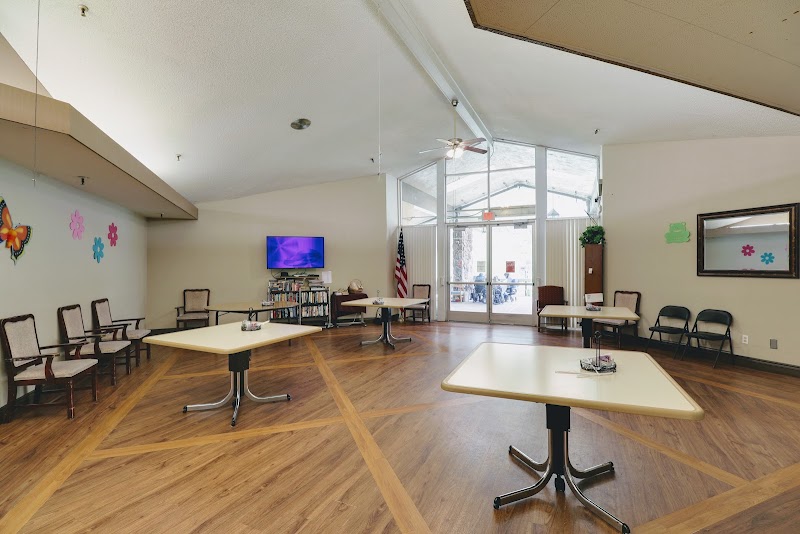
How is Golden San Andreas Care Center Staffed?

CMS rates GOLDEN SAN ANDREAS CARE CENTER's staffing level at 3 out of 5 stars, which is average compared to other nursing homes. Staff turnover is 50%, compared to the California average of 46%. RN turnover specifically is 69%, which is notably high. RNs provide skilled clinical oversight, so turnover in this role can affect medical care quality.

What Have Inspectors Found at Golden San Andreas Care Center?

State health inspectors documented 90 deficiencies at GOLDEN SAN ANDREAS CARE CENTER during 2022 to 2025. These included: 1 Immediate Jeopardy (the most serious level, indicating potential for serious harm or death), 6 that caused actual resident harm, 80 with potential for harm, and 3 minor or isolated issues. Immediate Jeopardy findings are rare and represent the most serious regulatory concerns. They require immediate corrective action.
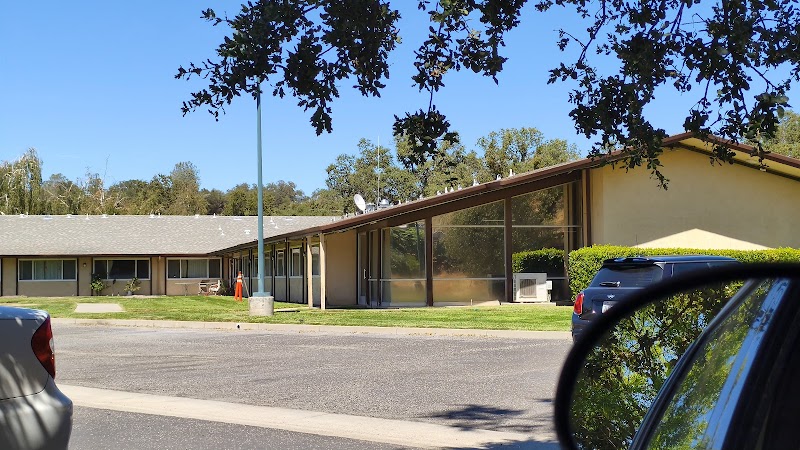
Who Owns and Operates Golden San Andreas Care Center?

GOLDEN SAN ANDREAS CARE CENTER is owned by a for-profit company. For-profit facilities operate as businesses with obligations to shareholders or private owners. The facility is operated by GOLDEN SNF OPERATIONS, a chain that manages multiple nursing homes. With 99 certified beds and approximately 87 residents (about 88% occupancy), it is a smaller facility located in SAN ANDREAS, California.
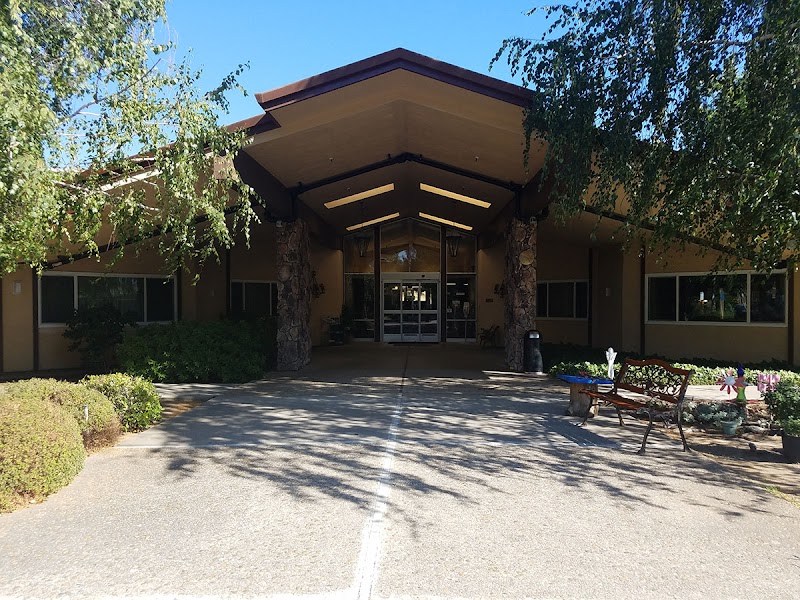
How Does Golden San Andreas Care Center Compare to Other California Nursing Homes?

Compared to the 100 nursing homes in California, GOLDEN SAN ANDREAS CARE CENTER's overall rating (1 stars) is below the state average of 3.1, staff turnover (50%) is near the state average of 46%, and health inspection rating (1 stars) is much below the national benchmark.

What Should Families Ask When Visiting Golden San Andreas Care Center?

Based on this facility's data, families visiting should ask: "What changes have been made since the serious inspection findings, and how are you preventing similar issues?" "Can I visit during a mealtime to observe dining assistance and food quality?" "How do you handle medical emergencies, and what is your hospital transfer rate?" "Can I speak with family members of current residents about their experience?" These questions are particularly relevant given the facility's Immediate Jeopardy citations.

Is Golden San Andreas Care Center Safe?

Based on CMS inspection data, GOLDEN SAN ANDREAS CARE CENTER has documented safety concerns. Inspectors have issued 1 Immediate Jeopardy citation (the most serious violation level indicating risk of serious injury or death). The facility has a 1-star overall rating and ranks #100 of 100 nursing homes in California. Families considering this facility should ask detailed questions about what corrective actions have been taken since these incidents.

Do Nurses at Golden San Andreas Care Center Stick Around?

GOLDEN SAN ANDREAS CARE CENTER has a staff turnover rate of 50%, which is about average for California nursing homes (state average: 46%). Moderate turnover is common in nursing homes, but families should still ask about staff tenure and how the facility maintains care continuity when employees leave.

Was Golden San Andreas Care Center Ever Fined?

GOLDEN SAN ANDREAS CARE CENTER has been fined $99,362 across 4 penalty actions. This is above the California average of $34,072. Fines in this range indicate compliance issues significant enough for CMS to impose meaningful financial consequences. Common causes include delayed correction of deficiencies, repeat violations, or care failures affecting resident safety. Families should ask facility leadership what changes have been made since these penalties.

Is Golden San Andreas Care Center on Any Federal Watch List?

GOLDEN SAN ANDREAS CARE CENTER is not on any federal watch list. The most significant is the Special Focus Facility (SFF) program, which identifies the bottom 1% of nursing homes nationally based on persistent, serious quality problems. Not being on this list means the facility has avoided the pattern of deficiencies that triggers enhanced federal oversight. This is a positive indicator, though families should still review the facility's inspection history directly.