BROOKSIDE SKILLED NURSING HOSPITAL
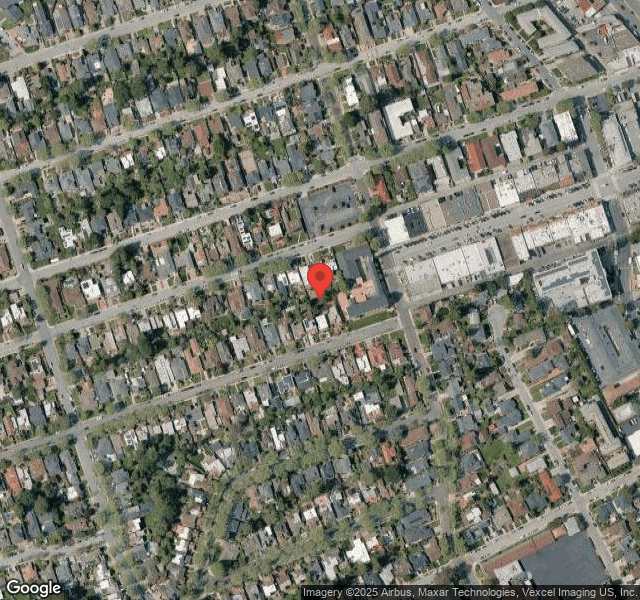
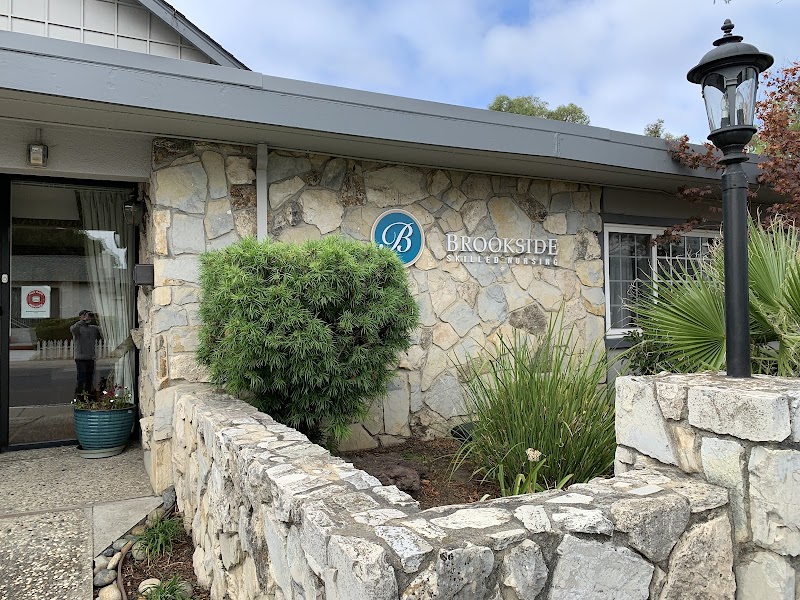
2620 FLORES STREET, SAN MATEO, CA 94403 (650) 349-2161
Non profit - Corporation 96 Beds Independent Data: November 2025
Trust Grade
78/100
#28 of 1155 in CA
Last Inspection: October 2024

Within standard 12-15 month inspection cycle. Federal law requires annual inspections.

Overview

Brookside Skilled Nursing Hospital has a Trust Grade of B, indicating it is a good option for families, sitting comfortably in the middle of the pack. It ranks #28 out of 1,155 facilities in California, placing it in the top half, and it is the best-rated facility among the 14 options in San Mateo County. The facility is improving, with issues decreasing from 7 in 2024 to just 1 in 2025, which is promising. Staffing is a strong point, with a perfect 5-star rating and a turnover rate of only 25%, significantly below the state average. While there are no fines recorded, which is excellent, there have been concerning incidents, such as a resident suffering a fractured collarbone due to unsafe wheelchair brake practices and food handling issues that could lead to foodborne illnesses. Overall, Brookside has strengths in staffing and compliance but needs to address some operational concerns.

Trust Score
B
78/100
In California
#28/1155
Top 2%
Safety Record
Moderate
Needs review
Inspections
Getting Better
7 → 1 violations
Staff Stability
✓ Good
25% annual turnover. Excellent stability, 23 points below California's 48% average. Staff who stay learn residents' needs.
Penalties
✓ Good
No fines on record. Clean compliance history, better than most California facilities.
Skilled Nurses
✓ Good
Each resident gets 49 minutes of Registered Nurse (RN) attention daily — more than average for California. RNs are trained to catch health problems early.
Violations
⚠ Watch
24 deficiencies on record. Higher than average. Multiple issues found across inspections.
★★★★★
5.0
Overall Rating
★★★★★
5.0
Staff Levels
★★★☆☆
3.0
Care Quality
★★★★☆
4.0
Inspection Score
Stable
2024: 7 issues
2025: 1 issues

The Good

  • 5-Star Staffing Rating · Excellent nurse staffing levels
  • Low Staff Turnover (25%) · Staff stability means consistent care
  • Full Sprinkler Coverage · Fire safety systems throughout facility
  • No fines on record
  • Staff turnover is low (25%)

    23 points below California average of 48%

Facility shows strength in staffing levels, staff retention, fire safety.

The Bad

No Significant Concerns Identified

This facility shows no red flags. Among California's 100 nursing homes, only 1% achieve this.

The Ugly 24 deficiencies on record

1 actual harm
Mar 2025 1 deficiency
CONCERN (D) 📢 Someone Reported This

A family member, employee, or ombudsman was alarmed enough to file a formal complaint

Potential for Harm - no one hurt, but risky conditions existed

Quality of Care (Tag F0684)

Could have caused harm · This affected 1 resident

Based on interviews and record review, the facilty failed to administer the prescribed Morphine Sulfate (a strong pain medication) to one of five sampled residents (Resident 1) as ordered when: Morphi...

Read full inspector narrative →
Based on interviews and record review, the facilty failed to administer the prescribed Morphine Sulfate (a strong pain medication) to one of five sampled residents (Resident 1) as ordered when: Morphine Sulfate was prescribed on 2/13/24, and was given almost 24 hours later on 2/14/24. This failure had the potential to cause Resident 1 to feel discomfort while dying on comfort care. Findings: A review of Resident 1's brief interview for mental status (BIMS- evaluates cognitive impairment and can help dementia diagnosis) score of 7 indicating severe cognitive impairment. She was admitted with diagnoses of: low back pain (primary diagnosis), signs of declining cognitive function and awareness , mixed hyperlipidemia (a condition where multiple types of lipids (fats) in the blood are elevated above normal levels), and dysphagia (difficulty swallowing) among others. During a review of Resident 1's progress notes, dated from 01/01/24 to 02/28/24, it indicated, on 2/13/24 at 3:34 PM the Director of Nursing (DON) recieved the doctor's order for : Morphine Concentrate oral Solution 20mg (milligrams)/ml (milliliter), give 5mg/ml, give 5mg SL (sublingual - under the tongue) every 6 hours ATC (around the clock - scheduled for specific times of the day), and Morphine Concentrate oral Solution 20mg/ml, give 5mg/ml, give 5mg SL every 1 hour for agitation, restlessness and pain. During a review of the clinical record for Resident 1's medication administration record (MAR), dated 2/13/24 to 2/28/24, it indicated that Morphine SO4 (MSO4-chemical formula for sulfate) solution was not given on 2/13/24 and the morning of 2/14/24 .Nurses' notes are: - 02/13/2024 6:00 PM, MSO4 - Not Administered: Drug/Item Unavailable. - 02/14/2024 12:00 AM, MSO4 - Not Administered: Drug/Item Unavailable. - 02/14/2024 6:00 AM, MSO4 - Not Administered: Drug/Item Unavailable. Comment: awaiting delivery. During an interview with the Pharmacist Consultant (PC) on on 4/8/25 at 11:00 AM, PC stated, the prescription comes electronically or by fax. For the liquid Morphine, the pharmacist has to prepare it by hand. The technician cannot prepare it. If the facility needs it immediately, they have the E-kit (emergency kit - a supply of medications on-hand). At 11:37 AM PC stated, the order was received on 2/13/24 around 3:32 PM. At the time there needed to be a valid order from the doctor. The facility called on 2/14/24 at 8:32 AM. We were able to contact the doctor at 8:45 AM, and right after the verbal prescription, the pharmacy authorized the facility to access the E-Kit at 8:45 AM. During a review of the facility policy and procedure (P&P) titled Medication Administration General Guidelines, dated 2007, it indicated, 1. Medications are administrered in accordance with written orders of the prescriber[ .] During a review of facility's P&P titled: Medication order; Controlled Substance Medication Orders 2.2, dated 2007, indicated, 14. Medications are administered within 60 minutes of scheduled time . -
Oct 2024 6 deficiencies
CONCERN (D)

Potential for Harm - no one hurt, but risky conditions existed

Quality of Care (Tag F0684)

Could have caused harm · This affected 1 resident

Based on interview and record review, facility did not ensure Hospice services and interventions were addressed for one (Resident 4) of 18 sampled residents, when the care plan did not include specifi...

Read full inspector narrative →
Based on interview and record review, facility did not ensure Hospice services and interventions were addressed for one (Resident 4) of 18 sampled residents, when the care plan did not include specific coordination and communication plan of care between the facility and the hospice agency. This failure had the potential to result in not providing the needed plan of care and specific services to Resident 4. Findings: During a review of Resident 4 admission Record dated 10/21/2024, the admission Record indicated, Resident 4 was admitted to Hospice A on 4/5/2024 and to Hospice B started on 10/4/2023 with the diagnosis of Cerebrovascular Dementia (a progressive state of decline in mental abilities). During an interview on 10/23/24 at 11:05 a.m., with Director of Nursing (DON), the DON stated, I have to look, didn't see it here. Unfortunately, we don't have the coordinated care plan, but we have care conference every quarter we don't have a contract agreement but we one-time letter agreement. During an interview on 10/23/24 at 02:51p.m., with Director of Social Services (DSS), DSS stated, the Inter Disciplinary Team (IDT) is done every quarter or as needed, the only way of communication with the hospice agency is IDT. A review of Facility Hospice Policies and Procedures dated 6/1/2014, indicated, The facility will contract with hospice agencies providing care to residents who have chosen this course of treatment. The facility and the hospice agency will develop systems of communication and develop a coordinated plan of care to meet the resident's needs. Procedure # 2 a plan of care developed by the facility's interdisciplinary team and hospice coordinator. Procedure #4 the hospice nurse coordinates the implementation of the plan of care and attends resident care conferences.
CONCERN (D)

Potential for Harm - no one hurt, but risky conditions existed

Deficiency F0761 (Tag F0761)

Could have caused harm · This affected 1 resident

Based on observations, interviews, and record reviews, it was determined that two separate vials of incorrectly labeled eye drop medications lacked proper labels for prescription medications for a res...

Read full inspector narrative →
Based on observations, interviews, and record reviews, it was determined that two separate vials of incorrectly labeled eye drop medications lacked proper labels for prescription medications for a resident. This is an issue because the absence of labels can lead to confusion in medication administration, increasing the risk of administering the wrong medication or dosage, which could adversely affect the resident's health and safety. Findings: A review of the facility's Section 7.1 Medication Administration Policy indicates that the facility had protocols in place for all medications to have proper labeling and organization. On 10/22/24 at 09:55 AM the inspection of the medication storage revealed two vials of prescription eye drop medications stored together, neither of which had a prescription label. Consequently, it was unclear to which resident the medications were prescribed. In an interview conducted on 10/22/24 at 12:05 PM, the licensed staff member stated, Those meds should have both the name of the resident and the date they were opened. When questioned about the mislabeled vials, the nurse acknowledged the oversight and mentioned, The staff member who handled these meds did not check to label them properly.
CONCERN (E)

Potential for Harm - no one hurt, but risky conditions existed

Unnecessary Medications (Tag F0759)

Could have caused harm · This affected multiple residents

Based on observations, interviews, and record reviews, the facility failed to maintain a medication error rate below five percent (5%). During the medication pass on 10/22/24, four medication errors w...

Read full inspector narrative →
Based on observations, interviews, and record reviews, the facility failed to maintain a medication error rate below five percent (5%). During the medication pass on 10/22/24, four medication errors were observed out of thirty-three opportunities for two out of four residents, resulting in an error rate of 12.12%. This failure had the potential to result in harm in the health and safety of residents. Findings: 1. According to the facility policy, Medication Administration - Eye Drops, Section 7.11, dated 05/2016, to ensure safe and accurate administration of eye drops according to facility, staff should begin by washing their hands thoroughly and putting on gloves, reducing the risk of contamination and protecting patient safety. Using a gloved finger, gently pull down the patient's lower eyelid to create a small pouch, an area ideal for placing the medication with minimal risk of spills or eye irritation. Instruct the patient to look upward, exposing the eye pouch and facilitating precise administration of the drops. Position the eye drop bottle close to the eye, being careful not to touch it, and administer the prescribed number of drops into the pouch. After applying the drops, gently press on the inner canthus-the corner of the eye near the nose-for about a minute to prevent drainage into the nasal passage and allow the medication to be absorbed more effectively in the eye. These steps, as outlined in the policy, support accurate and safe delivery of eye medication. By adhering to this facility policy, healthcare providers can administer ophthalmic solutions accurately and safely while minimizing the risk of adverse events or complications. During an observation on 10/22/24 at 9:20 AM, S08 administered one drop of medication in both eyes of Resident A01R; however, she did not wear gloves during the process, raising concerns about proper infection control practices. Additionally, resident did not have their head positioned correctly, as they fully extended their neck to look directly upward rather than tipping their head back slightly as recommended. During the administration,S08 did not gently pull down each lower eyelid to form a pouch, which is necessary for accurate placement, nor did she instruct the resident to look upward while steadying her other hand on the resident's forehead for control. Furthermore, she failed to hold the inner canthus after administering the drops, which is crucial for preventing drainage into the nasal passage. Instead, she held the vial high above the eyes and placed one drop in each eye without making contact with eye area or forming a pouch, which could impact the effectiveness and safety of the medication delivery. During an interview conducted on 10/23/24 at 11:45 AM, S08 acknowledged that during the administration of eye drops to Resident A01R , she did not wear gloves while administering one drop in each eye. She further indicated that she was unaware of the necessity for gloves when not directly touching the patient. S08's statement corroborates this deviation from recommended practices for maintaining sterility during eye drop administration, emphasizing the need for proper techniques to ensure the safe and effective delivery of ophthalmic solutions. Additionally, S08 did not hold the inner canthus after administering the drops, a crucial step for preventing drainage and maximizing absorption. 2. A review on 10/22/24 of the manufacturer insert for Victoza indicates that, when administering the subcutaneous injection, the needle should be held in place for a minimum of six seconds post-injection to ensure complete delivery of the medication. During an observation on 10/22/24 at 09:15 AM a routine audit of medication administration, it was identified that Victoza SQ was not administered according to the recommended technique. Specifically, the administering nurse failed to hold the needle in place within the subcutaneous tissue for a minimum of six seconds post-injection, potentially impacting medication absorption and efficacy. After inserting the needle, S08 removed the needle immediately, without holding it in place for the recommended minimum of six seconds while injecting the medication. During an interview conducted on 10/23/24 at 11:45 AM, S08 acknowledged and confirmed they were not aware of the administration guidelines of a six-second hold. The nurse acknowledged they had not followed this aspect of the protocol when administering Victoza and had not received recent training specific to Victoza administration. 3. A review on 10/22/24 of the manufacturer insert for Advair indicated to properly administer the Advair inhaler, it is essential to follow the manufacturer's instructions. Begin by shaking the inhaler vigorously for five seconds to ensure that the medication is well-mixed. Hold the inhaler with the mouthpiece facing downwards, and exhale deeply through the mouth to empty the lungs as much as possible. While inhaling deeply, press the top of the canister all the way down to release the medication. After inhaling, hold your breath for up to 10 seconds, or as long as comfortably possible, allowing the medication to settle in your lungs. Once you have held your breath, resume normal breathing to restore regular respiratory function. After delivery, it is advised to rinse and swish with water then spit out. By carefully following these steps, you can ensure that the medication is administered effectively and reaches the lungs, providing the intended therapeutic effect. During an observation on 10/22/24 @0920 AM, the resident B02R's self-administration of Advair was observed and noted to have several deviations from the recommended technique. Firstly, the LVN3 failed to repeat the correct usage instructions to the resident prior to self-administration, which may have contributed to confusion. Secondly, B02R did not exhale before inhaling the medication and did not hold their breath for the 5-10 second recommended duration, both of which are essential steps to ensure proper absorption of the medication. Lastly, after inhalation, the resident experienced a coughing episode during rinsing and subsequently swallowed the water instead of swishing and spitting, as advised, which increases the risk of oral candidiasis. These observations highlight the importance of thorough instruction and adherence to proper inhalation techniques to maximize the effectiveness of the medication and minimize potential complications. During an interview on 10/22/24 @0940 AM, with LVN3, who was responsible for the resident's medication administration, the staff member stated, I assumed the resident already knew the steps, so I don't go over them each time. LVN3 did not instruct the resident prior to administering the Advair and acknowledged that resident B02R did not follow the manufacturer's instructions for proper administration. This lack of guidance and adherence to the recommended technique may have contributed to the observed deviations in the administration process. 4. A review of the manufacturer's insert for Lovenox, the recommended technique for subcutaneous injection of Lovenox involves maintaining a pinch on the injection site throughout the duration of the injection. This helps to ensure that the medication is delivered into the subcutaneous tissue, rather than into the muscle or other surrounding tissues, which can affect the drug's absorption and effectiveness. During an observation on 10/22/24 @ 0852AM for medication administration review, it was observed that a licensed staff member S08 preparing and administering Lovenox (enoxaparin) to Resident A01R using an incorrect injection technique. Specifically, the staff member S08 did not maintain a pinch on the injection site throughout the injection, contrary to manufacturer recommendations for proper subcutaneous delivery and absorption of the medication. During an observation on 10/22/24 @ 0910AM during a direct observation of medication administration, the staff member initially pinched the injection site but released the pinch immediately after needle insertion, holding only for a few seconds. The manufacturer's instructions specify that the pinched site should remain held for the entire duration of the injection to ensure subcutaneous placement and minimize risk of tissue damage. During an interview conducted on 10/23/24 at 11:45 AM, LVN1 acknowledged regarding the importance of proper technique. The staff member stated, I wasn't aware that I needed to hold the pinch throughout the entire injection. I thought it was just for inserting the needle. During an interview conducted on 10/23/24 at 1:45 PM, the Director of Nursing (DON) acknowledged and confirmed that all staff are expected to follow manufacturer instructions for Lovenox administration and agrees this includes holding the pinch until the injection is complete. The DON was also unaware of this technique & noted that regular training on injection techniques is provided but acknowledged that recent sessions did not emphasize this specific instruction.
CONCERN (E)

Potential for Harm - no one hurt, but risky conditions existed

Food Safety (Tag F0812)

Could have caused harm · This affected multiple residents

Based on observation, interview, and record review, the facility failed to ensure safe and sanitary conditions were met for food storage in the kitchen when: 1. There were 4 rotten tomatoes with the ...

Read full inspector narrative →
Based on observation, interview, and record review, the facility failed to ensure safe and sanitary conditions were met for food storage in the kitchen when: 1. There were 4 rotten tomatoes with the delivery date of 10/9/24 in the walk-in refrigerator. 2. There were 4 apple pies on a tray with no label/expiration dates, covered with one aluminum tray with black colored old grime in the refrigerator #2. 3. There was a bag of chicken wings with no label/expiration date in the freezer #2. These failures had the potential to put residents at risk for foodborne illnesses. Findings: 1. During a concurrent observation and interview on 10/21/24 at 9:57 a.m., with [NAME] 1 in the kitchen, there were 4 rotten tomatoes with the date of 10/9/24 in the walk-in refrigerator. [NAME] 1 stated, It's not good. We have to throw it away when asked if the 4 rotten tomatoes looked ok. [NAME] 1 stated, 10/9/24 was the delivery date and the tomatoes were good for 7 days from the delivery date when asked. [NAME] 1 acknowledged, the 4 rotten tomatoes were over 7 days, so they were expired already, then she threw the items away. During a concurrent interview and record review on 10/22/24 at 10:11 a.m., with Registered Dietitian (RD) 1, the facility's policy and procedure (P&P), titled, SUGGESTED REFRIGERATED STORAGE GUIDELINES, dated 2023 was reviewed. The P&P indicated, fruit such as avocado, bananas, grapes, and plums were recommended to store for 3-7 days in the refrigerator, based on quality, but tomatoes were not on the list. RD 1 stated, they consider tomatoes as fruit, and tomatoes are good for 7 days from the delivery date when asked. 2. During a concurrent observation and interview on 10/21/24 at 10:16 a.m., with [NAME] 1 in the kitchen, there were 4 apple pies on a tray with no label/expiration dates, covered with one aluminum tray with black colored old grime in the refrigerator #2. [NAME] 1 acknowledged, there were no label/expiration dates on top of the 4 apple pies on the tray. [NAME] 1 stated, grime when asked what was the black colored one on the tray. 3. During a concurrent observation and interview on 10/21/24 at 10:46 a.m., with [NAME] 1 in the kitchen, there was a bag of chicken wings with no label/expiration date in the freezer #2. [NAME] 1 acknowledged, there was no label/expiration date on the bag of chicken wings. During an interview on 10/24/24 at 9:41 a.m., with Administrator (ADM), ADM stated, they should label and put the expiration dates on the food items to track the food safety, so they can prevent foodborne illness such as salmonella. Review of the facility's P&P, titled, SANITATION AND INFECTION CONTROL, dated 2023 indicated, . All the perishable food items purchased by the department of food and dining services will be stored properly. Perishable food will be kept refrigerated or frozen except during necessary periods of preparation and service. All open food Items will have an open date and use-by-date . 9. All refrigerated foods will be covered properly. All cooked food must be labeled and dated . 11. Labeled with pull by date and used by date all frozen uncooked meat, poultry .
CONCERN (F)

Potential for Harm - no one hurt, but risky conditions existed

Deficiency F0801 (Tag F0801)

Could have caused harm · This affected most or all residents

Based on observation, interview, and record review, the facility failed to ensure the Certified Dietary Manager (CDM), the position responsible for supervision of daily food service operations, was fu...

Read full inspector narrative →
Based on observation, interview, and record review, the facility failed to ensure the Certified Dietary Manager (CDM), the position responsible for supervision of daily food service operations, was fully qualified when the facility did not have a full-time kitchen manager. This failure had the potential for inadequate supervision of the dietary department for 73 out of 75 residents who received food from the kitchen. Findings: During a concurrent observation and interview on 10/21/24 at 9:33 a.m., with [NAME] 1 in the kitchen, the facility's kitchen manager was not seen. [NAME] 1 stated, Right now, we don't have a kitchen manager, when asked to bring in the facility's kitchen manager at this time. [NAME] 1 stated, Two days a week, somebody is coming to help . He is coming Tuesdays and Thursdays when asked about their kitchen manager. During an interview on 10/21/24 at 11:26 a.m., with Director of Nursing (DON), DON stated, Not today, when asked if the facility had the kitchen manager that day. DON sated, the kitchen manager comes twice a week, on Tuesdays and Thursdays. During an interview on 10/21/24 at 11:40 a.m., with Administrator (ADM), ADM stated, the previous kitchen manager resigned about a month ago and they are in the process of hiring a new kitchen manager. During an interview on 10/22/24 at 1:10 p.m., with Registered Dietitian (RD) 1 who oversees the kitchen, RD 1 stated, he works part-time as a contractor and comes twice a week, on Tuesdays and Thursdays usually, but sometimes Tuesdays, Thursdays, and Saturdays. RD 1 stated, he began working at the facility in mid-September 2024 after the previous kitchen manager resigned. During an interview on 10/22/24 at 1:21 p.m., with ADM, ADM stated, they are hiring a new kitchen manger, but that person will not be available in October, so will start on 11/6/24. During an interview on 10/22/24 at 1:40 p.m., with RD 2, RD 2 stated, she works part-time as a contractor and comes twice a week, usually Mondays and Wednesdays. RD 2 stated, Check the significant weight changes, check new admit and re-admit . pressure injury review . check tube feeding . check dialysis resident . when asked about her role. RD 2 stated, she focuses on the clinical part, not the kitchen. RD 2 stated, RD 1 supervises the kitchen. Review of the facility's Operational Organizational Chart undated indicated, the dietary manager was under the facility administrator. Review of the facility's job description titled, DIETARY MANAGER (Kitchen Manager) dated November 2010 indicated, . The purpose of the Dietary Manager is to ensure that residents receive healthful, attractive meals and snacks on a timely basis . REPORTS TO: Administrator . DUTIES AND RESPONSIBILITIES . 3. Selects, evaluates, recognizes and disciplines Dietary staff . 4. Coordinates dietary services with Nursing and Activities Director . 5. Checks trays for accuracy before they are delivered. 6. Checks diet orders against physician orders monthly . 8. Inspects storage areas and dietary department regularly for proper temperatures and cleanliness. 9. Plans, presents and participates in inservice educational programs for the Dietary department . 12. Partners with Dietary consultants and Nursing to achieve quality food service . Review of the facility's consultant dietitian's job description titled, ORIENTATION, INSERVICE, & PERSONNEL MANAGEMENT undated indicated, . The Consultant Dietitian is a Registered Dietitian . The Registered Dietitian provides consultation to the facility for the purpose of providing nutrition care and oversight of the operations of the Department of Food and Nutrition Services, which will result in optimal health of the resident/patient . RESPONSIBILITIES: Evaluates the nutritional needs of residents/patients and documents in the nutritional record . Coordinates, implements, and evaluates the facility menus for nutritional adequacy . Reviews and assists the Director of Food and Nutrition Services in interdisciplinary care planning and Department of Food and Nutrition Services care plans . Reports to the Administrator and Director of Food and Nutrition Services, or designee, monthly or as needed regarding findings and concerns regarding the Department of Food and Nutrition Services and the nutritional care of residents/patients . Review of State of California Health and Safety Code 1265.4 (a) indicated, . A health facility that employs a registered dietitian less than full time, shall also employ a full-time dietetic services supervisor who meets the requirements of subdivision (b) to supervise dietetic service operations. The dietetic services supervisor shall receive frequently scheduled consultation from a qualified dietitian
MINOR (B)

Minor Issue - procedural, no safety impact

Deficiency F0911 (Tag F0911)

Minor procedural issue · This affected multiple residents

**NOTE- TERMS IN BRACKETS HAVE BEEN EDITED TO PROTECT CONFIDENTIALITY** Based on observation, interview, and record review, the facility failed to ensure resident rooms accommodated no more than four ...

Read full inspector narrative →
**NOTE- TERMS IN BRACKETS HAVE BEEN EDITED TO PROTECT CONFIDENTIALITY** Based on observation, interview, and record review, the facility failed to ensure resident rooms accommodated no more than four residents in each room when room [ROOM NUMBER] had six residents in the room. This failure had the potential to negatively impact the safety and well-being of residents. Findings: During an observation on 10/21/24 at 9:32 AM, in room [ROOM NUMBER], the room was divided into two sections. The right section had two beds and the left section had four beds. room [ROOM NUMBER] had a common entrance door and a shared bathroom. During an observation on 10/21/24 at 2:21 PM, no residents occupied the room. room [ROOM NUMBER] was used as a Physical Therapy (PT) Room. During an interview on 10/24/24 at 1:29 PM, the Administrator stated, she had written a letter to the Centers for Medicare & Medicaid Services (CMS) requesting a waiver for rooms [ROOM NUMBERS]. For now, room [ROOM NUMBER] was used as PT Room. During a review of the room waiver form completed by the Administrator, the waiver indicated, the following floor measurements: room [ROOM NUMBER] had 581 total square feet, and room [ROOM NUMBER] had 581 total square feet.
Sept 2024 1 deficiency
CONCERN (D) 📢 Someone Reported This

A family member, employee, or ombudsman was alarmed enough to file a formal complaint

Potential for Harm - no one hurt, but risky conditions existed

Report Alleged Abuse (Tag F0609)

Could have caused harm · This affected 1 resident

**NOTE- TERMS IN BRACKETS HAVE BEEN EDITED TO PROTECT CONFIDENTIALITY** Based on interview and record review, the facility failed to report an allegation of resident to resident abuse and injury of un...

Read full inspector narrative →
**NOTE- TERMS IN BRACKETS HAVE BEEN EDITED TO PROTECT CONFIDENTIALITY** Based on interview and record review, the facility failed to report an allegation of resident to resident abuse and injury of unknown source within the required 2-hour timeframe to the State Survey Agency (SSA- where state law provides for jurisdiction in long-term care facilities) for three (3) of six sampled residents (Resident 1, Resident 2, and Resident 3). The deficient practice had the potential for delayed provision of care and the potential to compromise the protection of the residents in the facility which could affect the resident's wellbeing. Findings: 1. During a review of Resident 1's Resident Face Sheet (resident profile) indicated, was admitted on [DATE] with diagnoses including stroke, atherosclerosis of aorta (a condition that occurs when plaque builds up in the aorta, the main artery that carries oxygen-rich blood from the heart to the body), high blood pressure, high blood sugar, and chronic low back pain. During a review of Resident 1's Minimum Data Set (MDS, a federally mandated resident assessment tool), dated 5/14/24, the MDS indicated Resident 1 had no cognitive (mental action or process of acquiring knowledge and understanding) impairment. During a review of Resident 2's Resident Face Sheet indicated, was admitted on [DATE] with diagnoses including dementia (a progressive state of decline in mental abilities), depression (a mental disorder that can affect a person's thoughts, feelings, and behavior), and high blood pressure. During a review of Resident 2's MDS, dated [DATE], indicated, Resident 2 had severe cognitive impairment. Under the functional assessment indicated, Resident 2 had no impairment on both upper and lower extremities and can wheel herself in the corridor with supervision. During a review of Resident 1 and Resident 2's Event Report, dated 7/10/24, indicated, on 7/10/24 at 7:30 PM, a Certified Nursing Assistant (CNA) reported to the Licensed Nurse (LN) that Resident 2 was inside Resident 1's room and started hitting Resident 1 on the right knee. It indicated that the LN called and reported the incident to the San [NAME] Police Department at 7:30 PM. During a review of Resident 2's progress note dated 7/10/24, and time stamped at 7:51 PM, indicated, the Nursing Home Administrator (NHA) received a call from the Charge Nurse (CN) that a CNA observed Resident 2 hitting a resident in [room #]. During a review of Resident 1's progress note dated 7/10/24, and time stamped at 8:00 PM, indicated, the NHA received a call that Resident 1 was hit by another resident. Further review of the progress notes dated 7/10/24, 8:45 PM, indicated, Writer [NHA] called the Ombudsman office at 8:43 PM to report incident. Office closed lvm (left voicemail) and SOC 341 (Report of Suspected Dependent Adult/Elder Abuse) will be sent tomorrow morning. During a review of document titled, Report of Suspected Dependent Adult/Elder Abuse, known as SOC 341, with date completed on 7/10/24, indicated, date and time of the incident Resident 2 hitting Resident 1 was 7/10/24. This alleged incident was reported to the police and Ombudsman by phone on 7/10/24, no time indicated; and to the California Department of Public Health (CDPH) and Ombudsman by fax on 7/11/24, no time indicated. Further review indicated, the facility fax cover for the SOC 341 had a date of 7/11/24. The fax cover and SOC 341 also indicated, was received by CDPH Licensing & Certification (L&C) on 7/11/24, time stamped at 12:49:39 PM. During a review of the facility's document titled, Re: 5 Days Conclusion for SOC Reported 7.10.24, dated 7/15/24, indicated, .Actions Taken: .Administrator faxed SOC 341 to CDPH on 7.11.2024 . During an interview on 9/18/24 at 2:10 PM, the Social Services Designee (SSD) stated, the staff present during an incident will report it and the licensed nurse will subsequently report to the Administrator, the person in-charge of reporting to CDPH, Police, and Ombudsman. During an interview on 9/18/24 at 2:31 PM, the NHA stated she received a call about the alleged resident to resident altercation on 7/10/24 in the evening and provided guidance to the CN on the next steps. The NHA stated she left a voicemail to the Ombudsman's office only and faxed the SOC 341 to the Ombudsman and CDPH office on 7/11/24. During further interview, the NHA explained that the Director of Nursing (DON) or SSD do the reporting to the police, Ombudsman, and CDPH if she's not around while the CN report it during off hours. 2. During a review of Resident 3's Resident Face Sheet indicated, was admitted on [DATE] with diagnoses including dementia, need for assistance with personal care, atherosclerosis of aorta, high blood pressure, vitamin B12 deficiency, vitamin D deficiency, and presence of gastrostomy tube (G-tube, a tube inserted through the belly that brings nutrition directly to the stomach). During a review of Resident 3's physician progress notes dated 5/22/23, indicated, Patient remains non-verbal, totally dependent on staff for ADL's (Activities of Daily Living- routine tasks/activities such as bathing, dressing and toileting a person performs daily to care for themselves) and mobility. She has contractures . She is prone to skin breakdown . During a review of Resident 3's Event Report, dated 7/7/23, under the Description section indicated, R (right) displaced humeral mid-shaft fx. (fracture) and R anterior shoulder dislocation. Under the Type of Injury section indicated a check mark on Suspected Fracture, Traumatic Joint Dislocation, Other - Fx. During a review of undated facility document titled, Investigation Summary, indicated, .On 7/7/23 at approximately 9:30 am, Director of Nursing [Name] received a call from [Name], [Name of Hospital] representative, notifying her that resident was returning to [Facility Name] but that the report had been filed with APS (Adult Protective Services - agency to help elder adults, 60 years and older; and dependent adults, 18-59 who are disabled) due to the presence of a fracture. Resident returned at approximately 12:30 pm with new medications .and paperwork indicating only UE fx (upper extremity fracture) . During a review of the progress notes from the acute hospital physician, faxed on 7/10/23, indicated, Resident 3 presented with right shoulder and arm pain in the emergency room (ER). It indicated, In the ER, midshaft humerus (upper arm) spiral fracture (broken bone in twisting motion) was noticed .a chronic (persisting in a long time) appearing anterior (in front of) shoulder dislocation with big Hill-Sachs lesion (a type of injury that affects the upper arm caused by shoulder dislocation) . Clinical Impressions: Primary: Right Shoulder Dislocation .Right Humerus Fx . During a review of the facility's Fax Cover dated 7/7/23, indicated, Re: Preliminary: Incident [Resident Name] . Comments: Our facility would like to report on incident identified on 7/6/2023 around 23:20 by our License Nurse. Resident was sent to the ER and returned to our facility to day with a Chronic Dislocation and Midshaft humerus fracture. The Fax Cover also indicated a handwritten note, Faxed to CDPH 7/[blank]/2023 @ (at) [blank] [initial]. The Fax Cover was received by CDPH L&C on 7/12/23, time stamped at 12:17:31 PM. During an interview on 9/18/24 at 11:25 AM, the NHA stated that the facility considers fire, power outage, flood, earthquake, and injury of unknown origin as an unusual occurrence. In addition, the NHA stated that allegations of abuse and injury of unknown origin are reported immediately or within 2 hours or within 4 hours via phone or fax to the police, Ombudsman, and CDPH. Review of the facility's policy and procedure titled, Resident Abuse Protocols, revised 10/01/22, under Reporting indicated, .1. Report all incidents of alleged or suspected abuse and injuries of unknown origin to the Administrator and Director of Nursing. 2. If the Administrator and/or Director of Nursing are unavailable, the person designated to act on his/her behalf will contact him/her immediately, by telephone if necessary. 3. All suspected abuse/neglect or injuries of unknown origin will be reported verbally and documented on an Incident Report. 4. The Administrator and Director of Nursing or their designees shall notify the California Department of Public Health, Licensing and Certification via telephone immediately or as soon as is practically possible but no later than hours after discovery of the alleged incident. 5. The Administrator and the Director of Nursing shall notify the Ombudsman and/or the local law enforcement agency (as required by law) via telephone immediately or as soon as practically possible but no later than 2 hours after discovery of the alleged incident .
Jan 2022 8 deficiencies
CONCERN (D)

Potential for Harm - no one hurt, but risky conditions existed

Comprehensive Care Plan (Tag F0656)

Could have caused harm · This affected 1 resident

**NOTE- TERMS IN BRACKETS HAVE BEEN EDITED TO PROTECT CONFIDENTIALITY** Based on observation, interview and record review, the facility failed to develop a care plan with appropriate nursing intervent...

Read full inspector narrative →
**NOTE- TERMS IN BRACKETS HAVE BEEN EDITED TO PROTECT CONFIDENTIALITY** Based on observation, interview and record review, the facility failed to develop a care plan with appropriate nursing interventions for one of four sampled residents (Resident 28) when: There was no care plan for Resident 28's oxygen therapy. This deficient practice had the potential to prevent Resident 28 from receiving appropriate, and individualized care and services consistent with her needs, based upon assessment and physician order. Findings: During a review of the admission record for Resident 28, the admission record indicated, Resident 28 was admitted to the facility on [DATE] and readmitted on [DATE], with diagnoses that included a recent history of pneumonia, pericardial effusion (buildup of too much fluid in the double layered, saclike structure around the heart), diabetes, chronic kidney disease on dialysis (dialysis is a procedure to remove waste products and excess fluid from the blood when the kidneys stop working properly), and hypertension (high blood pressure). During a review of Resident 28's physician's order, dated 7/16/21, the physician order indicated, start oxygen at 2 Liters/minute, may increase to 4 Liters/minute (the amount of oxygen to be delivered to the resident) to relieve shortness of breath. During a review of Resident 28's minimum data set (MDS, a resident assessment tool), dated 11/30/21, the MDS indicated, Brief Interview Mental Status (BIMS, a short scanner to help detect cognitive impairment) score of 15 indicating no cognitive impairment. During the initial facility tour on 1/11/22, at 9:10 AM, Resident 28 was observed sitting on her bed. Resident 28 was awake and alert. An oxygen concentrator with a nasal cannula tubing (NC, a plastic tubing inserted into the nostril, and attached to an oxygen source) connected to it and dangling by Resident 28's bedside. Resident 28 stated, sometimes she gets oxygen. During a concurrent interview and record review on 1/13/22, at 11:25 AM, with Licensed Vocational Nurse (LVN) 1, LVN 1 stated, there is an order for oxygen therapy for Resident 28, but unsure if continuous or on as needed basis. While looking at the electronic clinical record of Resident 28, LVN 1 was asked for the oxygen care plan. LVN 1 searched and stated, she cannot find the care plan. LVN 1 acknowledged there is supposed to be a care plan for oxygen for Resident 28. During a concurrent interview and record review on 1/14/22, at 9 AM, with Director of Staff Development (DSD), DSD stated, Resident 28 has an order but not clear. DSD cannot find the care plan for oxygen for Resident 28. DSD further stated, there should be a care plan as far as oxygen is concerned. During a review of the facility's policy and procedure (P P) titled, Assessments and Care Plans dated 11/1/17, the P&P indicated, Policy: .The care plan will be individualized .will consist of identified needs and problems, reasonable, measurable and time framed goals, and realistic approaches for achieving desired outcomes .
CONCERN (D)

Potential for Harm - no one hurt, but risky conditions existed

Deficiency F0658 (Tag F0658)

Could have caused harm · This affected 1 resident

**NOTE- TERMS IN BRACKETS HAVE BEEN EDITED TO PROTECT CONFIDENTIALITY** Based on observation, interview, and record review, the facility failed to provide services according to professional standards ...

Read full inspector narrative →
**NOTE- TERMS IN BRACKETS HAVE BEEN EDITED TO PROTECT CONFIDENTIALITY** Based on observation, interview, and record review, the facility failed to provide services according to professional standards of quality for one of four sampled residents when: The oxygen order for Resident 28 was not specified whether continuous or as needed basis. This failure had the potential to not deliver oxygen correctly and ensure safe and effective oxygen therapy, which can result to negative consequences to the resident. Findings: During a review of admission record for Resident 28, the admission record indicated resident was admitted to the facility on [DATE] and readmitted on [DATE], with diagnoses that included pneumonia (lung infection), pericardial effusion (buildup of too much fluid in the double layered, saclike structure around the heart), diabetes (abnormal blood sugar), chronic kidney disease and on dialysis (dialysis is a procedure to remove waste products and excess fluids from the blood when the kidneys stop working properly), and hypertension. During a review of Resident 28 physician's order dated 7/16/21, the physician order indicated, oxygen at 2 Liters/minute, may increase to 4 Liters/minute to relieve shortness of breath. During a review of Resident 28's minimum data set (MDS, a resident assessment tool) dated 11/30/21, the MDS indicated, Brief Interview Mental Status (BIMS, a short scanner to help detect cognitive impairment) score of 15 indicated no cognitive impairment. During the initial tour observation, on 1/11/22, at 9:10 AM, Resident 28 was sitting on her bed, awake and alert. A portable oxygen concentrator connected to NC was dangling by Resident 28's bedside. Resident 28 stated, she sometimes get oxygen. During a concurrent interview and record review on 1/13/22, at 11:25 AM, with Licensed Vocational Nurse (LVN) 1, LVN 1 stated, there is an order of oxygen therapy for Resident 28, unsure if continuous or as needed basis. LVN 1 stated, they are checking Resident 28's oxygen saturation level (O2 saturation - the amount of oxygen traveling through the body with the red blood cells and normal oxygen saturation is usually between 95% and 100% for most healthy adults) every shift and the nurse should know that if the resident oxygen saturation level is below 90%, the resident should be given oxygen. LVN 1, acknowledged the oxygen order is not clear and needed clarification. During a concurrent interview and record review on 1/14/22, at 9 AM, with Director of Staff Development (DSD), DSD stated, the oxygen order for Resident 28 should have indicated continuous or PRN (as needed). DSD further stated, the order was not clear and should have been clarified with the physician. DSD stated, she will be educating staff. During a review of the facility's policy and procedure (P & P) titled, Oxygen Administration dated 1/1/15, the P & P indicated under Use, .orders for oxygen include .3. whether administration is to be routine or PRN 4. the percent of oxygen saturation to be maintained 5. The percent of oxygen saturation that required physician notification . During a review of the article titled, Standards for specifying oxygen orders, from Health Care Quality Association on Accreditation HQAA.org, dated 5/4/17, the article indicated, O2 orders, Because it is a drug, oxygen orders must be obtained and should include the following information: .Duration - such as continuous or 12 hours/day or PRN (as needed) . [https://info.hqaa.org/hqaa-blog/o2-orders-101]
CONCERN (D)

Potential for Harm - no one hurt, but risky conditions existed

Pressure Ulcer Prevention (Tag F0686)

Could have caused harm · This affected 1 resident

Based on observation, interview and record review, the facility failed to ensure one of 16 sampled residents (Resident 29) had weekly assessments and documentation of the pressure ulcer (localized dam...

Read full inspector narrative →
Based on observation, interview and record review, the facility failed to ensure one of 16 sampled residents (Resident 29) had weekly assessments and documentation of the pressure ulcer (localized damage to the skin and/or underlying soft tissue usually over a bony prominence) on the left buttock. This failure had the potential to result in delayed healing, and ineffective plan of care and treatment of the resident's pressure ulcer. Findings: During a concurrent observation and interview on 1/13/22, at 10:20 AM, Resident 29 was in his bed awake and alert. Resident 29 stated, he was admitted to the facility for rehabilitation due to a fall incident. When asked about other services received, Resident 29 stated, he was treated for a wound on his buttock and said, it was slowly getting better. During a concurrent observation and interview on 1/13/22 at 3:15 PM, with RN 1, inside Resident 29's room, RN 1 inspected the resident's pressure ulcer on the left buttock. RN 1 stated, the pressure ulcer was unstageable (full thickness skin and tissue loss in which the extent of tissue damage within the ulcer cannot be confirmed because the wound bed is obscured) and had tunneling (passageway of tissue destruction underneath the surface of the skin with an opening at the skin level from the edge of the wound). During a review of Resident 29's hospital Discharge Summary and Orders), dated 6/19/21, the hospital Discharge Summary indicated, Interagency Referral to Skilled Nursing Facility . NURSING DOCUMENTATION . TREATMENTS . Wound Left Buttock .Wound Size . Wound Left Buttock -Length (cm): 4.5 cm . Width (cm): 2 cm . Depth (cm): 0.2 cm .Wound Bed Assessment: Pink . During a review of Resident 29's facility admission Skin Risk Observation report, dated 6/19/21, the Skin Observation report indicated, Skin tear(s) was marked under the section Other Ulcers, Wounds and Skin Problems. The report further indicated, the skin tears were located on the back of l [left] foot and left elbow. There was no indication of a skin-related problem on the left buttock. During a concurrent record review of Resident 29's medical records, and interview on 1/14/22, at 2 PM, with RN 1, RN 1 stated, the nursing progress note (PN) dated 6/19/21, indicated Resident 29 had a pressure ulcer scar on the left buttock. RN 1 stated, the nursing PN dated 8/10/21 indicated an open area on the left buttock. RN 1 further stated, wound physician report dated 10/20/21, indicated left buttock stage 3 (full thickness loss of skin with possible subcutaneous fat, granulation tissue, rolled wound edges visible, and slough, eschar (dead tissue)) and tunneling. RN 1 also stated, wound assessments had to be done weekly. When asked, RN 1 was unable to present evidence of weekly wound assessments and documentation that indicated prior condition of the resident's left buttock pressure ulcer until 10/20/21 when the wound physician evaluated stage 3 pressure ulcer. RN 1 added the resident's wound care was transitioned to hospice services on 10/26/21. During a review of Resident 29's admission Minimum Data Set (MDS, an assessment tool), dated 6/25/21, Section I - Active Diagnoses indicated, Pressure ulcer of left buttock, stage 2 (partial thickness skin loss with exposed skin presenting as a shallow open ulcer). During a review of Resident 29's Skin Integrity Events report, dated 8/10/21, the Skin Integrity Report indicated, .left buttock .skin abrasion 1.0 cm x 0.7 cm . Depth of Skin Tear/Laceration - shallow (marked) . Blood Loss - Controlled Bleeding (marked) . Wound Edges - irregular (marked) . During a review of Resident 29's Skin Integrity Events report, dated 8/31/21, the Skin Integrity Report indicated, .open wound on left buttock . 1 cm x 1.5 cm . Depth of Skin Tear/Laceration - shallow (marked) . Blood Loss - Small Amount (marked) . Wound Edges - irregular (marked) . During a review of Resident 29's nursing progress note, dated 9/1/21, the nursing progress notes indicated, . on monitoring for (L) [left] buttock wound . During a review of Resident 29's nursing progress note, dated 10/4/21, the nursing progress notes indicated, . left buttock wound noted with almost 100% slough about 2.5 x 3 cm, some foul odor . During a review of Resident 29's Infection Control report, dated 10/20/21, the Infection Control Report indicated, .left buttock pressure ulcer wound infection . wound has slough, and deeper compared to last week, redness around the wound . During a review of Resident 29's Wound Management Detail Report, from 6/19/21 through 12/27/21, the wound report indicated, one entry on 8/10/21 on a left buttock wound location. During a review of the facility's policy and procedure (P&P), titled, WOUND MANAGEMENT AND SKIN INTEGRITY, dated 4/1/21, the P&P indicated, .ASSESSMENT - General Guidelines 1. Comprehensive assessment is essential for effective pressure ulcer prevention and treatment and includes . Assessments are completed during admission, weekly for the first four weeks after admission, quarterly, and when the resident experiences a significant change of condition . ASSESSMENT . PRESSURE ULCERS . Assessment Guidelines . Documentation includes type of skin injury/ulcer, location, shape, appearance of ulcer edges and wound bed, condition of surrounding tissues . Documentation Guidelines - At least weekly (or more often when indicated .) an evaluation of the pressure ulcer is documented. Documentation includes: 1. Date that wound observation is being done 2. Stage of the wound 3. Size 4. Depth 5. Presence, location and extent of undermining, tunneling or sinus tract 6. Exudate if present, including type, color, odor and approximate amount 7. Appearance of wound bed 8. Appearance of surrounding skin 9. Appearance of surrounding tissue and wound edges 10. Occurrence of pain, its nature and frequency .
CONCERN (D)

Potential for Harm - no one hurt, but risky conditions existed

Accident Prevention (Tag F0689)

Could have caused harm · This affected 1 resident

**NOTE- TERMS IN BRACKETS HAVE BEEN EDITED TO PROTECT CONFIDENTIALITY** Based on observation, interview and record review, the facility failed to ensure one of 16 sampled residents (Resident 165) was ...

Read full inspector narrative →
**NOTE- TERMS IN BRACKETS HAVE BEEN EDITED TO PROTECT CONFIDENTIALITY** Based on observation, interview and record review, the facility failed to ensure one of 16 sampled residents (Resident 165) was provided treatment, supervision and appropriate equipment and supplies to prevent accidents related to oral suctioning (a procedure to clear secretions such as mucus from the mouth). 1. There was no assessment and documentation to identify Resident 165's individual risk of an accident, including the need for supervision prior to performing oral suction on her own. 2. Resident 165's care plans did not incorporate oral suctioning procedures consistent with the resident's needs, goals, and facility standards of practice, policies and procedures. 3. There was no physician's order for Resident 165 to self-administer an oral suctioning procedure. 4. Resident 165's oral suctioning and use of suction equipment and supplies were not monitored and documented in accordance with facility standards of practice, policies, and infection prevention and control. These failures had to potential for Resident 165 to not receive proper and safe respiratory care services related to oral suctioning. Findings: During an observation on 1/12/22, at 9:43 AM, Resident 165 sat on the side of her bed and performed oral suctioning of her mouth using a yankauer (a medical suction device). Resident 165 stated, she did it herself to take out mucus. During a record review of Resident 165's history and physical (H&P), dated 12/31/21, the H&P indicated, resident was admitted to the facility on [DATE] with dysphagia (difficulty swallowing), bronchiectasis (a lung condition resulting to a build-up of excess mucus), acute stroke due to ischemia (inadequate blood supply), depressive disorder and anxiety. During a record review of Resident 165's physician order report (POR), signed by the physician on 1/14/22, the POR indicated, . Medications flow sheet . Sertraline . Start Date 12/30/21 . 1 tab (tablet) . once a day . For anxiety . Sertraline Use - Observe resident closely for significant side effects . sedation . drowsiness . Lorazepam . Start Date . 12/30/21 . 1 tab (tablet) . Three Times A Day . PRN (as needed) . Monitor for Side Effects . Lorazepam Use . Observe resident closely for significant side effects . Sedation, Drowsiness . Dizziness . Confusion . Monitor Sedation . Sedation Level . Sleepy Easily aroused . Awake, Alert . Occasionally drowsy, easily aroused . Frequently drowsy, drifts to sleep . Somnolent, Minimal or No response to stimuli . Every shift . During an interview on 1/12/22 at 3:29 PM, with Certified Nursing Assistant (CNA) 1, CNA 1 stated, Resident 165 was admitted about a week ago and had told CNA 1, she [Resident 1] wants to do it (oral suction) herself. CNA 1 stated, she had notified Licensed Vocational Nurse (LVN) 2. CNA 1 also stated, LVN 2 was not at the facility that day. During a concurrent interview and record review of Resident 165's medical records on 1/12/22 at 3:35 PM, with Registered Nurse (RN) 2, RN 2 stated, the resident was alert and oriented. RN 2 stated, he had not performed oral suctioning of the resident, and he was not aware that the resident had done it herself. RN 2 also confirmed the following: 1. There was no evidence Resident 165 was assessed and deemed capable by the facility's health care team prior to performing oral suction procedures properly and safely on her own. 2. Resident 165's care plans since admission did not include oral suctioning. 3. No physician orders were found related to Resident 165's oral suctioning procedure. During a concurrent observation and interview on 1/12/21, at 3:40 PM, in Resident 165's room, with RN 2 present, Resident 165 stated, the nurses had not suctioned her orally, and she had done oral suctioning on her own since admission into the facility. On inspection of the suction equipment next to the resident's bedside, RN 2 acknowledged the suction tubing attached to the suction machine was unlabeled, and undated, with the yankauer found uncovered on the bedside table. The suction canister had approximately 200 ml (milliliters) of white and cream-color liquid with green-color liquid settlement at the bottom of the canister. Resident 165 stated, suction machine and supplies did not belong to her. RN 2 stated, he did not find extra oral suction supplies inside the resident's bedside table and drawer. RN 2 was unable to provide information as to who brought and set up the suction equipment and supplies in Resident 165's room including when the suction equipment and supplies were checked, used, replaced and cleaned. RN 2 stated, the suction canister had to be changed and cleaned every shift, with contents measured and documented by the staff. RN 2 also stated, suction supplies had to be labeled and replaced every three days by the staff. During a follow up interview on 1/13/22 at 3:45 PM, with RN 2, RN 2 stated, LVN 2 admitted Resident 165 into the facility and put the suction machine and supplies in the resident's room. During an interview on 1/13/22 at 3:55 PM, with LVN 2, LVN 2 stated, she had not performed oral suction to Resident 165 but had seen the resident suction herself. LVN 2 stated, she did not inform the resident's physician. LVN 2 stated, she should have notified the physician. During a concurrent interview and record review of Resident 165's medical records on 1/14/22 at 10:44 AM, with RN 3, RN 3 stated, she was aware Resident 165 did her own oral suctioning because the resident had told her before. RN 3 stated, she should have notified the physician. RN 3 stated, there should have been a physician's order for the oral suctioning procedure. RN 3 explained that nurses were supposed to do an assessment to see if the Resident 165 was capable to do oral suction safely and correctly. RN 3 stated, she did not find any assessments done on Resident 165 on oral suctioning. RN 3 also stated, she did not think the interdisciplinary team (IDT) met and discussed Resident 165's ability to perform oral suctioning. During a record review of Resident 165's Baseline Resident-Centered Plan of Care (BRCP), dated 1/3/22, the BRCP indicated, the following sections were left unmarked or unchecked, . A. Resident and/or Resident Representative (RR) Interview . Cognition . Communication . B. Health and Safety History .C. Activities of Daily Living .Equipment in Use . D. Goals of Care . III. Rehabilitative Services .Attendees [attendees to the baseline care plan meeting] . Printed Baseline Care Plan and Physicians Orders . Vitals . Notes . During a record review of Resident 165's Care Plan (CP), dated 1/1/22, the CP indicated, . Category: Respiratory - Alteration in Respiratory Function R/T (related to) Bronchiectasis . Goal . Approach . There was no information indicated in the CP regarding oral suctioning. During a record review of Resident 165's Care Plan (CP), dated 1/1/22, the CP indicated, . Category: Mobility & Safety . Strengths and abilities [specify] blank . There was no information indicated in the CP regarding the resident's risks and/or ability to perform oral suctioning. During a record review of Resident 165's Care Plan (CP), dated 1/1/22, the CP indicated, . Category . At risk for Aspiration r/t (related to) Dysphagia . Goal . Will not have episodes of Aspiration . Approach . Assess breath sounds and breathing patterns . Follow Aspiration Risk Precautions . During a record review of Resident 165's Care Plan (CP), dated 1/3/22, the CP indicated, . Category: Mood State . Altered Mood State R/T Depression, Anxiety, Manifested by Restlessness . Approach . Anti-Anxiety S.E. (side effects). Medication: Lorazepam . Observe for and report side effects: sedation .dizziness, confusion . Special Attention if given with other sedatives .Anti-Depressant S.E. Zoloft . Observe and report for side effects: Common- sedation . weakness, dizziness, confusion, agitation, tremor, . During a review of the facility's policy and procedure (P&P) titled, ASSESSMENT POLICY AND PROCEDURE, dated 11/1/17, the P&P indicated, STANDARD - . expansion of the interdisciplinary team's role in providing care and services to the elderly in skilled nursing facilities . Providing care to the individuals residing in skilled nursing facilities utilizes clinical competence, observational skills and assessment expertise from all disciplines to develop individualized plans of care . POLICY . The assessment is completed by the interdisciplinary team and coordinated by a Registered Nurse. This assessment is the basis for each resident's plan of care . All of the data available to the interdisciplinary team is assessed and analyzed. Determinations regarding, but not limited, the following are made . Capacity to perform ADLs and impairment in same . Medically defined conditions . Physical and mental functional status . Sensory and physical impairments . Special treatments or procedures . During a review of the facility's policy and procedure (P&P) titled, CARE PLANS, dated 11/1/17, the P&P indicated, STANDARD - The resident care plan is the vehicle employed by the interdisciplinary team for achieving desirable resident outcomes. The plan is the result of the interdisciplinary assessment, analysis and diagnosis. It addresses the actual and potential physical, environmental, and psychosocial needs and problems identified by the interdisciplinary team in conjunction with the resident and significant others in the resident's life. The care plan identifies the individual needs and problems of the resident, states the resident's goal in measurable terms, and documents realistic approaches that the interdisciplinary team will employ to achieve the desired outcomes. POLICY - Upon admission, an initial care plan will be initiated for the resident. This care plan will address the immediate needs of the resident. Immediate needs will be identified using but not limited to the physician's evaluation, the medical plan of care, physician's orders, transfer information, information provided by the resident and the significant others in the resident's life, outcome of risks assessments, and the observations made by staff related to presenting symptoms and significant functional dependencies . The care plan will be reviewed and revised as necessary to reflect the changes in the resident's status. Any professional who recognizes the need for changing the care plan will initiate the change . PROCEDURE: 1. Initial Care Plan - Initiated within 24 hours of admission of the resident, Reflects the immediate needs of the resident (i.e. treatments . safety issues .) All disciplines enter appropriate problems, goals and approaches based on their assessments prior to the Comprehensive Care Plan Conference . CARE PLANNING CONFERENCE - PROCEDURE: admission CARE PLANNING CONFERENCE . The interdisciplinary team evaluates the resident and reviews the resident's care plan for appropriateness. Necessary changes are made on the care plan and pertinent notes are made in the medical record .Areas reviewed and discussed including follow-ups will be documented in the SMS Interdisciplinary Team Resident Care Conference Notes during the care planning conference . INTERDISCIPLINARY TEAM PROCESS - STANDARD - The Interdisciplinary Team (IDT) process is used in assessing major issues that impact the physical, mental and psychosocial health of a resident . POLICY - when conditions arise that impact the health and welfare of a resident, the IDT meets to assess the circumstances and develop methods for resolving or minimizing the problem. The assessment is documented and signed by the members of the team. A new plan of care is developed or the current one is updated to reflect the changes in care. GUIDELINES 1. Conditions such as . other occurrences that affect the resident's health and well-being should be considered for completion of the IDT process. 2. Assessment should identify history surrounding the problem, risk factors that may impact the decline or lack of improvement and causal factors that trigger the problem 3. Documentation includes: a. history of problem, b. pre-disposing and risk factors involved c. level of ability to avoid the problem d. past attempts at resolution e. plan to prevent or minimize future incidents . During a review of the facility's policy and procedure (P&P) titled, .SELF-ADMINISTRATION BY RESIDENT, dated 2007, the P&P indicated, POLICY: Residents who desire to self-administer medications are permitted to do so with a prescriber's order and if the nursing care center's interdisciplinary team has determined that the practice would be safe and the medications are appropriate and safe for self-administration. PROCEDURES . If the resident desires to self-administer medications, an assessment is conducted by the interdisciplinary team of the resident's cognitive, physical, and visual ability to carry out this responsibility, during the care planning process . The interdisciplinary team determines the resident's ability to self-administer medications by means of a skill assessment conducted as part of the care plan process . The results of the interdisciplinary team assessment are recorded on the Medication Self-Administration Assessment, which is placed in the resident's medical record . The resident is instructed in the proper cleaning . where applicable, proper storage . The completion of this instruction is documented in the resident's medical record. The nursing staff, as deemed necessary, undertakes periodic review of these instructions with the resident .The decision that a resident has the ability to self-administer medication is subject to periodic assessment by the IDT, based on changes in the resident's medical and decision-making status . 4. During a concurrent interview and record review of Resident 165's medical records on 1/13/22, at 3:35 PM, with RN 1, RN 1 confirmed she did not find evidence that the staff monitored and documented the resident performed oral suction on her own and used suction equipment and supplies. During a review of the facility's policy and procedure (P&P) titled, Suctioning a resident, dated 11/2009, the P&P indicated, Policy: It is the policy of this facility to provide suction services to residents on respiratory care. Suctioning is provided when: Resident is unable to clear their secretions by coughing, Coarse sounds known as rhonchi or wheezing are heard in the chest. Supplies needed: An oxygen source, A suction device and a tonsil tip or yankauer suction device, Sterile normal saline water. Procedure: Obtain or check physician orders for type of suction tubing/catheter or tip to be used, Assemble the supplies . Turn on the suction and check the pressure. Open the package containing the suction catheter and the gloves. Open a vial of sterile saline . Put the clean gloves . Pre-oxygenate the resident . Advance the catheter only to the appropriate depth . Stop advancing the suction tubing once you meet resistance . Apply suction .If the secretions are thick, sterile water can be suctioning through the catheter to clear it. During suction event, oxygenate residents and give him/her time to recover before repeating. If the resident goes into distress, stop suctioning, provide oxygen and call additional help such as staff . Document amount, consistency, color of suction contents in the resident's clinical record . During a review of the facility's policy and procedure (P&P) titled, SUCTION EQUIPMENT, undated, the P&P indicated, POLICY: When a suction machine is in constant use by one resident, clean the equipment after each shift . PROCEDURE TO CLEAN SUCTION MACHINE - the following is the procedure to clean suction machines after each shift when used by a single resident . Empty contents of suction jar at end of shift, or more often . Rinse suction jar with water and empty it out. Suction clean water through suction tubing. If there is mucous build up in the tubes, replace before re-using. Replace the suction catheter after each use . NOTE: Always wash hands before and after each procedure .
CONCERN (E)

Potential for Harm - no one hurt, but risky conditions existed

Infection Control (Tag F0880)

Could have caused harm · This affected multiple residents

**NOTE- TERMS IN BRACKETS HAVE BEEN EDITED TO PROTECT CONFIDENTIALITY** Based on observation, interview, and record review, the facility failed to implement infection control practices when: 1. One st...

Read full inspector narrative →
**NOTE- TERMS IN BRACKETS HAVE BEEN EDITED TO PROTECT CONFIDENTIALITY** Based on observation, interview, and record review, the facility failed to implement infection control practices when: 1. One staff did not perform hand hygiene in between resident care activities. 2. One staff was not wearing personal protective equipment (PPE- protective clothing, helmets, gloves, face shields, goggles, facemasks and/or respirators or other equipment designed to protect the wearer from injury or the spread of infection or illness) properly. 3. One of 16 sampled residents (Resident 16) was using a nasal cannula (NC - a flexible tubing that sits inside the nostrils and delivers oxygen) that was not changed weekly. 4. One of 16 sampled residents (Resident 32) was using an unlabeled NC. These failures had the potential for cross-contamination and spread of infectious diseases that could jeopardize the health of the residents, staff, and visitors. Findings: 1. During an observation on 1/11/22 at 10:20 AM, Certified Nursing Assistant (CNA) 2 donned (put on) gloves and assisted Resident 24 to bed. At 10:23 AM, CNA 2 exited Resident 24's room and went to Resident 61's room without performing hand hygiene. While still wearing the same gloves, CNA 2 touched Resident 61's privacy curtain. At 10:24 AM, CNA 2 removed her gloves, and stepped out of the room without performing hand hygiene. In a concurrent interview, CNA 2 stated, . I should change gloves (in between resident care) . use gel (hand sanitizer) after removing them (gloves) . During an interview on 1/13/22 at 9:54 AM, the Infection Preventionist (IP) stated, that staff should perform hand hygiene in between resident care and after glove removal. During a concurrent review of the facility policy and procedure (P&P), titled Infection Control Standards (ICS) . for use through December 31, 2021, and interview with the Administrator (ADM), on 01/14/22 09:25 AM, the ADM stated, the facility follows the ICS. Review of the ICS indicated, . 1. Standard Precautions . Hand hygiene is performed during patient care activities. Hands should be washed after any patient contact . after removing gloves, when soiled and when otherwise indicated. Unless hands are visibly soiled use of alcohol based hand gels is encouraged . 2. During an observation and concurrent interview on 1/11/22 at 10:27 AM, with CNA2, CNA 2 was observed wearing a N-95 respirator (a type of PPE used to protect the wearer from particles or from liquid contaminating the face) with the lower elastic strap of the respirator hanging under her chin. CNA 2 stated, . It (respirator) should be around the head . I can't breathe when it's (lower strap) around (pointing to the back of her neck) . During an interview on 1/13/22 at 9:54 AM, with the IP, IP stated, staff were expected to wear the respirator with the straps placed around the head and neck, not hanging under the chin. IP stated, .If hanging under the chin . it's loose .They're not protected (from infectious diseases). During a concurrent review of the undated facility document titled, Sequence for Putting on Personal Protective Equipment (SPPE), published by the Centers for Disease Control and Prevention (CDC), and interview with the Administrator (ADM) on 1/13/22 at 11:05 AM, the SPPE indicated, .2. Mask or Respirator . Secure ties or elastic bands at middle of head and neck . The ADM stated, that the facility follows the guidelines indicated on the SPPE. 3. During a review of Resident 16's clinical health record, the Resident Face Sheet indicated, Resident 16 was admitted on [DATE]. During a concurrent observation and interview with Licensed Vocational Nurse (LVN) 2, on 1/11/21 at 12:09 PM, Resident 16 was awake, sitting in a wheelchair in her room. Resident 16 had a NC, with a label indicating 12/7/21, inserted in her nostrils. The NC was connected to an oxygen concentrator (a medical device used for delivering oxygen to individuals in need of supplemental oxygen), set at two liters per minute (LPM). LVN 2 stated, . It's (referring to the NC) already one month . supposed to be changed on a weekly basis. for infection control . 4. During a review of Resident 32's clinical health record, the Resident Face Sheet indicated, Resident 32 was admitted on [DATE]. During a concurrent observation and interview with LVN 2, on 1/11/21 at 12:12 PM, Resident 32 was in bed, using an oxygen concentrator set to two LPM. An unlabeled NC, connected to the oxygen concentrator, was inserted in Resident 32's nostrils. LVN 2 stated, . We should label it with the date when it was first used . it's for infection control . During a review of the facility P&P, titled, Oxygen Humidifier Use (OHU), dated 5/1/15, the OHU indicated, . Procedure . 7. Open sealed bag of cannula or oxygen mask. Label mask or cannula with date opened. 11. Change mask or cannula tubing every week .
CONCERN (F)

Potential for Harm - no one hurt, but risky conditions existed

Food Safety (Tag F0812)

Could have caused harm · This affected most or all residents

Based on observation, interview and record review, the facility failed to store, prepare, and distribute food in a safe and sanitary manner. 1. Opened food items were not properly dated and stored. ...

Read full inspector narrative →
Based on observation, interview and record review, the facility failed to store, prepare, and distribute food in a safe and sanitary manner. 1. Opened food items were not properly dated and stored. 2. Fresh produce in the refrigerator had mold-like substance. 3. Thawed, uncooked poultry in the refrigerator was not properly dated and stored. 4. [NAME] (C) 2 did not follow proper sanitation and food handling practices during tray line service and did not perform hand hygiene after removing gloves. 5. Temperature and storage conditions for emergency food kits were not monitored. 6. Food Service Manager (FSM) wore jewelry in the kitchen. 7. Kitchen tools and patient food trays were not maintained in good condition. 8. Coffee mugs belonging to facility staff were stored in the kitchen cabinets. These deficient practices had the potential to put residents at risk for foodborne illnesses. Findings: 1. During an initial kitchen tour observation and concurrent interview on 1/11/22, at 9:14 AM, with [NAME] (C) 1 present, the following food items were found inside the kitchen cabinet next to the hand washing station. 1.1 an opened container of mashed potato granules with no open and use by date. 1.2 an opened bottle of hot sauce with no open and use by date. 1.3 an opened bottle of imitation vanilla extract with no open and use by date. 1.4 a small, opened box of baking soda inside an opened Ziploc bag. C 1 confirmed the findings and stated, the food items had to be dated once opened. C 1 stated, the Ziploc bag that contained the opened box of baking soda box had to be sealed. During a review of the facility's policy and procedure (P&P) titled, SANITATION AND INFECTION CONTROL, dated 2018, the P&P indicated, CANNED AND DRY GOOD STORAGE - POLICY: All the food and non-food items purchased by the Department of Food and Nutrition services will be stored properly. All open food items will have an open date and use-by-date . During a review of the facility's document titled, DRY STORAGE QUICK REFERENCE GUIDE, dated 2016, the document indicated, DRY STORAGE: (Staples; Mixes and Packaged Foods; Canned and Dried Foods; Spices, Herbs, Condiments and Extracts; Other) . Food . Potatoes, Instant . Recommended storage . Unopened 6-12 months, Opened - Same as unopened . SPICES, HERBS, CONDIMENTS, AND EXTRACTS Catsup/Chili Sauce . Recommended storage . Opened - 1 month . Handling Hints - Refrigerate for longer storage . Vanilla . Recommended storage . Opened - 12 months . Other Extracts . Recommended storage . Unopened - 12 months . Opened - Same as unopened . Baking Soda . Handling Hints - Keep dry and covered . 2. During a concurrent observation of the walk-in refrigerator and interview on 1/11/22, at 10:16 AM, with the Food Services Manager (FSM) present, several pieces of lemons inside a box had a mold-like substance. Five plastic packages of strawberries also had mold-like substances. FSM stated, the lemons and strawberries had mold in them. During a review of the facility's policy and procedure (P&P) titled, SANITATION AND INFECTION CONTROL, dated 2018, the P&P indicated, SUBJECT: FOOD RECEIVING AND STORAGE OF COLD FOODS - POLICY: All the perishable food items purchased by the department of food and dining services will be stored properly . SUGGESTED REFRIGERATED STORAGE GUIDELINES . FRUIT - Check Quality . FRESH VEGETABLES - Check Quality . 3. During a concurrent observation of the walk-in refrigerator and interview on 1/11/22, at 10:23 AM, with the Food Services Manager (FSM) present, a large container pan contained three sealed bags of thawed chicken breasts. The pan had two attached stickers. One sticker indicated, Item Chicken Lunch . Date 1/6/22 . Use By 1/10/22 . There were no times written on the sticker. The second sticker indicated, Item Chicken . Date 1/6/22 . Time DIN . Use By 1/11/22 Time [blank]. FSM explained 1/6/22 was the date when the chicken was pulled to thaw. FSM confirmed both stickers indicated the items were pulled on the same date 1/6/22 but had two different use-by-dates. FSM stated, it's confusing. FSM stated, the chicken had to be used within three days from the date it was pulled to thaw. FSM confirmed the use-by-dates indicated on both stickers were beyond three days from the date the items were pulled and thawed. During a review of the facility's policy and procedure (P&P) titled, SANITATION AND INFECTION CONTROL, dated 2018, the P&P indicated, SUBJECT: REFRIGERATED STORAGE - POLICY: All the perishable food will be stored in refrigerated storage . PROCEDURES . All frozen uncooked meat, poultry . should be placed on the bottom shelf for proper thawing, with pull by date and use by date . During a review of the facility's policy and procedure (P&P) titled, SANITATION AND INFECTION CONTROL, dated 2018, the P&P indicated, SUBJECT: FOOD RECEIVING AND STORAGE OF COLD FOODS . Procedures . All meat and perishable food . placed in the refrigerator for thawing must be labeled on pull date and used by date when item was transferred to the refrigerator . During a review of the facility's policy and procedure (P&P) titled, SANITATION AND INFECTION CONTROL, dated 2018, the P&P indicated, SUBJECT: FREEZER STORAGE . PROCEDURES . All frozen food that is perishable, especially frozen meat . must be defrosted in the refrigerator . Frozen food that has been thawed in the refrigerator should be used within 72 hours or cooked thoroughly . During a review of the facility's policy and procedure (P&P) titled, SANITATION AND INFECTION CONTROL, dated 2018, the P&P indicated, SUBJECT: FOOD DEFROSTING METHODS . PROCEDURES . The preferable method of defrosting frozen perishable food is to defrost in the refrigerator and kept refrigerated until completely thawed. Foods must be labeled and dated with item name, pull date and use by date no more three days past use by date . 4. During a tray line observation on 1/12/22, at 11:57 AM, in the kitchen, C 2 directly handled a portion of cooked, chopped cauliflower with a gloved hand and returned it from a plate back to the original cauliflower container dish on the steam table. With the soiled gloves worn, C 2 then opened a drawer where portioning utensils were kept and attempted to grab a clean utensil. The surveyor intervened and C 2 removed her gloves and performed hand hygiene. During an interview on 1/12/22 at 11:59 AM, with C 2, C 2 acknowledged she did not follow proper food handling and hand hygiene practices. During a follow-up interview on 1/13/22, at 9:02 AM, with C 2, C 2 stated, she returned the cauliflower from the plate back to the original dish on the steam table because she heard no cauliflower called out from a resident's dietary ticket. C 2 stated, she should have started with a new plate and placed the plate with the cauliflower on the side. C 2 stated, she should have used a spoon and not handled the food directly with her gloved hand to prevent cross contamination of food and equipment. C 2 stated, she should have removed her soiled gloves and washed her hands prior to opening the utensil drawer. During a review of the facility's policy and procedure (P&P) titled, ORIENTATION, INSERVICE, & PERSONNEL MANAGEMENT, dated 2018, the P&P indicated, SUBJECT: COOK JOB DESCRIPTION - POLICY . The [NAME] assists in assuring proper . preparation, serving, sanitation and cleaning procedures are followed . RESPONSIBILITIES . Prepares, portions, and/or serves food using proper measuring equipment and serving utensils, while maintaining quality-control standards . Assures all food items are handled properly to meet safety and sanitation standards . During a review of the facility's policy and procedure (P&P) titled, SANITATION AND INFECTION CONTROL, dated 2018, the P&P indicated, SUBJECT: HANDWASHING . Policy . Hands must be properly and frequently washed to prevent cross contamination of food supplies and equipment . PROCEDURES . When to wash hands . Before and after handling foods . 5. During an inspection of the emergency food supply storage area on 1/13/21, at 9:36 AM, with the Food Services Manager (FSM) present, in an office located at the back entrance of the facility, FSM stated, the emergency meal kits were purchased about two to three years ago. FSM stated, temperature storage conditions of the meal kit boxes were monitored by the Maintenance Manager (MM). The meal kit boxes, indicated, STORAGE CONDITIONS - Store this product properly to ensure maximum shelf life. Store in a cool, dry area, avoid long-term storage above 75°F . During an interview on 1/13/21, at 9:57 AM, with the MM, the surveyor asked MM to show evidence the temperature requirements to store emergency meal kit boxes were monitored. MM stated, the facility did not monitor temperature storage conditions for the emergency meal kits. 6. During an initial tour of the kitchen on 1/11/22, at 8:50 AM, with the Food Services Manager (FSM), FSM stated, one dietary staff assigned in the dishwashing area had a test done for COVID-19 that morning and tested positive. As a result, FSM said, we are short staffed. FSM was observed assisting with dietary and dishwashing responsibilities in the kitchen. During a concurrent observation and interview on 1/11/22, at 9:39 AM, with FSM, in the kitchen, FSM wore a fully exposed, gold-color necklace with a cross pendant. FSM stated, staff were not allowed to wear dangling jewelry in the kitchen. During an interview on 1/14/22, at 9:05 AM, with the Registered Dietitian (RD), RD stated, jewelry that was hanging and loosely worn was considered dangling. During a review of the facility's policy and procedure (P&P) titled, SANITATION AND INFECTION CONTROL, dated 2018, the P&P indicated, SUBJECT: PERSONAL HYGIENE . Procedures . No dangling jewelry . should be worn . 7. During a concurrent observation and interview on 1/11/21, at 9:23 AM, with C 1 present, in the kitchen, C 1 confirmed the material component of the bread knife handle was significantly degraded and had rough, uneven surfaces, openings, and cracks. C 1 stated, the knife had to be replaced. During an observation on 1/11/22, at 9:49 AM, the patient food trays were inspected in the shelving unit located in the middle section of the kitchen. From a stack of pink-colored patient food trays, there were four trays that had multiple chip marks, cracks and metal-like edges that were exposed. During an interview on 1/14/22, at 8:45 AM, with the RD regarding the condition of patient food trays noted during the initial kitchen tour on 1/11/22, RD stated, ideally, we would want trays to not have them . RD stated replacement of kitchen utensils and trays were up to the FSM's discretion and deferred to the FSM's decision. During an interview on 1/14/21, at 10:56 AM, with FSM, FSM stated, the bread knife handle had a silicone or rubber type material. FSM stated, they did not have a written policy and procedure related to maintenance and replacement of kitchen and food service utensils, dishes, and equipment. During a review of the facility's policy and procedure (P&P) titled, ORIENTATION, INSERVICE, & PERSONNEL MANAGEMENT, dated 2018, the P&P indicated, SUBJECT: DEPARTMENT OF FOOD AND NUTRITION SERVICES CONSULTANT (CONSULTANT DIETITIAN) JOB DESCRIPTION . POLICY . The Registered Dietitian provides consultation to the facility for . oversight of the operations of the Department of Food and Nutrition Services . Monitors and recommends food service standards for sanitation, safety, and infection control . Advises and counsels Director of Food and Nutrition Services in all areas of food service . According to the 2017 Federal Food Code, food-contacted surfaces are to be smooth and free of pits and similar imperfections. Also, nonfood-contact surfaces that are exposed to food soiling, splash and spillage or require frequent cleaning are to be constructed of corrosion-resistant and smooth material. Nonfood-contact surfaces are also to be free of crevices to allow easy cleaning and are to be free of residue. 8. During a concurrent observation and interview on 1/11/21, at 9:31 AM, with C 1 present, the shelving cabinet next to refrigerator # 3 was inspected. There were eight various-colored coffee mugs stored in the shelves next to a rolling pin, mesh strainer, bowls, glass cruet and a stainless-steel measuring container. Two of the mugs were covered in transparent, plastic food-wrap. C 1 stated, the coffee mugs belonged to staff members. C 1 stated, the coffee mugs should not be kept in the kitchen. During an interview on 1/14/21, at 10:56 AM, with FSM, FSM stated, they did not have a written policy and procedure related to storage of facility staff personal belongings. According to the 2017 Federal Food Code, lockers or other suitable facilities should be provided for the orderly storage of employee personal possessions.
CONCERN (F)

Potential for Harm - no one hurt, but risky conditions existed

Deficiency F0925 (Tag F0925)

Could have caused harm · This affected most or all residents

Based on observation, interview and record review, the facility failed to ensure an effective pest control program. 1. [NAME] 1 did not report sighting of a roach in the kitchen counter. 2. Recommend...

Read full inspector narrative →
Based on observation, interview and record review, the facility failed to ensure an effective pest control program. 1. [NAME] 1 did not report sighting of a roach in the kitchen counter. 2. Recommendations made by the pest control company were not followed. These failure had the potential to not eradicate and contain common household pests in the facility to prevent contamination, transmission or spread of disease to patients. Findings: 1. During an initial kitchen tour on 1/11/22 at 9:24 AM, a small insect crawled on the counter where the blender, toaster, and chopping boards were located. [NAME] (C) 1 noted the observation and confirmed that the insect was a roach. C1 got a paper towel and squashed the insect with her hand. During an interview on 1/12/22 at 10:22 AM, with the Maintenance Manager (MM), MM stated, he was aware of pest sightings in the facility from monthly reports issued by the pest control company including from verbal reports made by facility staff. MM stated, the facility did not have a pest sighting log. During an interview on 1/12/22 at 3:14 PM, with the Food Services Manager (FSM), FSM stated, any pest sightings would be reported to him by kitchen staff. FSM stated, C1 did not inform him of the roach found in the kitchen counter on 1/11/21. FSM stated, they do not have a pest sighting log in the kitchen. FSM stated, he was aware of prior roach sightings in the kitchen. 2. During a review of the pest control company service reports (SR) on 10/8/21, 11/5/21 and 12/21/21, the SRs indicated the following: .Observation Information . Observation: Cracks and Crevices Status: Pending Responsibility: Customer Date Entered: 9/23/20 Zone Name: Kitchen an employee break room (kitchen and employee break rooms) . Recommendation: Patch Small Holes . Observation: Hole In The Wall Status: Pending Responsibility: Customer Date Entered: 9/23/20 Zone Name: Kitchen an employee break room (kitchen and employee break rooms) . Recommendation: Seal Hole In Wall . During a concurrent observation and interview on 1/14/21 at 9:51 AM, with the Maintenance Manager (MM), the surveyor asked MM to show evidence of actions taken by the facility on recommendations indicated in the reports issued by the pest control company. MM accompanied the surveyor and inspected the employee break room and kitchen. During an observation of the employee break room on 1/14/21 at 10:12 AM, with MM present, MM opened the cabinet below the sink and noted an opening on the wall where the faucet drain was connected. There was also an insect trap next to the opening. MM acknowledged the finding. During a review of the facility's policy and procedure (P&P), titled, Sanitation and Infection Control, dated 2018, the P&P indicated, SUBJECT: PEST CONTROL - POLICY: The facility will ensure a pest control prevention program provides monthly inspection, treatment, and prevention of vermin and insect infestation. All Department of Food and Nutrition Services personnel will be instructed on evidence of vermin and insect infestation, and promptly report such problems to the Director of Food and Nutrition Services . Pest control is designed to maintain a sanitary environment, which prevents contamination, transmission or spread of disease, by insects or rodents. PROCEDURES . The kitchen will be .protected from rodents, roaches, flies and other insects . It is recommended that a pest control company be retained on a monthly basis, or more often if necessary .
MINOR (B)

Minor Issue - procedural, no safety impact

Deficiency F0911 (Tag F0911)

Minor procedural issue · This affected multiple residents

**NOTE- TERMS IN BRACKETS HAVE BEEN EDITED TO PROTECT CONFIDENTIALITY** Based on observation, interview, and record review, the facility failed to ensure resident rooms accommodated no more than four ...

Read full inspector narrative →
**NOTE- TERMS IN BRACKETS HAVE BEEN EDITED TO PROTECT CONFIDENTIALITY** Based on observation, interview, and record review, the facility failed to ensure resident rooms accommodated no more than four residents in each room when two rooms (rooms [ROOM NUMBERS]) had six residents in each room. This failure had the potential to negatively impact the safety and well-being of residents. Findings: During a interview on 1/11/22 at 9:30 AM, with the Administrator, Administrator stated, she had written a letter to the Centers for Medicare & Medicaid Services (CMS) requesting a waiver for rooms [ROOM NUMBERS] which had six residents in each room. During a review of the room waiver form completed by the Administrator, the waiver indicated, the following floor measurements: Rooms 101 had 581 total square feet, and room [ROOM NUMBER] had 581 total square feet. During an observation on 1/11/22 at 9 AM in room [ROOM NUMBER], there were no concerns about space and the room. room [ROOM NUMBER] was divided into two sections. The right section had two beds and the left section had four beds. room [ROOM NUMBER] had a common entrance door and a shared bathroom. During an observation on 1/11/22 at 9:50 AM in room [ROOM NUMBER], there were no concerns about the space and the room. room [ROOM NUMBER] was divided into two sections. The left section had four beds and the right section had two beds. room [ROOM NUMBER] had a common entrance door and a shared bathroom.
Jan 2020 8 deficiencies 1 Harm
SERIOUS (G)

Actual Harm - a resident was hurt due to facility failures

Accident Prevention (Tag F0689)

A resident was harmed · This affected 1 resident

**NOTE- TERMS IN BRACKETS HAVE BEEN EDITED TO PROTECT CONFIDENTIALITY** Based on observation, interview, and record review, the facility failed to provide an environment and required devices to preven...

Read full inspector narrative →
**NOTE- TERMS IN BRACKETS HAVE BEEN EDITED TO PROTECT CONFIDENTIALITY** Based on observation, interview, and record review, the facility failed to provide an environment and required devices to prevent accidents for one of three residents (Resident 47) when Resident 47 had unlocked wheelchair/bed brakes on 1/17/20 and at the time of her fall, on 10/8/19. Resident 47 had also not received an ultra low bed, anti-slid guards, per the plan of care. Furthermore, the facility did not ensure Resident 47 had a fall mat after the fall on 10/8/19. This deficient practice resulted in Resident 47 sustaining a fractured (broken) right clavicle (collarbone) due to an unwitnessed fall on 10/8/19. This deficient practice also raised the risk of reoccurring falls for Resident 47. Findings: During a review of Resident 47's Resident Face Sheet (face sheet), (undated), the face sheet included, a medical diagnoses of Alzheimer's disease (a type of brain disorder causing memory, thinking and behavior problems), old myocardial infarction (the blockage of oxygen rich blood to a section of heart muscle), difficulty in walking, history of falling, muscle weakness, and prediabetes (a condition where blood sugar levels were higher than normal). During a review of Resident 47's Minimum Data Set (MDS, a resident assessment and care screening tool), dated 11/25/19, the MDS indicated, Resident 47 scored a three on the Brief Interview for Mental Status (a structured cognitive test), meaning Resident 47 had severe cognitive impairment. The MDS also indicated, Resident 47 needed physical assistance from one person with transferring (moving between surfaces) and moving in the room. A review of Resident 47's Interdisciplinary Team Notes . Post Fall/Fall Scene Investigation Report (post fall investigation report), dated 10/8/19, the post fall investigation report indicated, on 10/8/19, Resident 47 fractured her right clavicle after the resident had an unwitnessed fall, at 11:45 a.m. The post fall investigation report added, the resident lost balance and fell when she tried to self-ambulate and used the side table as a walker. The post fall investigation report indicated, Wheelchair/bed brakes [were] unlocked at the time of the fall. The post fall investigation report added Resident 47 needed assistance from two certified nursing assistants and one charge nurse, at the time of the fall. During a review of Resident 47's progress notes on 1/16/20 included, notes written by the resident's health care provider and by other disciplines (e.g. nursing, hospice, and the registered dietitian). The progress notes indicated, on 10/8/19, a certified nursing assistant found Resident 47 lying on her bedroom floor. The progress notes indicated, on 10/8/19, Resident 47 reported she was standing up from her bed and was holding onto the bedside table; the bedside table slid, and she lost balance and fell onto her right side. The progress notes included, no documentation the resident's items were within reach and fall precautions were implemented at the time of the fall. The progress notes included, no documentation of Resident 47 having an ultra low bed or anti-slid guards between 10/7/19 and 10/14/19 (including the time of the fall). The progress notes also indicated, Resident 47 received an order for a floor mat and an x ray (using electro magnetic radiation to take images of the inside of the body) of the right shoulder after the fall, on 10/8/19. During a review of Resident 47's radiology (a branch of medicine that uses imaging technology to diagnose and treat disease) interpretation, dated 10/8/19, the radiology interpretation indicated, the resident's oblique fracture involving the lateral aspect of the right clavicle was most likely acute. In other words, the break in the resident's right collar bone occurred suddenly and recently and sudden. During a concurrent observation and interview on 1/14/20, at 9:19 a.m., with Resident 47, in the bedroom of Resident 47, Resident 47 sat in a wheel chair and followed simple questions and/or directions. Resident 47 had instances of repeating herself and answering interview questions inappropriately. A sheet of paper on the resident's bedroom wall included an alert indicating Resident 47 was at risk for falls. There wasn't a floor mat, an ultra low bed, or any anti-slid guards in Resident 47's bedroom. During a review of Resident 47's .Fall Risk Observation (FRO), dated 8/26/19, the fall risk observation indicated, Resident 47 received a fall risk score of 14; a fall risk score of ten or higher .represents a high risk for fall. The FRO indicated, the resident had not been referred to a fall prevention program or any other program. The FRO further indicated the resident's current care plan was continue[d], and not updated. During a review of Resident 47's comprehensive care plan on 1/16/20, the comprehensive care plan included, the revision history and the comprehensive care plan in place at the time of the fall on 10/8/19. Resident 47's most recent comprehensive care plan (as of 1/16/20) included, a fall risk care plan which had edits to the focus and goal on 12/16/19, but the approaches were not edited after 4/30/19. The resident's fall risk care plan included, approaches such as anti-slid guards on the entire length of the floor on the right side of the resident's bed, switching the resident's bed to an ultra low bed, and ensuring the resident's equipment was within reach. The comprehensive care plan included, another care plan regarding the resident's right clavicle fracture sustained after an unwitnessed fall, which was created on 10/8/19 and edited on 12/15/19 (most recent date as of 1/16/20); the care plan regarding the resident's right clavicle fracture sustained after an unwitnessed fall included, approaches such as placing the resident in a fall prevention program and providing a floor mat. During an interview on 1/16/20, at 9:24 a.m., with Certified Nursing Assistant (CNA) 1, CNA 1 stated, Resident 47 had confusion and balancing issues and was at risk for falls. CNA 1 stated, She [Resident 47] could walk in her room by herself [time frame not provided], except when going to the bathroom . now she needs more physical help. When asked about Resident 47's fall on 10/8/19, CNA 1 responded she wasn't there [did not witness] when Resident 47 was falling, but saw the resident after the fall. CNA 1 stated she was unable to provide details on where the resident's items were, or the height of the resident's bed, at the time of the fall. When asked how was the staff preventing Resident 47 from falling, CNA 1 gave responses such as keeping the bed and wheel chair locked, placing the resident's objects within reach, and having the resident's bed in the lowest position. During a concurrent interview and observation on 1/16/20, at 9:36 a.m., with CNA 1, in the bedroom of Resident 47, CNA 1 asked for the type of bed Resident 47 had, CNA 1 responded a regular bed. After lowering Resident 47's bed to the lowest position, CNA 1 stated the height of Resident 47's bed was not lower than a regular bed. CNA 1 stated, Resident 47 had not been using an ultra low bed at the time of the fall, on 10/8/19. When asked where was Resident 47's floor mat, CNA 1 was unable to find a floor mat in the resident's bedroom. CNA 1 then stated, the resident had not been using a floor mat, adding she can't remember when the floor mat was provided for Resident 47. When asked how using ultra low bed and a floor mat affected a resident's fall, she stated the ultra low beds and a floor mat reduced the impact from a resident's fall. When asked for a description of anti-slid guards, CNA 1 replied, They were used on a floor to reduce sliding. CNA 1 added, there were no anti-slid guards in the Resident 47's bedroom. When asked were anti-slid guards used at the time of Resident 47's fall (on 10/8/19), CNA 1 responded, No . During a concurrent record review and interview on 1/16/20, at 2:33 p.m., with Licensed Vocational Nurse (LVN) 1, LVN 1 stated, Resident 47 was at risk for falls and was in a fall prevention program. LVN 1 stated, Resident 47 needs more assistance than what was needed a year ago. LVN 1 further stated, Resident 47 had unwitnessed fall resulting in a fracture. When asked for details about the fall. LVN 1 stated Resident 47 was found on the floor in her bedroom. LVN 1 stated, the certified nursing assistant entered the resident's bedroom and helped the resident before she arrived, so she was unable to describe where the resident's equipment was, or whether the call light was on or off, at the time of the fall. LVN 1 added, she was unable to provide further information, except that Resident 47 had a history of not using the call light. When asked to provide any care plans with information on falls, at the time of resident's fall, on 10/8/19, LVN 1 reviewed the comprehensive care plan in place at the time of resident's fall, on 10/8/19, and was only able to provide the resident's fall risk the care plan. LVN 1 stated, the care plan shows the resident needed an ultra low bed mattress and anti-slid guards on the floor, at the time of the fall, on 10/8/19. LVN 1 was then asked to review Resident 47's most current (as of 1/16/20) comprehensive care plan for any care plans with information on falls. LVN 1 provided the resident's fall risk care plan and stated the care plan's approaches we're not edited after 4/30/19 and the approaches needs to be edited. LVN 1 then provided the care plan regarding the resident's right clavicle fracture sustained after an unwitnessed fall, and stated this care plan was created after the resident's fall on 10/8/19. LVN 1 could not provide any other care plans with information on falls in Resident 47's most current (as of 1/16/20) comprehensive care plan. LVN 1 reviewed Resident 47's progress notes, between 8/1/19 and 1/16/20, and Resident 47's post fall investigation report, dated 10/8/19. LVN 1 stated, there was no documentation which indicated Resident 47 had been provided an ultra low bed mattress and anti-slid guards on her bedroom floor. During a concurrent interview and observation on 1/16/20, at 2:46 p.m., with LVN 1, in the hallway, Resident 47 sat in her wheel chair while LVN 1 tested the locks on the wheel chair brakes LVN 1 stated, Resident 47's wheelchair brakes were unlocked. LVN 1 added, the brakes on the bed and wheel chair needed to be locked too. LVN 1 added, locking the brakes on the bed and the wheel chair was a standard nursing practice which prevents the bed or wheel chair from rolling or sliding when force or pressure was applied to the bed or wheel chair, e.g. during transferring. During a concurrent interview and observation on 1/16/20, at 2:47 p.m., with LVN 1, in the bedroom of Resident 47, LVN 1 stated, there was no floor mat, ultra low bed, or anti-slid guards in the resident's bedroom. LVN 1 was asked to describe the anti-slid guards, LVN 1 replied, They are used on the floor to prevent falls . [because] it prevents sliding . LVN 1 lowered Resident 47's bed to the lowest position and stated the resident's bed was not lower than a normal resident's bed. When asked when was the last time Resident 47 used an ultra low bed or had anti-slid guards in the resident's bedroom, LVN 1 stated, Never. LVN 1 stated, she did not remember when the floor mat was last used for Resident 47. LVN 1 was asked how a floor mat and ultra low beds affects a resident's fall. LVN 1 replied the use of an ultra low bed and/or a floor mat (or floor mats) reduces the impact of fall which in turn lessened the damage or injury from a fall. During a concurrent interview and observation on 1/16/20, at 3 p.m., with CNA 5, in the bedroom of Resident 47, CNA 5 was unable to find an ultra low bed, the anti-slid guards, or a floor mat in the resident's bedroom. CNA 5 stated Resident 47 had not previously used an ultra low bed or the anti-slid guards. CNA 5 added he did not see the floor mat and was unable to remember when the floor mat was last used. During an interview on 1/17/20, at 8:38 a.m., Rehabilitation Director (Rehab Director) and Physical Therapist (PT), Rehab Director and PT were instructed to describe how to prevent falls and reduce an injury from a fall. Rehab Director stated, . lower the bed . lock the bed . lock the wheel chair .[using] floor mats . PT stated, he agreed with Rehab's answers and added keeping frequently used objects within reach. When asked what anti-slid guards were used for, Rehab Director stated, .To prevent falls by reducing sliding . Rehab Director added sliding results from not enough friction between the floor and another surface; sliding raises the likelihood of slipping and the loss of balance, increasing the risk for falls. PT stated It [anti-slid guards] adds traction. PT added, traction reduced or prevented the sliding motion that often causes a loss of balance and a fall. Rehab Director and PT were asked had Resident 47 been using an ultra low bed, a floor mat, or had anti-slid guards in the resident's bedroom. Rehab Director answered, no. PT denied Resident 47 had been using an ultra low bed or anti-slid guards. Rehab Director further stated, she was unsure if Resident 47 used a floor mat. PT also stated he did not know if Resident 47 used a floor mat. Rehab Director added, Nursing does [the placing and removal of] the floor mats . During a concurrent interview and observation on 1/17/20, at 9:53 a.m., with PT, in the bedroom of Resident 47, Resident 47 laid in bed without a floor mat on the ground. PT could not find a floor mat in the resident's bedroom. When asked about Resident 47's bed, PT stated the resident was using a regular bed, and not an ultra low bed. PT added the height of the resident's bed needs to be lowered to prevent falls. After lowering the height of the bed, PT stated there wasn't a difference between the height of Resident 47's bed and a standard bed in the facility. When instructed to find where Resident 47's bedroom had anti-slid guards, PT stated there were none. During a review of the facility's policy and procedure (P&P) on accident prevention, revised 9/1/16, the P&P indicated, . the facility strives to provide an environment that is free from hazards The P&P added the care and services provided are designed to maximize the safety of the environment, identify residents who are risk of accidents and/or falls and to plan care and implement procedures to prevent avoidable accidents and/or falls; in addition, the facility's care and services are also designed to provide to identified residents who present risks for unavoidable accidents and/or falls and to plan care and implement procedures to minimize unavoidable accidents and/or falls. The P&P continued, Any resident receiving a fall risk score of 10 or above is considered at high risk for potential falls. The resident is placed on a prevention program and the program is care planned[.] The P&P further indicated the interdisciplinary will review, assess, and develop the care plan after a fall occurred. During a review of Resident 47's MDS, dated [DATE], indicated Resident 47 needed only supervision transfers and walking in the room; whereas the MDS dated [DATE] and onwards indicated the resident needed physical assistance with walking and transferring; for example, Resident 47's Significant Change of Status MDS, dated [DATE] (most recent MDS prior the resident's fall on 10/8/19), indicated Resident 47 needed physical assist from two people to transfer and assistance from one person to walk in the room. MDS dated [DATE] and 8/26/19, included a completed care area assessment summary. Both of which included, falls as a triggered care area and that was documented to be addressed in the care plan. During a review of Resident 47's fall risk care plan and resident's right clavicle fracture sustained after an unwitnessed fall, on 1/17/20, included, no documentation of the fall prevention program was added to either of the two care plans prior to 10/8/19. The care plan regarding the resident's right clavicle fracture sustained after an unwitnessed fall had not included a goal involving the resident's falls. The approaches in the resident's fall risk care plan also indicated Resident 47 needed supervision with transfers which was inconsistent with the level of assistance and support Resident 47 required, per the documentation in the post fall investigation, dated 10/8/19 and the MDS dated [DATE] and afterwards.
CONCERN (D)

Potential for Harm - no one hurt, but risky conditions existed

Deficiency F0557 (Tag F0557)

Could have caused harm · This affected 1 resident

**NOTE- TERMS IN BRACKETS HAVE BEEN EDITED TO PROTECT CONFIDENTIALITY** Based on observation, interview, and record review, the facility failed to maintain the dignity and respect for one of 18 sample...

Read full inspector narrative →
**NOTE- TERMS IN BRACKETS HAVE BEEN EDITED TO PROTECT CONFIDENTIALITY** Based on observation, interview, and record review, the facility failed to maintain the dignity and respect for one of 18 sampled residents (Resident 72) when a licensed nurse stood over the resident while she assisted the Resident 72 with her meal. This deficient practice could potentially result in psychosocial harm. Findings: Resident 72 was admitted on [DATE] with diagnoses that included dementia (a group of thinking and social symptoms that interferes with daily functioning). The Minimum Data Set (MDS, an assessment tool) dated 12/18/2019, indicated Resident 72 was dependent on staff assistance with activities of daily living such as eating and mobility. During an observation and concurrent interview on 1/14/2020 at 12:50 PM, Resident 72 was in bed, Licensed Vocational Nurse 2 (LVN 2) was standing beside the Resident 72's bed, assisting Resident 72 with her meal. LVN 2 stated that she forgot to sit down in a chair next to the resident to assist with her meal. During an interview with the Director of Nursing (DON) on 1/16/2020 at 11:40 AM, DON stated that she educated certified nursing assistants and licensed nurses to sit down in a chair beside the residents for assisting meals.
CONCERN (D)

Potential for Harm - no one hurt, but risky conditions existed

Deficiency F0578 (Tag F0578)

Could have caused harm · This affected 1 resident

**NOTE- TERMS IN BRACKETS HAVE BEEN EDITED TO PROTECT CONFIDENTIALITY** Based on observation, interview, and record review, the facility failed to inform one of 18 residents (Resident 54) regarding hi...

Read full inspector narrative →
**NOTE- TERMS IN BRACKETS HAVE BEEN EDITED TO PROTECT CONFIDENTIALITY** Based on observation, interview, and record review, the facility failed to inform one of 18 residents (Resident 54) regarding his right to formulate an advance directive (AD - a document by which a person makes provision for health care decisions in the event that, in the future, he/she becomes unable to make those decisions). This failure placed the residents at risk for receiving treatment and services against their wishes if they cannot or can no longer be able to make healthcare decisions for themselves. Findings: During a review of Resident 54's Resident Face Sheet (RFS), the RFS indicated Resident 54 was initially admitted on [DATE] and was re-admitted on [DATE]. The RFS indicated that Resident 54 made decisions for himself. The RFS also indicated Resident 54 did not have a copy of AD on file. During a review of Resident 54's Minimum Data Set (MDS - a resident assessment tool) dated 12/22/19 indicated a Brief Interview for Mental Status (BIMS - an assessment used to help detect cognitive impairment) score of 15 indicating Resident 54 was cognitively intact. During an interview on 1/14/20 at 12:57 PM with Resident 54, he was asked if the facility had given him information about formulating an AD since readmission. Resident 54 stated, . No, I don't think we talked about it . During an interview on 1/16/20 at 11:40 AM with Social Services Staff (SS) 1, SS 1 stated that residents are offered to formulate an AD during admission . offered as part of the admission packet . SS 1 further stated, . We ask them during admission, sometimes offer it during care conference . It's a good practice to offer . During an interview on 1/16/20 at 11:48 AM, SS 2 was asked if the facility discussed with Resident 54 about formulating an AD. SS 2 stated, Yes, or we review it (referring to AD) . during quarterly care conference . During a concurrent interview on 1/16/20 at 11:53 AM with SS 1 and SS 2, SS 2 reviewed Resident 54's clinical record and stated that there was no documentation of discussion regarding formulation of AD with Resident 54. SS 1 was asked about the facility policy when a resident was admitted without an advance directive. SS 1 stated, . We discuss with resident . document discussion with resident . unfortunately, it's (referring to the documentation of discussion with Resident 54) not in our IDT (Interdisciplinary Team) . During a review of Resident 54's IDT Qtrly [quarterly] Care Conference Notes (IDT Notes) with completion dates of 7/1/19 and 1/16/20, the IDT Notes indicated Resident 54 did not have an advance directive. During a review of the IDT admission Care Conference Notes dated 12/23/19, there was no documentation that Resident 54 was asked if he would like to formulate an AD. During a review of the facility's policy and procedure (P&P) titled, Advance Directive Policy and Procedure, dated 11/1/19, the P&P indicated, . Policy . The facility will respect each resident's right to participate in and/or make his/her treatment decisions. Procedure . 3. Residents who are competent at the time of admission and who have not previously executed an Advance Directive shall be asked if they would like one prepared.
CONCERN (D)

Potential for Harm - no one hurt, but risky conditions existed

Deficiency F0582 (Tag F0582)

Could have caused harm · This affected 1 resident

Based on interview and record review, the facility failed to timely notify the resident and/or their representative of changes in the Medicare Part A (federally funded insurance plan covering skilled ...

Read full inspector narrative →
Based on interview and record review, the facility failed to timely notify the resident and/or their representative of changes in the Medicare Part A (federally funded insurance plan covering skilled services) insurance coverage and billing for one of three residents when: 1. The facility did not provide a Notice of Medicare Non-Coverage (NOMNC - a form given to Medicare recipients notifying them that Medicare Part A coverage is being terminated and providing information on how to file an appeal of that decision) to the representative of Resident 637. 2. The facility did not provide a Skilled Nursing Facility Advance Beneficiary Notice of Non-Coverage (SNF ABN - a form given to Medicare receipting notifying them of the services available in the facility and the cost of those services when their insurance coverage ends) to the representative of Resident 637, on time. This failure had the potential to prevent the residents from filing a timely appeal of the decision to discharge from Medicare Part A services, and had the potential to not allow the residents to be informed about the services available and the cost of services. Findings: During a review of the facility's .Beneficiary Notice - Residents discharged Within the last Six Months . (Beneficiary Notice List) on 1/15/20, at 9 a.m., beneficiary notice list indicated, Resident 637 remained in the facility after being discharged , or terminated, from Medicare Part A service on 1/10/20. During a review of Resident 637's SNF ABN on 1/15/20, at 3:21 p.m., Resident 637's SNF ABN (undated) indicated, Beginning on 01/11/19 you may have to pay out of pocket for this care . Resident 637's SNF ABN included, no signature or date from the resident's representative, and there was no comments or Additional Information. During a review of Resident 637's .Beneficiary Protection Notification Review (Beneficiary Notification Checklist), on 1/15/20, at 3:10 p.m., Beneficiary Notification Checklist indicated, the last covered day of Part A service was 1/10/20. Beneficiary Notification Checklist included, the section on the SNF ABN had a check in the box: Other Explain, with a comment next to the box indicating, Resident 637's representative was mailed the SNF ABN on 1/11/2020, the day after the last covered day. The Beneficiary Notification Checklist included, a check in the box indicating a NOMNC had not been provided. During a review of Resident 637's clinical record on 1/15/20, at 2:50 p.m., Resident 637's clinical record indicated, a representative made his decisions. Resident 637's clinical record included, no record of a SNF ABN or NOMNC provided. During a concurrent record review and interview on 1/16/20, at 8:30 a.m., with Business Office Manager (BOM), BOM stated, . The NOMNC and the SNF ABN are given before their [Medicare Part A] insurance coverage ends .the forms [SNF ABN and NOMNC] inform the resident or their representative of the last covered date [under Medicare Part A] . what services the facility offers and how much the services cost when their [Medicare Part A] coverage ends . BOM stated, she explains and provides the SNF ABN and the NOMNC; the resident and/or their representative signs and dates the NOMNC and the SNF ABN, upon being delivered in person or via mail. BOM further stated, the refusals and telephone notifications is documented with a date and time. BOM added, the resident's SNF ABN and NOMNC were uploaded into the resident's electronic clinical record and the paper copy was stored in the business office. BOM stated, the resident's clinical record would not have additional documentation regarding the SNF ABN and/or the NOMNC. BOM reviewed Resident 637's Beneficiary Notification Checklist, submitted 1/15/20, and Resident 637's SNF ABN, (undated). BOM stated, the resident's representative needs to be provided the SNF ABN or NOMNC, but the NOMNC was not provided to their representative. BOM continued, .I mailed her [Resident 637's representative] a copy of it [Resident 637's SNF ABN], and the resident's SNF ABN was mailed to their representative (on 1/11/20), after their last covered day of Medicare Part A service (on 1/10/20). BOM reviewed the resident's clinical record and the business office files. BOM stated, she was unable to provide any additional documentation or records. BOM stated, the resident's SNF ABN .needed to give[en] ahead of time ., and the resident's NOMNC .needed to give[en] . During a concurrent interview and record review on 1/16/20 at 9:05 a.m., with Social Services Director (SSD), Resident 637's clinical record was reviewed. SSD stated, the resident's clinical record included no documentation pertaining to the resident's SNF ABN or NOMNC, and the resident's SNF ABN or NOMNC had not been uploaded into the computer [the resident's clinical record]. SSD reviewed Resident 637's Beneficiary Notification Checklist, submitted 1/15/20, and Resident's SNF ABN (undated). SSD stated, the resident's SNF ABN was provided, late, and a NOMNC was not provided. SSD stated, If the business office doesn't have additional records, then there's nowhere else the information [regarding the SNF ABN or the NOMNC] would be [stored or documented] The Business Office [Manager] is in charge [notifying the resident and/or their representative] of the NOMNCs and the SNF ABNs . There was no facility policy and procedure provided.
CONCERN (D)

Potential for Harm - no one hurt, but risky conditions existed

Deficiency F0676 (Tag F0676)

Could have caused harm · This affected 1 resident

**NOTE- TERMS IN BRACKETS HAVE BEEN EDITED TO PROTECT CONFIDENTIALITY** Based on observation, interview, and record review, the facility failed to provide appropriate supervision during meal time for ...

Read full inspector narrative →
**NOTE- TERMS IN BRACKETS HAVE BEEN EDITED TO PROTECT CONFIDENTIALITY** Based on observation, interview, and record review, the facility failed to provide appropriate supervision during meal time for one of 18 residents (Resident 67). This failure had the potential to place Resident 67 at risk for aspiration (occurs when one inhales food into his/her lungs) and not receive adequate daily nutrition requirement. Findings: Resident 67 was admitted on [DATE] with diagnosis including sepsis (presence of infectious organisms in the blood stream) and generalized muscle weakness. During a review of the Minimum Data Set (MDS - assessment tool) dated 12/12/19, the Brief Interview for Mental Status (BIMS, a tool to screen cognitive impairment) score is one (1) indicating severe cognitive impairment; the functional assessment indicated extensive assistance in eating requiring one person's help. During an observation on 1/14/20, at 12:48 PM, in resident's room, Resident 67 was in bed sitting, awake, with meal tray placed on the over bed table in front of him. Resident 67 was slowly eating the meat on his plate, coughing and tilting his head backwards while drinking milk from a glass. There was no staff member in the room. There was a Nurse Alert posted by the head of the bed that indicated, Safe swallowing precautions .supervision: intermittent .Standard Precautions: Sit fully upright . Notify RN if throat clearing, coughing . During a concurrent observation and interview on 1/14/20, at 12:55 PM, with Certified Nursing Assistant (CNA) 2, in Resident 67's room, CNA 2 came in the room and assisted Resident 67 with his meals. CNA 2 stated Resident 67 needed supervision with eating. During an interview on 1/14/20, at 1:24 PM with CNA 1, CNA 1 stated that Resident 67 was min [sic] assist, set-up, eats little by little, no problem. CNA 1 stated that intermittent supervision meant to check every 2 to 5 minutes. CNA 1 also stated that the speech therapist has worked with Resident 67 before and staff was instructed to stop feeding and call the nurse when the resident starts to cough during meals. During an interview on 1/15/20, at 10:08 AM, with the Speech-Language Pathologist (SLP - work to prevent, assess, diagnose and treat speech, language, and swallowing disorders), the SLP stated Resident 67 was not consistently safe with liquids and had instructed the family, caregiver and nursing regarding the plan of care which included sitting on a chair during meals with intermittent supervision. During an interview on 1/16/20, at 4:28 PM, with Assistant Director of Nursing (ADON), ADON stated intermittent supervision is not continuous, the CNAs were expected to check on the resident at least every five (5) minutes and the charge nurse make rounds to monitor CNAs are following the precautions posted at the bedside. During an interview on 1/16/20, at 1:44 PM, with Restorative Nursing Assistant (RNA), RNA stated Resident 67 needed more help in feeding now and recommended Resident 67 to be in the restorative dining program last month. During a review of Resident's 67 care plan, dated 12/17/19, the care plan indicated activities of daily living (ADL) functional/rehabilitation potential decline in eating. Approach included, set up meal as needed. There was no other revision of ADL plan of care noted.
CONCERN (D)

Potential for Harm - no one hurt, but risky conditions existed

Medication Errors (Tag F0758)

Could have caused harm · This affected 1 resident

**NOTE- TERMS IN BRACKETS HAVE BEEN EDITED TO PROTECT CONFIDENTIALITY** Based on interview and record review, the facility did not ensure a gradual dose reduction (GDR) was attempted for use of Celexa...

Read full inspector narrative →
**NOTE- TERMS IN BRACKETS HAVE BEEN EDITED TO PROTECT CONFIDENTIALITY** Based on interview and record review, the facility did not ensure a gradual dose reduction (GDR) was attempted for use of Celexa (an anti-depressant medication) on 1 of 4 sampled residents, Resident 33. This failure had the potential to result in unnecessary use of psychotropic medications which can lead to untoward effects on the resident. Findings: Resident 33 was admitted on [DATE] with diagnoses that included heart disease, chronic kidney disease, and anxiety disorder. During a review of the physician's orders dated 1/1/20, the physician's orders indicated Resident 33 was prescribed Celexa (an anti-depressant medication) with start date of 10/30/18, for 20 milligrams once a day; and Lorazepam (an anti-anxiety medication), 0.25 milligrams twice a day, with start date of 12/11/19. During a concurrent interview and review of Resident 33's medical record, on 1/17/20 at 1:46 PM, with the Assistant Director of Nursing (ADON), ADON stated there was no gradual dose reduction attempted on Celexa. The ADON was unable to provide evidence that the facility implemented a GDR on Resident 33's use of Celexa. During a review of the facility policy and procedure titled, Medication Management, dated 2007, indicated, Policy - Each resident's drug regimen is reviewed to ensure it is free from unnecessary drugs . Additional specific guidelines are applied to Psychotropic drugs which are defined as any drug that affects brain activities associated with mental processes and behavior. This includes, but are not limited to: Antipsychotics; Antidepressants; Anti-anxiety; and Hypnotics . Gradual Dose Reduction for Psychotropic Medications - The regulation addressing the use of psychotropic medications identifies the process of tapering as a GDR and requires a GDR, unless clinically contraindicated. Within the first year in which a resident is admitted on a psychotropic medication or after the prescribing practitioner has initiated a psychotropic medication, the facility must attempt a GDR in two separate quarters (with at least one month between the attempts), unless clinically contraindicated. After the first year, a GDR must be attempted annually, unless clinically contraindicated .
CONCERN (D)

Potential for Harm - no one hurt, but risky conditions existed

Deficiency F0808 (Tag F0808)

Could have caused harm · This affected 1 resident

Based on observation, interview and record review, the facility failed to ensure the recommended daily protein allowance was provided for 6 residents receiving small portion servings of a modified die...

Read full inspector narrative →
Based on observation, interview and record review, the facility failed to ensure the recommended daily protein allowance was provided for 6 residents receiving small portion servings of a modified diet (foods are mechanically altered, can be chopped, ground or pureed). This failure had the potential to result in inadequate protein intake for residents on small portion servings. Findings: During a concurrent observation and interview of tray line, on 1/14/20, at 11:53 AM, with the dietary staff (DS) in the kitchen, DS was serving a small portion of mechanical soft diet. The DS was scooping the braised beef tips using a red handle scoop. The DS acknowledged using a red handle scoop, #24 (scoop size), for the braised beef tips for small portion serving. During a concurrent interview and record review, on 1/16/20, at 9:05 AM, with the Dietary Director (DD), the Daily Spreadsheet dated Tuesday, 1/14/20, was reviewed. The Daily Spreadsheet indicated, braised beef tips, mechanical soft, ground #8. The DD stated that small portions are scaled down based on the regular portion serving size. The DD further stated, a small portion serving size (equivalent to 2 oz) is half of the regular portion (equivalent to 4 oz). During a review of the Scoop Equivalent Chart, [undated], the Scoop Equivalent Chart indicated, scoop size #24 = red, measure 2 2/3 tablespoon (tbsp, unit of measurement) or weight 1 1/3 ounces (oz, unit of weight). During a review of the facility Daily Spreadsheet, dated 1/14/20, the Daily Spreadsheet indicated, the protein serving (braised beef tips) for regular portion of the modified diet are as follows: Puree #6 (white scoop = 2/3 cup or 5 oz), Gravy 1 oz; Mechanical Soft Ground #8 (gray scoop = ½ cup or 4 oz), Gravy 1 oz; CCHO (consistent or controlled carbohydrate diet) Mechanical Soft Ground # 8 (gray scoop = ½ cup or 4oz), Gravy 1 oz. The daily spreadsheet did not indicate direction for serving small portions of the modified diet. During an interview on 1/16/20, at 10:08 am, with Registered Dietitian (RD), RD stated, the spreadsheet did not provide the correct protein serving on the modified diet.
MINOR (B)

Minor Issue - procedural, no safety impact

Deficiency F0911 (Tag F0911)

Minor procedural issue · This affected multiple residents

**NOTE- TERMS IN BRACKETS HAVE BEEN EDITED TO PROTECT CONFIDENTIALITY** Based on observation, interview, and record review, the facility failed to ensure resident rooms accommodated no more than four ...

Read full inspector narrative →
**NOTE- TERMS IN BRACKETS HAVE BEEN EDITED TO PROTECT CONFIDENTIALITY** Based on observation, interview, and record review, the facility failed to ensure resident rooms accommodated no more than four residents in each room when two rooms (rooms [ROOM NUMBERS]) had six residents in each room. This failure had the potential to negatively impact the safety and well-being of residents. Findings: During a concurrent interview and record review on 1/14/20 at 8:33 AM, the Administrator stated that she had written a letter to the Centers for Medicare & Medicaid Services (CMS) requesting a waiver for rooms [ROOM NUMBERS] which had six residents in each room. A review of the facility letter dated 1/14/20, addressed to the CMS San Francisco Regional Office, Western Division of Survey and Certification, indicated a written request by the facility for the continuation of the waiver for rooms [ROOM NUMBERS] with a total bed occupancy of six residents per room. During a review of the Facility Diagram (FD) dated 2017, the FD indicated the following floor measurements: Rooms 101 had 581 total square feet, and room [ROOM NUMBER] had 608 total square feet. During an interview on 1/16/20 at 9:37 AM with the residents in room [ROOM NUMBER], they stated there were no concerns about the space and the room. During an interview on 1/16/20 at 9: 42 AM with the residents in room [ROOM NUMBER], they stated there were no concerns about the space and the room. During a concurrent observation and interview on 1/16/20 at 9:53 AM, with the Maintenance Supervisor (MS), the MS confirmed that room [ROOM NUMBER] had six residents. room [ROOM NUMBER] was divided into two sections. The right section had two beds and the left section had four beds. room [ROOM NUMBER] had a common entrance door and a shared bathroom. During a concurrent observation and interview on 1/16/20 at 9:57 AM with the MS, the MS confirmed that room [ROOM NUMBER] had six residents. room [ROOM NUMBER] was divided into two sections. The left section had four beds and the right section had two beds. room [ROOM NUMBER] had a common entrance door and a shared bathroom.
Understanding Severity Codes (click to expand)
Life-Threatening (Immediate Jeopardy)
J - Isolated K - Pattern L - Widespread
Actual Harm
G - Isolated H - Pattern I - Widespread
Potential for Harm
D - Isolated E - Pattern F - Widespread
No Harm (Minor)
A - Isolated B - Pattern C - Widespread

Questions to Ask on Your Visit

  • "Can I speak with families of current residents?"
  • "What's your RN coverage like on weekends and overnight?"

Our Honest Assessment

Strengths
  • • No fines on record. Clean compliance history, better than most California facilities.
  • • 25% annual turnover. Excellent stability, 23 points below California's 48% average. Staff who stay learn residents' needs.
Concerns
  • • 24 deficiencies on record, including 1 serious (caused harm) violation. Ask about corrective actions taken.
Bottom line: Generally positive indicators. Standard due diligence and a personal visit recommended.

About This Facility

What is Brookside Skilled Nursing Hospital's CMS Rating?

CMS assigns BROOKSIDE SKILLED NURSING HOSPITAL an overall rating of 5 out of 5 stars, which is considered much above average nationally. Within California, this rating places the facility higher than 99% of the state's 100 nursing homes. This rating reflects solid performance across the metrics CMS uses to evaluate nursing home quality.
How is Brookside Skilled Nursing Hospital Staffed?

CMS rates BROOKSIDE SKILLED NURSING HOSPITAL's staffing level at 5 out of 5 stars, which is much above average compared to other nursing homes. Staff turnover is 25%, compared to the California average of 46%. This relatively stable workforce can support continuity of care.

What Have Inspectors Found at Brookside Skilled Nursing Hospital?

State health inspectors documented 24 deficiencies at BROOKSIDE SKILLED NURSING HOSPITAL during 2020 to 2025. These included: 1 that caused actual resident harm, 20 with potential for harm, and 3 minor or isolated issues. Deficiencies causing actual harm indicate documented cases where residents experienced negative health consequences.
Who Owns and Operates Brookside Skilled Nursing Hospital?

BROOKSIDE SKILLED NURSING HOSPITAL is owned by a non-profit organization. Non-profit facilities reinvest revenue into operations rather than distributing to shareholders. The facility operates independently rather than as part of a larger chain. With 96 certified beds and approximately 76 residents (about 79% occupancy), it is a smaller facility located in SAN MATEO, California.
How Does Brookside Skilled Nursing Hospital Compare to Other California Nursing Homes?

Compared to the 100 nursing homes in California, BROOKSIDE SKILLED NURSING HOSPITAL's overall rating (5 stars) is above the state average of 3.2, staff turnover (25%) is significantly lower than the state average of 46%, and health inspection rating (4 stars) is above the national benchmark.

What Should Families Ask When Visiting Brookside Skilled Nursing Hospital?

Based on this facility's data, families visiting should ask: "Can I visit during a mealtime to observe dining assistance and food quality?" "How do you handle medical emergencies, and what is your hospital transfer rate?" "Can I speak with family members of current residents about their experience?"

Is Brookside Skilled Nursing Hospital Safe?

Based on CMS inspection data, BROOKSIDE SKILLED NURSING HOSPITAL has a clean safety record: no substantiated abuse findings (meaning no confirmed cases of resident harm), no Immediate Jeopardy citations (the most serious violation level indicating risk of serious injury or death), and is not on the Special Focus Facility watch list (a federal program monitoring the lowest-performing 1% of nursing homes). The facility has a 5-star overall rating and ranks #1 of 100 nursing homes in California. While no facility is perfect, families should still ask about staff-to-resident ratios and recent inspection results during their visit.

Do Nurses at Brookside Skilled Nursing Hospital Stick Around?

Staff at BROOKSIDE SKILLED NURSING HOSPITAL tend to stick around. With a turnover rate of 25%, the facility is 20 percentage points below the California average of 46%. Low turnover is a positive sign. It means caregivers have time to learn each resident's needs, medications, and personal preferences. Consistent staff also notice subtle changes in a resident's condition more quickly. Registered Nurse turnover is also low at 17%, meaning experienced RNs are available to handle complex medical needs.

Was Brookside Skilled Nursing Hospital Ever Fined?

BROOKSIDE SKILLED NURSING HOSPITAL has no federal fines on record. CMS issues fines when nursing homes fail to meet care standards or don't correct problems found during inspections. The absence of fines suggests the facility has either maintained compliance or corrected any issues before penalties were assessed. This is a positive indicator, though families should still review recent inspection reports for the full picture.

Is Brookside Skilled Nursing Hospital on Any Federal Watch List?

BROOKSIDE SKILLED NURSING HOSPITAL is not on any federal watch list. The most significant is the Special Focus Facility (SFF) program, which identifies the bottom 1% of nursing homes nationally based on persistent, serious quality problems. Not being on this list means the facility has avoided the pattern of deficiencies that triggers enhanced federal oversight. This is a positive indicator, though families should still review the facility's inspection history directly.