LASSEN NURSING & REHABILITATION CENTER
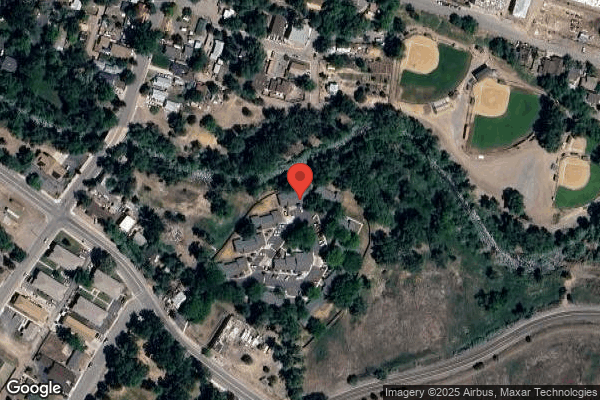
2005 RIVER STREET, SUSANVILLE, CA 96130 (530) 257-5341
For profit - Limited Liability company 96 Beds CAMBRIDGE HEALTHCARE SERVICES Data: November 2025
Trust Grade
50/100
#834 of 1155 in CA
Last Inspection: October 2024

Within standard 12-15 month inspection cycle. Federal law requires annual inspections.

Overview

Lassen Nursing & Rehabilitation Center has received a Trust Grade of C, which means it is average compared to other facilities, placing it in the middle of the pack. In California, it ranks #834 out of 1155, indicating it is in the bottom half of facilities, but it is the only nursing home in Lassen County, ranking #1 of 1. The facility is improving, having reduced its issues from 22 in 2024 to 15 in 2025. Staffing is average with a rating of 3 out of 5 stars, but the turnover rate is concerning at 54%, higher than the state average. On a positive note, there have been no fines recorded, which is a good sign, and the RN coverage is average, ensuring some oversight in resident care. However, there are notable weaknesses, including past incidents where the facility failed to properly manage food safety, which could lead to foodborne illnesses. For example, there were lapses in cooling cooked meats and improper dishwashing procedures that could allow for the spread of harmful microorganisms. These findings highlight the importance of ongoing improvements in both health and safety practices at the center.

Trust Score
C
50/100
In California
#834/1155
Bottom 28%
Safety Record
Low Risk
No red flags
Inspections
Getting Better
22 → 15 violations
Staff Stability
⚠ Watch
54% turnover. Above average. Higher turnover means staff may not know residents' routines.
Penalties
✓ Good
No fines on record. Clean compliance history, better than most California facilities.
Skilled Nurses
⚠ Watch
Each resident gets only 23 minutes of Registered Nurse (RN) attention daily — below average for California. Fewer RN minutes means fewer trained eyes watching for problems.
Violations
⚠ Watch
59 deficiencies on record. Higher than average. Multiple issues found across inspections.
★★☆☆☆
2.0
Overall Rating
★★★☆☆
3.0
Staff Levels
★★☆☆☆
2.0
Care Quality
★★☆☆☆
2.0
Inspection Score
Stable
2024: 22 issues
2025: 15 issues

The Good

  • Full Sprinkler Coverage · Fire safety systems throughout facility
  • No fines on record

Facility shows strength in fire safety.

The Bad

2-Star Overall Rating

Below California average (3.1)

Below average - review inspection findings carefully

Staff Turnover: 54%

Near California avg (46%)

Higher turnover may affect care consistency

Chain: CAMBRIDGE HEALTHCARE SERVICES

Part of a multi-facility chain

Ask about local staffing decisions and management

The Ugly 59 deficiencies on record

Sept 2025 7 deficiencies
CONCERN (D) 📢 Someone Reported This

A family member, employee, or ombudsman was alarmed enough to file a formal complaint

Potential for Harm - no one hurt, but risky conditions existed

Resident Rights (Tag F0550)

Could have caused harm · This affected 1 resident

**NOTE- TERMS IN BRACKETS HAVE BEEN EDITED TO PROTECT CONFIDENTIALITY** Based on observation, interview, and record review the facility failed to treat one out of three sampled residents (Resident 1) ...

Read full inspector narrative →
**NOTE- TERMS IN BRACKETS HAVE BEEN EDITED TO PROTECT CONFIDENTIALITY** Based on observation, interview, and record review the facility failed to treat one out of three sampled residents (Resident 1) with dignity and respect when Resident 1 wanted to return to her room during lunch and the Licensed Nurse (LN) assessed (examined) Resident 1 at the lunch table in front of three other residents. This violated Resident 1's right to maintain the privacy of her medical conditions by allowing other residents to watch and listen as the LN examined her.Findings: A review of the facility's policy and procedure (P&P) titled, Resident Rights, revised 2/1/23, indicated, facility staff would treat residents with respect and dignity. The P&P indicated, residents had the right to a dignified existence (treated with self-respect), would be provided privacy and confidentiality, and the facility would support residents in exercising (using or acting on) their rights. A review of the admission Record, dated 3/29/22, indicated, Resident 1 was admitted to the facility on [DATE] with the diagnoses of major depression (a sad mood), anemia (a condition where there was a lower-than-normal number of red blood cells in the blood, red blood cells carried oxygen throughout the body), and fatigue (extreme feeling of tiredness or a complete lack of energy that made it difficult to do everyday tasks). Resident 1 was not her own responsible party (RP, decision maker). A review of the Neuropsychological Assessment (a detailed evaluation that measured how the brain functioned and how it affected behavior and thinking), dated 12/1/23, indicated, Resident 1 had a major neurocognitive (how the brain processed information) disorder due to possible Alzheimer's Disease (memory loss, problems with thinking, and reasoning). During an interview on 9/3/25 at 10:58 am, LN E stated, She [Resident 1] refuses RNA dining [RNAs are Restorative Certified Nursing Assistants who help residents in a designated area in the dining room for residents who need additional help and attention with eating and the RNA provides encouragement for those who have lost weight] a lot, she doesn't like to be around people and be watched while eating. During an observation on 9/3/25 at 11:54 am, Resident 1 was observed in bed, lying on her right side, with her eyes closed. RNA A was observed walking into the room with a wheelchair and stated, I have to get you up for lunch and take you to the dining room. Resident 1 replied I don't want to go, then asked why? RNA A stated, they said you have to go just today. Resident 1 agreed, and was taken to the RNA dining room. During an observation on 9/3/25, from 12:10 pm to 12:31 pm, Resident 1 was observed in the RNA dining room with three other residents at the dining table. Resident 1 appeared dissatisfied with her lunch, displaying signs of unhappiness such as frowning, a wrinkled forehead, and closer together eyebrows. Resident 1 verbally expressed a desire to leave by stating, I want out of here, six times, I want to go back to my room two times, and I don't want any of it two times. While RNA B made attempts to verbally encourage or physically feed Resident 1, she non-verbally indicated refusal by shaking her head side-to-side three times. Additionally, twice when RNA B offered food, Resident 1 physically moved away by placing her right arm on her chest and curling in her right shoulder. During the observation period, Resident 1 also stated, I'm not hungry, it's hard to eat just because I'm supposed to eat. I feel pressure down here, I don't know what it is, while pointing to her lower abdomen [lower belly/gut area]. During an observation on 9/3/25 at 12:31 pm, LN E entered the RNA dining room and squatted next to Resident 1's wheelchair to assess Resident 1's lower abdomen while three other residents were eating lunch at the same table. Resident 1 stated, I just don't want to eat. RNA B responded, We're just going to drink some more of this and be here for a few more minutes. LN E told RNA B, I don't want her to drink it if she's having pressure. LN E then informed Resident 1, After you're done eating, we can go to the bathroom to see if that pressure goes away. LN E then left the RNA dining room, and RNA B asked Resident 1, How about some hot chocolate? Resident 1 replied, I don't know what's happening, I don't want it, I have to go to the bathroom. Facility staff arrived and took Resident 1 to her room and then to the bathroom. During an interview on 9/3/25 at 12:35 pm, RNA B confirmed the observations made in the RNA dining room and stated Resident 1's, family member said she has to be in here. Sometimes I sit in her room and help her eat.During an interview on 9/3/25 at 1:56 pm, RNA B stated, I know she [Resident 1] is more comfortable eating in her room, she should have been taken out of the dining room long before she was, and should have been allowed to drink her Boost [nutritional, milkshake like drink] in her room.During an interview on 9/3/25 at 1:40 pm, Resident 1 confirmed the observations made in the RNA dining room and stated, I don't like eating in front of other people, I don't like going [to RNA dining]. Resident 1 stated, I would expect the conversation about using the bathroom to be private and confidential, I didn't like being asked in front of others.During an interview on 9/3/25 at 1:47 pm, LN E confirmed the observation from the RNA dining and stated, I normally take them out to assess, that wasn't how it was supposed to be. LN E confirmed talking to Resident 1 in front of other residents about using the bathroom and stated, that conversation should have been in private. LN E stated, from what I know, we offer three times to eat in RNA dining, after the third time we will take her to her room. We thought RNA dining would be a good idea for socialization, sometimes she wants to stay in her room and she has the right to refuse. During an interview on 9/3/25 at 1:56 pm, RNA B stated, Usually, on a normal day, she says I don't want to be here [RNA dining room], and she is taken back to her room. I know she is more comfortable eating in her room.During an interview on 9/4/25 at 8:46 am, RNA A confirmed the observation made on 9/3/25 at 11:54 am. RNA A stated, I was told by the Lead RNA that [Resident 1] had to be here [RNA dining room] yesterday. During an interview on 9/4/25 at 5:55 pm, Director of Staff Development (DSD), the observations of Resident 1, RNA A, and RNA B, that were made on 9/3/25, were described. DSD confirmed, Resident 1's rights were violated and stated, we ask three times, then let the nurse know.
CONCERN (D) 📢 Someone Reported This

A family member, employee, or ombudsman was alarmed enough to file a formal complaint

Potential for Harm - no one hurt, but risky conditions existed

Deficiency F0637 (Tag F0637)

Could have caused harm · This affected 1 resident

**NOTE- TERMS IN BRACKETS HAVE BEEN EDITED TO PROTECT CONFIDENTIALITY** Based on interviews and record reviews the facility failed to perform a Minimum Data Set (MDS, a resident assessment tool), asse...

Read full inspector narrative →
**NOTE- TERMS IN BRACKETS HAVE BEEN EDITED TO PROTECT CONFIDENTIALITY** Based on interviews and record reviews the facility failed to perform a Minimum Data Set (MDS, a resident assessment tool), assessment for one out of three sampled residents (Resident 1) when a significant change of condition was identified. This had the potential for a delay in the review and revision of the care plan (documented resident goals that included instructions for care). Findings: A review of the facility's policies and procedures (P&P) titled, Comprehensive Assessments, revised 10/1/23, indicated, a significant change in status assessment would be performed when the IDT (interdisciplinary team, healthcare professionals who care for the resident work together to coordinate care) determined the resident met the significant change in condition requirements. The P&P defined a significant change in condition as a decline that would not resolve on its own, required staff intervention, impacted more than one area of the resident's health status, and required IDT review and/or revision of the care plan. A review of the admission Record, dated 3/29/22, indicated, Resident 1 was admitted to the facility on [DATE] with the diagnoses of major depression (a sad mood), anemia (a condition where there was a lower-than-normal number of red blood cells in the blood, red blood cells carried oxygen throughout the body), and fatigue (extreme feeling of tiredness or a complete lack of energy that made it difficult to do everyday tasks). Resident 1 was not her own responsible party (decision maker). A review of the Neuropsychological Assessment (a detailed evaluation that measured how the brain functioned and how it affected behavior and thinking), dated 12/1/23, indicated, Resident 1 had a major neurocognitive (how the brain processed information) disorder due to possible Alzheimer's Disease (memory loss, problems with thinking, and reasoning). A review of the Quarterly MDS, GG-Functional Abilities, dated 7/17/25, indicated, Resident 1 was independent with care in the following areas: dressing the upper and lower body, changing position for sitting to standing, transferring from the bed to a chair or toilet, and walking 50 feet that included two turns. The MDS indicated Resident 1 required assistance for setting up and cleaning up during mealtimes. During an interview on 9/3/25 at 10:05 am, Certified Nurse Assistant (CNA) D stated, Resident 1 had experienced a functional decline recently and [Resident 1] required much more assistance with transfers, she has been having weakness and balance problems, uses her cane more and needs help getting out of bed. A review of the Multidisciplinary Care Conference (care conference), dated 8/20/25, indicated that on 8/21/25, a care conference (staff, resident and or resident's RP met to discuss care) meeting was conducted. The document indicated Resident 1 had a gradual decline in physical ability, previously was able to walk around facility, and now required a wheelchair. The care conference indicated, on 8/12/25, Resident 1 had triggered for a change of condition on 8/12/25 for weight loss. During an interview on 9/4/25 at 1:01 pm, MDS Nurse stated, functional decline and weight loss would require a change of condition MDS assessment to be done. Unless it was communicated to me, I wouldn't know to do it. MDS Nurse confirmed, there had been no MDS change of condition assessment completed and it should have been completed within 14 days of Resident 1's significant change of condition. MDS Nurse stated, the purpose of the change of condition MDS was to trigger care plans and ensure we are providing appropriate care. During an interview on 9/5/25 at 1:07 pm, the Administrator confirmed there was no change of condition MDS assessment completed.
CONCERN (D) 📢 Someone Reported This

A family member, employee, or ombudsman was alarmed enough to file a formal complaint

Potential for Harm - no one hurt, but risky conditions existed

Comprehensive Care Plan (Tag F0656)

Could have caused harm · This affected 1 resident

**NOTE- TERMS IN BRACKETS HAVE BEEN EDITED TO PROTECT CONFIDENTIALITY** Based on the interview and record review, the facility did not monitor and evaluate the effectiveness of an intervention (instru...

Read full inspector narrative →
**NOTE- TERMS IN BRACKETS HAVE BEEN EDITED TO PROTECT CONFIDENTIALITY** Based on the interview and record review, the facility did not monitor and evaluate the effectiveness of an intervention (instruction for obtaining goals) for one out of three sampled residents (Resident 1) when the staff did not document the amount of Boost (a nutritional drink/supplement) that was consumed. This failure prevented the facility from monitoring and evaluating the intervention's effectiveness, potentially leading to weight loss.Findings: A review of the facility's policy and procedure (P&P) titled, Care Plans, Comprehensive Person-Centered, revised 3/1/23, indicated, assessments of residents are ongoing, and care plans are revised as information about residents and the residents' conditions change. The P&P indicated, care plans would be reviewed and revised when desired outcomes were not met. A review of the facility's P&P titled, Weight Assessment and Interventions, revised 3/1/22, indicated, care plans would include parameters for monitoring and reassessment. A review of the admission Record, dated 3/29/22, indicated, Resident 1 was admitted to the facility on [DATE] with the diagnoses of major depression (a sad mood), anemia (a condition where there was a lower-than-normal number of red blood cells in the blood, red blood cells carried oxygen throughout the body), and fatigue (extreme feeling of tiredness or a complete lack of energy that made it difficult to do everyday tasks). Resident 1 was not her own responsible party (RP, decision maker). A review of the Neuropsychological Assessment (a detailed evaluation that measured how the brain functioned and how it affected behavior and thinking), dated 12/1/23, indicated, Resident 1 had a major neurocognitive (how the brain processed information) disorder due to possible Alzheimer's Disease (memory loss, problems with thinking, and reasoning). A review of the care plan (documented health concerns and goals) titled, Nutritional Problem, revised on 7/14/25, indicated, Resident 1 was underweight. The care plan included an intervention, dated 8/19/25, to provide Resident 1 with Boost as ordered. A review of the Physician's Order, dated 7/2/24, indicated Boost would be provided with breakfast and lunch. During an interview on 9/3/25 at 10:05 am, Certified Nurse Assistant (CNA) D was asked if there was documentation regarding the amount of Boost that Resident 1 consumed. CNA D stated, Resident 1 was not on any I/O's (monitoring and documenting the amount of fluid intake and output) to monitor how much fluid she is drinking in a day. During an interview on 9/3/25 at 10:58 am, Licensed Nurse (LN) E was asked where facility staff documented Resident 1's Boost intake. LN E stated, I'm not sure, I don't think it's documented. During an interview on 9/4/25 at 9:07 am, Registered Dietician (RD) was asked if Resident 1's Boost intake should be documented. RD stated, ya, it would be nice, that's not how the system is set up, unable to know if the boost intervention is working. Without documentation you would need verbal feedback to know how much she is drinking. During a concurrent interview and record review on 9/4/25 at 4:55 pm, with Director of Staff Development (DSD), Resident 1's Medication Administration Record (MAR), dated 9/1/25 through 9/4/25 was reviewed. DSD confirmed, Boost intake was not on the MAR and there was no specific place to document the amount of Boost that was consumed. A review of Resident 1's MAR dated 6/1/25 through 8/31/25, indicated that LN provided Resident 1 with a different type of liquid nutritional supplement during medication administration and documented the amount Resident 1 consumed. There was no documentation in the MAR that indicated how much Boost was consumed. During a concurrent interview and record review on 9/5/25 at 7:29 am with Restorative Nurse Assistant (RNA) A, Resident 1's untitled fluid intake reports dated 8/1/25 through 8/30/25 were reviewed. One report asked staff to document if the resident drank less than 240 milliliters/cubic centimeter (ml/cc, both measurement terms are the same) of fluid with their meal (this was a yes or no question) and the other report indicated facility staff would document the measured amount of fluid consumed in the form of cc's. RNA E confirmed, there was nowhere to enter the Boost intake and stated, the documentation included all fluid combined. During an interview on 9/5/25 at 1:05 pm, Director of Nursing (DON) confirmed, there was no documentation present in Resident 1's medical record that supported how much Boost Resident 1 consumed and stated, without the documentation you couldn't monitor the intervention.
CONCERN (D) 📢 Someone Reported This

A family member, employee, or ombudsman was alarmed enough to file a formal complaint

Potential for Harm - no one hurt, but risky conditions existed

Deficiency F0806 (Tag F0806)

Could have caused harm · This affected 1 resident

**NOTE- TERMS IN BRACKETS HAVE BEEN EDITED TO PROTECT CONFIDENTIALITY** Based on observations, interviews, and record reviews, the facility failed to honor food preferences for one out of three sample...

Read full inspector narrative →
**NOTE- TERMS IN BRACKETS HAVE BEEN EDITED TO PROTECT CONFIDENTIALITY** Based on observations, interviews, and record reviews, the facility failed to honor food preferences for one out of three sampled residents (Resident 1) when food portions were too large, and Resident 1 stated she was tired of chocolate. This had the potential to contribute to weight loss.Findings: A review of the facility's policies and procedures (P&P) titled, Resident Food Preferences, revised 7/1/23, indicated, resident food preferences would be assessed upon or after admission, food preferences would be based on resident history and life patterns, and communicated to the dietary department. The P&P indicated, If the resident refuses or is unhappy with his or her diet, the staff would confer [talk to] the physician in order to offer a diet the resident is deemed safe to consume in order to satisfy the resident. A review of the admission Record, dated 3/29/22, indicated, Resident 1 was admitted to the facility on [DATE] with the diagnoses of major depression (a sad mood) and fatigue (extreme feeling of tiredness or a complete lack of energy that made it difficult to do everyday tasks). Resident 1 was not her own responsible party (RP, decision maker). A review of the Neuropsychological Assessment (a detailed evaluation that measured how the brain functioned and how it affected behavior and thinking), dated 12/1/23, indicated, Resident 1 had a major neurocognitive (how the brain processed information) disorder due to possible Alzheimer's Disease (memory loss, problems with thinking, and reasoning). A review of the meal tray tickets (a description of the diet order, food preferences and dislikes), dated 9/3/25 and 9/4/25, indicated Resident 1 preferred chocolate drinks. A review of the Weight Note, dated 8/13/24 and 8/14/25, indicated that Resident 1 states, I'm tired of chocolate. The notes did not indicate that the Licensed Nurse (LN) had notified the dietary department of Resident 1's preferences. During an observation on 9/3/25 at 9:34 am, a partially drank chocolate Boost (a supplement drink for residents that needed extra calories and protein) was observed sitting on Resident 1's bedside table. During an interview on 9/3/25 at 10:05 am, Certified Nurse Assistant (CNA) D stated, if she [Resident 1] refuses to eat or drink the Boost, I offer her hot chocolate because she likes that. During a concurrent interview and record review on 9/3/25 at 10:58 am, with LN E, Physician's Orders, dated 1/29/25 was reviewed. LN E stated the order indicated Resident 1 received Ready Care (a supplement drink for residents that needed extra calories and protein) 2.0 chocolate, 120 cc (cubic centimeters also called milliliters, ml) four times a day for supplement to promote weight gain. LN E stated, it was given as a medication, and she drinks it all. LN E reviewed Physician's Order, dated 7/2/24, and stated the order indicated Resident 1 received Boost with breakfast and lunch. During an observation on 9/3/25, at 12:02 pm and ending at 12:34 pm, Resident 1 was observed being served lunch. The amount of food covered more than 75% of the plate and to the side of the plate was a bowl full of diced pears. Resident 1 ate very little of the lunch provided, declined an alternative meal, and the hot chocolate and Boost were partially consumed. During an interview on 9/3/25 1:40 pm, Resident 1 stated, That was a lot of food. When they put that much on my plate it makes me not want to eat. It would be better if they gave me less food. It bothers me, I don't want to waste food, and I'm tired of chocolate. During an observation on 9/3/25 at 4:29 pm, Resident 1's dinner tray was observed. There was a large baked potato covered with chili and cheese, a bowl of coleslaw and a bowl of diced fruit. There was a chocolate Boost, hot chocolate, water, and juice that was red in color. Resident 1 stared at the meal with a dissatisfied look on her face. There were 9 chocolate flavored drinks provided to Resident 1 on 9/3/25. During a concurrent observation, interview, and record review on 9/4/25 at 7:16 am, with Certified Dietary Manager (CDM), Resident 1's Dietary Profile/Preferences (food preferences), dated 6/6/22 was reviewed. CDM stated the food preferences indicated, portions are bigger than resident liking. CDM confirmed the food preferences, dated 6/28/22, and indicated Resident 1 received small portions. CDM stated, during the intake process, at admission, she was overwhelmed. If she was presented to much food she would refuse [to eat] and at one point she was small portions. CDM reviewed past diet orders and stated, the order on 7/1/22 indicated, small portions. CDM stated, the past diet orders indicated, on 7/28/22, there was a new diet order, it indicated weight loss, and small portions were removed (a request for all past diet orders was requested. All past diet orders were provided except the order dated 7/28/25). CDM observed Resident 1's breakfast tray and confirmed, there was an undrunk chocolate boost on the tray and stated, I was unaware she was tired of chocolate; it's listed as a liked preference, we have vanilla and can get strawberry. The food on the plate had been partially eaten and there was a large amount of food left on the plate and the bowl of hot cereal was uneaten. During an interview on 9/5/25 at 8:46 am, Restorative Nurse Assistant (RNA) A stated, one time in the past, [Resident 1] said she was tired of chocolate, I don't recall if I offered another flavor. Her Boost and the magic cup (an ice cream dessert that was provided to residents with weight loss) are usually chocolate. We offer the magic cup as an alternative (when meal was not eaten). [Resident 1] says, it's too much food, like all the time. I tell her she doesn't have to eat it all or to just pick at it (eating a little bite here and there). RNA A confirmed, the dietary department or nurse had not been notified of Resident 1's statements regarding food preferences and stated, I was not aware I needed to. During an interview on 9/4/25 at 9:00 am, LN E was asked if Resident 1 had ever verbalized concerns regarding the amount of chocolate drinks she was provided and stated, [Resident 1] had told me she was tired of chocolate drinks, so I switched the Ready Care to vanilla to give her a change and alternate between chocolate and vanilla. I think she was referring to Boost. I don't know if we have different flavors for Boost. She stated that to me the beginning of August. LN E confirmed, dietary had not been notified of Resident 1's food preferences. During an interview on 9/4/25 at 10:03 am LN C stated, [Resident 1] has always stated that she didn't eat like this, it's way too much food, and she loves her hot chocolate in the morning. During an observation on 9/5/25 at 8:47 am, RNA A was observed providing Resident 1 with hot chocolate. Resident 1 took a sip of hot chocolate and did not drink it. During an observation on 9/5/25 at 8:51 am, Resident 1's breakfast tray was observed to have a chocolate Boost, and the food covered 75 percent of the plate.
CONCERN (E) 📢 Someone Reported This

A family member, employee, or ombudsman was alarmed enough to file a formal complaint

Potential for Harm - no one hurt, but risky conditions existed

Pharmacy Services (Tag F0755)

Could have caused harm · This affected multiple residents

**NOTE- TERMS IN BRACKETS HAVE BEEN EDITED TO PROTECT CONFIDENTIALITY** Based on interviews and record reviews, the facility did not notify the Pharmacy Consultant (PC) to complete medication reviews ...

Read full inspector narrative →
**NOTE- TERMS IN BRACKETS HAVE BEEN EDITED TO PROTECT CONFIDENTIALITY** Based on interviews and record reviews, the facility did not notify the Pharmacy Consultant (PC) to complete medication reviews for three out of three sampled residents (Resident 1, 2, and 3) who experienced weight loss. This resulted in unmet pharmacy service needs and had the potential to contribute to further weight loss.Findings: A review of the facility's policies and procedures (P&P), titled, Weight Assessment and Interventions, revised 3/1/22, indicated, the facility would evaluate medication for possible side-effects that could cause weight loss. A review of the facility's (P&P) titled, Nutritional Assessment, revised 10/1/23, indicated, the PC would review the resident's current medication list and ensure the medication did not interfere with nutrition absorption or appetite. A review of the facility's P&P titled, Consultant Pharmacist Reports, dated 6/1/21, indicated, the consultant pharmacist performed a comprehensive medication regimen review (MRR) at least monthly. The P&P indicated the MRR included a resident evaluation to determine if the resident maintained their highest practicable level of functioning and prevent or minimize adverse consequences related to medication. The P&P indicated, an immediate MRR may be performed if there was a change in condition that medication might have contributed to. The P&P indicted, the Director of Nursing (DON) was responsible to notify the PC when an immediate MRR was required. A review of the admission Record, dated 3/29/22, indicated, Resident 1 was admitted to the facility on [DATE] with the diagnoses of major depression (a sad mood) and fatigue (extreme feeling of tiredness or a complete lack of energy that made it difficult to do everyday tasks). Resident 1 was not her own responsible party (RP, decision maker). A review of the Neuropsychological Assessment (a detailed evaluation that measured how the brain functioned and how it affected behavior and thinking), dated 12/1/23, indicated, Resident 1 had a major neurocognitive (how the brain processed information) disorder due to possible Alzheimer's Disease (memory loss, problems with thinking, and reasoning). A review of the Weight Summary, dated 8/10/25, indicated, Resident 1 weighed 76.4 pounds and triggered for an 11.6 percent (%) loss of body weight, over 180 days, which indicated severe weight loss. A review of the admission Record, dated 12/1/22, indicated, Resident 2 was admitted to the facility on [DATE] with the diagnoses of unspecified dementia (memory loss, doctors were unable to determine the type), unspecified severity (unknown if it is mild, moderate, or severe) and adult failure to thrive (a decline in health that included a slow loss of energy and appetite). Resident 2 was not his own RP. A review of the Weight Summary, dated 7/21/25, indicated, Resident 2 weighed 89 pounds and triggered for a 10.1 (%) loss of body weight, over 180 days, which indicated severe weight loss. A review of the admission Record, dated 10/28/24, indicated, Resident 3 was admitted to the facility on [DATE] with the diagnoses of Alzheimer's, dementia, and type 2 diabetes (body was unable to regulate blood sugar levels) with diabetic neuropathy (high blood sugar levels over time caused nerve damage). Resident 3 was not his own RP. A review of the Weight Summary, dated 5/5/25, indicated, Resident 3 weighed 152 pounds and triggered for a 23.6 (%) loss of body weight, over 180 days, which indicated severe weight loss. During an interview on 9/5/25 at 11:35 am, PC stated, I perform the monthly medication review. The facility requests a change of condition for these special reports, we have a separate department with a different PC for residents with weight loss, and I look at the immediate MRR form also during my monthly MRR if one was completed. There is a fax record the facility should have, the protocol is for the facility to alert us [that] there is a change of condition for weight loss, then we will do a thorough medication review to assess medications and talk with facility. The PC was at a different facility and did not have access to the medical records. PC stated, I can look at the records in the office for these three residents later today and call back. During an interview on 9/5/25 at 12:02 pm, Director of Nursing (DON) stated, change of condition to PC was not done, I didn't know I needed to. DON confirmed, there was no documentation that supported the PC had performed an immediate MRR for Resident 1, 2, and 3's weight loss. During an interview on 9/5/25 at 7:21 pm, PC confirmed, there had been no pharmacy review regarding weight loss for Residents 1, 2, or 3 and there was no documentation that supported the facility notified the PC.
CONCERN (E) 📢 Someone Reported This

A family member, employee, or ombudsman was alarmed enough to file a formal complaint

Potential for Harm - no one hurt, but risky conditions existed

Deficiency F0800 (Tag F0800)

Could have caused harm · This affected multiple residents

**NOTE- TERMS IN BRACKETS HAVE BEEN EDITED TO PROTECT CONFIDENTIALITY** Based on observations, interviews, and reviews, the facility failed to consistently provide three out of three sampled residents...

Read full inspector narrative →
**NOTE- TERMS IN BRACKETS HAVE BEEN EDITED TO PROTECT CONFIDENTIALITY** Based on observations, interviews, and reviews, the facility failed to consistently provide three out of three sampled residents (Residents 1, 2, and 3) with Physician ordered therapeutic (customized meal plan to manage a medical condition) diets when: 1. Residents 1 and 2 were not consistently provided with a meal that was fortified (added calories); and 2. Resident 3 was not consistently served a fortified meal that included double portions of protein (examples of protein are meats, eggs, and dairy). These failures had the potential to contribute to weight loss.Findings: 1. A review of the facility's policy and procedure (P&P) titled, Therapeutic Diets, revised 10/1/17, indicated, Therapeutic diets are prescribed by the attending physician to support the resident's treatment and plan of care and in accordance with his or her goals and preferences. A review of the admission Record, dated 3/29/22, indicated, Resident 1 was admitted to the facility on [DATE] with the diagnoses of major depression (a sad mood), anemia (a condition where there was a lower-than-normal number of red blood cells in the blood, red blood cells carried oxygen throughout the body), and fatigue (extreme feeling of tiredness or a complete lack of energy that made it difficult to do everyday tasks). Resident 1 was not her own responsible party (RP, decision maker). A review of the Neuropsychological Assessment (a detailed evaluation that measured how the brain functioned and how it affected behavior and thinking), dated 12/1/23, indicated, Resident 1 had a major neurocognitive (how the brain processed information) disorder due to possible Alzheimer's Disease (memory loss, problems with thinking, and reasoning). A review of the admission Record, dated 12/1/22, indicated, Resident 2 was admitted to the facility on [DATE] with the diagnoses of unspecified dementia (memory loss, doctors were unable to determine the type), unspecified severity (unknown if it is mild, moderate, or severe) and adult failure to thrive (a decline in health that included a slow loss of energy and appetite). Resident 2 was not his own RP. During a concurrent observation and record review, on 9/3/25 at 12:10 pm, Resident 1 was observed in the RNA dining room (RNA, Restorative Nurse Assistants provided residents with additional verbal encouragement or physically fed the resident. The dining room utilized for meals was a small area and the common phrase for that setting was called RNA dining). On Resident 1's lunch tray was a cup of hot chocolate, a cup of grape juice, a cup of water, a bottle of chocolate Boost (a nutritional supplement drink), and a bowl of diced pears. The plate contained [NAME], mandarin chicken, and fried rice. The meal tray ticket indicated Resident 1's meal was fortified. During an observation on 9/3/25 at 4:29 pm, Resident 1's dinner tray was observed. There was a large baked potato covered with chili and cheese, and a bowl of coleslaw was present. A partially empty bowl that contained diced fruit was present. A cup of water, a cup of hot chocolate, and a bottle of chocolate Boost were observed along with a cup of red in color liquid. The meal tray ticket indicated that the meal was fortified. During a concurrent observation, interview, and record review on 9/4/25 at 7:16 am, with Certified Dietary Manager (CDM), Resident 1's Physician's Order (diet order), dated 7/2/24 was reviewed. CDM confirmed the diet order indicated, Resident 1 was on a fortified diet. CDM stated, we don't fortify every meal. For breakfast we fortify the cereal with butter and dry evaporated milk and for dinner we fortify the soup. CDM looked at the photograph taken on 9/3/25, of Resident 1's lunch tray and confirmed, the lunch was not fortified and restated, lunch wouldn't be fortified. CDM reviewed the photograph taken on 9/3/25 of Resident 1's dinner tray. The dinner consisted of a baked potato covered with chili and cheese, coleslaw, and a bowl of diced fruit. CDM stated, it did not appear fortified, there was no soup. CDM walked to the RNA dining room to observe Resident 1's breakfast. There was an uneaten bowl of oatmeal (hot cereal) on Resident 1's tray and CDM stated, the hot cereal was fortified. During a concurrent record review and interview on 9/4/25 at 9:07 am, with Registered Dietician (RD), Resident 1's Nutrition Assessment-V1.5 dated 7/14/25 was reviewed. RD confirmed the Nutrition Assessment, indicated that Resident 1 was on a fortified diet. RD reviewed the care plan (a detailed plan that outlined resident goals and interventions in place for staff to utilize to assist resident with achieving their goals) titled, Nutritional Problem, dated 4/12/22, and confirmed the care plan indicated, an intervention was in place for Resident 1's fortified diet. RD stated, you would fortify every meal and every meal is different.During a concurrent interview and record review on 9/5/25 at 9:40 am with CDM, Resident 2's Physician's Order, dated 5/28/25, was reviewed. CDM stated, the Physician's Order, indicated, Resident 2's diet was fortified. CDM confirmed that lunches were not fortified. 2. A review of the admission Record, dated 10/28/24, indicated, Resident 3 was admitted to the facility on [DATE] with the diagnoses of Alzheimer's, dementia, and type 2 diabetes (body was unable to regulate blood sugar levels) with diabetic neuropathy (high blood sugar levels over time caused nerve damage). Resident 3 was not his own RP.During a concurrent observation and record review, on 9/3/25 at 12:16 pm, Resident 3 was observed in the RNA dining room. Resident 3 was provided with one grilled cheese sandwich. During an interview on 9/4/25 at 4:42 pm, Resident 3's RP stated, my concerns are the nutritionist ordered double portions, I'm here almost every single night for dinner, he isn't getting double portions, not even the double proteins. RP confirmed, facility staff were required to obtain additional food during dinner in order for Resident 3 to have double protein. During a concurrent interview and record review on 9/5/25 at 9:40 am with CDM, Resident 3's Physician's Order, dated 8/5/25 was reviewed. CDM stated the Physician's Order, indicated, Resident 3 was on a fortified diet that included double portions for protein/meat. There were issues with the PM (evening) cook and double portions were not being provided. It's been an ongoing battle with the cook. CDM confirmed, no resident lunches had been fortified.
CONCERN (E) 📢 Someone Reported This

A family member, employee, or ombudsman was alarmed enough to file a formal complaint

Potential for Harm - no one hurt, but risky conditions existed

Deficiency F0801 (Tag F0801)

Could have caused harm · This affected multiple residents

**NOTE- TERMS IN BRACKETS HAVE BEEN EDITED TO PROTECT CONFIDENTIALITY** Based on interview and record review the facility and the Registered Dietician (RD) did not maintain an adequate food and nutrit...

Read full inspector narrative →
**NOTE- TERMS IN BRACKETS HAVE BEEN EDITED TO PROTECT CONFIDENTIALITY** Based on interview and record review the facility and the Registered Dietician (RD) did not maintain an adequate food and nutrition department for three out of three sampled residents (Resident 1, 2, and 3) with weight loss when: 1. A timely nutrition assessment was not performed for Residents 1, 2, and 3 after a weight loss triggered a change of condition. 2. The RD did not attend weight variance interdisciplinary team (IDT, a group of department heads and staff that provided resident care, to discuss resident care goals and identified concerns) meetings and did not document a progress note that indicated the IDT meeting notes had been reviewed. 3. RD did not communicate to the facility the recommendations made for residents with weight loss or collaborate with the dietary department. 4. The facility and RD were not familiar with the Agreement to Provide Dietetic Consultation Services contract that outlined the facility and RD responsibilities. This had the potential to contribute to further weight loss.Findings: 1. A review of the facility's P&P titled, Nutritional Assessment, revised 10/1/23, indicated, The dietician in conjunction [together] with the nursing staff and healthcare practitioners, will conduct a nutritional assessment for each resident upon admission (within current baseline assessment timeframes) and as indicated by a change of condition that places the resident at risk for impaired nutrition. A review of the admission Record, dated 3/29/22, indicated, Resident 1 was admitted to the facility on [DATE] with the diagnoses of major depression (a sad mood) and fatigue (extreme feeling of tiredness or a complete lack of energy that made it difficult to do everyday tasks). Resident 1 was not her own responsible party (RP, decision maker). A review of the Neuropsychological Assessment (a detailed evaluation that measured how the brain functioned and how it affected behavior and thinking), dated 12/1/23, indicated, Resident 1 had a major neurocognitive (how the brain processed information) disorder due to possible Alzheimer's Disease (memory loss, problems with thinking, and reasoning). A review of the admission Record, dated 12/1/22, indicated, Resident 2 was admitted to the facility on [DATE] with the diagnoses of unspecified dementia (memory loss, doctors were unable to determine the type), unspecified severity (unknown if it is mild, moderate, or severe) and adult failure to thrive (a decline in health that included a slow loss of energy and appetite). Resident 2 was not his own RP. A review of the admission Record, dated 10/28/24, indicated, Resident 3 was admitted to the facility on [DATE] with the diagnoses of Alzheimer's, dementia, and type 2 diabetes (body was unable to regulate blood sugar levels) with diabetic neuropathy (high blood sugar levels over time caused nerve damage). Resident 3 was not his own RP. During a concurrent interview and record review on 9/4/25 at 9:07 am, with RD, Resident 1s Quarterly Nutrition Assessment-V1.5 (nutrition assessment), dated 7/14/25 was reviewed. RD stated, I started working [at this facility] remotely (worked in a different location that was not in the facility) mid-July, and the nutrition assessment was performed by a different RD. The last assessment [nutrition assessment dated [DATE]] indicated [Resident 1's] PO (by mouth) intake was not great. If she had severe weight loss, she would get another assessment. RD reviewed the Weight Summary, dated 8/10/25 and confirmed, Resident 1 weighed 76.4 pounds and triggered for an 11.6 percent (%) loss of body weight, over 180 days, which indicated severe weight loss. RD stated, I would be happy to assess her and take a harder look at this. A review of the Monthly Weight Report, dated 9/1/25, that included the monthly weights taken throughout the month of August, completed by RD, indicated, Resident 1 triggered an 11.4 % weight loss. A review of the nutrition assessment dated [DATE], indicated that RD performed a nutritional assessment that included recommendations, 26 days after Resident 1 triggered a severe weight loss. During an interview on 9/4/25 at 10:14 am, the facility's Administrator (ADMIN) stated, our regular RD was currently on a leave of absence and the remote RD started working at the facility 7/25/25. During an interview on 9/4/25 at 10:28 am, RD confirmed, the Monthly Weight Reports were performed by RD and the data collected regarding residents with weight loss was emailed to the facility. RD confirmed, the Monthly Weight Report, dated 9/1/25, was a review of weights from 8/1/25 through 8/31/25. During a concurrent interview and record review on 9/5/25 at 10:37 am, Resident 2's reentry nutritional assessment (a reentry assessment was performed when a resident was out of the facility for an inpatient stay at a different facility such as a hospital), dated 5/7/25 was reviewed. RD confirmed, the nutrition assessment was completed by a different RD. RD reviewed the Weight Summary, dated 7/21/25 and confirmed, Resident 1 triggered a severe weight loss. RD reviewed and confirmed, the Weight Summary, dated 7/21/25, indicated, Resident 2 weighed 89 pounds and triggered for a 10.1 (%) loss of body weight, over 180 days, which indicated severe weight loss. RD stated, I started the nutrition assessment on 8/31/25 and finished it yesterday. The nutrition assessment indicated an effective date of 8/31/25 at 3:52 am and was signed by RD on 9/5/25. A review of the nutrition assessment dated [DATE], indicated the nutritional assessment was completed 46 days after Resident 2 triggered a severe weight loss. During a concurrent interview and record review on 9/5/25 at 10:47 am, RD confirmed, the medical records indicated Resident 3 had a quarterly nutrition assessment completed on 4/22/25. Resident 3's Weight Summary, dated 5/5/25 was reviewed. RD confirmed, the Weight Summary, indicated, Resident 3 weighed 143 pounds, triggered a 23.6% weight loss and stated, the last nutrition assessment was performed 7/21/25 by a different RD. (77 days after the triggered weight loss). 2.A review of the facility's P&P titled, Nutritional Assessment, revised 10/1/23, indicated, the facility's IDT would work together to identify situations that placed residents at an increased risk for weight loss and develop personalized nutritional care plans (document described resident health concerns, goals, and care instructions for staff). A review of the Agreement to Provide Dietetic Consultation Services (RD contract), dated 7/25/25, indicated the RD would attend facility conferences and meetings. During an interview on 9/4/25 at 9:07 am, RD stated, I'm not involved in the weight variance or IDT meetings. They do their meetings on a date I'm already in other meetings, and I can't attend. During an interview on 9/4/25 at 10:14 am, with ADMIN and Director of Nursing (DON), the DON confirmed, every week the facility had a weekly weight variance meeting (also called the IDT weight meeting) to review residents that had experienced weight loss, and the weekly meeting also included residents that weighed less than 100 pounds. DON stated, the RD had not attended any weight meeting since starting at the facility [7/25/25] and wanted to move the meetings from Tuesday to Wednesday to accommodate RD's schedule. We declined due to it causing a delay in care. ADMIN confirmed DON's interview and stated that the RD had not attended any meetings. During an interview on 9/4/25 at 10:39 am, ADMIN stated, the RD was expected to document a weight progress note because she is not attending the meetings and confirmed there were no progress notes entered by the RD for missed meetings. During an interview on 9/5/25 at 10:26 am, RD stated, I wasn't aware that I was expected to enter a weekly progress note for weekly weight variance meetings. 3.A review of the RD contract, dated 7/25/25, indicated the RD would provide the nutritional service department with support and consult with the health care team concerning the nutritional care of the residents. During an interview on 9/4/25 at 7:16 am, the facility's Certified Dietary Manager (CDM) stated, we have a remote RD, but I personally have not spoke to the remote RD. CDM confirmed, there had been no communication or collaboration with RD regarding the dietary department or residents that experienced weight loss. During an interview on 9/4/25 at 9:07 am, RD stated, there was no communications with the CDM, every building is different, and asked, what's their protocol? During an interview on 9/5/25 at 9:13 am, ADMIN stated, we talked with the RD yesterday to get nutritional assessments completed, Resident 1's assessment is in there [electronical medical records], I have not seen it yet, and I am reviewing it now. The RD did not call, text, or email that the assessments for all three residents (Residents 1, 2, and 3) were completed or that there were recommendations. During an interview on 9/5/25 at 10:26 am, RD was asked how nutritional assessment information for the residents was obtained. RD stated, my assessments are performed by information [gathered] in the system, I didn't speak to anyone. RD stated, Resident 1's nutritional assessment was performed on 9/4/25 at 5:55 pm and confirmed, RD had not contacted the facility regarding recommendations that were made. RD stated, I wanted the CDM to review the food preferences and for the facility to obtain lab work (drawing blood). RD indicated the information obtained from the lab work would assist with looking for changes to protein levels and electrolyte imbalances. (Good protein levels were required for the body's constant need to repair and grow cells and electrolytes were essential minerals required for muscle contraction, nerve function, and heart function.) During an interview on 9/5/25 at 10:37 am, RD stated, I started [Resident 2's] assessment on 8/31/25 and completed it yesterday [the assessment was signed by RD on 9/5/25, five says after starting the assessment]. My recommendations were to clarify the med plus (liquid, nutritional supplement provided with medication) order, and I ordered labs. RD confirmed, RD had not called the facility to discuss RD recommendations and stated, when I call to discuss [Resident 2], we can discuss other interventions that we might do. During an interview on 9/5/25 at 10:47 am, RD stated, I did an assessment yesterday and I recommended Boost (liquid nutritional supplement) three times a day. RD confirmed, the facility had not been notified. 4. A review of the RD contract, dated 7/25/25, indicated the RD would provide RD services based on the facility's P&P and would periodically review with the facility P&Ps for the food and nutrition department. The RD contract indicated, the facility would orient the RD to the facility's P&Ps and would notify the RD in writing when there were residents that had significant weight losses. During a concurrent interview and record review on 9/5/25 at 10:39 am, with ADMIN, the RD contract was reviewed. ADMIN confirmed, the RD contract indicated, the RD would be provided orientation to the facility's P&P and was not. ADMIN confirmed that the RD contract indicated that when a resident had significant weight loss, the facility would notify the RD in writing. ADMIN stated, I didn't notify the RD about the weight loss in August. I had told her where to look for the information and told her there was a report with the residents that triggered. During an interview on 9/5/25 at 10:47 am, RD stated, I don't know their policies and the facility never notified me that there were residents with weight loss. A review of the Monthly Weight Report, dated 8/1/25, indicated, RD had performed an evaluation of resident weights taken during the month of July. Resident 2 weighed 86 pounds and lost 14.85% body weight. Resident 3 weighed 140.5 pounds and lost 17.8% body weight. Both residents had triggered severe weight loss. A review of the Monthly Weight Report, dated 9/1/25, indicated, RD had performed an evaluation of resident weights taken during the month of August. Resident 1 weighed 74.4 pounds and lost 11.4% body weight. Resident 2 weighed 83 pounds and lost 14.4% body weight. Resident 3 weighed 139.4 pounds and lost 12.79% body weight. All three residents triggered for severe body weight.
Jul 2025 4 deficiencies
CONCERN (D) 📢 Someone Reported This

A family member, employee, or ombudsman was alarmed enough to file a formal complaint

Potential for Harm - no one hurt, but risky conditions existed

Deficiency F0602 (Tag F0602)

Could have caused harm · This affected 1 resident

**NOTE- TERMS IN BRACKETS HAVE BEEN EDITED TO PROTECT CONFIDENTIALITY** Based on interview and record review the facility failed to protect one out of three resident's (Resident 2) from misappropriati...

Read full inspector narrative →
**NOTE- TERMS IN BRACKETS HAVE BEEN EDITED TO PROTECT CONFIDENTIALITY** Based on interview and record review the facility failed to protect one out of three resident's (Resident 2) from misappropriation (taken without permission) of resident property when Resident 2's wedding ring was stolen. This violated Resident 2's rights and had the potential to cause psychosocial harm.Findings: A review of the facility's policy and procedure titled, Abuse, Neglect, Exploitation and Misappropriation Prevention Program, revised 4/1/21, indicated, residents had the right to be free from misappropriation of resident property. A review of the admission Record, dated, 5/1/24, indicated, Resident 2 was admitted to the facility on [DATE] with the diagnoses of unspecified dementia (memory loss) with behavioral disturbance and major depression (a sad mood). Resident 2 was not his own responsible party (RP, decision maker). A review of the Annual Minimum Data Set (MDS, a resident assessment tool), dated 4/24/25, indicated, Resident 2 had scored 6 out of 15 during a Brief Interview for Mental Status (BIMS, an assessment tool used by facilities to screen and identify memory, orientation, and judgement status of the resident), which indicated severe cognitive (thinking or remembering) impairment. The MDS indicated, Resident 2 required partial to moderate assistance from facility staff to perform personal hygiene (washing face, hands, combing hair) and to get dressed. The MDS indicated, Resident 2 required substantial (a large amount) to maximum assistance from facility staff to shower. During an interview on 7/15/25 at 11:11 am, Certified Nursing Assistant (CNA) F stated, CNA D was arrested for stealing from residents. CNA E was present during the interview and confirmed, CNA D was arrested for stealing resident property and stated, the police department came to the facility to arrest CNA D. During an interview on 7/16/25, at 12:36 pm, Administrator (ADMIN) stated, on 7/7/25, Family Member (FM) J noticed the wedding ring worn by Resident 2 was missing. We looked through everything and could not find it. ADMIN stated, on the evening of 7/7/25, ADMIN noticed an online post from CNA D with jewelry for sale. ADMIN stated, on 7/8/25 there was suspicion that Resident 2's wedding ring had been stolen by CNA D and the police department was contacted. ADMIN confirmed, CNA D had been arrested and stated, the police notified FM J and I think FM J confirmed the wedding ring belonged to Resident 2. ADMIN stated, the police department's investigation was ongoing and ADMIN had not been provided with an update regarding the case. A review of the document titled, Resident's Clothing and Possessions, dated 5/12/25, indicated, Resident 2 had a ring that was yellow in color with clear stones that wrapped around the ring. A review of the document titled, Nursing Daily Assignments and Sign-In Sheet, dated 7/6/25, indicated, CNA D worked the NOC shift, that started on the evening of 7/6/25 and ended on 7/7/25, and was assigned as Resident 2's CNA. A review of the document titled, Grievance Complaint Form, dated 7/7/25, indicated, FM J, reported to the facility that Resident 2's wedding ring was missing. During an interview on 7/16/25 at 2:18 pm, FM J stated, on 7/7/25, my husband called me and told me his wedding ring was missing and hadn't seen it for the last two days. I know the police department was involved in the investigation. I was shown a photo of the ring, I guess it was purchased through a sting operation. FM J confirmed, the ring that FM J identified through the photograph belonged to Resident 2 and described the ring as being yellow in color with clear stones that wrapped around it.
CONCERN (D) 📢 Someone Reported This

A family member, employee, or ombudsman was alarmed enough to file a formal complaint

Potential for Harm - no one hurt, but risky conditions existed

Report Alleged Abuse (Tag F0609)

Could have caused harm · This affected 1 resident

**NOTE- TERMS IN BRACKETS HAVE BEEN EDITED TO PROTECT CONFIDENTIALITY** Based on interview and record review the facility failed to report a reasonable suspicion of a crime to the California Departmen...

Read full inspector narrative →
**NOTE- TERMS IN BRACKETS HAVE BEEN EDITED TO PROTECT CONFIDENTIALITY** Based on interview and record review the facility failed to report a reasonable suspicion of a crime to the California Department of Public Health (CDPH, responsible for protecting the public's health) for two out of three sampled residents (Residents 2 and 3) when the facility suspected Certified Nurse Assistant (CNA) D had stolen two wedding rings. This failure had the potential for further abuse and could negatively affect residents' mental and psychosocial well-being. Findings: A review of the facility's policy and procedure titled, Abuse, Neglect, Exploitation and Misappropriation-Reporting and Investigating, revised 9/1/22, indicated, all allegations of suspected or actual abuse, including misappropriation (taken without permission) of resident property, would be reported to the local police department, the Ombudsman's (outside person who advocated for resident rights) office, and CDPH within two hours. A review of the admission Record, dated, 5/1/24, indicated, Resident 2 was admitted to the facility on [DATE] with the diagnoses of unspecified dementia (memory loss) with behavioral disturbance and major depression (a sad mood). Resident 2 was not his own responsible party (RP, decision maker). A review of the Annual Minimum Data Set (MDS, a resident assessment tool), dated 4/24/25, indicated, Resident 2 had scored 6 out of 15 during a Brief Interview for Mental Status (BIMS, an assessment tool used by facilities to screen and identify memory, orientation, and judgement status of the resident), which indicated severe cognitive (thinking or remembering) impairment. The MDS indicated, Resident 2 required partial to moderate assistance from facility staff to perform personal hygiene (washing face, hands, combing hair) and to get dressed. The MDS indicated, Resident 2 required substantial (a large amount) to maximum assistance from facility staff to shower. A review of the Admissions Record, dated 4/18/25, indicated, Resident 3 was admitted to the facility on [DATE] with the diagnoses of depression, anxiety, and difficulty with walking. Resident 2 was not her own RP. A review of the admission MDS, dated [DATE], indicated Resident 3 had severe hearing and vision loss. The MDS indicated Resident 3 had a BIMS score of 15 out of 15, which indicated intact cognition. A review of the Discharge-return anticipated MDS, dated [DATE], indicated Resident 3 required substantial to maximum assistance from facility staff to use the bathroom, shower, and get dressed. During an interview on 7/15/25 at 11:11 am, CNA F stated, CNA D was arrested for stealing from residents. CNA E was present during the interview and confirmed, CNA D was arrested for stealing resident property and stated, the police department came to the facility to arrest CNA D. A review of the document titled, Grievance Complaint Form, dated 6/23/25, indicated, FM H, reported to the facility that Resident 3's wedding ring was missing. A review of the document titled, Grievance Complaint Form, dated 7/7/25, indicated, FM J, reported to the facility that Resident 2's wedding ring was missing. During an interview on 7/16/25, at 1:30 pm, Administrator (ADMIN) stated, a few weeks ago, I got a call from Resident 3's FM, stating Resident 3's wedding ring was missing. Admin stated, we followed the facility's protocols for lost and missing items and was not able to find the ring. ADMIN stated, on the evening of 7/7/25, ADMIN noticed an online post from CNA D with jewelry for sale and on 7/8/25, I was informed Resident 2's wife alleged Resident 2's ring was missing. ADMIN stated, CNA D was assigned to Resident 2 and 3 when the missing rings were reported and confirmed, on 7/8/25, there were suspicions that CNA D had stolen Resident 2 and 3's wedding rings. ADMIN stated, the police department was notified immediately and confirmed, that suspicions of a crime were not reported to CDPH or the Ombudsman's office.
CONCERN (D) 📢 Someone Reported This

A family member, employee, or ombudsman was alarmed enough to file a formal complaint

Potential for Harm - no one hurt, but risky conditions existed

Deficiency F0940 (Tag F0940)

Could have caused harm · This affected 1 resident

**NOTE- TERMS IN BRACKETS HAVE BEEN EDITED TO PROTECT CONFIDENTIALITY** Based on interview and record review the facility failed to maintain an effective training program when facility staff did not a...

Read full inspector narrative →
**NOTE- TERMS IN BRACKETS HAVE BEEN EDITED TO PROTECT CONFIDENTIALITY** Based on interview and record review the facility failed to maintain an effective training program when facility staff did not attend mandatory in-services (training classes), and the facility failed to provide additional opportunities to make-up the missed in-services. This had the potential for residents not to attain or maintain their physical, mental, and psychosocial well-being.Findings: A review of the facility's policies and procedures (P&P) titled, Attendance at Training Classes, revised [DATE], indicated, All personnel are required to attend their scheduled training classes. The P&P indicated, facility staff would attend make-up classes for any training class (in-service) that was missed. During a concurrent interview and record review on [DATE], at 10:10 am, with Director of Staff Development (DSD), attendance sheets for facility provided in-services were reviewed. DSD confirmed, the attendance record titled, Theft and Loss-Residents Personal Property, dated [DATE], indicated, three facility staff members attended the in-service. DSD stated, the theft and loss in-service was not done this year, should have been done on [DATE]th and [DATE]th, and had not been rescheduled. DSD confirmed, the attendance record titled, Dementia (inability to remember) Module #2, dated [DATE], indicated, three facility staff members attended the in-service. DSD confirmed, the attendance record titled, Abuse and Neglect, dated [DATE], indicated, at 6:30 am and at 2:30 pm, two facility staff members attended each in-service. DSD confirmed, the attendance record titled, Advanced Directives (a legal document that outlined medical care wishes) and POLST (Physician Orders for Life-Sustaining Treatment, a legal document that indicated whether a person wanted CPR), dated [DATE], indicated, two staff members attended the in-service. DSD stated, when in-services were scheduled, they were provided two times a week so they could attend the second one if they missed it. DSD stated, when facility staff did not attend the in-services, it was made up by providing one-on-one education or during team huddles (when staff gathered for a short meeting). DSD confirmed, there were no attempts to provide the facility staff with in-service make-up classes.
CONCERN (E) 📢 Someone Reported This

A family member, employee, or ombudsman was alarmed enough to file a formal complaint

Potential for Harm - no one hurt, but risky conditions existed

Medical Records (Tag F0842)

Could have caused harm · This affected multiple residents

**NOTE- TERMS IN BRACKETS HAVE BEEN EDITED TO PROTECT CONFIDENTIALITY** Based on observation, interview, and record review, the facility failed to ensure medical records were accurate and complete for...

Read full inspector narrative →
**NOTE- TERMS IN BRACKETS HAVE BEEN EDITED TO PROTECT CONFIDENTIALITY** Based on observation, interview, and record review, the facility failed to ensure medical records were accurate and complete for three out of five residents (Residents 1, 2, and 3) when: 1. Resident 1's code status (the residents' wishes regarding life-sustaining treatment, specifically if the resident stopped breathing or the heart stopped beating) was inaccurately documented throughout Resident 1's medical records. 2. The Resident's Clothing and Possessions form, (inventory sheet, described personal belongings brought into the facility) was not signed by Residents 2, 3, or the resident's responsible party (RP, decision maker). 3. Resident 3's wedding ring and wristwatch were not added to the inventory sheet. These failures had the potential to cause a delay in life sustaining care and personal belongings to not be identified if lost or stolen. Findings: 1. A review of the facility's policies and procedures (P&P) titled, Advance Directives (written instruction on care to be provided when someone was not able to make own decisions and included the code status), revised [DATE], indicated Information about whether or not the resident has executed an advance directive shall be displayed prominently in the medical record. A review of the facility's P&P titled, Attending Physician Responsibilities, revised [DATE], indicated, the attending physician was responsible to ensure orders were appropriate. The P&P indicated, The Physician will provide orders to ensure that individuals have appropriate comfort and supportive measures needed. The P&P indicated, The Physician will keep the well-being of residents as the principal consideration in his/her decisions. A review of the admission Record, dated [DATE], indicated, Resident 1 was admitted to the facility on [DATE] with the diagnoses of lobar pneumonia (infection in more than one lobe of the lungs) and encounter for palliative care (a specialized approach to medical care that focused on providing comfort and support to residents with serious or life-limiting illnesses). The admission Record indicated, Resident 1 was a DNR (Do Not Resuscitate, if the heart stopped beating, CPR [rescue chest compressions or rescue breathing] would not be provided). Resident 1 was her own RP. During a concurrent interview and record review on [DATE] at 11:38 am, with Licensed Nurse (LN) C, Resident 1's Physician Order, dated [DATE] and POLST (Physician Order for Life-Sustaining Treatment), dated [DATE], was reviewed. LN C stated, Resident 1's Physician's Order indicated, Resident 1 was a DNR (no CPR to be provided) and the POLST indicated CPR with selective treatment. LN C confirmed, the Physician's Order and POLST did not match and stated, Whoever reviewed the POLST with the resident was responsible for entering the Physician's Order. During a concurrent interview and record review on [DATE] at 12:13 pm, with LN B, Resident 1's Health Status Note (progress note), dated [DATE], was reviewed. LN B confirmed, the progress note, indicated, a Certified Nurse Assistant (CNA) requested LN B to assess Resident 1, who was found in bed, not breathing, had no pulse, and was cold to the touch. LN B stated, Resident 1's electronic medical records indicated, Resident 1 was a DNR, and the POLST indicated, Resident 1 wanted CPR. LN B confirmed, the Physician's order and the POLST did not match and stated, it caused confusion. During a concurrent interview and record review on [DATE] at 2:13 pm, with Family Nurse Practitioner (FNP), Resident 1's POLST, dated [DATE] and signed by FNP on [DATE] was reviewed. FNP stated, When Resident 1 came to the facility, at first, she wanted to be comfort care [also known as palliative care]. At a care conference meeting, she wanted CPR. FNP confirmed, Resident 1 signed the POLST, requesting CPR, on [DATE] and confirmed, FNP signed the POLST on [DATE]. FNP stated unawareness if the code status change occurred after the physician orders were reviewed and approved by the Attending Physician (AP). Nurses fill out the POLST and I just review it with the resident and sign it. I did not sign the Physician's Orders. During a concurrent interview and record review on [DATE] at 2:17 pm, with Social Services Director (SSD), Resident 1's Care Conference, dated [DATE] was reviewed. SSD stated, during Care Conferences, we review a bit of everything, including a resident's code status. SSD confirmed, during Care Conference, the Physician's Order and POLST should be reviewed for accuracy. SSD confirmed, the Care Conference note indicated, Resident 1's POLST had been reviewed and confirmed, the Physician Orders and POLST inaccuracies were missed during the Care Conference meeting. During a concurrent interview and record review on [DATE] at 9:33 am, with LN A, Resident 1's Physician's Orders and admission Summary progress note was reviewed. LN A confirmed, LN A performed Resident 1's admission to the facility and stated, paperwork from the hospital indicated Resident 1 wanted to be on Hospice (end of life care with a focus on comfort). During the admission process, Resident 1 wanted to change from a DNR to CPR. LN A reviewed Physician's Order, dated, [DATE] and confirmed, the Physician's Order indicated, Resident 1 was a DNR. LN A stated, I forgot Resident 1 wanted CPR, and entered the order as DNR. LN A reviewed the admission Summary progress note, and confirmed, LN A's documentation indicated, Resident 1 was pursuing Hospice end of life care. Resident is a DNR, selective treatment. LN A reviewed Resident 1's untitled care plan, dated [DATE] and confirmed, the care plan indicated, Resident 1 wished to be a DNR. LN A reviewed Resident 1's POLST, signed and dated by Resident 1 on [DATE], and confirmed, the POLST was filled out and reviewed by LN A during the admission process and it indicated Resident 1 wanted CPR. During an interview on [DATE] at 10:00 am, AP stated, orders are entered by the nurse, I sign them. If things look [NAME], I address it. There is an element of trust, I trust the nurse to enter the code status order correctly. I do not look at the order and compare it to the POLST. Who ever signed the POLST is responsible to ensure the resident wants that status. During an interview on [DATE] at 11:50 am, the Administrator (ADMIN) confirmed, Resident 1's POLST and Physician's Order, did not match and stated, the error occurred during Resident 1's admission. ADMIN confirmed the inaccuracies should have been discovered when the AP signed the orders, during the care conference meeting, and when the care plan was developed. 2. A review of the facility's P&P titled, Personal Property, revised [DATE], indicated, The resident's personal belongings and clothing are inventoried and documented upon admission and updated as necessary. During a concurrent interview and record review on [DATE] at 10:10 am, with Director of Staff Development (DSD), Resident 2's inventory sheet, dated [DATE], and Resident 3's inventory sheet, dated [DATE] was reviewed. DSD stated, the CNA completes the inventory sheet upon admission. Once it's completed the staff who completed the inventory sheet sign it, have the resident or RP sign it, and then it's given to the nurse who also signs. DSD confirmed, Resident 2 and 3's inventory sheet was not signed by the resident or the nurse. 3. During an interview on [DATE] at 5:17 pm, Family Member (FM) H stated, my mom was wearing her wedding ring when she was admitted to the facility. She never took it off. FM I stated, We [FM H and FM I] traveled to the facility after Resident 3 was admitted and I took photos of my mother-in-law with her new pajamas on. Her wedding ring was on her hand. FM H, stated, during a telephone conversation, my mom said she had to go for an x-ray and a girl at the facility told her she could not wear the ring for the x-ray and needed to take it off. My mom said she took the ring off at the facility, and never got it back. During an interview on [DATE] at 8:13 am, CNA F stated, the inventory sheet is done by the CNA or the nurse at admit. I know that after admission I never saw a ring. Then one day I did. I never checked her [Resident 3] inventory sheet to see if it was on the list, Not sure if I needed to. During an observation on [DATE] at 8:20 am, Resident 3 was sitting in bed eating breakfast. A wristwatch, white in color, was observed on the bedside table next to Resident 3's breakfast tray. During an observation on [DATE] at 8:25 am, CNA G stated, I remember seeing a ring on her [Resident 3's] hand the end of May or beginning of April and I don't remember seeing it right after admission. CNA G confirmed, CNA G did not review or update Resident 3's inventory list to ensure the ring had been added. During an interview on [DATE] at 9:00 am, Resident 3 stated, before leaving the facility, a girl told me I had to take my wedding ring off and give it to her because I couldn't wear it for the xray. I never got it back. During a concurrent interview and record review on [DATE] at 10:10 am, with DSD, Resident 3's inventory sheets, dated [DATE] and [DATE] were reviewed. DSD confirmed, during the admission process, facility staff ensured all resident personal belongings were added to the inventory sheet and stated, if a CNA identified a new item in the resident's room, they should talk with the charge nurse to ensure it's on the list. DSD confirmed, there was a wristwatch, that was white in color, located in Resident 3's room. DSD confirmed, the inventory sheets did not include Resident 3's wristwatch or wedding ring.
Apr 2025 4 deficiencies
CONCERN (D) 📢 Someone Reported This

A family member, employee, or ombudsman was alarmed enough to file a formal complaint

Potential for Harm - no one hurt, but risky conditions existed

Incontinence Care (Tag F0690)

Could have caused harm · This affected 1 resident

**NOTE- TERMS IN BRACKETS HAVE BEEN EDITED TO PROTECT CONFIDENTIALITY** Based on interview and record review, the facility failed to adhere to professional standards of practice for one out of three s...

Read full inspector narrative →
**NOTE- TERMS IN BRACKETS HAVE BEEN EDITED TO PROTECT CONFIDENTIALITY** Based on interview and record review, the facility failed to adhere to professional standards of practice for one out of three sampled residents (Resident 4) when: 1. The facility did not implement the Urologist's (a physician that specialized in the urinary system) order for daily suprapubic catheter (a catheter tube inserted through the lower abdomen into the bladder to drain urine) flushes (sterile water was inserted through the catheter tube into the bladder to remove debris or blockage). 2. Treatment nurse did not document a provided treatment or an assessment following a reported suprapubic catheter complication. These failures had the potential to cause a decline in health status. Findings: 1. A review of the facility's policies and procedure (P&P) titled, Physician's Orders, dated 11/1/23, indicated, A current list of orders must be maintained in the clinical record of each resident. A review of the admission Record, dated 7/1/22, indicated Resident 4 was admitted to the facility on [DATE] with the diagnoses of urinary tract infection (an infection in the urinary system) and obstructive and reflux uropathy, unspecified (a disorder of the urinary tract that occurred due to a blockage of urine flow). Resident 4 was not his own responsible party (decision maker). During an interview on 4/17/25 at 7:59 am, Social Services Director stated, when orders come in [from outside sources] it is given to the nurse and the nurse enters the order. During a concurrent interview and record review on 4/17/25 at 11:34 am, with Director of Staff Development (DSD) and Administrator (Admin), Resident 4's Doctor's Appointment Form, dated 9/6/24 was reviewed. DSD and Admin confirmed, Resident 4 had seen the Urologist, and the Doctor's Appointment Form indicated, Licensed Nurses (LN) were to flush Resident 4's suprapubic catheter two times a week with Renacidin (a medication that was flushed into the bladder to break down matter that clogged the catheter tube) and to perform sterile water flushes every day that Renacidin was not used. Admin reviewed all active and discontinued orders and confirmed, there was no order present in the electronic medical record regarding daily sterile water flushes. Admin stated, nursing should have followed up with that. 2. A review of the facility's P&P titled, Suprapubic Catheter Care, dated, 10/1/10, indicated, the date, time, procedure, and assessment would be documented in the resident medical record. During a concurrent interview and record review on 4/16/25 at 11:48 am, with LN A, Resident 4's Health Status Note (progress notes), dated 3/29/25 was reviewed. LN A stated, the progress notes indicated, [Resident 4] had no urine output all night and the Treatment Nurse [TN] would flush the catheter. LN A reviewed all progress notes dated 3/29/24 and stated, [TN] did not document the care that was provided. A review of Resident 4's Active Orders, dated 9/7/24, indicated, Renacidin Irrigation Solution, use 30 milliliters (ml) via irrigation as needed for maintenance of catheter patency, irrigate catheter, clam catheter for 30-60 minutes then drain, repeat until urine is clear. During a concurrent interview and record review on 4/17/25 at 10:51 am, with DSD, Resident 4's progress notes, dated 3/29/25 was reviewed. DSD confirmed, there was no documentation present that indicated, TN had provided care to Resident 4's suprapubic catheter. During a concurrent interview and record review on 11/17/25 at 11:34 am, with TN, Resident 4's progress notes, dated, 3/29/25 was reviewed. TN stated, I flushed the catheter, the catheter was fine, there was sediment [debris] in the tube, I flushed with the ordered flush, and I'm unsure how much urine output there was. TN confirmed, TN did not document the procedure and stated, I should have. TN reviewed the Medication Administration Record (MAR), dated 3/1/25 through 3/31/25, and confirmed, the MAR section labeled Renacidin PRN (as needed) was blank. TN confirmed, TN had not documented the Renacidin PRN flush on 3/29/25 and stated, I should have documented it.
CONCERN (E) 📢 Someone Reported This

A family member, employee, or ombudsman was alarmed enough to file a formal complaint

Potential for Harm - no one hurt, but risky conditions existed

Deficiency F0804 (Tag F0804)

Could have caused harm · This affected multiple residents

**NOTE- TERMS IN BRACKETS HAVE BEEN EDITED TO PROTECT CONFIDENTIALITY** Based on observation, interview, and record review, the facility failed to provide palatable (tasted good) meals to five out of ...

Read full inspector narrative →
**NOTE- TERMS IN BRACKETS HAVE BEEN EDITED TO PROTECT CONFIDENTIALITY** Based on observation, interview, and record review, the facility failed to provide palatable (tasted good) meals to five out of five sampled residents (Residents 1, 2, 5, 6, and 7) when they stated, the food was bad, had a weird flavored spice that could be tasted on all the food, and the food was cold. This caused residents to have feelings of anger and had the potential to cause unintended weight loss. Findings: A review of the facility ' s policy and procedure titled, Food and Nutrition Services, revised 10/1/24, indicated, Each resident is provided with a nourishing, palatable, well-balanced diet . and it was the responsibility of the food and nutrition department to ensure meals were .palatable and attractive, and it is served at a safe and appetizing temperature. A review of Resident 1 ' s admission Record, dated 10/29/23, indicated, admission to the facility on [DATE] with diagnoses of chronic obstructive pulmonary disease (COPD, a lung disease that caused difficulty with breathing), major depressive disorder (a sad mood), and adult failure to thrive (a decline in health status). Resident 1 was her own responsible party (RP, made own decisions). A review of Resident 1 ' s significant change of status Minimum Data Set (MDS, a resident assessment tool), dated 4/14/25, indicated, Brief Interview for Mental Status (BIMS, an assessment tool used by facilities to screen cognition, that included memory, orientation, and judgement status of the resident) score of 13 out of 15, which indicated, good cognition. A review of Resident 2 ' s admission Record, dated 2/7/24, indicated, admission to the facility on 2/7/24 with the diagnoses of major depressive disorder, hypomagnesemia (magnesium was a nutrient in the body, low magnesium could affect the muscles and could increase the risk of heart attacks) and hypokalemia (potassium was a nutrient in the body, low potassium could affect the muscles and cause weakness) Resident 2 was her own RP. A review of Resident 2 ' s annual MDS, dated [DATE], indicated, a BIMs of 15 out of 15, which indicated, good cognition. During a concurrent observation and interview, on 4/16/25 at 11:23 am, Resident 1 stated, the food is nasty, inedible, vegetables are mushy and overcooked, the fried potatoes are hard, the fruit is sometimes hard, and had a weird tasting spice all over it. Resident 1 stated, the pork chops are so hard you can ' t stick a fork in it. Assistant Director of Nurses (ADON) was present and confirmed, there were food concerns and stated, sometimes the meat is tough. Resident 2 (Resident 1 ' s roommate) stated, they serve meat I can ' t eat; I have no teeth, and it ' s tough. During an observation on 4/16/25 at 12:45 pm, Residents 1 and 2 were served lunch. The lid was removed from the plate, and both residents were observed to grimace and frown after seeing what was on the plate and Resident 2 stated loudly, rice again! The plate of food consisted of cauliflower, rice that looked like Mexican style rice, and a finely chopped up mixture of light-colored meat. Both residents declined to eat most of what was served, and facility staff was observed discussing alternates that could be provided. A review of the menu, indicated, lunch was Mandarin chicken, fried rice, roasted cauliflower, diced pears and water. A review of the Resident Council meeting notes, dated 1/17/25, the section titled, New Business (new concerns that were discussed during Resident Council meeting), indicated, residents had concerns regarding food being served cold. The Resident Council Suggestion/Issues/Questions/Concern form, dated 1/17/25, indicated, the pellet warmer was being fixed (a pellet warmer was used to warm ceramic disks [pellets] that were placed under the meal plate to keep food warm), time logs would be placed on the meal carts to ensure timely deliver of meal trays, and hot food would be held at 135 degrees until served. A review of the Resident Council meeting notes, dated March 2025, the section titled, Old Business, indicated, meal temps were ongoing, extra help with meal assistance was resolved. The Resident/Family Response Form, dated 3/28/25, indicated, on 4/2/25, the Dietary Department had responded to resident food concerns. Five residents were individually interviewed, and concerns regarding cold food, had not been completely resolved. The section indicating that resident food issues had been resolved to reasonable satisfaction was selected as yes. A review of Resident 5 ' s admission Record, dated 10/11/22, indicated, admission to the facility on [DATE] with the diagnoses of hypertension, and generalized muscle weakness. A review of Resident 5 ' s Quarterly MDS, dated [DATE], indicated, a BIMs of 15 out of 15, which indicated good cognition. During an interview on 4/17/25 at 9:22 am, Resident 5 confirmed, Resident Council had voiced concerns regarding food issues. Resident 5 stated, food concerns were getting better but there were still complaints. Resident 5 stated, we don ' t get fried eggs anymore because they are overcooked and hard, sometimes the meat is tough and overcooked, and sometimes hot food is not hot and cold foods are not cold. Resident 5 stated, they were served rice often, and I don ' t like rice, I don ' t tell anyone, and I just don ' t eat it. A review if Resident 6 ' s admission Record, dated 1/13/23, indicated, admission to the facility on 1/13/23 with the diagnoses of COPD, malignant neoplasm of lower lobe, right bronchus, or lung (lung cancer), and major depressive disorder. A review of Resident 6 ' s Quarterly MDS, dated [DATE], indicated, a BIMs of 13 out of 15, which indicated good cognition. During an interview on 4/17/25 at 9:36 am, Resident 6 was asked how he like the food. Resident 6 began cussing and loudly stated, I can ' t eat it! They always serve rice, I don ' t like it, sometimes it ' s cold, the meat is tough, and it tasted bad. A review of Resident 7 ' s admission Record, dated 6/3/24, indicated admission to the facility on 6/3/24 with the diagnoses of COPD and major depressive disorder. Resident 7 was his own RP. A review of Resident 6 ' s Quarterly MDS, dated [DATE], indicated, a BIMs of 13 out of 15, which indicated good cognition. During an interview on 4/17/25 at 9:50 am, Resident 7 stated, the food is overcooked, meat was tough, and there was a weird tasting spice on all of the food, including food there should not be spice on. During a concurrent interview and record review on 4/17/25 at 10:00 am, with Dietary Manager (DM), four untitled documents dated 4/7/25 were reviewed. DM confirmed there were complaints regarding cold food, and stated, the Dietary Department developed a cart audit log. DM stated, the cart audit log indicated the time the cart was called to be picked up, what time staff picked up the cart, and the time the last meal from the cart was served. Dm stated, the cart audit logs were developed to determine if the cold food was a dietary department issue or caused by facility staff not passing the meal trays in a timely manner. DM reviewed Hall #1 cart audit log, and stated, breakfast took 10 minutes [for facility staff] to pick up and 24 minutes to pass the trays, and if there ' s no warming pellet under the plate, the food would most likely be cold and confirmed, the lunch section was not filled out by facility staff. DM confirmed, the cart audit log labeled Hall #2 was not completed by facility staff and the breakfast and lunch sections were blank. DM confirmed the cart audit log labeled, Social, indicated, facility staff did not enter the time the last tray was served for breakfast and dinner. DM confirmed, the cart audit log labeled Assisted, did not include the time the last tray was served for breakfast, lunch, and dinner. DM stated, there was an order placed for more warming pellets, the facility did not have enough for every plate. DM was asked about the weird spice that residents had noticed on the food. DM stated, I ' ve noticed the cooks are using a garlic and herb seasoning, maybe they are overusing it. DM reviewed, Food Temperature Log, dated 4/1/25 through 4/17/25. DM stated, the Food Temperature Log indicated, no food temperatures had been recorded for dinner from 4/1/25 through 4/3/25, no food temperatures had been recorded for breakfast and lunch from 4/4/25 through 4/6/25, no food temperatures had been recorded for breakfast, lunch, and dinner from 4/7/25 through 4/16/25. During an interview on 4/17/25, at 10:29 am, [NAME] was asked who was responsible for completing the Food Temperature Log. [NAME] stated unawareness, and DM stated, It was my responsibility to train [NAME] on Food Temperature Logs and I did not. DM confirmed, when the cooks did not monitor tray line temps, and facility staff did not complete the cart audit forms, there was no way to ensure if cold food was caused by the dietary department or facility staff not passing meal trays timely.
CONCERN (E) 📢 Someone Reported This

A family member, employee, or ombudsman was alarmed enough to file a formal complaint

Potential for Harm - no one hurt, but risky conditions existed

Infection Control (Tag F0880)

Could have caused harm · This affected multiple residents

**NOTE- TERMS IN BRACKETS HAVE BEEN EDITED TO PROTECT CONFIDENTIALITY** Based on observation, interview, and record review, the facility failed to follow safe infection control practices for three out...

Read full inspector narrative →
**NOTE- TERMS IN BRACKETS HAVE BEEN EDITED TO PROTECT CONFIDENTIALITY** Based on observation, interview, and record review, the facility failed to follow safe infection control practices for three out of four sampled residents (Residents 1, 2, and 3) when: 1. Facility staff did not wear personal protective equipment (PPE, gloves, gowns, or masks that were worn to reduce the spread of infection) while performing resident care with Resident 1 and did not perform hand hygiene (washing hands with soap and water or use alcohol-based hand sanitizer) after providing care for Resident 1 or before touching Resident 2; and 2. Enhanced barrier precaution (EBP, use of PPE to reduce the spread of infection for residents who have wounds or foley catheters, a tube inserted into the bladder and was attached to a bag) signage and PPE was not present outside of Resident 3's room and facility staff touched Resident 3's foley catheter tube without use of PPE. These failures had the potential for the spread of infection. Findings: 1. A review of the facility's policy and procedure (P&P) titled Enhanced Barrier Precautions, dated 4/1/24, indicated, EBPs employ targeted gown and glove use during high contact resident care activities when contact precautions do not otherwise apply. The P&P indicated, transferring (moving from bed to chair) and changing linen were considered high contact resident care activities. A review of Resident 1's admission Record, dated 10/29/23, indicated, admission to the facility on [DATE] with diagnoses of urinary tract infection (UTI, an infection in the bladder/urinary tract), klebsiella pneumoniae (bacteria in the urinary tract that caused UTI), Escherichia coli (E. coli, natural bacteria found in the gut and some strains could cause UTI), Proteus (Mirablis) (Morganii) (most often a pathogen of the urinary tract), bacteremia (an infection in the blood that can lead to a life threatening complication known as sepsis), and artificial opening of urinary tract status (urostomy, an opening in the belly that redirected urine from the bladder to a bag that was attached to the belly). Resident 1 was her own responsible party (RP, made own decisions). A review of Resident 2's admission Record, dated 2/7/24, indicated, admission to the facility on 2/7/24 with the diagnoses of UTI and hypertension (high blood pressure). Resident 2 was her own RP. During an observation on 4/16/24 at 10:22 am, Student Nurse Aide (SNA) B was observed climbing onto Resident 1's mattress. There was no linen on the mattress and SNA B was not wearing any PPE. Both hands and both knees were in full contact of the mattress. SNA B was observed readjusting her own clothing and walking over to Resident 2 without performing any hand hygiene. SNA B placed both hands on top of Resident 2's blanket and rubbed Resident 2's legs (Residents 1 and 2 were roommates). SNA B was observed leaving the room without performing hand hygiene. During a concurrent interview and record review on 4/16/25 at 10:25 am, with SNA B, the EBP signage outside of Resident 1 and 2's room was observed. SNA B confirmed observations made and stated, [Resident 1] was on EBP for urinary [urostomy] and colostomy [a surgical procedure that allowed waste to leave the body and into a bag]. SNA B stated, the EBP signage indicated, use of gowns and gloves during linen changes and transfers. SNA B stated, I only wore gloves when I assisted with [Resident 1's] transfer and linen change. During an interview on 4/16/25 at 11:42 am, the Assistant Director of Nursing (ADON) confirmed the observations made of SNA B. ADON stated, I was in the room with [SNA B], I didn't tell her to get PPE, and I should have. 2. A review of the facility's P&P titled Enhanced Barrier Precautions, dated 4/1/24, indicated, residents with wounds would be placed on EBP and Signs are posted at the door or wall outside the residents room indicating the type of precautions and PPE required. The P&P indicated PPE supplies will be made available near or outside of the resident rooms, placement is at the discretion of the facility. A review of Resident 3's admission Record, dated 2/19/19, indicated admission to the facility on 2/19/29 with the diagnoses of personal history of UTI and dementia (memory loss). Resident 3 was conserved (a public guardian made decisions). During a concurrent observation, interview, and record review, on 4/16/25, at 3:27 pm, with Infection Preventionist (IP), Resident 3 was observed with her legs hanging off the bed and moaning loudly. IP called for assistance and two unnamed Licensed Nurses and Certified Nurse Assistant (CNA) C assisted Resident 3 back into bed, CNA C was observed adjusting the foley catheter tube (a tube that was inserted into the bladder that connected to a bag that urine drained into) with her bare hands and tried to reattach the foley catheter tube to a device that was attached to Resident 3's left thigh. (The device was used to secure the foley catheter tube and protect it from dislodgement). IP was observed providing PPE to the unnamed LNs and CNA C. IP observed the wall and door outside of Resident 3's room and confirmed, there was no PPE or sign that indicated Resident 3 was on EBP. IP confirmed, Resident 3 required EBP due to having a foley catheter and a wound. IP reviewed maps of the facility that were titled, February EBP, March 2025 EBP, and April 2025 EBP. IP stated, the maps indicated, [Resident 3] was not on IP's EBP list and should have been. During an interview on 4/17/25 at 9:53 am, CNA C confirmed, touching Resident 3's foley catheter tube with bare hands and stated, I should have worn gloves.
CONCERN (E) 📢 Someone Reported This

A family member, employee, or ombudsman was alarmed enough to file a formal complaint

Potential for Harm - no one hurt, but risky conditions existed

Deficiency F0919 (Tag F0919)

Could have caused harm · This affected multiple residents

**NOTE- TERMS IN BRACKETS HAVE BEEN EDITED TO PROTECT CONFIDENTIALITY** Based on observation, interview, and record review, the facility failed to answer call lights in a timely manner when five out o...

Read full inspector narrative →
**NOTE- TERMS IN BRACKETS HAVE BEEN EDITED TO PROTECT CONFIDENTIALITY** Based on observation, interview, and record review, the facility failed to answer call lights in a timely manner when five out of five sampled residents (Residents 1, 2, 5, 6, and 7) stated experiencing long call light wait times. This failure caused residents to have feelings of anger, worthlessness, and had the potential to negatively impact resident health status. Findings: A review of the facility ' s policy and procedure titled, Answering the Call Light, revised 9/1/23, indicated, The purpose of this procedure is to ensure timely responses to the resident ' s requests and needs and that call lights would be answered as soon as practicable (able to be done). A review of Resident 1 ' s admission Record, dated 10/29/23, indicated, admission to the facility on [DATE] with diagnoses of chronic obstructive pulmonary disease (COPD, a lung disease that caused difficulty with breathing), major depressive disorder (a sad mood), and was dependent upon supplemental oxygen (additional oxygen that was needed for people with breathing problems). Resident 1 was her own responsible party (RP, made own decisions). A review of Resident 1 ' s significant change of status Minimum Data Set (MDS, a resident assessment tool), dated 4/14/25, indicated, Brief Interview for Mental Status (BIMS, an assessment tool used by facilities to screen cognition, that included memory, orientation, and judgement status of the resident) score of 13 out of 15, which indicated, good cognition. A review of Resident 2 ' s admission Record, dated 2/7/24, indicated, admission to the facility on 2/7/24 with the diagnoses of major depressive disorder and hypertension (high blood pressure). Resident 2 was her own RP. A review of Resident 2 ' s annual MDS, dated [DATE], indicated, a BIMs of 15 out of 15, which indicated, good cognition. During an interview on 4/11/25 at 2:29 pm, Family Member (FM) stated, [Resident 1] called me on the morning of 3/30/25 and stated no one answered the call light. FM stated, [Resident 1] told me she had gone out into the hallway to find help. FM stated, calling the facility and no one answered. During a concurrent observation and interview, on 4/16/25 at 12:21 pm, Resident 1 stated, one Sunday, on 3/30/25, I waited two hours in the morning for my call light to be answered and I think it was between 10:00 am and 12:00 pm. Resident 2 confirmed being present during the long call light wait time. Resident 2 pointed to the hall outside of their door and stated, [Resident 1] had to go out there to get help. Resident 2 stated, a long time ago, I used to time the call lights, and stopped because it didn ' t change anything. Resident 2 stated, my call light will be on and they [facility staff] are laughing and joking outside the room and ignore the light. Resident 1 stated, I use my call light went my urostomy [an opening in the belly that redirected urine from the bladder to a bag that was attached to the belly] or ostomy [colostomy, an opening in the belly that redirected stool to a bag that was attached to the belly] is leaking or detaches from the wafer [the bag attached to a device called a wafer, the wafer was attached to the skin]. Resident 1 stated, by the time they get here, I ' m so upset. Resident 1 maintained good eye contact, her voice became shaky, and tears were observed in her eyes. Resident 1 stated, I ' m just tired, I do the best I can on my own, and I have no motivation, I don ' t want to eat, and I just feel like I ' m giving up. Resident 1 stated, I was told someone fell on the other side of the building, everyone was over there helping, and that ' s why it took so long to answer my light. Resident 1 asked, Does everyone have to go over there? What if someone needed help? Resident 2 frowned and stated, I turn my light on for [Resident 1], sometimes I call the front desk for help, and sometimes I go in the hallway to find someone. During a concurrent interview and record review on 4/17/25 at 8:51 am, Administrator (Admin) stated, the facility department heads performed daily call light audits and confirmed, this was in response to Resident Council concerns regarding long call light wait times. Assistant Director of Nursing (ADON) joined the interview at 9:01 am and stated, on the morning of 3/30/25, I found [Resident 1] in the hallway and recall [Resident 1] stated, she came into the hallway to get help because she had a long call light wait time. ADON stated, ADON had been in the room [ROOM NUMBER] minutes prior, and after talking to other staff members, the CNA and nurses stated, they had been in the room several times. ADON stated, I requested a note be made regarding the frequency of Resident 1 ' s call light usage and staff entering the room on the morning of 3/30/25. ADON reviewed Progress Notes, dated 3/30/25, and stated, there was no progress note in the chart. Admin reviewed the fall log and stated there was a resident fall at 10:30 am on 3/30/25. A review of Resident 5 ' s admission Record, dated 10/11/22, indicated, admission to the facility on [DATE] with the diagnoses of hypertension, and generalized muscle weakness. A review of Resident 5 ' s Quarterly MDS, dated [DATE], indicated, a BIMs of 15 out of 15, which indicated good cognition. During an interview on 4/17/25 at 9:22 am, Resident 5 confirmed, call light wait times were an ongoing issue and were brought up during many Resident Council meetings. Resident 5 stated, I don ' t use my call light often, so I don ' t have an issue, but there are other residents who do. A review of the Resident Council meeting notes, dated 1/17/25, the section titled, Old Business (concerns that were discussed at the previous Resident Council meeting), indicated, residents had concerns regarding the call lights not being answered in a timely manner, and the concern had been ongoing. A review of the Resident Council meeting notes, dated March 2025, the section titled, Old Business, indicated, residents had concerns regarding the call lights not being answered in a timely manner, and the concern had been ongoing. A review if Resident 6 ' s admission Record, dated 1/13/23, indicated, admission to the facility on 1/13/23 with the diagnoses of COPD, malignant neoplasm of lower lobe, right bronchus, or lung (lung cancer), and major depressive disorder. A review of Resident 6 ' s Quarterly MDS, dated [DATE], indicated, a BIMs of 13 out of 15, which indicated good cognition. During an interview on 4/17/25 at 9:36 am, Resident 6 stated, one time during the day, I waited two hours for my call light to be answered. Resident 6 ' s voice grew louder during the interview and Resident 6 raised his arms, shaking his hands above his head, and stated loudly, no one should have to wait forever for help! Resident 6 stated, it didn ' t happen all the time, but it happens. A review of Resident 7 ' s admission Record, dated 6/3/24, indicated admission to the facility on 6/3/24 with the diagnoses of COPD and major depressive disorder. Resident 7 was his own RP. A review of Resident 6 ' s Quarterly MDS, dated [DATE], indicated, a BIMs of 13 out of 15, which indicated good cognition. During an interview on 4/17/25 at 9:50 am, Resident 7 confirmed, Resident 6 ' s statement for long call light wait times and stated, we are roommates, we see it all. Resident 7 stated, during long call light wait times, we use the bathroom emergency light sometimes to get our lights answered, because they answer the bathroom light faster.
Oct 2024 10 deficiencies
CONCERN (D)

Potential for Harm - no one hurt, but risky conditions existed

Resident Rights (Tag F0550)

Could have caused harm · This affected 1 resident

**NOTE- TERMS IN BRACKETS HAVE BEEN EDITED TO PROTECT CONFIDENTIALITY** Based on observation, interview, and record review, the facility failed to ensure dignity and respect were maintained for two of...

Read full inspector narrative →
**NOTE- TERMS IN BRACKETS HAVE BEEN EDITED TO PROTECT CONFIDENTIALITY** Based on observation, interview, and record review, the facility failed to ensure dignity and respect were maintained for two of 22 sampled residents (Resident 39 and 285) when: 1. Certified Nursing Assistant (CNA) A sat behind Resident 39 while assisting her with the lunch meal. 2. Resident 285 received breakfast sixteen minutes after the other resident at her table. These failures resulted in Resident 285 feeling forgotten, and had the potential to result in loss of self-esteem and self-worth for both Resident 39 and 285. Findings: A review of the facility's policy titled, Dignity revised February 2023, indicated, Each resident shall be cared for in a manner that promotes and enhances his or her sense of well-being, level of satisfaction with life, and feelings of self-worth and self-esteem. 5. When assisting with care, residents are supported in exercising their rights. For example, residents are: e. provided with a dignified dining experience. A review of facility's policy titled, Assistance with Meals revised March 2023, indicated, 3. Residents who cannot feed themselves will be fed with attention to safety, comfort, and dignity. 1. A review of Resident 39's admission Record (undated), indicated Resident 39 was admitted on [DATE] with diagnoses including Alzheimer's disease (a progressive disease that destroys memory and other important mental functions), dysphagia (difficulty swallowing), and a cognitive communication deficit (difficulty communicating). A review of Resident 39's Quarterly Minimum Data Set (MDS, a standardized assessment), dated 10/3/24, indicated Resident 39 was severely cognitively impaired (was unable to reason or make decisions), and required full assistance from staff with eating and all other activities of daily living. Resident 39 was severely impaired with the use of her of arms, hands, and legs for both sides of her body. A review of Resident 39's, Nutritional Care Plan revised 7/16/24, showed a documented intervention to, Encourage the resident's socialization and interaction with table mates during meals. During an observation in the dining room on 10/21/24 at 1:43 P.M., CNA A was observed sitting at a round dining room table. Resident 39 was on CNA A's right side and another resident was on CNA A's left side. CNA A was assisting both residents with their lunch meal. Resident 39 was sitting in a wheelchair which was turned to the right and facing the wall (away from CNA A and the other resident). Resident 39's head and neck were supported by the high back on the wheelchair. Resident 39 was unable to turn her head from left to right. Resident 39 was observed following this surveyor with her eyes when spoken to. CNA A was observed lifting Resident 39's spoon containing food, and coming from behind Resident 39's head, CNA A brought the spoon to Resident 39's mouth and fed her some food. CNA A continued this process as she assisted Resident 39 with her meal. Resident 39 was facing the wall and was unable to see CNA A or the other resident. During an interview with CNA A on 10/21/24 at 1:47 P.M., CNA A confirmed Resident 39 was unable to see who was assisting her with her meal and stated, It is best if she could see me. CNA A turned Resident 39 around, to face her and continued to assist with the meal. During an interview on 10/24/24 at 8:19 Aa.M., the Director of Nursing (DON) indicated that Resident 39 should be facing the staff member that was assisting her with the meal. 2. A review of Resident 285's admission Record (undated), indicated Resident 285 was admitted on [DATE] with the diagnoses including anxiety disorder, adult failure to thrive (the feeling of wanting to give up on life), weakness, and mild cognitive impairment. A review of Resident 285's admission MDS, dated [DATE], indicated her cognition was moderately impaired (she had difficulty making decisions, reasoning, and thinking), and she required moderate assistance with dressing and transferring in and out of bed. Resident required the help of staff to be pushed in her wheelchair to meals. Resident 285 required the assistance from staff for the setting up of her meals before she was able to eat. A review of Resident 284's meal card (the card that identifies the residents needs and wants for diet), dated 10/4/24, indicated Resident 285 was to eat in the assisted dining room (the dining room where residents require assistance with eating), at table number 4. During an observation on 10/22/24 at 7:44 A.M., breakfast trays were delivered to the hallway of Resident 285's room. During an observation on 10/22/24 at 8:36 A.M., Resident 285's was lying in bed and her untouched tray was sitting on her night stand out of her reach. During an observation on 10/22/23 at 9:00 A.M., Resident 285 was dressed and wheeled to the assisted dining room. The untouched breakfast tray remined on the nightstand in her room. During an observation in the dining room on 10/22/24 from 9:00 A.M. through 9:16 A.M., Resident 285 was observed sitting at a table with another resident who was eating her breakfast. Resident 285 was watching the other resident eat and looking up at staff as they walked by. All the trays had been passed and some residents were leaving the dining room because they had finished their meal. At 9:08 A.M., Resident 285 looked at a CNA that was helping another resident and said, Can I eat? When can I eat? No staff was observed responding to her. At 9:09 A.M., Resident 285 again said in a louder voice, Can I eat? The Assistant Director of Nursing (ADON) came up to Resident 285 and said, You have already eaten. At 9:16 A.M., the Infection Preventionist (IP) indicated she found Resident 285's tray in her room and since it had been sitting out too long, they would replace it with a fresh tray. During an interview on 10/22/24 at 9:17 A.M., CNA C indicated Resident 285's breakfast tray was taken to her room by mistake, and it should have come out on the assisted dining room tray cart and been delivered to her when she got to the dining room, but it was not. An interview on 10/22/24 at 10:09 A.M., Resident 285 indicated that her food was brought to her room earlier, but she could not reach it. Resident 285 continued to say, They brought me to the dining room but did not bring my tray. The tray should have been in the dining room. I basically felt forgotten about. During an interview on 10/24/24 at 8:53 A.M., the ADON stated it was a dignity issue that she had to sit there a wait for food.
CONCERN (D)

Potential for Harm - no one hurt, but risky conditions existed

Safe Environment (Tag F0584)

Could have caused harm · This affected 1 resident

**NOTE- TERMS IN BRACKETS HAVE BEEN EDITED TO PROTECT CONFIDENTIALITY** Based on observation, interview, and record review, the facility failed to ensure a homelike environment when: 1. The walls in t...

Read full inspector narrative →
**NOTE- TERMS IN BRACKETS HAVE BEEN EDITED TO PROTECT CONFIDENTIALITY** Based on observation, interview, and record review, the facility failed to ensure a homelike environment when: 1. The walls in two of 22 sampled resident's (Resident 285 and 76) rooms were unpainted and scratched up. 2. A Hoyer lift (a mobile assistive device that allows residents to be transferred between bed and a chair, by the use of electrical or hydraulic power using a sling to hold the resident), that was used by residents was soiled with dried thick brown and white matter. This deficient practice had the potential to create a poor quality of life that may lead to depression due to the unkept living conditions. Findings: A review of the facility's policy titled, Homelike Environment revised February 2021, indicated Residents are provided with a safe, clean, comfortable, and homelike environment 1. A review of Resident 285's admission Record (undated), indicated Resident 285 was admitted on [DATE] with the diagnoses including anxiety disorder, adult failure to thrive (the feeling of wanting to give up on life), weakness, and mild cognitive impairment. A review of Resident 76's admission Record (undated), indicated Resident 76 was admitted on [DATE] with diagnoses including chronic obstructive pulmonary disease (lung disease), heart failure, adult failure to thrive (the feeling of wanting to give up on life), and depression. During a concurrent observation and interview on 10/22/24 at 10:14 P.M., Resident 285 was observed lying in bed looking at the wall. The bed's right side was up against the wall of the room. The wall had mud (a white/beige joint compound, paste used to prepare a wall for painting) on it that was the full length of the bed and one foot wide. Resident 285 confirmed that she looked at the wall while she was in bed and that it needed to be painted. During an observation on 10/22/24 at 12:26 P.M., Resident 76 was observed lying in her bed. The wall next to Resident 76's bed was scratched, chipped, and had black scratches on it. The area measured about a foot horizontal (side to side) and three feet vertical (up and down) in length. During a concurrent observation and interview on 10/23/24 at 11:48 A.M., with the Maintenance Supervisor (MS), Resident 285 and 76's rooms were observed. The MS confirmed that the walls needed fixing. He said, We have problems around the beds because the beds scratch the wall. Sometimes they put people (residents) in there (the rooms) to fast and I do not have time to paint. The MS indicated he had mudded Resident 285's room many times and that it now needed painted. 2. During a review of the facility's Policy and Procedure titled, Cleaning and Disinfecting of Resident-Care Items and Equipment, dated September 2023, indicated, Reusable resident care equipment is cleaned between residents according to manufacturers' instructions .DME [Durable Medical Equipment] is cleaned and disinfected before reuse by another resident. During an observation on 10/21/24 at 11:30 AM, in the hallway outside of room [ROOM NUMBER], a dirty Hoyer lift was observed with dried, caked-on brown and white gunk on its base. During a concurrent observation and interview on 10/21/24 at 1:50 PM, with Licensed Vocational Nurse (LVN) 5 outside of room [ROOM NUMBER], the Hoyer lift was observed in the same dirty condition, LVN5 stated, The Hoyer was being used on residents. It is the night shift's responsibility to clean the equipment, including the hoyer lifts and wheelchairs. It (Hoyer lift) is dirty, we will clean it. During an observation on 10/22/24 at 3:30 PM, in the hallway outside of room [ROOM NUMBER] the same dirty Hoyer lift had been moved in the hall, but the dried gunk remained at the base of the Hoyer. During an observation on 10/23/24 at 08:30 AM, in the hallway outside of room [ROOM NUMBER], 12, and throughout the facility, the Hoyer lift previously observed dirty with gunk at the base is not located. During an interview on 10/23/24 at 4:00 PM, the Administrator (Admin) stated, I do not know what that stuff was (on the Hoyer) but I took it to be washed. I expect staff to clean the equipment and they should have taken care of it, especially after they were informed of it.
CONCERN (D)

Potential for Harm - no one hurt, but risky conditions existed

Report Alleged Abuse (Tag F0609)

Could have caused harm · This affected 1 resident

**NOTE- TERMS IN BRACKETS HAVE BEEN EDITED TO PROTECT CONFIDENTIALITY** Based on record review and interview, the facility failed to report an allegation of abuse to The California Department of Publi...

Read full inspector narrative →
**NOTE- TERMS IN BRACKETS HAVE BEEN EDITED TO PROTECT CONFIDENTIALITY** Based on record review and interview, the facility failed to report an allegation of abuse to The California Department of Public Health (CDPH), when Resident 25 alleged that she heard Resident 20 rape Resident 36, and the facility had not reported this allegation to CDPH. Failing to report allegations of abuse to CDPH created the potential for ongoing undetected resident abuse. Findings: Resident 20 was admitted to the facility on [DATE] with diagnoses that included dementia and heart failure. On 8/01/2024, Resident 20 received a Brief Interview for Mental Status (BIMS) test to assess his mental function. Resident 20 scored 11 on a scale of 0-15, demonstrating mild cognitive impairment. Resident 25 was admitted to the facility on [DATE] with diagnoses that included diabetes and chronic obstructive pulmonary disease (COPD- breathing difficulty related to lung damage). On 8/29/2024, Resident 25 received a BIMS score of 15, demonstrating normal mental function. Resident 36 was admitted to the facility on [DATE] with diagnoses that included diabetes and COPD. On 9/26/2024, Resident 36 received a BIMS test with a score of 15. On 8/04/2024, Resident 25 reported she had heard Resident 20 raping Resident 36 to Licensed Vocational Nurse (LVN) 4. LVN 4 reported the incident to the oncoming day shift nurse, LVN 1. On 10/22/2024 at 11:00 AM, during a record review no documentation of the incident was discovered in Resident 25's medical record. On 10/22/2024 at 1:00 PM, during an interview the ADM stated, She (Resident 25) told the staff that she heard her next-door neighbor (Resident 36) being raped by (Resident20). ADM stated, We did an investigation and didn't substantiate anything. ADM confirmed, No, we didn't report it to you (CDPH). The ADM confirmed that the facility had not filed the SOC-341 (Elder Abuse) report with CDPH. On 10/22/2024 at 1:05 PM, the Director of Nursing (DON) joined the interview with the ADM and stated, She (Resident 25) has made up stories. The DON confirmed, We didn't report it. On 10/23/2024 at 8:38 AM, LVN 1 was interviewed regarding the incident and required reporting. LVN 1 stated, I came in on AM shift and noc shift nurse (LVN 4) heard from the CNA that Resident 25 said Resident 20 was raping Resident 36. Resident 25 said she was in the room and something was going on. Resident 25 called PD (Police Department) and they came. Resident 20 needs assistance to get in his wheelchair. It is not possible. The police came and they asked if we had a rape kit but we explained the situation, this time and another she had those thoughts. You can try to explain to her that is not possible. She thinks that is occurring. I think (LVN 4) reported it but I can't completely remember. On 10/24/2024 at 9:45 AM, Resident 20 was interviewed and has no recollection of the incident stating, I get along with all of them (residents). No problems. On 10/24/2024 at 9:50 AM, Resident 25 was interviewed and has no recollection of the incident answering, No when asked if she has heard any suspicious or worrisome noises from other residents. On 10/24/24 at 9:55 AM, Resident 36 was interviewed. When asked if she had been subjected to abuse or being made uncomfortable Resident 36 stated, They treat me ok and denied any problems.
CONCERN (D)

Potential for Harm - no one hurt, but risky conditions existed

Unnecessary Medications (Tag F0759)

Could have caused harm · This affected 1 resident

Based on observation, interview, and record review, the facility had a 10 percent (%) medication error rate, when three medication errors out of 30 opportunities were observed during a medication pass...

Read full inspector narrative →
Based on observation, interview, and record review, the facility had a 10 percent (%) medication error rate, when three medication errors out of 30 opportunities were observed during a medication pass. These failures resulted in medications not given in accordance with the prescriber's orders which may result in residents not receiving the full therapeutic effects of their medications. Findings: A review of the facility policy titled, Administering Medications revised April 2019, indicated, Medications are administered in a safe and timely manner, and as prescribed. During a concurrent observation and interview on 10/23/24 at 7:47 A.M, Licensed Vocational Nurse (LVN) 6 was observed dispensing medications to Resident 17. LVN 6 prepared 12 medications for Resident 17 including physician orders for: 1. COQ-10 (a dietary supplement that the body uses for growth and maintenance)100 milligrams (mg- a unit of measure) capsule, give two capsules by mouth one time a day (for a total dose of 200 mg). LVN 6 obtained a bottle of COQ-10 50 mg capsules from her medication cart drawer and put two capsules in the medication cup (which totaled 100 mg). 2. Omega-3 (fish oil, a supplement) 1000 mg capsule, give one capsule by mouth one time a day (for a total dose of 1000 mg). LVN 6 obtained a bottle of Omega-3 500 mg from her medication cart drawer and put one capsule in the medication cup (which totaled 500 mg). 3. Lasix (a medication that treats fluid retention [build-up] and swelling), 20mg tablet, give 20 mg by mouth one time a day. LVN 6 indicated they were out of Lasix. LVN 6 documented in the Resident 17's chart not given due to medication unavailable. LVN 6 indicated she was ready to administer the medication to Resident 17 with the medication she had in the medication cup. LVN 6 was asked to review the COQ-10 order and the Omega-3 order. LVN 6 confirmed that the COQ-10 should be a total dose of 200 mg, and she had 100 mg in the medication cup instead. The Omega-3 should be a total of 1000 mg, but she had 500 mg in the medication cup instead. LVN 6 indicated the orders did not match the medication they had available in the medication cart, and they should. LVN 6 indicated she was unable to give Lasix because she did not have any to give Resident 17 at this time. During a concurrent observation and interview on 10/23/24 at 8:55 A.M., with LVN 1, the medication room was observed. LVN 1 indicated that if she did not have an ordered medication available for a resident, then she would call the pharmacy and get a code for the facility's Cubex (a locked cabinet containing emergency medications). LVN 1 continued to indicate that she would use that code to get into the Cubex and retrieve the needed medication so she could administer it to the resident. LVN 1 confirmed that Lasix 20 was in the Cubex. During an interview on 10/23/24 at 10:42 A.M, the Director of Nursing (DON) verified the Lasix should have been taken from the Cubex and given at the time prescribed and it was not. DON indicated that if the order indicated for COQ-10 to be a 100 mg capsule then there should have been a bottle with 100 mg capsules and if the order indicated for Omega-3 to be 1000 mg capsules then there should have been a bottle with 1000 mg capsules.
CONCERN (D)

Potential for Harm - no one hurt, but risky conditions existed

Deficiency F0761 (Tag F0761)

Could have caused harm · This affected 1 resident

**NOTE- TERMS IN BRACKETS HAVE BEEN EDITED TO PROTECT CONFIDENTIALITY** Based on observation, interview, and document review, the facility failed to ensure an open multi-dose vial (contains more than ...

Read full inspector narrative →
**NOTE- TERMS IN BRACKETS HAVE BEEN EDITED TO PROTECT CONFIDENTIALITY** Based on observation, interview, and document review, the facility failed to ensure an open multi-dose vial (contains more than one dose of medication) Tubersol (a solution that aids in the detection of infection with Mycobacterium tuberculosis-TB, a potentially deadly lung infection) 5TU/0.1mL (Tuberculin units / milliliters, a measurement of the solution for injection) was dated when the vial was opened. This deficient practice had the potential for the TB skin test solution to be outdated and ineffective and therefore, lose the inability to correctly detect TB in a resident or staff member and spread a potentially deadly infection. Findings: A review of the facility policy titled, Medication Labeling and Storage revised February 2023, indicated, 5. Multi-dose vials that have been opened or accessed (e.g., [for example] needle punctured) are dated and discarded within 28 days unless the manufacture specifies a shorter or longer date for the open vial. During a concurrent observation, interview and review of the TB manufacturer instructions on 10/23/24 at 10:07 A.M., with the Director of Nursing (DON), the refrigerator in Medication room [ROOM NUMBER] was observed. An open vial of Tubersol 5TU/0.1 mL was in the refrigerator and available for use. The DON confirmed that the vial of Tubersol was not dated. A review of the manufacturer's instructions indicated the medication should be discarded 30 days after it was opened. The DON conrfirmed that this should have been dated when opened and since it did not, it should not be used because it might not be effective.
CONCERN (D)

Potential for Harm - no one hurt, but risky conditions existed

Deficiency F0809 (Tag F0809)

Could have caused harm · This affected 1 resident

**NOTE- TERMS IN BRACKETS HAVE BEEN EDITED TO PROTECT CONFIDENTIALITY** 2. A review of the facility policy titled, Snacks (Between Meal and Bedtime), Serving revised September 2010, indicated The purp...

Read full inspector narrative →
**NOTE- TERMS IN BRACKETS HAVE BEEN EDITED TO PROTECT CONFIDENTIALITY** 2. A review of the facility policy titled, Snacks (Between Meal and Bedtime), Serving revised September 2010, indicated The purpose of this procedure is to provide the resident with adequate nutrition. Steps in this procedure indicated Place the snack on the overbed table or serving area Arrange the supplies so that they can be easily reached by the resident. A review of the facility policy titled, Resident Food Preferences revised July 2023, indicated, The food services department will offer a variety of foods at each scheduled meals, as well as access to nourishing snacks throughout the day and night. A review of Resident 27's admission Record (undated) indicated he was admitted to the facility on [DATE] with diagnoses including lung disease, disorders of psychological development (a brain disorder), and chronic pain, muscle weakness, and repeated falls. Resident 27's cognition (thinking and reasoning) was intact. During an interview on 10/22/24 at 9:38 A.M., Resident 27 stated, They do not bring around the snacks to the room, they set it out in the hallway, and we have to go get it. They used to bring it around to the room. Resident 27 indicated he wanted staff to bring the snacks to the room. During an interview on 10/24/24 at 9:07 A.M., the Registered Dietitian (RD) indicated the facility had changed their 10 A.M., and 2 P.M., snack pass procedure a few months ago from delivering the snacks to the resident's rooms to giving the snacks to the residents on demand only (the resident would have to ask for it). The RD confirmed that the residents had voiced their dislike for the new system. RD stated, The residents should have good quality of life and if they want snacks delivered to them then they should be able to have that. We will be working on that. Based on observation, interview, and record review, the facility failed to ensure that one of 22 sampled residents (Resident 27) and five of five confidentially interviewed residents, were offered snacks between meals and at bedtime, without the residents having to ask. This failure had the potential to result in undesired weight loss, hunger, discomfort, and the humiliation of having to ask staff for food. Findings: On 10/23/24 at 9:30 AM, during confidential interviews, five of five residents interviewed indicated that; All five residents indicated that they were not being offered snacks between meals or at bedtime and that they get hungry between meals and at bedtime. One resident stated, They stopped snacks a long time ago. They used to bring it to us. I don't know why they stopped. Another resident stated, We used to get it in the day too. Not now. We don't get anything. They don't offer us anything. Another resident stated, We got them, and it kept our stomachs full but I don't know why they stopped.
CONCERN (E)

Potential for Harm - no one hurt, but risky conditions existed

Deficiency F0725 (Tag F0725)

Could have caused harm · This affected multiple residents

**NOTE- TERMS IN BRACKETS HAVE BEEN EDITED TO PROTECT CONFIDENTIALITY** During a review of the facility's policy and procedure (P&P) titled, Answering the Call Light, dated September 2023, Answering t...

Read full inspector narrative →
**NOTE- TERMS IN BRACKETS HAVE BEEN EDITED TO PROTECT CONFIDENTIALITY** During a review of the facility's policy and procedure (P&P) titled, Answering the Call Light, dated September 2023, Answering the Call Light indicated, the purpose of the procedure is to ensure timely responses to the resident's requests and needs .Answer the residents' call light as soon as practicable. A review of Resident 43's medical record indicated that Resident 43 was admitted on [DATE] with diagnoses that included, Paralysis of vocal cords and larynx, Pneumonitis (inflammation of lung tissue) due to inhalation of food and vomit, and Hypertension (high blood pressure). The Minimum Data Set (MDS, tool for evaluating and implementing a standardized assessment) Brief Interview for Mental Status (BIMS, Section C assessing cognitive function) dated 8/5/24, indicated, Resident 43 scored 15/15 which equates to being cognitively intact. During an interview on 10/21/24 at 12:00 PM, with Resident 43 in the resident's room at bedside, Resident 43 stated, The call lights get answered based on who is on and if there have been call offs. I do not think there is adequate staffing. If you need something you have got to plan it out in order to have your light answered. Meaning, if you need something and turn your call light on during meals, you will not get it answered. I sometimes spend too much time waiting for pain medication. There are not enough staff on the floor to pass trays, and assist with meals, and also answer the rest of the people's call lights. A review of Resident 62's medical record indicated that Resident 62 was admitted on [DATE] with diagnoses that included, Vesicovaginal Fistula (an abnormal opening that forms between the bladder and the wall of the vagina), Rectovaginal Fistula (abnormal opening between the rectum and vagina), and Encephalopathy (brain disorder or damage that affects the brain's structure or function). MDS BIMS, Section C dated 10/16/24, indicated, Resident 62 scored 15/15, which equates to being cognitively intact. During an interview on 10/21/24 at 12:00 PM, with Resident 62 in the resident's room at bedside, Resident 62 stated, Call lights can take a very long time. Feeding times are the worst. There just isn't enough staff to take care of meals and answer call lights. Every time they come in they tell us how many people have called off for the shift. They tell us to press the call button or they will not come, but they might not come when you press the button, so it's a chance either way. A review of Resident 52's medical record indicated that Resident 52 was admitted on [DATE] with diagnoses that included, Traumatic Hemorrhage of Left Cerebrum (brain bleed in left side of the brain), Systolic and Diastolic Congestive Heart Failure (CHF, stiff and weak left ventricle which cannot contract or relax normally, heart is unable to pump blood effectively), and Chronic Obstructive Pulmonary Disease (COPD, ongoing lung damage and inflammation inside the airways). MDS BIMS, Section C dated 8/27/24, indicated, Resident 52 scored 12/15, which equates to being moderately impaired. During an interview on 10/21/24 4:18 PM, with Resident 52 in the resident's room at bedside, Resident 52 stated, Call lights take a long time to answer. I have waited over 30 minutes. I think they are short staffed. There aren't enough CNAs to get to the call lights timely. I have fallen because I didn't want to wait for someone to answer. A review of Resident 17's medical record indicated that Resident 17 was admitted on [DATE] with diagnoses that included, COPD, Systolic and Diastolic CHF, and Malignant Neoplasm of Lower Lobe, Right Bronchus or lung (Lung Cancer). The MDS BIMS, Section C dated 9/9/24 indicated Resident 17 scored 13/15, which equates to being cognitively intact. During an interview on 10/21/24 at 4:35 PM, with Resident 17 in the resident's room at bedside, Resident 17 stated, They are very short staffed. Sometimes the call light just does not get answered. They will turn it off and not come back. During mealtime the lights just don't get answered. Not enough staff to do meals and answer lights too. A review of Resident 41's medical record indicated that Resident 41 was admitted on [DATE] with diagnoses that included, Activated Protein C Resistance (hereditary condition that affects the clotting factors in blood), Degenerative Disease of the Nervous System (Progressive and chronic conditions that damage and destroy parts of your nervous system, especially the brain), and Anemia (Condition where blood does not have adequate amounts of healthy red blood cells to provide enough oxygen to body tissues). MDS BIMS, Section C dated 8/26/24, indicated, Resident 41 scored 9/15, which equates to moderate impairment. During an observation and interview on 10/22/24 at 10:53 AM, with Resident 41 in the resident's room. The resident is sitting in a large reclining chair in the corner of the room by the window across and away from the bed. The call light button is observed to be located across the room on the resident's bed. A tray of food is sitting on Resident 41's bed table in front of the resident in the chair. The tray of food was placed by staff indicating staff knew the resident was not in the bed but in the chair. Resident 41 stated, They tell me to push my button, but I cannot see it most of the time. I feel like there are not enough staff, and they can't be everywhere. I am not the only person here, I know they are busy and they can't get to me all the time. I find myself on the floor sometimes and am not aware of the circumstances that put me there. During a review of Resident 12's clinical record, Resident 12 was admitted to the facility on [DATE] with diagnoses that included Bipolar (a mental illness that causes mood swings), diabetes, depression, muscle weakness, difficulty in walking, and difficulty swallowing. The MDS dated [DATE], indicated Resident 12's BIMS score was 15. During an interview on 10/22/24 at 10:05 AM, with Resident 12, Resident 12 stated, It takes 30 minutes or more to answer my call light. They put my call bell out of reach so I can't use it. During an observation on 10/23/24 at 10:20 AM, in room [ROOM NUMBER] B, Resident 12 put her call light on at 9:30 AM. Several staff walked by the room without acknowledging the call light. Observed six staff members at station 1 (nursing station), no one appeared to notice or hear the call light. Forty-five minutes later, a staff member finally came into room [ROOM NUMBER] B to answer Resident 12's call light. During a review of Resident 19's clinical record, Resident 19 was admitted to the facility on [DATE] with diagnoses that included muscle weakness, difficulty walking, depression, left leg above the knee amputation, diabetes, high blood pressure, hypoxia (lack of oxygen to brain), and muscle spasm. The MDS dated [DATE], indicated Resident 19's BIMS score was 15 (cognitively intact). During an interview on 10/22/24 at 1:01 PM, with Resident 19, Resident 19 stated, It takes them 30 minutes to an hour to answer my call light. By the time they get here I forget what I needed, so they leave then I remember what I needed I put my call bell on again and it takes them 30 minutes to an hour again to answer it. When they do answer my call light I forgot again. So why bother to ask for anything when it takes them that long to help me. During a review of Resident 65's clinical record, Resident 65 was admitted to the facility on [DATE], with diagnoses that included depression, dependence on supplemental oxygen, low blood pressure, dizziness, multiple rib fractures, and difficulty walking. The MDS dated [DATE], indicated Resident 65's BIMS score was 14. During an interview on 10/22/23, at 1:08 PM, with Resident 65, Resident 65 stated, It takes them 30 minutes to an hour sometimes to answer my call light. My urinal (container for urine) sits on the bedside table full. I can't use it without spilling it. Sometimes they don't come answer it in time and I can't wait any longer and I end up spilling it on myself. It is embarrassing and I have to change all my clothes. A review of Resident 285's admission Record (undated), indicated Resident 285 was admitted on [DATE] with the diagnoses including anxiety disorder, adult failure to thrive (the feeling of wanting to give up on life), weakness, and mild cognitive impairment. A review of Resident 285's admission MDS dated [DATE], indicated her cognition was moderately impaired (she had difficulty making decisions, reasoning, and thinking), and she required moderate assistance with dressing, transferring in and out of bed and on and off the toilet. Resident required the help of staff to be pushed in her wheelchair to meals. Resident 285 required the assistance from staff for the setting up of her meals before she was able to eat. During an observation and interview on 10/22/24 at 10:14 AM, Resident 285 was observed lying in bed. Resident 285 stated, Usually at night it might take up to 45 minutes for the staff to come answer my call light. When that happens I have to go (urinate) in my briefs (adult diaper). I have to pull my pants (pajama bottoms) down because I do not want them to get wet. During an interview on 10/22/24 at 3:30 PM, with Certified Nursing Assistant (CNA) D in the hallway, CNA D stated, I have seen other CNAs not answer call lights that are going off for whatever reason, maybe it isn't their resident, but they walk by without providing assistance. Some nurses will assist, some won't. During an interview on 10/23/24 at 4:00 PM, with Director of Nurses (DON) in the old therapy room, DON stated, There are good staff and some that need extra coaching to answer lights and do all the things they should automatically do. Based on observation, interview, and record review, the facility failed to ensure that there was sufficient, qualified nursing staff available at all times to provide nursing and related services to meet the residents' needs safely and in a manner that promotes each resident's rights, physical, mental and psychosocial well-being for nine of 22 sampled residents (Residents 43, 62, 52, 17, 42, 19, 65, 12, and 285), and three of five confidentially interviewed residents, when their call lights were not answered timely and resulted in falls, being left in stool and urine because they were not taken to the bathroom. This failure had the potential to result in skin breakdown, infection, increased pain, increased accidents and injuries, and a decline in physical health status and have a negative impact on the resident's mental and psychosocial well-being. Findings: During a confidential interview of 5 residents on 10/23/2024 at 9:30 AM, three residents responsed, Sometimes they are slow in answering the light when I put it on. My roommate had an accident because of waiting on the all light. We called and called but nobody came so he got up out of bed and fell on the floor.
CONCERN (E)

Potential for Harm - no one hurt, but risky conditions existed

Deficiency F0804 (Tag F0804)

Could have caused harm · This affected multiple residents

**NOTE- TERMS IN BRACKETS HAVE BEEN EDITED TO PROTECT CONFIDENTIALITY** A review of Resident 43's medical record indicated that Resident 43 was admitted on [DATE] with diagnoses that included, paralys...

Read full inspector narrative →
**NOTE- TERMS IN BRACKETS HAVE BEEN EDITED TO PROTECT CONFIDENTIALITY** A review of Resident 43's medical record indicated that Resident 43 was admitted on [DATE] with diagnoses that included, paralysis of vocal cords and larynx, Pneumonitis (inflammation of lung tissue) due to inhalation of food and vomit, and Hypertension (high blood pressure). The MDS, dated [DATE], indicated Resident 43 scored 15/15 which equates to being cognitively intact. During an interview on 10/21/24 at 12:00 P.M., with Resident 43 in the resident's room at bedside, Resident 43 stated, Food is typically cold. A review of Resident 62's medical record indicated that Resident 62 was admitted on [DATE] with diagnoses that included, Encephalopathy (brain disorder or damage that affects the brain's structure or function). MDS BIMS, Section C dated 10/16/24, indicated Resident 62 scored 15/15 which equates to being cognitively intact. During an interview on 10/21/24 at 12:00 P.M., with Resident 62 in the resident's room at bedside, Resident 62 stated, Food is cold. A review of Resident 52's medical record indicated that Resident 52 was admitted on [DATE] with diagnoses that included, traumatic Hemorrhage of Left Cerebrum (brain bleed in left side of the brain), Systolic and Diastolic Congestive Heart Failure (CHF, stiff and weak left ventricle which cannot contract or relax normally, heart is unable to pump blood effectively), and Chronic Obstructive Pulmonary Disease (COPD, ongoing lung damage and inflammation inside the airways). MDS BIMS, Section C dated 8/27/24, indicated Resident 52 scored 12/15 which equates to being moderately impaired. During an interview on 10/21/24 4:18 P.M., with Resident 52 in the resident's room at bedside, Resident 52 stated, The food is sometimes not good, portions are poor, and temperature is cold. A review of Resident 17's medical record indicated that Resident 17 was admitted on [DATE] with diagnoses that included, COPD, Systolic and Diastolic CHF, and lung cancer. The MDS BIMS, Section C, dated 9/9/24, indicated Resident 17 scored 13/15 which equates to being cognitively intact. During an interview on 10/21/24 at 4:35 P.M., with Resident 17 in the resident's room at bedside, Resident 17 stated, It takes a long time for food to get to certain areas. If I eat in the dining room, I will come back to my room and my roommates don't get fed for an hour after I have finished eating in the dining room. It takes a very long time for food to get out, and by the time they get theirs it is cold. A review of Resident 41's medical record indicated that Resident 41 was admitted on [DATE] with diagnoses that included, Activated Protein C Resistance (hereditary condition that affects the clotting factors in blood), Degenerative Disease of the Nervous System (Progressive and chronic conditions that damage and destroy parts of your nervous system, especially the brain), and Anemia (Condition where blood does not have adequate amounts of healthy red blood cells to provide enough oxygen to body tissues). MDS BIMS, Section C, dated 8/26/24, indicated, Resident 41 scored 9/15 which equates to moderate impairment. During an interview on 10/22/24 at 10:53 AM, with Resident 41 in the resident's room at bedside, Resident 41 stated, The food is cold usually when I get it. I don't eat much anyway. On 10/23/24 at 9:30 A.M. during a confidential resident interview, 5 of 5 residents present voiced concerns over food being served cold. During a review of Resident 12's clinical record, Resident 12 was admitted to the facility on [DATE] with diagnoses that included Bipolar (a mental illness that causes mood swings), diabetes, depression, muscle weakness, difficulty in walking, and difficulty swallowing. The most recent Minimum Data Set (MDS, a standardized resident assessment) dated 10/15/24, indicated Resident 12's Brief interview for mental status (BIMS) score was 15 out of 15 (cognitively intact). During an interview on 10/22/24 at 10:05 A.M., with Resident 12, Resident 12 stated, I get things I don't like at every meal. For example, I dislike bananas. However, this morning there was the yogurt I received had bananas in it. The food tasted bland and the eggs are cold. I ask for something else, but it takes an hour to get something different. During a review of Resident 67's clinical record, Resident 67 was admitted to the facility on [DATE] with diagnoses that included broken right leg, irregular heartbeat, difficulty swallowing, muscle weakness, and bipolar. The most recent MDS, dated [DATE], indicated that Resident 67's BIMS score was 12 (moderately impaired). During an interview on 10/22/24, at 12:31 P.M., with Resident 67, Resident 67 stated, The food is okay, hot food is cold and it is bland at times. During an interview on 10/23/24, at 9:10 A.M., with Resident 67, Resident 67 stated, My breakfast was cold again this morning. I asked a staff member to heat it up, but they never did so I skipped breakfast this morning. During a review of Resident 28's clinical record, Resident 28 was admitted to the facility on [DATE] with diagnoses that included Parkinson's (a disease that causes problems with movement, balance, and coordination), weakness, dementia (disease that affects a person's ability to think, remember, and reason). The most recent MDS, dated [DATE], indicated Resident 28's BIMS score was 11 (moderately impaired). During an interview on 10/22/24, at 12:31 P.M., with Resident 28, Resident 28 stated, The food is cold and doesn't taste very good. During an interview on 10/23/24, at 9:10 A.M., Resident 28 stated, This morning my eggs were cold. So, I didn't eat them. During a review of Resident 19's clinical record, Resident 19 was admitted to the facility on [DATE] with diagnoses that included muscle weakness, difficulty walking, depression, left leg above the knee amputation (removal), diabetes, high blood pressure, hypoxia (lack of oxygen to brain), and muscle spasm. The most recent MDS dated , 08/21/24, indicated Resident 19's BIMS score was 15 (cognitively intact.) During an interview on 10/22/24, at 12:58 P.M., with Resident 19, Resident 19 stated, The food never comes on time, and it is always cold and not very good. During an interview on 10/23/24, at 9:16 A.M., with Resident 19, Resident 19 stated, It was no different this morning. The trays were late again, and my breakfast was cold. During a review of Resident 65's clinical record, Resident 65 was admitted to the facility on [DATE], with diagnoses that included depression, dependence on supplemental oxygen, low blood pressure, dizziness, multiple rib fractures, and difficulty walking. The most recent MDS, dated [DATE], indicated Resident 65's BIMS score was 14 (cognitively intact). During an interview on 10/23/24, at 9:05 A.M., with Resident 65, Resident 65 stated, At breakfast the eggs are usually cold, and lunch is hit and miss, sometimes cold sometimes warm. The food hot food is never hot. Based on observation, interview, record and policy review, the facility failed to provide meals that were served at a palatable temperature when 10 of 22 sampled residents (Residents 12, 67, 28, 19, 65, 43, 62, 52, 17, and 41), and five of five confidentially interviewed residents, stated the food was cold and bland. This failure had the potential for the residents to experience a loss of appetite, decreased nutrient intake, and result in unintentional weight loss and adverse clinical outcomes. Findings: A review of the facility's policy titled, Assistance with Meals revised March 2023, indicated that, Hot foods shall be held at a temperature of 135 degrees or above until served. Cold foods shall be held at 41 degrees or below until served. Nursing and dietary services will establish procedures such that delivery of food to serving areas accommodates this requirement. 2. To minimize the risk offoodborne illness, the time that potentially hazardous foods remain in the danger zone (41°F to 135 °F) will be kept to a minimum. Foods that are left on trays without a source of heat (for hot foods) or refrigeration (for cold foods) longer than 2 hours will be discarded. During an observation on 10/22/24 at 7:55 AM, the resident meal trays were placed in the tray transportation cart in the kitchen. The cart arrived in the dining room at 8:06 AM, and the cart doors were immediately opened by staff, which contributed to the trays being exposed to cold air, and no trays were served out of the cart. Approximately four residents were present in the dining room. At 8:10 AM, the meal tray cart doors remained open and staff were observed bringing residents in to be seated for breakfast. At 8:20 AM, Certified Nursing Assistant B (CNA) B stated she was leaving the dining room to, Bring in Station 2 people. At 8:22 AM, the first food tray was pulled from the cart and served to a resident, 27 minutes after the meal tray cart had arrived in the dining room and the cart doors opened. On 10/22/24 at 8:35 AM, an observation and interview was conducted with the Registered Dietitian (RD), in the resident's dining room. The last resident's meal tray was observed to be served from the cart. The RD was observed checking food temperatures and palatability. The RD indicated that the scrambled eggs were 126 degrees and cold and stated, We need to get the trays to them (residents) faster.
CONCERN (E)

Potential for Harm - no one hurt, but risky conditions existed

Food Safety (Tag F0812)

Could have caused harm · This affected multiple residents

Based on observation and interview, the facility did not ensure that the kitchen was clean when; 1. An electrical pest control device had a dark substance on the surface. 2. The floor and wall near fo...

Read full inspector narrative →
Based on observation and interview, the facility did not ensure that the kitchen was clean when; 1. An electrical pest control device had a dark substance on the surface. 2. The floor and wall near food preparation areas was covered with black debris and patches of a gray substance. 3. There was grime on the door and doorknob of the food storage room. 4. There were black stains on the ceiling from the air that was blowing out of the vents in two storage rooms. This had the potential of contaminating food that was prepared in these areas and result in germs getting into the residents' food and make them physically sick. Findings: During a kitchen observation conducted on 10/22/24 at 6:30 AM, the following was observed; 1. A white electric pest control device (like a bug Zapper), that hung above the Victory refrigerator was covered with a dark substance. 2. The wall base and floor where the kitchen's large mixer, Victory refrigerator, and the food preparation table, had black debris and patches of gray substances accumulated on the surfaces. 3. There was visible grime and dirt on the door and doorknob of two storage rooms. 4. The ceiling in two storage rooms were stained black from the air that blew from the dirty ceiling vents. On 10/22/24 at 7:05 AM, an observation and concurrent interview was conducted with the Registered Dietitian (RD). The RD confirmed that the above areas in the kitchen were not clean. The RD stated, We have a cleaning schedule and those [dirty areas] should be addressed at least monthly. They [staff] need to do a better job.
CONCERN (E)

Potential for Harm - no one hurt, but risky conditions existed

Infection Control (Tag F0880)

Could have caused harm · This affected multiple residents

**NOTE- TERMS IN BRACKETS HAVE BEEN EDITED TO PROTECT CONFIDENTIALITY** Based on observation, interview, and record review, the facility failed to maintain an effective infection control program when:...

Read full inspector narrative →
**NOTE- TERMS IN BRACKETS HAVE BEEN EDITED TO PROTECT CONFIDENTIALITY** Based on observation, interview, and record review, the facility failed to maintain an effective infection control program when: 1. Licensed Vocational Nurse (LVN) 6 did not perform hand hygiene (cleaning and disinfecting hands) while doing medication pass (when a nurse goes from resident to resident to give them their prescribed medication). 2. Resident 285's water tumbler's (a water drinking cup that did not have a straw) lid/drinking hole was covered with brown and white spots, dust, and black particles. These failures placed residents receiving medication and Resident 286 at an increased risk of healthcare-associated infections (infections caused by facility practices). Findings: A review of the facility's policy titled, Handwashing/Hand Hygiene revised October 2023, indicated, This facility considers hand hygiene the primary means to prevent the spread of healthcare-associated infections. Hand Hygiene is indicated: a. immediately before touching a resident; . d. after touching a resident; . e. after touching the resident's environment. A review of the facility's policy titled, Administering Medications revised April 2019, indicated, Medications are administered in a safe and timely manner .25. Staff follows established facility infection control procedures (e.g., handwashing, antiseptic technique, gloves, isolation precautions, etc.) for the administration of medications, as applicable. 1. During a concurrent observation and interview on 10/23/24 at 8:07 A.M, LVN 6 was observed giving medication, administering a breathing treatment, and dispensing two different nasal sprays to Resident 17 in their room. When LVN 6 was done passing medication to Resident 17 she came back to her medication cart and without doing hand hygiene LVN 6 proceeded to start preparing the next resident's medications. LVN 6 indicated she did not do hand hygiene after helping Resident 17 with his medications and before preparing the next resident's medications and she should have. LVN 6 indicated that doing hand hygiene between residents keep infections from spreading from resident to resident. During a concurrent observation and interview on 10/23/24 at 8:41 A.M., LVN 6 was observed standing at the medication cart. Clear liquid was noted on top of the medication cart. LVN 6 used her hand to wipe off the liquid from the top of the cart and then dried her hand on her clothes. Without doing hand hygiene, LVN 6 proceeded to go into the next resident's room with a cup of medications in her hand. LVN 6 indicated she did not do hand hygiene after she cleaned up the liquid with her hand and before passing medications and she should have. 2. A review of Resident 285's admission Record (undated), indicated Resident 285 was admitted on [DATE] with the diagnoses including anxiety disorder, adult failure to thrive (the feeling of wanting to give up on life), weakness, and mild cognitive impairment. During a concurrent observation and interview dated 10/22/24 at 10:13 A.M., Resident 285 was observed in her room and drinking out of her water tumbler. The tumbler lid was covered with dust, white and brown spots, and black particles. Resident 285 stated I wish they would wash it (the tumbler). During a concurrent observation and interview on 10/23/24 at 3:14 P.M., Resident 285's water tumbler was observed with the Director of Staff Development (DSD). The DSD confirmed that Resident 285's water tumbler was dirty and should be washed. The DSD indicated she did not know the process for washing this particular tumbler, since the tumbler was owned by Resident 285. During an interview on 10/23/24 at 3:15 P.M., the Registered Dietitian (RD) indicated the facility had not been washing resident's personal items and they should be in order to keep them sanitary.
Jul 2024 1 deficiency
CONCERN (D) 📢 Someone Reported This

A family member, employee, or ombudsman was alarmed enough to file a formal complaint

Potential for Harm - no one hurt, but risky conditions existed

Deficiency F0691 (Tag F0691)

Could have caused harm · This affected 1 resident

**NOTE- TERMS IN BRACKETS HAVE BEEN EDITED TO PROTECT CONFIDENTIALITY** Based on interview, observation, and record review, this requirement was not met when the facility failed to follow physician's ...

Read full inspector narrative →
**NOTE- TERMS IN BRACKETS HAVE BEEN EDITED TO PROTECT CONFIDENTIALITY** Based on interview, observation, and record review, this requirement was not met when the facility failed to follow physician's orders to cover the insertion site during showers for one of seven sampled residents (Resident 1), who had a nephrostomy tube (a surgically placed tube that drains urine from the kidney into a collection bag when the bladder no longer functions properly). This had the potential to increase the risk of infection, illness, and rehospitalizations. Findings: Resident 1 was a admitted to the facility on [DATE] for multiple fistulas (abnormal connection between body parts) between her bladder, bowel, and vagina. She suffered from frequent urinary tract infections, history of stroke, difficulty walking and was dependent on staff for care of her nephrostomy tube. Review of the facility's policy titled, Physician Services, dated 2/21, indicated that, The medical care of each resident is supervised by a licensed physician. Review of an order written by Resident 1's physician on 6/26/24 for the care for Resident 1's nephrostomy indicated, Dressing should remain on during shower to protect site every day. Review of Resident 1's Physician's Order written on 7/30/24 further indicated, Cleanse right nephrostomy tube site with iodine swab [an antiseptic] in outward circles from the insertion site [hole in skin where the tube was inserted], allow to dry fully. Cover with antimicrobial (germ-fighting) disc on the right side as indicated and secure with dry dressing, cover entirely with 2X2 [2 by 2 inch square piece of gauze] or 4X4 [four by four inch square piece of gauze] bordered gauze for protection. Notify MD of any complications. Full policy and procedure list for site changes at Station 1. In bold face type, all capital letters, the physician's order further indicated, THIS IS A STERILE PROCEDURE [minimizes contamination by germs], every shift on Tuesday and Saturday. A review of Resident 1's Care Plan, dated 7/15/24 indicated, Dressing change per MD order (sterile procedure). In an observation and concurrent interview with Resident 1 on 8/6/24 at 10:30 AM, the nephrostomy dressing on Resident 1's back was observed to be halfway peeled back exposing the opening in her skin. No antimicrobial (germ-killing) disc was observed to be present. Resident 1 indicated that staff was routinely not covering the nephrostomy site with a dressing when she took showers. In an interview on 8/6/24 at 11:00 AM, Licensed Vocational Nurse (LVN) A, stated that she had previously been assigned to Resident 1's care, confirmed that staff normally took off Resident 1's nephrostomy dressing prior to her showers to, get it clean under the water and that this was an expected practice. In an interview on 8/6/24 at 11:20 AM, Director of Nursing (DON) B stated that Resident 1's dressing to the nephrostomy site was routinely removed before showers and replaced with a new dressing afterward. In an interview on 8/6/24 at 1:25 PM, Certified Nursing Assistant (CNA) C stated that Resident 1's nephrostomy dressing was routinely removed before she showered and was replaced by the treatment nurse afterward. In an interview on 8/6/24 at 1:40 PM, LVN D, a wound treatment nurse at the facility, stated that she had changed Resident 1's nephrostomy dressing several times and that, It's a sterile dressing. They want to make sure the site is covered at all times, just clean with iodine as with any sterile procedure. The order is to keep it sterile. LVN D stated that she did not advise that the dressing be taken off when Resident 1 received showers. In an interview on 8/6/24 at 2:00 PM, Infection Prevention nurse (IP) E stated that, You don't want to get the nephrostomy site wet or get it soapy. It's a sterile site. In an interview on 8/7/24 at 10:08 AM, LVN F stated that she, didn't think they cover it [the nephrostomy site]. I think they like to have warm soapy water get to it to clean it and then change the dressing after the shower.
May 2024 8 deficiencies
CONCERN (D) 📢 Someone Reported This

A family member, employee, or ombudsman was alarmed enough to file a formal complaint

Potential for Harm - no one hurt, but risky conditions existed

Deficiency F0697 (Tag F0697)

Could have caused harm · This affected 1 resident

**NOTE- TERMS IN BRACKETS HAVE BEEN EDITED TO PROTECT CONFIDENTIALITY** Based on interview and record review, the facility failed to provide care and services to address and manage the pain for one of...

Read full inspector narrative →
**NOTE- TERMS IN BRACKETS HAVE BEEN EDITED TO PROTECT CONFIDENTIALITY** Based on interview and record review, the facility failed to provide care and services to address and manage the pain for one of three sampled residents (Resident 1) to support Resident 1's highest practicable level of physical, mental, and psychosocial well-being, in accordance with the comprehensive assessment and care plan, when: 1. Resident 1 was having constant pain and did not have routine pain medication. 2. The nursing staff was giving Resident 1 the wrong pain medication for the wrong pain level. This failure resulted in Resident 1 not being properly medicated when she was in severe pain. Findings: During a review of the facility's policy titled, Administering Pain medications, revised 10/2010, indicated Pain management is defined as the process of alleviating the resident's pain to a level that is acceptable to the resident and is based on his or her clinical condition and established treatment goals. During a review of the facility's policy titled, Pain-Clinical Protocol, revised 3/2018, indicated: 1. The staff and physician will identify the characteristics of pain such as location, intensity, frequency, pattern, and severity. 2. Staff will use a consistent approach and a standardized pain assessment instrument appropriate to the resident's cognitive level. 3. The staff and physician will evaluate how pain is affecting mood, activities of daily living, sleep, and the resident's quality of life, as well as how pain may be contributing to complications such as gait, disturbances, social isolation, and falls. 4. The physician will help identify causes of pain; for example, by examining the resident directly, reviewing the resident' history, and via discussion with the resident and staff. 5. With input from the resident to the extent possible, the physician and staff will establish goals of pain treatment. 6. If there are more than occasional analgesic requests, the physician will consider changing to regular administration of at least one analgesic with another medication for PRN (as needed) use. During a review of the facility' policy titled, Steps in the Procedure for pain management, revised 10/2010, indicated: 1. Conduct a pain assessment as indicated. The initial assessment is comprehensive and should follow the facility pain assessment procedure. 2. Conduct an abbreviated pain assessment if there has been no change of condition since the previous assessment. 3. Administer pain medications as ordered. 4. Document the following in the resident's medical record: results of the pain assessment; medication; dose; route of administration; and results of the medication (adverse or desired). 5. Notify the supervisor if the resident refuses the procedure. During a review of Resident 1's clinical record, indicated that she was initially admitted to the facility on [DATE] with diagnoses which included vesicovaginal fistula (VVF, is an abnormal opening between the bladder and the vagina that results in continuous and unremitting urinary incontinence), congenital rectovaginal fistula (a rare type of malformation that a connection of the rectum to the vagina. This results in the potential of passing gas or feces through the vagina as it leaks through the fistula), diabetes (high blood glucose), and muscle weakness. Resident 1 was transferred to the acute hospital - Medical Center G on 3/22/2024 and readmitted to the facility on [DATE]. Resident 1 was her own health care decision maker. During a review of Resident 1's Minimum Data Set (MDS - an assessment and care screening tool), dated 4/3/2024, the MDS indicated that Resident 1 had a brief interview for mental status (BIMS) score of 14, at section C Cognitive Patterns indicating that her cognition was intact. During a review of Resident 1's MDS, at section J Health Conditions for pain assessment, indicated: 1. On 11/3/2023, a. Resident 1 was assessed that she did not receive scheduled pain medication regimen. b. when asked Have you had pain or hurting at any time in the past 5 days? Resident 1's answer was Yes. c. when asked how much of the time have you experienced pain or hurting over the last 5 days? and how much of the time has pain made it hard for you to sleep at night? Resident 1's answer was Occasionally. d. when asked to rate her worst pain over the last 5 days on a zero to ten scale, with zero being no pain and ten as the worst pain, Resident 1's answer was 7. 2. On 11/12/2023, a. Resident 1 was assessed that she did not receive scheduled pain medication regimen. b. when asked Have you had pain or hurting at any time in the past 5 days? Resident 1's answer was Yes. c. when asked how much of the time have you experienced pain or hurting over the last 5 days? and how much of the time has pain made it hard for you to sleep at night? Resident 1's answer was Frequently. d. when asked to rate her worst pain over the last 5 days on a zero to ten scale, with zero being no pain and ten as the worst pain, Resident 1's answer was 8. 3. On 2/5/2024, a. Resident 1 was assessed that she did not receive scheduled pain medication regimen. b. when asked Have you had pain or hurting at any time in the past 5 days? Resident 1's answer was Yes. c. when asked how much of the time have you experienced pain or hurting over the last 5 days? and how much of the time has pain made it hard for you to sleep at night? Resident 1's answer was Occasionally. d. when asked to rate her worst pain over the last 5 days on a zero to ten scale, with zero being no pain and ten as the worst pain, Resident 1's answer was 7. 4. On 3/28/2024, Resident 1 was assessed that she did not receive scheduled pain medication regiment. There was no other assessment could be found for this pain assessment. 5. On 4/2/2024, a. Resident 1 was assessed that she did not receive scheduled pain medication regiment. b. when asked Have you had pain or hurting at any time in the past 5 days? Resident 1 ' s answer was Yes. c. when asked how much of the time have you experienced pain or hurting over the last 5 days? and how much of the time has pain made it hard for you to sleep at night? Resident 1 ' s answer was Frequently. d. when asked to rate her worst pain over the last 5 days on a zero to ten scale, with zero being no pain and ten as the worst pain, Resident 1 ' s answer was 7. During a review of Resident 1 ' s clinical record title Patient Discharge Instruction - Emergency Department from Medical Center 1, dated 2/2/2024 at 7:04 pm, indicated that Resident 1 was experiencing left flank pain (pain in one side of the body between the upper belly area and the back), leaking nephrostomy bag, worse pain with activity, nausea, decreased appetite and trouble sleeping at night . Resident 1 was transferred to Emergency Room. During a review of Resident 1 ' s progress note, dated 2/24/2024, at 12:46 pm, indicated that Resident 1 was experiencing dizziness, nausea, headache, pain level rated 9 out of 10 of generalized pain, appeared to be confused, hearing voices, and repeatedly saying she does not know where she is, why she is here .stating I just want to lay down and go to sleep . During a review of Resident 1 ' s progress note, dated 3/22/2024, at 7:30 pm, Resident 1 was transferred to ER due to uncontrollable lower abdominal pian, pain level was rated 10 out of 10. Resident 1 was admitted to the acute hospital due to kinking of the left nephrostomy tube. During a review of Resident 1 ' s Medication Administration Records (MARs), dated 1/1/2024 to 1/31/2024, indicated: 1. There ' s an order of Acetaminophen (a mild pain reliever) table 325 milligrams (mg a unit of measure), give 650 mg by mouth every 4 hours as needed for pain level of 1-5. Resident 1 was given this medication one time. 2. There ' s an order of Tramadol HCL (for pain) oral tablet 50 mg, give 50 mg by mouth every 8 hours as needed for 6-10 pain. Resident 1 was given this medication a total of 51 times. Resident 1 was given the wrong medication at the wrong level 12 times. a. Resident 1 was given this medication at a pain level of 0, 5 times. b. Resident 1 was given this medication at a pain level of 5, 7 times. During a review of Resident 1 ' s MARs, dated 2/1/2024 to 2/29/2024, indicated: 1. There ' s an order of Acetaminophen table 325 mg (for pain), give 650 mg by mouth every 4 hours as needed for pain level of 1-5. Resident 1 was given this medication a total of 5 times. Resident 1 was given the wrong medication at the wrong level 3 times: a. Resident 1 was given this mediation at a pain level of 7, two times. b. Resident 1 was given this medication at a pain level of 8, one time. 2. There ' s an order of Norco Oral tablet 5/325 mg (for pain), give 1 tablet by month every 12 hours as needed for pain management 8-10, the record indicated that Resident 1 was given this medication a total of 9 times. Resident 1 was given the wrong medication at the wrong level 8 times: a. Resident 1 was given this medication at a pain level of 6, 3 times. b. Resident 1 was given this medication at a pain level of 7, 5 times. 3. There ' s an order of Norco Oral tablet 5/325 mg (for pain), give 1 tablet by month every 12 hours as needed for pain management 9-10, the record indicated that Resident 1 was given this medication a total of 11 times. Resident 1 was given the wrong medication at the wrong level 9 times: a. Resident 1 was given this medication at a pain level of 6, 4 times. b. Resident 1 was given this medication at a pain level of 7, 5 times. 4. There ' s an order of Tramadol HCL (for pain) oral tablet 50 mg, give 50 mg by mouth every 8 hours as needed for 6-10 pain. Resident 1 was given this medication a total of 34 times. Resident 1 was given the wrong medication at the wrong level 8 times. a. Resident 1 was given this medication at a pain level of 4, 3 times. b. Resident 1 was given this medication at a pain level of 5, 5 times. During a review of Resident 1 ' s MARs, dated 3/1/2024 to 3/31/2024, indicated: 1. There ' s an order of Acetaminophen table 325 mg (for pain), give 650 mg by mouth every 4 hours as needed for pain level of 1-5. Resident 1 was given this medication one time. 2. There ' s an order of Norco Oral tablet 5/325 mg (for pain), give 1 tablet by month every 12 hours as needed for pain management 9-10, the record indicated that Resident 1 was given this medication a total of 22 times. Resident 1 was given the wrong medication at the wrong level 21 times: a. Resident 1 was given this medication at a pain level of 6, 7 times. b. Resident 1 was given this medication at a pain level of 7, 10 times. c. Resident 1 was given this medication at a pain level of 8, 3 times. 3. There ' s an order of Tramadol HCL (for pain) oral tablet 50 mg, give 50 mg by mouth every 8 hours as needed for 6-10 pain. Resident 1 was given this medication a total of 23 times. Resident 1 was given the wrong medication at the wrong level 3 times. a. Resident 1 was given this medication at a pain level of 5, 5 times. During a review of Resident 1 ' s MARs, dated 4/1/2024 to 4/26/2024, indicated: 1. There ' s an order of Acetaminophen table 325 mg (for pain), give 650 mg by mouth every 4 hours as needed for pain level of 1-5. Resident 1 was given this medication one time. 2. There ' s an order of Tramadol HCL (for pain) oral tablet 50 mg, give 50 mg by mouth every 8 hours as needed for 6-10 pain. Resident 1 was given this medication a total of 31 times. Resident 1 was given the wrong medication at the wrong level 8 times. a. Resident 1 was given this medication at a pain level of 4, 2 times. b. Resident 1 was given this medication at a pain level of 5, 6 times. During an interview on 4/17/2024 at 1:25 pm with Resident 1 in Resident 1 ' s room, Resident 1 stated that she was in pain constantly, the pain medication did not help her at all, she said, I told everyone that the pain medication did not help me, and that Norco was a joke . Roommate K stated Yes, she was hurting every day, it's bad. During a concurrent interview and record review on 4/26/2024 at 9:32 am with Licensed Nurse (LN) B, the LN B confirmed that Resident 1 did not have routine pain medication, it was only PRN (as needed). LN B stated, we had lots of new nurses, and they weren ' t doing the pain assessment correctly . LN B said that Resident 1 sometimes refused her pain medication, she would say what is the point? . During a concurrent interview and record review on 4/26/2024 at 11:04 am with the Director of Nursing (DON), the DON stated that the staff had tried to reach out to the Medical Director (MD) for Resident 1 ' s pain medication prescription, the DON said he liked to do it slow . During an interview on 5/8/2024 at 7 am, with the MD, the MD stated that he agreed that Resident 1 was capable of communicate well and didn ' t have hard time to tell people that she was in pain, MD stated she ' s never expressed to me that she did not like Norco . During a concurrent interview and record review on 5/9/2024 at 3:55 pm with the administrator (ADMIN) and the DON, Resident 1 ' s MARs were reviewed. The ADMIN stated, Resident 1 didn ' t complain about her pain medication, the MD didn ' t know this, neither did we . The ADMIN admitted that the charting by the nursing staff for Resident 1 ' s pain medication on the MARs were confusing and all over the place.
CONCERN (D) 📢 Someone Reported This

A family member, employee, or ombudsman was alarmed enough to file a formal complaint

Potential for Harm - no one hurt, but risky conditions existed

Deficiency F0726 (Tag F0726)

Could have caused harm · This affected 1 resident

**NOTE- TERMS IN BRACKETS HAVE BEEN EDITED TO PROTECT CONFIDENTIALITY** Based on interview and record review, the facility failed to provide nursing staff with necessary competencies and skill sets to...

Read full inspector narrative →
**NOTE- TERMS IN BRACKETS HAVE BEEN EDITED TO PROTECT CONFIDENTIALITY** Based on interview and record review, the facility failed to provide nursing staff with necessary competencies and skill sets to meet the care and services for residents' need for two of nine residents (Resident 1 and Resident 2) when a change of condition was not identified and reported to the physician. These failures resulted increased pain and discomfort for Resident 1 and Resident 2 to have low blood sugars. Findings: 1. During a review of Resident 1 ' s clinical record, indicated that she was initially admitted to the facility on [DATE] with diagnoses which included vesicovaginal fistula (VVF, is an abnormal opening between the bladder and the vagina that results in continuous and unremitting urinary incontinence), congenital rectovaginal fistula (a rare type of malformation that a connection of the rectum to the vagina. This results in the potential of passing gas or feces through the vagina as it leaks through the fistula), diabetes (high blood glucose), and muscle weakness. Resident 1 was transferred to the acute hospital - Medical Center G on 3/22/2024 and readmitted to the facility on [DATE]. Resident 1 was her own health care decision maker. During a review of Resident 1 ' s Minimum Data Set (MDS - an assessment and care screening tool), dated 4/3/2024, the MDS indicated that Resident 1 had a brief interview for mental status (BIMS) score of 14, at section C Cognitive Patterns indicating that her cognition was intact. During a review of Resident 1 ' s Medication Administration Records (MARs), dated 1/1/2024 to 1/31/2024, indicated that an order of Tramadol HCL (for pain) oral tablet 50 mg, give 50 mg by mouth every 8 hours as needed for 6-10 pain. Resident 1 was given this medication a total of 51 times. Resident 1 was given the wrong medication at the wrong level 12 times. a. Resident 1 was given this medication at a pain level of 0, 5 times. b. Resident 1 was given this medication at a pain level of 5, 7 times. During a review of Resident 1 ' s MARs, dated 2/1/2024 to 2/29/2024, indicated: 1. There ' s an order of Acetaminophen table 325 mg (for pain), give 650 mg by mouth every 4 hours as needed for pain level of 1-5, the record indicated that Resident 1 was given this medication a total of 5 times. Resident 1 was given the wrong medication at the wrong level 3 times: a. Resident 1 was given this mediation at a pain level of 7, two times. b. Resident 1 was given this medication at a pain level of 8, one time. 2. There ' s an order of Norco Oral tablet 5/325 mg (for pain), give 1 tablet by month every 12 hours as needed for pain management 8-10, the record indicated that Resident 1 was given this medication a total of 9 times. Resident 1 was given the wrong medication at the wrong level 8 times: a. Resident 1 was given this medication at a pain level of 6, 3 times. b. Resident 1 was given this medication at a pain level of 7, 5 times. 3. There ' s an order of Norco Oral tablet 5/325 mg (for pain), give 1 tablet by month every 12 hours as needed for pain management 9-10, the record indicated that Resident 1 was given this medication a total of 11 times. Resident 1 was given the wrong medication at the wrong level 9 times: a. Resident 1 was given this medication at a pain level of 6, 4 times. b. Resident 1 was given this medication at a pain level of 7, 5 times. 4. There ' s an order of Tramadol HCL (for pain) oral tablet 50 mg, give 50 mg by mouth every 8 hours as needed for 6-10 pain. Resident 1 was given this medication a total of 34 times. Resident 1 was given the wrong medication at the wrong level 8 times. a. Resident 1 was given this medication at a pain level of 4, 3 times. b. Resident 1 was given this medication at a pain level of 5, 5 times. During a review of Resident 1 ' s MARs, dated 3/1/2024 to 3/31/2024, indicated: 1. There ' s an order of Norco Oral tablet 5/325 mg (for pain), give 1 tablet by month every 12 hours as needed for pain management 9-10, the record indicated that Resident 1 was given this medication a total of 22 times. Resident 1 was given the wrong medication at the wrong level 21 times: a. Resident 1 was given this medication at a pain level of 6, 7 times. b. Resident 1 was given this medication at a pain level of 7, 10 times. c. Resident 1 was given this medication at a pain level of 8, 3 times. 2. There ' s an order of Tramadol HCL (for pain) oral tablet 50 mg, give 50 mg by mouth every 8 hours as needed for 6-10 pain. Resident 1 was given this medication a total of 23 times. Resident 1 was given the wrong medication at the wrong level 3 times. a. Resident 1 was given this medication at a pain level of 5, 3 times. During a review of Resident 1 ' s MARs, dated 4/1/2024 to 4/26/2024, indicated that there ' s an order of Tramadol HCL (for pain) oral tablet 50 mg, give 50 mg by mouth every 8 hours as needed for 6-10 pain. Resident 1 was given this medication a total of 31 times. Resident 1 was given the wrong medication at the wrong level 8 times. a. Resident 1 was given this medication at a pain level of 4, 2 times. b. Resident 1 was given this medication at a pain level of 5, 6 times. During a review of Resident 1's clinical record titled Verbal order, dated 4/11/2024 at 12:41pm, by MD (Medical Director), indicated an order of Urinalysis (UA, a urine specimen that determines if there is a bacterial infection in the urine, as urinary tract infection - UTI) with Culture & Sensitivity (Culture- a lab test to check for bacteria or other germs in a urine sample; Sensitivity- determines the effectiveness of antibiotics against microorganisms ) was placed and the order was confirmed by Licensed Nurse (LN) F. During a review of Resident 1 ' s clinical record titled, Urinalysis, collected date 4/13/2024, collected time 2:37 pm, indicated that Resident 1 ' s UA was collected on 4/13/2024, two days after MD placed the order. On the report, there ' s a handwriting indicated sent to MD 4/14/24, with a staff ' s initial. During a review of Resident 1 ' s clinical record titled, urine culture, collected date 4/13/2024, collected time 2:27 pm, indicated a preliminary report of No growth, verified dated/time: 4/13/2024, 6:48 pm, was also sent to MD on 4/14/2024. During a review of Resident 1 ' s clinical record titled, Urine Culture, Final, dated 4/15/2024 at 7:19 am, indicated that over 100,000 colony-forming units per milliliter (CFU/mL) of Escherichia Coli (a type of bacteria) grew in Resident 1 ' s urine culture. There ' s no indication showed that this report was sent to MD. During an interview on 4/17/2024 at 10:35 am with Resident 1 in Resident 1 ' s room, Resident 1 stated I am confused most of the times, I don ' t remember what I was doing, I don ' t feel good, my back is always hurting .I think I am losing weight. I had lost five ponds in a week .I don ' t have appetite, when I looked at the food, it made me sick . During a concurrent interview and record review on 4/17/2024 at 12:45 pm with Infection Preventionist (IP), the IP stated: 1. After a UA was collated, it would take at least 2-3 days for the UA culture report to come back, because it took time for the bacteria to grow in the culture. 2. The staff were expected to perform an infection screen and document it in the resident ' s medical record after a UA was ordered and collected. 3. She could not locate Resident 1 ' s infection screen for the UA that was collected on 4/13/2024. 4. She was not aware that Resident 1 had a UA test done, and the UA culture was reported on 4/15/2024 with a positive finding. 5. MD was not notified with the positive UA culture report. During an interview on 4/17/2024 at 1:25 pm with Resident 1 in Resident 1 ' s room, Resident 1 stated that she was in pain constantly, the pain medication did not help her at all, she said, I told everyone that the pain medication did not help me, and that Norco was a joke . Roommate K stated Yes, she was hurting every day, it ' s bad. During a concurrent interview and record review on 4/26/2024 at 9:32 am with Licensed Nurse (LN) B, the LN B confirmed that Resident 1 did not have routine pain medication, it was only PRN (as needed). LN B stated, we had lots of new nurses, and they weren ' t doing the pain assessment correctly . LN B said that Resident 1 sometimes refused her pain medication, she would say what is the point? During an interview on 5/8/2024 at 7 am with the MD, the MD stated that he expected the staff to report to him when there ' s any change of condition in terms of signs or symptoms of possible urinary tract infection, which can be very broad and can include things like confusion, altered levels of appetite, falls, and urine frequency ., and he expected the UA to be able to send off in a timely manner and the lab to be able to process it as fast as possible, he said unfortunately in the nursing home setting, that can be a few days . During a concurrent interview and record review on 5/9/2024 at 3:55 pm with the administrator (ADMIN) and the Director of Nursing (DON), Resident 1 ' s MARs were reviewed. The ADMIN stated, Resident 1 didn ' t complain about her pain medication, the MD didn ' t know this, neither did we . The ADMIN admitted that the charting by the nursing staff for Resident 1 ' s pain medication on the MARs were confusing and all over the place. 2. A review of Resident 2's admission record indicated, she was admitted to the facility on [DATE], with diagnoses 3 which included type 2 diabetes, heart disease. Resident 2 was able to make her own health care decisions. During an interview on 4/17/24 at 10 am, Resident 2 stated the breakfast quiche was terrible today and her blood sugar was 64 (low blood sugar) this morning and was given orange juice. Resident 2 stated her blood sugars are often low in the morning lately. A review of a nursing progress note dated 3/9/24 at 9:33 am, Licensed Nurse (LN) spoke with pharmacy about not receiving Resident 2's Trulicity. Pharmacy informed LN it was on back order with an anticipated arrival date of 3/15/24. A review of an physician orders dated 3/12/24, Resident 2's Metformin was increased to 850 mg one table twice a day, and Levemir was increased to 30 units at bedtime. A record review of Resident 2's vital sign summary indicated her blood sugars were as follows: From 1/21/24 through 3/8/24, 51 out of 51 blood sugars were over 100 Milligrams per decilitre (mg/dL). From 3/9/24 through 4/26/24, 19 out of 51 blood sugars were under 100 mg/dl and on 4/17/24 it was 64 mg/dl. A review of a website resource of the National Institute of Diabetes indicated a blood sugar level below 70 Milligrams per deciliter (mg/dL) is considered low. and at or below this level can be harmful. A low blood sugar is common in people with diabetes who are taking insulin or certain other medicines to control their diabetes. A review of a nursing progress note dated 4/17/24 at 7:05 am, Resident 2 stated to a Licensed Nurse (LN), that she did not eat a lot because her diabetic medication was not available. LN documented that her diabetic medication was unavailable during a previous shift and Resident 2 was under the impression that the medication was still unavailable. A review of a nursing progress note dated 4/17/24 at 5:02 pm, Medical Director (MD) notified of Resident 2's low blood sugar this am and frequent low blood sugars. MD ordered a reduction in her Levemir to 25 units at bedtime. During an interview on 4/26/24 AT 10 am, LN B stated the pharmacy was out of the 1.5 mg/0.5 ml Trulicity, so the Metformin and the Levemir were increased. The Medical Director (MD) changed the order to 0.75 mg/0.5 ml Trulicity x 2 every week. LN B stated this happened a few months ago and the other diabetic medications (Metformin and Levemir) were not changed back to the original order. LN B stated the physician should have been notified about blood sugars when seeing downward a trend to have the medications reviewed and when the Trulcity became available again. LN B confirmed the MD was not notified of her low blood sugars in the mornings nor to change/adjust Metformin/Levemir now that the Trulicity was back in stock. LN B stated Resident 2's roommate was discharged recently and they used to eat outside the facility and that should have been considered when adjusting her diabetic medication.
CONCERN (D) 📢 Someone Reported This

A family member, employee, or ombudsman was alarmed enough to file a formal complaint

Potential for Harm - no one hurt, but risky conditions existed

Deficiency F0745 (Tag F0745)

Could have caused harm · This affected 1 resident

**NOTE- TERMS IN BRACKETS HAVE BEEN EDITED TO PROTECT CONFIDENTIALITY** Based on interview and record review, the facility failed to ensure a timely Urology consultation (evaluation by a physician who...

Read full inspector narrative →
**NOTE- TERMS IN BRACKETS HAVE BEEN EDITED TO PROTECT CONFIDENTIALITY** Based on interview and record review, the facility failed to ensure a timely Urology consultation (evaluation by a physician who specializes in diseases of genitourinary system) as determined to be necessary and ordered by the MD (Medical Doctor) for one of nine sampled residents (Resident 1) to attain or maintain Resident 1 ' s highest practicable physical, mental, and psychosocial wellbeing in accordance with Resident 1 ' s comprehensive assessment and plan of care. This failure resulted in delayed treatment, increased pain and discomfort, and a six-month delay in scheduling/obtaining a Urology consult for Resident 1 who has suffering from multiple Urinary Tract Infection (UTI- bacterial infection in the urine) from 2/2024 to 4/2024, and pain caused by her nephrostomy. Findings: During a review of the facility ' s policy titled, Referrals, Social Services, revised 12/2008, indicated that: 1. Social Services personnel shall coordinate most resident referrals with outside agencies. 2. Social services will collaborate with the nursing staff or other pertinent disciplines to arrange for services that have been ordered by the physician. 3. Social Services will document the referral in the resident ' s medial record. During a review of the facility ' s document titled, Director of Social Services (DSS), indicated: 1. The position summary of the DSS is to assist in the planning, developing, implementing, and evaluating the social services programs to assure they meet the emotional and social needs of the residents in accordance with current federal, state, and local standards that govern the facility, and as directed by the administrator (ADMIN). 2. The essential duties and responsibilities include but not limited to discharging, appointment setting and arranging transportation for residents; managing, scheduling, mentoring, and hiring staff . During a review of Resident 1 ' s clinical record, indicated that she was initially admitted to the facility on [DATE] with diagnoses which included vesicovaginal fistula (VVF, is an abnormal opening between the bladder and the vagina that results in continuous and unremitting urinary incontinence), congenital rectovaginal fistula (a rare type of malformation that a connection of the rectum to the vagina. This results in the potential of passing gas or feces through the vagina as it leaks through the fistula), diabetes (high blood glucose), and muscle weakness. Resident 1 was transferred to the acute hospital - Medical Center G on 3/22/2024 and readmitted to the facility on [DATE]. Resident 1 was her own health care decision maker. During a review of Resident 1 ' s Minimum Data Set (MDS - an assessment and care screening tool), dated 4/3/2024, the MDS indicated that Resident 1 had a brief interview for mental status (BIMS) score of 14, at section C Cognitive Patterns indicating that her cognition was intact. During a review of Resident 1 ' s hospital discharge record from the Medical Center G, titled Hospital Medicine Daily Progress Note, dated 10/26//2024 at 1:54 pm by Physician H, at the section of assessment & Plan, indicated Resident 1 will need outpatient follow-up with urology and urogynecology after discharge to discuss reconstructive surgery in 2 to 3 months. During a review of Resident 1 ' s MD (Medical Director/Medical Doctor) progress notes, indicated: 1. On 2/6/2024, 3 months after Resident was discharged from the Medical Center G, at the section of Plan, the MD wrote, We have sent the patient to the emergency room recently in hopes of getting the tubes changed and for additional evaluation with a second set of medical opinion and they have a similar conclusion to us and that she needs a Urology specialist to change out the nephrostomy tube . 2. On 2/20.2024, at the section of Plan, the MD wrote, the patient is feeling some symptoms of depression .; Patient has had multiple urinary tract infection (UTI - in the bilateral nephrostomy tubes have become more of a problem. We will work to try to get these replaced by urology at some point in the future . During a review of Resident 1 ' s clinical record, indicated that Resident 1 had multiple UTIs since she was admitted on [DATE]: 1. On 2/2/2024, Resident 1 was experiencing left flank pain (pain in one side of the body between the upper belly area and the back), leaking nephrostomy bag, worse pain with activity, nausea, decreased appetite, and trouble sleeping at night .Resident 1 was transferred to emergency room (ER). The Urinalysis (UA, a urine specimen that determines if there is a bacterial infection in the urine, as urinary tract infection - UTI) culture (Culture- a lab test to check for bacteria or other germs in a urine sample) indicated that Resident 1 had UTI, she was infected with Pseudomonas aeruginosa (a bacteria that's commonly found in the environment) and Enterococcus faecalis (a bacteria that lives in the gut and is eliminated in feces). 2. On 2/6/2024, Resident 1 had UA and UA culture done, culture continued showing positive of Pseudomonas aeruginosa and Enterococcus faecalis. 3. On 2/16/2024, Resident 1 was experiencing discomfort to the bilateral flanks, generalized on and off weakness, and the nephrostomy tubes were not draining currently. She was transferred to ER. The UA culture indicated that Resident 1 had UTI, and the UA culture indicated that she had Yeast (a type of fungus - Candida fungus) infection. 4. On 2/24/2024, Resident 1 was experiencing dizziness, nausea, headache, pain level rated 9 out of 10 of generalized pain, appeared to be confused, hearing voices, and repeatedly saying she does not know where she is, why she is here .stating I just want to lay down and go to sleep . The UA was ordered and the UA culture, dated 2/26/2024, indicated Resident 1 had Enterococcus faecalis. 5. On 3/22/2024, Resident 1 was transferred to ER due to uncontrollable lower abdominal pian, pain level was rated 10 out of 10. Resident 1 was admitted to the acute hospital due to kinking of the left nephrostomy tube. Resident 1 had been having urine in her brief, blood in the urine, episodes of confusion throughout March 2024. The UA culture indicated that Resident 1 had Pseudomonas aeruginosa and Enterococcus faecalis. She was treated with intravenous (give fluids, medicine, directly into the blood stream through a vein) antibiotics. Resident 1 was discharged back to the facility on 3/28/2024 and was continually treated with multiple oral antibiotics for 10 days. 6. On 4/11/2024, MD ordered UA and culture. UA culture indicated that Resident 1 had Enterococcus faecalis. During a concurrent observation and interview on 4/17/2024 at 10:08 am with Resident 1 and Registered Nurse (RN) A in Resident 1 ' s room, Resident 1 stated that she preferred the dressing for the Nephrostomy to be changed before the physical therapy working on her, she said it would hurt less. RN A stated that today was Resident 1 ' s shower day and the order was to change the dressing after shower, so she had to wait until Resident 1 had her shower. Resident 1 frowned her face with tears in her eyes saying, it bothered me, it hurt . RN A stated It ' s the way the stitch was, it was too far from the hole, so it pulled on her skin. Resident 1 had an appointment to get it look at . RN A stated that she didn ' t know when the appointment was, and she would need to check with the social worker. Resident 1 stated that she didn ' t know the date of the appointment neither, she said no one told me . During a concurrent interview and record review on 4/17/2024 at 12:39 pm with the Director of Social Service (DSS) in DSS ' s office, Resident 1 ' s clinical record - social service progress notes were reviewed. The DSS stated that she was not aware of any future appointment for Resident 1 to fix the stitch of her Nephrostomy. She said, no one came and told me about the stitch was bothering her. The DSS stated that Resident 1 had an appointment on 3/26/2024 to have the tube changed, but it was canceled because Resident 1 was hospitalized from [DATE] to 3/28/2024, the next appointment was in 5/2024. During a concurrent interview and record review on 4/26/2024 at 11:04 am with the Director of Nursing (DON), the DON stated that the facility did not have a plan for Resident 1, she said we did have difficult time to see a specialty . The DON confirmed that the Social Services did not make any appointment for Resident 1 to see a Urologist until recently. Resident 1 was admitted on [DATE], 6 months ago. During a concurrent interview and record review on 5/8/2024 at 7 am with the MD, the MD stated: 1. Resident 1 ' s so high risk, and the Urology was not his specialty, he said I have never gotten a definitive plan for Resident 1. 2. The care coordination did not happen. Resident 1 had been sent to Medical center G multiple times, but she was never seen by the Urologist and to have the opportunity to discuss the plan with her. MD stated, The hospital didn ' t speak to the skilled nursing home, and the skill nursing home did not talk to them ., someone had to give that phone call and say hey, she is there ., she had an appointment, but then she missed that . 3. He expected the social service to be at hundred percent to make calls and follow up on Resident 1 ' s referrals.
CONCERN (D) 📢 Someone Reported This

A family member, employee, or ombudsman was alarmed enough to file a formal complaint

Potential for Harm - no one hurt, but risky conditions existed

Drug Regimen Review (Tag F0756)

Could have caused harm · This affected 1 resident

**NOTE- TERMS IN BRACKETS HAVE BEEN EDITED TO PROTECT CONFIDENTIALITY** Based on interview and record review, the facility failed to ensure the Medical Director (MD) addressed and documented in one of...

Read full inspector narrative →
**NOTE- TERMS IN BRACKETS HAVE BEEN EDITED TO PROTECT CONFIDENTIALITY** Based on interview and record review, the facility failed to ensure the Medical Director (MD) addressed and documented in one of the three sampled residents ' records (Resident 1) that the identified irregularity had been reviewed and acted upon. This failure resulted in Resident 1 suffering from a much worse pain because she was not proper medicated. Findings: During a review of the facility ' s policy titled, Medication Regiment Review (MRR - Monthly Report), effective date: 6/2021, no revised date given, indicated that: 1. The consultant pharmacist performs a comprehensive medication regiment review (MRR) at least monthly. The MRR includes evaluating the resident ' s response to medication therapy to determine that the resident maintains the highest practicable level of functioning and prevents or minimizes adverse consequences related to medication therapy. 2. The findings are phoned, faxed, or e-mailed to the Director of Nursing or designee and documented and stored with the other consultant pharmacist recommendations within 72 hours. 3. The prescriber and/or Medical Director is notified if needed. 4. Resident-specific irregularities and/or clinically significant risks resulting from or associated with medications are documented and reported to the Director of Nursing, and /or prescriber as appropriate. 5. Recommendations are acted upon and documented by the facility staff and or the prescriber: Physician accepts and acts upon suggestion or rejects and provides an explanation for disagreeing by the next physician visit. 6. The Director of Nursing or designated licensed nurse addresses and documents recommendations that do not require a physician intervention, e.g., monitor blood pressure. During a review of Resident 1 ' s clinical record, indicated that she was initially admitted to the facility on [DATE] with diagnoses which included vesicovaginal fistula (VVF, is an abnormal opening between the bladder and the vagina that results in continuous and unremitting urinary incontinence), congenital rectovaginal fistula (a rare type of malformation that a connection of the rectum to the vagina. This results in the potential of passing gas or feces through the vagina as it leaks through the fistula), diabetes (high blood glucose), and muscle weakness. Resident 1 was transferred to the acute hospital - Medical Center G on 3/22/2024 and readmitted to the facility on [DATE]. Resident 1 was her own health care decision maker. During a review of Resident 1 ' s Minimum Data Set (MDS - an assessment and care screening tool), dated 4/3/2024, the MDS indicated that Resident 1 had a brief interview for mental status (BIMS) score of 14, at section C Cognitive Patterns indicating that her cognition was intact. During a review of Resident 1 ' s clinical record titled, Consultant Pharmacist ' s Medication Regiment Review, for recommendations created between 2/1/2024 and 2/19/2024, indicated that the recommendation category was order clarification request, and the recommendation was: 1. A reminder that when a resident had multiple analgesic PRN (as needed) orders for pain, these orders should be clarified with narrative grading and/or numerical pain scale (Mild 1-3, Moderate 4-6, severe 7-10) so that medication can be given appropriately and to avoid be viewed as potential duplicate therapies. 2. Two orders should not have the same grading - Please review and clarify the following medication order (s): Acetaminophen, Tramadol and Norco. During a review of Resident 1 ' s order summary, dated from 1/2024 to 4/2024, indicated that an order of Acetaminophen tablet 325 mg (for pain), give 650 mg by month every 4 hours as needed for pain 1-5 was placed on 2/19/2024. During a review of Resident 1 ' s order summary, dated from 1/2024 to 4/2024, indicated that an order of Norco Oral Tablet 5/325 mg (for pain), give 1 tablet by month every 12 hours as needed for pain management 8-10 was placed on 2/8/2024. During a review of Resident 1 ' s order summary, dated from 1/2024 to 4/2024, indicated that an order of Norco Oral Tablet 5/325 mg (for pain), give 1 tablet by month every 12 hours as needed for pain management 9-10 was placed on 2/19/2024. During a review of Resident 1 ' s order summary, dated from 1/2024 to 4/2024, and Medication Administration Record, dated 2/1/2024 to 2/29/2024, indicated that an order of Tramadol HCL oral tablet 50 mg (for pain), give 50 mg by month every 8 hours as needed for 6-10 pain was ordered since 12/27/2023. During a review of Resident 1 ' s Medication Administration Records (MARs), dated 1/1/2024 to 1/31/2024, indicated: 1. There ' s an order of Acetaminophen table 325 mg (for pain), give 650 mg by mouth every 4 hours as needed for pain level of 1-5. Resident 1 was given this medication one time. 2. There ' s an order of Tramadol HCL (for pain) oral tablet 50 mg, give 50 mg by mouth every 8 hours as needed for 6-10 pain. Resident 1 was given this medication a total of 51 times. Resident 1 was given the wrong medication at the wrong level 12 times. a. Resident 1 was given this medication at a pain level of 0, 5 times. b. Resident 1 was given this medication at a pain level of 5, 7 times. During a review of Resident 1 ' s MARs, dated 2/1/2024 to 2/29/2024, indicated: 1. There ' s an order of Acetaminophen table 325 mg (for pain), give 650 mg by mouth every 4 hours as needed for pain level of 1-5. Resident 1 was given this medication a total of 5 times. Resident 1 was given the wrong medication at the wrong level 3 times: a. Resident 1 was given this mediation at a pain level of 7, two times. b. Resident 1 was given this medication at a pain level of 8, one time. 2. There ' s an order of Norco Oral tablet 5/325 mg (for pain), give 1 tablet by month every 12 hours as needed for pain management 8-10, the record indicated that Resident 1 was given this medication a total of 9 times. Resident 1 was given the wrong medication at the wrong level 8 times: a. Resident 1 was given this medication at a pain level of 6, 3 times. b. Resident 1 was given this medication at a pain level of 7, 5 times. 3. There ' s an order of Norco Oral tablet 5/325 mg (for pain), give 1 tablet by month every 12 hours as needed for pain management 9-10, the record indicated that Resident 1 was given this medication a total of 11 times. Resident 1 was given the wrong medication at the wrong level 9 times: a. Resident 1 was given this medication at a pain level of 6, 4 times. b. Resident 1 was given this medication at a pain level of 7, 5 times. 4. There ' s an order of Tramadol HCL (for pain) oral tablet 50 mg, give 50 mg by mouth every 8 hours as needed for 6-10 pain. Resident 1 was given this medication a total of 34 times. Resident 1 was given the wrong medication at the wrong level 8 times. a. Resident 1 was given this medication at a pain level of 4, 3 times. b. Resident 1 was given this medication at a pain level of 5, 5 times. During a review of Resident 1 ' s MARs, dated 3/1/2024 to 3/31/2024, indicated: 1. There ' s an order of Acetaminophen table 325 mg (for pain), give 650 mg by mouth every 4 hours as needed for pain level of 1-5. Resident 1 was given this medication one time. 2. There ' s an order of Norco Oral tablet 5/325 mg (for pain), give 1 tablet by month every 12 hours as needed for pain management 9-10, the record indicated that Resident 1 was given this medication a total of 22 times. Resident 1 was given the wrong medication at the wrong level 21 times: a. Resident 1 was given this medication at a pain level of 6, 7 times. b. Resident 1 was given this medication at a pain level of 7, 10 times. c. Resident 1 was given this medication at a pain level of 8, 3 times. 3. There ' s an order of Tramadol HCL (for pain) oral tablet 50 mg, give 50 mg by mouth every 8 hours as needed for 6-10 pain. Resident 1 was given this medication a total of 23 times. Resident 1 was given the wrong medication at the wrong level 3 times. a. Resident 1 was given this medication at a pain level of 5, 3 times. During an interview with Resident 1 on 4/17/2024 at 1:25 pm in Resident 1 ' s room, Resident 1 stated that she was in pain constantly, the pain medication did not help her at all, she said, I told everyone that the pain medication did not help me, and that Norco was a joke . Roommate K stated Yes, she was hurting every day, it ' s bad. During a concurrent interview and record review with Licensed Nurse (LN) B on 4/26/2024 at 9:32 am, the LN B confirmed that Resident 1 did not have routine pain medication, it was only PRN (as needed). LN B stated, we had lots of new nurses, and they weren ' t doing the pain assessment correctly . LN B said that Resident 1 sometimes refused her pain medication, she would say what is the point? During an interview with MD on 5/8/2024 at 7 am, the MD stated usually the orders are written with particular pain scale in mild, moderate, or severe pain, and the nurses are the ones that [NAME] the recommendation related to the level of pain . During a concurrent interview and record review on 5/9/2024 at 3:55 pm, with the administrator (ADMIN) and the Director of Nursing (DON), Resident 1 ' s MARs and Consultant Pharmacist ' s Medication Regiment Review - dated 2/1/2024 to 2/19/2024 were reviewed, the ADMIN stated the DON did the review of the monthly recommendation sent by the Pharmacy Consultant, and she gave it to the MD. However, there ' s no record to be found that indicated the DON and the MD had reviewed the recommendation and had documented and acted upon.
CONCERN (D) 📢 Someone Reported This

A family member, employee, or ombudsman was alarmed enough to file a formal complaint

Potential for Harm - no one hurt, but risky conditions existed

Deficiency F0757 (Tag F0757)

Could have caused harm · This affected 1 resident

**NOTE- TERMS IN BRACKETS HAVE BEEN EDITED TO PROTECT CONFIDENTIALITY** Based on interview and record review the facility failed to ensure for one of four residents (Resident 2) did not receive an unn...

Read full inspector narrative →
**NOTE- TERMS IN BRACKETS HAVE BEEN EDITED TO PROTECT CONFIDENTIALITY** Based on interview and record review the facility failed to ensure for one of four residents (Resident 2) did not receive an unnecessary medication when a diabetic medication was unavailable, the other two diabetic medications were increased and were not adjusted once the medication was available. This resulted in low blood sugars for Resident 2. Finding: A review of a facility policy titled Change in a Resident's Condition or Status revised May of 2017, indicated the nurse will notify the physician when there has been an adverse reaction to a medication, need to alter the resident ' s medical treatment, and will make detailed observations, and gather relevant information for the physician. A review of Resident 2's admission record indicated, she was admitted to the facility on [DATE], with diagnoses 3 which included type 2 diabetes, heart disease. Resident 2 was able to make her own health care decisions. During an interview on 4/17/24 at 10 am, Resident 2 stated the breakfast quiche was terrible today and her blood sugar was 64 this morning and was given orange juice. Resident 2 stated her blood sugars are often low in the morning lately. A review of Resident 2's physician orders indicated: On 4/11/23, Levemir (long-acting insulin) flex touch injector, 100 Units per milliter (ml), inject 20 units subcutaneously at bedtime for type 2 diabetes. On 7/12/23, Metformin (oral diabetes medication) 500 milligrams (mg) one tablet once a day for type 2 diabetes. On 1/26/24, Trulicity (a diabetic medications that helps body release more insulin) 1.5 mg/0.5 ml pen injector, inject 1applicator subcutaneously one time on Thursday for blood sugar control. A review of a nursing progress note dated 3/9/24 at 9:33 am, Licensed Nurse (LN) spoke with pharmacy about not receiving Resident 2's Trulicity. Pharmacy informed LN it was on back order with an anticipated arrival date of 3/15/24. A review of an physician orders dated 3/12/24, Resident 2's Metformin was increased to 850 mg one table twice a day, and Levemir was increased to 30 units at bedtime. A review of a nursing progress note dated 3/23/24 at 6:22 pm, indicated LN spoke with pharmacy about Resident 2's Trulicity. Pharmacy informed LN that the resident's dose was difficult to fill and on back order. LN phoned Medical Director who changed the Trulicity dose to 0.75 mg and to administer 2 injections one time a week to match the current dose. A record review of Resident 2's vital sign summary indicated her blood sugars were as follows: From 1/21/24 through 3/8/24, 51 out of 51 blood sugars were over 100 Milligrams per decilitre (mg/dL). From 3/9/24 through 4/26/24, 19 out of 51 blood sugars were under 100 mg/dl and on 4/17/24 it was 64 mg/dl. A review of a website resource of the National Institute of Diabetes indicated a blood sugar level below 70 Milligrams per deciliter (mg/dL) is considered low. and at or below this level can be harmful. A low blood sugar is common in people with diabetes who are taking insulin or certain other medicines to control their diabetes. A review of a nursing progress note dated 4/17/24 at 7:05 am, Resident 2 stated to a LN, that she did not eat a lot because her diabetic medication was not available. LN documented that her diabetic medication was unavailable during a previous shift and Resident 2 was under the impression that the medication was still unavailable. A review of a nursing progress note dated 4/17/24 at 5:02 pm, MD notified of Resident 2's low blood sugar this am and frequent low blood sugars. MD ordered a reduction in her Levemir to 25 units at bedtime. During an interview on 4/26/24 AT 10 am, LN B stated the pharmacy was out of the 1.5 mg/0.5 ml Trulicity, so the Metformin and the Levemir were increased. The Medical Director (MD) changed the order to 0.75 mg/0.5 ml Trulicity x 2 every week. LN B stated this happened a few months ago and the other diabetic medications (Metformin and Levemir) were not changed back to the original order. LN B stated the physician should have been notified about blood sugars when seeing downward a trend to have the medications reviewed and when the Trulcity became available again. LN B confirmed the MD was not notified of her low blood sugars in the mornings nor to change/adjust Metformin/Levemir now that the Trulicity was back in stock. LN B stated Resident 2's roommate was discharged recently and they used to eat outside the facility and that should have been considered when adjusting her diabetic medication.
CONCERN (D) 📢 Someone Reported This

A family member, employee, or ombudsman was alarmed enough to file a formal complaint

Potential for Harm - no one hurt, but risky conditions existed

Deficiency F0773 (Tag F0773)

Could have caused harm · This affected 1 resident

**NOTE- TERMS IN BRACKETS HAVE BEEN EDITED TO PROTECT CONFIDENTIALITY** Based on interview and record review, the facility failed to promptly notify the ordering physician of laboratory results for on...

Read full inspector narrative →
**NOTE- TERMS IN BRACKETS HAVE BEEN EDITED TO PROTECT CONFIDENTIALITY** Based on interview and record review, the facility failed to promptly notify the ordering physician of laboratory results for one of 3 sampled Resident (Resident 1), when: 1. Resident 1 ' s urinalysis (UA, a urine specimen that determines if there is a bacterial infection in the urine, as urinary tract infection - UTI) was obtained on 4/13/2024, two days after the physician placed the order on 4/11/2024. 2. The facility failed to notify the physician when the Urine Culture & Sensitivity (Culture- a lab test to check for bacteria or other germs in a urine sample; Sensitivity- determines the effectiveness of antibiotics against microorganisms) was reported on 4/15/2024. These failures resulted in delayed treatment, increased Resident 1 ' s pain and discomfort. Findings: During a review of the facility ' s policy titled, Nursing Services Policy and Procedure Manual for Long-Term Care, Managing Infection, revised 3/2022, indicated: 1. A nurse will assess a resident with a suspected infection and will document related findings. Assessment data will include: How well the resident is eating and drinking; Any recent laboratory or diagnostic findings; Description of any new or worsening decline in functional status, including falling, decreased mobility, reduced food intake or lack of cooperation with staff . 2. The nurse will report findings to the physician or provider. As needed, the physician or provider will assess the resident to verify or clarify such findings, especially if the diagnosis of infection or source of infection is unclear. 3. Diagnostic tests should be ordered when they add to an understanding of the condition or are likely to change the treatment strategy. When indicated, appropriate tests may include: Urinalysis or urine culture . 4. Based on review of the clinical situation, pertinent lab and diagnostic tests, and any resident medication allergies, the physician or provider and staff will identify whether antibiotics are warranted or whether those that have already been started should continue or change. During a review of Resident 1 ' s clinical record, indicated that she was initially admitted to the facility on [DATE] with diagnoses which included vesicovaginal fistula (VVF, is an abnormal opening between the bladder and the vagina that results in continuous and unremitting urinary incontinence), congenital rectovaginal fistula (a rare type of malformation that a connection of the rectum to the vagina. This results in the potential of passing gas or feces through the vagina as it leaks through the fistula), diabetes (high blood glucose), and muscle weakness. Resident 1 was transferred to the acute hospital - Medical Center G on 3/22/2024 and readmitted to the facility on [DATE]. Resident 1 was her own health care decision maker. During a review of Resident 1 ' s Minimum Data Set (MDS - an assessment and care screening tool), dated 4/3/2024, the MDS indicated that Resident 1 had a brief interview for mental status (BIMS) score of 14, at section C Cognitive Patterns indicating that her cognition was intact. During a review of Resident 1 ' clinical record titled Verbal order, dated 4/11/2024 at 12:41pm, by the Medical Director (MD), indicated an order of UA with Culture & Sensitivity was placed and the order was confirmed by Licensed Nurse (LN) F. During a review of Resident 1 ' s clinical record titled, Urinalysis, collected date 4/13/2024, collected time 2:37 pm, indicated that Resident 1 ' s UA was collected on 4/13/2024, two days after MD placed the order. On the report, there ' s a handwriting indicated sent to MD 4/14/24, with a staff ' s initial. During a review of Resident 1 ' s clinical record titled, urine culture, collected date 4/13/2024.collected time 2:27 pm, indicated a preliminary report of No growth, verified dated/time: 4/13/2024, 6:48 pm, was also sent to MD on 4/14/2024. During a review of Resident 1 ' s clinical record titled, Urine Culture, Final, dated 4/15/2024 at 7:19 am, indicated that over 100,000 colony-forming units per milliliter (CFU/mL) of Escherichia Coli (a type of bacteria) grew in Resident 1 ' s urine culture. There ' s no indication showed that this report was sent to MD. During a review of Resident 1 ' s clinical record titled, Encounter- Telemedicine Visit dated of Service:4/14/2024, by the MD, indicated Telemedicine consultation performed for follow-up of urinalysis. Patient is doing well at this time, and The patient had a recent urinalysis ordered on 4/13. It did demonstrate some positive findings however there is no growth on the actual culture. Patient does not have any current symptoms. During an interview on 4/17/2024 at 10:35 am with Resident 1 in Resident 1 ' s room, Resident 1 stated I am confused most of the times, I don ' t remember what I was doing, I don ' t feel good, my back is always hurting .I think I am losing weight. I had lost five ponds in a week .I don ' t have appetite, when I looked at the food, it made me sick . During a concurrent interview and record review on 4/17/2024 at 12:45 pm with Infection Preventionist (IP), the IP stated: 1. After a UA was collated, it would take at least 2-3 days for the UA culture report to come back, because it took time for the bacteria to grow in the culture. 2. The staff were expected to perform an infection screen and document it in the resident ' s medical record after a UA was ordered and collected. 3. She could not locate Resident 1 ' s infection screen for the UA that was collected on 4/13/2024. 4. She was not aware that Resident 1 had a UA test done, and the UA culture was reported on 4/15/2024 with a positive finding. 5. MD was not notified with the positive UA culture report. During a concurrent interview and record review on 4/26/2024 at 9:38 am with Licensed Nurse (LN) B, the LN B stated that the staff received the UA report from the lab via the only printer that the facility has. And it ' s difficult to track the usage of the antibiotic, that ' s why IP wanted the staff to start the infection screen. During a interview on 5/8/2024 at 7 am with MD, the MD stated that he expected the staff to report to him when there ' s any change of condition in terms of signs or symptoms of possible urinary tract infection, which can be very broad and can include things like confusion, altered levels of appetite, falls, and urine frequency ., and he expected the UA to be able to send off in a timely manner and the lab to be able to process it as fast as possible, he said unfortunately in the nursing home setting, that can be a few days .
CONCERN (E) 📢 Someone Reported This

A family member, employee, or ombudsman was alarmed enough to file a formal complaint

Potential for Harm - no one hurt, but risky conditions existed

Deficiency F0565 (Tag F0565)

Could have caused harm · This affected multiple residents

Based in interview and record review the facility failed to ensure direct care staff to meet the needsfor six of nine residents (Residents 2, 3 4 9, 5, and 7) when activities of daily living (toiletin...

Read full inspector narrative →
Based in interview and record review the facility failed to ensure direct care staff to meet the needsfor six of nine residents (Residents 2, 3 4 9, 5, and 7) when activities of daily living (toileting showers and hydration) were delayed. This resulted in residents to unrelieved pain, to feel closed in, and forgotten. Findings: A review of a facility policy titled Grievances/Complaints, Filing revised October 2017, indicated Residents and their representatives have the right to file grievances, either orally or in writing, to the facility staff or to the agency designated to hear grievances (e.g., the State Ombudsman). Upon receipt of a grievance and/or complaint, the Grievance Officer will review and investigate the allegations and submit a written report of such findings to the Administrator within five (5) working days of receiving the grievance and/or complaint. All grievances, complaints or recommendations stemming from resident or family groups concerning issues of resident care in the facility will be considered. The Grievance Officer, Administrator and Staff will take immediate action to prevent further potential violations of resident rights while the alleged violation is being investigated.The Administrator will review the findings with Grievance Officer to determine what corrective actions, if any, need to be taken. 11. The Administrator will review the findings with Grievance Officer to determine what corrective actions, if any, need to be taken.Actions on such issues will be responded to in writing, including a rationale for the response. The results of all grievances files, investigated and reported will be maintained on file for a minimum of three years from the issuance of the grievance decision. The Administrator and staff will make prompt efforts to resolve grievances to the satisfaction of the resident and/or representative. A review of resident council meeting minutes indicated: On 10/19/23 at 10 am, old business call lights not being answered timely on all shifts morning, evening, and night shift, ongoing issue. On 11/30/23 at 10 am, old business call lights not being answered timely on all shifts morning, evening, and night shift, ongoing issue. On 3/22/24 at 2:30 pm, residents have expressed the evening call lights are not being answered and their meal carts are not being delivered on time. There were no administrative responses or solutions to the ongoing staffing issues with the resident council meeting minutes. During an interview on 4/16/24 at 12:28 pm, Family Member (FM 1) stated resident call lights are not answered timely. FM 1 stated that they have observed their family member's roommate going down to the nursing station to ask for assistance. FM 1 stated her family members urinary bag often are not being emptied when full. During an interview on 4/17/24 at 10 am, Resident 2 stated Not enough staff mainly on the day and evening shift, this has been going on for awhile. I have to remind staff about my showers they forget about me. I know they are overworked. I wait and my roommate , she needs a lot of help, we wait for call lights about an hour. During an interview on 4/17/24 at 10:05 am, Resident 3 stated he had waited 20 minutes for staff assistance nad he ended up getting in his wheelchair to go to the bathroom. Resident 3 stated this happens a lot on evening shift. During an interview on 4/17/24 at 10:13 am, Resident 4 stated call lights wait times are up to one hour when she needed to go to the bathroom. Resident 4 stated nurses do not answer the call lights on day and evening shifts. Resident 4 stated this made her feel closed in. During an interview on 4/17/24 at 10:20 am, Resident 9 stated Yes it is true the facility is short staffed, I have to wait up to 45 minutes when I need to go to the bathroom, and I have diarrhea sometimes. I sometimes have to wait for my pain medication for my back. Pain level 6/10 (moderate) right now. During an interview on 4/17/24 at 11:25 am, Resident 5 stated call lights take up to 55 minutes to be answered by staff, happens all the time, and makes him feel embarrassed and dirty. Resident 5 stated this happens on all shifts. Resident 5 stated he gets coffee and juice for roommate due to staff not being available. Resident 5 wished he had water more often and has to yell for staff for assistance. Resident 5 stated he has waited more than nine hours to get back in bed and this caused severe pain. Resident 5 stated his foley bag gets full and eventually gets emptied. During an interview on 4/17/24 at 11:28 am, Resident 7 stated he had waited over nine hours to be put back into bed and was in severe pain. During an interview on 4/17/24 at 10:30 am, Administrator (ADMIN) stated they do not use registry to supplement staffing had to let go CNAs due to over the 4 months time frame, unable to test, no local testing site. ADMIN stated staffing issues were not brought into their Quality Assurance Performance Improvement plans although an ongoing issue for the facility. ADMIN confirmed no root cause analysis related to why residents needs not being met. ADMIN was unable to provide any administrative staff responses and solutions to call lights issue identified by resident council. DON and ADMIN not sure if it could be staffing competencies as well as short staffing, and were unaware of resident complaints about call lights answering times. During an interview on 4/17/24 at 12:10 pm, Director of Staff Development (DSD) stated she had no call light audits, and oversight of CNAs due to repeated complaints by residents about staff not answering them timely in the resident council meeting minutes and during the interviews in the facility today. DSD stated she does not have enough time to audit call lights, inservice, and monitor due to doing the clinical training for a CNA class onsite at the facilty takesall her time during the 15 days course,. DSD stated she does Human Resources (hiring), and scheduling since the facility do not have a scheduler for staff. DSD stated the ADMIN was aware of these issues. During an interview on 4/17/24 at 10:20 am, Resident 9 stated, Yes it is true the facility is short staffed, I have to wait up to 45 minutes when I need to go to the bathroom, and I have diarrhea sometimes. I sometimes have to wait for my pain medication for my back. Pain level 6/10 (moderate) right now. During an interview on 4/17/24 at 11:25 am, Resident 5 stated call lights take up to 55 minutes to be answered by staff, happens all the time, and makes him feel embarrassed and dirty. Resident 5 stated this happens on all shifts. Resident 5 stated he gets coffee and juice for roommate due to staff not being available. Resident 5 wished he had water more often and has to yell for staff for assistance. Resident 5 stated he has waited more than nine hours to get back in bed and this caused severe pain. Resident 5 stated his foley bag gets full and eventually gets emptied. During an interview on 4/17/24 at 11:28 am, Resident 7 stated he had waited over nine hours to be put back into bed and was in severe pain. During an interview on 4/17/24 at 10:30 am, Administrator (ADMIN) stated they do not use registry to supplement staffing. ADMIN stated staffing issues were not brought into their Quality Assurance Performance Improvement plans although it is an ongoing issue for the facility. ADMIN confirmed no root cause analysis related to why residents needs not being met. ADMIN was unable to provide any administrative staff responses and solutions to call lights issue identified by resident council. The Director of Nursing and ADMIN not sure if it could be staffing competencies as well as short staffing, and were unaware of resident complaints about call lights answering times. During an interview on 4/17/24 at 12:10 pm, Director of Staff Development (DSD) stated she had no call light audits, and had not provided oversight of CNAs not answering call lights timely. DSD stated she does not have enough time to audit call lights, inservice, and monitor due to doing the clinical training for a CNA class (a 15 days course). DSD stated she does Human Resources (hiring), and scheduling since the facility does not have a scheduler for staff. DSD stated the ADMIN was aware of these issues.
CONCERN (E) 📢 Someone Reported This

A family member, employee, or ombudsman was alarmed enough to file a formal complaint

Potential for Harm - no one hurt, but risky conditions existed

Deficiency F0725 (Tag F0725)

Could have caused harm · This affected multiple residents

Based in interview and record review the facility failed to ensure sufficient staffing to meet the needsfor six of nine residents (Residents 2,3,4,9,5, and 7) when activities of daily living (toiletin...

Read full inspector narrative →
Based in interview and record review the facility failed to ensure sufficient staffing to meet the needsfor six of nine residents (Residents 2,3,4,9,5, and 7) when activities of daily living (toileting showers and hydration) were delayed. This resulted in residents to unrelived pain, to feel closed in, and forgotten. Findings: A review of resident council meeting minutes indicated: On 10/19/23 at 10 am, old business call lights not being answered timely on all shifts morning, evening, and night shift, ongoing issue. On 11/30/23 at 10 am, old business call lights not being answered timely on all shifts morning, evening, and night shift, ongoing issue. On 3/22/24 at 2:30 pm, residents have expressed the evening call lights are not being answered and their meal carts are not being delivered on time. During an interview on 4/16/24 at 12:28 pm, Family Member (FM 1) stated resident call lights are not answered timely. FM 1 stated that they have observed their family member's roommate going down to the nursing station to ask for assistance. FM 1 stated her family members urinary bag often are not being emptied when full. During an interview on 4/17/24 at 10 am, Resident 2 stated Not enough staff mainly on the day and evening shift, this has been going on for awhile. I have to remind staff about my showers they forget about me. I know they are overworked. I wait and my roommate , she needs a lot of help, we wait for call lights about an hour. During an interview on 4/17/24 at 10:05 am, Resident 3 stated he had waited 20 minutes for staff assistance nad he ended up getting in his wheelchair to go to the bathroom. Resident 3 stated this happens a lot on evening shift. During an interview on 4/17/24 at 10:13 am, Resident 4 stated call lights wait times are up to one hour when she needed to go to the bathroom. Resident 4 stated nurses do not answer the call lights on day and evening shifts. Resident 4 stated this made her feel closed in. During an interview on 4/17/24 at 10:20 am, Resident 9 stated Yes it is true the facility is short staffed, I have to wait up to 45 minutes when I need to go to the bathroom, and I have diarrhea sometimes. I sometimes have to wait for my pain medication for my back. Pain level 6/10 (moderate) right now. During an interview on 4/17/24 at 11:25 am, Resident 5 stated call lights take up to 55 minutes to be answered by staff, happens all the time, and makes him feel embarrassed and dirty. Resident 5 stated this happens on all shifts. Resident 5 stated he gets coffee and juice for roommate due to staff not being available. Resident 5 wished he had water more often and has to yell for staff for assistance. Resident 5 stated he has waited more than nine hours to get back in bed and this caused severe pain. Resident 5 stated his foley bag gets full and eventually gets emptied. During an interview on 4/17/24 at 11:28 am, Resident 7 stated he had waited over nine hours to be put back into bed and was in severe pain. During an interview on 4/17/24 at 10:20 am, Director of Social Services (DSS) stated yes the facility is short staffed mainly on the evening shift. They have RN students on Wednesdays, just finished Certified Nursing Assistant (CNA) class.DSS stated the facility had to let go five CNAs due to the inability to have them take the certification test, due to no local testing site. During an interview on 4/17/24 at 10:30 am, Administrator (ADMIN) stated they do not use registry to supplement staffing had to let go CNAs due to over the 4 months time frame, unable to test, no local testing site. ADMIN stated staffing issues were not brought into their Quality Assurance Performance Improvement plans although an ongoing issue for the facility. ADMIN confirmed no root cause analysis related to why residents needs not being met. ADMIN was unable to provide any administrative staff responses and solutions to call lights issue identified by resident council. DON and ADMIN not sure if it could be staffing competencies as well as short staffing, and were unaware of resident complaints about call lights answering times. During an interview on 4/17/24 at 12:10 pm, Director of Staff Development (DSD) stated she had no call light audits, and oversight of CNAs due to repeated complaints by residents about staff not answering them timely in the resident council meeting minutes and during the interviews in the facility today. DSD stated she does not have enough time to audit call lights, inservice, and monitor due to doing the clinical training for a CNA class onsite at the facilty takesall her time during the 15 days course,. DSD stated she does Human Resources (hiring), and scheduling since the facility do not have a scheduler for staff. DSD stated the ADMIN was aware of these issues. During an interview on 5/8/2024, 7 am, Medical Director (MD) he was of the staffing barriers the facility has and that the residents census was high and almost all the beds were full.
Apr 2024 3 deficiencies
CONCERN (E) 📢 Someone Reported This

A family member, employee, or ombudsman was alarmed enough to file a formal complaint

Potential for Harm - no one hurt, but risky conditions existed

Deficiency F0552 (Tag F0552)

Could have caused harm · This affected multiple residents

**NOTE- TERMS IN BRACKETS HAVE BEEN EDITED TO PROTECT CONFIDENTIALITY** Based on interview and record review the facility failed to fully inform resident's representatives (RP) of the residents' denta...

Read full inspector narrative →
**NOTE- TERMS IN BRACKETS HAVE BEEN EDITED TO PROTECT CONFIDENTIALITY** Based on interview and record review the facility failed to fully inform resident's representatives (RP) of the residents' dental health status and allow participation in decision making for care to be provided for 3 of 5 residents (Resident 1, 2, and 3) and their RP's, when RP 1, 2, and 3 were not notified of oral issues and changes of conditions identified by the Registered Dental Hygienist of Alternative Practice (RDHAP), and the potential need for a dentist consult. 1. RDHAP's evaluation indicated Resident 1 demonstrated several missing teeth, visible cavitation (permanently damaged area of hard part of tooth with decay that become tiny openings), retained roots, and general demineralization (outermost layer of tooth starts to weaken and deteriorate), and RP 1 was not notified. 2. RDHAP's evaluation indicated that Resident 2 demonstrated several missing teeth, retained roots, general demineralization, and fractured teeth, and RP 2 was not notified. 3. RDHAP's evaluation indicated that Resident 3 demonstrated white Spot Lesions, General demineralization, and visible cavitation, and RP 3 was not notified. This failure had the potential to result in mismanagement of the resident's dental health status due to lack of treatment, pain, weight loss, continued health decline and a negative impact on psychosocial and emotional well-being. Findings: During a review of the facility's policy and procedure titled, Change in a Resident's Condition or Status , Revised 5/2017, Change in a Resident's Condition or Status indicated, Our facility shall promptly notify the resident ., and representative . of changes of the resident's medical/mental condition and/or status . 1. A review of Resident 1's medical record indicated that Resident 1was admitted on [DATE] with diagnoses that included, Activated Protein C Resistance (hereditary condition that affects the clotting factors in blood), Degenerative Disease of the Nervous System (Progressive and chronic conditions that damage and destroy parts of your nervous system, especially the brain), and Anemia (Condition where blood does not have adequate amounts of healthy red blood cells to provide enough oxygen to body tissues). During an interview on 4/4/24 at 11:30 am, Administrator (Admin) indicated Resident 1 had notified nursing when the tooth broke (tooth located in left back lower jaw), and both Resident 1 and RP 1 stated they did not wish for Resident 1 to see the dentist. During an interview on 4/2/24 at 3:00 pm, RP 1 indicated the hygienist is said to have seen Resident 1, but RP 1 reported they were never told what, if anything was found. RP 1 stated, Maybe a dentist could have stopped this from being so extreme if [Resident 1] could have seen a dentist prior to now. During a review of RDHAP evaluation following Resident 1's oral evaluations and treatment dated 1/4/22, 5/27/22, 2/24/23, 4/21/23, 6/30/23, 1/16/24, and 3/22/24. The RDHAP evaluation for Resident 1 indicated, several teeth missing, visible cavitation, retained roots, and general demineralization. During a review of Resident 1's Progress Note dated 6/7/23, Progress Note indicated, the nurse phoned RP 1 after Resident 1 stated she lost a tooth. The nurse went to check on Resident 1 and stated Resident 1's left lower tooth fell out, it was a complete tooth. Resident 1 has no complaint of bleeding or pain. Resident 1 and RP 1 does not want Resident 1 to see a dentist. During a review of Resident 1's Multidisciplinary Care Conference Notes (MCCN), dated 1/18/24. The MCCN indicated; it was an annual conference held on 1/18/24. In attendance were: RP 1, Nursing, Dietary Manager, Therapy, Social Services, and Activities. The conference was performed via telephone call. Dental Consult is as a subject listed to be addressed but was not marked as having been addressed or dental issues having been discussed. 2. A review of Resident 2's medical record indicated that resident 2 was admitted on [DATE] with diagnoses that included, Frontotemporal Neurocognitive Disorder (a group of brain diseases that mainly affect the frontal and temporal lobes of the brain. These areas of the brain are associated with personality, behavior, and language), Urinary Tract Infection (UTI), and High blood pressure. During a review of RDHAP evaluation following resident 2's oral evaluation dated 1/4/24, the RDHAP documentation for Resident 2 indicated, several teeth missing, retained roots, general demineralization, and fractured teeth. During a review of Resident 2's MCCN dated 4/9/24, the MCCN indicated it was an annual conference held on 4/9/24. In attendance were Resident 2, RP 2, Nursing, Dietary Manager, Therapy, Social Services, Activities. The conference was performed via telephone call. Dental Consult is a subject listed to be addressed but was not marked as having been addressed or dental issues having been discussed. 3. A review of Resident 3's medical record indicated that resident 3 was admitted on [DATE] with diagnoses that included, Systemic Involvement of Connective Tissue (The body is held together by tissues that connect and make all the structures within. These tissues are negatively affected), Emphysema (A lung condition that causes shortness of breath, the air sacs of the lungs are damaged and do not work effectively), and Epilepsy (Brain condition that causes recurring seizures). During a review of RDHAP evaluation following resident 3's oral evaluation and treatment dated 1/3/24, the RDHAP prepared evaluation for Resident 3 indicated, White Spot Lesions, General Demineralization, and Visible Cavitation. During a review of Resident 3's MCCN dated 3/13/24, the MCCN indicated; it was a quarterly conference held on 3/13/24. In attendance were: Resident 3, RP 3, Nursing, Dietary Manager, Therapy, Social Services, and Activities. The conference was performed via telephone call. Dental Consult is a subject listed to be addressed but was not marked as having been addressed or dental issues having been discussed. During an interview on 4/5/24 at 8:00 am, with Social Services Director (SSD) in the SSD's office, SSD stated, during Resident 1, 2, and 3's care conferences, there has been nothing to report. The respective RPs (1, 2, and 3) may be told of the date of the last evaluation and cleaning. SSD confirmed it was unknown if anything was mentioned regarding dental services or results of the RDHAP evaluation. SSD stated there were no recommendations from the RDHAP for Resident 1, 2 or 3 to refer them to a dentist, thus RPs 1, 2, or 3 would not have been notified of a dentist consult need. During an interview on 4/5/24 at 9:00 am, RDHAP stated, I do not diagnose, I just put what I see and do for treatment in my documentation .I identify what I see so social services can let families know and they can go over my evaluation notes in care conferences. I expect that they go over my results in the care conference so that family can decide if they should go to the dentist. During an interview on 4/18/24 at 9:30 am, with Admin, Admin confirmed, no communications occurred regarding whether or not obtaining further dental treatment from a Dentist was desired for Residents 1, 2, and 3 via their respective RPs (1, 2, and 3). The RDHAP made no recommendations for referrals to obtain dentist treatment, thus, no further discussion for RP 1, 2, or 3 regarding dentist treatment determinations were pursued.
CONCERN (E) 📢 Someone Reported This

A family member, employee, or ombudsman was alarmed enough to file a formal complaint

Potential for Harm - no one hurt, but risky conditions existed

Assessment Accuracy (Tag F0641)

Could have caused harm · This affected multiple residents

**NOTE- TERMS IN BRACKETS HAVE BEEN EDITED TO PROTECT CONFIDENTIALITY** Based on observation, interview and record review, the facility failed to accurately evaluate and record assessments reflective ...

Read full inspector narrative →
**NOTE- TERMS IN BRACKETS HAVE BEEN EDITED TO PROTECT CONFIDENTIALITY** Based on observation, interview and record review, the facility failed to accurately evaluate and record assessments reflective of the resident's dental status for 4 of 5 residents (Residents 1, 2, 3, and 4), when the Minimum Data Set (MDS, a standardized assessment tool used to evaluate problems for care planning and interventions), indicated that: 1. Resident 1 did not have cavities (permanently damaged area of hard part of tooth with decay that become tiny openings),or broken natural teeth. 2. Resident 2 , did not have cavities (permanently damaged area of hard part of tooth with decay that become tiny openings),or broken natural teeth. 3. Resident 3 did not have cavities (permanently damaged area of hard part of tooth with decay that become tiny openings),or broken natural teeth. 4. Resident 4 was coded as endentulous meaning no teeth or dentures when Resident 4 had a full set of dentures. These failures had the potential to result in mismanagement of the resident's dental health status by not identifying dental problems adequately and providing the correct ongoing treatment, the residents would potentially have continued overall dental and health decline, with a negative impact on the resident's psychosocial and emotional well-being. Findings: During a review of the facility's policy and procedure titled, Comprehensive Assessment , Revised 10/2023, Comprehensive Assessment indicated, Comprehensive MDS assessment are conducted .The facility conducts comprehensive, accurate, standardized, reproducible assessments of each resident's functional capacity .process includes direct observation and communication with residents . 1. A review of Resident 1's medical record indicated that Resident 1 was admitted on [DATE] with diagnoses that included, Activated Protein C Resistance (hereditary condition that affects the clotting factors in blood), Degenerative Disease of the Nervous System (Progressive and chronic conditions that damage and destroy parts of your nervous system, especially the brain), and Anemia (Condition where blood does not have adequate amounts of healthy red blood cells to provide enough oxygen to body tissues). During an observation on 4/4/24 at 3:20 pm, with Resident 1 in the resident's room, Resident 1's teeth appeared clean. The front teeth are apparently part of a partial (fully removable denture inserts that replace one or more missing teeth, not full denture). The canine (sharp teeth on either side of the front teeth) on the right is mostly root under the gumline and noted there are many missing teeth and multiple cavities, discolored, dark-gray to blackish. Additionally noted is a retained root in the low left jaw towards the back. During a review of Registered Dental Hygienist of Alternative Practice (RDHAP ) evaluation form following resident 1's oral evaluations and treatment dated 4/14/22, 5/27/22, 2/24/23, 4/21/23, 6/30/23, 11/1/23, 1/18/24, and 3/22/24. The RDHAP evaluation form indicated, several teeth missing, visible cavitation, retained roots, and general demineralization (outermost layer of tooth starts to weaken and deteriorate). During a review of Resident 1's Weekly Nursing Progress Note dated 3/4/24, 3/11/24, 3/18/24, and 3/25/24, indicated, Section D. Oral Teeth the MDS nurse marked resident has Own Teeth , other options not marked, but applicable are, Missing Teeth, and Partial. During a review of Resident 1's Weekly Nursing Progress Note dated 4/1/24, 4/8/24, and 4/15/24, indicated, Section D. Oral Teeth nursing marked resident has Own Teeth, and Missing Teeth , other option not marked, but applicable is, Partial. During a review of Resident 1's MDS, 3.0 Section L – Oral/ Dental Status dated 1/19/24, (Annual assessment) indicated, No was answered to the question, No obvious or likely cavity or broken natural teeth? 2. A review of Resident 2's medical record indicated that resident 2 was admitted on [DATE] with diagnoses that included, Frontotemporal Neurocognitive Disorder (a group of brain diseases that mainly affect the frontal and temporal lobes of the brain. These areas of the brain are associated with personality, behavior, and language), Urinary Tract Infection (UTI), and High blood pressure. During a review of RDHAP evaluation following Resident 2's oral evaluation and treatment dated 1/4/24. The RDHAP evaluation for Resident 2 indicated, several teeth missing, retained roots, general demineralization, and fractured teeth. During a review of Resident 2's MDS 3.0 Section L – Oral/ Dental Status dated 4/9/24, (Annual assessment) indicated, No, was answered to the question, No obvious or likely cavity or broken natural teeth? . 3. A review of Resident 3's medical record indicated that resident 3 was admitted on [DATE] with diagnoses that included, Systemic Involvement of Connective Tissue (The body is held together by tissues that connect and make all the structures within. These tissues are negatively affected), Emphysema (A lung condition that causes shortness of breath, the air sacs of the lungs are damaged and do not work effectively), and Epilepsy (Brain condition that causes recurring seizures). During a review of RDHAP prepared evaluation following Resident 3's oral evaluation and treatment dated 1/3/24. The RDHAP prepared evaluation for Resident 3 indicated, [NAME] Spot Lesions (damaged tissue, such as a wound), General Demineralization, and Visible Cavitation. During a review of Resident 3's MDS 3.0 Section L – Oral/ Dental Status dated 12/21/23, (Annual assessment) indicated, No was answered to the question, No obvious or likely cavity or broken natural teeth . No, was answered to both questions No abnormal mouth issues (ulcers, masses, oral lesions .)? and No obvious or likely cavity or broken natural teeth? 4. A review of Resident 4's medical record indicated that Resident 4 was admitted on [DATE] with diagnoses that included, Hemiplegia and Hemiparesis following other Cerebrovascular (CVA, stroke) disease affecting right dominant side (weakness and paralysis on one side of the body (right) following a stroke), Aphasia following CVA (Disorder affecting communication; speech and language), and Convulsions (rapid involuntary muscle contractions that cause uncontrollable shaking and limb movement). During a concurrent interview and record review on 4/18/24 at 9:30 am, with Administrator (Admin) via email, face sheet (Resident demographics) of Resident 4 was reviewed, and Resident 4 was noted to be edentulous. Admin confirmed that Resident 4 has top and bottom dentures. During a review of Resident 4's MDS 3.0 Section L – Oral/ Dental Status dated 6/8/23, (Annual assessment) indicated, No, was answered to the question No natural teeth or tooth fragments (edentulous). During an interview on 4/5/24 at 1:10 pm, with MDS nurse in the MDS office, MDS nurse stated, in order to complete an MDS section the resident has to be visibly observed. Nursing notes and other documentation are reviewed, but for dental issues, the resident's mouth must actually be looked into and checked for issues. Then the MDS nurse must complete the MDS by marking the appropriately boxes to answer the questions. According to the MDS nurse, the MDS policy and guidance states that the person doing the MDS should look in the mouth for section L. If any broken teeth, roots left, or cavities are seen, obvious, or likely then you answer Yes, to the question, No obvious or likely cavity or broken natural teeth? If the resident has lesions, ulcers, or masses in the mouth, then you answer Yes, to the question, No abnormal mouth issues (ulcers, masses, oral lesions .)? If the resident doesn't have teeth and has dentures, you answer Yes, to the question, No natural teeth or tooth fragments (edentulous)? During an interview on 4/5/24 at 3:30 pm, with Admin and Director of Nursing (DON), both confirmed that the MDS' for Residents 1, 2, 3, and 4 were incorrectly coded.
CONCERN (E) 📢 Someone Reported This

A family member, employee, or ombudsman was alarmed enough to file a formal complaint

Potential for Harm - no one hurt, but risky conditions existed

Dental Services (Tag F0791)

Could have caused harm · This affected multiple residents

**NOTE- TERMS IN BRACKETS HAVE BEEN EDITED TO PROTECT CONFIDENTIALITY** Based on observation, interview, and record review, the facility failed to pursue routine or emergency dental services with a De...

Read full inspector narrative →
**NOTE- TERMS IN BRACKETS HAVE BEEN EDITED TO PROTECT CONFIDENTIALITY** Based on observation, interview, and record review, the facility failed to pursue routine or emergency dental services with a Dentist to inspect, diagnose, obtain diagnostic testing, and provide treatment when 3 of 5 residents sampled for dental care (Residents 1, 2, 3), were evaluated by the Registered Dental Hygienist of Alternative Practice (RDHAP), who identified dental problems and there was no follow up with a Dentist. 1. Resident 1 was identified to have cavities (permanently damaged area of hard part of tooth with decay that become tiny openings) and retained roots and was not referred to a dentist. 2. Resident 2 was identified to have retained roots and fractured teeth and was not referred to a dentist. 3. Resident 3 was identified to have white spot lesions and cavities and was not referred to a dentist. These failures had the potential to result in progressive oral health decline, loss of teeth, oral pain, infection, reduced appetite, loss of weight, with overall health and emotional deterioration. Findings: During a review of the facility's policy and procedure titled, Dental Consultant , Revised 4/2007, Dental Consultant indicated, Dental care shall be provided through the services of a Consultant Dentist .Providing a dental assessment of each resident .Performing or supervising an annual dental reevaluation for each resident .Providing staff in-service education Assuring that emergency dental services are available .Providing necessary information concerning residents to appropriate staff, care conferences, and/or committees. During a review of the facility's policy and procedure titled, Routine Dental Care , Revised 4/2007, Routine Dental Care indicated, Each resident will receive routine dental care. Our facility's routine dental care includes, but is not limited to: Preventative care and treatment. During a review of the facility's policy and procedure titled, Emergency Dental Care , Revised 4/2007, indicated, Emergency dental care is available to all residents of the facility .Emergency dental services include services needed to treat an episode of acute pain in teeth, gums, or palate (roof of the mouth); broken, or otherwise damaged teeth, or any problem of the oral cavity (mouth) appropriately treated by a dentist that requires immediate attention. During a review of the facility's policy and procedure titled, Availability of Services, Dental , Revised 8/2007, Availability of Services, Dental indicated, Oral healthcare and dental services will be provided to each resident .Dental services are available to all residents requiring routine and emergency dental services. During a review of the facility's policy and procedure titled, Dental Examination/ Assessment , Revised 12/2013, Dental Examination/ Assessment indicated, Dental examinations will be made by the resident's personal dentist or by the facility's Consultant Dentist .Upon conducting a dental examination, a resident needing dental services will be promptly referred to a dentist. During a review of the facility's policy and procedure titled, Dental Services , Revised 3/2017, indicated, Routine and emergency dental services are available to meet the resident's oral health services in accordance with the resident's assessment and plan of care. Routine and 24-hour emergency dental services are provided to our residents through: Referral to a personal dentist .Referral to a community dentist .Referral to other health care organization that provides dental services. During a review of Dental Hygiene Scope of Practice Contract . Signed 11/28/16 by RDHAP, the Dental Hygiene Scope of Practice Contract indicated, RDHAP agrees to provide dental hygiene services for the residents of the facility .will examine each resident's oral condition and .assist in the acquisition of appropriate dental care in the community. 1. A review of Resident 1's medical record indicated that resident 1 was admitted on [DATE] with diagnoses that included, Activated Protein C Resistance (hereditary condition that affects the clotting factors in blood), Degenerative Disease of the Nervous System (Progressive and chronic conditions that damage and destroy parts of your nervous system, especially the brain), and Anemia (Condition where blood does not have adequate amounts of healthy red blood cells to provide enough oxygen to body tissues). During an interview on 4/2/24 at 3:00 pm, with Resident 1's Resident Representative (RP), RP 1 stated, Resident 1 has not been seen by a dentist for the 2 years while living at the facility. Resident 1 complained of tooth pain. RP 1 was communicated with about the tooth pain, and was agreeable for Resident 1 to be sent to Dentist 1. Dentist 1 identified all the dental issues initially, but could provide treatment for Resident 1. An appointment was made with Dentist 2. There was an estimate for $26,000, which included 16 caps (covering for an existing tooth to protect from further decay) and an extraction (removal). Resident 1 only has 16 teeth. RP 1 feels this is a delay of care, that if Resident 1 would have seen a dentist previously this issue would not be so extreme. During an Interview on 4/4/24 at 11:30 am, with Administrator (Admin), Admin stated, Resident 1 notified nursing when one of the left lower back teeth broke, and both Resident 1 and RP 1 stated they did not wish for Resident 1 to see a dentist. Resident 1 has been seen by the RDHAP several times and no problems identified. There were no recommendations from the RDHAP following evaluation of Resident 1 indicating Resident 1needed to see a dentist previously . The recent tooth pain reported by Resident 1 dictated we ask RP 1 if Resident 1 could see a dentist for this issue. RP 1 was communicated with and agreed to have Resident 1 seen by Dentist 1. During a concurrent observation and interview on 4/4/24 at 3:20 pm, with Resident 1 in Resident 1's room, teeth are noted to appear clean. The front teeth are apparently part of a partial (replaceable denture fitted to replace one or more teeth, not complete dentures). The canine (sharp teeth on either side of the front teeth) on the right is noted as root under the gumline. There are many missing teeth and what appears to be cavities, discolored, dark-gray to blackish. Additionally noted is at least one more area where there appears to be a retained root in the low jaw towards the back. Resident 1 stated, I don't recall if I had seen a dentist other than just recently, but there is a person that looks at my teeth sometimes. I recently went to the dentist, and they want to do a bunch of stuff to my teeth .The dentist said I had a cavity in every tooth I have .I do have some sensitivity in a couple of my teeth, but usually I have no pain at all .I am willing to do whatever they say I need to have done. My teeth may have some problems, but I think that is probably normal for people my age. During a concurrent interview and record review on 4/5/24 at 8:00 am, with Social Services Director (SSD) in the SSD office, Resident 1's Multidisciplinary Care Conference Notes (MCCN), dated 1/18/24 were reviewed. The MCCN indicated it was an annual conference held on 1/18/24. In attendance were; RP 1, Nursing, Dietary Manager, Therapy, Social Services, and Activities. The conference was performed via telephone call. Dental Consult is a subject listed to be addressed, but was not marked as having been addressed or any indication that dental issues were discussed. SSD stated, during Resident 1's care conferences there has been nothing to report regarding dental services. RP 1 may have been told of the date of the last evaluation and cleaning. SSD confirmed it was unknown if anything was mentioned regarding dental services or results of the RDHAP evaluation. There were no recommendations from the RDHAP for Resident 1 to refer them to a dentist, thus RP 1 would not have been notified of a dentist consult need. During a concurrent interview and record review on 4/5/24 at 9:00 am with RDHAP on the telephone, the RDHAP's evaluations following resident 1's oral evaluations, dated 4/14/22, 5/27/22, 2/24/23, 4/21/23, 6/30/23, 11/1/23, 1/16/24 and 3/22/24, were reviewed. The RDHAP prepared evaluations for Resident 1 indicated, several teeth missing, visible cavitation, retained roots (top part of tooth missing), general demineralization (outermost layer of tooth starts to weaken and deteriorate), xerostomia (unusually dry mouth, usually due to medication), and light bleeding. No oral pain noted. There are recommendations for the next care to be provided in 3 months. No further recommendations. Comments included: Oral Hygiene (OH, cleanliness of teeth and mouth) is great. RDHAP stated, I do not diagnose, I just put what I see and do for treatment in my documentation. If they complain of pain or something is bothering them in relation to their teeth or gums, like an abscess, or I notice an abscess, I proceed with a recommendation for a referral to a dentist or clinic. If a resident breaks a tooth but the root remains, I will not recommend a dentist referral unless the resident complains of pain. There is a high percentage of residents that have root tips left due to cavities probably. Most of the time it does not bother them. The nerve kind of dies or calcifies (hardens) and doesn't cause pain .I identify what I see so Social Services can let families know and they can go over my evaluation notes in care conferences (MCCN). I expect that they go over my results in the care conference so that family can decide if they should go to the dentist .Resident 1 does have several cavitations and at least one retained root. I have noted those in my documentation over many of these evaluations. On 3/23/24 I noted some new cavities I hadn't felt before, but some of the cavities noted on previous dates I had put the Silver Diamine Fluoride (a topical medication used to treat and prevent cavities and relieve hypersensitivity) on, which hardens the cavity area to give the teeth more life. In the past I believe the family refused to go to the dentist when issues arose. I don't recall Resident 1 losing a tooth. Number (#)20 (teeth are given numbers to identify in one's mouth) did break at the gumline probably due to a cavity . I did not refer to a dentist, that is up to the family to decide. During a review of Progress Notes dated 6/7/23, Progress Notes indicated the nurse phoned RP 1 after Resident 1 stated she lost a tooth. The nurse went to check on Resident 1 and stated Resident 1's left lower tooth fell out, it was a complete tooth. Resident 1 has no complaint of bleeding or pain. Resident 1 and RP 1 do not want Resident 1 to see a dentist. During a review of Resident 1's Doctor's Appointment Form dated 3/25/24, Doctor Appointment Form indicated, Dentist 2 diagnosed root caries (cavities) throughout, recommended treatment are crowns (a type of dental restoration that completely caps or encircles a tooth, needed when a large cavity threatens the health of the tooth) with buildups with the exception of #20 (tooth, left side back lower jaw) that will need extraction (removal). Severe dry mouth observed .Plans: contact patient's caregiver to discuss treatment plan and proceed with treatment plan; Recommend starting with #20 root extraction and upper right quadrant high priority. 2. A review of Resident 2's medical record indicated that resident 2 was admitted on [DATE] with diagnoses that included, Frontotemporal Neurocognitive Disorder (a group of brain diseases that mainly affect the frontal and temporal lobes of the brain. These areas of the brain are associated with personality, behavior, and language), Urinary Tract Infection (UTI), and High blood pressure. During a concurrent interview and record review on 4/5/24 at 9:00 am, with RDHAP on the telephone, RDHAP's prepared evaluation following resident 2's oral evaluation dated 1/4/24 was reviewed. The RDHAP prepared evaluation for Resident 2 indicated, several teeth missing, retained roots, general demineralization, fractured teeth, and moderate bleeding. No oral pain noted. There are recommendations for the next care to be provided in 3 months. No further recommendations. RDHAP stated, I do not diagnose, I just put what I see and do for treatment in my documentation .I don't recommend the dentist unless they complain of pain. During a review of Resident 2's MCCN dated 4/9/24, the MCCN indicated; it was an annual conference held on 4/9/24. In attendance were: Resident 2, RP 2, Nursing, Dietary Manager, Therapy, Social Services, and Activities. The conference was performed via telephone call. Dental Consult is a subject listed to be addressed but was not marked as having been addressed or dental issues having been discussed. 3. A review of Resident 3's medical record indicated that resident 3 was admitted on [DATE] with diagnoses that included, Systemic Involvement of Connective Tissue (The body is held together by tissues that connect and make all the structures within. These tissues are negatively affected), Emphysema (A lung condition that causes shortness of breath, the air sacs of the lungs are damaged, and do not work effectively), and Epilepsy (Brain condition that causes recurring seizures). During a concurrent interview and record review on 4/5/24 at 9:00 am with RDHAP on the telephone, RDHAP's prepared documentation following resident 3's oral evaluation dated 1/3/24 was reviewed. The RDHAP documentation for Resident 3's oral evaluations indicated, [NAME] Spot Lesions, General Demineralization, Visible Cavitation rampant, and Xerostomia. No oral pain noted. There are recommendations for the next care to be provided in 3 months. No further recommendations. RDHAP stated, I do not diagnose, I just put what I see and do for treatment in my documentation .I don't recommend the dentist unless they complain of pain. During a review of Resident 3's MCCN dated 3/13/24, the MCCN indicated it was a quarterly conference held on 3/13/24. In attendance were Resident 3, RP 3, Nursing, Dietary Manager, Therapy, Social Services, and Activities. The conference was performed via telephone call. Dental Consult is a subject listed to be addressed but was not marked as having been addressed or dental issues having been discussed. During an interview on 4/4/24 at 1:15 pm, with SSD in the SSD office. SSD stated, with regards to Resident 1, 2, and 3, as well as all of the residents, there is not a dentist that comes to the building, there is a hygienist, licensed as a RDHAP that sees all the residents. The RDHAP prepared evaluation form basically tells what was done during the RDHAP visit with the resident. The RDHAP would write recommendations for a dentist referral on the prepared evaluation form if there was a problem. When the RDHAP makes recommendations, by documenting it on the prepared evaluation form, for a resident to see a dentist for dental issues identified, the resident or the resident's respective RP would be notified. The resident or the respective RP would determine if further dentist treatment is desired. If the resident or respective RP agreed to further dentist treatment an appointment would be made by the SSD. The SSD staff does not interpret or read into the RDHAP prepared evaluation form, further treatment is pursued only if there are recommendations from the RDHAP to pursue further dentist treatment, or if the resident has dental pain, or loses a tooth. During an interview on 4/18/24 at 9:30 am, with Admin and Director of Nursing (DON), Admin and DON indicated that if the RDHAP thought Residents 1, 2, and 3 needed further follow up with a dentist that it would be indicated on the RDHAP prepared evaluation form at the bottom, where it says Recommendations. Admin and DON confirmed that no communications regarding further dental care or treatment were discussed with respective RP's for Residents 1, 2, and 3, because there were no recommendations from the RDHAP.
Dec 2023 1 deficiency
CONCERN (D) 📢 Someone Reported This

A family member, employee, or ombudsman was alarmed enough to file a formal complaint

Potential for Harm - no one hurt, but risky conditions existed

Report Alleged Abuse (Tag F0609)

Could have caused harm · This affected 1 resident

**NOTE- TERMS IN BRACKETS HAVE BEEN EDITED TO PROTECT CONFIDENTIALITY** Based on interview and record review, the facility failed to report an alleged verbal abuse incident to the California Departmen...

Read full inspector narrative →
**NOTE- TERMS IN BRACKETS HAVE BEEN EDITED TO PROTECT CONFIDENTIALITY** Based on interview and record review, the facility failed to report an alleged verbal abuse incident to the California Department of Public Health (CDPH) State Survey Agency within two hours for one of three sampled residents (Resident 1). Resident 1 alleged Licensed Vocational Nurse (LVN) 1 yelled at her and called her a liar in front of everyone in the dining room. Resident 1 ' s allegation of verbal abuse was made on 11/28/2023 and the first report CDPH the State Survey Agency received from the facility was on 12/1/2023. This failure had the potential to delay the investigation and affect the psychosocial well-being of Resident 1 and subject other residents to verbal abuse. Findings: During a review of the facility policy titled, Abuse Investigation and Reporting, dated July 2017, indicated all alleged violations involving abuse, neglect, exploitation, or mistreatment, including injuries of unknown source will be reported by the facility Administrator, or his/her designee, to the following persons or agencies: a. The State licensing/certification agency responsible for surveying/licensing the facility. An alleged violation of abuse will be reported immediately but no later than 2 hours if the alleged violation involves abuse or has resulted in serious bodily injury or 24 hours if the alleged violation does not involve abuse and has not resulted in serious injury. Verbal/written notices to agencies may be submitted via special carrier, fax, e-mail, or by telephone. During a review of Resident 1 ' s record titled, Face Sheet, indicated Resident 1 was originally admitted on [DATE]. Resident 1 ' s record indicated she had diagnoses of unspecified mood disorder, major depression, and mild cognitive impairment. During a review of a self-reported incident the facility submitted to CDPH State Agency record titled, 5 Day for self-report on 11/28/2023, indicated on 11/28/2023 Resident 1 alleged that she had fallen on the floor and when she told LVN 1, LVN 1 called her a liar. The facility made a self-report of an unreported fall and alleged verbal abuse. During a review of Resident 1 ' s record titled, Progress Notes; IDT Review, dated 12/02/2023 at 10:54 am, indicated Resident 1 alleged LVN 1 yelled at her and called her a liar while she was in the dining room. Certified Nursing Assistant (CNA) 1, who was present in the dining room at the time of the incident did not hear LVN 1 call Resident 1 a liar. After a review of all the witness statements, nurses ' notes, and social service notes it was determined there was no verbal abuse that occurred. During a review of State Agency records on 11/28/2023, the State Agency did not receive a self-report from the facility of an unreported fall and alleged verbal abuse on 11/28/2023. During an interview on 12/13/2023 at 10:45 am with Administrator (AD), stated CNA 1 faxed the report to the ombudsmen twice and the initial report was never faxed to the State Agency on 11/28/2023. AD confirmed the report was not made within 2 hours as required by the State Agency for alleged abuse.
Aug 2023 8 deficiencies
CONCERN (D)

Potential for Harm - no one hurt, but risky conditions existed

Safe Environment (Tag F0584)

Could have caused harm · This affected 1 resident

**NOTE- TERMS IN BRACKETS HAVE BEEN EDITED TO PROTECT CONFIDENTIALITY** Based on observation, interview, and record review, the facility failed to provide a home like environment for one of eight samp...

Read full inspector narrative →
**NOTE- TERMS IN BRACKETS HAVE BEEN EDITED TO PROTECT CONFIDENTIALITY** Based on observation, interview, and record review, the facility failed to provide a home like environment for one of eight sampled residents (Resident 29) when comfortable sound levels were not maintained. This failure resulted in Resident 29 losing sleep at night and caused frustration with uncontrolled noise that interfered with Resident 29's quality of life. Findings: A review of the facility's policy titled, Noise Control, revised April 2014, indicated, The facility strives to maintain comfortable sound levels that enhance privacy when privacy is desired. This policy indicated Sound level of radios and televisions shall not disturb other residents, their families, or visitors. Resident 29 was admitted to the facility on [DATE] for diagnoses that included left femur fracture (broken bone of the upper leg), diabetes, heart disease, and anxiety (feelings of fear, dread, and uneasiness). During a record review of Resident 29's Minimum Data Set, (MDS, a resident assessment tool), the MDS indicated that Resident 29 was cognitively intact (able to think, reason, and make decisions), with no deficits and was alert and oriented. Section C of the MDS, (Cognition), indicated the Brief Interview Mental Status (BIMS) score was 15 out of 15, which indicated that Resident 29's cognition was fully intact. During an observation on 8/1/23 at 11:35 am, Resident 29's room was loud related to the high volume of a television of a roommate. This loud volume of the television made it difficult to talk and interact with Resident 29. During an interview on 8/1/23 at 11:40 am, Resident 29 stated, This room is too loud, my roommate's television stays on 24 hours a day, they even leave it on at night when she goes to sleep. The staff told me they have to leave it on because my roommate likes noise when she goes to bed, but I cannot sleep with noise. I like to have quiet at night to go to sleep, I always have even at home. I cannot sleep at night because of this, but no one listens. During an interview on 8/1/23 at 11:50 am, Resident 29 stated, I have told the staff at night, I do not know their names because it is dark in here. I have told all of the staff that comes in, but they told me they cannot turn off the television due to my roommate's request to leave on, even at that loud volume. You have to be kind to my roommate because she has behaviors and gets upset. During an interview on 8/1/23 at 11:55 am, Certified Nursing Assistant (CNA) G stated, Yes, [Resident 29] has told me she never sleeps because it is too loud at night. No, I never told anyone, I just assumed she had reported it. During an interview on 8/1/23 at 12:15 pm, CNA F confirmed [Resident 29] has complained of not sleeping at night due to the noise and stated, I thought she was talking about shift change, not the television but I did not ask for details. I will make sure the next complaint I hear I will follow up more and report it. During an interview on 8/2/23 at 9:30 am, the Director of Social Services (DSS) stated, This is the first I have heard of this problem. I have an open room now with no television, we can move [Resident 29]. DSS confirmed Resident 29 is alert and oriented and should have been moved to another room before today, and stated she will get this done as soon as possible so that [Resident 29's] sleep schedule is not interruped. During an interview on 8/2/23 at 4:00 pm, The Director of Nursing (DON) stated, We need to make sure the CNAs and nurses follow up with the social worker, so things do not get missed. DON confirmed that Resident 29 should have been offered a solution to the noise level in her room and that staff should have reported this. During an interview on 8/3/23 at 10:40 am, the Administrator (Admin) confirmed Resident 29 should have been moved sooner to help with sleep, anxiety and quality of life. Admin confirmed that a loud television was not consistent with a homelike environment for Resident 29.
CONCERN (D)

Potential for Harm - no one hurt, but risky conditions existed

Deficiency F0637 (Tag F0637)

Could have caused harm · This affected 1 resident

**NOTE- TERMS IN BRACKETS HAVE BEEN EDITED TO PROTECT CONFIDENTIALITY** Based on observation, interview, and record review, the facility failed to ensure one of eight sampled residents (Resident 70), ...

Read full inspector narrative →
**NOTE- TERMS IN BRACKETS HAVE BEEN EDITED TO PROTECT CONFIDENTIALITY** Based on observation, interview, and record review, the facility failed to ensure one of eight sampled residents (Resident 70), who experienced a significant change in condition, was comprehensively assessed using the CMS-specified Resident Assessment Instrument (RAI) process within 14 days of the change in condition. This failure had the potential for staff to not be fully informed of Resident 70's health status in order to determine the need for further assessment and interventions that could potentially delay care and negatively impact her health condition. Findings: A review of the facility's policy titled, Comprehensive Assessments, revised March 2022, indicated, Comprehensive assessments are conducted to assist in developing person-centered care plans. Significant Change in Status Assessment (SCSA)-The SCSA is a comprehensive assessment for a resident that must be completed when the Interdisciplinary Team, (IDT, a group of dedicated healthcare professionals who work together to provide specific care needed) has determined that a resident meets the significant change guidelines for either major improvement or decline. This facility's policy indicated, A. significant change is a major decline or improvement in a resident's status that: a. will not normally resolve itself without intervention by staff or by implementing standard disease-related clinical interventions, the decline is not considered self-limiting b. impacts more than one area of the resident's health status; and c. requires interdisciplinary review and/or revision of the care plan. The facility's policy titled, Comprehensive Assessments, revised March 2022, indicated, Chapter 2 of the RAI User Manual provides detailed Guidelines for determining a Significant Change in a Resident's Status. A review of the facility's policy titled, Change in Resident's Condition or Status revised February 2021, indicated, If a significant change in the resident's physical or mental condition occurs, a comprehensive assessment of the resident's condition will be conducted as required by current OBRA (Federal) regulations governing resident assessments and as outlined in the Minimum Data Set (MDS) RAI Instruction Manual. Resident 70 was admitted to the facility on [DATE] for diagnoses that included heart disease, Alzheimer's disease, and brain stem stroke. A review of a record titled, MDS, dated 6/2/23, indicated Resident 70 had a Brief Interview Mental Status (BIMS) score of 3 out of 15, which indicated a severe cognitive impairment (the ability to think, reason and make decisions). Resident 70 had a responsible party that made all decisions. During a review of Resident 70's medical chart, a record titled, Health Status Note, dated 7/10/23, indicated, Resident placed on comfort care measures. During a review of Resident 70's medical chart, a record titled, Active Orders, dated 7/11/23, indicated a new medication was ordered, Ativan, (a medication for anxiety) oral tablet 2 milligrams, (mg a unit of measure), give 1 tablet by mouth (PO) every four hours as needed (prn) for restlessness/comfort measures. During a review of Resident 70's medical chart, a record titled, Active Orders, dated 7/11/23, indicated a new medication was ordered, Morphine Sulfate, (a medication for severe pain) oral solution 100 mg/5 milliliters (ml, a unit of measure), Give 0.25 ml PO every three hours prn for pain/comfort measures. During a review of Resident 70's medical chart, a record titled, Alert Note, dated 7/12/23, indicated, Spoke to Medical Director (MD) in regard to right femoral neck fracture (broken upper leg bone), due to poor prognosis and comfort focused treatment, MD is unsure if resident is in a state to be operated on. During an interview on 8/2/23 10:15 am, the MDS Coordinator (MDSC) confirmed the change of condition assessment for Resident 70 had not been completed. MDSC confirmed a significant change of condition MDS was not completed when Resident 70 declined in areas that included, functional status post-fall, weight loss, new onset of pain, and when comfort care was ordered. MDSC stated, I am new, still training since April 2023. I did not know to complete this change of condition for [Resident 70] within fourteen days, but I have learned moving forward. During an interview on 8/2/23 at 10:20 am, MDSC stated, [Resident 70] should have had a significant change assessment completed within fourteen days after more than two areas of decline had been identified by the attending physician and the IDT team. MDSC confirmed the RAI Manual was not followed for completing MDS assessments in the facility. During an interview on 08/02/23 at 10:25 am, the Director of Nursing (DON) confirmed the change of condition MDS assessment for Resident 70 should have been completed within 14 days of the documented change of condition effective 7/10/23. The DON confirmed the areas of decline for Resident 70 that included a fall with injury, new onset of pain, decline in function, and weight loss.
CONCERN (D)

Potential for Harm - no one hurt, but risky conditions existed

Deficiency F0657 (Tag F0657)

Could have caused harm · This affected 1 resident

**NOTE- TERMS IN BRACKETS HAVE BEEN EDITED TO PROTECT CONFIDENTIALITY** Based on observation, interview, and record review, the facility failed to revise a care plan for one of eight sampled residents...

Read full inspector narrative →
**NOTE- TERMS IN BRACKETS HAVE BEEN EDITED TO PROTECT CONFIDENTIALITY** Based on observation, interview, and record review, the facility failed to revise a care plan for one of eight sampled residents (Resident 70), following a significant change in condition with a new order for comfort care (the goal of care to keep the resident comfortable by managing pain and symptoms, and relieving anxiety, to improve the quality of life while allowing death to occur naturally), measures. This failure had the potential for staff not to be aware of Resident 70's end of life choices and comfort wishes. Findings: A review of the facility's policy titled, Care Plans, Comprehensive Person-Centered, revised March 2022, indicated, A comprehensive, person-centered care plan that includes measurable objectives, and timetables to meet the resident's physical, psychosocial, and functional needs is developed and implemented for each resident. This facility's policy also indicated, Assessments of residents are ongoing and care plans are revised as information about the resident and the residents' conditions change. Resident 70 was admitted to the facility on [DATE] for diagnoses that included heart disease, Alzheimer's disease, and brain stem stroke. A review of a record titled, MDS, [Minimum Data Set, a standardized assessment], dated 6/2/23, indicated Resident 70 had a Brief Interview Mental Status (BIMS) score of 3 out of 15, indicated a severe cognitive impairment (the ability to think, reason and make decisions). Resident 70 had a responsible party to make all decisions. During a review of Resident 70's medical chart, a record titled, Health Status Note, dated 7/10/23, indicated, Resident placed on comfort care measures. During a review of Resident 70's medical chart, a document titled, Care Plan, dated 6/3/23, indicated the care plan was not revised to add a new problem of comfort care ordered 7/10/23, as of 8/3/23. During a review of Resident 70's medical chart, a record titled, Active Orders, dated 7/11/23, indicated a new medication was ordered, Ativan, (a medication for anxiety) oral tablet 2 milligrams, (mg a unit of measure), give 1 tablet by mouth (PO) every four hours as needed (prn) for restlessness/comfort measures. During a review of Resident 70's medical chart, a record titled, Active Orders, dated 7/11/23, indicated a new medication was ordered, Morphine Sulfate, (a medication for severe pain) oral solution 100 mg/5 milliliters (ml, a unit of measure), Give 0.25 ml PO every three hours prn for pain/comfort measures. During an interview on 8/2/23 at 10:25 am, the Director of Nursing confirmed the care plan should have been revised and comfort care added for all staff to implement new interventions needed for Resident 70. During an interview on 8/2/23 at 2:44 pm, the MDS Coordinator confirmed comfort care was ordered on 7/11/23, and was not care planned for Resident 70.
CONCERN (D)

Potential for Harm - no one hurt, but risky conditions existed

Pharmacy Services (Tag F0755)

Could have caused harm · This affected 1 resident

**NOTE- TERMS IN BRACKETS HAVE BEEN EDITED TO PROTECT CONFIDENTIALITY** Based on observation, interview, and record review, the facility failed to ensure one of six sampled residents (Resident 326), w...

Read full inspector narrative →
**NOTE- TERMS IN BRACKETS HAVE BEEN EDITED TO PROTECT CONFIDENTIALITY** Based on observation, interview, and record review, the facility failed to ensure one of six sampled residents (Resident 326), was administered and inhaler according to manufacturer's specifications when; the Director of Staff Development (DSD) administered Advair Diskus (a medication inhaled through the mouth into the lungs), without explaining the procedure to Resident 326, without ensuring her mouth was rinsed with water after the inhalation, and tilted the inhaler upwards, instead of keeping flat. This failure had the potential to cause the medication to be ineffective and result in a mouth infection. Findings: A review of the facility's policy titled, Administering Medications through A Metered Dose Inhaler, revised October 2010, indicated Explain the procedure to the resident. Ask the resident to inhale and exhale deeply for a few breath cycles. On the last cycle, instruct the resident to exhale deeply. Place the mouthpiece in the mouth and instruct resident to close his or her lips to form a seal around the mouthpiece. Instruct the resident to inhale deeply and hold for several seconds. Resident 326 was admitted to the facility on [DATE] for diagnoses that included chronic obstructive lung disease (COPD), diabetes, and high blood pressure. During a record review of Resident 326's Minimum Data Set, (MDS, a resident assessment tool), indicated Resident 326 was cognitively intact (able to think, reason, and make decisions). Section C (Cognition), of the MDS indicated the Brief Interview Mental Status (BIMS), score was 14 out of 15 and Resident 326 could make decisions independently. During a record review of Resident 326's, Active Orders dated 8/3/23, her physician had ordered an inhaler, Advair Diskus Aerosol Powder Breath Activated 500-50 micrograms (Mcg, a unit of measure), one puff twice a day for COPD. During a review of Lexicomp (an online medication reference for professionals), indicated, Do not tilt disk for Advair Diskus inhalers. The instructions also indicated that if the specific directions for administration were not followed, it could cause ineffective use of the medication. During a review of document titled,Manufacturer's Instructions For Use of the Advair Diskus, indicated, Step 1: Remove Advair from the container and push the thumb grip until the mouthpiece snaps into place. Step 2: Hold the Diskus in a level, flat position with the mouthpiece towards you, Do not tilt the Diskus. Step 3: Inhale your medication. Before you breathe in your dose from the Diskus, breathe out (exhale) as long as you can. Remove the Diskus from your mouth and hold your breath for about 10 seconds, or for as long as comfortable for you. Breathe out slowly as long as you can. Step 4: Close the Diskus. Step 5: Rinse your mouth with water after breathing in the medicine. Spit out the water, do not swallow it [failure to rinse the mouth can cause a yeast infection in the mouth]. During an observation of medication pass on 8/3/23 at 8:32 am, the Director of Staff Development (DSD), administered Resident 326's Advair Diskus inhaler. DSD held the inhaler incorrectly in an upward position (tilted), instead of flat. DSD did not ask Resident 326 to follow the proper oral inhalation procedure steps per written manufacturer's instructions and their facility's policy. DSD did not give verbal cues for teaching Resident 326 proper use of the inhaler for effective use. DSD did not ask Resident 326 to rinse her mouth with water and spit, after she used the inhaler. During an interview on 8/3/23 at 10:25 am, DSD stated, I did not know I was holding the inhaler wrong, and I did not know the proper steps for inhaler use to teach [Resident 326] while administering the inhaler. I did miss steps 2, 3, and 5. DSD confirmed Resident 326 did not rinse her mouth with water after use. DSD confirmed the inhaler Advair Diskus had specific instructions for use in the box, and moving forward she will follow all the steps for correct administration. DSD stated, I learned a lot today, and I won't forget these steps the next time I administer this inhaler. During an interview and review of the manufacturer's instructions for using an Advair Diskus inhaler, on 8/3/23 at 10:28 am, the Director of Nursing (DON), confirmed the Advair inhaler was administered incorrectly for Resident 326. DON stated, I learned something today. We will teach all the nurses moving forward and make sure the instructions for use are read before administering the inhalers for all residents.
CONCERN (D)

Potential for Harm - no one hurt, but risky conditions existed

Deficiency F0805 (Tag F0805)

Could have caused harm · This affected 1 resident

Based on observations, interviews, and record reviews, the facility failed to provide physician ordered therapeutic diets (a modified diet for nutrients, calories and textures), for two out of six sam...

Read full inspector narrative →
Based on observations, interviews, and record reviews, the facility failed to provide physician ordered therapeutic diets (a modified diet for nutrients, calories and textures), for two out of six sampled residents, (Resident 16 and 47), when they had not recieved fortified (added nutrients) pudding with their meals. This failure had the potential to negatively impact the necessary essential nutrition required and desired weight goals for these residents and have a negative affect on their health status. During a review of the facility's policy and procedure (P&P) titled, Therapeutic Diets, revised 10/1/17, the P&P indicated, resident diets would be determined, with the resident's informed choices, preferences, treatment goals, and wishes. The P&P indicated, A therapeutic diet is considered a diet ordered by a physician, practitioner, or dietician, as part of treatment for a disease or clinical condition, to modify nutrients in the diet . A review of Resident 16's records indicated admission to the facility on 5/20/23 with the diagnoses of small cell B-cell lymphoma (cancer that affected the cells responsible for fighting infection) and iron deficiency (lack of a mineral produced in the body that is needed for cell growth). Resident 16 had good cognition (ability to think, recall, and remember) and was his own responsible party (RP). During a review of Resident 16's, Orders, dated 7/16/23, the Orders indicated Resident 16 should have fortified pudding will all meals. A review of Resident 47's records indicated admission to the facility on 4/6/22 with the diagnosis of Alzheimer's Disease with late onset (memory loss). Resident 47 had poor cognition and was not his own RP. During a review of Resident 47's, Orders, dated 6/28/23, the Orders indicated Resident 46 should have fortified pudding will lunch and dinner. During a concurrent observation, interview, and record review on 8/3/23 at 12:57 pm, the lunch time assisted dining cart (cart full of meal trays for residents that required assistance with eating), had arrived at Nurse Station Unit 2. Licensed Nurse (LN) A stated before the resident meal trays were delivered to the residents, LN A reviewed the dietary meal ticket and compared the dietary meal ticket to the items on the resident meal tray. During LN A's meal tray review, LN A was observed telling staff that Resident 16 and Resident 47 's meal tray was missing fortified pudding. Dietary Manager (DM) was present and clarified with LN A regarding which residents and what items were missing. LN A confirmed Resident 16 and Resident 47 did not have fortified pudding on their lunch time meal trays, and LN A stated the dietary meal ticket indicated there should have been. During an interview on 8/3/23 at 1:30, Dietary Aide (DA) stated the dietary meal ticket indicated what food or drink items DA placed on the meal tray. DA confirmed Resident 16 and Resident 47 did not receive fortified pudding with their lunch, and they should have. During a concurrent interview and record review on 8/3/23 at 3:27 pm, with DM, Resident 16 and Resident 47's dietary meal tickets were reviewed. Resident 16's dietary meal ticket titled, Noon Meal, dated 8/3/23, indicated Resident 16 was on a fortified diet. Resident 47's dietary meal ticket titled, Noon Meal, dated 8/4/23, indicated Resident 47 was on a fortified diet. DM confirmed both Resident 16 and 47 did not receive fortified pudding for lunch and stated both residents should have.
CONCERN (D)

Potential for Harm - no one hurt, but risky conditions existed

Food Safety (Tag F0812)

Could have caused harm · This affected 1 resident

**NOTE- TERMS IN BRACKETS HAVE BEEN EDITED TO PROTECT CONFIDENTIALITY** Based on observations, interviews and record reviews, the facility failed to ensure professional food safety and sanitation prac...

Read full inspector narrative →
**NOTE- TERMS IN BRACKETS HAVE BEEN EDITED TO PROTECT CONFIDENTIALITY** Based on observations, interviews and record reviews, the facility failed to ensure professional food safety and sanitation practices were in place when: 1. A table located in the dry storage area that had various boxes of food items stored on the top was visibly dirty with loose food debris. 2. Foods were stored in the dry storage area and in the refrigerator without being labeled and having use by dates. 3. Two unopened containers of half and half (a mixture of cream and milk), were expired and placed behind newer containers of half and half. 4. The floor under the kitchen's washing station was slimy and visibly dirty. 5. The grill was not cleaned after breakfast and contained food particles. 6. The unit refrigerator on Nurse Station Unit 1 had an opened Starbucks coffee drink that belonged to a staff member and the unit refrigerator on Nurse Station Unit 2 contained a yogurt and protein drink that belonged to staff and was visibly dirty. These failures had the potential to result in foodborne illness for a facility with a census of 74 residents who consumed food prepared in the facility. Findings: According to the 2022 FDA (Food and Drug Administration), Food Code Annex 3, 4-602.13 The presence of food debris or dirt on nonfood contact surfaces may provide a suitable environment for the growth of microorganisms which employees may inadvertently transfer to food. If these areas are not kept clean, they may also provide harborage for insects, rodents, and other pests. According to 2022 FDA Food Code 4-601.11 regarding Equipment, Food-Contact Surfaces, Nonfood-Contact Surfaces, and Utensils: (A) Equipment food-contact surfaces and utensils shall be clean to sight and touch. (B) The food-contact surfaces of cooking equipment and pans shall be kept free of encrusted grease deposits and other soil accumulations. (C) Nonfood-contact surfaces of equipment shall be kept free of an accumulation of dust, dirt, food residue and other debris. 1. During a review of the facility's policy and procedure (P&P) titled, Sanitization, revised 10/1/08, the P&P indicated, .equipment shall be kept clean . During a concurrent observation and interview on 8/1/23 at 10:41 am, with Dietary Manager (DM, in charge of the kitchen), a metal table located in the dry food storage area of the facility's kitchen was observed to have various boxes of dry goods and the tabletop was visibly dirty and covered in loose food particles. DM stated the metal table was cleaned weekly or as needed and confirmed the metal tabletop should not contain loose food particles. 2. During a review of the facility's P&P titled, Labeling and Dating of Food, revised 1/3/2018, the P&P indicated, food containers would be labeled and dated with the date the food item was opened. During a concurrent observation and interview on 8/1/23 at 10:41 am, with DM, a plastic container with a blue lid was observed sitting on a metal storage rack in the dry food storage area of the facility's kitchen. There was no label or identifier located on the plastic container. DM stated the plastic container was filled with flour and confirmed there was no label. DM stated the container should be labeled with the date it was opened and a use by date (UBD, date that indicated when opened, unused food, or drink would be discarded). DM stated the plastic container should be labeled, dated, and clean. Two partially used and undated gallons of milk were observed in the kitchen's refrigerator. DM stated when milk was opened, the container should be labeled with the date it was opened and the UBD. DM confirmed the milk had been opened and undated. 3. During a review of the facility's P&P titled, Labeling and Dating of Food, revised 1/3/2018, the P&P indicated, The expiration date or use by date on a product that is unopened and still in the original package is sufficient. The P&P indicated, Food products must be rotated on a first in, first out basis. During a concurrent observation and interview on 8/1/23 at 10:41 am, with DM, two containers of half and half was observed in the kitchen's refrigerator, with an expiration date of 8/1/23, and were located behind newer cartons of half and half. DM stated staff was expected to rotate food items when restocking (first in, first out). DM confirmed two expired half and half containers were located behind the newer half and half containers and confirmed they were both expired. DM stated they should not have been available for use. 4. During a review of the facility's P&P titled, Sanitization, revised 10/1/08, indicated, The food service area shall be maintained in a clean and sanitary manner. During a concurrent observation and interview on 8/1/23 at 10:41 am, with DM, the dish washing area of the facility's kitchen was observed. Under the dishwashing counter was a dirty yellow garbage can lid that sat on top of a metal box that controlled the dishwasher's water temperature. The floor under the dishwashing area had a dark and slimy buildup. DM confirmed the yellow garbage can lid was dirty and stated it did not belong there. DM confirmed the floor under the dishwasher was dirty and had a buildup of slime. DM stated the floor should be cleaned daily and as needed. 5. During a review of the facility's policy and procedure (P&P) titled, Sanitization, revised 10/1/08, the P&P indicated, utensils and food contact surfaces would be kept clean. During a concurrent observation and interview on 8/1/23 at 10:41 am, with DM, lunch was being prepared in the facility's kitchen. The grill (used to fry eggs and make grilled cheese sandwiches), was observed to have pieces of cooked egg, pieces of eggshell, and a visibly dirty spatula sitting on top. DM confirmed the grill and spatula had been used while preparing breakfast, was dirty, and stated the expectations were that staff would clean the grill and spatula after each meal. 6. During a review of the facility's policy and procedure (P&P) titled, Sanitization, revised 10/1/08, the P&P indicated, .equipment shall be kept clean . During a review of the facility's P&P titled, Labeling and Dating of Food, revised 1/3/2018, the P&P indicated, food containers would be labeled and dated with the date the food item was opened. During a concurrent observation and interview on 8/4/23 at 8:03 am, with Licensed Nurse (LN) C, the resident refrigerator located at Nurse Station Unit One was observed. LN C stated the refrigerator was used for resident snacks and for resident food brought in from home. LN confirmed there was a partially drunk coffee with the brand name Starbucks, a container with the brand name Lunchable (contained meat, cheese, crackers), and a [NAME] in the resident's refrigerator. LN stated the items belonged to staff and should not have been stored in the resident refrigerator. During a concurrent observation and interview on 8/4/23 at 8:07 am, with Director of Nurses (DON), Nurse Station Unit 2 resident refrigerator was observed. DON removed a strawberry flavored yogurt with the brand name Yoplait and a vanilla flavored protein drink with the brand name Equate from the resident refrigerator. The bottom of the resident refrigerator was observed with a brown and pink substance that appeared to be dried. DON confirmed the findings in Nurse Station 1 and 2's Unit Refrigerator and stated staff was not to use resident refrigerators for personal food items. DON confirmed that Nurse Station Unit 2 resident refrigerator was dirty and stated staff was expected to wipe out the resident refrigerator daily and as needed.
CONCERN (E)

Potential for Harm - no one hurt, but risky conditions existed

Deficiency F0727 (Tag F0727)

Could have caused harm · This affected multiple residents

Based on interview and nursing schedule review, the facility failed to ensure that there was a Registered Nurse (RN) on duty 8 hours per day/ 7 days a week. This failure had the potential to adversely...

Read full inspector narrative →
Based on interview and nursing schedule review, the facility failed to ensure that there was a Registered Nurse (RN) on duty 8 hours per day/ 7 days a week. This failure had the potential to adversely affect resident's quality of care and quality of life with regards to overall health and well-being. Findings: A review of the Payroll Based Journal (PBJ, an electronic system for facilities to submit staffing information), for Fiscal Year Quarter 4 for 2022, (7/01-09/30/22), indicated the facility had no RN on duty for; 7/2 Saturday (Sa), 7/31 Sunday (Su), 8/6 Sa, 9/24 (Sa), and 9/25/22 Su. A review of the PBJ for Fiscal Year Quarter 1 for 2023, (10/1-12/31/23), indicated the facility had no RN on duty for; 10/1 (Sa), 10/8 (Sa), 10/23 (Su), 11/6 (Su), 11/12 (Sa), 11/20 (Su), 11/24 Thursday (Th), 11/26 (Sa), 11/27 (Su), 12/4 (Su), 12/11 (Su), 12/17 (Sa), 12/18 (Su), 12/23 Friday (Fr), and 12/25/23 Su. During an interview on 8/3/23 at 3:50 pm, the Director of Nursing confirmed, We have had just a few shifts without a RN.
CONCERN (E)

Potential for Harm - no one hurt, but risky conditions existed

Deficiency F0804 (Tag F0804)

Could have caused harm · This affected multiple residents

Based on observations, interviews, record reviews, and 6 confidentially interviewed residents, the facility failed to ensure meals and snacks met resident needs when food was not palatable, (was bland...

Read full inspector narrative →
Based on observations, interviews, record reviews, and 6 confidentially interviewed residents, the facility failed to ensure meals and snacks met resident needs when food was not palatable, (was bland, had no flavor), and was not at the correct temperatures, (hot food was not hot, cold drinks were not cold), and meals were not served on time. This failure had the potential to result in decreased resident meal intakes, loss of appetites, weight loss and negatively impact their nutritional status, health status and quality of life. Findings: During a review of the facility's policy and procedure (P&P) titled, Food Temperatures Policy, revised 3/1/18, the P&P indicated, Hot food items may not fall below 140 degrees [Fahrenheit], after cooking . All cold food items must be stored and served at a temperature of 41 degrees or below. Foods should be transported as quickly as possible to maintain temperatures for delivery and service. During an observation of lunch meal trays in the Assistive Dining Room, (residents that required help with meals), and concurrent interview with Dietary Manager (DM) and Cook, on 8/3/23 at 1:12 pm, food temperatures were as follows: Regular diet: chopped chicken was 116 degrees, carrots 106 degrees, and rice 116 degrees. Pureed diet (food blended that was a smooth, pudding like consistency): pureed chicken 114 degrees, pureed carrots 119 degrees, pureed rice 129 degrees, and mashed potatoes with gravy 114 degrees. A glass of iced tea was 79 degrees and a glass of fruit punch was 75 degrees. The foods on both trays were taste tested by [NAME] and DM. [NAME] stated the pureed chicken, pureed carrots were barley warm, bland, and had no flavor. [NAME] stated the pureed rice, mashed potatoes with gravy, and regular carrots were barley warm. [NAME] stated the chopped chicken was barley warm and dry. [NAME] stated the regular rice was barley warm and there was a small amount of crunch that indicated the rice was not thoroughly cooked. DM confirmed the findings of the taste test and agreed with [NAME] regarding palatability and temperature. DM and [NAME] stated the cold drinks should be 41 degrees or colder and both DM and [NAME] confirmed that the iced tea and fruit punch were warm. During a concurrent interview and record review on 8/3/23 at 3:27 pm, with DM, a monthly log titled, Test Tray was reviewed. DM stated there had been an issue in the past with cold food and warm drinks. The Test Tray log indicated it took the nursing staff 15 minutes to pick up a cart full of trays and DM stated that could cause food to get cold and drinks to become warm. A request was made for a copy of the Test Tray records, but were never provided. During confidential interviews on 8/3/23 at 2:00 pm, five out of six confidentially interviewed residents stated that meals were not served timely, food was cold and not very good, and nothing had been done about it. The residents stated they had told nursing and administration about their food concerns and added that nothing had been done to correct the problems, In one ear, out the other. Two out of six sampled residents stated that they sometimes purchased their own food from community restaurants in case a meal was not edible. Six of six residents stated they did not get snacks most of the time but when a snack was delivered, and it was supposed to be hot, it was cold and not edible. One of six residents stated they did not ask for snacks because they would never receive the requested snack.
May 2023 1 deficiency
CONCERN (D) 📢 Someone Reported This

A family member, employee, or ombudsman was alarmed enough to file a formal complaint

Potential for Harm - no one hurt, but risky conditions existed

Report Alleged Abuse (Tag F0609)

Could have caused harm · This affected 1 resident

Based on interview and record review, the faciilty failed to report and allegation of abuse, by Resident 1 to Resident 2 and Resident 3 , as required by federal regulation and faciltiy policy, to the ...

Read full inspector narrative →
Based on interview and record review, the faciilty failed to report and allegation of abuse, by Resident 1 to Resident 2 and Resident 3 , as required by federal regulation and faciltiy policy, to the California Deparment of Public health (CDP, state survey agency). This resulted in a delay in the abuse investigation. Findings: The facility's Abuse, Neglect, Exploitation or Misappropriation-Reporting and Investigating policy, dated 4/2021, was reviewed. It indicated if an alleged violation of abuse, neglect, expoitation or mistreatment or injury of unknown source is suspected, the suspicion must be reported immediately to the administrator and to other officials according to state law. Immediately was defined as: within two hours of an allegation involving abuse or has resulted in serious bodily injury; or b. within 24 hours if the alleged violation does not involve abuse and has not resulted in serious bodily injury. CDPH received a facility reported incident on 4/24/23 at 3:53 pm, wherein Resident 1 was observed by two separate Certified Nursing Assistants (CNAs) at two separate times to inappropriately touch Resident 2 in the pelvic area and Resident 3 in the breast area. This happened in the hallway in the area of Station 1 nurses station. During an interview on 5/23/23 at 2:30 pm, the Director of Nurses (DON) said that on Monday, 4/24/23 CNA B came into her office at lunchtime and said, are you getting a 1:1 sitter for Resident 1? It was during this conversation that the DON and AIT (Administrator in Training) became aware that an incident had occurred four days prior around 5 pm on 4/20/23. Resident 2 observed and interviewed on 5/23/23 at 2:10 pm. Due to her severe cognitive state, she was unable to speak or had any awareness of past events. Resident 3 was out of the facility and was unable to be interviewed. Resident 1 stated in an interview on 5/24/23 at 11:30 am, that he could not remember ever touching anyone inappropriately. He repeated over and over that I can't even remember what I had for breakfast. Resident 1 had diagnosis that included dementia. The facility immediately put Resident 1 on 1:1 care with a sitter, they contacted the State Agency and immediately conducted Abuse Reporting Training to the staff involved in this incident as well as all staff. A copy of the AIT's investigation report confirmed the above.
May 2023 1 deficiency
CONCERN (D) 📢 Someone Reported This

A family member, employee, or ombudsman was alarmed enough to file a formal complaint

Potential for Harm - no one hurt, but risky conditions existed

Report Alleged Abuse (Tag F0609)

Could have caused harm · This affected 1 resident

Based on interview and record review, the facility failed to report an unwitnessed fall of Resident 1, resulting in a serious bodily injury, as required by federal regulation and facility policy, to t...

Read full inspector narrative →
Based on interview and record review, the facility failed to report an unwitnessed fall of Resident 1, resulting in a serious bodily injury, as required by federal regulation and facility policy, to the California Department of Public Health (CDPH, state survey agency). This resulted in a delay in investigation. Findings: The faciilty's Abuse, Neglect, Exploitation or Misappropriation-Reporting and Investigating policy, dated 4/2021, was reviewed. It indicated if an injury of unknown source is suspected, the suspicion must be reported immediately to the administrator and to other officials according to state law. Immediately was defined as: within two hours of an allegation involving abuse or has resulted in serious bodily injury. CDPH became aware of this complaint on 5/15/23 with the incident occurring on 2/19/23 around 7:25 pm. During an interview on 5/23/23 at 11:00 am with the Director of Nurses (DON) she stated that she didn't think she needed to report the incident (to CDPH). The record for Resident 1 showed that she was found next to her wheelchair in the hallway on 2/19/23 at 7:25 pm. The nurses note read, Found resident on hallway floor next to her w/c (wheelchair). Resident was sitting in w/c. Before this incident this writer heard noise and saw resident was laying on left side down next to her w/c. Left side temple near to eyebrow had laceration. Resident was unconscious just after fall, finally responding for verbal stimui. Skin tear to left hand and elbow. Left hip laceration noted while transfer to gurney. Transfer to the Acute Care Hospital per ambulance. According to the emergency room Report on 2/19/23, Resident 1 sustained an acute subdural hematoma (blood clot in the brain which is considered to be a serious injury) which required that she was transferred to a higher level of care at another acute care hospital.
Apr 2023 1 deficiency
CONCERN (D) 📢 Someone Reported This

A family member, employee, or ombudsman was alarmed enough to file a formal complaint

Potential for Harm - no one hurt, but risky conditions existed

Accident Prevention (Tag F0689)

Could have caused harm · This affected 1 resident

**NOTE- TERMS IN BRACKETS HAVE BEEN EDITED TO PROTECT CONFIDENTIALITY** Based on interview and record review, the facility failed to ensure that their elopement alarm system was in proper working orde...

Read full inspector narrative →
**NOTE- TERMS IN BRACKETS HAVE BEEN EDITED TO PROTECT CONFIDENTIALITY** Based on interview and record review, the facility failed to ensure that their elopement alarm system was in proper working order to prevent the elopement of one of three sampled residents (Resident 3), when Resident 3 exited through the facility front doors and the alarm system did not sound therefore staff were unaware that he eloped. He was found standing in a yard in the neighborhood. This had the potential to place vulnerable residents who wandered and/or eloped in danger of serious injuries and expose them to inclement weather conditions and negatively impact their emotional well-being. Findings: Resident 3 (R3) was admitted to the facility on [DATE] with a diagnoses that included anxiety, decreased mental function and weight loss. R3 had behaviors which included attempts to leave the facility. The facility provided a device known as a Wanderguard that is placed on a resident's wrist or ankle if they have been assessed to wander or elope from the facility, that should trigger an audible alarm on the exit doors should R3 attempt to elope from exit the facility. On 4/13/23 at 8:30 AM, the Director of Nursing (DON) was interviewed via telephone. The DON stated, He [R3] was found in a neighbor's yard and brought back. We talked to him and he hasn't done it again. The DON had no knowledge of why the door alarm system had not sounded when R3 exited. On 4/13/23 at 12:35 PM, during a concurrent record review and interview, Facility Maintenance Staff (MS) stated, I've never had this problem before .so I don't know exactly how he [R3] got out and if it went off or not. MS provided records of system checks of the door alarm systems and the Wanderguard devices that the residents wear on either their wrist or ankle. The system checks showed that the door alarms and Wanderguards had been properly functioning. MS added that he thought the alarm unit might be intermittently overloaded by too many Wanderguards being in use and replacing the alarm unit might be a solution. At 3:30 PM on 4/13/23, the Facility Administrator (FA) was interviewed regarding the Wanderguard system operation. The FA stated, I don't know why it happened but I am ordering a new unit and posting staff at the door until it is installed and operational.
Apr 2023 2 deficiencies
CONCERN (D) 📢 Someone Reported This

A family member, employee, or ombudsman was alarmed enough to file a formal complaint

Potential for Harm - no one hurt, but risky conditions existed

Deficiency F0603 (Tag F0603)

Could have caused harm · This affected 1 resident

Based on interviews and record review, the facility failed to protect one of three sampled residents (Resident 1), from verbal abuse when Certified Nursing Assistant (CNA) 1 told him to, shut up and s...

Read full inspector narrative →
Based on interviews and record review, the facility failed to protect one of three sampled residents (Resident 1), from verbal abuse when Certified Nursing Assistant (CNA) 1 told him to, shut up and sit the f*** down during care. This failure had the potential to negatively affect Resident 1's self-esteem, mental well being and lead to adverse clinical outcomes. Findings: Resident 1 was admitted with diagnoses that included, Chronic Obstructive Pulmonary Disease (lung problems) and Dementia. Resident 1 was dependent on the care of facility staff for toileting and hygiene. The facility's policy titled, Abuse, Neglect, Exploitation or Misappropriation- Reporting revised April 2021, was reviewed. The policy indicated, If Resident abuse, neglect, exploitation or misappropriation of residents property or injury of unknown source is suspected, the suspicion must be reported immediately to the Administrator and to other officials according to State law. Immediately was defined as, within 2 hours. On 3/15/2023 at 11:25 AM, during an interview CNA 2 stated that he and CNA 1 were providing incontinent care for Resident 1 on 1/16/23. CNA 2 stated that CNA 1, called [Resident 1] a f****** pervert and told him to shut up and sit the f*** down when they were changing him. CNA 2 confirmed that he did not report this verbal abuse to the Administrator immediately and instead reported it 3 weeks later, on 2/9/23. CNA 2 stated, I knew it was supposed to be reported but I didn ' t right away. On 3/15/2023 at 1:05 PM, the Facility Administrator (FA) was interviewed. The FA stated, It was some time, about three weeks before we found out about it. I don't know why there was a delay but we took that seriously. The FA confirmed that CNA 2 witnessed CNA 1 verbally abuse Resident 1 and CNA 2 had not reported the abuse to the FA immediately.
CONCERN (D) 📢 Someone Reported This

A family member, employee, or ombudsman was alarmed enough to file a formal complaint

Potential for Harm - no one hurt, but risky conditions existed

Report Alleged Abuse (Tag F0609)

Could have caused harm · This affected 1 resident

Based on interview, policy and record review, the facility failed to report an abuse allegation for one of three sampled residents (Resident 1) to the California Department of Public Health (CDPH) imm...

Read full inspector narrative →
Based on interview, policy and record review, the facility failed to report an abuse allegation for one of three sampled residents (Resident 1) to the California Department of Public Health (CDPH) immediately, when Certified Nursing Assistant (CNA) 1 was heard by CNA 2 telling Resident 1 to, shut up and sit the f*** down and called Resident 1 a, f****** pervert on 1/16/23 but did not report this to the Administrator until 2/9/23, three weeks later. This had the potential for Resident 1 to be exposed to further verbal abuse by CNA 1 and to subject other vulnerable residents to verbal abuse and result in negative outcomes in the residents' emotional and psychosocial well-being. Findings: Resident 1 was admitted with diagnoses that included, Chronic Obstructive Pulmonary Disease (lung problems) and Dementia. Resident 1 was dependent on the care of facility staff for toileting and hygiene. The facility's policy titled, Abuse, Neglect, Exploitation or Misappropriation- Reporting revised April 2021, was reviewed. The policy indicated, If Resident abuse, neglect, exploitation or misappropriation of residents property or injury of unknown source is suspected, the suspicion must be reported immediately to the Administrator and to other officials according to State law. Immediately was defined as, within 2 hours. On 3/15/2023 at 11:25 AM, during an interview CNA 2 stated that he and CNA 1 were providing incontinent care for Resident 1 on 1/16/23. CNA 2 stated that CNA 1, called [Resident 1] a f****** pervert and told him to shut up and sit the f*** down when they were changing him. CNA 2 confirmed that he did not report this verbal abuse to the Administrator immediately and instead reported it 3 weeks later, on 2/9/23. CNA 2 stated, I knew it was supposed to be reported but I didn't right away. CNA 2 did not provide a reason for not reporting the abuse immediately. On 3/15/2023 at 1:05 PM, the Facility Administrator (FA) was interviewed. The FA stated, It was some time, about three weeks before we found out about it. I don't know why there was a delay but we took that seriously. The FA confirmed that CNA 2 witnessed CNA 1 verbally abuse Resident 1 and CNA 2 had not reported the abuse to the FA immediately.
Sept 2019 8 deficiencies
CONCERN (D)

Potential for Harm - no one hurt, but risky conditions existed

Transfer Notice (Tag F0623)

Could have caused harm · This affected 1 resident

Based on interview and record review, the facility failed to notify the Ombudsman (resident advocate) of a hospital transfer for two of three sampled residents (Resident 20 and 31). This failure had t...

Read full inspector narrative →
Based on interview and record review, the facility failed to notify the Ombudsman (resident advocate) of a hospital transfer for two of three sampled residents (Resident 20 and 31). This failure had the potential for residents' not to have access to an advocate who could inform them of their options regarding transfer and discharge. Findings: 1. A review of a Transfer Form dated 6/24/19 at 6:13 pm, indicated that Resident 20 required transfer to higher level of care due to pulling out his feeding tube. There was no record of notification of the Ombudsman of this transfer found in Resident 20's documentaion. During an interview on 9/11/19 at 4:45 pm, the Director of Nursing stated the facility failed to notify the Ombudsman of this transfer as required by regulation. 2. A record review of a Transfer Form dated 7/10/2019 at 5:28 AM, indicated that Resident 31 required transfered to a higher level of care at a hospital. On 7/17/19, Resident 31 had his gallbladder removed. During a concurrent interview and record review with the Director of Nursing (DON) on 9/11/19 at 5:25 PM, she indicated that Resident 31 went to the hospital on 7/10/19. The DON stated that Social Service Department just started notifying the Ombudsman in July 2019, about all resident transfers to hospital. The DON could not locate any record that indicated the Ombudsman had been notified about Resident 31's transfer to the hospital.
CONCERN (D)

Potential for Harm - no one hurt, but risky conditions existed

Drug Regimen Review (Tag F0756)

Could have caused harm · This affected 1 resident

**NOTE- TERMS IN BRACKETS HAVE BEEN EDITED TO PROTECT CONFIDENTIALITY** 2. A review of Resident 20's record indicated he was admitted to the facility on [DATE] with diagnoses that included heart disea...

Read full inspector narrative →
**NOTE- TERMS IN BRACKETS HAVE BEEN EDITED TO PROTECT CONFIDENTIALITY** 2. A review of Resident 20's record indicated he was admitted to the facility on [DATE] with diagnoses that included heart disease and had gastrostomy (an opening into the stomach from the abdominal wall, made surgically for the introduction of food). A review of the physician's order dated 7/16/19, indicated Omeprazole (medication to treat heartburn/gastroesophageal reflux) capsule delayed release 20 milligrams (mg) via PEG (percutaneous endoscopic gastrostomy) tube one time a day related to gastrostomy status. A review of the pharmacist's monthly recommended MRR for the month of August 2019, indicated the delayed release capsules be considered to change to suspension as the capsule is delayed release and should not be opened. A review of Resident 20's record indicated that an urgent notice of non-covered medication (Omeprazole suspension) was called to the Family Nurse Practioner (FNP) and orders for Omeprazole capsules were given. During an observation of a medication pass on 9/11/19 at 8:30 am, Licensed Nurse (LN) 1 opened the delayed release capsule of Omeprazole and sprinkled it into a cup, then added water and delivered the medication via syringe to feeding tube. During an interview with Director of Medical Records (DMR) on 9/12/19 at 8 am, DMR stated that the Omeprazole was not delivered to Resident 20 in suspension because the insurance would not pay for that. DMR stated that there was no further documentation from the physician on this discrepancy after July 2019. During an interview with the DON, Director of Staff Development (DSD), and Administrator (Admin) on 9/12/19 at 8:35 am, DSD stated that the facility was aware of the pharmacist recommendation to change from crushed delayed release to suspension and that they tired a substitution (Reglan) but that Reglan was not tolerated by Resident 20. The facility policy and procedure titled, Administering Medications through an Enteral Tube, revised 3/2015, directed facility staff to request liquid forms of medications from the pharmacy, if possible and do not crush or split medications for administration through an enteral tube unless first checking with the pharmacy. Based on interview and record review: 1. The facility's consultant pharmacist failed to recognize and report drug irregularities to the physician and Director of Nurses (DON), for one of 12 sampled residents (Resident 1), when the physician's order for an antibiotic as well as the Medication Administration Record (MAR), reflected the incorrect dosage. This failure had the potential to result in Resident 1 receiving less than the required antibiotic necessary to treat the infection and suffering adverse effects; and 2. The physician failed to indicate what actions should be taken to address an irregularity noted by the pharmacist on 8/14/19, when she recommended an oral suspension as opposed to a sustained release capsule, for one of 12 residents (Resident 20). This had the potential to result a large amount of the medication all at once as opposed to a slow steady amount of medication which could cause adverse side effects. Findings: 1. A review of Resident 1's record indicated she was admitted on [DATE] with diagnoses that included diabetes and a urinary tract infections (UTI). A review of the physician's order included an order dated 4/16/19 at 1:35 am for Nitrofurantoin (Macrodantin) Macrocrystal Capsule 100 milligrams (mg) two times per day for 10 days for a UTI. The MAR was consistent with this order. A review of Lexi-comp (a nationally recognized online pharmacy reference) indicated for the above ordered medication (Nitrofurantoin Macrocrystal Capsules) the dosage should be 100 mg every six hours and for Macrobid, the dose should be 100 mg two times per day. A review of the pharmacist's monthly Medication Regimen Review (MRR) for the month of April 2019, indicated Resident 1 received Macrobid 100 mg twice per day. The pharmacist did not discuss the incorrect dosing or that according to the physician's order and MAR, Resident 1 had not received Macrobid but had received Nitrofurantoin Macrocrystal Capsules. During a concurrent interview and record review on 9/11/19 at 10:16 am, the Infection Control Nurse (ICN) and Director of Nurses (DON) confirmed the order for the antibiotic dosage was two times per day not four times per day. The DON pulled up Nitrofurantoin in the computer and multiple choices were available to the nurse including both the drug ordered and Macrobid. During a follow up interview on 9/12/19 at 8:43 am, the DON confirmed the nurse chose the wrong medication from the drop down menu in the Electronic Health Record. The DON agreed pharmacist should have recognized the dosage issue from the order and MAR, then they could have already corrected this issue for other future residents. The facility's policy, Medication Regimen Reviews, revised 4/2007, was reviewed. It indicated, as part of the medication regimen review, the consultant pharmacist would: a. evaluate whether any medications in a drug regiment present potentially significant drug-drug or drug-food interactions; b. determine if the resident was receiving the medications as ordered; c. determine if medications were administered at the prescribed times; d. determine if medications were administered in the correct dosage and form; e. be alert to medications with potentially significant medication-related adverse consequences and to actual signs and symptoms that could represent adverse consequences; and f. identify medication errors including those related to documentation.
CONCERN (D)

Potential for Harm - no one hurt, but risky conditions existed

Medical Records (Tag F0842)

Could have caused harm · This affected 1 resident

**NOTE- TERMS IN BRACKETS HAVE BEEN EDITED TO PROTECT CONFIDENTIALITY** Based on interview and record review, the facility failed to ensure an accurate and complete record for one of 12 sampled reside...

Read full inspector narrative →
**NOTE- TERMS IN BRACKETS HAVE BEEN EDITED TO PROTECT CONFIDENTIALITY** Based on interview and record review, the facility failed to ensure an accurate and complete record for one of 12 sampled residents (Resident 1) when the medication administered was not what the physician ordered or what was recorded on the medication administration record (MAR). This resulted in confusion as to what medication and dosage Resident 1 actually received. Findings: A review of Resident 1's record indicated she was admitted on [DATE] with diagnoses that included diabetes and a urinary tract infections (UTI). A review of the physician's order included an order dated 4/16/19 at 1:35 am for Nitrofurantoin (Macrodantin) Macrocrystal Capsule 100 milligrams (mg) two times per day for 10 days for a UTI. The MAR was consistent with this order and indicated Resident 1 received Nitrofurantoin Macrocrystal capsules twice per day, as ordered, for ten days. A review of Lexi-comp (a nationally recognized online pharmacy reference) indicated for the above ordered medication (Nitrofurantoin Macrocrystal Capsules) the dosage should be 100 mg every six hours and for Macrobid, the dose should be 100 mg two times per day. During an interview on 9/12/19 at 8:43 am, the Director of Nurses (DON) confirmed the medication sent from the pharmacy for Resident 1 was actually Macrobid not Nitrofurantoin Macrocrystal and provided a copy of the pharmacy drug delivery receipt. The DON confirmed Resident 1 received Macrobid 100 mg twice per day and had not received the medication that was documented in the physician's order and the MAR.
CONCERN (E)

Potential for Harm - no one hurt, but risky conditions existed

Safe Environment (Tag F0921)

Could have caused harm · This affected multiple residents

Based on observation, interview and record review, the facility failed to maintain a safe, sanitary and comfortable environment when there was peeling paint and cracks in the ceiling located by sink/d...

Read full inspector narrative →
Based on observation, interview and record review, the facility failed to maintain a safe, sanitary and comfortable environment when there was peeling paint and cracks in the ceiling located by sink/dishwasher area. This had the potential for moisture to get to the exposed drywall and cause mold growth. Findings: The facility policy and procedure titled, Maintenance Service revised December 2009 indicated, The Maintenance Director is responsible for developing and maintaining a schedule of maintenance service to assure that the building, grounds, and equipment are maintained in a safe and operable manner . During the initial kitchen observation on 9/9/19 at 11:30 AM, it was observed the ceiling located by sink/dishwasher area, had peeling paint and exposed drywall. During an interview on 9/10/19 at 10 AM with Certified Dietary Manager (CDM), the peeling paint on the ceiling was pointed out. He confirmed it should be fixed. During an interview on 9/11/19 at 8 AM with the Maintenance Supervisor (MS), he stated he was fairly new to the position and had received minimal training. He was learning as he was going and had found some tasks that needed to be checked. He stated he did not have anything on any of his tasks that indicated that kitchen rounds were to be done, or what to do on a kitchen round. He also did not have any list that indicated he was to check the ceilings in the kitchen.
CONCERN (F)

Potential for Harm - no one hurt, but risky conditions existed

Deficiency F0801 (Tag F0801)

Could have caused harm · This affected most or all residents

Based on observation, interview and record review, the facility's Registered Dietician (RD) failed to provide comprehensive oversight to carry out the functions of the food and nutrition services in a...

Read full inspector narrative →
Based on observation, interview and record review, the facility's Registered Dietician (RD) failed to provide comprehensive oversight to carry out the functions of the food and nutrition services in a safe and effective manner when: 1. There was lack of identification in lapses of the cool down process of cooked meats; and 2. The facility RD did not review and/or approve facility menus. These deficient practice had the potential to cause food borne illness to the residents when they consumed meat that was improperly cooled down and the potential to prevent the residents from receiving a well-balanced diet. Findings: 1. According to Food Code, 2017, Potentially hazardous foods (PHF's) are those capable of supporting bacterial growth associated with foodborne illness and require time/temperature control for food safety. Protein based foods such as meat are considered PHF's. Food safety dictates that cooked PHF's are cooled from a temperature of 135 to 70 degrees Fahrenheit within 2 hours and to 41 degrees Fahrenheit or below within an additional 4 hours. During a record review of the chill down logs, the logs indicated that the facility staff did not properly cool down pork and baked chicken in the month of August and September 2019 (Cross Reference F802). During a concurrent interview and record review with the Certified Dietary Manager (CDM) on 9/12/19 at 8:38 AM, regarding the document Chill Down Logs, he confirmed that the pork and the baked chicken were not at the proper temperature after cooling down for two hours. According to guidance printed on the log, they should have been discarded or reheated and then cooled down again. During a phone interview with the facility RD on 9/12/19 at 9:25 AM, she was asked if she reviewed the facility's cool down logs and she stated No. 2. During the initial observation of the kitchen on 9/9/19 at 10:45 AM, the CDM was asked to provide the menus for the current week. The menus were reviewed and it was noted they were signed off by a RD, but this RD was not employed at this facility. During a phone interview on 9/12/19 at 9:25 AM, the facility RD stated she had not signed off any of the facility's menus. During an interview on 9/12/19 at 8:30 AM with the facility Administrator (ADM), she stated the RD signature on the menus was the signature of the corporate RD and that the facility RD had not reviewed or approved the menu.
CONCERN (F)

Potential for Harm - no one hurt, but risky conditions existed

Deficiency F0802 (Tag F0802)

Could have caused harm · This affected most or all residents

Based on observation, interview and record review, the facility failed to ensure staff was competent when: 1. The process for manual dishwashing was not verbalized according to facility policy. The st...

Read full inspector narrative →
Based on observation, interview and record review, the facility failed to ensure staff was competent when: 1. The process for manual dishwashing was not verbalized according to facility policy. The standard of practice was to ensure manual dishwashing was completed utilizing a three sink method for washing, rinsing, and sanitizing equipment and utensils. It was also the expectation that sink compartments shall be large enough to accommodate immersion of the largest equipment and utensils. This failure had the potential for microorganisms to remain on dishes or utensils after being washed and allowing for the spread of foodborne illness. 2. Cool down of cooked food was not completed per facility policy. This had the potential to allow for the rapid growth of pathogenic microorganisms and to cause a foodborne illness when the food stayed in the Danger Zone (food being held above 41 degrees Fahrenheit (F) and below 135 degrees F for too long. Findings: 1. During an interview with Dietary Aide (DA) 1, on 9/11/19 at 1:10 PM, he explained how he would do a manual wash of the dishes if needed. Because the facility just had two sinks, he stated he would use the one sink for washing, and one sink for sanitizing. He stated he would rinse the dishes in the small round sink to the right of the other two sinks and used the dish sprayer to rinse them. During an interview with the Certified Dietary Manager (CDM) on 9/12/19 at 8:45 AM, he stated his expectation when manual dishwashing was needed, to wash the dishes in the sinks located by the cooking area. The first sink would be used for washing, and the second sink used to rinse the dishes. For the sanitization, they would need to fill a large container with the sanitizing solution. If they needed to wash large pans, they may have to use an ice chest or find a container large enough to hold the sanitizing solution and allow the dish or pan to be immersed. He stated they did not use the other area because it did not allow the dishes to be immersed in water to be rinsed. A review of the facility policy titled, Sanitization, revised October 2008 indicated, .Manual washing and sanitizing will employ a three-step process for washing, rinsing and sanitizing,,, 2. Potentially hazardous foods (PHF's) are those capable of supporting bacterial growth associated with foodborne illness and require time/temperature control for food safety. Protein based foods such as meat are considered PHF's. Food safety dictates that cooked PHF's are cooled from a temperature of 135 to 70 degrees Fahrenheit within 2 hours and to 41 degrees Fahrenheit or below within an additional 4 hours. During a review of the cool down logs, it indicated the following: a. On August 20, 2019 the facility cooled pork down. At 12:15 PM, the temperature was 140 degrees F and at 2:15 PM (2 hours later), the temperature was 82 degrees. b, On September 7, 2019 the facility cooled down baked chicken. At 1:25 PM, the temperature was 140 degrees F and at 3:25 PM (2 hours later), the temperature was 74 degrees F. A review of the Chill Down Log, published in December 2009, indicated the procedure for cool down. It read, .3. If this initial temperature is greater than 140 degrees F, check the food item frequently until temperature just reaches 140 degrees F or less. Record this time and temperature in the column indicated .5. When the 2-hour timer goes off, [NAME] (or designee) records the time and temperature on log,,,If the temperature is above 70 degrees F, it must be discard or properly reheated . During a concurrent interview and record review with CDM on 9/12/19 at 8:38 AM, he confirmed that the pork and the baked chicken were not at the proper temperature after cooling down for two hours according to the log and they should have been discarded or reheated and then cooled down again.
CONCERN (F)

Potential for Harm - no one hurt, but risky conditions existed

Food Safety (Tag F0812)

Could have caused harm · This affected most or all residents

Based on observation, interview and record review, the facility failed to ensure comprehensive food service operations when: 1. A nutritional supplement was stored at a temperature greater than 41 deg...

Read full inspector narrative →
Based on observation, interview and record review, the facility failed to ensure comprehensive food service operations when: 1. A nutritional supplement was stored at a temperature greater than 41 degrees (deg) Fahrenheit (F) for more than 4 hours after being opened. This failure had the potential to allow microorganisms to grow at an accelerated rate. 2. The facility did not properly air dry meal related utensils prior to usage. This failure had the potential to allow an environment where microorganisms can begin to grow. 3. The facility retained compromised cans full of food items. This failure had the potential to allow bacteria to enter the cans, causing a foodborne illness. 4. The facility retained dried peas in a non air-tight container and past the expiration date. This failure had the possibility of moisture and bugs contaminating the food. 5. The facility failed to develop a cleaning system for ceiling vents located in the kitchen. This failure had the possibility of microorganisms from the dirty vents contaminating produce in the dry storage room. Findings: 1. Potentially hazardous foods (PHF's) are those capable of supporting bacterial growth associated with foodborne illness and require time/temperature control for food safety. Unless otherwise indicated, PHF's stored above 41 degrees Fahrenheit must be discarded after 4 hours (Food Code, 2019). Protein based food such as nutritional supplements are considered PHF's. During an observation on 9/10/19 at 8:05 AM, it was noted that an open container of Med Plus 2.0 Vanilla, a nutritional supplement, was on a medication cart. The container was dated 9/10/19, untimed, and was in a container with a moderate amount of ice and water, partially submerged. On 9/10/19 at 8:05 AM, the surveyor marked an opened supplement container with an X. During a concurrent observation and interview on 9/10/19 at 4:50 PM, with Licensed Vocational Nurse (LN) 2, a temperature was taken of the previously marked Med Plus supplement. The supplement was sitting in a container with mostly water and a few melted pieces of ice. LN 2 stated she had gotten the Med Plus that morning at the beginning of her shift from the kitchen. LN 2 stated that a container of Med Plus would be used during her shift and none would be left for the next shift. LN 2 stated that she would get a new container every morning at the beginning of her shift. A temperature was taken and LN 2 agreed the temperature was 59.2. F. LN 2 was asked how long the Med Plus was good to use once opened, and she indicated 24 hours. During an interview with LN 2 on 9/10/19 at 5 PM, she clarified her response as to how long the Med Plus was good for after opening. LN 2 clarified it was good for 3 days if refrigerated after opening, or 4 hours if not refrigerated. During a concurrent interview and review of the Med Pass 2.0 with the Certified Dietary Manager (CDM) on 9/11/19 at 3:30 PM, he stated that the Med Plus was stored in the dry storage area. The container was reviewed and the directions stated, Refrigerate prior to serving. CDM stated the nursing staff would come in the morning to get a carton Med Plus from the Dietary Aide (DA) but he was unsure if it was placed in the refrigerator before it was obtained. He stated that after being opened and kept on ice, it should stayed at proper temperature and must stayed ice. During an interview with DA 2 on 9/12/19 at 8:38 AM, she stated that nursing came in and DA 2 got the Med Plus for them from the dry storage area. It was not refrigerated when picked up. 2. During a concurrent observation and interview on 9/10/19 at 11:40 AM with the CDM, the tray line was observed while lunch was being plated. It was observed that several dome covers (dome to cover food and keep it warm) were picked up and placed to the side. When asked, CDM stated they were too wet to use. It was also observed that the trays were wet and DA 2 was using paper towels at times to dry trays. CDM stated that the facility no longer had a drying rack. During a concurrent observation and interview with CDM on 9/10/19 at 10:45 AM, he stated that staff stored trays in a meal cart. They were observed to be stacked upright without any space in between. A review of the facility policy titled, Dishwashing Machine Use, revised March 2010, read, .E. After running items through entire cycle, allow to air-dry. 3. During the initial tour of the kitchen on 9/9/19 at 10:55 AM, four #10 cans, containing approximately 6 pounds of food (one applesauce, one refried beans, and two marinara sauce) were observed to be dented. These cans were located on the rack with other cans. During a concurrent observation and interview with the CDM on 9/9/18 at 11:30 AM, he stated that the four cans were all dented and should not have been in the area of ready to use items. A review of Shelf Stable Food Safety by the USDA (United States Department of Agriculture), last modified March 24, 2015, indicated that the use of dented cans should be discarded as dented cans can allow bacteria to enter the can and cause foodborne illness. 4. During the initial tour of the kitchen on 9/9/19 at 10:55 AM, an opened box of dried peas was observed in the dry storage area. They were in a cardboard box with a gap between the flaps on top and it was dated 3/28/16. During a concurrent observation and interview with the CDM on 9/9/19 at 11:30 AM, he stated that the peas should have been disposed of after one year and that they should have been in an airtight container. A review of the storage guidelines used by the facility titled, Safe Food Storage Times and Temperatures, undated, indicated that dried peas and beans were good for 12 months and needed to be stored in an airtight container. 5. During the initial tour of the kitchen on 9/9/19 at 10:55 AM, it was observed that in the dry storage area, a large ventilation cover was heavily coated with a brownish-gray substance. During a concurrent observation and interview with the CDM on 9/9/19 at 11:30 AM, he stated that the ventilation cover should be cleaned. He stated maintenance did the cleaning and that they should be cleaned every 6 months. A review of the facility policy titled, Food Receiving and Storage, revised July 2014, read, .None-refrigerated foods, disposable dishware and napkins will be stored in a designated dry storage unit which is temperature and humidity controlled, free of insects and rodent and kept clean. During an interview on 9/11/19 at 8 AM with the Maintenance Supervisor (MS), he stated he was fairly new to the position and had received minimal training. He was learning as he was going and had found some tasks that needed to be checked. He stated he did not have anything on any of his tasks indicating kitchen rounds were to be done, or what to do on a kitchen round. He also did not have any list that indicated he was to check the ceilings or the ventilation covers in the kitchen.
CONCERN (F)

Potential for Harm - no one hurt, but risky conditions existed

Room Equipment (Tag F0908)

Could have caused harm · This affected most or all residents

Based on observation, interview and record review, the facility failed to ensure equipment was maintained when Refrigerator #2, located in the kitchen, had two torn gaskets on the doors. This had the ...

Read full inspector narrative →
Based on observation, interview and record review, the facility failed to ensure equipment was maintained when Refrigerator #2, located in the kitchen, had two torn gaskets on the doors. This had the potential for the refrigerator not maintaining a safe temperature for food, as the torn gasket can allow warm air to get into the refrigerator, which could result in food borne illness. Findings: During the initial facility observation on 9/9/19 at 10:45 AM, it was observed that the gaskets were torn and loose in food refrigerator #2. During an interview with the Certified Dietary Manager (CDM) on 9/9/19 at 11:30 AM, he stated that Refrigerator #3, had a known gasket that needed replacement and was currently waiting for the part, but he was not aware of Refrigerator #2 also needing gaskets. The facility policy and procedure titled, Maintenance Service, revised December 2009 was reviewed. It read, The Maintenance Director is responsible for developing and maintaining a schedule of maintenance service to assure that the building, grounds, and equipment are maintained in a safe and operable manner . During an interview on 9/11/19 at 8 AM with the Maintenance Supervisor (MS), he stated he was fairly new to the position and had received minimal training. He was learning as he was going and had found some tasks that needed to be checked. He stated he did not have anything on any of his tasks that indicated that kitchen rounds were to be done, or what to do on a kitchen round. He had not checked the gaskets in the refrigerators during his short time at the facility.
Understanding Severity Codes (click to expand)
Life-Threatening (Immediate Jeopardy)
J - Isolated K - Pattern L - Widespread
Actual Harm
G - Isolated H - Pattern I - Widespread
Potential for Harm
D - Isolated E - Pattern F - Widespread
No Harm (Minor)
A - Isolated B - Pattern C - Widespread

Questions to Ask on Your Visit

  • "Can I speak with families of current residents?"
  • "What's your RN coverage like on weekends and overnight?"

Our Honest Assessment

Strengths
  • • No major safety red flags. No abuse findings, life-threatening violations, or SFF status.
  • • No fines on record. Clean compliance history, better than most California facilities.
Concerns
  • • 59 deficiencies on record. Higher than average. Multiple issues found across inspections.
  • • Grade C (50/100). Below average facility with significant concerns.
Bottom line: Mixed indicators with Trust Score of 50/100. Visit in person and ask pointed questions.

About This Facility

What is Lassen Nursing & Rehabilitation Center's CMS Rating?

CMS assigns LASSEN NURSING & REHABILITATION CENTER an overall rating of 2 out of 5 stars, which is considered below average nationally. Within California, this rating places the facility higher than 0% of the state's 100 nursing homes. A rating at this level reflects concerns identified through health inspections, staffing assessments, or quality measures that families should carefully consider.

How is Lassen Nursing & Rehabilitation Center Staffed?

CMS rates LASSEN NURSING & REHABILITATION CENTER's staffing level at 3 out of 5 stars, which is average compared to other nursing homes. Staff turnover is 54%, compared to the California average of 46%.

What Have Inspectors Found at Lassen Nursing & Rehabilitation Center?

State health inspectors documented 59 deficiencies at LASSEN NURSING & REHABILITATION CENTER during 2019 to 2025. These included: 59 with potential for harm. While no single deficiency reached the most serious levels, the total volume warrants attention from prospective families.

Who Owns and Operates Lassen Nursing & Rehabilitation Center?

LASSEN NURSING & REHABILITATION CENTER is owned by a for-profit company. For-profit facilities operate as businesses with obligations to shareholders or private owners. The facility is operated by CAMBRIDGE HEALTHCARE SERVICES, a chain that manages multiple nursing homes. With 96 certified beds and approximately 84 residents (about 88% occupancy), it is a smaller facility located in SUSANVILLE, California.

How Does Lassen Nursing & Rehabilitation Center Compare to Other California Nursing Homes?

Compared to the 100 nursing homes in California, LASSEN NURSING & REHABILITATION CENTER's overall rating (2 stars) is below the state average of 3.1, staff turnover (54%) is near the state average of 46%, and health inspection rating (2 stars) is below the national benchmark.

What Should Families Ask When Visiting Lassen Nursing & Rehabilitation Center?

Based on this facility's data, families visiting should ask: "Can I visit during a mealtime to observe dining assistance and food quality?" "How do you handle medical emergencies, and what is your hospital transfer rate?" "Can I speak with family members of current residents about their experience?"

Is Lassen Nursing & Rehabilitation Center Safe?

Based on CMS inspection data, LASSEN NURSING & REHABILITATION CENTER has a clean safety record: no substantiated abuse findings (meaning no confirmed cases of resident harm), no Immediate Jeopardy citations (the most serious violation level indicating risk of serious injury or death), and is not on the Special Focus Facility watch list (a federal program monitoring the lowest-performing 1% of nursing homes). The facility has a 2-star overall rating and ranks #100 of 100 nursing homes in California. While no facility is perfect, families should still ask about staff-to-resident ratios and recent inspection results during their visit.

Do Nurses at Lassen Nursing & Rehabilitation Center Stick Around?

LASSEN NURSING & REHABILITATION CENTER has a staff turnover rate of 54%, which is 8 percentage points above the California average of 46%. Moderate turnover is common in nursing homes, but families should still ask about staff tenure and how the facility maintains care continuity when employees leave.

Was Lassen Nursing & Rehabilitation Center Ever Fined?

LASSEN NURSING & REHABILITATION CENTER has no federal fines on record. CMS issues fines when nursing homes fail to meet care standards or don't correct problems found during inspections. The absence of fines suggests the facility has either maintained compliance or corrected any issues before penalties were assessed. This is a positive indicator, though families should still review recent inspection reports for the full picture.

Is Lassen Nursing & Rehabilitation Center on Any Federal Watch List?

LASSEN NURSING & REHABILITATION CENTER is not on any federal watch list. The most significant is the Special Focus Facility (SFF) program, which identifies the bottom 1% of nursing homes nationally based on persistent, serious quality problems. Not being on this list means the facility has avoided the pattern of deficiencies that triggers enhanced federal oversight. This is a positive indicator, though families should still review the facility's inspection history directly.