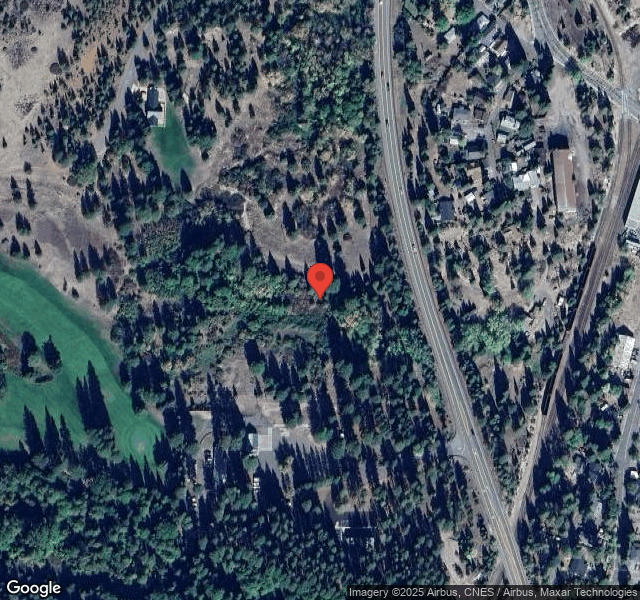
SHASTA VIEW ESTATES

445 PARK STREET, WEED, CA 96094 (530) 938-4429
For profit - Corporation 59 Beds DAKAVIA Data: November 2025 2 Immediate Jeopardy citations
Trust Grade
0/100
#1112 of 1155 in CA
Last Inspection: January 2025

Within standard 12-15 month inspection cycle. Federal law requires annual inspections.

Overview

Shasta View Estates in Weed, California has received a Trust Grade of F, indicating significant concerns about care quality. Ranked #1112 out of 1155 facilities in California, it is in the bottom half, with no other local options available in Siskiyou County. The facility is worsening, with issues increasing from 2 in 2024 to 7 in 2025. Staffing is a major weakness, with a low rating of 1 out of 5 stars and a turnover rate of 51%, significantly higher than the state average. They also have concerning fines totaling $60,008, which is higher than 91% of California facilities. On the positive side, they have a good rating of 4 out of 5 for quality measures, but there are critical incidents of concern. For instance, the facility failed to prepare for a scheduled outage of their electronic medical records system, leaving staff without access to vital resident medication and treatment information. Additionally, one resident was able to leave the facility unsupervised twice, resulting in a dangerous situation where they were found injured near a highway. Another resident developed a severe pressure injury due to inadequate care, leading to a hospital admission for infection. Overall, while there are some strengths in quality measures, the significant issues in care and management raise serious concerns for families considering this facility.

Trust Score
F
0/100
In California
#1112/1155
Bottom 4%
Safety Record
High Risk
Review needed
Inspections
Getting Worse
2 → 7 violations
Staff Stability
⚠ Watch
51% turnover. Above average. Higher turnover means staff may not know residents' routines.
Penalties
✓ Good
$60,008 in fines. Lower than most California facilities. Relatively clean record.
Skilled Nurses
○ Average
RN staffing data not reported for this facility.
Violations
⚠ Watch
28 deficiencies on record. Higher than average. Multiple issues found across inspections.
★☆☆☆☆
1.0
Overall Rating
★☆☆☆☆
1.0
Staff Levels
★★★★☆
4.0
Care Quality
★★☆☆☆
2.0
Inspection Score
Stable
2024: 2 issues
2025: 7 issues

The Good

  • 4-Star Quality Measures · Strong clinical quality outcomes
  • Full Sprinkler Coverage · Fire safety systems throughout facility
  • No fines on record

Facility shows strength in quality measures, fire safety.

The Bad

1-Star Overall Rating

Below California average (3.1)

Significant quality concerns identified by CMS

Staff Turnover: 51%

Near California avg (46%)

Higher turnover may affect care consistency

Federal Fines: $60,008

Above median ($33,413)

Moderate penalties - review what triggered them

Chain: DAKAVIA

Part of a multi-facility chain

Ask about local staffing decisions and management

The Ugly 28 deficiencies on record

2 life-threatening 1 actual harm
Sept 2025 4 deficiencies 1 Harm
SERIOUS (G) 📢 Someone Reported This

A family member, employee, or ombudsman was alarmed enough to file a formal complaint

Actual Harm - a resident was hurt due to facility failures

Pressure Ulcer Prevention (Tag F0686)

A resident was harmed · This affected 1 resident

**NOTE- TERMS IN BRACKETS HAVE BEEN EDITED TO PROTECT CONFIDENTIALITY** Based on interview, record review, and policy review, the facility failed to ensure that a resident who entered the facility wit...

Read full inspector narrative →
**NOTE- TERMS IN BRACKETS HAVE BEEN EDITED TO PROTECT CONFIDENTIALITY** Based on interview, record review, and policy review, the facility failed to ensure that a resident who entered the facility without a pressure injury (PI, a bedsore) did not develop a PI, for one of two residents sampled for PI (Resident 1). Resident 1 developed a PI to her sacrum (bottom of the spine), which progressively worsened and the facility failed to follow their policies regarding wound care and changes of condition and inform Resident 1's physician when her PI changed and worsened.This delayed treatment for Resident 1's PI by six days, and resulted in a worsened and infected PI. Within two days of Resident 1 discharging from the facility, she was admitted to the acute care hospital for an infected PI and sepsis (an infection in the bloodstream) and osteomyelitis of the sacrum (an infection in the bone). This failure had the potential to delay wound healing for any resident who had wounds and/or PI's and subject them to substandard quality of care.Refer to F726 Findings:Review of the National Pressure Injury Advisory Panel's (a nationally recognized resource for professionals), website document titled, NPIAP Pressure Injury and Stages, at https://npiap.com, dated September 2016 indicated;Stage 1 pressure injury: non-blanchable (skin redness or discoloration that does not fade or turn white when pressure is applied) erythema (reddening of the skin), which may appear differently in darkly pigmented skin. Presence of blanchable erythema or changes in sensation, temperature or firmness may precede visual changes.Stage 2 pressure injury: partial-thickness skin loss with exposed dermis (the middle layer of the skin). The wound bed is visible, pink, or red, moist and may also present as an intact or ruptured serum-filled blister (a raised pocket of skin filled with fluid, caused by skin injury from friction (rubbing), heat, or certain diseases). Adipose (fat) is not visible and deeper tissues are not visible. Granulation tissue may be visible (a type of new, temporary tissue that forms during the wound healing process). These injuries commonly result from adverse microclimate (temperature and moisture on the skin), and shear in the skin (injury that occurs when skin layers are pulled in opposite directions, damaging tissues, and blood vessels beneath the skin).Unstageable Pressure Injury: Obscured (hidden or difficult to see) full-thickness skin and tissue loss. Full-thickness skin and tissue loss in which the extent of tissue damage within the ulcer cannot be confirmed because it is obscured by slough (thick stringy yellow or gray dead tissue or eschar (black, brown or tan scab-like dead tissue attached firmly to the wound). If slough or eschar is removed, a Stage 3 or Stage 4 pressure injury will be revealed. Stage 3 pressure injury: full-thickness loss of skin, in which adipose is visible in the injury and granulation tissue and epibole (rolled wound edges) are often present. Slough and/or eschar may be visible. Undermining (the destruction of tissue or injury extending under the skin edges so that the pressure injury is larger at its base than at the skin surface), and tunneling (a passageway of tissue destruction under the skin surface that has an opening at the skin level from the edge of the wound) may occur. Fascia (a thin fibrous connective tissue that surrounds and supports all muscles, organs, and other structures in the body), muscle, tendon (a tough, fibrous cord-like tissue that connects muscles to bone), ligament (a tough, fibrous band of connective tissue that connects two bones together, providing stability and support to joints), cartilage (a smooth, elastic connective tissue that provides support and protection to joints, bones, and other tissues in the body), are not exposed. If slough or eschar obscures the extent of tissue loss this is an Unstageable Pressure Injury.Stage 4 pressure injury: full-thickness loss of skin and tissue with exposed fascia, muscle, tendon, ligament, cartilage, or bone in the injury. Slough or eschar may be visible. Epibole, undermining (tissue separation that creates a pocket of dead space), and/or tunneling often occur.According to the NIH National Library of Medicine (a nationally recognized professional resource for healthcare providers), website at www.ncbi.nlm.nih.gov, dated 1/3/2024, the most common problem with Stage 3 and Stage 4 pressure injuries is infection. Bacteria in the pressure ulcer wound spreads to deeper tissues and bone causing sepsis (infection in the bloodstream) and osteomyelitis (infection in the bone). Older patients with pressure injuries have a 3.6-fold increased mortality (death) rate. Managing pressure injuries should always be done with an interprofessional approach such as consulting with a general surgeon, a wound care physician (a physician who specializes in wound care), or a dermatologist (a physician who is an expert on skin care).Review of a facility policy titled, Change in a Resident's Condition or Status revised February 2021, indicated, 1. The nurse will notify the resident's attending physician or physician on call when there has been a: d. significant change in the resident's physical/emotional/mental condition.Review of the admission record for Resident 1, indicated that Resident 1 was admitted to the facility on [DATE] with diagnoses that included a fractured (broken) sacrum bone (the large triangular bone at the base of the spine). Resident 1 discharged from the facility, on 8/11/25. Review of Resident 1's admission Minimum Data Set (MDS, a federally mandated assessment that measures the health status in nursing home residents), dated 7/11/25, and completed by MDS/Registered Nurse (MDS/RN), indicated under Section C Resident 1 had a Brief Interview for Mental Status (BIMS, an assessment of a resident's memory and decision-making skills and uses a scoring system of 0-very impaired to 15-no impairment). Resident 1 scored 12 of 15, which indicated Resident 1 had no memory or decision-making problems. Section M indicated Resident 1 was admitted without a PI.Review of Resident 1's progress note, dated 7/24/25, written by Wound Care Nurse/Registered Nurse (WCN/RN) indicated, Wound Rounds for week of 7/20/25 - 7/24/25: Late last week noted skin discoloration over sacrum that resembled wounding under wrinkled skin. This week, however, noted discolored areas beginning to break down. Upon closer inspection, characteristics of breakdown resembles stage 1 pressure injury. Exposed tissue coated with yellow fibrotic residue. There was no documentation that the WCN/RN notified Resident 1's Attending Physician (AP) of this change in the condition of Resident 1's PI.A review of Resident 1's progress note, dated 7/25/25, written by Registered Nurse (RN) A indicated, Wound rounds:.Wound looks worse than 3 days ago. There was no documentation that RN A had notified Resident 1's AP, that Resident 1's PI had worsened.A review of Resident 1's progress note, dated 7/28/25, written by RN A indicated, Wound is getting worse. There was no documentation that RN A had notified Resident 1's AP that the PI had worsened.During a phone interview on 9/9/25 at 2:07 p.m., RN A confirmed that she had not notified Resident 1's AP when there was a change of condition and Resident 1's PI began to worsen. RN A stated that she notified the WCN/RN, instead of Resident 1's AP, because the WCN/RN would decide what changes needed to be reported to the AP. A review of Resident 1's record titled, Wound Management Detail Report dated 7/24/25 to 8/11/25, documented by the WCN/RN indicated the following; On 7/24/25, Resident 1 had a PI on her sacrum that measured (length by width), 6.5 centimeters (cm, 2.5 cm equal approximately 1 inch) by 4 cm and was a Stage 2 with no tract/tunneling present, and a light amount of seropurulent exudate (watery pus that is cloudy, yellow or tan and is a sign of infection), that was yellow, or tan, cloudy and thick. The report had not indicated that Resident 1's AP was notified.On 7/30/25, Resident 1's sacrum PI worsened to 7 cm by 3.5 cm, and was Unstageable with slough and eschar, no tract/tunneling present and a light amount of seropurulent exudate that was yellow, or tan, cloudy and thick. The report had not indicated that Resident 1's AP was notified of this change from a Stage 2 PI to an Unstageable PI.On 8/3/25, Resident 1's sacrum PI continued to worsen and measured of 7.3 cm by 3.5 cm, and was Unstageable with slough and eschar, no tract/tunneling or undermining present, and a moderate amount of seropurulent exudate (increased seropurulent drainage-a sign that the wound was becoming infected), that was yellow, or tan, cloudy and thick. The report had not indicated that Resident 1's AP was notified.On 8/11/25, the WCN/RN documented that she performed Conservative Sharp Wound Debridement (CSWD, a procedure where dead tissue is removed from a PI by using sharp instruments such as a scalpel, scissors and forceps), on Resident 1's sacrum PI. WCN/RN documented, CSWD completed.with scissors/forceps, then using forceps with #15 [number 15, the size of a scalpel blade], scalpel blade, sm-mod [small to moderate], amount slough removed. Documentation reflected that Resident 1's PI then measured, 6 cm by 2.5 cm, and was a Stage 4 with undermining that measured 2.6 cm and a heavy amount of seropurulent exudate (increased sign of infection), that was yellow, or tan, cloudy and thick. There was no documented evidence that Resident 1's AP was notified of the change in the condition of Resident 1's PI, or that CSWD procedure had been done.During a review of Resident 1's record titled, Physician Order Report: 7/2/25 - 8/20/25, the record indicated that there were no orders for the WCN/RN to perform a CSWD on Resident 1's PI.A review of a facility document titled, Physician Notification & Orders dated 7/30/25, indicated that six days after Resident 1's PI was determined to be a Stage 2 (identified on 7/24/25), AP was notified but at that point, on 7/30/25, Resident 1's PI had already worsened to an Unstageable PI. There were no other Physician Notification & Orders notification documents for Resident 1.During a concurrent interview and record review of Resident 1's record titled, Physician Order Report: 7/2/25 -8/20/25 on 8/20/25 at 2:38 p.m., with the Director of Nursing (DON), the DON confirmed that there was a six-day delay, from 7/24 to 7/30/25, in notifying Resident 1's AP and getting orders for treatment and during that time, Resident 1's PI had worsened from a Stage 2 to an Unstageable PI. DON confirmed that RN A should have notified Resident 1's AP on 7/24/25, when she identified that Resident 1's PI was worsening. DON confirmed the WCN/RN had not notified Resident 1's AP when she identified that Resident 1's PI had progressed from a Stage 2 to an Unstageable PI and finally to a Stage 4. DON confirmed that WCN/RN had not obtained a physician's order prior to performing the CSWD on Resident 1's PI.During an interview on 8/22/25 at 10:33 a.m., with WCN/RN, the WCN/RN confirmed that Resident 1 was admitted without a PI. WCN/RN confirmed that Resident 1 acquired a Stage 2 PI while in the facility on 7/24/25, and the PI was not healing and worsened to a Stage 4 within 18 days. WCN/RN confirmed that she had not reached out to Resident 1's AP at any time during the deterioration of Resident 1's PI, to consider referring Resident 1 to their wound care physician for an evaluation and stated she did not think it was necessary. WCN/RN confirmed that RN A should have notified Resident 1's AP when she determined that Resident 1's PI was worsening on 7/24/25, instead of waiting for WCN/RN to make her weekly visit, because this delayed treatment. WCN/RN confirmed Resident 1's PI had already deteriorated from a Stage 2 to an Unstageable PI by the time her AP was notified and orders were obtained for treatment. During a second interview on 9/9/25 at 9:42 a.m., with WCN/RN, the WCN/RN confirmed that she had not obtained a physician's order to perform the CWSD on Resident 1's PI on 8/11/25. WCN/RN stated she did not need a physician's order to perform CSWD. The WCN/RN stated she could not recall whether or not she had notified Resident 1's AP each time Resident 1's PI worsened and was not showing signs of healing or that the PI was possibly infected. WCN/RN stated that she did not have direct communication with Resident 1's AP. During a phone interview on 8/22/25 at 10:47 a.m., with Resident 1's AP, AP confirmed the facility had a wound care physician available that they could consult with. AP stated, I believed that [Resident 1's] wound care was very routine and she did not need the to see wound care physician. The AP indicated she thought Resident 1 still had only a Stage 2 PI.During a second phone interview on 9/9/25 at 1:01 p.m., with AP, she indicated that she did not know about the progressive worsening and lack of healing to Resident 1's PI. AP stated that the WCN/RN and DON do not usually notify her unless they need her to do something. AP confirmed she had not given specific orders to WCN/RN to perform a CSWD procedure. AP stated she, had no clue that nursing staff had identified Resident 1's PI was worsening and not healing. AP stated if she had known there were problems with worsening or lack of healing to Resident 1's sacrum PI, she would have referred her to their wound care physician for an evaluation.A review of Resident 1's acute care hospital records, dated 8/13/25, indicated that Resident 1's family had taken her to a local hospital on 8/13/25, two days after Resident 1 had left the facility, because Resident 1's PI was not healing and had a bad smell. The hospital's admission Note, dated 8/13/25, reflected that Resident 1 had sepsis and osteomyelitis of the sacrum, from her PI being infected. Resident 1 passed away at that hospital 10 days later.
CONCERN (D) 📢 Someone Reported This

A family member, employee, or ombudsman was alarmed enough to file a formal complaint

Potential for Harm - no one hurt, but risky conditions existed

Deficiency F0627 (Tag F0627)

Could have caused harm · This affected 1 resident

**NOTE- TERMS IN BRACKETS HAVE BEEN EDITED TO PROTECT CONFIDENTIALITY** Based on interview, record review, and policy review, the facility failed to ensure safe discharge for one of two residents samp...

Read full inspector narrative →
**NOTE- TERMS IN BRACKETS HAVE BEEN EDITED TO PROTECT CONFIDENTIALITY** Based on interview, record review, and policy review, the facility failed to ensure safe discharge for one of two residents sampled (Resident 1), when Resident 1 chose to leave the facility Against Medical Advice, (AMA, when the physician does not agree with the resident leaving the facility because of their medical condition) and the facility failed to ensure;1. There was a physician's order to discharge Resident 1 AMA.2. Discussion and documentation was done with Resident 1 of alternatives to discharging AMA to the location to which Resident 1 discharged .3. An Against Medical Advice form (A form that a resident signs acknowledging understanding of the consequences for leaving the facility AMA), was not offered to Resident 1.4. A facility investigation was done and an Adult Protective Services (A government service to protect vulnerable individuals in the community from abuse, neglect and exploitation) report filed.These combined failures resulted in Resident 1 not being informed by the facility of the consequences of leaving the facility AMA and Resident 1 was admitted to the acute care hospital within two days after leaving the facility, with an infection. Findings:1.Review of a facility policy titled, Discharging a Resident without a Physician's Approval, revised October 2022 indicated, A physician's order is obtained for discharges, unless a resident or representative is discharging himself or herself against medical advice, 3. If the resident or representative (sponsor) requests discharge without the approval of the attending physician, the resident and/or representative (sponsor) will be asked to sign a release of responsibility form. 4. If a resident wishes to be discharged to a setting that does not appear to meet his or her post-discharge needs, or appears unsafe, the facility will treat this situation similarly to refusal of care, and will: a. discuss with the resident, (and/or his or her representative, if applicable) and document the implication and/or risks of being discharged to a location that is not equipped to meet his/her needs and attempt to ascertain why the resident is choosing that location; b. document that other, more suitable, options of locations that are equipped to meet the needs of the resident were presented and discussed; c. document that despite being offered other options that could meet the resident's needs, the resident refused those more appropriate settings; d. determine if a referral to Adult Protective Services or other state entity charged with investigating abuse and neglect is necessary. The referral should be made at the time of discharge. Review of the admission record for Resident 1, indicated that Resident 1 was admitted to the facility on [DATE] with diagnoses that included a sacrum fracture (a break in the large triangular bone at the base of the spine).Review of Resident 1's admission MDS (Minimum Data Set- a federally mandated assessment tool that measures the health status in nursing home residents), dated 7/11/25, completed by Minimum Data Set/Registered Nurse (MDS/RN), section C indicated Resident 1 had a Brief Interview for Mental Status (BIMS), score of 12 out of 15 which indicated that Resident 1 had good memory and decision making skills. Review of Resident 1's record titled, Physician Order Report: 7/2/25 to 8/20/25 indicated that there was no physician's order discharging (the official directive from a doctor to a healthcare facility that a patient no longer requires inpatient care and can safely transition to another level of care, such as home) Resident 1.2.Review of Resident 1's progress note dated 8/11/25 at 7:29 p.m., written by the Wound Care Nurse/Registered Nurse (WCN/RN, a registered nurse with specialized training and certification in wound care), the WCN/RN indicated that upon preparing for Resident 1's unplanned AMA she educated the family about Resident 1's extensive treatment for a Stage 4 (Bedsore, a severe form of skin damage, that involves full-thickness tissue loss that exposes muscle and bone), care needs that Resident 1 had developed while in the facility. There was no documentation of discussion of the implications and/or risks of being discharged to a location that was not equipped to meet her needs or an attempt to ascertain why the resident chose that location. There was no documentation of discussion on more suitable options of locations that were equipped to meet the needs of Resident 1. There was no documentation completed that despite being offered other options that could meet the resident's needs, the resident refused those more appropriate settings. Review of Resident 1's progress note dated 8/11/25 at 4:25 p.m. written by Registered Nurse (RN) B indicated that Resident 1's family arrived at the facility at 11:00 a.m., and requested to take Resident 1 home and that Resident 1 left the facility at 2:15 p.m. with her family.Review of Resident 1's, Transition of Care/Discharge Summary dated 8/11/25 indicated, Discharge Destination: Resident to return to independent living with spouse support after acute stay. This statement was incorrect, however, because Resident 1's home was in a nearby town, but she left the facility with her family to a city that was three hours away.During an interview on 8/22/25 at 11:52 a.m., with Family Member (FM) 2, FM 2 indicated that she was angry about how Resident 1 was taken care of by the facility, and there were nurses in the family who could do better.During an interview on 8/22/25 at 12:14 p.m., with FM 3, FM 3 indicated that her family did not think that the facility was making sure Resident 1 was being turned often enough, and they had concerns because the WCN/RN was only available once a week which delayed treatments and interventions for healing Resident 1's pressure injury. 3.During an interview on 9/9/25 at 10:24 a.m., with FM 2, FM 2 confirmed that the facility had not explained or offered to Resident 1 or FM 2, alternatives to taking Resident 1 to a town three hours away or the consequences of leaving the facility AMA. During a phone interview on 8/20/25 at 1:54 p.m., with the Medical Director (MD), the MD indicated that it is not her decision when a resident discharges, rather it is a determination that is made by the Social Services Director (SSD) and DON) The MD indicated that the SSD monitors how the residents are doing and if they are meeting criteria to be discharged . The MD indicated that she was not notified by the SSD or DON when Resident 1 left AMA and stated, It was very sudden.4.During an interview on 8/21/25 at 10:42 a.m., with the SSD in her office. The SSD indicated that FM 2 stated, I'm taking her [Resident 1] home right now. The SSD indicated that she did not know that Resident 1 was not going to her home in a nearby town, but rather to FM 2's home in a town three hours away until after Resident 1 left the facility. The SSD indicated that she did not think it was an appropriate discharge. The SSD confirmed the facility did not complete an AMA document or investigate if there should have been a referral to APS.During an interview on 9/9/25 at 9:42 a.m., with WCN/RN regarding Resident 1's leaving AMA, the WCN/RN confirmed, We should have done an AMA, I was really worried about the three-hour drive for her.During an interview on 8/20/25 at 2:38 p.m., with the DON the DON confirmed that Resident 1 left the facility AMA and that Resident 1's physician had not given orders for Resident 1 to discharge AMA and that the facility had not notified APS to check on Resident 1 once she returned to the community, and all of those things should have been done.
CONCERN (D) 📢 Someone Reported This

A family member, employee, or ombudsman was alarmed enough to file a formal complaint

Potential for Harm - no one hurt, but risky conditions existed

Deficiency F0657 (Tag F0657)

Could have caused harm · This affected 1 resident

**NOTE- TERMS IN BRACKETS HAVE BEEN EDITED TO PROTECT CONFIDENTIALITY** Based on interview, record review, and policy review, the facility failed to ensure the care plan (a document that outlines a pa...

Read full inspector narrative →
**NOTE- TERMS IN BRACKETS HAVE BEEN EDITED TO PROTECT CONFIDENTIALITY** Based on interview, record review, and policy review, the facility failed to ensure the care plan (a document that outlines a patient's health care needs and the actions and interventions required to address them), was revised and updated when one of two sampled residents (Resident 1), had a pressure injury (PI, a bedsore) that worsened and the care plan had not reflected this.This failure resulted in no identified problem, goals or interventions to promote the healing of Resident 1's PI to her sacrum (the large triangular bone at the base of the spine), and inconsistencies and delayed treatments of Resident 1's PI, which had a negative impact on her clinical status.Findings:Review of a facility policy titled, Goals and Objectives, Care Plans revised April 2009, indicated, 5. Goals and objectives are reviewed and/or revised: a. when there has been a significant change in the resident's condition.Review of the National Pressure Injury Advisory Panel's (a nationally recognized professional resource for the staging and treatment of pressure injuries a global driver of quality improvement and patient safety in healthcare) website document titled, NPIAP Pressure Injury and Stages, at https://npiap.com, dated September 2016 indicated;-Stage 1 pressure injury: non-blanchable (skin redness or discoloration that does not fade or turn white when pressure is applied) erythema (reddening of the skin), which may appear differently in darkly pigmented skin. Presence of blanchable erythema or changes in sensation, temperature or firmness may precede visual changes.-Stage 2 pressure injury: partial-thickness skin loss with exposed dermis (the middle, living layer of the skin, located between the outermost epidermis and the innermost hypodermis).Unstageable Pressure Injury: Obscured full-thickness skin and tissue loss. Full-thickness skin and tissue loss in which the extent of tissue damage within the ulcer cannot be confirmed because it is obscured by slough (thick stringy yellow infected tissue or eschar (black dead tissue). If slough or eschar is removed, a Stage 3 or Stage 4 pressure injury will be revealed. -Stage 3 pressure injury: full-thickness loss of skin, in which adipose (fat) is visible in the injury and granulation tissue and epibole (rolled wound edges) are often present. Slough (dead tissue, usually moist and stringy) and/or eschar (dead tissue that is hard or soft) may be visible. If slough or eschar obscures the extent of tissue loss this is and Unstageable Pressure Injury.-Stage 4 pressure injury: full-thickness loss of skin and tissue with exposed Fascia (a thin fibrous connective tissue that surrounds and supports all muscles, organs, and other structures in the body), muscle, tendon (a tough, fibrous cord-like tissue that connects muscles to bone) ligament (a tough, fibrous band of connective tissue that connects two bones together, providing stability and support to joints), cartilage (a smooth, elastic connective tissue that provides support and protection to joints, bones, and other tissues in the body) in the injury. Slough or eschar may be visible. Epibole, undermining (the destruction of tissue or injury extending under the skin edges so that the pressure injury is larger at its base than at the skin surface) and/or tunneling (a passageway of tissue destruction under the skin surface that has an opening at the skin level from the edge of the wound) often occur.Review of the admission record for Resident 1 indicated that Resident 1 was admitted to the facility on [DATE] with diagnoses including sacrum fracture (a break in the large triangular bone at the base of the spine), and was not admitted with any PIs.Review of Resident 1's admission MDS (Minimum Data Set- a federally mandated assessment tool that measures the health status in nursing home residents), dated 7/11/25, completed by Minimum Data Set/Registered Nurse (MDS/RN), section C indicated Resident 1 had a BIMS (Brief Interview for Mental Status-an assessment tool used by facilities to screen and identify memory, orientation, and judgement status of the resident) score of 12 out of 15 indicating she was cognitively intact. Section M indicated no pressure injuries.A comparison review of Resident 1's records titled, Wound Management Detail Report dated 7/24/25 to 8/11/25, and Care Plan History dated 7/30/25 reflected that: On 7/24/25 Resident 1 had a Stage 2 PI on her sacrum and the care plan was not updated until 7/30/25, a week later and the PI had already worsened to an Unstageable PI.On 8/3/25 Resident 1's Unstageable PI worsened to a Stage 4 and showed signs of infection with eschar (dead black tissue) and slough (stringy thick yellow dead tissue, which is a breeding ground for bacteria and prevents wounds from healing), and there were no revisions or updates to her care plan.On 8/11/25 Resident 1's PI worsened to a Stage 4, and and no revisions or updates were made to her care plan.During a concurrent interview and record review on 8/22/25 at 10:33 a.m., with Wound Care Nurse/Registered Nurse (WCN/RN), the WCN/RN confirmed Resident 1's skin integrity care plans had not been updated since 7/30/25, and had not reflected her current status, treatments, and interventions. During an interview by email with the Director of Nursing (DON) on 8/29/25 11:12 a.m., the DON confirmed there was no evidence that Resident 1's care plan for her PI to the sacrum, had been update or revised since 7/30/25. DON confirmed Resident 1 left the faciity on 8/11/25.
CONCERN (D) 📢 Someone Reported This

A family member, employee, or ombudsman was alarmed enough to file a formal complaint

Potential for Harm - no one hurt, but risky conditions existed

Deficiency F0726 (Tag F0726)

Could have caused harm · This affected 1 resident

**NOTE- TERMS IN BRACKETS HAVE BEEN EDITED TO PROTECT CONFIDENTIALITY** Based on interview, record review, and policy review, the facility failed to ensure nursing staff demonstrated competency in fol...

Read full inspector narrative →
**NOTE- TERMS IN BRACKETS HAVE BEEN EDITED TO PROTECT CONFIDENTIALITY** Based on interview, record review, and policy review, the facility failed to ensure nursing staff demonstrated competency in following the facility's policies in regard to wound care management and changes in resident conditions for one of two sampled residents (Resident 1) when;1.Registered Nurse (RN) A and Wound Care Nurse/ RN (WCN/RN), had not notified Resident 1's physician that Resident 1's sacrum (base of the spine) pressure injury (PI-a bedsore), had worsened. 2.WCN/RN performed conservative sharp wound debridement (CSWD, an invasive procedure to remove dead tissue from a PI using sharp instruments such as a scalpel (knife), scissors, and forceps (tweezers)), to Resident 1's PI, without a physician's order. These cumulative failures caused in a delay in the treatment and healing of Resident 1's PI and caused the PI to worsen. Subsequently, Resident 1 was hospitalized within two days after she left the facility, for sepsis (an infection in the blood stream) and osteomyelitis of the sacrum (an infection in the sacrum bone). This had the potential to negatively affect all residents who required care to heal wounds.Refer to F686 Findings:Review of a facility policy titled, Change in a Resident's Condition or Status revised February 2021 indicated, 1. The nurse will notify the resident's attending physician or physician on call when there has been a d. significant change in the resident's physical/emotional/mental condition. 9. If a significant change in the resident's physical or mental condition occurs, a comprehensive assessment of the resident's condition will be conducted.Review of the National Pressure Injury Advisory Panel's (a nationally recognized professional resource for the staging and treatment of pressure injuries a global driver of quality improvement and patient safety in healthcare) website document titled, NPIAP Pressure Injury and Stages, at https://npiap.com, dated September 2016 indicated;-Stage 1 pressure injury: non-blanchable (skin redness or discoloration that does not fade or turn white when pressure is applied) erythema (reddening of the skin), which may appear differently in darkly pigmented skin. Presence of blanchable erythema or changes in sensation, temperature or firmness may precede visual changes.-Stage 2 pressure injury: partial-thickness skin loss with exposed dermis (the middle, living layer of the skin, located between the outermost epidermis and the innermost hypodermis).Unstageable Pressure Injury: Obscured full-thickness skin and tissue loss. Full-thickness skin and tissue loss in which the extent of tissue damage within the ulcer cannot be confirmed because it is obscured by slough (thick stringy yellow infected tissue or eschar (black dead tissue). If slough or eschar is removed, a Stage 3 or Stage 4 pressure injury will be revealed. -Stage 3 pressure injury: full-thickness loss of skin, in which adipose (fat) is visible in the injury and granulation tissue and epibole (rolled wound edges) are often present. Slough (dead tissue, usually moist and stringy) and/or eschar (dead tissue that is hard or soft) may be visible. If slough or eschar obscures the extent of tissue loss this is and Unstageable Pressure Injury.-Stage 4 pressure injury: full-thickness loss of skin and tissue with exposed Fascia (a thin fibrous connective tissue that surrounds and supports all muscles, organs, and other structures in the body), muscle, tendon (a tough, fibrous cord-like tissue that connects muscles to bone) ligament (a tough, fibrous band of connective tissue that connects two bones together, providing stability and support to joints), cartilage (a smooth, elastic connective tissue that provides support and protection to joints, bones, and other tissues in the body) in the injury. Slough or eschar may be visible. Epibole, undermining (the destruction of tissue or injury extending under the skin edges so that the pressure injury is larger at its base than at the skin surface) and/or tunneling (a passageway of tissue destruction under the skin surface that has an opening at the skin level from the edge of the wound) often occur.According to California State regulations Title 22, S72317. Nursing Service-Administration of Medications and Treatments; (a) Medications and treatments shall be administered as follows: (l) No medication or treatment shall be administered except on the order of a person lawfully authorized to give such orderReview of the admission record for Resident 1 indicated that Resident 1 was admitted to the facility on [DATE] with diagnoses including sacrum fracture (broken bone at the base of the spine).Review of Resident 1's admission MDS (Minimum Data Set- a federally mandated assessment tool that measures the health status in nursing home residents), dated 7/11/25, completed by Minimum Data Set/Registered Nurse (MDS/RN), section C, indicated Resident 1 had a BIMS (Brief Interview for Mental Status-an assessment tool used by facilities to screen and identify memory, orientation, and judgement status of the resident) score of 12 out of 15 indicating she was cognitively intact. Section M indicated that Resident 1 had no PI's upon admission to the facility.Review of Resident 1's acute care hospital record dated 8/13/25, indicated that Resident 1 was admitted to the hospital on [DATE], two days after leaving the skilled nursing facility, with sepsis (an infection in the blood stream) secondary to osteomyelitis (a bone infection) from the infected PI to the sacrum. Review of Resident 1's progress note dated 7/25/25, written by Registered Nurse (RN) A indicated, Wound rounds:.Wound looks worse than 3 days ago. The progress note reflected no evidence that RN A notified Resident 1's AP of this change in condition of her PI.Review of Resident 1's progress note dated 7/28/25 written by RN A indicated, .Wound is getting worse. There was no evidence that RN A notified Resident 1's AP.During a phone interview on 9/9/25 at 2:07 p.m., RN A confirmed that she had not notified Resident 1's AP of the worsening of her PI on 7/25 and 7/28/25. RN A stated that when she identified the worsening to Resident 1's PI, she notified WCN/RN a week later instead of the AP. RN A stated the WCN/RN was the one who decided what changes should be reported to the AP. RN A added that the WCN/RN only worked one day a week.A comparison review of a facility documents titled, Physician Notification & Orders dated 7/30/25, and concurrent review of Resident 1's record titled, Wound Management Detail Report dated 7/24/25 to 8/11/25 reflected: On 7/24/25, Resident 1 had a Stage 2 PI that she acquired while in the facility, and the AP was not notified.On 7/30/25, one week later, Resident 1's sacrum PI had worsened from Stage 2 to an Unstageable PI, and the AP was notified by a memo.On 8/3/25, Resident 1's Unstageable PI showed presence of infection with eschar (dead black tissue) and slough (stringy thick yellow dead tissue that is a breeding ground for bacteria and prevents wounds from healing), and the AP was not notified.On 8/11/25, WCN/RN performed CSWD procedure on Resident 1's Unstageable PI, without a physician's order, and the AP was not notified. Resident 1's PI was then a Stage 4. During a phone interview on 9/9/25 at 9:42 a.m., with WCN/RN, the WCN/RN confirmed she had not obtained a physician's order for CSWD prior to performing the procedure on Resident 1. WCN/RN stated that she does not need a physician's order to perform CSWD. The WCN/RN indicated that she could not recall informing Resident 1's AP of the changes and worsening of each stage of Resident 1's PI and stated, I do not have direct communication with the physician. During a phone interview on 9/9/25 at 1:01 p.m., with AP, the AP confirmed she was not notified by either RN A or WCN/RN of the comprehensive changes of condition and worsening of the stages of Resident 1's PI to her sacrum. During a phone interview on 9/9/25 at 10:47 p.m., with the Director of Nursing (DON) indicated that WCN/RN could perform CSWD using her own discretion and the protocol and does not need a physician's order.
Jun 2025 1 deficiency
CONCERN (D) 📢 Someone Reported This

A family member, employee, or ombudsman was alarmed enough to file a formal complaint

Potential for Harm - no one hurt, but risky conditions existed

Free from Abuse/Neglect (Tag F0600)

Could have caused harm · This affected 1 resident

**NOTE- TERMS IN BRACKETS HAVE BEEN EDITED TO PROTECT CONFIDENTIALITY** Based on interview and record review, the facility failed to prevent verbal abuse for one of three sampled residents, (Resident ...

Read full inspector narrative →
**NOTE- TERMS IN BRACKETS HAVE BEEN EDITED TO PROTECT CONFIDENTIALITY** Based on interview and record review, the facility failed to prevent verbal abuse for one of three sampled residents, (Resident 2) when Certified Nursing Assistant (CNA) A cursed at Resident 2. This failure violated Resident 2's right to be free from abuse and had the potential to negatively impact Resident 2's emotional and psychosocial well-being. Findings: Review of the facility's policy titled, Abuse Prevention Program, dated December 2016, indicated, Our residents have the right to be free from abuse . and As part of the resident abuse prevention, the administration will: 1. Protect our residents from abuse by anyone . Review of the admission record for Resident 2, indicated Resident 2 was admitted to the facility on [DATE], with diagnoses including diverticulitis of large intestine (a condition where small pouches in the lining of the large intestine become inflamed or infected), type 2 diabetes (high blood sugar), depression, and complications of colostomy (a surgical procedure that brings one end of the large intestine out through the abdominal wall to allow waste to leave the body). Review of Resident 2's Quarterly Minimum Data Set (MDS, a federally mandated assessment tool that measures the health status in nursing home residents), dated 5/16/25 completed by Registered Nurse B, indicated a Brief Interview for Mental Status (BIMS - an assessment tool used by facilities to screen and identify memory, orientation, and judgement status of the resident) score of 15 out of 15 indicating Resident 2 was cognitively intact. Review of Resident 2's progress note dated 5/30/25 at 4:10 p.m., written by the Director of Nursing (DON) indicated that Resident 2 said to the DON that CNA A had cursed at her and that Resident 2 did not want to talk about it. During a review of a facility document titled, Resident Abuse Investigation Report Form completed regarding Resident 2's abuse, dated 6/3/25, completed by the DON, the document indicated that on 6/2/25 the DON interviewed CNA A by phone, and CNA A indicated that she was frustrated with Resident 2 and told Resident 2 that it was bulls**t. During an interview on 6/18/25 at 12:15 p.m., with the DON, the DON confirmed that when CNA A was interviewed, she admitted she was frustrated with Resident 2 and said bulls**t to Resident 2. The DON indicated that she expected staff to treat residents with respect.
Jan 2025 2 deficiencies
CONCERN (D)

Potential for Harm - no one hurt, but risky conditions existed

Deficiency F0583 (Tag F0583)

Could have caused harm · This affected 1 resident

Based on observation, interview, and facility policy review, the facility failed to lock the computer screen on 1 of 2 medication carts to ensure residents' protected health information (PHI) was not ...

Read full inspector narrative →
Based on observation, interview, and facility policy review, the facility failed to lock the computer screen on 1 of 2 medication carts to ensure residents' protected health information (PHI) was not visible for all to see. Findings included: An undated facility policy titled Security of Medication Cart indicated, The cart must be locked with the computer charting system secured prior to entering the resident's room.4. Medication carts must be securely locked at all times when out of the nurse's view. During an observation on 01/14/2025 at 7:50 AM, the surveyor noted the computer on the medication cart was left unlocked and Resident #28's list of medications and other PHI for other residents was visible. The nurse assigned to the medication cat was not present. At 8:05 AM, the surveyor was told the nurse assigned to the medication cart was in the dining room. The surveyor observed Licensed Vocational Nurse (LVN) #1 in the dining room. LVN #1 stated she could not leave the dining room for another 30 to 35 minutes. LVN #1 acknowledged she could not visualize the medication cart from the dining room. LVN #1 stated she would have another staff member go and lock the screen on the computer on the medication cart. LVN #1 commented that she was glad you told me otherwise it would have stayed unlocked for another 35 minutes. During an interview on 01/14/2025 at 12:19 PM, LVN #2 stated nurses must lock the medication screen to keep PHI private and ensure others do not have access to residents' PHI. During an interview on 01/15/2025 at 9:40 AM, Director of Staff Development (DSD #5 stated staff received education that the computer screen on the medication cart should be locked when the medication cart is out of the nurses' visual field. During an interview on 01/15/2025 at 10:47 AM, the Director of Nursing (DON) stated computer screens must be locked. The DON stated the expectation was for the nursing staff to protect the residents' PHI. During an interview on 01/15/2025 at 10:58 AM, the Administrator stated the expectation was for the staff to follow PHI safety policies and ensure computer monitors were locked to protect residents' PHI.
CONCERN (F)

Potential for Harm - no one hurt, but risky conditions existed

Infection Control (Tag F0880)

Could have caused harm · This affected most or all residents

2. A facility policy titled, Handwashing/Hand hygiene, revised 10/2023, indicated, 2. All personnel are expected to adhere to hand hygiene policies and practices to help prevent the spread of infectio...

Read full inspector narrative →
2. A facility policy titled, Handwashing/Hand hygiene, revised 10/2023, indicated, 2. All personnel are expected to adhere to hand hygiene policies and practices to help prevent the spread of infections to the other personnel, residents, and visitors. A facility policy titled, Med [Medication] Pass Infection Control Review, dated 06/01/2023, indicated, Do not touch meds [medications] with ungloved hands. The policy specified, Use hand hygiene prior to handling medication and after administering to resident. Place a barrier between the cart and the medication while preparing the medication. A Resident Face Sheet, indicated the facility admitted Resident #15 on 09/10/2024. According to the Resident Face Sheet, the resident had a medical history that included diagnoses of hypertension, paroxysmal atrial fibrillation, angina pectoris, and anxiety disorder. A quarterly Minimum Data Set (MDS), with an Assessment Reference Date (ARD) of 12/18/2024, indicated Resident #15 had a Brief Interview for Mental Status (BIMS) score of 13, which indicated the resident had intact cognition. During medication administration observation on 01/14/2025 at 9:07 AM, Licensed Vocational Nurse (LVN) #1 did not wash or sanitize her hands before she prepared medications for administration for Resident #15. LVN #1 also handled the resident's medications with her bare hands. It was also noted, two pulls fell on top of the medication cart and placed them in the medication cup to be administered to the resident. During an interview on 01/14/2025 at 9:48 AM, LVN #1 stated she should not have handled the resident's medications with her bare hands. LVN #1 stated she should have discarded the medications that fell onto to the top of the medication cart. During an interview on 01/14/2025 at 12:19 PM, LVN #2 stated nurses must sanitize or wash their hands prior to administration of medication, and nurses must pour the resident's medication directly into the medication cup. Per LVN #2, if a pill hit the floor or an uncleaned surface, the medication must be tossed out. During an interview on 01/15/2025 at 9:31 AM, the Infection Preventionist stated nurses must wash hands, put medication in a cup, and not touch the medication with their bare hands. During an interview on 01/15/2025 at 10:47 AM, the Director of Nursing (DON) stated the residents' medication should not be touched with a nurse's bare hands, and when dropped those pills should be discarded. The DON said the expectation was for nurses to follow the protocols adopted by the facility such as washing hands before and after administration of medications. During an interview on 01/15/2025 at 10:58 AM, the Administrator stated staff must comply with infection control protocols such as wash or sanitize their hands and not touch medications with their bare hands. Based on observation, interview, record review, and facility policy review, the facility failed to implement a water management program as directed by their policy. This deficient practice had the potential to affect all residents who currently resided in the facility. The facility further failed to ensure a nurse washed her hands prior to medication administration, did not handle medication with her bare hands, and did not administer medications to a resident that had fallen on top of the medication cart for 1 (Resident #15) of 3 residents observed for medication administration. Findings included: 1. The facility policy titled, Legionella Water Management Program, revised 09/2022, revealed, Our facility is committed to the prevention, detection and control of water-borne contaminants, including Legionella. Policy Interpretation and Implementation l. As part of the infection prevention and control program, our facility has a water management program, which is overseen by the water management team. 2. The water management team consists of at least the following personnel: a. The infection preventionist; b. The administrator; c. The medical director (or designee); d. The director of maintenance; and e. The director of environmental services. 3. The purposed of the water the water management program are to identify areas in the water system where Legionella bacteria can grow and spread, and to reduce the risk of Legionnaire's disease. The policy specified, 5. The water management program includes the following elements: a. An interdisciplinary water management team (see above); b. A detailed description and diagram of the water system in the facility, including the following: (1) Receiving; (2) Cold water distribution; (3) Heating; (4) Hot water distribution; and (5) Waste. During an interview on 01/15/2025 at 11:20 AM, the Maintenance Director stated he had been employed at the facility for one year. He confirmed he had not tested the water for Legionella and had not implemented the facility policy. During an interview on 01/15/2025 at 11:42 AM, the Director of Nursing (DON) stated she believed the maintenance staff was generally responsible for the water management program. The DON stated she could not find the result of the last time water testing was done. During an interview on 01/15/2025 at 11:50 AM, the Administrator stated the facility had been monitoring the water, but changed maintenance staff, and Legionella was not a part of their orientation. Per the Administrator, the water should be tested annually, and he was not sure when the last time the water was tested.
Jul 2024 1 deficiency 1 IJ (1 facility-wide)
CRITICAL (L) 📢 Someone Reported This

A family member, employee, or ombudsman was alarmed enough to file a formal complaint

Immediate Jeopardy (IJ) - the most serious Medicare violation

Quality of Care (Tag F0684)

Someone could have died · This affected most or all residents

⚠️ Facility-wide issue

Based on interview and record review, the facility failed to ensure that there was an alternative system in place by which resident Medication Administration Records (MARs), Treatment Administration R...

Read full inspector narrative →
Based on interview and record review, the facility failed to ensure that there was an alternative system in place by which resident Medication Administration Records (MARs), Treatment Administration Records (TARs), and Physician's Orders, could be accessed by staff in the event that the facility's Electronic Medical Record system (EMR, a computerized system that contained resident MARs, TARs, and Physician's Orders), was not available for 41 of 41 residents. On 7/17/24, the facility's EMR system administrator notified the facility that there was going to be a scheduled outage for EMR maintenance and that the EMRs would not be available on 7/18/24. The facility took no action to prepare for this planned outage and subsequently had no way for the nurses to administer medications, treatments (wound and skin care), or see what the physician currently had ordered for each resident. This failure resulted in the nursing staff ' s inability to know what each resident ' s current physician ' s orders were, therefore, the nursing staff was unable to administer medications or do wound care treatments for all residents, which had the potential for the residents to experience unnecessary pain, untreated blood sugar levels, breathing difficulties, anxiety and depression, which could negatively impact their physical, emotional, and psychosocial well-being. An Immediate Jeopardy (IJ- when the facility's non-compliance has the potential to cause serious injury, harm, impairment or death) situation was identified on 7/19/24 at 5:55 pm, in the presence of the Administrator (Admin), because the facility's EMR system had been unavailable and the residents had not received their physician ordered medications and treatments, for 19 hours. An IJ removal plan to immediately correct this problem was requested from the Admin. An IJ removal plan was provided by the Admin and accepted on 7/22/24 at 1:37 pm. The facility obtained a designated computer that worked off line (no internet was needed), and this computer would not be affected by EMR system outages, because the EMR information could be stored in that computer's hard drive (a self contained storage device). This off line computer downloads resident EMR information every 15 minutes and paper MARs, TARs and Physician's Orders for all residents can be printed on paper by the nurses and avoid delayed medications and treatments. The IJ removal plan was verified by the surveyor while on site to be fully implemented. The IJ was removed on 7/22/24 at 2:47pm. Findings: A review of the facility's policy titled, Electronic Medical Records dated March 2014, indicated Electronic medical records may be used in lieu of paper records when approved by the Administrator. The Administrator, in conjunction with the Quality Assessment and Assurance Committee (a group of facility managers that identify problems and develop actions to correct them), shall review requests for and the implementation of our electronic medical records system. A review of the facility ' s policy titled, Charting and Documentation dated July 2017, indicated, The following information is to be documented in the resident medical record: medications administered; treatments or services performed, changes in the resident ' s condition . During an interview on 7/19/24 at 2:30 pm, the Admin indicated their EMR system had been inaccessible since 7/18/24 at 3:00 pm, for 23 and a half hours. Admin stated, we are working on it. Admin confirmed the facility did not have access to all residents ' Physician ' s Orders, MARs and TARs. Admin indicated he did not have a policy with instructions on what to do during an EMR system outage. During an interview on 7/19/24 at 2:50 pm, with Resident 1 in her room, she indicated she had not received any medications yet today. Resident 1 indicated she usually took about 6 medications after breakfast, and she had not received them yet. Resident 1 indicated that last night she was told by an evening shift nurse, the computers were down. Resident 1 indicated she was anxious because, although she did not know the names of her medications, she had not received her heart medications. During an interview on 7/19/24 at 2:52 pm, with Resident 2 in her room, she indicated she did not think she got her morning or lunch medications today. Resident 2 indicated she did not get her stool softener last night or today and she was feeling constipated (unable to have a bowel movement), and that worried her. During an interview on 7/19/24 at 3:00 pm, with Resident 3 in his room, he indicated he did not get his evening medication on 7/18/24 or his morning medications today. Resident 3 indicated he was concerned because he had a condition called gout which caused pain in his left great toe. Resident 3 indicated he had not received the medication for his gout and his toe was hurting. During an interview on 7/19/24 at 3:14 pm, Certified Nursing Assistant (CNA) A indicated the nurse informed her today, 7/19/24, that residents were not getting their medications due to the EMR system outage. CNA A indicated she was very concerned about residents who had aggressive and wandering (moving to an unsafe area in the facility or even outside without staff knowledge), behaviors. During an interview on 7/19/24 at 3:14 pm, Licensed Vocational Nurse (LVN) B indicated that the EMR system went down yesterday on 7/18/24 around 3:00 pm. LVN B indicated the nurses were unable to administer current medication, provide wound treatments or respiratory treatments (inhalers and medication in breathing machines), because they did not have access to any residents' current MARs, TARs, and Physician ' s Orders. LVN B indicated she had checked the resident ' s paper charts (a binder that contained printed medical records for a resident), to retrieve current physcian's orders but the most recent orders she could find were April 2024 (90 days ago). LVN B indicated there should have been current printed Physician ' s Orders, that were signed by the physician, and placed in all residents' paper chart, but this had not been done. LVN B confirmed there was no back up system for the EMR, so they had no way of knowing what the current orders were for all 41 residents. During an interview on 7/19/24 at 3:25 pm, LVN D indicated they were unable to chart resident ' s conditions, administer medications, do wound care and respiratory treatments because the EMR system had stopped working on 7/18/24 around 3:00 pm. During an interview on 7/19/24 at 3:42 pm, the Admin stated, we thought we had back up orders for medication through our pharmacy but apparently, they had not updated them. During an interview at 7/19/24 at 3:50 pm, LVN B indicated that at 10:00 am 7/19/24, Resident 4 became diaphoretic (sweaty) and shaky. His blood sugar was recorded at 250 mg/dL (milligram per deciliter, a measurement) (According to the American Diabetes Association ' s goals for blood sugar control in people with diabetes are 70-130 mg/dl before meals .). LVN B indicated Resident 4 ' s blood sugar level required the Physician to be notified. LVN B indicated that Resident 4 had not been able to receive his usual blood sugar medication as ordered because of the EMR system outage. During an interview on 7/19/24 at 3:56 pm, Business Office Manager (BOM) indicated she had received a warning message on 7/17/24, that the facility's EMR system was scheduled for a planned outage that would occur on 7/18/24 at 1:00 am. BOM stated the warning indicated the following, As best practice we recommend running your eMAR [electronic Medication Administration Record] offline report [transferring MARs and TARS to a computer that can be accessed when the internet system was not working, which would allow the MARs and TARs to be printed and accessible to the nurses] to ensure it is installed and functioning properly for use during the outage. BOM indicated the EMR system would post this alert every time there were planned outages for updates to the EMR system. BOM indicated that this EMR warning was able to be seen on all computers that the nurses used and remained on their computer until the user responded to the message. The BOM indicated that these warnings from their EMR system provider get ignored because the outages only usually last about 2 hours. BOM added that there was also a global internet outage (disruptions across the world), which occurred on the same day, 7/18/24, which contributed to their EMR system being unavailable for a longer period than expected. During an interview with the Admin and a review of the facility ' s Emergency Preparedness/Disaster plan on 7/19/24 at 4:51 pm, the Admin indicated that there was nothing in the facility ' s disaster plan concerning what to do if the EMR system stopped working, but there should have been. The Admin stated, we are just in the process of rewriting it [the facility ' s Emergency Preparedness/Disaster plan manual]. During a phone interview with the Medical Director (MD) on 7/19/24 at 5:15 pm, MD indicated she does not have access to the EMR system that the facility uses. MD stated, I use a different system for EMR information than the facility does. It is not my job to know if the facility has a backup system for their EMR. The MD indicated that she was informed of the EMR outage by LVN C on 7/19/24 at 10:00 am. The MD indicated she gave LVN C directions to administer medications to all of the residents by using the directions on their medication cards (the container labeled by the Pharmacist that the medications are packaged in, from the Pharmacy), instead of using a MAR. During a phone interview with the Pharmacist (PM) on 7/19/24 at 5:43 pm. The PM indicated he was notified of the facility's EMR system outage by his supervisor at 3:00 pm on 7/19/24. PM indicated that he had began working on updating the Physician ' s Orders for the residents at that time. The PM indicated that the resident's medication card labels did not always have the correct or current directions, and should not be used to administer medications to residents. During an interview with the Admin and record review on 7/19/24 at 5:55 pm, the facility ' s manual titled, What to do in case of [EMR system] down time was reviewed. The Admin confirmed that there was no information about an offline EMR backup system that could be accessed and used or directions on how to print all MARs, TARs, and Physician ' s Orders on paper. The Admin indicated that this was a very serious situation because residents were not receiving medication or treatments which were important to their well-being. During an interview on 7/22/24 at 2:20 pm, the Director of Nursing Services (DNS), indicated the EMR system was offline for a total of 30 hours. DNS stated, [LVN E] let me know [that the EMR system was down] on Thursday [7/18/24] at 4:14 pm. At that time, I did not realize it was going to be off for an extended amount of time. It had not even crossed my mind that this would ever happen so, no, we have no backup. The DNS indicated that she does receive EMR system outage warnings regularly, that she does not read. DNS stated, I got emails and alerts [from the EMR system], about this [EMR system outage] but I do not know what it said. The DNS indicated that she usually printed off current Physician's Orders at the beginning of each month but she had, gotten off track and May, June and July ' s Physician ' s Orders had not been printed. DNS stated, It has been very busy.
Jul 2024 1 deficiency 1 IJ (1 affecting multiple)
CRITICAL (K) 📢 Someone Reported This

A family member, employee, or ombudsman was alarmed enough to file a formal complaint

Immediate Jeopardy (IJ) - the most serious Medicare violation

Accident Prevention (Tag F0689)

Someone could have died · This affected multiple residents

**NOTE- TERMS IN BRACKETS HAVE BEEN EDITED TO PROTECT CONFIDENTIALITY** Based on observation, interview, and record review, the facility failed to ensure one of five residents (Resident 1), sampled fo...

Read full inspector narrative →
**NOTE- TERMS IN BRACKETS HAVE BEEN EDITED TO PROTECT CONFIDENTIALITY** Based on observation, interview, and record review, the facility failed to ensure one of five residents (Resident 1), sampled for unsafe wandering (a random, aimless or repetitive search for an exit that is non-goal-directed), and elopement (a resident leaves the premises or a safe area without the facility's knowledge and supervision) was assessed and monitored for unsafe wandering and elopement. Resident 1 eloped twice from the facility and had no wander/elopement risk assessments or care planning done, and the facility had no dedicated alarm system in place for residents who wandered or were at risk to elope. This resulted in Resident 1 eloping from the facility and was found by the police in a ditch near a highway with a scratched face, bruised chin and pain in her right leg. An Immediate Jeopardy (IJ) situation was identified on 7/2/24 at 4:18 pm, in the presence of the Administrator (Admin) and Director of Nursing (DON), due to not having an elopement system in place that ensured the health, safety and welfare of those residents who were at risk for wandering and elopement. An immediate corrective action plan (IJ removal plan) was requested from the Admin and DON. An IJ removal plan was provided by the DON and accepted on 7/3/24 at 1:04 pm. The IJ removal plan included wandering/elopement risk assessments for all residents who resided in the facility, the development of wander/elopement care plans, and the installation of a Wanderguard alarm system (an alarm system where the resident wears a bracelet that triggers an alarm system on the exit doors when they get too close). The IJ removal plan was verified by the surveyor while on site to be fully implemented. The IJ was removed on 7/5/24 at 1:01 pm. Findings: A review of the facility's policy titled, Wandering and Elopements revised March 2019, indicated, The facility will identify residents who are at risk of unsafe wandering and strive to prevent harm while maintaining the least restrictive environment for residents. 1. If identified as a risk for wandering, elopement, or other safety issues, the resident's care plan will include strategies and interventions to maintain the resident's safety. A review of the facility's policy titled, Safety and Supervision of Residents revised July 2017, indicated, Our facility strives to make the environment as free from accident hazards as possible. Resident safety and supervision and assistance to prevent accidents are facility-wide priorities. Individualized, Resident-Centered Approach to Safety . 3. The care team shall target interventions to reduce individual risks related to hazards in the environment, including adequate supervision and assistive devices. 4. Implementing interventions to reduce accident risks and hazards shall include the following: d. Ensuring that interventions are implemented. Resident Risks and Environmental Hazards: 1. Due to their complexity and scope, certain resent risk factors and environmental hazards are addressed in dedicated policies and procedures. These risk factors and environmental hazards include e. Unsafe Wandering. A review of Resident 1's admission Record, undated, indicated Resident 1 was initially admitted on [DATE] and then readmitted on [DATE], after a short hospital stay. Resident 1's diagnoses included dementia (loss of memory and ability to make sound decisions), anxiety disorder, osteoporosis (a decrease in bone mass which causes an increase in risk for bone fractures), diabetes (high sugar in the blood), insomnia (difficulty sleeping), restlessness and agitation. A review Resident 1's admission Minimum Data Set (MDS, a clinical assessment), dated 6/13/23, indicated Resident 1's cognition (thinking and decision making), was severely impaired and identified that she wandered. No care plan was developed for wandering on admission. A review of Resident 1's, Elopement Risk Documentation Tool (which was kept in an elopement book at the nurse's desk) dated 7/5/23, was reviewed and indicated a single intervention to redirect resident when she was wandering. Types of supervision included, checks by staff, door alarm is on, and usually sits in common area. A review of the facility's daily, Quality Assurance/Interdisciplinary meeting dated 7/6/23, indicated Resident 1 walked out the front door on 7/5/23 and became combative when redirected. Follow up was to do elopement monitoring. No care plan was developed following that elopement. A review of Resident 1's, Wander/Elopement care plan dated 11/7/23 (4 months after first attempted elopement), indicated she was at risk for elopement related to Alzheimer's disease and dementia as evidenced by multiple attempts to leave the facility. Interventions included to assess Resident 1 for elopement/wander risk upon admission and as needed as appropriate. Document elopement attempts. Staff to monitor front door when front door alarms. A review of Resident 1's annual MDS assessment dated [DATE], indicated that wandering behavior for Resident 1 occurred daily. She was independent for getting around in her wheelchair and she could walk 150 feet with supervision. A review of Resident 1's progress notes dated 5/8/24 at 11:14 pm, indicated that Licensed Vocational Nurse (LVN) A documented, Resident was sitting in her wheelchair in the hallway around 9:00 pm - 9:10 pm . CNA [Certified Nursing Assistant] staff approached me around 9:15 pm and stated that she [Resident 1] was unable to be found. I searched with staff around the entire facility, and she was not found by staff .police department called at 9:25 pm stating they found resident on Highway 97 and stated she had a fall with a scratch on her face and they were sending her to the ER [emergency room] for further work up. A review of Resident 1's Hospital emergency room Visit on 5/8/24 at 11:10 pm, the Physician (MD) documented, [Resident 1] is an [AGE] year-old female with history of dementia reportedly wandered off from [facility name] brought in by ambulance after getting a ride to [Highway] 97 and getting out of the car and falling into a ditch. She has some bruising in her chin which is the only thing she says hurts on initial assessment but on secondary assessment she reports her right leg hurts a little bit as well. A review of Resident 1's Wander/Elopement care plan updated on 5/9/24, indicated new interventions to include; every 15 minute visual checks until no elopement attempts occurred after 5 days, Resident 1 to have one-to-one monitoring by staff (a staff with Resident 1 at all times), on PM (evening) shift when she is the most active to maintain safety and ensure someone is with her if she wishes to go outside and Admin/DON to obtain tracking/safety monitoring device to ensure/maintain resident's safety. A review of Resident 1's progress notes dated 6/11/24 at 11:09 pm, LVN B documented, 8:00 pm-This LVN was unable to locate resident to administer HS [evening] meds. I found resident [Resident 1] sitting on bench [outside] in front of facility. She asked if I could start her car for her so she could go home. A review of Resident 1's Wander/Elopement care plan last edited on 6/14/24, had no mention of her 6/11/24 elopement episode and no new interventions were developed. One-to-one staffing was still mentioned as an intervention and tracking /safety device was still an intervention to maintain Resident 1's safety. On 7/1/24 at 12:45 pm, the front door and Resident 1 were observed. When the front door was opened an alarm would chirp and the sound would stop when the door was closed. Resident 1 was sitting in the hallway near the nurse's desk. During an interview on 7/1/24 at 12:58 pm, the DON indicated they had a sensor on the front door and sliding glass back door that would alarm every time those doors were opened, but it would automatically turn off when the doors closed. The DON continued to say there was no additional system or alarm to indicate when a resident was leaving the facility as opposed to staff and visitors. DON stated that all other exit doors had a loud alarm when opened and had to be turned off with a key. During an interview on 7/1/24 at 2:11 pm, the DON stated there was no formal unsafe wandering or risk for elopement assessments done for the residents upon admission or at any time frame thereafter for reevaluating a residents risk for wandering or elopement. The DON stated that, it's just talked about it at a stand-up meeting, (IDT meeting, a daily meeting where the Interdisciplinary Team, a group of facility managers, discuss the care and services that the facility provides to their residents). The DON indicated there were 4 other residents that the facility's IDT had informally identified that had a risk to wander/elope. During an interview and record review on 7/1/24 at 2:20 pm, Resident 1's care plan was reviewed with the DON. The DON indicated that on the PM shift starting on 5/9/24, a CNA would sit with Resident 1 until she was in bed for the night. She stated they did this for a few weeks then stopped. The DON confirmed that one staff member was to provide dedicated supervision to Resident 1 at all times and this was still an intervention on Resident 1's care plan, but indicated they did not have the staffing to continue this, so they were not doing it anymore. They just kept an eye on her. The DON confirmed that Resident 1's care planned interventions were to have a tracking/monitoring device but that they had not done this. The DON stated, the door alarms will let us know if someone was going out and that they all kept an eye on [Resident 1]. During an observation and interview on 7/1/24 at 3:21 pm, the front doors were observed with a Housekeeping/Maintenance (HSK) staff. Resident 1 was sitting at her usual spot near the nurse's station. HSK indicated the front doors have a chirping/alarm sound when it was opened and the alarm would stop when the door closed. He stated the sound was very low because it needed new batteries. HSK confirmed that the chirp/alarm would alarm every time the door opened whether it was a resident, staff or visitor. He confirmed that if staff were down the hallways, and a resident went outside, they may not hear the alarm sound. He said that the alarm goes on and off all day long and there was nothing different to indicate that the door was opened by a resident. During an observation and interview on 7/1/24 from 3:30 pm to 3:38 pm, 5 other exit doors were observed with the HSK. HSK indicated 4 other exit doors had emergency alarms that would alarm whenever opened and the alarm would not turn off unless a staff used a key at the door. The dining room sliding glass door led to an outside patio and grassy area surrounded by a fence and unlocked gate. This door did not alarm when opened. HSK indicated the chirp alarm was turned off. During an observation on 7/1/24 at 3:51 pm, this surveyor opened the front door and initiated the chirp/alarm. No staff came to see what initiated the alarm. When the door closed the alarm turned off. No one was at the nurse's station which was in view of the front door. During an interview on 7/1/24 at 3:53 pm, LVN C indicated she was the Resident Care Manager (RCM) and she sat at the nurse's desk most of the day and watched the front door to make sure residents did not elope. She confirmed that she was not at the desk a few minutes ago and did not know the front door was opened. She confirmed that there was no other system to alert staff when a resident went outside unsupervised. She indicated that she was away from the desk for about 30 minutes every day for a stand-up meeting and at that time she would not be watching the front door and it was possible for a resident to elope. During an interview on 7/1/24 at 4:10 pm, Registered Nurse (RN) D indicated that Resident 1 was confused and impulsive. RN confirmed that Resident 1 was supposed to have one-to-one supervision (one staff member dedicated to only Resident 1's supervision), on the PM shift, but she did not because there was not enough staff to do this. RN D stated they checked on Resident 1 every 15 minutes but was unable to provide documentation that this was done. RN D continued to say that no one was in charge of monitoring who went in or out of the front door. RN D confirmed that it was possible that a resident could get out of the facility without their knowledge. During an interview on 7/1/24 at 4:46 pm, CNA E stated she was taking care of Resident 1 on 5/8/24, the night she eloped and ended up in the ER. CNA E indicated that the Maintenance Supervisor (MS) was going in and out of the front doors that evening so the front door chirp/alarm was constantly alarming. Resident 1 was sitting by the nurse's station like she always did. CNA E indicated Resident 1 was out of her sight for 15 min while she helped another resident, and when CNA E returned to help Resident 1 to bed Resident 1 was gone. CNA E indicated that the nurse at the desk did not notice Resident 1 go out the front door. During an interview on 7/1/24 at 4:55 pm, CNA F indicated she was working the night Resident 1 left the faciity on 5/8/24. CNA confirmed that she did not hear the front door alarm because she was down the hall in resident rooms helping them to bed. She indicated that the front door alarm did not differentiate between a resident, staff member or the pharmacy delivering medications. CNA F indicated that when she does hear the alarm she does not go and investigate it. During an observation on 7/2/24 at 9:30 am, this surveyor entered the facility through the front door which alarmed when opened but stopped when closed. No staff came to identify who opened the door and there was no staff at the nurse's desk. During an interview on 7/2/24 at 9:46 am, MS stated that the front door alarmed so much that some staff may get, immune to it. During an interview with LVN G and a record review on 7/2/24 at 11:00 pm, Resident 1's progress notes and Wandering/Elopement care plans were reviewed. LVN G indicated that Resident 1 was to be a one-to-one on the PM shift because that was when she tried to leave the facility. LVN G confirmed that the one-to-one was not being done because of a staffing shortage but it should be. LVN G confirmed that the facility had not developed new interventions following each elopement for Resident 1 to protect her from eloping again and stated, we should because she could elope again. During an interview on 7/2/24 at 12:32 pm, the DON confirmed they were not doing assessments upon admission to identify a resident's risk for unsafe wandering and elopement. The DON was not aware of an assessment form that she could use for that. The DON confirmed that there was no care plan developed for Resident 1 on admission for being at risk for unsafe wandering and elopement, and there should have been. The DON confirmed that Resident 1 had eloped on 6/11/24. The DON indicated that she had not been informed of that elopement. The DON confirmed that there was no documentation that the facility was checking on Resident 1 every 15 minutes.
Nov 2023 2 deficiencies
CONCERN (D) 📢 Someone Reported This

A family member, employee, or ombudsman was alarmed enough to file a formal complaint

Potential for Harm - no one hurt, but risky conditions existed

Free from Abuse/Neglect (Tag F0600)

Could have caused harm · This affected 1 resident

**NOTE- TERMS IN BRACKETS HAVE BEEN EDITED TO PROTECT CONFIDENTIALITY** Based on observation, interview, and record review, the facility failed to ensure two of five sampled residents, (Residents 1 an...

Read full inspector narrative →
**NOTE- TERMS IN BRACKETS HAVE BEEN EDITED TO PROTECT CONFIDENTIALITY** Based on observation, interview, and record review, the facility failed to ensure two of five sampled residents, (Residents 1 and 3) who were roommates, were free from verbal abuse when Certified Nursing Assistant (CNA) B yelled profanities at Resident 1 and 3 while in their room and continued yelling profanities in the hallway within hearing range after CNA B left the resident's room. This failure resulted in anger, frustration, and humiliation for Residents 1 and 3, and had the potential to negatively impact the emotional and psychosocial well-being of all the residents that CNA B cared for. Findings: During a review of the facility's policy, revised 7/2017 titled, Abuse and Neglect -Clinical Protocol, the policy indicated, Abuse is defined as the willful infliction of injury. Instances of abuse for all residents, irrespective of any mental or physical condition, cause physical harm, pain, or mental anguish, includes verbal abuse. This facility's policy also indicated willful as used in the definition of abuse, means the individual must have acted deliberately, not that the individual must have intended to inflict injury or harm. During a review of the facility's policy, revised 10/2010, titled, Resident Rights Guidelines for all Nursing Procedures, indicated the purpose of this policy is to provide guidelines for resident rights while caring for the resident. During a review of the facility's training fact sheet dated 2016, published by the CDC (Centers for Disease Control), for National Center for Injury Prevention and Control, titled Understanding Elder Abuse, indicated elder abuse is an intentional act or failure to act that causes or creates a risk of harm to an older adult, age [AGE] or older. Six frequently recognized types of abuse included Emotional or Psychological. This type of abuse refers to verbal or non-verbal behaviors that inflict anguish, mental, pain, fear, or distress on an older adult. A review of Resident 1's clinical record indicated Resident 1 was admitted to the facility for diagnoses that included Oglivie syndrome (a type of colon obstruction), hypokalemia (low potassium), acute respiratory disease (shortness of breath caused by fluid in the lungs), and heart disease. A review of Resident 3's clinical record indicated Resident 3 was admitted to the facility for diagnoses that included Sepsis (an infection that is a medical emergency), surgical site infection, (infection of lower back area following a surgical repair), and depression (persistent sadness, lack of interest or pleasure with enjoyable activities, and could include tiredness and poor concentration). During an interview on 9/27/23 at 11:30 am, Resident 1 stated, Yes, I remember the incident. [CNA B] kept yelling at me. [CNA B] used dirty words, cuss words I don't want to say, like the F word and the B word. I do remember what happened, but not her name. I was mad, it was awful. During an interview on 9/27/23 at 11:40 am, Resident 3 stated, Yes, I absolutely remember the incident. It took me back to my childhood, way back, places I have not been in years. I was balled up in my bed, afraid to ask for anything. I cannot believe anyone would treat my roommate this way. [CNA B] came into our room yelling profanities, it was terrible and traumatic for me. If she does this to us, imagine what she does to people who cannot tell. I cannot remember her name, but I will never forget the incident. The curtain was pulled, but I would know her voice. During an interview on 9/27/23 at 12:02 pm, the Social Services Supervisor (SSS) stated, I went down to talk with Resident 3, she was not getting out of bed due to this incident of [CNA B] yelling in the room and out in the hallway. I asked Resident 3 why she was depressed. Resident 3 stated to me [CNA B] entered the room yelling profanities, and it took her back to her childhood. Resident 3 stated she curled up into a ball. I knew she had abuse from her childhood. During an interview on 9/27/23 at 12:20 pm, CNA C stated, I was here the day the incident happened. I was at the nursing station from 10 to 10:30 pm, on 9/20/23. I saw [CNA B] walk down the hallway to the residents room, heard [CNA B] at the nurse's station, yelling profanities, ck I am coming, use your call light, you two know how to use it. I also heard [CNA B] in the hall using profanities after she left the resident's room. During an interview on 9/27/23 at 12:54 pm, the Administrator (Admin) stated, I have zero tolerance for any type of abuse. This was humiliating for the residents, and I have been going every day to check on [Resident 1] and [Resident 3] since I heard about the incident. During an interview on 9/27/23 at 1:10 pm, the Director of Nursing (DON) confirmed that CNA B admitted to her that she had verbally abused Residents 1 and 3. The DON stated, I will not tolerate any type of abuse. Documentation by Licensed Nurse (LN) A dated 9/21/23, was reviewed. LN A documented that CNA C told her that morning that she heard CNA B yelling profanities at Resident 1 and 3, the night before [9/20/23]. LN A stated that she interviewed Resident 1 and 3 that morning and immediately reported the allegation to the DON, Admin, and California Department of Public Health (CDPH). During a record review of CNA B's employee file on 10/13/23, a record titled, Performance Improvement Plan, dated 7/11/22, indicated CNA B expressed increased difficulty with being able to emotionally handle her current workload and that she was experiencing burnout, which had negatively impacted CNA B's ability to properly handle stressful situations at work. As a solution, CNA B was assigned half of her duties in the facility's kitchen and the other half providing resident care. During an interview on 9/27/23 at 2:15 pm, the Admin and DON confirmed CNA B's employment had been terminated. Both Admin and DON confirmed that CNA B had been on a performance improvement plan since July 2022, for previous discussions regarding CNA B's rude and disrespectful behavior.
CONCERN (D) 📢 Someone Reported This

A family member, employee, or ombudsman was alarmed enough to file a formal complaint

Potential for Harm - no one hurt, but risky conditions existed

Report Alleged Abuse (Tag F0609)

Could have caused harm · This affected 1 resident

Based on observation, interview, record and Abuse Policy review, the facility failed to report an abuse allegation within the mandated timeframe for two of five sampled residents (Resident 1 and 3), w...

Read full inspector narrative →
Based on observation, interview, record and Abuse Policy review, the facility failed to report an abuse allegation within the mandated timeframe for two of five sampled residents (Resident 1 and 3), when Certified Nursing Assistant (CNA) C witnessed CNA B cursing and yelling at Residents 1 and 3 around 10 pm on 9/20/23, and had not reported this until around 6:30 am on 9/21/23, about 8 hours later. This had the potential for abuse to continue to all residents and negatively impact their safety and emotional well-being, by not initiating investigations and protecting the residents immediately. Findings: A review of the facility's policy titled, Abuse Investigation and Reporting, revised July 2017, indicated all types of resident abuse shall be promptly reported to local, state, and federal agencies. This facility's policy indicated an alleged violation of abuse will be reported immediately, but no later than 2 hours. During a review of the facility's policy, revised 7/2017, titled, Abuse and Neglect -Clinical Protocol, indicated Abuse is defined as the willful infliction of injury. Instances of abuse for all residents, irrespective of any mental or physical condition, cause physical harm, pain, or mental anguish, includes verbal abuse. This facility's policy also indicated willful as used in the definition of abuse, , means the individual must have acted deliberately, not that the individual must have intended to inflict injury or harm. A review of Resident 1's clinical record indicated Resident 1 was admitted to the facility for diagnoses that included Oglivie syndrome (a type of colon obstruction), hypokalemia (low potassium), acute respiratory disease (shortness of breath caused by fluid in the lungs) and heart disease. A review of Resident 3's clinical record indicated Resident 3 was admitted to the facility for diagnoses that included Sepsis (an infection that is a medical emergency), surgical site infection, (infection of lower back area following a surgical repair), and depression (persistent sadness, lack of interest or pleasure with enjoyable activities, and could include tiredness and poor concentration). During an interview on 9/27/23 at 11:30 am, Resident 1 stated, Yes, I remember the incident. [CNA B] kept yelling at me. [CNA B] used dirty words, cuss words I don't want to say, like the F word and the B word. I do remember what happened, but not her name. I was mad, it was awful. During an interview on 9/27/23 at 11:40 am, Resident 3 stated, Yes, I absolutely remember the incident. It took me back to my childhood, way back, places I have not been in years. I was balled up in my bed, afraid to ask for anything. I cannot believe anyone would treat my roommate this way. [CNA B] came into our room yelling profanities, it was terrible and traumatic for me. If she does this to us, imagine what she does to people who cannot tell. I cannot remember her name, but I will never forget the incident. The curtain was pulled, but I would know her voice. During an interview on 9/27/23 at 12:20 pm, CNA C stated, I was here the day the incident happened. I was at the nursing station between 10 and 10:30 pm on 9/20/23. I saw [CNA B] walk down the hallway to the resident's [Residents 1 and 3], room and heard [CNA B] from the nurse's station, yelling profanities, ck I am coming, use your call light, you two know how to use it. I also heard [CNA B] in the hall using profanities after she left the resident's room. Documentation by Licensed Nurse (LN) A dated 9/21/23, was reviewed. LN A documented that CNA C told her that morning that she heard CNA B yelling profanities at Resident 1 and 3, the night before [9/20/23]. LN A stated that she interviewed Resident 1 and 3 that morning and immediately reported the allegation to the DON, Admin, and California Department of Public Health (CDPH). During an interview on 9/27/23 at 12:54 pm, the Administrator (Admin) confirmed that the verbal abuse occurred to Resident 1 and 3 around 10 pm on 9/20/23. The Admin confirmed that the abuse allegation was not reported until around 6:30 am on 9/21/23, when LN A reported it. Admin confirmed that all abuse allegtions must be reported immediately.
Aug 2023 1 deficiency
CONCERN (D) 📢 Someone Reported This

A family member, employee, or ombudsman was alarmed enough to file a formal complaint

Potential for Harm - no one hurt, but risky conditions existed

Report Alleged Abuse (Tag F0609)

Could have caused harm · This affected 1 resident

**NOTE- TERMS IN BRACKETS HAVE BEEN EDITED TO PROTECT CONFIDENTIALITY** Based on observation, interview, and record review, the facility failed to ensure Certified Nursing Assistants (CNA) 2 and CNA 3...

Read full inspector narrative →
**NOTE- TERMS IN BRACKETS HAVE BEEN EDITED TO PROTECT CONFIDENTIALITY** Based on observation, interview, and record review, the facility failed to ensure Certified Nursing Assistants (CNA) 2 and CNA 3 reported allegations of staff to resident abuse for one of two sampled residents (Resident 1), when they witnessed CNA 1 allegedly Roughly placing Resident 1 into a shower chair on 5/23/23, and did not report this to the Abuse Coordinator or anyone else in the facility. This failure had the potential to put all residents at risk for abuse from CNA 1 and prevent the facility from reporting, protecting and investigating abuse allegations. Findings: A review of the facility ' s policy titled, Abuse Prevention Program, revised December 2016, indicated Our residents have the right to be free from abuse, neglect, misappropriation of resident property and exploitation. This includes but is not limited to freedom from corporal punishment, involuntary seclusion, verbal, mental, sexual or physical abuse, and physical or chemical restraint not required to treat the resident ' s symptoms. This facility ' s policy indicated, Require staff training/orientation programs that include such topics as abuse prevention, identification, and reporting of abuse. Investigate and report any allegations of abuse within timeframes as required by federal requirements; protect residents during abuse investigations. Resident 1 was admitted to the facility on [DATE] for diagnoses that included acute respiratory disease, hearing loss, high blood pressure, and age-related physical disability. On 5/31/23, the facility reported to the California Department of Public Health (CDPH), that CNA 1 had roughly placed Resident 1 in a shower chair back on 5/23/23 around 9:00 am. During an interview on 6/1/23 at 11:00 am, The Director of Staff Development (DSD) confirmed that the facility had not reported the alleged abuse to CDPH immediately, because CNA 2 and CNA 3, had not reported the allegation to anyone in the facility. DSD stated, We did not report this alleged abuse because we did not know about it, [CNA 2] and [CNA 3] did not report this to any staff in the facility which was not in accordance with our Abuse policy and they called the Ombudsman instead. During a phone interview on 6/2/23 at 4:28 pm, the Ombudsman confirmed that she called the facility on 5/31/23 at approximately 9:00 am, and spoke with the Director of Social Services (DSS) about what the facility had done regarding CNA 1 roughly putting Resident 1 into the shower chair. The Ombudsman confirmed that CNA 2 and 3 had informed her of this abuse allegation on 5/23/23 at 1:00 pm. The Ombudsman indicated that she was concerned because she had not received an SOC341 (the official form used to report abuse), from the facility, which should have been sent on 5/23/23. The Ombudsman confirmed the DSS did not know anything about this alleged abuse of CNA 1 roughly placing Resident 1 in a shower chair on 5/23/23 at 1:00 pm, this alleged abuse had not been reported to the Abuse Coordinator, a Charge Nurse or anyone from Administration. During an interview on 6/5/23 at 11:45 am, DSS confirmed that the first knowledge the facility had of the alleged abuse, was when she received the call from the Ombudsman who informed her that CNA 2 and CNA 3 had reported the abuse allegation between CNA 1 and Resident 1, which occurred on 5/23/23 at 1:00 pm. DSS confirmed CDPH should have been contacted immediately to report the alleged abuse to Resident 1 and completed an SOC341. DSS confirmed that the facility had not reported the alleged abuse between CNA 1 and Resident 1 to CDPH until 5/31/23, eight days after it should have been reported.
May 2023 1 deficiency
CONCERN (E) 📢 Someone Reported This

A family member, employee, or ombudsman was alarmed enough to file a formal complaint

Potential for Harm - no one hurt, but risky conditions existed

Deficiency F0883 (Tag F0883)

Could have caused harm · This affected multiple residents

**NOTE- TERMS IN BRACKETS HAVE BEEN EDITED TO PROTECT CONFIDENTIALITY** Based on interview, record review, and policy review, the facility failed to ensure: 1. Pneumococcal (PNA-infection that inflame...

Read full inspector narrative →
**NOTE- TERMS IN BRACKETS HAVE BEEN EDITED TO PROTECT CONFIDENTIALITY** Based on interview, record review, and policy review, the facility failed to ensure: 1. Pneumococcal (PNA-infection that inflames air sacs in one or both lungs and can be life-threatening to anyone but particularly to infants, children, and people over [AGE] years old) vaccine was offered and/or administered (when consented), to three of five sampled residents. (Resident 1, 2, and 3). 2. Influenza (Flu-common viral infection that can be deadly, especially in high-risk groups) vaccine was offered to four of five sampled residents (Resident 1, 2, 3, and 4) These deficient practices placed Residents 1, 2, 3 and 4 at a higher risk of possibly acquiring and transmitting Flu and/or PNA infections to other Residents, Visitors and Staff. Findings: 1. A review of the facility's policy titled, Pneumococcal Vaccine dated March 2022, indicated, All residents are offered pneumococcal vaccines to aid in preventing pneumonia/pneumococcal infections. Pneumococcal vaccines are administered to residents (unless medically contraindicated, already given, or refused) per our facility's physician-approved pneumococcal vaccination protocol. 1.a. A review of Resident 1's admission Record indicated Resident 1 was admitted to the facility on [DATE] with diagnoses of lung disease, dementia, and altered mental status. Resident 1 was over [AGE] years old and was unable to make her own decisions regarding her health care. No contraindications to receiving vaccinations were noted in her medical record. A review of Resident 1's medical record revealed there was no documentation concerning her PNA vaccine status. During a concurrent record review and interview with Licensed Nurse (LN) A, on 5/9/23 at 12:15 pm, Resident 1's medical records were reviewed. LN A confirmed there was no documentation that Resident 1 was offered or received the PNA vaccine. During a concurrent record review and interview with the Infection Preventionist (IP), on 5/9/23 at 3:21 pm, Resident 1's immunization records were reviewed. IP presented a document titled, Immunization Consent for Resident 1, which was signed by the Director of Nursing on 4/28/21, indicating that, Resident unable to sign/consent for self. The PNA vaccine accept/decline check boxes were blank. The IP confirmed Resident 1's PNA vaccine status should have been followed up on with her conservator, but they were not. 1.b. A review of Resident 2's admission Record indicated Resident 2 was admitted to the facility on [DATE] with the diagnoses of sepsis (the body's extreme reaction to an infection), respiratory disease and a urinary tract infection. He was over [AGE] years old and able to make his own decisions. No contraindications to the PNA vaccine were noted in his medical record. A review of Resident 2's Immunization Program Resident Permission signed by Resident 2 on 10/2/21, indicated Resident 2 agreed to receiving the PNA vaccine. There was no documentation in Resident 2's medical records confirming he received the PNA vaccination. During concurrent chart review and interview with LN A on 5/9/23 at 12:15 pm, Resident 2's chart was reviewed. LN A confirmed that Resident 2 requested the PNA vaccine in 2021 but she was unable to provide documentation that he received it. During concurrent medical record review and interview with IP on 5/9/23 at 12:15 pm, Resident 2's medical record was reviewed. The IP stated, If he wanted it, he should have gotten it. She confirmed that Resident 2 had no documentation in his medical record of receiving the PNA vaccination. The IP indicated she was having trouble following through with immunizations because she was busy doing Staff Development and Infection Control responsibilities and sometimes things fell through the cracks. 1.c. A review of Resident 3's medical record revealed he was admitted on [DATE] with the diagnoses of rib fractures, depression and anxiety. He was over [AGE] years old and was able to give consent for himself. No contraindications to vaccinations were noted in his medical record. During a review of Resident 3's Observation Detail List Report Immunization Consent dated 1/25/23 by LN A, the consent form indicated Resident 3's desired to have a PNA vaccine. The document was signed by Resident 3 and dated 1/25/23. During an interview on 5/9/23 at 12:15 pm, LN A searched through Resident 3's medical record and then indicated she was unable to provide documentation that Resident 3 had received the PNA vaccine. During a concurrent record review and interview with the IP on 5/9/23 at 3:21 pm, Resident 3's immunization records were reviewed. The IP confirmed that Resident 3 had agreed to receiving the PNA vaccine but had never received it. 2. A review of the facility's policy titled, Influenza Vaccine dated March 2022, read All residents and employees who have no medical contraindications to the vaccine will be offered the influenza vaccine annually to encourage and promote the benefits associated with vaccinations against influenza. Between October 1st and March 31st each year, the influenza vaccine shall be offered to residents and employees, unless the vaccine is medically contraindicated .for those who receive the vaccine, the date of vaccination, lot number, expiration date, person administering, and the site of vaccination will be documented in the resident's/employee's medical record. 2.a. A review of Resident 1's medical record revealed no documentation indicating a refusal or acceptance for the flu vaccination for the 2022-23 year. During a concurrent record review and interview with LN A on 5/9/23 at 12:15 pm, Resident 1's medical records were reviewed. LN A confirmed there was no documentation that Resident 1 was offered the Flu vaccine for the 2022-23 year. LN A indicated the IP was responsible for Immunizations. During a concurrent record review and interview with the IP on 5/9/23 at 3:21 pm, Resident 1's immunization records were reviewed. The IP presented a document titled, Immunization Consent for Resident 1 which was signed by the Director of Nursing on 4/28/21 indicating, Resident unable to sign/consent for self. The Flu vaccine accept/decline check boxes were blank. The IP confirmed Resident 1's immunizations should have been followed up on with her conservator and they were not. 2.b. A review of Resident 2's medical record revealed there was no documentation indicating a refusal or acceptance for the Flu vaccination for the 2022-23 year. During a concurrent record review and interview with LN A on 5/9/23 at 12:15 pm, Resident 2's immunization record was reviewed. LN A confirmed there was no documentation that Resident 2 was offered the Flu vaccination for the 2022-23 year. During concurrent record review and interview with the IP on 5/9/23 at 3:21 pm, Resident 2's medical chart was reviewed. IP confirmed Resident 2 had not been offered the Flu vaccine for the 2022-23 year and he should have been. 2.c. During a review of Resident 3's, Observation Detail List Report Immunization Consent dated 1/25/23 by LN A, the consent form indicated Resident 3's wishes were to accept the Flu vaccine. The document was signed by Resident 3 and dated 1/25/23. During an interview on 5/9/23 at 12:15 pm, LN A searched through Resident 3's chart and then indicated she was unable to provide documentation that Resident 3 had received the Flu vaccine. During a concurrent record review and interview with the IP on 5/9/23 at 3:21 pm, Resident 3's immunization records were reviewed. The IP confirmed that Resident 3 had agreed to receive the Flu vaccine but had never received it for the 2022-23 year. She indicated the nurse admitting the resident was responsible for educating the resident and obtaining their signed decision concerning immunizations. The signed form was then put into the Resident's chart for someone to follow up on. The IP said it had been a while since she had time to follow up on new residents' immunization records. The IP indicated that her expectations were for the admitting nurse to follow through with administering the vaccine. 2.d. A review of Resident 4's medical record revealed he was admitted on [DATE] with diagnoses of lung disease, stroke, and dementia. He was over [AGE] years of age and was not able to make his own decisions. No contraindications to vaccinations were noted in his medical record. A review of Resident 4's Preventive Health Care. Vaccinations (undated), record indicated Resident 4 received the Flu vaccine on 10/9/19, 11/15/20, and 11/16/21. There was no record of Resident 4 being educated, offered, or receiving the Flu vaccination for the 2022-23 year. During a concurrent record review and interview with the IP, on 5/9/23 at 3:21 pm, Resident 4's immunization records were reviewed. The IP confirmed that Resident 4 had not received the 2022-23 Flu vaccine because she was unable to get a hold of his Responsible Party (a person who makes decisions for a resident when the resident was unable to) during the time she was giving Flu vaccinations. The IP indicated this should have been followed up on and it was not.
Jul 2022 8 deficiencies
CONCERN (D)

Potential for Harm - no one hurt, but risky conditions existed

Deficiency F0657 (Tag F0657)

Could have caused harm · This affected 1 resident

**NOTE- TERMS IN BRACKETS HAVE BEEN EDITED TO PROTECT CONFIDENTIALITY** 2. An observation was made of Resident 20 on 07/20/22 at 7:58 am. She was sitting in wheelchair in dining room with a feeding as...

Read full inspector narrative →
**NOTE- TERMS IN BRACKETS HAVE BEEN EDITED TO PROTECT CONFIDENTIALITY** 2. An observation was made of Resident 20 on 07/20/22 at 7:58 am. She was sitting in wheelchair in dining room with a feeding assistant. She consumed 20% of her cream of wheat cereal, 10% of the biscuit and gravy, 100% of the juice, then stated I'm done. She did not respond to questions about the meal or her appetite. A review of Resident 20's medical record indicated she was admitted on [DATE] with Alzheimer's dementia, a degenerative brain disease that affects memory, thinking and behavior. A weight variance report was reviewed. Resident 20 weighed 166.6 pounds on 3/29/22, 150.4 pounds on 5/1/22, 146.4 pounds on 6522, 155.8 pounds on 6/12/22, 146.8 pounds on 7/1/22. In 94 days, this was a net loss of 19 pounds. A nutritional assessment dated [DATE] by the Registered Dietician (RD) was reviewed. RD documented that Resident 20 weighed 166 pounds, was on a regular diet, ate about 42% of meals with a calorie intake of 840 calories per day which was less than a calculated need of 1464 calories. Her plan was to continue with the current diet order and monitor intake and weight changes, and that the resident should be encouraged to drink and eat more throughout the day. A nursing progress note dated 04/09/2022 1:12 am, by Registered Nurse G (RN G) was reviewed. RN G documented, Resident scooted about in her w/ch (wheelchair) mumbling to herself this shift. She is totally confused and requires constant visual monitoring for her safety as she is a fall risk. She ate very little at mealtime and is not able to stay in place long enough to focus on eating . A physician's order dated 4/29/22 was reviewed for a puree diet (smooth foods that do not require chewing) order after a successful trial of seven days, with a request to continue the puree diet. A nursing progress note dated 5/11/22 21:30 pm, by RN F was reviewed. RN F documented, Cont (continues) to wander halls in w/c going into rooms. Appetite cont to be poor, fluids offered frequently. A physician's order dated 6/7/22 was reviewed for a change to a mechanical soft ground meat diet. A physician's order dated 7/10/22 was reviewed for a diet change to moist meats with extra sauces and gravies. A medical record review was made of a nutritional care plan that was created 4/8/22. On 7/7/22 the goal was updated, yet interventions remained generalized and not patient-specific, and had not been updated since admission. Neither the above diet order changes, nor interventions for documented resident behaviors that impact meal intake, were reflected in the care plan. An interview was conducted with the Registered Dietician on 7/21/22 at 10:17 am. She confirmed that there has been a weight loss but not a big drop off and stated that she considered the resident's weight to be stable. She stated that the resident's weight has increased and has been stable over the last three months, and that Resident 20 was eating 79% of meals. She stated that she averages out the documented results of meals eaten over a two-to-three-week period to arrive at the 79%. An interview was conducted with the Medical Director regarding weight loss for Resident 20 on 7/21/22 at 11:52 am. She indicated that Resident 20 had had weight loss before arriving at the facility and was unstable, and that her goal was to stabilize her mentally first, that it took two or three prescriptions before the resident could be stabilized, and that the resident's weight fluctuations were now normal. She indicated that she did not realize that documentation by the staff was not being done correctly and stated, We will improve on the documentation, but patient care never suffered. She stated, These are documentation issues not patient care issues. 3. A concurrent observation and interview was conducted with Resident 2 on 07/20/22 8:05 am, in the social dining room. He ate 100% of his meal which included biscuit and gravy, sausage patty, half a banana, cream of wheat cereal, juice and milk. He informed a staff member that the kitchen had forgot to send his extra sausage patty and when she said she would remind them, he requested an additional biscuit. When asked if it were a frequent or infrequent occurrence that the kitchen staff would forget his extra portion, he replied, It depends on who's working in the kitchen; sometimes they have new people and they don't know. A kitchen staff member brought him the extra sausage with a biscuit that appeared to have been halved and gravy placed on both halves. A review of Resident 2's medical record indicated he was admitted on [DATE] with diabetes mellitus (a blood sugar disorder) and post amputation of the left lower limb below the knee. A weight variance report was reviewed, demonstrating weight fluctuations. Resident 2 weighed 237.6 pounds on 2/8/22, 244 pounds on 2/13/22, 251 pounds on 4/2/22, 279.2 pounds on 4/28/22, 264.6 pounds on 5/1/22, 254.4 pounds on 6/1/22, and 273.6 pounds on 7/13/22. His net weight gain over a 180-day period was 36 pounds. A nutritional assessment dated [DATE] by the Registered Dietician was reviewed. She documented his weight at 253 pounds. She estimated his caloric need at 1609, noted that he ate about 1410 calories per day, and documented that he needed to increase calorie intake slightly. A dietary progress note dated 3/8/22 by the Registered Dietician was reviewed. She documented his weight at 246 pounds and that he ate 96% of meals which was about 1920+ calories. She stated that his weight has fluctuated since his admission, and that he would be changed from weekly weight monitoring to monthly weight monitoring. A dietary progress note dated 6/10/22 by the Registered Dietician was reviewed. She documented his weight at 254 pounds and that he ate 100% of meals which was about 2000 calories. She documented that his weight changes frequently with highs and lows up to about 10-pound changes. She had further documented that Resident 2 was discussed in an interdisciplinary team meeting, seeking reasons for such wide weight changes; the plan was to continue the current diet order and monitor his intake and weight changes. A review of physician dietary orders by the Medical Director was conducted. On 1/5/22 she ordered a controlled carbohydrate diet of 1500 calories, small portions. On 1/7/22 she ordered a controlled carbohydrate diet of 1800 calories, small portions. On 2/21/22 she ordered a controlled carbohydrate diet of 2200 calories. On 2/22/22, she ordered a controlled carbohydrate diet of 2000 calories, large portion protein. A review was made of Resident 2's nutritional status care plan; interventions were generalized, not comprehensive and patient-specific, and had not been updated since 2/23/22. The physician's specific order changes were not reflected in Resident 2's nutritional status care plan. The Dietician's plans, such as changing weight monitoring from weekly to monthly, were not reflected in the care plan. An interview was conducted with the Medical Director on 7/21/22 At 12:20pm. She indicated that she did not realize that documentation by the staff was not being done correctly and stated, We will improve on the documentation, but patient care never suffered. She stated, These are documentation issues not patient care issues. Based on observation, interview and clinical record review, the facility failed to ensure that 3 of 12 sampled residents' (Residents 12, 20, and 2) nutritional care plans were person-centered, comprehensive and reviewed or revised by the interdisciplinary team (IDT- professional disciplines that work together in the best interest of the resident) when: 1. Resident 12's Nutritional Status care plan was created on 6/1/22, and was not revised to show that he had significant weight loss. 2. Resident 20's Nutritional Status care plan was created on 4/8/22, and not revised to show that she had significant weight loss. 3. Resident 2's Nutritional Status care plan was created on 2/23/22, and not revised to show he had significant weight loss and weight gain. This had the potential for person-centered approaches used to resolving these residents' weight changes not being identified and interventions not implemented, which may result in continued weight loss. Findings: The facility's policy titled, Care Plans, Comprehensive Person-Centered dated March 2022, was reviewed. The policy directed, The comprehensive, person-centered care plan would include measurable objectives and timeframe's; describes the services that are to be furnished to attain or maintain the resident's highest practicable physical, mental, and psychosocial well-being, including: services that would otherwise be provided for the above, but are not provided due to the resident exercising his or her rights, including the right to refuse treatment; which professional services are responsible for each element of care; includes resident's stated goals upon admission and desired outcomes; builds on the resident's strengths .The interdisciplinary team reviews and updates the care plan: when there has been a significant change in the resident's condition; when the desired outcome is not met; when the resident has been readmitted to the facility from a hospital stay . 1. On 7/18/22 at 12:30 pm, Resident 12 was observed feeding himself in the assisted dining room. His meal tray consisted of extra gravy on the meat and pasta, whipped cream on a cup of fruit, milk and juice. Resident 12's admission records were reviewed. Resident 12 was admitted to the facility on [DATE] with diagnoses that included; a new stroke with left sided weakness, diabetes (high and low blood sugar), heart disease, chronic kidney disease (damaged kidneys that have a decreased ability to filter waste), benign prostatic hypertrophy (where the prostate blocks the flow of urine), hearing loss, and high blood pressure. A Weight Variance Report was provided by the Dietary Services Manager (DSM), and showed that Resident 12 weighed 153.4 pounds on 5/10/22, 143.6 pounds on 5/22/22, and 137.6 pounds on 6/12/22. This was a 15.8 pound weight loss in one month. Resident 12's Progress Notes dated from 5/10/22 to 6/29/22, were reviewed. Documentation by the IDT, Registered Dietitian, DSM, and nurses, showed that Resident 12 had unintended weight loss, swallowing problems that required Speech therapy, required diet changes from pureed food with thickened liquids, which he refused to eat, to a mechanical soft diet (cut up meats) that was fortified (extra gravy, fats, and sugar to increase calories), his dislikes were scrambled eggs and cabbage and he loved ice cream, and had once required an intravenous (IV) fluid replacement for hydration. A review of Resident 12's care plans titled Nutritional Status, reflected none of the above problems, or interventions to correct those problems, had ever been added to his care plan. The care plan was developed on 6/1/22, and was never revised by any member of the IDT. On 7/20/22 at 8:25 am, during an interview and concurrent care plan review the Director of Nursing (DON) confirmed that Resident 12's care plans had not been revised since the date they were created and stated that the care plans, should have been updated.
CONCERN (D)

Potential for Harm - no one hurt, but risky conditions existed

Administration (Tag F0835)

Could have caused harm · This affected 1 resident

Based on observation, interview, and record review, the facility administration failed to ensure adequate oversight and provision of Food and Nutrition Services by qualified personnel when: 1. There w...

Read full inspector narrative →
Based on observation, interview, and record review, the facility administration failed to ensure adequate oversight and provision of Food and Nutrition Services by qualified personnel when: 1. There was no full-time Dietary Services Manager (DSM), the position responsible for daily operations of the department and supervision of foodservice staff, from November 2021 through April 2022 when the dietary manager was out on leave of absence. 2. There was not a system in place to ensure the Registered Dietitian's training and competence in use of the facility's electronic medical record. These failures had the potential to result in inadequate supervisory coverage of Food and Nutrition Services responsibilities, and inadequate nutrition care documentation that could negatively impact food services and nutrition care for residents. Findings: 1. There was no full-time Dietary Services Manager (DSM), the position responsible for daily operations of the department and supervision of foodservice staff, from November 2021 through April 2022 when the dietary manager was out on leave of absence. During an interview with the Dietary Services Manager (DSM) in the kitchen on 7/18/22 at 12:30 pm she shared she was recently back from a leave of absence from November 2021 through April 2022, was still trying to get caught up, and was unsure if some of her responsibilities were covered or not, or by whom, when she was on leave. During an interview with the DSM on 4/18/22 at 4:17 pm she stated, Sometimes my hat (workload/ responsibilities) is too big (to get done). Review of a document provided by the Director of Nursing (DON) titled Dietary Manager Job Description updated 6/5/14 showed The Dietary Manager oversees all of the operations of the dietary department ensuring ongoing compliance within regulatory and budgetary guidelines . assumes administrative authority, responsibility, and accountability of directing the Dietary Department. Duties and responsibilities included Ensures that all dietary procedures are followed in accordance with established policies; Ensures that all food storage rooms, preparation areas, etc are maintained in a clean, safe and sanitary manner; Ensures that an adequate number of appropriately trained professional and auxiliary personnel are on duty at all times to meet the needs of residents; Assists in establishing a food service production line to assure that meals are prepared on time; prepares and serves meals that are palatable and appetizing in appearance. During an interview with the Administrator (ADMIN) on 7/20/22 at 5:18 pm he stated the facility did not try to hire someone to replace the DSM during her leave of absence because the timeframe for the leave of absence was uncertain. The DSM also wanted to work from home but he didn't let her. The ADMIN stated staff were in touch with the Registered Dietitian (RD) and could call her at home if needed, but the RD did not work full time to cover the DSM position while the DSM was out on leave. Review of a document provided by the ADMIN on 7/21/20 titled RD Hours during Dietary Supervisor FMLA (11/22/21 - 4/4/22) showed the RD worked an average of 4.52 hours per week while the DMS was on leave. 2. There was not a system in place to ensure the Registered Dietitian's training and competence in use of the facility's electronic medical record. During clinical chart review for multiple residents between 7/19/21 at 9:21 am and 7/19/22 at 1:42 pm, it was noted that the RD's electronic notes for Nutrition Assessment and Malnutrition Screening Tool showed yellow boxes stating in progress (not signed) and the electronic forms were often not fully completed. During an interview with the RD on 7/19/22 at 2:10 pm she was asked why she documented resident care in both the Electronic Medical Record (EMR) and the hard chart, and why the facility had charting in two different places. The RD replied if she's written it down, she's not going to retype it into the EMR after that. She stated she had not found anything (forms) in the EMR to cover her work, and the observation form was the information already written in her paper form. When asked why her notes in the EMR say In Progress instead of Completed months after they were written she stated It was probably something I didn't know how to do - an education issue. She stated she never received any instruction in use of the EMR. Review of a document titled Agreement to Provide Dietary Consultant Services signed/dated 7/7/22 by the RD and the Administrator showed the Registered Dietitian (RD) responsibilities included: Assesses resident's nutritional needs; Documents nutritional information in accordance with facility policies and accepted standard professional practice. It also showed the facility was responsible to Present general orientation for the dietitian to the facility, including staff, policies, and computer systems. During an interview with the Director of Nursing (DON) on 7/20/22 at 2:47 pm she was asked how staff were trained on computer systems. She replied There is no onsite IT besides me. Nursing gets at least one day on Matrix (Electronic Medical Record). When asked how the facility knew if staff were competent in Matrix she stated That is a fabulous question. When asked specifically about the training and competence specific to the RD she stated she didn't know, and to her knowledge there is no training checklist in place for the RD or DSM. She didn't know if Matrix had a preference form or other forms for the RD or CDM to use instead of paper. During an interview with the ADMIN on 7/20/22 at 3:19 pm he was asked about the training and competency reviews for the RD and in regard to her use of the electronic medical record. He replied all staff received basic orientation. He stated there was a lot of chaos in the facility at the time the RD was hired, and he wasn't sure what training she received, but he would look for the documentation. No documentation of RD training was received prior to the survey's exit on 7/21/22.
CONCERN (D)

Potential for Harm - no one hurt, but risky conditions existed

Room Equipment (Tag F0908)

Could have caused harm · This affected 1 resident

Based on observation, interview and record review the facility failed to adequately maintain equipment in the Food and Nutrition Services equipment when: 1. Two out of two freezers had ice buildup, po...

Read full inspector narrative →
Based on observation, interview and record review the facility failed to adequately maintain equipment in the Food and Nutrition Services equipment when: 1. Two out of two freezers had ice buildup, potentially impacting the function and life of the freezers and the quality of food inside. 2. One freezer and one refrigerator had rusty shelves. 3. The cold food preparation area counter and cabinet had uncleanable surfaces. These failures had the potential to result in cross-contamination of food, loss of food, loss of food storage ability if freezers failed, and loss of food quality for residents. Findings: Review of the 2017 FDA Food Code §4-501.11 showed Proper maintenance of equipment .helps ensure that it will continue to operate as designed. Failure to properly maintain equipment could lead to violations of the associated requirements of the Code that place the health of the consumer at risk. For example, refrigeration units in disrepair may no longer be capable of properly cooling or holding time/temperature control for safety foods at safe temperatures. Additional review of the FDA Food Code 2017, Annex 3, 4-401.11 showed Multiuse equipment is subject to deterioration because of its nature, i.e., intended use over an extended period .Surfaces that are unable to be routinely cleaned and sanitized because of the materials used could harbor foodborne pathogens. Deterioration of the surfaces of equipment .may inhibit adequate cleaning of the surfaces of equipment, so that food prepared on or in the equipment becomes contaminated .Inability to effectively wash, rinse, and sanitize the surfaces of food equipment may lead to the buildup of pathogenic organisms transmissible through food. Review of a policy titled Operation and Sanitation updated 11/2011 showed Non-food surfaces must be non-absorbent, smooth, easy to clean and maintain, corrosion resistant, and free of unnecessary crevices or ledges. 1. Two out of three of the kitchen's freezers had ice buildup, potentially impacting the proper function and life of the freezers and the quality of food they contained. During an observation in the kitchen on 7/18/22 at 10:35 am a white home-style refrigerator/freezer showed the interior of the freezer contained French fries and had at least one-inch-thick ice built up on its' ceiling and walls. During a follow-up interview with the Maintenance Director (MD) on 07/18/22 at 11:40 am he stated he tried to take the old/smaller refrigerators/freezers out back and defrost them monthly. He stated Yes, the ice in the freezer builds up that fast - It's old. During an observation of a small chest freezer (referred to as the Shed Freezer) inside a shed outside the kitchen on 7/18/22 at 8:20 am showed it was filled with frozen food and had a thick ice buildup around all sides. In a concurrent interview with [NAME] A, she stated We need to get that defrosted. 2. Two out of two refrigerators had rusty shelves. An observation of the refrigeration portion of the white home-style refrigerator/freezer in the kitchen on 7/18/22 at 10:35 am showed it contained cake or bar-like dessert and lunch meat. Two out of two interior metal shelves were severely rusted. During an observation of the 3-door reach-in refrigerator on 07/18/22 at 10:45 am the interior shelving was rusty. During a follow-up interview with the MD on 07/18/22 at 11:40 am he agreed the shelves in both refrigerators had rust. 3. The cold food preparation area counter and cabinet had uncleanable surfaces. During an observation in the food preparation area on 7/8/22 at 10:55 am the edges of the Formica countertop were chipped. The cabinet beneath it had chipped paint, its' drawers had chipped paint and exposed wood, and the metal drawer handles had chipped paint. During an interview with the MD on 7/18/22 at 11:40 am he stated the cabinet and counter were old.
CONCERN (E)

Potential for Harm - no one hurt, but risky conditions existed

Deficiency F0801 (Tag F0801)

Could have caused harm · This affected multiple residents

**NOTE- TERMS IN BRACKETS HAVE BEEN EDITED TO PROTECT CONFIDENTIALITY** Based on observation, interview, and record review, the facility failed to ensure adequate oversight of the Food and Nutrition S...

Read full inspector narrative →
**NOTE- TERMS IN BRACKETS HAVE BEEN EDITED TO PROTECT CONFIDENTIALITY** Based on observation, interview, and record review, the facility failed to ensure adequate oversight of the Food and Nutrition Services by qualified personnel when: 1. The Registered Dietitian did not conduct regular audits of the Food and Nutrition Services to ensure food safety and sanitation practices and meal service requirements were in place and followed. 2. The facility's therapeutic menus and diet manual were not reviewed and signed off by the facility's Registered Dietitian and did not include all diets routinely ordered by providers at the facility. 3. The Dietary Services Manager did not complete the required six hours of State regulatory training prior to assuming the leadership role. These failures had to potential to result in non-compliance with physician ordered diets, inadequate provision of nutrients, promote foodborne illness, and to negatively affect overall health for residents living in the facility. Findings: Review of a job description provided by the facility titled Dietitian dated 2001, revised October 2017 showed A qualified Dietitian or other clinically qualified nutrition professional will help oversee food and nutrition services provided to the residents. A Food and Nutrition Services Manager will oversee the production, storage and delivery of food. The Dietitian will work closely with the Food and Nutrition Services Manager and clinical staff .Our facility's Dietitian is responsible for, but not necessarily limited to: Assessing nutritional needs of residents; Developing and evaluating regular and therapeutic diets .Food preparation, service and storage; and Participating in quality assurance and performance improvement (QAPI) when food and nutrition services are involved. The Dietitian may oversee and delegate some of the above responsibilities to the director of food and nutrition services. Review of a document titled Agreement to Provide Dietary Consultant Services signed/dated by the RD and Administrator on 7/7/22 showed the Registered Dietitian (RD) responsibilities included: Assesses resident's nutritional needs; Documents nutritional information in accordance with facility policies and accepted standard professional practice; Reviews sanitation in accordance with current regulatory standards; Maintains and provides written reports of each visit to the facility. This will include audits performed, summary of performance, goals, and recommendations to the facility. In addition, The RD shall make recommendations necessary to comply with all rules and regulations of federal, state, and local government, bureau, or department applicable to said food service facility or the service of meals therein. 1. The Registered Dietitian did not conduct regular audits of the Food and Nutrition Services to ensure food safety and sanitation practices and meal service requirements were in place and followed. During an interview with the Registered Dietitian (RD) on 7/19/22 at 2:10 pm she stated she had worked at the facility since 2016 and generally worked about five hours per week, with some of those hours working remotely from home. She stated she visited the kitchen and communicated with the Dietary Services Manager (DSM) every week. She inspected the kitchen and did a written report every six months. This included reviewing the refrigerators looking for dates and cleanliness. Also, staff were usually serving (resident meal trays) at that time, and I think I have a pretty good handle on the kitchen. Review of documents provided by the DSM titled Safety and Sanitation Check List for assisted living facilities Long term care facilities showed the RD conducted two kitchen inspections dated 8/19/21 and 4/26/22 during the past year. The inspection forms prompted review of meal production practices such as temperatures, recipes and palatability; sanitation and safety, dry food storage, review of any health department inspections, DSM qualifications and training, and staff food handler cards. The RD did not identify concerns such as disrepair/ uncleanable surfaces (Cross Reference F908), ice buildup in freezers, rusty refrigerator shelves, or staff practices such as potential cross-contamination from unprotected clothing when moving between dirty and clean tasks (Cross Reference F812). There was no evidence the RD observed or reviewed staffs' food production practices and documentation for critical food safety control points such as food thawing, food cooling, or thermometer calibration. During an interview with the Administrator (ADMIN) on 7/20/22 at 3:19 pm regarding his expectations of the RD he stated they should assess the actual kitchen area and its safety at least monthly. 2. The Facility's therapeutic menus and diet manual were not signed off by the facility's Registered Dietitian and did not include all diets routinely ordered by providers at the facility (Cross Reference F803). During an interview in the kitchen on 7/18/22 at 11:15 am [NAME] A stated staff knew what to prepare for residents each day by looking at the menu, the cook's menu spreadsheets, the recipes, and the list of residents and their diet orders. In a concurrent record review the cook's menu spreadsheets, titled Sysco National Menu, Fall/Winter 2018, Diet Spreadsheet, Week 2 Day 8, showed 15 different diet orders and provided direction regarding the foods and portions each diet should provide. The spreadsheets did not include any guidelines for a Fortified Diet. [NAME] C explained staff added extra food to the trays such as half and half on cereal and in soup, extra butter, cheese, whipped cream, and mayonnaise to increase calories for residents on Fortified Diets. During an interview with [NAME] C on 7/19/22 at 8:20 am she stated they used a five-week (Vendor) menu cycle and were currently using Fall/Winter but they had Spring/Summer menus too. She stated they hadn't switched over to the Spring/Summer menu because they were changing menu vendors and it was taking longer than expected. During an interview with the DSM on 7/19/22 at 4:56 pm she stated the RD did not sign the Fall/Winter 2018 menus currently in use because the kitchen didn't make any changes to them. The RD signed the Spring/Summer ones because changes were made. The facility didn't change to the Spring/Summer seasonal menus because they thought they would changed over to the new menu company sooner. Review of documents titled (Vendor) National Menu Fall/Winter 2018, weeks one through five currently in use showed they were not signed off by the facility's RD. Review of the (Vendor) National Menu Spring/Summer 2018, Weeks one through five included the RD's signature with date 7/12/19. During an interview with the RD on 7/19/22 at 2:10 pm she stated she had reviewed the facility's diet manual but not recently, and she helped staff with the more unusual (diet-related) things that came up. The RD stated she did not sign off on menus unless the kitchen wanted to make a change. She explained the menus, including nutrient analysis, were purchased by the facility's corporation and should have already been signed off by an RD somewhere along the line. She added that Sometimes there are all brown meals - all that should have been totally vetted before it (the menu) came here. Review of the facility-specific diet manual provided by the DSM, titled Sysco/IMPAC Menu Guide dated Fall/Winter 2018 showed: The Menu Guide is designed as a resource for facilities .that use the (vendor) Menu Program. It provides nutrition information and guidelines used in the planning and development of the (vendor) Menus. The manual explained the Menu Guide allowed the facility to choose a maximum of 15 out of 24 diet order choices for inclusion in their facility-specific menus, recipes, and cooks spreadsheets. It showed To help control dietary production costs, as well as promote menu compliance, it is recommended that only the House diets (those diets selected for inclusion in the menu/spreadsheets) be used in physician's orders. In addition, Your Consultant Dietitian can ensure that your facility menus comply with your state regulations and survey practices. It is your facility's responsibility to have the menu approved by appropriate personnel to ensure that the menu is applicable for the facility's population. The facility-specific diet manual did not include a fortified diet. Review of resident tray tickets provided by the DSM on 7/20/22 showed eight of 21 residents (38%) eating at the facility that day had fortified diet orders. Fortified diets are intended to boost calories and/or protein of routinely consumed foods by about 500 calories per day through the addition of calorically dense ingredients such as extra butter, sour or whipped cream ([NAME] & Associates, 2008). During an interview with the DSM on 7/20/22 at 11:30 am she stated the RD sent her a new list that morning showing what staff could provide for fortified diets. A concurrent review of the new undated Fortified Diet list from the RD showed the purpose of the diet was to increase caloric (energy) intake and listed many foods that were calorie-dense, but there was no indication of what portions should be served or when they should be served. There was no cook's menu spreadsheet for the fortified diet nor nutrient analysis of the diet. During further interview with [NAME] C on 7/20/22 at 11:35 am she listed the foods and portion sizes that would be added to resident fortified diet meal trays at breakfast and lunch that day to increase calories. When asked what would be added at dinner she replied Each cook knows what they are serving for each meal. I would have to ask the dinner cook what she was providing for fortified diets tonight. During a telephone interview with the RD on 7/20/22 at 1:38 pm she was asked how she knew what food residents received on a fortified diet? The RD agreed she did not know exactly what staff were giving to residents on fortified diets, but residents would probably get extra calories most of the meals.
CONCERN (E)

Potential for Harm - no one hurt, but risky conditions existed

Menu Adequacy (Tag F0803)

Could have caused harm · This affected multiple residents

**NOTE- TERMS IN BRACKETS HAVE BEEN EDITED TO PROTECT CONFIDENTIALITY** Based on observation, interview and record review the facility failed to ensure their menus met resident needs when: 1. Therapeu...

Read full inspector narrative →
**NOTE- TERMS IN BRACKETS HAVE BEEN EDITED TO PROTECT CONFIDENTIALITY** Based on observation, interview and record review the facility failed to ensure their menus met resident needs when: 1. Therapeutic fortified diets served in the facility were not included in the facility-specific diet manual or cooks spreadsheets and had not undergone nutrient analysis to ensure resident nutrition needs were being met. 2. Staff did not use standardized recipes to ensure nutrient content for foods served to residents on fortified diets. 3. The current menus had not been updated in more than three years, were not seasonal, and were not signed off by the facility's Registered Dietitian. These failures had the potential to result in staff providing or not providing food to ensure compliance with the physician's written diet order, and to result in resident's nutritional needs not being met. This could negatively impact residents' health. Findings: Fortified diets are intended to boost calories and/or protein of routinely consumed foods by about 500 calories per day through the addition of calorically dense ingredients such as extra butter, sour or whipped cream ([NAME] & Associates, 2008). 1. Therapeutic fortified diets served in the facility were not included in the facility-specific diet manual or cooks spreadsheets and had not undergone nutrient analysis to ensure resident nutrition needs were being met. During an observation and concurrent interview in the kitchen on 7/18/22 at 11:15 am [NAME] A stated staff knew what to prepare for residents each day by looking at the menu, the cooks menu spreadsheets, the recipes, and the list of residents and their diet orders. [NAME] A demonstrated the resident's laminated, washable, reusable meal tray tickets that used a color-coded dot system to visually cue staff about each resident's individual combination of diet orders. During additional observation, concurrent record review and interview with [NAME] C on 7/18/22 at 11:20 am the cook's menu spreadsheets, titled Sysco National Menu, Fall/Winter 2018, Diet Spreadsheet, Week 2 Day 8, showed 15 different diet orders and provided direction regarding the foods and portions each diet should provide. Notably, the spreadsheets did not include any guidelines for a Fortified Diet. [NAME] C explained staff added extra food to the trays such as half and half on cereal and in soup, extra butter, cheese, whipped cream, and mayonnaise to increase calories for residents on Fortified Diets. Review of the lunch menu spreadsheet titled Sysco National Menu, Fall/Winter 2018, Diet Spreadsheet, Week 2, Day 9 served on 7/19/22 showed residents on regular diets were to receive Baked Fish in Butter Sauce, Orzo Pilaf, Savory [NAME] Beans, Wheat Roll, Margarine Spread (1 each), Pineapple Cubes, Coffee or Tea, Milk, Sugar, Salt, Pepper, and Non Dairy Creamer. While tartar sauce was not shown on the menu spreadsheet, one individual packet was provided to residents receiving fish. A review of Resident 16's meal tray ticket during lunch tray line (meal tray assembly process) on 7/19/22 at 11:50 AM showed he was on a Mechanical Soft Fortified Diet with extra sauce and gravy, and he preferred to receive milk with each meal. He was served all the foods listed under the regular diet, plus whipped topping on his pineapple, 2 individual packets of tartar sauce, Mighty Milk (whole milk fortified with dry milk, prepared by the facility) and 2 margarine spreads. Review of the facility-specific diet manual provided by the DSM, titled Sysco/IMPAC Menu Guide, dated Fall/Winter 2018 showed The Menu Guide is designed as a resource for facilities .that use the IMPAC Menu Program. It provides nutrition information and guidelines used in the planning and development of the IMPAC Menus. It is updated periodically based on current literature and program enhancements. It further showed the Menu Guide allowed the facility to choose a maximum of 15 out of 24 diet order choices for inclusion in their facility-specific menus, recipes, and cooks spreadsheets. It also showed To help control dietary production costs, as well as promote menu compliance, it is recommended that only the House diets (those diets selected for inclusion in the menu and menu spreadsheets) be used in physician's orders. The diet manual did not include a fortified diet. Review of resident tray tickets provided by the DSM on 7/20/22 showed eight of 21 residents (38%)eating at the facility that day had fortified diet orders. During an interview with the DSM on 7/20/22 at 11:30 am she stated the RD sent her a new list that morning showing what staff could provide for fortified diets. A concurrent review of the new Fortified Diet list from the RD showed the purpose of the diet was to increase caloric (energy) intake and listed many foods that were calorie-dense, but there was no indication of what portions should be served or when they should be served. There was no cook's menu spreadsheet for the fortified diet nor nutrient analysis of the diet. During an interview with [NAME] C on 7/20/22 at 11:35 am she stated foods and portions staff routinely provided to residents with fortified diet orders were: 2 oz. (ounces) Gravy 2 T. (Tablespoons) Whipped Topping Tartar Sauce - extra single serve packet Protein Milkshake - per recipe if ordered by the physician 8 oz. Mighty Milk - Their facility recipe is used any time milk beverage is on the menu Magic Cup - if ordered by the physician 2 oz. grated cheese (by volume, not weight) Extra Butter, Oil, Cream 2 oz. Sour Cream Cook C was asked what foods would be added for residents on fortified diets that day and she replied: Breakfast: Half and Half (instead of milk) on cereal Extra gravy for Biscuits and Gravy Mighty Milk (whole milk with dry milk solids added) Lunch: Grated cheese on the side (2 oz by volume souffle cup) for the baked potato 2 oz. Extra gravy for the chicken 2 T. Whipped topping on dessert Extra butter pat Dinner: Cook C stated Each cook knows what they are serving for each meal. I would have to ask the dinner cook what she was providing for fortified diets tonight. During a telephone interview with the RD on 7/20/22 at 1:38 pm she was asked how she knew what food residents received on a fortified diet? The RD agreed she did not know exactly what staff were giving to residents on fortified diets, but residents would probably get extra calories most of the meals. 2. Staff did not use standardized recipes to ensure nutrient content for foods served to residents on fortified diets. During an interview with [NAME] C on 7/18/22 she stated residents on fortified diets loved the milkshakes kitchen staff made from scratch. They often sent milkshakes as snacks. During an interview in social dining room with the RD on 7/19/22 at 2:25 pm she stated the facility physician does not like to use commercially manufactured calorie/protein nutrition supplements so they provided residents with homemade milkshakes. During an interview with [NAME] C on 7/20/22 at 7:15 am she stated resident Milkshakes were made with vanilla ice cream and milk. There was no recipe, and residents were given an 8-ounce serving unless specified otherwise. 3. The current menus had not been updated in more than three years, were not seasonal, and were not signed off by the Registered Dietitian. During an interview with the DSM on 7/19/22 at 12:35 pm she was asked why their menu spreadsheets showed a 2018 date. She replied the facility never opted for the menus newer than 2018 and either never replaced or received updated ones. We were hoping to be done with the menu (vendor) change but things like staffing kept getting in the way of completing the project. Review of the facility-specific diet manual provided by the DSM, titled Sysco/IMPAC Menu Guide, dated Fall/Winter 2018, showed State regulations vary. Your Consultant Dietitian can ensure that your facility menus comply with your state regulations and survey practices. It is your facility's responsibility to have the menu approved by appropriate personnel to ensure that the menu is applicable for the facility's population. During an interview with the RD in the social dining room on 7/19/22 at 2:10 pm she stated she only signed off on menus when the DSM/kitchen wanted to make a change on the menu. She stated she did not sign off on any of the menus there unless the kitchen made a change. During an interview with the DSM on 7/19/22 at 4:56 pm she stated the RD did not ever sign the Fall/Winter 2018 menus currently in use because they didn't make any changes to them. The RD signed the Spring/Summer ones because changes were made. The facility didn't change to the Spring/Summer seasonal menus because they thought they would changed over to the new menu company sooner. During an interview with the Administrator on 7/20/22 at 3:19 pm he stated the facility was in the process of switching to another menu company. He thought that project was already completed. Review of two kitchen inspection documents provided by the DSM and completed by the RD were titled Safety and Sanitation Check List For assisted living facilities and Long term care facilities, dated 8/19/21 and 4/26/22, and showed Meal conforms to approved menu.
CONCERN (E)

Potential for Harm - no one hurt, but risky conditions existed

Food Safety (Tag F0812)

Could have caused harm · This affected multiple residents

**NOTE- TERMS IN BRACKETS HAVE BEEN EDITED TO PROTECT CONFIDENTIALITY** Based on observation, interview and record review the facility failed to ensure sanitation of the Food and Nutrition Services De...

Read full inspector narrative →
**NOTE- TERMS IN BRACKETS HAVE BEEN EDITED TO PROTECT CONFIDENTIALITY** Based on observation, interview and record review the facility failed to ensure sanitation of the Food and Nutrition Services Department when: 1. The ice machine was not sanitary. 2. Staff did not follow manufacturer's instructions when using their Sink and Surface Cleaner Sanitizer to clean food production equipment and surfaces. 3. Food preparation equipment and storage areas were not clean. 4. Staff did not exhibit professional standards of practice to decrease the likelihood of cross contamination during food production activities. 5. The storeroom floor had a buildup of black grime, and the floor drain was not sanitary. 6. An air gap device was not present in the food preparation/ manual warewashing sink. These failures had the potential to increase the risk of foodborne illness for residents living in the facility. Findings: Review of the FDA Food Code 2017, Annex 4 - §602.13 showed The presence of food debris or dirt on nonfood contact surfaces may provide a suitable environment for the growth of microorganisms which employees may inadvertently transfer to food. If these areas are not kept clean, they may also provide harborage for insects, rodents, and other pests. Review of an undated document provided by the DSM titled Section 8: Equipment Operation, Infection Control and Sanitation - Cleaning Schedules showed The Dietary staff shall maintain the sanitation of the Dietary Department and All tasks shall be addressed as to frequency of cleaning. 1. The ice machine was not sanitary. During an interview with the Maintenance Director (MD) on 7/18/22 at 11:20 am he stated he inspected the kitchen regularly, checked the ice machine weekly, and cleaned the ice machine monthly. During an observation of the ice machine, concurrent record review, and interview with the MD on 7/18/22 at 11:35 am he identified his cleaning log posted on the machine that showed the ice machine was last cleaned 6/28/22. The MD stated the ice machine was old and he had to clean it more often than the manufacturer directed to stay on top of it. He stated he cleaned the ice machine monthly, and it took about 2.5 hours to complete. The MD reported the following process to clean the ice machine: He turned it to harvest mode, removed the ice, puts Scotsman solution in and ran it for about 20 minutes. He wiped the insides, coils, and edges down and wiped the cuber trays out. He flushed it all with water, then evacuated the water. Then he broke down the internal components of the ice machine and washed them in the sink with hot water. He flushed the system 3 more times and pulled the top off. He wiped down each coil as best he could, turned the machine back on. He dumped the ice four times before further use. During further observation and concurrent interview with the MD on 7/18/22 11:35 am he opened the ice machine. A black substance resembling mold was present down the sides of the ice cuber area. A white paper towel wiped across the area returned black residue. Six documents titled Preventative Maintenance Log - Quarterly Ice Machine Service and provided by the MD were reviewed and showed monthly completion of ice machine cleaning from 2/2/22 through 7/18/22 (the first day of the survey). The forms were difficult to read as they appeared to have been previous reports with the old report information partially whited so the form could be reused. Review of a document provided by the DSM titled Section 8: Equipment Operation, Infection Control and Sanitation - Ice Machine updated 2/2014 showed See EPA-registered label and use instructions for operation and cleaning of ice machine. Follow manufacture guidelines. Per Food Code the internal components must be cleaned and sanitized every 6 months per manufacturer guidelines. Review of the Scotsman CME256, 506, 656, 806: AutoIQ Cubers Service Manual dated July 2002 and obtained from Scotsman-ice.com showed under Sanitizing and Cleaning: Sanitize the ice storage bin as frequently as local health codes require, and every time the ice machine is cleaned and sanitized. The ice machine's water system should be cleaned and sanitized a minimum of twice per year. Review of an undated document provided by the MD titled Scotsman Basic Ice Machine Cleaning and Sanitizing Procedures Models: CME256, CME506, CME656, CME806 showed this process was to be used to clean the ice machine: 1) Remove all ice from the bin. 2) Remove the front panel. 3) Push and release the Harvest button. 4) Wait for the machine to finish the Harvest cycle and stop. 5) Remove the evaporator cover. 6) Push and release the Clean button. The Clean indicator light will be blinking, and the pump will restart. 7) Pour 12 ounce of Scotsman Ice Machine Cleaner into the reservoir water. Return the evaporator cove to its normal position. 8) Wait 10 minutes while the cleaning solution circulates, 9) Push and release the Clean button again. This starts the rinsing process. The Clean indicator light will be ON. Note: The rinse process flushes any residual cleaner out of the ice machine's water system. 10) Wait 20 minutes for the rinsing process to remove any residual cleaning solution. 11) Push the off button to switch the machine off. 12) Go to the next step to sanitize the machine. 13) Mix 2 gallons of Sanitizer solution. Follow local codes and sanitizer instructions. 14) Push and release the Clean button. 15) Pour 16 ounces of Sanitizer solution into the reservoir water. 16) Wait 10 minutes while the sanitizing solution circulates. 17) Push and release the Clean button again. This starts the rinse process. Sanitize the ice storage bin while waiting. 18) Wait 20 minutes for the rinsing process to remove any residual sanitizer. 19) Push the off button to switch the machine off. 20) Remove the evaporator cover and spray or wash all interior surfaces of the freezing compartment including the evaporator cover with sanitizer solution. 21) Return the evaporator cover to its original position. Push and release the Freeze button. 22) Return the front panel to its normal position and secure it to the machine with the original screws. The facility practices for cleaning and sanitizing the ice machine did not match the process outlined in the manufacturer's User manual and a black substance resembling mold was found inside the ice machine. 2. Staff did not follow manufacturer's instructions when using their Sink and Surface Cleaner Sanitizer to clean food production equipment and surfaces. During an interview with [NAME] C on 7/19/22 at 8:43 am she was asked how staff cleaned fixed equipment in the kitchen. She showed the Sink and Surface Cleaner Sanitizer staff used. She stated they wiped down counters with the cleaner/sanitizer after every task, and staff used it to clean and sanitize drawers and pretty much all fixed equipment. When asked how long the sanitizer needed to stay wet to sanitize the surface [NAME] C stated it had a 30 second wet time (length of time product must stay wet on surfaces to sanitize them effectively), and they would let it air dry. She stated staff changed the sanitizer out every 2 hours or sooner if needed and demonstrated that process correctly. During a concurrent interview with the DSM and review of the kitchen's Sink and Surface Cleaner Sanitizer product label on 7/19/22 at 8:56 am the label showed directions for four types of uses: 1) General Cleaning - apply with a cloth, mop or sprayer, wipe with potable water and air dry. 2) Sanitize Food Utensils and Serving Equipment in a 3-compartment Sink - thoroughly wash objects with detergent followed by a potable water rinse. Expose all surfaces to the sanitizing solution by immersion for not less than one minute. Allow to air dry. 3) Sanitize Hard, Non-porous Food Contact Surfaces - heavily soiled surfaces must be pre-cleaned with this product prior to sanitizing. Apply product to surface. Allow surface to remain wet for not less than one minute. Allow to air dry. 4) Clean and Sanitize Stationary Kitchen and Food Processing Equipment - Heavily soiled surfaces must be pre-cleaned with this product prior to sanitizing. To sanitize, apply the product, wetting the surface. Allow surface to remain wet for one minute. Air dry. During the concurrent interview the DSM was asked which set of instructions on the product label staff used for their work in the kitchen. The DSM replied staff probably used a combination of the General Cleaning, Clean and Sanitize Food Contact Surfaces and Clean and Sanitize Stationary Kitchen Equipment instructions depending on what they were cleaning. She stated staff just wiped down the counters with sanitizer between uses but cleaned more thoroughly at end of day or when they did deep cleaning. The DSM stated she was unaware of the products one-minute wet time requirement for cleaning and sanitizing fixed equipment and that [NAME] C stated the wet time should be 30 seconds. 3. Food preparation equipment and storage areas were not clean. Review of a document from Section 8: Equipment Operation, Infection Control and Sanitation provided by the DSM titled Sanitation: Shelves and Other Surfaces updated 11/2010 showed Surfaces need to be washed and then sanitized with appropriate sanitizing solution. An additional undated document titled Sanitation - Cabinets and Drawers showed Use a mild detergent and water. Removable drawers should be removed and washed. Rinse shelves and drawers . and dry. Review of the 2017 FDA Food Code §4-903.11 showed cleaned equipment and utensils .shall be stored in a clean, dry location .where they are not exposed to splash, dust or other contamination. §4-601.11 showed It is the standard of practice to ensure non-food contact surfaces of equipment shall be kept free of an accumulation of dust, dirt, food residue and other debris. §4-602.13 showed Nonfood-contact surfaces of equipment shall be cleaned at a frequency to preclude accumulation of soil residues. During an observation of the food preparation utensils and their storage drawers in the cold food preparation area on 07/18/22 10:55 AM, eight out of eight wood drawers in the cabinet were soiled with food debris and grime. The drawers had chipped paint, exposed wood, and metal handles with chipped paint. Further review of the utensils in these drawers showed two knives and one pancake [NAME] put away soiled. In a concurrent interview Dietary Aide C (DA C) agreed the utensils were not clean and he washed them. Review of documents titled Weekly Cleaning Schedule for the Dietary Aide and Cooks positions dated 12/27/21 through 7/17/22 were reviewed. The Dietary Aide Weekly Cleaning Schedule showed 11 cleaning assignments each week with 7 opportunities to complete each one. The instructions stated Position: Dietary Aide Initial under day cleaned. The schedule did not indicate if tasks were to be completed daily, weekly or a different time frame. The task Front drawers inside and out. Organize as needed was last signed off on 7/11/22 (one week prior to survey), and was signed off as completed 23 out of 27 weeks reviewed. It was signed off by staff twice a week in five out of the 23 weeks reviewed. 3. Staff did not exhibit professional standards of practice to decrease the likelihood of cross contamination during food production activities. Review of the FDA Food Code 2017, Annex 3, 2-304.11 showed Food employees shall wear clean outer clothing to prevent contamination of food, equipment, utensils, linens, and single-service and single-use articles. Review of the FDA Food Code 2017, Annex 3, 2-304.11 explained Dirty clothing may harbor diseases that are transmissible through food. Food employees who inadvertently touch their dirty clothing may contaminate their hands. This could result in contamination of the food being prepared. Food may also be contaminated through direct contact with dirty clothing. During multiple observations in the kitchen from 07/18/22 at 10:35 am to 7/20/22 at 5:00 pm no staff in the kitchen wore aprons to help prevent cross contamination when moving from dirty to clean tasks. During an observation on 7/18/22 at 11:15 am [NAME] C did not wear an apron during food production. She carried a soiled blender pitcher to the dish washing area, rinsed out the pitcher, sent it through the dish machine, washed her hands, and returned to her food production activities. During an observation on 7/19/22 at 8:56 am [NAME] C did not wear an apron as she washed breakfast dishes at the dish machine. She wiped down a soiled cart with sanitizer, then unloaded more soiled resident breakfast trays from a meal cart. She washed her hands, removed a clean rack of dishes from the dishwasher, then sent another rack of soiled dishes through the dish machine. As [NAME] C emptied another resident breakfast meal tray cart, an almost-full 8-ounce cup of milk slipped out of her hand, and splattered milk down her clothes and shoes and across the floor. In a concurrent interview [NAME] C stated Yes it got all over me. It comes with the territory when you're doing dishes. When asked if they ever wore aprons she stated We do wear aprons. We have a stack of them back there (in the storeroom). She added So that prompts me to ask - why aren't I wearing one right now? I just don't think about it. In an additional concurrent observation and interview the DSM went to the storeroom to look for aprons, returned, and stated We have 2 aprons back there right now - I'll have to see what happened to the rest of them. [NAME] C cleaned up the milk mess, washed her hands, put away the clean dishes, and went back to her food preparation activities but never donned an apron. 4. The storeroom floor had a buildup of black grime, and the floor drain was not sanitary. Review of an undated document titled Section 8: Equipment Operation, Infection Control and Sanitation - Floors/Floor Mats/ Baseboards directed the 21-step cleaning process for those areas, including Assure drains are scrubbed and free of debris. Floors: During an observation in the storeroom on 7/18/22 at 10:55 am there were two large approximately 18 x 18 square areas that were approximately ½ -inch lower than rest of floor. The squares had an accumulation of black grime around all border edges. During an interview with the MD on 7/18/22 at 11:20 am he stated the soiled squares on storeroom floor were from previous shelving. He stated the facility had purchased materials to replace the floors but they were still trying to find a contractor to do the work. Floor Drain: During an observation in the kitchen on 7/18/22 at 10:55 am the floor drain under the counter near the handwashing sink was heavily soiled with varying shades of brown crust around the edges and bottom. There was accumulation of a dark brown gooey substance found the grate shielding the drain. There was a blue tube running to the floor drain from a water filter near the ice machine, and a black tube running from the ice machine. During an interview with the MD on 7/18/22 at 11:40 am he stated the blue tube running to the floor drain was for a coffee machine they no longer had but was left in place for when they get a new one. He stated the black tube was the drain overflow from the ice machine. During an interview with DA C on 7/20/22 at 7:15 am he stated he cleaned the floors last thing each night, mopping back to front and letting the floor dry. He stated they performed deep cleaning of the floors along the walls, and then washed the floor mats with a pressure washer weekly. DA C stated he did not ever clean the floor drain. In a concurrent observation and interview DA C and [NAME] A agreed the floor drain was not clean. Review of documents titled Weekly Cleaning Schedule for the Dietary Aide and Cooks positions dated 12/27/21 through 7/17/22 were reviewed. The schedule for the Dietary Aides showed 11 cleaning assignments including Clean floors, underneath matts. The instructions were Position: Dietary Aide Initial under day cleaned. The frequency of how often a task was to be completed was not defined, and floor drains were not included in the assignments. Floor cleaning was signed off as completed once per week in 25 out of 27 weeks reviewed. Two out of 25 completed weeks showed the floor was cleaned twice in one week. 5. An air gap device was not present in the food preparation/ manual warewashing sink. During an interview with [NAME] A on 07/20/22 at 8:50 AM she stated the 2-compartment manual warewashing sink was also used for food preparation. She stated she cleaned and sanitized the sink each time before using it for food prep. She added she used a colander when washing produce in the sink. A concurrent observation of the sink showed the sink did not have an air gap. Review of the 2017 FDA Food Code §5-402.11(A) showed A direct connection may not exist between the sewage system and a drain originating from equipment in which food, portable equipment, or utensils are placed. Review of two documents provided by the DSM titled Safety and Sanitation Check List For assisted living facilities and Long term care facilities, showed they were completed by the RD on 8/19/21 and 4/26/22. The RD indicated on both inspection dates the kitchen walls, floor and ceiling were clean and in good repair; counters and shelves were clean; work areas were clean and tidy; equipment was clean and in good repair. They also showed personnel wore clean clothes /apron. No further RD inspections were documented within the date range 6/2021 to 7/2022.
CONCERN (E)

Potential for Harm - no one hurt, but risky conditions existed

Deficiency F0925 (Tag F0925)

Could have caused harm · This affected multiple residents

Based on observation, interview and record review the facility failed to maintain an effective pest control system when insects resembling flies were present in multiple locations in the facility duri...

Read full inspector narrative →
Based on observation, interview and record review the facility failed to maintain an effective pest control system when insects resembling flies were present in multiple locations in the facility during the survey. This failure has the potential to result in transmission of disease to residents living at the facility. Findings: Review of the Food and Drug Administration (FDA) Food Code 2017, 6-501.111 showed: The premises shall be maintained free of insects, rodents, and other pests. The presence of insects, rodents, and other pests shall be controlled to eliminate their presence on the premises by: (A) Routinely inspecting incoming shipments of food and supplies; (B) Routinely inspecting the premises for evidence of pests; (C) Using methods, if pests are found, such as trapping devices or, other means of pest control (D) Eliminating harborage conditions (conditions that encourage pests to live and grow). Review of a policy titled Pest Control dated 2001, revised 2008 showed Our facility shall maintain an effective pest control program .This facility maintains an on-going pest control program to ensure that the building is kept free of insects and rodents. Review of the pest control vendor's twice-monthly Service Report's dated 1/4/22 through 6/21/22 showed the exterior perimeter of the building was treated for ants, earwigs, spiders, and wasps. On 2/9/22 the report stated there were no issues inside the building at that time. None of the other reports addressed the interior of the building, and no reports mentioned the presence of flies. During an observation at the start of tray line (meal tray assembly process) on 7/18/22 at 11:45 am a fly landed on the tray line equipment and on the cook three times. In a concurrent interview with the Dietary Services Manager (DSM) she stated There always seemed to be one fly. If you get rid of him another one comes. She stated they didn't have anything to catch or stop flies, but the pest control company came regularly. During an observation and concurrent interview with [NAME] A on 7/19/22 at 8:43 am a fly landed on the food preparation and manual ware washing sink counter. During an interview with Resident 16 in his room on 7/19/22 at 10:49 a fly continuously flew and landed on various equipment in the room. Resident 16 stated he had not noticed other flies. During an observation on 7/19/22 from 11:05 am to 11:50 am a fly in the kitchen storeroom landed on various food packages and equipment before proceeding out to the kitchen. During an observation on 7/19/22 at 12:30 pm there was a fly in the corridor outside Food and Nutrition Services. During an observation in the Social Dining Room on 7/19/22 at 2:25 pm a fly intermittently landed on resident's dining tables and chairs. No fly traps, fly lights or other fly control mechanisms were observed anywhere in the facility during the survey. During an interview with the DON on 7/19/22 at 3:45 pm she provided the facility's pest control documentation and stated it was the season for flies and she had them at her home too, but it was not ok for them to be in the facility. During an observation on 7/19/22 at 4:56 pm there continued to be flies in the kitchen. During an observation on 7/20/22 at 7:15 am a fly in the storeroom continued to land on food packages, equipment and persons present. In an observation of lunch tray line on 7/20/22 at 11:50 pm a fly in the kitchen landed on the DSM, tray line equipment, and on a resident's lunch tray ticket. In a concurrent interview the DSM stated the night staff tried to kill the flies with a fly swatter before they cleaned all the surfaces at the end of the day. In addition, Maintenance attached a string to the kitchen's screen door that morning so it would close.
MINOR (C)

Minor Issue - procedural, no safety impact

Assessment Accuracy (Tag F0641)

Minor procedural issue · This affected most or all residents

**NOTE- TERMS IN BRACKETS HAVE BEEN EDITED TO PROTECT CONFIDENTIALITY** Based on interview and record review, the facility failed to accurately reflect the cognitive status for one of twelve sampled r...

Read full inspector narrative →
**NOTE- TERMS IN BRACKETS HAVE BEEN EDITED TO PROTECT CONFIDENTIALITY** Based on interview and record review, the facility failed to accurately reflect the cognitive status for one of twelve sampled residents (Resident 20) when they failed to complete the Minimum Data Set (MDS), a required assessment tool. This failure had the potential for staff to be unaware of the level of memory and cognitive deficit experienced by Resident 20, which in turn could have placed her at risk for harm. Findings: Resident 20's medical record was review, Resident 20 was admitted on [DATE] with Alzheimer's dementia, a degenerative brain disease that affects memory, thinking and behavior. Resident 20's medical record most recent MDS was dated 7/5/22. Section C of the assessment, Cognitive Patterns, has a designated area for a summary score based on an exam titled the Brief Interview for Mental Status (BIMS) which demonstrates an individual's memory retention capability. BIMS scores range from 1-15 and indicate an individual's level of impairment, or a score of 99 to indicate the individual was unable to complete the exam. The BIMS section score summary for Resident 20 was blank, with no score. An interview was conducted on 07/18/22 12:40 pm, with the MDS Coordinator who stated that all residents should have a BIMS score, and she was unsure why there was no score.
Jun 2019 7 deficiencies
CONCERN (D)

Potential for Harm - no one hurt, but risky conditions existed

Deficiency F0578 (Tag F0578)

Could have caused harm · This affected 1 resident

**NOTE- TERMS IN BRACKETS HAVE BEEN EDITED TO PROTECT CONFIDENTIALITY** Based on observation, interview, and record review, the facility failed to ensure that one of 27 sampled residents (Resident 19)...

Read full inspector narrative →
**NOTE- TERMS IN BRACKETS HAVE BEEN EDITED TO PROTECT CONFIDENTIALITY** Based on observation, interview, and record review, the facility failed to ensure that one of 27 sampled residents (Resident 19), had an opportunity to formulate an advance healthcare directive (also known as living will, personal directive, advance directive, medical directive or advance decision, is a legal document in which a person specifies what actions should be taken for their health if they are no longer able to make decisions for themselves because of illness or incapacity) to ensure that choices related to her end of life decisions were clearly documented. This failure could cause confusion for the staff during an emergency, and for the desired life saving procedures not to be performed on the resident. Findings: Resident 19's record was reviewed. Resident 19 was admitted to the facility on [DATE], with diagnoses that included right femur (leg bone) fracture, repeated falls, and depression. The facility's Minimum Data Set (an assessment tool), dated [DATE], described Resident 19 as being alert, oriented and with intact cognitive functions. Resident 19 was her own responsible party, and made her own medical and treatment decisions. Resident 19's record contained no advance directive. Resident 19's physician's orders, dated [DATE], indicated that Resident 19 was a no code (indicating that the staff will not to attempt to resuscitate this resident in the event of cardiac or respiratory failure). During an interview, on [DATE] at 9:36 am, Resident 19 was asked about her desired code status and she stated, I want to be revived in order to be there for my animals. Resident 19 explained that she had multiple animals at home. Resident 19 reported that she had never been offered the opportunity to formulate an advance directive, in order to make her wishes known and documented upon admission to this facility. During an interview, on [DATE] at 9:45 am, Licensed Nurse (LN) 1 stated that Resident 19 was a no code, as indicated by her physician's orders. LN 1 was unaware that Resident 19 wanted to be revived and will pass this information along to the Director of Nursing (DON), and/or the physician to address with the resident. During an interview, on [DATE] at 9:50 am, the DON stated that she knew that the physician had had a lengthy discussion with Resident 19 regarding her code status upon her admission, and that she was a no code. The DON was unaware that her attitude regarding her end of life decisions had changed. During an interview, on [DATE] at 4:40 pm, the Social Service Director (SSD) explained that upon admission all residents are offered the opportunity to formulate an advance directive and this documentation is kept with their initial admission paperwork in the business office. During a follow up interview, on [DATE] at [DATE] at 7:50 am, the SSD reported that she was unable to find the documentation that demonstrated that Resident 19 was offered the opportunity to formulate an advance directive upon admission. The SSD stated that this was apparently missed with this particular resident and was never done. SSD reported that she had spoken to Resident 19 last night, and assisted her in completing an advance directive, and with changing her code status with her physician. The facility's policy titled, Advance Directives/Physician Orders for Life Sustaining Treatment (POLST), dated 8/14, was reviewed and indicated, that advance directives will be respected in accordance with state law and facility policy. Prior to, or upon admission of a resident to the facility, the SSD or designee, will provide written information to the resident concerning his/her rights to make decisions concerning medical care, including the right to accept or refuse medical/surgical treatment, and the right to formulate an advance directive.
CONCERN (D)

Potential for Harm - no one hurt, but risky conditions existed

Respiratory Care (Tag F0695)

Could have caused harm · This affected 1 resident

**NOTE- TERMS IN BRACKETS HAVE BEEN EDITED TO PROTECT CONFIDENTIALITY** Based on observation, interview, and record review, the facility failed to label and date one of six residents (Resident 93), ob...

Read full inspector narrative →
**NOTE- TERMS IN BRACKETS HAVE BEEN EDITED TO PROTECT CONFIDENTIALITY** Based on observation, interview, and record review, the facility failed to label and date one of six residents (Resident 93), observed during the initial facility tour. This failure could lead to the spread of bacteria leading to potential respiratory infections, which could negatively affect the resident. Findings: During the initial tour of the facility on 6/25/19 at 10:19 am, Resident 93 was observed in his room with oxygen being delivered via a nasal cannula (plastic prongs placed in the nose connected to tubing, which is connected to the oxygen concentrator). It was noted that the oxygen tubing was not labeled with the date that it was placed on the resident as required by facility policy. Resident 93's record was reviewed. Resident 93 was admitted to the facility on [DATE], with diagnoses that included urinary tract infection, depression, and heart disease. Resident 93's physician's orders dated 6/24/19, indicated that Resident 93 was to receive continuous oxygen therapy via nasal cannula, and that cannula tubing was to be changed every Saturday night. During a concurrent observation and interview, on 6/25/19 at 11:40 am, the Director of Nursing (DON), confirmed that the oxygen tubing was not labeled. The DON stated that it was their usual practice to label the tubing and then it was supposed to be changed weekly. The DON stated that even though this resident was admitted last night, his oxygen tubing should have been labeled at that time. The facility's policy titled, Departmental (Respiratory Therapy) Prevention of Infection, dated 11/11, was reviewed and indicated, that the facility attempts to prevent infections associated with respiratory therapy tasks and equipment. All oxygen tubing will be dated and changed every seven (7) days, or more frequently as needed.
CONCERN (D)

Potential for Harm - no one hurt, but risky conditions existed

Pharmacy Services (Tag F0755)

Could have caused harm · This affected 1 resident

Based on observation, interview, and record review, the facility failed to ensure the accurate dispensing and administration of medication to one of four residents (Resident 8), during the medication ...

Read full inspector narrative →
Based on observation, interview, and record review, the facility failed to ensure the accurate dispensing and administration of medication to one of four residents (Resident 8), during the medication pass observation. This failure resulted in the incorrect amount of laxative being provided to this resident, which could potentially lead to negative clinical outcomes, discomfort, and inconvenience. Findings: During a medication pass observation on 6/26/19 at 9:40 am, Licensed Nurse (LN) 2 was observed preparing ten (10) medications that were then administered to Resident 8. One of these medications included 30 milliliters (ML) of Lactulose Solution (10 grams/15 ML). This medication was laxative used to treat and/or prevent constipation. Resident 8's physician orders dated 3/28/19, indicated that she should have only received 15 ML of Lactulose Solution. During a concurrent interview and record review, on 6/26/19 at 10:20 am, LN 2 acknowledged that Resident 8 was only supposed to receive 15 ML of Lactulose Solution, and she had prepared and administered 30 ML (double dose). During an interview, on 6/26/19 at 10:30 am, the Director of Nursing stated that it was her expectation that all residents receive the correct doses of medications as ordered by the physician. The facility's policy titled, Administering Medication, dated 12/12, was reviewed and indicated that medications shall be administered in a safe and timely manner, and as prescribed. All medications must be administered in accordance with the physician's orders. The individual administering the medication must check the label three (3) times to verify the right resident, right medication, right dosage, right time and right method (route) of administration, before actually administering the medication.
CONCERN (D)

Potential for Harm - no one hurt, but risky conditions existed

Medical Records (Tag F0842)

Could have caused harm · This affected 1 resident

**NOTE- TERMS IN BRACKETS HAVE BEEN EDITED TO PROTECT CONFIDENTIALITY** Based on interview and record review, the facility failed to maintain complete and accurate medical records for two of 12 sample...

Read full inspector narrative →
**NOTE- TERMS IN BRACKETS HAVE BEEN EDITED TO PROTECT CONFIDENTIALITY** Based on interview and record review, the facility failed to maintain complete and accurate medical records for two of 12 sampled residents (Residents 10 and 44) when: 1. Resident 10's Neurological Assessment Flow Sheet lacked the resident's name, attending physician, record number, room/bed, and the dates when Resident 10's neurological assessments were performed; 2. Resident 10's Treatments Flowsheet lacked documented signatures indicating Resident 10 had received nightly continuous positive airway pressure (CPAP - a machine which uses a hose, and mask or nosepiece, to deliver constant and steady air pressure to increase oxygen and reduce the work of breathing) treatments; 3. Resident 44's Inventory List of personal belongings lacked a resident's, or responsible party's, signature and date. These failures had the potential to not accurately reflect Resident 10's condition and responses to treatment, and the risk for Resident 44's personal belongings to not be returned upon discharge. Findings: The facility policy and procedure titled, Charting and Documentation, dated 4/2008, indicated, .Policy Interpretation and Implementation . 6. Documentation of procedures and treatments shall include care-specific details and shall include at a minimum: a. The date and time the procedure/treatment was provided . g. The signature and title of the individual documenting. 1. Resident 10's record was reviewed. Resident 10 was admitted to the facility on [DATE] with diagnoses that included unspecified falls and sleep apnea (sleep disorder in which breathing repeatedly stops and starts). A document titled, Neurological Assessment Flow Sheet, was reviewed. The document did not indicate dates when neurological assessments were performed, and was also missing identifying information including the resident's name, physician, record number, and the room/bed. During a concurrent interview and record review on 6/27/19, at 9:45 am, the Director of Nursing (DON) confirmed Resident 10's Neurological Assessment Flow Sheet, was undated and lacked identifying information including name, physician, record, and the room/bed. 2. A review of Resident 10's physician's order dated 1/17/19, indicated CPAP use nightly at bedtime. During a concurrent interview and record review on 6/27/19, at 1:50 pm , the DON confirmed Resident 10's Treatment Administration order for 6/1/19-6/30/19, did not have corresponding signatures by licensed nurses indicating CPAP was administered 6/7, 6/8, 6/11, 6/12, or 6/23. The DON stated it should have been documented by licensed nurses when CPAP was administered. The DON confirmed that the facility process was not followed. 3. Resident 44's closed record was reviewed. A review of the document titled, Inventory List dated 12/14/19, contained the list of articles, on admission and upon discharge, signature of the resident/responsible party, date and signature of facility representative. The document did not have a signature of resident/responsible party. During a concurrent interview and record review, on 6/27/19, at 4:40 pm, the Social Services Director (SSD) stated the facility was unable to provide documentation indicating Resident 44's family had received her personal belongings or not. The facility policy and procedure titled, Release of a Resident's Personal Belongings, revised 3/2017, indicated, .Policy Interpretation and Implementation . 1. The personal belongings of a resident transferred or discharged from our facility will be released to the resident or authorized resident representative . 3. Individuals receiving the resident's personal belongings will be required to sign a release for such items.
CONCERN (E)

Potential for Harm - no one hurt, but risky conditions existed

Safe Environment (Tag F0584)

Could have caused harm · This affected multiple residents

Based on observation and interview the facility failed to maintain a clean, safe and sanitary environment when a dust like substance was seen on surfaces in the kitchen. The accumulation of the dust l...

Read full inspector narrative →
Based on observation and interview the facility failed to maintain a clean, safe and sanitary environment when a dust like substance was seen on surfaces in the kitchen. The accumulation of the dust like substance has the potential to contaminate foods prepared for residents which would potentially lead to illness and adverse clinical outcomes. Findings: On 6/25/19 at 9:30 am, during the initial kitchen tour, a dust like substance and cobwebs were seen on lighting fixtures in the food storage area. A concurrent interview and observation was performed and the Dietary Services Supervisor (DSS) and Certified Dietary Manager (CDM) were made aware of the issue. The DSS and CDM confirmed the presence of the dust like substance and cobwebs during the concurrent interview and observation. On 6/25/19 at 9:35 am, during the initial kitchen tour, a dust like substance and cobwebs were seen on bulletin board hanging over the tray line steam tables (food preparation area). During a concurrent observation and interview with the Dietary Aid (DA), she confirmed the presence of the dust like substance. On 6/25/19 at 9:40 am, during the initial kitchen tour, a dust like substance and cobwebs were seen on caged air circulating fan in food preparation area. During a concurrent observation and interview with the DA, she confirmed the presence of the dust like substance.
CONCERN (E)

Potential for Harm - no one hurt, but risky conditions existed

Food Safety (Tag F0812)

Could have caused harm · This affected multiple residents

Based on observation, interview and record review, the facility failed to protect the residents from exposure to potentially hazardous food, when on 6/25/19, 4 small milk cartons with expiration dates...

Read full inspector narrative →
Based on observation, interview and record review, the facility failed to protect the residents from exposure to potentially hazardous food, when on 6/25/19, 4 small milk cartons with expiration dates of 6/24/19 were found in the refrigerator, and an opened tub of peanut butter had no opened date marked on it. This failed practice had the potential to result in exposure of the residents to harmful bacteria, causing food borne illness. Findings: During a concurrent observation and interview on 6/25/19 at 9:45 am, 4 small milk cartons in the refrigerator were noted to have manufacturer expiration dates of 6/24/19. The [NAME] confirmed that the cartons were expired and removed them from the refrigerator. During a concurrent observation and interview on 6/25/19 at 9:48 am, an opened tub of peanut butter was observed to have no date on it indicating when it was opened. The Certified Dietary Manager (CDM) confirmed there was no openened date marked on it. CDM stated that all items should be dated when opened. The CDM removed the tub and replaced it with a small jar of peanut butter which she opened and dated. During an interview on 6/27/19/ at 1:30 pm, the CDM stated that all food supplies should be dated when opened, otherwise you would not know when they expire. The facility policy and procedure titled, Dry, Refrigerated and Freezer Storage Chart, Section 3: Receiving, Inventory and Storage, undated, indicated that opened peanut butter was recommended for storage at 70 degrees for 2-3 months.
CONCERN (E)

Potential for Harm - no one hurt, but risky conditions existed

Infection Control (Tag F0880)

Could have caused harm · This affected multiple residents

**NOTE- TERMS IN BRACKETS HAVE BEEN EDITED TO PROTECT CONFIDENTIALITY** Based on observation, interview, and record review, the facility failed to implement an effective infection control program when...

Read full inspector narrative →
**NOTE- TERMS IN BRACKETS HAVE BEEN EDITED TO PROTECT CONFIDENTIALITY** Based on observation, interview, and record review, the facility failed to implement an effective infection control program when: 1. Certified Nursing Assistant (CNA) 1 did not hand sanitize in-between caring for two residents (Residents 14 and 15) while in the dining area; 2. Resident 10's continuous positive airway pressure (CPAP - a machine which uses a hose and mask or nosepiece to deliver constant and steady air pressure to increase oxygen and reduce the work of breathing) was left outside its protective plastic bag. These failures had the potential to result in the development and spread of infection amongst residents. Findings: The facility policy and procedure, titled, Assistance with Meals, revised 7/2017, indicated, .Policy Interpretation and Implementation .All residents: .3. All employees who provide resident assistance with meals will be trained and shall demonstrate competency in the prevention of foodborne illness, including personal hygiene practices and safe food handling. 1. During a concurrent observation and interview on 6/25/19, at 12:25 pm, CNA 1 handled Resident 14's dining spoon and then proceeded to handle Resident 15's cup without sanitizing her hands in-between caring for the two residents. CNA stated there was only one hand sanitizer and it was located outside the residents' dining area. Further observation confirmed a single hand sanitizer was located outside the residents' dining area. There was no hand sanitizer within the dining area. CNA 1 confirmed she did not sanitize her hands in-between caring for dining residents. During an interview on 6/26/19 at 11:07 am, CNA 1 stated she did not keep hand sanitizer with her while caring for residents. The facility policy and procedure, titled, CPAP/BiPAP Support, revised 3/2015, indicated, General Guidelines .General Guidelines for Cleaning .5. Humidifier (if used) .b. Clean humidifier weekly and air dry . 2. Resident 10's record was reviewed. Resident 10 was admitted to the facility on [DATE] with diagnoses that included obstructive sleep apnea (A sleep disorder that is marked by pauses in breathing of 10 seconds or more during sleep, and causes unrestful sleep). During a review of resident 10's physician's orders dated 1/17/19, indicated to clean CPAP tubing and mask every Saturday on night shift. During an observation on 6/27/19, at 2:03 pm, in Resident 10's room, Resident 10's CPAP mask was not in use and not stored in its plastic bag on the bedside nightstand. During a concurrent observation and interview, on 6/27/19, at 2:05 pm, in Resident 10's room, CNA 2 stated Resident 10's CPAP mask should have been stored in the plastic bag attached to the CPAP machine situated atop the bedside nightstand when not in use. During a concurrent observation and interview on 6/27/19, at 2:07 pm, the Director of Staff Development (DSD) stated Resident 10's CPAP mask should have been stored in the plastic bag on the bedside nightstand when not in use. DSD confirmed the CPAP mask being outside the protective plastic bag was an infection issue. During an interview on 6/28/19, at 9:10 am, the Director of Nurses (DON) stated Resident 10's CPAP mask should be stored in the plastic bag after use. DON confirmed when the mask was placed on the nightstand outside the bag, or placed under Resident 10's pillow, it was an infection control issue.
Understanding Severity Codes (click to expand)
Life-Threatening (Immediate Jeopardy)
J - Isolated K - Pattern L - Widespread
Actual Harm
G - Isolated H - Pattern I - Widespread
Potential for Harm
D - Isolated E - Pattern F - Widespread
No Harm (Minor)
A - Isolated B - Pattern C - Widespread

Questions to Ask on Your Visit

  • "What changes have you made since the serious inspection findings?"
  • "What safeguards are in place to prevent abuse and neglect?"
  • "Can I speak with families of current residents?"
  • "What's your RN coverage like on weekends and overnight?"

Our Honest Assessment

Strengths
  • • Licensed and certified facility. Meets minimum state requirements.
Concerns
  • • Multiple safety concerns identified: Federal abuse finding, 2 life-threatening violation(s), 1 harm violation(s), $60,008 in fines. Review inspection reports carefully.
  • • 28 deficiencies on record, including 2 critical (life-threatening) violations. These warrant careful review before choosing this facility.
  • • $60,008 in fines. Extremely high, among the most fined facilities in California. Major compliance failures.
  • • Grade F (0/100). Below average facility with significant concerns.
Bottom line: This facility has a substantiated abuse finding. Extreme caution advised. Explore alternatives.

About This Facility

What is Shasta View Estates's CMS Rating?

CMS assigns SHASTA VIEW ESTATES an overall rating of 1 out of 5 stars, which is considered much below average nationally. Within California, this rating places the facility higher than 0% of the state's 100 nursing homes. A rating at this level reflects concerns identified through health inspections, staffing assessments, or quality measures that families should carefully consider.

How is Shasta View Estates Staffed?

CMS rates SHASTA VIEW ESTATES's staffing level at 1 out of 5 stars, which is much below average compared to other nursing homes. Staff turnover is 51%, compared to the California average of 46%.

What Have Inspectors Found at Shasta View Estates?

State health inspectors documented 28 deficiencies at SHASTA VIEW ESTATES during 2019 to 2025. These included: 2 Immediate Jeopardy (the most serious level, indicating potential for serious harm or death), 1 that caused actual resident harm, 24 with potential for harm, and 1 minor or isolated issues. Immediate Jeopardy findings are rare and represent the most serious regulatory concerns. They require immediate corrective action.

Who Owns and Operates Shasta View Estates?

SHASTA VIEW ESTATES is owned by a for-profit company. For-profit facilities operate as businesses with obligations to shareholders or private owners. The facility is operated by DAKAVIA, a chain that manages multiple nursing homes. With 59 certified beds and approximately 34 residents (about 58% occupancy), it is a smaller facility located in WEED, California.

How Does Shasta View Estates Compare to Other California Nursing Homes?

Compared to the 100 nursing homes in California, SHASTA VIEW ESTATES's overall rating (1 stars) is below the state average of 3.1, staff turnover (51%) is near the state average of 46%, and health inspection rating (2 stars) is below the national benchmark.

What Should Families Ask When Visiting Shasta View Estates?

Based on this facility's data, families visiting should ask: "What changes have been made since the serious inspection findings, and how are you preventing similar issues?" "What safeguards and monitoring systems are in place to protect residents from abuse or neglect?" "Can you walk me through typical staffing levels on day, evening, and night shifts?" "Can I visit during a mealtime to observe dining assistance and food quality?" These questions are particularly relevant given the facility's Immediate Jeopardy citations, the substantiated abuse finding on record, and the below-average staffing rating.

Is Shasta View Estates Safe?

Based on CMS inspection data, SHASTA VIEW ESTATES has documented safety concerns. The facility has 1 substantiated abuse finding (meaning confirmed case of resident harm by staff or other residents). Inspectors have issued 2 Immediate Jeopardy citations (the most serious violation level indicating risk of serious injury or death). The facility has a 1-star overall rating and ranks #100 of 100 nursing homes in California. Families considering this facility should ask detailed questions about what corrective actions have been taken since these incidents.

Do Nurses at Shasta View Estates Stick Around?

SHASTA VIEW ESTATES has a staff turnover rate of 51%, which is about average for California nursing homes (state average: 46%). Moderate turnover is common in nursing homes, but families should still ask about staff tenure and how the facility maintains care continuity when employees leave.

Was Shasta View Estates Ever Fined?

SHASTA VIEW ESTATES has been fined $60,008 across 1 penalty action. This is above the California average of $33,679. Fines in this range indicate compliance issues significant enough for CMS to impose meaningful financial consequences. Common causes include delayed correction of deficiencies, repeat violations, or care failures affecting resident safety. Families should ask facility leadership what changes have been made since these penalties.

Is Shasta View Estates on Any Federal Watch List?

SHASTA VIEW ESTATES is not on any federal watch list. The most significant is the Special Focus Facility (SFF) program, which identifies the bottom 1% of nursing homes nationally based on persistent, serious quality problems. Not being on this list means the facility has avoided the pattern of deficiencies that triggers enhanced federal oversight. This is a positive indicator, though families should still review the facility's inspection history directly.