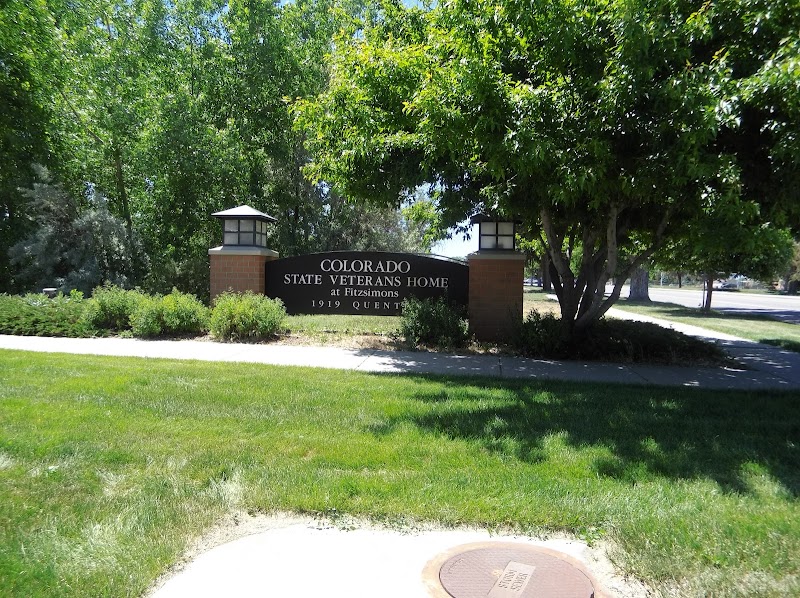
VETERANS COMMUNITY LIVING CENTER AT FITZSIMONS

1919 QUENTIN ST, AURORA, CO 80045 (720) 857-6400
For profit - Individual 180 Beds Independent Data: November 2025 2 Immediate Jeopardy citations
Trust Grade
11/100
#126 of 208 in CO
Last Inspection: November 2024

Within standard 12-15 month inspection cycle. Federal law requires annual inspections.

Overview

The Veterans Community Living Center at Fitzsimons has received a Trust Grade of F, indicating significant concerns regarding safety and care. Ranking #126 out of 208 facilities in Colorado places it in the bottom half, while its county rank of #7 out of 14 shows that there are only a few options available locally that perform better. Although the facility is improving, as it reduced its issues from 13 to 8 over the past year, it still faces serious challenges, including $103,394 in fines, which is higher than 84% of Colorado facilities. Staffing is a strong point with a 5/5 rating and a turnover rate of 32%, below the state average, ensuring consistency in care. However, alarming incidents have been reported, such as a resident with dementia walking out unsupervised due to a malfunctioning alarm system and critical failures to provide necessary CPR for two residents who were unresponsive. While there are strengths in staffing, these troubling events highlight significant areas for concern.

Trust Score
F
11/100
In Colorado
#126/208
Bottom 40%
Safety Record
High Risk
Review needed
Inspections
Getting Better
13 → 8 violations
Staff Stability
○ Average
32% turnover. Near Colorado's 48% average. Typical for the industry.
Penalties
⚠ Watch
$103,394 in fines. Higher than 76% of Colorado facilities, suggesting repeated compliance issues.
Skilled Nurses
✓ Good
Each resident gets 65 minutes of Registered Nurse (RN) attention daily — more than 97% of Colorado nursing homes. RNs are the most trained staff who catch health problems before they become serious.
Violations
⚠ Watch
25 deficiencies on record. Higher than average. Multiple issues found across inspections.
★★★☆☆
3.0
Overall Rating
★★★★★
5.0
Staff Levels
★★☆☆☆
2.0
Care Quality
★★☆☆☆
2.0
Inspection Score
Stable
2023: 13 issues
2024: 8 issues

The Good

  • 5-Star Staffing Rating · Excellent nurse staffing levels
  • Full Sprinkler Coverage · Fire safety systems throughout facility
  • No fines on record
  • Staff turnover below average (32%)

    16 points below Colorado average of 48%

Facility shows strength in staffing levels, fire safety.

The Bad

3-Star Overall Rating

Near Colorado average (3.1)

Meets federal standards, typical of most facilities

Staff Turnover: 32%

14pts below Colorado avg (46%)

Typical for the industry

Federal Fines: $103,394

Well above median ($33,413)

Significant penalties indicating serious issues

The Ugly 25 deficiencies on record

2 life-threatening 2 actual harm
Nov 2024 8 deficiencies
CONCERN (D)

Potential for Harm - no one hurt, but risky conditions existed

Resident Rights (Tag F0550)

Could have caused harm · This affected 1 resident

**NOTE- TERMS IN BRACKETS HAVE BEEN EDITED TO PROTECT CONFIDENTIALITY** Based on observations, record review and interviews, the facility failed to promote and maintain the resident's dignity for one ...

Read full inspector narrative →
**NOTE- TERMS IN BRACKETS HAVE BEEN EDITED TO PROTECT CONFIDENTIALITY** Based on observations, record review and interviews, the facility failed to promote and maintain the resident's dignity for one (#65) of one resident reviewed for dignity and respect out of 45 sample residents. Specifically, the facility failed to ensure call light was in reach for Resident #65's use with limited range of motion. Findings include: I. Resident #65 A. Resident status Resident #65, age greater 65, was admitted on [DATE]. According to the November 2024 computerized physician orders (CPO), diagnoses included Alzheimer's disease, Parkinson's disease (a disorder of the central nervous system that affects movement, often including tremors) and neurocognitive disorder with lewy bodies (a brain disorder that can lead to problems with thinking, movement, behavior and mood). The 10/15/24 minimum data set (MDS) assessment revealed the resident had moderate cognitive impairments with a brief interview for mental status (BIMS) score of 11 out of 15. He required substantial/maximal assistance with oral hygiene, toileting, showering/bathing, upper and lower body dressing, putting on/taking off footwear and personal hygiene. B. Observations and resident interview Resident #65 was interviewed on 11/18/24 at 3:06 p.m. Resident #65's call light which was a blue flat call light was placed on the tray table. Resident #65 said he was not able to reach his call light. He said his call light was always placed where he could not reach it. Resident #65 attempted to reach for the call light and could not reach it. On 11/20/24 at 2:35 p.m. Resident #65's call light was placed on the tray table which was an arm length away from the resident. Resident #65 was interviewed again on 11/21/24 at 11:25 a.m. Resident #65 said when he needed help he would roll over to his left side and hit the call light button on the wall. He said he would also yell for help. Resident #65 said he has had to wait an hour sometimes before staff would come by to help him. Resident #65 said when he was not able to push his call light made him feel lonely and angry. C. Record review The care plan for activities of daily living (ADL's), revised 10/25/24, documented Resident #65 required total assistance with his ADL's due to diagnoses of Parkinson's disease, history of cerebrovascular accident (stroke) and lewy bodies dementia. Interventions included providing total assistance with bed mobility and a hoyer lift (mechanical lift) and two persons for transfers. D. Staff interviews Registered nurse (RN) #2 was interviewed on 11/21/24 at 11:40 a.m. RN #2 said the call light would be placed according to the resident's mobility. She said she made sure the residents had the call light placed in their hand or clipped it to their clothing. She said she checked in on the residents frequently or every two hours. RN #2 said all the staff were responsible for making sure the call lights were placed where residents could reach them. She said there were different call lights for everyone. She said the residents had the red push button call light or the blue flat call light. She said the staff made accommodations to meet the resident's needs with the different call lights that were available. RN #2 said Resident #65 had limited range of motion and Parkinson's disease. RN #2 said Resident #65 was alert and oriented and able to make his needs known. RN #2 said Resident #65 was not able to reach for things and his call light should be placed on his chest. She said if Resident #65 was not able to reach his call light that he would call out for help. She said Resident #65 should not be rolling over to his left side to push the call light on the wall, because the call light should have been within the resident's reach. Certified nurse aide (CNA) #1 was interviewed on 11/21/24 at 12:00 p.m. CNA #1 said call lights should be within reach of the residents at all times. She said all staff were responsible for making sure call lights were in reach for all residents. CNA #2 said Resident #65 was able to use his right hand. She said Resident #65 was able to reach his tray table with his right hand. She said Resident #65 preferred to have his call light on the tray table so that was where she placed it. She said Resident #65 did not like things to be put on his stomach. She said she was not aware of Resident #65 rolling over to his left side to hit the call light on the wall. She said Resident #65 did not call out for help very often. The assistant director of nursing (ADON) was interviewed on 11/21/24 at 4:28 p.m. The ADON said there was not a specific place to place the call light. She said call lights should be within the reach of the residents. She said every resident was different and some residents preferred to have their call light on their tray table, attached to their pillow or bedside table. She said residents with limited range of motion should have their call light within reach, attached to their blanket or by their hand. She said all of the staff who were caring for the resident were responsible for making sure call light was within reach. The ADON said Resident #65 had left sided weakness. She said all of his items should be placed on his right side. She said if the call light was placed on Resident #65's right side that he would be able to reach it. She said Resident #65's call light should be attached to his bedside table as he could extend his right arm to reach it. She said the call light could also be attached to the edge of the mattress or hooked on the right side of his bed. She said Resident #65 could reach for the call light if placed on the tray table. She said she did not think the call light was out of reach for Resident #65. She said Resident #65 rolling to his left side to hit the call light on the wall was not an appropriate way to use the call light, because the call light should have been within the resident's reach.
CONCERN (D)

Potential for Harm - no one hurt, but risky conditions existed

Quality of Care (Tag F0684)

Could have caused harm · This affected 1 resident

**NOTE- TERMS IN BRACKETS HAVE BEEN EDITED TO PROTECT CONFIDENTIALITY** Based on record review, observation and interviews, the facility failed to ensure residents received treatment and care in accor...

Read full inspector narrative →
**NOTE- TERMS IN BRACKETS HAVE BEEN EDITED TO PROTECT CONFIDENTIALITY** Based on record review, observation and interviews, the facility failed to ensure residents received treatment and care in accordance with professional standards of practice for one (#65) of three residents reviewed out of 45 sample residents. Specifically, the facility failed to ensure a certified nurse aide (CNA) reported Resident #65's new skin alterations timely. Findings include: I. Resident #65 A. Resident status Resident #65, age greater than 65, was admitted on [DATE]. According to the November 2024 computerized physician's orders (CPO), diagnoses included Alzheimer's disease, Parkinson's disease (a disorder of the central nervous system that affects movement, often including tremors) and neurocognitive disorder with lewy bodies (a brain disorder that can lead to problems with thinking, movement, behavior and mood). The 10/15/24 minimum data set (MDS) assessment revealed the resident had moderate cognitive impairments with a brief interview for mental status (BIMS) score of 11 out of 15. He required substantial/maximal assistance with oral hygiene, toileting, showering/bathing, upper and lower body dressing, putting on/taking off footwear and personal hygiene. The MDS assessment documented Resident #65 was at risk for developing pressure ulcers. B. Observations and interviews On 11/21/24 at 10:05 a.m. a wound observation was completed with registered nurse (RN) #1 and the unit manager (UM). Resident #65 was repositioned to the left side and his brief was removed. The dressing was removed, a thick cream and powder was observed over bilateral buttocks. There were several small excoriated, shallow abrasion appearing areas were noted over Resident #65's left and right buttock. RN #1 and the UM said they were not aware of Resident #65's new skin issue. -However, the resident's new skin issues were noted prior to the observation by a CNA (see the UM's interview below). D. Record review The care plan for skin, initially initiated on 1/12/24, and revised on 11/21/24 documented, Resident #65 had a history of shearing between buttocks and moisture associated skin damage (MASD) to bilateral buttocks. Interventions included alternating pressure air therapy (APM) two mattress to promote skin integrity, providing; frequent repositioning as the resident would allow, observing skin weekly and, notifying the medical doctor (MD) if any changes in skin integrity. On 11/21/24, interventions were added was to include providing treatment to buttocks as ordered, having the wound doctor to follow up weekly and notifying the MD as needed if no improvement. The November 2024 CPO revealed the resident had a physician's order for triad hydrophilic wound dressing external paste (wound dressings) apply to buttocks topically two times a day, ordered on 10/18/24. The 11/19/24 weekly skin assessment documented Resident #65's skin was dry and warm to a touch, fair turgor, the left thigh donor site was okay, no drainage or discoloration was noted. Observation of skin at the sacrum/coccyx/ischial pressure areas documented intact, triad paste was applied liberally during incontinence care. II. Staff interviews Registered nurse (RN) #1 was interviewed on 11/21/24 at 11:48 a.m. RN #1 said the certified nurse aides (CNA) reported any new skin conditions to the nurse on duty. She said she would call and notify the UM and the UM would see the resident to address the concern. She said she or the UM would notify the wound doctor of the new issues. She said the wound doctor came in every week to check wounds. RN #1 said the nurses assessed the resident's skin every week or twice a week. She said when the residents received a shower CNAs should be assessing the resident's skin. RN #1 said Resident #65 had MASD on his bottom. She said she checked Resident #65 two days ago (11/19/24) and his bottom was intact. She said Resident #65 has had ongoing issues with his skin where his skin would heal and then the areas would come back. She said Resident #65's skin was monitored during incontinence care. She said resident #65's skin was assessed twice or more during a shift and depending on how often he needed to be changed. RN #1 said Resident #65 was alert and oriented. RN #1 said Resident #65 did not tolerate pain and would let staff know if he was experiencing pain. She said Resident #65 did not report having any pain or discomfort on his bottom. She said the staff repositioned Resident #65 every two hours. CNA #2 was interviewed on 11/21/24 at 12:06 p.m. CNA #2 said if she saw any problems or changes in a resident's skin she would report the changes to the nurse on duty. She said she always let the nurse know of any changes in skin conditions. CNA #2 said she knew Resident #65 had an opened area on his bottom. CNA #2 said sometimes Resident #65's skin looked red and other times it looked fine. She said cream was applied to Resident #65's bottom every time after incontinence care was provided. She said Resident #65's skin was checked at least three times a shift. The UM was interviewed on 11/21/24 at 3:28 p.m. The UM said the nurses were responsible for following the physician's orders of putting the cream on Resident #65's bottom. The UM said if the CNAs were changing the residents and saw any issues they would call the nurse and let them know. The UM said today (11/21/24) Resident #65 was noted to have MASD on his bottom. The UM said she called the doctor and the daughter to notify them of the skin issues. The UM said she did education with her staff on timely reporting of wound/pericare. The UM said she knew the nursing staff were following the order to apply triad cream twice a day, but did not know how bad the skin had become. The UM said the staff did not report to her how bad it was. The UM said she provided education to the CNAs regarding reporting skin issues to the nurses immediately. The UM said she did not know how Resident #65's skin issues were not reported to the nurse immediately upon the CNA discovering the area. The assistant director of nursing (ADON) was interviewed on 11/21/24 at 4:40 p.m. The ADON said Resident #65 had weekly assessments done to monitor his skin. She said the staff would have found out if Resident #65 was having issues during his weekly skin assessments. The ADON said the CNA who was providing care should have seen the skin wound and reported it the UM right away. She said Resident #65's last skin observation was on 11/19/24. She said the weekly skin assessment did not report Resident #65 having any issues going on at that time. III. Facility follow up On 11/21/24 at 11:30 a.m. the UM provided documentation on timely reporting of wound/pericare that two CNAs were given and received education on. It read in pertinent part, During pericare, please gently wipe the skin and dab, especially after bowel movement, most of our resident's skin are fragile and thin and can easily rub off and be open. If you notice any open area, notify the nurse right away and the nurse would notify the medical doctor and family. Treatment order should be put in place and monitored as ordered until resolved. Open wounds could be painful, lead to infection and could be fatal if not treated in a timely manner.
CONCERN (D)

Potential for Harm - no one hurt, but risky conditions existed

Deficiency F0688 (Tag F0688)

Could have caused harm · This affected 1 resident

**NOTE- TERMS IN BRACKETS HAVE BEEN EDITED TO PROTECT CONFIDENTIALITY** Based on record review and interviews, the facility failed to ensure one (#45) of one resident, out of 45 sample residents, with...

Read full inspector narrative →
**NOTE- TERMS IN BRACKETS HAVE BEEN EDITED TO PROTECT CONFIDENTIALITY** Based on record review and interviews, the facility failed to ensure one (#45) of one resident, out of 45 sample residents, with limited range of motion (ROM) received appropriate treatment and services to prevent further decrease in ROM. Specifically, the facility failed to ensure the physician's order for Resident #45 to use the facility's exercise bike was followed. Findings include: I. Resident #45 A. Resident status Resident #45, age less than 65, was admitted on [DATE] and readmitted on [DATE]. According to the November 2024 computerized physician's orders (CPO), diagnoses included multiple sclerosis (degenerative muscle disease), mild cognitive impairment of unknown origin, major depressive disorder, adjustment disorder with mixed anxiety and depressed mood and morbid obesity. The 9/16/24 minimum data set (MDS) assessment revealed the resident was cognitively intact with a brief interview for mental status (BIMS) score of 14 out of 15. She was dependent on staff for total assistance with toileting hygiene, transfers, dressing, bathing. She needed maximal assistance rolling left and right, and moderate assistance with personal hygiene. She was independent in eating and oral hygiene. The MDS assessment indicated the resident required a hoyer lift (mechanical lift) with two-person assist for transfers. B. Resident interview Resident #45 was interviewed on 11/19/24 at 1:12 p.m. She said she had difficulty bending and flexing both of her knees. Resident #45 said the staff did not assist her with ROM exercises. She said she wanted to get on the exercise bike. She said she was told by the therapy team that she was not cleared nor had a physician's order to use the exercise bike. C. Record review A physician's order, dated 9/6/24, documented Resident #45 was to use the facility's bike for knee pain. The order did not specify how frequently this should occur, or if staff assistance was required to assist her. A physician's order, dated 5/28/24, documented the discharge of Resident #45 from physical therapy. It documented Resident #45 would participate in her updated facility maintenance plan with restorative nursing three to five times weekly to maintain lower extremity strength and mobility. A fall care plan, initiated on 5/6/21 and revised 6/16/22, documented Resident #45 was at risk for falls related to gait/balance problems due to multiple sclerosis. Pertinent interventions included restorative occupational therapy (OT) exercises one to three times weekly as tolerated, and restorative physical therapy (PT) exercises three to [NAME] times weekly. A review of Resident #45's restorative facility maintenance plan task, dated 10/22/24 to 11/20/24 documented she was actively receiving restorative physical and occupational therapy approximately three to five times weekly. -No documentation in Resident #45's care plan found discussing her potential risk for limited ROM secondary to diagnoses of multiple sclerosis and morbid obesity. II. Staff interviews RN #1 was interviewed on 11/21/24 at 12:03 p.m. RN #1 said Resident #45 had limited ROM in upper and lower extremities due to her diagnosis of multiple sclerosis. RN #1 said Resident #45 did go for restorative therapy services, however, he was unsure what services she actually received. RN #1 said the facility's therapy gym did have a hoyer lift (mechanical lift) and two different types of exercise bikes for residents to use. The physical therapist (PT) was interviewed on 11/21/24 at 1:23 p.m. The PT said that the exercise bikes can only be used by residents with a physician's order. He said the residents were unable to use the exercise bikes if they needed a hoyer lift to get onto the exercise bike and that alternative exercise options were utilized instead. The PT said when residents were screened for therapy services, they went through an assessment to determine appropriate exercises. He said once the assessment was completed , a resident-specific facility maintenance plan was generated to instruct the restorative services team on what therapies the resident should receive. He stated that Resident #45 had completed an assessment and that a facility maintenance plan had been generated for her. The restorative manager (RM) was interviewed on 11/21/24 at 1:30 p.m. The RM said the facility's therapy department created a ROM program for residents and decided what treatments and exercises are most suitable for them. The RM confirmed that residents needing a hoyer lift could not use the facility's exercise bikes. She said that the facility staff were limited due to the time constraints of therapy treatments and treatment sessions were 15 minutes each. The RM said Resident #45's facility maintenance plan instructed her to use the standing table for approximately 10 to 15 minutes. She said Resident #45 actively participates in therapies approximately 75 to 100% of the time. The RM said Resident #45 was potentially deconditioning due to her disease process and weight gain.
CONCERN (D)

Potential for Harm - no one hurt, but risky conditions existed

Deficiency F0806 (Tag F0806)

Could have caused harm · This affected 1 resident

**NOTE- TERMS IN BRACKETS HAVE BEEN EDITED TO PROTECT CONFIDENTIALITY** Based on observations, record review and interviews, the facility failed to provide food that accommodated resident preferences ...

Read full inspector narrative →
**NOTE- TERMS IN BRACKETS HAVE BEEN EDITED TO PROTECT CONFIDENTIALITY** Based on observations, record review and interviews, the facility failed to provide food that accommodated resident preferences for one (#10) of one resident out of 45 sample residents. Specifically, the facility failed to provide food choices according to Resident #10's preference. Findings include: I. Resident #10 A. Resident status Resident #10, age greater than 65, was admitted on [DATE]. According to the November 2024 computerized physician orders (CPO), diagnoses included unspecified osteoarthritis (degenerative bone and joint disease), dementia and protein-caloric malnutrition. The 9/11/24 minimum data set (MDS) assessment revealed the resident had moderate cognitive impairments with a brief interview for a mental status (BIMS) score of six out of 15. He required assistance with toileting, showers, dental hygiene, dressing, and personal hygiene. Resident #10 also required set-up assistance for his meals. B. Resident interview Resident #10 was interviewed on 11/20/24 at 10:15 a.m. Resident #10 said he did not like the food the facility served. He said he did not receive the food which he liked to eat. He said he liked refried beans, possole and other cultural Mexican food. Resident #10 said he was not asked what he wanted to eat and the staff just brought him his meals. C. Record review The care plan, dated 11/20/24, documented the resident was at risk for nutritional weight loss related to protein caloric malnutrition. Pertinent approaches included offering food choices, cutting up the resident's food and providing hot sauce with meals. The resident's meal ticket documented two hot sauce packets were to be served with his meal tray and a coke with each meal. The meal ticket identified the resident liked Mexican food and to serve it to the resident when on the menu. D. Observations On 11/19/24 at 2:09 p.m. the resident received his meal which consisted of a grilled cheese sandwich and an applesauce. He did not receive any hot sauce with his meal. The resident was sleeping when his meal was served, and when he awoke he was assisted up into his wheelchair. The unidentified certified nurse aide (CNA) left the room and then returned with the grilled cheese sandwich. -The unidentified CNA did not ask the resident what he wanted to eat and brought him a grilled cheese. On 11/20/24 at 6:06 p.m. the dinner meal was served. He was served chicken nuggets cut up with gravy over the top of french fries and a dinner roll. The resident did not receive a coke or hot sauce as indicated on his meal ticket. E. Staff interview The registered dietitian (RD) was interviewed on 11/22/24 at approximately 3:00 p.m. The RD said Resident #10 was at nutritional risk. She said the resident liked to eat Mexican food. She said that he should be offered Mexican food a few times a week. She said the hot sauce should be served with each meal. The dietary manager (DM) was interviewed on 11/22/24 at 6:30 p.m. The DM said the resident did like to eat Mexican food. He said that the menu did have Mexican food weekly. He said hot sauce was available in the dining room. The DM reviewed the meal ticket and confirmed it documented he was to receive two hot sauces and also a coke were to be served with his meal.
CONCERN (E) 📢 Someone Reported This

A family member, employee, or ombudsman was alarmed enough to file a formal complaint

Potential for Harm - no one hurt, but risky conditions existed

Free from Abuse/Neglect (Tag F0600)

Could have caused harm · This affected multiple residents

**NOTE- TERMS IN BRACKETS HAVE BEEN EDITED TO PROTECT CONFIDENTIALITY** VI. Incidents of sexual abuse between Resident #45 and Resident #92 A. Incident on 5/29/24 The facility's abuse investigation, d...

Read full inspector narrative →
**NOTE- TERMS IN BRACKETS HAVE BEEN EDITED TO PROTECT CONFIDENTIALITY** VI. Incidents of sexual abuse between Resident #45 and Resident #92 A. Incident on 5/29/24 The facility's abuse investigation, dated 5/29/24, documented the allegation occurred on 5/29/24 at approximately 2:00 a.m. It documented Resident #92 entered Resident #45's room while she was sleeping and began touching her genital area. It documented that the alleged incident lasted approximately five minutes, and Resident #45 did not consent or want the interaction. The investigation documented the social services director (SSD), the unit manager (UM) and the social services assistant (SSA) interviewed Resident #45 on 5/29/24 at 2:15 p.m. It documented that Resident #92 went into Resident #45's room and woke her up by touching her vaginal area. It documented Resident #45 asked Resident #92 what are you doing? and Resident #92 proceeded to touch her. It documented that Resident #45 said the incident lasted approximately five minutes and that she did not consent to the interaction or want it. Resident #45 was offered to go to the hospital for further evaluation and she agreed. The investigation documented the SSA and the deputy director (DD) interviewed Resident #92 on 5/30/24 at 11:15 a.m. It documented Resident #92 said he went into Resident #45's room, reached down there and then she woke up. Resident #92 said he touched Resident #45 for a couple of minutes and could not hear Resident #45 talk because he was not wearing his hearing aids. Resident #92 said Resident #45 did not move her hands or attempt to move his arm during the incident. He said Resident #45 normally liked when he touched her and that he had not acted differently than he had with her before. He also said he would not stop there again. The investigation included a statement, dated 5/31/24, from certified nurse aide (CNA) #8. CNA #8 said she had not witnessed anything different or concerning about Resident #45 and Resident #92. She said she heard registered nurse (RN) #3 ask Resident #92 why he was sneaking out of that room in the night. The investigation included a progress note, date unspecified, in which RN #3 documented she saw Resident #92 coming out of Resident #45's room and that he got a little nervous when he saw RN #3. RN #3 documented Resident #92 kept hushing her and later asked if she was going to inform Resident #45's roommate of what RN #3 saw. RN #3 documented she would report the incident to the day shift staff for them to notify the social services department. The investigation documented that the police, adult protective services (APS), the resident's families, the ombudsman, the resident's providers and the special victims unit were notified of the alleged incident. The investigation documented the plan of action included moving Resident #92 to a different unit and floor. It also documented Resident #92 was placed on one-to-one observation with 15-minute checks. It also included obtaining orders to send Resident #45 to the emergency room for further evaluation. The investigation documented Resident #45 had a sexual assault nurse examination completed in the emergency room. There was no documentation in the investigation indicating whether the abuse was substantiated or not. -However, sexual abuse occurred due to Resident #92's willful touching of Resident #45's genital area without her consent. B. Incident on 9/16/24 The investigation report, dated 9/16/24, documented the alleged event occurred on 9/16/24 at 10:00 a.m. It documented the activities director (AD) observed Resident #45 and Resident #92 leaving an activity. The AD observed Resident #92 going up to Resident #45 and touching her breasts. The AD told Resident #92 to stop the inappropriate behavior in a public area and he did. The residents were immediately separated. The police, APS, the ombudsman, the resident's family and the residents' providers were notified of the alleged incident. The investigation documented Resident #45 was interviewed on 9/16/24 at 12:20 p.m. by the SSD, the SSA and the UM. Resident #45 said Resident #92 propelled his wheelchair to her and promptly grabbed her breast with his hand. She said she did not ask him to do this and told him no, not here, after which he stopped. It documented that no changes in Resident #45's behavior were observed. The investigation documented Resident #92 was interviewed on 9/16/24 at 2:00 p.m. by the SSD and the SSA. It documented Resident #92 initially said no when asked if anything unusual occurred after the facility activity, however, he later admitted to touching Resident #45 when he was informed that facility staff knew about the incident. It documented Resident #92 got defensive when informed Resident #45 did not provide consent and that she did not like being intimately touched in public areas. It documented the SSD educated Resident #92 on the definition of consent. The investigation documented the AD was interviewed on 9/16/24 at 1:16 p.m. The AD said she observed Resident #92 roll up to Resident #45 without saying anything and touch her breasts. The AD said she told Resident #92 to keep his hands to himself and he stopped touching Resident #45 after the AD repeated herself a second time. The investigation documented the plan of action included immediately educating Resident #92 about consent, boundaries and inappropriate behaviors in public areas. It also documented Resident #92's intimacy care plan was updated to reflect he would obtain staff assistance to ensure any future intimate encounters were consensual, safe and private. The investigation concluded the abuse was substantiated. VII. Resident #92 - assailant A. Resident status Resident #92, age greater than 65, was admitted on [DATE]. According to the November 2024 computerized physician orders (CPO), diagnoses included major depressive disorder, type 2 diabetes mellitus, dementia, spinal stenosis (narrowing of the spinal canal that puts pressure on the spinal cord), anxiety disorders and obesity. The 9/9/24 minimum data set (MDS) assessment revealed the resident was moderately cognitively impaired with a brief interview for mental status (BIMS) score of eight out of 15. He was dependent on staff for total assistance for oral and toileting hygiene, dressing and all transfers. He needed moderate assistance with bathing and moving from a lying to a sitting position, and was independent with eating and moving left to right in bed. The MDS assessment documented the resident had a hearing aide or other hearing appliance. B. Record review The behavior care plan, initiated 5/29/24 and revised 9/17/24, revealed Resident #92 had previously had an intimate relationship with a female resident on the second floor. The care plan documented that due to an allegation by the female resident that his sexual behavior toward her in May 2024 was not wanted at the time it occurred, he was moved to the first floor. The care plan indicated Resident #92 had some decline in cognition due to dementia and he might have been experiencing disinhibition of sexual expression as a result. The care plan documented Resident #92 touched the female resident in a nonconsensual sexual manner on 9/16/24. The care plan documented Resident #92 and the female resident had expressed a desire to have intimate encounters at times in a private area and not in the female resident's room. The care plan documented Resident #92 needed reminders of the environment in which he could have consensual intimate encounters that were appropriate and safe such as a private area, not in a public place and away from the female resident's room. Pertinent interventions included discussing Resident #92's behavior with him and explaining or reinforcing what behavior was appropriate if he wished to have an intimate experience with the female resident, such as a private place to meet, obtaining consent from the female resident and honoring her choice if she did not wish to engage in an intimate encounter at any given time (initiated 5/29/24 and revised 9/18/24), staff to address the resident's needs for intimacy and sexual expression in safe and socially appropriate way (initiated 5/31/24) and encouraging the resident to approach social services or nursing staff if he needed assistance locating a safe and private area to engage in an intimate encounter with the female resident (initiated 9/18/24). The cognitive deficit care plan, initiated 9/17/24, documented Resident #92 had a decline in his cognition due to his diagnosis of dementia and he had slight difficulty recalling information at times. He forgot at the moment but might recall it later. He needed staff to provide reminders of information that was important to him. Pertinent interventions included encouraging the resident to seek out staff if he needed information about recent events and appointments. An additional behavior care plan, initiated 9/19/24, documented Resident #92 had used sexual gestures with female staff showing his middle finger and asking if staff wanted some and had tried to hold the hands of staff when they administered him medications or other items. He had been identified as having poor impulse control due to his progression of dementia and needed reminders of the staff's role and to have limits set with sexual behavior. He was able to understand communication from others despite his cognitive deficit. Pertinent interventions included staff were to inform Resident #92 what care was being provided so he knew what to expect, if Resident #92 used sexually-suggestive language or tried to hold staff's hand in an inappropriate manner, staff was to tell the resident in a calm way that staff's role was to address his care needs and request he refrain from using this language or trying to touch staff in a sexual manner (initiated on 11/1/24). Resident #92's sexual intimacy capacity for consent assessment was completed on 5/9/24. The assessment documented the resident showed the ability to answer yes/no questions accurately, was physically able to leave an undesirable situation and verbally or non-verbally able to alert others when needing help. The interaction pattern documented his interactions with resident #45 as friendly. -However, the facility failed to complete an updated assessment after it was noted the resident had a decline in cognition due to his diagnosis of dementia. A nurse progress note, dated 5/29/24 at 6:43 a.m., documented Resident #92 was seen coming out of Resident #45's room. Resident #92 got nervous when he saw the nurse and kept hushing her. The note said the nurse would report the incident to the day shift for them to notify social services notification. A nurse progress note, dated 5/29/24 at 4:23 p.m., documented the UM and the director of nursing (DON) discussed the incident with Resident #92. He was notified that they were told he inappropriately touched Resident #45. Resident #92 said it was true and he would not do it again. The social worker, Resident #92's power of attorney and his provider were notified. Fifteen minute checks were started. -A review of Resident #92's electronic medical record (EMR) did not reveal documentation regarding the incident on 9/16/24. VIII. Resident #45 - victim A. Resident status Resident #45, age less than 65, was admitted on [DATE] and readmitted on [DATE]. According to the November 2024 CPO, diagnoses included multiple sclerosis (degenerative muscle disease), mild cognitive impairment of unknown origin, major depressive disorder, adjustment disorder with mixed anxiety and depressed mood and morbid obesity. The 9/16/24 MDS assessment revealed the resident was cognitively intact with a BIMS score of 14 out of 15. She was dependent on staff for assistance with toileting hygiene, transfers, dressing and bathing. She was independent in eating and oral hygiene. B. Resident interview Resident #45 was interviewed on 11/19/24 at 12:30 p.m. Resident #45 said Resident #92 went into her room around 2:00 a.m., the night of the incident and inappropriately touched her genital area. She said she did not feel afraid of Resident #92 and said she told him no and to get out when she caught him. She said a nurse saw Resident #92 leaving her room and the police were notified. Resident #45 said she did not want to press charges because he's a good guy, but she did want Resident #92 to be reprimanded. C. Record review The behavior care plan, initiated 4/21/21 and revised 6/4/24, documented Resident #45 was at risk for financial exploitation due to her previously sending money to men overseas. The care plan also documented she was involved in a three-way relationship with herself and two peers and all had consented to sexual intimacy. Pertinent interventions included discussing Resident #45's behavior with her and explaining or reinforcing why the behavior was inappropriate or unacceptable and educating Resident #45 to yell for help, use her call light and report any non-consensual sexual behavior towards her. Resident #45's cognitive decline care plan, initiated 4/23/21 and revised 8/11/21, documented she had impaired cognitive functioning due to her diagnosis of multiple sclerosis and she had difficulty making decisions and some short-term memory issues. Pertinent interventions included communicating with Resident #45 and her guardian regarding the resident's capabilities and needs, cueing, reorienting and supervising as needed and presenting just one thought, idea, question or command to the resident at a time. A sexual intimacy capacity for consent assessment form was completed on 5/9/24. The assessment documented the resident showed the ability to answer yes/no questions accurately, was physically able to leave an undesirable situation and verbally or non-verbally able to alert others when needing help. The interaction pattern documented she had no concerns with her interactions with Resident #92, however, she was having fewer interactions with him because she did not want to upset her other partner/roommate. A second sexual intimacy capacity for consent assessment form was completed on 9/18/24. The assessment documented the resident showed the ability to answer yes/no questions accurately, was physically able to leave an undesirable situation and verbally or non-verbally able to alert others when needing help. The interaction pattern documented her interactions with resident #92 as friendly, and that both residents wished to be friends and have intimate encounters. However, Resident #45 said she wanted parameters in place which included no sexual activity in a public place, no surprises and for her to give consent. An interdisciplinary team (IDT) risk management review note, dated 5/29/24 at 2:00 a.m. documented Resident #45 was inappropriately touched by a male resident. The resident's provider and guardian were notified and physician's orders were obtained to send Resident #45 to the emergency room for evaluation and treatment. It also documented that interventions included placing Resident #45 on another unit for her safety upon return from the emergency room. -Resident #45 had a sexual assault nurse examination completed in the emergency room. She was discharged back to the facility with orders to continue previously ordered antibiotic therapy for a urinary tract infection. -A review of Resident #45's EMR did not include documentation regarding the incident on 9/16/24. IX. Staff interviews The SSD and the SSA were interviewed together on 11/21/24 at 3:05 p.m. The SSD said the situation between Resident #45 and Resident #92 was very complex. She said Resident #92 was moved to a different unit and floor after the incident in May 2024. She said Resident #45 was seen making contact with Resident #92 after the May 2024 incident. The SSD said Resident #45 was not great at setting boundaries for herself and that she encouraged both residents to remain apart, however, they both voiced they still wanted to be friends. The SSD said she was unsure if Resident #92 fully understood the provided education on boundaries and consent. The SSA said Resident #45 was interested in a romantic relationship with Resident #92, however, she was not okay with surprise interactions and him not asking beforehand. He said he was unsure if Resident #92 fully understood the education staff provided on boundaries and consent. The NHA and the divisional social worker (DSW) were interviewed together on 11/22/24 at 5:02 p.m. The NHA and the DSW both said Resident #45 and Resident #92 considered themselves boyfriend and girlfriend before the incident on 5/29/24 and it was the first time he approached her at night. The DSW said Resident #45 was not cognitively impaired. She said she could be manipulative. She said Resident #92 was less cognitively intact and he was intermittently confused. She said Resident #92 had sexual impulses and poor impulse control due to cognitive decline. She said he was receptive to education regarding consent prior to contact with others. The DSW said that the facility's sexual intimacy capacity for consent assessment form did not need to be signed by residents and was based on the resident's observed body language, the providers' input and the residents' statements. The DSW said the assessments were filled out by the SSD and the unit social worker and were completed quarterly or for a change of condition. She did not specify why a new assessment was not completed for Resident #92 after the incident in May 2024 or when his cognitive decline was observed. The NHA said Resident #92 was moved to a separate unit immediately after the first incident on 5/29/24. She said it was easier for staff to identify when Resident #92 was going to a different unit and help ensure Resident #45's safety. She said it had been more effective having both residents on separate floors and that new staff were alerted to potential issues when oriented to the floor. She said it was ultimately the nurse's responsibility to alert staff of any issues before their shift. Based on observations, record review and interviews, the facility failed to ensure four (#127, #60, #45 and #92) of five residents reviewed for abuse out of 45 sample residents were kept free from abuse. Specifically, the facility failed to: -Prevent resident to resident physical abuse between Resident #127 and Resident #60, who had a known history of physically aggressive behaviors towards other residents and staff who he perceived to be in his personal space and had documented recent physically aggressive behaviors with staff; -Have timely effective interventions to protect Resident #127, who had a history of physical aggression and wandering into other residents' rooms and invading their personal space; and, -Prevent resident-to-resident sexual abuse of Resident #45 by Resident #92 on 5/29/24 and 9/16/24. Findings include: I. Facility policy and procedure The Abuse policy and procedure, revised 2/21/23, was provided by the nursing home administrator (NHA) on 11/21/24 at 1:22 p.m. It revealed in pertinent part, Physical abuse includes, but is not limited to hitting, slapping, punching, biting and kicking. Understanding behavioral symptoms of residents that may increase the risk of abuse and neglect such as: aggressive and/or catastrophic reaction of residents; wandering or elopement type behaviors; resistance to care; outbursts or yelling out; and, difficulty in adjusting to new routines or staff. Residents at risk for abusive situations are identified and appropriate care plans are developed. II. Facility investigation of abuse between Resident #60 and Resident #127 on 11/17/24. The 11/17/24 abuse investigation documented an unwitnessed resident-to-resident physical altercation between Resident #60 and Resident #127. The staff observed the two residents on the floor fighting in the television room with one another after lunch. The staff separated the two residents and Resident #127 said that Resident #60 had hit Resident #127 on the head with his shoes and Resident #127 hit Resident #60 back. Resident #127 sustained skin tears to his forehead and left hand. The investigation indicated the residents were separated and placed on 15-minute checks. It indicated the on duty nurse did a skin assessment and provided first aid to Resident #127 for his skin tears on his face and left hand. The facility substantiated the allegation of physical abuse at the conclusion of the internal investigation. III. Resident #60 A. Resident status Resident #60, age greater than 65, was admitted on [DATE]. According to the November 2024 computerized physician orders (CPO), diagnoses included Parkinson's disease (degenerative disease that causes involuntary movements), dementia with Lewy bodies and post traumatic stress disorder (PTSD). The 8/22/24 minimum data set (MDS) assessment revealed the resident had severe cognitive impairments with a brief interview for mental status (BIMS) score of three out of 15. He required substantial/maximal assistance with toileting, partial/moderate assistance with personal hygiene, set up assistance with eating and was independent with bed mobility and transfers. The assessment did not indicate the resident exhibited physical behaviors towards others. B. Record review The trauma informed (PTSD) care plan, initiated 11/21/19 and revised 8/23/24, indicated Resident #60 had dementia with behavioral disturbances and had a history of physical altercations with peers and had been moved to three different units. It indicated he was at increased risk for physical altercations related to his increasingly poor impulse control and frustration tolerance. It indicated a trigger was someone invading his space or room. Interventions included administering antipsychotic medication, monitoring for behaviors, notifying the physician for increasing behaviors, monitoring the resident with other peers and intervening if interaction becomes aggressive, avoiding placing with a roommate. The physical aggression care plan, initiated 9/22/22 and revised 11/17/24, indicated that Resident #60 had the potential of being physically aggressive towards the staff and other residents. It indicated on 1/25/23 he had a physical altercation with another resident when Resident #60 found the other resident in his bed, on 7/22/23 Resident #60 went into another resident's room had a physical altercation when he thought the other resident was in his house and on 4/22/24 Resident #60 raised his fist and threatened another resident. Interventions included analyzing and documenting what triggers and deescalates behaviors (initiated 9/22/22), providing physical and verbal cues to alleviate anxiety, goals for more pleasant behavior (initiated 9/22/22), monitoring and reporting the resident causing danger to self and others (initiated 9/22/22), redirecting the resident to stay near nurse station and show his room if needed (initiated 11/17/24), reminding the resident to ask for assistance to get peers out of his room, call light with sign to call for assistance when unwanted visitors found in his room, velcro stop sign across his door (initiated 9/22/22), providing a poster with his name redirecting to his room (initiated 7/24/23). Behavior monitoring of 15-minute checks for 72 hours initiated on 1/26/23, 7/24/23 and 11/17/24. -A review of Resident #60's comprehensive care plan did not reveal personalized interventions until 7/24/23, after the second documented physical altercation. The facility daily behavior monitoring, from 10/23/24 to 11/20/24, documented Resident #60 had physically aggressive behaviors including yelling/screaming, kicking/hitting, pushing/grabbing, pinching/scratching, biting on 10/31/24, 11/1/24 and 11/17/24. -However, a review of Resident #60's electronic medical record (EMR) did not reveal if the facility's routine daily behavior monitoring was for physically aggressive behaviors directed at staff or other residents. The 10/16/24 nursing progress notes documented Resident #60 hit a staff member and yelled that he needed a court order before receiving any care. He then hit other staff members and refused care from all staff members. The 10/31/24 nursing progress notes documented Resident #60 was resisting care to take off his wet underwear and was hitting, kicking and biting at staff members. The 11/17/24 nursing progress notes documented Resident #60 had an altercation with another resident and hit him on the face. He was to be monitored every 15-minutes for 72 hours. The house supervisor, the physician and the family were notified. IV. Resident #127 A. Resident status Resident #127, age [AGE], was admitted on [DATE]. According to the November 2024 CPO, diagnoses included type 2 diabetes mellitus and PTSD. The 9/30/24 MDS assessment revealed the resident had severe cognitive impairments with a BIMS score of seven out of 15. He required partial/moderate assistance with personal hygiene and was independent with eating, toileting, bed mobility and transfers. The assessment did not indicate the resident exhibited physical behaviors towards others. B. Resident observation and interview On 11/18/24 at 12:01 p.m. Resident #127 was observed with a cut on his left forehead that was covered with steristrips (wound closure strips) and a cut with a bruise on his left hand that was covered with steristrips. Resident #127 was interviewed on 11/18/24 at 3:41 p.m. Resident #127 said on the previous evening a large man reached out and grabbed his hand and hit him in the face. He said the incident made him a little bit afraid and he would defend himself if he had to. He said the police were there to investigate the incident the previous evening. He said he did not remember all the details and did not remember who hit him. C. Record review The wandering care plan, initiated 9/26/24 and revised 10/18/24, indicated Resident #127 wandered in and out of other residents' rooms and significantly intruded on the privacy of others. Interventions included offering pleasant diversion, identifying patterns of wandering and providing structured activities. The physical aggression care plan, initiated 10/22/24 and revised 11/12/24, indicated Resident #127 was at risk for physical aggression due to threatening posture, raising his fists, kicking and pushing staff. Interventions included analyzing circumstances, triggers and what deescalated behavior, observing behaviors with family, providing physical and verbal cues to alleviate anxiety, assisting to set goals for more pleasant behavior, giving choices about care and activities and monitoring for any signs of the resident posing danger to self and others. -A review of Resident #127's comprehensive care plan did not reveal personalized interventions to prevent further abuse from aggression by other residents. The 11/17/24 nursing progress note documented the staff found resident #127 on the floor fighting with another resident. Resident #127 told staff the other resident hit him on the head with his shoes and he hit him back. Resident #127 had a skin tear to the forehead and one on the left hand. The physician, the director of nursing (DON), the police and the NHA were notified. The 11/17/24 nursing progress note documented Resident #127 was on monitoring for a physical altercation with another resident. Steristrips were applied to the left forehead and left hand. V. Staff interviews Certified nurse aide (CNA) #6 was interviewed on 11/21/24 at 9:20 a.m. CNA #6 said Resident #60 and Resident #127 usually got along but on 11/17/24 they were on the ground fighting after lunch. She said Resident #127 was a recent transfer onto the unit due to his wandering. She said Resident #60 did not like anyone in his personal space or his room. She said the staff also kept a big stop sign across Resident #60's room to deter Resident #127 and other residents from going into his room. She said said the stop sign across the door did not stop Resident #127 or other residents from entering the room. She said Resident #127 liked morning activities to keep him busy and he liked conversation with other residents. She said currently both residents were on every 15-minute checks to monitor. Licensed practical nurse (LPN) #1 was interviewed on 11/21/24 at 12:45 p.m. LPN #1 said Resident #60 and Resident #127 were both fighters and Resident #60 could be aggressive. She said both residents were difficult to redirect. She said Resident #60 had other resident-to-resident physical altercations in the past, but she was not sure when or with whom. She said the stop sign across Resident #60's door did not stop Resident #127 or other residents from entering the room. LPN #1 said the only way to keep residents out of rooms was to redirect them away from those rooms. She said both residents were on frequent 15-minute checks for behavior monitoring. She said both residents had been interacting without further aggression since the incident. She said Resident #127 remembered he was in a fight but he did not remember with whom. The NHA was interviewed on 11/21/24 at 5:03 p.m. The NHA said the physical altercation between Resident #60 and Resident #127 happened on 11/17/24. She said it was an unwitnessed altercation and staff was unsure of who initiated the altercation. She said Resident #60 did not remember any details. She said he did have a history of being physically and verbally aggressive with staff and often refused care. She said she was not aware of him becoming physically aggressive with another resident and if he was it was more than a year ago. She said she was not aware Resident #60 did not like other residents in his personal space or room and was not aware that one of the interventions was a stop sign across his door. She said Resident #60 also had a personal history of being a boxer. The NHA said Resident #127 was a recent transfer onto the unit from another facility. She said Resident #127 was upset with being in a new environment and he was unable to smoke. She said those were the only instances of agitation that she was aware of for the resident. She said he was getting better as he was adjusting to his new environment. The NHA said the social worker and the unit manager (UM) were back and were currently still investigating the incident. She said once the investigation was completed and a root cause of the altercation was identified, additional interventions would be put into place. She said proactively, in any resident-to-resident physical altercation, initial interventions would be to separate the residents involved and place them on frequent every 15-minute behavior monitoring to ensure the safety of the residents.
CONCERN (E)

Potential for Harm - no one hurt, but risky conditions existed

Deficiency F0657 (Tag F0657)

Could have caused harm · This affected multiple residents

**NOTE- TERMS IN BRACKETS HAVE BEEN EDITED TO PROTECT CONFIDENTIALITY** VII. Resident #65 A. Resident status Resident #65, age greater than 65, was admitted on [DATE]. According to the November 2024 C...

Read full inspector narrative →
**NOTE- TERMS IN BRACKETS HAVE BEEN EDITED TO PROTECT CONFIDENTIALITY** VII. Resident #65 A. Resident status Resident #65, age greater than 65, was admitted on [DATE]. According to the November 2024 CPO, diagnoses included Alzheimer's disease, Parkinson's disease (a disorder of the central nervous system that affects movement, often including tremors) and neurocognitive disorder with lewy bodies (a brain disorder that can lead to problems with thinking, movement, behavior and mood). The 10/15/24 MDS assessment revealed the resident had moderate cognitive impairments with a BIMS score of 11 out of 15. He required substantial/maximal assistance with oral hygiene, toileting, showering/bathing, upper and lower body dressing, putting on/taking off footwear and personal hygiene. B. Resident interview Resident #65 was interviewed on 11/18/24 at 3:18 p.m. Resident #65 said he developed a pressure sore on his bottom two weeks ago. He said he knew he had a sore on his bottom because the staff were putting cream on his bottom. He said sometimes it hurt and sometimes it did not hurt. C. Record review The November 2024 CPO revealed the resident had a physician's order for triad hydrophilic wound dress external paste (wound dressings), apply to buttocks topically two times a day, ordered on 10/18/24. The care plan for skin, initiated on 1/12/24 and revised on 11/21/24 documented, Resident #65 had a history of shearing between buttocks and moisture associated skin damage (MASD) to bilateral buttocks. Interventions included alternating pressure air therapy mattress to promote skin integrity, providing frequent repositioning as the resident would allow, observing the resident's skin weekly, notifying the medical doctor (MD) if any changes were noted in the resident's skin integrity. On 11/21/24 (during the survey) an intervention was added to include providing treatment to buttocks as ordered, wound doctor to follow up weekly and notifying MD as needed if no improvement. -Review of the resident's comprehensive care plan revealed the facility failed to identify the resident was receiving external paste two times a day. D. Staff interviews The social services director (SSD) and the social services assistant (SSA) were interviewed together on 11/21/24 at 3:14 p.m. The SSD and The SSA said care plans were completed upon admission. The SSD and The SSA said the resident's care plans were updated quarterly and as needed. The SSD and the SSA said depending on the care plan focus, they would assist in making sure they were completed. The SSD said the unit managers, restorative, therapy were responsible for writing the care plans pertinent to their department. The SSD said the nursing staff were responsible for creating care plans specific to the resident's skin conditions. The unit manager (UM) was interviewed on 11/21/24 at 3:28 p.m. The UM said the nurses were responsible for implementing a care plan for the resident's skin. The UM said anybody who noticed issues with the resident's skin could implement a skin care plan and interventions. The UM said all of the nurses could update the care plan especially if there were any new skin issues. The UM said today (11/21/24) there was a MASD wound on Resident #65's bottom. The UM said she called the doctor and the daughter and notified them of the new skin issues. The UM said she did education with her staff on timely reporting of wound/pericare. The UM said she knew nursing staff were following the order to apply triad cream twice a day, but did not know how bad his condition had became. The UM said the nurse did not tell her how bad it was. The UM said she did not know how Resident #65's skin issues were missed. The assistant director of nursing (ADON) was interviewed on 11/21/24 at 4:40 p.m. The ADON said the nursing staff implemented basic care plans upon admission. The ADON said different departments would put in their own care plans. The DON said the UM and the minimum data set coordinator (MDSC) updated the skin care plans. The ADON said updating the care plans was a group effort. The ADON said Resident #65 had a skin care plan in place. She said she was not aware that the care plan was not updated to include the physician's order on 10/18/24. She said she did not know how it was missed. VI. Resident #46 A. Resident status Resident #46, age greater than 65, was admitted on [DATE] and readmitted [DATE]. According to the November 2024 CPO, diagnoses included heart disease, chronic kidney disease stage 3, type 2 diabetes mellitus, post traumatic stress disorder, depressive episodes and anxiety disorders. The 8/23/24 MDS assessment revealed the resident was cognitively intact with a BIMS score of 15 out of 15. He needed supervision with shower transfers and bathing and was independent with all other activities of daily living. The MDS assessment documented the resident received the following medications: antianxiety, antidepressant, opioids and a diuretic. B. Record review A review of Resident #46's November 2024 CPO revealed he was prescribed the following medications: -Apixaban (an anticoagulant) 5 mg tablet to be taken by mouth twice daily, ordered on 8/17/24. -Oxycodone (an opioid medication) 15 mg three times a day, ordered on 10/16/24. -Lorazepam (anti-anxiety medication) 0.5 mg at bedtime, ordered on 8/19/24. -Escitalopram Oxalate (Lexapro an anti-depressant) 20 mg, ordered on 8/17/24. A review of Resident #46's comprehensive care plan revealed the facility failed to include focus care plan areas for the resident's use and monitoring of anticoagulant, opioid, antianxiety and antidepressant medications.Based on observations, record review, and interviews, the facility failed to revise and review comprehensive care plans for five (#122, #104, #81, #46 and #65) of 11 residents reviewed out of 45 total sample residents. Specifically, the facility failed to: -Ensure Resident #122, Resident #104 and Resident #81's care plans were reviewed and revised to reflect the use of an anticoagulant (blood thinner) medication; -Ensure Resident #46's care plan included prescribed medications for antianxiety, opioids, and anticoagulants; and, -Ensure Resident #65's skin treatment care plan was implemented. Findings include: I. Facility policy and procedure The Comprehensive Care Planning policy, 9/30/24, was received from the nursing home administrator on 11/21/24 at 5:00 p.m. It read in pertinent part, It is the policy to develop and implement a comprehensive person-centered care plan for each resident consistent with resident right that includes measurable objects and timeframes to meet a resident's medical, nursing, and mental and psychological needs that are identified in the resident's comprehensive assessment. The comprehensive care plan will be reviewed and revised by the interdisciplinary team after each comprehensive and quarterly minimum data set (MDS) assessment. The comprehensive care plan will include measurable objectives and timeframes to meet the resident's needs as identified in the resident's comprehensive assessment. The objectives will be utilized to monitor the resident's progress. Alternative interventions will be documented as needed. Qualified staff responsible for carrying out interventions specified in the care plan will be notified of their roles and responsibilities for carrying out interventions, initially and when changes are made. II. Resident #122 A. Resident status Resident #122, age [AGE], was admitted on [DATE]. According to the November 2024 computerized physician orders (CPO), diagnoses included personal history of transient ischemic attack (TIA), and cerebral infarction without residual deficits and cerebrovascular disease. The 10/7/24 minimum data set (MDS) assessment revealed the resident was cognitively intact with a brief interview for mental status (BIMS) score of 15 out of 15. The MDS assessment indicated the resident as receiving an anticoagulant. B. Record review The November 2024 physician's orders revealed a physician's order for Apixaban (anticoagulant) 5 milligrams (mg) twice a day for cerebral infarction, ordered on 10/1/24. The care plan last revised on 10/25/24 failed to show a care plan was developed for the use of the anticoagulant. III. Resident #104 A. Resident status Resident #104, age [AGE], was admitted on [DATE]. According to the November 2024 CPO diagnoses included, atherosclerotic heart disease, type 2 diabetes and congestive heart failure. The 10/8/24 MDS assessment revealed the resident was cognitively intact with a BIMS score of 15 out of 15. The MDS assessment indicated the resident was receiving an anticoagulant. B. Record review The November 2024 physician's orders revealed a physician's order for Apixaban (anticoagulant) 5 mg twice a day for aortic aneurysm (a bulge in the heart) with a start date of 10/3/23. The care plan last revised on 10/8/24 failed to show a care plan was developed for the use of the anticoagulant. IV. Resident #81 A. Resident status Resident #81, age greater than 65, was admitted on [DATE]. According to the 10/31/24 clinical care plan, the diagnoses included cerebrovascular accident with seizures, and hypertension. The 7/24/24 minimum data set (MDS) assessment revealed the resident had moderate cognitive impairments with a BIMS score of 10 out of 15. The MDS assessment documented the resident was receiving an anticoagulant. B. Record review The November 2024 physician's orders revealed a physician's order for Apixaban (anticoagulant) 2.5 mg twice a day for cerebral infarction, ordered on 10/21/24. The care plan last revised on 10/31/24 failed to show a care plan was developed for the use of the anticoagulant. C. Staff interviews The assistant director of nursing (ADON) was interviewed on 11/21/24 at 3:45 p.m. The ADON said residents who were prescribed an anticoagulant such as the Apixaban should have a care plan regarding the prescribed medications. She said the care plan was important because the Apixaban was a high risk drug. She said the care plans were a collective work of art which meant that each department was responsible to keep the care plans up to date. The ADON said the care plans were reviewed during the MDS assessment. The ADON said she reviewed the care plans for Resident #122, Resident #104 and Resident #81 and said there were no care plans for the use of the anticoagulant. IV. Facility follow up On 11/21/24 at 5:00 p.m., the ADON said she had the care plans updated and that she had completed an audit on all residents who receive an anticoagulant.
CONCERN (E)

Potential for Harm - no one hurt, but risky conditions existed

Deficiency F0790 (Tag F0790)

Could have caused harm · This affected multiple residents

**NOTE- TERMS IN BRACKETS HAVE BEEN EDITED TO PROTECT CONFIDENTIALITY** Based on observations, record review and interview, the facility failed to assist a resident in obtaining routine or emergency d...

Read full inspector narrative →
**NOTE- TERMS IN BRACKETS HAVE BEEN EDITED TO PROTECT CONFIDENTIALITY** Based on observations, record review and interview, the facility failed to assist a resident in obtaining routine or emergency dental services, as needed for three (#81, #45, and #93) out of 45 sample residents. Specifically, the facility failed to: -Ensure a referral to dental services was completed three days after Resident #81 broke two of his teeth and started to experience pain when he ate; -Ensure Resident #45 was seen by the dentist in a timely manner after the resident reported dental pain; and, -Assist Resident #93 in obtaining new dentures or fixing his broken dentures to address the mouth pain he was having. Findings include: I. Facility policy and procedure The Dental Services policy, last revised on 9/30/24 was received from the nursing home administrator (NHA) on 11/21/24 at 6:36 p.m. The policy read in pertinent part, It is the policy to provide oral health care and dental services to each resident. Dental services will be offered upon admission, annual and as needed and upon request. If the resident is experiencing mouth pain the DON (director of nursing) or designee will be notified. Nursing should complete an oral assessment and notify social services staff to schedule a dental screening if indicated. All assessments should be documented in the medical record. II. Resident #81 A. Resident status Resident #81, age greater than 65, was admitted on [DATE]. According to the November 2024 computerized physician's order (CPO), diagnoses included cerebrovascular accident with seizures, and gastroesophageal reflux disease. The 10/23/24 clinical care plan stated that the resident had impaired cognitive function related to neurological symptoms following CVA. The resident was dependent on staff for oral care. B. Observations and resident interview Resident #81 was interviewed on 11/18/24 at 3:29 p.m. The resident said he had two broken teeth and nobody was helping him to get them fixed. He said they hurt and that he had trouble eating. The resident was observed to have broken teeth on the bottom of his mouth. C. Record review A nurse note, dated 11/8/24 at 11:35 p.m., documented Resident #81 complained of oral pain. The nurse gave him an as-needed oxycodone and notified the social worker via email to schedule an appointment with dental services. -A review of Resident #81's comprehensive care plan did not reveal a person centered focus for the resident's oral needs. -A review of Resident #81's electronic medical record (EMR) did not indicate documentation that the resident had been referred to see the dentist related to his broken teeth. D. Staff interviews The social service director (SSD) and social worker (SW) #1 were interviewed on 11/22/24 at 3:00 p.m. The SSD said she was not aware that a referral to a dentist needed to be completed within three days. The SSD and SW #1 were not aware Resident #81 was having dental pain. The SSD said if the resident had severe pain the resident could be taken to a dentist outside of the facility. The SSD said the facility contracted with a dentist, however, he only came once a month. The SSD said the visiting dentist could not see every resident on the monthly visit. She said Resident #81 was not scheduled for the dentist visits to the facility on 9/16/24 or 11/18/24. II. Resident #45 A. Resident status Resident #45, age less than 65, was admitted to the facility on [DATE] and readmitted to the facility on [DATE]. According to the November 2024 CPO, diagnoses included multiple sclerosis (degenerative muscle disease), mild cognitive impairment of unknown origin, major depressive disorder, adjustment disorder with mixed anxiety and depressed mood and morbid obesity. The 9/16/24 MDS assessment revealed the resident was cognitively intact with a BIMS score of 14 out of 15. She was dependent on staff for assistance with toileting hygiene, transfers, dressing and bathing. She was independent in eating and oral hygiene. No dental concerns were documented in the MDS assessment. B. Resident interview Resident #45 was interviewed on 11/19/24 at 12:46 p.m. Resident #45 said she had dental pain in her upper right jaw. She said she did not have any difficulty eating due to the pain. She said it was painful for her to drink cold water. Resident #45 said she mentioned the dental pain to the facility's staff. She said she never received follow-up from the staff nor had a dental appointment been scheduled. C. Record review A nutrition/dietary note, dated 9/11/24, documented Resident #45 reported a tooth in the upper right side of her mouth was causing discomfort and caused her to chew on the left side of her mouth. It documented that the facility's social services team was notified of Resident #45's pain. A social services note, dated 9/18/24, documented Resident #45's quarterly review. It documented that Resident #45 was cognitively intact and she reported mild depressive symptoms. It documented Resident #45 was to receive counseling and psychiatric medication review services. It also documented that Resident #45 attended facility activities and also enjoyed activities in her room. -The 9/18/24 note contained no documentation regarding Resident #45's dental pain, or indicate a referral had been made for Resident #45 to see the dentist. The ancillary service care plan, initiated on 4/23/21 and revised on 7/22/21, documented Resident #45 would be seen for ancillary services as needed. Pertinent interventions included: encouraging Resident #45 to alert staff when she has an ancillary need. D. Staff interviews The SSD and the social services assistant (SSA) were interviewed on 11/21/24 at 3:05 p.m. The SSA said the residents notified either himself or the nursing staff if they had a dental concern. The SSA said ancillary appointment requests for the residents were scheduled by the transportation department. He said if the transportation department was unable to schedule an appointment for a resident, the facility's social services team would assist in scheduling the resident for an ancillary provider visit at the facility. The SSA said the social services staff would attempt to schedule resident appointments as soon as possible. For emergencies they would try for same-day appointments, and minor concerns/requests would be scheduled for the next available appointment. The SSD confirmed the transportation department scheduled residents for ancillary service appointments. She said this was done to ensure the department had the availability to transport residents to their appointments. The SSD said if there were dental emergencies, the social services team would attempt to get an ancillary provider to go to the facility. The SSD and the SSA said they were not sure why Resident #45 had not been scheduled for a dental appointment since her complaint was first reported in September 2024. III. Resident #93 A. Resident status Resident #93, age [AGE], was admitted on [DATE]. According to the November 2024 CPO, the diagnoses included low back pain and major depressive disorder. The 8/28/24 MDS assessment revealed the resident was cognitively intact with a BIMS score of 15 out of 15. The resident was independent with oral care. The MDS assessment did not indicate if Resident #93 had any dental problems. -However, Resident #93 had missing teeth from his dentures. B. Resident interview and observation Resident #93 was interviewed on 11/21/24 at 12:00 p.m. Resident #93 said he had reported to the staff his mouth discomfort that was caused by his missing front teeth on his dentures and discomfort on the bottom of his mouth. Resident #93 said he was told that he would have to pay $1600 for new dentures and was not provided any other information. Resident #93 was missing front teeth from his upper dentures. C. Record Review The dental care plan, updated on 11/14/24, documented the resident had an upper denture that was in disrepair that did not cause him pain or difficulty chewing. Pertinent interventions were for the resident to see a dentist yearly and to monitor for weight loss. The nurse progress note, dated 8/29/24, documented the social service department was notified Resident #93 needed new dentures due to pain on the bottom of his mouth and the missing teeth on the top. -A review of Resident #93's EMR did not reveal any follow up to the referral for the dentist. D. Staff interview SW #1 was interviewed on 11/21/2024 at 2:21 p.m. SW #1 said he had seen a dentist but there was a $1600 cost, as he was not covered 100% through the veterans administration. SW said she was unsure why there was no follow up to the 8/29/24 progress note where Resident #93 reported pain and discomfort and stated in house dentists got behind due to not coming into the facility due to COVID-19 and influenza outbreaks recently. SW #1 said they were behind on getting residents appointments and treatment due to recent outbreaks causing the in house dentist to cancel.
CONCERN (F)

Potential for Harm - no one hurt, but risky conditions existed

Infection Control (Tag F0880)

Could have caused harm · This affected most or all residents

**NOTE- TERMS IN BRACKETS HAVE BEEN EDITED TO PROTECT CONFIDENTIALITY** II. Wound care A. Manufacturer guidelines The PDI Super Sani Cloth disinfecting wipes manufacturer guidelines (2024), were retri...

Read full inspector narrative →
**NOTE- TERMS IN BRACKETS HAVE BEEN EDITED TO PROTECT CONFIDENTIALITY** II. Wound care A. Manufacturer guidelines The PDI Super Sani Cloth disinfecting wipes manufacturer guidelines (2024), were retrieved on 12/1/24 from https://pdihc.com/in-service/super-sani-cloth-disinfecting-wipes/. It included the following recommendations in pertinent part, Bactericidal, Tuberculocidal and Virucidal, effective for 30 microorganisms with a contact time of two minutes. May be used on hard nonporous surfaces. B. Observations Registered nurse (RN) #2 was providing wound care to Resident #8's bilateral heel wounds on 11/21/24 at 10:20 a.m. RN #2 obtained scissors and placed them on the clean work surface with the clean supplies. -She failed to clean the scissors before laying the scissors on her clean field. RN #2 removed the border dressing on the left heel and cleansed the wound with a wound cleanser, performed hand hygiene and placed new gloves on her hands. She opened a clean calcium alginate dressing and cut the dressing with the scissors to size to fit the wound on Resident #8's left heel. RN #2 was observed after wound care leaving the room with the scissors and returned to the medication cart. She was observed wiping the scissors down with PDI Sani hand wipes and immediately placed them back on the counter. She did not return to the room with the scissors. -She failed to sanitize and disinfect the scissors appropriately after use. C. Staff interviews RN #2 was interviewed on 11/21/24 at 11:00 a.m. RN #2 said the scissors that were used for wound care were to be cleaned and sanitized with bleach wipes or the purple top Sani Cloth germicidal wipes. She said the scissors should remain wet for five to ten minutes. She said the scissors were Resident #8's designated scissors. The unit manager (UM) was interviewed on 11/21/24 at 11:03 a.m. The UM said all of the residents that required wound care had their own dedicated scissors that were kept with their wound supplies in their room. She said, after the scissors were used, they should be cleaned with the appropriate germicidal wipes, which were the PDI Super Sani Cloth germicidal wipes and stay wet for the correct amount of time. She said the PDI Sani Hand wipes were not the approved wipes for the disinfection and sanitization of the scissors after wound care. She said she instructed RN #2 to dispose of those scissors since RN #2 now had two scissors and could not differentiate which scissors belonged to Resident #8. Based on observations, record review and staff interviews, the facility failed to maintain an infection prevention and control program designed to provide a safe, sanitary and comfortable environment and to help prevent the development and transmission of communicatable diseases and infections. Specifically, the facility failed to: -Ensure the facility's water management program (WMP) described the building water systems, identified specific areas where legionella could grow and spread and decided where and how to monitor control measures to prevent Legionella and waterborne pathogen growth; and, -Ensure scissors were cleaned in a sanitary manner after wound care. Findings include: I. Water management program A. Professional reference The Center for Disease Control and Prevention (CDC) recommendations for Legionella (3/15/24) was retrieved on 11/25/24 from https://www.cdc.gov/control-legionella/php/wmp/index.html. It read in pertinent part, Many buildings need a water management program (WMP) for their building water system or specific devices. WMPs identify hazardous conditions and outline steps to minimize the health impact of waterborne pathogens. Developing and maintaining a WMP is a multi-step process that requires continuous review. The seven steps of a Legionella WMP are to: Establish a WMP team; describe the building water systems; identify areas where legionella could grow and spread; decide where to apply and how to monitor control measures; establish interventions when control limits are not met; ensure the program runs as designed and is effective and document and communicate all the activities. Use flow diagrams and a written description to describe the building water systems. Include details like: How water enters the building, how water is distributed in the building, location of hot tubs, water heaters or boilers, and cooling towers, and where the building connects to the municipal water supply. Identify where potentially hazardous conditions could occur in the building water systems. Examples include areas where water temperature could promote Legionella growth or where water flow might be low. Establish control measures and limits for each hazardous condition. Control measures are actions taken in the building water systems to limit growth and spread of Legionella. They can include adding disinfectant, cleaning, and heating. Control limits are acceptable values for the control measures being monitored. They can include a maximum, minimum, and range of values. Control points are locations where control measures are applied. B. Facility policy and procedure The Legionella Surveillance policy, revised 8/14/23, was provided by the nursing home administrator (NHA) on 11/18/24 at 1:30 p.m. The policy read in pertinent part, Legionella surveillance is one component of the facility's water management plans for reducing the risk of legionella and other opportunistic pathogens in the facility's water systems. In the absence of Legionella infections for a period of at least one year, the facility shall implement primary prevention strategies. Primary prevention strategies include: Cooling towers and potable water systems shall be routinely maintained. At-risk medical equipment shall be cleaned and maintained in accordance with manufacturer recommendations. Non-potable water systems shall be routinely cleaned and disinfected. Nebulation devices shall be filled only with sterile fluid. Cold water shall be stored above 140 degrees Fahrenheit (F)and circulated at a minimum return of 124 (F). -The Legionella Surveillance policy did not describe the building water systems; identify specific areas and locations where legionella could grow and spread; and decide where to apply and how to monitor control measures. The policy failed to include specific facility locations monitored such as water heaters, water filters, electronic and manual faucets, showerheads and hoses, ice machines, pipes, valves and fittings, cooling towers, medical devices (such as CPAP machines) and evaporative coolers. The policy did not include how often the cooling towers, potable water system, at-risk medical equipment, and non-potable water systems should be cleaned and disinfected and how to monitor the control measures. C. Observations On 11/18/21 at 9:30 a.m. the first floor Heritage Left wing, resident rooms #105 to room [ROOM NUMBER], were observed to be empty of residents. The rooms were observed as closed off or utilized as storage space. D. Staff interviews The NHA, the facility director of maintenance (FDM) and the deputy director (DD) were interviewed together on 11/21/24 at 5:08 p.m. The NHA said the facility's legionella surveillance policies were reviewed annually and during the monthly quality assurance and performance improvement meeting (QAPI). The NHA said she had not seen the CDC legionella toolkit (kit on developing water management programs to reduce risk for Legionnaires' disease) prior to the survey. The FDM said he thought the facility's previous leadership team created the current legionella surveillance policy that was in use. The FMD said when he began as the maintenance director at the facility building he discovered multiple documents missing from the maintenance department and said it was possible the previous water management plan disappeared at that time. The FDM said he had not seen the legionella tool kit prior to the survey and said he was not aware a flow chart describing the facility water system and corresponding monitoring points were required for the facility's legionella surveillance policy. The DD said the facility had a hallway of unoccupied resident rooms and these rooms contained dead legs (plumbing system with infrequent water flow). The FMD said a housekeeping staff member went weekly to the unoccupied resident rooms to flush the toilets, sinks and showerheads and run the water. -However, the unoccupied resident hallway and monitoring activities were not included in the facility's legionella surveillance policy.
Jun 2023 7 deficiencies 1 IJ
CRITICAL (J)

Immediate Jeopardy (IJ) - the most serious Medicare violation

Accident Prevention (Tag F0689)

Someone could have died · This affected 1 resident

**NOTE- TERMS IN BRACKETS HAVE BEEN EDITED TO PROTECT CONFIDENTIALITY** Based on observation, record review and interviews, the facility failed to ensure one (#106) out of 53 sample residents, was kep...

Read full inspector narrative →
**NOTE- TERMS IN BRACKETS HAVE BEEN EDITED TO PROTECT CONFIDENTIALITY** Based on observation, record review and interviews, the facility failed to ensure one (#106) out of 53 sample residents, was kept safe and free from elopement. Specifically, the facility failed to ensure Resident #106, who was diagnosed with dementia, was at a high risk of elopement and had multiple elopement attempts was kept safe. On 6/2/23, the security guard was posted at the front desk. Resident #106 approached the front door with a wanderguard in place (which did not alarm), informed the security guard he was going to go outside and then walked out the front door. A certified nurse aide (CNA) was outside, who was familiar with the resident's history and attempted to direct him back into the facility, but was unsuccessful. The resident only returned to the facility with police intervention. The failure of the wanderguard system not alarming, the security guard not checking the elopement risk binder and the lack of communication between nursing and the security guards regarding the resident's multiple attempts to leave the facility led to the failure of the resident successfully eloping from the facility via the front door, which created the likelihood for serious injury or harm to occur. According to the nursing home administrator (NHA), the facility had installed the new wanderguard system two weeks prior and had not been informed by the wanderguard company that the doors needed to be calibrated nightly. On 6/24/23, Resident #106 exited the facility via the front door with the wanderguard alarm activated. The security guard turned off the alarm. The resident was found multiple blocks away from the facility by a staff member, who was driving. The facility failed to orient the security guard, who was new to the facility as an employee of an outside agency, regarding the wanderguard system, the book at the front desk with high risk elopement resident pictures and to investigate when the alarm was triggered. This failure led to the resident successfully eloping from the facility. Findings include: I. Immediate jeopardy A. Situation of immediate jeopardy Resident #106, who was diagnosed with dementia and had a significant history of wandering and elopement, successfully eloped from the facility on two occasions. On 6/2/23, Resident #106 eloped from the facility when the resident's wanderguard did not alarm and the security guard did not follow the facility's policy to check the elopement binder. The lack of communication with the security guard of the resident's repeated attempts to elope from the facility contributed to the facility's failure to ensure the resident's safety. B. Imposition of immediate jeopardy On 6/27/23 at 5:25 p.m., the NHA and director of nursing (DON) were notified of the immediate jeopardy situation created by the facility's failure to prevent to elopements from the facility for Resident #106. C. Facility plan to remove immediate jeopardy On 6/28/23 at 12:15 p.m., the facility submitted a plan for the immediate jeopardy. The plan read: 1. Corrective action Immediate action of the security guard currently on duty as well as the oncoming shift was provided education regarding the wanderguard system, the elopement binder and the facility policy and procedure if an attempted elopement occurred. Elopement binder was updated. One-to-one observation in place for Resident #106 while evaluation is completed to determine the resident's triggers, interventions, and/or need for additional placement. Evaluating the resident's triggers will continue through 7/5/23. 2. Systemic changes In-service training for all front desk staff and security officers was completed to include: the elopement binder: use and understanding that individuals who are at risk for elopement are not able to leave the building unaccompanied; wandering and elopement policies: what to do in the event of elopement or attempt including specific approaches to utilize if a resident attempts to elope, including staying with the resident and calling 911 to assist in returning the resident to the building, contact information for key staff members: NHA and house supervisor cell phone numbers to call if a resident exits the building; and all new front desk and security staff will be trained upon new hire or new assignment at the facility prior to the first shift. Maintenance staff will perform weekly checks on doors that are armed with the wanderguard system. The checks will be documented in the wander guard binder kept in the maintenance office. The NHA or designee will monitor weekly for compliance and completion. 3. Monitoring All wanderguard placements will be monitored by the nurse assigned to the resident every shift and documented on the medication administration record (MAR)/treatment administration record (TAR). The house supervisor will audit the functionality of every wanderguard in use nightly and document in the wanderguard binder. The director of nursing (DON) or designee will audit the wanderguard binder and the MAR/TARs weekly for completion and compliance. The NHA/designee will review the documents/audits weekly to ensure compliance Monthly quality assurance and performance improvement (QAPI) meetings will review for compliance for three months or until three consecutive months of compliance have been met. D. Removal of the immediate jeopardy The above plan was accepted on 6/28/23 at 1:35 p.m. and the immediate jeopardy was removed. However, observations, record review and interviews revealed deficient practice remained at a scope and severity, a potential for harm that was isolated. II. Facility policy and procedures The Elopements and Wandering Resident policy, revised on 2/1/23, was provided by the nursing home administrator (NHA) on 6/28/23 at 4:48 p.m. It read in pertinent, the facility ensures that residents who exhibit wandering behavior and/or at risk for elopement receive adequate supervision to prevent accidents, and receive care in accordance with their person-centered plan of care addressing the unique factors contributing to wandering or elopement risk. Wandering is random or repetitive locomotion that may be goal-directed (the person appears to be searching for something such as an exit) or non-goal directed or aimless. Elopement occurs when a resident leaves the premises or a safe area without authorization and/or any necessary supervision to do so. The facility is equipped with door locks/alarms to help avoid elopements. Alarms are not a replacement for necessary supervision. Staff are to be vigilant in responding to alarms in a timely manner. The facility shall establish and utilize a systematic approach to monitoring and managing residents at risk for elopement or unsafe wandering, including identification and assessment of risk, evaluation and analysis of hazards and risks, implementing interventions to reduce hazards and risks, and monitoring for effectiveness and modifying interventions when necessary. Residents will be assessed for risk of elopement and unsafe wandering upon admission and throughout their stay by the interdisciplinary care plan team. The interdisciplinary team will evaluate the unique factors contributing to risk in order to develop a person-centered plan. Interventions to increase staff awareness of the resident's risk, modify the resident's behavior, or to minimize risks associated with hazards will be added to the resident's care plan and communicated to appropriate staff. Adequate supervision will be provided to help prevent accidents or elopements. Charge nurses and unit managers will monitor the implementation of interventions, response to interventions and document accordingly. The effectiveness of interventions will be evaluated, and changes will be made as needed. Any changes or new interventions will be communicated to relevant staff. Procedure post-elopement: a nurse will perform a physical assessment, document, and report findings to the physician; any new physician orders will be implements and communicated to the family/authorized representative; a social services designee will re-assess the resident and make any referrals for counseling or psychological/psychiatric consults; the resident and family/authorized representative will be included in the plan of care; staff may be educated on the reasons for elopement and possible strategies for avoiding such behavior; when repeated elopement attempts occur, after the facility has exhausted possible care approaches, the resident may be referred for alternate placement in an appropriate facility; and documentation in the medical record will include: findings from nursing and social service assessments, physician/family notification, care plan discussions, and consultant notes as applicable. III. Resident #106 A. Resident status Resident #106, age [AGE], was admitted on [DATE]. According to the June 2023 computerized physician orders (CPO), the diagnoses included unspecified dementia without behavioral disturbance, psychotic disturbance, mood disturbance and anxiety. The 4/7/23 minimum data set (MDS) assessment revealed the resident was cognitively intact with a brief interview for mental status (BIMS) score of 14 out of 15. He required supervision with bed mobility, transfer, ambulation within the room and in the corridor, dressing, toileting and personal hygiene. It indicated that the resident exhibited verbal behavioral symptoms directed toward others such as threatening others, screaming and cursing. It indicated the resident wandered at the facility. B. Observations On 6/22/23 at 2:29 p.m. Resident #106 was observed walking around the unit unsupervised. Resident #106 wandered off his wing and began walking down the other wing of the unit. -There were no staff observed supervising the resident as he wandered. On 6/26/23 at 12:41 p.m. Resident #106 was observed in his room with the door closed. A staff member was sitting outside of the resident's room for one-to-one supervision. -At 1:40 p.m. the resident was observed sitting in the chair outside his room talking with the staff member. He said he wanted to leave the facility. He said he needed to go to the store and get some jeans and other items. C. Record review The wandering care plan, initiated on 9/19/22 and revised on 6/8/23, documented that the resident was admitted to the facility with a history of wandering and elopement. It indicated that prior to the resident's admission, the resident showed a propensity to stray beyond the view or control of staff and required a high degree of monitoring and protection. The resident should be considered a wandering risk with dementia and poor insight and a history of ETOH (ethyl alcohol) abuse. It documented that on 9/26/22 the resident had not displayed wandering or exit seeking behaviors, was aware of where his room and dining room were located and the facility would trial the resident on an open neighborhood with a wanderguard in place. It indicated the resident required supervision when leaving the unit by staff or his legal guardian. -On 9/28/22, following the transfer to an unsecured unit, the resident displayed confusion, being quick to anger and trying to exit the facility through the garden. -On 6/2/23, Resident #106 eloped from the facility via the front door. It documented that the resident's triggers for wandering/eloping were frustration with his placement and wanting to go to his ex-wife's house to pick up his personal belongings. The interventions included assessing the resident's fall risk; distracting the resident from wandering by offering pleasant diversions, structured activities, coffee, iced tea, conversation, television and books (it indicated the resident preferred to be left alone, calling himself a loner); placing the resident's picture in the elopement risk binder located at the front desk of the facility; advising family and other support staff to sign out the resident when leaving the facility on pass; deescalating his behaviors by leaving him alone to calm down; wander guard placement on 9/27/22. -No additional interventions were put into place following 9/27/22. The activity care plan, initiated on 9/20/22 and revised on 12/29/22, documented the resident enjoyed watching baseball, listening to music, working on computers, watching videos and reading. It indicated that the resident described himself as a loner and had settled nicely and attended a variety of daily programs. The resident was taken to church by his friend weekly. It documented to allow the resident to be as independent as possible with his choices, validate when he felt frustrated, provide space when agitated by requests to go to the credit union and when his felt his needs were not being met. The interventions included assisting the resident to acclimate to the facility and its resources; assisting the resident to set up a personal needs account through his guardian; assisting the resident to sign up for outings of interest; encouraging the resident to seek reading material from the library; inviting and reminding the resident of group activities of interest; offering supplies for independent leisure; providing the resident space and time to cool down when he gets upset about wanting to go to the credit union and feeling like a prisoner; providing daily signs of programs; and providing snacks to the resident. -The interventions were last updated on 12/29/22. The 9/26/22 nursing progress note documented Resident #106 had been residing on the secure unit since his admission to the facility. The resident had not displayed any wandering or exit seeking behaviors. It indicated Resident #106 would be moved from the secured unit and trialed on an open unit with a wanderguard in place. 1. Resident #106's history of elopement attempts The 9/27/22 nursing progress note documented that Resident #106 was moved to an open unit. The 9/28/22 nursing progress note indicated the resident continued to be confused and tried to exit the facility through the garden. The 10/12/22 nursing progress note documented the resident had verbalized that he wanted to go out the front door. He said he had places to go and things to do. It indicated the resident agreed to only go outside in the enclosed patios. The 10/25/22 nursing progress note documented the resident was observed leaving the building through the lobby and out the front doors. The facility staff were able to redirect him back inside the lobby and communicated that he would need someone such as a family member, guardian or friend with him for him to go out on pass. It indicated that the resident became angry, saying that he wanted to leave the building so that he could go to the bank, the bookstore, his church and to a place that has computer parts. The resident said that he felt trapped and bored. -A review of the resident's medical record did not indicate interventions or a plan had been put in place to address the resident's feelings and episode of elopement. The 11/3/22 nursing progress notes documented Resident #106 cut off his wanderguard off of his wrist. It indicated the house supervisor brought a replacement and the wanderguard was reapplied. The resident said he would cut it again and he did not want it. The 11/4/22 nursing progress note documented the resident attempted to leave the facility multiple times that morning and was brought back by staff members. The resident reported that he had places to go and that he was being jailed at the facility. It indicated the facility staff explained he was at the facility for his safety and the activities department was working on finding a volunteer that could take him to where he wanted to go. -However, on 12/29/22, the activity care plan was updated to include providing the resident space and time to cool down when he gets upset about wanting to go to the credit union and feeling like a prisoner. It did not address a schedule or attempts to take the resident on outings from the facility. The 2/3/23 nursing progress note documented Resident #106 attempted to leave early in the morning and staff brought him back from the elevator on the upper level of the building. He went to the front door afterwards with a cart saying he was going shopping. Resident had a one-to-one (staff supervision) for his wandering behavior and attempted one more after lunch to leave with his cart. The staff were able to redirect him and bring him back to his room. The 2/12/23 nursing progress notes documented that the nurse went towards the elevator on the second floor unit and saw Resident #106 walking towards staff, with a staff member behind him. He sat on the couch in the hallway and proceeded to say, Are you going to stop me from going out? When he was asked where he was going, the resident replied he was going to church. -Later that day, the resident got in the elevator and said he wanted to go downstairs. Resident #106 and a certified nurse aide (CNA) went downstairs together. The house supervisor was notified and the resident was placed on every 15 minute checks throughout the night up until 6:00 a.m. the next day. The 4/30/23 nursing progress notes documented the resident was on a one to one for three hours while he was going up and down the hallways, entering other resident rooms and went to other units at the facility looking for the exit. He said he needed to move his truck before it would get stolen. The resident was eventually redirected back to his room and assisted to bed by the facility staff. The 5/14/23 nursing progress note documented Resident #106 was up most of the night in the hallways trying to find a door to go outside despite many attempts by staff to redirect him. The resident said he wanted to get his truck so it would not be stolen. The 5/17/23 nursing progress note documented the resident was very confused that shift and was looking for the exit so he could go buy some beer from the store and check on his truck to make sure it was not stolen. It indicated the staff redirected the resident multiple times throughout the shift. The 5/21/23 nursing progress note documented that the house supervisor called the nurse to notify that resident was trying to leave to go to church. The resident was redirected back to his unit. The 5/22/23 nursing progress note documented that the resident continued to go to the front door of the facility wanting to leave. 2. Incident of elopement on 6/2/23 The 6/2/23 nursing progress note documented that at approximately 9:30 p.m. the nurse was notified that a resident was outside the facility with a staff member. Resident #106 was outside walking with a staff member and the security guard, several blocks away from the facility and continued to refuse to return to the facility. The resident kept walking and said he was looking for his real home and he did not live at the facility. Since the resident was not able to be redirected back into the facility, the nurse called 911 for police assistance. The police arrived and he agreed to get in the squad car and return to the facility. Upon returning to the facility, the resident was placed on one-to-one monitoring for 72 hours. It indicated that the security guard told the nurse that Resident #106 had come to the front desk and told him he was going to go outside and enjoy the night air. The security guard said he did not know the resident had a wanderguard. A CNA was sitting in the parking lot of the facility when she recognized the resident. She informed the security guard that the resident was not able to be outside unattended. The CNA and the security guard were unable to redirect the resident back into the facility. The 6/6/23 nursing progress notes documented that the resident insisted on going out of the facility and to the store. The resident was constantly redirected back to his unit and room. The 6/5/23 in-service documentation revealed that Resident #106 had walked out the front door of the facility on 6/2/23 at approximately 9:30 p.m. The wanderguard did not alarm. The in-service indicated the company who installed the wanderguard system was contacted and came back to the facility on 6/7/23 to work on the wanderguard system. It indicated that pictures of residents with wanderguards were kept in a binder with the security guards. -According to the in-service sign in sheet, only one security guard was provided education. 3. Incident of elopement on 6/24/23 The 6/22/23 nursing progress notes documented the resident was wandering on the second floor of the facility. The resident was redirected back to his room. The 6/24/23 nursing progress note documented that at approximately 5:41 a.m., the resident was identified as missing from the unit. The nurse documented that she had seen the resident at 4:30 a.m. The resident was unable to be located on both the first and second floor of the facility. The security guard said he had not seen a resident leave the facility. At approximately 6:05 a.m., a day shift staff member called to report that she saw the resident while she was driving, several blocks away from the facility and convinced him to return to the facility in her car. When the resident returned to the facility, he was placed on 15 minute safety checks and the NHA was notified. The video surveillance showed that Resident #106 had exited the facility at 4:47 a.m. The wanderguard system had been alarmed, however the security guard turned it off and did not attempt to determine the cause of the alarm. When asked why he did not notify the supervisor of the alarm being triggered, he said that he had not been educated on what to do if the alarm sounded. The 6/24/23 nursing progress notes documented that the resident went to the dining room for breakfast and was seen heading toward the elevator. He said he was going to storage to get his belongings and go to his apartment. The house supervisor was notified and sat with the resident until a CNA arrived for one to one supervision. Throughout the shift, the resident constantly asked to go to the shop or home and had to be redirected several times. The 6/24/23 in-service documentation revealed that Resident #106 exited the facility at 4:47 a.m. via the front door. It indicated that the wanderguard alarmed and was witnessed by the security guard, but did not redirect the resident back into the facility. The education indicated that staff were educated to redirect residents who trigger the wanderguard alarm back into the facility and review the resident binder located at the security desk, which had pictures of residents that were a high risk of elopement. -The in-service sign in sheet indicated that the security supervisor, the front desk and the lead security guard were provided education. It did not indicate any other security guards were provided education. The 6/25/23 nursing progress notes documented the resident was exit seeking constantly, asking staff members to take him to the store to look for his laptop or get some stuff. The resident became upset and yelled at staff for following him around, not listening to him and not letting him go to the store. The 6/27/23 nursing progress notes documented the resident repeatedly said he wanted to leave the facility to get a computer. When the staff would attempt to redirect the resident, he would raise his voice. IV. Staff interviews Security guard (SG) #1 was interviewed on 6/27/23 at 1:39 p.m. He said the wanderguard system would alarm whenever a resident wearing a wanderguard entered the lobby. He said a binder was kept at the front desk of residents who had a wanderguard and who were at a high risk of elopement. He said the security guards worked one at a time, for 12 hour shifts. He said there were multiple security guards that were employed through a third party company that provided security for the facility. He said he had not been working on 6/24/23 when Resident #106 had eloped from the facility. He said when the wanderguard alarm was activated, the security guard should lock the door right away and call the house supervisor. SG #2 was not available for an interview during the survey process. SG #2 was the security guard on duty during Resident #106's elopement on 6/24/23. CNA #9 was interviewed on 6/27/23 at 2:03 p.m. She said when Resident #106 was not on one-to-one supervision, he would try to leave the facility. She said the resident had been on one-to-one supervision on and off throughout the month. She said when he would leave the facility, he would be placed on one-to-one supervision for three days and then they would just try and check on him throughout the day. She said Resident #106 would get really upset when he was followed or redirected back to his unit. Registered nurse (RN) #3 was interviewed on 6/27/23 at 2:15 p.m. She said Resident #106 wandered all the time. She said the resident constantly wanted to go outside. Social services (SS) #4 was interviewed on 6/27/23 at 2:41 p.m. He said Resident #106 went through phases of wandering. He said, right now, the resident was in a ramping up phase of wandering. He said the resident had been actively exit seeking for a few weeks. He said Resident #106 was diagnosed with dementia, however was able to complete the BIMS assessment. He said when the facility had conducted a SLUMS (St. Louis University Mental Status test), the resident had scored a 15 out of 30, which indicated he had cognitive impairment. He said the resident's cognition fluctuated. He said that the facility staff attempted to orient him and he would perseverate on certain subjects such as his truck and trailer. He said the resident had been initially admitted to the facility in the secured unit because of exit seeking he had attempted at the hospital. He said the resident had not exhibited those behaviors when he was admitted to the facility, so he was moved to an unsecured unit with a wanderguard. He said he was unaware the resident had been exit seeking consistently since April 2023. He said the resident had eloped from the facility on 6/2/23 and 6/24/23. He said each time the resident had eloped, he was placed on one-to-one monitoring for 72 hours. He said the interdisciplinary team was currently in discussion to determine whether the resident still required one-to-one monitoring. The DON and the NHA were interviewed on 6/27/23 at 3:00 p.m. The DON said Resident #106 had originally been admitted to the secured unit but was too high functioning for the secured unit and was too aggressive. She said Resident #106 had not made any attempts to elope, so he was transferred to an unsecured unit with a wanderguard. The NHA said the resident had eloped from the facility on 6/2/23 and 6/24/23. He said on 6/2/23, the wanderguard alarm had malfunctioned. He said the company who installed it had been called out and it was determined the doors needed to be calibrated weekly. He said information was not provided to the facility by the install company. He said the maintenance department was responsible, going forward, to calibrate the doors every week. The NHA said the security guard was told by Resident #106 he was going to go outside. He said the security guard did not look at the elopement risk binder which was located at the front desk with pictures of all residents who were at high risk of elopement. He said the security guard should have verified that the resident was able to exit the facility by himself. The NHA said it was the mechanical failure of the door and the failure of the security guard that allowed the resident to successfully exit the facility. He said the CNA outside was the reason that the resident did not get far from the facility without a staff escort. The NHA said on 6/24/23, when Resident #106 eloped from the facility, the wanderguard did alarm. He said SG #2 had turned off the alarm and did not investigate the cause of the alarm. He said the resident was able to walk multiple blocks from the facility before another staff member, who was driving by saw him and returned the resident to the facility. The NHA said the security guards were employed by a third party company. He said SG #2 was newer to the facility. He said the facility did not provide an orientation to the facility's policies and procedures, specifically on residents who wandered and were at risk for elopement to SG #2. He said the facility did not have a process in place to provide orientation upon hire for the security guards. The NHA said Resident #106 had been placed on one-to-one supervision indefinitely, until a plan could be developed to keep the resident safe. The DON said they did not want to place the resident in the secured unit because of his verbal aggression. Licensed practical nurse (LPN) #4 was interviewed on 6/27/23 at 3:56 p.m. She said the exit door all had alarms that would sound if a resident with a wanderguard came close. She said when the alarm sounded, staff should search for the resident who set off the alarm. CNA #10 was interviewed on 6/27/23 at 4:00 p.m. She said the facility kept a list of all residents who had a wanderguard in place. She said the security guard was the only staff member notified if the alarm sounded at the front door. She said the security guard was supposed to call the unit to notify the staff that there was an alarm sounded and a missing resident. LPN #5 was interviewed on 6/27/23 at 4:06 p.m. She said staff did not know if the wanderguard alarm was activated. She said the staff relied on the security guard to call the nursing station to alert them. CNA #11 was interviewed on 6/27/23 at 4:17 p.m. She said that she was not able to hear when the wanderguard alarm went off. The NHA and the DON were interviewed on 6/27/23 at 5:20 p.m. The NHA said only one security guard had been provided education following Resident #106's first elopement on 6/2/23 and only one security guard and the security supervisor were educated following Resident #106's second elopement on 6/24/23. He said he was unsure of how many security guards worked at the facility, but it was more than two. The NHA said SG #2 had not been provided education after the 6/2/23 elopement (who was on duty for the elopement that occurred on 6/24/23).
CONCERN (D)

Potential for Harm - no one hurt, but risky conditions existed

Deficiency F0688 (Tag F0688)

Could have caused harm · This affected 1 resident

**NOTE- TERMS IN BRACKETS HAVE BEEN EDITED TO PROTECT CONFIDENTIALITY** Based on observations, record review and interviews, the facility failed to ensure one (#28) of one out of 53 residents with lim...

Read full inspector narrative →
**NOTE- TERMS IN BRACKETS HAVE BEEN EDITED TO PROTECT CONFIDENTIALITY** Based on observations, record review and interviews, the facility failed to ensure one (#28) of one out of 53 residents with limited range of motion received appropriate treatment and services. Specifically, the facility failed to ensure preventative measures were put into place for Resident #28's bilateral hand contractures. Findings include: I. Facility policy and procedure The Restorative Program policy and procedure, revised 11/1/10, was provided by the nursing home administrator on 6/28/23 at 4:30 p.m. It revealed in pertinent part, Range of motion exercises are performed for the purpose of contracture, pain, deformity and disability prevention. When restorative nursing services are no longer warranted, or the resident is appropriate for being transferred to nursing assistants, the restorative aide, restorative nurse will train the appropriate nursing assistants on the maintenance care or activities that need to be provided on an ongoing basis. II. Resident #28 status Resident #28, age over 65, was admitted on [DATE]. According to the June 2023 computerized physician orders (CPO), the diagnoses include anorexia nervosa, moderate protein-calorie malnutrition, polyneuropathy (malfunction of nerves), hypertension, polyosteoarthritis (joint pain and stiffness), anemia and unsteadiness on feet. The 4/24/23 minimum data set (MDS) assessment revealed the resident was cognitively intact with a brief interview for a mental score of 13 out of 15. She required physical assistance of one person with bed mobility, transfers, dressing, toileting and personal hygiene. The resident had occupational therapy for one day on 3/22/22. She had physical therapy from 4/11/22 to 5/26/22. She did not have restorative nursing programs like passive and active range of motion, splints or brace assistance. A. Resident interview Resident #28 was interviewed on 6/27/23 at 10:38 a.m. She said she had contractures to both of her hands. She said she was not aware of any preventative measures in place for her contractures. She said the staff did not use a splint or gloves. She said she had difficulty getting ready and going to the bathroom independently. B. Observations On 6/26/23 at 9:11 a.m. Resident #28 was observed sitting in the common area. The resident had bilateral hand contractures. She was attempting to drink coffee in a coffee mug. Her hands were shaking and she was unable to drink her coffee. She did not have splints or gloves on either hand. -At 1:19 p.m. the resident was observed sitting in the common area, trying to drink apple juice out of a cup. She had difficulty lifting the cup and placing her mouth around the edge of the cup. She was able to drink less than half the cup of apple juice. She did not have splints or gloves on either hand. C. Record review The mobility care plan, initiated on 1/27/16 and revised on 6/22/23, documented the resident had the potential for self-care deficit due to pain and impaired dexterity to her hands. The care plan documented the resident had potential for altered comfort level related to stiff hands, feet and legs in the morning related to polyarthropathy (arthritis that affects multiple joints). The interventions included reporting the presence of pain/intolerance during self-care; using copper arthritic gloves for hand pain as tolerated; and assisting the resident to apply the gloves on in the morning and take them off at night. The 5/26/22 physical therapy discharge progress and summary documented for the resident to participate in a functional maintenance plan with restorative nursing one to three times a week to maintain her strength and dynamic standing for functional mobility with activities of daily living (ADLs) for decreased fall risk. -There was no plan to prevent the contractures from worsening. The restorative nursing notes from 6/27/22 and 7/27/22 documented the restorative management plan related to standing and ambulating. -It did not document a maintenance or contracture management program for the resident's bilateral hands. III. Staff interviews Licensed practical nurse (LPN) #2 was interviewed on 6/27/23 at 12:34 p.m. She said the contracture management plan for the resident was to avoid the resident being cold that could cause stiffness, administer Voltaren Gel (arthritis pain relief gel) and administer Tylenol. She said she did not know why the resident did not use a splint to prevent a worsening of the resident's bilateral hand contractures. She said the Voltaren Gel and Tylenol was used to treat the resident's pain in her hands. She said nursing staff used the gloves once in the winter time. She was not sure why it was still documented on the resident's care plan. Unit nurse manager (UM) #1 was interviewed on 6/27/23 at 12:55 p.m. She said the facility used Voltaren Gel and Tramadol (pain medication) to address the pain in Resident #28's hands. She said the resident had received therapy in the past, but she was unaware of a current contracture management program for the resident's bilateral hand contractures. The restorative nurse manager (RM) was interviewed on 6/27/23 at 1:35 p.m. She said the resident had a functional maintenance program (FMP) for a while which included physical therapy. She said the resident had declined physical therapy. She said the maintenance program was for standing and ambulation. She said she was unable to provide a contracture management program for Resident #28. The director of nursing (DON) was interviewed on 6/28/23 at 3:12 p.m. She said she did not know what the facility's contracture management program was for residents with contractions. She said residents were monitored to make sure contractures did not worsen by charting the resident's ADLs. She said interventions for contracture management included a screening for therapy or restorative programs, therapy balls, splints and to teach restorative care to the nursing staff. She said the restorative team was responsible for developing and carrying out the contracture management plan. She said she did not know if the resident's care plan included offering gloves daily and did not know if any interventions or a contracture management program were in place to prevent the worsening of Resident #28's bilateral hand contractures.
CONCERN (D)

Potential for Harm - no one hurt, but risky conditions existed

Deficiency F0757 (Tag F0757)

Could have caused harm · This affected 1 resident

**NOTE- TERMS IN BRACKETS HAVE BEEN EDITED TO PROTECT CONFIDENTIALITY** Based on observations, record reviews, and interviews, the facility failed to ensure one (#83) of five out of 53 sample resident...

Read full inspector narrative →
**NOTE- TERMS IN BRACKETS HAVE BEEN EDITED TO PROTECT CONFIDENTIALITY** Based on observations, record reviews, and interviews, the facility failed to ensure one (#83) of five out of 53 sample residents were as free from unnecessary drugs as possible. Specifically, the facility failed to ensure Resident #83 was not given an excessive amount of acetaminophen that exceeded the recommended daily consumption. Findings include: I. Resident #83 status Resident #83, age [AGE] was admitted on [DATE]. According to the June 2023 computerized physician orders (CPO), the diagnoses included malnutrition, muscle weakness, scoliosis, cognitive communication deficit, insomnia and chronic pain. The 3/28/23 minimum data set (MDS) assessment revealed the resident was cognitively intact with a brief interview for mental status (BIMS) score of 15 out of 15. He required physical assistance of one person for personal hygiene, dressing and toileting and set up assistance for transferring, walking and eating. A. Observation On 6/26/23 at 12:05 p.m., registered nurse (RN) #2 was observed administering Hydrocodone 5 mg (milligram)/Acetaminophen 325 mg and Tylenol (Acetaminophen) 650 mg to Resident #83. B. Record review The June 2023 CPO documented: -Acetaminophen 325mg, two tablets by mouth every six hours for pain (order started on 4/8/23); and -Hydrocodone 5mg/Acetaminophen 325mg, one tablet by mouth three times daily for chronic pain (order started 6/20/23). The order specified total Acetaminophen not to exceed 3000 mg in 24 hours. A review of the medication administration record (MAR) indicated that Resident #83 received medications as ordered above from 6/20/23 to 6/26/23 (until observation). The resident's daily administration of Acetaminophen was 3575 mg. II. Staff interviews RN#2 was interviewed on 6/26/23 at 12:30 p.m. He said 3000 mg acetaminophen was the maximum per day dose that was recommended for a resident to receive. RN #2 said he did not pay attention to any medication that was not given on his shift. RN #2 calculated the dose of Acetaminophen that the resident had been receiving and confirmed the resident had been receiving 3575 mg per day, 575 mg over the recommended dose maximum. He said that he would call the physician to change the order to reduce the amount of Acetaminophen the resident was receiving. The registered pharmacist (RPH) was interviewed on 6/28/23 at 11:55 a.m. The RPH confirmed the order of Hydrocodone 5mg/ Acetaminophen 325 mg one pill scheduled three times daily, with Tylenol 650 mg scheduled four times daily would be over the daily recommended total of 3000 mg Acetaminophen. She confirmed the resident had been receiving 575 mg in excessive doses of Acetaminophen. III. Facility follow-up The CPO was changed on 6/26/23 at 12:35 p.m., which reduced acetaminophen daily dose for Resident #83 to less than 3000 mg.
CONCERN (D)

Potential for Harm - no one hurt, but risky conditions existed

Medication Errors (Tag F0758)

Could have caused harm · This affected 1 resident

**NOTE- TERMS IN BRACKETS HAVE BEEN EDITED TO PROTECT CONFIDENTIALITY** Based on record review and interviews, the facility failed to ensure one (#58) of five residents reviewed out of 53 sample resid...

Read full inspector narrative →
**NOTE- TERMS IN BRACKETS HAVE BEEN EDITED TO PROTECT CONFIDENTIALITY** Based on record review and interviews, the facility failed to ensure one (#58) of five residents reviewed out of 53 sample residents were as free from unnecessary medications as possible. Specifically, the facility failed to ensure Resident #58 was assessed for depression prior to an antidepressant medication being ordered and administered at the request of the resident's family. Findings include: I. Facility policy and procedure The Psychotropic Medications policy and procedure, reviewed [DATE], was provided by the nursing home administrator (NHA) on [DATE] at 4:30 p.m. It revealed in pertinent part, Each resident or their responsible party if applicable is fully informed in advance about care and treatment and of any changes in that care or treatment that may affect the resident's well-being. Education must be provided in a language they understand using appropriate verbiage. Psychotropic medication may not be administered without consent from the resident or MDPOA (medical durable power of attorney, when applicable). Psychotropic medications refer to medications that are used to treat mental illnesses: antidepressants, antianxiolytics, antipsychotics, hypnotics, stimulants, or any medications that may affect neurotransmitters in the brain. The facility will review psychotropic medications through a monthly psychotropic pharmacologic committee led by social services. The psychpharm committee will consist of interdisciplinary (IDT) members. Medications will be reviewed by the psychpharm committee to address proper usage of medications, and determine necessary changes to medications, through a process of gradual dose reductions (GDR) according to resident needs and regulations. II. Resident #58 A. Resident status Resident #58, age [AGE], was admitted on [DATE]. According to the [DATE] computerized physician orders (CPO), the diagnoses included aphasia (loss of ability to understand or express speech) following a stroke, right sided weakness and paralysis, heart failure, depression, high blood pressure and kidney disease. The [DATE] minimum data set (MDS) assessment revealed the resident was cognitively intact with a brief interview for mental status score of 13 out of 15. He required a two person physical assistance for transfers, dressing and toileting; one person assistance for walking and personal hygiene. B. Resident interview Resident #58 was interviewed on [DATE] at 12:08 p.m. Resident #58 said his wife died six weeks ago and he had been grieving. He said he was not aware that he had been prescribed and administered an antidepressant. He said he did not feel any different and did not know if the antidepressant had made him feel better. C. Record review The [DATE] physician progress note documented the resident had a history of depression. It indicated the resident was not prescribed an antidepressant and the resident denied having depression. The [DATE] social services progress note documented the resident was cognitively intact with no signs and symptoms of depression. The [DATE] interdisciplinary care conference summary note indicated the resident was present at the conference with his daughters attending via telephone. It documented that the resident scored a zero out of 27 on the patient health questionnaire for depression (PHQ-9), but the resident's family members said he was having depression. -The note did not include any indication the resident acknowledged the depression or consented to medication treatment. It did not indicate any behaviors the resident exhibited to indicate depression. The [DATE] nursing progress documented the resident's family requested Resident #58 be placed on an antidepressant. It indicated that verbal consent was obtained from the resident's daughter and an order was received to start Fluoxitine, an antidepressant. -It did not indicate that the resident had consented to the medication, nor indicate any behaviors the resident exhibited to indicate he had depression. -A review of the resident's medical record did not reveal documentation that the resident had been assessed for depression prior to the administration of the new antidepressant medication. The last PHQ-9 had been completed upon the resident's admission to the facility on [DATE] and a new one was not completed to determine if the resident had an increase in depression. -The medical record did not reveal documentation the social services department or another staff member had spoken with the resident to determine his feelings or possible increase of depression. It did not indicate the resident had been offered counseling services to assist with his grief prior to just being placed on an antidepressant medication. -It did not reveal documentation the comprehensive care plan had been updated to include the recent death of the resident's spouse, depression or the resident's use of an antidepressant. III. Staff interviews Registered nurse (RN) #1 was interviewed on [DATE] at 12:12 p.m. He said he had not noticed any new depression symptoms or behaviors for Resident #58. He said the resident did not seem any different than he had been since admission. He said consent should be obtained for any psychotropic medication. He said the resident's daughter had consented to the antidepressant medication. The social services director (SSD) was interviewed on [DATE] at 1:26 p.m. The SSD said if a family requested for an antidepressant medication, it should be discussed with the resident. She said the facility should determine, with the assistance of the resident, if the resident was experiencing symptoms. She said non-pharmacological interventions should be attempted prior to a medication being ordered or administered. The SSD said the resident's wife was at another facility. She said she was not aware that the resident's wife had died six weeks earlier. She said he scored a zero on PHQ9, which indicated the resident did not have any signs and symptoms of depression. The SSD said the resident's family requested an antidepressant at the care conference on [DATE]. She said the resident had not been assessed for depression prior to the administration of the antidepressant medication. She said she did not know if the resident was consulted prior to the administration of the antidepressant. The SSD was interviewed again on [DATE] at 3:34 p.m. She said there was no documentation that the resident had exhibited increased depression. The SSD said after a resident experienced a loss, the care plan should be updated related to grief and psychosocial support. She said the facility should have offered counseling support and encouraged the resident's attendance at group activities. The SSD confirmed Resident #58 was capable of signing the consent for the medication and was not sure why they did not have this resident sign the consent. The director of nursing (DON) was interviewed on [DATE] at 3:20 p.m. The DON said if a family requested an antidepressant for a resident, the resident should be consulted and determined if they had an increase in signs and symptoms. She said the resident should be asked if they wanted or needed the medication. She said the social services department should perform a PHQ-9 depression screening, even if the depression screening had been done as recently as two weeks prior. The DON stated residents should sign their consents when they were capable of doing so.
CONCERN (D)

Potential for Harm - no one hurt, but risky conditions existed

Deficiency F0807 (Tag F0807)

Could have caused harm · This affected 1 resident

**NOTE- TERMS IN BRACKETS HAVE BEEN EDITED TO PROTECT CONFIDENTIALITY** Based on observations, record review and interviews, the facility failed to ensure beverages were provided to maintain resident ...

Read full inspector narrative →
**NOTE- TERMS IN BRACKETS HAVE BEEN EDITED TO PROTECT CONFIDENTIALITY** Based on observations, record review and interviews, the facility failed to ensure beverages were provided to maintain resident hydration for one (#90) of two out of 53 sampled residents. Specifically, the facility failed to ensure Resident #90 was offered a sufficient amount of water throughout the day and that the water pitcher was kept within the resident's reach. Findings include: I. Facility policy and procedure The Hydration policy and procedure, revised 6/28/23, was provided by the nursing home administrator (NHA) on 6/28/23 at 4:48 p.m. It revealed in pertinent part, the facility will provide each resident with sufficient fluid intake to maintain proper hydration for health. II. Resident #90 status Resident #90, age [AGE], was admitted on [DATE]. According to the June 2023 computerized physician order (CPO), the diagnoses included Parkinson's disease, muscle weakness, dementia, hyperlipidemia, hypertension and osteoarthritis. The 5/19/23 minimum data set (MDS) assessment documented the resident had short term and long term memory impairment and required assistance with tasks of daily life. The resident required two person assistance with bed mobility, transfers and toileting. The resident required one person assistance with personal hygiene and dressing. A. Observations On 6/22/23 at 2:49 p.m., Resident #90 was observed in the common area without any beverages within reach. During a continuous observation on 6/26/23 starting at 9:09 a.m. and ended at 2:00 p.m., the resident was observed lying in the recliner chair in the common room with a water pitcher present. The water pitcher was halfway full. -At 10:26 a.m. the resident was still in the recliner chair. The water pitcher was at the same level. -At 10:43 a.m., a certified nurse aide (CNA) added ice to the resident's water pitcher. She did not add any additional water. The CNA did not offer the resident a drink or remind the resident to drink his water. -At 1:23 p.m., the resident was asleep. His water pitcher was at the same level. Staff had not reminded or offerred the resident a drink. B. Record review The activities of daily living care plan, initiated on 11/12/21 and revised on 5/22/23, documented the resident had a self-care performance deficit related to activity intolerance secondary to decreased mobility and impaired balance secondary to Parkinson's disease with cognitive decline. It indicated the resident required limited to extensive assistance at times to eat. The nutrition care plan, initiated on 11/17/21 and revised on 5/19/23, documented the resident was at risk for weight loss related to Parkinson's disease, dementia and mild protein- calorie malnutrition. The 5/19/23 quarterly nutritional assessment documented that the resident should average 360ml of hydration per meal. -The assessment did not indicate the amount of hydration the resident should have between meals or for the entire day. The CNA task documentation revealed the following: -On 6/22/23, the resident drank 150 milliliters (ml) at 11:24 a.m., during lunch and 240 ml at 6:14 p.m. during dinner. -On 6/26/23, the resident drank 240 ml at 2:10 p.m., during lunch and 360 ml at 9:27 p.m, during dinner. -The resident should consume 1,080 ml at meals per day that did not include the total fluid amount per day. On 6/22/23, he drank 630 ml which was 450 ml less than the recommended amount he should have at meals. On 6/26/23 he drank 960 ml., which was 120 ml less than what the recommended amount he should have at meals. III. Staff interviews CNA #2 was interviewed on 6/27/23 at 9:39 a.m. She said that the resident required assistance with all activities of daily living (ADL). She said the resident needed reminders to drink fluid throughout the day. Licensed practical nurse (LPN) #2 was interviewed on 6/27/23 at 12:34 p.m. She said Resident #90 was not cognitively intact and required assistance with ADLs. She said the CNAs should offer the resident hydration throughout the day. The director of nursing (DON) was interviewed on 6/28/23 at 3:12 p.m. She said she did not know how often residents were offered a water pitcher or how often hydration was passed since she recently started in January 2023. She said the CNAs were responsible to encourage and offer hydration to the residents. She said the water pitchers should be within reach of the resident, whether they were in their room or in the common area. She said water pitchers should be checked by staff members who entered the resident's room or if in another area of the facility. She said staff should encourage residents to drink fluids when they provided ADL care. She said if the pitcher was full when CNAs did rounds, that should be an alert for the CNA to offer the resident some water. She said CNAs should be offering fluids throughout the day to Resident #90. She said residents were at risk of skin breakdown, dehydration, urinary tract infections and other conditions if they were not properly hydrated.
CONCERN (E)

Potential for Harm - no one hurt, but risky conditions existed

Deficiency F0699 (Tag F0699)

Could have caused harm · This affected multiple residents

**NOTE- TERMS IN BRACKETS HAVE BEEN EDITED TO PROTECT CONFIDENTIALITY** VIII. Resident #16 A. Resident status Resident #16, age [AGE], was admitted on [DATE]. According to the June 2023 CPO, diagnoses...

Read full inspector narrative →
**NOTE- TERMS IN BRACKETS HAVE BEEN EDITED TO PROTECT CONFIDENTIALITY** VIII. Resident #16 A. Resident status Resident #16, age [AGE], was admitted on [DATE]. According to the June 2023 CPO, diagnoses included dementia and post- traumatic stress disorder (PTSD). The 3/20/23 MDS assessment revealed the resident was cognitively intact with a BIMS score of 12 out of 15. He required a one person physical assistance with transferring, walking, dressing, toileting and set up assistance with eating. It indicated the resident had a diagnosis of PTSD. B. Record review The depression care plan, revised 4/25/23, documented the resident was taking an antidepressant medication for depression and poor appetite. Interventions included medication administration and monitoring for signs and symptoms of improvement in mood and appetite. -It did not identify history or address the resident's PTSD. The dementia care plan, revised 4/25/23, documented the resident had impaired cognitive function and dementia. Interventions for dementia included: -Medications as ordered. -Asking yes or no questions to determine resident needs. -Use resident's preferred name, identify self, face resident when speaking, reduce distractions, provide with necessary cues and stop and return if agitated. -Keep routine consistent and try to provide consistent caregivers as much as possible to decrease confusion. -Monitor and report changes in cognitive function, decision making ability, memory recall and general awareness and difficulty expressing self and understanding others. -Reminisce with the resident using photos of family and friends. -It did not identify history or address the resident's PTSD. The Get to Know Me form completed on 7/20/21 was reviewed. -There was no documentation on this form regarding previous trauma. -A review of the resident's medical record did not reveal documentation that a trauma assessment had been completed for the resident's history and diagnosis of PTSD. C. Staff interviews CNA #7 was interviewed on 6/27/23 at 9:15 a.m. She said she did not know Resident #16 had a PTSD diagnosis. She said she was not aware of anything that could trigger the resident related to PTSD. She said she had access to the care plans, but had not seen any information in the care plan about a history of background of PTSD for Resident #16. Registered nurse (RN) #1 was interviewed on 6/27/23 at 9:25 a.m. He said he had not seen Resident #16 with aggressive behaviors. He said he was not aware if the care plan documented the resident's PTSD and any potential triggers. He said he had a specific approach for all residents by learning the residents' needs and routines. He said he did not have a personalized approach for Resident #16. The social services director (SSD) and social services (SS) #3 were interviewed on 6/28/23 at 10:04 a.m. The SSD said Resident #16's comprehensive care plan did not address the resident's PTSD or document any potential triggers. The SSD said a trauma assessment had not been completed for Resident #16. IX. Resident #87 A. Resident status Resident #87, age [AGE], was admitted on [DATE]. According to the June 2023 CPO, diagnoses included PTSD. The 3/28/23 MDS assessment revealed the resident was cognitively intact with a brief interview for mental status score of 15 out of 15. He was independent with all activities of daily living. It indicated the resident had an active diagnosis of PTSD. B. Record review The cognition care plan, revised 5/9/23, focused on the resident's impairment in concentration, memory and thought processes. Interventions included: -Communication with resident and nephews regarding capabilities and needs. -Supervision with decision making. -Monitor and document any changes in cognitive function. -Present one thought at a time to process. -Attempt to keep routine/schedule consistency as much as possible. -The care plan did not identify history or address the resident's PTSD. The behavior care plan, revised 5/9/23, described perseveration (fixation) on body part and function by the resident. Interventions included: -Administer medications as ordered, monitoring for side effects and effectiveness. -Provide opportunity for interaction and attention, stop and talk with the resident in hallway. -Monitor and attempt to determine underlying cause, consider location, time of day, persons involved and situations. -Document behaviors and potential causes. -Provide a program of activities of interest. -Referral as needed. -It did not identify history or address the resident's PTSD. The Get to Know Me form completed on 3/16/21 was reviewed. -It did not include any history of trauma. C. Staff interviews CNA #6 was interviewed on 6/27/23 at 9:06 a.m. She said she did not have any knowledge of Resident #87's PTSD. She said she was not aware of how his PTSD might manifest or any triggers for the resident. CNA #7 was interviewed on 6/27/23 at 9:13 a.m. The CNA said she had never seen any concerning behaviors for Resident #87. She said she was not aware of the resident's PTSD. She had access to the resident's care plan, but had not seen any information in the care plan regarding the resident's PTSD. RN #1 was interviewed on 6/27/23 at 9:25 a.m. He said Resident #87 displayed anxiety. He said he did not know what triggered the resident. He did not know if the resident's care plan identified his PTSD, triggers or interventions. He said he was not aware of any specific interventions for Resident #87. The SSD and SS #3 were interviewed on 6/28/23 at 10:04 a.m. The SSD said Resident #87's care plan did not identify the resident's PTSD, identify any potential triggers or interventions. The SSD said a trauma assessment had not been completed for the resident's PTSD. The SSD said the comprehensive care plan should identify the resident's PTSD, identify any triggers and include interventions. V. Resident #101 A. Resident status Resident #101, age [AGE], was admitted on [DATE]. According to the June 2023 CPO the diagnoses included post traumatic stress disorder, insomnia, mood disturbance, anxiety and behavioral disturbance. The 3/31/23 MDS assessment documented the resident had moderate cognitive impairment with a brief interview for mental status score (BIMS) of 11 out of 15. He required extensive assistance with bed mobility, transfer, dressing, toileting and personal hygiene. The PHQ-9 (patient health questionnaire for depression) documented the resident had a score of one out of 27, which indicated the resident had minimal signs or symptoms of depression. No behaviors were indicated. B. Resident interview Resident #101 was interviewed on 6/22/23 at 10:33 a.m. He said he had issues associating with others who had not been in war combat. He said he had problems sleeping and would stay up all night. He said the facility staff had not addressed the insomnia or his inability to relate to others. He said he wanted assistance in this area to improve his quality of life. C. Record review -The 9/20/22 Get to Know Me questionnaire did not reveal any documentation that the resident had trauma, the cause of the trauma or what triggered his trauma. The 9/27/22 admission social services assessment documented that the resident had post traumatic stress disorder and denied any signs or symptoms. -There was no documentation of what caused the trauma or any triggers. The 12/14/22 psychiatric evaluation revealed he had irritability and agitation. It documented he was triggered by people thinking they needed to take care of him. He reported he had difficulty falling asleep, was restless and was prescribed Trazodone for sleep. It indicated that the resident reported he had been diagnosed with PTSD years ago and related to his time in combat. The June 2023 care plan included the resident had PTSD and was a combat veteran. The focus was that he had a history of PTSD. He had little interest in life and had potential for depression due to living in a long term care facility. He needed support to be out of his room and tended to lash out verbally if he perceived staff asked him questions as insulting his intelligence. The goals documented he would talk about his feelings related to being in a long term care facility, ways to improve his health and outlook on life and would express his frustrations and anger in a calm manner so that resolution could occur. The interventions included encourage the resident to express his concerns, perceptions to staff in a calm manner and to tell the staff his routine so staff could give him encouragement. -The staff reported violent television triggered him. There was no focus, goal and intervention for this trigger. The June 2023 care plan included that the resident used an antidepressant medication for sleep disturbances, nightmares and PTSD. He took an antihypertensive medication for nightmares. Two interventions initiated on 11/1/22 included to monitor every shift for insomnia and to track sleep every shift. D. Staff interviews CNA #1 was interviewed on 6/27/23 at 3:50 p.m. She said she was not aware that the resident had a history of PTSD or trauma. She said she was not aware of any identified triggers for the resident. LPN #1 was interviewed on 6/27/23 at 4:03 p.m. He said he knew that Resident #101 had a history of trauma. He said violent television shows triggered the resident. Unit nurse manager (UM) #1 was interviewed on 6/27/23 at 11:35 a.m. She said she would know a resident was a trauma survivor based on the Get to Know me form that was completed at time of admission. She said the information was then relayed verbally to the staff. She said it was accessible for the first couple of weeks the resident was at the facility for staff members to read. She said she was not aware Resident #101 had a history of PTSD or trauma. SS #1 was interviewed on 6/27/23 at 12:37 p.m. She said the facility did not have a formal trauma assessment that was completed for any residents with a history of trauma or PTSD. She said the social history in the admission social services assessment was how trauma assessment was conducted. She said within that area on the assessment, the history should be documented and shared with the rest of the IDT. She said the resident's history, triggers and interventions should be documented on the comprehensive care plan. She said Resident #101 did not have a history of PTSD or trauma. She said the resident did not display any signs or symptoms of trauma. VI. Resident #17 A. Resident status Resident #17, age [AGE], was admitted on [DATE]. According to the June 2023 CPO the diagnoses included kidney disease, obesity, post traumatic stress disorder, psychotic disturbance, mood disturbance, anxiety and major depressive disorder, The 6/9/23 MDS assessment documented the resident was cognitively intact with a BIMS of 15 out of 15. He required one person assistance with bed mobility and personal hygiene. It indicated the resident scored a four out of 27 on the PHQ-9, which indicated the resident had minimal signs or symptoms of depression. No behaviors were indicated. B. Resident interview Resident #17 was interviewed on 6/28/23 at 3:54 p.m. He said he had PTSD from his time in the military and being in active combat. He said he had nightmares every night about being in war combat and in the jungle. He said he had hallucinations, when they flooded in and take me away. He said it was important for him to have eight hours of sleep. He said routine was important to him. C. Record review The 6/3/21 Get to Know Me questionnaire did not reveal any documentation that indicated the resident had a history of trauma, what triggered his trauma and potential interventions. The 6/9/21 initial social services assessment revealed that the resident had post traumatic stress disorder which included nightmares and restless sleep. -It did not include the triggers for the nightmares or any interventions that assisted the resident. The 12/13/22 nursing progress note documented that the resident was tearful during an interview by the dietitian for a quarterly review. He said the questions triggered memories of war and feeding the troops. -This was not included in the comprehensive care plan. The June 2023 care plan included the resident had PTSD and was a combat veteran. The June 2023 care plan included that the resident used an antidepressant medication for sleep disturbances, nightmares and PTSD. He took an antihypertensive medication for nightmares. Two interventions initiated on 11/1/22 included to monitor every shift for insomnia and to track sleep every shift. The June 2023 care plan documented the resident had a history of getting upset and using angry words when he believed staff were not telling him factual information. He had a history of embarrassment when he could not recall information. The goal was to express concerns in a non aggressive manner to staff. The interventions included -Document behavior and keep the doctor informed of behavior escalation. -Reassure him that he is safe and staff were there to help him. -Staff to answer any questions the resident had about medications, supplements and to clarify what he is taking so he did not think someone was lying to him or kept information from him. -Staff to approach resident with a calm tone of voice and speak loud enough. -Staff to knock on door, identify self using a loud voice and wait for resident to allow entrance into his room. -Validate his feelings and encourage him to say what is on his mind without using anger or raising his voice D. Staff interview CNA #1 was interviewed on 6/27/23 at 3:50 p.m. She said she was aware Resident #17 had a history of PTSD and trauma. She said he talked in his sleep and had nightmares every day. She said he was frustrated that he needed assistance to perform activities of daily living that he used to be able to perform by himself. UM #1 was interviewed on 6/27/23 at 11:35 a.m. She knew she was aware Resident #17 had a history of PTSD and had trauma. She said she did not know what triggered the resident's trauma. SS #1 was interviewed on 6/27/23 at 12:37 p.m. She said the resident had a change in condition related to his depression and had made a recent change to the antidepressant he was prescribed. She said the IDT was meeting later that week to discuss if the change in the antidepressant medication was successful. She said the resident was triggered by not knowing what was happening. She said a lab technician had come into his room and did not tell him who they were and why they were in his room. She said the resident became very upset. She said she did not know what triggered Resident #17's nightmares. She said the facility did not monitor the resident's nightmares because he did not want to be checked on at night. She said the only way the facility knew if he had them was if he informed staff. VII. Resident #63 A. Resident status Resident #63, age [AGE], was admitted on [DATE]. According to the June 2023 CPO, the diagnoses included post traumatic stress disorder, mood disturbance and anxiety. The 5/10/23 MDS assessment documented the resident was cognitively intact with a brief interview for mental status score of 15 out of 15. He required total assistance with bed mobility, transfers, dressing and personal hygiene. No behaviors were indicated. It indicated the score of two out of 27 on the PHQ-9, which indicated the resident had minimal signs or symptoms of depression. B. Resident interview Resident #63 was interviewed on 6/22/23 at 11:07 a.m. He said he has had nightmares for 50 years. He said sometimes it was hard to go back to bed after having a nightmare. C. Record review -A review of the resident's medical record did not reveal a Get to Know me document had been completed for the resident. -The comprehensive care plan did not address the resident's history of PTSD or had active nightmares and restless sleep. -It did not reveal documentation that a trauma assessment had been completed for the resident's history of PTSD, nor documentation of the resident's triggers and interventions. The 8/8/19 initial social services assessment did not reveal that the resident had a history of PTSD, which included nightmares and restless sleep. D. Staff interviews CNA #1 was interviewed on 6/27/23 at 3:50 p.m. She said she was not aware the resident had a history of PTSD or trauma. She said she was not aware the resident had nightmares or restless sleep. LPN #1 was interviewed on 6/27/23 at 4:03 p.m. He said he was not aware that the resident had a history of PTSD or trauma. He said he was not aware the resident had nightmares or restless sleep. UM #1 was interviewed on 6/27/23 at 11:35 a.m. She said she did not know Resident #63 had a history of PTSD or trauma. She said she was not aware of anything that triggered the resident, nor that he had nightmares and restless sleep. SS #1 was interviewed on 6/27/23 at 12:37 p.m. She said Resident #63's medical record did not address the resident's history of PTSD or trauma, nor the nightmares and restless sleep. She said a trauma assessment had not been completed for Resident #63 and the resident's trauma had not been addressed. Based on record review and interviews, the facility failed to ensure that residents who were trauma survivors received culturally competent, trauma-informed care in accordance with professional standards of practice and accounting for residents' experiences and preferences in order to eliminate or mitigate triggers that may cause re-traumatization of the resident for eight (#80, #45, #101, #17, #63, #16, #87 and #66) of nine out of 53 sample residents. Specifically, the facility failed to ensure trauma assessments were conducted to determine the residents history of post-traumatic stress disorder (PTSD) and/or trauma, identify triggers and develop person centered interventions within the comprehensive care plan for Resident #80, #45, #101, #17, #63, #87, #16 and #66. Findings include: I. Facility policy The Trauma Informed Care policy and procedure, revised 6/28/23, was provided by the nursing home administrator (NHA) on 6/28/23 at 4:00 p.m. It read in pertinent part: It is the policy of the (facility name) to provide care and services which, in addition to meeting professional standards, are delivered using approaches which are culturally-competent, account for experiences and preferences, and address the needs of trauma survivors by minimizing triggers and/or re-traumatization. The facility will collaborate with resident trauma survivors, and as appropriate, the resident's family, friends, the primary care physician, and any other health care professionals (such as psychologists and mental health professionals) to develop and implement individualized care plan interventions. The facility will identify triggers which may re-traumatize residents with a history of trauma. Trigger-specific interventions will identify ways to decrease the resident's exposure to triggers which re-traumatize the resident, as well as identify ways to mitigate or decrease the effect of the trigger on the resident, and will be added to the residents care plan. While most triggers are highly individualized, some common triggers may include, but are not limited to: a. Experiencing a lack of privacy or confinement in a crowded or small space. b. Exposure to loud noises, or bright/flashing lights. c. Certain sights, such as objects that are associated with their abuser. d. Sounds, smells, and physical touch. Trauma-specific care plan interventions will recognize the interrelation between trauma and symptoms of trauma such as substance abuse, eating disorders, depression, and anxiety. These interventions will also recognize the survivor's need to be respected, informed, connected, and hopeful regarding their own recovery. The facility will evaluate whether the interventions have been able to mitigate (or reduce) the impact of identified triggers on the resident that may cause re-traumatization. The resident and/or his or her family or representative will be included in this evaluation to ensure clear and open discussion and better understand if interventions must be modified. In situations where a trauma survivor is reluctant to share their history, the facility will still try to identify triggers which may re-traumatize the resident, and develop care plan interventions which minimize or eliminate the effect of the trigger on the resident. II. Resident #80 A. Resident status Resident #80, age [AGE], was admitted on [DATE]. According to the June 2023 computerized physician orders (CPO), the diagnoses included Alzheimer's disease, post-traumatic stress disorder, depressive disorder and anxiety. The 5/24/23 minimum data set (MDS) assessment revealed the resident had severe cognitive impairment with a brief interview for mental status (BIMS) score of two out of 15. He required extensive assistance of two staff members with transfers, dressing, toilet use and personal hygiene. He displayed behavioral symptoms directed towards others to include: hitting, kicking, pushing, scratching, grabbing, or abusing others sexually one to three days; he rejected care one to three days; and displayed wandering behavior four to six days. B. Record review The 5/22/21 social services admission assessment revealed Resident # 80 had an abusive father, lied about his age and joined the Air Force at the age of 15. The Air Force found out about his age, but he was already stationed overseas so he remained active in service. He had a son who enlisted in the Navy and was killed at sea during the Vietnam war. The 5/23/23 social services quarterly assessment revealed behaviors exhibited by Resident #80 included anxiety/agitation and resistance to care. The 5/25/23 social services progress note revealed Resident #80 was restless in his bed at night and would urinate on the floor and bed, remove clothing, briefs and bed sheets and throw items into a trash can. The 5/31/23 social services progress note revealed Resident # 80 could become verbally/physically aggressive with the staff, especially with personal care needs, including incontinence care issues. -The facility was unable to provide a screening assessment specific to trauma or care plan related to Resident #80's post-traumatic stress disorder to include personalized triggers, person-centered individualized interventions or personalized signs and symptoms of retraumatization. C. Staff interview Certified nurse aide (CNA) #4 was interviewed on 6/26/23 at approximately 4:00 p.m. He said he was aware of a PTSD diagnosis for Resident #80. He said he did not know what his history of trauma was. He said information about any behaviors was located in the resident's care plan. He could not find a care plan for PTSD or triggers. He said he did not know what events, if any, would retraumatize Resident #80. Licensed practical nurse (LPN) #3 was interviewed on 6/26/23 at approximately 4:00 p.m. She said she knew Resident #80 had a diagnosis of PTSD. She said the unit managers or supervisors verbally relayed information on resident behaviors. She said she was not aware of PTSD triggers for Resident #80. CNA #3 was interviewed on 6/27/23 at 9:12 a.m. She said she did not know if Resident #80 had experienced trauma. She said she did not know of any triggers or actions she should avoid when working with the resident. III. Resident #45 A. Resident status Resident #45, age [AGE], was admitted on [DATE]. According to the June 2023 CPO, the diagnoses included PTSD, depression, insomnia and personal history of mental and behavioral disorders. The 4/5/23 MDS assessment revealed the resident had severe cognitive impairment with a BIMS score of two out of 15. He required limited assistance of one staff member with transfers and extensive assistance of two staff members with dressing, toilet use and personal hygiene. He displayed physical and verbal behavioral symptoms directed towards others to include: hitting, kicking, pushing, scratching, grabbing, abusing others sexually, threatening, screaming, or cursing at others on one to three days; he rejected care one to three days; and was observed wandering four to six days. B. Record review -The facility was unable to provide a care plan related to Resident #45's post-traumatic stress disorder to include person-centered individualized interventions, personalized triggers or personalized signs and symptoms. -The facility was unable to provide a screening assessment specific to trauma or care plan related to Resident #80's post-traumatic stress disorder to include personalized triggers, person-centered individualized interventions, or personalized signs and symptoms of retraumatization. The 9/30/21 social services admission assessment revealed Resident #45 had encountered significant combat and trauma during his time in Vietnam and had experienced flashbacks and nightmares. He had a history of alcohol abuse and would become physically destructive (destroying furniture), aggressive and sometimes black out (gaps in memory while consuming alcohol). The 3/30/23 quarterly assessment revealed Resident #45 behaviors exhibited were resistance to care, exit seeking and physical aggression. The care plan, with a review date of 4/17/23, revealed Resident #45 received an antidepressant daily for a diagnosis of PTSD. -The care plan did not reveal triggers associated with PTSD diagnosis. The 4/7/23 progress note revealed Resident #45 was provided one-to-one caregiver oversight for wandering into rooms and lying in beds not belonging to him. The 5/9/23 progress note revealed Resident #45 had become aggressive and was hitting and spitting at caregivers while they were providing care. A second note on same day revealed Resident #45 became aggressive with a podiatrist (foot care specialist) by displaying a closed fist and attempting to punch the podiatrist. The 6/12/23 progress note revealed Resident #45 hit and refused care from the caregiver when attempting to assist with placing socks on his feet. C. Staff interviews CNA #4 was interviewed on 6/26/23 at approximately 4:00 p.m. He said he was aware of a PTSD diagnosis for Resident #45. He said he did not know what his history of trauma was. He said Resident #45 did not have triggers. CNA #5 was interviewed on 6/26/23 at approximately 4:00 p.m. She said she did not know Resident #45 had a diagnosis of PTSD. She said she worked for an agency and provided one-to-one care for Resident #45. She said he received one-to-one care because he has displayed aggression. She said she did not know where to find information regarding a resident's trauma history or what actions to avoid. She said Resident #45 was aggressive because he had dementia. Licensed practical nurse (LPN) #3 was interviewed on 6/26/23 at approximately 4:00 p.m. She said she knew Resident #45 had a diagnosis of PTSD. She said she was not aware of PTSD triggers for Resident #45. She said Resident #45 had a one-to-one caregiver for aggression. She did not know why Resident #45 would become aggressive. CNA #3 was interviewed on 6/27/23 at 9:12 a.m. She said she did not know if Resident #45 had experienced trauma. She said Resident #45 walked into other resident rooms and had a one-to-one caregiver because he needed a lot of redirection. IV. Administrative interviews The activities assistant (AA) was interviewed on 6/26/23 at 4:30 p.m. She said she knew Resident #80 had a diagnosis of PTSD. She said she was not aware of any triggers. She said she had not observed him display behaviors. She said information on resident trauma was located in the initial social services assessment. She said the admissions team conducted an informal assessment, Get to Know Me with the resident, resident's family members or resident representatives to discuss trauma events. She said the admission team sent out an email to staff with the information obtained from the Get to Know Me informal assessment. She did not know which staff members the email reached. She said she received a two hour trauma informed care training from a computer training. -The Get to Know Me informal assessment did not reveal any questions or information pertaining to PTSD/trauma. Unit manager (UM) #2 was interviewed on 6/27/23 at 10:10 a.m. UM #2 said the MDS coordinator was responsible for developing each resident's comprehensive care plan in coordination with the nursing staff. UM #2 said if a resident had a diagnosis of PTSD, the care plan should identify the trauma and outline interventions to address triggers expressed by the resident. She said she encouraged the nursing staff to converse with residents, be good listeners and be aware of triggers to avoid a resident's negative behavior. She said if a resident revealed a depressed mood or was withdrawn, the nursing staff should notify the social worker and the interdisciplinary care team (IDT). She said the IDT would then discuss with the physician an order for counseling and/or psychotropic medication. The social services director (SSD) and social services (SS) #2 were interviewed on 6/27/23 at 11:26 a.m. SS #2 said the admissions coordinator asked residents or resident representatives about trauma history. SS #2 said the admissions coordinator used an informal assessment titled Get to Know Me as a tool to discuss trauma history. She said information gathered from informal assessment was emailed out to various staff members and uploaded in the resident chart. The SSD said there was no formal trauma assessment conducted. SS#2 said there was a section at the bottom of the initial assessment that addressed trauma and this information should transfer to the resident's care plan. The SSD said the social services department was responsible for adding a care plan to address diagnosis of PTSD. She said information was gathered from informal assessment, initial assessment and from other members of the IDT team. SS #2 said individualized interventions were added to the care plan to address their triggers. The director of nursing (DON) was interviewed on 6/28/23 at 3:30 p.m. She said a resident with a diagnosis of PTSD/trauma would be discovered prior to admission and information about the trauma would be gained by the IDT by method of the admission team using informal assessment Get to Know Me and a care conference. She said the social services department would create a PTSD/trauma care plan from the information. She said there was not a specific assessment to address PTSD/trauma. She said a resident with a diagnosis of PTSD/trauma should have an individualized care plan to include trauma history and triggers. She said the care plan should have individualized goals to de-escalate or eliminate re-traumatizing a resident. X. Resident #66 A. Resident status Resident #66, age [AGE], was admitted on [DATE]. According to the June 2023 CPO, diagnoses included post traumatic stress disorder (PTSD). The 5/29/23 MDS revealed the resident was cognitively intact as evidenced by a BIMS score of 15 out of 15. It indicated the resident had a PHQ-9 score of three out of 27, which indicated the resident did not display signs and symptoms of depression. It indicated the resident had not exhibited any behavioral symptoms during the assessment period. B. Resident interview Resident #66 was interviewed on 6/26/23 at 10:00 a.m. He said he was in the [NAME] Corp, served in the Vietnam war and was exposed to Agent Orange (herbicide). He said he had PTSD. Resident #66 said his son passed away from a brain aneurysm (a bulge in the brain)
CONCERN (F)

Potential for Harm - no one hurt, but risky conditions existed

QAPI Program (Tag F0867)

Could have caused harm · This affected most or all residents

Based on record review and interviews, the facility failed to have a system for identifying deviations in performance and adverse events, and develop and implement appropriate quality assurance and pe...

Read full inspector narrative →
Based on record review and interviews, the facility failed to have a system for identifying deviations in performance and adverse events, and develop and implement appropriate quality assurance and performance improvement (QA/QAPI) plans of action to correct identified quality deficiencies. Specifically, the quality assurance performance improvement (QAPI) program committee failed to identify and address concerns related to elopement from the facility that led to an immediate jeopardy during the survey on 6/21/23 to 6/28/23. Cross-reference F689: The facility failed to ensure Resident #106, who was diagnosed with dementia, was at a high risk of elopement and had multiple elopement attempts was kept safe. The failure of the wanderguard system not alarming, the security guard not checking the elopement risk binder and the lack of communication between nursing and the security guards regarding the resident's multiple attempts to leave the facility led to the failure of the resident successfully eloping from the facility via the front door, which created the likelihood for serious injury or harm to occur. The facility failed to orient the security guard, who was new to the facility as an employee of an outside agency, regarding the wanderguard system, the book at the front desk with high risk elopement resident pictures and to investigate when the alarm was triggered. This failure led to the resident successfully eloping from the facility twice. Findings include: I. Facility policy and procedure The Quality Assessment Performance Improvement Plan policy and procedure, dated January 2021, was provided by the nursing home administrator (NHA) on 6/21/23 at 2:00 p.m. It revealed in pertinent part, Our facility's QAPI plan serves as guide for our overall quality improvement program and initiatives. The decision making within the facility will be driven by quality assurance performance improvement principles. These decisions will assist in promoting quality of care and quality of life of residents. In addition, these principles will lead to an emphasis on resident choice, person directed care and resident transitions. Any system that affects the satisfaction of residents, families and associates will be considered an area of opportunity. This will include systems affecting the quality of care, quality of life and safety of residents. The QAPI Committee prioritizes performance improvement activities and monitors for improvement. In addition, the QAPI Committee will implement any performance improvement project topics indicated by data analysis. Performance improvement projects are completed in order to affect systematic changes. By affecting change positively, this will have an impact on the quality of life and quality of care for residents in our facility. II. Record review The 6/2/23 Quality Assurance plan of correction regarding Resident #106's elopement from the facility on 6/2/23 documented the following: Upon return to the community, the resident was assessed for injury by the nurse, placed on a one to one and the physician, family and (resident advocate) were notified. A work order was placed for the maintenance staff to assess the resident's wanderguard and the door alarm system for immediate repair. The director of nursing (DON) to determine how many wander alerts will be needed at the nurses station for the house supervisors to issue in case of equipment failure, and who will check all doors and current alarm guards that have been issued for good repair. Security to have confidential pictures of residents with wanderguards. -It did not identify that Resident #106 had made multiple elopement attempts since October 2022 and was not easily re-directed by the facility staff. The facility failed to identify that the education of the security guards regarding Resident #106's repeated elopement attempts were a failure in the elopement of Resident #106 from the facility. -The facility failed to identify the failure of the security guard to check the binder at the front desk when the resident informed him that he was going to walk outside, which was a system that was already in place. The 6/24/23 Quality Assurance plan of correction regarding Resident #106's elopement from the facility on 6/24/23 documented the following: Upon return to the community, the resident was assessed for injury by the nurse, placed on a one to one, and the physician, family and (resident advocate) were notified. No injuries were noted. The wanderguard was checked and in good repair. The security staff supervisor was notified to conduct an immediate in-service onr the night shift security on redirecting residents who trigger the alarm, back into the facility and review of the resident binder located at the security desk with resident pictures who were at high risk of elopement. -The plan of correction documented education was provided to the security supervisor and the lead security guard. It did not document education being given to any additional security personnel. -It did not identify the failure of the security guard who was on duty and turned off the wanderguard alarm, but did not investigate the reason the alarm was activated, which allowed another successful elopement by Resident #106 from the facility. -The QAPI committee continued to fail to identify the true failures in the successful elopements of Resident #106 and put a plan in place to prevent further elopements. III. Interviews The NHA was interviewed on 6/28/23 at 4:05 p.m. The NHA said the facility had put a performance improvement plan (PIP) in place when Resident #106 eloped from the facility on 6/2/23. He said the QAPI committee had identified a mechanical failure with the first elopement on 6/2/23. He said the QAPI committee had not identified the additional failures of the security guard to check the binder before Resident #106 exited out the front door and the lack of education provided to the security guard of Resident #106's repeated elopement attempts and wandering. He said the facility had identified on the 6/24/23 elopement by Resident #106 that the failure to be the security guard not redirecting the resident back in the facility and checking the elopement binder at the front desk. He said the QAPI committee had not identified the additional failure of the security guard turning off the wanderguard alarm, not investigating why the alarm had been activated and the lack of education provided to the security guards on the resident elopement and wandering policies and procedures of the facility.
Feb 2023 6 deficiencies 1 IJ
CRITICAL (J) 📢 Someone Reported This

A family member, employee, or ombudsman was alarmed enough to file a formal complaint

Immediate Jeopardy (IJ) - the most serious Medicare violation

Deficiency F0678 (Tag F0678)

Someone could have died · This affected 1 resident

**NOTE- TERMS IN BRACKETS HAVE BEEN EDITED TO PROTECT CONFIDENTIALITY** Based on record review and interviews, the facility failed to ensure personnel provided basic life support, including cardiopulm...

Read full inspector narrative →
**NOTE- TERMS IN BRACKETS HAVE BEEN EDITED TO PROTECT CONFIDENTIALITY** Based on record review and interviews, the facility failed to ensure personnel provided basic life support, including cardiopulmonary resuscitation (CPR), to residents requiring such emergency care prior to the arrival of emergency medical personnel, in accordance with physician's orders and the residents advance directives, for two (#3 and #4) of three residents reviewed for medical orders for scope of treatment (MOST) and CPR directives, out of 17 sample residents. On [DATE] at approximately 10:00 p.m., Resident #4 was discovered unresponsive, not breathing and without a pulse; and on [DATE] at approximately 10:45 p.m. Resident #3 was discovered unresponsive, not breathing and without a pulse. The responding nurses assessed the residents, and in both incidents determined the residents were deceased due to body temperature by touch and stiffness, and made a decision not to follow either resident's advanced directive orders as written into their MOST forms. Both residents' MOST forms had written orders for CPR that were signed by the residents' qualified medical practitioner. The registered nurse supervisor (RN #2) who was on duty during both incidents advised the unit nurse not to perform CPR because the residents in RN #2's assessments were deceased . The facility's failure to ensure clinical staff were properly educated to adequately interpret and follow a resident's advanced directive orders for CPR lead to failure to provide emergency basic life support immediately when needed, including CPR, to Resident #3 on [DATE] and Resident #4 on [DATE]. The nurse's actions to choose not to perform CPR placed all residents experiencing cardiac arrest and having advanced directive orders for CPR at risk of serious harm, serious impairment or death. Findings include: I. Immediate Jeopardy for serious harm A. Situation of immediate jeopardy On [DATE] at approximately 10:45 p.m. Resident #3 was discovered not breathing and without a pulse. Despite the resident having advanced directive orders for CPR, nursing staff made a determination that the resident was deceased and decided not to initiate CPR. The facility investigated the incident and discovered a second similar incident where a Resident #4 was found in cardiac arrest days earlier on [DATE]. Resident #4 also had an advanced directive order for CPR and the nurses on duty made a determination the resident was deceased and chose not to do initial CPR or for emergency assistance. Both residents passed away in the care of the facility. The facility's failure to follow physician's orders and resident advanced directives wishes was neglectful to the health and safety of the residents in care. In addition, staff failing to follow physician's orders was a breach in professional standards of practice for a nurse. The determination that any resident was deceased was out of a nurse's scope of practice. The nurses failed to give the resident the opportunity for life saving measures. The NHA was notified of the immediate jeopardy on [DATE] at 6:45 p.m., followed up by an email copy of the written notice and that record review and interviews during the survey investigation confirmed deficient practice. B. Facility plan to remove the immediate jeopardy situation While the facility failed to implement an immediate plan of correction after the investigation into either Resident #3 or #4's death. The newly hired nursing home administrator (NHA) implemented immediate corrective action upon discovery of these related incidents just after hire. The facility developed the following immediate plan: The NHA provided the facility's plan of correction (POC) binder on [DATE] and was reviewed on [DATE]. The binder included the following: Facility actions The NHA provided documentation of the facility's POC. The POC was initiated on [DATE] and monitoring of the POC was ongoing. The POC activities for compliance occurred as follows: The POC plan [DATE]: Investigative Action -All clinical staff were reviewed for recent completion of advanced directive and CPR education. -All clinical staff were checked for active CPR certification. -All residents were reviewed for current and up-to-date MOST orders. -All red MOST form binds were audited to make sure the residents' MOST documents were in the binder accessible to nursing staff; and that the documents were recently reviewed with the resident and or legal representative. -All resident MOST documents were audited against the resident electronic physician's order to ensure the orders in the electronic record were accurate. All clinical staff in the building (both facility hired and agency staff) were expected to successfully advance directive education and complete a mock drill showing competency for responding appropriately to a resident experiencing cardiac arrest. No clinical staff would not be allowed to work until CPR response education and mock drill have been completed. -Mock drills consisted of return demonstration for competency skill check with CPR procedure; demonstration of knowledge on how to use and access supplies on the crash cart; a debrief of process critique; and verification of current CPR certification. On [DATE] the facility requested all clinical staff review the facility Advance Directives policy, revised [DATE] and sign for understanding of the revised policy. The NHA in-serviced the assistant director of nursing/ interim DON (ADON/IDON)) and staff development coordinator (SDC) on the vital importance of all clinical staff being educated on interfering advanced directives and implementing CPR with each residents' established advanced directives. The SDC immediately called all remaining staff who were not educated to be immediately removed from the schedule and strongly encouraged to come in to complete the CPR education and attend a mock drill before being permitted to return to working with facility residents. Education in service, mock drills for proficiency in skills practice for CPR included ensuring that all clinical staff were properly educated in order to provide proficiency in interpreting advanced directives ordered and implementing CPR for each resident's established advanced directive, for CPR. -Progress was monitored daily until by the NHA through completion. This action was completed with nursing staff first as of [DATE] and by the certified nurse aides (CNAs) as of [DATE]. The only exception was staff on leave. The facility has a plan to re-educate the staff on leave before their return to work. The director of clinical operations (DCO) reviewed the crash cart policy and carts supplies checklist. As of [DATE] the carts were resupplied and fully stocked and the night time supervisors were educated and task with checking and maintaining the carts with adequate supplies. The audit sheets recording completion of this task was to be reviewed by the DCO /designee for the next 60 days. On [DATE], the facility initiated a CPR post-test to all clinical staff to assess staff understanding of initial advanced directives education for proper CPR administration and participation in the CPR response mock drill. This action was completed on [DATE]. -The post-test follow up consisted of staff written explanation of how they should respond to finding a resident down (without breath or pulse); how long CPR should be conducted for a resident who was full core; and what to do if someone tells you not to do CPR on a resident with full core orders. The test was assessed by the ADON and SDC. Interventions to prevent recurrence For the preceding 90 days through ([DATE]), the ADON was tasked with daily monitoring of the clinical staff's proficiency in interpreting advanced directive order and implementing CPR for each resident with established directive for CPR whose health status warrants use of CPR. Any patterned observation of the monitoring would be discussed during the regular scheduled quality assurance performance improvement (QAPI) meetings. Registered nurse #1, #2 and licensed practical nurse (LPN) #3 were terminated around [DATE] following the completion of a thorough investigation into their conduct. All three nurses had been on suspension since the investigations began on [DATE]. C. Removal of immediate jeopardy The immediate jeopardy situation was removed on [DATE]. The deficient practice was reduced to G scope and severity, actual harm that was isolated. Interview and record review during the complaint investigation revealed the facility took corrective actions to identify any resident over the past six months who had passed away in the facility to determine if their advanced directives had been followed and found no other resident who had physician's orders and personal choice for CPR; and found no other resident had not received CPR as ordered. The facility also examined the advanced directive orders of current residents, to make sure MOST forms were completed appropriately and that the orders were reflected accurately in the resident record. II. Failure to ensure clinic staff provide residents emergency basic life support immediately when needed, including cardiopulmonary resuscitation (CPR). A. Facility policy and procedure The Advance Directives policy, revised [DATE], was provided by the nursing home administrator (NHA) on [DATE] at 1:24 p.m. It read, in pertinent part: It is the policy of the (facility name) to provide protection for the health, welfare and rights of each resident by developing and implementing written policies and procedures in regards to advanced directives. -Definitions: 'advance directive' is a written instruction, recognized under State law (whether statutory or as recognized by the courts of the State), relating to the provision of health care when the individual is incapacitated. -The MOST program was established by legislation in Colorado in 2010 (C.R.S. 15-18.7: directives concerning medical orders for scope of treatment).The (facility name) use the MOST form (medical order for scope of treatment) to clarify treatment choices and goals and as the CPR directive. -The facility will confer with the MOST form to determine if CPR should be initiated. If a resident experiences a cardiac arrest, facility staff will provide basic life support, including CPR and AED (automatic external defibrillator), prior to the arrival of emergency medical Services (EMS), and: -In accordance with the resident's advance directives. In the event of cessation of respirations/heartbeat; verify residents COR status (cardiac or respiratory zero - referring to whether or not a person wasn't CPR performed) with MOST form. -MOST forms should be kept in a centrally located place predetermined by facility. -The most current MOST form or current copy should be available. -If the resident or designee has indicated CPR, initiate CPR and AED use per BLS (basic life support) protocols. -Call 911. -Continue CPR/AED until emergency services arrive and take over. The Cardiopulmonary Resuscitation (CPR) policy, revised [DATE], was provided by the NHA) on [DATE] at 1:24 p.m. It read, in pertinent part: The facility will confer with the MOST form to determine if CPR should be initiated. -If a resident experiences a cardiac arrest, facility staff will provide basic life support, including CPR, prior to the arrival of emergency medical services, and: -In accordance with the resident's advance directives, -In the absence of advance directives or a Do Not Resuscitate order; and -If the resident does not show gross signs of death ( example decapitation, transection, or decomposition). B. Residents 1. Resident #3 a. Resident status Resident #3, age [AGE], was admitted on [DATE] and expired on [DATE]. According to the [DATE] computerized physician orders (CPO), diagnoses included multiple sclerosis, neuromuscular dysfunction of the bladder, dementia and hypertension. The [DATE] minimum data set (MDS) assessment revealed the resident had severely impaired cognition with a brief interview for mental status (BIMS) scoring of six out of 15. The resident required extensive to total assistance with completing activities of daily living. b. Record review Nurse's note dated [DATE] at 12:08 a.m. read: Called to room by staff when they found this resident deceased . The resident was found at 11:00 p.m. by a CNA who was going to take the resident's vital signs. The resident was cold to touch and obviously deceased . (CNA's name) CNA, stated that the off going CNA (CNA's name) had told him he had 'just changed the resident' and they looked in on the resident (during rounds). (Name of the CNA on shift) thought the resident was sleeping. (physician's name) office was called and (physician assistant's name) gave pronouncement (of death) was given at 11:17 p.m. The coroner's office was paged at 11:21 p.m. There was a brief coroner's hold while we called the physician's office back for the C.O.D. (cause of death).released the body at 11:57 p.m. Resident #3's MOST document, signed by the resident's medical durable power of attorney (MDPOA) on [DATE] and the resident's physician assistant (PA) on [DATE], last reviewed with the resident's MDPOA on [DATE] revealed the resident had an order for CPR with Yes CPR: attempt resuscitation being checked. -Progress notes on the day of the resident's passing did not document nursing staff checking the resident COR status for CPR orders; initiation of CPR as the MOST directed; or that staff called 911/EMS for the resident. An internal facility investigation into Resident #3's death, dated [DATE], documented: Resident #3's MOST orders were followed when nursing staff failed to perform a full code with the initiation of CPR or call 911 /EMS. CPR was not performed As a part of the facility investigation, staff present on evening and night time shift on [DATE] going into [DATE], during Resident #3's passing, were interviewed as a part of the facility's investigation. Staff interviews revealed: -The PA's interview statement, dated [DATE], revealed the PA received a call from two facility nurses, the evening of [DATE], while on call with the status of Resident #3. The PA was unable to recall the nurses' names. The PA said the first nurse reported Resident #3 did not have a pulse and was not breathing. The PA questioned the nurse about the resident's COR status and when the nurse reported the resident was a full COR and had orders for CPR, the PA questioned the nurse why they had not initiated CPR and why 911/EMS services had not been called. The PA stated the first nurse responded (the resident) is gone, and handed the phone to another nurse. The PA questioned the second nurse as to why CPR was not being initiated or why paramedics had not been called. The second nurse's response was no, we're not going to do that, (the resident's) dead. -After learning that the resident had irregular vital signs (with a new onset irregularly high pulse and higher than normal blood pressure) earlier the same evening that the resident passed, the PA said there was no record of this being reported to the physician's office. (Cross-reference to F684 to address a change in the resident's condition). -CNA #3's interview statement, dated [DATE], revealed Resident #3 was awake and talking during rounds when incontinent care was provided some time between 9:00 p.m. and 9:30 p.m. Reporting everything seemed normal. -CNA #4's interview statement, dated [DATE], revealed the CNA from the previous shift reported Resident #3 was checked and changed within the last hour. CNA #4 reported looking in on Resident #3 at the change of shift at approximately 10:00 p.m. The CNA's statement reported the lights were off, the resident was in a usual position, and was thought to be asleep. CNA #4 reported going back to Resident #3's room to take the resident's vital signs at 10:50 p.m. when the resident was found cold, pale and unresponsive. The CNA then notified the nurse on duty. -Registered nurse (RN) #1's interview statement, dated [DATE], revealed CNA #4 approached RN #1 during rounds, at approximately 10:45 p.m., CNA #4 requested RN #1 provide immediate assistance with Resident #3. RN #1 stated Resident #3 was without a pulse or blood pressure upon assessment. The resident was very cold and stiff. RN #3 then called for the house supervisor who was also an RN. The house supervisor arrived to assess the resident and determined the resident was deceased . -RN #2's interview statement, dated [DATE], revealed that the RN received a call to report that Resident #3 was deceased . RN #2 reported assessing Resident #3 and finding the resident cold to the touch and without a pulse; stating the resident was obviously dead. RN #2 called the coroner while RN #1 called the physicians on call. The on call practitioner, the PA questioned RN #2 why if the resident had full COR orders why had staff not started CPR and called for 911/EMS assistance. RN #2's statement documented a response to the PA that the resident was dead. -RN #1 was interviewed by the social services director (SSD) on [DATE]. The interview statement revealed RN #1 acknowledged making a decision not to do CPR because the resident did not have any vital signs and the resident's oxygen saturation rate did not register on the oximetry device nor was she able to get a blood pressure reading. RN #1 acknowledged knowing the resident was a full COR and that she did not know what to say to the PA when asked why CPR was not being performed; that was she handed to phone to RN #2 when the PA questioned her. RN #1 was last recertified for CPR [DATE]. RN #1 acknowledged that when a resident with full COR orders for CPR was found not breathing and without a pulse CPE should be initiated and 911/EMS services should be called. RN #1 said the reason she had not performed CPR on Resident #1 was that the RN #1 thought the resident was in rigor mortis, because the resident was stiff and cold to touch. RN #1 then acknowledged that she was not qualified to diagnose rigor mortis or death as it was outside of her scope of practice as an RN. Professional reference According to Rijen Shrestha; Tanuj Kanchan; Kewal [NAME]. last Update: [DATE], Methods of Estimation of Time Since Death, retrieved from: https://www.ncbi.nlm.nih.gov/books/NBK549867/#:~:text=Rigor%20mortis%20appears%20approximately%202,after%20death)%20and%20then%20disappears. The early post-mortem phase is probably the most important time period for PMI (post mortem interval) estimation as most medico-legal cases are examined in this time period. This period is also where the estimation of time since death is most relevant in establishing the timeline of events and developing a theory of circumstances of death. This period runs from 3 to 72 hours after death. The early post-mortem phase is most frequently estimated using the classical triad of post-mortem changes-rigor mortis, livor mortis, and algor mortis. Rigor mortis appears approximately 2 hours after death in the muscles of the face, progresses to the limbs over the next few hours, completing between 6 to 8 hours after death. Rigor mortis then stays for another 12 hours (till 24 hours after death) and then disappears. Clinical expertise is warranted to ensure that the postmortem changes are well-interpreted and inferences get drawn correctly. The facility investigation concluded that Resident #3 had an active MOST order for initiating CPR. The investigation also concluded that the nurses on duty, in charge of caring for Resident #3, RN #1 and #2, neglected Resident #3's wishes when they made a conscious decision to not provide CPR after assessing the resident to not have a pulse or active breathing. As a part of the investigation, the facility conducted an audit of the previous 10 resident deaths to determine MOST orders and if the residents' MOST orders/advanced directives were followed. The audit revealed Resident #4 had MOST orders documenting full COR for CPR. Resident #4 went into cardiac arrest on [DATE] and the nursing staff failed to initiate CPR despite MOST orders for CPR. The resident passed away in the facility. 2. Resident #4 a. Resident status Resident #3, age [AGE], was admitted on [DATE] and expired on [DATE]. According to the [DATE] computerized physician orders (CPO), diagnoses included stage 4 chronic kidney disease, seizure disorder, vascular dementia and type 2 diabetes. The [DATE] minimum data set (MDS) assessment revealed the resident had intact cognition with a BIMS scoring 13 out of 15. The resident required extensive to total assistance with completing activities of daily living. b. Record review Nurses note dated [DATE] at 11:13 p.m. read: Resident was seen by the CNA at 9:45 p.m. This writer was making his last round at 10:00 p.m. The resident was found unresponsive emesis (vomit) was noted, no vitals found. The house supervisor was notified immediately. Nurses note dated [DATE] at 12:08 a.m., read: Called to room by nurse when resident was found unresponsive with no vital signs. Entered the room at 10:00 p.m. to find the resident deceased with a large amount of old bloody liquid emesis. Called MD's (medical doctor) office for pronouncement at 10:10 p.m.Called the county coroner's office at 10:20 p.m. Nurses note dated [DATE] at 2:06 a.m., read: In previous note 'old bloody emesis' referred to the color of the liquid, being dark brown, and not frank blood, not the age of the emesis. Resident #4's MOST document, signed by the resident on [DATE] and the resident's PA on [DATE], last reviewed with the resident on [DATE] revealed the resident had an order for CPR with Yes CPR: attempt resuscitation being checked. -Progress notes on the day of the resident's passing did not document nursing staff checking the resident COR status for CPR orders; initiation of CPR as the MOST directed; or that staff called 911/EMS for the resident. An internal facility investigation into Resident #4's death, started [DATE] and concluded [DATE], documented: Resident #4's MOST orders were followed when nursing staff failed to perform a full code with the initiation of CPR or call 911/EMS. CPR was not performed. As a part of the facility's investigation staff present on evening and night time shift on [DATE], during the Resident #4's passing, were interviewed as a part of the facility's investigation. Staff interviews revealed: -LPN #3's interview statement dated [DATE] revealed the LPN found Resident #4 without a pulse on [DATE] at 10:00 p.m. The LPN immediately notified the house supervisor RN # 2. LPN #3 reported that RN #2 said doing CPR when the resident was dead would have no use. LPN #3 said there was additional confusion about Resident #4's COR status because the resident electronic medical record in orders documented the resident had orders reading do not resuscitate (DNR) while the MOST orders document the resident had orders for CPR. -CNA #3's interview statement dated [DATE] revealed CNA #3 had observed another CNA coming out of Resident #4's room at 9:45 p.m., after providing the resident incontinent care. CNA #3 said he believed Resident #3 was acting fine and had no concerns at the time. The facility investigation concluded, the facility did not comply with preventing neglect, because Resident #4's advance directive, as indicated on the MOST document specified he was a yes to CPR. C. Staff interviews CNA #5 was interviewed on [DATE] at 11:04 a.m. CNA #5 said if a resident was discovered unconscious she would check for a pulse; if the resident did not have a pulse she would call for the nurse who would assess the resident and determine if CPR was required. LPN # 4 was interviewed on [DATE] at 11:10 a.m. LPN #4 said when nursing staff found a resident without a pulse and not breathing, the nurse was to check the resident COR status and start CPR right away if the resident had an order for CPR. Staff were to call 911, request EMS and continue CPR until the paramedics arrived and took over. There were no exceptions if the resident had CPR orders. The nurse must start CPR even if the nurse thought the resident was deceased , because it was not within the nurses' scope of practice to determine death and CPR if ordered must continue by facility staff until the paramedics arrived and took over and determined the course of treatment. LPN#4 acknowledged waiting to start CPR could be harmful because every minute the resident was not breathing counts; the resident's life depends on quick response. LPN #4 said if the electronic physician's orders differed from the MOST form, staff were to follow the orders on the signed paper MOST document. The MOST documents were kept in a red binder at the nurse's desk for quick access. The MOST documents in the red binder were the most up-to-date COR status information. The MOST documents were reviewed with the resident and or resident's legal representative regularly and the documents were kept up-to-date by the social services department. LPN #4 said she knew this because the administration had provided a facility wide training for the nursing staff over the past month. LPN #5 was interviewed on [DATE] at 11:20 a.m. LPN #5 said facility administration recently provided nursing staff education on the facility's CPR policy and expectations for providing CPR. In addition, administration checked that every nursing staff was up to date with CPR training and confirmed competency with the skill. LPN #5 said when responding to a resident with no pulse or active breathing she would call for assistance; check for code status and immediately move the resident to the floor for a hard surface and initiate CPR if the resident had an order for CPR. Nursing staff were to continue CPR until the paramedics arrived and took over the resident's care. The nurse was not permitted to make a decision to stop CPR. CNAs at the facility were also CPR certified and were permitted to start and participate in CPR as long as their certification was up-to-date. The facility offered staff CPR certification training everyone can obtain and keep up-to-date with CPR procedure. The facility provided a CPR drill for nursing staff to ensure we knew how to respond to a resident without a pulse; this occurred about two weeks ago. CNA #6 was interviewed on [DATE] at 11:25 a.m. CNA #6 said if a resident was not breathing and had no pulse she would call for help; check the resident's code status in the red binder. Once verification that the resident had an order for CPR, staff would initiate CPR and continue until the paramedics arrived and took over CPR. LPN #6 was interviewed on [DATE] at 11:35 a.m. LPN #6 said when a resident was found unconscious the nurse should check for a pulse; if none call for other staff to assist; check the MOST book for resident code status; if the resident had full COR orders, staff should call 911 and start CPR on the resident and continue CPR until paramedics arrive and took over. The director of clinical operations (DCO) was interviewed on [DATE] at 3:30 p.m. The DCO said nursing staff upon discovering a resident without a pulse and not breathing, were to quickly check the COR status book at the nurses station and if the resident had orders for CPR the nurses were to start CPR immediately and have someone call 911/EMS. Nursing staff were to continue CPR until EMS arrived to take over. The DCO said it was outside of the nurses' (RN or LPN) scope of practice to diagnose the resident as deceased . The only exception to not initiating CPR when the resident had on order for CPR was if the resident was decomposed or decapitated. The DCO said all staff, nurses and CNAs, were expected to be up-to-date with CPR certification. Following Resident #3's passing and the completion of a facility wide investigation, the facility revised the CPR policy and began educating nursing staff again on expectations for initiating CPR when indicated. The medical director (MD) was interviewed on [DATE] at 3:53 p.m. The MD said he was not told about either of the two events occurring back in [DATE], where nursing staff failed to perform CPR on two residents with orders for CPR when the resident went into cardiac arrest, until approximately two weeks ago when the facility was audited by another entity and cited for deficient practice. The MD said the nurses in both situations failed to provide proper care by standards of practice because the nurses were expected to follow physician's orders and were not able by scope of practice to assess and diagnose death. The MD said the most up-to-date order for a resident living in the facility was the paper MOST document maintained by the facility. The nurses did not have the call not to follow the MOST orders for CPR directives. In order for the nurse not to perform CPR when the resident has an order for CPR, the nurse would have to call the MD on the call line and discuss the resident's condition with him. The MD said the nurse in the facility did not have time to make that call for such permission and he would never override the MOST orders. The correct procedure when finding a resident without a pulse, no active breath and orders for CPR, was to call 911 and start CPR as soon as possible. The NHA was interviewed on [DATE] at 6:45 p.m. The NHA was hired in the last couple of weeks. The NHA said the facility had just been audited when he started the position. The NHA was informed of this situation and the associated failures. At that time the facility had not yet acted on any corrective actions so the process of developing and implementing a plan of improvement began. The NHA acknowledged the facility had not acted initially on the investigative findings of the events surrounding the resident deaths; however, upon his accepting the position and discovering the failures he determined immediate action was required. The NHA confirmed the facility started to initiate corrective actions, on [DATE]. The NHA said the facility had just completed all steps of the performance improvement plan (PIP) on [DATE]. The NHA acknowledged the QAPI committee had addressed the failures; and developed an improvement plan to ensure the failures were fully addressed and corrected for compliance. The NHA said the QAPI committee was being educated on their role for oversight and improvement activities. (Cross-reference to F867 for failure to initiate improvement activities related to failures to provide resident CPR when ordered.)
SERIOUS (G) 📢 Someone Reported This

A family member, employee, or ombudsman was alarmed enough to file a formal complaint

Actual Harm - a resident was hurt due to facility failures

Free from Abuse/Neglect (Tag F0600)

A resident was harmed · This affected 1 resident

**NOTE- TERMS IN BRACKETS HAVE BEEN EDITED TO PROTECT CONFIDENTIALITY** Based on observation, record review and interviews, the facility failed to ensure that all residents were free from abuse, negle...

Read full inspector narrative →
**NOTE- TERMS IN BRACKETS HAVE BEEN EDITED TO PROTECT CONFIDENTIALITY** Based on observation, record review and interviews, the facility failed to ensure that all residents were free from abuse, neglect, and exploitation, for two residents (#1 and #2) in one allegation of three residents reviewed for abuse out of 17 sample residents. On 1/26/23 at 12:54 a.m., Resident #1 was wandering the secured unit without staff supervision. Staff were unaware that Resident #1 had entered Resident #2's room in the night until Resident #1 was observed, by the unit nurse, exiting Resident #2's room with Resident #2 following behind. Resident #1 was bleeding from the lip and forearm (see assessed injuries below). The facility investigation dated 1/27/23 revealed: -Resident #2 expressed anger towards Resident #1 for being in his room; -Resident #1 presented with several observable signs of injury upon exiting Resident #2's room; and, -Resident #1 was unable to explain what happened; was reluctant to allow staff to treat his injuries initially. Resident #1 eventually let staff provide some first aid treatment and assess the injuries. Despite facility staff knowing Resident #1 had a history of being physically aggressive towards peers, as evidenced by electronic records revealing Resident #1 was in a number of prior documented resident to resident altercation incidents (see below); facility staff were not monitoring Resident #1 as he wandered the unit in the early morning hours of 1/26/23. The facility's failure to monitor the resident and implement consistent intervention to prevent a resident to resident altercation led to Resident #2 becoming angry with Resident #1's behavior. Resident #2 did not like other residents in his room and had a prior history of initiating physical altercations/resident to resident altercations with peers. Resident #1 did not like other individuals, staff or residents telling him what to do and had a history of wandering throughout the unit. Following the unwitnessed resident to resident altercation, Resident #1 sustaining several injuries including a laceration on the right upper lip; a swollen lower lip; a skin tear over a previous bruise on the arm; a scratch on the right forearm; multiple developing bruises to the left forearm and back of the left hand. Cross-reference F744 for failure to provide dementia care and services. Findings include: I. Facility policy The Abuse Policy, revised 12/19/22, was provided by the nursing home administrator on 2/16/23 at 10:00 a.m. read in pertinent part: It is the policy of the (facility name) to provide protection for the health, welfare and rights of each resident by developing and implementing written policies and procedures that prohibit and prevent mistreatment, abuse, neglect, and exploitation. (Facility name) will take necessary precautions to prevent resident abuse by anyone including staff members, other residents, volunteers, contracted staff, family members, resident representatives, visitors and any other individuals. -Statement: Every resident has the right to be free from mistreatment, abuse, neglect and exploitation. II. Resident to resident physical altercation 1/26/23, between Resident #1 and Resident #2 On 1/26/23 at 12:54 a.m. Resident #1 was wandering the secured unit without staff supervision. Staff were unaware that Resident #1 had entered Resident #2's room in the night until Resident #1 was observed by the unit nurse exiting Resident #2's room with Resident #2 following behind. Staff were unaware that a resident to resident altercation had occurred until the nurse observed blood coming out of the right side of Resident #1's mouth. Resident #2 expressed anger towards Resident #1 as reflected in Resident #2's interview statement (see below). Resident #1 was speaking nonsensical and was unable to explain what happened. The nurse did not know how long Resident #1 was in Resident #2's room or the duration of the resident to resident altercation. The nurse attempted to assess and examine Resident #1. The resident was reluctant to allow staff to treat his injuries but let staff provide some first aid treatment and assess the injuries. Nurse assessment of Resident #1 injuries revealed the resident was bleeding from the mouth and had a cut to the right upper lip and a swollen lower lip. There were several bruise marks on the resident's body (the nurse assessment did not assess the color, size or shape of the bruises. The resident had a new skin tear over one of the bruises measuring 3.0 (centimeters) cm x 1.0 cm; a scratch to the right forearm; and multiple bruises to the left forearm and back of the left hand. Initially, Resident #2 denied hitting Resident #1 and was inconsistent with details of what may have happened. Resident #2 was reinterviewed on 1/27/23 at 6:52 a.m., the following morning that revealed in pertinent part, Resident #2 said he went into his room to get some of my stuff and there was a son-of-a (explicit word) sleeping in my bed, I threw his (explicit word ) out. I kicked him, I put my boot up his (explicit word). I pulled him by his hair, he had no business in here. Resident #2 could not identify Resident #1 but said I don't know who he was, he didn't hit back. I've been an army green beret for 30 years, we don't get fearful.Anyone else who comes in here will leave the same way. Resident #1 was placed on one-to-one monitoring continuously, ongoing for an undetermined period of time; however, staff interviews revealed this was not always maintained (see interviews below). III. Resident #1 A. Resident status Resident #1, age [AGE], was admitted on [DATE]. According to the February 2023 computerized physician orders (CPO), diagnoses included Alzheimer's disease, unspecified dementia with behavioral disturbance and post traumatic stress disorder. According to the 1/4/23 minimum data set (MDS) assessment the resident had a severe cognitive impairment with a brief interview for mental status (BIMS) score of four out of 15. The resident usually understood others but missed some parts or intent of the message; and was usually understood in conversation but had difficulty communicating some words or finishing thoughts. The resident rejected care and staff assistance; displayed physically and verbally aggressive behaviors directed towards others; and wandered almost daily. The resident needed extensive assistance completing activities of daily living (ADLs)including bathing, dressing and grooming and toileting; with limited assistance to complete transfers. The assessment documented the resident was independent with walking around the unit despite being assessed for wandering and physically and verbally aggressive behavior towards others. The resident was on daily antipsychotic medications and antidepressants medications. B. Resident interview Resident #1 was not able to participate in an interview. C. Record review The comprehensive care plan, created 12/28/22, identified the resident had alteration in mood and behavior problems as evidenced by striking out at other residents. The care focus documented the resident had a short fuse and risked disruption of group activities related to verbal outbursts with other residents. Interventions included validating the resident's concerns and letting the resident calm down before redirection and inviting the resident to structured programs of interest. The resident was placed on one-to-one monitoring by a dedicated staff on 12/21/22, due to a physical altercation with another resident. Behavior tracking documentation dated 12/21/22, 12/30/22, 1/5/23, 1/13/23 revealed Resident#1 engaged in threatening and physically aggressive behavior on multiple occasions and was placed on a one-to-one supervision as a result of physically aggressive behavior towards others. Staff used redirection when on one-to-one supervision and when behavior was witnessed. The 12/28/22 care conference summary documented that the resident's daughter said her father had a history of explosive behaviors and was not surprised when facility staff reported that her dad was involved in an altercation. A review of Resident #1's progress notes revealed the following aggressive behaviors: On 12/21/22, Resident #1 was witnessed by housekeeping staff wandering in the hallway and hitting another resident. The staff intervened by moving Resident #1 away from the victim. Resident #1 was initially placed on every 15 minute checks and then placed on one-to-one monitoring. Laboratory tests were ordered, Lexapro and Tylenol medications were increased and Risperdal was decreased. An interdisciplinary team (IDT) note dated 12/23/22, documented this was the fifth time Resident #1 was involved in physical aggression where he was the aggressor, however there were not any changes made to his care plan for increased activities or direction on how to keep this resident from acting out. On 12/30/22, Resident #1 was involved in an altercation with staff while wandering from room to room. When the resident entered a room that was not his and closed the door. Staff opened the door and invited the resident to the common area. Resident #1 agreed and then hit the staff member on the right eye. Staff asked Resident #1 why he did that and the resident walked away. There is no documentation to indicate anything was changed in the care plan or direction given to prevent this behavior. On 1/13/23, Resident #1 was verbally and physically aggressive toward staff while providing care and help with toileting. The resident spat, kicked, and used inappropriate words. The staff left the residents room and reapproached later. On 1/15/23, Resident #1 went between two other residents and started talking to one of them. Staff noticed Resident #1 looked agitated so staff removed both residents from the area. Staff continued to monitor both residents from a distance. On 1/26/23, Resident #1 was observed by staff exiting Resident #2 rooms with blood on the lip; a skin tear over a previous bruise; a scratch on the right forearm; multiple developing bruises to the left forearm and back of the left hand; a small cut to the right upper lip; and a swollen lower lip. Resident #1 was placed on 15 minute checks. Further investigation by the IDT determined Resident #1 was found sleeping in Resident #2's bed which triggered the altercation. Resident #1 was then placed on one-to-one observation. There was not any documentation of changes that would help prevent another altercation, except to place Resident #1 on one-to-one monitoring. -Per staff interview and observation, the facility staff were not always able to meet this level of supervision for Resident #1 due to lack of an available dedicated one staff person (see observations and interviews below). On 2/7/23, Resident #1 was involved in an altercation with staff. The resident was wandering and continued to go into other resident rooms. Staff attempted to redirect but Resident #1 would not listen and hit and kicked staff. Staff walked away for some time and reapproached after several minutes but the resident was still aggressive. IV. Resident #2 A. Resident status Resident #2, age [AGE], was admitted on [DATE]. According to the February 2023 CPO, diagnoses included dementia, anxiety, and post traumatic stress disorder. According to the 2/22/22 MDS assessment, the resident had a severe cognitive impairment with a BIMS score of three out of 15. The resident was understood by others; but sometimes only understood parts of conversation with others. The resident rejected care assistance occasionally and did not present with aggressive behavior towards self or others. (The resident record contradicted this assessment-see below). The resident required supervision and set up assistance to limited staff assistance to complete ADLs. The resident was able to walk but used a manual wheelchair to get around and wandered one to three days a week. The resident took daily antipsychotic medications. B. Resident interview Resident #2 was interviewed on 2/15/23 at 4:33 p.m. Resident #2 said he was frustrated with the other individuals on the unit, saying they don't do the right things and expressing a desire to make them straighten up. Resident #2 showed off his room and talked about how he kept it in order. Resident #2 said he did not like other people in his room and believed other residents had stolen some of his personal belongings. C. Record review The comprehensive care plan, created 12/7/22, identified the resident had behavioral disturbances related to dementia and cognitive decline. The resident was aggressive towards staff and other residents and as a result had been moved to three different units. Resident #2 was described as having poor judgment and poor safety awareness. According to the 12/7/22 comprehensive care plan, last revised 1/25/23; the resident has a history of prior elopements, elopement attempts, and poor insight and awareness. The care plan documented a care focus for physical and verbally aggressive behaviors towards others. The goal of the focus was that Resident #2 would not harm self or others and would demonstrate effective coping skills. The care focus documented that the resident became aggressive towards a peer and engaged in a resident to resident altercation with the resident (see resident altercations listed below). Additionally, Resident #2 had the potential to be verbally aggressive to peers and staff; becoming most frustrated with peers that require more assistance than he does; and engaging in verbal harassment of others when he believed the other person was not doing a good job. Interventions for managing aggressive behaviors included: -Administer medications (Seroquel), as ordered. Monitor/document for side effects and effectiveness. -Analyze times of day, places, circumstances, triggers, and what de-escalates behavior and document the behavior. -Communicate and provide physical and verbal cues to alleviate anxiety; give positive feedback, assist verbalization of source of agitation, assist to set goals for more pleasant behavior, encourage seeking out of staff members when agitated. -Monitor/document/report, as needed, any signs and symptoms of Resident #2 posing danger to self and others. - As of 1/26/23;provide 15 minute checks for 72 hrs (hours). -Staff to remind Resident #2 to ask for assistance in getting peers out of his room. -Place call light in Resident #2's room with a reminder sign to call for assistance when unwanted visitors are found in his room. -Provide positive feedback for good behavior. Emphasize the positive aspects of compliance. According to the facility incident investigation report dated 1/27/23 the resident was in six previous resident to resident physical altercations; on 2/17/22, 5/17/22, 10/20/22, 10/30/22, 12/6/22 and 12/21/22. Behavior documentation; detailed in a incident investigation dated 1/27/23 revealed Resident #2 had the potential to speak to his peers in a stern tone of voice. Resident #2 was also verbally aggressive towards staff. -On 3/8/22, Resident #2 was in a verbal altercation with another resident where Resident #2 raised his voice towards the peer over a cookie being in the common area. On 4/7/22, Resident #2 become physically aggressive with staff while staff was assisting the resident with incontinence care On 10/20/22, Resident #2 was involved in a physical altercation with another resident, the other resident was injured. On 10/30/22, Resident #2 hit another resident on top of his head without being provoked and denied doing so. The other resident was not seriously injured. A review of Resident #2's progress notes revealed the following aggressive behaviors: On 12/5/22, Resident #2 was disoriented and aggressive towards staff. The resident attempted to elope by looking for exits. Staff offered to contact the resident's daughter and he became angry. Staff tried to reorient the resident and he became angrier and could not be redirected. On 12/21/22, Resident #2 was observed hitting another resident twice without appearing to be provoked. Resident #2 denied hitting the other resident and said I never hit anyone. When this was reported to the resident's family member; they said Resident #2 had a history of explosive temper when she was young. On 1/11/23, Resident #2 was aggressive towards staff. The resident moved to the secure unit and immediately acted out. The resident said this is trickery on how I was brought here, I want to leave, I am my own person and you people are running Alcatraz for the [NAME]. The resident started arguing with staff and backup was called. On 1/19/23, Resident #2 exhibited aggressive behavior over clothes he believed were stolen from his room. The resident was verbally aggressive to staff and unable to be redirected. Staff security was called and was able to calm the resident down and get him back to his room. On 1/20/23, Resident #2 was restless and not redirectable. V. Staff interviews CNA #1 was interviewed on 2/13/23 at 4:43 p.m. The CNA did not know if Resident #1's one-to-one supervision continued at night when the resident went to bed but during the day dedicated staff was assigned to be the resident's one to one and the staff was rotated with shift change. CNA #1 stated that if residents were acting out they would try to redirect them or remove them from the area. LPN #1 was interviewed on 2/13/23 at 4:49 p.m. The LPN said the night shift on the unit was sometimes short staffed, so the nurse and CNAs took turns watching Resident #1 who was on one-to-one supervision. The social services director (SSD) was interviewed on 2/15/23 at 2:12 p.m. The SSD said she conducted the investigation into Resident #1 and Resident #2's alleged resident to resident altercation, she was unable to make the conclusion that Resident #2 cause the injuries to Resident #1 but said Resident #2 did not like other residents in his room and would become upset if he discovered someone in his room. The SSD acknowledged Resident #2 had a history of being physical aggressive towards other residents and said she believed despite not having confirmation and an eyewitness reporting that Resident #2 did something to cause Resident #1's injuries she believed Resident #2 caused Resident #1 injuries in a physical resident to resident altercation. The SSD said Resident #2 had been living on the non secured unit prior to being moved to the secured unit because he was being abusive towards peers and required a higher level of supervision and monitoring. The SSD said the interdisciplinary team (IDT) believed there was a physical altercation between Resident #1 and #2 on 1/26/23 that lead to Resident #1 being injured. As a result, Resident #1 was placed on permanent one-to-one supervision by a dedicated staff. The SSD acknowledged that Resident #1 wandered the unit frequently. Additionally, the facility had prior knowledge of both residents having a prior history of being physically aggressive towards others and that both had been in prior physical and verbal altercation with both staff and residents. The director of clinical operations (DCO) was interviewed on 2/15/23 at 3:30 p.m. The DCO said when residents were on a one-to-one status/supervision it was expected that the assigned staff/staff persons would provide this level of supervision 24 hours a day for the duration of the designated one-to-one monitoring period until the order was discontinued. The DCO said there were no exceptions except at night if the resident was sleeping; then it was acceptable to keep the resident in line of sight. The DCO said that staff were expected to know which residents need to be supervised more closely for unsafe and aggressive behaviors while wandering and which residents could be left to wander without one-to-one supervision and observation. AA #2 was interviewed on 2/27/23 at 3:00 p.m. AA #2 said Resident #1 had a declined in cognition and was less able to participate in preferred activities. Additionally, Resident #1 had a history of aggression towards peers. Resident #1 liked staff to provide care as long as they did not approach him with strict directives. Resident #1 disliked being told what to do and could become aggressive if approached in a manner in which he felt he was being told what to do. Resident #2 liked to observe activities from the back of the room; and felt he needed to keep control of the situation. Resident #2 also had a history of aggression towards peers and needed a higher level of supervision to protect his peers for his aggressive behavior.
CONCERN (D) 📢 Someone Reported This

A family member, employee, or ombudsman was alarmed enough to file a formal complaint

Potential for Harm - no one hurt, but risky conditions existed

Quality of Care (Tag F0684)

Could have caused harm · This affected 1 resident

**NOTE- TERMS IN BRACKETS HAVE BEEN EDITED TO PROTECT CONFIDENTIALITY** Based on record review and interviews, the facility failed to follow professional standards of practice by conducting a thorough...

Read full inspector narrative →
**NOTE- TERMS IN BRACKETS HAVE BEEN EDITED TO PROTECT CONFIDENTIALITY** Based on record review and interviews, the facility failed to follow professional standards of practice by conducting a thorough assessment of symptoms; providing ongoing monitoring of new and emerging irregular symptoms; and notification to the physician when a resident experienced a change of condition, for one (#3) of three residents reviewed out of 17 sample residents. Specifically, the facility failed to -Fully assess Resident #3's health status for other concerning symptoms after the resident experienced a sudden spike in blood pressure, pulse and respirations; -Provide ongoing monitoring of Resident #3 after the resident experienced a change of condition; and, -Notify Resident #3's physician when the resident experienced a change of condition with irregular and elevated vital signs which resulted in the need for medical treatment recommendations. Cross-referenced to F678 failure to follow advanced directive orders to perform CPR when needed. Findings include: I. Professional reference According to [NAME], P.A., [NAME], A.G., et.al., Fundamentals of Nursing, 10 ed. (2020), E.[NAME], St. Louis Missouri, p. 467. The most frequent return measurements obtained by healthcare providers are those of temperature pulse, blood pressure, respiration, respiratory rate, and oxygen saturation as indicators of health. These measurements indicate effectiveness of circulatory system, respiratory, neural and endocrine body function. Because of their importance they are referred to as vital signs (VS). Measurements of vital signs provide data to determine a patient's usual status of health and baseline data. Many factors such as the temperature of the environment, the patient's physical exertion, and the effects of illness can cause vital signs to change, sometimes outside of acceptable ranges. Alterations in vital signs are signals of change in physical functioning. Assessment of vital signs provides data to identify nursing diagnosis, implementing planning interventions, and evaluate outcomes of care. Vital signs are a quick and effective way to monitor a patient's condition or identify problems, evaluating his or her response to interventions. When you (the nurse) learns the physiology variables influencing vital signs and recognize the relationship of their changes to one another and the other physical assessment findings, you (the nurse) can make precise determination about the patient's health status, and the need for medical or nursing interventions. Vital signs and other physiological measurements are the basis for clinical decision-making and problem solving. Many agencies adopt early warning scores determined by vital sign data entered into electronic medical records to alert nurses to potential changes and in a patient's condition. According to the Centers for Disease Control (CDC) High Blood Pressure Symptoms and Causes, last reviewed [DATE], retrieved from https://www.cdc.gov/bloodpressure/about.htm on [DATE]: Blood pressure is the pressure of blood pushing against the walls of your arteries. Arteries carry blood from your heart to other parts of your body. Blood pressure is measured using two numbers: The first number, called systolic blood pressure, measures the pressure in your arteries when your heart beats. The second number, called diastolic blood pressure, measures the pressure in your arteries when your heart rests between beats. The higher your blood pressure levels, the more risk you have for other health problems, such as heart disease, heart attack, and stroke. The American College of Cardiology/American Heart Association Guideline for the Prevention, Detection, Evaluation, and Management of High Blood Pressure in Adults (2017 Guideline): -Normal blood pressure measures are systolic: less than 120 mm Hg, and diastolic: less than 80 mm Hg. -Elevated blood pressure measures are systolic: 120-129 mm Hg, and diastolic: less than 80 mm Hg -High Blood Pressure (hypertension) measures are systolic: 130 mm Hg or higher and diastolic: 80 mm Hg or higher. II. Facility policy The Change of Condition (COC) policy, initiated [DATE] and revised [DATE], was provided by the nursing home administrator on [DATE] at 3:02 p.m. It read in pertinent part: The (facility name) has established physician notification parameters to alert nursing staff of the potential or actual changes in a resident's condition. Parameters assist nursing staff in the recognition of urgent or subtle resident condition changes that warrant physician notification. It is recognized that early intervention in acute illness often is the best method of preventing serious morbidity and mortality in this population. Licensed nursing staff will be competent and knowledgeable about the recognition of resident COC, emergency procedures, and appropriate notification of administration, physician, and the resident responsible party/legal representative. In an emergency situation, the clinical judgment of the licensed nurse is essential to ensuring immediate emergency and/or medical treatment. The licensed nurse has an individual, ongoing responsibility to assess resident status and intervene appropriately. This requires knowledge of current clinical practice standards, through continuing education/in-service attendance and knowledge of the (facility name) internal policies, procedures, and protocols. The following significant COC concerns have been identified within the protocols (including immediate and non-immediate notification): -Abnormal vital signs. The Change of Condition (COC) Notification policy, initiated [DATE] and revised [DATE], was provided by the nursing home administrator on [DATE] at 3:02 p.m. It read in pertinent part: The purpose of this policy is to ensure the name of facility) promptly informs the resident, consults the resident's physician; and notifies, consistent with his or her authority, the resident's representative when there is a change requiring notification. Circumstances requiring notification include:acute conditions. III. Resident #3 A. Resident status Resident #3, age [AGE], was admitted on [DATE] and expired on [DATE]. According to the [DATE] computerized physician orders (CPO), diagnoses included multiple sclerosis, neuromuscular dysfunction of the bladder, dementia and hypertension. The [DATE] minimum data set (MDS) assessment revealed the resident had severely impaired cognition with a brief interview for mental status (BIMS) scoring of six out of 15. The resident required extensive to total assistance with completing activities of daily living. B. Record review A review of Resident #3 medical records revealed the resident was found unresponsive without breath or a pulse on [DATE] at approximately 10:45 p.m. The resident passed away in the care of the facility. Earlier the evening of [DATE] the resident's vital signs presented as irregular with an elevated spike in blood pressure and pulse. The resident record failed to document a nursing assessment for additional symptoms that could explain the resident change of condition. There was no documentation to show the nurse continued any further monitoring of the resident presenting symptoms. Additionally, the record failed to document any communication between the nurse and the resident physician, document the nurse notified the resident physician of the resident condition or documentation that any additional treatment methodology was sought. The resident vital signs record document the resident vital signs (see professional references above, for medical background), as follows: -The resident's blood pressure on [DATE] at 5:00 p.m., was 171/80 (normal 120/80). The record further revealed that the highest the resident's systolic blood pressure ever was in the last four months was 139. The resident pulse on [DATE] at 5:06 p.m., was 90 which was flagged as irregular - new onset. The resident respirations on [DATE] at 5:06 p.m. were elevated at 22 breaths per minute. The facility documented an interview with the Resident #3's primary care practitioner/ physician's assistant (PA). The interview occurred on [DATE]; the PA the office had not received a call from anyone at the facility to report Resident #3 was experiencing a change of condition in baseline vital signs. IV. Staff interviews The medical director (MD) was interviewed on [DATE] at 3:53 p.m. The medical director had recently become familiar with this resident and the events that preceded the resident passing the MD said the nurse taking care of the resident should have notified the resident physician as soon as the resident presented with a change of condition and provided additional monitoring for the resident's symptoms. The assistant director of nursing (ADON) was interviewed on [DATE] at 3:05 p.m. The ADON said the resident's physician should have been notified of the resident's change of condition to see if the physician had any additional treatment orders. All communication was to be documented in the resident's records. Registered nurse (RN) #3 was interviewed on [DATE] at 10:10 a.m. RN #3 said the procedure for addressing a resident change of condition depended on what kind of change the resident was experiencing. A change in the resident's physical or medical condition required a call to the resident's physician and the resident's family. To reach a resident physician after hour's the nurse would have to call the physicians on call service; if there was no answer or response the nurse would then call the facility MD, and as a last resort send the resident to hospital. The nurse was expected to document all efforts and communication with the physician in the resident progress notes in the electronic medical record (EMR). RN #4 was interviewed on [DATE] at 11:12 a.m. RN # 4 said when a resident experienced a change in condition the nurse would contact the resident's family and primary care physician. If the nurse was unable to reach the resident's physician, the nurse would then call the facility MD. RN #4 said there was always a physician available to call to report and discuss a resident's change of condition. The efforts to reach out to the resident's physician was to be documented in the resident's EMR. Sometimes the nursing supervisor would come to the unit to assist with assessing the resident condition and reporting findings to the resident's physician; when the unit had a lot going on. Licensed practical nurse (LPN) #7 was interviewed on [DATE] at 2:10 p.m. LPN #7 said when a resident had a change of condition after hours she would review the resident record and consult with the unit manager or nursing supervisor and then call the physician on call. LPN #7 said they had to sometimes leave a message and wait for a call back. If she could not reach a physician for treatment orders, she would then send the resident out to the hospital for further assessment.
CONCERN (D) 📢 Someone Reported This

A family member, employee, or ombudsman was alarmed enough to file a formal complaint

Potential for Harm - no one hurt, but risky conditions existed

Deficiency F0744 (Tag F0744)

Could have caused harm · This affected 1 resident

**NOTE- TERMS IN BRACKETS HAVE BEEN EDITED TO PROTECT CONFIDENTIALITY** Based on observations, record review and interviews, the facility failed to effectively address the care and treatment needs of ...

Read full inspector narrative →
**NOTE- TERMS IN BRACKETS HAVE BEEN EDITED TO PROTECT CONFIDENTIALITY** Based on observations, record review and interviews, the facility failed to effectively address the care and treatment needs of resident diagnosed with dementia to attain or maintain his or her highest practicable physical, mental, and psychosocial well-being; for of two (#1 and #2) of three residents reviewed for dementia care, out of 17 sample residents. Specifically, the facility failed to identify effectively and implement person-centered approaches for dementia care to: -Identify, address, and/or obtain necessary services for the dementia care needs of Resident #1 and #2; -Develop and implement person-centered care plans that include and support the dementia care needs, identified in the comprehensive assessment, for Resident #1 and #2; -Develop individualized interventions related to the resident's symptomology and rate of progression (providing verbal, behavioral, or environmental prompts to assist a resident with dementia in the completion of specific tasks) for Resident #1 and #2; and, -Provide a consistent activities program for residents diagnosed with dementia to engage residents with meaningful activities throughout the day. Cross-reference to F600 for resident to resident physical abuse Findings include: I. Facility policy The Secured Memory Care Policy, revised February 2023, was provided by the director of clinical operations (DCO) on 2/15/23 at 3:30 p.m It read in pertinent part: Person-centered care plans are developed for residents based on resident assessments. -Care will be person-centered and will maximize the resident's dignity, autonomy, privacy, socialization, independence, choice, and safety. -Individualized, non-pharmacological approaches to care will be utilized, to include meaningful activities aimed at enhancing the resident's well-being. -Appropriateness for continued placement will be reviewed after the first 30 days and at least quarterly following admission into the secured memory care neighborhood. -Staff will be trained on dementia care practices annually and as needed to ensure they have the appropriate knowledge and skill sets to help resident's living in the secured memory care neighborhood. The Dementia Education policy, revised February 2023, was provided by the DCO on 2/15/23 at 3:30 p.m. It read in pertinent part:Interventions for common dementia-related behaviors (for example, redirection, distraction, changing the environment,de-escalation or a calming activity). Crisis intervention for dangerous behaviors. Examples include: i. Securing safety of other residents ii. Obtaining help from others iii. Securing the safety of yourself iv. Calming the aggressive resident The Continuous Observation policy, revised February 2023, was provided by the DCO on 2/15/23 at 3:30 p.m It read in pertinent part: One to one (1:1) continuous observation is a term used for a designated person whose role it is to provide one to one observation to an individual resident for a period of time. The designated person assigned to provide one to one observation for an individual resident is responsible for: -Engaging and interacting with the resident whenever the opportunity arises -Monitoring the resident's behavior, documenting and reporting any changes in behavior -Any other appropriate care or assistance, as needed -Ensuring the resident's safety -Ensuring the safety of other residents in the area The resident shall remain under direct line of sight continuously while indicated. The need for one to one observation will be continuously assessed during the critical periods and the interdisciplinary team (IDT) will decide when it is appropriate to discontinue. Staff will maintain one to one documentation records while the resident is under observation. Staff will document resident behaviors or other pertinent data in the medical record including the decision to continue or discontinue the observation is made by the IDT. II. Resident #1 A. Resident status Resident #1, age [AGE], was admitted on [DATE]. According to the February 2023 computerized physician orders (CPO), diagnoses included Alzheimer's disease, unspecified dementia with behavioral disturbance and post traumatic stress disorder). According to the 1/4/23 minimum data set (MDS) assessment the resident had a severe cognitive impairment with a brief interview for mental status (BIMS) score of four out of 15. The resident usually understood others but missed some parts or intent of the message; and was usually understood in conversation but had difficulty communicating some words or finishing thoughts. The resident rejected care and staff assistance; displayed physically and verbally aggressive behaviors directed towards others; and wandered almost daily.The resident needed extensive assistance completing activities of daily living (ADLs)including bathing, dressing and grooming and toileting; with limited assistance to complete transfers. The assessment documented the resident was independent with walking around the unit despite being assessed for wandering and physically and verbally aggressive behavior towards others. The resident was on daily antipsychotic medications and antidepressants medications. B. Record review The comprehensive care plan, created 12/28/22, identified the resident had alteration in mood and behavior problems as evidenced by striking out at other residents. The care focus documented the resident had a short fuse and risked disruption of group activities related to verbal outbursts with other residents. Interventions included validating the resident's concerns and letting the resident calm down before redirection and inviting the resident to structured programs of interest. The resident was placed on one-to-one monitoring by a dedicated staff on 12/21/22, due to a physical altercation with another resident. III. Resident #2 A. Resident status Resident #2, age [AGE], was admitted on [DATE]. According to the February 2023 CPO, diagnoses included dementia, anxiety, and post traumatic stress disorder. According to the 2/22/22 MDS assessment, the resident had a severe cognitive impairment with a BIMS score of three out of 15. The resident was understood by others; but sometimes only understood parts of conversation with others. The resident rejected care assistance occasionally and did not present with aggressive behavior towards self or others. (The resident record contradicted this assessment-see below). The resident required supervision and set up assistance to limited staff assistance to complete ADLs. The resident was able to walk but used a manual wheelchair to get around and wandered one to three days a week. The resident took daily antipsychotic medications. B. Record review The comprehensive care plan, created 12/7/22, identified the resident had behavioral disturbances related to dementia and cognitive decline. The resident was aggressive towards staff and other residents and as a result had been moved to three different units. An additional care focus revealed the resident watching television and listening to music. The resident did attend some group activities but needed gentle redirection while in scheduled programs due to the resident's tendency to become overbearing with others The resident could become domineering in conversations while pushing personal beliefs onto others. According to the 12/7/22 comprehensive care plan, last revised 1/25/23; the resident has a history of prior elopements, elopement attempts, and poor insight and awareness. The care plan documented a care focus for physical and verbally aggressive behaviors towards others. The goal of the focus was that Resident #2 would not harm self or others and would demonstrate effective coping skills. The care focus documented that the resident became aggressive towards a peer and engaged in a resident to resident altercation with the resident (see resident altercations listed below). Additionally, Resident #2 had the potential to be verbally aggressive to peers and staff; becoming most frustrated with peers that require more assistance than he does; and engaging in verbal harassment of others when he believed the other person was not doing a good job. Interventions for managing aggressive behaviors included: -Administer medications (Seroquel), as ordered. Monitor/document for side effects and effectiveness. -Analyze times of day, places, circumstances, triggers, and what de-escalates behavior and document the behavior. -Communicate and provide physical and verbal cues to alleviate anxiety; give positive feedback, assist verbalization of source of agitation, assist to set goals for more pleasant behavior, encourage seeking out of staff members when agitated. -Monitor/document/report, as needed, any signs and symptoms of Resident #2 posing danger to self and others. - As of 1/26/23;Provide 15 minute checks for 72 hrs (hours). -Staff to remind Resident #2 to ask for assistance in getting peers out of his room. -Place call light in Resident #2's room with a reminder sign to call for assistance when unwanted visitors are found in his room. -Provide positive feedback for good behavior. Emphasize the positive aspects of compliance. IV. Resident observations On 2/13/23 from 1:28 p.m. to 5:00 p.m., the residents and staff on the secured unit were observed continuous. The scheduled 1:30 p.m. activity finish the phrase was provided to a couple of residents, one the unit. No alternative activity was offered to diesistrented resident's. The 2:30 p.m. activity did not occur and no substitute activity was provided to any resident on the unit. The staff did provide the 3:30 p.m. activity which was simply beverages and taking a break, where residents sat in recliners as they were befor the activity began. Resident were provided a beverage to drink. -Throught the observation Resident #2 was observed roaming the common area in a manual wheelchair. Resident #2 was not provided with any structured activities or any independent activity. Resident #2 tried to initiate conversaton with staff but staff were not very talkative with the resident. -At 1:38 p.m. Resident #1 was sitting in a recliner in the main room listening to music with staff monitoring him. The resident continued to sit in the main room having minimal interaction with anyone until his one-to-one staff changed at 4:00 p.m. After a brief greeting, Resident #1 continued to sit in the main room until the observation ended at 5:00 p.m. On 2/15/23 from 11:31 a.m. to 4:55 p.m. resident and saff in the secured unit were observed. -At 12:01 p.m., Resident #1 was in his room with his one-to-one staff member, and they went on a walk off the unit with the activities staff. Resident #2 was in his wheelchair in his room, just sitting with no activity. -At 12:27 p.m., Resident #1 returned to the unit where his one-to-one staff member took over his supervision. No additional activities were offered to the other residents and the staff had minimal interaction with the residents on the unit. The television was on in the main area and several residents were sitting in the main area watching while others slept. -At 1:30 p.m. the scheduled activity, finish that phrase, did not occur and no substitutions were not offered to any of the residents on the unit. -At 2:26 p.m., Resident #1 had moved from his room to the main area while staff worked at the nurses station behind the resident not look at or interact with Resident #1. The one-to-one staff assigned to the resident left for the day and the resident was not provided any activity. -At 2:30 p.m., a staff member offered Resident #2 and others ice cream. The scheduled activity of walking was not offered to any of the residents on the unit. No activities were offered in place of the walk. -At 2:50 p.m., licensed practical nurse (LPN) #2 said she was taking the one-to-one supervision of Resident #1, but instead went back to the nurses station and began typing on the computer with her back to Resident #1. -At 2:59 p.m, LPN #2 spoke from across the room to Resident #1 and said I'm coming, indicating that she would be at his side very soon. -At 3:00 p.m., LPN #2 took Resident #1 to his room to provide resident care. The resident remained in his room with the door closed for the remainder of the observation time. -At 3:10 Resident #2 returned to his room with the door open. He was not approached by staff or offered any activities. -At 3:30 p.m. the scheduled activity, easy craft, did not occur and substitutions were not offered to any resident on the unit. Residents were observed sitting in the unity recliners dozing without staff engagement. A couple of residents were observed wandering the unit. -At 4:55 p.m. staff began encouraging residents to go to the dining room for dinner and the continuous observation ended. -There were no structured activities offered to residents during this observation and the majority of residents were in their rooms sleeping, watching television or dozing in the recliners in the common area, Staff were observed passing medication, writing on the computer and talking amongst themselves; there was very little resident engagement. V. Resident Interview Resident #2 was interviewed on 2/15/23 at 4:33 p.m., Resident #2 said he was frustrated with the other individuals on the unit, saying they don't do things right arount here and expressing a desire to make them straighten up by kicking them in the (explicitive word). Resident #2 showed off his room and talked about how he kept it in order. VI. Staff interviews Certified nurse aide (CNA) #1 was interviewed on 2/13/23 at 4:43 p.m. The CNA did not know if Resident #1's one-to-one supervision continued at night when the resident went to bed but during the day dedicated staff was assigned to be the resident's one-to-one supervision and the staff were rotated with shift change. CNA #1 stated that if residents were acting out they would try to redirect them or remove them from the area. LPN #1 was interviewed on 2/13/23 at 4:49 p.m. The LPN said the night shift on the unit was sometimes short staffed, so the nurse and CNAs took turns watching Resident #1 who was the only resident presently on one-to-one supervision. LPN #2 was interviewed on 2/15/23 at 11:31 a.m. LPN #2 said there was not any special resident specific training provided to staff to better manage residents who wandered or who were aggressive towards others; staff were trained as they go. CNA #2 was interviewed on 2/15/23 at 12:08 p.m. CNA #2 said there was not any special training to work in the unit, only general orientation. She said they were trained to redirect the residents and if needed encourage them to go to another area of the neighborhood. CNA #2 said it was their job to keep the residents safe. Activities director (AD) #1 was interviewed on 2/15/23 at 2:49 p.m. The AD said there were tactile activities on the wall and an orange colored room with bins of items to engage residents. Staff could provide the resident with items to keep them engaged in activities. The director of clinical operations (DCO) was interviewed on 2/15/23 at 3:30 p.m. The DCO said when residents were on a one-to-one status/supervision it was expected that the assigned staff/staff persons would provide this level of supervision 24 hours a day for the duration of the designated one-to-one monitoring period until the order was discontinued. The DCO said there were no exceptions except at night if the resident was sleeping; then it was acceptable to keep the resident in line of sight. The DCO said the facility provided training on dementia and Alzheimer's care and management for all staff, regardless of whether or not the staff was assigned to work on the secured unit. AA #2 was interviewed on 2/27/23 at 3:00 p.m. AA #2 said the staff working on the secured unit had lots of activity related supplies available on the unit to provide to residents, for program engagement and distraction from engaging in less desirable behavior, such as resident to resident altercations. AA #2 said the activities department provided the residents on the secured unit with one evening activity a month, BINGO, which according to the secure unit activities calendar occurred the first and last Wednesday of the month at 6:30 p.m. AA #2 said the residents in the secured unit were tired in the evening so the focus was on morning and afternoon activities. AA #2 said the nursing staff had access to magazines and other supplies that they could provide to residents during non structured activity times to facilitate resident engagement. Staff were also encouraged to hold conversations with the resident based on known interests and past hobbies for social engagement. AA#2 said Resident #1 was interested in architecture and landscaping and like tactile stimulating activities. Resident #1 was on one-to-one supervision, the resident did well with programming and was very accepting of participating in activities with staff once engaged. Resident #1 was usually very agreeable to redirection especially from female staff when approached in a manner to offer care or ask the resident for assistance rather than giving the resident a directive or specific prompt. AA #2 said Resident #2 liked to be independent and in charge of things. Resident #2 did well when made to feel he was needed to help make sure things were running smoothly and orderly. Resident #2 liked to be able to put things in order. Resident #2 preferred activities to monitor the environment, and socialize with family and staff. Resident #2 did not like other resident's touching his belongings or entering his room.
CONCERN (F) 📢 Someone Reported This

A family member, employee, or ombudsman was alarmed enough to file a formal complaint

Potential for Harm - no one hurt, but risky conditions existed

Deficiency F0838 (Tag F0838)

Could have caused harm · This affected most or all residents

**NOTE- TERMS IN BRACKETS HAVE BEEN EDITED TO PROTECT CONFIDENTIALITY** Based on record review and interview, the facility failed to conduct and document a facility-wide assessment to determine what r...

Read full inspector narrative →
**NOTE- TERMS IN BRACKETS HAVE BEEN EDITED TO PROTECT CONFIDENTIALITY** Based on record review and interview, the facility failed to conduct and document a facility-wide assessment to determine what resources are necessary to care for its residents competently during both day-to-day operations and emergencies. Specifically, the facility failed to have a comprehensive facility assessment updated to meet the needs of the current resident population, by: -Conducting, documenting, reviewing and updating the facility wide assessment at least annually; -Identifying the needs of the residents requiring a secured unit for memory care and dementia management level of care; and, -Conducting and documenting into the facility assessment, a facility-based and community-based risk assessment, utilizing an all hazards approach that identified potential hazards, which might occur within the facility's community; and the facility's plan to address the vulnerabilities and challenges the facility would incur during an identified emergency/disaster. Findings include: I. Facility assessment The facility assessment dated [DATE], was reviewed and revealed it was not an up-to-date comprehensive assessment of the facility's resources necessary to provide daily care to the resident population. The facility assessment read in pertinent part: The facility assessment at a minimum will be updated annually or with any significant changes to equipment, services provided, staffing patterns, acuity levels or changes to the population supported at the time of this assessment. Significant changes will be identified during quarterly QAPI (quality assurance performance improvement) review and/or regular scheduled facility meetings. The next assessment update is scheduled for October 2021. The facility had a secured unit with 14 residents. The facility assessment identified the facility had a secured unit but did not identify the resident population in the secured unit or the care required by the resident population, specifically the secured unit. The facility assessment did not identify the community's hazard vulnerabilities or provide a full list of approaches and services needed to keep the current resident population safe in emergencies and disasters natural and man-made. II. Interview The nursing home administrator (NHA) was interviewed on 2/26/23 at 4:45 p.m. The NHA acknowledged the facility assessment had not been updated in the last 12 months and was out of date. The NHA was new in the position in the last few weeks and had not had the opportunity to educate the staff on the requirements of the facility assessment so the leadership team could review and make the appropriate updates.
CONCERN (F) 📢 Someone Reported This

A family member, employee, or ombudsman was alarmed enough to file a formal complaint

Potential for Harm - no one hurt, but risky conditions existed

QAPI Program (Tag F0867)

Could have caused harm · This affected most or all residents

**NOTE- TERMS IN BRACKETS HAVE BEEN EDITED TO PROTECT CONFIDENTIALITY** Based on interviews and record review, the facility failed to ensure an effective quality assurance program to identify and addr...

Read full inspector narrative →
**NOTE- TERMS IN BRACKETS HAVE BEEN EDITED TO PROTECT CONFIDENTIALITY** Based on interviews and record review, the facility failed to ensure an effective quality assurance program to identify and address facility compliance concerns was implemented, in order to facilitate improvement in the lives of nursing home residents, through continuous attention to quality of care, quality of life, and resident safety. Specifically, the quality assurance performance improvement (QAPI) program committee failed to: -Obtain committee feedback; collect data; monitor adverse events; identify areas for improvement; prioritize improvement activities; implement corrective and preventative actions; and conduct performance improvement projects related to problem prone areas identified; and, -Address concerns related to the facility failure to provide emergency basic life support immediately when needed, including cardiopulmonary resuscitation (CPR) to residents, as needed. Findings include: I. Facility policy The Quality Assurance and Performance Improvement (QAPI) policy revised [DATE], was received on [DATE] at 2:30 p.m., from the nursing home administrator (NHA). It read in part: Purpose: It is the policy of this facility to develop, implement, and maintain an effective, comprehensive, data-driven QAPI program that focuses on indicators of the outcomes of care and quality of life. Performance Improvement (Pl) is the continuous study and improvement of processes with the intent to improve services or outcomes, and prevent or decrease the likelihood of problems, by identifying opportunities for improvement, and testing new approaches to fix underlying causes of persistent/systemic problems or barriers to improvement. The QAPI plan will address the following elements: Design and scope of the facility's QAPI program and QAA Committee responsibilities and actions. Policies and procedures for feedback, data collection systems, and monitoring. Process addressing how the committee will conduct activities necessary to identify and correct quality deficiencies. Key components of this process include, but are not limited to, the following: -Tracking and measuring performance. -Establishing goals and thresholds for performance improvements. -Identifying and prioritizing quality deficiencies. -Systematically analyzing underlying causes of systemic quality deficiencies. -Developing and implementing corrective action or performance improvement activities. -Monitoring and evaluating the effectiveness of corrective action/performance improvement activities and revising as needed. A prioritization of program activities that focus on high-risk, high-volume, or problem-prone areas as identified in the facility assessment that reflects the specific units, programs, departments and unique population the facility serves. A commitment to quality assessment and performance improvement by the governing body and/or executive leaders. Process to ensure care and services delivered meet accepted standards of quality. The facility will maintain documentation and demonstrate evidence of its ongoing QAPI program. Program Feedback, Data Systems, and Monitoring -The facility maintains procedures for feedback, data collection systems, and monitoring, including adverse event monitoring. Program Activities All identified problems will be addressed and prioritized, whether by frequency of data collection /monitoring or by the establishment of sub-committees. Considerations include, but are not limited to: -High-risk, high-volume, or problem-prone areas. -Incidence, prevalence, and severity of problems in those areas. -Measures affecting resident health, safety, autonomy, choice, and quality of care. Medical errors II. Review of the facility's regulatory record revealed it failed to operate a QA program in a manner to prevent repeat deficiencies and initiate a plan to correct F678 Cardiopulmonary Resuscitation (CPR) During the survey conducted between [DATE] and [DATE] failure to provide emergency basic life support immediately when needed, including cardiopulmonary resuscitation (CPR) to resident's, as needed, was cited at a J scope and severity (immediate jeopardy). III. Cross-referenced citations Cross-reference F600: The facility failed to provide implement interventions to prevent resident to resident altercations between residents on the secured dementia care unit, was cited at a G scope and severity, harm that was isolated. Cross-reference F684: The facility failed to assess and notify the physician when a resident experienced a change of condition, was cited a D scope and severity, with the possibility of more than minimal harm. IV. Staff interviews The nursing home administrator (NHA) was interviewed on [DATE] at 5:30 p.m. The NHA was hired in the last couple of weeks. The NHA said the first QAPI committed meeting he attended was on [DATE], just after starting the position. The NHA said the committee members presented program information but had not been addressing identified regulatory failures including the [DATE] and [DATE] incidents involving two residents passing while in the care of the facility. The NHA recognized the QAPI committee was not engaging in QAPI appropriate activities to address regulatory compliance, high risk concerns with identified improvement opportunities occurring throughout the facility. After recognizing the QAPI committees needed some operational direction, the NHA provided committee members an in-service on QAPI activities; set up an agenda and actions items for suture meetings; then scheduled a subsequent QAPI meeting, which occurred on [DATE]. The NHA said improving QAPI function was an important and ongoing priority. The NHA acknowledged while the QAPI minutes showed the committee was presenting identified failures throughout the facility; the committee had not identified areas for improvement; prioritize improvement activities; implement corrective or preventative action. The NHA said he set a priority to work on improving the function and operation of the QAPI committee to be more effective.
Jan 2020 4 deficiencies 1 Harm
SERIOUS (G)

Actual Harm - a resident was hurt due to facility failures

Deficiency F0604 (Tag F0604)

A resident was harmed · This affected 1 resident

**NOTE- TERMS IN BRACKETS HAVE BEEN EDITED TO PROTECT CONFIDENTIALITY** Based on observations, record review and interviews, the facility failed to ensure residents were free from any physical restrai...

Read full inspector narrative →
**NOTE- TERMS IN BRACKETS HAVE BEEN EDITED TO PROTECT CONFIDENTIALITY** Based on observations, record review and interviews, the facility failed to ensure residents were free from any physical restraints imposed for purposes of discipline or convenience, and not required to treat the resident's medical symptoms for one out of two sample residents. Specifically, the facility failed to prevent the use of discipline by taking Resident #70's personal powered vehicle (mechanical wheelchair) away from him which caused the resident to feel humiliated and depressed. Findings include: I. Facility policy and procedure The personal powered vehicle (PPV) policy and procedure was provided by the nursing home administrator (NHA) on 1/20/2020 at 8:57 a.m. The policy read, in pertinent part, that the purpose of the policy was to recognize the importance of people maintaining mobility independence. It documented that the resident had the right to use a PPV within the facility and on its grounds. It defined a PPV, as any durable item of medical equipment that was designed to transport a single individual, was self-operated and was powered by an electric motor. A. Resident #70's status Resident #70, younger than 65, was admitted on [DATE]. According to the January 2020 computerized physician orders (CPO), the diagnoses included multiple sclerosis, major depressive disorder, chronic pain syndrome, muscle weakness and need for assistance with personal care. The 11/5/19 minimum data set (MDS) assessment revealed, the resident had moderate cognitive impairment with a brief interview for mental status (BIMS) score of 11 out of 15. He required extensive assistance with bed mobility, transfers, dressing, toilet use and personal hygiene. He had upper extremity impairment on one side and impairment to both sides of his lower extremities. He did not reject care. He used a wheelchair for mobility. 1. Resident observation and interview Resident #70 was observed on 1/15/2020 at 8:40 a.m. in his room sitting in his PPV. He said the staff took his PPV away from him for a week but he did not know what he did wrong. He said when they took his PPV away he had to use the manual wheelchair and he could not propel himself. He said he was dependent on staff to be available to push him where he wanted to go. He said he enjoyed going to all the activities offered at the facility and was able to go on his own using his PPV. He said he did not like when his PPV was taken from him because he missed out on activities when staff was not available to push him in the manual wheelchair. He said when his PPV was taken away he was unable to be active and go where he wanted to go. He said he felt humiliated when his PPV was taken away which made him more depressed. 2. Record review a. Progress notes The 11/4/19 behavior note documented that on the prior evening the resident was in his PPV and self transferred from the PPV to the bed. The 11/4/19 interdisciplinary team (IDT) note documented they met with the resident regarding the prior nights behavior which was an unsafe transfer from his PPV onto the bed and his increased resistance towards staff when it was time to transfer from his PPV into his manual chair. They explained to the resident that the use of his PPV was a privilege. The resident responded that he liked to be able to do things on his own. IDT informed the resident that a decision had been made to take his PPV away from him for a week. The 11/5/19 psychosocial note documented that the resident stated I can't believe I am being punished. The note further documented the resident was reminded how much smoother everything would go if he (the resident) would just follow the rules set up for him. The 11/7/19 social services progress note documented Resident #70 had developed friendships with peers and staff and participated in most recreational therapy activities and outings. It documented that he had conditional PPV privileges which he did not adhere to willingly. It read that the resident had recently lost his PPV privilege for one week. It also documented that the resident felt down and felt bad about himself. The 11/18/19 physician progress note documented the resident had ongoing behavioral disturbances secondary to his multiple sclerosis and had his PPV taken out of his possession secondary to his behavior. The behavior summary report for the week ending 11/9/19 documented no behaviors for the week and he wandered one time. b. Care plan The PPV care plan, initiated 7/2/19, documented the resident had been deemed safe to operate his PPV with IDT approval. The interventions included the ability to operate a PPV in the facility would be re-evaluated by the IDT with any significant change in condition or prolonged discharge away from the facility and if the resident showed unsafe practices while using the power chair. It documented that staff would counsel him unless the behavior endangered other residents in which case the PPV use might be temporarily suspended. 3. Staff interviews The social services director (SSD) was interviewed on 1/20/2020 at 9:43 a.m. The SSD said the PPV represented mobility for Resident #70. She said the resident was evaluated for safety use of the PPV. The policy was also reviewed with the resident. She said after the evaluation the IDT met and decided whether the resident was safe to operate the PPV. She said Resident #70 would get fatigued later in the day and had increased in falls in the evening. She said staff felt he would be better suited by using a manual wheelchair in the evening but he did not like that decision. She acknowledged that taking the PPV away from the resident limited his independence. Registered nurse (RN) #11, who was the restorative nurse, was interviewed on 1/20/2020 at 10:22 a.m. RN #11 said it was a privilege and not a right to use a PPV. She said a written warning was given to a resident on what behavior was deemed unsafe and what was going to happen if the behavior continued. She said a resident usually lost their PPV rights for a week or two. She said they took away the PPV depending on the severity of the resident's action. She said any behavior that could do bodily damage was considered serious. She said IDT decided if a PPV was taken away and for how long. She said just because the physician deemed the PPV a necessity it did not mean the resident could use it. The director of physical therapy (DOPT) was interviewed on 1/20/2020 at 10:32 a.m. The DOPT said therapy did the initial PPV assessment which required a physician's order. She said staff determined the necessity of the PPV with the physician. She said the social worker assessed cognition and therapy assessed how the resident navigated the PPV. She said after those assessments were completed the IDT would determine the resident's safety when using the PPV. The MDS coordinator (MDSC) was interviewed on 1/20/20 at 1:29 p.m. She said that Resident #70's PPV was taken away because he tried to transfer himself onto the bed from the PPV without assistance. She said that the resident would argue with staff when it was time to transfer into his manual wheelchair. She said he got very tired after lunch because of the progression of his disease. She acknowledged that he had not navigated his PPV unsafely because of the how he leaned to one side when he was fatigued.
CONCERN (D)

Potential for Harm - no one hurt, but risky conditions existed

Free from Abuse/Neglect (Tag F0600)

Could have caused harm · This affected 1 resident

**NOTE- TERMS IN BRACKETS HAVE BEEN EDITED TO PROTECT CONFIDENTIALITY** Based on observations, record review and interviews, the facility failed to ensure residents were free from restraint imposed fo...

Read full inspector narrative →
**NOTE- TERMS IN BRACKETS HAVE BEEN EDITED TO PROTECT CONFIDENTIALITY** Based on observations, record review and interviews, the facility failed to ensure residents were free from restraint imposed for purposes of discipline or convenience for one out of two sample residents. Specifically, the facility failed to prevent the use of discipline by taking Resident #70's personal powered vehicle (mechanical wheelchair) away from him which caused the resident to feel humiliated and depressed. Findings include: I. Facility policy and procedure The personal powered vehicle (PPV) policy and procedure was provided by the nursing home administrator (NHA) on 1/20/2020 at 8:57 a.m. The policy read, in pertinent part, that the purpose of the policy was to recognize the importance of people maintaining mobility independence. It documented that the resident had the right to use a PPV within the facility and on its grounds. It defined a PPV, as any durable item of medical equipment that was designed to transport a single individual, was self-operated and was powered by an electric motor. A. Resident #70's status Resident #70, younger than 65, was admitted on [DATE]. According to the January 2020 computerized physician orders (CPO), the diagnoses included multiple sclerosis, major depressive disorder, chronic pain syndrome, muscle weakness and need for assistance with personal care. The 11/5/19 minimum data set (MDS) assessment revealed, the resident had moderate cognitive impairment with a brief interview for mental status (BIMS) score of 11 out of 15. He required extensive assistance with bed mobility, transfers, dressing, toilet use and personal hygiene. He had upper extremity impairment on one side and impairment to both sides of his lower extremities. He did not reject care. He used a wheelchair for mobility. 1. Resident observation and interview Resident #70 was observed on 1/15/2020 at 8:40 a.m. in his room sitting in his PPV. He said the staff took his PPV away from him for a week but he did not know what he did wrong. He said when they took his PPV away he had to use the manual wheelchair and he could not propel himself. He said he was dependent on staff to be available to push him where he wanted to go. He said he enjoyed going to all the activities offered at the facility and was able to go on his own using his PPV. He said he did not like when his PPV was taken from him because he missed out on activities when staff was not available to push him in the manual wheelchair. He said when his PPV was taken away he was unable to be active and go where he wanted to go. He said he felt humiliated when his PPV was taken away which made him more depressed. 2. Record review a. Progress notes The 11/4/19 behavior note documented that on the prior evening the resident was in his PPV and self transferred from the PPV to the bed. The 11/4/19 interdisciplinary team (IDT) note documented they met with the resident regarding the prior nights behavior which was an unsafe transfer from his PPV onto the bed and his increased resistance towards staff when it was time to transfer from his PPV into his manual chair. They explained to the resident that the use of his PPV was a privilege. The resident responded that he liked to be able to do things on his own. IDT informed the resident that a decision had been made to take his PPV away from him for a week. The 11/5/19 psychosocial note documented that the resident stated I can't believe I am being punished. The note further documented the resident was reminded how much smoother everything would go if he (the resident) would just follow the rules set up for him. The 11/7/19 social services progress note documented Resident #70 had developed friendships with peers and staff and participated in most recreational therapy activities and outings. It documented that he had conditional PPV privileges which he did not adhere to willingly. It read that the resident had recently lost his PPV privilege for one week. It also documented that the resident felt down and felt bad about himself. The 11/18/19 physician progress note documented the resident had ongoing behavioral disturbances secondary to his multiple sclerosis and had his PPV taken out of his possession secondary to his behavior. The behavior summary report for the week ending 11/9/19 documented no behaviors for the week and he wandered one time. b. Care plan The PPV care plan, initiated 7/2/19, documented the resident had been deemed safe to operate his PPV with IDT approval. The interventions included the ability to operate a PPV in the facility would be re-evaluated by the IDT with any significant change in condition or prolonged discharge away from the facility and if the resident showed unsafe practices while using the power chair. It documented that staff would counsel him unless the behavior endangered other residents in which case the PPV use might be temporarily suspended. 3. Staff interviews The social services director (SSD) was interviewed on 1/20/2020 at 9:43 a.m. The SSD said the PPV represented mobility for Resident #70. She said the resident was evaluated for safety use of the PPV. The policy was also reviewed with the resident. She said after the evaluation the IDT met and decided whether the resident was safe to operate the PPV. She said Resident #70 would get fatigued later in the day and had increased in falls in the evening. She said staff felt he would be better suited by using a manual wheelchair in the evening but he did not like that decision. She acknowledged that taking the PPV away from the resident limited his independence. Registered nurse (RN) #11, who was the restorative nurse, was interviewed on 1/20/2020 at 10:22 a.m. RN #11 said it was a privilege and not a right to use a PPV. She said a written warning was given to a resident on what behavior was deemed unsafe and what was going to happen if the behavior continued. She said a resident usually lost their PPV rights for a week or two. She said they took away the PPV depending on the severity of the resident's action. She said any behavior that could do bodily damage was considered serious. She said IDT decided if a PPV was taken away and for how long. She said just because the physician deemed the PPV a necessity it did not mean the resident could use it. The director of physical therapy (DOPT) was interviewed on 1/20/2020 at 10:32 a.m. The DOPT said therapy did the initial PPV assessment which required a physician's order. She said staff determined the necessity of the PPV with the physician. She said the social worker assessed cognition and therapy assessed how the resident navigated the PPV. She said after those assessments were completed the IDT would determine the resident's safety when using the PPV. The MDS coordinator (MDSC) was interviewed on 1/20/20 at 1:29 p.m. She said that Resident #70's PPV was taken away because he tried to transfer himself onto the bed from the PPV without assistance. She said that the resident would argue with staff when it was time to transfer into his manual wheelchair. She said he got very tired after lunch because of the progression of his disease. She acknowledged that he had not navigated his PPV unsafely because of the how he leaned to one side when he was fatigued.
CONCERN (D)

Potential for Harm - no one hurt, but risky conditions existed

Deficiency F0679 (Tag F0679)

Could have caused harm · This affected 1 resident

**NOTE- TERMS IN BRACKETS HAVE BEEN EDITED TO PROTECT CONFIDENTIALITY** Based on observations, interviews and record review, the facility failed to ensure one (#88) of 10 residents reviewed for activi...

Read full inspector narrative →
**NOTE- TERMS IN BRACKETS HAVE BEEN EDITED TO PROTECT CONFIDENTIALITY** Based on observations, interviews and record review, the facility failed to ensure one (#88) of 10 residents reviewed for activities of 12 sample residents had an ongoing activity program based on comprehensive assessments, care plans and resident preferences. Specifically, the facility failed to provide person centered activities that met the interest and needs of Resident #88. Findings include: I. Facility policy and procedure The Calendar of Programs policy, revised on 1/16/18, was provided by the nursing home administrator (NHA) on 1/17/2020 at 1:27 p.m. It revealed in pertinent part, .To plan activities that address the age, interests, and capabilities of each resident in the facility. To provide a meaningful and interesting program of activities that provides stimulation/solace; promotes the physical, cognitive, and emotional health; enhance to the extent possible residents physical and mental status; and promote each resident's self-respect by providing activities that support self-expression, self-determination, choice, spiritual growth and overall psychosocial well-being of each resident . II. Resident #88 A. Resident status Resident #88, age [AGE], was admitted on [DATE]. According to the January 2020 computerized physician orders (CPO), diagnoses included dementia, Alzheimer's disease, reduced mobility, and depression. The 11/23/19 minimum data set (MDS) assessment revealed the resident was severely cognitively impaired with a brief interview for mental status (BIMS) score of two out of 15. He required extensive two-person assistance for bed mobility, transfers, dressing, toileting, and personal hygiene, and extensive one-person assistance for eating. The assessment documented that music, favorite activities, and religious services were very important to him. B. Record review The activities assessment dated [DATE] documented therapeutic recreation interventions were needed for sensory stimulation related to the resident's diagnosis of dementia. The 8/29/19 activity participation note documented the resident did not meet his recreational goals related to the progression of his dementia. The resident required multi-sensory activities to meet his needs and provide comfort. The care plan dated 11/15/19 documented the resident's interests included music and dancing. Pertinent interventions were to encourage music listening opportunities throughout the day with the use of an I-Pad, headphones, and in the common area. The staff were to provide multi sensory therapeutic interventions, through touch, music, and movement or provide warm towels to hands and face, that provided stimulation for relaxation and comfort and cognitive stimulation for arousal and alertness. The activities assessment dated [DATE] documented the resident required full assistance for recreation due to advanced dementia. The assessment revealed the resident participated passively in group activities, but the focus was on individual interventions such as: sensory stimulation, massage, pet visits, and spiritual visits. The 11/20/19 activity participation note documented the resident spent most of his time in the common area and participated passively in groups. The resident was no longer able to pursue individual leisure due to advanced dementia. The resident required sensory stimulation such as warm towels, music on an I-Pod, massage therapy, large objects to hold, informal and spiritual visits. At no time during the observations noted below, were any of the documented interventions provided to the resident. C. Observations The following observations were made on 1/13/2020: -At 11:01 a.m., Resident #88 sat in the television (TV) area across from the nurses station. He was reclined in his wheelchair with his eyes closed. The wife sat in an armed chair to the right of the resident and two other residents sat in recliners along the far wall. A soap opera played loudly on the TV. Resident #88 did not face the TV. The TV was mounted high on the wall to the right of the resident. At 11:28 a.m., an unknown certified nurse aide (CNA) assisted the resident to the dining room for the noon meal. -At 3:28 p.m., Resident #88 sat in the TV area across from the nurses station. He was reclined in his wheelchair with his eyes open. The resident did not face the TV, as it was to the left of the resident. A talk show played loudly on the TV. There was no interaction from the staff. The following observations were made on 1/14/2020: -At 9:20 a.m., Resident #88 was in the TV area, reclined in his wheelchair with his eyes closed and head turned towards the window. There were four other residents in the TV area. An unknown staff member was engaged in a conversation with one of the other residents, while the TV played loudly in the background. -At 9:51 a.m., an unknown CNA sat next to Resident #88 in the TV area. She did not engage with the resident, even though the resident was awake. Instead, the CNA watched TV. The following observations were made on 1/15/2020: -At 9:07 a.m., Resident #88 was in his room in front of the TV, the wheelchair was reclined slightly and his eyes were closed. There was no other stimulation in the room. -At 9:27 a.m., the resident remained in the same location as observed at 9:07 a.m., but his eyes were open. -At 9:30 a.m., the recreational therapy aide (RTA) #3 invited the resident's wife to a bible study activity; however, RTA #3 did not engage with the resident. -At 10:35 a.m., the resident and his wife sat in the common area outside their room. The resident's wife fell asleep in the armchair, while the resident remained awake, reclined in his wheelchair. -At 11:02 a.m., an unknown staff member approached the resident and his wife. The unknown staff member asked if they would like to talk. She mentioned that lunch was going to be served shortly and then immediately left. The staff member did not stay more than a minute. From 2:30 p.m. to 2:39 p.m., RTA #4 approached numerous residents in the neighborhood about attending the guitar music activity. The RTA did not stop at the residents room, but did stop and invite the residents next door and across the hall. At no time during any of the observations was the resident approached to attend or provided with appropriate activities related to his advanced dementia. The following observations were made on 1/16/2020: -At 9:30 a.m., Resident #88 was in his room in front of the TV, the wheelchair was slightly reclined and his eyes fluttered between being opened and closed. The news played on the TV. -At 9:41 a.m., RTA #3 walked down the hall, passed all the other residents rooms along the way without stopping until he arrived at the resident's room, which was the last room on the hall. The RTA entered the resident's room and conversed briefly with the resident. The RTA was interviewed upon exiting the resident's room. He said he invited the resident to the 10:30 a.m. activity called checkers and chat. He said it was an activity that consisted of playing a game of checkers and conversing with other residents. This would not have been an appropriate activity for the resident, as he was unable to communicate and it did not address the resident's interests or preferences to enhance the resident's well-being. D. Staff Interviews CNA #5 was interviewed on 1/15/2020 at 1:51 p.m. CNA #5 said most of the activities consisted of bingo, going outside for lunch, sightseeing on the bus, and fishing in the summer offered to the general population at the facility. She said someone from the activities department came around and asked the residents if they would like to participate. If a resident was unable to communicate, activities took the resident to the activity so they could just listen. The CNA was not sure if the resident was on a one on one activities program. CNA #2 was interviewed on 1/15/2020 at 1:56 p.m. CNA #2 said the resident only went to activities when his wife went and he was not provided with any one on one engagement. She was not aware that the resident enjoyed music. RTA #4 was interviewed on 1/15/2020 at 2:56 p.m. RTA #4 said activities were broken down into various groups: cognitive consisting of trivia and poker, sensory consisting of music, arts, and crafts, physical consisting of ring toss, tai chi, and yoga, and social was more of a discussion group consisting of socializing, snacks, and coffee. There were group outings and a spiritual program with church services on the weekend. She said one on one activities were provided for residents who tended to keep to themselves. She said an I-pad was available for residents to select their favorite music and movies. She agreed that residents should not just be left in front of the TV in the common area or in their room. The recreational therapy director (RTD) was interviewed on 1/15/2020 at 3:55 p.m. The RTD said the resident enjoyed spiritual and music activities. She said the resident does passively participate in groups, but due to the progression of his diagnosis of advanced dementia, the resident would benefit more from person centered, one on one activities such as sensory engagement of touch and massages, and music. The RTD confirmed that the resident had not been asked or assisted to attend any of the music activities for the past three days. RTA #5 was interviewed on 1/15/2020 at 4:52 p.m. RTA #5 said the hand massage was beneficial to the resident, as it was a sensory activity that provided relaxation, calmness, and a quiet body. She said she knew it was beneficial to the resident, as the resident made eye contact with her and would sometimes give a partial smile. However, the resident was only benefited from this activity for 10 minutes every other week to 10 days. The DON was interviewed on 1/20/2020 at 11:42 a.m. The DON said the resident would benefit more from appropriate activities related to his advanced dementia, that were centered around the resident's interests, like music and sensory input, in order to provide a more positive response and outcome. She said the resident would benefit more with direct engagement and a person-centered approach based on the resident's disease process and progression. The DON confirmed that the volume and noise from the TV had a tendency to aggravate a resident more than console a resident. RTA #3 was interviewed again on 1/16/20 at 10:30 a.m. RTA said the resident had advanced dementia and benefited more through sound, music, touch, massage, spiritual, and prayer activities. He said not all residents with dementia received the same interaction, as residents had varying needs and he tried to tailor the activity to their current need. At no time during the observations, were any of the interventions provided to the resident. III. Follow-up On 1/15/2020 at 4:50 p.m., the RTD said she found a CD player and CD's in the resident's room and with the permission of the resident's wife, the RTD set-up the player and CD's. She said the resident's wife expressed happiness with the possibility of music in the room. The RTD said staff would be educated and the resident's care plan would be updated with the intervention. She said she put a CD player in the TV area as an alternative to the TV. On 1/16/2020 at 10:50 a.m., the resident was assisted from his room to the TV area. The TV was turned off and gospel music played. The resident was leaned back in his wheelchair, with his eyes closed as the music played. The resident's wife said he used to listen to music all the time and this was the type of music he enjoyed. During the interview on 1/20/2020 at 11:29 a.m., the DON said an in-service for the nursing department was scheduled for next month, to address person centered activities that were the most beneficial for a resident with advanced dementia.
CONCERN (D)

Potential for Harm - no one hurt, but risky conditions existed

Deficiency F0698 (Tag F0698)

Could have caused harm · This affected 1 resident

**NOTE- TERMS IN BRACKETS HAVE BEEN EDITED TO PROTECT CONFIDENTIALITY** Based on record review and interviews, the facility failed to establish and maintain a communication process between the nursing...

Read full inspector narrative →
**NOTE- TERMS IN BRACKETS HAVE BEEN EDITED TO PROTECT CONFIDENTIALITY** Based on record review and interviews, the facility failed to establish and maintain a communication process between the nursing home and the dialysis facility for one (#106) of one out of four sampled dialysis residents, consistent with professional standards of practice. Specifically, the facility failed to: -Ensure the agreement with the dialysis center was established prior to the resident received dialysis services; and -Reflect ongoing communication, coordination and collaboration between the facility staff and the dialysis staff. Findings include: I. Facility policy and procedure The Dialysis admission policy, revised on 12/27/17, was provided by the nursing home administrator (NHA) on 1/17/2020 at 1:20 p.m. It read in pertinent part To outline the pre-admission paperwork needed for a dialysis resident. To establish communication and shared responsibility guidelines between the dialysis center and the facility. All pre-admission paperwork shall be in place prior to accepting a new dialysis resident. This shall include a written acceptance for treatment by the dialysis center. An agreement/contract will be completed between the dialysis center and the facility. A pre-admission assessment and admission committee approval will occur prior to the admission of a dialysis resident. The facility will utilize the dialysis communication record to document general information and pre-dialysis information. The dialysis center will utilize this same form to document information regarding the resident's status following dialysis. The following information should be coordinated/shared between the dialysis center and the facility: written results of any laboratory/diagnostic reports pertinent to the resident's care, current list of medications for the ESRD center for each session of dialysis, specific schedule of dialysis treatments, changes in diet, fluids, and medications. II. Resident #106 A. Resident status Resident #106, age [AGE], was admitted on [DATE]. According to the January 2020 computerized physician orders (CPO), diagnoses included end stage renal disease (ESRD) and dependence on renal dialysis. The 11/30/19 minimum data set (MDS) assessment revealed the resident was cognitively intact with a brief interview for mental status (BIMS) score of 15 out of 15. He required extensive two-person assistance for bed mobility, dressing, toileting, limited one-person assistance for personal hygiene, supervision one-person assistance for transfers, and was independent for eating. The assessment documented the resident received dialysis services. B. Record review The CPO dated 11/16/19, noted the resident was to start dialysis three times a week on Tuesday, Thursday, and Saturday at an outside dialysis center. The care plan for dialysis related to ESRD was initiated on 1/31/19 and revised on 11/18/19. Pertinent interventions were to observe/document/report any signs or symptoms of infection to the access site such as redness, swelling, warmth or drainage, check and change dressing daily at access site, and check thrill (turbulent blood flow) and bruit (abnormal murmur) daily on left shunt arm. The care plan did not include interventions for nursing staff to check the resident's vital signs each shift after dialysis for 24 hours in the arm that did not contain the shunt. III. Failure to have an agreement with the dialysis center prior to resident receiving care A. Record review The long term care facility (LTCF) agreement between the facility and an outside dialysis center, with an effective date of 12/23/19, was provided by the NHA on 1/14/2020 at 10:00 a.m. Although the effective date was 12/23/19, review of the agreement revealed it was not finalized and signed by all authorized parties until 1/13/2020. The dialysis admission information, signed by the resident on 11/18/19, revealed the resident started dialysis with an outside dialysis center on 11/19/19. This was before both the effective date and the finalized date of the agreement/contract between the facility and the dialysis center. B. Staff Interview The NHA was interviewed on 1/16/2020 at 8:35 a.m. The NHA said the agreement/contract with the dialysis center was a working document. The NHA acknowledged that the agreement/contract had not been signed until 1/13/2020. This was approximately two months after the resident started receiving services from the dialysis center. She said essentially a contract should have been in place prior to the resident going to and receiving dialysis services at the outside dialysis center. IV. Failure to ensure the dialysis communication form was completed A. Record review The LTCF agreement between the facility and an outside dialysis center, with an effective date of 12/23/19, was provided by the NHA on 1/14/2020 at 10:00 a.m. It read, in pertinent part The interchange of information should include a contact person at the LTCF, documented evidence of collaboration of care and communication between the LTCF and the dialysis center, and assure the resident was provided with proper nourishment and medications prior to the appointment. A copy of the dialysis communication forms, dated 11/27/19 through 1/16/2020, were reviewed. The top portion of the communication form was broken down into two sections: resident information and pre-dialysis information. The communication form indicated that both areas were to be completed by the nursing facility. The resident information section consisted of: dialysis frequency (days of the week), time and name of the dialysis center, nursing facility name, telephone number, the neighborhood the resident resided, and facility nurse/contact person. The pre-dialysis section consisted of: vital signs (temperature, heart rate, blood pressure, and respiration), medications administered, medications sent with the resident, laboratory/diagnostic tests, diet order, meal provision, cognitive status, nurse signature/title, and date. The communication form indicated the bottom portion of the communication form was to be completed by the dialysis center and consisted of: pre and post weight, dialysis completed without incident, problem with access graft/catheter, laboratory work completed, medications given at dialysis, recommendations/follow-up, dialysis nurse/signature, and date. The communication forms revealed the following pertinent information was missing: -11/27/19: Facility name, facility nurse/contact person, medications administered and cognitive status were missing from the top portion of the form. -12/2/19: Only vitals were listed on the top portion of the form. -12/3/19: Two forms were found with the same date. Only vitals were listed on the top portion of one of the forms, which were different than the vitals on the second form. The second form was missing the facility nurse/contact at the top of the form and the bottom portion of the form was blank. -12/5/19: Only vitals were listed on the top portion of the form. The bottom portion of the form indicated there was a problem with the access, but no explanation was provided by the dialysis center. -12/7/19: Post dialysis weights were not recorded. -12/10/19: Facility nurse/contact person, medications administered, name of dialysis center were missing from the top portion and the bottom portion of the form was blank. -12/12/19: Facility nurse/contact person and vitals were not complete (temperature and respiration were missing). -12/14/19: Medications administered were not listed. -12/17/19: The bottom portion of the form was blank. -12/19/19: Two forms were found with the same date. Only vitals were listed on the top portion of one of the forms, which were the same as the vitals on the second form, and the post weight was missing from the bottom of the first form. The bottom portion of the second form was blank. -12/21/19: The resident's temperature was missing from the vitals. -12/23/19: Both pre and post weights were missing from the bottom portion of the form. -12/16/19: Laboratory testing was scheduled for 12/30/19, but review of the communication form dated 12/30/19 showed testing was not completed. -12/30/19: Medications administered were not listed. -1/13/2020: Facility nurse/contact person, cognitive status, signature/title, and date were missing from the top portion of the form. B. Interviews Registered nurse (RN) #9 was interviewed on 1/15/2020 at 11:21 a.m. RN #9 said a communication form was sent with Resident #106 to the dialysis center. She said the communication form included vital signs, any medications sent with the resident, his diet, and mental status. When the resident returned from dialysis, the nurse was to check his vital signs, mental status and assess the fistula every shift. RN #3 was interviewed on 1/16/2020 at 10:35 a.m. RN #3 said the top portion of the communication form was to be completed by the nurse. It should include the name of the facility, nurse and contact number, the name of the dialysis center, days the resident went to dialysis, and vitals. The bottom portion was to be completed by the dialysis center to include weights both before and after dialysis and if there were any complications during the session. She said if the bottom portion of the communication form was blank, no follow-up was done with the dialysis center, as she thought no news was good news. She said daily weights were done with the resident. She said it was the responsibility of the nurse to assure the top portion of the form was completed. Licensed practical nurse (LPN) #3 was interviewed on 1/16/2020 at 1:07 p.m. She said a communication form was sent with the resident to the dialysis center. She said the nurse was responsible for completing the top portion of the communication form which included medications sent with the resident, medications administered, vitals, laboratory results, diet order, meal provisions (any food sent with the resident), time of dialysis, dialysis days, the name of the dialysis center, facility name, telephone number and neighborhood the resident resided. She said when the resident returned to the facility, the nurse checked the resident's vitals and followed up on any recommendations from the dialysis center. She said the dialysis center completed the bottom portion of the communication form which included pre and post weights, medication administered, any laboratory work that was completed, and if there was a problem with the access site. She said she when the resident returned to the facility, she assessed the site for thrill and bruit, checked the dressing, and checked for any bleeding. She said if the bottom portion of the form was returned blank, she would call the dialysis center for the missing information. LPN #2 was interviewed on 1/16/20 at 1:32 p.m. LPN #2 said the facility licensed nurse completed the top portion of the communication form which included the resident's medication list, any laboratory work, and face sheet. She said the dialysis center completed the bottom portion of the communication form. She said she had not had any of the forms returned from a dialysis center where the bottom portion of the form was left blank, but if she did, she probably would not do anything. LPN #1 was interviewed on 1/16/2020 at 1:52 p.m. LPN #1 said the nurse completed the top portion of the communication form which included medications administered and vital signs. She said when the resident returned from dialysis, his vital signs were assessed, the site was checked for thrill and bruit, and the resident's weight was recorded. She said the dialysis center completed the bottom portion of the communication form. She said if the bottom portion of the form was blank or information was missing, a call was made to the dialysis center to complete the form. The director of nursing (DON) was interviewed on 1/20/2020 at 11:29 a.m. The DON said there was a communication binder/sheet/form used between the facility and the dialysis center to communicate the resident's care. She said it was the responsibility of the nurse to assure the top portion of the form was completed when the resident left for the appointment and the bottom portion was completed by the dialysis center when the resident returned to the facility. She said communication between the facility and the dialysis center was imperative. She said if information was missing from the communication form, the nurse was expected to follow-up with the dialysis center. She said it was very important to know what went on during the dialysis session. She said she has not provided education to the nurses, but she would initiate and conduct education immediately with the house nurse manager and supervisor, instructing them to check and audit the communication forms when the resident returned from the dialysis center. V. Follow-up During the interview on 1/20/2020 at 11:29 a.m., the DON said an in-service for the nursing department was scheduled for next month to address how the dialysis communication forms were to be completed.
Understanding Severity Codes (click to expand)
Life-Threatening (Immediate Jeopardy)
J - Isolated K - Pattern L - Widespread
Actual Harm
G - Isolated H - Pattern I - Widespread
Potential for Harm
D - Isolated E - Pattern F - Widespread
No Harm (Minor)
A - Isolated B - Pattern C - Widespread

Questions to Ask on Your Visit

  • "What changes have you made since the serious inspection findings?"
  • "Can I speak with families of current residents?"
  • "What's your RN coverage like on weekends and overnight?"

Our Honest Assessment

Strengths
  • • 32% turnover. Below Colorado's 48% average. Good staff retention means consistent care.
Concerns
  • • Multiple safety concerns identified: 2 life-threatening violation(s), 2 harm violation(s), $103,394 in fines. Review inspection reports carefully.
  • • 25 deficiencies on record, including 2 critical (life-threatening) violations. These warrant careful review before choosing this facility.
  • • $103,394 in fines. Extremely high, among the most fined facilities in Colorado. Major compliance failures.
  • • Grade F (11/100). Below average facility with significant concerns.
Bottom line: Trust Score of 11/100 indicates significant concerns. Thoroughly evaluate alternatives.

About This Facility

What is Veterans Community Living Center At Fitzsimons's CMS Rating?

CMS assigns VETERANS COMMUNITY LIVING CENTER AT FITZSIMONS an overall rating of 3 out of 5 stars, which is considered average nationally. Within Colorado, this rating places the facility higher than 0% of the state's 100 nursing homes. This mid-range rating indicates the facility meets federal standards but may have areas for improvement.

How is Veterans Community Living Center At Fitzsimons Staffed?

CMS rates VETERANS COMMUNITY LIVING CENTER AT FITZSIMONS's staffing level at 5 out of 5 stars, which is much above average compared to other nursing homes. Staff turnover is 32%, compared to the Colorado average of 46%. This relatively stable workforce can support continuity of care.

What Have Inspectors Found at Veterans Community Living Center At Fitzsimons?

State health inspectors documented 25 deficiencies at VETERANS COMMUNITY LIVING CENTER AT FITZSIMONS during 2020 to 2024. These included: 2 Immediate Jeopardy (the most serious level, indicating potential for serious harm or death), 2 that caused actual resident harm, and 21 with potential for harm. Immediate Jeopardy findings are rare and represent the most serious regulatory concerns. They require immediate corrective action.

Who Owns and Operates Veterans Community Living Center At Fitzsimons?

VETERANS COMMUNITY LIVING CENTER AT FITZSIMONS is owned by a for-profit company. For-profit facilities operate as businesses with obligations to shareholders or private owners. The facility operates independently rather than as part of a larger chain. With 180 certified beds and approximately 132 residents (about 73% occupancy), it is a mid-sized facility located in AURORA, Colorado.

How Does Veterans Community Living Center At Fitzsimons Compare to Other Colorado Nursing Homes?

Compared to the 100 nursing homes in Colorado, VETERANS COMMUNITY LIVING CENTER AT FITZSIMONS's overall rating (3 stars) is below the state average of 3.1, staff turnover (32%) is significantly lower than the state average of 46%, and health inspection rating (2 stars) is below the national benchmark.

What Should Families Ask When Visiting Veterans Community Living Center At Fitzsimons?

Based on this facility's data, families visiting should ask: "What changes have been made since the serious inspection findings, and how are you preventing similar issues?" "Can I visit during a mealtime to observe dining assistance and food quality?" "How do you handle medical emergencies, and what is your hospital transfer rate?" "Can I speak with family members of current residents about their experience?" These questions are particularly relevant given the facility's Immediate Jeopardy citations.

Is Veterans Community Living Center At Fitzsimons Safe?

Based on CMS inspection data, VETERANS COMMUNITY LIVING CENTER AT FITZSIMONS has documented safety concerns. Inspectors have issued 2 Immediate Jeopardy citations (the most serious violation level indicating risk of serious injury or death). The facility has a 3-star overall rating and ranks #100 of 100 nursing homes in Colorado. Families considering this facility should ask detailed questions about what corrective actions have been taken since these incidents.

Do Nurses at Veterans Community Living Center At Fitzsimons Stick Around?

VETERANS COMMUNITY LIVING CENTER AT FITZSIMONS has a staff turnover rate of 32%, which is about average for Colorado nursing homes (state average: 46%). Moderate turnover is common in nursing homes, but families should still ask about staff tenure and how the facility maintains care continuity when employees leave.

Was Veterans Community Living Center At Fitzsimons Ever Fined?

VETERANS COMMUNITY LIVING CENTER AT FITZSIMONS has been fined $103,394 across 3 penalty actions. This is 3.0x the Colorado average of $34,113. Fines at this level are uncommon and typically indicate a pattern of serious deficiencies, repeated violations, or failure to correct problems promptly. CMS reserves penalties of this magnitude for facilities that pose significant, documented risk to resident health or safety. Families should request specific documentation of what issues led to these fines and what systemic changes have been implemented.

Is Veterans Community Living Center At Fitzsimons on Any Federal Watch List?

VETERANS COMMUNITY LIVING CENTER AT FITZSIMONS is not on any federal watch list. The most significant is the Special Focus Facility (SFF) program, which identifies the bottom 1% of nursing homes nationally based on persistent, serious quality problems. Not being on this list means the facility has avoided the pattern of deficiencies that triggers enhanced federal oversight. This is a positive indicator, though families should still review the facility's inspection history directly.