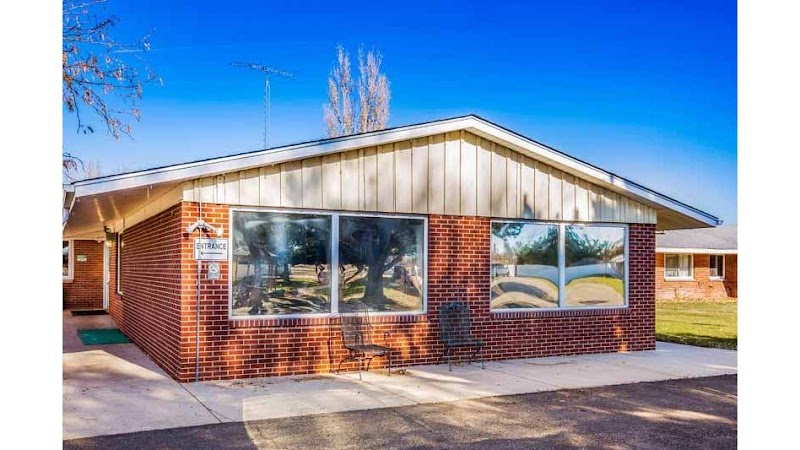
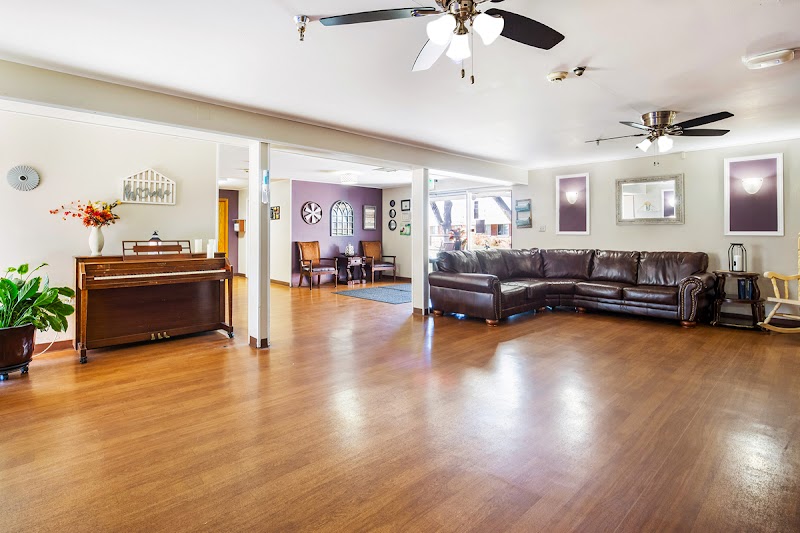
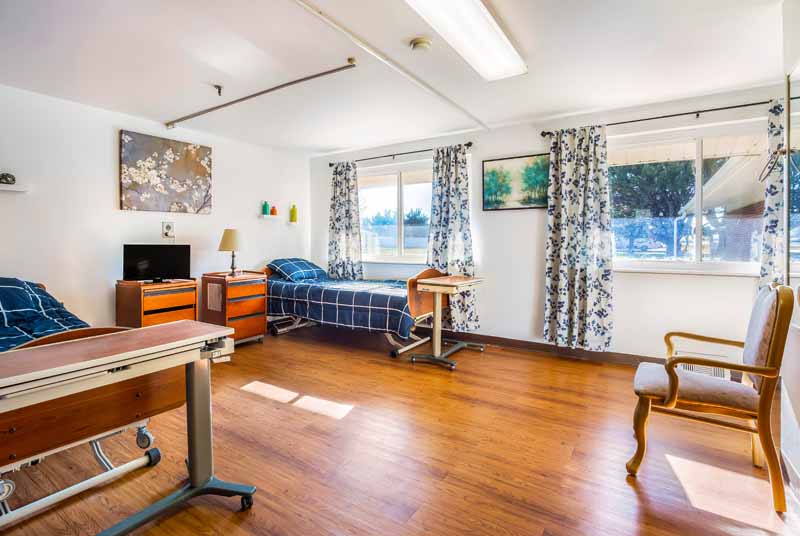
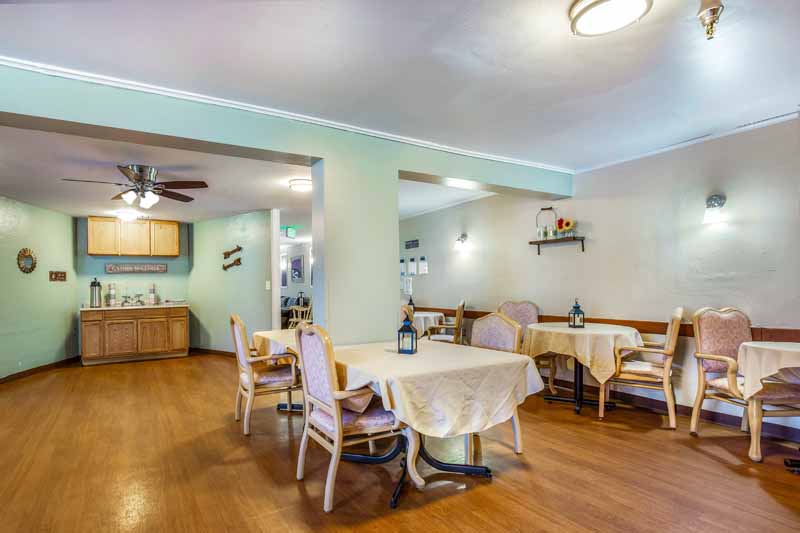
SOUTH PLATTE REHABILITATION AND NURSING LLC

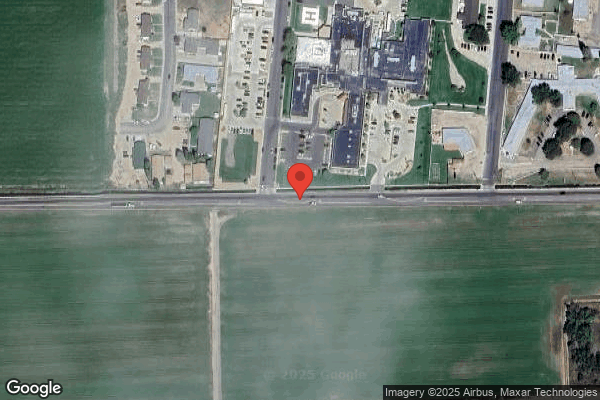
2200 EDISON ST, BRUSH, CO 80723 (970) 842-2825
For profit - Limited Liability company 78 Beds THE CHARLY BELLO FAMILY, THE MAZE FAMILY, THE SWAIN FAMILY, & WALTER MYERS Data: November 2025
Trust Grade
18/100
#203 of 208 in CO
Last Inspection: October 2024

Within standard 12-15 month inspection cycle. Federal law requires annual inspections.

Overview

South Platte Rehabilitation and Nursing LLC has received a Trust Grade of F, indicating poor performance and significant concerns about care quality. Ranking #203 out of 208 facilities in Colorado means they are in the bottom half, and #3 out of 3 in Morgan County shows that only one local option is better. The facility is on an improving trend, having reduced issues from four in 2024 to three in 2025. Staffing is a notable strength, with a turnover rate of 0%, far below the Colorado average, ensuring continuity of care. However, there are serious concerns as the facility has faced incidents of resident-on-resident abuse and has failed to adequately manage the behaviors of residents that lead to harm, as well as lapses in food safety standards. These weaknesses highlight the need for caution when considering this facility.

Trust Score
F
18/100
In Colorado
#203/208
Bottom 3%
Safety Record
High Risk
Review needed
Inspections
Getting Better
4 → 3 violations
Staff Stability
○ Average
Turnover data not reported for this facility.
Penalties
✓ Good
$10,963 in fines. Lower than most Colorado facilities. Relatively clean record.
Skilled Nurses
○ Average
Each resident gets 32 minutes of Registered Nurse (RN) attention daily — about average for Colorado. RNs are the most trained staff who monitor for health changes.
Violations
⚠ Watch
15 deficiencies on record. Higher than average. Multiple issues found across inspections.
★☆☆☆☆
1.0
Overall Rating
★☆☆☆☆
1.0
Staff Levels
★★★☆☆
3.0
Care Quality
★★☆☆☆
2.0
Inspection Score
Stable
2024: 4 issues
2025: 3 issues

The Good

  • Full Sprinkler Coverage · Fire safety systems throughout facility
  • No fines on record

Facility shows strength in fire safety.

The Bad

1-Star Overall Rating

Below Colorado average (3.1)

Significant quality concerns identified by CMS

Federal Fines: $10,963

Below median ($33,413)

Minor penalties assessed

Chain: THE CHARLY BELLO FAMILY, THE MAZE F

Part of a multi-facility chain

Ask about local staffing decisions and management

The Ugly 15 deficiencies on record

2 actual harm
Jan 2025 3 deficiencies 2 Harm
SERIOUS (G) 📢 Someone Reported This

A family member, employee, or ombudsman was alarmed enough to file a formal complaint

Actual Harm - a resident was hurt due to facility failures

Free from Abuse/Neglect (Tag F0600)

A resident was harmed · This affected 1 resident

**NOTE- TERMS IN BRACKETS HAVE BEEN EDITED TO PROTECT CONFIDENTIALITY** III. Incident of physical abuse of Resident #6 by Resident #4 on 11/21/24 A. Facility investigation The 11/21/24 facility abuse ...

Read full inspector narrative →
**NOTE- TERMS IN BRACKETS HAVE BEEN EDITED TO PROTECT CONFIDENTIALITY** III. Incident of physical abuse of Resident #6 by Resident #4 on 11/21/24 A. Facility investigation The 11/21/24 facility abuse investigation documented the incident occurred on 11/21/24 at 10:01 a.m. The investigation documented Resident #4 stood up from his wheelchair and grabbed Resident #6 by the shirt collar. Resident #6 responded by pushing Resident #4 who then fell and hit his head on the wall. The residents were immediately separated and placed on frequent checks. The investigation documented two facility staff members witnessed the resident-to-resident altercation. It documented Resident #6 was an at-risk adult. The police, residents' families, the ombudsman and the physician were notified of the resident-to-resident altercation. The investigation revealed there was no evidence of injury to Resident #6. The investigation documented the NHA interviewed Resident #6 following the incident. The investigation documented Resident #6 said he was walking down the hall with a maintenance staff member when Resident #4 said stop acting tough in front of me. Resident #6 said Resident #4 then stood up and grabbed Resident #6's shirt and pushed Resident #6 and then Resident #6 pushed Resident #4 away. Resident #6 said Resident #4 stumbled backwards and hit his head. Resident #6 said he was not fearful of Resident #4 after the incident. The investigation documented Resident #4 was interviewed by the NHA on 11/21/24 at approximately 1:00 p.m. Resident #4 said Resident #6 was outside of Resident #4's room acting like a tough guy. Resident #4 said he told Resident #6 he would slap him around a little bit and then Resident #4 said he stood up and lost his balance and hit his head on a door frame. The investigation documented the following interviews with witnesses to the incident: -An interview with housekeeper (HK) #1 on 11/21/24 at 1:05 p.m. by the NHA. The interview documented HK #1 said Resident #4 stood up and pushed Resident #6 in the chest and then Resident #6 responded by pushing Resident #4 back. -An undated interview with CNA #4, who was also a member of the maintenance staff, was conducted by the NHA. The interview documented CNA #4 was walking down the hallway with Resident #6 when Resident #4 began yelling at Resident #6. Resident #6 approached Resident #4 to listen to Resident #4 and then Resident #4 stood up and grabbed Resident #6 by the shirt collar. Resident #6 pushed Resident #4 and Resident #4 stumbled back and hit his head. The investigation documented Resident #6 was placed on frequent checks, follow-up with mental health services and monitoring for psychosocial abnormalities for the following 72 hours. The care plan for Resident #6 was updated to redirect Resident #6 from wandering in front of rooms or doorways of those who had the potential to be upset by the increased presence. The investigation documented increased supervision and medication change were actions taken for Resident #4 to help prevent a recurrence. The investigation documented Resident #4 had been involved in previous altercations within the past 12 months. The investigation concluded the abuse was substantiated. B. Resident #4 (assailant) 1. Record review A nursing progress note, dated 11/21/24 at 12:55 p.m., documented the nurse heard Resident #4 raising his voice and telling someone don't be stupid in front of my door. When the nurse got up to walk out to hallway to see what was going on, Resident #4 stood up and grabbed Resident #6 by the front of his shirt and Resident #6 shoved him away and Resident #4 struck his head on the doorway and fell to his right side. The SSD immediately intervened and attempted to redirect Resident #6 away from Resident #4 as Resident #4 was attempting to get up and go back at Resident #6. -Review of Resident #4's behavior care plans revealed the care plans were not updated following the incident on 11/21/24 with Resident #6. -Review of Resident #4's comprehensive care plan revealed a care plan focus for physical aggression was not initiated until 12/23/24, one month after the incident with Resident #6 and two months after a previous incident on 10/21/24 with Resident #5 (see above). C. Resident #6 (victim) 1. Resident status Resident #6, age less than 65, was admitted on [DATE]. According to the January 2025 CPO, diagnoses included drug induced dyskinesia (uncontrolled involuntary muscle movement), dysphagia (difficulty swallowing) and dementia. The 11/27/24 MDS assessment revealed the resident had a severe cognitive impairment with a BIMS score of five out of 15. The resident ate and walked independently and he required set-up assistance with showering. The MDS assessment did not reveal any behaviors displayed by the resident toward others. 2. Resident observation and interview Resident #6 was interviewed on 1/6/25 at 1:36 p.m. Resident #6 was standing in his room. He was calm and cooperative during the interview. Resident #6 said there was an incident a while back, but it was over and done and the resident could not remember the specific details of the incident between him and Resident #4. Resident #6 said he did not fear Resident #4. 3. Record review Resident #6's behavioral care plan, revised 5/7/24, revealed a behavior challenge related to Resident #6 being sexually inappropriate with staff and Resident #6 had taken items from staff in a playful manner. -Resident #6's care plan did not reveal any behavioral issues with other residents. A nursing progress note, dated 11/21/24 at 12:55 p.m., documented the nurse heard Resident #4 raising his voice and telling someone don't be stupid in front of my door. When the nurse got up to walk out to hallway to see what was going on, Resident #4 stood up and grabbed Resident #6 by the front of his shirt and Resident #6 shoved him away and Resident #4 struck his head on the doorway and fell to his right side. The SSD immediately intervened and attempted to redirect Resident #6 away from Resident #4 as Resident #4 was attempting to get up and go back at Resident #6. D. Staff interviews Registered nurse (RN) #1 was interviewed on 1/6/25 at 10:15 a.m. RN #1 said a CNA told her she was needed for assessment of the residents after the incident involving Resident #4 and Resident #6 on 11/21/24. RN #1 said she received a report that Resident #4 stood up and grabbed Resident #6 by the collar, Resident #6 defensively pushed Resident #4 away and Resident #4 hit the doorframe and slid to the floor. RN #1 said she did a physical assessment of Resident #6 and found no injuries. RN #1 said she completed a physical assessment of Resident #4 and found an abrasion on his head, which had stopped bleeding, and some scratches on his shoulder. RN #1 said Resident #4 was transferred to the hospital as a precaution for further assessment as he had a history of metal plates in his head. RN #1 said Resident #4 returned to the facility the same day without further concerns. HK #1 was interviewed on 1/6/25 at 10:35 a.m. HK #1 said she witnessed the incident between Resident #4 and Resident #6 on 11/21/24. HK #1 said the incident happened outside of Resident #4's room. She said Resident #4 said something to Resident #6 and then Resident #6 moved closer to Resident #4 to ask what he said. She said Resident #4 stood up from his wheelchair and pushed Resident #6's chest. HK #1 said Resident #6 stumbled back and pushed Resident #4 back. HK #1 said Resident #4's head bumped the door jam and the resident went down to his knees. HK #1 said Resident #6 was upset and shaking after the incident. The minimum data set coordinator (MDSC) was interviewed on 1/6/25 at 10:54 a.m. The MDSC said she witnessed the incident between Resident #4 and Resident #6 on 11/21/24. The MDSC said she was in her office and overheard Resident #4 talking loudly in the hallway. The MDSC said she entered the hallway and observed Resident #4 as he stood up and tried to hit Resident #6. She said Resident #6 then pushed Resident #4 back into the doorway. The MDSC said the SSD updated the care plans and she did not know if there was an IDT meeting after the incident. The SSD was interviewed on 1/6/25 at 11:26 a.m. The SSD said she had just spoken with Resident #6 prior to the incident with Resident #4 on 11/21/24. The SSD said she was in the hallway during the incident. he said she heard a loud male voice, turned around and saw Resident #4 shove Resident #6. She said Resident #6 shoved back and Resident #4 lost his balance and fell into the door. She said it appeared Resident #6 was being defensive when he pushed back at Resident #4. The SSD said since the incident, she had directed other residents to not pace in front of Resident #4's doorway. She said Resident #4 had some medication changes after the 11/21/24 incident. The SSD said she updated care plans related to residents' behaviors. The SSD said Resident #4 was the aggressor during the 11/21/24 incident and was also the aggressor during a previous incident on 10/21/24 (see above). The SSD said the IDT met after the incident on 10/21/24. The SSD said she did not see an addition to Resident #4's care plan for behavior monitoring after it was referenced in the IDT progress note on 10/23/24. The SSD said she could not find any notes about an IDT meeting after the 11/21/24 incident. The SSD said she did not see evidence that Resident #4's care plan was updated for behaviors to include his physically aggressive behavior until 12/23/24, four weeks after the 11/21/24 incident. The SSD said Resident #4 had prior physical aggression incidents more than a year ago. The SSD said she thought the care plan related to aggressive behaviors had been resolved since there had not been further incidents until recently. The SSD said Resident #4's triggers for his behaviors were added on 12/23/24. LPN #1 was interviewed on 1/6/25 at 2:00 p.m. LPN #1 said Resident #4 liked to have his way and was very particular about many things. LPN #1 said she was unaware Resident #4 and Resident #6 had an altercation on 11/21/24. CNA #4 was interviewed on 1/6/25 at 2:15 p.m. CNA #4 said he witnessed the altercation between Resident #4 and Resident #6 on 11/21/24. CNA #4 said he was talking with Resident #6 in the hallway outside of Resident #4's room. CNA #4 said Resident #4 became annoyed and stood up from his wheelchair. CNA #4 said Resident #4 grabbed Resident #6's shirt and then Resident #6 pushed him back. CNA #4 said Resident #4 had yelled at other residents before. CNA #2 was interviewed on 1/6/25 at 3:15 p.m. CNA #2 said she was not aware of any resident-to-resident altercations involving Resident #4 and she was not aware of any triggers that would make him upset. The SSD, the NHA and the RDQC were interviewed together on 1/6/25 at 3:21 p.m. The RDQC said she was trying to determine if Resident #4's care plan information had been lost due to technical issues. The SSD and the NHA said there should have been more information added to Resident #4's care plan related to his behaviors after the 10/21/24 altercation with Resident #5. The RDQC said a medication review for Resident #4 was requested on 11/21/24, as there was concern a medication change might have contributed to his behavior issues. The NHA said residents' behavior care plan should be updated within a week of a resident-to-resident incident. -However, the care plan for Resident #4's physically aggressive behavior was not initiated until 12/23/24 (see above). CNA #3 was interviewed on 1/7/25 at 10:34 a.m. CNA #3 said Resident #4 was triggered for behaviors if other residents made comments to him. CNA #3 said she was aware of recent altercations between Resident #4 and other residents. She said Resident #4 was told to watch what he said to other residents, but she said she was not aware of any other behavioral interventions initiated for Resident #4. She said one of the residents was told to be aware of the scheduled times for supervised smoker breaks (as Resident #4 was a smoker) to avoid Resident #4. Based on observations, record review and interviews, the facility failed to ensure two (#5 and #6) of two residents reviewed for abuse out of eight sample residents were kept free from physical abuse. Resident #4 was admitted to the facility on [DATE] with diagnoses which included alcohol abuse and encephalopathy (brain disease that affects brain function). The resident had a mood problem related to being quick tempered, had poor coping skills and could exhibit verbally aggressive outbursts towards others when he disagreed with them. On 10/21/24, certified nurse aide (CNA) #1 witnessed Resident #4, who was coming inside from the smoking area, purposefully run his wheelchair into Resident #5, who was in the hallway in her wheelchair waiting to go outside to the smoking area. Resident #5 sustained redness to the left lower leg above the ankle and an abrasion to her right forearm where the top layer of skin had come off, in addition to right shoulder and leg pain. Resident #5, who had a diagnosis of anxiety disorder, reported she had increased anxiety and felt more isolated since the incident with Resident #4 because she would stay in her room when Resident #4 was in the hallway due to the anxiety she felt when she was around him. Due to the facility's failures to protect Resident #5 from physical abuse from Resident #4 on 10/21/24, Resident #5 suffered psychosocial harm following the incident. Furthermore, the facility did not initiate additional interventions for Resident #4 following the 10/21/24 incident with Resident #5 to prevent the abuse from occurring again. On 11/21/24 Resident #4 stood up from his wheelchair and grabbed Resident #6 by the shirt collar and pushed Resident #6. Resident #6 pushed Resident #4 away and Resident #4 stumbled backwards and hit his head but did not sustain any injuries. Due to the facility's failures to implement effective behavior interventions and monitoring for Resident #4, the resident was involved in a second resident to resident altercation with Resident #6 one month after the incident with Resident #5. Findings include: I. Facility policy and procedure The Abuse policy, revised 6/11/24, was provided by the regional director of quality and compliance (RDQC) on 1/6/25 at 11:59 a.m. It read in pertinent part, Every resident has the right to be free from all forms of abuse: verbal, sexual, physical, mental, neglect, corporal punishment and involuntary seclusion. This facility does not condone resident abuse and shall take every precaution to prevent resident abuse. Resident abuse: the willful infliction of injury, unreasonable confinement, intimidation, or punishment of a resident resulting in physical harm or pain, mental anguish or deprivation of goods or services that are necessary to attain or maintain physical, mental or psychosocial well-being. Residents with aggressive or abusive behaviors shall have their care plans written and revised as needed to include approaches to reduce or eliminate the risk for abuse. The facility will ensure that all residents are protected from physical and psychosocial harm during and after abuse investigations, including but not limited to: examining the alleged victim for any sign of injury, including a physical examination and/or psychosocial assessment as indicated, increasing supervision of the alleged victim and other residents as indicated, providing emotional support and/or counseling to the resident during and after the investigation as needed. II. Incident of physical abuse of Resident #5 by Resident #4 on 10/21/24 A. Facility incident report and investigation The 10/21/24 incident report was provided by the RDQC on 1/7/25 9:14 a.m. The report documented the nurse was informed Resident #4 purposely collided into Resident #5 while both residents were seated in their wheelchairs. Resident #4 continued down the hall to his room and Resident #5 was assessed for injuries. Resident #5 reported her right arm was jarred and the nurse documented a 0.5 centimeter (cm) by 0.5 cm abrasion on her right forearm where the top layer of skin had come off. Resident #5 reported her left lower leg above the ankle hit the wheel of her wheelchair. The nurse documented redness to the skin above the resident's left ankle. According to the incident report, there were no predisposing factors which caused the incident to occur. The abuse investigation report, documented on 10/21/24 at approximately 2:37 p.m., documented CNA #1 witnessed Resident #4 run into Resident #5 who was in the hallway seated in her wheelchair. CNA #1 separated the residents and called the nurse for assistance. Resident #5 was assessed by licensed practical nurse (LPN) #1 and was noted to have physical injuries, including redness to the left lower leg above the ankle and an abrasion to her right forearm where the top layer of skin had come off. Resident #4 said he did not have any pain and refused a skin assessment. Immediate safety measures documented were placing the assailant (Resident #4) on frequent checks. Resident #5 (the victim) was interviewed and said she was wheeling down the hall towards the smoking area when the supervised smokers, including Resident #4 (the assailant), were coming inside. Resident #5 said she made a comment to Resident #4 that he was driving on the wrong side of the road. She said Resident #4 wheeled right into her with his legs hitting hers and spoke profanity to her. Resident #5 said the impact threw her back in her wheelchair causing right shoulder and leg pain. Resident #4 was interviewed and said he was coming inside from smoking. He said Resident #5 told him he should not be driving on the wrong side of the road. Resident #4 said he told her to stay where she was or he would run into her. Resident #4 said he ran into Resident #5 and left. The incident was substantiated by the facility. B. Resident #4 (assailant) 1. Resident status Resident #4, age [AGE], was admitted on [DATE]. According to the January 2025 computerized physician orders (CPO), diagnoses included liver disease, epilepsy, diabetes, alcohol abuse and encephalopathy (brain disease that affects brain function). The 11/13/24 minimum data set (MDS) assessment revealed the resident was cognitively intact with a brief interview for mental status (BIMS) score of 15 out of 15. Resident #4 used a wheelchair, was independent with eating and transferring self and required set up assistance with showering. The MDS assessment revealed Resident #4 had no behavioral symptoms during the prior seven-day assessment look-back period. 2. Resident interview Resident #4 was interviewed on 1/6/25 at 2:50 p.m. Resident #4 said he got along well with other residents and had not had any altercations. Resident #4 laughed and said no one had made him angry at the facility but he said if anyone did make him angry, he would punch them. 3. Record review Resident #4's behavior care plan, initiated 8/16/23 and revised 11/14/24, documented that he had a mood problem related to being quick tempered, had poor coping skills, pressured others to move out of his way (sometimes verbally) and patted the backs of others wheelchairs in attempts to get them to move out of the way. Interventions included encouraging better coping skills and patience with others when they were moving slowly through the hall (initiated 8/16/24), administering medications as ordered, providing behavior health consultations as needed and observing and recording his mood to determine if problems were related to external causes, (all revised 8/20/24). -The facility failed to update the care plan with new interventions following the 10/21/24 incident with Resident #5. Resident #4's behavior success care plan, initiated 10/1/24 and revised 10/4/24, addressed the resident's verbally aggressive outbursts towards others when he disagreed with them. Interventions (all initiated 10/1/24) included encouraging self-calming behavior such as breathing exercises, ensuring the safety of the resident and others, establishing boundaries and limits with the resident, providing emotional support regarding new onset disruptive behavior and utilizing diversion techniques. -The care plan did not define any triggers for the aggressive outbursts or ways to ensure the safety of others. -The facility failed to update the care plan with new interventions following the 10/21/24 incident with Resident #5. Resident #4's physical aggression care plan, initiated 12/23/24, documented the resident had actual incidents of physical aggression and the potential to become physically aggressive related to the history of aggression and harm to others, poor impulse control and complications with self-mood regulations. The care plan identified Resident #4's triggers for physical aggression were primarily territorial. The resident disliked it when others hovered around his room or invaded his personal space. Interventions included administering medications as prescribed, assessing and addressing contributing sensory deficits (minimizing noise, dimming the lights, keeping the door closed and giving him space from others), providing physical and verbal cues to alleviate anxiety, assisting with verbalizing the source of agitation, encouraging the resident to seek out a staff member when agitated, conducting a thorough analysis of circumstances that may influence behaviors paying attention to triggers that contributed to the behavior, documenting observed behaviors and attempted interventions in the care plan, avoiding large crowds, recognizing his need for personal space, psychiatric consultation as needed and taking prompt action if the resident became agitated to prevent further escalation. -Resident #4's physical aggression care plan was not initiated until two months after the incident with Resident #5 and one month after the resident's second incident of physical abuse towards another resident (see below). -Resident #4's electronic medical record (EMR) failed to reveal documentation that frequent checks were conducted for Resident #4 after the incident, as was specified as an immediate intervention in the facility's investigation report (see investigation above). An interdisciplinary (IDT) team note, dated 10/23/24 at 1:09 p.m., documented the IDT met to review Resident #4 related to his smoking behavior and his recent resident-to-resident altercation with another resident. The note documented an additional plan of care was being implemented for behavior monitoring. The resident was scheduled to meet with the social services director (SSD) for a biweekly review. The facility would review and update as needed. -Review of Resident #4's care plan revealed his behavior care plan was not updated following the 10/21/24 incident (see care plan above). C. Resident #5 (victim) 1. Resident status Resident #5, age less than 65, was admitted on [DATE]. According to the January 2025 CPO, diagnoses included acute infarction of spinal cord (spinal cord stroke causing pain or loss of sensation in the back down to legs), occipital neuralgia (pain or loss of sensation in the back of the head and neck), anxiety disorder, hypertension (high blood pressure) and type 2 diabetes mellitus. The 10/23/24 MDS assessment revealed the resident was cognitively intact with a BIMS score of 15 out of 15. She was independent with personal hygiene, dressing and transfers. She did not walk but was independent with mobility using a wheelchair. 2. Resident interview Resident #5 was interviewed on 1/6/25 at 9:06 a.m. She was sitting in her wheelchair in her room with both privacy curtains pulled around her. Resident #5 said she did not feel safe at the facility. She said Resident #4 waited in the hall near the door to the smoking area for long periods of time. Resident #5 said she stayed in her room if Resident #4 was in the hallway. Resident #5 said she did not go outside to smoke when Resident #4 went outside because it made her anxious to be around him. Resident #5 said she believed she had whiplash from the incident when Resident #4 rammed into her wheelchair. She said she had a tight knot in the back of her neck for a while afterwards and had to have physical therapy. Resident #5 said she just wanted to move to another facility. Resident #5 was interviewed again on 1/7/25 at 12:41 p.m. Resident #5 was lying in her bed with the privacy curtains closed on both sides with her television on. Resident #5 said she felt more isolated since the incident with Resident #4 because she stayed in her room more. Resident #5 said whenever she saw Resident #4 in the hall she felt anxious and went back into her room. She said she felt like Resident #4 was always in the hall. She said he came down early and sat by the exit to the smoking area. Resident #5 said she believed Resident #4 tried to intimidate her. Resident #5 said things were good for a couple of weeks after the incident with Resident #4 because the supervised smokers were going out back to smoke and she never saw Resident #4. However, Resident #5 said it only lasted for a couple of weeks because there was no fencing or shelter in the back smoking area so the supervised smokers were no longer smoking there. She said Resident #4 continued to go down her hallway past her room several times a day to get to the smoking area. 3. Record review Review of Resident #5's trauma-informed care plan, initiated 12/23/24 (two months after the 10/21/24 incident with Resident #4), documented Resident #5 was fearful related to an incident that occurred at the facility when another resident exhibited aggressive behavior towards her. Interventions included offering Resident #5 another room on the opposite hall (which she declined), offering to escort her to desired locations in the facility (declined due to personal choice), arranging for services with a mental health provider, encouraging her to share her feelings and concerns with staff, identifying items that lessened the effect of the trauma and monitoring her whereabouts and emotional state. -The facility failed to initiate a trauma care plan to address Resident #5's trauma related to the incident with Resident #4 until two months after the incident on 10/21/24. The 7/23/24 Resident Mood Interview assessment (prior to the incident), revealed Resident #5 scored a zero out of 30, indicating she did not have any symptoms of depression. Resident #5 indicated she never felt lonely or socially isolated. The 10/23/24 Resident Mood Interview assessment (after the incident), revealed Resident #5 scored a six out of 30, indicating she was experiencing depression. The resident indicated she felt down, depressed or hopeless, had trouble falling or staying asleep or was sleeping too much and felt tired or had little energy more than half of the days during a two week period. Resident #5 indicated she sometimes felt lonely or socially isolated. -Review of Resident #5's EMR revealed there was no documentation to indicate the resident's mood changes had been identified or addressed by the facility following the incident with Resident #4. Cross-reference F742 for failure to provide treatment/services for mental/psychosocial concerns. D. Staff interviews LPN #1 was interviewed on 1/6/25 at 9:56 a.m. LPN #1 said she did not witness the occurrence between Resident #4 and Resident #5 but she knew one of the residents was coming in from smoking and the other was going out. LPN #1 said Resident #5 told her Resident #4 rammed his wheelchair into her knees. LPN #1 said Resident #5 did not have any visible marks (however, the occurrence investigation revealed she had an abrasion on her arm and redness to her knee) but later Resident #5 said she got whiplash. LPN #1 said Resident #4 told her people should get out of his way. LPN #1 said they tried to watch for Resident #5 when she came out into the hall or went to smoke. LPN #1 said if Resident #4 was out in the hallway, Resident #5 went back to her room and did not go out to smoke. LPN #1 said frequent checks meant staff laid eyes on the resident every 15 minutes for 72 hours. LPN #1 said the staff documented these checks on paper. CNA #1 was interviewed on 1/6/25 at 11:33 a.m. CNA #1 said on the day of the incident (10/21/24) she saw Resident #4 close to Resident #5 and asked him what he was doing. She said Resident #4 backed away and wheeled down the hall but she did not see him run into Resident #5. CNA #1 said Resident #5 told her Resident #4 took hold of her wheelchair and rammed her into the wall. She said the residents were face to face in their wheelchairs. CNA #1 said the facility did not do 15-minute frequent checks on Resident #4 after the incident. CNA #1 she was not aware of any interventions in place for Resident #4's aggressive behaviors. She said staff were just told to intervene if the residents got too close to each other. The social service director (SSD) was interviewed on 1/7/25 at 10:30 a.m. The SSD said she did not know if there was a physical aggression behavior care plan for Resident #4 prior to the incident on 10/21/24 or when it may have been resolved. The SSD said the facility was using a different EMR program now and she was not able to access the old care plans. The nursing home administrator (NHA), director of nursing (DON) and the RDQC were interviewed together on 1/7/25 at 11:32 a.m. The DON said frequent checks for Resident #4 were implemented following the incident with Resident #5. The DON said frequent checks meant checking on the resident every 15 minutes for 72 hours. The DON said the staff documented on paper and the documentation was uploaded into the EMR. -However, there was no documentation provided to indicate frequent checks were completed for Resident #4 following the incident (see record review above). The NHA said Resident #4 had a brain injury and was triggered by other people not using common sense. The NHA said people knocking on his door agitated him if he was sitting right there and could see them. He was protective of his personal belongings. The RDQC said the facility would be implementing further interventions for Resident #4's behavior care plan.
SERIOUS (G) 📢 Someone Reported This

A family member, employee, or ombudsman was alarmed enough to file a formal complaint

Actual Harm - a resident was hurt due to facility failures

Deficiency F0742 (Tag F0742)

A resident was harmed · This affected 1 resident

**NOTE- TERMS IN BRACKETS HAVE BEEN EDITED TO PROTECT CONFIDENTIALITY** Based upon observations, record review and interviews, the facility failed to ensure that two (#4 and #5) of two residents out o...

Read full inspector narrative →
**NOTE- TERMS IN BRACKETS HAVE BEEN EDITED TO PROTECT CONFIDENTIALITY** Based upon observations, record review and interviews, the facility failed to ensure that two (#4 and #5) of two residents out of eight sample residents, received the appropriate treatment and services to correct the assessed problem or to attain the highest practicable mental and psychosocial well-being. Resident #4 was admitted to the facility on [DATE] with diagnoses of alcohol abuse and encephalopathy (brain disease that affects brain function). The resident had a mood problem related to being quick tempered, had poor coping skills and could exhibit verbally aggressive outbursts towards others when he disagreed with them. The facility failed to implement effective interventions for Resident #4 and appropriately address Resident #4's abuse behaviors towards other residents. The facility failed to protect residents from continued verbal and mental abuse from Resident #4. Interviews and observations revealed Resident #4's behaviors resulted in Resident #5's increased anxiety and social isolation. The staff failed to thoroughly assess Resident #5 for changes in behavior after Resident #4 purposefully ran his wheelchair into Resident #5 on 10/21/24, which caused a skin tear on Resident #5's right forearm, shoulder pain, anxiety and self isolation. Due to the facility's failures to address Resident #4's behaviors, Resident #5 suffered physical abuse from Resident #4, which resulted in psychosocial harm for Resident #5. Findings include: I. Facility policy and procedure The Social Services policy, dated 12/19/16, was provided by the regional director of quality and compliance (RDQC) on 1/7/25 at 1:49 p.m. It read in pertinent part, Our facility provides medically related social services to assure that each resident can attain or maintain his/her highest practicable physical, mental or psychosocial well-being. The director of social services is a qualified social worker and is responsible for executing the social services for the residents of the facility, including but not limited to consultation with allied professional health personnel regarding provisions for the social and emotional needs of the resident and family. Factors that impact a resident's psychosocial functioning may include behavioral problems (anxiety, loneliness, depressed mood, anger, fear), poor interaction and social skills. The social services department is responsible for identifying individual social and emotional needs, assisting is providing corrective action for resident's needs by developing and maintaining individualized social service care plans, maintaining regular and follow-up progress notes indicating the resident's response to the plan, making referrals to social service agencies as appropriate and maintaining appropriate documentation of referrals. II. Incidents of physical abuse by Resident #4 on 10/21/24 and 11/21/24 The 10/21/24 incident report was provided by the RDQC on 1/7/25 at 9:14 a.m. The report documented the nurse was informed Resident #4 purposely collided into Resident #5 while both residents were seated in their wheelchairs. Resident #4 continued down the hall to his room and Resident #5 was assessed for injuries. Resident #5 reported her right arm was jarred and the nurse documented a 0.5 centimeter (cm) by 0.5 cm abrasion on her right forearm where the top layer of skin had come off. Resident #5 reported her left lower leg above the ankle hit the wheel of her wheelchair. The nurse documented redness to the skin above the resident's left ankle. According to the incident report, there were no predisposing factors which caused the incident to occur. Resident #5 (the victim) was interviewed and she said she was wheeling down the hall towards the smoking area when the supervised smokers, including Resident #4 ( the assailant), were coming inside. Resident #5 said she made a comment to Resident #4 that he was driving on the wrong side of the road. She said Resident #4 wheeled right into her with his legs hitting hers and spoke profanity to her. Resident #5 said the impact threw her back in her wheelchair causing right shoulder and leg pain. Resident #4 was interviewed and said he was coming inside from smoking. He said Resident #5 told him he should not be driving on the wrong side of the road. Resident #4 said he told her to stay where she was or he would run into her. Resident #4 said he ran into Resident #5 and left. The incident was substantiated by the facility. -However, the facility failed to implement person-centered interventions to address Resident #4's behaviors to prevent an additional altercation with Resident #6 on 11/21/24. -The facility failed to thoroughly assess Resident #5 for changes in mood and behavior, and provide interventions to help Resident #5's increased social isolation, anxiety and fear of Resident #4. The 11/21/24 facility investigation documented the incident occurred on 11/21/24 at 10:01 a.m. The investigation documented Resident #4 stood up from his wheelchair and grabbed Resident #6 by the shirt collar. Resident #6 responded by pushing Resident #4 who then fell and hit his head on the wall. The residents were immediately separated and placed on frequent checks. The investigation documented Resident #4 was interviewed by the nursing home administrator (NHA) on 11/21/24 at approximately 1:00 p.m. Resident #4 said Resident #6 was outside of Resident #4's room acting like a tough guy. Resident #4 said he told Resident #6 he would slap him around a little bit and then Resident #4 said he stood up, lost his balance and hit his head on a door frame. The investigation documented Resident #4 had been involved in previous altercations within the past 12 months. The investigation concluded the abuse was substantiated. III. Resident #4 A. Resident status Resident #4, age [AGE], was admitted on [DATE]. According to the January 2025 computerized physician orders (CPO), diagnoses included liver disease, epilepsy (seizure disorder), diabetes, alcohol abuse and encephalopathy. The 11/13/24 minimum data set (MDS) assessment revealed the resident was cognitively intact with a brief interview for mental status (BIMS) score of 15 out of 15. Resident #4 used a wheelchair, was independent with eating and transferring self and required set up assistance with showering. B. Resident interview Resident #4 was interviewed on 1/6/24 at 2:50 p.m. Resident #4 said he got along well with other residents and had not had any altercations. Resident #4 laughed and said no one had made him angry at the facility, but he said if anyone did make him angry, he would punch them. C. Record review Resident #4's behavior care plan, initiated 8/16/23 and revised 11/14/24. The care plan documented that he had a mood problem related to being quick tempered, had poor coping skills, pressured others to move out of his way (sometimes verbally) and patted the backs of other's wheelchairs in attempts to get them to move out of the way. Interventions included encouraging better coping skills and patience with others when they were moving slowly through the hall (initiated 8/16/24), administering medications as ordered, providing behavior health consultations as needed and observing and recording his mood to determine if problems were related to external causes, (all revised 8/20/24). -The facility failed to update the care plan with new interventions related to the two physical abuse altercations with other residents on 10/21/24 and 11/21/24. Resident #4's behavior success care plan , initiated 10/1/24 and revised 10/4/24., addressed the resident's verbally aggressive outbursts towards others when he disagreed with them. Interventions (all initiated 10/1/24) included encouraging self-calming behavior such as breathing exercises, ensuring the safety of the resident and others, establishing boundaries and limits with the resident, providing emotional support regarding new onset disruptive behavior and utilizing diversion techniques. -The care plan did not define any triggers for the aggressive outbursts or ways to ensure the safety of other residents. -There were no new interventions for the behavior success plan after the 10/21/24 and 11/21/24 physical abuse altercations. Resident #4's physical aggression care plan, initiated 12/23/24, documented the resident had actual incidents of physical aggression and the potential to become physically aggressive related to the history of aggression and harm to others, poor impulse control and complications with self-mood regulations. Interventions (all initiated on 12/23/24) included administering medications as prescribed, assessing and addressing contributing sensory deficits (minimizing noise, dimming the lights, keeping the door closed and giving him space from others), providing physical and verbal cues to alleviate anxiety, assisting with verbalizing the source of agitation, encouraging the resident to seek out a staff member when agitated, conducting a thorough analysis of circumstances that may influence behaviors paying attention to triggers that contributed to the behavior, documenting observed behavior and attempted interventions in the care plan, avoiding large crowds, recognizing his need for personal space, psychiatric consultation as needed and taking prompt action if the resident became agitated to prevent further escalation. -Resident #4's physical aggression care plan was not initiated until two months after the incident with Resident #5 and one month after the resident's second incident of physical abuse towards another resident on 11/21/24. D. Staff interviews Certified nurse aide (CNA) #1 was interviewed on 1/6/25 at 11:33 a.m. CNA #1 said she was not aware of any interventions in place for Resident #4's physically aggressive behavior. CNA #1 said staff were just told to intervene if Resident #4 got too close to Resident #5. CNA #3 was interviewed on 1/7/25 at 10:34 a.m. CNA #3 said Resident #4's behavior could be triggered by a situation, for example when a CNA asked if he wanted a shower. CNA #3 said other residents usually did not trigger him unless they made a comment first. CNA #3 said they reminded him of the scheduled times for supervised smoker breaks. She said she was not aware of any other behavior interventions that were initiated for Resident #4. The social services director (SSD) was interviewed on 1/7/25 at 10:30 a.m. The SSD said she did not know if there was a physical aggression behavior care plan for Resident #4 prior to the incident on 10/21/24 or when it may have been resolved. The SSD said the facility was using a different electronic medical record (EMR) now and she was not able to access the old care plans. The NHA and the RDQC were interviewed together on 1/7/25 at 11:32 a.m. The NHA said Resident #4 had a brain injury and was triggered by other people not using common sense. The NHA said people knocking on Resident #4's door agitated him if he was sitting right there and could see them. The NHA said Resident #4 was protective of his personal belongings. The NHA said the facility should have identified triggers and added more interventions to Resident #4's care plan after the first physical altercation. The RDQC said the facility would review and update Resident #4's care plan with interventions to prevent further altercations. IV. Resident #5 A. Resident status Resident #5, age less than 65, was admitted on [DATE]. According to the January 2025 CPO, diagnoses included acute infarction of spinal cord (spinal cord stroke causing pain or loss of sensation in the back down to legs), occipital neuralgia (pain or loss of sensation in the back of the head and neck), anxiety disorder, hypertension (high blood pressure) and type 2 diabetes mellitus. The 10/23/24 MDS assessment revealed the resident was cognitively intact with a BIMS score of 15 out of 15. She was independent with personal hygiene, dressing and transfers. She did not walk but was independent with mobility using a wheelchair. B. Resident observation and interview Resident #5 was interviewed on 1/6/25 at 9:06 a.m. Resident #5 was sitting in her wheelchair in her room with both privacy curtains pulled around her. Resident #5 said she did not feel safe at the facility. Resident #5 said she stayed in her room if Resident #4 was in the hallway. Resident #5 said she did not go outside to smoke when Resident #4 went out because it made her anxious to be around him. Resident #5 said she just wanted to move to another facility. Resident #5 was interviewed again on 1/7/25 at 12:41 p.m. Resident #5 was lying in her bed with the privacy curtains closed on both sides with her television on. Resident #5 said she felt more isolated since the incident with Resident #4 because she stayed in her room more. Resident #5 said whenever she saw Resident #4 in the hall she felt anxious and went back into her room. She said she felt like Resident #4 was always in the hall. She said he came down early (before the supervised smoking times) and sat by the exit to the smoking area. She believed Resident #4 tried to intimidate her. Resident #5 said things were good for a couple of weeks after the incident because the supervised smokers were going out back to smoke and she never saw Resident #4. Resident #5 said it only lasted for a couple of weeks because there was no fencing or shelter in the back smoking area so the supervised smokers resumed using the prior smoking area at the end of her hallway. She said Resident #4 continued to go down her hallway past her room several times a day to get to the smoking area. C. Additional resident interview Resident #7 was interviewed on 1/7/25 at 11:30 a.m. Resident #7 said she was not afraid of Resident #4 because she just stayed to herself and ignored him. Resident #7 said some residents were afraid of Resident #4, especially Resident #5. D. Record review The 10/21/24 abuse investigation report documented Resident #5 was the victim of physical abuse by Resident #4. According to the report, after the incident, Resident #5 was hyper-focused on the situation and her injuries. Resident #5 was educated to choose alternate smoking times after the supervised smokers (including Resident #4) were finished and back inside the building. -The abuse investigation follow-up did not address Resident #5's psychosocial well-being, including her fear of Resident #4 or her anxiety related to the incident. Cross-reference F600 for failure to protect residents from abuse. The comprehensive care plan addressed psychosocial areas of mood related to her admission and current situation (initiated 10/1/24) and challenges adjusting to her admission (initiated 10/1/24). -The mood care plan was updated on 1/6/25 (during survey) to add Resident #5 was involved in a physical altercation with another resident related to physical aggression towards her. -The care plan revision documented the mood care plan was initiated on 10/21/24, however it was not part of the comprehensive care plan reviewed on 1/6/25 at 9:35 a.m. A risk for depression care plan, initiated 12/22/24, related to her recent decline in health, change in living situation, and financial situation. Interventions included observing for signs or symptoms of depression and contacting the provider if the depression screen was positive. -However, the care plan was initiated two months after the mood interview/depression assessment indicated Resident #5 had increased signs of depression and there was no documentation the provider was notified (see Resident Mood Interview assessments below). The trauma informed care plan, revised 12/23/24, revealed the resident had fearfulness from an event that occurred at the facility when another resident exhibited aggressive behavior towards her. Interventions (all initiated 12/23/24) included offering her another room on the opposite hall (which she declined), offering to escort her to desired locations in the facility (declined due to personal choice), arranging for services with a mental health provider, encouraging her to share her feelings and concerns with staff, identifying items that lessen the effect of the trauma and monitoring her whereabouts and emotional state. -The trauma informed care plan was initiated over two months after the traumatic incident with Resident #4 occurred. The 12/23/24 trauma interview revealed Resident #5 had experienced trauma related to being a victim of physical aggression. The interview documented Resident #5 experienced anxiety, feeling of detachment and fearfulness related to the incident. Resident #5 indicated counseling would help her to deal with the trauma. The 7/23/24 Resident Mood Interview assessment (prior to the incident), revealed Resident #5 scored a zero on the mood interview, indicating she did not have any symptoms of depression. Resident #5 answered the question regarding social isolation as she never felt lonely or socially isolated. The 10/23/24 Resident Mood Interview assessment (after the incident), revealed Resident #5 scored a six on the mood interview, indicating she felt down, depressed or hopeless more than half of the time, had trouble falling or staying asleep or was sleeping too much more than half of the time, and felt tired or had little energy more than half of the time over the past two weeks. Resident #5 answered the question regarding social isolation as she sometimes felt lonely or socially isolated. -There was no social service progress note regarding these mood changes for Resident #5. -There were no changes to the plan of care related to these changes. -There was no documentation that the physician or behavioral health services were notified of these changes. E. Staff interviews The activity director (AD) was interviewed on 1/6/25 at 4:35 p.m. The AD said Resident #5 liked to come to social activities, especially if there was food. The AD said Resident #5 was coming out of her room less often for the past month and had been sleeping in later in the mornings. The SSD was interviewed on 1/7/25 at 10:30 a.m. The SSD said she typically made a progress note if there was a change on a residents' MDS assessment. The SSD said she did not know why she did not make a progress note for Resident #5. The SSD said she should have made a quarterly progress note for Resident #5 in October 2024. The SSD verified there was not a social service progress note for Resident #5 in October 2024 after she completed the resident's mood interview assessment. The SSD said she sent an email to behavior health services requesting a visit for Resident #5 but did not document this in the medical record. The SSD said Resident #5 was experiencing stress about her finances and wanting to move to another facility. The SSD said a trauma care plan was added to Resident #5's plan of care on 12/23/24 because that was when the resident expressed she was still having fear from the incident with Resident #4. The SSD said they offered Resident #5 an alternate location for her puzzles and a room change but she declined. The SSD said she had sent several referrals to other facilities and Resident #5 had been accepted at a couple of them in another town, but Resident #5 was not interested in moving to those facilities. -Documentation of the behavioral health services referral and visit were requested at the time of survey but not received from the facility by the end of the survey on 1/7/25. The NHA was interviewed on 1/7/25 at 11:32 a.m. The NHA said the social services staff should have, at a minimum, a quarterly progress note for each resident, and more if there were resident changes. The NHA said if there was a change in a resident's mood or on the MDS assessment, there should be a social services note addressing the change.
CONCERN (E) 📢 Someone Reported This

A family member, employee, or ombudsman was alarmed enough to file a formal complaint

Potential for Harm - no one hurt, but risky conditions existed

Deficiency F0659 (Tag F0659)

Could have caused harm · This affected multiple residents

**NOTE- TERMS IN BRACKETS HAVE BEEN EDITED TO PROTECT CONFIDENTIALITY** Based on observations, record review and interviews, the facility failed to ensure resident assessments were provided by qualifi...

Read full inspector narrative →
**NOTE- TERMS IN BRACKETS HAVE BEEN EDITED TO PROTECT CONFIDENTIALITY** Based on observations, record review and interviews, the facility failed to ensure resident assessments were provided by qualified persons for three (#8, #3 and #5) of eight residents out of eight sample residents. Specifically, the facility failed to: -Ensure Resident #8 and Resident #3, who experienced unwitnessed falls, were assessed by a registered nurse (RN) before they were assisted from the floor; and, -Ensure Resident #5, who was the victim of resident-to-resident physical abuse, was assessed by a RN following the resident-to-resident altercation. Findings include: I. Failed to have a RN assess Resident #8 and Resident #3 after unwitnessed falls, prior to assisting the residents from the floor A. Facility policy and procedure The Falls - Clinical Protocol policy, revised 10/2012, was provided by the regional director of quality and compliance (RDQC) on 1/6/25 at 11:59 a.m. The policy revealed as part of the initial assessment, nursing staff would identify individuals with a history of falls and risk factors for subsequent falling. Staff would ask the resident or resident's representative about a history of falling. While many falls were isolated individual incidents, a significant proportion occurred among a few residents. Those individuals might have a treatable medical disorder or functional disturbance as the underlying cause. The staff would document risk factors for falling in the resident's record and address the resident's fall risk factors with appropriate interventions in the resident's plan of care. The staff would evaluate and document falls that occurred on an incident report form, for example, when/where they happened, and any observations of the events. Staff should categorize falls as unwitnessed, witnessed, or assisted. For an individual who had fallen, the interdisciplinary team (IDT) would complete an evaluation to identify the root cause and recommend appropriate new interventions to address risk factors of falling. Causes referred to factors that were associated with or that directly resulted in a fall, for example, a balance problem caused by an old or recent stroke. Multiple factors in varying degrees might contribute to a falling problem. If the cause of a fall was unclear, if the fall might have a significant medical cause such as a stroke or an adverse drug reaction (ADR), or if the individual continued to fall despite attempted interventions, it might be appropriate to ask the attending physician to review the situation and help identify contributing causes. Nursing staff should initiate post-fall assessments after a fall occurred. Staff should complete an assessment to look for new injuries, changes in range of motion, complaints of pain or other adverse clinical changes related to the fall. For unwitnessed falls or falls wherein the resident hit their head, staff should complete neurological and vital sign checks according to the facility's neurological assessment flowsheet. Staff should initiate alert charting on each nursing shift for 72 hours or longer as indicated, wherein each nurse evaluates for adverse changes related to the fall and the efficacy of current fall interventions. -However, the policy did not specify that a RN should do an assessment of the resident before the resident was moved from off the floor for unwitnessed falls. B. Resident #8 1. Resident status Resident #8, age greater than 65, was admitted on [DATE] and readmitted on [DATE]. According to the January 2025 computerized physician orders (CPO), diagnoses included displaced intertrochanteric fracture of the left femur, subsequent encounter for a closed fracture with routine healing, fracture of the right femur, fracture of the head/neck of the right femur, anxiety and chronic diastolic (congestive) heart failure. The 12/27/24 minimum data set (MDS) assessment revealed Resident #8 had a moderate cognitive impairment with a brief interview for mental status (BIMS) score of 12 out of 15. The resident used a walker and/or a wheelchair. The resident had impairment on one side of the lower extremities (hip, knee, ankle or foot). The resident required substantial/maximal staff assistance for sit to stand (the ability to come to a standing position from a sitting position for a chair, wheelchair or on the side of the bed. 2. Record review The fall risk assessment dated [DATE] at 2:02 p.m., revealed a score of 16, which indicated the resident was a high fall risk Resident #8's care plan for being at risk for falls due to a history of falls, a fall with a fracture, cognition impaired safety awareness, and medication side effects was initiated on 4/3/24 and revised on 1/2/25. Interventions included to ensure the resident's call light was within reach, encourage the resident to use the call light for assistance as needed, ensure the resident's high/low bed was in the lowest position while in bed, ensure the resident was wearing appropriate footwear when ambulating and the resident had been provided a walkie talkie for use in the dining room to contact staff (this was the location the resident spent most of her day and a call light was not available in this area). Staff were to review information on past falls and attempt to determine the cause of the falls, document the possible root causes, alter/remove any potential causes, if possible and educate the resident/family/caregivers/ and the interdisciplinary team as to the causes. An incident report, dated 12/20/24 at 8:20 p.m., for an unwitnessed fall, was written by licensed practical nurse (LPN) #3 .The report revealed a call light went off in Resident #8's room. A certified nurse aide (CNA) went down to see what the resident needed and found the resident on the floor. The CNA went to go get a nurse. A nurse asked the resident how she ended up on the floor. The resident said everything slipped. The nurse asked a second time how the resident ended up on the floor and the resident asked if she had broken her back. A RN was called from the other side of the facility to do an assessment. LPN #3 and the CNA got Resident #8 from off the floor and into her chair and the resident had no complaints. After LPN #3 and the CNA had assisted Resident #8 back into her chair, the RN walked into the room. The resident started to say it hurts and she was not going to therapy the next day. Resident #8 had a skin tear to the left elbow and the RN was unable to determine the left hip trochanter (hip) condition. The resident was sent to the emergency department to be evaluated. The county hospital near the facility admitted Resident #8 on 12/20/24 at 8:24 p.m., with a chief complaint of falling out of a wheelchair to the ground and a complaint of left hip pain. The resident apparently had a low mechanism fall out of a wheelchair and had acute pain in the left hip and femur regions. The diagnosis was a left hip fracture and the resident would be transferred to another hospital with a higher level of care. The resident was discharged to the second hospital on [DATE] at 12:54 a.m. A situation, background, assessment, recommendation (SBAR) note, dated 12/20/24 at 8:56 p.m., revealed the resident had a change in condition related to a fall. The nursing observations, evaluation and recommendations revealed the resident fell with no injury and was sent to the emergency department because the resident started complaining of pain. A nurse note, dated 12/20/24 at 11:58 p.m., revealed the nurse spoke with the hospital and the resident broke her hip and was being transferred to another hospital for treatment. The second hospital admitted the resident on 12/21/24 at 2:13 a.m. The chief complaint was left hip pain from a fall. Resident #8 was transferred to the second hospital from the previous hospital secondary to a left intertrochanteric hip fracture. The resident said she was helping her roommate in the bathroom when she fell on her left side. The resident said she was unable to get up from off the floor due to sharp pain that was constant, which was at least an 8 or 9 out of 10 on a 1-10 pain scale. The musculoskeletal assessment revealed good muscle mass, tone, strength, normal range of motion, except for the left hip, which had pain on ranges of motion. An IDT event review, dated 12/23/24 at 10:28 a.m., revealed Resident #8 had a fall on 12/20/24 due to weakness and poor gait. The resident was sent to the emergency department for an evaluation and treatment. A skilled charting note, dated 12/24/24 at 2:24 p.m., revealed Resident #8 returned from hospital. The resident was confused at times, which appeared to be related to post surgical effects. The resident was able to make her needs known. A nurse note, dated 12/2024 at 8:52 p.m. and written by a LPN, revealed Resident #8 fell onto the floor on her left side, had a skin tear on her left elbow and was at the emergency department getting x-rays done to make sure nothing was broken. -Review of Resident #8's electronic medical record (EMR) did not reveal that a RN assessed the resident after the unwitnessed fall on 12/20/24 at 8:20 p.m., prior to the resident being assisted by staff from off the floor to a chair. The resident sustained a left hip fracture from the fall. 3. Staff interviews LPN #1 was interviewed on 1/7/25 at 10:10 a.m. LPN #1 said a RN should perform an assessment on a resident for an unwitnessed fall, before the resident was moved from off the floor. She said the assessment was out of the scope of practice of a LPN. LPN #2 was interviewed on 1/7/25 at 11:06 a.m. LPN #2 said a RN must assess a resident who had an unwitnessed fall before the resident was moved from off the floor. She said the complete resident assessment was not in the scope of practice of an LPN. RN #1 was interviewed on 1/7/25 at 11:27 a.m. RN #1 said a RN should do an assessment of a resident that had an unwitnessed fall before the resident was moved from off the floor. She said the complete resident assessment was not in the scope of practice of an LPN. The nursing home administrator (NHA), the director of nursing (DON), the assistant director of nursing (ADON) and the RDQC were interviewed on 1/7/24 at 1:04 p.m. The NHA, the DON, the ADON and the RDQC said Resident #8 had an unwitnessed fall on 12/20/24 at 8:20 p.m. and was sent to the emergency department for evaluation and treatment. The NHA, the DON, the ADON and the RDQC said the resident received a diagnosis of a left hip fracture. The NHA, the DON, the ADON and the RDQC said LPN #3 and a CNA moved Resident #8 off the floor, before a RN did an assessment of the resident. The NHA, the DON, the ADON and the RDQC said a RN should do an assessment of a resident with an unwitnessed fall, prior to the resident being moved from off the floor. The DON said it was not in the LPN's scope of practice to conduct an assessment of a resident after an unwitnessed fall. She said LPN #3, who moved the resident off the floor, received an in-service on falls on 12/23/24. C. Resident #3 1. Resident status Resident #3, age greater than 65, was admitted on [DATE] and discharged home on 11/13 24. According to the November 2024, CPO, diagnoses included stable burst fracture of T9-T10 (thoracic) vertebra, subsequent encounter for fracture with routine healing, mechanical complication of internal fixation device of vertebrae, protein-calorie malnutrition and pneumonia. The 11/13/24 MDS assessment revealed Resident #3 was cognitively intact with a BIMS score of 15 out of 15. The resident used a manual wheelchair. The resident had no impairments in either the upper or the lower extremities. The resident required substantial/maximal staff assistance for sit to stand (the ability to come to a standing position from a sitting position for a chair, wheelchair or on the side of the bed. 2. Record review The baseline admission care plan, dated 11/10/24, revealed the resident was at risk for falls. The resident did not have any falls within the last two to six months prior to admission to the facility. The interventions included anticipating/meeting the resident's needs, keeping frequently used items within reach, educating/encouraging the resident to wear appropriate footwear, such as non-skid socks or shoes when ambulating, educating the resident/family/caregiver regarding safety reminders and what to do if a fall occurred, following the facility policy if a fall occurred, orienting the resident to the call light, keeping the resident's call light within reach, encouraging the resident to use the call light and referring the resident to therapy for evaluation/treatment as indicated to address the resident's fall risk. A care plan for the resident being at risk for fall related to an actual fall, impaired mobility and recent surgery was initiated on 11/12/24. Interventions included for staff to anticipate and meet the resident's needs, keep frequently used items within reach, keep the resident's call light within reach and encourage the resident to use it for assistance as needed, educate and encourage the resident to wear appropriate footwear, such as non-skid socks or shoes, when ambulating/mobilizing, educate the resident/family/caregivers about safety reminders and what to do if a fall occurs and follow facility fall protocol if a fall occurred and offer the resident a bedside commode. The incident report, dated 11/11/24 at 10:48 p.m. and written by LPN #3 for an unwitnessed fall, revealed LPN #3 went down to Resident #3's room because her call light went off and the CNA was working in another room. LPN #3 opened the door and the resident was on the floor. LPN #3 asked Resident #3 if anything hurt. The resident said no, but she hit her elbow. LPN #3 looked at the resident's elbow and there was no bleeding, however there was a small bruise. LPN #3 and a CNA helped the resident from the floor and back into bed. The nurse observed a skin tear on the resident's right knee. The skin tear was washed and a one centimeter (cm) by one cm bandage was placed on the skin tear. A RN came and assessed Resident #3 after the resident was assisted from the floor by LPN #3 and the CNA. The fall occurred when Resident #3 went to the bathroom and slipped on the floor. The resident wore socks with sticky pads on the bottom of the socks. The resident said that she went to the bathroom after pressing her call light and no staff came. The resident was oriented to person, place, situation and time. A weekly skin check assessment, dated 11/11/24 at 11:04 p.m., revealed Resident #3 had a skin tear to the right knee, a bruise to the right elbow and symptoms of a wound to the lower back area measuring approximately one foot long. A nurse note, dated 11/11/24 at 10:30 p.m., revealed this nurse (LPN #3) was notified of Resident #3's fall at 10:25 p.m. LPN #3 went into the resident's room to assess the resident. The resident was alert/orientated times four and appeared to be at baseline in mental status. The resident said she did not want to wait for assistance and got up to go to the restroom on her own. The resident said she had to grab onto the sink to keep from falling onto the floor. The resident said she landed on the right side of her body. Observations revealed old and new bruising to the right elbow. A bandaid was observed to the resident's right lower leg. The resident said she had a small cut from a fall and a nurse had placed a bandaid over the area. The resident complained of neck pain and lower back pain that was normal due to spinal fashion. The resident had no other apparent injuries observed. A nurse note, dated 11/11/24 at 11:01 p.m., revealed Resident #3 fell onto the floor. The resident had a skin tear to right leg and a bruise to right elbow. The DON, a RN and the physician were notified. The IDT event review note, dated 11/12/24 at 9:51 a.m., revealed Resident #3 had an unwitnessed fall on 11/11/24 related to poor safety awareness. The facility treated the skin tear and started neurological assessments. An intervention put in place was an in-room commode. There were no new physician orders. -Review of Resident #3's EMR did not reveal that a RN assessed the resident after the unwitnessed fall on 11/11/24 at 10:25 p.m., prior to the resident being assisted by staff from off the floor. 3. Staff interviews The NHA, the DON, the ADON and the RDQC were interviewed on 1/7/24 at 1:25 p.m. The NHA, the DON, the ADON and the RDQC said Resident #3 had an unwitnessed fall on 11/11/24 at 10:25 p.m. The NHA, the DON, the ADON and the RDQC said LPN #3 and a CNA moved the resident off the floor before a RN assessed the resident. The DON said a RN should have completed an assessment before Resident #3 was moved off the floor. The DON said the resident was not sent to the hospital after the fall.II. Failed to ensure a RN assessed Resident #5 following a resident-to-resident altercation A. Resident #5 1. Resident status Resident #5, age less than 65, was admitted on [DATE]. According to the January 2025 CPO, diagnoses included acute infarction of the spinal cord (spinal cord stroke causing pain or loss of sensation in the back down to legs), occipital neuralgia (pain or loss of sensation in the back of the head and neck), anxiety disorder, hypertension (high blood pressure) and type 2 diabetes mellitus. The 10/23/24 MDS assessment revealed the resident was cognitively intact with a BIMS score of 15 out of 15. She was independent with personal hygiene, dressing and transfers. She did not walk but was independent with mobility using a wheelchair. 2. Resident interview Resident #5 was interviewed on 1/6/25 at 9:06 a.m. Resident #5 said another resident rammed into her wheelchair in the hallway in October 2024. Resident #5 said she believed she had whiplash from the incident when she was jolted back in her wheelchair. She said she had a tight knot in the back of her neck for a while afterwards and had to have physical therapy to relieve the tightness. 3. Record review The 10/21/24 incident report was provided by the RDQC on 1/7/25 9:14 a.m. The report documented LPN #1 was informed another resident purposely collided into Resident #5 while both residents were seated in their wheelchairs. Resident #5 reported her right arm was jarred and LPN #1 documented a 0.5 centimeter (cm) by 0.5 cm abrasion on her right forearm where the top layer of skin had come off. Resident #5 reported her left lower leg above the ankle hit the wheel of her wheelchair. LPN #1 documented redness to the skin above the resident's left ankle. The abuse investigation report, dated 10/21/24 at approximately 2:37 p.m., documented another resident ran into Resident #5 who was in the hallway seated in her wheelchair. CNA #1 separated the residents and called LPN #1 for assistance. Resident #5 was assessed by LPN #1 and did have physical injuries, including redness to the left lower leg above the ankle and an abrasion to her right forearm where the top layer of skin had come off. The abuse investigation included an interview with Resident #5. She said another resident wheeled right into her with his legs hitting hers. Resident #5 said the impact threw her back in her wheelchair causing right shoulder and leg pain. Cross-reference F600 for failure to protect residents from abuse. -There was no documentation in Resident #5's EMR to indicate a RN conducted an assessment of the resident following the resident-to-resident altercation. 4. Staff interviews LPN #1 was interviewed on 1/6/25 at 9:56 a.m. LPN #1 said she did not witness the resident-to-resident altercation but Resident #5 told her another resident rammed his wheelchair into her knees. LPN #1 said Resident #5 did not have any visible marks (however, the occurrence investigation revealed she had an abrasion on her arm and redness to her knee), but she said Resident #5 later said she got whiplash. LPN #1 said she was the only nurse who assessed Resident #5 after the incident. LPN #1 said there was not a RN supervisor in the building at the time of the incident and she did not call a RN to assess the resident because the resident did not fall. The DON and the RDCQ were interviewed together on 1/7/25 at 11:32 a.m. The DON said after a resident fell or there was an incident with potential injury, the LPN on duty should call a RN to assess the resident. The DON said this was the procedure not just for falls, but for any potential injury. The DON said a LPN could make observations of obvious injuries, provide first aid and do vital signs but then should contact a RN to advise over the phone or come in and do an in-person assessment of the resident. The DON said if there was not a RN in the building, the LPN should call the RN on-call. The DON said a RN should have been contacted to assess Resident #5's injuries after the resident-to-resident altercation. The RDQC said the facility would be doing additional education with all nurses on assessing injuries after physical altercations.
Oct 2024 4 deficiencies
CONCERN (D)

Potential for Harm - no one hurt, but risky conditions existed

Deficiency F0697 (Tag F0697)

Could have caused harm · This affected 1 resident

**NOTE- TERMS IN BRACKETS HAVE BEEN EDITED TO PROTECT CONFIDENTIALITY** Based on observations, record review and interviews, the facility failed to manage pain in a manner consistent with professional...

Read full inspector narrative →
**NOTE- TERMS IN BRACKETS HAVE BEEN EDITED TO PROTECT CONFIDENTIALITY** Based on observations, record review and interviews, the facility failed to manage pain in a manner consistent with professional standards of practice, the comprehensive person-centered care plan, and the resident's goals and preferences for two (#10 and #12) of three residents reviewed for pain out of 25 sample residents. Specifically, the facility failed to: -Ensure adequate pain management for Resident #10 and Resident #12; -Ensure a pain care plan was initiated for Resident #12; and, -Ensure pain medications were reconciled upon readmission for Resident #12. Findings include: I. Facility policy -The pain management policy was requested on 10/8/24 at 10:57 a.m. but was not provided by the facility. II. Resident #10 A. Resident status Resident #10, age less than 65, was admitted on [DATE]. According to the October 2024 computerized physicians orders (CPO), diagnoses included bipolar disorder, type 2 diabetes mellitus, chronic obstructive pulmonary disease (COPD - a common lung disease causing difficulty with breathing), acute respiratory failure, acute kidney failure, venous insufficiency (when legs have difficulty returning blood to the heart), unspecified osteoarthritis (degenerative joint disease) and chronic pain. The 7/1/24 minimum data set (MDS) assessment revealed Resident #10 was cognitively intact with a brief interview for mental status (BIMS) score of 15 out of 15. She required total assistance from staff for transfers and toileting hygiene. She was unable to walk, but propelled herself in a wheelchair. The MDS assessment indicated the resident received scheduled and as needed pain medications. She had received non-medication interventions for pain during the seven-day assessment review period. The MDS assessment documented Resident #10 reported pain at a level of 8 out of 10 (on a scale of 1-10) that occasionally interfered with daily activities and made it difficult to sleep. B. Observations and resident interview On 10/7/24 at 4:50 p.m. Resident #10 was observed during wound care. When the infection preventionist (IP) cleansed the resident's wounds, Resident #10 cried out in pain. When the IP touched the wound lowest on her abdomen, Resident #10 screamed and banged her hand on the wall. The IP asked if she wanted her to stop and Resident #10 said to just hurry and get it over with. On 10/8/24 at 9:03 a.m. Resident #10 was sitting outside smoking. Resident #10 said the waist band of her pants rubbed on her abdominal wounds and it was painful. Resident #10 said the staff had not offered her other clothing, such as a dress without a waist band. C. Record review The pain management care plan, initiated on 1/25/17 and revised 6/22/23, revealed Resident #10 had pain related to generalized chronic pain and neuropathy and often refused non-pharmacological interventions and preferred pain medication. Pertinent interventions included, administering pain medication as ordered and documenting effectiveness, informing the physician of pain not resolved by pain medication and providing diversion activities that could distract from pain such as positioning, music or television. The pain care plan revealed Resident #10 had an acceptable pain level of 4 out of 10. -The pain care plan did not indicate Resident #10 had pain related to her abdominal wounds. -The pain care plan interventions had not been updated since Resident #10 acquired abdominal wounds on 5/15/24. The October 2024 CPO revealed Resident #10 had the following physician's orders for pain management: ramadol 50 milligrams (mg) one tablet every six hours as needed for moderate to severe pain from 4 to 10, ordered on 8/22/24. Acetaminophen 1000 mg three times a day, ordered on 5/16/24. There was no order to monitor pain levels during wound care. According to the October 2024 medication administration record (MAR), Resident #10 received tramadol 50 mg on 10/7/24 at 1:42 p.m., three hours prior to wound care. -However, Resident #10 cried out in pain during wound care on 10/7/24 and no further pain medication was offered (see observation above). -Review of Resident #10's electronic medical record (EMR) did not reveal any documentation to indicate the resident's physician was notified regarding the resident's increased pain levels during wound care. D. Staff interviews The IP, who was the facility's wound nurse, was interviewed on 10/7/24 at 5:00 p.m. The IP said she did not think staff had offered other clothing options to Resident #10 that would not cause pain by rubbing on her wounds. The wound physician (WP) was interviewed on 10/8/24 at 11:45 a.m. The WP said Resident #10 had had some pain when he was providing wound care. The WP said different clothing, such as a dress would be beneficial for Resident #10 to avoid the waistband rubbing on her wounds. The IP was interviewed again on 10/8/24 at 1:00 p.m. The IP said Resident #10's pain was not controlled. The IP said the facility would address this with the physician and ask for additional or alternative pain medication. III. Resident #12 A. Resident status Resident #12, age [AGE], was admitted on /8/5/24, discharged home on 9/3/24 and re-admitted to the facility on [DATE]. According to the October 2024 CPO, diagnoses included a displaced fracture of the lateral malleolus of the left fibula (the bone on the outside of the ankle), chronic viral hepatitis C (lifelong liver infection), displaced trimalleolar (three bones in the ankle) fracture of the right lower leg , acute and chronic respiratory failure with hypoxia (low oxygen levels in tissues) and COPD. The 9/27/24 MDS assessment revealed Resident #12 was cognitively intact with a BIMS score of 15 out of 15. The assessment indicated Resident #12 required substantial assistance from staff for transfers and toileting hygiene. She required minimal staff assistance with upper body dressing and total assistance with lower body dressing. She was unable to walk, and used a wheelchair for mobility. The MDS assessment indicated the resident received scheduled and as needed pain medications. She had received non-medication interventions for pain during the seven-day assessment review period. The MDS assessment documented Resident #12 reported occasional pain at a level of 5 out of 10. B. Resident interview Resident #12 was interviewed on 10/2/24 at 1:42 p.m. Resident #12 said her pain medication was stopped a couple of weeks ago and the facility's physician did not talk to her about stopping it. Resident #12 said she had taken the pain medication for many years for her chronic pain. She said she currently only had Tylenol and ibuprofen prescribed for her pain and the medications did not adequately manage her pain. Resident #12 was interviewed again on 10/3/24 at 3:46 p.m. while she was lying in bed. Resident #12 said she was not having a good day and her pain level was a 9 out of 10. She said she had ibuprofen earlier in the day and would like something again for her pain. C. Record review Review of Resident #12's comprehensive care plan, initiated on 9/16/24, revealed there was not a care plan focus for pain management. The pain assessment dated [DATE] revealed Resident #12 had frequent severe pain that interfered with sleep and daily activities. Resident #12 indicated her acceptable level of pain was 1-4 on a scale of 1-10. The 9/3/24 primary care physician discharge note listed the plan for chronic pain to include the following medications: -Lyrica 150 mg two times per day; -Oxycodone 10 mg every six hours as needed for pain levels of 6 to 10; -Tylenol 325 mg two tablets every six hours for general discomfort; and, -Ibuprofen 200 mg two tablets as needed for pain. The September 2024 CPO revealed Resident #12 had the following physician's orders for pain management upon her readmission on [DATE]: Lyrica (pregabalin) 150 mg one capsule two times a day for neuropathy (nerve pain), with a start date of 9/6/24. Acetaminophen (Tylenol) 325 mg two tablets every six hours as needed for general discomfort, with a start date of 9/6/24. Ibuprofen 200 mg two tablets every four hours as needed for pain, with a start date of 9/6/24. Percocet 5-325 mg (oxycodone 5 mg with acetaminophen 325 mg) one tablet every six hours as needed for pain for 14 Days, with a start date of 9/6/24 and discontinued 9/20/24. The nurse practitioner's readmission progress note, dated 9/14/24, documented Resident #12 was receiving the following physician orders for pain control: -Lyrica 150 mg two times per day; -Oxycodone 10 mg every six hours as needed for pain levels of 6 to 10; -Tylenol 325 mg two tablets every six hours for general discomfort; -Ibuprofen 200 mg two tablets every four hours as needed for pain; and, -Percocet 5-325 mg (oxycodone 5 mg with acetaminophen 325 mg) one tablet three times a day as needed for pain. -However, review of Resident #12's October 2024 CPO did not reveal a physician's order for oxycodone (see above). -Despite the nurse practitioner's readmission progress note indicating Resident #12 was to be receiving oxycodone, there was no documentation in the resident's EMR indicating why the oxycodone was not entered into the EMR when the resident was readmitted on [DATE]. D. Staff interviews The IP was interviewed on 10/8/24 at 1:00 p.m. The IP said the charge nurse reconciled the medications upon admission with a nurse manager. The IP said the facility had been managing Resident #12's pain with Tylenol and ibuprofen. The IP said she did not know why the oxycodone was not entered into the the physician's orders for Resident #12. The regional nurse consultant (RNC) was interviewed on 10/8/24 at 1:00 p.m. The RNC said the facility was revamping their admission process and had created a checklist for the nurses to use. The RNC said the new process should ensure medications were not missed in the admission process.
CONCERN (E) 📢 Someone Reported This

A family member, employee, or ombudsman was alarmed enough to file a formal complaint

Potential for Harm - no one hurt, but risky conditions existed

Safe Environment (Tag F0584)

Could have caused harm · This affected multiple residents

**NOTE- TERMS IN BRACKETS HAVE BEEN EDITED TO PROTECT CONFIDENTIALITY** Based on observations and interviews, the facility failed to ensure residents had the right to a safe, clean and comfortable hom...

Read full inspector narrative →
**NOTE- TERMS IN BRACKETS HAVE BEEN EDITED TO PROTECT CONFIDENTIALITY** Based on observations and interviews, the facility failed to ensure residents had the right to a safe, clean and comfortable homelike environment on two of three hallways Specifically, the facility did not facilitate the necessary maintenance services to maintain resident rooms in a sanitary, safe and comfortable manner. Findings include: I. Facility policy and procedure The Quality of Life Homelike Environment policy, dated 12/19/16, was provided by the nursing home administrator (NHA) on 10/7/24 at 2:10 p.m. It read in pertinent part, Residents are provided with a safe, clean, comfortable and homelike environment. The facility's designated environmental services director is responsible for developing and implementing a cleaning schedule for common areas and resident rooms to assure that each area of the facility is maintained in a safe, clean and comfortable manner. The environmental services director shall report any concerns related to maintaining the facility in a safe, clean, comfortable or homelike environment to the Quality Assessment and Assurance Committee for review as needed. II. Observations Observations of resident rooms were conducted on 10/3/24. The following observations were made: At 1:34 p.m., an observation of room [ROOM NUMBER] revealed broken floor tiles and a loose kick plate on the door. At 1:35 p.m., an observation of room [ROOM NUMBER] revealed a broken plastic kick plate on the door with a sharp piece of wood exposed which caused a potential safety hazard. At 1:40 p.m. an observation of room [ROOM NUMBER] revealed floor tiles broken in the bedroom and bathroom and floor tiles separated by gaps between each tile in the bathroom. The separated bathroom tiles had dirt and debris in the cracks. At 1:42 p.m. an observation of room [ROOM NUMBER] revealed a large piece (approximately six inches by nine inches) of floor tile missing near the sink and water damage on the wall behind the missing flooring. In addition, the kick plate on the door was broken with exposed sharp edges. The resident who resided in room [ROOM NUMBER] said he felt like he was living in a cockroach motel. III. Staff interviews The housekeeping supervisor (HS) was interviewed on 10/7/24 at 11:10 a.m. The HS said the floor tile in room [ROOM NUMBER] had been missing since he started working at the facility over one year ago. On 10/8/24 1:20 p.m. an environmental tour of the facility was conducted with the maintenance supervisor (MS). The MS said the facility used a computer program to remind them of maintenance repairs that needed to be completed in the facility. The MS said the facility had purchased paint for the hallways but were waiting for approval from the new ownership company to paint. The MS acknowledged and documented the above observations. The MS said the broken kick plates on the residents' doors were a safety concern and the facility had some extra kick plates in storage to replace the broken ones. The MS said she had some extra floor tiles to patch the broken tiles. The MS said the facility had discussed replacing the entire floor in room [ROOM NUMBER], but she said she would patch it for now. The NHA was interviewed on 10/8/24 at 2:09 p.m. The NHA said the facility had an ambassador program where staff visited assigned rooms daily. The NHA said staff were expected to report any repairs needed in the residents' rooms on Fridays. The NHA said maintenance requests should be completed and turned in to the MS. The NHA said the many maintenance concerns (including the damaged flooring and kick plates) had been previously reported but she said since the new company had taken over, the facility had to wait for approvals. The NHA said the facility did not have a current performance improvement plan for the physical environment. The NHA said they would repair the issues that were safety concerns immediately.
CONCERN (E)

Potential for Harm - no one hurt, but risky conditions existed

Deficiency F0761 (Tag F0761)

Could have caused harm · This affected multiple residents

Based on observations and interviews, the facility failed to ensure medications and biologicals were properly stored and labeled in accordance with professional standards in one of two medication cart...

Read full inspector narrative →
Based on observations and interviews, the facility failed to ensure medications and biologicals were properly stored and labeled in accordance with professional standards in one of two medication carts and one of two medication storage rooms. Specifically, the facility failed to ensure expired medications were removed from the medication carts and medication storage rooms. Findings include: I. Professional reference The United States Food and Drug Administration (USFDA) (2/8/21) Don't Be Tempted to Use Expired Medicines, was retrieved on 10/9/24 from https://www.fda.gov/drugs/special-features/dont-be-tempted-use-expired-medicines. It read in pertinent part, Expired medical products can be less effective or risky due to a change in chemical composition or a decrease in strength. Certain expired medications are at risk of bacterial growth and sub-potent antibiotics can fail to treat infections, leading to more serious illnesses and antibiotic resistance. Once the expiration date has passed there is no guarantee that the medicine will be safe and effective. If your medicine has expired, do not use it. II. Facility policy and procedure The Medication Labeling and Storage policy, dated 2001, was provided by the nursing home administrator (NHA) on 10/8/24 at 3:50 p.m. It read in pertinent part, The facility stores all medications and biologicals in locked compartments under proper temperature, humidity and light controls. Only authorized personnel have access to keys. The nursing staff is responsible for maintaining medication storage and preparation areas in a clean, safe, and sanitary manner. If the facility has discontinued, outdated or deteriorated medications or biologicals, the dispensing pharmacy is contacted for instructions regarding returning or destroying these items. Multi-dose vials that have been opened or accessed (needle punctured) are dated and discarded within 28 days unless the manufacturer specifies a shorter or longer date for the open vial. III. Observations On 10/7/24 at 3:01 p.m. the medication cart and treatment cart on the secure unit were observed with registered nurse (RN) #1. The following items were found: -One tube of anti-itch cream (topical analgesic and skin protectant) with an expiration date of July 2024. -One tube of anasep gel (antimicrobial wound gel) with an expiration date of 4/27/24. -One bottle of derma klenz wound cleanser with an expiration date of July 2024. On 10/7/24 at 3:53 p.m. the medication storage room on the west hall was observed with the director of nursing (DON). The following items were found: -Three bottles of aspirin 325 milligrams (mg) with an expiration date of August 2024. IV. Staff interviews The scheduler said she was responsible for ordering supplies and over the counter medication. The scheduler said she stocked the medication storage rooms weekly and checked for expired medications monthly. The scheduler said if she found expired medications she took them to the DON for disposal. The DON was interviewed on 10/7/24 at 4:11 p.m. The DON said the nurses should check medications for expiration dates before administering. The DON said if nurses found expired medications they should put them in the drug buster container (a medication disposal system). The DON said it was important to dispose of expired medications because they could cause an adverse effect or be less effective if they were expired.
CONCERN (E)

Potential for Harm - no one hurt, but risky conditions existed

Infection Control (Tag F0880)

Could have caused harm · This affected multiple residents

**NOTE- TERMS IN BRACKETS HAVE BEEN EDITED TO PROTECT CONFIDENTIALITY** Based on observations and interviews, the facility failed to maintain an infection prevention and control program designed to pr...

Read full inspector narrative →
**NOTE- TERMS IN BRACKETS HAVE BEEN EDITED TO PROTECT CONFIDENTIALITY** Based on observations and interviews, the facility failed to maintain an infection prevention and control program designed to provide a safe, sanitary and comfortable environment and to help prevent the development and transmission of communicable diseases and infections on two of three hallways. Specifically, the facility failed to: -Ensure appropriate infection control practices were followed during wound care; and, -Ensure housekeeping staff followed appropriate hand hygiene practices when cleaning resident's rooms. Findings include: I. Professional reference According to the Centers for Disease Control and Prevention (CDC) Clinical Safety: Clean Hands for Healthcare Workers (2/27/24), retrieved on 10/9/24 from https://www.cdc.gov/clean-hands/hcp/clinical-safety,: If your task requires gloves, perform hand hygiene before donning gloves and touching the patient or the patient's surroundings. Always clean your hands after removing gloves. II. Facility policy and procedure The Hand Washing and Hand Hygiene policy, dated 12/19/16, was provided by the NHA on 10/7/24 at 2:10 p.m. It read in pertinent part, This facility considers hand hygiene the primary means to prevent the spread of infections. Hand hygiene products and supplies (sinks, soap, towels, alcohol-based hand rub) shall be readily accessible and convenient for staff use to encourage compliance with hand hygiene policies. The use of gloves does not replace hand washing/hand hygiene. Integration of glove use along with routine hand hygiene is recognized as the best practice for preventing healthcare-associated infections. Hand hygiene is the final step after removing and disposing of personal protective equipment. The Wound Care policy, dated 12/19/16, was provided by the nursing home administrator (NHA) on 10/7/24 at 3:45 p.m. It read in pertinent part, The purpose of this procedure is to provide guidelines for the care of wounds to promote healing. Use no-touch technique. Use sterile tongue blades and applicators to remove ointments and creams from their containers when part of the treatment order. Wear sterile gloves when physically touching the wound or holding a moist surface over the wound. Disinfect reusable supplies per manufacturer's instructions (outsides of containers that were touched by unclean hands, scissor blades). III. Failure to follow appropriate infection control practices during wound care A. Observations On 10/7/24 at 12:55 p.m. licensed practical nurse (LPN) #1 was providing wound care to resident #201. LPN # 1 washed her hands with soap and water, put on a gown, donned (put on) gloves and a mask and obtained a pair of bandage scissors from a drawer in the resident's night stand. She placed the scissors on the clean field with the other wound care supplies. -LPN #1 did not disinfect the scissors prior to placing them on the clean field with the other clean wound care supplies. After cleaning the wound, LPN #1 donned clean gloves and applied silver cream (a cream used to prevent wound infections) directly to the wound bed with her gloved fingers. -LPN #1 did not use a sterile applicator when touching the wound bed. After applying cream to all wounds, removing her soiled gloves and donning clean gloves, LPN #1 cut the Hydrofera Blue (an antibacterial wound dressing) with the scissors and applied the dressings to the wounds. She did not disinfect the scissors before cutting the clean dressings. On 10/7/24 at 4:50 p.m. the infection preventionist (IP) was providing wound care for resident #10. The IP removed the soiled dressings from the wounds, donned cleaned gloves, sprayed wound cleanser on to the wounds and wiped all four wounds with the same piece of gauze. -The IP did not use a separate piece of gauze to clean each wound. The IP did not perform hand hygiene after removing her soiled gloves and before putting on new gloves. B. Staff interview LPN #1 was interviewed on 10/7/24 at 5:02 p.m. LPN #1 said she assumed the scissors in Resident #201's drawer were clean and so she did not clean them. LPN #1 said she should have cleaned them before cutting the new wound dressing. LPN #1 said she normally used a sterile applicator to apply cream directly to a wound. IV. Failure to follow appropriate hand hygiene practices when cleaning residents' rooms A. Observations During a continuous observation on 10/7/24, beginning at 10:40 a.m. and ending at 11:28 a.m., the following was observed: The housekeeping supervisor (HS) was observed cleaning room [ROOM NUMBER], a single occupancy room. The HS changed gloves frequently between cleaning tasks in the room. The HS sprayed disinfectant on the high touch surfaces in the room, moving the resident's personal items. The HS left the room, removed his soiled gloves, donned clean gloves and did not perform hand hygiene. After each task, such as cleaning the sink, sweeping, mopping and cleaning the toilet, The HS changed gloves. -However, the HS did not perform hand hygiene with any of the glove changes. At 11:12 a.m. the HS removed his gloves and exited room [ROOM NUMBER]. -The HS did not perform hand hygiene after removing his gloves. The HS moved his cart to room [ROOM NUMBER], a double occupancy room. Without performing hand hygiene, the HS donned clean gloves and began cleaning room [ROOM NUMBER]. The HS cleaned high touch surfaces, removed his soiled gloves and donned clean gloves without performing hand hygiene. The HS changed gloves several times between cleaning tasks and between side one and side two of the room. -However, the HS did not perform hand hygiene with glove changes. B. Staff interview The HS was interviewed on 10/7/24 at 11:28 a.m. The HS said he should have performed hand hygiene when changing gloves. The HS said he used to have a bottle of hand sanitizer on his housekeeping cart, but he said the bottle ran out and he had not replaced it. V. Additional staff interview The IP was interviewed on 10/8/24 at 12:08 p.m. The IP said scissors should be disinfected before being used to cut clean bandages. The IP said a separate gauze should be used when cleaning different wounds to avoid cross contamination. The IP said, when applying ointments directly to a wound, an applicator should be used. The IP said staff should perform hand hygiene after removing soiled gloves and before applying clean gloves.
May 2023 5 deficiencies
CONCERN (D)

Potential for Harm - no one hurt, but risky conditions existed

Notification of Changes (Tag F0580)

Could have caused harm · This affected 1 resident

**NOTE- TERMS IN BRACKETS HAVE BEEN EDITED TO PROTECT CONFIDENTIALITY** Based on record review and interviews, the facility failed to immediately inform the resident, consult with the resident's physi...

Read full inspector narrative →
**NOTE- TERMS IN BRACKETS HAVE BEEN EDITED TO PROTECT CONFIDENTIALITY** Based on record review and interviews, the facility failed to immediately inform the resident, consult with the resident's physician and notify, consistent with his/her authority, the resident's representative when there was a change of condition for one (#23) of two residents out of 23 sample residents. Specifically, the facility failed to notify the Resident #23's legal representative related to the resident's sudden excessive increase in weight and then subsequently sudden excessive weight loss. Findings include: I. Facility policy and procedures The Notification of Change policy, copyright 2020, was provided by the nursing home administrator (NHA) on 5/18/23 at 11:08 a.m. The policy revealed, the purpose of this policy was to ensure the facility promptly informed the resident, consulted the resident's physician; and notified, consistent with his or her authority, the resident's representative when there was a change requiring notification. If there was a significant change in the resident's physical, mental or psychosocial condition such as deterioration in health, mental or psychosocial status. The circumstances that require a need to alter treatment might include a new treatment, discontinuation of a current treatment due to an acute condition. If a resident was incapable of making his/her own decisions; the resident's representative would make any decisions that have to be made and the resident should still be told what was happening to them. II. Resident #23 A. Resident status Resident #23, age [AGE], was initially admitted on [DATE] and readmitted on [DATE]. According to the May 2023 computerized physician orders (CPO), diagnoses included cerebral infarction (stroke), aphasia (a disorder that impacts speech), hemiplegia (paralysis) left nondominant side, non-traumatic subarachnoid hemorrhage (brain bleed), protein calorie malnutrition, cognitive deficit, dementia and dysphagia (swallowing difficulty). The 4/7/23 minimum data set (MDS) assessment, revealed the resident had severe cognitive impairment with a brief interview for mental status (BIMS) score of zero out of 15. The resident had inattention with difficulty focusing his attention, for example, being easily distracted or had difficulty keeping track of what was said? This behavior was present and fluctuated (came and went, changed in severity). The resident had disorganized or incoherent thinking (rambled or irrelevant conversation, unclear or illogical flow of ideas, or unpredictable switching from subject to subject)? This behavior was present and fluctuated (came and went, changed in severity). The resident had an altered level of consciousness that was indicated by any of the following criteria: vigilant-startled easily to any sound or touch; lethargic-repeatedly dozed off when being asked questions, but responded to voice or touch; stuporous-very difficult to arouse and keep aroused for the interview; comatose-could not be aroused? This behavior was present and fluctuated (came and went, changed in severity). The resident required extensive staff assistance for bed mobility, dressing, and personal hygiene. The resident was totally dependent on staff for transfers, eating and toileting. The resident had a weight of 174 pounds and complained of difficulty or pain when swallowing. The resident utilized a feeding tube. The proportion of total calories the resident received through parenteral or tube feeding was 51% or more. The average fluid intake per day by intravenous or tube feeding was 501 cubic centimeters (cc) per day or more. B. Record review Care Plan for a nutritional problem or the potential of a nutritional problem related to a history of hypertension, hemiplegia, aphasia, atrial fibrillation, dysphagia, protein-calorie malnutrition, diabetes mellitus type II, respiratory failure, atherosclerotic heart disease, body mass index (BMI) of overweight, physician ordered nothing by mouth, altered skin integrity and tube feed for 100% of the resident's nutritional needs was initiated on 1/4/23. The pertinent interventions were to provide tube feed and flushes as physician ordered. The registered dietitian (RD) was to evaluate and change recommendations as needed. Care Plan for tube feeding related to dysphagia was initiated on 1/1/23. The pertinent interventions were tube feeding and water flushes to be administered by staff. Staff were to discuss with the resident/family/caregivers any concerns about tube feeding, advantages, disadvantages, and potential complications. Staff were to monitor/document/report as needed any signs or symptoms of: aspiration, fever, shortness of breath, tube dislodged, infection at the tube site, self-extubation, tube dysfunction or malfunction, abnormal breath/lung sounds, abnormal lab values, abdominal pain/distension/tenderness, constipation or fecal impaction, diarrhea, nausea/vomiting, and/or dehydration. Staff were to provide local care to the gastrostomy tube site as ordered and monitor for signs or symptoms of infection. The RD was to evaluate the resident quarterly and as needed, monitor caloric intake, estimate needs, and make recommendations for changes to tube feeding as needed. The resident was dependent on tube feeding and water flushes. The staff were to follow physician orders for current feeding orders. Health status note dated 4/26/23 by the assailant director of nursing (ADON) revealed the RD was notified the resident had a weight gain on 4/17/23 of 179.4 pounds and 194 pounds on 4/24/23. The resident had his tube feeding nutrition changed on 4/11/23 from Isosource 1.5 at 50 milliliters (ml) each hour continuous to Nutren 2.0 at 45 ml each hour for 20 hours. The goal was to have the resident not connected to the tube feeding machine for longer periods of time. It was requested that the RD review the resident's nutritional status for recommendations. Nutrition note dated 4/26/23 at 12:14 p.m., by the RD revealed the request was received and enteral nutrition related to weight gain was reviewed. The resident's current body weight (CBW) was 179.4 pounds on 4/17/23 and 194 pounds on 4/24/23. The resident's usual body weight (UBW) was 170 to 176 pounds from 1/1/23 through 4/10/23; with documented fluctuations and diuretic administration. There was not documented edema in the nurse notes this week. The current enteral nutrition of Nutren 2.0 at 45 ml per hour for 20 hours would provide 1800 kilocalories (kcal) or (~20 kcal/kg CBW). In addition, 15 ml water flushes with medications and 60 ml water flush daily for patency. The resident was currently nothing (food or water) by mouth. The recent rate of Nutren 2.0 at 42 ml per hour for 20 hours allowed for a slight decrease of 120 kcal each day to support weight maintenance/possible gradual weight loss to usual body weight. Interdisciplinary team (IDT) progress note dated 4/27/23 at 12:54 p.m., revealed the team met to review the resident's weight of 194 pounds on 4/24/23. Physician orders were received to decrease from 45 ml to 42 ml per hour tube feedings. IDT progress note dated 5/4/23 at 12:42 p.m., revealed the team met to review the resident for weight gain nutrition via tube feeding. The resident would be reevaluated for the volume of the tube feed related to recent weight decrease from 197.6 pounds on 4/27/23. Nutrition note dated 5/4/23 by the RD revealed the resident's weight was discussed at the IDT at risk meeting. On 5/1/23 the resident had a weight of 197.6 pounds which reflected a significant gain of 24 pounds or 13.8% in the past month. The resident had a weight gain of 3.6 pounds in the past week, despite a decrease in the tube feeding rate. The nursing staff did not report any edema and were confident in the accuracy of the recorded weights. The etiology of the weight gain was uncertain. There were no medication changes that affected the weights. The resident's usual body weight was 175 pounds. The recommended change for rate and duration were Nutren 2.0 at 62 ml each hour for 13 hours with nocturnal feedings from 6:00 p.m., to 7:00 a.m., (or times per nursing). This would provide 800 ml formula, 1600 kcal, and 64 grams of protein per 24 hours. Furthermore auto flush 75 ml of water during feedings to provide 975 ml water every 24 hours (total 1537 ml free water from formula/flushes); in addition to the water used with medication administration. Staff would continue to monitor tolerance and weights. The goal was to forestall further gain and potentially gradual correction toward his usual body weight range. IDT progress note dated 5/11/23 at 12:37 p.m., by the social services director (SSD) revealed the team met to review the resident for weight. The resident had a weight of 180.8 pounds. There were adjustments to his intake due to weight increase and the resident was now at his previous weight. The resident was tolerating the duration of the tube feeding. Nutrition note dated 5/12/23 at 8:37 a.m., (late entry) by the RD revealed the resident's weight was 180.8 pounds on 5/8/23, 197.6 pounds on 5/1/23 and 183.9 pounds on 4/17/23. From January 2023 through April 2023, most of the resident's weights were in the mid 170 pounds range. The resident was tolerating nocturnal feedings without reported difficulty. The etiology of weight loss of this magnitude in one week was uncertain. The resident was currently more within his baseline weight. Will continue to monitor next week's weight and consider adjustments to enteral feeds as indicated. Nurse note dated 5/15/23 at 10:01 p.m., by the ADON revealed the resident's physician was notified of the resident's weight changes and discussed how the weights were obtained. The plan was to observe the resident being weighted and observe the scale that was used. III. Staff interviews The NHA, quality nurse mentor (QNM), RD and the registered dietitian consultant (RDC) were interviewed on 5/18/23. The RD said she was unable to explain the weight differences. The RD said there was no edema, no abdomen ascites (accumulation of fluid in peritoneal cavity resulting in abdominal swelling), hospitalizations, visits out of the facility and no medication changes. The RD said there were no deviations from the tube feeding orders. The RD said the resident was on a stable antidiuretic medication that would not result in the fluctuations. The RD said during the weight gain the resident was provided with 1800 calories each day via his tube feeding and this was reduced to 1680 calories each day on 4/26/23. The RD said this was not a lot of calorie change each day. The RD said the resident's body mass index (BMI) was 27 (acceptable range) and his usual body weight (UBW) was 175 pounds. The RD said the resident was now back to his stable baseline weight and the 1800 calories per day had been resumed. The RD said the resident had variable weights that could not be explained and there were no reweights. The RD said there was no documentation that the resident's family was notified of the resident's weight gain nor his weight loss. The resident's first emergency contact was interviewed on 5/18/23 at 12:53 p.m. She said she was not notified of the resident's weight gain and then loss until yesterday (during the survey). She said she would have liked to have been notified of the weight changes when they occurred. The resident's power of attorney (POA) was interviewed on 5/18/23 at 1:03 p.m. He was not notified of the resident's weight gain and then loss until yesterday. He said he would have liked to have been notified of the weight changes when they occurred. The director of clinical risk management (DCRM) was interviewed on 5/18/23 at 1:13 p.m. The DCRM said families should be notified if a resident had significant weight increased or decreased.
CONCERN (D)

Potential for Harm - no one hurt, but risky conditions existed

Free from Abuse/Neglect (Tag F0600)

Could have caused harm · This affected 1 resident

**NOTE- TERMS IN BRACKETS HAVE BEEN EDITED TO PROTECT CONFIDENTIALITY** Based on record review and interviews, the facility failed to ensure residents were free from abuse for one (#39) out of four re...

Read full inspector narrative →
**NOTE- TERMS IN BRACKETS HAVE BEEN EDITED TO PROTECT CONFIDENTIALITY** Based on record review and interviews, the facility failed to ensure residents were free from abuse for one (#39) out of four residents reviewed for abuse out of 23 sample residents. Specifically, the facility failed to prevent incidents of physical abuse by Resident #31 toward Resident #39. Findings include: I. Facility policy and procedure The Elder Justice Act and Reporting Suspected Crime Against Residents policy, revised October 2017, was received from the nursing home administrator (NHA) on 5/16/23 at 12:52 p.m. It read in pertinent part: In response to allegations of abuse, neglect, exploitation or mistreatment the facility shall ensure all alleged violations involving abuse, neglect, exploitation or mistreatment, including injuries of unknown source, or misappropriations of resident property are reported in the proper time frame (24 hours). Have evidence that all alleged violations are thoroughly investigated. Prevent further potential abuse, neglect, exploitation, or mistreatment while the investigation is in process. Report the results of all investigations to the administrator and/or his or her designated representative and to other officials in accordance with state law, including the state survey agency, within 5 days of the incident, and if the alleged violation is verified appropriate corrective action must be taken. II. Incident of resident to resident abuse 1/27/23 An incident report dated 1/27/23 was completed by licensed practical nurse (LPN) #1 at 9:00 am revealed LPN #1 heard Resident #31 yelling. According to the certified nurse aide with medication authority (CNA/MA #1) Resident #31 was seen grabbing the left wrist of Resident #39 and striking Resident #39 in the face with an open right hand. The life engagement coordinator (LEC) and CNA/MA #1 helped remove the grip of Resident #31 on Resident #39 and immediately separated the two. Resident #39 had redness to her left hand/wrist but no other injuries were identified. Resident #39 was oriented to self only which was the resident's baseline orientation. The incident identified overcrowding in the common area as a predisposing environmental factor. LPN #1 stated Resident #31 had an increase in irritation/agitation in the common area (television room) during shift. LPN#1 stated she did not witness the incident but understood CNA/MA #1 did. Per the incident report, two staff members (CNA/MA #1 and the LEC) removed Resident #31's grip on Resident #39 and immediately separated the two and called the nursing home administrator (NHA). The LPN assessed Resident #39 who had no other injuries and no treatment was offered. Resident #39 was oriented to staff only which was the resident's baseline. During the facility investigation, LPN #1 reported in the incident report the assailant escalated throughout the day and seemingly increased based on his surroundings from overstimulation. Two residents were also interviewed, Resident #9 stated he did not see or hear anything but reported Resident #31 often yells when in the dining room and that pisses people off. The police, the ombudsman, provider, daughter of Resident #39, and Adult Protective Services were notified of the incident. Cross-reference F744 for dementia care, the facility failed to provide personalized interventions/strategies to Resident #31, who was escalated by his surroundings from overstimulation. Interventions: Encourage Resident #31 to eat meals in his room as the resident was becoming increasingly irritated and over stimulated. Initiate every 15 minute checks to monitor behaviors beginning 1/27/23 at 10:00 p.m. through 1/30/23 at 5:45 a.m. Medication adjustments of Depakote capsule (less effective) to Depakote Elixir 250 mg/5 ml (more effective) per the interdisciplinary team meeting one day prior to incident. The internal investigation concluded the facility found the allegation of abuse unsubstantiated as the resident lacks the capacity of intent per the NHA. The director of operations provided documentation on 5/15/23 at 10:58 a.m. in reference to education provided to the NHA on Substantiating versus Unsubstantiating an Allegation of Abuse: The NHA has been educated that when substantiating and un-substantiating an allegation of abuse for residents with cognitive impairment/dementia their ability to form intent is not to be taken into consideration or account per their diagnosis of dementia. For example, if a resident with dementia hits another resident and it is witnessed, it should be substantiated due to it occurring even if intent cannot be formed. Staff Education on 2/7/23 was provided on Dementia Care and Challenging Behavior Acknowledgement and Dementia Capable Care Specialist Training/Certification (Secure Unit) to eight staff. III. Resident #39 A. Resident status Resident #39, age [AGE], was admitted on [DATE]. According to the May 2023 computerized physician orders (CPO), pertinent diagnoses include dementia, atherosclerotic heart disease (narrowing of a heart artery(s) without chest pain), cerebral infarction (stroke) and hypertension (elevated blood pressure). The resident resided in the memory care unit. The 5/17/23 minimum data set (MDS) assessment revealed Resident #39 had severe cognitive impairment. The resident required extensive assistance with activities of daily living and required a wheelchair for locomotion. The resident exhibited behavioral disturbances, poor safety awareness, elopement risk, and was uncooperative with care at intervals. B. Resident representative interview The daughter of Resident #39 was interviewed on 5/15/23 at 3:40 p.m. She indicated the resident was in another resident's room and she was slapped in the face when she attempted to leave the room. She received a call from the facility who informed her of the event. They informed her the police were called. The facility asked her if she would like to file charges against the resident who slapped her mother and she declined. C. Record review The care plan, revised 2/9/23, identified the resident had activities of daily living (ADL) and self-care performance deficits, cognitive, communication, and memory deficits, as well as behavioral problems and a potential for physical aggression related to dementia. The care plan, revised 2/9/23 identified interventions to support ADLs, allow the resident to make choices, analyze triggers, and to provide verbal cues, assess and address contributing sensory deficits to alleviate anxiety and de-escalate behaviors. IV. Resident #31 A. Resident status Resident #31, age [AGE], was admitted on [DATE]. According to the May 2023 CPO, diagnoses included dementia without behavioral disturbance, unspecified mood (affective) disorder, and cognitive communication deficit. The resident resided in the memory care unit. The 4/24/23 MDS assessment revealed that the resident had severe cognitive impairment. The resident required one-person extensive assistance for bed mobility, transfers, dressing, toilet use, and personal hygiene. The resident required supervision for eating and used a wheelchair for locomotion. B. Record review The care plan, revised 5/3/23, identified the resident required additional assistance with ADLs due to impaired cognition function and impaired thought processes related to dementia with behavioral disturbance. The resident was assigned an Adult Protection Services guardian related to significant cognitive impairment. The resident has displayed behaviors of becoming verbally and physically aggressive related to dementia and poor impulse control. The care plan, revised 3/6/23, identified interventions to assist with ADLs, observe, document, and report resident posing any danger to himself or others, redirect resident to low traffic areas, offer activities of choice, western movies, offer weighted blanket(s) for comfort and intervene before agitation escalates. V. Staff Interviews The LEC was interviewed on 5/15/23 at 4:16 p.m. She said the residents were eating breakfast in the small common area on the secure unit. As a result, the area was hot due to the crowding and the perpetrator became over-stimulated in the small hot confined area. Resident #31 did not do well with over stimulation; she had never seen Resident #31 socialize with other residents. She said she was not a witness to the incident but believed a CNA saw what occurred. LPN #1 was interviewed on 5/16/23 at 11:15 a.m. She said she did not witness the strike to the face and by the time she arrived the residents were already separated. When she entered the common area, she witnessed CNA/MA #1 and the LEC had removed the hand of Resident #31 from Resident #39's left arm as they separated the two residents. She stated she assessed Resident #39 for injuries and found none. She said she noted minor redness to the left wrist of Resident #39. She stated she completed an investigation, wrote an incident report and called the NHA, the provider, police, the daughter of Resident #39 and Adult Protective Services since Resident #31 had APS listed as a contact. She stated Resident #31 gets agitated easily but she could talk to him if he was willing to talk. She stated mechanisms to de-escalate resident #31 were to turn on the TV to programs with music, he liked looking at pictures in magazines, and snacks seemed to calm him. She said the staff recognized the resident could be tired, needed the bathroom, and/or required comforting words and snacks. The 15 minute checks were completed through 1/30/23 and no behaviors were observed. CNA #2 was interviewed on 5/17/23 at 7:26 a.m. She said she recognized when Resident #31 was agitated and she used a number of de-escalation tactics to calm him. She stated she would talk slowly, remain calm and explain why she entered his room to assist him. Often times, she asked Resident #31, if he needed to use the bathroom, asked and offered the resident a snack if he was hungry or if he was thirsty and he would generally calm down if the staff were calm. If staff appeared in his room suddenly, Resident #31 could escalate with anger, therefore, she knocked on his door, asked Resident #31 if she could enter and let him know why she entered his room. CNA #3 was interviewed on 5/17/23 at 7:32 a.m. She said she had not experienced aggressiveness from Resident #31. She stated staff understand the need to address Resident #31 calmly because if staff spoke too fast the resident asked staff to slow down or else Resident #31 could escalate. She often knocked first and let Resident #31 who she was before she entered his room. CNA/MA #1 was interviewed on 5/17/23 at 10:27 a.m. She said the incident occurred after meal time on 1/27/23 while she was passing medication. She stated about six to seven residents were eating in the common room when she heard Resident #31 hollering. She entered the common room and saw Resident #31 trying to move away from the table but his wheelchair's front wheel was stuck on Resident #39's back wheel on her wheelchair. He grabbed her left arm and hit her twice across the face. Resident #39 did not cry out but she did look surprised; Resident #39 did not try to defend herself nor did other residents try to intervene. She separated the residents' wheels and assisted Resident #31 back to his room. She said Resident #31 was frustrated/aggravated because he could not move his wheelchair but once she separated them, Resident #31 was calm. He was offered a snack when he was returned to his room. She said she de-escalated Resident #31 by getting down to his level, asking the resident if he needed the bathroom and assured him he was safe.
CONCERN (D)

Potential for Harm - no one hurt, but risky conditions existed

Deficiency F0744 (Tag F0744)

Could have caused harm · This affected 1 resident

**NOTE- TERMS IN BRACKETS HAVE BEEN EDITED TO PROTECT CONFIDENTIALITY** Based on record review and interviews, the facility failed to ensure a resident who displayed or was diagnosed with dementia, re...

Read full inspector narrative →
**NOTE- TERMS IN BRACKETS HAVE BEEN EDITED TO PROTECT CONFIDENTIALITY** Based on record review and interviews, the facility failed to ensure a resident who displayed or was diagnosed with dementia, received the appropriate treatment and services to attain or maintain his or her highest practicable physical, mental, and psychosocial well-being for one ( #39) out of four residents reviewed for abuse out of 23 sample residents. Specifically, the facility failed to for Resident #39, effectively identify person-centered approaches for dementia care to prevent resident-to-resident altercations. Findings include: I. Resident census and conditions demographic The 5/15/23 Census and Condition form documented that 48 residents resided at the facility. The form further documented there were 36 residents with a dementia diagnosis and 22 residents with behavioral healthcare needs. The facility had a secure unit with 21 residents residing in it. II. Facility policy and procedure The Dementia Care policy, no revision date, was provided by the nursing home administrator (NHA) on 5/17/23 at 2:01 p.m. It read in pertinent part, The facility will assess, develop, and implement care plans through an interdisciplinary team (IDT) approach that includes the resident, their family, and/or their representative, to the extent possible. The care plan goals will be achievable and the facility will provide resources necessary for the resident to be successful in meeting the goals. The care plan will be related to each resident's individual symptomatology and rate of dementia (or related disease) progression with the end result being noted improvement or maintenance of the expected stable rate of decline associated with dementia and dementia like illnesses. Care and services will be patient centered and will reflect each resident's individual goals. III. Resident #31 A. Resident status Resident #31, age [AGE], was admitted on [DATE]. According to the January 2022 computerized physician orders (CPO), diagnoses included dementia without behavioral disturbance, unspecified mood (affective) disorder and cognitive communication deficit. The resident resided in the secured unit. The 4/24/23 minimum data set (MDS) assessment revealed that the resident had severe cognitive impairment. The resident required one-person extensive assistance for bed mobility, transfers, dressing, toilet use, and personal hygiene. The resident required supervision for eating and used a wheelchair for locomotion. B. Record review The care plan, revised 5/3/23, identified the resident required additional assistance with activities of daily living (ADL) due to impaired cognition function and impaired thought processes related to dementia with behavioral disturbance. The resident was assigned an Adult Protection Services guardian related to significant cognitive impairment. The resident has displayed behaviors of becoming verbally and physically aggressive related to dementia and poor impulse control. The care plan, revised 3/6/23. identified interventions assist with activities of daily living, observe, document, and report resident posing any danger to himself or others, redirect resident to low traffic areas, offer activities of choice, Western movies, offer weighted blanket(s) for comfort and intervene before agitation escalates. IV. Incident of resident to resident abuse on 1/27/23 (cross-reference F600) Per an the incident report on 1/27/23 Resident #31 was yelling and grabbed the wrist of Resident #39 and striked Resident #39 in the face with an open right hand. Predisposing environmental factors indicated overcrowding in the common area. Resident #31 had an increase in irritation/agitation in the common area. Documented in the incident report, the assailant (Resident #31) escalated throughout the day and seemingly increased based on his surroundings from overstimulation. A resident stated reported Resident #31 often yells when in the dining room and that pisses people off. -The facility failed to provide personalized strategies/interventions to Resident #31 who was escalated during the day by his surroundings from overstimulation that caused the altercation with Resident #39. V. Staff interviews The LEC was interviewed on 5/15/23 at 4:16 p.m. She said the residents were eating breakfast in the small commons area on the secure unit. As a result, the area was hot due to the crowding and the perpetrator became over-stimulated in the small hot confined area. Resident #31 did not do well with over stimulation; she had never seen Resident #31 socialize with other residents. She said she was not a witness to the incident but believed a certified nurse aide (CNA) saw what occurred. LPN #1 was interviewed on 5/16/23 at 11:15 a.m. She said she did not witness the strike to the face and by the time she arrived the residents were already separated. When she entered the common area, she witnessed CNA/MA #1 and the LEC had removed the hand of Resident #31 from Resident #39's left arm as they separated the two residents. She stated she assessed Resident #39 for injuries and found none. She said she noted minor redness to the left wrist of Resident #39. She stated she completed an investigation, wrote an incident report and called the NHA, the provider, police, the daughter of Resident #39 and Adult Protective Services since Resident #31 had APS listed as a contact. She stated Resident #31 gets agitated easily but she could talk to him if he was willing to talk. She stated mechanisms to de-escalate resident #31 were to turn on the TV to programs with music, he liked looking at pictures in magazines, and snacks seemed to calm him. She said the staff recognized the resident could be tired, needed the bathroom, and/or required comforting words and snacks. The 15 minute checks were completed through 1/30/23 and no behaviors were observed. CNA #2 was interviewed on 5/17/23 at 7:26 a.m. She said she recognized when Resident #31 was agitated and she used a number of de-escalation tactics to calm him. She stated she would talk slowly, remain calm and explain why she entered his room to assist him. Often times, she asked Resident #31, if he needed to use the bathroom, asked and offered the resident a snack if he was hungry or if he was thirsty and he would generally calm down if the staff were calm. If staff appeared in his room suddenly, Resident #31 could escalate with anger, therefore, she knocked on his door, asked Resident #31 if she could enter and let him know why she entered his room. CNA #3 was interviewed on 5/17/23 at 7:32 a.m. She said she had not experienced aggressiveness from Resident #31. She stated staff understand the need to address Resident #31 calmly because if staff spoke too fast the resident asked staff to slow down or else Resident #31 could escalate. She often knocked first and let Resident #31 who she was before she entered his room. CNA/MA #1 was interviewed on 5/17/23 at 10:27 a.m. She said the incident occurred after meal time on 1/27/23 while she was passing medication. She stated about six to seven residents were eating in the commons room when she heard Resident #31 hollering. She entered the commons room and saw Resident #31 trying to move away from the table but his wheelchair's front wheel was stuck on Resident #39's back wheel on her wheelchair. He grabbed her left arm and hit her twice across the face. Resident #39 did not cry out but she did look surprised; Resident #39 did not try to defend herself nor did other residents try to intervene. She separated the residents' wheels and assisted Resident #31 back to his room. She said Resident #31 was frustrated/aggravated because he could not move his wheelchair but once she separated them, Resident #31 was calm. He was offered a snack when he was returned to his room. She said she de-escalated Resident #31 by getting down to his level, asking the resident if he needed the bathroom and assured him he was safe. CNA #1 was interviewed on 5/17/23 at 1:20 p.m. She said Resident #31 was increasingly unpredictable at times. CNA #4 was interviewed on 5/17/23 at 1:40 p.m. She said Resident #31 had been irritated lately.
CONCERN (D)

Potential for Harm - no one hurt, but risky conditions existed

Deficiency F0813 (Tag F0813)

Could have caused harm · This affected 1 resident

Based on observations, record review and interviews, the facility failed to implement their policy regarding use and storage of foods brought to residents by family and other visitors to ensure safe a...

Read full inspector narrative →
Based on observations, record review and interviews, the facility failed to implement their policy regarding use and storage of foods brought to residents by family and other visitors to ensure safe and sanitary storage, handling and consumption for two residents (#25 and #23) out of 23 sample residents. Specifically, the facility failed to: -Ensure Resident #25's refrigerator temperatures were monitored for refrigerated food storage; and, -Ensure sanitary food storage for Resident #25 and Resident #23's personal refrigerators. Findings include: I. Facility policies The Food From Outside Sources policy, dated March, 2017, was provided by the nursing home administrator (NHA) on 5/18/23 at 9:15 a.m. It read in pertinent part, All foods shall be stored in a resident only area; designated refrigerator (personal or group) or cabinet. Facility reserved the right to discard any foods which are not correctly dated, or questionable content or source to assure safety for all residents. Perishable food is discarded within three days from any resident refrigerator source unless the food item is safe until a printed expiration date. The Safe Handling for Foods from Visitors policy, revised July, 2019, was provided by the NHA on 5/16/23 at 11:36 a.m. It read in pertinent part, Residents will be assisted in properly storing and safely consuming food brought to the facility for residents by visitors. Refrigerator/freezers for storage of foods brought in by visitors will be properly maintained and: Equipped with thermometers; have temperature monitored daily for refrigeration temperatures less than or equal to 41 degrees Fahrenheit and freezer less than or equal to 0 degrees Fahrenheit; daily monitoring for refrigerated storage duration and discard any food items that have been stored for seven day or more; cleaned weekly. II. Resident interview and observation Resident #25 was interviewed on 5/13/23 at 1:20 p.m. A personal refrigerator was observed in the resident's room. She said she was unsure if the temperature of the refrigerator was monitored. A package of six applesauce containers was observed in the resident's refrigerator with an expiration date of 4/21/23. Resident #23 was interviewed on 5/13/23 at 3:29 p.m. A personal refrigerator was observed in the resident's room. He said he purchased the refrigerator and a certified nurse aide (CNA) checked the refrigerator temperature but not the dates of the food in the refrigerator. The following items were observed in Resident #23's personal refrigerator: unknown food items in a plastic container with an expiration date 3/4/23; provolone cheese with an expiration date of 5/3/23; a meat and cheese sandwich that was not labeled with a product name, made on or expiration date. III. Record review Temperatures were not recorded and temperature logs were not used for Resident #25's personal refrigerator. IV. Staff interviews Licensed practical nurse (LPN) #4 was interviewed on 5/18/23 at 9:30 a.m. She said the overnight staff recorded resident refrigerator temperatures in the residents' electronic record. The assistant director of nursing (ADON) was interviewed on 5/18/23 at 12:20 p.m. She said resident ambassadors (management) were responsible for checking expired food and monitoring and recording in the resident personal refrigerators and the ambassadors were assigned to specific residents. She said she was unsure if education regarding personal refrigerators was provided to the residents upon move in. The NHA was interviewed on 5/18/23 at 1:00 p.m. She said the facility managers served as resident ambassadors and the ambassadors were supposed to check resident refrigerators for expired food products. She said a resident that discharged from the facility in January 2023 gave Resident #25 her refrigerator; the information about the refrigerator was not transferred to Resident #25 and no refrigerator temperatures were recorded. She said education regarding food stored in resident personal refrigerators was not provided to residents or family members upon move in.
CONCERN (F)

Potential for Harm - no one hurt, but risky conditions existed

Food Safety (Tag F0812)

Could have caused harm · This affected most or all residents

Based on observations, interviews and record review, the facility failed to store, prepare, distribute, and serve food with professional standards for food service safety. Specifically, the facility f...

Read full inspector narrative →
Based on observations, interviews and record review, the facility failed to store, prepare, distribute, and serve food with professional standards for food service safety. Specifically, the facility failed to: -Ensure proper refrigerator temperatures were maintained, and food was properly dated and discarded by the use by date in two out of two unit refrigerators; and, -Ensure sanitary conditions in the dish room. Findings include: I. Ensure proper refrigerator temperatures were maintained, food was properly dated and discarded by the use by date. A. Professional reference The Food and Drug Administration (FDA) Food Code 2022, last reviewed 1/18/23 and retrieved on 5/23/23 from https://www.fda.gov/food/retail-food-protection/fda-food-code, read in pertinent part, Bacterial growth and/or toxin production can occur if time/temperature control for safety food remains in the temperature ' danger zone ' of 41 degrees Fahrenheit to 135 degrees Fahrenheit too long. B. Facility policy The Refrigerators and Freezers policy, revised December 2014, was provided by the nursing home administrator (NHA) on 5/18/23 at 9:06 a.m. It read in pertinent part, This facility will ensure safe refrigerator and freezer maintenance, temperatures, and sanitation, and will observe food expiration guidelines. Acceptable temperature ranges are 35 to 40 degrees Fahrenheit. Monthly tracking sheets will include time, temperature, initials, and ' action taken. ' The last column will be completed only if the temperatures are not acceptable. Food Service Supervisors or designated employees will check and record refrigerator and freezer temperatures daily with the first opening and at closing in the evening. The supervisor will take immediate action if temperatures are out of range. Actions necessary to correct the temperatures will be recorded on the tracking sheet, including the repair personnel and/or department contacted. All food shall be appropriately dated to ensure proper rotation by expiration dates. Use by dates will be completed with expiration dates on all prepared food in refrigerators. Supervisors will be responsible for ensuring food items in pantry, refrigerators and freezers are not expired or past perish dates. C. Observations The following expired food items were observed in the secured unit snack refrigerator and freezer on 5/15/23 at 2:43 p.m.: -An opened bag of frozen pizza rolls with an expiration date of 3/3/23; -A bag of frozen chicken nuggets with an expiration date of 4/1/23; -A container of applesauce in the refrigerator with an expiration date of 5/2/23; -A container of yogurt in the refrigerator with an expiration date of 5/10/23; and, -A undated plastic container in the refrigerator that contained yogurt, granola and fruit. Temperature logs for the secured unit snack refrigerator were reviewed on 5/15/23 at 2:43 p.m. Equipment temperatures for the secured unit snack refrigerator were not recorded for the following dates: Thirteen days in March 2023, 14 days in April 2023, and 5/4/23, 5/13/23 and 5/14/23. The secured unit snack refrigerator temperature log for May 2023 revealed recorded temperatures of 42 degrees Fahrenheit on 5/1, 5/10 and 5/11/23 and 44 degrees Fahrenheit on 5/2/23. The temperature log listed 46 degrees Fahrenheit as the acceptable refrigerated upper temperature range limit. -However, the refrigerator temperatures should be at or below 41 degrees Fahrenheit. The following expired and undated items were observed in the west unit snack refrigerator and freezer: -A burrito in the freezer, labeled with a resident's s name and expiration date of 3/3/23; -A package of spaghetti with meat sauce in the freezer with an expiration date of April 2023; and, -A plastic cup that contained yogurt and fruit and covered by an exam glove with no expiration date. Temperatures for the west unit snack refrigerator were not recorded for the following dates in May 2023: 5/1, 5/3, 5/6, 5/7, 5/9, 5/12 and 5/13/23. D. Staff interviews The life engagement coordinator (LEC) was interviewed on 5/17/23 at 9:05 a.m. She said she thought the kitchen staff maintained the snack refrigerators but she did check them sometimes for expired product. The kitchen account manager (KAM) was interviewed on 5/17/23 at 1:00 p.m. She said the overnight nurses monitored and recorded the unit snack refrigerator temperatures. She said she checked for cleanliness and expired products every Tuesday. She said she thought there was a performance improvement plan for the unit refrigerators but she had not seen the plan. The NHA was interviewed on 5/18/23 at 1:00 p.m. She said the dietary staff managed the expired product in the unit snack refrigerators and the nursing staff monitored the refrigerator temperatures. She said how the unit snack refrigerators were being managed was not working and she was going to change the process going forward so the kitchen staff would monitor the refrigerator temperatures. II. Ensure sanitary conditions in the dish room A. Professional reference The Food and Drug Administration (FDA) Food Code 2022, last reviewed 1/18/23 and retrieved on 5/23/23 from https://www.fda.gov/food/retail-food-protection/fda-food-code, read in pertinent part, Improper repair or maintenance of any portion of the plumbing system may result in potential health hazards such as cross connections, backflow, or leakage. These conditions may result in the contamination of food, equipment, utensils, linens, or singleservice or single-use articles. Improper repair or maintenance may result in the creation of obnoxious odors or nuisances, and may also adversely affect the operation of warewashing equipment or other equipment which depends on sufficient volume and pressure to perform its intended functions. Materials for indoor floor, wall, and ceiling surfaces under conditions of normal use shall be: smooth, durable, and easily cleanable for areas where food establishment operations are conducted; nonabsorbent for areas subject to moisture such as food preparation areas, walk-in refrigerators, and warewashing areas, and areas subject to flushing or spray cleaning methods. If a ventilation system is inadequate, grease and condensate may build up on the floors, walls and ceilings of the food establishment, causing an insanitary condition and possible deterioration of the surfaces of walls and ceilings. The accumulation of grease and condensate may contaminate food and food-contact surfaces as well as present a possible fire hazard. B. Facility policy The Environment policy, revised September, 2017, was provided by the nursing home administrator (NHA) on 5/18/23 at 9:18 a.m. It read in pertinent part, The Dining Services Director will ensure that the kitchen is maintained in a clean and sanitary manner, including floors, walls, ceilings, lighting and ventilation. The Infection Prevention Program policy, undated, was provided by the NHA on 5/16/23 at 9:30 a.m. It read in pertinent part, The maintenance staff is responsible for maintaining the facility's ventilation systems, humidity and temperature control in addition to the utility systems of the facility. Leaks and areas of moisture should be fixed promptly and drywall, ceiling tiles and other materials should be replaced, using guidelines as above. C. Observations and interview The initial kitchen observation 5/15/23 was conducted with the kitchen account manager (KAM) at 9:30 a.m. A blower fan was on a shelf approximately six feet from the dish machine. Standing water was up to one inch in depth and covered half the dish room floor. A pink serving tray was on top of a rubber floor mat (on the floor). The exhaust vent over the dish machine was closed and did not have an exhaust grille cover. Water sprayed from multiple pin holes in a plumbing fixture underneath the dish table; the spraying water then hit the dish table and dripped on the floor, which created standing water. Small black and dried food spots were visible on the walls where the dish table was connected to the wall, on the side of the dish table and on a dish machine dish rack. The staff tracked water from their shoes into the main dining room upon exiting the dish room. The KAM said that the kitchen staff stood on the pink dish tray to do dishes so the water would not soak into their shoes. She said the dietary staff used the blower fan because the exhaust for the dish machine was not working. A kitchen observation was conducted on 5/16/23 at 3:00 p.m. Standing water was observed on the dish room floor and water sprayed from the plumbing fixture against the underside of the dish table. Small black and dried food spots were observed where the dish table connected to the wall. The blower fan was present in the dish room. The dish room ceiling was partially painted and a piece of drywall tape hung from the ceiling corner. A kitchen observation was conducted on 5/17/23 at 10:30 a.m. The dish machine exhaust switch did not turn the ceiling exhaust on and the exhaust vent was completely closed. Standing water covered approximately half the dish room floor, and water sprayed from the plumbing fixture against the underside of the dish table which caused the water to drip onto the floor and from the electric garbage disposal switch (under the dish table). Pooled water collected on the dish machine chemical buckets lids, a plastic container on the floor and dish rack shelf under the dish table. Water leaked from the dish room into the main dining room (under the shared wall) in an area six inches out from the wall, and four feet in length. Small black and dried food spots were observed where the dish table connected to the wall. The dish room tile floor grout under the standing water appeared crumbled and cracked. A pink serving tray was on top of the rubber floor mat (on the floor), and staff tracked water from the dish room into the main dining room as they exited the dish room. The shared dish room wall inside the kitchen was damaged at two cove (joined the wall to floor) base tiles with crumbled, damp grout. D. Record review The NHA provided two written work orders for the kitchen. Neither work order was for dish room repairs. E. Staff interviews The KAM was interviewed on 5/17/23 at 10:30 a.m. She said the dish machine exhaust used to have a grill cover, but the ceiling caved in and when the ceiling was repaired, the exhaust was completely covered instead of having a grille cover re-installed. She said she thought the ceiling was repaired in 2017 and the dish machine exhaust had not worked since, and the fan had been used since 2018 since the exhaust was broken. She said the plumbing leaked continuously for at least six months and the dish room would get condensation on the walls, and the kitchen staff scrubbed the small black spots off the walls with a brush, soap and water but the small black spots came back. She said she was not sure if there was any documented work order given to maintenance. The director of maintenance (DOM) was interviewed on 5/18/23 at 12:25 p.m. He said the contracted company that maintained the facility's dish machine had performed their routine visit recently. The company's representative said it looked like the plumbing could have been leaking for a year and what leaked was a booster heater for the dish machine. He said there were no electronic or written work orders submitted for the dish room. The NHA was interviewed on 5/18/23 at 12:40 p.m. She said there were no electronic or written work orders for the kitchen and sent the previous written work orders received. She said she did not have any kitchen audit or inspection reports. F. Facility follow-up The NHA provided two OSHA (Occupational Safety and Health Administration) Monthly Assessment Dining Reports dated 2/3/23 and 3/2/23 on 5/18/23 at 1:00 p.m. -The 2/3/23 report revealed, the 'dishwashing area' section listed 'floors clean, tiles unbroken' with a 'U' for unsatisfactory, followed by the comment 'broken floor tiles holding water in the ground.' -The 3/2/23 report revealed, the 'dishwashing area' section listed 'floors clean, tiles unbroken' with a 'U' for unsatisfactory.
Sept 2019 3 deficiencies
CONCERN (D)

Potential for Harm - no one hurt, but risky conditions existed

Deficiency F0561 (Tag F0561)

Could have caused harm · This affected 1 resident

**NOTE- TERMS IN BRACKETS HAVE BEEN EDITED TO PROTECT CONFIDENTIALITY** Based on observations, record review and interviews, the facility failed to ensure each resident had the right to and the facili...

Read full inspector narrative →
**NOTE- TERMS IN BRACKETS HAVE BEEN EDITED TO PROTECT CONFIDENTIALITY** Based on observations, record review and interviews, the facility failed to ensure each resident had the right to and the facility promoted and facilitated a resident's self-determination through support of each resident's right to make choices about aspects of their life that was significant to the resident for one (#63) of 10 residents reviewed of 37 sample residents. Specifically, the facility failed to ensure Resident #63 received a minimum of two showers a week in accordance with resident choice. Findings include: I. Facility policies and procedures The Routine Resident Care policy, revised in September 2011, was provided by the director of nursing (DON) on 9/26/19 at 8:20 a.m. The policy revealed the facility ensured residents received the necessary assistance to maintain good grooming and personal/oral hygiene. Showers/tub baths and/or shampoos were scheduled at least twice weekly and more often as needed. The Resident Rights policy, revised in February 2017, was provided by the district director of clinical services (DDCS) on 9/26/19 at 8:41 a.m. The policy revealed the facility protected and promoted the rights of each resident. The resident had a right to a dignified existence, self-determination, and communication with and access to persons and services inside and outside the facility. The facility staff would treat each resident with respect and dignity. The facility staff would care for each resident in a manner and in an environment that promoted the maintenance or enhancement of their quality of life, recognizing each resident's individually. The facility would provide equal access to quality care regardless of diagnosis, severity of condition or payment source. II. Resident status Resident #63, age [AGE], was admitted on [DATE]. According to the September 2019 computerized physician orders (CPO), diagnoses included anxiety, depression, spinal stenosis of lumbar region with neurogenic claudication, chronic pain and history of transient ischemic attack and cerebral infarction without residual deficits. The 8/21/19 minimum data set (MDS) assessment revealed the resident had intact cognition with a brief interview for mental status score of 15 out of 15. The resident required extensive staff assistance for bed mobility, transfers, dressing, toileting and personal hygiene. The resident required physical assistance in part from one staff member for bathing. The care plan for preferences was signed by the resident on 7/9/19. The plan revealed the resident preferred to take a shower/bath in the evening. The plan did not specify the days of the week the resident was to be bathed, or how many times per week. The plan also did not reveal the resident had refused any showers/baths. III. Record review The resident's bedside [NAME] report (a computerized file system which provided a brief summary of a resident that was updated each shift) was provided by the DON on 9/26/19 at 8:20 a.m. The report noted the resident preferred to have a shower/bath in the evening. It did not specify the days of the week the resident was to be bathed, or how many times per week. The report also did not reveal the resident had refused any showers/baths. The resident's computerized point click care (PCC) bathing documentation sheets (BDS) were reviewed on 9/24/19. The BDS revealed the resident did not receive a shower/bath on the following dates: -Saturday 7/20/19, -Saturday 8/3/19, -Wednesday 8/14/19, -Wednesday 8/28/19, -Saturday 9/7/19, and -Wednesday 9/11/19. The resident was receiving baths once per week instead of the preferred two per week at least (see interview). IV. Resident interview The resident was interviewed on 9/23/19 at 3:52 p.m. He said he only received one shower a week and he would like at least two showers a week. He said his shower days were supposed to be Wednesdays and Saturdays. V. Staff interviews The DON was interviewed on 9/25/19 at 6:17 p.m. She reviewed the BDS. She said there was no documentation the resident received a shower on the above listed dates. She said if he had received a shower it should have been documented on the BDS. She said a resident should receive two or more showers a week if they wanted them. She said in each daily stand up meeting if a resident refused a shower it would trigger a clinical alert to be reviewed. She said to her knowledge, the resident had not refused any showers on the above listed dates. She said a certified nurse aide (CNA) assisted residents with their showers. She said if a resident refused a shower the CNA would complete a refusal of shower (ROS) form and this form would be given to a nurse. She said the nurse placed the form in the 24-hour book that was reviewed each morning. CNA #5 was interviewed on 9/26/19 at 8:30 a.m. She said she did provide the resident with showers. She said his shower days were on Wednesday and Saturday evenings. She said to her knowledge he had not refused a shower. She said if a resident refused a shower it would be documented on the ROS form. Upon completion of the ROS form the resident would be asked to sign the form. She said she would also sign the form and hand it to a nurse. She said the facility used PCC to document showers for residents. Licensed practical nurse (LPN) #4 was interviewed on 9/26/19 at 8:35 a.m. She said a CNA would complete the ROS form and hand it to a nurse. She said the nurse would sign the form and it would be placed in the CNA 24-hour book. She said the ROS form in the book would only be reviewed if the resident did not receive a shower.
CONCERN (D)

Potential for Harm - no one hurt, but risky conditions existed

Investigate Abuse (Tag F0610)

Could have caused harm · This affected 1 resident

**NOTE- TERMS IN BRACKETS HAVE BEEN EDITED TO PROTECT CONFIDENTIALITY** Based on observations, record review and interviews, the facility failed to ensure an allegation of abuse, neglect, exploitation...

Read full inspector narrative →
**NOTE- TERMS IN BRACKETS HAVE BEEN EDITED TO PROTECT CONFIDENTIALITY** Based on observations, record review and interviews, the facility failed to ensure an allegation of abuse, neglect, exploitation or mistreatment was reported and thoroughly investigated in a timely manner for one (#63) of two residents reviewed out of 37 sample residents. Specifically, the facility failed to ensure Resident #63's allegation of verbal abuse by a staff member was thoroughly investigated in a timely manner after the resident had discussed and completed a concern form with the activity assistant (AA). Findings include: I. Facility policies and procedures The Abuse and Neglect Prohibition (ANP) policy, revised in August 2017, was provided by the director of nursing (DON) on 9/26/19 at 8:20 a.m. The policy revealed each resident had the right to be free from abuse, neglect and mistreatment, injuries of unknown origin, misappropriation of resident property, exploitation, corporal punishment, involuntary seclusion and any phycial or chemical restraining not required to treat the resident's mecial symptoms. Any observations or allegations of abuse, neglect or mistreatment must be immediately reported to the administrator. The purpose of this policy was to ensure a resident's right to a safe and healthy environment. The nursing home administrator (NHA) was the abuse prevention coordinator (APC). -The abuse definition in the ANP policy revealed the willful infliction of injury, unreasonable confinement, intimidation, or punishment with resulting physical harm, pain, or mental anguish. Abuse also included the deprivation by an individual, including a caretaker of goods or services that were necessary to attain or maintain physical, mental and psychosocial well-being. It included verbal abuse, sexual abuse, physical abuse, mental abuse, and abuse facilitated or enabled through the use of technology. -The verbal abuse definition in the ANP policy revealed the use of oral, written, or gestured language that willfully included disparaging and derogatory terms to residents or to others regarding the resident, or within the resident's hearing distance regardless of their age, ability to comprehend or disability. -Prevention Item #3: facility supervisors would immediately investigate and correct reported or identified situations in which abuse, neglect, injuries of unknown origin or misappropriation of resident property was at risk for occurring. -Investigation Item #1: the facility would timely conduct an investigation of any alleged abuse/neglect, exploitation, mistreatment, injuries of unknown origin, or misappropriation of resident property in accordance with state law. -Investigation Item #2: any employee alleged to be involved in an instance of abuse and/or neglect would be interviewed, suspended immediately, and would not be permitted to return to work unless and until such allegations of abuse/neglect were unsubstantiated. The Resident Rights policy, revised in February 2017, was provided by the district director of clinical services (DDCS) on 9/26/19 at 8:41 a.m. The policy revealed the facility protected and promoted the rights of each resident. The resident had a right to a dignified existence, self-determination, and communication with and access to persons and services inside and outside the facility. The facility staff would treat each resident with respect and dignity. The facility staff would care for each resident in a manner and in an environment that promoted the maintenance or enhancement of their quality of life, recognizing each resident's individually. The facility would provide equal access to quality care regardless of diagnosis, severity of condition or payment source. II. Resident #63 status Resident #63, age [AGE], was admitted on [DATE]. According to the September 2019 computerized physician orders (CPO), diagnoses included anxiety, depression, spinal stenosis of lumbar region with neurogenic claudication, chronic pain and history of transient ischemic attack and cerebral infarction without residual deficits. The 8/21/19 minimum data set (MDS) assessment revealed the resident had intact cognition with a brief interview for mental status score of 15 out of 15. The resident required extensive staff assistance for bed mobility, transfers, dressing, toileting and personal hygiene. The care plan for activities of daily living (ADLs), revised on 8/19/19, revealed the resident had a self-care performance deficit related to generalized weakness and disease process. One intervention was to set up the resident's meal. III. Resident interview The resident was interviewed on 9/23/19 at 3:54 p.m. The resident said the cook (CK) #1 treated him terribly. He said he filled out a concern form against her last week about an incident with a spoon. He said he was in the dining room with a cup of coffee and there were no stir sticks for his coffee. He said he took a wooden spoon off an adjacent table to stir his coffee. He said the cook was very upset with him about using the spoon to stir his coffee. He said she spoke in Spanish and he did not understand what she said. He said she did say in English, I don't care. He said he was afraid of the cook and said he did not know what she might do to him. He said she had access to butcher knives. He said he filled out a concern form with the help of the AA. IV. Concern form The resident's concern form was dated 9/20/19 and was not timed. The form was handwritten by the AA as told to her by the resident. The resident did not sign the form. It revealed this morning the resident was in the dining room before any other residents. There were no stir sticks for his coffee. He said there was nothing but a wooden spoon which he used to stir his coffee. He said CK #1 came over and snatched the spoon from him and said no you don't use this. He told the cook there were no stir sticks and she replied, I don't care. The tone of her voice was exceptionally nasty. The form revealed he had not previously voiced this concern to other staff. -The action section (AC) of the concern form revealed on 9/20/19 the health information coordinator (HIC) spoke with the kitchen staff. The spoon used by the resident was an adaptive utensil at another resident's place setting. The kitchen staff had explained to the resident this spoon was a special utensil used by another resident. The AC further noted it was explained to the resident if he needed anything kitchen related, to ask the dietary staff and they would get it for him. On 9/23/19 the AC also noted the resident was offered a plastic baggie full of spoons and/or coffee stirrers to be kept with the resident to guaranteed he had what he needed in the morning. The AC did not contain any interventions by the HIC related to the cook's statement, I don't care in a tone of voice the resident expressed as exceptionally nasty. V. Handwritten note A handwritten note by the NHA revealed his interview with the dietary aide (DA) on 9/24/19 at 7:00 p.m. The DA explained to the NHA that on Friday the 20th before breakfast she saw the resident stir his coffee with another resident's spoon. She witnessed CK #1 take the spoon and yell at the resident in mixed English and Spanish. She said CK #1 used an increased voice that was out of place and not for the hard of hearing. She said she heard CK #1 say this spoon was not yours and you cannot use it. She said the resident was crying and it broke her heart. She said the resident was upset and wanted to talk with the NHA. She approached the NHA and said the resident wanted to talk with him. The resident had already spoken with the AA. She said she told the dietary manager (DM) about the incident on the 24th. VI. Staff interviews The nursing home administrator (NHA) was interviewed on 9/25/19 at 2:10 p.m. The NHA said on 9/20/19 at 11:00 a.m., a dietary aide (DA) approached him and said the resident wanted to speak with him. The resident had already spoken with the AA. The NHA did have a conversation with the resident in the hallway on Friday the 20th. The NHA said he first interviewed the resident regarding the spoon incident on 9/23/19 at approximately 6:00 p.m. The resident said on Friday the 20th CK #1 yelled at him and took a wood spoon from him. The resident said he was afraid of CK #1 and he watched her to make sure she did not have a knife in her hand when she came out of the kitchen. The NHA immediately met with the dietary manager (DM) and suspended CK #1 who was not working at the facility at this time. The NHA asked the DM to have CK #1 come to the facility at 7:00 a.m., for an interview on the 24th. The NHA said CK #1 explained the resident stirred his coffee with a spoon that was for another resident. CK #1 said she took the spoon from the resident and gave him another spoon to use in his coffee. She said she told the resident she needed to get him the correct spoon because it was another resident's spoon. CK #1 said the incident did not happen on Friday the 20th but had occurred earlier in the week and she spoke only English to him. She said the resident yelled at her. She said she gave the correct spoon to the resident and he thanked her. The resident asked for more coffee and she provided more coffee to him. The NHA said on 9/24/19 at approximately 6:00 p.m., the DA explained to him that she told the dietary manager (DM) she witnessed CK #1 being mean to the resident on Friday the 20th at breakfast time. The DM told the NHA immediately about the DA's statements. The NHA interviewed the DA at approximately 7:00 p.m. The NHA said the DA told him the incident with the spoon occurred on Friday the 20th right before breakfast. The resident used another resident's spoon to stir his coffee. The DA said she heard CK #1 scream and yell at the resident as she held the spoon. She said the voice she used was out of place and not for those hard of hearing: it was an elevated tone. The DA said CK #1 used mixed English and Spanish. The DA said she witnessed the resident crying at this time. The DA said the resident was upset and wanted to talk with the NHA or the health information coordinator (HIC). He said CK #1 worked in the facility after the DA knew about the incident and to his knowledge the DA did not tell anyone else about this incident. The NHA reviewed the concern form dated 9/20/19 by the resident. He acknowledged the form was completed/signed by the AA and was not timed. He agreed the concern form was updated with comments in the AC on 9/23/19. The NHA said the concern form explained an incident with a staff member and the AA did not tell him. The NHA said this concern form should have been brought to his attention. He said the concern form read like verbal abuse. He said once a concern form was filled out, the facility staff addressed the concern as soon as possible and then he received the form. He said the HIC reviewed and recorded all concern forms that were received. He said he had not seen this concern form until after the investigation had started. He said the HIC would have had the form prior to him. The HIC was interviewed on 9/25/19 at 3:23 p.m. She said she attended the morning stand up meeting on Friday the 20th at 9:00 a.m. She said when she returned from the meeting the concern form was on her desk. She said the resident's concern form was completed and signed by AA on 9/20/19 right after breakfast at approximately 9:30 a.m. She said she had reviewed the concern form and wrote the action section comments. She said she focused on the wooden spoon concern, addressed this concern and communicated with the kitchen staff. She said she did interview the resident on Friday the 20th after the stand up meeting. She said they had a discussion about the concern form and what happened between him and CK #1 in the dining room that morning. She did not document this conversation. The resident showed the HIC the table where he obtained the spoon. She said it was not a wooden spoon but an adaptive spoon. He said there were no stir sticks to use in his coffee and CK #1 said he could not use this adaptive spoon to stir his coffee. The resident said he did not understand why he was not allowed to use this spoon. She said the resident did not make any statements that CK #1 used a loud voice or said she did not care. She reviewed the concern form at this time and said the resident's statements would be questionable toward verbal abuse. The AA was interviewed on 9/25/19 at 3:46 p.m. She said the resident expressed his concerns and she completed the resident's concern form dated 9/20/19. She said the resident spoke with her after breakfast at approximately 9:15 a.m., in the business office. She said she completed the form and placed the form on the desk of the HIC. She said she thought this form would be taken to the daily stand up meeting. She said she did not attend the morning meetings. She reviewed the concern form at this time and said the statements made by the resident sounded like verbal abuse. She said she did not tell any staff member about the resident's statements. The social services manager (SSM) was interviewed on 9/26/19 at 9:43 a.m. She said she first became aware of the spoon concern with CK #1 on 9/23/19 at approximately 2:00 p.m. She said she was informed of this concern by the NHA after he was informed by the state surveyor. She said she was not made aware of the concern on Friday the 20th. She said the NHA informed her there was a disagreement between the resident and CK #1. The resident had taken and used a spoon to stir his coffee. He was informed by CK #1 that he could not use this spoon in a curt voice and the spoon was taken from him. She said she did work on Friday the 20th and the resident did not approach her about this concern. She said she did interview the resident on Monday the 23rd at approximately 2:30 p.m. She said the resident said CK#1 had not threatened him at any time but he was afraid of her because she had access to butcher knives. The NHA was interviewed a second time on 9/26/19 at 10:44 a.m. He said he interviewed the resident again last night on the 25th at 6:15 p.m. The NHA said he asked the resident if he remembered meeting with the HIC on Friday the 20th and he said he did not remember meeting with her. The NHA told the resident he was trying to clarify some information and the resident said maybe she met with him but he could not be sure. He said if the HIC said they met then they did meet. The NHA asked the resident if he had reported to the HIC that CK #1 used abusive language in the incident on Friday the 20th. The resident said he did not know if CK #1 used abusive language because she spoke Spanish and he did remember telling this to the HIC. The NHA asked if he was fearful of CK #1 and he said many times in the morning it was just him and CK #1 in the dining room. The NHA asked the resident the location of the spoon CK #1 took from him. The resident said the spoon was on the table when CK #1 took the spoon from him and she did not touch him. The resident said he had not seen CK #1 since Friday the 20th. He said he had not seen her over the weekend either. The resident said he had told the HIC he thought CK #1 could be violent and he could not understand anything she said. The resident did remember CK #1 saying she did not care. The NHA said he asked the resident again if he had reported CK #1 had used abusive language. The resident said he did not think he said there was any abusive language. The NHA reminded the resident of their communication in the hallway on Friday the 20th. The resident said he did remember the conversation. The NHA asked the resident if you felt afraid for your safety, why did you not tell the NHA you were fearful. The resident said he told the AA and he figured she knew about the concern she would tell the NHA. The NHA asked the resident if he felt fearful who should he talk to and the resident said the NHA or whoever was in charge. The dietary manager (DM) was interviewed on 9/26/19 at 10:45 a.m., and 1:10 p.m. She said the wooden spoon was actually adaptive equipment. She said she was not in the facility at the time of the incident. She said she learned about the incident on Monday the 23rd. The DM provided CK #1's time clock work attendance documentation. The documentation revealed CK #1 worked 8.75 hours on Friday the 20th, 7.75 hours on Saturday the 21st, and 8.50 hours on Monday the 23rd. She said CK #1 was off on Sunday the 22nd. She said CK #1 usually worked from 5:30 a.m. to 2:30 p.m. She said CK #1 was asked to come to the facility on Tuesday the 24th at 7:00 a.m. for an interview with herself and the NHA to discuss the allegations made by the resident. A statement was obtained by CK #1, she was suspended and had not returned to the facility.
CONCERN (E)

Potential for Harm - no one hurt, but risky conditions existed

Accident Prevention (Tag F0689)

Could have caused harm · This affected multiple residents

**NOTE- TERMS IN BRACKETS HAVE BEEN EDITED TO PROTECT CONFIDENTIALITY** Based on observations, record review and interviews, the facility failed to ensure the resident environment remained as free of ...

Read full inspector narrative →
**NOTE- TERMS IN BRACKETS HAVE BEEN EDITED TO PROTECT CONFIDENTIALITY** Based on observations, record review and interviews, the facility failed to ensure the resident environment remained as free of accident hazards as possible for two of three halls where residents lived. Specifically, the facility failed to ensure hot water temperatures were monitored and maintained at safe and comfortable levels in the east hall (secure unit) and east central hall (directly outside of the secure unit). Findings include: I. Facility policy and procedure According to the Monitoring Water Temperature policy, revised June 2007, provided by the nursing home administrator (NHA) on 9/25/19 at 6:15 p.m.: -Water temperatures were checked and recorded periodically to ensure the safety and welfare of the residents. -The maintenance supervisor (MS) collected water temperature logs monthly, investigated trends, and initiated corrective actions. -Hot water temperatures were checked and recorded at individual and common resident use areas. -Water temperature problem areas were sample checked and recorded daily. -Water temperature samples were scheduled to be checked and recorded, at a representative set of fixtures located throughout the facility, every three days. -The representative set of fixtures were on scheduled rotated checks to ensure all fixtures were monitored over a set period of time. -The acceptable hot water temperature range was 100 degrees Fahrenheit (F) to 110 F. -Random hot water temperature checks were done on each water heater. All water heaters should be sampled in any given two to three day period and temperatures recorded. -Hot water temperatures were checked and recorded during peak usage times; at the temperature gauges. -For recirculation pumps, hot water temperatures were checked and recorded at a point farthest along the hot water system and before the water re-entered the water heater or mixing valve. II. Initial observations Observations on the morning of 9/23/19 of resident room hot water temperatures, measured with a calibrated digital thermometer, revealed the following: -At 9:14 a.m. the hot water temperature in the sink of room [ROOM NUMBER] was 124.5 F. -At 9:23 a.m. the hot water temperature in the sink of room [ROOM NUMBER] was 128 F. -At 9:26 a.m. the hot water temperature in the sink of room [ROOM NUMBER] was 128.8 F. -At 9:27 a.m. the hot water temperature in the sink of room [ROOM NUMBER] was 123.2 F. -At 9:31 a.m. the hot water temperature in the sink of room [ROOM NUMBER] was 124.3 F. -At 9:35 a.m. the hot water temperature in the sink of room [ROOM NUMBER] could not be measured because the resident declined entry into the room. -At 9:37 a.m. the hot water temperature in the sink of room [ROOM NUMBER] could not be measured because resident care was in progress. -At 9:48 a.m. the hot water temperature in the sink of room [ROOM NUMBER] was 126.2 F. -At 10:26 a.m. the hot water temperature in the shower of the secure unit was 117 F. Staff verified there were no showers to be given until the afternoon. -At 10:19 a.m. the hot water temperature in the sink of room [ROOM NUMBER] was 122.6 F. -At 10:31 a.m. the hot water temperature in the sink of room [ROOM NUMBER] was 129.1 F. -At 11:06 a.m. the hot water temperature in the sink of room [ROOM NUMBER] was 128 F. -At 11:08 a.m. the hot water temperature in the sink of room [ROOM NUMBER] was 124 F. -At 11:10 a.m. the hot water temperature in the sink of room [ROOM NUMBER] was 124 F. III. Observations with the maintenance supervisor Observations made with the maintenance supervisor (MS) on 9/23/19, measured with the MS's calibrated digital thermometer, revealed: -At 11:57 a.m. the hot water temperature in the sink of room [ROOM NUMBER] was 126.5 F. -At 12:00 p.m. the hot water temperature in the sink of room [ROOM NUMBER] was 126.5 F. -At 12:01 p.m. the hot water temperature in the sink of room [ROOM NUMBER] was 127.9 F. -At 12:02 p.m. the hot water temperature in the sink of room [ROOM NUMBER] was 123.9 F. -At 12:05 p.m. the hot water temperature in the sink of room [ROOM NUMBER] was 125.6 F. -At 12:06 p.m. the hot water temperature in the sink of room [ROOM NUMBER] was 123.2 F. -At 12:09 p.m. the hot water temperature in the sink of room [ROOM NUMBER] was 128.1 F. -At 12:16 p.m. the hot water temperature in the sink of room [ROOM NUMBER] was 125.4 F. -At 12:17 p.m., the resident who lived in room [ROOM NUMBER] denied entry into the room. On 9/23/19 at 1:00 p.m., a request was made to the nursing home administrator (NHA) for the June 2019 to September 2019 documented hot water temperature logs. IV. Staff interviews Certified nurse aide (CNA) #6 was interviewed on 9/23/19 at 9:52 a.m. She said two months ago the nursing home administrator (NHA) had the water heater fixed. Prior to it being fixed, the staff was told to be careful when residents were showered due to the hot water temperatures fluctuated. Licensed practical nurse (LPN) #6 was interviewed on 9/25/19 at 8:45 a.m. She said there was a time when the water was hot in residents' rooms and the shower room in the secure unit. Staff put signs up in resident rooms and in the shower room because the water was too hot. No residents were burned from the hot water. CNA #2 and CNA #8 were interviewed on 9/25/19 at 9:13 a.m. They said there was a time when the water was hot in residents' rooms and the shower room in the secure unit. Staff put signs up in resident rooms and in the shower room because the water was too hot. No residents were burned from the hot water. CNA #5 and CNA #10 were interviewed on 9/25/19 at 10:20 a.m. They said there was a time when the water was hot in residents' rooms and the shower room in the secure unit. Staff put signs up in resident rooms and in the shower room because the water was too hot. No residents were burned from the hot water. The MS was interviewed on 9/23/19 at 11:24 a.m. He said when he was hired, six months ago, he was not trained on how and when to monitor hot water temperatures. He did not monitor hot water temperatures in the secure unit this month. He confirmed the water temperature on the mixing valve gauge was 128 F, was in the red zone, and that he did not know what the water temperature should be. An unidentified night CNA informed him in June 2019 the water was hot in the secure unit shower, and was fixed. He had not received complaints of resident burns from hot water in resident rooms or showers. He said the water pressure and temperature of residents' sinks and their shower rooms altered when toilets were flushed, which made the hot water temperatures become even higher than 120 F. The district director of clinical services (DDCS) was interviewed on 9/23/19 at 1:37 p.m. She said a plumbing company would come to help resolve the hot water temperature issues and the facility would train the MS on how to monitor hot water temperatures. The NHA was interviewed on 9/23/19 at 12:59 p.m. After being informed that the hot water temperatures in the secure unit and directly outside of the secure unit were over 120 F, he said he would have the plumbing company resolve it. He wanted the hot water temperatures in resident rooms to be at 115 F and in the resident rooms of the secure unit to be at 110 F due to their dementia; they could accidentally leave the hot water turned on and get burned. There were no complaints of hot water burns to any residents in the secure unit nor outside of the secure unit. He said the mixing valve in the water line to the secure unit leaked a month ago and a new seal was placed in the mixing valve to stop the leak. A former maintenance assistant was supposed to have monitored hot water temperatures during the absence of the MS. The NHA said he wanted hot water temperatures to be checked daily to weekly and a quality performance improvement plan was going to be implemented to monitor hot water temperatures. He was unaware of the training the MS received regarding hot water temperature management. The MS had a corporate maintenance consultant as a resource, and he just hired a staff development coordinator who would ensure he would receive the trainings he required. V. Facility follow-up A. Observation An observation on 9/23/19 at 3:40 p.m. revealed the maintenance director from a sister facility was in secured unit with the MS measuring hot water temperatures. B. Record review According to the 9/23/19 In-Service Report on Monitoring Hot Water Temperatures, provided by the NHA on 9/25/19 at 6:15 p.m., the MS was trained to monitor hot water temperatures every two to three days at random times. Hot water temperature logs from 9/23/19 through 9/25/19, provided by the NHA on 9/25/19 at 6:15 p.m., revealed hot water temperatures decreased to below 118 F in resident rooms and below 115 F in the shower room. C. Staff interviews The NHA was interviewed on 9/25/19 at 1:01 p.m. He said he did not have documented hot water temperature logs for June 2019 through September 2019. He did not have documented hot water temperature logs for the period of time after the mixing valve seal was replaced, to ensure the mixing valve was in operative condition. He was working to provide documentation of all the plumbing work done to the water heater and/or mixing valve in the last three months. The facility held an ad hoc quality performance improvement meeting, on 9/24/19, and discussed the plan to monitor hot water temperatures on a monthly basis. The sister facility maintenance director (MDW) and NHA were interviewed on 9/23/19 at 5:00 p.m. The MDW said he lowered the temperature at the mixing valve gauge and set it at 115 F, and hot water temperatures in resident rooms measured between 105 F and 106 F. The NHA said the facility installed new water heaters in May or June 2019 and later in the summer there was a period when the water temperatures were too hot. The maintenance director at a second sister facility (MDA) and the NHA were interviewed on 9/24/19 at 2:31 p.m. The MDA said the water temperature at the mixing valve gauge should be between 100 F and 120 F. the water that came from the mixing valve part of the line directly affected residents and if too hot would burn their skin. Adjustments were made at the mixing valve gauge that day, and the temperature measured 110 F. The NHA said the plumbing company would check the adjustments to the mixing valve, they kept the hot water to safe temperatures, and the locks were changed to the boiler room so only the MS and housekeeping supervisors had keys to it.
Understanding Severity Codes (click to expand)
Life-Threatening (Immediate Jeopardy)
J - Isolated K - Pattern L - Widespread
Actual Harm
G - Isolated H - Pattern I - Widespread
Potential for Harm
D - Isolated E - Pattern F - Widespread
No Harm (Minor)
A - Isolated B - Pattern C - Widespread

Questions to Ask on Your Visit

  • "What safeguards are in place to prevent abuse and neglect?"
  • "Can I speak with families of current residents?"
  • "What's your RN coverage like on weekends and overnight?"

Our Honest Assessment

Strengths
  • • Licensed and certified facility. Meets minimum state requirements.
Concerns
  • • Multiple safety concerns identified: Federal abuse finding, 2 harm violation(s). Review inspection reports carefully.
  • • 15 deficiencies on record, including 2 serious (caused harm) violations. Ask about corrective actions taken.
  • • $10,963 in fines. Above average for Colorado. Some compliance problems on record.
  • • Grade F (18/100). Below average facility with significant concerns.
Bottom line: This facility has a substantiated abuse finding. Extreme caution advised. Explore alternatives.

About This Facility

What is South Platte Rehabilitation And Nursing Llc's CMS Rating?

CMS assigns SOUTH PLATTE REHABILITATION AND NURSING LLC an overall rating of 1 out of 5 stars, which is considered much below average nationally. Within Colorado, this rating places the facility higher than 0% of the state's 100 nursing homes. A rating at this level reflects concerns identified through health inspections, staffing assessments, or quality measures that families should carefully consider.

How is South Platte Rehabilitation And Nursing Llc Staffed?

CMS rates SOUTH PLATTE REHABILITATION AND NURSING LLC's staffing level at 1 out of 5 stars, which is much below average compared to other nursing homes.

What Have Inspectors Found at South Platte Rehabilitation And Nursing Llc?

State health inspectors documented 15 deficiencies at SOUTH PLATTE REHABILITATION AND NURSING LLC during 2019 to 2025. These included: 2 that caused actual resident harm and 13 with potential for harm. Deficiencies causing actual harm indicate documented cases where residents experienced negative health consequences.

Who Owns and Operates South Platte Rehabilitation And Nursing Llc?

SOUTH PLATTE REHABILITATION AND NURSING LLC is owned by a for-profit company. For-profit facilities operate as businesses with obligations to shareholders or private owners. The facility is operated by THE CHARLY BELLO FAMILY, THE MAZE FAMILY, THE SWAIN FAMILY, & WALTER MYERS, a chain that manages multiple nursing homes. With 78 certified beds and approximately 51 residents (about 65% occupancy), it is a smaller facility located in BRUSH, Colorado.

How Does South Platte Rehabilitation And Nursing Llc Compare to Other Colorado Nursing Homes?

Compared to the 100 nursing homes in Colorado, SOUTH PLATTE REHABILITATION AND NURSING LLC's overall rating (1 stars) is below the state average of 3.1 and health inspection rating (2 stars) is below the national benchmark.

What Should Families Ask When Visiting South Platte Rehabilitation And Nursing Llc?

Based on this facility's data, families visiting should ask: "What safeguards and monitoring systems are in place to protect residents from abuse or neglect?" "Can you walk me through typical staffing levels on day, evening, and night shifts?" "Can I visit during a mealtime to observe dining assistance and food quality?" "How do you handle medical emergencies, and what is your hospital transfer rate?" These questions are particularly relevant given the substantiated abuse finding on record and the below-average staffing rating.

Is South Platte Rehabilitation And Nursing Llc Safe?

Based on CMS inspection data, SOUTH PLATTE REHABILITATION AND NURSING LLC has documented safety concerns. The facility has 1 substantiated abuse finding (meaning confirmed case of resident harm by staff or other residents). The facility has a 1-star overall rating and ranks #100 of 100 nursing homes in Colorado. Families considering this facility should ask detailed questions about what corrective actions have been taken since these incidents.

Do Nurses at South Platte Rehabilitation And Nursing Llc Stick Around?

SOUTH PLATTE REHABILITATION AND NURSING LLC has not reported staff turnover data to CMS. Staff turnover matters because consistent caregivers learn residents' individual needs, medications, and preferences. When staff frequently change, this institutional knowledge is lost. Families should ask the facility directly about their staff retention rates and average employee tenure.

Was South Platte Rehabilitation And Nursing Llc Ever Fined?

SOUTH PLATTE REHABILITATION AND NURSING LLC has been fined $10,963 across 1 penalty action. This is below the Colorado average of $33,188. While any fine indicates a compliance issue, fines under $50,000 are relatively common and typically reflect isolated problems that were subsequently corrected. Families should ask what specific issues led to these fines and confirm they've been resolved.

Is South Platte Rehabilitation And Nursing Llc on Any Federal Watch List?

SOUTH PLATTE REHABILITATION AND NURSING LLC is not on any federal watch list. The most significant is the Special Focus Facility (SFF) program, which identifies the bottom 1% of nursing homes nationally based on persistent, serious quality problems. Not being on this list means the facility has avoided the pattern of deficiencies that triggers enhanced federal oversight. This is a positive indicator, though families should still review the facility's inspection history directly.