GRACE MANOR CARE CENTER
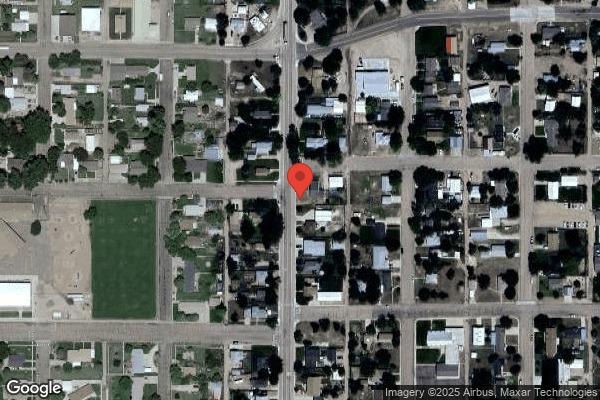
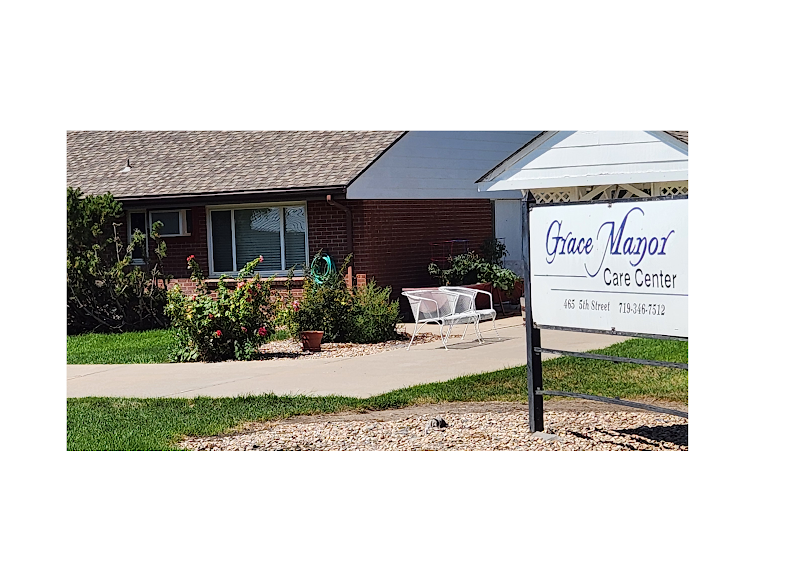
465 5TH ST, BURLINGTON, CO 80807 (719) 346-7512
For profit - Limited Liability company 31 Beds FRONTLINE MANAGEMENT Data: November 2025
Trust Grade
78/100
#26 of 208 in CO
Last Inspection: April 2024

Within standard 12-15 month inspection cycle. Federal law requires annual inspections.

Overview

Grace Manor Care Center in Burlington, Colorado, holds a Trust Grade of B, indicating it is a good option for families, with solid care overall. It ranks #26 out of 208 facilities in Colorado, placing it in the top half, and is the only nursing home in Kit Carson County. The facility is improving, with a reduction in issues from three in 2023 to two in 2024. However, staffing is a concern, rated at 2 out of 5 stars with a 40% turnover rate, which is better than the state average. Specific incidents include a failure to provide adequate supervision for a resident with a neurocognitive disorder, leading to a risk of accidents, and long wait times for assistance reported by another resident, which resulted in accidents. On a positive note, the facility has more RN coverage than 88% of similar facilities, which helps in catching potential issues. However, they have faced $4,859 in fines, which is average but still indicates some compliance problems.

Trust Score
B
78/100
In Colorado
#26/208
Top 12%
Safety Record
Moderate
Needs review
Inspections
Getting Better
3 → 2 violations
Staff Stability
○ Average
40% turnover. Near Colorado's 48% average. Typical for the industry.
Penalties
○ Average
$4,859 in fines. Higher than 50% of Colorado facilities. Some compliance issues.
Skilled Nurses
✓ Good
Each resident gets 46 minutes of Registered Nurse (RN) attention daily — more than average for Colorado. RNs are trained to catch health problems early.
Violations
○ Average
10 deficiencies on record. Average for a facility this size. Mostly minor or procedural issues.
★★★★★
5.0
Overall Rating
★★☆☆☆
2.0
Staff Levels
★★☆☆☆
2.0
Care Quality
★★★★★
5.0
Inspection Score
Stable
2023: 3 issues
2024: 2 issues

The Good

  • Full Sprinkler Coverage · Fire safety systems throughout facility
  • No fines on record
  • Staff turnover below average (40%)

    8 points below Colorado average of 48%

Facility shows strength in fire safety.

The Bad

Staff Turnover: 40%

Near Colorado avg (46%)

Typical for the industry

Federal Fines: $4,859

Below median ($33,413)

Minor penalties assessed

Chain: FRONTLINE MANAGEMENT

Part of a multi-facility chain

Ask about local staffing decisions and management

The Ugly 10 deficiencies on record

2 actual harm
Apr 2024 2 deficiencies
CONCERN (D)

Potential for Harm - no one hurt, but risky conditions existed

Quality of Care (Tag F0684)

Could have caused harm · This affected 1 resident

**NOTE- TERMS IN BRACKETS HAVE BEEN EDITED TO PROTECT CONFIDENTIALITY** Based on observations, record review and interviews the facility failed to ensure residents received treatment and care in accor...

Read full inspector narrative →
**NOTE- TERMS IN BRACKETS HAVE BEEN EDITED TO PROTECT CONFIDENTIALITY** Based on observations, record review and interviews the facility failed to ensure residents received treatment and care in accordance with professional standards of practice for one (#19) of 12 residents out of 15 sample residents. Specifically, the facility failed to have a wound care order in place prior to treatment being provided for Resident #19. Findings include: I. Facility policy and procedure The Care of Skin Tears, Abrasions and Minor Breaks policy, revised September 2013, was provided by the director of nursing (DON) on 4/10/24 at 2:31 p.m. It read in pertinent part, The purpose of the procedure was to guide the prevention and treatment of abrasions, skin tears and minor breaks in the skin. An abrasion is an area of the skin that has been damaged by friction, scraping, rubbing or trauma. Preparation: -Obtain a physician's order as needed; -Check the treatment record; and, -Generate a non-pressure form and complete it. II. Resident #19 A. Resident status Resident #19, age above 65, was admitted on [DATE] and readmitted on [DATE]. According to the April 2024 computerized physician orders (CPO), diagnoses included a history of falling, neoplasm of uncertain behavior of skin (a skin growth that could not be predicted), chronic kidney disease, hypertension (high blood pressure) and atherosclerotic heart disease (buildup of fats, cholesterol and other substances in and on the artery walls). The 1/29/24 minimum data set (MDS) assessment revealed the resident had moderately impaired cognition with a brief interview for mental status (BIMS) score of nine out of 15. He required moderate assistance with toilet transfers, chair to bed transfers, sit to stand and lying to sitting. The resident was at risk of developing pressure injuries. B. Resident observations and interviews Resident #19 was observed on 4/9/24 at 11:37 a.m. with a soiled border foam dressing to his right elbow. The dressing had dried blood on it and no date to indicate when it was changed or nurse initials. Resident #19 was observed a second time on 4/10/24 sitting in his recliner. His right elbow was open to air and scabbed over. Resident #19 said he received the wound on his right elbow when he fell a couple of weeks ago. He said a staff member put the dressing on because it was bleeding but it had not been changed since the fall. He said he took it off that morning (4/10/24) himself. C. Record review -Review of the March 2024 and April 2024 CPO revealed no treatment orders for the right elbow wound. A progress note dated 3/31/24 documented the resident received the abrasion to his right elbow following an unwitnessed fall. -However, the progress note did not document a dressing had been ordered and applied to the resident's elbow. III. Staff interviews Licensed practical nurse (LPN) #1 was interviewed on 4/10/24 at 12:54 p.m. LPN #1 said Resident #19 had a skin tear to his right elbow from a previous fall. She said there was not a physician's order in place for the treatment of the wound. She said there should be a physician's order in place on what to treat the wound with and for monitoring for infection. The DON was interviewed on 4/10/24 at 1:30 p.m. The DON said Resident #19 had an abrasion to his right elbow from a previous fall. She said she overheard LPN #1 and the unit manager discussing there was no physician's order for a treatment and it was left open to the air. She said the nurse should have called the physician for an order to treat the abrasion and to monitor for infection.
CONCERN (E)

Potential for Harm - no one hurt, but risky conditions existed

Deficiency F0761 (Tag F0761)

Could have caused harm · This affected multiple residents

Based on observations and interviews, the facility failed to ensure medications and biologicals were stored and labeled properly in two of two medication carts and one of one medication rooms. Specifi...

Read full inspector narrative →
Based on observations and interviews, the facility failed to ensure medications and biologicals were stored and labeled properly in two of two medication carts and one of one medication rooms. Specifically the facility failed to: -Ensure medications were not loose in medication carts; and, -Ensure expired medications were not stored with current medications in the medication storage room. Findings include: I. Facility policy and procedure The Storage of Medications policy and procedure, revised November 2020, was received from the director of nursing (DON) on 4/10/24 at 2:40 p.m. It documented in pertinent part, The facility stores all drugs and biologics in a safe, secure, and orderly manner. Drugs and biologicals are stored in packaging, containers or other dispensing systems in which they were received. Nursing staff are responsible for maintaining medication storage and preparation areas in a clean, safe and sanitary manner. Discontinued, outdated, or deteriorated drugs and biologicals are returned to the dispensing pharmacy or destroyed. II. Observations and staff interviews On 4/10/24 at 1:57 p.m. medication cart #1 was reviewed with licensed practical nurse (LPN) #1. -The medication cart had 28 whole medication tablets and one half medication tablet loose in the medication drawers. On 4/10/24 at 2:09 p.m. medication cart #2 was reviewed with LPN #1. -The medication cart had 16 whole medication tablets loose in the medication drawers. LPN #1 was interviewed on 4/10/24 at 2:11 p.m. LPN #1 said there was no formal cleaning schedule but it was the nurses responsibility to keep medication carts clean. LPN #1 siad medication carts were to be kept clean to prevent contamination and aid in medication stocking. On 4/10/23 at 2:15 p.m. the medication room was observed with LPN #1. -The medication room contained two boxes of 50 Tylenol 650 milligram (mg) suppositories that expired in February 2024. LPN #1 was interviewed on 4/10/24 at 2:17 p.m. LPN #1 said the medications were expired and should have been removed from the medication room for destruction. LPN #1 said expired medications had the potential for the full dose of the medications not to be administered to a resident. III. Additional staff interview The DON was interviewed on 4/10/24 at 2:31 p.m. The DON said medication carts were to be cleaned daily by the charge nurse. The DON said the pharmacy consultant came into the facility monthly to perform inspections on medication carts. The DON said nurses working the floor were expected to check the cart every day for expired medications and cleanliness. The DON said the facility did not have a schedule that identified a certain day or shift the medication carts were to be cleaned. The DON said if a nurse dropped a medication tablet into the drawer they should go looking for it and destroy it. The DON said it was important for medications to be stored in their dispensing containers so they did not get mixed up, creating a potential for medication errors. The DON said her nurse manager was to check the medication room for expired medications every two weeks. The DON said if a medication was used past the expiration date it could alter the strength and effectiveness of the medications.
Apr 2023 1 deficiency 1 Harm
SERIOUS (G) 📢 Someone Reported This

A family member, employee, or ombudsman was alarmed enough to file a formal complaint

Actual Harm - a resident was hurt due to facility failures

Accident Prevention (Tag F0689)

A resident was harmed · This affected 1 resident

**NOTE- TERMS IN BRACKETS HAVE BEEN EDITED TO PROTECT CONFIDENTIALITY** Based on interviews and record review, the facility failed to ensure one (#1) of three residents reviewed for accidents out of t...

Read full inspector narrative →
**NOTE- TERMS IN BRACKETS HAVE BEEN EDITED TO PROTECT CONFIDENTIALITY** Based on interviews and record review, the facility failed to ensure one (#1) of three residents reviewed for accidents out of three sample residents received adequate supervision to prevent an accident/hazard. Resident #1, who had a diagnosis of neurocognitive disorder with Lewy bodies (type of progressive dementia that leads to a decline in thinking, reasoning and independent function), was admitted to the facility on [DATE]. The facility failed to follow standards of practice in providing incontinence care by not having all supplies ready and letting go of the resident after helping the resident into the sitting position on the edge of bed. The facility failed to timely implement appropriate interventions, including assistance with all activities of daily living (ADL) as documented in his quarterly 1/6/23 minimum data set (MDS) assessment. The facility failed to provide and implement two person bed mobility/toileting and dressing assistance and failed to consistently provide two person bed mobility/toileting and dressing assistance after the fall according to record review, interviews and in accordance with the post fall intervention and education provided by the director of nursing (DON). Due to the facility's failures, and the staff's failure to take proper and reasonable care when providing bed mobility/toileting and dressing assistance resulted in the resident falling from seated on the edge of bed to the floor landing on his head, neck, and shoulder. It resulted in the resident sustaining injuries of a head injury, scalp hematoma (bleeding on brain), facial bruising, cervical spine strain, and right shoulder contusion. His pain went from a baseline of 0 out of 10 (on a pain scale with 10 being the worst pain) to 8 out of 10 resulting in a decrease in functional ability and he required evaluation and treatment at the emergency department (ED). Findings include: I. Facility policy and procedure The Falls and Fall Risk, Managing policy and procedure, revised March 2018, was provided by the DON on 4/18/23 at 10:41 a.m. It read in pertinent part, Based on previous evaluations and current data, the staff will identify interventions related to the resident's specific risks and causes to try to prevent the resident from falling and to try to minimize complications from falling. The staff, with the input of the attending physician, will implement a resident-centered fall prevention plan to reduce the specific risk factor (s) of falls for each resident at risk or with a history of falls. II. Resident #1 A. Resident status Resident #1, age [AGE], was admitted on [DATE]. According to the April 2023 computerized physician orders (CPO), diagnoses included neurocognitive disorder with Lewy bodies, muscle weakness, unsteadiness on feet, and repeated falls. The 1/6/23 minimum data set (MDS) assessment revealed the resident had severe cognitive impairment with a brief interview for mental status (BIMS) score of seven out of 15. He required extensive assistance with two persons for transfers, bed mobility, toilet use, dressing, and locomotion on the unit. He required extensive assistance with one person for personal hygiene, and bathing. The resident did not require scheduled pain medication regimen and pain assessment revealed the resident had no pain (0/10) in the last five days. The 3/10/23 annual MDS assessment (after the fall on 2/27/23) revealed the resident required and received scheduled pain medication regimen, PRN (as needed) pain medications, and non-medication interventions for pain. The pain assessment revealed the resident had frequent pain in the last five days with a pain intensity of 7 out of 10. B. Resident interview Resident #1 was interviewed on 4/18/23 at 1:00 p.m. He said the fall on 2/27/23 occurred when the nurse aide (NA) left him on the edge of bed and she went to go pick something up and that was when he fell to the floor from the bed. Resident #1 said he did not have pain before the fall but the pain was quite a bit after. He said he really felt it in his neck, he had a black eye and a goose egg on the right side of his head. He said after they picked him up he noticed the right shoulder pain. He was sent to the ED. He said the Tylenol was not helping his pain the first weeks because he was very sore with a great amount of pain. He said the staff tried muscle relaxant medication but that did not seem to help. Resident #1 said he could not get out of bed unless he had help, usually one person but sometimes two. C. Record review Review of the ADL care plan revealed the resident required assistance with activities of daily living (ADLs) related to weakness with decreased mobility, history of fall falls prior to admission and during admission, unsteadiness, history of transient ischemic attacks (TIAs). Residents' ADL function was unpredictable from day to day, initiated 3/7/22, and revised 3/13/23. Interventions related to bed mobility, transfers and dressing included, bed mobility one to two person assist, initiated 10/24/22 and revised 3/15/23; dressing one to two person assist, initiated 3/7/22, and revised 3/15/23; resident was not to be left on edge of bed unattended, initiated 2/27/23; toileting two person assist, initiated 3/7/22, revised 10/24/22; and transfers two person assist, initiated 3/7/22, and revised 3/15/23. -Although the 1/6/23 MDS assessment had been coded as requiring extensive assistance with two persons for transfers, bed mobility, toilet use, and dressing during the seven day period. The ADL care plan revealed it had not been developed to include two persons physical assistance consistently. Review of the fall care plan revealed the resident was at risk for falls related to multiple falls prior to admission with fractured ribs, weakness, decreased mobility, unsteady balance, unsteady gait, diagnosis of history of idiopathic normal pressure hydrocephalus (fluid on the brain), history of TIA/cerebrovascular accident (stroke). Decreased safety awareness and confusion at times, initiated 3/7/22 and revised 10/31/22. New interventions introduced following fall on 2/27/23 was, resident is not to be left on edge of bed unattended. initiated 2/27/23. Review of Resident #1's medical record (EMR) revealed the following progress notes documented in pertinent part: 2/27/23 at 9:26 a.m., Full Description of Fall: staff alerted this nurse that resident had fallen onto floor. Nurse walked into room and saw resident laying on his right side on the floor. No shoes on, staff was present and in the bathroom when he fell. Resident's Description of Fall: states to have fallen off the bed while sitting on the edge and was not able to keep himself up. States to have hit head, no other complaints during assessment. Description of Environment Where Fall Occurred: Resident Assessment: Full assessment completed, resident sustained a goose egg on top of right forehead, extremities equally strong and baseline ROM (range of motion) intact, no pain complaints other than a headache during assessment. Alert and oriented per baseline. Vitals and neuros started per protocol. Provider, DON and daughter notified. Resident assisted off the floor two person assist and sat into wheelchair to finish getting dressed, resident taken to breakfast by choice. While eating he complained about having right arm pain and nausea. Daughter in to visit and requests that resident be seen in ED. Vital Signs / Neurological Checks: 160/91, 76, 18, 98.3, 95% , alert and oriented x3 (to person, place and time) per baseline. Injuries: first aid provided, 'goose egg' top of right forehead. Pain: Level (1-10), Pain: 4 from headache. No other complaints while doing assessment. Later while eating breakfast complains of right arm pain and nausea. Fall intervention(s): immediate & suggested long term: no more sitting on edge of bed per usual. Physician notification: messaged provider to personal phone. Responsible party notification and response: daughter and first contact. The 2/27/23 at 8:27 a.m. emergency department physician note revealed in pertinent part, Chief complaint: Fall at 7:15 a.m. History of present illness: Wheelchair bound two-person assist at baseline presenting in the emergency department for evaluation after a fall. Patient resides at a nursing facility, they put him on the side of the bed and left the room. Patient fell off the bed and landed on his right side. Patient complaining of head, neck and right shoulder pain. He also complains of nausea when sitting up. A complete 10-point review of systems was performed and was negative. Head: right frontal hematoma with associated tenderness to palpation. Neck: Mild right paraspinal tenderness to palpation. Musculoskeletal: right shoulder-positive mild posterior lateral tenderness to palpation. Imaging CT (computerized tomography) head -Right front scalp swelling with intact calvarium. CT cervical spine: No acute traumatic injury to the cervical spine. Right shoulder x-ray: No acute fracture. Assessment: Scalp hematoma, head injury, cervical spine strain as well as right shoulder contusion, also persistent UTI (urinary tract infection). Family will discuss two-person assistance issues with the nursing facility. 2/27/23 at 11:33 a.m. Nursing note: resident back from ED, comes back with orders for Keflex 500 mg (milligrams) PO (by mouth) TID (three times per day) for ten days, first dose given at the hospital for UTI (urinary tract infection), Occupational Therapy (OT), additional instructions include ice to head 20 minutes on 60 off, Acetaminophen prn, gentle range of motion and stretching, and check in two days for a recheck. Resident to return as needed. 2/28/23 at 10:00 a.m. Nursing note: post fall monitoring continued, resident 'sore' feeling neck and right shoulder pain, prn ibuprofen administered resident laid down to rest. Chiropractor coming into the facility to see resident later this afternoon. Neuros (neurological) and vitals WNL (within normal limits). 3/1/23 at 7:17 a.m. Orders-Administration note: Resident states neck pain from recent fall. Requests PRN med (medication). 3/1/23 at 8:51 a.m. Orders-Administration note: PRN administration was ineffective. Follow-up Pain Scale was: 5. 3/1/23 at 10:03 a.m. Orders-administration note: Resident reports pain at neck and right arm and requests PRN med. Daughter states that tylenol has not been helping the discomfort, but that ibuprofen has been helping. Resident has a follow up doctor appointment today at 10:30 a.m. The 3/1/23 physician progress note, in pertinent part, for follow up from the ER (emergency room), History of present illness: resident presents for follow up status post rolling out of his bed accidently. Apparently the CNA that was taking care of the patient was unaware that she had to watch and he fell out of bed. Patient was placed into bed and then left unattended; he ultimately rolled out landing on his right side. Patient has multiple bruises on the face, neck, and shoulder. Patient was evaluated in the ER with multiple studies including CT scans with negative fractures. Patient voices agreement that he would like to get his ibuprofen scheduled. Physical examination: Pleasant elderly male, wheelchair dependent with facial bruising consistent with his history of fall from bed. Facial bruising of the head, face right side. Spasticity of the strap neck muscles right greater than left no cervical spine tenderness. Assessment: Multiple contusions and dysuria (painful or difficult urination). 3/2/23 at 9:46 p.m. Nursing note: seems out of sorts, was telling the aides that he needed to lay down and he already was and then he asked to take him out of the car when he was lying in bed. 3/9/23 at 8:08 a.m. Nursing note: provider phoned and gave order for biofreeze to be applied to neck and shoulders TID for residents discomfort. 3/10/23 at 8:43 p.m. Nursing note: This resident is S/P (status post) unwitnessed fall in his room on 3/5/2023. His vital signs remain stable and his neurological examination remains benign, at his baseline. Will continue to monitor. -Another fall on 3/5/23, seven days after fall with injury on 2/27/23. There was no charting in the progress notes of the 3/5/23 fall until 3/10/23, five days later. 3/14/23 at 10:09 a.m. Fall note description of fall, in pertinent part, resident was found on floor between his wheelchair and recliner in room, laying on his right side. Call light was next to the wheelchair but was not able to reach while on the floor. When asked how long he had been there, he states it was just a few minutes. Residents' wheelchair wheels were unlocked at the time due to the resident self propelling himself. Resident's description of fall: resident states that he could not remember what he was reaching for but was reaching for something and slid out of his wheelchair, and due to wheels being unlocked, wheelchair rolled away. Description of environment where fall occurred: Resident was transferring himself to his recliner from his wheelchair. Wheelchair brakes were unlocked at the time of all. His call light was beside his chair and he wasn't able to use it after the fall. He did not use it before the fall either. Resident assessment: full assessment complete and VS (vital signs) taken. Neuro's are all intact. Denies pain at this time. Vital signs / neurological checks: VS and neuro's were intact with no problems noted. No injuries and no pain at this time. Fall Intervention: Immediate and suggested long term: Reacher device implemented. Physician notification and response: No orders noted from doctor. Responsible party notification and response: Daughter notified. Administration and Director of Nursing Notification: Both were notified of the fall. 3/15/23 at 7:19 a.m. Orders-administration note: Resident states that neck pain 'was getting a lot better' , but reports pain at right upper arm from previous fall. 3/16/23 at 5:14 p.m. Nursing note: Resident had complaints of pain in his right arm below his shoulder spoke with PCP (primary care physician) and order to have X-rays taken tomorrow was given and to extend his scheduled IBU (ibuprofen) for another 10 days. Daughter notified of new orders and will be present during x-rays. 3/23/23 at 9:58 a.m. Annual care conference in pertinent part, Care conference summary, late entry: Care plan reviewed at length and appropriate questions asked and answered. Daughter voiced a concern regarding one night shift CNA (certified nurse aide) continues to transfer resident alone, without a second person. DON will follow up on this. Review of the bed mobility task support provided for the past 30 days documentation revealed the following: 3/19/23 at 9:04 a.m. two person physical assistance was provided. 3/20/23 at 2:28 a.m., 12:33 p.m., 8:38 p.m. one person physical assistance was provided. 3/21/23 at 10:19 a.m., 7:22 p.m. one person physical assistance was provided. 3/21/23 at 10:38 a.m. two person physical assistance was provided. 3/22/23 at 1:57 p.m., 7:15 p.m. one person physical assistance was provided. 3/23/23 at 1:30 p.m. one person physical assistance was provided. 3/24/23 at 2:58 a.m., 10:19 a.m. two person physical assistance was provided. 3/25/23 at 1:17 a.m., 7:41 p.m. one person physical assistance was provided. 3/25/23 at 10:10 a.m. two person physical assistance was provided. 3/26/23 at 9:55 a.m. one person physical assistance was provided. 3/26/23 at 9:55 a.m., 11:34 p.m. two person assistance was provided. 3/27/23 at 12:56 p.m. one person physical assistance was provided. 3/27/23 at 9:58 p.m. two person physical assistance was provided. 3/28/23 at 2:32 p.m. one person physical assistance was provided. 3/29/23 at 2:29 a.m., 10:18 a.m. one person physical assistance was provided. 3/30/23 at 4:19 a.m., 2:29 a.m. one person physical assistance was provided. 3/30/23 at 9:38 p.m. two person physical assistance was provided. 3/31/23 at 9:49 a.m. two person physical assistance was provided. 3/31/23 at 8:08 p.m. one person physical assistance was provided. 4/1/23 at 9:31 a.m. two person physical assistance was provided. 4/2/23 at 12:24 a.m. one person physical assistance was provided. 4/2/23 at 9:26 a.m. two person physical assistance was provided. 4/3/23 at 2:55 a.m., 10:11 a.m. one person physical assistance was provided. 4/4/23 at 12:23 a.m. one person physical assistance was provided. 4/4/23 at 2:57 p.m. two person physical assistance was provided. 4/5/23 at 1:48 a.m., 10:05 a.m. one person physical assistance was provided. 4/6/23 at 5:23 a.m., 1:19 p.m. one person physical assistance was provided. 4/7/23 at 2:01 a.m., 12:55 p.m. one person physical assistance was provided. 4/8/23 at 5:59 a.m., 1:11 p.m. two person physical assistance was provided. 4/8/23 at 10:46 p.m. one person physical assistance was provided. 4/9/23 at 11:50 a.m. two persons physical assistance was provided. 4/10/23 at 2:05 a.m., 10:17 a.m., 7:27 p.m. one person physical assistance was provided. 4/10/23 at 10:17 a.m. two person physical assistance was provided. 4/11/23 at 5:59 p.m. one person physical assistance was provided. 4/12/23 at 12:30 a.m., 1:47 p.m. one person physical assistance was provided. 4/12/23 at 8:19 p.m. two person physical assistance was provided. 4/13/23 at 5:58 p.m. two person physical assistance was provided. 4/14//23 at 1:47 a.m., 7:56 p.m. two person physical assistance was provided. 4/14/23 at 2:09 p.m. no setup or physical help from staff. 4/15/23 at 1:24 p.m. one person physical assistance was provided. 4/16/23 at 5:41 a.m. two person physical assistance was provided. 4/16/23 at 3:30 p.m. one person physical assistance was provided. 4/17/23 at 12:01 a.m. two person physical assistance was provided. -Although, the DON educated the staff to provide two person assistance (see below) after Resident #1's fall and the daughter requested it during the recent care conference, the staff continued to provide one person assistance, placing Resident #1 at a continued risk of another fall. Fall risk tool assessment conducted 2/8/23 and 2/27/23 revealed high risk of fall. The February 2023 MAR (medication administration record) pain level was documented as 0 out of 10 on 2/26/23; and 7 out of 10 on 2/27/23 (after fall). Occupational therapy (OT) evaluation, dated 3/2/23, revealed right shoulder pain with movement, prior pain with movement 0 out of 10, current baseline (3/2/23) pain with movement 8 out of 10 resulting in increasing difficulty with transfers, completing ADLs and low activity tolerance. III. Facility's investigation of Resident #1's fall The post fall investigation noted in pertinent part, Fall investigation: Fall 2/27/23-Staff alerted the nurse that the resident had fallen forward onto the floor. Nurse walked into room and saw resident laying on his right side, bed was half way up off the floor, call button was within reach, room well lit. Root cause analysis: Poor core strength to body, resident was weak at this time. IDT (interdisciplinary team) recommendations: Do not leave resident on the side of the bed unattended. Was abuse & neglect ruled out?-No abuse. Further investigation for this fall: Completed neuros starting 2/27/23. Nurse aide (NA) #1 had left Resident #1 unattended. NA#1 statement: I sat the patient up on the side of the bed while getting ready and dressed before getting assistance to transfer per usual, I stepped into the restroom to get him depend, and as I walked out I heard a thump and found him on the floor, and went to alert the nurse right away. Resident did return from the hospital by facility van. He has a diagnosis of a concussion. No brain bleed, or broken bones. On the spot re-education, date 2/27/23, conducted by DON: For Resident #1, Resident needs two person assistance for all dressing and transfer cares. Never leave him unattended sitting on the edge of bed. His core strength is unpredictable. Inservice training class, 3/9/23, conducted by clinical administrators. Subjects covered: abuse, neglect, donning and doffing of PPE (personal protective equipment), relias training policy, above and beyond program, Protocol on where and how to find care plans and the importance of them, Resident care including education on a Resident #1. The ADL Assistance Spot Checks paperwork was blank and had not been conducted after the fall. IV. Staff interviews NA #1 was interviewed via telephone on 4/18/23 at 12:37 p.m. She said she obtained her certificate for NA on 12/15/22 and she was currently working toward completing her certified nurse aide (CNA) certificate. She said that Resident #1 required two person assistance for transfers, and for dressing it was usually one person assist. She said for toileting he required two person assistance and for bed mobility one person assistance for rolling and transfer from lying down to the sitting position. NA #1 said at the time of the fall on 2/27/23 she needed to let go of the resident who was seated on the edge of bed and go into the bathroom to get a brief. NA #1 said the staff usually changed him in bed but she noticed there was no brief and normally two people would help. NA #1 said the other staff member was busy with another resident. NA #1 said with Resident #1's incontinence care we would stand him and pull up pants and complete tasks that way. NA #1 said typically she would have gathered her supplies first. She said when she realized she did not have all of her supplies with her she should not have left Resident #1 seated on the edge of the bed unattended but she did and he fell. She said after he fell she checked the resident and told him she would go get the nurse. NA #1 said the DON talked to her about everything after and told her not to transfer the resident by herself and if she needed to get anything to lie the resident down and not to leave the resident unattended in an unsafe position. NA#1 said bed mobility for Resident #1 was now two person assistance for safety. Registered nurse (RN) #1 and DON were interviewed on 4/18/23 at 2:08 p.m. They said the information for the care plan was gathered in the first week after admission and went off of what the CNAs were charting of actual functioning needs. They said they made a decision on the care levels needed but they did not always care plan for extensive assistance for two people even though that was on the MDS assessment. They said the care plan may not match the MDS assessment in the functional level because the person varies. They said if the MDS assessment documented the resident needed two person assistance they may have needed it once in seven days. RN #1 said Resident #1 had his fall during bed mobility but she did not make any changes to his bed mobility care plan because he was fluctuating between needing one to two person assistance. The DON said prior to the fall bed mobility was typically one person assistance, our intervention after that time was to not be left on the edge of bed without hands on support and to transfer off the bed with two person assistance. After the fall we determined he needed one person support on the edge of bed, he had been a two person assistance for transfers, and toileting for a long time. The DON said the care plan had not been updated yet to match the training she provided to the staff which was to provide two person assistance for all dressing and all transfer cares for best safety. The DON said she meant to put two person assistance with all transfer cares (including bed mobility, transfers, toileting, and dressing) on the resident's care plan. The DON said she would update the care plan to two person assistance because that was what she said in the training she provided to the staff and to the family in the care conference. The DON, RN #1, social services coordinator (SS) acknowledged the record review of the last 30 day (after the fall) task CNA documentation for transferring and toileting revealed one person assistance was provided frequently, although the care plan stated to provide two person assistance. The DON, RN #1, and SS acknowledged the last 30 day (after the fall) task CNA documentation for bed mobility and dressing revealed one person assistance was frequently provided although the DON had educated the staff on 2/27/23 to provide two person assistance. The DON said she would re-educate the staff on ADL charting and the care levels that Resident #1 needed. The DON said she wanted Resident #1 to have two person assistance for all cares for his safety. CNA #1 was interviewed on 4/18/23 at 4:09 p.m. She said the incontinence care procedure was first to sanitize your hands and put on gloves and explain to the resident the procedure. CNA #1 said she would get supplies first when she walked into a room such as spray, wipes, and a brief. CNA #1 said then she got the resident positioned safely to change them. CNA #1 said if she needed to leave the resident, she lowered the bed and if there was a resident that she could not take her hands off, then she would use the call light for another staff member to come and help. CNA #2 was interviewed on 4/18/23 at 4:16 p.m. She said the incontinence care procedure was to knock on the door, sanitize hands, put on gloves, and tell the resident why she was there. CNA #2 said she would gather supplies first such as peri wash, wipes, briefs, and dry clothes. CNA #2 said then she would transfer the resident to the toilet or the bed depending on the resident. CNA #2 said if she forgot something, she would lay the resident down, cover them up, lower the bed then go get what she needed. CNA #2 said there were some residents that she knew not to let go of while changing them and she would have two people assist for safety. The NHA was interviewed on 4/18/23 at 4:52 p.m. The NHA acknowledged that if the NA had not taken her hand off the resident and walked away the resident would not have fallen. The NHA said it was an accident.
Jan 2023 2 deficiencies
CONCERN (D)

Potential for Harm - no one hurt, but risky conditions existed

Medication Errors (Tag F0758)

Could have caused harm · This affected 1 resident

**NOTE- TERMS IN BRACKETS HAVE BEEN EDITED TO PROTECT CONFIDENTIALITY** Based on observation, record review and interviews, the facility failed to ensure two (#20 and #13) of five residents were free ...

Read full inspector narrative →
**NOTE- TERMS IN BRACKETS HAVE BEEN EDITED TO PROTECT CONFIDENTIALITY** Based on observation, record review and interviews, the facility failed to ensure two (#20 and #13) of five residents were free from unnecessary psychotropic medications out of 18 sample residents. Specifically, the facility failed to monitor targeted behaviors for psychotropic medications for Resident #20 and #13. Findings include: I. Facility policy and procedure The Behavior Evaluation, Intervention and Monitoring policy and procedure, revised December 2016, was provided by the nursing home administrator (NHA) on 1/11/23 at 9:25 a.m. It revealed in pertinent part, The interdisciplinary team will evaluate behavioral symptoms in residents to determine the degree of severity, distress, and potential safety risk to the resident, and develop a plan of care accordingly. Interventions will be individualized and part of an overall care environment that supports physical, functional and psychosocial needs, and strive to understand, prevent or relieve the resident's distress or loss of abilities. Interventions and approaches will be based on a detailed evaluation of physical, psychological and behavioral symptoms and their underlying causes, as well as the potential situational and environmental reasons for the behavior. Behavior symptoms will be incorporated into the care plan. Non-pharmacologic approaches will be utilized to the extent possible to avoid or reduce the use of antipsychotic medications to manage behavioral symptoms. II. Resident #20 A. Professional reference Mosby's 2023 Nursing Drug Reference, Thirty-Sixth Edition, a current drug reference, summarized drug information: Lorazepam/Ativan is a benzodiazepine medication that is used to treat anxiety disorders, insomnia, and agitation. Side effects include dizziness, drowsiness, confusion, fatigue, depression, insomnia, weakness, vomiting, and anorexia. Sertraline/Zoloft is an antidepressant medication that is used to treat major depression. It is effective to treat panic disorders, social anxiety disorder, and generalized anxiety order. Side effects include agitation, dizziness, fatigue, confusion, and anxiety Memantine/Namenda is an anti-Alzheimer's medication that is used to treat moderate to severe dementia in Alzheimer's disease. Side effects include dizziness, confusion, and fatigue. Olanzapine/Zyprexa is an antipsychotic medication used to treat acute agitation, bipolar disorders, or schizophrenia. Side effects include agitation, hostility, dizziness, confusion, drowsiness, nausea, anorexia, tardive dyskinesia, and seizures. Residents that receive psychotropic medications must be monitored to include side effects, responses to as needed doses, mental status, orientation, sleep pattern disturbances, suicidal thoughts, and renal function over prolonged therapy. B. Resident status Resident #20, over the age [AGE] years, was admitted on [DATE]. According to the January 2023 computerized physician orders (CPO) diagnoses included dementia with agitation, unspecified anxiety disorders, restlessness, agitations, and other specified depressive episodes. The 10/11/22 minimum data set (MDS) assessment revealed the resident's brief interview for mental status (BIMS) with a score of one out of 15, which indicated the resident had severe cognitive impairment. The resident required extensive assistance from staff for bed mobility, transfers, locomotion on and off the unit, dressing, toilet use, and personal hygiene. The resident required limited assistance for eating. C. Observations On 1/9/22 at 9:00 a.m. Resident #20 was observed sitting in her wheelchair near the nurse's station. She appeared lethargic, confused, and did not interact with staff. On the morning of 1/9/23 the resident was administered Namenda 5 milligrams, Zoloft 50 milligrams, and Lorazepam 1 milligram. -At 11:36 a.m. the resident was assisted into the dining room by certified nurse assistant (CNA) #1 -At 11:38 a.m., the resident was served her noon meal. Dietary aide (DA) #1 assisted with the resident's eating because the resident could not keep her eyes open and when the resident tried to pick up her silverware she dropped the silverware and food into her lap and was unable to use her sippy cup without DA #1 holding it to her mouth. The resident did not open her eyes for most of the meal but she allowed staff to assist her with eating. During the meal, the resident yelled out one time and she was easily redirected by staff. -At 4:15 p.m. the resident was assisted by staff into the dining room in her wheelchair. Her eyes were open. -At 4:17 p.m. she was asleep after being assisted to the dining room table. -At 4:30 p.m. she continued to sleep while at the table. CNA #1 sat next to the resident and tried to wake her up to eat. The resident did not respond to the CNA's questions given her choices of crackers in her soup. -At 4:32 p.m. the CNA tried again to wake the resident to eat her grilled cheese sandwich, but the resident remained unresponsive to staff. -At 4:35 p.m. the CNA approached the resident to wake her for her meal and she remained unresponsive. The resident oriented for approximately one minute and -At 4:36 p.m. she went back to sleep with food in her mouth. The CNA and an additional staff member called her loudly by name six times before she responded and opened her eyes. The resident then began to chew and swallow the food in her mouth. -At 4:39 p.m. registered nurse (RN) #1 told the CNA the resident had been up since early that morning at which time the CNA informed the RN the resident had taken a nap in her bed that afternoon. The RN said the resident should return to her room for a nap and finish her evening meal at a later time. On 1/10/23 at 10:15 a.m. the resident was alert and yelling out for her son. Review of the resident's medication record revealed the nurse held the lorazepam 1 mg dose. C. Record review The resident's CPO included: Lorazepam for anxiety 0.25 milligrams daily. The order was active 10/11/22-10/13/22. On 10/18/22-11/2/22 the Lorazepam 0.25 milligram order was update/changed to be administered every 12 hours as needed when the resident experiences anxiety/depression. On 11/1/22-11/12/22 the Lorazepam 0.5 milligrams order was updated/changed to be administered every six hours as needed when the resident experienced restlessness or agitation. On 1/4/23 the Lorazepam order was increased to 1.0 milligrams, was ordered and scheduled twice a day for anxiety. On 10/12/22 Zoloft 50 milligram was ordered and scheduled for every morning 1 tab every morning depression. On 10/11/22 Namenda 5 milligrams was ordered and scheduled for every morning for dementia. On 10/13/22 Zyprexa was ordered and scheduled for every evening for anxiety and depression. Behavior tracking was ordered to be assessed every shift. In October 2022, the resident had no behaviors. In November 2022, the resident had restlessness documented on 11/11/22 and 11/12/22. On 11/11/22 she responded effectively to interventions of redirection, staff listened emphatically, and staff validated her feelings. On 11/13/22 the resident had agitation and interventions of redirection, staff listened emphatically, and staff validated her feelings were ineffective. In December 2022, the resident had agitation episodes on 12/2/22, 12/12/22 and 12/13/22 and it was documented she responded to interventions of redirection, validating her feelings, and empathetic listening. In January 2023, the resident was agitated on 1/1/23. The record review indicated the resident responded effectively to interventions of redirection, staff listened emphatically, and staff validated her feelings, and activity. On 1/3/23 the resident had an episode of agitation, notes regarding what interventions were not located in the resident's medical record. The medication administration record revealed: In November 2022 the resident was administered as needed doses of lorazepam three times, with two (11/16/22 and 11/14/22) of the three times, behavioral details were not documented. In December 2022 the resident was administered three as needed doses of lorazepam, 12/22/22, 12/29/22, and 12/30/22 and the record revealed no documented behaviors for those doses. -There were no documented non-pharmacological interventions prior to the administration of the as needed lorazepam. The progress notes revealed: On 1/3/23 a progress note discussed increasing the lorazepam dose with the resident's son to which he gave consent. After that consent was obtained from the son, the physician was contacted to obtain the new medication orders/dosing changes. On 1/4/23 there was a telemedicine visit with a physician. There was no documentation in the medical record the physician reviewed the behavior changes and need for increased dosing of lorazepam. The resident's care plan included a focus for antidepressant, antipsychotic, anti-anxiety, and ACE (anti-hypertensive medication) inhibitor. The care plan focus was initiated on 10/11/22 and revised 12/15/22. Interventions indicated the staff were to monitor for side effects for anti-anxiety medication, anti-psychotropic medication, and antidepressant medication. The care plan to monitor the resident's mood and behavior that began when the resident began yelling out, having aggression, and refusing assistance from staff. This care focus was initiated on 10/14/22 and revised on 11/4/22. The interventions listed included: allow resident time to calm down and reapproach at a later time, evaluate the need and refer to psychological counseling as recommended by physician, monitor and document each behavior event. D. Interviews The social services designee (SSD) was interviewed on 1/10/23 at 9:41 a.m. regarding the review and scheduling of residents with the facility psychotropic review committee. The SSD residents that received psychotropic medications were reviewed by the psychotropic review committee every quarter. The SSD elaborated if a resident was not scheduled for review but was taking psychotropic medications and exhibited behaviors such as restlessness or sleep disturbances the psychotropic review committee could review the resident on an as needed basis. Resident #20 was admitted in October 2022 and was scheduled for her quarterly committee review during 1/23/23. The SSD stated Resident #20 had not been reviewed by the committee on an as needed basis although she exhibited agitation in November and December 2022 which required three changes to the lorazepam antianxiety medication. CNA #2 was interviewed on 1/10/23 at 1:00 p.m. The CNA said she was familiar and worked frequently with Resident #20. She stated after the resident was admitted she had behaviors of yelling. She stated staff learned when the resident yelled she was perhaps feeling cold. The staff were able to anticipate the needs of the resident and kept her warm with a lap blanket dressing with warmer clothes. The CNA stated the resident responded to reassurance from staff, such as holding her hand and talking about her son. The CNA stated she was aware the resident had an episode in the dining room on 1/9/22 when the staff had difficulty arousing the resident. The CNA stated the resident has had similar responses before and the staff treat the episodes as extreme fatigue and assist the resident to her bed for rest. The CNA stated she notified the nurse when she helped the resident to bed because of the extreme fatigue. Licensed practical nurse (LPN) #1 was interviewed 1/10/23 at 1:30 p.m. regarding the medications she administered the resident on 1/9/23. The LPN stated she administered Namenda 5 milligrams, Zoloft 50 mg, and lorazepam 1 milligram. The LPN stated the lorazepam was a scheduled medication and it was administered regardless of behaviors present in the resident. The LPN stated when she administered the lorazepam the resident was sitting in her wheelchair and able to swallow the tablet without difficulty. The LPN stated she was aware the resident had previous episodes of extreme fatigue on previous days and when that happened the resident was assisted to her bed. The director of nursing (DON) was interviewed on 1/10/23 at 2:55 p.m. She stated nurses should assess and document resident behaviors and side effects related to antidepressants, antianxiety, and antipsychotic medications. She verified the behavior tracking order was inclusive of all medication groups and side effects which prevented the identification and tracking of specific behaviors and how medication use was effective or not. The DON stated she was aware of the episode on 1/9/23 in which the resident was difficult to arouse in the dining room. The episode was not documented in the medical record (see observation), the DON stated the nurse should document the patient assessment, the nurse's response, physician notification, and continue to monitor the resident's status. -The nurse did not contact the physician regarding the resident on 1/9/23. E. Facility follow-up On 1/11/23 at 3:05 p.m. the DON provided a signature page for on the spot re-education which was signed by all staff nurses. The education regarding behavior management of residents began on 1/10/23 and was completed on 1/11/23. III. Resident #13 A. Resident status Resident #13, age [AGE], was admitted on [DATE]. According to the January 2023 computerized physician orders (CPO), the diagnoses included other specified depressive episodes and unspecified mood affective disorder. The 10/4/22 minimum data set (MDS) assessment revealed that the resident had mild cognitive impairment with a brief interview of mental status (BIMS) score of twelve out of 15. No behaviors were identified in the MDS assessment for the resident. B. Record review The mood and behavior care plan, initiated on 7/8/22, revealed the resident had a history of altered mood related to unspecified mood affective disorder and other specified anxiety disorders. Interventions indicated to monitor and document each behavioral event. The January 2023 CPO revealed the following physician orders for psychotropic medications: -Cymbalta 30 MG (milligrams)- give one tablet by mouth for unspecified depressive episodes- ordered 9/26/22 and discontinued 12/28/22. -Venlafaxine 75 MG (milligrams)-give one tablet via G-tube (gastrostomy tube, a tube in the stomach) for unspecified depressive episodes-ordered 12/28/22. A review of the physician progress notes revealed in pertinent part: The 7/22/22 progress note stated the resident had an underlying mood disorder but with no mention of behaviors or treatment plan. The 8/17/22 progress note was without any mention of a psychological condition. The 10/26/22 progress note stated that the resident had requested an increase in her Cymbalta for depression, which was later discontinued in favor of Venlafaxine for depression. There was no mention of the resident explaining why she wanted the increase. The patient health questionnaire-9 (PHQ-9) for depression dated 7/10/22 revealed the resident admitted with a score of nine out of twenty seven indicating mild depression. The PHQ-9 conducted again on 10/3/22 revealed a score of twelve out of twenty seven indicating moderate depression. The medication administration records (MAR) dated July 2022 through January 2023 showed active behavior tracking for lack of motivation, lack of appetite, or sadness and irritability. -There were no behaviors marked for this time period. C. Staff interviews The SSD was interviewed on 1/10/23 at 9:41 a.m. The SSD said Resident #13 had not been reviewed in the psychotropic meeting. The SSD had recently submitted a level 2 PASRR for an evaluation due to increased behaviors of manipulation towards staff. Resident #13 would behave contradictory towards staff, presenting more independence in her activities of daily living (ADL) for some staff and then would present as more debilitated for other staff members. -However, the resident had no behavior tracking documented despite having changes in medications, increased symptoms, and having been at the facility for over five months. RN #1 was interviewed on 1/10/23 at 1:28 p.m. She stated that Resident #13 could be difficult to provide care for. The resident micro managed the care the staff provided and would participate in care with some staff and with other staff would demand more assistance. RN #1 said she believed it was due to whether the resident trusted staff or not. CNA #1 was interviewed 1/10/23 at 1:35p.m. CNA #1 said that Resident #13 could do things like walking or standing but decided she did not want to, saying she was tired. Sometimes she would refuse to use the toilet and would rather use the brief. She stated that the resident did not want to participate in care as much as she was capable of. The SSD and DON were interviewed on 1/10/22 at 2:46 p.m. The SSD stated that Resident #13's antidepressant medication Cymbalta was changed due to the medication getting stuck in her G-tube during administration as well as her increase in behaviors of manipulating staff. A PASRR level 2 was submitted due to the medication change and increased behaviors. The SSD could not explain why the resident did not have behaviors marked in her behavior tracker for the entire period of time she had been at the facility. The SSD stated that there was not a process to train the nurses on what individual behaviors were for each resident. The SSD confirmed that since she did not conduct interviews or observations for the psychotropic drug meeting and only did a record review, a resident who had not displayed behaviors on their behavior tracker for the same period of time as Resident #13, would be recommended for a discontinuation or dose reduction of their medications. The SSD said the behavior tracker was that established target behaviors would be included and the nurses would document the behaviors that the resident displayed. The tracker would then be reviewed every quarter. The SSD acknowledged that the behaviors indicated on the trackers were generic signs/symptoms/and interventions and the same on every resident's tracker. They did not customize the tracker to reflect the individualized behaviors or interventions of each resident. The regional nurse consultant (RNC) was interviewed on 1/10/23 at 4:16 p.m. The current process for the behavior tracking was that one tracker was established for each resident. The tracker would include all the psychotropic medications the resident was taking regardless of drug class. The nursing home administrator (NHA) was interviewed on 1/11/23 at 1:23 p.m. She said that the facility would immediately begin working on going through each resident with behavior tracking and creating trackers for each medication as well as individualizing each tracker.
CONCERN (E)

Potential for Harm - no one hurt, but risky conditions existed

Infection Control (Tag F0880)

Could have caused harm · This affected multiple residents

Based on observations, record review and interviews, the facility failed to maintain an infection control program designed to provide a safe, sanitary and comfortable environment to help prevent the p...

Read full inspector narrative →
Based on observations, record review and interviews, the facility failed to maintain an infection control program designed to provide a safe, sanitary and comfortable environment to help prevent the possible development and transmission of infectious diseases. Specifically, the facility failed to ensure hand hygiene was performed during medication administration. Findings include: I. Professional reference Centers for Disease Control and Prevention (CDC). Hand Hygiene in Healthcare Settings: Hand Hygiene Guidance. Reviewed January 30, 2020. https://www.cdc.gov/handhygiene/providers/guideline.html retrieved on 1/24/23. Healthcare personnel should use an alcohol based hand rub or wash with soap and water for the following clinical indications: immediately before touching a patient, before performing an aseptic task (placing an indwelling device) or handling invasive medical devices, before moving from work on a soiled body site to a clean body site on the same patient, after touching a patient or the patient's immediate environment, after contact with blood, body fluids, or contaminated surfaces and immediately after glove removal. II. Facility policy The Medication Administration and Management policy, revised June 2019, was provided by the director of nurses (DON) on 1/10/23 at 1:50 p.m. The policy read in pertinent part: Administration of medication: -sanitize hands; -administer the medication as outlined; and, -wash hands with soap and water or antiseptic gel and follow the same guidelines for administering medication to the next resident. Steps for administration of eye medications: -wash hands and don gloves that are provided; -administer the eye drops as directed; -dispose gloves; and, -wash hands with soap and water or antiseptic gel and follow the same guidelines for administering medication to the next resident. III. Observations On 1/10/23 at 8:40 a.m. licensed practical nurse (LPN) #1 was observed as medications were administered. LPN #1 prepared medications for Resident #17 and entered the dining room. As the LPN approached the resident, the LPN touched the resident's face, mouth, and scratched her head. The medications were administered, and the LPN returned to the medication cart. There was no hand hygiene performed after the medication administration. The LPN prepared Resident #1's medications and entered the resident's room. The LPN assisted the resident with items on her meal tray, then administered the medications. The LPN returned to the medication cart. The LPN failed to perform hand hygiene. The LPN prepared medications for Resident #16 and entered the resident's room. The LPN was searching for tissues, the LPN was observed scratching her head and touching and moving her hair/ponytail from one side of her head to the other. The LPN provided the resident with tissue and administered eye drops. She then administered oral medications, and then administered the final eye drops. The LPN completed the medication pass without performing hand hygiene administrations and did not don gloves for administration of eye medication. She performed hand hygiene after exiting the room. On 1/10/23 at 12:10 p.m. LPN #1 was observed as medications were administered. The LPN prepared medications for Resident #11 and approached the resident in the dining room. The LPN rubbed her nose, touched her mouth, face, eyeglasses, hair, and scratched her head. After administration, while walking to the medication cart, the LPN touched her nose, cheeks, eyeglasses, pill cups and other items on the medication cart. The LPN failed to perform hand hygiene. IV. Interviews LPN #1 was interviewed on 1/10/23 at 1:30 p.m. She stated she had previously received education regarding hand hygiene and was surprised she did not perform hand hygiene in the above observations. The LPN stated hand hygiene should be performed before and after administering medications. She acknowledged that in addition to hand hygiene, gloves should be worn while administering eye medications. The director of nursing (DON) was interviewed on 1/10/23 at 3:25 p.m. The DON stated when the nurse was administering medication hand hygiene was to be performed before and after administering medications to a resident. She stated if eye drops were administered, the nurse should complete hand hygiene and don gloves prior to administering the eye medication. V. Facility follow-up On 1/11/23 at 3:05 p.m. the DON provided a signature page for on the spot re-education which was signed by all staff nurses. The education was in regards to completing hand hygiene with medication administration, which began on 1/10/23 and was completed on 1/11/23.
Sept 2021 5 deficiencies 1 Harm
SERIOUS (G)

Actual Harm - a resident was hurt due to facility failures

Resident Rights (Tag F0550)

A resident was harmed · This affected 1 resident

**NOTE- TERMS IN BRACKETS HAVE BEEN EDITED TO PROTECT CONFIDENTIALITY** IV. Resident #28 A. Resident status Resident #28, age [AGE], was admitted [DATE]. According to the September 2021 CPO diagnoses ...

Read full inspector narrative →
**NOTE- TERMS IN BRACKETS HAVE BEEN EDITED TO PROTECT CONFIDENTIALITY** IV. Resident #28 A. Resident status Resident #28, age [AGE], was admitted [DATE]. According to the September 2021 CPO diagnoses included need for assistance with personal care, disorder of vestibular (inner ear) function, unsteadiness on feet, muscle weakness and vertigo (dizziness). The 8/27/21 MDS assessment indicated Resident #28 was cognitively intact with a BIMS score of 14 out of 15. She required limited assistance of one staff member for transfers and toilet use. She used a walker for mobility. She was occasionally incontinent of bladder and frequently incontinent of bowel. She was not on a toileting program and received a diuretic (causing increased passing of urine) seven out of seven days. B. Resident interview Resident #28 was interviewed on 9/13/21 at 9:30 a.m. She said during the day she has had to wait a long time to have her call light answered. She said she had waited up to 30 minutes or more. She said when she had to wait a long time she would have accidents and it made her feel bad. She said I'm not a child, I'm [AGE] years old and this should not be happening. She said if she could get to the restroom by herself she would do it but I have issues with being dizzy and unsteady so I need help getting there and it makes me angry to have to wait so long. Resident #28 was again interviewed on 9/15/21 at 2:30 p.m. She said when she turned her call light on for help getting to the restroom and she had to wait extended periods of time she would end up having accidents because she was on a diuretic and it made her feel ashamed and embarrassed. She said she did not want urine on her skin or clothing and it was discouraging to call for help knowing they would not come for quite a while. C. Record review The September 2021 CPO revealed an order dated 5/30/21 for Furosemide (diuretic) 40 milligram (mg) by mouth for edema (swelling). The 8/29/21 care plan indicated Resident #28 required assistance with ADLs related to decreased mobility as evidenced by dizziness and unsteadiness. She required the assistance of one staff member and used a wheelchair for mobility. -She was at risk for fluid volume deficit related to the use of a daily diuretic for edema. -She was at risk for falls related to decreased mobility, unsteady gait, weakness, dizziness. Interventions included: Educate Resident #28 to sit for a moment to allow dizziness to pass and raise up slowly, to ensure she is not dizzy upon standing to avoid falls. -She was at risk for bowel and bladder incontinence due to decreased mobility and history of incontinence prior to admission. -She had impaired neurological status related to vertigo. Interventions included: to monitor/document/report to physician as needed for neurological deficits: level of consciousness, visual function changes, dizziness, weakness. Review of the call light response times for Resident #28 from 7/1/21-9/13/21 revealed the following wait times: -There were 81 instances the resident waited over 20 minutes. -She waited 36 times over 30 minutes. -She waited 12 times over 45 minutes. -Twice she waited over an hour and once she waited over two hours. V. Resident #129 A. Resident #129 status Resident #129, age [AGE], was admitted on [DATE]. According to the September 2021 CPO diagnoses included unsteadiness on feet, muscle spasm, neuromuscular dysfunction of the bladder and ataxia (impaired balance or coordination). The 9/3/21 MDS assessment indicated Resident #129 was cognitively intact with a BIMS score of 15 out of 15. She was dependent on two staff members for transfers and toilet use. She was not steady and was only able to stabilize with staff assistance when moving on and off the toilet. She used a wheelchair for mobility and was occasionally incontinent of bladder and always continent of bowel. B. Resident interview Resident #129 was interviewed on 9/13/21 at 10:21 a.m. She said she was new to the facility and early this morning she had turned her call light on because she needed to go to the restroom and she could not get there by herself. She said it took them more than 30 minutes to get to her and by that time she had had two accidents and it made her feel awful. She said now she anticipated having to wait an extended period of time when she needed help. Resident #129 was interviewed again on 9/14/21 at 2:10 p.m. She said when she needed to go to the restroom but had to wait for 30 or 45 minutes for her call light to be answered and she had accidents, she felt awful and it was humiliating. She said because they had taken so long to get to her she was now afraid they were not going to show up for a long time and it caused her to feel anxious because she did not want to have an accident. C. Record review The 8/28/21 care plan indicated Resident #129 required assistance with ADLs related to decreased mobility, stiffness/pain of joints, ataxia, weakness and a history of falls. -She required the assistance of two staff members with transfers and toileting. -She was at risk for incontinence related to decreased mobility and neurogenic (involving the nerves) bladder and preferred a bedside commode at night. She was able to use the toilet or commode only with staff assistance throughout the day. Review of the call light response times for Resident #129 from 8/28/21-9/13/21 revealed the following wait times: -There were 27 instances when Resident #129 waited over 20 minutes. -She waited 16 times over 30 minutes and five times her call light was not answered for over 45 minutes. VI. Resident council group interview The Resident Council group interview was conducted on 9/15/21 at 2:00 p.m. During the meeting several residents expressed their dissatisfaction with delayed call light response related to low staffing in the facility (cross-reference F725). VII. Frequent visitor interview A frequent visitor in the facility was interviewed on 9/14/21 at 12:30 p.m. She said she heard from many residents that call light response was significantly delayed related to low staffing in the facility. (Cross-reference F725) VIII. Staff interviews CNA #1 was interviewed on 9/14/21 at 3:00 p.m. She said the facility experienced a nursing staff shortage for quite some time. She said she was assigned an administrative office position, however she was frequently asked to work day shifts as a CNA. The DON was interviewed on 9/15/21 at 4:00 p.m. She said it was unacceptable for the residents to feel that they were not treated with dignity and respect. She said staff were to provide care to the residents in a respectful and dignified manner. She acknowledged residents should not have to wait longer than 15-20 minutes maximum for their call light to be answered. Based on interviews and record review, the facility failed to ensure four residents (#5, #18, #28 and #129) of 10 residents had the right to a dignified existence out of 16 sample residents. Specifically, the facility failed to ensure residents experienced a dignified living experience by answering the call lights timely for Resident #5, #18, #28 and #129. The feelings of dehumanization and being treated in an undignified manner were evidenced by the residents' interviews. Resident #5, who was totally dependent on two staff with transfers and toilet use, said, I wet myself frequently. It usually happens in the morning when it is very hard to get some help. I felt very uncomfortable and embarrassed. Resident #18, who required two staff extensive assistance with transfers and toilet use, said waiting too long for assistance, 30 minutes to an hour, made him feel he was not important. He said, I'm just a number here and eventually someone will get to me and help me. Resident #28 required assistance with transfers and toilet use, was at risk for falls and took diuretics (medication, often called water pills). She said she had to wait 30 minutes or more for call light response, and had incontinence accidents as a result. She said it made her feel angry, ashamed and embarrassed. Resident #129, who was dependent with transfers and toilet use, said she waited 30-45 minutes for call light response, and had incontinence accidents as a result. She said it felt awful, humiliating, and she was now anxious that staff would not respond timely and she did not want to have another accident. Cross reference F725, insufficient nursing staff. Findings include: I. Facility policy and procedure The Dignity policy, revised February 2021, provided by the director of nursing (DON) on 9/15/21 at 2:00 p.m., documented in part: Each resident shall be cared for in a manner that promotes and enhances his or her sense of well-being, level of satisfaction with life, and feeling of self-worth and self-esteem. II. Resident #5 A. Resident status Resident #5, age [AGE], was admitted on [DATE] and readmitted on [DATE] with diagnoses of Parkinson's disease, acute respiratory failure, dysphagia (swallowing problem) and venous insufficiency. The 9/14/21 minimum data set (MDS) assessment revealed intact cognition with a brief interview for mental status (BIMS) score 13 out of 15. No hallucinations, delusions or rejection of care behavior were documented. He required one person extensive assistance with bed mobility, dressing and personal hygiene. He was totally dependent on two staff with transfers and toilet use, and required set up and supervision with eating. His bilateral lower extremities range of motion (ROM) was impaired. He was frequently incontinent of urine. He was not on a toileting program. He received daily antidepressant, anticoagulant and diuretic medications. B. Resident interview Resident #5 was interviewed on 9/13/21 at 2:30 p.m. He said there had been many times when he had to wait 45 minutes to as long as over an hour for a CNA (certified nurse aide) after he turned his call light on. He said it made him feel frustrated and depressed that he was going downhill and not able to care for himself. He said, I wet myself frequently. It usually happens in the morning when it is very hard to get some help. I felt very uncomfortable and embarrassed. C. Record review Review of the call light logs from 7/1/21-9/13/21 for Residents #5 revealed 35 instances of the call light not being answered for longer than 20 minutes including two times that were greater than 55 minutes. III. Resident #18 A. Resident status Resident #18, age [AGE], was admitted on [DATE]. According to the September 2021 computerized physician orders (CPO), diagnoses included cerebral infarction, acute respiratory failure with hypoxia and type 2 diabetes mellitus. The 8/6/21 MDS assessment revealed intact cognition with BIMS score 13 out of 15 with no hallucinations, delusions or rejection of care behavior present. Resident #18 required limited assistance of one person with bed mobility, two staff extensive assistance with transfers and toilet use, one person extensive assistance with dressing and personal hygiene, and setup supervision with eating. B. Resident interview Resident #18 was interviewed on 9/13/21 at 10:27 a.m. He said, There were times I had to wait for 45 minutes for a CNA to come after I turned my call light on. Thirty minutes waiting is pretty normal here. I use the urinal when I need to pee and have it close by, however when I need to go to the bathroom I can't wait that long. They are always in a hurry and don't want to take time to listen when I was hurting when they transferred me to the wheelchair. He added that waiting too long for assistance made him feel he was not important. He said, I'm just a number here and eventually someone will get to me and help me. C. Record review Review of the call light logs from 7/30/21-9/13/21 for Resident #18 revealed 27 instances of the call light not being answered for longer than 20 minutes, including two times that were greater than an hour.
CONCERN (D)

Potential for Harm - no one hurt, but risky conditions existed

Accident Prevention (Tag F0689)

Could have caused harm · This affected 1 resident

**NOTE- TERMS IN BRACKETS HAVE BEEN EDITED TO PROTECT CONFIDENTIALITY** Based on record review and interviews, the facility failed to ensure a safe environment and adequate supervision to prevent acci...

Read full inspector narrative →
**NOTE- TERMS IN BRACKETS HAVE BEEN EDITED TO PROTECT CONFIDENTIALITY** Based on record review and interviews, the facility failed to ensure a safe environment and adequate supervision to prevent accidents for one (#11) of three out of 16 sample residents. Specifically, the facility failed to implement effective and appropriate interventions after each of six falls sustained within a seven week period to prevent recurrent falls for Resident #11. All of Resident #11's falls were unwitnessed, and staff were notified by Resident #11 calling for help or another resident calling for assistance for her after each of her falls. Although the resident was not cognitively capable of using the call light, and several of her falls involved needing to use the bathroom, the facility failed to develop interventions to effectively anticipate and meet the resident's needs and keep her safe. Findings include: I. Resident status Resident #11, age [AGE], was admitted on [DATE] with diagnoses of rheumatoid arthritis, personal history of transient ischemic attack (TIA), cerebral infarction without residual deficits, anemia and glaucoma. The minimum data set (MDS) assessment, dated 7/21/21, revealed the resident's cognition was severely impaired with a brief interview for mental status (BIMS) score four out of 15. She required extensive assistance with bed mobility, transfers, dressing, toilet use and personal hygiene. Functional limitation in range of motion (ROM) included upper extremity impairment on both sides. The resident was frequently incontinent of urine and bowel. II. Record review A. Care plans The resident's care plan for activities of daily living (ADLs) documented: (Resident's name) requires assistance with ADL's r/t (related to) decreased mobility AEB (as evidenced by): weakness, confusion, RA (rheumatoid arthritis) in all major joints. (Resident's name) also does some of ADL's without assistance at times (dated 2/8/21). The care plan for falls documented: (Resident's name) is at risk for falls related to: cognitive deficit, history of falls, unsteady balance/gait, weakness, RA, tremors, glaucoma, resistive to cares, and transfers/ambulation without staff assistance and without walker at times (dated 5/14/21). Interventions included: Assist (Resident) to restroom to void upon awakening, before and after each meal and at bed time. Bright colored tape on call light to remind (Resident) to utilize prior to transfers (dated 6/17/21). Bright colored tape on wheelchair brakes to remind (Resident) to set brakes to help prevent falls (dated 7/30/21). -Although the resident had severe cognitive impairment (see MDS) and vision problems (see vision care plan below), the facility only documented visual reminders instead of anticipating the resident's needs and providing enhanced monitoring and supervision to prevent falls. The vision care plan documented: (Resident's name) admits with visual impairment/poor vision r/t: glaucoma and utilizes eyeglasses for improvement (10/30/20). The incontinence care plan documented: (Resident's name) is at risk for bowel and bladder incontinence r/t: impaired cognition, impaired mobility. Her daughter reports that she at first dealt with stress incontinence, until about June 2020 when she became more prone to both bowel & bladder incontinence (dated 11/4/20). Interventions included: Encourage fluids during the day to promote prompted voiding responses (dated 11/2/20). Staff will assist (Resident) to the restroom frequently throughout the day and night. Staff will provide proper peri care with each incontinent episode (dated 11/4/20). -The facility failed to assess the resident's voiding schedule to identify how frequently she needed to be assisted to the toilet to maintain continence and prevent accidents and discomfort. Nursing notes revealed the resident suffered six falls within seven weeks, as follows: 1. Fall #1 - 7/28/21 at 6:16 p.m. 7/28/21 (6:16 p.m.) full description of fall: This nurse was called to resident's room by CNA (certified nurse aide) who heard resident yelling from her room. Upon entering resident's room resident was sitting on the floor in front of her wheelchair. Brakes on wheel chair were not locked. Resident was wearing gripper socks. Resident stated she was scooting herself in her wheelchair and was sitting really close to the edge of the chair when she scooted herself out of her chair and onto the floor. When asked what happened, the resident said, I fell out of my chair, can ' t you tell. The resident was assessed with no injuries or pain. The resident was gotten back up in her chair and taken to her room. The recommendations included: find a chair that is lower so it is easier for her to reach the ground with her feet to self-propel. The family was notified and requested to ensure the resident was wearing her glasses. The interdisciplinary team (IDT) did not review until 8/10/21 (see below), after the resident suffered two more falls. 2. Fall 2 - 8/5/21 at 5:09 p.m. 8/5/21 (5:09 p.m.) Full description of fall: this nurse was called to resident room. Upon entering resident's room this resident was sitting on the floor leaning against resident recliner. This resident's wheelchair was facing the opposite direction as her and the brakes were not locked. Resident had been sitting in a recliner when she tried to transfer back to her wheelchair, when she fell. When asked what happened the resident just stated she fell out of the chair. Assessment revealed no injuries or pain. The resident was sat in her wheelchair and taken out of other resident's room. The 8/5/21 RN (registered nurse) assessment note revealed staff had been notified by another resident that Resident #11 was in his room on the floor. Resident #11 was found on the floor leaning against the other resident's bedside chair. Resident reports that (Resident #11) had been sitting in his bedside chair when she tried to transfer back to her wheelchair, and she fell. Both residents reported Resident #11 did not hit her head. Resident #11 was wearing gripper socks and was incontinent of urine. No injuries or pain were assessed or reported. The resident was assisted to the restroom by staff. 3. Fall #3 - 8/8/21 at 6:25 p.m. 8/8/21 (6:25 p.m.) Full description of fall: resident's roommate alerted this nurse that resident was laying on the floor, resident found lying next to her bed laying quietly on her back. Resident's description of fall: states that she fell out of bed. The RN assessment revealed the resident was wearing non-skid socks. There were no injuries. The resident reported pain at two out of 10, but the location of her pain was not documented. The Interdisciplinary Team (IDT) Review, dated 8/10/21 revealed: Root Cause Analysis: Resident was transferring by herself from chair to wheelchair. IDT Recommendations: Sign by resident's room that has her name on it. -The IDT review was not conducted until Resident #11 had experienced three falls, and not until two days after her third fall. 4. Fall #4 - 9/5/21 at 1:00 a.m. 9/5/21 (1:00 a.m.) Resident screamed out ' help ' . Upon entering room, staff observed resident sitting on the floor with feet out a few steps from the restroom. Resident stated she was going back to bed from the restroom. Resident had on nonskid socks walking without walker. Resident did not use call light for assistance. Staff assisted resident up and back to bed. The RN assessment revealed the resident had unrated pain to her right arm and back, and Tylenol was given. No injuries were documented. IDT review on 9/9/21, four days after the fall, identified the root cause as: Walking to bathroom without her walker. Recommendations were: Staff has been educated for increased bed checks throughout the night to offer the bathroom. 5. Fall #5 - 9/13/21 at 3:00 a.m. 9/13/21 (3:00 a.m.) Resident yelled out ' help ' from room, upon staff entering room, resident was observed sitting in the floor with back against recliner beside bed. Resident stated ' I was going to the bathroom ' . Non-slip socks on resident with call light in reach. Resident did not call for assistance. Resident c/o (complained) back pain, refused PRN (as needed) pain medication at this time. Resident assisted up off the floor and walked with staff to the restroom. Resident then walked back to bed with staff assist x 1 (of one person). ROM (range of motion) to all extremities WNL. Neuros and vitals are WNL. Resident denies hitting head. Staff in to check on resident frequently throughout the shift and toilet resident PRN. Resident was up to the restroom at approximately 0130 (1:30 a.m.). Provider notified via fax. (Family name) notified. Reinforced importance of using call light for assistance, call light within reach. -The resident, who was found after her fall, was not cognitively capable of following up on staff reminders to call for assistance. No further interventions or IDT review were documented. 6. 9/13/21 fall at 5:00 a.m. 9/13/21 (5:00 a.m.) Resident yelled out ' help ' from room. Upon staff entering room resident was observed lying flat on back beside bed side table. Resident assessed for injury, (staff name) RN, called for RN assessment, resident was assisted up from the floor and walked to the restroom and back to bed with staff assist x 1. Abrasion noted to middle of right side of back. C/o pain to back. Resident continues to refuse pain medication. Writer in for neuro check at 0445 (4:45 a.m.) and resident was noted to be snoring at this time. Neuro checks re-started and WNL. ROM = WNL. Non-skid socks on and call light within reach. Resident again did not call for assistance. Resident did have a large BM (bowel movement) when assisted to restroom and was incontinent of bladder. Urine noted to have foul odor. (Family name) notified. Day nurse to notify provider via phone today. The Interdisciplinary Team (IDT) Review, dated 9/14/21, revealed: -Root Cause Analysis: Resident got up unassisted and did not use the call light. She is unaware of safety needs. Possible UTI (urinary tract infection) as urine is concentrated with a foul odor. Resident did need to have a BM. -IDT Recommendations: Upon environmental check of room, the pathway to the bathroom is dimmed lighted. A night lite was implemented. III. Staff Interviews Certified nurse aides (CNAs) #3 and #4 were interviewed on 9/15/21 at 3:48 p.m. They said they were not aware of Resident #11's frequent falls. CNA#3 said she was not informed about 15 minute checks on Resident#11. She said, We are so short of staff that we physically cannot check on a resident that often. (Cross-reference F725 insufficient nursing staff.) The director of rehabilitation (DOR) was interviewed on 9/15/21 at 11:30 a.m. She said she was a part of the falls committee. She said the resident received skilled occupational therapy treatment in the past month. She said Resident #11's cognition was impaired and she could not remember safety precautions with transfers. She said the resident was able to walk short distances with a walker and staff physical assistance with cueing. The director of nursing (DON) was interviewed on 9/15/21 at 4:17 p.m. She said the facility staff (CNAs) were supposed to check on the resident frequently and ask if she needed to go to the bathroom. She said the staff were supposed to remind the resident to use the call light if she wanted to get up from bed. She said the resident had bright colored tape on her wheelchair brakes to remind her to use it before she stood up.
CONCERN (E)

Potential for Harm - no one hurt, but risky conditions existed

Deficiency F0725 (Tag F0725)

Could have caused harm · This affected multiple residents

Based on interviews and record review, the facility failed to provide services by sufficient numbers of personnel on a 24-hour basis to provide nursing care to all residents in accordance with residen...

Read full inspector narrative →
Based on interviews and record review, the facility failed to provide services by sufficient numbers of personnel on a 24-hour basis to provide nursing care to all residents in accordance with resident care plans on three of three halls reviewed for sufficient nursing staff. Specifically, the facility failed to provide sufficient certified nurse aide (CNA) staff to ensure Resident #5 on B hall, Resident #18 on A hall, and Residents #28 and #129, on C hall, had their call lights answered timely to prevent accidents and to prevent frequent falls for Resident #11. Cross reference F689 for accidents related to frequent falls for Resident #11. Cross reference F550 for dignity/respect related to Residents #5, #18, #129 and #11. Findings include: The facility assessment tool dated 3/20/21 provided by the administrator in training (AIT) on 9/15/21 at 8:07 a.m. indicated an average daily census of 25 residents. The staffing plan for certified nurse aides (CNAs) was three daily plus a shower aide and two nightly depending on census and acuity. I. Facility policy The Staffing policy, dated 2001, revised April 2007, provided by the quality assurance consultant (QAC) on 9/14/21 at 5:18 p.m., documented in pertinent part: -Our facility provides adequate staffing to meet needed care and services for our resident population. Licensed registered nursing and licensed nursing staff are available to provide and monitor the delivery of resident care services. -Our facility maintains adequate staffing on each shift to ensure that our residents' needs and services are met. -Certified nursing assistants are available on each shift to provide the needed care and services of each resident as outlined on the resident's comprehensive care plan. -Staffing levels are assessed on a continuing basis. Adjustments to staffing levels are based on the average census of the facility as well as the individual needs of the residents, as identified in the care plans. -Staff are assigned to units based on resident need and secondarily by staff preference. II. Record review Review of the resident census and conditions, dated 9/13/21, revealed the following: -For bathing: 20 residents needed assistance of one to two staff members and nine residents were dependent; -For dressing: 24 residents needed assistance of one to two staff and one resident was dependent; -For transfers: 21 residents needed assistance of one to two staff and four residents were dependent; -For toilet use: 22 residents needed assistance of one to two staff and five residents were dependent; -For eating: 12 residents needed assistance of one to two staff and zero residents were dependent. -The current facility census was 29. Review of the September 2021 certified nurse aide (CNA) schedule revealed there was no shower aide scheduled on any of the day shifts. Five of the night shifts were missing the CNA scheduled for the 6:00 p.m. to 12:00 a.m. shift. After midnight there was only one CNA scheduled. Review of the call light logs from 7/1/21-9/13/21 for Resident #28 and 8/28/21-9/13/21 for Resident #129 revealed the following: The call light logs for Resident #28 revealed 81 instances of the call light not being answered for longer than 20 minutes; 36 instances of greater than 30 minutes; 12 instances of greater than 45 minutes; two were greater than an hour, and one was greater than two hours. The call light logs for Resident #129 revealed wait times of greater than 20 minutes on 27 occasions; 16 instances were greater than 30 minutes, and five instances of greater than 45 minutes. Cross-reference F550 for dignity related to long call light wait times for Residents #5, #18, #28 and #129. Residents #28 and #129 reported they felt awful, ashamed, humiliated and embarrassed when they were required to wait for long periods of time to go to the restroom. They felt there was not enough staff available to help them to the restroom in a timely manner to avoid incontinence accidents. III. Resident interviews Residents, who per facility assessment were cognitively intact and interviewable, made the following comments regarding insufficient staffing. Resident #28 was interviewed on 9/13/21 at 9:30 a.m. She said during the day she had to wait to have her call light answered. She said she had waited up to 30 minutes and that was too long when you take a diuretic and have to get to the restroom quickly. She said she had had accidents and that would not happen if they had enough CNAs to help us. She said she required assistance to and from the restroom because of dizziness and unsteadiness. Resident #129 was interviewed on 9/13/21 at 10:21 a.m. She said she was new to the facility and felt that they did not have enough CNAs to help the residents, especially when they needed to get to the restroom. She said early that morning (9/13/21) she had turned her call light on to go to the restroom and it took them more than 30 minutes to get to her, and when they did not show up for so long she had a couple of accidents. She said she was dependent on the staff to help her with toileting. Resident #5 was interviewed on 9/13/21 at 2:30 p.m. He said there had been many times when he had to wait 45 minutes to as long as over an hour for a CNA (certified nurse aide) after he turned his call light on. He said it made him feel frustrated and depressed that he was going downhill and not able to care for himself. He said the facility did not have sufficient staff to assist residents with timely call light response. Resident #18 was interviewed on 9/13/21 at 10:27 a.m. He said there were times he had to wait for 45 minutes for a CNA to come after he turned on his call light, and a 30-minute wait was pretty normal here. He said, When I need to go to the bathroom I can't wait that long. They are always in a hurry and don't want to take time to listen when I was hurting when they transferred me to the wheelchair. He said the facility did not have sufficient staffing to ensure timely call light response. IV. Resident Council group interview The Resident Council group interview was conducted on 9/15/21 at 2:00 p.m. During the meeting several residents expressed their dissatisfaction with delayed call light response related to low staffing in the facility. Five female residents said they were not getting their showers in the morning for the past several weeks as they used to. V. Resident Council meeting minutes Review of the 3/17/21 Resident Council meeting minutes revealed, (Staff name) inquired to all residents present about if their call lights were being answered timely, which some residents voiced that it really varies but there are times when it is better than others when it's worst. -No further details were documented, and no evidence of facility follow-up was documented. The 5/19/21 Resident Council meeting minutes revealed, (Staff name) discussed a frequent concern of staff, specifically CNA's telling residents that the facility is short staffed, which is false. (Staff name) discussed the staffing and the recent changes that the new Director of Nursing completed with having 3 (three) CNA's working a 12 (hours) shift for the day shift. -No further details were documented, and no evidence of facility follow-up was documented. The 5/19/21 Resident Council meeting minutes review revealed, (Resident) reports that her bed is still not being made until almost the time when she is going back to bed. -No further details were documented, and no evidence of facility follow-up was documented. VI. Frequent visitor interview A frequent visitor in the facility was interviewed on 9/14/21 at 12:30 p.m. She said she heard from many residents that delayed call light response was related to low staffing in the facility. VIII. Staff interviews Licensed practical nurse (LPN) #1 was interviewed on 9/12/21 at 5:00 p.m. She said the facility did not use agency staff. She said this evening there were two CNAs: one of them was to leave at 5:00 p.m., one was to come in at 6:00 p.m., and one was there until 9:00 p.m. She said there would be one CNA and one nurse after midnight and they did not have a registered nurse (RN) on duty but the facility had an RN on call if needed. She said the facility had a high turnover rate with their CNA staff but the nursing staff was consistent with little turnover. RN #2 was interviewed on 9/14/21 at 8:30 a.m. She said she worked yesterday, 9/13/21, from 6:00 a.m. to 6:00 p.m. and had to come back in last night at midnight because a nurse called off their shift. She said there was a nurse that was supposed to come in at noon today, if she shows up. CNAs #2 and #3 were interviewed on 9/14/21 at 3:06 p.m. They said on this day there were three CNAs in the facility for the 12 hour day shift. CNA #2 said she was supposed to be an as needed (PRN) employee and lately she had been working at least three days a week because they are short staffed. CNA #3 said she worked full time three days a week. The CNAs said they used to have a shower aide during the day but the director of nursing (DON) took that person away and they were told it was because of the facility's budget. They said they had been at the facility since 6:00 a.m. this morning and so far they had not completed the 11-12 scheduled showers, the ice water had not been passed, and they had not completed any of their required computer documentation and it's three o'clock in the afternoon. CNA #2 said she was only able to take 10 minutes of her lunch break because they called her back to help in the dining room for the lunch meal because there were not enough people to help pass the meals and assist the residents that required help eating. They said when they were short on staff it usually depended on the day of the week, who called off their shift, or who was sick. They said after midnight there was only one CNA and one nurse. They said they each had worked the night shift when they were the only CNA on duty and it was nearly impossible to get everything done. They felt there needed to be two CNAs at night to complete all tasks because often when they came in for the day shift many residents were soiled and you can tell it had been a while since they had been checked or changed, we would have to totally strip several beds. They said there were 10 or more residents that required the assistance of two people and they required more time. They said when they had worked the overnight shift and were the only CNA after midnight, ice water did not get passed, and wheelchairs did not get washed. The nurse overnight may or may not help the CNA. They said during the day no other staff helped the CNAs answer call lights with the exception of one nurse. They said there used to be a light above the resident room that would light up when they activated their call light but those were no longer there. The call light system now had phones that the CNAs were to carry to alert them to a call light that had been activated but if the phone was in our pocket when we are giving a shower we would not be unable to check it to see who needed help. They said the call light response time goal was three to five minutes but that is not possible with the staff we are given. CNA #1 was interviewed on 9/14/21 at 3:00 p.m. She said the facility had experienced a nursing staff shortage for quite some time. She said she was assigned an administrative office position, however she was frequently asked to work day shifts as a CNA. IX. DON interview The DON was interviewed on 9/15/21 at 4:00 p.m. She acknowledged it was unacceptable for the residents to wait over 20 minutes to have their call lights answered because having to wait on staff for help could result in the resident trying to get up on their own and potentially resulting in a fall. She was unaware of the excessive call light wait times since 7/1/21 for Residents #5, #18, #28 and #129. She said the goal was for the call lights to be answered within 10 minutes. By the end of the survey she had not provided documentation or a plan to provide sufficient staffing or education to staff regarding call light wait times.
CONCERN (E)

Potential for Harm - no one hurt, but risky conditions existed

Deficiency F0813 (Tag F0813)

Could have caused harm · This affected multiple residents

**NOTE- TERMS IN BRACKETS HAVE BEEN EDITED TO PROTECT CONFIDENTIALITY** Based on observations, record review and interviews the facility failed to have a policy regarding use and storage of foods brou...

Read full inspector narrative →
**NOTE- TERMS IN BRACKETS HAVE BEEN EDITED TO PROTECT CONFIDENTIALITY** Based on observations, record review and interviews the facility failed to have a policy regarding use and storage of foods brought to residents by family and other visitors to ensure safe and sanitary storage, handling and consumption of food and beverages stored in personal resident refrigerators. Specifically, the facility failed to keep daily temperature logs and remove expired food and beverages from three of five personal resident refrigerators. Findings include: I. Facility policies and procedures The Refrigerators in Resident Rooms policy and procedure, dated 2011, provided by the quality assurance consultant (QAC) on 9/14/21 at 4:57 p.m., read in pertinent part: -The facility encourages a home-like environment for residents. Some residents will request to have a refrigerator in the room. Resident and/or responsible party will agree to allow periodic safety checks by staff and allow staff to discard outdated food per safety guidelines. -Each refrigerator will have a temperature log with daily entry. -The housekeeper will enter the temperature once daily. -All food in the refrigerator will be labeled with the common name and use by date. -All food will be monitored when daily temperature check is performed. Any food item past its use by date will be discarded by staff or resident. -The housekeeping department will clean and sanitize the refrigerators at least once a month or as required. -Housekeeping supervisor will conduct at least monthly quality assurance audit of refrigerators to monitor adherence to procedure. The Foods Brought by Family/Visitors policy and procedure, revised October 2017, provided by the QAC on 9/14/21 at 4:57 p.m., read in pertinent part: -Food brought to the facility by visitors and family is permitted. Facility staff will strive to balance resident choice and a home-like environment with the nutritional and safety needs of residents. -The nursing staff will discard perishable foods on or before the use by date. -The nursing and/or food service staff will discard any foods prepared for the resident that show obvious signs of potential foodborne danger (for example, past due package expiration dates). II. Observations On 9/13/21 at 2:00 p.m. three of five personal resident refrigerators revealed the following: The personal refrigerator in room [ROOM NUMBER] had no temperature log and contained the following expired foods: -Three eight ounce bottles of nutritional drinks that expired January 2021. -One eight ounce bottle of a nutritional drink that expired 7/16/21. -One four ounce container of diced pears that expired 5/20/21. -One 11 ounce bottle of a protein drink that expired 6/28/21. -One 14 ounce bottle of a protein milkshake that expired 3/19/21. -At 2:10 p.m. the personal refrigerator in room [ROOM NUMBER] had no temperature log and contained the following expired foods: -Two 11.5 ounce bottles of orange juice that expired 9/27/2020 and 10/13/2020. -One 11.5 ounce bottle of apple juice that expired 10/13/2020. -One 15.2 ounce bottle of a strawberry smoothie that expired 9/16/2020. -Four 3.25 ounce containers of chocolate pudding that expired 4/27/21. -Two 3.25 ounce containers of strawberry orange gelatin that expired 4/12/21. -One opened 32 ounce bottle of a sports drink that was two thirds full and expired 7/18/21. -At 2:20 p.m. the personal refrigerator in room [ROOM NUMBER] had no temperature log and contained the following expired foods: -Two six ounce containers of yogurt that expired 7/28/21. -Seven 3.25 ounce containers of strawberry gelatin that expired 4/29/21. -Four 3.25 ounce containers of chocolate pudding that expired 4/12/21. -Four 4.3 ounce containers of peaches in gelatin that expired 1/16/21. -Three 16 ounce bottles of lemon lime soda that expired 8/16/21. III. Director of nursing (DON) interview The DON was interviewed on 9/13/21 at 2:27 p.m. She acknowledged the above foods and beverages were far past their expiration dates and should have discarded long ago. She said expired food and drinks were not to be kept past their expiration dates because of the potential for contaminated foodborne illness. She said the housekeeping department was responsible for keeping track of and removing any expired foods from the personal resident refrigerators and the maintenance department was responsible for completing the temperature logs for the refrigerators on a daily basis. She said a new maintenance staff member just started in the position today and had no clue about the temperature logs for the refrigerators. She said she would find a copy of the temperature log to place on each of the refrigerators and she would ensure they were completed from here forward. IV. Facility follow-up On 9/14/21 at 8:26 a.m. and on 9/15/21 at 9:15 a.m. the refrigerators in rooms [ROOM NUMBER] did not have temperature logs. Upon exit of the facility on 9/16/21 the temperature logs had not been placed on the refrigerators.
CONCERN (E)

Potential for Harm - no one hurt, but risky conditions existed

Infection Control (Tag F0880)

Could have caused harm · This affected multiple residents

Based on observations and interviews, the facility failed to establish and maintain an infection prevention and control program designed to provide a safe, sanitary, and comfortable environment to hel...

Read full inspector narrative →
Based on observations and interviews, the facility failed to establish and maintain an infection prevention and control program designed to provide a safe, sanitary, and comfortable environment to help prevent the development and likelihood of transmission of communicable diseases and infections, including coronavirus disease (COVID-19) in one of one dining room and two of three halls observed for infection control practices. Specifically, the facility failed to: -Ensure residents were offered hand hygiene prior to eating meals in the dining room; -Ensure staff wore N95 (filtering facepiece respirator) masks correctly and encouraged residents to wear a mask when out of their rooms; and, -Ensure condiments were not shared among residents. Findings include: I. Hand hygiene and mask use A. The CDC (2020) Hand Hygiene, retrieved from: https://www.cdc.gov/coronavirus/2019-ncov/hcp/hand-hygiene.html, revealed in part, Hand hygiene is an important part of the U.S. response to the international emergence of COVID-19. Practicing hand hygiene, which includes the use of alcohol-based hand rub (ABHR) or handwashing, is a simple yet effective way to prevent the spread of pathogens and infections in healthcare settings. CDC recommendations reflect this important role. The exact contribution of hand hygiene to the reduction of direct and indirect spread of coronaviruses between people is currently unknown. However, hand washing mechanically removes pathogens, and laboratory data demonstrate that ABHR formulations in the range of alcohol concentrations recommended by CDC, inactivate SARS-CoV-2. ABHR effectively reduces the number of pathogens that may be present on the hands of healthcare providers after brief interactions with patients or the care environment. The CDC recommends using ABHR with greater than 60% ethanol or 70% isopropanol in healthcare settings. Unless hands are visibly soiled, an alcohol-based hand rub is preferred over soap and water in most clinical situations due to evidence of better compliance compared to soap and water. Hand rubs are generally less irritating to hands and are effective in the absence of a sink. Accessed on 9/22/21. The CDC (2020) Coronavirus Infection Control Recommendations, retrieved from :https://www.cdc.gov/coronavirus/2019-ncov/hcp/infection-control-recommendations.html, revealed in part, Healthcare professionals (HCP) should continue to adhere to Standard and Transmission-Based Precautions, including use of eye protection and/or an N95 or equivalent or higher-level respirator based on anticipated exposures and suspected or confirmed diagnoses. Universal use of a facemask for source control is recommended for HCP. According to the CDC website, Preparing for COVID-19: Long-term Care Facilities, Nursing Homes last updated 3/29/21, retrieved from: https://www.cdc.gov/coronavirus/2019-ncov/hcp/long-term-care.html Patients may remove their cloth face covering when in their rooms but should put them back on when leaving their room or when others enter their room. -Face masks should be extended under the chin. -Both your mouth and nose should be protected. Accessed on 9/22/21. B. Facility policies The Handwashing/Hand Hygiene policy, dated 2001, revised August 2019, provided by the quality assurance consultant (QAC) on 9/15/21 at 11:08 a.m. read in pertinent part: -This facility considers hand hygiene the primary means to prevent the spread of infection. -All personnel shall follow the handwashing/hand hygiene procedures to help prevent the spread of infections to other personnel, residents, and visitors. -Residents will be encouraged to practice hand hygiene through the use of fact sheets, pamphlets and/or other written materials posted throughout the facility. -Use an alcohol-based hand rub containing at least 62% alcohol; or, alternatively, soap and water before and after eating. -Apply generous amount of product to palm of hand and rub hands together. -Cover all surfaces of hands and fingers until hands are dry. The COVID-19 Infection Control Policy, revised 8/5/21, provided by the director of nursing (DON) on 9/15/21 at 1:27 p.m. read in pertinent part: -Keep residents and employees informed on what they can do to protect themselves and their fellow residents. -Have them wear a facemask if they must leave their room. -Educate staff on proper use of personal protective equipment and application. -All staff must wear facemasks while in the facility. -The infection preventionist will educate staff on proper use of personal protective equipment. -To don an N95 mask, secure the elastic band at the middle of head and neck, seal mask to face ensuring straps are not crossed and are properly located at crown of head and at base of neck, fit snug to face and below chin. C. Staff education On 9/15/21 at 1:00 p.m. the DON and the QAC provided documentation of all staff in-service education on infection control procedures that occured monthly in June, July, and August 2021. The education covered hand hygiene, appropriate personal protective equipment, isolation techniques, and COVID-19 updates. All staff were also required to complete yearly online computer based infection control training. II. Observations On 9/12/21 at 5:00 p.m. the main dining room revealed six tables with bottles of honey, hot sauce, steak sauce, mustard, ketchup, packets of sugar and glass containers of salt and pepper shakers that were positioned in the center of each table. On 9/13/21 observation of the lunch meal in the main dining room from 11:00-11:45 a.m. revealed the following breaks in infection control: There were 27 residents seated for the meal. As the meals were prepared to be delivered to the residents, an unknown dietary staff member, the DON and certified nurse aide (CNA) #1 were seen with both elastic straps of their N95 masks around their necks. Although masks were hanging on a hook just inside each resident's room with a sign reminding the resident to apply a mask when leaving their rooms, three of five unvaccinated residents were observed exiting their rooms not wearing masks and staff did not encourage them to apply one. As the residents were escorted by staff into the dining room and were seated at a table, no hand hygiene was offered to them prior to eating their meal. -At 11:05 a.m. an unknown male resident propelled himself into the dining room with his hands on both wheels of his wheelchair and he was not offered hand hygiene prior to eating. -At 11:09 a.m. another unknown male resident entered the dining room by himself, touching the wheels of his wheelchair, and he was not offered hand hygiene prior to eating. -At 11:13 a.m. an unknown female resident propelled herself into the dining room with one hand touching the wheel of her wheelchair and she was not offered hand hygiene prior to eating. -At 11:20 a.m. an unknown male resident seated at a table with five other male residents was seen passing salt and pepper shakers to one of the residents touching/covering the top of each container with the palm of his hand as he picked them up. He had not been offered hand hygiene when he seated himself at the table. On 9/15/21 at 9:20 a.m. an unknown resident was seen in the hallway, not wearing a mask, seated in a wheelchair next to registered nurse (RN) #1 who was standing next to the medication cart. The RN did not encourage the resident to wear a mask. -At 9:30 a.m. an unknown female resident was seen exiting the dining room not wearing a mask. An unidentified CNA escorted her to her room and did not encourage her to apply a mask. -At 12:45 p.m. an unknown female resident was seen walking in the hallway not wearing a mask. She spoke to the DON and another unknown staff member and they did not encourage her to apply a mask. -At 3:24 p.m. an unknown female resident was seen exiting the dining room from a group activity not wearing a mask. She walked down the hallway to the nurses station at the front of the building. The DON, the QAC and RN #1 stood around the desk. The resident stopped at the desk and spoke to the three staff members and they did not encourage her to apply a mask. At this time, there was also an unknown female resident seated in a wheelchair at the desk with her mask below her chin, the staff did not encourage her to raise the mask above her nose. On 9/16/21 at 9:00 a.m. an unidentified CNA was seen standing at the food service counter in the dining room with her N95 mask below her chin. She was eating an unknown item as she talked with the kitchen staff. When she realized she was being observed she raised the mask above her nose. -At 9:12 a.m. the DON entered the conference room with both of the elastic straps of her N95 mask around her neck. III. Facility follow-up/DON interview On 9/13/21 at 2:20 p.m., after the DON was made aware of the above breaks in infection control the she provided documentation that read: Beginning today we will begin implementing the following infection control procedures: -Staff will be educated to offer hand hygiene to residents before they leave their room for meals. -Staff will also be stationed at the dining room doors to offer alcohol based hand rub (ABHR) to all residents as they enter the dining room. -Staff will have hand sanitizer readily available to access when feeding residents. -All condiments will be removed from the dining room tables and individual condiments will be offred to each resident at the time of their meal. -Residents will be encouraged to wear their masks each time they leave their room. Staff will provide education regarding the risk of infection if not wearing their mask. -Added daily task to point of care (POC) for staff to document if resident wears their mask. The DON was interviewed on 9/15/21 at 1:00 p.m. She said she had only been employed at the facility for five months or so. She acknowledged the elastic straps of the N95 masks were to be positioned with one strap around the top of the head and the other around the neck. She said some residents had been refusing to wear their masks but there was no documentation that documented the refusals or that the residents were being encouraged to wear the masks. She said staff were to provide hand hygiene to the residents prior to and after meals. She said all the condiments had been removed from the dining room tables and residents would be offered individual condiments upon request. She said education had been provided on a monthly basis on infection control practices so staff should be aware of the correct procedures. She did not provide any documentation of education provided to staff after she was made aware of the breaks in infection control during the survey. IV. COVID-19 status The QAC and the infection preventionist (DON) were interviewed on 9/15/21 at 1:00 p.m. They said the facility had zero COVID-19 positive residents and two COVID-19 positive staff who were out. They said a housekeeper had tested positive on a rapid test. She was asymptomatic and had been off since 9/6/21. They said the nursing home administrators (NHA) husband had tested positive so she was out in quarantine and had tested positive as well. They said they were testing twice weekly and there were no presumptive COVID-19 positive residents or staff at this time.
Understanding Severity Codes (click to expand)
Life-Threatening (Immediate Jeopardy)
J - Isolated K - Pattern L - Widespread
Actual Harm
G - Isolated H - Pattern I - Widespread
Potential for Harm
D - Isolated E - Pattern F - Widespread
No Harm (Minor)
A - Isolated B - Pattern C - Widespread

Questions to Ask on Your Visit

  • "Can I speak with families of current residents?"
  • "What's your RN coverage like on weekends and overnight?"

Our Honest Assessment

Strengths
  • • $4,859 in fines. Lower than most Colorado facilities. Relatively clean record.
  • • 40% turnover. Below Colorado's 48% average. Good staff retention means consistent care.
Concerns
  • • 10 deficiencies on record, including 2 serious (caused harm) violations. Ask about corrective actions taken.
Bottom line: Generally positive indicators. Standard due diligence and a personal visit recommended.

About This Facility

What is Grace Manor's CMS Rating?

CMS assigns GRACE MANOR CARE CENTER an overall rating of 5 out of 5 stars, which is considered much above average nationally. Within Colorado, this rating places the facility higher than 99% of the state's 100 nursing homes. This rating reflects solid performance across the metrics CMS uses to evaluate nursing home quality.
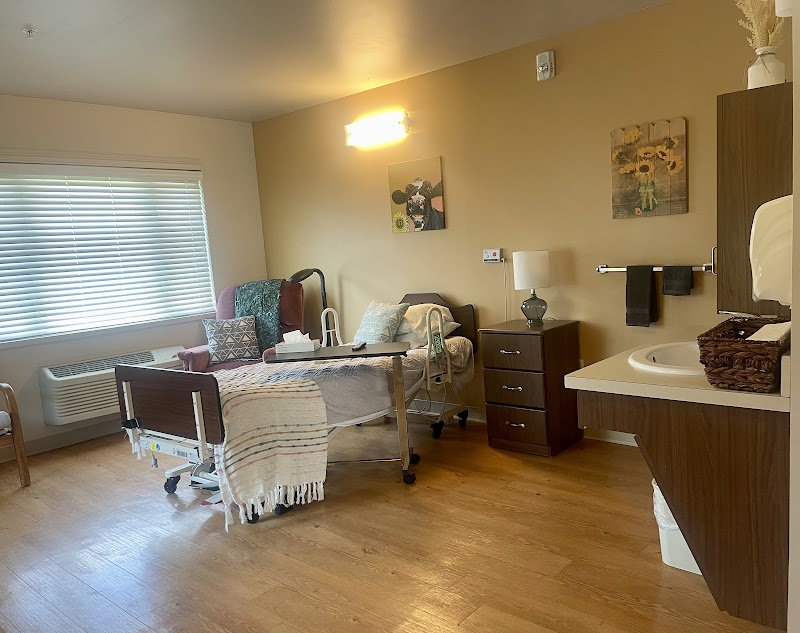
How is Grace Manor Staffed?

CMS rates GRACE MANOR CARE CENTER's staffing level at 2 out of 5 stars, which is below average compared to other nursing homes. Staff turnover is 40%, compared to the Colorado average of 46%. This relatively stable workforce can support continuity of care.

What Have Inspectors Found at Grace Manor?

State health inspectors documented 10 deficiencies at GRACE MANOR CARE CENTER during 2021 to 2024. These included: 2 that caused actual resident harm and 8 with potential for harm. Deficiencies causing actual harm indicate documented cases where residents experienced negative health consequences.
Who Owns and Operates Grace Manor?

GRACE MANOR CARE CENTER is owned by a for-profit company. For-profit facilities operate as businesses with obligations to shareholders or private owners. The facility is operated by FRONTLINE MANAGEMENT, a chain that manages multiple nursing homes. With 31 certified beds and approximately 29 residents (about 94% occupancy), it is a smaller facility located in BURLINGTON, Colorado.
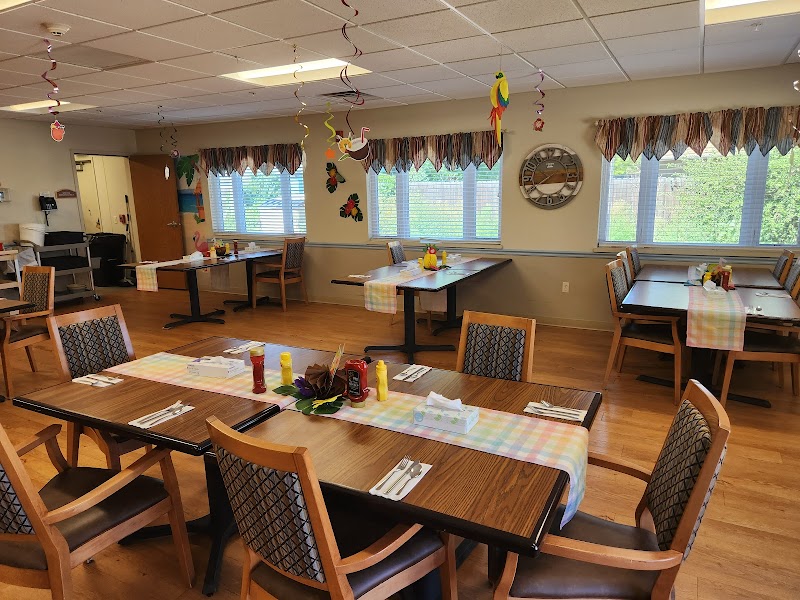
How Does Grace Manor Compare to Other Colorado Nursing Homes?

Compared to the 100 nursing homes in Colorado, GRACE MANOR CARE CENTER's overall rating (5 stars) is above the state average of 3.2, staff turnover (40%) is near the state average of 46%, and health inspection rating (5 stars) is much above the national benchmark.

What Should Families Ask When Visiting Grace Manor?

Based on this facility's data, families visiting should ask: "Can you walk me through typical staffing levels on day, evening, and night shifts?" "Can I visit during a mealtime to observe dining assistance and food quality?" "How do you handle medical emergencies, and what is your hospital transfer rate?" "Can I speak with family members of current residents about their experience?" These questions are particularly relevant given the below-average staffing rating.

Is Grace Manor Safe?

Based on CMS inspection data, GRACE MANOR CARE CENTER has a clean safety record: no substantiated abuse findings (meaning no confirmed cases of resident harm), no Immediate Jeopardy citations (the most serious violation level indicating risk of serious injury or death), and is not on the Special Focus Facility watch list (a federal program monitoring the lowest-performing 1% of nursing homes). The facility has a 5-star overall rating and ranks #1 of 100 nursing homes in Colorado. While no facility is perfect, families should still ask about staff-to-resident ratios and recent inspection results during their visit.

Do Nurses at Grace Manor Stick Around?

GRACE MANOR CARE CENTER has a staff turnover rate of 40%, which is about average for Colorado nursing homes (state average: 46%). Moderate turnover is common in nursing homes, but families should still ask about staff tenure and how the facility maintains care continuity when employees leave.

Was Grace Manor Ever Fined?

GRACE MANOR CARE CENTER has been fined $4,859 across 2 penalty actions. This is below the Colorado average of $33,127. While any fine indicates a compliance issue, fines under $50,000 are relatively common and typically reflect isolated problems that were subsequently corrected. Families should ask what specific issues led to these fines and confirm they've been resolved.

Is Grace Manor on Any Federal Watch List?

GRACE MANOR CARE CENTER is not on any federal watch list. The most significant is the Special Focus Facility (SFF) program, which identifies the bottom 1% of nursing homes nationally based on persistent, serious quality problems. Not being on this list means the facility has avoided the pattern of deficiencies that triggers enhanced federal oversight. This is a positive indicator, though families should still review the facility's inspection history directly.