ADVANCED HEALTH CARE OF COLORADO SPRINGS
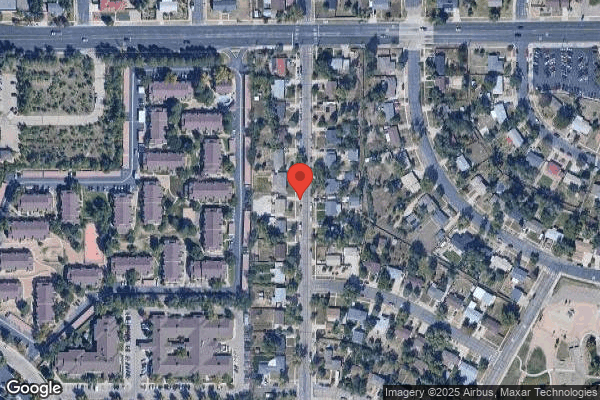
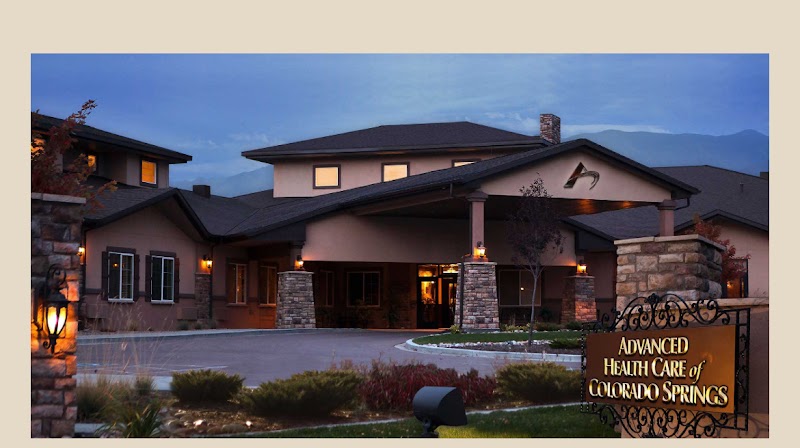
55 S PARKSIDE DR, COLORADO SPRINGS, CO 80910 (719) 418-4500
For profit - Limited Liability company 34 Beds ADVANCED HEALTH CARE Data: November 2025
Trust Grade
90/100
#2 of 208 in CO
Last Inspection: August 2024

Within standard 12-15 month inspection cycle. Federal law requires annual inspections.

Overview

Advanced Health Care of Colorado Springs has earned a Trust Grade of A, indicating excellent quality and a highly recommended facility for care. With a state rank of #2 out of 208, they are among the top facilities in Colorado, and they hold the top spot in El Paso County, meaning they are the best option locally. The facility is improving, having reduced its issues from 2 in 2023 to none in 2024, and it reports no fines, which is a positive sign of compliance with regulations. Staffing is a strength, with a 5/5 star rating and a turnover rate of 46%, slightly lower than the state average, suggesting that staff are experienced and familiar with residents. However, there have been concerns, such as a failure to develop a personalized care plan for a resident with mental illness and inadequate supervision leading to multiple falls, as well as a lack of engaging activities for another resident, indicating areas that need attention to enhance resident well-being.

Trust Score
A
90/100
In Colorado
#2/208
Top 1%
Safety Record
Low Risk
No red flags
Inspections
Getting Better
2 → 0 violations
Staff Stability
⚠ Watch
46% turnover. Above average. Higher turnover means staff may not know residents' routines.
Penalties
✓ Good
No fines on record. Clean compliance history, better than most Colorado facilities.
Skilled Nurses
✓ Good
Each resident gets 96 minutes of Registered Nurse (RN) attention daily — more than 97% of Colorado nursing homes. RNs are the most trained staff who catch health problems before they become serious.
Violations
✓ Good
Only 5 deficiencies on record. Cleaner than most facilities. Minor issues only.
★★★★★
5.0
Overall Rating
★★★★★
5.0
Staff Levels
★★★★★
5.0
Care Quality
★★★★★
5.0
Inspection Score
Stable
2023: 2 issues
2024: 0 issues

The Good

  • 5-Star Staffing Rating · Excellent nurse staffing levels
  • 5-Star Quality Measures · Strong clinical quality outcomes
  • Full Sprinkler Coverage · Fire safety systems throughout facility
  • No fines on record

Facility shows strength in staffing levels, quality measures, fire safety.

The Bad

Staff Turnover: 46%

Near Colorado avg (46%)

Higher turnover may affect care consistency

Chain: ADVANCED HEALTH CARE

Part of a multi-facility chain

Ask about local staffing decisions and management

The Ugly 5 deficiencies on record

Mar 2023 2 deficiencies
CONCERN (D)

Potential for Harm - no one hurt, but risky conditions existed

Comprehensive Care Plan (Tag F0656)

Could have caused harm · This affected 1 resident

**NOTE- TERMS IN BRACKETS HAVE BEEN EDITED TO PROTECT CONFIDENTIALITY** Based on record review and interviews, the facility failed to develop and implement a comprehensive person-centered care plan th...

Read full inspector narrative →
**NOTE- TERMS IN BRACKETS HAVE BEEN EDITED TO PROTECT CONFIDENTIALITY** Based on record review and interviews, the facility failed to develop and implement a comprehensive person-centered care plan that included measurable interventions and objectives for one (#12) of three out of 18 sample residents. Specifically, the facility failed to develop a person centered care plan for Resident #12's mental illness that included interventions, behaviors, and non-pharmaceutical approaches. Findings include: I. Resident #12 A. Resident status Resident #12, age [AGE], was admitted to the facility on [DATE]. According to the March 2023 computerized physician orders (CPO), diagnoses included bipolar II disorder and unspecified dementia without psychotic disturbance. The 2/11/22 minimum data set (MDS) assessment showed the resident had moderate cognitive impairment with a score of ten out of 15. No behaviors were indicated. B. Record review The mood care plan, revised on 2/17/23 revealed the resident was taking an anticonvulsant for bipolar II disorder. The goals were to be without injury related to use of an anticonvulsant. The approaches were to administer the medication as ordered and report to the medical director. There were no interventions, behaviors, or non-pharmaceutical approaches related to mood. The psychotropic drug usage care plan, revised on 2/17/23 revealed the resident required the use of an antipsychotic medication related to a diagnosis of psychosis. The goals were for the resident to not exhibit any adverse side effects related to the medication. The approaches were: -offer counseling -encourage resident to express needs, wants, and feelings -encourage family to visit -monitor for changes in behavior -educate family and resident on side effects -review regime and conduct gradual dose reduction as appropriate -review medication for appropriate does, diagnosis, and usage per psycho pharmacological review -administer medication as ordered. -The resident's care plan failed to identify individualized behaviors, person centered interventions, and non-pharmaceutical approaches. The March 2023 medication administration records (MAR) revealed the following physician orders for psychotropic medications: -Divalproex (Depakote) 250 MG one time a day for bipolar ordered on 2/8/23; -Divalproex (Depakote) 500 MG to equal 1000 MG one time a day at bedtime for bipolar ordered on 2/8/23; -Lamotrigine (Lamictal) 25 MG one time a day for bipolar ordered on 2/8/23; and, -Quetiapine (Seroquel) 25 MG to equal 75 MG at bedtime for psychosis ordered on 2/8/23. The hospital nursing record dated 2/6/23, two days prior to admission to the facility, revealed the resident was experiencing dysphoric mood (depression, irritability, aggression and anger). The resident was prescribed Depakote 500 MG for mania associated with bipolar disorder. Target behavior tracking from 2/12/23 to 3/13/23 revealed: -Divalproex and Lamictal for behaviors of erratic mood swings or erratic behaviors started on 2/8/23 with no behaviors marked. -Quetiapine for behaviors of hallucinations/auditory or visual started on 2/8/23 with no behaviors marked. -Review of resident's progress notes dated 3/15/23 through 2/8/23 failed to reveal any notes regarding care conferences or care planning. II. Resident interview and representative interview The resident was interviewed on 3/15/23 at 10:30 a.m. He acknowledged he has a diagnosis of bipolar disorder and stated that no therapy or counseling has been offered to him, and he would have liked for it to have been offered. He stated he had never been invited to a care conference meeting since being at the facility. The resident's representative was interviewed on 3/16/23 at 8:52 a.m. She stated that the resident had been receiving psychological services in the community but had not been offered since admitting to the facility. She was aware there were routine care conferences held but she had to ask to attend, but the resident nor her were invited. She said that the staff had interviewed the resident regarding if he was experiencing depression but they did not ask her about his history of behaviors, interventions, or what approaches had worked for him in the past. The last significant episode he had was two years prior. He had been experiencing manic behaviors and depression, resulting in a fall and hospitalization. While at the hospital, he had been treated with Prozac (depression medication) which increased his manic behaviors. He had another injury and required 24- hour supervision while at the hospital. Manic behaviors for him manifested as excessive energy, bouncing off the walls, apathy, and chronic depression. III. Staff interviews Registered nurse (RN) #2 was interviewed on 3/14/23 at 10:47 a.m. RN #2 stated the resident did not have any behaviors that he knew of. RN #2 pulled up the resident's target behavior tracking and could not tell which behavior was being tracked for Lamotrigine and the Divalproex because the tracker was combined. He acknowledged he could effectively track the behavior with one tracker for two medications. He could not explain what behaviors he was to be watching for according to the behaviors listed on the target behavior tracker. CNA #1 was interviewed on 3/14/23 at 11:00 a.m. CNA #1 stated resident had behaviors of confusion but no other behaviors that she was aware of. The admissions coordinator (AC) was interviewed on 3/14/23 at 11:19 a.m. She stated she did the admission and intake with the new residents. She would interview the resident and their family regarding any behaviors and would look in the resident's hospital records. She included that information on their target behavior tracker. If a resident had started taking several psychotropic medications at the same time, then they would be included on the same tracker. She could not explain how the staff would know which behavior they were tracking for which medication. RN #1 was interviewed on 3/15/23 at 10:44 a.m. RN #1 stated the resident had memory problems but no other behaviors she was aware of and she could not explain the behaviors she was tracking the resident for. She said what she thought erratic behavior meant a person was dangerous, she did not know what mood swings or hallucinations looked like for the resident. Management had not elaborated what behaviors staff were to be watching for on the tracker or in the resident care plan. The DON was interviewed with the AC present on 3/15/23 at 11:03 a.m. The DON stated the behaviors management wanted nursing staff to track were on the target behavior tracker. These were the behaviors that have been determined to be associated with the medication on the tracker. The AC did the interview with the family and the resident at time of admission. She would ask what behaviors they have associated with their mental illness and what did that look like. When the information was vague, the DON or AC would contact the psychologist that came to the facility to meet with the resident to help determine what their behaviors were. The MDS coordinator entered the care plan in the resident's electronic medical record and gathered her information from the staff and the records, she worked remotely. They acknowledged that they had not contacted their psychologist to meet with Resident #12 for counseling, to clarify behaviors or interventions for the resident. The MDS coordinator was interviewed with DON on 3/15/23 at 1:29 p.m. The MDS coordinator stated that if a resident was stable with their mental illness, she dis not include their behaviors or interventions in the resident's care plan. The MDS coordinator did not indicate why the behaviors on the target behavior tracker had not been included in Resident #12's care plan. The DON stated that even if the resident had a diagnosis of mental illness, if they were not showing behaviors, had not had any episodes for years, and were reportedly stable then the care plan would not include behaviors, approaches or non-pharmacological interventions for that diagnosis. The DON and the MDS coordinator acknowledged Resident #12's care plan did not include person centered information regarding behaviors, interventions and approaches.
CONCERN (D)

Potential for Harm - no one hurt, but risky conditions existed

Accident Prevention (Tag F0689)

Could have caused harm · This affected 1 resident

**NOTE- TERMS IN BRACKETS HAVE BEEN EDITED TO PROTECT CONFIDENTIALITY** Based on observations, interviews and record review, the facility failed to provide adequate supervision and assistance devices ...

Read full inspector narrative →
**NOTE- TERMS IN BRACKETS HAVE BEEN EDITED TO PROTECT CONFIDENTIALITY** Based on observations, interviews and record review, the facility failed to provide adequate supervision and assistance devices to prevent accidents for one (#7) of two residents reviewed for falls out of 18 sample residents. Specifically the facility failed to timely implement appropriate and effective interventions to prevent five falls in a two week period. Findings include: I. Facility policy The Fall Prevention policy, updated 9/28/22, was provided by the director of nursing (DON) on 3/15/23 at 4:30 p.m., read in part: Safety interventions will be implemented and monitored with appropriate documentation as indicated .Based upon the calculated score of the Fall Risk Assessment, the fall risk protocol and care plan will be completed and the appropriate interventions initiated. The admitting nurse/nurse manager will be responsible for insuring that interventions are initiated and communicated to appropriate staff for follow through .The assigned licensed nurse will be responsible for ensuring safety checks are in place as care planned and will initial the TAR (treatment administration record) indicating checks are completed and document in nursing notes for verification. II. Resident #7 A. Resident status Resident #7, age [AGE], was admitted on [DATE]. According to the March 2023 clinical physician orders (CPO) diagnoses included encounter for orthopedic aftercare following surgical amputation, right below knee amputation, diabetes mellitus and heart failure. The 2/26/23 minimum data set (MDS) assessment revealed the resident's cognition was intact with a brief interview for mental status (BIMS) score 15 out of 15. She required extensive assistance with bed mobility and dressing, limited assistance with transfers and toilet use, supervision with eating, and she was independent with personal hygiene. B. Record review The comprehensive care plan, dated 2/27/23, included the following: Patient will improve self-care and mobility function and achieve discharge goals as identified on MDS (minimum data set) section GG. Approaches included: functional performance will be evaluated with discharge from skilled services. Functional discharge goals will be determined on admission. Baseline functional performance will be determined upon admission. Patient identified at risk for falls related to: Mobility and/or functional deficits. Impaired safety awareness and balance deficits. Goal: Risk of falls and/or injury related to falls will be minimized throughout stay. Approaches included: Monitor for adverse side effects of medication regimen; consult with MD (physician) as needed. Ensure proper placement of call light and assistive devices for ease of access. PT (physical therapy) and/or OT (occupational therapy) evaluation and treatment to address functional deficits. Educate patient and/or family regarding fall risks and safety needs. Encourage patient to call for assistance with transfers and ambulation. Assist with transfers and ambulation as needed. -The risk for falls care plan was not revised with new interventions after Resident #7's falls. Patient requires/receives staff assist with ADL (activities of daily living) completion r/t (related to) limited mobility and generalized weakness due to s/p (status post) Rt BKA (right below knee amputation). Goal: Patient will increase strength and endurance to regain independence per skilled therapy goals throughout stay. Patient will present a clean and neat appearance, clean clothing, properly adjusted, hair combed and neat throughout stay. Approaches included: Oxygen as ordered. Monitor of s/s (signs and symptoms) of lethargy/fatigue/dizziness r/t (related to) medication use; notify MD (physician) if s/s (signs and symptoms) occur. Monitor labs as ordered; notify MD (physician) of abnormal results. Monitor vital signs as ordered; notify MD (physician) of abnormal results. Functional mobility is expected to improve throughout the patient's stay. More or less assistance may be needed depending on progress, acute illness, time of day and/or psychosocial needs. Ensure call light is within patient's reach. Assist with ambulation or wheelchair mobility as needed. Monitor for s/s (signs and symptoms) of pain; assess pain at least every shift and PRN (as needed). Encourage patient to rest in between activities. PT (physical therapy) & OT (occupational therapy) to evaluate and treat per MD (physician) order. Staff to allow for and encourage patient choices and preferences. Staff to encourage independence/participation with ADLs (activities of daily living) as able. Falls On 2/28/23 a nurse documented: Pt (patient) stated she slipped out of w/c (wheelchair) and hit face on carpet, noted abrasion to bridge of nose, no other visible injuries noted. Given cool washcloth for abrasion. ROM (range of motion) good and neuro checks initiated d/t (due to) unwitnessed fall and are wnl (within normal limits). Pt (patient) on scheduled hydrocodone (pain medication). Pt (patient) is assisted back into bed with call light within reach. On call DON (director of nursing) notified of fall. On 3/4/23 a nurse documented: pt (patient) was trying to transfer from w/c (wheelchair) to recliner. Pt (patient) has BKA (below knee amputation) and thought her leg was whole. When trying to 'step' out of w/c (wheelchair), she fell on her right side. She was found sitting up on the floor and was upset that she did this. No increased pain than pt (patient) already has. Assessment negative. Neuro's (neurological assessment) started and wnl (within normal limits) so far. On 3/9/23 a nurse documented: Pt (patient) found sitting upright against the side of the sink in the bedroom. W/C (wheelchair) was in front of the bathroom door. She stated she slid from W/C (wheelchair). Pt (patient) assessed for injury with no injuries noted at this time. Neurological assessment in place and are WNL (within normal limits), ROM (range of motion) intact. Assisted back to bed. Bed in lowest position with call light in reach. DON (director of nursing) notified. On 3/10/23 a nurse documented: patient found sitting on floor by her room door. Assessed for injury and no noted. Patient denied any pain or discomfort, patient very drowsy. Assisted back to bed. Neuro checks commenced per facility policy. Follow-up note revealed: Patient found sitting on floor by the door to her room. Her w/c (wheelchair) was noted to be in the bathroom. When asked what happened she stated that she was going to the bathroom. On 3/14/23 a nurse documented: Pt (patient's) neuro checks are completed this shift. Pt (patient) continues to self-transfer, pt (patient) is seen hopping on 1 (one) leg with transfer and did not look safe. Encouraged pt (patient) to call for assistance with transfers and/or to use a slide board to which pt (patient) refuses. Notified pt (patient) that her scheduled pain medication was decreased this eve from 5mg to 2.5mg. Pharmacy also notified. On 3/15/23 a nurse documented: Pt (patient) found sitting upright on the fall mat next to the bed. She stated she was trying to get into the W/C from the bed. Follow-up note revealed: Assessed for injury with none noted at this time. Assisted back to bed. Neuros initiated and are WNL (within normal limits), ROM (range of motion) intact. DON (director of nursing) notified. Call light in reach, fall mats in place and bed in lowest position. C. Resident observations and interview Resident #7 was observed on 3/15/23 between 11:00 a.m. and 2:30 p.m. She was in her room seated in her wheelchair at the table. At 11:30 a.m. the resident brought a pillow from her bed and placed it on the table. At 12:00 p.m., Resident #7 was observed sleeping at the table, with her head on a pillow. Resident #7 was interviewed on 3/15/23 at 12:01 p.m. She said she fell last night and a couple times before that. She said she realized she was weak and needed help, however she did not remember to use the call light. The resident's lunch meal was delivered to her room by a certified nurse aide (CNA) #2, and the tray was placed on the table. The CNA removed the pillow and placed it on the bed. At 1:15 p.m. the resident was observed sleeping with head down on the table, her lunch meal tray was pushed back. The resident said she was not hungry. At 2:25 p.m. the resident closed the door to her room. CNA #1 was asked to check on the resident. At 2:30 p.m. the CNA said the resident was trying to transfer herself from wheelchair to bed. During the observations, the staff did not offer the resident assistance to use the restroom or if she needed to rest in bed. III. Staff interviews Registered nurse (RN) #1 was interviewed on 3/15/23 at 11:42 a.m. She said Resident #7 was very impatient and frequently transferred herself from her wheelchair to the toilet and to her bed. She said the resident did not remember to use the call light. She said the resident was not aware she was an amputee and was at high risk for falls. She said she was not aware of any new fall prevention approaches except for reminding the resident to use the call light. CNA #2 was interviewed on 3/15/23 at 11:45 a.m. She said the standard was to check on each resident every two hours. She said she was not aware of Resident #7 falls. She said she reminded the resident to use her call light when she needed help. The director of therapies (DOT) was interviewed on 3/15/23 at 2:12 p.m. She said the unit nurse communicated with the therapy team about residents' falls. She said the interdisciplinary team was reviewing falls during morning stand-up meeting and appropriate approaches were discussed. She said Resident #7 refused the do not get up on your own - call for help signs placement in her room. She said one of the approaches to prevent falls for Resident #7 was initiating a check light, the call light system was automatically turned on every 15 minutes to alert staff to check on the resident. The DON was interviewed on 3/15/23 at 4:30 p.m. She said she was aware of the resident's frequent falls. She said the resident did not remember she had her right lower leg amputated and tried to transfer herself to and from the toilet, and to and from bed. She said the resident did not use her call light for assistance. She said the interdisciplinary team recommended the check light. She said the resident's call light should be set to activate at every 15 minutes intervals for the staff to check on her, however this was not initiated until this afternoon.
Dec 2021 3 deficiencies
CONCERN (D)

Potential for Harm - no one hurt, but risky conditions existed

Deficiency F0679 (Tag F0679)

Could have caused harm · This affected 1 resident

**NOTE- TERMS IN BRACKETS HAVE BEEN EDITED TO PROTECT CONFIDENTIALITY** Based on observations, interviews and record review, the facility failed to provide meaningful, engaging activities to meet the ...

Read full inspector narrative →
**NOTE- TERMS IN BRACKETS HAVE BEEN EDITED TO PROTECT CONFIDENTIALITY** Based on observations, interviews and record review, the facility failed to provide meaningful, engaging activities to meet the interests of one (#176) of one resident reviewed for activities out of 22 sample residents. Specifically, Resident #176 was observed spending all of her time in her room, unengaged in activities to prevent loneliness and boredom, and improve her quality of life. Findings include: I. Facility policies The Activity Program policy, was provided by the director of nursing (DON) on 12/14/21 at 2:53 p.m. The policy read in pertinent part: The facility will provide, based on the comprehensive assessment, care plan and the preferences of each resident, an ongoing program to support patients in their choice of activities. Facility sponsored group activities, individual activities and independent activities are designed to meet the interests of and support the physical, mental, and psychosocial wellbeing of each resident while encouraging both independence and interaction within the community. The Recreational therapy policy, was provided by the director of nursing (DON) on 12/14/21 at 2:53 p.m. The policy read in pertinent part: The facility will provide an ongoing program of individual and group activities and therapeutic interventions designed to meet the interests, and attain or maintain the highest particicable physical, mental, and psycho-social well-being of each resident in accordance with the comprehensive assessment. II. Resident #176 A. Resident status Resident #176, age [AGE], was admitted on [DATE]. According to the December 2021 computerized physician orders (CPO), diagnoses included acute cystitis, rheumatoid arthritis, chronic heart failure, chronic kidney disease, and disorientation. According to the 11/23/21 minimum data set (MDS) assessment, Resident #176 had moderate cognitive impairment with a brief interview for mental status (BIMS) score of 10 out of 15. She needed set up assistance to partial one person assistance with activities of daily living (ADLs) including transfers, dressing, mobility, personal hygiene and cognition. The 11/23/21 full admission MDS assessment for activities documented phone use, reading, listening to music, animals, doing things with other people, outside time and religious services were very important to her. B. Resident interview Resident #176 was interviewed on 12/13/21 at 3:15 p.m. She was sitting in her wheelchair at her table facing the wall. She did not have the television or music on in her room. She said she did enjoy listening to all kinds of music. She said she liked to read and had her reading glasses sitting next to her on the table. She said she did not have anything to read in her room. She said She said she enjoyed watching television, but did not know there was a television in a cabinet to the left of where she had been sitting. She said she enjoyed talking with other people, but she was tired. She said thank you for the visit. C. Observations The resident was observed during survey observations from 12/13/21 to 12/16/21. She was on isolation precautions for multi drug resistant organisms in urine and did not leave her room during survey observations. On 12/13/21 during continuous observation from 10:33 a.m. until 1:39 p.m. the resident sat at her table, facing the wall in her wheelchair. Her lights were off and the room was quiet with no television or music on in the room. She did not have staff enter her room until 12:46 p.m. when the dietary staff set up her lunch tray in front of her. She did not have assistance with her lunch and sat with her food untouched in front of her from 12:46 p.m. until a certified nursing assistant entered her room at 1:21 p.m. to assist her with eating. During continuous observation Resident #176 did not have any independent activities or one to one visits offered. The resident's phone was observed to ring multiple times during continuous observation and was not within reach for her to answer and staff did not assist her. -At approximately 10:30 a.m. her phone rang and was not within to answer; -At 11:52 a.m. her phone rang and was not within reach to answer, and; -At 12:49 p.m. her phone rang and was not within reach to answer. On 12/14/21 the resident was observed throughout the day seated at her table in her wheelchair facing the wall. She did not have her television or music on for stimulation. She had her head down multiple times and would rest her head on her hand. She did not have any leisure materials or activities offered during the day. -At 1:00 p.m. she was seated in her wheelchair facing the wall with her head down; -At 1:47 p.m. she was seated in her wheelchair facing the wall with her head down; -At 2:00 p.m. she was seated in her wheelchair facing the wall with her head down; -At 2:20 p.m. she was seated in her wheelchair facing the wall with her head down; -At 3:00 p.m. she was seated in her wheelchair facing the wall with her head down; -At 3:30 p.m. she was seated in her wheelchair facing the wall with her head down, and; -At 3:58 p.m. her wheelchair was turned facing out towards her door and she was awake and said hello to staff as they walked by her room. D. Record review The initial activity assessment completed on 11/18/21 revealed the resident was a former social worker, enjoyed reading, writing, watching television, music, talking with others and religious activities. The care plan revised on 12/12/21 did not have an activities care plan completed. There was no documentation regarding Resident #176's activity focus areas, goals or approaches to support her leisure interests. The care plan was updated on 12/15/21 by the minimum data set (MDS) coordinator to include the activities section of the care plan after it was brought to the attention of the director of therapy (DOT), overseeing the activity department. Activity participation records provided by the director of nursing (DON) on 12/14/21 for November and December 2021 revealed the resident participated in two activities out of 30 offered in the past 30 days. The records documented the resident refused to participate in 28 out of 30 activities offered. The records revealed the resident had zero one to one visits from family or staff during the past 30 days. III. Staff interviews The activities director (AD) was interviewed on 12/15/21 at 12:45 p.m. She said she was responsible for completing the initial activity assessment. She said the assessment and daily participation was on paper in her book. She said the therapy staff and the MDS would enter the information into the computerized records. She said she worked one hour a day from 2:00 p.m. to 3:00 p.m. Monday through Friday in activities and the rest of her hours she worked at the front desk and assisted with the visitor and staff check in screening process. She said she did not write activity progress notes and only kept a daily participation log for activities. She said Resident #176 did enjoy music, television, reading and visiting based on her activity assessment. She said she did not participate in group activities and chose to stay in her room. She said she did not offer one to one visits and did not have a one to one program. She said Resident #176 preferred to be alone in her room, although she did not offer her visits in her room. She said she stopped asking resident #176 to join activities because she did not want to bother her. She said she would ask her to join in the future and offer her more visits to allow her to say yes or no. She said the therapy staff would help identify if a resident wanted leisure materials like books and puzzles, however Resident #176 did not have any leisure activities in her room. The director of therapy (DOT) was interviewed on 12/15/21 at 1:20 p.m. She said the therapy department did oversee the activity department. She said the AD was scheduled to work one hour a day in activities, but she could get coverage from other departments if she needed to step away from the front desk to complete an activity assessment. She said the residents main goal during their stay was therapy so the therapy staff knew the residents best. She said the activity programs were offered at 2:00 p.m. because it did not interfere with the therapy program. She said the AD completed the initial assessment and the daily participation records and the MDS would enter the information into the resident's computerized record. She said the MDS would complete the care plan. She said every time she visited with Resident #176 she did not mention wanting any leisure activities like listening to music or reading. She said the resident had declined her visits and would not want to participate in therapy. The DOT did acknowledge therapy and leisure needs are different and the resident could have declined therapy, but would agree to participate in activities. She said she did notice the resident sitting in her room with nothing to stimulate her like television or music. She said she would work with the staff to offer leisure activities of interest. She said residents do change their mind and may agree to participate one day and not the other and will start to offer more activities for her. She said she was not aware of the care plan not being completed. She said the care plan should be completed to assist the staff with understanding the resident's activity interests and needs.
CONCERN (D)

Potential for Harm - no one hurt, but risky conditions existed

Pharmacy Services (Tag F0755)

Could have caused harm · This affected 1 resident

**NOTE- TERMS IN BRACKETS HAVE BEEN EDITED TO PROTECT CONFIDENTIALITY** Based on record review and interviews, the facility failed to ensure one (#24) of six residents reviewed for medication administ...

Read full inspector narrative →
**NOTE- TERMS IN BRACKETS HAVE BEEN EDITED TO PROTECT CONFIDENTIALITY** Based on record review and interviews, the facility failed to ensure one (#24) of six residents reviewed for medication administration out of 22 sample residents that had physician-ordered medications available for administration. Specifically, the facility failed to ensure Resident #24 received Entresto, prescribed to treat chronic heart failure. The medication was not available and Resident #24 missed 11 doses from November to December 2021. Findings include: I. Facility policies and procedures The Patient Agreement signed by the resident on 11/15/21, was provided by the director of nursing (DON) on 12/15/21 at 12:10 p.m. It read, in pertinent part, Most pharmaceuticals as ordered by the patients's physician are included in Medicare Part A coverage. The facility provides prescriptions through its own contracted pharmacy providers while on this coverage. The undated Pharmacy Services policy was provided by the DON on 12/15/21 at 12:10 p.m. It read, in pertinent part, The facility provides routine and emergency drugs and biologicals to residents supplied by contracted services and administered by facility staff. The pharmacy must dispense and the facility must ensure that necessary drugs and biologicals are provided in a timely basis. The Medication Management policy and procedure, updated on 5/25/21, provided by the DON on 12/15/21 at 12:10 p.m. It read, in pertinent part, The objective of the policy is to promote a safe and accurate medication management system for each individual resident, to ensure a system for accurate process of assessment, planning, implementation and monitoring and staff competency to promote a quality of care, increase resident safety and safeguard against adverse events. II. Resident #24 A. Resident status Resident #24, age [AGE], was admitted on [DATE] and discharged [DATE]. According to the December 2021 computerized physician orders (CPO), diagnoses included sepsis due to enterococcus, type 2 diabetes, atrial fibrillation, systolic heart failure, atherosclerotic heart disease of native coronary artery without angina pectoris and hypertension. The 11/21/21 minimum data set (MDS) assessment the resident was moderately impaired with a brief interview for mental status (BIMS) score of 12 out of 15. He required limited one person assistance with dressing, transferring and ambulation and was independent with self care. B. Record review The November 2021 admission physician's orders were reviewed on 12/13/21 at 9:56 a.m. The orders documented that the resident was prescribed on 11/15/21, Entresto 24-26 milligrams (MG) twice daily for chronic heart failure, sertraline 100 (MG) one time daily for depression, The December 2021 physician's orders were reviewed on 12/13/21 at 9:56 p.m. The orders documented that the resident was prescribed on 11/15/21, Entresto 24-26 milligrams (MG) twice daily for chronic heart failure. Review of Resident #24's medication administration record (MAR) for November and December 2021 revealed the resident missed 11 doses of his Entresto tablets 24-26 mg during his stay at the facility. The November and December 2021 MAR documented: -On 11/15/21 the evening dose was unavailable and not administered; -On 11/16/21 the morning dose was unavailable and not administered, nurse noted the family was asked to bring the medication in for Resident #24; -On 11/16/21 the evening dose was unavailable and not administered; -On 11/17/21 the morning dose was unavailable and not administered; -On 12/11/21 the morning dose was unavailable and not administered; -On 12/11/21 the evening dose was unavailable and not administered, nurse noted not sent by the pharmacy; -On 12/12/21 the morning dose was unavailable and not administered; -On 12/12/21 the evening dose was unavailable and not administered, nurse noted the pharmacy was contacted; -On 12/13/21 the morning dose was unavailable and not administered; -On 12/13/21 the evening dose was unavailable and not administered; -On 12/14/21 the morning dose was unavailable and not administered; -On 12/14/21 the evening dose was unavailable and not administered; and, -On 12/15/21 the morning dose was unavailable and not administered. Review of the pharmacy refill order sheet provided by the director of nursing (DON) on 12/15/21 at 5:10 p.m., revealed the facility faxed over a refill request for the Entresto 24-26 mg tablets on 12/14/21 at 1:46 p.m. III. Family and staff interviews The sister of Resident #24 was interviewed on 12/15/21 at 9:40 a.m. Resident #24's sister said the facility had asked for them to bring in certain medications from home in the past. She said the facility asked them to bring in the Entresto when he initially admitted to the facility, but they had not asked them to bring in any additional medications since. She said she was not aware of him missing any doses during his stay. She said the facility had not notified her of any missing doses. The director of nursing (DON) was interviewed on 12/15/21 at 9:50 a.m. She reviewed Resident #24's November and December 2021 MARs. She said she was not aware that the resident had not been given Entresto for multiple days. She said the Entresto was a medication covered by the facility under his diagnosis and would be ordered by the facility and delivered by the pharmacy. She said the facility's process for when there was a medication unavailable was to contact the pharmacy for a refill. If the pharmacy was not able to deliver the medication in a timely manner or the medication was unavailable, then the facility would ask the family to supply the medication until the pharmacy was able to deliver the medication. The goal was to not have the resident go without the medication or miss a dose. She reviewed the MAR for November and December 2021 and agreed the resident missed 11 doses of the medication. She said the family was asked to bring the medication in for the resident in November at the time of his admission and he missed four doses in November and missed seven doses in December. She said the pharmacy was notified in December to supply the medication, but the medication had not been received or administered since 12/11/21. Registered nurse (RN) # 1 was interviewed on 12/15/21 at 10:00 a.m. She said she reviewed the MAR for Resident #24. She said the Entresto was not available to administer on 12/14/21. She said she entered a note into the MAR that read the medication had been ordered but not received. She said the family did provide the Entresto at time of admission and she was not sure if the pharmacy had supplied the medication in the past for this resident. She said she notified the DON when the medication was unavailable on 12/14/21. She said the process for ordering medication was to pull the sticker on the medication card and place it on the order refill form and fax it to the pharmacy. She said if the medication was not available or delayed then she would notify the DON or the clinical nurse manager for assistance. The pharmacy representative was interviewed on 12/15/21 at 4:05 p.m. She said the Entresto 24-26 mg tablets were listed in Resident #24's active medication list, however the pharmacy had not supplied the medication for the resident. She said the facility never ordered the medication through the pharmacy. She said there was a note in his pharmacy record on 11/15/21 that read the facility would not cover the medication because of the cost. She said the DON was notified of the cost and the decision not to fill the order. The admission nurse was interviewed on 12/15/21 at 4:17 p.m. She said the DON reviewed the admission paperwork and medications before a resident was admitted to the facility. She said the DON would decide if a resident would be admitted to the facility based on the care needs. She said once a resident was admitted , the facility would cover all of the medications unless there was a medication specifically identified prior to admission, for example a medication that was not covered under the resident diagnosis for the rehabilitation stay. She said the family would not be responsible for medications related to the admission diagnosis. The DON was interviewed for a follow up interview at 4:30 p.m. She said the admission coordinator would review the medication list prior to admission as well as herself. She said the facility would not decline an admission based on the cost of medications. She said the facility reviewed the medications and cost prior to admission, but the facility would cover the cost of all the medications ordered by the physician unless there was a specialty medication outside of the covered diagnoses. The Entresto for Resident #24 was a covered medication and should have been provided by the facility.
CONCERN (D)

Potential for Harm - no one hurt, but risky conditions existed

Infection Control (Tag F0880)

Could have caused harm · This affected 1 resident

**NOTE- TERMS IN BRACKETS HAVE BEEN EDITED TO PROTECT CONFIDENTIALITY** Based on observations, record review and interviews, the facility failed to establish and maintain an infection prevention and c...

Read full inspector narrative →
**NOTE- TERMS IN BRACKETS HAVE BEEN EDITED TO PROTECT CONFIDENTIALITY** Based on observations, record review and interviews, the facility failed to establish and maintain an infection prevention and control program designed to provide a safe, sanitary and comfortable environment and to help prevent the development and transmission of communicable diseases and infections for one (Resident #131) of one out of 22 sample residents. Specifically, the facility failed to: -Ensure a barrier was placed before setting down clean items for wound care; -Change gloves from dirty to clean;and, -Perform hand hygiene during wound care with Resident #131. Findings include: I. Facility policy Handwashing policy, not dated, provided by the director of nurses (DON) on 12/14/21 at 2:45 p.m. read in pertinent part; Hand washing before and after contact with any resident was the most important measure that can be taken to prevent the spread of infection. The standard precautions, policy updated 6/4/21, provided by the DON on 12/14/21 at 2:45 p.m., read in pertinent part; To aid in the prevention of the spread of infections between residents and or staff. Procedure: Standard precautions are the minimum precautions utilized on all residents when there is potential or actual contact with body fluids which may or may not contain blood and infectious organisms. Wash hands after touching blood, body fluids, secretions, excretions, and contaminated items whether or not gloves are worn. Wash hands immediately after gloves are removed, between resident contacts and when otherwise indicated to avoid transfer of microorganisms to other residents and environments. It may be necessary to wash hands between tasks and procedures on the same resident to prevent cross-contamination of different body sites. Wear gloves when touching blood, body fluids, secretions, excretions, and contaminated items. Put on clean gloves just before touching non-intact skin. Change gloves between tasks and procedures on the same resident after contact with material that may contain a high concentration of microorganisms. Remove gloves promptly after use, before touching non-contamination items and environmental surfaces, and before going to another resident and wash hands immediately to avoid transfer of microorganisms to other residents or environments.`` II. Resident #131 A. Resident status Resident #131, age [AGE], was admitted on [DATE]. According to the December 2021 computerized physician orders (CPO), pertinent diagnoses included diabetes, congestive heart failure, chronic kidney disease and stroke. The minimum data set (MDS) assessment for Resident #131 was not completed. Resident were alert and oriented on admission. B. Observations Licensed practical nurse (LPN) #1 was observed on 12/14/21 at 1:00 p.m. to perform wound care with Resident #131. He washed his hand and donned gloves. The wound supplies were laid on the table next to the resident who resided in bed. He did not disinfect the bedside table prior. LPN took off the soiled dressings to the right and left shin area and the right foot. He cleaned the wounds one at a time with a wound cleanser and then took out the scissors in his pocket, cut the sterile dressings to fit around the wounds. He failed to perform hand hygiene and to change gloves from dirty to clean processes. The scissors were put back in his pocket without disinfecting them. III. Interviews LPN #2 was interviewed on 12/15/21 at 11:30 a.m. She said standard wound practices were to change gloves from dirty to clean procedures and to perform hand hygiene. Infection preventionist (IP) was interviewed on 12/15/21 at 1:00 p.m. She said hand hygiene was performed before and after glove use. She said gloves were changed when performing wound care from dirty to clean. She said when gloves were not changed and hand hygiene was not completed, infection could occur to the wounds. The director of nurses (DON) was interviewed on 12/15/21 at 1:30 p.m. She said she expected anyone doing wound care to perform hand hygiene and change gloves from dirty to clean. She said cross contamination and infection could occur otherwise. The scissors were supposed to be cleaned with micro kill disinfectant before and after each use.
Understanding Severity Codes (click to expand)
Life-Threatening (Immediate Jeopardy)
J - Isolated K - Pattern L - Widespread
Actual Harm
G - Isolated H - Pattern I - Widespread
Potential for Harm
D - Isolated E - Pattern F - Widespread
No Harm (Minor)
A - Isolated B - Pattern C - Widespread

Questions to Ask on Your Visit

  • "Can I speak with families of current residents?"
  • "What's your RN coverage like on weekends and overnight?"

Our Honest Assessment

Strengths
  • • Grade A (90/100). Above average facility, better than most options in Colorado.
  • • No major safety red flags. No abuse findings, life-threatening violations, or SFF status.
  • • No fines on record. Clean compliance history, better than most Colorado facilities.
  • • Only 5 deficiencies on record. Cleaner than most facilities. Minor issues only.
Concerns
  • • No significant concerns identified. This facility shows no red flags across CMS ratings, staff turnover, or federal penalties.
Bottom line: Generally positive indicators. Standard due diligence and a personal visit recommended.

About This Facility

What is Advanced Health Care Of Colorado Springs's CMS Rating?

CMS assigns ADVANCED HEALTH CARE OF COLORADO SPRINGS an overall rating of 5 out of 5 stars, which is considered much above average nationally. Within Colorado, this rating places the facility higher than 99% of the state's 100 nursing homes. This rating reflects solid performance across the metrics CMS uses to evaluate nursing home quality.
How is Advanced Health Care Of Colorado Springs Staffed?

CMS rates ADVANCED HEALTH CARE OF COLORADO SPRINGS's staffing level at 5 out of 5 stars, which is much above average compared to other nursing homes. Staff turnover is 46%, compared to the Colorado average of 46%.

What Have Inspectors Found at Advanced Health Care Of Colorado Springs?

State health inspectors documented 5 deficiencies at ADVANCED HEALTH CARE OF COLORADO SPRINGS during 2021 to 2023. These included: 5 with potential for harm.

Who Owns and Operates Advanced Health Care Of Colorado Springs?

ADVANCED HEALTH CARE OF COLORADO SPRINGS is owned by a for-profit company. For-profit facilities operate as businesses with obligations to shareholders or private owners. The facility is operated by ADVANCED HEALTH CARE, a chain that manages multiple nursing homes. With 34 certified beds and approximately 26 residents (about 76% occupancy), it is a smaller facility located in COLORADO SPRINGS, Colorado.

How Does Advanced Health Care Of Colorado Springs Compare to Other Colorado Nursing Homes?

Compared to the 100 nursing homes in Colorado, ADVANCED HEALTH CARE OF COLORADO SPRINGS's overall rating (5 stars) is above the state average of 3.2, staff turnover (46%) is near the state average of 46%, and health inspection rating (5 stars) is much above the national benchmark.

What Should Families Ask When Visiting Advanced Health Care Of Colorado Springs?

Based on this facility's data, families visiting should ask: "Can I visit during a mealtime to observe dining assistance and food quality?" "How do you handle medical emergencies, and what is your hospital transfer rate?" "Can I speak with family members of current residents about their experience?"

Is Advanced Health Care Of Colorado Springs Safe?

Based on CMS inspection data, ADVANCED HEALTH CARE OF COLORADO SPRINGS has a clean safety record: no substantiated abuse findings (meaning no confirmed cases of resident harm), no Immediate Jeopardy citations (the most serious violation level indicating risk of serious injury or death), and is not on the Special Focus Facility watch list (a federal program monitoring the lowest-performing 1% of nursing homes). The facility has a 5-star overall rating and ranks #1 of 100 nursing homes in Colorado. While no facility is perfect, families should still ask about staff-to-resident ratios and recent inspection results during their visit.

Do Nurses at Advanced Health Care Of Colorado Springs Stick Around?

ADVANCED HEALTH CARE OF COLORADO SPRINGS has a staff turnover rate of 46%, which is about average for Colorado nursing homes (state average: 46%). Moderate turnover is common in nursing homes, but families should still ask about staff tenure and how the facility maintains care continuity when employees leave.

Was Advanced Health Care Of Colorado Springs Ever Fined?

ADVANCED HEALTH CARE OF COLORADO SPRINGS has no federal fines on record. CMS issues fines when nursing homes fail to meet care standards or don't correct problems found during inspections. The absence of fines suggests the facility has either maintained compliance or corrected any issues before penalties were assessed. This is a positive indicator, though families should still review recent inspection reports for the full picture.

Is Advanced Health Care Of Colorado Springs on Any Federal Watch List?

ADVANCED HEALTH CARE OF COLORADO SPRINGS is not on any federal watch list. The most significant is the Special Focus Facility (SFF) program, which identifies the bottom 1% of nursing homes nationally based on persistent, serious quality problems. Not being on this list means the facility has avoided the pattern of deficiencies that triggers enhanced federal oversight. This is a positive indicator, though families should still review the facility's inspection history directly.