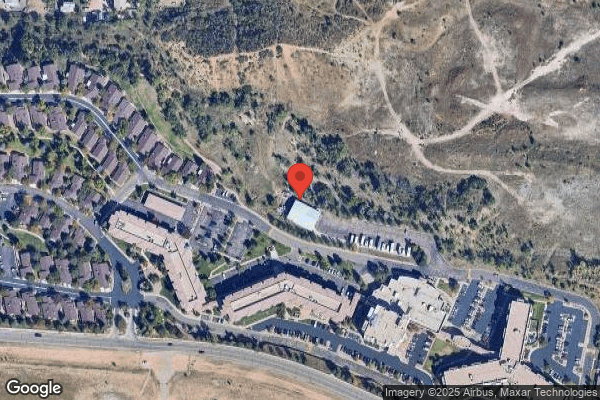
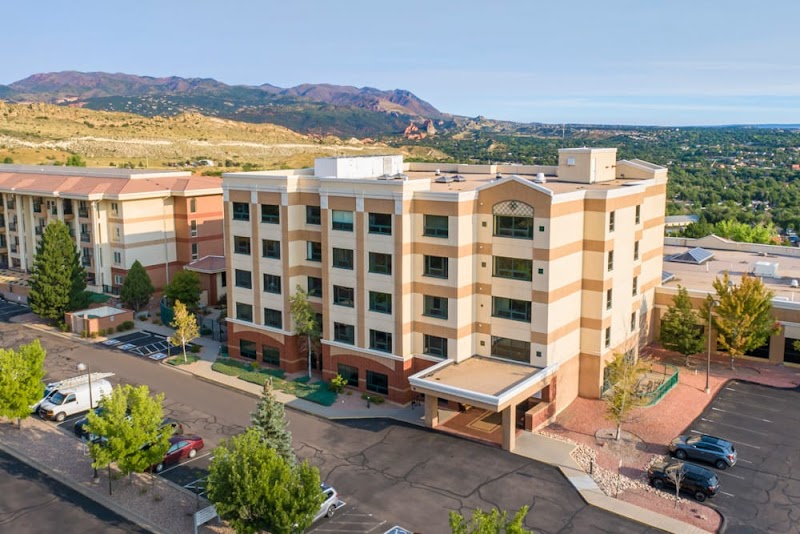
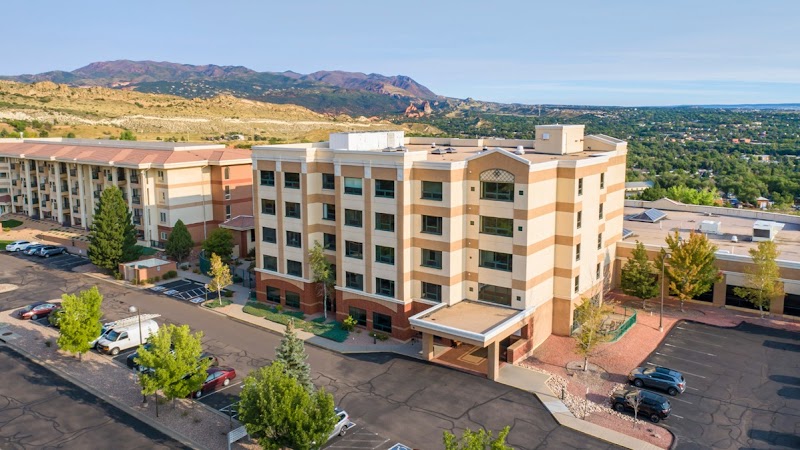
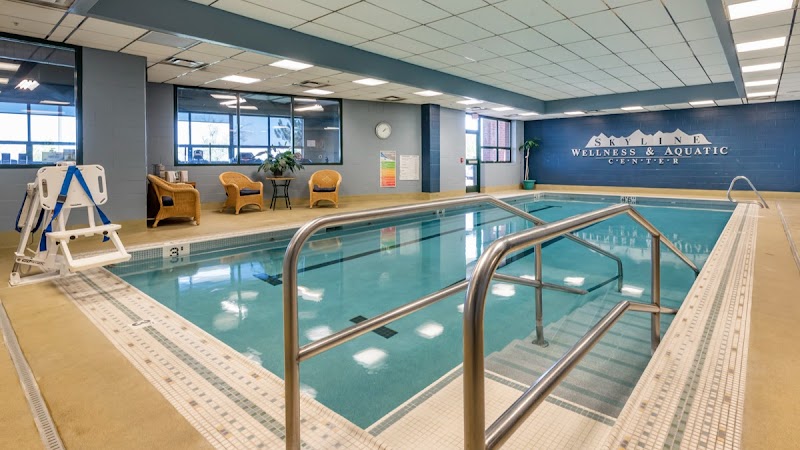

BROOKDALE SKYLINE

2365 PATRIOT HTS, COLORADO SPRINGS, CO 80904 (719) 667-5360
For profit - Corporation 82 Beds BROOKDALE SENIOR LIVING Data: November 2025
Trust Grade
48/100
#93 of 208 in CO
Last Inspection: April 2025

Within standard 12-15 month inspection cycle. Federal law requires annual inspections.

Overview

Brookdale Skyline has received a Trust Grade of D, indicating below-average performance with some concerning issues. It ranks #93 out of 208 facilities in Colorado, placing it in the top half, and #9 out of 20 in El Paso County, meaning only eight local options are better. The facility is improving, with issues decreasing from eight in 2023 to six in 2025. Staffing is a strength, rated 4 out of 5 stars, though the turnover rate is 58%, which is higher than the state average. However, there are concerning incidents, such as a resident who fell while trying to transfer without assistance, resulting in rib fractures, and another resident was subjected to abuse that went unaddressed. While the nursing home has some strengths, families should be aware of these serious issues when considering care for their loved ones.

Trust Score
D
48/100
In Colorado
#93/208
Top 44%
Safety Record
Moderate
Needs review
Inspections
Getting Better
8 → 6 violations
Staff Stability
⚠ Watch
58% turnover. Above average. Higher turnover means staff may not know residents' routines.
Penalties
⚠ Watch
$1,073 in fines. Higher than 77% of Colorado facilities, suggesting repeated compliance issues.
Skilled Nurses
✓ Good
Each resident gets 67 minutes of Registered Nurse (RN) attention daily — more than 97% of Colorado nursing homes. RNs are the most trained staff who catch health problems before they become serious.
Violations
⚠ Watch
17 deficiencies on record. Higher than average. Multiple issues found across inspections.
★★★☆☆
3.0
Overall Rating
★★★★☆
4.0
Staff Levels
★★★☆☆
3.0
Care Quality
★★★☆☆
3.0
Inspection Score
Stable
2023: 8 issues
2025: 6 issues

The Good

  • 4-Star Staffing Rating · Above-average nurse staffing levels
  • Full Sprinkler Coverage · Fire safety systems throughout facility
  • No fines on record

Facility shows strength in staffing levels, fire safety.

The Bad

3-Star Overall Rating

Near Colorado average (3.1)

Meets federal standards, typical of most facilities

Staff Turnover: 58%

12pts above Colorado avg (46%)

Frequent staff changes - ask about care continuity

Federal Fines: $1,073

Below median ($33,413)

Minor penalties assessed

Chain: BROOKDALE SENIOR LIVING

Part of a multi-facility chain

Ask about local staffing decisions and management

Staff turnover is elevated (58%)

10 points above Colorado average of 48%

The Ugly 17 deficiencies on record

2 actual harm
Jun 2025 1 deficiency
CONCERN (E) 📢 Someone Reported This

A family member, employee, or ombudsman was alarmed enough to file a formal complaint

Potential for Harm - no one hurt, but risky conditions existed

ADL Care (Tag F0677)

Could have caused harm · This affected multiple residents

**NOTE- TERMS IN BRACKETS HAVE BEEN EDITED TO PROTECT CONFIDENTIALITY** Based on observations, record review and interviews, the facility failed to ensure residents who were unable to carry out activi...

Read full inspector narrative →
**NOTE- TERMS IN BRACKETS HAVE BEEN EDITED TO PROTECT CONFIDENTIALITY** Based on observations, record review and interviews, the facility failed to ensure residents who were unable to carry out activities of daily living (ADL) received the necessary services to maintain proper personal hygiene for three (#6, #8 and #9) of seven residents reviewed for ADLs out of 13 sample residents. Specifically, the facility failed to: -Ensure staff used a gait belt when transferring Resident #6 from a recliner to the wheelchair while taking the resident to his room to provide incontinence care; -Ensure staff properly used a Hoyer lift (mechanical lift) when transferring Resident #8 to her bed to provide incontinence care; and, -Ensure Resident #8 and Resident #9 were provided with timely incontinence care. Findings include: I. Professional reference According to the Joerns Hoyer manufacturer guidelines, 2021, retrieved on 6/16/25, from https://www.https://www.joerns.com/product/hoyer-pro-slings/, A sling is an item of moving and handling equipment that is used with a mechanical lift in order to facilitate the transfer of a patient. It comprises a specially designed and constructed piece of fabric that is placed under and/or around a patient before being attached to the spreader bar/cradle of a lift to raise, transfer and lower the patient. When selected and used correctly, a sling and lift combination will achieve a safer transfer and reduce the risks associated with manual handling. Cross over leg straps, pass one leg strap through the other and attach to the hoist on the front hooks. II. Facility policy and procedure The Supporting the Activities of Daily Living policy, revised February 2024, was provided by the assistant director of nursing (ADON) on 6/11/25 at 5:10 p.m. It read in pertinent part, Residents who are unable to carry out activities of daily living independently should receive the services necessary to maintain good nutrition, grooming, personal and oral hygiene. Appropriate care and services should be provided for residents who are unable to carry out ADLs independently, with the consent of the resident and/or resident representative and in accordance with the plan of care, including appropriate support and assistance with: -Hygiene (bathing, dressing, grooming, and oral care); -Mobility (transfer and ambulation, including walking); -Elimination (toileting); -Dining (meals and snacks); and, -Communication (speech, language, and any functional communication systems). The Gait/Transfer/Walking Belts policy, revised May 2022, was provided by the ADON on 6/11/25 at 5:10 p.m. It read in pertinent part, Gait/transfer/walking belts are safety devices used for assisting a resident with transfer and/or ambulation with mobility needs. These devices are used with residents who may have an unsteady gait, are at risk for falls, or other health conditions that affect ambulation. Staff providing resident care should have access to gait/transfer belts and receive training in proper body mechanics. Gait/transfer belts should be used when needed, while providing care, assisting with ambulation, or transferring a resident. The Mechanical/Assistive Lifts policy, revised September 2017, was provided by the ADON on 6/11/25 at 5:10 p.m. It read in pertinent part, The use of all mechanical/assistive lift equipment should be according to manufacturer's recommendations. Staff should be educated on proper use of the equipment. Education should be provided on the proper use of the assistive mechanical lifting equipment prior to its use. The Perineal Care procedure, issued October 2016, was provided by the ADON on 6/11/25 at 5:10 p.m. It read in pertinent part, The purposes of this procedure are to provide cleanliness and comfort to the resident, to prevent infections and skin irritation, and to observe the resident's skin condition. Use a washcloth with warm water and soap or a disposable moist cloth. Wash perineal area, wiping from front to back. Wash the rectal area thoroughly, wiping from the base of the labia towards and extending over the buttocks. Do not reuse the same washcloth/water or moist disposable cloth to clean the labia. Discard disposable items into designated containers. Remove gloves and discard into designated containers. Wash and dry your hands thoroughly. III. Failure to transfer Resident #6 appropriately using a gait belt A. Resident #6 1. Resident #6, age greater than 65, was admitted on [DATE]. According to the June 2025 computerized physician orders (CPO), diagnoses included dementia, history of falling, unspecified lack of coordination, abnormal gait and mobility. The 5/9/25 minimum data set (MDS) assessment revealed Resident #6 had severe cognitive impairment with a brief interview for mental status (BIMS) score of seven out of 15. Resident #6 required assistance for transfers, toileting and personal hygiene. The MDS assessment documented Resident #6 was frequently incontinent of urine and occasionally incontinent of bowel. 2. Observations On 6/11/25 at 10:41 a.m. Resident #6 was assisted by certified nurse aide (CNA) #3 to transfer from a recliner to his wheelchair in order to go to the resident's room to provide incontinence care. Resident #6 was slow to respond to questions and did not open his eyes during the transfer. -CNA #3 did not use a gait belt while providing a stand pivot transfer from the recliner to the wheelchair. After Resident #6's incontinence care was finished, CNA #3 applied the resident's gait belt and requested assistance from CNA #5 in order to transfer Resident #6 back to the recliner. CNA #3 and CNA #5 commented on how tired Resident #6 appeared to be this morning. -Despite the placement of the gait belt to transfer Resident #6, CNA #3 did not hold onto the gait belt to transfer the resident, instead placing her arms under Resident #6's armpits and lifting the resident by the shoulders during the transfer. 3. Record review The comprehensive care plan, updated 6/3/25, documented Resident #6 required assistance from staff for transfers, toileting, bathing and personal hygiene. Interventions included the use of appropriate assistive devices and for staff to provide frequent cues to the resident when ambulating to reduce the risk of falls. 4. Staff interviews The director of rehabilitation (DOR) was interviewed on 6/11/25 at 3:38 p.m. The DOR said she provided hands-on training on the use of gait belts and assistive devices for the nurses and CNAs. The DOR said she instructed the staff to use a gait belt with any ambulation or stand-pivot transfers for the safety of the staff and the residents. The DOR said holding the resident under the shoulders could dislocate the resident's shoulder if the resident started to fall. IV. Failures with Resident #8 and Resident #9 A. Resident #8 1. Resident #8, age greater than 65, was admitted on [DATE]. According to the June 2025 CPO, diagnoses included Alzheimer's dementia and heart failure. The 4/3/25 MDS assessment revealed Resident #8 had severe cognitive impairment with a brief interview for mental status (BIMS) score of five out of 15. Resident #8 was dependent on staff assistance for dressing, bathing, toileting, repositioning and personal hygiene. The MDS assessment documented Resident #8 was always incontinent of urine and always incontinent of bowel. 2. Observations During a continuous observation of Resident #8 in the dining room and common area on 6/11/25, beginning at 8:50 a.m. and ending at 12:45 p.m., the following was observed: At 8:50 a.m. Resident #8 was being assisted with eating breakfast by an unidentified CNA in the dining room. Resident #8 was seated in her wheelchair with her Hoyer lift sling underneath her. At 8:59 a.m., after the meal was complete, an unidentified CNA wheeled Resident #8 in her wheelchair to sit in front of the television (TV) in the common area. From 8:59 a.m. until 12:45 p.m. Resident #8 remained in her wheelchair in the common area. During this time Resident #8 was not checked for incontinence by staff. -Resident #8 was not offered or provided with incontinence care between 8:50 a.m. and 12:45 p.m., a period of three hours and 55 minutes. On 6/11/25 at 12:57 p.m. CNA # 1 and CNA #2 transferred Resident #8 from her wheelchair to her bed using a Hoyer lift. During the transfer, the lower straps of the Hoyer lift sling were not crossed over each other to secure the resident per the manufacturer's guidelines (see manufacturer's guidelines above). After transferring Resident #8 to her bed, CNA #1 and CNA #2 proceeded to provide the resident with incontinence care. When CNA #1 removed the resident's brief, the brief was heavily saturated with urine in the front and back of the brief. -While providing incontinence care to Resident #8, CNA #1 used the same disposable moist cloth for multiple wipes on Resident #8's backside without folding the cloth to expose a new clean area of the cloth for each wipe. After Resident #8's brief was changed, CNA #1 and CNA #2 repositioned Resident #8 in bed. -CNA #1 and CNA #2 did not remove their soiled gloves and perform hand hygiene prior to repositioning the resident. 3. Record review The care plan, updated 4/4/25, identified Resident #8 was incontinent of both bowel and bladder. Interventions included checking Resident #8 for incontinence, assisting Resident #8 with toileting as needed, providing incontinence care and applying barrier cream after each incontinence episode. B. Resident #9 1. Resident status Resident #9, age greater than 65, was admitted on [DATE]. According to the June 2025 CPO, diagnoses included dementia, altered mental status and urinary tract infection. The 4/28/25 MDS assessment revealed Resident #9 had severe cognitive impairment with a brief interview for mental status (BIMS) score of three out of 15. Resident #9 required substantial assistance for transfers, toileting, dressing and personal hygiene. The MDS assessment documented Resident #9 was always incontinent of bowel and bladder. 2. Observations During a continuous observation of Resident #9 in the dining room and common area on 6/11/25, beginning at 8:50 a.m. and ending at 12:45 p.m., the following was observed: At 8:55 a.m. Resident #9 wheeled herself in front of an open window. From 8:55 a.m. until 11:41 a.m. no staff approached Resident #9 to offer incontinence care to the resident. At 11:41 a.m. CNA #1 assisted Resident #9 in her wheelchair to the dining room CNA #1 and LPN #1 repositioned Resident #9 in her wheelchair in the dining room. CNA #1 and LPN #1 hooked their arms underneath Resident #9's armpits to pull her up in the wheelchair. At 12:30 p.m. CNA #4 began providing eating assistance to Resident #9. Resident #9 was not offered or provided with incontinence care between 8:50 a.m. and 12:45 p.m., a period of three hours and 55 minutes. -At 12:45 p.m., upon prompting, staff attempted to check Resident #9 for incontinence, however, Resident #9 refused. 3. Record review The care plan, updated 3/19/25, identified Resident #9 was incontinent of both bowel and bladder. Interventions included checking Resident #9 for incontinence, assisting Resident #9 with toileting as needed, providing incontinence care and changing the resident's clothing after each incontinence episode. C. Staff interviews LPN #1 was interviewed on 6/11/25 at 12:45 p.m. LPN #1 said Resident #8 was incontinent of both bowel and bladder and required staff to check and change her because Resident #8 was at risk for pressure injuries. LPN #1 said the last time Resident #8 was provided with incontinence care (on 6/11/25) was before breakfast. LPN #1 said Resident #9 was incontinent and changed by staff before breakfast (on 6/11/25). LPN #1 said Resident #9 became agitated easily and often refused care. LPN #1 said when Resident #9 refused care, LPN #1 or another staff member would offer the care again a few minutes later. CNA #1 was interviewed on 6/11/25 at 2:54 p.m. CNA #1 said Resident #8 was changed for the first time on her shift before breakfast, usually between 7:30 a.m. and 8:30 a.m. CNA #1 said she typically checked and changed all of the residents three times a shift; once before breakfast, once after lunch and once at the end of the shift. The DOR was interviewed on 6/11/25 at 3:38 p.m. The DOR said she provided hands-on training to staff on how to use assistive devices and lifts, but she had not provided an in person all-staff education on safe Hoyer lift use since starting as the DOR for the facility a few months prior. The DOR said she was not sure if the previous DOR provided in-person education on safe Hoyer lift use. The DOR said the only time staff should not cross the lower straps of the transfer sling when using a Hoyer lift was if the resident had a full body sling with a seat. The DOR said she was not sure what type of sling was being used for Resident #8. The DOR said staff should not pull up Resident #9 by hooking their arms under Resident #9's shoulders. She said one staff member should hold the resident under the legs and push the resident up in the wheelchair while another staff bear hugged the resident from behind to safely reposition the resident in the wheelchair. -After the interview, the DOR confirmed that Resident #8 was in a normal Hoyer lift sling and staff should have crossed the lower straps of the sling, as was recommended by the manufacturer. The ADON and the clinical consultant (CC) were interviewed together on 6/11/25 at 4:20 p.m. The ADON said residents who were unable to inform staff when they needed incontinence care should be checked every two hours. The ADON said untimely incontinence care increased the residents' risk for skin breakdown or urinary tract infections (UTI). The ADON said she was not aware of any in-person training provided to staff on incontinence care since starting as the ADON for the facility a few months prior. She said professional standards for cleaning residents after an incontinence episode included using a new clean disposable moist cloth with each wipe, or folding the cloth to a clean side between each wipe. The ADON said staff should only clean in one direction, from front to back, when providing incontinence care on female residents. The CC said training modules on staff expectations for incontinence care and the use of assistive devices and lifts were completed during new employee orientation.
Apr 2025 5 deficiencies
CONCERN (D)

Potential for Harm - no one hurt, but risky conditions existed

Respiratory Care (Tag F0695)

Could have caused harm · This affected 1 resident

**NOTE- TERMS IN BRACKETS HAVE BEEN EDITED TO PROTECT CONFIDENTIALITY** Based on observations, record review and interviews, the facility failed to ensure residents who needed respiratory care was pro...

Read full inspector narrative →
**NOTE- TERMS IN BRACKETS HAVE BEEN EDITED TO PROTECT CONFIDENTIALITY** Based on observations, record review and interviews, the facility failed to ensure residents who needed respiratory care was provided such care, consistent with professional standards of practice for one (#1) of two residents reviewed for the use of supplemental oxygen of 27 sample residents. Specifically, the facility failed to ensure Resident #1's oxygen was consistently administered according to physician's orders. Findings include: I. Facility policy and procedure The Oxygen Administration policy, revised April 2024, was provided by the nursing home administrator (NHA) on 4/17/2025 at 3:03 p.m. It read in pertinent part, The nurse should monitor oxygen administration and record the resident's response to oxygen therapy in the medical record. Verify that there is a physician's order for the procedure. Review the healthcare provider's orders or community protocol for oxygen administration. II. Resident #1 A. Resident status Resident #1, age [AGE], was admitted on [DATE]. According to the April 2025 computerized physicians orders (CPO), diagnoses included chronic respiratory failure with hypercapnia and hypoxia (a condition where there is an excess of carbon dioxide in the blood and low levels of oxygen in body tissue), chronic obstructive pulmonary disease (COPD), muscle weakness, cognitive communication deficit, phocomelia of the limbs (a rare congenital anomaly with the proximal aspect of an extremity is absent with the hand or foot) anxiety disorder, altered mental status and pneumonitis due to inhalation of food and vomit. The 1/14/25 minimum data set (MDS) assessment revealed the resident had severe cognitive impairments with a brief interview for mental status (BIMS) score of three out of 15. The assessment indicated the resident did not have any behaviors or rejections of care during the assessment period. She was dependent on staff due to upper and lower impairment on both sides and required extensive to maximum assistance with care. The MDS assessment indicated the resident required continuous oxygen. B. Record review The oxygen care plan, initiated 1/14/25, revealed Resident #1 received oxygen therapy related to COPD, chronic respiratory failure. Pertinent interventions included providing oxygen via nasal canal between two to four liters per minute (LPM) during the day at a continuous flow per physician's orders. The April 2025 CPO included: -Oxygen at two to four LPM continuously via nasal cannula, ordered 4/7/25. C. Observations and interviews On 4/15/25 at 10:45 a.m. Resident #1 was in her room. There was an oxygen concentrator in her room, but the nasal canula was not in place via nasal canula. There was a portable oxygen tank on the back of the resident's wheelchair. However, the portable oxygen concentrator was empty. The personal care provider alerted the facility staff about the resident's oxygen tank being empty. Certified nursing assistant (CNA) #5 said the oxygen tank was empty. The resident was having difficulty understanding her personal care provider, who was visiting her. On 4/16/25 at 2:45 p.m., Resident #1 was in her room. She was talking on the phone. The resident repeatedly asked the individual she was speaking to on the phone if she was coming to get her. Resident #1 asked licensed practical nurse (LPN) #1 if her oxygen tank was working. The LPN checked the resident's portable oxygen tank and said she was replacing it for the resident. LPN #1 took the portable tank with her, leaving the resident with no oxygen for approximately two minutes. She returned with a full tank for the resident. D. Staff interviews Certified nursing aide (CNA) #5 was interviewed on 4/16/25 at 4:05 p.m. CNA #5 said Resident #1's portable oxygen tank was refilled by the night shift and the CNA's ensured that the resident had her oxygen on at all times. CNA #5 said the resident was receptive to having staff assist her with wearing her nasal cannula and would not resist or decline the oxygen use. CNA #5 said Resident #1 would get short of breath and display other medical complications if she was not receiving continuous oxygen. CNA #5 said she tried to keep an eye on all the portable oxygen tanks but sometimes they ran out without her noticing CNA #5 said Resident #1's portable oxygen tank was usually set between 2 to 4 LPM. Licensed practical nurse (LPN) #1 was interviewed on 4/16/25 at 4:25 p.m. LPN #1 said Resident #1 had a physician's order for 2 to 4 liters of continuous oxygen (LPM). She said all staff nursing members were responsible to check the portable tanks to ensure they were not empty. LPN #1 said oxygen was considered a medication and a physician's order for a resident to receive oxygen should be followed accordingly. She said the resident could suffer medical complications such as shortness of breath. The director of nursing (DON) was interviewed on 4/16/25 at 4:56 p.m. The DON said it was important for physician's orders to be followed. She said all of the CNA's and nurses were responsible for monitoring the portable oxygen tanks to ensure they were not empty. The DON said if Resident #1 was having difficulty and appeared agitated, the staff should have checked her oxygen tank. She said the nursing staff should have ensured that Resident #1 received continuous oxygen as prescribed by the physician. The DON said she had updated the medication administration record (MAR) for the nursing staff to check all portable tanks more frequently. She said she would immediately provide education to the nursing staff about the importance of oxygen administration and the proper monitoring of oxygen use.
CONCERN (D)

Potential for Harm - no one hurt, but risky conditions existed

Deficiency F0744 (Tag F0744)

Could have caused harm · This affected 1 resident

**NOTE- TERMS IN BRACKETS HAVE BEEN EDITED TO PROTECT CONFIDENTIALITY** Based on observations, record review, and interviews, the facility failed to ensure a resident who displayed or was diagnosed wi...

Read full inspector narrative →
**NOTE- TERMS IN BRACKETS HAVE BEEN EDITED TO PROTECT CONFIDENTIALITY** Based on observations, record review, and interviews, the facility failed to ensure a resident who displayed or was diagnosed with dementia received the appropriate treatment and services to attain or maintain his or her highest practical physical, mental, and psychosocial well-being for two (#29 and 42) of three residents reviewed for dementia care out of 27 sample residents. Specifically, the facility failed to effectively identify person-centered approaches for dementia care for Resident #29 and Resident #42 to provide the resident with their highest practicable quality of life and care. Findings include: I. Facility policy and procedure The Dementia Care policy and procedure, revised February 2022, was received from the nursing home administrator (NHA) on 4/16/25 at 10:39 a.m It read in pertinent part, Residents who have been diagnosed as having dementia should have a resident-centered care plan to maximize remaining abilities and quality of life. II. Resident #29 A. Resident status Resident #29, age [AGE], was admitted on [DATE]. According to the April 2025 computerized physician orders (CPO), diagnoses included dementia, type 2 diabetes mellitus with other diabetic neurological diabetic neurological complications, scrotal varices (enlarged veins in the scrotum that can cause pain), urinary tract infections and hearing loss. The 1/10/25 minimum data set (MDS) assessment revealed the resident had severe cognitive impairments with a brief interview for mental status (BIMS) score of five out of 15. He required total assistance with toileting, showering, personal hygiene and dressing and moderate assistance with oral hygiene. The assessment revealed the resident did not reject care and did not exhibit physical or verbal behaviors or wander. B. Resident #29 interview and observations Resident #29 was interviewed on 4/15/25 at 10:45 a.m. The resident was in his wheelchair on the left side of his bed in his room. He said help me and said he wanted to go to bed. At 10:59 a.m. certified nurse aide (CNA) #7 went into the resident's room. The resident said he wanted to go to bed. The CNA said it was almost time for lunch and assisted the resident to the dining area. At 11:20 a.m. Resident #29 was in his room. He said help, help. CNA #6 went into his room. Resident #29 said he wanted to be in bed. CNA #6 said it was almost time for lunch and he could not go to bed. At 11:23 p.m. CNA #6 assisted Resident #29 out of the resident's room. At 11:26 a.m. Resident #29 went back in his room. He was on the left side of his bed, rolling back and forth in a repetitive motion. At 11:28 a.m. Resident #29 initiated his call light indicating he needed assistance. At 11:29 a.m. CNA #8 went into the resident's room. CNA #8 did not provide the resident with any care and left the room within the minute. At 11:30 a.m. Resident #29 initiated his call light. CNA #7 and CNA #8 went into Resident #29's room. Resident #29 said he wanted to go to bed. CNA #7 and CNA #8 said it was lunchtime and assisted the resident to the dining area. Between 11:30 a.m. and 11:35 a.m. Resident #29 assisted himself back to his room. At 11:35 a.m. Resident #29 was back in his room. An unidentified CNA was assisting another resident when they walked past Resident #29's room, Resident #29 was sitting in his doorway and attempted to reach for the unidentified CNA. -However, the staff did not offer any person-centered care when the resident requested to go to bed multiple times. During a continuous observation on 4/16/25, beginning at 11:12 a.m. and ending at 12:54 p.m., the following was observed: At 11:12 a.m. Resident #29 was in his wheelchair in his room on the left side of his bed with his head down. At 11:16 a.m.,Resident #29 left his room and looked at the newspaper that was on the counter in the common area. At 11:19 a.m. Resident #29 self-propelled back to his room and was on the left side of his bed. At 11:25 a.m. Resident #29 left his room, turned off his bedroom light and went back to the dining room. At 11:27 a.m. an unidentified CNA walked passed Resident #29, he said help and she said one second. The unidentified CNA left the common area. Resident #29 went to his room, turned on his bedroom light and went to the left side of his bed. From 11:30 a.m. to 11:32 a.m. Resident #29 left his room, turned his bedroom light off and went to the farthest dining table from his room. He was sitting in his wheelchair in front of the dining table with no activities in front of him. At 11:38 a.m. Resident #29 returned to his room. He turned his bedroom light on. He went to the left side of his bed. He turned around and he was at his doorway and said help nurse help. He turned off his bedroom light and went back to the dining table closest to his room. At 11:43 a.m. Resident #29 returned to his room, turned on his light, went to the left side of his bed and began rolling back and forth in a repetitive motion in his wheelchair. At 11:46 a.m. Resident #29 left his room, turned his bedroom light off and went to the dining table closest to his room. At 11:48 a.m. Resident #29 returned to his room, turned on his light, went to the left side of his bed and began rolling back and forth in a repetitive motion in his wheelchair. At 11:53 a.m. Resident #29 left his room, turned off his bedroom light, went to the dining table closest to his room and then self-propelled himself around the dining area. From 11:58 a.m. until 12:04 p.m. Resident #29 returned to his room, turned on his light, went to the left side of his bed and began rolling back and forth in a repetitive motion. At 12:05 p.m. Resident #29 was sitting in his doorway. He raised his hand when licensed practical nurse (LPN) #3 walked by. She told him he was first on the list for the scenic drive outing at 2:30 p.m. He looked at his watch and went to the dining table closest to his room. At 12:13 p.m. Resident #29 went to the dining table closest to his room. At 12:15 p.m. Resident #29 returned to his room, turned on his light, went to the left side of his bed and began rolling back and forth in a relative motion. At 12:26 p.m. Resident #29 left his room and went to the dining table farthest away from his room. At 12:33 p.m. an unidentified CNA walked by Resident #29. He told the CNA he had terrific pain in his scrotal area and needed a pain pill. The CNA said she would tell the nurse. At 12:35 p.m. Resident #29 went to his room and the CNA went to the nurse's station. At 12:37 p.m. LPN #3 went to Resident #29's room. At 12:42 p.m. Resident #29 left his room and went to the dining table farthest away from his room. At 12:46 p.m,. LPN #3 was with Resident #29 at the dining table farthest away from the resident's room. Resident #29 said his testicle hurt. LPN #3 offered incontinence care and Resident #29 declined. -During the observation, the staff failed to address the resident's request for help and provided person-centered interventions for the residents' behaviors. C. Record review Review of Resident #29's dementia care plan, initiated on 2/4/23 and revised on 3/15/23, revealed the resident had impaired cognitive function or impaired thought processes. Interventions included communicating with the resident, family and caregivers regarding the resident's capabilities and needs, encouraging the resident to take medications offered and asking yes or no questions to determine the resident's needs. -The care plan failed to include the resident's repetitive behavior of rolling back and forth, requests to go to bed before, asking for help or person-centered interventions to address the resident's behaviors. Review of Resident #29's activities care plan, revised on 9/22/24, revealed the resident benefited from associate support for resident programs. Interventions included establishing and recording the resident's prior level of activity involvement and interest with the resident, caregiver, and family on admission and as necessary, inviting the resident to programs of interest, preferred activities were reading the newspaper ,and family visiting. An additional intervention initiated on 4/17/25 (during the survey) included for the staff to assist the resident to bed per his preference when requested. -The care plan failed to include the request for a bed before the start of the survey (see staff interview below). III. Resident #42 A. Resident status Resident #42, age [AGE], was admitted on [DATE]. According to the April 2025 CPO, diagnoses included dementia, Parkinson's disease (disease that causes tremors), hemiplegia and hemiparesis (paralysis and weakness on one side of the body) following cerebral infarction (stroke) affecting the right dominant side, insomnia (difficulty sleeping) and depression, The 3/4/25 MDS assessment revealed the resident had moderate cognitive impairments with a BIMS score of 11 out of 15. He required moderate assistance with oral hygiene, showering and moderate assistance He required substantial assistance with toileting. The assessment revealed the resident did not reject care, did not exhibit physical or verbal behaviors or wander. B. Additional resident interviews Resident #153 was interviewed on 4/15/25 at 11:10 a.m. He said Resident #42 wandered into his room once since he was admitted to the facility. He said he did not know what the facility was doing to prevent him from coming into his room. Resident #38 was interviewed on 4/15/25 at 3:07 p.m. She said Resident #42 sometimes would wander into her room in the evening. She said did not know what the facility was doing to prevent him from coming into her room. She was frustrated he wandered into her room because it took time away from the staff to redirect the resident out of her room. C. Observations During a continuous observation on 4/16/25, beginning at 11:12 a.m. and ending at 12:54 p.m., the following was observed: Resident #42 was observed in his bed lying on his right side with his eyes closed. D. Record review Review of Resident #42's wandering care plan, revised 3/23/25, revealed the resident was at risk for elopement and the resident wandered aimlessly. Interventions included discussing the risks, discussing safe discharge with the resident and responsible party, distracting the resident from wandering by offering pleasant diversions, structured activities, food, conversation, television, books, identifying patterns of wandering and intervening as appropriate, monitoring location throughout the shift and documenting wandering behaviors and attempting diversional interventions. The care plan documented the resident prefers: (blank). -However, the care plan failed to identify the resident wandered into other resident's rooms, interventions to prevent wandering into other resident's rooms and did not specify the resident's preferences. The 3/5/25 nurse progress note revealed the resident made many attempts to wander into other resident's rooms. He was not easily redirected. The staff had to sit with the resident one-on-one at times to keep him from entering others' rooms. The 3/6/25 nurse progress note revealed the resident continued to wander around and sometimes in other resident's rooms. The 4/14/25 nurse progress note revealed the resident often exhibited increased wandering and agitation at this time of day due to disease process. The 4/16/25 nurse progress note revealed the resident was confused and wandered around the common area and attempted to go into another resident's room. He was not easily redirected. He was provided with snacks and games. -Review of the Resident #42's progress notes revealed there was not consistent documentation regarding what interventions were used and which interventions were effective when the resident's wandering was observed. The behavior monitoring and intervention task record was reviewed from 3/19/25 to 4/17/25. It revealed Resident #42 was known to have wandering on 3/22/25, 3/23/25, 3/28/25, 3/30/25, 4/4/25, 4/6/25, 4/7/25, 4/8/25, 4/11/25 and 4/16/25. -Review of the behavior monitoring and intervention task record revealed there was no documentation regarding what interventions were used and which interventions were effective when the resident's wandering was observed. IV. Staff interviews Registered nurse (RN) #1 was interviewed on 4/15/25 at 8:55 a.m. RN #1 said she was familiar with Resident #42. At the time of the interview, she said he was sitting at a dining table near the kitchenette near his room. She said he often wandered and he moved very quickly. She said she had to keep her eyes on him because he was quick to stand up. During the interview, RN #1 directed CNA #6 to assist the resident as he was trying to stand up. LPN #3 was interviewed on 4/17/25 at 3:44 p.m. LPN #3 said if a resident had dementia and they asked to go to bed, the nursing staff should help the resident go to bed. She said if a resident was consistently doing the same behavior, there should be interventions to redirect the resident. She said she needed to document behaviors she observed during her shift. She said she needed to do a better job of documenting the behaviors residents exhibited, what interventions she used and if the interventions were effective. LPN #3 said Resident #29 had dementia. LPN #3 said he asked to go to bed, he would go in and out of his room and roll back and forth on the left side of his bed daily. She said she did not know what interventions to redirect the resident to meaningful activities that were person-centered worked for him. She said she knew he liked participating in activities that were outside of the facility. She said Resident #39 went on an outing yesterday (4/16/25). LPN #3 said Resident #42 wandered and had dementia. LPN #3 said he wandered most recently on Friday and Saturday. She said he slept during the day because his sleep schedule was off. LPN #3 said he experienced sundowners (confusion and agitation occurring in the late afternoon or early evening). She said the physician adjusted his medications to try to help with his sleep pattern but she said she has not seen a change in his sleep. She said she needed to be better at documenting when he wandered, what interventions she used and if the interventions were effective. The director of nursing (DON) was interviewed on 4/17/25 at 4:06 p.m. She said if a resident had dementia and they asked to go to bed, the nursing staff should not say it was almost time for lunch. The DON said the nursing staff could do better in offering personalized interventions for dementia residents. She said if the resident was asking for help or the same behavior, there should be personalized interventions in place to help redirect the resident. The DON said she knew Resident #29 asked to go to bed frequently. She said effective interventions to prevent the resident from going to bed before meal time were offering a newspaper or a banana.
CONCERN (D)

Potential for Harm - no one hurt, but risky conditions existed

Deficiency F0806 (Tag F0806)

Could have caused harm · This affected 1 resident

**NOTE- TERMS IN BRACKETS HAVE BEEN EDITED TO PROTECT CONFIDENTIALITY** Based on observations, record review and interviews, the facility failed to ensure meals were served according to the resident's...

Read full inspector narrative →
**NOTE- TERMS IN BRACKETS HAVE BEEN EDITED TO PROTECT CONFIDENTIALITY** Based on observations, record review and interviews, the facility failed to ensure meals were served according to the resident's preferences for one (#103) of three residents out of 27 sample residents. Specifically, the facility failed to ensure Resident #103 received the meal items she ordered. Findings include: I. Resident #103 A. Resident status Resident #103, age greater than 65, was admitted on [DATE]. According to the April 2025 CPO, diagnoses included dementia, depression and Parkinson's disease (a disease that causes tremors). B. Resident interview and observations Resident #103 was interviewed on 4/17/25 at 12:20 p.m. The resident said she had problems with her lunch meal. The resident's meal ticket did not indicate the resident's choice for the lunch meal on 4/17/25 as it was blank. Resident #103 said this happened all the time since she was admitted to the facility. The resident said her son helped her fill out her meal tickets but the meal ticket that was delivered with her lunch tray was blank. She said she did not know what happened to her meal ticket that was completed a few days ago with the help of her son. The resident said she did not order the food on her tray so she did not eat it. C. Observations and resident representative interview During a continuous observation on 4/17/25, beginning at 12:25 p.m. and ending at 12:50 p.m. the following was observed: Resident #103's son arrived at the facility to visit his mother during lunch. The resident's son asked the registered dietitian (RD) the reason his mother's meal ticket was blank. He said he completed the meal ticket with a nurse on the phone and the meal his mother received was not what they had ordered. The (RD said she was not sure why the meal ticket was blank. The resident's son said it had been an issue since the resident was admitted to the facility and that's the reason he called to ensure that the ticket was completed. D. Record review The nutrition care plan, dated 4/10/25, revealed the resident was at nutritional risk as evidenced by her medical diagnosis. Interventions included providing the resident her diet as ordered and monitoring meal intake with each meal. II. Staff interviews Certified nurse aide (CNA) #4 was interviewed on 4/17/25 at 1:05 p.m. CNA #4 said the nursing staff assisted the residents who needed assistance to complete their meal tickets. CNA #4 said Resident #104's son assisted the resident in completing her meal ticket. She said she did not know why her ticket came back blank. The RD was interviewed on 4/17/25 at 12:40 p.m. The RD said Resident #103's son had called her and requested to assist his mother to complete the meal ticket. She said she gave the blank meal tickets to the nursing staff and it was completed on the phone with the resident's son. The RD said she does not know what happened to that meal ticket. The RD said the dietary staff should review and ensure all meal tickets were completed, submitted and notify the nursing staff of any incomplete meal ticket. The RD said she did not know this was happening and she would consult with the dietary department to come up with a plan to prevent this from happening again. The dining service supervisor (DSS) was interviewed on 4/17/25 at 12:55 p.m. The DSS said sometimes the dietary department received blank meal tickets. The DSS said when this happened the dietary staff would serve the main dish for the residents whose meal tickets were not completed. She said the nursing staff were supposed to assist the residents in completing their meal tickets. She said she was not sure if that was happening, as they received several blank meal tickets. She said the dietary staff should be reviewing the meal tickets to ensure they were completed and calling the nursing staff to verify every incomplete ticket. The DSS said if the meal tickets were not reviewed and verified for any inconsistencies, residents would receive meals that they did not order or preferred to eat. The executive chef (EC) was interviewed on 4/17/25 at 1:10 p.m. The EC said the dining service staff should be reviewing the meal tickets and informing the nursing staff of all inconsistencies to ensure residents receive their food preferences. The EC said he would consult with the dietary team to review their meal ticket process and immediately offer education to the staff to prevent the issue from happening again.
CONCERN (E)

Potential for Harm - no one hurt, but risky conditions existed

Infection Control (Tag F0880)

Could have caused harm · This affected multiple residents

Based on observations and interviews, the facility failed to ensure an infection prevention and control programs (IPCP) was maintained and followed to provide a safe, sanitary and comfortable environm...

Read full inspector narrative →
Based on observations and interviews, the facility failed to ensure an infection prevention and control programs (IPCP) was maintained and followed to provide a safe, sanitary and comfortable environment and to help prevent the development and transmission of communicable diseases and infections on one of three units. Specifically, the facility failed to ensure staff wore the appropriate PPE when providing wound care for Resident #50 who was on enhanced barrier precautions (EBP) related to an abdominal wound. Findings include: I. Professional reference According to the Centers for Disease Control and Prevention (CDC) Implementation of Personal Protective Equipment (PPE) Use in Nursing Homes to Prevent Spread of MDROs, retrieved on 4/22/25 from https://www.cdc.gov/long-term-care-facilities/hcp/prevent-mdro/PPE.html, It read in pertinent parts, EBP are an infection control intervention designed to reduce transmission of resistant organisms that employ targeted gown and glove use during high contact resident care activities. Nursing home residents with wounds and indwelling medical devices are at especially high risk of both acquisition of and colonization with MDROs. The use of gown and gloves for high-contact resident care activities is indicated, when contact precautions do not otherwise apply, for nursing home residents with wounds and/or indwelling medical devices regardless of MDRO colonization, as well as for residents with MDRO infection or colonization. Examples of high-contact resident care activities requiring gown and glove use for enhanced barrier precautions include dressing, bathing/showering, transferring, providing hygiene, changing linens, changing briefs or assisting with toileting, device care or use (central line, urinary catheter, feeding tube, tracheostomy/ventilator) and wound care, any skin opening requiring a dressing. II. Facility policy and procedure The Isolation Precautions policy, revised September 2022, and the Enhanced Barrier Precautions Policy, revised February 2025, was received from the director of nursing (DON) on 4/17/25 at 1:45 p.m. The policy read in pertinent part, EBP should be used as an infection prevention and control intervention to reduce the spread of MDROs to residents. EBP are used in conjunction with standard precautions and expand the use of PPE to donning of gown and gloves during high-contact resident care activities that provide opportunities for transfer of MDROs to associate hands and clothing. Gloves and gown may be applied prior to performing high-contact resident care activity. PPE is changed before caring for another resident. EBPs are indicated with any of the following: Wounds and/or indwelling medical devices even if the resident is not known to be infected or colonized with a MDRO. Wounds generally include chronic wounds, not shorter-lasting wounds, such as skin breaks or skin tears covered with an adhesive bandage (Band-Aid) or similar dressing. Examples of chronic wounds include, but are not limited to, pressure ulcers, diabetic foot ulcers, unhealed surgical wounds, and venous stasis ulcers. III. Observations On 4/15/25 at 11:25 a.m. there was a sign on Resident #50's door that indicated the resident was on EBP. The sign on the resident's door indicated gloves and a gown must be worn for resident care activities, including dressing, bathing/showering, transferring, linen changes, providing hygiene, changing briefs or assisting with toileting and device care or use, such as central lines, urinary catheters, feeding tubes, tracheostomies and wound care. On 4/16/25 10:43 a.m. registered nurse (RN) #2 was completing wound care for Resident #50, who had a. abdominal wound. RN #2 had gloves on. RN #2 failed to put on a gown. IV. Resident interview Resident #50 was interviewed on 4/16/25 at 2:36 p.m. Resident #50 said the nurses never put on gowns when changing his abdominal wound dressing or when changing his abdominal wound vacuum machine. Resident #50 said they only wore gloves. V. Staff interviews Certified nurse aide (CNA) #1 was interviewed on 4/16/25 at 2:44 p.m. CNA #1 said when she was providing care for Resident #50, she put on gloves and a gown. She said if she was going to assist the resident transfers, using the bathroom or helping the nurse with wound care, she would put on a gown and gloves to ensure the resident would not get an infection. RN #2 was interviewed on 4/16/25 at 3:00 p.m. RN #2 said Resident #50 was on EBP. She said the staff should wear gloves and a gown when providing wound care or when providing any close contact activities to protect the resident from getting an infection. RN #2 said she forgot to put on a gown today when she was changing his abdominal wound dressing. RN #2 said staff should put on gloves and gowns before going into Resident #104's room because he had an infectious bacteria in his wound. She said wearing a gown and gloves helped prevent the resident's infection from transferring to staff or residents. The director of nursing (DON) was interviewed on 4/16/25 at 4:33 p.m. The DON said if a resident was on precautions, the facility's procedure was to ensure there was a sign on the door to inform the staff the precautions that needed to be followed. She said if the resident was on precautions, a cart with PPE was stored outside of the resident's room. She said the nursing staff was provided education so they knew how to correctly care for the residents and prevent the transmission of bacteria or cause an infection. The DON said it was the responsibility of the nursing staff to update the care plan so all of the staff knew how to address the care needs for the individual residents. The DON said the staff should put on gloves and a gown before entering Resident #104 room and remove the gloves and gown before exiting the room. The DON said staff should put on gloves and gown with any high contact care for Resident #50 such as wound care, bathing, dressing, transfers and assisting the resident to the bathroom. The infection preventionist (IP) was interviewed on 4/16/25 at 4:55 p.m. The IP said staff should put on gloves and a gown when providing wound care for Resident #50 to ensure the wound does not get infected. The IP said she did not think the staff had to wear a gown when transferring a resident that was on EBP. The IP said Resident #50 had physician's orders that indicated he was on EBP. The IP said she was responsible for training the nursing, dietary and rehabilitation staff regarding EBP and contact precautions procedure. She said she would conduct surveillance and audits in addition to giving all staff re-education on the different precaution procedures. The IP said if the nurses and the CNA's did not read the care plan, that could have been the reason precaution procedures were not followed.
CONCERN (F)

Potential for Harm - no one hurt, but risky conditions existed

Deficiency F0730 (Tag F0730)

Could have caused harm · This affected most or all residents

Based on record review and interviews, the facility failed to complete a performance review of every nurse aide at least once every 12-months and provide regular in-service education based on the outc...

Read full inspector narrative →
Based on record review and interviews, the facility failed to complete a performance review of every nurse aide at least once every 12-months and provide regular in-service education based on the outcome of these reviews for two of two certified nurse aides (CNA). Specifically, the facility failed to complete annual performance reviews and provide regular in-service education based on the outcome of the reviews for CNA #2 and CNA #3. Findings include: I. Facility policy and procedure The Annual Performance Planning Guide, undated, was provided by the nursing home administrator (NHA) on 4/17/25 at 4:47 p.m. It read in pertinent part, Performance planning is a critical part of the performance management process. While annual reviews are a look back, performance plans are a look forward. A collaborative process between associate and supervisor, they set the foundation for performance management by establishing clear and defined individual performance and development goals for the year. Revisit the performance plan throughout the year to measure progress, discuss obstacles, give feedback, and coach to success. At annual review time, measure performance against the goals set in the performance plan. Performance planning is a process conducted by a supervisor and their direct reports in which together they plan the performance goals for the upcoming year and discuss developmental goals. II. Record review Annual performance reviews were requested on 4/16/25 at 10:35 a.m. The facility was unable to provide annual performance evaluations for CNA #2 (hired 2/17/2020) and CNA #3 (hired 7/8/08). -CNA #2 and CNA #3 did not have an annual performance review completed and did not have an in-service education plan based on the outcome of the review. III. Staff interviews The director of nursing (DON) was interviewed on 4/17/25 at 3:21 p.m. The DON said the facility should complete a performance review of the CNAs at least once every 12 months and provide regular in-service education based on the outcome of the review. The DON said the facility had not completed it yet but their policy said it should be done. The DON said she could not locate the reviews for CNA #2 and CNA #3. The DON said the purpose of completing the performance review was to see how the CNAs were doing, what they needed help with and to give feedback and set expectations. The DON said she would be doing a skills fair and regular in-service education based on the outcomes of the review. The DON said the plan now was to do the annual reviews and skills fair. She said she would start that within the next quarter to get everyone reviewed.
Aug 2023 7 deficiencies
CONCERN (D)

Potential for Harm - no one hurt, but risky conditions existed

Deficiency F0574 (Tag F0574)

Could have caused harm · This affected 1 resident

Based on observations and interviews, the facility failed to ensure residents received notices orally and in writing which included a written description of their legal rights. Specifically, the facil...

Read full inspector narrative →
Based on observations and interviews, the facility failed to ensure residents received notices orally and in writing which included a written description of their legal rights. Specifically, the facility failed to: -Include the email address of the State Survey Agency so a resident may file a care complaint; and, -Post the information in a manner accessible and understandable to all residents. Findings include: I. Resident group interview The group interview was conducted on 8/30/23 at 10:35 a.m. with five residents (#4, #5, #13 and #45) identified by assessment and the facility as interviewable. All four residents said they did not know they could file a complaint with the State Agency and they did not know where the facility posted information in regard to pertinent State Agencies' contact information and it was not reviewed in the resident council meeting. II. Observations and staff interviews On 8/28/23 at 10:46 a.m. observation of the mandatory posting for the State Agency was made on the fourth floor prior to entering the unit. An eight inch by 11 inch paper was stapled to a bulletin board. The posting was hung approximately six feet up from the floor. The bulletin board contained a paper with the names, addresses and phone numbers of State Agencies. The contact information was approximately font size 11 but it would be hard to read with a visual impairment. The complaint intake email address was not included for the State Survey Agency on the posting. The posting was not accessible at wheelchair height so a resident could not read the sign without assistance. The posting was in an area that was not easily accessible to residents who were not mobile. On 8/28/23 at 10:58 a.m. observation of the mandatory posting for the State Agency was made on the third floor prior to entering the unit. An eight inch by 11 inch paper was stapled to a bulletin board.The posting was hung approximately seven feet up from the floor. The bulletin board contained a paper with the names, addresses and phone numbers of State Agencies. The contact information was approximately font size 11 but it would be hard to read with a visual impairment. The complaint intake email address was not included for the State Survey Agency on the posting. The posting was not accessible at wheelchair height so a resident could not read the sign without assistance. The posting was in an area that was not easily accessible to residents who were not mobile. On 8/28/23 at 11:05 a.m. observation of the mandatory posting for the State Agency was made on the fifth floor prior to entering the unit. An eight inch by 11 inch paper was stapled to a bulletin board.The posting was hung approximately six feet up from the floor. The bulletin board contained a paper with the names, addresses and phone numbers of State Agencies. The contact information was approximately font size 11 but it would be hard to read with a visual impairment. The complaint intake email address was not included for the State Survey Agency on the posting. The posting was not accessible at wheelchair height so a resident could not read the sign without assistance. The posting was in an area that was not easily accessible to residents who were not mobile. Registered nurse (RN) #1 was interviewed on 8/28/23 at 11:11 a.m. She said she was uncertain where the State Agencies' contact information was located. Certified nurse aide (CNA) #1 was interviewed on 8/28/23 at 11:35 a.m. She said she did not know where the State Agencies' contact information was located. The nursing home administrator (NHA) was interviewed on 8/28/23 at 11:45 p.m. She said the State Agencies' contact information posting did not include the state agency email address on three out of three units. The director of nursing (DON) was interviewed on 8/30/23 at 1:15 p.m. She said the State Agencies' contact information posting was corrected during the survey process to include the state agency email, however, the posting was still inaccessible and the bulletin boards should be lowered across all 3 units.
CONCERN (D)

Potential for Harm - no one hurt, but risky conditions existed

Quality of Care (Tag F0684)

Could have caused harm · This affected 1 resident

**NOTE- TERMS IN BRACKETS HAVE BEEN EDITED TO PROTECT CONFIDENTIALITY** Based on observations, record review, and interviews, the facility failed to ensure two (#16 and #34) of four out of 30 sample r...

Read full inspector narrative →
**NOTE- TERMS IN BRACKETS HAVE BEEN EDITED TO PROTECT CONFIDENTIALITY** Based on observations, record review, and interviews, the facility failed to ensure two (#16 and #34) of four out of 30 sample residents received the highest practicable treatment and care in accordance with professional standards of practice and the comprehensive person-centered care plan. Specifically, the facility failed to: -Ensure Resident #16 was wearing her geri gloves (to help her skin from bruising and skin tears) at all times when out of bed; and, -Ensure Resident #34 was wearing her prevalon boots (which help reduce the risk of pressure injuries to the heel/foot). Findings include: I. Resident #16 A. Resident status Resident #16, age above 80, was admitted on [DATE]. According to the August 2023 computerized physician orders (CPO), the diagnoses included rheumatoid arthritis, protein-calorie malnutrition, and unspecified dementia. The 6/3/23 minimum data set (MDS) assessment revealed the resident had severe cognitive impairment with a brief interview for mental status score (BIMS) of three out of 15. She had no behaviors and did not reject care. She required total dependence with all her ADLs. She had impairment to both sides of her upper and lower extremities. She used a wheelchair. She was always incontinent of bowel and bladder. She was on a nutrition or hydration intervention to manage skin problems. B. Record review The skin integrity care plan, revised 1/10/23, revealed the resident had a potential for impairment of skin integrity related to decreased mobility, physical behaviors towards staff, and incontinence. The interventions included: -air mattress for wound prevention; -apply barrier creams as ordered; -assist with turning and repositioning; -avoid scratching and keep hands and body parts from excessive moisture; -keep fingernails short; -float heels while in bed to prevent pressure injuries; and, -the resident needs assistance, supervision, and a reminder to apply protective garments (geri gloves). The August medication/treatment administration record included: -Ger-sleeves to be worn to protect forearms and hands while out of bed daily in the morning. It documented that Resident #16 had her geri-gloves in place every morning. C. Observations The resident was observed on 8/28/23, 8/29/23, 8/30/23, and 8/31/23 eating lunch in the dining room. She did not have her geri gloves in place. D. Staff interviews Resident #16's private caregiver was interviewed on 8/29/23 at 11:38 a.m. She said she had never seen Resident #16 wear geri gloves. Certified nurse aide (CNA) #1 was interviewed on 8/30/23 at 9:21 a.m. She said Resident #16 did not wear geri gloves. She said if the resident had an order for geri gloves, the CNA was responsible for putting them in place. Licensed practical nurse (LPN) #1 was interviewed on 8/30/23 at 9:43 a.m. She said Resident #16 was supposed to wear geri gloves when she was up in her chair to protect her skin. She said the CNA was responsible for placing the geri gloves on the resident. The director of nursing (DON) was interviewed on 8/30/23 at 10:34 a.m. She said Resident #16 should have been wearing her geri gloves when out of bed to prevent wounds and/or skin injuries. She said she was not able to find the geri gloves in her room and would make sure she had new ones in place. II. Resident #34 A. Resident status Resident #34, age above 80, was admitted on [DATE]. According to the August 2023 CPO, the diagnoses included senile degeneration of the brain, age related osteoporosis (weak and brittle bones), essential hypertension (high blood pressure), cognitive communication deficit, and encounter for palliative care. The 7/10/23 MDS assessment revealed the resident was unable to complete a BIMS assessment. She had no behaviors and did not reject care. She required extensive assistance with all her activities of daily living (ADLS). She was at risk for developing pressure injuries. B. Record review The skin integrity care plan, revised 8/9/23, revealed the resident had potential/actual impairment to skin integrity. She had a deep tissue injury (DTI) to her right lateral foot. The interventions included: -Air mattress to bed to assist in offloading pressure. Assist with turning and reposition as needed. Reduce friction and shearing with use of lift/transfer sheets; -Right lateral foot wound; cleanse with NS, pat dry, apply skin prep and cover with dressing; report any s/s of infection or complications to the provider. Staff to make sure wheelchair pedals are off prior to transferring the resident. Prevalon boots on bilateral feet at all times while in bed. A physician's order, dated 2/23/23, documented prevalon boots on bilateral feet at all times while in bed every shift for skin protection. The August 2023 medication/treatment administration record documented Resident #34 had her prevalon boots in place when in bed. C. Observations The resident was observed on 8/30/23 at 2:02 p.m. laying in bed. She did not have her prevalon boots on nor were her heels floated. D. Staff interviews CNA #1 was interviewed on 8/30/23 at 10:30 a.m. She said Resident #34 should have been wearing her prevalon boots while in bed. She said she did not put them on the resident, because the resident was only going to lie down for an hour. The DON was interviewed on 8/30/23 at 10:34 a.m. She said Resident #34 should have had her prevalon boots in place while in bed unless she refused. She said the boots should be in place no matter how long she was in bed. The DON removed the prevalon boots from the dresser and placed them on the resident's feet. She said it was important to have the boots in place to protect the heels from new pressure injuries or worsening pressure injuries.
CONCERN (D)

Potential for Harm - no one hurt, but risky conditions existed

Deficiency F0685 (Tag F0685)

Could have caused harm · This affected 1 resident

**NOTE- TERMS IN BRACKETS HAVE BEEN EDITED TO PROTECT CONFIDENTIALITY** Based on observation, record review, and interviews, the facility failed to provide care and treatment for the resident's hearin...

Read full inspector narrative →
**NOTE- TERMS IN BRACKETS HAVE BEEN EDITED TO PROTECT CONFIDENTIALITY** Based on observation, record review, and interviews, the facility failed to provide care and treatment for the resident's hearing aid that was required to maintain hearing ability for one (#21) of one resident out of 30 sample residents. Specifically, the facility failed to develop a resident centered care plan for the care and treatment to maintain ability to hear, failed to ensure the resident's hearing aid was maintained in working condition, failed to identify communication needs and preferences for the resident with hearing impairment when the device did not work, and failed to ensure hearing impairment was included as a current diagnosis for treatment. Findings include: I. Facility policy The Care of Hearing Impaired Resident policy, dated October 2016, was requested and received on 8/30/23 from the nursing home administrator (NHA). The policy documented in pertinent part: Associates will receive guidelines for providing care to a resident with a hearing impairment. Policy detail -Review the resident's care plan to identify any special needs of the resident. General guidelines -Administer or arrange for a hearing test, as ordered; -Arrange for consultation with otolaryngologist and/or audiologist if needed; -Directly face resident when speaking to him/her so he/she can lip read; -Allow resident to see facial expression; -Enunciate clearly, slowly, and in a normal tone. Do not shout. Give the resident time to grasp what you have said; -Provide pencil and paper or communication board to communicate in writing, if the resident is able; -If the resident has trouble understanding procedures and treatments because of hearing loss, provide written materials or a sign-language translator; -Address the resident's questions, encourage him/her to discuss his concerns about hearing loss, and offer reassurance when appropriate; -Allow the resident more time to answer your questions; -Use gestures and objects to help with verbal communication; -Determine residents awareness of hearing loss; -Evaluate residents ability to determine different sounds; -Engage resident in social conversation and give your undivided attention; -Motivate resident to adjust to the different sounds of a hearing aid; -Evaluate residents progress and adjustment at regular intervals; -Assist residents with arranging transportation or other requirements for hearing care. II. Resident interview Resident #21 was interviewed on 8/28/23 at 9:37 a.m. The resident had a hearing aid in her right ear and requested the surveyor to speak directly into her ear. She said that she had been waiting for someone to take care of her hearing problems. She said she was frustrated from the wait to have help with her ability to hear. The resident said she did not know who she needed to see but had been waiting a long time. III. Resident status Resident #21, over the age of 65, was admitted on [DATE]. A review of the August 2023 computerized physician orders (CPO) revealed the diagnoses included unsteadiness on feet, need for assistance with personal care, repeated falls and failed to include hearing loss. The 4/5/23 minimum data set (MDS) documented the resident had mild cognitive impairment as evidenced by a brief interview for mental status (BIMS) with a score of 13 out of 15. She required assistance for all activities of daily living (ADL). Extensive, two-person assistance was required for bed mobility and transfers, extensive, one-person assistance was required for dressing, toilet use, and personal hygiene. The resident required supervision from one staff member and walking and locomotion had not occurred. Section B of the 4/5/23 MDS documented the resident had adequate ability to hear and that she used a hearing aid. On 6/16/23 a change of condition MDS was completed and section B documented the resident was highly impaired in her ability to hear with a hearing aid. IV. Record review The resident's care plan initiated on 4/18/23 and was not revised on 6/16/23, failed to include specific care needs for communication with hearing loss and hearing aids and failed to direct staff to ensure the hearing aids functioned properly after the change in condition. On 6/16/23 the resident was evaluated by an ancillary services provider for a hearing aid check. The resident reported she had difficulty with placement and removal of the hearing aid, turning the hearing aid on and off, and the sound quality of the hearing aid. The ancillary provider documented the hearing aid was cleaned and placed a wax guard. Adjustments were made for better understanding with the hearing aid. During the appointment the resident reported she could hear better at a soft conversation level. Recommendations by the provider were for daily use of the hearing aid and to follow up as needed. V. Interviews Certified nurse aide (CNA) #1 was interviewed on 8/30/23 at 1:18 p.m. She said knew the resident well and she helped the resident replace the hearing aid batteries when the resident asked for help or if the resident had placed the hearing aid on the bedside table she placed it in a storage box. The CNA said she would also help the resident insert or remove the hearing aid. The CNA said the care she provided was not an assigned task and she just knew what help to provide. Licensed practical nurse (LPN) #1 was interviewed on 8/31/23 at 9:47 a.m. She said she was unaware the resident had a change in her hearing ability. She said the resident continued to watch TV and participated in activities and felt the care provided met the need for the resident. When the surveyor notified the LPN the resident reported she had difficulty hearing the LPN said she would follow up with the resident. The director of nursing (DON) was interviewed on 8/31/23 at 12:35 p.m. She said she was unaware the resident had a change in her ability to hear. The DON was unable to locate specific communication needs or preferences for the resident in the resident's care plan. The DON said when a resident needed assistance with communication the facility should complete an assessment to determine what the resident required for communication and if assistive devices were required the facility should provide required assistance. The social services director (SSD) was interviewed on 8/31/23 at 12:52 p.m. She said the resident had her hearing aid checked in June 2023 by the audiologist. The social worker was unaware the resident had difficulty hearing and she said would add the resident to the next audiology day, sometime in September 2023.
CONCERN (D)

Potential for Harm - no one hurt, but risky conditions existed

Respiratory Care (Tag F0695)

Could have caused harm · This affected 1 resident

**NOTE- TERMS IN BRACKETS HAVE BEEN EDITED TO PROTECT CONFIDENTIALITY** Based on observations, record review, and interviews, the facility failed to ensure one (#7) of three residents who required res...

Read full inspector narrative →
**NOTE- TERMS IN BRACKETS HAVE BEEN EDITED TO PROTECT CONFIDENTIALITY** Based on observations, record review, and interviews, the facility failed to ensure one (#7) of three residents who required respiratory care received the care consistent with professional standards of practice, out of 30 sample residents. Specifically, for Resident #7 the facility failed to: -Ensure a physician's order was in place to include the appropriate care of a continuous positive airway pressure (CPAP) machine; -Follow manufacturer recommendations to maintain, clean, sanitize, and store Resident #7's CPAP; -Accurately complete section O in the comprehensive minimum data set (MDS) assessment under respiratory treatments; -Ensure a care plan was in place to include settings, cleaning, disinfecting, and storage of the CPAP; -Ensure a physician's order was in place for oxygen therapy for Resident #7; and -Ensure a care plan was in place to include oxygen route, frequency, and liters required. Findings include: I. CPAP A. Facility policies and procedures The CPAP/BiPAP policy, last revised September 2017, was provided by the nursing home administrator (NHA) on 8/29/23 at 2:39 p.m. The policy revealed in pertinent part: To provide the spontaneously breathing resident with continuous positive airway pressure with or without supplemental oxygen. To improve arterial oxygenation (Pa02) in residents with respiratory insufficiency, obstructive sleep apnea, or restrictive/obstructive lung disease. Review and follow health care provider's orders and manufacturer's instructions for CPAP/BiPAP support, machine setup and oxygen delivery. -Notify the health care provider if the resident experiences any adverse consequences, including (but not limited to) respiratory distress and marked change in vital signs; -Documentation should include the resident's response to oxygen therapy, as well as notification to the health care provider; and, -Use distilled water for the humidification chamber, interior filter, tubing, and mask cushion. Filtered or tap water should not be used. Storage and Cleaning: -Make sure the machine and parts are kept out of direct sunlight; and, -Use mild detergent and a damp cloth to wipe the surface of the machine, then dry it thoroughly with a lint-free towel. Never submerge the machine in water. CPAP/BiPAP mask interface and frame: -Wash mask daily in mild, fragrance-free soap and warm water, then rinse well in warm water and air dry; -Soak mask weekly in 1 part vinegar to 3 parts water for 20 minutes, followed by a rinse in distilled water; and, -Frame of the mask (the sturdy plastic or soft fabric part) should be cleaned weekly in warm soapy water. CPAP/BiPAP humidifier: -Use distilled water only, empty and refill daily; -Wash the humidification chamber, using mild soap and warm water daily, then air dry; and, -Soak weekly for 20 minutes in a vinegar-water solution (1 part vinegar: 3 parts water). CPAP/BiPAP tubing: -Use vinegar water solution, mild soap and warm water to clean the tubing twice a week and as needed. Hang it to dry for best results; and, -Replace tubing annually. B. Resident #7 status Resident #7, age above 80, was admitted on [DATE]. According to the August 2023 computerized physician orders (CPO), the diagnoses included chronic respiratory failure with hypoxia (lack of oxygen), sleep apnea, morbid obesity, hypertension (high blood pressure) and dependence on oxygen. The 6/24/23 minimum data set (MDS) assessment revealed the resident was cognitively intact with a brief interview for mental status score (BIMS) of 15 out of 15. She had no behaviors and did not reject care. She required limited assistance with personal hygiene. All other activities did not occur. She used oxygen. -The use of the CPAP was not triggered/coded on the MDS assessment under section O. C. Resident interview Resident #7 was interviewed on 8/28/23 at 1:00 p.m. She said she did not know when the CPAP tubing was cleaned or changed and did not know when the mask was last cleaned. D. Observations The CPAP was observed on 8/28/23, 8/29/23, 8/30/23, and 8/31/23 on the resident's night stand next to her bed. The CPAP mask was attached to the tubing and placed in the top drawer of the night stand. The top drawer was not empty nor clean and had wound care items in it. The drawer had debris, a small pair of used scissors, a small bottle of opened normal saline, gauze in the package, and a roll of used tape. E. Record review The medical record was reviewed on 8/28/23 and did not reveal an order for the CPAP, the settings, care for the CPAP mask, whether the CPAP should be initiated with or without oxygen, or a care plan addressing the CPAP. F. Staff interviews Certified nurse aide (CNA) #1 was interviewed on 8/30/23 at 9:21 a.m. She said she did not know how often the CPAP mask or tubing should be cleaned or stored. She said the nurse was responsible for the care. Licensed practical nurse (LPN) #1 was interviewed on 8/30/23 at 9:43 a.m. She said she was not sure how often the CPAP mask, tubing, and machine should be clean or with what cleaner. She said the mask should be stored in a plastic bag when not in use. She said there should be a care plan and physicians order in place for the use of the CPAP. The director of nursing was interviewed on 8/30/23 at 1:30 p.m. She said a physician's order was required for the use of the CPAP and a care plan should have been initiated. She said she received a physician's order for the CPAP on 8/29/23 and initiated a care plan. II. Oxygen A. Facility policies and procedures The Oxygen Management policy, last revised November 2017, was provided by the NHA on 9/1/23 at 1:31 p.m. The policy revealed in pertinent part: Verify that there was a physician's order for the procedure. Review the healthcare provider's orders for oxygen administration. Review the resident's care plan to evaluate for any special needs of the resident. Physician's orders for oxygen therapy to include: -Amount of oxygen to be delivered per minute; -Device through which oxygen is to be delivered (mask or cannula); -Frequency of oxygen use (Routinely vs. PRN); -If PRN, circumstances under which oxygen should be used; -Avoid the use of electrical equipment near the oxygen; -Avoid the use of oil or any other petroleum jelly on the face or around the cannula; -Provide for routine care of the resident and equipment while oxygen is in use: o Inspect skin for signs of irritation from the cannula / mask. o No smoking / oxygen in use signs posted. o Date and change the tubing per orders. o Cover mask or cannula when not in use. B. Resident interview and records 1. Resident interview Resident #7 was interviewed on 8/28/23 at 1:00 p.m. She said she did not know when her oxygen tubing had last been changed. 2. Record review The impaired airway clearance care plan was initiated on 5/14/23 and revealed the resident's goal was to have an oxygen saturation greater than 92% through the review date. The interventions did not include oxygen. The medical record was reviewed on 8/28/23 and did not reveal an order for the use of her oxygen and was not addressed in her care plan. C. Observations Resident #7 was observed on 8/28/23, 8/29/23, 8/30/23, and 8/31/23. Her oxygen concentrator was set for 3 liters via a nasal cannula. D. Staff interviews CNA #2 was interviewed on 8/31/23 at 12:30 p.m. She said she would ask the nurse how many liters of oxygen a resident should be on. She said the nurse would look at the resident's order to clarify the liters to be used. LPN #1 was interviewed on 8/31/23 at 12:35 p.m. She said she would look at the resident's order to see how many liters they should be using. She looked at Resident #7's medical record and acknowledged there was no physician's order for the use of her oxygen. She said there should have been a physician's order to include the liters, the route, and the frequency. She said the oxygen should have been addressed in her care plan. She said Resident #7 was on 2 liters, because that is what she was admitted on . The DON was interviewed on 8/31/23 at 12:40 p.m. and said all residents using oxygen should have an order including the liters, the route, and the frequency. She said it should have been addressed in her care plan. She said she would immediately get a physician's order and address the oxygen use in the care plan.
CONCERN (D)

Potential for Harm - no one hurt, but risky conditions existed

Room Equipment (Tag F0908)

Could have caused harm · This affected 1 resident

Based on observations, record review and interviews, the facility failed to maintain emergency response carts and equipment in safe operating condition for two of three emergency carts. Specifically,...

Read full inspector narrative →
Based on observations, record review and interviews, the facility failed to maintain emergency response carts and equipment in safe operating condition for two of three emergency carts. Specifically, the facility failed to ensure emergency oxygen canisters on the emergency response carts were maintained and ready for use. Findings include: I. Facility policy The Emergency Cart and Checklist policy, dated July 2015, for maintaining patient care equipment was provided by the nursing home administrator (NHA) on 8/30/23 and documented in pertinent part: The emergency medical cart is readily accessible in the event of an emergency. -The emergency cart will be checked daily by the nursing associates; -Equipment will be be checked to verify proper functioning and availability; -The emergency cart will also be checked and restocked accordingly after every use. II. Observations and interviews On 7/26/23 at 3:15 p.m. the fifth floor emergency response cart was observed with licensed practical nurse (LPN) #1. Observations revealed the oxygen canister designated for the emergency response cart did not have an oxygen key available. Subsequently, the oxygen canister could not be opened and tested to verify the level of available oxygen. The LPN did not know where the key was located and said a key might be available in the oxygen supply room, which was on another floor. On 7/26/23 at 3:15 p.m. the fourth floor emergency response cart was observed with registered nurse (RN) #2. Observations revealed the oxygen canister designated for the emergency response cart registered in the red area marked refill when the canister was opened and tested. After the flow regulator was adjusted and checked, a flow liter per minute still did not register above the refill marking and the dial remained in the read area. The registered nurse said the tank needed to be replaced and a tank was available in the oxygen supply room. III. Facility administration interview The director of nurses (DON) was interviewed on 7/26/23 at 3:15 p.m. The DON said the oxygen canisters with the emergency response carts were checked every day by the night shift nurse. She said a key to open the canister should be attached to the canister or on the emergency cart where it would be ready for use. The DON said when the oxygen canisters were empty any nursing staff member could obtain a replacement canister from the oxygen supply room. IV. Facility follow-up On 7/27/23 an email message was received from the NHA. She reported the fifth floor oxygen canister was in working condition and had a level of one-half full.
CONCERN (E)

Potential for Harm - no one hurt, but risky conditions existed

Deficiency F0583 (Tag F0583)

Could have caused harm · This affected multiple residents

**NOTE- TERMS IN BRACKETS HAVE BEEN EDITED TO PROTECT CONFIDENTIALITY** Based on observation, record review, and interviews, the facility failed to protect the residents' privacy by using video monito...

Read full inspector narrative →
**NOTE- TERMS IN BRACKETS HAVE BEEN EDITED TO PROTECT CONFIDENTIALITY** Based on observation, record review, and interviews, the facility failed to protect the residents' privacy by using video monitoring for eight (#15, #27, #36, #37, #41, #43, #80 and #203) of eight residents reviewed out of 30 sample residents. Specifically, the facility failed to obtain resident and/or family consent for resident video monitoring, failed to consistently observe the video displays for resident behaviors, failed to protect the video display from others not involved in direct resident care, failed to post signage that indicated video cameras were in use and failed to obtain consent from roommates when cameras were in use. Findings include: I. Facility policy The Electronic Monitoring policy, dated October 2019, was requested and received on 8/30/23 from the nursing home administrator (NHA). The policy included in pertinent part: The facility allows residents and/or their legal representative to monitor their room through the use of electronic monitoring devices subject to the procedures listed below. Policy detail. Permission from the NHA for the use of monitoring equipment must be obtained prior to installation. Covert monitoring is not permitted. Authorization Form to Allow Electronic Monitoring. If a resident and/or legal representative would like to have Authorized Electronic Monitoring take place in his/her room, the resident and/or legal representative should complete the Request for Authorized Electronic Monitoring form, which may be provided by the NHA. Once the form has been completed, a copy of this form should be given to the NHA. The NHA in conjunction with the District Director/Regional [NAME] President of Operations should verify that the individual with appropriate legal authority has completed the form. Obtaining Consent from Roommates. The resident and/or legal representativemust also obtain the consent of any other residents residing in his/her room by using the Consent by Roommate for Authorized Electronic Monitoring form. A copy of this completed form should be given to the NHA and filed in the active portion of both residents' records. Authorized Electronic Monitoring cannot begin until the individual with appropriate legal authority for the roommate completes this form and a copy is given to the NHA. If each resident in a shared room wishes to use their own electronic monitoring then each should sign a consent form to allow permission for the other. NHA Approval of Electronic Monitoring. Once the NHA has reviewed the Request for Authorized Electronic Monitoring Form and Consent by Roommate for Authorized Electronic Monitoring Form, if applicable, and permission has been granted, the NHA will execute the Resident's Request for Authorized Electronic Monitoring Form and place the approved request in the active portion of the resident's record. Device Installation, Cost, and Maintenance. The resident/legal representative who requests the use of an electronic monitor is responsible for the cost, installation, maintenance of the monitoring equipment, internet connection, and removal of equipment, as applicable. The device should be visible and securely mounted in a fixed position that allows for the privacy of any roommate and for residents, staff, and visitors to move safely about the room. Protecting Privacy: a. Resident. The resident/legal representative may place restrictions on the use of the monitoring device, such as turning it off or blocking the device for personal care. This information should be documented on the Request for Authorized Electronic Monitoring Form. b. Roommate. A roommate may require that certain conditions be implemented before signing the Consent by Roommate for Authorized Electronic Monitoring Form. The roommate will be responsible for assuring these conditions are met and may include: -Pointing the camera away from the roommate, when the proposed electronic monitoring is a video surveillance camera; and/or -Limiting or prohibiting the audio component of a device unless the resident is using it to communicate; - Posting Sign Outside Resident Room. A sign should be posted at the entrance to the room of a resident who has installed an electronic monitoring system notifying those who enter the room that they may be monitored. This sign may not be removed while the room is subject to Electronic Monitoring; -When Electronic Monitoring May Begin. Once the forms have been completely filled out by the appropriate parties and approved by the ED and signs have been posted at the entrance to the resident's room, the Authorized Electronic Monitoring can begin. II. Resident status and record review A. Resident #15, over age [AGE], was admitted on [DATE]. The 8/12/23 minimum data set (MDS) revealed the resident had a severe cognitive impairment with a brief interview for mental status (BIMS) score 3 of 15. The August 2023 computerized physician orders (CPO) included the diagnoses of Alzheimer's disease, dementia, anxiety and depression. The resident's care plan was reviewed and the care plan failed to include the use of video monitoring equipment. B. Resident #27, age [AGE], was admitted on [DATE]. The 2/6/23 MDS revealed the resident had a moderate cognitive impairment with a BIMS score of 12 out of 15. The August 2023 CPO included the diagnoses of dementia, depression and osteoporosis. The resident's care plan was reviewed and the care plan failed to include the use of video monitoring equipment. C. Resident #36, age [AGE], was admitted on [DATE]. The 3/30/23 MDS revealed the resident had a severe cognitive impairment with a BIMS score 0 of 15. The August 2023 CPO included the diagnoses of dementia. The resident's care plan was reviewed and the care plan failed to include the use of video monitoring equipment. D. Resident #37, age [AGE], was admitted on [DATE]. The 6/2/23 MDS revealed the resident had severe cognitive impairment with a BIMS score of 3 out of 15. The August 2023 CPO included the diagnoses of dementia, Parkinson's disease, anxiety and depression. The resident's care plan was reviewed and the care plan failed to include the use of video monitoring equipment. E. Resident #41, age [AGE], was admitted on [DATE]. The 2/18/23 MDS revealed the resident had a moderate cognitive impairment with a BIMS score 8 of 15. The August 2023 CPO included the diagnoses of stroke and paralysis. The resident's care plan was reviewed and the care plan failed to include the use of video monitoring equipment. F. Resident #43, over age [AGE], was admitted on [DATE]. The 8/7/23 MDS revealed the resident had intact cognition with a BIMS score of 13 out of 15. The August 2023 CPO included diagnoses of seizure disorder and anxiety. The resident's care plan revealed the facility identified a treatment focus to prevent falls. A fall prevention intervention included using a camera for monitoring. The care plan failed to describe the type of monitoring that would be provided and how the resident's privacy would be protected while the camera was operating. G. Resident #80, over age [AGE], was admitted on [DATE], discharged on 1/27/23 and readmitted on [DATE]. Record review revealed the new MDS was in progress. The August CPO diagnoses included risk for falls and knee joint infection. The resident's care plan revealed the facility identified a focus treatment to prevent falls due to poor safety awareness. An intervention listed for fall prevention was to have a camera in the room for supervision. The care plan did not specify camera type, monitoring or recording, times when the camera would be on and off and who would be monitoring the display. H. Resident #203, over the age of 65, was admitted on [DATE]. The 2/28/23 MDS revealed the resident had a moderate cognitive impairment with a BIMS score of 11 out of 15. The August CPO included the diagnoses of dementia and depression. The resident's care plan was reviewed and the care plan failed to include the use of video monitoring equipment. III. Documentation request The NHA reviews and approvals for video monitoring and consents were requested on 8/31/23 and not received. The NHA said that consents were not required and the nurse documented in the resident record when resident and family consent was obtained. IV. Observations and resident interviews On 8/28/23 at 9:25 a.m., Resident #36 was observed in her bed, awake and watching television. There was a camera placed on the resident's dresser, beneath and in front of her television. She was interviewed and said she did not know why there was a camera in her room. She said she thought it was something for her television. The resident was unable to say why a camera was pointed at her while she was in bed. The resident's roommate was interviewed on 8/28/23 at 9:32. The roommate said she was unaware there was video monitoring in her room and said she hoped the camera was not pointed at her. On 8/28/23 and 8/31/23 eight video display screens were observed on the 3rd, 4th and 5th floor nurses' desks. The display screens were on and residents were viewed while they were in their beds. V. Staff interviews Certified nurse aide (CNA) #1 was interviewed on 8/30/23 at 1:18 p.m. She said the facility used video cameras on residents that had a high risk of falling. The CNA said the camera was never turned off during personal care. She said she had not received training specific to the use of video cameras and was unaware of a facility policy for monitoring. The 5th floor licensed practical nurse (LPN) #1 was interviewed on 8/31/23 at 9:47 a.m. She said one resident on the 5th floor had a video camera in her room to help monitor the resident for falls. She said the facility did not have a policy for video monitoring and if the nurse identified a resident as high risk for falling, a camera could be placed in a resident's room for monitoring. She said cameras were never turned off during personal care.The LPN said the video equipment also monitored audio and the audio function was also helpful because the nurse could speak to the resident through the monitor and remind the resident to wait for assistance. She said the video display was on the nurse's desk next to the nurse's computer monitor so that when the nurse sat at the desk, the nurse could also monitor the resident's behavior. She said if the nurse was in the common area for an extended period of time, the nurse was able to place the video display on the medication cart, near the nurse's computer display. The LPN said the video display was not turned off when unattended and that it was possible that anyone nearby could view the display. The 4th floor registered nurse (RN) #2 was interviewed on 8/31/23 at 10:08 a.m. She said six residents had cameras set up in their rooms for monitoring. She said cameras were used for monitoring residents when a resident had poor safety awareness or had a high risk for falling. The RN said the facility did not have a policy to use video cameras and the consents were not required. The RN said the use of a camera was an intervention and did not require a physician's order or review by the multidisciplinary team. The RN said video monitoring was helpful because staff could not watch everyone, especially when the unit had three staff members and eighteen residents. She said the video monitoring helped to prevent falls; and an example was if a resident was observed on the camera to self transfer, staff could respond quickly and provide assistance. The RN said the cameras were never turned off. The 3rd floor LPN #3 was interviewed on 8/31/23 at 10:21 a.m. She said one resident on the 3rd floor had a camera set up for video monitoring. The LPN stated she was unaware if the facility had a policy for the use of video monitoring. The LPN said the monitoring was helpful for staff when the resident had a high risk for falling. The LPN said she did not know if cameras were turned off when staff provided personal care for the resident. The director of nursing (DON) was interviewed on 8/31/23 at 12:35 p.m. She said the facility did not have a policy for video monitoring and the nursing staff initiated the use of cameras when a resident had a high risk for falls. The DON said the use of cameras did not require consent but the nurse documented in the resident's record when verbal permission was obtained from the resident or resident family. The DON said the nurse was responsible for observing the resident on the video display. She said resident privacy was maintained because the video display did not contain the resident name. The DON said the use of cameras or video monitoring should be included on resident care plans. The DON said the staff member writing the care plans was behind and she would eventually add the information to the care plans. The NHA and regional director of clinical operations (RDCO) were interviewed together on 8/31/23 at 1:30 p.m. The NHA said the nurse could initiate video monitoring to help staff closely monitor the resident for safety. She said sometimes families requested video monitoring and provided the monitoring equipment. The NHA said the resident's right to privacy was maintained because the video displays did not include the resident name or room number. She said privacy was maintained because the cameras were pointed only at the upper portion of each resident and when staff performed personal hygiene care, they stood between the camera and the resident. The RDCO said the use of video monitoring did not violate the resident's privacy because the monitoring was necessary for resident safety. She said privacy was maintained because the video display was set up on the nurse's work desk and not placed in public view. She said video monitoring was helpful to prevent falls because staff were able to respond quickly when resident behavior was observed on the video display. The NHA said they did not have a policy for video monitoring. The DON said the use of video monitoring was authorized and implemented as a nursing intervention. As a nursing intervention, a consent was not required but the nurse documented that video monitoring was discussed with the resident and/or family. The NHA said that she would locate the documentation regarding the resident/family conversations in the medication records. The NHA located one nurse progress note, which documented only the camera was to be used, but did not indicate what the monitoring would be used for or when, or to allow for resident privacy during personal care. VI. Facility follow up On 9/1/23 at 2:48 p.m. the NHA provided via email an admission note, dated 7/16/23, for Resident #42. The nurse's note revealed the resident was agitated during the admission process and the medical power of attorney agreed to the camera in the room for safety.
CONCERN (E)

Potential for Harm - no one hurt, but risky conditions existed

Infection Control (Tag F0880)

Could have caused harm · This affected multiple residents

Based on observations and interviews, the facility failed to maintain an infection control program designed to provide a safe, sanitary and comfortable environment to help prevent the development and ...

Read full inspector narrative →
Based on observations and interviews, the facility failed to maintain an infection control program designed to provide a safe, sanitary and comfortable environment to help prevent the development and transmission of diseases and infection for two out of three units at the facility. Specifically, the facility failed to: -Ensure housekeeping staff were following the proper cleaning techniques for cleaning resident rooms and disinfecting high frequency touched areas (call lights, door handles and hand rails); and -Ensure surface disinfectant times were followed. Findings include: I. Professional references A. Assadian O, Harbarth S, Vos M, et al. Practical recommendations for routine cleaning and disinfection procedures in healthcare institutions: a narrative review, The Journal of Hospital Infection, 2021 Jul;113:104-114 retrieved on 9/5/23 revealed in pertinent part: High-touch surfaces, on the other hand, are usually close to the patient, are frequently touched by the patient or nursing staff, come into contact with the skin and, due to increased contact, pose a particularly high risk of transmitting pathogens (virus or microorganism that can cause disease) Healthcare-associated infections (HAIs) are the most common adverse outcomes due to delivery of medical care. HAIs increase morbidity and mortality, prolonged hospital stay, and are associated with additional healthcare costs. Contaminated surfaces, particularly those that are touched frequently, act as reservoirs for pathogens and contribute towards pathogen transmission. Therefore, healthcare hygiene requires a comprehensive approach. This approach includes hand hygiene in conjunction with environmental cleaning and disinfection of surfaces and clinical equipment. B. The Centers for Disease Control (CDC) Environment Cleaning Procedures https://www.cdc.gov/hai/prevent/resource-limited/cleaning-procedures.html# retrieved on 9/5/23 read in pertinent part: High-Touch Surfaces: The identification of high-touch surfaces and items in each patient care area is a necessary prerequisite to the development of cleaning procedures, as these will often differ by room, ward and facility. Common high-touch surfaces include: -bedrails -IV (intravenous) poles -sink handles -bedside tables -counters -edges of privacy curtains -patient monitoring equipment (keyboards, control panels) -call bells -door knobs Proceed From Cleaner To Dirtier Proceed from cleaner to dirtier areas to avoid spreading dirt and microorganisms. Examples include: -During terminal cleaning, clean low-touch surfaces before high-touch surfaces. -Clean patient areas (patient zones) before patient toilets. -Within a specified patient room, terminal cleaning should start with shared equipment and common surfaces, then proceed to surfaces and items touched during patient care that are outside of the patient zone, and finally to surfaces and items directly touched by the patient inside the patient zone. In other words, high-touch surfaces outside the patient zone should be cleaned before the high-touch surfaces inside the patient zone. -Clean general patient areas not under transmission-based precautions before those areas under transmission-based precautions. II. Facility policy and procedure The Housekeeping Services policy and procedure dated 2023 was provided by the nursing home administrator (NHA) on 9/6/23 at 11:14 a.m. It read in pertinent part: Resident Room Cleaning-Standard Process. Honor privacy, knock, greet and enter. Wash hands, wear gloves and change gloves before cleaning each room to avoid cross-contamination. Secure cleaning cart; leave the housekeeping cart in the hallway, ensuring that it is locked and all chemicals are secured. Set up safety sign and spray & disinfect the bathroom. Place wet floor sign. Spray toilets (handle), sinks (faucets), showers, bath/spa, handrails, walls, area around toilet. Allow chemical to set per manufacturer instructions before wiping. Clear clutter; resident personal items, dishes, flatware (return to owners). Straighten pillows, cushions, throws. Wipe hard surfaces; spray disinfectant multi surface cleaner on a microfiber cloth for horizontal hard surfaces. Disinfect equipment; when present in room: wet cloth with disinfectant multi surface cleaner to wipe down poles, enteral pumps, special chairs, wheelchairs, walkers bedside commode, oxygen concentrators,etc. Clean bathroom; wipe down all areas previously sprayed and dust mop floor. Place microfiber cloth in designated bag on the cart to be laundered. Restock consumable supplies (toilet paper, etc.), collect trash, empty trash, replace liner. Wet mop bathroom floor and ensure wet floor sign is placed. Always use a fresh microfiber pad, mop kitchen area first, and bathroom last. Discard pad for washing after bathroom mopping. Vacuum when carpet is present. -The daily resident room cleaning policy did not address disinfecting high frequency touch areas. -The daily resident room cleaning policy did not address manufacturer's recommendations related to disinfectant application and dwell times when disinfecting hard surfaces and high frequency touch areas. III. Manufacturer recommendations The disinfectants in the facility were identified as: A. Super Sani Cloth Wipes The product label was reviewed which read in pertinent part, Super Sani-Cloth Germicidal Disposable Wipe is a premoistened nonwoven durable wipe containing a quaternary ammonium chloride/alcohol based solution. Recommended for use in hospitals and other critical care areas where the control of the hazards of cross-contamination between treated surfaces is required. Designed to be compatible with hard nonporous surfaces and equipment made of plastic, Formica laminate, glass and more. Some organisms are removed from the surface by thoroughly wiping the surface with the wipe. Most remaining organisms are killed within two (2) minutes by exposure to the liquid in the wipe. B. Ecolab Peroxide Multi Surface Cleaner and Disinfectant The product label was reviewed which read in pertinent part, For use as a Multi-Surface Cleaner/Disinfectant or Restroom Cleaner/Disinfectant: Dilute according to use directions. Pre-clean heavily soiled areas. Apply Use Solution by coarse trigger sprayer to hard, non-porous surfaces. Spray 6-8 inches from the surface; making sure to wet surfaces thoroughly. All surfaces must remain wet for 3 minutes. Wipe surfaces or allow to air dry. Rinsing is not necessary on non-food contact surfaces. Do not use this product to clean or disinfect glassware, dishes, or silverware. Rinse food contact surfaces with a potable water rinse prior to reuse. C. Ecolab 66-Heavy Duty Alkaline Bathroom The product label was reviewed which read in pertinent part, one-step daily cleaning and disinfection spray application: Add 8-12 fl. oz. of product per 1 gallon of solution. Apply to hard non-porous, non-food contact surfaces by spray application. Spray 6-8 inches from the surface. Allow for a 5-minute contact time and then remove solution and entrapped soil with a clean wet mop, cloth, sponge, vacuum pickup or rinse to drain. IV. Observations On 8/29/23 registered nurse (RN) #1 was continuously observed from 9:05 a.m. to 11:00 a.m. RN #1 took residents' vitals in rooms #400, #405, #406 and #410. RN #1 did not disinfect the vitals machine between each resident. RN #1 disinfected the machine after the last set of vitals were taken. RN #1 did not adhere to the dwell time listed for the disinfectant wipes. RN #1 wiped the blood pressure cuff, pulse oximeter and stethoscope for approximately 15 seconds per surface and the surface was no longer wet within 20 seconds. On 8/30/23 housekeeper (HSKP) #1 was continuously observed cleaning rooms #307, #404, #405, #407, #408, #409, and #410 from 10:57 a.m. to 1:00 p.m. HSKP #1 wiped the surfaces (bedside table, dresser, chest and tv table) in each room with a cloth that she sprayed with the cleaning product for approximately five seconds per surface. The surface disinfectant time was not followed in each resident room and therefore all surfaces in each room were not disinfected. The call lights, light switches, door handles, handrails and bathroom call lights in each room were not disinfected (see above per CDC guidelines). V. Interviews RN #1 was interviewed on 8/29/23 at 11:05 a.m. RN#1 said she tried her best to clean the vitals machine but it was hard to do when the unit was busy. She said she did not disinfect the vitals machine between residents and she did not know the dwell time of the disinfectant wipes. HSKP #1 was interviewed on 8/30/23 at 1:05 p.m. HSKP #1 said she was primarily the only housekeeper available throughout the week and she did not disinfect any areas in the room because she did not follow the dwell time because she assumed the peroxide disinfectant product did not have a dwell time. HSKP #1 said she did not clean or disinfect any high touch areas in any rooms because she did not know what high touch areas were. The director of housekeeping (DOH) was interviewed on 8/30/23 at 1:18 p.m. The DOH said rooms should be cleaned top down, dirtiest to cleanest. All high frequency touch areas in the room should be disinfected daily. The DOH said surface disinfectant times should be adhered to ensure surfaces were properly disinfected and based on the deficient practice identified she needed to provide training to all housekeeping staff that covered correct resident room cleaning procedures, surface disinfectant times and high frequency touch areas. The infection preventionist (IP) was interviewed on 8/30/23 at 1:36 p.m. The IP said surface disinfectant times should be adhered to be effective in killing germs, viruses and bacteria. The IP said if the surface disinfectant time was not adhered to then a surface would not be clean or disinfected, which could lead to potential infection. High frequency touch areas should be disinfected because those areas are more prone to contain higher amounts of pathogens and cross contamination. All shared medical equipment should be disinfected after each resident use according to the dwell time listed on the product and surfaces should remain wet for the duration of the dwell time specified.
May 2023 1 deficiency 1 Harm
SERIOUS (G) 📢 Someone Reported This

A family member, employee, or ombudsman was alarmed enough to file a formal complaint

Actual Harm - a resident was hurt due to facility failures

Accident Prevention (Tag F0689)

A resident was harmed · This affected 1 resident

**NOTE- TERMS IN BRACKETS HAVE BEEN EDITED TO PROTECT CONFIDENTIALITY** Based on record review and interviews, the facility failed to ensure one (#1) of three residents reviewed for accidents out of e...

Read full inspector narrative →
**NOTE- TERMS IN BRACKETS HAVE BEEN EDITED TO PROTECT CONFIDENTIALITY** Based on record review and interviews, the facility failed to ensure one (#1) of three residents reviewed for accidents out of eight sampled residents received adequate assistance and supervision to prevent an accident while toileting. Record review and interview revealed Resident #1 had multiple risk factors for falls, including impulsivity, lack of coordinator, impaired balance, and unassisted transfers, among others, and fell without injury on 4/14/23 when he attempted a transfer from his wheelchair to bed without assistance. His care plan read not to leave the resident alone in the restroom. However, on 4/22/23, the certified nurse aide (CNA) left the resident unattended on the toilet to get a clean gown. When the CNA returned, the resident was lifting himself up in front of the toilet. The CNA did not report the incident and the resident was not assessed for injuries until several days later when he complained of back pain. X-rays revealed 7th and 10th right rib fractures. Findings include: I. Resident #1 A. Resident status Resident #1, age [AGE], was admitted to the facility on [DATE]. According to the May 2023 computerized physician orders (CPO), diagnoses included spastic cerebral palsy, chronic respiratory failure with hypoxia, schizoaffective, anxiety, and insomnia. According to the 3/26/23 minimum data set (MDS) assessment, the resident had no cognitive impairment with a brief interview for mental status (BIMS) score of 15 out of 15. The resident had no behavioral symptoms. He required extensive assistance for bed mobility, transfers, grooming, and toilet use. The MDS assessment revealed no falls. The resident's care plan, initiated on 6/21/18 and revised on 3/29/23, identified the resident was at risk for falls related to lack of coordination, abnormal gait and mobility, impaired balance, weakness, and history of falls with fracture. It further read the resident can be impulsive due to cognition and a determination to be independent. He also was at risk due to a diagnosis of cerebral palsy. Further, he did not use the call light and he attempts to transfer self-unassisted. Interventions included: a high-low bed and encouraging the resident to have a bed the same height as a wheelchair when transferring himself. The resident was not to be left alone in the restroom (revised 9/8/18). The resident needed prompt responses to all requests for assistance. B. Record review 1. 4/14/23 A nurse's note, dated 4/14/23 at 3:32 p.m., documented in part, CNA alerted the nurse that the resident was on the floor next to his bed with his wheelchair in close proximity. Alerted registered nurse (RN) of the fall. The resident received assistance two times to get the resident on the bed; the resident stated he did not have any pain or discomfort due to the fall. Notified provider - no recommendations at this time; notified power of attorney (POA); will continue to monitor and provide care. Record review revealed a fall investigation worksheet on the 4/14/23 fall that identified the resident fell during a transfer of himself to bed. There were no progress notes on the fall or the resident's condition in the days that followed until 4/24/23. 2. 4/24/23 - 4/26/23 On 4/24/23 a CNA observed a bruise on Resident #1 during the bedtime routine. On 4/25/23, Resident #1 complained of back pain and stayed in bed and rested during the shift. Scheduled Tylenol was administered. On 4/26/23, the resident again complained of back pain, and the staff administered medication. The nurse practitioner ordered X-rays. The x-rays revealed a fracture to the 7th and 10th ribs on the right side. The primary care provider and family were notified. On 4/27/23, the department was notified. II. Facility failures A. The facility failed to ensure Resident #1 received adequate assistance and supervision to prevent an accident while toileting on 4/22/23. Record review revealed the NHA initiated an investigation of the resident's pain and x-ray results on 4/27/23. The investigation revealed CNA #4 left the resident unattended on the toilet, contrary to his care plan, on 4/22/23. The investigation read in part: -Resident #1 was complaining of pain on 4/26/23 at 4:00 p.m. Licensed practical nurse (LPN) administered Tylenol and the nurse practitioner ordered an x-ray. X-ray results revealed a fracture of the 7th and 10th rib on the resident's right side. -Resident interview summary: Resident #1 stated he started hurting the day prior (4/26/23). When asked how the injury happened he stated he attempted to transfer from the toilet and fell over the weekend. The resident stated the CNA assisted him with the toilet transfer. The resident did not have concerns with his care at this time. -Staff interview summary: CNA #4 stated she assisted Resident #1 to the toilet on 4/22/23 at approximately 7:00 p.m. She noticed he needed a clean gown and stepped out of the room to retrieve a gown. When she returned a few seconds later, she observed Resident #1 attempting to transfer himself off the toilet. His back was up against the toilet bowl and he was in a squatting position with his arms still on the rails of the toilet. She assisted him and finished providing him care. He had no complaint of pain that night. CNA #4 noticed Resident #1 was complaining of pain and observed a bruise on 4/26/23 at approximately 6:00 p.m. CNA #2 stated on 5/1/23, that she provided Resident #1 with a shower on 4/23/23 but did not notice bruises or any injury and the resident had no verbal or physical complaint of pain. CNA #5 stated on 5/2/23 at 7:45 p.m. that he noticed a bruise below the shoulder blade while assisting the resident (no date referenced). Resident #1 disclosed that it happened when he was attempting to transfer off the toilet over the weekend. -Conclusion of the investigation: The facility did not substantiate neglect. CNA #4 received counseling and education prior to returning to direct care services. The facility provided in-services to all staff members to ensure they reviewed and followed residents' [NAME] and updated care plans to reflect resident needs. The facility would interview staff members to identify other residents that fail to comply with not being left alone in the bathroom. (Although all pertinent information regarding the incident involving Resident #1 was requested at the entrance to the facility on 5/24/23, the facility did not offer documentation of the steps taken by the facility at the conclusion of the investigation.) B. The facility failed to follow its fall management policy and procedures 1. Facility policy and procedure The nursing home administrator (NHA) provided the fall management policy, revised in April 2023, on 5/25/23 at 1:32 p.m. It read in pertinent part, A witnessed or reported unwitnessed fall with or without injury, is reported in the facility incident reporting system . Residents who sustain a fall should have a post fall evaluation completed to consider-possible interventions to reduce (the) potential for future falls. 2. Record review revealed no documentation of the incident involving Resident #1 on 4/22/23, no documentation the incident was reported, no documentation to show the resident's condition was assessed, and no documentation the resident's care plan was updated with new intervention to prevent additional falls. III. Staff interviews LPN #1 was interviewed on 5/24/23 at 9:34 a.m. She said Resident #1 would have his good and bad days when it came to his behaviors. She said he had fallen in the past and had fractured ribs. She said when any resident falls, whether it was witnessed or unwitnessed, a complete fall assessment should be done by a registered nurse (RN) and reported. CNA #2 was interviewed on 5/24/23 at 9:43 a.m. She said when a resident had a fall she would call for help immediately and request staff get a RN. She said she'd assist with care and follow directions. She said Resident #1 was not comfortable with staff he was not familiar with and would get agitated if he was not familiar with staff providing care. She said when she noticed a bruise she would report it to nursing and they would investigate the cause of the bruise. CNA #3 was interviewed on 5/24/23 at 9:51 a.m. She said if residents had a history of falls, staff were recently re-educated on following care plans and using the [NAME] to ensure fall interventions were in place. She said Resident #1 was not supposed to be left in the restroom by himself. The NHA was interviewed on 5/25/23 at 11:58 a.m. She said CNA #4 did not report the incident on 4/22/23 to anyone, as she did not see the incident as a fall. Therefore, there was no investigation or incident report initiated at that time. She said the way CNA #4 described it to her, it could have been classified as a fall. She said they had to go with CNA #4's explanation because the CNA has never had an infraction or other issues on her record. She said they should have trained staff to look at the [NAME] to see that Resident #1 should have not been left alone on the toilet. She said all CNAs should have communicated better with nursing to let the facility know Resident #1 did not like having staff in the restroom while he was being toileted. She said, obviously, there was a lack of communication to inform others that Resident #1 did not like anyone in the restroom while he was being toileted. She said technically, the incident on 4/22/23 should have been called a fall and or a near miss. She said staff should have reported the incident so the facility could have gotten ahead of it as it was not reported. She said the incident on 4/22/23 was the only incident that would explain the resident's broken ribs. She said, I don't know if the staff did anything inappropriate and nothing in the process would have changed the outcome. The assistant director of nursing (ADON) and the nurse consultant (NC) were interviewed on 5/25/23 at 1:21 p.m. The ADON said she had been with the facility for two months and she did not have the details of what occurred. The NC said a fall was when there was any change of surface and in this case, there was not a fall because he was lifting himself off the toilet seat. The NC stated the resident was too weak to lift himself up off the floor and the CNA found him lifting himself off the seat. She said it would be no different from anyone lifting himself out of a chair. The NC said this was why it was not reported as a fall. The NC further said the fractured ribs could have happened at another time. However, see above; the resident reported to CNA #5 that he was injured during toileting over the weekend (4/22/23 - 4/23/23) and further said, during the facility investigation, that he attempted to transfer from the toilet and fell over the weekend.
Jun 2022 3 deficiencies 1 Harm
SERIOUS (G)

Actual Harm - a resident was hurt due to facility failures

Free from Abuse/Neglect (Tag F0600)

A resident was harmed · This affected 1 resident

**NOTE- TERMS IN BRACKETS HAVE BEEN EDITED TO PROTECT CONFIDENTIALITY** Based on interviews and record review, the facility failed to take the necessary steps to ensure one (#8) of one resident was fr...

Read full inspector narrative →
**NOTE- TERMS IN BRACKETS HAVE BEEN EDITED TO PROTECT CONFIDENTIALITY** Based on interviews and record review, the facility failed to take the necessary steps to ensure one (#8) of one resident was free from abuse out of 16 sample residents. Resident #8 was admitted to the facility for long term care on 12/18/19 with diagnoses of vascular dementia without behavioral disturbance, hemiplegia (paralysis) and hemiparesis (partial paralysis, weakness) following nontraumatic intracerebral hemorrhage (stroke) affecting left non-dominant side, and pain. The resident was dependent on staff for activities of daily living which included toileting and upper and lower body dressing. The resident had both physical and verbal behavior symptoms directed towards others and had rejections related to care. The facility failed to address the behaviors to ensure resident safety (cross-reference F744 for dementia care). Due to the facility not addressing the verbal and physical behaviors, Resident #8 was involved in an incident involving abuse from a certified nurse aide (CNA). Due to the facility failures, Resident #8 had an altercation with a CNA that resulted in bruising to the right wrist and forearm. Findings include: I. Facility policy The Abuse, Neglect, and Exploitation policy, revised May 2021, was provided by the director of nursing (DON) on 6/15/22 at 11:00 a.m. It read, in pertinent part, The resident has the right to be free from abuse, neglect, mistreatment, misappropriation of resident property, and exploitation. Abuse: The willful infliction of injury, unreasonable confinement, intimidation, or punishment with resulting physical harm, pain or mental anguish. II. Altercation on 6/9/22 The DON provided the facility incident investigation on 6/16/22 at 1:18 p.m. The investigation included interviews with the resident, the alleged perpetrator, and staff. The summary of the alleged events indicated the nursing home administrator (NHA) was notified of an incident that involved a resident hitting a CNA on 6/9/22 at 5:00 p.m. CNA #5 indicated that she had changed Resident #8's brief and he complained about the brief poking him. CNA #5 looked at the area Resident #8 was describing and stated that nothing was there. The resident did not agree with CNA #5 and hit her behind the left ear. Resident #8 was interviewed on 6/9/22 as part of the investigation. Resident #8 indicated he attempted to tell CNA #5 the tab on his brief was sticking to him. He indicated he had his hand on the area where he thought the tab was sticking him, in order to show her. He indicated CNA #5 said nothing was there and grabbed his hand and pulled it up. He said this was abuse. He said he hit CNA #5 when she was telling him there was nothing sticking him. CNA #5 was interviewed on 6/9/22 as part of the investigation. She indicated Resident #8 told her the tab on his brief was sticking to him. She said the resident's hand was on the area and she looked and told him nothing was sticking to him. She said the resident became angry and struck her behind her ear. She said she reported this to the nurse. She stated she did not have her hand on his arm at any time during the event. The floor nurse, licensed practical nurse (LPN) #1 was interviewed on 6/9/22 as part of the investigation. She said she did not witness the event but stated CNA #5 reported that Resident #8 struck her. LPN #1 stated the resident was often verbally and physically abusive to staff. There were interviews conducted on 6/9/22 and 6/14/22 with residents on the floor as part of the investigation with no concerns. The summary of the investigation indicated it was substantiated. The investigation indicated the resident had a 6.5 by 2.5 centimeter bruise across his right wrist that followed the fold of his wrist in a long narrow pattern, a 4.5 by 5.5cm bruise on his right forearm that had irregular edges, and three smaller round bruises on his right forearm that were circular. It documented the three smaller bruises could indicate a finger grasp. The investigation indicated that although CNA #5 said she did not touch the resident's arm, the discoloration on the wrist could have been caused by CNA #5 if she did in fact grab his wrist as the resident reported. It indicated the bruise on the forearm looked as though it could have been caused by hitting his arm against his wheelchair. The investigation indicated CNA #5 was suspended. Additional actions taken by the facility included offering alternative choices for briefs so that the tabs would not stick to the resident. CNA #5 no longer worked at the facility. III. Resident #8 A. Resident status Resident #8, age [AGE], was admitted on [DATE]. According to the June 2022 computerized physician orders (CPO), diagnoses included vascular dementia without behavioral disturbance, hemiplegia and hemiparesis following nontraumatic intracerebral hemorrhage affecting left non-dominant side (weakness or paralysis of left side), and pain. The 3/18/22 minimum data set (MDS) assessment indicated the resident was cognitively intact with a brief interview of mental status score of 14 out of 15. It indicated the resident was dependent on staff for activities of daily living which included toileting and upper and lower body dressing. It indicated the resident had both physical and verbal behavior symptoms directed towards others. It also indicated the resident had rejections related to care. B. Resident interview Resident #8 was interviewed on 6/21/22 at 1:26 p.m. The resident's spouse was present for the interview. Resident #8 said he was pulling at the stickers on his brief when CNA #5 grabbed his arm. He said he pulled his arm back down while she still had a grip on his arm. He said they went back and forth ten times of her pulling his arm up and him pulling his arm back down. He said during this time CNA #5 yelled at him that there was nothing on his brief poking him. He said CNA #5 released his arm and that caused his hand to hit CNA #5. He said he had bruises on his wrist and arm from the event but no pain. He said he was pissed off and annoyed because he could not defend himself. He said no one had spoken to him that way in his life and he wanted respect. He said he was not afraid of any staff and had not seen that CNA since this event. He said he felt safe at the facility. C. Record review The behavior care plan, initiated 7/28/22, indicated Resident #8 had a history of physically and verbally abusive behaviors related to poor impulse control. Interventions included anticipating the resident's needs, providing choices related to cares and activities, and leaving resident alone when physically or verbally abusive and re-approach later. The mood care plan, initiated 4/13/2020, indicated Resident #8 had an altered mood. Interventions included encouraging the resident to express his feelings and monitoring behavior such as aggressive outbursts. -The care plan was not updated following the 6/9/22 incident. Progress notes from 3/15/22-6/15/22 were reviewed and revealed the following: On 5/21/22 a progress note was completed that indicated Resident #8 kicked and punched a CNA while calling them derogatory names. On 5/23/22 a progress note was completed that indicated Resident #8 was verbally aggressive to a CNA. When the resident was reapproached at a later time, he spit at the CNA. On 6/9/22 a change in condition note was completed. It indicated the resident notified the nurse of purple discolorations on his right wrist, hand, and forearm. The resident stated he hit a CNA and the CNA grabbed his wrist. The NHA was notified. On 6/12/22 a progress note was completed that indicated Resident #8 spoke with a police officer regarding the 6/9/22 incident. It indicated the officer took photos of the resident's bruises. -No other progress notes related to behaviors were documented from 3/15/22-6/15/22. A physician visit occurred on 6/9/22. It indicated Resident #8's bruises were evaluated. The note indicated the resident had fragile skin and if there was contact with another person it could have resulted in the bruising. No medication changes were made related to the bruises. The June 2022 CPO revealed the following: -Monitor purple discolorations on right wrist, hand, and forearm. Notify physician of any changes or worsening. Every shift for discoloration monitoring. Ordered 6/10/22. -No orders for behavior tracking were in place. The task list for CNAs included monitoring for behavior symptoms. The charting from 5/24/22-6/22/22 was reviewed and revealed the following: -On 6/15/22 Resident #8 displayed a behavior of rejection of care. -On 6/16/22 Resident #8 displayed a behavior of abusive language. A skin assessment was completed on 6/12/22. It indicated Resident #8 had discoloration to the right hand, wrist, and forearm. IV. Staff interviews CNA #1 was interviewed on 6/21/22 at 2:14 p.m. She said Resident #8 did not refuse care from her. She said she had seen him refuse care from other CNAs. She said when she first started working at the facility in January 2022, Resident #8 hit her in the face. She said it was best if two caregivers were present for all cares. She said she did not have any additional training on managing Resident #8's behaviors. LPN #1 was interviewed on 6/21/22 at 2:38 p.m. She said she was the nurse working during the 6/9/22 incident. She said CNA #5 informed her that she had been hit by Resident #8. She told CNA #5 to talk to the NHA. LPN #1 went into Resident #8's room and asked if he hit the CNA. She said Resident #8 admitted he hit the CNA. LPN #1 said Resident #8 asked her to look at his hand because the CNA had abused him. She said there was a line on his wrist. She said about 30 minutes later she saw larger bruises on his hand. She said the medical director was notified and was able to see the resident that evening. She said the bruising made sense based off what Resident #8 reported. She said Resident #8 refused care and was more cooperative when his spouse was present. She said Resident #8 could be verbally and physically abusive and was hard to redirect. She said she preferred when two caregivers were present for all care but that was not in the care plan. She said the clinical team had discussed Resident #8's behaviors but there was no formal behavior tracking being completed aside from nursing progress notes. She said CNA #5 was aware of the resident's behaviors and thought it would have been better if another caregiver had been in the room that day. CNA #2 was interviewed on 6/22/22 at 9:50 a.m. She said Resident #8 did not typically have behaviors. She said a lot of his care was provided with two caregivers present since he required a hoyer (mechanical) lift. The social services director (SSD) was interviewed on 6/22/22 at 10:52 a.m. She said she was not thoroughly familiar with the 6/9/22 incident since the NHA completed the report. She said Resident #8 was verbally and physically aggressive to staff and was resistant to care constantly. She said the verbal aggression was associated with brief changes or repositioning. She said the behaviors were tracked on nursing documentation or the CNA task list and discussed during morning meetings with clinical staff. She said there was no additional formal behavior tracking. She said Resident #8 responded best to certain staff members' redirection, his spouse, offering food, or resting. She said Resident #8 had not reported abuse from staff prior to the 6/9/22 incident. She said she did not provide education to staff on his behaviors or dementia care. The DON was interviewed on 6/22/22 at 10:29 a.m. She said Resident #8 had behaviors and was verbally abusive and combative. She said Resident #8 would strike at staff and call staff derogatory names. She said the nurses tracked behaviors as a progress note and CNAs would track behaviors as well. She said CNAs were trained on how to redirect or re-approach at a later time. She said caregivers attempted to provide care two at a time, if possible. She said the facility provided training on how to deal with behaviors but no formal training was provided for his behaviors specifically. She said she was not familiar with the 6/9/22 incident and that the NHA completed the investigation. The NHA was interviewed on 6/22/22 at 11:14 a.m. The NHA said she received a call from LPN #1 stating that Resident #8 hit a CNA. She said CNA #5 reported she attempted to reassure the resident that his briefs were not stuck to him when he hit her behind her ear. She said when she went to speak to the resident he had a bruise on his wrist and arm and said they were from the CNA. The NHA said the bruising appeared to be fresh so she reported the incident as abuse. She said Resident #8 was combative, verbally abusive, and would strike out at staff daily though there was no formal daily behavior tracking. She said he had never had any claims of abuse from staff prior to this incident. She said after the incident the staff had tried different briefs for comfort. She said no additional training was provided to staff after the event.
CONCERN (D)

Potential for Harm - no one hurt, but risky conditions existed

Accident Prevention (Tag F0689)

Could have caused harm · This affected 1 resident

**NOTE- TERMS IN BRACKETS HAVE BEEN EDITED TO PROTECT CONFIDENTIALITY** Based on observations, record review and interviews, the facility failed to ensure the resident environment remained as free of ...

Read full inspector narrative →
**NOTE- TERMS IN BRACKETS HAVE BEEN EDITED TO PROTECT CONFIDENTIALITY** Based on observations, record review and interviews, the facility failed to ensure the resident environment remained as free of accident hazards as possible, and adequate supervision was provided to prevent accidents, for two (#14 and #34) for elopement out of 16 sample residents. Specifically the facility: -Failed to complete an elopement assessment at the time of wander guard placement for Resident #14 and #34, and, -Failed to attempt an alternate intervention prior to the implementation of a wander guard for Resident #14. I. Facility policy The Elopement Risk policy, revised October 2020, provided by the nursing home administrator (NHA) on 6/21/22 at 3:16 p.m., included: Skilled nursing elopement: Any incident where a resident leaves the interior of the skilled nursing portion of the community; unescorted or unsupervised, with or without injury, when it has previously been determined that he/she needs supervision. Interventions may include, but are not limited to: -Frequent monitor (Q 15 minute checks) -Activities specific to resident needs -Family/companion services -Electronic Monitoring/Elopement System -Pain Management -Room location -Assess for cause of Delirium -Signage placed to assist resident with directions to room -Knowledge of dominant hand. Completion of Elopement Risk Data sheet with photograph. Interventions will be documented in the Resident's Plan of Care . II. Resident #14 A. Resident status Resident #14, age above 90, was admitted on [DATE] and readmitted on [DATE]. According to the June 2020 computerized physician orders (CPO), diagnoses included Parkinson's disease, dementia, and rotator cuff tear of both shoulders. The 5/10/22 minimum data set (MDS) assessment revealed the resident had severe cognitive impairment with a brief interview for mental status (BIMS) score of three out of 15. The MDS identified the resident did not display the behavior of wandering. B. Record review The care plan, initiated on 6/16/22, identified the resident was an elopement risk as evidenced by leaving the floor and going on to the elevator unattended. Interventions included: -Distract resident from wandering by offering pleasant diversions, structured activities, food, conversation, television, books. Resident prefers: (incomplete) -Identify pattern of wandering. Intervene as appropriate. -Monitor location throughout the shift. Document wandering behavior and attempted diversional interventions. -Wanderguard to right ankle for safety. Nursing to check placement and function each shift. The June 2022 CPO included: -Wanderguard to right ankle for safety. Check placement and function each shift. Ordered 6/16/22. The facility completed a elopement risk data collection on 6/21/22, five days after the placement of a wander guard. The form documented. Resident recently got lost and was found on the elevator and was unable to state why she went to the elevator. After speaking with direct care staff, the resident is currently at risk for elopement due to confusion and getting lost. C. Observation Resident #14 was at a table in the dining area on 6/21/22 at 9:45 a.m. A new wander guard was on her left ankle. D. Interviews Certified nurse aide (CNA) #3 was interviewed on 6/21/22 at 2:05 p.m. They said Resident #14 did not have a history of wandering. They said they were surprised she had a wander guard on. They said they needed to ask the nurse why the resident had a wander guard placed. They said the resident was dependent on staff for most of her mobility. CNA #4 was interviewed on 6/21/22 at 2:26 p.m.She said she did not recall Resident #14 wandering. They said they were surprised about the wander guard. Licensed practical nurse (LPN) #1 was interviewed on 6/21/22 at 2:09 p.m. She said the resident did not wander very much beyond the dining room table to her room. She said the resident did not have a history of wandering. She said she preferred the resident have the wander guard, because it would be easier to know where she was with the wander guard. She said the facility would revisit the need for the wander guard, and if the team determined she no longer needed it, it would be removed. The director of nursing (DON) was interviewed on 6/22/22 at 11:49 a.m. She said Resident #14 did not have a history of wandering before the most current incident with the resident getting on an elevator and making it from the third floor down to the first floor. She said the resident was happy and laughing when she was found and did not know how she had gotten there. She said there was not an order for frequent checks. She said the interdisciplinary team met the following morning and as a group determined the wander guard placement was an appropriate intervention. III. Resident #34 A. Resident status Resident #34, age [AGE], was admitted on [DATE]. According to the June 2020 computerized physician orders (CPO), diagnoses included cerebral infarction, cognitive communication deficit, and difficulty walking. The 6/7/22 minimum data set (MDS) assessment revealed the resident had severe cognitive impairment with a brief interview for mental status (BIMS) score of three out of 15. The MDS identified the resident as having wandered between one to three days in the past seven. B. Record review The care plan, initiated on 5/27/22 and revised 6/13/22, identified the resident as an elopement risk as evidenced by wandering into other resident's rooms and attempting to leave the unit. Interventions included: -Distract resident from wandering by offering pleasant diversions, structured activities, food, conversation, television, books. Resident prefers: (incomplete). -Identify pattern of wandering. Intervene as appropriate. -Monitor location throughout the shift. Document wandering behavior and attempted diversional interventions. -Wanderguard to wheelchair. Nurse to check placement and function each shift. The June 2022 CPO included: -Wanderguard to w/c (wheelchair).Check placement and function ordered on 6/14/22. The Elopement risk data collection, completed on 6/21/22, documented, Resident had a history of wanting to leave the facility to go back to Oklahoma. He has a history of alcohol abuse per daughter and has frequent agitation and aggressive behaviors towards staff. At this time he is at risk for elopement. -The elopement risk data collection was completed eight days after placement of the wanderguard. C. Interviews CNA #4 was interviewed on 6/21/22 at 2:26 p.m. CNA #4 said Resident #34 wandered frequently in the unit and sometimes would go into other resident's rooms. She said he was a frequent wanderer. Registered nurse (RN) #1 was interviewed on 6/21/22 at 2:30 p.m. She said the resident had attempted to leave the unit and go to the elevator. She said it would increase his safety if he had a wander guard. The DON was interviewed on 6/22/22 at 11:49 a.m. She said Resident #34 had a history of wandering in the unit to include into other resident's rooms. She said the resident had an elopement assessment upon admission, and was not identified as exit seeking. She said the team had met and had determined a wander guard was the best option for Resident #34. The NHA was interviewed on 6/22/22 at 12:15 p.m. She said all the elopement risk data collection forms were completed the previous day to ensure they were done. She said her expectation was for the elopement risk data collection to be completed at a minimum the day the wander guard was placed. She said staff were re-educated yesterday (6/21/22) on elopement and wander guard usage.
CONCERN (D)

Potential for Harm - no one hurt, but risky conditions existed

Deficiency F0744 (Tag F0744)

Could have caused harm · This affected 1 resident

**NOTE- TERMS IN BRACKETS HAVE BEEN EDITED TO PROTECT CONFIDENTIALITY** Based on interviews and record review, the facility failed to ensure one (#8) of three residents reviewed for dementia care of 1...

Read full inspector narrative →
**NOTE- TERMS IN BRACKETS HAVE BEEN EDITED TO PROTECT CONFIDENTIALITY** Based on interviews and record review, the facility failed to ensure one (#8) of three residents reviewed for dementia care of 16 sample residents, received the appropriate treatment and services to maintain their highest practicable physical, mental and psychosocial well-being. Specifically, the facility failed to address Resident #8's behaviors that were directed towards staff and the resident was involved in an altercation with a caregiver. Findings include: I. Facility policy The Dementia Care policy and procedure, revised November 2019, was provided by the nursing home administrator (NHA) on 6/22/22 at 11:34 a.m. It read, in pertinent part: Skilled Nursing residents who have been diagnosed as having dementia and those with otherwise impaired cognition should have a resident-centered care plan to maximize remaining abilities and quality of life. When a resident exhibits behavioral expressions, associates should attempt to discover possible contributing factors. Tools such as the Survey of Discomfort in Dementia (SDD) Analysis form and the Behavioral Review with Divisional Dementia Care Manager Form in PointClick Care (the electronic charting system) may be utilized. The Interdisciplinary Team (IDT) should evaluate residents to help identify symptoms and findings that differentiate dementia from other causes, such as delirium. II. Incident on 6/9/22 Resident #8 alleged certified nurse aide (CNA) #5 had abused him by grabbing his arm on 6/9/22. The incident was investigated by the facility and was substantiated (cross-reference F600 for abuse). III. Resident #8 A. Resident status Resident #8, age [AGE], was admitted on [DATE]. According to the June 2022 computerized physician orders (CPO), diagnoses included vascular dementia without behavioral disturbance, hemiplegia and hemiparesis following nontraumatic intracerebral hemorrhage (stroke) affecting left non-dominant side (weakness or paralysis of left side), and pain. The 3/18/22 minimum data set (MDS) assessment indicated the resident was cognitively intact with a brief interview of mental status score of 14 out of 15. It indicated the resident was dependent on staff for activities of daily living which included toileting and upper and lower body dressing. It indicated the resident had both physical and verbal behavior symptoms directed towards others. It also indicated the resident had rejections related to care. B. Resident interview Resident #8 was interviewed on 6/21/22 at 1:26 p.m. The resident's spouse was present for the interview. Resident #8 said he was pulling at the stickers on his brief when CNA #5 grabbed his arm. He said he pulled his arm back down while she still had a grip on his arm. He said they went back and forth ten times of her pulling his arm up and him pulling his arm back down. He said during this time CNA #5 yelled at him that there was nothing on his brief poking him. He said CNA #5 released his arm and that caused his hand to hit CNA #5. He said he had bruises on his wrist and arm from the event but no pain. He said he was pissed off and annoyed because he could not defend himself. He said no one had spoken to him that way in his life and he wanted respect. He said he was not afraid of any staff and had not seen CNA #5 since this event. He said he felt safe at the facility. C. Record review The behavior care plan, revised 6/16/22, indicated Resident #8 had a history of physically and verbally abusive behaviors related to poor impulse control. Interventions included anticipating the resident's needs, providing choices related to care and activities, and leaving resident alone when physically or verbally abusive and re approach later. The mood care plan, revised 9/9/2020, indicated Resident #8 had an altered mood. Interventions included encouraging the resident to express his feelings and monitoring behavior such as aggressive outbursts. The activities care plan, revised 4/4/22, indicated Resident #8 would benefit from associate support for resident programs. Interventions included inviting him to scheduled activities and allowing wife to assist with activity functions. The care plan indicated Resident #8's preferred activities were outings, bingo, reading the newspaper, music, and use of personal iPad. -The care plan was not updated with personalized strategies or approaches for the staff with the resident's verbal and aggressive behaviors. The care plan was not updated after the incident that occurred on 6/9/22. There was no interdisciplinary review of Resident #8's ongoing behaviors. Progress notes from 3/15/22-6/15/22 were reviewed and revealed the following: On 5/21/22 a progress note was completed that indicated Resident #8 kicked and punched a CNA while calling them derogatory names. On 5/23/22 a progress note was completed that indicated Resident #8 was verbally aggressive to a CNA. When the resident was reapproached at a later time, he spit at the CNA. On 6/9/22 a change in condition note was completed. It indicated the resident notified the nurse of purple discolorations on right wrist, hand, and forearm. The resident stated he hit a CNA and the CNA grabbed his wrist. The NHA was notified. On 6/12/22 a progress note was completed that indicated Resident #8 spoke with a police officer regarding the 6/9/22 incident. It indicated the officer took photos of the resident's bruises. -No other progress notes related to behaviors were observed from 3/15/22-6/15/22. The staff interviews (see below) revealed the resident had behaviors routinely. The June 2022 CPO were reviewed and revealed the following: -Monitor purple discolorations on right wrist, hand, and forearm. Notify physician of any changes or worsening. Every shift for discoloration monitoring. Ordered 6/10/22. -No orders for behavior tracking were in place. The task list for CNAs included monitoring for behavior symptoms. The charting from 5/24/22-6/22/22 was reviewed and revealed the following: -On 6/15/22 Resident #8 displayed a behavior of rejection of care. -On 6/16/22 Resident #8 displayed a behavior of abusive language. IV. Staff interviews CNA #1 was interviewed on 6/21/22 at 2:14 p.m. She said Resident #8 did not refuse care from her. She said she had seen him refuse care from other CNAs. She said when she first started working at the facility in January 2022, Resident #8 hit her in the face. She said it was best if two caregivers were present for all cares. She said she did not have any additional training on managing Resident #8's behaviors. LPN #1 was interviewed on 6/21/22 at 2:38 p.m. She said she was the nurse working during the 6/9/22 incident. She said CNA #5 informed her that she had been hit by Resident #8. She told CNA #5 to talk to the NHA. LPN #1 went into Resident #8's room and asked if he hit the CNA. She said Resident #8 admitted he hit the CNA. LPN #1 said Resident #8 asked her to look at his hand because the CNA had abused him. She said there was a line on his wrist. She said about 30 minutes later she saw larger bruises on his hand. She said the medical director was notified and was able to see the resident that evening. She said the bruising made sense based off what Resident #8 reported. She said Resident #8 refused care and was more cooperative when his spouse was present. She said Resident #8 could be verbally and physically abusive and was hard to redirect. She said she preferred when two caregivers were present for all care but that was not in the care plan. She said the clinical team had discussed Resident #8's behaviors but there was no formal behavior tracking being completed aside from nursing progress notes. She said CNA #5 was aware of the resident's behaviors and thought it would have been better if another caregiver had been in the room that day. CNA #2 was interviewed on 6/22/22 at 9:50 a.m. She said Resident #8 did not typically have behaviors. She said a lot of his care was provided with two caregivers present since he required a hoyer (mechanical) lift. The social services director (SSD) was interviewed on 6/22/22 at 10:52 a.m. She said she was not thoroughly familiar with the 6/9/22 incident since the NHA completed the report. She said Resident #8 was verbally and physically aggressive to staff and was resistant to care constantly. She said the verbal aggression was associated with brief changes or repositioning. She said the behaviors were tracked on nursing documentation or the CNA task list and discussed during morning meetings with clinical staff. She said there was no additional formal behavior tracking. She said Resident #8 responded best to certain staff members' redirection, his spouse, offering food, or resting. She said Resident #8 had not reported abuse from staff prior to the 6/9/22 incident. She said she did not provide education to staff on his behaviors or dementia care. She said Resident #8 was offered mental health services quarterly but declined those services. The DON was interviewed on 6/22/22 at 10:29 a.m. She said Resident #8 had behaviors and was verbally abusive and combative. She said Resident #8 would strike at staff and call staff derogatory names. She said the nurses tracked behaviors as a progress note and CNAs would track behaviors as well. She said CNAs were trained on how to redirect or re approach at a later time. She said caregivers attempted to provide care two at a time, if possible. She said the facility provided training on how to deal with behaviors but no formal training was provided for his behaviors specifically. She said she was not familiar with the 6/9/22 incident and that the NHA completed the investigation. The NHA was interviewed on 6/22/22 at 11:14 a.m. The NHA said she received a call from LPN #1 stating that Resident #8 hit a CNA. She said CNA #5 reported she attempted to reassure the resident that his briefs were not stuck to him when he hit her behind her ear. She said when she went to speak to the resident he had a bruise on his wrist and arm and said they were from the CNA. The NHA said the bruising appeared to be fresh so she reported the incident as abuse. She said Resident #8 was combative, verbally abusive, and would strike out at staff daily though there was no formal daily behavior tracking. She said he had never had any claims of abuse from staff prior to this incident. She said after the incident the staff had tried different briefs for comfort. She said no additional training was provided to staff after the event. She said the CNA that was involved in the incident had completed training on dementia care. V. Facility follow-up The NHA provided staff training documents on 6/23/22 at 3:00 p.m. The documents included staff onboarding checklist for new hires. The checklist included training and competencies on communicating with residents and behavioral expressions. The training documents also included the facility's 2022 training schedule which included a plan for CNA training on behavior management for those with Alzheimer's and related diseases; in August 2022, CNA training on behavior and activities of daily living for those with Alzheimer's and related diseases in September 2022; and an all staff training on dementia care for November 2022. The NHA provided an updated care plan on 6/23/22 at 3:38 p.m. The behavior care plan, revised on 6/23/22 included description of incidents involving verbally or physical aggression between Resident #8 and staff. An updated intervention was included and involved approaching the resident in a calm manner, offering the resident his iPad or providing a back rub when upset, and explaining bluntly when comments were not appropriate. The NHA also provided activities participation records for Resident #8 on 6/23/22 at 3:38 p.m. The records indicated the resident regularly participated in activities such as fitness groups, scenic rides, and music over the three previous months.
Understanding Severity Codes (click to expand)
Life-Threatening (Immediate Jeopardy)
J - Isolated K - Pattern L - Widespread
Actual Harm
G - Isolated H - Pattern I - Widespread
Potential for Harm
D - Isolated E - Pattern F - Widespread
No Harm (Minor)
A - Isolated B - Pattern C - Widespread

Questions to Ask on Your Visit

  • "Why is there high staff turnover? How do you retain staff?"
  • "Can I speak with families of current residents?"
  • "What's your RN coverage like on weekends and overnight?"

Our Honest Assessment

Strengths
  • • $1,073 in fines. Lower than most Colorado facilities. Relatively clean record.
Concerns
  • • 17 deficiencies on record, including 2 serious (caused harm) violations. Ask about corrective actions taken.
  • • Grade D (48/100). Below average facility with significant concerns.
  • • 58% turnover. Above average. Higher turnover means staff may not know residents' routines.
Bottom line: Trust Score of 48/100 indicates significant concerns. Thoroughly evaluate alternatives.

About This Facility

What is Brookdale Skyline's CMS Rating?

CMS assigns BROOKDALE SKYLINE an overall rating of 3 out of 5 stars, which is considered average nationally. Within Colorado, this rating places the facility higher than 0% of the state's 100 nursing homes. This mid-range rating indicates the facility meets federal standards but may have areas for improvement.

How is Brookdale Skyline Staffed?

CMS rates BROOKDALE SKYLINE's staffing level at 4 out of 5 stars, which is above average compared to other nursing homes. Staff turnover is 58%, which is 12 percentage points above the Colorado average of 46%. High turnover can affect care consistency as new staff learn residents' individual needs.

What Have Inspectors Found at Brookdale Skyline?

State health inspectors documented 17 deficiencies at BROOKDALE SKYLINE during 2022 to 2025. These included: 2 that caused actual resident harm and 15 with potential for harm. Deficiencies causing actual harm indicate documented cases where residents experienced negative health consequences.

Who Owns and Operates Brookdale Skyline?

BROOKDALE SKYLINE is owned by a for-profit company. For-profit facilities operate as businesses with obligations to shareholders or private owners. The facility is operated by BROOKDALE SENIOR LIVING, a chain that manages multiple nursing homes. With 82 certified beds and approximately 47 residents (about 57% occupancy), it is a smaller facility located in COLORADO SPRINGS, Colorado.

How Does Brookdale Skyline Compare to Other Colorado Nursing Homes?

Compared to the 100 nursing homes in Colorado, BROOKDALE SKYLINE's overall rating (3 stars) is below the state average of 3.1, staff turnover (58%) is significantly higher than the state average of 46%, and health inspection rating (3 stars) is at the national benchmark.

What Should Families Ask When Visiting Brookdale Skyline?

Based on this facility's data, families visiting should ask: "How do you ensure continuity of care given staff turnover, and what is your staff retention strategy?" "Can I visit during a mealtime to observe dining assistance and food quality?" "How do you handle medical emergencies, and what is your hospital transfer rate?" "Can I speak with family members of current residents about their experience?" These questions are particularly relevant given the facility's high staff turnover rate.

Is Brookdale Skyline Safe?

Based on CMS inspection data, BROOKDALE SKYLINE has a clean safety record: no substantiated abuse findings (meaning no confirmed cases of resident harm), no Immediate Jeopardy citations (the most serious violation level indicating risk of serious injury or death), and is not on the Special Focus Facility watch list (a federal program monitoring the lowest-performing 1% of nursing homes). The facility has a 3-star overall rating and ranks #100 of 100 nursing homes in Colorado. While no facility is perfect, families should still ask about staff-to-resident ratios and recent inspection results during their visit.

Do Nurses at Brookdale Skyline Stick Around?

Staff turnover at BROOKDALE SKYLINE is high. At 58%, the facility is 12 percentage points above the Colorado average of 46%. High turnover means new staff may not know residents' individual needs, medications, or preferences. It can also be disorienting for residents, especially those with dementia who rely on familiar faces. Families should ask: What is causing the turnover? What retention programs are in place? How do you ensure care continuity during staff transitions?

Was Brookdale Skyline Ever Fined?

BROOKDALE SKYLINE has been fined $1,073 across 1 penalty action. This is below the Colorado average of $33,090. While any fine indicates a compliance issue, fines under $50,000 are relatively common and typically reflect isolated problems that were subsequently corrected. Families should ask what specific issues led to these fines and confirm they've been resolved.

Is Brookdale Skyline on Any Federal Watch List?

BROOKDALE SKYLINE is not on any federal watch list. The most significant is the Special Focus Facility (SFF) program, which identifies the bottom 1% of nursing homes nationally based on persistent, serious quality problems. Not being on this list means the facility has avoided the pattern of deficiencies that triggers enhanced federal oversight. This is a positive indicator, though families should still review the facility's inspection history directly.