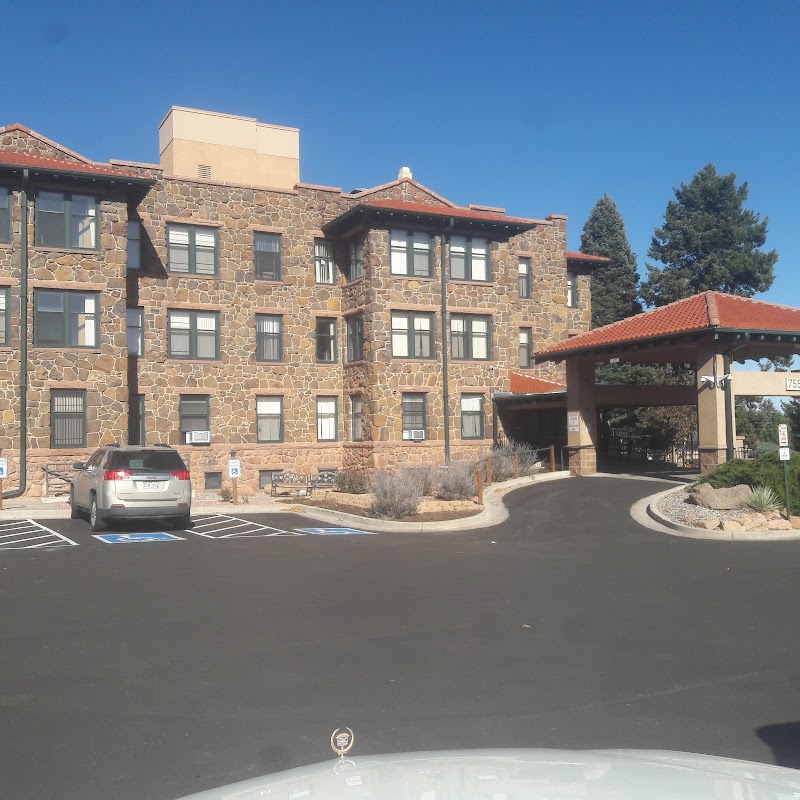
SPRINGS VILLAGE CARE CENTER

110 W VAN BUREN ST, COLORADO SPRINGS, CO 80907 (719) 475-8686
For profit - Limited Liability company 91 Beds STELLAR SENIOR LIVING Data: November 2025
Trust Grade
35/100
#121 of 208 in CO
Last Inspection: May 2025

Inspected within the last 6 months. Data reflects current conditions.

Overview

Springs Village Care Center has received a Trust Grade of F, indicating significant concerns about the quality of care provided. They rank #121 out of 208 nursing homes in Colorado, placing them in the bottom half of facilities in the state, and #13 out of 20 in El Paso County, meaning only a few local options are better. The facility's situation is worsening, with the number of reported issues increasing from 4 in 2024 to 14 in 2025. While staffing is a concern with a 65% turnover rate, much higher than the state average of 49%, their quality measures rating is excellent at 5/5. However, there have been serious incidents, including delays in answering call lights for residents needing assistance and inadequate supervision for a resident at high fall risk, leading to a painful shoulder fracture. These issues highlight both the strengths and significant weaknesses to consider when evaluating this facility for a loved one.

Trust Score
F
35/100
In Colorado
#121/208
Bottom 42%
Safety Record
High Risk
Review needed
Inspections
Getting Worse
4 → 14 violations
Staff Stability
⚠ Watch
65% turnover. Above average. Higher turnover means staff may not know residents' routines.
Penalties
✓ Good
$26,845 in fines. Lower than most Colorado facilities. Relatively clean record.
Skilled Nurses
✓ Good
Each resident gets 42 minutes of Registered Nurse (RN) attention daily — more than average for Colorado. RNs are trained to catch health problems early.
Violations
⚠ Watch
41 deficiencies on record. Higher than average. Multiple issues found across inspections.
★★★☆☆
3.0
Overall Rating
★★☆☆☆
2.0
Staff Levels
★★★★★
5.0
Care Quality
★★☆☆☆
2.0
Inspection Score
Stable
2024: 4 issues
2025: 14 issues

The Good

  • 5-Star Quality Measures · Strong clinical quality outcomes
  • Full Sprinkler Coverage · Fire safety systems throughout facility
  • No fines on record

Facility shows strength in quality measures, fire safety.

The Bad

3-Star Overall Rating

Near Colorado average (3.1)

Meets federal standards, typical of most facilities

Staff Turnover: 65%

19pts above Colorado avg (46%)

Frequent staff changes - ask about care continuity

Federal Fines: $26,845

Below median ($33,413)

Moderate penalties - review what triggered them

Chain: STELLAR SENIOR LIVING

Part of a multi-facility chain

Ask about local staffing decisions and management

Staff turnover is elevated (65%)

17 points above Colorado average of 48%

The Ugly 41 deficiencies on record

3 actual harm
May 2025 9 deficiencies
CONCERN (D)

Potential for Harm - no one hurt, but risky conditions existed

Deficiency F0552 (Tag F0552)

Could have caused harm · This affected 1 resident

**NOTE- TERMS IN BRACKETS HAVE BEEN EDITED TO PROTECT CONFIDENTIALITY** Based on record review and interviews, the facility failed to ensure the resident's right to be informed of, and participate in ...

Read full inspector narrative →
**NOTE- TERMS IN BRACKETS HAVE BEEN EDITED TO PROTECT CONFIDENTIALITY** Based on record review and interviews, the facility failed to ensure the resident's right to be informed of, and participate in his or her treatment for one (#77) of two residents out of 32 sample residents reviewed for the right to be informed and make treatment decisions. Specifically, the facility failed to inform Resident #77 and/or her legal representative of her laboratory (lab) bloodwork values before being sent to the hospital for a transfusion or her lab values after returning from the hospital. Findings include: I. Facility policy and procedure The Resident Rights policy, undated, was provided by the nursing home administrator (NHA) on 5/13/25 at 2:29 p.m. It read in pertinent part, Federal and state laws guarantee certain basic rights to all residents of this facility. These rights include the resident's right to be notified of his or her medical condition and of any changes in his or her condition, be informed of, and participate in, his or her care planning and treatment and access personal and medical records pertaining to him or herself. Copies of our resident rights are posted throughout the facility, and a copy is provided to each employee, provider and contracted staff member. In addition, staff will have appropriate in-service training on resident rights prior to having direct-care responsibilities for residents. II. Resident #77 A. Resident status Resident #77, age less than 65, was admitted on [DATE]. According to the May 2025 computerized physician orders (CPO), diagnoses included anemia, generalized weakness, chronic heart failure and chronic respiratory failure. According to the 4/4/25 minimum data set (MDS) assessment, the resident was cognitively intact with a brief interview for mental status (BIMS) score of 15 out of 15. She required substantial/maximal assistance with chair/bed and bed/chair transfers. B. Resident interview Resident #77 was interviewed on 5/12/25 at 3:59 p.m. Resident #77 said she was sent to the hospital for a blood transfusion in March 2025. Resident #77 said she asked the nurses about her bloodwork values after she returned from the hospital, but she did not get an answer. Resident #77 said she still did not know what her blood levels were because staff did not tell her. C. Record review The 3/21/25 at 12:15 p.m. nursing progress note indicated Resident #77's labs came back and her hemoglobin (HGB - an iron-rich protein within red blood cells that is essential for transporting oxygen throughout the body) level was 5.7 grams per deciliter (g/dl). The nurse practitioner (NP) ordered a stat (immediate) CBC (complete blood count) to be drawn for the resident. Nursing staff was to call the results of the CBC into the resident's physician for further orders. The resident's previous HGB was 5.7 g/dl. The 3/21/25 at 11:44 p.m. nursing progress note documented the on-call physician was notified at 9:00 pm with an update regarding Resident #77's stat CBC results. The resident's HGB level was 6.4 g/dl and the physician ordered for the resident to be sent to the emergency room. The progress note indicated the director of nursing (DON) and the resident's family were notified of the transfer. -However, the progress note did not indicate the resident or the resident's representative were informed of the resident's HGB level or the specific reason for the transfer to the hospital. Review of Resident #77's May 2025 CPO revealed the following physician's orders related to laboratory blood work: Laboratory blood work CBC with differential, Vitamin B12 level for diagnosis of anemia, depression and paresthesias, ordered 5/2/25. -There was no documentation in the resident's EMR to indicate the resident or the resident's representative was notified of her most recent HGB lab values or if the resident's lab values would be retaken. The 5/1/25 at 11:36 p.m. physician's progress note documented the physician discussed Resident #77's recent hospital stay with her and informed her that a source of bleeding was not identified. The physician documented she did not review the resident's hospital records, but it did seem as if no source of bleeding was located and the resident was scheduled for a colonoscopy in one month. III. Staff interviews Licensed practical nurse (LPN) #5 was interviewed on 5/15/25 at 1:13 p.m. LPN #5 said if a resident was having a change of condition, such as critically low lab values, it was the nursing staff's responsibility to inform the resident of their test results and plan of care right away because it was their right to be informed. The DON was interviewed on 5/15/25 at 1:44 p.m. The DON said nursing staff was to inform residents of any change of condition. She said this is important to do because the facility wanted the residents to stay informed of their current medical status. The DON said she was aware of Resident #77's transfer to the emergency room for a blood transfusion and she made sure to check in with the resident when she returned to see how she was doing and if she had any questions. The DON said she did not remember specifically discussing Resident #77's HGB levels with the resident. -There was no documentation to indicate the DON or nursing staff had informed the resident of her HGB levels (see record review above).
CONCERN (D)

Potential for Harm - no one hurt, but risky conditions existed

Deficiency F0554 (Tag F0554)

Could have caused harm · This affected 1 resident

**NOTE- TERMS IN BRACKETS HAVE BEEN EDITED TO PROTECT CONFIDENTIALITY** Based on observations, staff interviews, and record review, the facility failed to ensure the self-administration of medications...

Read full inspector narrative →
**NOTE- TERMS IN BRACKETS HAVE BEEN EDITED TO PROTECT CONFIDENTIALITY** Based on observations, staff interviews, and record review, the facility failed to ensure the self-administration of medications was clinically appropriate for one (#46) of one resident out of 32 sample residents. Specifically, the facility failed to ensure Resident #46 was assessed for self-administration of Visine eye drops. Findings include: I. Facility policy and procedure The Self Administration of Medication policy, revised February 2021, was provided by the nursing home administrator (NHA) on 5/15/25 at 1:45 p.m. It read in pertinent part, Residents have the right to self-medication administrations if the interdisciplinary team (IDT) has determined that it is clinically appropriate and safe for the resident to do so. As part of the comprehensive assessment, the IDT assesses each resident's cognitive and physical abilities to determine whether self-administering medications is safe and clinically appropriate for the resident. The IDT considers several factors when determining resident self-medication administration. The resident must be able to safely and securely store the medication. Self-administered medications are stored in a safe and secure place that is not accessible to other residents. If safe storage is not possible in the resident's room, the medications of residents permitted to self-administer are stored on a central medication cart or in the medication room. A licensed nurse transfers the unopened medication to the resident when the resident requests it. Any medications found at the bedside that are not authorized for self-administration are turned over to the nurse in charge for return to the family or responsible party. II. Resident #46 A. Resident status Resident #46, age greater than 65, was admitted on [DATE]. According to the May 2025 computerized physician orders (CPO), diagnoses included bipolar disorder, unspecified dementia, anxiety disorder and unspecified symptoms and signs involving cognitive function and awareness. The 2/13/25 minimum data set (MDS) assessment revealed Resident #46 was cognitively intact with a brief interview for mental status (BIMS) score of 15 out of 15. She was independent with mobility, dressing and eating. B. Observation and resident interview Resident #46 was interviewed on 5/13/25 at 1:18 pm. She was sitting on her bed in her room. There were three bottles of Visine eye drops lying on the resident's bedside table. The resident said she used the eye drops by herself, so the facility let her keep them by her bedside. Resident #46 said she did not know how often to use the eyedrops, however, she said she used the eye drops every day. C. Record review A review of the May 2025 CPO revealed the following physician's order: Visine dry eye relief ophthalmic solution. Instill one drop in both eyes every two hours as needed for dry eyes, ordered 3/19/25. -The physician's order did not indicate Resident #46 was approved to self-administer the eye drops. Review of Resident #46's May 2025 medication administration record (MAR), from 5/1/25 to 5/11/25, revealed no documentation that the Visine eyedrops had been administered to the resident. -However, Resident #46 said she used the Visine eye drops every day (see resident interview above). The cognition care plan, initiated 2/10/25 and revised 2/22/25, revealed Resident #46 had an impaired thought process related to dementia. Interventions included administering medication as ordered, reviewing medications and recording possible causes of cognitive deficit. -A review of Resident #46's electronic medical record (EMR) did not reveal an assessment for the self-administration of Visine eye drops had been completed for the resident. III. Staff interviews Registered nurse (RN) #4 was interviewed on 5/13/25 at 1:18 p.m. RN #4 said Resident #46 had a diagnosis of dementia and she did not think the resident could remember the number of times she used the Visine eye drops. RN #4 said Visine eye drops were medication and needed a physician's order before administering them. RN #4 said Resident #4 was capable of self-administering the eye drops and the eye drops were kept on top of the resident's bedside dresser unsecured. -However, there was no assessment in the resident's EMR to indicate she was safe to administer the Visine eye drops (see record review above). The director of nursing (DON) was interviewed on 5/15/25 at 1:39 p.m. The DON said Visine eye drops were medication and needed to be securely stored. She said before a resident could begin self-medication administration, the resident should be properly assessed and a physician's order obtained for the self-administration of the medications. The DON said she did not know why Resident #46, who had a diagnosis of dementia, would be allowed to administer her medication without being properly assessed. The DON said Resident #46 was assessed for self-administration of the Visine eye drops and a new physician's order was obtained for the resident to self-administer the medication, during the survey. She said the nursing staff was being re-educated to ensure all residents on self-medication administration were properly assessed and a physician's order was obtained before the residents were allowed to self-administer medications. E. Facility follow-up On 5/13/25 at 7:00 p.m. (during the survey), the facility obtained a physician's order for Resident #46 to self-administer her Visine eye drops. A self-medication evaluation was completed for the resident.
CONCERN (D)

Potential for Harm - no one hurt, but risky conditions existed

Deficiency F0605 (Tag F0605)

Could have caused harm · This affected 1 resident

**NOTE- TERMS IN BRACKETS HAVE BEEN EDITED TO PROTECT CONFIDENTIALITY** Based on record review and interviews, the facility failed to ensure three (#44, #45 and #41) of four residents were free from c...

Read full inspector narrative →
**NOTE- TERMS IN BRACKETS HAVE BEEN EDITED TO PROTECT CONFIDENTIALITY** Based on record review and interviews, the facility failed to ensure three (#44, #45 and #41) of four residents were free from chemical restraint out of 32 sample residents. Specifically, the facility failed to: -Document resident specific care approaches, to include medication specific target behaviors and person-centered interventions for Resident #44, Resident #45 and Resident #41's psychotropic medications; and, -Document consistent behaviors or a physician's rationale for Resident #44, Resident #45 and Resident #41 to justify the continued use of psychotropic medications. Findings include: I. Facility policy and procedure The Antipsychotic Medication Use policy, revised July 2022, was provided by the nursing home administrator (NHA) on 5/13/25 at 12:23 p.m. It read in pertinent part, Diagnosis alone does not warrant the use of antipsychotics. Antipsychotic medications will generally only be considered if the following conditions are met: behavior interventions have been attempted and included in the plan of care. For enduring psychiatric conditions, antipsychotic medications will not be used unless the behavior symptoms are not sufficiently relieved by non-pharmological interventions. The staff will observe, document, and report to the attending physician information regarding the effectiveness of any interventions, including antipsychotic medications. The Behavioral Assessment, Interventions, and Monitoring policy, revised March 2019, was provided by the NHA on 5/13/25 at 12:23 p.m. It read in pertinent part, Interventions will be individualized and part of an overall care environment that supports physical, functional, and psychosocial needs, and strives to understand, prevent, or relieve the resident's distress or loss of abilities. Interventions and approaches will be based on a detailed assessment of physical, psychological, and behavioral symptoms and their underlying causes, as well as the potential situational and environmental reasons for the behaviors. The care plan will include at minimum, targeted and individualized interventions for the behavioral/psychosocial symptoms, the rationale for the interventions and approaches, specific and measurable goals for the targeted behaviors, and how the staff will monitor the effectiveness of the interventions. Non-pharmological approaches will be utilized to the extent possible to avoid and reduce the use of antipsychotic medications to manage behavioral symptoms. II. Resident #44 A. Resident status Resident #44, age less than 65, was admitted on [DATE]. According to the May 2025 computerized physician orders (CPO), diagnoses included disorganized schizophrenia. The 2/10/25 minimum data set (MDS) assessment documented the resident was cognitively intact with a brief interview of mental status (BIMS) score of 15 out of 15. Resident #44 required one-person staff assistance with toileting, bathing and personal hygiene. He ambulated independently. The MDS assessment indicated the resident did not exhibit hallucinations or delusions, did not refuse care and did not have physically or verbally abusive behaviors during the assessment look back period. B. Record review The mood care plan, revised 4/29/25, revealed Resident #44 had alterations in mood related to disorganized schizophrenia. He preferred to be alone and not interact with others. The behaviors identified to monitor included hallucinations, delusions, pacing and refusing care. Resident #44 frequently refused showers, changing his clothes, or allowing the nurses to check his legs or feet. He suffered from a paranoid delusion his feet would fall off or he would die if he removed his socks. Interventions included to identify strengths and use positive coping skills to reinforce these, encourage and reassure, identify approaches that contributed to behaviors, attempt non-pharmacological approaches to redirect, offer praise for compliance with care and encourage Resident #44 to express his feelings. -The care plan failed to indicate what person-centered approaches were effective in redirecting the resident. Review of Resident #44's May 2025 CPO revealed the following physician's orders: Monitor behaviors for antipsychotic use (Latuda, Zyprexa, Clozapine). Behaviors: hallucinations, delusions, and pacing. Interventions: redirect, one-on-one, see nurses notes, activity, return to room, toilet, offer food/fluids, change position, adjust room temperature, backrub, or medication- ordered on 8/12/24. Clozapine (antipsychotic medication) 100 milligrams (mg). Give 100 mg by mouth every evening with 400 mg dose to equal 500 mg for schizophrenia- ordered 2/17/25. Clozapine 200 mg. Give 400 mg by mouth every evening for schizophrenia, ordered 2/17/25. Latuda (antipsychotic medication) 120 mg. Give 120 mg by mouth every evening for disorganized schizophrenia, ordered 3/17/25. Behavior monitoring for care refusals that are detrimental to resident's health. Interventions: redirect, one-on-one, see nurses notes, activity, return to room, toilet, offer food/fluids, change position, adjust room temperature, backrub, or medication, ordered 3/25/25. Behavior monitoring for refusal of lotion to bilateral lower extremities (legs and feet). Interventions: redirect, one-on-one, see nurses notes, activity, return to room, toilet, offer food/fluids, change position, adjust room temperature, backrub, or medication, ordered 3/25/25. Behavior monitoring for refusal to remove socks. Interventions: redirect, one-on-one, see nurses notes, activity, return to room, toilet, offer food/fluids, change position, adjust room temperature, backrub, or medication, ordered 3/25/25. Behavior monitoring for refusal to change clothes. Interventions: redirect, one-on-one, see nurses notes, activity, return to room, toilet, offer food/fluids, change position, adjust room temperature, backrub, or medication, ordered 3/25/25. Behavior monitoring for refusal to take showers. Interventions: redirect, one-on-one, see nurses notes, activity, return to room, toilet, offer food/fluids, change position, adjust room temperature, backrub, or medication, ordered 3/25/25. -The non-pharmological interventions documented for all six of Resident #44's behavior monitoring physician's orders indicated the same identical, non person-centered non-pharmological interventions were to be used for every behavior, regardless of the behavior. Resident #44's Level II preadmission screening and resident review (PASRR) evaluation for mental illness and/or intellectual disabilities, dated 8/16/23, revealed Resident #44 had a history of psychiatric symptoms at a young age, isolating himself, self harming behaviors (cutting himself, stabbing himself), exposure to violence in the home, hallucinations, delusions, repeated psychiatric hospitalizations, and stabbing his mother. The evaluation revealed symptoms of decompensation to his mental health included increased smoking, sleep disturbances, and distractions by internal stimuli (delusions, paranoia). The resident expressed during the evaluation that he enjoyed watching movies, smoking, going out to dinner and listening to music. -The resident's specific behaviors, symptoms of decompensation, and non-pharmological interests identified in the Level II PASRR were not incorporated in Resident #44's behavior monitoring physician's orders or the resident's care plan (see physician's orders and care plan above). Review of Resident #44's medication administration records (MAR) and treatment admission records (TAR) from 2/1/25 to 5/14/25 revealed the following: The February 2025 MAR/TAR, from 2/1/25 to 2/28/25, revealed there was no documentation to indicate Resident #44 exhibited behaviors during the month. The March 2025 MAR/TAR, from 3/1/25 to 3/31/25, revealed there was no documentation of behaviors of refusals detrimental to Resident #44's health, or refusals of showers, applying lotion, changing his clothes or changing his socks during the month. The resident exhibited two behaviors of hallucinations on 3/23/25 with interventions of staff redirection and offering food and fluids documented as being used. The documentation did not indicate if the interventions used on 3/23/25 were effective or not. The April 2025 MAR/TAR, from 4/1/25 to 4/30/25, revealed one behavior of refusals detrimental to Resident #44's health on 4/6/25 with the interventions of staff redirection and other documented as being used. The documentation did not indicate if the interventions used on 4/6/25 were effective or not. There was one behavior of Resident #44 refusing to allow lotion to be applied on 4/6/25 with the interventions of staff redirection and other documented as being used. The documentation did not indicate if the interventions used on 4/6/25 were effective or not There was one behavior of Resident #44 refusing to change his clothes on 4/5/25 and 4/6/25 with interventions of staff redirection and one-on-one documented as being used. The documentation did not indicate if the interventions used on 4/5/25 and 4/6/25 were effective or not. There was one behavior of Resident #44 refusing to change his socks on 4/5/25 and 4/6/25 with interventions of staff redirection and one-on-one documented as being used. The documentation did not indicate if the interventions used on 4/5/25 and 4/6/25 were effective or not. -A review of Resident #44's progress notes for 4/5/25 and 4/6/25 failed to identify what the term other indicated or what resident-specific redirection or one-on-one interventions were attempted when the resident exhibited refusal behaviors on 4/5/25 and 4/6/25. The May 2025 MAR/TAR, from 5/1/25 to 5/14/25, revealed Resident #44 had one behavior of refusing to change his socks on 5/3/25 with interventions of offering an activity and medication documented as being used and marked as effective. There was one behavior of Resident #44 refusing to change his socks on 5/4/25 with interventions of staff redirection and offering to use the toilet documented as being used. The documentation did not indicate if the interventions used on 5/4/25 were effective or not. There was one behavior of Resident #44 refusing to change his clothes with no interventions documented as being attempted on 5/13/25. -A review of the progress notes for 5/3/25 and 5/13/25 failed to identify what resident-specific activities of interest or redirection interventions were attempted when the resident exhibited refusal behaviors on 5/3/25 and 5/13/25. Review of the facility's quarterly psychotropic meeting minutes revealed Resident #44 was reviewed by the interdisciplinary team (IDT) on 2/17/25. The meeting minutes revealed Resident #44 had not had any behaviors within the three month look back period. -The 2/17/25 psychotropic meeting note did not indicate the facility had concerns regarding any behaviors for the resident and there was no documentation to indicate the justification for the continued use of the resident's antipsychotic medications. Review of Resident #44's electronic medical record (EMR) from 2/1/25 to 5/14/25 revealed the following progress notes: Between 2/1/25 and 2/28/25, the progress notes documented Resident #44 had two refusals for care (the notes did not specify what care was refused), one refusal to take a shower and change his clothes and one refusal of a physician ordered test. -The progress notes did not indicate any non-pharmological interventions were attempted for the refusals. -There was no documentation to indicate the resident was experiencing hallucinations, delusions, paranoia or sleep disturbances (see care plan and Level II PASRR above). Between 3/1/25 and 3/31/25, the progress notes documented Resident #44 had seven refusals to take a shower, one refusal to change his clothes, six refusals to allow skin checks, three refusals to allow the nurse to apply medicated lotion and one refusal to allow the nurse to take his blood pressure. -The progress notes did not indicate any non-pharmological interventions were attempted for the refusals. -There was no documentation to indicate the resident was experiencing hallucinations, delusions, paranoia or sleep disturbances. Between 4/1/25 and 4/30/25, the progress notes documented Resident #44 had seven refusals to allow the nurse to apply medicated lotion. -The progress notes did not indicate any non-pharmological interventions were attempted for the refusals. -There was no documentation to indicate the resident was experiencing hallucinations, delusions, paranoia or sleep disturbances. Between 5/1/25 and 5/14/25, the progress notes documented Resident #44 had three refusals to allow the nurse to apply medicated lotion and one refusal to take a shower. -The progress notes did not indicate any non-pharmological interventions were attempted for the refusals. -There was no documentation to indicate the resident was having hallucinations, delusions, paranoia or sleep disturbances. -Review of Resident #44's EMR did not reveal documentation of a physician's rationale to justify the continued use of the resident's antipsychotic medications. III. Resident #45 A. Resident status Resident #45, age [AGE], was admitted on [DATE]. According to the May 2025 CPO, diagnoses included Parkinson's disease, anxiety, obsessive compulsive disorder (OCD) and depression. The 4/16/25 MDS assessment documented the resident was cognitively intact with a BIMS score of 15 out of 15. Resident #45 required one-person staff assistance with toileting and bathing. He ambulated using a walker. The MDS assessment indicated the resident did not exhibit hallucinations or delusions, did not refuse care and did not have physically or verbally abusive behaviors within the assessment look back period. B. Resident interview Resident #45 was interviewed on 5/13/25 at 9:43 a.m. Resident #45 said he felt anxious sometimes over things he could not control but what helped him was to read, walk around the facility and leave his room to try to socialize in activities with staff and other residents. C. Record review The mood care plan, revised 4/7/25, revealed Resident #45 had a diagnosis of depression exhibited by increased sleep, decreased appetite and a fixation on events. He had a diagnosis of OCD, moderate. Interventions included to monitor for changes in mood and offer one-on-one interaction. The anxiety care plan, revised 4/7/25, revealed Resident #45 had a diagnosis of anxiety manifesting as verbalizations of anxiety, pacing and weighing himself after meals. Interventions included to assist him in problem solving abilities and logical strategies he could use when experiencing anxiety, encourage relaxation techniques, provide a quiet environment and reassurance. Review of Resident #45's May 2025 CPO revealed the following physician's orders: Prozac (antidepressant medication) 40 mg. Give two tablets a day by mouth for OCD, ordered 4/19/22. Abilify (antipsychotic medication) 15 mg. Give one tablet in the morning for OCD, ordered 8/21/24. Ativan (antianxiety medication) 0.25 mg. Give 0.25 mg one time a day in the afternoon for anxiety, ordered 12/26/24. Ativan 0.5 mg. Give 0.5 mg in the morning and 0.5 mg in the evening for anxiety,ordered 12/26/24. Behavior monitoring for weighing himself after meals and pacing. Document yes or no if the behavior occurred, ordered 8/7/24. Behavior monitoring for verbalizations of anxiety and pacing. Document yes or no if the behavior occurred, ordered 8/7/24. Behavior monitoring for increased sleep, decreased appetite and fixation on events. Document yes or no if the behavior occurred, ordered 8/7/24. -There were no non-pharmological interventions indicated on the behavior monitoring physician's orders. Resident #45's Level II PASRR evaluation, dated 11/26/23, revealed the resident had behaviors of avoidance, excessive handwashing, counting and checking things related to his diagnosis of OCD. The resident expressed during the evaluation that he enjoyed going to weekly Catholic mass, bible study, reading, watching television and playing games. The evaluation revealed if unable to follow rituals, the resident could feel anxious and stressed. -The resident's specific behaviors and non-pharmological interests identified in the Level II PASRR were not incorporated in Resident #45's behavior monitoring physician's orders or the resident's care plan (see physician's orders and care plan above). Review of Resident #45's MAR and TAR from 2/1/25 to 5/14/25 revealed the following: The February 2025 MAR/TAR, from 2/1/25 to 2/28/25, revealed there was no documentation to indicate Resident #45 exhibited behaviors during the month. The March 2025 MAR/TAR, from 3/1/25 to 3/31/25, revealed Resident #45 experienced one episode of increased sleep on 3/22/25 with no non-pharmological interventions being attempted. -There was no documentation to indicate Resident #45 exhibited any other behaviors during the month. The April 2025 MAR/TAR, from 4/1/25 to 4/30/25, revealed there was no documentation to indicate Resident #45 exhibited behaviors during the month. The May 2025 MAR/TAR, from 5/1/25 to 5/14/25, revealed Resident #45 experienced one episode of increased sleep on 5/3/25 with no non-pharmological interventions being attempted. -There was no documentation to indicate Resident #45 exhibited any other behaviors during the month. Review of the facility's quarterly psychotropic meeting minutes revealed Resident #45 was reviewed by the IDT on 3/17/25. The meeting minutes revealed Resident #45 had not had any behaviors within the three month look back period. -The 3/17/25 psychotropic meeting note did not indicate the facility had concerns regarding any behaviors for the resident and there was no documentation to indicate the justification for the continued use of the resident's antidepressant, antipsychotic or anti-anxiety medications. Review of Resident #45's EMR from 2/1/25 to 5/14/25 revealed two behavior progress notes, one dated 4/5/25 and the other dated 5/3/25. -Both notes revealed a behavior had occurred for Resident #45, however, neither note indicated what the behavior was or if a non-pharmological intervention had been attempted. -Review of Resident #45's EMR did not reveal documentation of a physician's rationale to justify the continued use of the resident's antidepressant, antipsychotic or anti-anxiety medications. IV. Resident #41 A. Resident status Resident #41, age less than 65, was admitted on [DATE]. According to the May 2025 CPO, diagnoses included childhood onset conduct disorder, unspecified intellectual disability, major depressive disorder and a traumatic brain injury (TBI). The 3/17/25 MDS assessment documented the resident was cognitively intact with a BIMS score of 13 out of 15. Resident #41 required one-person staff assistance with bathing. She ambulated using a walker. The MDS assessment indicated the resident had daily behaviors of wandering during the assessment look back period. B. Resident interview Resident #41 was interviewed on 5/13/25 at 9:17 a.m. Resident #41 said she was very unhappy living at the facility and she tried to occupy herself so she would not become depressed. Resident #41 said her family had placed her in the facility but she would like to go out on more activities and be part of a day program in the community. Resident #41 said she expressed her feelings to the staff and the staff would listen but she was unable to say what specifically the staff did that helped when she was feeling angry or sad about her placement in the facility. C. Record review The mood care plan, revised 4/7/25, revealed Resident #41 had a diagnosis of depression, TBI, unspecified intellectual disability and childhood onset conduct disorder. Depressive indicators include increased sleep, decreased appetite and verbalizations of depression. Interventions included to assist with positive coping skills, offer reassurance, encourage her to express her feelings and identify approaches contributing to behaviors. Review of Resident #41's May 2025 CPO revealed the following physician's orders: Zoloft (antidepressant medication) 100 mg. Give 100 mg one time a day for depression, ordered 12/14/24. Behavior monitoring for increased sleep, decreased appetite and decrease in complaints of depression. Document yes or no if the behavior occurred, ordered 9/13/24. -There were no non-pharmological interventions indicated on the behavior monitoring physician's order. Review of Resident #41's MAR and TAR from 2/1/25 to 5/14/25 failed to reveal any documentation to indicate the resident exhibited behaviors during that time period. Review of the facility's quarterly psychotropic meeting minutes revealed Resident #41 was reviewed by the IDT on 2/17/25. The meeting minutes revealed Resident #41 had not had any behaviors within the three month look back period. -The 2/17/25 psychotropic meeting note did not indicate the facility had concerns regarding any behaviors for the resident and there was no documentation to indicate the justification for the continued use of the resident's antidepressant medication. Review of Resident #41's EMR from 2/1/25 to 5/14/25 did not reveal any progress notes to indicate the resident had exhibited any behaviors during that time period. A review of Resident #41's psychiatrist visit notes revealed the last visit note was dated 12/29/24. The psychiatrist documented he had received an e-mail from the facility's social services director (SSD) on 12/13/24 which contained an attachment from an e-mail sent to the SSD by Resident #41's representative. The resident's representative stated in her e-mail to the SSD that Resident #41 had been extremely angry, having outbursts, and uncontrollable temper tantrums. The representative requested a review of Resident #41's medication by the psychiatrist. As a result of this communication, the psychiatrist increased Resident #41's Zoloft from 50 mg daily to 100 mg daily. The psychiatrist documented in his note that he later reviewed the documentation in Resident #41's EMR and found there were no progress notes written by the SSD describing her communications with Resident 41's representative. The psychiatrist documented in his note that he was having concerns regarding the lack of documentation as Resident #41's Zoloft dosage was increased for no apparent reason. The psychiatrist requested documentation that described the communications between the SSD and the resident's representative, as well as expressing the importance of having documentation due to no documented behaviors by staff since 11/26/24. When the psychiatrist met with Resident #41 on 12/29/24, the resident told him her behavioral outbursts were related to agitation towards her representative. The psychiatrist indicated during his visit that the resident did not display any evidence of agitation or anger and appeared no different than any prior visit he had had with her. -However, despite the psychiatrist's documented concerns on 12/29/24, regarding the increase in Zoloft, the medication was not decreased and Resident #41 continued to receive the increased dose of Zoloft (see physician's orders above). V. Staff interviews Certified nurse aide (CNA) #1 was interviewed on 5/13/25 at 3:00 p.m. CNA #1 said Resident #45 did not have any behaviors, he was just particular about how he liked things to be done. CNA #1 said she was not aware of any specific non-pharmological interventions used for Resident #45. She said she did not know Resident #44. She said Resident #41 had behaviors of verbalizing being unhappy and not wanting to live in the facility but CNA #1 said she had a hard time understanding what Resident #41 was saying and was not aware of any interventions to use when Resident #41 was having these verbalizations of depression. CNA #1 said the CNAs documented behaviors on the CNA behavior monitoring task but the behaviors and interventions indicated on the task were generic and the same for all the residents. She said the CNAs could not customize the behaviors observed or interventions tried, and so if there were behaviors observed or intervention tried that were not on the generic list, she would notify the nurse for them to document in the residents' EMR. Licensed practical nurse (LPN) #2 and registered nurse (RN) #2 were interviewed together on 5/13/25 at 3:15 p.m. LPN #2 and RN #2 both said Resident #45 had behaviors of being compulsive and particular in how he wanted things done for him. RN #2 said what interventions worked with Resident #45 were to support him in being independent and accommodate how he wanted things done as much as possible. She said he enjoyed leaving his room, walking around the facility and talking to staff and other residents. RN #2 and LPN #2 both said they were unaware of any behaviors for Resident #44. RN #2 said Resident #41 had behaviors of verbalizations of being unhappy and sad about her placement in the facility. RN #2 said she was not aware of any specific interventions that helped the resident when she was feeling that way. She said the residents' behavior monitoring was in the physician's orders and popped up on the nurses' TAR to complete every shift. RN #2 said the director of nursing (DON) would email the nurses' specific behaviors to monitor for residents because the behaviors and interventions on the physician's orders were generic. CNA #4 was interviewed on 5/14/25 at 8:45 a.m. CNA #4 said Resident #45 did not have any behaviors. CNA #4 said Resident #44 had behaviors of frequently going outside to smoke cigarettes and refusing to perform basic hygiene tasks (changing his socks, clothes or showering). She said he would refuse to clean his own bottom after a bowel movement, claiming he was unable to reach the area even though the staff had tried to provide him encouragement and reassurance he could complete the task independently. She said the non-pharmological interventions indicated for Resident #44 on his behavior monitoring, such as offering to toilet the resident, offering a back-rub and offering activities, were not effective as these interventions would agitate him more if offered. She said she was not aware of any specific interventions that helped with Resident #44 when he was refusing care. CNA #4 said she was not aware of any behaviors for Resident #41. LPN #4 was interviewed on 5/14/25 at 9:00 a.m. LPN #4 said Resident #44 had behaviors of refusing to clean his own bottom after a bowel movement but she was not aware of what interventions the CNAs used with him for this behavior. LPN #4 said many of the non-pharmological interventions on the behavior monitoring physician's orders (offering activities, offering a back rub, offering toileting, repositioning and changing room temperature) for Resident #44 did not apply to him because he was independent and preferred to be alone. LPN #4 said Resident #45 did not have any behaviors and she did not know Resident #41 very well. LPN #3 was interviewed on 5/14/25 at 9:13 a.m. LPN #3 said Resident #44 had behaviors of refusing to change his clothes, socks or take a shower. LPN #3 said the interventions that worked were for staff to allow him to take the lead during personal cares, such as asking him what personal care he wanted to do first, what he needed from the staff and continuously providing positive reinforcement throughout the process. She said there were some staff he would perform these tasks for because the staff allowed him to direct the care and he felt comfortable with this approach. LPN #3 said Resident #45 had behaviors of weighing himself daily and pacing. She said he was concerned with his weight loss and wanted to gain weight and this was why he compulsively weighed himself. LPN #3 said when he started pacing, interventions that worked for him were to redirect him to an activity of interest, especially when there was an activity involving watching movies. The SSD and the social services consultant (SSC) were interviewed together on 5/14/25 at 2:07 p.m. The SSD said when a resident began taking a psychotropic medication, the DON and the SSD put together a behavior monitoring physician's order. She said the behaviors included on the order came from a list of standard behaviors that were associated with the specific drug classification, such as hallucinations for antipsychotic medications. The SSD said once the facility got to know the resident, the behavior monitoring physician's order would be modified in order to make it more resident-specific and personalized. The SSD said the purpose of monitoring residents' behaviors was to determine the efficacy of the psychoactive medication and to ensure there were non-pharmological interventions being tried and the facility was not solely relying on the psychoactive medications to help with decreasing the residents' behaviors. The SSD said she gathered information from the behavior monitoring documentation in the residents' TARs and progress notes before the monthly psychotropic medication meetings. She said she did not look at the CNA behavior monitoring tasks or interview the CNAs for the collection of information for the psychotropic medication meetings. The SSD said if a resident did not have any documented behaviors for three months, the medication associated with those behaviors should be reduced or discontinued. The SSD said she reviewed the residents' progress notes and the TARs for behaviors to discuss in the psychotropic medication meetings, but she said she had not noticed that the behavior monitoring physician's orders for Resident #44 had the same non-pharmological interventions or that Resident #41 and Resident #45 had no non-pharmological interventions indicated on their behavior monitoring physician's orders. She said she had not noticed that the TARs for Resident #45 or Resident #41 documented the residents had exhibited minimal or no behaviors for February 2025, March 2025, April 2025 and May 2025. She said she was unaware of Resident #44's history of self harm and harming others that was documented in his Level II PASRR, but she acknowledged the behaviors should be included in his care plan and on his behavior monitoring. She said she did not include behaviors identified in a resident's Level II PASRR on the behavior monitoring because the DON primarily managed the behavior monitoring process. The DON was interviewed on 5/14/25 at 3:06 p.m. The DON said a behavior monitoring physician's order was entered when a resident was admitted to the facility on psychoactive medications or had a change in psychoactive medications. The DON said the behaviors indicated on the physician's order came from the resident's history and a standard list of behaviors associated with the specific medication drug classification. She said once the facility became more familiar with a resident,, the behavior monitoring physician's order would be modified to be more personalized and resident specific. The DON said for the psychotropic medication meetings, the SSD brought a spreadsheet of the residents' behavior information she had compiled for the three month look back period. The DON said she assumed the SSD collected this information from the residents' TARs and progress notes. She said the behavior monitoring information was an important part of the psychotropic medication meetings because it helped the physicians make decisions about residents' psychotropic mediation changes, and if the information was not accurate, it would affect making informed decisions about the effectiveness of medications. The DON said the facility's medical director (MD) had explained to her the importa[TRUNCATED]
CONCERN (D)

Potential for Harm - no one hurt, but risky conditions existed

Deficiency F0676 (Tag F0676)

Could have caused harm · This affected 1 resident

**NOTE- TERMS IN BRACKETS HAVE BEEN EDITED TO PROTECT CONFIDENTIALITY** Based on observations, record review and interviews, the facility failed to provide provide assistance with activities of daily ...

Read full inspector narrative →
**NOTE- TERMS IN BRACKETS HAVE BEEN EDITED TO PROTECT CONFIDENTIALITY** Based on observations, record review and interviews, the facility failed to provide provide assistance with activities of daily living (ADLs) to ensure the highest practicable quality of life for one (#45) of two residents reviewed out of 32 sample residents. Specifically, the facility failed to provide the necessary assistance for Resident #45, who required physical assistance with meals due to tremors. Findings include: I. Facility policy and procedure The Activities of Daily Living (ADL) Support policy, revised March 2018, was provided by the nursing home administrator (NHA) on 5/13/25 at 12:23 p.m. It read in pertinent part, Residents will be provided with care, treatment, and services as appropriate to maintain or improve their ability to carry out activities of daily living (ADL). The existence of a clinical diagnosis or condition does not alone justify a decline in a resident's ability to perform ADLs. Interventions to improve or minimize a resident's functional abilities will be in accordance with the resident's assessed needs, preferences, stated goals, and recognize standards of practice. The resident's response to interventions will be monitored, evaluated, and revised as appropriate. II. Resident #45 A. Resident status Resident #45, age [AGE], was admitted on [DATE]. According to the May 2025 computerized physician orders (CPO), diagnoses included Parkinson's disease (a disease that causes involuntary movements), anxiety, obsessive compulsive disorder (OCD) and depression. The 4/16/25 minimum data set (MDS) assessment documented the resident was cognitively intact with a brief interview for mental status (BIMS) score of 15 out of 15. Resident #45 required one-person staff assistance with toileting and bathing. The MDS assessment indicated the resident was independent with eating. -However, observations revealed Resident #45 needed assistance with meals (see observations below). B. Resident interview Resident #45 was interviewed on 5/13/25 at 9:43 a.m. He said he was supposed to get help with eating because of his tremors. He said he only received help if he asked for it and did not always get help even when he asked. Resident #45 said he had weighted utensils to assist with eating, but the utensils were not very helpful when his tremors were very bad. Resident #45 said the lunch meal on 5/12/25 when his tablemate helped cut his food for him was not an unusual occurrence and he often had a difficult time getting the staff's attention for assistance (see observations below). C. Observations During a continuous observation on 5/12/25, beginning at 12:05 p.m. and ending at 1:00 p.m., the following was observed in the main dining room: At 12:10 p.m. Resident #45 was served his meal, which consisted of navy bean soup, teriyaki chicken, fried rice, vegetable blend and a bread roll. Resident #45 was provided with built-up utensils (foam handled silverware). Resident #45 attempted to cut his chicken with his fork and knife. He was having difficulty cutting his chicken due to his hands shaking continuously throughout the process of cutting. Resident #45 attempted to get the attention of two unidentified staff members. The first attempt he tried to wave down an unidentified staff member walking by serving meal trays and the second attempt he called out to an unidentified certified nurse aide (CNA) who told him she would return to help him. The unidentified CNA did not return to assist him. At 12:30 p.m. Resident #45 continued to try to cut his chicken. The residents tremors were worsening At 12:35 p.m. another resident sitting next to Resident #45 cut up his chicken for him. Resident #45 was then able to eat his chicken. During a continuous observation on 5/13/25, beginning at 12:00 p.m. and ending at 1:11 p.m., the following was observed in the main dining room: At 12:10 p.m. Resident #45 was provided juice in a regular glass, which he struggled to prevent from spilling when he would try to take a drink due to his tremors, he was able to drink some of his supplement because it had a straw and was in a carton. At 12:19 p.m., Resident #45 was served his meal, which consisted of spaghetti with three meatballs and a garlic bread. Resident #45 was provided with built up utensils and attempted to use his fork to cut one of his meatballs. He kept losing the grip on his fork due to continuous tremors in his hands. From 12:19 p.m. to 12:41 p.m., Resident #45 attempted three separate times to cut his meatballs without success. After being unable to cut the meatballs, he would finally put the entire meatball into his mouth. When Resident #45 attempted to eat the spaghetti noodles, he lowered his face very close to the plate and used his fork to push the noodles into his mouth. Resident #45 was unable to bring his fork to his mouth without the spaghetti falling off of the fork. At 12:41 p.m. Resident #45's tremors became more severe and he began to struggle to push the spaghetti with his fork into his mouth, losing amounts of spaghetti in the process. When this would occur, Resident #45 would attempt to use his other hand to push the spaghetti into his mouth or prevent the spaghetti from falling out of his mouth. At 1:15 p.m., Resident #45 had finished his meal, eating approximately 75% and only drinking approximately 50% of his beverage. D. Record review The nutrition care plan, revised 5/8/25, revealed Resident #45 had a diagnosis of Parkinson's disease which put him at risk for a decreased ability to maintain nutritional status. The care plan documented the resident had experienced unplanned weight loss. Interventions, revised 5/8/25, included providing supplements as ordered, serving the resident's diet as ordered, registered dietitian (RD) to evaluate and make diet recommendations and continuing to provide a regular diet and fortified foods. -The care plan did not indicate the resident needed assistance with cutting up his meals. An interdisciplinary team (IDT) weight variance note, dated 12/20/24, revealed Resident #45 had an average intake amount of 60%. Potential contributing factors included rigid tremors. The root cause analysis determined the likely cause of weight loss to be Resident #45's tremors and not eating his entire meal. III. Staff interviews CNA #1 was interviewed on 5/13/25 at 3:00 p.m. CNA #1 said Resident #45 only needed staff to assist with cutting his food for him when he asked. -However, observations revealed the staff did not assist Resident #45 with cutting up his food (see observations above). Registered nurse (RN) #2 was interviewed on 5/13/25 at 3:15 p.m. RN #2 said Resident #45 liked to attempt to do things for himself and if he asked the staff for assistance with something, that meant he had already tried and failed several times to do it on his own. She said he would allow the staff to assist him with things like cutting his food, if the staff were discreet about providing him assistance. Licensed practical nurse (LPN) #3 was interviewed on 5/14/25 at 9:13 a.m. LPN #3 said Resident #45 did need assistance from staff with cutting his food up sometimes due to his tremors and would ask staff for help. The director of rehabilitation (DOR) was interviewed on 5/14/25 at 11:45 a.m. The DOR said Resident #45 had not worked with therapy since October of 2024, which was for shoulder pain. The DOR said the nurses or the director of nursing (DON) would request an order from the physician for therapy to do an evaluation for residents identified as potentially needing additional assisted devices or staff assistance with eating, however, she had not received a referral for Resident #45. The DON was interviewed on 5/14/25 at 12:00 p.m. The DON said she had observed Resident #45 eating and it took him over an hour to eat his meals because it required a lot of energy for him to concentrate on the task of eating due to his tremors. She said since it took so long for him to eat he would not request additional food if the task of eating was exhausting. The registered dietitian (RD) was interviewed on 5/14/25 at 12:29 p.m. The RD said she had never observed Resident #45 eating to see if there were any challenges with intake. She said she thought the staff assisted him with cutting up his food when he asked. She said she had not considered adding cut up meals to his diet order so he would not have to ask the staff. The RD said Resident #45 was determined to stay as independent as possible and had refused feeding assistance but she had never offered to him to have his food precut as a means to ensure eating was easier and then wouldn't require him to exert so much energy.
CONCERN (D)

Potential for Harm - no one hurt, but risky conditions existed

Accident Prevention (Tag F0689)

Could have caused harm · This affected 1 resident

**NOTE- TERMS IN BRACKETS HAVE BEEN EDITED TO PROTECT CONFIDENTIALITY** Based on observations, record review, and interviews, the facility failed to ensure an environment free from risk of accident an...

Read full inspector narrative →
**NOTE- TERMS IN BRACKETS HAVE BEEN EDITED TO PROTECT CONFIDENTIALITY** Based on observations, record review, and interviews, the facility failed to ensure an environment free from risk of accident and hazards for two (#84 and #6) of five residents reviewed for accident hazards out of 32 sample residents. Specifically, the facility failed to: -Ensure the grab bar/hand rail in Resident #84's bathroom was repaired and a second one installed, per the recommendations of the occupational therapist (OT) as a fall intervention; and, -Ensure Dakin's solution (a topical antiseptic used in wound treatment) was not left unsecured in Resident #6's room. Findings include: I. Failed to ensure grab bar/hand rail was repaired and a second one installed in the bathroom for Resident #84 A. Facility policy and procedure The Falls Clinical Protocol policy, revised September 2012, was provided by the nursing home administrator (NHA) on 5/15/25 at 12:53 p.m. It read in pertinent part, As part of the initial assessment, the physician will help identify individuals with a history of falls and risk factors for subsequent falling. The staff, with the physician's guidance, will follow up on any fall with associated injury until the resident is stable and delayed complications such as late fracture or subdural hematoma have been ruled out or resolved. The staff and physician will monitor and document the individual's response to interventions intended to reduce falling or the consequences of falling. The risk of serious adverse consequences can sometimes be minimized, even if falls cannot be prevented. Based on the preceding assessment, the staff and physician will identify pertinent interventions to try to prevent subsequent falls and to address risks of serious consequences of falling. The Accommodation of Needs policy, revised March 2021, was provided by the NHA on 5/15/25 at 12:53 p.m. It read in pertinent part, The facility's environment and staff behaviors are directed toward assisting the resident in maintaining and/or achieving safe independent functioning, dignity, and well-being. To accommodate individual needs and preferences, adaptations may be made to the physical environment, including the resident's bedroom and bathroom, as well as the common areas in the facility. Examples of such adaptations may include providing access to assistive devices, such as grab bars and toilet risers in the bathroom, installing mirrors at a height at which a wheelchair-bound resident can see, installing adaptive handles, or providing assistive devices so that drawers are easily opened and closed. B. Resident #84 1. Resident status Resident #84, age greater than 65, was admitted on [DATE]. According to the May 2025 computerized physician orders (CPO), diagnoses included spinal stenosis, chronic obstructive pulmonary disease (COPD), major depressive disorder and personal history of transient ischemic attack (a temporary interruption of blood flow to the brain). The 3/25/25 minimum data set (MDS) assessment revealed the resident was cognitively intact with a brief interview for mental status (BIMS) score of 13 out of 15. He was independent with toileting, dressing, eating, and personal hygiene. 2. Observation and resident interview Resident #84 was interviewed on 5/13/25 at 9:16 a.m. He was sitting in his wheelchair in his room. The resident said the grab bar in his bathroom was loose and he was afraid to use it during toileting. He said he reported it to the OT, who completed a work order for the repairs. Observation of the resident's bathroom during the interview revealed there was only one grab bar in the resident's bathroom which was loose when it was pulled on. Resident #84 said a maintenance department staff member came to assess the grab bar in April 2025 and said he was going to come back with the appropriate tool to fix the loose grab bar and install the additional grab bar on the left wall of his toilet. However, Resident #84 said the maintenance staff member did not return and the work was not completed and the grab bar was still loose. Resident #84 said if the grab bars were installed and working properly, he would not have fallen. He said he did not feel safe using his toilet due to the loose grab bar and the unavailability of the additional grab bar that was recommended by the OT after a fall evaluation was completed. 3. Record review Review of Resident #84's at risk for falls care plan, initiated and revised on 1/10/25, revealed the resident was at risk for falls and fall-related injury related to incontinence, decreased functional ability and chronic pain. Pertinent interventions included an occupational and physical therapy (OT and PT) evaluation and treatment as needed, placement of a Call Don't Fall sign in the resident's room, and OT and PT evaluations for strengthening, mobility training, and activities of daily living (ADL) self-care activities. A fall incident report, dated 3/17/25 at 4:30 p.m., documented that registered nurse (RN) #3 responded to a loud voice coming from Resident #84's bathroom. The report indicated the resident was found lying on his left side on the floor. The resident was incontinent of bowel, and his pants were down below his knees. The report revealed the resident said he wanted to go to the bathroom. The 3/26/25 OT progress note revealed that a recommendation by the OT was made to install a new grab bar on the left wall in Resident #84's bathroom and also to repair the grab bar on the right side of the wall. -However, the existing grab bar was not repaired and the additional grab bar was not installed (see observation and resident interview above and OT interview below). C. Staff interviews The OT was interviewed on 5/13/25 at 2:50 p.m. The OT verified that the grab bar in Resident #84's bathroom was loose and there was no additional grab bar in the bathroom. The OT said Resident #84 was evaluated after a fall in his bathroom. The OT said she recommended an additional grab bar to be installed on the left wall of the resident's bathroom, due to his poor safety awareness, and she said she also completed a maintenance work order for the existing grab bar to be repaired. The OT said the work order was resolved as completed; however, the grab bar was not repaired and the additional grab bar was not installed. The OT said Resident #84 was a high risk for falls due to his decreased safety awareness. The maintenance director (MTD) was interviewed on 5/13/25 at 3:30 p.m. The MTD said all maintenance work orders were submitted through an electronic submission system. He said he did not remember receiving any maintenance work orders to fix and install a grab bar in Resident #84's room. The MTD said grab bars in residents' bathrooms were not part of the maintenance department's preventative list and therefore he did not routinely check them to ensure they were not loose. The MTD said he looked through all maintenance work orders he received via the electronic submission system and completed all safety concerns immediately. The MTD said when maintenance work orders were not completed promptly, it could cause injuries to the residents. Registered nurse (RN) #4 was interviewed on 5/15/25 at 11:50 a.m. RN #4 said She said she completed all maintenance work orders on the facility's electronic submission system. RN #4 said she was unaware that Resident #84 needed to have his bathroom grab bar fixed and an additional grab bar installed. She said when maintenance work orders were not completed promptly, it could potentially result in injuries for residents. The NHA was interviewed on 5/15/25 at 9:29 a.m. The NHA said all maintenance work orders should be completed promptly and any reason the work was not completed should be documented. He said all handrails and grab bars in residents' living areas, including bathrooms, should be inspected periodically. The NHA said he was unaware that residents' grab bars were not being inspected by the maintenance department. The NHA said he would immediately initiate a performance improvement plan to ensure that all maintenance work orders were completed, and periodic checks would be performed on all grab bars in the residents' bathrooms. II. Failed to ensure Dakin's solution was not left unsecured in Resident #6's room A. Facility policy and procedure The Medication Labeling and Storage policy, revised 2001, was provided by the NHA on 5/15/25 at 1:45 p.m. It read in pertinent part, The facility stores all medications and biologicals in locked compartments under proper temperature, humidity, and light controls. Only authorized personnel have access to keys. The nursing staff are responsible for maintaining medication storage and preparation areas in a clean, safe, and sanitary manner. Compartments, including but not limited to drawers, cabinets, rooms, refrigerators, carts, and boxes containing medication and biologicals, are locked when not in use, and trays or carts used to transport such items are not left unattended. B. Resident #6 1. Resident status Resident #6, age less than 65, was admitted on [DATE] and readmitted on [DATE]. According to the May 2025 CPO diagnoses, included bipolar disorder, epilepsy, schizophrenia and pressure ulcer of the sacral region. The 4/17/25 MDS assessment revealed Resident #6 had severe cognitive impairment with a BIMS score of seven out of 15. He required total assistance from staff for transfers, toileting, personal hygiene and set up assistance with eating. 2. Observation On 5/12/25 at 11:30 a.m. Resident #6 was lying in his bed. The resident had paintings on his bedside table, which he was coloring. Resident #6 said he required assistance getting up out of bed, however, he was able to push himself once he was in his wheelchair. There were several personal care items sitting on top of a small dresser facing Resident #6's bed. Among the items was a bottle of Dakin's half-strength solution. C. Record review A review of a medication administration note, dated 3/9/25 at 11:31 p.m., documented the following treatment was administered to Resident #6: Treatment to open sacrum, cleanse with normal saline, apply gauze moistened with 1/2 strength Dakins and cover with an ABD (abdominal pad) at bedtime for wound care. D. Staff interviews Registered nurse (RN) #3 was interviewed on 5/12/25 at 5:40 p.m. RN #3 confirmed Resident #6 had a bottle of Dakin's solution sitting on his bedside table. She said the Dakin's solution was for the resident's wound care. RN #3 said the staff left the bottle of solution in the resident's room once it was opened to avoid contamination. RN #3 said the Dakin's solution was kept in the Resident's room to prevent contamination. The director of nursing (DON) was interviewed on 5/15/25 at 1:39 p.m. The DON said Dakin's solution was a form of medication and needed to be stored in a secured location and not in Resident #6's room at his bedside. The DON said all medications and treatments must be stored securely. The DON said the bottle of Dakin's solution was removed from Resident #6's room after being discovered on 5/12/25 and the nurses were re-educated to check his room for medications and treatments. The DON said Dakin's solution should not be left unsecured because it could cause potential harm if ingested by a resident.
CONCERN (D)

Potential for Harm - no one hurt, but risky conditions existed

Deficiency F0742 (Tag F0742)

Could have caused harm · This affected 1 resident

**NOTE- TERMS IN BRACKETS HAVE BEEN EDITED TO PROTECT CONFIDENTIALITY** Based on record review and interviews, the facility failed to ensure one (#74) of two residents diagnosed with a mental disorder...

Read full inspector narrative →
**NOTE- TERMS IN BRACKETS HAVE BEEN EDITED TO PROTECT CONFIDENTIALITY** Based on record review and interviews, the facility failed to ensure one (#74) of two residents diagnosed with a mental disorder or psychosocial adjustment difficulty received appropriate treatment and services to attain the highest practicable mental and psychosocial wellbeing out of 32 sample residents. Specifically, the facility failed to monitor Resident #74, who had a history of suicide attempts, for worsening signs and symptoms of identified depression. Findings include: I. Resident #74 A. Resident status Resident #74, age [AGE], was admitted on [DATE]. According to the May 2025 computerized physician orders (CPO), diagnoses included mild dementia with anxiety, personality disorder, adjustment disorder, major depressive disorder, suicidal ideations and bipolar disorder. The 4/23/25 minimum data set (MDS) assessment revealed the resident was moderately cognitively impaired with a brief interview for mental status (BIMS) score of 11 out of 15. B. Resident interview Resident #74 was interviewed in her room on 5/14/24 at 11:00 a.m. Resident #74 said her depression had worsened in the last month due to her declining health. She said it was very difficult for her to physically go down to the activities room to find crafts and puzzles. Resident #74 said she had a history of depression and at least four hospitalizations related to her depression. She said what triggered her depression was the loss of abilities (no longer being able to drive, travel or take photographs) and changes in her health. She said she stayed in her room a lot more and tried to keep herself busy with projects and crafts. C. Record review The suicidal ideations care plan, revised 5/7/25, revealed Resident #74 had a history of suicidal ideations, per her preadmission screening and resident review (PASRR) evaluation for mental illness and/or intellectual disabilities. Interventions, revised 2/27/25, included administering medications as ordered, being alert for signs and symptoms of increased depression and engaging the resident in conversation during medication pass to assess mood. The mood care plan, revised 5/7/25, revealed Resident #74 had behaviors related to major depressive disorder. Interventions, revised 8/27/24, included to identify strengths and use positive coping skills to reinforce these, encourage and reassure and identify approaches that contributed to behaviors. The May 2025 CPO revealed the following physician's orders: Lexapro (antidepressant medication) 10 milligram (mg). Give one tablet in the morning for depression; ordered 1/31/24. Lithium (mood stabilizer medication) 150 mg. Give one tablet at bedtime for major depressive disorder, ordered 2/2/24. Abilify (antipsychotic medication) 2 mg. Give one tablet in the morning for major depressive disorder, ordered 1/29/25. Monitor hours of sleep, ordered 1/31/24. Behavior monitoring for increased sleep, decreased appetite and verbalizations of sadness. Document yes or no if the behavior occurred, ordered 9/13/24. Behavior monitoring for physician aggression. Interventions: redirect, one-on-one, see nurses notes, activity, return to room, toilet, offer food/fluids, change position, adjust room temperature, backrub, or medication, ordered 4/21/25. -The physician's orders did not include an order to monitor the resident for suicidal ideations. A review of the resident's depression screens, dated 12/5/24 to 4/21/25, revealed Resident #74's depression score increased from four (minimal depression) to an eight (mild depression) with expressions of feeling bad about herself and feeling hopeless. Resident #74's Level II PASRR, dated 1/27/24, revealed Resident #74 had been admitted to the hospital for suicidal ideations on 1/23/24. She had a history of expressing suicidal ideations without intent, however, she was admitted to the hospital after being found with antidepressants in her pocket after expressing depression. Her assisted living facility had been closed abruptly and she had to live with her son temporarily, causing her anxiety and depression. Resident #74 had expressed to the hospital staff that she felt like she had to depend on medication to walk and sleep and felt like she could no longer be me. She had a history of being active, social, and artistically creative (crafts and photography). The evaluation revealed she had taken pills in the past to overdose but was unsuccessful. -The resident specific identification of triggers (loss of abilities and medical decline) and non-pharmacological interests identified in the Level II PASRR were not incorporated in Resident #74's behavior monitoring physician's orders or the resident's care plan (see physician's orders and care plan above). Review of Resident #74's medication administration records (MAR) and treatment admission records (TAR) from 2/1/25 to 5/14/25 revealed the following: The February 2025 MAR/TAR, from 2/1/25 to 2/28/25, revealed there was no documentation to indicate Resident #74 exhibited behaviors during the month, however, the hours of sleep monitoring documentation revealed the resident had been sleeping an average of 10 hours a day. The March 2025 MAR/TAR, from 3/1/25 to 3/31/25, revealed there was no documentation to indicate Resident #74 exhibited behaviors during the month, however, the hours of sleep monitoring documentation revealed the resident had been sleeping an average of 11.5 hours a day. The April 2025 MAR/TAR, from 4/1/25 to 4/30/25, revealed there was no documentation to indicate Resident #74 exhibited behaviors during the month, however, the hours of sleep monitoring documentation revealed the resident had been sleeping an average of 10.5 hours a day. The May 2025 MAR/TAR, from 5/1/25 to 5/14/25, revealed there was no documentation to indicate Resident #74 exhibited behaviors during the month, however, the hours of sleep monitoring documentation revealed the resident had been sleeping an average of 10 hours a day. Review of Resident #74's electronic medical record (EMR), from 1/28/25 to 5/14/25, revealed the following progress notes: A psychiatrist visit note, dated 1/28/25, revealed Resident #74 expressed to the psychiatrist she was beginning to become more depressed and that it felt like episodes in the past when she became severely depressed. A Patient Health Questionnaire-9 (PHQ-9 - a tool used to screen for depression) note, dated 1/31/25, revealed Resident #74's depression score was an eight out of 27 (indicating mild depression) and she expressed feeling bad about herself and feeling hopeless to the social services director (SSD). A PHQ-9 note, dated 4/21/25, revealed Resident #74's depression score was an eight and she expressed decreased appetite and increased sleep to the SSD. -Despite Resident #74 expressing symptoms indicated on her behavior monitoring for depression (increased sleep, decreased appetite and verbalizations of sadness) on 1/28/25, 1/31/25 and 4/21/25 and her hours of sleep monitoring showing increased hours of sleep, there was no documentation to indicate the SSD followed up with the resident or that staff was made aware to increase monitoring of Resident #74 for worsening symptoms of depression and/or suicidal ideation. II. Staff interviews Certified nurse aide (CNA) #1 was interviewed on 5/13/25 at 3:00 p.m. CNA #1 said Resident #74 did not have any history of depression or expressions of suicidal ideations. CNA #1 said sometimes Resident #74 isolated herself in her room away from the other residents but CNA #1 did not know why. Registered nurse (RN) #2 was interviewed on 5/13/25 at 3:15 p.m. RN #2 said sometimes Resident #74 could be tearful and isolate herself in her room but as long as she had an art craft to work on in her room, Resident #74 was fine. CNA #4 was interviewed on 5/14/25 at 8:45 a.m. CNA #4 said Resident #74 did not have any history of depression or expressions of suicidal ideations. CNA #4 said if Resident #74 became tearful, she would try to encourage her to do an art craft. The SSD and the social services consultant (SSC) were interviewed together on 5/14/25 at 2:07 p.m. The SSD said she was aware Resident #74 had a history of suicidal ideations and attempts but she did not recall any identified triggers from the resident's Level II PASRR. The SSD confirmed she was the one who completed the PHQ-9 screens with Resident #74 when her score increased, but she said she did not find the increase in the scores concerning. The director of nursing (DON) was interviewed on 5/14/25 at 3:06 p.m. The DON said she was not aware of Resident #74's history of suicidal ideations and attempts. She said the facility should be monitoring Resident #74 for resident specific signs and symptoms of depression so the staff could advise her (the DON) or the SSD of any concerning behaviors exhibited or statements made by Resident #74.
CONCERN (D)

Potential for Harm - no one hurt, but risky conditions existed

Deficiency F0761 (Tag F0761)

Could have caused harm · This affected 1 resident

Based on observations and interviews, the facility failed to ensure medications and biologicals were stored in accordance with accepted professional standards for one of two medication storage refrige...

Read full inspector narrative →
Based on observations and interviews, the facility failed to ensure medications and biologicals were stored in accordance with accepted professional standards for one of two medication storage refrigerators. Specifically, the facility failed to ensure controlled medications were in a locked storage container that was permanently secured to the inside of the medication storage refrigerator. Findings include: I. Facility policy and procedure The Medication Labeling and Storage policy and procedure, undated, was provided by the nursing home administrator (NHA) on 5/13/25 at 4:45 p.m. It read in pertinent part, Controlled substances (listed as Schedule II-V of the Comprehensive Drug Abuse Prevention and Control Act of 1976) and other drugs subject to abuse are separately locked in permanently affixed compartments, except when using single unit package drug distribution systems in which the quantity stored is minimal and a missing dose can be readily detected. II. Observation On 5/14/25 at 10:32 a.m. the medication storage room on the third floor was observed with registered nurse (RN) #4. There was a lock on the outside of the medication storage refrigerator, however, the refrigerator was unlocked. A locked narcotic medication box, which contained two vials of liquid lorazepam (a narcotic medication for anxiety), was sitting on a shelf inside of the medication storage refrigerator. The locked narcotic medication box was not permanently affixed to the inside of the refrigerator. III. Staff interviews RN #4 was interviewed on 5/14/25 at 10:42 a.m. RN #4 said the narcotic box and the medication storage refrigerator should be locked at all times to avoid unauthorized access to the narcotic medications. RN #4 said she was the only nurse who currently had access to the medication storage refrigerator and the lock box and it was her responsibility to make sure the refrigerator was locked. She said she forgot to lock the refrigerator. RN #4 said there were only two nurses working on the third floor who had access to the locked medication storage room. RN #4 said she was the only one who had access to the contents inside the refrigerator. -However, the refrigerator was unlocked when observed (see observation above). The director of nursing (DON) was interviewed on 5/14/25 at 10:55 a.m. The DON said the medication storage refrigerator and the narcotic medication lock box inside the refrigerator should both be locked for the safety of the residents and it was the standard of care. The DON said she did not know that the refrigerated controlled medications should be in a permanently affixed container inside the medication storage refrigerator. The DON said she would see what she could do about affixing the narcotic medication lock box to the inside of the medication storage refrigerator. Licensed practical nurse (LPN) #4 was interviewed on 5/15/25 at 11:45 a.m. LPN #4 said the refrigerated controlled medications should always be in the narcotic medication lock box with the medication storage refrigerator locked as well. LPN #4 said this was important to make sure the medication was only accessed by the nurses.
CONCERN (E)

Potential for Harm - no one hurt, but risky conditions existed

Deficiency F0565 (Tag F0565)

Could have caused harm · This affected multiple residents

Based on record review and interviews, the facility failed to ensure prompt action was taken upon the filing of a grievance of a group. Specifically, the facility failed to make prompt efforts to reso...

Read full inspector narrative →
Based on record review and interviews, the facility failed to ensure prompt action was taken upon the filing of a grievance of a group. Specifically, the facility failed to make prompt efforts to resolve resident grievances about missing clothing that were brought up by the resident council. Findings include: I. Facility policy and procedure The Grievance/Complaints Filing policy, revised July 2022, was provided by the nursing home administrator (NHA) on 5/13/25 at 12:23 p.m. It read in pertinent part, All grievances, complaints, or recommendations stemming from resident or family groups concerning resident care in the facility will be considered. Actions on such issues will be responded to in writing, including a rationale for the response. II. Resident group interview Six alert and oriented residents (#40, #76, #51, #25, #64 and #20) who regularly attended the resident council meetings were interviewed on 5/14/25 at 10:08 a.m. The residents were identified as alert and oriented through the facility and assessment. The group of residents said the facility did not follow up on grievances brought up in the resident council meetings. Resident #3 said when a grievance came up in the resident council meeting the department head tried to address it during the meeting. Resident #3 said if it was an individual grievance the department head would follow up with the individual resident. Resident #3 said if it was a group grievance a resolution was not brought back to the next resident council meeting by the facility. Resident #40 said the resident council had been bringing up the issue of items going to the laundry and then being delivered to the wrong residents by housekeeping for several months. He said this happened even if the residents labeled their clothes before the clothes went to the laundry. Resident #51 said when the subject of the clothes not coming back from laundry to the right rooms was brought up during resident council, the facility managers told the residents it was because residents are not labeling their own clothes and it was the resident' s responsibility to ensure their clothes were labeled. Resident #51 said the staff delivering the clothes to the residents did not take the time to read the names on the clothes. Resident #25 said the issue with the clothes going to the wrong rooms had not been resolved and the facility expected the residents to be responsible for labeling their own clothes with markers even though there was a label maker in the laundry department. Resident #25 said she asked her roommate to help her label her clothes. Resident #76, Resident #64 and Resident #20 said they were in agreement that the laundry issue had not been resolved and the facility had not advised them in resident council how or when it would be resolved. III. Record review A review of the resident council meeting minutes, dated 2/20/25, revealed the residents brought up a concern regarding clothes not being returned to the correct rooms even with the residents' names being on the clothing tag. -Review of the February 2025 resident council minutes did not reveal documentation indicating the facility had addressed the residents' concern regarding missing laundry. A review of the resident council meeting minutes, dated 3/20/25, revealed the residents brought up a concern regarding clothes not being returned to the correct rooms even with the residents' names being on the clothing tag. -Review of the March 2025 resident council minutes did not reveal documentation indicating the facility had addressed the residents' concerns regarding missing laundry. A review of the resident council meeting minutes, dated 4/17/25, revealed the previous months concerns brought forward by the group regarding missing clothing were not discussed. IV. Staff interviews The social services director (SSD) was interviewed on 5/14/25 at 2:07 p.m. The SSD said the facility had a process for addressing individual resident grievances but there was no process for following up on group grievances generated during resident council. She said the manager present at the meeting whose department would be responsible for the grievance, would talk about how they planned to resolve it in the meeting. The activities director (AD) was interviewed on 5/15/25 at 1:01 p.m. The AD said all the department managers attended the resident council meeting. She said when a grievance was brought up, the manager present at the meeting, whose department would be responsible for the grievance, would talk about how they planned to resolve it in the meeting. The AD said the grievance was recorded in the resident council meeting minutes but not on an actual facility grievance form. She said the wasn't a process that ensured the department manager handling the grievance returned and provided an update on the resolution of the group grievance to the resident council members.
CONCERN (E)

Potential for Harm - no one hurt, but risky conditions existed

Infection Control (Tag F0880)

Could have caused harm · This affected multiple residents

**NOTE- TERMS IN BRACKETS HAVE BEEN EDITED TO PROTECT CONFIDENTIALITY** II. Failure to ensure Resident #46 followed appropriate infection control procedures when emptying her own indwelling catheter A...

Read full inspector narrative →
**NOTE- TERMS IN BRACKETS HAVE BEEN EDITED TO PROTECT CONFIDENTIALITY** II. Failure to ensure Resident #46 followed appropriate infection control procedures when emptying her own indwelling catheter A. Facility policy and procedure The Catheter Care, Urinary policy and procedure, revised August 2022, was received from the NHA on 5/15/25 at 2:29 p.m. It read in pertinent part, The purpose of this procedure is to prevent urinary catheter-associated complications, including urinary tract infections. B. Resident #46 1. Resident status Resident #46, age greater than 65, was admitted on [DATE]. According to the May 2025 CPO, diagnoses included bipolar disorder, unspecified dementia, anxiety disorder and unspecified symptoms and signs involving cognitive function and awareness. The 2/13/25 MDS assessment revealed Resident #46 was cognitively intact with a BIMS score of 15 out of 15. She was independent with mobility, dressing and eating. The MDS assessment indicated the resident had an indwelling catheter. 2. Observations and resident interview Resident #46 was interviewed on 5/13/25 at 1:18 p.m. Resident #46 said she emptied her catheter bag herself. Resident #46 said she did not remember being educated about the appropriate way to manage the care of a urinary catheter. During the interview, Resident #46 was sitting on her bed and left her catheter bag lying on the floor in front of her bed. The catheter bag was not contained inside of a privacy bag to protect it from becoming contaminated while lying on the floor. Resident #46 stood up, picked up the catheter bag from the floor, attached it to her waistband and started walking towards her bathroom. The resident went to her bathroom and began emptying the urine in her catheter bag into the toilet bowl without washing her hands. Resident #46 touched the toilet seat and the catheter bag with her bare hands. After emptying her catheter bag, Resident #46 exited the bathroom but did not perform hand hygiene. 3. Record review Review of Resident #46's urinary catheter care plan, initiated 3/20/25, revealed the resident had an impaired urinary elimination pattern due to neuromuscular dysfunction of the bladder. -The urinary care plan failed to include that Resident #46 was emptying the catheter bag by herself and the steps staff should take to ensure proper handling of the catheter, including hand hygiene. -Review of Resident #46's May 2025 CPO did not reveal a physician's order for routine catheter care maintenance by the resident. -Review of Resident #46's electronic medical record (EMR) revealed there was no documentation to indicate the resident had been assessed, educated or monitored to ensure she was adhering to appropriate infection control guidelines, including hand hygiene, when emptying her catheter. C. Staff interviews CNA #4 was interviewed on 5/13/25 at 3:25 p.m. CNA #4 said Resident #46 emptied her own catheter bag. CNA #4 said she did not know whether Resident #46 was assessed before allowing her to manage her catheter bag. Registered nurse (RN) #4 was interviewed on 5/13/25 at 3:35 p.m. RN #4 said there was no documentation in Resident #46's EMR which indicated the resident was assessed to ensure she performed appropriate hand hygiene before and after emptying her catheter bag to prevent infections. The assistant director of nursing (ADON) was interviewed on 5/13/25 at 4:15 p.m. The ADON said Resident #46 was admitted with a catheter due to her diagnosis of neuromuscular dysfunction of the bladder. The ADON said catheters could lead to infections and monitoring them was important to prevent infections. She said Resident #46 should have had an assessment completed to ensure the resident was capable of performing appropriate hand hygiene when emptying her catheter bag in order to prevent infections. The DON was interviewed on 5/15/25 at 1:39 p.m. The DON said Resident #46 should have been assessed to ensure she was able to perform proper hand hygiene when emptying her catheter bag to prevent infections. The DON said she was not sure how the assessment was missed before allowing the resident to empty her catheter bag. The DON said she would immediately provide education to all nursing staff regarding ensuring assessments were completed on residents who emptied their own catheters. She said she would complete an assessment to ensure Resident #46 could empty her catheter bag appropriately. Based on observations and interviews, the facility failed to maintain an infection control program designed to provide a safe, sanitary and comfortable environment and to help prevent the development and transmission of communicable diseases and infections on one of two units. Specifically, the facility failed to: -Ensure staff wore the appropriate personal protective equipment (PPE) when providing care for Resident #62, Resident #27 and Resident #30, who were on enhanced barrier precautions (EBP); and, -Ensure Resident #46 followed appropriate infection control procedures when emptying her own indwelling catheter. Findings include: I. Failure to wear appropriate PPE when providing care for Resident #62, Resident #27 and Resident #30, who were on EBP A. Professional reference According to the Centers for Disease Control and Prevention (CDC) Implementation of Personal Protective Equipment (PPE) Use in Nursing Homes to Prevent Spread of Multidrug-resistant Organisms (MDROs), retrieved on 5/16/25 from https://www.cdc.gov/long-term-care-facilities/hcp/prevent-mdro/PPE.html, It read in pertinent parts, Enhanced barrier precautions (EBP) are an infection control intervention designed to reduce transmission of resistant organisms that employ targeted gown and glove use during high contact resident care activities. Nursing home residents with wounds and indwelling medical devices are at especially high risk of both acquisition of and colonization with MDROs (multidrug resistant organisms). The use of gown and gloves for high-contact resident care activities is indicated, when contact precautions do not otherwise apply, for nursing home residents with wounds and/or indwelling medical devices regardless of MDRO colonization, as well as for residents with MDRO infection or colonization. Examples of high-contact resident care activities requiring gown and glove use for enhanced barrier precautions include dressing, bathing/showering, transferring, providing hygiene, changing linens, changing briefs or assisting with toileting, device care or use (central line, urinary catheter, feeding tube, tracheostomy/ventilator) and wound care, any skin opening requiring a dressing. B. Facility policy and procedure The Enhanced Barrier Precautions policy, revised March 2024, was received from the nursing home administrator (NHA) on 5/13/25 at 4:45 p.m. The policy read in pertinent part, EBP should be used as an infection prevention and control intervention to reduce the transmission of multi drug resistant organisms of (MDROs) to residents. EBP Employee targeted gown and glove use in addition to standard precautions during High contact resident care activities when contact precautions do not otherwise apply. Gloves and gown are applied prior to performing the high contact resident care activity (as opposed to before entering the room). Personal protective equipment (PPE) is changed before caring for another resident. Face protection may be used if there is also a risk of splash or spray. EBPs are indicated with any of the following: Wounds and/or indwelling medical devices even if the resident is not known to be infected or colonized with a MDRO. Wounds generally include chronic wounds, not shorter-lasting wounds, such as skin breaks or skin tears covered with an adhesive bandage (Band-Aid) or similar dressing. Examples of chronic wounds include, but are not limited to, pressure ulcers, diabetic foot ulcers, unhealed surgical wounds, and venous stasis ulcers. C. Resident #62 1. Observations On 5/13/25 at 9:41 a.m. there was a sign on Resident #62's door that indicated the resident was on EBP. Certified nurse aide (CNA) #1 was providing incontinent care for Resident #62 in her bed. CNA #1 had gloves on. -However, CNA #1 failed to put on a gown prior to providing incontinence care to Resident #62, who was on EBP. D. Resident #27 1. Observations On 5/13/25 at 2:27 p.m. Resident #27 was lying in bed and had a foley catheter hanging on the side of the bed. There was a sign on Resident #27's door indicated the resident was on EBP. CNA #2 was providing incontinence care to Resident #27. CNA #2 removed the resident's soiled brief, provided foley care and applied a clean adult brief. CNA #2 put on gloves prior to providing incontinence care to the resident. -However, CNA #2 failed to put on a gown prior to providing incontinence care to Resident #27, who was on EBP. E. Resident #30 1. Observations On 5/13/25 at 3:30 p.m. there was a sign on Resident #30's door that indicated the resident was on EBP .CNA #7 and CNA #8 were assisting Resident #30 with transferring from her wheelchair to her bed via a mechanical lift Both CNAs were wearing gloves. -However, CNA #8 and CNA #7 failed to put on a gown prior to providing incontinence care to Resident #30, who was on EBP. F. Staff interviews CNA #2 was interviewed on 5/13/25 at 2:56 p.m. CNA #2 said she was supposed to wear a gown with incontinent care because the resident has a foley catheter. CNA #2 said it was important to maintain EBP to prevent the residents from getting any infections. CNA #8 was interviewed on 5/13/25 at 3:55 p.m. CNA #8 said if a resident was on EBP, she needed to put on gloves and a gown when providing resident care, such as toileting and dressing. She said she should have worn a gown when transferring Resident #30 from her chair to her bed. She said she was in a hurry to get the resident into bed quickly. CNA #8 said in the future, she would take her time to don the correct PPE for any resident who was on EBP. CNA #1 was interviewed on 5/13/25 at 4:16 p.m. CNA #1 said she was supposed to wear a gown when providing incontinent care to a resident who had pressure wounds. CNA #1 said she did not see the sign for EBP on Resident #62's door. CNA #1 said it was important to maintain EBP to prevent the residents' wounds getting infected. CNA #7 was interviewed on 5/13/25 at 4:53 p.m. CNA #7 said she did not see the storage bin outside of Resident #30's room and did not realize she was on EBP. CNA #7 said typically she looked for a storage bin of PPE to indicate if a resident was on EBP. CNA #7 said she would pay closer attention to individual resident requirements moving forward. Licenced practical nurse (LPN) #6 was interviewed on 5/15/25 at 10:29 a.m. LPN #6 said when a resident was on EBP, the staff providing care should don (put on) a gown and gloves when changing a wound dressing, assisting a resident with a transfer, giving medication through intravenous (IV) lines, changing a brief and changing the resident's clothes so they did not get an infection. LPN #5 was interviewed on 5/15/25 at 11:04 a.m. LPN #5 said EBP was used to prevent residents from getting an infection. LPN #5 said EBP was used during wound care, if a resident had a foley catheter or an IV. We are required to wear a gown in gloves during any type of transfer activity or incontinence care. The director of nursing (DON) was interviewed on 5/15/25 at 1:30 p.m. The DON said EBP was used when there was the potential for high-contact interaction between staff and residents. She said a resident would be placed on EBP, if they had an ostomy (surgical incision in the abdomen), wounds or foley catheter. She said the staff should wear PPE, including a gown and gloves, when assisting residents with activities of daily living who were on EBP. The DON said if a resident was on EBP, the facility's policy was to ensure there was a sign on the door to inform all staff that precautions needed to be followed. She said if the resident was on precautions, a cart with PPE was stored outside of the resident's room. She said the nursing staff was provided education upon hirer and annually and it was her expectation of all facility staff to know how to correctly care for the residents and prevent the transmission of bacteria or cause an infection.
Feb 2025 5 deficiencies
CONCERN (D) 📢 Someone Reported This

A family member, employee, or ombudsman was alarmed enough to file a formal complaint

Potential for Harm - no one hurt, but risky conditions existed

ADL Care (Tag F0677)

Could have caused harm · This affected 1 resident

**NOTE- TERMS IN BRACKETS HAVE BEEN EDITED TO PROTECT CONFIDENTIALITY** Based on observations, record review and interviews, the facility failed to ensure residents who were unable to carry out activi...

Read full inspector narrative →
**NOTE- TERMS IN BRACKETS HAVE BEEN EDITED TO PROTECT CONFIDENTIALITY** Based on observations, record review and interviews, the facility failed to ensure residents who were unable to carry out activities of daily living (ADL) received the necessary services to maintain good grooming and personal hygiene for one (#5) of three residents reviewed out of 16 sample residents. Specifically, the facility failed to ensure Resident #5 received timely incontinence care. Findings include: I. Facility policy and procedure The Urinary Incontinence-Clinical Protocol, revised March 2018, was received from the nursing home administrator (NHA) on 2/6/25 at 3:11 p.m. It read in pertinent part, As appropriate based on assessment of the category and causes of incontinence the staff will provide scheduled toileting, prompted voiding or other interventions to try to improve the individual's incontinence status. The Activities of Daily Living (ADL) policy, revised March 2018, was received from the NHA on 2/6/25 at 3:11 p.m. It read in pertinent part, Appropriate care and services will be provided for residents who are unable to carry out ADLs independently with the consent of the resident and in accordance with the plan of care including appropriate support and assistance with: hygiene,. mobility and elimination (toileting). If residents with cognitive impairment or dementia resist care, staff will attempt to identify the underlying cause of the problem and not just assume the resident is refusing or declining care. Approaching the resident in a different way or at a different time or having another staff member speak with the resident may be appropriate. II. Resident #5 A. Resident status Resident #5, age less than 65, was admitted on [DATE]. According to the February 2025 computerized physician orders (CPO) diagnoses included wedge compression fracture of first lumbar vertebra, morbid (severe) obesity, pain in left knee, pain in right knee, unspecified symptoms and signs involving cognitive functions following cerebral infarction (also known as ischemic stroke). The 1/8/25 minimum data set (MDS) assessment revealed the resident was cognitively intact with a brief interview for mental status (BIMS) score of 15 out of 15. The MDS showed the resident was dependent on staff for toileting hygiene, for lower body dressing and dependent for chair/bed-to-chair transfer. The MDS indicated the resident was not on a toileting program and that she was always incontinent of urine and bowel. B. Observations During continuous observation on 2/6/25, starting at 9:11 a.m. and ending at 1:15 p.m. the following was observed: At 9:11 a.m. Resident #5 was in the activity room working on an independent activity. At 10:51 a.m. Resident #5 was assisted by an unidentified activity assistant back to her room to see the dentist. At 11:04 a.m. the resident received care from the dentist. At 11:38 a.m. the resident was assisted out of the room by the dentist. An unidentified occupational therapist (OT) asked Resident #5 if she would participate in a therapy session and Resident #5 said she would after lunch. Resident #5 was assisted to the dining room by the unidentified OT. At 12:55 p.m. the resident was assisted to the therapy gym by an unidentified nurse. Her pants were visibly wet in the crotch area. She was met by the unidentified OT for a therapy session in the gym. Resident #5 said that her new dentures were hurting. The unidentified OT offered to take Resident #5 her to her room to put her new dentures in a cup and they could work on therapy in her room. At 1:00 p.m. the unidentified OT began their session. Upon prompting, the unidentified OT asked the resident if she needed to use the bathroom. Resident #5 said she already did. The unidentified OT said she would help the resident change as part of the therapy session. -Resident #5 was not checked for incontinence care for three hours and 49 minutes, and was visibly soiled. C. Resident and Resident #5's representative interview Resident #5 was interviewed on 2/10/25 at 12:50 p.m. Resident #5 said the staff did not check on her during the day to see if she needed incontinence care. Resident #5 said she enjoyed staying active and attending activities. She said she did not want to be interrupted during the activities. She said she would be agreeable to be checked for incontinence care before or after meals. Resident #5's representative was interviewed on 2/10/25 at 1:33 p.m. The representative said she had concerns about incontinence care not being completed timely. She said Resident #5 went through two to three pairs of pants daily. The resident's representative said she did Resident #5's laundry. She said she visited the resident every weekday at 4:30 p.m. and often found Resident #5 dripping wet. D. Record review The urinary incontinence care plan, initiated 10/6/24 and revised on 2/6/25, indicated Resident #5 had urinary incontinence due impaired mobility. Pertinent interventions included checking and changing the resident per facility protocol. The care plan was updated on 2/6/25 (during the survey process) and indicated the resident had declined to be checked and changed on a schedule and preferred to alert staff when she would like to be changed. -However, Resident #5 said she preferred to be toileted before and after meals (see interview above). The skin integrity risk for impairment care plan, initiated 10/6/24 and revised on 11/1/24, and again 2/6/25, had the potential for impaired skin integrity as evidenced by decreased mobility, incontinence and morbid obesity. Pertinent interventions included providing the resident with prompt assistance with management of incontinence episodes. The care plan was updated on 2/6/25 (during the survey process) indicated the resident preferred to alert staff when she wanted or /needed to be changed rather than on a schedule. A review of the Resident #5's toileting schedule from 2/5/25 to 2/29/25 revealed the following: On 2/5/25 the resident was incontinent twice at 10:56 a.m. and 9:53 p.m. On 2/6/25 the resident was incontinent once at 10:29 a.m.; -On 2/7/25 the resident was incontinent two times at 12:19 a.m. and 9:40 p.m.; -On 2/8/25 there was no documentation indicating the resident was toileted; and, -On 2/9/25 the resident was incontinent twice at 12:05 a.m. and 8:39 p.m. -However, observations on 2/6/25 revealed the resident was not toileted from 9:11 a.m. until 1:00 p.m. (see observations above). E. Staff interviews Licensed practical nurse (LPN) #2 was interviewed on 2/6/25 at 12:35 p.m. LPN #2 said a resident should be checked and changed every two hours. LPN #2 said it was important to check a resident every two hours because it could put the resident at risk for developing pressure ulcers. LPN #2 said that Resident #5 sometimes refused to be changed because she did not like to leave an activity to be changed. The social services director (SSD) was interviewed on 2/10/25 at 1:49 p.m. The SSD said she was informed if a resident was noncompliant with care. She said she would then become involved to assist with reasons for the noncompliance and to assist with interventions. The SSD said she was not aware that Resident #5 had been noncompliant with incontinence care. The director of nursing (DON) was interviewed on 2/6/25 at 4:45 p.m. The DON said she expected the residents to be checked and changed every two hours. III. Facility follow up The NHA provided additional information via email on 2/12/25 at 3:00 p.m. that included an on the spot education provided to and signed by 22 staff members regarding frequent checks for incontinent and immobile residents.
CONCERN (D) 📢 Someone Reported This

A family member, employee, or ombudsman was alarmed enough to file a formal complaint

Potential for Harm - no one hurt, but risky conditions existed

Quality of Care (Tag F0684)

Could have caused harm · This affected 1 resident

**NOTE- TERMS IN BRACKETS HAVE BEEN EDITED TO PROTECT CONFIDENTIALITY** Based on record review and interviews, the facility failed to manage pain in a manner consistent with professional standards of ...

Read full inspector narrative →
**NOTE- TERMS IN BRACKETS HAVE BEEN EDITED TO PROTECT CONFIDENTIALITY** Based on record review and interviews, the facility failed to manage pain in a manner consistent with professional standards of practice, the comprehensive person-centered care plan, and the resident's goals and preferences for one (#4) of three residents out of 16 sample residents. Specifically, the facility failed to ensure Resident #4 was administered the correct pain medication per physician's orders and failed to provide non-pharmacological interventions prior to administering PRN pain medication. Findings include: I. Professional reference According to Treas, L. &, [NAME] K., & [NAME] M., (2022) Basic Nursing (3rd ed.) p. 1257, Medications administered PRN are given only when the patient meets certain conditions that were established in the medication prescription. II. Resident #4 A. Resident status Resident #4, age less than 65, was admitted on [DATE]. According to the February 2025 computerized physician orders (CPO), diagnoses included quadriplegia, unspecified muscular dystrophy, unspecified pain and unspecified low back pain. The 1/26/25 minimum data set (MDS) assessment revealed the resident was cognitively intact with a brief interview for mental status (BIMS) score of 15 out of 15. He was dependent on staff for all activities of daily living (ADL). The assessment indicated the resident occasionally had pain and he rated his pain level during the assessment period as a 6 out of 10, on a pain scale of 1 to 10. B. Record review The pain care plan, initiated 11/29/23 and revised 1/24/25 identified Resident #4 had increased risks for alteration in comfort due to generalized pain related to decreased mobility and decreased functional abilities. Pertinent interventions included providing pain medication as ordered, non-pharmacological pain approaches and repositioning. Review of Resident #4's February 2025 CPO revealed the following physician's order for pain medications: Tramadol HCL oral tablet 50 milligrams (mg) give one tablet by mouth every eight hours as needed for moderate to severe pain (6 to10). Document nonpharmacological pain management interventions, ordered 11/10/23. Review of Resident #4's January 2025 and February 2025 medication administration records (MAR) revealed the Tramadol pain medication was administered outside of the physician ordered parameters on the following dates: -On 1/4/25 Tramadol was administered for a pain level of 5; -On 1/8/25 Tramadol was administered for a pain level of 5; -On 1/23/25 Tramadol was administered for a pain level of 5; and, -On 2/3/25 Tramadol was administered for a pain level of 5. -Review of Resident #4's January 2025 and February 2025 revealed there were no non-pharmacological interventions documented for pain. -Review of Resident #4's January 2025 and February 2025 progress notes did not identify documentation of attempted non-pharmacological interventions for the resident's pain. C. Staff interviews The director of nursing (DON) was interviewed on 2/6/25 at 3:43 p.m. The DON said physician ordered parameters for pain medications needed to be followed. She said if the parameters were not followed, a separate one-time physician's order should have been obtained prior to administering the medication for a pain level outside of the parameters.
CONCERN (D) 📢 Someone Reported This

A family member, employee, or ombudsman was alarmed enough to file a formal complaint

Potential for Harm - no one hurt, but risky conditions existed

Pressure Ulcer Prevention (Tag F0686)

Could have caused harm · This affected 1 resident

**NOTE- TERMS IN BRACKETS HAVE BEEN EDITED TO PROTECT CONFIDENTIALITY** Based on observations, record review, and interviews, the facility failed to ensure residents with a pressure ulcer received the...

Read full inspector narrative →
**NOTE- TERMS IN BRACKETS HAVE BEEN EDITED TO PROTECT CONFIDENTIALITY** Based on observations, record review, and interviews, the facility failed to ensure residents with a pressure ulcer received the necessary treatment and services according to professional standards of practice to prevent or heal pressure injuries for one (#2) of three residents reviewed for pressure ulcers out of 16 sample residents. Specifically, for Resident #2, the facility failed to: -Ensure there was a physician's order in place for treating the resident's left knee wound; -Ensure staff utilized knee protectors, per the resident's care plan, when repositioning the resident to offload pressure; -Ensure staff appropriately cleansed the resident's left knee wound during a dressing change; and, -Ensure staff followed appropriate techniques when removing the resident's old knee wound dressing to avoid causing potential damage to the wound bed. Findings include: I. Professional reference According to the National Pressure Injury Advisory Panel, European Pressure Injury Advisory Panel and Pan Pacific Pressure Injury Alliance Prevention and Treatment of Pressure Injuries: Clinical Practice Guideline, third edition, [NAME] Haesler (Ed.), EPUAP/NPIAP/PPPIA: 2019, retrieved from https://www.internationalguideline.com/guideline on 2/17/25, Pressure ulcer classification is as follows: Category/Stage 1: Nonblanchable Erythema (discoloration of the skin that does not turn white when pressed, early sign of tissue damage) Intact skin with nonblanchable redness of a localized area usually over a bony prominence. Darkly pigmented skin may not have visible blanching; its color may differ from the surrounding area. The area may be painful, firm, soft, warmer or cooler as compared to adjacent tissue. Category/Stage 1 may be difficult to detect in individuals with dark skin tones. May indicate 'at risk' individuals (a heralding sign of risk). Category/Stage 2: Partial Thickness Skin Loss Partial thickness loss of dermis presenting as a shallow open ulcer with a red pink wound bed, without slough. May also present as an intact or open/ruptured serum filled blister. Presents as a shiny or dry shallow ulcer without slough or bruising. This Category/Stage should not be used to describe skin tears, tape burns, perineal dermatitis, maceration or excoriation. Category/Stage 3: Full Thickness Skin Loss Full thickness tissue loss. Subcutaneous fat may be visible, but bone, tendon or muscle are not exposed. Slough may be present but does not obscure the depth of tissue loss. May include undermining and tunneling. The depth of a Category/ Stage 3 pressure ulcer varies by anatomical location. The bridge of the nose, ear, occiput and malleolus do not have subcutaneous tissue and Category/ Stage 3 ulcers can be shallow. In contrast, areas of significant adiposity can develop extremely deep Category/Stage 3 pressure ulcers. Bone/tendon is not visible or directly palpable. Category/Stage 4: Full Thickness Tissue Loss Full thickness tissue loss with exposed bone, tendon or muscle. Slough or eschar may be present on some parts of the wound bed. Often include undermining and tunneling. The depth of a Category/Stage 4 pressure ulcer varies by anatomical location. The bridge of the nose, ear, occiput and malleolus do not have subcutaneous tissue and these ulcers can be shallow. Category/ Stage 4 ulcers can extend into muscle and/ or supporting structures (fascia, tendon or joint capsule) making osteomyelitis possible. Exposed bone/tendon is visible or directly palpable. Unstageable: Depth Unknown Full thickness tissue loss in which the base of the ulcer is covered by slough (yellow, tan, gray, green or brown) and/or eschar (tan, brown or black) in the wound bed. Until enough slough and/or eschar is removed to expose the base of the wound, the true depth, and therefore Category/ Stage, cannot be determined. Stable (dry, adherent, intact without erythema or fluctuance) eschar on the heels serves as 'the body's natural (biological) cover' and should not be removed. Suspected Deep Tissue Injury: Depth Unknown Purple or maroon localized area of discolored intact skin or blood-filled blister due to damage of underlying soft tissue from pressure and/or shear. The area may be preceded by tissue that is painful, firm, mushy, boggy, warmer or cooler as compared to adjacent tissue. Deep tissue injury may be difficult to detect in individuals with dark skin tones. Evolution may include a thin blister over a dark wound bed. The wound may further evolve and become covered by thin eschar. Evolution may be rapid, exposing additional layers of tissue even with optimal treatment. II. Facility policy and procedure The Pressure Ulcers/Skin Breakdown - Clinical Protocol policy, dated March 2014, was received on 2/10/25 from the nursing home administrator (NHA). It read in pertinent part, The physician will authorize pertinent orders related to wound treatments, including wound cleansing and debridement approaches, dressings (occlusive, absorptive) and application of topical agents if indicated for type of skin alteration. III. Resident #2 A. Resident status Resident #2, age less than 65, was admitted on [DATE]. According to the February 2025 computerized physician orders (CPO), diagnoses included, pressure ulcer of sacral region, stage 4, paraplegia, unspecified, schizophrenia, and other chronic osteomyelitis, multiple sites. The 1/8/25 minimum data set (MDS) assessment revealed the resident had moderate cognitive impairments with a brief interview for mental status (BIMS) score of 10 out of 15.The resident required extensive assistance from one staff member for activities of daily living (ADL). The MDS assessment indicated the resident had an unhealed stage 4 pressure ulcer. The MDS assessment revealed the resident did not refuse care. B. Observations On 2/10/25 at 3:27 p.m. Resident #2 was lying in bed. There were no pillows or wedges in bed to help offload pressure areas on his coccyx or knees. There were no pillow or wedges observed in the room other than the ones under Resident #2's head. -Resident #2 failed to have off loading interventions in place. On 2/10/25 at 3:49 p.m. Registered nurse (RN ) #1 was observed providing wound care to Resident #2's left knee wound. RN # 1 applied gloves and removed the old dressing of Kerlix (rolled gauze) around the resident's knee. There was no abdominal (ABD) pad underneath the Kerlix dressing. There was visible wet and dry serosanguineous drainage on the dressing. The Kerlix was stuck to the wound bed and RN #1 pulled the dressing off the wound bed without attempting to moisten it to loosen it. RN #1 then took dry gauze pads and dabbed the open wound bed. RN #1 dabbed the wound four times with the same piece of gauze. After dabbing the resident's wound with the gauze, RN #1 removed her gloves and applied new gloves. RN #1 collected a cotton tipped applicator and a cup with medi honey gel (a treatment for wounds) and applied the medi honey to the wound bed using the cotton tipped applicator. RN #1 took an ABD and placed it over the wound bed, securing the ABD pad with Kerlix around Resident #2's leg to hold the dressing in place. The dressing was secured by RN #1 with tape. RN #1 dated and initialed the dressing. -RN #1 failed to remove the old dressing without potentially causing damage to healthy tissue and she failed to clean the wound bed. -RN #1 failed to perform hand hygiene when changing her gloves. C. Record review Review of the February 2025 CPO, on 2/6/25 at 6:30 p.m., failed to reveal a physician's order for wound care treatment for Resident #2's left lateral knee wound. On 2/10/25, at 7:30 p.m. upon discovery that Resident #2 did not have a physician's order for treatment of his left knee wound, the following physician's order was entered into the resident's electronic medical record (EMR): Cleanse wound with normal saline (NS) or wound cleanser, pat the wound dry after cleaning, apply MediHoney (specialized wound ointment), cover the wound with an abdominal pad (ABD) and wrap with Kerlex (rolled gauze) at hour of sleep (HS). A review of Resident #2's care plan, revised 1/29/25, revealed the resident had chronic non-healing wounds and was admitted with chronic wounds. The resident had a history of pressure ulcers, immobility and paralysis. Pertinent interventions for chronic wound management included the use of a specialty air mattress, knee protectors, a wheelchair cushion for pressure relief, and encouragement of good nutrition and hydration to promote healing. -However, observation on 2/10/25 revealed there were no pillows or wedges in bed to help offload pressure areas on the resident's coccyx or knees (see observations above). The wound care physician's (WCP) progress note dated 1/28/25, documented a stage 3 full-thickness pressure wound to Resident #2's left knee. The WCP documented the wound was a chronic, recurring pressure wound due to the resident's contractures, inability to maintain repositioning, and compromised skin quality, making reoccurrence unavoidable. The dressing treatment plan included applying Leptospermum honey, a non-adherent pad (Telfa), and securing the wound with a gauze roll (Kerlix) and retention tape, all done once daily for 30 days. The note emphasized the need to offload the wound, reposition the resident, per facility protocol, and turn the resident side to side in bed every one to two hours if able. -However, observations of Resident #2's wound care on 2/10/25 revealed there was not a non-adherent Telfa pad underneath the resident's old wound dressing and RN #1 applied an ABD pad, which was not a non-adherent pad, to the resident's left knee wound when she applied a new dressing (see wound observations above). -Additionally, the physician's order entered into Resident #2's EMR on 2/10/25 (during the survey) indicated the use of an ABD pad and not a non-adherent Telfa pad, as was specified in the WCP's 1/28/25 progress note (see wound care order above). IV. Staff interviews RN #1 was interviewed on 2/10/25 at 4:06 p.m. RN #1 said she reviewed the wound care orders in the electronic medical record (EMR) system prior to completing Resident #2's treatment. RN #1 reviewed the resident's wound treatment orders again and said she was unable to locate a dressing order for the resident's left knee wound. RN #1 said she was unable to find the physician's order prior to providing care so she took it upon herself to find the order in the wound care physician's (WCP) orders from his last visit on 1/28/25. RN #1 said she completed the dressing change based on the WCP's wound visit notes. RN #1 said the wound dressing order should have been in the order section of the resident's EMR to ensure the nurses providing care were following the physician's orders.
CONCERN (D) 📢 Someone Reported This

A family member, employee, or ombudsman was alarmed enough to file a formal complaint

Potential for Harm - no one hurt, but risky conditions existed

Deficiency F0697 (Tag F0697)

Could have caused harm · This affected 1 resident

**NOTE- TERMS IN BRACKETS HAVE BEEN EDITED TO PROTECT CONFIDENTIALITY** Based on observations, record review, and interviews, the facility failed to manage pain in a manner consistent with professiona...

Read full inspector narrative →
**NOTE- TERMS IN BRACKETS HAVE BEEN EDITED TO PROTECT CONFIDENTIALITY** Based on observations, record review, and interviews, the facility failed to manage pain in a manner consistent with professional standards of practice for one (#13) of four residents reviewed for pain out of 16 sample residents. Specifically, the facility failed to: -Ensure a thorough pain assessment was completed for Resident #13 which included recognizing the onset, presence of and characteristics of pain; and, -Offer non-pharmaceutical interventions before administering as needed pain medication. Findings include: I. Facility policy and procedure The Pain-Clinical Protocol, revised October 2022, was received from the nursing home administrator (NHA) on 2/6/25 at 4:05 p.m. It read in pertinent part, The nursing staff will assess each individual for pain upon admission to the facility, at the quarterly review, whenever there is a significant change in condition, and when there is onset of new pain or worsening of existing pain. The staff and physician will identify the characteristics of pain such as location, intensity, frequency, pattern, and severity. Staff will use a consistent approach and a standardized pain assessment instrument appropriate to the resident's cognitive level. II. Resident #13 A. Resident status Resident #13, age [AGE], was admitted [DATE]. According to the January 2025 computerized physician orders (CPO), diagnoses included, pain in the right leg, mood disturbance, chronic obstructive pulmonary disease with acute exacerbation, and cerebral infarction without residual deficit (stroke). The 2/3/25 minimum data set (MDS) assessment revealed the resident had severe cognitive impairments with a brief interview for mental status (BIMS) score of three out of 15. The resident required extensive assistance from one staff member for all activities of daily living (ALDs). The MDS assessment documented Resident #13 was not on a scheduled pain medication regimen but did receive as needed pain medication. The resident did not receive any non-medication interventions for pain management. B. Observations On 2/5/25 at 2:00 p.m. the resident was lying in bed on her left side. She was crying and moaning while with her eyes closed. The registered nurse (RN) #1 was notified and went in to assess the resident. Registered nurse (RN) #1 assessed the resident for pain. The resident did not respond and she continued to cry and moan. RN #1 said she would inform the resident's nurse as she was not the licensed nurse for the resident. At approximately 11:30 a.m. certified nurse aide (CNA) #2 assisted Resident #13 out of the facility for dialysis. As she left the room, she continued to moan as she was being transported by staff. On 2/6/25 at 9:14 a.m. Resident #13 was lying in bed and was moaning and crying. C. Record review The baseline care plan, dated 1/28/25, revealed the resident experienced intermittent pain located in the bilateral legs and feet. The interventions included providing opioids for pain management. -The baseline care plan did not include any non-pharmaceutical interventions or a scheduled pain management regimen. Review of the resident's electronic medical record (EMR) did not reveal a pain assessment was completed to identify the potential for pain, recognizing the onset, presence of pain and failed to assess the characteristics of pain upon admission. Review of the February 2025 CPO did not reveal a physician's order to indicate what type of pain scale was to be used to assess the resident's pain. Further review of the February 2025 CPO revealed the following physician's order for pain control included: -Oxycodone HCL Oral tablet 5 milligrams (mg) by mouth every 12 hours as needed for pain start with a start date of 2/5/25. Review of the February 2025 (2/5/25 to 2/6/25) medication administration record (MAR) revealed the resident was administered Oxycodone HCL 5 mg on 2/5/25 and 2/6/25. D. Staff interviews Licensed practical nurse (LPN) #1 was interviewed on 2/6/25 at 1:15 p.m. LPN #1 said Resident #13 was moaning and crying related to discomfort on 2/5/25 (see observations above). He said the resident had discomfort from a sacral wound and other comorbidities. LPN #1 said repositioning the resident was difficult due to the sacral wound. He said the resident frequently cried out in discomfort. LPN #1 said the resident was receiving rehabilitation care and the family had expressed interest in starting hospice services for improved pain management. LPN #1 said pain assessments should be completed at admission, with a change in condition and at least quarterly. -However, review of the resident's EMR did not reveal a pain assessment was completed since the resident's admission on [DATE] (see record review above). The director of nursing (DON) was interviewed on 2/6/25 at 3:43 p.m. The DON said pain assessments should be completed upon admission, with a change in condition and at least quarterly. The DON said there was a lot of redundancy in pain assessments. The DON said the MAR was more accurate and reliable for tracking pain assessments. The DON said she would look into the issue and ensure that all aspects of pain assessments, such as pain level, tolerable pain level, and factors that improve or worsen pain were consistently reviewed and documented. The DON said there was no documented pain goal for Resident #13. The DON reviewed Resident #13's MAR and said there was no documentation that non-pharmaceutical interventions were attempted. She said prior to the administration of an as needed pain medication, a non-pharmaceutical intervention should be offered. She said non-pharmaceutical interventions should be assessed upon admission and included in the care plan.
CONCERN (D) 📢 Someone Reported This

A family member, employee, or ombudsman was alarmed enough to file a formal complaint

Potential for Harm - no one hurt, but risky conditions existed

Infection Control (Tag F0880)

Could have caused harm · This affected 1 resident

Based on observations and interviews, the facility failed to maintain an infection control program designed to provide a safe, sanitary and comfortable environment to help prevent the development and ...

Read full inspector narrative →
Based on observations and interviews, the facility failed to maintain an infection control program designed to provide a safe, sanitary and comfortable environment to help prevent the development and transmission of diseases and infections. Specifically, the facility failed to: -Ensure proper infection control practices were followed for wound care; and -Ensure hand hygiene was performed appropriately. Findings include: I. Facility policy and procedure The Wound Care policy and procedure, revised October 2010, was received from the director of nursing (DON) on 2/10/25 at 6:50 p.m. It revealed in pertinent part, The purpose of this procedure is to provide guidelines for the care of wounds to promote healing. Use disposable cloth (paper towel is adequate) to establish a clean field on the residents' overbed table. Place all items to be used during the procedure on the clean field. Arrange supplies so they can be easily reached. Wash and dry your hands thoroughly. Position resident. Place disposable cloth next to the resident (under the wound) to serve as a barrier to protect the bed linen and other body sites. Put on exam gloves. Loosen tape and remove dressing. Pull the glove over the dressing and discard the dressing into the appropriate receptacle. Wash and dry your hands thoroughly. Wear sterile gloves when physically touching the wound or holding a moist surface over the wound. Remove disposable cloth next to the resident and discard into the designated container. Remove disposable gloves and discard them into designated containers. Wash and dry your hands thoroughly. The Handwashing/Hand Hygiene policy and procedure, revised October 2023, was received from the DON on 2/10/25 at 6:50 p.m. It revealed in pertinent part The facility considers hand hygiene the primary means to prevent the spread of healthcare-associated infections. Hand hygiene is indicated: immediately before touching the resident; before performing an aseptic task; after contact with blood, body fluids, or contaminated surfaces; after touching the resident; after touching the resident environment; before moving from work on a soiled body site to a clean body site on the same resident; and immediately after glove removal. The use of gloves does not replace hand washing/ hand hygiene. II. Observations On 2/10/25 at 3:27 p.m. registered nurse (RN) #1 was providing wound care to Resident #2. RN #1 entered Resident #2's room after applying personal protective equipment (PPE). RN #1 cleared Resident #2's bedside table of personal items, wiped the table down with a disinfectant wipe and allowed it to air dry. RN #1 returned to the room doorway where she left the treatment cart. She began collecting packages of gauze, abdominal pads (ABDs), a medicine cup with Medi Honey gel (specialized ointment used for wounds), package of long cotton tip applicators (similar to a Q-tip) and packages of scissors. RN #1 returned to the resident's bedside table and placed all supplies onto the table. -RN #1 failed to put a barrier pad onto the bedside table and failed to change her gloves and perform hand hygiene after touching the treatment cart. RN #1 was assisted by certified nurse aide (CNA) #1 to roll the resident onto his right shoulder. RN #1 removed the old dressing to the residents buttock area which was soiled with serosanguinous (clear and bloody mix of fluids) drainage and placed it into the trash can. RN #1 removed her gloves and applied new gloves without washing her hands. She then went to the treatment cart and opened two packages of drain sponges to which she applied wound cleanser to. RN #1 returned to the resident's bedside. She took one drain sponge and cleaned the larger wound to the buttock. RN #1 dabbed the same piece of sponge over the entire wound dabbing the wound eight times with the same sponge. RN #1 then took a second sponge and cleaned two other open areas on the resident buttock, dabbing each wound four times. -RN #1 failed to place a barrier pad under the resident for wound care. RN #1 failed to perform hand hygiene between glove changes. RN #1 failed to use a clean sponge for each site and failed to only wipe once with each sponge used. RN #1 then removed her gloves, applied new gloves and went to the treatment cart again. She opened a bottle of half strength Dakins (specialized wound liquid treatment ) and opened the drawers to the treatment cart to locate a package of Kerlex (rolled gauze). RN #1 opened a package of Kerlex and applied the Dakins to the Kerlex. RN #1 returned to the resident and opened the package of sterile scissors. RN #1 measured the rolled gauze and cut to fit the larger wound on the buttock. RN #1 applied the Dakins soaked gauze on the two other sites on the buttock. RN #1 opened two packages of ABD dressing placing them over the large wound and taped them down with CNA #1 assisting to hold the ABDs in place. RN #1 then opened a third ABD dressing to cover the smaller wounds. -RN #1 failed to perform hand hygiene after removing her gloves. RN #1 opened the treatment cart drawers, dressing packages and the Dakins bottle with the same gloves she used to apply the dressing to the resident's wounds. RN #1 removed her gloves and applied new gloves. RN #1 said she was going to complete the left knee dressing. -RN #1 failed to complete hand hygiene after removing her gloves and prior to applying the new set. RN #1 removed the old dressing to the resident's left knee. There were visible areas of wet and dry serosanguinous drainage dried on the Kerlex when she removed it. RN #1 then took dry gauze to the wound bed dabbing the wound four times with the same piece of gauze. RN #1 removed her gloves and put on new gloves. -RN #1 failed to place a barrier pad under the resident's left knee. RN #1 failed to clean the wound and failed to perform hand hygiene after removing her gloves and prior to applying the new set of gloves. III. Staff interviews RN #1 was interviewed on 2/10/25 at 4:06 p.m. RN #1 said she should have placed a barrier pad under each wound to prevent contamination of drainage onto linens or into the resident's wound. RN #1 said she should have at least used hand sanitizer when changing her gloves during wound care. RN #1 said hand hygiene was important to prevent the spread of infection. RN #1 said she was not aware that she did not clean the left knee wound with anything. The DON was interviewed on 2/10/25 at 4:49 p.m. She said the nurse should have placed a barrier pad on the bedside table after wiping it down with disinfectant to establish a clean working field. The DON said the nurse should have prepared all the items needed for the dressing change, so she would not need to go back to the treatment cart. The DON said having all supplies ready would decrease the possibility of infection. The DON said the nurses needed to complete hand hygiene with soap and water or alcohol based hand sanitizer when removing or changing gloves. The DON said hand hygiene was important to prevent the spread of infection. The DON said the nurses should only use a gauze once when cleaning a wound to prevent the spread of infection from one site to another. The DON said using the same piece of gauze multiple times increased the risk of infection. The wound care physician (WCP) was interviewed on 2/10/25 at 6:20 p.m. The WCP said Resident #2 had a history of osteomyelitis and infection prevention was a key component to maintaining current wound healing measures.
Apr 2024 2 deficiencies
CONCERN (D) 📢 Someone Reported This

A family member, employee, or ombudsman was alarmed enough to file a formal complaint

Potential for Harm - no one hurt, but risky conditions existed

Report Alleged Abuse (Tag F0609)

Could have caused harm · This affected 1 resident

**NOTE- TERMS IN BRACKETS HAVE BEEN EDITED TO PROTECT CONFIDENTIALITY** Based on record review and interviews, the facility failed to report alleged violations of potential abuse to the State Survey a...

Read full inspector narrative →
**NOTE- TERMS IN BRACKETS HAVE BEEN EDITED TO PROTECT CONFIDENTIALITY** Based on record review and interviews, the facility failed to report alleged violations of potential abuse to the State Survey and Certification Agency in accordance with state law for one (#1) of three residents reviewed for abuse out of three sample residents. Specifically, the facility failed to report an allegation of sexual abuse to the State Agency made by Resident #1. Findings include: I. Facility policy and procedure The Abuse, Neglect, Exploitation and Misappropriation Prevention Program policy and procedure, revised April 2021, was provided by the operations manager (OM) on 4/8/24 at 3:30 p.m. It revealed in pertinent part, Investigate and report any allegations within timeframes required by federal requirements. II. Resident #1 A. Resident status Resident #1, age [AGE], was admitted on [DATE]. According to the April 2024 computerized physician orders (CPO), diagnoses included displaced fracture of the demur, major depressive disorder and anxiety. The 3/9/24 minimum data set (MDS) assessment revealed the resident had mild cognitive impairment with a brief interview for mental status (BIMS) score of 12 out of 15. She required partial to moderate assistance with toileting, upper and lower body dressing and set up assistance for personal hygiene. The assessment indicated the resident had clear speech and was able to express her ideas and wants. B. Record review The 12/26/23 physician's progress note documented Resident #1 was discussed during the interdisciplinary team (IDT) meeting on 12/18/23. During IDT, the staff indicated the resident had made an accusation that a male staff member had inappropriately touched her. The physician, along with another staff member, interviewed the resident. She was asked about the incident alluded to above, and she described it with a fair amount of detail. She did not appear fearful of this writer, and was cooperative and pleasant throughout the interview. -The facility was unable to provide documentation that the facility had reported the allegation of abuse to the State Agency (see staff interviews below). Cross-reference F610 for the facility's failure to investigate an alleged violation. III. Staff interviews The director of nursing (DON) was interviewed on 4/8/24 at 2:11 p.m. The DON said she was at the facility on 12/16/23 when Resident #1 made an allegation of sexual abuse against certified nurse aide (CNA) #1. Resident #1 said he touched her inappropriately when he was changing her brief. The DON said she notified the nursing home administrator (NHA) immediately. The DON said she did not participate in an investigation of the abuse allegation. She said the former NHA was responsible for conducting all abuse investigations, including reporting the allegations to the State Agency. The OM was interviewed on 4/8/24 at 2:35 p.m. The OM said the former NHA was responsible for conducting abuse allegation investigations at the time the allegation was made by Resident #1. He said the former NHA no longer worked at the facility. The OM said he was not able to find any documentation that the allegation of abuse made by Resident #1 was reported to the State Agency. He said all allegations of abuse should be reported to the State Agency.
CONCERN (D) 📢 Someone Reported This

A family member, employee, or ombudsman was alarmed enough to file a formal complaint

Potential for Harm - no one hurt, but risky conditions existed

Investigate Abuse (Tag F0610)

Could have caused harm · This affected 1 resident

**NOTE- TERMS IN BRACKETS HAVE BEEN EDITED TO PROTECT CONFIDENTIALITY** Based on record review and interviews, the facility failed to investigate an allegation of abuse involving one (#1) of three res...

Read full inspector narrative →
**NOTE- TERMS IN BRACKETS HAVE BEEN EDITED TO PROTECT CONFIDENTIALITY** Based on record review and interviews, the facility failed to investigate an allegation of abuse involving one (#1) of three residents reviewed for abuse out of three sample residents. Specifically, the facility failed to conduct an investigation when Resident #1 reported an allegation of abuse against certified nurse aide (CNA) #1. Findings include: I. Facility policy and procedure The Abuse, Neglect, Exploitation and Misappropriation Prevention Program policy and procedure, revised April 2021, was provided by the operations manager (OM) on 4/8/24 at 3:30 p.m. It revealed, in pertinent part, Residents have the right to be free from abuse, neglect, misappropriation of resident property and exploitation. This includes but is not limited to freedom from corporal punishment, involuntary seclusion, verbal, mental, sexual or physical abuse, and physical or chemical restraint not required to treat the resident's symptoms. Identify and investigate all possible incidents of abuse, neglect, mistreatment, or misappropriation of resident property. Investigate and report any allegations within timeframes required by federal requirements. Protect residents from further harm during investigations. II. Resident #1 A. Resident status Resident #1, age [AGE], was admitted on [DATE]. According to the April 2024 computerized physician orders (CPO), diagnoses included displaced fracture of the femur, major depressive disorder and anxiety. The 3/9/24 minimum data set (MDS) assessment revealed the resident had mild cognitive impairment with a brief interview for mental status score of 12 out of 15. She required partial to moderate assistance with toileting, upper and lower body dressing and set up assistance for personal hygiene. The assessment indicated the resident had clear speech and was able to express her ideas and wants. The assessment indicated the resident did not exhibit depression or behaviors during the assessment period. B. Record review The 12/26/23 physician's progress note documented Resident #1 was discussed during the interdisciplinary team (IDT) meeting on 12/18/23. During IDT, the staff indicated that the resident had made an accusation that a male staff member had inappropriately touched her. The physician, along with another staff member, interviewed the resident. She was asked about the incident alluded to above, and she described it with a fair amount of detail. She did not appear fearful of this writer, and was cooperative and pleasant throughout the interview. -A review of the resident's medical record did not reveal any further documentation of Resident #1's allegation of abuse against CNA #1. The clock in and clock out details for CNA #1 documented on 12/16/23, CNA #1 clocked in when he arrived at work at 5:55 a.m. He clocked out at 8:54 a.m. He then clocked back into the facility at 2:23 p.m. and clocked out for the day at 6:44 p.m. -The facility was unable to provide documentation that the facility had conducted an investigation regarding the allegation of sexual abuse (see staff interviews below). III. Staff interviews The director of nursing (DON) was interviewed on 4/8/24 at 2:11 p.m. The DON said she was at the facility on 12/16/23 when Resident #1 made an allegation of abuse against CNA #1. She said he touched her inappropriately when he was changing her brief. The DON said she notified the nursing home administrator (NHA) immediately and then suspended CNA #1. The DON said she did not participate in an investigation of the abuse allegation. She said the former NHA was responsible for conducting all abuse investigations, including reporting the allegation to the State Agency (cross-reference F609 for reporting of an abuse allegation). The DON said the NHA had notified her later in the afternoon on 12/16/23 that CNA #1 could return to work. She said she called CNA #1 and he returned to work. The DON said the NHA never informed her of the outcome of the investigation. She said she did not follow up with the NHA. The OM was interviewed on 4/8/24 at 2:35 p.m. He said the former NHA was responsible for conducting abuse allegation investigations at the time the allegation was made by Resident #1. He said the former NHA no longer worked at the facility. The OM said he was not able to find any documentation that an investigation was conducted for the abuse allegation made by Resident #1. He said the former NHA had taken a flash drive with her, upon her dismissal, that held a lot of facility information, including QAPI (quality assurance and performance improvement) meeting notes. The OM said the DON should have followed up with the NHA as to the outcome of the abuse investigation. The DON was interviewed again on 4/8/24 at 3:30 p.m. The DON said she was new to her position as a DON and was new to the facility during the time of the abuse allegation made by Resident #1. She said she trusted her former NHA and trusted that she had conducted an abuse investigation. She said she should have followed up with the former NHA.
Feb 2024 2 deficiencies
CONCERN (D) 📢 Someone Reported This

A family member, employee, or ombudsman was alarmed enough to file a formal complaint

Potential for Harm - no one hurt, but risky conditions existed

Transfer Notice (Tag F0623)

Could have caused harm · This affected 1 resident

**NOTE- TERMS IN BRACKETS HAVE BEEN EDITED TO PROTECT CONFIDENTIALITY** Based on record review and interviews, the facility failed to provide notice before discharge for one (#1) of three residents re...

Read full inspector narrative →
**NOTE- TERMS IN BRACKETS HAVE BEEN EDITED TO PROTECT CONFIDENTIALITY** Based on record review and interviews, the facility failed to provide notice before discharge for one (#1) of three residents reviewed for discharge out of four sample residents. Specifically, the facility failed to provide Resident #1 and her responsible parties, an appropriate notice of discharge that included: -The reason for transfer or discharge; -The effective date of transfer or discharge; -A statement of the resident's appeal rights, including the name, address (mailing and email) and telephone number of the entity which receives such requests; -Information on how to obtain an appeal form and assistance in completing the form and submitting the appeal hearing request; and, -The name, address (mailing and email) and telephone number of the Office of the State. Findings include: I. Facility policy The Facility-Initiated Transfer or Discharge policy, revised October 2022, was received from the director of medical records on 2/6/24 at 3:10 p.m. It read in pertinent part, Once admitted to the facility, residents have the right to remain in the facility. Facility-initiated transfers and discharges, when necessary, must meet specific criteria and require resident/representative notification and orientation, and documentation as specified in this policy. Under the following circumstances, the notice is given as soon as it is practicable but before the transfer or discharge: The health and/or safety of individuals in the facility would be endangered due to the clinical or behavioral status of the resident II Resident status Resident #1, age [AGE], was admitted to the facility on [DATE] and discharged on 12/22/23 to the hospital. According to the December 2023 computerized physician orders (CPO), diagnoses included schizoaffective disorder, bipolar disorder, and depression. The 8/11/23 minimum data assessment (MDS) assessment showed the resident had no cognitive impairments with a brief interview for mental status (BIMS) score of 15 out of 15. The resident required substantial assistance with activities of daily living. III. Hospital case manager interview The hospital case manager (HCM) where Resident #1 was discharged to was interviewed on 2/6/24 at 3:06 p.m. The HCM said the facility refused to readmit Resident #1 because they could not meet her needs. The HCM stated on 1/15/24 a facility staff member informed the HCM that the facility would not accept Resident #1 back even if she began taking medication and her condition improved. The HCM said the facility refused to reassess Resident #1. The HCM said Resident #1 started court-ordered medications at the hospital and was doing well. IV. Resident representative interview The resident's representative was interviewed on 2/6/24 at 12:26 p.m. The representative said she was informed five to six months ago that Resident #1 may be discharged from the facility but did not hear anything further. The representative said she received a verbal notification from the facility that the resident was discharged from the facility. The representative did not disclose the reason for the discharge. The representative said she did not receive any written notice of Resident #1's discharge. V. Record review -A review of Resident #1's medical record did not reveal any progress notes or documentation indicating Resident #1 was discharged . It did not reveal any discharge notice for the resident nor the responsible party. -There were no progress notes documenting the resident's change of condition that led to her hospitalization on 12/22/23. VI. Staff interviews The director of nursing (DON) was interviewed on 2/6/24 at 1:06 p.m. The DON said Resident #1 requested to go to the hospital on [DATE] and was sent to a hospital with a psychiatric unit in their emergency room. The DON said the facility did not reassess the resident for readmission but they spoke with the other facility's staff who reported the resident was continuing to have behaviors at their facility. The DON was interviewed again on 2/6/24 at 2:36 p.m. The DON said all discharge information was given to the other facility over the phone. The DON said there was no written notice of discharge provided to Resident #1 nor the responsible party. The regional resource nurse (RRN) was interviewed on 2/6/24 at 2:46 p.m. The RRN said Resident #1 did not have a responsible party to provide discharge information to and the resident was her own deciding person. -However, the facility failed to provide the resident with a discharge notice. -The facility failed to assess and readmit Resident #1 after she started taking her medication and was doing well according to the HCM (see interview above). Cross-reference F626 failure to readmit after hospitalization.
CONCERN (D) 📢 Someone Reported This

A family member, employee, or ombudsman was alarmed enough to file a formal complaint

Potential for Harm - no one hurt, but risky conditions existed

Safe Transfer (Tag F0626)

Could have caused harm · This affected 1 resident

**NOTE- TERMS IN BRACKETS HAVE BEEN EDITED TO PROTECT CONFIDENTIALITY** Based on record review and interviews, the facility failed to permit residents transferred to another facility to return to the ...

Read full inspector narrative →
**NOTE- TERMS IN BRACKETS HAVE BEEN EDITED TO PROTECT CONFIDENTIALITY** Based on record review and interviews, the facility failed to permit residents transferred to another facility to return to the facility for one (#1) of three residents reviewed for transfers out of four sample residents. Specifically, the facility failed to readmit Resident #1 to the facility following a transfer to the hospital. Findings include: I. Facility policy The Facility-Initiated Transfer or Discharge policy, revised October 2022, was received from the director of medical records on 2/6/24 at 3:10 p.m. It read in pertinent part: Once admitted to the facility, residents have the right to remain in the facility. Facility-initiated transfers and discharges, when necessary, must meet specific criteria and require resident/representative notification and orientation, and documentation as specified in this policy. Under the following circumstances, the notice is given as soon as it is practicable but before the transfer or discharge: The health and/or safety of individuals in the facility would be endangered due to the clinical or behavioral status of the resident II Resident status Resident #1, age [AGE], was admitted to the facility on [DATE] and discharged on 12/22/23 to the hospital. According to the December 2023 computerized physician orders (CPO), diagnoses included schizoaffective disorder, bipolar disorder and depression. The 8/11/23 minimum data assessment (MDS) assessment showed the resident had no cognitive impairments with a brief interview for mental status (BIMS) score of 15 out of 15. The resident required substantial assistance with activities of daily living. III. Hospital care manager interview The hospital case manager (HCM) where Resident #1 was discharged to was interviewed on 2/6/24 at 3:06 p.m. The HCM said the facility refused to readmit Resident #1 because they could not meet her needs. The HCM stated on 1/15/24 a facility staff member informed the HCM that the facility would not accept Resident #1 back even if she began taking medication and her condition improved. The HCM said the facility refused to reassess Resident #1. The HCM said Resident #1 started court-ordered medications at the hospital and was doing well. IV. Resident representative interview The resident's representative was interviewed on 2/6/24 at 12:26 p.m. The representative said she was informed five to six months ago that Resident #1 may be discharged from the facility but did not hear anything further. The representative said she received a verbal notification from the facility that the resident was discharged from the facility. The representative did not disclose the reason for the discharge. The representative said she did not receive any written notice of Resident #1's discharge. V. Record review Discharge notes from a previous facility on 8/3/22 revealed Resident #1 did not take her prescribed psychiatric medication and had a long history of noncompliance with psychiatric medication. The 8/9/22 care plan identified Resident #1 had diagnoses of schizoaffective disorder, altered mental status and psychotic behaviors. The 8/18/22 care plan identified intentions to discharge Resident #1 from the facility to a facility that would better meet her behavioral needs but that Resident #1 was resistant to any interventions. Progress notes from 7/3/23 revealed Resident #1 was spitting on the floor, hallucinating and refusing care. Physician progress notes from 8/27/23 revealed the facility staff were at their wits end with Resident #1. Resident #1 had been verbally abusive, resistant to redirection and accusatory to facility staff members. Progress notes from nursing staff on 10/23/23 revealed Resident #1 declined psychiatric services and psychiatric medication. Social services staff were sending out referrals again to see if another facility could meet Resident #1's needs. Progress notes from 11/29/23 revealed Resident #1 was spitting on and hitting staff members after refusing to shower. Physician progress notes from 11/30/23 revealed Resident #1 had a normal mood and affect during the examination. Resident #1's schizoaffective disorder, bipolar disorder and depression were unstable. The physician's notes indicated that the facility could consider starting an antipsychotic for Resident #1. Behavior tracking sheets from October 2023 to December 2023 revealed limited instances of behaviors documented. -There were no progress notes documenting the resident's change of condition that led to her hospitalization on 12/22/23. V. Staff interviews The social services director (SSD) was interviewed on 2/6/24 at 1:02 p.m. The SSD said Resident #1 was discharged from the facility for spitting on someone. The SSD said Resident #1 had a history of inappropriate defecation, hoarding food and behaviors toward staff. The SSD was not sure why the facility did not readmit Resident #1. The director of nursing (DON) was interviewed on 2/6/24 at 1:06 p.m. The DON said Resident #1 requested to go to the hospital on [DATE] and was sent to a hospital with a psychiatric unit in their emergency room. The DON said the facility tried to put Resident #1 on psychiatric medication in September 2023 but the resident was noncompliant. The DON said Resident #1 was discharged because of escalations in yelling, spitting and hitting staff members. The DON said the facility did not reassess the resident for readmission but they spoke with the hospital staff who reported the resident was continuing to have behaviors. -However, according to the HCM (see interview above) the resident had improved since she was taking court-ordered medication and Resident #1 had been at the hospital for several weeks. The DON was interviewed again on 2/6/24 at 2:36 p.m. The DON said Resident #1's behaviors were not directed toward nor involved other residents at the facility. The DON said the facility had talked to Resident #1's family about alternative placement for the resident but the resident's family had not provided a list of alternative facilities. The DON said all discharge information was given to the other facility over the phone. The DON verified that there was no written notice of discharge provided to Resident #1 nor the responsible party (cross-reference F623 for discharge notice). The regional resource nurse (RRN) was interviewed on 2/6/24 at 2:46 p.m. The RRN said Resident #1 did not have a responsible party to provide discharge information to and the resident was her own deciding person. -However, the facility failed to provide discharge notice to the resident (cross-reference F623). The RRN said that when the facility made the decision to discharge Resident #1 they had to weigh the pros and cons of the decision and thought discharging the resident was worth the risk.
Sept 2023 16 deficiencies 3 Harm
SERIOUS (G)

Actual Harm - a resident was hurt due to facility failures

Resident Rights (Tag F0550)

A resident was harmed · This affected 1 resident

**NOTE- TERMS IN BRACKETS HAVE BEEN EDITED TO PROTECT CONFIDENTIALITY** Based on record review and interviews, the facility failed to ensure two (#8 and #52) of two out of 47 sample residents had the ...

Read full inspector narrative →
**NOTE- TERMS IN BRACKETS HAVE BEEN EDITED TO PROTECT CONFIDENTIALITY** Based on record review and interviews, the facility failed to ensure two (#8 and #52) of two out of 47 sample residents had the right to a dignified existence. Specifically, the facility failed to ensure call lights were answered timely for Resident #8 and Resident #52, who were both dependent on staff for assistance. Resident #8 said she felt lonely and ignored when staff took over an hour to answer her call light and Resident #52 said she felt humiliated when her call light was not answered timely resulting in an episode of incontinence. Findings include: I. Facility policy and procedure A. The Answering the Call Light policy and procedure, revised in March 2021, was provided by the nursing home administrator (NHA) on 9//14/23 at 7:25 p.m. It read in the pertinent part, The purpose of this procedure is to ensure timely responses to the resident's request and needs. Upon admission and periodically as needed, explain and demonstrate use of the call light to the resident. Ask the resident to return the demonstration. Explain to the resident that a call system is also located in their bathroom. Be sure that the call light is plugged in and functioning at all times. When the resident is in bed or confined to a chair be sure the call light is within easy reach of the resident Some residents may not be able to use their call light. Be sure you check these residents frequently. Report all defective call lights to the nurse supervisor promptly. B. The Dignity policy and procedure, revised in February 2021, was provided by the NHA on 9//14/23 at 7:25 p.m. It read in the pertinent part, Each resident shall be cared for in a manner that promotes and enhances his or her sense of well-being, level of satisfaction with life, and feelings of self-worth and self-esteem. Demeaning practices and standards of care that compromise dignity are prohibited. Staff are expected to promote dignity and assist residents; for example, promptly responding to a resident's request for toileting assistance. II. Resident #8 status Resident #8, age [AGE], was admitted on [DATE]. According to the September 2023 computerized physician orders (CPO) diagnoses included displaced spiral fracture of the right and left femur, chronic respiratory failure, type two diabetes mellitus, muscle weakness, chronic fatigue and repeated falls. The 8/11/23 minimum data set (MDS) assessment documented that the resident had moderate cognitive impairment with a brief interview for mental status (BIMS) score of 12 out of 15. She required extensive assistance of two with bed mobility, dressing, eating, and personal hygiene. A. Observations On 09/13/23 at 11:44 a.m. Resident #8 activated her call light. Certified nurse aide (CNA) #4 was observed sitting at the nurses station with another unidentified CNA, the family advisor (FA) and one other unidentified staff member. None of the staff members responded to Resident #8's call light. -At 12:08 p.m. licensed practical nurse (LPN) #3 walked past Resident #8's room. She did not enter the resident's room to ask what the resident needed. -At 12:10 p.m. LPN #1 walked past Resident #8's room. She did not enter the resident's room to answer the call light. -At 12:13 p.m. LPN #4 entered another resident's room, near Resident #8. She exited the other residents room at 12:14 p.m., walked away from Resident #8's room and entered the elevator. She did not address Resident #8's call light. -At 12:16 p.m. the interim director of nursing (IDON) walked past Resident #8's room without answering the call light. -At 12:23 p.m. the FA, who was still sitting at the nurses station, told the IDON that Resident #8's call light had been activated. The DON walked into the dining room and had a brief conversation with CNA #4. -At 12:24 p.m. CNA #4 responded to the call light. A total of 40 minutes had passed. B. Resident interview Resident #8 was interviewed on 9/12/23 at 2:05 p.m. She said there had been times it took up to an hour or even more for staff to answer her call lights. She said that it made her feel lonely and ignored when no staff responded. C. Record review The call light log was provided by the NHA on 9/14/23 at 4:10 p.m. It documented the following from 9/7/23 to 9/14/23: -On 9/7/23 at 9:19 a.m the resident waited 48 minutes, at 11:31 a.m. she waited 37 minutes and at 3:36 p.m. she waited 28 minutes for her call light to be answered. -On 9/9/23 at 11:10 a.m the resident waited one hour and 18 minutes and at 2:03 p.m. she waited 24 minutes for her call light to be answered. -On 9/10/23 at 10:11 a.m the resident waited 28 minutes for her call light to be answered. -On 9/11/23 at 11:58 a.m the resident waited 45 minutes for her call light to be answered. -On 9/12/23 at 7:45 a.m the resident waited 30 minutes for her call light to be answered. -On 9/13/23 at 7:54 a.m the resident waited 32 minutes and at 11:40 a.m. she waited 43 minutes for her call light to be answered. III. Resident #52 status Resident #52, age [AGE], was admitted on [DATE]. According to the September 2023 CPO diagnoses included paraplegia (paralysis that affects all or part of the trunk, legs, and pelvic organs), chronic respiratory failure, spinal stenosis (narrowing of the spinal canal), muscle weakness, chronic pain and repeated falls. The 7/23/23 MDS assessment documented the resident was cognitively intact with a brief interview for mental status (BIMS) score of 15 out of 15. She required extensive assistance of one person with bed mobility, transfers, dressing and toileting. A. Resident interview Resident #52 was interviewed on 9/11/23 at 12:59 p.m. She said staff took over an hour sometimes to answer her call light. She said, recently, one evening she activated her call light when she needed to use the bathroom. She said it took over an hour for someone to answer her call light which resulted in her having an incontinent episode. She said that made her feel humiliated. B. Record review The call light log was provided by the NHA on 9/14/23 at 4:10 p.m. It documented the following from 9/7/23 to 9/14/23: -On 9/7/23 at 8:24 a.m the resident waited 55 minutes, at 11:53 a.m. she waited 27 minutes and at 5:02 p.m. she waited 52 minutes for her call light to be answered. -On 9/8/23 at 11:31 a.m the resident waited 24 minutes for her call light to be answered. -On 9/9/23 at 7:44 a.m the resident waited 20 minutes for her call light to be answered. -On 9/11/23 at 8:13 a.m the resident waited 24 minutes for her call light to be answered. -On 9/12/23 at 8:22 a.m the resident waited 28 minutes for her call light to be answered. IV. Staff interviews CNA #4 was interviewed on 9/14/23 at 10:49 a.m. She said call lights should be answered in 15 minutes or less. She said every staff member was responsible for answering the call lights. The IDON was interviewed on 9/14/23 at 4:14 p.m. She said that call lights should be answered in five minutes or less. She said if the response time was longer than five minutes, she said she would investigate and provide education to the facility staff on acceptable response times. She said that every staff member in the facility should answer call lights. She said it was not acceptable for anyone, including upper management, to walk past a call light without checking on the resident.
SERIOUS (G)

Actual Harm - a resident was hurt due to facility failures

Accident Prevention (Tag F0689)

A resident was harmed · This affected 1 resident

**NOTE- TERMS IN BRACKETS HAVE BEEN EDITED TO PROTECT CONFIDENTIALITY** Based on record review, observations, and interviews, the facility failed to ensure one (#32) of four out of 47 sample residents...

Read full inspector narrative →
**NOTE- TERMS IN BRACKETS HAVE BEEN EDITED TO PROTECT CONFIDENTIALITY** Based on record review, observations, and interviews, the facility failed to ensure one (#32) of four out of 47 sample residents received adequate supervision to prevent accidents. Specifically, the facility failed to ensure Resident #32, who had a history of falls, was a high fall risk and was identified by the facility upon admission to be impulsive and not ask for assistance, received the care and services indicated in her comprehensive care plan. The facility failed to ensure Resident #32 received the supervision required to prevent the resident from getting up without assistance. The facility failed to implement the interventions effectively and identify the trend that the resident's falls focused around the resident using the bathroom. On 4/24/23 and 4/26/23, Resident #32 sustained a fall in the bathroom. The resident complained of severe pain to the left shoulder. Upon further studies, the resident had sustained a left shoulder fracture. Additionally, on 9/14/23 (during the survey process), a certified nurse aide (CNA) took the resident to the bathroom and left the resident unattended; the facility continued to fail to provide the resident the appropriate amount of supervision, even when it was identified that the resident was impulsive and had continued falls. Findings include: I. Facility policy and procedure The Falls and Fall Risk Management policy and procedure, revised March 2018, was provided by the nursing home administrator (NHA) on 9/14/23 at 5:44 p.m. It revealed in pertinent part, The purpose of this falls and fall risk management policy is the staff will identify interventions related to the resident's specific risks and causes to try to prevent the resident from falling and to try to minimize complications from falling. Resident centered approaches to managing falls and fall risk included, the staff, with the input of the attending physician, will implement a resident centered fall prevention to reduce the specific risk factor (s) of falls for each resident at risk or with a history of falls. If a systematic evaluation of a resident's fall risk identifies several possible interventions, the staff choice to prioritizing interventions (to try one or a few at a time, rather than many at once). Examples of initial approaches might include exercise and balance training, a rearrangement of furniture, improving footwear, changing the lighting, In conjunction with the consulting pharmacist and nursing staff, the attending physician will identify, adjust medication that may be associated with an increased risk of falling, or indicate why medications could not be tapered or stopped even for a trial period. If falling recurs despite initial interventions, staff will implement additional or different interventions indicating why the current approach remains relevant. In conjunction with the attending physician, staff will identify and implement relevant interventions, hip padding or treatment of osteoporosis, as applicable to try to minimize serious consequences of falling. The staff will monitor and document each resident's response to interventions intended to reduce falling and the risks of falling. If interventions have been successful in preventing falling, staff will continue the interventions or continue whether these measures are still needed if a problem that required the intervention (dizziness, weakness) has been resolved. If the resident continues to fall, staff will re-evaluate the situation and whether it is appropriate to continue or change current interventions. As needed, the attending physician will help the staff reconsider possible causes that may not previously have been identified. The staff and/or physician will document the basis for conclusions that specific irreversible risk factors exist that continue to present a risk for falling or injury due to falls. II. Resident #32 A. Resident status Resident #32, age [AGE], was admitted on [DATE] and readmitted on [DATE]. According to the September 2023 computerized physician orders (CPO), the diagnoses included cerebral infarction (stroke), vascular dementia, history of falling, weakness and a left nondisplaced intra articular olecranon fracture (left elbow fracture). The 8/22/23 minimum data set (MDS) assessment revealed the resident had severe cognitive impairment with a brief interview for a mental status score of five out of 15. She required limited assistance of one person with bed mobility, transfers, walking throughout her room and on the unit and personal hygiene and extensive assistance of one person with dressing and toileting. It indicated the resident had one fall since the prior assessment. B. Observations On 9/12/23 at 11:41 a.m. Resident #32 was wheeled out of her room by an unidentified staff member and taken to the dayroom. The resident was observed with a bruise to the right side of her head. -At 12:05 p.m. resident was wheeled downstairs by an unidentified CNA to the main dining room for lunch. She was not offered toileting assistance prior to being taken to lunch. -At 3:33 p.m. the resident was observed in her room lying down in bed. Her bed was positioned high and was not in the lowest position as was indicated in the resident's comprehensive care plan. During a continuous observation on 9/13/23 beginning at 9:41 a.m. and ended at 5:30 p.m. the following was observed: -At 11:45 a.m. Resident #32 was observed lying in bed with her bed positioned in the lowest position watching television. -At 12:04 p.m. an unidentified CNA entered the resident's room and asked if she was ready to get up and go downstairs to eat lunch in the main dining room. She assisted the resident, in her wheelchair, to the elevator and proceeded downstairs to the main dining room. She did not offer the resident toileting prior to taking the resident to lunch. -At 1:15 p.m. Resident #32 was brought back to her room by an unidentified CNA. The CNA assisted the resident to lay down in bed. She did not offer the resident toileting assistance prior to leaving the resident's room. -At 1:47 p.m. the resident was lying in bed, sleeping. -At 3:28 p.m. an unidentified CNA entered the resident's room and assisted the resident to the bathroom. The CNA stood outside the resident's bathroom door and waited until the resident was done and assisted the resident back to her wheelchair and out into the day room. -At 4:44 p.m. an unidentified CNA wheeled the resident back to her room. -At 5:27 p.m. an unidentified CNA entered the resident's room and wheeled her to the elevator to go downstairs to the main dining room to eat dinner. She did not offer the resident toileting assistance prior to taking the resident downstairs for dinner. On 9/14/23 at 8:59 a.m. Resident #32 was observed sitting in the main dining room, visiting with a family member. -At 9:10 a.m. the resident's family member wheeled her out of the main dining room area and took her back to her room to visit. -At 9:46 a.m. CNA #5 entered the resident's room and closed the door. The resident's family member left the room and CNA #5 was observed wheeling the resident to the bathroom. CNA #5 closed the bathroom door. -At 9:49 a.m. CNA #5 stepped out of the resident's room and left the resident on the toilet unattended. CNA #5 walked across the hallway and into another resident's room. Approximately 10 minutes later, CNA #5 walked back into Resident #32's room. Resident #32 was observed standing up from the toilet in the bathroom. CNA #5 assisted the resident to her wheelchair and back to bed. C. Resident #32's status upon admission to the facility The 3/2/23 admission progress note documented that the resident had confusion and was able to make her needs known, however was impulsive and would forget to ask staff for assistance. The 3/3/23 physician's progress note documented that the resident was admitted to the hospital following a fall in the bathroom at home. The resident was admitted to the facility due to general debility and weakness with impaired activities of daily living. It indicated the resident was able to answer simple yes or no questions and follow simple commands but was unable to elaborate. The 3/7/23 nursing progress note documented that the resident required encouragement and did not ask to use the toilet. The fall risk care plan, initiated on 3/2/23 and revised on 6/8/23, documented that resident at risk for falls related to decline in activities of daily living (ADLs), incontinence and weakness. It indicated the resident did not have any safety awareness and the facility needed to anticipate her needs. The interventions included providing safety education with occupational therapy and physical therapy (4/24/23); placing the resident on frequent checks (5/22/23); encouraging and assisting the resident to toilet upon rising, before and after meals, at bedtime and as needed (6/8/23); anticipating and meeting the resident's needs (3/2/23); ensuring the resident's call light was within reach and encouraging the resident to use it for assistance (3/2/23); encouraging the resident to participate in activities that promote exercise (6/8/23); encouraging the resident to wear helmet for added safety (however, it indicated that the resident had chosen not to wear it) (8/8/23); ensuring that the resident was wearing appropriate footwear when ambulating or mobilizing in the wheelchair (6/8/23); adding call before you fall signs to the resident's room (3/27/23); providing a lipped mattress (8/8/23); keeping the resident's bed in lowest position (8/6/23); and providing the resident a safe environment free of clutter (6/8/23). 1. Fall incident on 3/27/23 The 3/27/23 nursing progress note documented that the resident was found on the floor in the bathroom, in the supine (lying horizontally with the face and torso facing up) position, with her head near the toilet and feet out the door. The resident was wearing socks without shoes. It indicated the resident appeared to have already used the toilet and was headed back to bed. The resident sustained a skin tear to both elbows. The 3/27/23 situation, background, assessment and recommendation (SBAR) documented Resident #32 had an unwitnessed fall. The recommendation included having a wheelchair close by the bed so the resident can use it to transport herself to the bathroom. The 3/27/23 fall assessment documented recommendations to ensure that the resident's call light was within reach, encouraging the resident to use it for assistance as needed, providing a prompt response to all requests for assistance and encouraging the resident to wear appropriate footwear when ambulating or mobilizing in the wheelchair. 2. Fall incident on 4/24/23 The 4/24/23 nursing progress note documented Resident #32 was found on the floor, laying on her back with her feet near the sink and her head toward the toilet. It indicated the resident had activated her call light, had just used the bathroom and was going back to wash her hands when she fell backward. Both the resident and her roommate said the resident had hit her head on the door frame. The resident complained of pain to the left shoulder, left arm, scapula, left leg and bilateral hips. The resident sustained a skin tear to the left elbow and two abrasions on her left scapula. The 4/24/23 SBAR documented the resident had sustained a fall with a recommendation to conduct neurological checks and to monitor the resident. It indicated an x-ray was completed with no fracture or displacement noted. The physician was contacted with the x-ray results. The 4/24/23 interdisciplinary team (IDT) progress note documented the IDT met to discuss the resident's fall. The intervention included waiting to see if the physician would order an x-ray and continue physical and occupational therapy for safety awareness. The 4/25/23 physician progress notes documented the x-rays were negative following the resident's fall, but would consider further diagnostics if the resident's pain persisted. The resident had full range of motion (ROM) with slight tenderness to the left shoulder upon palpation but no obvious deformities. 3. Fall incident on 4/26/23 The 4/26/23 SBAR documented the resident sustained a fall. It did not include any other details. The recommendation was to obtain an x-ray. -The facility was unable to provide a fall investigation during the survey process. The 4/29/23 nursing progress note documented the resident's family member was concerned when the resident's roommate informed him the resident had sustained a fall. The nurse documented that the resident had fallen on 4/26/23 in the early morning. The 5/3/23 nursing progress note documented the physician was notified that the resident was complaining of severe pain to the left elbow with mild light blue bruising. The resident experienced pain with ROM. The physician called back and ordered an x-ray to the left elbow. The 5/4/23 physician progress notes documented that the resident was seen that day because of reports that the resident had increased pain to the left elbow and decreased ROM. The physical examination completed by the physician documented the resident had areas of bruises on the arms and decreased ROM to the left elbow. It indicated the results of the x-ray were pending. The 5/5/23 physician note documented the results of the x-ray to the left elbow showing a nondisplaced intra-articular left olecranon fracture. Orthopedic referral was ordered to be scheduled and a sling to be applied to the resident's left arm. -The facility failed to identify that the resident was admitted to the facility due to a fall the resident sustained while in the bathroom at home and this was the resident's third fall since being admitted to the facility, all of which were in relation to the resident using the bathroom. The facility failed to implement interventions effectively to ensure the resident's needs were being met timely and provided the supervision required to prevent continued falls, with this fall resulting in a fracture. 4. Fall incident on 5/21/23 The 5/21/23 nursing progress note documented the nurse heard Resident #32's roommate calling out for help. The nurse found the resident on the floor, in the sitting position, between the bed and the wheelchair. The resident said that she needed to go to the bathroom and fell. The nurse documented that the resident's call light had been activated. The 5/21/23 SBAR documented the resident had a fall, however did not include any new recommendations. The 5/22/23 IDT progress note documented that the resident would be placed on frequency checks. -It did not indicate how often the frequency checks would be completed or where it would be documented. The 5/25/23 physician progress notes recommended that the resident be placed on strict fall precautions and restorative therapy. The 5/22/23 fall assessment identified that the resident required a prompt response to all requests for assistance. 5. Fall incident on 5/31/23 The 5/31/23 nursing progress note documented the resident was laying on the floor with her head bleeding from the right side of her forehead with noted swelling and bleeding from the right elbow with noted swelling. The nurse called emergency services and the resident was transported to the hospital. The hospital provided an update that the resident had a large hematoma to the right side of her head. Upon returning to the facility from the hospital, the nurse noted echolalia (meaningless repetition of words) when changing the dressing. The physician ordered for the resident to be sent back to the hospital to rule out a brain bleed. The resident returned from the hospital on 6/2/23. The 6/1/23 IDT progress note recommended to offer a helmet to the resident to help prevent falls with an injury. The 6/5/23 physician readmission history and physical documented that the resident had numerous traumatic falls which was the reason for her recent hospitalization. The MRI and CTA were negative for any acute process but the head CT was positive for an extracranial hematoma with no intracranial bleeding. -The 5/31/23 fall assessment did not document any new interventions. 5. Fall incident on 6/7/23 The 6/7/23 SBAR documented the resident sustained a fall with the recommendations to place a bandage on the resident's head and continue neurological checks. -It did not include any additional information regarding the fall. The 6/7/23 long term follow up note documented the resident had a fall where she tripped and hit the right side of her head about the same area where she had the right parietal scalp hematoma. Nursing stopped the bleeding and a bandaged was applied. Neurological checks were started and remained stable. The 6/8/23 IDT progress note documented on 6/7/23 the nurse heard yelling, entered Resident #32's room and saw the resident on the floor. Her roommate had called out for help. The intervention included offering toileting upon rising, before and after meals, at bedtime and as needed. -The 6/7/23 fall assessment did not document any additional interventions. III. Staff interviews CNA #5 was interviewed on 9/14/23 at 3:19 p.m. She said Resident #32 required assistance getting out of bed and with toileting. She said that Resident #32 was able to stand up by herself and hold onto the hand rail in the bathroom. CNA #5 said she provided toileting assistance to Resident #32 that day. She said she assisted the resident to the bathroom, left her on the toilet and walked across the hallway to assist another resident. She said when she returned to assist Resident #32, the resident was standing up in the bathroom. CNA #5 said she did not know she should not leave a resident unattended in the bathroom and walk away to assist another resident. She said if the resident was not going to be long then she would have stayed in the room but if the resident was going to be there for a while she would go and answer another call light. She was aware Resident #32 was a high fall risk. She said the resident should be checked on often throughout the day. She said she was unaware the resident should be offered toileting assistance upon rising, before and after meals. Registered nurse (RN) #3 was interviewed on 9/14/23 at 3:35 p.m. She said Resident #32 was unsteady on her feet but felt she was able to get to the bathroom on her own with stand by assistance. She said Resident #32 did not use her call light often but would let staff know when she needed to use the bathroom. She said the resident was a high fall risk. She confirmed the resident had sustained multiple falls since her admission. She said she was not aware the resident's falls centered around the bathroom. She said if the resident's falls happened because she needed to use the bathroom, then the resident should be checked on often throughout the day and offered toileting. The interim director of nursing (IDON) was interviewed on 9/14/23 at 4:16 p.m. She said that continence care should be done before and after meals, upon rising, as needed and before bedtime. She said the standard rule for continence care was every two hours but if a resident was at a higher risk of falling, then continence care should be provided. She said there were some residents that insisted that staff stand right outside their door when they used the bathroom. She said the CNA should not have left the room to assist another resident. She said she did not know Resident #32 falls were consistently around going to the bathroom. She said she did not know why frequent checks were not ordered for the resident after her history of multiple falls. She said significant interventions should have been put in place to prevent injuries after each fall.
SERIOUS (G)

Actual Harm - a resident was hurt due to facility failures

Deficiency F0697 (Tag F0697)

A resident was harmed · This affected 1 resident

**NOTE- TERMS IN BRACKETS HAVE BEEN EDITED TO PROTECT CONFIDENTIALITY** Based on observations, interviews, and record review, the facility failed to manage pain in a manner consistent with professiona...

Read full inspector narrative →
**NOTE- TERMS IN BRACKETS HAVE BEEN EDITED TO PROTECT CONFIDENTIALITY** Based on observations, interviews, and record review, the facility failed to manage pain in a manner consistent with professional standard of practice, the comprehensive person-centered care plan, and the resident's goals and preferences for one (#3) of three residents reviewed for pain out of 47 sample residents. Resident #3 had a diagnosis of schizophrenia (brain disorder), developmental disorder, anxiety, post-traumatic stress disorder (PTSD), restless leg syndrome, and pain. In an interview on 9/11/23 the resident, holding her left knee and grimacing, said the knee pain had started a couple of months ago. Resident #3 said her pain level had increased on 9/10/23 and progressively gotten worse. It was more intense, frequent, and extreme which made it difficult for her to complete her daily activities of living and to attend facility activities. In an interview on 9/13/23, Resident #3 was crying and holding her knee. She said her pain was so bad she did not want her dinner; she said she wanted to go to the hospital. Record review confirmed the resident reported high levels of pain, documenting the resident reported pain at level 8 (severe) on 9/11 and 9/13/23, and level 10 (severe/worst pain) on 9/14/23. Observations, record reviews, and interviews revealed the facility failed to take steps to effectively manage this pain. Findings include: I. Facility policy and procedure The Pain Assessment and Management policy, dated October 2022, was provided by director of medical records (DMR) on 9/14/23 at 7:25 p.m. It revealed in pertinent part, The purposes of this procedure are to help the staff identify pain in the resident, and to develop interventions consistent with the resident's goals and needs and that address the underlying causes of pain. The pain management program is based on a facility-wide commitment to appropriate assessment and treatment of pain, based on professional standards of practice, the comprehensive care plan, and the resident's choices related to pain management. Acute pain (or significant worsening of chronic pain) should be assessed every 30 to 60 minutes after the onset and reassessed as indicated until relief is obtained. Recognizing pain: Observe the resident (during rest and movement) for physiologic and behavioral (non-verbal) signs of pain. II. Resident #3 A. Resident status Resident #3, under the age of 65, was admitted on [DATE] and readmitted on [DATE]. According to the September 2023 computerized physician orders (CPO), the resident's diagnoses included schizophrenia, developmental disorder, anxiety, post-traumatic stress disorder, restless leg syndrome, and pain. The resident's minimum data set (MDS) assessment revealed the resident was cognitively intact with a brief interview for mental status score of 14 out of 15. The assessment revealed the resident was on a scheduled pain medication program and received as-needed pain medications. The resident reported she had severe pain (occasionally), the pain made it difficult for her to sleep at night and limited her day-to-day activities. B. Resident #3's pain management plan The resident's pain care plan, initiated on 7/1/23 and revised on 8/30/23, revealed Resident #3 was at an increased risk for alteration in comfort due to overall pain secondary to falls. The interventions included: administering pain medications as ordered, monitoring and documenting the effectiveness of administered pain medications, providing pain medication as an effective way to provide pain relief and that providing a quiet place was an effective way to manage pain, observing changes in routine that could be related to pain, monitoring and recording any signs or symptoms of non-verbal pain, completing an evaluation of the effectiveness of the resident's pain and monitoring and documenting any side effects of pain medication The September 2023 CPO revealed Resident #3 had the following physician orders for pain management: -Ropinirole HCL oral tablet .25 MG (milligram) (Ropinirole Hydrochloride), give .25 MG by mouth at bedtime for RLS (restless leg syndrome) 1 MG for total dose 1.25 MG, ordered 4/11/23. -Ropinirole HCL oral tablet 1 MG (Ropinirole Hydrochloride), give 1 MG by mouth at bedtime for RLS - combine with .25 MG for a total dose of 1.25 MG, ordered 4/11/23. -Gabapentin Capsule 300 MG, give one capsule by mouth two times a day for restless leg, neuropathic pain, related to restless leg syndrome, ordered 3/10/23. -Biofreeze external gel 4% (Menthol Topical Analgesic), apply to left shoulder topically three times a day for left shoulder pain, ordered 6/1/23. -Biofreeze gel $% (menthol topical analgesic), apply to both knees and low back topically three times a day for pain, ordered 9/28/22. -Acetaminophen tablet, give 650 MG by mouth every eight hours as needed for pain 1 to 6, ordered 5/1/23. -Document non-pharmacological pain management intervention 1 = deep relaxation, 2 = heat to site, 3 - cold/ice to site, 4 = massage, 5 = meditation, 5= music, 7= going to bed, 8 = quiet place, 9 = repositioning, 10 = aromatherapy, 11 = guided imagery, 12 = other/see progress note as needed for pain document non-pharmacological pain management intervention, ordered 12/27/21. -IBU oral tablet 600 MG (Ibuprofen), give 600 MG by mouth two times a day for pain until 9/14/23 20:01, ordered 9/14/23, discontinued on 9/14/23. -Voltaren external gel 1% (diclofenac sodium topical), apply to bilateral knee topically two times a day for pain to knees, apply four grams to each knee, ordered 9/14/23, discontinued on 9/14/23. (This medication was never administered). -Voltaren external gel 1% (diclofenac sodium topical), apply to bilateral knee topically two times a day for pain to knees for five days, apply four grams to each knee, ordered 9/14/23. -IBU oral tablet 600 MG (Ibuprofen), give 600 MG by mouth STAT (immediately) for pain, ordered 9/14/23. The physician orders did not include any orders for pain level 7 to 10. C. Frequent reports of pain A 6/30/23 pain evaluation documented that the resident did not verbalize pain and said she rarely had pain; however, a review of the resident's medication administration records (MARs) in June, July, and August revealed the resident frequently reported pain at level 7 (moderate) and occasionally at level 8 (severe) for which the facility administered 650 MG, ordered for complaints of pain at levels 1 - 6. -A review of Resident #3's June 2023 MAR (6/1/23 through 6/30/23) documented that the resident was administered acetaminophen 650 MG when Resident #3 rated her pain level at a 7 on 6/1, 6/8, 6/9, 6/10, 6/13, 6/15, 6/16, 6/22, 6/23, 6/28 and 6/29/23. -A review of Resident #3's July 2023 MAR (7/1/23 through 7/31/23) documented that the resident was administered acetaminophen 650 MG when Resident #3 rated her pain level at a 7 on 7/2, 7/6, 7/7, 7/8, 7/12, 7/13, 7/20, 7/22, 7/26, 7/27, 7/28 and 7/30/23. Resident #3 rated her pain level at 8 on 7/13 and 7/21/23. -A review of Resident #3's August 2023 MAR (8/1/23 through 8/31/23) documented that the resident was administered acetaminophen 650 MG when Resident #3 rated her pain level at a 7 on 8/3, 8/4, 8/5, 8/7 and 8/16/23. -A review of Resident #3's September 2023 MAR (9/1/23 through 9/14/23 documented that the resident was administered acetaminophen 650 MG when Resident #3 rated her pain level at 8 on 9/11/23 and 9/13/23. It also revealed she was administered acetaminophen 650 MG when Resident #3 rated her pain level at 10 (severe/worst pain) on 9/14/23. D. Evidence that the facility's plan management plan was not consistently implemented and not effective in managing the resident's pain. 1. Observations and Resident #3 interviews a. On 9/11/23 at 1:58 p.m., Resident #3 was interviewed. Resident #3 said she has had increased pain in her left knee for several weeks. Resident #3 said she was administered pain medication but the pain medication often did not help. Resident #3 grabbed her left knee and grimaced. b. On 9/13/23 at 3:05 p.m., Resident #3 was lying in bed, crying. An unidentified staff member entered Resident #3's room. Resident #3 said there was a lot of pain in her left knee. -At 3:14 p.m. licensed practical nurse (LPN) #2 administered 650 MG acetaminophen and applied Biofreeze to the resident's knees. Resident #3 was crying and said she wanted to stay in bed for the rest of the day. -At 5:36 p.m. Resident #3 was interviewed. She was crying and said her left knee was causing her a lot of pain. Resident #3 was grimacing and holding her left knee. Resident #3 said her pain was so bad she wanted to go to the hospital. Resident #3 said she did not want to eat her dinner, because she was in pain. Her dinner was on her bedside table, untouched. -At 5:37 p.m. LPN #2 said she was aware Resident #3 was crying in pain. -At 5:40 p.m., two and a half hours after the resident, crying, reported her pain to LPN #2, the unit manager (UM) said she was going to call the physician. c. On 9/14/23 at 10:35 a.m., Resident #3 was interviewed. Resident #3 said she was still in pain. Resident #3 said the nurse gave her ibuprofen, but it did not help. Resident #3 was lying in bed, grabbing her knee in pain. 2. Record review a. See MAR review above. Further review of Resident #3's MARs revealed no evidence staff implemented the nonpharmacological interventions that were care planned in June, July, and August when the resident reported pain at levels 7 and 8 (see above). 2. Record review did not reveal evidence staff sought new pharmacological or nonpharmacological intervention to address Resident #3's pain levels of 7 and 8. See September CPOs above; Resident #3 did not have orders for pain medication when levels exceeded 1-6. 3. Medical record review indicated acetaminophen was not always monitored for effectiveness and not always effective in managing the resident's pain. Specifically: See facility policy above; Acute pain (or significant worsening of chronic pain) should be assessed every 30 to 60 minutes after the onset and reassessed as indicated until relief is obtained. -A review of the resident's medical record revealed Resident #3 was administered acetaminophen 650 MG on 7/12/23 at 9:46 p.m. Resident #3 reported her pain level was an 8 on 7/13/23 at 2:15 a.m. A nursing progress note documented on 7/13/23 at 3:24 a.m., five and a half hours after the medication was administered documented the pain medication was effective. However, Resident #3 reported a pain level of 8 on 7/13/23 at 2:15 a.m., which revealed the pain medication that was administered on 7/12/23 at 9:46 p.m. was not effective. -A review of the resident's medical record revealed Resident #3 was administered acetaminophen 650 MG on 7/13/23 at 9:47 p.m. Resident #3 reported her pain level was at level 7 on 7/14/23 at 12:42 a.m. A nursing progress note documented on 7/14/23 at 4:06 a.m., six hours after the medication was administered documented the pain medication was effective. However, Resident #3 reported a pain level of 7 on 7/14/23 at 12:42 a.m., which revealed the pain medication that was administered on 7/13/23 at 9:47 p.m. was not effective. -A review of the resident's medical record revealed Resident #3 was administered acetaminophen 650 MG on 8/16/23 at 11:46 p.m. Resident #3 reported her pain level was an 8 at 12:08 a.m. A nursing progress note documented on 8/17/23 at 2:35 a.m., two and a half hours after the medication was administered documented the pain medication was effective. However, Resident #3 reported a pain level of 8 on 8/17/23 at 12:08 a.m. which indicated the pain medication administered on 8/16/23 at 11:46 p.m. was not effective. -A review of the resident's medical record documented the observations (see above) on 9/13/23. The nursing progress note documented on 9/13/23 at 3:14 p.m., Resident #3 was administered acetaminophen 650 MG. The note documented the resident was complaining of leg pain and was in tears. The nursing progress note further documented at 5:50 p.m., Resident #3's pain was reported to the UM and was informed Resident #3 had already received the as-needed Tylenol. The UM called the on-call provider and left a message. -At 5:55 p.m., Resident #3 reported her pain level was a 10 and the pain medication was not effective. -A nursing progress note documented on 9/13/23 at 8:21 p.m. revealed Resident #3 said she had pain in her left knee. The licensed nurse administered the as-needed pain medication (acetaminophen 650 MG) and rubbed her left knee and legs with Biofreeze. The nurse elevated the resident's legs. The progress note documented Resident #3's left knee was edematous (swollen) and painful to touch. There was no redness or warmth to the area. Resident #3 woke up at 12:50 a.m. and wanted something for her pain and for the nurse to call the physician. At this time the swelling to the resident's left knee had gone down. The nurse applied ice to the left knee. The nurse called the on-call physician and received an order for ibuprofen every eight hours for three doses. The resident's vital signs were taken. -A nursing progress note documented on 9/14/23 at 2:56 p.m. revealed the UM spoke with Resident #3. Resident #3 appeared sad and teary-eyed. The resident said her pain was not getting any better and the new order for ibuprofen was not working. The UM called the physician and received orders for an x-ray to be completed immediately of the left knee. The physician ordered to discontinue the ibuprofen and start Tylenol 1000 MG three times a day, not to exceed 300 MG in 24 hours. The physician also ordered to discontinue the Biofreeze and begin Voltaren gel 1% four grams twice a day for five days. 4. A review of the resident's medical record revealed an x-ray of the resident's left knee was completed on 8/21/23. The conclusion was no acute osseous abnormality and to consider a repeat multi-view study in one week or sooner if symptoms continue to persist or progress.An 8/25/23 medical director chart review progress note documented in part that the resident had a synovial cyst of the popliteal space (fluid-filled) behind the resident's right knee, and an 8/27/23 physician progress note documented the resident complained of knee pain. However, as the resident's pain continued and increased in the resident's left knee (see MAR and record review above), a repeat x-ray of the resident's left knee was not ordered until 9/13/23 during survey (see nursing note above). III. Staff interviews Certified nurse aide (CNA) #5 was interviewed on 9/14/23 at 10:22 a.m. CNA #5 said Resident #3 was in extreme pain on 9/13/23. CNA #5 said she was crying in pain.CNA #5 said he wrote a note and placed it on the nurses' cart on 9/13/23 to alert the nurse that the resident was in pain. Registered nurse (RN) #3 and RN #4 were interviewed on 9/14/23 at 1:17 p.m. RN #4 said Resident #3 was still in pain. RN #4 said the physician ordered ibuprofen and Biofreeze. RN #4 said when the Biofreeze wore off, Resident #3 began crying again. RN #4 said the nurse practitioner would be in the building on 9/14/23 and she would follow up with the nurse practitioner when they did their rounds. RN #3 said if a resident had increased pain she would call the physician to get orders. RN #3 and RN #4 said the pain parameters that were in the physician's orders should be followed. The UM and the minimum data set coordinator (MDSC) were interviewed on 9/14/23 at 1:31 p.m. The UM said she called the physician on 9/13/23 regarding Resident #3's pain. The UM said she left a message for the physician. The UM said the licensed nurse called the physician again later that night and received an order for ibuprofen. -The UM confirmed Resident #3 had not had a follow-up x-ray after the 8/21/23 x-ray. The UM said Resident #3 had not had any increased pain after the x-ray until 9/13/23. However, see above; Resident #3 continued to report pain and reported a pain level of 8 on 9/11/23. -The UM said the CPOs indicated 650 MG of acetaminophen should be given when Resident #3 reported her pain level was between 1 and 6. The UM said if the resident reported a pain level above a 6, the licensed nurses needed to call the physician to get further orders. The director of nursing (DON) was interviewed on 9/14/23 at 1:52 p.m. -The DON said when a resident reported pain, the licensed nurses should offer nonpharmacological pain interventions first. However, a review of the MARs for August and September failed to document any nonpharmacological approaches had been implemented. -The DON said the licensed nurses needed to follow the pain parameters that were specified on the physician's orders. The DON said if the resident had an increase in pain or did not have a medication that covered the reported pain level, the licensed nurse needed to call the physician for orders. -The DON said the physician thought Resident #3 had a cyst on the back of her knee. The DON said she would have the licensed nurses call the physician to clarify the pain medication orders.
CONCERN (D)

Potential for Harm - no one hurt, but risky conditions existed

Deficiency F0679 (Tag F0679)

Could have caused harm · This affected 1 resident

**NOTE- TERMS IN BRACKETS HAVE BEEN EDITED TO PROTECT CONFIDENTIALITY** Based on observations, record review and interviews, the facility failed to ensure activities designed to support residents phys...

Read full inspector narrative →
**NOTE- TERMS IN BRACKETS HAVE BEEN EDITED TO PROTECT CONFIDENTIALITY** Based on observations, record review and interviews, the facility failed to ensure activities designed to support residents physical, mental and psychosocial well-being were provided for one (#5) or six residents reviewed for activities out of 47 sample residents. Specifically, the facility failed to ensure Resident #5 was provided activities and developed a comprehensive care plan which addressed the resident's socialization and activity needs. Findings include: I. Facility policy and procedure The Activity Evaluation policy, dated February 2023, was provided by the director of medical records (DMR) on 9/14/23 at 7:25 p.m. It revealed in pertinent part, In order to promote the physical, mental and psychosocial well-being of residents, an activity evaluation is conducted and maintained for each resident at least quarterly and with any change of condition that could affect his/her participation in planned activities. The activity evaluation is used to develop an individual activities care plan (separate from or as part of the comprehensive care plan) that will allow the resident to participate in activities of his/her choice and interest. II. Resident status Resident #5, age [AGE], admitted on [DATE] and revised on 7/10/22. According to the September 2023 computerized physician orders (CPO) revealed the following diagnoses dysphagia (difficulty swallowing), protein-calorie malnutrition, hyponatremia (low sodium), gastrostomy status (feeding tube) and constipation. The 6/24/23 minimum data set (MDS) assessment revealed the resident was severely impaired And had short-term and long-term memory deficits per staff interview for cognitive impairment. She required extensive assistance of two people for bed mobility. She required total dependence of two people for transfers, dressing and toileting. She required total dependence of one person for locomotion on and off the unit. She required extensive assistance of one person for personal hygiene. The 12/22/22 MDS assessment documented it was somewhat important for the resident to choose what type of bath she had, listen to music she liked, do things with groups of people and do her favorite activities. It was very important to have a family or close friend involved in her care and it was not very important to have animals around or get outside. -However, according to the resident's care plan, she enjoyed being outside and animal visits. III. Observations During a continuous observation on 9/12/23 starting at 10:22 a.m. and ended at 4:28 p.m. the following was observed: -At 10:26 a.m. Resident #5's door was closed. -At 10:52 a.m. Resident #5's door was closed and no staff had entered the room. -At 11:28 a.m. an unidentified nurse entered Resident #5's room with a medication cup and exited the room. -At 11:53 a.m. Resident #5's roommate activated her call light. An unidentified nurse entered the room and assisted the roommate. -At 1:24 p.m. Resident #5 was lying on her back in a hospital gown. Her television was not on and the blinds were closed. -At 1:38 p.m. an unidentified certified nurse aide (CNA) entered Resident #5's room. The unidentified CNA looked at Resident #5 and then began speaking to Resident #5's roommate. The unidentified CNA did not engage with Resident #5 before leaving the room -At 1:48 p.m. an unidentified CNA entered Resident #5's room and said I am just checking on you. The unidentified CNA turned on Resident #5's television. The television sound was not turned on. -At 2:31 p.m. Resident #5 remained in her room. -At 2:47 p.m. a physician entered Resident #5's room and spoke to Resident #5's roommate. -At 3:33 p.m. Resident #5 remained in her room. -At 3:52 p.m. two unidentified staff members entered Resident #5's room and spoke with Resident #5's roommate. -At 3:58 p.m. CNA #3 entered Resident #5's room. CNA #3 told Resident #5 she was going to gather incontinence supplies and would be right back. -Resident #5 was not invited to attend Reminice, News flash, Color designer or Cranium crunch. Resident #5 remained in her room with the blinds closed. During a continuous observation on 9/13/23 beginning at 2:37 p.m. and ended at 5:24 p.m. the following was observed: -At 2:43 p.m. CNA #6 left Resident #5's room after providing continence care. -At 3:04 p.m. Resident #5 was lying in bed with her window blinds closed. Resident #46 was interviewed. Resident #46 was Resident #5's roommate. Resident #46 said Resident #5 was left in bed most days. Resident #46 said the facility staff left Resident #5 in bed most of the time, except for her scheduled shower times. Resident #46 said she felt bad for Resident #5 lying in bed all day with the blinds closed. Resident #46 said the facility staff occasionally would turn Resident #5's television on for her. -At 3:52 p.m. CNA #6 entered Resident #5's room to help Resident #46. -At 4:41 p.m. Resident #5 remained lying in bed on her back, awake with a hospital gown on in her room. The window blind remained closed. -At 4:46 p.m. LPN #2 entered Resident #5's room and administered her tube feeding and water. -At 5:00 p.m. LPN #2 asked Resident #5 if she wanted to get up. Resident #5 responded yes. LPN #2 responded or no, do you want to stay in bed. Resident #5 then responded no. -At 5:24 p.m. LPN #2 left Resident #5's room. Resident #5 remained in bed with the blinds closed. V. Record review The activities care plan, initiated on 7/17/23 and revised on 6/22/23, revealed Resident #5 was dependent on staff to meet her emotional, intellectual, physical, spiritual and social needs. Resident #5 had physical limitations including needing help to get out of bed and get dressed. Resident #5 needed assistance getting to activities. Resident #5 was alert and oriented to herself. Resident #5 enjoyed exercise, pet visits, television, being outdoors, family visits and manicures. Resident #5 had a tablet that she enjoyed coloring on and watching programs. Resident #5 was never married, has no children and was born in [NAME]. The interventions included: providing one-on-one programing such as taking outside or pet visits to increase stimulation and socialization, conversing with Resident #5 when providing care, providing ongoing encouragement and family involvement, providing suckers frequently, ensuring the resident was attending activities that were compatible with her physical and mental capabilities, establishing and recording the residents prior level of activity and involvement, inviting the residents to scheduled activities and inviting the resident to hang out with the activities department. The sensory alteration care plan, initiated on 4/17/23 and revised on 6/23/23, documented Resident #5 had the potential for alteration in her sensory perception and or thought processes related to a diagnosis of developmental delay. Resident #5 preferred to watch [NAME] channel. The interventions included in pertinent part: praising the resident when she does something right, providing stuffed animals for Resident #5, allowing the resident to watch the [NAME] channel, offering one choice at a time and allowing the resident to make choices. Review of the activity participation records from 8/1/23 through 9/14/23 were too vague to trend what activities the resident enjoyed and did not like to participate in. The activity record did not indicate how long the resident was engaged in one-to-one activities or what type of activity was provided to her. V. Scheduled activity events The September 2023 activity calendar documented the following activities: On 9/12/23: -9:30 a.m. Social visits -10:30 a.m. Reminisce -11:00 a.m. News Flash -1:30 p.m. Color Designer -2:30 p.m. Cranium Crunch -6:15 p.m. Table Games On 9/13/23: -10:00 a.m. 1:1 visits -10:30 a.m. Fit-n-Fun -11:00 a.m. Fun facts -12:00 p.m. Piano music -1:30 p.m. Movie matinee -6:30 p.m. Games VI. Staff interviews Registered nurse (RN) #3 were interviewed on 9/14/23 at 1:17 p.m. RN #3 said she occasionally saw Resident #5 out of bed, dressed and attending activities. CNA #6 was interviewed on 9/14/23 at 10:22 a.m. CNA #6 said he tried to get Resident #5 up when he had time. CNA #6 said he had been busy recently and did not have time to get Resident #5 up and dressed. The unit manager (UM) and the minimum data set coordinator (MDSC) were interviewed on 9/14/23 at 1:31 p.m. The UM said Resident #5 enjoyed watching [NAME] channel. The UM said Resident #5's roommate would turn Resident #5's television off or turn the volume down. The director of life enrichment (DLE) was interviewed on 9/14/23 at 2:31 p.m. The DLE said Resident #5 enjoyed going outside, watching cartoons on her tablet and pet therapy. The DLE said the resident received a one-to-one program three times a week. The DLE said the activities department could increase the one-to-one program when Resident #5 was not attending activities. The DLE said the activity staff relied on the nursing staff to get Resident #5 up and ready for activities. The DLE said it was normal practice to go around and invite all residents to all activities, even if they frequently say no. The DLE said Resident #5 enjoyed getting dressed. The DLE said the activities assistants did a social visit everyday with Resident #5 but did not document it. The DON and the regional resource nurse (RRN) were interviewed on 9/14/23 at 4:14 p.m. The RRN said Resident #5 did not always like to get up. The RRN said Resident #5 was able to communicate even though she was essentially non-verbal. The RRN said Resident #5 really enjoyed a specific RN, but the RN was currently out of the building due to illness. The RRN said the RN did not document when she provided one-to-one time with Resident #5. The RRN said Resident #5's roommate would turn down Resident #5's television.
CONCERN (D)

Potential for Harm - no one hurt, but risky conditions existed

Deficiency F0685 (Tag F0685)

Could have caused harm · This affected 1 resident

**NOTE- TERMS IN BRACKETS HAVE BEEN EDITED TO PROTECT CONFIDENTIALITY** Based on record review and interviews, the facility failed to ensure proper treatment and assistive devices to maintain hearing ...

Read full inspector narrative →
**NOTE- TERMS IN BRACKETS HAVE BEEN EDITED TO PROTECT CONFIDENTIALITY** Based on record review and interviews, the facility failed to ensure proper treatment and assistive devices to maintain hearing abilities for two (#32 and #10) of two residents reviewed for hearing out of 47 sample residents. Specifically, the facility failed to ensure Resident #32 and Resident #10 were offered audiology services. Findings include: I. Resident #32 A. Resident status Resident #32, age [AGE], was admitted on [DATE] and readmitted on [DATE]. According to the September 2023 computerized physician orders (CPO), the diagnoses included cerebral infarction (stroke), vascular dementia, history of falling, weakness and a left nondisplaced intra articular olecranon fracture (left elbow fracture). The 8/22/23 minimum data set (MDS) assessment revealed the resident had severe cognitive impairment with a brief interview for mental status score of five out of 15. She required limited assistance of one person with bed mobility, transfers, walking throughout her room and on the unit and personal hygiene and extensive assistance of one person with dressing and toileting. It indicated the resident had adequate hearing with a hearing aide and was usually understood, but missed some part of the intent of a message. B. Resident interview Resident #32 was interviewed on 9/11/23 at 3:30 p.m. She said she had a lot of difficulty hearing. During the interview, the resident was able to be heard when speaking closely and very loudly. She said she would like to receive hearing aids. She said she was not aware the facility was able to provide that service. C. Record review The hearing loss care plan, last revised on 8/29/23, documented that the resident had minimal to moderate difficulty with hearing as evidenced by staff having to project their voice when speaking with the resident. It indicated the resident did not have a hearing aid/other hearing devices. The interventions included observing for difficulty with understanding, speaking clearly, and exercising patience when communicating with the resident. The physician progress note dated 3/7/23 read the resident was hard of hearing upon exam, but was able to answer simple yes or no questions. The physician documented ancillary services had been requested by the resident. The September 2023 CPO documented the following physician's order: -The resident may have an audiology consult-ordered 3/2/23. -A review of the resident's medical record did not reveal documentation that the resident had been offered audiology services. D. Staff interviews The social service director (SSD) was interviewed on 9/14/23 at 1:15 p.m. She said she was not familiar with the resident. She said she was unaware that the resident had difficulty hearing. She said ancillary services, such as audiology, were only offered upon resident request. She said the facility did not offer ancillary services every quarter to the residents. She said she had not provided audiology services for Resident #32. Certified nurse aide (CNA) #5 was interviewed on 9/14/23 at 3:32 p.m. She said the resident had hearing difficulties. The interim director of nursing (IDON) was interviewed on 9/14/23 at 4:16 p.m. She said the SSD kept a file or made notes in a notebook upon each resident's admission to the facility that included what was discussed in care conferences in regards to ancillary services. She said the SSD was responsible for offering and following up on each residents' ancillary services needs and concerns every quarter during the care conferences. She said that follow up and offering should be documented in the resident's medical record. She said ancillary services should be offered every quarter during the care conference. II. Resident #10 A. Resident status Resident #10, age [AGE], was admitted on [DATE] and readmitted on [DATE]. According to the September 2023 CPO the diagnoses included macular degeneration (vision loss) and anxiety. The 9/6/23 MDS assessment revealed Resident #10 had moderate cognitive impairment with a brief interview for mental status with a score of 12 out of 15. She was independent with all activities of daily living. The MDS assessment documented the resident had moderate hearing difficulty and did not have hearing aids. B. Resident interview and observations Resident #10 was interviewed on 9/11/23 at 11:42 a.m. Resident #10 said she had a hard time hearing. Resident #10 said her hearing aids went missing a long time ago. Resident #10 said she wanted to get new hearing aids. During the interview, Resident #10 was very hard of hearing and had to be talked to within a few inches of her ears. Upon knocking on the resident's door, an unidentified housekeeper said the resident was extremely hard of hearing. The unidentified housekeeper said staff had to get very close to the resident for her to hear them. C. Record review The 10/13/2020 audiologist note documented Resident #10 had her hearing aids cleaned and they were working well. The director of medical record (DRM) provided a copy of the grievance form dated 3/8/23 on 9/14/23 at 3:33 p.m. The 3/8/23 grievance form documented Resident #10 notified the ombudsman that she was missing her hearing aides. The 3/9/23 social services progress note documented Resident #10 reported her hearing aids were missing. The social services director was given permission by Resident #10 to look through her room to look for the hearing aid. The social services director located Resident #10's left hearing aid wrapped up in a napkin. The progress note documented Resident #10 had previously been seen by the audiologist. The social services requested a replacement. The facility was responsible for the payment of the replacement. The progress note documented the resident will need an appointment when the replacement right hearing aid was ready for pick-up. -However, the resident had not received the replacement hearing aid. The audiology care plan, initiated on 2/26/18 and revised on 6/15/23, revealed Resident #10 had bilateral hearing aides and wore them per her preference. Resident #10 had moderate to severe hearing impairment without her hearing aids. Resident #10 was seen by an audiologist in the community. Resident #10 was able to insert and remove her hearing aids on her own. Resident #10 preferred to keep the hearing aids in her room. Resident #10 had lost her hearing aides and the facility was working on replacing them. The interventions included in pertinent part: anticipating the residents needs and spying attention to her nonverbal cues, keeping distractions limited when talking to her, providing assistance with applying hearing aids when asked and the resident received new hearing aids in 2020. D. Staff interviews Certified nurse aide (CNA) #6 was interviewed on 9/14/23 at 10:22 a.m. CNA #6 said Resident #10 was hard of hearing. CNA #6 said Resident #10 did not have hearing aids. Registered nurse (RN) #3 and RN #4 were interviewed on 9/14/23 at 1:17 p.m. RN #4 said Resident #10 was hard of hearing. RN #3 and RN #4 said if a resident needed ancillary services they would call the social worker and leave a voicemail. The social services director (SSD) was interviewed on 9/14/23 at 12:44 p.m. The SSD said she recently started working at the facility. The SSD said she held a care conference for Resident #10 on 9/13/23. The SSD said she was not aware Resident #10 needed replacement hearing aids until the care conference on 9/13/23. The SSD said the last documented note that the resident was seen by the audiologist was several years ago. The SSD said ancillary services should be offered to all residents quarterly. The regional resource nurse (RRN) were interviewed on 9/14/23 at 4:14 p.m. The RRN said ancillary services should be offered quarterly.
CONCERN (D)

Potential for Harm - no one hurt, but risky conditions existed

Pressure Ulcer Prevention (Tag F0686)

Could have caused harm · This affected 1 resident

**NOTE- TERMS IN BRACKETS HAVE BEEN EDITED TO PROTECT CONFIDENTIALITY** Based on record review, observations and interviews, the facility failed to provide the necessary treatment and services to trea...

Read full inspector narrative →
**NOTE- TERMS IN BRACKETS HAVE BEEN EDITED TO PROTECT CONFIDENTIALITY** Based on record review, observations and interviews, the facility failed to provide the necessary treatment and services to treat and prevent pressure injuries from occurring for two (#8 and #35) of three residents out of 47 sample residents. Specifically, the facility failed to: -Provide treatments as ordered by the physician, implement preventative measures and implement physician recommendations for treatment timely for Resident #8; and, -Ensure timely identification of a Stage 1 pressure injury for Resident #35. Findings include: I. Professional reference According to the National Pressure Injury Advisory Panel (NPIAP) Pressure Injury Stages, the National Pressure Injury Advisory Panel - NPIAP web (2/4/18) accessed 9/21/23 from http://www.npiap.org/resources/educationaland-clinical-resources/npuap-pressure-injury-stages read in pertinent part: A pressure injury is localized damage to the skin and/or underlying soft tissue, usually over a bony prominence as a result of pressure, or pressure in combination with shear. The updated staging system includes the following definitions: Stage 1 Pressure Injury: Non-blanchable erythema of intact skin, intact skin with a localized area of non-blanchable erythema, which may appear differently in darkly pigmented skin. Presence of blanchable erythema or changes in sensation, temperature, or firmness may precede visual changes. Color changes do not include purple or maroon discoloration; these may indicate deep tissue pressure injury. Stage 3 Pressure Injury: Full-thickness skin loss Full-thickness loss of skin, in which adipose (fat) is visible in the ulcer and granulation tissue and epibole (rolled wound edges) are often present. Slough and/or eschar may be visible. The depth of tissue damage varies by anatomical location; areas of significant adiposity can develop deep wounds. Undermining and tunneling may occur. Fascia, muscle, tendon, ligament, cartilage and/or bone are not exposed. If slough or eschar obscures the extent of tissue loss this is an Unstageable Pressure Injury. II. Facility policy and procedure A. The Pressure Ulcer/Skin Breakdown Clinical Protocol policy, revised April 2018, was provided by the nursing home administrator (NHA) on 9/14/23. It read in the pertinent part: The nursing staff and practitioner will assess and document an individual's significant risk factors for developing pressure ulcers; for example, immobility, recent weight loss, and a history of pressure ulcer(s).In addition, the nurse shall describe and document/report the following: full assessment of pressure sore including location, stage, length, width and depth, presence of exudates or necrotic tissue, pain assessment, resident's mobility status, current treatments, including support surfaces, and all active diagnoses. B. The Repositioning policy, revised May 2013, was provided by the NHA on 9/14/23. It read in the pertinent part: Repositioning is a common, effective intervention for preventing skin breakdown, promoting circulation, and providing pressure relief. Repositioning is critical for a resident who is immobile or dependent upon staff for repositioning. Residents who are in bed should be on at least every two-hour repositioning schedule. For residents with a Stage 1 or above pressure ulcer, an every two-hour repositioning schedule is inadequate. Residents who are in a chair should be on an every one hour repositioning schedule. III. Resident #8 A. Resident status Resident #8, age [AGE], was admitted on [DATE]. According to the September 2023 computerized physician orders (CPO) diagnoses included displaced spiral fracture of the right and left femur, chronic respiratory failure, type 2 diabetes mellitus, muscle weakness, chronic fatigue and repeated falls. The 8/11/23 minimum data set (MDS) assessment documented the resident had moderate cognitive impairment with a brief interview for mental status (BIMS) score of 12 out of 15. She required extensive assistance of two people with bed mobility, dressing, eating and personal hygiene. It indicated the resident had one pressure ulcer previously identified as stage 3 and continued to be at risk of further pressure injury development. B. Observations During a continuous observation on 9/13/23 beginning at 9:35 a.m. and ended at 12:45 p.m. and again from 1:15 p.m. to 5:40 p.m. the following was observed: -At 9:35 a.m. Resident #8 was lying in bed on her back with her eyes open. -At 10:07 a.m. Resident #8 activated her call light. -At 10:11 a.m. an unidentified certified nurses aide (CNA) walked past the resident's room without answering the call light. -At 10:16 a.m. CNA #4 answered the call light. The resident wanted her breakfast tray removed and asked for more water. The CNA removed the tray but did not offer to reposition the resident. The resident remained lying on her back in bed. -At 10:44 a.m. the resident turned on her call light. -At 10:45 a.m. the environmental services director (ESD) answered the call light. The resident requested a bed bath. The resident was lying on her back in the bed. The ESD did not offer to reposition the resident and said he would tell the CNA of the resident's bed bath request and then exited the room. -At 11:06 a.m. the resident turned on her call light. She was observed lying on her back in the same position. -At 11:38 a.m. CNA #4 entered the resident's room to perform the bed bath. -At 11:40 a.m. the resident was rolled to her side. The physician ordered treatment to the sacrum was not in place. CNA #4 continued to clean the resident. When the bed bath was completed, CNA #4 placed the resident in the same position, supine (laying on the back with the head and chest facing up). CNA #4 did not offer to offload the resident's feet or sacrum and left the room. -At 11:44 a.m. Resident #8 activated her call light. -At 12:24 p.m. CNA #4 answered the resident's call light but did not offer to reposition the resident. The resident remained lying on her back, in the same position. -At 12:45 p.m. the resident remained in the same position. -At 1:15 p.m. the resident remained in the same position with her eyes closed. -At 1:50 p.m. the wound physician entered the resident's room with licensed practical nurse (LPN) #2 and LPN #3. The resident was rolled to her side and the physician ordered treatment was not in place. -At 2:32 p.m. the wound physician completed his treatment with the resident. LPN #3 did not put absorbent sheets on the resident's thighs as ordered to prevent moisture associated wounds and the resident's feet were not offloaded. The resident was placed on her back again without any offloading to her sacrum. -At 3:05 p.m. the resident remained in the same position. -At 4:15 p.m. the resident remained in the same position with family visiting at the bedside. -At 5:40 p.m. the resident remained in the same position. C. Record review The Braden scale completed on 6/30/23, documented that Resident #8 was at high risk for developing pressure ulcers with a score of 12 out of 18. The skin integrity care plan, revised on 7/4/23, documented that the resident had a stage 3 pressure injury that was present upon the resident's admission to the facility. The interventions included assisting the resident with turning and repositioning as needed, reducing friction and shearing by using a lift or transfer sheets, and keeping the skin clean and dry. The September 2023 CNA [NAME] (care instruction sheet) included offloading the resident's heels. A review of the September 2023 CPO documented the following physician orders: -Cleanse the wound, apply medihoney wound gel and cover with a foam dressing every day and as needed; and, -Dry sheets to be applied to the resident's upper inner thighs. Change them out as needed. The September 2023 treatment administration record (TAR) documented the wound care had been completed on 9/13/23. -However, according to observations (see below), the treatment had not been completed by LPN #4 as documented. The wound evaluation and management summary on 9/13/23 identified a stage 3 pressure wound to the coccyx, full thickness, measuring 3.4 x 0.6 x 0.1 centimeters (cm), with light serous exudate (drainage that forms as a clear, thin and watery fluid). The plan of care recommendations indicated the resident be repositioned per facility protocol, off-load wound, and turn side to side in bed every one to two hours. D. Wound observation On 9/13/23 at 10:30 a.m. Resident #8's skin was observed with LPN #4. When the resident's brief was removed and she was rolled to the side, the physician ordered treatment was not on the wound. There was a small open area to the right side of the sacrum and on the sacrum. The resident had shingles on her left buttock and hip which were slightly oozing a serosanguinous fluid (wound discharge that contains both blood and blood serum). LPN #4 said the treatment was not in place as ordered by the physician; LPN #4 did not get supplies to dress the wound. She covered the resident up and said she would apply the treatment at a later time. -At 1:50 p.m. the wound was observed with the wound physician, LPN #2 and LPN #3. The treatment had not been applied to the wound. There was an open area to the right of the sacrum and a small open area on the sacrum. E. Staff interviews CNA #2 was interviewed on 9/12/23 at 2:15 p.m. She said residents who did not want to get out of bed or were unable should be reminded or assisted to reposition every two hours. She said if there were changes noticed to the resident's skin, then it should be reported to the nurse and documented in the resident's medical record. LPN #4 was interviewed on 9/13/23 at 11:38 a.m. LPN #4 said Resident #8 should have had a dressing in place from the previous shift. She said all nurses were expected to provide wound care as needed in between the wound physician visits and according to the physician's orders. She said she would come back later and provide the ordered wound care. At 1:17 p.m. LPN #4 said she would complete the wound care when she returned from her lunch break. -However, the task was already documented as complete in the resident's chart (see above record review). LPN #2 was interviewed on 9/13/23 at 1:50 p.m. She said the wound should have been dressed as ordered and LPN #4 should have completed that task when she saw the dressing was not in place earlier in the day. She said not following physician orders for wound care could lead to the development of an infection and worsening of the condition of the wound. She said the nurse should only sign off treatment in the resident's TAR when it was actually completed. LPN #2 said Resident #8 should be repositioned every two hours. She said it was the CNA's responsibility to reposition the resident and document that in the resident's medical record. CNA #4 was interviewed on 9/14/23 at 10:49 a.m. She said if a treatment was dislodged or not in place, it should be reported to the nurse immediately. The interim director of nursing (IDON) was interviewed on 9/14/23 at 4:14 p.m. The IDON said residents should be repositioned every two hours to prevent pressure injuries or worsening of existing pressure injuries. She said all licensed nurses were responsible for ensuring ordered treatments and dressings were in place. She said if the nurses were providing care and found that treatment was dislodged or not in place, the nurse should check the wound care treatment orders and put the appropriate dressing in place immediately. The IDON said it was not appropriate to document treatments as complete until they were actually completed. IV. Resident #35 A. Resident status Resident #35, age [AGE], was admitted on [DATE]. According to the September 2023 computerized physician orders (CPO), the diagnoses included type two diabetes mellitus, Alzheimer's disease, abnormal weight loss, dementia and dysphagia (difficulty swallowing). The 7/20/23 minimum data set (MDS) assessment revealed the resident was severely impaired and had short-term and long-term memory deficits per staff interview for cognitive impairment. She required total dependence of two people for bed mobility, transfers, dressing, toileting. She required total dependence of one person for locomotion on and off the unit, personal hygiene and eating. According to the MDS assessment, the resident was at risk for developing pressure ulcers and did not have any unhealed pressure ulcers. B. Observations During a continuous observation on 9/12/23 beginning at 10:22 a.m. and ended at 5:29 p.m. the following was observed: -At 10:22 a.m. Resident #35 was in the common area in her wheelchair. Resident #35 had not been repositioned. -At 11:07 a.m. Resident #35 was assisted to the library. Resident #35 was not repositioned. -At 11:36 a.m. Resident #35 was assisted back to the common area. Resident #35 was not repositioned. -At 11:54 a.m. Resident #35 was taken to the main dining room for lunch. Resident #35 was not repositioned. -At 1:05 p.m. Resident #35 was assisted from the main dining room to the common area on the second floor. -At 3:33 p.m. Resident #35 was in the common area. Resident #35 had not been repositioned. -Upon prompting at 4:30 p.m. the minimum data set coordinator (MDSC) and the business office manager (BOM) took Resident #35 to her room. -The MDSC and the BOM transferred Resident #35 to her bed. The staff removed the resident's shoes and pants. The MDSC and the BOM rolled Resident #35 to her right side. Upon removing the resident's brief, Resident #35 began to urinate. Urine soaked the resident's entire brief and the bed. -The staff wiped the barrier cream off the resident's sacrum. The resident had a red area on her sacrum. The BOM pushed on the reddened area and it was non-blanching. -The MDSC and the BOM changed all of the bedding as it was soaked in urine. -The BOM said she would notify the nurse regarding the red non-blanchable area. The BOM said typically she would ask the nurse to look at the reddened area right away, but the brief change had taken a long time and it was dinner time. Cross-reference F677: failure to provide timely incontinence care. C. Record review 1. Comprehensive care plans-skin focused The skin care plan, initiated on 10/6/22 and revised on 1/26/23, revealed Resident #35 had potential impairment to skin integrity related to fragile skin and diabetes. On 1/12/23 Resident #35 had potential for moisture skin related incontinence and had an open area to her left buttock. On 1/26/23 the open area to the left buttock was healed. The interventions included in pertinent part: encouraging more frequent brief changes, applying barrier cream as indicated, completing weekly skin checks by a licensed nurse, assisting the resident in offloading her heels, keeping skin clean and dry and monitoring and documenting the location, size and treatment of skin injury and reporting abnormalities to physician. The activities of daily living (ADL) care plan, initiated on 10/6/22, revealed Resident #35 was at increased risk for actual potential limitations in her ability to perform ADLs. The interventions included in pertinent part: completing a skin inspection every week, observing for redness or skin abnormalities and reporting to the nurse and repositioning and turning in bed frequently and as necessary as the resident was dependent on staff. The incontinence care plan, initiated on 10/6/22, revealed Resident #35 had bladder incontinence related to activity intolerance and impaired mobility. The interventions included: providing extra large disposable briefs, changing the resident often and as needed, checking every four hours and as required for incontinence, and monitoring and documenting for signs and symptoms of a urinary infection. 2. Skin physician orders The September 2023 CPO had the following physician order pertaining to Resident 35's skin care: -Barrier cream to buttocks every shift and with incontinence care, every shift for protection, ordered 1/26/23. 3. Skin progress notes and assessments The 10/25/22 Braden scale for predicting pressure sore risk assessment revealed Resident #35 was at high risk for developing a pressure injury. The 9/8/23 skin and wound total body skin assessment documented the resident's skin had good elasticity, normal color, a normal temperature, normal moisture level, normal condition and had no new wounds. The 9/12/23 change in condition assessment documented the resident had a change in skin color or condition in the afternoon. The resident was admitted to the facility for long term care and had a diagnosis of dementia and diabetes. The resident had no allergies. The 9/13/23 nursing progress note documented the nurse was providing peri care to the resident and noticed a non-blanchable redness to her right buttock and redness to the left buttock. The power of attorney (POA) and hospice were notified. The note documented hospice said the resident had a history of the redness and to continue the current treatment. The assessment documented the resident had a pressure ulcer/injury. The treatment order was to provide barrier cream. The 9/13/23 skin and wound total body skin assessment documented the resident's skin had good elasticity, normal color, normal temperature, moist skin, normal condition and had one new wound. D. Staff interviews The UM and the MDSC were interviewed on 9/14/23 at 1:32 p.m. The MDSC and the UM said they were unable to stage pressure injuries. The MDSC said she notified hospice of the red area on Resident #35's sacrum. The MDSC said hospice told her that the reddened area came and went. The MDSC said hospice wanted to continue with the current treatment of barrier cream. The MDSC said if the facility noticed the reddened area getting worse, they would notify the hospice provider. The MDSC said she did not measure the non-blanchable area to Resident #35's sacrum. The MDSC said the facility did not measure or take photos if a resident had moisture associated skin disorder (MASD) or a stage 1 pressure ulcer. Registered nurse (RN) #3 and RN #4 were interviewed on 9/14/23 at 1:17 p.m. RN #4 said stage two pressure ulcers were open. RN #4 said the skin was intact, but had non-blanchable redness which was a stage 1 pressure ulcer. RN #4 said she encouraged the certified nurse aides (CNAs) to frequently reposition residents. The director of nursing (DON) was interviewed on 9/14/23 at 1:52 p.m. The DON said when a resident had a new skin area the licensed nursing staff were responsible for documenting their findings, notifying the physician and taking a photo to upload to the resident's medical record. The DON and the regional resource nurse (RRN) were interviewed on 9/14/23 at 4:14 p.m. The RRN said no two residents were alike. The RRN said the facility assessed residents and provided incontinence care and repositioning as needed. The RRN said residents should be provided incontinence care approximately every two hours or as needed. The RRN said only licensed nurses could perform wound care. The RRN and the DON acknowledged Resident #35 was not repositioned for six hours and said that was not acceptable practice. The RRN said Resident #35's skin was intact. The RRN said stage 1 pressure injuries were intact with non-blanchable redness.
CONCERN (D)

Potential for Harm - no one hurt, but risky conditions existed

Tube Feeding (Tag F0693)

Could have caused harm · This affected 1 resident

**NOTE- TERMS IN BRACKETS HAVE BEEN EDITED TO PROTECT CONFIDENTIALITY** Based on observation, record review and staff interviews, the facility failed to ensure residents with a feeding tube received a...

Read full inspector narrative →
**NOTE- TERMS IN BRACKETS HAVE BEEN EDITED TO PROTECT CONFIDENTIALITY** Based on observation, record review and staff interviews, the facility failed to ensure residents with a feeding tube received appropriate treatment and services to prevent complications for one (#5) of one resident reviewed for tube feeding out of 47 sample residents. Specifically, the facility failed to ensure Resident #5 received his tube feeding as ordered by the physician. Findings include: I. Facility policy and procedure The Enteral Feedings-Safety Precautions policy, dated November 2018, was provided by the director of medical records (DMR) on 9/14/23 at 7:25 p.m. It revealed in pertinent part, Preventing errors in administration: check the enteral nutrition label against the order before administration. Check the following information: resident name, ID and room number, type of formula, date and time formula was prepared, route of delivery, access site, method (pumping, gravity, syringe) and rate of administration. The Enteral Tube Feeding via Syringe (Bolus), dated November 2018, was provided by the DMR on 9/14/23 at 7:25 p.m. It revealed in pertinent part, The purpose of this procedure is to provide nutrition support to residents unable to obtain nourishment orally. Preparation: verify that there is a physician's order for this procedure, review the resident's care plan and provide for any special needs of the resident and assemble equipment and supplies as needed. II. Resident status Resident #5, age [AGE], admitted on [DATE] and revised on 7/10/22. According to the September 2023 computerized physician orders (CPO) revealed the following diagnoses dysphagia (difficulty swallowing), protein-calorie malnutrition, hyponatremia (low sodium), gastrostomy status (feeding tube) and constipation. The 6/24/23 minimum data set (MDS) assessment revealed the resident was severely impaired and had short-term and long-term memory deficits per staff interview for cognitive impairment. She required extensive assistance of two people for bed mobility. She required total dependence of two people for transfers, dressing and toileting. She required total dependence of one person for locomotion on and off the unit. She required extensive assistance of one person for personal hygiene. The assessment documented the resident had a feeding tube. The resident received 51% or more of her nutrition and 501 cubic centimeter (cc) or more per day through the feeding tube. III. Observations During a continuous observation on 4/13/23 beginning at 4:46 p.m. and ended at 5:24 p.m. the following was observed: -At 4:46 p.m. licensed practical nurse (LPN) #2 entered Resident #5's room and put on gloves. LPN #2 checked Resident #5's tubing for any residuals and there were none. -LPN #2 measured 110 milliliters (mL) of water into a container. LPN #2 administered 30 mL of water via Resident #5's feeding tube. -LPN #2 administered one can (237 mL) of Jevity 1.5 via the gastric tube. -LPN #2 then administered the remaining 80 mL of fluid via the gastric tube. -LPN #2 administered one can (237 mL) of Jevity 1.5. The CPO specified for the resident to receive 1.5 cans (355.5 mL) of Jevity 1.5. Resident #5 was not provided 118.5 mL (177.75 calories) of formula (see interview below). -LPN #2 administered 30 mL before administering the enteral formula and 80 mL after the formula. The CPO specified for the resident to have 110 mL before and 110 mL after the feedings for a total of 220 mL (see interview below). IV. Record review A. Comprehensive care plan- nutritional care plan focus The enteral feeding (tube feeding) care plan, initiated on 6/17/17 and revised on 6/23/23, revealed Resident #5 required enteral feedings related to a diagnosis of dysphagia caused by a brain injury. The interventions included: discussing with the family and caregivers any concerns regarding the tube feeding, providing Jevity 1.5 five cans a day bolus, checking physician orders for current tube feeding and water flushes, nothing by mouth, ensuring the head of the bed is at a 40-45 degree angle before administering the residents feedings and at least 45-60 minutes after the feedings, providing enteral feedings via gravity bolus, checking the placement of the feeding tube prior to feedings, irrigating the feeding tube with at least 40 milliliters (mL) of water before and after administration of medications and before initiating feedings, irrigating and checking for patency before and after medications and feedings, checking for tolerance of feedings,monitoring and documenting and signs of aspiration, shortness of breath or the tube becoming dislodged, notifying the physician for any signs of intolerance of complications, monitoring the skin around the tube site, obtaining and monitoring lab work as ordered and notifying the physician of results, providing local care to the tube site, evaluating the resident monthly for caloric intake, replacing the tube every six months at the gastrointestinal office and providing education to the family regarding the tube feedings. The nutrition care plan, initiated on 6/21/17 and revised on 7/19/23, revealed Resident #5 had potential or was at risk for inability to maintain her nutrition status related to dysphagia. Enteral feedings were the sole source of nutrition for Resident #5. The interventions included in pertinent part: monitoring and reporting signs of malnutrition to the physician, providing and serving supplements as ordered and providing the tube feeding as ordered (Jevity 1.2 237 ml bolus four times a day with 75 mL water flushes before and after each feeding, 100 mL water flushes twice a day with Prostat (protein supplement) 45 mL once a day, on 12/13/22 the enteral order was changed to Jevity 1.5 bolus for a total of five cans per day). The hydration care plan, initiated on 9/12/17 and revised on 6/23/23, revealed Resident #5 had potential for fluid deficits related to enteral nutrition. The interventions included: providing water bolus as ordered, monitoring and reporting changes of signs or symptoms that indicate worsening of symptoms and monitoring and documenting any signs of dehydration. Resident #5 had her blood drawn on 8/30/23. The resident had low sodium at 134 (normal range 135-145). The 9/14/23 nursing progress note (during the survey process) documented the nurse practitioner was notified of the abnormal labs on 8/31/23. B. Tube feeding order The September 2023 CPO had the following physician order for Resident #5's enteral feeding orders: -Flush 100 mL water via enteral feeding tube every shift, ordered 12/22/22. -30 ml water before and after medication pass, three times a day, ordered 1/31/22. -Flush enteral with 110 mL water before and after each feeding, total flushes - 6 times a day. Total mount of fluids from all orders = 1750 mL, which meets estimated needs, four times a day, ordered on 7/19/23. -Jevity 1.5 cans bolus - total of five cans per day. Provide as 1.5 cans with each meal, totaling five cans a day. This provides a total of: 1775 calories and 76 grams protein. Four times a day for nutrition support, may substitute Jevity 1.2 if Jevity 1.5 is out of stock, ordered 7/19/23. C. Nutritional assessments and progress notes The 6/15/23 nutrition progress note documented the resident was reviewed by the registered dietitian (RD) for her monthly nutrition review. The resident received 100% of her nutrition via the tube as the resident had dysphagia. The residents body mass index (BMI) was within normal limits. The progress note documented there were no signs of tolerance issues reported. The resident was receiving Jevity 1.5, which provided 1422 calories, 60 grams of protein and 720 mL of free water. The resident also received 100 mL of water flush every shift and 75 mL of water before and after each feeding. The water flushes were providing a total of 800 mL of fluid. Prostat 45 mL once a day was providing an additional 150 calories and 22 grams of protein. The residents' current orders were providing less than the estimated calorie needs. The progress note documented the resident had stable weights. The resident had no skin issues and was on a sodium chloride supplement to help with sodium levels. The note documented there were recent labs. Jevity 1.5 was in stock and provided. The enteral orders were updated. The note documented the RD would continue to monitor weekly. The 8/31/23 nutrition at risk sub-acute assessment documented the resident received tube feeding. The resident weighed 149.6 pounds on 8/31/23 and was 62 inches tall. The resident's ideal weight range was 99-121 pounds. The resident was 136.4% of her ideal weight and her body mass index was 27.4. The resident's usual body weight was 148 lbs. The resident had a 3% weight gain in one week, which was significant. The resident was nothing by mouth. The assessment documented the residents current tube feed regimen: Jevity 1.5 bolus, 5 cans per day, 1.5 cans given three times a day, flush 110 mL before and after each feedings. The order provided 1775 calories, 76 grams of protein and 1750 ml of water. The resident also received Prostat once a day. The resident's skin was intact and was incontinent of bowel and bladder. The assessment documented there were not pertinent labs in the last quarter. The resident's estimated nutrition needs were 1500-1700 calories, 1750 mL fluid and 50 grams of protein per day. The resident was meeting her estimated nutrition needs. The assessment summary documented the resident triggered for significant weight gain in one week. The resident's enteral feed orders were on the higher end of the estimated nutrition needs. Resident #5 was also receiving Prostat once a day, which was discontinued due to the weight gain. The assessment documented the RD would continue to monitor weight, tolerance to diet, labs and enteral status. V. Staff interviews LPN #2 was interviewed on 9/13/23 at 5:37 p.m. LPN #2 confirmed the physician's order specified for the resident to have 100 mL of fluid before and after the feeding. LPN #2 said she should have administered 220 mL of fluid instead of 110 mL. The RD was interviewed on 9/14/23 at 12:06 p.m. The RD said Resident #5 enteral feeding order provided one and a half cans three times a day for a total of five cans. The RD said she would clarify the order to make it less confusing for the nursing staff to understand. The RD said the resident needed to receive 110 mL of water before and after the nurse administered the formula. The RD said the resident should receive 220 mL of fluid at each feeding three times a day. The RD said she had not been notified that Resident #5 had an abnormal sodium level on 8/30/23. The RD said the nursing staff was responsible for notifying her of abnormal labs. The RD said it was important for her to know if Resident # had altered nutrition labs, as the resident received 100% of her food and fluid via the gastric tube. The unit manager (UM) was interviewed on 9/14/23 at 1:31 p.m. The UM said the RD was responsible for pulling and reviewing all labs. The UM said she notified the nurse practitioner of the abnormal labs on 8/31/23, but did not document that she did it until 9/14/23. The director of nursing (DON) was interviewed on 9/14/23 at 1:52 p.m. The DON said the floor nurse was responsible for notifying the physician of abnormal labs. The DON said the nurse should notify the physician immediately and document when the physician was notified. The DON said the certified dietary manager (CDM) was responsible for notifying the RD of abnormal labs. LPN #2 was interviewed on 9/14/23 at 1:49 p.m. LPN #2 said the enteral formula order was confusing. LPN #2 said she only provided the resident with one can (237 mL) of Jevity 1.5. LPN #2 said the order read 1.5 cans and she thought that was related to the formula name of Jevity 1.5. The CDM was interviewed on 9/14/23 at 2:16 p.m. The CDM said the nurses were responsible for notifying the RD of any new labs. The DON and the regional resource nurse (RRN) were interviewed on 9/14/23 at 4:14 p.m. The DON said Resident #5 should have received 1.5 cans of Jevity 1.5 three times a day. The DON said the resident needed to be provided 110 mL of fluid before and after each feeding for a total of 220 mL of fluid. The DON and the RRN acknowledged Resident #5 was not provided the correct amount of fluid or formula.
CONCERN (D)

Potential for Harm - no one hurt, but risky conditions existed

Deficiency F0760 (Tag F0760)

Could have caused harm · This affected 1 resident

**NOTE- TERMS IN BRACKETS HAVE BEEN EDITED TO PROTECT CONFIDENTIALITY** Based on record review and interviews, the facility failed to prevent a significant medication error for two (#35 and #67) of 15...

Read full inspector narrative →
**NOTE- TERMS IN BRACKETS HAVE BEEN EDITED TO PROTECT CONFIDENTIALITY** Based on record review and interviews, the facility failed to prevent a significant medication error for two (#35 and #67) of 15 residents reviewed out of 47 sample residents. Specifically, the facility failed to: -Ensure an epilepsy medication was administered in a timely manner and according to physician orders for Resident #35; and, -Ensure insulin was administered in a timely manner and according to physician orders for Resident #67. Findings include: I. Facility policy and procedure The Administering Medications policy, revised April 2019, was provided by the interim director of nursing (IDON) on 9/14/23 at 7:25 p.m. It read in pertinent part: Medications are administered in accordance with prescriber orders, including any required time frame, medication administration times are determined by resident need and benefit, not staff convenience, and medications are administered within one hour of their prescribed time. II. Professional references A. The Novolog general information retrieved from https://www.mynovoinsulin.com/insulin-products/novolog/taking-novolog.html on 9/24/23 read in pertinent part, NovoLog starts acting fast. Eat a meal within 5 to 10 minutes after taking it. B. The Epilepsy Foundation recommends taking Keppra medication at the same time every day. It read in pertinent part, Seizure medicines must be taken each and every day as prescribed. If the right amount is not taken at the right time, the medicine may not be able to prevent seizures, or might cause unwanted side effects. Retrieved on 9/24/23 from https://www.epilepsy.com/treatment/medicines/medication-schedule. III. Resident #35 status Resident #35, age [AGE], was admitted on [DATE]. According to the September 2023 computerized physician orders (CPO), diagnoses included Alzheimer's disease, epilepsy, type 2 diabetes mellitus, and conversion disorder with seizures or convulsions (a psychiatric disorder characterized by signs and symptoms affecting sensory or motor function inconsistent with patterns of known neurologic diseases or other medical conditions and significantly impact the patient's ability to function). A. Record review The September 2023 CPO documented a physician's order for Keppra Tablet 500 milligrams (mg) to be given by mouth every six hours for seizures-ordered on 7/14/23. B. Observations On 9/13/23 at 3:50 p.m. the medication pass observation of licensed practical nurse (LPN) #2 administering medications for Resident #35 revealed the medication Keppra was ordered to be administered at 2:00 p.m. LPN #2 did not attempt to administer the medication until 3:50 p.m. and still was not administered due to LPN #2's ineffective attempt to wake up the resident. IV. Resident #67 status Resident #67, age [AGE], was admitted on [DATE]. According to the September 2023 CPO, diagnoses included type two diabetes mellitus, chronic ulcer of the left heel and midfoot with necrosis of the bone and chronic obstructive pulmonary disease. A. Record review The September 2023 CPO documented a physician's order for Novolog injection solution 12 units to be given subcutaneously before meals-ordered on 9/5/23. B. Observations On 9/13/23 at 3:46 p.m. the medication pass observation of LPN #2 administering medications for Resident #67 revealed the Novolog (fast acting insulin) was ordered to be administered at 11:00 a.m. LPN #2 did not administer the medication until 3:46 p.m., after the resident had eaten his lunch. V. Staff interviews LPN #2 was interviewed on 9/13/23 at 3:55 p.m. She said she was aware that her medication pass was late. She said she had asked LPN #3 to notify the physician. She said she was unable to administer the medications on time because she was rounding with the wound care physician. The IDON was interviewed on 9/14/23 at 4:14 p.m. The IDON was not aware that LPN #2 was not able to administer her medications on time the previous day but she was aware that she was rounding with the wound physician. She said it was very important that medications be administered within the policy standards of an hour before to an hour after the scheduled times. She said it was not acceptable for a resident with diabetes or a resident with epilepsy to not receive their medications timely.
CONCERN (D)

Potential for Harm - no one hurt, but risky conditions existed

Deficiency F0806 (Tag F0806)

Could have caused harm · This affected 1 resident

**NOTE- TERMS IN BRACKETS HAVE BEEN EDITED TO PROTECT CONFIDENTIALITY** Based on observations, record review and interviews, the facility failed to provide each resident with nourishing, well-balanced...

Read full inspector narrative →
**NOTE- TERMS IN BRACKETS HAVE BEEN EDITED TO PROTECT CONFIDENTIALITY** Based on observations, record review and interviews, the facility failed to provide each resident with nourishing, well-balanced diet that meets his or her daily nutritional and special dietary needs, taking into consideration the allergens and preferences of each resident for on (#227) of one resident out of 47 sample residents. Specifically, the facility failed to ensure Resident #227's allergen to gluten was not served to him. Findings include: I. Facility policy and procedure The Food Allergies and Intolerances policy, dated August 2017, was provided by the director of medical records (DMR) on 9/14/23 at 7:25 p.m. It revealed in pertinent part, Residents with food allergies and/or intolerances are identified upon admission and offered food substitutions of similar appeal and nutritional value. Steps are taken to prevent resident exposure to the allergen(s). All resident reported food allergies and intolerances are documented in the assessment notes and incorporated into the resident's care plan. Residents with food intolerances and allergies are offered appropriate substitutions for foods that they cannot eat. II. Resident #227 A. Resident status Resident #227, age [AGE], was admitted on [DATE] and readmitted on [DATE]. According to the September 2023 computerized physician orders (CPO) the diagnoses included dementia with agitation, mild protein-calorie malnutrition, type two diabetes mellitus and dysphagia (difficulty swallowing). The 8/31/23 minimum data set (MDS) assessment revealed the resident had severe cognitive impairment with a brief interview for mental status with a score of six out of 15. He required extensive assistance of two people for bed mobility and transfers. He required extensive assistance of one person for walking in his room, locomotion on and off the unit, dressing, toileting and person hygiene. He required limited assistance of one person for eating. He required limited assistance of one person for walking in the corridor. He was on a mechanically altered diet. B. Observation During a continuous observation on 9/13/23 beginning at 10:45 a.m. and ended at 12:33 p.m. the following was observed: -Dietary aide (DA) #1 put a chopped breaded pork chop on Resident #227's plate. Upon prompting DA #1 said Resident #227 could not have the breaded pork chop since he was allergic to gluten. DA #1 chopped a hamburger patty up and placed it on a new plate for Resident #227. DA #1 topped the hamburger patty with gravy. DA #2 put a scoop of mashed potatoes and gravy on the plate. C. Record review The nutritional care plan initiated on 7/26/23, revealed Resident #227 had potential or was at nutritional risk related to his cognitive status. Resident #227 weighed 170 pounds upon admission, was 69 inches tall and his body mass index (BMI) was 25. The interventions included: assisting the resident in filling out his meal ticket, brining the resident to the main dining room for meals, providing cueing and encouragement at meals, providing the his diet as ordered, providing fortified foods and supplements as ordered for weight maintenance, monitoring weights after admission, offering snacks and fluids as desired, providing speech therapy screening, providing finger foods such as grilled cheese and soup in a mug, fortified mashed potatoes and gravy and providing supplements as ordered. Another nutritional care plan, initiated on 7/24/23 revealed the resident was at nutritional risk. The interventions included: providing the diet as ordered, monitoring intakes at each meal and monitoring weights as ordered. The September 2023 CPO had the following physician order for Resident #227's diet: -General diet, mechanical soft texture, thin consistency for gluten free diet, ordered 8/7/23. The hamburger steak with gravy recipe was provided by the certified dietary manager (CDM) on 9/13/23 at 12:37 p.m. The recipe contained flour (which contained gluten). III. Staff interviews DA #1 was interviewed on 9/13/23 at 12:20 p.m. DA #1 said he used a gravy base to make the gravy for the hamburger steak. The CDM was interviewed on 9/13/23 at 1:39 p.m. The CDM said the gravy base used contained wheat. The CDM said Resident #227 had a gluten intolerance. The CDM said sometimes Resident #227 chose to eat foods that contain gluten. The CDM said Resident #227 should have received a hamburger without gravy for lunch on 9/13/23. The CDM said the gravy base contained gluten. The CDM said she would provide education to all of the dining staff about food allergies. The registered dietitian (RD) was interviewed on 9/14/23 at 12:06 p.m. The RD said residents should not receive foods they were allergic to. The RD said Resident #227 could have had an allergic reaction when served gluten. The director of nursing (DON) and regional resource nurse (RRN) were interviewed on 9/14/23 at 4:14 p.m. The DON said residents should not be served foods that contain allergens. The DON said Resident #227 care plan did not specify Resident #227 preferences regarding his allergy to gluten. The RRN said the facility aimed to libralize diets to promote meal intakes. The RRN said the RD was responsible for ensuring the resident was aware of what ingredients were in each menu item.
CONCERN (D)

Potential for Harm - no one hurt, but risky conditions existed

Deficiency F0807 (Tag F0807)

Could have caused harm · This affected 1 resident

**NOTE- TERMS IN BRACKETS HAVE BEEN EDITED TO PROTECT CONFIDENTIALITY** Based on observations and interviews, the facility failed to ensure beverages were provided and within reach for one resident (#...

Read full inspector narrative →
**NOTE- TERMS IN BRACKETS HAVE BEEN EDITED TO PROTECT CONFIDENTIALITY** Based on observations and interviews, the facility failed to ensure beverages were provided and within reach for one resident (#35) of one resident reviewed for hydration out of 47 sample residents. Specifically, the facility failed to offer and assist Resident #35 fluids throughout the day. Findings include: I. Facility policy and procedure The Resident Hydration and Prevention of Dehydration policy, dated October 2017, was provided by the director of medical records (DMR) on 9/14/23 at 7:25 p.m. It revealed in pertinent part, This facility will strive to provide adequate hydration and to prevent and treat dehydration. 'Nurses' aides will provide and encourage intake of bedside, snack and meal fluids, on a daily and routine basis of daily care. Intake will be documented in the medical record. Aides will report intake of less than 1200 ml/day (milliliters per day). II. Resident #35 A. Resident status Resident #35, age [AGE], was admitted on [DATE]. According to the September 2023 computerized physician orders (CPO), the diagnoses included type two diabetes mellitus, Alzheimer's disease, abnormal weight loss, dementia and dysphagia (difficulty swallowing). The 7/20/23 minimum data set (MDS) assessment revealed the resident was severely impaired and had short-term and long-term memory deficits per staff interview for cognitive impairment. She required total dependence of two people for bed mobility, transfers, dressing, toileting. She required total dependence of one person for locomotion on and off the unit, personal hygiene and eating. B. Observations During a continuous observation on 9/12/23 beginning at 10:22 a.m. and ended at 4:29 p.m. the following was observed: -At 10:22 a.m. Resident #35 was in the common area in her wheelchair. No hydration was offered. -At 11:07 a.m. Resident #35 was assisted to the library. No hydration was offered. -At 11:36 a.m. Resident #35 was assisted back to the common area. No hydration was offered. -At 11:54 a.m. Resident #35 was taken to the main dining room for lunch. She was offered a drink with her meal. -At 1:05 p.m. Resident #35 was assisted from the main dining room to the common area on the second floor. -At 3:33 p.m. Resident #35 was in the common area. No hydration had been offered. -At 4:29 p.m. upon prompting, Resident #35 was taken to her room for incontinence care. No hydration had been offered. C. Record review The hydration care plan, initiated on 10/6/22, revealed Resident #35 was at increased risk for actual or potential alteration in fluid volume deficit. The resident had less than desired volume due to her medical condition. Resident #35 was dependent on staff for her activities of daily living (ADLs). Resident #35 was unable to communicate her needs, had a cognitive impairment and required thickened liquids. The interventions included: monitoring and documenting her fluid intake and output, encouraging fluid intakes by offering fluids frequently and honoring her beverage preferences during waking hours, monitoring and documenting the type and frequency of her bowel movements, notifying the physician if there were any episodes of nausea or vomiting, encouraging the resident to drink fluids of her choice within her diet order and offering and encouraging extra fluids when taking medications. The assistance care plan, initiated on 7/26/23, revealed the resident was at potential risk for sustaining injury while consuming foods or fluids due to her functional limitations. Resident #35 required total assistance with foods and fluids. The intervention included providing total assistance with all ADLs. III. Staff interviews Certified nurse aide (CNA) #6 was interviewed on 9/14/23 at 10:22 a.m. CNA #6 said Resident #35 needed assistance drinking fluids. Registered nurse (RN) #3 and RN #4 were interviewed on 9/14/23 at 1:17 p.m. RN #4 said Resident #35 needed assistance drinking fluids. RN #3 said nursing staff had to encourage residents to drink water. RN #3 said a lot of the residents did not like drinking water. The director of nursing (DON) and the regional resource nurse (RRN) were interviewed on 9/14/23 at 4:14 p.m. The DON said fluids should only needed to be offered at meals. The RRN said there was not set time to offer residents fluids. The RRN acknowledged Resident #35 was unable to consume fluids independently. The RRD said nursing staff should offer Resident #35 fluids throughout the day and at meals.
CONCERN (D)

Potential for Harm - no one hurt, but risky conditions existed

Infection Control (Tag F0880)

Could have caused harm · This affected 1 resident

Based on observations, record review and staff interviews, the facility failed to maintain an infection prevention and control program designed to provide a safe, sanitary and comfortable environment ...

Read full inspector narrative →
Based on observations, record review and staff interviews, the facility failed to maintain an infection prevention and control program designed to provide a safe, sanitary and comfortable environment and to help prevent the development and transmission of communicable diseases and infections. Specifically, the facility failed to ensure proper hand hygiene was conducted during peri-care and wound care. Findings include: I. Failure to ensure hand hygiene was performed during peri-care and wound care On 9/12/23 at 3:58 p.m. certified nurse aide (CNA) #3 was observed while she provided peri care to Resident #5. The resident had copious amounts of very loose stool in her brief that had leaked through to the bed linen. CNA #3 did not replace the glove on her left hand after it came in contact with stool. She replaced the glove on her right hand but continued to adjust the resident's gown and bed linens with both hands. She picked up the remote to the residents television and began searching channels for the resident. She then touched the resident on her shoulder before she removed the gloves and washed her hands. On 9/13/23 at 2:32 p.m. licensed practical nurse (LPN) #3 was observed providing wound care to Resident #8. The resident had a soiled brief and LPN #3 provided incontinence care before completing wound care. She cleaned stool from the resident and stool was visible on her right gloved hand. LPN #3 did not replace her glove that had stool on it before providing the resident with a clean brief. During the same observation, LPN #2 was holding the resident on her side for LPN #3 to provide wound care when she removed her right hand from the resident's bare skin to hold the dressing for LPN #3. LPN #2 gloves were contaminated and she held the dressing by the adhesive area on the border of the dressing. II. Interviews LPN #2 and LPN #3 were interviewed together on 9/13/23 at 2:35 p.m. They both said it was important to ensure proper hand hygiene when providing wound care. They said if wound care was not provided correctly the pressure injury could become infected and lead to a bad outcome for the resident. The interim director of nursing (IDON) was interviewed on 9/14/23 at 4:14 p.m. She said that dressings should not be touched by the staff assisting with the dressing change since it was not considered clean and was contaminated. She said visibly soiled gloves should be discarded and replaced before providing further care.
CONCERN (E)

Potential for Harm - no one hurt, but risky conditions existed

Grievances (Tag F0585)

Could have caused harm · This affected multiple residents

**NOTE- TERMS IN BRACKETS HAVE BEEN EDITED TO PROTECT CONFIDENTIALITY** Based on interviews and record review, the facility failed to ensure three (#10, #17 and #46) of three residents reviewed were p...

Read full inspector narrative →
**NOTE- TERMS IN BRACKETS HAVE BEEN EDITED TO PROTECT CONFIDENTIALITY** Based on interviews and record review, the facility failed to ensure three (#10, #17 and #46) of three residents reviewed were provided prompt efforts by the facility to resolve grievances out of 47 sample residents. Specifically, the facility failed to: -Provide a resolution to Resident #10 and Resident #17's voiced grievances; and, -Provide a resolution to Resident #46's filed grievance form. Findings include: I. Facility policy and procedure The Grievances/Complaints, Filing policy, dated April 2017, was provided by the director of medical records (DMR) on 9/14/23 at 7:25 p.m. It revealed in pertinent part, Residents and their representatives have the right to file grievances, either orally or in writing, to the facility staff or to the agency designated to hear grievances. The Administrator and staff will make prompt efforts to resolve grievances to the satisfaction of the resident and/or representative. Any resident, family member, or appointed resident representative may file a grievance or complaint concerning care, treatment, behavior of other residents, staff members, theft of properly, or any other concerns regarding his or her safety at the facility. Grievances also may be voiced or filed regarding care that has not been furnished. All grievances, complaints or recommendations stemming from resident or family groups concerning issues of resident care in the facility will be considered. Actions on such issues will be responded to in writing, including a rationale for the response. II. Provide a resolution to Resident #10 and Resident #17's voiced grievances A. Resident #10 1. Resident status Resident #10, age [AGE], was admitted on [DATE] and readmitted on [DATE]. According to the September 2023 computerized physician orders (CPO) the diagnoses included macular degeneration (vision loss) and anxiety. The 9/6/23 minimum data set (MDS) assessment revealed Resident #10 had moderate cognitive impairment with a brief interview for mental status with a score of 12 out of 15. She was independent with all activities of daily living. 2. Resident interview Resident #10 was interviewed on 9/11/23 at 11:30 a.m. Resident #10 said Resident #17 was her ex-daughter-in-law. Resident #10 said she did not get along with her roommate and would like a new roommate. Resident #10 said she had notified the facility that she wanted a new roommate but nothing had changed. B. Resident #17 1. Resident status Resident #17, under the age of 65, was admitted on [DATE]. According to the September 2023 CPO the diagnoses included: hemiplegia and hemiparesis following unspecified cerebrovascular disease affecting left non-dominant side (stroke causing limited movement on the left side) and aphasia (difficulty speaking). The 6/28/23 MDS assessment revealed Resident #17 was cognitively intact with a brief interview for mental status with a score of 15 out of 15. She was independent with her activities of daily living. 2. Resident interview Resident #17 was interviewed on 9/11/23 at 4:06 p.m. Resident #17 said her roommate drove her crazy. Resident #17 said she wanted to move rooms for several months. Resident #17 said the facility offered to move her room a month ago but nothing had been done. C. Record review The director of medical record (DRM) provided a copy of the grievance form dated 3/8/23 on 9/14/23 at 3:33 p.m. The 3/8/23 grievance form documented Resident #10 notified the ombudsman that she had concerns about her roommate and her hearing aides were missing. The grievance form resolution was the facility began replacing the resident's hearing aide. -However, the facility failed to address Resident #10's concerns regarding her roommate, Resident #17. D. Staff interviews Certified nurse aide (CNA) #6 was interviewed on 9/14/23 at 10:22 a.m. CNA #6 said he had heard a rumor that Resident #17 was going to move a month ago. CNA #6 said Resident #17 wanted to move rooms. Registered nurse (RN) #4 and RN #3 were interviewed on 9/14/23 at 1:17 p.m. RN #4 said Resident #10 and Resident #17 did not always get along. RN #3 said she heard Resident #17 was going to move rooms a couple weeks ago. RN #3 said Resident #10 and Resident #17 were still sharing a room. The social services director (SSD) was interviewed on 9/14/23 at 12:44 p.m. The SSD said she was going to help Resident #17 move rooms tomorrow. The SSD said Resident #17 was going to move rooms a couple weeks ago but the facility had a COVID-19 outbreak. The DMR was interviewed on 9/14/23 at 5:07 p.m. The DMR said she was an administrator in training. The DMR said the SSD was new to the facility. The DMR said Resident #17 requested to move rooms a month ago. The DMR said Resident #17 had not moved rooms because there was a COVID-19 outbreak in the facility and the resident was being particular on what room she wanted. The DMR said the facility should have documented the conversations they had with Resident #10 and Resident #17. The DMR said a grievance form should have been filled out to show the facility was addressing Resident #10 and Resident #17's concerns. The SSD was interviewed again on 9/14/23 at 5:19 p.m. The SSD said anyone could file a grievance. The SSD said the grievance forms were brought to the interdisciplinary team meetings and distributed to the department lead it pertained to. The SSD said the department lead was responsible for the investigation. The SSD said the grievance form was brought back to the resident for their signature of approval and then was brought back to the interdisciplinary team for review. III. Provide a resolution to Resident #46's filed grievance form A. Resident #46 1. Resident status Resident #46, age [AGE], was admitted on [DATE] and readmitted on [DATE]. According to the September 2023 CPO the diagnoses included pulmonary hypertension (a condition affecting the blood vessels). The 9/4/23 MDS assessment revealed Resident #46 was cognitively intact with a brief interview for mental status with a score of 15 out of 15. She was independent with her activities of daily living. 2. Resident interview Resident #46 was interviewed on 9/11/23 at 10:56 a.m. Resident #46 said she filed a grievance form in May 2023 regarding the care of her roommate. Resident #46 said her roommate was often left in bed soiled for hours. Resident #46 said she did not feel her grievance was addressed so she attended resident council in June 2023. Resident #46 said when she brought up her concern in the resident council meeting, she was told it had already been addressed. Resident #46 did not feel her concern was addressed and her roommates care was still bad. Cross reference F677: failure to provide timely incontinence care for Resident #46's roomate. 3. Record review A request was made for grievances filed by Resident #46. The SSD said there were no documented grievances that Resident #46 had filed. 4. Staff interviews The social services director (SSD) was interviewed on 9/14/23 at 12:44 p.m. The SSD said she reviewed all grievances forms from the last few months and there was not a grievance form from Resident #46. The SSD said all grievances should be documented and addressed. The SSD said if a concern was brought up in resident council, the activities director (AD) was responsible for documenting it. The DMR was interviewed on 9/14/23 at 5:07 p.m. The DMR said she was not aware of any concerns Resident #46 had voiced. The DMR said she would initiate a grievance form regarding Resident #46 and would ensure the SSD followed up on regarding the concern. The DMR said the NHA recently did an education on grievance forms and they had reviewed the grievance process in their quality assurance meeting. The AD and activities assistant (AA) #1 were interviewed on 9/14/23 at 5:23 p.m. AA #1 said she recalled Resident #46 coming to a resident council. AA #1 said she did not remember if Resident #46 voiced any concerns. The AD said all concerns brought up and addressed in the resident council meeting should be documented.
CONCERN (E)

Potential for Harm - no one hurt, but risky conditions existed

ADL Care (Tag F0677)

Could have caused harm · This affected multiple residents

**NOTE- TERMS IN BRACKETS HAVE BEEN EDITED TO PROTECT CONFIDENTIALITY** Based on observations, interviews and record review, the facility failed to ensure residents who were unable to carry out activi...

Read full inspector narrative →
**NOTE- TERMS IN BRACKETS HAVE BEEN EDITED TO PROTECT CONFIDENTIALITY** Based on observations, interviews and record review, the facility failed to ensure residents who were unable to carry out activities of daily living (ADL) received the necessary services to maintain good grooming and personal hygiene for three (#5, #35 and #16) of seven residents reviewed out of 47 sample residents. Specifically, the facility failed to: -Ensure Resident #5 and Resident #35 received timely incontinence care; and, -Ensure Resident #16 received bathing according to her preference and plan of care. Findings include: I. Facility policy and procedure The Activities of Daily living (ADLs), Supporting policy, dated March 2018, was provided by the DMR on 9/14/23 at 7:25 p.m. It revealed in pertinent part, Residents will be provided with care, treatment and services as appropriate to maintain or improve their ability to carry out activities of daily living (ADLs). Residents who are unable to carry out activities of daily living independently will receive the services necessary to maintain good nutrition, grooming and personal and oral hygiene. Appropriate care and services will be provided for residents who are unable to carry out ADLs independently, with the consent of the resident and in accordance with the plan of care, including appropriate support and assistance with: hygiene (bathing, dressing, grooming, and oral care), mobility (transfer and ambulation, including walking), elimination (toileting), dining (meals and snacks); and communication (speech, language, and any functional communication systems). The Repositioning policy, dated May 2013, was provided by the DMR on 9/14/23 at 7:25 p.m. It revealed in pertinent part, The purpose of this procedure is to provide guidelines for the evaluation of resident repositioning needs, to aid in the development of an individualized care plan for repositioning, to promote comfort for all bed or chair bound residents and to prevent skin breakdown, promote circulation and provide pressure relief for residents. Residents who are in bed should be on at least an every two hour repositioning schedule. Residents who are in a chair should be on an every one hour repositioning schedule. II. Resident #5 A. Resident status Resident #5, age [AGE], admitted on [DATE] and revised on 7/10/22. According to the September 2023 computerized physician orders (CPO) revealed the following diagnoses dysphagia (difficulty swallowing), protein-calorie malnutrition, hyponatremia (low sodium), gastrostomy status (feeding tube) and constipation. The 6/24/23 minimum data set (MDS) assessment revealed the resident was severely impaired And had short-term and long-term memory deficits per staff interview for cognitive impairment. She required extensive assistance of two people for bed mobility. She required total dependence of two people for transfers, dressing and toileting. She required total dependence of one person for locomotion on and off the unit. She required extensive assistance of one person for personal hygiene. B. Observations During a continuous observation on 9/12/23 starting at 10:22 a.m. and ended at 4:28 p.m. the following was observed: -At 10:26 a.m. Resident #5's door was closed. -At 10:52 a.m. Resident #5's door was closed and no staff had entered the room. -At 11:28 a.m. an unidentified nurse entered Resident #5 ' s room with a medication cup and exited the room. -At 11:53 a.m. Resident #5's roommate activated her call light. An unidentified nurse entered the room and assisted the roommate. -At 1:24 p.m. Resident #5 was lying on her back in a hospital gown. -At 1:38 p.m. an unidentified certified nurse aide (CNA) entered Resident #5's room. The unidentified CNA looked at Resident #5 and then began speaking to Resident #5's roommate. The unidentified CNA did not provide any care to Resident #5 prior to leaving the room. -At 1:48 p.m. an unidentified CNA entered Resident #5's room and said I am just checking on you. The unidentified CNA did not check the resident for an incontinence episode. -At 2:31 p.m. Resident #5 remained in her room. Resident #5 had not been repositioned or provided incontinence care. -At 2:47 p.m. a physician entered Resident #5's room and spoke to Resident #5's roommate. -At 3:33 p.m. Resident #5 remained in her room. Resident #5 had not been repositioned or provided incontinence care. -At 3:52 p.m. two unidentified staff members entered Resident #5's room and spoke with Resident #5's roommate. The two unidentified staff members did not provide Resident #5 with incontinence care of repositioning. -At 3:58 p.m. CNA #3 entered Resident #5's room. CNA #3 told Resident #5 she was going to gather incontinence supplies and would be right back. -CNA #3 began assisting Resident #5 with incontinence care. Urine and stool had leaked out of Resident #5's brief and had saturated the bed linens and the resident's gown. -Resident #5 was not provided incontinence care for five and a half hours. During a continuous observation on 9/13/23 beginning at 2:37 p.m. and ended at 5:24 p.m. the following was observed: -At 2:43 p.m. CNA #6 left Resident #5's room after providing incontinence care. -At 3:04 p.m. Resident #46 was interviewed. Resident #46 was Resident #5's roommate. Resident #46 said Resident #5 often went 15 or 16 hours without being changed. Resident #46 said their room often smelt related to Resident #5's incontinence episodes. Resident #46 said she had brought this to the facility's attention multiple times. Resident #46 said it made her sad to watch Resident #5 sit in her own waste and deteriorate. -At 3:52 p.m. CNA #6 entered Resident #5's room to help Resident #46. -At 4:41 p.m. Resident #5 remained lying in bed on her back with a hospital gown on. She had not been provided incontinence care or repositioning. -At 4:46 p.m. LPN #2 entered Resident #5's room and administered her tube feeding and water. -At 5:24 p.m. LPN #2 left Resident #5's room. Resident #5 had not been provided incontinence care. -Resident #5 was not provided incontinence care for three hours. C. Record review The ADL care plan, initiated on 6/17/17 and revised on 6/28/17, revealed Resident #5 had an alteration in her ability to perform ADLs. Resident #5 required assistance with managing her personal hygiene and oral care. The interventions included: checking the resident's oral cavity regularly and reporting changes to the resident's healthcare provider and allowing the resident to have a sucker when she was up in a wheelchair with nursing supervision. Another ADL care plan, initiated on 6/9/17 and revised on 5/22/21, revealed Resident #5 had increased risk for actual or potential limitations in her ability to perform ADLs related to a traumatic brain injury. The interventions included in pertinent part: repositioning the resident every three hours and as needed, assisting the resident to the common area to watch television, monitoring for any changes in self care improvement and checking and changing the resident as needed. The bladder and bowel care plan, initiated on 6/17/17 and revised on 5/22/21, revealed the resident was incontinent of bladder related to impaired mobility, inability to communicate needs and physical limitations. The interventions included: changing the resident throughout the shift and as needed using large or extra large briefs, cleaning the peri area with each incontinence episode, checking throughout the shift and as required for incontinence episodes, monitoring and documenting for signs of urinary infection and providing bed pads as needed to help with dignity. A review of Resident #5's toileting log in her medical record on 9/14/23 revealed the resident was toileted twice on 9/11/23 at 2:22 a.m. and 3:42 p.m., toileted twice on 9/12/23 at 4:06 a.m. and 5:59 p.m., toileted twice on 9/13/23 at 3:36 a.m. and 3:35 p.m. and twice on 9/14/23 at 1:47 a.m. and 6:52 a.m. -It indicated the resident was not toileted for 13 hours on 9/11/23, 13 hours on 9/12/23, 12 hours on 9/13/23 and five hours on 9/14/23. III. Resident #35 A. Resident status Resident #35, age [AGE], was admitted on [DATE]. According to the September 2023 CPO, the diagnoses included type two diabetes mellitus, Alzheimer's disease, abnormal weight loss, dementia and dysphagia (difficulty swallowing). The 7/20/23 MDS assessment revealed the resident was severely impaired and had short-term and long-term memory deficits per staff interview for cognitive impairment. She required total dependence of two people for bed mobility, transfers, dressing, toileting. She required total dependence of one person for locomotion on and off the unit, personal hygiene and eating. B. Observations During a continuous observation on 9/12/23 beginning at 10:22 a.m. and ended at 5:29 p.m. the following was observed: -At 10:22 a.m. Resident #35 was in the common area in her wheelchair. Resident #35 had not repositioned or checked for incontinence episodes. -At 11:07 a.m. Resident #35 was assisted to the library. Resident #35 was not repositioned. -At 11:36 a.m. Resident #35 was assisted back to the common area. Resident #35 was not repositioned or checked for incontinence episodes. -At 11:54 a.m. Resident #35 was taken to the main dining room for lunch. Resident #35 was not repositioned or checked for incontinence episodes. -At 1:05 p.m. Resident #35 was assisted from the main dining room to the common area on the second floor. The resident had not repositioned or checked for incontinence episodes. -At 3:33 p.m. Resident #35 was in the common area. Resident #35 had not been repositioned. -Upon prompting at 4:30 p.m. the minimum data set coordinator (MDSC) and the business office manager (BOM) took Resident #35 to her room. -The MDSC and the BOM transferred Resident #35 to her bed. The staff removed the resident's shoes and pants. The MDSC and the BOM rolled Resident #35 to her right side. Upon removing the resident's brief, Resident #35 began to urinate. Urine soaked the resident's entire brief and the bed. -The staff wiped the barrier cream off the resident's sacrum. The resident had a red area on her sacrum. The BOM pushed on the reddened area and it was non-blanching. -The MDSC and the BOM changed all of the bedding as it was soaked in urine. -The BOM said she would notify the nurse regarding the red non-blanchable area. The BOM said typically she would ask the nurse to look at the reddened area right away, but the brief change had taken a long time to clean up and it was dinner time. -Resident #35 was not checked for incontinence episodes or repositioned for six hours. Cross-reference: F686 failure to prevent pressure ulcers and F807 failure to provide hydration routinely. C. Record review The skin care plan, initiated on 10/6/22 and revised on 1/26/23, revealed Resident #35 had potential impairment to skin integrity related to fragile skin and diabetes. On 1/12/23 Resident #35 had potential for moisture skin related incontinence and had an open area to her left buttock. On 1/26/23 the open area to the left buttock was healed. The interventions included in pertinent part: encouraging more frequent brief changes, applying barrier cream as indicated, completing weekly skin checks by a licensed nurse, assisting the resident in offloading her heels, keeping skin clean and dry and monitoring and documenting the location, size and treatment of skin injury and reporting abnormalities to physician. The activities of daily living (ADL) care plan, initiated on 10/6/22, revealed Resident #35 was at increased risk for actual potential limitations in her ability to perform ADLs. The interventions included in pertinent part: completing a skin inspection every week, observing for redness or skin abnormalities and reporting to the nurse and repositioning and turning in bed frequently and as necessary as the resident was dependent on staff. The incontinence care plan, initiated on 10/6/22, revealed Resident #35 had bladder incontinence related to activity intolerance and impaired mobility. The interventions included: providing extra large disposable briefs, changing the resident often and as needed, checking every four hours and as required for incontinence, and monitoring and documenting for signs and symptoms of a urinary infection. A review of Resident #35's toileting long in her medical record on 9/14/23 revealed the resident was toileted twice on 9/11/23 at 2:38 a.m. and 2:54 p.m., toileted once on 9/12/23 at 4:55 a.m., toileted twice on 9/13/23 at 4:37 a.m. and 5:59 p.m. -It indicated the resident was not toileted for 12 hours on 9/11/23 and 13 hours on 9/13/23. Through observation and record review, it indicated Resident 335 was not toileted for 11.5 hours on 9/12/23. IV. Resident #16 A. Resident status Resident #16, age [AGE], was admitted on [DATE] and readmitted on [DATE]. According to the September 2023 CPO the diagnoses included type two diabetes mellitus, morbid obesity, depression, lymphedema (swelling), muscle weakness, chronic pain and reduced mobility. The 8/15/23 MDS assessment revealed the resident was cognitively intact with a brief interview for mental status with a score of 15 out of 15. She required extensive assistance of two people for bed mobility. She required total dependence on two people for transfers. She required total dependence of one person for locomotion on and off the unit, bathing and toileting. She required extensive assistance of one person for dressing. B. Resident interview and observation Resident #16 was interviewed on 9/11/23 at 11:02 a.m. Resident #16 said she frequently missed showers. Resident #16 said she was supposed to get a shower on 9/11/23. Resident #16 said she could not get a shower because there was not enough staff. Resident #16's hair was unbrushed and appeared greasy. Resident #16 was interviewed again on 9/13/23 at 2:52 p.m. Resident #16 said she did not get her shower on Monday 9/11/23. Resident #16 said she preferred to get two showers a week. Resident #16 said she often only received one shower per week. Resident #16 said she received a shower on Wednesday 9/13/23. Resident #16 said she would not receive a shower on her scheduled shower day of Thursday, since she was provided a shower on Wednesday. Resident #16 said her scheduled shower days were often not followed, which led to her only receiving one shower a week the past several weeks. C. Record review The staff task sheet indicated Resident #16 preferred showers on Monday and Thursdays. The shower documentation from 8/1/23 through 9/14/23 for Resident #16 was provided by the director of medical records (DMR) on 9/14/23 at 3:01 p.m. It revealed Resident #16 did not receive a shower on her preferred shower days on 8/21, 9/4, 9/11 and 9/14/23 (see interview below). V. Staff interviews CNA #3 was interviewed on 9/13/23 at 3:25 p.m. CNA #3 said residents should be provided incontinence care at least every two hours and as needed. CNA #3 said she provided incontinence care to Resident #5 on 9/12/23. CNA #3 said Resident #5 had stool and urine covering the bed when she changed her. CNA #3 said Resident #5 was very soiled when she provided her care. CNA #3 said Resident #3 had loose stool, which was normal for her. CNA #3 said she worked from 3:00 p.m. to 11:00 p.m. CNA #3 said she was scheduled to work as a bath aide. CNA #3 said she often got pulled to the floor as there were not enough staff. CNA #3 said at times she had to skip resident showers when she was pulled to the floor. CNA #6 was interviewed on 9/14/23 at 10:22 a.m. CNA #6 said he tried to get Resident #5 up when he had time. CNA #6 said he had been busy recently and did not have time to get Resident #5 up and dressed. CNA #9 was interviewed on 9/14/23 at 10:37 a.m. CNA #9 said she was the bath aide for the second floor. CNA #9 said Resident #16 preferred to have her showers on Monday and Thursdays. CNA #9 said she was unable to give Resident #16 a shower on Monday 9/11/23, because she had to work as a floor CNA versus the bath aide. CNA #9 said she then gave Resident #16 a shower on Wednesday 9/13/23. CNA #9 said she was not going to give Resident #16 a shower on her scheduled bath day of Thursday 9/14/23, because Resident #16 had a shower the day before. CNA #9 said Resident #16 was not going to get another shower until her next scheduled bath day on Monday. The DON and the regional resource nurse (RRN) were interviewed on 9/14/23 at 4:14 p.m. The RRN said no two residents were alike. The RRN said the facility assessed residents and provided incontinence care and repositioning as needed. The RRN said the standard of practice was for residents to be provided incontinence care approximately every two hours or as needed. The RRN and the DON acknowledged Resident #5 and Resident #35 were not checked for incontinence care for six hours. The DON said this was not within normal standards of care. The DON said Resident #5 and Resident #35 were unable to reposition themselves. The DON said Resident #35 preferred to be in a hospital gown. -However, this was not on Resident #35's plan of care. The DON said she was not aware Resident #16 was not getting showers on her preferred shower days.
CONCERN (E)

Potential for Harm - no one hurt, but risky conditions existed

Unnecessary Medications (Tag F0759)

Could have caused harm · This affected multiple residents

**NOTE- TERMS IN BRACKETS HAVE BEEN EDITED TO PROTECT CONFIDENTIALITY** Based on observations, record review and interviews, the facility failed to ensure it was free of a medication error rate of fiv...

Read full inspector narrative →
**NOTE- TERMS IN BRACKETS HAVE BEEN EDITED TO PROTECT CONFIDENTIALITY** Based on observations, record review and interviews, the facility failed to ensure it was free of a medication error rate of five percent (%) or greater. Specifically, the medication administration observation error rate was 51.52% or 17 errors out of 33 opportunities. Findings include: I. Professional reference According to [NAME], P.A., [NAME], A.G., et.al., Fundamentals of Nursing, 10 ed. (2020), E.[NAME], St. Louis Missouri, pp. 606-607, retrieved on 9/23/23, Take appropriate actions to ensure the patient receives medication as prescribed and within the times prescribed and in the appropriate environment Professional Standards such as nursing scope and standards of practice apply to the activity of medication administration. To prevent medication errors, follow the seven rights of medication administration consistently every time you administer medications. Many medication errors can be linked in some way to an inconsistency in adhering to these seven rights: the right medication, the right dose, the right patient, the right route, the right time, the right documentation and the right indication. II. Facility policy and procedure The Administration of Medications policy, revised April 2019, was provided by the nursing home administrator (NHA) on 9/14/23 at 7:25 p.m. It read in the pertinent part, Medications are administered in accordance with prescriber orders, including any required time frame. Medication administration times are determined by resident need and benefit, not staff convenience. Factors that are considered include, enhancing optimal therapeutic effect of the medication preventing potential medication or food interactions and honoring resident choices and preferences, consistent with his or her care plan. Medication errors are documented, reported, and reviewed by the QAPI (quality assurance performance improvement) committee to inform process changes and or the need for additional staff training. Medications are administered within one (1) hour of their prescribed time, unless otherwise specified (for example, before and after meal orders). III. Observations On 9/12/23 at 2:47 p.m. licensed practical nurse (LPN) #1 was observed preparing and administering medications to Resident #11. The resident's orders were for: -Potassium Chloride ER Tablet Extended Release 10 milliequivalents (MEQ). Give 1 tablet by mouth three times a day. Scheduled for 12:00 p.m.-1:00 p.m. At 3:30 p.m. LPN #1 was observed preparing and administering medications to Resident #52. The resident's orders were for: -Gabapentin Capsule 300 milligrams (MG) Give 2 capsules by mouth two times a day. Scheduled for 12:00 p.m.-1:00 p.m. -Robaxin Oral Tablet 500 MG. Give 1 tablet by mouth three times a day. Scheduled for 12:00 p.m.-1:00 p.m. On 9/13/23 at 3:13 p.m. LPN #2 was observed preparing and administering medications to Resident #19. The resident's orders were for: -Dicyclomine HCl Oral Capsule 10 MG. Give 10 mg by mouth three times a day. Scheduled for 12:00 p.m.-1:00 p.m. At 3:23 p.m. LPN #2 was observed preparing and administering medications to Resident #33. The resident's orders were for: -Systane Nighttime Ointment. Instill 1 application in both eyes three times a day. Scheduled for 12:00 p.m.-1:00 p.m. -Tylenol Oral Tablet 325 MG. Give 2 tablets by mouth three times a day. Scheduled for 12:00 p.m.-1:00 p.m. At 3:39 p.m. LPN #2 was observed preparing and administering medications to Resident #31. The resident's orders were for: -ZyrTEC Allergy Oral Tablet. Give 5 mg by mouth one time a day. Scheduled for 2:00 p.m. daily. At 3:46 p.m. LPN #2 was observed preparing and administering medications to Resident #67. The resident's orders were for: -NovoLOG Injection Solution 100 UNIT/ML. Inject 12 units subcutaneously before meals for diabetes. Scheduled for 11:30 a.m. At 3:50 p.m. LPN #2 was observed preparing and administering medications to Resident #35. The resident's orders were for: -Keppra Tablet 500 MG. Give 1 tablet by mouth every six hours for seizures. Scheduled for 2:00 p.m. At 3:59 p.m. LPN #2 was observed preparing and administering medications to Resident #27. The resident's orders were for: -Acetaminophen ER tablet extended release 650 MG. Give 1 tablet by mouth three times a day. Scheduled for 12:00 p.m.-1:00 p.m. On 9/14/23 at 10:28 a.m. registered nurse (RN) #2 was observed preparing and administering medications to Resident #66. The resident's orders were for: -Flomax Capsule 0.4 MG. Give 1 capsule by mouth one time a day. Scheduled for 7:00-9:00 a.m. -Docusate Sodium Capsule 100 MG. Give 1 capsule by mouth two times a day. Scheduled for 7:00-9:00 a.m. At 10:38 a.m. LPN #4 was observed preparing and administering medications to Resident #78. The resident's orders were for: -Cyclobenzaprine HCl Tablet 5 MG. Give 1 tablet by mouth in the morning. Scheduled for 7:00-9:00 a.m. At 11:05 a.m. RN #2 was observed preparing and administering medications to Resident #227. The resident's orders were for: -Citalopram Hydrobromide Oral Tablet 20 MG. Give 1 tablet by mouth one time a day. Scheduled for 7:00-9:00 a.m. -Omeprazole 20MG capsule DR. Give 1 tablet by mouth in the morning. Scheduled for 7:00-9:00 a.m. At 11:12 a.m. RN #2 was observed preparing and administering medications to Resident #21. The resident's orders were for: -Valium tablet 5 MG. Give 1 tablet by mouth two times a day. Scheduled for 7:00-9:00 a.m. -Myrbetriq tablet extended release 24 hour 25 MG. Give 1 tablet by mouth one time a day for urinary frequency. Scheduled for 7:00-9:00 a.m. III. Staff interviews LPN #2 was interviewed on 9/13/23 at 2:59 p.m. She said she was late administering medications to her unit because she was busy rounding with the wound care physician. She said this unit was not her normal unit so she was not familiar with the residents and their medications. RN #2 was interviewed on 9/14/23 at 10:28 a.m. She said she was late administering the ordered medications because she was in training and was still learning the residents. The director of nursing (DON) was interviewed on 9/14/23 at 4:14 p.m. She said the nurses should follow the seven rights of medication administration when administering medications. She said all medications should be given according to the time indicated on the physician's order. She said she was not aware of the late medication pass the day prior. She said she was aware that LPN #2 had been rounding with the wound care physician the day before and was responsible for administering medications.
CONCERN (E)

Potential for Harm - no one hurt, but risky conditions existed

Deficiency F0761 (Tag F0761)

Could have caused harm · This affected multiple residents

Based on observations and interviews the facility failed to ensure two out of four medication refrigerators stored narcotic medications in accordance with accepted professional standards and that only...

Read full inspector narrative →
Based on observations and interviews the facility failed to ensure two out of four medication refrigerators stored narcotic medications in accordance with accepted professional standards and that only licensed staff had access to resident-prescribed medications. Specifically, the facility failed to: -Ensure controlled medications were in a locked storage area that was permanently secured to the refrigerator; and, -Ensure the medication cart was locked when the nurse was not at the cart. Findings include: I. Facility policy and procedure The Storage and Expiration Dating of Medications policy and procedure, last revised on 8/7/23, was provided by the interim director of nursing (IDON) on 9/14/23 at 7:25 p.m It read in the pertinent part, Facility should ensure that only authorized facility staff, as defined by the facility, should have possession of the keys, access cards, electronic codes, or combinations which open medication storage areas. Authorized staff may include nursing supervisors, charge nurses, licensed nurses, and other personnel authorized to administer medications in compliance with applicable Law. Facility should store Schedule II - V Controlled substances, in a separate compartment within the locked medication carts and should have a different key or access device. Store all drugs and biologicals in locked compartments, including the storage of Schedule II-V medications in separately locked, permanently affixed compartments. Facility should ensure that Schedule II -V controlled substances are only accessible to licensed nursing, Pharmacy, and medical personnel designated by the facility. Facility should ensure that resident medication and biological storage areas are locked and do not contain non-medication/biological items. II. Observations On 9/11/23 at 9:02 a.m. the medication room on the second floor was unlocked and there were not any licensed nursing staff observed within direct line of sight. There were seven residents sitting in front of the door to the medication room. There was a controlled medication lock box in the refrigerator that was not permanently affixed to the refrigerator and it contained two doses of Ativan (a benzodiazepine and a schedule IV controlled substance used to treat agitation that tranquilizes the patient). Multiple medications were observed in the refrigerator such as insulin, suppositories and tuberculin test kits. Multiple different types of over-the-counter medications were observed to be stored on the shelf in the unlocked medication room including Acetaminophen, Ibuprofen, multivitamins, stool softeners, Magnesium and other vitamins and supplements. Licensed practical nurse (LPN) #3 locked the medication room door at 9:20 a.m. after realizing it was not locked. On 9/13/23 at 5:20 p.m. the medication cart on the south hall of the third floor was unlocked. Several residents were returning from an outing and walked past the cart to go to the dining room for dinner service. The family advisor (FA), a physical therapist and an unidentified CNA all walked past the unlocked medication cart. LPN #4 locked the medication cart at 5:39 p.m. On 9/14/23 at 10:17 a.m. the medication cart on the west hall of the third floor was unlocked. Registered nurse (RN) #2 was notified and she locked the cart at 10:21 a.m. On 9/14/23 at 1:06 p.m. the medication cart on the west hall of the third floor was unlocked. The minimum data set (MDS) coordinator was notified and she locked the cart. On 9/14/23 at 10:58 a.m. the third floor medication room and refrigerator was observed with LPN #4. The controlled medication box was not permanently affixed to the refrigerator. The nurse confirmed the controlled substance lock box inside of the refrigerator contained two doses of Ativan. III. Staff interviews Registered nurse (RN) #1 was interviewed on 9/11/23 at 9:05 a.m. She said the door to the medication room should always be locked. She said anyone could enter the medication room and take any of the medications when it was not locked. She said the facility required the door to be locked at all times. LPN #3 was interviewed on 9/11/23 at 9:27 a.m. She said the medication room door should always be locked. She said residents could get into medications that were not safe for them and take something they should not. LPN #4 was interviewed on 9/14/23 at 10:58 a.m. She said the controlled medication box in the refrigerator not being permanently affixed to the refrigerator was a problem. She said anyone could just take the box of controlled medications out of the refrigerator and it looked easy to break into. The IDON was interviewed on 9/14/23 at 4:14 p.m. The IDON said medication carts and the medication rooms should be locked at all times. She said it was not acceptable for staff to leave either unlocked. She said leaving the medication carts and medication rooms unlocked could lead to theft, diversion and residents getting into the medications.
CONCERN (F)

Potential for Harm - no one hurt, but risky conditions existed

Food Safety (Tag F0812)

Could have caused harm · This affected most or all residents

Based on observations, interviews and record review the facility failed to store, prepare, distribute and serve food in a sanitary manner in the kitchen. Specifically, the facility failed to: -Ensure...

Read full inspector narrative →
Based on observations, interviews and record review the facility failed to store, prepare, distribute and serve food in a sanitary manner in the kitchen. Specifically, the facility failed to: -Ensure food was labeled and dated and disposed of timely in the walk-in refrigerators, dry storage and reach-in refrigerator in the main kitchen and in four nourishment rooms; -Ensure the handwashing sink was only used for handwashing; -Ensure cooked food items were monitored and cooled properly; and, -Ensure proper hand hygiene. Findings include: I. Ensure food was labeled and dated and disposed of timely A. Professional reference The Colorado Department of Public Health and Environment (2019) The Colorado Retail Food Establishment Rules and Regulations, https://drive.google.com/file/d/18-uo0wlxj9xvOoT6Ai4x6ZMYIiuu2v1G/view, revealed in pertinent part, A date marking system that meets the criteria stated in (1) and (2) of this section may include: Using a method approved by the Department for refrigerated, ready-to eat potentially hazardous food (time/temperature control for safety food) that is frequently rewrapped, such as lunch meat or a roast, or for which date marking is impractical, such as soft serve mix or milk in a dispensing machine; Marking the date or day of preparation, with a procedure to discard the food on or before the last date or day by which the food must be consumed on the premises, sold, or discarded as specified in (a) of this section; Marking the date or day the original container is opened in a food establishment, with a procedure to discard the food on or before the last date or day by which the food must be consumed on the premises, sold, or discarded as specified in (b) of this section; or Using calendar dates, days of the week, color-coded marks, or other effective marking methods, provided that the marking system is disclosed to the Department upon request. (Retrieved 9/18/23) The U.S. (United States) Department of Agriculture (3/23/23), How Long Does Lunch Meat Last, https://ask.usda.gov/s/article/How-long-does-lunch-meat-stay-fresh#:~:text=After%20opening%20a%20package%20of,kept%20at%200%20%C2%B0F). It revealed in pertinent part, Packaged lunch meats can be stored in the refrigerator for two weeks before opening. After opening a package of lunch meats or buying sliced lunch meats at a deli, you can refrigerator them for three to five days. (Retrieved 9/18/23). B. Facility policy and procedure The Food Receiving and Storage policy, dated November 2022, was provided by the director of medical records (DMR) on 9/14/23 at 7:25 p.m. It revealed in pertinent part, Dry foods that are stored in bins are removed from original packaging, labeled and dated ( 'use by' date). Such foods are rotated using a 'first in - first out' system. Refrigerated foods are labeled, dated and monitored so they are used by their 'use-by' date, frozen or discarded. All foods belonging to residents are labeled with the resident's name, the item and the 'use-by' date. Other opened containers are dated and sealed or covered during storage. The Refrigerators and Freezers policy, dated December 2014, was provided by the DMR on 9/14/23 at 7:25 p.m. It revealed in pertinent part, Supervisors will be responsible for ensuring food items in pantry, refrigerators, and freezers are not expired or past perish dates. Refrigerators and freezers will be kept clean, free of debris, and moped with sanitizing solution on a scheduled basis and more often as necessary. C. Observations and interviews During the initial kitchen tour on 9/11/23 beginning at 9:17 a.m. and ended at 9:32 a.m. the following was observed: -In the main kitchen walk-in refrigerator, there was a bag of hard boiled eggs with no label or date that was open to air, a bag of chopped onions with no label or date, an opened bag of canadian bacon labeled 8/31, a bag of deli ham labeled 9/4 and an open container of hot dogs with no label or date. -In the main kitchen dry storage room, there was an opened bag of cashews with no label or date. -In the main kitchen reach-in refrigerator there was a container of cottage cheese that expired on 9/8/23. During a continuous observation on 9/13/23 beginning at 10:45 a.m. and ended at 12:33 p.m. the following was observed: -In the main kitchen walk-in refrigerator, there was a bag containing two deli sandwiches from an outside source with no label or date, an opened bag of hard boiled eggs with no label or date, a container of hot dogs opened to air with no label or date, a bag of opened deli ham labeled 9/4, an opened bag of canadian bacon labeled 8/31. -In the main kitchen reach-in refrigerator, there was a container of cottage cheese that expired on 9/8/23 and 17 individual yogurts that expired on 9/1/23. There was a container of individually prepared cottage cheese servings dated 9/12/23 and 9/13/23 -At 12:00 p.m. dietary aide (DA) #2 opened two individual yogurts and began scooping them into a bowl to serve to the resident. Upon prompting, the CDM threw the yogurts away and went through the reach-in refrigerator and threw away all of the expired yogurts and the expired cottage cheese. The CDM said she was unsure what container the individually prepared cottage cheese containers were served out of. The CDM said they needed to be disposed of. On 9/13/23 at 1:18 p.m. in the second floor unit refrigerator the following was observed: -In the reach-in freezer, there was an opened box of chicken egg rolls with no label or date, a hot pocket with no expiration date, three containers of opened ice cream with no label or date, biscuit sandwiches that expired on 5/29/23, three popsicles that were not labeled or dated. The CDM said she was unsure how long the chicken egg rolls or hot pocket had been in the freezer. The CDM said the three popsicles appeared to have been thawed and refrozen. The CDM said she would check with the residents and the nursing staff and dispose of the food. The freezer had built-up food debris. The CDM said the freezer needed to be cleaned. On 9/13/23 at 1:27 p.m. in the third floor unit refrigerator the following was observed: -In the reach-in refrigerator there was an opened container of thickened cranberry juice with no date and an opened bottle of soy sauce with no label or date. The CDM said the cranberry juice needed to be thrown out. D. Staff interviews The CDM was interviewed on 9/13/23 at 1:10 p.m. The CDM said food was labeled upon arrival and the preparation date. The CDM said most foods were discarded within three days. The CDM said the cooks prepared the individual cottage cheese containers and put the date they prepared it on. The CDM said she needed to educate the staff on placing a preparation date and an expiration date on individually prepared items. The CDM said she was unsure when the individually prepared cottage cheese cups were made and they could have been scooped out of the expired cottage cheese container. The CDM said she would educate the staff on disposing of expired foods timely. The DON and the RRN were interviewed on 9/14/23 at 4:14 p.m. The DON said expired foods should be disposed of timely and foods should be labeled and dated properly. II. Ensure the handwashing sink was only used for handwashing A. Professional reference The Colorado Department of Public Health and Environment (2019) The Colorado Retail Food Establishment Rules and Regulations, https://www.colorado.gov/pacific/sites/default/files/DEHS_RetailFd_6CCR10102_RFFC_EffJan2019.pdf. It read in pertinent part,A handwashing sink shall be maintained so that it is accessible at all times for employee use. A handwashing sink may not be used for purposes other than hand washing. A sign or poster that notifies food employees to wash their hands shall be provided at all handwashing sinks used by food employees and shall be clearly visible to food employees. (Retrieved 9/18/23) B. Observations During a continuous observation on 9/11/23 beginning at 12:01 p.m. and ended at 12:30 p.m. the following was observed: -At 12:10 p.m. the registered dietitian (RD) filled a glass of water out of the handwashing sink and served it to a resident. -An unidentified certified nurse aide (CNA) got a glass of water out of the handwashing sink and served it to a resident. -The RD got another glass of water out of the handwashing sink and served it to a resident. -At 12:14 p.m. an unidentified CNA got another glass of water out of the handwashing sink and served it to a resident. -At 12:28 pm. an unidentified staff member washed their hands in the handwashing sink. C. Staff interviews The CDM was interviewed on 9/13/23 at 1:39 p.m. The CDM said the staff utilized the hand washing sink in the kitchen and in the main dining room to get beverages for the residents. The director of nursing (DON) and the regional resource nurse (RRN) were interviewed on 9/14/23 at 4:14 p.m. The DON said she was the acting infection preventionist. The DON said handwashing sinks should only be used for handwashing. The RRN said the facility would need to look at a different way to get water for resident beverages other than the handwashing sink in the kitchen and dining room. III. Ensure cooked food items were monitored and cooled properly A. Professional reference The Colorado Department of Public Health and Environment (2019) The Colorado Retail Food Establishment Rules and Regulations, https://www.colorado.gov/pacific/sites/default/files/DEHS_RetailFd_6CCR10102_RFFC_EffJan2019.pdf. It revealed in pertinent part, Maintain the records required to confirm that cooling and cold holding refrigeration time/temperature parameters are required as part of the HACCP (hazard analysis critical control point) plan. (Retrieved 9/18/23) B. Observations During the initial kitchen tour on 9/11/23 beginning at 9:17 a.m. and ended at 9:32 a.m. the following was observed: -In the main kitchen walk-in refrigerator, there was a pan of cooked enchiladas, a pan of mashed potatoes, a pan of creamed corn, a bag of baked potatoes with condensation on the bag, a container of broth, two containers of gravy and two cooked chicken breasts. During a continuous observation on 9/13/23 beginning at 10:45 a.m. and ended at 12:33 p.m. the following was observed: -In the main kitchen walk-in refrigerator, there was a pan of cooked chicken, a pan of cooked rice, a bag of baked potatoes with condensation on the inside of the bag, a container of gravy, cooked bacon and cooked sausage. C. Record review A request was made for the cooling monitor log on 9/13/23. The CDM said the facility utilized a cooling monitor log. The CDM said she was unable to locate the cooling monitor log. D. Staff interviews The CDM was interviewed on 9/13/23 at 1:10 p.m. The CDM said the kitchen used a cooling monitor log that was typically hung on the walk-in refrigerator door. The CDM said she was not sure where the log had gone. The CDM said she would educate the staff and reimplement the cooling monitor log. The CDM said food needed to be cooled properly to prevent food borne illness. IV. Ensure proper hand hygiene A. Professional reference The Colorado Department of Public Health and Environment (2019) The Colorado Retail Food Establishment Rules and Regulations, https://drive.google.com/file/d/18-uo0wlxj9xvOoT6Ai4x6ZMYIiuu2v1G/view, revealed in pertinent part, If used, single-use gloves shall be used for only one task such as working with ready-to-eat food or with raw animal food, used for no other purpose, and discarded when damaged or soiled, or when interruptions occur in the operation. (Retrieved 9/19/23) B. Observations During a continuous observation on 9/13/23 beginning at 10:45 a.m. and ended at 12:33 p.m. the following was observed: -At 11:36 a.m. DA #2 pulled her mask down. Without performing hand hygiene, DA #2 began placing desserts on trays to be served to residents. -At 11:40 a.m. the CDM touched her mask. Without performing hand hygiene, the CDM began placing lids on meal trays to be served to residents. -At 11:45 a.m. DA #2 touched her mask and then began putting fruit on serving trays for residents. DA #2 touched her mask again and then picked up a bowl that had a hot dog in it. DA #2 touched her mask again and then grabbed a ladle to put gravy on a scoop of mashed potatoes. DA #2 did not perform hand hygiene. -At 11:50 a.m. DA #2 touched her mask and then grabbed the ladle and put gravy on a scoop of mashed potatoes. DA #2 pulled her mask down to talk to another staff member and then began putting the final touches on room trays. DA #2 touched her mask, then picked up the hot pads to take something out of the hot box. DA #2 pulled her mask down and then pulled it back up. DA #2 began scooping yogurt out of a container into a bowl. DA #2 did not perform hand hygiene. C. Staff interviews The CDM was interviewed on 9/13/23 at 1:39 p.m. The CDM said hand hygiene should be conducted frequently in the kitchen. The CDM said hand hygiene should be conducted after touching a mask. The CDM said DA #2's mask did not fit her well. The CDM said she would help DA #2 get a new mask that fit better, so she did not need to touch it as frequently. The DON and the RRN were interviewed on 9/14/23 at 4:14 p.m. The DON said hand hygiene should be conducted after touching a mask. The DON said she helped DA #2 get a mask that fit better, so she would not need to adjust it as often.

Mar 2023 3 deficiencies
CONCERN (D) 📢 Someone Reported This

A family member, employee, or ombudsman was alarmed enough to file a formal complaint

Potential for Harm - no one hurt, but risky conditions existed

Quality of Care (Tag F0684)

Could have caused harm · This affected 1 resident

**NOTE- TERMS IN BRACKETS HAVE BEEN EDITED TO PROTECT CONFIDENTIALITY** Based on record review and staff interviews, the facility failed to provide treatment and care in accordance with professional s...

Read full inspector narrative →
**NOTE- TERMS IN BRACKETS HAVE BEEN EDITED TO PROTECT CONFIDENTIALITY** Based on record review and staff interviews, the facility failed to provide treatment and care in accordance with professional standards of practice for one (#1) of three out of seven sample residents. Specifically, the facility failed to: -Ensure Resident #1 received a physician prescribed medication for a vaginal yeast infection timely; and, -Ensure the physician was notified when the nursing staff were unable to follow the physician's order to conduct a bladder scan assessment every six hours on Resident #1 because the scanner was not functioning. Findings include: I. Facility policy and procedure The Charting and Documentation policy and procedure, reviewed July 2017, was provided by the nursing home administrator (NHA) on 3/823 at 2:05 p.m. It read in pertinent part, Documentation of procedures and treatments will include care-specific details, including: the date and time the procedure/treatment was provided, the name and title of the individuals who provided the care, the assessment data and/or any unusual findings obtained during the procedure/treatment, how the resident tolerated the procedure/treatment, whether the resident refused the procedure/treatment, notification of family, physician or other staff, if indicated and the signature and title of the individual documenting. II. Resident #1 A. Resident status Resident #1, age [AGE], was admitted on [DATE] and discharged on 1/11/23. According to the January 2023 computerized physician orders (CPO), the diagnoses included multiple pelvic fractures and urinary tract infection. The 12/19/22 minimum data set (MDS) assessment revealed the resident was cognitively intact with a brief interview for mental status score of 15 out of 15. She required extensive assistance of two people with bed mobility, transfers, dressing, toileting, personal hygiene and supervision with eating. B. Record review 1. Failure to ensure a physician ordered treatment was provided The 12/15/22 nursing progress note documented a thick green vaginal discharge was observed from Resident #1. The December 2022 CPO documented Miconazole 7 cream 2% (percent) one application at bedtime ordered on 12/15/22. The December 2022 medication and treatment administration record (MAR) documented the Miconazole cream was unavailable on 12/16/22, 12/17/22, 12/18/22 and 12/19/22. The 12/20/22 nurse practitioner (NP) progress notes documented Resident #1 had not received Miconazole. The NP discussed with the nurse, director of nursing (DON) and social work alternatives to getting the medication. The NP was notified four days after the cream had been ordered by the physician, that Resident #1 had not received it. The December 2022 MAR documented the Miconazole cream was administered on 12/20-12/27/22. 2. Failure to ensure the physician was notified a physician ordered assessment was not completed The 12/13/22 nursing progress notes revealed documented Resident #1 had not voided for an extended period of time. The NP ordered a bladder scan to be conducted every six hours for 24 hours. The bladder scanner was documented to be not functioning. The December 2022 MAR documented a bladder scan for every six hours for 24 hours, ordered on 12/13/22. The bladder scan was documented as not functioning on 12/13/22 at 6:00 p.m., 12/14/22 at 12:00 a.m., 6:00 a.m and 12:00 p.m. -The resident's medical record did not reveal documentation that the physician was notified of the non-functioning bladder scan. III. Staff interview The director of nursing (DON) was interviewed on 3/8/23 at 12:55 p.m. She said when a new medication was ordered it would come in with the next pharmacy delivery and was received within 24 hours. She said if there was a delay, the provider should be notified. She said the nursing staff should get permission from the physician to hold, substitute the medication or go to the local pharmacy. She confirmed the physician ordered cream was not obtained and started for Resident #1 in a timely manner. She said the nurse should have notified a member of nursing management, who then could have gone to a local pharmacy to purchase the cream. The DON said if a physician ordered treatment or assessment was unable to be provided due to non-functioning equipment, the physician should be notified. She said the physician notification should be documented in the resident's medical record. She confirmed the bladder scan for Resident #1 was not completed, according to physician orders. She said she was unable to locate documentation that the physician was notified.
CONCERN (E) 📢 Someone Reported This

A family member, employee, or ombudsman was alarmed enough to file a formal complaint

Potential for Harm - no one hurt, but risky conditions existed

Safe Environment (Tag F0584)

Could have caused harm · This affected multiple residents

Based on observations and interviews, the facility failed to provide a comfortable environment and homelike environment in one out of two units. Specifically, the facility failed to ensure the second...

Read full inspector narrative →
Based on observations and interviews, the facility failed to provide a comfortable environment and homelike environment in one out of two units. Specifically, the facility failed to ensure the second floor did not have an offensive odor. Findings include: I. Resident interviews Resident #4, #5 and #6, who were identified as cognitively intact, were interviewed on 3/8/22 at 11:28 a.m. Resident #4, #5 and #6 said the second floor had a strong urine odor. Resident #4 said she had noticed the urine odor for the past year. She said she thought the urine odor came from the soiled linen carts that were kept in the hallways and not emptied regularly. The residents said the urine odor was worse after 5:00 p.m. Resident #7 was interviewed on 3/8/22 at 11:08 a.m. She said she smelled the urine odor throughout the second floor. She said she smelled it every day. II. Observations On 3/7/22 at 8:45 a.m. on the second floor, there was an offensive odor that smelled of urine. The soiled linen cart was observed on the right side of the hallway near the elevator. It appeared to be full as the linen bag, which contained soiled laundry and soiled incontinence supplies was bulging. -At 10:45 p.m. there was a strong urine odor that permeated throughout the entire second floor of the facility. The nursing station, which had a door and could be closed off from the hallway, also smelled of strong urine odor. III. Staff interviews Certified nurse aide (CNA) #2 was interviewed on 3/7/23 at 10:56 p.m. She said that second floor residents had increased incontinence episodes which did not help the strong urine odor throughout the unit. Housekeeper (HSKP) #1 was interviewed on 3/8/23 at 10:01 a.m. She said she did not always notice the urine odor in the hallways on the second floor. She said there was a resident who had a lot of incontinence with her room located near the elevator. She said she thought that the resident's mattress needed to be replaced. She said the facility tried to keep the windows open to minimize the smell. The director of nursing (DON) was interviewed on 3/8/23 at 12:59 p.m. She said she was aware of the urine odor on the second floor of the facility. She said she thought it came from a resident who had a lot of incontinence concerns and also resided in the room closest to the elevator. She said other than checking on the resident frequently and placing charcoal under the bed, she was not aware of any other measures taken to address the strong urine odor on the second floor. HSKP #2 and the nursing home administrator (NHA) were interviewed on 3/8/23 at 1:21 p.m. She said the second floor did not always have a urine odor. She said the urine odor came from the soiled linen cart that the CNAs would leave in the hallway. She said the linen carts should be cleaned out every two hours. She said the CNAs were responsible for emptying the soiled linen cart. She said the facility did not deep clean resident rooms on a regular basis, only when a resident was discharged from the facility. She said that the strong urine odor did not provide a homelike environment. The NHA said he was unaware of the strong urine odor on the second floor of the facility. He said that he had been made aware of the urine odor by the facility staff during the survey process.
CONCERN (E) 📢 Someone Reported This

A family member, employee, or ombudsman was alarmed enough to file a formal complaint

Potential for Harm - no one hurt, but risky conditions existed

Grievances (Tag F0585)

Could have caused harm · This affected multiple residents

**NOTE- TERMS IN BRACKETS HAVE BEEN EDITED TO PROTECT CONFIDENTIALITY** Based on interviews and record review, the facility failed to ensure one out of two units were provided prompt efforts by the fa...

Read full inspector narrative →
**NOTE- TERMS IN BRACKETS HAVE BEEN EDITED TO PROTECT CONFIDENTIALITY** Based on interviews and record review, the facility failed to ensure one out of two units were provided prompt efforts by the facility to resolve grievances. Specifically, the facility failed to ensure call lights were answered timely. Findings include: I. Facility policy and procedure The Grievance policy and procedure, effective 11/18/14, was provided by the director of nursing (DON) on 3/8/23 at 2:09 p.m. It revealed, in pertinent part, Report concerns to any staff member. If the staff member is unable to resolve the grievance he/she will inform their manager or Executive Director as needed. The executive director has an open door policy, and grievances may be voiced directly to them. The community will respond to grievances in a timely manner. II. Resident interviews Resident #4, #5 and #6, who were identified by the facility as cognitively intact, were interviewed on 3/8/22 at 11:28 a.m. Resident #5 said the facility only scheduled two certified nurse aides (CNA) during the night shift. She said she activated her call light on 3/7/22, at night, for incontinence care. She said she had to wait until the morning for a CNA to help her. Resident #4 said that it would take at least an hour at night for the CNAs to respond to the call lights. She said she felt the facility did not have enough staff at night to take care of the residents. Resident #6 said that the delayed call light responses made her feel awful. III. Record review The December 2022 resident council meeting notes documented that the second floor residents were concerned that there were only two CNAs who worked after 10:00 p.m. It indicated the DON said that is what the staffing ratio is but she would look into it. -There was no additional information provided by the facility. The call light records documented the following: For room [ROOM NUMBER]: On 3/1/23 at 3:54 a.m., 78 minutes; -At 5:12 a.m., 78 minutes; -At 6:17 p.m., 64 minutes; -At 7:21 p.m., 64 minutes; -At 8:14 p.m., 158 minutes; and -At 10:53 p.m., 158 minutes. On 3/2/23 at 7:11 a.m., 60 minutes; -At 11:03 a.m., 57 minutes; and -At 12:01 p.m., 57 minutes. For room [ROOM NUMBER]: On 3/1/23 at 6:35 a.m., 55 minutes; -At 7:31 a.m., 55 minutes; -At 8:27 a.m., 104 minutes; -At 10:19 a.m., 107 minutes; -At 4:39 p.m., 32 minutes; -At 5:12 p.m., 32 minutes; -At 4:39 p.m., 32 minutes; -At 6:03 p.m., 129 minutes; and -At 8:13 p.m., 129 minutes. For room [ROOM NUMBER], bed A: On 3/1/23 at 4:54:31 p.m., 41 minutes; -At 5:36:11 p.m., 41 minutes; -At 7:26 p.m., 167 minutes; and -At 10:13 p.m., 167 minutes; On 3/2/23 at 4:08: a.m., 50 minutes; -At 4:59 a.m., 50 minutes; -At 3:51: p.m., 53 minutes; -At 4:45 p.m., 53 minutes; -At 8:35 p.m.,131 minutes; and -At 10:46 p.m., 131 minutes. On 3/3/23 at 12:40 a.m., 107 minutes; -At 3:59 a.m., 71 minutes; -At 5:10 a.m., 71 minutes; -At 6:32 a.m., 58 minutes; -At 7:32 a.m., 80 minutes; -At 8:00 a.m., 44 minutes; -At 8:53 a.m., 80 minutes; -At 10:00 a.m., 45 minutes; -At 10:45 a.m., 45 minutes; -At 12:17 p.m., 35 minutes; -At 12:52 p.m., 35 minutes; -At 5:35 p.m., 40 minutes; -At 6:16 p.m., 40 minutes; and -At 7:31 p.m., 31 minutes. On 3/5/23 at 5:03 a.m., 40 minutes; -At 5:43 a.m., 40 minute; -At 11:20 a.m.,115 minutes; -At 1:43 p.m., 45 minutes; -At 2:29 p.m., 45 minutes; -At 3:21 p.m., 51 minutes; -At 5:06 p.m., 96 minutes; and -At 6:43 p.m., 96 minutes. On 3/6/23 at 2:48 a.m., 98 minutes; -At 4:26 a.m., 98 minutes; -At 5:31 a.m., 59 minutes; -At 6:31 a.m., 59 minutes; -At 7:20 a.m., 34 minutes; -At 5:37 p.m., 39 minutes; -At 6:17 p.m., 39 minutes; -At 6:57 p.m., 69 minutes; and -At 8:06 p.m., 69 minutes. On 3/7/23 at 6:15 p.m., 165 minutes; and -At 9:00 p.m., 165 minutes. On 3/8/23 at 12:36 a.m., 125 minutes; and -At 2:42 a.m., 125 minutes; and -At 5:51 a.m., 51 minutes. For room [ROOM NUMBER]: On 3/1/23 at 6:56 p.m., 67 minutes; and -At 8:04 p.m., 67 minutes. On 3/2/23 at 3:09 a.m., 69 minutes; -At 4:19 a.m., 69 minutes; -At 12:53 p.m., 32 minutes; -At 1:25 p.m., 32 minutes; -At 5:25 p.m., 84 minutes; -At 6:49 p.m., 84 minutes; -At 9:21 p.m., 47 minutes; and -At 10:09 p.m., 47 minutes. On 3/3/23 at 9:14 a.m., 57 minutes; -At 10:12 a.m., 57 minutes; -At 1:30 p.m., 31 minutes; and -At 2:01 p.m., 31 minutes. On 3/4/23 at 12:26 p.m., 35 minutes; -At 1:02 p.m., 35 minutes; -At 4:42 p.m., 72 minutes; and -At 5:54 p.m., 72 minutes. On 3/6/23 at 9:10 a.m., 32 minutes; -At 9:43 a.m., 32 minutes; -At 12:27 p.m., 69 minutes; -At 1:36 p.m., 69 minutes; -At 5:19 p.m., 35 minutes; and -At 5:55 p.m., 35 minutes. On 3/7/23 at 1:09 a.m., 32 minutes; -At 1:42 a.m., 32 minutes; -At 5:04 a.m., 60 minutes; -At 6:04 a.m., 60 minutes; -At 12:14 p.m., 62 minutes; -At 1:16 p.m., 62 minutes; -At 5:13 p.m., 49 minutes; and -At 6:03 p.m., 49 minutes. IV. Staff interviews CNA #2 was interviewed on 3/7/23 at 10:56 p.m. She said that there were not enough CNAs at night to respond to the call lights timely. She said there were two CNAs scheduled at night, but they needed at least three CNAs to be able to assist residents. CNA #3 was interviewed on 3/7/23 at 11:01 p.m. She said she felt there were not enough CNAs at night to respond to the residents' call lights timely. She said that the call lights were the busiest between 6:00 p.m.,to 12:00 a.m. The DON was interviewed on 3/8/23 at 12:59 p.m. She said call lights should be responded to within 20 minutes of when it was activated by the resident. She said the central supply staff member gave her a call light report every day. She said she did not know how to read the report and did not know what to do with the report. She said she placed the call light reports in a filing cabinet in her office. She said she did not review the call light reports.
Nov 2022 4 deficiencies
CONCERN (E) 📢 Someone Reported This

A family member, employee, or ombudsman was alarmed enough to file a formal complaint

Potential for Harm - no one hurt, but risky conditions existed

ADL Care (Tag F0677)

Could have caused harm · This affected multiple residents

**NOTE- TERMS IN BRACKETS HAVE BEEN EDITED TO PROTECT CONFIDENTIALITY** Based on observation, interviews, and record review the facility failed to provide four (#2, #4,#5 and #6) of five out of six sa...

Read full inspector narrative →
**NOTE- TERMS IN BRACKETS HAVE BEEN EDITED TO PROTECT CONFIDENTIALITY** Based on observation, interviews, and record review the facility failed to provide four (#2, #4,#5 and #6) of five out of six sample residents who were unable to carry out activities of daily living received the necessary services to maintain good nutrition, grooming, personal hygiene, toileting, and repositioning. Specifically, the facility failed to ensure residents who were unable to perform activities of daily living independently were bathed and/or showered according to their preference for Resident #2, #4, #5 and #6. Findings include: I. Professional reference: Edemekong PF, [NAME] DL, [NAME] S, et al. Activities of Daily Living. (Updated 7/3/22) Retrieved 11/18/22 from: https://www.ncbi.nlm.nih.gov/books/NBK470404/ read in pertinent part, Activities of Daily Living (ADL) is used as an indicator of a person's functional status. The inability to perform ADLs results in the dependence of other individuals and/or mechanical devices. The inability to accomplish essential activities of daily living may lead to unsafe conditions and poor quality of life. Measurement of an individual's ADL is important as these are predictors of admission to nursing homes, need for alternative living arrangements, hospitalization, and use of paid home care. The outcome of a treatment program can also be assessed by reviewing a patient's ADLs, thus, routine screening is imperative. Acute or chronic illness may influence a person's ability to meet personal goals and sustain independent living. Chronic illnesses progress over time, resulting in a physical decline that may lead to a loss of ability to perform ADLs. II. Facility policy and procedures The Activities of Daily Living (ADLs), Supporting policy, revised in March 2018, was provided on 11/16/22 by the director of nursing (DON). It read in pertinent part: Residents will be provided with care, treatment, and services as appropriate to maintain or improve their ability to carry out activities of daily living (ADLs). Residents who are unable to carry out activities of daily living independently will receive the services necessary to maintain good nutrition, grooming and personal and oral hygiene. Appropriate care and services will be provided for residents who are unable to carry out ADLs independently, with the consent of the resident and in accordance with the plan of care, including appropriate support and assistance. Interventions to improve or minimize a resident's functional abilities will be in accordance with the residents assessed needs, preferences, stated goals and recognized standards of practice. The Bath, Shower/Tub policy, revised in February 2018, was provided on 11/16/22 by the DON. It read in pertinent part: The purposes of this procedure are to promote cleanliness, provide comfort to the resident, and to observe the condition of the resident's skin. If feasible, the resident may bathe him or herself, assist as needed. III. Resident #5 A. Residents status Resident #5, age less than 65, was admitted on [DATE]. According to the November 2022 computerized physician orders (CPO) diagnoses included quadriplegia (loss of all four limbs), muscle spasms, abnormalities of gait and mobility. The 4/21/22 minimum data set assessment revealed the resident required total assistance dependent on staff for bed mobility, transfers, eating, toileting, and personal hygiene. The resident had no cognitive impairment with a score of 15 out of 15 on the brief interview for mental status. B. Resident interview Resident #5 was interviewed on 11/16/22 at 1:45 p.m. The resident stated he preferred at least three showers per week but received only one shower per week. The resident said if his shower was skipped, the shower did not get rescheduled. The resident stated he waited up to 45 minutes to get his shower. C. Record review The care plan dated 6/15/22 identified the resident had an alteration to perform activities of daily living. Pertinent interventions included, the resident required assistance with personal hygiene which included showers. The September and October 2022 Documentation Survey Reports revealed the resident received a shower once per week during both months. IV. Resident #6 A. Resident status Resident #6, age [AGE], was admitted on [DATE]. According to the November 2022 CPO diagnoses included bilateral lower extremity cellulitis (skin infection) and major depressive disorder. The 9/27/22 MDS assessment revealed the resident had no cognitive issues with a score of 15 out of 15 on the brief interview for mental status (BIMS). The resident required supervision with bed mobility, supervision with transfers, and extensive assistance with dressing, toileting, and personal hygiene. B. Resident Interview Resident #6 was interviewed on 11/16/22 at 2:15 p.m. The resident stated she preferred a bed bath on a daily basis but only received a bed bath once per week. The resident explained she had one shower since February but preferred a shower on a weekly basis to wash her hair. She said if her shower was skipped, a reschedule was dependent upon when her room number comes up again on the staff's schedule. C. Record review The care plan dated 3/25/22 identified the resident revealed due to the resident's medical condition she is dependent upon staff for ADLs. The September and October 2022 Documentation Survey Report revealed the resident received a shower three times and a bed bath two times during the month of September. During the month of October, the resident received a shower twice and a bed bath twice. V. Resident #2 A. Resident status Resident #2, age under 65, was admitted on [DATE]. According to the November 2022 computerized physician orders (CPO) diagnoses included other specified muscular dystrophies, and hemiplegia and hemiparesis (paralysis) following cerebral infarction (stroke) affecting the right dominant side. The 9/30/22 minimum data set (MDS) assessment dated showed the resident had no cognitive impairments with a score of 15 out of 15 on the brief interview for mental status (BIMS). The resident was coded as requiring total assistance of personal hygiene which included bathing. B. Resident interview The resident was interviewed on 11/16/22 at 3:00 p.m. The resident said she preferred to have two showers a week. She said she did not receive her two showers weekly. She said she had received them on Thursday, however, not on Mondays. She said the shower certified nurse aide (CNA) gets pulled from completing showers, to work the floor. She said when this occurred, she did not get a shower on 10/24/22, 10/31/22 and 11/7/22. C. Record review The care plan last revised on 9/3/21 identified the resident had a self care deficit and was unable to perform her own activities of daily living (ADL). Pertinent interventions were the resident preferred two showers a week, and also that she required one person assist for all ADLs including bathing. The October and November 2022 bathing records showed the resident did not receive her shower on 10/24/22, 10/31/22 and 11/7/22. VI. Resident #4 A. Resident status Resident #4, age [AGE], was admitted on [DATE]. According to the November 2022 administration record, diagnoses included anemia, atrial fibrillation, hypertension, diabetes mellitus, thyroid disorder, traumatic brain injury, depression and unspecified fracture of the lower end of right humerus (shoulder). The 8/31/22 MDS assessment revealed the resident was cognitively intact with a BIMS score was 15 out of 15.the resident required extensive assistance for bed mobility, dressing, toileting and personal hygiene. The resident was totally dependent for bathing and transfers with a two person assist. She used a manual wheelchair. B. Resident interview The resident did not want to be interviewed during the survey due to her not feeling well. C. Record review The care plan dated 8/31/22 with a revision date of 9/7/22 revealed Resident #4 was admitted for short-term rehabilitation from the hospital following a fall at another nursing facility. It also revealed she had an increased risk for actual/potential limitation(s) in her ability to perform her ADLs. The bath record report for September 2022 revealed the resident received no showers and one bed bath during the month of September 2022. The bath report for October 2022 revealed the resident received one shower and no bed baths. D. Interviews The DON was interviewed on 11/17/22 at approximately 1:00 p.m. The DON reviewed the record and confirmed the resident had not received her shower as scheduled twice a week. VII. Additional interviews Certified nurse aide (CNA) #1 was interviewed on 11/17/22 at 9:22 a.m. CNA #1 said she was the shower aide for the third floor rehabilitation unit. She said she was scheduled as the shower aide today, however, she was pulled to work the floor as a CNA If the resident refused a shower or did not get a shower on their preferred day she rescheduled their shower for the following day. When the shower aide got pulled to work on the floor, all the other CNAs on the floor completed showers with their assigned residents. She stated she documented the showers in the computerized record and in the shower book on the floor. The DON was interviewed on 11/17/22 at approximately 11:00 a.m. The DON reviewed the records and confirmed the resident did not have showers on 10/24/22, 10/31/22 and 11/7/22. She said the shower CNA should not be pulled to work the floor. She said that the shower CNA was being pulled frequently and resident showers were being skipped. She said she told the unit manager and the scheduler that the shower aide could not be pulled. She said it was important to ensure the residents received their scheduled showers. The DON said the unit manager was working on ensuring a schedule was developed which would work well with the staffing and resident preferences. CNA #3 was interviewed on 11/17/22 at 12:15 p.m. She said she was the shower aide on the second floor unit. She stated she did get pulled to work the floor if the facility was short staffed. She said if she was pulled to work on the floor, the certified nurse assistant assigned to the resident was responsible to shower/bathe the resident. She said the CNAs helped one another to get showers/baths completed during a 12-hour shift. She said she worked Sunday, Monday, and Tuesday and the other shower aide worked Thursday, Friday, and Saturday. The DON was interviewed a second time on 11/17/22 at approximately 1:00 p.m. The DON was not aware the second floor shower CNA was pulled to the work the floor today.
CONCERN (E) 📢 Someone Reported This

A family member, employee, or ombudsman was alarmed enough to file a formal complaint

Potential for Harm - no one hurt, but risky conditions existed

Infection Control (Tag F0880)

Could have caused harm · This affected multiple residents

**NOTE- TERMS IN BRACKETS HAVE BEEN EDITED TO PROTECT CONFIDENTIALITY** Based on observations and interviews, the facility failed to maintain an infection control program designed to provide a safe, s...

Read full inspector narrative →
**NOTE- TERMS IN BRACKETS HAVE BEEN EDITED TO PROTECT CONFIDENTIALITY** Based on observations and interviews, the facility failed to maintain an infection control program designed to provide a safe, sanitary and comfortable environment to help prevent the development and transmission of disease and infection in two out of three units. Specifically, the facility failed to: -Ensure residents were offered hand hygiene before meals and/or tray delivery to resident rooms; -Ensure housekeeping uses appropriate hand hygiene while cleaning resident's rooms; and, -Ensure housekeeping cleans resident's rooms appropriately to prevent cross contamination. Findings include: I. Failure to ensure residents were offered hand hygiene prior to meals and with tray delivery to resident rooms. A. Professional reference The Centers for Disease Control and Prevention (CDC) Interim Infection Prevention and Control Recommendations for Healthcare Personnel During the Coronavirus Disease 2019 (COVID-19) Pandemic (updated 11/23/22), retrieved on 11/23/222 from: https://www.cdc.gov/coronavirus/2019-ncov/hcp/infection-control-recommendations.html, read in pertinent part, HCP (healthcare personnel) who enter the room of a patient with suspected or confirmed SARS-CoV-2 infection should adhere to standard precautions and use a National Institute for Occupational Safety and Health (NIOSH) approved N95 or equivalent or higher-level respirator, gown, gloves, and eye protection (i.e., goggles or a face shield that covers the front and sides of the face). Facilities should provide instruction, before visitors enter the patient's room, on hand hygiene, limiting surfaces touched, and use of PPE (personal protective equipment) according to current facility policy. B. Facility policy and procedure The Handwashing/Hand Hygiene policy, revised in August 2019, was provided on 11/17/22 via hand delivery from the director of nursing (DON). It read in pertinent part: The facility considers hand hygiene the primary means to prevent the spread of infection. Residents, family members, and/or visitors will be encouraged to practice hand hygiene through the use of fact sheets, pamphlets, and other written materials provided at the time of admission and/or posted throughout the facility. Use of alcohol based hand rub containing at least 62% alcohol; or alternatively, soap (antibacterial and/or non-antibacterial) and water for the following situations: Before or after eating or handling food. C. Observations 11/15/22 At 4:05 p.m. two residents were observed seated in the second floor dining room with one certified nurse aide (CNA) in attendance. Prior to being served their meal, the CNA did not offer either resident to clean or wipe their hands before they ate their meal. Residents were not reminded to wash or sanitize their hands. At 4:15 p.m. sixteen residents were observed seated throughout the first floor dining room awaiting to be served dinner. There was no offer or assistance to wipe or sanitize their hands prior to eating their meal. Residents were not reminded to wash or sanitize their hands. At approximately 5:00 p.m. the third floor trays were being passed to the residents in the rooms. No hand washing was offered to residents when the trays were served to five residents. 11/16/22 At 9:15 a.m. thirteen residents were observed waiting to be served breakfast in the first floor dining room without an offer to wipe or clean their hands prior to eating their meal. Residents were not reminded nor offered to sanitize their hands. At 9:30 a.m. four residents were observed sitting in the second floor dining area waiting to be served breakfast without an offer to wipe or clean their hands before eating their meal. Residents were not reminded to wash or sanitize hands. At 11:45 a.m. the kitchen tray line was observed. No hand sanitizing towelettes were placed on the meal trays. At 12:35 p.m. the director of nursing, maintenance director, and nursing home administrator deliver food trays to residents in their rooms on the second floor. No hand washing observed or offered to residents by administrative staff. At 12:40 p.m. five residents remained in their rooms (311A, 312A, 312B, 313A, and 317A) for lunch on the east wing of the third floor. The residents were not offered or assisted to wash or sanitize their hands before eating their meal. Residents were not reminded to wash or sanitize hands when the food cart went from one room to the next. 11/17/22 At 11:50 p.m. fourteen residents presented to the first floor dining room to eat lunch with three CNAs in attendance. Residents were not offered hand washing nor sanitizer to cleanse their hands. Residents were not reminded to sanitize hands. D. Resident interviews Resident #5 was interviewed on 11/16/22 at 1:45 p.m. Resident #5 said he ate in his room. The resident stated he was unable to use his hands due to his spinal cord injury and was dependent on staff to assist him with meals but has never been asked if he would like his face or hands washed before or after meals. Resident #6 was interviewed on 11/16/22 at 3:00 p.m. Resident #6 stated she ate her meals in her room and had never been asked if she would like to clean her hands before meals. Resident #6 said she was offered a warm cloth to wipe her face and hands one time only at the onset of her admission. The nurse manager (NM) for the second floor was interviewed on 11/17/22 at 12:55 p.m. The NM said staff should be offering and assisting residents with hand washing prior to the meals. E. Interview The director of nurses (DON), who was the infection preventionist, was interviewed on 11/17/22 at 1:00 p.m. The DON said staff needed to offer and assist with hand hygiene for residents prior to their meal. She said moist cleaning towelettes were to be on the food trays. The staff could offer hand sanitizer also. She said training on resident hand washing occurred frequently and reminders were provided to the staff. II. Ensure housekeeping used appropriate hand washing while cleaning resident's rooms A. Professional reference The Centers for Disease Control and Prevention (CDC) Guidelines for Environmental Infection Control in Health-Care Facilities (Updated July 2019) retrieved on 11/22/22 at https://www.cdc.gov/infectioncontrol/pdf/guidelines/environmental-guidelines-P.pdf read in pertinent part, The transferal of microorganisms from environmental surfaces to patients is largely via hand contact with the surface. Although hand hygiene is important to minimize the impact of this transfer, cleaning and disinfecting environmental surfaces as appropriate is fundamental in reducing their potential contribution to the incidence of healthcare-associated infections.High-touch housekeeping surfaces in patient-care areas (doorknobs, bed rails, light switches, wall areas around the toilet in the patient's room, and the edges of privacy curtains) should be cleaned and/or disinfected more frequently than surfaces with minimal hand contact. B. Observations 11/17/22 Between 10:14 a.m. to 10:26 a.m., housekeeping staff (HS) #1 began to clean room [ROOM NUMBER]. She had gloved hands. She sprayed the toilet surface with her gloved hand, and lifted the toilet seat with the other. She then proceeded to spray the sink, and clean other areas in the room with her same gloved hands which she touched the toilet with. When she cleaned the sink, she moved personal items, such as toothbrush cup, lotion bottle with the same contaminated gloved hands. HS #1 did not remove gloves, wash hands or don new gloves between cleaning contaminated surfaces or areas. HS #1 did not clean high use areas including pull cord in bathroom or door knobs. At 10:32 a.m., housekeeping supervisor (HSK) while cleaning room [ROOM NUMBER] he used contaminated gloves from touching the toilet seat to move objects surrounding the sink including a denture container. At 10:43 a.m. HS #2 used contaminated gloves from touching the toilet to reach into his pocket to remove keys to open the housekeeping cart. HS #2 did not remove gloves, wash hands or don new gloves between cleaning contaminated surfaces or areas. HS #2 did not clean high use areas including pull cord in bathroom or door knobs. C. Staff interviews The director of nurses (DON), who was the infection preventionist, was interviewed on 11/17/22 at 1:00 p.m. The DON said high touch areas needed to be cleaned frequently. She said the pull cord and the door knobs should be cleaned at least one time a day. The DON said handwashing was critical to keep from spreading infection, and that the housekeepers needed to change gloves, wash hands and don new gloves after completing a dirty task such as cleaning the toilet. She said the housekeeping department was included with the infection prevention training she provided to the staff. III. Facility COVID-19 status The DON was interviewed on 11/15/22 at 4:15 p.m. The DON said the facility was in a current outbreak with COVID-19. The facility currently had two staff with COVID-19 positive cases, which began on 10/25/22.
CONCERN (E) 📢 Someone Reported This

A family member, employee, or ombudsman was alarmed enough to file a formal complaint

Potential for Harm - no one hurt, but risky conditions existed

Deficiency F0883 (Tag F0883)

Could have caused harm · This affected multiple residents

**NOTE- TERMS IN BRACKETS HAVE BEEN EDITED TO PROTECT CONFIDENTIALITY** Based on record review and staff interviews, the facility failed to implement policies and procedures related to pneumococcal im...

Read full inspector narrative →
**NOTE- TERMS IN BRACKETS HAVE BEEN EDITED TO PROTECT CONFIDENTIALITY** Based on record review and staff interviews, the facility failed to implement policies and procedures related to pneumococcal immunizations for three (#1, #3 and #4) of five residents reviewed for immunizations out of six sample residents. Specifically, the facility failed to offer and provide the Pneumococcal Conjugate Vaccine (PCV15) to Resident #1, #3 and #4. Findings include: I. Professional standard According to the Centers for Disease Control and Prevention (CDC) Recommended Immunization Schedule for Adults Aged 19 Years or Older, United States, 2022, retrieved from https://www.cdc.gov/vaccines/schedules/downloads/adult/adult-combined-schedule.pdf retrieved 11/22/22, read in pertinent part, Age 65 years or older who have not previously received a pneumococcal conjugate vaccine or whose previous vaccination history is unknown: 1 dose PCV15 or 1 dose PCV20. If PCV15 is used, this should be followed by a dose of PPSV23 given at least 1 year after the PCV15 dose. A minimum interval of 8 weeks between PCV15 and PPSV23 can be considered for adults with an immunocompromising condition. II. Facility policy The Pneumococcal Vaccine policy, revised October 2019, was received from the director of nurses (DON) on 11/16/22. The policy read in pertinent parts, all residents will be offered pneumococcal vaccinations to aid in preventing pneumonia/pneumococcal infections. Administration of the pneumococcal vaccines or revaccinations will be made in accordance with current Centers for DiseaseControl and Prevention (CDC) recommendations at the time of the vaccination. III. Census and conditions The census and condition dated 11/15/22 showed a resident census of 78. Twenty-four residents received the pneumococcal out of the 78 residents. IV. Resident #4 A. Resident status Resident #4, age [AGE], was admitted on [DATE]. According to the November 2022 administration record, diagnoses included anemia, atrial fibrillation, hypertension, diabetes mellitus, thyroid disorder, traumatic brain injury and depression. The minimum data set (MDS) assessment dated [DATE] had no cognitive impairment with a score of 15 out of 15 for the brief interview for mental status. It documented the resident's pneumococcal vaccine was not up to date. -It did not document the reason the pneumococcal vaccine was not received. B. Record review The Immunization Report for Resident # 4 did not include documentation that the resident received the pneumococcal immunization vaccine. There was no documentation in the clinical record that the resident had been offered the PCV15 or PCV20. V. Resident #3 A. Resident status Resident #3, age [AGE], was admitted on [DATE]. According to the November 2022 computerized physician orders (CPO) diagnoses included, Parkenins ' s disease, and depression. The minimum data set (MDS) assessment dated [DATE] showed the resident had no cognitive impairments with a score of 15 out of 15 for the brief interview for mental status (BIMS). B. Record review The computerized immunization records showed the resident received the Prevnar 13 on 1/2/19. -The medical record did not show the resident received the second dose of the pneumococcal vaccination. VI. Resident #1 A. Resident status Resident #1, age [AGE], was readmitted to on 2/24/22. According to the November 2022 computerized physician orders (CPO) diagnosis included, diabetes, and hemiplegia (paralysis). The minimum data set (MDS) assessment dated [DATE] showed the resident had minimal cognitive impairments with a score of 13 out of 15 for the brief interview for mental status (BIMS). B. Record review The computerized immunization records showed the resident received the Prevnar 13 on 10/3/19. -The medical record did not show the resident received the second dose of the pneumococcal vaccination. VII. Interviews The director of nurses (DON) was interviewed on 11/17/22 at approximately 1:00 p.m. The DON said the tracking system for the vaccinations were completed in the computerized medical record. She said when residents were admitted to the facility, that the resident was offered the pneumococcal vaccination. She said she would review the CDC guidelines on when the 2nd dose of the pneumococcal vaccination was to be received. She reviewed the records and confirmed the residents had received the first dose however, not the second.
CONCERN (F) 📢 Someone Reported This

A family member, employee, or ombudsman was alarmed enough to file a formal complaint

Potential for Harm - no one hurt, but risky conditions existed

Food Safety (Tag F0812)

Could have caused harm · This affected most or all residents

**NOTE- TERMS IN BRACKETS HAVE BEEN EDITED TO PROTECT CONFIDENTIALITY** Based on observations, interviews, and record review, the facility failed to distribute and serve food in a sanitary manner in t...

Read full inspector narrative →
**NOTE- TERMS IN BRACKETS HAVE BEEN EDITED TO PROTECT CONFIDENTIALITY** Based on observations, interviews, and record review, the facility failed to distribute and serve food in a sanitary manner in the kitchen and dining room. Specifically, the facility failed to: -Ensure holding temperatures were at appropriate level; -Ensure appropriate use of gloves when handling ready-to-eat foods; and. -Ensure supportive staff properly handle drinking cups to avoid contamination. Findings include: I. Holding Temperatures A. Professional reference The Colorado Department of Public Health and Environment (2019) The Colorado Retail Food Establishment Rules and Regulations, https://www.colorado.gov/pacific/sites/default/files/DEHS_RetailFd_6CCR10102_RFFC_EffJan2019.pdf. It read in pertinent part; The food shall have an initial temperature of 41ºF (fahrenheit) or less when removed from cold holding temperature control or 135°F or greater when removed from hot holding temperature control. B. Observation The noon meal observation began on 11/16/22 at 11:45 a.m. At the beginning of noon service the following food temperatures were obtained from the steam table with the staff member present prior to service. -Mechanical meat was 123 degrees F; -Mechanical vegetable was 123 degrees F; -Tomato soup was 123 degrees F; -Chicken noodle soup was 123 degrees F; -Mashed potatoes was 110 degrees F; -Chicken chili soup was 127 degrees F; -Pureed vegetables was 100 F; and, -Pureed pork was 100 F. The pureed meal was in individual bowls which were in the steamer. The cook said they had only one resident with the prescribed diet of pureed. The tray line service began at 12:00 p.m., and was served out to the residents. C. Interviews The cook #1 was interviewed on 11/16/22 at 12:30 p.m. The cook said the holding temperature for food on the tray line should be at 155 degrees F. The dietary aide (DA) was interviewed on 11/16/22 at approximately 12:30 p.m. The DA said the holding temperature for the tray line was 165 degrees F. The dietary manager (DM) was interviewed on 11/17/22 at 12:03 p.m The DM said the temperature on the steam table should hold at 165 or higher. She did confirm that the lowest should be 132 degrees F. She said if the food item was not at the appropriate temperature, then it needed to be placed in the steamer to get it up to 165 degrees F, then placed back on the food table. She said the food should not be served when it was in the danger zone. She said the staff had been trained on the importance of ensuring the food temperatures were at the proper range. II. Ensure appropriate use of gloves when handling ready-to-eat foods A. Professional reference According to the State Board of Health Colorado Retail Food Establishment Rules and Regulations (adopted November 15, 2017, effective 1/1/19) page 74, If used, single-use gloves shall be used for only one task such as working with ready-to-eat food or with raw animal food, used for no other purpose, and discarded when damaged or soiled, or when interruptions occur in the operation. B. Observations The tray line was observed on 11/16/22 approximately 11:45 a.m. to 12:30 p.m. The DA was observed on the tray line. During service the DA removed her mask from her mouth multiple times with her gloved hand and called back orders to other dietary staff. She then replaced the mask and continued service without changing gloves. She was observed touching the hamburger buns with her gloved hands. The DA also touched handles to the warmer, refrigerator and tables tops and continued service without changing gloves. At 12:05 p.m. the short order cook was observed to touch the grilled cheese sandwich off to the grill line, lifted a sandwich off the grill with spatula and held the sandwich on top with a gloved hand. She walked through the kitchen to place the sandwich on a plate by the tray table. She did not change gloves between touching non-food items and touching the food during transport to the plate. This happened throughout the tray line service. C. Interviews The DM was interviewed on 11/17/22 at 12:03 p.m. The DM said the kitchen staff are to wear gloves while serving and cooking food. If they touched anything in between preparation of the food they should have removed gloves, washed hands and put on new gloves. III. Failure to ensure dining room support staff retrieve drinking cups via the bottom of the cup rather than the rim to avoid cross contamination A. Observations On 11/15/22 at 4:10 p.m. two certified nurse aides (CNA) in the commons area on the second floor lift drinking cups with their bare hands from a cart by the rim in which residents place their mouths rather than removing cups by the bottom portion of the cup. -At 5:10 p.m., the third floor room trays arrived on the floor. At 5:15 p.m., the trays were passed out by registered nurse (RN) #1. He was observed to pick up a glass from the drinking surface. He then proceeded to put the drink glass onto the tray and serve it to the resident. -At 5:20 p.m., the third floor RN #2 was observed to pick up a glass from the drinking surface, as she assisted with the meal tray for room [ROOM NUMBER]. On 11/16/22 at 9:15 a.m. three CNA staff) in the first floor dining room lift drinking cups with their bare hands from a cart by the rim in which residents place their mouths rather than removing cups by the bottom portion of the cup. C. Interviews The DM was interviewed on 11/17/22 at 1:45 p.m. The DM said the drinking surface should not be touched on the glass. She said the director of nursing and the nurse administration received information about support staff (certified nurse assistants) retrieving resident drinking cups with their bare hands by the rim where residents place their mouths. The nurse administration acknowledged the task could create cross contamination.
Understanding Severity Codes (click to expand)
Life-Threatening (Immediate Jeopardy)
J - Isolated K - Pattern L - Widespread
Actual Harm
G - Isolated H - Pattern I - Widespread
Potential for Harm
D - Isolated E - Pattern F - Widespread
No Harm (Minor)
A - Isolated B - Pattern C - Widespread

Questions to Ask on Your Visit

  • "Why is there high staff turnover? How do you retain staff?"
  • "Can I speak with families of current residents?"
  • "What's your RN coverage like on weekends and overnight?"

Our Honest Assessment

Strengths
  • • Licensed and certified facility. Meets minimum state requirements.
Concerns
  • • Multiple safety concerns identified: 3 harm violation(s), $26,845 in fines, Payment denial on record. Review inspection reports carefully.
  • • 41 deficiencies on record, including 3 serious (caused harm) violations. Ask about corrective actions taken.
  • • $26,845 in fines. Higher than 94% of Colorado facilities, suggesting repeated compliance issues.
  • • Grade F (35/100). Below average facility with significant concerns.
Bottom line: Trust Score of 35/100 indicates significant concerns. Thoroughly evaluate alternatives.

About This Facility

What is Springs Village's CMS Rating?

CMS assigns SPRINGS VILLAGE CARE CENTER an overall rating of 3 out of 5 stars, which is considered average nationally. Within Colorado, this rating places the facility higher than 0% of the state's 100 nursing homes. This mid-range rating indicates the facility meets federal standards but may have areas for improvement.

How is Springs Village Staffed?

CMS rates SPRINGS VILLAGE CARE CENTER's staffing level at 2 out of 5 stars, which is below average compared to other nursing homes. Staff turnover is 65%, which is 19 percentage points above the Colorado average of 46%. High turnover can affect care consistency as new staff learn residents' individual needs.

What Have Inspectors Found at Springs Village?

State health inspectors documented 41 deficiencies at SPRINGS VILLAGE CARE CENTER during 2022 to 2025. These included: 3 that caused actual resident harm and 38 with potential for harm. Deficiencies causing actual harm indicate documented cases where residents experienced negative health consequences.

Who Owns and Operates Springs Village?

SPRINGS VILLAGE CARE CENTER is owned by a for-profit company. For-profit facilities operate as businesses with obligations to shareholders or private owners. The facility is operated by STELLAR SENIOR LIVING, a chain that manages multiple nursing homes. With 91 certified beds and approximately 84 residents (about 92% occupancy), it is a smaller facility located in COLORADO SPRINGS, Colorado.

How Does Springs Village Compare to Other Colorado Nursing Homes?

Compared to the 100 nursing homes in Colorado, SPRINGS VILLAGE CARE CENTER's overall rating (3 stars) is below the state average of 3.1, staff turnover (65%) is significantly higher than the state average of 46%, and health inspection rating (2 stars) is below the national benchmark.

What Should Families Ask When Visiting Springs Village?

Based on this facility's data, families visiting should ask: "How do you ensure continuity of care given staff turnover, and what is your staff retention strategy?" "Can you walk me through typical staffing levels on day, evening, and night shifts?" "Can I visit during a mealtime to observe dining assistance and food quality?" "How do you handle medical emergencies, and what is your hospital transfer rate?" These questions are particularly relevant given the facility's high staff turnover rate and the below-average staffing rating.

Is Springs Village Safe?

Based on CMS inspection data, SPRINGS VILLAGE CARE CENTER has a clean safety record: no substantiated abuse findings (meaning no confirmed cases of resident harm), no Immediate Jeopardy citations (the most serious violation level indicating risk of serious injury or death), and is not on the Special Focus Facility watch list (a federal program monitoring the lowest-performing 1% of nursing homes). The facility has a 3-star overall rating and ranks #100 of 100 nursing homes in Colorado. While no facility is perfect, families should still ask about staff-to-resident ratios and recent inspection results during their visit.

Do Nurses at Springs Village Stick Around?

Staff turnover at SPRINGS VILLAGE CARE CENTER is high. At 65%, the facility is 19 percentage points above the Colorado average of 46%. High turnover means new staff may not know residents' individual needs, medications, or preferences. It can also be disorienting for residents, especially those with dementia who rely on familiar faces. Families should ask: What is causing the turnover? What retention programs are in place? How do you ensure care continuity during staff transitions?

Was Springs Village Ever Fined?

SPRINGS VILLAGE CARE CENTER has been fined $26,845 across 1 penalty action. This is below the Colorado average of $33,347. While any fine indicates a compliance issue, fines under $50,000 are relatively common and typically reflect isolated problems that were subsequently corrected. Families should ask what specific issues led to these fines and confirm they've been resolved.

Is Springs Village on Any Federal Watch List?

SPRINGS VILLAGE CARE CENTER is not on any federal watch list. The most significant is the Special Focus Facility (SFF) program, which identifies the bottom 1% of nursing homes nationally based on persistent, serious quality problems. Not being on this list means the facility has avoided the pattern of deficiencies that triggers enhanced federal oversight. This is a positive indicator, though families should still review the facility's inspection history directly.