SUNDANCE SKILLED NURSING AND REHABILITATION
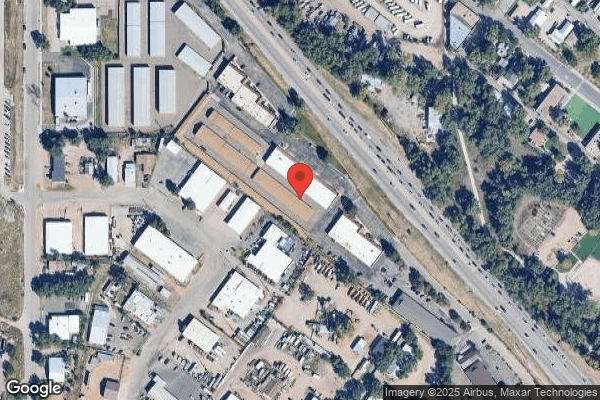
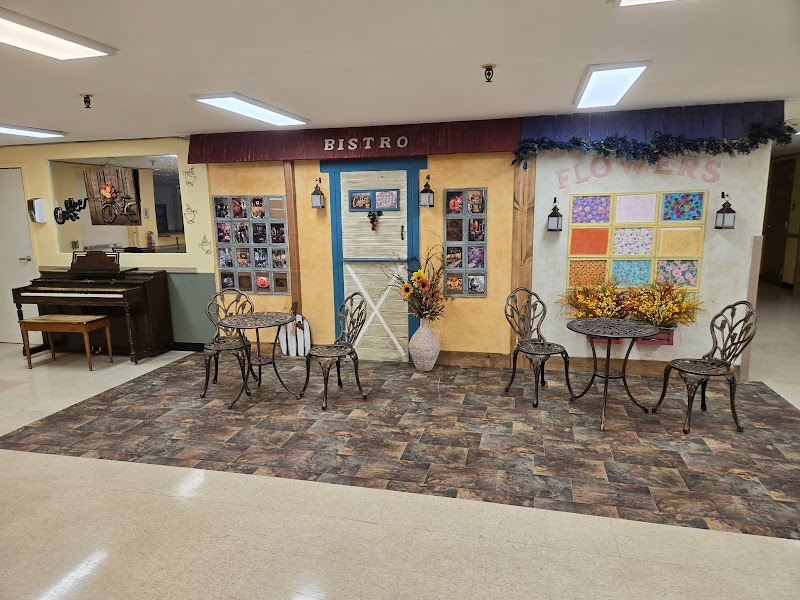
2612 W CUCHARRAS ST, COLORADO SPRINGS, CO 80904 (719) 632-7474
For profit - Limited Liability company 68 Beds MADISON CREEK PARTNERS Data: November 2025 1 Immediate Jeopardy citation
Trust Grade
38/100
#123 of 208 in CO
Last Inspection: February 2024

Within standard 12-15 month inspection cycle. Federal law requires annual inspections.

Overview

Sundance Skilled Nursing and Rehabilitation has received a Trust Grade of F, indicating significant concerns about the facility's care quality. It ranks #123 out of 208 facilities in Colorado, placing it in the bottom half, and #14 out of 20 in El Paso County, meaning there are only a handful of local options that are better. The facility's performance is stable, with one issue reported in both 2024 and 2025. Staffing is a relative strength with a 4/5 star rating, but the turnover rate is concerning at 61%, which is higher than the state average. However, they have faced $35,162 in fines, which is higher than 82% of other facilities in Colorado, suggesting repeated compliance problems. Specific incidents raise serious safety concerns, such as a resident with dementia accessing hazardous cleaning chemicals due to a lack of supervision, leading to potential poisoning. Additionally, there were reports of physical abuse, where one resident assaulted others without adequate monitoring or intervention from staff. The facility also failed to secure toxic chemicals and ensure nursing staff were present for emergencies, which indicates a lack of attention to safety protocols. Overall, while there are some strengths in staffing, the facility's critical incidents and financial penalties suggest significant areas that need improvement.

Trust Score
F
38/100
In Colorado
#123/208
Bottom 41%
Safety Record
High Risk
Review needed
Inspections
Holding Steady
1 → 1 violations
Staff Stability
⚠ Watch
61% turnover. Above average. Higher turnover means staff may not know residents' routines.
Penalties
✓ Good
$35,162 in fines. Lower than most Colorado facilities. Relatively clean record.
Skilled Nurses
✓ Good
Each resident gets 53 minutes of Registered Nurse (RN) attention daily — more than average for Colorado. RNs are trained to catch health problems early.
Violations
⚠ Watch
17 deficiencies on record. Higher than average. Multiple issues found across inspections.
★★★☆☆
3.0
Overall Rating
★★★★☆
4.0
Staff Levels
★★★★★
5.0
Care Quality
★★☆☆☆
2.0
Inspection Score
Stable
2024: 1 issues
2025: 1 issues

The Good

  • 4-Star Staffing Rating · Above-average nurse staffing levels
  • 5-Star Quality Measures · Strong clinical quality outcomes
  • Full Sprinkler Coverage · Fire safety systems throughout facility
  • No fines on record

Facility shows strength in staffing levels, quality measures, fire safety.

The Bad

3-Star Overall Rating

Near Colorado average (3.1)

Meets federal standards, typical of most facilities

Staff Turnover: 61%

15pts above Colorado avg (46%)

Frequent staff changes - ask about care continuity

Federal Fines: $35,162

Above median ($33,413)

Moderate penalties - review what triggered them

Chain: MADISON CREEK PARTNERS

Part of a multi-facility chain

Ask about local staffing decisions and management

Staff turnover is elevated (61%)

13 points above Colorado average of 48%

The Ugly 17 deficiencies on record

1 life-threatening 1 actual harm
Aug 2025 1 deficiency 1 IJ
CRITICAL (J) 📢 Someone Reported This

A family member, employee, or ombudsman was alarmed enough to file a formal complaint

Immediate Jeopardy (IJ) - the most serious Medicare violation

Accident Prevention (Tag F0689)

Someone could have died · This affected 1 resident

**NOTE- TERMS IN BRACKETS HAVE BEEN EDITED TO PROTECT CONFIDENTIALITY** Based on observations, record review and interviews, the facility failed to ensure one (#1) of three residents reviewed for acci...

Read full inspector narrative →
**NOTE- TERMS IN BRACKETS HAVE BEEN EDITED TO PROTECT CONFIDENTIALITY** Based on observations, record review and interviews, the facility failed to ensure one (#1) of three residents reviewed for accidents received adequate supervision out of 14 sample residents.Specifically, the facility failed to ensure Resident #1 was not able to access hazardous chemicals.Resident #1, who was admitted to the facility on [DATE], had a history of dementia and of wandering within the facility. On [DATE] at 1:40 p.m., Resident #1 was able to obtain a bottle of a cleaning chemical that was located in a residential hallway on a maintenance cart that was unsecured and unsupervised.Resident #1 was found by certified nurse aide (CNA) #1 holding the bottle containing a cleaning chemical. Resident #1 was observed to have a blue substance on his lips, which was determined by the facility to be consistent with the contents of the bottle.Resident #1 was reported to have mouth and stomach pain after the incident. He was evaluated by a physician at the facility immediately following the incident and transferred to the hospital where additional evaluation was completed to determine if the resident had an esophageal (tube that runs from the throat to the stomach) injury, airway (breathing) compromise or electrolyte abnormality. Resident #1 was provided intravenous (IV) fluids and the hospital physician determined the resident likely had not ingested the toxic substance. Resident #1 was monitored at the hospital and returned to the nursing facility on [DATE].The facility determined the product in the bottle was a cleaning product (Gel Pro). The material safety data sheet (MSDS - a document that describes the hazards of a chemical product and provides information on safe handling, storage, disposal and emergency procedures) revealed the product was reserved for industrial and professional use and if swallowed, required immediate medical attention. Ingestion of the product could cause digestive tract burns.Resident #1 experienced pain and required hospital evaluation to confirm he had not ingested a sufficient amount of the chemical to cause further injury.The facility's failure to ensure residents were not able to access hazardous chemicals placed Resident #1 and other residents at serious risk of harm, serious impairment or death if the situation were not corrected immediately. Findings include:Observations, record review and interviews confirmed the facility corrected the deficient practice prior to the onsite investigation on [DATE] to [DATE], resulting in the deficiency being cited as past noncompliance with a correction date of [DATE].I. Situation of serious [NAME] [DATE] at 1:40 p.m., Resident #1 was able to obtain a bottle of a cleaning chemical that was located in a residential hallway on a maintenance cart that was unsecured and unsupervised.Resident #1 was found by CNA #1 holding the bottle containing a cleaning chemical. Resident #1 was observed to have a blue substance on his lips, which was determined by the facility to be consistent with the contents of the bottleResident #1 was reported to have mouth and stomach pain after the incident. He was evaluated by a physician at the facility immediately following the incident and transferred to the hospital where additional evaluation was completed to determine if the resident had an esophageal injury, airway compromise or electrolyte abnormality. Resident #1 was provided IV fluids and the hospital physician determined the resident likely had not ingested the toxic substance. Resident #1 was monitored at the hospital and returned to the nursing facility on [DATE].II. Facility investigation and plan of correctionThe investigation and performance improvement plan (PIP) the facility implemented in response to the accident on [DATE] involving Resident #1 was provided by the nursing home administrator (NHA) on [DATE] at 1:07 p.m. The plan read as follows:A. Problem statementOn [DATE], a cognitively impaired resident (Resident #1) was found ingesting drain cleaner that had been left unattended and unsecured on a maintenance cart. CNA #1 intervened and removed the chemical. The chemical had been left unsecured by the maintenance supervisor during routine work. B. GoalThe facility's goal was to eliminate unsafe chemical exposure risks within the facility by implementing a facility wide safety initiative with compliance monitoring and retraining all staff on accident prevention and emergency response protocols. C. Root Cause Analysis A root cause analysis (a problem solving method used to identify the underlying reasons why a problem occurred) was completed and revealed the following:-An unsecured hazardous chemical was left unattended in a resident accessible area;-Staff were unfamiliar with chemical handling/storage policies;-There was a lack of supervision or enforcement of the facility's environmental safety procedures;-The cognitive impairment of the resident was not adequately considered in environmental planning; and,-There was not a current interdisciplinary team (IDT) environmental hazard audit process.D. Immediate Actions TakenCNA #1 immediately removed the chemical and reported the incident to the nurse. The nursing staff contacted a poison control center and reviewed the MSDS. The primary care physician (PCP) assessed the resident and Resident #1 was transported to the hospital. The maintenance supervisor was suspended from duties pending an internal review. The nursing home administrator (NHA) and the director of nursing (DON) initiated an internal investigation. E. Corrective actions and prevention planThe corrective actions included the following:An in-service on chemicals was completed on [DATE]. A mandatory in-service for all departments on accident hazards was completed on [DATE].Hazard identification scenarios were integrated into training on [DATE].All maintenance carts were secured with locks or stored in secured areas when unattended by [DATE].The facility implemented facility-wide weekly environmental safety audits beginning [DATE].Accident prevention compliance checks were added to the monthly quality assurance performance improvement (QAPI) agenda beginning [DATE].Care plans for cognitively impaired residents were updated with supervision and safety risk protocols by [DATE].IV. Facility policy and procedureThe Hazardous Areas, Devices and Equipment policy, revised [DATE], was provided by the NHA on [DATE] at 3:22 p.m. It read in pertinent part, A hazard is defined as anything in the environment that has the potential to cause injury or illness. Examples of environmental hazards include, but are not limited to:-Equipment and devices that are left unattended or are malfunctioning;-Devices and equipment that are improperly used or poorly maintained;-Sharp objects that are accessible to vulnerable residents;-Open areas or items that should be locked when not in use;-Irregular floor surfaces (cords, buckled carpeting, etc);-Objects in the hallways that obstruct a clear path;-Access to toxic chemicals;-Insufficient lighting or glare;-Unsafe exposure to heating elements or water temperatures;-Furniture that is unstable or positioned at an improper height for residents; or,-Disabled locks, latches or alarms. Assessment and analysis of hazardous areas and equipment will include resident specific information including identification of vulnerable residents. Any element of the resident environment that has the potential to cause injury and that is accessible to a vulnerable resident is considered hazardous. Resident vulnerability is based on risk factors including the individual resident's functional status, medical condition, cognitive abilities, mood, and health treatments (medications). Interim safety measures for temporary hazards, such as painting or construction work, may be necessary. These may include posting warning signs, redirecting foot traffic, increasing supervision and if necessary, limiting access to anyone but authorized personnel.V. Resident #1A. Resident statusResident #1, age [AGE], was admitted on [DATE]. According to the [DATE] computerized physician orders (CPO), diagnoses included dementia, COPD, osteoarthritis, depressive episodes and anxiety disorder. The [DATE] minimum data sets (MDS) assessment revealed the resident had a severe cognitive impairment with a brief interview for mental status (BIMS) score of four out of 15. He required set up assistance with eating, substantial assistance with toileting, showering and dressing and was independent with the use of a manual wheelchair to wheel at least 150 feet in a corridor.B. Record reviewResident #1's behavior care plan, revised [DATE], documented the resident self-propelled his wheelchair and enjoyed riding up and down in the main elevator. Interventions included redirection of Resident #1 as needed.Resident #1's safety alert care plan, initiated [DATE], documented Resident #1 was at risk for injury due to his ingestion of non-edible or hazardous items related to his cognitive impairment, poor safety awareness and impaired judgment secondary to dementia. Interventions included environmental rounds conducted by staff every shift, documenting the resident's attempts to access inappropriate items and ensuring all chemicals and hazardous materials were stored in locked non-resident areas.The primary care physician's (PCP) progress note, dated [DATE] at 1:33 p.m., documented an urgent evaluation of Resident #1 for ingestion of drain cleaner. It documented the PCP evaluated the resident and remained with the resident until emergency medical services (EMS) arrived. It documented the amount of chemical ingested was not known, but the PCP estimated 10 milliliters (ml) had been ingested. The PCP documented Resident #1 was provided water to rinse with but he swallowed it. The PCP documented the resident was stable, but developed stomach pain immediately prior to the arrival of EMS. The note documented a poison control center was contacted and EMS was provided with a case number from the poison control center.The hospital emergency department progress note was provided by the NHA on [DATE] at 1:07 p.m. The note, dated [DATE] at 1:50 p.m., documented Resident #1 presented to the hospital for ingestion of a drain cleaning gel. It documented the EMS team reported the nursing facility staff said they witnessed Resident #1 taking a swig of the drain cleaning gel, but the facility was unsure how much was in the bottle before ingestion and unsure of the amount Resident #1 ingested. The EMS team also reported Resident #1's mouth hurt, but otherwise he had no pain. The summary documented diagnoses considered were esophageal injury, airway compromise or electrolyte abnormality. The summary documented Resident #1 was stable and improved after IV fluids. The note documented the presentation and work up suggested Resident #1 had not ingested the toxic substance. A nursing progress note, dated [DATE] at 2:20 p.m., documented Resident #1 ingested drain cleaning gel on [DATE]. It documented Resident #1 initially had no complaints of pain after the incident, but near time of EMS arrival to the facility, Resident #1 began to complain of abdominal pain.An in-service education, dated [DATE] was provided by the NHA on [DATE] at 1:07 p.m. The in-service education included 33 staff signatures. The training description included the process used if a resident ingested chemicals, poison control contact information and the location where the MSDS were kept.An in-service education, dated [DATE], was provided by the NHA on [DATE] at 1:07 p.m, and included 51 staff signatures. It documented the audience as all nursing, housekeeping, maintenance and support staff. The learning objectives included:-Identifying common environmental accident hazards and how to reduce resident risk;-Properly storing hazardous materials in compliance with federal and facility policy; and,-Understanding mandatory reporting obligations.The MSDS for the product Gel Pro was provided by the NHA on [DATE] at 1:07 p.m. It revealed the following: Recommended use as a cleaning product reserved for industrial and professional use. The product is corrosive to metals, causing severe burns and eye damage. If swallowed, rinse the mouth. Do not induce vomiting. If inhaled, remove the person to fresh air and keep comfortable for breathing. Immediately call a poison center/doctor. Store locked up. Store in corrosive resistant container with a resistant liner Ingredients include sodium chloride, sodium hypochlorite and sodium carbonate. First aid measures include if swallowed, rinse mouth with water, do not induce vomiting. Get medical attention immediately. Note to physician, treat symptomatically. Handling and storage, do not ingest. If ingested, it causes digestive tract burns.Facility-wide weekly environmental safety audits were provided by the NHA on [DATE] at 1:07 p.m. Weekly audits from [DATE] to [DATE] were reviewed. The audits documented all chemicals on carts were secured or locked if unattended, storage rooms with hazardous materials were locked, MSDS were visible and accessible, chemicals were clearly labeled and not expired and high risk resident areas were free of hazards.VI. Staff interviewsCNA #3 was interviewed on [DATE] at 12:50 p.m. CNA #3 said Resident #1 had a history of wandering on the unit in his wheelchair. CNA #1 said there was an incident when Resident #1 drank something from the maintenance cart. He said all of the facility staff received training, both online and in person about hazardous materials and the importance of securing the items. CNA #3 said he was told to report any observations of hazardous materials at the facility.The DON was interviewed on [DATE] at 4:00 p.m. The DON said she was present at the facility and responded to Resident #1's room after the incident on [DATE]. She said she learned Resident #1 might have put the bottle of drain cleaner in his mouth. The DON said Resident #1 had a blue substance around his mouth from the chemical. The DON said the facility was inspected for hazardous materials on that day and she participated in providing staff education for hazardous materials after the incident.The maintenance supervisor was interviewed on [DATE] at 8:50 a.m. The maintenance supervisor said on [DATE], he and his assistant were painting the day room, a resident lounge. The maintenance supervisor said he had painting supplies on the maintenance cart, and there was also a bottle of drain cleaner, as he planned to clean a drain in the facility's kitchen area after he completed painting. The maintenance supervisor why she was holding the bottle and she said Resident #1 drank from it. The maintenance supervisor said he contacted the PCP, who was present at the facility, and then obtained the MSDS for the drain cleaner. The maintenance supervisor said he observed Resident #1 with a blue color present on his lower lip which was consistent with the contents of the drain cleaner. The maintenance supervisor said after the incident, the facility ensured there were not any chemicals which were accessible to residents.The maintenance supervisor said he received training upon hire about hazardous chemicals and the need to ensure they were not accessible to residents, and again received training from the NHA after the incident on [DATE]. The maintenance supervisor said the facility purchased new maintenance carts in [DATE] which were always locked. The NHA was interviewed on [DATE] at 9:04 a.m. The NHA said the maintenance cart should have been secured and the items on the cart should not have been accessible to residents on [DATE]. The NHA said the facility completed an audit on the day of the incident to be certain there were no accessible hazardous materials. She said staff training began immediately after the incident, and the training was completed by [DATE]. The NHA said weekly audits for environmental and hazardous items would continue for at least three months and would be reviewed at QAPI meetings. Registered nurse (RN) #2 was interviewed on [DATE] at 9:50 a.m. RN #2 said CNA #1 came to her holding a drain cleaner bottle and informed her she had just taken bottle from Resident #1. RN #2 said she went to the resident and saw that he had a blue color on his lips. RN #2 said the instructions on the bottle revealed his mouth should be rinsed out, so she and CNA #1 attempted to do this, but Resident #1 swallowed the water. RN #2 said the PCP was at the facility and came to the resident's bedside immediately. RN #2 said while waiting for the EMS team to arrive, Resident #1 said he had started to have stomach pain. RN #2 said she contacted Resident #1's representative about the incident and transfer to the hospital. RN #2 said all facility staff received re-education about hazardous items after the incident. RN #2 said the staff audited the building to be certain there were no hazardous items accessible to residents.The PCP was interviewed on [DATE] at 12:15 p.m. The PCP said on [DATE], a staff member notified him that Resident #1 had consumed drain cleaner. The PCP said he reviewed the MSDS for the product and contacted a poison control center. The PCP said he was told the resident had blue color on his lips, and he estimated the resident drank approximately 10 ml of the drain cleaner, based upon staff reports and the amount remaining in the bottle. The PCP said Resident #1 appeared stable, but was sent to the hospital out of an abundance of caution, as he began to have abdominal pain. The PCP said the facility did a PIP related to the incident and addressed the cause of the ingestion. He said if Resident #1 had ingested more drain cleaner he would have been in trouble, as it could have caused a hole through his esophagus or his stomach.CNA #1 was interviewed on [DATE] at 12:45 p.m. CNA #1 said on [DATE], she saw Resident #1 sitting in his wheelchair in the hallway drinking from a bottle that contained a chemical. CNA #1 said she took the bottle away from the resident. CNA #1 said she realized Resident #1 had drank some of the chemical when she noticed his lips and tongue were blue. She said she notified the charge nurse, and the charge nurse and PCP evaluated the resident. CNA #1 said the facility had all staff check the facility, including all residents' rooms for hazardous items, including chemicals, following the incident on [DATE]. CNA #1 said the facility provided inservice training after the incident for all staff, which included both in person and online training and included the need to ensure residents could not access hazardous items.The social services director (SSD) was interviewed on [DATE] at 9:30 a.m. The SSD said she received hazardous material training upon hire and again recently completed training in person and online after the incident involving Resident #1. The SSD said the training focused on the need to protect residents from hazardous items. The SSD said she was one of the staff members who were doing weekly rounds to check for any hazardous items. She said the extensive training post-incident for all staff helped to make the staff sensitive to the potential hazards that existed to residents.
Feb 2024 1 deficiency
CONCERN (D)

Potential for Harm - no one hurt, but risky conditions existed

Infection Control (Tag F0880)

Could have caused harm · This affected 1 resident

Based on observations and interviews, the facility failed to maintain an infection control program designed to provide a safe, sanitary and comfortable environment to help prevent the development and ...

Read full inspector narrative →
Based on observations and interviews, the facility failed to maintain an infection control program designed to provide a safe, sanitary and comfortable environment to help prevent the development and transmission of diseases and infection. Specifically, the facility failed to: -Ensure resident's medical supplies for catheter irrigation were labeled, dated and stored in a sanitary environment. Findings include: I. Facility policies and procedures The Infection Control policy and procedure, undated, was received by the nursing home administrator (NHA) on 2/22/24 at 11:27 a.m. It read in pertinent part, An infection prevention and control program is established and maintained to provide a safe, sanitary, and comfortable environment and to help prevent the development of transmission of communicable diseases and infections. The program is based on accepted national infection prevention control standards. The elements of the infection prevention program includes: coordination/oversight of prevention of infection. Important facets of infection prevention include: -educate staff to ensure they adhere to proper techniques and procedures; and. -following established general disease-specific guidelines such as those of the Centers for Disease Control (CDC). The Catheter Irrigation, open system policy, undated, was received by the NHA on 2/22/24 at 3:11 p.m. It read in pertinent part, The purpose of this procedure is to maintain patency of the catheter. Steps in the procedure: -Open the sterile irrigation tray using sterile technique; -Pour irrigation solution into the sterile solution container; -Draw solution into the irrigating syringe; -Insert the syringe into the catheter and slowly instill the solution; -Remove the syringe and allow the catheter to drain into the sterile collection basin; -Discard disposable items into designated containers. II. Observations and staff interviews On 2/22/24 at 11:22 a.m., a graduated triangular intake/output container was observed on top of an unidentified resident's dresser and behind his television. Dried water droplets were observed inside and outside of the container. -The container was not dated and not labeled for its specific use. An open piston syringe (a large syringe utilized to irrigate catheters) was stored inside the triangular container. Dried water droplets were observed inside and outside of the syringe. -The syringe was not dated and not labeled for its specific use. Registered nurse (RN) #1 was interviewed on 2/22/24 at 11:23 a.m. She observed the cylinder container and syringe and said the items were used to irrigate the resident's indwelling supra pubic catheter (a catheter which is inserted just below the belly button directly into the bladder). She said the supplies should be labeled when they were opened. RN#1 said the cylinder and syringe should be replaced once a week. She said she was unable to determine how many days the supplies had been unwrapped and used and said she would replace the items. She said they were stored on the resident's dresser because it was a shared room. The director of nursing (DON), who was also the infection preventionist (IP) was interviewed on 2/22/24 at 11:38 a.m. The DON said the supplies should be labeled when opened. She was not certain when the supplies should be replaced and said she would find out. -On 2/22/24 at 12:45 p.m., the catheter irrigation supplies had not been removed, labeled or replaced. -On 2/26/24 at 9:07 a.m. the urinary catheter flushing supplies continued to be stored on the resident's dresser, open to air, and next to the television. The triangular cylinder was dated 2/22/24 and the piston syringe was dated 2/23/24. -Neither item included labeling for its specific use. The DON was interviewed a second time on 2/26/24 at 11:15 a.m. The DON said the piston syringe dated 2/23/24 was replaced with a new syringe on 2/26/24. She said irrigation of catheters required a new sterile piston syringe and she was uncertain why the used syringe had not been discarded and replaced. III. Facility follow up The DON was interviewed again on 2/27/24 at 10:55 a.m. The DON said the facility's medical director had clarified the physician's order for the catheter irrigation and said a clean procedure was used for the graduated cylinders and they should be replaced weekly. The DON said the February 2024 CPO was updated to clarify the piston syringe should be sterile and replaced daily. She said going forward, a new sterile syringe would be used for irrigation of the catheter. Based on observations and interviews, the facility failed to maintain an infection control program designed to provide a safe, sanitary and comfortable environment to help prevent the development and transmission of diseases and infection.
Oct 2023 4 deficiencies
CONCERN (D) 📢 Someone Reported This

A family member, employee, or ombudsman was alarmed enough to file a formal complaint

Potential for Harm - no one hurt, but risky conditions existed

Deficiency F0573 (Tag F0573)

Could have caused harm · This affected 1 resident

Based on record review and interviews, the facility failed to ensure a copy of medical records were provided timely for one (#17) of three out of 18 sample residents. Specifically, the facility failed...

Read full inspector narrative →
Based on record review and interviews, the facility failed to ensure a copy of medical records were provided timely for one (#17) of three out of 18 sample residents. Specifically, the facility failed to ensure records were provided timely upon request for Resident #17 from a court appointed guardian. Findings include: I. Facility policy and procedure The Access to Personal and Medical Records policy, revised May 2017, was provided by the nursing home administrator (NHA) on 10/5/23 at 5:56 p.m. It revealed, in pertinent part, A resident may have access to his or her records within 24 hours (excluding weekends or holidays) of the resident's written or oral request. II. Failure to provide medical records as requested A. Resident representative interview The court-appointed guardian was interviewed on 10/5/23 at 2:08 p.m. She said she had requested Resident #17's medical records on 9/6/23 via email to the NHA. She said the NHA had forwarded the email to the medical records personnel, however she said she had not heard back from the facility. She said prior to the 9/6/23 email, she had made multiple attempts to contact the facility and still had received a response. She said on her first attempt the phone rang without answer, the second attempt a resident answered the phone and said they could not provide assistance, and the third attempt a staff member told her she would receive the medical records. She said on 10/2/23 she had sent an additional email to the medical records personnel indicating she had still not received the medical records. She said the medical records personnel told her she was not able to complete the request sooner because she did not have documentation of the court appointed guardianship. She said no staff from the facility had asked her to provide that information until she provided it on 10/2/23, of her own volition. B. Record review A records request was sent via email from the court appointed guardian to the NHA and the medical records manager (MRM) for Resident #17 on 9/6/23. An additional was sent by the court appointed guardian on 10/2/23 which read, I have still not received the medical records I requested. Please review the attached order appointing me as guardian ad litem. The order contains an authorization to release medical records. The MRM responded to the court appointed guardian's email on 10/3/23 indicating she did not have documentation of court appointed guardian to release the records, however a request had never been sent to the court appointed guardian prior to that date and when the request for medical records was made on 9/6/23. The MRM indicated she would be able to provide the medical records. On 10/4/23, the court appointed guardian sent an additional email stating the court had been asking for updates on Resident #17 and she needed the medical records as soon as possible. The MRM responded on 10/5/23 that the file was too large to download and the guardian could pick up a flash drive containing the information. On 10/6/23, during the survey process, the medical records were delivered to the guardian's office, 30 days after the request for medical records. III. Staff interviews The MRM was interviewed on 10/5/23 at 3:04 p.m. She said the email request was received on 9/6/23 from the guardian however, the facility was not aware Resident #17 had a court-appointed guardian. The MRM said she attempted to contact the guardian but was unsuccessful so she left a voicemail requesting documentation that showed the guardianship status. She said she did not document any phone calls made to the guardian and had not attempted to contact her via email, which was how the initial request was submitted. She said she did not know why she did not contact the guardian via email. She said the medical records for Resident #17 were not provided to the court appointed guardian until 10/6/23, 30 days after the initial request was made.
CONCERN (D) 📢 Someone Reported This

A family member, employee, or ombudsman was alarmed enough to file a formal complaint

Potential for Harm - no one hurt, but risky conditions existed

ADL Care (Tag F0677)

Could have caused harm · This affected 1 resident

**NOTE- TERMS IN BRACKETS HAVE BEEN EDITED TO PROTECT CONFIDENTIALITY** Based on observations, interviews and record review, the facility failed to ensure residents who were unable to carry out activi...

Read full inspector narrative →
**NOTE- TERMS IN BRACKETS HAVE BEEN EDITED TO PROTECT CONFIDENTIALITY** Based on observations, interviews and record review, the facility failed to ensure residents who were unable to carry out activities of daily living (ADL) received the necessary services to maintain personal hygiene for one (#11) of five residents out of 18 sample residents. Specifically, the facility failed to provide incontinence care timely for Resident #11. Findings include: I Resident status Resident #11, under age [AGE], was admitted on [DATE]. According to the October 2023 computerized physician orders (CPO), the diagnoses included multiple sclerosis ((MS) a disease in which the immune system eats away at the protective covering of nerves), dementia, paraplegia (loss of muscle function in the lower half of the body, including both legs), neuromuscular dysfunction of bladder (overactive bladder muscles squeeze more often than normal and before the bladder is full with urine) and need for assistance with personal care. The 7/7/23 minimum data set (MDS) assessment revealed the resident had moderate cognitive impairment with a brief interview for mental status score of 10 out of 15. He required extensive assistance of two staff members with transferring, dressing, toilet use and personal hygiene. II. Observations and interview During a continuous observation on 10/4/23 beginning at 10:00 a.m. and ending at 12:00 p.m. Resident #11 was not provided incontinence care. -At 10:00 a.m. Resident #11 was sitting in the day room watching television with other residents. -At 11:30 a.m. Resident #11 was assisted by an unknown staff member to the dining area, he was not provided incontinence care. -At 12:30 p.m. Resident #11 was assisted by an unknown staff member from the dining area to the dayroom. -At 1:00 p.m. Resident #11 remained in the day room, he was not provided incontinence care. During a continuous observation on 10/5/23 beginning at 9:37 a.m. and concluding at 4:30 p.m. Resident #11 was not provided with incontinence care. -At 9:37 a.m. Resident #11 was sitting in the day room, the television was on. -At 11:10 a.m. the resident remained in the day room, he was not provided incontinence care. -At 11:30 a.m. Resident #11 was assisted to the dining area, he was not provided incontinence care. -At 12:30 p.m. licensed practical nurse (LPN) #1 assisted Resident #11 to the day room, he was not provided incontinence care. -At 1:30 p.m. certified nursing aide (CNA) #1 assisted Resident #11 outside to the front of the building for supervised smoking. Resident #11 was approached by visitors and remained outside until 2:00 p.m. -At 2:00 p.m. Resident #11 was asisted inside by the visitors and remained in their company in the dining room until 4:30 p.m. -At 4:30 p.m. Resident #11 said he sometimes knows when he was wet, he said he was a little bit wet at this time. LPN #1 and CNA #1 assisted Resident #11 out of his wheelchair and into his bed. Resident #11 had a strong odor of urine. The resident had soaked through his pants with urine and onto the cushion of the wheelchair. Resident #11 had incontinence of his bowels. III. Record review The skin breakdown care plan, revised on 9/28/23, revealed Resident #11 was at risk related to decreased ability to move and reposition independently. It indicated the resident would not experience skin breakdown through the next review date. Interventions included assisting the resident with peri care and hygiene needs as needed, monitoring of the skin for any signs of irritation related to incontinent episodes and checking and changing the resident frequently and applying barrier cream after any incontinent episodes. The ADL care plan, revised on 10/10/21, revealed Resident #11 had a performance deficit with personal hygiene related to a diagnosis of MS. It indicated Resident #11 would have his specific needs met during daily performance of ADLs through the next review date. Interventions included assisting the resident to maintain a clean peri-area. The bowel incontinence care plan, revised on 12/2/21, revealed Resident #11 was at risk for constipation related to a diagnosis of MS and being paraplegic. It indicated Resident #11 would not have any skin breakdown related to incontinence through the next review date. Interventions included checking the resident every two hours and assisting with toileting needs. IV. Staff interview CNA #1 was interviewed on 10/5/23 at 4:44 p.m. He said Resident #11 was a heavy wetter and was checked for incontinence every two hours and after each meal. He said he was unable to locate Resident #11 for toileting in the afternoon and later he found out the resident was downstairs with family and CNA #1 did not disturb them. -However, he was not provided incontience care in the morning prior to the visitors. CNA #2 was interviewed on 10/5/23 at 5:00 p.m. She said Resident #11 was toileted before and after meals because he needed assistance from two staff and was consistently incontinent. The director of nursing (DON) and assistant director of nursing (ADON) were interviewed on 10/5/23 at 6:00 p.m. They said residents who were incontinent and dependent on staff for toileting should be checked every two hours for incontinence care needs.
CONCERN (D) 📢 Someone Reported This

A family member, employee, or ombudsman was alarmed enough to file a formal complaint

Potential for Harm - no one hurt, but risky conditions existed

Pressure Ulcer Prevention (Tag F0686)

Could have caused harm · This affected 1 resident

**NOTE- TERMS IN BRACKETS HAVE BEEN EDITED TO PROTECT CONFIDENTIALITY** Based on observations, interviews and record review the facility failed to provide the necessary treatment and services for pres...

Read full inspector narrative →
**NOTE- TERMS IN BRACKETS HAVE BEEN EDITED TO PROTECT CONFIDENTIALITY** Based on observations, interviews and record review the facility failed to provide the necessary treatment and services for pressure injuries for one (#8) of three residents out of 18 sample residents. Specifically, the facility failed to implement interventions for Resident #8 who had a pressure injury. Findings include: I. Professional reference According to the National Pressure Injury Advisory Panel (NPIAP) Pressure Injury Stages, the National Pressure Injury Advisory Panel - NPIAP web. (2/4/18) retrieved on 10/9/23 from https://cdn.ymaws.com/npiap.com/resource/resmgr/online_store/npiap_pressure_injury_stages.pdf. read in pertinent part: A pressure injury is localized damage to the skin and/or underlying soft tissue, usually over a bony prominence as a result of pressure, or pressure in combination with shear. The updated staging system includes the following definition: Deep Tissue Pressure Injury: Persistent non-blanchable deep red, maroon or purple discoloration. Intact or non-intact skin with localized areas of persistent non-blanchable deep red, maroon, purple discoloration or epidermal separation revealing a dark wound bed or blood-filled blister. Pain and temperature change often precede skin color changes. Discoloration may appear differently in darkly pigmented skin. This injury results from intense and/or prolonged pressure and shear forces at the bone-muscle interface. The wound may evolve rapidly to reveal the actual extent of tissue injury, or may resolve without tissue loss. If necrotic tissue, subcutaneous tissue, granulation tissue, fascia, muscle or other underlying structures are visible, this indicates a full-thickness pressure injury (Unstageable, Stage 3 or Stage 4). Do not use DTPI (deep tissue pressure injury) to describe vascular, traumatic, neuropathic, or dermatologic conditions. II. Facility policy and procedure The Skin Management System policy, dated June 2022, was received by the nursing home administrator (NHA) on 10/5/23 at 5:19 p.m. It read in pertinent part: Residents receive care to aid in the prevention or worsening of wounds and/or pressure ulcers. Individuals at risk for skin compromise are identified, assessed and provided treatment to promote healing, prevent infection, and prevent new pressure injuries from developing. Ongoing monitoring and evaluation are provided for optimal resident outcomes. A pressure injury is defined as any skin lesion caused by unrelieved pressure resulting in damage of underlying tissue. Pressure injuries are usually over bony prominences and are staged to determine the degree of tissue damage observed. III Resident status Resident #8, under age [AGE], was admitted on [DATE]. According to the October 2023 computerized physician orders (CPO), the diagnoses included diabetes, stage four kidney disease, dependence on supplemental oxygen and anemia (lower-than-normal amount of healthy red blood cells). The 8/28/23 minimum data set (MDS) assessment revealed the resident had moderate cognitive impairment with a brief interview for mental status score of 12 out of 15. He required extensive assistance of two staff members with transferring, dressing, toilet use and personal hygiene. He had one unstageable pressure ulcer due to coverage of wound bed by slough (dead tissue separating from living tissue) and/or eschar (a dry, dark scab or falling away of dead skin). The following skin injury and treatments were being used: pressure reducing device for chair, pressure reducing device for bed, nutrition or hydration intervention, pressure ulcer/injury care. -The 10/13/22 admission MDS indicated Resident #11 was at risk for developing pressure ulcers. -Resident #11 had been discharged from the facility to the hospital on 8/16/23 and readmitted on [DATE]. The 8/22/23 readmission nursing note made no mention of an unstageable pressure to his left heel. IV. Observation On 10/4/23 at 10:40 a.m. Resident #4 was in his room, sitting in a high back wheelchair with his feet resting on foot pedals eating lunch. The resident was wearing only socks. -At 11:00 a.m. Resident #4 was transported to the dialysis center. On 10/5/23 at 9:13 a.m. he wound care physician along with the director of nursing (ADON) were providing wound care to the left heel. The area of the left heel was black in color and approximately the size of a quarter. There were no open areas and no dressing in place. The wound care physician placed dressing over the left heel. The resident was positioned on his right side with a pillow between his knees to his feet and his heels were not floating. During a continuous observation on 10/5/23, beginning at 9:37 a.m. and concluding at 1:30 p.m. staff did not check floating of heels for Resident #4. -At 10:30 a.m. licensed practical nurse (LPN) #1 entered room of Resident #8 assisted him with headphones and exited the room. The resident was still positioned on his right side with a pillow between his knees to his feet and his heels were not floating. LPN #1 did not check to see if the heels of Resident #8 were floating. -At 12:00 p.m. an unidentified staff member delivered lunch to Resident #8, raised the head of the bed and offered assistance. The resident remained in bed during the meal. When the resident finished eating, the staff member removed the tray, lowered the head of the bed and the resident continued to lay so he was facing right and watching television. Staff did not check that heels were floated. -Between 12:00 p.m. and 1:30 p.m. staff did not check that heels were being floated. V. Record review The August 2023 medication and treatment administration record (MAR/TAR) revealed the following orders: -Float bilateral (both) heels on a pillow while in bed for a diagnosis of altered skin integrity every shift for unstageable pressure injury with a start date of 8/24/23. -Wound treatment to the left medial heel with an 8/26/23 start date. Skin prep was to be applied daily and the wound was to be covered by bordered foam (dressing consisting of a highly absorbent primary hydrophilic foam layer with a waterproof, adhesive backing) every day in the evening. The 8/31/23 progress note revealed the heel of Resident #8 remained closed, stable but fragile. The heel was to remain covered with bordered foam dressing for protection. -During the 10/5/23 wound care at 9:13 a.m. a dressing was not in place (see above). The 9/5/23, 9/12/23, 9/19/23 and 9/26/23 head to toe skin check did not identify an unstageable pressure injury on the left heel of Resident #8. The 9/14/23 skin pressure injury evaluation revealed Resident #8 had an unstageable pressure injury to his left heel with an onset date of 8/22/23, measuring 1.5 centimeters (cm) in length by 1.5 cm in width and 0.1 cm in depth. There was no tunneling, undermining (separation of the wound edges from the surrounding healthy tissue), draining or oder present. Eschar was 100 percent (%) edges were defined, surrounding skin was normal. Interventions included high protein food, pressure reducing mattress and positioning pillows. Additional notation indicated actual depth was 0 cm. The 9/21/23 skin pressure injury evaluation revealed Resident #8 had an unstageable pressure injury to his left heel with an onset date of 8/22/23, measuring 1.5 cm in length, 2 cm in width with a depth of 0 cm. There was no tunneling, undermining, drainage or odor. Eschar was 100%, wound edges were defined and surrounding tissue was normal. Interventions did not change (see above). The 9/28/23 skin pressure injury evaluation revealed Resident #8 had an unstageable pressure injury to his left heel with an onset date of 8/22/23, measuring 3 cm in length, 1.8 cm in width, with a depth of 0 cm. There was no tunneling, undermining, drainage or odor. Eschar was 100%, wound edges were defined and surrounding tissue was normal. Interventions did not change (see above). The potential for pressure ulcer development care plan, revised on 9/6/23, revealed Resident #8 had an unstageable, left heel pressure injury, with an onset date of 8/22/23. It indicated Resident #8's skin would be intact, free of redness, blisters or discoloration through the review date. Interventions included floating heels on a pillow while in bed and following the facility policies/protocols for the prevention/treatment of skin breakdown. VI. Staff interview Certified nurse aide (CNA) #1 was interviewed on 10/5/23 at 3:00 p.m. He said he was not aware of a pressure injury to Resident #8's heel. He said the Resident #8 was repositioned every two hours. CNA #2 was interviewed on 10/5/23 at 3:00 p.m. She said she was not aware of a pressure injury to Resident #8's heel. She said he was checked on every once in a while for incontinence. The director of nursing (DON) and the ADON were interviewed at 3:30 p.m. The ADON said Resident #8 had a deep tissue injury (DTI) to his left heel and staff had been educated on the importance of floating the resident's heels while he was in bed. The DON said Resident #8 was not assessed for use of pressure relieving devices other than the floating of heels while in bed. She was not aware of the resident's dialysis clinic providing interventions. She said the facility had not informed the resident's dialysis clinic of the DTI.
CONCERN (D) 📢 Someone Reported This

A family member, employee, or ombudsman was alarmed enough to file a formal complaint

Potential for Harm - no one hurt, but risky conditions existed

Accident Prevention (Tag F0689)

Could have caused harm · This affected 1 resident

**NOTE- TERMS IN BRACKETS HAVE BEEN EDITED TO PROTECT CONFIDENTIALITY** Based on record review, observations, and interviews, the facility failed to ensure residents were free from accidents and hazar...

Read full inspector narrative →
**NOTE- TERMS IN BRACKETS HAVE BEEN EDITED TO PROTECT CONFIDENTIALITY** Based on record review, observations, and interviews, the facility failed to ensure residents were free from accidents and hazards for one (#2) of four residents reviewed for falls of 18 sample residents. Specifically, the facility failed to for Resident #2: -Ensure the resident received adequate supervision to prevent repeated falls; -Implement care plan interventions timely, consistently and effectively to prevent resident falls including ensuring the resident had a fully functional call light within reach; anticipating the resident's care needs for toileting, wanting to transfer to go out to smoke or to lay down to rest; -Ensure the resident consistently had nonslip footwear; and, -Reassess the effectiveness of fall prevention methods following repeated falls where interventions failed to prevent repeated falls. Findings include: I. Facility policy and procedure The Fall Management policy and procedure, dated June 2022, was provided by the nursing home administrator (NHA) on 10/5/23 at 5:19 p.m. It revealed in pertinent part, The center assists each resident in attaining/maintaining his or her highest practicable level of function by providing the resident adequate supervision, assistive devices and/or functional programs, as appropriate, to minimize the risk for falls. The Interdisciplinary Team (IDT) evaluates each resident's fall risks. A Care Plan is developed and implemented, based on this evaluation, with ongoing review. When a fall occurs, the resident is assessed for injury by the nurse. The nurse will: Enter the event information into the Risk Management portal of (electronic medical record system) and, Add the fall event to the 24-hour report and initiate the Interdisciplinary Post Fall Review. The nurse will discuss recommended interventions to reduce the potential for additional falls with the resident and/or resident's representative and document in the Care Plan and Progress Note. -The IDT reviews all resident falls within 24-72 hours at the IDT meeting to evaluate circumstances and probable cause for the fall. -The IDT will complete the Interdisciplinary Post Fall Review. -The IDT designee will discuss recommended significant changes to the Care Plan to minimize repeat falls. II. Resident #2 A. Resident status Resident #2, age [AGE], was admitted on [DATE] and readmitted on [DATE]. According to the October 2023 computerized physician orders (CPO), the diagnoses included chronic obstructive pulmonary disease, muscle weakness, and difficulty in walking. The 8/7/23 minimum data set (MDS) assessment revealed the resident had moderate cognitive impairment with a brief interview for mental status (BIMS) score of nine out of 15. He required extensive assistance with bed mobility, transfers, dressing, toilet use, and personal hygiene. The resident's fall history was not assessed. B. Resident interview and observations Resident #2 was interviewed on 10/4/23 at 9:40 a.m. Resident #2 said there was no smoking schedule and he could go outside to smoke whenever he wanted to; however, he was told that staff needed to go outside with him every time to supervise him while he smoked. Resident #2 said he would like it if the facility had a smoking schedule so he would know when staff would be going out with him to smoke. Resident #2 was interviewed on 10/5/23 at 12:30 p.m. Resident #2 said he wanted to lie down but he could not activate his call light to call for staff assistance because it was too far away for him to reach. The call light was moved within the resident's reach. It made a sound but the light in the hall did not did not turn on. No staff came to check on the resident and he was getting restless. After 15 minutes staff was alerted that the resident needed staff assistance. CNA #1 was interviewed on 10/5/23 at 12:45 p.m. CNA #1 was notified that the resident needed assistance. The CNA went into the room to check on the resident, but the resident had already transferred himself into his bed and was lying down. CNA #1 said he did not know why the resident's call light was not working. CNA #1 checked the call light and observed the cord was loose; he pushed the cord back into the wall and made sure it was secure. CNA #1 tested the call light and it functioned correctly. Resident #2 was interviewed on 10/5/23 at 3:10 p.m. Resident #2 said the reason why he got himself out of bed to his wheelchair by himself was because he just wanted to go outside and smoke and did not want to wait on staff for assistance because they would not come to check on him. C. Record review The fall risk care plan, initiated on 7/16/17 and revised on 9/25/23, documented the resident had actual falls. Interventions included anticipating and meeting resident's needs (initiated 11/18/22); being sure the call light was within the resident's reach at all times, while in his room; encouraging the resident to use the call light when assistance was needed, (initiated 10/4/23); Keep the left side of the resident's bed against the wall (initiated 12/30/22); encourage the resident to lay down to rest frequently throughout the day (11/18/22); ensure bedside table was close to bed with water within reach (initiated 11/18/22); ensuring that resident was wearing appropriate footwear when mobilizing in a wheelchair (initiated 11/18/22); offer the resident frequent toileting assistance (initiated 3/9/23); Keep the resident's bed low with a fall mat in place then the resident was in bed (initiated 1/16/23); place non-skid strips on the floor at the resident's bedside bed to reduce risk of falls (initiated 11/21/22); non-skid footwear (initiated 1/16/23); during the day offer to get resident up and change on night shift (initiated 11/18/22); offering toileting during night shift during rounding sessions (initiated 4/21/22); provided physical and occupational therapy evaluation and treatment for fall prevention (initiated 9/21/23); repositioned transfer pole as needed (initiated 11/28/22); and place signage by bed to remind the resident to use call light for assistance (initiated 4/21/22). -Despite the care plan's focus for fall prevention the resident had 10 unwitnessed falls from 11/7/22 to 10/3/22. Fall incident on 11/17/22 The 11/17/22 incident note documented the resident was found on the floor. The resident said he was transferring himself from the bed to his wheelchair. There were no obvious injuries noted, Post fall interventions included providing non-skid strips to the floor, encourage the resident to use of call light when needing a transfer from wheelchair to bed or bed to wheelchair and refer the resident to physical therapy for transfer safety. Fall incident on 11/27/22 Nursing note dated 11/27/22 documented the resident was overheard calling for help, and upon responding he was observed sitting on the floor. A head-to-toe assessment was completed and no apparent injuries were noted. Post-fall interventions included a recommendation that the resident be monitored closely; placement for the bed to be in a low position with a floor mat placed next to the bed; and reminding the resident to utilize the call light for help. Post fall recommendation included for physical therapy to reassess and reposition the transfer pole/bar and to apply anti-skid strips on the floor bedside bed. Fall incident on 1/13/23 Nursing note dated 1/13/23 documented Resident #2 had an unwitnessed fall and reported having pain in the back of his head. It was documented that the resident was wearing inappropriate footwear. Post-fall interventions included removing inappropriate footwear; applying non-skid footwear for safety and replacing the floor mat with a beveled edge fall mat for improved safety. Fall incident on 3/2/23 Incident note dated 3/2/23 documented Resident #2 was found on the floor by his roommate. The resident was found lying on his back between his wheelchair and his bed with his feet stretched out. The left shoe on the right shoe was halfway off. The resident said he wanted to get to his wheelchair so that he could go outside to smoke. Post-fall interventions included ensuring the resident was wearing proper non-slip footwear; educate and reminded the resident to use his call light to call for assistance especially when he wanted to transfer from one surface to another. self-transfer. Fall incident on 3/8/23 Nursing note dated 3/8/23 documented Resident #2 had an unwitnessed fall while self-transferring from the bed to the wheelchair. The resident verbalized having pain in his knee. Post-survey interventions included a registered nurse assessment, and providing additional education on the importance of using the call light for assistance before transferring from surface to surface. Staff were educated to provide regular smoking assistance by offering the resident assistance to get him up and outside during scheduled supervised smoking times. Fall incident on 3/28/23 Nursing note dated 3/28/23 documented Resident #2 had an unwitnessed fall. The resident told staff he was trying to get to his wheelchair when he fell. The resident had a small scratch on his right thigh. Post-fall interventions included providing physical therapy two to four times a week for transfer training, provide a beveled floor mat, and conduct a medication review. Fall incidents on 9/18/23 (two separate occurrences) Nursing note dated 9/18/23 documented Resident #2 had two unwitnessed falls. Staff heard the resident calling out loudly Nurse from his room. The resident was found sitting on the floor mat between the bed and his wheelchair. The resident said he was trying to get into his wheelchair to go out to smoke. Post-fall recommendations included increasing the resident medication divalproex sodium 750 mg from two times a day to three times a day. Despite continuous education, the resident was non-compliant with using the call light and waiting for staff assistance when he desired to transfer from one surface to either get in bed or transfer to his wheelchair to go out and smoke. Nursing note dated 9/18/23 documented the resident had a second unwitnessed fall later in the day. The resident said he had just returned from smoking and was trying to get into bed to rest. Post-fall interventions included education on using the call light call light usage and waiting for staff to assist with all transfers. Post-fall interventions included providing occupational therapy to evaluate and train the resident for safe transfers. Fall incident on 9/22/23 Nursing note dated 9/22/23 documented Resident #2 had an unwitnessed fall. The resident was found lying on the floor mat with his head positioned at the foot of the bed and his legs extended. The resident stated, I was trying to transfer from bed to wheelchair and I slipped off my bed. The resident received as needed Tylenol for lower back pain. Occupational therapy note dated 9/25/23 documented resident was provided with a Call don't fall sign on the wall with education on call light usage during transfers. The resident was unable to demonstrate with 100 percent accuracy an ability to use the call light to call for staff assistance. The resident was to continue with occupational therapy for transfer training. Fall incident on 10/2/23 Nursing note dated 10/2/23 documented Resident #2 had an unwitnessed fall. The resident was assessed and was unable even when he verbalized understanding that he was able to follow instructions to use the call light and wait for staff assistance for all transfers. The resident's physician was notified of the resident's condition. Post-fall intervention included the resident will continue with occupational therapy. Placing a bedside bell in place to encourage the resident to call for help with all transfers. Occupational therapy note dated 10/3/23 documented the resident was using a transfer pole for transfers. III. Staff interviews CNA #1 was interviewed on 10/5/23 at 3:25 p.m. CNA #1 said the resident was not independent with performing activities of daily living (ADL) and needed staff supervision and assistance with all transfers and standing activities, but the resident preferred to self-transfer and not use his call light. CNA #1 was not sure how many falls the resident had and the only fall intervention he could remember was that the resident had a floor mat at his bedside. CNA #1 said the resident used a transfer pole when self-transferring, but when he assisted the resident during transfers from the bed to the wheelchair or wheelchair to bed he removed the floor mat so the resident did not trip. CNA #1 was not sure how often the resident went outside to smoke but said most of the residents know the smoking schedule. CNA #1 said checking to make sure the call light was working was not something that he was responsible for doing and had never been asked to check that resident call lights were working properly. He said he got the resident up in his wheelchair first thing in the morning and the resident spends three to four hours a day in his wheelchair before laying down. He said the resident did not take naps very often. He said when the resident is in his room he would check on him every one to two hours. He said when he saw the resident heading to his room he would go and check in on the resident. Licensed practical nurse (LPN) #1 was interviewed on 10/5/23 at 3:45 p.m. LPN #1 said the resident was able to verbalize his needs and would tell staff when he wanted to go to bed. LPN #1 said the resident was able to stand on his own with one person to assist with balance. LPN #1 said she was not familiar with how many falls the resident has had, nor did she know how often the resident went outside to smoke but said he went out frequently. She said he was an independent smoker, able to smoke on his own. LPN #1 said there was no smoking schedule for the residents. The director of nursing (DON) was interviewed on 10/5/23 at 5:22 p.m. The DON said she was not familiar with all of the resident's ADL needs for staff assessed with care. The DON said the resident was able to stand and bear weight but had muscle weak in both his arms and legs requiring assistance from one or two staff members to transfer and the resident's wheelchair should be placed close to him so he could easily get in and out of his wheelchair if he self transferred. Staff should be checking call lights on rounds to make sure it is plugged in and working properly. If a call light was not working properly staff should notify the maintenance department requesting repair. The DON said fall prevention interventions for Resident #2 included the placement of a reminder sign for the resident to use his call light for staff assistance; because the resident was forgetful and did not use the call light when needed. The DON said after the resident's last fall the IDT recommended placing a bell on the resident's bedside table that he could use instead of the call light to alert staff when he needed assistance The bell however had not yet been put in place. The DON said she did not know how often the resident went outside to smoke because the resident was not restricted to going out to smoke at designated smoking times because he would not follow a schedule of restricted smoking times. The IDT discussed imposing scheduled smoking times but it was delayed because the IDT wanted to make sure his smoking schedule coincided with his preference. IV. Additional information On 10/5/23 at 6:50 p.m. during the exit meeting, the facility took a picture of the resident's tap bell and said the tap bell had been implemented as part of a new intervention. The tap bell was placed on the resident's table by his television and was out of reach for the resident while in bed. -The tap bell could only be used when the resident was sitting in his wheelchair.
Jun 2023 3 deficiencies 1 Harm
SERIOUS (G) 📢 Someone Reported This

A family member, employee, or ombudsman was alarmed enough to file a formal complaint

Actual Harm - a resident was hurt due to facility failures

Free from Abuse/Neglect (Tag F0600)

A resident was harmed · This affected 1 resident

**NOTE- TERMS IN BRACKETS HAVE BEEN EDITED TO PROTECT CONFIDENTIALITY** Based on record review and interviews the facility failed to keep six residents (#6, #3, #5, #7, #10 and #11) free from resident...

Read full inspector narrative →
**NOTE- TERMS IN BRACKETS HAVE BEEN EDITED TO PROTECT CONFIDENTIALITY** Based on record review and interviews the facility failed to keep six residents (#6, #3, #5, #7, #10 and #11) free from resident to resident physical abuse of nine residents reviewed out of 13 sample residents. The facility failed to ensure there was an effective plan to monitor, or provide increased oversight and effective interventions to protect residents from Resident #6's behavior. Resident #6 physically assaulted at least three residents, between 3/19/23 and 6/11/23. Four additional residents complained of Resident #6's behavior in the facility's abuse investigations. This included Resident #3 who told a staff member during an interview that he had been hit by Resident #6. There was no further investigation of this allegation. The residents involved in the allegations reported pain, fear of Resident #6 hitting them again, feelings of being attacked and frustration with Resident #6's behavior. There was no plan to provide supervision or monitoring of Resident #6's behaviors, except after the third known altercation when the facility implemented monitoring in the smoking area. Physical Altercation 3/19/23, Resident #6 struck Resident #5 causing pain and fear Record review and interviews revealed Resident #6 struck Resident #5 on the arm four times on 3/19/23. The incident was witnessed by staff and residents. Resident #5 was interviewed and said Resident #6 hit her in the arm with a closed fist and with her knuckles. She said it was painful. Resident #5 said she tried to stay away from Resident #6, and she was fearful Resident #6 would hit her again. Review of the facility investigation revealed Resident #5 said on 3/19/23, that she felt Resident #6 would hit her again and she, worries for her safety. Eight staff members interviewed during the facility investigation reported the resident was mean, aggressive, rough or disrespectful to staff. This included being punched and scratched by Resident #6. No plan for increased supervision or monitoring was developed for Resident #6. Physical altercation 5/8/23, Resident #6 struck Resident #7 Record review and interviews revealed Resident #6 struck Resident #7 in the hallway of the facility on 5/8/23 at 6:10 p.m. Interviews revealed Resident #6 and Resident #7 were in the front lobby. Resident #6 and Resident #7 had words, Resident #6 flipped Resident #7 off. Resident #7 headed away down the hall, but Resident #6 followed her down the hall to the nurses station where Resident #6 slapped Resident #7. Resident #7 said she felt attacked. Resident #7 said she was fine, but hoped it would not happen again. Her interview on 5/9/23 in the facility investigation documented she did not feel safe in the facility. She said, not until you know people, it is not safe to be around them and people feel free to hit people around here. No plan for increased supervision or monitoring was documented for Resident #6. Physical altercation 6/11/23, Resident #6 struck Resident #7 again and Resident #7 struck Resident #6 in response Record review and interviews revealed residents and staff had witnessed a physical altercation between Resident #6 and Resident #7 on 6/11/23. Resident #6 was observed hitting Resident #7 multiple times and yelling at her in the smoking area. Resident #7 turned and swung back at Resident #6, slapping her in the face. A red mark was left on Resident #6's left cheek. Staff attempted to escort Resident #6 from the area, but she continued to scream and hit the staff. Resident #7 was not interviewed until three days later on 6/14/23. She said she was concerned that Resident #6 was going to hit a resident who could not defend themselves. Furthermore, the facility's interviews with staff and residents on 6/11/23, documented multiple residents had stated Resident #6 shakes her fists at people, she was physically aggressive and threatening to other residents and two residents said she had hit them previously. There was no follow up by the facility to further investigate the information relayed in interviews to ensure the safety of residents in the facility. Additionally, the facility failed to: -Ensure Resident #11 was free from physical abuse from Resident #10; and, -Ensure Resident #10 was free from verbal abuse from Resident #11. Findings include: I. Facility policy and procedure The Abuse, Neglect, Exploitation or Misappropriation, Reporting and Investigating policy, revised September 2022, was received from the nursing home administrator (NHA) on 6/27/3 at 1:44 p.m. It documented in pertinent part, If abuse, neglect, exploitation or misappropriation is suspected, the suspicion must be reported to the administrator immediately and to other officials according to state law. All allegations are thoroughly investigated. The administrator is responsible for determining what actions are needed for protection of the residents. II. Substantiated physical abuse, 3/19/23, Resident #6 struck Resident #5 A. Facility investigation The abuse investigation dated 3/19/23 was reviewed on 6/26/23. The investigation documented on 3/19/23 at 10:00 a.m., Resident #6 hit Resident #5. Staff and residents witnessed the abuse and the physical abuse was substantiated. A typed document from a staff member, undated, documented she was taking Resident #6 outside to smoke. The staff member asked the resident if she had her cigarettes. Resident #6 gave the staff member a derogatory gesture with her finger. Resident #5 was seated outside. Resident #5 told Resident #6 to be nice. Resident #6 then went over to Resident #5 and began punching her in the arm. A second typed document dated 3/19/23 at 9:55 a.m. documented Resident #5 had gone down to the therapy gym and reported that Resident #6 had hit her in the arm four times. It documented the residents were told to stay away from each other. A document dated 3/19/23 at 10:00 a.m., written by a staff member and signed by Resident #5, documented Resident #5 was seated outside. Resident #6 was being combative with the nurse. Resident #5 told Resident #6 to be nice. Resident #6 then went over to Resident #5 and struck her four times. Resident #5 said she was afraid Resident #6 would strike her again and worried about her safety. The facility reported to the State Agency as Resident #5 was worried about her safety if she was around the assailant. An undated, handwritten note from a resident, who was a witness, documented Resident #6 had socked Resident #5. The note documented Resident #5 told Resident #6 not to hit her and Resident #6 flipped her off (using her middle finger in an offensive way). Residents and staff were not interviewed until the next day on 3/20/23. A resident interview documented Resident #6 cursed at the staff and was verbally rude. Resident #6 hits people if they get too close or if someone tells her no. The resident said she had not seen her hit anyone. The resident said people need to just leave her alone. Eight staff interviews on 3/20/23, documented Resident #6 was mean, aggressive and rough. The staff said Resident #6 scratched and pinched them. A social service note in the investigation file documented on 3/22/23 at 12:42 p.m., documented Resident #5 was not afraid as long as she could maintain her distance from Resident #6. The social worker told Resident #5 she should not have been in Resident #6's space. -However, according to witnesses and the investigation, Resident #5 was seated outside and Resident #6 approached Resident #5 and began hitting her. A follow up message by the State Agency on 4/19/23 asked the facility if Resident #5 was fearful of the assailant. The facility responded on 4/21/23 and said Resident #5 was worried about her safety if she was around the assailant. B. Resident #6 1. Resident status Resident #6, under age [AGE], was admitted on [DATE]. According to the June 2023 computerized physician orders (CPO) diagnoses included vascular dementia, cerebral vascular accident (stroke) with frontal lobe executive function deficit (brain loses ability to control thoughts, emotions and behavior), aphasia (loss of ability to understand or express speech) and pseudobulbar affect (involuntary laughing or crying). The 3/27/23 minimum data set (MDS) assessment revealed the resident had severe cognitive impairment with a brief interview for mental status score (BIMS) with a score of three out of 15. She required limited one person assistance with bed mobility and transfers and extensive one person assistance with dressing, toileting and personal hygiene. She had physical and verbal aggression toward others, including hitting, scratching, threatening and screaming. The assessment documented her behavior significantly disrupted care and the living environment. 2. Record review The physical aggression care plan initiated 11/14/22 documented Resident #6 had a history of aggression per her medical power of attorney, raising her fists, slapping, biting, cursing, flipping her middle finger at you, growling, and slapping her hand against her forehead when she was frustrated. The goal was that she would not harm herself or others. Interventions included, administer medications per physician orders, initiated 11/14/22, allow her time to verbalize dissatisfaction initiated 3/20/23, allow resident to calm down and re approach in a few minutes, and assess her needs initiated 3/20/23, call her MPOA (medical power of attorney) initiated 3/20/23. Resident #6 will need to be a supervised smoker due to exhibiting aggressive behavior towards others while in the smoking area. She has issues with impulse control and strikes out when she is angry. Having her as a supervised smoker will allow staff to be close by if or when she gets angry and staff will be able to intervene quicker, initiated 6/12/23. Inform Resident #6 that inappropriate behavior is not accepted. If she becomes frustrated with redirection, staff is to back away, allow her to calm down and re-approach when she is calm, initiated 3/20/23. Medication review by MD (medical doctor), psychiatrist and pharmacist routinely or PRN (as needed), psychiatric evaluation as needed, initiated 5/9/23. Monitor her for triggers to aggressive behavior, initiated 3/20/23, offer one to one activity or social services for support and companionship initiated 5/9/23, provide positive feedback for appropriate behavior, initiated 11/14/23. A second physical aggression care plan, initiated 3/20/23, documented Resident #6 has the potential to be physically aggressive related to poor impulse control and past history of trauma and neglect. The goal was that Resident #6 will not harm herself or others, interventions included, communication: provide physical and verbal cues to alleviate anxiety; give positive feedback, assist verbalization of source of agitation, assist to set goals for more pleasant behavior, encouraging seeking out of staff members when agitated. Triggers for physical aggression include: staff asking for her to give up food and drink (she remains nothing by mouth, and is at risk of choking), when she is touched or when others brush by her, when she is asked to wait when wanting something and when frustrated. Resident's behaviors are de-escalated by giving her space, explaining to her in detail and in a manner she can understand as to why she cannot have food and drink, allowing the resident to make choices and not reaching for her or the item she is holding. Psychiatric/Psychogeriatric consult as indicated/as she allows. Will be sending referrals for the resident to attend day activities through a day program. When she becomes agitated intervene before agitation escalates; Guide her away from source of distress (if she allows); Engage calmly in conversation; If response is aggressive towards staff, staff are to walk calmly away and approach later. The resident had a supervised smoking care plan, initiated 10/14/22. It documented encourage resident not to go smoke with cold temperatures below 20 degrees (Fahrenheit), notify charge nurse immediately if it is suspected resident has violated facility smoking policy, observe clothing and skin for signs of cigarette burns, smoking assessment quarterly and as needed, smoking materials are to be kept by staff, educate resident and family regarding smoking policy. -While the care plan had many interventions that could help the staff with caring for her, it did not include a plan to supervise or monitor Resident #6 to protect the other residents with her known aggressive behavior. The other residents in the facility did not know her triggers, how to de-escalate her, assess her needs or calm her down. The other residents could not guide her away or tell her when her behavior was not appropriate. The interventions did not help the other residents if Resident #6 became aggressive. The facility placed on supervised smoking three months later in June 2023 due to her behavior in the smoking area, but this did not protect residents at any other time in or around the facility. There were no interventions aimed at the protection of other residents. Resident #6 continued to physically abuse additional residents (see below). The medication administration record (MAR) and treatment administration record (TAR) for June 2023 were reviewed. The only behavior tracking on the MAR and TAR was for signs of depression, as the resident was on an antidepressant. There was no tracking of her physical aggression or other behaviors. An SBAR (situation, background, assessment, recommendation), dated 3/19/23, documented the Resident #6 had been physically aggressive. It documented that it was unknown if this had occurred before. C. Resident #5 1. Resident status Resident #5, under age [AGE], was admitted on [DATE] and readmitted on [DATE]. According to the June 2023 CPO diagnoses included traumatic brain injury and major depression. The 5/6/23 MDS assessment revealed the resident was cognitively intact with a brief interview for mental status score (BIMS) with a score of 15 of 15. She required supervision with bed mobility, transfers, toileting and personal hygiene. She required limited one person assistance with dressing. The assessment documented she had no behaviors. 2. Resident interview Resident #5 was interviewed on 6/27/23 at 1:11 p.m. She said Resident #6 hit her in the arm with a closed fist and with her knuckles. She said her arm was painful for a while. Resident #5 said she had tried to stay away from Resident #6 and she was fearful Resident #6 would hit her again. 3. Record review An SBAR dated 3/19/23 documented Resident #5 had no injury and no pain. The physician was notified at 3:00 p.m. -It did not document what time the assessment occurred. A pain assessment dated [DATE] at 11:37 p.m. (more than two hours after the altercation) documented the resident had pain at a level of 1 (out of 10, with 10 being the worst pain on the scale). The assessment documented Tylenol and rest made the pain better. -According to the resident interview (see above), she experienced pain for a while and continued to have fear. III. Substantiated physical abuse 5/8/23, Resident #6 struck Resident #7 A. Facility investigation The investigation revealed on 5/8/23 at around 6:10 p.m. Resident #6 was holding a cigarette in the front lobby. Resident #7 told Resident #6 not to light the cigarette in the facility. Resident #6 flipped Resident #7 off. Resident #7 left the lobby and headed down the hall to the nurses station. Resident #6 followed her. According to a witness, Resident #6 followed her down the hall to the nurses station where Resident #6 hit Resident #7 in the right arm and a staff member was there. Resident #7 said she felt attacked. Resident #7 said she was fine, but hoped it would not happen again. Resident #7's interview on 5/9/23 in the facility investigation file documented she did not feel safe in the facility. She said, not until you know people, it is not safe to be around them, and people feel free to hit people around here. At some point, an undated note by the social worker documented on the resident's statement that she felt safe. The facility substantiated the abuse. A nurse note investigation documented Resident #7's left arm was assessed and there was no injury. An SBAR dated 5/8/23 documented it was unknown if this happened before, the physician for Resident #7 was notified at 11:55 p.m. and said to monitor for safety. There were no injuries to her left harm. -However, the physician was notified five hours after the altercation, a pain evaluation was not indicated and the left arm had no injuries, even though she was hit on the right arm. In the investigation file, an email to the nursing home administrator (NHA) on 5/8/23 at 7:43 p.m. documented the event, both residents have hashed it out, but we are keeping them in line of sight to ensure safety. -However, it was unclear from the care plan, investigation or resident's electronic medical records (EMR) how long the residents were kept in line of sight. Resident and staff interviews the next day on 5/9/23 documented no further information except for one resident who said he had witnessed Resident #6 flipping off Resident #7. An IDT (interdisciplinary note) note dated 5/9/23 at 10:13 a.m. documented Resident #7 had increased aggression. Resident #7 had recently broken up with a love interest and that may be contributing to her aggression. The plan was to offer her some one-on-one activities or social service visits and request a psychological evaluation. Social services would provide support as needed. -Despite the facility's documented knowledge of the resident's increased aggression, there were no new interventions to keep other residents safe. No monitoring or supervision for the increased aggression. The care plan documented, medication review by physician, psychiatrists and pharmacist routinely or PRN, psychiatric evaluation as needed and offer one-to-one activity or social services for support and companionship initiated 5/9/23. -It remained unclear in the investigation file, the care plan and the EMR what the facility was doing to protect Resident #6, and other residents. Resident #6 had a known history of aggression, prior to admission according to the medical power of attorney as referenced in the care plan. She had two known altercations at the facility at this time and the social worker documented she had increased aggression. There was no monitoring or supervision of Resident #6 and the increased physical aggression. B. Resident #7 Resident #7, age [AGE], was admitted on [DATE]. According to the June 2023 computerized physician orders (CPO) diagnoses included chronic pain and depression. The 4/30/23 minimum data set (MDS) assessment revealed the resident had mild cognitive impairment with a brief interview for mental status score (BIMS) with a score of 12 of 15. She required supervision with bed mobility and transfers. Resident #7 required limited one person assistance with dressing, and extensive one person assistance with toileting and personal hygiene. The assessment documented she had no behaviors, but did show signs of depression and feeling down. IV. Substantiated physical abuse 6/11/23, Resident #6 struck Resident #7 again, Resident #7 struck Resident #6 in response A. Facility investigation The investigation file revealed residents and staff had witnessed a physical altercation between Resident #6 and Resident #7 on 6/11/23 in the smoking area. Resident #6 was observed hitting Resident #7 multiple times and yelling at her in the smoking area. Resident #7 turned and swung back at Resident #6, slapping her in the face. A red mark was left on Resident #6's left cheek. Staff attempted to escort Resident #6 from the area, but she continued to scream and hit the staff. Resident #7 was interviewed three days later on 6/14/23. She said Resident #6 was handing out cigarettes to other residents and asking them for cigarettes. Resident #7 told her she was not supposed to do that. Resident #6 flipped her off and began to curse at her. Resident #6 started to go toward Resident #7 and then Resident #6 punched Resident #7 in the right shoulder. Resident #7 said Resident #6 then came at her again. Resident #7 said she blocked her and slapped her. Resident #7 said she could hear the staff coming to help intervene. She said Resident #6 kept coming at her and she tried to back up in her wheelchair, but she was not that fast. She said, I did not feel like there was anywhere for me to go. She said staff did then intervene but Resident #6 began to hit them as well. Resident #7 said in her interview on 6/14/23 her shoulder was a bit sore but there were no marks. Resident #7 she was concerned that Resident #6 was going to hit a resident who could not defend themselves. A skin assessment on 6/11/23 documented Resident #6 had a red mark on her left cheek. An SBAR dated 6/11/23 for Resident #6 documented there was a physical altercation, the resident was physically aggressive, it was unknown if this had occurred before and a pain assessment was not applicable. A second pain assessment on 6/11/23 at 6:57 p.m. documented Resident #6 had no signs of pain. An SBAR dated 6/11/23 for Resident #7 documented it was unknown if this occurred before, the resident was in an altercation with another resident, witnessed by staff and the resident had no pain or injuries. A pain assessment dated [DATE] at 4:59 p.m. documented Resident #7 had pain at level 4 out of 10. The resident said she rarely had pain in the last five days. The resident received Tylenol. The nurse documented the resident had chronic back pain and not pain from the incident. An email from SSD to the NHA dated 6/15/23 at 6:01 p.m. documented she was unable to obtain any details on the altercation from Resident #6 due to her aphasia. Social services documented Resident #6 was going to be a supervised smoker due to her behavior and because she was asking others for cigarettes. The email documented the social services department would reach out to see if Resident #6 wanted to visit or if she would do group therapy. A staff member who witnessed the altercation on 6/11/23 documented another resident had come to get her due to two residents fighting outside. The staff member observed Resident #6 hitting Resident #7 multiple times and yelling. Resident #7 then turned and hit Resident #6 in the face. Resident #6 continued to try and go after Resident #7 even as the staff tried to remove her from the area. Resident #7 was observed screaming and hitting the nurse. The facility interviews in the investigation file for staff and residents were reviewed for the 6/11/23 altercation. The interviews were signed by the by the social service manager (SSM), for the altercation on 6/11/23, documented the following: Certified nurse aide (CNA) #4, in an undated interview, documented Resident #6 and Resident #7 had been in an altercation before. -The facility did not clarify or investigate if that was the known incident on 5/8/23 or a new incident. On 6/12/23, Resident #10 complained Resident #6 stood up and shook her fist at people. -There was no further investigation, or interview regarding whether Resident #10 was fearful. On 6/12/23, Resident #8 said Resident #6 shook her fist at people and mainly hit staff, but she would hit anyone. -There were no further interviews or investigation as to whether Resident #8 was fearful. On 6/12/23, Resident #13 said Resident #6 would stand up and shake her fists when she was angry. -There were no further interviews or investigation as to whether Resident #13 was fearful. On 6/12/23, Resident #5 said she had witnessed Resident #6 being physically aggressive and threatening to other residents and Resident #6 had hit her before. -There was no further investigation by the facility regarding when Resident #5 was hit or if the resident was referencing the known altercation on 3/19/23 (see above). On 6/12/23, Resident #3 said he had witnessed Resident #6 being physically aggressive and threatening to other residents. Resident #6 shook her fists at other residents. He said Resident #6 had hit him before. The resident said it did not hurt. -However, in an interview on 6/27/23, Resident #3 said that it did hurt (see below). -There was no follow up documented, no investigation of abuse or reporting to the State Agency. On 6/6/23 at 12:33 p.m. (during the survey) the social service director (SSD) documented Resident #6 was on supervised smoking due to her behaviors while smoking and staff would continue to help redirect her behaviors. The SSD documented Resident #6 had been responding better to redirection from social services. B. Resident #3 1. Resident status Resident #3, age [AGE], was admitted on [DATE] and readmitted on [DATE]. According to the June 2023 CPO diagnoses included multiple sclerosis, seizures, pain, rheumatoid arthritis, scoliosis with cervical fusion, depression and anxiety. The 4/19/23 MDS assessment revealed the resident was cognitively intact with a BIMS score of 15 of 15. He required extensive two person assistance with bed mobility. He required extensive one person assistance with transfers, dressing, toileting and personal hygiene. Resident #3 had no behavior concerns. 2. Resident interview and observation Resident #3 was interviewed on 6/27/23 at 12:30 p.m. Resident #3 was sitting in his electric wheelchair in his room. His neck was flexed forward with his chin toward his chest. He said he had surgery on his spine a few years ago and he was unable to lift his head upright as a result. Resident #3 said he was familiar with Resident #6. He said Resident #6 had hit him, more than once, probably three times. He said he reported it to the social worker and nurses. He said when Resident #6 got angry, like when the staff did not give her what she wanted, she would flip them off and curse at them. He said for example, if they did not take her out to smoke. He said she would threaten other residents when she would shake her fist at them. Resident #3 said she hits hard. He said it hurt, especially the first time she did it. He did not recall the dates of the physical abuse. Resident #3 could not recall if there was bruising. He said he steered clear of her if she came near him. The resident said he was not fearful, but he was frustrated with her behavior and having to make sure he was not near her. Resident #3 said Resident #6 and Resident #7 have had fights more than once. V. Staff interviews The NHA, social service director (SSD), assistant director of nursing (ADON) and nurse consultant (NC) were interviewed on 6/26/23 at 2:45 p.m. regarding the last physical abuse altercation on 6/11/23. The NHA said the physical abuse on 6/11/23 between Resident #6 and Resident #7 was substantiated. She said Resident #6 hit Resident #7 in the smoking area. She said Resident #6's behaviors were always in the smoking area, so the facility had made her a supervised smoker. She said Resident #7 did hit Resident #6 back in the face and then Resident #6 hit the nurse as the staff attempted to separate them. The NHA and SSD said they did not know what the plan was to keep the other residents safe from Resident #6 or whether any increased supervision or monitoring had been provided previously. The NHA said the facility had made Resident #6 a supervised smoker due to the altercations. -However, the supervised smoking care plan was initiated on 10/14/22 so she was supposed to be supervised prior to the resident altercations. The SSD said the plan for Resident #6 after this altercation was she would need to be a supervised smoker due to her behavior in the smoking area. The SSD said Resident #6's behavior was many times around smoking but not always. The SSD clarified before this incident, Resident #6 would be given one cigarette at a time to smoke and her lighter. She said Resident #6 would give away her cigarettes. She said the staff take her out and monitor her. The SSD did not know why Resident #6 was not monitored in the smoking area after the first altercation on 3/19/23 and when she was supposed to be supervised smoking according to her plan of care. The SSD said after the second known altercation on 5/8/23, which was not in the smoking area, the plan was to offer anger management and group therapy classes to Resident #6. The SSD said she did not feel her behavior was aggression but her way of communicating. The NHA said she had not seen the interviews with the staff and other residents conducted as part of the 6/11/23 investigation. The NHA said she should have reviewed and investigated the staff and resident interviews. She said all interviews should be dated. The NHA and the SSD said they did not recall any investigations regarding Resident #3 and they did have one for Resident #5 from March 2023. -However, they were unable to say, based on the documented interview, whether Resident #5 was referring to the 3/19/23 altercation or another one. The NHA said she could not determine from the staff interview whether CNA #4 was referring to a known altercation between Resident #6 and Resident #7 or a new one. The NHA said the SSM had done the interviews. She said she would investigate the concerns in resident interviews for Residents #3, #5, #8, #10 and #13. The SSM was interviewed on 6/26/23 at 3:30 p.m. She said she had done the interviews with staff and residents on 6/11/23. She said she had been trained on interviewing. The SSM said she should have asked Resident #3 more information like the date of the physical abuse. She said she should have notified the NHA about the interview with Resident #3 and Resident #5. The SSM said she should have asked more questions and clarified with the residents their concerns for Resident #8, #10 and #13. She said she was distracted with multiple requests by the staff. She said in the future she would tell the staff she was busy and focus on investigations. The SSM said there were no behaviors by Resident #7 in the smoking area, except for the two altercations with Resident #6. The SSM said resident behaviors were tracked on the resident's TAR or MAR and reviewed at the weekly psychotropic meeting. She said Resident #7 did not have behaviors and she would provide a copy of the behavior tracking for Resident #6. The NHA was interviewed on 6/27/23 at 10:45 a.m. She said she had spoken to CNA #4 regarding her interview 6/11/23 and clarification the comment Resident #6 and Resident #7 had been in a scuffle before. She said the CNA was referring to the known incident in May 2023. The NHA said the CNA was not asked any further clarifying questions at the time of the interview. She said the human resources (HR) staff had done the interview with CNA #4. The ADON and director of nursing (DON) were interviewed on 6/27/23 at 11:04 a.m. The ADON said on 6/11/23 Resident #6 and Resident #7 had an altercation. Resident #6 approached Resident #7 and tried to grab her cigarette. She said then Resident #7 slapped her. She said the resident had interactions in the smoking area before but she did not think it was physical. The DON said the plan to keep residents safe was to have Resident #6 supervised while smoking. He said he was not familiar with the investigations but he said Resident #3 and Resident #5 were not verbally or physically aggressive. He said the residents in the smoking area were capable of reporting altercations, therefore he did not think there were altercations that had not been investigated. The DON said behaviors were tracked on the resident's MAR or TAR. He reviewed the MAR and TAR for Resident #6. He said there was no tracking of her aggressive behaviors. He said there was nothing tracked about[TRUNCATED]
CONCERN (D) 📢 Someone Reported This

A family member, employee, or ombudsman was alarmed enough to file a formal complaint

Potential for Harm - no one hurt, but risky conditions existed

Deficiency F0744 (Tag F0744)

Could have caused harm · This affected 1 resident

**NOTE- TERMS IN BRACKETS HAVE BEEN EDITED TO PROTECT CONFIDENTIALITY** Based on interviews and record review, the facility failed to ensure one (#11) of three out of 14 sample residents who were diag...

Read full inspector narrative →
**NOTE- TERMS IN BRACKETS HAVE BEEN EDITED TO PROTECT CONFIDENTIALITY** Based on interviews and record review, the facility failed to ensure one (#11) of three out of 14 sample residents who were diagnosed with dementia, received the appropriate treatment and services to attain or maintain the highest practicable physical, mental and psychosocial well-being. Specifically, the facility failed to provide a person-centered approach to Resident #11's dementia care services to address his aggressive behavior in order to prevent altercations with another resident. Findings include: I. Facility policy and procedure The Dementia-Clinical Protocol policy, dated November 2018, was provided by the nursing home administrator (NHA) on 6/27/23 at 3:12 p.m. It revealed in pertinent part, As part of the initial assessment, the physician will help identify individuals who have been diagnosed as having dementia and those with otherwise impaired cognition. The IDT (interdisciplinary team) will evaluate individuals with new or progressive cognitive impairment and help identify symptoms and findings that differentiate dementia from other causes. For the individual with confirmed dementia, the IDT will identify a resident-centered care plan to maximize remaining function and quality of life. II. Resident #11 A. Resident status Resident #11, age [AGE], was admitted in 2012 and readmitted on [DATE]. According to the June 2023 computerized physician orders (CPO), the diagnoses included bipolar disorder, alcohol abuse, tobacco use, adjustment disorder with depression and vascular dementia with other behavioral disturbance. The 4/18/23 minimum data set (MDS) assessment revealed the resident had moderate cognitive impairment with a brief interview for mental status with a score of 12 out of 15. He required supervision with bed mobility, transfers and locomotion on and off the unit. He required extensive assistance of one person for dressing and personal hygiene. He required supervision of one for toileting. He had not walked in his room or in the corridor during the review period. The resident did not have behaviors directed towards others. The resident had a diagnosis of dementia. The 1/16/23 MDS assessment revealed it was somewhat important for Resident #11 to choose the clothes he wears, take care of his personal belongings, choose what type of shower, choose his bedtime, have family or friends visit, be able to use a phone in private, listen to music, be around animals, do things with groups of people and do his favorite activities. It was very important to Resident #11 to get outside and get fresh air. B. Record review The cognitive care plan, initiated on 5/9/12 and revised on 6/7/23, revealed Resident #11 had impaired decision making due to his diagnosis of dementia. Resident #11 had a history of poor management of his money and would withdraw all of his funds, leaving him with no money to purchase tobacco. Resident #10 did not remember that he had no money and would get confused when he was told he already withdrew it. The interventions included: allowing Resident #11 amble time to absorb and respond to new information, assessing contributing factors, assessing history of impairment, avoiding changes to Resident #11's routine and environment, encouraging Resident #11 to attend appointments as needed, explaining all procedures and treatments to Resident #11, instructing staff to follow the same routine with cares daily, monitoring for changes or decline in cognition, providing verbal and visual reminders as needed to assist in recall, greeting Resident #11 with an introduction of themself, calling Resident #11 by his name, administering medications as ordered and explaining the purpose of the visit throughout the visit. The behavior care plan, initiated on 10/14/2020 and revised on 6/5/23, revealed Resident #11 had a diagnosis of bipolar disorder and dementia. Resident #11 had verbal behaviors, aggression towards others and would urinate in public areas. The interventions included: encouraging Resident #11 to seek out a staff member to talk to when he felt frustrated, encouraging participating in activities he enjoyed such as going outside, offering mental health services, offering mental health support upon admission, quarterly, annually, upon change of condition or as needed, providing verbal cues to assist with de-escalation, re-directicting Resident #11 when he has to urinate and providing social services visits as needed, encouraging Resident #11 to talk to the social worker one and one when agitated instead of cursing at others and offering relaxation activities such as aromatherapy, hand massage or medication for de-escalation. -According to staff interviews (see below), the activities department was not aware of the intervention to provide relaxation activities. The activities care plan, initiated on 5/3/17 and revised on 10/12/21, revealed Resident #11 preferred to keep to himself. Resident #11 enjoyed reading, watching television and listening to music. The intervention was to offer books and music. IV. Resident altercation Resident #11 was involved in a resident to resident altercation on 6/4/23 in which Resident #11 verbally threatened Resident #10. In response, Resident #10 struck Resident #11 (cross-reference F600). V. Staff training On 6/27/23 at 3:12 p.m. the NHA provided a copy of dementia education that was provided to staff on 10/31/22. -However, there was no additional training provided to staff regarding strategies implemented for Resident #11, who had a diagnosis of dementia (see interviews below). VI. Staff interviews The SSD and the SSA were interviewed on 6/27/23 at 10:46 a.m. The SSD said Resident #11 asked Resident #10 for a cigarette. Resident #10 told Resident #11 no. The SSD said Resident #11 became upset and started cursing at Resident #10. The SSD said Resident #10 became angry and punched Resident #11 in the neck. The SSD said the new intervention put into place for Resident #11 after the resident to resident altercation on 6/4/23 was to encourage him to speak to her when he was angry. The SSD said the activities department was to provide relaxation activities such as hand massages or aromatherapy. The SSD said the facility regularly provided education on dementia, but had not provided any education specifically to Resident #11 and his dementia. RN #2 was interviewed on 6/27/23 at 11:37 a.m. She said she had received general dementia training recently. Activities assistant (AA) #1 and AA #2 were interviewed on 6/27/23 at 1:32 p.m. AA #1 said Resident #11 only came to activities if it involved food. AA #2 said she held an aromatherapy activity on 6/26/23, but Resident #11 did not participate. AA #2 said Resident #11 stopped by the activity to say hello and then left the area. AA #1 said they tried to invite all of the residents to all of the activities, but they did not have time to get to every resident. AA #1 and AA #2 said they were not aware that Resident #11 was involved in a resident to resident altercation and was not aware of the interventions put into place.
CONCERN (E) 📢 Someone Reported This

A family member, employee, or ombudsman was alarmed enough to file a formal complaint

Potential for Harm - no one hurt, but risky conditions existed

Accident Prevention (Tag F0689)

Could have caused harm · This affected multiple residents

Based on observations, record review and interviews, the facility failed to ensure the resident environment remained as free of accident hazards as possible for two of two floors. Specifically the fac...

Read full inspector narrative →
Based on observations, record review and interviews, the facility failed to ensure the resident environment remained as free of accident hazards as possible for two of two floors. Specifically the facility failed to ensure: -Toxic chemicals used for for cleaning, disinfecting and painting were stored in a secure manner on the first and second floor; -Nursing staff were present on the second floor at all times for emergencies; and, -Emergency supplies for basic life support including cardiopulmonary resuscitation (CPR) and suctioning were clean, functioned properly, were not expired and were available on the first and second floor. Findings include: I. Facility policy The Storage Areas, Maintenance policy, revised December 2009, was received from the nursing home administrator (NHA) on 6/27/3 at 11:51 a.m. It documented in pertinent part, cleaning supplies must be stored in areas separate from food and must be stored as instructed on label. The Emergency Crash Cart policy, revised March 2015, was received from the nursing home administrator (NHA) on 6/27/3 at 11:51 a.m. It documented in pertinent part, The purpose of this policy is to ensure that all supplies critical to basic life support are readily available on the emergency cart. The Emergency cart will have at least the following: non-breather masks, nasal cannulas, Ambu bag, oral airways, cylinder (oxygen) with number of pounds in cylinder, 15 liters per minute regulator, oxygen key or wrench, suction equipment including normal saline, 14 french catheters, yankauer, suction kit, suction container, portable suction machine, personal protective equipment including masks, gloves, disposable gowns, and goggles. The emergency crash cart is checked every 24 hours. II. Observations and interviews On 6/26/23 at 10:50 a.m., next to the activity room on the second floor, was a closet with the door opened all the way. Inside the closet, sitting on top of a three drawer dresser, was a bottle labeled disinfectant, a can labeled Ajax and a can labeled Comet. There was a spray bottle labeled glass cleaner and a large square container with a small hose, one half full with an unknown clear liquid. Several rolls of toilet paper and paper towels were stored next to the chemicals. In the dresser the drawers were filled with blue incontinent briefs. The hallways of the second floor were observed. Resident rooms, common areas and the nurses station were observed. A nursing staff member could not be found to close and lock the closet with chemicals. At 10:52 a.m. a storage area with sliding doors on the second floor was observed to be unlocked. There was a sign posted on each of the sliding doors that read, the doors should be locked at all times. The cabinet contained cleaning agents such as Comet, Lemon Zip disinfectant, tropical mist deodorizer, multiple disposable razors and Trushot disinfectant. There was another cabinet at the end of the storage area next to the sink that contained chemicals such as Comet and an unidentifiable disinfectant. There was not a way to lock this cabinet. At 10:54 a.m. a moving cart was on the second floor outside of the storage area with sliding doors. The moving cart had two tubes of Diclofenac Sodium topical ointment sitting on top of containers and plastic trash bags full of personal items, sugar, peanuts and hangers. At 10:55 a.m. certified nurse aide (CNA) #1 appeared in the stairwell at the door. She said she was heading to the first floor to get something and she would be right back. She said the nurse was downstairs and would be back shortly. At 11:02 a.m. CNA #1 returned to the second floor. She said the second floor was staffed with one CNA and one nurse. She said the majority of residents on the second floor only needed cueing or prompting with activities of daily living (ADLs). CNA #1 said it happened a lot, both the nurses and the CNA had to go to the first floor for something at the same time. CNA #1 observed the open closet with chemicals. CNA #1 said the risk of leaving a closet with chemicals open was that the chemicals were poisonous and a confused resident could accidentally drink it or get the chemical on them. She said the second floor only had two or three confused residents. CNA #1 said it was a housekeeping closet. She could not explain why it had incontinent supplies in with the chemicals. CNA #1 said she did not want to close and lock it. CNA#1 said she did not have a key to it and the housekeeping staff would need to lock it. Licensed practical nurse (LPN) #1 was at the nurses station at 11:08 a.m. She said she had just come from the second floor. LPN #1 said the first floor staff were supposed to call downstairs and have a first floor staff member cover the second floor if both staff needed to leave. She said once in a while it did happen there were no nursing staff on the second floor. She said the day and evening shift were staffed with one nurse and one CNA and the night shift was staffed with one nurse. LPN #1 said there were many residents on the second floor who were a full CPR (cardiopulmonary resuscitation). She said without a nursing staff person on the second floor, there would be a risk a resident would not receive prompt care if they needed CPR or had fallen. She said there were not a lot of falls on the second floor. At 11:10 a.m. LPN #1 was shown the unlocked sliding doors in the storage area on the second floor and the cabinet near the sink. She said it was the staff's responsibility to make sure the sliding doors were locked. LPN #1 said if a resident ingested the chemicals that were easily accessible in the unlocked areas or if the chemicals were used improperly, a risk was death. She said the items on the moving cart were from a resident that was moving into a room on the second floor but had not returned from her scheduled leave yet. LPN #1 identified the tubes of Diclofenac Sodium as dangerous to be left in the open and removed them from the cart. On 6/26/23 at 11:15 a.m. the second floor emergency crash cart was observed. The cart contained a clip board with a form titled Emergency Crash Cart Checklist, June 2023. The checklist had a list of supplies. All the supplies were checked off as present for 6/26/23. -However, the cart was filled with empty supply wrappers. There was no suction kit, no oral airways, no Ambu bag (bag valve mask used to give when someone is not breathing), no non rebreather masks, no pen light, no 14 french catheters used to suction and a bottle of normal saline on the cart expired October 2019. Supplies that were available on the cart were stuffed into plastic bags and not easily identifiable unless the contents were dumped out to find an item. LPN #1 came over to the cart, she could not find the missing items. She said the cart was checked by the night nurse each night. She reviewed the clipboard and said the night nurse had checked off that all the supplies were on the cart 6/26/23. At 11:19 a.m. the first floor emergency crash cart was observed. The cart contained a clip board with a form titled Emergency Crash Cart Checklist, June 2023. The checklist had a list of supplies. -None of the supplies were checked off as present for the entire month of June2023. The last date the checklist was completed was 5/31/23. All of the items on the crash cart and the cart itself, was covered in a sticky clear substance. There were two Ambu bags on the crash cart, however both expired in July 2015. There was a backboard behind the crash cart that was wrapped in plastic wrap and covered in a brown unidentified substance. Multiple empty wrappers and trash items were on top of the crash cart. The assistant director of nursing (ADON) was interviewed on 6/26/23 at 11:45 a.m. She said chemicals needed to be locked to prevent them from being ingested or inhaled. She said all staff should monitor to ensure closets and cupboards were kept locked. The ADON said she would begin to inservice all staff regarding the chemicals observed that were not secured. The emergency crash cart was reviewed with LPN #1 again at 1:53 p.m. LPN #1 tested the suction equipment. She plugged it in and connected the suction catheter. She said there was very little suction and she could not figure out why. The cart still contained multiple empty supply wrappers, for example an oxygen tubing wrapper. The cart was still missing the same supplies (see above). LPN #1 said she thought the facility had to do CPR on a resident last week. She said she thought maybe they did not restock the cart after that. The NHA, ADON, and nurse consultant (NC) were interviewed on 6/26/23 at 2:45 p.m. The ADON said the night shift nurses checked the emergency crash cart on each floor every night. She said they signed off on a log. The ADON said she did not know who monitored this to ensure it was done. The ADON said staffing on the second floor consisted of a licensed nurse and CNA on the day shift and evening shift and a licensed nurse at night. She said the floor should not be left without nursing staff present. The ADON said the night nurse should have a first floor person cover the second floor when she went on a break. The ADON said the licensed nurse and CNA on the other two shifts should communicate with each other to ensure the floor had staff coverage if they needed to leave. The ADON said the floor should not be left without a nursing staff person in case a resident needed help, fell or there was an emergency like a resident needed CPR. She said the second floor staff were supposed to tag team each other so they knew who was on the floor at all times. LPN #2 was interviewed on 6/27/23 at 10:29 a.m. She said the night shift nurse was responsible for checking the emergency crash carts and she did not know it was not getting done. LPN #2 said she did not check the crash cart, she did not know what any of the substances were that were spilled on the crash cart and she was not aware that the Ambu bags were expired. The director of nursing (DON) and ADON were interviewed on 6/27/23 at 11:29 a.m. The DON said the facility had a new plan in place for ensuring the crash carts had supplies available for emergency use. The DON said a performance improvement plan (PIP) had been written on 6/26/23 during the survey. He said he thought the root cause of the problem was the facility had to use agency nurses at night. However, he said that was only on the first floor, the second floor had two night nurses who worked for the facility. The DON said the night nurses would continue to utilize the emergency cart checklist to check the supplies at night and the day shift nurse would monitor the cart for missing equipment. The ADON said there was nothing in the PIP about who would audit the process to ensure the carts and checklist matched and the cart had the equipment and supplies needed. The ADON said she would conduct random audits of the carts Monday through Friday to ensure the supplies were available and the carts were clean and orderly. The ADON said the emergency carts were now stocked with all supplies and contained new bottles of normal saline, suction kits, 14 french suction catheters and pen lights. She said she had ordered oral airways and they would arrive today. The ADON said the suction equipment was now working. The DON said he did not know how the emergency carts became incomplete and disorganized. He said the facility had used the cart last week for a resident and thought the Ambu bag might have gone with the paramedics and the wrappers could have been left over from that day. The DON said the NHA had developed a policy regarding the second floor staff remaining on the floor yesterday 6/26/23. He said the facility had put a PIP in place and educated the second floor staff regarding the policy. The DON said the nursing management team would conduct random rounds on the second floor to ensure nursing staff were present until there were no longer concerns. He said the risk of not having staff there was if a resident fell, had a seizure or coded (required CPR) there would be no nursing staff present to assist them. III. Record review On 6/26/23, all residents on the second floor were reviewed for CPR status. Eleven of the 20 residents on the second floor had advanced directives documenting they wanted life saving measures including CPR if they should not have a pulse or respirations. IV. Facility follow-up A form titled Performance Improvement Plan (PIP), Crash Carts, dated 6/26/23, was received from the NHA on 6/27/23 at 12:00 p.m. The form documented in pertinent part, The crash cart will be properly stocked and maintained for resident safety at all times in case of an emergency. Root Cause: Crash carts do not have essential items. Audit crash cart check list for completion every shift, DON or ADON, due 6/26/23. Educate nursing staff on checking expiration dates, keeping carts clean, audit of cart every night shift, ensure carts are checked and maintained daily, DON or ADON, due 6/26/23. A policy titled Second Floor Coverage Policy, dated 6/26/23, was received from the NHA on 6/27/23 at 12:00 p.m. The policy documented in pertinent part, At all times, there will be a nursing staff member on the second floor.The second floor nurses and CNAs will always carry a walkie-talkie while on duty to notify other nursing staff if there is an emergency or they need assistance.The nurse and CNA assigned to second floor will not go on break at the same time nor will they leave the floor at the same time. The second floor night nurse will notify the first floor nurse when a break off the floor is needed. A CNA from the first floor will relieve the second floor nurse. A form titled Performance Improvement Plan (PIP), Second Floor Staffing, dated 6/26/23, was received from the NHA on 6/27/23 at 12:00 p.m. The PIP documented in pertinent part, Develop policy for second floor nursing staff coverage, NHA 6/26/23. Educate all staff on new second floor nursing coverage policy, DON/ADOn 6/30/23. Random rounds and staff interviews daily for two weeks DON/ADON 7/10/23. Random rounds and staff interviews to verify policy has been followed, DON/ADON. An inservice sheet titled, Chemicals Locked up, dated 6/26/23 and 6/27/23 with staff signatures, was received from the NHA on 6/27/23 at 12:00 p.m. There was no further information attached to the inservice.
Nov 2022 4 deficiencies
CONCERN (D)

Potential for Harm - no one hurt, but risky conditions existed

Accident Prevention (Tag F0689)

Could have caused harm · This affected 1 resident

**NOTE- TERMS IN BRACKETS HAVE BEEN EDITED TO PROTECT CONFIDENTIALITY** Based on record review and interviews, the facility failed to ensure the resident environment was free from accident hazards and...

Read full inspector narrative →
**NOTE- TERMS IN BRACKETS HAVE BEEN EDITED TO PROTECT CONFIDENTIALITY** Based on record review and interviews, the facility failed to ensure the resident environment was free from accident hazards and adequate supervision was provided for one (#13) of three residents reviewed out of 33 sample residents. Specifically, the facility failed to provide adequate supervision for Resident #13 after a fall with suspected injury on 11/14/22, to ensure he did not fall again two hours later while awaiting a mobile x-ray. Findings include: I. Facility policy The Fall Management policy, dated June 2022, was provided by the nursing home administrator (NHA) on 11/15/22 at 1:30 p.m. The policy provided in pertinent part: When a fall occurred, the resident was assessed for injury by a nurse. The nurse would enter the event information into the medical record, complete a detailed nursing progress note to include the nursing assessment and communication to the physician, family, resident and/or resident's representative, add the fall event to the 24-hour report, and initiate the interdisciplinary post fall review. The nurse would discuss recommended interventions to reduce the potential for additional falls with the resident and/or resident's representative and document in the care plan and progress note. II. Resident status Resident #13, age [AGE], was admitted on [DATE] and readmitted on [DATE]. According to the November 2022 computerized physician orders (CPO), diagnoses included depression, anoxic brain damage, vascular dementia with other behavioral disturbances, difficulty in walking, and wandering in diseases classified elsewhere. The 9/13/22 minimum data set (MDS) assessment revealed the resident had severe cognitive impairment with a brief interview for mental status (BIMS) score of four out of 15, and no acute changes in mental status. During the seven day assessment period, the resident exhibited wandering behavior that occurred four to six days but less than daily. The resident required staff supervision for transfers, walking in the room, walking in the corridor, and locomotion on/off the unit. The resident utilized a Wanderguard/elopement alarm. III. Record review Resident #13's medical orders for scope of treatment (MOST) form was signed by the resident's guardian on 8/24/22. The resident was on comfort-focused treatment: Do not transfer to the hospital for life sustaining treatment. Transfer the resident only if comfort needs could not be met at the current location. The care plan for fall risk identified poor cognition, occasional unsteady gait, decreased mobility, wandering and a history of occasional falls, and was initiated on 4/30/12. Pertinent interventions included to ensure the resident wore proper non-skid footwear, keep the resident's room free from clutter, keep pathways clear, perform frequent rounds on the resident to ensure safety, ensure the resident's needs were met, perform an investigation to determine/address the causative factors of a fall, keep the resident's call light within reach at all times while in the room, encourage/remind the resident to call for assist with transfers and/or activities of daily living. Interventions initiated on 11/15/22 revealed the resident had two falls on 11/14/22. With the first fall, the nurse assessed the resident, the resident was assisted into a wheelchair for an unsteady gait, pain medications were administered and the resident was offered personalized activities. With the second fall the resident was assessed by a nurse and immediately placed on a one-to-one and the resident was sent to the emergency room (ER) for evaluation. A nurse note by a registered nurse (RN) dated 11/14/22 at 4:17 p.m., revealed the resident had a witnessed fall in the hallway. The resident fell, possibly from the loss of balance while ambulating, and landed on his left side. The resident complained of pain to the left lower extremity. The resident moaned and groaned when his left leg was extended, palpated or with slight exertion of pressure. The resident's ranges of motion were limited on the left lower extremity and he was unable to extend or flex the leg. The resident was unable to stand, even with support. The resident did not experience any loss of consciousness and had no other concerns. The resident was assessed, assisted off of the floor to a wheelchair and propelled to his room. The resident received pain medication and his physician and nurse practitioner (NP) were notified. Diagnostic orders were received for the resident's left hip and immediate (STAT) labs for a complete blood count (CBC) and basic metabolic panel (BMP). The resident's physician wanted the resident sent to the emergency room (ER) for x-rays should the mobile diagnostics not be able to be performed in the facility, by the morning of the next day. Staff were to continue to monitor the resident's level of consciousness and neurological assessments. The resident's guardian was notified and wanted to be notified of the x-ray results. The resident would be monitored and assisted as possible. -The time of the resident's first fall was not documented in nursing notes. Per staff interviews (see below), the resident's first fall occurred at 2:00 p.m. on 11/14/22. -Although the resident had a fall with resulting pain and suspected injury, the facility failed to provide adequate supervision and assistance, and he was found on the floor in his room two hours and 45 minutes later. Specifically: The change of condition documentation dated 11/14/22 at 4:45 p.m. revealed the resident was found on the floor in his room after a second fall. The resident had increased confusion. The fall was associated with suspected serious injury (e.g. fracture) with hip pain, and/or more than minor pain elsewhere. The resident had the inability to ambulate and pain with ranges of motion to the left extremity. The resident did have pain without objective symptoms to the left trochanteric hip which was made worse by movement of the extremity. A STAT x-ray was pending; ordered two hours prior. The resident was found lying prone in his room and neurological assessments were completed and within normal limits. The resident remains as previously with pain to the left hip and knee. There were no new injuries noted at this time. A skin assessment, pain assessment, fall assessment were completed. Neurological assessments were performed. The resident's physician and/or NP as well as the resident's guardian were notified. The resident was immediately assessed by an RN, assisted back to bed and a one to one was started at the time of the assessment for safety. The facility was still waiting on the STAT x-ray and labs. The NP and the guardian would be notified of the results. A nurse note dated 11/14/22 at 6:19 p.m., by the assistant director of nursing (ADON) revealed that the x-ray service provider for the STAT x-rays and labs, would be unable to complete the x-rays timely due to preexisting orders. This issue was discussed with the resident's guardian and the NP regarding the current treatment that was indicated. The resident was sent to the emergency department (ED) for STAT x-rays and lab diagnostics related to the two falls within hours of each other. The NP contacted the resident's physician and no other orders were received at this time. The resident was on a one to one at this time. The resident did not have any deformities, alterations in skin, redness, swelling, bruising or bleeding were noted to the painful areas of the left leg/knee. A small bruise noted to the left 5th digit and was without pain. A nurse note dated 11/14/22 at 7:25 p.m., by a RN revealed the resident was transferred to the hospital for further evaluation related to a fall incident today. The resident was in excruciating pain, and unable to ambulate independently. The resident was transferred by a medical transportation company. The resident's provider and guarding were notified of the transfer. The hospital notes electronically signed on 11/14/22 at 8:14 p.m., revealed the resident was seen for an unwitnessed fall at his memory care unit. The resident had an externally rotated shortened left leg. The resident did not have any significant tenderness to his knee; though his knee had chronic swelling with no new effusion. The resident was neurologically able to move his toes bilaterally and had no focal neurological deficits, except for confusion. The x-ray findings/impressions revealed the resident's bones were demineralized. There was a moderately displaced baso-cervical left femoral neck fracture. The lateral view of the distal femur demonstrated possible abnormal alignment of the knee, though this may be exaggerated by poor patient positioning. There were degenerative changes of the lower lumbar spine. A hospital note dated 11/15/22 at 3:17 a.m., by a physician revealed the resident was evaluated with the acute surgery advanced practice provider. His injuries included a T-12 compression fracture and a displaced left femoral neck fracture. The resident's guardian wanted to consult with a second guardian in the morning to determine if the resident should undergo surgery for a left femoral neck fracture. Further discussion with the guardians would occur in the morning regarding goals of care and surgical intervention for the left femoral neck fracture. IV. Staff interviews The NHA, ADON and clinical resource (CR) #1 were interviewed on 11/16/22 at 3:50 p.m. The NHA said the resident had not fallen since 2019. The ADON said the resident had two falls on 11/14/22. The first fall was witnessed and occurred in the hallway near the resident's room. The resident was walking very fast, lost his footing and fell onto his left side. The resident was assessed by an RN, with no noted injuries. The resident complained of pain in his left hip and knee. At first the resident was taken to his room for a calmer environment and assisted to bed. The bed was placed in the lowest position. However, he wanted to get up and was assisted to his wheelchair and positioned near the first floor nurses station. The resident was assisted back to his bed, so that he was supine for the STAT x-rays. There was no evidence of structural abnormalities with the resident's left hip or knee at this time. The resident did experience pain, limited ranges of motion, and difficulty standing and walking. The nurse practitioner (NP) was called and the assessment was verbalized to the NP. The NP ordered a STAT x-ray to the bilateral pelvis and hip of the both sides. The NP ordered an additional pain medication that was administered as ordered. The facility called the guardian and the guardian chose not to send the resident to the emergency room (ER). The guardian wanted to have the STAT x-rays taken at the facility. The facility was waiting on the x-ray service provider to come to the facility. During this time period, the resident got out of bed, tried to walk and fell in his room to the floor. The first fall was at 2:00 p.m. and the second fall was at 4:46 p.m. After the first fall, the resident was on frequent visual checks/assessments by the nurses and CNAs related to his tendency for falls. The resident was not on 15-minute checks. When the second fall occurred, the resident was assessed by an RN. The resident did not have any noticeable injuries at this time. The resident was a little confused and said he had left hip and knee pain. The resident still had limited ranges of motion. The resident had no internal or external rotational problems. There were no indications of any injuries or fractures at this time. The resident did have a small bruise to a left finger. The resident was assessed by a RN on the floor and the NP was contacted again. The resident was assisted from off the floor to a wheelchair. He was placed with a one to one staff member after the second fall. The resident was then assisted to the dining room with the one to one staff member. After the resident ate, he was propelled back to his room and transferred from the wheelchair to his bed. The facility continued to wait for the STAT x-rays and labs. The resident's guardian did not want him transported to the ER. The ADON called the x-ray service provider and was told that they could not provide the services within the two-hour time period. The guardian was called and notified that the STAT x-rays could not be completed within the two hours and the guardian agreed to have the resident transferred to the ER to complete the STAT orders. The resident was administered additional pain medications that helped reduce his pain levels. The resident was moved from his bed to a gurney. The resident was transferred to the ER by non-emergent transportation. The paramedics said they did not find any rotation, shortening or lengthening of his left or right legs. After the resident was admitted to the ER, the resident's hospital diagnoses were a left femoral head fracture and a T12 compression fracture. The resident was still at the hospital and underwent surgery to repair his left hip. The ADON was interviewed on 11/17/22 at 1:50 p.m. He said the facility had to refer to the resident's MOST form, which directed them to call the resident's guardian. He said a call was placed to the NP and the resident's guardian. They both agreed to have x-rays performed in the facility. A second call was placed to the guardian to provide a status update on the additional fall as well as the status of the x-rays. The guardian was notified that the x-rays could not be completed in a timely manner and the guardian agreed to have the resident sent to the ER. The guardian said after the x-rays were taken and assessed, she would make further decisions on the resident's plan of care. The ADON said the facility did their due diligence for the resident by following nursing standards of practice and the facility protocols. -Although the facility was aware Resident #13 suffered injuries and pain, and a STAT x-ray had been ordered, he was not provided adequate supervision and assistance to keep him safe from a second fall which was unwitnessed.
CONCERN (D)

Potential for Harm - no one hurt, but risky conditions existed

Medication Errors (Tag F0758)

Could have caused harm · This affected 1 resident

**NOTE- TERMS IN BRACKETS HAVE BEEN EDITED TO PROTECT CONFIDENTIALITY** Based on record review and interviews the facility failed to ensure residents were kept free from unnecessary medications for th...

Read full inspector narrative →
**NOTE- TERMS IN BRACKETS HAVE BEEN EDITED TO PROTECT CONFIDENTIALITY** Based on record review and interviews the facility failed to ensure residents were kept free from unnecessary medications for three (#2, #14 and #49) of five residents reviewed for unnecessary medications out of 33 sample residents. Specifically, the facility failed to: -Have consents signed prior to psychotropic medication administration for Resident #2, #14 and #49; and, -Have behavior tracking in place for Residents #2 and #14. Findings include: I. Facility policy and procedures The Psychotropic Medication policy, undated, received from the nursing home administrator (NHA) on 11/17/22 at 6:30 a.m. read in pertinent part, Residents are not given psychotropic drugs unless the medication is necessary to treat a specific condition, as diagnosed and documented in the clinical record, and the medication is beneficial to the resident, as demonstrated by monitoring and documentation of the resident's response to the medication. II. Resident #2 A. Resident status Resident #2, younger than 65, was admitted on [DATE]. According to the November 2022 computerized physician orders (CPO), the diagnoses included multiple sclerosis (disease destroying nerve cell covings) and anxiety. The 10/14/22 minimum data set (MDS) assessment revealed the resident was cognitively intact with a brief interview for mental status (BIMS) score of 15 out of 15. He required one person physical assistance with bed mobility, transfers, dressing, personal hygiene and toileting. Medication for anti anxiety was not coded on the MDS assessment. B. Record review The October 2022 CPO documented the following: -Duloxetine (anti-anxiety) delayed release 30 milligrams (mg) capsule once daily at bedtime for neuromuscular pain with a start date of 6/14/22 The 8/17/22 care plan failed to document the target behaviors and what non-pharmaceutical approaches were to be used. -There was no consent for medication or behavior tracking found in the resident's medical record. III. Resident #14 A. Resident status Resident #14, age [AGE], was admitted on [DATE]. According to the November 2022 computerized physician orders (CPO), the diagnoses included dementia (impaired thinking), and Parkinson's (disease affecting the nervous system). The 9/16/22 minimum data set (MDS) assessment revealed the resident had moderate cognitive impairment with a BIMS score of 10 out of 15. He required two person assistance with bed mobility, transfers, dressing, personal hygiene and toileting. Antidepressant and mood stabilizers were coded on MDS assessment. B. Record review The November 2022 CPO revealed: -Trazodone (antidepressant) 25 mg by mouth at bedtime for dementia due to Parkinsons with behaviors. -Seroquel (mood stabilizer) 12.5 mg two times a day for dementia due to Parkinsons with behaviors on 6/27/22. -There was no consent for medication or behavior tracking found in the resident's medical record. The 11/8/22 care plan failed to document the target behaviors and what non-pharmaceutical approaches were to be used. IV. Staff interviews The NHA was interviewed on 11/16/22 at 1:10 p.m. She said there was no consent obtained for Resident #2's duloxetine medication or Resident #14's Trazadone or the Seroquel medications. The assistant director of nursing (ADON) was interviewed on 11/16/22 at 2:30 p.m. He said consents for psychotropic medications should be obtained prior to the first administration of the medication. He said it was the nurses responsibility to obtain the consent. He reviewed the medication administration record and it revealed Resident #2 had received Duloxetine for 155 days without consent. Resident #14 received Trazodone and Seroquel for 142 days without consent. The ADON was interviewed again on 11/16/22 at 2:56 p.m. He said he expected consent for the use of a psychotropic medication was obtained prior to the administration of the medication. He said the consent form should also explain the black box warnings (a description of the serious life-threatening side effects or risks) related to the use of the psychotropic medication. He said it was important to obtain consents for the use of a psychotropic medication because it informed the resident and/or family members of the possible side effects of using the medication, the warning associated with the use of the medication, the effects on different parts of the body, how the medication worked and the reason for the use of the medication. Registered nurse (RN) #1 was interviewed on 11/16/22 at 2:44 p.m. She said there was a consent form the resident or representative needed to sign in order for the resident to receive a psychotropic medication. She did not know who was responsible for obtaining consent nor if behavior tracking was needed for residents on psychotropic medications. The NHA was interviewed again on 11/17/22 at 8:05 a.m. She said there was no behavior tracking for the medication for Resident #2 or Resident #14. The nurses were responsible for behavior tracking. She said tracking should be initiated when the medication was ordered. V. Resident #49 A. Resident status Resident #49, age [AGE], was admitted on [DATE]. According to the November 2022 computerized physician orders (CPO) the resident's pertinent diagnoses included major depression order, epilepsy, palliative care, history of transient ischemic attack (TIA) and cerebral infarction (stroke) without residual deficits. The 10/11/22 minimum data set (MDS) revealed the resident was cognitively severely impaired with a brief interview for mental status (BIMS) score of 2 out of 15. The resident required extensive staff assistance for bed mobility, transfers, dressing, and personal hygiene. The resident required total staff assistance for toileting. During the seven-day assessment period, the resident was administered antipsychotic medications for six days, and antidepressant medications for five days. The resident was administered antipsychotic medications on a routing basis only. B. Record review The CPO dated 10/6/22 at 00:47 a.m., revealed to administer Citalopram Hydrobromide (Celexa) tablet 10 milligrams (MG) orally once a day for depression. The CPO dated 10/7/22 at 2:19 a.m., revealed to administer Seroquel 25 MG orally in the afternoon for behaviors/agitation. The CPO dated 10/7/22 at 2:26 a.m., revealed to administer Seroquel 50 MG orally at bedtime for behaviors/agitation. The CPO dated 10/7/22 at 2:35 a.m., revealed to administer Seroquel 50 MG orally once a day for behaviors/agitation. A care plan for the use of psychotropic medications was initiated on 10/17/22. Some of the interventions were to administer the medications as physician ordered, monitor for side effects and effectiveness each shift. Staff were to list/document non-pharmacological approaches to reduce behaviors. Staff were to monitor/record the occurrence of target behavior symptoms such as pacing, wandering, disrobing, inappropriate response to verbal communication, and violence/aggression towards staff/others. etc. Staff were to document the behaviors according to facility protocol. Staff were to monitor/document side effects for the use of psychotropic therapy such as unsteady gait, tardive dyskinesia, frequent falls, refusal to eat, frequent falls, refusal to eat, difficulty swallowing, dry mouth, depression, nervousness, dizziness, headache, suicidal ideations, social isolation, blurred vision, diarrhea, fatigue, insomnia, loss of appetite, weight loss, muscle cramps, anorexia, nausea, vomiting, extrapyramidal symptoms (EPS) such as shuffling gait, rigid muscles, and shaking. -The resident's medical record revealed no consent forms for the use of the psychotropic medications (see interviews below). D. Staff interviews The nursing home administrator (NHA) and the clinical resource (CR) #1 were interviewed on 11/16/22 at 2:02 p.m. The NHA said there were no consent forms for the use of the two antipsychotic medications for Resident #49. The NHA said she expected consent forms for the use of antipsychotic medications be obtained before the administration of the medications. The NHA said the nurse that took the order from a physician, was to initiate/obtain/complete the consent form. The NHA said consent forms were important to help the resident and/or family members make informed decisions for the use of a psychotropic medication.
CONCERN (E)

Potential for Harm - no one hurt, but risky conditions existed

Deficiency F0565 (Tag F0565)

Could have caused harm · This affected multiple residents

Based on record review and interviews, the facility failed to ensure the residents had a right to to be informed of the results or actions taken regarding concerns during resident council meetings. Sp...

Read full inspector narrative →
Based on record review and interviews, the facility failed to ensure the residents had a right to to be informed of the results or actions taken regarding concerns during resident council meetings. Specifically, the facility failed to effectively address, resolve and demonstrate the facility's response to ongoing food concerns. Findings include: I. Resident interviews Resident #3 was interviewed on 11/15/22 at 1:34 p.m. She said she was bed bound and always ate meals in her room. She said the food was usually cold and did not taste good. Resident #47 was interviewed on 11/16/22 at 9:19 a.m. Resident #47 served as the Resident Council president and had been the president for at least six months. He said the food being cold had come up in the resident council several times and the solution was that the heated carts were to be plugged in but that did not happen consistently. He said that the nursing staff were to be the ones responsible for plugging them in. Resident #1 was interviewed on 11/16/22 at 10:30 a.m. She said she always ate in her room and the food was always cold. She said the food could be better tasting as well. II. Observations Tray line was observed on 11/15/22 at 11:42 p.m. Lunch trays were brought to the first floor to be passed by the nursing staff. The heated cart holding the food trays was placed near an electrical outlet, however was not plugged in. The door was left open from 11:45 a.m. until 12:08 p.m. The inside of the cart was observed to not be warm at 12:06 p.m. The service ended at 12:25 p.m. Tray line was observed on 11/15/22 at 11:55 p.m. Lunch trays were brought to the second floor to be passed by the nursing staff. The heated cart holding the food trays was placed in front of an electrical outlet, however was not plugged in. The door was left open the entire time the staff passed the resident trays. The service ended at 12:28 p.m. III. Record review Review of the Resident Council minutes from 6/13/22 to 11/14/22 revealed the following concerns about the temperature of food: -The minutes from the 7/11/22 meeting indicated residents reported the food was cold. -The minutes from the 8/8/22 meeting indicated that the food was cold and the certified nurse aides (CNAs) were removing the food from the warmer cart before residents were ready to eat. The resident council attendance sheet revealed that the dietary supervisor (DS) was present. -The minutes from the 10/10/22 meeting indicated residents reported the food was cold. IV. Staff interviews The DS was interviewed on 11/15/22 at 4:15 p.m. He said there had not been any complaints on food temperatures since he had started working there in April 2022. -However, there were complaints about the food being cold from July to October 2022 resident council. In addition, the DS was present during the 8/8/22 meeting. The server (SR) was interviewed on 11/15/22 at 5:17 p.m. The SR was observed plugging in a heated cart once she delivered it to the nursing staff and stated that she usually did this but only works part time and did not know if anyone else did it. The DS was interviewed again on 11/15/22 at 5:20 p.m. He stated that he was not aware if the nursing staff or dietary staff plugged the heated cart in once the cart had been delivered to nursing to pass trays. He said this was not a practice that he had considered incorporating. He acknowledged that plugging the cart in would help keep the plates warmer for longer. The DS was interviewed again on 11/16/22 at 10:18 a.m. He stated that acceptable holding temperatures were 135 degrees F for hot foods. The temperature of the heated cart was between 150-160 degrees F. He said that if plates did not fit into the cart, the dietary staff would deliver them to the nursing staff on a cart with only the lid on the plate. The facility did not use heated plate bottoms or metal pellets to heat trays. He said he received the meeting minutes from the resident council meetings and he ran a dining committee meeting after the resident council. -However, the DS was not able to produce any documentation or attendance sheets on the dining committee. The DS stated that he had not received any complaints regarding food temperatures from resident council minutes. The heated carts that the dietary staff used to bring the food trays to nursing, were to be plugged into the wall by dietary once delivered. This practice had been started 11/15/22 (during survey).
CONCERN (E)

Potential for Harm - no one hurt, but risky conditions existed

Deficiency F0761 (Tag F0761)

Could have caused harm · This affected multiple residents

**NOTE- TERMS IN BRACKETS HAVE BEEN EDITED TO PROTECT CONFIDENTIALITY** Based on observations and interviews, the facility failed to ensure all drugs and biologicals were properly stored and labeled i...

Read full inspector narrative →
**NOTE- TERMS IN BRACKETS HAVE BEEN EDITED TO PROTECT CONFIDENTIALITY** Based on observations and interviews, the facility failed to ensure all drugs and biologicals were properly stored and labeled in three medication carts and one medication room. Specifically the facility failed to: -Ensure medication or treatment carts were locked when the licensed nurse was not present; -Ensure multiple use vials were properly labeled; -Ensure medications were disposed of appropriately; -Ensure medication carts were maintained and clean; and, -Ensure medications were stored in an approved refrigerator Findings include: I. Manufacturer recommendations According to the Tubersol package insert, retrieved [DATE] from: https://www.fda.gov/media/74866/download, A vial of TUBERSOL which has been entered and in use for 30 days should be discarded. According to the Humalog package insert, retrieved [DATE] from: https://www.accessdata.fda.gov/drugsatfda_docs/label/2013/020563s115lbl.pdf vial must be used within 28 days or be discarded, even if they still contain HUMALOG. II. Facility policy and procedure The Medication Storage policy, undated, received from the nursing home administrator (NHA) on [DATE] at 8:05 a.m. read in pertinent part, the policy is to ensure all medications housed on our premises will be stored in the pharmacy and/or medication room, according to manufacturer's recommendations. All drugs and biologicals will be stored in locked compartments, medication carts, refrigerators, or medication rooms. Medications requiring refrigeration are stored in the refrigerators located in the medication room. The Medication Administration policy, undated, received from the NHA on [DATE] at 8:05 a.m. said in pertinent part, medication carts are to be clean, and identify the expired date. III. Observation Medication/treatment cart unsecured observations On [DATE] at 11:34 a.m. the medication cart on the first floor assigned to licensed practical nurse (LPN) #1 was observed to be unlocked with no licensed nurse present. The cart remained unlocked until 12:18 p.m. There were four ambulatory residents and two residents in wheelchairs able to self propel in the area of the medication cart during the period it was unlocked. LPN #1 left the floor for lunch during this time. On [DATE] at 11:11 a.m. the second floor nurses station door was open while LPN #1 was ambulating in the hallway with a resident. The medication cart was unlocked inside the nurses station. When LPN #1 returned to the nurses station she then locked the cart and acknowledged she had left the cart unlocked. On [DATE] at 8:04 a.m, the treatment cart on the first floor was found unlocked. Residents ambulating by the treatment cart. Review of medication carts/rooms The medication cart on second floor was reviewed on [DATE] at 11:14 a.m. with LPN #1. There were seven and a half loose pills in the cart. LPN #1 was unable to identify any of the medications. LPN #1 then proceeded to wrap loose pills in Kleenex with bare hands, then applied sanitizer to hands, then wrapped Kleenex in a paper, taped it up and wrote medication to dispose of on it and placed it on top of the medication cart. She then left the nurses station, closing the door and window. She left the second floor and returned three minutes later with a drug buster bottle. She opened the medication wrapped in paper and Kleenex and placed them into a drug buster. Review of the medication cart on first floor with LPN #2 on [DATE] at 11:45 a.m. revealed there was a medication cup in the top drawer with three orange capsules. There was no resident name or medication identifier on the medication cup. There was one loose pill in the cart the LPN was unable to identify. She disposed of the loose pill into the sharps container on the medication cart, not in the drug buster (see assistant director of nursing interview below). Review of the second medication cart on first floor with registered nurse (RN) #1 on [DATE] at 11:55 a.m. revealed two loose pills. RN #1 unable to identify medications. She disposed of medications into a drug buster. Review of the medication room with the assistant director of nursing (ADON) on [DATE] at 12:19 p.m., revealed one multiple use vial of tuberculin testing solution with no open date or expiration, one open multiple use vial of Humalog insulin with no patient identifier or open/expiration date, the refrigerator was a dormitory style refrigerator containing a freezer in the upper right corner. IV. Staff interviews LPN #1 was interviewed on [DATE] at 11:15 a.m. She said nurses are to have a drug buster to dispose of medications. Nurses need to keep carts locked at all times for the safety of the residents. LPN #2 was interviewed on [DATE] at 11:45 a.m. She said she normally disposed of medication in the sharp container. Medication carts were to be locked at all times when a nurse was not present for the safety of residents. RN #1 was interviewed on [DATE] at 11:55 a.m. She said medications were to be disposed of into the drug buster, if it was a narcotic then two nurses were to dispose of it. The medication carts were to be locked at all times when the nurse was not present, to keep everyone safe especially with the population we have at this facility. RN #1 said a resident could get into medications and it could be hazardous to them if they took the wrong medications. She said insulins were labeled with an open date and expiration date to ensure it was not used when not viable. The ADON was interviewed on [DATE] at 12:19 p.m. He said medication vials like insulin and tuberculin need to be labeled with an open date to ensure it was safe to use. He said medications should be disposed of in a drug buster not a sharps container. He was unaware of the dormitory style refrigerator being a concern when storing medications due to temperature fluctuations. The ADON was interviewed on [DATE] at 2:30 p.m. He said it was the night shift nurse responsibility to maintain the carts clean and orderly but there are no audits to confirm. He said medication carts should be locked at all times when a nurse was not present for the safety of the residents.
May 2022 4 deficiencies
CONCERN (D)

Potential for Harm - no one hurt, but risky conditions existed

ADL Care (Tag F0677)

Could have caused harm · This affected 1 resident

**NOTE- TERMS IN BRACKETS HAVE BEEN EDITED TO PROTECT CONFIDENTIALITY** Based on observations, record review and interviews, the facility failed to ensure one (#143) of three residents reviewed for ac...

Read full inspector narrative →
**NOTE- TERMS IN BRACKETS HAVE BEEN EDITED TO PROTECT CONFIDENTIALITY** Based on observations, record review and interviews, the facility failed to ensure one (#143) of three residents reviewed for activities of daily living out of 19 sample residents were provided appropriate treatment and services to maintain or improve their abilities. Specifically, the facility failed to ensure Resident #143 was provided person centered individualized interventions in the care plan, for a totally dependent resident, to address bilateral hand contractures such as washing/drying hands and nail trimming to prevent skin breakdown. Cross-reference F688 failure to ensure appropriate services, equipment, and assistance to maintain or improve mobility with the maximum practicable independence. Findings include: I. Facility policy and procedures The Activities of Daily Living (ADLs) policy and procedure, dated 2021, was provided by the nursing home administrator (NHA) on 5/18/22 at 1:48 p.m. It read in pertinent part, The facility will, based on the resident's comprehensive assessment and consistent with the resident's needs and choices, ensure a resident's abilities in ADLs do not deteriorate unless deterioration is unavoidable .A resident who is unable to carry out activities of daily living will receive the necessary services to maintain good nutrition, grooming, and personal and oral hygiene .The facility will maintain individual objectives of the care plan and periodic review and evaluation. II. Resident #143 A. Resident status Resident #143, under the age [AGE], was initially admitted on [DATE] and re-admitted [DATE]. According to the May 2022 computerized physician orders (CPO), diagnoses included multiple sclerosis, functional quadriplegia (paralysis from the neck down), and flexion deformity unspecified finger joints. The 5/6/22 minimum data set (MDS) assessment revealed the resident was cognitively intact with a brief interview for mental status (BIMS) score of 15 out of 15. She required total assistance with two person physical assistance for bed mobility, transfers, locomotion on/off unit, dressing, toilet use, personal hygiene, and bathing. Eating required total dependence with one person. No behaviors or rejection of care. Functional limitations in range of motion (ROM) in upper and lower extremities. B. Resident observations and interviews Resident #143 was observed on 5/16/22 at 1:42 p.m. She was seated in a reclined wheelchair, and both hands/fingers were contracted with fingers and hand curled into a fist. There were fingernail marks and indentations in the palms of both hands and past scars were observed in the palms of both hands. Both her hands were moist. There were no mini pillows, washcloths or carrots placed in the hands. Her fingernails were about one-fourth inch in length from tip of finger, and long enough to cause an indentation in palms with hands in a clenched and contracted position. There was yellow matter under the fingernails. Resident #143 was able to open hands partially but unable to fully open hands. Finger flexion contractures were observed in the third, fourth, and fifth (middle, ring, and pinky)fingers. C. Record review The ADL self-care performance deficit care plan, revised 3/22/21, revealed the goal of accepting staff assistance with ADLs and remaining clean, neat, dressed appropriately for the season, and free of body odor, revision 4/13/22. Interventions included two staff will provide care and services, talk in a low voice and explain and ask resident permission before providing care and services. Allow resident to choose clothes to wear each day, allowing sufficient time to perform ADL tasks. Encourage optimal participation in ADL performance, keep call light within reach. Two staff assist with a hoyer lift for transfers and bed mobility. Bed bath two times per week. Resident refused to wear splints and carrots but would accept PROM to LUE and LLE. Medical doctor aware of refusal of splints and therapy aware of contractures, initiated 9/19/21. Restorative nursing program up to seven days/week, current program was dining and PROM, initiated 8/12/21. -The ADL care plan revealed that no care plan had been created for the care of Resident#143's bilateral hand contractures. -However, there was no nursing documentation of offering or refusal to wear splints/carrots and there was no update to the care plan following subsequent OT services in January 2022 and May 2022. -The restorative nursing program was discontinued 3/2/22 with no update to the care plan. The CNA [NAME] intervention/task indicated ADL-bathing, a bed bath for Tuesday and Friday; ADL-bed mobility; ADL-dressing; ADL-locomotion off/on unit; ADL-personal hygiene; ADL-toileting; ADL-transferring; ADL-walk in corridor and room; ADL-shaving; behavior monitoring; bladder continence; bowel elimination; skin observation; vitals; ADL-eating; nutrition-snacks, fluid, amount eaten. -However, nothing specific or person centered to care of bilateral hand contractures. The computerized physician orders (CPO) revealed no orders for the care of Resident #143's bilateral hand contractures. D. Staff interviews The director of nursing (DON) was interviewed on 5/17/22 at 4:55 p.m. She acknowledged there was no care plan (or progress notes) for the care of Resident #143's bilateral contracted hand/fingers and there was no documentation of when fingernails were to be trimmed , hands cleaned, or any other care of or interventions for the contractures. The DON was interviewed on 5/18/22 at 10:44 a.m. and said she had added a new care plan 5/17/22 for hand washing and nail trimming after it had been brought to her attention. The DON was interviewed on 5/18/22 at 2:36 p.m. She said all contractures should have a care plan because that was how to communicate to certified nursing aid (CNA) and establish goals. The DON said the goal for all residents was to have their nails trimmed and clean hands. The DON said she had just updated all residents' care plans, with contractures, who may need nail trimming and cleaning. E. Facility follow-up After brought to the facilities attention registered nurse (RN) #1 said an unknown CNA had cut Resident #143's fingernails on 5/16/22. After brought to the facility's attention the DON created and initiated a care plan on 5/17/22 for Resident #143's fingernails to be trimmed and filed to prevent skin breakdown related to contractures, with revision on 5/18/22. After brought to the facility's attention the DON created and initiated a care plan on 5/17/22 for Resident #143 for washing and cleaning her hands, as allowed. After being brought to the facility's attention a new physician order was added on 5/17/22 at 6:00 p.m. to monitor bilateral palms every shift for any changes/skin irritation. Report any changes to the medical doctor every shift.
CONCERN (D)

Potential for Harm - no one hurt, but risky conditions existed

Deficiency F0688 (Tag F0688)

Could have caused harm · This affected 1 resident

**NOTE- TERMS IN BRACKETS HAVE BEEN EDITED TO PROTECT CONFIDENTIALITY** Based on observations, resident and staff interviews and record review, the facility failed to ensure appropriate services, equi...

Read full inspector narrative →
**NOTE- TERMS IN BRACKETS HAVE BEEN EDITED TO PROTECT CONFIDENTIALITY** Based on observations, resident and staff interviews and record review, the facility failed to ensure appropriate services, equipment, and assistance to maintain or improve mobility with the maximum practicable independence for one (#143) of three residents out of 19 sample residents. Specifically, the facility failed to ensure: -Resident #143 received restorative services or nursing services for bilateral (both) hand contractures following occupational therapy (OT) discharge (2/3/22), with no care plan or documentation of modified hand splints (carrots or rolled towel) being offered or provided; -To attempt to identify the underlying cause of splint refusal/declination of care and customize modified hand splints to determine a tolerable time and frequency to not increase pain and not interfere with function of thumb and index finger; and, -Address bilateral hand contractures under current OT services (start of care 5/10/22) and failing to implement a program to prevent skin breakdown related to contractures and further decline of contractures. Cross-reference F677 failure to provide appropriate activities of daily living treatment and services to maintain or improve abilities for dependent residents. Findings included: I. Facility policy and procedure The Resident Splinting/ROM (range of motion) policy statement, not dated, was provided by the nursing home administrator (NHA) on 5/18/22 at 1:48 p.m. It read in pertinent part, Residents will be provided a splint/range of motion (ROM) following therapy assessment/screen .Therapy will screen/evaluate as necessary for splinting/ROM. Nursing/therapy to identify new residents who may be appropriate for new splints/ROM. Therapy to develop a restorative plan or train certified nursing aides (CNA ' s) to implement a splinting/ROM program as needed. Residents have the right to refuse both ROM and splinting. This needs to be documented accordingly. II. Resident #143 A. Resident status Resident #143, under the age [AGE], was initially admitted on [DATE] and re-admitted [DATE]. According to the May 2022 computerized physician orders (CPO), diagnoses included multiple sclerosis, functional quadriplegia (paralysis from the neck down), and flexion deformity in unspecified finger joints. The 5/6/22 minimum data set (MDS) assessment revealed the resident was cognitively intact with a brief interview for mental status (BIMS) score of 15 out of 15. She required total assistance with two person physical assistance for bed mobility, transfers, locomotion on/off unit, dressing, toilet use, personal hygiene, and bathing. Eating required total dependence with one person. No behaviors or rejection of care. Functional limitations in range of motion (ROM) in upper and lower extremities. There was no restorative program coded on the assessment. B. Resident observations and interviews Resident #143 was observed on 5/16/22 at 1:42 p.m. She was seated in a reclined wheelchair, and both hands/fingers were contracted with fingers and hand curled into a fist. There were fingernail marks and indentations in the palms of both hands and past scars were observed in the palms of both hands. Both her hands were moist. There were no mini pillows, washcloths or carrots placed in the hands. Her fingernails were about one-fourth inch in length from tip of finger, and long enough to cause an indentation in palms with hands in a clenched and contracted position. There was yellow matter under the fingernails. Resident #143 was able to open hands partially but unable to fully open hands. Finger flexion contractures were observed in the third, fourth, and fifth (middle, ring, and pinky) fingers. Resident #143 was interviewed on 5/18/22 at 2:12 p.m. She said the OT /director of rehab (DOR) had not measured her hands yet. She said her hands hurt everyday. She said she was glad the facility was going to take care of her hands and give her a hand pillow (carrots). She actively used both hands with her thumb and index finger to maneuver her cell phone and said using her phone was very important to her. C. Record review The care plan revealed, Resident #143 refuses to wear splints. Refuses to wear carrots but will accept passive range of motion (PROM) to the left upper extremity (LUE) and left lower extremity (LLE). Medical doctor (MD) was aware of the refusal of splints. Therapy aware of contractures, date created and initiated 9/19/21. -However, there was no documentation of splints being offered by the nursing staff or refused. The care plan also revealed a restorative nursing program, up to 7 days/week. Current program was dining and PROM, date created and initiated 8/12/21. -However, the restorative nursing program had been discontinued 3/2/22, and the care plan had not been updated. The 3/2/22 at 1:20 p.m. restorative progress note revealed the restorative nurse aide committee met 3/2/22 to discuss how Resident #143 was doing with the program. Resident #143 participated well, 4x weekly PROM and bed mobility, no complaints. Resident #143 had reached maximum potential with the program and was able to complete tasks on her own. Will continue with the current program through this week. -However, the RA #1 said the program was discontinued 3/2/22 due to the resident refusing and not participating (see interview below); however, this progress note revealed that the resident participated well with no complaints. The 3/24/22 at 1:33 p.m. restorative progress note documented that the resident did not tolerate ROM for bilateral hands or bilateral feet and that the resident also refused to wear splints for contractures. It revealed that the staff educated Resident #143 about the importance of wearing splints and that therapy would screen quarterly and make any recommendations as needed. -However, the restorative nursing program had already been discontinued for Resident #143 on 3/2/22. There was no documentation of Resident #143 was offered or refused to wear her splints. The 4/7/22 at 2:17 p.m. restorative program progress note revealed the interdisciplinary team (IDT) restorative committee met to discuss contracture management for Resident #143. Resident #143 refuses to wear splints to avoid decline of contractures. Therapy to evaluate. Restorative was performing PROM to contracture areas. -However, the RA #1 said the restorative nurse program was discontinued 3/2/22 (see interview below). There was no nursing or restorative documentation that Resident #143 was offered or refused to wear her splint. OT did not begin therapy until 5/10/22 and failed to evaluate the hand contractures. The 5/12/22 at 11:52 am interdisciplinary team (IDT) note, found in the progress notes, revealed IDT Review: Resident was currently receiving occupational therapy/speech therapy (OT/ST) services and participating. -However, the 5/10/22 OT evaluation note revealed the residents' bilateral hand/finger contractures had not been evaluated. It only stated, BUE (bilateral upper extremities) hand contractures (hypertonic) the resident refused therapeutic intervention to manage. There was no documentation on trial attempts and conclusion made to find Resident #143 preference for how long she could tolerate wearing a splint/cushion. There was no attempt to identify the underlying cause of splint refusal/declination of care and to customize and modify the hand splint to a tolerable time and frequency to not increase pain and not interfere with function of the thumb and index finger which the resident used in daily functional activities such as using her cell phone. The facility failed to implement a program to prevent skin breakdown related to contractures and further decline of contractures. D. Staff interviews The director of rehab/occupational therapist (DOR/OT) and RN #1 were interviewed on 5/17/22 at 4:40 p.m. The DOR acknowledged he was not aware that Resident #143 had scars in the palms of her hands from past cuts from her fingernails related to her contractures. RN #1 looked at the bilateral palm of hands and said there were no fresh cuts but old scars on the palm of hands. Resident #143 was asked in the presence of the DOR and RN #1 if she would be open to having small pillows/carrots in her hands to help her contractures and prevent fingernails from digging into the palms of hands. Resident #143 said yes and would like to have that. After bringing to the DOR's attention he said he would evaluate both hand contractures for interventions but said that he had already offered carrots for her hands but acknowledged a trial was not documented or customized for Resident #143 particular needs and there was no update to the care plan. The director of nursing (DON) was interviewed on 5/17/22 at 4:55 p.m. She acknowledged the care plan (dated 9/19/21) said that Resident #143 refused her hand splints but there was no documentation of a trial of hand splints being offered by nursing staff or refused. Care keeper (CK) #1 was interviewed on 5/18/22 at 10:23 a.m. She said she had worked in the facility for two months. CK #1 said that Resident #143 did not wear pillows/carrots in her contracted hands. CK#1 said she had not observed Resident #143 receiving any exercise or range of motion with the restorative nursing program. Restorative aide (RA) #1 was interviewed on 5/18/22 at 11:06 a.m. She said Resident #143 was not currently in the restorative nursing program; it was discontinued 3/2/22. However, RA #1 acknowledged, after viewing the care plan, it was listed as still active. RA #1 said that Resident #143 was discontinued from the restorative program for hand ROM due to Resident #143's refusals, however she acknowledged that Resident #143 had only refused two times in the past three months (January, February and March 2022). The DOR/OT was interviewed on 5/18/22 at 1:08 p.m. He said the resident had a low tolerance to carrots for her hand contractures. The DOR/OT said when the resident was discharged from prior OT services on 2/3/22, therapy did not transfer services to nursing or a restorative program due to low tolerance. No care plan program was established to attempt to offer it or document any refusals. The DOR/OT said, since brought to his attention, he would now re-evaluate Resident #143's hand ROM to see if she was still at baseline and add a restorative program when OT discharged , in order to document the residents' tolerance of hand carrots being offered. The DOR/OT said he would also determine residents' time tolerance and type needed, without interrupting with her functional use of hands or causing increased pain. The DOR/OT said he would check if there were baseline hand/finger measurement in the past OT evaluations to see if Resident #143 was still at baseline or if the contractures had progressed. The DON was interviewed on 5/18/22 at 2:20 p.m. She said the goal for an occupational therapy transfer to a restorative nurse program was to continue nursing care for the resident. The DON said it should be like a continuation chain from therapy. The DON said her goal was for the residents to be comfortable, happy and assure their needs are met. The DON said when therapy ends, the resident would go to the restorative nurse program or nursing care to continue to follow up so the resident could do more things on their own and maintain as much independence as possible. The DON said the restorative program should be on the care plan. The DON said when the restorative nurse program intervention was resolved and the goals were met, they would take off and be removed from the care plan. The DON said all contractures should be on the care plan because that was how to communicate with the CNAs and what the goals were. E. Facility follow-up Received OT evaluation and treatment notes from NHA on 5/19/22 at 4:35 p.m. Discharge summary from OT dates of service 1/19/22 to 2/3/22 (total of nine visits). Short term goal states, patient will tolerate BUE hand carrots for two hours in order to reduce hand contractures for increased BUE hand participation with ADL task. Discharge 2/3/22 read that, patient refuses to wear them. -However, there was no baseline or previous tolerance established documenting Did not test (DNT). Discharge progress report revealed, Patient and caregiver training: Instructed patient and primary caregivers in splinting orthotic schedule and proper body mechanics in order to enhance functional performance in the presence of reduced cognitive abilities and increased safety and reduce the risk of further medical complications that may result from impairments/condition with variable carryover demonstrated by caregivers, facilitating the need for further instruction and analysis of caregiver implementation of and patient response to instructions/techniques. -However, upon discharge on [DATE] from OT there was no care plan established, or transfer of care to the restorative nursing program, nurse staff or caregivers in order to follow up. The new OT evaluation was completed on 5/10/22. On visit 5/19/22 the OT measured AROM on BUE in order to capture baseline after being brought to OT's attention. In addition, OT educated the patient on the importance of adhering to PROM in order to alleviate contractures and protect skin integrity and the patient understood the importance. OT and COTA (certified occupational therapy assistant) discussed and found BUE palm protectors in order to increase skin integrity. Patient expressed a desire to open hands fully without pain or discomfort. OT and patient discussed past trials and attempts with ROM and difficulties patient had in tolerating ROM/splinting, patient acknowledged difficulties. OT educated on the importance of having goals but also to ensure that they are attainable. Patient understood but still remained hopeful. -However, the interventions for the resident contractures were not implemented until after being brought to the facility's attention during the survey.
CONCERN (D)

Potential for Harm - no one hurt, but risky conditions existed

Deficiency F0697 (Tag F0697)

Could have caused harm · This affected 1 resident

**NOTE- TERMS IN BRACKETS HAVE BEEN EDITED TO PROTECT CONFIDENTIALITY** Based on observations, record review and interviews, the facility failed to ensure that pain management was provided to resident...

Read full inspector narrative →
**NOTE- TERMS IN BRACKETS HAVE BEEN EDITED TO PROTECT CONFIDENTIALITY** Based on observations, record review and interviews, the facility failed to ensure that pain management was provided to residents who require such services, consistent with professional standards of practice, the comprehensive person-centered care plan, and the residents' goals and preferences for one (#39) of one resident reviewed for pain out of 19 sample residents. Specifically, the facility: -Failed to have a person centered individualized care plan to address pain; -Failed to have a system to address severe pain for Resident #39; and, -Failed to ensure an appointment with a specialist for the treatment of pain was scheduled. I. Facility policy The Pain Management policy, no review date, provided by the nursing home administrator (NHA) on 5/18/22 at 11:52 a.m. included, Pain Assessment: -Asking the patient to rate the intensity of his/her pain using a numerical scale, a verbal or visual descriptor that is appropriate and preferred by the resident; -Obtaining descriptors of the pain; -Current prescribed pain medications, dosage and frequency; -The resident's goals for pain management and his/her satisfaction with the current level of pain control; -Physical and psychosocial issues that might be causing or exacerbating the pain. -Additional symptoms associated with pain (e.g. nausea, anxiety). Pain Management and Treatment: -Based upon the evaluation, the facility in collaboration with the attending physician/prescriber, other health care professionals and the resident and/or the resident's representative will develop, implement, monitor and revise as necessary interventions to prevent or manage each individual resident's pain beginning at admission. -The interdisciplinary team is responsible for developing a pain management regimen that is specific to each resident who has pain or who has the potential for pain. The following are general principles the facility will utilize for prescribing analgesics; -Referral to a pain management clinic for other interventions that need to be administered under the close supervision of pain management specialists will be considered for residents with more advanced, complex or poorly controlled pain. II. Resident #39 A. Resident status Resident #39, above the age [AGE], was admitted on [DATE] and readmitted on [DATE]. According to the May 2022 computerized physician orders (CPO), diagnoses included low back pain, chronic pain, osteoarthritis (OA), and long term drug therapy. The 4/26/22 minimum data set (MDS) assessment revealed the resident was cognitively intact with a brief interview for mental status (BIMS) score of 15 out of 15. She had no behaviors or rejections of care. She was independent with bed mobility, transfers, locomotion on and off the unit and personal care. The MDS pain assessment identified the resident had pain occasionally in the last five days. B. Resident interview Resident #39 was interviewed on 5/16/22 at 9:45 a.m She said she would often have pain in her hips and lower back. She said she reported it to the staff. Resident was interviewed on 5//18/22 at 3:45 p.m. She said the tylenol only took the edge off but did not make the pain go away. She said she did not know she could relay that information to the provider. She said she would tell the staff more accurately the effectiveness of the medication for her pain. C. Record review The care plan, initiated on 5/8/12 and revised on 3/9/22, identified the resident had chronic pain related to a diagnosis of OA, muscle spasms in the neck and neuropathy. Interventions included: -Administer as needed (PRN) medications per medical doctor (MD) orders and document effectiveness on medication administration record (MAR). -Encourage to use relaxation techniques, rest, and/or music to assist in relieving pain. -Non-pharm measures to include helping her express her feelings, watching TV, social activities, and playing board games The care plan, initiated 11/20/2020 and revised 10/13/21, identified the resident used Neurontin for treatment of neuropathic pain. Interventions included: -Anticipate the resident's need for pain relief and respond immediately to any complaint of pain. -Notify physician if interventions are unsuccessful or if current complaint is a significant change from residents past experience of pain. The May 2022 computerized physician's orders (CPO) included: -Lidocaine Patch 4%; apply to low back topically for back pain on in a.m., off in p.m. ordered on 5/3/22. -Neurontin capsule 400 milligrams (mg); Give 400 mg by mouth three times a day for neuropathic pain ordered 7/20/2020. -Aspercreme with Lidocaine cream 4%; Apply to affected areas topically three times a day for left (L) hip pain ordered 3/12/21. -Tylenol tablet 325 mg; give 650 mg by mouth every six hours as needed for mild pain order date 11/29/19, discontinue date 5/18/22. -Monitor pain. Use a zero to 10 pain scale, one to three is mild, four to six is moderate, and seven to 10 is severe. The start date was 7/29/21. -Non-medication interventions for PRN pain medication Tylenol the codes:1=one-on-one, 2=activity, 3=adjust room temp, 4=back rub, 5=change position, 6=give fluids, 7=give food, 8=redirect, 9=refer to nurses notes, 10=remove resident from environment, 11=return to room, 12=toileting. document intervention code(s) offered every day and night shift for non-pharmacological pain interventions. The start date was 10/03/2021, the discontinuation date was 5/18/22. The Tylenol PRN order for May 2022 identified the following: -On 5/4/22 at 9:01 a.m. the resident rated her pain at a five. She received 650 mg of Tylenol for pain identified as moderate. -On 5/4/22 at 7:23 p.m. the resident rated her pain at a three. She received 650 mg Tylenol for mild pain. -On 5/5/22 at 6:59 p.m. the resident rated her pain at a nine. She received 650 mg of Tylenol for pain identified as severe. -On 5/6/22 at 7:25 p.m. the resident rated her pain at a nine. She received 650 mg of Tylenol for pain identified as severe. -On 5/7/22 at 10:50 a.m. the resident rated her pain at a nine. She received 650 mg of Tylenol for pain identified as severe. -On 5/11/22 at 7:06 p.m. the resident rated her pain at a six. She received 650 mg of Tylenol for pain identified as moderate. -On 5/12/22 at 3:02 p.m. the resident rated her pain at a five. She received 650 mg of Tylenol for pain identified as moderate. -On 5/16/22 at 9:18 a.m. the resident rated her pain at a two. She received 650 mg Tylenol for mild pain. The non-medication intervention documentation for the above dates identified: -On 5/4/22 the day shift intervention documented was a one-to-one. There were no non-medication interventions identified for the night shift. -On 5/5/22 on the night shift there were no non-medication interventions identified. -On 5/6/22 on the night shift there were no non-medication interventions identified. -On 5/7/22 the day shift interventions documented were to change position and give fluids. The night shift interventions documented were to change position and give fluids. -On 5/11/22 the night shift interventions documented were to change position and give fluids. -On 5/12/22 the day shift intervention documented was a one-to-one. The night shift intervention documented was one-to one. -On 5/16/22 the day shift intervention documented was a one-to-one. The night shift intervention documented was one-to-one. -The May 2022 CPO did not have a PRN medication for pain rated higher than mild or one to three. The facility administered a PRN medication for pain that was rated moderate to severe on several occasions. The non-medication interventions documented by the staff in the MAR did not correlate with the individualized person centered interventions identified in the care plan. III. Interviews Licensed practical nurse (LPN) #1 was interviewed on 5/17/22 at 1:00 p.m. She said Resident #39 had never complained to her about pain. She said if Resident #39 had, she would have given her the PRN Tylenol. Certified nurse aide (CNA) #2 was interviewed on 5/18/22 at 4:00 p.m. She said he had a good working relationship with Resident #39. She said they had many conversations on a variety of topics. She said the resident never complained about pain to her. She said if the resident had any concerns about pain she would have reported the pain to the nurse immediately. The director of nursing (DON) was interviewed on 5/18/22 at 9:35 a.m. She said she was not aware the Tylenol order was only for mild pain and that the resident did not have any pain medication for moderate and severe pain. She said the person centered individualized interventions identified in the care plan should carry through to the MAR. IV. Facility follow-up The May 2022 MAR had the following changes as of 5/18/22 after the interview with the DON: -Tylenol tablet 325 mg; give 650 mg by mouth every six hours as needed for pain order date 5/18/22. -Non-medication interventions for PRN pain meds tylenol: codes:codes:1=one-on-one, 2= exercises and stretching 3=offer to walk , 4=back rub, 5= adjust room temp, 6=give fluids, 7=give food. The start date was 5/18/22. The DON was interviewed on 5/19/22 at 8:37 a.m. She said the facility had updated interventions in the care plan as well as the MAR to better reflect person centered individualized non-medication interventions for addressing Resident #39's pain for a better quality of life.
CONCERN (D)

Potential for Harm - no one hurt, but risky conditions existed

Deficiency F0742 (Tag F0742)

Could have caused harm · This affected 1 resident

**NOTE- TERMS IN BRACKETS HAVE BEEN EDITED TO PROTECT CONFIDENTIALITY** Based on record review and interviews, the facility failed to provide necessary mental health care and services for one (#6) of ...

Read full inspector narrative →
**NOTE- TERMS IN BRACKETS HAVE BEEN EDITED TO PROTECT CONFIDENTIALITY** Based on record review and interviews, the facility failed to provide necessary mental health care and services for one (#6) of three residents reviewed out of 19 sample residents. Specifically, the facility failed to provide recommended behavioral and emotional health care and services for Resident #6 who exhibited anxiety, adjustment difficulty and distress with verbally abusive behaviors toward others. Findings include: I. Resident status Resident #6, age [AGE], was admitted on [DATE]. According to the May 2022 computerized physician orders (CPO), diagnoses included anxiety disorder, type two diabetes mellitus, fracture of unspecified part of neck of unspecified femur, urinary tract infection and unspecified glaucoma. The 5/5/22 minimum data set (MDS) assessment revealed the resident's cognition was moderately impaired with a brief interview for mental status (BIMS) score of nine out of 15. Verbal behaviors directed toward others were documented. She required extensive assistance of one person with bed mobility, transfers and toilet use, limited assistance with walking, dressing, eating and personal hygiene. She received an antidepressant medication daily. II. Observations and Resident interview On 5/17/22 at 9:40 a.m., Resident #6 was observed seating on her bed, in her room. The resident yelled out several times, loud anxious voice about returning home. On 5/18/22 from 2:00 to 4:37 p.m. the resident was observed sitting in television (TV) room with her sitter/companion (SC #1). Resident #6, in a loud anxious voice expressed her dissatisfaction of her placement in the nursing facility several times during the observation. On 5/18/22 at 3:24 p.m. the resident said she had no concerns related to the care in the facility. She said Here is okay but I want to go home so I can go outside, in and out, free. I don't know why my husband doesn't want to take me home. III. Record review A. Care plan Resident #6 care plan, dated 2/4/22 and revised 3/16/22 revealed the following: -At times (Resident) can be demanding and has verbal statements of nervousness. Resident has episodes of anxiety as evidenced by: demanding behavior, verbal statements of nervousness. Interventions included: Alter resident's environment during an episode of anxiety, take on a walk, take to an activity or other area. Attempt to find out the reason or cause for anxiety. Encourage activities of resident's choice and preference to keep resident occupied. Encourage resident to discuss interests or concerns. Listen attentively to resident to resolve or discuss area of upset. Psychiatric consultations as needed. Psychotherapy counseling as needed. Reassure resident when having an episode of anxiety. -(Resident) has had some physical aggressive behaviors. -(Resident) uses antidepressant medication (Lexapro) r/t ((related to) anxiety. B. Interdisciplinary note -On 2/4/22 a nurse noted: Resident) is a [AGE] year-old female admitted to the center at approximately 2:00 p.m . Resident refused care multiple times when asked to participate the nursing assessment. Resident, noted to be high risk and she has been assigned a sitter. Will continue to monitor. -On 2/6/22 nursing behavioral note revealed: Resident admit day one, noted very agitated and unable to calm down. Res(ident) stated she wants to go home, res(ident) kicking and demanding staff to get out of her way. Res(ident) offered phone to talk to her husband, noted calm. HS (hours of sleep) Ativan (antianxiety medication) and scheduled pain meds administered. Will continue to monitor for safety and elopement risk. -On 2/8/22 nursing behavioral note revealed: Resident at the beginning of the shift noted kicking and pushing staff to get out of her way. Res(ident) stated she is looking for a bag, then to go home. Res(ident) not easily redirected. Xanax and Ativan administered for anxiety. This writer and 1:1 (one-to-one supervision) monitoring staff remains with this resident until she calms down. PRN (as needed) medication given, effective. -On 2/14/22 a nurse documented: Resident noted yelling and fighting staff, not easily redirected. Scheduled anxiety medication administered. Snacks and favorite drinks offered et (and) tolerated well. Will continue to monitor for anxiety. -On 2/15/22 a nurse documented: Resident noted agitated, screaming, and fighting staff during the beginning of the shift. Favorite music offered, snacks and drinks of choice given refused and hit staff hand. Res(ident) not easily redirected. HS (hours of sleep) meds including prn (as needed) anxiety medication administered were ineffective. DON (director of nursing) called and in to calm the resident down. Res slept at 2200 (10:00 p.m.) Denied pain. This writer has been in the resident room frequently to check on her, calm and sleeping w/o (without) difficulty. Res(ident) toileted and offered drinks of her choice. Res(ident) noted to have difficulty with male staff care, DON notified and CP (care plan) will be updated. -On 2/16/22 a social worker documented: met with resident to talk about her feelings and she stated, ' I am good, I am feeling okay, the people here help me. ' SS (social service) educated resident on how other people and staff will be present to talk with her and help her with her music. SS will make a referral to Senior Counseling, and (Psychiatrist's name). -On 2/17/22 a nurse noted: (Resident) noted anxious, agitated, and hitting the table with her water pitcher. Asked what was wrong and stated, ' Get that baby screaming ' . Not easily redirected at this time. Roommate moved to another room. Able to calm this resident afterwards, and stated to this writer ' I can now sleep. ' Will continue to monitor for safety. -On 3/3/22 a social worker documented: Met with resident to discuss her confusion about her stay here in the facility. (Resident) states, ' I met with my husband today and he left me here, and I need money to take a bus home, my sisters tell me I have to live here now, is it true my husband can no care for me? ' (Social worker) explained how she need more care and be safe from harm, and we can have a person and other medical staff present to care for her as she needs. Resident stated, ' okay, I am done with you, bye. -On 3/4/22 a physician documented: History of Present Illness: 2/5 patient presents to our facility after being transferred from the (facility name). She presents to our facility for continued long-term care. She has a history of being compliant with medications and therapy. She does have severe vision impairment and deals with a lot of anxiety. She has no new health issues with transfer. 2/10 Patient seems to be getting settled in at (facility name) pretty well. She does however have intermittent spells of anxiety and anger. She's eating okay and she's sleeping okay. She is working with physical therapy and occupational therapy. She's talkative but has no specific questions about her health at this time. 3/4 Patient requested to see a doctor for unknown reasons. When I arrived, patient was sitting in the dining area with her sitter eating her food. She had no specific questions for me but we did talk a bit about her health. She states she's feeling fine and overall doing well. Nursing states she gets fits of agitation that are moderate to severe. They seem to be out of frustration or anger. She is fairly good about taking her medications. She does require a sitter most of the time. -The physician note did not address Resident #6's need for a psychologist or psychiatrist consultation/counseling as recommended by the facility's social worker (see social service note dated 2/16/22). -On 3/23/22 a nurse documented: Resident continues on Lorazepam (antianxiety medication) and Lexapro (antidepressant) 5 mg (milligrams) daily. No adverse effects noted to these medications. Res(ident) noted agitated, yelling, and anxious at times. These behaviors noted escalating at hs (night). Dose of Lorazepam administered, effective. Res(ident) offered shower this shift et (and) tolerated well. Her needs provided. Continues on 1:1 monitoring for safety. -On 4/26/22 a nurse documented: Resident was noted to be agitated and restless, trying to ambulate around the room, running into furniture around the room, and asking her roommate who was yelling and screaming to keep quiet. The nursing staff tried to redirect and reassured the resident. The resident could not calm down and became more agitated, and started yelling and speaking in her language. 1:1 employed for safety. The administrator who was in the facility was notified and agreed to put the resident on one on one watch for the rest of the shift. The resident was also toileted and offered fluids. Call light within easy reach, bed in the lowest position, furniture rearranged for safety. Will continue with plans of care. -On 5/12/22 DON documented: At risk review resident has been noted to be more agitated, has been noted to hit, kick staff, yell at staff. Gets very irritable. Resident call husband, yell at him via phone. Had an eye appt (appointment) and was non-compliant with safety during transportation and returned back to the facility. MD (physician) to be notified and schedule a new eye appointment .Staff to continue to monitor for any changes. III. Interviews The social service consultant (SSC) was interviewed on 5/17/22 at 4:00 p.m. She said the social worker who wrote the note on 2/16/22 did not follow up with the recommended referrals for senior counseling and psychiatric consultation for Resident #6. She said the social worker was no longer employed by the facility. She said the resident should be referred to a psychiatrist. Certified nurse aide (CNA) #3 was interviewed on 5/18/22 at 1:35 p.m. She said the resident frequently expressed anxiety by yelling on the phone while talking to her husband. She said the resident has difficulty adjusting to the facility and requests to go home. She said the resident was observed this morning with increased anxiety before her shower, raising her voice and yelling. She said the resident did not like the assigned male CNA to give her shower and she bathed the resident. The resident's sitter/companion was interviewed on 5/18/22 at 3:30 p.m. She said she has been with the resident daily. She said the resident got used to her and was not raising her voice at her, however she was frequently verbally abusive to other staff and her husband. She said the resident had a very hard time adjusting to the facility. She said the resident frequently requested to go home. She said when she took the resident for a walk outside, the resident frequently was asking to take a bus to return home. The DON was interviewed on 5/19/22 at 9:00 a.m. She said she was aware of Resident #6's behaviors and anxiety. She said the resident's psychotropic medications were adjusted and the resident currently received only an antidepressant. She said the antianxiety medications did not help the resident's anxiety and were discontinued by the physician. She said the facility did not follow timely with the referrals for the senior counseling and psychiatric consultation. She said the facility psychiatrist was contacted yesterday.
Understanding Severity Codes (click to expand)
Life-Threatening (Immediate Jeopardy)
J - Isolated K - Pattern L - Widespread
Actual Harm
G - Isolated H - Pattern I - Widespread
Potential for Harm
D - Isolated E - Pattern F - Widespread
No Harm (Minor)
A - Isolated B - Pattern C - Widespread

Questions to Ask on Your Visit

  • "What changes have you made since the serious inspection findings?"
  • "Why is there high staff turnover? How do you retain staff?"
  • "Can I speak with families of current residents?"
  • "What's your RN coverage like on weekends and overnight?"

Our Honest Assessment

Strengths
  • • Licensed and certified facility. Meets minimum state requirements.
Concerns
  • • Multiple safety concerns identified: 1 life-threatening violation(s), 1 harm violation(s), $35,162 in fines. Review inspection reports carefully.
  • • 17 deficiencies on record, including 1 critical (life-threatening) violation. These warrant careful review before choosing this facility.
  • • $35,162 in fines. Higher than 94% of Colorado facilities, suggesting repeated compliance issues.
  • • Grade F (38/100). Below average facility with significant concerns.
Bottom line: Trust Score of 38/100 indicates significant concerns. Thoroughly evaluate alternatives.

About This Facility

What is Sundance Skilled Nursing And Rehabilitation's CMS Rating?

CMS assigns SUNDANCE SKILLED NURSING AND REHABILITATION an overall rating of 3 out of 5 stars, which is considered average nationally. Within Colorado, this rating places the facility higher than 0% of the state's 100 nursing homes. This mid-range rating indicates the facility meets federal standards but may have areas for improvement.
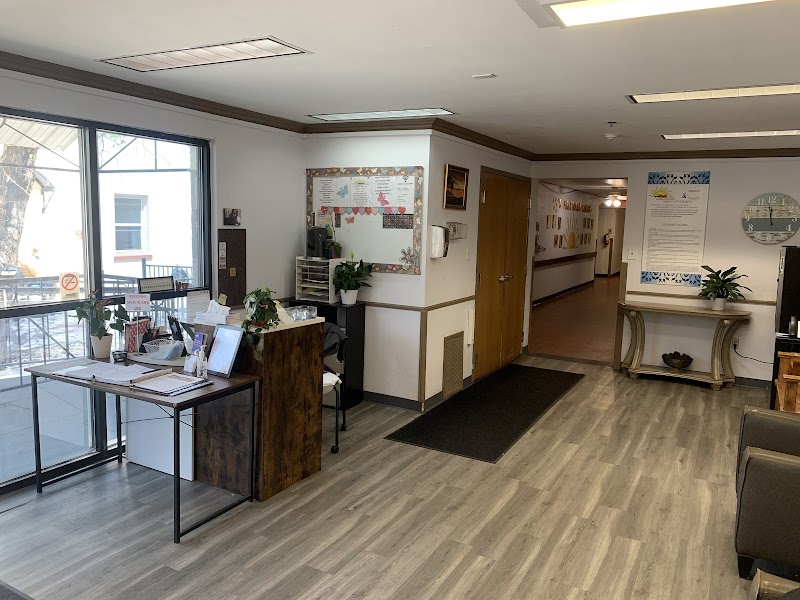
How is Sundance Skilled Nursing And Rehabilitation Staffed?

CMS rates SUNDANCE SKILLED NURSING AND REHABILITATION's staffing level at 4 out of 5 stars, which is above average compared to other nursing homes. Staff turnover is 61%, which is 15 percentage points above the Colorado average of 46%. High turnover can affect care consistency as new staff learn residents' individual needs. RN turnover specifically is 67%, which is notably high. RNs provide skilled clinical oversight, so turnover in this role can affect medical care quality.

What Have Inspectors Found at Sundance Skilled Nursing And Rehabilitation?

State health inspectors documented 17 deficiencies at SUNDANCE SKILLED NURSING AND REHABILITATION during 2022 to 2025. These included: 1 Immediate Jeopardy (the most serious level, indicating potential for serious harm or death), 1 that caused actual resident harm, and 15 with potential for harm. Immediate Jeopardy findings are rare and represent the most serious regulatory concerns. They require immediate corrective action.
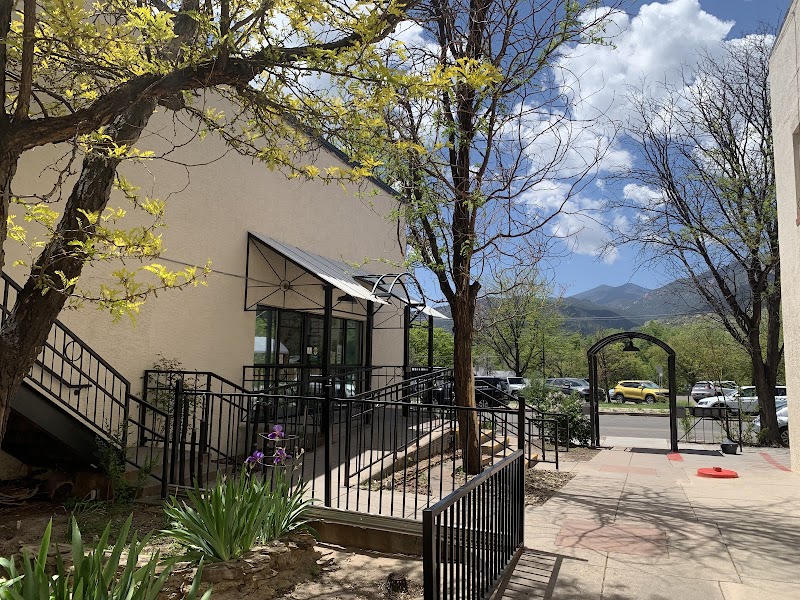
Who Owns and Operates Sundance Skilled Nursing And Rehabilitation?

SUNDANCE SKILLED NURSING AND REHABILITATION is owned by a for-profit company. For-profit facilities operate as businesses with obligations to shareholders or private owners. The facility is operated by MADISON CREEK PARTNERS, a chain that manages multiple nursing homes. With 68 certified beds and approximately 58 residents (about 85% occupancy), it is a smaller facility located in COLORADO SPRINGS, Colorado.
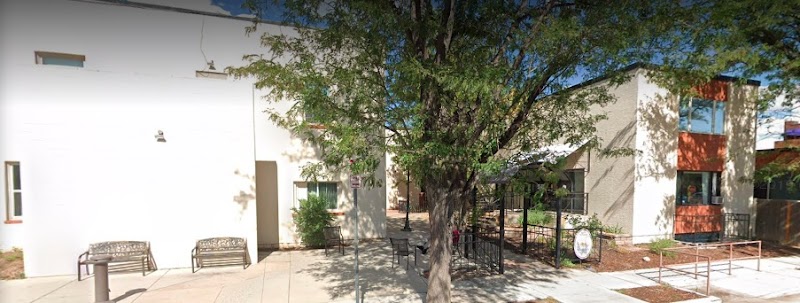
How Does Sundance Skilled Nursing And Rehabilitation Compare to Other Colorado Nursing Homes?

Compared to the 100 nursing homes in Colorado, SUNDANCE SKILLED NURSING AND REHABILITATION's overall rating (3 stars) is below the state average of 3.1, staff turnover (61%) is significantly higher than the state average of 46%, and health inspection rating (2 stars) is below the national benchmark.

What Should Families Ask When Visiting Sundance Skilled Nursing And Rehabilitation?

Based on this facility's data, families visiting should ask: "What changes have been made since the serious inspection findings, and how are you preventing similar issues?" "How do you ensure continuity of care given staff turnover, and what is your staff retention strategy?" "Can I visit during a mealtime to observe dining assistance and food quality?" "How do you handle medical emergencies, and what is your hospital transfer rate?" These questions are particularly relevant given the facility's Immediate Jeopardy citations and the facility's high staff turnover rate.

Is Sundance Skilled Nursing And Rehabilitation Safe?

Based on CMS inspection data, SUNDANCE SKILLED NURSING AND REHABILITATION has documented safety concerns. Inspectors have issued 1 Immediate Jeopardy citation (the most serious violation level indicating risk of serious injury or death). The facility has a 3-star overall rating and ranks #100 of 100 nursing homes in Colorado. Families considering this facility should ask detailed questions about what corrective actions have been taken since these incidents.

Do Nurses at Sundance Skilled Nursing And Rehabilitation Stick Around?

Staff turnover at SUNDANCE SKILLED NURSING AND REHABILITATION is high. At 61%, the facility is 15 percentage points above the Colorado average of 46%. Registered Nurse turnover is particularly concerning at 67%. RNs handle complex medical decisions and coordinate care — frequent RN changes can directly impact care quality. High turnover means new staff may not know residents' individual needs, medications, or preferences. It can also be disorienting for residents, especially those with dementia who rely on familiar faces. Families should ask: What is causing the turnover? What retention programs are in place? How do you ensure care continuity during staff transitions?

Was Sundance Skilled Nursing And Rehabilitation Ever Fined?

SUNDANCE SKILLED NURSING AND REHABILITATION has been fined $35,162 across 1 penalty action. The Colorado average is $33,430. While any fine indicates a compliance issue, fines under $50,000 are relatively common and typically reflect isolated problems that were subsequently corrected. Families should ask what specific issues led to these fines and confirm they've been resolved.

Is Sundance Skilled Nursing And Rehabilitation on Any Federal Watch List?

SUNDANCE SKILLED NURSING AND REHABILITATION is not on any federal watch list. The most significant is the Special Focus Facility (SFF) program, which identifies the bottom 1% of nursing homes nationally based on persistent, serious quality problems. Not being on this list means the facility has avoided the pattern of deficiencies that triggers enhanced federal oversight. This is a positive indicator, though families should still review the facility's inspection history directly.