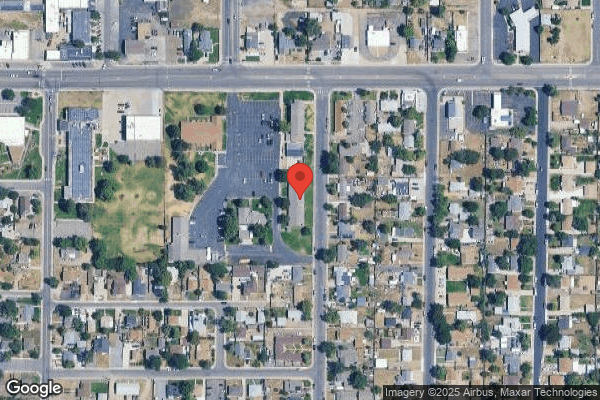

IRONDALE POST ACUTE

7150 POPLAR ST, COMMERCE CITY, CO 80022 (303) 289-7110
For profit - Corporation 95 Beds THE ENSIGN GROUP Data: November 2025 1 Immediate Jeopardy citation
Trust Grade
13/100
#152 of 208 in CO
Last Inspection: December 2023

Within standard 12-15 month inspection cycle. Federal law requires annual inspections.

Overview

Irondale Post Acute in Commerce City, Colorado has received a Trust Grade of F, indicating significant concerns about the quality of care provided. Ranked #152 out of 208 facilities in Colorado, they are in the bottom half of the state, and #9 of 14 in Adams County, meaning there are better options nearby. The facility's performance is stable, with 24 issues identified, including critical incidents related to resident safety and pain management. Staffing is a concern, with a rating of 2 out of 5 stars and a turnover rate of 54%, which is around the state average. Serious incidents have occurred, such as a resident suffering a fall resulting in a hip fracture that went unreported for six days, and another resident was not secured properly during transportation, leading to serious injuries. While there are some dedicated staff members, the overall care and management issues suggest families should consider other options.

Trust Score
F
13/100
In Colorado
#152/208
Bottom 27%
Safety Record
High Risk
Review needed
Inspections
Holding Steady
1 → 1 violations
Staff Stability
⚠ Watch
54% turnover. Above average. Higher turnover means staff may not know residents' routines.
Penalties
○ Average
$60,125 in fines. Higher than 60% of Colorado facilities. Some compliance issues.
Skilled Nurses
⚠ Watch
Each resident gets only 23 minutes of Registered Nurse (RN) attention daily — below average for Colorado. Fewer RN minutes means fewer trained eyes watching for problems.
Violations
⚠ Watch
24 deficiencies on record. Higher than average. Multiple issues found across inspections.
★★☆☆☆
2.0
Overall Rating
★★☆☆☆
2.0
Staff Levels
★★☆☆☆
2.0
Care Quality
★★☆☆☆
2.0
Inspection Score
Stable
2024: 1 issues
2025: 1 issues

The Good

  • Full Sprinkler Coverage · Fire safety systems throughout facility
  • No fines on record

Facility shows strength in fire safety.

The Bad

2-Star Overall Rating

Below Colorado average (3.1)

Below average - review inspection findings carefully

Staff Turnover: 54%

Near Colorado avg (46%)

Higher turnover may affect care consistency

Federal Fines: $60,125

Above median ($33,413)

Moderate penalties - review what triggered them

Chain: THE ENSIGN GROUP

Part of a multi-facility chain

Ask about local staffing decisions and management

The Ugly 24 deficiencies on record

1 life-threatening 3 actual harm
Apr 2025 1 deficiency 1 IJ
CRITICAL (J) 📢 Someone Reported This

A family member, employee, or ombudsman was alarmed enough to file a formal complaint

Immediate Jeopardy (IJ) - the most serious Medicare violation

Accident Prevention (Tag F0689)

Someone could have died · This affected 1 resident

**NOTE- TERMS IN BRACKETS HAVE BEEN EDITED TO PROTECT CONFIDENTIALITY** Based on observations, record review and interviews, the facility failed to ensure one (#3) of eight residents reviewed for acci...

Read full inspector narrative →
**NOTE- TERMS IN BRACKETS HAVE BEEN EDITED TO PROTECT CONFIDENTIALITY** Based on observations, record review and interviews, the facility failed to ensure one (#3) of eight residents reviewed for accidents received adequate supervision out of eight sample residents. Specifically, the facility failed to ensure Resident #3 was provided safe transportation. Resident #3 was wheelchair bound and dependent on staff for mobility and positioning. She had functional limitations in range of motion for her lower extremities due to below the knee amputations. Resident #3 was assisted into the van after an appointment on 1/22/25 by van driver #1. Resident #3 was not secured properly in the van. When the van accelerated, Resident #3's wheelchair tipped backward and she fell onto the floor with the wheelchair landing on top of her. When van driver #1 pulled over, she noticed the resident had blood in her mouth. Emergency services were called and the resident was transported to the hospital. The resident was diagnosed with fractures of the sixth and seventh cervical vertebra, first and second thoracic vertebra, epidural hemorrhage (brain bleed), multiple rib fractures and pain. Resident #3 required hospitalization in the intensive care unit (ICU). Findings include: Observations, record review and interviews confirmed the facility corrected the deficient practice prior to the onsite investigation on 4/15/25 to 4/30/25, resulting in the deficiency being cited as past noncompliance with a correction date of 1/28/25. I. Situation of serious harm The facility's failure to ensure van driver #1 secured Resident #3's wheelchair in the facility's van when she was being transported to and from her appointment placed the resident at serious risk of harm, serious impairment or death. Resident #3 suffered multiple fractures, brain injury and pain. II. Facility plan of correction The corrective action plan the facility implemented in response to the accident on 1/22/25 involving Resident #3's was provided by the director of nursing (DON) on 4/16/25 at 10:35 a.m. The correction plan revealed the following: A. Immediate action Resident #3 was sent to the hospital immediately following the incident on 1/22/25. Upon return to the facility, van driver #1 performed a demonstration and the facility verified the van driver's knowledge of the proper procedure for securing the wheelchair in the van on 1/22/25 (the date of incident). Van driver #1 was suspended from the facility on 1/22/25, pending an investigation. An inspection of the van and wheelchair restraints was completed on 1/23/25 by the maintenance supervisor (MS). B. Identification of others affected The facility determined the deficient practice had the potential to affect all residents who used wheelchairs in the facility. A review of other residents to determine if anti-tippers (a device used to prevent wheelchairs from tipping backwards) for their wheelchairs was needed was completed on 1/24/25. C. Systematic changes The facility provided documentation that all staff who could transport residents had completed wheelchair securement training by 1/29/25. The training included correct procedures for securing wheelchairs in transportation vehicles, the use of appropriate restraints and securing devices, how to inspect and ensure all safety equipment was functioning properly before transport and procedures to follow in case of an emergency or equipment malfunction. The activities director (AD) was included in the individuals having completed the training. The AD helped transport residents until a new van driver was hired on 3/24/25. III. Facility policy and procedure The Transporting a Resident, Facility Van policy, undated, was provided by the director of nursing (DON) on 4/16/25 at 11:05 a.m. It read in pertinent part, It is the policy of this facility to provide residents safe, non-emergency transportation to doctors appointments, activity outings, and any other trips the facility deems necessary. The van will be well-maintained and equipped with safety features. Each resident will be secured in a seat with a seatbelt or in their wheelchair, secured with wheelchair tie-downs. IV. Resident #3 A. Resident status Resident #3, age [AGE], was admitted on [DATE] and readmitted on [DATE]. According to the April 2025 computerized physician orders (CPO), diagnoses included (sustained during the van incident on 1/22/25) fractures of sixth and seventh cervical (neck) vertebrae, fracture of first and second thoracic (chest) vertebrae, multiple fractures of ribs and epidural hemorrhage (bleeding in the brain). Additional diagnoses included chronic obstructive pulmonary (lung) disease, bilateral (both sides) below the knee amputations, kidney disease, epilepsy (seizure disorder) and diabetes. The 2/4/25 minimum data set (MDS) assessment revealed the resident was cognitively intact with a brief interview for mental status (BIMS) score of 13 out of 15. Resident #3 utilized a wheelchair and was dependent on staff for repositioning, transferring, showering and toileting. She required substantial assistance for personal hygiene and dressing. B. Resident #3 interviews and observations Resident #3 was interviewed on 4/15/25 at 10:00 a.m. Resident #3 had a neck brace in place. She was sitting in a wheelchair at the entrance to the facility and said she was waiting to go to an appointment and was hoping the neck brace would be removed at the appointment. She said she was required to continuously wear the neck brace for three months since she fell in the van. Resident #3 said she could not turn her head or see anything unless it was directly in front of her. Resident #3 said she was injured in January 2025 because the van driver did not secure her wheelchair in place as she was returning from an appointment. Resident #3 said the driver accelerated the vehicle and Resident #3's wheelchair flipped backward in the van. The resident said she fell onto the floor of the van and the wheelchair landed on top of her. Resident #3 said after the accident, the driver wanted to move her back into her wheelchair and was enlisting the assistance of passersby to assist with moving her. Resident #3 said she instructed the driver not to move her and to call emergency services. On 4/15/25 at 10:08 a.m. van driver #2 assisted Resident #3 into the facility's transportation van. Van driver #2 anchored Resident #3's wheelchair at four points to the floor of the vehicle and then added a lap seat belt and a shoulder strap. Van driver #2 also used his hand to push the wheelchair to ensure it did not move. Resident #3 was interviewed again on 4/16/25 at 3:30 p.m. Resident #3 did not have a neck brace on at that time. Resident #3 said the brace was removed at her appointment. Though the neck brace was not in place, Resident #3 turned her head to the side slowly and cautiously. Resident #3 said she had ridden with van driver #1 previously and van driver #1 had driven fast and erratically. Resident #3 said when she fell in the van, her head hit the door in the back of the van. She said she cried in pain when the accident happened. Resident #3 said she required neck to rib support (the neck brace extended down to the bottom of her chest) after her hospitalization. C. Record review 1. Care plan Resident #3's activities of daily living (ADL) care plan, revised 1/29/25, revealed the following interventions: Resident #3 required a rigid cervical orthosis (collar which supported neck and spine and limited the movement of neck and head), a shower collar when bathing and cervical spine precautions including no bending, twisting or lifting greater than 10 pounds; Resident #3 required one to two staff participation for dressing, to use the toilet and reposition and turn in bed; Resident #3 required two staff to assist with transferring; and, Resident #3 should be encouraged to discuss feelings about self-care deficit. 2. Progress notes A nurse progress note, dated 1/22/25 at 6:00 p.m., documented van driver #1 reported that Resident #3 had a fall in the van and was taken to the hospital for evaluation. The note documented the nurse would assess Resident #3 upon her return to the facility. The physician and the resident's representative were notified. A nurse progress note, dated 1/28/25 at 6:00 p.m., documented Resident #3 was readmitted from the hospital and transferred to bed via a stretcher. The note documented the resident had generalized pain which she rated at a 10 on a pain scale of 0-10 and also documented she was given Tramadol (pain medication) for pain. The note documented the resident required a rigid neck collar and bed wedges while in bed when Resident #3 was on her side. A social services progress note, dated 1/31/25 at 3:24 p.m., documented Resident #3 expressed sadness over her current physical limitations. The note documented the social services director (SSD) would look into pet visits and ordering a stand to enable Resident #3 to use her personal tablet computer in bed. 3. Hospital report The hospital discharge summary record was provided by the nursing home administrator (NHA) on 4/16/25 at 1:40 p.m. The record documented Resident #3 was admitted to the hospital on [DATE] and discharged on 1/28/25. It documented the following diagnoses: fractures of sixth and seventh vertebra, first and second thoracic vertebra, epidural hemorrhage, multiple bilateral rib fractures and pain. The discharge instructions revealed Resident #3 required a rigid cervical collar at all times. Precautions included no bending, no twisting and no lifting greater than 10 pounds. The resident required additional medications at discharge which included a lidocaine patch (pain medication) for rib fracture pain and methocarbamol (pain medication) for muscle spasms. 4. Facility investigation of Resident #3's fall on 1/22/25 Resident #3's fall investigation was provided by the DON on 4/16/25 at 10:35 a.m. and included the following: The 1/22/25 incident report documented Resident #3 was returning to the facility in the transport van, when the resident fell from her wheelchair and landed on the floor in the van. Van driver #1 called 911 and emergency medical services (EMS) came to the van. EMS transported the resident to the hospital for evaluation. The incident report documented Resident #3 had no injuries. -However, Resident #3 sustained fractures of sixth and seventh vertebra, first and second thoracic vertebra, epidural hemorrhage, multiple bilateral (both sides) rib fractures and pain (see above). The investigation included a fall committee interdisciplinary team (IDT) report, dated 1/29/25 at 9:40 a.m. It documented Resident #3 was in transport back to the facility following an appointment. The fall occurred on 1/22/25 at 12:30 p.m. in the transportation van and was partially witnessed by van driver #1. It documented the resident had no injuries, but blood was noted in Resident #3's mouth after the fall. The investigation documented interventions included calling EMS to transport the resident to the hospital. The MS and the director of rehabilitation (DOR) inspected the van upon return to the facility and no issues were noted with the equipment (devices to secure the residents). Van driver #1 was asked to demonstrate how she had Resident #3 secured and was able to secure a wheelchair in place. Van driver #1 was placed on immediate suspension pending investigation. A quality assurance and performance improvement (QAPI) document was provided by the facility which documented the root cause of the incident as Resident #3's wheelchair tipped when the driver accelerated due to altered weight distribution. The facility investigation included 10 interviews of residents (undated) regarding their use of the facility's transportation van. All of the residents said they felt safe and were properly secured when they used the facility's transportation van. -However, during the survey, Resident #5 said she had not been properly secured in the van (see interview below). The facility investigation included an interview with van driver #1 on 1/22/25 (the same date as Resident #3's fall). Van driver #1 said the van was at a stoplight. She said when the van accelerated, Resident #3 tipped back in her wheelchair. Van driver #1 said she saw the resident leaning and then stopped the van. She said the resident was okay. Van driver #1 said she noticed blood in the resident's mouth and then called 911. The facility investigation included an interview with Resident #3 upon her return from the hospital. It documented Resident #3 said she fell back out of the wheelchair and the wheelchair fell on her. Resident #3 said she did not feel like she was buckled in well and could not recall if the wheelchair had been anchored to the floor prior to the van leaving the appointment. The facility investigation included documentation of van driver #1's education, including safe driving large passenger van and wheelchair safety and securement tips, which were completed by van driver #1 on 11/4/24. It included documentation of fall prevention education completed by van driver #1 on 5/8/24. The investigation revealed van driver #1 was terminated from the facility on 1/27/25. D. Resident #5 interview Resident #5 was interviewed on 4/15/25 at 1:15 p.m. Resident #5 said the previous van driver for the facility (van driver #1) did not anchor her wheelchair to the floor or apply seatbelts to her when she used the van for appointments. Resident #5 said van driver #2 anchored the wheelchair and applied seatbelts appropriately all of the time. E. Staff interviews Van driver #2 was interviewed on 4/15/25 at 10:12 a.m. Van driver #2 said when he transported residents, he anchored resident wheelchairs at the base of the four corners of the wheelchair to the floor of the van and then added a seatbelt and shoulder harness. Van driver #2 said he checked all wheelchairs to ensure they did not wiggle when he pushed on the wheelchair. Van driver #2 said residents had not reported any safety concerns with van transportation to him. Registered nurse (RN) #1 was interviewed on 4/15/25 at 1:15 p.m. RN #1 said van driver #1 called her after Resident #3 fell in the van and said she had called EMS. RN #1 said she told the DON about the resident's fall in the van. RN #1 said van driver #1 did not say anything to her about Resident #3's condition or what had happened. The DON and the clinical resource nurse (CRN) were interviewed together on 4/15/25 at 3:25 p.m. The DON said on 1/22/25, van driver #1 took Resident #3 to an appointment and when Resident #3 was returning from the appointment, Resident #3 fell in the van. The DON said van driver #1 called EMS, then notified the facility and waited for the resident to be taken to the hospital. The DON said the previous NHA conducted the investigation and did not find van driver #1 had done anything wrong and there were no mechanical issues with the van's seat belts or anchors. The DON said van driver #1 was initially suspended. She said van driver #1 was later terminated on 1/27/25, as she had not performed well in another role she had at the facility. The DON said she did not know if the NHA asked van driver #1 if she was certain Resident #3 was secured in the van. The DON said it would not be appropriate to move a resident who was involved in a fall until the resident was assessed, as it could harm the resident. The DON and the CRN both said they did not know how the wheelchair could have tipped over if the wheelchair was securely anchored to the floor of the van. The CRN said if the wheelchair was anchored properly, it should not tip backward. The CRN said the facility had not been able to determine how the incident happened. The DON said the facility was unable to interview Resident #3 until she returned from the hospital (on 1/28/25). The DON said there was not additional investigation after Resident #3 returned from the hospital and said van driver #1 did not secure the wheelchair. The DOR was interviewed on 4/15/25 at 4:10 p.m. The DOR said Resident #3 received physical therapy after the fall. The DOR said the resident received a new wheelchair, as she required a wheelchair that could recline after she returned from the hospital. The DOR said the wheelchair was delivered to Resident #3 with an anti-tip device on 2/4/25. The DOR said Resident #3's previous wheelchair did not have an anti-tip device. The AD was interviewed on 4/15/25 at 4:37 p.m. The AD said she was trained on securing wheelchairs and transporting residents in the facility's van. She said a five-point restraint was required (two anchors to the back of the wheelchair, two anchors in front of the wheelchair and a seat belt and shoulder strap. The AD said she would call 911 if a resident was injured and would pull over to be sure they were safe. The AD said she would not move a resident who fell. The MS was interviewed on 4/15/25 at 4:32 p.m. The MS said he did not typically transport residents, however, he said he was trained on securing wheelchairs and transporting residents. The MS said there were four hooks to secure wheelchairs at the bottom corners of the wheelchair. He said if he transported a resident, he would secure the wheelchair and connect the seatbelt across the resident's lap and chest. He said he checked the wheelchair by pushing on it to be sure it did not move.
Nov 2024 1 deficiency 1 Harm
SERIOUS (G) 📢 Someone Reported This

A family member, employee, or ombudsman was alarmed enough to file a formal complaint

Actual Harm - a resident was hurt due to facility failures

Accident Prevention (Tag F0689)

A resident was harmed · This affected 1 resident

**NOTE- TERMS IN BRACKETS HAVE BEEN EDITED TO PROTECT CONFIDENTIALITY** Based on record review and interviews, the facility failed to ensure one (#1) of three residents reviewed for accidents out of f...

Read full inspector narrative →
**NOTE- TERMS IN BRACKETS HAVE BEEN EDITED TO PROTECT CONFIDENTIALITY** Based on record review and interviews, the facility failed to ensure one (#1) of three residents reviewed for accidents out of five sample residents remained free from accidents. Resident #1, who was identified as a high fall risk, sustained a fall on 9/6/24 which resulted in a hip fracture that required hospitalization. The hip fracture was not identified until 9/12/24 due to the nurse failing to report the fall. Due to the facility's failure to assess, report and identify the injury, the resident was not treated for her fractured hip for six days. Findings include: Record review and interviews confirmed the facility corrected the deficient practice prior to the onsite investigation on 11/20/24, resulting in the deficiency being cited as past noncompliance with a correction date of 9/12/24. I. Incident on 9/12/24 The nursing home administrator (NHA) and the director of nursing (DON) started an investigation of Resident #1's change of condition and her bruising on 9/12/24. The NHA and the DON reviewed camera footage for Friday 9/6/24. The video footage revealed Resident #1 was in the doorway to her room when she stood up from her wheelchair and sat back down. Resident #1 backed her wheelchair into her room and then her feet came out into the doorway. The video footage also revealed certified nurse aide (CNA) #3, who was an agency staff member, and facility licensed practical nurse (LPN) #2 were present. The DON interviewed CNA #3 who verified the resident did have a fall. -The fall was not reported until 9/12/24 (see below). II. Facility corrective action A. Immediate action to correct the deficient practice for Resident #1 A thorough investigation of the incident was conducted on 9/12/24. The facility reviewed the camera footage which revealed Resident #1 sustained a fall on 9/6/24, in her doorway. CNA #3 and LPN #2 were identified in the video and interviewed. LPN #2 denied knowing anything about Resident #1's fall and was terminated. CNA #3 verified Resident #1 sustained a fall on 9/6/24. All of the nursing staff were educated by the assistant director of nursing (ADON) on 9/12/24 related to the facility fall policy, reporting a fall and documenting a fall. The facility continued to hold Quality Assurance and Performance Improvement (QAPI) meetings monthly to address concerns. B. Interventions put into place The facility reviewed their current fall policy on 9/12/24 to ensure appropriate procedures were in place to prevent falls/potential harm and reporting a fall. Their policy met all the criteria required and all staff were re-educated on the fall policy and procedure (on 9/12/24). The incident involving Resident #1 on 9/6/24 was in violation of the policy and procedure, so all staff that were present at the time of the investigation were provided further education on the following day (9/13/24). The DON would ensure all newly hired staff would receive education on the fall policy. The education given included the following information: Identifying neglect, reporting a fall, registered nurse (RN) assessment for injuries, neurological checks if there was a head injury or the fall was unwitnessed, and documenting the fall. The facility would review falls and discuss them in the monthly Quality Assurance and Performance Improvement (QAPI) meeting for three months. III. Facility policy and procedure The Fall Monitoring and Management policy, revised October 2021, was provided by the NHA on 11/20/24 at 3:00 p.m. It read in pertinent part, A fall is any unplanned sudden change of position. It is the policy of the facility that residents are assessed and evaluated to identify risks for injuries due to falls, residents receive necessary treatment and monitoring after a fall and interventions are implemented to minimize risks for injury due to falls. For an individual who has fallen, the following interventions should include, but are not limited to: -Obtain vital signs; -Assess for head injury/change in level of consciousness; -Assess for change in normal range of motion/weight bearing; -Initiate neurological assessment on residents who have hit their head or had an unwitnessed fall (even if the resident stated they did not hit their head, because they may have hit their head and may not have recollection that they hit their head); -Assess for pain; -Precipitating factors, details on how fall occurred; -Provide first aid (including intervention for pain if pain was identified); -Notify physician for further orders; -Notify responsible party; -Document details under risk management in the computerized record; -Document neurological assessments on the neurological assessment form.; -Monitor/document daily for 72 hours; and, -Notify the physician if signs/symptoms of complications and update the plan of care. IV. Resident #1 A. Resident status Resident #1, age greater than 65, was admitted on [DATE] and readmitted on [DATE]. According to the November 2024 computerized physicians orders (CPO), diagnoses included displaced intertrochanteric fracture of the left femur (thigh bone), age-related osteoporosis, unspecified osteoarthritis, unspecified protein-calorie malnutrition, vitamin D deficiency, muscle wasting and atrophy (organ and tissue wasting), unspecified abnormalities of gait and mobility, unspecified lack of coordination, muscle weakness, difficulty in walking and unspecified dementia. The 9/6/24 minimum data set (MDS) assessment revealed the resident had severe impairment for daily decision making per the staff assessment for mental status. She had delusions and wandered. She required supervision/oversight for safety with transfers. She used a wheelchair for locomotion. B. Record review A 8/11/24 fall assessment revealed Resident #1 was a high risk for falls. The fall care plan, revised 9/17/24, revealed the resident was at risk for falls related to confusion secondary to dementia, gait/balance problems, osteoarthritis and osteoporosis. Interventions included anticipating and meeting the residents needs, placing the call light within the residents reach, placing the bed in lowest position, educating the resident/family/caregiver about safety reminders and what to do if a fall occurred, following facility protocol, keeping needed items within reach, maintaining a clear pathway and ensuring non-skid strips were placed at the bedside to provide traction during transfers. A change in condition note, dated 9/8/24 at 5:41 p.m., revealed Resident #1 had a functional decline, altered mental status and a decrease in food/liquids intake. The physician and responsible party were notified. A nursing progress note, dated 9/8/24 at 6:04 p.m., revealed the resident continued to have increased lethargy (feeling drowsy or not alert), weakness, low intake, inability to self-transfer and ambulate. Fluids and meal intake were encouraged. A nursing progress note, dated 9/8/24 at 6:48 p.m., revealed a RN assessed the resident and found bruising to the upper part of her spine the size of a nickel. The resident was lethargic and weak during the assessment. The physician and responsible party were notified of the findings. A nursing progress note, dated 9/9/24 at 6:27 p.m., revealed the resident continued to be monitored due to lethargy, poor meal and fluid intake and mobility changes. A nursing progress note, dated 9/9/24 at 6:39 p.m., revealed the resident was noted to have bruising to her back on the right and left side. It was dark purple in color. Due to the resident's current state, she was unable to express pain or discomfort and unable to answer questions appropriately. A nursing progress note, dated 9/11/24 at 4:54 a.m., revealed the resident had dark bruising to her vaginal area. A nursing progress note, dated 9/11/24 at 2:29 p.m., revealed an x-ray for the left hip, leg and knee was ordered due to the identified bruising and swelling. A physician's progress note, dated 9/11/24 at 3:40 p.m., revealed the physician spoke with the DON and the facility staff related to Resident #1's bruising of unknown origin. The skin exam was limited due to the resident's resistance. There were some areas of ecchymosis (bruising) to her mid upper thoracic back. The lower extremity exam was remarkable for the left upper thigh with ecchymosis and bruising to the lower left thigh and in her vaginal area. The exam was concerning for a left hip fracture. A change in condition note, dated 9/11/24 at 8:15 p.m., revealed the resident had a change of condition related to trauma. The physician and family were notified. A nursing progress note, dated 9/11/24 at 10:00 p.m., revealed new orders were received to send the resident to the emergency room secondary to increased swelling and bruising to the left hip and knee. An x-ray of the left hip and knee were pending. The DON was aware of the transfer and the family was notified via a phone message. A nursing progress note, dated 9/12/24 at 1:55 p.m., revealed the resident sustained a fall on 9/6/24 that was not reported until 9/12/24. An x-ray revealed a left hip fracture. The physician and family were notified of the results. A fall committee note, dated 9/19/24 at 9:53 a.m., revealed Resident #1 sustained a fall in her doorway. The resident's injuries included latent bruising and after several assessments by the nursing staff and the medical director, a left hip fracture was suspected and an x-ray was ordered. The x-ray confirmed a left hip fracture and the resident was sent to the emergency room. Prior to the fall, the resident was sitting in her wheelchair in the hallway. She stood up and fell. Therapy evaluated the resident upon her return from the hospital. A daily skilled note, dated 10/16/24 at 3:20 a.m., revealed the resident had limited range of motion (ROM) to her left hip and thigh due to the left hip fracture. V. Staff interviews CNA #1 was interviewed on 11/20/24 at 2:49 p.m. CNA #1 said if a resident had a fall she would immediately get the nurse to assess the resident before moving them. She said the nurse was responsible for reporting a fall to the DON. She said after Resident #1's fall, all nursing staff received education on reporting a fall, documenting a fall and assessing the resident after a fall. CNA #2 was interviewed on 11/20/24 at 2:54 p.m. CNA #2 said if a resident had a fall, a staff member would stay with the resident while another staff member reported it to the nurse. The nurse would assess the resident for any injuries. She said if a nurse was not available, the staff would report the fall to the assistant director of nursing (ADON) or the DON to complete an assessment before moving the resident. She said the nurse was responsible for completing a fall report and notifying the DON. She said after Resident #1's fall all staff was educated on the fall policy procedure. RN #1 was interviewed on 11/20/24 at 3:09 p.m. RN #1 said if a resident had an unwitnessed fall, the CNA would notify the nurse. She said the RN would assess the resident for any injuries. She said neurological checks were started as soon as possible. She said the nurse was responsible for reporting the fall to the DON, the physician and the responsible party. LPN #1 was interviewed on 11/20/24 at 3:11 p.m. LPN #1 said if a resident had a fall she would call an RN to assess the resident for any injuries. She said she would then call the physician and the responsible party. She said if the resident hit their head or had an unwitnessed fall, she would immediately start neurological checks. She said the nurse was responsible for reporting the fall to the ADON, the DON and the NHA. She said she started working at the facility three weeks prior and received the fall policy training, as well as education on reporting, assessing and documenting a fall. The DON was interviewed on 11/20/24 at 3:44 p.m. The DON said on Saturday, 9/7/24, she received a phone call from the RN working who reported Resident #1 was not acting like herself and not eating. She said a change of condition assessment was completed and the physician was notified. She said the following day, Sunday (9/8/24), she received a phone call from the nurse stating Resident #1 had bruises on her back. She told the nurse to document the bruising so the facility could figure out where the bruising came from. She said on Monday, 9/9/24, the staff were still trying to figure out where the resident's bruising came from. She said she interviewed Resident #1, utilizing a translator, and asked the resident if she had a fall. She said the resident said no and wanted to be left alone. She said on Tuesday, 9/10/24, she attempted to assess Resident #1 again and she refused. The DON said on Wednesday, 9/11/24, the medical director was in the facility and she asked him to look at her. She said Resident #1 agreed to the assessment and the medical director found bruising from her hip to her knee. She said the medical director said she needed to order an x-ray because it looked like a fracture. She said the x-ray confirmed a left hip fracture and Resident #1 was transferred to the hospital. She said the following day, Thursday, 9/12/24, she and the NHA reviewed the video footage prior to the resident's change of condition. The DON said the review of the camera footage revealed Resident #1 had a fall in her doorway on 9/6/24. She said CNA #3 and LPN #2 were present when the fall occurred. She said CNA #3 and LPN #2 walked directly into the resident's room and exited approximately three minutes later. She said she interviewed LPN #2 who denied the resident fell. She said LPN #2 was terminated. She said she then interviewed CNA #3 who verified the resident did have a fall. The DON said CNA #3 reported that LPN #2 picked Resident #1 up and placed her in her wheelchair after the fall. She said LPN #2 gave a report to the oncoming nurse and left the facility. She said CNA #3 said the resident should not have been moved until a RN assessed for injuries. The DON said the ADON immediately provided education to the staff on what abuse looked like and the facility policy and procedure for falls.
Dec 2023 9 deficiencies 1 Harm
SERIOUS (G) 📢 Someone Reported This

A family member, employee, or ombudsman was alarmed enough to file a formal complaint

Actual Harm - a resident was hurt due to facility failures

Deficiency F0697 (Tag F0697)

A resident was harmed · This affected 1 resident

**NOTE- TERMS IN BRACKETS HAVE BEEN EDITED TO PROTECT CONFIDENTIALITY** Based on record review and interviews, the facility failed to provide an effective pain management regimen in a manner consisten...

Read full inspector narrative →
**NOTE- TERMS IN BRACKETS HAVE BEEN EDITED TO PROTECT CONFIDENTIALITY** Based on record review and interviews, the facility failed to provide an effective pain management regimen in a manner consistent with professional standards of practice, resident-centered care plans and resident preferences for one (#40) resident out of 36 sample residents. The facility failed to ensure Resident #40 was administered pain medication as ordered. Resident #40 was prescribed hydrocodone for pain management. The facility ran out of the scheduled prescribed medications and the resident missed seven doses of hydrocodone from 11/11/23 to 11/13/23. The facility failed to implement effective interventions to prevent the resident from running out of his medications (discovered on 11/10/23) from progressing to the resident experiencing pain, suffering withdrawal symptoms, and subsequently being administered Fentanyl by emergency medical services before being transported to the hospital and treated for pain symptoms Furthermore, the facility failed to ensure Resident #40's pain medications were ordered from the pharmacy timely. The facility failed to use the emergency kit to administer Resident #40's pain medication when it was not available. The facility failed to consistently document Resident #40's pain level. Findings include: I. Professional reference According to https://medlineplus.gov/druginfo/meds/a614045.html, it read in pertinent part, Hydrocodone is used to relieve severe pain. Hydrocodone is only used to treat people who are expected to need medication to relieve severe pain around-the-clock for a long time and who cannot be treated with other medications or treatments. Hydrocodone extended-release (long-acting) capsules or extended-release tablets should not be used to treat pain that can be controlled by medication that is taken as needed. Hydrocodone is in a class of medications called opiate (narcotic) analgesics. It works by changing the way the brain and nervous system respond to pain. Do not stop taking hydrocodone without talking to your doctor. If you suddenly stop taking hydrocodone, you may experience withdrawal symptoms such as restlessness, teary eyes, runny nose, yawning, sweating, chills, hair standing on end, muscle pain, widened pupils (black circles in the middle of the eyes), irritability, anxiety, back or joint pain, weakness, stomach cramps, difficulty falling asleep or staying asleep, nausea, loss of appetite, vomiting, diarrhea, fast breathing, or fast heartbeat. Your doctor will probably decrease your dose gradually. II. Facility policy and procedure The Medication Order and Receipt Record policy, revised January 2023, was provided by the director of nursing (DON) on 12/14/23. The policy read in pertinent part, Medications should be ordered in advance, based on the dispensing pharmacy's required lead time. Emergency medications ordered and or received shall also be entered into the medication order and receipt record. Drugs and biologicals that are required to be refilled must be reordered from the issuing pharmacy not less than the days prior to the last dosage being administered to ensure that refills are readily available. III. Resident status Resident #40, age under 65, was admitted on [DATE]. According to the December 2023 computerized physician orders (CPO), diagnoses included other chest pain, generalized anxiety disorder, unspecified asthma, nicotine dependence, spinal stenosis, history of falling, schizoaffective disorder (combination of symptoms of schizophrenia and mood disorder, such as depression or bipolar disorder), depressive type and pain disorder with related psychological factors. The 10/15/23 minimum data set (MDS) assessment revealed the resident had intact cognition with a score of 15 out of 15 for the brief interview of mental status (BIMS) assessment. The resident did not have any rejection of care behaviors and was independent with bed mobility, transfers, locomotion, dressing, toilet use and hygiene. The resident had been on a scheduled pain medication regimen and had pain presence that he experienced frequently. IV. Resident interview Resident #40 was interviewed on 12/11/23 at approximately 10:00 a.m. The resident said the facility thought he had a heart attack but he believed he experienced a panic attack. He said he had gone without his pain medications for three days in November 2023 which led to him having increased pain and anxiety and subsequently a panic attack. The resident said he had an adverse reaction to not having the medications he had been prescribed for a long time for his pain management. V. Record review The November 2023 CPO revealed the resident was ordered hydrocodone-acetaminophen oral tablet 5-325 mg (hydrocodone-acetaminophen). Give one tablet by mouth four times a day for pain. The November 2023 medication administration record (MAR) revealed the resident had missed seven doses of hydrocodone across three days from 11/11/23 to 11/13/23. Missed doses hydrocodone included (see below). -The 11/11/23 6:00 p.m. dose of hydrocodone was not given. The 11/11/23 at 5:20 p.m. nursing progress note revealed, Resident had one tablet left. Wants to save it for later in the evening. Medication has been reordered from the pharmacy. The MAR did not document the resident's pain level. -The 11/12/23 12:00 a.m. dose of hydrocodone was not given. The 11/12/23 at 1:02 a.m. nursing progress note revealed, Med (medication) not available. The resident's pain level was not documented on the MAR. -The 11/12/23 6:00 a.m. dose of hydrocodone was not given. The 11/12/23 at 5:03 a.m. nursing progress note documented , Med not available.The resident's pain level was documented as a 1 out of 10 (with 10 being the worst pain). -The 12:00 p.m. dose of hydrocodone was not given. The 11/12/23 at 2:22 p.m. nursing progress note revealed, Physician is aware (that the hydrocodone medication was not available), sending new script to the pharmacy, pharmacy is then to deliver. The resident's pain level was not documented on the MAR. -The 11/12/23 6:00 p.m. dose of hydrocodone was not given. The 11/12/23 at 6:02 p.m. nursing progress note revealed, Resident has had complaints of pain during the night and during this shift. Pharmacy has been contacting the physician to get a refill. The resident's pain level was documented as an 8 out of 10 (severe) on the MAR. -The 11/13/23 12:00 a.m. dose of hydrocodone was not given. The 11/13/23 at 12:16 a.m. nursing progress note revealed, Medication (hydrocodone) is still not available. The resident's pain level was not documented on the MAR. -The 11/13/23 6:00 a.m. dose of hydrocodone was not given. The 11/13/23 at 5:22 p.m. nursing progress note revealed, Med is still not available. The resident's pain level was not documented on the MAR. -The 11/13/23 12:00 p.m. dose was available and was given; however, the MAR documented the resident's pain was not relieved. The resident's pain level was documented as a 10 out of 10 (severe pain). -The 11/13/23 3:00 p.m. dose was given; however, the resident's pain level was documented as 9 out of 10 (severe pain). The 11/13/23 at 7:30 p.m. nursing progress note revealed, at approx (approximately) 6:30 p.m. the resident complained of chest pain and pain on the left hand with a pain scale of 10. Resident complained of dizziness. Initial vital signs taken blood pressure: 207/135 (elevated), heart rate: 98, respirations rate:19, temperature: 97.3, Oxygen pulse: 95% on room air. Resident stated the pain began when he was outside smoking. 911 called, MD (medical doctor) notified, DON called, family notified. At approximately 6:37 p.m. 911 arrived. At 7:10 p.m. emergency medical services were called and the emergency medical services arrived and administered 200 micrograms of Fentanyl with mild improvement of his pain symptoms before the resident was transferred to the hospital. The resident went to the hospital where they ruled out cardiac concerns and was treated for pain which was relieved and the resident returned to the facility. VI. Staff Interviews Registered nurse (RN) #1 was interviewed on 12/12/23 at 2:17 p.m. She said she would reorder medications once she realized a specific medication was out of stock. Once she identified a medication was out of stock she would notify the provider, her supervisor and the pharmacy. She said she would be able to use the RX Now machine (emergency medication stock) to obtain medications if medications were out of stock by calling the pharmacy and obtaining the verification code. She said a resident who did not receive their pain medications for a few days could potentially develop increased pain, anxiety and an increase in blood pressure. The director of nursing (DON) was interviewed on 12/14/23 at 9:07 a.m. The DON said the hydrocodone was out of stock and the resident missed his doses from 11/11/23 to 11/13/23. The side effects of stopping an opiate could lead someone to become uncomfortable, anxious, sweat, headaches and experience pain. The DON said there were numerous issues with the pharmacy in obtaining medications and therefore the resident missed a few medication doses. The DON said during the time period the medications were out of stock, the facility had access to hydrocodone in the RX Now machine. The RX Now machine had 10 doses of medications available for a resident with hydrocodone ordered. The DON said she would ensure all nurses including agency nurses were trained on MAR documentation, medication re-ordering process, time frame of re-ordering medications and training on STAT (urgent) ordering requests in order to ensure residents were not missing their ordered medications. The DON said the facility would be using a different pharmacy in 2024 and had a new process in place for the physician to fax in scripts and or respond to the pharmacy timely and in urgent situations to involve the medical director to provide verbal orders to the pharmacy to prevent residents from missing medication doses. The DON said if Resident #40 felt anxious and he believed he was in pain; that could have led to his hospitalization since he felt anxious about not receiving medications and he was in pain. The DON said she felt bad he did suffer and he felt that way from experiencing pain which caused him anxiety and a panic attack. The pharmacist was interviewed on 12/14/23 at 2:05 p.m. He said when medications were running low on stock (approximately seven days prior to medications running out) the nurse should place an order through contacting the pharmacy the facility works with. The pharmacist said he has had trouble reaching a physician for a new script and or refill request frequently from the facility and at times the physician would take up to three days to provide correspondence to refill medications and or send a script. The pharmacist said the physician could always call and provide a verbal order to obtain medications as soon as possible from the RX Now machine as a backup until the medications were delivered to the facility to prevent a delay in care.
CONCERN (D) 📢 Someone Reported This

A family member, employee, or ombudsman was alarmed enough to file a formal complaint

Potential for Harm - no one hurt, but risky conditions existed

Accident Prevention (Tag F0689)

Could have caused harm · This affected 1 resident

**NOTE- TERMS IN BRACKETS HAVE BEEN EDITED TO PROTECT CONFIDENTIALITY** Based on observations, record review and staff interviews, the facility failed to ensure the resident environment remained as fr...

Read full inspector narrative →
**NOTE- TERMS IN BRACKETS HAVE BEEN EDITED TO PROTECT CONFIDENTIALITY** Based on observations, record review and staff interviews, the facility failed to ensure the resident environment remained as free of accident hazards as possible for two (#38 and #20) of six residents out of 36 sample residents reviewed for accident hazards. Specifically, the facility failed to have fall interventions in place for Resident #38 and Resident #20. Findings include: I. Facility policy and procedure The Fall Management System policy and procedure, revised January 2022, was provided by the nursing home administrator (NHA) on 12/13/23 at 1:00 p.m. It revealed in pertinent part, It is the policy of this facility to provide an environment that remains as free of accident hazards as possible. It is also the policy of this facility to provide each resident with appropriate assessment and interventions to prevent falls and to minimize complications if a fall occurs. Residents with high risk factors identified on the Fall Risk Evaluation will have an individualized care plan developed that includes measurable objectives and timeframes. The care plan interventions will be developed to prevent falls by addressing the risk factors and will consider the particular elements of the evaluation that put the resident at risk. II. Resident #38 A. Resident status Resident #38, age [AGE], was admitted on [DATE]. According to the December 2023 computerized physician orders (CPO), diagnoses included encephalopathy (brain disease), atrial fibrillation (abnormal heartbeat), hypertension and degenerative disease of the nervous system. The 9/9/23 minimum data set (MDS) assessment revealed the resident had severe cognitive impairment with a brief interview for mental status (BIMS) score of seven out of 15. The MDS assessment revealed the resident was dependent on assistance for toileting and showering. He needed substantial to maximum assistance with bed mobility, lying to sitting and sitting to stand, and transfers. B. Observations and interview Resident #38 was interviewed on 12/11/23 from 8:33 a.m. to 8:50 a.m. while he was lying in bed. During this time, Resident #38's fall mat was leaning behind the head of his bed. His bed was not in a low position. Resident #38 was observed at 9:19 a.m. He was lying in bed, his bed was not in a low position and his fall bat was leaning behind the head of his bed. Resident #38 was observed on 12/12/23 at 8:30 a.m. lying in bed and the fall mat was leaning behind the head of his bed. There were two wheelchairs next to the side of his bed facing his bed. Resident #38 said one of the two wheelchairs was his roommate's and his roommate's wheelchair was frequently on Resident #38's side of the room. Resident #38 was observed at 9:53 a.m. lying on his bed and the mat was leaning behind the head of his bed. C. Record review Resident #38's fall care plan focus revealed he was at risk for falls due to a personal history of falls, encephalopathy, respiratory failure, atrial fibrillation, polyneuropathy (nerve damage), hydrocephalus ( excess fluid on the brain), AIMS (abnormal involuntary movement), developmental disorder, bilateral ankle contractures, pain, decreased mobility, and medication side effects, revised 8/30/22. Pertinent interventions included the bed in the lowest position, initiated 5/5/22 and to continue with the placement of fall mat and bed in lowest position, initiated, 10/10/23. A review of Resident #38's interdisciplinary team (IDT) 10/10/23 progress note revealed Resident #38 had an unwitnessed fall on 10/9/23 at 9:30 p.m. Predisposing factors included confusion, impaired memory, hydrocephalus (excess fluid on the brain), ankle contractures, diuretics and a recent room move. Resident #38 reported that he slid out of bed. Interventions included to continue with the placement of the fall mat and the bed in the lowest position. Resident #38's fall prevention devices task response history in his electronic medical record was reviewed from 11/14/23 to 12/13/23. The fall mat and low bed that were interventions were not consistently documented in place. -There were no documented refusals of interventions during the review period. Resident #38's [NAME] (resident care summary) as of 12/12/23 documented under Falls/Safety to continue with placement of a fall mat and the bed in lowest position. III. Resident #20 A. Resident status Resident #20, age [AGE], was admitted on [DATE]. According to the December 2023 CPO, diagnoses included paranoid schizophrenia, dementia, depression and squamous cell carcinoma (skin cancer). The 10/6/23 minimum data set (MDS) assessment revealed the resident had moderate cognitive impairment with a BIMS score of nine out of 15. The MDS assessment revealed Resident #20 was dependent on assistance for bathing, needed substantial assistance with lower body dressing, toileting hygiene and transfers, moderate assistance with oral hygiene and needed supervision for eating. The MDS assessment revealed Resident #20 had two falls without injury since admission. B. Observations On 12/12/23 at 8:45 a.m. Resident #20 was observed in his wheelchair wearing regular socks and no shoes ambulating down the hallway in his wheelchair. At 9:06 a.m. Resident #20 was observed wearing regular socks and no shoes ambulating down the hallway in his wheelchair. At 9:34 a.m. Resident #20 was observed wearing regular socks and no shoes and ambulating down the hallway in his wheelchair. At 1:23 p.m. Resident #20 was observed in bed with regular socks on instead of non-skid socks. On 12/13/23 at Resident #20 at 9:43 a.m. was wheeling down the hall and was wearing regular socks, not with non-skid socks or shoes. Resident #20 was observed in bed at 1:25 p.m. wearing regular socks instead of non-skid socks. C. Record review Resident #20's fall care plan focus revealed he was at risk for falls due to diagnoses of mental illness, osteoarthritis, incontinence, difficulty walking, non-compliance with his medication regimen, prescribed psychoactive medications and other medication side effects, initiated 6/30/23 and revised 10/11/23. Pertinent interventions included to ensure the resident was wearing appropriate footwear when ambulating or wheeling in his wheelchair, initiated 7/13/23. Resident #20's fall prevention devices task response history in his electronic medical record was reviewed from 11/14/23 to 12/13/23. The fall prevention tasks included non-skid slippers and shoes. On 12/12/23 the fall prevention task for non-skid slippers and shoes was not marked as in place at 12:39 a.m. and 11:49 a.m. and the task did not indicated Resident #20 refused the intervention. On 12/13/23 the fall prevention task for non-skid slippers and shoes was not marked in place at 12:06 a.m. However, the fall prevention task for non-skid slippers and shoes was marked as in place at 9:28 a.m. -Resident #20 was observed ambulating in the hallway in his wheelchair at 9:43 a.m. and did not have non-skid socks on. V. Staff interviews The director of nursing (DON) was interviewed on 12/14/23 at 12:00 p.m. The DON said there was no reason why Resident #38's fall mat should not be on the floor while he was lying in bed. The DON said Resident #20 should have non skid socks or regular socks with shoes for his fall intervention. Registered nurse (RN) # 1 was interviewed on 12/14/23 at 1:30 p.m. RN #1 said while Resident #38 was in bed, all staff should check to see that his fall mat was in place. RN #1 said the fall mat intervention was on Resident #38's treatment record so it was up to all staff including the certified nurse aides (CNAs) to monitor. RN #1 said Resident #20 should have on non-skid socks or regular socks and shoes, it should be documented if he refused the interventions. RN #1 said the refusals should be recorded on the task history in the resident's electronic medical record. CNA #1 was interviewed on 12/14/23 at 1:45 p.m. CNA #1 said Resident #20 did not refuse his non-skid socks and he used non-skid socks and shoes. CNA #2 was interviewed on 12/14/23 at 1:45 p.m. CNA #2 said Resident #38 should have his bed low to the floor with the fall mat beside his bed when he was in bed and she did not know him to refuse those interventions.
CONCERN (D) 📢 Someone Reported This

A family member, employee, or ombudsman was alarmed enough to file a formal complaint

Potential for Harm - no one hurt, but risky conditions existed

Respiratory Care (Tag F0695)

Could have caused harm · This affected 1 resident

**NOTE- TERMS IN BRACKETS HAVE BEEN EDITED TO PROTECT CONFIDENTIALITY** Based on observations, record review and interviews, the facility failed to ensure one (#25) of three residents who required res...

Read full inspector narrative →
**NOTE- TERMS IN BRACKETS HAVE BEEN EDITED TO PROTECT CONFIDENTIALITY** Based on observations, record review and interviews, the facility failed to ensure one (#25) of three residents who required respiratory care received the care consistent with professional standards of practice out of 36 sample residents. Specifically, for Resident #25 the facility failed to: -Ensure the physician's order was followed for oxygen therapy; and, -Accurately complete section O in the comprehensive minimum data set (MDS) assessment under respiratory treatments. Findings include: I. Facility policy and procedures The Oxygen Management policy, revised March 2019, was provided by the director of nursing (DON) on 12/14/23 at 1:31 p.m. The policy revealed in pertinent part: It is the policy of this facility that oxygen therapy is administered, as ordered by the physician or as an emergency measure until the order can be obtained. The purpose of the oxygen therapy is to provide sufficient oxygen to the bloodstream and tissues. Procedures for oxygen therapy to include: -Obtain appropriate physician's orders. -Identify residents. -Explain procedure. -Gather necessary equipment -Provide privacy for resident. -Wash hands properly. -Assemble the oxygen unit and flowmeter, making sure all connections are secure. -If using a reusable humidifier, fill the bottle to the correct level with distilled water and attach it to the oxygen unit. -Attach the oxygen delivery device to the oxygen unit. -Turn the unit on to the desired flow rate, and assess equipment for proper functioning: Airflow should be felt through the oxygen delivery device. Bubbles should be seen diffusing through the humidifier bottle. -If no evidence of oxygen flow, check connections and tubing for leaks. -Review the resident's care plan to evaluate for any special needs of the resident. II. Resident status Resident #5, age under 65, was admitted on [DATE]. According to the December 2023 computerized physician orders (CPO), other speech and language deficits following cerebral infarction (stroke), depression, insomnia, hypertension, type 2 diabetes mellitus with hyperglycemia, chronic respiratory failure, unspecified whether with hypoxia or hypercapnia, chronic obstructive pulmonary disease (COPD) and shortness of breath. The 8/24/23 minimum data set (MDS) assessment revealed the resident had moderate cognitive impairment with a brief interview for mental status score (BIMS) of 11 out of 15. She had no behaviors and did not reject care. She required substantial/maximal assistance with personal hygiene, mobility, toileting, transfers, repositioning and dressing. -The use of oxygen therapy was not triggered/coded on the MDS assessment under section O. III. Resident interview and observation Resident #25 was interviewed on 12/11/23 at 11:00 a.m. She said he has been on oxygen since she was admitted and the tubing was changed weekly. The resident said she should be on 2 liters of continuous oxygen but sometimes the certified nurse aides (CNAs) were changing it. Resident #25 was observed on 12/11/23, 12/12/23, and 12/13/23 from 9:00 a.m. to 5:00 p.m. Her oxygen concentrator was set for 3 liters via a nasal cannula. IV. Record review The medical record was reviewed on 12/11/23 and it revealed the resident had an order for oxygen. The order read Oxygen at 2L via nasal cannula-continuous every shift. The care plan was reviewed on 12/11/23 and it revealed the resident has emphysema, COPD and she will display optimal breathing patterns daily through the review date and to give oxygen therapy as ordered by the physician. V. Staff interviews Certified nurse aide (CNA) #3 was interviewed on 12/13/23 at 11:30 a.m. She said she knew residents she cared for very well and they were all on 2 liters of oxygen. She did not ask the nurse to verify if the orders were updated. She said each morning or midday, she checked on the residents ' oxygen and set it to 2 liters even if some were lower or higher. She would not inform the nurse on the unit or document the discrepancy. She said she frequently had to adjust the resident ' s oxygen because it was either set higher or lower than 2 liters. Licensed practical nurse (LPN) #1 was interviewed on 12/13/23 at 11:45 p.m. She said she would look at the resident's order to see how many liters they should be using. She looked at Resident #25's medical record and said the order was for 2 liters of continuous oxygen. She said she typically reviewed if the resident ' s oxygen was set correctly in the evening time. She said it was important to follow the doctor ' s order but she was not certain what could happen if a resident receives more oxygen than what was ordered. The LPN said if she saw the oxygen was under or above 2 liters she would adjust it but would not document it. She said she was not aware of any behaviors the resident had related to adjusting the concentrator. The assistant director of nursing (ADON) was interviewed on 12/13/23 at 2:36 p.m. She said residents using oxygen should have an order including the liters, the route and the frequency. She said nurses should verify the residents ' oxygen level was set correctly at least once per shift when they first arrived. She said a doctor ' s order should be followed because they have assessed the resident and understand their comorbidities. The ADON said too much oxygen especially if someone had COPD could lead to ineffective gas exchange which could cause harm. The oxygen concentrator should be set at the correct liters to ensure it is therapeutic for the resident. The ADON said if a nurse observed the oxygen was incorrectly set the nurse should call the doctor and note the difference and correction in the nurse's progress note. The ADON said if the resident had frequent refusals of oxygen then the care plan should be updated to include the refusals. The ADON said she would provide education on oxygen therapy to the nursing staff. The ADON said she would update the care plan to include the resident ' s refusals of oxygen therapy compliance. -However, the staff did not indicate she refused to comply with the oxygen and rejection of care was not indicated on the MDS assessment.
CONCERN (D) 📢 Someone Reported This

A family member, employee, or ombudsman was alarmed enough to file a formal complaint

Potential for Harm - no one hurt, but risky conditions existed

Pharmacy Services (Tag F0755)

Could have caused harm · This affected 1 resident

**NOTE- TERMS IN BRACKETS HAVE BEEN EDITED TO PROTECT CONFIDENTIALITY** Based on observation, record reviews and interviews, the facility failed to provide pharmaceutical services, including procedure...

Read full inspector narrative →
**NOTE- TERMS IN BRACKETS HAVE BEEN EDITED TO PROTECT CONFIDENTIALITY** Based on observation, record reviews and interviews, the facility failed to provide pharmaceutical services, including procedures regarding emergency medications and biologicals. Specifically, the facility failed to communicate and coordinate with the pharmacy to remove an emergency medication kit when an automated dispensing system was implemented. Findings include: I. Facility policy The Medication Access and Storage policy, revised [DATE], was provided by the assistant director of nursing (ADON) on [DATE] at 9:26 a.m. It read in pertinent part: Outdated, contaminated, or deteriorated medications and those in containers that are cracked, soiled, or without secure closures are immediately removed from stock, disposed of according to procedures for medication destruction and reordered from the pharmacy if a current order exists. II. Observations On [DATE] at 3:15 p.m., the memory care unit medication storage room was observed with licensed practical nurse (LPN) #2. A locked cabinet contained a narcotic emergency kit. The contents of the kit included diazepam, hydrocodone, hydromorphone, lorazepam, morphine, oxycodone, and tramadol. A paper note attached to the kit stated narcotic e-kit is used for new orders only, including unexpected change in orders. The kit expired [DATE]. III. Staff Interviews LPN #2 was interviewed on [DATE] at 3:20 p.m. She said she did not know there was an emergency narcotic kit in the locked cabinet until she opened the cabinet. LPN #1 was interviewed on [DATE] at 3:30 p.m. She said she did not know how she would remove narcotics if she needed one that was not in the narcotic drawer of the medication cart. She said she would ask the assistant director of nursing (ADON) for assistance. The clinical resource nurse (CRN) and the director of nursing (DON) were informed of an expired narcotic kit on the memory care unit on [DATE] at 8:35 a.m. The CRN said the kit was no longer used. The CRN and DON were interviewed on [DATE] at 11:39 a.m. The CRN said the facility transitioned from the emergency narcotic kit to an automated narcotic dispensing system in [DATE]. She said the pharmacy should have picked up the kit at that time. She said the pharmacy picked up the expired narcotic kit today ([DATE]). The pharmacy consultant (PC) was interviewed on [DATE] at 12:42 p.m. She said the emergency narcotic kit on the memory care unit had not been accessed since [DATE]. She said the pharmacy should have picked up the kit when the facility switched over to the automated narcotic dispensing system. She said she did not know what the policy said about the process for obtaining narcotics. She said she worked for the facility as their pharmacy consultant and did not work for the pharmacy. The pharmacy director (PD) was interviewed on [DATE] at 2:26 p.m. He said the pharmacy usually removed narcotic emergency kits from the facility if there was a change to an automated dispensing system for narcotics. He said some facilities chose to keep a non-automated kit on site. He said the consultant pharmacist should have checked for expiration dates if the kit remained in the facility. The PD was interviewed again on [DATE] at 3:50 p.m. He said the facility's automated dispensing system began [DATE]. He said the pharmacy did not keep a record of the narcotic kits that remained in facilities and the pharmacy relied upon the consultant pharmacist to check expiration dates for any medications that remain in the facility.
CONCERN (D) 📢 Someone Reported This

A family member, employee, or ombudsman was alarmed enough to file a formal complaint

Potential for Harm - no one hurt, but risky conditions existed

Deficiency F0761 (Tag F0761)

Could have caused harm · This affected 1 resident

Based on observation and interviews, the facility failed to ensure medications and biologics were stored and labeled properly on one of three medication carts. Specifically, the facility failed to ens...

Read full inspector narrative →
Based on observation and interviews, the facility failed to ensure medications and biologics were stored and labeled properly on one of three medication carts. Specifically, the facility failed to ensure tiotropium bromide (Spiriva) inhalers were dated upon opening. Findings include: I. Professional reference According to Pharmerica, Abridged List of Medications with Shortened Expiration dates (March 2023), from https://pharmerica.com/wp-content/uploads/2023/03/DidYouKnow_Shortened-Expiration-Dates_3.6.23.pdf, retrieved on 12/18/23: These In-Use medications should be labeled such that the DATE OPENED is noted, clearly visible and securely attached to a part of the package to not be discarded. This date is to be referenced when auditing to clear medications prior to expiration. The list included tiotropium bromide (Spiriva) handihaler. II. Facility policy The Medication Access and Storage policy, revised May 2023, was provided by the assistant director of nursing (ADON) on 12/14/23 at 9:26 a.m. It read in pertinent part, Any medication that cannot be verified as to the expiration date, either due to not being dated when opened, or unclear shelf life, shall be discarded immediately and replaced. III. Observations and staff interviews On 12/12/23 at 3:30 p.m., the Castle Rock unit medication cart was observed with licensed practical nurse (LPN) #1. Tiotropium bromide inhalers were observed in the cart. Tiotropium bromide 18 mcg inhaler packages were opened and both did not have date opened labels. LPN #1 said the inhalers were opened and should have been dated immediately when they were opened. LPN #2 was interviewed on 12/14/23 at 8:15 a.m. She said she had to label inhalers with the date opened with first use by a resident. The director of nursing (DON) was interviewed on 12/14/23 at 11:18 a.m. She said inhalers should be dated immediately when opened for first use by residents.
CONCERN (D) 📢 Someone Reported This

A family member, employee, or ombudsman was alarmed enough to file a formal complaint

Potential for Harm - no one hurt, but risky conditions existed

Food Safety (Tag F0812)

Could have caused harm · This affected 1 resident

Based on observations and interviews, the facility failed to prepare and serve food in a sanitary manner. Specifically, the facility failed to ensure staff washed and dried hands appropriately while p...

Read full inspector narrative →
Based on observations and interviews, the facility failed to prepare and serve food in a sanitary manner. Specifically, the facility failed to ensure staff washed and dried hands appropriately while plating and serving resident meals. Findings include: I. Professional reference The Colorado Retail Food Regulations, effective 1/1/19, were retrieved 12/19/23 from https://cdphe.colorado.gov/environment/food-regulations. It read in pertinent part, Food employees shall keep their hands and exposed portions of their arms clean. Food employees shall clean their hands and exposed portions of their arms, including surrogate prosthetic devices for hands or arms for at least 20 seconds, using a cleaning compound in a handwashing sink. Food employees shall clean their hands and exposed portions of their arms immediately before engaging in food preparation including working with exposed food, clean equipment and utensils, and unwrapped single service and single-use articles and: after touching bare human body parts other than clean hands and clean, exposed portions of arms; after using the toilet room; after coughing, sneezing, using a handkerchief or disposable tissue, using tobacco, eating, or drinking; after handling soiled equipment or utensils; during food preparation, as often as necessary to remove soil and contamination and to prevent cross contamination when changing tasks; when switching between working with raw food and working with ready-to-eat food; before donning gloves to initiate a task that involves working with food; after engaging in other activities that contaminate the hands. If used, single-use gloves shall be used for only one task such as working with ready-to-eat food or with raw animal food, used for no other purpose, and discarded when damaged or soiled, or when interruptions occur in the operation. II. Facility policy and procedure The Hand Hygiene policy and procedure, revised October 2022, was provided by the nursing home administrator (NHA) on 12/13/23 at 1:00 p.m. It revealed in pertinent part, It is the policy of this facility to provide the necessary supplies, education, and oversight to ensure healthcare workers perform hand hygiene based on accepted standards. Hand hygiene is one of the most effective measures to prevent the spread of infection. All personnel shall follow the handwashing/hand hygiene procedure to help prevent the spread of infections to other personnel, residents, and visitors. III. Observations Meal service and production was observed on 12/13/23 starting from 10:00 a.m. to 11:50 a.m. At 10:24 a.m. while wearing gloves, cook (CK) #1 placed a bagged loaf of bread and sliced cheese wrapped in plastic on a prep table. CK #1 then reached into the bagged loaf of bread while wearing single use disposable gloves. CK #1 removed four slices of bread and placed them on a cutting board. Wearing the same gloves, CK #1 then remove clear plastic wrap from sliced cheese and placed slices of cheese in between the sliced bread. CK #1 did not wash her hands or don (put on) new clean gloves after touching the bread and cheese packages and then touching food with the same pair of gloves. At 11:20 a.m. CK #1 was wearing single use disposable gloves, removed a flour tortilla from the packaging and placed it on a paper plate. CK #1 then used her gloved hand to place the tortilla on the flat top grill. CK #1 then walked to the hot holding steam table, used her gloved hands to pick up a pair of tongs, removed a hamburger patty from a pan and placed the hamburger patty on the flat top grill. While wearing the same gloves, CK#1 used her right hand to flip the tortilla on the grill. Wearing the same gloves, CK #1 then used a metal spatula to break up the hamburger patty into smaller pieces on the flat top grill. CK #1 used the spatula to remove the hamburger pieces from the flat top grill and put the pieces into a bowl. CK #1 then picked up the bowl and used her gloved hand to place the tortilla on a plate and guide the hamburger pieces onto the tortilla. While wearing the same gloves, CK#1 then rolled the tortilla into a burrito. CK#1 walked to the hot holding steam table, used her gloved hand to pick up a ladle and top the burrito with a ladle of green chile. CK #1 then used the same gloved hand to pick up shredded cheese and sprinkle it over the burrito. The burrito was placed in the serving window and served to a resident in the dining room. CK #1 did not wash her hands or don clean gloves before touching ready to eat food and serving it to a resident. At 11:27 a.m. CK #1, while wearing the same gloves, removed two tortillas from plastic packaging. Continuing to wear the same gloves, CK #1 used her right hand to pick up tongs and remove a hamburger patty from the hot holding steam table. CK #1 put the hamburger patty on the flattop grill and used her right gloved hand to break up the hamburger patty with a metal spatula. CK #1 then adjusted the tortilla with her gloved left hand, then grabbed a plate with her gloved left hand and put the tortilla on the plate with her gloved hand. She used the spatula to put the chopped hamburger meat inside the tortilla and then rolled the tortillas with her gloved hands. She used the ladle to top the items with green chile. At 11:30 a.m. the consulting registered dietitian (CRD) told CK #1 she should not touch ready-to-eat food after using utensils if she did not wash her hands and put on clean gloves. IV. Staff interviews The nutrition services manager (NSD) was interviewed on 12/14/23 at 9:00 a.m. The NSD said she had completed three to four staff in-services on handwashing for the dietary staff. She said the in-services included proper times to wear gloves and to wash in between glove changes. The NSD said the staff documented with signatures they attended the inservice. The NSD said she completed a demonstration on handwashing for the staff. The CRD was interviewed on 12/14/23 at 9:00 a.m. The CRD said she coached CK #1 in the moment and spoke to CK #1 about handing ready to eat food. The CRD said CK#1 told the CRD she knew she should have washed her hands and changed gloves before handling ready to eat food. The CRD said CK#1 told the CRD was trying to keep on pace during lunch.
CONCERN (D) 📢 Someone Reported This

A family member, employee, or ombudsman was alarmed enough to file a formal complaint

Potential for Harm - no one hurt, but risky conditions existed

Deficiency F0849 (Tag F0849)

Could have caused harm · This affected 1 resident

**NOTE- TERMS IN BRACKETS HAVE BEEN EDITED TO PROTECT CONFIDENTIALITY** Based on record review, observations and interviews, the facility failed to ensure the hospice services provided met professiona...

Read full inspector narrative →
**NOTE- TERMS IN BRACKETS HAVE BEEN EDITED TO PROTECT CONFIDENTIALITY** Based on record review, observations and interviews, the facility failed to ensure the hospice services provided met professional standards and principles that applied to individuals providing services in the facility for two (#24 and #56) of five residents reviewed for hospice services out of 36 sample residents. Specifically, the facility failed to: -Establish a communication process, including how the communication will be documented between the long term care (LTC) facility and the hospice provider for Resident #24 and Resident #56; and, -Ensure hospice agency notes were easily accessible to facility staff and have consistent documentation of hospice care visits and updates in Resident #24 and #56's record. Findings include: I. Facility and hospice written agreement The facility and hospice written agreement for both hospice providers was provided by the assistant director of nursing (ADON) on 12/14/23 at 9:26 a.m. The agreements both revealed in pertinent part, Hospice and the facility shall develop a process to exchange information between the interdisciplinary group (IDG) and facility staff regarding development and updated of the plan of care and evaluation of care outcomes to ensure that each hospice patient received necessary and appropriate care and services. Each party will designate one or more liaisons to facilitate cooperation between parties to assure that individual and family needs are met. Each party will notify the other promptly of any changes in the designated liaison. At each visit with the hospice patient, the hospice registered nurse (RN) shall review and document adherence to the plan of care and overall quality of care. II. Resident #24 A. Resident status Resident #24, age [AGE], was admitted on [DATE]. According to the December 2023 computerized physician orders (CPO), diagnoses included chronic obstructive pulmonary disease (COPD), dementia, chronic respiratory failure and muscle weakness. The 9/7/23 minimum data set (MDS) assessment revealed the resident had moderate cognitive impairment with a brief interview for mental status score (BIMS) of 10 out of 15. The MDS assessment revealed Resident #24 was dependent on assistance for bathing, needed substantial assistance with lower body dressing, toileting hygiene and transfers, moderate assistance with oral hygiene and needed supervision for eating. B. Record review Resident #24's CPO documented in special instructions, Resident is on hospice with a local hospice provider. -However, there was no physician's order for hospice with a corresponding admitting hospice diagnosis. Resident #24's care plan focus for COPD documented she had a terminal prognosis related to her COPD exacerbation and was receiving hospice from a local hospice provider. Pertinent interventions included to work cooperatively with the hospice team to ensure the resident's spiritual, emotional and social needs were met, initiated on 6/19/23. Resident #24's hospice care plan focus documented she was anticipated to remain in long term care and on hospice care at the facility, revised 6/19/23. Interventions included to establish a pre-discharge plan with the resident, family/caregivers and evaluate progress and revise the plan as needed, initiated 6/3/23. A hospice care plan intervention was added during the survey on 12/12/23. The intervention documented visits were provided by hospice as follows: certified nurse aide (CNA) three times a week or as needed, registered nurse (RN) visits two times a week or as needed, social services one time per month or as needed and chaplain visits as needed. A binder labeled with Resident #24's hospice provider name was provided by the nursing home administrator (NHA) at 1:15 p.m. on 12/13/23. The binder contained printed notes of recorded hospice visits. The visit notes documented the sheets were printed on 12/12/23 at 2:13 p.m. The following visits were documented in Resident #24's hospice binder: -Visits from a CNA from 10/2/23 to 12/11/23; -Visits from an RN from 10/2/23 to 12/11/23; -Visits from a social worker from 10/3/23 to 12/2/23; -Visit from a chaplain on 10/20/23. -There was no documentation of visits from a CNA, RN or social services from Resident #24's admission on [DATE] to 10/1/23. The CNA visits documented Resident #24 was provided all personal cares and needs for each visit, however details of what care was provided were not included.III. Resident #56 A. Resident status Resident #56, age above 65, was admitted on [DATE] and readmitted on [DATE]. According to the December 2023 CPO, the diagnoses included senile degeneration of the brain, psychotic disorder with hallucinations, frontotemporal neurocognitive disorder, muscle wasting and atrophy, The 10/4/23 MDS assessment revealed, the resident was unable to complete a BIMS. He had short and long term memory problems. His cognitive skills for daily decision making were moderately impaired. He was frequently incontinent of bowel and bladder. He required extensive assistance with dressing, toilet use, and personal hygiene. He received hospice services. B. Record review The December 2023 CPO revealed the resident was admitted to hospice services on 9/20/23 for senile degeneration of the brain. The facility's hospice care plan initiated 9/20/23 revealed Resident #56 had a terminal prognosis and was admitted to hospice on 9/20/23. The interventions included: -Adjust provision of activities of daily living (ADLs) to compensate for the resident's changing abilities. -Assess resident coping strategies and respect the residents wishes. -Consult with physician and social services to have hospice care for the resident in the facility. -Hospice plan of care included registered nurse (RN) one time a week, certified nurse aide (CNA) twice a week, chaplin visit monthly, and social worker once a month. -Keep the environment quiet and calm. -Observe the resident closely for signs of pain, administer pain medication as ordered, and notify the physician immediately if there was breakthrough pain. -Nursing and social worker to work closely with the hospice team to ensure the resident's spiritual, emotional, intellectual, physical, and social needs were met. Review of the hospice binder on 12/13/23 revealed two CNA visits dated 12/8/23 and 12/9/23. -There were no other visits from a nurse or CNA located in the binder. The last RN hospice assessment and updated plan of care was 11/15/23. -The medical record did not include consistent communication between the hospice provider and the facility. IV. Staff interviews Licensed practical nurse (LPN) #3 was interviewed on 12/12/23 at 1:33 p.m. LPN #3 said a hospice nurse checked in upon arrival and asked the floor nurse if there were any changes for the resident but the hospice nurse did not always check out with the facility floor nurse. CNA #1 was interviewed on 12/13/23 at 9:29 a.m. She said the nurses communicated with the hospice staff and then forwarded the information to the CNA. RN #1 was interviewed on 12/13/23 at 9:32 a.m. She said if a resident received hospice care, she would document it on her resident roster. She said the hospice nurse and CNA communicated in person following their visit. She said there was no hospice binder. Licensed practical nurse (LPN) #1 was interviewed on 12/13/23 at 9:35 a.m. She said the nurse would review the hospice binder after the hospice staff visited. She said the hospice staff communicated with the nurse verbally after the visit. After review of the binder, she said she did not know where to find the hospice plan of care. She said it should have been in the binder. The MDS coordinator was interviewed on 12/13/23 at 9:37 a.m. She said the designated hospice coordinator was the social services director (SSD). She identified, in the medical record, the lastest hospice assessment and plan of care for Resident #56. The plan of care was dated 11/15/23. -There were no further assessments located in the resident's medical record. The health information manager (HIM) was interviewed on 12/14/23 at 11:00 a.m. The HIM said social services received the hospice notes and sent the notes to her to upload into the resident's electronic medical record. The SSD was interviewed on 12/14/23 at 11:04 a.m. She said she was responsible for communicating with the hospice provider and was the designated hospice coordinator. She said the hospice provider Resident #56 was receiving care from, was usually very good about communicating with staff and sending their visit notes to the facility. She said she needed to be more aware of the communication between the hospice staff and the nursing staff following a visit. She said after a hospice visit, the hospice staff should have filled out their visit form in the hospice binder to communicate with the facility staff, which care was provided to the resident by hospice. She said she would have to set up a system to ensure communication between the facility and hospice was in place. The SSD was interviewed on 12/14/23 at 11:15 a.m. The SSD said previously the facility had not used Resident #24's hospice provider because of the provider's lack of communication. The SSD said that was why there was no binder for Resident #24's hospice provider. The SSD said if the facility was going to use Resident #24's hospice provider, the facility needed to have a conversation about the provider's lack of communication. The SSD said the hospice provider should communicate with the facility. The SSD said hospice records were previously sent electronically to the HIM. The SSD said Resident #24's hospice notes were previously in the building. The SSD said there should be more detailed notes from a hospice CNA than what was in Resident #24's chart. The SSD said Resident #56's hospice nurse checked in with the director of nursing (DON) or SSD upon arrival at the facility but checking out when the hospice nurse left was a missing piece. The DON was interviewed on 12/14/23 at 12:00 p.m. The DON said Resident #56's hospice nurse communicated with the DON, assistant director of nursing (ADON), the SSD and the social services assistant (SSA). The DON said there were no hospice notes for Resident #56 because the DON just realized the facility did not have binders and the hospice provider asked if the facility wanted binders. The DON said the hospice providers should leave notes so she could see what care was provided for continuity. The DON said Resident #24's hospice nurse emailed the DON after the visits and the chaplain checked in with her in person after a visit. The DON said she just spoke with the Resident #24's hospice provider and asked them to leave notes after their visit. The DON said she identified the need to improve communication with hospice providers.
CONCERN (D)

Potential for Harm - no one hurt, but risky conditions existed

Deficiency F0882 (Tag F0882)

Could have caused harm · This affected 1 resident

Based on interviews and record review, the facility failed to employ an infection control preventionist (ICP) who had completed specialized training in infection prevention and control which had the p...

Read full inspector narrative →
Based on interviews and record review, the facility failed to employ an infection control preventionist (ICP) who had completed specialized training in infection prevention and control which had the potential to affect all residents residing in the facility at the time of the survey. Specifically, the facility failed to have a qualified ICP involved with the facility's infection prevention and control program. Findings include: I. Professional references The Centers for Disease Control and Prevention (CDC), Interim Infection Prevention and Control Recommendations for Healthcare Personnel During the Coronavirus Disease 2019 (COVID-19) Pandemic, updated 5/8/23 and retrieved on 12/20/23, from: https://www.cdc.gov/coronavirus/2019-ncov/hcp/infection-control-recommendations.html-read in pertinent part, Nursing homes should assign one or more individuals with training in infection prevention and control (IPC) to provide on-site management of the IPC program. This should be a full-time role for at least one person in facilities that have more than 100 residents or that provide on-site ventilator or hemodialysis services. Smaller facilities should consider staffing the IPC program based on the resident population and facility service needs identified in the IPC risk assessment. II. Facility policy and procedure The Infection Prevention policy, reviewed September 2023, was provided by the director of nursing (DON) on 12/14/23 at 1:30 p.m. It read in pertinent part, The facility will assign one or more individuals with training in IPC (infection prevention control) to provide on-site management of the IPC program. This should be a full-time role for at least one person in facilities that have more than 100 residents or that provide on-site ventilator or hemodialysis services. Smaller facilities should consider staffing the IPC program based on the resident population and facility service needs identified in the IPC risk assessment. Approved training for the IP may be one of the following courses: CDC's Nursing Home Infection Preventionist Training Course. American Health Care Association's Infection Preventionist Specialized Training, APIC's (Association for Professionals in Infection Control and Epidemiology) Long-Term Care Infection Preventionist Essentials Training. III. Record review The infection preventionist certification for training specific to infection prevention and control was requested on 12/11/23 at 8:00 a.m. for the assistant director of nursing (ADON), who was the acting ICP. -The facility was unable to provide documentation the ADON had completed specialized training in infection prevention and control. On 12/12/23 at 9:00 a.m. the facility provided documentation the ADON had completed the Centers for Disease Infection Preventionist training during the survey process on 12/11/23. IV. Staff interviews The DON was interviewed on 12/11/22 at 9:01 a.m. The DON said the ADON was the acting ICP but she had not yet completed her certification. The DON said the facility did not have a certified ICP for the last three months.
CONCERN (E) 📢 Someone Reported This

A family member, employee, or ombudsman was alarmed enough to file a formal complaint

Potential for Harm - no one hurt, but risky conditions existed

Infection Control (Tag F0880)

Could have caused harm · This affected multiple residents

**NOTE- TERMS IN BRACKETS HAVE BEEN EDITED TO PROTECT CONFIDENTIALITY** Based on observations and interviews, the facility failed to maintain an infection control program designed to provide a safe, s...

Read full inspector narrative →
**NOTE- TERMS IN BRACKETS HAVE BEEN EDITED TO PROTECT CONFIDENTIALITY** Based on observations and interviews, the facility failed to maintain an infection control program designed to provide a safe, sanitary and comfortable environment to help prevent the development and transmission of diseases and infection for two out of three units at the facility. Specifically, the facility failed to: -Ensure housekeeping staff were following the proper cleaning techniques for cleaning resident rooms and disinfecting high frequency touched areas (call lights, door handles and handrails); -Ensure housekeeping staff were trained appropriately on housekeeping procedures; and, -Ensure surface disinfectant times were adhered to. Finding include: I Professional reference Assadian O, Harbarth S, Vos M, et al. Practical recommendations for routine cleaning and disinfection procedures in healthcare institutions: a narrative review. The Journal of Hospital Infection. 2021 Jul;113:104-114 was retrieved on 12/22/23 revealed, in pertinent part: High-touch surfaces, on the other hand, are usually close to the patient, are frequently touched by the patient or nursing staff, come into contact with the skin and, due to increased contact, pose a particularly high risk of transmitting pathogens (virus or microorganism that can cause disease) Healthcare-associated infections (HAIs) are the most common adverse outcomes due to delivery of medical care. HAIs increase morbidity and mortality, prolonged hospital stay, and are associated with additional healthcare costs. Contaminated surfaces, particularly those that are touched frequently, act as reservoirs for pathogens and contribute towards pathogen transmission. Therefore, healthcare hygiene requires a comprehensive approach. This approach includes hand hygiene in conjunction with environmental cleaning and disinfection of surfaces and clinical equipment. The Centers for Disease Control (CDC) Environment Cleaning Procedures https://www.cdc.gov/hai/prevent/resource-limited/cleaning-procedures.html# retrieved on 12/22/23 read in pertinent part, High-Touch Surfaces: The identification of high-touch surfaces and items in each patient care area is a necessary prerequisite to the development of cleaning procedures, as these will often differ by room, ward and facility. Common high-touch surfaces include: -bedrails -IV (intravenous) poles -sink handles -bedside tables -counters -edges of privacy curtains -patient monitoring equipment (keyboards, control panels) -call bells -door knobs Proceed From Cleaner To Dirtier Proceed from cleaner to dirtier areas to avoid spreading dirt and microorganisms. Examples include: -During terminal cleaning, clean low-touch surfaces before high-touch surfaces. -Clean patient areas (patient zones) before patient toilets. -Within a specified patient room, terminal cleaning should start with shared equipment and common surfaces, then proceed to surfaces and items touched during patient care that are outside of the patient zone, and finally to surfaces and items directly touched by the patient inside the patient zone. In other words, high-touch surfaces outside the patient zone should be cleaned before the high-touch surfaces inside the patient zone. -Clean general patient areas not under transmission-based precautions before those areas under transmission-based precautions. II. Facility policy and procedure The Housekeeping Services policy and procedure, revised on January 2009, was provided by the nursing home administrator (NHA) on 12/14/23 at 1:17 p.m. It read in pertinent part, It is the policy of this facility to require effective environmental sanitation to lessen the hazards of exposure to contaminated air, dust, furnishings, equipment and other fomites. Frequent cleaning of the facilities interior will aid in physically removing and reducing microorganisms' potential contribution to the incidence of Health associated infections (HAI). 1. The housekeeping supervisor will Implement effective systems of our environmental sanitation including a regular cleaning schedule for all areas. 2. The housekeeping supervisor will work closely with the infection control team to establish and maintain consistent practices in high standards of cleanliness. 3. Wipe down with disinfectant soaked rag all touched surfaces in the room, allowed to air dry such as doorknobs soap lotion dispenser at light switch towel dispenser. clean heavily soiled restroom fixtures and Porcelain services using the disinfectant and a rug or brush clean mirror with glass cleaner remove trash and realign the receptacle, clean the receptacle using disinfectant as needed. When cleaning all rooms; gloves and rags must be changed out between restroom, side a and side b. at least three pairs of gloves and three rags per room. The disinfectant used in the facility was Bright Solutions HP202 Disinfectant, the guidelines read: A one-step hospital use germicidal cleaner and deodorant designed for general cleaning, disinfecting, and controlling mold and mildew odors on hard, non-porous surfaces: 1. Pre-clean visibly soiled surfaces. 2. Apply Use Solution with a sponge, brush, cloth, mop, low pressure mechanical spray device, or coarse trigger sprayer to hard, non-porous surfaces. 3.Spray 6-8 inches from the surface, making sure to wet surfaces thoroughly. All surfaces must remain visibly wet for 10 minutes. 4. Effective against SARS-Related Coronavirus 2 (SARSCoV-2) (the virus that causes COVID-19) in 1 minute on hard, nonporous surfaces. 5. Apply as a virucide- use Solution until thoroughly wet to hard, non-porous surfaces. All surfaces must remain visibly wet for 5 minutes. A one minute contact time is required for HIV-1 (AIDS virus), Influenza Virus Type A (H1N1), SARS-Related Coronavirus 2 (the virus that causes COVID-19). Wipe surfaces or let air dry. III. Observations On 12/13/23 housekeeper (HSKP) #1 was continuously observed in room [ROOM NUMBER] and #32 from 12:30 p.m. to 12:59 p.m. The observations showed the surface disinfectant was not used in the room (see above). HSKP #1 used a water soaked cloth with a drop of soap from the resident's soap dispenser and wiped all horizontal surfaces in the room (night stand, drawers and tray table). HSKP #1 wiped the surfaces in the room with the water soaked soap cloth for four seconds per surface. The surface was sticky to the touch after the cleaning was completed. No high frequency touch areas (call lights, door knobs, light switches, closet handles, bathroom grab bars and bed remote) were disinfected. The bathroom's safety rail that was shared between four residents was not disinfected and appeared to have white and brown hardened stains on the surface. On 12/14/23 HSKP #2 was continuously observed in room [ROOM NUMBER] and #4 from 9:30 a.m. to 10:00 a.m. The observations showed HSKP #2 used the surface disinfectant diluted with water, four sprays of HP202 and she did not adhere to the surface disinfectant time (see above) and or the manufacturer recommendations for proper application. HSKP #2 used a water soaked cloth with four sprays of HP202 and wiped all horizontal surfaces in the room (night stand, drawers and tray table). HSKP #2 wiped the surfaces in the room with the water and disinfectant soaked cloth for four seconds per surface and the surface was no longer wet within 30 seconds. The outside of the toilet was cleaned with HP202, however after the cleaning the toilet bowl had dried brown stains on the bowl that were not wiped. No high frequency touch areas (call lights, door knobs, light switches, closet handles, bathroom grab bars and bed remote) were disinfected. IV. Staff interviews HSKP #1 was interviewed on 12/13/23 at 1:07 p.m. HSKP #1 acknowledged she did not disinfect the room with the room with the approved cleaning product for the facility. She said she did not know the surface disinfectant time of the housekeeping disinfectant products and she did not clean all high frequency touch areas in the resident's room. HSKP #2 was interviewed on 12/14/23 at 11:31 a.m. HSKP #2 said he was not trained in housekeeping properly and was recently hired. HSKP #2 did not know the surface disinfectant time of the housekeeping disinfectant products and she did not know what high frequency touch areas were. The director of housekeeping (DOH) was interviewed on 12/14/23 at 2:15 p.m. The director of housekeeping acknowledged there are areas of opportunity related to housekeeping and routine room cleaning procedures. The DOH said housekeeping staff did not clean the residents' rooms according to the facility's procedure. The DOH said the approved facility disinfectant should be used when cleaning resident rooms; all high frequency touch areas should be disinfected and rooms should never be cleaned with only soap and water. The DOH said she needed to provide training to all housekeeping staff, she needed to revise the current training and onboarding program to cover surface disinfectant times, room cleaning procedures and high frequency touch areas. The director of nursing (DON) and assistant director of nursing (ADON) were interviewed on 12/14/23 at 2:23 p.m. They said surface disinfectant times should be adhered to ensure surfaces were properly disinfected and all pathogens were destroyed, high frequency touch areas should be disinfected and only approved facility disinfectant products should be used.
Sept 2023 1 deficiency
CONCERN (D) 📢 Someone Reported This

A family member, employee, or ombudsman was alarmed enough to file a formal complaint

Potential for Harm - no one hurt, but risky conditions existed

Deficiency F0661 (Tag F0661)

Could have caused harm · This affected 1 resident

**NOTE- TERMS IN BRACKETS HAVE BEEN EDITED TO PROTECT CONFIDENTIALITY** Based on record review and interviews, the facility failed to ensure a discharge summary was in place for two (#6 and #14) of si...

Read full inspector narrative →
**NOTE- TERMS IN BRACKETS HAVE BEEN EDITED TO PROTECT CONFIDENTIALITY** Based on record review and interviews, the facility failed to ensure a discharge summary was in place for two (#6 and #14) of six residents reviewed for discharge out of 15 sample residents. Specifically, the facility failed to ensure discharge summaries included a recapitulation of the resident's stay and/or a final summary of the resident's status was completed for Resident #6 and #14. Findings include: I. Facility policy and procedure The Discharge or Transfer policy, revised January 2022, was provided by the director of nursing (DON) on 9/13/23 at 3:52 p.m. It read in pertinent part, It is the policy of this facility to provide the resident with a safe, organized and structured transfer and/or discharge from the facility to include but not limited to hospital, another healthcare facility or home that will meet their highest practical level of medical, physical and psychosocial well being. -The policy did not address documentation of a discharge summary or recapitulation of a resident's stay in the facility. II. Resident #6 A. Resident status Resident #6, age greater than 65, was admitted on [DATE] and discharged to the community on 9/3/23. According to the September 2023 computerized physician orders (CPO), diagnoses included severe sepsis (a serious condition in which the body responds improperly to an infection) with septic shock (a dramatic drop in blood pressure that can damage the lungs, kidneys, liver and other organs), acute kidney failure, muscle weakness, protein-calorie malnutrition and unstageable pressure ulcer of the sacral region (above the tailbone). The 8/3/23 minimum data set (MDS) assessment revealed that the resident had moderate cognitive impairment with a brief interview for mental status (BIMS) score of 12 out of 15. She required one-person extensive assistance for bed mobility, dressing, toilet use and personal hygiene. She required two-person extensive assistance for transfers. The resident expected to be discharged to the community. B. Record review -Review of Resident #6's progress notes revealed there was no discharge summary documented on the day of the resident's discharge from the facility. Review of Resident #6's discharge care plan, initiated 8/24/23, revealed the resident planned to return to her prior living situation after completion of skilled services. Pertinent interventions included establishing a pre-discharge plan with the resident, family/caregivers, evaluating the resident's progress and revising the plan as needed, evaluating/recording the resident's abilities and strengths with family/caregivers/interdisciplinary team and determining gaps in abilities which would affect discharge and making arrangements with required community resources to support the resident's independence post-discharge (home care, therapies, physician). Review of Resident #6's Discharge Summary and Post Discharge Plan of Care assessment dated [DATE] revealed the assessment was not thoroughly completed. -The Recapitulation of Resident's Stay section of the assessment was not filled out. -The following sections of the Final Summary of Resident Status section were not filled out: ambulation, activities of daily living (ADL) performance, factors affecting mobility, course of therapy services during the resident's stay, oral/dentures and date of last bowel movement. -The following sections of the Post Discharge Plan of Care section were not filled out: medication instructions, treatment instructions for Resident #6's sacral pressure ulcer, diet instructions and activity instructions. -The Discharge Summary and Post Discharge Plan of Care assessment did not document who the discharge instructions were given to and was not signed by facility staff or the resident/resident's representative. III. Resident #14 A. Resident status Resident #14, age [AGE], was admitted on [DATE] and discharged to the community on 8/26/23. According to the August 2023 CPO, diagnoses included fracture of right femur, cerebral palsy, difficulty in walking and abnormalities of gait and mobility. The 8/26/23 MDS assessment revealed that the resident was cognitively intact with a BIMS score of 14 out of 15. He required one-person extensive assistance with bed mobility, transfers, dressing, toilet use and personal hygiene. The resident was discharged to the community. B. Record review Review of Resident #14's progress notes revealed a progress note dated 8/26/23. It read in pertinent part, Resident got discharged on 8/26/2023 at 12:07 p.m. He was taken home by his son. Medication, discharge paper was sent home. Remaining Oxycodone was sent home. All of his stuff was sent home. Vital signs were within the resident's baseline. Review of Resident #14's discharge care plan, initiated 7/21/23 and revised 8/7/23, revealed the resident planned to return to his home after completion of skilled services. Pertinent interventions included establishing a pre-discharge plan with the resident, family/caregivers, evaluating the resident's progress and revising the plan as needed, evaluating/recording the resident's abilities and strengths with family/caregivers/interdisciplinary team and determining gaps in abilities which would affect discharge. -The care plan did not include an intervention to make arrangements with required community resources to support the resident's independence post-discharge (home care, therapies, physician). Review of Resident #14's Discharge Summary and Post Discharge Plan of Care assessment dated [DATE] revealed the assessment was not thoroughly completed. -The following section of the Final Summary of Resident Status section was not filled out: course of therapy services during the resident's stay. -The following sections of the Post Discharge Plan of Care section were not filled out: medication instructions, treatment instructions, diet instructions and activity instructions. -The section for physician information did not document a community physician's name, address or phone number and there was no appointment date documented for the resident to follow up with his community physician following discharge from the facility. -The Discharge Summary and Post Discharge Plan of Care assessment was not signed by facility staff or the resident/resident's representative. V. Interviews Licensed practical nurse (LPN) #1 was interviewed on 9/13/23 at 11:50 a.m. LPN #1 said a discharge assessment was to be completed when residents were discharged from the facility. She said the assessment had several sections that were to be completed by different people on the interdisciplinary team. She said the assessment should be completely filled out regarding the resident's stay at the facility and instructions for the resident following discharge. She said the discharge summary was supposed to be signed by the resident and the completed assessment should be uploaded into the resident's electronic medical record (EMR). LPN #1 said a copy of the discharge assessment was to be sent with the resident upon discharge. The social services director (SSD) was interviewed on 9/13/23 at 2:10 p.m. The SSD said a discharge assessment was to be completed for each resident upon discharge from the facility. She said the social services department was supposed to initiate the assessment and each member of the interdisciplinary team (IDT) was to thoroughly fill in their section of the assessment. She said the assessment should be signed by the resident or the resident's representative at discharge, a copy given to the resident and then the completed assessment should be uploaded to the resident's EMR. The SSD said discharge assessments were not consistently completed for each resident. She said the facility did not have a person who consistently oversaw the process to ensure discharge assessments were completed thoroughly. She said a comprehensive discharge assessment was important because it provided an overview of the resident's stay at the facility which enabled the resident's community physician to know what care was provided to the resident during their stay. The SSD acknowledged that Resident #6's and Resident #14's discharge summary assessments were not completed thoroughly and were missing pertinent information. The director of nursing (DON) was interviewed on 9/13/23 at 3:15 p.m. The DON said the discharge summary assessment should include a thorough summary of the resident's stay at the facility. She said the assessment should document what care and services the resident received while at the facility and what the resident's overall status was at the time of discharge. She said the assessment should also document a thorough plan of care upon discharge to include home health/therapy services to be provided, dietary needs, activity limitations and follow up physician appointments. The DON said the discharge summary assessment was to be completed by each discipline from the IDT team. She said each discipline should thoroughly fill out their section of the assessment. She said the resident or resident's representative should sign the discharge summary assessment upon discharge and the completed assessment should be uploaded to the resident's EMR. The DON acknowledged that Resident #6's and Resident #14's discharge summary assessments were not completed thoroughly.
Mar 2023 4 deficiencies
CONCERN (D) 📢 Someone Reported This

A family member, employee, or ombudsman was alarmed enough to file a formal complaint

Potential for Harm - no one hurt, but risky conditions existed

Free from Abuse/Neglect (Tag F0600)

Could have caused harm · This affected 1 resident

**NOTE- TERMS IN BRACKETS HAVE BEEN EDITED TO PROTECT CONFIDENTIALITY** Based on record review and interviews, the facility failed to ensure residents were free from abuse for two (#3 and #4) out of s...

Read full inspector narrative →
**NOTE- TERMS IN BRACKETS HAVE BEEN EDITED TO PROTECT CONFIDENTIALITY** Based on record review and interviews, the facility failed to ensure residents were free from abuse for two (#3 and #4) out of six residents reviewed for abuse out of 11 sample residents. Specifically, the facility failed to prevent an incident of physical abuse by Resident #4 toward Resident #3. Cross-reference F744, Dementia Care. Findings include: I. Facility policies and procedures The Abuse: Prevention of and Prohibition Against policy, revised 10/2022, was provided by the nursing home administrator (NHA) on 3/1/23 at 8:33 p.m. The policy revealed that each resident had the right to be free from abuse, neglect, misappropriation of resident property, and exploitation. The facility staff were prohibited from taking, keeping, using or distributing photographs or video recordings of facility residents in any manner that would demean or humiliate a resident, regardless of whether the resident provided consent and regardless of the resident ' s cognitive status. This included using any type of equipment (cameras, smart phones, or other electronic devices) to take, keep, or distribute inappropriate photographs or recordings on social media. The facility would provide oversight and monitoring to ensure that its staff, who were agents of the facility, delivered care and services in a way that promoted and respected the rights of the residents from abuse, neglect, misappropriation of resident property, and exploitation. Residents also had the right to be free from verbal, sexual, physical, and mental abuse, corporal punishment, and involuntary seclusion. The facility residents had the right to personal privacy and confidentiality of their physical body, personal space, including accommodations and personal care. The purpose of this policy was to ensure that facility staff did not violate these resident rights and to ensure that facility staff were not taking, keeping, using or distributing photographs or video recordings that would demean or humiliate residents, including by sharing such images through social media. Abuse was defined as the willful infliction of injury, unreasonable confinement, intimidation, or punishment with resulting physical harm, pain, or mental anguish. This included the deprivation by an individual, including a caretaker, of goods or services that were necessary to attain or maintain physical, mental and psychosocial well-being. Instances of abuse of residents, irrespective of any mental or physical condition, cause physical harm, pain or mental anguish, that included verbal abuse, sexual abuse, physical abuse, and mental abuse including abuse facilitated or enabled through the use of technology. Willful was defined as an individual must have acted deliberately, not that the individual must have intended to inflict injury or harm. Physical abuse included but was not limited to hitting, slapping, pinching and kicking. It also included controlling behavior through corporal punishment. The facility would act to protect and prevent abuse and neglect from occurring in the facility by identifying, assessing, care planning for appropriate interventions, and monitoring resident with needs and behaviors which might lead to conflict or neglect, such as: physically aggressive behavior that included hitting, kicking, grabbing, scratching, pushing, shoving, biting, spitting, threatening gestures and/or throwing objects. II. Resident #3 A. Resident status Resident #3, age [AGE], was admitted on [DATE]. According to the February 2023 computerized physician orders (CPO), pertinent diagnoses included dementia, alcohol induced persisting dementia, non-traumatic subarachnoid hemorrhage (brain bleeding), traumatic hemorrhage of the cerebrum (largest part of brain), altered mental status, muscle weakness and atrophy (body tissue or organ waste away). The 12/18/22 minimum data set (MDS) assessment revealed the resident had short and long term memory problems. The resident was severely impaired with cognitive skills for daily decision making. The resident had inattention with difficulty focusing his attention. The resident was easily distractible or had difficulty keeping track of what was said. This behavior was continuously present and did not fluctuate. The resident also had disorganized thinking. The resident's thinking was disorganized or incoherent (rambling or irrelevant conversation, unclear or illogical flow of ideas, or unpredictable switching from subject to subject). This behavior was continuously present, and did not fluctuate. The resident required extensive staff assistance for bed mobility, transfers, dressing, toileting, and personal hygiene. B. Resident observations On 2/28/23 at 1:30 p.m., the resident was seated in a wheelchair in his private room. The resident did not respond when asked direct questions or attempts were made to engage in conversation. The resident appeared to be looking at the floor and his fingers were interlocked. On 3/1/23 at 10:42 a.m., the resident was seated in a wheelchair in his private room. The resident answered a few questions and quickly became agitated. On 3/6/23 at 8:49 a.m., the resident was seated in a wheelchair in his private room. A nurse was talking with the resident as she placed eye drops in his eyes. The resident became loud/vocal and agitated as the eye drops were placed in his eyes. C. Record review A care plan for impaired cognitive function/dementia or impaired thought processes related to the use of psychotropic medications, pain, alcohol induced dementia and traumatic brain injury (TBI) was revised on 6/23/22. Some of the pertinent interventions were for staff to identify themselves with each interaction, face the resident when speaking and make eye contact, use simple direct sentences, provide the resident with necessary cues, stop and return if the resident became agitated. The staff were to keep the resident ' s routine consistent and try to provide consistent care givers as much as possible in order to decrease confusion. Staff were to engage the resident in simple structured activities that avoided overly demanding tasks. Staff were to report to a nurse for any changes in cognitive function, specifically changes in the resident ' s decision. making ability, memory, recall, awareness of surroundings and others, difficulty expressing himself, difficulty understanding others, sleepiness/lethargy, and/or confusion. The resident centered behavioral interventions revealed the resident was easily annoyed and /or overwhelmed with too many instructions or too many persons in his presence. The resident responded better to simple yes or no instructions. The resident enjoyed visits from his family, snacking on ice cream and other sweets, ice cold drinks, and/or looking through picture books. A care plan for communication problems related to dementia and traumatic brain injury revealed the resident was easily annoyed and/or frustrated when approached with questions from others. The resident had difficulty with word finding. Some of the pertinent interventions were to provide the resident with a safe environment, assist with word finding as needed/appropriate, ensure the resident ' s call light was within reach, and use touch, facial expressions, voice tone and body language to enhance communication. III. Resident #4 A. Resident status Resident #4, age [AGE], was admitted on [DATE]. According to the February 2023 CPO, pertinent diagnoses included acquired absence of both legs below the knees, bipolar disorder, anxiety disorder, and opioid dependence with other opioid induced disorders. The 12/19/22 MDS assessment revealed the resident was cognitively intact with a brief interview of mental status (BIMS) of 14 out of 15 with no behaviors. The resident required limited staff assistance for bed mobility, transfers, dressing, toileting, and personal hygiene. B. Resident observation On 2/28/23 at 2:03 p.m., the resident was seated in a wheelchair in the outside smoking area. The resident was not smoking at this time. The resident was talking with a female resident that was seated in a wheelchair to his right side. There was no appearance of any aggression behaviors by the resident. C. Resident interview On 3/6/23 at 10:00 a.m., the resident said that Resident #3 lived next door to him and he often banged on the adjoining wall at night. He said Resident #3 screamed out and yelled at times. He said he finally could not put up with this and he spit on Resident #3. He said he was in his wheelchair at the entrance to Resident #3 ' s room. He said he did not go into the room. He said the facility moved him to a different hallway and in a different room. He said he was amenable to the change of rooms. D. Record review A physician ' s order dated 12/28/22 at 1:43 p.m., revealed that a named service contractor may provide psychological services. A physician ' s order dated 2/4/23 at 12:51 a.m., revealed for staff to document episodes of behaviors of verbal aggression and document non-pharmacological interventions such as one on one interactions, activities, adjust room temperature, back rub, change position, provide fluids, provide food, redirect, remove the resident from the immediate environment, and/or provide toileting. A care plan for the potential for verbally abusive behaviors related to the resident yelling, swearing, using racial slurs, other degrading comments, verbal threats and threatening gestures toward staff, and making false allegations was initiated on 1/10/23. Some of the pertinent interventions were to allow time for the resident to express himself and feelings toward the situation, assess and anticipate the resident ' s needs for food, thirst, toileting needs, comfort level, body positioning, pain, etc. Staff were to assess the resident ' s understanding of the situation. Staff were to observe the resident ' s behaviors, attempt interventions and document. Staff were to analyze the key times, places, circumstances, triggers and what de-escalates his behavior and document. The resident was to receive psychiatric/psychogeriatric consultation as indicated. IV. Incident of resident to resident abuse A. Record review The 2/7/23 Incident report at 6:28 p.m., revealed Resident #3 was in his room and started yelling when Resident #4 came out of his room that was adjacent to Resident #3 ' s room and started yelling at Resident #3 to shut the (expletive) up. Resident #4 went into Resident #3 ' s room and spit on him, which was witnessed by a certified nurse aide (CNA) and a hospitality aide (HA). Resident #4 was yelling when he came out of Resident #3 ' s room and was approached by the dietary manager asking him what was wrong. Resident #4 and the dietary manager (DM) went to the smoking area where the Resident #4 declined to talk about the incident. Resident #3 was unable to provide a description of the incident. No injuries were observed at the time of the incident on Resident #3. Resident #3 was oriented to person. Resident #3 was upset before the incident and was yelling. This nurse did a quick assessment of Resident #3, after leaving the nursing home administrator ' s (NHA) office. This nurse tried again at 7:15 p.m., which made the resident yell. Resident #3 denied any pain at this time. The Pain Assessment in Advanced Dementia Scale (PAINAD) revealed a score of 4 or mild pain. The resident scored a 1 for occasional labored breathing or short periods of hyperventilation; 0 for negative vocalizations; 1 for facial expressions such as sad, frightened or frown; 1 for body language that was tensed, distressed pacing; and 1 for consolability being distracted or reassured by voice or touch. Immediate action taken: the dietary manager (DM) notified the NHA of the incident via voicemail, as the NHA had left for the day. The DM returned to this nurse and said she spoke with the NHA and for this nurse to call the police. This nurse was in the process of calling the police when she saw the NHA and the social services director (SSD) walking up the hall: the nurse hung up the phone. There was an exchange of communication between this nurse, NHA and SSD on how to move forward with this incident. This nurse left the spit on Resident #3 ' s shirt for the police to look at for if/when the NHA and SSD notified the police of the incident. This nurse was asked by the NHA to come to her office. This nurse was questioned in front of the SSD, if this nurse saw Resident #4 spit on Resident #3 and this nurse replied no. The NHA asked where Resident #4 spit on Resident #3. This nurse replied on the right shoulder. The NHA asked who cleaned the spit off the Resident #3 and this nurse replied, herself and a CNA. The NHA said okay and this nurse left the NHA ' s office and went to Resident #3 ' s room with the CNA who wiped the spit off with her hand. This nurse did a quick assessment of Resident #3 and no new skin issues noted. Resident #3 ' s family and physician were notified. Resident #3 was placed on 15-minute checks for 72 hours. -The facility substantiated physical abuse did occur since Resident #4 did spit on Resident #3. Nurse note dated 2/7/23 at 7:32 p.m., by a licensed practical nurse (LPN) #2 revealed Resident #3 was in an altercation with another resident (Resident #4) during meal time. The DM walked by after the incident occurred. The DM tried to speak with Resident #4 about what had occurred and Resident #4 declined to discuss the incident. The DM left a message for the NHA via a voicemail regarding the incident. The NHA returned the phone call to the DM and was told to go ahead and notify the police regarding the incident. This nurse was in the process of calling the police when the NHA and the SSD returned to the community, took charge of the incident that included notifying the police department. This nurse completed the incident report. The resident will be placed on 15 minute checks for 72 hours. This nurse attempted to do a thorough skin assessment of Resident #3 and it only made the resident yell louder. As of 7:47 p.m., the police still had not arrived at the facility. Nurse note dated 2/7/23 at 7:32 p.m., by LPN #2 revealed this nurse was questioned by the police around 8:00 p.m., related to the incident. An interdisciplinary team (IDT) note by the NHA dated 2/8/23 at 9:56 a.m., revealed the investigation of the incident was completed. Resident #3 was not exhibiting signs or altered mood regarding the incident. Within 45 minutes of the incident, dinner was offered and eaten by Resident #3. The police, resident ' s sister and the resident ' s physician were notified. This incident was reported to the State (Agency) using the electronic incident reporting system. The police came to the facility, investigated the incident and conducted interviews. Resident #3 did not show any signs or verbalize fearfulness. Frequent checks were put into place to ensure repeated incidents did not occur. Resident #3 ' s mood and behaviors remained unaffected. The facility staff were educated on being more responsive and appropriate with approaches when residents exhibit verbal aggression. Social services note dated 2/10/23 at 3:28 p.m., by the SSD revealed an initial follow up in Resident #3 ' s room following a reported incident on 2/7/23. Resident #3 had no signs or symptoms of any fear or withdrawals that were observed. Resident #3 was eating cookies and then wanted his hamburger. Resident #3 was unable to verbalize anything related to the incident. An additional follow up visit with Resident #3 was completed on 2/9/23. Resident #3 had no signs of fear/withdrawal that were observed. Resident #3 ' s behaviors were at baseline. Resident #3 was unable to verbalize anything related to the incident or any other residents. B. Staff in-service for Resident #3 An in-service was conducted on 2/9/23 (not timed) with 35 employees. The topic regarded Resident #3 and his traumatic brain injury. Resident #3 did not express himself like most people. Often when Resident #3 needed something, he would yell out and get agitated. Resident #3 liked sweets and back scratches. Resident #3 needed to be reassured that he was okay, staff were taking care of things and he did not need to worry about them. If Resident #3 yelled out or became agitated, please check with him and offer drinks, snacks, and back rubs. Sometimes Resident #3 was tired and needed to lay down. Staff were to try to anticipate his needs and provide care without asking him a lot of confusing questions, which often caused agitation. Staff were also to talk low (tones) and slow to the resident. If the Resident #3 answered no to a question, staff were to walk away and come back at a later time. The facility did not provide any in-services regarding the behaviors of Resident #4. V. Staff interviews The SSD was interviewed on 3/1/23 at 1:15 p.m. She said there was an incident between Resident #3 and Resident #4. She said she was in her office on the secure unit and received a call from her assistant. She said the NHA was out of the facility at this time and returned to the facility about 7:30 p.m., on 2/7/23. She said herself and the NHA walked together toward Resident #3 ' s room. She said Resident #4 lived in an adjacent room to Resident #3. She said at this time Resident #3 was outside in the smoking area. The SSD said she and the NHA went to the smoking area to talk with Resident #4 and the resident did not want to talk at this time. She said they came back into the facility and went to go talk with the nurse in the resident ' s hallway. She said they talked with the nurse and then they went into Resident #3 ' s room. She said Resident #3 was seated in his wheelchair near a tray table. She said Resident #3 had eaten cookies and had chocolate on his hands. Resident #3 asked if they could help him get the chocolate off of his hands and he also wanted a hamburger that was on the tray table. Resident #3 started to eat the hamburger. Resident #3 did not appear distressed and was unable to indicate what had occurred. She said a nurse told them that Resident #4 had spat on Resident #3. The nurse did not say where the spit had landed on Resident #3. They did not see any spit on the resident or on the floor. The SSD and the NHA left the resident and went to the NHA ' s office to watch the video of the hallway. The video demonstrated that Resident #4 ambulated in his wheelchair out of his room and turned left toward Resident #3 ' s room. Resident #4 went past Resident #3 ' s room and then turned his wheelchair around and he was now facing the entrance to Resident #3 ' s room. Resident #4 stopped at the entrance to Resident #3 ' s room and did not enter the room, he stopped at the entrance threshold. The video demonstrated that Resident #4 had a head movement towards the interior of Resident #3 ' s room, no spit was visible. Resident #4 then turned his wheelchair and ambulated down the hallway toward the outside smoking area, after a short interaction with the dietary manager. The SSD said they started an investigation of the incident with interviews. She said she thought licensed practical nurse (LPN) #2 had contacted the family of Resident #3. She said later the police arrived and watched the video. She said Resident #4 was shown a different resident room on another hallway and agreed to move to this room. She said Resident #4 said he was angry and spat on Resident #3, because Resident #3 kept him up the previous night by yelling out and banging on the room wall. She said there was no documentation in Resident #3 ' s clinical record that he yelled out or banged on the wall the previous night. Licensed practical nurse (LPN) #1 was interviewed on 3/1/23 at 3:30 p.m. She said Resident #4 came down the hallway in his wheelchair. She said Resident #3 was yelling out as was his normal. Resident #4 was screaming at Resident #3 to shut the (expletive) up. Resident #4 ambulated himself into Resident #3 ' s room and spit on him. She said she did not actually witness Resident #4 spit on Resident #3. She said CNA #2 and HA #2 told Resident #4 to get out of Resident #3 ' s room. She said the dietary manager noticed Resident #4 started yelling, when he came out of Resident #3 ' s room. The dietary manager asked Resident #4 what was wrong and tried to calm him down. The dietary manager followed Resident #4 down the hallway, toward the outside smoking area. She said Resident #4 went to the smoking area that was outside of the facility. She said the dietary manager came back to the nurse ' s station and called the NHA. The NHA did not answer the phone call at that moment. She said the NHA did call the dietary manager back. The NHA told the dietary manager to call the police. She said the dietary manager did not call the police because she was the one who called the non-emergent police number. However, she did not speak directly with the police. She said the NHA and the SSD arrived at the nurse ' s station and she determined that they could take over the situation at this time. She said they took over the investigation and one of them spoke with the police. She said she did talk with the police when they came to the facility. She said she did complete the incident report. She said she called the family and the resident ' s physician. She said she did not talk with either resident regarding this incident. Hospitality aide (HA) #2 was interviewed on 3/123 at 4:02 p.m. She said she was handing out drinks to residents. Resident #4 ambulated in his wheelchair out of his room into the hallway because he heard Resident #3 yelling. She said this was normal for Resident #3 to yell out at times. Resident #4 was yelling at Resident #3 telling him that he keeps him up at night because Resident #3 banged on their adjoining room wall. Resident #4 ambulated closer to the entrance threshold of Resident #3 ' s room. She said Resident #4 made a spitting motion with his head. She said she did not see the spit. She said Resident #3 had a wet mark on the shirt fabric on his right shoulder and there was a wet spot on the floor. She said Resident #3 sat in his wheelchair and did not notice he got spat on. She said Resident #4 left the hallway and went outside to the smoking area and did not want to discuss the incident. She said she did not see the dietary manager accompany Resident #4 down the hallway to the smoking area. She said she did talk with the police and filled out an incident report regarding this issue. CNA #2 was interviewed on 3/1/23 at 4:47 p.m She said she was handing out dinner trays and came around the corner by the nurse ' s station. She said she heard Resident #4 yelling at Resident #3 to shut the (expletive) up, called him a derogatory name and said that he would knock Resident #3 the expletive out. Resident #4 said another expletive and then spat on Resident #3. She said LPN #2 heard and saw this also. She said Resident #4 was in his wheelchair at the entrance to Resident #3 ' s room. She said Resident #4 sat upright in his wheelchair and spit at Resident #3. She said she did see the spit on the right shoulder of Resident #3 ' s shirt. She said she wiped the spit from off Resident #3 ' s shirt with her hand. She said she did talk with Resident #3; however, he did not talk with her. She said she saw the SSD and the dietary manager talking and the dietary manager said she was calling the NHA. She said the NHA had her fill out a witness statement and talked with her about the incident. She said she did talk with the police. LPN #2 was interviewed on 3/2/23 at 12:15 p.m. She said she was the nurse's station on the hallway the Resident #3 and Resident #4 resided on. She said Resident #4 ambulated in his wheelchair down the hallway. A CNA was standing at the nurse's station door and said that Resident #4 was at Resident #3 ' s room entrance. She said she came out of the nurse's station to walk toward Resident #4. She said Resident #4 was at the entrance to Resident #3 ' s room and faced toward the inside of the room. She said Resident #4 was talking to Resident #3; however, she did not hear what he said. She said she did not see Resident #4 spit. She said when Resident #4 started to leave the hallway, she came back to the nurse's station. She said the CNA told her that Resident #3 had spat on Resident #4. She said she never saw the dietary manager. VI. Leadership interview The NHA was interviewed on 3/6/23 at 12:49 p.m. She said there were 84 residents in the facility and 44 of them had a dementia diagnosis. She said she was the abuse coordinator for the facility. She said she came back from a facility within the corporation and received a text message regarding Resident #3 and Resident #4. She said she was within ten minutes of the facility at this time. She said she was told Resident #4 had spat on Resident #3 by a voicemail left by the dietary manager. She said the dietary manager did not work for the facility anymore. She said the SSD met her in the front lobby of the facility and the dietary manager explained the situation to them as they walked down the hallway that both residents resided on. The NHA said they looked into Resident #3 ' s room, he looked fine and was not agitated. They proceeded to the outside smoking area to talk with Resident #4. She said Resident #4 was upset and did not want to talk at this time. When Resident #4 was asked what had occurred, he said that he was mad at Resident #3, cussed at him and then spit on him. She said Resident #4 was mad at Resident #3 because he was fed up with Resident #3 keeping him up at night. She said Resident #4 said he did not want to talk anymore. They left Resident #4 in the outside smoking area and went back into the facility. She said she told LPN #2 to notify the resident ' s family and complete a risk assessment. She said she called the police and it took them several hours to arrive at the facility. She said the police interviewed Resident #4 and tried to interview Resident #3. The police also looked for any evidence of spit on Resident #3 and on the floor. The police did not see any evidence at this time. She said the police told her that this incident could be considered as assault. The NHA said while they were waiting on the police, she made sure Resident #3 ate dinner. She said she told the staff to keep the residents separated and the residents shared a common wall to their rooms. She said they reviewed the video of the incident several times and played the video for the police. She said Resident #4 was always visible in the hallway and he did not enter Resident #3 ' s room. She said she talked with Resident #4 several times a week and he had never mentioned that Resident #3 was keeping him up at night.
CONCERN (D) 📢 Someone Reported This

A family member, employee, or ombudsman was alarmed enough to file a formal complaint

Potential for Harm - no one hurt, but risky conditions existed

Quality of Care (Tag F0684)

Could have caused harm · This affected 1 resident

**NOTE- TERMS IN BRACKETS HAVE BEEN EDITED TO PROTECT CONFIDENTIALITY** Based on observations, record review and staff interviews, the facility failed to provide treatment and care in accordance with ...

Read full inspector narrative →
**NOTE- TERMS IN BRACKETS HAVE BEEN EDITED TO PROTECT CONFIDENTIALITY** Based on observations, record review and staff interviews, the facility failed to provide treatment and care in accordance with professional standards of practice for for two (#5 and #9) of four residents out of 11 sample residents. Specifically, the facility failed to: -Ensure skin assessments were accurately documented for Resident #5 and Resident #9; and, -Ensure accurate wound care physician orders were in place for Resident #9. Findings include: I. Professional standard According to the American Health Information Management Association (AHIMA) Long-Term Care Health Information Practice and Documentation Guidelines: Documentation in the Long-Term Care Record (2019), retrieved on 3/7/23 from https://bok.ahima.org/Pages/Long%20Term%20Care%20Guidelines%20TOC/Documentation: A complete record contains an accurate and functional representation of the actual experience of the individual in the facility. It must contain enough information to show that the facility knows the status of the individual, has plans of care identified to meet the resident's identified condition/s, and provides sufficient documentation of the effects of the care provided. Documentation should provide a picture of the resident and their response to treatment, changes in condition, and changes in treatment. While the main purpose of the record is to provide continuity of care, there are other reasons including clinical, administrative, financial, regulatory and legal. II. Facility policy and procedures The Skin Assessment Policy, revised October 2021, was provided by the director of nursing (DON) on 3/6/23 at 1:05 p.m. It read in pertinent part, To identify residents at risk for skin breakdown and institute appropriate preventative measures: All residents will be assessed for skin risk using a pressure ulcer risk assessment form within twenty-four hours of the time of admission by a licensed nurse; residents will be re-assessed for skin risk when a comprehensive assessment is required and quarterly, significant change, and annually thereafter; nursing and dietary will monitor dietary intake and weight patterns on an ongoing basis to identify residents at risk for malnutrition and skin breakdown; and weekly skin evaluations will be completed by a licensed nurse weekly and as needed. III. Resident #5 A. Resident status Resident #5, age [AGE], was admitted on [DATE], readmitted on [DATE] and passed away at the facility on 1/10/23. According to the January 2023 computerized physician orders (CPO), diagnoses included type 2 diabetes mellitus with diabetic neuropathic arthropathy (bone and joint changes that occur due to loss of sensation), congestive heart failure, atrial fibrillation (an irregular and often very rapid heart rhythm that can lead to blood clots in the heart), and atherosclerotic heart disease. The 12/19/22 minimum data set (MDS) assessment revealed that the resident was cognitively intact with a brief interview for mental status (BIMS) of 15 out of 15. She required one-person extensive assistance for bed mobility, dressing, toilet use, and personal hygiene. She required two-person extensive assistance for transfers. She had a diabetic foot ulcer with an infection of the foot. She had an application of dressings to her foot. B. Record review Review of Resident #5's electronic medical record (EMR) revealed the resident had the following skin issues: -A diabetic ulcer to her right lateral ankle was discovered by an outside community provider on 12/1/22; -A right heel deep tissue injury was discovered by an outside community provider on 12/8/22; -A lateral right foot wound was discovered at the facility on 12/17/22; -A medial right foot wound was discovered at the facility on 12/17/22; and, -A stage 2 pressure injury was discovered upon the resident's readmission to the facility following a hospital stay on 1/4/23. Review of Resident #5's weekly skin assessments, completed by night shift nurses, revealed the following documentation in pertinent part: On 12/1/22, a nurse documented No new skin issues noted. Turgor (the degree of elasticity of the skin which is used clinically to assess for dehydration) is within normal limits and skin is warm and dry. -The assessment did not document the diabetic ulcer to the resident's right lateral ankle, which was discovered later that day at an outside community provider appointment. On 12/8/22, a nurse documented Resident continues with a diabetic wound to the left foot. Wound dressing clean, dry, and intact. Protective boot in place. -The assessment did not document the right heel deep tissue injury, which was discovered later that day at an outside community provider appointment. -The assessment documented the diabetic wound was on the left foot, despite the wound being on Resident #5's right foot. On 12/15/22, a nurse documented Skin intact. -The assessment did not document Resident #5's right ankle diabetic ulcer or the resident's right heel deep tissue injury. On 12/22/22, a nurse documented Resident continues with a diabetic wound to the left foot, Wound dressing changed as needed (PRN), skin prep applied to both heels. Protective boot in place. -The assessment did not document Resident #5's right heel wound or the right lateral foot and right medial foot wounds which were discovered on 12/17/22. -The assessment documented the diabetic wound was on the left foot, despite the wound being on the resident's right foot. On 12/29/22, a nurse documented Resident continues with a diabetic wound to the left foot, Wound dressing clean, dry, and intact. Protective boot in place. -The assessment did not document Resident #5's right heel, right lateral foot, and right medial foot wounds. -The assessment documented the diabetic wound was on the left foot, despite the wound being on the resident's right foot. On 1/5/23, a nurse documented Resident readmitted to facility 1/4/2023. Resident continues with a wound to the right foot. Dressing clean, dry, intact and bunny boot in place. Resident observed with bruises to both hands. -The assessment did not document Resident #5's documented only one wound to the right foot despite the resident having four wounds to the right foot. -The assessment did not document the stage 2 pressure wound that was noted on 1/4/23 upon the resident's readmission to the facility. C. Director of nursing (DON) interview The DON was interviewed on 3/6/23 at 11:19 a.m. The DON said skin assessments were completed weekly by the scheduled nurse on the cart or a nurse manager. She said weekly skin assessments should be a complete head to toe assessment of the resident's skin. She said skin assessments were important because a resident's skin could break down easily if it was not monitored closely. The DON said the nurse should document the color of the skin, temperature of the skin, and whether or not the skin was intact or wounds were present. She said if a resident had wounds, the nurse should specify the location of the wounds, and whether or not the resident was being followed by the wound care team. She said if a wound dressing change was not scheduled to occur on the day of the resident's weekly skin assessment the nurse should document that the wound dressing was intact. The DON said all weekly skin assessments should be thorough and accurate. She said it was important for skin assessments to be accurate in order to monitor the resident for new wounds and to monitor for any further changes to the resident's existing wounds. The DON said the nurses who conducted the skin assessments on Resident #5 on 12/1/22 and 12/8/22 should have identified and documented the wounds to the resident's right lateral ankle and right heel prior to the wounds being discovered at the resident's outside community provider appointments. She said the weekly skin assessments conducted on 12/15/22, 12/22/22, 12/29/22, and 1/5/23 were all documented inaccurately as they did not include all of the resident's wounds. The DON said the weekly skin assessments on 12/8/22, 12/22/22, and 12/29/22 were additionally documented inaccurately because the nurse documented Resident #5's diabetic wound was on her left foot instead of the right foot. IV. Resident #9 A. Resident status Resident #9, age [AGE], was admitted on [DATE]. According to the February 2023 CPO, diagnoses included pressure ulcer of the left heel. The comprehensive MDS assessment had not been completed at the time of the survey. According to the nursing admission assessment conducted on 2/23/22, the resident was alert only to person and was able to follow simple commands. She had weakness to both lower extremities and used a walker as an assistive device. The 2/23/23 nursing admission assessment documented the resident had a pressure ulcer to her left heel. B. Wound observation On 2/28/23 at 12:35 p.m., an observation of the Resident #9's left heel pressure wound was completed with the DON. The resident was seated in her wheelchair in her room. There was a pressure reducing mattress on her bed. The resident had a dime sized area of brown discoloration to the back of her left heel. There was no drainage present and the surrounding skin was dry with no redness noted. The wound had no signs or symptoms of infection. The DON said the resident was admitted with the wound. After observing the wound, the DON said she was going to obtain new wound care treatment orders to apply skin prep to the wound and leave it open to air. C. Record review Resident #9's weekly skin assessment completed on 3/3/23 documented in pertinent part, Skin clean, warm, dry, intact. Continues with orders for right heel skin prep status post tissue injury. Steri strips to right wrist. -The assessment documented the pressure wound was on the resident's right heel despite the wound being on the resident's left heel. Review of Resident #9's March 2023 CPO revealed the resident had a physician's order to cleanse the right heel with wound cleanser and apply foam dressing. Change two times a week and if soiled. The order had a start date of 2/23/23 and was discontinued on 3/2/23. -The order specified the wound treatment order was for the resident's right heel despite the wound being on the resident's left heel. Further review of Resident #9's March 2023 CPO revealed a new physician's order was obtained on 3/2/23 to cleanse the left heel pressure injury with wound cleanser, pat dry, and apply skin prep every day shift for wound care. D. DON interview The DON was interviewed on 3/6/23 at 1:00 p.m. The DON said Resident #9's 3/3/23 weekly skin assessment was documented inaccurately. She said the assessment documented the resident's wound was to her right heel, however the resident only had one wound which was on her left heel. The DON said Resident #9's initial physician orders for wound care were not correct. She said the orders should have been for wound care to the left heel and not the right heel. She said a nurse should have caught the discrepancy when the wound care was conducted. V. Additional interviews Licensed practical nurse (LPN) #2 was interviewed on 3/2/23 at 10:05 a.m. LPN #2 said nurses conducted weekly skin assessments on residents. She said skin assessments should encompass a thorough head to toe assessment of the resident's skin. She said if there was a wound dressing on any area of the body, the dressing should be removed during the skin assessment so the wound could be looked at for any signs of infection. LPN #2 said it was important that nurses document what they saw on the resident's skin accurately. She said all wounds, skin tears, or bruises should be included in the documentation of a resident's skin assessment.
CONCERN (D) 📢 Someone Reported This

A family member, employee, or ombudsman was alarmed enough to file a formal complaint

Potential for Harm - no one hurt, but risky conditions existed

Accident Prevention (Tag F0689)

Could have caused harm · This affected 1 resident

**NOTE- TERMS IN BRACKETS HAVE BEEN EDITED TO PROTECT CONFIDENTIALITY** Based on record review and interviews, the facility failed to ensure the resident environment remained as free of accident hazar...

Read full inspector narrative →
**NOTE- TERMS IN BRACKETS HAVE BEEN EDITED TO PROTECT CONFIDENTIALITY** Based on record review and interviews, the facility failed to ensure the resident environment remained as free of accident hazards as possible for one (#6) of five residents out of 11 sample residents. Specifically, the facility failed to: -Ensure an assessment was conducted by a registered nurse (RN) after Resident #6 sustained an unwitnessed fall with minor injury; and, -Ensure neurological assessments were completed for Resident #6 after an unwitnessed fall. Findings include: I. Facility policy and procedure The Fall Monitoring and Management policy, revised October 2021, was provided by the director of nursing (DON) on 3/6/23 at 1:05 p.m. It read in pertinent part, It is the policy of this facility that residents receive necessary treatment and monitoring after a fall. For an individual who has fallen, the following interventions should include: obtain vital signs, assess for head injury/change in level of consciousness, assess for change in normal range of motion/weight bearing, initiate neurological assessment on residents that have hit their head or had an unwitnessed fall (even if the resident states they did not hit their head because they may have hit their head and may not have a recollection that they hit their head), document neurological assessments on the Neurological Assessment Form, and monitor/document daily for 72 hours. II. Resident status Resident #6, age younger than 70, was admitted on [DATE] and readmitted on [DATE]. According to the March 2023 computerized physician orders (CPO), diagnoses included muscle wasting and atrophy (loss of muscle mass due to muscles weakening and shrinking), difficulty walking, lack of coordination, acquired absence of left lower leg, and altered mental status. The 1/11/23 minimum data set (MDS) assessment revealed that the resident had severe cognitive impairment with a brief interview for mental status (BIMS) of seven out of 15. He required one-person supervision for bed mobility, transfers, and toilet use. He required one-person limited assistance for dressing and personal hygiene. He had had one fall with injury (minor) since his prior MDS assessment. III. Record review Review of Resident #6's comprehensive care plan, initiated 12/14/22 and revised 2/6/23 revealed the resident was at risk for falls related to acquired absence of left lower extremity/below the knee amputation, infection, opioid abuse with withdrawal, pain, muscle wasting/atrophy, and medication side effects. Pertinent interventions included following the facility fall protocol. Further review of the care plan revealed Resident #6 had sustained an actual fall which resulted in a skin tear to his left wrist on 2/5/23. Pertinent interventions included checking the resident's range of motion, neurological checks and vital signs as ordered, and monitoring, documenting, and reporting to the physician any signs or symptoms of pain, bruises, change in mental status, and any new onset of confusion, sleepiness, inability to maintain posture, or agitation. Review of the fall investigation report, dated 2/5/23 at 1:36 p.m., revealed the following documentation in pertinent part: This nurse was passing medication and the maintenance person came to inform me that Resident #6 was on the floor. This nurse went to assess the situation and I asked the resident if he was hurt and noticed his wrist was bleeding and he had a small skin tear on his left wrist. He fell because he was bent over cleaning his hats. Cleaned his left wrist and covered it. Called the physician and notified his granddaughter, the executive director, and the DON. -The fall investigation report did not document that a registered nurse (RN) had conducted an assessment of the resident following the fall. Review of Resident #6's electronic medical record (EMR) revealed the following progress notes documented in pertinent part: 2/6/23 at 4:19 a.m: This resident continues to be observed for injuries after he suffered a fall. He has a skin tear to his left wrist. He does not have any new complaints. His vital signs are stable. His neurological assessments are within normal limits. -The progress note did not document what neurological assessments were conducted. 2/6/23 at 8:11 p.m: This physical therapist (PT) had a discussion with the resident about his fall. Resident stated he had no recollection of the fall that happened. Resident has recently been discharged under skilled services and will be evaluated under his part B benefit. Further assessment will be provided. -There were no progress notes to indicate the RN had conducted an assessment of the resident following the fall on 2/5/23. -There were no further progress notes to indicate the resident was being monitored and neurological assessments were being conducted for 72 hours following the resident's fall. -Review of Resident #6's EMR revealed there was no completed Neurological Assessment Form in the resident's medical record for the 2/5/23 fall. A review of the facility's Neurological Assessment Form revealed that neurological assessments were to be completed as follows: -Immediately following the fall; -Then every 15 minutes times four; -Then every 30 minutes times four; -Then every hour times five; -Then every four hours times 4; and, -Then every eight hours times six. On 3/6/23 at 1:05 p.m., the DON presented a copy of a text message that was sent to her on 2/5/23. The message was from the licensed practical nurse (LPN) who was on duty when Resident #6 sustained the unwitnessed fall. The text message read in pertinent part, Resident #6 had a fall at approximately 12:30 p.m. this afternoon. I notified his granddaughter. I notified the executive director. I notified the physician. I ' m doing a neurological assessment sheet and I ' m completing the risk management (fall investigation report). There's no injuries except for a small skin tear on his left wrist. -The text message did not indicate that an RN had completed an assessment on the resident following the fall. -The text message indicated the LPN was initiating a neurological assessment sheet, however a completed Neurological Assessment Form was not found in Resident #6's EMR. IV. Staff interviews LPN #2 was interviewed on 3/2/23 at 12:25 p.m. LPN #2 said neurological assessments should be conducted for residents who sustained an unwitnessed fall or if they were witnessed to hit their head during a fall. She said the facility had a paper Neurological Assessment Form that was used to document the neurological assessments according to the timeframe on the form for 72 hours following a fall. LPN #2 said it was important to conduct neurological assessments to monitor for changes in a resident's neurological function which could indicate the resident sustained a head injury. She said nurses updated the oncoming shift nurse that a resident had sustained a fall and that neurological assessments needed to be conducted on the resident. RN #1 was interviewed on 3/2/23 at 2:48 p.m. RN #1 said the facility utilized a paper neurological assessment flowsheet to document residents neurological assessments following a fall. She said nurses were to follow the timeframe for assessments which was listed at the top of the form. RN #2 said neurological assessments consisted of monitoring the resident's pupil response, hand grasps, extremity movements, and response to pain. She said neurological assessments were to be conducted when a resident was known to have hit their head or the resident sustained an unwitnessed fall. RN #1 said it was important to conduct the neurological assessments so a significant injury such as a brain bleed was not missed. The DON was interviewed on 3/6/23 at 11:00 a.m. The DON said when a resident had a fall, the nurse caring for the resident was immediately notified of the fall. She said if the nurse was a LPN, she would go and ask a RN to conduct an assessment of the resident. She said the RN would conduct a head to toe assessment of the resident which included assessing the resident's skin, range of motion, pain level, vital signs, and neurological assessments. The DON said it was important for the RN to conduct a thorough assessment of the resident to monitor for any deviations from the resident's baseline, such as a head injury, fractures, skin tears, and hematomas (bruises). The DON said the RN should conduct the assessment prior to the resident being moved. She said once the assessment had been conducted, the RN should document the assessment findings, including the neurological assessment, in the fall investigation report and the progress notes. She said if the LPN completed the fall investigation report, the LPN should document that the RN had conducted an assessment and the findings of the assessment. The DON said neurological assessments were initiated immediately following the fall and then nurses continued to monitor the neurological assessments following the facility's frequency protocol for 72 hours after the fall. The DON was interviewed again on 3/6/23 at 12:02 p.m. The DON said she was unable to locate a completed Neurological Assessment Form for Resident #6's 2/5/23 fall. She said she was also unable to find documentation that a RN had assessed the resident following the fall. LPN #4 was interviewed on 3/6/23 at 12:27 p.m. LPN #4 said when a resident had a fall she would go and check on the resident and then go find a RN to conduct an assessment on the resident prior to moving the resident. She said it was important for the RN to do a head to toe assessment of the resident to make sure the resident did not have any potential fractures or head injuries prior to moving the resident. She said after the RN completed her assessment, the resident could be moved if no significant injuries were found. She said the RN should document that she conducted an assessment and her assessment findings in the progress notes. LPN #4 said neurological assessments were initiated immediately and then the resident was monitored for any neurological changes following the facility's neurological assessment frequency protocol.
CONCERN (D) 📢 Someone Reported This

A family member, employee, or ombudsman was alarmed enough to file a formal complaint

Potential for Harm - no one hurt, but risky conditions existed

Deficiency F0744 (Tag F0744)

Could have caused harm · This affected 1 resident

**NOTE- TERMS IN BRACKETS HAVE BEEN EDITED TO PROTECT CONFIDENTIALITY** Based on record review and interviews, the facility failed to ensure a resident that was diagnosed with dementia, received the a...

Read full inspector narrative →
**NOTE- TERMS IN BRACKETS HAVE BEEN EDITED TO PROTECT CONFIDENTIALITY** Based on record review and interviews, the facility failed to ensure a resident that was diagnosed with dementia, received the appropriate treatment and services to attain or maintain his or her highest practicable physical, mental, and psychosocial well-being for one (#3) out of six residents reviewed for mood and behavior out of 11 sample residents. Specifically, the facility failed to consistently provide person-centered approaches to Resident #3's dementia care services to address triggered verbal (yelling and screaming) and physical (banging on the wall) behaviors in order to prevent a physical altercation with Resident #4. Cross-reference F600 for resident to resident abuse. Findings include: I. Facility policies and procedures The Behavioral Health Services policy, revised 1/2022, was provided by the nursing home administrator (NHA) on 3/1/23 at 9:33 p.m. The policy revealed, the facility would provide residents with necessary behavioral health care and services to attain or maintain the highest practicable physical, mental, and psychosocial well-being, in accordance with the comprehensive assessment and plan of care. Behavioral health encompassed a resident's whole emotional and mental well-being, which included the prevention and treatment of mental and substance use disorders, as well as psychosocial adjustment difficulty, or those with history of trauma and/or post-traumatic stress disorder. The highest practicable physical, mental, and psychosocial well-being was defined as the highest possible level of functioning and well-being, limited by the individual's recognized pathology and normal aging process. Highest practicable was determined through the comprehensive resident assessment and by recognizing and competently and thoroughly addressing the physical, mental or psychosocial needs of the individual. The interdisciplinary team (IDT) would ensure that residents who display or were diagnosed with mental disorder or psychosocial adjustment difficulty, history of trauma, or post-traumatic stress disorder (PTSD) received the appropriate treatment and services to attain the highest practicable mental or psychosocial well-being and would have an individualized plan of care that addresses the needs of the resident, based on the comprehensive minimum data set (MDS) assessment of the resident. The plan of care would include non-pharmacological interventions and individualized, person-centered care approaches as well as trauma-informed approaches in accordance with the resident's customary routines, with input from the resident and/or resident representative. Residents whose assessment did not reveal a diagnosis of mental or psychosocial adjustment difficulty, history of trauma, or post-traumatic stress disorder (PTSD) would have a plan of care developed to prevent a pattern of decreased social interaction and/or increased withdrawn, angry or depressive behaviors, unless the resident's clinical condition demonstrated that development of such pattern was unavoidable. The facility would provide appropriate training to staff, to ensure skills and competencies that include but not limited to the following: caring for residents with mental and psychosocial disorders; implementing non-pharmacological interventions; and trauma-informed care. II. Resident #3 A. Resident status Resident #3, age [AGE], was admitted on [DATE]. According to the February 2023 computerized physician orders, pertinent diagnoses included dementia, alcohol induced persisting dementia, non-traumatic subarachnoid hemorrhage (brain bleeding), traumatic hemorrhage of the cerebrum (largest part of brain), altered mental status, muscle weakness and atrophy (body tissue or organ waste away). The 12/18/22 minimum data set (MDS) assessment revealed the resident had short and long term memory problems. The resident was severely impaired with cognitive skills for daily decision making. The resident had inattention with difficulty focusing his attention. The resident was easily distractible or had difficulty keeping track of what was said. This behavior was continuously present and did not fluctuate. The resident also had disorganized thinking. The resident's thinking was disorganized or incoherent (rambling or irrelevant conversation, unclear or illogical flow of ideas, or unpredictable switching from subject to subject). This behavior was continuously present, and did not fluctuate. The resident required extensive staff assistance for bed mobility, transfers, dressing, toileting, and personal hygiene. B. Resident observations On 2/28/23 at 1:30 p.m., the resident was seated in a wheelchair in his private room. The resident did not respond when asked direct questions or attempts were made to engage in conversation. The resident appeared to be looking at the floor and his fingers were interlocked. On 3/1/23 at 10:42 a.m., the resident was seated in a wheelchair in his private room. The resident answered a few questions and quickly became agitated. On 3/6/23 at 8:49 a.m., the resident was seated in a wheelchair in his private room. A nurse was talking with the resident as she placed eye drops in his eyes. The resident became loud/vocal and agitated as the eye drops were placed in his eyes. C. Record review A care plan for the potential to demonstrate mood and behavioral problems secondary to a traumatic brain injury, alcohol induced dementia, poor impulse control and coping skills was revised on 10/10/22. The resident was at risk for irritability, anger, impulsivity, delusions, hallucinations, paranoia, verbal and/or physical aggression towards others. The facility staff were assist in redirecting the resident when agitated or upset. The staff were to document observed behaviors and attempt interventions. Some of the pertinent interventions were for staff to assess and anticipate the resident's needs for food, thirst, toileting needs, comfort level, body positioning, and pain etc. Offer the resident a snack, popsicles and/or something to drink such as a soda. Staff were to analyze key times, places, circumstances, triggers, and what de-escalated the resident's behavior and document. Staff were to assess the resident's understanding of the situation, allow time for the resident to express himself and his feelings towards the situation. -The care plan did not document specific interventions to attempt when the resident yelled out and banged on the walls. The care plan did not also document the physical altercation with Resident #4 (cross-reference F600). A care plan for impaired cognitive function/dementia or impaired thought processes related to the use of psychotropic medications, pain, alcohol induced dementia and traumatic brain injury (TBI) was revised on 6/23/22. Some of the pertinent interventions were for staff to identify themselves with each interaction, face the resident when speaking and make eye contact, use simple direct sentences, provide the resident with necessary cues, stop and return if the resident became agitated. Staff were to keep the resident's routine consistent and try to provide consistent caregivers as much as possible in order to decrease confusion. Staff were to engage the resident in simple structured activities that avoided overly demanding tasks. Staff were to report to a nurse any changes in cognitive function, specifically changes in the resident's decision making ability, memory, recall, awareness of surroundings and others, difficulty expressing himself, difficulty understanding others, sleepiness/lethargy, and/or confusion. The resident centered behavioral interventions revealed the resident was easily annoyed/overwhelmed with too many instructions or too many persons in his presence. The resident responded better to simple yes or no instructions. The resident enjoyed visits from his family, snacking on ice cream and other sweets, ice cold drinks, and/or looking through picture books. -The care plan did not document specific interventions to attempt when the resident yelled out and banged on the walls. The care plan did not also document the physical altercation with Resident #4 (cross-reference F600). The resident's clinical records from 12/1/22 to 2/28/23 were reviewed. There were no progress notes that documented the resident yelled out or banged on his room walls. III. Staff in-service for Resident #3 in response to the resident to resident altercation on 2/7/23 An in-service was conducted on 2/9/23 and 2/10/23 (not timed) with 35 employees. The topic regarded Resident #3 and his traumatic brain injury. Resident #3 did not express himself like most people. Often when Resident #3 needed something, he would yell out and get agitated. Resident #3 liked sweets and back scratches. Resident #3 needed to be reassured that he was okay, staff were taking care of things and he did not need to worry about them. If Resident #3 yelled out or became agitated, please check with him and offer drinks, snacks, and back rubs. Sometimes Resident #3 was tired and needed to lay down. Staff were to try to anticipate his needs and provide cares without asking him a lot of confusing questions, which often causes agitation. Staff were also to talk low (tones) and slow to the resident. If the Resident #3 answered no to a question, staff were to walk away and come back at a later time. IV. Interviews Hospitality aide (HA) #2 was interviewed on 3/1/23 at 4:02 p.m. She said that it was normal for Resident #3 to yell out at times. Licensed practical nurse (LPN) #4 was interviewed on 3/6/23 at 11:40 a.m. She said Resident #3 have behaviors of yelling out and clapping his hands due to his traumatic brain injury. She said he also banged on the walls at times. She said he had a short attention span and became agitated easily. She said at times he refused his medications. She said sometimes he was easy to redirect with snacks and beverages. She said it often depended on his mood, on how easy he was to redirect. She said sometimes he was thirsty and yelling out was his way to communicate. She said she had not received any specific in-services on how to redirect Resident #3. She said they did have a general in-service on how to de-escalate residents due to when they were in pain, hungry or their needs were not being met. She was unsure of the date of this in-service. The SSD was interviewed on 3/6/23 at 12:15 p.m. She said Resident #3 was quiet at times and then he could become agitated quickly. She said he did yell out and bang on the walls. She said he could be demanding at times and verbally aggressive to residents. She said he did at times curse at residents. She said he did come out in the hallway by himself but he got overstimulated and yelled/cursed at residents due to his traumatic brain injury. She said to de-escalate Resident #3 the staff would offer snacks, soda and ice cream. She said sometimes he was easy to de-escalate and other times he was not. She said she had not received specific de-escalation techniques for Resident #3 at least in the last six months. She said to protect Resident #3 from other residents, the Resident #3 resided in a private room. She said the resident usually ate in his room. She said when he did come out of his room he did have typical traumatic brain injury behaviors due to over stimulation. The NHA was interviewed on 3/6/23 at 12:48 p.m. She said Resident #3 did yell out due to his traumatic brain injury. She said he had some delusions and talked about being in prison. She said Resident #3 escalated by asking him too many questions and excessive noise could overwhelm him. She said Resident #3 could be deescalated by snacks, junk food, back scratches, ice cream, beverages, desserts, and soda. She said facility staff were in-serviced on 2/9/23 and 2/10/23 on how to keep Resident #3 safe.
Sept 2022 2 deficiencies 1 Harm
SERIOUS (G)

Actual Harm - a resident was hurt due to facility failures

Deficiency F0692 (Tag F0692)

A resident was harmed · This affected 1 resident

**NOTE- TERMS IN BRACKETS HAVE BEEN EDITED TO PROTECT CONFIDENTIALITY** Based on observation, interview, record review, and review of facility policies, the facility failed to ensure one (Resident #40...

Read full inspector narrative →
**NOTE- TERMS IN BRACKETS HAVE BEEN EDITED TO PROTECT CONFIDENTIALITY** Based on observation, interview, record review, and review of facility policies, the facility failed to ensure one (Resident #40) of three residents reviewed for nutrition maintained his/her body weight and did not sustain severe weight loss. Specifically, on 07/05/2022 the resident weighed 180.4 pounds and on 07/30/2022, Resident #40 weighed 159 pounds, a 21.4 pound or 11.86 percent (%) weight loss in 25 days. The failed to identify and address Resident #40's severe weight loss. Findings included: A review of the facility's Tracking Weight Changes policy/procedure, dated August 2019, revealed A copy of weight records will be forwarded to the appropriate professional each month. The RD or designee will review monthly weights and calculate significant change over one, three, and six months. The RD or designee will review all significant weight losses, and assess for insidious weight loss as well. The RD or designee will make referrals and take action as necessary (including follow up documentation). A review of Resident #40's admission Record revealed Resident #40 had diagnoses that included alcoholic cirrhosis of the liver, left femur fracture (06/15/2022), alcohol-induced persisting dementia, muscle wasting and atrophy, and dementia with behavioral disturbance. A review of Resident #40's admission Minimum Data Set (MDS), dated [DATE], revealed a Brief Interview of Mental Status (BIMS) could not be conducted to assess the resident's cognition. A staff assessment of the resident's cognition indicated the resident had severely impaired cognitive skills for daily decision making. Further review revealed Resident #40 required supervision of one staff for eating and had not sustained weight loss. According to the MDS, Resident #40 weighed 188 pounds. A review of Resident #40's care plan revised on 06/16/2022 revealed the resident had potential for nutritional risk related to a traumatic brain injury (TBI), alcohol-induced persisting dementia, liver cirrhosis, congestive heart failure, depression, and hypothyroidism. The care plan indicated weight fluctuations were possible for Resident #40 due to edema, congestive heart failure with diuretic use, sporadic intake, and refusing weights. Interventions included monitoring and reporting to the physician as needed for signs and symptoms of decreased appetite or unexpected/significant weight loss. A review of Resident #40's August 2022 physician Order Summary Report revealed an order was initiated on 03/01/2020 for a regular diet and an order was started on 01/07/2022 for snacks three times a day. A review of nutrition Progress Notes dated 06/16/2022 at 1:51 PM revealed Resident #40 was readmitted after a hospital stay from 06/13/2022 to 06/15/2022. The diet order for a regular diet with thin liquids continued. The note indicated the resident had sporadic intakes; however, was requesting snacks. The note revealed the RD would follow up as needed and continue to monitor intake. A review of Resident #40's nutrition Progress Notes dated 06/20/2022, revealed the resident was consuming zero to 100% of meals, with 100% acceptance of one meal per day and sporadic intake with other meals. The note indicated that Resident #40 was previously accepting 100% of snacks three times per day but had declined several snacks since readmission. According to the note, the RD would start Boost (a supplement) twice daily to increase the resident's intake. Further, the note indicated the RD would continue to monitor the resident's monthly weights and meal/snack intake. Continued review of Resident #40's August 2022 physician Order Summary Report revealed an order for Boost twice daily for poor intake was started on 06/20/2022. A review of Resident #40's readmission Nutrition Evaluation, dated 06/23/2022, revealed Resident #40 required help setting up the meal tray and now required the assistance of one person for meals. Further review revealed Resident #40 consumed 50% to 100% of their meals prior to hospitalization for a left femur fracture in June 2022 but Resident #40 consumed 0 - 25% of their meals since readmission. The resident received Boost twice daily and snacks three times per day. According to the note, per the resident's Medication Administration Record (MAR), the resident was consuming 100% of supplements. Further review revealed Resident #40's weight on 06/07/2022 was 188 pounds and was stable on diuretic therapy with expected weight fluctuations. Facility staff held a care conference on 06/20/2022 and Resident #40's family member was concerned with Resident #40's reduced meal intake. According to the note, the resident's last weight before hospitalization was stable. The RD then wrote, unknown if resident is currently meeting [his/her] estimated energy needs with intake. The RD recommended continuing the current diet order, obtaining a current weight, and monitoring food intakes. A review of Resident #40's Weight Summary revealed on 06/07/2022, prior to transferring to the hospital, the resident weighed 188.0 pounds. Further review revealed on 07/05/2022 the resident weighed 180.4 pounds (an eight pound or 4.4% weight loss). On 07/30/2022 and 08/03/2022, Resident #40 weighed 159 pounds, an 11.86% weight loss in less than 30 days, and 15.43% in less than 60 days. Continued review of Resident #40's Progress Notes, Physician Order Summary, and care plan revealed no documented evidence the facility identified and addressed the resident's weight loss on 07/05/2022, nor the severe weight loss on 07/30/2022. A review of Resident #40's Amount Eaten report, dated 08/01/2022 to 08/30/2022, revealed the resident's meal intakes varied from zero to 100% and the resident refused nine meals during the month of August 2022. An observation of Resident #40 on 08/30/2022 at 11:45 AM revealed the resident was in his/her room. Staff set up the meal tray and the resident was eating. During an interview on 08/30/2022 at 1:22 PM, Certified Nurse Aide (CNA) #1 stated Resident #40 had variable intake at meals, and she offered snacks if Resident #40 refused a meal. According to CNA #1, the resident could verbalize when he/she was hungry. CNA #1 further stated Resident #40 looked as though he/she had lost weight since the resident's femur fracture in June 2022. However, CNA #1 did not notify anyone that Resident #40's clothes looked looser than normal because Registered Nurse (RN) #1 already knew Resident #40 had lost weight. During an interview on 08/30/2022 at 1:35 PM, Registered Nurse (RN) #1 stated she was not aware that Resident #40 had a weight loss. According to RN #1, the RD notified her of any residents with severe weight loss or any new orders; however, the RN had not been notified of weight loss for Resident #40. According to RN #1, Resident #40 ate a regular diet and had good food intake, and the resident's weight did not appear any different. During an interview on 08/30/2022 at 2:00 PM, CNA #2 stated she obtained Resident #40's weight on 08/03/2022 and when she input the weight into the electronic medical record (EMR), she compared the current weight to the previous weight. CNA #2 stated she normally notified RD #2 verbally if there was more than a five-pound difference from the previous weight. CNA #2 further stated when a resident had weight loss, the RD followed up and communicated with nursing regarding any significant weight changes. However, CNA #2 did not remember if she notified RD #2 of Resident #40's weight loss from July 2022 to August 2022. CNA #2 stated if she had notified the RD, it would not have been documented. During an interview on 08/30/2022 at 2:12 PM, RD #2 stated she had been covering the facility since May 2022 and followed residents from week to week. She stated she did not complete a progress note if there were no changes between quarterly nutrition assessments. She stated if a resident had a wound, significant weight loss, or if she was notified a resident was not eating/refusing meals, she would follow up with the resident to see if any supplements were in place or if they just did not like what was being served. If the resident had a higher need, the RD stated she typically would follow the resident weekly to see if there were any changes. RD #2 stated the last time she assessed Resident #40 was on 06/23/2022, when she completed a readmission nutrition assessment. RD #2 stated she reviewed each resident's monthly weight but had overlooked Resident #40's severe weight loss in August 2022. According to RD #2, she was supposed to notify the resident's family and physician and implement new nutrition interventions as needed for weight loss. RD #2 stated it was important to identify significant weight changes and/or the need for nutritional interventions, and to implement them timely to prevent further weight loss, malnourishment, or skin breakdown. During an interview on 08/30/2022 at 2:58 PM, the resident's physician (Physician #1) stated the previous week, the facility notified him that Resident #40 had decreased intake; however, the physician stated he was not aware the resident had weight loss. The physician further stated Resident #40 had psychiatric diagnoses and a femur fracture and a severe weight loss in that short time was concerning. Physician #1 further stated the decreased intake could have been a side effect of the recovery process following the femur fracture or from pain medications. The physician stated the resident had edema after the hospitalization, and some weight loss could have been expected but the resident had sustained a lot of weight loss quickly. According to the physician, the facility should notify him of any significant changes so he could follow up and implement appropriate interventions to provide proper care. He further stated he expected to be notified because if a resident could not communicate feelings or symptoms, it was a sign of a much bigger problem than not liking the food or needing assistance. Physician #1 stated if the facility had notified him, he would have implemented different interventions such as supplements and an RD consult for an enhanced nutrition plan. During an interview on 08/31/2022 at 1:55 PM, the Director of Nursing (DON) revealed the RD was responsible for reviewing residents' weights, identifying weight loss, and notifying the resident's physician of weight loss. The DON stated significant weight loss should be identified by the RD, then discussed during the facility's weekly standard of care meetings, where the cause of weight loss was assessed. According to the DON, the facility discussed Resident #40's weight loss and the RD determined the loss was due to diuretic use. However, there was no documented evidence the facility assessed/addressed the resident's severe weight loss. The DON further stated they should have discussed Resident #40 more at their weekly meetings to assess for other possible contributing factors such as medication side effects, the femur fracture, or increased nutritional needs. The DON stated it was important to identify a significant weight loss early so interventions could be implemented to prevent further weight loss or decline. During an interview on 08/31/2022 at 3:10 PM, the Administrator stated interventions should have been discussed to prevent further weight loss when Resident #40 had a significant weight loss in August 2022.
CONCERN (F)

Potential for Harm - no one hurt, but risky conditions existed

Food Safety (Tag F0812)

Could have caused harm · This affected most or all residents

Based on observation, interview, document review, and review of facility policy/procedure, the facility failed to maintain proper kitchen sanitation for the dish machine. Specifically, the dish machin...

Read full inspector narrative →
Based on observation, interview, document review, and review of facility policy/procedure, the facility failed to maintain proper kitchen sanitation for the dish machine. Specifically, the dish machine sanitizer was required to be 50-100 parts per million (ppm) to ensure dishes were sanitized. Observations on 08/29/2022 revealed there was no sanitizer in the dish machine. This had the potential to affect 84 of 85 residents. Findings included: A review of the facility's Cleaning Dishes/Dish Machine policy/procedure, dated January 2021, revealed All flatware, serving dishes, and cookware will be washed, rinsed, and sanitized after each use. Dish machines will be checked prior to meals to assure proper functioning and appropriate temperatures for cleaning and sanitation. Further review of the policy/procedure revealed, Prior to use, run the machine until verification of proper temperatures and machine function is made. Verify that soap and rinse dispensers are filled and have enough cleaning product for the shift. You many need to run the machine multiple times to reach a temperature of 120 degrees Fahrenheit (F). Temperatures and PPM [of sanitizer] may be recorded on the dish machine temperature log. A review of the Low Temperature Dish Machine and Sanitizer Log for August 2022, revealed, Instructions: Record the wash temp [temperature in degrees Fahrenheit (F)], rinse temp, and the sanitizer level (ppm) of the dish machine before washing dishes for each meal. If the levels are out of acceptable range, do not wash dishes and notify the supervisor. According to the log, the manufacturer's guidelines were, Sanitizer Level (ppm): 50-100 ppm (check sanitizer container to confirm). Further review of the log revealed the log was not completed (blank) for the dish machine temperature and PPM before washing dishes for the breakfast meal on 08/29/2022. During an observation on 08/29/2022 at 9:45 AM, it was revealed that three to four loads of dirty dishes went through the dishwasher wash cycle at 125 degrees F. Dishwasher #1 staff member used test strips to test the PPM of the sanitizer and the test strip did not change color, indicating no sanitizer was present. An interview with Dishwasher #1 on 08/29/2022 at 9:45 AM, revealed she tested the sanitizer before washing dishes and it was supposed to be 10 PPM. During an observation on 08/29/2022 at 9:46 AM, Registered Dietician (RD) #1 tested the sanitizer with a new strip and the strip did not change color. Again, indicating no sanitizer was present. According to an interview with RD #1 on 08/29/2022 at 9:47 AM, dish machine sanitizer concentration should be 50 to 100 PPM and the test strips were not reading there was sanitizer in the machine. RD #1 then instructed the Dietary Manager (DM) and Dishwasher #1 to stop using the dish machine and to use disposable products for the lunch meal. A follow-up interview on 08/29/2022 at 10:05 AM with RD #1 confirmed the dish machine temperature and sanitizer PPM was not documented that morning. She stated she was not sure if Dishwasher #1 staff member tested the temperature or PPM before washing dishes because it was not working properly. During an interview on 08/30/2022 at 2:08 PM, the Dietary Manager (DM) stated she expected staff to test the dish machine's temperature and sanitizer PPM before washing any dishes to ensure the machine was working properly. The DM stated staff were also required to document the results on the Low Temperature Dish Machine and Sanitizer Log to keep a record to monitor for proper sanitation. The DM further stated it was important to test the temperature and sanitizer PPM because the dish machine was a low temperature machine, and they could not rely on hot water alone to properly sanitize the dishes. During an interview on 08/31/2022 at 1:55 PM, the Director of Nursing (DON) stated he expected dishes to be properly sanitized between uses. It was important to ensure adequate sanitation because it was an important part of infection control to prevent the spread of viruses and disease. During an interview on 08/31/2022 at 3:10 PM, the Administrator stated he also expected dishes to be properly sanitized following each use. The Administrator stated if the dish machine or sanitizer was not working properly, the kitchen staff should use disposable products until it was functioning properly to prevent cross contamination and the spread of disease.
Feb 2020 6 deficiencies
CONCERN (D)

Potential for Harm - no one hurt, but risky conditions existed

Deficiency F0658 (Tag F0658)

Could have caused harm · This affected 1 resident

**NOTE- TERMS IN BRACKETS HAVE BEEN EDITED TO PROTECT CONFIDENTIALITY** Based on record review and interviews, the facility failed to ensure the services provided for two (#24 and #53) out of 26 sampl...

Read full inspector narrative →
**NOTE- TERMS IN BRACKETS HAVE BEEN EDITED TO PROTECT CONFIDENTIALITY** Based on record review and interviews, the facility failed to ensure the services provided for two (#24 and #53) out of 26 sample residents met accepted standards of clinical practice. Specifically, the facility failed to: -Ensure safe function of air mattress for resident #24, and -Ensure insulin parameters for diabetes were followed for resident #53. Findings include: I. Facility policy and procedure The undated pressure guard APM (Alternating Pressure Mattress) procedure manual was provided by the nursing home consultant (NHC) on 2/13/2020 at 2:45 p.m. It revealed in pertinent part, APM are powered, flotation therapy mattresses providing a pressure management surface for the prevention and treatment of pressure ulcers. For air filter preventive maintenance: the air filter for the control unit should be checked routinely for signs of dirt or contamination. The frequency for cleaning depends on the air quality. The diabetes clinical protocol policy dated October 2010, was provided by the nursing home consultant (NHC) on 2/13/2020 at 2:45 p.m. It revealed in pertinent part, For example insulin may be indicated when diet, exercise, and oral medication combinations have failed to adequately control blood glucose levels or oral medications blood glucose levels are consistently greater than 180 mg/dl (milligram/decilitre)and fasting blood glucose greater than 140 mg/dl. Monitoring and follow-up: the physician will order desired parameters for monitoring and reporting information related to diabetes or blood sugar management. II. Resident #24's status Resident #24, age [AGE], was admitted on [DATE] and readmitted on [DATE]. According to the February 2020 computerized physician order (CPO), diagnoses included bladder-neck obstruction, pneumonia, allergic rhinitis, gastro esophageal reflux disease and obesity. The 12/23/19 minimum data set (MDS) assessment revealed the resident's cognition was intact with a brief interview for mental status (BIMS) score of 15 out of 15. The resident required extensive assistance of one person with bed mobility, toilet use, dressing, and personal hygiene, extensive assistance of two persons with transfers, and supervision with eating. She had moisture associated skin damage. She received skin and pressure ulcer treatments with a pressure reducing chair and bed devices. A. Resident interview The resident was interviewed on 2/13/2020 at 10:52 a.m. She said, I have never seen staff check my air mattress. I was never told what the use of the mattress was for. She said the staff would not know if there was a problem with the mattress functioning correctly. She said, I thought I was given the mattress because of my weight. The resident was interviewed again on 2/13/2020 at 1:10 p.m. She said, today was the first time nursing staff looked at my mattress. She said she still was not told what the use of the mattress was for. She said the nurse told her they will check the mattress every shift now. B. Record review Review of the skin integrity care plan, dated 3/20/19, revealed resident was at risk for impaired skin integrity related to bladder-neck obstruction, pneumonia, allergic rhinitis, gastro esophageal reflux disease, obesity, incontinence, and diuretic medication. Interventions included skin assessments weekly and as needed, pressure reducing mattress and treatment as ordered. -Skin inspection report Review of the skin inspection reports from 12/13/19 to 1/2/2020, revealed skin not intact with existing concerns. The 1/15/2020 skin inspection report revealed skin not intact with existing concerns. The 1/24/2020 skin inspection report revealed skin not intact with existing concerns. -Progress notes The interdisciplinary progress notes, dated 9/1/19 to 2/13/2020, revealed no documentation related to checking Resident #24's air mattresses. -Physician orders Physician order dated 2/13/2020 revealed to check the air mattress for function every shift for diagnosis of skin integrity. (order was placed after the interview with nursing staff during the survey). -Treatment administration record The treatment administration record dated 2/13/2020, revealed nursing staff to monitor the air mattress for function every shift for skin integrity. (record was placed after the interview with nursing staff during the survey). -Maintenance air matress check log The handwritten maintenance air mattress check log, dated February 2020, documented all beds checked at 100 percent, and pressure at perfect range. The handwritten log did not specify how many air mattresses per halls or what the function parameters were for them. C. Staff interviews Certified nurse aide (CNA)#2 was interviewed on 2/13/2020 at 1:00 p.m. She said she worked as a CNA in the facility for several years. She said if she noticed that the residents air mattresses were deflated she would tell the nurse. She said she usually does not check the mattress or look to see their use. LPN #4 was interviewed on 2/13/2020 at 12:45 p.m. She said she was a nurse at the facility for seven years. She said she did not know resident #24 had an air mattress. She said she did not see orders in the computer to check to see if the air mattress functioned correctly, but she will enter it immediately. The maintenance supervisor was interviewed on 2/13/2020 at 2:00 p.m. He said he checked the beds every week but could not show where specific mattresses were checked. He said if there was a concern with the mattresses that nursing would put in a work order for him to look at. He said he did not have manufacturer recommendations on what the mattresses settings should be. He said if nursing did not let him know about issues with the beds and mattresses immediately then he would not know until the following week. The DON was interviewed on 2/13/2020 at 3:00 p.m. She said she did not know resident #24 had an air mattress. III. Resident #53 status Resident #53, age [AGE], was admitted on [DATE] and readmitted on [DATE]. According to the February 2020 CPO, diagnoses included type two diabetes mellitus, unspecified dementia, dysphagia and mild intellectual disabilities. The 1/14/2020 MDS assessment revealed the resident had severe cognitive impairment with a brief interview for mental status (BIMS) score of five out of 15. The resident required supervision with bed mobility, transfers and walking and eating, extensive assistance with dressing and personal hygiene, and limited assistance with toilet use. The medication administration included daily insulin injections. A.Record review Review of the undated insulin care plan revealed the resident had a potential risk for alteration in blood glucose related to type two diabetes mellitus, unspecified dementia, dysphagia, and mild intellectual disabilities. Interventions included medications as ordered, blood sugar checks as ordered, monitor for signs and symptoms of hypo- or hyperglycemia, check blood sugar and report concerns to physician, and labs as ordered by physician. -Physician orders Physician order dated 10/14/19, read, Novolog 100 unit/milliliters(ML) flexpen. Inject 20 units subcutaneous TID (three times a day). Physician order dated 10/14/19, read, Levemir flextouch 100 unit/ml. Inject 45 units BID (twice a day). Physician order dated 2/12/2020 read, Trulicity 0.75 mg(milligram). Inject 0.75 mg subcutaneous every week. Physician order dated 2/12/2020 were put in for the insulin determiner. This order revealed to monitor vital signs: blood pressure(BP), pulse (P), respiratory rate (RR), temperature (T), oxygen (O2) stats for three days along with monitoring resident for unsteady gait. Notify a medical doctor(MD) and nurse practitioner (NP). -Progress notes The interdisciplinary progress notes dated 1/1/2020 to 2/13/2020, revealed no documentation related to insulin parameters for Resident #53. -Medication administration record (MAR) The February 2020 MAR documented, Novolog 100 unit/milliliters(ML) flexpen. Inject 20 units subcutaneous TID (three times a day). The MAR had blood glucose check numbers documented every shift, however no parameters to check or to notify the physician if there was a concern. The February 2020 MAR documented, Trulicity 0.75 mg (milligram) pen. Inject 0.75 mg subcutaneously every week. The MAR had blood glucose check numbers every shift but no parameters to check or to notify the physician if there was a concern. The February 2020 MAR documented, Levemir flextouch 100 unit/ml. Inject 45 units BID (twice a day). The MAR had blood glucose check numbers every shift but no parameters to check or to notify the physician if there was a concern. B. Staff interviews LPN#1 was interviewed on 2/13/2020 at 12:35 p.m. She said the physician orders should have the parameters for residents taking insulin. LPN #1 was interviewed again on 2/13/2020 at 1:30 p.m. She said she noticed Resident #53 did not have parameters for insulin and she added the order after contacting the physician. The DON was interviewed on 2/13/2020 at 3:00 p.m. She said she did not know resident #53 had no parameters for insulin and will take care of it immediately.
CONCERN (D)

Potential for Harm - no one hurt, but risky conditions existed

Deficiency F0660 (Tag F0660)

Could have caused harm · This affected 1 resident

**NOTE- TERMS IN BRACKETS HAVE BEEN EDITED TO PROTECT CONFIDENTIALITY** Based on record review and interviews, the facility failed to develop and implement an effective discharge planning process for ...

Read full inspector narrative →
**NOTE- TERMS IN BRACKETS HAVE BEEN EDITED TO PROTECT CONFIDENTIALITY** Based on record review and interviews, the facility failed to develop and implement an effective discharge planning process for one (#15) of one reviewed for discharge planning, out of 26 sampled residents. Specifically, the facility failed to: - Address and document resident's goals related to discharge plan; - Involve the interdisciplinary team in evaluation of resident's needs and developing discharge plan; - Involve the resident and the resident's representative in the discharge plan; - Provide social service support to enable resident's selection and transfer to a facility closer to her family; and - Develop discharge care plan with appropriate goals and approaches. Cross reference F656: The facility failed to develop comprehensive, resident-centered care plan for appropriate discharge. Cross reference F758: The facility failed to ensure appropriate psychosocial evaluation prior to increasing an antidepressant medication. Findings include: I. Resident's status Resident #15, age [AGE], was admitted on [DATE]. According to February 2020 computerized physician order (CPO), diagnoses included cerebral infarction, cerebellar ataxia, diabetes mellitus, morbid obesity and depression. The 12/12/19 minimum data set (MDS) assessment revealed the resident's cognition was intact with a brief interview for mental status (BIMS) score 14 out of 15. She had no hallucinations, delusions or rejection of care behaviors. She required extensive assistance with bed mobility, transfers, dressing, eating, toilet use, and limited assistance with personal hygiene. Medications included daily insulin injections and antidepressant. Section Q (Participation in assessment and goals setting) revealed Resident #15's interest in talking to someone about return to the community. II. Resident interviews Resident #15 was interviewed 2/10/2020 at 11:00 a.m. Resident #15 said she was in the process of looking for new job when she had a stroke. She said she would like to return home, however her room was located on the third floor of her son's townhouse and she was not strong enough yet to climb the stairs. She said she would like to move to a facility that was closer to where her children lived, so they could come and visit more often. However, the facility had not provided her with a list of facilities near her son. She said she asked the social worker for help a couple months ago, however, she had not heard back from her yet. Resident #15 was interviewed on 2/11/20 at 2:00 p.m. Resident #15 said was resting in her bed. She said she had not participated in any of the facility activities and was practically not leaving her room except for a little time she had been walking with a therapist (restorative nursing program). She said she has a coloring book from the facility, and sometimes she colored the pictures. She said she ate all of her meals in room. She said her children come usually once a week because the facility was too far for them to visit more often. Resident #15 was interviewed on 2/12/2020 at 4:30 p.m. Resident #15 was observed to have tears in her eyes, as she said she felt depressed over having to remain in the facility. III. Record review The resident's computerized and paper medical record was reviewed on 2/11/2020 at 12:20 p.m. It did not indicate a discharge plan of care had been developed. The facility failed to comprehensively address resident's desire to return to the community or transfer to another facility and include appropriate goals and interventions to achieve resident's goals. The 12/3/19 physical therapy evaluation revealed the resident's goal was to go home in 30 days. The resident was assessed as independent with bed mobility and transfers, and was able to walk on distance 90 feet, using a two-wheeled walker and contact guard assistance. Further record review revealed the resident received five days of skilled physical therapy treatments. She was discharged to restorative nursing program on 12/13/19 as her maximum potential was achieved. The 12/6/19 social worker's note revealed, She is at this placement as a step down and has hopes of returning to her son's home in the community soon .Resident shared that she was due to start a new job prior to the strokes and is frustrated that she may now be unemployed. The 12/16/19 social worker's note revealed, Clinician visited with client regarding transferring to sister facility (name). It was suggested as an idea to get resident to a facility where there was more of a mix of clientele, more social activities and she could perhaps get increased PT (physical therapy). Client shared that she wanted to move to a place closer to her children. They live in (city) and she is only seeing them on the weekends for a few hours .Client appears to be acting more helpless than she really is. Further record review revealed no other notes/assessment or documentation from social services. The facility failed to provide social service support to assist Resident #15 with care planning toward her goals for discharge to the community and/or assist with identifying appropriate placement options. The 1/23/2020 nursing progress note revealed, Resident verbalized with this writer that she feels her medication Lexapro (antidepressant) is no longer helping her. She feels more depressed. Notified MD (physician) and ordered increase to 20 mg PO QD. IV. Staff interviews The social worker (SW) was interviewed on 2/11/2020 at 3:37 p.m. The SW said she did not have any discharge plans for the resident. She said the plan on admission was for the resident to live with her daughter. She said the resident was asking to move to a facility closer to her children. She said she suggested the sister facility. She said she did not know anything about that facility or its location. She said the resident was not making any progress in her functional status and was isolating herself in her room. She said the resident's antidepressant was increased. She said she had not spoken to the resident about her discharge plan since the care conference in December (2019). The SW and social service director (SSD) were interviewed on 2/11/2020 at 4:10 p.m. in the presence of the nursing home administrator (NHA). The SSD and the SW said at the time the resident's antidepressant dose was increased they were not aware of it. The SSD said the nursing staff did not communicate with neither the SW or the SSD that Resident #15 was more depressed. The NHA and the director of nursing (DON) were interviewed on 2/13/2020 at 11:02 a.m. They both acknowledged the resident's records did not include an appropriate discharge plan. They both agreed the resident's comprehensive care plan should include discharge care plan with goals and appropriate approaches.
CONCERN (D)

Potential for Harm - no one hurt, but risky conditions existed

Quality of Care (Tag F0684)

Could have caused harm · This affected 1 resident

**NOTE- TERMS IN BRACKETS HAVE BEEN EDITED TO PROTECT CONFIDENTIALITY** Based on record review and interviews, the facility failed to ensure two (#15 and #37) of six residents reviewed for insulin adm...

Read full inspector narrative →
**NOTE- TERMS IN BRACKETS HAVE BEEN EDITED TO PROTECT CONFIDENTIALITY** Based on record review and interviews, the facility failed to ensure two (#15 and #37) of six residents reviewed for insulin administration received treatment and care in accordance with professional standards of practice, out of 26 sample residents. Specifically, the facility failed to follow physician orders for insulin injections and hold insulin when residents' blood sugar (BS) was below parameters, for Resident #15 and #37. Findings include: I. Resident#15 Resident #15, under age [AGE], was admitted on [DATE]. According to February 2020 computerized physician order (CPO), diagnoses included cerebral infarction, cerebellar ataxia, diabetes mellitus, morbid obesity and depression. The 12/12/19 minimum data set (MDS) assessment revealed the resident's cognition was intact with a brief interview for mental status (BIMS) score 14 out of 15. She had no rejection of care behaviors. Medications included daily insulin injections. A. Record review 1. Physician orders The December 2019, January 2020 and February 2020 CPOs revealed the following orders: -Humalog KwikPen Insulin 100 unit/ml subcutaneous, sliding scale as follows: BS level 0-150= 0 units, 151-200= 2 units, 201-250= 4 units, 251-300= 6 units, 301-350= 8 units, 351-400= 10 units, blood glucose level above 400 give 10 units and call physician (order date 12/2/19); -Lantus Solostar insulin 100 unit/ml subcutaneous, inject 30 units twice daily; and, -Metformin HCL 1000 mg tablet, give one tablet before breakfast and before supper. 2. Care plan The 12/27/19 nutrition care plan addressed resident's type two diabetes mellitus with nutritional approaches. -There was no care plan addressing resident's diagnosis of diabetes mellitus and the appropriate medical interventions needed for care, including medication (insulin). 3. Failure to follow physician orders Review of the December 2019 medication administration record (MAR) revealed the facility staff documented Novolog insulin was administered despite Resident #15's blood sugar was below 150. -12/6/19 at 11:30 a.m. blood sugar was 145, insulin was injected in right upper quadrant -12/7/19 at 7:30 a.m. blood sugar was 120, insulin was injected in left mid-thigh -12/8/19 at 7:30 a.m. blood sugar was 141, insulin was injected in right upper arm -12/9/19 at 7:30 a.m. blood sugar was 145, insulin was injected in left upper quadrant -12/10/19 at 11:30 a.m. blood sugar was 127, insulin was injected in left thigh -12/12/19 at 7:30 a.m. blood sugar was 133, insulin was injected in left upper quadrant -12/13/19 at 11:30 a.m. blood sugar was 113, insulin was injected in right upper quadrant -12/14/19 at 7:30 a.m. blood sugar was 140, insulin was injected in right upper arm -12/17/19 at 7:30 a.m. blood sugar was 144, insulin was injected in right lower quadrant -12/18/19 at 7:30 a.m. blood sugar was 139, insulin was injected in left lower quadrant -12/19/19 at 11:30 a.m. blood sugar was 130, insulin was injected in right upper quadrant -12/22/19 at 7:30 a.m. blood sugar was 134, insulin was injected in right mid-thigh -12/24/19 at 7:30 a.m. blood sugar was 147, insulin was injected in right lower quadrant -12/24/19 at 11:30 a.m. blood sugar was 140, insulin was injected in left lower quadrant Review of the January 2020 medication administration record (MAR) revealed the facility staff documented Novolog insulin was administered despite Resident #15's blood sugar was below 150. -1/3/2020 at 7:30 a.m. blood sugar was 124, insulin was injected in left lower quadrant -1/4/2020 at 5:30 p.m. blood sugar was 144, insulin was injected in right lower quadrant -1/5/2020 at 5:30 p.m. blood sugar was 123, insulin was injected in right lower quadrant -1/7/2020 at 7:30 a.m. blood sugar was 119, insulin was injected in right lower quadrant -1/15/2020 at 7:30 a.m. blood sugar was 100, insulin was injected in right lower quadrant Review of the February 2020 medication administration record (MAR) revealed the facility staff documented Novolog insulin was administered despite Resident #15's blood sugar was below 150. -2/6/2020 at 7:30 a.m. blood sugar was 101, insulin was injected in right lower quadrant -2/10/2020 at 7:30 a.m. blood sugar was 121, insulin was injected in left thigh -2/11/2020 at 7:30 a.m. blood sugar was 139, insulin was injected in left upper quadrant There was no documentation in the resident's record how many units of insulin Resident #15 received at each administration. Further record review revealed nursing notes documented on the days and times when insulin was not administered except for the days and times above. B. Staff interviews The NHA and the director of nursing (DON) were interviewed on 2/13/20 at 11:02 a.m. They both acknowledged the resident's insulin administration was not according to the physician order. The DON said the insulin should not be administered when the resident's blood sugar was below 150. They both acknowledged the resident's comprehensive care plan should include specific care plan addressing Resident #15's diagnosis of diabetes mellitus with appropriate goals and approaches. Licensed practical nurse (LPN) #3 was interviewed on 2/13/20 at 1:32 p.m. She said every nurse should read the order and follow it appropriately before insulin administration. Facility policy The facility Administering Medications policy, dated October 2019, read in pertinent part: Medications must be administered in accordance with the order, including any required time frames. The individual administering medications must check the label three times to verify the right medication, right dosage, right time and right method of administration before giving the medication. II. Resident #37 Resident #37, age less than 65, was admitted on [DATE]. According to the February 2020 computerized physician orders (CPO), diagnoses included end stage renal disease and diabetes mellitus with other diabetic kidney complications. The 1/7/2020 MDS assessment revealed the resident was cognitively intact with a brief interview for mental status (BIMS) score of 13 out 15. He required limited assistance of one person with bed mobility and transfers, extensive assistance of one person for dressing, toilet use and personal hygiene, and supervision with setup assistance for eating. A. Record review Review of the February 2020 CPO revealed an order for Novolog 100 unit/ml (milliliter) flexpen. Give 15 units subcutaneous (SQ) three times daily with meals. Hold if glucose is less than 150. Order date 1/2/2020. Review of the January and February 2020 medication administration record (MAR) revealed that on the following dates the resident received novolog 15 units SQ when it should have been held. -1/12/2020 blood sugar (BS) was 124 -1/27/2020 BS was 135 -2/11/2020 BS 144 B. Interviews Licensed practical nurse (LPN) #4 was interviewed on 2/13/2020 at 9:23 a.m. She said that the resident has the order to hold his insulin for blood sugars under 150 because he has episodes of hypoglycemia below 150. She said the insulin should not be administered if the resident ' s blood sugar was below 150. The director of nursing (DON) was interviewed on 2/13/2020 at 11:18 a.m. She said that the resident ' s insulin should have been held when his BS was below 150. She expects the nurses to follow the physician ' s orders.
CONCERN (D)

Potential for Harm - no one hurt, but risky conditions existed

Respiratory Care (Tag F0695)

Could have caused harm · This affected 1 resident

**NOTE- TERMS IN BRACKETS HAVE BEEN EDITED TO PROTECT CONFIDENTIALITY** Based on observations, record review and interviews, the facility failed to ensure one (#41) of three residents reviewed, out of...

Read full inspector narrative →
**NOTE- TERMS IN BRACKETS HAVE BEEN EDITED TO PROTECT CONFIDENTIALITY** Based on observations, record review and interviews, the facility failed to ensure one (#41) of three residents reviewed, out of 26 sample residents received respiratory treatments in a manner of care consistent with professional standards of practice. Findings include: I. Facility policy The facility Oxygen Administration policy, dated October 2010, read in pertinent part, the purpose of this is to provide guidelines for safe oxygen administration. Verify that there is a physician's order, review the physician's orders or facility protocol for oxygen administration. II. Resident's status Resident #41, age [AGE], was admitted on [DATE]. According to the February 2020 computerized physician orders (CPO), diagnoses included chronic obstructive pulmonary disease (COPD), anxiety, major depressive disorder, and post-traumatic stress disorder. The 1/10/2020 minimum data set (MDS) assessment revealed the resident was moderately cognitively impaired with a brief interview for mental status (BIMS) score of 12 out of 15. She required supervision/oversight with setup assistance for bed mobility, transfers, dressing, eating, toilet use, and personal hygiene. The MDS assessment failed to code oxygen therapy for Resident #41. A. Observations On 2/10/2020 at 12:00 p.m. the resident was observed leaving the dining room and putting her oxygen on via nasal cannula from a portable oxygen tank. On 2/11/2020 at 12:00 p.m. the resident was observed in the dining room receiving oxygen via nasal cannula from a portable oxygen tank at one liter per minute flow. On 2/12/2020 at 8:58 a.m. the resident was observed walking in the hallway receiving oxygen via nasal cannula from a portable oxygen tank. On 2/12/2020 at 11:32 a.m. the resident was observed at the dining room table receiving oxygen via nasal cannula from a portable oxygen tank at 1 liter per minute flow. B. Record review The comprehensive care plan documented the resident was at risk for respiratory distress secondary to her COPD and history of shortness of breath. The interventions included oxygen via nasal cannula at 1 liter per minute as needed, notify physician and family as needed, monitor for signs and symptoms of respiratory distress including shortness of breath, oxygen saturations, presence of a cough or confusion. The February 2020 CPO documented an order for 1 liter of oxygen by nasal cannula as needed for oxygen saturations less than 90% or shortness of breath. There was no order to monitor oxygen saturations. Further review of the medical record, medication administration record (MAR) and treatment administration record (TAR), revealed there were no oxygen saturations documented. The records did not address resident's complaints of shortness of breath. Review of the certified nurse aide (CNA) assignment sheets that were stored in the director of nursing (DON) office, for the Red Rocks unit, dated 2/1/2020 - 2/11/2020, revealed Resident #41's oxygen saturations ranged from 90% to 97%. There were no other oxygen saturation records available. C. Interviews The resident was interviewed on 2/12/2020 at 11:32 a.m. She said she always has the oxygen on 1 (one liter per minute flow) but it doesn't help, she often feels short of breath. The DON was interviewed on 2/13/2020 at 11:37 a.m. She said that if there is an as needed order for oxygen the staff should be checking and documenting the results and monitoring the resident's use of oxygen in the resident's treatment administration record (TAR). She said Resident #41's should not be deciding herself when to use oxygen.
CONCERN (D)

Potential for Harm - no one hurt, but risky conditions existed

Medication Errors (Tag F0758)

Could have caused harm · This affected 1 resident

**NOTE- TERMS IN BRACKETS HAVE BEEN EDITED TO PROTECT CONFIDENTIALITY** II. Resident #10 A. Resident's status Resident #10, age [AGE], was admitted on [DATE]. According to the February 2020 computeriz...

Read full inspector narrative →
**NOTE- TERMS IN BRACKETS HAVE BEEN EDITED TO PROTECT CONFIDENTIALITY** II. Resident #10 A. Resident's status Resident #10, age [AGE], was admitted on [DATE]. According to the February 2020 computerized physician orders (CPO), diagnoses included bipolar disorder, anoxic brain damage and anxiety. The 11/28/19 minimum data set (MDS) assessment revealed the resident had moderate cognitive impairment with a brief interview for mental status (BIMS) score of 10 out of 15. She did not have any behavioral symptoms present. She did not have any skin problems. She received daily antianxiety and antidepressant medication. B. Record review The February 2020 computerized physician orders (CPO) revealed, Valium (benzodiazepine, anxiolytic and sedative medication) 2 milligrams (mg) tablets, give half a tablet (1 mg) by mouth daily for anxiety disorder (order date 1/9/2020). The January 2020 medication administration record (MAR) review revealed: Valium 2 milligrams (mg) tablets, give 0.5 mg (milligram) tablet daily. The diagnosis was anxiety disorder. The medication start date was 10/16/2019. The medication was administered daily 1/1/2020 - 1/8/2020. On 1/9/2020 the record read: Valium 2 mg tablets, give half a tablet which equals 1 mg daily The start date was 1/9/2020. There was no explanation in the resident's medical record related to the order for administration of 0.5 mg from the 2 mg tablet between 1/1/2020 to 1/8/2020. The psychotropic medication review dated 9/12/19, read in pertinent part; Recommend discontinuing the medication Valium 0.5 mg. The psychotropic medication review dated 12/12/19, read in pertinent part; Recommended changing the medication valium from 0.5mg to 0.25mg. A note dated 12/29/19, read, Valium was for a skin picking disorder and the plan of care and medication was effective. The 12/6/19 nurse practitioner's (NP) Evaluation and Management note read in pertinent part, Anxiety - on Venlafaxine and Valium for anxiety and skin picking with excoriations. No concerns today. Anxiety and behaviors have been stable. The 12/27/19 physician's Acute Visit note read, Past history skin picking and self excoriation, low dose of benzodiazepine was effective. Anoxic brain damage baseline reports itchy scratchy skin sometimes which was uncontrolled, continuing valium 0.5 mg at night. The 12/30/15 psychotropics care plan read in pertinent part, Resident had bipolar and anxiety disorder. She had a history of skin picking and had an anti anxiety medication ordered. Approaches included resident's quarterly and as needed psychotropic pharmacy meetings. The facility will maintain compliance with state and federal guidelines as they pertain to psychotropic medications. The 12/31/14 mood and behavior care plan read in part, In the past year she had developed a habit of skin picking. Approaches included, assess mod and behaviors quarterly and as needed. See skin picking care plan for picking skin, in addition try medications to help. The skin inspection report was provided by the nursing home administrator (NHA) on 2/11/2020 at 2:02 p.m., read in pertinent part, Skin was intact for all dates inspected from September 2019 through February 5th 2020. Further record review revealed Resident #10's skin picking behavior was not monitored or documented. C. Observations Resident #10 was observed throughout the survey 2/10/2020 - 2/13/2020. She did not have inappropriate behaviors and she was not picking at her skin. D. Staff interviews Certified nurse aide (CNA) #3 was interviewed on 2/11/2020 at 2:05 p.m. She said Resident #10 had no skin issues and she did not complain of her skin itching. She said the resident stayed in her room and slept most of the time. Licensed practical nurse (LPN) #6 was interviewed on 2/11/2020 at 4:10 p.m. She said Resident #10 was receiving Valium for anxiety. She said the resident did not have any skin picking behaviors for a very long time. Registered nurse (RN) #1 was interviewed on 2/12/2020 at 10:40 a.m. She said Resident #10 had a history of picking at her skin but she did not see this behavior for a long time. The social service director (SSD) was interviewed on 2/11/2020 at 4:27 p.m. She said the Valium was increased for Resident #10 because the resident picked at her skin more. She said she had been on that medication specifically for that reason. The director of nursing (DON) was interviewed on 2/13/2020 at 11:02 a.m. She said the gradual dose reduction recommendations were discussed with the physician who would decide what to do. She said Resident #10 had a history of skin picking and anxiety. She said she was not sure why the resident's Valium was increased. Based on record review, interviews and observations, the facility failed to timely and appropriately address depressive symptoms with non-pharmacological interventions and appropriately assess behaviors for two (#15 and #10) of nine residents reviewed for unnecessary and psychotropic medications, out of 26 sample residents. Specifically the facility failed to: -Timely assess Resident #15's signs and symptoms, preferences and goals to identify underlying cause of increase of depression, -Have system in place to appropriately monitor resident #15's depression and document in medical record, -Timely address resident #15's depression with individualized psychological interventions, -Ensure the interdisciplinary team reevaluated resident #15's psychosocial well-being prior to an antidepressant dose increase, -Educate staff about the importance of implementing individualized, non-pharmacological intervention to care in Resident #15's distress and loss of independence, and -Appropriately assess Resident #10's skin picking behaviors prior to an antianxiety medication dose increase. Findings include: I. Resident #15 A. Resident's status Resident #15, under age [AGE], was admitted on [DATE]. According to February 2020 computerized physician order (CPO), diagnoses included cerebral infarction, cerebellar ataxia, diabetes mellitus, morbid obesity and depression. The 12/12/19 minimum data set (MDS) assessment revealed the resident's cognition was intact with a brief interview for mental status (BIMS) score 14 out of 15. She had no hallucinations, delusions or rejection of care behaviors. She required extensive assistance with bed mobility, transfers, dressing, eating, toilet use, and limited assistance with personal hygiene. Medications included daily insulin injections and antidepressant. Section Participation in assessment and goals setting, revealed Resident #15's interest in talking to someone about returning to the community. B. Resident interviews and observations Resident #15 was interviewed 2/10/2020 at 11:00 a.m. She said she was in the process of looking for a new job when she had the stroke. She said she would like to return home, however her bedroom was located on the third floor of her son's townhouse and she was not strong enough yet to climb the stairs. She said she would like to move to a facility that is closer to where her children live, so they could come and visit more often. She said she asked the social worker for help a couple months ago, but she didn't hear back from her. Resident #15 was interviewed on 2/11/2020 at 2:00 p.m. She was resting in her bed. She said she did not participate in any of the facility activities and was practically not leaving her room except for a little time she had been walking with a therapist (restorative nursing program). She said she has a coloring book from the facility, and sometimes she colors the pictures. She said she ate all of her meals in room. She said her children come usually once a week because the facility was too far for them to visit more often. Resident #15 was interviewed on 2/12/2020 at 4:30 p.m. She was sitting on her bed in front of a bedside table. She said she can not sleep very well at night because she was worrying that no one cares about her future. She said she was depressed over having to remain in the facility. She had tears in her eyes. C. Record review 1. Care plan Review of the resident's comprehensive care plan, dated 12/9/19, revealed she was taking psychotropic meds for diagnosis of depression. Approaches included: -Evaluate effectiveness and side effects of medications for possible decrease/elimination of psychotropic drugs; -Discuss side effects of drugs with resident end encourage to report; -Monitor resident's mood state and notify physician; and, -Monitor resident's mental status functioning on an ongoing basis. The approaches did not include individualized non-pharmacological interventions including psychological services according to the care conference note dated 12/20/19, see below. The approaches did not include interdisciplinary team assessment identifying underlying cause of depression. The approaches did not include an effective monitoring system of Resident's #15's mood and mental status. 2. Care conference On 2/12/2020 at 3:45 p.m. the NHA provided the following documentation: -Care conference notes, dated 12/20/19, documented baseline behaviors, sadness and tearful at times, Lexapro 10 mg. Daughter and the resident requested services from (psychological services-see clinical notes below). 3. Physician orders The 11/29/19 CPO documented: Escitalopram Oxalate (Lexapro) (antidepressant), 10 mg tablet, (diagnosis: other sequelae of cerebral infarction) The 1/23/2020 CPO documented: Lexapro 20 mg tablet, one time a day (diagnosis: depression) Further review of the Resident #15's medical record revealed no monitoring of depressive symptoms for the continued use of antidepressant. 4. Clinical notes The 12/16/19 social worker note revealed, in part, Client appears to be acting more helpless than she really is. The 12/20/19 nursing note documented, New order for (psychological services) for medication management and treatment. -The residents chart revealed this order was never followed through on by the staff to give the resident the psychological support she needed. The 1/23/2020 nursing note revealed, Resident verbalized with this writer that she feels her medication Lexapro is no longer helping her. She feels more depressed. Notified MD and ordered increase to 20 mg (by mouth) PO (everyday) QD. The 1/23/2020 nursing note documented, TO (telephone order) from MD (physician) for resident to be eval (evaluated) and treated by (psychological services). -This order came a month after the first order of 12/20/19. D. Staff interviews The social service director (SSD) and social worker (SW) were interviewed in the presence of the nursing home administrator (NHA) on 2/11/2020 at 4:10 p.m. The SSD and the SW said they were not aware of the antidepressant dose increase and the nurse who called the resident's physician did not communicate with social services. The NHA said, Ultimately the resident should be assessed prior to increase of the antidepressant. The NHA and director of nursing (DON) were interviewed on 2/13/2020 at 11:02 p.m. They both acknowledged, after Resident #15's medical record review, there was no care plan for non-pharmacological interventions and the resident was not appropriately assessed prior to antidepressant dose increase. The DON said there was no appropriate monitoring for Resident #15's signs of depression were documented in her medical record. The assistant director of nursing (ADON) was interviewed on 2/13/2020 at 1:28 p.m. She said she requested the order for psychological services for Resident #15's on 12/20/19, right after the care conference. At 1:44 p.m. she said the resident had not received the services due to the insurance application process pending, and the new order was written on 1/23/2020. The licensed practical nurse (LPN) #3 was interviewed on 2/13/2020 at 1:32 p.m. She said the resident told her she did not want the antidepressant anymore because it was not helping her. The LPN#3 said she called the physician and the MD doubled the dose. She said she did not report the resident's concerns to the social worker or the DON.
CONCERN (E)

Potential for Harm - no one hurt, but risky conditions existed

Comprehensive Care Plan (Tag F0656)

Could have caused harm · This affected multiple residents

**NOTE- TERMS IN BRACKETS HAVE BEEN EDITED TO PROTECT CONFIDENTIALITY** IV. Resident #10 A. Resident's status Resident #10, age [AGE], was admitted on [DATE]. According to the February 2020 CPO, diagn...

Read full inspector narrative →
**NOTE- TERMS IN BRACKETS HAVE BEEN EDITED TO PROTECT CONFIDENTIALITY** IV. Resident #10 A. Resident's status Resident #10, age [AGE], was admitted on [DATE]. According to the February 2020 CPO, diagnoses included bipolar disorder, anoxic brain damage and anxiety. The 9/11/19 MDS assessment revealed the resident had moderate cognitive impairment with a brief interview for mental status (BIMS) score of 10 out of 15. She required limited assistance for mobility and personal hygiene. She was at risk for skin breakdown. There was no elopement risk documented in the assessment. B. Record review Record review on 2/11/2020 at 9:30 a.m. revealed a written physician order for Resident #10 for a wanderguard (order date 1/27/2020) . The 1/28/2020 nursing note revealed a new order was received to apply a wanderguard when it was available. The 1/28/2020 social service note read, the social service director (SSD) spoke with Resident #10's family member to let him know the resident left the facility, out of the front door, over the weekend. The family member was concerned about the resident's safety and a discussion about a wanderguard was completed and he agreed to have one put on the resident. He said she had seemed more confused when he visited her. The resident's care plan for behavioral problems, dated 12/22/14, documented she had a history of exit seeking and elopement. The goal was to remain at the facility safely. The approaches included monitor whereabouts when the resident wanders and redirect her as needed. Notify the physician and family of any changes as needed. The care plan did not include an approach or intervention for a wanderguard. V. Resident #69 A. Resident's status Resident #69, age [AGE], was admitted on [DATE]. According to the February 2020 CPO, diagnoses included pain, dementia and diabetes mellitus. The 1/31/2020 MDS assessment revealed the resident's cognition was severely impaired with a BIMS score of 7 out of 15. He required extensive assistance for bed mobility and transfers with two persons. He was totally dependent on one person for dressing and required supervision with eating. Pain was coded. B. Record review The undated pain care plan read the resident had chronic pain and analgesics were scheduled and as needed. The goal was the pain would not interfere with his daily routine. Approaches included non pharmacological interventions such as repositioning, snacks, fluids, etc (et cetera, Latin language, indicate that further, similar items are included). The facility failed to include in the care plan resident-centered specific non-pharmacological intervention for pain relief. C. Staff interviews Director of nursing (DON) was interviewed on 2/13/2020 at 11:02 a.m. She said non pharmacologic interventions are used first before the medication administration as documented in the care plan. She said she expects the non-pharmacological interventions were appropriately documented in the resident ' s care plan. Based on observations, record review and interviews, the facility failed to develop and implement a comprehensive person-centered care plan for five (#15, #3, #37, #10 and #69) out of 26 sample residents. Specifically the facility failed to ensure the comprehensive, person-centered care plan included: -Resident #15's discharge preferences and desire to return to community with appropriate goals and approaches, diagnosis of diabetes mellitus and insulin injections, oxygen therapy; -Resident #3 non-pharmacological interventions to assist with prevention of behaviors; -Resident #10's wanderguard, and -Resident #69's non-pharmacological intervention for pain Findings include: I. Resident #15 A. Resident status Resident #15, age [AGE], was admitted on [DATE]. According to February 2020 computerized physician order (CPO), diagnoses included cerebral infarction, cerebellarataxia, diabetes mellitus, morbid obesity and depression. The 12/12/19 minimum data set (MDS) assessment revealed the resident's cognition was intact with a brief interview for mental status (BIMS) score 14 out of 15. She had no hallucinations, delusions or rejection of care behaviors. She required extensive assistance with bed mobility, transfers, dressing, eating, toilet use, and limited assistance with personal hygiene. Medications included daily insulin injections and antidepressant. Oxygen therapy was coded in section Special Treatments. Section Participation in assessment and goals setting revealed Resident #15's interest in talking to someone about return to the community. B. Resident interviews and observation Resident #15 was interviewed 2/10/2020 at 11:00 a.m. Resident #15 said she was in the process of looking for new job when she had a stroke. She said she would like to return home, however her room was located on the third floor of her son's townhouse and she was not strong enough yet to climb the stairs. She said at this time she would like to move to a facility that was closer to where her children lived, so they could come and visit more often. On 2/10/2020 at 1:17 p.m. oxygen concentrator was observed at the foot of resident's bed. The resident said she was using oxygen at night. C. Record review The resident's computerized and paper medical record was reviewed on 2/11/2020 at 12:20 p.m. It did not indicate a discharge plan of care had been developed. -The facility failed to comprehensively address resident's desire to return to the community or transfer to another facility and include appropriate goals and interventions to achieve resident's goals. The December 2019, January 2020 and February 2020 CPOs revealed the following orders: -Humalog KwikPen Insulin 100 unit/ml subcutaneous, sliding scale as follows: BS level 0-150= 0 units, 151-200= 2 units, 201-250= 4 units, 251-300= 6 units, 301-350= 8 units, 351-400= 10 units, blood glucose level above 400 give 10 units and call physician (order date 12/2/19) The 12/27/19 nutrition care plan addressed resident's type two diabetes mellitus with nutritional approaches. There was no care plan addressing resident's diagnosis of diabetes mellitus and appropriate medical care provided including medication (insulin). -Apply oxygen via nasal cannula at 2 l/min, to be worn throughout night (order date 11/29/19) No care plan was found in Resident #15's record addressing oxygen therapy. C. Staff interviews The social worker was interviewed on 2/11/2020 at 3:37 p.m. She said she did not have any information about discharge plan for Resident #15. The nursing home administrator (NHA) and the director of nursing (DON) were interviewed on 2/13/2020 at 11:02 a.m. They both acknowledged the resident's comprehensive care plan should include specific care plan addressing Resident #15's diagnosis of diabetes mellitus with appropriate goals and approaches. They both acknowledged the resident's records did not include an appropriate discharge plan. Furthermore, they both acknowledged the resident's comprehensive care plan should include discharge care plan with goals and appropriate approaches. The DON said the oxygen care plan should be developed immediately after resident's admission to the facility. II. Resident #3 A. Resident status Resident #3, age [AGE], was admitted on [DATE] and readmitted on [DATE]. According to February 2020 CPO, diagnoses included cerebral palsy, epilepsy and transient ischemic attack. The 11/7/19 MDS assessment revealed the resident's cognition was moderately impaired for daily decision making skills. He had verbal behavioral symptoms directed towards others that occurred daily and rejection of care behaviors in 4-6 days. He required two persons extensive assistance with bed mobility, dressing, toilet use and personal hygiene, one person extensive assistance with transfers, and supervision with eating. His range of motion (ROM) of upper and lower extremities was impaired on one side. Medications included daily administration of antipsychotic and antidepressant. B. Resident interviews The resident was interviewed on 2/10/2020 at 11:10 a.m. He said he was aware of his behaviors. He said he frequently yelled at staff to have their attention immediately. He said he did not like to have visitors and did not like to leave his room. The resident was interviewed on 2/11/2020 at 12:20 p.m. He said he was getting more attention from staff this week. He said, since you've been here, I had all kinds of people coming and asking if there is anything I need. Yesterday a nurse offered me a cup of coffee in the afternoon and I really enjoyed it. That didn't happen before. C. Record review The 7/13/18 care plan revealed Resident #3 had a diagnoses of depression and dementia with behaviors. Interventions included, offer (Resident #3) non-pharmacological interventions to assist with prevention of behaviors. The care plan did not identify specific resident-centered appropriate interventions to help him cope with diagnoses of depression and dementia with behaviors. D. Staff interview The DON was interviewed on 2/11/2020 at 12:00 p.m. She said the non-pharmacological intervention for the resident should be discussed with the resident and be appropriate for his behaviors. She said the non-pharmacological interventions should be documented in the care plan. III. Resident #37 A. Resident Status Resident #37, age less than 65, was admitted on [DATE]. According to the February 2020 computerized physician orders (CPO), diagnoses included end stage renal disease and diabetes mellitus with other diabetic kidney complications. The 1/7/2020 minimum data set (MDS) assessment, revealed the resident was cognitively intact with a brief interview for mental status (BIMS) score of 13 out 15. He required limited assistance of one person with activities of daily living for bed mobility and transfers, extensive assistance of one person for dressing, toilet use and personal hygiene, and supervision with setup assistance for eating. B. Record review The comprehensive care plan documented the resident went to dialysis three times a week and was at risk for infection related to an arteriovenous (AV) fistula shunt in his right upper extremity. The interventions included; monitor shunt site for temperature, color of shunt site and surrounding skin, auscultate and palpate for bruit and thrill, and assess him when he returns for shunt dressing. The computerized physician orders for February 2020 documented to monitor the left upper chest port. Review of the dialysis communication sheets revealed that the left upper chest port was used for hemodialysis. The facility failed to appropriately address Resident #37's left upper chest port in the comprehensive care plan. C. Interviews The patient care coordinator (PCC) was interviewed on 2/13/2020 at 10:42 a.m. She said that when a resident is admitted their history and physical (H&P) is reviewed, all the department assessments are completed and then the care plan is developed. The interdisciplinary team (IDT) reviews the care plans, then they are printed and placed in three ring binders at the nurses stations. The staff can make changes to the care plans in the binders as needed. Care plans are reviewed quarterly during the care conferences. The care plans are updated with any changes made during the care conferences as well as any changes that were added by the staff over the last quarter. She confirmed that the resident did not have a care plan for the use of the left chest port site and he should. She did not know he was not using his shunt for dialysis. The director of nursing (DON) was interviewed on 2/13/2020 at 11:37 a.m. She confirmed that there should be a care plan for the chest port that is used for dialysis and not one for the shunt.
Understanding Severity Codes (click to expand)
Life-Threatening (Immediate Jeopardy)
J - Isolated K - Pattern L - Widespread
Actual Harm
G - Isolated H - Pattern I - Widespread
Potential for Harm
D - Isolated E - Pattern F - Widespread
No Harm (Minor)
A - Isolated B - Pattern C - Widespread

Questions to Ask on Your Visit

  • "What changes have you made since the serious inspection findings?"
  • "Can I speak with families of current residents?"
  • "What's your RN coverage like on weekends and overnight?"

Our Honest Assessment

Strengths
  • • Licensed and certified facility. Meets minimum state requirements.
Concerns
  • • Multiple safety concerns identified: 1 life-threatening violation(s), 3 harm violation(s), $60,125 in fines, Payment denial on record. Review inspection reports carefully.
  • • 24 deficiencies on record, including 1 critical (life-threatening) violation. These warrant careful review before choosing this facility.
  • • $60,125 in fines. Extremely high, among the most fined facilities in Colorado. Major compliance failures.
  • • Grade F (13/100). Below average facility with significant concerns.
Bottom line: Trust Score of 13/100 indicates significant concerns. Thoroughly evaluate alternatives.

About This Facility

What is Irondale Post Acute's CMS Rating?

CMS assigns IRONDALE POST ACUTE an overall rating of 2 out of 5 stars, which is considered below average nationally. Within Colorado, this rating places the facility higher than 0% of the state's 100 nursing homes. A rating at this level reflects concerns identified through health inspections, staffing assessments, or quality measures that families should carefully consider.

How is Irondale Post Acute Staffed?

CMS rates IRONDALE POST ACUTE's staffing level at 2 out of 5 stars, which is below average compared to other nursing homes. Staff turnover is 54%, compared to the Colorado average of 46%. RN turnover specifically is 64%, which is notably high. RNs provide skilled clinical oversight, so turnover in this role can affect medical care quality.

What Have Inspectors Found at Irondale Post Acute?

State health inspectors documented 24 deficiencies at IRONDALE POST ACUTE during 2020 to 2025. These included: 1 Immediate Jeopardy (the most serious level, indicating potential for serious harm or death), 3 that caused actual resident harm, and 20 with potential for harm. Immediate Jeopardy findings are rare and represent the most serious regulatory concerns. They require immediate corrective action.

Who Owns and Operates Irondale Post Acute?

IRONDALE POST ACUTE is owned by a for-profit company. For-profit facilities operate as businesses with obligations to shareholders or private owners. The facility is operated by THE ENSIGN GROUP, a chain that manages multiple nursing homes. With 95 certified beds and approximately 77 residents (about 81% occupancy), it is a smaller facility located in COMMERCE CITY, Colorado.

How Does Irondale Post Acute Compare to Other Colorado Nursing Homes?

Compared to the 100 nursing homes in Colorado, IRONDALE POST ACUTE's overall rating (2 stars) is below the state average of 3.1, staff turnover (54%) is near the state average of 46%, and health inspection rating (2 stars) is below the national benchmark.

What Should Families Ask When Visiting Irondale Post Acute?

Based on this facility's data, families visiting should ask: "What changes have been made since the serious inspection findings, and how are you preventing similar issues?" "Can you walk me through typical staffing levels on day, evening, and night shifts?" "Can I visit during a mealtime to observe dining assistance and food quality?" "How do you handle medical emergencies, and what is your hospital transfer rate?" These questions are particularly relevant given the facility's Immediate Jeopardy citations and the below-average staffing rating.

Is Irondale Post Acute Safe?

Based on CMS inspection data, IRONDALE POST ACUTE has documented safety concerns. Inspectors have issued 1 Immediate Jeopardy citation (the most serious violation level indicating risk of serious injury or death). The facility has a 2-star overall rating and ranks #100 of 100 nursing homes in Colorado. Families considering this facility should ask detailed questions about what corrective actions have been taken since these incidents.

Do Nurses at Irondale Post Acute Stick Around?

IRONDALE POST ACUTE has a staff turnover rate of 54%, which is 8 percentage points above the Colorado average of 46%. Moderate turnover is common in nursing homes, but families should still ask about staff tenure and how the facility maintains care continuity when employees leave.

Was Irondale Post Acute Ever Fined?

IRONDALE POST ACUTE has been fined $60,125 across 3 penalty actions. This is above the Colorado average of $33,680. Fines in this range indicate compliance issues significant enough for CMS to impose meaningful financial consequences. Common causes include delayed correction of deficiencies, repeat violations, or care failures affecting resident safety. Families should ask facility leadership what changes have been made since these penalties.

Is Irondale Post Acute on Any Federal Watch List?

IRONDALE POST ACUTE is not on any federal watch list. The most significant is the Special Focus Facility (SFF) program, which identifies the bottom 1% of nursing homes nationally based on persistent, serious quality problems. Not being on this list means the facility has avoided the pattern of deficiencies that triggers enhanced federal oversight. This is a positive indicator, though families should still review the facility's inspection history directly.