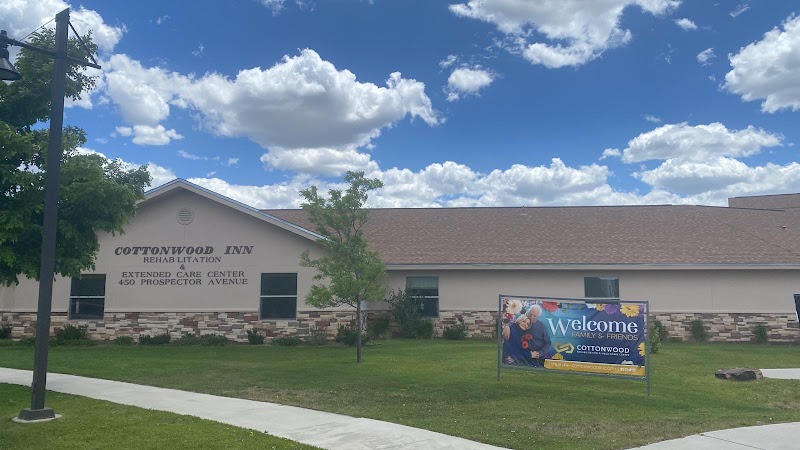
COTTONWOOD REHABILITATION AND HEALTHCARE CENTER

450 PROSPECTOR AVE, DURANGO, CO 81301 (970) 516-1404
For profit - Partnership 40 Beds CENTENNIAL HEALTHCARE Data: November 2025
Trust Grade
68/100
#20 of 208 in CO
Last Inspection: November 2024

Within standard 12-15 month inspection cycle. Federal law requires annual inspections.

Overview

Cottonwood Rehabilitation and Healthcare Center has a Trust Grade of C+, indicating it is decent and slightly above average compared to other facilities. It ranks #20 out of 208 nursing homes in Colorado, placing it in the top half of the state, and #1 out of 2 in La Plata County, meaning there is only one other local option that is better. The facility is improving, with issues decreasing from four in 2023 to two in 2024. Staffing is average with a 3/5 rating and a turnover rate of 55%, which is close to the state average, suggesting some staff stability but room for improvement. However, the center has $22,152 in fines, which is concerning as it is higher than 83% of Colorado facilities, indicating potential compliance issues. There are strengths, such as good RN coverage, which is more than 98% of state facilities, ensuring better oversight of resident care. However, there are significant weaknesses, including serious incidents where the facility failed to provide necessary nutritional support for residents, leading to severe weight loss for some. For instance, one resident lost 15.1% of their body weight due to inadequate meal supervision and interventions. Overall, while there are positive aspects to consider, families should be aware of the facility's challenges in meeting some residents' care needs.

Trust Score
C+
68/100
In Colorado
#20/208
Top 9%
Safety Record
High Risk
Review needed
Inspections
Getting Better
4 → 2 violations
Staff Stability
⚠ Watch
55% turnover. Above average. Higher turnover means staff may not know residents' routines.
Penalties
⚠ Watch
$22,152 in fines. Higher than 89% of Colorado facilities, suggesting repeated compliance issues.
Skilled Nurses
✓ Good
Each resident gets 91 minutes of Registered Nurse (RN) attention daily — more than 97% of Colorado nursing homes. RNs are the most trained staff who catch health problems before they become serious.
Violations
○ Average
8 deficiencies on record. Average for a facility this size. Mostly minor or procedural issues.
★★★★★
5.0
Overall Rating
★★★☆☆
3.0
Staff Levels
★★★★★
5.0
Care Quality
★★★★☆
4.0
Inspection Score
Stable
2023: 4 issues
2024: 2 issues

The Good

  • 5-Star Quality Measures · Strong clinical quality outcomes
  • Full Sprinkler Coverage · Fire safety systems throughout facility
  • No fines on record

Facility shows strength in quality measures, fire safety.

The Bad

Staff Turnover: 55%

Near Colorado avg (46%)

Frequent staff changes - ask about care continuity

Federal Fines: $22,152

Below median ($33,413)

Minor penalties assessed

Chain: CENTENNIAL HEALTHCARE

Part of a multi-facility chain

Ask about local staffing decisions and management

Staff turnover is elevated (55%)

7 points above Colorado average of 48%

The Ugly 8 deficiencies on record

3 actual harm
Nov 2024 2 deficiencies
CONCERN (D)

Potential for Harm - no one hurt, but risky conditions existed

Deficiency F0740 (Tag F0740)

Could have caused harm · This affected 1 resident

**NOTE- TERMS IN BRACKETS HAVE BEEN EDITED TO PROTECT CONFIDENTIALITY** Based on record review and interviews, the facility failed to provide the necessary behavioral health care and services to attai...

Read full inspector narrative →
**NOTE- TERMS IN BRACKETS HAVE BEEN EDITED TO PROTECT CONFIDENTIALITY** Based on record review and interviews, the facility failed to provide the necessary behavioral health care and services to attain and maintain the highest practicable physical, mental, and psychosocial well-being for one (#14) of three residents reviewed for behavioral and emotional status out of 22 sample residents. Specifically, the facility failed to coordinate timely necessary behavioral, mental and emotional health care and services for Resident #14. Findings include: I. Resident #14 A. Resident status Resident #14, age [AGE], was admitted on [DATE]. According to the November 2024 computerized physician orders (CPO), diagnoses included Arnold Chiari Syndrome with hydrocephalus (a condition where the lower part of the brain protrudes into the spinal canal causing a blockage in the flow of cerebrospinal fluid and leading to a buildup of fluid in the brain), anxiety disorder, depression, insomnia, other complicated headache syndrome, cognitive communication deficit, unspecified dementia, severe, with mood disturbance and malignant neoplasm of prostate. The 9/17/24 minimum data set (MDS) assessment revealed the resident's cognition was severely impaired with a brief interview for mental status (BIMS) score of four out of 15. Verbal behavioral symptoms directed towards others were present during the assessment. He used a wheelchair for mobility and required partial moderate assistance with toileting hygiene, substantial/maximal assist with bathing and partial/moderate assist with transfers. He was prescribed antianxiety and antidepressant medications. B. Record review A review of the comprehensive care plan, initiated on 11/14/23 and revised on 11/20/24, revealed Resident #14 had a history of depression and insomnia and was taking two antidepressant medications (Trazodone and Lexapro) due to sleep disturbances, withdrawal from activities and refusals of care. He received Ativan for anxiety as evidenced by restlessness and leg movements, pacing, increases in complaints, agitation, obsession about clothing and temperature changes, false accusations against staff, and playing with a suprapubic urinary catheter. Resident #14 was prescribed and administered an antipsychotic medication (Seroquel) related to auditory hallucinations, increased agitation and anxiety. Interventions included referral to a psychologist/psychiatrist as needed. Review of Resident #14's behavior care plan, initiated on 5/16/24 and revised on 11/18/24, revealed the resident had behaviors related to his dementia diagnosis and often made false allegations and statements. The resident yelled and cussed at staff, residents and imaginary individuals and often had auditory hallucinations. He was withdrawn from group activities and stayed in his room most of the day. He had depression at times that caused him to have difficulty sleeping as evidenced by sleep disturbances and restless leg movements. Interventions included administering medications per the physician's order, approaching the resident in a calm manner to avoid frustration and behavior escalation, attempting to redirect the resident when he was exhibiting behaviors, monitoring and documenting episodes of inappropriate behaviors, monitoring the resident's behavior episodes and attempting to determine the underlying cause of the behavior, including considering location, time of day, persons involved and situations, observing and reporting any changes in mental status caused by situational stressors and offering psychologist/psychiatrist services as needed. Review of Resident #14's November 2024 CPO revealed the following physician's orders: Trazodone HCl oral tablet 50 milligrams (mg). Give 25 mg by mouth at bedtime for insomnia and depression, ordered 11/23/23. Cymbalta oral capsule delayed release particles 20 mg (Duloxetine HCl). Give one capsule by mouth one time a day for depression, ordered 11/4/23 and discontinued on 10/31/24. Escitalopram Oxalate (Lexapro tablet 20 mg). Give one tablet by mouth one time a day for depression, ordered 11/1/24. Ativan (Lorazepam) oral tablet 1 mg. Give one tablet by mouth at bedtime related to generalized anxiety, ordered 5/7/24. Quetiapine Fumarate Oral Tablet 25 mg. Give one tablet by mouth three times a day for unspecified dementia, severe, with mood disturbance, ordered 11/14/24. A nurse progress note dated 4/7/24 documented Resident #14 had been angry that he was not served breakfast immediately when entering the dining room. The resident was reminded that the cooking staff did not arrive to work until 6:00 a.m., therefore they were unable to serve him at 5:00 a.m The resident was yelling at his neighbor to 'shut-up', because his neighbor was whistling songs while getting ready for the day. A nurse progress note dated 4/9/24 documented the interdisciplinary team (IDT) met to review resident's psychotropic medication usage. The resident had no adverse side effects to the medications and no changes were made to the current medications per the power of attorney's (POA) and the resident's request. A risk versus benefit form was completed and the IDT would continue to review quarterly or PRN (as needed). A nurse progress note dated 4/16/24 documented Resident #14 had repeatedly set his call light off while laying in bed. When asked upon entering each time, what the nurse could do to assist him, he said his neighbor slammed the bathroom door, his sheet was coming off or he did not call. Upon the nurse entering his room the last time, the resident had thrown a dish from the kitchen on the floor and it shattered. Resident #14 had changed his shirt at least six times this morning (4/16/24). A nurse progress note dated 5/9/24 documented Resident #14 was upset that his neighbor shut his bathroom door loudly. The resident attempted twice to throw ice water into his neighbor's room and was very angry and difficult to redirect. A nurse progress note dated 5/13/24 documented Resident #14 said he was going to throw water at another resident's face. He was asked what made him so upset and he reported his neighbor was in the bathroom, slammed the doors and woke him up. The CNA (certified nurse aide) informed the resident it was his neighbor's shower and he was not creating excess noise on purpose. The resident said he was still going to throw water in his face. The CNA then asked the resident to give them 20 minutes, which he agreed to. No more threats had been made since and he was now in a pleasant mood. A nurse progress note dated 7/24/24 documented the IDT met to review Resident #14's psychotropic medication usage. The resident had had no adverse side effects to the medications and no changes were being made to the resident's current medications. The IDT would continue to review quarterly at the psychotropic committee meeting or PRN and plan GDRs (gradual dose reduction) as appropriate. Resident #14 and his POA requested that no changes be made to his medications because the medications were working for the resident. -The progress note did not indicate the facility offered a psychologist or psychiatrist consultation to the resident to help with the resident's behaviors. A nurse progress note dated 10/6/24 documented the staff was to monitor the resident for the following behaviors related to the use of Ativan as evidenced by an increase in complaints, obsession about clothing and temperature changes, false accusations against staff, playing with his catheter and refusals of care. -The progress note failed to identify interventions that were to be used with the resident to help the resident with the distressing behaviors. A progress note documented by the DON on 10/23/24 DON revealed Resident #14 pressed his call light five times in one minute. The resident was complaining his ears were ringing and he was not able to hear. He was given some eardrops but persisted in fixating on the concern and pressed his call light repeatedly for the same reason. He was requesting to have the physician come in and look in his ears. The note documented the resident had his television (TV) volume extremely loud and, though he claimed he could not hear, he was able to understand everything the DON and the CNAs were saying to him. The DON suggested he turn his TV volume down which could potentially help with his complaint of not being able to hear but the resident refused. Redirection continued without success and the DON notified the physician of the resident's request to look in his ears. A nurse progress note dated 10/24/24 documented Resident # 14 was agitated during the shift and asked to use the bathroom four times in 30 minutes. Staff would assist him to the bathroom every time, for him to sit down, stand right back up and say he was done. The resident was fixating on certain other residents being in the dining room and refusing to eat because they were in there. The resident had to be redirected to the dining room five times during the shift, after being placed at a table per his request, then stating 'that resident is down here' and turning around and leaving the dining room. The resident was difficult to redirect. A nurse progress note dated 10/28/24 documented the resident was yelling out at neighbors and staff to stop slamming the doors. Staff were mindful about closing the doors softly and he continued to yell when doors around him were shut as quietly as possible. Resident #14 was assured everyone was trying to keep the environment quiet, he was given fresh water and his medications at his preferred time. He continued to yell out after any sounds were made in the hall or neighboring rooms until he fell asleep. A nurse progress note dated 10/30/24 documented the resident was yelling loudly about people slamming doors. The nurse watched the resident's neighbor's door be shut with no slamming. The resident had continually used his call light when he was upset about loud noises and cold coffee. A nurse progress note dated 11/1/24 documented Resident #14 was repeatedly screaming 'be quiet' at the top of his lungs, as well as putting his call light on. The nurse informed the resident they would be as quiet as they could and he verbalized understanding. A nurse progress note dated 11/12/24 documented the resident had been yelling over any noise throughout the night. He yelled at another resident to shut up who was talking in the hallway on the way back to their room. Resident #14 was offered food and drink, efforts to keep his environment quiet and reassurance that no one was being noisy on purpose. The resident voiced his understanding, however the resident continued to yell at neighboring residents and staff from his room. A progress note documented by the DON on 11/14/24 documented Resident #14 had been extremely agitated, more so than his normal. He was yelling at his next door neighbor even though the resident was not in his room next door. Resident #14 had pushed his call light three times in five minutes and was yelling and agitated. He then pressed his call light another two times and when the CNA entered the room, he was yelling that the lady next door kept slamming the door, however, there was no lady next door. The physician was notified. A progress note documented by the DON on 11/15/24 documented the DON called the resident's family member to let her know the physician ordered Seroquel for the resident and to obtain consent for the medication. The family member gave consent for the medication. A nurse progress note dated 11/15/24 documented the resident was agitated, yelling, and cursing during the shift and refused a catheter change. The note documented the resident had begun taking Seroquel and was offered a quiet environment, food and drink and lotion was applied to his abdomen as requested for itchiness. A nurse progress note dated 11/19/24 documented the resident was yelling profanities from his room regarding another resident slamming her door, however, there were no residents slamming their doors. A nurse progress note dated 11/20/24 documented Resident #14 was again yelling and screaming about a resident slamming her door. There were no noises heard by staff who were outside his door being mindful of providing a quiet environment for the resident. The nurse apologized and told the resident the staff did not hear any loud noises or door slamming, but they would be more cautious of making noise. Resident #14 indicated the unoccupied room next to him was where the noise was coming from. A progress note documented by the social services director (SSD) on 11/21/24 (during the survey) documented a physician's order for a referral to behavioral psychiatric services for Resident #14 had been obtained. The resident's POA was contacted and agreed with the referral. The SSD attempted to schedule an appointment with a behavioral health services provider. -The progress note failed to indicate if the SSD was able to schedule a behavioral health services appointment. -Review of the progress notes from 4/7/24 through 11/21/24 revealed there was no documentation to indicate the facility assessed the underlying causes and potential triggers for Resident #14's expressions of distress. -There was no documentation in the resident's electronic medical record (EMR) to indicate the facility offered a psychologist or psychiatrist consultation for Resident #14 in order to assist the resident with his distressing behaviors until 11/21/24, despite several months of documentation related to the resident's behaviors (see progress notes above). II. Staff interviews Registered nurse (RN) #2 and CNA #1 were interviewed together on 11/18/24 at 2:01 p.m. RN #2 and CNA #1 said Resident #14 had exhibited his agitation and aggressive verbal behaviors towards staff and other residents for the past several months. RN #2 said Resident #14's behaviors were disturbing to other residents who were on the unit for skilled rehabilitation services and were going back to the community. RN #2 and CNA #1 said Resident #14 was not offered and had not received any psychological or psychiatric health care consultation or services. RN#1 was interviewed on 11/21/24 at 8:45 a.m. RN #1 said Resident #14's behaviors were consistent in the past few weeks and very disturbing to him and other residents. She said his behaviors were not specifically directed. She said the staff offered non-pharmacological interventions such as distractions, TV shows/sports, activities and offered to take the resident outside. She said the resident was not receiving any mental health services for his behaviors. The DON was interviewed on 11/21/24 at 11:10 a.m. The DON said Resident #14's behaviors had escalated within the last few weeks and she said the resident did not feel good in his own skin. She said she communicated with the resident's POA, as well as his physician, regarding recent psychotropic medications changes. She said the physician wanted to try medications first. She said the facility did not consider a behavioral health consultation for the resident during the most recent psychotropic medications review with the medical director and the pharmacist. The DON said she would reach out to the resident's POA for an approval for a mental health consultation for the resident.
CONCERN (F)

Potential for Harm - no one hurt, but risky conditions existed

Deficiency F0882 (Tag F0882)

Could have caused harm · This affected most or all residents

Based on interviews and record review, the facility failed to employ an infection preventionist (IP) who had completed specialized training in infection prevention and control which had the potential ...

Read full inspector narrative →
Based on interviews and record review, the facility failed to employ an infection preventionist (IP) who had completed specialized training in infection prevention and control which had the potential to affect all residents residing in the facility at the time of the survey. Specifically, the facility failed to have a qualified IP involved with the facility's infection prevention and control program. Findings include: I. Facility policy and procedure The Infection Preventionist policy, revised September 2022, was provided by the nursing home administrator (NHA) on 11/21/24 at 8:25 a.m. The policy read in pertinent part, The IP is professionally trained in nursing, medical technology, microbiology, epidemiology, or other related field with at least the following professional training: -A nurse must have earned a certificate/diploma in nursing; and, -A medical technologist must have earned at least an associate's degree in medical technology or clinical laboratory science. The IP is employed on site and at least part time; and, -The IP is scheduled with enough time to properly assess, develop, implement, monitor, and manage the infection control program, address the training requirements, and participate in required committees. II. Record review A request was made for the IP's infection control certificate on 11/20/24 at 2:30 p.m. The director of nursing (DON) was unable to locate the IP certificate of completion. III. Staff interviews The DON was interviewed on 11/20/24 at 2:10 p.m. The DON said she had worked at the facility as a full time DON. She said she completed the required education in 2024 to obtain the infection control certificate but was unable to locate the certificate of completion. The DON said she worked in the facility as a full time DON but also functioned as the facility IP. The DON said she collected infection statistics but had not analyzed the information to ensure the infection control program was effective. The DON said she was unaware of the requirement for the facility to have a qualified infection preventionist that worked as an IP at least half time. The DON said the facility will review the requirement for the IP position and discuss the requirement with the NHA.
Jul 2023 4 deficiencies 2 Harm
SERIOUS (G)

Actual Harm - a resident was hurt due to facility failures

Deficiency F0692 (Tag F0692)

A resident was harmed · This affected 1 resident

**NOTE- TERMS IN BRACKETS HAVE BEEN EDITED TO PROTECT CONFIDENTIALITY** Based on observations, record review and interviews, the facility failed to implement appropriate nutritional interventions for ...

Read full inspector narrative →
**NOTE- TERMS IN BRACKETS HAVE BEEN EDITED TO PROTECT CONFIDENTIALITY** Based on observations, record review and interviews, the facility failed to implement appropriate nutritional interventions for one (#1) of three residents reviewed for nutrition out of 20 sample residents to maintain acceptable parameters of nutritional status. Resident #1 had diagnoses of Parkinson's disease, protein calorie malnutrition, dysphagia (swallowing difficulty) and dementia, which made her at nutritional risk. She required supervision assistance at meals, which through observations was not provided. The facility failed to implement nutrition interventions when the resident sustained a severe weight loss. Due to the facility's failures, Resident #1 sustained a weight loss of 15.1% (16.8 lbs) from 2/9/23 through 7/6/23, which was considered severe. Findings include: I. Facility policy and procedure The Nutrition at Risk policy, not dated, was provided by the nursing home administrator (NHA) on 7/12/23 at approximately 2:00 p.m. The policy read in pertinent part, Residents with significant weight loss will be submitted to the interdisciplinary nutrition at risk (NAR) committee comprising of the food services, nursing, rehab services, social services, activity and administrator following confirmation by re-weighing. The NAR committee will meet to discuss the resident assessment findings, develop a new MDS (minimum data set) if indicated and plan of care to correct undesirable weight change. Physician will be notified of the plan of care and recommendations. Family members will be encourage to participate and/or will be notified of the recommendations. If despite appropriate interventions by the NAR committee and the staff, the resident is not receiving sufficient nutritional support to meet his/her metabolic needs, physician will be notified. II. Resident #1 Resident #1, age [AGE], was admitted on [DATE]. According to July 2023 computerized physician orders (CPO), diagnoses included Parkinson's disease, cerebral infarction, unspecified protein calorie malnutrition, aphasia (loss of ability to understand or express speech), dysphasia, dementia and anxiety. The 6/16/23 minimum data set (MDS) assessment revealed severely impaired vision and severely impaired cognition with a brief interview for mental status (BIMS) score three out of 15. She required limited assistance with bed mobility, extensive assistance with transfers, dressing, toilet use and personal hygiene and supervision with eating. Section K (Swallowing Disorders) revealed no difficulty with swallowing, her weight was 96 pounds and no weight loss of 5% or more in the last month or loss of 10% or more in the last six months was documented. She received a mechanically altered diet. Medications received included an antianxiety and anticoagulant. -Section K was incorrectly coded for the resident's weight loss. At the time of the assessment look back period, the resident lost 13.8% weight in three months. III. Resident interview and observations The resident was interviewed on 7/9/23 at 3:41 p.m. She said she did not like the food and had no appetite. The resident was observed on 7/9/23 at 5:10 p.m. in the dining room. She did not eat her supper meal. She was observed drinking a nutritional supplement. The resident was observed on 7/10/23 at 12:20 p.m. in the dining room. There were no staff assisting the resident with her meal. The resident said she had a couple bites of her food. The resident was drinking a nutritional supplement. The resident was observed on 7/11/23 at 5:15 p.m. in the dining room. She did not eat her supper meal. She was drinking a nutritional supplement. The resident was observed on 7/12/23 at 12:10 p.m. There was no staff assisting the resident with her lunch meal and she did not eat any of her food. -The resident was not provided any additional meal options when she did not eat her meal and was only provided a nutritional supplement. IV. Representative interview The representative was interviewed on 7/10/23 at 3:00 p.m. She said she was very disappointed when she learned her mother lost 15 pounds of her weight in a couple months. She said the facility should implement assistance with meals and encourage her mother to eat. She said no staff asked her about her mother's favorite food that she preferred to eat. She said she asked her mother's physician about a hospice care referral so she could get more staff assistance. V. Record review A. Care plan and weights The comprehensive care plan revealed the following: -I am at risk for altered nutritional status r/t (related to): frequently consumes less than 75% meals, low body mass index, refusal of meals, vision problems, dysphagia, malnutrition, potential for dehydration. Regular diet/mechanically soft texture (dated 4/9/23). Interventions included: Administer medication and/or vitamin/mineral supplement per physician order. Encourage/provide intake of fluids throughout the day; if not contraindicated. Monitor meal percentage intake for changes in eating habits. Provide adaptive equipment (likes food in separate bowls as desired, mechanical soft texture) as needed to maintain/promote independence with eating. Provide feeding/dining assistance as needed. If refuses meal offer shake as desired, don't force feed, family will bring in food and snacks at times (dated 6/29/23). Provide nutritional supplement(s) as ordered by physician-Boost. Weekly weights (dated 6/14/23). -I have an ADL (activities of daily living) self-care performance deficit r/t (related to) anxiety, cognitive impairment, fluctuating ADLs, generalized weakness, history of falls, pain, Parkinson's (dated 4/9/23). Interventions included: Eating: Independent to oversight with eating; offer assistance with meal set-up if needed (dated 5/22/23). The resident's weights were: On 1/7/23 the resident weighed 109.6 lbs On 2/9/23 the resident weighed 111 lbs On 3/24/23 resident's weight was 110 lbs On 4/2/23 the resident weighed 109 lbs On 5/1/23 the resident weighed 102.2 lbs (8% weight loss in three months) On 6/6/23 the resident weighed 94.8 lbs (14% weight loss in three months) On 7/6/23 the resident's weight was 94.2 lbs B. Interdisciplinary notes On 5/15/23 a registered dietitian (RD) documented: Resident f/u (follow up). Diet: mechanical soft consuming 25-50% on average. Boost (nutritional supplement) BID (two times a day) taking well. Weights:105.9# (12/30/22) 109.8# (1/7/23) 111# (2/9/23) 110# (3/24/23) 109.6# (4/2/23) 102.2# (5/1/23) BMI:16.5 underweight. Weight loss likely related to previous COVID infection and meal intakes have declined slightly. Resident weight is below RWR (recommended weight range)- 117-143#. Noted all meds (medications). No skin issues noted. Braden-17. Fluid needs: 1393ml/day and resident taking 1610ml/day. No new labs to eval. Continue supplements. Continue to offer snacks. Encourage good meal intakes as resident will accept. Monitor po (oral) intakes, tolerance, labs as available, skin, weights, and care plan. Will follow. -There were no nutritional interventions added when the resident sustained 6.8 lbs weight loss, which was 6.3% (severe). The RD note was written 14 days after the weight loss occurred. The resident weight was not more frequently monitored with her sustaining a significant weight loss. On 6/6/23 a registered dietitian (RD) documented: Resident f/u (follow up). Diet: mechanical soft consuming 25-50% on average. Boost (nutritional supplement) BID (two times a day) taking well with an occasional refusal. Weights: 105.9# (12/30/22) 109.8# (1/7/23) 111# (2/9/23) 110# (3/24/23) 109.6# (4/2/23) 102.2# (5/1/23) 90.3# (6/4/23) Staff getting another body weight today to make sure this is accurate. Meal intakes remain stable at this time. BMI: 14.6 underweight. Resident weight is below RWR - 117-143#. Noted all meds. No skin issues noted. Braden-17. Fluid needs: 1393ml/day and resident taking 1520ml/day. No new labs to eval. Continue supplements. Continue to offer snacks. Please obtain current body weight to confirm accurate weight. Encourage good meal intakes as resident will accept. Monitor po intakes, tolerance, labs as available, skin, weights, and care plan. Will follow. On 6/7/23 the RD documented: Noted current weight of 94.8# (6/6/23) Noted 90.3# was inaccurate. Resident eating breakfast at time of visit and reports appetite 'ok.' Consider increasing boost to TID (three times a day) in between meals. Continue to offer snacks. Encourage good meal intakes. Monitor po (oral) intakes, tolerance, labs as available, skin, weights, and care plan. Will follow. -Even though the weight was 94.8 lbs and not 90.3 lbs as indicated by the RD documentation, the resident still lost an additional 7.4 lbs since her last weight, which was 7.24% in one month (severe). Over two months, she lost 14.2 lbs. On 6/10/23 a nurse documented: Resident's appetite is poor, encouraged resident to eat, supplements offered, resident declined to drink them. Different foods offered to resident, she continues to have poor appetite, Resident's daughters in to visit and discussed resident not wanting to sit and be assisted. Staff will continue to encourage resident to eat and accept assistance. On 6/29/23 the dietary manager (DM) documented: Hospice referral in progress. Family wants comfort measures only. Family states that (Resident) may skip meals if she wishes. On 6/29/23 the DM documented: Meal intake 47%, continue with providing Boost, add ice cream to mighty shake with every meal. On 7/5/23 the RD documented: Resident now admitted to hospice. Diet: mechanical soft consuming 50% on average. Noted that resident is permitted to skip meals as she likes. Boost BID (two times a day) taking well with an occasional refusal. Weights: 95.2# (6/4/23) 95.2# (6/27/23) Meal intakes remain stable at this time. BMI: 15.4 underweight. Resident weight is below RWR - 117-143#. Noted all meds. No skin issues noted. Fluid needs: 1393ml/day and resident taking 1840 ml/day. No new labs to eval. Continue supplements. Continue to offer snacks. Encourage good meal intakes as resident will accept. Monitor po (oral) intakes, tolerance, labs as available, skin, weights, and care plan. Will follow. -Prior to the resident being admitted to hospice care, she had sustained a severe weight loss with limited interventions put in place to address it. C. Physician note On 6/8/23 the physician documented: Pt (patient) continues to lose weight with adult failure to thrive. D/W (discussed with) Pt's (patient's) daughter today and they request comfort measures only for end of life care and no aggressive medical interventions. VI. Staff interviews The director of nursing (DON) was interviewed on 7/10/23 at 2:48 p.m. She said she has been in her position in this facility for three weeks. She said she was aware of Resident #1's weight loss through Nutrition at Risk Review Meetings with the interdisciplinary team (IDT). She said the IDT recommended increasing the Boost supplement to three times a day. She said staff assistance with meals was not considered as the resident was independent. -However, the Boost supplement was not increased and per the MDS assessment the resident minimally required supervision at meals. Certified nurse aide (CNA) #2 was interviewed on 7/11/23 at 10:07 a.m. She said she was not aware Resident #1 required staff assistance during meals. She said she did not see nursing staff helping Resident #1 with meals in the dining room. The resident was seated alone at her table and most of the time she was drinking her supplement. The DM was interviewed on 7/12/23 at 10:28 a.m. He said he was new to this position. He said he did not complete residents' nutritional assessments or food preferences. He said if a newly admitted resident had some kind of diet restrictions, the admitting nurse would send a request to the kitchen. He said he was aware of Resident #1's weight loss and meal refusals. He said he served the resident a milk shake with each meal. He said the dietary aides were recording each resident's meal intakes and took them to the nursing staff. The RD was interviewed on 7/12/23 at 2:45 p.m. She said she did not consider any other protein supplement for the resident as the resident was drinking the prescribed Boost most of the time. She said she was not aware the resident did not receive staff assistance with meals. She said she did not request from the physician any lab work to check on the resident's Albumin (Prealbumin) as she knew it would be low. She said she tried to be in the facility two times a month. She said she did not observe Resident #1 during meals and calculated her meal intakes based on staff recordings. She said she did not provide any education to the dietary staff on how to appropriately document meal intakes.
SERIOUS (G)

Actual Harm - a resident was hurt due to facility failures

Medication Errors (Tag F0758)

A resident was harmed · This affected 1 resident

**NOTE- TERMS IN BRACKETS HAVE BEEN EDITED TO PROTECT CONFIDENTIALITY** III. Resident #89 A. Resident status Resident #89, age [AGE], was admitted to the facility on [DATE]. According to the July 2023...

Read full inspector narrative →
**NOTE- TERMS IN BRACKETS HAVE BEEN EDITED TO PROTECT CONFIDENTIALITY** III. Resident #89 A. Resident status Resident #89, age [AGE], was admitted to the facility on [DATE]. According to the July 2023 computerized physician orders (CPO) diagnoses included congestive heart failure, falls, depression, respiratory failure and cataracts. The 4/20/23 minimum data set (MDS) assessment document the resident had moderate cognitive impairment as evidenced by a brief interview for mental status (BIMS) with a score of 10 out of 15. She required one-person assistance for all activities of daily living (ADLs) and had supervision for bed mobility, transfers, walking in the room, locomotion on and off the unit, toilet use, eating and personal hygiene. She required limited assistance for dressing. B. Record review According to the July 2023 medication administration record (MAR) the resident received duloxetine for depression that was ordered on 4/14/23. -The resident's care plan, initiated on 4/20/23, indicated the resident did not have a care plan for care of the resident's depression. -A review of the computerized physician orders (CPO) revealed the facility failed to identify, offer and document effectiveness of non-pharmacological interventions for the resident's depression. The July 2023 MAR was reviewed and revealed the facility failed to effectively monitor the resident for side effects of antidepressant therapy. The physician order directed the nurse to monitor for side effects: drowsiness, blurred vision, dizziness, fatigue, trouble sleeping, dry mouth, hallucination and other unusual changes in mood or behavior every shift. Specifically, if monitoring was performed and none of side effects were observed, the nurse was directed to chart Y; if monitoring was performed and side effects were observed the nurse was directed to chart N and then select chart code other/see nurses notes and progress notes for findings. On 7/1/23, 7/3/23 and 7/8/23 the nurse documented N and information about the side effects the resident experienced and what interventions were taken was not found in the resident's medical record. -The facility failed to identify sources or triggers that manifested the resident's depression and then monitor for effectiveness of antidepressant treatment. C. Resident observation and interview On 7/9/23 at 3:45 p.m., the resident was observed lying in her bed. She said she was tired. She said her mood was not the best. The resident said she knew she had medication for depression and did not remember the name of the medication. She said she did not know why she felt depressed and said maybe it was from her recent illness. D. Staff interview Registered nurse (RN) #1 was interviewed on 7/10/23 at 11:15 a.m. She said the resident took antidepressant medication. She said she was aware the resident took antidepressant medication but was unaware of resident specific needs for the resident's depression. RN #1 said she had not observed the resident acting depressed. IV. Resident #26 A. Resident status Resident #26, age [AGE], was admitted on [DATE]. According to the July 2023 CPO, diagnoses included depression and anxiety. The 6/24/23 MDS assessment revealed the resident had a moderate cognitive impairment with a BIMS score of seven out of 15. The resident required limited to extensive assistance for most ADLs. The resident received antianxiety and antidepressant medication. No behaviors were indicated. B. Record review A review of the July 2023 medication administration record (MAR) revealed the resident was administered Duloxetine for depression and Buspirone for anxiety that was ordered on 6/12/23. -The care plan, initiated 6/12/23, revealed the facility failed to establish a plan of care for the resident's depression and anxiety. -A review of the resident's record revealed the facility failed to obtain a consent for antianxiety medication and the antidepressant medication consent was unsigned by facility staff or the physician. -The facility failed to identify, offer and document effectiveness of non-pharmacological interventions for the resident's depression and anxiety. -A review of the CPO revealed the facility failed to effectively monitor the resident for side effects from antidepressant and antianxiety medication. The MAR revealed the nurse entered a check mark to indicate monitoring, a check mark was entered every shift every day, but there was no indication what the check mark represented. -A review of the CPO revealed the facility failed to identify triggers for anxiety and to monitor the effectiveness of medication management. C. Resident observation and interview On 7/9/23 at 3:10 p.m., the resident was observed sitting in her room. She said that she frequently felt she had high anxiety related to her health status, felt alone, her stay at the facility and wished to go home. She said she was unaware that she took medication for anxiety and said that if she was ordered medication, it did not help. D. Staff interview RN #1 was interviewed on 7/10/23 at 11:15 a.m. She said the resident was prescribed an antidepressant and antianxiety medication. She said the resident was aware the resident took antianxiety and antidepressant medications but was unaware what specifically the resident needed to manage her depression and anxiety. RN #1 said she had not observed the resident depressed or anxious. The RN said when a nurse monitors medication side effects or effectiveness of medications, the monitoring was documented on the resident's MAR. V. Administrative interview The director of nursing (DON) was interviewed on 7/11/23 at 10:15 a.m. The DON said when a resident was admitted to the facility the interdisciplinary team developed the resident's care plan. She said the residents' care plan should have included care needs and management specific to the resident's depression and anxiety. The DON said a resident taking antipsychotic medication should be monitored for side effects and effectiveness, like a change in resident behavior or mood or adverse outcomes of the medication. The DON was unable to locate care plans specific to managing the residents' depression and anxiety. She said the residents' care plans should have included care needs and management specific to the resident's depression. The DON was interviewed again on 7/12/23 at 10:15 a.m. She said monitoring results were helpful for the physician to determine effectiveness of medication therapy. The DON said that when a resident was admitted , the interdisciplinary team (IDT) determined what monitoring was necessary and then nursing would obtain physician orders for monitoring. The DON said she would review how monitoring orders were entered to make future monitoring complete and effective. The director of nursing (DON) was interviewed on 7/12/23 at 10:15 a.m. She said monitoring results were helpful for the physician to determine effectiveness of medication therapy. The DON said that when a resident was admitted , the interdisciplinary team (IDT) determined what monitoring was necessary and then nursing would obtain physician orders for monitoring. The DON said she would review how monitoring orders were entered to make future monitoring complete and effective. Based on observation, records review and interviews, the facility failed to adequately monitor the resident for unnecessary psychotropic medications needed to provide effective and person-centered care for three (#15, #89 and #26) of five residents reviewed for use of psychotropic medication out of 18 sample residents. Record review revealed that Resident #15 had exit-seeking behaviors. The facility failed to obtain consent prior to increasing the administration of antipsychotic medication (Seroquel) and failed to ensure the antipsychotic medication administered was given to treat the resident's medical symptoms and not used for discipline or convenience. Additionally, the facility failed to implement effective person-centered behavior management interventions to prevent occasional wandering and exit-seeking behaviors. The resident was initially administered Seroquel 25 milligrams (mg) without any behaviors present and documented which was increased to 50 mg two times a day after displaying aggressive behaviors toward a nurse who woke the resident from his afternoon nap, triggering Resident #15's aggression. Resident #15 became verbally and physically aggressive towards staff after being provoked, at which time Resident #15 was given an antipsychotic medication Seroquel. The facility failed to ensure Resident #15's antipsychotic medication was not used for discipline or staff convenience. In addition, the facility failed to: -Ensure staff identified triggers for Resident #26's depression and anxiety episodes; -Develop a resident-centered plans of care for generalized anxiety disorder for Resident #26; -Develop a resident-centered plans of care for depressive episodes for Resident #89 and #26; -Ensure staff monitored and documented Resident #89 and Resident #26's response to antidepressant medication and its effectiveness; -Ensure staff monitored and documented adverse reactions to antianxiety and antidepressant therapy Resident #89 and #26; -Ensure provided non-pharmacological interventions were implemented with anxiety and depression for Resident #89 and #26; and, -Obtain informed consent from resident/representative for psychotropic medications Resident #89 and #26. Findings include I. Facility policy The Psychotropic Medication Use policy, dated July 2022, was requested received on 7/11/23 from the nursing home administrator (NHA), which read in pertinent part: A psychotropic medication is any medication that affects brain activity associated with mental processes and behavior. Drugs in the following categories are considered psychotropic medications and are subject to prescribing, monitoring, and review requirements specific to psychotropic medications: antipsychotics, antidepressants, antianxiety, and hypnotics. Residents are involved in the medication management process. Management includes; indications for use, dose, duration, adequate monitoring for efficacy and preventing, identifying, and responding to adverse consequences. Residents who have not used psychotropic medications are not prescribed or given these medications unless the medication is determined to be necessary to treat a specific condition that is diagnosed and documented in the medical record. Use of psychotropic medications are not increased when efforts to decrease antipsychotic medications are being implemented. Non pharmacological approaches are used to minimize the need for medications, permit the lowest possible dose, and allow for discontinuation of medications when possible. Residents receiving psychotropic medications are monitored for adverse consequences including: anticholinergic effects, cardiovascular effects, metabolic effects, psychological effects. II. Resident #15 A. Professional reference The [NAME] Nursing Drug Handbook, 2021, Quetiapine (Seroquel), read in part; Elderly with dementia related psychosis are at increased risk for death. Uses: Treatment of schizophrenia. Treatment of acute manic episodes associated with bipolar disorder . Off-label: psychosis/agitation related to Alzheimer's dementia. B. Resident status Resident #15, age [AGE], was admitted on [DATE]. According to July 2023 computerized physician orders (CPO), diagnoses included chronic atrial fibrillation, cardiomyopathy, adult failure to thrive, pain, and unspecified dementia, severe, with other behavioral disturbance. The 5/9/23 significant change in status minimum data set assessment (MDS) revealed the resident's cognition was severely impaired with a brief interview for mental status (BIMS) score of three out of 15. No hallucinations, delusions, rejection of care or wandering behaviors were documented. He required limited assistance with bed mobility, dressing and personal hygiene, supervision with transfers, eating and toilet use. Medications included an anticoagulant and antibiotic. There were no physical restraints or alarms used. The 6/20/23 MDS assessment revealed wandering occurred in one to three days during the assessment period. He required supervision with bed mobility, transfers, eating and personal hygiene, and extensive assistance with dressing and toilet use. Medications included an antipsychotic, anticoagulant and antibiotic. No physical restraints and no alarms were noted. C. Resident observations On 7/9/23 at 3:32 p.m. Resident #15 was observed asleep in his room. On 7/10/23 at 10:00 a.m. Resident #15 was observed in the television (TV) room. He was sleeping in his wheelchair. On 7/11/23 at 10:00 a.m. the resident was observed in the dining room at a table, with other residents playing a bingo game. Resident #15 had his game board in front of him and was not paying attention to the numbers called. He was not able to place a checker on a called number on the game board. The activities staff and other residents were assisting the resident through the game. On 7/11/23 at 2:00 p.m. Resident #15 was observed in his room, sleeping in his wheelchair. D. Record review 1. Care plan The comprehensive care plan revealed the following: -Resident is at risk for elopement r/t (related to) exit seeking behavior (dated 5/22/23). Interventions included: Calmly redirect and divert resident's attention. Distract resident when wandering/insistent on leaving facility by offering pleasant diversions, structured activities, food, conversation, television, books. Set up meeting with family/guardian to determine if resident may need a more appropriate facility if elopement attempts continue. -I am at risk for falls r/t (related to) cognition and not knowing my own abilities, dementia, abnormal gait, weakness, difficulty walking, unsteady on feet (dated 4/11/23). Interventions included: Activity Program/Group Program. Apply bed cane for positioning. Bed against the wall. Call before you fall sign, for visual reminder. Low bed. Maintain needed items within reach. -Resident has an ADL (activities of daily living) self-care performance deficit r/t (related to) cognitive impairment, dementia, depression, fluctuating ADLs, generalized weakness, history of falls, impaired mobility, poor balance (dated 4/11/23). Interventions included: Allow time for resident to express feelings of frustration regarding the need for assistance in ADL tasks. -The resident's centered care plan did not address the use of psychotropic medication Seroquel (Quetiapine Fumarate). 2. Physician orders Quetiapine Fumarate oral tablet 25 mg, give 1(one) tablet by mouth one time a day related to unspecified dementia, severe, with other behavioral disturbance. Start date 5/23/23. D/C (discontinued) date 5/26/23. Quetiapine Fumarate oral tablet 25 mg, give 1(one) tablet by mouth two times a day related to unspecified dementia, severe, with other behavioral disturbance. Start date 5/26/23. D/C date 6/3/23. Seroquel oral tablet 50 mg (Quetiapine Fumarate), give 1 (one) tablet by mouth two times a day related to unspecified dementia, severe, with other behavioral disturbance. Start date 6/4/23. 3. Physician notes On 4/5/23 the resident's physician documented: [AGE] year old male with dementia with behaviors. Pt (patient) with recent decline and adult failure to thrive. Have titrated off and stopped Seroquel. On 6/8/23 the resident's physician documented: Recent GDR (gradual dose reduction) failed and pt (patient) had to be restarted on Seroquel due to agitation and exit seeking. Pt (patient) has improved and more focused without exit seeking. -The physician's note did not reveal the resident was sleepy and lethargic. (see staff interviews) The chemical/physical restraint and antidepressant review committee document in the resident's medical record was dated 1/25/23. (see staff interviews) E. Nursing notes On 3/16/23 at 6:47 p.m., a nurse documented: Resident attempted to leave facility three times today. Twice out East door and once out North. Redirected by staff. Daughter aware. On 5/22/23 a director of nursing documented: Spoke with (physician's name) regarding resident's increased behaviors and exit seeking. Per (physician's name), resident may resume Quetiapine 25mg by mouth daily. Order updated to reflect changes. -There was no documentation in the medical record related to resident's exit seeking or any behaviors from 3/16/23 until 5/25/23 (see below), three days after the psychotropic medication Seroquel was started. On 5/25/23 at 5:20 a.m., a nurse documented: Resident was found by RN (registered nurse) on A wing wheeling out the main door to facility. RN caught him before he made it to the second door. Resident stated he was going to work and was redirected by RN telling him he needed coffee first. On 6/3/23 at 2:40 p.m., a nurse documented: Resident was heading towards the front doors stating that he needed to get out of here and go home. This nurse was able to redirect the resident back to his room. The resident came back to the nurses' station 15-20 minutes later stating that he needed to leave and go home. This nurse was able to redirect the resident to the kitchen for a snack and a cup of coffee. On 6/3/23 at 4:11 p.m., a nurse documented: This nurse went in to the residents room to give the resident his evening medication. The resident was asleep and this nurse woke him up gently. The resident woke up and swung at this nurse grazing this nurse's chin causing the resident to get two skin tears on his right hand. The resident continued to wing his arms stating that this nurse was trying to fight him. This nurse was able to deescalate the resident and allow this nurse to place two Band-Aids on the resident's top of hand. Resident refused his medication from this nurse. This nurse asked the resident to get up and please have dinner. The resident went down to dinner. This nurse asked the CMA (certified medical assistant) to give medication to the resident. The resident's responsible party is out of town. The resident's second contact is also out of town. Staff will notify when the responsible parties are back in town. This nurse notified the DON (director of nursing), administrator, and (physician's name). This CMA was able to administer medication after encouraging and reassuring resident that no one was trying to trick him. On 6/3/23 at 5:45 p.m., a nurse documented: (physician's name) increased the resident Quetiapine to 50 mg PO (orally) BID (two times a day). This nurse notified the resident daughter (name) of the changes in medication. On 6/10/23 at 2:27 p.m., a nurse documented: Res (resident) went out the east door by kitchen, door alarm sounded, res (resident) was able to make it out the door. Housekeeping assisted res (resident) around the building and back into facility through the front entrance with redirection. Res (resident) in his room currently in recliner, continue to check on resident frequently. F. Staff interviews Licensed practical nurse (LPN) #2 was interviewed on 7/11/23 at 9:45 a.m. She said the staff was monitoring the resident every 15 minutes and documented each time on a paper sheet. Every shift the document was turned in to the DON. She said this intervention was initiated by the new director of nursing approximately a month ago. CNA #2 was interviewed on 7/11/23 at 10:05 a.m. She said that in the past couple of months the resident was looking for the facility exit doors four times. She said the resident told the staff he wanted to go home or needed to go to work. She said only one time the resident became aggressive with a nurse who woke him up and tried to give him his medications (Seroquel). She said Resident #15 was very lethargic most of the time, needed more assistance with all activities of daily living. Certified nurse aide (CNA) #1 was interviewed on 7/11/23 at 10:10 a.m. She said she worked with the resident frequently. She said the resident was very sleepy all the time. The social service director (SSD) was interviewed on 7/11/23 at 10:50 a.m. She said she was new to her position. She said she was not aware the resident's care plan did not include the antipsychotic medication Seroquel. She said she added the medication to the resident's care plan today. She said she was unable to find any of the psychotropic medications review notes for Resident #15 and the review dated 1/25/23 was the last one in his medical record. The director of nursing (DON) was interviewed on 7/11/23 at 11:15 a.m. She said she was a new DON in the facility, for about a month. She said there was no care plan for staff monitoring the resident every 15 minutes and there was no care plan for the use of Seroquel. She said the staff who attended the psychotropic committee meeting was not aware the resident was off of Seroquel since March (2023). She said there was no documentation in the resident's medical record to justify initiating the psychotropic medication Seroquel therapy in May (2023). She said at the time Seroquel was started the resident was treated with an antibiotic for urinary tract infection which could trigger an increase in wandering behavior.
CONCERN (E)

Potential for Harm - no one hurt, but risky conditions existed

Deficiency F0660 (Tag F0660)

Could have caused harm · This affected multiple residents

**NOTE- TERMS IN BRACKETS HAVE BEEN EDITED TO PROTECT CONFIDENTIALITY** Based on record review and interviews, the facility failed to develop and implement a discharge planning process that focused on...

Read full inspector narrative →
**NOTE- TERMS IN BRACKETS HAVE BEEN EDITED TO PROTECT CONFIDENTIALITY** Based on record review and interviews, the facility failed to develop and implement a discharge planning process that focused on the resident's discharge goals for three (#93, #36 and #138) of four residents out of 20 sample residents. Specifically, the facility failed to for Resident #93, #36 and #138: -Develop and complete a discharge plan of care; -Obtain physician orders for discharge; -Educate and document for discharge instructions; and, -Reconcile medications prescribed for discharge. Findings include I. Facility policy and procedure The Discharge Process policy was requested on 7/12/23 from the nursing home administrator (NHA). The NHA provided the Discharge Protocol, undated, on 7/12/23 and it documented in pertinent part: Three days prior/as soon as notice is given for discharge the following to be initiated. -Discharge Plan of Care; -Social service to fist open; -Nursing, Therapy, MDS, and/or designee will complete their designated sections; -All areas should be completed thoroughly prior to the day of discharge. At the time of discharge: -The in-progress Discharge Plan of Care of Care Evaluation is to have each section completed prior to the resident departing the facility; -The facility to provide the order summary report. The order summary report will include the next time the order is to be administered (handwritten next to each physician order); -Facility Representative to Review/Discuss Reconciliation of Pre and Post discharged medications. II Resident #93 A. Resident status Resident #93, over the age of 65, was admitted on [DATE] and discharged home on 7/3/23. According to the July 2023 computerized physician orders (CPO), diagnoses included femur (hip) fracture, muscle weakness, pulmonary embolism, abnormalities of gait and mobility and heart disease. The 6/15/23 minimum data set (MDS) assessment document the resident had no cognitive impairment as evidenced by a brief interview for mental status (BIMS) with a score of 15 out of 15. He required one-person assistance for all activities of daily living (ADLs) with supervision for dressing, eating, personal hygiene and limited assistance for bed mobility and transfers. B. Record review A review of the July 2023 CPO revealed the facility failed to obtain a physician discharge orders. -The resident's discharge care plan, dated 6/30/23, revealed the care plan was not complete. The discharge care plan was not completed by the therapy department and failed to include information regarding the resident's current abilities, therapy goals, and summary of therapy treatment during the admission. The Discharge summary, dated [DATE], read the nurse who completed the discharge provided the resident with 46 tablets of five milligram oxycodone. -The record did not include a physician's order to discharge the resident with the opioid medication. The record review failed to indicate the resident or his family member received information on when the next dose of each medication could be administered. III. Resident #36 A. Resident status Resident #36, age [AGE], was admitted to the facility on [DATE] and discharged home on 5/30/23. According to the May 2023 CPO diagnoses included stroke, respiratory failure, muscle weakness, abnormalities of the gait, metabolic encephalopathy (brain injury) and inflammation of the inside lining of the heart. The 5/30/23 MDS assessment documented the resident had a moderate cognitive impairment as evidenced by a brief interview for mental status BIMS with a score of 11 out of 15. He required one-person assistance for all ADLs and had supervision for bed mobility, locomotion on and off the unit, dressing, eating, personal hygiene and limited assistance for transfers and toileting. The resident participated in goal setting, he expected to transfer to another facility and did not include his family or guardian. B. Record review -A review of the July 2023 CPO revealed the facility obtained a physician's order to discharge the resident home with discharge instructions and medications. -A review of the resident's record indicated the facility failed to initiate and complete a discharge care plan, discharge summary and failed to provide discharge teaching for the resident. IV. Resident #138 A. Resident status Resident #138, age [AGE], was admitted on [DATE] and discharged home on 6/2/23. According to the June 2023 CPO, diagnoses included respiratory infection, respiratory failure, gait abnormalities, adult failure to thrive, dementia, shortness of breath and urinary tract infection. The 5/14/23 MDS assessment documented the resident had a moderate cognitive impairment as evidenced by a BIMS with a score of nine out of 15. She required one-person assistance for all ADLs with supervision for dressing, eating, personal hygiene and limited assistance for bed mobility and transfers. The resident participated in goal setting, that she expected to transfer to another facility and did not include her family or guardian. B. Record review -A review of the July 2023 CPO revealed the facility obtained a physician order to discharge to another facility with instructions and medication. -The resident's discharge care plan, dated 6/2/23, indicated the care plan was not complete. The discharge care plan was not completed by the therapy department and failed to include information regarding the resident's current abilities, therapy goals, and summary of therapy treatment during the admission. The Discharge summary dated [DATE], read the nurse who completed the discharge reviewed and provided medications. -The record review failed to reveal the resident, family member or accepting facility received information on when the next dose of each medication could be administered. V. Staff interviews Registered nurse (RN) #2 was interviewed on 7/12/23 at 10:15 a.m. She said when she discharged a resident she was responsible to print the resident's Discharge Plan of Care, review the discharge instructions with the resident and or family member, provide and review medications and document the information on the discharge summary assessment form in the resident's record. She said every resident who was discharged received the controlled prescription medications and other prescription medications were returned to the pharmacy. She said she used nursing judgment when she decided which and how many controlled substance medications she provided to the resident. She said she would give only a few days of narcotic medication, not 30 tablets. The RN said if the resident did not have a discharge order from the physician she would contact a co-worker or the director of nursing (DON) for assistance. The social worker aide (SWA) was interviewed on 7/12/23 at 9:50 a.m. She said the facility had a discharge protocol. She said she coordinated each discharge with the therapy department to determine a discharge date and initiated the Discharge Plan of Care. She said every discipline was responsible to complete the applicable section with resident specific information. She said she did not use the physician discharge order to arrange post discharge care and equipment but referred to the face to face assessment completed by the physician. The SWA said she arranged home health care for every resident because it was a state regulation but she was unsure which regulation. The DON was interviewed on 7/12/23 at 11:15 a.m. She said each nurse discharged a resident to verify the physician had provided a discharge order and to contact the physician if the order was not written. The DON said the physician's order would contain direction to the nurse regarding what medications and amounts should be provided to the resident when discharged and it should not be decided by nursing judgment.
CONCERN (E)

Potential for Harm - no one hurt, but risky conditions existed

Deficiency F0761 (Tag F0761)

Could have caused harm · This affected multiple residents

**NOTE- TERMS IN BRACKETS HAVE BEEN EDITED TO PROTECT CONFIDENTIALITY** Based on record review, observations and interviews, the facility failed to ensure drugs and biologicals were labeled and stored...

Read full inspector narrative →
**NOTE- TERMS IN BRACKETS HAVE BEEN EDITED TO PROTECT CONFIDENTIALITY** Based on record review, observations and interviews, the facility failed to ensure drugs and biologicals were labeled and stored in accordance with accepted professional standards for one of two medication storage rooms and one of two medication carts. Specifically, the facility failed to label biological supplies and to lock the medication cart when unattended. Findings include: I. Facility policy The Administration of Medication policy, undated, was requested and received on [DATE] from the nursing home administrator (NHA). The policy documented in pertinent part: Never leave medication care open and unattended. The Medication Labeling and Storage policy, undated, was requested and received on [DATE] from the NHA. The policy documented in pertinent part: If the facility has discontinued, outdated or deteriorated medication or biologicals, the dispensing pharmacy is contacted for instructions regarding returning or destroying these items; Each resident's medications are assigned to an individual cubicle, drawer, or other holding area to prevent the possibility of mixing medication of several residents; Multidose vials that have been opened or accessed are dated and discarded within 28 days unless the manufacturer specifies a shorter or longer date for the open vial. II. Hall B medication cart On [DATE] at 12:25 p.m., the medication cart was unlocked and unattended. Additionally, medications labeled with resident names were observed on top of the medication cart. The unsecure items were: four boxes of opened eye drops, one box of eye antibiotic drops box opened, two boxes of opened nasal spray and two medication cups that contained miscellaneous tablet medications. Two residents were sitting in wheelchairs adjacent to the medication cart and visitors were in the adjacent lounge area. Licensed practical nurse (LPN) #1 was interviewed on [DATE] at 12:27 p.m., when she returned to the medication cart. She said she was called into a resident's room and left the cart unlocked. She said the medication cart was to be locked and clear of medications whenever it was left unattended. III. Hall A medication room On [DATE] at 9:55 a.m., the medication room was observed with registered nurse (RN) #1. RN #1 verified a multidose vial of tubersol was stored in the supply room refrigerator. and it was opened and undated. RN #1 was interviewed immediately after the observation and said the tuberculin was used for testing residents when they were admitted to the facility to see if they had any exposure to tuberculosis. She said the night shift staff were responsible for identifying and removing expired items from the supply. The RN said the open vials must be dated with an expiration date 30 days after it was opened. The RN replaced the vial in the refrigerator and said she would need the tuberculin for admissions later that day. The director of nursing (DON) was interviewed on [DATE] at 10:15 a.m. She said when a nurse opened a multidose vial the nurse was responsible for dating the vial when opened. She said the multidose vial would expire 28 days after it was opened. The DON said the RN should not have replaced the undated tuberculin back in the refrigerator for use later that day and she removed the undated vial immediately.
Apr 2022 2 deficiencies 1 Harm
SERIOUS (G)

Actual Harm - a resident was hurt due to facility failures

Deficiency F0692 (Tag F0692)

A resident was harmed · This affected 1 resident

**NOTE- TERMS IN BRACKETS HAVE BEEN EDITED TO PROTECT CONFIDENTIALITY** Based on observations, record review and staff interviews, the facility failed to ensure two (#8 and #12) of four residents obse...

Read full inspector narrative →
**NOTE- TERMS IN BRACKETS HAVE BEEN EDITED TO PROTECT CONFIDENTIALITY** Based on observations, record review and staff interviews, the facility failed to ensure two (#8 and #12) of four residents observed for nutrition/hydration maintained acceptable parameters of nutritional status to avoid unintended weight loss out of 20 sample residents. The facility failed to identify and consistently implement timely interventions to maintain residents' weight. The facility failed to timely address Resident #8's significant weight loss and poor intake. Resident #8 lost 17.4 pounds (lbs) between 2/3/22 and 4/3/22, resulting in 11.24% total weight loss in two months. The facility did not identify the weight loss between 2/3/22 and 3/15/22 at 7.11% as a significant loss, delaying interventions to potentially slow the weight loss decline of Resident #8. The resident lost an additional 6.2 lbs from 3/21/22 to 4/3/22 and additional interventions such as speech therapy and an order for a high calorie, high protein supplement were not added until 4/6/22, which was during the survey. Resident #8 was diagnosed as having a failure to thrive however, she was not given the diagnosis until 4/6/22, during the survey period, and after the continued weight decline. Furthermore, Resident #8 was documented to have a poor appetite and had a current urinary tract infection, potential factors for poor intakes at meals; however, the facility did not review or incorporate all possible and appropriate interventions to increase meal intake during meal service. Resident #8 was observed on two occasions (4/4/22 and 4/5/22) to need additional staff assistance at meals to provide cueing and encouragement. During the observations, the resident continued to show interest in eating but improper set up, lack of supervision and assistance when problems arose, resulted in additional meal challenges for the resident, impairing good meal intake potential. In addition, the facility failed to prevent weight loss and ensure proper nutritional parameters for Resident #12. Findings include: I. Facility policy and procedure The Nutritional Adequacy of Diet policy, undated, was provided by the nursing home administrator (NHA) on 4/12/22 via email. The policy identified the purpose of the nutrition management program included: The nutritional needs of residents are met in response to physician's orders, and to the extent medically possible to meet the dietary allowances of the Food and Nutrition Board of the National Research Council adjusted for age, sex, and activity level . The Nutrition At Risk (NAR) policy, undated, was provided by the NHA on 4/12/22 via email. The policy read: Assessment identification of risk factors will be identified as such for clinical baseline data and/or investigation purposes . The policy outlined a criteria of risk factors to include residents with unplanned weight loss. The policy identified the timelined parameters of weight loss severity. According to the policy, a significant weight loss would be recognised as a 5% loss in one month; a 7.5% loss in three months; and, a 10% loss in six months. A severe weight loss would be recognised as greater than 5% loss in one month; a greater than 7.5% loss in three months; and, a greater than 10% loss in six months. Additional criteria for the identification of risk would include: Residents who leave more than 50% of their meal food and eat at most meals. If the resident's normal intake is only 50% of meals, this should be documented in the plan of care or progress notes. This situation would not indicate nutrition at risk, unless the resident is losing weight. This resident could also be considered a candidate for small portions, which should also be noted in the care plan and in the progress notes. The policy identified the facility's steps to take if the above risk factors for weight loss were present. The policy read in part: If a significant weight loss is determined, the dietary manager will initiate a weight NAR change investigation report .Residents with significant weight loss will be submitted to the interdisciplinary NAR committee comprising of the food services, nursing, rehab services, social services, activity and the administrators, following confirmation by re-weighing. Residents will be referred to the appropriate therapy prn (as needed) or as advisable per nursing/physician. (The) physician will be notified of the plan of care and recommendations. Family members will be encouraged to participate and/or will be notified of the recommendations. These activities will be documented in the progress notes. The NAR committee must review and assess the resident at the minimum of once per month and enter appropriate progress notes. If despite appropriate interventions by the NAR committee and the staff, the resident is not receiving significant nutritional support to meet his/her metabolic needs, the personal physician will be notified. All interdisciplinary team members will be given a copy of all residents on NAR and the trends will likewise be addressed in the NAR committee meeting. Residents addressed by the NAR committee shall be weighed weekly. II. Resident #8 A. Resident status Resident #8, over the age [AGE], was admitted on [DATE]. According to the April 2022 computerized physician orders (CPO), diagnoses included dementia, cognitive communication deficit, urinary tract infection (UTI), gastro-esophageal reflux disease with esophagitis and depressive episodes. The 1/12/22 minimum data set (MDS) assessment revealed the resident's cognition was severely impaired with a brief interview for mental status (BIMS) score of one out of 15. The resident required extensive physical assistance with two or more persons for bed mobility. She needed extensive physical assistance from one person for transfers, dressing, toileting, and personal hygiene. According to the MDS, Resident #8 required supervision with set up for eating and she did not have rejections of care or other identified behaviors. The MDS indicated Resident #8 did not have a weight loss of 5% or more in a month in the MDS look back period and did not have a 10% weight loss or more in the six months prior to 1/12/22. There were no identified concerns with the resident's oral/dental status. B. Observations Resident #8 was observed on 4/4/22 at 5:10 p.m. in the dining room. She was served a sandwich and fries and a glass of fruit juice and water. Resident ate a couple of her fries, sipped her beverage, lightly coughing and then slowly moved away from the dining table. The resident was not: encouraged to eat her food, offered other meal options if she was disinterested in the current meal selection, positioned her closer to the table, and checked if she was swallowing properly. -At 5:38 p.m. the dietary aide (DA) #1 assisted the resident closer to the table. The resident looked down at her food and proceeded to eat her fries and drink her beverage. During the entirety of the meal, DA #1 was the only staff member consistently observed in the dining room. Resident #8 was observed on 4/5/22 at 4:49 p.m. The dietary manager (DM) served the resident a hamburger, sliced carrots, pineapple chunks and tater tots. The resident was properly positioned at the table and proceeded to eat her pineapple and tater tots. The resident began pulling her dentures in and out of her mouth, no longer focusing on her food. She was not observed to be assisted with her dentures, as she held them in her hand. -At 5:08 p.m. the resident was observed with dentures in her mouth, eating more of the pineapple chunks. C. Record review The weight record read as follows: -2/3/22, Resident #8 weighed 154.8 pounds (lbs). -2/7/22, Resident #8 weighed 151 lbs. -3/1/22, Resident #8 weighed 152.1 lbs. -3/7/22, Resident #8 weighed 151 lbs. -3/15/22, Resident #8 weighed 143.8 lbs., the resident lost 11 lbs. since 2/3/22, which was 7.11% considered significant weight loss. -3/21/22, Resident #8 weighed 143.6 lbs. -4/3/22 Resident #8 weighed 137.4 lbs, which was 6.2 lbs in less than two weeks. The resident had weight loss since 3/21/22, which was 14.7 lbs in one month from 3/1/22 to 4/3/22, 9.66% which was considered significant. In addition, she lost 17.4 lbs since 2/3/22, 11.24% which was considered significant. The November 2021 weight was provided on 4/11/22 (after the survey) by the NHA via email. According to the weight record, Resident #8's weight on 11/6/21 was 156.4 lb. Weights for December 2021 and January 2022 were not recorded. Between 3/7/22 and 3/21/22, the resident had a rapid weight loss of 7.6 lbs at 4.9%. According to the NAR statement (as above), the weight loss reported on 3/15/22 was not captured till 3/21/22 and reviewed on 3/23/22 in the NAR meeting. Meanwhile, Resident #8 lost an additional 6.2 lbs at 4.32% between 3/23/22 and 4/3/22. The care plan for nutrition, initiated on 6/29/19, last reviewed on 3/28/22, read Resident #8 was independent and made her own meal and snack choices. Resident #8 did not swallow and chewing concerns and may have weight fluctuation due to diagnosis of hypertension. According to the care plan, the resident liked to eat an early breakfast, a late lunch and light dinner. She liked fresh fruit and veggies and gravy. According to the care plan, the resident's food texture had been changed from regular to mechanical soft per speech therapy on 7/21/2020 and returned to regular texture on 3/24/21. Care plan interventions, initiated on 6/26/19, read as the following: (Resident #8) is on regular diet with regular temperature texture; (Resident #8's) intake will be monitored daily; Supplements as ordered; Offer (Resident #8) snacks and fluids between meals; If (Resident #8's) meal intake is 50% or less, offer Boost/Ensure (dietary supplement); (Resident #8) is a big water drinker; (Resident #8) will have weight monitored monthly; and (Resident #8's) big meal is breakfast. She eats the same meal of French toast, bacon and sausage. -The care plan did not address the resident's most recent weight loss of 14.7 lbs and current weight loss interventions. The last intervention under the nutrition care plan addressed the resident's diet texture changes between 7/21/2020 and 3/24/21 as indicated above. The care plan for ADLs, initiated on 9/24/19, identified Resident #8 had dementia and staff may have to anticipate her needs. The ADL care plan related to weight, initiated on 2/4/22, read for staff to encourage and assist the resident with retrieving her weight amount at least monthly. According to the care plan, she would occasionally refuse to have her weight taken. -The care plan did not identify the type of meal assist she may need or how to assist and encourage the resident during meals when her food intake was low. The behavior care plan, initiated on 7/22/19, read Resident #8 exhibited behaviors related to her dementia. According to the care plan, the resident could be uncooperative. -The care plan did not identify the resident exhibited behaviors around meals or was resistant to weight loss prevention and mitigation interventions such as encouragement, proper set up, and cueing as needed during meals. In addition, the 1/12/22 MDS assessment did not identify rejection of care. The 1/6/22 dietary director note read the NAR committee followed Resident #8 for weight changes. According to the note, the resident average intake was 42% to 59%. The resident was above her ideal body weight (IBW). Staff would continue to monitor for additional changes and additional interventions as the resident would accept. The staff would continue to offer snacks, and alternatives. -However, the additional interventions that the resident would accept were not indicated nor was an intervention started for the resident's poor intake. The 1/15/22 resident care conference record indicated Resident #8 was on palliative care per the daughter's request and the resident's weight was stable. According to the care conference record, the facility would offer finger foods and offer milkshakes, noting she liked strawberry milk shakes. -The review of the physician's orders did not identify offering her finger foods or strawberry milkshakes. The 2/10/22 dietary note written by the RD read Resident #8 was on a regular diet, consuming 25% to 50% on average with some meal refusals. The RD noted the resident was on antibiotics which may have contributed to lower meal intakes and slight weight loss. According to the note, the resident's intakes, tolerance, labs as available, skin, weights and care plan would be monitored. -However, there were no additional interventions noted for the resident's poor intake and meal refusal nor review of her dietary preferences. The 3/23/22 NAR meeting minutes, provided by the NHA on 4/8/22 (during the survey) read Resident #8 had a 5% weight change in 30 days. Her average meal intake ranged between 31% to 41%. According to NHA notes after determining Resident #8 had a 5% weight loss in 30 days, staff were to monitor and notify the RD. -No additional interventions were attempted. The NAR minutes identified the weight loss was not triggered in the system. The quarterly nutrition evaluation prepared by the corporate certified dietary manager (CCDM), dated 3/28/22, identified Resident #8's usual weight was between 145 lbs to 160 lbs. Her ideal weight with a height of 5'5, was between 112 lbs and 138 lbs. The assessment indicated the resident weight was 143.6 as of 3/21/22, resulting in recent weight loss. According to the evaluation, the resident was at risk for unplanned weight changes with possible inadequate intake to maintain status. Under anticipated nutrition/hydration approaches, the evaluation read none of the above. An addendum to the evaluation was added by RD on 4/4/22 (which was during the survey) to the 3/28/22 nutrition evaluation. Under monitoring, the evaluation read the resident had a weight loss in the past quarter and was a result from possible poor meal intakes. The RD also noted the resident had dementia and comorbidities that may also have affected the resident's nutritional status. According to the evaluation, the identified weight loss was not significant. The 3/28/22 evaluation read the resident would be monitored for additional nutrition intervention as needed. -However, according to the weight record above, the resident lost 5.59% weight between 3/1/22 and 3/21/22, indicating a significant weight loss in less than a month. The review of the resident's medical record did not indicate additional interventions to prevent further weight loss was added until 4/6/22, which was during the survey. The 3/31/22 nursing note read Resident #8 was diagnosed with a UTI on 3/29/22 and had a night episode of hallucinations. The 3/31/22 quarterly activity assessment read Resident #8 passively enjoyed exercise, bingo, the outdoors and movie night. According to the note, the resident enjoyed reminiscing and getting milkshakes during one-to-one visits. The April 2022 CPO identified the resident was on a regular diet, with regular texture and thin liquids since 3/25/21. -The April 2022 CPO did not indicate the resident was on a nutritional supplement for weight gain or increased caloric intake. The April 2022 CPO did not identify additional measures to promote weight gain or weight stability. The April 2022 CPO identified Resident #8 had a standing order for Weights per facility policy. The review of the policy (as above) indicated the facility should initiate a NAR committee review and weigh the resident weekly when there was significant weight loss. The annual nutrition evaluation, dated 4/4/22, identified Resident #8's weight was 137.4 as of 4/3/22, resulting in recent weight loss. The resident was not on a physician-prescribed weight-loss regimen. The resident's body mass index (BMI) was 22.8, indicating within a normal range. According to the evaluation, the resident's health condition affected her nutrition. The RD recommended 90 ml Med Pass TID in between meals to help stabilize weights and continue to offer snacks and encourage good meal intake. The RD indicated the resident was on a regular diet and consumed 50% of her meals on average, stating her meal intake was variable. The RD noted the resident sometimes ate well and sometimes did not have an appetite. The RD recommended a reweight related to such a big swing with the last weight. According to the evaluation, the RD would monitor Resident #8's food/liquid intake, tolerance, lab work as available, skin, weights, and care plan. -However, a supplement was added after the resident sustained 17.4 lb weight loss since 2/3/22, her intake being documented as 50% on average and her not having an appetite. The nutrition request from the RD to the physician form was provided by the NHA on 4/6/22, which was during the survey. The request read Resident #8 had a weight of 14 lbs since 3/1/22. The RD requested Boost supplement three times a day between meals to stabilize the resident's weight (as indicated above.) According to the NHA, the request to the physician was waiting to be signed. The physician's order, dated 4/6/22 (during the survey), was provided by the NHA on 4/7/22 at 8:25 a.m. According to the 4/6/22 order, the resident had a new diagnosis of failure to thrive, orders for physical therapy and a referral to speech therapy. The 4/7/22 (during the survey) dietary director note read the NAR committee continues to follow the resident for weight loss and changes. The resident's intake for the past seven days (4/1/22 to 4/7/22) was between 38% to 56%. According to the note, staff would attempt a Med Pass supplement. The note identified the resident had a UTI without antibiotic treatment per the daughter's request to make comfortable and did not desire additional interventions. The dietary note read staff would monitor for additional nutritional interventions as needed as the resident and family may accept. A nutrition at risk (NAR) review statement was provided by the NHA on 4/7/22 (during the survey) at 1:12 p.m. The statement read Weights are pulled to compile the weekly report on Mondays through very early mornings on Tuesday so the corporate certified dietary manager (CCDM) had time to compile her reports by the Wednesday meeting. Resident #8's 3/15/22 weight was not captured for the report until the following Monday on (3/21/22). This was when the director of nursing (DON) had her re-weighed to ensure it was an accurate weight. We then had NAR on (3/23/22). The registered dietitian (RD) was notified that she needed to do a review during her scheduled visit on 4/4/22. (The RD) then made the recommendation for 90 ml (milliliters) Boost (supplement) TID (three times a day) in between meals to help stabilize weight. According to the statement, the request for the supplement was waiting for the physician's review. -The review of the April 2022 CPO (above) and in an 4/7/22 interview with the RD, the NHA, and the DON, the supplement was not yet implemented as of 4/7/22. An additional quote was added to the NAR statement from the RD. According to the RD: (Resident #8's) weight was not significant until 4/4/22. Overall, she had gained weight since 2019. The RD gave the example of the resident's weight of 138 lb as of 3/21/19. -However, Resident #8's weight as of 11/6/21 was 156.4 lbs. In less than six months, the resident lost a total of 12.15% of her body weight with a 19 lbs weight loss, between 11/6/22 and 4/3/22. D. Staff interview The NHA, the director of nursing (DON) and the MDS coordinator (MDSC) was interviewed on 4/6/22 at approximately 3:30 p.m. The management team said Resident #8 was reviewed in the 4/6/22 NAR committee meeting. The resident had advanced Alzheimers, had a UTI, and did not accept assistance at meals. Staff would encourage snacks. Resident #8 was provided finger food. According to the management team, on 4/6/22, an order for a protein supplement has been requested to the physician, speech therapy has been referred and the physician diagnosed the resident with failure to thrive. -However, a request for a supplement and the failure to thrive diagnosis was added on 4/6/22, which was during the survey. The resident already had significant weight loss and noted poor intakes per previous nutrition notes/assessments. The MDSC was interviewed on 4/7/22 at 10:28 a.m. She said she attended the weekly NAR meeting. She said the NAR meeting was usually where she learned of a resident's weight loss unless she read the registered dietitian (RD) evaluation before the meeting. She said on 4/4/22 the RD identified Resident #8 had weight loss. The MSDC said according to the RAI (resident assessment instrument), a 5% weight loss in 30 days, and/or a 10% weight loss in 180 days was considered to be significant weight loss. She said Resident #8 was determined to have a significant weight loss this week based on the RD assessment and the 4/6/22 NAR committee review. She said the resident lost 10% of her weight so she would initiate a significant change of condition assessment. The MDSC said the director of nursing (DON) collected all the resident weights. The MDSC said the RD would have been notified of the weights on 3/21/22. The MDSC said the RD was then scheduled for a review on 4/4/22. The NHA was interviewed on 4/7/22 at 8:34 a.m. She said weight loss was not immediately identified if the resident was only weighed monthly. The NHA said she was not under the impression Resident #8 was weighed more than monthly. She said any additional weights could have been a result of staff training to determine weight accuracy. The NHA was interviewed again on 4/7/22 at 8:44 a.m. She said Resident #8's weights were reviewed and the weights identified in the weight record were all accurate. -Despite all the weights being accurate in the resident's chart, there was no attempt for a re-weigh to determine if there was an inaccurate weight and no interventions were attempted with her ongoing weight loss identified since 3/15/22 when she lost 11 lbs since 2/3/22. The dietary manager (DM) was interviewed on 4/7/22 at 8:57 a.m. The DM said he was informed anytime a resident had weight loss. Resident #8 was identified for weight loss during the 4/6/22 NAR meeting. He said he was not aware of prior recent weight loss for Resident #8. The DM said she was provided her favorite foods of French toast and sausage in the morning and would sometimes eat eggs. He said staff should be reviewing the menu with Resident #8, offering meal choices. The DM said if Resident #8 said no to a meal offer, staff should reapproach a few moments later. He said most of the time he has found the re-approach to be helpful/successful in her meal acceptance. The DM said the resident received strawberry or vanilla milkshakes and was encouraged to eat. The DM said Resident #8 was not provided meals or beverages that were deemed fortified, to the best of his knowledge. The DM said he would contact the resident's daughter to see if she could help in working out of a weight loss plan for Resident #8. The daughter of Resident #8 was interviewed on 4/7/22 at 9:26 a.m. The daughter was identified as the resident's responsible party. She said Resident #8 had a change in health in the past few months and was tired of the UTI treatments so the daughter requested the most recent UTI not to be treated. The daughter said Resident #8 has had weight loss for awhile but was not aware of recent weight loss. The medical director, the NHA, the DON and the MDSC was interviewed on 4/7/22 at 11:32 a.m. The DON said she was the member that collected resident weights. The DON said a 5% weight decline would trigger a weight concern. She said once the weight loss was determined to be accurate, she would inform the interdisciplinary team (IDT), talk with nurses, identify if edema was present, and determine if there has been a significant change in weight. The DON confirmed Resident #8 had a significant weight loss and the weights identified were accurate. The DON did not dispute a 9.66% weight loss in a month and a 11.24% loss in 60 days. The NHA confirmed the 4/3/22 weight of 137.4 was the most recent weight gathered. The DON said a reweight was not done after 4/3/22 as identified on the RD note because the weight was accurate and the request was based on potential inaccuracy. The medical director said if someone fell through the cracks, we (the facility) would need to address it. The RD joined the 4/7/22 interview at 12:34 p.m. The RD said once a month she ran a report on resident weights to determine significant weight loss if there has been a 5% weight loss in one month or a 10% weight loss in six months. She said she did not attend the NAR meeting but was aware of the IDT input and would come to the facility twice a month. The RD said when she saw the resident's weight on 4/3/22 at 137.4 lbs. She said her initial thought was it was inaccurate because as of the beginning of March 2022, her weight was fine. She said the facility would usually email her when there was a significant concern. The RD said Resident #8 had a history of weight fluctuations but acknowledged the resident had a current downward trend. The RD said she was not aware of the weight loss concern on 3/15/22 because of the timing of her monthly evaluation forms. She said the weight loss on 3/15/22 was not triggered and prior to 3/15/22, the weight loss had not been significant. The RD said if she was aware of the 3/15/22 weight loss, she would have immediately jumped in, reviewed her meal intake and looked at the potential causations for the loss and implemented interventions. The DON said the facility would offer the resident the supplement and deemed it warranted, but would encourage to eat her food first. The NHA said the resident's family did not want aggressive treatment. The NHA said a supplement would not be considered aggressive treatment. The meal observation of Resident #8 on 4/4/22 (see above) was shared with the RD. The RD said meal assistance was outside of her scope of practice and would fall under occupational therapy. The NHA said the supplement was not yet implemented and they were still waiting on the physician's signature but speech therapy has been referred. The DON confirmed care plans were used as both a staff directive and staff communication on resident's needs. The MDSC said care plans were updated when there were new orders, a change of condition and during routine reviews. She said care plans were person-centered and were considered working care plans, indicating an ever changing based on resident's needs at the time. The NHA said direct care staff also help establish a resident's care plan based on what they observe as a focus or need. The resident's nutrition care plan was reviewed with the MSDC, the DON and the NHA. The NHA said the care plan would be immediately updated with the resident's current nutritional needs and interventions. The NHA said moving forward, the NHA and DON would make routine rounds during meals, identifying a potential need for additional assistance. The identified concerns will be reviewed with staff during the 4/7/22 staff meeting. The RD said she would start a mid month review for all residents instead of only a monthly review. She said the mid month review could identify weight loss concerns allowing for a quicker response to the concern. E. Facility follow-up The 4/7/22 (during the survey) staff meeting agenda was provided by the NHA on 4/11/22 via email. According to the agenda, administration directed staff to review the full meal menu options with residents, offer meal intake encouragement and hydration. The agenda indicated a staff discussion on food temperatures, weight loss and hand hygiene was included in the meeting. III. Resident #12 A. Resident status Resident #12, age [AGE], was admitted on [DATE]. According to the April 2022 computerized physician orders, diagnoses included hemiplegia following cerebral infarction (stroke), dysphagia following stroke, Alzheimer's disease, vitamin D deficiency, muscle weakness, depressive episodes, hyperparathyroidism, hypothyroidism, hyperlipidemia, osteoporosis, and gastro-esophageal reflux disease. According to the 1/21/22 significant change minimum data set (MDS) assessment, Resident #12 had severe cognitive impairment, with a brief interview for mental status (BIMS) score of zero out of 15. She had no mood or behavioral symptoms, including care rejection. She needed extensive assistance for most activities of daily living, and was independent with set-up only for eating. She weighed 130 pounds, and her weight loss status was no or unknown. She had no end-of-life prognosis. According to Resident #12's prior MDS assessments: -On 12/20/21 she weighed 130 pounds and had weight loss of 5% or more in the last month, or 10% or more in the last six months; -On 10/6/21 she weighed 134 pounds and had experienced weight loss; -On 7/28/21 she weighed 146 pounds and had no weight loss or weight gain. B. Observations 1. Dinner on 4/4/22 On 4/4/22 at 5:01 p.m. Resident #12 was wheeled into the dining room by a staff person. She played with her napkins while she waited over a half hour, and was served at 5:36 p.m. She had finished her coffee, and continually tried to drink from the empty cup. No other beverages were served to her before she was served her meal of French fries, diced chicken and ice cream. After being served, she was distracted from her food, and took occasional bites. She had difficulty using her fork, and did better with her fingers. 2. Breakfast on 4/6/22 On 4/6/22 at 7:30 a.m. Resident #12 was at the dining room table. She had finished her breakfast, and was looking down at her cereal bowl, which was mostly milk with a few Cheerios floating in it. No staff approached her to see if she would like something else to eat or drink. -At 7:40 a.m. she began to nod off and fell asleep with her face in her cereal bowl, then quickly woke up, wiped her nose and began to eat from her cereal bowl again. -At 7:43 a.m. she fell asleep with her head in her cereal bowl again. At 7:44 a.m., her cereal bowl tipped forward towards her lap, and she woke up and raised her head. -At 7:45 a.m. her head was nodding into her cereal bowl again, her bowl tipped and she raised her head, then lowered her head into her bowl which tipped again, but she did not wake up. The one dietary aide who was serving residents in the dining room did not notice her. -At 7:46 a.m. the dietary staff approached Resident #12, said her name, rubbed her back, and asked her if she was finished. Resident #12 raised her face from her bowl, and staff asked her if she could sit up, and left the dining room as Resident #12's face leaned again toward her bowl. The dietary manager approached Resident #12, gently touched her shoulder, and spoke with her. -At 7:48 a.m. the dietary manager removed Resident #12's bowl and plate from the table. She did not respond, but was more alert and began looking around the dining room. -At 7:49 a.m. Resident #12's head leaned forward, and she rested her forehead on the table and slept. -At 7:50 a.m., she lifted her head, adjusted her glasses, and looked down at the table in front of her, where there was no food or drink. -At 7:51 a.m. her head was resting on the table again. -At 8:06 a.m., she was grimacing, and alternately opening and closing her eyes. No staff brought her more coffee or juice. At 8:11 a.m., she rested her head in her hand. -At 8:15 a.m. a certified nurse aide approached Resident #12, called her by name, put her mask on her face, and wheeled her out of the dining room, without asking her if she wanted anything else to eat or drink. No
CONCERN (D)

Potential for Harm - no one hurt, but risky conditions existed

Accident Prevention (Tag F0689)

Could have caused harm · This affected 1 resident

**NOTE- TERMS IN BRACKETS HAVE BEEN EDITED TO PROTECT CONFIDENTIALITY** Based on observation, interviews and record review, the facility failed to ensure safe Hoyer (mechanical) lift transfers for one...

Read full inspector narrative →
**NOTE- TERMS IN BRACKETS HAVE BEEN EDITED TO PROTECT CONFIDENTIALITY** Based on observation, interviews and record review, the facility failed to ensure safe Hoyer (mechanical) lift transfers for one (#3) of three residents reviewed out of 20 sample residents. Specifically, the facility failed to ensure certified nurse aide (CNA) #1 assisted Resident #3 with Hoyer lift transfers in a safe manner to prevent discomfort and injuries to Resident #3. The facility failed to ensure all nursing staff demonstrated the ability to safely transfer residents with Hoyer lifts to prevent injuries, until after an unsafe transfer was observed during the survey. Findings include: I. Facility policy The Mechanical Lift policy, revised on 11/15/21, documented in pertinent part: -A mechanical lift is used by all nursing personnel; -At least two people are present; -Explain the procedure to the resident; -Using the lever, gently raise and move the resident to the destination; and, -Lower the resident and position comfortably. II. Resident status Resident #3, age [AGE], was admitted on [DATE]. According to the April 2022 medical record, diagnoses included dementia with behavioral disturbance, chronic osteomyelitis and macular degeneration. According to the 12/29/21 minimum data set (MDS) assessment, the resident had severe cognitive impairment with a brief interview for mental status (BIMS) score of six out of 15. She had hallucinations, but otherwise no mood or behavioral symptoms were documented. The resident did not reject care. She required extensive assistance from two or more persons for transfers and toilet use, and used a wheelchair for ambulation. III. Resident interview Resident #3 was interviewed on 4/4/22 at 2:30 p.m. with her son present in her room. Resident #3 said she had shoulder pain and that staff were safe and gentle with transfers most of the time, but that she had bruises all over from staff who were not as careful during Hoyer transfers. She pointed out some small bruises on her left hand and a larger bluish-colored bruise on her right wrist. The resident's son said she had very fragile skin, and did not like the Hoyer lift that staff had to use to transfer her. He said she needed to be transferred with the Hoyer lift for safety reasons, as she was no longer able to use the sit-to-stand lift because of her shoulder pain and lack of hand/arm strength. He said his sister had observed a Hoyer lift transfer the previous week and had no concerns. IV. Observations On 4/5/22 at 1:45 p.m., a Hoyer transfer was observed conducted by certified nurse aide (CNA) #1, who was training a new CNA, who said she had just started the day before. While CNA #1 was situating the sling under the resident and between her legs, the resident said ouch, and CNA #1 said, That's my watch, but did not apologize or remove her watch. When CNA #1 moved the lift toward the resident, and was not watching the lift bar, which would have hit Resident #3 in the forehead if she had not raised her hand to stop it. You almost hit me, she said. While she was lifting the resident in the sling, CNA #1 repeatedly told the resident to cross her hands over her chest and put your hands down so you don't get hurt, although the resident continued to reach out to hold the bar to steady herself. Once Resident #3 was in bed, CNA #1 moved her to the side, pushing her knees together with the metal sling holder between her knees. The resident said, Ouch, that's my sore knee. CNA #1 then rearranged the sling to a more comfortable position and removed it from under the resident's body. V. Staff interviews CNA #1 was interviewed on 4/5/22 at 2:00 p.m. She said she did her best to be gentle and safe with residents. She said Resident #3 was very fragile and had dementia and said a lot of things during transfers because she did not like the Hoyer lift. She acknowledged there were things that she could have done better during the transfer. She said typically she removed her watch before providing resident care, but she did not think about it until Resident #3 said something. She said she received transfer training and competency assessment when they first started using the Hoyer with Resident #3, but she was trained with a different sling for use with Resident #3 at the time. She acknowledged the metal piece on the sling needed to be more carefully placed, and the resident should be moved more carefully to protect the resident's knees and skin. She said she would welcome additional training regarding safe, careful, gentle Hoyer lift transfers. The nursing home administrator (NHA) and director of nursing (DON) were interviewed on 4/5/22 at 3:45 p.m. They said CNA #1 had reported the incident to them already. They said they would follow up with training for CNA #1 on safe Hoyer transfers and competency by therapy staff and the DON. The NHA provided a document regarding on-the-spot training for CNA #1 (see below). During a follow-up interview on 4/7/22 at 1:15 p.m., the NHA and DON provided the following information regarding their follow-up to ensure Resident #3's Hoyer transfers were safe. The DON started by educating CNA #1 on gentleness, communication and step-by-step technique with Hoyer lift use. Resident #3 was referred to therapy on 4/5/22. They initiated staff in-services on Hoyer lift transfers that evening. A formal training was planned for 3:30 p.m. on 4/7/22. The DON, registered nurses and therapy were in charge of the follow-up training and competency evaluations. VI. Record review and facility follow-up The resident's care plan, revised on 3/28/22, identified activities of daily living goals for optimal levels on a daily basis. Interventions included discontinue use of sit to stand lift, and use Hoyer with two persons for transfers. A Re-Education Hoyer Transfers document, dated 4/5/22, documented CNA #1 was educated in pertinent part as follows: Any time a resident says ouch, you need to stop and attempt to correct what is hurting the resident. If a resident's leg is hitting your watch, you need to remove the watch as this is a hard object that could cause pain or injury. Any object that could cause pain or injury during a transfer needs to be removed prior to transfer. -During the transfer, the Hoyer bar almost hit the resident's head. One employee should be holding the bar and the other employee should be hooking the sling to the bar to prevent this from happening. Please utilize job duties among both staff members to ensure a safe and gentle transfer. -Make sure you are clearing the sling from between their legs before removing the sling completely as it was observed that the piece of metal was between the resident's knees, crunching the knees. -Please always have a welcoming, kind, compassionate approach during transfers and all care. Explain the transfer, talk the resident through the transfer and use reassuring, kind language to the resident. The DON assessed Resident #3's skin on 4/5/22 and documented the following: -Right wrist = 4 cm (centimeter) by 1 cm dark purple bruise to wrist with a red spot in center 1 cm by 1 cm -Left top wrist = 0.5 cm circle dark blue -Abrasion to right knee - .5 cm by .5 cm, described as a chronic wound since admission -Skin tear to upper left shin, 2 cm by 1 cm, first discovered 9/10/21 The NHA documented a progress note on 4/6/22 at 8:34 a.m. which read in part as follows: Late entry for 4/5/22. NHA interviewed resident about transfers and skin issues. Resident stated that her complaints are regarding not being able to use the sit to stand and that she can do it. NHA and staff have previously educated resident on why she was moved to a hoyer lift but at this time due to cognitive status, NHA wanted to talk resident through her feelings about the hoyer vs education. She stated that she doesn't feel staff is doing a 'bad job' and 'No, I don't think anything is on purpose,' she just doesn't want to use the hoyer because she feels the sit to stand is safer. She stated, 'I bruise so easily and feel like I am dangling from a string.' NHA discussed options with her about skin protection barriers (resident initially did not want to try these) but now resident states 'I'll try them.' -Therapy was also notified on 4/5/22 for caregiver education to ensure transfers are safe and gentle, as well as to look at ways to prevent bruising during all activities. The all staff training agenda for 3:30 p.m. on 4/7/22, provided by the NHA, included Hoyer training, bruises, falls, transfers, skin assessments, interventions, resident centered care, and feedback from staff.

Understanding Severity Codes (click to expand)
Life-Threatening (Immediate Jeopardy)
J - Isolated K - Pattern L - Widespread
Actual Harm
G - Isolated H - Pattern I - Widespread
Potential for Harm
D - Isolated E - Pattern F - Widespread
No Harm (Minor)
A - Isolated B - Pattern C - Widespread

Questions to Ask on Your Visit

  • "Why is there high staff turnover? How do you retain staff?"
  • "Can I speak with families of current residents?"
  • "What's your RN coverage like on weekends and overnight?"

Our Honest Assessment

Strengths
  • • Licensed and certified facility. Meets minimum state requirements.
Concerns
  • • Multiple safety concerns identified: 3 harm violation(s). Review inspection reports carefully.
  • • 8 deficiencies on record, including 3 serious (caused harm) violations. Ask about corrective actions taken.
  • • $22,152 in fines. Higher than 94% of Colorado facilities, suggesting repeated compliance issues.
  • • 55% turnover. Above average. Higher turnover means staff may not know residents' routines.
Bottom line: Mixed indicators with Trust Score of 68/100. Visit in person and ask pointed questions.

About This Facility

What is Cottonwood Rehabilitation And Healthcare Center's CMS Rating?

CMS assigns COTTONWOOD REHABILITATION AND HEALTHCARE CENTER an overall rating of 5 out of 5 stars, which is considered much above average nationally. Within Colorado, this rating places the facility higher than 99% of the state's 100 nursing homes. This rating reflects solid performance across the metrics CMS uses to evaluate nursing home quality.

How is Cottonwood Rehabilitation And Healthcare Center Staffed?

CMS rates COTTONWOOD REHABILITATION AND HEALTHCARE CENTER's staffing level at 3 out of 5 stars, which is average compared to other nursing homes. Staff turnover is 55%, which is 9 percentage points above the Colorado average of 46%. High turnover can affect care consistency as new staff learn residents' individual needs.

What Have Inspectors Found at Cottonwood Rehabilitation And Healthcare Center?

State health inspectors documented 8 deficiencies at COTTONWOOD REHABILITATION AND HEALTHCARE CENTER during 2022 to 2024. These included: 3 that caused actual resident harm and 5 with potential for harm. Deficiencies causing actual harm indicate documented cases where residents experienced negative health consequences.

Who Owns and Operates Cottonwood Rehabilitation And Healthcare Center?

COTTONWOOD REHABILITATION AND HEALTHCARE CENTER is owned by a for-profit company. For-profit facilities operate as businesses with obligations to shareholders or private owners. The facility is operated by CENTENNIAL HEALTHCARE, a chain that manages multiple nursing homes. With 40 certified beds and approximately 35 residents (about 88% occupancy), it is a smaller facility located in DURANGO, Colorado.

How Does Cottonwood Rehabilitation And Healthcare Center Compare to Other Colorado Nursing Homes?

Compared to the 100 nursing homes in Colorado, COTTONWOOD REHABILITATION AND HEALTHCARE CENTER's overall rating (5 stars) is above the state average of 3.2, staff turnover (55%) is near the state average of 46%, and health inspection rating (4 stars) is above the national benchmark.

What Should Families Ask When Visiting Cottonwood Rehabilitation And Healthcare Center?

Based on this facility's data, families visiting should ask: "How do you ensure continuity of care given staff turnover, and what is your staff retention strategy?" "Can I visit during a mealtime to observe dining assistance and food quality?" "How do you handle medical emergencies, and what is your hospital transfer rate?" "Can I speak with family members of current residents about their experience?" These questions are particularly relevant given the facility's high staff turnover rate.

Is Cottonwood Rehabilitation And Healthcare Center Safe?

Based on CMS inspection data, COTTONWOOD REHABILITATION AND HEALTHCARE CENTER has a clean safety record: no substantiated abuse findings (meaning no confirmed cases of resident harm), no Immediate Jeopardy citations (the most serious violation level indicating risk of serious injury or death), and is not on the Special Focus Facility watch list (a federal program monitoring the lowest-performing 1% of nursing homes). The facility has a 5-star overall rating and ranks #1 of 100 nursing homes in Colorado. While no facility is perfect, families should still ask about staff-to-resident ratios and recent inspection results during their visit.

Do Nurses at Cottonwood Rehabilitation And Healthcare Center Stick Around?

Staff turnover at COTTONWOOD REHABILITATION AND HEALTHCARE CENTER is high. At 55%, the facility is 9 percentage points above the Colorado average of 46%. High turnover means new staff may not know residents' individual needs, medications, or preferences. It can also be disorienting for residents, especially those with dementia who rely on familiar faces. Families should ask: What is causing the turnover? What retention programs are in place? How do you ensure care continuity during staff transitions?

Was Cottonwood Rehabilitation And Healthcare Center Ever Fined?

COTTONWOOD REHABILITATION AND HEALTHCARE CENTER has been fined $22,152 across 1 penalty action. This is below the Colorado average of $33,300. While any fine indicates a compliance issue, fines under $50,000 are relatively common and typically reflect isolated problems that were subsequently corrected. Families should ask what specific issues led to these fines and confirm they've been resolved.

Is Cottonwood Rehabilitation And Healthcare Center on Any Federal Watch List?

COTTONWOOD REHABILITATION AND HEALTHCARE CENTER is not on any federal watch list. The most significant is the Special Focus Facility (SFF) program, which identifies the bottom 1% of nursing homes nationally based on persistent, serious quality problems. Not being on this list means the facility has avoided the pattern of deficiencies that triggers enhanced federal oversight. This is a positive indicator, though families should still review the facility's inspection history directly.