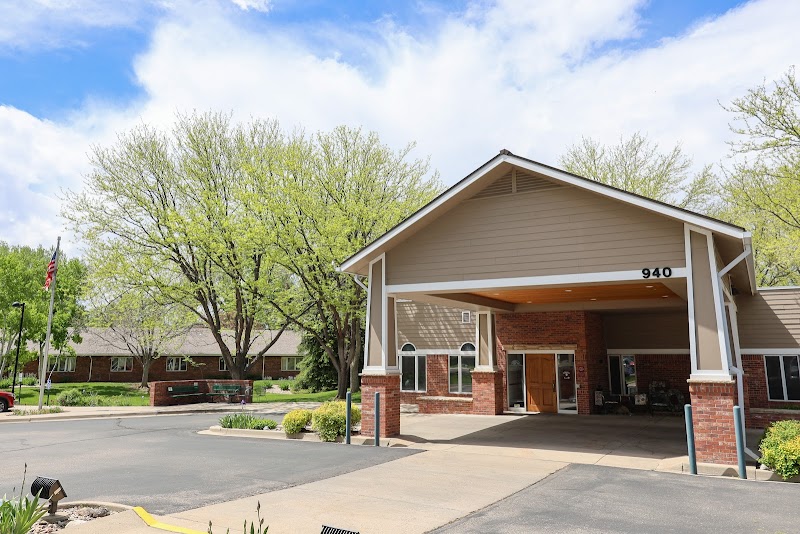
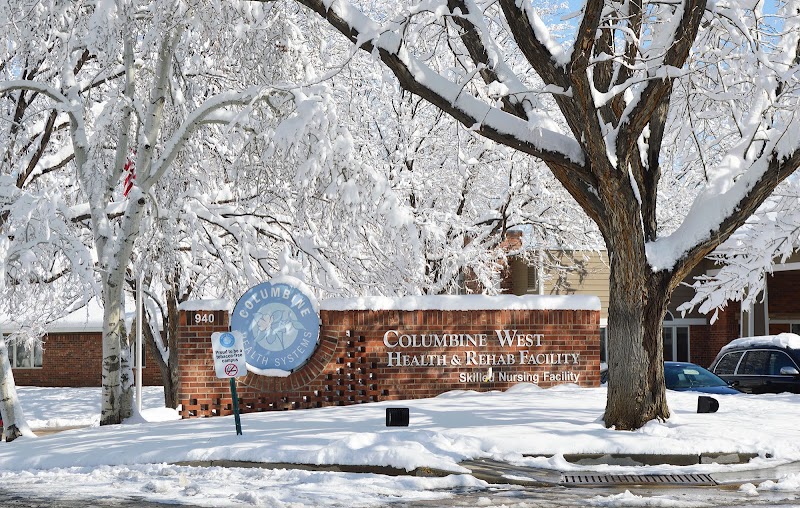
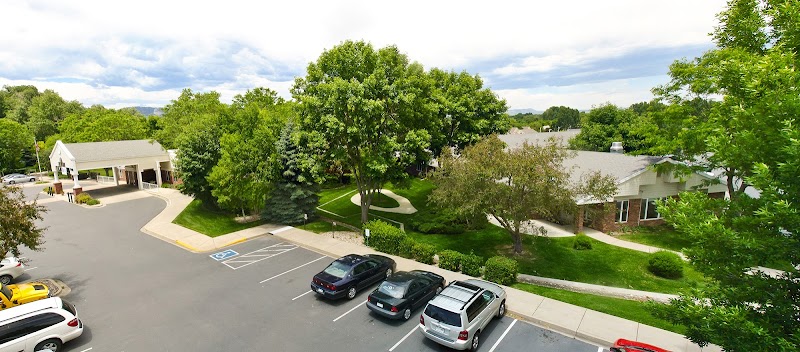
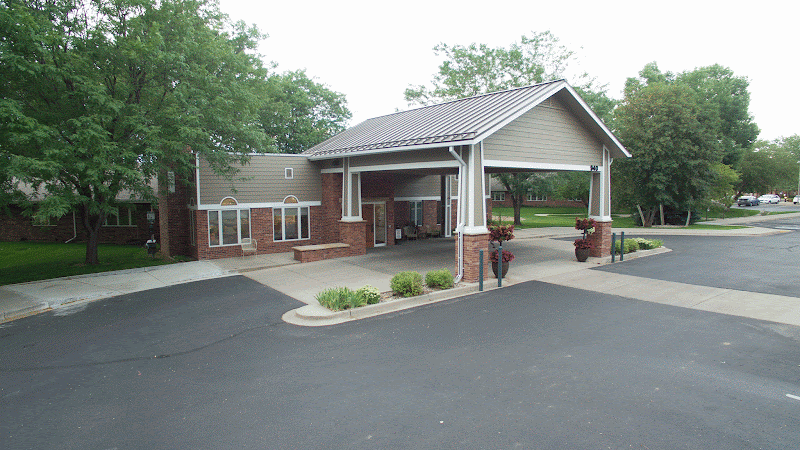
COLUMBINE WEST HEALTH & REHAB FACILITY

940 WORTHINGTON CIR, FORT COLLINS, CO 80526 (970) 221-2273
For profit - Corporation 100 Beds COLUMBINE HEALTH SYSTEMS Data: November 2025 1 Immediate Jeopardy citation
Trust Grade
18/100
#142 of 208 in CO
Last Inspection: April 2024

Within standard 12-15 month inspection cycle. Federal law requires annual inspections.

Overview

Coulmbine West Health & Rehab Facility has received a Trust Grade of F, indicating significant concerns regarding care and safety. Ranking #142 out of 208 nursing homes in Colorado places it in the bottom half of facilities in the state, and #9 out of 13 in Larimer County means only four local options are worse. Although the facility shows an improving trend, reducing issues from 9 to 3 over the past year, it still has serious problems, including a critical incident involving resident-to-resident sexual abuse and a serious failure to prevent pressure injuries for a resident at risk. Staffing is a strength, with a top rating of 5/5 stars and good RN coverage, meaning that many staff members stay and provide consistent care, but the 51% turnover rate is average. The facility has accumulated $26,891 in fines, which is concerning and suggests ongoing compliance problems that need to be addressed.

Trust Score
F
18/100
In Colorado
#142/208
Bottom 32%
Safety Record
High Risk
Review needed
Inspections
Getting Better
9 → 3 violations
Staff Stability
⚠ Watch
51% turnover. Above average. Higher turnover means staff may not know residents' routines.
Penalties
✓ Good
$26,891 in fines. Lower than most Colorado facilities. Relatively clean record.
Skilled Nurses
✓ Good
Each resident gets 74 minutes of Registered Nurse (RN) attention daily — more than 97% of Colorado nursing homes. RNs are the most trained staff who catch health problems before they become serious.
Violations
⚠ Watch
17 deficiencies on record. Higher than average. Multiple issues found across inspections.
★★☆☆☆
2.0
Overall Rating
★★★★★
5.0
Staff Levels
★★★★★
5.0
Care Quality
★☆☆☆☆
1.0
Inspection Score
Stable
2024: 9 issues
2025: 3 issues

The Good

  • 5-Star Staffing Rating · Excellent nurse staffing levels
  • 5-Star Quality Measures · Strong clinical quality outcomes
  • Full Sprinkler Coverage · Fire safety systems throughout facility
  • No fines on record

Facility shows strength in staffing levels, quality measures, fire safety.

The Bad

2-Star Overall Rating

Below Colorado average (3.1)

Below average - review inspection findings carefully

Staff Turnover: 51%

Near Colorado avg (46%)

Higher turnover may affect care consistency

Federal Fines: $26,891

Below median ($33,413)

Moderate penalties - review what triggered them

Chain: COLUMBINE HEALTH SYSTEMS

Part of a multi-facility chain

Ask about local staffing decisions and management

The Ugly 17 deficiencies on record

1 life-threatening 1 actual harm
Feb 2025 3 deficiencies 1 IJ
CRITICAL (J) 📢 Someone Reported This

A family member, employee, or ombudsman was alarmed enough to file a formal complaint

Immediate Jeopardy (IJ) - the most serious Medicare violation

Free from Abuse/Neglect (Tag F0600)

Someone could have died · This affected 1 resident

**NOTE- TERMS IN BRACKETS HAVE BEEN EDITED TO PROTECT CONFIDENTIALITY** Based on interviews and record review, the facility failed to protect and promote an environment free from resident-to-resident ...

Read full inspector narrative →
**NOTE- TERMS IN BRACKETS HAVE BEEN EDITED TO PROTECT CONFIDENTIALITY** Based on interviews and record review, the facility failed to protect and promote an environment free from resident-to-resident sexual abuse. The facility failure affected four of four residents (#1, #2, #3, and #4) out of seven sample residents and contributed to incidents of abuse by Resident #2 and #4. Residents #1 and #2 resided in the facility's secured unit. Fourteen residents resided in the secured unit: four male (including Resident #2) and 10 female (including Resident #1). Residents #3 and #4 resided in the non-secured unit. Resident #2 had a history of being verbally sexually inappropriate toward female residents and staff. On 2/5/25, staff observed Resident #2 grabbing the breast of female Resident #1 and lifting her shirt. When told to stop, Resident #2 stated, She likes it. Although Resident #2 was placed on one-to-one supervision from 2/5/25 until 2/7/25 at 9:30 a.m. when his medication was changed, interviews with staff revealed that not all staff were aware of Resident #2's inappropriate behavior toward Resident #1, were not educated on how to respond to his behavior toward female residents, and were not monitoring his behavior. Resident #4 had a history of being sexually inappropriate with female residents and staff. On 8/8/24, staff observed Resident #4 rubbing Resident #3's left breast. Although the facility updated Resident #4's care plan to read Resident #4 was to be seated next to male residents in group settings, interviews with staff on 2/25/25 revealed they had not been informed of the resident's inappropriate behavior toward female residents and on 2/26/25, Resident #4 was observed sitting at the nurses' station within arm's reach of a female resident. The facility's failure to inform and educate staff on Resident #2 and Resident #4's sexually inappropriate behaviors, monitor the residents' behaviors, and implement planned interventions created a reasonable expectation, absent immediate correction, that an adverse outcome resulting in serious harm could occur. Cross-reference F744 - failure to ensure a resident diagnosed with dementia received the appropriate treatment and services to attain or maintain their highest practicable physical, mental, and psychosocial well-being. Cross-reference F867- failure to ensure an effective quality assurance program to identify and address facility compliance concerns was implemented. Findings include: I. Immediate jeopardy A. Findings of immediate jeopardy Resident #2, who was admitted to the facility in November 2022, had a history of being verbally sexually inappropriate to staff and female residents. The facility failed to prevent Resident #2 from grabbing Resident #1's breast on 2/5/25. The facility's response to the incident on 2/5/25 was one-to-one supervision of Resident #2 until Resident #2's medical provider could see him. Once the provider saw him and ordered a medication change, one-to-one supervision was lifted on 2/7/25 at 9:30 a.m. However, based on interviews and observations, staff were not aware of Resident #2's sexually inappropriate behavior and left Resident #2 alone with female residents. Resident #4, who was admitted to the facility on [DATE], had a history of sexual behavior toward female staff. On 8/8/24, Resident #4 was observed by a staff member rubbing Resident #3's left breast. The resident's care plan, initiated on 8/8/24, revealed the resident was to sit next to other male residents in group settings to mitigate risk of inappropriate expressions towards other residents. However, on 2/26/25, Resident #4 was observed sitting at the nurses' station within arm's reach of a female resident. Staff interviews on 2/25/25 revealed that staff were unaware of the resident's inappropriate behavior and the intervention not to place him next to female residents. The facility's failure to inform and educate staff on Resident #2 and Resident #4's sexually inappropriate behaviors, monitor the residents' behaviors, and implement planned interventions created a reasonable expectation, absent immediate correction, that an adverse outcome resulting in serious harm could occur. On 2/26/25 at 2:45 p.m., the nursing home administrator (NHA) was notified that the facility's failure to protect and promote an environment free from resident-to-resident sexual abuse created an immediate jeopardy situation. B. Facility plan to remove immediate jeopardy On 2/27/25 at 10:18 a.m., the facility submitted a plan to remove the immediate jeopardy. The plan read: Immediate actions: Nursing home administrator (NHA) assigned a one-to-one staff member to ensure that Resident #1 and other residents were protected from Resident #2. The one-to-one supervision will continue until 2/27/25 then additional staff will be added to the schedule on all shifts indefinitely for the secured unit. This will help ensure that all residents on the secured unit will be safe. Beginning on 2/26/25 all staff that were currently working and all staff prior to the upcoming shift will be educated regarding the sexualized behaviors of Residents #2 and #4 and identified interventions as listed on the care plan. Education will be provided by written, verbal, and or digital means (Workday) for all resident's sexual expressions of need. All working staff were to have completed this as of 2/27/25. Starting on 2/26/25, identify other residents residing in the facility that have demonstrated sexual expressions of need (behaviors) in the past 6 (six) months and ensure that appropriate care plan interventions were in place. Starting on 2/26/25, immediate review of resident information sheets to ensure that interventions were in place for residents with inappropriate behavior. Education to be provided to clinical staff (nurses and certified nurse aides) regarding newly added expressions of need and interventions. Identification of other residents at risk: Residents at risk identified include all female residents residing in the facility. Sustainable fix: Implement a shift-to-shift report book with an emphasis on communicating expressions of need (behaviors) exhibited by residents on all units of the facility. Residents with active expressions of need will be identified in the shift-to-shift book. The oncoming shifts, both eight-hour and 12-hour shifts, will review and sign prior to the start of shift, this includes both nurses and CNAs (certified nurse aides). Events will be opened when new or changed expressions of need were noted. Events were to stay open until reviewed by the behavioral management team (BMT) and closed upon no expressions identified for 48 hours or stable with current interventions. Social services and/or nurse managers or their designee to ensure all residents demonstrating sexual expressions of need have a care plan and interventions in place. Any change in interventions or plan of care will result in an update to the resident information sheet (RIS). Monitoring: Shift-to-shift report book for all units will be monitored/reviewed by a secure unit manager, nurse manager or designee daily for one week, weekly for two weeks, monthly for two months All expressions of need events will be reviewed by the interdisciplinary team (IDT) or off-business hours designee daily for one week, then weekly per IDT BMT meeting. The event will be closed with demonstration of successful intervention and resolution of expressions of need. During the IDT BMT meeting, care plans will be audited based on the previous week events to ensure appropriate interventions were in place. Review and update the RIS will be a part of the IDT BMT review process documentation. C. Removal of immediate jeopardy On 2/27/25 at 3:20 p.m., the NHA was notified that the facility's plan to remove the immediate jeopardy was accepted based on the facility's plan and evidence of implementation of the measures outlined in the plan. However, deficient practice remained at an E level, a pattern with the potential for more than minimal harm. Interviews conducted on 2/27/25 verified that staff had been educated on sexual abuse and resident behaviors per the facility plan to remove the immediate jeopardy. -CNA #7 was interviewed on 2/27/25 at 10:55 a.m. He said he was assigned to provide Resident #2 with one-to-one supervision. He said that he was monitoring for any sexually inappropriate behaviors. He said that interventions were listed on the RIS. He said the RIS also gave tips on how to redirect. He also stated that there was a communication book that CNAs and nurses were supposed to use to write or check if there were any changes in resident behavior. -Licensed practical nurse (LPN) #3 was interviewed on 2/27/25 at 11:05 a.m. He said that he was updated on monitoring for any sexual behaviors for Residents #2 and #4. He said that they were supposed to keep them away from females. He also said that there was a new binder for communication for updating the next shift on any new behaviors. -CNA #5 was interviewed on 2/27/25 at 11:10 a.m. She said Resident #4 was known to be sexually inappropriate with female residents and female care providers. CNA #5 said Resident #4 should only be cared for by a male CNA or two female CNAs. CNA #5 said she had worked the hall four days ago and noticed the RIS had been updated for Resident #4's behaviors toward females. -CNA #4 was interviewed on 2/27/25 at 11:12 a.m. She said that she was educated on Resident #2 and how to monitor for his sexually inappropriate behaviors, who to report them to, new interventions on the RIS, and about the new communication binder for nurses and CNAs. She said that she worked only on the secured unit. -RN #1 was interviewed on 2/27/25 at 11:15 a.m. She said she had been educated on Resident #4's behaviors and that he should not be seated next to female residents due to inappropriate behaviors towards them. RN #1 said a new communication book was implemented for any staff member to document behaviors, and as the assigned floor nurse, she was required to review them. -CNA #2 was interviewed on 2/27/25 at 11:15 a.m. She said that she was educated on both Resident #2 and Resident #4, about their sexually inappropriate behaviors, who to report to, and to use the communication book to update the next shift. She said that they were also to refer to the residents' RIS for any updates. -Dietary aide (DA) #1 was interviewed on 2/27/25 at 2:11 p.m. She said that she was educated on both Resident #2 and Resident #4. She said that she was taught how to redirect them when they were sexually inappropriate and, if that behavior did happen, to report it to the charge nurse or the director of nursing ( DON). -Director of therapy (DOT) was interviewed on 2/27/25 at 2:34 p.m. The DOT said that her entire department was educated together on both Resident #2 and Resident #4. She said they were educated on their sexually inappropriate behaviors. She said that if either of the residents had any of those behaviors, they would let the charge nurse know. II. Facility abuse policy The Abuse Prevention policy, revised on 1/18/24, was received from the NHA on 2/25/25 at 2:02 p.m. It read in pertinent part: The facility does not condone resident abuse. Residents must not be subjected to by anyone, including but not limited to facility staff, other residents, consultants, volunteers, staff of other agencies serving the residents, family members or legal guardians, friends or other individuals. The facility has developed a staff screening, orientation, education and policy and procedure to prevent physical, mental, verbal abuse, or misappropriation of resident funds and possessions. Sexual abuse includes, but is not limited to, sexual harassment, sexual coercion or sexual assault. All employees must immediately report to the administrator or their supervisor any suspected, observed or reported incident of a crime, whether by staff members, family members, or any other persons. The facility will conduct an internal investigation. That investigation includes interviewing any staff members, residents or family members/responsible party who might have knowledge of the crime. In each case of suspected or alleged abuse, the resident will be protected from any further abuse. Actions, as deemed necessary by the administrator or designee, will be implemented immediately. Upon completion of the investigation, the administrator or designee will prepare a written summary. The facility assesses each potential resident prior to admission. This assessment includes behavioral history. Persons with significant history or high risk of violent behavior were not knowingly admitted to the facility. If a resident experiences a behavior change resulting in aggression toward other residents the facility arranges for a psychiatric evaluation of the resident. The resident's care plan was revised to include new approaches to reduce or eliminate any further chance of abuse. Recommendations for appropriate intervention, up to and including hospitalization, can then be implemented. Incidents were considered for the QAPI (quality assurance and performance improvement) program and investigations were monitored quarterly by the quality improvement committee. III. Incident on 2/5/25- Sexual abuse of Resident #1 by Resident #2. A. Resident #2 - assailant 1. Resident status Resident #2, age greater than 65, was admitted on [DATE]. According to the February 2025 computerized physician orders (CPO), the resident's diagnoses included unspecified dementia severe, cognitive communication deficit, and depression. The 1/7/25 minimum data set (MDS) assessment revealed that Resident #2 was severely cognitively impaired with a brief interview for mental status (BIMS) score of seven out of 15. The assessment revealed that he needed partial to moderate assistance with most of his activities of daily living (ADL). The MDS assessment further revealed that Resident #2 did not have any verbal behaviors directed towards others. However, interviews with staff and record review indicated otherwise (see below). 2. Record review Record review revealed documentation of Resident #2's sexually inappropriate comments. The expressions of need (behavior) care plan, last reviewed on 1/22/25, documented that Resident #2 had inappropriate comments evidenced by making sexual or rude comments about people's physical appearance. Interventions listed were: redirect Resident #2's attention following adverse interaction, ensure Resident #2 was part of group conversation and one-to-one conversation when his interactions were appropriate, assess whether the aggression endangered Resident #2 or other residents, intervene if necessary, seat Resident #2 where constant or near constant observation if possible, and maintain a calm environment. The record revealed a nursing note dated 2/5/25 at 2:36 p.m. that documented a staff member reported Resident #2 inappropriately touched a female resident. It documented that an event was opened and that the family and provider were notified. The record revealed a nursing note dated 2/5/25 at 10:13 p.m. that documented a staff member reported Resident #2 had made sexually inappropriate comments toward staff while assisting the resident with his shower. The resident was noted to have attempted to kiss the staff member when the staff member was assisting the resident with shaving. No further sexual comments or behaviors were noted during the shift. Expressions of need charting (behavior monitoring and charting) was initiated by the facility on 2/5/25 after the incident with a female resident and discontinued on 2/19/25. However, there was no documentation showing what discussions were held and what factors were considered for discontinuing behavior monitoring and charting on 2/19/25. The record further revealed that Resident #2's care plan, which read the resident made inappropriate sexual or rude comments (see above), was not updated to include Resident #2's behavior of touching female residents. B. Resident #1 -victim of sexual abuse 1. Resident status Resident #1, age [AGE], was admitted on [DATE]. According to the February 2025 CPO, diagnoses included Alzheimer's disease, stage two kidney disease, depression, and anxiety disorder. The 11/28/24 MDS assessment revealed that Resident #1 was unable to complete the brief interview for mental status assessment. The staff assessment revealed that she had short-term and long-term memory deficits. The staff assessment further revealed that she was moderately impaired in her daily decision-making. The MDS assessment revealed that Resident #1 wandered and ambulated without assistance and needed moderate to partial assistance with most of her ADLs. 2. Record review There were no progress notes in the electronic medical record (EMR) for Resident #1 concerning the incident on 2/5/25. Expression of needs progress notes (behavior monitoring and charting) were initiated on 2/5/25 and were discontinued on 2/19/25. However, there was no documentation showing what discussions were held and what factors were considered for discontinuing behavior monitoring and charting on 2/19/25. The comprehensive care plan documented Resident #1 had physical aggression, such as hitting and swearing at others. She also had a history of verbal aggression toward staff and other residents (initiated on 11/27/24). There was no reference to the incident with Resident #2 on her care plan. 3. Resident representative interview Resident #1's responsible party was interviewed on 2/27/25 at 9:30 a.m. She said her mother had dementia, but if she was in her right mind, she would have been enraged by being touched by someone inappropriately. C. Facility response to the incident on 2/5/25 involving Resident #1 and Resident #2 1. Facility incident report The 2/5/25 facility incident report revealed that a staff member working on the secured unit witnessed Resident #2 grabbing Resident #1's breast and, when told to stop, the resident said, She likes it. The report further read: - The facility staff separated the residents and notified social services, APS (adult protective services), the police, the ombudsman, and Resident #2's provider. - Immediate interventions included one-to-one supervision of Resident #2 until he was seen by his provider and monitoring for any sexual behaviors toward female residents. 2. Facility investigation The facility investigation on 2/5/25 of the incident involving Resident #2 and Resident #1 revealed that Resident #1 and #2 resided in the secured unit, and both residents were interviewed. Resident #1 was interviewed on 2/5/25 but had no verbal response to the incident. Resident #2 was not interviewed until 2/7/25 (two days later) and did not recall the incident. The investigation further revealed that Resident #2 was seen by the nurse practitioner (NP) on 2/7/25, and a medication change occurred. The NP put the resident on 5 mg (milligrams) of methimazole, an antithyroid medication, for agitation and hypersexual behaviors. D. Failures in facility response 1. See above; Expressions of need charting (behavior monitoring and charting) for Resident #2 and #1 was initiated by the facility on 2/5/25 after the incident with a female resident and discontinued on 2/19/25. There was no documentation showing what discussions were held and what factors were considered for discontinuing behavior monitoring on 2/19/25. 2. See above; Resident #2 started a new medication on 2/7/25 to address agitation and hypersexual behaviors. There was no documentation that staff was monitoring the medication for effectiveness. Further, as of 2/25/25 (during the survey), the provider had not seen the resident to assess the resident's behavior and the effectiveness of the medication. 3. See above; neither Resident #2 nor Resident #1's care plan was updated to reference and address the incident on 2/5/25 to prevent a recurrence. A review of the record revealed that Resident #2's care plan had not been updated with his inappropriate touching of female residents, and no new interventions were put in place. A review of the record revealed that Resident #1's care plan had not been updated to document the 2/5/25 incident and to monitor her for a potential psychosocial response. 3. See below; staff interviews revealed not all staff were aware of Resident #2's sexually inappropriate behavior. E. Observations On 2/25/25 at approximately 10:20 a.m., it was observed that the secured unit was separated from the rest of the facility by doors that were locked. A code was needed to enter and leave the unit. It was noted that the nurse who cared for the secured unit was assigned part of the non-secured hallway, too, and was not constantly on the secured unit. On 2/25/25 at 10:32 a.m., Resident #1 was observed in the common area, bent over, wiping furniture, doors, and windows with a yellow grippy sock. Resident #2 was observed in his room in his bed. On 2/25/25 at 10:39 a.m., the activities staff was seen entering the common area and inviting residents to listen to him read the Daily Chronicle. Resident #1 was still in the common area bending over and touching chairs and pulling open drawers and wandering around in the common area. Resident #2 was present in the common area for the activity. On 2/25/25 at 11:15 a.m., the activities staff was reading the Daily Chronicle in the common area. Both CNAs were in different rooms, providing care with the doors closed. The nurse was not on the unit. Resident #1 was still in the common area bending over and touching objects in close vicinity of Resident #2. Residents #1 and #2 were not in constant or near-constant observation by staff. On 2/25/25 at 11:28 a.m., the registered nurse (RN) entered the unit to pass medications to other residents. On 2/25/25 at 11:40 a.m., both Resident #1 and Resident #2 were in the common area, sitting at different tables but still very close to each other. One CNA, often with her back to Residents #1 and #2, was passing drinks. The other CNA was gathering residents to come to the common area in preparation for lunch. On 2/25/25 at 1:22 p.m., Resident #1 was observed sleeping in a double occupancy male room on the bed that was currently open. CNAs were observed walking past the room and not waking her to move to her own bed. On 2/25/25 at 1:36 p.m., both CNAs were in different rooms providing care with the doors closed. There were seven residents in the common area, and the RN was not on the unit. Resident #2 was in his room with the door open, and Resident #1 was wandering the common area and hallways. On 2/25/25 at 4:03 p.m., Resident #2 was in the common area eating a snack. Resident #1 was wandering around the common area. The CNAs were not consistently in the area, entering and leaving frequently to assist other residents. The nurse was not on the unit. On 2/25/25 at 4:04 p.m., Resident #1 was walking around the common area, bent over touching different items in close proximity to Resident #2. The CNAs were not consistently in the area, entering and leaving frequently to assist other residents. The nurse was not on the unit. On 2/25/25 at approximately 6:00 p.m., Resident #2 was put on a one-to-one supervision. F. Staff interviews Staff interviews revealed that not all staff were aware of Resident #2's inappropriate sexual behavior toward female residents. 1. CNA #4, who worked on the secured unit, was interviewed on 2/25/25 at 1:41 p.m. CNA #4 said that if there was a situation between residents, she would try to de-escalate the residents and then go and tell the nurse. If the residents were on any kind of behavior precautions, she said she would get that information from the nurse and through report. CNA #4 said she would also look for any open events in the electronic medical record (EMR). She said the charge nurse usually did rounds on the secured unit about every two hours if they were not too busy. CNA #4 said that she was unaware of any sexual situation that had happened between Resident #1 and #2 and was unaware of any behavior monitoring for Resident #2. 2. RN #2, who worked as a floor nurse and was assigned to the secured unit and a non-secured hallway, was interviewed on 2/25/25 at 1:45 p.m. He said that the CNAs working the secured unit let him know if any behaviors had happened. He said he did medication pass around 7:00 a.m. or 8:00 a.m. on the secured unit, and it took him about two hours to complete the medication pass. He said that if the CNAs needed anything on the secured unit, they had a walkie-talkie that they could use to call the charge nurse over. He said they really relied on the CNAs to communicate anything concerning that they saw or heard. He said that he had heard about the incident between Residents #1 and #2 and that they were charting on both residents' expressions of need while the event was open. He said he had observed Resident #2 reaching for Resident #1's breast on a different day, but he had not made physical contact. He said that if the resident had made contact, he would have reported it to social services (SS) or the director of nursing (DON) and then filled out a report. 3. CNA #3, who worked on the secured unit, was interviewed on 2/25/25 at 4:04 p.m. She said she learned of any behaviors through report. She said there was normally a clipboard on the podium (located just outside the common area in the secured unit) that would give them information. She said that if there was a change in a resident's care plan, there was a piece of paper that staff had to sign to show they had read the updated care plan in the report room. She said she did not think that staff was monitoring Resident #2 for anything except for self-transferring. She said that she was unaware of any sexually inappropriate incident between Residents #1 and #2. 4. LPN #1, who worked on the secured unit, was interviewed on 2/25/25 at 4:19 p.m. She was working the floor as a CNA. She said she got new information from the verbal shift report. She said she also looked at open events. She said they monitored residents for behaviors every day by keeping eyes on all the residents. She said that she had heard about the incident between Residents #1 and #2 and said she had asked the CNAs if there were any behaviors exhibited by either of the residents when the event was open. 5. LPN #2, who worked on the secured unit, was interviewed on 2/25/25 at 4:26 p.m. She said that they really relied on the CNAs to communicate with the nurses. She said she had heard about the incident between Residents #1 and #2. She said that they were monitoring Resident #2's expressions of needs when the event was open. However, progress notes for Resident #2 revealed the interdisciplinary team (IDT) closed the 2/5/25 event on 2/19/25, and sexually inappropriate behavior monitoring stopped, except for one submission on 2/20/25 from the night shift nurse who charted at 6:30 a.m. at the end of her shift. 6. The DON was interviewed on 2/25/25 at 4:54 p.m. She said that if an event was being opened for a resident, nursing staff documented on the event. She said there was a chart that the nurses followed that determined how often they had to chart on that particular event. She said that behaviors should be charted on every shift and the nurse was to chart in the EMR under event charting. She said that if the event was a new type of event for the resident, there should be a prepopulated template for the care plan. If there was not a template, then the MDS coordinator would review the event the next business day. She said care plans were reviewed on admission and then quarterly, and anyone who had access to the EMR had access to the care plans. CNAs did not have access to the care plan; they got their information from the Resident Information Sheet (RIS) and from the preference binders that were found in each report room. She said staff were notified of new interventions and what to monitor for on education sheets that were placed in report rooms, and the staff development coordinator (SDC) monitored to ensure staff had read the education sheet. She said that there were 14 residents in the secured unit; four residents were male, and 10 residents were female. She said that she did not have any staffing concerns for the secured unit. She said agency staff was trained by going through orientation if they had never worked in one of their facilities before. Behavior and care concerns were reported to agency staff through verbal reports and by what was on the RIS. She said that her expectations for the nurse assigned to the secured unit to monitor both the secured and non-secured unit was to use the secured unit as their home base. The nurse should be doing their charting on the secured unit. The only time they should be off the secured unit was when they were providing care to the residents on the non-secured unit. She said that they were in the process of implementing a walkie-talkie system. She said that at night, the CNA should have the walkie-talkie on them at all times, but the day shift could use it as well. She said that CNAs charted in a separate system, but she was not as familiar with what or where the CNAs charted. She said that the incident report for the 2/5/25 event was filled out by the social services director (SSD). She said that the interventions were to keep Resident #2 separate from Resident #1, and staff were to monitor Resident #2. She said that there were no audits done on the monitoring of Resident #2. She said that the event was closed based on the IDT notes. However, see above; IDT notes about the closing of the event were not found in the EMR. 7. The NHA was interviewed on 2/25/25 at 5:32 p.m. She said new behaviors caused an event to be opened, and they had an IDT meeting where they discussed behavior monitoring and if interventions were meeting the resident's needs. The NHA said that floor staff did a small huddle where they met and discussed interventions put in place for a resident. 8. The SSD was interviewed on 2/26/25 at 9:24 a.m. The SSD said the nurse notified her on 2/5/25 about the incident involving Residents #1 and #2. The SSD said that nursing provided the assessment for Resident #1. The SSD said that she then interviewed three other residents who resided in the secured unit on the day of the incident. The SSD said she also interviewed the staff members who witnessed the incident. She said she did not interview Resident #2 the same day as the incident because she was more concerned about Resident #1. She said that since Resident #2 was on one-to-one supervision, he did not have access to Resident #1. However, see above; Resident #2's one-to-one supervision was removed on 2/7/25. 9. The NHA was interviewed again on 2/26/25 at 9:43 a.m. She said that there was not any formal education provided to the staff regarding the 2/5/25 incident. She said that education was completed verbally. The NHA said that CNAs did not document resident behaviors but were to verbalize the behaviors to the nurse, who in turn was to document the behaviors in the EMR. The NHA said they would now be initiating a communication binder for CNAs, starting 2/26/25. The NHA said the facility closed the event for Resident #2 because he had not shown any behaviors, and it seemed that the medication regime had returned him to his baseline. However, see above; Resident #2 had not been seen by the provider for an effective response to the new medication started on 2/7/25 (see below). 10. The nurse practitioner (NP) was interviewed on 2/26/25 at 10:54 a.m. She said Resident #2 was prescribed Methimazole due[TRUNCATED]
CONCERN (D) 📢 Someone Reported This

A family member, employee, or ombudsman was alarmed enough to file a formal complaint

Potential for Harm - no one hurt, but risky conditions existed

Deficiency F0744 (Tag F0744)

Could have caused harm · This affected 1 resident

**NOTE- TERMS IN BRACKETS HAVE BEEN EDITED TO PROTECT CONFIDENTIALITY** Based on observations, record review and interviews, the facility failed to ensure one (#1) of one resident who were diagnosed w...

Read full inspector narrative →
**NOTE- TERMS IN BRACKETS HAVE BEEN EDITED TO PROTECT CONFIDENTIALITY** Based on observations, record review and interviews, the facility failed to ensure one (#1) of one resident who were diagnosed with dementia, received the appropriate treatment and services to attain or maintain the highest practicable physical, mental and psychosocial well-being out of seven sample residents. Specifically, the facility failed to effectively identify person-centered approaches for dementia care for Resident #1. Cross reference F600: failure to protect Resident #1 from abuse. Findings include: I. Facility policy and procedure The Dementia Care policy, dated 7/1/24, was provided by the nursing home administrator (NHA) on 2/27/25 at 4:20 p.m. it read in pertinent part, Each resident who displays or is diagnosed with dementia will receive the appropriate treatment and services to attain or maintain his or her hightest practicable physical, mental and psychosocial well-being. An individualized, person-centered care plan will be developed for each resident through an interdisciplinary team (IDT) approach, which includes input from the resident and/or their representative. All approaches to care are monitored for efficacy, risks, benefits, harm and revised as necessary. Specialized support and services will be provided as necessary. Expressions of need may represent a resident's attempt to communicate. Use of the Dementia Tool is encouraged, which includes communication techniques. The Expression of Need Management policy, revised 3/7/24, was proved by the NHA on 2/27/25 at 4:20 p.m. It read in pertinent part, Expression(s) of need (previously known as behaviors) will be handled in a professional and caring manner in order to not endanger either the resident or others. Necessary care and services will be provided with a person-centered approach that reflect the resident's goals, while maximizing the resident's quality of life. The IDT team shall monitor residents on-going for expression(s) of need. If a resident has a history of expressions of need that have been care planned, the plan of care will be followed to reduce, eliminate, or manage the expressions. Upon identification of a new or worsening expression of need, interventions will be implemented immediately and an event (incident) will be opened. Expressions of need will be reviewed by the IDT team. The care plan will be reviewed and revised or implement individualized approaches, including involvement in meaningful activities. The Dementia Tool, undated, was provided by the NHA on 2/27/25 at 4:20 p.m. It read in pertinent part: -Things that work in every situation, slow down (move slowly, talk slowly); -Approach from the front so the resident can see you; -Reduce stimulation; -Approach again later; -Do not scold, confront or become angry with the resident; -Use written reminders; and, -Use non-threatening approach II. Resident #1 A. Resident status Resident #1, age [AGE] was admitted on [DATE]. According to the February 2025 computerized physician's orders (CPO), diagnosis included Alzheimer's disease, stage two kidney disease, depression, and anxiety disorder. The 11/28/24 minimum data set (MDS) assessment revealed Resident #1 was unable to complete the brief interview for mental status. The staff assessment revealed she had short-term and long-term memory deficits. The staff assessment further revealed she was moderately impaired in her daily decision-making. The MDS assessment revealed Resident #1 wandered and ambulated without assistance. She needed moderate to partial assistance with most of her activities of daily living (ADL). B. Observations On 2/25/25 at 10:32 a.m. Resident #1 was in the common area bent over wiping furniture, doors and windows with a yellow sock. On 2/25/25 at 10:39 a.m. the assistant activities director (AAD) entered the common area and began inviting residents to listen to him read the daily chronicle. Resident #1 was still in the common area bending over and touching chairs and pulling open drawers and wandering around in the common area. Resident #1 was not invited to the activity. On 2/25/25 at 11:15 a.m. The AAD was reading the daily chronicle in the common area. Both certified nurse aides (CNA) were providing care to residents in their rooms with the doors closed. The nurse was not on the unit. Resident #1 was still in the common area bending over and touching objects. -Resident #1 was not in the direct line of sight of a staff member as directed on the resident's plan of care (see record review below). On 2/25/25 at 1:22 p.m. Resident #1 was sleeping on a bed in a double occupancy male room. CNA #2 and CNA #4 walked past the room and did not encourage Resident #1 to return to her bed. On 2/26/25 at 12:17 p.m. Resident #1 was walking up and down the secured unit hallway. She was pushing another resident's wheelchair trying to get them to move faster. The staff did not redirect her. On 2/27/25 at 2:16 p.m. Resident #1 was sitting on a love seat at the end of the hallway, alone. Staff was at the front of the unit conversing with each other while an activity was being run in the common area. -Resident #1 was not in the staff's near-constant observation, per the resident's plan of care (see record review below). C. Record review The activities care plan, revised on 12/5/24, revealed the resident was very pleasant and at times spoke in nonsensical sentences. The care plan documented that Resident #1 was interested in holding and caring for a baby doll, spending time outdoors, listening to music and her religion. Interventions included offering one-to-one visits for social interactions, offering walks and going outdoors, encouraging Resident #1 to join group activities of possible interest and offering material needed for activities of interest such as a baby doll. The expressions of need care plan, revised on 2/19/25, revealed Resident #1 experienced physical aggression such as hitting or swearing at others. Interventions included giving her a baby doll or other items of comfort, separating her from the other residents, assisting Resident #1 to sit where constant or near-constant observation was possible. -However, observations revealed the resident was not always in near-constant supervision of sight of staff and was not offered her baby doll (see observations above). The 11/25/24 nursing progress note documented Resident #1 was wandering and going from room to room. The note revealed this was not a new behavior. The 11/26/24 nursing progress note documented Resident #1 remained restless and ambulated around the secured unit touching other residents. -Review of the resident's electronic medical record (EMR) did not reveal the staff tried any interventions to prevent Resident #1 from touching other residents. The 11/28/24 nursing progress note documented Resident #1 had agitation and aggression. She was attempting to pull food away from other residents. She was also entering other resident's bedrooms and trying to pull their blankets away from them. She was attempting to hit and pinch staff. -Review of the EMR revealed that the staff administered Ativan (antianxiety medication), but it was not always effective and the floor staff tried to provide supervision and redirection but, it was not always effective. The 12/1/24 nursing progress note documented Resident #1 was wandering and touching other residents. The 12/3/24 nursing progress note documented Resident #1 was showing signs of aggression towards a male resident. The 12/4/24 nursing progress note documented Resident #1 was wandering, going from room to room and was touching other residents. The note documented this was not a new behavior. The 2/12/25 nursing progress note documented Resident #1 continued to wander the secured unit and she was not always careful or aware of her surroundings. The 2/13/25 nursing progress note documented Resident #1 wandered from room to room on the secured unit. The 2/14/25 nursing progress note documented Resident #1 was wandering from room to room with her head down. The 2/17/25 nursing progress note documented Resident #1 was wandering from room to room. The 2/19/25 nursing progress note documented Resident #1 was up and wandering the secured unit. She was in and out of other rooms and beds. Review of the January 2025 and February 2025 activity participation sheets revealed Resident #1 had two social visits (one-on-one) with activities during the month of January 2025. According to the participation sheet for February 2025 (2/1/25 to 2/26/25), Resident #1 had not had any social visits. The participation sheet documented during most of the activities during the months of January 2025 and February 2025 Resident #1 was walking or was given water by a staff member. The resident information sheet (staff directive tool) for Resident #1 documented that the resident need to be in line of sight due to being a high fall risk. III. Staff interviews The NHA was interviewed on 2/25/25 at 5:32 p.m. The NHA said that all staff members received dementia training upon hire. CNA #5 was interviewed on 2/26/25 at 12:09 p.m. CNA #5 said Resident #1 wandered all day and would go in other resident's rooms and get into other resident's space. She said Resident #1 annoyed some of the other residents by wandering into their rooms or by getting into their personal space. She said the staff would intervene before the situations got physical. She said Resident #1 did not attend activities because she wandered too much and would not stay still. She said Resident #1 was not able to engage in the activities. CNA #6 was interviewed on 2/26/25 at 12:17 p.m. CNA #6 said Resident #1 wandered most of the time. CNA #1 said Resident #1 liked to touch and feel everything. He said she went into other residents'rooms and that annoyed the other residents. He said she did not do things to purposefully harm or annoy the other residents. He said Resident #1 had not been in any recent altercations with any of the residents. He said she was mostly the victim in the altercations with the other residents. He said it was hard to engage Resident #1 in activities because she will not sit in one place for very long. He said giving her a baby doll would sometimes help with her wandering. He said Resident #1 enjoyed warm baths to calm her down Registered nurse (RN) #2 was interviewed on 2/26/25 at 12:22 p.m. RN #2 said Resident #1 was alert and oriented to herself. He said she self-ambulateed and grabbed objects and other residents. He said she was easily redirectable. He said he did not know if there was anything that would keep her from entering into other resident's rooms. The assistant activities director (AAD) was interviewed on 2/26/25 at 12:26 p.m. The AAD said the activities staff tried to do one-on-one visits with Resident #1. He said if they happened to see her enter the room while they were doing an activity they would invite her over to join. CNA #8 was interviewed on 2/27/25 at 10:55 a.m. CNA #8 said that the activities department were going to try to add additional activities on the secured unit. He said they currently only had two activities that happen on the unit. He said it might help keep the behaviors down on the secured unit. The AAD was interviewed again on 2/27/25 at 3:25 p.m. The AAD said there was a binder in the activities office where they would track to see if a resident came to the activity. He said that there was also a special care book that was resident-specific. He said that they tried to do one-on-one visits with Resident #1. He said she would join current events or reminisce groups. He said that one-on-one visits happened one to two times a week. -However, the activity participation log revealed Resident #1 had two one-on-one visits in January 2025 and did not have any in the month of February 2025. The director of nursing (DON) was interviewed on 2/27/25 at 5:15 p.m. The DON said the staff on the secured unit should utilize the dementia tool (see facility policy and procedures above). She said Resident #1 typically wandered and the staff should redirect her. She said that Resident #1 wandered into other resident's rooms and laid in open beds. She said Resident #1 did not understand that the bed or the room was not hers She said the staff needed to redirect Resident #1 by offering her comfort items such as a baby doll to hold while walking. She said if Resident #1 was sleeping in a bed that was not hers, the staff should let her be if she was not affecting other residents. She said that there was a potential for another resident not liking that Resident #1 was sleeping in their bed. She said Resident #1 had been involved in several resident to resident altercations recently. She said Resident #1 was primarily the victim. She said a resident that wandered was at increased risk of altercations with other residents. The NHA was interviewed again on 2/27/25 at 5:30 p.m. The [NAME] said the staff were aware of which residents wandered. She said the staff should redirect residents who do not understand personal space, especially if they were in a dangerous situation. She said a resident laying in another resident's bed could be a dangerous situation.
CONCERN (F) 📢 Someone Reported This

A family member, employee, or ombudsman was alarmed enough to file a formal complaint

Potential for Harm - no one hurt, but risky conditions existed

QAPI Program (Tag F0867)

Could have caused harm · This affected most or all residents

Based on interviews and record review, the facility failed to ensure an effective quality assurance program to identify and address facility compliance concerns was implemented, in order to facilitate...

Read full inspector narrative →
Based on interviews and record review, the facility failed to ensure an effective quality assurance program to identify and address facility compliance concerns was implemented, in order to facilitate improvement in the lives of nursing home residents, through continuous attention to quality of care, quality of life and resident safety. Specifically, the quality assurance performance improvement (QAPI) program committee failed to identify and address concerns related to freedom from abuse, reporting and investigating that rose to the level of immediate jeopardy and created a situation where a serious adverse outcome occurred and caused harm. Findings include: I. Facility policy and procedure The Quality Assurance and Performance Improvement Plan (QAPI) policy and procedure, reviewed April 2022, was received from the nursing home administrator (NHA) on 2/27/25 at 6:39 p.m. It revealed in pertinent part, The purpose of QAPI is to take a proactive approach to continuously improving the way we care for and interact with our residents, caregivers, and family members/responsible parties so we are able to realize our vision to provide quality health care services to our residents while promoting individual choice, resident satisfaction and employee retention. To do this, all employees will participate in ongoing QAPI efforts which support our mission and vision. QAPI focuses on systems and processes, rather than individuals. The emphasis is on identifying system gaps rather than on blaming individuals. The facility makes decisions based on data, which includes the input and experience of caregivers, residents, health care practitioners, families, and other stakeholders. The QAPI Steering Committee and facility QAPI teams will aim for safety and high quality with all clinical interventions while emphasizing autonomy and choice in the daily life of our residents. This will be achieved by utilizing the current evidence (data, national benchmarks, published best practices, clinical guidelines) and benchmarks. Clinical Care: Levels of care: post-acute care/rehabilitation, chronic care management, dementia care and services, end of life/hospice care, social services, dietary, nursing services, MDS (minimum data set assessments), medication management, infection prevention, wound care, assistance with activities of daily living and restorative care. Data shall be collected from multiple sources to monitor the care and service areas defined above, including the following: input from caregivers, residents, families, and others, adverse events, performance indicators, survey findings and complaints. Data is collected and analyzed at both the facility and corporate level. The facility QAPI team reviews the data and compares against available benchmarks and/or established targets, then uses the information to charter facility level Performance Improvement Projects (PIPs). II. Review of the facility's regulatory record revealed it failed to operate a QA (quality assurance) program in a manner to prevent repeat deficiencies and initiate a plan to correct F600 Free from abuse and neglect During the recertification survey on 4/11/24, F600 was cited at a D scope and severity, a potential for more than minimal harm, isolated. During the abbreviated survey on 2/27/25, F600 was cited at a J scope and severity, immediate jeopardy to resident health or safety, isolated. III. Cross-reference citations Cross-reference F600: The facility failed to ensure residents were protected from resident-to-resident sexual abuse. The facility's failure to protect residents from resident-to-resident sexual abuse put residents in a situation where a serious outcome occurred and created an immediate jeopardy situation. IV. Staff interviews The NHA was interviewed on 2/27/25 at 6:05 p.m. The NHA said the QAPI committee consisted of the medical director, the director of nursing (DON), the staffing coordinator, the medical records director, the infection preventionist, the wound care/restorative nurse, the dietician, the pharmacist and the NHA. The NHA said the QAPI committee met monthly and would discuss any concerns that had been identified from current issues in the facility, such as events/occurrences and infections. The NHA said the facility did not have a PIP for abuse in place since they were put back into compliance from the last recertification survey (April 2024). -The facility had not previously identified any concerns related to abuse, despite the facility being cited for abuse on their last recertification in April 2024.
Aug 2024 1 deficiency
CONCERN (E) 📢 Someone Reported This

A family member, employee, or ombudsman was alarmed enough to file a formal complaint

Potential for Harm - no one hurt, but risky conditions existed

Safe Environment (Tag F0584)

Could have caused harm · This affected multiple residents

**NOTE- TERMS IN BRACKETS HAVE BEEN EDITED TO PROTECT CONFIDENTIALITY** Based on observations and interviews, the facility failed to provide a clean, comfortable and homelike environment for residents...

Read full inspector narrative →
**NOTE- TERMS IN BRACKETS HAVE BEEN EDITED TO PROTECT CONFIDENTIALITY** Based on observations and interviews, the facility failed to provide a clean, comfortable and homelike environment for residents who resided in 13 of 15 rooms out of a sample of 70 resident rooms. Specifically, the facility failed to ensure resident rooms had safe, comfortable temperatures that did not exceed 81 degrees Fahrenheit (F). Findings include: I. Facility policy and procedure The Indoor Climate Control policy, reviewed on 8/15/23, was provided by the nursing home administration (NHA) on 8/5/24 at 12:52 p.m. The policy revealed the following considerations were made to ensure that the facility remained cool during the late spring and summer months: The facility had four rooftop air conditioning (AC) units to cool the facility's corridors. The AC units do not serve individual resident rooms. The facility team adopts other methods to help maintain resident room temperatures at comfortable and safe levels. These AC units were supported by the facility system maintenance team and serviced by contracted third-party vendors, as appropriate. The maintenance team would ensure that the units were in working order during the spring and would conduct regular maintenance checks during the summer months. In addition, the facility had one window AC unit installed on the secure unit to help maintain temperatures in the common sitting area. Throughout its operating history, the facility discovered that an effective way to maintain cool temperatures was to ensure windows were shut before the heat of the day increased (approximately 10:00 a.m.). Therefore, the staff was tasked with ensuring that resident room windows were closed and that client room doors remained open. This kept the warm outside air from entering the room and allowed the cooled corridor air to enter. The resident might choose to keep their window open, but the staff would advise that they keep their door closed, to lessen the warm air entering the facility. Residents might use a personal fan in their room to help with air movement and cooling. The social services and business office teams would work with residents/families to facilitate acquiring a fan, and the maintenance team would assist with installation. The facility's maintenance team directed the effort of frequently auditing resident room and common area temperatures throughout the facility. Any temperatures outside the regulated limits were noted for further investigation and potential repairs. II. Resident council minutes The resident council minutes, dated 4/5/24, revealed one resident said it got hot in the facility and asked if there was any way to get a better air conditioning system. The NHA said she would talk with the chief executive officer (CEO) of the company. The resident council minutes, dated 6/5/24, revealed the activity director (AD) reminded everyone that as it got warmer, the only way to keep the facility cool was to keep the windows closed during the day. The AD said if the residents wanted their room window open, then the room entrance door to the hallway needed to be closed. Residents were to let staff know if they needed a fan. The resident council minutes, dated 7/3/24, revealed the maintenance supervisor (MS) reminded the residents to keep their windows closed after 10:30 a.m. to help keep their rooms cooler. He said fans could be made available if rooms were really hot. He said, if the residents wanted their room window open, then the room entrance door to the hallway needed to be shut. III. Maintenance temperature log The July 2024 temperature log was provided by the MS on 8/5/24 at 3:51 p.m. The temperature log revealed the MS took temperatures on 7/11/24 for six resident rooms and the common area on the East hall. The temperatures ranged between 70 to 80 degrees F. No other temperatures were taken for the month of July 2024. IV. Resident room observations and interviews A. Resident #6 Resident #6 resided in room #East 107-2. The 6/26/24 minimum data set (MDS) assessment revealed the resident had severe cognitive impairments with a brief interview mental status (BIMS) score of four out of 15. On 8/5 24 at 12:22 p.m. Resident #6 was seated in a wheelchair in her room watching television. She said she liked it warm in her room. A digital thermometer was placed in the room at this time. -At 12:49 p.m. the temperature in Resident #6's was 84 degrees F. B. Resident #7 Resident #7 resided in room #West 100-2. The 6/24/24 MDS assessment revealed the resident was cognitively intact with a BIMS score of 15 out of 15. On 8/5/24 at 12:25 p.m. the resident was lying in her bed. A fan was blowing on the resident. She said sometimes in the afternoon it was very hot in her room. The door to the room was open only a few inches. A digital thermometer was placed in the room. -At 12:55 p.m. the temperature in Resident #7's room was 84 degrees F. On 8/6/24 at 9:16 a.m. Resident #7 was sitting in her room in a wheelchair and a fan was blowing on the resident. Her power of attorney (POA) was sitting on the resident's bed. The resident said she could only sleep at night when the fan was blowing on her. She said at times it was sticky hot and she sweated. The POA said at times the room was unbearable due to the heat and humidity and it was hard to breathe. The POA said the resident had told her at times, it was too hot in her room. The POA said she visited the resident often. C. Resident #20 On 8/5/12 at 12:58 p.m. Resident #20 was not in their room [ROOM NUMBER]-2, located in the special care unit. A digital thermometer was placed in the room. -At 1:47 p.m. the temperature in Resident #20's room was 84 degrees F. At 1:50 p.m. the unit manager (UM) of the special care unit observed the digital thermometer temperature reading and agreed on the room temperature. D. Resident #19 On 8/5/24 at 12:59 p.m. Resident #19 was not in their room [ROOM NUMBER]-1 located in the special care unit. A digital thermometer was placed in the room. -At 1:47 p.m. the temperature in Resident #19's room was 84 degrees F. At 1:50 p.m. the UM of the secure unit observed the digital thermometer temperature reading and agreed on the room temperature. E. Resident #18 On 8/5/12 at 1:01 p.m. Resident #18 was not in their room [ROOM NUMBER]-1 located in the special care unit. A digital thermometer was placed in the room. -At 1:49 p.m. the temperature in Resident #18's room was 84 degrees F. At 1:50 p.m. the UM of the secure unit observed the digital thermometer temperature reading and agreed on the room temperature. F. Resident #17 On 8/5/24 at 1:02 p.m. Resident #17 was not in their room [ROOM NUMBER]-1 located in the special care unit. A digital thermometer was placed in the room. -At 1:49 p.m. the temperature in Resident #17's room was 84 degrees F. At 1:50 p.m. the UM of the secure unit observed the digital thermometer temperature reading and agreed on the room temperature. G. Resident #16 On 8/5/24 at 2:27 p.m. Resident #16 was not in their room #West 128-1. A digital thermometer was placed in the room. -At 3:06 p.m. the temperature in Resident #16's room was 84 degrees F. H. Resident #8 Resident #8 resided in room #West 131-2. The 6/26/24 MDS assessment revealed the resident had moderate cognitive impairments with a BIMS score of 12 out of 15. On 8/5/24 at 2:28 p.m. the resident was sitting on her bed and said it was often very warm in her room. A digital thermometer was placed in the room. -At 3:07 p.m. the temperature in Resident #8's room was 84 degrees F. On 8/6/24 at 9:22 a.m. Resident #8 said it was already hot in her room and when it was too hot she was sticky and uncomfortable. I. Resident #9 Resident #9 resided in room #West 127-1. The 7/11/24 MDS assessment revealed the resident had severe cognitive impairment with a BIMS score of six out of 15 with no behaviors. On 8/5/24 at 2:32 p.m. Resident #9 was not in their room. A digital thermometer was placed in the room. -At 3:08 p.m. the temperature in Resident #9's room was 84 degrees F. Resident #9, who had returned to her room, said it was excessively hot in her room and she was not used to the heat. She said she had always had air conditioning in her home and in the previous assisted living facility. J. Resident #15 On 8/5/24 at 2:33 p.m. Resident #15 was not in their room #West 109-1. A digital thermometer was placed in the room. -At 3:49 p.m. the temperature in Resident #15's room was 84 degrees F. K. Resident #14 Resident #14 resided in room [ROOM NUMBER]-1 on the special care unit. The 5/28/24 MDS assessment revealed the resident had both short and long term memory problems with no behaviors. On 8/5/24 at 4:30 p.m. Resident #14 was sitting on the bed in her room. Her daughter was sitting on the bed beside her. -The resident's daughter had placed a digital thermometer on the bedside table and it was 90 degrees F in the room. Resident #14's daughter said she came to the facility almost every day around 2:30 p.m. and often stayed until 8:00 p.m. She said often her mother was unable to sleep at night because it was too hot in the room. She said the room was stuffy, uncomfortable and excessively hot for her mother. She said her mother was unable to communicate that it was too hot. Resident #14's daughter said, at times, she had difficulty breathing in the room from the heat. She said her mother had been in assisted living facilities before coming to this facility and the other places had air conditioning. L. Resident #12 Resident #12 resided in room #East 135-2 The 6/27/24 MDS assessment revealed the resident was cognitively intact with a BIMS score of 13 out of 15. On 8/6/24 at 10:02 a.m. Resident #12 said it often was very hot on her side of the room. She said it often got excessively hot around 4:00 p.m. and it made her feel miserable. M. Resident #13 Resident #13 resided in room #East 135-1. The 5/19/24 MDS assessment revealed the resident was cognitively intact with a BIMS score of 15 out of 15. On 8/6/24 at 10:12 a.m. she said her side of the room could really get hot, humid and sticky. She said she felt uncomfortable with the hot temperatures in the room. V. Staff interviews Certified nurse aide (CNA) #1 was interviewed on 8/5/24 at 12:37 p.m. CNA #1 said one or two residents had told her that it was too hot in the facility. She said she thought it was too hot in the facility at times. CNA #2 was interviewed on 8/5/24 at 1:05 p.m. CNA #2 said a family member had told her the previous week that it was excessively hot on the secure unit. CNA #3 was interviewed on 8/5/24 at 1:14 p.m. CNA #3 said, at times during the middle of the day, it was excessively hot on the secure unit. CNA #4 and CNA #5 were interviewed together on 8/5/24 at 1:35 p.m. CNA #4 and CNA #5 said residents and family members had said it was excessively hot in the facility. Both CNAs felt that at times it was too hot in the facility, usually around 4:00 p.m. The MS was interviewed on 8/5/24 at 3:51 p.m. The MS said there were 70 resident rooms in the facility. He said the thermostat located at the East nurse's station controlled the temperature on the secure unit. He said the facility air conditioning system delivered cool air to the hallways and not into resident rooms. He said residents were informed to keep their room entrance doors open to get cool air from the hallway, into their rooms. He said all of the air conditioning units were functional and were integrated into the backup power generator system, if an electrical outage occurred. The MS said he took random air temperatures in the facility. He said for the month of July 2024, he took resident room temperatures only on one day. He said he took six resident room temperatures and one common sitting area room temperature on 7/11/24. The MS completed a walk through of the East nurse station and said the thermostat was set at 72 degrees Fahrenheit and the air temperature was 79 degrees Fahrenheit. He said the [NAME] nurse station revealed the thermostat was set at 70 degrees Fahrenheit and the air temperature was 81 degrees Fahrenheit. -However, observations of several rooms revealed digital thermometer readings above 81 degrees (see observations above). The NHA was interviewed on 8/5/24 at 4:53 p.m. The NHA said she was not aware the MS had only taken resident room temperatures on 7/11/24 and not more frequently. She agreed with the July 2024 resident room temperature log. She said the MS had not told her that there were hot temperatures in the facility. She said it was hot in the facility around mid-July 2024. She said when the staff told her it was too hot in the facility, she purchased neck fans for them. Licensed practical nurse (LPN) #1 was interviewed on 8/6/24 at 10:32 a.m. LPN #1 said the residents and their families had told her it was too hot in the facility at times. She said there had been times she observed temperatures in the facility about 81 degrees Fahrenheit. LPN #2 was interviewed on 8/6/24 at 10:45 a.m. LPN #2 said the residents and their families had said to her it was too hot in the facility and it made the residents feel tired. The NHA was interviewed again on 8/6/24 at 11:30 a.m. The NHA said she would like temperatures taken daily in different areas of the facility or at least every other day. She said she did not know there were temperatures over 81 degrees in the facility. She said the staff and the MS should let her know if there were hot temperatures in the residents' rooms. She said she did speak with the CEO regarding the 4/5/24 resident council minutes regarding hot temperatures in the facility.
Apr 2024 8 deficiencies 1 Harm
SERIOUS (G)

Actual Harm - a resident was hurt due to facility failures

Pressure Ulcer Prevention (Tag F0686)

A resident was harmed · This affected 1 resident

**NOTE- TERMS IN BRACKETS HAVE BEEN EDITED TO PROTECT CONFIDENTIALITY** Based on observations, record review and interviews, the facility failed to ensure one (#30) of four residents reviewed for pres...

Read full inspector narrative →
**NOTE- TERMS IN BRACKETS HAVE BEEN EDITED TO PROTECT CONFIDENTIALITY** Based on observations, record review and interviews, the facility failed to ensure one (#30) of four residents reviewed for pressure injuries out of 36 sample residents received care consistent with professional standards of practice to prevent pressure injuries. Resident #30 was admitted on [DATE] for long term care. At the time of the admission, the resident was identified as being at risk for developing pressure injuries. Upon admission, the resident's skin was intact and she did not have any pressure injuries. Resident #30 attended dialysis three times a week. On 10/7/23, a nurse documented Resident #30 developed a deep tissue injury (DTI) on her right heel. Preventative measures to protect the resident's heels were not implemented until after the development of the DTI on 10/7/23. On 10/12/23, the wound care physician classified the resident's wound as an unstageable pressure injury. Due to the facility's failure to implement effective pressure injury prevention interventions in a timely manner, Resident #30 developed a facility-acquired DTI to her right heel. Findings include: I. Professional reference According to the National Pressure Injury Advisory Panel, European Pressure Injury Advisory Panel and Pan Pacific Pressure Injury Alliance Prevention and Treatment of Pressure Injuries: Clinical Practice Guideline, third edition, [NAME] Haesler (Ed.), EPUAP/NPIAP/PPPIA: 2019, retrieved from https://www.internationalguideline.com/guideline on 4/17/24, Pressure ulcer classification is as follows: Category/Stage 1: Nonblanchable Erythema (discoloration of the skin that does not turn white when pressed, early sign of tissue damage) Intact skin with nonblanchable redness of a localized area usually over a bony prominence. Darkly pigmented skin may not have visible blanching; its color may differ from the surrounding area. The area may be painful, firm, soft, warmer or cooler as compared to adjacent tissue. Category/Stage 1 may be difficult to detect in individuals with dark skin tones. May indicate 'at risk' individuals (a heralding sign of risk). Category/Stage 2: Partial Thickness Skin Loss Partial thickness loss of dermis presenting as a shallow open ulcer with a red pink wound bed, without slough. May also present as an intact or open/ruptured serum filled blister. Presents as a shiny or dry shallow ulcer without slough or bruising.This Category/Stage should not be used to describe skin tears, tape burns, perineal dermatitis, maceration or excoriation. Category/Stage 3: Full Thickness Skin Loss Full thickness tissue loss. Subcutaneous fat may be visible, but bone, tendon or muscle are not exposed. Slough may be present but does not obscure the depth of tissue loss. May include undermining and tunneling. The depth of a Category/ Stage 3 pressure ulcer varies by anatomical location. The bridge of the nose, ear, occiput and malleolus do not have subcutaneous tissue and Category/ Stage 3 ulcers can be shallow. In contrast, areas of significant adiposity can develop extremely deep Category/Stage 3 pressure ulcers. Bone/tendon is not visible or directly palpable. Category/Stage 4: Full Thickness Tissue Loss Full thickness tissue loss with exposed bone, tendon or muscle. Slough or eschar may be present on some parts of the wound bed. Often include undermining and tunneling. The depth of a Category/Stage 4 pressure ulcer varies by anatomical location. The bridge of the nose, ear, occiput and malleolus do not have subcutaneous tissue and these ulcers can be shallow. Category/ Stage 4 ulcers can extend into muscle and/ or supporting structures (fascia, tendon or joint capsule) making osteomyelitis possible. Exposed bone/tendon is visible or directly palpable Unstageable: Depth Unknown Full thickness tissue loss in which the base of the ulcer is covered by slough (yellow, tan, gray, green or brown) and/or eschar (tan, brown or black) in the wound bed. Until enough slough and/or eschar is removed to expose the base of the wound, the true depth, and therefore Category/ Stage, cannot be determined. Stable (dry, adherent, intact without erythema or fluctuance) eschar on the heels serves as 'the body's natural (biological) cover' and should not be removed. Suspected Deep Tissue Injury: Depth Unknown Purple or maroon localized area of discolored intact skin or blood-filled blister due to damage of underlying soft tissue from pressure and/or shear. The area may be preceded by tissue that is painful, firm, mushy, boggy, warmer or cooler as compared to adjacent tissue. Deep tissue injury may be difficult to detect in individuals with dark skin tones. Evolution may include a thin blister over a dark wound bed. The wound may further evolve and become covered by thin eschar. Evolution may be rapid, exposing additional layers of tissue even with optimal treatment. II. Facility policy and procedure The Skin Protection and Wound Prevention policy, revised 6/29/23, was received from the nursing home administrator (NHA) on 4/11/24 at 1:45 p.m. It read in pertinent part, Most residents admitted to the facility are considered at risk for developing wounds, although the level of risk may vary. Staff at the facility take an aggressive approach to wound prevention and will implement the following protocol upon admission on all residents. Procedure: skin assessments will be completed upon admission, within one to two weeks of admission, quarterly, and with a significant change of condition. Nursing assessment of skin condition will be completed at least weekly and documented in medical record. Care of residents with decreased mobility includes: off-loading heels with a pillow if resident is unable to reposition their lower extremities, turning or repositioning at least every two hours or more frequently, use of pillows or other positioning device to keep bony prominences from direct contact with one another. All residents with braces, splints, casts, or other mechanical devices will have skin closely monitored for breakdown. III. Resident #30 A. Resident status Resident #30, age [AGE], was admitted on [DATE]. According to the April 2024 computerized physician orders (CPO), diagnoses included diabetes mellitus (high blood sugar), end stage kidney disease (kidneys can no longer support body's needs) with hemodialysis (process where a machine filters and cleans the body's blood) and dementia. According to the 4/6/24 minimum data set (MDS) assessment, Resident #30 was severely cognitively impaired with a brief interview for mental status (BIMS) score of three out of 15. She required touching assistance for rolling left to right and most transfers. She required substantial/maximal assistance for lower body dressing and putting on/taking off footwear. The assessment documented the resident was at risk of developing pressure ulcers and one unstageable pressure ulcer due to coverage of the wound bed with slough (soft, dead tissue, usually cream or yellow in color) and/or eschar (firm, dry dead tissue, usually black in color) which was not present upon admission. According to the 9/24/23 admission MDS assessment, the resident was at risk of developing pressure injuries but had no current pressure injuries present at admission. B. Wound observation and interview On 4/9/24 at 3:56 p.m. a wound observation was completed in the presence of registered nurse (RN) #1. Resident #30 was positioned on the recliner with heels floating off the recliner. The resident was wearing soft blue foam booties. With consent from the resident, RN #1 removed the dressing to the resident's right heel. Moderate yellow discharge was observed on the dressing. The wound on the resident's heel was oblong in shape extending to both sides of the heel. The wound bed was pink in color with multiple areas of yellow tissue (slough) obstructing the wound. RN #1 said there was some yellow slough covering the wound bed. She said the pressure injury developed after admission and she believed it was from the resident sitting in the dialysis chair for extended periods of time without wearing pressure reducing boots. C. Record review The 9/18/23 admission nursing assessment documented this resident's only skin conditions on admission included a right lower extremity surgical wound and bilateral (right and left sides) lower extremities were dry and scaly. The skin integrity care plan, initiated 9/19/23 and revised 4/9/24, identified Resident #30 was at risk for skin breakdown due to age, limited mobility, occasional incontinence and diagnosis of diabetes. Interventions included encouraging the resident to wear long sleeves/long pants, use a pressure reducing mattress, use pillows or off-loading devices to relieve pressure on heels, use a cushion in a chair, keep linens clean, dry and wrinkle free, reposition the resident, encourage physical activity, use lift device to avoid shearing, assess and monitor risk factors, apply lotion to lower extremities, keep resident clean and dry, and encourage adequate intake of nutritional foods. -However, review of the September 2023 and October 2023 treatment administration records (TAR) revealed there was no documentation to indicate the resident had heel protection in place and staff were monitoring for the heel protection until 10/16/23, after the development of the right heel wound. A progress note documented by an RN on 10/7/23 revealed there was a new deep tissue injury (DTI) to the resident's right heel. The note documented new interventions for the wound included a dressing and heel protector boots. The wound care registered nurse (WCRN) documented an initial note on 10/9/23. It revealed the right heel had eschar surrounded by slough and maceration (soft skin, when skin is in contact with moisture for too long). A wound care physician note from 10/12/23 documented the resident was being evaluated for an unstageable pressure injury on the right heel. The injury obscured full thickness and tissue loss, had moderate serous (clear, watery plasma) drainage and 100% eschar. Orders included right heel wound care orders, specialty mattress, offloading heels, wheelchair cushion, nutritional supplements, turn and repositioning resident and monitor for signs of infection. IV. Staff interviews Certified nurse aide (CNA) #1 was interviewed on 4/9/24 at 1:49 p.m. CNA #1 said Resident #30 required assistance of one person for walking, transferring, showering and repositioning. She said she helped the resident put off-loading boots on before she went to dialysis, when she was in bed and up in her wheelchair. RN #2 was interviewed on 4/9/24 at 2:10 p.m. RN #2 said the resident required one person to assist her for care. She said the resident wore pressure reducing boots to dialysis, when she was seated in her wheelchair and when she was in bed. She said the WCRN was responsible for her right heel wound since it was a pressure injury but RN #2 said she would replace the dressing as needed if the WCRN was not in the building. The WCRN was interviewed on 4/10/24 at 3:00 p.m. The WCRN said she saw the resident for the first time once the right heel wound had already developed on 10/9/23. She said the first time she saw the wound there was slough and eschar. She said she notified the wound care physician, painted the wound with betadine, elevated the resident's legs, put pressure off-loading boots on both feet and encouraged the resident not to wear shoes. She said the wound was unstageable. She said on 10/10/23, she noticed the wound had a foul odor, the resident's pain was worse, and there was more drainage from the wound. The resident was put on antibiotics for possible infection. She said the resident would have benefited from elevating her legs and wearing the pressure off-loading boots upon admission. The WCRN said she had not participated in the admission of Resident #30 and therefore it was the responsibility of the admitting nurse to implement any preventive measures upon admission. She said she provided care to the residents in the facility only after they developed wounds. The wound care physician (WCP) was interviewed on 4/11/24 at 10:00 a.m. The WCP said Resident #30 had an unstageable pressure ulcer to her right heel when she began seeing the resident for wound care. She said if interventions, such as offloading the heels and elevating legs on admission had been done, the wound would have likely been prevented. The assistant director of nursing (ADON) was interviewed on 4/11/24 at 2:15 p.m. The ADON said it was likely Resident #30 developed the pressure injury on her heel by sitting for a long time in dialysis. He said the protective booties were not implemented until after the development of the wound. He said since it likely occurred at the dialysis clinic, it was beyond the facility's control to implement any measures while resident at the dialysis. He said the facility did communicate with dialysis prior to every session of the dialysis and could have implemented protective booties for the resident prior to her visits to dialysis.
CONCERN (D)

Potential for Harm - no one hurt, but risky conditions existed

Free from Abuse/Neglect (Tag F0600)

Could have caused harm · This affected 1 resident

**NOTE- TERMS IN BRACKETS HAVE BEEN EDITED TO PROTECT CONFIDENTIALITY** Based on record review and interviews, the facility failed to take steps to ensure the 15 residents, including Resident #39, who...

Read full inspector narrative →
**NOTE- TERMS IN BRACKETS HAVE BEEN EDITED TO PROTECT CONFIDENTIALITY** Based on record review and interviews, the facility failed to take steps to ensure the 15 residents, including Resident #39, who resided in the secure unit were free from potential sexual abuse by Resident #43. Record review revealed Resident #43 had a documented history of sexually inappropriate behavior toward male residents. Record review and interview revealed the facility failed to take timely steps to minimize the potential risks to other residents related to her behavior. Findings include: I. Facility policy and procedure The Abuse Prevention policy, revised 1/19/23, was received from the nursing home administrator (NHA) on 4/8/24 at 11:34 a.m. It read in pertinent parts: The facility does not condone resident abuse, neglect, exploitation or misappropriation of resident property by anyone, including staff members, other residents, consultants, volunteers, staff of other agencies serving the residents, family members, legal guardians, sponsors, friends, or any other individual. Resident abuse is defined as the willful infliction of injury, unreasonable confinement, intimidation, or punishment of a resident resulting in physical harm or pain, mental anguish, or deprivation of goods or services that are necessary to attain or maintain physical, mental, or psychosocial well-being. Sexual abuse includes but is not limited to, sexual harassment, sexual coercion, or sexual assault. III. Residents A. Resident #43 Resident #43, age greater than 65, was admitted on [DATE]. According to the April 2024 computerized physician orders (CPO), the resident's diagnoses included vascular dementia, anxiety, bilateral age-related macular degeneration (an eye disorder that causes blurred vision or a blind spot), congestive heart failure, chronic respiratory failure, and reduced mobility. The 2/7/24 minimum data set (MDS) assessment revealed the resident had severe cognitive impairment with a brief interview for mental status (BIMS) score of three out of 15. The 10/24/23 care plan identified the resident had dementia with behavioral disturbances. She may make inappropriate statements or gestures towards others. Interventions included administering Aricept and Seroquel, monitoring for adverse side effects, allowing the resident to have as much independence with personal care as safely possible, providing choices, and building a rapport with the resident at the beginning of the shift to facilitate trust. B. Resident #39 Resident #39, age greater than 65, was admitted on [DATE]. According to the April 2024 CPO, diagnoses include Alzheimer's disease, reduced mobility, anxiety disorder, repeated falls, and unsteadiness on feet. The 1/31/24 MDS assessment revealed he did not have a BIMS assessment completed due to severe cognitive impairment. The resident's 7/10/23 care plan revealed he had impaired cognitive status related to Alzheimer's dementia. Interventions included reminding the resident of the location of his room, time for meals, etc. The 10/17/23 care plan revealed the resident had cognitive loss and communication deficits related to dementia. He may not understand what was said to him and was unable to make his needs known. Interventions included monitoring for signs and symptoms of restlessness. The 11/16/23 care plan revealed the resident had a diagnosis of anxiety disorder. Interventions included administering Gabapentin and Paxil as ordered, monitoring for adverse effects, and notifying the provider. Also, to provide emotional support and if the resident was irritable, ask for sources of discomfort and attempt to remedy. III. Incident of potential sexual abuse Interviews revealed an incident of potential sexual abuse involving Resident #43 and Resident #39. The incident was also documented in the facility's investigation conducted during the survey on 4/10/24, eight days after the incident occurred. A. The social services director (SSD), in an interview on 4/9/24 at 2:02 p.m., said Resident #43 had placed male Resident #39's hand underneath her shirt and his hand touched her breast. The SSD said her immediate intervention was to tell Resident #43 that Resident #39 was married. Resident #43 then removed her (and Resident #39's) hand. The SSD said she told the nursing home administrator (NHA) what happened and the NHA said the incident was not reportable. She did not remember the exact date but said it was in the past two weeks. B. A review of the facility investigation of the incident conducted during the survey and dated 4/10/24, revealed the incident occurred on 4/2/24. The facility investigation read in part: -On 4/2/24, the social services director (SSD) noted the hand of Resident #39, who had a diagnosis of Alzheimer's disease, was placed on the breast of a female resident, Resident #43, by the female resident. Resident #39 did not move his hand when it was upon her breast and did not appear to be in any distress. The SSD sat in between both residents and took Resident #39's hand away from the female resident's breast. The SSD told the female resident (Resident #43) that Resident #39 was married and his wife would not appreciate what she did. Staff sat the female resident at another table. The SSD asked Resident #39 if he was ok, to which he responded yes. Upon further interviewing, the SSD also asked Resident #39 if a situation like this was to happen again would he be upset, and he said no. -On 4/3/24 at 10:04 a.m., the SSD reported the incident to the NHA. The NHA asked the SSD to follow up the next morning to assess if there were any changes in Resident #39's previous response. The NHA said that based on Resident #39 response and lack of any nonverbal expressions that would indicate distress, an incident report was not appropriate and their interaction was consensual. The facility investigation further read: - On 4/2/24 and 4/3/24, Resident #39 was interviewed by the SSD. Resident #39 did not have a brief interview for mental status (BIMS) assessment completed due to severe cognitive impairment. He was asked if he remembered the incident and he said no. He was asked if the scenario were to happen to him if he would be upset and he said no. The SSD said that based on this interview, she concluded it was not a reportable incident because he did not recall it. He was not in distress after this interaction. -On 4/10/24 at 2:00 p.m., Resident #43 was re-interviewed. Her BIMS assessment was three out of 15 which indicated she had severe cognitive impairment. She reported she was happy. She was sad, did not feel safe, and did not enjoy living at the facility because My babies aren't here. She said she likes the residents in the unit and she did not recall the incident. -On 4/10/24 at 2:00 p.m., Resident #39 was re-interviewed. His BIMS assessment was not completed due to severe cognitive impairment. He reported he was happy and enjoyed living at the facility. He was not sad. He did not respond when asked if he felt safe and if he got along with the residents. He did not recall the incident. C. On 4/9/24 at 2:30 p.m., there was no documentation that the facility had reported the incident to the state as potential sexual abuse. IV. Facility failures A. Facility failure to respond to respond to Resident #43's inappropriate behaviors before 4/2/24. Record review revealed facility knowledge of Resident #43's inappropriate sexual behavior before 4/2/24. -A social services progress note on 2/29/24 by the SSD revealed the resident touched another male resident in the groin area. A certified nurse aide (CNA) tried to take the resident's hand away from the male resident. The SSD told the resident that the man was married and his wife would not appreciate that. Resident #43 asked if the SSD was married to the male resident, she said yes and the resident let go of his hand. The CNA then told the SSD that the resident kissed the male resident earlier. The male resident did not appear to be in any distress. The resident was moved away from the male resident and staff encouraged the resident to eat in her room that evening. -Further record review revealed the facility opened an expression of need (EON) event, a form to document resident behaviors, from 3/1/24 through 3/10/24. A review of the EON revealed it was opened to document resident sexual comments or actions. However, there was no evidence Resident #43's care plan was revised to identify and address the potential risk of abuse to other residents related to Resident #43's sexual comments or actions. B. Facility failure address promptly and comprehensively the incident on 4/2/24. A review of the facility investigation of the incident conducted during the survey and dated 4/10/24 (see above), revealed the SSD did not report the incident involving Resident #43 and #39 until the next day. While the facility investigation documented steps taken by the facility, there was no documentation of these steps until 4/10/24 during the survey. Further, while the facility investigation indicated neither Resident #43 nor #39 recalled, was upset, or remembered the incident on 4/2/24, there was insufficient documentation that the residents'ability to consent to sexual contact was thoroughly assessed. -There was no indication Resident #39 understood the scenario posed by the SSD and the consequences of his answer when asked if the scenario described would upset him. -There was no indication Resident #39 understood the consequences of his answer to the NHA when asked if the incident with Resident #43 was consensual and he said yes, even though this was a factor, in part, in the determination that the incident was not considered potential abuse. A review of Resident #43 and #39's progress notes revealed no documentation regarding the incident on 4/2/24 and no evidence of a plan to monitor the residents'well-being following the incident. Finally, although the 4/2/24 incident represented a second incident of inappropriate sexual behavior toward a male resident, there was no evidence Resident #43's care plan was revised to identify and address the potential risk of abuse to other residents related to Resident #43's sexual comments or actions. 3. Facility failures after the incident 4/2/24 Record review revealed documentation that Resident #43 continued to exhibit inappropriate sexual behavior after the incident on 4/2/24. -Another EON event was opened on 4/3/24 to document any sexually inappropriate actions or language. A social services progress note also dated 4/3/24, revealed the resident using sexually inappropriate language and actions toward other male residents and male staff. She asked the staff if they would like to go to bed and would like to cuddle and kiss. The note read that although this was not a new expression, it seemed to increase, the event opened to monitor. -A nurse progress note on 4/4/24 revealed the resident asked the nurse to go to bed with her. It was not a new expression. Interventions included a calm environment, avoiding overstimulation, calm, slow understandable approach, redirection, distraction, safety of resident, ensure comfort. The interventions were effective. -A nurse progress note on 4/5/24 revealed the resident asked multiple staff members to go to bed with her. She asked another resident to go to bed with her. The CNA relayed to the nurse that the resident was hallucinating this evening, saw a boy/male in her room, and did not want the CNA to leave her alone. -A nurse progress note on 4/7/24 revealed the resident was agitated and tried to touch a male's resident personal area. The male resident was moved away from the area where the resident was sitting. The resident started to yell and asked to bring the resident back. The resident was redirected to watch television in her room in an effort to calm her down. -A nurse progress note on 4/8/24 revealed the resident asked a male resident to go to bed with her. Interventions included music or television, a calm environment and avoiding overstimulation, redirection, distraction, and the safety of the resident maintained. The interventions were somewhat effective. Although the nurse progress notes referenced interventions to address Resident #43's inappropriate behaviors which were sometimes effective, these interventions were not placed on the resident's care plan for consistent implementation until 4/8/24, during the survey. 4. Interviews with staff revealed not all staff were aware of planned interventions to ensure they were implemented consistently. A care plan, initiated on 4/8/24, identified that the resident made sexual comments or approaches toward staff and other residents at times. Interventions included if the resident experienced hypersexual behaviors or actions, try to remove the resident from the staff or resident or remove the resident from crowded areas with male residents, behavior management team to review as needed and according to facility protocol, and staff to have heightened awareness of resident's whereabouts. If the resident approached a male resident in the hall or dining room, observe and redirect if she attempts physical contact with the resident. CNA #5, interviewed on 4/9/24 at 4:52 p.m., said he knew to be careful with Resident #43 because she could be handsy with someone. He said when she exhibited these behaviors, he would try to distract and redirect her. He said her behaviors were consistent throughout the day. He said she varied on how handsy she would be and said he had not seen her act like that with male residents. -The CNA did not mention for staff to have heightened awareness of the resident's whereabouts. Licensed practical nurse (LPN) #2, interviewed on 4/9/24 at 4:50 p.m., said he was familiar with Resident #43. He said the resident exhibited sexual behaviors to males. He said she bounced between being funny and sweet to being super grabby with male residents. She made comments like take off your pants, come to my bed, and come to my room. He said redirection helped the resident. If three male residents were sitting at a table, he would redirect the resident to sit in a different direction. He said out of sight out of mind helped the resident's behavior. -The LPN did not mention for staff to have heightened awareness of the resident's whereabouts. Registered nurse (RN) #5, interviewed on 4/9/24 at 4:55 p.m., said she did not receive training on how to handle Resident #43. She used redirection when the resident had behaviors. The RN said when the resident exhibited behaviors she would make a joke to redirect her. If her behavior affected other residents, RN #5 would intervene and would redirect her. -The RN did not mention for staff to have heightened awareness of the resident's whereabouts. V. Additional steps taken by the facility during the survey and facility follow-up after the survey regarding the facility's determination that the incident on 4/2/24 did not represent potential abuse as it was consensual. The NHA was interviewed on 4/10/24 at 9:17 a.m. She said Resident #43 had a one-on-one sitter as of 4/10/24 and for the foreseeable future. She said Resident #43's care plan was updated with interventions that worked for the resident. Resident #43's provider visited on 4/10/24 to review her medications. The NHA said the provider told her that Sertraline could cause an increase in sexual behaviors. The NHA also reported the incident to the state. She said it was better to err on the side of caution. She said she contacted the ombudsman to conduct additional training. The NHA provided a copy of an in-service training class for one-on-one care for Resident #43 on 4/10/24 at 4:00 p.m. The training class took place on 4/10/24. It revealed good interventions were transitional conversations, coffee or beverage of choice, talking about her sons, offering meaningful activities, offering baby doll, offer therapy or other comfort items. The NHA emailed the following statement on 4/12/24 at 8:41 a.m. explaining that review of the incident which occurred promptly as well as a review of the regulations, the incident was determined to not meet reportable criteria as the element for Consent Not Given was not present; the alleged victim in this situation engaged in the act with the alleged perpetrator with no signs of distress or action to stop the act. The facility acted in good faith and timely to review and respond to this incident. The medical director (MD) provided a letter on 4/12/24 that indicated it is misleading to assume that dementia residents could not participate in their decision-making as they routinely do in a long-term care setting and based on the SSD's report of the incident, Resident #39 did not withdraw from Resident #43's attempt at intimate touch. He did not verbalize no and did not physically push away. The staff had to physically separate him as he did not choose to do so on his own. The MD said Resident #39 showed in the past that he is capable of verbalizing needs and dislikes. He demonstrated this by prior refusals of care in the setting of intimate personal care delivered by facility staff. The resident did not express concern or distress with the incident. He said he was okay with similar engagement with female residents in the future. The MD said Resident #43 had advanced dementia and she did not understand her expressions were inappropriate, especially in public space, and that her verbal expressions were not welcomed by male staff. -However, the facility failed to consider and address Resident #43's known inappropriate behaviors before and after the 4/2/24 incident to ensure the protection of residents in the secure unit from future potential sexual abuse.
CONCERN (D)

Potential for Harm - no one hurt, but risky conditions existed

Deficiency F0657 (Tag F0657)

Could have caused harm · This affected 1 resident

**NOTE- TERMS IN BRACKETS HAVE BEEN EDITED TO PROTECT CONFIDENTIALITY** Based on record review and interviews, the facility failed to ensure the comprehensive care plan was reviewed and revised timely...

Read full inspector narrative →
**NOTE- TERMS IN BRACKETS HAVE BEEN EDITED TO PROTECT CONFIDENTIALITY** Based on record review and interviews, the facility failed to ensure the comprehensive care plan was reviewed and revised timely to include the instructions needed to provide effective and person-centered care for one (#56) of six residents out of 36 sample residents. Specifically, the facility failed to revise Resident #56's care plan to address the resident's pattern of repeated refusals of three physician ordered pain medications. I. Resident #56 A. Resident status Resident #56, age [AGE], was admitted on [DATE]. According to the April 2024 computerized physician orders (CPO), diagnoses included dementia, Parkinson's disease, psychotic disturbance, mood disturbance, anxiety, hallucinations, post traumatic stress disorder, depression, pain in right and left knee, stiffness of left knee and chronic pain syndrome. The 1/2/24 minimum data set (MDS) assessment revealed the resident had severe cognitive impairment with a brief interview for mental status (BIMS) score of three out of 15. The assessment indicated the resident had moderate pain frequently which interfered with her day to day activities. B. Record review The pain risk care plan, revised 4/5/24, revealed the resident was at risk due to her knee pain related to arthritis, headaches, jaw pain, and diagnoses of chronic pain syndrome neurologia. The resident was able to express her pain to staff. She voiced complaints of muscle spasms. Interventions included administering pain medications as ordered and monitoring effects,pain medications included acetaminophen, biofreeze gel and gabapentin. -The pain care plan failed to document Resident #56 frequently refused her pain medications or interventions to try to get her to take her medications. The April 2024 CPO revealed the following physician orders: Acetaminophen 500 mg (milligrams). Take two tablets three times a day for arthritic pain. Start date 2/23/24. Biofreeze gel 4%. Apply a thin layer to the right knee three times a day for arthritic pain. Start date 10/27/22. Gabapentin 400 mg. Take one capsule three times a day for pain. Start date 6/1/22. Resident #56's January 2024 medication administration record (MAR) revealed the following: Biofreeze gel 4% was not administered due to the resident's refusal on: -1/5/24 at 7:00 a.m. and 12:00 p.m; -1/8/24 at 12:00 p.m; -1/9/24 at 7:00 a.m., 12:00 p.m. and 5:00 p.m; -1/13/24 at 12:00 p.m; -1/14/24 at 5:00 p.m; -1/18/24 at 7:00 a.m., 12:00 p.m. and 5:00 p.m; -1/21/24 at 12:00 p.m; -1/26/24 at 12:00 p.m; and, -1/31/24 at 7:00 a.m. Resident #56's February 2024 MAR revealed the following: Biofreeze gel 4% was not administered due to the resident's refusal on: -2/8/24 at 7:00 a.m. and 12:00 p.m; -2/10/24 at 7:00 a.m. and 12:00 p.m; -2/19/24 at 7:00 a.m; -2/22/24 at 7:00 a.m. and 12:00 p.m; and, -2/23/24 at 12:00 p.m. Resident #56's March 2024 MAR revealed the following: Acetaminophen 500 mg, two tablets was not administered due to the resident's refusal on: -3/1/24 at 5:00 p.m; -3/8/24 at 5:00 p.m; -3/16/24 at 5:00 p.m; -3/17/24 at 6:30 a.m; -3/20/24 at 5:00 p.m; and, -3/25/24 at 12:00 p.m. Biofreeze gel 4% was not administered due to the resident's refusal on: -3/1/24 at 7:00 a.m. and 5:00 p.m -3/6/24 at 7:00 a.m. and 5:00 p.m; -3/8/24 at 5:00 p.m; -3/13/24 at 5:00 p.m; -3/14/24 at 5:00 p.m; -3/16/24 at 5:00 p.m; -3/17/24 at 7:00 a.m. and 5:00 p.m; -3/19/24 at 5:00 p.m; -3/20/24 at 5:00 p.m; -3/21/24 at 5:00 p.m; -3/22/24 at 7:00 a.m. and 5:00 p.m; -3/25/24 at 12:00 p.m. and 5:00 p.m; -3/26/24 at 5:00 p.m; and, -3/31/24 at 5:00 p.m. Gabapentin 400 mg was not administered due to the resident's refusal on: -3/8/24 at 5:00 p.m; -3/16/24 at 5:00 p.m; -3/17/24 at 7:00 a.m; and, -3/25/24 at 12:00 p.m. Resident #56's April 2024 MAR revealed the following: Acetaminophen 500 mg, two tablets was not administered due to the resident's refusal on: -4/6/24 at 12:00 p.m; and, -4/7/24 at 6:30 a.m. Biofreeze gel 4% was not administered due to the resident's refusal on: -4/2/24 at 12:00 p.m; -4/3/24 at 5:00 p.m; -4/4/24 at 7:00 a.m. and 12:00 p.m; -4/5/24 at 5:00 p.m; -4/6/24 at 12:00 p.m; and, -4/7/24 at 7:00 a.m. Gabapentin 400 mg was not administered due to the resident's refusal on: -4/6/24 at 12:00 p.m; and, -4/7/24 at 7:00 a.m. -There was no documentation in Resident #56's electronic medical record (EMR) to indicate the facility had attempted to address the resident's repeated pattern of pain medication refusals or update the resident's care plan. III. Staff interviews Licensed practical nurse (LPN) #1 was interviewed on 4/11/24 at 11:36 a.m. LPN #1 said if a resident refused medications it was the resident's right to refuse. He said he tried to educate residents why they should take their medication. He said there was a trend of medication refusals, the provider and family should be notified. He said the provider should be notified because the provider could see what other medication options were available for the resident. LPN #1 said the residents ' family should be notified because they might know other ways that helped get the resident take the medication. LPN #1 said he was familiar with Resident #56 and she never refused medications from him. He said he built a rapport with her and thought she did better with male nurses and aides. LPN #1 said it was important to figure out how to approach Resident #56 so she did not refuse her medications. Nurse manager (NM) #1 was interviewed on 4/11/24 at 11:03 a.m. NM #1 said every resident had a right to refuse medications. She said nurses should educate the residents why they should take the medication. She said the nurse should reattempt a couple times before the nurse documented the refusal in a progress note. NM #1 said if a resident refused medications for a couple of days the facility should try to see what was going on and if there was something that triggered the refusals. She said she would collaborate with the provider or hospice. She said Resident #56's refusals could be due to her receiving too many medications at once. She said the family should be notified when there was a trend and asked for input on what might work to ensure the resident took their medications NM #1 was interviewed again on 4/11/24 at 12:19 p.m. NM #1 said she reviewed Resident #56's chart and she saw the resident had multiple refusals of her pain medications. She said the Biofreeze gel was cold to the touch which could be why Resident #56 was refusing the medication. She said she would talk with the nurse to find out what might be causing the resident to refuse her medications. NM #1 said she saw a trend with a specific nurse who documented the resident refused medications frequently. She said this might be a training opportunity for that specific nurse on how to approach the resident and what to do when the resident refused medications. The assistant director of nursing (ADON) was interviewed on 4/11/24 at 1:01 p.m. The ADON said if a resident refused medications the nurse should reapproach a couple times. He said if the resident still refused, the nurse should go to the charge nurse because they might have tips on how to approach the resident for medication administration. He said if there was a trend, the provider and family should be notified. An event in the resident's electronic medical chart should be opened and the trend should be discussed in the morning nurse's meeting to identify a plan to address the refusals. The ADON said he was familiar with Resident #56. He said he knew she refused medications but did not know or could not remember why she refused.
CONCERN (D)

Potential for Harm - no one hurt, but risky conditions existed

Deficiency F0744 (Tag F0744)

Could have caused harm · This affected 1 resident

**NOTE- TERMS IN BRACKETS HAVE BEEN EDITED TO PROTECT CONFIDENTIALITY** Based on observations, interviews and record review, the facility failed to ensure residents received person-centered dementia c...

Read full inspector narrative →
**NOTE- TERMS IN BRACKETS HAVE BEEN EDITED TO PROTECT CONFIDENTIALITY** Based on observations, interviews and record review, the facility failed to ensure residents received person-centered dementia care that met their needs for one (#43) of five residents reviewed for dementia care out of 36 sample residents. Specifically, the facility failed to effectively identify person-centered approaches for dementia care for Resident #43 in order to provide the resident with her highest practicable quality of life and care. Findings include: I. Facility policy A dementia policy was requested from the facility on 4/11/24, however, one was not provided A Dementia Tools document, which was undated, was received from the nursing home administrator (NHA) on 4/11/24 at 12:58 p.m. It read in pertinent part: Meal tips - food and fluids. Let them eat what sounds good, even if it was not good for them. A dementia training document, which was undated, was received from the NHA on 4/11/24 at 12:58 p.m. It read in pertinent part: Provide remarkable individualized care. Build meaningful relationships that enrich lives in a stimulating and supportive environment. The Expression of Need Management policy, revised 3/7/24, was received from the NHA on 4/11/24 at 12:58 p.m. It read in pertinent part: Necessary care and services will be provided with a person-centered approach that reflects the resident's goals while maximizing the resident's quality of life. II. Resident #43 A. Resident status Resident #43, age greater than 65, was admitted on [DATE]. According to the April 2024 computerized physician order (CPO), diagnoses included vascular dementia, anxiety, bilateral age related macular degeneration (eye disorder that causes blurred vision or a blind spot), congestive heart failure, chronic respiratory failure and reduced mobility. The 2/7/24 minimum data set (MDS) assessment revealed the resident had severe cognitive impairment with a brief interview for mental status (BIMS) score of three out of 15. The assessment indicated the resident wandered daily and her behavior remained the same from the previous assessment. The resident did not refuse care. B. Resident representative interview The resident's representative was interviewed on 4/8/24 at 2:09 p.m. He said that Resident #43 struggled emotionally and he wished he understood the resident. He said her dementia caused her to be excited. He said she had lost her independence which caused her some frustration. He thought Resident #43 wished she had free range mobility and that her friends visited her. He said the secured unit tempered her ability to move as she wished, however, he said it was important for the facility to keep a close eye on her because she wandered and said she wanted to go outside to her children and grandchildren. C. Observations On 4/9/24, during a continuous observation beginning at 10:57 a.m and ending at 11:57 a.m., the following observations were made: At 10:57 a.m. Resident #43 was sitting in the community area of the secured unit. She sat at a table by herself facing a wall of cabinets and a small refrigerator. She had animal graham crackers and a cup of liquid. -There was no staff interacting with her. At 10:59 a.m. the resident asked for food. An unidentified staff member reminded the resident she had crackers on the table. Resident #43 said she wanted something other than crackers. The unidentified staff member offered yogurt, pudding or applesauce. The resident said she wanted all of the options. -The unidentified staff member gave the resident yogurt, but did not provide her with the other two options that had been mentioned. -The unidentified staff member made no attempt to engage the resident in conversation or provide any other interaction other than to give the resident yogurt. At 11:05 a.m., another resident was escorted to the same table as Resident #43. At 11:09 a.m. an unidentified nurse walked by and Resident #43 said she wanted food. The nurse said lunch was coming. -The nurse did not interact further with Resident #43 or provide the resident with any other type of activity in an attempt to distract the resident from her repetitive requests for food. At 11:15 a.m. Resident #43 said she wanted coffee. The other resident at her table agreed and said they needed coffee. At 11:20 a.m. Resident #43 asked about food again. -None of the staff who were nearby getting drinks for residents acknowledged Resident #43's question about food. At 11:26 a.m. Resident #43 again asked about lunch. Certified nurse aide (CNA #1) said lunch was coming in four minutes. -CNA #1 did not interact further with Resident #43 or provide the resident with any other type of activity in an attempt to distract the resident from her repetitive requests for food. At 11:28 a.m. Resident #43 asked the other resident at her table about food. The other resident said she had to wait. At 11:30 a.m. Resident #43 told the other resident at her table there were two minutes until lunch and she wondered what was for lunch. At 11:41 a.m. the other resident's lunch arrived at the table. At 11:42 a.m. the other resident told an unidentified staff member to give Resident #43 her lunch. At 11:44 a.m. Resident #43's lunch arrived. At 11:53 a.m. Resident #43 said she wanted dessert. -None of the staff acknowledged the resident's request for dessert. On 4/10/24, during a continuous observation beginning at 2:40 p.m and ending at 3:40 p.m., the following observations were made: Resident #43 had a one-to-one staff member sitting next to her in the community room in the secured unit. Resident #43 was in a wheelchair. -At 2:40 p.m. Resident #43 said she wanted breakfast. She was near several unidentified staff members, including the one-to-one staff member. One unidentified staff member asked her what she wanted besides breakfast because the kitchen was closed. Another staff member told her the kitchen was closed and they did not have breakfast. -Neither of the unidentified staff members made an attempt to get Resident #43 something to eat. At 2:53 p.m. the resident again asked for breakfast. The one-to-one staff member told her what time it was and that dinner was soon. -The one-to-one staff member did not attempt to get the resident something to eat or engage her in any type of meaningful activity to distract her from her repeated request for breakfast. From 2:53 p.m. until 3:00 p.m. the one-to-one staff member pushed Resident #43 up and down the hallway of the secure unit in her wheelchair in an attempt to distract the resident. At 3:00 p.m. the one-to-one staff member returned to the community room with Resident #43. At 3:03 p.m. Resident #43 asked when she could eat. The one-to-one staff member said it was a couple hours until dinner. The resident said she did not want dinner, she wanted breakfast. The staff member said let's go to your room and see what was there. -The one-to-one staff member did not offer Resident #43 anything to eat or attempt to engage the resident in any type of meaningful activity to distract her from her repeated request for breakfast. -At 3:05 p.m. the one-to-one staff member asked CNA #2 where snacks were located. CNA #2 told her where the snacks were. -The one-to-one staff member did not offer the resident any snacks despite having just been told where the snacks were located. -From 3:05 p.m. to 3:40 p.m. the one-to-one staff member proceeded to push Resident #43 up and down the hallway of the secure unit. During the 35 minute timeframe, Resident #43 said four different times that she wanted to get out of here (the secure unit). One time she was asked where she wanted to go and she pointed to the door to leave the secure unit. -The one-to-one staff member did not attempt to interact with or engage Resident #43 in a more meaningful activity than being pushed up and down the hallway of the secure unit. D. Record review The 10/24/23 dementia care plan identified the resident had dementia with behavioral disturbances. Interventions included administering aricept and seroquel and monitoring for adverse side effects, allowing the resident to have as much independence with personal care as safely possible, providing choices and building a rapport with the resident at the beginning of the shift to facilitate trust. -The care plan failed to include the resident's repetitive requests for food, especially breakfast, or any interventions to address the resident's need. The 10/19/23 activities care plan revealed the resident was pleasant and engaged in conversation easily. Barrier to leisure activity was tolerance. Interventions included offering one on one visits for increased social interaction, inviting the resident to activities of interest, staff to introduce resident to other residents during group activities, invite theresident to spiritual programs, set up independent activities as desired and staff to refocus on tasks at hand when distracted. The 3/11/24 care plan identified the resident was at risk for wandering and exit seeking. Interventions included developing a plan of care and recommendations in caring for the resident, maintaining door closures, frequent rounding to ensure the resident was in the facility, providing redirection as appropriate and determining reasons and triggers for wandering. Review of Resident #43's electronic medical record (EMR) revealed the following progress notes: On 2/7/24, the nurse progress note said the resident was shouting and calling out asking for staff to stay with her prior to dinner. On 2/8/24, the nurse progress note said the resident called out to staff, needed company and wanted to talk. The resident thought another resident was her boyfriend and she wanted to feed him. On 2/9/24, the nurse progress note revealed Resident #43 did not feel safe in the room alone. She was brought to the community room. She felt safer with other people around her. She was put into bed and the resident reported she was very anxious and wanted a staff member to stay with her until she fell asleep. Resident #43 calmed down and fell asleep. On 2/14/24, the social worker's progress note revealed the resident had moments of sadness. On 4/5/24, the nurse progress note revealed the resident asked another resident to go to bed with her. Resident was hallucinating. She saw a boy/male in her room and did not want the staff to leave her alone. The resident talked about dying. III. Staff interviews The nurse manager (NM) #1 was interviewed on 4/11/24 at 11:03 a.m. NM #1 said if a resident had dementia and they asked for food, the staff should give them food. She said if a resident said they were hungry, the staff should not withhold a snack. She said it was important to offer food with dementia residents because it was hard to determine if the resident's satiety (fullness) was reached with the meals provided. NM #1 said she was familiar with Resident #43. She said she used to be the night nurse for the unit Resident #43 lived in. She said if a resident was hungry, she would not withhold a snack. She said she was not aware Resident #43 asked for meals and snacks and that staff said the kitchen was closed and it was not breakfast time and did not offer snacks. She said she would educate the staff. The assistant director of nursing (ADON) and corporate nurse consultant (CNC) #2 were interviewed on 4/11/24 at 1:01 p.m. The ADON and CNC #2 said they were not familiar with Resident #43. The ADON said snacks should be offered to a resident regardless if the resident recently ate something. The resident might have been hungry and the staff should have found a snack. CNC #2 said it was important to offer a resident food that was specific to what they were asking for. If a resident asked for breakfast the staff should offer some breakfast food. CNC #2 said it was not effective telling a resident with dementia that it was not time for breakfast or dinner. CNC #2 said residents with dementia were hard to redirect and if the resident was focusing on food that was the subject of the moment for the resident. CNC #2 said maybe the resident was hungry. The ADON and CNC #2 said they needed to work to train the staff on dementia care.
CONCERN (D)

Potential for Harm - no one hurt, but risky conditions existed

Medication Errors (Tag F0758)

Could have caused harm · This affected 1 resident

**NOTE- TERMS IN BRACKETS HAVE BEEN EDITED TO PROTECT CONFIDENTIALITY** Based on record review and interview, the facility failed to ensure that residents were free of unnecessary psychotropic medicat...

Read full inspector narrative →
**NOTE- TERMS IN BRACKETS HAVE BEEN EDITED TO PROTECT CONFIDENTIALITY** Based on record review and interview, the facility failed to ensure that residents were free of unnecessary psychotropic medications for one (# 66) of five residents reviewed for unnecessary medications out of 36 sample residents. Specifically, the facility failed to track and monitor behaviors for Resident #66 who was on four different psychotropic medications. Findings include: I. Facility policy The Psychotropic Medication policy, revised February 2024, was provided by the nursing home administrator (NHA) on 4/11/24. It documented in pertinent part, An event will be opened to document target symptoms prior to initiation of antipsychotics and will remain open until the resident stabilizes as determined by IDT (interdisciplinary team). Residents are continually monitored for adverse side effects. If noted, an event will be opened and the provider will be notified. Residents taking antidepressant may have target symptoms monitored as recommended by the IDT. If a new hypnotic medication is ordered or recommended, the IDT will open an event to determine the sleep patterns of the resident, and review with consideration on non-medication based approaches to encourage the resident's sleep. II. Resident status Resident #66, age above 65, was admitted on [DATE]. According to the April 2024 computerized physician orders (CPO), diagnoses included dementia with behavioral disturbance and depression. The 2/28/24 minimum data set (MDS) assessment revealed the resident had mild cognitive impairment with a brief interview for mental status score (BIMS) score of nine out of 15. The assessment indicated the resident did not display or feel little interest or pleasure in doing things and was not feeling down, depressed or hopeless. He did not display any signs of social isolation. The assessment indicated the resident was not physically or verbally aggressive towards others and he did not reject the care. The assessment indicated Resident #66 was receiving antipsychotic and antidepressant medications. III. Record review The care plan for psychotropic medications, initiated 1/15/24 and revised 3/11/24, documented the resident was at risk for side effects related to the use of antidepressant medications. Interventions included administering mirtazapine (an antidepressant medication), sertraline (an antidepressant medication) and trazodone (an antidepressant medication) as ordered, monitoring for potential side effects such as headache, tremor, dizziness, insomnia, somnolence, fatigue or allergic reactions and notifying the physician if appropriate. The care plan for cognition, initiated 2/29/24 and revised 3/6/24, revealed the resident had impaired cognitive status related to diagnosis of dementia. Interventions included to provide assistance and verbal cues with activities of daily living (ADL) as needed. -The care plan did not mention the resident's use of psychotropic medication for dementia and specific behaviors the resident displayed. The April 2024 CPO documented Resident #66 was receiving the following medications: Mirtazapine tablet 15 milligrams (mg) orally at bedtime for depression. Start date 2/28/24. Olanzapine (an antipsychotic medication) tablet 2.5 mg orally twice a day for dementia with associated behavior. Start date 2/28/24. -The physician's order did not indicate what associated behavior the medication was used for. Sertraline tablet 200 mg orally, once in the morning, for depression. Start date 2/28/24. Trazodone tablet 25 mg orally at bedtime. Start date 3/8/24. -There was no diagnosis documented for the use of the medication. -The April 2024 CPO did not include daily monitoring for side effects of the psychotropic medications and/or monitoring of targeted behavior related to the use of the medications. -Review of Resident #66's progress notes revealed no documented behaviors. -Review of Resident #66's monitoring events demonstrated no active events for the documentation of targeted behaviors for psychotropic medications. IV. Staff interviews The social services director (SSD) was interviewed on 4/11/24 at 11:30 a.m. The SSD said he participated in psychotropic review meetings but he did not recall discussing any specifics about Resident #66's medications. He was not sure why the resident was on three different antidepressants. The SSD was interviewed again on 4/11/24 at 12:15 p.m. The SSD said he clarified medications with the resident's physician and trazodone was administered for insomnia, not depression. He said he was still uncertain why the resident was on two other antidepressants and he was not able to locate a physician statement which documented a rationale for the use of two antidepressants. The SSD said he did not know what specific behaviors the resident displayed to justify the use of the olanzapine antipsychotic medication for dementia. Certified nurse aide (CNA) # 2 was interviewed on 4/11/24 at 1:30 p.m. CNA #2 said the resident did not have any aggressive behaviors. He said the resident would occasionally raise his voice when he needed help from staff. He said all of the resident's requests were reasonable and related to care. CNA #2 said the resident did not use the call light but preferred to yell to help when needed. Registered nurse (RN) #3 was interviewed on 4/11/23 at 2:05 p.m. RN #3 said the resident did not have any aggressive behaviors and he did not usually refuse care. She said the resident would occasionally get upset with care provided in the middle of the night. She said the resident used to live in assisted living and he was not accustomed to the call light system. She said the resident did not use the call light and often yelled for help. RN #3 said all the resident's requests were reasonable and pertinent to the care he needed. She said the resident had several hospitalizations during his stay in the facility and every time after his return he was more agitated and would yell for help. Once settled and adjusted to the routine he would not yell as much. RN #3 said if Resident #66 had behaviors they would be documented under progress notes. She said if the behavior was new and acute in onset, the event task would be started and behaviors would be monitored daily. RN #3 said for residents who were started on medications for insomnia, hours of sleep should be documented to ensure the medication was effective. She said Resident #66 was admitted with the medication for insomnia and she was not sure how and when tracking of hours of sleep should have been started. The assistant director of nursing (ADON) was interviewed on 4/11/23 at 2:45 p.m. The ADON said behavior tracking was usually documented under events. He said assessments for side effects of psychotropic medications should be documented under progress notes. He said resident's medication administration records did not include daily behavior tracking.
CONCERN (E)

Potential for Harm - no one hurt, but risky conditions existed

Deficiency F0575 (Tag F0575)

Could have caused harm · This affected multiple residents

Based on observation and interviews, the facility failed to post, in a form and manner accessible and understandable to residents, information on how to file a complaint with the State Agency. Specifi...

Read full inspector narrative →
Based on observation and interviews, the facility failed to post, in a form and manner accessible and understandable to residents, information on how to file a complaint with the State Agency. Specifically, the group interview revealed the facility failed to ensure residents knew where the required posting on how to file a complaint with the State Agency was located and that residents were able to easily access and read the information on the posting. Findings include: I. Resident group interview The resident group interview was conducted on 4/10/24 at 1:10 p.m. with eight residents (#1, #44, #146, #7, #35, #61, #8 and #21) who routinely attended monthly resident council meetings and were deemed interviewable by the facility and assessment. All eight residents said they did not know how to file a complaint with the State Agency and were not aware the information was posted in the facility. Resident #1 said whenever he had a concern and told a certified nurse aide (CNA) about it, the concern was never followed up on by the facility. II. Observation On 4/11/24 at 9:53 a.m. the required posting with the State Agency information on it was observed in the corner of the lobby. The information on how to file a grievance was posted above the eyeline for a resident in a wheelchair and was written in a small font. III. Staff interview The social services director (SSD) was interviewed on 4/11/24 at 9:46 a.m. The SSD was not sure where the State Agency information was posted and said he needed to ask someone. After asking someone, the SSD said the posting was located in the corner of the facility lobby. The SSD said the posting might not be visible to residents, depending on their level of visual impairment, but he said the residents felt comfortable asking staff members for help if they could not see the posting.
CONCERN (E)

Potential for Harm - no one hurt, but risky conditions existed

Food Safety (Tag F0812)

Could have caused harm · This affected multiple residents

Based on observations and interviews, the facility failed to store, prepare, distribute and serve food in a sanitary manner in one of one kitchen and one of two nourishment rooms. Specifically, the f...

Read full inspector narrative →
Based on observations and interviews, the facility failed to store, prepare, distribute and serve food in a sanitary manner in one of one kitchen and one of two nourishment rooms. Specifically, the facility failed to: -Ensure holding temperatures were at appropriate temperatures; and, -Ensure food was labeled, dated and disposed of in a timely manner. I. Failure to ensure holding temperatures were at appropriate temperatures. A. Professional reference The Colorado Retail Food Establishment Rules and Regulations, (3/16/24) were retrieved on 4/17/24 from https://drive.google.com/file/d/1kEtv4f6YciFXXzLEu6amUc9Anu9uWGYn/view and read in pertinent part, The food shall have an initial temperature of 41ºF (fahrenheit) or less when removed from cold holding temperature control or 135°F or greater when removed from hot holding temperature control. B. Observations During a continuous observation of the kitchen on 4/10/24, beginning at 11:30 a.m. and ending at 12:20 p.m., tartar sauce was observed on a cart next to the oven and stove.The tartar sauce was portioned into two ounce (oz) to four oz sized plastic cups. The cups were on a cookie sheet. There was no mechanism to keep it cold. At 12:20 p.m. cook (CK) #1 took the temperature of the tartar sauce. CK #1 said the tartar sauce contained mayonnaise and lemon juice. -The temperature of the tartar sauce read 62 degrees F, which was above the appropriate cold holding temperature of 41 degrees F. CK #1 spoke to the dietary manager (DM) to confirm she was to discard the tartar sauce. The tartar sauce was discarded in the trash. C. Interviews The registered dietician (RD) was interviewed on 4/11/24 at 11:52 a.m. The RD said the tartar sauce needed to be discarded if it was not kept at a cold holding temperature of 41 degrees F or below in order to avoid the danger zone for potential food-borne illnesses. The dietary manager (DM) was interviewed on 4/11/24 at 2:02 p.m. The DM said there should be a cooling mechanism to keep the tartar sauce at the appropriate holding temperature. She said the tartar sauce should remain below 41 degrees F below for cold foods. II. Failure to ensure food was labeled, dated and disposed of in a timely manner A. Professional reference The Colorado Retail Food Establishment Rules and Regulations (3/16/24), retrieved on 4/17/24 from https://drive.google.com/file/d/1kEtv4f6YciFXXzLEu6amUc9Anu9uWGYn/view, read in pertinent part, A date marking system that meets the criteria stated in one (1) and two (2) of this section may include: Using a method approved by the department for refrigerated, ready-to eat potentially hazardous food (time/temperature control for safety food) that is frequently rewrapped, such as lunch meat or a roast, or for which date marking is impractical, such as soft serve mix or milk in a dispensing machine, marking the date or day of preparation, with a procedure to discard the food on or before the last date or day by which the food must be consumed on the premises, sold, or discarded, marking the date or day the original container is opened in a food establishment, with a procedure to discard the food on or before the last date or day by which the food must be consumed on the premises, sold, or discarded as specified in (b) of this section or using calendar dates, days of the week, color-coded marks, or other effective marking methods, provided that the marking system is disclosed to the department upon request. B. Observations On 4/8/24 at 9:40 a.m. an observation of the main refrigerator in the kitchen revealed the following:. There was an eight ounce plastic cup covered with aluminum foil in the refrigerator. The foil was labeled with a resident's name and indicated the cup contained a chocolate milkshake. -The foil was labeled with date 3/29/24 (10 days earlier). -There was an opened almond milk carton without a discard date on it. On 4/11/24 at 10:34 a.m. observations of the refrigerator in the west unit's nourishment room revealed the following: There was one opened Pedialyte (a liquid product to replace fluids and minerals) plastic carton. The manufacturer label said to discard if not used within 48 hours. -There was no date to indicate when the Pedialyte carton was opened. There was one Magic Cup nutritional supplement in the refrigerator. The manufacturer label said to use it within five days if thawed for pudding-like texture. -There was no date on the Magic Cup to indicate when the supplement was thawed. C. Staff interviews The RD and the nursing home administrator (NHA) were interviewed on 4/11/24 at 11:52 a.m. The RD said milkshakes that are poured into a plastic cup and covered with aluminum foil expired within the same date the cups were labeled. The NHA said the resident's personal chocolate milkshake, opened almond milk carton, Pedialyte carton and the Magic Cup should have had a used by date on them. The DM was interviewed on 4/11/24 at 2:02 p.m. The DM said the opened containers should have an opened on and use by date. She said the opened items in the main kitchen refrigerator and the west unit's nourishment room should have had a used by date on them.
CONCERN (E)

Potential for Harm - no one hurt, but risky conditions existed

Infection Control (Tag F0880)

Could have caused harm · This affected multiple residents

**NOTE- TERMS IN BRACKETS HAVE BEEN EDITED TO PROTECT CONFIDENTIALITY** Based on observations, record review, and interviews, the facility failed to establish a sanitary environment to help prevent th...

Read full inspector narrative →
**NOTE- TERMS IN BRACKETS HAVE BEEN EDITED TO PROTECT CONFIDENTIALITY** Based on observations, record review, and interviews, the facility failed to establish a sanitary environment to help prevent the transmission of communicable diseases and infections on three of five units. Specifically, the facility failed to: -Ensure enhanced barrier precautions (EBP) were implemented and followed for residents with wounds and/or indwelling medical devices; and, -Ensure staff used appropriate personal protective equipment (PPE) when entering the room of a COVID-19 positive resident. Findings include: I. PPE failures for EBP A. Facility policy The Infection Prevention and Control Program policy, revised January 2023, was received by the nursing home administrator (NHA) on 4/9/24 at 10:38 a.m. The policy read in pertinent part, Multi-drug resistant organisms (MDRO) are defined as microorganisms that are resistant to one or more cases or antimicrobial agents. Enhanced barrier precautions (EBP) may be indicated for residents with any of the following, as directed by the infection preventionist and/or provider: wounds or indwelling medical devices, regardless of MDRO colonization status or infection or colonization with an MDRO. EBP include the use of gloves and gown during a high-contact care activities such as: dressing, bathing, transferring, providing hygiene, changing linens, changing briefs or assisting with toileting, device care or use (central line, urinary catheter, feeding tube, tracheostomy/ventilator) or wound care for any open skin requiring a dressing. B. Resident #9 observations Resident #9 was observed on 4/8/24 at 2:01 p.m. He was inside the room seated in a wheelchair and had an indwelling catheter bag hanging from his wheelchair. Resident #9 was observed on 4/10/24 at 2:00 p.m. An unidentified certified nursing aide (CNA) and registered nurse (RN) #1 went into the resident's room to transfer the resident from the recliner chair to his bed for a wound dressing change. -The unidentified CNA and RN #1 did not put on gloves or gowns before they initiated the transfer. The wound care registered nurse (WCRN) entered the resident's room once he was in bed. -The WCRN did not put on a gown prior to completing the wound care dressing change for the resident. C. Resident #30 observations Resident #30 was observed on 4/8/24 at 1:49 p.m. Resident #30 was seated in a wheelchair in her room. An unidentified CNA went into her room to provide care. -The CNA did not put on a gown or gloves while transferring the resident from her wheelchair to the recliner chair. Resident #30 was observed on 4/9/24 at 3:56 p.m. RN #1 went into the resident's room to look at her pressure ulcers on both heels. She peeled back the resident's wound dressings to look at the wounds and put the dressings back into place. -RN #1 did not put on a gown while completing the resident's wound care. D. Staff interviews The infection preventionist (IP) and corporate nurse consultant (CNC) #1 were interviewed on 4/11/24 at 10:40 a.m. The IP said the facility currently did not have EBP in place for residents without MDROs who had indwelling medical devices or wounds. She said placing residents on EBP had not been done yet due to the lengthy process that was involved. She said the process involved educating residents, resident representatives and staff on the procedure. The IP said the facility had adequate PPE, such as gloves, gowns, eye protection, and masks in order to place all residents with indwelling devices/wounds on EBP. CNC #1 said they were aware of new requirements for EBP and were planning to implement it next week (week of 4/15/24).II. PPE Failures for COVID-19 positive room A. Professional reference According to the Center for Disease Control and Prevention (CDC) Use Personal Protective Equipment (PPE) When Caring for Patients with Confirmed or Suspected COVID-19 (6/3/2020), retrieved on 4/17/24 from https://www.cdc.gov/coronavirus/2019-ncov/downloads/communication/print-resources/A_FS_HCP_COVID19_PPE_card.pdf, PPE must be donned correctly before entering the patient area (for example, isolation room, unit if cohorting). PPE must remain in place and be worn correctly for the duration of work in potentially contaminated areas. PPE should not be adjusted (for example, retying gown, adjusting respirator/face mask) during patient care. PPE must be removed slowly and deliberately in a sequence that prevents self-contamination. A step-by-step process should be developed and used during training and patient care. B. Observations On 4/10/24 at 12:11 p.m. CNA #4 was observed delivering a lunch tray to room [ROOM NUMBER]. The sign on the door indicated staff were to wear PPE, including a gown, gloves, N95 mask and face shield. CNA #4 donned a yellow gown, placed a N95 mask on top of the surgical mask he was wearing, put on a face shield and gloves and entered the room. CNA #4 exited the room at 12:15 p.m. wearing a surgical mask. On 4/10/24 at 12:22 p.m. CNA #3 entered room [ROOM NUMBER]. -CNA #3 donned a gown, face shield and gloves prior to entering the resident's room, however, he failed to remove his surgical mask and put on a N95 mask. CNA #3 entered the room wearing a surgical mask. C. Staff interviews CNA #3 was interviewed on 4/10/24 at 12:39 p.m. CNA #3 said he should have been wearing a N95 mask but he forgot. The infection preventionist (IP) was interviewed on 4/10/24 at 1:20 p.m. The IP said the resident in room [ROOM NUMBER] tested positive for COVID-19. She said appropriate PPE for the room was a N95 mask, gown, gloves and face shield. The IP said a N95 mask should not be worn on top of a surgical mask. She said having a surgical mask under a N95 mask compromised the seal of the N95 mask and did not provide adequate protection.
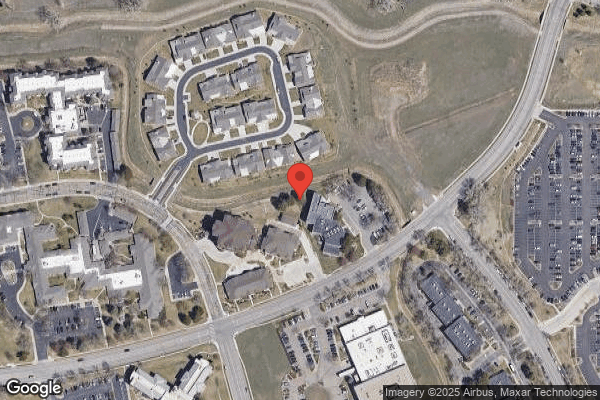
Dec 2019 2 deficiencies
CONCERN (D)

Potential for Harm - no one hurt, but risky conditions existed

Quality of Care (Tag F0684)

Could have caused harm · This affected 1 resident

**NOTE- TERMS IN BRACKETS HAVE BEEN EDITED TO PROTECT CONFIDENTIALITY** Based on record review and interviews, the facility failed to provide treatment and care in accordance with professional standar...

Read full inspector narrative →
**NOTE- TERMS IN BRACKETS HAVE BEEN EDITED TO PROTECT CONFIDENTIALITY** Based on record review and interviews, the facility failed to provide treatment and care in accordance with professional standards for two (#82 and #18) of six residents reviewed for non-pressure related skin conditions and physician orders out of 30 sample residents. Specifically, the facility failed to: -Monitor bruising for healing after a fall for Resident #82; and -Follow blood pressure medication physician orders for Resident #18. Findings include: I. Bruising after a fall A. Facility policy and procedure The facility Skin Monitoring Protocol was provided by the nursing home administrator (NHA) on 12/8/19 at 4:40 p.m. It read, in pertinent part, Any new bruise identified after admission should be monitored for 7 days by the day shift. The assessment should include location, size, and appearance of bruise; presence of any new bruises; presence of pain, condition of resident's skin (if fragile, if bruises easily, if on anticoagulants, etc.) Assessment of extremity or body part where bruise is located; range of motion, strength, pain, and comparison with baseline. B. Resident #82 status Resident #82, age below 90, was admitted on [DATE]. According to the December 2019 computerized physician orders (CPO) diagnoses included vascular dementia, muscle weakness, unsteadiness on feet, age-related osteoporosis, and unspecified pain. The 11/22/19 minimum data set (MDS) assessment revealed the resident had moderate cognitive impairments with a brief interview for mental status (BIMS) score of 11 out of 15. She required extensive two person assistance for activities of daily living (ADLs) and she used a wheelchair for mobility. She had a stage two pressure injury and received hospice and oxygen therapy. C. Record review The comprehensive care plan, revised 4/2/18, revealed the resident was at risk of bleeding or bruising due to routine aspirin use. Interventions included monitor for signs or symptoms of bleeding such as bruising, dark stools, hematuria, etc. The 11/18/19 event report, completed by registered nurse (RN) #2, revealed Resident #82 sustained an unwitnessed fall in her bathroom. She sustained injury to the right side of her back with sheared skin and bruising. The nurse failed to assess the location, size, and appearance of the bruise, as indicated in the facility policy and procedure. The nurses failed to monitor the healing of the bruising from the resident's fall in follow up skin assessments. D. Interviews RN #2 was interviewed on 12/19/19 at 9:53 a.m. She said after a fall occurred an investigation into the fall was opened by the nurse. She said nurses should open a separate event to monitor injuries sustained from a fall to monitor for healing. She said Resident #82's bruising should have been monitored after the fall in a separate event by the nurse who initially assessed the resident's injury. The director of nursing (DON) was interviewed on 12/18/19 at 4:17 p.m. She said skin tears should be monitored for at least 72 hours and more severe bruising should be monitored until they are healed. She said the facility policy was to monitor the bruise appearance for at least seven days to ensure the bruise was healing. II. Blood pressure medication per physician orders A. Resident #18 status Resident #18, age [AGE], was admitted on [DATE]. According to the December 2019 computerized physician orders (CPO), diagnoses included benign vertigo in the right ear, hyperlipidemia, and hypertension. The 9/24/19 minimum data set (MDS) assessment revealed the resident had no cognitive impairment with a brief interview for mental status (BIMS) score of 15 out of 15. The MDS identified the resident required supervision with most activities of daily living (ADLs). B. Record review According to the CPOs for December 2019, the resident received: -Losartan 75 milligrams (mg) once a day in the morning for hypertension, hold the medication for systolic blood pressure below 110 millimeters of mercury (mmHg). -Clonidine tablet 0.1 mg once a day, as needed for systolic blood pressure above or equal to 180 mmHg. Review of the November 2019 medication administration record (MAR) revealed Resident #18 had blood pressures with a systolic value below 110 on 11/1/19 (102/61 mmHg) and on 11/5/19 (109/68 mmHg). Losartan medication was marked as administered. On 11/15/19, Resident #18's systolic blood pressure was 182 mmHg. Clonidine was not administered on that day. Review of the December 2019 MAR revealed Resident #18 had a systolic blood pressure over 180 on 12/4/19 (185/85 mmHg) and 12/6/19 (202/81 mmHg). Clonidine was not administered to the resident on those days. Review of the blood pressure record for November and December 2019 revealed the resident had systolic blood pressure above 180 mmHg on: -12/18/19, 186/92 mmHg taken at 6:00 a.m., retaken in five minutes with reading 142/84; -12/15/19, 182/83 mmHg taken at 11:47 a.m., no further retakes of blood pressure for the day; -12/6/19, 202/81 mmHg taken at 6:59 a.m., retaken at 8:38 a.m. with reading 121/75; -12/4/19, 185/85 mmHg at 7:51 a.m., no further retakes of blood pressure for the day. The progress notes did not provide any clarifications why Losartan medication was administered when the resident's systolic blood pressure was below 110 mmHg, and/or why Clonidine medication was not given to the resident when her systolic blood pressure was above 180 mmHg as ordered by the physician. C. Interviews Registered nurse (RN) #1 was interviewed on 12/18/19 at 4:31 p.m. She said she checked the resident's blood pressure every morning before breakfast and only after administering all medications. She reviewed the MAR for November 2019 and said that she was the nurse who worked on 11/1 and 11/5/19. She said she recalled checking the resident's blood pressure in the morning, and she did not administer Losartan on those days because the resident's systolic blood pressure was too low. She said it was marked on the MAR as given because she signed it inappropriately. She said she was aware that there was a way to mark that medication was not given, but she did not do it correctly on those days. The corporate nurse consultant (CNC) was interviewed on 12/19/19 10:22 a.m. He said it was a technical error in documentation for 11/1 and 11/5/19. He said all nurses were reeducated on proper documentation. Regarding the Clonidine medication that was not given to the resident when her blood pressure was above 180 mmHg, he said that on some days the resident's blood pressure was rechecked and the systolic value was below 180 mmHg. On other days it was not rechecked and nurses were expected to recheck the blood pressure and if it was above 180 mmHg, Clonidine should have been administered. He said his expectation was to check the resident's blood pressure in the morning before breakfast, and if the systolic reading was above 180 mmHg, to administer scheduled Losartan medication and recheck the blood pressure within one hour (the time when Losartan would become effective). If the systolic blood pressure would not drop below 180 mmHg within one hour, the nurses were expected to administer Clonidine medication. He said the MAR did not specify that nurses should wait one hour and recheck blood pressure. He said the order read to administer Clonidine if systolic blood pressure was above 180 mmHg. He said moving forward they would clarify orders with the physician and educate nurses on proper documentation. The director of nursing (DON) was interviewed on 12/19/19 at 12:45 p.m. She said she agreed with the corporate nurse consultant, that nurses should recheck blood pressure after the first medication within one hour and only after administering the second medication. She said the current order did not call for waiting one hour and rechecking blood pressure. She said the plan moving forward was to clarify the order with the physician.
CONCERN (F)

Potential for Harm - no one hurt, but risky conditions existed

Food Safety (Tag F0812)

Could have caused harm · This affected most or all residents

Based on observations, record review and staff interviews, the facility failed to prepare, distribute and serve food in a sanitary manner in two of three dining rooms. Specifically, the facility fail...

Read full inspector narrative →
Based on observations, record review and staff interviews, the facility failed to prepare, distribute and serve food in a sanitary manner in two of three dining rooms. Specifically, the facility failed to: -Prevent potential cross contamination during meal service and meal delivery; -Ensure drink stations were free of contamination; and -Use proper hand hygiene during meal delivery. Findings include: I. Facility policy The Food Safety and Sanitation policy and procedure manual, revised 2019, was provided by the nursing home administrator (NHA) on 12/18/19 at 1:50 p.m. The policy read in pertinent part: All local state and federal standards and regulations will be followed in order to assure a safe and sanitary food and nutrition services department . All staff will be in good health, will have clean personal habits, and will use safe food handling practices . The Hand Washing policy and procedure manual, revised 2019, was provided by the nursing home administrator (NHA) on 12/18/19 at 1:50 p.m. The policy read in pertinent part: Employees will wash handing as frequently as needed throughout the day using proper hand washing procedures . If chemical sanitizing are used, staff must wash hands . Staff will be educated on the importance of hand washing . II. Observations A. Cross contamination related to the delivery of ready to eat food and improper hand hygiene. The lunch meal was observed in the secured unit dining room on 12/16/19 from 11:30 p.m. to 12:35 p.m. Prepared meal plates arrived in the unit at 12:48 p.m. Certified nurse aide (CNA) #1 and licensed practical nurse (LPN) #2 delivered the plated food to the residents in the dining room. During observations CNA #1 did not wash her hands prior to serving plated ready-to-eat food to the residents. CNA #1 did not sanitize her hands before or during meal service. LPN #1 was observed to use safe food handling practices. Between 12:49 p.m. and 12:55 p.m., CNA #1 served seven residents in the dining room. Out of those seven residents, she placed her thumb on the eating surface of the three plates and inside the rim of a divided plate, when transporting and serving the plated food. B. Contamination of the drink station during meal service. During the lunch service on 12/18/19, the drink station was used in a manner that contaminated the station's beverage delivery equipment. -At 12:12 p.m., a community student volunteer was observed standing in front of the drink station in the dining room. She held a disposable plastic water bottle in her hand. The bottle had a small portion of water covering the inside bottom surface of the disposal bottle. The volunteer refilled the bottle by placing the beverage spout inside the opening at the top of the bottle. III. Staff interviews The dietary manager (DM) and the NHA were interviewed on 12/19/19 at 9:40 a.m. The DM said she and the facility were responsible for providing training opportunities so her dietary staff understood how to prevent cross-contamination. The DM said staff should practice good personal hygiene and safe food handling procedures. She said the registered dietitian would be conducting and incorporating more training in January. She said all staff including CNAs needed to practice hand hygiene when serving meals. DM said her staff routinely wiped down the drink station after each meal service but not after each use during the service. The NHA said the drink station contamination concern would be followed up regarding the student volunteer. The NHA said all identified concerns would be immediately corrected to ensure safe food handling practices and limit the risk of cross contamination. The job coach responsible for supervising the community student volunteer was interviewed on 12/19/19 at 11:05 a.m. She said she nor her student was trained on facility rules that included guidelines for safe, sanitary practices. She said they had not been provided any guidance on facility expectations.
Nov 2018 3 deficiencies
CONCERN (D)

Potential for Harm - no one hurt, but risky conditions existed

Resident Rights (Tag F0550)

Could have caused harm · This affected 1 resident

**NOTE- TERMS IN BRACKETS HAVE BEEN EDITED TO PROTECT CONFIDENTIALITY** Based on observations, resident and staff interviews, the facility failed to promote care for residents in a manner and in an en...

Read full inspector narrative →
**NOTE- TERMS IN BRACKETS HAVE BEEN EDITED TO PROTECT CONFIDENTIALITY** Based on observations, resident and staff interviews, the facility failed to promote care for residents in a manner and in an environment that maintains or enhances each resident's dignity and respect in full recognition of his or her individuality for one (#53) of three residents reviewed for dignity out of 29 sample residents. Specifically the facility failed to keep Resident #53 free from unwanted religious activities by not listing on the activity calendar a specific recurring religious group leading a bible study. Findings include: I. Facility policy The Resident Right policy, effective 2015, was provided by the social service director (SSD) on 11/1/18 at 3:00 p.m. It revealed, in pertinent part, Your right to participate in groups and activities is part or your freedom of choice. We recognize your right to participate in social, religious, and community activities of your choosing, so long as they do not interfere with the rights of other residents. II. Resident and frequent visitor interviews The resident was interviewed on 10/30/18 at 1:20 p.m. She said she really enjoyed staying active in the facility and frequently attended activities. She said she did have a concern with one of the religious services being offered at the facility. The resident stated her religious affiliation was Protestant. She said the bible study that was offered on Tuesday was held by two members of the Jehovah Witness faith. The resident said it was the only religious service on the calendar that did not indicate the denomination of the church. She said she had asked the activity director (AD) to indicate on the calendar that Jehovah Witnesses were providing the bible study. The resident said she had attended the bible study for a while before she realized it was being taught by Jehovah Witnesses, and that really bothered her. She said she felt like she was being tricked, and that she was worried about other residents that may also be attending the bible study. A frequent visitor (FV) was interviewed on 10/30/18 at 2:50 p.m. The FV stated he had spoken to the activity director regarding the residents concern with the bible study. The FV stated it is not listed on the calendar as Jehovah Witness because the activity staff did not want to deter residents from attending because of the connotation of some religious groups. III. Resident status Resident #53, age [AGE], was admitted on [DATE]. According to the October 2018 computerized physician orders (CPO), the resident's diagnoses included dementia, muscle weakness, major depressive disorder and dependence on wheelchair. The 6/6/18 minimum data set (MDS) assessment revealed the resident was cognitively intact with a brief interview for mental status (BIMS) score of 15 out of 15. The MDS revealed it was very important to the resident to participate in religious services or practices. IV. Record review A. Care plan The comprehensive care plan, revised 6/20/18, revealed she enjoyed attending bingo, movies, arts, manicures, outings, church services, and volunteer projects. The goal was for her to maintain her current level of cognitive simulation, social interaction and spiritual involvement. The pertinent approaches included: -Invite to activities of interest: worship services, word games, bingo, resident meetings, manicures, entertainment and socials. -Staff will make residents aware of church services. B. Activity calendar Review of the October and November 2018 activity calendar revealed the following religious activities were listed: -Catholic communion and rosary service -1st united Methodist church worship service -Catholic mass -1st Presbyterian communion services -Calvary Baptist church -Bible education (No religion was specified) V. Staff interviews An activity assistant (AA) was interviewed on 10/30/18 at 3:08 p.m. She said she was aware of Resident #53 concern with the bible study not being labeled. The AA said when she invited the resident to the bible study yesterday, she reminded the resident the bible study was non-denominational, but was led by Jehovah Witnesses. The AA said the bible study is not listed on the calendar as Jehovah Witness because the activity department did not want that to be the reason resident's do not attend. The activity director (AD) was interviewed on 10/30/18 at 3:55 p.m. She said she was aware of the residents concern regarding the bible study on Tuesdays. The AD said she did not want to list on the calendar Jehovah Witness in relation to the bible study because she felt they were not encouraging residents to become Jehovah Witnesses. The AD said they listed the other denominations on the activity calendar, but felt adding Jehovah Witness would deter residents from attending. The nursing home administrator (NHA) was interviewed on 11/1/18 at 2:55 p.m. She said she was aware of the residents concern regarding the bible study and not listing Jehovah Witness as hosting. The NHA said since the group was not trying to convert residents, the facility did not want to label the bible study as Jehovah Witness. The NHA said that moving forward, the facility would label the bible study as being led by Jehovah Witnesses.
CONCERN (D)

Potential for Harm - no one hurt, but risky conditions existed

Accident Prevention (Tag F0689)

Could have caused harm · This affected 1 resident

**NOTE- TERMS IN BRACKETS HAVE BEEN EDITED TO PROTECT CONFIDENTIALITY** Based on record review, observations and interviews, the facility failed to ensure three (#70, #94, #91) of five residents revie...

Read full inspector narrative →
**NOTE- TERMS IN BRACKETS HAVE BEEN EDITED TO PROTECT CONFIDENTIALITY** Based on record review, observations and interviews, the facility failed to ensure three (#70, #94, #91) of five residents reviewed for accidents out of 29 sample residents remained free from falls and accident hazards and received adequate assistance devices to prevent accidents. Specifically: - The facility failed to ensure Resident #94, known to be at risk to fall due to a recent hospitalization for fall with fracture, blindness, weakness, deconditioning, and functional limitations, received the level of supervision while toileting that she had been identified to need. On 9/25/18, Resident #94 collapsed while unsupervised during toileting. The resident's need for constant supervision while on the toilet had not been communicated to staff in a post incident follow up following a fall 9/22/18, in the care plan or on the resident information sheet (RIS) where specific care instructions were to be documented and updated daily. The resident did not recover from this fall, her second fall in three days. - The facility failed to ensure Resident #70 received adequate assistance devices during transfers to prevent falls with injury. The resident sustained two falls during transfer with a sit-to-stand lift; the falls were not adequately investigated to prevent additional falls. - The facility failed to ensure Resident #91 received the diet texture she was ordered to need. Findings include: I. Facility policy The fall prevention policy, provided by the director of nursing (DON) on 10/30/18 at 1:30 p.m., documented in pertinent part, Residents have the right to a safe environment, while maximizing their independence. A root cause analysis will be completed after each fall. This may include information related to the resident's current status and details surrounding the event. The falls committee will recommend new interventions and safety measures to reduce recurrent falls and maintain [the resident's] highest level of mobility. II. Resident Failures A. Resident #94 1. Resident status Resident #94, age [AGE], was admitted on [DATE] following hospitalization for a fall with right humerus fracture. According to the October 2018 computerized physician orders (CPO), pertinent diagnoses included impaired cognition, recent history of falls, right humerus fracture, impaired functional mobility, and impaired vision secondary to macular degeneration. A 9/6/18 physician note documented in pertinent part, (Resident #94) hospitalized [DATE]-[DATE] at (hospital) s/p (status post) fall resulting in right humeral neck fracture. She continues to have some mild confusion, states she cannot remember where she lived prior to the hospitalization. 2. Facility assessment of and response to Resident #94's cognitive and functional limitations An activities of daily living (ADL) care plan, revised 9/5/18, documented in pertinent part, Resident has experienced a decline in function from baseline, with increased weakness, deconditioning and functional limitations due to recent arm fracture and hospitalization, is at risk for further decline, including decreased range of motion. Interventions included Provide assistance for ADLs . refer to current resident information sheet (RIS) (updated daily and used by CNAs to direct resident care) for specifics. Teach safety measures and monitor resident's safety. The fall care plan, revised 9/5/18, documented Resident #94 was at risk for falling related to a history of falls, incontinence, medications that may lead to a fall, need for assistance with mobility, impulsiveness, and cognitive defects. Interventions included not to leave the resident unattended in her room when in wheelchair, to provide toileting, ADLs, and mobility assistance, and to refer to the RIS for details on what assistance was required. The 9/11/18 minimum data set (MDS) assessment revealed Resident #94 had a brief interview for mental status (BIMS) score of five out of 15, which indicated severe cognitive impairment. The MDS assessment revealed she required extensive assistance with one person physical assistance for ADL tasks of toileting and transfers. Resident #94 was not steady, only able to stabilize with staff assistance for balance moving on and off the toilet, and moving from seated to standing position. 3. Resident #94's decline after admission - increased altered mental status and falls with injury A 9/18/18 nurse practitioner (NP) note documented the resident was alert and oriented at the time of admission, and per nursing documentation, she was now with short-term memory deficits and impulsiveness. The NP note documented a diagnosis of dementia could not be confirmed. She stated there was concern as Resident #94's altered mental status had increased since admission. A 9/22/18 nurse progress note documented, Resident noted on the floor of her bedroom immediately after hearing a crash. She stated that she was walking somewhere and that she thought she hit her head. She denied hip pain and was oriented to self and the current month. She acquired two skin tears on her right forearm and right elbow during the fall. She was put to bed afterwards using the (total mechanical lift) to transfer her. She denied pain but did have pain when her right arm was manipulated. Resident did not want to get up for lunch. She was very sleepy. She would wake up for neuro(logical) checks but then fall asleep again. VS (vital signs) stable and wnl (within normal limits). A 9/25/18 nurse progress note documented, Resident noted this morning around 7:00 a.m. to be tired in bed but resident VS wnl (vital signs within normal limits) and otherwise responding appropriately. Allowed to sleep in for awhile longer. When resident was desiring to get up around 9:30 a.m., (Certified Nurse Aide #7) assisted resident to toilet without any concerns, but then once on the toilet the certified nurse aide (CNA) turned away for a moment at 9:45 a.m. and resident collapsed off toilet hitting head against wall. NP and this nurse immediately responded to witness resident beginning agonal breathing and unresponsive. Resident assisted back to bed and injuries tended to by nursing staff. Family was notified, and the resident passed away on 9/25/18 at 10:38 a.m. A 9/25/18 NP note documented in pertinent part, (Resident) found unresponsive, agonal breathing, face down on BR (bathroom) floor. The NP note documented the resident had a laceration approximately two centimeters to her right forehead with venous bleeding noted, and her skull was visualized. The NP documented with palpation of site, there were no bone fragments and an uneven surface was palpated. In an interview on 10/3/18 at 9:42 p.m. with the nursing home administrator (NHA) and restorative nurse manager (RNM), the NP said it was her professional opinion (not documented in the record) that Resident #94 fell off the toilet on 9/25/18 due to a neurological injury such as a stroke. The NP said the resident's head laceration was a superficial wound which may not have had a big impact (in her decline). However, she said there was a possibility that hitting her head during the previous fall (9/22/18) may have played a role, although the resident's mental status was not out of order and she was at baseline following that fall. 4. Failures in facility response following Resident #94's 9/22/18 fall. Record review and interview revealed the level of supervision Resident #94 was expected to receive while on the toilet was not adequately communicated to staff after her fall on 9/22/18 or implemented by staff on 9/25/18. a. Record review Post Incident Follow-up to 9/22/18 fall: A 9/22/18 Post Incident Accident Follow-Up report revealed the resident's 9/22/18 fall was her first fall in the facility, and she had been sitting in chair/wheelchair prior to the fall occurring. The report indicated the root cause of the resident's fall 9/22/18 was weakness, confusion, fatigue, unsteadiness on feet, history of falling, legally blind. The post incident report indicated interventions included, assistance x 1 (one staff) with hand hold, prompted toileting program, vitamin D supplementation, PT/OT/ST (physical, occupational, and speech therapy), paddle call light, educate staff- bed in lowest position, do not leave alone in room in wheelchair. The post incident report failed to document what level of supervision the resident required while on the toilet given her 9/22/18 fall and recognition of her weakness, confusion, fatigue, unsteadiness on feet, and blindness. OT progress note after 9/22/18 fall: An OT progress note on the resident's assistance needs was completed 9/24/18. It read in pertinent part, Self-care toileting tasks: Current level of function: The patient is able to perform LB (lower body) clothing management and cares when toileting with moderate assistance and moderate verbal cues for safety. The OT progress note addressed the resident's assistance needs with toileting, but failed to address the level of supervision she required while on the toilet given her weakness, confusion, fatigue, unsteadiness and blindness. Care plans after 9/22/18: Neither the resident's fall care plan nor ADL care plan was updated after the resident's fall on 9/22/18, alerting staff to the resident's recent fall and addressing her need for an increased level of supervision. Although it referred staff to the current RIS for specifics, review of the RIS (see below), revealed it, too, failed to address what level of supervision the resident required during toileting. RIS after 9/22/18: The RIS updated for 9/25/18 (prior to the resident's fall) documented the resident required assistance with one staff with hand hold to left upper extremity, was weight bearing as tolerated to right upper extremity, and the resident was not to be left alone in the room in her wheelchair. The RIS stated the resident was alert and oriented 2-3 and had some confusion. The 9/25/18 RIS failed to instruct staff on the level of supervision Resident #94 required while on the toilet. b. Interviews Interviews confirmed the resident's care plans and RIS failed to include the level of supervision the resident required during toileting. Interviews further revealed the resident was expected to receive and failed to receive constant supervision (direct line of sight) while on the toilet. The NHA, NP and RNM were interviewed on 10/31/18 at 9:42 a.m. The NHA stated CNA #7 was the only staff member present in the room on 9/25/18 when Resident #94 fell off the toilet and she was changing the draw sheet on the bed at the time. The NP stated this was enough supervision for Resident #94 since the door was open to the bedroom and direct line of sight would be a privacy issue for the resident while on the toilet. The RNM stated the CNA was following the care as indicated on the resident's care plan and RIS. However, the RNM agreed the RIS did not include the level of supervision the resident required when on the toilet and interviews with the OT and director of nursing (DON) revealed the resident had been determined to need constant supervision/direct line of sight while on the toilet which record review (see above) revealed had not been communicated or implemented on 9/25/18. Specifically: The OT was interviewed on 11/1/18 at 10:01 a.m. The OT stated Resident #94 required one assist to transfer to the toilet, and was provided set-up assistance on the toilet (call light in place). She required assistance to clean herself after toileting. When seated on the toilet, she required constant supervision and frequent verbal cueing due to her impulsivity and unfamiliarity with the room. The OT stated constant supervision meant the CNA had to have the resident within his or her line of sight. The OT stated if CNA #7 was changing the draw sheet on the bed, the resident may have not been in her direct line of sight at the time of the fall. The OT said she had educated CNAs on the type of care the resident required. The DON was interviewed on 11/1/18 at 3:20 p.m. The DON said Resident #94 required assistance to the bathroom and then constant supervision while on the toilet. The DON said constant supervision meant being in direct line of sight of the resident. The DON said the CNA fixing the draw sheet on the bed would not be considered constant supervision as the CNA could have had her back turned to the resident and the resident may have not been in her line of sight. The DON confirmed the resident's RIS did not include that the resident required supervision on the toilet. She said the RIS should have been updated to include supervision and cueing on the toilet. She said there may have been a communication error with OT and said the facility would work to improve communication in order to have accurate information on the RIS. The DON said this would be added to the facility's fall Quality Assurance and Performance Improvement (QAPI). CNA #7 was unavailable for interview as she was no longer employed at the facility at the time of survey. B. Resident #70 1. Resident status Resident #70, age [AGE], initially was admitted on [DATE] and readmitted on [DATE]. According to the October 2018 computerized physician orders (CPO), pertinent diagnoses included left shoulder osteomyelitis, repeated falls, generalized muscle weakness, diabetes mellitus, polyneuropathy and unsteadiness on feet. Further record review revealed obstructive sleep apnea and a history of cardiac issues. The 9/7/18 minimum data set (MDS) assessment revealed: -the resident had no cognitive impairment with a brief interview for mental status (BIMS) score of 15 out of 15. (Per interview on 11/1/18 at 10:48 a.m., the MDS coordinator confirmed Resident #70 was alert and oriented and staff had not reported any memory deficits. She reviewed the resident's diagnosis list and stated the resident had no diagnoses that would cause memory impairment.) -the resident required extensive assistance with one person physical assistance for toileting and transfers, and extensive assistance with two person physical assist for bed mobility. Resident #70 was not steady, only able to stabilize with staff assistance for balance moving on and off the toilet, and moving from seated to standing position. -the resident had one-sided functional impairment to upper extremity and used a wheelchair for mobility. -the resident's weight was 294 pounds (lbs) and his height was 72 inches (6 feet) tall. Record review revealed the resident had orders to receive Torsemide (a diuretic), Sinemet (dopamine promoter), and Mysoline (anti-convulsant), as well as insulin, an anticoagulant, and an antibiotic for septic arthritis in his shoulder. The comprehensive care plan for falls, revised 10/15/18, revealed, Resident #70 is at risk for falling related to history of falls, due to self-transferring, decreased mobility, incontinence, use of meds associated with fall risk. Interventions included assistance as needed for ADLs and mobility, and staff to refer to the resident information sheet (RIS) for details, and, after his 9/19/18 fall (see below), staff to receive re-education regarding transfers. Review of Resident #70's medical record revealed he had falls on 5/10/18, 7/3/18 and 8/16/18 related to self-transferring and falls 9/19/18 and 10/14/18 during sit-to-stand transfers. 2. Resident interview and observation Resident #70 was interviewed on 10/30/18 at 9:30 a.m. as part of a resident group interview. Resident #70 said he had multiple falls over the past several months. He said his last two falls involved falling out of the sit-to-stand lift. He stated he did not remember everything that had occurred as he had lost consciousness both times. The resident said that with his most recent fall, he suffered an injury to his neck. He said because of the fall, the nursing staff stopped using the sit-to-stand lift and began using the total mechanical lift for transfers which was uncomfortable for him because the sling did not fit. Resident #70 was interviewed again on 10/31/18 at 11:00 a.m. about his falls from the sit-to-stand lift. Resident #70 stated one fall was in mid-September. A CNA was helping him transfer into bed after he used the bedside commode. He said the sit-to-stand lift sling somehow got along my neck and choked me. Resident #70 said he lost consciousness, fell out of the lift, hit his head on the bed frame, and landed on the floor. -Resident #70 said after that fall, he was switched to using a total mechanical lift for safety. Resident #70 said he worked with occupational therapy (OT) and was assessed to be safe to use the sit-to-stand lift a week or two later. He said then in mid-October, he fell again out of the sit-to-stand lift. Resident #70 said a CNA was transferring him from his wheelchair to the bedside commode and he lost consciousness again. Resident #70 said, I felt dizzy again when I stood up. The sling felt like it was choking me the second time too. Then I passed out, I hit my head again when I went down. My head hit the bedframe and my body hit the nightstand. -Resident #70 said he only felt dizzy or lightheaded when transferred with the sit-to-stand lift in the upright position. Resident #70 pulled the neck of his shirt down and a red abrasion mark was visible on the right side of his neck. Resident #70 said his transfer status was changed again to using the total mechanical lift after the second fall. 2. Facility documentation, response and failures in response to Resident #70's falls from the sit-to-stand lift. a. Fall 9/19/18 The 9/19/18 nurse progress note documented Resident #70 was observed on the floor at 9:30 a.m. The note revealed CNA #5 reported the resident fell while in the sit-to-stand lift. Neurological and vital signs were assessed per facility protocol. The note stated the resident received scattered abrasions noted to his right forehead and right posterior head. The 9/19/18 Post Incident Accident Follow-Up report was provided by the DON at 10/30/18 at 3:01 p.m. The report documented, (CNA #5) states (the resident) just had a BM (bowel movement) in toilet, was in lift and returning to his area of room, wiping (the resident), etc. (CNA #5) reports (Resident #70) went purple in the face, blacked out and went non-responsive and fell out of sling. Leg straps still attached and (the resident) on floor with head between bed and nightstand, blood on floor. -The root cause analysis on the report was listed as weakness, history of falling, fatigue, pain and obesity. -Post fall recommendations included transferring resident with total mechanical lift and staff re-education. -The post-incident report indicated the primary care physician was notified on 9/19/18. Review of OT notes 9/26/18 - 10/9/18 revealed Resident #70 started therapy services related to a decline in ADLs of toileting, and decreased independence with functional transfers. The 10/9/18 OT note read Resident #70 had met his short-term goal, and was able to safely perform sit-to-stand transfer at grab bar with contact guard assistance and he was able to stand for 20-30 seconds. Consequently after 10/9/18, the resident's RIS read the resident again was to be transferred using the sit-to-stand lift with two person assistance out of bed, and one person assistance out of wheelchair and commode. Failures in facility response to fall 9/19/18: Record review revealed no evidence the facility investigated why the resident blacked out and went non-responsive. Although the primary care physician had been notified of the resident's fall on 9/19/18, the resident's record failed to indicate the resident had follow-up with the physician until 10/17/18, almost a month later and after a second fall from the sit-to-stand lift on 10/14/18 (see below). At that time, the physician, noting the resident's worsening falls and lethargy, elected to hold one of his medications (the anticonvulsant Mysoline) until the resident was reassessed. There was no evidence of a medication review after the resident's fall until 10/17/18, although per care plan, the resident was receiving medications associated with fall risk and per orders, receiving several medications with potential side effects of orthostatic hypotension and/or dizziness. Record review revealed no evidence the resident's use of the sit-to-stand lift was reviewed to determine if it was functioning properly and was appropriate for Resident #70, given his size and functional ability, even though the post incident follow-up report read the resident had fallen out of the sling. Review of the RIS for October revealed it failed to instruct staff how long the resident could stand safely when using the sit-to-stand lift. B. Fall 10/14/18 The 10/14/18 nurse progress note documented, CNA notified this LN (licensed nurse) that (the resident) was on the floor. States he just slipped out of the sling. Upon entrance to resident room, resident noted to be [lying] on his back with feet facing the door. Neuros (neurological checks) and ROM (range of motion) noted to be WNL (within normal limits) as per resident usual. Resident lifted off floor using (total mechanical) lift where he was placed in bed. (Resident #70) denies hitting head. VSS (vital signs stable). Res(ident) noted to have abrasion to R (right) wrist, from his watch, and abrasion to R (right) hip. The 10/14/18 Post Incident Accident Follow-Up report documented, NA (nurse aide) using (sit-to-stand lift) to help resident get to standing position for transfer to commode. Sling attached properly. As raising resident, the weight of his body caused him to slip out of sling when he was unable to use his legs and arms to participate. Failures in facility response to 10/14/18 fall: Although the post-incident report further read to Interview of person who first noted the resident on the floor, what did they see. Interview of staff member assigned to the resident . Do a quick investigation and interview of all staff involved, the post incident report failed to include witness or staff interviews of the 10/14/18 incident. Although the post incident report documented Resident's fall will be reviewed to determine root cause and interventions will be implemented to reduce risk of future falls, the report failed to include a root cause analysis of the resident's fall. While it did note the resident had change in mental status of new onset, there was no evidence the cause of the mental status change was investigated. There was no evidence the resident had been interviewed about the 10/14/18 incident and what he considered might have been the cause of his mental status change. Although the post incident report documented the weight (302.4 lbs on 10/14/18 per weight history) of the resident's body caused him to slip out of the sling, record review revealed no evidence the resident's use of the sit-to-stand lift was reviewed to determine if it was functioning properly and was appropriate for Resident #70, given his size and functional ability. Although the OT had noted on 10/9/18 that the resident was able to stand for only a limited period of time when being transferred by the sit-to-stand lift (see above), the RIS did not include any information on how long the resident could safely stand while using the lift or information to alert staff to the limited period of time the resident could stand safely. 3. Staff interviews Staff interviews revealed staff was aware but failed to understand why Resident #70 had lost consciousness at the time of his falls 9/19/18 and 10/14/18. Whether the sit-to-stand lift, in particular the sling, was a factor had not been considered or investigated. Likewise, there was no evidence staff knew or considered how long the resident could safely stand while using the lift. Finally, staff interviews and observations revealed extra large slings for bariatric residents were not available in the facility. CNA #5 was interviewed on 10/31/18 at 11:20 a.m. CNA #5 stated he was working with Resident #70 at the time of his fall on 9/19/18, and he did not know why Resident #70 lost consciousness during the transfer. -CNA #5 said Resident #70 was in the standing position in the lift for about five minutes while he cleaned the resident and the bedside commode. He said he had not heard Resident #70 complain about being lightheaded or dizzy at any other times. -CNA #5 said he used a large (green) sit-to-stand lift sling to transfer Resident #70. CNA #5 said there were only small (red), medium (yellow), and large (green) sit-to-stand lift slings available; he said there were no extra large sizes available in the facility. -CNA #5 said he received transfer training as part of his new hire education in early September, but had not received any re-education after the resident's fall. He said after the fall, the resident was switched to using a total mechanical lift. CNA #5 said the OT completed Resident #70's transfer assessments, and had reassessed him back to use the sit-to-stand lift. -The East hall closet was observed with CNA #5 on 10/31/18 at 11:30 a.m. There were only small (red-colored), medium (yellow), and large (green) sit-to-stand lift slings available in the closet for CNAs to use for lift transfers (sit-to-stand and total mechanical lift). The RNM was interviewed on 10/31/18 at 11:45 p.m. The RNM stated she was in charge of the facility's fall committee. -She said it was unclear what had caused Resident #70 to lose consciousness during either of his falls and she said the post incident report for the first fall did not include the reason why Resident #70 had lost consciousness. She said a root cause analysis should be completed to determine the cause of the fall and to implement interventions to prevent future falls. -She said CNA #6 was the CNA working with the resident at the time of the 10/14/18 fall. She stated the facility did not name all of the witnesses on the post-incident report or have witness statements as details of falls were verbally discussed in the daily interdisciplinary team meetings. She said the meetings were not documented. (The NHA said on 11/1/18 at 11:30 a.m. that CNA #6 declined to be interviewed with or without administration present, and declined to provide a written witness statement.) The OT was interviewed on 11/1/18 at 11:15 a.m. The OT said Resident #70 was a sit-to-stand transfer with one person assist with no issues until his fall occurred on 9/19/18. She said during the fall he had lost consciousness and fell out of the lift, and it was unknown why the resident lost consciousness. -She confirmed that after that fall, nursing had switched him to total mechanical lift for safety. The OT said she started working with him again to work on toileting and transfers. She said the resident progressed well with the sit-to-stand lift and toileting, so she upgraded him back to the sit-to-stand lift on 10/9/18. The OT said Resident #70 was able to tolerate standing in the sit-to-stand lift for one to two minutes. The OT said Resident #70 had not complained about being dizzy or lightheaded when working with her. -She said she did not remember what size sling she used with the resident. She said sling size was assessed on trial and error, by herself or by nursing, based on how tight or loose the sling fit the resident, not by looking at the resident's weight. The OT said she was not sure what sling sizes were available in the facility, and did not know if there was an extra large sized sling. (There was no discussion in the OT notes about the size of sit-to-stand lift sling Resident #70 required during transfers.) CNA #4 was interviewed on 11/1/18 at 10:53 a.m. CNA #4 said she worked on Resident #70's neighborhood and had worked with Resident #70 in the past. She said the facility had small, medium, and large sized slings for all of the lifts. She said they did not have a lift sling bigger than a large size. The RNM was interviewed again on 11/1/18 at 2:52 p.m. and again at 3:10 p.m. She stated they did not have a copy of the manufacturer's recommendations for sling sizes available but would find one on the manufacturer's website. -She said the sling size was based on how it fit the resident, whether it was too tight or too loose, not based on the weight of the resident. She said the facility had sit-to-stand lift slings in small, medium, and large, and did not have a size bigger than a large. The RNM said lift sling size was not included on the RIS as it would be misleading for CNAs as they wanted CNAs to look at the fit of the sling. -She provided the sit-to-stand lift manufacturer's sling color and size guide on 11/1/18 at 3:10 p.m. The lift sling guide revealed lift slings were available in small, medium, large, extra large, and double extra large sizes. The lift sling guide revealed large size slings were to be used for residents within the weight range of 154 to 264 lbs. The dietary manager (DM) was interviewed on 11/1/18 at 12:15 p.m. She stated according to the weight report there were four residents in the facility who were over the weight of 260 lbs. The DON was interviewed on 11/1/18 at 3:30 p.m. The DON said the large size sling would not be appropriate for Resident #70 based on his weight and complaints the sling was too small. -She said the facility would purchase larger sling sizes for all lifts to accommodate current and future bariatric residents. The DON said education on transfers and sling sizes would be provided to nursing staff at their next inservice. -She said they had a fall quality assurance and performance improvement (QAPI) plan identified in June 2018 for fall prevention. She stated they have had a bigger push to discuss falls in their daily morning interdisciplinary team (IDT) meetings, and to hold specific fall committee meetings. These meetings were used to discuss root cause of falls and possible interventions. -She stated they would work to include improving their documentation of the IDT and fall committee meetings. The DON said they would work to improve their use of the Post Incident Accident Follow-Up report as a system-wide tool to investigate the fall rather than just a brief summary of what occurred. She said they would work to ensure witness statements were taken of all staff involved at the time of the fall in order to conduct a more thorough investigation. C. Resident #91 1. Resident status Resident #91, over the age of 90, was admitted [DATE]. According to the October 2018 computerized physician orders (CPO), diagnoses included heart failure, dementia, anxiety disorder and narcolepsy. The 9/27/18 minimum data set (MDS) assessment revealed the resident displayed short and long-term memory problems and her decision making ability was moderately impaired. She was rarely to never understood by others. She required one person physical assistance with eating. The comprehensive care plan, revised 10/31/18, revealed the resident had an altered dental status. She did not like to wear her partial denture. The goal was for her not to experience discomfort related to the dental status. The pertinent approaches included: -Provide diet as ordered. Note if resident shows signs of difficulty with chewing so an alternate food item can be given to her. -Staff to provide meals and snacks for resident that are not difficult for her to chew. A physician order dated 9/13/18 listed the resident's diet as regular with puree texture. The 10/30/18 resident information sheet (RIS) listed the resident's diet as regular diet with thin texture liquids. 2. Resident observations A group cooking activity was observed on 10/31/18 at 10:00 a.m. Resident #91 participated in the cooking activity which involved the residents making crispy r[TRUNCATED]
CONCERN (F)

Potential for Harm - no one hurt, but risky conditions existed

Food Safety (Tag F0812)

Could have caused harm · This affected most or all residents

Based on observations, record review and interviews, the facility failed to store, prepare, distribute and serve food under sanitary conditions. Specifically, the facility failed to ensure: - two out ...

Read full inspector narrative →
Based on observations, record review and interviews, the facility failed to store, prepare, distribute and serve food under sanitary conditions. Specifically, the facility failed to ensure: - two out of two unit freezers contained thermometers to monitor safe food temperatures, and - food was stored properly in two of two unit kitchenettes Findings include: I. Freezer temperatures A. Professional reference The Colorado Department of Public Health and Environment (2013) The Colorado Retail Food Establishment Rules and Regulations, https://www.colorado.gov/pacific/sites/default/files/Reg_BOH_RetailFoodRegulations.pdf read in pertinent part, Each mechanically refrigerated food storage unit storing potentially hazardous food (time/temperature control for safety food) shall be provided with a numerically scaled indicating temperature measuring device. B. Facility policy The Food Storage policy was provided by the nursing home administrator (NHA) on 11/1/18 at 11:20 a.m. It read in pertinent part, Every refrigerator must be equipped with an internal thermometer. Frozen foods must be maintained at a temperature to keep the food frozen solid. Freezer temperatures should be checked at least two times each day. C. Observations The [NAME] unit kitchenette freezer was observed on 10/30/18 at 10:01 a.m. There was no thermometer present in the freezer. The October 2018 temperature monitoring log was hanging on the freezer and failed to include any freezer temperature monitoring. The East unit kitchenette freezer was observed on 10/30/18 at 10:06 a.m. There was no thermometer present in the freezer. The October 2018 temperature monitoring log was hanging on the freezer and failed to include any freezer temperature monitoring. The [NAME] unit kitchenette freezer was observed on 10/30/18 at 2:01 p.m. There was no thermometer present in the freezer. The East unit kitchenette freezer was observed on 10/30/18 at 2:14 p.m. There was no thermometer present in the freezer. The [NAME] unit kitchenette freezer was observed on 10/31/18 at 8:00 a.m. There was no thermometer present in the freezer. The East unit kitchenette freezer was observed on 10/31/18 at 8:09 a.m. There was no thermometer present in the freezer. D. Record review The unit kitchenette refrigerator and freezer temperature monitoring logs were provided by the NHA on 11/1/18 at 1:00 p.m. The temperature monitoring logs failed to show freezer temperatures were monitored from 7/1/18 to 10/31/18. E. Interviews The dietary manager (DM) was interviewed on 10/31/18 at 2:45 p.m. The DM said housekeeping staff was responsible for recording and monitoring unit kitchenette refrigerator and freezer temperatures. She said there should have been a thermometer present in the unit kitchenette freezer to ensure food was stored at the appropriate food-safe temperature, comparable to the standards followed for the main kitchen freezer. The East unit freezer was observed with the DM at 2:51 p.m., and the [NAME] unit freezer was observed with the DM at 2:55 p.m. She confirmed there were no thermometers present in both unit kitchenette freezers and confirmed the temperature monitoring log failed to indicate freezer temperatures were monitored. The DM stated the dietary department would be able to provide thermometers. The housekeeping supervisor (HKS) was interviewed on 10/31/18 at 3:03 p.m. She stated housekeeping was only responsible for routine cleaning of the unit kitchenette. The HKS said nursing staff was responsible for checking freezer temperatures and recording the temperatures on the logs. The [NAME] unit manager (UM #1) was interviewed on 10/31/18 at 3:06 p.m. She stated night shift nursing staff were responsible for checking the refrigerator temperatures and recording the temperatures on the temperature logs. UM #1 stated she did not recall ever seeing a thermometer in the unit kitchenette freezer, or recording freezer temperatures. F. Facility response The [NAME] unit freezer was observed on 11/1/18 at 8:10 a.m. The freezer had a thermometer present and was at an appropriate temperature. The East unit freezer was observed on 11/1/18 at 8:17 a.m. The freezer had a thermometer present and was at an appropriate temperature. The DM was interviewed on 11/1/18 at 8:27 a.m. She stated she had placed new thermometers in the unit kitchenette freezers. The DM said she had also placed an updated temperature monitoring log on each unit freezer to include both refrigerator and freezer temperatures on one sheet. She stated dietary staff would keep track of the logs, just as they do for the main kitchen refrigerators and freezers. The director of nursing (DON) was interviewed on 11/1/18 at 3:00 p.m. She stated the freezers had new thermometers and a new temperature monitoring log that dietary would keep track of. She stated nursing staff would be educated on recording freezer temperatures at their next inservice. II. Food storage A. Professional reference The Colorado Department of Public Health and Environment (2013) The Colorado Retail Food Establishment Rules and Regulations, https://www.colorado.gov/pacific/sites/default/files/Reg_BOH_RetailFoodRegulations.pdf read in pertinent part, At all times, including while being stored, prepared, displayed, dispensed, packaged, or transported, food shall be protected from cross-contamination between foods and from potential contamination by agents of public health significance. Food, whether raw or prepared, if removed from the container in which it was originally packaged, shall be stored in a clean, covered container. B. Facility policy The Food Storage policy was provided by the nursing home administrator (NHA) on 11/1/18 at 11:20 a.m. It read in pertinent part, Food will be stored by methods designed to prevent contamination or cross contamination. C. Observations The [NAME] unit kitchenette was observed on 10/30/18 at 10:01 a.m. An open bag of vanilla wafer cookies and an open container of chocolate chip cookies were present in a cabinet labeled snacks for residents. The cookies failed to be stored in clean, covered containers. The East unit kitchenette was observed on 10/30/18 at 10:06 a.m. An open container of chocolate chip cookies was present in a cabinet. The cookies failed to be stored in a clean, covered container. The unit freezer door was labeled cold packs. The freezer contained a bucket with 11 assorted ice cream cups mixed with therapeutic ice packs. Three of the ice packs were labeled with resident names. The [NAME] unit kitchenette was observed on 10/30/18 at 2:10 p.m. An open bag of vanilla wafer cookies and an open container of chocolate chip cookies were present in a cabinet labeled snacks for residents. The cookies were not stored in a clean, covered containers. The East unit kitchenette was observed on 10/30/18 at 2:14 p.m. An open container of chocolate chip cookies was present in a cabinet. The cookies were not stored in a clean, covered container. The [NAME] unit kitchenette was observed on 10/31/18 at 8:00 a.m. An open bag of vanilla wafer cookies and an open container of chocolate chip cookies were present in a cabinet labeled snacks for residents. The cookies were not stored in a clean, covered containers. The East unit kitchenette was observed on 10/30/18 at 8:09 a.m. An open container of chocolate chip cookies was present in a cabinet. The cookies were not stored in a clean, covered container. The unit freezer door was labeled cold packs. The freezer contained a bucket with four assorted ice cream cups, mixed with therapeutic ice packs. Three of the ice packs were labeled with resident names. D. Interviews Registered nurse (RN) #1 was interviewed on 10/31/18 at 9:08 a.m. RN #1 said the ice packs in the freezer were either used for resident therapeutic use or to keep medications cool on the medication carts. She said therapeutic ice packs were cleaned with sanitizer wipes after used on a resident and then placed back in the freezer for storage. RN #1 said dietary staff members were responsible for making sure food was stored properly in the unit kitchenettes. The dietary aide (DA) was interviewed on 10/31/18 at 2:49 p.m. The DA said she restocked items in the unit kitchenettes when they were low. She said nursing staff was responsible for checking to make sure food was stored properly in the unit kitchenettes. The DM was interviewed on 10/31/18 at 2:50 p.m. She stated both, dietary and nursing staff were responsible to ensure food was stored properly in the unit kitchens. The East unit kitchenette was observed with the DM at 2:51 p.m. In the unit freezer, there were two assorted ice cream cups with five ice packs placed on top of them in the bucket. The DM said the ice packs and ice cream should be stored separately as there was a risk for cross contamination. She disposed of the ice cream cups that had been stored with the ice packs. The [NAME] unit kitchenette was observed with the DM at 2:55 p.m. There was one open container of chocolate chip cookies and one bag of vanilla wafer cookies present in the cabinet labeled snacks for residents. The DM stated the cookies should be stored in a sealed container. She disposed of the cookies that had been stored open to air. The DM said the dietary department would provide sealed containers for storage. E. Facility response The [NAME] unit kitchenette was observed on 11/1/18 at 8:10 a.m. All food items were observed stored in a clean, sealed containers. The East unit kitchenette was observed on 11/1/18 at 8:17 a.m. All food items were observed stored in clean, sealed containers. Therapeutic ice packs were not stored with assorted ice cream cups in the unit freezer. The DON was interviewed on 11/1/18 at 3:30 p.m. She said the therapeutic ice packs and ice cream should have been stored separately to prevent cross-contamination. The DON said food should be stored in a sealed container in the unit kitchenette. The DON said nursing staff would be educated on food storage for the unit kitchenettes at their next inservice.
Understanding Severity Codes (click to expand)
Life-Threatening (Immediate Jeopardy)
J - Isolated K - Pattern L - Widespread
Actual Harm
G - Isolated H - Pattern I - Widespread
Potential for Harm
D - Isolated E - Pattern F - Widespread
No Harm (Minor)
A - Isolated B - Pattern C - Widespread

Questions to Ask on Your Visit

  • "What changes have you made since the serious inspection findings?"
  • "What safeguards are in place to prevent abuse and neglect?"
  • "Can I speak with families of current residents?"
  • "What's your RN coverage like on weekends and overnight?"

Our Honest Assessment

Strengths
  • • Licensed and certified facility. Meets minimum state requirements.
Concerns
  • • Multiple safety concerns identified: Federal abuse finding, 1 life-threatening violation(s), 1 harm violation(s), $26,891 in fines. Review inspection reports carefully.
  • • 17 deficiencies on record, including 1 critical (life-threatening) violation. These warrant careful review before choosing this facility.
  • • $26,891 in fines. Higher than 94% of Colorado facilities, suggesting repeated compliance issues.
  • • Grade F (18/100). Below average facility with significant concerns.
Bottom line: This facility has a substantiated abuse finding. Extreme caution advised. Explore alternatives.

About This Facility

What is Columbine West Health & Rehab Facility's CMS Rating?

CMS assigns COLUMBINE WEST HEALTH & REHAB FACILITY an overall rating of 2 out of 5 stars, which is considered below average nationally. Within Colorado, this rating places the facility higher than 0% of the state's 100 nursing homes. A rating at this level reflects concerns identified through health inspections, staffing assessments, or quality measures that families should carefully consider.

How is Columbine West Health & Rehab Facility Staffed?

CMS rates COLUMBINE WEST HEALTH & REHAB FACILITY's staffing level at 5 out of 5 stars, which is much above average compared to other nursing homes. Staff turnover is 51%, compared to the Colorado average of 46%.

What Have Inspectors Found at Columbine West Health & Rehab Facility?

State health inspectors documented 17 deficiencies at COLUMBINE WEST HEALTH & REHAB FACILITY during 2018 to 2025. These included: 1 Immediate Jeopardy (the most serious level, indicating potential for serious harm or death), 1 that caused actual resident harm, and 15 with potential for harm. Immediate Jeopardy findings are rare and represent the most serious regulatory concerns. They require immediate corrective action.

Who Owns and Operates Columbine West Health & Rehab Facility?

COLUMBINE WEST HEALTH & REHAB FACILITY is owned by a for-profit company. For-profit facilities operate as businesses with obligations to shareholders or private owners. The facility is operated by COLUMBINE HEALTH SYSTEMS, a chain that manages multiple nursing homes. With 100 certified beds and approximately 88 residents (about 88% occupancy), it is a mid-sized facility located in FORT COLLINS, Colorado.

How Does Columbine West Health & Rehab Facility Compare to Other Colorado Nursing Homes?

Compared to the 100 nursing homes in Colorado, COLUMBINE WEST HEALTH & REHAB FACILITY's overall rating (2 stars) is below the state average of 3.1, staff turnover (51%) is near the state average of 46%, and health inspection rating (1 stars) is much below the national benchmark.

What Should Families Ask When Visiting Columbine West Health & Rehab Facility?

Based on this facility's data, families visiting should ask: "What changes have been made since the serious inspection findings, and how are you preventing similar issues?" "What safeguards and monitoring systems are in place to protect residents from abuse or neglect?" "Can I visit during a mealtime to observe dining assistance and food quality?" "How do you handle medical emergencies, and what is your hospital transfer rate?" These questions are particularly relevant given the facility's Immediate Jeopardy citations and the substantiated abuse finding on record.

Is Columbine West Health & Rehab Facility Safe?

Based on CMS inspection data, COLUMBINE WEST HEALTH & REHAB FACILITY has documented safety concerns. The facility has 1 substantiated abuse finding (meaning confirmed case of resident harm by staff or other residents). Inspectors have issued 1 Immediate Jeopardy citation (the most serious violation level indicating risk of serious injury or death). The facility has a 2-star overall rating and ranks #100 of 100 nursing homes in Colorado. Families considering this facility should ask detailed questions about what corrective actions have been taken since these incidents.

Do Nurses at Columbine West Health & Rehab Facility Stick Around?

COLUMBINE WEST HEALTH & REHAB FACILITY has a staff turnover rate of 51%, which is about average for Colorado nursing homes (state average: 46%). Moderate turnover is common in nursing homes, but families should still ask about staff tenure and how the facility maintains care continuity when employees leave.

Was Columbine West Health & Rehab Facility Ever Fined?

COLUMBINE WEST HEALTH & REHAB FACILITY has been fined $26,891 across 2 penalty actions. This is below the Colorado average of $33,348. While any fine indicates a compliance issue, fines under $50,000 are relatively common and typically reflect isolated problems that were subsequently corrected. Families should ask what specific issues led to these fines and confirm they've been resolved.

Is Columbine West Health & Rehab Facility on Any Federal Watch List?

COLUMBINE WEST HEALTH & REHAB FACILITY is not on any federal watch list. The most significant is the Special Focus Facility (SFF) program, which identifies the bottom 1% of nursing homes nationally based on persistent, serious quality problems. Not being on this list means the facility has avoided the pattern of deficiencies that triggers enhanced federal oversight. This is a positive indicator, though families should still review the facility's inspection history directly.