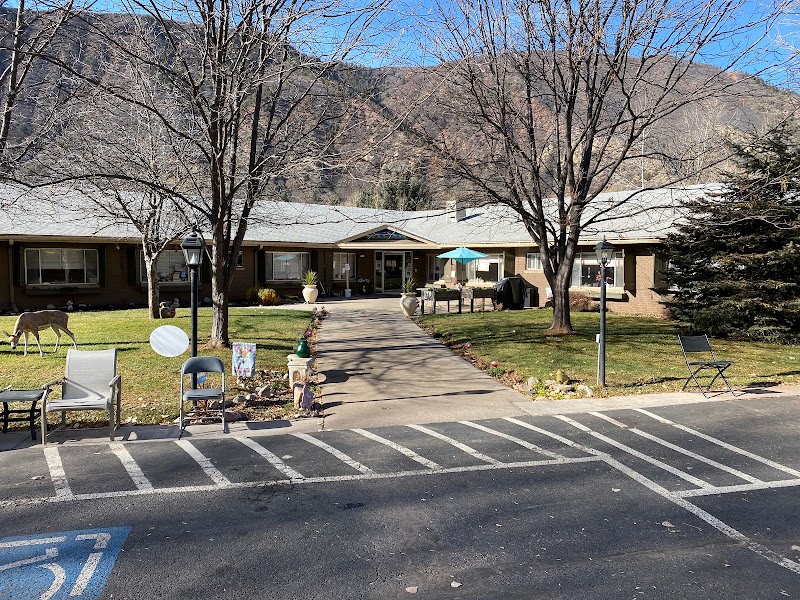
GLENWOOD SPRINGS HEALTHCARE

2305 BLAKE AVE, GLENWOOD SPRINGS, CO 81601 (970) 945-5476
For profit - Limited Liability company 54 Beds MADISON CREEK PARTNERS Data: November 2025
Trust Grade
38/100
#146 of 208 in CO
Last Inspection: October 2024

Within standard 12-15 month inspection cycle. Federal law requires annual inspections.

Overview

Glenwood Springs Healthcare has received a Trust Grade of F, indicating significant concerns regarding its operations and care quality. It ranks #146 out of 208 nursing homes in Colorado, placing it in the bottom half of facilities statewide and #3 out of 4 in Garfield County, meaning there is only one local option that is better. The facility's performance trend is stable, with 10 issues identified in both 2023 and 2024. Staffing appears to be a strength, with a 0% turnover rate, which is well below the Colorado average, suggesting that staff members are likely to stay and become familiar with residents. However, there have been serious incidents where residents did not receive adequate treatment for pressure injuries, and the facility failed to provide sufficient support for food and nutrition services, indicating areas that need significant improvement.

Trust Score
F
38/100
In Colorado
#146/208
Bottom 30%
Safety Record
Moderate
Needs review
Inspections
Holding Steady
10 → 10 violations
Staff Stability
○ Average
Turnover data not reported for this facility.
Penalties
✓ Good
$5,293 in fines. Lower than most Colorado facilities. Relatively clean record.
Skilled Nurses
○ Average
RN staffing data not reported for this facility.
Violations
⚠ Watch
26 deficiencies on record. Higher than average. Multiple issues found across inspections.
★★☆☆☆
2.0
Overall Rating
★☆☆☆☆
1.0
Staff Levels
★★★☆☆
3.0
Care Quality
★★★☆☆
3.0
Inspection Score
Stable
2023: 10 issues
2024: 10 issues

The Good

  • Full Sprinkler Coverage · Fire safety systems throughout facility
  • No fines on record

Facility shows strength in fire safety.

The Bad

2-Star Overall Rating

Below Colorado average (3.1)

Below average - review inspection findings carefully

Federal Fines: $5,293

Below median ($33,413)

Minor penalties assessed

Chain: MADISON CREEK PARTNERS

Part of a multi-facility chain

Ask about local staffing decisions and management

The Ugly 26 deficiencies on record

2 actual harm
Oct 2024 9 deficiencies
CONCERN (D)

Potential for Harm - no one hurt, but risky conditions existed

Deficiency F0658 (Tag F0658)

Could have caused harm · This affected 1 resident

Based on observation and interviews, the facility failed to ensure one (#12) of one of 26 sample residents received treatment and care in accordance with professional standards of practice. Specifical...

Read full inspector narrative →
Based on observation and interviews, the facility failed to ensure one (#12) of one of 26 sample residents received treatment and care in accordance with professional standards of practice. Specifically, the facility failed to ensure Resident #12's blood pressure was measured appropriately in accordance with medical standards of practice. Findings include: I. Professional reference How to measure your blood pressure at home fact sheet, dated 2020, was retrieved on 10/21/24 from the American Heart Association medical archives at https://www.heart.org/-/media/Files/Health-Topics/High-Blood-Pressure/measuringbpathome.pdf It documented that the blood pressure cuff should be positioned on the bare arm above the elbow in the middle of the arm. II. Facility policy and procedure The Blood Pressure, Measuring policy, revised September 2010, was provided by corporate consultant (CC) #1 on 10/17/24 at 3:41 p.m. It documented in pertinent part, Expose the resident's arm by rolling the sleeve up about five inches above the elbow. II. Observation On 10/17/24 at 8:42 a.m. registered nurse (RN) #2 was taking Resident #12's blood pressure. Resident #12 was wearing a pink fleece sweater and offered to roll up her sleeve for the blood pressure measurement. RN #2 declined Resident #12's offer and said that she could take a blood pressure over the clothing items because she had good ears. RN #2 then placed the blood pressure cuff on Resident #12's upper arm over the pink fleece sweater to obtain the blood pressure measurement. RN #2 then documented the blood pressure measurement in the electronic medical record (EMR). III. Staff interviews RN #2 was interviewed on 10/17/24 at 8:51 a.m. RN #2 said that it was normal and acceptable to obtain a resident's blood pressure over clothing. RN #2 said obtaining a blood pressure in this manner would not affect the accuracy of the blood pressure measurement. The director of nursing (DON) was interviewed on 10/17/24 at 4:08 p.m. The DON said that a blood pressure device could be placed over resident clothing to obtain an accurate blood pressure if the clothing was thin. The DON said she did not know if Resident #12's pink fleece sweater would be thick enough to affect the blood pressure measurement. The DON reviewed the American Medical Association and American Heart Association recommendations for obtaining an accurate blood pressure reading (see professional reference above). The DON said she did not know the American Heart Association recommendations included placing the blood pressure measurement device on the bare arm for accurate measurement.
CONCERN (D)

Potential for Harm - no one hurt, but risky conditions existed

Deficiency F0679 (Tag F0679)

Could have caused harm · This affected 1 resident

**NOTE- TERMS IN BRACKETS HAVE BEEN EDITED TO PROTECT CONFIDENTIALITY** Based on observations, record review and interviews, the facility failed to ensure one (#15) of three residents reviewed for act...

Read full inspector narrative →
**NOTE- TERMS IN BRACKETS HAVE BEEN EDITED TO PROTECT CONFIDENTIALITY** Based on observations, record review and interviews, the facility failed to ensure one (#15) of three residents reviewed for activities out of 26 sample residents received individualized activities in accordance with standards of care. Specifically, the facility failed to offer Resident #15 activities in Spanish, which was his preferred language. Findings include: I. Resident #15 A. Resident status Resident #15, age greater than 65, was admitted on [DATE] and readmitted [DATE]. According to the October 2024 computerized physician orders (CPO), diagnoses included kidney failure, bipolar disorder and type 2 diabetes. According to the 7/17/24 minimum data set (MDS) assessment, Resident #15 was cognitively intact with a brief interview for mental status (BIMS) score of 15 out of 15. He was independent in completing all activities of daily living. According to the 1/15/24 MDS assessment, it was very important for Resident #15 to have books, magazines and newspapers to read., listen to music he liked., do his favorite activities, go outside and get fresh air when the weather was good and participate in religious services. B. Resident interview and observation Resident #15 was interviewed, in Spanish, on 10/14/24 at 3:18 p.m. Resident #15 said he was raised speaking Spanish only and his preferred language was Spanish. Resident #15 said he understood some phrases and words in English, but he was not fluent in English. Resident #15 said he had not been provided with activities in the Spanish language. Resident #15 said he was given word finding books but they were all in English. Resident #15 presented four different word finding books from his bedside table that were written in the English language. Resident #15 said he enjoyed speaking Spanish with the housekeeping staff when he could but they were often too busy to talk to him. Resident #15 said he had no memory of any activity being provided to him in the Spanish language. Resident #15 said he often felt forgotten because he was the only resident who spoke Spanish primarily at the facility. C. Additional observation The posted facility activity board for the month of October was observed on 10/16/24 at 11:04 a.m. The activity board did not include any activities in the Spanish language for the month of October 2024. D. Record review Resident #15's activity plan of care, initiated on 7/5/21 and revised 10/24/23 revealed a goal for Resident #15 to participate in activities three to five times per week. It documented Resident #15's in-room interests were television and crossword puzzles. Other activity interests included bingo, movies, church, yahtzee and memory card games. The activity plan of care documented Resident #15 spoke the Spanish and English language, but preferred Spanish. Resident #15's activity participation record was reviewed for 30 days, between 9/16/24 and 10/16/24. The facility had initiated activity participation records including spiritual activities, outings, sensory activities, social activities, one on one visits, visits from friends and family, cognitive activities and creative activities. -The activity participation record failed to reveal any resident-centered Spanish activities were provided to Resident #15 between 9/16/24 and 10/16/24. II. Staff Interviews Certified nurse aide (CNA) #1 was interviewed on 10/15/24 at 10:11 a.m. CNA #1 said Resident #15 spoke Spanish and English. CNA #1 said Resident #15 did not need language services or activities in Spanish because he spoke English. Registered nurse (RN) #1 was interviewed on 10/16/24 at 8:41 a.m. RN #1 said there was no communication barrier between Resident #15 and staff because Resident #15 spoke English fluently. -However, despite CNA #1 and RN #1 indicating Resident #15 spoke English fluently and therefore did not need language services and activities in Spanish, the resident expressed that he preferred to receive activities in his preferred language of Spanish (see resident interview above). The activity director (AD) was interviewed on 10/17/24 at 1:14 p.m. The AD said her role was to engage the residents in activities that gave them purpose and meaning and kept them from being bored. She said she would ask the residents what they enjoyed doing and add their interests onto the activity calendar. She said she tried to find activities that were similar to the residents' past leisure pursuits. The AD said the activity program did not have activities specific for Spanish-speaking residents. She said once a year the facility celebrated Spanish heritage month. The AD said Resident #15 could speak, read and write in English. She said an activity for Spanish-speaking residents could have been created, however, she said nobody had expressed to her that it was a need. The AD said she had access to Resident #15's care plan but she was not aware that he would want activities that were Spanish specific. She said she did not ask him if he wanted activities and/or reading materials in Spanish. She said he attended bingo, resident council meetings and Catholic church services. The AD said the activities Resident #15 attended were in English and he participated without concern. The director of nursing (DON) was interviewed on 10/17/24 at 10:27 a.m. The DON said there was no documentation that the facility had provided Resident #15 with activities in the Spanish language. The DON said she thought Resident #15 spoke fluent English. The DON said she was not aware Resident #15 wanted activities provided to him in the Spanish language. The DON said the facility had a language interpreter line available to staff if they needed to reach an interpreter for resident communication needs.
CONCERN (D) 📢 Someone Reported This

A family member, employee, or ombudsman was alarmed enough to file a formal complaint

Potential for Harm - no one hurt, but risky conditions existed

Deficiency F0692 (Tag F0692)

Could have caused harm · This affected 1 resident

Deficiency Text Not Available

Read full inspector narrative →
Deficiency Text Not Available
CONCERN (E)

Potential for Harm - no one hurt, but risky conditions existed

Deficiency F0565 (Tag F0565)

Could have caused harm · This affected multiple residents

Based on record review and resident interviews, the facility failed to promptly address and attempt to resolve resident group complaints and grievances concerning issues of resident care and life in t...

Read full inspector narrative →
Based on record review and resident interviews, the facility failed to promptly address and attempt to resolve resident group complaints and grievances concerning issues of resident care and life in the facility that were important to the residents. Specifically, the facility failed to ensure residents felt their concerns with call light timeliness resulting in long waits for staff assistance were addressed and resolved. Findings include: I. Facility policy and procedure The Resident Council policy, undated, was provided by the nursing home administrator (NHA) on 10/17/24 at 6:04 p.m. The policy read in pertinent part, The purpose of the resident council is to provide a form for: residents families and resident representatives to input in the operation of the facility; discussion of concerns and suggestions for improvement; consensus building and communication between residents and facility staff; and, disseminating information and gathering feedback from interested residents. A resident council response form will be utilized to track issues and their resolutions. The facility department related to any issues will be responsible for addressing the items of concern. The quality assurance and performance improvement committee (QAPI) will review information and feedback from the resident council as part of their quality review. Issues documented on council response forms may be referred to the committee, if applicable. II. Resident group interview A group interview was conducted on 10/16/24 at 10:32 a.m. with five residents (#2, #8, #15, #16 and #21) the facility assessed and deemed as alert, oriented and interviewable. According to the group, the residents did not feel the facility addressed their concerns of long call light times. Resident #8 said she recently had to wait over an hour and a half before her call light was answered. She said she had to use the restroom and lay down in bed. She said she had horrible back pain but laying down usually helped. She said because she had to wait so long for assistance, it took a day for her to recover from the pain. Resident #2 said some of the nurses did not help answer call lights and relied on the certified nurse aides (CNA) to answer the call lights. She said last month (September 2024) she had to wait over an hour for her call light to be answered. Resident #16 said last Thursday (10/10/24) he had to wait from 4:15 a.m. to 6:00 a.m. for his call light to be answered. The group said the longest waits were usually during the night. III. Resident council minutes The July 2024 resident council minutes documented call lights were addressed as a concern. According to the minutes, call lights were not always timely. The action item on the minutes indicated the resident council was told some of the residents required two staff for transferring, potentially taking the CNAs a little longer to get to the call light. -The July 2024 council minutes did not identify what the facility was going to do to address the concern of inconsistent call light times. The July 2024 resident council grievance form for call light timeliness was requested but was not provided by the facility. The August 2024 and September 2024 resident council minutes did not document the July 2024 concern of inconsistent call light was reviewed with the resident council to determine whether the concern was resolved or not. IV. Call light record The electronic call light log between 10/2/24 and 10/15/24 was provided by the operations manager (OM) on 10/16/24 at 6:21 p.m. A five day sample of call light response time, from 10/1/24 to 10/14/24, identified the following: On Wednesday 10/2/24, a total of 200 total call lights were turned on for resident assistance. -40 of the call lights were activated for over 15 minutes before they were answered; -Six of the call lights were answered between 20 and 29 minutes; -14 of the call lights were answered between 30 and 39 minutes; -Two of the call lights were answered between 40 and 49 minutes; -Two of the call lights were answered between 50 and 59 minutes; and, -Three call lights were activated for over an hour before the resident's call light was answered. On Thursday 10/3/24, a total of 150 total call lights were turned on for resident assistance. -32 of the call lights were activated for over 15 minutes before they were answered; -Seven of the call lights were answered between 20 and 29 minutes; -Three of the call lights were answered between 30 and 39 minutes; -Seven of the call lights were answered between 40 and 49 minutes; and, -Two of the call lights were answered between 50 and 59 minutes. On Sunday 10/6/24, a total of 162 total call lights were turned on for resident assistance. -14 of the call lights were activated for over 15 minutes before they were answered; -Seven of the call lights were answered between 20 and 29 minutes; -One call light was answered between 30 and 39 minutes; and, -One call light was activated for over an hour (one hour and 33 minutes) before the resident's call light was answered. On Monday 10/7/24, a total of 162 total call lights were turned on for resident assistance. -32 of the call lights were activated for over 15 minutes before they were answered; -12 of the call lights were answered between 20 and 29 minutes; -Two of the call lights were answered between 30 and 39 minutes; and, On Monday 10/14/24, (the first day of the survey period) a total of 200 total call lights were turned on for resident assistance. -11 of the call lights were activated for over 15 minutes before they were answered; -Three of the call lights were answered between 20 and 29 minutes; -One call light was answered between 30 and 39 minutes; -One call light was answered between 40 and 49 minutes; and, -Two call lights were activated for over an hour before the resident's call light was answered. V. Staff interviews The activity director (AD) was interviewed on 10/17/24 at 5:00 p.m. The AD said during resident council, the prior resident council concerns were reviewed each month to determine if the concern was resolved or still an ongoing concern. She said the status of the concern would be documented in the minutes. The AD said if the resident council had a new concern or an unresolved concern that was ongoing, she would add the concern to a grievance form. She said the grievance would be submitted to the appropriate department to address the council. The completed grievances would be turned in to the social service director (SSD). The AD said she was not in her position in July 2024 when the resident council brought up the concern of inconsistent call light timeliness. The AD said she would not have known of the call light concern in July 2024 to review in the August 2024 resident council because she was new to her position and was not aware of the July 2024 call light concern. She said she did not review the July 2024 resident council concerns prior to the August 2024 council meeting. The social service director (SSD) said was responsible for filing all grievances from residents and resident council. The SSD said she had not received a call light grievance from the July 2024 resident council meeting. The operations manager (OM) and the NHA was interviewed on 10/17/24 6:32 p.m. The OM said resident feedback was how the facility determined if resident council concerns were appropriately addressed and resolved. He said the concern would be brought up the following to determine if the concern was resolved. He said if the resident council felt the concern remained unresolved, a new grievance would be submitted and addressed for resolution until the resident said they were satisfied. The NHA said call light timeliness was reviewed in QAPI on 10/17/24 (during the survey). The NHA said interdisciplinary team (IDT) reviewed the electronic call light logs and determined more the facility needed to do call light spot audits.
CONCERN (E)

Potential for Harm - no one hurt, but risky conditions existed

Accident Prevention (Tag F0689)

Could have caused harm · This affected multiple residents

**NOTE- TERMS IN BRACKETS HAVE BEEN EDITED TO PROTECT CONFIDENTIALITY** II. Failure to initiate a timely fall care plan and interventions to prevent falls and complete neurological assessments after a...

Read full inspector narrative →
**NOTE- TERMS IN BRACKETS HAVE BEEN EDITED TO PROTECT CONFIDENTIALITY** II. Failure to initiate a timely fall care plan and interventions to prevent falls and complete neurological assessments after a fall for Resident #6 A. Professional reference According to [NAME], P.A., [NAME], A.G., Fundamentals of Nursing, 10 ed. (2020), Elsevier, St. Louis Missouri, pp. 1780, retrieved on 10/21/24, In the event of a fall, perform a post-fall assessment to identify possible causes. Monitor patients closely for 48 hours after a fall. B. Facility policy The Fall Management System policy, dated June 2022, was obtained from the director of nursing (DON) on 10/17/24 at 10:57 a.m. It documented in pertinent part, A fall is defined as unintentionally coming to rest on the ground, floor, or other lower level, but not as a result of an overwhelming external force, such as a resident pushing another resident, whether the event was witnessed or unwitnessed. The presence or absence of a resultant injury is not a factor in the definition of a fall. A fall without an injury is still a fall. The distance to the next lower surface is not a factor in determining if a fall occurred. If a resident rolled off a bed or mattress that was close to the floor, it is still a fall. When a fall occurs, the resident is assessed for injury by the nurse. In the event a resident has a fall, and it has been determined they hit their head, or it cannot be determined if they hit their head (the fall was unwitnessed or the patient cannot verbalize if they hit their head), the nurse initiates the following actions: neurological checks are completed and documented per instructions. C. Resident status Resident #6, age greater than 65, was admitted on [DATE]. According to the October 2024 computerized physician orders (CPO), diagnoses included stroke, chronic obstructive pulmonary disease (COPD), and chronic kidney disease stage three. The 7/6/24 minimum data set (MDS) assessment revealed the resident was cognitively intact with a brief interview for mental status (BIMS) score of 14 out of 15. She was independent while eating, required substantial assistance with oral hygiene and was dependent on nursing staff for all other cares. D. Record review The fall care plan, initiated 8/26/24, documented that Resident #6 was a high fall risk. Interventions included anticipating resident needs, ensuring the resident's call light was within reach, educating the resident on what to do if a fall occurred, encouraging a helmet, which the resident frequently refused, encouraging the resident to participate in activities that promoted exercise, ensuring the resident was wearing appropriate footwear, placing a fall mat beside the resident's bed, providing a transfer pole beside the resident's bed and following the facility's fall protocol. Fall risk evaluation dated 2/5/24 documented the resident was at a high risk for falls. An interdisciplinary team (IDT) post fall review dated 2/5/24 documented Resident #6 experienced an unwitnessed fall on 2/5/24 at 1:24 a.m. -However, the facility failed to initiate a fall prevention plan of care and fall interventions until after the resident fell again on 8/21/24 (see care plan above). A fall risk evaluation dated 7/2/24 documented the resident was at a high risk for falls. A nurse progress note dated 8/21/24 documented that, at 4:10 p.m., Resident #6 was found on the floor and had reported she hit her head while trying to self-transfer. The progress note documented the DON and two certified nurse aides (CNA) asked Resident #6 if she hit her head and Resident #6 responded yes. The note documented the resident was able to express her concerns without issue. -Review of Resident #6's electronic medical record (EMR) did not reveal documentation which indicated neurological assessments were completed for the resident following her unwitnessed fall on 8/21/24. E. Staff interviews CNA #1 was interviewed on 10/15/24 at 3:41 p.m. CNA #1 said if a resident had an unwitnessed fall, she would get the nurse immediately to assess the resident while she obtained vital signs on the resident. CNA #1 said it was normal for nurses to perform neurological assessments frequently for 48 hours after a fall to ensure nothing happened to the resident. Registered nurse (RN) #1 was interviewed on 10/16/24 at 8:58 a.m. RN #1 said if a resident had an unwitnessed fall, the nurse would complete a neurological assessment and obtain vital signs. RN #1 said if a head injury was suspected or confirmed, neurological assessments would be performed on a regimented schedule for 48 hours. The DON was interviewed on 10/17/24 at 10:41 a.m. The DON said she was the nurse that responded when Resident #6 fell on 8/21/24. The DON said ongoing neurological assessments were not completed for Resident #6 as part of the post-fall assessment. The DON said the ongoing neurological assessments should have been completed. The DON said that the facility had call light logs that were reviewed daily by the administration. The DON said longer call lights could contribute to an increase in the chance for falls. The DON said obtaining sufficient nurse staffing had been a difficulty for the facility. The DON said the facility was issuing more overtime to current nursing staff than before and administration had been covering night shifts on the floor to ensure appropriate nurse staff coverage. Cross-reference F725 for failure to provide sufficient nursing staff. The DON and the nursing home administrator were interviewed again on 10/17/24 at 6:32 p.m. The NHA said he knew call light response times were contributing to falls in the facility. The NHA said if a resident had to wait too long for help, the resident might get impatient and attempt to get up unassisted. Based on interviews and record review, the facility failed to ensure the resident environment remained as free of accident hazards as possible for four of ten resident rooms and one (#6) of two residents reviewed for accidents out of 26 sample residents, received adequate supervision to decrease and/or prevent risk for accident hazards. Specifically the facility failed to: -Ensure tap water in the facility was kept within a safe temperature range; -Initiate a timely fall care plan and interventions to prevent falls for Resident #6; and, -Ensure Resident #6's neurological assessments were completed after the resident sustained an unwitnessed fall in her room on 8/21/24. Findings include: I. Failure to ensure safe water temperatures A. Professional reference According to the Consumer Product Safety Commission (CPSC) Safety Alert, Avoiding Tap Water Scalds, retrieved on 10/23/24 from https://www.cpsc.gov/s3fs-public/5098-Tap-Water-Scalds.pdf, The majority of injuries and deaths involving tap water scalds are to the elderly and children under the age of five. The U.S. Consumer Product Safety Commission (CPSC) urges all users to lower their water heaters to 120 degrees Fahrenheit (F). B. Facility policy and procedure The Water Temperatures, Safety Of policy, revised December 2009, was provided by the nursing home administrator (NHA) on 10/17/24 at 4:17 p.m. The policy read in pertinent part, Water heaters that service resident rooms, bathrooms, common areas, and tub/shower areas shall be set to temperatures of no more than 112 degrees Fahrenheit (F) or the maximum allowable temperature per state regulation. Maintenance staff is responsible for checking thermostats and temperature controls in the facility and recording these checks in a maintenance log. Maintenance staff shall conduct periodic water temperature checks and record the water temperature in a safety log. C. Observations and resident interviews The tap hot water temperatures from resident rooms were obtained on 10/17/24 between 10:05 a.m. and 10:23 a.m. The hot water in each resident room ran for approximately one minute prior to taking the water temperature. The hot water temperatures were as follows: -At 10:17 a.m. the water temperature from the sink in room [ROOM NUMBER] was 131 degrees F. The temperature gauges for the two facility hot water heaters were reviewed with the maintenance service director (MSD) at 3:42 p.m. The first hot water heater was located in the 100 hall. The hot water heater serviced the 100 hall (six) resident rooms. The temperature gauge of the hot water heater read 138 degrees F. The second hot water heater was located in the 400 hall and serviced the remainder of the facility rooms. The temperature gauge of the hot water heater read 140 degrees F. The tap hot water temperatures from resident room sinks and the one facility shower room were obtained on 10/17/24 between 3:50 p.m. and 4:00 p.m. The hot water temperature were as follows: -The shower room temperature registered 110 degrees F after one minute. -room [ROOM NUMBER] registered a hot water temperature of 130.8 degrees F after one minute. One resident who resided in room [ROOM NUMBER] said the water was hot and she was able to adjust the temperature with cold water, however, she said the staff usually helped her with everything she needed to do at the sink. The second resident who resided in room [ROOM NUMBER] said she had not had any problems with the hot water temperature from the sink. She said the water got warm but she was able to adjust the water temperature as needed. -room [ROOM NUMBER] registered a hot water temperature of 131 degrees F after one minute. The resident who resided in room [ROOM NUMBER] was bed bound. The resident said she did not use the sink in her room and the staff helped her with all of her activities of daily living (ADL) care. -room [ROOM NUMBER] registered a hot water temperature of 131.5 degrees F after one minute. The resident who resided in room [ROOM NUMBER] said he did not use the sink by himself. He said the staff would help him at the sink. D. Record review The resident room water temperature log was provided by the NHA on 10/17/24 at 4:17 p.m. The water temperature log documented water temperatures were taken weekly in random resident rooms, one to two rooms on each hall. Review of the resident room water temperatures from 9/19/24 to 10/14/24 revealed hot water temperatures ranged from 104 degrees F to 117 degrees F, excluding 10/2/24 when the hot water temperatures were documented as 75 degrees F (see interview below). E. Staff interviews The maintenance services director (MSD) was interviewed on 10/17/24 at 3:42 p.m. The MSD said hot water temperatures in resident rooms and the shower room should range between 100 degrees F and 112 degrees F. The MSD said he had limited training on the hot water heaters. He said if he had questions with the hot water heaters, he would contact the regional plant operations director. The MSD said he would not usually look at the temperature gauge of the water heaters. He said he mainly just made sure the water pressure was not too high or too low. He said he used resident room temperatures to determine the facility's hot water temperature range. The MSD was interviewed a second time during the above observations on 10/17/24 between 3:50 p.m. and 4:00 p.m. He said when he checked the hot water temperatures in the residents' rooms during his weekly audit, the temperatures were within an appropriate temperature range. He said he did not know what had changed since his last audit on 10/14/24. The MSD said he did not adjust anything with hot water temperatures and no one had expressed any concerns to him regarding the water temperatures being too hot. The MSD said he would immediately turn the hot water temperature down on the facility's hot water heaters based on 10/17/24 observations. The NHA was interviewed on 10/17/24 at 4:20 p.m. The NHA said the regional plant operations director was contacted and felt the mixing valve on the hot water heaters had gone out. The NHA said there was only one incident that was reported to him regarding the hot water heaters being too cold, not too hot. The NHA was interviewed a second time on 10/17/24 at 4:51 p.m. He said the MSD had temporarily shut the water off to the 100 hall. He said the MSD was in the process of draining the water and then would refill the hot water heater. The NHA said the hot water heater temperature setting would be lowered. He said a vendor was contacted but could not fix the mixing valve until 10/23/24. The NHA said the MSD would conduct frequent checks of the hot water until all repairs could be made. The NHA said the residents on the 100 hall were either bed bound, dependent on staff to assist them at the sink, or physically and cognitively able to adjust the water temperature to a safe and comfortable temperature. The operation manager (OM) was interviewed on 10/17/24 at 4:53 p.m. The OM said the facility had had some problems with the hot water heaters. He said one of the hot waters was not working but the other two were operational. He said the pilot light to one of the heaters was going out about once a month. He said a vendor was not contacted. He said the regional plant operations manager looked at the hot water heaters and did not see a concern. The OM said when the pilot light went out, the facility just relit it. He said the focus of the hot water heaters had been making sure the water was not cold, not that it was too hot. The OM and the DON were interviewed together on 10/17/24 at 6:32 p.m. The OM said he had not had any reports of hot water concerns. The DON said hot water temperatures over the recommended value increased the risk of burns to older adults.
CONCERN (E) 📢 Someone Reported This

A family member, employee, or ombudsman was alarmed enough to file a formal complaint

Potential for Harm - no one hurt, but risky conditions existed

Deficiency F0725 (Tag F0725)

Could have caused harm · This affected multiple residents

Deficiency Text Not Available

Read full inspector narrative →
Deficiency Text Not Available
CONCERN (E)

Potential for Harm - no one hurt, but risky conditions existed

Deficiency F0804 (Tag F0804)

Could have caused harm · This affected multiple residents

Based on resident interviews, staff interviews, and observations, the facility failed to ensure residents were provided with food cooked and served in a manner that conserved nutritive value, flavor, ...

Read full inspector narrative →
Based on resident interviews, staff interviews, and observations, the facility failed to ensure residents were provided with food cooked and served in a manner that conserved nutritive value, flavor, appearance, texture and at an appetizing temperature. Specifically, the facility failed to consistently serve foods at a palatable texture. Findings include: I. Facility policy and procedure The Critical Temperatures for Safe Food Handling policy, undated, was provided by the dietary manager (DM) on 10/17/24 at 5:44 p.m. The policy read in pertinent part, Temperature should be taken periodically to assure hot food stays above 135 degrees Fahrenheit (F) and cold food stays below 41 degrees F during the serving process. Maintain a cold enough holding temperature to assure foods are maintained at or below 41 degrees F until they leave the service area. The Food and Nutrition Services Staff policy, undated, was provided by the DM on 10/17/24 at 6:21 p.m. The policy read in part, Food will be palatable, attractive and served in a timely manner at proper temperatures. II. Resident interviews Resident #28 was interviewed on 10/14/24 at 3:50 p.m. He said the food was not palatable. He said he ate in the dining room and the food was often served cold when it should be warm. He said he would eat a lot of sandwiches because he did not like being served cold food. Resident #39 was interviewed on 10/14/24 at 3:58 p.m. She said she ate in her room and food was often delivered to her cold. Resident #15 was interviewed on 10/14/24 at 5:17 p.m. He said he always ate his food in his room and was served cold food often. He said he was served cold food for breakfast on 10/14/24 and cold food for lunch on 10/13/24. III. Resident group interview A group interview was conducted on 10/16/24 at 10:32 a.m. with five alert and oriented residents (#2, #8, #15, #16 and #21) through facility and assessment. Four (#2, #8, #15, and #21) of the residents in the group interview said the food was served cooler than their preference. Resident #21 said he felt the dinner meals tended to be cold when he received the meal tray in his room. Resident #2 said she frequently saw the hot box mobile food cart door left open when staff served room trays. She said the food was served covered in plastic wrap instead of hard cover lids to maintain the heat. IV. Observations During a continuous observation of the dinner meal service on 10/16/24, beginning at 3:55 p.m and ending at 5:22 p.m., the following was observed: At approximately 4:35 p.m. cook (CK) #1 placed a container of garden salad on top of a container filled with ice and took the temperature of the salad. The garden salad registered a temperature of 41 degrees F. CK #1 said 41 degrees was the highest temperature the salad could be held at. At 4:43 p.m. meal service began and staff proceeded to cover room tray plates with plastic wrap and place them into the hot box mobile food cart. At 5:01 p.m. the hot box cart left the dining room for the room tray meal service. Between 5:02 p.m. and 5:08 p.m. the hot box cart door was left open while staff served room trays. The hot box cart was not plugged into an electrical outlet to maintain the heat of the meals trays left in the cart. A test tray for a regular diet was evaluated by two surveyors immediately after the last resident had been served their room tray for dinner on 10/16/22 at 5:23 p.m. The test tray consisted of vegetable pot pie and a garden salad with cheese, tomatoes and lettuce. The salad was served on the same plate as the pot pie. -The lettuce and tomatoes were slightly warm in touch and taste. The salad was 85.2 degrees F. -The vegetable pot pie was lukewarm. The vegetable pot pie was 107 degrees F. V. Staff interviews CK #1 was interviewed on 10/16/24 at 5:35 p.m. CK #1 said the garden salad was kept on ice until it was served to make sure it was served at a safe and palatable temperature. He said the salad had cheese on it and he would not want the salad to have a chance to grow bacteria if it was not kept at or below 41 degrees F. CK #1 said he would not want to eat a warm salad. He said the garden salad should have been kept cold. He said he hoped staff would not set the hot box food cart on the highest setting or plug in the hot box so the salad temperature would not rise too high while in the hot box with warm food. The DM was interviewed on 10/17/24 at 5:21 p.m. The DM said food could not be held in the danger zone to prevent bacteria growth. She said the temperature danger zone was a range of over 41 degrees F and under 135 degrees F. The DM said she wanted food to be held at between 145 degrees F and 165 degrees to make sure food was served warm. The 10/16/24 observations were reviewed with the DM. She said placing the garden salad in the hot box for room service would raise the temperature of the salad. She said the staff should have placed the salad in a container on ice during room service to help maintain the temperature for a cold salad. She said the cheese on the garden salad was dairy which could quickly become compromised with an increased temperature. The DM said hot foods such as the vegetable pot pie should be served at a warm palatable table. She said the hot box should be plugged in during room tray delivery and the door should be closed after each retrieval of a room tray and kept shut to maintain the temperature of the hot food items.
CONCERN (E)

Potential for Harm - no one hurt, but risky conditions existed

Food Safety (Tag F0812)

Could have caused harm · This affected multiple residents

Based on observations, record review and interviews, the facility failed to store, prepare, distribute and serve food in a sanitary manner in the main kitchen. Specifically, the facility failed to: -...

Read full inspector narrative →
Based on observations, record review and interviews, the facility failed to store, prepare, distribute and serve food in a sanitary manner in the main kitchen. Specifically, the facility failed to: -Ensure safe and appropriate storage of food items in the pantry; and, -Ensure hand hygiene was conducted appropriately. Findings include: I. Failure to store food items appropriately in the the dry storage area A. Professional reference According to the United States Department of Agriculture (USDA) Is Food In Dented Cans Dangerous? (9/18/24) was retrieved on 10/22/24 from https://ask.usda.gov/s/article/Is-food-in-damaged-cans-dangerous, food from cans that were leaking, bulging, or badly dented should never be eaten. The damaged cans could contain clostridium botulinum (a toxic bacteria). B. Facility policy and procedure The Food and Nutrition Services Staff policy, undated, was provided by the dietary manager (DM) on 10/17/24 at 6:21 p.m. The policy read in pertinent part, The food service department is staffed by food and nutrition service personnel who have demonstrated the skills and competency to carry out functions of the department. Food and nutrition service staff under the supervision of the dietitian and or the food and nutrition service manager, will safely and effectively carry out all functions of the food and nutrition services department. C. Observations On 10/14/24 at 10:50 a.m. a can of garbanzo beans, a can of jalapeno peppers and two cans of tropical fruit were stocked on the first row and second rows of the can goods rack in the kitchen dry storage room. Each of the four cans of food had a dent on the side of the can. On 10/16/24 at 4:10 p.m. the dented can of jalapeno peppers remained on the shelf ready for use. The DM removed the can from the supply stock after she observed it. II. Failure to perform hand hygiene properly A. Professional reference The Colorado Retail Food Establishment Regulations, (3/16/24), were retrieved on 10/22/24 from https://cdphe.colorado.gov/environment/food-regulations. It revealed in pertinent part, Food employees may not contact exposed, ready-to-eat food with their bare hands and shall use suitable utensils such as deli tissue, spatulas, tongs, single-use gloves, or dispensing equipment. If used, single-use gloves shall be used for only one task such as working with ready-to-eat food or with raw animal food, used for no other purpose, and discarded when damaged or soiled, or when interruptions occur in the operation. The Center for Disease Control and Prevention (CDC) About Hand Hygiene For Patients in Healthcare Settings (2/27/24), retrieved on 10/22/24 from https://www.cdc.gov/clean-hands/about/hand-hygiene-for-healthcare.html, read in pertinent part, Patients in healthcare settings are at risk of getting infections while receiving treatment for other conditions. Cleaning your hands can prevent the spread of germs, including those that are resistant to antibiotics, and protects healthcare personnel and patients. According to the CDC, hand washing should occur before preparing or eating food, before touching the eyes, nose or mouth, and after touching potential contaminated surfaces. B. Observations During a continuous observation of the dinner meal service in the main kitchen on 10/16/24, beginning at 3:55 p.m and ending at 5:22 p.m., the following was observed: At 4:00 p.m. cook (CK) #1 performed hand hygiene, donned (put on) gloves and scooped chocolate pudding into dessert bowls. He wrapped the dessert bowls in plastic wrap to cover the top of the bowl. CK #1 removed his gloves and touched the back of his pants with his left hand, adjusted his face mask by touching the front surface of the mask, retrieved a marker, placed his left hand over each cover bowl to hold the plastic wrap tight as he dated each bowl with the marker in his right hand. -CK #1 did not perform hand hygiene after removing his gloves and prior to touching the pudding bowls. Between 4:36 p.m. and 5:05 p.m. CK #1 touched his face multiple times while preparing the meals. Without performing hand hygiene while he plated ready-to-eat resident meals of hamburgers, burritos and vegetable pot pie. At 4:52 p.m. CK #1 left the service line with gloved hands and opened and closed the walk-in refrigerator. With the same gloved hands he retrieved a block of plastic wrapped pre-sliced cheese. CK #1 unwrapped the cheese and removed a slice with the same gloved hands and placed the slice of cheese on a hamburger patty for a resident meal. CK #1 did not perform hand hygiene or change his gloves before he touched the slice of cheese. At approximately 5:00 p.m., CK #1 removed two tortillas from a bag. He placed one tortilla on the grill. CK #1 held the second tortilla in his hand as the tortilla touched the front surface of his apron before placing it on the grill. At 5:12 p.m. CK #1 used the index finger of his gloved left hand to push his glasses closer to his face, without performing hand hygiene, he continued to plate meals III. Staff interviews CK #1 was interviewed on 10/16/24 at 4:05 p.m. CK #1 said all the cans of food in storage should be free from dents and punctures because of the risk of potential food poisoning. CK #1 was interviewed on 10/16/24 at 5:35 p.m. CK #1 said the garden salad was kept on ice until it was placed to make sure it was served at a safe and palatable temperature. He said the salad had cheese on it and he did not want the salad to have a chance to grow bacteria if it was not kept at or below 41 degrees F. He said the garden salad should have been kept cold. He said he hoped staff would not set the hot box food cart on the highest setting or plug in the hot box so the salad temperature would not rise too high while in the hot box with warm food. CK #1 said hand hygiene should be done every time he touched surfaces that were not food related. He said he should not open the refrigerator door and then touch food without hand hygiene. The registered dietitian (RD) was interviewed on 10/17/24 at 12:26 p.m. The RD said she had not provided education for the dietary staff or kitchen oversight in the two months she had been at the facility but would welcome the opportunity. The DM was interviewed 10/17/24 at 5:21 p.m. The DM said CK #1 needed to have something put in place so his glasses so he would not continue to adjust them during meal service with his gloved hands. The DM said hand hygiene should be conducted every time a potentially contaminated surface touched gloved hands during meal preparation and service. She said she would review the facility ' s hand hygiene protocol with CK #1. She said food she not touch potentially contaminated surfaces such as CK #1 apron. The DM said she was the one who would usually put away food cans on the supply shelf and make sure there were no dents on the cans. She said for a short time she was not available to put away the cans on the shelf so the other dietary staff placed the food cans on the shelf after the cans were delivered to the facility. The DM said she had not provided education to staff not to put away cans with dents on the shelf because she was usually the one who did it. She said she would create an education, informing the dietary staff of risk of food borne illnesses to the residents from dented cans. She said dents in the can could break the seal of the can causing potential contamination of the food inside the can. The DM said she would establish a routine check of the food can stock.
CONCERN (E)

Potential for Harm - no one hurt, but risky conditions existed

Infection Control (Tag F0880)

Could have caused harm · This affected multiple residents

Based on record review and interviews, the facility failed to maintain an infection control program designed to provide a safe, sanitary and comfortable environment to help prevent the possible develo...

Read full inspector narrative →
Based on record review and interviews, the facility failed to maintain an infection control program designed to provide a safe, sanitary and comfortable environment to help prevent the possible developement and transmission of infectious diseases. Specifically, the facility failed to offer COVID-19 vaccinations and provide COVID-19 vaccination information to Resident #28, Resident #12, Resident #5 and Resident #17. Findings include: I. Facility policy and procedure The Coronavirus Disease (COVID-19) - Vaccination of Residents policy, revised May 2023, was provided by corporate consultant (CC) #1 on 10/17/24 at 3:41 p.m. It documented in pertinent part, Residents who are eligible to receive the COVID-19 vaccine are strongly encouraged to do so. The resident or resident representative has the opportunity to accept or refuse a COVID-19 vaccine, and to change his/her decision. COVID-19 vaccine education, documentation and reporting are overseen by the infection preventionist and coordinated by his or her designee. Residents are screened for contraindications to the vaccine, medical precautions, and proper vaccination before being offered the vaccine. II. Record review A review of Resident #28's electronic medical record (EMR) revealed no documentation indicating the resident was not eligible for a COVID-19 vaccination. A review of Resident #28's mEMR revealed no documentation that the resident was offered the COVID-19 vaccination or that COVID-19 vaccination education was provided to the resident. A review of Resident #12's EMR did not reveal documentation indicating the resident was not eligible for a COVID-19 vaccination. A review of Resident #12's EMR revealed no documentation that the resident was offered the COVID-19 vaccination or that COVID-19 vaccination education was provided to the resident. A review of Resident #5's EMR did not reveal documentation indicating the resident was not eligible for a COVID-19 vaccination. A review of Resident #5's EMR revealed no documentation indicating the resident was offered the COVID-19 vaccination or that COVID-19 vaccination education was provided to the resident. A review of Resident #17's EMR did not reveal documentation indicating the resident was not eligible for a COVID-19 vaccination. A review of Resident #17's EMR revealed no documentation indicating the resident was offered the COVID-19 vaccination or that COVID-19 vaccination education was provided to the resident. III. Staff interviews The director of nursing (DON) was interviewed on 10/17/24 at 11:39 a.m. The DON said that there was no documentation indicating the COVID-19 vaccinations was offered to Resident #28, Resident #12, Resident #5 and Resident #17. The DON said the facility had not offered Resident #28, Resident #12, Resident #5 and Resident #17 the COVID-19 vaccination or COVID-19 vaccination education in the last calendar year. The infection preventionist (IP) was interviewed on 10/17/24 at 2:13 p.m. The IP said she had been in the IP role for two months. The IP said she was not involved in managing vaccinations in the facility and resident vaccination tracking was being completed by the DON. The IP said she did not know if any COVID-19 vaccinations had been offered to residents in the facility. The IP said it was important to provide vaccine education to residents so they could understand the side effects and benefits of that medical decision. The DON was interviewed again on 10/17/24 at 4:11 p.m. The DON said she had identified that the facility needed to do more to offer vaccines to residents in the facility and had begun the process of discussing flu and pneumonia vaccines with residents. The DON said the facility had not initiated a performance improvement plan regarding offering residents COVID-19 vaccinations. The DON said she was not aware of medical contraindications to the COVID-19 vaccine for Resident #28, Resident #12, Resident #5 or Resident #17.
Jul 2024 1 deficiency 1 Harm
SERIOUS (G) 📢 Someone Reported This

A family member, employee, or ombudsman was alarmed enough to file a formal complaint

Actual Harm - a resident was hurt due to facility failures

Pressure Ulcer Prevention (Tag F0686)

A resident was harmed · This affected 1 resident

**NOTE- TERMS IN BRACKETS HAVE BEEN EDITED TO PROTECT CONFIDENTIALITY** Based on observations, record review and interviews, the facility failed to provide the necessary treatment and services to trea...

Read full inspector narrative →
**NOTE- TERMS IN BRACKETS HAVE BEEN EDITED TO PROTECT CONFIDENTIALITY** Based on observations, record review and interviews, the facility failed to provide the necessary treatment and services to treat and prevent pressure injuries for one (#1) of three residents reviewed for pressure ulcers out of 39 sample residents. Resident #1, who was known to be at risk for pressure injuries, was admitted on [DATE] and readmitted on [DATE]. The resident had diagnoses of multiple sclerosis (disabling disease of brain and spinal cord), neurogenic bladder and metabolic encephalopathy (brain disorder caused by chemical imbalance of the blood). Hospital documentation recommended treatment for the wounds which were present to the Resident #1's sacrum, right lower extremity and left lower extremity upon the resident's readmission to the facility on 3/17/24. The recommendations further indicated the resident was to follow up with outpatient wound care. However, the facility failed to initiate a care plan and interventions to prevent the development of pressure injuries until 5/11/24. On 5/6/24, Resident #1 developed a stage 2 pressure injury to the right heel which worsened to a stage 4 pressure injury on 6/28/24. The resident developed a second stage 2 pressure injury to the right lateral (outside) heel on 5/17/24 which worsened to a stage 4 pressure injury on 7/2/24. Resident #1's pressure injury care plan was not updated until 7/2/24, despite the resident having developed a second stage 2 pressure injury to her right lateral heel. Review of the resident's electronic medical record (EMR) did not reveal documentation to indicate the physician was notified when the resident's two stage 2 pressure injuries worsened to stage 4 pressure injuries. Additionally, the facility failed to assess Resident #1's wounds weekly between 5/6/24 to 5/17/24 and again between 6/19/24 to 6/28/24. Due to the facility's failure to implement timely interventions to prevent the development of pressure injuries and the facility's failure to implement additional interventions following pressure injury development, Resident #1 developed two facility-acquired stage 2 pressure injuries, which worsened to stage 4 pressure injuries. Findings include: I. Professional reference According to the National Pressure Injury Advisory Panel, European Pressure Injury Advisory Panel and Pan Pacific Pressure Injury Alliance Prevention and Treatment of Pressure Injuries: Clinical Practice Guideline, third edition, [NAME] Haesler (Ed.), EPUAP/NPIAP/PPPIA (2019), retrieved on 8/5/24 from https://www.internationalguideline.com/guideline, Pressure ulcer classification is as follows: Category/Stage 1: Nonblanchable Erythema (discoloration of the skin that does not turn white when pressed, early sign of tissue damage) Intact skin with nonblanchable redness of a localized area usually over a bony prominence. Darkly pigmented skin may not have visible blanching; its color may differ from the surrounding area. The area may be painful, firm, soft, warmer or cooler as compared to adjacent tissue. Category/Stage 1 may be difficult to detect in individuals with dark skin tones. May indicate 'at risk' individuals (a heralding sign of risk). Category/Stage 2: Partial Thickness Skin Loss Partial thickness loss of dermis presenting as a shallow open ulcer with a red pink wound bed, without slough. May also present as an intact or open/ruptured serum filled blister. Presents as a shiny or dry shallow ulcer without slough or bruising.This Category/Stage should not be used to describe skin tears, tape burns, perineal dermatitis, maceration or excoriation. Category/Stage 3: Full Thickness Skin Loss Full thickness tissue loss. Subcutaneous fat may be visible, but bone, tendon or muscle are not exposed. Slough may be present but does not obscure the depth of tissue loss. May include undermining and tunneling. The depth of a Category/ Stage 3 pressure ulcer varies by anatomical location. The bridge of the nose, ear, occiput and malleolus do not have subcutaneous tissue and Category/ Stage 3 ulcers can be shallow. In contrast, areas of significant adiposity can develop extremely deep Category/Stage 3 pressure ulcers. Bone/tendon is not visible or directly palpable. Category/Stage 4: Full Thickness Tissue Loss Full thickness tissue loss with exposed bone, tendon or muscle. Slough or eschar may be present on some parts of the wound bed. Often include undermining and tunneling. The depth of a Category/Stage 4 pressure ulcer varies by anatomical location. The bridge of the nose, ear, occiput and malleolus do not have subcutaneous tissue and these ulcers can be shallow. Category/ Stage 4 ulcers can extend into muscle and/ or supporting structures ( fascia, tendon or joint capsule) making osteomyelitis possible. Exposed bone/tendon is visible or directly palpable Unstageable: Depth Unknown Full thickness tissue loss in which the base of the ulcer is covered by slough (yellow, tan, gray, green or brown) and/or eschar (tan, brown or black) in the wound bed. Until enough slough and/or eschar is removed to expose the base of the wound, the true depth, and therefore Category/ Stage, cannot be determined. Stable (dry, adherent, intact without erythema or fluctuance) eschar on the heels serves as 'the body's natural (biological) cover' and should not be removed. Suspected Deep Tissue Injury: Depth Unknown Purple or maroon localized area of discolored intact skin or blood-filled blister due to damage of underlying soft tissue from pressure and/or shear. The area may be preceded by tissue that is painful, firm, mushy, boggy, warmer or cooler as compared to adjacent tissue. Deep tissue injury may be difficult to detect in individuals with dark skin tones. Evolution may include a thin blister over a dark wound bed. The wound may further evolve and become covered by thin eschar. Evolution may be rapid, exposing additional layers of tissue even with optimal treatment. II. Facility policy and procedure The Skin Management policy and procedure, dated June 2022, was provided by the nursing home administrator (NHA) on 7/30/24 at 1:43 p.m. It read in the pertinent part, Individuals at risk for skin compromise are identified, assessed, and provided treatment to promote healing, prevent infection, and prevent new pressure injuries from developing. In accordance with CMS guidelines, 'unavoidable' means that 'the resident developed a pressure injury even though the center had evaluated the resident's clinical condition and pressure injury risk factors; defined and implemented interventions that are consistent with resident needs, goals and recognized standards of practice; monitored and evaluated the impact of the interventions; and revised the approaches as appropriate.' All of this must be clearly defined in the resident's medical record. Upon admission or readmission, residents are assessed for skin integrity by completing a head-to-toe physical assessment of skin condition and completing the Braden scale for predicting pressure sore risk under defined assessment (UDA) in conjunction with the new admission nursing data collection set (UDA). Following admission, the braden scale for predicting pressure sore risk will be completed weekly for 3 (three) additional weeks (for a total of 4 (four) weeks, including admission), quarterly, annually, and with a significant change of status to determine the risk for development of pressure injuries. Appropriate preventative surfaces (beds, wheelchairs) will be implemented for residents identified at risk. Interventions are documented on the care plan. Residents admitted with skin impairment will have interventions to promote healing. A care plan is developed upon admission, and reviewed upon readmission, identifying the contributing risks for breakdown, including history of skin impairment or the actual impairment, and the interventions implemented to promote healing and prevent further breakdown. III. Resident #1 A. Resident status Resident #1, age greater than 65, was admitted on [DATE] and readmitted on [DATE]. According to the June 2024 computerized physician orders (CPO), diagnoses included multiple sclerosis and neurogenic bladder. The 7/12/24 minimum data set (MDS) assessment documented the resident was cognitively intact with a brief interview for mental status (BIMS) score of 15 out of 15. The assessment documented the resident was dependent on staff for dressing, toileting hygiene, personal hygiene, bathing, and putting on/taking off footwear. The assessment documented the resident required maximal assistance with turning side to side in bed. The assessment indicated the resident was at risk for pressure ulcers and had stage 2 and stage 4 pressure ulcers that were not present on admission/readmission. The assessment indicated the resident did not reject care. B. Resident observations On 7/30/24 at 10:38 a.m. Resident #1 was lying in her bed. Resident #1 had a wrapped dressing on her right foot. She did not have compression stockings or shoes on her feet. On 7/30/24 at 2:37 p.m. Resident #1's wound care was observed with the director of nursing (DON), the assistant director of nursing (ADON) and certified nurse aide (CNA) #1. The resident's right heel had an open wound with visible white bone measuring 2.8 cm (centimeters) long, 2.0 cm wide and 1.0 cm deep. The resident had a second wound visible on the bottom of the foot which was not open. The second wound on the bottom of the foot was dark purple in color and was nonblanchable on assessment. The second wound on the bottom of the foot measured 1.2 cm long and 1.0 cm wide. Resident #1 was not observed to exhibit verbal or nonverbal signs of pain or discomfort during the wound dressing change. C. Resident Interview Resident #1 was interviewed on 7/30/24 at 10:41 a.m Resident #1 said she had developed two pressure ulcers at the facility that she felt were avoidable. Resident #1 said she did not always receive weekly skin assessments and the facility did not provide her with the specialty shoes she was promised by nursing staff. Resident #1 said a few months ago she was walking and able to perform several complex self care activities. Resident #1 said she developed the first pressure ulcer on her right heel a few months ago (May 2024) and lost the ability to stand and perform her self-care activities in April 2024. Resident #1 said she felt very angry that she had lost so much of her independence in such a short period of time. Resident #1 was interviewed again on 7/30/24 at 3:58 p.m. Resident #1 said she did not feel pain or discomfort during the wound dressing change earlier today (7/30/24). Resident #1 said she did not normally need pain medication during her foot wound dressing changes because she could not always feel pain in her feet. Resident #1 said she did not reject care. Resident #1 said she did not refuse to exit her wheelchair but had fallen asleep in her wheelchair frequently with her shoes on in the past few months because she could not stand with her heel pressure wounds and staff did not always wake her up to assist her in transferring back into her bed. Resident #1 said she wished staff had tried to wake her up and assisted her with removing her shoes. Resident #1 said this had not been a problem for the last month or so because she did not currently have any shoes to wear for any situation. Resident #1 said she had been bed and wheelchair bound for the last month (July 2024). Resident #1 said she required assistance from staff and a mechanical lift to get in and out of bed. Resident #1 said she had not refused to remove her compression stockings because it was important for her to wear them to help her legs with swelling. Resident #1 said the swelling in her legs is what created leg wounds for her and it had been identified by a doctor in the hospital in March 2024 as a way to prevent pressure sores from occurring. D. Record review Hospital documentation, dated 3/12/24, revealed Resident #1 had wounds on her sacrum, left lower extremity, and right lower extremity. The documentation recommended cleansing sacral wounds daily and as needed for soiling and covering the wound with an optifoam sacral dressing. The documentation recommended wearing tubigrip compression wrappings daily for the left lower extremity wound. The documentation recommended silvasorb covered with a foam dressing over partially open wounds and tubigrip compression wrappings to the right lower leg. The documentation further recommended that Resident #1 elevate her lower extremities with pillows, turn frequently to offload pressure from her sacrum, and follow up with outpatient wound care. -Review of Resident #1's EMR did not reveal documentation to indicate the resident had been scheduled to follow up with outpatient wound care per the physician's recommendations. -Review of the resident's EMR further revealed there was no head to toe skin assessment conducted on 3/17/24 upon the resident's readmission to the facility. A head to toe skin assessment, dated 3/24/24, documented Resident #1 had intact skin. -However, according to hospital documentation prior to the resident's readmission on [DATE], Resident #1 had wounds on her sacrum, right lower extremity and left lower extremity (see hospital documentation above). A head to toe skin assessment, dated 3/31/24, documented the resident had intact skin. It documented the resident had blanchable redness to the coccyx and a treatment was in place to an area on Resident #1's right leg. -The assessment failed to document the skin condition on Resident #1's right leg. -The facility failed to implement a pressure ulcer prevention plan of care after identifying an area of redness on the resident's coccyx (see care plan below). Resident #1's pressure ulcer care plan, initiated on 5/11/24 (after the resident developed the first stage 2 pressure wound on 5/6/24) and updated on 7/18/24, documented the resident had a pressure ulcer related to edema and the resident was refusing to remove her shoes and compression stockings. The identified interventions included adding an air mattress to the resident's bed, compression stockings for edema management, providing the resident with a DARCO boot (specialized footwear designed to promote foot wound healing), educating the resident about proper skin care to prevent skin breakdown, providing education on the importance of elevating extremities, encouraging the resident to elevate legs for edema management, encouraging the resident to avoid lying on her back and rolling side to side as tolerated, evaluating ulcer characteristics, monitoring ulcer characteristics for signs of progression or declination, notifying the provider if no signs of improvement on current wound regimen, offloading shoes as needed, providing wound care per treatment orders, referring the resident to a specialized practitioner for wound management, using enhanced barrier precautions and using a temporary wheelchair with elevating foot pedals. -However, the resident did not receive the DARCO boot (see resident observation and interview above and ADON interview below). A Braden Scale for predicting pressure sore risk assessment was completed on 4/12/24, 6/17/24, and 7/25/24. All three assessments documented the resident was at risk for developing pressure ulcers. All three assessments documented the resident had no sensory deficit which would limit her ability to feel pain or voice discomfort. -However, the resident was diagnosed with multiple sclerosis and metabolic encephalopathy which the facility said could impact the resident's sensation (see interview below) and the resident said she did not normally feel pain in her feet (see resident interview above. Resident #1's progress notes were reviewed for documented rejections of care between 5/6/24 and 7/21/24. The resident was documented to refuse returning to bed on five occasions, refusing to elevate her legs on 14 occasions and refusing to remove her shoes or compression stockings on three occasions. -There was no documentation to indicate the facility had reoffered care to the resident on the occasions she refused care or that education was provided to the resident regarding the potential outcomes to skin integrity related to refusing care. -Additionally, the facility failed to update the resident's pressure ulcer care plan to reflect the reason the resident occasionally refused care or document the reasons the resident refused the care. A skin pressure injury note, dated 5/6/24, documented the resident had a stage 2 pressure ulcer to the right heel measuring 1.5 cm long, 4.0 cm wide and 0.3 cm deep. The note documented interventions included a pressure reducing mattress and a pressure reducing cushion. -However, the facility failed to implement a pressure injury care plan until 5/11/24, five days after the pressure injury was identified. -Additionally, the facility did not implement a pressure-reducing mattress for Resident #1 until 7/9/24 when a performance improvement plan (PIP) for wounds was implemented (see interviews below). -There was no documentation to indicate the resident's physician or the facility's medical director were notified of the new pressure injury. A weekly skin pressure injury note, dated 5/17/24, documented the resident had a stage 2 pressure ulcer to the right heel measuring 1.5 cm long, 3.0 cm wide and 0.3 cm deep. The assessment further documented a second pressure wound on the resident's right lateral foot measuring 0.5 cm long, 0.5 cm wide and 0.2 cm deep. The note documented interventions included a pressure reducing mattress and a pressure reducing cushion. -The facility did not conduct the weekly skin assessment until 11 days after the previous assessment on 5/6/24. -The facility did not implement a pressure-reducing mattress for Resident #1 until 7/9/24 when a PIP for wounds was implemented (see interviews below) -There was no documentation to indicate the resident's physician or the facility's medical director were notified of the new pressure injury. -The assessment failed to identify new interventions to prevent the deterioration of current skin conditions identified by nursing staff. A weekly skin pressure injury note, dated 5/23/24, documented the resident had a stage 2 pressure ulcer to the right heel that had not improved or worsened. The assessment documented the second pressure wound on the right lateral foot had deteriorated and now measured 0.6 cm long, 0.6 cm wide and 0.2 cm deep. -The assessment failed to identify new interventions to prevent the stagnation or deterioration of current skin conditions identified by nursing staff. -There was no documentation to indicate the resident's physician or the facility's medical director were notified of the worsening pressure injury. -The facility did not implement a pressure-reducing mattress for Resident #1 until 7/9/24. A weekly skin pressure injury note, dated 5/30/24, documented the resident had a stage 2 pressure ulcer to the right heel that had deteriorated and now measured 1.6 cm long, 3 cm wide and 0.3 cm deep. The assessment documented the second pressure wound on the right lateral foot had deteriorated and was now an unstageable wound measuring 1.0 cm long, 1.3 cm wide and had an unknown depth. The assessment documented the wound on the right lateral foot had approximately 50% eschar. (dead skin tissue) -The assessment failed to identify new interventions to prevent the stagnation or deterioration of current skin conditions identified by nursing staff. -There was no documentation to indicate the resident's physician or the facility's medical director were notified of the worsening pressure injury. -The facility did not implement a pressure-reducing mattress for Resident #1 until 7/9/24. A weekly skin pressure injury note, dated 6/6/24, documented the resident had a stage 2 pressure ulcer to the right heel that had improved and now measured 1.5 cm long, 2.1 cm wide and 0.3 cm deep. The assessment documented the second pressure wound on the right lateral foot had deteriorated and was now a stage 3 pressure wound measuring 1.5 cm long, 2.8 cm wide and was 0.3 cm deep. The assessment documented Resident #1 would supinate (to face a part of the body upwards) her feet which contributed to the deterioration of the wounds. The assessment documented Resident #1 would sleep in her wheelchair all day and all night, would refuse to elevate her legs, and would refuse to remove her shoes or compression stockings. The assessment documented the resident would often refuse to bathe which resulted in poor skin health. -However, Resident #1 was only documented to refuse to return to bed on five separate occasions between 5/6/24 and 7/21/24 and refusing to remove her shoes on three occasions between 5/6/24 and 7/21/24. -The facility failed to identify new interventions to prevent the stagnation or deterioration of current skin conditions identified by nursing staff. -There was no documentation to indicate the resident's physician or the facility's medical director were notified of the worsening pressure injury. A weekly skin pressure injury note, dated 6/15/24, documented the resident had a stage 2 pressure ulcer to the right heel that had deteriorated and now measured 1.5 cm long, 3 cm wide and 0.3 cm deep. The assessment documented the second pressure wound on the right lateral foot had improved and was a stage 3 pressure wound measuring 1.5 cm long, 1.0 cm wide and was 0.2 cm deep. The assessment documented Resident #1 would sleep in her wheelchair all day and all night, would refuse to elevate her legs, and would refuse to remove her shoes or compression stockings. The assessment documented the resident would often refuse to bathe which resulted in poor skin health. -However, Resident #1 was only documented to refuse to return to bed on five separate occasions between 5/6/24 and 7/21/24 and refusing to remove her shoes on three occasions between 5/6/24 and 7/21/24. -The facility performed the weekly assessment nine days after the previous weekly assessment on 6/6/24. -The facility failed to identify new interventions to prevent the stagnation or deterioration of current skin conditions identified by nursing staff. -There was no documentation to indicate the resident's physician or the facility's medical director were notified of the worsening pressure injury. A weekly skin pressure injury note, dated 6/19/24, documented the resident had a stage 2 pressure ulcer to the right heel that had deteriorated and now measured 2.3 cm long, 3.4 cm wide and 0.5 cm deep. The assessment documented the second pressure wound on the right lateral foot had deteriorated and was a stage 3 pressure wound measuring 1.2 cm long, 1.2 cm wide and was 0.3 cm deep. -The assessment failed to identify new interventions to prevent the stagnation or deterioration of current skin conditions identified by nursing staff. -There was no documentation to indicate the resident's physician or the facility's medical director were notified of the worsening pressure injuries. A weekly skin pressure injury note, dated 6/28/24, documented the resident had a wound on the right heel that had deteriorated and was now a stage 4 pressure ulcer measuring 4.5 cm long, 4.0 cm wide and 0.7 cm deep. The assessment documented the wound bed was eschar and bone. The assessment documented the second pressure wound on the right lateral foot had deteriorated and was a stage 3 pressure wound measuring 0.7 cm long, 1.5 cm wide and was 0.5 cm deep. -The assessment failed to identify new interventions to prevent the stagnation or deterioration of current skin conditions identified by nursing staff. -The facility performed the weekly skin assessment nine days after the previous assessment on 6/19/24. -There was no documentation to indicate the resident's physician or the facility's medical director were notified of the pressure injury deteriorating to a stage 4 pressure injury A weekly skin pressure injury note, dated 7/2/24, documented the resident had a stage 4 pressure ulcer on the right heel that measured 3 cm long, 3.7 cm wide and 1 cm deep. The assessment documented the second pressure wound on the right lateral foot had deteriorated and was a stage 4 pressure wound measuring 1.2 cm long, 1.2 cm wide and was 0.9 cm deep. -The assessment failed to identify new interventions to prevent the stagnation or deterioration of current skin conditions identified by nursing staff. -There was no documentation to indicate the resident's physician or the facility's medical director were notified Resident #1 now had two stage 4 pressure injuries. A telehealth (virtual) physician's visit note, dated 7/2/24, documented Resident #1 had a stage 4 pressure wound on her right heel and had another wound on the lateral middle part of the foot that was a stage 2 pressure injury. The assessment documented the resident had been in her bed since yesterday (7/1/24) and would not get out of bed. The assessment documented the resident was to receive new shoes and an offloading boot. The assessment further documented the resident was receiving daily dressing changes to the heels and compression stockings were being changed every couple of weeks when the resident would allow a shower. The assessment documented the resident had lower extremity edema (swelling) and required compression with tubigrips and compression wraps. The assessment documented the resident was wheelchair bound but could transfer herself. A weekly skin pressure injury documentation, dated 7/9/24, documented the resident had a stage 4 pressure ulcer on the right heel that deteriorated and measured 2.8 cm long, 4.0 cm wide and 0.5 cm deep. The assessment documented the second pressure wound on the right lateral foot had improved and was a stage two pressure wound measuring 1 cm long, 1 cm wide, and was 0.2 cm deep. The assessment identified new interventions to include nutritional supplements, and a plan of care discussion that included Resident #1, the nursing home administrator (NHA), the MDS resource nurse, and the corporate consultant (CC). The discussion included education to Resident #1 that her compression stockings were causing increased pressure to her heels, the importance of turning side to side in bed, and the importance of accepting showers. -The facility failed to document weekly skin pressure injury documentation between 7/10/24 and 7/30/24. A telehealth physician visit note, dated 7/10/24, documented a referral for Resident #1 to see wound care to assist with wound debridement (removal of damaged tissue from the wound). -However, there was no documentation to indicate Resident #1 was seen by a wound care physician for wound debridement between 7/10/24 and 7/30/24. A Performance Improvement Plan (PIP) for wounds, dated 7/10/24, was provided by the DON on 7/31/24 at 8:46 a.m. The PIP documented the facility had an opportunity to improve several areas of wound care management in the facility, including the accuracy and timeliness of pressure ulcer assessment, appropriately identifying pressure ulcer wounds, appropriately changing treatment orders, implementing interventions as needed, and holding care conferences with a resident's decision maker as needed. The PIP documented the facility experienced communication breakdown in shift-to-shift report, nursing management assessments and follow-up was inadequate, and a lack of communication with outside resources such as wound clinic specialists. The PIP documented the facility would intervene with several new interventions on 7/10/24. The PIP documented all residents in the facility would have an accurate and in depth skin assessment completed within 24 hours, and all residents would have a head-to-toe skin assessment that was accurate, on time, and thorough. The PIP documented all nursing staff members would receive education on pressure injury prevention, the Braden scale and reporting requirements of skin conditions. -The facility failed to identify when the PIP would be re-evaluated for effectiveness. E. Staff interviews The DON was interviewed on 7/30/24 at 12:10 p.m. The DON said she was previously the facility's NHA and transitioned into the role of DON on 7/29/24. The NHA was interviewed on 7/30/24 at 1:34 p.m. The NHA said the facility did not have documentation indicating the facility notifying a physician when either of Resident #1's wounds progressed to stage 4 (see documentation above). LPN #1 was interviewed on 7/30/24 at 3:58 p.m. LPN #1 said Resident #1 sometimes did not want to shower. LPN #1 said she did not personally have this issue because she and Resident #1 had a good relationship and Resident #1 did not refuse showers for her. LPN #1 said Resident #1 did not often refuse cares for her as long as she took her time with Resident #1 and made the care enticing by explaining that the resident would feel better afterwards. The DON was interviewed again on 7/30/24 at 4:23 p.m. The DON said Resident #1 had a stage 4 pressure wound on her right heel and an unstageable pressure wound on the resident's right lateral foot. The DON said both wounds were currently improving. The DON said the facility's previous DON no longer worked at the facility. The DON said the facility's previous DON had been solely responsible for wound care in the facility, but she had been on vacation since late June 2024 and had not worked in the building in July 2024 at all before she left the facility. The DON said the facility had identified concerns with resident wound care in July 2024 and implemented a PIP to address these concerns. The DON said the facility did not implement new interventions for Resident #1's plan of care after wound deterioration was documented on 5/30/24, 6/6/24, 6/15/24, 6/19/24, or 6/28/24. The DON said she was not aware that the facility did not implement new interventions because she was in the NHA role at the time. The DON said the facility should have implemented new interventions to prevent deterioration of Resident #1's foot wounds. The DON said the facility should perform weekly wound skin assessments every seven days consistently. The DON said the facility failed to consistently assess Resident #1's wounds weekly. The DON said she did not have documentation of weekly wound assessments being completed between 7/10/24 and 7/30/24. The medical director (MD) was interviewed on 7/30/24 at 4:58 p.m. The MD said Resident #1's wounds were facility-acquired and avoidable. The MD reviewed documentation regarding the resident's wounds and said he could not tell if or when any physician was told about Resident #1's stage 4 pressure wounds. The MD said that his physician's office performed assessments of Resident #1's wounds on 7/2/24 and 7/10/24 and issued recommendations only on those occasions. The MD said the first time he assessed the wounds they were already stage 4 pressure wounds. He said a physician should be alerted that a resident had a wound before the wound reached the status of a stage 4 pressure wound. The MD said if he had been notified earlier he would have reassessed the resident's medications and treatments to further prevent the development of the facility-acquired pressure ulcers. The MD said he was unsure if sufficient education was provided to Resident #1 early enough to help prevent pressure injuries. The MD said the facility had one discussion with Resident #1 in July 2024 regarding care plan adherence and since that time Resident #1 had not had rejections of care. The MD said he had evaluated Resident #1's compression stockings and was unsure if they contributed to any specific pressure development for the resident. The MD said it was important for Resident #1 to wear compression stockings to prevent the development of wounds due to swelling. The MD said the facility[TRUNCATED]
Mar 2023 10 deficiencies
CONCERN (D)

Potential for Harm - no one hurt, but risky conditions existed

Deficiency F0679 (Tag F0679)

Could have caused harm · This affected 1 resident

**NOTE- TERMS IN BRACKETS HAVE BEEN EDITED TO PROTECT CONFIDENTIALITY** Based on observations, record review and interviews, the facility failed to ensure activities designed to support residents phys...

Read full inspector narrative →
**NOTE- TERMS IN BRACKETS HAVE BEEN EDITED TO PROTECT CONFIDENTIALITY** Based on observations, record review and interviews, the facility failed to ensure activities designed to support residents physical, mental and psychosocial well-being were provided for two (#40 and #22) of three residents reviewed for activities out of 24 sample residents. Specifically, the facility failed to ensure Resident #40 and Resident #22 were provided activities and developed a comprehensive care plan which addressed each resident's socialization and activity needs. Findings include: I. Facility policy and procedure The Group Programs and Activities Calendar policy, revised June 2018, was provided by the nursing home administrator (NHA) on 3/30/23 at 2:21 p.m. It revealed in pertinent part, Group activities are available in this facility and an activities calendar is completed and maintained to inform residents, families, and staff of the activity opportunities available. Residents are encouraged to participate in all group activities, especially those that are best suited for their interests and physical, mental, and emotional needs. Modifications, time changes, cancellations or substitutions are reflected on all large posted calendars as soon as possible. The Individual Activities and Room Visit Program policy, revised June 2018, was provided by the NHA on 3/30/23 at 2:21 p.m. It revealed in pertinent part, Individual activities will be provided for those residents whose situation or condition prevents participation in other types of activities, and for those residents who do not wish to attend group activities. Residents who are able to maintain an independent program will have supplies available to them. For those residents whose condition or situation prevents participation in group activities, and for those who do not with to participate in group activities, the activities program provides individualized activities consistent with the overall goals of an effective activities program. It is recommended that residents with in-room activity programs receive, at a minimum, three in-room visits per week. A typically in-room visit is ten to fifteen minutes in length, but may be longer if appropriate for the resident. The Activities and Social Services policy, undated, was provided by the NHA on 3/30/23 at 2:21 p.m. It revealed in pertinent part, As much as possible, the facility will provide activities, social events, and schedules that are compatible with the resident's interests, physical and mental assessment, and overall plan of care. Should a resident be considered to lack sufficient decision making capacity, mental incompetence, or physical capacity to participate in Activity and Social Service Programs, the Activities or Social Services Staff will document the reasons for any limitations in the resident's medical record (chart). The Attending Physician may also be asked to document the physical or medical basis for such limitations or restrictions. The Spiritual and Religious Activities policy, revised June 2018, was provided by the NHA on 3/30/23 at 2:21 p.m. It revealed in pertinent part, A variety of spiritual and religious activities are available and scheduled through local religious organizations. II. Resident #40 A. Resident status Resident #40, age [AGE], was admitted on [DATE]. According to the March 2023 computerized physician orders (CPO) the diagnoses included dementia. The 3/7/23 minimum data set (MDS) assessment revealed the resident had severe cognitive impairment with a brief interview for mental status (BIMS) with a score of one out of 15. She required extensive assistance of one person for bed mobility, transfers, dressing, personal hygiene and bathing. She required extensive assistance of two people for toileting. The 12/5/23 MDS revealed it was very important to the resident to have visits from her friends and family and somewhat important to listen to music, do things with groups, do her favorite activities and participate in religious services. B. Observations During a continuous observation on 3/29/23 beginning at 10:14 a.m. and ending at 10:45 a.m. the following was observed: -At 10:14 a.m. Resident #40 was in the common area underneath the television with no meaningful activities in front of her. -At 10:43 a.m. no staff had offered for Resident #40 to attend karaoke (see calendar of events below). -At 10:45 a.m. karaoke was not occurring in the facility. At 3:19 p.m. Resident #40 followed an unidentified certified nurse aide (CNA) into another resident's room. -At 3:20 p.m. a resident asked the CNA if Resident #40 went into her room again. At 3:40 p.m. Resident #40 was at the main entrance of the facility. She attempted to open the door, but was unsuccessful. Resident #40 propelled herself backwards through the hallway. -At 3:43 p.m. the front door was opened and Resident #40 propelled herself out the front door of the facility. The minimum data set coordinator (MDSC) went outside and assisted Resident #40 into the dining room. During a continuous observation on 3/30/23 beginning at 9:54 a.m. and ending at 10:40 a.m. the following was observed: -At 9:54 a.m. Resident #40 was sitting in the common area with her head down and eyes closed. -At 10:05 a.m. Resident #40 was sitting in the common area with her head down and eyes closed. -At 10:11 a.m. the television was playing in the common area, but Resident #40 was not watching it. She had no meaningful activities within reach. -At 10:23 a.m. an unidentified CNA took Resident #40 to her room. -At 10:26 a.m. CNA #5 entered Resident #40's room. -At 10:33 a.m. the unidentified CNA and CNA #5 exited Resident #40's room with incontinence supplies and returned Resident #40 to the common area. -At 10:40 a.m. no staff had offered for Resident #40 to attend corn hole (see calendar of events below). C. Record review The personal choice care plan, initiated on 11/17/22, revealed in pertinent part, Resident #40 liked to participate in activities outside her room. The activities care plan, initiated on 11/17/22 and revised on 2/1/23, revealed Resident #40 was dependent on staff for meeting emotional, intellectual, physical and social needs related to cognitive deficits. The interventions included, in pertinent part: ensuring that the activities Resident #40 attends were compatible with physical and mental capabilities, compatible with known interests and preferences, adapted as needed, compatible with individual needs and abilities and age appropriate, introducing Resident #40 to other residents that share similar backgrounds, interests and encourage interaction, inviting Resident #40 to scheduled activities, providing Resident #40 with activities calendar and thanking Resident #40 for attending activities. The cognitive care plan, initiated on 11/22/22, revealed Resident #40 had impaired cognitive function, dementia or impaired thought process. The interventions included: asking yes or no questions to determine the resident's needs, cuing and reorienting the resident as needed, keeping the resident's routine consistent and try to provide consistent care givers as much as possible, monitoring any changes in cognitive function, presenting one thought at a time and using task segmentation to support short term memory deficits. The 11/16/22 Activity Assessment was completed upon admission. The assessment documented the resident thought it was very important to have books, newspapers and magazines to read, do her favorite activities, participate in religious activities, get outside when the weather was good, and music to listen to. It documented the resident said it was not important to be around pets. It documented the resident said it was somewhat important to keep up on the news and keep up with groups of people. The 2/14/23 Activities-Quarterly/Annual Participation Review documented Resident #40 liked all activities. Resident #40 participated in activities passively. Resident #40 liked visits, Bible study, crafts and food activities. The assessment documented activity-related focuses remain appropriate/current as per current care plan and the interventions and approaches have been effective in reaching goals. III. Resident #22 A. Resident status Resident #22, over the age of 90, was admitted on [DATE]. According to the March 2023 CPO, the diagnoses included nondisplaced fracture of right radial styloid process (fracture of the wrist), dementia with agitation and adult failure to thrive. The 12/27/22 MDS assessment revealed the resident had severe cognitive impairment with a BIMS with a score of two out of 15. She required limited assistance of one person for bed mobility. She required extensive assistance of one person for transfers, walking, tressing, toileting, bathing and personal hygiene. She required supervision set-up assistance for eating and locomotion on and off the unit. The 9/26/22 MDS assessment did not identify the resident's interests. B. Observations During a continuous observation on 3/29/23 beginning at 10:14 a.m. and ending at 10:45 a.m. the following was observed: -At 10:14 a.m. Resident #22 was propelling herself towards her room. -At 10:17 a.m. the MDSC asked the unidentified licensed nurse to assist Resident #12 back to the common area. The nurse asked Resident #12 what she wanted to do. Resident #12 pointed at the newspaper. -At 10:34 a.m. Resident #12 began propelling herself towards the dining room. -At 10:39 a.m. Resident #12 propelled herself back to the common area in front of the nurses cart. -At 10:43 a.m. no staff had offered for Resident #12 to attend karaoke (see calendar of events below). -At 10:45 a.m. karaoke was not occurring in the facility. During a continuous observation on 3/30/23 beginning at 9:54 a.m. and ending at 10:40 a.m. the following was observed: -At 9:54 a.m. Resident #22 was sitting in the common area. -At 9:59 a.m. another resident waved at Resident #22. Resident #22 smiled and waved back. -At 10:31 a.m. Resident #22 remained in the common area with no meaningful activities. -At 10:40 a.m. no staff had offered for Resident #22 to attend corn hole (see calendar of events below). C. Record review The personal choice care plan, initiated on 1/2/23, revealed in pertinent part Resident #22 preferred activities out of her room. The activities care plan, initiated on 1/2/23 and revised on 2/3/23, revealed Resident #22 was dependent on staff for meeting emotional, intellectual, physical and social needs related to her disease process and physical limitations. The interventions included: conversing with Resident #22 when providing care, introducing Resident #22 to residents with a similar background, interests and encourage interaction, inviting Resident #22 to scheduled activities, providing Resident #22 with the activities calendar and notifying her of any changes, providing assistance with activities of daily living as needed during activities, providing one-on-one activities bedside or in room visits if unable to attend out of room events, thanking Resident #22 for attending activities and escorting Resident #22 to activity. The cognitive impairment care plan, initiated on 8/28/22, revealed Resident #22 had impaired cognitive function or impaired thought process related to dementia. The interventions included: administering medications as ordered, asking yes or no questions to determine the resident's need, cueing, reorienting and supervising the resident as needed, keeping the resident's routine consistent and try to provide consistent care givers, monitoring and documenting any changes in cognitive function, presenting one thought, idea, question or command at a time and use task segmentation to support short term memory deficits. The 3/13/23 Activities-Quarterly/Annual Participation Review documented Resident #22 participated in one-on-ones, balloon toss and stuff involving her hands. The assessment documented activity-related focuses remain appropriate/current as per current care plan and the interventions and approaches have been effective in reaching goals. IV. Scheduled activity events The March 2023 activity calendar documented the following activities: On 3/29/23: -8:00 a.m. Current events -10:30 a.m. Karaoke -2:00 p.m. Paper mache -3:00 Ladybug making -7:00 p.m. Triathlon On 3/30/23: -8:00 a.m. Current events -10:30 a.m. Corn hole V. Staff interviews The NHA was interviewed on 3/30/23 at 1:17 p.m. He said the activities director was not working on 3/30/23. He said the activities assistant had recently quit. He said there were no activity staff members at the facility on 3/30/23. The NHA was interviewed again on 3/30/23 at 1:43 p.m. He said no staff had been appointed to conduct activities while there were no activities staff members in the building. He said the activities director put in her notice and was leaving soon. He said they had been conducting interviews to fill several positions in the activities department. He said they had hired a couple staff members that quit immediately. The NHA was interviewed again on 3/30/23 at 3:12 p.m. He said Resident #22 enjoyed bingo, getting her nails painted and arts and crafts. He said she needed to be on the one-to-one program. The NHA said Resident #40 enjoyed looking at the fish tank, finger painting and listening to music. The NHA said he was not sure why karaoke did not occur on 3/29/23 as the activities director was in the building. He said the activities did not occur according to the activities calendar on 3/30/23.
CONCERN (D)

Potential for Harm - no one hurt, but risky conditions existed

Deficiency F0685 (Tag F0685)

Could have caused harm · This affected 1 resident

**NOTE- TERMS IN BRACKETS HAVE BEEN EDITED TO PROTECT CONFIDENTIALITY** II. Resident #12 A. Resident status Resident #12, over the age of 90, was admitted on [DATE]. According to the March 2023 CPO, t...

Read full inspector narrative →
**NOTE- TERMS IN BRACKETS HAVE BEEN EDITED TO PROTECT CONFIDENTIALITY** II. Resident #12 A. Resident status Resident #12, over the age of 90, was admitted on [DATE]. According to the March 2023 CPO, the diagnoses included adult failure to thrive, anxiety, dementia, glaucoma (vision loss) and depression. The 3/7/23 MDS assessment revealed the resident was cognitively intact with a BIMS score of 14 out of 15. She required extensive assistance of one person for bed mobility, transfers, dressing, toileting, personal hygiene and bathing. The MDS assessment revealed the resident had adequate vision and did not have corrective lenses. B. Resident interview Resident #12 was interviewed on 3/28/23 at 9:34 a.m. She said she enjoyed reading, but was having difficulty with her eyes. She said the facility staff had not offered for her to see an eye doctor. C. Record review A request was made for Resident #12 ' s vision notes on 3/29/23 at 9:32 a.m. The social services director (SSD) said she was unable to locate the doctor notes from the Resident #12 ' s last eye appointment. D. Staff interviews The SSD was interviewed on 3/29/23 at 9:32 a.m. She said she was responsible for all ancillary services for the residents. The SSD said when residents admitted to the facility she obtained consents for all ancillary services, including vision services. She said she worked alongside the facility scheduler to ensure residents were seen as needed. The SSD said long term care residents, such as Resident #12 should be seen annually by the eye doctor or upon request. The SSD said she reviewed Resident #12 ' s progress notes and Resident #12 was seen by the eye doctor on 2/2/22. She said it had been over a year since Resident #12 had seen the eye doctor. Licensed practical nurse (LPN) #2 was interviewed on 3/30/23 at 12:49 p.m. She said Resident #12 would often wear glasses inside, because her eyes were sensitive to the light. Based on record review, resident interview and staff interviews, the facility failed to ensure proper treatment and assistive devices to maintain vision abilities for two (#15 and #12) of three residents reviewed for visual problems out of 24 sample residents. Specifically, the facility failed to: -Ensure appropriate follow up on scheduling eye appointments for Resident #15; and, -Ensure Resident #12 was provided with annual eye appointments. Findings include: I. Resident #15 A. Resident status Resident #15, age under 65, was admitted on [DATE] and readmitted on [DATE]. According to the March 2023 computerized physician orders (CPO), diagnoses included other symptoms and signs involving the musculoskeletal system, chronic venous hypertension with ulcer of right lower extremity, type two diabetes mellitus with unspecified complications, other specified depressive episodes, unspecified mood disorder, morbid (severe) obesity with alveolar hyperventilation (out of proportion carbon dioxide production.) The 1/27/23 minimum data set (MDS) assessment revealed the resident's cognition was intact, with a brief interview for mental status (BIMS) score of 15 out of 15. Resident #15 required extensive assistance from more than two staff with bed mobility and dressing. The MDS assessment identified Resident #15 needed total dependence of more than two staff physical assistance for transfers. She required extensive physical assistance from one staff member for locomotion. B. Resident interview Resident #15 was interviewed on 3/27/23 at 3:56 p.m. She said she was supposed to have cataract surgery a while ago but it kept getting pushed off. She said she wanted to have her cataracts removed but was not sure when the staff were going to schedule it again. C. Record review The progress notes on 1/5/22 identified Resident #15 had two scheduled appointments for eye surgery on 1/6/22 and 1/13/22. According to notes, the appointments were canceled due to the resident refusal to go to the eye clinic or surgery on 1/5/22. The 1/5/22 progress note at 7:32 a.m. read the resident told the nurse she would not go until her hand was taken care of. The 8:08 a.m. note read she did not care if she did not get the (eye) surgery. The 1/6/22 order note read the certified nurse assistant (CNA) talked with Resident #15 and the resident wanted to continue with scheduled appointments with an eye clinic for cataract surgery. According to the note, the resident said she wanted to continue with the process and reschedule the eye surgery appointment that was rescheduled. The note identified appointments were scheduled on 1/19/22, 1/20/22 and 1/27/22 for the right eye surgery. The note identified appointments were scheduled on 2/2/22, 2/3/22 and 2/10/22 for the left eye surgery. The 1/27/22 order note read Resident #15 was in isolation for COVID and her upcoming appointments would be rescheduled after the resident was off isolation. Review of progress notes between 1/27/22 and 3/29/23 did not identify the resident eye appointments were rescheduled or the resident canceled her eye appointments. An appointment audit was provided by the social service director (SSD) on 3/30/23. The appointment audit did not identify the resident had additional eye appointments made after the resident was no longer in isolation. D. Staff interview The social service director was interviewed on 3/29/23 at 11:21 a.m. The SSD confirmed Resident #15 had eye appointments scheduled in the past but Resident #15 had a history of canceling the appointments when they were scheduled for her. The above progress notes were reviewed with the SSD regarding the last identified progress note related to Resident #15 ' s eye appointment cancellation due to the resident in isolation for COVID. E. Facility follow-up The SSD was interviewed again on 3/30/23 at 8:57 a.m. The SSD said they were setting up her appointments for the cataract surgery as of 3/30/23. The assistant director of nursing (ADON) was interviewed with the SSD on 3/30/23 at 3:45 p.m. The ADON said she was in the process of setting up the appointments with the transportation coordinator. The 3/30/23 social service note read: SSD and transport followed up with the resident regarding request for cataract surgery. The resident had been known to cancel previous appointments that were scheduled for this surgery. SSD and transport educated resident that is important not to cancel these appointments due to scheduling concerns at the eye doctor's office and if this happens too many times they could refuse to see her and we do not want that to happen, resident stated she understood.Transport will call (the eye clinic) and schedule appointments.
CONCERN (D)

Potential for Harm - no one hurt, but risky conditions existed

Deficiency F0699 (Tag F0699)

Could have caused harm · This affected 1 resident

**NOTE- TERMS IN BRACKETS HAVE BEEN EDITED TO PROTECT CONFIDENTIALITY** Based on record review and interviews, the facility failed to provide trauma informed care in order to eliminate or mitigate tri...

Read full inspector narrative →
**NOTE- TERMS IN BRACKETS HAVE BEEN EDITED TO PROTECT CONFIDENTIALITY** Based on record review and interviews, the facility failed to provide trauma informed care in order to eliminate or mitigate triggers that caused re-traumatization for one (#11) of two residents reviewed out of 24 sample residents. Specifically, the facility failed identify triggers for Resident #11's post traumatic stress disorder (PTSD) to prevent retraumatization. Findings include: I. Facility policy The Trauma-Informed and Culturally Competent Care policy was received by the nursing home administrator on [DATE]. The policy documented in pertinent part: -Purpose of the policy was to guide staff in providing care that is culturally competent and trauma-informed in accordance with professional standards of practice. -To address the needs of trauma survivors by minimizing triggers and/or re-traumatization. Preparation -All staff are provided in-service training about trauma and trauma-informed care in the context of the healthcare setting -Nursing staff are trained on trauma screening and assessment tools; -All staff are guided in evidence-based organizational and interpersonal strategies that support trauma-informed and culturally competent care; -All staff receive orientation and in-service training regarding cultural competency as an aspect of resident-centered care. General guidelines -Traumatic events which may affect residents during their lifetime include a. physical, sexual, and emotional abuse; b. neglect; c. interpersonal or community violence; d. serious injury or illness; e. bullying; f. forced displacement; g. racism; h. war; and i. generational or historical trauma. -For trauma survivors, the transition to living in an institutional setting (and the loss of independence) can trigger profound re-traumatization; Triggers are highly individualized. Some triggers may include: a. experiencing a lack of privacy or confinement in a crowded or small space; b. exposure to loud noises, or bright/flashing lights; c. certain sights, such as objects, and/or; d. sounds, smells, and physical touch. Organizational strategies -Establish an environment of physical and emotional safety for resident and staff; -Promote cultural awareness of physical and emotional safety for residents and staff; -Honor the cultural preferences of residents and staff; Resident screening -Perform universal screening of residents of possible exposure to traumatic events. -Utilize screening tools and methods that are facility-approved; -Utilize initial screening to identify the need for further assessment and care. Resident assessment -Assessment involves an in-depth process of evaluating the presence of symptoms, their relationship to trauma, as well as the identification of triggers; -Use assessment tools that are facility-approved and specific to the resident population; Resident care planning -Develop individualized care plans that address past trauma in collaboration with the resident and family; -Identify and decrease exposure between past trauma that may re-traumatize the resident; -Recognize the relationship between past trauma and current health concerns (anxiety, depression); -Develop individualized care plans that incorporate language needs, cultural preferences, norms, and values; Resident-care strategies -Incorporate safety to ensure residents have a sense of psychological, social, cultural, moral, physical safety; -Practice active listening without judgment; -Empowerment to ensure the resident's choices and preferences are honored and that residents are empowered to be active participants in their care; -Ensure diversity, equity and engagement in all processes, procedures, protocols, and interactions. II. Resident status Resident #11, age [AGE], was admitted on [DATE]. According to the [DATE] computerized physician orders (CPO) the diagnoses included takotsubo (broken-heart) syndrome, depression, anxiety and post-traumatic stress. The [DATE] minimum data set (MDS) assessment coded the resident with no cognitive impairment with a score of 15 of 15 on the brief interview for mental status (BIMS). The resident required extensive assistance from one staff member for bed mobility, walking in the room and corridor, locomotion on and off the unit, dressing and toileting. She required extensive assistance of two staff members for transfers, limited assistance of one staff member for personal hygiene and was independent for eating. III. Resident interview The resident was interviewed on [DATE] at 9:15 a.m. She said she has had multiple events in her life causing her to have PTSD. She reported the facility environment, being dependent on others for care, some residents in electric wheelchairs, and certain staff behaviors caused increased anxiety for her. The resident said she was not provided she received screening or care for behavioral health from staff. She said that she felt like she needed help managing her PTSD and recognized her behavior was aggressive when she had increased anxiety. The resident was concerned that her behavior episodes left her feeling that no one cared about her feelings and felt she was treated as the one with the problem. The resident became teary as she spoke about the previous traumatic events that involved gun violence in her childhood home and when her step-mother did not notify her timely when her father died. She said her feelings from those events caused her to feel anxious which led to aggression and then depression. She said that she felt the facility failed to help her in any way with her PTSD. IV. Record review Behavioral health documentation revealed: On [DATE] the resident was observed by the facility occupational therapist (OT) in her bed. The OT documented that she found the resident screaming from her bed. The OT documented the resident was educated to use the call light and not yell for assistance. On [DATE] the facility nurse documented the certified nurse assistant (CNA) reported the resident was upset with fall mats placed on the floor next to her bed. The nurse documented she spoke with the resident and explained the fall mats were not in her way while she was sitting in her wheelchair. The documentation revealed the resident responded to the nurse with verbal aggression. The resident also expressed she had displeasure with the assigned CNA. The nurse documented she educated the resident that derogatory language was not appropriate. The nurse documented the resident continued with hostile and verbally aggressive behaviors towards the other staff members. The nurse wrote that staff were notified regarding the resident's behavior and she would continue to observe the resident. On [DATE] the facility documented a resident care conference meeting. The director of nursing (DON) documented the discussion with the resident and included a review of established goals, including fall prevention. The DON noted she asked the resident about her comments made towards others. The resident reported to the DON that she was angry with the race of caregivers in the facility. The DON documented that she told the resident she had a right to her opinions but that she should keep derogatory comments to herself. The documentation included the resident acknowledging her comments were not appropriate and she would keep her feelings to herself. The DON documented no other issues were identified at the time. On [DATE] the resident was evaluated by the physician's assistant. The documentation revealed the resident should continue taking Cymbalta for depression and Buspirone for anxiety as prescribed. Care plan: The [DATE] care plan included the resident had a behavior problem yelling and cursing at staff when she experiences periods of high anxiety. Resident had a tendency to make derogatory comments to staff from a different ethnic background and noted to make racial slurs to those staff members. The behavior care plan documented: -Anticipate and meet the resident's needs; -assist the resident to develop more appropriate methods of coping and interacting, encourage the resident to express feelings appropriately; -Caregivers to provide opportunity for positive interaction, attention, stop and talk with her as passing by; -Explain all procedures to the resident before starting and allow the resident to make her decisions and respect the resident's personal choices regarding care and allow the resident time to adjust the change in caregivers; -If reasonable, discuss resident's behavior. Explain/reinforce why behavior is inappropriate and/or unacceptable; -Intervene as necessary to protect the rights and safety of others. Approach/speak in a calm manner. Divert attention. Remove from situation and take to alternate location as needed. -Monitor behavior episodes and attempt to determine underlying cause. Consider location, time of day, persons involved, and situation. Document behavior and potential causes; and, -Praise any indication of resident's progress/improvement in behavior. The anti-anxiety medication care plan documented: -Administer anti-anxiety medications as ordered by the physician. Monitor for side effect and effectiveness every shift; -List non-pharmacological approaches to reduce behavior, if appropriate; and, -Monitor/document side effects for anti-anxiety therapy: sedation, lack of energy, clumsiness, slow reflexes, restlessness, slurred speech, confusion, hypotension, tachycardia, palpitations, hallucinations, excitement, depression, dizziness, lightheadness, impaired thinking/judgement, memory loss, forgetfulness, nausea, dry mouth, stomach upset, urinary retention, constipation, blurred/double vision, (for less common side effects, consult any drug reference). The depression care plan documented: -Administer antidepressant medications as ordered by the physician. Monitor/document side effects and effectiveness every shift; -List non-pharmacological approaches to address depression; and, -Monitor/document side effects for anti-depressant therapy: change in behavior/mood/cognition, hallucinations/delusions, social isolation, suicidal thoughts, withdrawal, decline in activities of daily living ability, continence, no voiding, constipation, fecal impaction, nausea, diarrhea, gait changes, rigid muscles, balance/movement problems, tremors, muscle cramps, falls, dizziness/vertigo, fatigue, tremor, headache, anxiety, insomnia, appetite loss, weight loss, nausea/vomiting, dry mouth, dry eyes, excessive sweating, fever. -The care plan interventions for anxiety and depression were not evaluated for effectiveness and were not updated when the resident had behavioral concerns. The care plan failed to include a focus with goals and interventions to evaluate and monitor the resident for her PTSD. The interventions for anxiety and depression included side effects for the medications, but failed to include specific behaviors which needed to be monitored and what action the staff should take when behaviors occurred. -A review of the resident's medical record did not reveal a trauma informed care assessment regarding the resident's PTSD and identifying her triggers to prevent retraumatization. V. Interviews Registered nurse (RN) #2 was interviewed [DATE] at 2:30 p.m. The RN said Resident #11 was rude to staff at times and was verbally aggressive. The RN said that she was not aware of specific interventions in place to care for the resident's PTSD. The regional nurse consultant (RNC) was interviewed on [DATE] at 11:15 a.m. She reported the facility has a consulting licensed clinical social worker (LCSW) that was available for resident evaluations as needed. She said the facility interdisciplinary team (IDT) and physician's orders were referral methods to request behavioral health screenings or evaluations. The RNC was unable to locate and provide behavioral health documentation. The social services director (SSD) was interviewed on [DATE] at 11:15 a.m. She stated she was unaware of the resident needs for PTSD treatment. She said that she would contact the LCSW on [DATE] (during the survey) to screen and evaluate the resident for PTSD services.
CONCERN (D)

Potential for Harm - no one hurt, but risky conditions existed

Dental Services (Tag F0791)

Could have caused harm · This affected 1 resident

**NOTE- TERMS IN BRACKETS HAVE BEEN EDITED TO PROTECT CONFIDENTIALITY** Based on interviews, observations and record review, the facility failed to assist a resident in obtaining routine or emergency ...

Read full inspector narrative →
**NOTE- TERMS IN BRACKETS HAVE BEEN EDITED TO PROTECT CONFIDENTIALITY** Based on interviews, observations and record review, the facility failed to assist a resident in obtaining routine or emergency dental services, as needed for one (#12) out of two residents reviewed for dental services out of 24 sample residents. Specifically, the facility failed to ensure dental services were offered to Resident #12. Findings include: I. Facility policy and procedure The Dental policy and procedure, revised August 2007, was provided by the nursing home administrator (NHA) on 3/30/23 at 2:21 p.m. It revealed in pertinent part, Dental services are available to all residents requiring routine and emergency dental care. Social services will be responsible for making necessary dental appointments. Residents with lost or damaged entures will be promptly referred to a dentist. II. Resident #12 A. Resident status Resident #12, over the age of 90, was admitted on [DATE]. According to the March 2023 computerized physician orders, the diagnoses included adult failure to thrive, anxiety, dementia, glaucoma (vision loss) and depression. The 3/7/23 minimum data set (MDS) assessment revealed the resident was cognitively intact with a brief interview for mental status (BIMS) score of 14 out of 15. She required extensive assistance of one person for bed mobility, transfers, dressing, toileting, personal hygiene and bathing. The 12/5/22 MDS assessment revealed the resident did not have natural teeth or tooth fragments (edentulous). B. Resident interview and observation Resident #12 was interviewed on 3/28/23 at 9:34 a.m. She said she did not know the last time she had seen the dentist. She said she did not have dentures, which made it difficult for her to chew. She said she was only able to consume food that she was able to squish with her gums. She had consumed approximately 50% of her breakfast. She said the toast and fruit were too difficult for her to chew, but she ate some of the scrambled eggs and ground sausage. Resident #12 was interviewed again on 3/30/23 at 9:32 a.m. She said about six months ago, she had choked on her food and she spit her dentures out with the food she was choking on. She said she accidentally threw her upper dentures out. She said the facility had not offered to help her make an appointment to get new dentures. C. Record review A request was made for Resident #12's dental records. The social services director (SSD) said she was unsure the last time Resident #12 was seen by the dentist. The dental care plan, initiated on 12/16/18 and revised on 2/2/21, revealed Resident #12 would be monitored for any oral/dental health problems related to the use of dentures. The interventions included:assisting Resident #12 with medical appoints for sensory needs, assisting Resident #12 with oral care as needed, coordinating arrangements for dental care and transportation as needed, monitoring for decreased oral intake with meals and snacks, monitoring for pain or difficulty with chewing, monitoring Resident #12 for increased concerns with dental problems and providing her diet as ordered. III. Staff interviews The SSD was interviewed on 3/29/23 at 9:32 a.m. She said she was responsible for all ancillary services for the residents. The SSD said when residents admitted to the facility she obtained consents for all ancillary services, including dental services. She said she worked alongside the facility scheduler to ensure residents were seen as needed. The SSD said a dental hygienist came into the facility periodically to see residents. She typically saw every resident in the facility. The SSD said long term care residents, such as Resident #12 should be seen annually by the dentist or as needed. The SSD said she was unsure the last time Resident #12 saw the dentist. Certified nurse aide (CNA) #3 was interviewed on 3/29/23 at 3:21 p.m. He said Resident #12 had dentures. He said he was unsure if Resident #12's dentures fit. Licensed practical nurse (LPN) #2 was interviewed on 3/30/23 at 12:49 p.m. She said she was unsure if Resident #12 had dentures. She said she had never seen Resident #12 wear dentures.
CONCERN (E)

Potential for Harm - no one hurt, but risky conditions existed

Deficiency F0561 (Tag F0561)

Could have caused harm · This affected multiple residents

**NOTE- TERMS IN BRACKETS HAVE BEEN EDITED TO PROTECT CONFIDENTIALITY** Based on interviews and record review the facility failed to honor resident choices for three (#22, #12 and #15) of four reviewe...

Read full inspector narrative →
**NOTE- TERMS IN BRACKETS HAVE BEEN EDITED TO PROTECT CONFIDENTIALITY** Based on interviews and record review the facility failed to honor resident choices for three (#22, #12 and #15) of four reviewed for self-determination out of 24 sample residents. Specifically, the facility failed to ensure Resident #22, Resident #12 and Resident #15 received showers consistently according to their choice of frequency. Findings include: I. Facility policy and procedure The Personal Care policy and procedure, revised February 2018, was provided by the nursing home administrator (NHA) on 3/30/23 at 2:21 p.m. It revealed in pertinent part, The purpose of this procedure are to promote cleanliness, provide comfort to the resident and to observe the condition of resident's skin. Documentation: the date and time the shower was performed, the name and title of the individual(s) who assisted the resident with the shower/tub bath, all assessment data obtained during the shower/tub bath, how the resident tolerated the shower/tub bath, if the resident refused the shower/tub bath and the signature and title of the person recording the data. Reporting: notify the supervisor if the resident refuses the shower/tub bath, notify the physician of any skin areas that may need to be treated and report other information in accordance with facility policy and professional standards of practice. II. Resident #22 A. Resident status Resident #22, over the age of 90, was admitted on [DATE]. According to the March 2023 computerized physician orders (CPO), the diagnoses included nondisplaced fracture of right radial styloid process (fracture of the wrist), dementia with agitation and adult failure to thrive. The 12/27/22 minimum data set (MDS) assessment revealed the resident had severe cognitive impairment with a brief interview for mental status (BIMS) with a score of two out of 15. She required limited assistance of one person for bed mobility. She required extensive assistance of one person for transfers, walking, tressing, toileting, bathing and personal hygiene. She required supervision set-up assistance for eating and locomotion on and off the unit. B. Record review The personal choice care plan, initiated on 1/2/23, revealed in pertinent part Resident #22 liked to shower two or three times a week. The activities of daily living (ADL) care plan, initiated on 9/28/22, revealed Resident #22 had an ADL self-care performance deficit related to dementia, impaired balance and limited mobility. The interventions included in pertinent part: avoid scrubbing and pat dry sensitive skin, check nail length and trim and clean on bath day and as necessary and provide sponge bath when a full bath or shower cannot be tolerated. The shower documentation from 12/27/22 to 3/30/23 for Resident #22 was provided by the NHA on 3/30/23 at 3:30 p.m. It revealed Resident #22 received a shower on 1/13/23 and 3/9/23. Resident #22 received two showers in a 90-day look back period. III. Resident #12 A. Resident status Resident #12, over the age of 90, was admitted on [DATE]. According to the March 2023 CPO, the diagnoses included adult failure to thrive, anxiety, dementia and depression. The 3/7/23 MDS assessment revealed the resident was cognitively intact with a BIMS score of 14 out of 15. She required extensive assistance of one person for bed mobility, transfers, dressing, toileting, personal hygiene and bathing. The 12/5/22 MDS assessment documented choosing to shower was very important. B. Resident interview Resident #12 was interviewed on 3/28/23 at 9:34 a.m. She said she could not recall the last time she was offered a shower. She said she preferred to shower twice a week, but was lucky if she was offered one shower a week. Resident #12 was interviewed again on 3/30/23 at 9:32 a.m. She said she was not offered a shower on 3/29/23. She said she had refused one shower recently. She said she refused the shower, because the staff offered for her to shower very early in the morning and she was not awake yet. C. Record review The personal choice care plan, initiated on 5/9/19 and revised on 4/28/21, revealed in pertinent part that Resident #12 preferred to shower two to three times a week in the morning by a female caregiver. The interventions included in pertinent part: providing Resident #12 with a shower on Monday and Thursday mornings by a female caregiver. The ADL care plan, initiated on 12/3/17 and revised on 7/14/2020, revealed Resident #12 had an ADL self-care performance deficit related to limited mobility and history of a stroke. The interventions included, in pertinent part: Resident #12 required total dependence of one staff member for showers on Mondays, Thursdays and as needed by a female caregiver. The staff task sheet indicated Resident #12 preferred showers on Wednesdays and Saturdays. The shower documentation from 1/1/23 through 3/25/23 was provided by the NHA on 3/28/23 at approximately 5:00 p.m. It revealed Resident #12 did not receive a shower on her scheduled shower days on 1/4/23, 1/25/23, 2/1/23, 2/8/23, 2/15/23, 3/1/23, 3/11/23 and 3/22/23. The shower documentation revealed Resident #12 refused a shower on 1/7/23, 1/11/23, 1/14/23, 1/18/23, 1/21/23, 2/22/23, 3/8/23 and 3/22/23. The NHA provided three shower sheets for Resident #12 for a 90-day review period on 3/28/22 at approximately 5:00 p.m. The 1/11/23, 2/8/23, 3/11/23 shower sheet did not document if the resident had refused or accepted a shower. The shower documentation revealed the resident was not offered showers on eight days during the review period. It documented Resident #12 refused eight showers during the review period. -Review of the resident's record did not have documentation indicating why Resident #12 had refused her showers. The resident said she had refused a shower due to the staff coming too early in the morning (see above). IV. Staff interviews Certified nurse aide (CN)A #3 was interviewed on 3/28/23 at 4:01 p.m. He said when he provided a resident with a shower he was responsible for documenting it in the resident's electronic medical record. CNA #3 said Resident #12 preferred showers on Saturdays and Tuesdays. CNA #3 was interviewed again on 3/29/23 at 3:33 p.m. He said when a resident refused their shower he would attempt to offer the shower one more time and then notify the nurse of the refused shower. He said Resident #12 had refused a couple showers. The minimum data set coordinator (MDSC) and the assistant director of nursing (ADON) were interviewed on 3/29/23 at 4:29 p.m. The MDSC said the staff were responsible for documenting in the resident's electronic medical record when residents received and refused showers. The MDSC and the ADON said they were not sure why the shower sheets for Resident #12 did not match the shower documentation in the electronic medical record. The MDSC said there should be documentation that a shower was offered three times prior to staff documenting the resident refused their shower. The MDSC said she was going to implement a new shower program to help ensure all residents received their shower per their preference. The regional nurse consultant (RCR) and the ADON were interviewed on 3/30/23 at 11:28 a.m. The RCR said if a resident was frequently refusing showers it should be included on their care plan. The RCR said they had noticed some issues with their shower program, but still had work to do to ensure all residents were receiving showers per their preference. CNA #5 was interviewed on 3/30/23 at 3:40 p.m. She said Resident #22 preferred to shower on Thursdays and Sundays. She said a couple months ago, she went around to each resident to obtain their shower preference days. The social services director (SSD) was interviewed on 3/30/23 at 3:45 p.m. She reviewed Resident #22's shower record and confirmed Resident #22 received two showers in a 90-day look back period on 1/13/23 and 3/9/23. The NHA was interviewed on 3/30/23 at 5:07 p.m. He said the facility had identified concerns with the bathing program in February 2023 and had provided an in-service to the staff on 2/24/23. He said they had experienced frequent call offs and at times showers were missed. V. Resident #15 A. Resident status Resident #15, age [AGE], was admitted on [DATE] and readmitted on [DATE]. According to the March 2023 computerized physician orders (CPO), diagnoses included other symptoms and signs involving the musculoskeletal system, chronic venous hypertension with ulcer of right lower extremity, type two diabetes mellitus with unspecified complications, other specified depressive episodes, unspecified mood disorder, morbid (severe) obesity with alveolar hyperventilation (out of proportion carbon dioxide production). The 1/27/23 minimum data set (MDS) assessment revealed the resident's cognition was intact, with a brief interview for mental status (BIMS) score of 15 out of 15. Resident #15 required extensive assistance from more than two staff with bed mobility and dressing. The MDS assessment identified Resident #15 needed total dependence of more than two staff physical assistance for transfers. She required extensive physical assistance from one staff member for locomotion. According to the MDS assessment, she needed physical assistance in part for bathing from one staff member. B. Resident interview Resident #15 was interviewed on 3/27/23 at 3:57 p.m. She said she would like to be bathed more often. Resident #15 said she wanted a bed bath over a shower but only was offered showers. She said it was hard for her to get up and she had fallen in the past when she was getting on a shower/bath chair with staff. C. Record review The personal choices care plan, last revised on 5/4/21, read Resident #15 preferred showers two to three times a week. The shower/bath/partial bath record between 12/27/23 and 3/30/23, was provided by the facility on 3/30/23. The record included a key to codes marked on the bathing record. The key read Sh was used for when the resident received a shower, Bb was for bed bath, and Pb was used for partial bath.The key also read No for Did not occur, RR was use for when the resident refused, RA for Resident not available and NA for Not applicable. The bathing record read the resident received a shower on 2/13/23 and on 3/7/23. The record read the resident refused bathing on 2/6/23 and the resident was not available on 3/14/23. The record did not identify other times the resident received or refused a shower. The records between 12/27/23 and 3/30/23 did not show the resident received or refused a bath or a partial bath. All other coding on the bathing record read bathing (in any form) did not occur or was not applicable. The physician notes on 1/27/23 read the resident was still not interested in leaving her room. The note read the resident requested a bed bath but was encouraged to shower to bath(e) and being as active as possible was what was best for her in the long run. The physician notes on 3/16/23 read the resident was mostly bed bound since December (2022). The activity of daily living (ADLs), last revised 3/23/23, identified Resident #15 had a self-care performance deficit related to CHF (congestive heart failure) peripheral vascular disease, diabetes, and morbid obesity. According to the care plan the would refuse showers repeatedly or let staff give her bed baths and had been spoken to by the director of nursing (DON) about the risk of not showering.The bathing interventions, last revised on 3/23/23, read the resident required extensive assistance from one staff with bathing and showers; the resident preferred showers on Monday, Wednesday, and Friday and as necessary; provide sponge bath when a full bath or shower can not be tolerated. D. Staff interview Certified nurse aide (CNA) #5 was interviewed on 3/30/23 at 3:40 p.m. She said Resident #15 was scheduled for showers once a week on Sundays. The social service director (SSD) was interviewed on 3/30/23 at 3:45 p.m. The SSD said she was also a CNA and worked with Resident #15. She said the resident refused showers/bathing. The SSD said they tried to make sure she had clean bedding and wipe her down as best as possible during ADL care. She said staff did give her a bed bath. The SSD reviewed the shower/bath recorded and could not identify when the resident was offered bed baths or when she refused bathing/showers other than on 2/6/23. The regional nurse consultant (RNC) was interviewed on 3/30/23 at 3:47 p.m. She said Resident #15 recently agreed to be seen by mental health services in hopes that it could help with her ADL refusals. VI. Resident council minutes The resident council minutes for January 2023, February 2023, and March 2023 were reviewed. The resident council minutes, dated 3/22/23, read Baths are not happening like they were supposed to. VII. Staff training The 2/24/23 all-staff in-service agenda was provided by the nursing home administrator (NHA) on 3/30/23. The in-service agenda indicated that staff were reminded to provide showers and baths daily. According to the in-service, the residents have the right to refuse a shower/bath and staff should report the refusal to the nurse so it could be documented correctly. -However, the resident still voiced concerns about bathing in the March 2023 resident council.
CONCERN (E)

Potential for Harm - no one hurt, but risky conditions existed

Deficiency F0658 (Tag F0658)

Could have caused harm · This affected multiple residents

Based on observations, record review and staff interviews, the facility failed to provide services for seven out of nine sample residents according to professional standards of practice. Specifically...

Read full inspector narrative →
Based on observations, record review and staff interviews, the facility failed to provide services for seven out of nine sample residents according to professional standards of practice. Specifically, the facility failed to clarify physician's orders with dose information for the administration of diclofenac gel. Findings include: I. Professional reference The diclofenac gel drug information was accessed on 3/29/23 on the Physicians Drug Reference website at https://www.pdr.net/drug-summary/Voltaren-XR-diclofenac-sodium-2033. Diclofenac is a nonsteroidal anti-inflammatory (NSAID) medication that can be prescribed in intravenous, oral, topical, and ophthalmic formulations. The use of analgesic and antipyretic properties increases the risk of serious gastrio-intestinal events and may increase serious cardiovascular events; use the lowest dose of the shortest time. The topical dosage of diclofenac gel is prescribed as 4 grams (4.5 inches) topically 4 times a daily, with a maximum of 16 grams a day per lower extremity joint) and/or 2 grams (2.25 inches) topically 4 times daily per upper extremity joint. Do not exceed a total dose of 32 grams over all affected joints. II. Facility policy The Medication Administration policy, undated, was received by the nursing home administrator on 3/29/23. The policy stated in pertinent part: Documentation must include, as a minimum: a. Name and strength of the drug; b. Dosage; c. Method of administration; d. Date and time of administration; e. Reason why medication was withheld or refused; f. Signature and title of the person administering the medication; g. Resident response to the medication. III. Observation On 3/29/23 at 10:15 a.m. registered nurse (RN) #2 prepared to administer diclofenac gel. The RN referred to the physician order which directed to apply to the affected area. RN #2 was unaware the medication required a measured dose prior to application and did not seek to clarify the physician order. IV. Record review A list of residents with prescribed diclofenac gel was requested and received on 3/29/23. The list revealed nine residents had diclofenac gel ordered. Each physician order for the diclofenac gel was reviewed and seven of the nine orders did not include a medication dose. V. Interviews Registered nurse (RN) #2 was interviewed on 3/29/23 at 3:10 p.m. She said that she was unaware diclofenac gel required a measured dose. She said she followed the physician's orders and if an order was not clear she would contact the physician for clarification. RN #2 was unable to locate a dosing guide that was provided with the medication and used to measure the gel medication. Licensed practical nurse (LPN) #1 was interviewed on 3/29/23 at 2:30 p.m. She said when she administered the medication, she removed the gel tube from the resident's medication supply, took the tube of medication to the residents room, applied the gel and then returned it to the medication storage. She said she did not measure the gel for dosing and was unaware that the gel should be measured. She said she referenced the physician order which indicated the medication was to be applied to an affected area. LPN #2 was unaware what the medication dosage guide for diclofenac gel was or where to find one. The regional nurse consultant (RNC) was interviewed on 3/30/23 at 2:37 p.m. She said she was unaware the physician orders for diclofenac did not contain dose instructions. The RNC acknowledged the dosage was not present and should be used for diclofenac gel. She said that she would coordinate and follow up to obtain dosing for the applicable orders. She said that a measured dose was necessary to ensure the correct dose was applied.
CONCERN (E)

Potential for Harm - no one hurt, but risky conditions existed

Deficiency F0659 (Tag F0659)

Could have caused harm · This affected multiple residents

Based on observation, record review and interviews, the facility failed to ensure that services provided or arranged are delivered by individuals who have the skills, experience and knowledge to do a ...

Read full inspector narrative →
Based on observation, record review and interviews, the facility failed to ensure that services provided or arranged are delivered by individuals who have the skills, experience and knowledge to do a particular task or activity which included proper licensure or certification. Specifically, the facility failed to ensure certified nurse aide (CNA) #1, who had medication authority in the facility, was certified in the State registration system to ensure the training was aligned with the requirement of the State. Findings include: I. Review of schedules Review of the working schedules for October 2022, November 2022, December 2022, January 2023, February 2023 and March 2023 identified CNA #1 with medication authority. October 2022: -CNA #1, worked for 10 days: 10/12, 10/11, 10/12, 10/17, 10/18, 10/19, 10/24, 10/25, 10/26 and 10/31/22. November 2022: -CNA #1, worked for 14 days: 11/1, 11/2, 11/7, 118, 11/9, 11/14, 11/15, 11/16, 11/21, 11/22, 11/23, 11/28, 11/29 and 11/30/22. December 2022: -CNA #1, worked for 14 days: 12/2, 12/3, 12/4, 12/9, 12/10, 12/11, 12/16, 12/17, 12/18, 12/23, 12/24, 12/25, 12/30 and 12/31/22. January 2023: -CNA #1, worked for 15 days: 1/2, 1/3, 1/4, 1/9, 1/10, 1/11, 1/16, 1/17, 1/18, 1/23, 1/24, 1/25, 1/29, 1/30 and 1/31/23. February 2023: -CNA #1, worked for 15 days: 2/1, 2/3, 2/6, 2/7, 2/8, 2/9, 2/13, 2/14, 2/15, 2/20, 2/21, 2/22, 2/23, 2/27 and 2/28/23. March 2023: -CNA #1, worked for 11 days: 3/1, 3/6, 3/7, 3/8, 3/13, 3/14, 3/15, 3/21, 3/22, 3/27 and 3/28/23. -CNA #1 was also scheduled on 3/29/23. -It was identified that CNA #1 did not have medication authority on 3/28/23 and was pulled off the medication cart and did not work administering medications on 3/29/23. The schedules identified a licensed nurse on duty at the same time when the CNA #1 was working. CNA #1 started at the facility with medication authority on 7/31/22 through a contract agency. CNA #1 was hired by the facility on 12/13/22. II. Record review On 3/29/23 at 9:13 a.m. the nursing home administrator (NHA) provided a copy of CNA #1 ' s qualified medication administration person (QMAP) license that identified her as a QMAP. -However, QMAPs are not authorized to pass medications (see NHA interview). According to Colorado Division of Professions and Occupations, CNA #1 had a current CNA license in the State of Colorado. III. Staff interviews CNA #1 was interviewed on 3/28/23 at 4:29 p.m. She said she was a medication technician for approximately three years. She said she was able to pass all medications except for intravenous medications and medications through a gastric tube. The social services director (SSD) was interviewed on 3/28/23 at 4:31 p.m. She said she helped complete the nursing schedule. She said CNA #1 was the only CNA with medication authority. She said a licensed nurse had to be scheduled at the same time as CNA #1. The NHA and the regional nurse consultant (RNC) were interviewed on 3/28/23 at 6:05 p.m. The NHA said CNA #1 did not carry a license with medication authority. He said they contracted with an agency for an individual with medication authority. He said the facility was told CNA #1 had medication authority prior to her start date. The NHA said the facility had not verified that CNA #1 had a license with medication authority in the State of Colorado. He said CNA #5 had a QMAP license. He said QMAPs were not authorized to provide medications in nursing homes per the State Operations Manual. The NHA said they immediately pulled CNA #1 off the unit and she will no longer be working as a medication technician. The NHA said the facility did not have any other non licensed nursing staff or QMAPs employed. The NHA was interviewed again on 3/3/23 at 5:07 p.m. He said going forward the human resource (HR) would be trained in different licenses. He said all licenses for agency and hired staff would be checked prior to the individual working.
CONCERN (F)

Potential for Harm - no one hurt, but risky conditions existed

Deficiency F0802 (Tag F0802)

Could have caused harm · This affected most or all residents

Based on observations, record review and interviews the facility failed to provide sufficient support personnel to safely and effectively carry out the functions of the food and nutrition service. Sp...

Read full inspector narrative →
Based on observations, record review and interviews the facility failed to provide sufficient support personnel to safely and effectively carry out the functions of the food and nutrition service. Specifically, the facility failed to educate the dietary staff about the type of dishwasher, the correct temperature and the correct parts per million (PPM). Findings include: I. Professional reference The Colorado Retail Food Establishment Rule and Regulations, revised January 2019 (pg. 24, 113-124, 133-137), read in pertinent part, Cleaning and sanitizing may be done by spray-type, immersion ware washing, or by any other type of machine or device if it is demonstrated that it thoroughly cleans and sanitizes equipment and utensils. Chemical sanitizing ware washing machines (single-tank, stationary-tank, door-type machines and spray-type glass washers) may be used provided that: 1) The temperature of the wash water shall not be less than 120°Fahrenheit (F) (49°Celsius (C)); 2) The wash water shall be kept clean; and 3) Chemicals added for sanitization purposes shall be automatically dispensed; and 4) Utensils and equipment shall be exposed to the final chemical sanitizing rinse in accordance with the manufacturer's specifications for time and concentration; and 5) The chemical sanitizing rinse water temperature shall not be less than 75°F (24°C) nor less than the temperature specified by the machine's manufacturer. When used for warewashing, the wash compartment of a sink, mechanical warewasher, or wash receptacle of alternative manual warewashing equipment, shall contain a wash solution of soap, detergent, acid cleaner, alkaline cleaner, degreaser, abrasive cleaner, or other cleaning agent according to the cleaning agent manufacturer's label instructions. The wash, rinse, and sanitize solutions shall be maintained clean. A test kit or other device that accurately measures the concentration in MG/L of sanitizing solutions shall be provided. A chemical sanitizer used in a sanitizing solution for a manual or mechanical operation at contact times shall meet the criteria specified in accordance with the EPA- registered label use instructions The temperature of the wash solution in spray-type warewashers that use chemicals to sanitize may not be less than 120°F. II. Facility policy and procedure The Dishwashing Machine Use policy, revised March 2010, was provided by the nursing home administrator (NHA) on 3/28/23 at 5:23 p.m. It revealed in pertinent part, Food Service staff required to operate the dishwashing machine will be trained in all steps of dishwashing machine use by the supervisor or a designee proficient in all aspects of proper use and sanitation. Dishwashing machine chemical sanitizer concentrations and contact times will be as follows: Chlorine 50-100 ppm (parts per million) and 10 seconds. The operator will check temperatures using the machine gauge with each dishwashing machine cycle, and will record the results in a facility approved log. The operator will monitor the gauge frequently during dishwashing machine cycle. Inadequate temperatures will be reported to the supervisor and corrected immediately. III. Observations On 3/27/23 at 1:13 p.m. dietary aide (DA) #3 started a load of dishes. The dishwasher was 105 degrees fahrenheit (°F) during the rinse cycle. On 3/28/23 at 12:55 p.m. the regional maintenance director (RMD) ran a test load in the dish machine. The rinse cycle was 142 °F. He tested the PPMs of the dishwasher and said it was 300 PPM. He said the dishwasher was sanitizing dishes appropriately. -However, the PPM should be 50-100 PPM (see facility policy). IV. Record review A request was made for in-services related to the dishmachine on 3/29/23. The dining manager (DM) said she had conducted an in-service a couple weeks ago verbally, but did not have any documentation that the in-service was held. IV. Staff interviews DA #3 was interviewed on 3/27/23 at 1:13 p.m. She said she frequently washed dishes in the main kitchen. She said she was not sure if the dish machine was a high temperature or low temperature dishwasher. She said she was not sure how to check the dishwasher to ensure that it was sanitizing dishes properly. Dietary cook (DC) #2 was interviewed on 3/27/23 at 1:15 p.m. DC #2 said he often washed dishes in the main kitchen. He said he was not sure what type of dish machine the kitchen had. DC #2 said he was not sure how to check to ensure the dish machine was sanitizing dishes properly. The RMD was interviewed on 3/28/23 at 12:55 p.m. He said the dish machine in the main kitchen was a low temperature dish machine. He said they had replaced a part on the dish machine on 3/27/23 (during the survey). He said prior to replacing the part the temperature of the dishwasher was often fluctuating too low. The RMD said the dishwasher was running properly on 3/28/23 when the sanitizer was checked at 300 ppm. The NHA was interviewed on 3/28/23 at 1:13 p.m. He said the dish machine had not been working properly and they had instructed staff to use the three compartment sink. He said the facility had noticed fluctuations in the PPM. DA #2 was interviewed again on 3/29/23 at 12:38 p.m. She said the rinse temperature of the dish machine should be at least 120 °F. She said the PPM should be between 200 and 400. She said she was not aware of any recent issues with the dish machine. She said had not been instructed to not use the dish machine recently. The DM and the registered dietitian (RD) were interviewed on 3/29/23 at 2:05 p.m. The DM and the RD said they were unsure of what type of sanitizer the dish machine used. The DM was interviewed on 3/29/23 at 2:31 p.m. She confirmed the dish machine used a chlorine based sanitizer. She said the sanitizer should be at 200 ppm. She said if the sanitizer was too strong it could cause chemical burns and make the residents sick. -However, chlorine based sanitizer should be 50-100 PPM (see facility policy). The DM said she had conducted a verbal in-service on how to use the dish machine a couple weeks ago, but did not document the in-service. DA #1 was interviewed on 3/30/23 at 10:43 a.m. She said the dishwasher rinse cycle should be 120°F or above. She said the ppm should be between 100 and 150. She said she had received training on the dishwasher, but was not sure of the specifics. The NHA was interviewed again on 3/30/23 at 3:12 p.m. He said it was not an issue if the PPMs were too high in the dishwasher.
CONCERN (F)

Potential for Harm - no one hurt, but risky conditions existed

Food Safety (Tag F0812)

Could have caused harm · This affected most or all residents

**NOTE- TERMS IN BRACKETS HAVE BEEN EDITED TO PROTECT CONFIDENTIALITY** Based on observations, interviews and record review the facility failed to store, prepare, distribute, and serve food in a sanit...

Read full inspector narrative →
**NOTE- TERMS IN BRACKETS HAVE BEEN EDITED TO PROTECT CONFIDENTIALITY** Based on observations, interviews and record review the facility failed to store, prepare, distribute, and serve food in a sanitary manner in the main kitchen. Specifically, the facility failed to: -Ensure appropriate hand washing and glove usage in the main kitchen; -Ensure cooked food items were monitored and cooled properly; -Ensure the handwashing sink was only used for handwashing; -Ensure food was labeled, dated and disposed of timely; -Ensure ice pack for human use were not stored with food; and, -Ensure food was cooked to the appropriate temperature. Findings include: I. Ensure appropriate hand washing and glove usage in the main kitchen A. Professional reference The Colorado Department of Public Health and Environment (2019) The Colorado Retail Food Establishment Rules and Regulations, retrieved from: https://www.colorado.gov/pacific/sites/default/files/DEHS_RetailFd_6CCR10102_RFFC_EffJan2019.pdf. -Ready-to-eat is considered a food without further washing, cooking, or additional preparation and that is reasonably expected to be consumed in that form. -Single-use gloves shall be used for only one task, such as working with ready-to-eat food, or with raw animal food. Single-use gloves shall be used for no other purpose, and discarded when damaged, when interruptions occur in the operation, or when the task is completed. (Retrieved 4/4/23). B. Facility policy and procedure The Handwashing/ Hand Hygiene policy, undated, was provided by the registered dietitian (RD) on 3/29/23 at 3:54 p.m. It revealed in pertinent part, The facility considers hand hygiene the primary means to prevent the spread of infections. All personnel shall follow the handwashing/hand hygiene procedures to help prevent the spread of infections to other personnel, residents, and visitors. Wash hands with soap (antimicrobial or non-antimicrobial) and water for the following situations: when hands are visibly soiled. The use of gloves does not replace hand washing/hand hygiene. Integration of glove use along with routine hand hygiene is recognized as the best practice for preventing healthcare-associated infections. Single-use disposable gloves should be used: before aseptic procedures, when anticipating contact with blood or body fluids; and when in contact with a resident, or the equipment or environment of a resident, who is on contact precautions. Perform hand hygiene before applying non-sterile gloves. The Preventing Foodborne Illness - Employee Hygiene and Sanitary Practices policy, dated 11/1/17, was provided by the RD on 3/29/23 at 3:54 p.m. It revealed in pertinent part, All employees who handle, prepare or serve food will be trained in practices of [NAME] food handling and preventing foodborne illness. Employees will demonstrate knowledge and competency in these practices prior to working with food or service food to residents. 'Employees must wash their hands' after personal body functions (toileting, blowing/wiping nose, coughing, sneezing), after using tobacco, eating or drinking, whenever entering or reentering the kitchen, before coming in contact with any food surfaces, after handling raw meat, poultry or fish and when switching between working with raw food and working with ready-to-eat food, after handling soiled equipment or utensils, during food preparation, as often as necessary to remove soil and contamination and to prevent cross contamination when changing tasks, and/or after engaging in other activities that contaminate the hands. Gloves are considered single-use items and must be discarded after completing the task for which they are used. The use of disposable gloves does not substitute for proper handwashing. The General HACCP (hazard analysis critical control points) Guidelines for Food Safety policy and procedure, dated 2019, was provided by the RD on 3/29/23 at 3:54 p.m. It revealed in pertinent part, Use one staff person to load dirty dishes and another to pull clean dishes. C. Observations During a continuous observation on 3/29/24 beginning at 11:03 a.m. and ending at 12:48 p.m. the following was observed: -DC #1 had gloves on his hands. He put his hands into pot holders and took a pan of chicken out of the oven and placed it onto the preparation table. He then took the pot holders off and kept the gloves on his hands. He grabbed a piece of parchment paper, folded it and placed it in the bottom of a metal pan. He took off the gloves and placed them in the trash can. He used tongs and put a couple pieces of the chicken into the food processor. He ground the chicken. He put the whole chicken into the pan with the parchment paper. He used a spatula and put the ground chicken into a metal pan. He covered the pans of chicken and placed them into the steam table. DC #1 did not wash his hands after taking the gloves off. -DC #1 began wiping dirty dishes off in the three compartment sink. He took the rinsed dishes to the dish room. DC #1 did not wash his hands after touching the dirty dishes. -DC #1 got a towel out of a sanitizer bucket and sanitized the preparation table. DC #1 put the pot holders back on his hands and took a pan of potatoes out of the oven. He put the potatoes in the steam table. DC #1 got a drink of Sprite. He then got a thermometer and sanitized it. DC #1 had not washed his hands. -At 11:26 a.m. DC #1 took the temperature of the corn, potatoes, ham and chicken. -DC #1 uncovered the ham that was on the steam table. He took a few pieces of ham with tong and ground them in the food processor. He put the ham into a metal pan and placed it into the steam table. DC #1 put on an N95 face mask. He took a few plates and placed them onto the steam table. He then opened up the drawer and grabbed serving utensils. DC #1 did not wash his hands. -DC #1 took the trash out to the dumpster. Upon re-entering the kitchen he adjusted his face mask. He touched the meal tickets and then washed his hands for the first time during the continuous observation. He then put gloves on. -DC #1 went into the walk-in refrigerator and got a package of sliced cheese and a plated salad. With the same gloved hands, he reached into a bag of bread and grabbed two slices. He put butter on the bread and placed the two slices on the flat top to cook. He put two slices of cheese on the bread. When he flipped a bread slice onto the other to form a sandwich he touched the bread with the same gloved hands. He took the sandwich off the flat top and cut-it in half. He used the same gloved hands to pick the sandwich up and put it onto a plate. He picked up a knife and took it to the three compartment sink and rinsed it off. He took the gloves off and went into the walk-in refrigerator. He brought out a tray of plated desserts. He went back to the walk-in refrigerator and closed the door. DC #1 put on a new pair of gloves without performing hand hygiene. DC #1 went to the basement dry storage room. Upon re-entering the kitchen DC #1 no longer had gloves on. He put a new pair of gloves on without performing hand hygiene. He began plating food. He reached into the bag of bread and grabbed a slice. He cut it in half and put it onto a plate with his gloved hands. -DC #1 cracked an egg onto the flat top. He removed the glove that he cracked the egg with and threw it away. He placed a new glove onto his hand without performing hand hygiene. DC #1 reached into the bag of bread and placed two slices of bread onto the flat top. DC #1 went into the walk-in refrigerator with gloves hands. He got a metal container of hamburgers out of the refrigerator and placed it on the flat top. With the same gloved hands he used a spatula and his hand to put the cooked egg onto one of the slices of bread on the flat top. He used a spatula and his hand to flip the other piece of bread on top of the other. He then used a spatula and his hand to move the sandwich to the cutting board. He cut the sandwich in half and used the same gloved hands to put the sandwich onto a place. -DC #1 put a hamburger onto the flat top. He then went to the walk-in refrigerator to get a plate of condiments for a hamburger. He opened the bag of buns and used the same gloved hands to place the bun onto the flat top to toast. He used the gloved hands to put a slice of cheese onto the hamburger. He plated a resident's meal and handed it to dietary aide (DA) #2. DC #1 picked up the bun off the flat top with the same gloved hands and formed the cheeseburger. He cut the cheeseburger in half and put it onto a plate with the same gloved hands. DA #2 had not washed his hands. -DC #1 entered the walk-in refrigerator with gloved hands. He gathered a cutting board, cheese and a slice of bread. He put the cheese on top of the slice of bread and cut it into quarters. He picked up the sandwich with gloved hands and placed it onto a plate. He handed the plate to the resident. DC #1 continued to serve resident meals. -At 11:59 a.m. DC #1 wrapped a resident's meal in plastic wrap and put it into the walk-in refrigerator. Without changing his gloves or performing hand hygiene, DC #1 placed two slices of bread onto the flat top with bread. He used the same gloved hands and reached into a bag of potato chips and placed a handful of chips onto a plate. He used a spatula and the same gloved hands to form the sandwich and take the sandwich off the flat top. He cut the sandwich in half and then used the same gloved hands to place the sandwich onto a plate. -At 12:00 p.m. DC #1 picked up an egg shell and threw it out. He took off his gloves and threw them out. He then readjusted his mask and his beard net. DC #1 touched his mouth and took a drink. He then took dirty dishes to the dish pit. He began putting away clean metal pans. He went back to the dish room and took clean utensils and placed them onto the preparation table. DC #1 adjusted his mask and then put on gloves without performing hand hygiene. He began serving resident meals. -At 12:12 p.m. DC #1 dropped a meal ticket onto the floor. He picked the meal ticket up and went back to serving without changing gloves or performing hand hygiene. He put a hamburger onto the grill. He took a bun out of the bag with the same gloved hands and put the bun onto the flat top to toast. DC #1 went into the walk-in refrigerator and got a plate with hamburger condiments on it. He picked up the tomato, onion, pickle and lettuce with the same gloved hands. He threw the lettuce away and placed the rest of the items back onto the plate. He put a slice of cheese onto the burger. He reached into the bag of chips with the same gloved hands and put a handful of chips onto a plate. He took his gloves off and did not perform hand hygiene. He adjusted his mask. He put new gloves on without performing hand hygiene. He took the bun off the flat top and assembled the cheeseburger. He used the same gloved hands and put the cheeseburger onto the plate. DC #1 went into the walk-in refrigerator and got a container of sour cream and salsa. -DC #1 put a hamburger onto the grill. With the same gloved hands, he took a bun out of the bag and put it onto the flat top to toast. He served more resident meals. He opened a bag of chips and used the same gloved hands to place a handful of chips onto the plate. He then used the same gloved hands and a spatula to form the cheeseburger and place it onto a plate. DC #1 took off his gloves. -At 12:26 p.m. DC #1 said he was done serving lunch to the residents. He adjusted his mask. Without performing hand hygiene, he put new gloves on and reached into a bag of sliced bread. He took two slices of bread and handed it to a resident. DC #1 put a hamburger onto the flat top. He adjusted his mask. He took a bun out of the bag and put it on the flat top to toast. He went into the walk-in refrigerator and came out holding a couple slices of onion with the same gloved hands. He put the onions onto a plate. He used a spatula and the same gloved hands to assemble the cheeseburger. He reached into the bag of chips with the same gloved hands and put a handful of chips onto the plate. DC #1 cut up a jalapeno with the same gloved hands and put the jalapeno on top of the cheeseburger. D. Staff interviews The dining manager (DM) and the registered dietitian (RD) were interviewed on 3/29/23 at 2:05 p.m. The DM said hands should be washed frequently in the kitchen. She said hands should be washed upon entering and exiting the kitchen, between tasks, between handling dirty and clean dishes and after adjusting a face mask. The DM said gloves should be worn when handling ready-to-eat foods. The RD said hands should be washed before and after glove usage. She said gloves did not replace hand washing. The DM said the infection preventionist had completed a hand washing training on 2/24/23. DA #1 was interviewed on 3/30/23 at 10:43 a.m. She said she had been instructed to wash her hands frequently and in-between tasks when working in the kitchen. II. Ensure cooked food items were monitored and cooled properly A. Professional reference The Colorado Department of Public Health and Environment (2019) The Colorado Retail Food Establishment Rules and Regulations, https://www.colorado.gov/pacific/sites/default/files/DEHS_RetailFd_6CCR10102_RFFC_EffJan2019.pdf. It revealed in pertinent part, Maintain the records required to confirm that cooling and cold holding refrigeration time/temperature parameters are required as part of the HACCP (hazard analysis critical control point) plan. (Retrieved 4/4/23) B. Facility policy and procedure The General HACCP (hazard analysis critical control points) Guidelines for Food Safety policy and procedure, dated 2019, was provided by the RD on 3/29/23 at 3:54 p.m. It revealed in pertinent part, Cool from 135°F (degree Fahrenheit) to 70°F in two hours and from 70°F to 41°F in four hours (not to exceed six hours). If food is not cooled to 41°F within six hours, reheat to 165°F for at least 15 seconds (within two hours) and discard if not served immediately. This includes mechanically altered foods. Take temperatures frequently to determine if altered methods are needed. C. Observations On 3/27/23 at 1:00 p.m. the initial kitchen tour was conducted and the following was observed: -In the freezer in the main kitchen there was a bag of turkey labeled 3/27/23, the turkey was warm to the touch. Dietary cook (DC) #2 said he cooled the turkey to 37°F. DC #2 said he did not have a log of when food was cooled and placed into the refrigerator or the freezer. -In walk-in refrigerator, a container of cooked bacon labeled 3/27, a container of cooked sausage labeled 3/27, a container of cooked scrambled eggs labeled 3/27, a container of cooked chicken chili labeled 3/25 and a container of cooked mushroom gravy labeled 3/26. The facility did not have a monitoring log to ensure food was cooled properly (see DM interview below). On 3/29/23 at 11:05 a.m. in the main walk-in refrigerator a container of cooked hamburgers that were steaming. -At 11:59 a.m. DC #1 took a resident meal, wrapped it in plastic wrap, labeled it and placed it into the walk-in refrigerator. -At 12:39 p.m. the leftover containers of ham, chicken and potatoes were on the preparation table. DC #1 said he left the food on the counter for a little while until it reached 100°F. DC #1 said he then would put the food into plastic bags and place the food in the walk-in refrigerator. He said he had to wait for the food to cool to 100°F or the bags would steam really bad. D. Record review A request was made for the documented cooling monitor system on 3/29/23 at 2:10 p.m. The DM said the facility did not have a documented cooling monitor system in place (see interview below). E. Staff interviews DC #1 was interviewed on 3/29/23 at 11:05 a.m. He said he was not aware of a food cooling monitoring log. He said he typically let food cool on the counter until it was 100°F. DC #1 said he then placed the food into plastic bags and would put the food into the walk-in refrigerator for leftover use. The RD and the DM were interviewed on 3/29/23 at 2:05 p.m. The DM said the dining department often saved leftover foods. She said at times residents would ask for the lunch menu items for dinner or they would use the leftover foods in different applications. The DM said food was cooled differently depending on the food item. She said food should be cooled off to the correct temperature within 30 minutes. She said if food was not cooled properly it increased the risk of food borne illness. The DM said foods should not be steaming when placed into the refrigerator. The RD said she provided an in-service to the dietary staff a few weeks ago regarding cooling foods properly. The DM said they did not utilize a food cooling log. III. Ensure the handwashing sink was only used for handwashing A. Professional reference The Colorado Department of Public Health and Environment (2019) The Colorado Retail Food Establishment Rules and Regulations, https://www.colorado.gov/pacific/sites/default/files/DEHS_RetailFd_6CCR10102_RFFC_EffJan2019.pdf. It read in pertinent part; A handwashing sink shall be maintained so that it is accessible at all times for employee use. A handwashing sink may not be used for purposes other than hand washing. A sign or poster that notifies food employees to wash their hands shall be provided at all handwashing sinks used by food employees and shall be clearly visible to food employees. (Retrieved 4/4/23). B. Observations On 3/29/23 at 11:07 a.m. DA #2 placed a pitcher into the handwashing sink to make fruit punch. -At 11:27 a.m. DA #2 placed another pitcher into the handwashing sink to make another pitcher of fruit punch. DA #2 filled a third pitcher with water from the handwashing sink. C. Staff interviews The DM and the RD were interviewed on 3/29/23 at 2:05 p.m. The DM said they typically utilized the handwashing sink to fill pitchers to make drinks for the residents. She said they did not use the three compartment sink to fill drinks because it was dirty. The nursing home administrator (NHA) was interviewed on 3/30/23 at 3:12 p.m. He said he understood that handwashing sinks should only be used for hand washing. IV. Ensure food was labeled, dated and disposed of timely A. Professional reference The Colorado Department of Public Health and Environment (2019) The Colorado Retail Food Establishment Rules and Regulations, https://drive.google.com/file/d/18-uo0wlxj9xvOoT6Ai4x6ZMYIiuu2v1G/view, revealed in pertinent part, Revealed in pertinent part, A date marking system that meets the criteria stated in (1) and (2) of this section may include: Using a method approved by the Department for refrigerated, ready-to eat potentially hazardous food (time/temperature control for safety food) that is frequently rewrapped, such as lunch meat or a roast, or for which date marking is impractical, such as soft serve mix or milk in a dispensing machine; Marking the date or day of preparation, with a procedure to discard the food on or before the last date or day by which the food must be consumed on the premises, sold, or discarded as specified in (a) of this section; Marking the date or day the original container is opened in a food establishment, with a procedure to discard the food on or before the last date or day by which the food must be consumed on the premises, sold, or discarded as specified in (b) of this section; or Using calendar dates, days of the week, color-coded marks, or other effective marking methods, provided that the marking system is disclosed to the Department upon request. (Retrieved 4/6/23). B. Facility policy and procedure The Accepting Food Delivers policy and procedure, dated 2019, was provided by the RD on 3/29/23 at 3:54 p.m. It revealed in pertinent part, Perishable foods will be properly covered, labeled and dated and promptly stored in the refrigerator or freezer as appropriate. The Food Production and Food Safety policy and procedure, dated 2019, was provided by the RD on 3/29/23 at 3:54 p.m. It revealed in pertinent part, All foods should be covered, labeled and dated. All foods will be checked to assure that foods (including leftover) will be consumed by their safe use by dates, or frozen (where applicable), or discarded. C. Observations On 3/27/23 at 1:00 p.m. the initial kitchen tour was conducted and the following was observed: -In the resident refrigerator in the main dining room, there was a container of two pieces of sushi that did not have a use-by-date and an opened container of honey thick apple-juice that did not have an open or use-by-date. -In the main walk-in refrigerator there were two plastic bags of hot dogs labeled 2/22, a container of refried beans labeled 3/2. On 3/29/23 at 11:03 p.m. the following was observed: -In the main walk-in refrigerator there were two plastic bags of hot dogs labeled 2/22. -At 2:31 p.m. in the resident refrigerator in the main dining room, an opened container of honey thick apple-juice did not have an open or use-by-date, a frozen bean and cheese burrito that expired on 2/10/23 and three slices of pizza in a plastic bag without a date. The DM said the honey thick apple-juice, burrito and pizza needed to be discarded. In the resident freezer in the main dining room there was a frozen opened Gatorade bottle. The DM disposed of the frozen Gatorade. D. Staff interviews The DM and the RD were interviewed on 3/29/23 at 2:05 p.m. The DM said since the hot dogs had been taken out of their original package and placed in a plastic bag, they should have been disposed of on 2/25/23. The DM said after food was prepared or taken out of the original package it should be disposed of within three days. The DM said she was unsure how long thickened liquids could be left open before being discarded. V. Ensure ice packs for human use were not stored with food A. Professional reference The Colorado Department of Public Health and Environment (2019) The Colorado Retail Food Establishment Rules and Regulations, https://drive.google.com/file/d/18-uo0wlxj9xvOoT6Ai4x6ZMYIiuu2v1G/view, revealed in pertinent part, Food shall be protected from contamination by storing the food: In a clean, dry location and where it is not exposed to splash, dust, or other contamination. (Retrieved 4/6/23). B. Observations On 3/27/23 at 1:00 p.m. the initial kitchen tour was conducted and the following was observed: -In the resident freezer in the main dining room, there were two ice packs stored next to resident food. On 3/39/23 at 2:31 p.m. the following was observed: -Four resident ice packs. The DM took the ice packs out of the freezer and said the ice packs should not be stored with resident's food. C. Staff interviews The DM and the RD were interviewed on 3/29/23 at 2:31 p.m. She said ice packs for resident use should not be stored in the same freezer as resident's food. She said she often found them in the freezer and would take them out and put them on top of the freezer. VII. Food was cooked to the appropriate temperature A. Professional reference The Colorado Department of Public Health and Environment (2019) The Colorado Retail Food Establishment Rules and Regulations, https://drive.google.com/file/d/18-uo0wlxj9xvOoT6Ai4x6ZMYIiuu2v1G/view, revealed in pertinent part, 165°F or above for 15 seconds for poultry. B. Facility policy and procedure The Critical Temperatures for Safe Food Handling policy and procedure, dated 2019, was provided by the RD on 3/29/23 at 3:54 p.m. It revealed in pertinent part, Stuffed pasta, meats, fish or stuffing containing meat, fish or poultry, reheat leftovers, food reheated in microwave should reach 165°F. Heat throughout to minimum temperature for a minimum of 15 seconds. C. Observations During a continuous observation on 3/29/24 beginning at 11:03 a.m. and ending at 12:48 p.m. the following was observed: -DC #1 had gloves on his hands. He put his hands into pot holders and took a pan of chicken out of the oven and placed it onto the preparation table. He then took the pot holders off and kept the gloves on his hands. He grabbed a piece of parchment paper, folded it and placed it in the bottom of a metal pan. He took off the gloves and placed them in the trash can. He used tongs and put a couple pieces of the chicken into the food processor. He ground the chicken. He put the whole chicken into the pan with the parchment paper. He used a spatula and put the ground chicken into a metal pan. He covered the pans of chicken and placed them into the steam table. -At 11:26 a.m. DC #1 took the temperature of the corn, potatoes, ham and chicken. The chicken was 160°F. He said he did not take the temperature of the chicken when he took it out of the oven. He said he did not need to rewarm the chicken to ensure the correct temperature, as he knew he had cooked the food long enough. He said it should be 165°F. D. Staff interviews The DM and the RD were interviewed on 3/29/23 at 2:05 p.m. The DM said chicken and poultry should be cooked to 160°F. -However, chicken and poultry should be cooked to 165°F. The DM said DC #1 should have taken the temperature of the chicken when it came out of the oven and again when he put it in the steam table. The NHA was interviewed on 3/3/23 at 5:07 p.m. He said they had educated the dining staff on proper food temperatures recently.
CONCERN (F)

Potential for Harm - no one hurt, but risky conditions existed

Infection Control (Tag F0880)

Could have caused harm · This affected most or all residents

**NOTE- TERMS IN BRACKETS HAVE BEEN EDITED TO PROTECT CONFIDENTIALITY** Based on observations, record review and staff interviews, the facility failed to maintain an infection prevention and control p...

Read full inspector narrative →
**NOTE- TERMS IN BRACKETS HAVE BEEN EDITED TO PROTECT CONFIDENTIALITY** Based on observations, record review and staff interviews, the facility failed to maintain an infection prevention and control program designed to provide a safe, sanitary and comfortable environment and to help prevent the development and transmission of communicable diseases and infections on four of four units. Specifically, the facility failed to: -Ensure staff followed appropriate hand hygiene practices; -Ensure appropriate use of personal protective equipment (PPE) such as masks and gloves; and, -Ensure houskeeping staff cleaned resident rooms appropriately. Findings include: I. Facility policy and procedure The Handwashing/Hand Hygiene policy, revised August 2019, was provided by the nursing home administrator (NHA) on 3/30/23 at 2:21 p.m. According to the hand hygiene policy, the facility considered hand hygiene the primary means to prevent the spread of infections. The policy was read in pertinent part: All Personnel should be trained regularly and in-serviced on the importance of hand hygiene in preventing the transmission of healthcare-associated infections. All Personnel shall follow the hand washing/hand hygiene procedures to help prevent the spread of infections to other personnel, residents, and visitors. The policy identified when staff should perform hand hygiene, including before and after direct contact with the residents; before donning sterile gloves; after removing gloves; before and after entering isolation precautions settings; before and after eating or handling food; and, before and after assisting a resident with meals. According to policy, the use of gloves does not replace hand hygiene and the integration of glove use along with routine hygiene was recognized as the best practice for preventing healthcare-associated affections. The policy identified single-use disposable gloves should be used before antiseptic procedures; when anticipating contact with blood or body fluids; and, when in contact with the resident, or the equipment or environment of a resident who was on contact precautions. The Personal Protective Equipment policy for COVID-19, revised 2021, was provided by the facility on 3/29/23. The policy identified the general procedures for donning and doffing masks. The policy indicated staff should ensure the face mask covered the nose and the mouth while wearing it; staff should perform hand hygiene after touching their mask; and staff should not remove their mask while performing a treatment or service or a resident. II. Observations During a continuous observation on 3/27/23 beginning at 4:31 p.m. and ending at 5:26 p.m. the following was observed: -At 4:31 p.m. six residents were in the dining room. An unidentified nursing staff member offered hand hygiene to the six residents. -At 4:44 p.m. six more residents had entered the dining room. These residents were not offered hand hygiene. One resident who was not offered hand hygiene received two grilled cheese sandwiches and chips for dinner. He ate his meal with his hands. During the initial kitchen tour on 3/27/23 at 1:00 p.m. dietary cook (DC) #2 did not have a face mask upon entering the kitchen. On 3/27/23 at 4:46 p.m. certified nurse aide (CNA) #5 walked to the PPE cart. He donned PPE of gloves, gown, and eye protection. He was already wearing an N95 mask. CNA #5 entered room [ROOM NUMBER] on isolation precautions for COVID. The CNA did not perform hand hygiene prior to donning PPE. The CNA attended to the resident, doffed his PPE and exited the room. He used alcohol based hand rub (ABHR) when exiting the room. -At 4:58 p.m. the activity director (AD) donned PPE and entered isolation room [ROOM NUMBER]. She did not perform hand hygiene prior to entering the room. The AD dropped off mail for the resident, doffed her PPE and exited the room. She used ABHR on exit from the room. Observations of room tray delivery was conducted on 3/27/23 during the dinner meal. -At 5:08 p.m. the meal cart with resident room trays arrived in the 300 hall. -At 5:09 p.m. the dietary aide (DA) #3 entered room [ROOM NUMBER] and room [ROOM NUMBER] with room trays. She did not perform hand hygiene before entering the rooms. She dropped off the room trays and exited the room. She did not perform hand hygiene on exit of the room. -At 5:10 p.m. DA #3 dropped a condiment packet on the floor in the hallway. She pick up the item off the floor, threw the packet away, collected a room tray and entered room [ROOM NUMBER]. She did not perform hand hygiene after picking up the item off the floor. She did not perform hand hygiene before collecting the resident's tray and entering the room. -At 5:12 p.m. DA #3 delivered the second room tray to room [ROOM NUMBER]. She did not perform hand hygiene before entering the room and on exit. Observations of room tray delivery was conducted on 3/27/23 during the dinner meal. -At 12:08 p.m. CNA #3 donned PPE and entered room [ROOM NUMBER] and delivered her room tray. He did not perform hand hygiene prior to donning PPE. The CNA set the tray by the resident and used ABHR on exit. -At 12:14 p.m. DA #2 was observed wearing gloves as she collected a room tray from the meal tray cart and entered room [ROOM NUMBER]. She unwrapped the plastic wrapping over a dessert bowl and placed all meal tray items near the resident. The DA exited the room. She did not doff her gloves or perform hand hygiene after exiting the room. -At 12:16 p.m. DA #2 went back to the meal cart, collected the room tray for room [ROOM NUMBER] using the same gloves as she used in room [ROOM NUMBER]. The DA delivered the room tray and exited the room without doffing her gloves or performing hand hygiene. -At 12:29 p.m DA #2 delivered a covered drink to a resident in room [ROOM NUMBER]. She wore gloves and did not perform hand hygiene prior to entering the room. She did not perform hand hygiene or doff her gloves after exiting the room. -At 12:30 p.m. DA #2 collected a room tray from the cart wearing gloves. She delivered the tray to room [ROOM NUMBER]. She exited the room without doffing her gloves and performing hand hygiene. The DA exited the hallway. Housekeeper (HSKP) #1 was observed on 3/28/23 at 9:10 a.m. She cleaned room [ROOM NUMBER] and exited the room with the resident's trash bag. She put the bag into her housekeeping cart trash and pushed the cart to room [ROOM NUMBER]. She opened the door to room [ROOM NUMBER], entered the room and collected the trash bags from the resident's room and bathroom. She exited room [ROOM NUMBER], put the bags into her cart trash and then entered room [ROOM NUMBER]. HSKP #1 entered and exited the rooms and touched door handles to the rooms and bathrooms and her housekeeping cart. She was observed continuously and did not remove her gloves or perform hand hygiene. HSKP #1 entered room [ROOM NUMBER] with her broom, swept the room, returned the broom to the cart, then entered room [ROOM NUMBER] with her mop and mopped the floor. She was continuously observed and failed to change her gloves or perform hand hygiene between tasks. HSKP #1 failed to wipe surfaces she touched with her gloved hands (door handles and door knobs and her housekeeping cart). HSKP #1 was observed at 11:30 a.m. HSKP #1 was observed as she exited room [ROOM NUMBER] with the resident's trash bag in her hand. HSKP #1 put the trash bag in her cart trash, removed the toilet cleaning supplies from her cart, entered room [ROOM NUMBER] and cleaned the toilet. She exited the room, replaced the toilet cleaning supplies on her cart, removed the broom and swept the room. She exited the room, returned to the room with her mop and mopped the floor. She was observed to exit the room with her mop, place it in the mop bucket and then she opened the door on the clean linen closet in the 200 hallway. She removed items from the closet and then entered room [ROOM NUMBER]. HSKP #1 was continuously observed and she did not remove dirty gloves or perform hand hygiene between tasks and after she exited room [ROOM NUMBER] and before she entered room [ROOM NUMBER]. HSKP #1 was observed continuously as she cleaned room [ROOM NUMBER] in the same manner. She entered and exited the room, removed and replaced items on her housekeeping cart without changing her gloves or performing hand hygiene. Dietary aide (DA) #1 was observed at 4:40 p.m. The DA passed dinner trays to residents on the 100 hallway. She was observed continuously as she removed trays from the food warming cart, entered the resident's room, cleaned bedside tables for the food trays, exited rooms and closed doors, and returned to the food warming cart and removed the next tray. The DA did not perform hand hygiene after touching door handles or resident personal items on their bedside tables. The residents were not offered or assisted with performing hand hygiene prior to eating their meal. Rooms observed were #103, #101 and #205. On 3/29/23 at 9:14 a.m. the regional nurse consultant (RNC) crossed the lobby containing five residents not wearing a face mask. -At 9:45 a.m. housekeeper (HK) #3 was in resident room [ROOM NUMBER] with two residents. She was speaking to the residents and did not have her N95 face mask covering her nose and mouth. -At 10:37 a.m. an unidentified staff was passing out snacks. She gave a resident animal crackers and did not offer hand hygiene prior to the resident eating his snack. -At 10:39 a.m. an unidentified staff member donned gloves without performing hand hygiene. She then opened the drawer to get a gown. She put the gown on and entered the isolation room. Upon exiting the room she did not change her N95 mask. -At 11:03 a.m. DC #1 was observed not wearing a face mask in the kitchen. -At 11:26 a.m. DC #1 placed a N95 face mask on. HSKP #1 was observed on 3/30/23 at 9:18 a.m. as she exited room [ROOM NUMBER] and entered room [ROOM NUMBER]. The HSKP did not remove her gloves or perform hand hygiene when she exited room [ROOM NUMBER] and before she entered room [ROOM NUMBER]. She emptied the trash in room [ROOM NUMBER], exited the room, placed her trash in her cart trash, returned to the room with toilet cleaning supplies, cleaned the toilet, replaced the toilet supplies on her cart, entered the room with her broom, swept the floor, cleaned the residents bedside table, exited the room with the broom and entered with her mop. She exited the room and moved to room [ROOM NUMBER]. HSKP #1 was continuously observed. She did not remove her gloves or perform hand hygiene after she exited room [ROOM NUMBER]. After HSKP #1 cleaned room [ROOM NUMBER], she opened the door to the clean linen closet on the 100 hallway, removed items and closed the door. She accessed the closet with her dirty gloves and did not perform hand hygiene after closing the door. HSKP failed to clean the door handles and door knobs or other surfaces she touched with her dirty gloves. The HSKP moved to room [ROOM NUMBER] and repeated the same process of entry and exit with continuous observation; she failed to complete hand hygiene before she entered or exited room [ROOM NUMBER]. DA #1 was observed at 5:10 p.m. She was observed passing dinner trays to residents on the 200 hallway. She opened the door for room [ROOM NUMBER], cleared items on the resident's bedside table, exited the room, closed the door, and returned to the tray warming cart for the next tray. She repeated the process and delivered the dinner tray to the resident in room [ROOM NUMBER]. She was observed continuously and did not perform hand hygiene after touching door handles and personal items on the resident's bedside tables. III. Record review The 2/24/23 all-staff in-service agenda was provided by the nursing home administrator (NHA) on 3/30/23. The in-service agenda indicated that hand hygiene, including for residents at meal time and cross-contamination was reviewed with the staff. The review of the facility's surveillance log with the assistant director of nursing (ADON) identified one resident was COVID positive on 3/8/23 and was now off COVID precautions. She said the second resident tested positive on 3/21/23. IV. Staff interview The nursing home administrator (NHA) was interviewed on 3/27/29 at 12:55 p.m. He said there was one resident on isolation precautions for COVID. The NHA said she was asymptomatic. He said the facility was currently using N95 masks throughout the facility. CNA #3 was interviewed on 3/29/23 at 12:11 p.m. He said he should have performed hand hygiene before donning PPE and after doffing PPE. The assistant director of nursing (ADON) was interviewed on 3/30/23 at 10:00 p.m. She said the best way to prevent the spread of transmission based infections was hand hygiene. She said hand hygiene should be conducted by staff before and after entering resident rooms and before donning and doffing PPE. She said hand hygiene prevents potential risk of cross-contamination. She said it was important to perform hand hygiene before donning PPE to prevent potential contamination of the clean PPE. The NHA was interviewed with the ADON on 3/30/23 at 10:15 a.m. He said masks should be worn throughout the facility, including in the kitchen. Observations were shared with NHA. He said the facility would continue to provide on-going training and reminders to staff. HSKP #1 was interviewed 3/30/23 at 11:17 a.m. HSKP #1 was unable to recall specific training that she had regarding hand hygiene between tasks. She stated that she was unaware she needed to change her gloves or perform hand hygiene between tasks and as she entered or exited the resident's room. HSKP #1 stated that she did not assist with direct resident care and felt that she provided good cleaning service. CNA #4 was interviewed on 3/30/23 at 5:00 p.m. He was caring for residents on the 200 hallway and stated that it was his first day working in the facility. He said that he received some education on infection prevention and stated he would follow stand precautions when he entered a resident's room prior to delivering a meal tray. He said he did not receive education to help residents perform hand hygiene prior to eating in their rooms. He stated he was unaware residents should be offered hand hygiene prior to eating meals and denied receiving education to offer and assist with hand hygiene when residents are eating in their room. The NHA was interviewed again on 3/30/23 at 5:08 p.m. He said staff received infection control training in February 2023 at the all staff meeting. He said the facility would continue to focus on making sure staff had clear comprehension of infection control practices. DA #1 was interviewed on 3/30/23 at 5:10 p.m. She said she has worked at the facility for six months and when hired she completed required computer based training and received handouts with information regarding infection prevention. She did not recall the education included the need to offer hand hygiene to residents prior to eating their meals. DA #1 said that residents were not offered hand hygiene prior to eating in their room because they have previously been cleaned up and changed for the day by the certified nursing aides.

Jan 2022 6 deficiencies 1 Harm
SERIOUS (G)

Actual Harm - a resident was hurt due to facility failures

Pressure Ulcer Prevention (Tag F0686)

A resident was harmed · This affected 1 resident

**NOTE- TERMS IN BRACKETS HAVE BEEN EDITED TO PROTECT CONFIDENTIALITY** Based on observation, record review and interviews, the facility failed to ensure one (#11) of two residents reviewed for pressu...

Read full inspector narrative →
**NOTE- TERMS IN BRACKETS HAVE BEEN EDITED TO PROTECT CONFIDENTIALITY** Based on observation, record review and interviews, the facility failed to ensure one (#11) of two residents reviewed for pressure injuries, out of 26 sample residents, received care consistent with professional standards of practice to prevent and heal pressure injuries. Resident #11 had a facility acquired unstageable pressure injury which was not identified as unavoidable in the medical record. The review of the resident's progress notes and medical record between 11/11/21 and 1/10/22 did not identify the resident was seen by her primary physician or by a wound physician after it was identified the resident had an unstageable pressure injury/DTI (deep tissue injury). The review of the resident's medical record indicated the resident was not identified to have any skin related issues to her left heel until it was identified as unstageable on 11/11/21. The resident was at risk for developing pressure injuries according to the Braden scale risk assessment and the 10/21/21 minimum data set (MDS) assessment. The last risk assessment completed was on 8/3/21. The resident did not have a risk assessment completed after the 10/21/21 quarter review or after the resident had an identified unstageable pressure injury on 11/11/21. The weekly summary assessment documented by the nursing staff did not identify the resident had pressure injuries or other skin related conditions on 11/2/21 a week before the resident was identified to have an unstageable DTI/pressure injury to her left heel. The nursing staff continued to document the resident did not have a pressure injury or skin conditions each week following the identification of the unstageable DTI/pressure injury to her left heel. A pressure reducing air mattress was not provided until 12/7/21, 26 days after the resident was identified to have an unstageable pressure injury. The care plan was last updated on 10/28/21. The care plan did not include interventions to treat the unstageable DTI/pressure injury discovered on 11/11/21. A change of condition assessment was not conducted after the resident was identified to have an unstageable pressure injury. Observation identified a second area discoloration on her left heel on the outer lateral side. An LPN (licensed practical nurse) described it as a possible old blister from her boot. There was no mention in the medical record regarding the discolored site. Findings include: I. Facility policies and procedures The policy for wound care, dated 11/1/17, was provided by the nursing home administrator (NHA) on 1/10/22 at 10:24 a.m. The policy provided guidelines to promote wound healing. According to the policy, staff were to: -Verify physician's orders for wound care; -Review the resident's care plan to assess any special needs of the resident; -Provide wound documentation weekly; -Document physician wound care notes, if resident was followed by a wound care physician; and, -Report other information in accordance with facility policy and professional standards of practice. The Prevention of Pressure Ulcers/Injuries policy, revised July 2017, was provided by the clinical care coordinator (CCC) on 1/11/22 at 11:34 a.m. According to the policy, its purpose was to provide information regarding identification of pressure ulcer/injury risk factors and interventions for specific risk factors. The policy read: Assess the resident on admission for existing pressure ulcer injury risk factors. Repeat the risk assessment weekly and upon any changes in condition Inspect the skin on a daily basis when performing or assisting with personal care or activities of daily living (ADLs). Identify any signs of developing pressure injuries (i.e non-blanchable erythema). For darkly pigmented skin, inspect for changes in skin tone, temperature, and consistency; Inspect pressure points ( sacrum, heels, buttocks, coccyx, elbows, ischium, trochanter, ect .Moisturize the dry skin daily; and Reposition resident as indicated on the care plan . Select appropriate support services based on the resident's mobility, continence, skin moisture and perfusion, body size, weight, and overall risk factors .Evaluate, report and document potential changes in the skin. Review the interventions and strategies for effectiveness on an ongoing basis. II. Resident #71 status Resident #11, age [AGE], was admitted on [DATE], with an initial admission on [DATE]. According to the January 2022 computerized physician orders (CPO), diagnoses included type II diabetes mellitus (DMII) with unspecified complications, chronic obstructive pulmonary disease (COPD), cognitive communication deficit, and vision loss. The 10/21/21 minimum data set (MDS) assessment revealed the resident's cognition was severely impaired, with a brief interview for mental status (BIMS) score of five out of 15. The resident required extensive assistance of one person for bed mobility, transferring, locomotion on and off the unit, dressing, toileting, and personal hygiene. The MDS indicated the resident was at risk for developing a pressure ulcer and was not on a positioning/turning program. The 1/3/22 annual MDS in progress identified Resident #11 had one unstageable pressure injury presenting as deep tissue injury (DTI). According to the MDS, the resident had a pressure reduction device to her bed. III. Observation On 1/6/22 at 12:50 p.m., Resident #11 was observed in the lobby sitting in her wheelchair. She wore a Lanard boot on her left foot. The social service director (SSD) attempted to assist the resident to her room but the resident could not lift her feet so the wheelchair could be moved forward. The SSD requested the CNA to place foot pedals on the wheelchair so the resident could be taken to her room. On 1/11/22 at 10:25 a.m. Resident #11 was observed in her bed. Two pillows and a folded blanket floated her heels. She wore socks over her feet. The staffing development coordinator (SDC), identified she was a licensed practical nurse (LPN). The SDC removed the resident's left sock and proceeded to wash her foot with a wet cloth. Two separated areas of the left foot were observed. On the backside of the left heel a dark purple large scab hung from the heel. The area was sensitive to touch. The resident said No, no, don ' t touch as the SDC washed her heel. She blotted the wound with gauze. She applied betadine to the whole left heel. On the outer lateral side of the heel was a purple discolored mark. The mark was not connected or in the same location as the DTI pressure injury located on the cusp of the resident's heel. The SDC said the discolored mark was considered part of the pressure injury because it was all on the same heel and that was why she applied betadine to the entire left heel. The SDC applied A&D ointment to both feet and placed the socks back on the resident. She offered the Lanard boot over the left foot but the resident refused. On 1/11/22 at 12:03 p.m. LPN #2 was observed to measure the area on Resident #11's lateral left heel. The LPN measured the discolored mark at 2 cm (centimeters) x 1 cm. According to the LPN, it appeared to be a triangle sized, old and dried blister, possibly from her Lanard boot. On 1/11/22 at 1:40 p.m. the director of nursing (DON) observed the possible old blister with the registered nurse (RN) surveyor. The DON described the area on the resident's lateral heel as non-blanchable discolored flakey skin. The RN described the area as an old, non blanchable discolored intact site, purplish read in color, with a dry skin flap that was hard and hanging. IV. Record review A. Skin risk assessment The Braden scale for predicting pressure sore risk, dated 8/3/21, identified Resident #11 was at risk for developing pressure injuries. The 8/3/21 was the most recent skin risk assessment completed. A risk assessment was not completed after the resident acquired an actual pressure injury. According to the 8/3/21 risk assessment, the resident was chairfast, identifying her ability to walk was severely limited or non-existent. The assessment indicated friction and shearing was a potential problem. The assessment read the resident moved freely or required minimal assistance where her skin probably slid to some extent against sheets, chairs, restraints or other devices. B. Care plan The care plan for potential/actual impaired skin integrity, revised on 1/4/21, read the resident had the potential/actual impaired skin integrity was related to her falls, limited mobility, blind, incontinence, and DMII (diabetes). Interventions dated 10/28/21 directed staff to: -Maintain or develop clean and intact skin; -Avoid the resident from scratching herself, keeping her fingernails short and her hands and body parts from excessive moisture; -Encourage good nutrition and hydration in order to promote healthier skin; -Follow facility protocols for treatment of injury; and -Use caution during transfers and bed mobility to prevent striking arms, legs, and hands against any sharp or hard surface. The care plan identified the resident had a deep tissue injury (DTI). The care plan did not identify new interventions to treat the DTI/pressure injury/ulcer documented on 11/11/21 to current. (See below) C. Computerized physicians orders The CPO identified Resident #11 had orders on 11/11/21 to monitor the resident's left heel deep tissue injury (DTI) on each shift until resolved. Staff were to offload at all times and document any changes noted to the left heel on every shift for left heel DTI. The CPO on 11/11/21 included orders for a lanard boot on at all times to the left lower leg secondary to the left heel DTI. The orders directed staff to document if the boot was in place on every shift. The CPO on 11/20/21 directed staff to conduct a weekly skin assessment every night shift every Wednesday. According to the orders staff need to document with the following key: D=Dry; I=Intact; NI=Not Intact; N=New; O=Old. The CPO on 11/22/21 with a discontinue date of 12/29/21 (see below), read to paint the left heel with betadine to aid in drying out the area and promote healing daily until resolved on every shift for left heel DTI. The CPO on 11/24/21 identified an order for Juven (a nutritional supplement), provided in the morning for wound healing. The CPO on 12/29/21 read to paint the left heel with betadine to aid in drying out the area and promote healing daily on every shift for left heel DTI until resolved. The review of the CPO did not identify the resident had orders for a pressure reduction device/air mattress. D. Treatment administration record The treatment administration record (TAR) was reviewed for November 2021, December 2021, and January 2022. The TAR included the order to conduct a weekly skin assessment every night shift every Wednesday. According to the orders, staff needed to document with the following key: D=Dry; I=Intact; NI=Not Intact; N=New; O=Old. The review on the November 2021, December 2021, and January 2022 TAR, identified staff did not use the ordered key to describe the condition of Resident #11 skin. A check was marked weekly instead of the above code. The key did not indicate what the check meant in relation to the condition of the resident's skin. E. Weekly summary assessment The 11/2/21 weekly summary assessment identified the resident had blanchable redness to her sacrum and upper mid vertebrae. No other skin conditions were identified. The weekly summary assessment between 11/16/21 and 1/9/22 did not identify the resident had a pressure injury/DTI. According to the assessments, the nursing staff marked no for presence of a current pressure injury or other skin conditions. Under the assessment section to identify a site for concern, the section was left blank. According to the weekly assessments, Resident #1's skin was intact and she did not have a current pressure injury or other skin conditions present. F. Wound log The wound log was provided by the DON on 1/10/22. The wound log identified the DTI/pressure injury measurements and treatments. -11/11/21: Acquired in house left heel DTI unstageable measuring 2 cm (centimeters) x 2.5 cm. Interventions were to offload in a Lanard boot and apply betadine. According to the log entry the DTI was intact but identified as a new onset as of 11/11/21. -11/21/21: Left heel (DTI/pressure injury) measuring 2.5 cm x 1.8 cm. Interventions were to paint the heel with betadine, and apply the Lanard boot to offload. According to the log entry, there was a slight improvement and there was no drainage or odor present. -11/24/21: (Left heel DTI/pressure injury) measuring 2.5 cm x 1.8 cm. The heel was painted with betadine and applied boot to offload. There was no drainage and hard, intact and decreased in size (from original onset). -11/29/21: (Left heel DTI/pressure injury) measuring 3 cm x 2 cm (an increase in size from original onset). (Provide) betadine, lanard boot, off load and air mattress. According to the log entry, no drainage was present and the DTI/pressure injury was dry with a hard intact scab. -12/6/21: (Left heel DTI/pressure injury) measuring 2.8 cm x 2.5 cm. The 12/6/21 entry identified it as hard, dry, and an intact scab. No new interventions. -12/12/21: The review on 12/12/21 wound log indicated other residents were seen on 12/12/21 but Resident #11 did not have a log entry. -12/23/21: Unstageable (Left heel DTI/pressure injury) measuring 2.2 cm x 2.6 cm . There were no new interventions. -12/31/21: Left heel (DTI/pressure injury) measuring 1.8 x 2 unstageable. According to the entry log, there was no drainage and the resident had orders for a wound consult. -1/8/22: Left heel (DTI/pressure injury) measuring 2.2 cm x 2 cm without drainage. Interventions included betadine daily and a wound consult. The review of the measurements identified the pressure injury had very little improvement between 11/11/21 and 1/8/22. The review of the log did not include identification or measurement of the discolored area on her lateral left heel. G. Progress notes The 11/1/21 physician note read the resident received an office visit with her primary care physician on 11/1/21 for chronic conditions and medication reconciliation. The 11/1/21 was the most recent encounter Resident #11 had with the physician. No skin concerns were identified by the physician on 11/1/21. The resident was not seen by the physician after it was discovered on 11/11/21 she acquired a pressure injury/DTI. The 11/10/21 interdisciplinary team (IDT) note read Resident #11 had no skin related issues noted. The 11/11/2021 skin/wound note read the nurse on duty reported Resident #11 had an injury to left heel. According to the note, the DON completed the assessment and noted left heel DTI. The area of the DTI was dark purple in color and tender to touch upon palpation of the site. There were no signs of infection or drainage noted. Resident #11 stated her heel was sore. A Lanard boot was applied to the site to ensure pressure was offloaded and heels floated while she was in bed. The resident was noted to have three plus pedal edema to both of her feet and one plus pitting edema to bilateral extremities (BLE). The physician was notified with a pending follow up call regarding edema and pressure injury to the left heel. The nurse on duty would monitor daily and document any changes and report and DON to monitor weekly and PRN (as needed) until resolved. The 11/17/21 IDT note met to review new DTI on Resident #11's left heel. According to the note, a Lanard boot was implemented and the facility would initiate Juven once a day for wound healing. The 11/21/2021 skin/wound note read the DON completed wound rounds on 11/21/21. The note identified the area to the left heel was dry and hard with an intact scab. The resident did not verbalize the complaint of pain with palpation of the site. The Lanard boot remained in place without resident complaints of wearing the boot to aid in offloading at all times. According to the note, the area was cleaned and painted with betadine as ordered by the physician to aid in drying the area out and eventual goal for the scab to fall off. The note indicated staff would continue to monitor weekly and note any changes. The 11/24/21 IDT note read the resident's DTI to the left heel had a hard dry intact scab to site. Interventions identified in the note included a Lanard boot and Juven once a day. The 12/1/21 IDT note read the resident resided on an air mattress however according to the DON interview (see below), an air mattress for pressure reduction had to be ordered for the resident. -According to the purchase order (see below) a mattress was not ordered till 12/1/21 and did not arrive at the facility till 12/7/21. The IDT note did not note the increase of size of the DTI between 11/24/21 at 2.5 cm x 1.8 cm and 11/29/21 at 3 cm x 2 cm. The 12/6/2021 skin/wound note identified the area to the left heel remained intact with dry hard scab and did not have buoyancy when pressure applied to site and no signs of pain note. According to the note, staff would continue to monitor. The 12/7/21 IDT note read the heal appeared to be healing. The 12/15/21 IDT note read the resident's DTI to the left heel was healing and decreasing in size. According to the note, the left heel was offloaded with the Lanard boot and an air mattress to alleviate pressure. The note identified the resident's heels were floated on pillows when in bed. The resident was frequently turned when in bed. The 12/19/2021 skin/wound note was identified as a late entry note on 12/13/21. According to the note, the left heel unstageable 2.2 x 2.4 cm DTI was decreasing in size and dead tissue was noted to be flaking off with new tissue growth present under dead tissue that came off during cleaning. According to the note, the turning schedule continued. The 12/21/21 IDT note read the DTI to the left heel was now considered unstageable. However, according to the wound log, the DTI was considered unstageable on 11/11/21 when it was first identified. No new interventions were identified in the CPO or the care plan. The 12/29/21 IDT note read Resident #11 had an ongoing left heel unstageable pressure injury. According to the note, the physician was contacted to request orders for a wound care consult. A wound care consult was not requested for the unstageable DTI/pressure injury prior to 12/29/21. The 1/2/2022 skin/wound note read wound rounds were completed on 12/31/21. A dark hard intact callous to the left heel was identified. According to the note, no dramatic changes noted to the site since last the assessment. However the note indicated the area to have a slight amount of buoyancy to the center of callous when the area palpated upon assessment which was not present during prior assessments of the left heel. The note read an appointment would be scheduled with the wound care clinic for further evaluation of the site. The left heel was dry and had sloughing skin which was noted to come off during cleaning of the site. The area was painted with betadine as ordered. Both feet remain dry but noted improvement in appearance of feet since both are being moisturized daily with A&D ointment excluding left heel. The left lower leg remained in the Lanard boot to offload pressure to the left heel and both feet are floated on pillows while in bed. Resident #11 continued use of the air mattress with no other skin issues present. The review of the resident's progress notes and medical record between 11/11/21 and 1/10/21 did not identify the resident was seen by her primary physician or by a wound physician after it was identified the resident had an unstageable pressure injury/DTI. The progress notes did not include a second area on her left lateral heel. H. Air mattress A purchase order for an air mattress was provided by the DON on 1/11/21. The purchase for an air mattress was submitted on 12/1/21 and arrived at the facility on 12/7/21. V. Staff interview The SDC was interviewed on 1/11/22 at 11:18 a.m. She said the location of the wound on the heel appeared to be from pressure of her bed. She had no current signs of infection and was starting to dry out. She identified two areas on her heel. The LPN said one was intact, the other was open. She said the left lateral area on the heel was about the size of a quarter. She said the resident prefers to be in bed and would often wiggle her feet potentially causing shearing. LPN #2 was interviewed on 1/11/22 at 11:53 a.m. LPN #2 said the facility was treating a wound to the back of Resident #11's heel, describing it as a quarter sized area with a scab hanging from the site. He said he did not notice any other areas to the resident's heel. She said she would look at her heel again (see above observation). The DON was interviewed on 1/11/22 at 12:10 p.m. with the corporate clinical consultant (CCC). The DON identified preventive measures to prevent pressure injuries. She said the resident would be assessed for risk of pressure injuries. She said if the resident was at a high risk, the resident would be frequently repositioned and toileted. They would be evaluated for nutrition at risk, ensuring adequate fluids and nutritional needs. The resident would have weekly skin assessments. The DON said offloading would be implemented and an air mattress would be put in place if warranted. The DON said Resident #11 had a current unstageable pressure injury that was facility acquired on the cusp of her heel. The DON said she last saw the pressure injury on 1/8/21. She said the injury had a hard center and the skin around the area was sloughing off. The DON said residents should not have a facility acquired pressure ulcer/injury but sometimes they were unavoidable. The DON said if a facility was doing prevention care for pressure injuries, injuries could be potentially avoided. She said they were trying their best to avoid facility acquired pressure injuries. She said prior to the pressure injury, Resident #11 had weekly skin assessments, repositioning, and fluid and nutritional needs were met. The DON said when the deep tissue injury was first reported to her on 11/11/21, the condition of the DTI was determined to be unstageable. The DON said the resident was frequently positioned prior to her facility acquired pressure injury, however, according to the 10/21/21 MDS the resident was not on a repositioning/turning program. The resident's care plan did not direct staff to frequently reposition/turn the resident. The DON said an air mattress to reduce pressure to the heel was implemented in December 2021. She said the air mattress had to be ordered. The DON provided the purchase order for the air mattress, arriving on 12/7/21 (see above). The DON said all resident treatments needed to have a physician's order for it. The DON reviewed the orders and confirmed the resident did not have an order for the air mattress. The DON said she was unsure what caused the pressure injury. She said the resident did not use foot pedals because she was able to slightly propel herself with use of her feet. The DON said a Lanard boot was implemented when the pressure injury was identified. The DON reviewed the resident's care plan and confirmed interventions to treat the unstageable pressure injury were not included in the care plan. She said the care plan should have been person centered and included all the interventions they incorporated to treat the pressure injury. She said the plan should have included the air mattress, the Lanard boot, a turning schedule, offloading, floating the heels, physicians orders, and weekly skin monitoring. The DON said the nurses should review the pressure injury daily and document the treatment. She said a weekly summary should be completed and include a review of the resident's skin. The review should include any potential changes in the skin as well as current identified skin conditions such as a pressure injury/DTI. The DON reviewed the weekly summaries prior to the 11/11/21 unstageable pressure injury and the summaries after the pressure injury was identified. The DON confirmed the weekly summaries indicated there were no skin concerns or pressure injuries. She said she did not know why the nurses did not document the resident's skin issues. The DON said she would create an action plan to include a facility audit of weekly summaries with possible corrective actions as needed. She said she would stress the importance of the accuracy of the summaries. She said the nursing staff were responsible for reviewing and promoting good skin integrity on every resident in the facility. The CCC said the facility would investigate why staff were not documenting skin concerns. The DON said she needed the nurses to continue to check on the resident's skin and notify her of new injuries or changes in condition. The DON said a change of condition MDS assessment was not completed after the resident had an identified unstageable pressure injury. She said a change of condition assessment could have possibly identified the missing orders for the air mattress and the lack of interventions on the care plan. The DON confirmed Resident #11 was last seen by her primary care physician on 11/1/21. The DON said Resident #11 had not had an appointment with her physician after she identified on 11/11/21 a pressure injury to her left foot. The DON said Resident #11's primary care physician was located in another town and it was a challenge to see him for appointments. She said the physician does not visit the facility and the resident has not had a telehealth appointment with him. The DON said the physician has not seen the pressure injury but was aware of it. The DON said the resident had not been seen by a wound physician. The DON said she noticed over the holidays, there was buoyancy to the pressure injury and determined a need for a wound consult. She said she set up an appointment on 1/13/21 at the wound clinic but the resident was currently in isolation for COVID and would not be able to go. The DON said she would contact the clinic and request the wound team to visit her at the facility. The DON was asked about the second skin condition on the resident's heel, identified as a possible old blister on the left lateral heel. She said she was not aware of a second skin condition on the resident's heel or had staff communicate any other skin conditions to the resident's left heel. She said she would look at her heel to review (see observation above). The DON said she would do a whole house sweep audit reviewing resident care/treatment. She would review risk assessments, skin documentation, orders for treatment and make sure all interventions were included in residents ' care plans to help prevent skin breakdown.
CONCERN (D)

Potential for Harm - no one hurt, but risky conditions existed

Deficiency F0688 (Tag F0688)

Could have caused harm · This affected 1 resident

**NOTE- TERMS IN BRACKETS HAVE BEEN EDITED TO PROTECT CONFIDENTIALITY** Based on interviews and record review, the facility failed to ensure one (#5) of two residents reviewed out of 26 sample residen...

Read full inspector narrative →
**NOTE- TERMS IN BRACKETS HAVE BEEN EDITED TO PROTECT CONFIDENTIALITY** Based on interviews and record review, the facility failed to ensure one (#5) of two residents reviewed out of 26 sample residents received restorative services to ensure the highest practicable physical well-being. Specifically, the facility failed to provide restorative services for Resident #5 after she was discharged from therapy. Resident #5's goal was to improve and maintain her independence so she could discharge back to her home in the community, but she said her physical function had declined. The facility failed to provide a restorative program to provide services to Resident #5. Findings include: I. Facility policy The Restorative Nursing Services policy, revised July 2017, provided by the corporate clinical consultant on the afternoon of 1/11/22, documented in pertinent part: Residents will receive restorative nursing care as needed to help promote optimal safety and independence. -Restorative nursing care consists of nursing interventions that may or may not be accompanied by formalized rehabilitative services (e.g., physical, occupational or speech therapies). -Residents may be started on a restorative nursing program upon admission, during the course of stay or when discharged from rehabilitative care. -Restorative goals and objectives are individualized and resident-centered, and are outlined in the resident's plan of care. -The resident or representative will be included in determining goals and the plan of care. -Restorative goals may include, but are not limited to, supporting and assisting the resident in: adjusting or adapting to changing abilities; developing, maintaining or strengthening their physiological and psychological resources; maintaining dignity, independence and self-esteem; and participating in the development and implementation of their plan of care. II. Resident status Resident #5, age [AGE], was admitted on [DATE]. According to the January 2022 computerized physician orders, diagnoses included heart and respiratory disease, paralysis affecting left dominant side following stroke and Parkinson's disease. According to the 10/9/21 minimum data set (MDS) assessment, Resident #5 was cognitively independent with a brief interview for mental status (BIMS) score of 15 out of 15. No mood or behavioral symptoms were documented. There was no rejection of care. She needed extensive assistance with bed mobility, transfers, dressing and personal hygiene, and used a wheelchair for ambulation. She was unsteady and needed assistance to stand from a seated position, and had lower extremity impairment to one side of her body. Her rehabilitation potential and goals were not documented. She had received two days of therapy and no restorative services during the seven-day assessment period. III. Resident interview and observations Resident #5 was interviewed on 1/5/22 at 3:42 p.m. She said she would like strengthening for her legs but nursing staff told her they did not have a restorative program. When I ask the aides they don't want to do it. She said they got her back on therapy for a while, but she maxed out on that and had not had consistent therapy services since. She said she had declined in her ability to get up from a sitting position and her shoulders were worse. She said she wanted to go home to her senior housing apartment and her dog, whom her neighbor was taking care of for her. Resident #5 was interviewed a second time on 1/10/22 at 10:45 a.m. She said she was without services for about a month, they (nursing or therapy staff) talked to her on Friday and were going to get her started up this week on therapy or restorative. During a third interview on 1/11/22 at 9:00 a.m., Resident #5 said she had not seen any therapy staff for an evaluation or treatment. Resident #5 was observed periodically throughout the day on 1/5, 1/6, 1/10 and 1/11/22 spending most of her time in her room sitting in her wheelchair watching television. She was observed on the afternoon of 1/6/22 visiting with other residents in the facility common area. She did not receive therapy or restorative services during these observation periods. IV. Record review Resident #5's discharge care plan, initiated 2/18/21 and revised 4/27/21, identified she wished to return home after rehab goals were achieved and 24/7 caregivers could be arranged through consumer directed attendant support services (CDASS) program. The goal was to participate in rehab and gain safety/strength to return home. Interventions included: -Assist in searching for outside caregivers as needed as well as daughter is assisting in search. -Assist with completing necessary paperwork for CDASS program in order to meet wishes and needs of going home successfully. -Encourage and support resident in her decision to discharge and ensure discharge plan is safe. -Establish a pre-discharge plan with the resident/family and evaluate progress and revise plan on every assessment and as needed. -Evaluate/record abilities and strengths, determine gaps in abilities which will affect discharge. Address gaps by community referral to home care services, pre-discharge physical/occupational therapy, internal referral to nursing, physician, etc. -Prepare and give resident and family contact numbers for all community referrals. There was no specific care plan for therapy or restorative services. Review of physical therapy (PT) notes revealed the resident received services 7/1 through 8/30/21, planned for four to six times per week for eight weeks. Her PT sessions focused on lower extremity and trunk strengthening, bed mobility, safety awareness, and wheelchair ambulation. She achieved her highest practicable level and was discharged from PT on 8/30/21 with recommendations for home health services, shower chair with back, remove environmental barriers, assistive device for safe functional mobility and Lifeline for safety. -However, the resident was not discharged home and remained in the facility. Review of nurses' notes revealed in pertinent part, on 10/22/21, the director of nursing (DON) documented a telehealth visit was completed for follow up with potential for discharge plan with caregiver. Resident explained to physician assistant (PA) that she was able to transfer to and from wheelchair and to and from toilet to wheelchair but has trouble with managing clothing with toileting. Resident states she is being assisted to find a caregiver for 48 hours a week. PA encouraged care conference to discuss when caregiver found to establish discharge process and planning for successful and safe discharge and resident agrees. No new orders at this visit. Review of occupational therapy (OT) notes revealed the resident received services from 9/27 through 11/26/21, planned for two to three times per week for six weeks. Her OT sessions focused on increasing trunk and core strength for functional activities, standing for more than three to five minutes to perform activities of daily living for increased independence and safety, and safely performing toileting tasks with reduced risk for falls. She was discharged from OT on 11/23/21 after achieving her highest practical level, with an excellent prognosis on maintaining her level of function. She met her goals for trunk strengthening and standing, and needed minimal assistance with toileting and lower body dressing, and needed minimal assistance with functional mobility during activities of daily living. Discharge recommendations were environmental modifications. -There were no more current nursing or therapy notes regarding care conferences, interdisciplinary team meetings, therapy/restorative services, or the resident's concerns about lack of therapy/restorative services after November 2021 and her concern about functional decline affecting her ability to discharge home. V. Staff interviews Licensed practical nurse (LPN) #1 was interviewed on 1/6/22 at 11:50 a.m. She said the director of therapy (DOT) had been working with Resident #5, and they could get her set up with restorative nursing services. She definitely wants to go home. The DOT was interviewed on 1/6/22 at 12:30 p.m. She said Resident #5 was on her list for this first quarter to screen and most likely pick up again for therapy services. She said Resident #5 had been off and on again with therapy services. She said Resident #5 had come down to the therapy gym frequently over the past few weeks, and practiced exercises. We never got to the place where she was safe to ambulate on her own. Her apartment is wheelchair-accessible. In November or the beginning of December 2021 Resident #5 said she was having trouble standing by herself. Since then she's come down a few times and we've done sit to stands, arm exercises, and leg exercises. The DOT said Resident #5 had been given exercises to do on her own in her room, but the facility did not have a restorative program so the therapy staff tried to fill in the gaps. She said all the residents were welcome to use the therapy gym when the staff were present. She acknowledged that Resident #5 needed staff to work with her directly, and they were unable to provide a consistent six-day-per week restorative program. She said they might be able to evaluate and resume services for Resident #5 the following week. The DON was interviewed on 1/10/22 at 2:24 p.m. She said the facility did not have a restorative nursing program. She said they would put Resident #5 on therapy caseload and write up a plan of care. Certified nurse aide (CNA) #3 was interviewed on 1/11/22 at 11:00 a.m. He said Resident #5 had not had therapy for several weeks and was not as receptive to working with CNAs for range of motion (ROM) and other exercises as she was with therapists. He said he did ROM with her when he assisted her with dressing, and set up her clothing and let her be as independent as possible, dressing herself as she was capable, but he did not do strengthening exercises for her legs for standing up and sitting. CNA #3 said he knew Resident #5 wanted to be independent and he was sure the interdisciplinary team (IDT) had a plan but he was not sure of the details. The DON was interviewed a second time on 1/11/22 at 3:45 p.m. She said they had provided restorative services in the past, but were now referring residents to therapy instead. To have an effective efficient restorative program, I need two CNAs dedicated to that, and unfortunately with the staffing shortage it's made it a challenge to do that. VI. Facility follow-up On 1/11/22 at 12/21 p.m. the DOT provided a copy of a rehabilitative services screen completed that day with Resident #5 by a therapist who did a wheelchair screen for self-propulsion and locomotion and documented no change. The DOT said they would do further evaluations for Resident #5 as soon as possible for standing up from a seated position and shoulder ROM and strengthening. She said their PT would return on 1/13/22, and they would have their corporate OT evaluate and treat via telehealth if their new OT had not started yet.
CONCERN (D)

Potential for Harm - no one hurt, but risky conditions existed

Incontinence Care (Tag F0690)

Could have caused harm · This affected 1 resident

**NOTE- TERMS IN BRACKETS HAVE BEEN EDITED TO PROTECT CONFIDENTIALITY** Based on observations, interviews and record review, the facility failed to provide catheter care for one (#34) of six residents...

Read full inspector narrative →
**NOTE- TERMS IN BRACKETS HAVE BEEN EDITED TO PROTECT CONFIDENTIALITY** Based on observations, interviews and record review, the facility failed to provide catheter care for one (#34) of six residents reviewed out of 26 sample residents. Specifically, nursing staff failed to consistently provide and document Resident #34's suprapubic catheter care every shift with soap and water per physician orders and professional standards. The facility further failed to assess and document the condition of the resident's suprapubic catheter site, which had redness and drainage. Findings include: I. Facility policy and procedures The Urinary Catheter Care policy, revised September 2014, provided on the afternoon of 1/11/22 by the corporate clinical consultant (CCC), included: The purpose of this procedure is to prevent catheter-associated urinary tract infections (UTIs). -Maintain clean technique when handling or manipulating the catheter, tubing or drainage bag. -Do not clean the periurethral area with antiseptics to prevent catheter-associated UTIs while the catheter is in place. Routine hygiene (cleansing during daily bathing or showering) is appropriate. -Use a washcloth with warm water and soap to cleanse around the meatus (insertion site). Cleanse using circular strokes from the meatus outward. Change the position of the washcloth with each cleansing stroke. With a clean wash cloth, rinse with warm water using the above technique. -Use a clean washcloth with warm water and soap to cleanse and rinse the catheter from insertion site to approximately four inches outward. The following information (in part) should be recorded in the resident's medical record: -The date and time that catheter care was given. -Any problems noted at the catheter-urethral junction during perineal care such as drainage, redness, bleeding, irritation, crusting, or pain. II. Resident status Resident #34, under age [AGE], was admitted on [DATE]. According to the January 2022 computerized physician orders, diagnoses included urinary tract infection, neuromuscular dysfunction of bladder, and personal history of traumatic brain injury. According to the 12/7/21 minimum data set (MDS) assessment, Resident #34 was cognitively intact with a brief interview for mental status (BIMS) score of 15 out of 15. No mood or behavioral symptoms were documented. There was no rejection of care. Resident #34 needed extensive assistance with bed mobility, transfers, dressing, and personal hygiene. He used a wheelchair for ambulation. He had an indwelling catheter and was always incontinent of bowel. III. Observations On 1/11/22 at 2:57 p.m., observation of the resident's catheter site was conducted with certified nurse aides (CNAs) #1 and #2 revealed the site surrounding catheter insertion was mildly reddened. There was a small amount of yellow pus oozing from the catheter insertion site. CNA #1 said, That doesn't look good and said that she would report that to the nurse if she saw that while performing wound care. Both CNAs said that they were not working on that hall today and did not do the catheter care and were not sure who did it or if it was done yet. They said that when they performed catheter care they used [NAME] StayDry Disposable Washcloths and wiped from the insertion site down the tubing. IV. Record review The care plan, initiated 9/5/2020 and revised on 2/2/21, identified an indwelling suprapubic catheter related to neurogenic bladder. The goal was for the resident to be free from catheter-related trauma. Interventions were: -Check tubing for kinks each shift; -Monitor for signs/symptoms of discomfort on urination and frequency; -Monitor/document for pain/discomfort due to catheter; -Monitor/record/report to physician signs/symptoms of UTI: pain, burning, blood tinged urine, cloudiness, no output, deepening of urine color, increased pulse, increased temperature, urinary frequency, foul smelling urine, fever, chills, altered mental status, change in behavior, change in eating patterns. -There was no care plan related to UTIs, although the resident had a diagnosis and recent history. Nurses' notes revealed recent urinary tract infections with antibiotic treatments as follows: -On 10/15/21 Resident #34 returned from the local hospital via facility transport after receiving Rocephin and Flagyl (antibiotics) for a UTI while in the emergency room. Levaquin 750mg daily X #5 tabs ordered. Flagyl 500mg Q (every) 8 hours X #21 tabs ordered. No other new orders noted at this time. Will continue to monitor. -On 10/19/21, Fax received regarding UTI C&S (culture and sensitivity) with new orders to D/C (discontinue) Flagyl and start Nitrofurantoin (antibiotics). -On 10/23/21, Resident continues on day 4 of 10 PO (oral) ABX (antibiotic) Nitrofur Mac 100mg BID (twice daily) r/t (related to) UTI with no s/s (signs/symptoms) of adverse reaction noted. The resident remained on alert charting for antibiotic use through 10/30/21, when the antibiotic ended. On 11/2/21, he continued on post antibiotic charting with no signs or symptoms of discomfort related to UTI. -On 11/13/21, New order received to start Macrobid 100mg one PO every 12 hours for 10 days for positive UTI pending culture return. Nurses' notes continued to document alert charting regarding the antibiotic through 11/23/21. The January 2022 treatment administration record documented the following, ordered 8/29/2020: -Monitor suprapubic catheter site every shift for signs and symptoms of infection and document abnormal findings in progress note; and -Suprapubic catheter care with soap and water every shift for catheter maintenance. -However, monitoring and cleaning were not documented as done on either of the two shifts on 1/1-1/2/22 or 1/7-1/9/22, a total of five days out of 11. V. Interviews Licensed practical nurse (LPN) #1 was interviewed on 1/11/22 at 3:06 p.m. She said that she did perform suprapubic catheter care for the resident this morning. She said she did notice that it was raw and had some drainage. She said that this was normal for the resident as he pulled on his catheter. She said that he also drooled and spilled when eating that she thought might contribute to the irritation. She said that the director of nursing (DON) was aware of the resident's drainage from around the catheter insertion site and redness, however she did not document it as an abnormal finding. She said that she used [NAME] wound cleanser spray to cleanse the insertion site and then Sani-Cloth germicidal disposable wipes for the connection and down the tubing. A follow-up interview was conducted on 1/11/22 at 3:29 p.m. with LPN #1 and CNA #1. They both acknowledged that the physician order said to use soap and water. LPN #1 said that she just thought wound cleanser with gauze was better so she would not be using a washcloth that had been used for something else even though it had been washed and sanitized. She acknowledged that there was an order to document any abnormal findings of the suprapubic catheter site and said she should have been documenting the abnormal findings of redness and drainage and that it had been reported to the DON. The DON was interviewed on 1/11/22 at 4:15 p.m. She said soap and water, not wipes, should be used for catheter care. She said Resident #34 frequently pulled at his catheter and removed the leg strap when applied. She said she had done staff training and competency in October 2021 regarding catheter care and documentation, because they had an increase in UTIs among residents in the facility. The DON provided documentation of a corrective action for LPN #1, dated 1/11/22, regarding failure to comply with following physician orders regarding care and maintenance of suprapubic catheter. Nurse educated on catheter care & following orders. The DON said she would conduct another training for nursing staff regarding catheter care and documentation.
CONCERN (E)

Potential for Harm - no one hurt, but risky conditions existed

Deficiency F0561 (Tag F0561)

Could have caused harm · This affected multiple residents

**NOTE- TERMS IN BRACKETS HAVE BEEN EDITED TO PROTECT CONFIDENTIALITY** Based on interviews and record review, the facility failed to honor resident choices regarding bathing frequency and/or type for...

Read full inspector narrative →
**NOTE- TERMS IN BRACKETS HAVE BEEN EDITED TO PROTECT CONFIDENTIALITY** Based on interviews and record review, the facility failed to honor resident choices regarding bathing frequency and/or type for four (#9, #34, #14 and #37) of six residents reviewed out of 26 sample residents. Specifically, the facility failed to honor the Resident #9, #34, #14 and #37's bathing preferences. The residents all said they did not receive baths/showers frequently enough and according to their preferences. Findings include: I. Facility policy The Supporting Activities of Daily Living (ADLs) policy, revised March 2018, provided by the corporate clinical consultant on 1/11/22 at 2:40 p.m., included: Appropriate care and services will be provided for residents who are unable to carry out ADLs independently, with the consent of the resident and in accordance with the plan of care, including appropriate support and assistance with bathing. II. Resident #9 A. Resident status Resident #9, age [AGE], was admitted on [DATE]. According to the January 2022 computerized physician orders (CPO), diagnoses included heart and respiratory disease. According to her 1/8/21 minimum data set (MDS) assessment, she was cognitively independent with a brief interview for mental status (BIMS) score of 15 out of 15. She needed supervision, oversight and set-up assistance for ADLs including bathing. B. Resident interview Resident #9 was interviewed on 1/10/22 at 9:45 a.m. She said she was supposed to have showers twice a week, but nursing staff were behind, overloaded and overworked, and were not always able to provide showers for her twice a week. She said she had gone without a shower and shampoo for a week at a time, to the point where her head started to itch. C. Record review The resident's personal choices care plan, initiated 1/6/19 and revised 3/2/21, documented she preferred showers on Mondays and Thursdays at any time by female or male caregivers. -Review of nursing notes for the past three months revealed no documentation of shower refusals, and no documentation the resident had received showers. Shower records, reviewed from 11/1/21 through 1/11/21, revealed the resident did not receive showers in keeping with her preferred twice weekly schedule, and there were gaps between showers as follows: 11/22-11/29/21-seven days 11/30-12/6/21-six days 12/9-12/16/21-seven days 12/20-12/30/21-10 days 12/30/21-1/11/21-12 days III. Resident #34 A. Resident status Resident #34, under age [AGE], was admitted on [DATE]. According to the January 2022 CPO, diagnoses included urinary tract infection, neuromuscular dysfunction of bladder, and personal history of traumatic brain injury. According to the 12/7/21 MDS assessment, Resident #34 was cognitively intact with a BIMS score of 15 out of 15. Resident #34 needed extensive assistance with ADLs including bathing. The resident had an indwelling catheter and was incontinent of bowel. B. Resident interview Resident #34 was interviewed on 1/5/22 at 4:40 p.m. He said he wanted a bed bath every day but he did not get it. C. Record review The personal choices care plan, initiated 3/1/21 and revised 6/1/21, documented Resident #34's shower days were Thursdays and Sundays. -Review of nursing notes for the past three months revealed no documentation of showers given or refused. The January 2022 treatment administration record documented he was scheduled for showers on Thursdays and Sundays, document accept or decline one time a day every Thursday/Sunday for hygiene. Sunday 1/2/22 was left blank and Thursday 1/6/22 was checked off and initialed by LPN #1. However, shower records (below) did not document the resident received a shower that day. Cross-reference F690, catheter care. Facility policy documented in part, Do not clean the periurethral area with antiseptics to prevent catheter-associated UTIs while the catheter is in place. Routine hygiene (cleansing during daily bathing or showering) is appropriate. Shower records, reviewed from 11/1/21 through 1/11/21, revealed the resident did not receive bed baths or showers in keeping with his preferred daily bed bath and twice weekly shower schedule, and there were significant gaps between baths/showers as follows: 11/21-11/28/21-seven days 1/2/22-1/9/22-seven days Otherwise, the resident on average received two showers per week, but not his preferred and recommended daily bed bath. IV. Resident #14 A. Resident status Resident #14, age [AGE], was admitted on [DATE]. According to the July 2022 CPO, diagnoses included heart and respiratory disease, anxiety and depression. According to the 10/28/21 MDS assessment, the resident was cognitively independent with a BIMS score of 15 out of 15. She needed extensive assistance with most ADLs including bathing. B. Resident interview Resident #14 was interviewed on 1/5/22 at 3:09 p.m. She said she had not gotten a shower for a couple of weeks and felt icky and itchy as a result. She said nursing staff told her there were no people to do it. I love a bath. They have a nice one. I used to get twice a week. C. Record review The preferences care plan, initiated 5/9/19 and revised 4/28/21, identified she preferred assistance with showers on Monday and Thursday in the morning by female staff. -The care plan was not revised to match the more recent documented preferences of Tuesdays and Saturdays (below), or that the resident liked baths as well as showers. According to the January 2022 treatment administration record, she was scheduled for showers on Tuesdays and Saturdays, document accept or decline one time a day every Tuesday and Saturday for hygiene. Saturday 1/1/22 was left blank and Tuesday 1/4/22 was left blank. A checkmark and nurse initials were documented on 1/8/22. Nursing notes, reviewed from 11/1/21 through 1/11/22, revealed only one pertinent note on 12/14/21, that the resident refused a shower because she had one two days earlier. Otherwise, there was no documentation of shower acceptance or refusal. Shower records, reviewed from 11/1/21 through 1/11/21, revealed the resident did not receive showers/baths in keeping with her preferred twice weekly schedule, and there were gaps between showers as follows: 11/23-11/30/21-seven days 12/14-12/21/21-seven days 12/21/21-1/4/22-13 days V. Resident #37 A. Resident status Resident #37, age [AGE], was admitted on [DATE]. According to the January 2022 CPO, diagnoses included heart, respiratory and kidney disease. According to the 12/10/21 MDS assessment, the resident was cognitively independent with a BIMS score of 15 out of 15. She needed physical assistance with bathing. B. Resident interview Resident #37 was interviewed on 1/5/22 at 4:11 p.m. She said she preferred to get a shower every three or four days, but she was not getting them too often. C. Record review The bathing care plan, initiated 12/17/19 and revised 8/26/21, documented she preferred baths two times per week and preferred female caregivers only. Her preferences care plan, revised 12/6/21, documented she wanted showers on Tuesdays and Saturdays. -Bathing was not documented on Resident #37's January 2022 treatment administration record (TAR). Nursing notes revealed on 11/9/21 the resident refused a shower because she did not feel well and said she would take a shower tomorrow but it was not documented as given. An 11/30/21 note documented that the resident required a shower tomorrow, but none was documented as given. On 12/11/21 she requested a bath tomorrow on 12/12/21 because she did not feel like taking one that day. This shower was not documented as given until 12/14/21. Shower records, reviewed from 11/1/21 through 1/11/22, revealed the following gaps where the resident did not receive showers per her preference: 11/23-12/2/21-9 days 12/28/21-1/9/22-12 days VI. Staff interview The director of nursing (DON) was interviewed on 1/11/22 at 4:15 p.m. She said residents should get their baths when they wanted, and when they refused staff should re-offer and tell the nurse who would document. She said she did a process improvement plan (PIP) for baths in November 2021. Bathing preferences were added to residents' care plans, and nursing staff should be documenting acceptance and refusals in the treatment administration record too. There are opportunities to improve because it is important. The DON provided a copy of the quality assurance and performance improvement (QAPI) plan for Ineffective Bathing Process, dated 11/12/21, with actual completion date documented as 11/15/21 for identifying bathing preferences and adding to the care plans, and ongoing for training and monitoring. The problem statement was, Bathing concerns: Baths are not being completed as preferred by each resident or scheduled. The goal was: Baths will be completed as preferred and scheduled. The Five Why's were listed as: staff not managing time adequately to ensure baths are completed, lack of oversight to ensure timely completion of scheduled baths, lack of consistent schedule for bathing, lack of documentation to support refusal, and lack of documentation in the plan of care. The root cause was lack of time management and consistent bathing assignment. The action plan was: Bathing binder implemented which identifies resident bathing preferences, preferences added to TAR and task list on plan of care, staff education on new bathing system implemented, and daily monitoring of completed bathing assignments by the DON, floor nurses, ADON and clinical coordinator. The estimated completion date was ongoing until compliance and consistency achieved.
CONCERN (E)

Potential for Harm - no one hurt, but risky conditions existed

Deficiency F0804 (Tag F0804)

Could have caused harm · This affected multiple residents

Based on observations, interviews and record review, the facility failed to provide palatable foods to seven of seven (#21, #23, #34, #18, #9, #10 and #32) residents interviewed for palatability out o...

Read full inspector narrative →
Based on observations, interviews and record review, the facility failed to provide palatable foods to seven of seven (#21, #23, #34, #18, #9, #10 and #32) residents interviewed for palatability out of 26 sample residents. Specifically, the facility failed to ensure proper temperatures of food served to the residents, which made the meals unpalatable to them. The residents also complained about availability of certain food items, especially breakfast meats, juices and ice cream. Findings include: I. Facility policy and procedure The Dining Experience policy, dated 2019, was provided by the nursing home administrator (NHA) on 1/11/22 at 12:06 p.m. It documented the dining experience would be person-centered with the purpose of enhancing each individual's quality of life and being supportive of each individual's needs during dining. It documented residents would be provided with nourishing, palatable, attractive meals that meet daily nutritional needs and food preferences and are served at a safe and appetizing temperature. The Dining Experience: Staff Responsibility policy, dated 2019, was provided by the NHA on 1/11/22 at 12:06 p.m. It documented that the director of food and nutrition services would observe meals for preferences, portion sizes, temperature, flavor, variety and accuracy. Concerns should be reported to the NHA, director of nursing (DON), registered dietician (RD) or designee, or other staff as appropriate. II. Resident interviews Resident #21 was interviewed on 1/5/22 at 12:53 p.m. He stated he did not eat the food in the facility, other than sandwiches here and there, due to the food being inedible. He said he had asked for ham and cheese sandwiches and the facility had been out of ham. The resident said he ordered out a lot due to poor food quality in the facility. He said he had been eating a lot of peanut butter and jelly sandwiches. He said the facility ran out of snacks and if he wanted a snack at night, it was unavailable. He said the facility served a lot of junk food. He said he loved Italian food, but would not eat the Italian dishes served in the facility. Resident #23 was interviewed on 1/5/22 at 3:17 p.m. She said the facility served a lot of spicy foods and she could not eat much of the time, due to poor alternative choices. She said she had requested cranberry juice without sugar, which she drank to prevent urinary tract infections, but had not been able to receive it in the kitchen. Resident #34 was interviewed on 1/5/22 at 4:50 p.m. He said the food in the facility was always cold, even when served in the dining room. He said it was even colder if served on a room tray. III. Resident council group meeting A resident council group meeting was conducted on 1/10/22 at 11:00 a.m. Five residents (#18, #23, #9, #10 and #32) attended this meeting. They voiced the following concerns about food palatability in the facility: -The facility ran out of food often, including ice cream which was being used to make the resident's protein shakes. They also said the facility often ran out of snacks and ham. They said the facility ran out of potatoes for breakfast on both 1/9/22 and 1/10/22. -The portions were small and the facility often ran out of food if the residents wished to have seconds. -One cook would go to the local grocery store for missing items and ingredients for meals, but the other cook would not and would just substitute things on the menu and the residents did without. -The food was too cold and often inedible. -The food was too spicy. -There were poor choices for always available items and all residents did not know the always available items were an option, as that menu was not posted anywhere. -They said when the dietary aides (DAs) took their orders for meals, the DA taking the order often did not know exactly what the meal was or what foods were in the meal, making it difficult for them to decide what to order. -They said the dietary cook (DC) would often get upset, red in the face and start speaking in another language when they voiced food complaints to him. They said he seemed upset, but nothing ever changed. IV. Observation during lunch service on 1/10/22 During the entire lunch service, observed from 12:05 p.m. through 12:45 p.m., the DC failed to use the plastic meal covers for the resident's trays being delivered in the hot box. -This omission contributed to the complaints of the food being cold. V. Record review A. Resident council minutes The following comments were documented in the facility's resident council minutes. 10/21/21: The food is getting better, but when the food is delivered it is cold. 11/18/21: When are we going to be getting the new cart, so we don't have cold food? The facility response was We are trying to figure out how to make the new cart work so no one gets hurt from the hot temperature on the outside. B. Food temperature logs The lunch meal preparation and steam table service was observed on 1/10/22 from 11:10 a.m. through 12:45 p.m. The DC was observed taking the temperatures of the various food items on the steam table, but failed to document those temperatures on any type of food temperature log. The DC said the facility had food temperature logs and pointed to some three-ring binders on a shelf near the food preparation area. Again, the DC was not observed documenting the food temperatures for the lunch served on 1/10/22 at this time. The food temperature log binder was reviewed. There were no food temperatures documented in this binder since 12/7/21. Food temperature logs was requested from the dietary supervisor (DS) on 1/10/22 at 1:00 p.m. The food temperature logs provided by the DS on 1/10/22 at 2:51 p.m. only included food temperatures taken 2/4/21 through 12/7/21. VI. Test tray A test tray was requested during the lunch service on 1/10/22. The tray was delivered directly from the hot box at 12:49 p.m. The temperatures of the food items were taken immediately: -Chicken alfredo: 115 degrees -Broccoli/cauliflower medley: 110 degrees -Pork cutlet: 89 degrees -Mechanical soft chicken alfredo: 90 degrees -Mechanical pork: 90 degrees -Mechanical broccoli/cauliflower: 110 degrees with several large pieces of broccoli observed in these texturized vegetables -There was no garlic bread served, as per the menu. The DC served half slices of cold Texas toast The test tray was sampled and the following comments about the meal: -The vegetables were cool and slightly over-cooked; -The pork was served luke warm at best,but was moist and tasted fine. -The chicken alfredo was cool and tasted bland; -All three reviewers said the meal was not warm overall. VII. Staff interviews The dietary supervisor (DS) was interviewed on 1/6/22 at 11:00 a.m. She said the facility did get a hot box that plugged in for warming food just during the past few months, which has helped with food temperatures and palatability. She said previously, resident's meals had been delivered in a cold, two-rack, uncovered metal cart. Dietary associate (DA) #2 was interviewed on 1/10/22 at 12:46 p.m. She said the plastic tray covers did not fit on the plates when placed on the trays in the hot box. The NHA, DS, registered dietician (RD) and corporate director of operations (CDO) were interviewed on 1/10/22 at 2:51 p.m. They said they could not find the food temperature logs for the past month or so. They also said they had temperatures from months past, but nothing current. The DS said she saw them in the kitchen sometime on 1/6/22, but they seemed to have disappeared over the weekend. The RD said she even looked in the dumpsters, but could not find them. The DS said she provided training to the three staff (the DC, dietary aide (DA) #1 and DA #2) working in the kitchen this date The training was related to ensuring the food temperatures were recorded before serving the food and the temperatures should be given to the DS at the end of the day. The DS said she had no idea why warm garlic bread was not served, as per the menu that day, as she was out of the building buying a Robot Coupe food processor, which needed replacing, as the kitchen staff broke the lid over the weekend. The NHA, DS, RD and CDO were interviewed on 1/11/22 at 10:43 a.m. They said they had made attempts in addressing the resident's complaints about cold food by purchasing a food warming hot box that plugged in for warmth to deliver the resident's trays. They said they would be providing education to all kitchen staff and dietary aides about the food warmer and how to adjust the racks in order to use the plastic warming covers for the plates. The NHA said the facility was trying to find solutions about the resident's other palatability issues, such as food choices and alternatives available. He said they would be asking the residents additional questions about food palatability during resident council meetings. The RD said they could enhance the resident's food committee. The DS said sometimes they were unable to follow the menus posted due to continued supply chain issues and food they ordered from their contracted vendor did not arrive. She said the facility often did not receive their entire orders of bacon, sausage or other breakfast meats. The NHA said part of the facility's QAPI (Quality assurance performance improvement) plan would include food temperatures, from the beginning to end, and following the process and taking temperatures of the food at various times throughout the entire meal service process. He said the DS would make a copy of the daily temperatures and place them in the binder in the kitchen. He said she would send him a weekly copy of the temperatures, as well as placing the temperatures in a shared computer drive to ensure temperature logs were never misplaced again.
CONCERN (F)

Potential for Harm - no one hurt, but risky conditions existed

Food Safety (Tag F0812)

Could have caused harm · This affected most or all residents

Based on observations and interviews, the facility failed to store, prepare, distribute, and serve food in a sanitary manner in one of one facility kitchens. Specifically the facility failed to: -Ensu...

Read full inspector narrative →
Based on observations and interviews, the facility failed to store, prepare, distribute, and serve food in a sanitary manner in one of one facility kitchens. Specifically the facility failed to: -Ensure ready-to-eat foods were handled properly; -Store food items and equipment in a sanitary manner; and -Ensure the entire kitchen area was clean and free from dirt, grime and food debris. Findings include I. Facility policy and procedures The Sanitation policy, revised October 2008, was provided by the director of nursing (DON-SF) at a sister facility on 1/6/22 at 2:25 p.m. It documented, The food service area shall be maintained in a clean and sanitary manner. It documented that all kitchens and kitchen areas should be kept clean and free from litter and rubbish. It documented that all utensils, counters, shelves and equipment should be kept clean, maintained in good repair and should be free from breaks or any other issues that may affect their use or proper cleaning. It documented cutting boards, both acrylic or hardwood, would be washed and sanitized between uses. It documented kitchen and dining room surfaces not in contact with food should be cleaned on a regular schedule and frequently enough to prevent accumulation of grime. It documented the food services manager would be responsible for scheduling staff for regular cleaning of the kitchen. It documented food service staff would be trained to maintain cleanliness throughout their work areas during all tasks and to clean after each task before proceeding to the next assignment. II. Handling ready-to-eat-foods A. Professional reference The Colorado Department of Public Health and Environment (2019) The Colorado Retail Food Establishment Rules and Regulations, https://www.colorado.gov/pacific/sites/default/files/DEHS_RetailFd_6CCR10102_RFFC_EffJan2019.pdf. It read in pertinent part; Food employees shall clean their hands and exposed portions of their arms for at least 20 seconds and shall use the following cleaning procedure: Vigorous friction on the surfaces of the lathered fingers, finger tips, area between the fingers, hands and arms for at least 15 seconds, followed by; thorough rinsing under clean, running, warm water; and immediately follow the cleaning procedure with thorough drying of cleaned hands and arms .Food employees shall clean their hands and exposed portions of their arms immediately before engaging in food preparation including working with exposed food, clean equipment and utensils, and unwrapped single-service and single-use articles .after handling soiled equipment or utensils . B. Observations During the tray line service on 1/10/22 beginning at 11:10 a.m., the dietary cook (DC) was observed to touch his mouth and his mask. The DC was then observed to touch ready-to-eat foods, such as cooked meat on the steam table when getting the temperature of the food and bread with his bare hands without washing his hands or gloving. The DC was observed to not wash his hands for at least 20 seconds. The DC was observed to take the thermometer out of his shirt pocket and not sanitize before it was placed into the food on the steam table. At 12:05 p.m., the DC was observed taking an entire loaf of Texas toast bread and sliced it on a dirty cutting board, which had been lying on the steam table. C. Staff interview The dietary supervisor (DS) was interviewed on 1/10/22 at approximately 1:00 p.m. She said dietary staff should be practicing hand hygiene or hand washing for at least 20 seconds after touching his face or surgical mask. She said staff should not be touching ready to eat foods without proper hand hygiene or washing. III. Trash cans A. Professional reference The Colorado Department of Public Health and Environment (2019) The Colorado Retail Food Establishment Rules and Regulations, https://www.colorado.gov/pacific/sites/default/files/DEHS_RetailFd_6CCR10102_RFFC_EffJan2019.pdf. It read in pertinent part;Receptacles and waste handling units for refuse, recyclables, and returnables shall be kept covered: A. Inside the food establishment if the receptacles aren units: (1) contain food residue and are not in continuous use; or (2) after they are filled; and (B) with tight-fitting slides or doors if kept outside the food. B. Observations On 1/5/22 at 11:20 a.m., a large trash can by the hand-washing sink was overflowing and uncovered. There were two other uncovered trash cans in the dishwashing area. C.Staff interview The dietary supervisor (DS) was interviewed on 1/10/22 at approximately 1:00 p.m. She said she would ensure the kitchen trash cans were covered and not overflowing from now on. She said the kitchen would purchase new trash cans with lids if need be. IV. Large bins A. Observations On 1/5/22 at 11:20 a.m., the large plastic bins for sugar, flour and pancake batter were very dirty on the exterior and the tops of the bins, which were covered with dirt, food debris and grime. There were plastic scoops stored in the bins with the sugar and flour, with the scoop handles touching the food items. The plastic bin for the corn starch, which was located on the other side of the kitchen, was also very dirty and covered with food debris on the outside and on the top of the lid. B. Interview The dietary supervisor (DS) was interviewed on 1/6/22 at 10:30 a.m. She said scoops should not be stored in the bins and should be stored separately. She removed the scoops and said she would be providing education to all kitchen staff. V. Environment A. Professional reference The Colorado Department of Public Health and Environment (2019) The Colorado Retail Food Establishment Rules and Regulations, https://www.colorado.gov/pacific/sites/default/files/DEHS_RetailFd_6CCR10102_RFFC_EffJan2019.pdf. It read in pertinent part, non food- contact surfaces shall be free of unnecessary ledges, projections, and crevices, and designed and constructed to allow easy cleaning and to facilitate maintenance. Materials for indoor floor, wall, and ceiling surfaces under conditions of normal use shall be: Smooth, durable and easily cleanable for areas where food establishment operations are conducted. B. Observations Observations of the kitchen on 1/5/22 beginning at 11:20 a.m., showed the following: -There were several missing and broken white tiles from the wall directly to the right of the dishwashing area, making this surface uncleanable. -The entry door to the dishwashing area was scratched, dirty and needed painting, at a minimum. There were also some chunks missing from the door on the hinge side. -The wall behind the three-part sink was dirty and in poor repair. Chunks of drywall were missing and the surface was uncleanable. Dirt and grim was built-up on the floors in the corner and against the back wall. -The wall behind the rack holding whisks was dirty and greasy. C. Interview The NHA, DS, registered dietician (RD) and corporate director of operations (CDO) were interviewed on 1/11/22 at 10:43 a.m. They said they had been holding off deep-cleaning the kitchen until the flooring was completed. The RD said the lack of a maintenance man in the facility had not helped. The DS said she planned on rearranging the kitchen set up for better ergonomic flow after the flooring was finished.They said all of the above environmental issues would be addressed after the kitchen flooring had been installed.
Understanding Severity Codes (click to expand)
Life-Threatening (Immediate Jeopardy)
J - Isolated K - Pattern L - Widespread
Actual Harm
G - Isolated H - Pattern I - Widespread
Potential for Harm
D - Isolated E - Pattern F - Widespread
No Harm (Minor)
A - Isolated B - Pattern C - Widespread

Questions to Ask on Your Visit

  • "Can I speak with families of current residents?"
  • "What's your RN coverage like on weekends and overnight?"

Our Honest Assessment

Strengths
  • • Licensed and certified facility. Meets minimum state requirements.
Concerns
  • • 26 deficiencies on record, including 2 serious (caused harm) violations. Ask about corrective actions taken.
  • • Grade F (38/100). Below average facility with significant concerns.
Bottom line: Trust Score of 38/100 indicates significant concerns. Thoroughly evaluate alternatives.

About This Facility

What is Glenwood Springs Healthcare's CMS Rating?

CMS assigns GLENWOOD SPRINGS HEALTHCARE an overall rating of 2 out of 5 stars, which is considered below average nationally. Within Colorado, this rating places the facility higher than 0% of the state's 100 nursing homes. A rating at this level reflects concerns identified through health inspections, staffing assessments, or quality measures that families should carefully consider.

How is Glenwood Springs Healthcare Staffed?

CMS rates GLENWOOD SPRINGS HEALTHCARE's staffing level at 1 out of 5 stars, which is much below average compared to other nursing homes.

What Have Inspectors Found at Glenwood Springs Healthcare?

State health inspectors documented 26 deficiencies at GLENWOOD SPRINGS HEALTHCARE during 2022 to 2024. These included: 2 that caused actual resident harm and 24 with potential for harm. Deficiencies causing actual harm indicate documented cases where residents experienced negative health consequences.

Who Owns and Operates Glenwood Springs Healthcare?

GLENWOOD SPRINGS HEALTHCARE is owned by a for-profit company. For-profit facilities operate as businesses with obligations to shareholders or private owners. The facility is operated by MADISON CREEK PARTNERS, a chain that manages multiple nursing homes. With 54 certified beds and approximately 36 residents (about 67% occupancy), it is a smaller facility located in GLENWOOD SPRINGS, Colorado.

How Does Glenwood Springs Healthcare Compare to Other Colorado Nursing Homes?

Compared to the 100 nursing homes in Colorado, GLENWOOD SPRINGS HEALTHCARE's overall rating (2 stars) is below the state average of 3.1 and health inspection rating (3 stars) is at the national benchmark.

What Should Families Ask When Visiting Glenwood Springs Healthcare?

Based on this facility's data, families visiting should ask: "Can you walk me through typical staffing levels on day, evening, and night shifts?" "Can I visit during a mealtime to observe dining assistance and food quality?" "How do you handle medical emergencies, and what is your hospital transfer rate?" "Can I speak with family members of current residents about their experience?" These questions are particularly relevant given the below-average staffing rating.

Is Glenwood Springs Healthcare Safe?

Based on CMS inspection data, GLENWOOD SPRINGS HEALTHCARE has a clean safety record: no substantiated abuse findings (meaning no confirmed cases of resident harm), no Immediate Jeopardy citations (the most serious violation level indicating risk of serious injury or death), and is not on the Special Focus Facility watch list (a federal program monitoring the lowest-performing 1% of nursing homes). The facility has a 2-star overall rating and ranks #100 of 100 nursing homes in Colorado. While no facility is perfect, families should still ask about staff-to-resident ratios and recent inspection results during their visit.

Do Nurses at Glenwood Springs Healthcare Stick Around?

GLENWOOD SPRINGS HEALTHCARE has not reported staff turnover data to CMS. Staff turnover matters because consistent caregivers learn residents' individual needs, medications, and preferences. When staff frequently change, this institutional knowledge is lost. Families should ask the facility directly about their staff retention rates and average employee tenure.

Was Glenwood Springs Healthcare Ever Fined?

GLENWOOD SPRINGS HEALTHCARE has been fined $5,293 across 1 penalty action. This is below the Colorado average of $33,132. While any fine indicates a compliance issue, fines under $50,000 are relatively common and typically reflect isolated problems that were subsequently corrected. Families should ask what specific issues led to these fines and confirm they've been resolved.

Is Glenwood Springs Healthcare on Any Federal Watch List?

GLENWOOD SPRINGS HEALTHCARE is not on any federal watch list. The most significant is the Special Focus Facility (SFF) program, which identifies the bottom 1% of nursing homes nationally based on persistent, serious quality problems. Not being on this list means the facility has avoided the pattern of deficiencies that triggers enhanced federal oversight. This is a positive indicator, though families should still review the facility's inspection history directly.