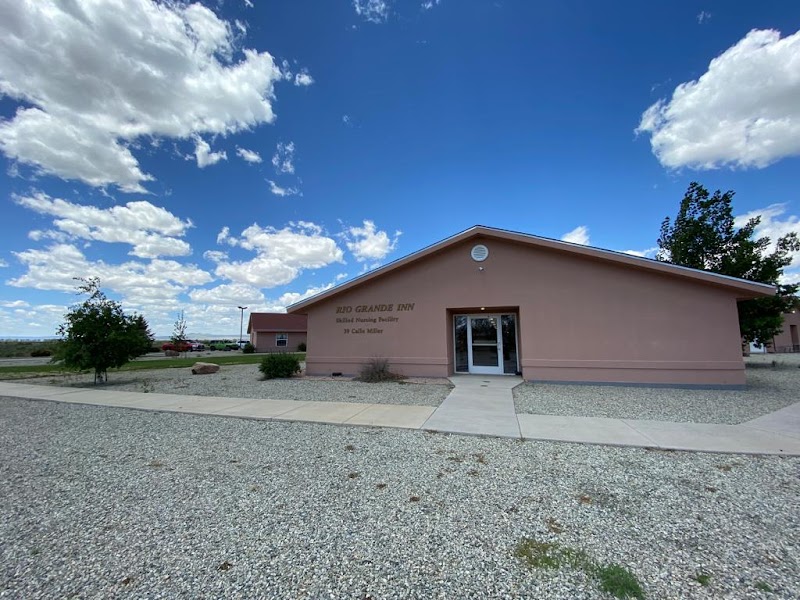
RIO GRANDE REHABILITATION AND HEALTHCARE CENTER

39 CALLE MILLER, LA JARA, CO 81140 (719) 274-3311
For profit - Corporation 60 Beds CENTENNIAL HEALTHCARE Data: November 2025
Trust Grade
36/100
#167 of 208 in CO
Last Inspection: March 2024

Within standard 12-15 month inspection cycle. Federal law requires annual inspections.

Overview

Rio Grande Rehabilitation and Healthcare Center has received a Trust Grade of F, indicating significant concerns about the quality of care provided. It ranks #167 out of 208 facilities in Colorado, placing it in the bottom half of all nursing homes in the state, but it is the only facility in Conejos County, so there are no local alternatives. The facility is improving, with issues decreasing from 7 in 2024 to 2 in 2025, which is a positive sign. Staffing is a relative strength, with a turnover rate of 26%, well below the Colorado average, suggesting that staff members are familiar with the residents. However, the facility has faced some serious concerns, such as failing to store and prepare food under sanitary conditions and not maintaining accessible medical records due to a cyberattack, which could affect care quality. While the quality measures are rated 4 out of 5, the overall health inspection and staffing ratings are only 2 out of 5, indicating below-average performance in these critical areas.

Trust Score
F
36/100
In Colorado
#167/208
Bottom 20%
Safety Record
High Risk
Review needed
Inspections
Getting Better
7 → 2 violations
Staff Stability
✓ Good
26% annual turnover. Excellent stability, 22 points below Colorado's 48% average. Staff who stay learn residents' needs.
Penalties
⚠ Watch
$15,783 in fines. Higher than 83% of Colorado facilities, suggesting repeated compliance issues.
Skilled Nurses
○ Average
Each resident gets 39 minutes of Registered Nurse (RN) attention daily — about average for Colorado. RNs are the most trained staff who monitor for health changes.
Violations
⚠ Watch
28 deficiencies on record. Higher than average. Multiple issues found across inspections.
★★☆☆☆
2.0
Overall Rating
★★☆☆☆
2.0
Staff Levels
★★★★☆
4.0
Care Quality
★★☆☆☆
2.0
Inspection Score
Stable
2024: 7 issues
2025: 2 issues

The Good

  • 4-Star Quality Measures · Strong clinical quality outcomes
  • Low Staff Turnover (26%) · Staff stability means consistent care
  • Full Sprinkler Coverage · Fire safety systems throughout facility
  • No fines on record
  • Staff turnover is low (26%)

    22 points below Colorado average of 48%

Facility shows strength in quality measures, staff retention, fire safety.

The Bad

2-Star Overall Rating

Below Colorado average (3.1)

Below average - review inspection findings carefully

Federal Fines: $15,783

Below median ($33,413)

Minor penalties assessed

Chain: CENTENNIAL HEALTHCARE

Part of a multi-facility chain

Ask about local staffing decisions and management

The Ugly 28 deficiencies on record

Jul 2025 2 deficiencies
CONCERN (D) 📢 Someone Reported This

A family member, employee, or ombudsman was alarmed enough to file a formal complaint

Potential for Harm - no one hurt, but risky conditions existed

Deficiency F0603 (Tag F0603)

Could have caused harm · This affected 1 resident

**NOTE- TERMS IN BRACKETS HAVE BEEN EDITED TO PROTECT CONFIDENTIALITY** Based on record review and interviews, the facility failed to ensure the resident had the right to be free from involuntary secl...

Read full inspector narrative →
**NOTE- TERMS IN BRACKETS HAVE BEEN EDITED TO PROTECT CONFIDENTIALITY** Based on record review and interviews, the facility failed to ensure the resident had the right to be free from involuntary seclusion not required to treat the resident's medical symptoms for one (#2) of one out of seven sample residents.Specifically, the facility failed to ensure Resident #2 was not told to go to her room or taken to her room as punishment for her behaviors. Findings include: I. Facility policy and procedureThe Resident Rights policy, revised December 2021, was provided by the nursing home administrator (NHA) on 7/24/2 at 3:20 p.m. It read in pertinent part, Federal and state laws guarantee certain rights to all residents of this facility. These rights include the resident's right to a dignified existence, to be treated with respect, kindness, and dignity, to be free from involuntary seclusion, to be supported by the facility in exercising resident rights, and to have equal access to quality care.II. Resident #2A. Resident statusResident #2, age greater than 65, was admitted on [DATE]. According to the July 2025 computerized physician's order (CPO), diagnoses included unspecified dementia with unspecified severity without behavioral disturbance and other specified depressive episodes. The 4/6/25 minimum data set (MDS) assessment revealed Resident #2 had short-term and long-term memory problems per staff assessment. Resident #2 required supervision from staff for activities of daily living (ADLs).The MDS assessment indicated the resident had no behavioral symptoms. B. Resident interviewResident #2 was interviewed on 7/24/25 at 1:22 p.m. Resident #2 said that she liked living in the facility and was happy. She said there were a few other residents who yelled a lot. Resident #2 said she liked playing Bingo and looked forward to playing it.Resident #2 said she recalled times when she was told by staff to return to her room, but she could not remember when or why.C. Record reviewThe behaviors care plan, initiated 4/13/22 and revised 8/6/24, identified Resident #2 had behaviors related to feeding and pushing other residents in their wheelchairs. Pertinent interventions included approaching the resident in a calm manner and telling her it was unsafe to feed other residents (reviewed 8/6/24), offering and providing the resident activities of interest for positive interactions (revised 8/6/24), providing the resident with positive feedback when her behavior was appropriate and emphasizing positive aspects of compliance (revised 8/6/24).-Review of the comprehensive care plan did not identify an intervention for sending the resident to her room when she displayed behaviors. Cross reference F744: failure to provide person-centered dementia care.The 6/10/25 nursing progress note revealed Resident #2 was asked to eat her lunch in her room due to her behavior in the dining room, which included yelling and taunting other residents. The 7/4/25 nursing progress note revealed Resident #2 was redirected by staff for her behavior and told that if she was not nice, she had to go to her room.III. Staff interviewsLicensed practical nurse (LPN) #1 was interviewed on 7/24/25 at 1:55 p.m. LPN #1 said when a resident was disruptive she spoke with the resident and gave them a warning. She said she would tell the residents that they would be removed from the activity or returned to their room. She said she made her decisions on behavior management based on what she thought was appropriate for each situation. The director of nursing (DON) was interviewed on 7/22/25 at 3:10 p.m. The DON said the facility did not have a policy for resident disciplinary action that allowed the staff to send residents to their rooms and cancel participation in future activities. The DON said when residents had disruptive behaviors, it was necessary to separate the residents for the safety of others. The DON said that if residents were redirected, the resident should be offered an alternate activity or intervention and should not be sent to their room.
CONCERN (D) 📢 Someone Reported This

A family member, employee, or ombudsman was alarmed enough to file a formal complaint

Potential for Harm - no one hurt, but risky conditions existed

Deficiency F0744 (Tag F0744)

Could have caused harm · This affected 1 resident

**NOTE- TERMS IN BRACKETS HAVE BEEN EDITED TO PROTECT CONFIDENTIALITY** Based on interviews and record review, the facility failed to provide person-centered dementia care and services for two (#2 and...

Read full inspector narrative →
**NOTE- TERMS IN BRACKETS HAVE BEEN EDITED TO PROTECT CONFIDENTIALITY** Based on interviews and record review, the facility failed to provide person-centered dementia care and services for two (#2 and #1) of seven residents reviewed for dementia care out of seven sample residents.Specifically, the facility failed to:-Implement appropriate person-centered dementia interventions for Resident #2; and,-Implement person-centered dementia interventions for Resident #1.Findings include: I. Facility policy and procedureThe Dementia Clinical Protocol policy, undated, was provided by the nursing home administrator (NHA) on 7/24/2 at 3:20 p.m. It read in pertinent part, For individuals with dementia, the interdisciplinary team (IDT) will identify a resident-centered care plan to maximize function and quality of life.Direct care staff will support the resident with initiating and completing activities and tasks of daily living. The IDT will identify and document resident condition and level of support needed during care planning and review changing needs as they arise. The physician will order appropriate interventions to address significant behavioral symptoms. The staff will monitor the individual with dementia for changes in condition. The physician and staff will review the effectiveness and complications of medications used and adjust medications as needed.II. Resident #2A. Resident statusResident #2, age greater than 65, was admitted on [DATE]. According to the July 2025 computerized physician's orders (CPO), diagnoses included unspecified dementia with unspecified severity without behavioral disturbance and other specified depressive episodes.The 4/6/25 minimum data set (MDS) assessment revealed Resident #2 had short-term and long-term memory problems per staff assessment. Resident #2 required supervision from staff for activities of daily living and was independent with mobility.The MDS assessment indicated the resident had no behavioral symptoms during the look back period.B. Record reviewThe behavior care plan, initiated 4/13/22 and revised 8/6/24, identified Resident #2 had behaviors related to feeding and pushing other residents in their wheelchairs. Pertinent interventions included approaching the resident in a calm manner and telling her it was unsafe to feed other residents (revised 8/6/24), offering and providing the resident activities of interest for positive interactions (revised 8/6/24), providing the resident with positive feedback when her behavior was appropriate and emphasizing positive aspects of compliance (revised 8/6/24).Review of the July 2025 CPO revealed a physician's order that indicated for the staff to monitor the resident for behaviors of hitting, kicking, verbal aggression, and taunting behaviors, and if behaviors were observed, enter a progress note, ordered 6/9/25.The 6/10/25 nursing progress note revealed that Resident #2 was asked to eat her lunch in her room due to her behavior in the dining room, which included yelling and taunting other residents. Cross reference F603: failure to be free from involuntary seclusion. -The facility failed to implement appropriate person-centered interventions to address Resident #2's behaviors. The 7/4/25 nursing progress note revealed Resident #2 was redirected by staff for her behavior and told that if she was not nice, she had to go to her room. -The facility failed to implement appropriate person-centered interventions to address Resident #2's behaviors. 4. Resident interview and observationResident #2 was observed and interviewed on 7/24/25 at 1:22 p.m. in her room. Resident #2 sat in her recliner and held a needlepoint craft. Resident #2 said that she liked living in the facility and was happy. She said there were a few other residents who yelled a lot. Resident #2 said she loved playing Bingo and looked forward to playing it.Resident #2 said she recalled times she was told to return to her room, but she could not remember when or why. Resident #2 said she was offered another needlepoint craft to work on in her room. Resident #2 said she enjoyed the needlepoint but was concerned she might miss the bingo games.III. Resident #1 A. Resident status Resident #1, age greater than 65, was admitted on [DATE] and discharged to another facility on 6/30/25. According to the June 2025 CPO, diagnoses included dementia with unspecified severity, with agitation and Alzheimer's disease.The 6/26/25 MDS assessment revealed Resident #1 was moderately impaired with daily decision making, had short and long-term memory problems, and was severely impaired with cognitive skills for daily decision making per staff assessment. During the look-back period, Resident #1 had short and long-term memory problems, inattention, and disorganized thinking were continuously present, and the resident wandered daily.The MDS assessment identified Resident #1 had no physical, verbal, or other behavioral symptoms directed toward others during the look-back period. Resident #1 required moderate to substantial assistance from staff for activities of daily living, and required supervision or touching assistance for standing, transferring, and walking.B. Record reviewThe behavior and wandering care plan, initiated 3/27/25, revealed the resident had exit-seeking behaviors and wandered throughout the facility with no sense of direction. Pertinent interventions included monitoring Resident #1 for side effects and effectiveness of psychotropic medications (initiated 3/27/25), calmly approaching the resident and re-approaching the resident if she appeared frustrated, agitated, or if behavior escalated (initiated 3/27/25), monitoring the resident prevent the resident from getting too closed and/or touching other residents (initiated 3/27/25), monitoring the resident for going into other residents' rooms (initiated 3/27/25), giving the resident non-judemental support, keeping the resident safe during episodes of behavior and offering and providing activities of interest to keep the resident engaged in positive interactions (initiated 6/4/25).-Review of Resident #1's comprehensive care plan did not reveal documentation regarding Resident #1's behaviors of urinating and defecating in public places or interventions for the staff to implement to address the resident's behaviors (see interviews below).Review of the June 2025 CPO revealed the following physician's orders:Wander guard, ordered 3/21/25;Behavior monitoring for wandering around the facility and into other resident rooms, ordered 3/27/24;Offer non-pharmacological behavior interventions, to include providing a , calm, positive, one-on-one quiet environment, offering snacks and diversion activities, reorienting and redirecting the resident, ordered 6/4/25.-Review of Resident #1's electronic medical record (EMR) did not reveal documentation regarding Resident #1's behavior of urinating and defecating in public areas or interventions that were implemented to address the resident's fear of using her own restroom (see interviews below).IV. Staff interviewsCertified nurse aide (CNA) #1 was interviewed on 7/24/25 at 1:35 p.m. CNA #1 said she was provided dementia care training at staff meetings and during shift reports. She said she understood residents with dementia were frequently unable to communicate their needs. CNA #1 said she was not aware of specific interventions for Resident #1 and Resident #2's dementia behaviors. CNA #1 said she knew Resident #1 wandered around the facility and was challenging to monitor. CNA #1 said Resident #1 had behaviors of urinating and defecating in other residents' rooms and sometimes in common areas. -However, review of Resident #1's EMR did not reveal documentation of Resident #1's behaviors of urinating and defecating in other resident's rooms or common areas (see record review above).CNA #1 said the staff made attempts to redirect Resident #1 while she wandered and were sometimes unable to respond timely to prevent Resident #1's behavior. CNA #1 said she redirected residents when behaviors were disruptive during activities but did not know how to arrange alternate activities or how often to monitor residents when they had escalated behaviors. Licensed practical nurse (LPN) #1 was interviewed on 7/24/25 at 1:55 p.m. She said Resident #1 and Resident #2 had dementia and behavior issues. LPN #1 said Resident #1 wandered throughout the facility and into other residents' rooms. LPN #1 said the staff monitored Resident #1 when she wandered around the facility but could not always intervene promptly. She said she would tell the residents that they would be removed from the activity or returned to their room if they had behaviors. She said she made her decisions for behavior management based on what she thought was appropriate for each situation. The DON was interviewed on 7/22/25 at 3:10 p.m. The DON said Resident #1 had wandering behaviors while she was admitted to the facility. The DON said Resident #1 was fearful of using the bathroom in her room and wandered into other rooms or facility areas to urinate and/or defecate. The DON said the nurse should document behaviors urinating defecating in public areas in the resident chart. The DON said behavior documentation was important to monitor effectiveness of care provided by the facility staff. The DON was unable to locate documentation of staff interventions for Resident #1's wandering and touching other residents (see record review above). The DON said the facility did not have a policy for resident disciplinary action, that allowed staff to send residents to their rooms and cancel participation in future activities. The DON said when residents had disruptive behavior it was necessary to separate residents for the safety of others. The DON said if residents were redirected, the residents should have an alternate activity or intervention offered and not be sent to their room. The DON said Resident #2 had a history of behavior concerns of yelling at othersThe DON said she was unable to locate dementia plans of care for Resident #2that identified appropriate interventions to address Resident #2's behavior, rather than sending the resident to her room The DON said the facility recently had a staff turnover in the MDS coordinator position and the new MDS coordinator was learning how to write and develop plans of care for dementia care. The DON said she would work with the MDS coordinator to update care plans for dementia care residents.
Mar 2024 7 deficiencies
CONCERN (D)

Potential for Harm - no one hurt, but risky conditions existed

PASARR Coordination (Tag F0644)

Could have caused harm · This affected 1 resident

**NOTE- TERMS IN BRACKETS HAVE BEEN EDITED TO PROTECT CONFIDENTIALITY** Based on interviews and record review, the facility failed to incorporate recommendations from the preadmission screening and re...

Read full inspector narrative →
**NOTE- TERMS IN BRACKETS HAVE BEEN EDITED TO PROTECT CONFIDENTIALITY** Based on interviews and record review, the facility failed to incorporate recommendations from the preadmission screening and resident review (PASRR) level II determination and evaluation from the State Mental Health Agency in the case of residents with serious mental illness or a related condition for one (#31) of three residents reviewed for PASRR out of 23 sample residents. Specifically, the facility failed to arrange and incorporate recommendations from the PASRR level II notice of determination for Resident #31. Findings include: I. Resident status Resident #31, age [AGE], was admitted on [DATE]. According to the March 2024 computerized physician orders (CPO), diagnoses included bipolar disorder, anxiety and Huntington's disease (a genetic disease causing progressive degeneration of the nerve cells in the brain). The 1/7/24 minimum data set (MDS) assessment revealed the resident had a moderate cognitive impairment with a brief interview for mental status (BIMS) score of 12 out of 15. The assessment revealed the resident had been identified as having a level II PASRR. II. PASRR level II notice of determination for MI (mental illness) evaluation and facility failures The PASRR level II, dated 12/5/23, included the evaluation which revealed the resident had been evaluated for mental illness (MI) due to a qualifying diagnosis of bipolar disorder. Specialized services were recommended to include psychiatric case consultation (psychiatry) and individual therapy. The PASRR revealed the resident had wanted to see a rheumatologist for her rheumatoid arthritis. The resident wanted to see the specialist to determine options for her pain and contracted hands related to rheumatoid arthritis. The PASRR evaluator determined there was insignificant evidence to support a diagnosis of Huntington's disease and the facility was to rule out the inaccurate diagnosis and remove it from the resident's medical record to ensure she received accurate treatment and care. III. Record review The comprehensive care plan, revised 4/15/23, revealed the resident had impaired neurological status related to Huntington's disease. Interventions included monitoring labs and diagnostic tests per physician orders. The resident had impaired cognitive functioning with confusion, disorganized thinking and incoherent and irrelevant conversations related to Huntington's disease. -The care plan failed to include a PASRR focused care plan. The March 2024 CPO revealed the following physician orders: -Venlafaxine (Effexor) (antipsychotic) 150 MG (milligrams)-give one tablet by mouth one time a day for unspecified psychosis-ordered on 10/24/23. -Abilify (antipsychotic) 5 MG-give one tablet by mouth one time a day for depression ordered on 2/17/23. -No orders for a rheumatologist were located. -A review of progress notes dated 12/01/23 to 3/26/24 failed to reveal any PASRR progress notes indicating the status of the PASRR recommendations. No PASRR progress notes showing communication with the State Mental Health Agency regarding a delay or inability to follow the recommendations were located. Physician visit notes dated 3/31/22 revealed the resident had a previous diagnosis of Huntington's disease. -There was no evidence of chorea movements (involuntary, irregular, or unpredictable body movements) consistent with the diagnosis. -Physician visit notes dated 6/26/23 to 3/25/24 had the diagnosis of Huntington's disease included in the resident's diagnosis list despite the physician's note on 3/31/22 and PASRR recommendations made on 12/5/23. IV. Staff interviews The medical director (MD) was interviewed on 3/25/24 at 11:08 a.m. He said Resident #31 did not present with the chorea movements (involuntary, irregular, or unpredictable body movements) consistent with a diagnosis of Huntington's disease. It was not his opinion she suffered from Huntington's disease and her spastic movements were not classic for that diagnosis. He had not requested a genetic panel to officially rule out the diagnosis and he had not been made aware she had requested to be seen by a rheumatologist. The social services director (SSD) was interviewed on 3/25/24 at 1:42 p.m. She said the process for managing the recommendations made on the level II PASRR were to advise the resident of the recommendations. If the resident refused specialized services, a progress note and an update to the care plan were made. The MD managed the psychotropic medications and the facility worked with an external behavioral health agency for the psychological services. If any services on the PASRR required outside referrals, those referrals went to the medical records (MR) clerk and he scheduled the appointments. The PASRR recommendations on the level II were to provide the services identified. If they were refused by the resident or could not be met, the SSD notified PASRR and made a progress note. She said it was important to meet the recommendations to ensure the resident's needs were being met. If the recommendations were not met, it could result in increased behaviors from the resident. The SSD said in regard to the recommendations for Resident #31, the resident had refused therapy and the MD was managing her psychotropic medications. The SSD did not know if a referral had been received for a rheumatologist or if an appointment had been made. The SSD did not know what had been done regarding correcting the resident's diagnosis of Huntington's disease. The MR was interviewed on 3/25/24 at 2:58 p.m. He said he had been in his position since September of 2023. He had not received any referrals or made any appointments for Resident #31 to be seen by a rheumatologist or to have any testing related to her diagnosis of Huntington's disease. The corporate social services resource (CSR) was interviewed on 3/26/24 at 9:55 a.m. He said he had provided education to the SSD on PASRR since she had taken the position in October 2023. The PASRR recommendations made were for the facility to follow through on the services. If the recommendations could not be met or the resident refused, communication should be made with the State Mental Health Agency. The SSD was to make a PASRR progress note and update the resident's care plan. The director of nursing (DON) was interviewed on 3/26/24 at 11:39 a.m. She said there was no process of communication between herself and social services regarding PASRR recommendations. If the PASRR had recommendations requiring the DON's assistance, the SSD should be passing on that information. She was not aware of the recommendations for Resident #31. The DON did not believe the resident suffered from Huntington's disease based on her body movements being inconsistent with the diagnosis. She did not know why the diagnosis had never been changed in the records. If a resident had an inaccurate diagnosis it could affect the treatments the resident received and the care provided to the resident.
CONCERN (D)

Potential for Harm - no one hurt, but risky conditions existed

Deficiency F0685 (Tag F0685)

Could have caused harm · This affected 1 resident

**NOTE- TERMS IN BRACKETS HAVE BEEN EDITED TO PROTECT CONFIDENTIALITY** Based on record review and interviews, the facility failed to ensure proper treatment and assistive devices to maintain vision a...

Read full inspector narrative →
**NOTE- TERMS IN BRACKETS HAVE BEEN EDITED TO PROTECT CONFIDENTIALITY** Based on record review and interviews, the facility failed to ensure proper treatment and assistive devices to maintain vision and hearing abilities for two (#54 and #40) of three residents reviewed for vision and hearing out of 23 sample residents. Specifically, the facility failed to ensure: -Resident #54 had an eye exam; and, -Resident #40 obtained necessary hearing devices. Findings include: I. Facility policy and procedure The Care of Visually Impaired Resident policy, revised March 2021, was received by the nursing home administrator (NHA) on 3/25/24 at 11:56 a.m. It revealed in pertinent part, Residents with visual impairment will be assisted with activities of daily living as appropriate. Assistive devices to maintain vision include glasses, contact lenses, magnifying lenses and any other devices used by the resident to assist with visual impairment. While it is not required that our facility provide devices to assist with vision, it is our responsibility to assist the resident and representatives in locating available resources (Medicare, Medicaid or local organizations), scheduling appointments and arranging transportation to obtain needed services. II. Resident #54 A. Resident status Resident #54, age [AGE], was admitted on [DATE]. According to the March 2024 computerized physician orders (CPO), the diagnoses included type II diabetes mellitus. The 2/11/24 minimum data set (MDS) assessment revealed the resident was cognitively intact with a brief interview for mental status (BIMS) score of 13 out of 15. She required partial/moderate assistance with showering/bathing self, upper body dressing, lower body dressing, putting on and taking off footwear, personal hygiene, lying to sitting on side of bed, sitting to standing, chair/bed to chair transfer, toileting transfer and tub/shower transfer. It indicated the resident had adequate vision (with glasses or other visual appliances). B. Resident interview Resident #54 was interviewed on 3/20/24 at 2:11 p.m. She said she came in with glasses but said she did not wear them because she could not see out of them. She said she could see up close but could not see far away. Resident #54 said she would like to have her eyes checked. Resident #54 said she had not been offered the opportunity to see an eye doctor. C. Record review The care plan for vision documented Resident #54 had visual impairment and used eyeglasses as needed. Interventions included arranging a consultation with the eye care practitioner as needed; encouraging the resident to keep their room free of clutter with personal belongings; encouraging the resident to wear glasses; assist with applying as needed; occupational therapy (OT), physical therapy (PT) and speech therapy (ST) evaluation and treat as needed; and placing call bell, water pitcher, and personal belongings in the same place. C. Staff interviews The social service director (SSD) was interviewed on 3/25/24 at 1:32 p.m. She said she was not responsible for arranging medical and ancillary appointments. She said the medical records director (MRD) was in charge of appointments. She said if the resident requested to be seen for an eye exam then she would let medical records know. She said she was not aware that the resident needed to be seen for an eye exam and did not know the last time she had her eyes checked. She said she would let the medical records staff know so that he could make an appointment for the resident to be seen. The MRD was interviewed on 3/25/24 at 2:58 p.m. He said he was responsible for scheduling residents for medical and ancillary appointments. He said if the resident notified him that they needed to be seen he would call and get the resident scheduled as soon as possible. He said once the appointment was scheduled he would write the appointment date in the transportation book. He said he would then notify the resident verbally when their appointment was. He said sometimes it took a while before someone would be scheduled for ancillary services. He said depending on what services the resident needed some appointments were way out a month or further. He said he was not aware Resident #54 needed to be seen by the eye doctor. The director of nursing (DON) was interviewed on 3/26/24 at 11:29 a.m. She said MRD was responsible for scheduling medical and ancillary appointments. She said residents should be referred for ancillary services as often as the resident requested them. She said if the resident reported having issues with not seeing then an appointment should have been made as soon as possible. She said she did not know if the resident had been seen for an eye exam. She said it was a problem that the resident had not been seen by the eye doctor and said she would look into it. III. Resident #40 A. Resident status Resident #40, age under 65, was admitted on [DATE]. According to the March 2024 CPO, diagnoses included mild cognitive impairment, anxiety, depression, obsessive compulsive disorder and mild intellectual disabilities. The 2/11/24 MDS assessment documented the resident was cognitively intact with a BIMS score of 14 out of 15. The resident had difficulty hearing in noisy settings or when people spoke softly. The resident wore hearing aids. B. Resident interview and observation The resident was interviewed on 3/20/24 at 2:20 p.m. He stated he could not hear very well and not being able to hear increased his anxiety. When he felt anxiety, he would pick at his skin until the skin bled. The resident said he could not understand people when the people attempted to speak to him. He had a hearing exam last year but did not know exactly when or the status of his new hearing aids. The social services director (SSD) had not given him any updates on his new hearing aids. During the interview, the resident did not have either hearing aids in his ears. He struggled to hear and had to be spoken to loudly and on his left side. C. Record review The ancillary care plan, revised 2/28/23, revealed the resident had decreased hearing and required the use of hearing aids. Interventions were to ensure hearing aids were in place. A review of the progress notes from 2/1/24 to 3/24/24 revealed: Health status progress note dated 2/22/24 revealed the resident had started ear drops after complaining he could not hear very well. Alert charting dated 2/26/24 revealed the resident's sister called the facility and requested the resident be sent to the emergency room (ER) for his difficulty hearing. She wanted the ER to clean his ears because he could still not hear even after the facility had cleaned his ears. The nurse went to speak to the resident and the resident said he wanted to go to the hearing clinic to have his hearing aides turned up because he could not hear. The nurse advised the resident if he used his hearing aids, he would be able to hear. The nurse helped the resident put his left hearing aid into his ear and the right hearing aid was missing. Order administration note dated 3/2/24 revealed the resident had been sitting in the front lobby crying all day and expressed feelings of anxiety. Order administration note dated 3/3/24 revealed the resident had been sitting in the front lobby crying all day. He requested medication for his anxiety. He told the nurse he felt like he was going crazy because he could not hear. -No further progress notes related to the residents' difficulty hearing or missing hearing aids. A review of the certified nursing aide (CNA) documentation failed to reveal the resident was receiving any assistance with his hearing aids. A review of the audiology notes revealed: A letter from the audiologist dated 9/12/23 with the resident's hearing test results documented the resident had profound hearing loss in his right ear and mild hearing loss in his left ear. The audiologist included recommendations for digital hearing aids in order to be able to adjust the instrument for the various environments requiring the resident to need hearing aids. An estimate was attached and an insurance claim. The audiologist had submitted the insurance claim on 9/12/23. An audiology visit note dated 12/7/23 revealed the resident had his ears cleaned. He asked about his new hearing aids and was told by the audiologist approval was still needed for the payment. -No additional audiology notes were located. D. Staff interviews CNA #1 was interviewed on 3/25/24 at 10:22 a.m. She said Resident #40 had behaviors of scratching himself when he became anxious. The resident only had one hearing aid, the left one. He had lost the right hearing aid and was waiting for new hearing aids. CNA #1 said the resident was very hard of hearing and if he was not looking at the staff, he required tactile cueing to be directed to who was speaking to him. The difficulty with hearing caused the resident to misunderstand the staff at times and this increased his behaviors. Registered nurse (RN) #1 was interviewed on 3/25/24 at 11:40 a.m. She said the resident used an as needed (PRN) Lorazepam for anxiety when he would scratch himself. He had a developmental delay and could be challenging to redirect. She thought the resident had a right hearing aid and was missing the left hearing aid. The staff had to speak very loudly when talking to him. She did not know if being unable to hear affected his behaviors. The SSD was interviewed on 3/25/24 at 1:42 p.m. She said Resident #40 had very impaired hearing loss. He had seen the audiologist in December 2023. She worked with an organization who provided grants to pay for ancillary services but had not reached out to the organization for Resident #40's hearing aids. She was not aware if the audiologist had submitted any insurance claims, she believed it was her job to submit the claim. The SSD was not familiar with the State program for Medicaid reciprocate residents called the post eligibility treatment of income (PETI). She said the prior SSD had used the PETI program for payment for resident's ancillary services but she did not know how the PETI program worked. The grant organization she worked with would approve all or part of the bill for assistive devices like hearing aids, glasses and dentures. If the organization did not approve the entire amount, the resident or the responsible party would have to pay the difference. If the resident or responsible party could not afford to pay, she would encourage saving money. The resident would go without an assistive device in the meantime. The SSD did not believe Resident #40's hearing loss affected his behaviors. The SSD said the negative outcome for residents having to wait for devices were health declines and impaired psychosocial wellbeing. The corporate social services resource (CSR) was interviewed on 3/26/24 at 10:54 a.m. He said the residents or the responsible parties did not have to save up money to pay for assistive devices. The facility had a change of ownership and had to become reestablished with the State PETI program again. In the meantime, an external organization used grants for payment and were assisting with resident's ancillary bills. If a bill had not been approved in full, the facility would help with paying the difference. The director of nursing (DON) was interviewed on 3/26/24 at 11:39 a.m. She said Resident #40 did not currently have functional hearing aids. She was not sure of the status of his new hearing aids. He had very impaired hearing and the staff would have to come very close to him to be heard. The staff having to yell at him in order for him to hear caused the resident agitation. The DON did not know who held onto the resident's hearing aides or if the staff helped him put his hearing aids in.
CONCERN (D)

Potential for Harm - no one hurt, but risky conditions existed

Accident Prevention (Tag F0689)

Could have caused harm · This affected 1 resident

**NOTE- TERMS IN BRACKETS HAVE BEEN EDITED TO PROTECT CONFIDENTIALITY** Based on observations, record review and interviews, the facility failed to ensure the resident environment remained as free of ...

Read full inspector narrative →
**NOTE- TERMS IN BRACKETS HAVE BEEN EDITED TO PROTECT CONFIDENTIALITY** Based on observations, record review and interviews, the facility failed to ensure the resident environment remained as free of accident hazards as possible for one (#26) of three residents reviewed for accidents/hazards out of 23 sample residents. Specifically, the facility failed to ensure Resident #26 had an order for a medication (icy hot) found at his bedside. Findings include: I. Resident status Resident #58, age below 65, was admitted on [DATE]. According to the March 2024 computerized physicians orders (CPO), diagnoses included autistic disorder, dementia and fibromyalgia. The 1/12/24 minimum data set (MDS) assessment revealed the resident's cognitive status was intact with a brief interview for mental status (BIMS) score of 15 out of 15. II. Observation and interview The icyhot was at the bedside on 3/20/24 at 9:45 a.m. The icy hot was at the bedside on 3/21/24 at 10:00 a.m. Registered nurse (RN) #2 said icyhot was considered a medication. She said Resident #26 did not have an order for the icy hot nor did he have an assessment for self administration of the medication. III. Record review The resident did not have an order for icy hot. IV. Staff interview The director of nursing (DON) was interviewed on 3/21/24 at 10:10 a.m. She said icyhot was considered a medication and required a physician's order. She said Resident #26 did not have an order. She said the medication had been removed and the facility would call the provider for an order for an as needed muscle cream. She said she would have training with staff to identify medications and if any were found to turn into nursing when found.
CONCERN (D)

Potential for Harm - no one hurt, but risky conditions existed

Dental Services (Tag F0791)

Could have caused harm · This affected 1 resident

**NOTE- TERMS IN BRACKETS HAVE BEEN EDITED TO PROTECT CONFIDENTIALITY** Based on interviews and record review, the facility failed to assist a resident in obtaining routine or emergency dental service...

Read full inspector narrative →
**NOTE- TERMS IN BRACKETS HAVE BEEN EDITED TO PROTECT CONFIDENTIALITY** Based on interviews and record review, the facility failed to assist a resident in obtaining routine or emergency dental services, as needed for one (#54) of three residents reviewed for dental care out of 23 sample residents. Specifically, the facility failed to ensure dental services were offered to Resident #54. Findings include: I. Facility policy and procedures The Dental Services policy, revised December 2016, was received by the nursing home administrator (NHA) on 3/25/24 at 11:56 a.m. It revealed in pertinent part, Routine and emergency dental services are available to meet the resident's oral health services in accordance with the resident's assessment and plan of care. Routine and 24 hour emergency dental services are provided to our residents through: -A contract agreement with a licensed dentist that comes to the facility monthly; -Referral to the resident's personal dentist; -Referral to community dentists; or -Referral to other health care organizations that provide dental services. All dental services provided are recorded in the resident's medical record. A copy of the resident's dental record is provided to any facility to which the resident is transferred. II. Resident #54 A. Resident status Resident #54, age [AGE], was admitted on [DATE]. According to the March 2024 computerized physician orders (CPO), the diagnoses included type II diabetes mellitus. The 2/11/24 minimum data set (MDS) assessment revealed the resident was cognitively intact with a brief interview for mental status (BIMS) score of 13 out of 15. She required partial/moderate assistance with showering/bathing self, upper body dressing, lower body dressing, putting on and taking off footwear, personal hygiene, lying to sitting on side of bed, sitting to standing, chair/bed to chair transfer, toileting transfer and tub/shower transfer. It indicated the resident had no broken or loose teeth, loose or cracked teeth and no difficulty with mouth pain or discomfort. B. Resident interview Resident #54 was interviewed on 3/20/24 at 2:11 p.m. Resident #54 said she had not seen the dentist since she arrived on 11/3/23. She said she would like to see the dentist as she reported to the surveyor having tooth pain. C. Record review Review of the admission packet under dental services Resident #54 marked to have an initial dental consult dental examination upon admission dated 11/3/23. Review of computerized physician orders revealed dentist and podiatrist as needed with consent dated 11/9/23. -Review of care plan revealed no care plan for person-centered dental service needs. -Review of progress notes from 11/03/23 until 3/26/24 revealed no documentation concerning the initiation or completion of dental care. III. Staff interview The social service director (SSD) was interviewed on 3/25/24 at 1:32 p.m. She said she was not responsible for arranging the appointments for ancillary services. She said the medical records director (MRD) was responsible for arranging medical and ancillary appointments. She said the residents or family members could let her know if they needed to be seen for dental services and she said she would notify the MRD. The SSD said Resident #54 had not been seen by the dentist since her admission on [DATE]. She said she did not know why the resident was not seen by the dentist. The MRD was interviewed on 3/25/24 at 2:58 p.m. He said he was responsible for medical and ancillary appointments. He said when a resident arrived to the facility that they should have been scheduled for ancillary services as soon as possible. He said within the first week they arrived an appointment should have been made. He said the facility had a mobile dentist who started coming to the facility. He said he thought Resident #54 was seen by the dentist. He said the mobile dentist had been to the facility once and provided services in February 2024. He said the mobile dentist had been scheduled to come to the facility at least once a month. The director of nursing (DON) was interviewed on 3/26/24 at 11:29 a.m. She said the MRD was responsible for scheduling medical and ancillary appointments. She said the facility recently got a new dentist and they were seeing all the residents. She said residents should be seen by the dentist as often as requested. She said the facility started having a mobile dentist come in. She said the last time the mobile dentist came to the facility was two months ago. She said the mobile dentist was going to start seeing all the residents who did not have a regular dentist. The DON said she did not know if Resident #54 had been seen by the dentist. She said if the resident had not been seen by the dentist was problematic and would need to check into what happened.
CONCERN (D)

Potential for Harm - no one hurt, but risky conditions existed

Deficiency F0883 (Tag F0883)

Could have caused harm · This affected 1 resident

**NOTE- TERMS IN BRACKETS HAVE BEEN EDITED TO PROTECT CONFIDENTIALITY** Based on record review and staff interviews, the facility failed to develop and implement policies and procedures related to pne...

Read full inspector narrative →
**NOTE- TERMS IN BRACKETS HAVE BEEN EDITED TO PROTECT CONFIDENTIALITY** Based on record review and staff interviews, the facility failed to develop and implement policies and procedures related to pneumococcal immunizations for one (#17) of three residents reviewed for vaccinations of 23 sample residents. Specifically, the facility failed to ensure Resident #17 was offered the secondary pneumococcal immunization. Findings include: I. Professional reference The Centers for Disease Control and Prevention (CDC), Pneumococcal Vaccine Recommendations website, revised 9/21/23, retrieved on 3/27/24 from https://www.cdc.gov/vaccines/vpd/pneumo/hcp/recommendations.html read in pertinent part, CDC recommends routine administration of pneumococcal conjugate vaccine (PCV15 or PCV20) for all adults 65 years or older who have never received any pneumococcal conjugate vaccine or whose previous vaccination history is unknown: If PCV15 is used, this should be followed by a dose of PPSV23 one year later. The minimum interval is 8 weeks and can be considered in adults with an immunocompromising condition, cochlear implant, or cerebrospinal fluid leak. According to the CDC Recommended Immunization Schedule for Adults Aged 19 Years or Older, United States, 2023, retrieved on 3/27/23 from https://www.cdc.gov/vaccines/schedules/downloads/adult/adult-combined-schedule.pdf. It read, in pertinent part, The pneumococcal vaccine was to be administered to immunocompetent adults aged 65 years or older one dose of 13-valent pneumococcal conjugate vaccine (PCV13), if not previously administered, followed by one dose of 23-valent pneumococcal polysaccharide vaccine (PPSV23) at least one year after PCV13; if PPSV23 was previously administered but not PCV13, administer PCV13 at least one year after PPSV 23. For special situations (see-www.cdc.gov/mmwr/preview/mmwrhtml/mm6140a4. htm): individuals aged 19-64 years with chronic medical conditions (chronic heart excluding hypertension, lung, or liver disease, diabetes), alcoholism, or cigarette smoking: give 1 dose PPSV23. II. Resident #17 A. Resident status Resident #17, over the age of 65, was admitted on [DATE] and readmitted on 7/ 21/19. According to the March 2024 computerized physician orders (CPO), diagnoses included nontraumatic intracerebral hemorrhage (brain bleed). The 2/11/24 MDS assessment indicated the resident was not up to date on her pneumococcal vaccination but did not specify a reason. B. Record review The resident had received the Prevnar 23 vaccine on 9/7/16. -The facility did not have evidence of an offer or refusal of the pneumococcal vaccine. III. Staff interviews The minimum data set (MDS) coordinator was interviewed on 3/21/24 at 12:55 a.m. She said she was the person who kept track of the vaccines. She said she did not know the facility had to offer the vaccine annually even if the resident refused. She said she would contact the family to see if they wanted Resident #17 to receive the second pneumococcal vaccine. The director of nursing (DON) was interviewed on 3/21/24 at 1:10 p.m. She said the facility needed to follow CDC guidelines.
CONCERN (E)

Potential for Harm - no one hurt, but risky conditions existed

Deficiency F0730 (Tag F0730)

Could have caused harm · This affected multiple residents

Based on record review and interviews, the facility failed to complete a performance review of every nurse aide at least once every 12 months and provide regular in-service education based on the outc...

Read full inspector narrative →
Based on record review and interviews, the facility failed to complete a performance review of every nurse aide at least once every 12 months and provide regular in-service education based on the outcome of these reviews for four of four staff reviewed. Specifically, the facility had not completed annual performance reviews and/or provided regular in-service education based on the outcome of the reviews for certified nurse aide (CNA) #2, CNA #3, CNA #4 and CNA #5. Findings include: I. Record review CNA #2 (hired on 5/24/19), CNA #3 (hired on 12/8/10), CNA #4 (hired on 7/22/10) and CNA #5 (hired on 4/29/14) did not have an annual performance review completed. The CNAs did not have an in-service education plan based on the outcome of the review. II. Interview The nursing home administrator (NHA) was interviewed on 3/21/24 at 1:10 p.m. She said she could not locate the performance reviews for CNA #2, CNA #3, CNA #4 and CNA #5. She said she was not aware the performance reviews needed to include a regular in-service plan based on the outcome of these reviews. She said going forward she would ensure the performance reviews were completed annually to ensure best care was being delivered to the residents.
CONCERN (E)

Potential for Harm - no one hurt, but risky conditions existed

Medication Errors (Tag F0758)

Could have caused harm · This affected multiple residents

**NOTE- TERMS IN BRACKETS HAVE BEEN EDITED TO PROTECT CONFIDENTIALITY** Based on record review and interviews, the facility failed to ensure three (#36, #40 and #49) of five residents were free from u...

Read full inspector narrative →
**NOTE- TERMS IN BRACKETS HAVE BEEN EDITED TO PROTECT CONFIDENTIALITY** Based on record review and interviews, the facility failed to ensure three (#36, #40 and #49) of five residents were free from unnecessary psychotropic medications out of 23 sample residents. Specifically, the facility failed to: -Implement effective individualized behavior monitoring in the medical record to determine the efficacy of psychoactive medications for Residents #36, #40 and #49; and, -Ensure consents to review the risks versus benefits were in place prior to administration of psychotropic medications for Residents #40 and #49. Findings include: I. Facility policy The Psychopharmacological policy, dated July 2022, was provided by the nursing home administrator (NHA) on 3/25/24 at 11:57 a.m. It read in pertinent part: Drugs in the following categories are considered psychotropic medications and are subject to prescribing, monitoring, and review requirements specific to psychotropic medications: -Anti-psychotics, antidepressants, anti-anxiety medications; and hypnotics. Residents, families and/or the representative are involved in the medication management process. Psychotropic medication management includes indications for use and adequate monitoring for efficacy and adverse consequences. Non-pharmacological approaches are used (unless contraindicated) to minimize the need for medications, permit the lowest possible dose, and allow for discontinuation of medications when possible. II. Resident #36 A. Resident status Resident #36, age under 65, was admitted on [DATE]. According to the March 2024 computerized physician order (CPO), diagnoses included stroke, anxiety disorder and depressive disorder. The 2/4/24 minimum data set (MDS) assessment documented the resident was cognitively intact with a brief interview of mental status (BIMS) score of 15 out of 15. No behaviors were indicated. B. Record review The psychosocial care plan, revised 8/3/23, revealed the resident took psychotropic medications (Amitriptyline and Seroquel) related to anxiety and depression. The resident had a psycho-social well being deficit related to anxiety and depression. He had a impaired psychiatric mood related to his stroke. Interventions included offering a non pharmacological behavior intervention prior to the behavior medication administration such as offering him fluids/snacks, toileting, one-on-one activities, repositioning, and to re approach him at a later time. Staff were to monitor for signs of mood changes or distress, observe and report any changes in mental status caused by situational stressors. Behavior monitoring initiated 1/18/24 for Amitriptyline (antidepressant) for crying and Seroquel (antipsychotic) for agitation. The March 2024 CPO revealed the following physician orders: Seroquel 50 milligram (MG)- give one tablet a day for other depressive episodes-ordered on 4/3/23; Amitriptyline150 MG- give two tablets a day for other depressive episodes-ordered on 5/4/23; Behavior monitoring for Amitriptyline for crying outbursts-ordered on 8/2/23; Offer non pharmacological behavior interventions prior to behavior medication administration. Non pharmacological behavior interventions that are effective include: offer fluids/snacks, toileting, one-on-one activity, repositioning, and to re approach at a later time-ordered on 8/4/23; and, Behavior monitoring for Seroquel for agitation-ordered on 1/4/24. -A review of the certified nurse aide (CNA) behavior monitoring from 1/1/24 to 3/24/24 failed to reveal any episodes of agitation or tearfulness. A review of the resident's medication administration records (MAR) and treatment administration records (TAR) from 1/1/24 to 3/24/24 revealed: Behaviors indicated related to Amitriptyline as occurring on 1/8/24. -No behaviors were indicated related to Seroquel in January, February, or March 2024. Non pharmacological interventions were tried on 1/1/24, 1/2/24, 1/8/24, 1/14/24, 1/15/24, 1/22/24, 1/23/24, 1/25/24, 1/26/24, 1/28/24, 1/29/24, 2/4/24, 2/5/24, 2/7/24-2/12/24, 2/18/24, 2/20/24 and 2/25/24. -However, the documentation failed to indicate what interventions were tried and what medication the interventions were associated with. -There were no behaviors observed indicated in the resident's progress notes from 1/1/24 to 3/24/24. Non pharmacological interventions indicated in the MAR and TAR were not documented in the progress notes. C. Staff interviews CNA #1 was interviewed on 3/25/24 at 10:22 a.m. She said the CNAs documented behaviors in the point of care (POC) system for CNA charting. If the behavior was not part of the generalized list of behaviors, the CNA would notify the charge nurse verbally for the charge nurse to document. If the social services director (SSD) wanted the staff to monitor for a specific behavior or use a specific intervention, the SSD would verbally let the staff know of the expectation. She said the behaviors the staff were monitoring for Resident #36 were tearfulness and emotional outbursts. The resident struggled with being young and having to live in a nursing home related to his stroke and causing him to become tearful. She was not aware of the non pharmacological interventions for the resident. Registered nurse (RN) #1 was interviewed on 3/25/24 at 11:40 a.m. She said the nurses documented the resident behaviors on the MAR in the resident's chart. The nurse made a progress note indicating the behavior and interventions tried. She said Resident #36 had behaviors of tearfulness. He struggled with adjustment to his deficits and placement. She used distractions when he was tearful by engaging him in stretching when he came to the nurses station. The SSD was interviewed on 3/25/24 at 1:42 p.m. She said the medical records director (MRD) entered the behaviors in an order for the nurses to document on the MARs. The non pharmacological interventions were a separate order entered by the MRD. Behavior tracking was pulled by the director of nursing (DON) for the psychotropic drug review meeting. Behavior tracking reports were used to determine the efficacy of medications and if the medications needed to be continued. If a resident did not display behaviors in a three month period, the medication associated with those behaviors would be reviewed for a dose reduction or to be discontinued. If the resident was taking multiple medications, a behavior tracker would be initiated for each medication. She did not know if there were separate non pharmacological intervention trackers for each medication. The non pharmacological trackers were used to determine if alternative interventions were successful for the resident. She did not know if the DON reviewed the behavior tracking from the CNA charting for the meeting. The SSD did not have a process for auditing if consents were in place for the medications. She said Resident #36 had behaviors of crying outbursts. The resident had a recent divorce after his stroke and randomly cried regarding the loss of his spouse and his independence. The staff were tracking agitation and crying outbursts. The resident would display agitation regarding having to live in a nursing facility. The SSD did not know if the resident had a dose reduction of any of his medications in the last three months. The MRD was interviewed on 3/25/24 at 2:58 p.m. He said residents taking psychotropic medications required a behavior tracker to be initiated on the MAR within a few days of starting the medication. The nurses gave him the behavior information to include on the tracker. The non pharmacological tracking was a separate order. There should be a non pharmacological tracker for each medication. The DON was interviewed on 3/26/24 at 11:39 a.m. She said the MRD would consult with the nurses regarding which behaviors needed to be included on the behavior tracker. The non pharmacological tracker did not allow the staff to enter what interventions were tried and successful, the nursing staff entered the interventions in the resident's progress notes. She said the staff were to use a non pharmacological intervention when the resident displayed behaviors to determine if the medication was necessary and if a least restrictive approach could be used. The CNAs were to document behaviors in the POC system but the behaviors on the CNA trackers were generalized and not resident specific. The DON said if the resident displayed a behavior not indicated on the tracker, the CNAs reported the behavior and the intervention to the nurse to document in the resident's progress notes. She said the behavior tracking was used to determine the efficacy of the psychotropic medication. If a resident had not displayed behaviors in a three month period, the medication should be reviewed for a dose reduction or to be discontinued. III. Resident #40 A. Resident status Resident #40, age under 65, was admitted on [DATE]. According to the March 2024 CPO, diagnoses included mild cognitive impairment, anxiety, depression, obsessive compulsive disorder and mild intellectual disabilities. The 2/11/24 MDS assessment documented the resident was cognitively intact with a BIMS score of 14 out of 15. No behaviors were indicated. B. Record review The psychosocial care plan, revised 1/12/24, revealed the resident took psychotropic medications related to anxiety and depression. The resident had a psycho-social well being deficit related to anxiety and an intellectual disability. The resident exhibited behaviors of skin picking until the skin bled related to an obsessive compulsive disorder. Interventions included offering a non pharmacological behavior interventions prior to the behavior medication administration such as offering him a calm approach, positive reassurance, one-on-one, a quiet environment, fluids/snacks, diversion activities, re-orientation, and redirection. Behavior monitoring initiated 1/18/24 for Lexapro for crying outbursts and Seroquel for scratching skin. The March 2024 CPO revealed the following physician orders: Quetiapine (Seroquel) 50 MG- give two tablets for anxiety-ordered on 10/3/23; Lexapro (antidepressant) 10 MG- give one a day for depression- ordered on 10/24/23; Offer non pharmacological behavior interventions prior to behavior medication administration. Non pharmacological behavior interventions that are effective include: calm approach, positive reassurance, one-on-one, quiet environment, offering of fluids/snacks, diversion activities, reorientation, and redirection-ordered on 12/3/23; Behavior monitoring for Lexapro (antidepressant) for crying outbursts/losing, forgetting, or misplacing items-ordered on 1/16/24; Behavior monitoring for Seroquel for scratching skin until bleeding-ordered on 1/16/24; Lorazepam (Ativan) (antianxiety) 0.5 MG- give one tablet every 6 hours for 14 days PRN for anxiety- ordered on 3/2/24 and discontinued 3/16/24; and, Lorazepam 0.5 MG- give two tablets every 6 hours for 14 days PRN for anxiety-ordered on 3/17/24. -A review of the CNA behavior monitoring from 1/1/24 to 3/24/24 failed to reveal any episodes of frustration, anger at others or scratching and picking at self. A review of the resident's MAR and TAR from 1/1/24 to 3/24/24 revealed: Behaviors indicated related to Seroquel as occurring on 1/22/24, 1/29/24, 1/31/24, 2/25/24 and 3/4/24. Behaviors indicated related to Lorazepam as occurring on 1/2/24, 2/1/24, 2/3/24, 2/7/24, 2/8/24, 2/10/24, 2/14/23, 3/2/24, 3/3/24, 3/4/24, 3/15/24, 3/17/24, 3/21/24, 3/22/24 and 3/23/24. -No behaviors were indicated related to Lexapro in January to March 2024. Non pharmacological interventions were tried to 1/1/24, 1/14/24, 1/15/24, 1/22/24, 1/28/24, 1/29/24, 2/2/24, 2/3/24, 2/5/24, 2/9/24-2/12/24, 2/17/24, 2/19/24, 2/25/24, 3/4/24, 3/9/24, 3/10/24, 3/11/24, 3/18/24-3/21/24 and 3/23/24-3/25/24. -However, the documentation failed to indicate what interventions were tried and what medication the interventions were associated with. Progress notes reviewed from 1/1/24 to 3/24/24 revealed: Behaviors marked as observed on 1/3/24, 1/7/24, 1/8/24, 1/17/24, 1/21/24, 1/22/24, 1/29/24, 1/31/24, 2/7/24-2/10/24, 2/18/24, 2/22/24, 2/25/24, 2/27/24, 2/28/24, 3/1/24, 3/4/24, 3/8/24, 3/15/24, 3/22/24 and 3/24/24. -However, no description of the behaviors were included in the note. Lorazepam PRN given on 3/2/24, 3/3/24, 3/4/24, 3/16/24, 3/17/24, 3/22/24 and 3/24/24. Progress notes documented the PRN was effective. -However, no behaviors or non pharmacological interventions were documented. -No consents that reviewed the risks versus benefits associated with taking the medications were located for the Lorazapem. C. Staff interviews CNA #1 was interviewed on 3/25/24 at 10:22 a.m. She said Resident #40 had behaviors of scratching himself when he became anxious. The resident would perseverate on a concern and it was difficult to redirect him. She said the Lorazeam was effective when he would perseverate. RN #1 was interviewed on 3/25/24 at 11:40 a.m. She said the resident used PRN Lorazepam for anxiety and when he would scratch himself. He had a developmental delay and could be challenging to redirect. RN #1 said she did not use non pharmacological interventions with Resident #40 because his behaviors would get out of control. The SSD was interviewed on 3/25/24 at 1:42 p.m. The SSD said the resident took PRN Lorazepam for anxiety and the behavior and non pharmacological interventions needed to be documented to determine if the medication needed to be continued as a PRN or become scheduled. Lorazepam was a medication which required a consent from the resident or the resident's responsible party prior to administration. She gave the consent forms to the MRD to scan into the resident's medication record. The DON was interviewed on 3/26/24 at 11:39 a.m. The DON said the SSD was responsible for obtaining the consents prior to the administration of the medications but the DON did not have a process to check to ensure the consents were in place. When a PRN medication was used, behaviors needed to be documented along with the non pharmacological interventions tried before the administration of the medication. She said the documentation was entered into the resident's progress notes. If a resident was on multiple psychotropic medications then there should be multiple non pharmacological intervention trackers because each medication was given for specific behavior. The DON said if there were not coinciding intervention trackers, the facility would not be able to determine which interventions were effective with which behavior. IV. Resident #49 A. Resident status Resident #49, age [AGE], was admitted on [DATE]. According to the March 2024 CPO, diagnoses included dementia with behavioral disturbances. The 1/7/24 MDS assessment documented the resident was severely cognitively impaired and unable to complete the assessment. The staff interview revealed the resident had severely impaired decision making. No behaviors were indicated. B. Record review The psychosocial care plan, revised 1/9/24, revealed the resident took psychotropic medications related to mood stabilization and insomnia. The resident had a psycho-social well being deficit related to acute onset of delirium and dementia. Behavior monitoring initiated 1/9/24 for Seroquel for yelling. The March 2024 CPO revealed the following physician orders: Seroquel 25 MG- give one tablet twice a day for dementia with behavioral disturbances-ordered on 1/22/24 and discontinued 3/18/24; Seroquel 50 MG- give one tablet twice a day for dementia with behavioral disturbances-ordered on 3/19/24. Offer non pharmacological behavior interventions prior to behavior medication administration. Non pharmacological behavior interventions that were effective included: calm approach, positive reassurance, one-on-one, quiet environment, offering of fluids/snacks, diversion activities, reorientation, and redirection- ordered on 12/3/23; and, Behavior monitoring for Seroquel for yelling- ordered on 8/31/23. -A review of the CNA behavior monitoring from 1/1/24 to 3/24/24 failed to reveal any episodes of frustration or anger at others. A review of the resident's MAR and TAR from 1/1/24 to 3/24/24 revealed: Behaviors indicated related to Seroquel as occurring on 1/3/24 and 3/4/24. Non pharmacological interventions were tried on 1/1/24, 1/3/24, 1/8/24, 1/14/24, 1/15/24, 1/28/24, 1/29/24, 2/5/24, 2/10/24, 2/11/24, 2/12/24, 2/19/24, 2/25/24, 3/4/24, 3/9/24, 3/10/24, 3/11/24, 3/18/24-3/21/24 and 3/23/24-3/25/24. Progress notes reviewed from 1/1/24 to 3/24/24 revealed: Behaviors marked as observed on 1/3/24. The resident was yelling out where am I. Staff told her where she was and took the resident to breakfast without complications. Behaviors marked as observed on 3/17/24. The resident was yelling she was hungry and going back and forth to her room. No non-pharmacological interventions were documented. -No consents to review the risks versus benefirs of the medication were located for Seroquel. C. Staff interviews CNA #1 was interviewed on 3/25/24 at 10:22 a.m. She said Resident #49 had advanced dementia and had behaviors of yelling out. She frequently yelled out for food even after eating due to her short term memory deficits. She could be redirected with food or to an activity. RN #1 was interviewed on 3/25/24 at 11:40 a.m. She said the resident had behaviors of yelling out for food and propelling herself in and out of her room. If the staff provided her with food or candy, the resident could be redirected. The SSD was interviewed on 3/25/24 at 1:42 p.m. She said the resident yelled out when she wanted food or wanted to lie down. The resident was taking Seroquel for her yelling out. The resident yelled out when she was anxious. The behavior tracker should specify what yelling out behavior was being tracked regarding the Seroquel. The SSD said sometimes a resident might be yelling out for an unmet need and an unmet need was not a behavior requiring medication. The staff should anticipate unmet needs to prevent yelling out. Seroquel was a medication which required a consent from the resident or the resident's responsible party prior to administration. The DON was interviewed on 3/26/24 at 11:39 a.m. She said if a resident's behavior tracker only indicated a behavior such as yelling out, the tracker failed to specify if the yelling was for an unmet need or an uncontrollable behavior. If a resident communicated by yelling, this would not be a behavior to administer an antipsychotic medication for.
Nov 2019 15 deficiencies
CONCERN (D)

Potential for Harm - no one hurt, but risky conditions existed

Deficiency F0604 (Tag F0604)

Could have caused harm · This affected 1 resident

**NOTE- TERMS IN BRACKETS HAVE BEEN EDITED TO PROTECT CONFIDENTIALITY** Based on observations, record review and interviews, the facility failed to ensure residents were free from physical restraints ...

Read full inspector narrative →
**NOTE- TERMS IN BRACKETS HAVE BEEN EDITED TO PROTECT CONFIDENTIALITY** Based on observations, record review and interviews, the facility failed to ensure residents were free from physical restraints imposed for purposes of convenience and the least restrictive alternatives were used for one (#5) of three residents reviewed for assistive devices out of 23 sample residents. Specifically, the facility: -Failed to re-evaluate the ongoing use of a personal restraint; and -Failed to have a comprehensive care plan addressing the use of the restraint. Findings include: I. Facility policy and procedure The Restraint and Position Change Alarm Use Policy, revised November 2017, provided by the regional clinical consultant (RCC) on 6/3/19 at 3:13 p.m., included: The use of a physical restraint required consultation with an appropriate health professional such as an occupational or physical therapist. The use of less restrictive devices must be documented in the medical record prior to using the physical restraint. -A restraint shall not be used for discipline, as punishment, for the convenience of staff, or as a substitute for supervision. -An assessment of why restraints are continued should also be documented. -The resident status/behavior which prompted the use of the restraint should be documented. The comprehensive care should address: -Less restrictive measures attempted. -Other methods of therapies that are being used in conjunction with restraints. -What alternative to restraints are being considered. -Identify staff responsible for observing the resident (every 30 minutes and releasing and exercising the resident every two hours for at least 10 minutes). -Indicate involvement and input of other disciplines as necessary to overcome the problem. -indicate a specific period of time for using restraints. The need for the restraint is assessed quarterly and as indicated. Documentation in clinical notes may include, but is not limited to: type of restraint, date and time of use, reason for use, resident tolerance, and the effectiveness of the restraint in treating the medical symptoms. II. Resident #5 status Resident #5, age [AGE], was admitted on [DATE]. According to the November 2019 computerized physician orders (CPO), diagnoses included dementia, diabetes mellitus, non-traumatic chronic subdural hemorrhage, disorientation and specified depressive episodes. According to the 8/26/19 minimum data set (MDS) assessment, the resident had severe cognitive impairment with a brief interview for mental status (BIMS) score of one out of 15. No mood or behavior symptoms were noted. He required extensive assistance for bed mobility, transfers, grooming and toilet use. He was frequently incontinent of bladder and bowel. He had no falls since admission. III. Observations The resident was observed spending most of his time sitting in his wheelchair with a clip-on chair alarm. He did not sit in the chair in an unsafe manner, he did not attempt to stand up or move while sitting. The resident did not display unsafe behaviors during the following observations. On 11/18/19 at 1:29 p.m., the resident was sitting in his wheelchair with the alarm attached to the back of his shirt and chair. He was in the common area in front of the television. On 11/19/19 2:13 p.m., the resident was in his wheelchair common area sitting next to the window with the alarm attached to the back of his shirt. On 11/20/19 at 8:47 a.m., the resident was in his wheelchair in the common area. He was facing toward the nursing station with his hands on his chest. He was not attempting to stand up. The alarm was attached to the back of his shirt. The director of nursing (DON) escorted the resident to her office. The resident was not moving independently. He did not attempt to move or stand up from the wheelchair, during the above observations. The resident remained sitting in his wheelchair. IV. Record review The care plan, initiated 5/24/19 and revised 6/3/19, identified staff would minimize the potential for significant injury from any falls through the next review. Interventions included: report falls to medical doctor and responsible party; fall risk assessment; ensure pressure alarm in place when in wheelchair and in bed; provide and observe use of adaptive equipment; and ensure the resident was wearing proper footwear such as non-skid socks. The care plan did not include directives to staff when to check the alarm, when to release the alarm or when to complete assessments. The resident's informed consent for wandering use and pressure alarm to chair and bed documented the pressure alarms were due to the resident attempting to transfer himself with repeated falls. The reason for use of a wander guard was for risk of wandering. The registered nurse (RN) documented the resident's power of attorney consented to the chair restraint and wander guard verbally by phone on 9/18/19. Fall assessments, chair and alarm assessments and wander guard assessments were requested but were not provided at time of exit on 11/20/19. The CPO revealed the resident's physician ordered the resident to have a bed/chair alarm every shift, on 8/1/19. The CPO revealed the resident's physician ordered place wander guard, check placement every shift, on 9/19/19. There was no evidence of any attempts to use less restrictive alternative measures. D. Staff interviews Licensed practical nurse (LPN) #2 was interviewed on 11/20/19 at 8:14 a.m. She said the chair alarms and bed alarms were used to alert staff if a resident was trying to get out of his bed or wheelchair. She said the alarm sounded when the resident stretched or reached too far. LPN #2 said the alarms were placed after a resident had a fall or when the staff noticed the residents were trying to get out of bed or reaching for something. She said the alarms were used to prevent a resident from falling and for notifying the staff when a resident was not in the bed or standing up. She said the staff attended to the resident when the alarm sounded and it was a prevention for the resident not to fall. Certified nurse aide (CNA) #8 was interviewed on 11/20/19 at 8:27 a.m. She said the alarms were used to ensure the residents were safe from falling. She said the alarm sounded when the resident moved, tried to stand up or rolled out of bed. She said the clip detached from the back of the resident's shirt when a resident stood up and the alarm sounded. She said the alarm alerted staff when they were not in the area and staff would get to the resident as quickly as possible to try to have resident sit down in his wheelchair. CNA #7 was interviewed on 11/20/19 at 8:44 a.m. She said the resident had several recent falls and the alarms alert us when he is standing up or transferring out of bed. When the alarm goes off we run to make sure he sits down right away. The director of nursing (DON) was interviewed on 11/20/19 at 10:37 a.m. The DON said the resident had several falls and the alarms were used to ensure the resident was safe from falls. She said the resident was very unstable and when he attempted to stand the alarms alerted the staff and prevented a fall.
CONCERN (D)

Potential for Harm - no one hurt, but risky conditions existed

Deficiency F0645 (Tag F0645)

Could have caused harm · This affected 1 resident

**NOTE- TERMS IN BRACKETS HAVE BEEN EDITED TO PROTECT CONFIDENTIALITY** II. Resident #21 A. Resident status Resident #21, age [AGE], was admitted on [DATE] and readmitted on [DATE]. According to the...

Read full inspector narrative →
**NOTE- TERMS IN BRACKETS HAVE BEEN EDITED TO PROTECT CONFIDENTIALITY** II. Resident #21 A. Resident status Resident #21, age [AGE], was admitted on [DATE] and readmitted on [DATE]. According to the November 2019 computerized physician orders (CPO), diagnoses included adult failure to thrive, depressive episodes, and chronic kidney disease. The 9/16/19 minimum data set (MDS) assessment revealed the resident had severe cognitive impairment with a brief interview for mental status (BIMS) score of six out of 15. Depressed mood with behavior symptoms were noted. He required extensive assistance for bed mobility and toileting. He required limited assistance with transfers and personal hygiene. B. Record review The care plan, initiated 10/1/18 and revised 7/15/19, identified depression and negative statements and requires antidepressant and antipsychotic medication. Interventions included: medication review quarterly for possible reduction or discontinuance, monitor behavior of self-isolation, and pharmacy consultant review monthly. The October 2019 CPO revealed the following: -Seroquel 25 mg give half a tab total dose of 12.5 mg by mouth twice a day with no diagnosis, ordered on 7/15/19. -Monitor behavior for Seroquel, targeted behavior negative statements, ordered on 7/15/19. -Cymbalta 20 mg give one capsule by mouth daily for depressive episodes, ordered on 7/15/19. -Monitor behavior for Cymbalta, target behavior self-isolation, ordered on 7/26/19. Pharmacy consultant recommendations were requested on 11/19/19 at 4:00 p.m. No documentation was provided. Medication regimen review was requested on 11/19/19 at 4:00 p.m. No documentation was provided by the facility. Computerized physician orders for November 2019 were requested on 11/19/19 at 4:00 p.m. No documentation was provided by the facility. C. Staff interviews The social service director (SSD) was interviewed on 11/19/19 at 5:00 p.m. She said the hospital Resident #33 came from had applied for a level two PASRR. She said she did not submit documentation for a level two. She said she would follow up for a level two PASRR. The nursing home administrator (NHA) was interviewed on 11/19/19 at 5:10 p.m. She said she would submit for a status change, would follow up and apply for a level two PASRR for anxiety and aggressive behavior. The director of nursing was interviewed on 11/19/19 at 4:30 p.m. She said she was unaware of the PASRR and did not obtain or monitor the PASRR levels. She said no gradual dose reduction documentation was available and she could not provide it. D. Facility follow-up On 11/20/19 at 1:00 p.m. the NHA provided documentation of a level two PASRR request. Based on record review and interviews, the facility failed to refer two (#18 and #21) of three residents reviewed out of 23 sample residents to the appropriate state-designated authority for level II preadmission screening and resident review (PASARR) evaluation and determination for services. Specifically, the facility failed to update a PASARR level II with an increase in antipsychotic medications for Residents #18 and #21. Findings include: I. Resident #18 A. Resident status Resident # 18, age [AGE], was admitted on [DATE] and readmitted on [DATE]. According to the November 2019 computerized physician orders (CPO), diagnoses included depression, anxiety, and diabetes mellitus. According to the 9/19/19 minimum data set (MDS) assessment, the resident had no cognitive impairment with a brief interview for mental status (BIMS) score of 13 out of 15. The resident had mild depression, scoring seven of 27 on the patient health questionnaire (PHQ-9). The resident had no behavioral symptoms. B. Record review The care plan, initiated 5/29/19 and revised 6/20/19, identified the resident had a history of self-isolating related to a diagnosis of major depression. Interventions included: structure non-threatening activities to increase resident comfort in socializing; if the resident was willing, pair her up with a resident that was outgoing that she felt comfortable with; and administer medication for depression as ordered. The care plan, initiated 5/29/19 and revised 6/20/19, identified the resident's anxiety would not interfere with her functional abilities or interpersonal relationships. Interventions included: assess changes in resident mood; assess for changes in mood status; assess effectiveness of anti-anxiety medication therapy; and allow the resident to verbalize her feelings. The November 2019 CPO included Remeron 15 mg by mouth at bedtime, start date 8/29/19. The medical record failed to show evidence that the PASARR level II was updated to include the medication change and to include notification of OBRA. C. Staff interviews The social service director (SSD) was interviewed on 11/20/19 at 9:52 a.m. She said a Level II PASARR update should be initiated when a resident had a change of medication, an increase in behaviors, a new diagnosis, or an increase in medication. The SSD was informed of the increase of Remeron on 8/28/19. She said she has been working with the social service consultant as they were behind on updating PASARRs. She stated she would update the resident's PASARR immediately with OBRA.
CONCERN (D)

Potential for Harm - no one hurt, but risky conditions existed

Deficiency F0659 (Tag F0659)

Could have caused harm · This affected 1 resident

**NOTE- TERMS IN BRACKETS HAVE BEEN EDITED TO PROTECT CONFIDENTIALITY** Based on observations, record review and interviews, the facility failed to ensure qualified staff persons in accordance with ea...

Read full inspector narrative →
**NOTE- TERMS IN BRACKETS HAVE BEEN EDITED TO PROTECT CONFIDENTIALITY** Based on observations, record review and interviews, the facility failed to ensure qualified staff persons in accordance with each resident's written plan of care provided care for one (#5) of three residents reviewed for accidents out of 23 sample residents. Specifically, the facility failed to have a registered nurse (RN) assess Resident #5 following an unwitnessed fall. Findings include: I. Professional reference According to the Scope of Practice-Registered Nurse (RN) and Licensed Practical Nurse (LPN), Title 12, Professions and Occupations, Article 38, Nurses, Colorado Revised Statutes (July 1, 2013) retrieved from https://www.colorado.gov/pacific/[NAME]/Nursing_Laws: -Delegation of nursing function is limited to patients that are stable and where the outcome of the task is predictable. -Assessment function of an LPN includes collecting, reporting and recording objective/subjective data, observing condition or change of condition, and collecting and reporting signs and symptoms of deviation from normal health status. -Assessment function of a RN includes assessing and evaluating the health status of an individual. Also according to Colorado Revised Statutes 2015, Title 12, Article 38, Nurses, Part 1, 12-38-132. Delegation of nursing tasks: -Delegated tasks shall be within the area of responsibility of the delegating nurse and shall not require any delegate to exercise the judgment required of a nurse. Therefore, an LPN may not exercise judgment by completing an assessment of the resident's condition immediately following an unwitnessed fall or a fall resulting in injury. II. Resident #5 status Resident #5, age [AGE], was admitted on [DATE]. According to the November 2019 computerized physician orders (CPO), diagnoses included dementia, diabetes mellitus, non-traumatic chronic subdural hemorrhage, disorientation and specified depressive episodes. According to the 8/26/19 minimum data set (MDS) assessment, the resident had severe cognitive impairment with a brief interview for mental status (BIMS) score of one out of 15. No mood or behavior symptoms were noted. He required extensive assistance for bed mobility, transfers, grooming and toilet use. He had no falls after admission. III. Record review A. Care plan The care plan, initiated 5/24/19 and revised 6/3/19, identified staff would minimize the potential for significant injury from any falls through the next review. Interventions included: report falls to medical doctor and responsible party; fall risk assessment; ensure pressure alarm in place when in wheelchair and in bed; provide and observe use of adaptive equipment; and ensure proper footwear such as non-skid socks. B. Resident falls occurring on 9/16/19 and 9/17/19 A resident incident report, dated 9/16/19 at 7:52 a.m., documented in part the resident was trying to come into the nurses' station. The resident was propelling himself and was unable to cross over to the entrance of the nurses' station. The resident fell on his left side. The fall was unwitnessed. The report was signed by licensed practical nurse (LPN) #3. A resident incident report, dated 9/16/19 at 10:16 p.m., documented in part that Resident #5 was sitting in a wheelchair in the common area with his feet propped up on the sofa when his wheelchair slid from underneath him and he fell back. The resident's wheelchair was observed and brakes were not locked. Resident #5 fell on his left side. The fall was unwitnessed. The report was signed by LPN #3. A resident incident report, dated 9/17/19 at 7:37 p.m., documented in part that Resident #5 was sitting on the sofa and tried to transfer himself to his wheelchair. The resident's wheelchair was observed unlocked. The fall was unwitnessed. The report was signed by LPN #3. There was no documentation that Resident #5 was assessed by an RN immediately after his unwitnessed falls. IV. Staff interviews LPN #2 was interviewed on 11/20/19 at 8:14 a.m. She said she would go directly to the resident's room and start to assess the resident for any injuries after a fall. She would assess the environment to ensure the safety of the resident. She would then move the resident to check for injuries. She would complete all vitals and start neurological assessments if it was an unwitnessed fall. She would report to the director of nursing (DON), physician and family. Certified nurse aide (CNA) #8 was interviewed on 11/20/19 at 8:27 a.m. She said if she found a resident on the floor, she would call for the nurse right away and follow the directions from the nurse. CNA #6 was interviewed on 11/20/19 at 8:27 a.m. She said she would make sure the resident was safe and get help as soon as possible. The DON was interviewed on 11/20/19 at 10:37 a.m. The DON said whenever a resident had a fall, the staff who found the resident ensured the resident was safe and called for assistance. A nurse would assess the resident for any injuries, and physician, family and I should be contacted immediately about the fall. The DON was shown the resident incident reports for Resident #5 (above). The DON said LPNs could complete the fall assessments, as it was in their scope of practice.
CONCERN (D)

Potential for Harm - no one hurt, but risky conditions existed

Accident Prevention (Tag F0689)

Could have caused harm · This affected 1 resident

**NOTE- TERMS IN BRACKETS HAVE BEEN EDITED TO PROTECT CONFIDENTIALITY** Based on observations, record review and interviews, the facility failed to ensure the resident environment remained as free of ...

Read full inspector narrative →
**NOTE- TERMS IN BRACKETS HAVE BEEN EDITED TO PROTECT CONFIDENTIALITY** Based on observations, record review and interviews, the facility failed to ensure the resident environment remained as free of accident hazards as possible, and adequate supervision and assistance devices to prevent accidents were provided, for one (#46) of three residents reviewed for falls out of 23 sample residents. Specifically, the facility failed to keep the room door open, when care was not being provided, for Resident #46 who had a high risk for falls. Findings include: I. Resident status Resident #46, age [AGE], was admitted on [DATE] and readmitted on [DATE]. According to the November 2019 computerized physician orders (CPO), diagnoses included dementia, anxiety, and depressive disorder. The 11/4/19 minimum data set (MDS) assessment revealed the resident was severely cognitively impaired with a brief interview for mental status (BIMS) score of one out of 15. Extensive assistance was needed for transfers, bed mobility, dressing, toileting, and personal hygiene. II. Record review The care plan, initiated 8/24/16 and reviewed 8/30/19, identified the resident had frequent falls related to poor balance and poor safety awareness. Interventions included: -Ensure room is close to nurses' station. -Ensure fall mat is next to bed while at rest or during the hours of sleep. She will often be found by staff on the floor mat and will tell staff she did not fall, she was just praying or looking for shoes. -She knows how to turn off pressure alarms, monitor closely. -She remains with numerous falls, alarms placed on chair and bed for safety. The care plan, initiated 5/21/19, identified the resident did not like to socialize and preferred to isolate herself in her room. Interventions included to verbally invite her to activities daily and to participate in the walk to dine program with each meal. She often refused, so continue to encourage. The November 2019 CPO included: -Fall mat in place while in bed for fall precautions. -Resident to have bed/chair alarm, check function of bed and chair alarm every shift for a diagnosis of poor safety awareness. III. Observations and staff interviews The resident's room was observed on 11/18/10 at 9:37 a.m. with the door closed. The staff walking by said she was still sleeping. At 11:35 a.m. the door was open. The resident was in bed lying down. The wheelchair had an alarm attached to the back piece, the bed had an alarm attached to it, the bed was in the lowest position, and a fall mat was next to the bed. At 2:09 p.m. the room door was closed. Certified nurse aide (CNA) #6 said the resident was in her room with a family member. The resident's door was closed on 11/19/19 at 8:39 a.m. Certified medication aide (CMA) #4 was interviewed at 8:39 a.m. She said the resident needed the chair alarm, bed alarm, low bed, and fall mat because she was a high fall risk. She said the resident had been seen on occasion throwing herself out of her chair to get attention and have her family come in to see her. She said the door should not be closed, but left cracked open for staff to be able to hear the alarms if they went off. She said when the alarms went off the staff knew she had wiggled off her bed. She said the door should be open if the resident had been identified a high fall risk, for the staff to keep a better view of her when walking up and down the hallway. CMA #1 was interviewed on 11/19/19 at 8:44 a.m. He said the aide assigned to the floor must have closed the door to only leave a crack open. He said the door should be open all the way so staff had a better view of her in her room and hear the alarms if she set them off. The director of nursing (DON) was interviewed on 11/19/19 at 8:47 a.m. She said the resident was a high fall risk. She said the door should not be closed. She said if the door was open staff could see her better and hear the bed alarm if she set it off. She said she would provide education to the staff on the importance to keep a resident identified as a high fall risk in line of sight when in their room.
CONCERN (D)

Potential for Harm - no one hurt, but risky conditions existed

Medication Errors (Tag F0758)

Could have caused harm · This affected 1 resident

**NOTE- TERMS IN BRACKETS HAVE BEEN EDITED TO PROTECT CONFIDENTIALITY** Based on record reviews and interviews, the facility failed to ensure no unnecessary psychotropic medication usage for one (#3) ...

Read full inspector narrative →
**NOTE- TERMS IN BRACKETS HAVE BEEN EDITED TO PROTECT CONFIDENTIALITY** Based on record reviews and interviews, the facility failed to ensure no unnecessary psychotropic medication usage for one (#3) of five residents reviewed out of 23 sample residents. Specifically, the facility failed to assess for the continued use of Lorazepam as needed (PRN) drug for Resident #3. Findings include: I. Facility policy and procedure The Chemical and Physical Restraint policy and procedure, undated, provided by the nursing home administrator (NHA) on 11/20/19 at 2:00 p.m., read in part, the resident has the right to be free from any physical restraints imposed and psychoactive drugs administered. Orders for restraints shall not be enforced for longer than 12 hours unless the resident's condition worsens and the care plan should indicate the specific period of time for the use of the chemical restraint. Assessment of the restraint rationale would be continually documented. II. Resident #3 status Resident #3, age [AGE], was admitted on [DATE]. According to the November 2019 computerized physician orders (CPO), diagnoses included heart failure, atrial fibrillation, and pressure ulcer of right hip. The 8/23/19 minimum data set (MDS) assessment revealed the resident had no cognitive impairment with a brief interview for mental status (BIMS) score of 13 out of 15. No mood or behavior symptoms were noted. She required extensive assistance for transfers and personal hygiene. She required total assistance with bed mobility and toileting. III. Record review The care plan, initiated 9/11/19, identified periods of anxiety and Ativan PRN. Interventions included: pharmacy consultant review of medication use and potential side effects, assess for changes in mood status and assess effectiveness of anti-anxiety medication therapy. The November 2019 CPO revealed Lorazepam (anti-anxiety medication) 0.5 mg, one tablet by mouth every 8 hours PRN for anxiety, ordered on 9/11/19. The medication administration record (MAR) for November 2019 documented no use of Lorazepam, but the medication was still available for administration. The medication regimen review (MRR), signed by the pharmacy, dated 10/10/19, read in part, federal regulations now limit the PRN use of any psychoactive medications to 14 days and the order may be continued with a clinical progress note and an anticipated stop date. The MRR was not signed in agreement or disagreement by the attending physician. IV. Staff interviews The nursing home administrator (NHA) was interviewed on 11/20/19 at 1:58 p.m. She said the lorazepam should have been discontinued. She said she thought the medication was discontinued a month ago. The director of nursing (DON) was interviewed on 11/20/19 at 2:00 p.m. She said she was unaware of the PRN medication order. She said the medication should have been discontinued. She said the supportive documentation on the pharmacy recommendations and the administration record for October 2019 was in the computer system and she was unable to retrieve them. (Cross-reference F842, failure to ensure accessible medical records.) V. Facility follow-up On 11/20/19 at 3:00 p.m. the NHA said an order to discontinue the Lorazepam was obtained and the medication was discontinued.
CONCERN (E)

Potential for Harm - no one hurt, but risky conditions existed

Deficiency F0582 (Tag F0582)

Could have caused harm · This affected multiple residents

**NOTE- TERMS IN BRACKETS HAVE BEEN EDITED TO PROTECT CONFIDENTIALITY** Based on record review and staff interview, the facility failed to inform four (#21, #100, #37, and #99) of four residents revie...

Read full inspector narrative →
**NOTE- TERMS IN BRACKETS HAVE BEEN EDITED TO PROTECT CONFIDENTIALITY** Based on record review and staff interview, the facility failed to inform four (#21, #100, #37, and #99) of four residents reviewed for liability notices and beneficiary appeal rights, out of 23 sample residents, both orally and in writing in a language that the residents understood, of their rights and all rules and regulations governing resident conduct and responsibilities during their stay in the facility. Specifically, the facility failed to: -Obtain a signature from the residents' authorized representatives on liability notices provided for Residents #21 and #100, who were unable to understand the information due to severe cognitive impairment; and -Provide notification of Medicare Non-Coverage letters to the beneficiary/representative after verbal notification of Medicare covered services ended for Residents #37 and #99. Findings include: I. Notice of non-coverage regulatory reference The Notice of Medicare Provider Non-Coverage (form CMS-10123) letters, also called Non-Coverage letters, Expedited Appeal Notice (ABN), or a Generic Notice, are provided to residents receiving skilled nursing facility (SNF) services funded through Medicare benefits. Non-Coverage letters document that residents and/or their legal representatives have received written notification that discontinuation of Medicare coverage is imminent. If unable to personally deliver the CMS required forms to the resident or responsible party, social services (or rehab program manager) must telephone the responsible party to notify them of the last covered day and the expedited review process. -The call must be documented on all notices. -Information must include the name of the caller, person contacted, date and time of call and telephone number. -All notices must be mailed to the responsible party the same day of the call. Please include two copies, one for their records and one to sign and return. II. Resident #21 Resident #21, age [AGE], was admitted on [DATE]. According to the November 2019 computerized physician orders (CPO), diagnoses included dementia, Alzheimer's, and depression. According to the 9/6/19 minimum data set (MDS) assessment, the resident had severe cognitive impairment with a brief interview for mental status (BIMS) score of six out of 15. Review of the liability notice for resident #21 revealed: -The Notice of Medicare Non-Coverage indicated skilled services would end on 7/25/19. -The resident signed the notice on 7/23/19. III. Resident #100 Resident #100, age [AGE], was admitted on [DATE]. According to the November 2019 CPO, diagnoses included dementia and Alzheimer's. According to the 9/26/19 MDS assessment, the resident had severe cognitive impairment with a BIMS score of four out of 15. Review of the liability notice for resident #100 revealed: -The Notice of Medicare Non-Coverage indicated skilled services would end on 8/22/19. -The resident signed the notice on 8/19/19. IV. Resident #37 Resident #37, age [AGE], was admitted on [DATE]. According to the November 2019 CPO, diagnoses included dementia. According to the 10/21/19 MDS assessment, the resident had severe cognitive impairment with a BIMS score of zero out of 15. Review of the liability notice for resident #37 revealed: -The Notice of Medicare Non-Coverage indicated skilled services would end on 6/13/19. -The resident's POA was called on 6/11/19 with no time of call and no date to indicate the notice was mailed to the responsible party the same day of the call. V. Resident #99 Resident #99, age [AGE], was admitted on [DATE]. According to the November 2019 CPO, diagnoses included dementia. According to the 10/12/18 MDS assessment, the resident had severe cognitive impairment with a BIMS score of five out of 15. Review of the liability notice for resident #99 revealed: -The Notice of Medicare Non-Coverage indicated skilled services would end on 7/23/19. -The resident's POA was called on 7/20/19 with no time of call and no date to indicate the notice was mailed to the responsible party the same day of the call. VI. Staff interview The social service director (SSD) was interviewed on 11/20/19 at 9:52 a.m. She said residents with moderate to severe cognitive impairment (as evidenced through BIMS scoring) should not sign notices of acknowledgement. The SSD said the resident's representative should have been provided a copy of a liability notice and appeal rights in order to act on the resident's behalf. The SSD said, I was not aware the notice was required to be sent out to the resident's representative as follow-up to the telephone call.
CONCERN (E)

Potential for Harm - no one hurt, but risky conditions existed

Grievances (Tag F0585)

Could have caused harm · This affected multiple residents

Based on record review, observation and interviews, the facility failed to inform residents on how and to whom a grievance or complaint could be filed. Specifically, the facility failed to: -Provide ...

Read full inspector narrative →
Based on record review, observation and interviews, the facility failed to inform residents on how and to whom a grievance or complaint could be filed. Specifically, the facility failed to: -Provide information to the residents on how to file a grievance; -Ensure the residents had access to the information on how to file a grievance; and -Inform the residents of the name and role of the grievance official. Findings include: I. Facility policy and procedure The Lost, Misplaced or Damaged Items policy, undated, was provided by the nursing home administrator (NHA) on 11/20/19 at 1:22 p.m., and read in part: It is the policy of the facility to maintain all personal belongings for each resident in good condition and located in the appropriate storage areas. When an item or article of clothing is lost, misplaced or damaged, the facility will investigate the problem until the item is found, relocated or repaired when necessary. When a resident, family member, friend, or staff member discovers something missing, the following procedure should be followed: Report missing items to social services department, turn in form to the assigned social worker and all departments will be notified via a copy of the attached form. II. Resident group interview The resident group was interviewed on 11/19/19 at 3:00 p.m. with five alert and oriented residents. All five of the residents said they did not know who the grievance official was or how to file a grievance within their community. Resident #18 was interviewed on 11/19/19 at 4:48 p.m. Resident #18 said the problem was that staff did not communicate with each other. She said, I will report a problem and the certified nurse aide (CNA) will not pass the information on. Staff do not think it is a problem, but to us residents, it is a problem. She said, I have reported things to (the social services director) and they never get followed up on. She said, I do not know where to find the grievance forms. III. Staff interviews The activity director (AD) was interviewed on 11/20/19 at 8:51 a.m. She said the residents were assisted by the staff who they reported their grievances to. She said the staff person obtained the form from the nurse's station, and helped the resident complete it or advised the resident how to complete the form. The AD did not know how the information was given to the residents other than when they requested the form. She did not know how often residents were informed about the grievance process by the social service director (SSD). She said the nursing home administrator (NHA) was the one who would investigate the grievances and then hand them off to the specific department which the grievance was about. CNA #3 was interviewed on 11/19/19 at 8:17 a.m. She said she was not familiar with the grievance process but if a resident reported a problem to her she would report it to the charge nurse. The SSD was interviewed on 11/19/19 at 3:43 p.m. The SSD was asked where she kept the grievance forms. The SSD said they should be on the table outside of her office. She walked out to the front entryway and said, No, they are not there. She reentered her office and proceeded to remove one from a notebook. The SSD was told of the above interviews with the residents. She said the NHA was the grievance official. She said she would help if asked, but had not been asked to help with any grievances. She said she did not discuss the grievance process with the residents. The NHA was interviewed on 11/20/19 at 11:54 a.m. She said every staff member could help a resident if they wanted to file a grievance. She said everyone knew where the grievance forms were located at the nursing station. The NHA said the grievance process went through the SSD and then would land on her desk. She said if the residents didn't want to talk to the SSD they could talk with her. She was told of the resident interviews above. The NHA said it was important for residents to know who the grievance official was so they knew who to report concerns to get them resolved. She said it was important for residents to have knowledge of how to file a grievance so they could do so in private. The NHA was not aware residents did not know who to go to when they needed or wanted to file a grievance. She did not know they did not know the process of how to file a grievance or complete the grievance form. She said she thought all of the residents knew where to find the information independently.
CONCERN (E)

Potential for Harm - no one hurt, but risky conditions existed

Free from Abuse/Neglect (Tag F0600)

Could have caused harm · This affected multiple residents

**NOTE- TERMS IN BRACKETS HAVE BEEN EDITED TO PROTECT CONFIDENTIALITY** II. Resident #5 A. Resident status Resident #5, age [AGE], was admitted on [DATE]. According to the November 2019 CPO, diagnoses...

Read full inspector narrative →
**NOTE- TERMS IN BRACKETS HAVE BEEN EDITED TO PROTECT CONFIDENTIALITY** II. Resident #5 A. Resident status Resident #5, age [AGE], was admitted on [DATE]. According to the November 2019 CPO, diagnoses included dementia, diabetes mellitus, non-traumatic chronic subdural hemorrhage, disorientation and specified depressive episodes According to the 8/26/19 minimum data set (MDS) assessment, the resident had severe cognitive impairment with a brief interview for mental status (BIMS) score of one out of 15. No mood or behavior symptoms were noted. He required extensive assistance for bed mobility, transfers, grooming and toilet use. B. Record review The care plan, initiated 5/24/19 and revised 6/3/19, identified the resident was at risk for side effects from his antidepressant medication. He had a diagnosis of other specified depressive episodes and was prescribed an antidepressant daily. Staff had not reported any low mood indicators since his admission. Interventions included: administer medication as ordered; observe for side effects, report and document to the provider, such as dizziness, nausea, anxiety, weight and appetite changes or insomnia; and monitor and record target behaviors and negative statements. Resident #5 did not have a person-centered care plan or interventions to evaluate verbal and physical behaviors directed towards others. C. Observations On 11/19/19 at 2:13 p.m., Resident #5 was observed getting close to Resident #18. Resident #18 was observed maneuvering her wheelchair away from Resident #5. Resident #5 continued to get close to Resident #18. Resident #18 was observed shooing Resident #5 away. Resident #5 eventually left the Bingo table and proceeded to go towards the television in the common area. On 11/20/19 at 8:47 a.m., the director of nursing (DON) was standing between Resident #21 and Resident #5. Both residents were visibly agitated. The DON stood in the middle of both residents to ensure they did not have a physical altercation. The residents continued to talk to each other in Spanish, calling each other curse words. The DON then removed Resident #5 from the common area and escorted him to the front of her office. The NHA came out and asked Resident #5 if he wanted a candy and escorted him into her office. D. Resident Interviews Resident #18 was interviewed on 11/18/19 at 10:26 a.m. She said Resident #5 was very sexually vocal with female residents and female staff. She said, He will ask me if I want to kiss him and makes gestures. She said, We cannot even sit in the dining room without him bothering me or saying something inappropriate. That is why I stay in my room. Resident #8 was interviewed on 11/18/19 at 12:32 p.m. He said Resident #5 would harass and try to start fights with me and Resident #21. He said Resident #5 was always telling me to get out of here because he owns this place. He said Resident #5 will tell everybody that he bought this building for millions of dollars and he owns it. Resident #8 said Resident #5 was always talking dirty to women residents'' and to female staff. He said, I will tell him to leave the women alone and he gets mad and will try to pick fights. He said people would get kicked out of facilities for less than that. Resident #8 said, I will protect the women residents even if I get kicked out of here. Resident #22 was interviewed on 11/18/19 at 3:34 p.m. Resident #22 said Resident #5 was always yelling at her. She said Resident #5 came after me down my hall but I was too fast. She said, He asks me if I want a kiss but I always tell him I am married. This seems to stop him momentarily but he still talks to me inappropriately. She said he even tried to put his hand down a certified nurse aide's (CNA's) shirt. Resident #22 said, I just try to stay away from him and I am aware where he is all the time. Resident #21 was interviewed on 11/18/19 at 3:45 p.m. He said Resident #5 was always picking on me, always bothering me, and one time I was going to hit him but the nurse pulled me away. Resident #21 said Resident #5 was disruptive to everyone in the facility and he was always yelling. Resident #21 said, One time he tried to hit me. He swung at me and I ducked but a nurse took him away. Resident #21 said, Staff spoil him. Resident #21 said, He bothers me two to three times a week. I have been staying away from him to avoid fights, and I can't run away from him because I get short of breath because I have chronic obstructive pulmonary disease (COPD). Resident #21 said, Yes, staff know about (Resident #5) trying to hit me. Resident #40 was interviewed on 11/19/19 at 8:45 a.m. Resident #40 said Resident #5 kicked my foot while I was sitting in my wheelchair. He then raised his fist at me stating he would hit me. Resident #40 said, I reported it to a nurse but I cannot remember her name. After him kicking me, I stay away from. E. Interviews A certified medication aide (CMA) was interviewed on 11/18/19 at 2:13 p.m. He said Resident #5 would just pick fights with other residents and he makes very inappropriate comments to female residents. He said Resident #5 believes he bought the facility and will tell the male residents to get out, which causes problems. Registered nurse (RN) #1 was interviewed on 11/18/19 at 2:23 p.m. She said Resident #5 will mirror the attitude of the other male residents. A lot of residents complain about him. She said Resident #5 and another resident got into an argument and then both started grabbing at each other and started hitting each other. She said, I think the fights work both ways because all of them are to blame. The nursing home administrator (NHA) was interviewed on 11/18/19 at 3:00 p.m. She said Resident #5 would occasionally have behaviors. She said the resident would mirror the behaviors of others and respond accordingly. She said Resident #5 had numerous battles with other males and how they respond to him. She said Resident #5 had lost his wife and he thinks the female residents are his wife, and that was where the inappropriate comments came from. She said staff would intervene and redirect both parties to stop the altercations. The NHA said there had been no physical altercations but they mainly watched for verbal aggression. She said the resident had verbal behaviors two to three times a week. She said they really didn't know what he was telling the residents because he speaks to them in Spanish. The NHA said they had discussed with all staff to keep Resident #5 in line of sight, be aware of his location and ensure he does not have any altercations with other residents whether it be verbal or physical. The NHA said, I am aware of two female residents who have complained about (Resident #5's) verbal comments. I have instructed staff to ensure (Residents #5) doesn't get close to them. We have increased his medication and we have seen a decrease in his sexual comments towards female residents. She said she would check to see if there were any reports or investigations of alleged abuse by Resident #5 toward other residents, and added, I don't feel we are using medication as a physical restraint. The NHA was interviewed a second time on 11/18/19 at 4:30 p.m. She said there were no reports or investigations for resident-to-resident verbal and physical aggression. She said the nursing notes were just alert charting. Licensed practical nurse (LPN) #2 was interviewed on 11/20/19 at 8:14 a.m. She said Resident #5 had physical and verbal behaviors directed toward male and female residents. She said, When he becomes agitated we take him away from the situation and place him next to the DON's or the NHA's office. Certified nurse aide (CNA) #8 was interviewed on 11/20/19 at 8:27 a.m. She said Resident #5 had his good and bad days. She said Resident #5 will aggressively go after male residents and he will make inappropriate comments to the female residents. She said she knew he was saying something to the female residents, but she didn't know what he said because Resident #5 spoke Spanish which she didn't understand. She said, All I know is the female residents don't want him around them. He will mirror other behaviors and will mimic residents' behavior. He went after a male resident and I tried to intervene and he swung at me and hit me in the eye, causing a black eye. She said, I don't think it was reported because (Resident #5) has dementia and he doesn't really know what he is doing. She said Resident #5 had behaviors daily. CNA #7 was interviewed on 11/20/19 at 8:44 a.m. She said the resident made inappropriate comments to staff and female residents. She said Resident #5 would have behaviors on a daily basis. The activity director (AD) was interviewed on 11/20/19 at 8:51 a.m. She said, We try to keep (Resident #5) occupied so he doesn't get into any altercations with other residents. Staff will try to keep him either in the DON's office or the NHA's office. He mirrors others behaviors so if you approach him aggressively he will respond to you in the same manner. He has bumped his wheelchair into other residents, but I couldn't tell you if was on purpose or accidental. The social services director (SSD) and NHA were interviewed on 11/20/19 at 9:52 a.m. The SSD said Resident #5 does cuss and does become agitated because of the way he was treated by other residents. She said Resident #5 had a diagnosis of Lewy body dementia and he doesn't know what he is doing. She said Resident #5 had never been physical and he had never hit anyone, including staff. She said Resident #5 was bullied by other residents because they don't like him. The SSD said staff intervened and redirected the resident when he was having behavior issues. She said when any resident had an outburst or was showing physical aggression they called behavioral health to evaluate the behavior so we can ensure all of the residents' safety. The NHA and SSD were told of the interviews and observations above. The NHA said when staff intervened and removed Resident #5 from an altercation she would not consider it a form of isolation but ensuring his safety. The NHA said she was aware of the staff member being hit but was not aware of the other incidents of Resident #5 running his wheelchair into other residents and striking Resident #40. The director of nursing (DON) was interviewed on 11/20/19 at 10:37 a.m. The DON said, I feel (Resident #5) is bullied by other residents, and they just pick on him. This gets him agitated and he starts yelling and then staff have to intervene and take him away from the other residents. She said with his diagnosis of Lewy body dementia he really doesn't know what he is doing. No reporting to state authorities or facility investigation was initiated prior to the survey exit on 11/20/19. Based on record review and interviews, the facility failed to protect from and prevent abuse for seven (#38, #18, #8, #22, #21, #40 and #5) of seven residents reviewed of 23 sample residents. Specifically, the facility: -Failed to protect Resident #38 from abuse by Resident #46; and -Failed to protect Residents #18, #8, #22, #21 and #40 from verbal and physical abuse from Resident #5, and Resident #5 from bullying and potential retaliatory abuse by other residents. Cross-reference F610, the facility failed to report to state authorities and investigate incidents and allegations of verbal and physical abuse. Cross-reference to F943, the facility failed to provide training to all staff at a minimum on abuse prevention and dementia management. Findings include: I. Resident #38 A. Resident status Resident #38, age [AGE], was admitted on [DATE]. According to the November 2019 computerized physician orders (CPO), diagnoses included type II diabetes mellitus (DMII) and insomnia. The 8/26/19 minimum data set (MDS) assessment revealed the resident had severe cognitive impairment with a brief interview for mental status (BIMS) score of six out of 15. The MDS identified the resident was able to walk in a corridor with supervision. B. Record review The care plan, initiated on 9/26/19, identified the resident was at risk for falls related to impaired mobility and a history of falls. Interventions included to ensure the resident wore properly fitting non-skid footwear and to maintain an environment free of clutter and safety hazards. The resident had a room at the beginning of E hall. C. Incident The resident incident report dated 11/15/19 at 7:15 p.m. documented, Resident (#38) was down E hall getting snacks from (the) dietary cart, placed snacks on walker and began to walk east down E hall. Other resident (#46) was standing at the end of the hall waiting for (the) snack cart when he approached (Resident #38) and yelled 'you are always getting in my way!' and physically turned (Resident #38) around to face west and pushed him from behind, which made (Resident #38) fall sideways onto right knee and then hit his head on the north wall. Abrasion to right knee 3 cm X 1.8 cm, red area to back of head 1 cm X 1 cm. The statement from certified medication aide (CMA) #5 dated 11/15/19 included, I (saw Resident #46) move (Resident #38)'s walker and what looked like a push to (Resident #38) by the snack cart. The statement from dietary aide (DA) #5 dated 11/15/19 included, (Resident #46) made a comment to (#38) 'This isn't gonna work, your always in my way. Go the other way.' At this point (#46) grabbed (#38's) walker from him. As I turned around to see what he was doing, (#46) put his hands on (#38's) shoulders, spun him around to where he was now facing the nurses station. (#46) shoved (#38) with both his hands. (#38) fell to the floor very hard hitting his knee on the ground and the back of his head on the wall. The facility failed to protect Resident #38 from physical abuse. D. Staff interviews CMA #4 was interviewed on 11/19/19 at 8:39 a.m. She said the resident had a scraped knee after he fell on [DATE]. She said staff were told to keep an eye out for him when he walked down E hall in front of Resident #46's door. Certified nurse aide (CNA) #6 was interviewed on 11/19/19 at 8:40 a.m. He said Resident #38 liked to walk up and down E hall and nothing had happened to him before the incident on 11/15/19. CMA #1 was interviewed on 11/20/19 at 8:34 a.m. He said Resident #38 had not shown any fearfulness toward Resident #46 since the altercation on 11/15/19. Registered nurse (RN) #1 was interviewed on 11/19/19 at 8:45 a.m. She said Resident #38 had a small abrasion on his right knee. She said he had not displayed any fearfulness toward Resident #46. The social services director (SSD) was interviewed on 11/19/19 at 1:50 p.m. She said Resident #38 denied any fearfulness toward Resident #46 after the altercation. The director of nursing (DON) was interviewed on 11/20/19 at 10:38 a.m. She said the resident liked to walk up and down Hall E, and the altercation that happened was unexpected. She interviewed the resident after the altercation and he did not remember what had happened and he denied being afraid of Resident #46. She said the abrasion sustained from the fall was being treated, and Resident #38 had not voiced any concerns about the altercation. She said the facility should do its best to protect all residents from any and all abuse. The nursing home administrator (NHA) was interviewed on 11/20/19 at 2:05 p.m. She said Resident #38 had shown no fear of Resident #46, nor has he been denied walking up and down hall E. She said if he did walk up and down hall E, staff needed to keep a closer eye on him when he got closer to the end where he turned around. She said all residents had the right to be free from any harm. She said the facility worked very hard to prevent any form of abuse to all the residents in the facility.
CONCERN (E)

Potential for Harm - no one hurt, but risky conditions existed

Investigate Abuse (Tag F0610)

Could have caused harm · This affected multiple residents

**NOTE- TERMS IN BRACKETS HAVE BEEN EDITED TO PROTECT CONFIDENTIALITY** IV. Resident #5 A. Resident status Resident #5, age [AGE], was admitted on [DATE]. According to the [DATE] CPO, diagnoses includ...

Read full inspector narrative →
**NOTE- TERMS IN BRACKETS HAVE BEEN EDITED TO PROTECT CONFIDENTIALITY** IV. Resident #5 A. Resident status Resident #5, age [AGE], was admitted on [DATE]. According to the [DATE] CPO, diagnoses included dementia, diabetes mellitus, non-traumatic chronic subdural hemorrhage, disorientation and specified depressive episodes. According to the [DATE] minimum data set (MDS) assessment, the resident had severe cognitive impairment with a brief interview for mental status (BIMS) score of one out of 15. No mood or behavior symptoms were noted. He required extensive assistance for bed mobility, transfers, grooming and toilet use. B. Record review The care plan, initiated [DATE] and revised [DATE], identified the resident was at risk for side effects from his antidepressant medication. He had a diagnosis of other specified depressive episodes and was prescribed an antidepressant daily. Staff had not reported any low mood indicators since his admission. Interventions included: administer medication as ordered; observe for side effects, report and document to the provider, such as dizziness, nausea, anxiety, weight and appetite changes or insomnia; and monitor and record target behaviors and negative statements. Resident #5 did not have a person-centered care plan or interventions to evaluate verbal and physical behaviors directed towards others. A medical report, dated [DATE] at 7:00 p.m., revealed Resident #5 was seen for nursing home follow up and 30 day recertification. He had a history of Lewy body dementia, hypertension, and hyperlipidemia. Nursing staff reported he had been inappropriate, making advances at other female residents and staff. Aside from this nursing staff reported no concerns or issues. A medical report, dated [DATE] at 12:45 p.m., revealed Resident #5 was seen for nursing home follow up and 30 day recertification. He had a history of Lewy body dementia, hypertension, and hyperlipidemia. He had been acting out, approaching female staff, patients and patients' families with inappropriate sexual talk. He had also been observed running his wheelchair into other male residents ' wheelchairs. He was tested for urinary tract infection (UTI) as his outbursts were becoming more frequent. Urinary analysis (UA) was negative for UTI. The social services director was asking that his behavioral outbursts be treated pharmacologically as he was becoming more aggressive. Resident #5 was currently on Aricept 5 mg which could be increased or changed to Exelon. It was recommended the social service director (SSD) bring the behavior outbursts to the quality assurance (QA) meeting to discuss with the medical director. Resident #5 required ongoing nursing facility care for assistance with all activities of daily living (ADLs), monitoring of medical condition and behaviors and personal safety guidance and cues. A nursing log note, dated [DATE], no time given, revealed the resident was on follow up for behaviors. No adverse behaviors were noted thus far this shift. He had been pleasant and cooperative with care, no aggression noted. A nursing log note, dated [DATE] at 11:00 p.m., revealed resident continues to be on alert charting for behaviors concerning inappropriate sexual comments and touching. No behaviors observed throughout the night. Resident pleasant and cooperative. Resident went to bed early this evening and was resting quietly with eyes closed. A nursing log note, dated [DATE] at 12:00 a.m., revealed resident continues to be on alert charting for behaviors concerning inappropriate sexual comments and touching. No behaviors observed throughout the night. Resident resting quietly with eyes closed. C. Observations On [DATE] at 2:13 p.m., Resident #5 was observed getting close to Resident #18. Resident #18 was observed maneuvering her wheelchair away from Resident #5. Resident #5 continued to get close to Resident #18. Resident #18 was observed shooing Resident #5 away. Resident #5 eventually left the Bingo table and proceeded to go towards the television in the common area. On [DATE] at 8:47 a.m., the director of nursing (DON) was standing between Resident #21 and Resident #5. Both residents were visibly agitated. The DON stood in the middle of both residents to ensure they did not have a physical altercation. The residents both continued to talk to each other in Spanish, calling each other curse words. The DON then removed Resident #5 from the common area and escorted him to the front of her office. The NHA came out and asked Resident #5 if he wanted a candy and escorted him into her office. D. Resident Interviews Resident #18 was interviewed on [DATE] at 10:26 a.m. She said Resident #5 was very sexually vocal with female residents and female staff. She said, He will ask me if I want to kiss him and makes gestures. She said, We cannot even sit in the dining room without him bothering me or saying something inappropriate. That is why I stay in my room. Resident #8 was interviewed on [DATE] at 12:32 p.m. He said Resident #5 would harass and try to start fights with me and Resident #21. He said Resident #5 was always telling me to get out of here because he owns this place. He said Resident #5 will tell everybody that he bought this building for millions of dollars and he owns it. Resident #8 said Resident #5 was always talking dirty to women residents ' ' and to female staff. He said, I will tell him to leave the women alone and he gets mad and will try to pick fights. He said people would get kicked out of facilities for less than that. Resident #8 said, I will protect the women residents even if I get kicked out of here. Resident #22 was interviewed on [DATE] at 3:34 p.m. Resident #22 said Resident #5 was always yelling at her. She said Resident #5 came after me down my hall but I was too fast. She said, He asks me if I want a kiss but I always tell him I am married. This seems to stop him momentarily but he still talks to me inappropriately. She said he even tried to put his hand down a certified nurse aide's (CNA's) shirt. Resident #22 said, I just try to stay away from him and I am aware where he is all the time. Resident #21 was interviewed on [DATE] at 3:45 p.m. He said Resident #5 was always picking on me, always bothering me, and one time I was going to hit him but the nurse pulled me away. Resident #21 said Resident #5 was disruptive to everyone in the facility and he was always yelling. Resident #21 said, One time he tried to hit me. He swung at me and I ducked but a nurse took him away. Resident #21 said, Staff spoil him. Resident #21 said, He bothers me two to three times a week. I have been staying away from him to avoid fights, and I can ' t run away from him because I get short of breath because I have chronic obstructive pulmonary disease (COPD). Resident #21 said, Yes, staff know about (Resident #5) trying to hit me. Resident #40 was interviewed on [DATE] at 8:45 a.m. Resident #40 said Resident #5 kicked my foot while I was sitting in my wheelchair. He then raised his fist at me stating he would hit me. Resident #40 said, I reported it to a nurse but I cannot remember her name. After him kicking me, I stay away from. E. Interviews A certified medication aide (CMA) was interviewed on [DATE] at 2:13 p.m. He said Resident #5 would just pick fights with other residents and he makes very inappropriate comments to female residents. He said Resident #5 believes he bought the facility and will tell the male residents to get out, which causes problems. Registered nurse (RN) #1 was interviewed on [DATE] at 2:23 p.m. She said Resident #5 will mirror the attitude of the other male residents. A lot of residents complain about him. She said Resident #5 and another resident got into an argument and then both started grabbing at each other and started hitting each other. She said, I think the fights work both ways because all of them are to blame. The nursing home administrator (NHA) was interviewed on [DATE] at 3:00 p.m. She said Resident #5 would occasionally have behaviors. She said the resident would mirror the behaviors of others and respond accordingly. She said Resident #5 had numerous battles with other males and how they respond to him. She said Resident #5 had lost his wife and he thinks the female residents are his wife, and that was where the inappropriate comments came from. She said staff would intervene and redirect both parties to stop the altercations. The NHA said there had been no physical altercations but they mainly watched for verbal aggression. She said the resident had verbal behaviors two to three times a week. She said they really didn't know what he was telling the residents because he speaks to them in Spanish. The NHA said they had discussed with all staff to keep Resident #5 in line of sight, be aware of his location and ensure he does not have any altercations with other residents whether it be verbal or physical. The NHA said, I am aware of two female residents who have complained about (Resident #5 ' s) verbal comments. I have instructed staff to ensure (Residents #5) doesn ' t get close to them. We have increased his medication and we have seen a decrease in his sexual comments towards female residents. She said she would check to see if there were any reports or investigations of alleged abuse by Resident #5 toward other residents, and added, I don ' t feel we are using medication as a physical restraint. The NHA was interviewed a second time on [DATE] at 4:30 p.m. She said there were no reports or investigations for resident-to-resident verbal and physical aggression. She said the nursing notes were just alert charting. Licensed practical nurse (LPN) #2 was interviewed on [DATE] at 8:14 a.m. She said Resident #5 had physical and verbal behaviors directed toward male and female residents. She said, When he becomes agitated we take him away from the situation and place him next to the DON ' s or the NHA's office. Certified nurse aide (CNA) #8 was interviewed on [DATE] at 8:27 a.m. She said Resident #5 had his good and bad days. She said Resident #5 will aggressively go after male residents and he will make inappropriate comments to the female residents. She said she knew he was saying something to the female residents, but she didn't know what he said because Resident #5 spoke Spanish which she didn't understand. She said, All I know is the female residents don ' t want him around them. He will mirror other behaviors and will mimic residents' behavior. He went after a male resident and I tried to intervene and he swung at me and hit me in the eye, causing a black eye. She said, I don ' t think it was reported because (Resident #5) has dementia and he doesn ' t really know what he is doing. She said Resident #5 had behaviors daily. CNA #7 was interviewed on [DATE] at 8:44 a.m. She said the resident made inappropriate comments to staff and female residents. She said Resident #5 would have behaviors on a daily basis. The activity director (AD) was interviewed on [DATE] at 8:51 a.m. She said, We try to keep (Resident #5) occupied so he doesn't get into any altercations with other residents. Staff will try to keep him either in the DON's office or the NHA's office. He mirrors others behaviors so if you approach him aggressively he will respond to you in the same manner. He has bumped his wheelchair into other residents, but I couldn ' t tell you if was on purpose or accidental. The social services director (SSD) and NHA were interviewed on [DATE] at 9:52 a.m. The SSD said Resident #5 does cuss and does become agitated because of the way he was treated by other residents. She said Resident #5 had a diagnosis of Lewy body dementia and he doesn ' t know what he is doing. She said Resident #5 had never been physical and he had never hit anyone, including staff. She said Resident #5 was bullied by other residents because they don ' t like him. The SSD said staff intervened and redirected the resident when he was having behavior issues. She said when any resident had an outburst or was showing physical aggression they called behavioral health to evaluate the behavior so we can ensure all of the residents ' safety. The NHA and SSD were told of the interviews and observations above. The NHA said when staff intervened and removed Resident #5 from an altercation she would not consider it a form of isolation but ensuring his safety. The NHA said she was aware of the staff member being hit but was not aware of the other incidents of Resident #5 running his wheelchair into other residents and striking Resident #40. The director of nursing (DON) was interviewed on [DATE] at 10:37 a.m. The DON said, I feel (Resident #5) is bullied by other residents, and they just pick on him. This gets him agitated and he starts yelling and then staff have to intervene and take him away from the other residents. She said with his diagnosis of Lewy body dementia he really doesn ' t know what he is doing. No reporting to state authorities or facility investigation was initiated regarding Resident #5's verbal and physical abuse toward other residents, prior to the survey exit on [DATE]. Based on record review and interviews, the facility failed to have evidence that all alleged abuse/neglect violations were thoroughly investigated for nine (#46, #38, #98, #5, #18, #8, #22, #21 and #40) of nine residents reviewed of 23 sample residents. Specifically, the facility: -Failed to thoroughly investigate two altercations caused by Resident #46 towards Residents #38 and #98; and -Failed to investigate verbal and physical abuse by Resident #5 towards Residents #18, #8, #22, #21 and #40. Cross-reference to F600, the facility failed to protect residents from verbal and physical abuse. Cross-reference to F943, the facility failed to provide training to all staff at a minimum on dementia management and abuse prevention. Findings include: I. Resident #46 A. Resident status Resident #46, age [AGE], was admitted on [DATE]. According to the [DATE] computerized physician orders (CPO), diagnoses included depression and malignant neoplasm of prostate. The [DATE] minimum data set (MDS) assessment revealed the resident had moderate cognitive impairment with a brief interview for mental status (BIMS) score of 11 out of 15. The MDS identified the resident had verbal behavioral symptoms one to three days in the previous seven days. B. Record review The resident did not have a care plan available to address the potential for behavioral outbursts that could lead to physical altercations. II. Resident #38 A. Resident status Resident #38, age [AGE], was admitted on [DATE]. According to the [DATE] CPO, diagnoses included type II diabetes mellitus (DMII) and insomnia. The [DATE] MDS assessment revealed the resident had severe cognitive impairment with a BIMS score of six out of 15. The MDS identified the resident was able to walk in a corridor with supervision. The resident had a power of attorney (POA). III. Altercation on [DATE] A. Resident incident report The resident incident report (RIR) dated [DATE] at 7:15 p.m. documented, Resident (#38) was down E hall getting snacks from (the) dietary cart, placed snacks on (his) walker and began to walk east down E hall. Other resident (#46) was standing at the end of the hall waiting for (the) snack cart when he approached (#38) and yelled 'you are always getting in my way!' and physically turned (#38) around to face west and pushed him from behind, which made (#38) fall sideways onto right knee and then hit his head on the north wall. Abrasion to right knee 3 cm X 1.8 cm, red area to back of head 1 cm X 1 cm. The (RIR) contact information did not include the name of the physician notified. The family notification identified Resident #38. The statement from the director of nursing (DON) dated [DATE] documented, Interview with (#46) on [DATE] after altercation with (#38). (#46) stated he stood up and moved the residents (#38) walker out of the way, he turned the walker and caused the resident (#38) to fall. (#46) stated he did not mean to cause the resident to fall. He denies being angry, this resident stated he knows the fall of the other resident was his fault. When asked how he felt about causing the fall, (#46) stated he knew he was in trouble. (#46) also stated he needed to remember that the other residents are very frail. The statement from the DON dated [DATE] documented, (#36): Resident could not remember what happened. He was not fearful. The statement from dietary aide (DA) #5 dated [DATE] documented, (#46) made a comment to (#38) 'This isn't gonna work, your always in my way. Go the other way.' At this point (#46) grabbed (#38's) walker from him. As I turned around to see what he was doing, (#46) put his hands on (#38's) shoulders, spun him around to where he was now facing the nurses station. (#46) shoved (#38) with both his hands. (#38) fell to the floor very hard hitting his knee on the ground and the back of his head on the wall. The statement from certified medication aide (CMA) #5 dated [DATE] documented, I (saw #46) move (#38's) walker and what looked like a push to (#38) by the snack cart, (#38) was on the floor and DA #5 was screaming for help. At this time (CMA #3) and certified nurse aide (CNA #9) and myself went down the hall to help (DA #5) with (Resident #38). The facility did not have statements from CMA #3 or CNA #9. The facility did not have a statement from the charge registered nurse (RN) on duty. The statement from the social services director (SSD) dated [DATE] (who acknowledged the statement was written on [DATE]) included, It was (reported) to this worker at 7:59 (p.m.) that resident (#46) pushed (#38) down. I talked with the DON and she proceeded to do an interview with all involved. Behavioral health (BH) was called and responded within about two hours. (BH) clinician talked with resident (#46), and after talking with (#46), clinician called and discussed that the resident was remorseful and felt he was not a danger to himself or others. Waiting for a report. On [DATE], this worker contacted law enforcement and the deputy talked with (#46) and with (#38). (#38) stated he had no fear of anyone in the facility. The deputy stated he would write up his report and it should be ready in about 10 days. The facility did not conduct interviews with other residents about the altercation. The BH progress note (PN) provided by the NHA on [DATE] at 3:00 p.m. was written on [DATE] for the event of [DATE], and included: Assessment: client is not meeting 27-65 due to having nonplan or intent to harm himself or others. Client is not gravely disabled. His memory judgement, and insight are intact. I do believe the client needs further work to identify his anger or 'annoyance' prior to getting physical. Plan: We reviewed physical boundaries of not touching other residents especially when annoyed. DON expressed concern for other residents going forward and stated he may not be allowed to stay. With SSD on the speaker-phone we discussed natural behavioral consequences of assessment and a police report. SSD requested an appointment with a psychiatric provider to evaluate for medication. I requested a regular psych appointment. The timeline provided by the nursing home administrator (NHA) on [DATE] at 9:05 a.m. listed: -[DATE] the DON came to the facility to conduct the investigation, initiated 15 minute checks for both residents. -[DATE] the SSD contacted BH and the police. -[DATE] (the) sheriff's dept. to facility, met with SSD and the resident (#46) and determined no intent, and no danger to self or others. -[DATE] the assailant to BH. B. Interviews The SSD was interviewed on [DATE] at 1:50 p.m. She said when she was notified of the altercation she immediately called BH. She said whenever there was any kind of behavioral outburst it was the procedure of the facility to call BH to come out for an evaluation. She said Resident #46 had been going to BH for a couple of months. She said BH did not provide notes from any visits with Resident #46. She said BH had not provided a note from their visit on [DATE], and she said she would call and request a note. She said she did not go to the facility the night of the altercation, but she did call BH from home to have the BH on-call clinician perform an assessment. She said the altercation on [DATE] was not the only physical altercation the resident had been in. She said the DON was the lead for the altercation investigation on [DATE]. She said she did not call the police that night because the BH clinician decided resident #46 was not a threat to himself or others, and he was sleeping after the BH evaluation. She said looking back, the police should have been called that night, not the next day. She said because the electronic records were not available, she could not provide a care plan identifying the resident had a history of aggressive behaviors with person-centered individualized interventions if behaviors did present themselves. The DON was interviewed on [DATE] at 2:11 p.m. She said she was called in by the staff for an altercation between Residents #38 and #46. She said she called the SSD and was told BH had been called. She said after the visit from BH with Resident #46, the clinician stated the resident was not a threat to himself or others. She said she was told by the SSD not to call the police because the residents in the altercation were asleep and the police would not get there until the morning. She said she did not interview the other residents. She said she did not interview CMA #3, CNA #9 or the charge nurse. She said she did not know if Resident #38 had a power of attorney (POA). She documented Resident #38 was the family notified. She said with a BIMS of six, she did not know if he understood what was said. She said Resident #38 had forgotten the altercation had occurred, and was not fearful of Resident #46. The NHA was interviewed on [DATE] at 5:11 p.m. She said the other staff -- CMA #3, CNA #9, and the charge nurse -- were not interviewed because they did not see the incident. She said there should be a care plan identifying the resident had a history of physical altercations with other residents. She said the facility did not call the police the night of the incident because the residents involved in the altercation were asleep after BH had finished the evaluation of Resident #46. She said the facility did not interview other residents because they were asleep the night of [DATE]. She said they should have interviewed other residents the next day. She said the Residents #38's POA should have been notified of the altercation. C. Facility follow-up The NHA provided a care plan on [DATE] at 2:40 p.m. for Resident #46 that identified he had potential for occasional angry outbursts. Interventions included: -Encourage him to ask for staff assistance when other residents may be blocking hallway. -He has identified staff he feels comfortable talking about his feelings and frustrations. Staff to be available for him. -He will remain on 15 minute checks. -Redirect him when he becomes agitated. IV. Resident #98 A. Resident status Resident #98, age [AGE], was admitted on [DATE] and expired on [DATE]. According to the [DATE] CPO, diagnoses included Parkinson's disease and glaucoma. The [DATE] MDS assessment revealed the resident had no cognitive impairment with a BIMS score of 15 out of 15. The MDS identified the resident had moderate difficulty hearing. B. Altercation on [DATE] 1. Incident report The incident report from the altercation was requested on [DATE] at 8:00 a.m. from the NHA. The DON on [DATE] at 8:15 a.m. provided the initial incident report and a BH note from the altercation on [DATE]. She said everything in the investigation was in the incident report. The report included, male resident (#98), age [AGE] who was oriented to self only, was propelling wheelchair down another hallway. Male resident (#46), age [AGE], was also propelling wheelchair down the same hallway. Resident (#46) asked other resident to move, as he was blocking the way, resident stated again, please move, you are in the hallway. Resident #98 did not move and mumbled to resident (#46). Resident (#46) became frustrated and hit other resident (#98) on the mouth with his hand, causing a laceration to his lip. Staff quickly intervened and separated residents. Assessment was completed to both residents by an RN. Resident (#98) denied fear and was unable to state what happened. He was sent to the emergency department (ED) to evaluate laceration. Mental health and police were called by facility. Mental health representative met with Resident (#46), where resident stated, 'I know I've acted inappropriately and need help with managing my anger. I know I cannot act this way, and will do whatever I have to do to make this better.' Resident scheduled with mental health for next monday. Awaiting police and resident (#98) return from ED. The report identified the victim was a [AGE] year-old male, wheelchair bound, had dementia and was alert and oriented to person only. The report identified the assailant as a [AGE] year-old male, wheelchair bound, alert and oriented by three, with a history of behavior problems, specifically he became frustrated when others would enter his room or bathroom. The report documented the incident was witnessed by a female resident. The statement was, Resident (#98) wheeled himself down the hallway and stayed in the middle of the hall. Resident (#46) and female resident exited their room. Resident (#46) asked the other male resident to move out of the way. Resident (#98) did not move, and mumbled some words which neither of the other residents heard. Resident (#46) hit the other male resident causing a laceration to his lower lip. Staff immediately intervened. The report asked to describe whom the facility interviewed and the results of the interviews. The facility documented, Resident (#46) said he had asked him (#98) to move, he ignored me, he tried to move his (#98's) chair as he was blocking the entire hallway. He got so frustrated, he hit him. The charge nurse said she heard a male resident down the hallway yell out 'move', and when she looked up (#46) had already hit (#98). CNA came out of another room and quickly intervened, then the charge nurse quickly assessed the victim. The BH staff said the resident (#46) had some short term memory loss, states he wants help with anger management, feels his chemotherapy treatment and cancer diagnosis have his mind preoccupied and he feels frustrated with everything at times. The facility failed to interview staff (CNA identified in incident report as intervening quickly) and other residents. The report had no times identified, to include the time the resident was sent out to the ED, when BH arrived, or when the police were called. The BH note from the incident included: [DATE] (#46), 9:19 a.m. emergency services (ES) was contacted by the SSD of the facility. She reported the client (#46) struck another resident causing a laceration to his lip . The client offered explanations for his behavior stating, 'how am I supposed to know the guy is an idiot?' The ES clinician determined the resident was no risk of harm to himself or others. The NHA was asked for the complete investigation from the altercation on [DATE]. She provided on [DATE] at 9:00 a.m. a stand-up meeting page with two stapled sheets of notebook paper attached to the back. The first stapled page to the stand up meeting minutes included, E hall all residents state, 'feel safe' or show no signs or symptoms (s/s) of fear of any residents. The second stapled page included, Staff interviews: once heard #46 state frustration about chemo and wished he could just be 'better and happier,' He was talking with spouse. No concerns voiced by staff-continue to monitor. B. Interviews CMA # 1 was interviewed on [DATE] at 8:34 a.m. He said Resident #46 had become aggressive once in a while. He said when he became aggressive staff should start a conversation with him to distract him from what was bothering him. He said he had not seen his care plan. He said if he saw the resident becoming aggressive, he would report the behavior to the charge nurse, SSD, and the administration. He said he did not think Resident #46 was aware of his actions, and that he had not seen the resident act out. RN #1 was interviewed on [DATE] at 8:45 a.m. She said he had behaviors but not very often. She said when he became aggressive, she would ask the resident to leave the situation. She said she was not very familiar with his care plan, and said it was difficult to access the care plan with the medical records being unavailable. The NHA was interviewed on [DATE] at 9:35 a.m. She stated the police did not provide a report and the follow up from the return from the hospital notes were in the inaccessible medical records. She said the facility was home for all the residents and no one should be harmed in any way. She said the facility was diligent in preventing all altercations. She said the facility was everyone's home and everyone should feel safe in their home. The SSD was interviewed on [DATE] at 9:52 a.m. She said ES gave the facility notes for emergency visits and evaluations when called out to the facility. She said staff had been educated when Resident #46 became angry to intervene and redirect immediately. She said redirection always worked for him. The DON was interviewed on [DATE] at 10:38 a.m. She said she had success with Resident #46 by talking to him and visiting with him. She said reasoning with him and reminding him that the facility was everyone's home helped calm him down. She said after the resident had an aggressive episode he was very remorseful. She said she was only familiar with his two incidents. She said she had visited with several of the staff to keep him in line of sight when he was not in his room. She said the staff knew where the paper care plans were in the resident's chart. She said all residents needed to feel safe in their own home. She said all investigations should be thorough and complete to ensure everyone was safe and to possibly prevent another incident.
CONCERN (E)

Potential for Harm - no one hurt, but risky conditions existed

Deficiency F0761 (Tag F0761)

Could have caused harm · This affected multiple residents

Based on observations, record reviews and interviews, the facility failed to ensure all drugs and biologicals were properly stored in one (AB hall cart) of two medication carts. Specifically, the fac...

Read full inspector narrative →
Based on observations, record reviews and interviews, the facility failed to ensure all drugs and biologicals were properly stored in one (AB hall cart) of two medication carts. Specifically, the facility failed to: -Ensure there were no expired medications in the AB hall medication cart; and -Ensure the AB hall medication cart was free from loose tablets at the bottom of the cart. Findings include: I. Facility policy and procedure The Medication policy and procedure, undated, provided by the nursing home administrator (NHA) on 11/19/19 at 11:55 a.m., read in part medication storage shall be properly and safely maintained in accordance with the security requirements of federal, state, and local laws. Individual medications ordered for the patient by the physician shall be dispensed by the pharmacy, and identified with the patient's name, dosage, frequency and date on these containers. II. Loose tablets On 11/19/19 at 9:59 a.m. the AB hallway medication cart was reviewed with certified medication aide (CMA) #3, and the following was observed: -Three loose white oval half tablets were found at the bottom of the second drawer of the cart; and -Two loose light purple oval half tablets was found at the bottom of the second drawer of the cart. CMA #3 was interviewed on 11/19/19 at 10:00 a.m. She said the white oval half tablets were thyroid medications and the light purple oval half tables were metoprolol. She said no loose tablets should be found inside the cart. She said all staff who passed medications on the AB cart were responsible for checking and cleaning the cart. She said loose tablets should be destroyed by placing inside a solution called RX destroyer. III. Expired medication On 11/19/19 at 9:59 a.m. the AB hallway medication cart was reviewed with CMA #3 and the following was observed: -Nasal moisturizing spray was found in the top drawer of the cart with an expiration date of 2/2019. CMA #3 was interviewed on 11/19/19 at 10:00 a.m. She said she was unaware of the expired nasal spray. She said the medication was found inside the room of a resident and placed inside the medication cart. She said expired medications should not be on the cart. IV. Staff interviews Registered nurse (RN) #1 was interviewed on 11/19/19 at 10:20 a.m. She said no loose medications should be inside the cart. She said expired medications should be removed from the cart and no expired medications should be inside the cart. The director of nursing (DON) was interviewed on 11/20/19 at 2:04 p.m. She said the medication carts were inspected monthly and no loose medications should be inside the cart. She said no expired medications should be found inside the cart.
CONCERN (E)

Potential for Harm - no one hurt, but risky conditions existed

Infection Control (Tag F0880)

Could have caused harm · This affected multiple residents

Based on observations and interviews, the facility failed to ensure a sanitary environment to help prevent the development and transmission of communicable diseases and infections. Specifically, the ...

Read full inspector narrative →
Based on observations and interviews, the facility failed to ensure a sanitary environment to help prevent the development and transmission of communicable diseases and infections. Specifically, the facility failed to: -Ensure proper hand hygiene while cleaning residents' rooms; and -Ensure proper hand hygiene during medication administration. Findings include: I. Facility policy and procedure The Infection Control Hand Washing policy and procedure, undated, was provided by the environmental director (ED) on 11/20/19 at 10:08 a.m. It read in part, all personnel working in the facility are required to wash their hands before and after resident contact, before and after performing procedures, and when hands become soiled. II. Housekeeping observations On 11/20/19 at 8:09 a.m., environmental aide (EA) #3 was observed cleaning room E4 and the following observations were made: -After cleaning the toilet of room E4, EA #3 did not remove gloves to perform hand hygiene. -After cleaning the toilet of room E4, while still gloved, EA #3 went into the hallway and opened the housekeeping cart to place a solution in the locked compartment. -While gloves were still donned after cleaning the toilet, EA #3 removed the mop from the bucket on the housekeeping cart, and mopped the floor of room E4. On 11/20/19 at 8:40 a.m., EA #3 was observed cleaning room E6, and the following observations were made: -After cleaning the toilet of room E6, while still gloved, EA #3 unlocked the housekeeping cart and placed the toilet brush and solution back onto the cart. -While gloves were still donned after cleaning the toilet, EA #3 removed plastic trash bags from the housekeeping cart, went into the bathroom and changed out bags. -While gloves were still donned after cleaning the toilet, EA #3 opened the housekeeping cart to retrieve the cleaning solution, sprayed the floor mat, then removed the mop from the bucket and mopped under the bed. -While gloves were still donned after cleaning the toilet, EA #3 mopped the floor mat, flipped the mat over and mopped the backside of the mat. EA #3 was interviewed on 11/20/19 at 9:00 a.m. She said hand sanitizer should be used when cleaning the hallways. She said she washed her hands when she entered and exited rooms. She said she would exchange her gloves if she cleaned a big mess in the bathrooms. III. Medication administration observations On 11/19/19 at 8:17 a.m., medication administration was observed while performed by certified medication aide (CMA) #3 and the following observations were made: -No hand hygiene performed prior to the first pass of medication. -No hand hygiene performed after the first pass of medication. -CMA #3 picked up tablets that were dropped by a resident, returned to cart and continued to prepare medications; no hand hygiene was performed. On 11/19/19 at 9:17 a.m., medication pass was observed while performed by CMA #3 and the following observations were made: -No hand hygiene was performed prior to the medication preparation for a resident. -CMA #3 approached the resident to administer his medications and one tablet fell onto the floor. After picking up the tablet, CMA #3 went back to the medication cart to replace the tab, and no hand hygiene was observed. -No hand hygiene was performed after medication administration. CMA #3 was interviewed on 11/19/19 at 9:41 a.m. She said usually she would have a bottle of hand sanitizer on the cart. She said usually she would wash her hands every time she entered a room. IV. Staff interviews The environmental director (ED) was interviewed on 11/20/19 at 9:25 a.m. She said hand hygiene should be done after cleaning toilets. She said hand sanitizer should also be utilized in between cleaning. She said education was provided to staff on hand hygiene this year. Registered nurse (RN) #1 was interviewed on 11/19/19 at 9:53 a.m. She said hand hygiene should be performed during medication administration and between residents. The director of nursing (DON) was interviewed on 11/20/19 at 2:04 p.m. She said hand hygiene should be completed prior to the start of medication pass and in between residents.
CONCERN (F)

Potential for Harm - no one hurt, but risky conditions existed

Food Safety (Tag F0812)

Could have caused harm · This affected most or all residents

Based on observations, record review and staff interviews, the facility failed to ensure food was stored, prepared, and served under sanitary conditions in one of one kitchen and for one (#41) of 21 s...

Read full inspector narrative →
Based on observations, record review and staff interviews, the facility failed to ensure food was stored, prepared, and served under sanitary conditions in one of one kitchen and for one (#41) of 21 sample residents. Specifically, the facility failed to ensure: -Appropriate hand hygiene by food service staff; -The freezer temperature was below zero degrees Fahrenheit; and -Outdated ready-to-eat foods were removed from Resident #41's room in a timely manner. Findings include: I. Improper hand hygiene A. Professional references According to the Food and Drug Administration (FDA) Food Code (2017), pp. 48-50, foodservice staff shall use the following handwashing procedures: -Rinse under clean, running warm water; -Apply an amount of cleaning compound recommended by the cleaning compound manufacturer; -Rub together vigorously for at least 10 to 15 seconds while paying particular attention to removing soil from underneath the fingernails and creating friction on the surfaces of the hands and arms fingertips, and areas between the fingers; -Thoroughly rinse under clean, running warm water; and -Immediately follow the cleaning procedure with thorough drying using individual disposable towels, a continuous towel system that supplies the user with a clean towel, or a heated-air hand drying device. The FDA Food Code (2017) pp. 49-50, detailed the following instances when foodservice staff should wash their hands: -Immediately before engaging in food preparation including working with exposed food, clean equipment and utensils, and unwrapped single-service articles; -After touching bare human body parts other than clean hands and clean, exposed portions of arms; -After handling soiled equipment or utensils; -During food preparation, as often as necessary to remove soil and contamination and to prevent cross contamination when changing tasks; and -After engaging in other activities that contaminate the hands. B. Observations 1. Observation of meal preparation was conducted on 11/19/19 from 10:00 a.m. to 12:30 a.m. Observations in the primary production kitchen included: Dietary aide (DA) #1 was observed preparing the pureed meals. DA #1 was wearing a pair of gloves. DA #1 walked over to the oven and retrieved a container of potatoes, and placed the potatoes into the blender. DA #1 walked over to the preparation table and grabbed a small metal pan. He pureed the meal and added hot water. He lifted the lid with his hand, wiped his hand on the side of his shirt, and replaced the lid. He pureed the potatoes, grabbed a plastic spatula from a drawer and proceeded to empty the potatoes into a metal container. He then went over to the preparation table and grabbed a thermometer. He placed the thermometer into the potatoes and documented the food temperature. He then grabbed an alcohol wipe and wiped the thermometer. He placed the dirty alcohol wipe into the trash can, touching the inside of the trash can with his gloved hand. He then wiped his gloved hand down the front of his shirt. He then placed the potatoes in the metal container. He then walked over and placed the pureed potatoes into the oven. He returned to the food preparation area, removed the container from the blender, wiped his hands on the front of his shirt and went in the dish room to have the blender cleaned. He returned to the food preparation area and wiped the area with a wet towel. He removed his gloves and threw them into the trash can, touching the side of the can. He wiped his hand on the front of his shirt and went to the dirty dish area to retrieve the blender. He returned to the food preparation area. He proceeded to puree the vegetables in the blender. He pureed the vegetables, grabbed a plastic spatula and proceeded to empty the vegetables into a metal container. He again went over to the preparation table and grabbed a thermometer. He placed the thermometer into the vegetables and documented the food temperature. He then grabbed an alcohol wipe and wiped the thermometer. He grabbed a small metal pan of vegetables and grabbed the handle to the oven and placed the vegetables into the oven. He wiped his hand on the front of his shirt. He returned to the food preparation area, removed the container from the blender and went to the dirty dish area to have the blender cleaned. He returned to the food preparation area and cleaned the area with the wet towel. He wiped his hands on the front of his shirt and went into the dish room and retrieved the blender and returned to the food preparation area to puree the chicken. He grabbed several pieces of chicken and placed them into the blender. He proceeded to puree the chicken in the blender. He pureed the chicken, grabbed a plastic spatula and proceeded to empty the chicken into a metal container. He again went over to the preparation table and grabbed a thermometer. He placed the thermometer into the chicken and documented the food temperature. He then grabbed an alcohol wipe and wiped the thermometer. He grabbed a small metal pan of chicken and grabbed the handle to the oven and placed the vegetables into the oven. He wiped his hand on the front of his shirt. He returned to the food preparation area, removed the container from the blender and went to the dirty dish area to have the blender cleaned. He returned to the food preparation area and cleaned the area with the wet towel. He wiped his hands on the front of his shirt and went into the dish room and retrieved the blender and returned to the food preparation area. DA #1 assisted another dietary aide with carrying a 50 pound bag of flour. DA #1 placed the bag on the counter for the other dietary aide. He then proceeded to organize the meal tickets. He did not wash or sanitize his hands during this process. C. Staff interview The dietary manager (DM) was interviewed on 11/20/19 at 9:17 a.m. She said all kitchen staff needed to wash their hands between every task. She said all staff must wash their hands before handling or serving food. Staff should also wash their hands when they left the kitchen area. The DM was told of the observations of staff during meal observation. The DM said staff should be washing their hands every time they changed their gloves. The DM said it was his expectation all dietary staff would have been washing their hands between tasks to avoid cross contamination. II. Proper freezer temperatures A. Observations An observation of the kitchen was conducted on 11/19/19 at 10:00 a.m. The temperature of the small freezer was measured at 10 degrees Fahrenheit (F), according to the appliance thermometer. Two thermometers were placed inside the cooler and, after acclimation, measured temperatures of 3.3 degrees F and 10 degrees F. An observation of the kitchen was conducted on 11/20/19 at 9:17 a.m. The temperature of the freezer was measured at 10 degrees F, according to the appliance thermometer. Two calibrated thermometers were placed inside the cooler and, after acclimation, measured temperatures of 10 degrees F and the 3.3 degrees F respectively. On 11/20/19 at 9:20 a.m., the DM was asked to observe the temperatures in the small freezer. Thermometers recorded temperatures of 10 degrees F. The DM said the temperature should be well below 0 degrees F. The DM said they had replaced the compressor about a month ago. The DM said she had not noticed nor was notified of the temperatures of the freezer. The DM said she would get with maintenance immediately to check the walk in cooler. On 11/20/19 at 9:43 a.m., the DM said the repair service that replaced the compressor was coming in to check the compressor. The DM said she was checking the food in the freezer and what was soft would be thrown out. III. Failure to remove ready to eat food from Resident #41's room in a timely manner A. Observation Resident #41's room was observed on 11/18/19 at 10:40 a.m. Resident #41 was in her room putting on her makeup. Her second from the top drawer was open and there was a sandwich dated 11/16/19, two fruit cups, and a brown banana inside. The resident closed the drawer when asked about the food. B. Staff interviews Certified nurse aide (CNA) #6 was interviewed on 11/18/18 at 1:24 p.m. He said her room was cleaned out weekly, and more often if needed. He said perishable foods needed to be discarded sooner. CNA #6 discarded the sandwich, the two fruit cups, and the brown banana. The dietary manager (DM) was interviewed on 11/29/10 at 9:17 a.m. She said food that was taken off the snack cart needed to be discarded after four hours. She said many residents were free to go to the snack refrigerator and get snacks. She said she encouraged staff to open/unwrap the food for Resident #41 so staff could keep track and ensure the resident would eat the food. She said ready to eat food needed to be discarded to prevent the possibility of foodborne illnesses.
CONCERN (F)

Potential for Harm - no one hurt, but risky conditions existed

Deficiency F0838 (Tag F0838)

Could have caused harm · This affected most or all residents

Based on record review and interview, the facility failed to conduct and document a facility-wide assessment to determine what resources were necessary to care for its residents competently during bot...

Read full inspector narrative →
Based on record review and interview, the facility failed to conduct and document a facility-wide assessment to determine what resources were necessary to care for its residents competently during both day-to-day operations and emergencies. Specifically, the facility failed to have a comprehensive facility assessment. Findings include: I. Facility assessment Review of the facility assessment (FA) revealed it was not a comprehensive assessment of the facility's resources necessary to provide daily care to the resident population. The FA was updated on 8/8/19 and reviewed by the quality assurance (QA) committee on 8/23/19. The FA failed to identify the staff competencies necessary to provide the level and types of care needed for the resident population; the physical environment, equipment, services, and other physical plant considerations necessary to care for this population; any ethnic, cultural, or religious factors that may potentially affect the care provided by the facility including, but not limited to, activities and food and nutrition services; the facility's resources, including but not limited to, all buildings and/or other physical structures and vehicles; equipment (medical and non- medical); services provided, such as physical therapy, pharmacy, and specific rehabilitation therapies; all personnel, including managers, staff (both employees and those who provide services under contract) and volunteers, as well as their education and/or training and any competencies related to resident care; contracts, memorandums of understanding, or other agreements with third parties to provide services or equipment to the facility during both normal operations and emergencies; and health information technology resources, such as systems for electronically managing patient records and electronically sharing information with other organizations. II. Interview The nursing home administrator (NHA) was interviewed on 11/19/19 at 11:28 a.m. She said she thought the FA was complete. She said when the regulation was reviewed that the FA did not have complete information. She said the FA needed to be more specific. She said the FA should let everyone know what the facility had to offer.
CONCERN (F)

Potential for Harm - no one hurt, but risky conditions existed

Medical Records (Tag F0842)

Could have caused harm · This affected most or all residents

**NOTE- TERMS IN BRACKETS HAVE BEEN EDITED TO PROTECT CONFIDENTIALITY** Based on record review and interview, the facility failed to maintain readily accessible medical records for each resident. Spec...

Read full inspector narrative →
**NOTE- TERMS IN BRACKETS HAVE BEEN EDITED TO PROTECT CONFIDENTIALITY** Based on record review and interview, the facility failed to maintain readily accessible medical records for each resident. Specifically, the facility failed to have access to all electronic records during the recertification survey. Findings include: I. Notification Upon arrival to the facility on [DATE] at 9:20 a.m, the nursing home administrator (NHA) informed the survey team the electronic medical records (EMRs) system used by the facility had been hacked and were being held for ransom across the country. She said all facilities that utilized the EMR system the facility utilized were experiencing the same problem. On 11/18/19 at 9:46 a.m. the NHA informed the survey team the virtual control program interface (VCPI) had been breached and it prevented the facility from accessing all EMRs and emails. She assured the team the facility would continue to work and provide quality of care to the residents. She explained the system went down sometime in the early morning on 11/14/19. She said the medication administration records (MARs) backed up to a server in the facility every 12 hours. She said the facility was able to print up paper MARs for medication administration. She said the certified medication aides (CMAs) and nurses were working with paper MARs. She said the nurses would be documenting on paper until the EMR system was accessible. II. Updates/interviews On 11/19/19 at 8:00 a.m. the facility EMR system was still inaccessible. The NHA said the back-up system could only be accessed through the main server of the EMRs. She explained the main server was the system being held for ransom. On 11/20/19 at 8:00 a.m. the facility informed the survey team they still did not have access to the EMR system. The NHA said she was unable to access her email. At 4:00 p.m. she said the facility was not able to access EMRs, and the information technology (IT) department was working diligently on fixing the blocked access. She said the staff were still providing quality care, and the expectation of the nurses was to continue to document on paper. She said having access to the EMR would provide easier communication, but the facility would continue to provide great care to its residents. She said it was an unforeseeable event.
CONCERN (F)

Potential for Harm - no one hurt, but risky conditions existed

Deficiency F0943 (Tag F0943)

Could have caused harm · This affected most or all residents

Based on record review and interviews, the facility failed to provide training to all staff, at a minimum, on dementia management and abuse prevention. Specifically, the facility failed to: -Ensure on...

Read full inspector narrative →
Based on record review and interviews, the facility failed to provide training to all staff, at a minimum, on dementia management and abuse prevention. Specifically, the facility failed to: -Ensure one of two registered nurses (RNs) reviewed received dementia management training and abuse prevention training; -Ensure two of three certified medication aide (CMAs) reviewed received dementia training and one of three received abuse training; and -Ensure four of six certified nurse aides (CNAs) reviewed received dementia management training, and one of six received abuse prevention training. Findings include: I. Training review The November 2019 staffing schedule was provided on 11/18/19 by the nursing home administrator (NHA). A sample of two RNs, three CMAs and six CNAs included on the schedule were reviewed for compliance with training requirements. Training records revealed: -RN #2 did not have current dementia management training and RN #1 did not have current abuse prevention training. -CMAs #1 and #3 did not have current dementia management training and CMA #2 did not have current abuse prevention training. -CNAs #6, #1, #2, #8, and #5 did not have current dementia management training, and CNA #8 did not have current abuse prevention training. II. Interviews CNAs #6 and #4 were interviewed on 11/18/19 at 3:47 p.m. They stated abuse and dementia training were part of new hire orientation. They both said they had completed the training. CMA #1 was interviewed on 11/20/19 at 8:34 a.m. He said he was not sure when he had received training on dementia management or abuse prevention. RN #1 was interviewed on 11/20/19 at 8:45 a.m. She said she received dementia management training recently, but was not certain when she last had abuse prevention training. The director of nursing (DON) was interviewed on 11/19/19 at 11:20 a.m. The DON said she was not aware the staff had missing training. She said she would ensure the staff missing the training would get the missing training on dementia management or abuse prevention as soon as possible. She said for the staff to provide the best and safest care, the staff needed the training. III. Facility follow-up The DON delivered a signed abuse prevention training for RN #1 dated 11/19/19, during the survey.
Nov 2018 4 deficiencies
CONCERN (D)

Potential for Harm - no one hurt, but risky conditions existed

Investigate Abuse (Tag F0610)

Could have caused harm · This affected 1 resident

**NOTE- TERMS IN BRACKETS HAVE BEEN EDITED TO PROTECT CONFIDENTIALITY** Based on observations, record review and interview, the facility failed to have evidence that all alleged violations are thoroug...

Read full inspector narrative →
**NOTE- TERMS IN BRACKETS HAVE BEEN EDITED TO PROTECT CONFIDENTIALITY** Based on observations, record review and interview, the facility failed to have evidence that all alleged violations are thoroughly investigated for one (#12) of three residents reviewed for misappropriation of property of 19 sample residents. Specifically, the facility: -Failed to investigate reported criminal activity against Resident #12 in a timely manner; and -Failed to have evidence the allegation was thoroughly investigated. Findings include: I. Facility policy Administration Dept. Resident safety, revision date unknown, was provided by the nursing home administrator (NHA) on 11/14/18 at 9:30 a.m. .7. Reporting suspected or reported violations: a. Any suspected, observed or reported violation of this resident safety policy will be reported to the supervisor on duty immediately. b. The supervisor on duty shall report any suspected violations of this resident safety policy immediately to the administrator and to the director of nursing (DON) or their designee(s) as soon as practicable. c. If the supervisor is unavailable to contact the administrator within two hours, the DON or the registered nurse (RN) on call shall be notified. d. The state dept of health, health facilities division will be notified by no later than the next business day. The administrator or designee shall determine if notification should be made to other appropriate regulatory agencies. 8. Procedure for investigation: a. The quality assurance manager and/or the supervisor on duty will assess the resident , and document the date, time, and location of the reported or suspected incident. b. The supervisor will ensure that the resident is protected from harm during the investigation. c. An incident report will be completed. d. The physician and family will be notified as soon as possible. e. An employee suspected of violation of the resident safety policy may be suspended pending the results of the investigation. f. If family members or other visitors are suspended for violation of the policy they may not be allowed to visit the resident or in any other way have access to the facility, pending the results of the investigations. g. The quality assurance manager and/or supervisor on duty will attempt to interview the residents as well as all nursing, housekeeping, laundry, dietary, activity, social service staff, any visitors or others who may have knowledge of the occurrence or who may have been in the vicinity at the time the incident happened. The quality assurance manager and/or supervisor on duty will prepare a written summary of each interview. h. The administrator will designate quality assurance personnel to handle any questions or calls about the incident. i. The administrator will coordinate release of information to the media. j. The investigation will be conducted following the suggested procedures and measures in the manual; The New Occurrence Reporting Guidelines prepared by the Colorado Health Care Association 1998. 9. Response to the investigation: a. Upon completion of the investigation, a written summary will be prepared by the administrator or the designee. b. An employee found to be in violation of the resident safety policies will be terminated or disciplined, as appropriate. If the employee is licensed or certified, the appropriate licensing board will be notified, in writing. c. A family member or other visitors found to be in violation of the resident safety policy will be reported to the local law enforcement agency and regulatory agencies, as appropriate. d. The administrator or designee will be the custodian of all documents generated during the course of the quality assurance investigation. II. Resident #12 A. Resident status Resident #12, age [AGE], was admitted on [DATE]. According to the November 2018 computerized physician order (CPO), diagnoses included atrial fibrillation (a-fib) and gastroesophageal reflux disease (GERD). The 8/26/18 minimum data set (MDS) assessment revealed, the resident had moderate cognitive impairment with a brief interview for mental status (BIMS) score of eight out of 15. The MDS identified the resident usually understood others. B. Record review The care plan, reviewed on 8/28/18, identified difficulty in expressing self and understanding others related to language barriers, culture, and beliefs. Interventions included: -Face the resident when speaking, adjust total quality of voice as needed. Use gestures to enhance communication when needed. -Avoid talking too fast, allow ample time for the resident to respond. -Avoid interrupting the resident when speaking. Allow him to finish his thought. -Assure the resident has an understanding of the question asked by evidenced by answering correctly. The social services director (SSD)'s progress note regarding the criminal activity against Resident #12 was dated 11/7/18 at 3:03 p.m. included, This worker has spoken to this resident on several occasions about his issue that he has been dealing with for several months. It was reported that a man who resident is familiar with asked him to sign some paperwork, it appears this man had him sign paperwork that was a quick claim deed, resident thought he was signing a paper that would allow residents to live in residnet's home rent free to take care of his home (sic). Resident checked himself out of the facility with this man where they went to the bank and to an attorney's office to sign paperwork .Resident is able to make his own decisions and the facility did not know what had happened for some time .Resident stated he was not aware of what he was signing. This worker immediately contacted authorities (local sheriff's dept, legal services, adult protective services) .Resident has a hard time speaking english, he does better in spanish but understands romanian best .This (man) has come into this facility that I know of one time, he was here to try and [have] resident sign over his truck to this man. I asked the man and resident to come to my office and asked why the resident was signing this paper after hearing what the man had to say I stated our resident is not signing anything and you need to get out of the building. I informed him he stole our resident's home and that he is being investigated, the man left the room and the building. This worker has contacted the above mentioned agencies that are involved in this case to get updates on how the case is going, stating that our resident had been anxious about what is going on .The plan for the future is that when he gets his house back we will look at returning the resident back to his home .Legal services had met with the resident. This worker has also spoken with the district attorney to get updates but they say they are working on it. It was reported to this worker today that the resident states he had a call from his attorney stating there was a court hearing today and that he was not to attend. This worker called department of social services (DSS),adult protective services (APS), because they have an open case on this issue of extorcion. They were not able to give me any information until a release was signed . The SSD progress notes dated 11/15/18 at 8:15 a.m. (documented during survey and after she was informed) included, This worker called social services to get an update as to resident's case .It appears the perpetrator was arrested and charged with at risk adult and vehicular theft .The (case worker) states all paperwork has been turned over to the district attorney's office . The nursing home administrator (NHA) who was also the abuse coordinator, provided the investigation for Resident #12 for the misappropriation of property. She provided three documents which revealed the following information: -The voluntary statement written by the resident at the sheriff's department said, I, Resident #12, was talking with a friend (name) at (facility). We talked about my house that I am worried that someone could break in while I an in the nursing home. (name) said she had a nephew that may want to live in my house to take care of my home. About a month later I met (name of accused). I told (name of accused) that I want him to take care of my house in return for him to live there rent free while I am in the nursing home. One week later (name of accused) picked me up at (facility) to take me to my house (address) to see my house. About one week later (resident) told me I have to sign a paper for her nephew (name of accused) to live in my house to take care of my house. On February 15, 2018 (name of accused) picked me up at (facility) took me to meet a lady to sign a paper. After I signed the paper then the lady told me it was a transfer. I did not know what a transfer meant. To me, Resident #12, I thought it was an agreement for him to live in my home for return for (name of accused) to take care of my home. (name of accused) deceived me for his dishonest gain. Signed by Resident #12 on 4/3/18 at 9:00 a.m. -The voluntary statement written by the Resident #12's family friend at the sheriff's department said. On March 4, 2018 I was visiting Resident #12 at (facility). Resident #12 told me that he signed a paper for (name of accused). I asked Resident #12 what did the paper say and did (name of accused) give Resident #12 a copy. Resident #12 stated that (name of accused) gave him the paper. Resident #12 asked (name of accused) what is the paper about and (name of accused) told Resident #12 let's go everything will be ok. Resident #12 told me that (name of accused) was there with him for about four or five minutes and kept telling Resident #12 lets go. Resident #12 did not read the paper that (name of accused) gave him to look at. (name of accused) took Resident #12 to the (name of bank) asking for a lady or a person. Resident #12 stated that (name of accused) took him across the street from the bank in (city) to an old building to sign the paper, then after Resident #12 signed the paper, Resident #12 asked what is the paper about. Resident #12 stated that the lady told him it was a transfer. (name of accused) then took Resident #12 back to (facility). Signed by family friend on 4/3/18 at 9:45 a.m. -Resident #12 signed an authorization for release of information for Colorado Legal services on 9/18/18. C. Interviews Resident #12 did not wish to talk or answer questions. Resident #12's friend (who also wrote the statement) was interviewed on 11/15/18 at 8:04 a.m. She said she did not tell the facility for a few months after discovery of the criminal activity. She said after a few months she did tell the facility about the police reports and the stolen property. She said after she told the SSD, the SSD called APS. She said the case is still ongoing in the courts. The SSD and NHA were interviewed on 11/15/18 at 9:30 a.m. The SSD said she had not started an investigation because she figured Aps was handling it. She said the family friend of Resident #12 had brought her the police reports sometime in October and told her the story of the criminal activity against the resident. She said she had not written down any dates, names, or times she spoke with any agency involved in the investigation. She said she didn't think she needed to start an investigation. She said the perpetrator had signed the resident out and the facility and the facility was not responsible for the criminal activity against the resident. She said there was no occurrence reported because she didn't think it met the reporting criteria. The NHA said the facility will take this opportunity and do better in the future.
CONCERN (D)

Potential for Harm - no one hurt, but risky conditions existed

Deficiency F0660 (Tag F0660)

Could have caused harm · This affected 1 resident

**NOTE- TERMS IN BRACKETS HAVE BEEN EDITED TO PROTECT CONFIDENTIALITY** Based on observations, record review and interview, the facility failed to develop and implement an effective discharge planning...

Read full inspector narrative →
**NOTE- TERMS IN BRACKETS HAVE BEEN EDITED TO PROTECT CONFIDENTIALITY** Based on observations, record review and interview, the facility failed to develop and implement an effective discharge planning process that focuses on the resident ' s discharge goals, the preparation of residents to be active partners and effectively transition them to post-discharge care for one (#7) of three residents reviewed for transfer and discharge of 19 sample residents. Specifically the facility failed to ensure a safe discharge for Resident #7 who was a vulnerable resident. Findings include: I. Facility policy Nursing Dept. Discharge Planning, revision date unknown, was provided by the nursing home administrator (NHA) on 11/14/19 at 2:30 p.m. It read,8. At the appointed time of discharge, a. Physician writes the discharge order. b. A nursing discharge summary accompanies physician interdisciplinary referral form to services fiving care in the community. c. Information on the nursing discharge summary includes current diagnosis, rehabilitation potential, summary of treatment received, current physician orders for care, and current nursing interventions. d. The discharge plan forms are signed legibly with work phone numbers included. Nursing Dept. Discharge Teaching, revision date unknown was provided by the nursing home administrator (NHA) on 11/14/19 at 2:30 p.m. It read, 7. Emotional support, in the form of praise or reassurance, is given appropriately. 10. Resident is discharged with adequate supplies. Medical services, Physician on call, revision date unknown, was provided by the nursing home administrator (NHA) on 11/14/19 at 2:30 p.m. It read, 2. Nursing staff will call the attending physician first when in need of medical directions or during a change of status notification. If unable to reach the attending physician, the alternative physician will be called, if unable to reach alternative physician the medical director will be called or his/her alternative. II. Failures The Facility failed to educate the family on the specific needs for each medication the resident was on. The facility failed to educate the family on foley catheter care. The facility failed to notify the physician of the discharge. The facility failed to follow up the APS after the discharge in a timely manner. The facility failed to contact APS until after interviews were conducted. The facility failed to contact community services before and after discharge. III. Resident #7 A. Family representative interview (POA) The POA was interviewed on 11/13/18 at 10:35 a.m. He said the resident was currently at his house. The POA said the SSD called him four or five times telling him to come pick him up and that they did not want the resident there. He said the facility asked the resident to leave because they did not feel comfortable with the resident in the building. He said he explained to the facility he had to wait for his wife who was out of town with the vehicle and when she got back they would go get him. He said the facility had not talked to him about any behavioral issues before 11/10/18. He said he thought everything was going well. He said there had not been any meetings about the residents discharge or behavioral problems. He said when his wife got back into town they went to the facility and picked up the resident. B. Resident status Resident #7, age [AGE], was admitted on [DATE] and readmitted on [DATE]. According to the November 2018 computerized physician order (CPO), diagnoses included atrial fibrillation, type II diabetes mellitus (DMII), dementia, and retention of urine. The 8/21/18 minimum data set (MDS) assessment revealed, the resident had severe cognitive impairment with a brief interview for mental status (BIMS) score of three out of 15. The MDS identified the resident received insulin therapy and had a foley catheter. No behaviors were noted. The resident did not have a discharge plan in place for the resident to return to the community in the MDS. C. Record review The care plan, initiated on 8/23/18, identified the use of an indwelling foley catheter due to urinary retention. Interventions included: -Maintain closed drainage system. Use aseptic technique when emptying bag. Encourage resident to allow staff to assist with catheter care and drainage. -Monitor for signs and symptoms (s/s) of urinary tract infection (UTI) foul/cloudy urine, elevated temperature, and low back pain. Alert charge nurse for notification of physician as needed. The care plan, initiated 8/23/18, identified the resident had a potential for elopement due to dementia. Interventions included: -Divert or redirect resident's attention if he becomes insistent on leaving the facility; provide one on one's, offer snacks/fluids, and provide verbal cues/reminders to not leave the facility without staff/family. The care plan, initiated 8/23/18, identified the resident needed assistance with bathing, dressing, grooming, oral hygiene, and personal hygiene due to dementia. Interventions included: -Assist the resident with oral care twice a day and as needed (PRN). -Provide incontinence/catheter care with soap and water or peri wash as needed. Ensure clothing is clean and dry after each episode of incontinence. -Assist the resident with personal hygiene as needed on a daily basis. The care plan, initiated 8/23/18, identified the resident /power of attorney (POA) had expressed the wish to remain in the facility. Interventions included: -Provide services according to care plan in an effort to enhance optimum well-being. The care plan, initiated 8/23/18, identified the resident had the potential for hypo/hyperglycemia related to DMII. Interventions included: -Administer insulin as ordered by the physician. -Monitor blood glucose as ordered. Notify the physician if blood glucose is less than 100 or greater than 400. -Observe the resident for s/s of hypoglycemia. The care plan, initiated 8/23/18, identified the use of antipsychotic medication due to a diagnosis of dementia with behavioral disturbance. Interventions included: -Monitor and report to physician potential adverse effects; drowsiness, dry mouth, constipation, urinary retention, dyskinesia, cognitive impairment, pseudoparkinsonism, seizures, akathisia, hypotension, and/or weight gain. -Monitor for behaviors of REPETITIVE STATEMENTS OF CONCERN FOR FAMILY AND VERBAL OUTBURSTS every (q) shift and document. The care plan, initiated 8/23/18, Identified the use of an anticoagulant Xarelto for a diagnosis of Atrial fibrillation. Interventions included: -Observe resident for potential side effects of melena, hematuria, bleeding gums, and excessive burning. The care plan, initiated 8/23/18 and modified 9/18/18, identified the potential for falls related to a history of falls. Interventions include: -Determine if the resident had proper fitting shoes with non-skid soles for ambulation. -Ensure room is kept free of clutter and safety hazards. The November 2018 medication administration record (MAR) identified the following: -Xarelto 20 mg tablet, give one tablet by mouth once daily for unspecified atrial fibrillation. Start date 10/19/18. -Lantus 10 units at bedtime for DMII. Start date 10/19/18. -Humalog insulin, give subcutaneously (SQ) every day before meals. Sliding scale: 100-119 0 units, 120-150 1 unit, 151-200 2 units, 201-250 4 units, 251-300 6 units, 301-350 8 units, 351-400 10 units, 401-999 10 units and notify medical doctor (MD) for DMII. Start date 10/19/18. -Seroquel 50 mg tablet, give one tablet by mouth daily at bedtime for dementia with behavioral disturbance. Start date 10/19/18. -Antipsychotic side effects tracking started 10/191/9. -Behavior monitoring for seroquel and the target behavior of REPETITIVE STATEMENTS OF CONCERN FOR FAMILY start date of 10/19/18. The MAR had no behaviors documented for November 2018. -Behavior monitoring for seroquel and the target behavior of VERBAL OUTBURSTS start date of 10/22/18. The MAR for November 2018 had no behaviors documented. The social service admission-Annual-significant change assessment dated [DATE] identified the resident did not have any mood or behavior issues. The assessment did identify the resident had wandering and elopement attempts. The progress note written by the social services director (SSD) dated 11/8/18 at 2:17 p.m. documented, Resident continues to be an elopement risk and will often make statements that his clothes and bedding have been stolen and put them in his drawer. Resident is a Vietnam veteran and may have post traumatic stress disorder (PTSD), never diagnosed. Family states resident declined a mental assessment last year in june with the (name of facility). Family is in the process of trying to get placement at the (name of facility). They feel because of his issues with the Vietnam war he would do better with the professionals who work with the residents issues relating to the war. Resident is easily redirected when he tries to leave the facility. The progress note written by registered nurse (RN) #3 dated 11/10/18 at 5:03 p.m. documented, Resident left against medical advice (AMA) with family member at 5:05 p.m. Sent with medications and instructions. The progress note written by the SSD dated 11/12/18 at 12:57 p.m documented, It was reported to this worker that resident left the facility AMA. Resident has been more agitated recently and was insistent on calling his POA. This worker had talked to POA recently and they stated they have paperwork for the admission to the vets center. When the resident was on the phone with his POA he stated he was leaving immediately and no one could keep him here. POA stated they realize he is getting good care but will pick him up because of the inclement weather and are afraid if he did elope it would be bad for the resident. The resident had eloped from the hospital recently and was able to get to his home about 30 miles away. The hospital staff picked him up. The POA stated they will provide 24 hour care for him and get him to the VA as soon as possible. The POA picked him up on 11/10/18. This worker will inform the Department of Social Services (DSS) adult protective services (APS) about the situation as well as the county nursing service. POA did discharge him AMA. The progress note written by the SSD dated 11/15/18 at 11:31 a.m. documented, Talked with DSS today, talked with AP supervisor and stated they received my message on 11/12/18 about family picking up the resident. APS supervisor states the caseworker had been in the home of the resident and resident family and will send a report when the report is completed. D. Staff interviews Certified nurse aide (CNA) #3 was interviewed on 11/14/18 at 4:10 p.m. She said the resident was very confused and wandered around the building most of the time. She said he was easily redirected. She said she did not know why he had left. She said the resident was not able to provide his own cares such as meal prep or showering himself. She said he could dress himself. She said he would often fidget with his catheter tubing and bag. Registered nurse (RN) #2 was interviewed on 11/14/18 at 4:20 p.m. She said she was familiar with the resident. She said the resident could not provide his own cares such as meal preparation or showering himself. She said he could not understand how to take his meds. She said he could not understand what his medications were for. She said he often would take apart his catheter tubing and bag. She said she did not know why he left. The SSD, nursing home administrator (NHA), and clinical nurse consultant (CNC) were interviewed on 11/15/18 at 10:26 a.m. The SSD said the family had wanted to get the resident to the (name of facility). She said they had told her they had all the paperwork except one form.The SSD said the family had started the process and the facility had nothing to do with the transfer. The SSD said she had talked to the family and asked if they needed a referral to the (name of facility). The SSD said the family told her they had the paperwork. The SSD said she had called the (name of facility) and the (name of facility) had said due to the family dynamics it was better for the resident to stay at the current facility. The SSD said she thought the resident could possibly have PTSD and would receive better services through the (name of facility). The SSD said the resident needed 24 hour care. She said he was always wanting to leave, however he was easily redirected. She said on 11/10/18 he was very worked up and very agitated. She said she called the family because he was so worked up and repeatedly said he wanted to go home. She said she had called the family and the family said they would come get him. She said the family had planned to pick him up on Tuesday and keep him a couple of days before his admission into the (name of facility). She said she did not know if he had been admitted or not. She said she did not know if the family had the paperwork or not for the admission into the (name of facility). The SSD said she had told the family if their plan was to pick up the resident on Tuesday, the family should pick him up on Saturday due to his behaviors (three days earlier). The SSD said the family's home had not been assessed for a safe discharge because she thought since he was there before admission she thought it would be safe. She said she did not know if the family had been educated on the medications the resident took or if the family received education on care for a foley catheter. She said the resident might be able to make a meal in the microwave, but could not make a meal on the stove. She said the residents would not have the ability to understand his medications to include a sliding scale insulin and foley cares. She said she was not aware there were no behaviors documented for the month of November. She said she felt like the family was a safe place and that the family would take care of him. She said there had not been any interdisciplinary team (IDT) meetings to discuss the discharge of the resident. She said every resident in the facility including the resident were considered vulnerable. The SSD said the resident was happy to go home with his brother. The NHA said she did not know if a clinical/medical assessment had been completed prior to discharge. She said she did not know if the nurse on duty had provided education to the family on the medications to include the sliding scale insulin and foley catheter care. The NHA said she was not sure if the family had received training on the specific needs of the resident. She said she was notified about the discharge on [DATE] between 6-6:30 p.m. She said she did not know if the physician was notified. The nurse who discharged the resident was unavailable for an interview.
CONCERN (D)

Potential for Harm - no one hurt, but risky conditions existed

Quality of Care (Tag F0684)

Could have caused harm · This affected 1 resident

**NOTE- TERMS IN BRACKETS HAVE BEEN EDITED TO PROTECT CONFIDENTIALITY** Based on observations, record review and interview, the facility failed to ensure that the resident received treatment and care ...

Read full inspector narrative →
**NOTE- TERMS IN BRACKETS HAVE BEEN EDITED TO PROTECT CONFIDENTIALITY** Based on observations, record review and interview, the facility failed to ensure that the resident received treatment and care in accordance with professional standards of practice and the comprehensive person-centered care plan for one (#48) of one residents reviewed for dialysis of 19 sample residents. Specifically the facility failed to report abnormal blood pressure to the provider for Resident #48 and or clarify orders when needed. Findings include: I. Facility policy Medical services, Physician on call, revision date unknown, was provided by the nursing home administrator (NHA) on 11/14/18 at 2:30 p.m. It read, 2. Nursing staff will call the attending physician first when in need of medical directions or during a change of status notification. If unable to reach the attending physician, the alternative physician will be called, if unable to reach alternative physician the medical director will be called or his/her alternative .4. Nursing personnel will at all times possible have residents blood pressure (b/p), pulse (P), respirations (r), temperature (T), and all significant signs and symptoms (s/s) or abnormal lab results ready to report to physician prior to calling him/her. Nursing Dept., Hemodialysis Resident, revision date unknown, was provided by the nursing home administrator (NHA) on 11/14/18 at 11:30 a.m. It read, Procedure: .3. Residents will be monitored for headache, nausea and vomiting after each dialysis and documented .6. The resident will be monitored for increase or decrease in temperature, hypertension, and hypotension everyday. If noted, the physician is to be notified. (see policy) A significant drop in temperature can be an indication that the dialysis resident may be harboring an infection . II. Resident #7 A. Resident status Resident #48, age [AGE], was admitted on [DATE]. According to the November 2018 computerized physician order (CPO), diagnoses included end stage renal disease (ESRD), and type II diabetes mellitus (DMII), dementia, and retention of urine. The 11/4/18 minimum data set (MDS) assessment revealed, the resident had no cognitive impairment with a brief interview for mental status (BIMS) score of 15 out of 15. The MDS identified the resident received hemodialysis three days a week. B. Record review The care plan, reviewed by staff on 8/15/18, identified the resident received dialysis and is at risk for complications. Interventions included: -Monitor vital signs prior to dialysis and upon return. Report decreased temp (temperature) or changes in blood pressure to charge nurse. The November 2018 CPO included to check vital signs every eight hours and notify medical doctor (MD) of any abnormal value started on 9/9/18. -No clarification of this ordered was done by nursing staff to clarify what abnormal values were for this resident if they were outside the standard abnormal values. Review of the November 2018 medication administration record (MAR) revealed, the resident had eight blood pressures with a systolic value above 150 (systolic-the time at which ventricular contraction occurs is called systole. In a blood pressure reading, the systolic pressure is typically the first number recorded). -The October 2018 MAR documented 16 blood pressures with a systolic value above 150. The progress notes did not identify any notification to the MD of the abnormal blood pressure values for this resident that would correspond to the documentation on the MAR. C. Interviews Certified nurse aide (CNA) #2 was interviewed on 11/14/18 at 1:20 p.m. She said a normal blood pressure would have a systolic number of 120. She said if he took a blood pressure and the systolic number was above 120, she would report it to the charge nurse. Registered nurse (RN) #1 was interviewed on 11/14/18 at 1:35 p.m. She said any systolic above 150 should be reported to the physician unless there are identified parameters to report. She said, after reviewing the chart for Resident #48, all of the elevated blood pressures should have been reported to the provider to see if he would want a medication change or to come in to see the resident. She said she would contact the provider immediately and let them know what had happened with the resident and current status regarding blood pressures. The corporate nurse consultant (CNC) was interviewed on 11/14/18 at 2:00 p.m. She said the elevated systolic blood pressures should have been reported to ensure the resident was safe and not at risk for a health crisis. She said she would follow up with the RN.
CONCERN (D)

Potential for Harm - no one hurt, but risky conditions existed

Deficiency F0698 (Tag F0698)

Could have caused harm · This affected 1 resident

**NOTE- TERMS IN BRACKETS HAVE BEEN EDITED TO PROTECT CONFIDENTIALITY** Based on observations, record review and interview, the facility failed to ensure that residents who require dialysis receive su...

Read full inspector narrative →
**NOTE- TERMS IN BRACKETS HAVE BEEN EDITED TO PROTECT CONFIDENTIALITY** Based on observations, record review and interview, the facility failed to ensure that residents who require dialysis receive such services, consistent with professional standards of practice, the comprehensive person-centered care plan, and the residents ' goals and preferences for one (#48) of one residents reviewed for dialysis of 19 sample residents. Specifically the facility failed to ensure effective communication as outlined in the resident centered care plan with the dialysis center for Resident #48 to ensure continuity of care. Findings include: I. Facility policy Nursing Dept., Hemodialysis Resident, revision date unknown, was provided by the nursing home administrator (NHA) on 11/13/18 at 2:00 p.m. It read, Procedure: .3. Residents will be monitored for headache, nausea and vomiting after each dialysis and documented .6. The resident will be monitored for increase or decrease in temperature, hypertension, and hypotension everyday. If noted, the physician is to be notified. (see policy) A significant drop in temperature can be an indication that the dialysis resident may be harboring an infection . II. Resident #7 A. Resident status Resident #48, age [AGE], was admitted on [DATE]. According to the November 2018 computerized physician order (CPO), diagnoses included end stage renal disease (ESRD), and type II diabetes mellitus (DMII), dementia, and retention of urine. The 11/4/18 minimum data set (MDS) assessment revealed, the resident had no cognitive impairment with a brief interview for mental status (BIMS) score of 15 out of 15. The MDS identified the resident received hemodialysis three days a week. B. Record review The care plan, reviewed on 8/15/18, identified the resident received dialysis and is at risk for complications. Interventions included: -Monitor vital signs prior to dialysis and upon return. Report decreased temp (temperature) or changes in blood pressure to charge nurse. -Ensure section one of the dialysis communication sheet is filled out and sent with the resident to dialysis. Upon return, fill out section three. Review of the last three months of dialysis communication sheet/forms (DCF) revealed 12 forms did not have section three completed as outlined in the person centered care plan. C. Interviews Certified nurse aide (CNA) #2 was interviewed on 11/14/18 at 1:20 p.m. She said the resident took the DCFs with him when he went to dialysis. She said when he returned he would give the form to an aide or to the charge nurse to review. Registered nurse (RN) #1 was interviewed on 11/14/18 at 1:35 p.m. She said the resident was really good about getting the forms back to the facility. She said she was unaware there were so many incomplete forms. She said she will talk to all the nurse and try to improve the completion of the forms. The corporate nurse consultant (CNC) was interviewed on 11/14/18 at 2:00 p.m. She said the DCFs needed to be completed for the overall well being of the resident. She said it was very important to monitor the resident post dialysis to make sure he was stable. She said she will work with the nurses to encourage better completion of the DCFs as outlined in the resident's care plan.
Understanding Severity Codes (click to expand)
Life-Threatening (Immediate Jeopardy)
J - Isolated K - Pattern L - Widespread
Actual Harm
G - Isolated H - Pattern I - Widespread
Potential for Harm
D - Isolated E - Pattern F - Widespread
No Harm (Minor)
A - Isolated B - Pattern C - Widespread

Questions to Ask on Your Visit

  • "What safeguards are in place to prevent abuse and neglect?"
  • "Can I speak with families of current residents?"
  • "What's your RN coverage like on weekends and overnight?"

Our Honest Assessment

Strengths
  • • 26% annual turnover. Excellent stability, 22 points below Colorado's 48% average. Staff who stay learn residents' needs.
Concerns
  • • Multiple safety concerns identified: Federal abuse finding. Review inspection reports carefully.
  • • 28 deficiencies on record. Higher than average. Multiple issues found across inspections.
  • • $15,783 in fines. Above average for Colorado. Some compliance problems on record.
  • • Grade F (36/100). Below average facility with significant concerns.
Bottom line: This facility has a substantiated abuse finding. Extreme caution advised. Explore alternatives.

About This Facility

What is Rio Grande Rehabilitation And Healthcare Center's CMS Rating?

CMS assigns RIO GRANDE REHABILITATION AND HEALTHCARE CENTER an overall rating of 2 out of 5 stars, which is considered below average nationally. Within Colorado, this rating places the facility higher than 0% of the state's 100 nursing homes. A rating at this level reflects concerns identified through health inspections, staffing assessments, or quality measures that families should carefully consider.

How is Rio Grande Rehabilitation And Healthcare Center Staffed?

CMS rates RIO GRANDE REHABILITATION AND HEALTHCARE CENTER's staffing level at 2 out of 5 stars, which is below average compared to other nursing homes. Staff turnover is 26%, compared to the Colorado average of 46%. This relatively stable workforce can support continuity of care.

What Have Inspectors Found at Rio Grande Rehabilitation And Healthcare Center?

State health inspectors documented 28 deficiencies at RIO GRANDE REHABILITATION AND HEALTHCARE CENTER during 2018 to 2025. These included: 28 with potential for harm.

Who Owns and Operates Rio Grande Rehabilitation And Healthcare Center?

RIO GRANDE REHABILITATION AND HEALTHCARE CENTER is owned by a for-profit company. For-profit facilities operate as businesses with obligations to shareholders or private owners. The facility is operated by CENTENNIAL HEALTHCARE, a chain that manages multiple nursing homes. With 60 certified beds and approximately 56 residents (about 93% occupancy), it is a smaller facility located in LA JARA, Colorado.

How Does Rio Grande Rehabilitation And Healthcare Center Compare to Other Colorado Nursing Homes?

Compared to the 100 nursing homes in Colorado, RIO GRANDE REHABILITATION AND HEALTHCARE CENTER's overall rating (2 stars) is below the state average of 3.1, staff turnover (26%) is significantly lower than the state average of 46%, and health inspection rating (2 stars) is below the national benchmark.

What Should Families Ask When Visiting Rio Grande Rehabilitation And Healthcare Center?

Based on this facility's data, families visiting should ask: "What safeguards and monitoring systems are in place to protect residents from abuse or neglect?" "Can you walk me through typical staffing levels on day, evening, and night shifts?" "Can I visit during a mealtime to observe dining assistance and food quality?" "How do you handle medical emergencies, and what is your hospital transfer rate?" These questions are particularly relevant given the substantiated abuse finding on record and the below-average staffing rating.

Is Rio Grande Rehabilitation And Healthcare Center Safe?

Based on CMS inspection data, RIO GRANDE REHABILITATION AND HEALTHCARE CENTER has documented safety concerns. The facility has 1 substantiated abuse finding (meaning confirmed case of resident harm by staff or other residents). The facility has a 2-star overall rating and ranks #100 of 100 nursing homes in Colorado. Families considering this facility should ask detailed questions about what corrective actions have been taken since these incidents.

Do Nurses at Rio Grande Rehabilitation And Healthcare Center Stick Around?

Staff at RIO GRANDE REHABILITATION AND HEALTHCARE CENTER tend to stick around. With a turnover rate of 26%, the facility is 19 percentage points below the Colorado average of 46%. Low turnover is a positive sign. It means caregivers have time to learn each resident's needs, medications, and personal preferences. Consistent staff also notice subtle changes in a resident's condition more quickly.

Was Rio Grande Rehabilitation And Healthcare Center Ever Fined?

RIO GRANDE REHABILITATION AND HEALTHCARE CENTER has been fined $15,783 across 1 penalty action. This is below the Colorado average of $33,237. While any fine indicates a compliance issue, fines under $50,000 are relatively common and typically reflect isolated problems that were subsequently corrected. Families should ask what specific issues led to these fines and confirm they've been resolved.

Is Rio Grande Rehabilitation And Healthcare Center on Any Federal Watch List?

RIO GRANDE REHABILITATION AND HEALTHCARE CENTER is not on any federal watch list. The most significant is the Special Focus Facility (SFF) program, which identifies the bottom 1% of nursing homes nationally based on persistent, serious quality problems. Not being on this list means the facility has avoided the pattern of deficiencies that triggers enhanced federal oversight. This is a positive indicator, though families should still review the facility's inspection history directly.