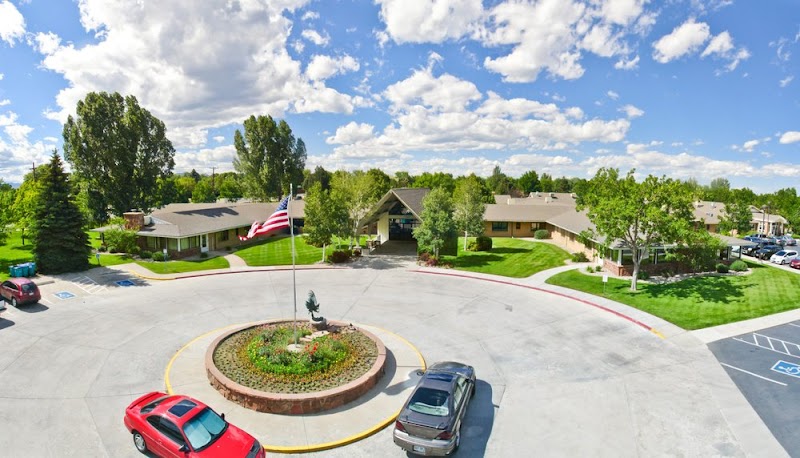
NORTH SHORE HEALTH & REHAB FACILITY

1365 W 29TH ST, LOVELAND, CO 80538 (970) 667-6111
For profit - Limited Liability company 120 Beds COLUMBINE HEALTH SYSTEMS Data: November 2025
Trust Grade
63/100
#76 of 208 in CO
Last Inspection: May 2024

Within standard 12-15 month inspection cycle. Federal law requires annual inspections.

Overview

North Shore Health & Rehab Facility has a trust grade of C+, indicating it is slightly above average but not exceptional. It ranks #76 out of 208 facilities in Colorado, placing it in the top half overall, but it is #7 out of 13 in Larimer County, meaning there are a few better local options. The facility's trend is worsening, with issues increasing from 4 in 2023 to 6 in 2024, which raises concerns about its management. Staffing is a weakness, with a turnover rate of 69%, significantly higher than the state average of 49%, suggesting that staff may not stay long enough to build strong relationships with residents. Specific incidents included failures in infection control practices, such as not following proper cleaning procedures and food safety protocols, which could increase the risk of illness among residents. Overall, while the facility offers decent care, families should weigh these weaknesses against its strengths, like a good overall star rating.

Trust Score
C+
63/100
In Colorado
#76/208
Top 36%
Safety Record
Low Risk
No red flags
Inspections
Getting Worse
4 → 6 violations
Staff Stability
⚠ Watch
69% turnover. Above average. Higher turnover means staff may not know residents' routines.
Penalties
✓ Good
$4,233 in fines. Lower than most Colorado facilities. Relatively clean record.
Skilled Nurses
✓ Good
Each resident gets 58 minutes of Registered Nurse (RN) attention daily — more than average for Colorado. RNs are trained to catch health problems early.
Violations
⚠ Watch
22 deficiencies on record. Higher than average. Multiple issues found across inspections.
★★★★☆
4.0
Overall Rating
★★★★☆
4.0
Staff Levels
★★★☆☆
3.0
Care Quality
★★★★☆
4.0
Inspection Score
Stable
2023: 4 issues
2024: 6 issues

The Good

  • 4-Star Staffing Rating · Above-average nurse staffing levels
  • Full Sprinkler Coverage · Fire safety systems throughout facility
  • No fines on record

Facility shows strength in staffing levels, fire safety.

The Bad

Staff Turnover: 69%

22pts above Colorado avg (46%)

Frequent staff changes - ask about care continuity

Federal Fines: $4,233

Below median ($33,413)

Minor penalties assessed

Chain: COLUMBINE HEALTH SYSTEMS

Part of a multi-facility chain

Ask about local staffing decisions and management

Staff turnover is elevated (69%)

21 points above Colorado average of 48%

The Ugly 22 deficiencies on record

May 2024 6 deficiencies
CONCERN (D)

Potential for Harm - no one hurt, but risky conditions existed

Pressure Ulcer Prevention (Tag F0686)

Could have caused harm · This affected 1 resident

**NOTE- TERMS IN BRACKETS HAVE BEEN EDITED TO PROTECT CONFIDENTIALITY** Based on observations, record review and interviews, the facility failed to assess, accurately document and provide treatment fo...

Read full inspector narrative →
**NOTE- TERMS IN BRACKETS HAVE BEEN EDITED TO PROTECT CONFIDENTIALITY** Based on observations, record review and interviews, the facility failed to assess, accurately document and provide treatment for one (#32) of four residents reviewed for pressure ulcers out of 31 sample residents. Specifically, the facility failed to: -Ensure the progress of Resident #32's pressure ulcers was documented consistently and accurately; -Identify Resident #32 had a pressure wound which had reopened on her coccyx; and, -Obtain appropriate physician's orders for wound care treatment for Resident #32's reopened coccyx pressure ulcer. Findings include: I. Professional reference According to the National Pressure Injury Advisory Panel, European Pressure Injury Advisory Panel and Pan Pacific Pressure Injury Alliance Prevention and Treatment of Pressure Injuries: Clinical Practice Guideline, third edition, [NAME] Haesler (Ed.), EPUAP/NPIAP/PPPIA: 2019, retrieved on 5/23/24 from https://www.internationalguideline.com/guideline, Pressure ulcer classification is as follows: Category/Stage 1: Nonblanchable Erythema (discoloration of the skin that does not turn white when pressed, early sign of tissue damage) Intact skin with nonblanchable redness of a localized area usually over a bony prominence. Darkly pigmented skin may not have visible blanching; its color may differ from the surrounding area. The area may be painful, firm, soft, warmer or cooler as compared to adjacent tissue. Category/Stage 1 may be difficult to detect in individuals with dark skin tones. May indicate 'at risk' individuals (a heralding sign of risk). Category/Stage 2: Partial Thickness Skin Loss Partial thickness loss of dermis presenting as a shallow open ulcer with a red pink wound bed, without slough. May also present as an intact or open/ruptured serum filled blister. Presents as a shiny or dry shallow ulcer without slough or bruising.This Category/Stage should not be used to describe skin tears, tape burns, perineal dermatitis, maceration or excoriation. Category/Stage 3: Full Thickness Skin Loss Full thickness tissue loss. Subcutaneous fat may be visible, but bone, tendon or muscle are not exposed. Slough may be present but does not obscure the depth of tissue loss. May include undermining and tunneling. The depth of a Category/ Stage 3 pressure ulcer varies by anatomical location. The bridge of the nose, ear, occiput and malleolus do not have subcutaneous tissue and Category/ Stage 3 ulcers can be shallow. In contrast, areas of significant adiposity can develop extremely deep Category/Stage 3 pressure ulcers. Bone/tendon is not visible or directly palpable. Category/Stage 4: Full Thickness Tissue Loss Full thickness tissue loss with exposed bone, tendon or muscle. Slough or eschar may be present on some parts of the wound bed. Often include undermining and tunneling. The depth of a Category/Stage 4 pressure ulcer varies by anatomical location. The bridge of the nose, ear, occiput and malleolus do not have subcutaneous tissue and these ulcers can be shallow. Category/ Stage 4 ulcers can extend into muscle and/ or supporting structures ( fascia, tendon or joint capsule) making osteomyelitis possible. Exposed bone/tendon is visible or directly palpable Unstageable: Depth Unknown Full thickness tissue loss in which the base of the ulcer is covered by slough (yellow, tan, gray, green or brown) and/or eschar (tan, brown or black) in the wound bed. Until enough slough and/or eschar is removed to expose the base of the wound, the true depth, and therefore Category/ Stage, cannot be determined. Stable (dry, adherent, intact without erythema or fluctuance) eschar on the heels serves as 'the body's natural (biological) cover' and should not be removed. Suspected Deep Tissue Injury: Depth Unknown Purple or maroon localized area of discolored intact skin or blood-filled blister due to damage of underlying soft tissue from pressure and/or shear. The area may be preceded by tissue that is painful, firm, mushy, boggy, warmer or cooler as compared to adjacent tissue. Deep tissue injury may be difficult to detect in individuals with dark skin tones. Evolution may include a thin blister over a dark wound bed. The wound may further evolve and become covered by thin eschar. Evolution may be rapid, exposing additional layers of tissue even with optimal treatment. II. Resident #32 Resident status Resident #32, age greater than 65, was admitted on [DATE]. According to the April 2024 computerized physician orders (CPO), diagnoses included dementia, chronic kidney disease Stage II (mild), type II diabetes and a history of a right buttock stage 3 pressure ulcer. The 4/5/24 minimum data set (MDS) assessment revealed the resident had a brief interview for mental status (BIMS) score of three out of 15. She was dependent on help for bed mobility, transfers, and showering, and required maximal assistance with toileting. The assessment indicated Resident #32 was at risk for developing pressure ulcers. She had two unhealed stage 2 pressure ulcers and one unhealed stage 3 pressure ulcers and no unstageable pressure ulcers. The assessment indicated the resident was not on a turning/repositioning program, had no nutritional interventions to manage skin problems and had no diabetic foot ulcers. B. Observations On 5/13/24, the following observations were made: At 12:30 p.m. the resident was observed sitting in her wheelchair and eating in the main dining room. At 1:03 p.m. the resident was observed sitting in her wheelchair across from the nurses' station. At 1:25 p.m. the resident was asleep and sitting in her wheelchair, still across from the nurses' station. At 1:44 p.m. staff was observed bringing the sit-to-stand machine out of the resident's room. The resident was on her back, asleep on a low air loss mattress (a specialty mattress designed to relieve pressure). On 5/14/24, the following observations were made: At 11:41 a.m. Resident #32 was in the dining room sitting in her wheelchair. At 12:08 p.m. the resident was still sitting in her wheelchair in the dining room. At 12:24 p.m. the resident was sitting in her wheelchair by the nurses' station. At 12:34 p.m. the resident's family wheeled her to her room. On 5/15/24 at 9:23 a.m. Resident #32 was observed during incontinence care. A wound about the size of a nickel was observed on the left of the resident's coccyx area. The wound was open and pink. The resident screamed in pain when staff wiped her bottom and put cream on the wound. She yelled, oh my god it hurts! C. Record review A Braden Scale assessment (a tool used for determining pressure ulcer risk) dated 1/8/24 revealed Resident #1 was at mild risk for developing pressure ulcers. -There were no additional Braden Scale assessments documented following the 1/8/24 assessment. The May 2024 CPO included the following physician's order: Barrier cream to sacrum and peri-areas with brief changes, ordered 1/10/24. -The order failed to reveal that the barrier cream was for treatment or protection of the resident's wound. On 3/29/24, the following wounds were documented At 9:15 a.m. the wound care physician (WCP) documented a resolved stage 3 pressure ulcer on the left buttock, and a Kennedy terminal ulcer on the left buttock with dimensions 0.3 centimeters (cm) by 0.3 cm by 0.2 cm. (A Kennedy terminal ulcer is a wound that can develop in people who are terminally ill or nearing the end of their life. It is a type of pressure ulcer that is characterized by its sudden onset and rapid progression). -No coccyx wound was noted. At 1:55 p.m., an NP/MD documented an evaluation of Resident #32's sacral wounds. The provider documented the resident had three small ulcers, two on the left gluteal cleft region and one on the right (the groove in between the left and right buttocks). The wounds were below the coccyx. The one on the right was a stage 2 that measured 0.3 cm by 0.3 cm. The one on the left was 0.2 cm by 0.4 cm and was consistent with a resolving stage 3. The third was 0.3 cm by 0.4 cm. The wounds were consistent with pressure ulcers and not skin failure and so it was the provider's opinion that the wounds should not be classified as Kennedy ulcers. At 2:36 p.m., a nursing staff member documented a stage 2 pressure wound on the right buttock with an onset date of 3/29/24 and dimensions of 0.3 c.m. by 0.3 c.m. by 0.1 c.m. At 2:50 p.m., a nursing staff member documented a stage 2 pressure wound on the coccyx with an onset date of 3/25/24 and dimensions of 0.5 cm by 0.5 cm by 0.1 cm. -The documentation, including the stage of wound, location and measurements of the wounds, from the WCP and the facility nursing staff did not match. At 2:54 p.m. a nursing staff member documented the resident had a stage 3 pressure wound on the left buttocks with moderate serosanguinous drainage, present since 12/10/24. The wound was cleansed, measured, and a new dressing applied. -The nursing staff member inaccurately documented the date as 12/10/24 instead of 12/10/23. On 4/4/24 at 2:28 p.m. the WCP documented a stage 3 pressure ulcer on the left buttock with dimensions of 1.2 cm by 0.4 cm by 0.2 cm had moderate serosanguinous drainage (a combination of blood, and clear, straw-colored liquid), but was stable. On 4/9/24 at 7:35 p.m., nursing staff documented the resident had no new skin concerns. -The nursing note did not indicate if the previously mentioned pressure wounds were still present. On 4/11/24 at 4:01 p.m. the WCP documented a resolved stage 3 pressure ulcer on the left buttock with prior dimensions of 1.2 cm by 0.4 cm by 0.2 cm and a stage 2 pressure ulcer on the coccyx with dimensions of 0.5 cm by 0.5 cm by 0.2 cm and prior dimensions of 1 cm by 0.5 cm by 0.2 cm. The care plan, revised 4/12/24, documented Resident #32 was to have a gel cushion to her wheelchair, have a low air loss mattress and offload (lay down) between meals. On 4/16/24 at 10:51 p.m. the weekly skin assessment documented the resident had no new skin concerns. On 4/19/24 at 9:01 a.m. the WCP documented a resolved stage 2 pressure ulcer stage on the coccyx. The care plan, revised 4/19/24, identified the resident had the following resolved wounds: -Stage 3 pressure wound on left buttocks - resolved 4/11/24; -Stage 2 pressure wound on coccyx - resolved 4/19/24; and, -Stage 2 pressure wound on right buttocks- resolved 4/3/24. On 4/23/24 at 7:17 a.m. the nursing skin assessment documented the resident had no new skin concerns. On 4/25/24 at 9:33 a.m. the food and nutrition progress note documented the resident had a stage 3 pressure injury on the right buttock. -However, according to the care plan revised 4/19/24, Resident #32's pressure wounds were all resolved as of 4/19/24. The care plan, revised 4/28/24, documented a dietary supplement was to be provided as ordered for wound prevention and healing and staff was to use a barrier cream for Resident #32 as prescribed. -The care plan did not specify where the barrier cream was to be applied. On 5/7/24 at 9:51 a.m. the nursing skin assessment documented the resident had no new skin concerns. On 5/7/24 at 8:28 p.m. RN #5, who was a hospice nurse documented that the resident's skin was intact. On 5/13/24 at 10:50 a.m., RN #6, who was a hospice nurse documented Resident #32 had erythema (redness) of the peri area (private area). On 5/14/24 at 10:58 p.m., a nursing note documented Resident #32 had a new skin concern. The new skin concern was a bruise on the back of the resident's right hand due to hitting the table in the dining room. -The skin assessment did not document any new wounds as skin concerns. -There was no documentation to indicate the facility had identified that Resident #32's wound on her coccyx had reopened and that a physician had been notified (see observations above). D. Staff interviews The wound care nurse (WCN) was interviewed on 5/14/24 at 1:05 p.m. The WCN said she mostly cared for pressure, diabetic and vascular (arterial, venous, diabetic) wounds and sometimes skin tears. She said she typically monitored closed wounds, but once they opened up, she said she got the wound care physician (WCP) involved. She said Braden Scale assessments were completed on admission, quarterly and upon any change in condition. She said wounds were not typically measured upon admission, and there usually were not orders for barrier cream because barrier cream was a standard of care for incontinence. The WCN said Resident #32 had two stage 2 pressure wounds that were resolving. The WCN was interviewed again on 5/14/24 at 1:26 p.m. The WCN said the resident had no pressure injuries. The WCN said the resident previously had two pressure wounds, however, she said they were resolved. -However, the WCN said in her interview at 1:05 p.m. that Resident #32 had two stage 2 pressure wounds that were resolving. On 5/15/24 at 9:29 a.m., RN #1 said the wound on Resident #32's coccyx had been present for some time. She said it would heal and open up again repeatedly. She said the wound used to have a dressing but the resident was incontinent of bowel and they had to change the dressing multiple times throughout the day. She said removing dressings frequently was not good for the skin. RN #1 said the barrier cream seemed to work just as well as a dressing. She said the wound team was following Resident #32 and decided the cream was better than a dressing. She said the wound team was not following her anymore because her wounds were healed, and the staff just used zinc barrier cream on the wound. She said the staff had been using the cream without a dressing for at least a month. -However, Resident #32 was observed to have an open wound to her coccyx on 5/15/24 (see observations above). Nurse practitioner (NP) #1 was interviewed on 5/16/24 at 9:14 a.m. NP #1 said she was not notified that Resident #32 had an open wound on her coccyx or that staff were just using barrier cream to treat it. The director of nursing (DON) was interviewed on 5/16/24 at 11:44 a.m. The DON said she believed the coccyx wound was a fragile area. She said for wounds that were shallow, they could potentially be treated with zinc barrier cream, especially if the resident was incontinent. She said the physician should be contacted when there was a new wound or a reopened wound. E. Facility follow-up On 5/17/24 at 5:34 p.m. (after the survey exit) the facility submitted the following documentation: An Interdisciplinary team (IDT) note, dated 5/16/24 at 3:43 p.m. (during the survey) which documented Resident #32 had an open area on the left buttock. Zinc barrier cream was to be applied with each check and change and an order to monitor until resolved was entered.
CONCERN (D)

Potential for Harm - no one hurt, but risky conditions existed

Deficiency F0697 (Tag F0697)

Could have caused harm · This affected 1 resident

**NOTE- TERMS IN BRACKETS HAVE BEEN EDITED TO PROTECT CONFIDENTIALITY** Based on observations, record review and interviews, the facility failed to ensure two (#32 and #1) of five residents reviewed f...

Read full inspector narrative →
**NOTE- TERMS IN BRACKETS HAVE BEEN EDITED TO PROTECT CONFIDENTIALITY** Based on observations, record review and interviews, the facility failed to ensure two (#32 and #1) of five residents reviewed for pain management out of 31 sample residents received timely, adequate pain control. Specifically, the facility failed to: -Ensure pain was effectively managed during incontinence care for Resident #32; -Ensure Resident #32 was provided as needed (PRN) pain medication prior to brief changes per physician's orders; -Ensure staff consistently documented Resident #32's pain levels every shift; and, -Ensure individualized non-pharmacological interventions were documented for Resident #32 and Resident #1. Findings include: Facility Policy The Pain Management policy, revised on 5/3/23, was provided by the director of nursing (DON) on 5/17/24 at 5:36 p.m. It read in pertinent part: Pain is subjective and is what the resident says it is, existing when and where the resident says it does. All residents will be evaluated for pain by utilizing a pain evaluation tool in the electronic medical record (EMR). The pain evaluation will be completed upon admission, readmission, quarterly, and with any significant change in condition. The pain evaluation includes the following: location(s), quality, intensity, associated symptoms, precipitating, aggravating and relieving factors, chronology, pattern (frequency, onset and duration of pain), medication regimen and other treatment modalities used for pain management and their degree of effectiveness. All subsequent pain evaluations will be documented on the Pain Evaluation in the EMR and/or the MAR (medication administration record) as applicable to include location, intensity rating, and response to pain management interventions. When a resident complains of pain, ask the resident to rate the level of pain using the numerical Scale using a pain level of zero (none) to ten (severe). Cognitively impaired residents or residents unable to respond verbally may not be able to rate their pain using a numeric scale. Non-verbal indicators of pain include: increased agitation, crying, grimacing, holding the area where the pain is located, calling out, decreased appetite, and any other behaviors which are unusual for the resident. Cognitively impaired residents have pain evaluated using the PAINAD (Pain Assessment in Advanced Dementia) Scale. Around the clock (ATC) dosing for continuous pain, whether it be chronic or acute, is the key to effective pain management. Intermittent pain can be managed with intermittent (PRN) analgesic administration. (Every shift pain checks on the MAR should be completed after the resident receives the routine medication.) Do not forget the non pharmacological interventions such as repositioning, relaxation, aromatherapy, visualization, desensitization, massage, and humor therapy etc. Non-pharmacological interventions should be documented in progress notes and included on the individual resident care plan. II. Resident #32 Resident status Resident #32, age greater than 65, was admitted on [DATE]. According to the May 2024 computerized physician orders (CPO), diagnoses included dementia, chronic kidney disease, type two diabetes and a history of a right buttock stage 3 pressure injury. The 4/5/24 minimum data set (MDS) assessment revealed the resident was cognitively impaired with a brief interview for mental status (BIMS) score of three out of 15. She was dependent on two staff members for assistance with bed mobility, transfers and showering. She required maximal assistance of two staff members with toileting. B. Resident observations and interview On 5/13/24 at 10:36 a.m. moaning and yelling was heard from behind the closed door to Resident #32's room. At 10:42 a.m. certified nurse aide (CNA) #5 exited the room. CNA #5 said the resident was in a lot of pain during the transfer. She said the resident was in such pain that she did not feel comfortable proceeding with incontinence care and was on the way to inform the nurse about the pain. She said it was her first encounter with the resident as the resident was recently admitted to hospice care. At 10:44 a.m. registered nurse (RN) #1 entered the resident's room where the Resident #32 was lying in bed. RN #1 touched the resident's right foot and heel and the resident cried out in pain. RN #1 left the room and returned to give the resident pain medication. -RN #1 did not ask the resident where her pain was or what her level of pain was. On 5/15/24 Resident #32 was observed during a continuous observation, beginning at 9:03 a.m. and ending at 9:40 a.m. The following observations were made: At 9:08 a.m., Resident #32 was moaning while she waited for CNA #1 to return to help her transfer to bed. The resident said her whole right leg hurt. The resident was unable to describe her pain further or give a pain level for the right leg pain. At 9:23 a.m., after the resident was transferred to bed by RN #1 and CNA #1, RN#1 told CNA #1 the resident's brief should be changed. RN #1 told Resident #32 she needed to change her brief and started taking the resident's pants down. The resident started yelling No and hit RN #1 several times. The resident continuously yelled out, No while RN #1 and CNA #1 moved and changed her. Resident #32 yelled oh my god it hurts and hit RN #1 several times on her back. RN #1 asked the resident what hurt but the resident did not answer. The resident was breathing heavily and grimacing. During the incontinence care, an open wound was observed on the resident's left buttock. Resident #32 screamed in pain when the staff was wiping and putting cream on the wound. After incontinence care was completed, Resident #32 was positioned on her back, she stopped yelling and fell asleep. Resident #32 was hyperventilating, moaning loudly, groaning, crying, showed facial grimacing and was pulling and pushing away from the staff during the incontinence care. She was only able to be momentarily distracted by reassurances from RN#1 and CNA #1. C. Record review The care plan for pain, initiated 7/21/23 and revised 5/7/24, identified the resident had the potential for pain related to a wound and a history of a fracture. Pertinent interventions included the following: -Evaluate the effectiveness of pain interventions. Review for compliance, alleviating of symptoms, dosing schedules and resident satisfaction with results, impact on functional ability and impact on cognition; -Monitor/document for probable cause of each pain episode. Remove/limit causes where possible; -Monitor/document for side effects of pain medication. Observe for constipation; new onset or increased agitation, restlessness, confusion, hallucinations, dysphoria; nausea; vomiting, dizziness and falls. Report occurrences to the physician; -Monitor/record pain characteristics: including quality (sharp, burning), severity (1 to 10 pain scale) anatomical location, onset duration (continuous, intermittent) aggravating factors and relieving factors; -Notify physician if interventions are unsuccessful or if current complaint is a significant change from resident's past experience of pain; -Observe resident closely for signs of pain, administer pain medications as ordered, and notify hospice nurse timely if there is breakthrough or uncontrolled pain; and, -Offer non-pharmacological interventions for pain prior to administering medication and PRN (as needed). -However, the care plan did not document what individualized non-pharmacological interventions were effective for Resident #32. The May 2024 CPO included the following physician's orders: Monitor pain every shift using the PAINAD scale, ordered 3/29/24. Tramadol HCl oral tablet (medication used to treat pain) 50 milligrams (mg), give 50 mg orally two times a day for pain, ordered 4/16/24. Acetaminophen (analgesic) 325 mg, give two tablets by mouth four times a day for pain, ordered 6/22/23. Tramadol HCl oral tablet 50 mg, give 50 mg orally for pain level of 6-10 on a pain scale of 1-10 twice daily as needed (PRN) before wound care and brief changes, ordered 4/19/24. Review of Resident #32's medication administration record (MAR) and treatment administration record (TAR) from 5/1/24 through 5/14/24 revealed Resident #32 received 13 out of 14 doses of scheduled, with one refusal. She received 52 out of 60 doses of scheduled acetaminophen, with three refusals and the resident was documented as sleeping for five administrations. -Resident #32 did not receive any doses of PRN Tramadol from 5/1/24 through 5/14/24, despite the resident having a physician's order to administer PRN Tramadol prior to wound care and brief changes. -The required monitoring of Resident #32's pain every shift was documented as completed on the TAR, however, the documentation did not include a pain score or description of the pain. -A pain score was documented six times in the first 14 days of May and was noted to be zero out of 10 for each. -No pain score was documented on 5/13/24, after the resident was observed yelling in pain and was given pain medication. A nursing pain evaluation, dated 4/12/24 at 10:38 a.m. by RN #1, revealed the resident had a chronic wound to the coccyx that contributed to pain. The resident was unable to describe what the pain felt like but additional symptoms associated with pain included decreased appetite, non-verbal signs including facial grimacing and moaning and verbal indications. The evaluation documented the resident's preferred pain scale was PAINAD but she was unable to state her acceptable level of pain. Measures that helped relieve pain were medication and relaxation. A progress note, documented on 3/17/24 at 7:00 p.m., revealed Resident #32 had yelled out in pain during incontinence care and resisted care when wipes touched her buttocks region. D. Staff interviews RN #1 was interviewed on 5/15/24 at 9:24 a.m. RN #1 said the resident's reaction during the incontinence care was typical for the resident during incontinence care. She said sometimes the resident hit her when she was providing incontinence care. RN #1 said she assumed, based on the resident's reaction, that her pain was a 10 out of 10. RN #1 said she did not notify a physician of the resident's pain and did not document it in the progress notes. Nurse practitioner (NP) #1 and the director of nursing (DON) were interviewed together on 5/16/24 at 9:14 am. NP #1 said she had seen Resident #32 during cares before and she had assessed her with catheter care the other day. She said even when there was no open wound, the resident would still complain of pain during incontinence care. NP #1 said the resident was very good about telling her that she was in pain. She said when staff was doing wound care in the past (when she had a documented open wound), the staff would pre-medicate the resident but that had not been the case for a while so she was not aware if her pain had gotten worse. -NP #1 was unaware the resident had a current open wound observed on the resident's buttocks (see observations above). NP #1 said the resident's family was somewhat resistant to medication changes. She said she did not think all of Resident #32's reaction during incontinence care was pain related. She said she thought some of it had been the transition to long-term care. She said the resident was used to being at home with her large family. She said she had a phone call with hospice later that day and they would also do another pain assessment to see if there was a change in the resident's condition. NP #1 said the resident's family had requested hospice services when the resident's decline started a few weeks ago. She said the last pain assessment documented on 4/12/24 was probably when the resident's decline started. NP #1 said she felt that the resident's dementia was part of what was contributing to her resisting care. She said she thought when the nurse heard the resident yelling in pain that the nurses might collaborate with social services and look at the care plan. The DON said nurses should document something in the progress notes which said what happened during the incontinence care and that the resident complained of pain. E. Facility follow-up On 5/17/24 at 5:34 p.m. (after the survey exit) the facility submitted the following documentation: 1. Record of pain audit performed 5/17/24 at 3:53 pm: 88 residents were audited for pain orders and documentation of pain level, and orders were in place. The audit was signed by the DON. An Interdisciplinary team (IDT) note, dated 5/16/24 at 3:43 p.m. documented the IDT was in collaboration regarding pain/anxiety/skin with the DON, social services director (SSD), RN #3, NP #2 and Resident #32's representative/power of attorney (POA). The IDT note read, in pertinent part, Pain management: pain is well controlled at this time, no need for changes identified. POA declined any changes to medications/pain plan of care for pain. -However, per the observations and RN #1's interview during the survey, Resident #32's pain was not well controlled during incontinence care (see observations and interviews above).III. Resident #1 A. Resident status Resident #1, over [AGE] years old, was readmitted on [DATE]. According to the May 2024 CPO, diagnoses included hemiplegia (paralysis on one side) and hemiparesis (weakness or inability to move one side of the body) post cerebrovascular disease affecting the left non-dominant side, a psychotic disorder with delusions, peripheral vascular disease (reduction in blood circulation), insomnia and depression. The 2/20/24 MDS assessment revealed the resident was cognitively impaired with a BIMS score of three out of 15. She had an impairment to the lower extremity on one side and used a wheelchair. She was dependent for oral hygiene, toileting hygiene, showering, dressing and personal hygiene. The resident was on a scheduled pain medication regimen, received as needed pain medication and non-pharmacological interventions for pain. The assessment revealed the resident was almost constantly in pain which frequently affected her sleep and the pain intensity was severe. B. Resident observation and resident representative interview The resident's representative was interviewed on 5/15/24 at 2:10 p.m. He said the resident complained to him a lot about pain on her right buttock from a wound. He said it was difficult visiting with the resident today (5/15/24) because the facility had just administered morphine and she was pretty drowsy. He said the facility had not found the right balance of medication so she could be awake to participate in her daily activities. -During the interview, Resident #1 was sitting in her wheelchair with two family members present. The resident's eyes were closed. C. Record review The pain care plan, revised 8/23/23, revealed the resident had pain related to arthritis, hemiplegia and contractures. Interventions included administering pain medication per orders, evaluating the pain intervention's effectiveness, monitoring and documenting the probable cause of each pain episode and monitoring and recording pain characteristics. -The care plan did not identify the location of the resident's pain or what non-pharmacological interventions were being provided to help alleviate the resident's pain. A pain assessment, dated 2/16/24, revealed the resident had pain due to cerebral vascular disease and cancer. She had pain in the past five days. She said the pain was sharp and throbbing. She said she could not sit up in a wheelchair for an extended period because it caused pain. She said the pain was worse mid day. Her acceptable level of pain was three out of ten. She said pain medication and position change relieved her pain. -The onset and duration of pain was not identified. The May 2024 CPO revealed the following physician's orders: Morphine sulfate 15 milligrams (mg). Administer 15 mg by mouth two times a day for pain, ordered2/20/24. Tylenol 500 mg. Administer two tablets by mouth three times a day for pain, ordered 2/20/24. Morphine sulfate 20 mg/ml (milliliter). Administer 0.5 ml by mouth every two hours as needed for pain and shortness of breath, ordered 4/12/24. Monitor pain every shift using a zero to ten pain scale. Acceptable level of pain is two, ordered 11/16/23. -The orders did not specify where the resident had pain and did not identify any non-pharmacological interventions for pain. Review of the May 2024 medication administration record (MAR) from 5/1/24 through 5/13/24 revealed the following: -The as needed morphine sulfate was administered at least once a day on 5/2/24 through 5/5/24 and 5/10/24 through 5/13/24. -The May 2024 MAR did not document where the resident had pain and did not identify if non-pharmacological interventions were offered when the as needed morphine sulfate was administered. A 5/13/24 nurse progress note said morphine sulfate 20 mg/ml was administered for pain. -The progress note did not document where the resident had pain and did not identify if non-pharmacological interventions were offered when the as needed morphine sulfate was administered. A 5/12/24 nurse progress note revealed the resident was yelling out all night. The nurse stayed with the resident and gave juice and water. The resident kept asking for her sister and complained of pain. At 1:15 a.m. the resident was administered as needed morphine and it was effective. -The progress note did not document where the resident had pain and did not identify if non-pharmacological interventions were offered when the as needed morphine sulfate was administered. A 5/4/24 nurse note revealed the resident complained of pain and was restless. As needed morphine and scheduled ativan was administered. -The progress note did not document where the resident had pain and did not identify if non-pharmacological interventions were offered when the as needed morphine sulfate was administered. A 5/5/24 nurse progress note revealed the resident had an elevated blood pressure and pulse due to increased pain and fearfulness of being alone. As needed morphine was administered with scheduled ativan. Resident #1 was tearful and wanted her family to stay with her. The nurseried to provide comfort yet the resident was forgetful. -The progress note did not document where the resident had pain and did not identify if non-pharmacological interventions were offered when the as needed morphine sulfate was administered. D. Staff interviews Certified nurses aide (CNA) #4 was interviewed on 5/16/24 at 1:18 p.m. CNA #4 said she was familiar with Resident #1. She said the resident had pain in her leg, her back and her head. She said when she moved from her bed to her wheelchair it was one intervention that alleviated the resident's pain. CNA #4 said talking to the resident about her family also helped distract her from her pain. Licensed practical nurse (LPN) #1 was interviewed on 5/16/24 at 11:12 a.m. LPN #1 said pain assessments were completed for residents at admission and quarterly. She said the pain assessment addressed if the resident had any pain and if the resident had a diagnosis which caused pain. She said the pain assessment also addressed if the resident had scheduled or as needed pain medications and the location and severity of the pain. She said non-pharmacological interventions included redirection, reassurance and a calm environment. LPN #1 said she was familiar with Resident #1. She said she had pain on her coccyx, her left leg, back pain and generalized pain. She said repositioning helped minimize her pain. She said the minimum was to reposition the resident every two hours. LPN #1 said the resident was unable to shift her weight on her own so staff should reposition her to help with her pain. Nurse practitioner (NP) #1 was interviewed on 5/16/24 at 9:42 a.m. NP #1 said she was unsure if Resident #1 had pain. She said she was unable to identify the location of the resident's pain. NP #1 said it was possible when the resident's anxiety was high, the resident could be saying she was in pain. She said the lack of documentation by the nursing staff regarding Resident #1's pain made it difficult for her to provide direction to the facility on the best way to manage the resident's pain. She said hospice, the facility and the resident's representative needed to meet so everyone could be on the same page on what the goals were for her pain. The DON was interviewed on 5/16/24 at 11:44 a.m. The DON said pain assessments were completed at admission, quarterly and every shift. She said the pain assessment covered where the pain was located, what the pain management goal was and what non-pharmacological interventions helped alleviate the pain. She said the pain interventions were documented in the care plan and in the progress notes. She said she was familiar with Resident #1. She said the resident had pain but was unable to verbalize where the pain was. The DON said, in the past, the resident's pain was from her contractures and arthritis. She said she could check with the resident. She said the resident's care plan and orders needed to be updated to reflect what helped alleviate her pain besides pain medication.
CONCERN (D)

Potential for Harm - no one hurt, but risky conditions existed

Medication Errors (Tag F0758)

Could have caused harm · This affected 1 resident

**NOTE- TERMS IN BRACKETS HAVE BEEN EDITED TO PROTECT CONFIDENTIALITY** Based on record review, observations and interviews, the facility failed to ensure one (#1) of five residents reviewed for unnec...

Read full inspector narrative →
**NOTE- TERMS IN BRACKETS HAVE BEEN EDITED TO PROTECT CONFIDENTIALITY** Based on record review, observations and interviews, the facility failed to ensure one (#1) of five residents reviewed for unnecessary medications out of 31 sample residents were free from unnecessary medications. Specifically the facility failed to: -Ensure Resident #1 had appropriate non-pharmacological interventions for behaviors initiated; -Ensure Resident #1 was monitored for side effects of a psychotropic medications; and, -Ensure Resident #1 was monitored consistently for behaviors to justify the use of psychotropic medications. Findings include: I. Facility policy The Psychopharmacological policy, revised 3/10/23, was provided by the director of nursing (DON) on 5/16/24 at 1:44 p.m. It read in pertinent part, Licensed nurses and additional staff will monitor and document any targeted behaviors that occur. The care plan will include the resident's focus and target behaviors for the medication. Realistic and measurable goals will be utilized and approaches will include alternatives to psychopharmacological drug use. II. Resident #1 A. Resident status Resident #1, age greater than 65, was admitted on 7/9/99 and readmitted on [DATE]. According to the May 2024 computerized physician orders (CPO), diagnoses included hemiplegia (paralysis on one side) and hemiparesis (weakness or inability to move one side of the body) post cerebrovascular disease affecting the left non-dominant side, a psychotic disorder with delusions, peripheral vascular disease (reduction in blood circulation), insomnia and depression. The 2/20/24 minimum data set (MDS) assessment revealed the resident was cognitively impaired with a brief interview for a mental status (BIMS) score of three out of 15. She had an impairment to one lower extremity and used a wheelchair. She was dependent on staff assistance for oral hygiene, toileting hygiene, showering, dressing and personal hygiene. B. Observations Resident #1 was observed during a continuous observation on 5/13/24, beginning at 11:15 a.m. and ending at 11:33 a.m. The following observations were made: Resident #1 was lying in bed and had her legs bent to her right side at 45 degrees. The sheets and blankets were pushed to the end of the bed. She yelled nurse thirteen times between 11:15 a.m until 11:27 a.m. At 11:22 a.m. an unidentified certified nurse aide (CNA) walked into the room across from Resident #1's room when the resident was asking for a nurse. -The unidentified CNA did not acknowledge Resident #1 when she was calling out for a nurse and the resident continued to call out. At 11:27 a.m. the unidentified CNA entered Resident #1's room and asked if she wanted to get out of bed for lunch. -However, the CNA proceeded to leave Resident #1's room without getting the resident out of bed and the resident continued to call out. From 11:27 a.m until 11:33 a.m. the resident yelled nurse and I need help ten times. At 11:33 a.m. CNA #4 walked into the resident's room (five minutes after the previous CNA had initially entered the room) and asked Resident #1 if she wanted to get out of bed for lunch. C. Record review The 2/16/24 care plan revealed the resident used hypnotic, sedative and sleep disorder medications related to anxiety and agitation with expressed difficulty sleeping as evidenced by calling out at night. Interventions included a gradual dose reduction of Restoril (initiated 5/15/24), review medications with the interdisciplinary team (IDT) quarterly and as needed and attempt gradual dose reduction when clinically indicated (initiated 2/16/24). The 6/29/23 care plan, revised 9/15/23, revealed the resident used an antidepressant medication related to generalized anxiety. Interventions included to monitor, document and report adverse reactions to antidepressant therapy, changes in behavior and to review medications with IDT quarterly. The 8/28/23 care plan revealed the resident used an antipsychotic medication for symptoms and behaviors associated with psychotic disorders with delusions. Interventions initiated on 8/28/23 included to monitor for side effects and effectiveness, behavior monitoring and to review medications with the IDT quarterly. The May 2024 CPO revealed the following physician's orders: -Duloxetine (medication used to treat depression and anxiety) 60 milligrams (mg). Administer 60 mg by mouth in the morning for anxiety, ordered 1/15/24. -Mirtazapine (medication used to treat depression) 15mg. Administer 15 mg by mouth at bedtime for anxiety and depression, ordered 2/5/24. -Restoril (medication used to treat insomnia) 15 mg. Administer 7.5 mg by mouth in the evening for sleep for 14 days, ordered 5/11/24. -Lorazepam (medication used to treat anxiety) 2mg/ml (milliliters). Administer 0.5 ml by mouth three times a day for anxiety, ordered 5/10/24. -Review of the May 2024 medication administration record (MAR) revealed there was no documentation the medications were monitored for effectiveness and side effects. -The May 2024 MAR revealed there was no documentation Resident #1's behaviors were consistently monitored. -The May 2024 MAR revealed there no documentation non-pharmacological interventions were attempted with Resident #1 when she was exhibiting behaviors, such as calling out. -There was no documentation in Resident #1's electronic medical record (EMR) to indicate the facility was monitoring the resident for the effectiveness of the medications or potential side effects of the medications. -There was no documentation in the resident's EMR to indicate the facility was consistently monitoring the resident for behaviors or that staff were attempting non-pharmacological interventions to address the resident's behaviors. III. Staff interviews Licensed practical nurse (LPN) #1 was interviewed on 5/16/24 at 11:10 a.m. LPN #1 said she continuously monitored for resident's for behaviors. She said it was not consistent where she documented the behaviors. She said some residents had an order to monitor behaviors so she documented the behavior in the treatment administration record (TAR). LPN #1 said the resident did not have an order to document behaviors in the TAR then she documented in a progress note. She said she monitored residents for side effects of psychotropic medications based on if the resident was sleepy, had agitation or if there was a change in the dose of the medication. She said she documented side effects in the TAR. LPN #1 said non-pharmacological interventions included companionship, social service intervention, room changes, contacting the family and activities. She said she was familiar with Resident #1. She said she monitored the resident's behavior. She said the resident's behavior included she did not want to get out of bed. She said sitting with the resident helped the resident's behavior and the family helped too. LPN #1 said one on one care would be helpful for Resident #1. She said she monitored side effects of her medications. She said the resident's Duloxetine was decreased a while ago and the resident yelled more, had agitation, confusion and helplessness. She said the resident was very lonely. LPN #1 said she had not documented Resident #1's behavior, if non-pharmacological interventions were offered or if there were side effects. She said the medication was given to reduce fearfulness, loneliness, pain and agitation. She said Resident #1 responded well to music, a stuffed monkey was comforting, putting a pillow between her legs, doing her hair and offering fluids. Nurse practitioner (NP) #1 was interviewed on 5/16/24 at 9:42 a.m. NP #1 said Resident #1's anxiety was not managed. She said hospice, the facility and the resident's representative needed to meet so everyone could be on the same page on what the goals were for her anxiety. She said without the behaviors documented it was hard to provide direction to reduce the resident's anxiety. The DON was interviewed on 5/16/24 at 11:44 a.m. The DON said the facility did not document medications were monitored for effectiveness and side effects. She said the facility did not document that behaviors were monitored and if non-pharmacological interventions were offered. She said it was important to document because it helped determine if gradual dose reduction was an option for a medication, if the resident needed the medication and if the resident should continue to have the medication. IV. Facility follow up The DON sent a physician's progress note on 5/20/24 (after the survey). The 5/17/24 physician progress note revealed Resident #1 continued to have periods of restlessness, that in the past, were managed with antipsychotics. The medications were no longer appropriate but her anxiety and sleep issues were being addressed with benzodiazepines (depressant medications). The resident was non-ambulatory and the benefit of these medications for quality of life outweighed the potential risks that would occur if she were ambulatory. There would continue to be a collaborative and interdisciplinary approach to the care of the resident. -However, the physician's progress note was dated on 5/17/24, the day after the survey exit, and failed to address the monitoring of medication side effects, behavior monitoring or non-pharmacological interventions.
CONCERN (D)

Potential for Harm - no one hurt, but risky conditions existed

Infection Control (Tag F0880)

Could have caused harm · This affected 1 resident

**NOTE- TERMS IN BRACKETS HAVE BEEN EDITED TO PROTECT CONFIDENTIALITY** Based on observations and staff interviews, the facility failed to maintain an infection control and prevention program designed...

Read full inspector narrative →
**NOTE- TERMS IN BRACKETS HAVE BEEN EDITED TO PROTECT CONFIDENTIALITY** Based on observations and staff interviews, the facility failed to maintain an infection control and prevention program designed to provide a sanitary environment to help prevent the development and transmission of communicable diseases and infections in one of three units. Specifically, the facility failed to: -Follow proper infection control processes for cleaning and disinfecting lifts and vital signs equipment on the Parkview unit; and, -Use proper infection control procedures during a vaccination clinic. Findings include: I. Professional reference The Centers for Disease Control and Prevention (CDC) Guidelines for Environmental Infection Control in Healthcare Facilities (2019), retrieved on 5/25/24 from https://www.cdc.gov/infection-control/hcp/environmental-control/index.html, read in pertinent part, Careful cleaning of patient rooms and medical equipment contributes substantially to the overall control of Methicillin-resistant Staphylococcus aureus (MRSA), Vancomycin-intermediate Staphylococcus aureus (VISA) and Vancomycin-resistant Enterococci (VRE) transmission. Direct patient-care items (blood pressure cuffs) should be disposable whenever possible when used in contact isolation settings for patients with multiply resistant microorganisms. Non-critical items (those that come in contact with intact skin but not mucous membranes), are divided into noncritical resident care items (blood pressure cuffs, stethoscopes, wheelchairs, therapy equipment) and noncritical environmental surfaces (bed rails, bedside tables). They require cleaning followed by either low or intermediate level disinfection following manufacturers' instructions. Disinfection should be performed with an Environmental Protection Agency (EPA)-registered disinfectant labeled for use in healthcare settings. All applicable label instructions on EPA-registered disinfectant products must be followed (use-dilution, shelf life, storage, material compatibility, safe use and disposal). II. Mechanical lifts (sit-to-stand machine) and vital signs equipment A. Observations On 5/13/24 at 1:44 p.m. certified nurse aide (CNA) #1 was observed bringing the sit-to-stand mechanical lift out of a resident's room on the Parkview unit. CNA #1 took the equipment to a holding area with other lifts and left the lift. -CNA #1 failed to disinfect the sit-to-stand mechanical lift after using the lift with the resident. On 5/15/24 during a continuous observation, beginning at 11:06 a.m. and ending at 11:20 a.m., an unidentified CNA was observed using a vital signs machine. The unidentified CNA was observed leaving a room on the Parkview unit with the vital signs machine and equipment, including blood pressure cuffs, a pulse oximeter, and a thermometer. -There were no cleaning wipes stored with the equipment. -The unidentified CNA wheeled the equipment down the hall and placed it next to the nurses' station. The CNA failed to disinfect the vital signs machine and equipment C. Interviews The infection preventionist (IP) was interviewed on 5/15/24 at 4:06 p.m. The IP said she had been working at the facility since 2020. She said the cleaning policy for vital signs equipment depended on if there was an outbreak. She said hydrogen peroxide was readily available and more gentle on skin and the equipment. The IP said the dwell time for hydrogen peroxide was about 30 seconds. She said if there was a range for the dwell time, she usually recommended the longer time listed, but she did not usually see a range. She said disinfection of the equipment depended on what was going on in the building. The IP said it was okay to clean all the equipment with the same wipe, however, she said it should be done after each use with a resident. She said CNAs were responsible for cleaning the equipment after every use with the hydrogen peroxide wipes.III. Hand hygiene during vaccination administration A. Observations On 5/15/24 a contract pharmacist (CP) was administering vaccinations to the residents in the presence of the infection preventionist (IP). At 11:28 a.m. the CP was observed standing next to room [ROOM NUMBER]. She put clean gloves on, took band aids, peeled them on one end and stuck them to a sharps container. She used her gloved hands to adjust her skirt, took paper records from the cart and went into room [ROOM NUMBER]. She exited the room holding paper records and wearing the same gloves. -Without changing her gloves or performing hand hygiene, the CP proceeded to take two prefilled vaccine syringes from the cart, stuck one band aid on her watch and one bandaid on her gloved hand and approached the resident in room [ROOM NUMBER] to administer the vaccination. After administering the vaccination, the CP removed her gloves and exited room [ROOM NUMBER] holding both syringes in her hands. She placed the syringes into the sharps container on the cart. -The CP did not perform hand hygiene before documenting the vaccination in the resident's record and pushing the cart to the next room At 11:31 a.m. the CP approached room [ROOM NUMBER]. She put clean gloves on, without performing hand hygiene, stuck band aids to her glove and entered room [ROOM NUMBER] with two syringes. After administering the vaccinations to the residents, the CP exited the room with gloves on, threw the syringes into a sharps container and took her gloves off. -The CP did not perform hand hygiene prior to putting clean gloves on. -With the new pair of clean gloves on, she adjusted her shirt, organized paper records and pushed the cart to the next room still wearing the gloves. At 11:38 a.m. the CP approached room [ROOM NUMBER]. She put clean gloves on, without performing hand hygiene, stuck band aids to her glove and entered room [ROOM NUMBER] with two syringes. After administering the vaccinations to the residents, the CP exited the room wearing gloves, put the two syringes into a sharps container and removed her gloves. -The CP did not perform hand hygiene after she removed the gloves. B. Staff interviews The IP was interviewed on 5/6/24 at 4:15 p.m. The IP said the pharmacist that was administering vaccinations was from the contracted company. She said the CP was not an employee of the facility. The IP said band aids should not be placed on the sharps container as the sharps container was considered to be unclean from contact with syringes and blood products. The IP said once the CP had applied clean gloves, other potentially unclean surfaces such as the cart, paper records, personal clothes and pens should not have been touched. She said once gloves were removed after administering the vaccinations, the CP should have performed hand hygiene prior to reapplying clean gloves.
CONCERN (E)

Potential for Harm - no one hurt, but risky conditions existed

Deficiency F0805 (Tag F0805)

Could have caused harm · This affected multiple residents

Based on observations, record review and interviews, the facility failed to ensure residents received food and fluids prepared in a form designed to meet his or her needs. Specifically, the facility f...

Read full inspector narrative →
Based on observations, record review and interviews, the facility failed to ensure residents received food and fluids prepared in a form designed to meet his or her needs. Specifically, the facility failed to ensure residents who were prescribed mechanically altered diets had food prepared according to their diet order of level six soft and bite-sized texture as indicated on their meal tray cards. Findings include: I. Professional reference The International Dysphagia (difficulty swallowing) Diet Standardization Initiative (IDDSI) (a tool to standardize mechanically altered diets and liquids) (January 2019), was retrieved on 5/21/24, from https://iddsi.org/Resources/Patient-Handouts read in pertinent part, Level six soft and bite-sized, for safety avoid these food textures that pose a choking risk for adults who need level six soft and bite-sized food: -Bread (no regular dry bread, sandwiches or toast of any kind). Use IDDSI level five minced and moist sandwich recipe to prepare bread; use pre-gelled 'soaked' breads that are very moist and gelled through the entire thickness; -Food with skins or outer shell foods with husks such as peas, grapes, chicken skin, salmon skin, and sausage skin. II. Record review The diet spreadsheet for level six (soft and bite-size) mechanically altered diets was provided by the consulting registered dietitian (CRD) on 5/15/24 at 4:30 p.m. The soft and bite-size texture spreadsheet documented the following modifications for menu items served during the lunch meal on 5/15/24: -The green peas were to be omitted and sliced cooked carrots served instead; and, -The wheat dinner roll was to be omitted and a slice of puree bread produced from a commercially prepared mix was to be served instead. -The facility failed to ensure the residents who were prescribed a soft and bite-size mechanically altered diet received foods that were altered to the correct texture for the lunch meal on 5/15/24. -Residents prescribed the level six soft and bite-size diet were served a regular wheat roll for lunch and green peas. III. Meal service observation and staff interviews During a continuous observation of the lunch meal service on 5/15/24, beginning at 11:30 a.m. and ending at 12:55 p.m., the following was observed: The posted menu in the dining room documented the lunch meal consisted of baked chicken, peas, baked potatoes, wheat roll, and fruit crisp. -According to the diet spreadsheets (see above), the level six soft and bite-size restricted regular wheat rolls and peas. The diet spreadsheets indicated a sliced puree bread made with a commercial mix and cooked sliced carrots were to be served instead of a regular wheat roll and peas. At 11:45 a.m. service for the lunch meal began. Between 11:30 a.m. and 12:15 p.m., nine meal plates were assembled and delivered to residents who were prescribed a level six soft and bite-size mechanically altered diet. -The nine plates included a regular roll and peas instead of the puree bread slice and cooked sliced carrots. -At 12:00 p.m. a soft and bite-size plate was served that included peas and a regular wheat roll; -At 12:01 p.m. a soft and bite-size plate was served that included peas and a regular wheat roll; -At 12:15 p.m. a soft and bite-size plate was served that included peas and a regular wheat roll; -At 12:16 p.m. a soft and bite-size plate was served that included peas and a regular wheat roll; -At 12:18 p.m. a soft and bite-size plate was served that included peas and a regular wheat roll; and, -At 12:22 p.m. a soft and bite-size plate was served that included peas and a regular wheat roll. The dietary manager (DM) was interviewed on 5/15/24 at 12:23 p.m. during the lunch meal. The DM said the facility served a regular wheat roll and peas to the residents who were prescribed a soft and bite size texture and had done so in the past. The DM said recipes and menu spreadsheets for the level six soft and bite size texture were in the kitchen and kept in binders. At 12:24 p.m. the DM reviewed the recipes for wheat rolls and peas in the binders in the kitchen. -Neither the recipe for the peas or the wheat roll listed a modification for mechanically altered diets on the recipe. -The DM did not review a diet spreadsheet (see above) after reviewing the wheat roll and pea recipes and dietary staff continued to serve residents prescribed the soft and bite-size texture diet a regular wheat roll and peas. -At 12:26 p.m. a soft and bite-size plate was served that included peas and a regular wheat roll; -At 12:44 p.m. a soft and bite-size plate was served that included peas and a regular wheat roll; and, -At 12:46 p.m. a soft and bite-size plate was served that included peas and a regular wheat roll. The DM was interviewed again on 5/15/24 at 12:50 p.m., during the lunch meal service. The DM said the facility had not yet switched to using a commercially prepared puree bread mix to offer at meals. The DM said the puree mix was for residents on the level five mince and moist texture diet and not the level six soft and bite-size texture diet. IV. Additional staff interviews The DM was interviewed a third time on 5/16/24 at 9:00 a.m. The DM said the facility had offered the IDDSI diet textures for approximately a year. The DM said the diet spreadsheets were in the kitchen for the lunch meal served on 5/15/24, however, she said cook (CK) #2 did not refer to the spreadsheet to prepare the modified textures. She said the cooks tried to use the spreadsheets as much as possible. The DM said she was concerned the residents would not like the commercially prepared puree bread mix. The DM said the facility had been offering regular rolls to residents on the level six soft and bite-sized mechanically altered diet, however, the DM said she had scheduled an inservice for the following week to begin using the puree bread mix. The DM said she started a plan and put together staff education because further training was needed for the dietary staff on mechanically altered diet production. -The DM initiated the date for the inservice and the action plan during the survey. The registered dietitian (RD) was interviewed on 5/16/24 at 9:00 a.m. The RD said she audited the diets in the residents' electronic medical records (EMR) to ensure the prescribed diets matched what was on the residents' meal tickets. The RD said there had been no recent changes to many of the residents' diet orders. Dietary aide (DA) #2 was interviewed on 5/16/24 at 10:20 a.m. DA #2 said she did not cook but helped assemble and plate residents' meals. DA #2 said she knew the diet spreadsheets were located in the binders in the kitchen. DA #2 said the diet spreadsheets used to be posted near the back preperation table but were no longer posted so she asked the cooks which diet modifications were to be served during meals. The executive chef (EC) was interviewed on 5/16/24 at 10:30 a.m. The EC said he was not fully trained on how to use the diet spreadsheets and had not used the spreadsheets previously to prepare the mechanically altered diets. The EC said the modifications on the spreadsheets were to help reduce the risk of choking and swallowing issues for the residents. V. Facility follow up The quality mentor (QM) provided additional information on 5/18/24 (after the survey) at 9:00 a.m. An action plan with an identified concern of following portions, extensions and diets was identified and created on 5/15/24 (during the survey). The plan included for staff to follow portion sizes, diet extensions and changes as listed on the diet spreadsheets with bimonthly meal observations to occur.
CONCERN (E)

Potential for Harm - no one hurt, but risky conditions existed

Food Safety (Tag F0812)

Could have caused harm · This affected multiple residents

Based on observations, interventions and record review, the facility failed to store, prepare, distribute and serve food in a sanitary manner in the main kitchen. Specifically the facility failed to: ...

Read full inspector narrative →
Based on observations, interventions and record review, the facility failed to store, prepare, distribute and serve food in a sanitary manner in the main kitchen. Specifically the facility failed to: -Ensure the high temperature dish washing machine functioned at the proper temperatures for one of two facility dish washing machines; -Ensure, for a high temperature dish washing machine, an irreversible registering surface temperature indicator (test strip) was present at the facility and readily accessible for measuring the utensil surface temperature; and -Ensure staff performed proper hand hygiene while plating and serving resident meals. Findings include: I. High temperature dish washing machine not at proper temperature and failure to monitor with an irreversible registering temperature indicator (test strip) A. Professional reference The Colorado Retail Food Regulations, (3/16/24), retrieved on 5/20/24 from https://cdphe.colorado.gov/environment/food-regulations, read in pertinent part, A warewashing machine and its auxiliary components shall be operated in accordance with the machine's data plate (label) and other manufacturer's instructions. The temperature of the hot water sanitizing rinse as it enters the manifold (dish washing compartment) may not be less than 180 degrees fahrenheit (F). In hot water mechanical warewashing operations, an irreversible registering temperature indicator (test strip) shall be provided and readily accessible for measuring the utensil surface temperature. After being cleaned, equipment food-contact surfaces and utensils shall be sanitized in: Hot water mechanical operations by being cycled through equipment achieving a utensil surface temperature of 160 degrees fahrenheit (F) as measured by an irreversible registering temperature indicator; chemical, manual or mechanical operations, including the application of sanitizing chemicals by immersion with a contact time of at least 10 seconds for a chlorine solution. Concentration of the sanitizing solution shall be accurately determined by using a test kit or other device. A chemical sanitizer used in a sanitizing solution for a manual or mechanical operation at contact times shall meet the criteria specified under sanitizers, criteria, shall be used in accordance with the EPA- registered label use instructions, and shall be used as follows: a chlorine solution shall have a minimum temperature based on the concentration and ph of the solution as listed in the following chart concentration range (mg/l). Mg/L means milligrams per liter, which is the metric equivalent of parts per million (ppm). B. Observations and interviews On 5/13/24 the following observations were made in main kitchen: At 9:15 a.m. the high temperature dish machine completed a dish washing and rinse cycle in the main kitchen. The label on the dish machine front panel listed these instructions: The rinse temperature should be 180 degrees F for a minimum of 10 seconds. -However, the dish machine gauges showed the rinse temperature was 170 degrees F. At 9:18 a.m. the high temperature dish machine completed another dish washing and rinse cycle. The dish machine gauges showed the rinse temperature was 172 degrees F. At 9:20 a.m. the May 2024 high temperature dish machine log was reviewed. The log instructions documented the wash and rinse cycle temperatures for the high temperature dish machine were to be recorded once during each meal period and the rinse temperature requirement was 180 degrees F. -However, observations of the high temperature dish machine gauge failed to show the rinse temperature reached 180 degrees F to adequately sanitize the dishes in the dish machine. The May 2024 dish machine log also failed to show documentation the rinse cycle reached 180 degrees F for the first 12 days or list any corrective actions. The facility also failed to have back up temperature indicator strips to monitor that the surface temperature of dishes in the machine reached 160 degrees F. Dietary aide (DA) #1, who was washing dishes during the observation of the dish machine, was interviewed on 5/13/24 at 9:20 a.m. DA #1 said the proper rinse temperature for the dish machine needed to be between 170 degrees and 180 degrees F to sanitize the dishes (However, the dish machine needed to reach 180 degrees F to properly sanitize the dishes using heat). DA #1 said if the dish machine was not operating at the correct rinse temperature a staff member should inform the dietary manager (DM). DA #1 said she was not aware the operating instructions for the dish machine were on the dish machine's label. The DM was interviewed on 5/13/24 at 9:25 a.m. The DM said the dish machine rinse temperatures should be between 170 degrees and 180 degrees F (However, the dish machine needed to reach 180 degrees F to properly sanitize the dishes using heat). The DM said the dish machine was connected to a chemical sanitizer to sanitize the dishes. The DM said she would tell the nursing home administrator (NHA) if the dish machine rinse temperature was not reaching the minimum temperature. The DM said she did not have any temperature indicator strips to measure the surface temperature of the utensils and dishes inside the dish machine. The DM said she was unable to determine if the dishes washed on 5/13/24 were sanitized. The DM said she was unaware that the label on the dish machine front panel provided operating instructions. -The chemical connected to the dish machine was not a chemical sanitizer but a rinse aid which expedited the dishes drying and did not function as a sanitizing agent. The DM was interviewed again on 5/13/24 at 10:10 a.m. The DM said the facility placed a call to their contracted kitchen repair vendor to check the dish machine. The DM said the facility would utilize paper products for lunch. The contracted kitchen repair vendor was interviewed on 5/13/24 at 10:55 a.m. The vendor said he tested the high temperature dish machine in the main kitchen. The vendor said he used temperature indicator strips and the strips showed dishes in the dish machine reached the required 160 degrees F during three separate cycles. The vendor said he left temperature indicator strips with the dietary manager and instructed the dietary staff to run temperature indicator strips through the dish machine once every eight dish washing cycles. He said the dish machine would also be connected to a chemical sanitizer should the rinse cycle not meet the minimum temperature of 180 degrees F. The DM was interviewed again at 5:00 p.m. The DM said the dish machine worked properly throughout the day after the kitchen repair vendor checked the machine and washed the dishes. The DM said she used the temperature indicator strips as instructed by the kitchen repair vendor to monitor the surface temperature of the dishes and the indicator strips turned black, which meant the surface temperature of the dishes in the machine reached the minimum requirement of 160 degrees F. The DM said she found registering temperature indicator strips in her desk previously and did not know what the strips were for and had never used them. The DM said a chemical sanitizer was also now connected to the dish machine. At 5:05 p.m. additional cycles of the high temperature dish washing machine were observed. The dish machine ran for six cycles and temperature indicator strips and chemical sanitizing strips were used to test the sanitation levels in the dish machine. The first two dish machine cycles operated with a temperature indicator strip on a dish in the machine. The temperature gauge on the gauge showed a maximum rinse cycle temperature of 166 degrees F during both cycles. The temperature indicator strips on the dish inside the machine did not indicate the dishes had reached a minimum 160 degrees F surface temperature. The DM used a chlorine sanitizer test strip at the end of the rinse cycle to test the strength of the chemical sanitizer solution in the dish machine. The test strip read 10 parts per million (ppm) instead of the minimum of 50 ppm. A temperature indicator strip was placed on a different dish in the machine and the dish machine ran for two more cycles. The temperature gauge at the end of each cycle showed a maximum rinse temperature of 170 degrees F. The temperature indicator strips on the dish inside the machine did not indicate the dish had reached a minimum 160 degrees F surface temperature. The DM used a new chlorine sanitizer test strip at the end of the rinse cycle to test the strength of the chemical sanitizer solution in the dish machine. The test strip read 10 ppm instead of the minimum of 50 ppm. A temperature indicator strip was placed on a different dish in the machine and the dish machine ran for a total of two more cycles. The temperature gauge at the end of each cycle showed a maximum rinse temperature of 172 degrees F. The temperature indicator strips on the dish inside the machine did not turn black to indicate the dish had reached a minimum 160 degrees F surface temperature. The DM used a new chlorine sanitizer test strip at the end of the rinse cycle to test the strength of the chemical sanitizer solution. The test strip read 10 ppm instead of the minimum of 50 ppm. The NHA was notified at 5:30 p.m. the dish machine did not reach the minimum internal rinse temperature and the temperature indicator strips did not show the surface temperature of dishes in the machine reached a minimum of 160 degrees F and the chemical sanitizer test strips did not reach 50 ppm. -The NHA said the facility would utilize paper products for resident meals going forward and rewash any dishes that needed to be sanitized in the dish machine in the rehabilitation unit dishwasher. The NHA and the environmental services director (ESD) were interviewed on 5/14/24 at 9:30 a.m. The ESD said the facility called the kitchen repair vendor who came to the facility again on 5/14/24. The ESD said the kitchen repair vendor instructed the staff to test the sanitizer concentration in the dish machine. The ESD said the staff needed to use the test strip in pooled water in a utensil for a correct reading. The ESD said the facility would continue to test the chemical sanitizer concentration for 24 hours and ensure the sanitizer was at the correct concentration prior to transitioning back to reusable dishes for residents' meal service. The NHA said the facility would use paper products for the next 24 hours while continuing to monitor the dish machine in the main kitchen for proper sanitization prior to transitioning back to china. The NHA said dietary staff were provided additional education on how to test the dish machine to ensure it was sanitizing properly (see facility follow up). C. Record review The dishwashing machine temperature logs were reviewed from December 2023 to April 2024. The log listed the rinse temperature requirement for the dish machine was 180 degrees F and wash and rinse temperatures were to be recorded once each meal. Any temperatures outside of the acceptable range should be reported to a supervisor or maintenance person immediately. The logs revealed the following: -In December 2023 the rinse temperature was recorded as being below 180 degrees F for 21 meals. -In January 2024 the rinse temperature was recorded as being below 180 degrees F for 53 meals, and no temperatures were recorded for 25 meals. -In February 2024 the rinse temperature was recorded as being below 180 degrees F every meal. -In March 2024 the rinse temperature was recorded as being below 180 degrees F every dinner meal and at three lunch meals -In April 2024 the rinse temperature was recorded as being below 180 degrees F every breakfast meal and four dinner meals. -The dish machine temperature logs documented the dish machine rinse temperature as below the recommended 180 degrees F and failed to list a corrective action for rinse temperatures below 180 degrees F. D. Staff interviews The DM was interviewed on 5/16/24 at 9:00 a.m. The DM said she did not think staff knew during the dishwashing cycle when to check the rinse temperature. The DM said she was not aware if staff had previously reported the incorrect dish machine temperatures to anyone in the facility. The DM said she had long term dietary staff and those staff members assisted training the new staff how to wash dishes and monitor the dish machine temperatures. The DM said all dietary staff washed dishes in the dish machine except for the cooks. The DM said she had not yet followed up the training staff (during the survey) since the issue with the dish machine was identified. The DM said she was not aware of the dish machine instructions on the label prior to the survey, but she began showing the staff the label (during the survey) and planned to incorporate the label instructions as part of staff training on the dish machine. The DM said staff were now to notify her, the chef, the ESD, or the administrator if the dish machine was not working correctly. The DM said she planned to change how she monitored the functionality of the dish machine and how the staff monitored the dish machine temperatures, and would check the dish machine every morning to verify staff monitored and recorded the sanitizer ppm properly and require that staff demonstrate how to monitor the sanitizer ppm. The consulting registered dietitian (CRD) was interviewed on 5/16/24 at 9:10 a.m. The CRD said the gauge on the dish machine had been replaced (during the survey) and the booster heater for the dish machine was faulty so the facility would continue with a chemical sanitizer for the dish machine. Dietary aide (DA) #2 was interviewed on 5/13/24 at 10:20 a.m. DA #2 said the dish machine in the kitchen had been adjusted (during the survey) to be used with a chemical sanitizer instead of high temperature sanitizing. She said she used the machine to wash dishes on occasion and the temperature for rinse sanitizing should be 180 degrees and temperature indicator strips could be used to test the temperature during the rinse cycle. She said if the dish machine temperatures were below the minimum standard she would stop washing dishes and tell a supervisor immediately. She said she had not identified any temperature issues with the dish machine prior to the survey. E. Facility follow up The quality mentor (QM) provided additional information on 5/18/24 (after the survey) at 9:00 a.m. A kitchen education was provided to the dietary staff on 5/13/24 at 6:30 p.m. by the NHA. The inservice provided instructions (below) on how to test the chemical sanitizer concentration of the dish machine and corrective action. The dish machine sanitizes by using correct sanitizer measured with sanitizing test strips. Sanitizing strips should measure 50 ppm for proper sanitizing of dishes and utensils. If the strip did not turn the correct color, measure using another test strip. Make sure the strips were not expired and did not show signs of wetness and contamination. Measure the water immediately after the rinse cycle by collecting a drip from the door. Record ppm measured and temperature of the machine on the proper recording sheet. If the machine test (verification) was not correct, contact a supervisor and/or kitchen repair vendor. If in doubt, serve food on disposable products until the dish machine was repaired. An inservice covering how to properly record dish machine chemical sanitizer ppm was provided to the dietary staff on 5/14/24. The updated dish machine log listed the updated minimum temperature standards for the dish machine as 120 degrees F and the minimum sanitizer concentration as 50 ppm and staff were to report inappropriate temperatures or sanitizing issues to the supervisor immediately for corrective action. An action plan with an identified concern of the dish machine not at optimal temperature of 180 degrees F (rinse temperature) was identified and created on 5/14/24. The plan included the following steps: Call for repair for machine and evaluation for booster (heater); the high temperature dish machine was converted to a chemical sanitizing machine and reviewed with the chemical company; appropriate test steps were in place for checking sanitizing levels; and, an inservice was created for staff on recording sanitation levels, checking temperature and proper test strips; director/chef was to check recording daily and verify as needed. II. Ensure staff performed proper hand hygiene while plating and serving resident meals A. Professional reference The Colorado Retail Food Regulations, (3/16/24), retrieved on 5/20/24 from https://cdphe.colorado.gov/environment/food-regulations, read in pertinent part, Food employees shall clean their hands and exposed portions of their arms immediately before engaging in food preparation including working with exposed food, clean equipment and utensils, and unwrapped single-service and single-use articles and: After touching bare human body parts other than clean hands and clean, exposed portions of arms; after using the toilet room; after coughing, sneezing, using a handkerchief or disposable tissue, using tobacco products, eating, or drinking; after handling soiled equipment or utensils; During food preparation, as often as necessary to remove soil and contamination and to prevent cross contamination when changing tasks; When switching between working with raw food and working with ready-to-eat food; Before donning gloves to initiate a task that involves working with food; After engaging in other activities that contaminate the hands. B. Observations During a continuous observation of the lunch meal service on 5/13/24, beginning at 11:30 a.m. and ending at 12:50 p.m., cook (CK) #1 was observed touching her mask and hair with her hands and then handing clean dishes throughout resident meal service: At 11:47 a.m. while standing at the steam table where the lunch meal was held hot for the lunch meal service, CK #1 touched her mask with both hands. Without performing hand hygiene CK #1 picked up a plate with one hand and a serving utensil with her other hand and dished food onto the plate. CK #1 placed the plate of food in the serving window to be served to a resident. CK #1 picked up a soup bowl with one hand and with her other hand picked up a utensil to scoop food into the soup bowl. CK #1 then touched her mask, picked up a lid and placed the lid on the soup bowl. At 11:50 a.m. CK #1 touched her hair with her bare hand, then walked to the back of the kitchen and touched her hair again. CK #1 returned to the steam table in front of the serving window and touched her hair again. Without performing hand hygiene, CK #1 picked up a plate with the same hand she touched her hair with, picked up a utensil with her other hand and scooped food onto the plate. CK #1 then touched her surgical mask, picked up a disposable wipe, wiped off the steam table and threw the wipe away. CK #1 touched her mask again, picked up a disposable towel to wipe off her steam table and threw the towel away. At 11:53 a.m. CK #1 exited the kitchen into the dining room. After returning to the kitchen, CK #1 did not perform hand hygiene before she picked up a utensil and stirred food in the steam table. At 11:55 a.m. CK #1 touched her mask with both hands and touched her cheeks with both hands. CK #1 turned around, touched a shelf on the food preparation table and walked through the kitchen with her hands on her hips before she returned to the steam table. CK #1 touched the front of her shirt and pants with her right hand, failed to hand hygiene, picked up a plate with her right hand and a utensil with her other hand and scooped food onto a plate to be placed in the serving window to be served to a resident. CK #1 then touched her mask, picked up tongs and a plate and scooped food on a plate, placed the plate in the serving window. CK #1 then prepared another plate and placed the plate in the serving window. Both plates were served to a resident. At 12:00 p.m. CK #1 put an oven mitt on her left hand. CK #1 picked up a hot pan, placed the hot pan on a preparation table and removed the oven mitt from her left hand. Without performing hand hygiene, CK #1 then put on single use gloves. At 12:05 p.m. CK #1 adjusted her name tag on the front of her shirt with both hands. Without performing hand hygiene, CK #1 picked up a plate and utensil and scooped food onto the plate and set the plate in the serving window and then touched her mask with both hands. At 12:07 p.m. CK #1 picked up a hot pad and used the hot pad to place a pan of hot rolls on a food preparation table and then returned to the steam table to continue to assemble meal plates. At 12:11 p.m. without performing hand hygiene, CK #1 put on single use gloves and picked up a food item with her hand. CK #1 cut the food item and placed it on a plate to be served to a resident. CK #1 discarded the gloves and returned to the steam table. At 12:12 p.m. CK #1 adjusted her shirt and pants with both hands, touched her face with her right hand and picked up a scoop with her right hand and a plate with her left hand. CK #1 scooped food onto the plate and then placed the plate in the serving window to be served to a resident. Without performing hand hygiene, CK #1 picked up a plate with her bare hand and brushed her hand over the center of the plate. CK #1 scooped food onto the plate and placed the plate in the serving window to be served to a resident. At 12:15 p.m. CK #1 touched her hair and then touched her mask with both hands. CK #1 picked up a bowl and scooped food into a bowl. CK #1 walked to the back of the kitchen into dry storage. As she returned to the steam table CK #1 touched her hair then picked up a plate with a dessert covered with plastic wrap, placed it in the serving window and an unidentified staff member served the dessert to a resident. At 12:22 p.m CK #1 touched her nose with her left hand and then donned (put on) single use gloves without washing her hands. CK #1 used a knife to cut a food item on the steam table and used the knife and her gloved hand to place the food item on a plate. CK #1 discarded her gloves then touched her mask with both hands. CK #1 then picked up a plate and a serving utensil and continued to assemble meal plates to be served to residents. At 12:30 p.m CK #1 picked up a styrofoam cup and filled the cup at a juice machine in the kitchen. CK #1 pulled her mask down below her mouth and drank from the cup while walking through the kitchen and into the break room. CK #1 returned to the steam table, did not perform hand hygiene and placed a four ounce dish of food in the window. CK #1 continued to assemble resident meal plates to be served to residents. D. Staff interviews DA #2 was interviewed on 5/16/24 at 10:20 a.m. DA #2 said she had received hand hygiene education from the facility's infection preventionist (IP). She said staff should wash their hands anytime the staff changed tasks in the kitchen and wash their hands in between glove changes. DA #2 said gloves should be worn to handle raw meat. She said hand hygiene needed to be performed anytime someone entered the kitchen. DA #2 said hand hygiene needed to be performed after touching a face mask or hair. The DM was interviewed on 5/16/24 at 9:00 a.m. The DM said the facility's IP provided education to the dietary staff that included how to properly wash hands and when to perform hand hygiene. The DM said the IP included in the education that staff needed to wash their hands after touching their mask. The DM said if a staff member touched their mask or hair during food preparation the staff member should wash their hands E. Facility follow-up The QM provided a hand washing inservice on 5/18/24 (after the survey) at 9:00 a.m. The hand washing in-service was provided to dietary staff on 5/15/24 and included the following topics:education for food and nutrition staff on the proper usage of masks and gloves and hand washing. Staff must wash their hands after touching face masks, face or any part of the body before returning to serve (meals) or prepping foods. The inservice included a demonstration with return demonstration from the staff.
Jun 2023 4 deficiencies
CONCERN (E) 📢 Someone Reported This

A family member, employee, or ombudsman was alarmed enough to file a formal complaint

Potential for Harm - no one hurt, but risky conditions existed

Resident Rights (Tag F0550)

Could have caused harm · This affected multiple residents

**NOTE- TERMS IN BRACKETS HAVE BEEN EDITED TO PROTECT CONFIDENTIALITY** Based on record review and interviews, the facility failed to ensure residents had the right to a dignified existence for four (...

Read full inspector narrative →
**NOTE- TERMS IN BRACKETS HAVE BEEN EDITED TO PROTECT CONFIDENTIALITY** Based on record review and interviews, the facility failed to ensure residents had the right to a dignified existence for four (#3, #7, #11 and #18) of five residents out of eight sample residents. Specifically, the facility failed to: -Address continued call light complaints voiced during resident council for several months; and, -Ensure Resident #3, Resident #7, Resident #11 and Resident #18 experienced a dignified living experience by answering the residents' call lights in a timely manner. Findings include: I. Facility policy and procedures The Answering the Call Light policy, revised September 2022, was provided by the nursing home administrator (NHA) via email on 6/28/23 at 3:08 p.m. It read in pertinent part, The purpose of this procedure is to ensure timely responses to the resident's requests and needs. Answer the resident call system immediately. If the resident needs assistance, indicate the approximate time it will take for you to respond. If the resident's request requires another staff member, notify the individual. If the resident's request is something you can fulfill, complete the task within five minutes if possible. II. Resident council minutes Review of the 2/17/23 resident council minutes revealed the residents reported call lights were taking too long to get answered or nursing staff went into resident rooms and turned off the call lights and said they would be back but never returned. -There was no follow-up response to address the resident's call light concerns documented in the resident council minutes. Review of the 3/9/23 resident council minutes revealed call lights taking too long to be answered was a continued concern for residents. The minutes documented nurse managers were completing call light audits and there was an ongoing process improvement plan for call light times. Review of the 4/14/23 resident council minutes revealed the residents reported call lights were taking too long to be answered. The minutes documented the NHA said he was getting the manager pagers fixed so that the facility could monitor call lights better. Review of the 5/12/23 resident council minutes revealed the residents reported call lights were taking too long to be answered. The minutes documented the NHA said he was getting the manager pagers fixed so that the facility could monitor call lights better. -The NHA response documented in the resident council minutes was the same response that had been provided in the 4/14/23 resident council minutes. Review of the 6/9/23 resident council minutes revealed the residents reported call lights were taking too long to be answered. The minutes documented the NHA said pagers were in place for call lights and they were being monitored by all the nursing managers including the NHA and the social services director. III. Resident #3 A. Resident status Resident #3, age greater than 65, was admitted on [DATE] and readmitted on [DATE]. According to the June 2023 computerized physician orders (CPO), diagnoses included congestive heart failure, age-related osteoporosis (weak, brittle bones), pain in left and right hips, low back pain and glaucoma. The 2/20/23 minimum data set (MDS) assessment revealed that the resident was cognitively intact with a brief interview for mental status (BIMS) of 15 out of 15. She required one-person extensive assistance for bed mobility, transfers and toilet use. She required one-person limited assistance for dressing and personal hygiene. B. Resident interview Resident #3 was interviewed on 6/26/23 at 2:59 p.m. Resident #3 said she sometimes had to wait for a long time for staff to come assist her when she put her call light on. She said she had waited for longer than 30 minutes at times for staff to answer her call light. Resident #3 said she was not supposed to go to the bathroom without assistance, however, she said she sometimes had to take herself to the bathroom because she could not wait any longer for a staff member to answer her call light and assist her. C. Record review Review of Resident #3's activities of daily living (ADL) care plan, initiated 12/4/2020 and revised 4/4/23, revealed that the resident needed limited to extensive assistance with some ADL activities related to weakness and deconditioning. Pertinent interventions included ensuring the call light was within reach and staff was to respond promptly to requests for help. If the resident was unable to use or was inconsistent with call light use, staff was to monitor the resident every one to two hours for needs and safety and anticipate the resident's needs as able. Review of Resident #3's call light log report from 6/1/23 to 6/25/23 revealed the following: -6/1/23 at 4:29 a.m: the call light was on for 31 minutes; -6/2/23 at 4:33 p.m: the call light was on for 23 minutes; -6/5/23 at 7:17 p.m: the call light was on for 26 minutes; -6/8/23 at 11:21 a.m: the call light was on for 25 minutes; -6/8/23 at 11:47 a.m: the call light was on for 33 minutes; -6/10/23 at 4:28 p.m: the call light was on for 21 minutes; -6/12/23 at 7:23 p.m: the call light was on for one hour and 38 minutes; -6/17/23 at 12:17 p.m: the call light was on for one hour and 20 minutes; -6/17/23 at 7:37 p.m: the call light was on for 20 minutes; -6/18/23 at 10:36 a.m: the call light was on for 21 minutes; -6/19/23 at 7:16 a.m: the call light was on for 47 minutes; -6/19/23 at 8:59 a.m: the call light was on for one hour and 41 minutes; -6/19/23 at 7:12 p.m: the call light was on for 21 minutes; -6/19/23 at 9:00 p.m: the call light was on for one hour and 33 minutes; -6/22/23 at 7:32 p.m: the call light was on for 21 minutes; and, -6/26/23 at 6:09 a.m: the call light was on for one hour and 15 minutes. IV. Resident #7 A. Resident status Resident #7, age [AGE], was admitted on [DATE] and readmitted on [DATE]. According to the June CPO, diagnoses included hemiplegia (complete paralysis of an extremity on one side of the body) and hemiparesis (weakness of an extremity on one side of the body) following cerebral infarction (stroke) affecting the right dominant side, muscle weakness and muscle spasms. The 6/5/23 MDS assessment revealed that the resident was cognitively intact with a BIMS of 15 out of 15. He required two-person extensive assistance for bed mobility, transfers and toilet use. He required one-person extensive assistance for dressing and personal hygiene. B. Resident interview Resident #7 was interviewed on 6/26/23 at 11:38 a.m. Resident #7 said he sometimes had to wait 30 minutes or longer for his call light to be answered. He said he required two people to transfer him with the mechanical lift. He said staff would answer his call light quickly at times, however, he said they would turn off his call light and tell him they would return with another staff member to assist with his transfer. Resident #7 said it would often take the initial staff member who answered his call light 15 minutes or more to return to assist him. He said sometimes they did not return and he would have to put his call light back on. C. Record review Review of Resident #7's ADL care plan, initiated 8/28/2020 and last revised 12/20/22, revealed the resident needed limited to extensive to total assistance with some ADL activities related to weakness and pain. Pertinent interventions included ensuring the call light was within reach and staff was to respond promptly to requests for help. If the resident was unable to use or was inconsistent with call light use, staff was to monitor the resident every one to two hours for needs and safety and anticipate the resident's needs as able. Review of Resident #7's call light log report from 6/1/23 to 6/25/23 revealed the following: -6/1/23 at 11:32 a.m: the call light was on for 23 minutes; -6/1/23 at 1:03 p.m: the call light was on for 29 minutes; -6/2/23 at 6:11 a.m: the call light was on for 32 minutes; -6/2/23 at 7:48 a.m: the call light was on for 54 minutes; -6/2/23 at 11:22 a.m: the call light was on for 24 minutes; -6/3/23 at 6:19 a.m: the call light was on for 49 minutes; -6/3/23 at 8:23 a.m: the call light was on for 36 minutes; -6/5/23 at 7:47 a.m: the call light was on for 58 minutes; -6/6/23 at 6:11 a.m: the call light was on for 23 minutes; -6/6/23 at 7:47 a.m: the call light was on for 29 minutes; -6/6/23 at 11:33 a.m: the call light was on for 24 minutes; -6/7/23 at 6:11 a.m: the call light was on for 24 minutes; -6/7/23 at 7:36 a.m: the call light was on for 40 minutes; -6/8/23 at 7:27 a.m: the call light was on for one hour and 10 minutes; -6/8/23 at 11:23 a.m: the call light was on for 28 minutes; -6/8/23 at 12:27 p.m: the call light was on for 24 minutes; -6/9/23 at 7:44 a.m: the call light was on for one hour and 15 minutes; -6/9/23 at 7:20 p.m: the call light was on for 45 minutes; -6/10/23 at 11:21 a.m: the call light was on for 25 minutes; -6/11/23 at 6:15 a.m: the call light was on for 45 minutes; -6/11/23 at 8:02 a.m: the call light was on for 52 minutes; -6/12/23 at 7:44 a.m: the call light was on for 27 minutes; -6/12/23 at 7:13 p.m: the call light was on for 31 minutes; -6/13/23 at 7:45 a.m: the call light was on for 51 minutes; -6/13/23 at 12:35 p.m: the call light was on for 33 minutes; -6/14/23 at 7:42 a.m: the call light was on for 29 minutes; -6/22/23 at 6:18 a.m: the call light was on for 28 minutes; -6/22/23 at 10:05 a.m: the call light was on for 24 minutes; -6/22/23 at 8:39 p.m: the call light was on for 31 minutes; -6/23/23 at 5:27 a.m: the call light was on for 23 minutes; -6/23/23 at 12:35 p.m: the call light was on for 37 minutes; -6/24/23 at 5:37 a.m: the call light was on for 37 minutes; and, -6/24/23 at 6:31 a.m: the call light was on for one hour and 21 minutes. V. Resident #11 A. Resident status Resident #11, age [AGE], was admitted on [DATE] and readmitted on [DATE]. According to the June 2023 CPO, diagnoses included shortness of breath, lack of coordination, fatigue and weakness. The 5/10/23 MDS assessment revealed that the resident was cognitively intact with a BIMS of 13 out of 15. She required two-person extensive assistance for bed mobility and transfers. She required one-person limited assistance for dressing. She required one-person extensive assistance for personal hygiene. She was totally dependent on one staff person for toilet use. B. Resident interview Resident #11 was interviewed on 6/26/23 at 11:01 a.m. Resident #11 said she had experienced long wait times for staff to respond to her call light. She said it usually happened when she needed her brief changed or she wanted to get into or out of her bed. She said it did not happen all the time, however, she said it happened often enough that it was very frustrating. She said she had to wait 20 minutes or longer at times. Resident #11 said 20 minutes was too long to have to wait for her to get the assistance she needed. C. Record review Review of Resident #11's ADL care plan, initiated 7/12/18 and revised 5/24/23, revealed that the resident needed limited to extensive to total assistance with some ADL activities. Pertinent interventions included providing assistance for ADLs and mobility as needed. Review of Resident #11's call light log report from 6/1/23 to 6/25/23 revealed the following: -6/1/23 at 6:37 a.m: the call light was on for 49 minutes; -6/1/23 at 8:19 a.m: the call light was on for 28 minutes; -6/1/23 at 10:57 a.m: the call light was on for 46 minutes; -6/1/23 at 12:34 p.m: the call light was on for 34 minutes; -6/1/23 at 9:26 p.m: the call light was on for one hour; -6/4/23 at 10:14 a.m: the call light was on for 25 minutes; -6/4/23 at 11:26 a.m: the call light was on for 27 minutes; -6/5/23 at 9:52 a.m: the call light was on for 26 minutes; -6/8/23 at 5:55 a.m: the call light was on for 40 minutes; -6/8/23 at 12:29 p.m: the call light was on for 22 minutes; -6/8/23 at 4:04 p.m: the call light was on for 51 minutes; -6/8/23 at 7:03 p.m: the call light was on for 24 minutes; -6/9/23 at 7:44 p.m: the call light was on for 25 minutes; -6/10/23 at 2:08 p.m: the call light was on for 37 minutes; -6/10/23 at 7:06 p.m: the call light was on for 40 minutes; -6/12/23 at 8:12 a.m: the call light was on for 55 minutes; -6/14/23 at 8:04 a.m: the call light was on for 33 minutes; -6/15/23 at 8:52 p.m: the call light was on for 25 minutes; -6/15/23 at 5:51 p.m: the call light was on for 47 minutes; -6/17/23 at 3:51 a.m: the call light was on for 21 minutes; -6/17/23 at 7:52 a.m: the call light was on for two hours and two minutes; -6/17/23 at 10:36 a.m: the call light was on for 45 minutes; -6/17/23 at 1:13 p.m: the call light was on for 43 minutes; -6/17/23 at 4:18 p.m: the call light was on for 57 minutes; -6/18/23 at 6:46 a.m: the call light was on for 49 minutes; -6/18/23 at 8:33 a.m: the call light was on for 33 minutes; -6/19/23 at 12:44 p.m: the call light was on for 23 minutes; -6/20/23 at 7:25 p.m: the call light was on for 38 minutes; -6/20/23 at 9:46 p.m: the call light was on for 24 minutes; -6/21/23 at 6:58 p.m: the call light was on for 47 minutes; -6/22/23 at 4:16 p.m: the call light was on for 23 minutes; -6/22/23 at 8:38 p.m: the call light was on for 39 minutes; -6/23/23 at 8:51 a.m: the call light was on for 31 minutes; -6/23/23 at 6:09 p.m: the call light was on for 48 minutes; -6/24/23 at 8:05 a.m: the call light was on for 26 minutes; -6/24/23 at 8:39 a.m: the call light was on for 21 minutes; -6/24/23 at 11:27 a.m: the call light was on for 24 minutes; -6/24/23 at 12:43 p.m: the call light was on for 33 minutes; -6/24/23 at 3:58 p.m: the call light was on for 30 minutes; and, -6/24/23 at 9:20 p.m: the call light was on for 39 minutes. VI. Resident #18 A. Resident status Resident #18, age [AGE] was admitted on [DATE]. According to the June 2023 CPO, diagnoses included pain, lack of coordination, muscle weakness and contracture (a fixed tightening of muscle, tendons, ligaments, or skin that prevents normal movement of the associated body part) of the left elbow. The 4/5/23 MDS assessment revealed that the resident was cognitively intact with a BIMS of 15 out of 15. She required one-person extensive assistance for bed mobility, transfers, dressing, toilet use and personal hygiene. B. Resident interview Resident #18 was interviewed on 6/26/23 at 2:30 p.m. Resident #18 said she sometimes had to wait at least 30 minutes to get her call light answered. She said she put her call light on when she needed to have her brief changed or she wanted to get up or go back to bed. Resident #18 said she understood staff were very busy, however, she said it was frustrating to have to wait so long to receive assistance from staff. C. Record review Review of Resident #18's ADL care plan, initiated 5/12/18 and revised 4/10/23, revealed that the resident had experienced a decline in function from baseline with increased weakness, deconditioning and/or functional limitations. Review of Resident #18's call light log report from 6/1/23 to 6/25/23 revealed the following: -6/1/23 at 12:56 p.m: the call light was on for 24 minutes; -6/2/23 at 6:45 a.m: the call light was on for 49 minutes; -6/3/23 at 9:16 a.m: the call light was on for 39 minutes; -6/4/23 at 8:56 a.m: the call light was on for 20 minutes; -6/7/23 at 1:02 p.m: the call light was on for 25 minutes; -6/8/23 at 1:00 p.m: the call light was on for 29 minutes; -6/8/23 at 2:17 p.m: the call light was on for 25 minutes; -6/8/23 at 4:31 p.m: the call light was on for 21 minutes; -6/9/23 at 8:18 a.m: the call light was on for one hour and seven minutes; -6/9/23 at 10:58 a.m: the call light was on for 36 minutes; -6/10/23 at 4:42 p.m: the call light was on for 21 minutes; -6/13/23 at 6:28 a.m: the call light was on for one hour and 26 minutes; -6/14/23 at 6:33 a.m: the call light was on for 29 minutes; -6/15/23 at 7:13 a.m: the call light was on for 55 minutes; -6/16/23 at 7:10 a.m: the call light was on for 30 minutes; -6/16/23 at 1:12 p.m: the call light was on for 20 minutes; -6/17/23 at 10:10 a.m: the call light was on for 58 minutes; -6/18/23 at 1:38 p.m: the call light was on for 25 minutes; -6/19/23 at 6:37 a.m: the call light was on for one hour and six minutes; -6/19/23 at 10:04 a.m: the call light was on for 55 minutes; -6/20/23 at 9:20 a.m: the call light was on for 42 minutes; -6/20/23 at 12:59 p.m: the call light was on for 28 minutes; -6/23/23 at 9:04 a.m: the call light was on for 26 minutes; -6/25/23 at 5:58 p.m: the call light was on for 30 minutes; and, -6/26/23 at 7:26 a.m: the call light was on for 47 minutes. VII. Staff interviews Certified nurse aide (CNA) #1 was interviewed on 6/22/23 at 12:56 p.m. CNA #1 said resident call lights should be answered by staff as quickly as possible. She said residents' call lights should not be turned off until the resident had been assisted. She said if a second person was needed for a transfer, the call light should be turned off to acknowledge that the resident's request had been noted. CNA #1 said the call light should then be turned back on until that staff person found a second staff member to help with the transfer. CNA #3 was interviewed on 6/26/23 at 2:50 p.m. CNA #3 said call lights should not be on longer than 20 minutes if possible. She said call lights should be answered as quickly as possible. CNA #3 said staff should not turn off call lights until the resident's need had been met. The nursing home administrator (NHA) was interviewed on 6/26/23 at 4:20 p.m. The NHA said call lights should be answered as quickly as possible. She said call lights should be answered in under 20 minutes whenever it was possible. She said a mechanical lift or a second staff person to help with a resident transfer might not be available at times and the wait time for the resident might have to wait a little longer. The NHA said if a mechanical lift and a second person was needed for a transfer, the CNA should acknowledge the resident's request and turn off the call light. She said the CNA should explain to the resident that they would return after they obtained the lift and another staff member. She said the CNA should make every effort to return to finish assisting the resident as soon as possible.
CONCERN (E) 📢 Someone Reported This

A family member, employee, or ombudsman was alarmed enough to file a formal complaint

Potential for Harm - no one hurt, but risky conditions existed

Deficiency F0561 (Tag F0561)

Could have caused harm · This affected multiple residents

**NOTE- TERMS IN BRACKETS HAVE BEEN EDITED TO PROTECT CONFIDENTIALITY** Based on record review and interviews, the facility failed to ensure residents had a right to make choices about aspects of thei...

Read full inspector narrative →
**NOTE- TERMS IN BRACKETS HAVE BEEN EDITED TO PROTECT CONFIDENTIALITY** Based on record review and interviews, the facility failed to ensure residents had a right to make choices about aspects of their life in the facility that were significant to the resident for three (#6, #7 and #11) of four residents reviewed for choices out of eight sample residents. Specifically, the facility failed to identify and honor resident preferences regarding wake up times for Resident #6, Resident #7 and Resident #11. Findings include: I. Facility policy and procedures The Dignity policy, revised February 2021, was provided by the nursing home administrator (NHA) on 6/29/23 at 10:38 a.m. It read in pertinent part, Each resident shall be cared for in a manner that promotes and enhances his or her sense of well-being, level of satisfaction with life, and feelings of self-worth and self-esteem. The facility culture supports dignity and respect for residents by honoring resident goals, choices, preferences, values and beliefs. This begins with the initial admission and continues throughout the resident's facility stay. Individual needs and preferences of the resident are identified through the assessment process. When assisting with care, residents are supported in exercising their rights. For example, residents are allowed to choose when to sleep, eat and conduct activities of daily living. II. Resident #6 A. Resident status Resident #6, age [AGE], was admitted on [DATE]. According to the June 2023 computerized physician orders (CPO), diagnoses included hemiplegia (complete paralysis of an extremity on one side of the body) and hemiparesis (weakness of an extremity on one side of the body) following cerebral infarction (stroke) affecting the left dominant side, lack of coordination and muscle weakness. The 3/22/23 minimum date set (MDS) assessment revealed that the resident was cognitively intact with a brief interview for mental status (BIMS) of 15 out of 15. She required one-person extensive assistance for bed mobility, transfers, dressing, toilet use and personal hygiene. The 10/7/22 annual MDS assessment revealed that it was very important to the resident to choose her own bedtimes. Wakeup times were not included in the MDS preferences assessment. B. Resident interview Resident #6 was interviewed on 6/26/23 at 11:13 a.m. Resident #6 said she liked to get up at 8:00 a.m. She said staff frequently did not get her up at her preferred wake up time. She said staff would often come into her room to get her up at 7:30 a.m. Resident #6 said she did not want to get up at 7:30 a.m. and staff would tell her they would return to get her up at 8:00 a.m. She said staff did not always come back at 8:00 a.m. and there had been many mornings when she did not get up until 9:00 a.m. or after. Resident #6 said not getting up at her preferred wake up time occurred at least three times per week. C. Record review -Review of Resident #6's comprehensive care plan, initiated 12/2/2020 and last revised 6/16/23, did not include specific preferences. -Review of Resident #6's resident information sheet, which was a tool used by staff to provide consistent care for the resident, did not include the resident's preferences for wake up times. -There was no documentation of preferences in the resident's medical record, other than the MDS assessments. III. Resident #7 A. Resident status Resident #7, age [AGE], was admitted on [DATE] and readmitted on [DATE]. According to the June CPO, diagnoses included hemiplegia and hemiparesis following cerebral infarction affecting the right dominant side, muscle weakness and muscle spasms. The 6/5/23 MDS assessment revealed that the resident was cognitively intact with a BIMS of 15 out of 15. He required two-person extensive assistance for bed mobility, transfers and toilet use. He required one-person extensive assistance for dressing and personal hygiene. The 7/5/22 annual MDS assessment revealed that it was somewhat important to the resident to choose his own bedtimes. Wakeup times were not included in the MDS preferences assessment. B. Resident interview Resident #7 was interviewed on 6/26/23 at 11:38 a.m. Resident #7 said he liked to get up at 6:30 a.m. every day. He said he had always been an early resident information sheeter. He said he liked to eat breakfast around 7:00 a.m. in the dining room. He said he pushed his call light at 6:30 a.m. and a certified nurse aide (CNA) would often come into his room and tell him they needed to go find someone to help with his mechanical lift transfer and they would be back. He said the CNAs would turn off his call light and not return until 7:00 a.m. or later. Resident #7 said it did not happen every day, however, he said it happened often enough that it was frustrating. He said on the days he did not get up at his preferred time of 6:30 a.m. he did not get to the dining room for breakfast until at least 8:00 a.m. C. Record review -Review of Resident #7's comprehensive care plan, initiated 8/27/2020 and last revised 5/31/23, did not include specific preferences. -Review of Resident #7's resident information sheet did not include the resident's preferences for wake up times. -There was no documentation of preferences in the resident's medical record, other than the MDS assessments. IV. Resident #11 A. Resident status Resident #11, age [AGE], was admitted on [DATE] and readmitted on [DATE]. According to the June 2023 CPO, diagnoses included shortness of breath, lack of coordination, fatigue and weakness. The 5/10/23 MDS assessment revealed that the resident was cognitively intact with a BIMS of 13 out of 15. She required two-person extensive assistance for bed mobility and transfers. She required one-person limited assistance for dressing. She required one-person extensive assistance for personal hygiene. She was totally dependent on one staff person for toilet use. It was very important to the resident to choose her own bedtimes. Wakeup times were not included in the MDS preferences assessment. B. Resident interview Resident #11 was interviewed on 6/26/23 at 11:01 a.m. Resident #11 said she liked to get up at 6:00 a.m. every day because she liked to eat breakfast early. She said staff often did not come to get her up until 7:00 a.m. She said it was frustrating to not be able to get up at the time she would like to get up every morning. C. Record review -Review of Resident #11's comprehensive care plan, initiated 7/21/18 and last revised 5/24/23, did not include specific preferences. -Review of Resident #11's resident information sheet did not include the resident's preferences for wake up times. -There was no documentation of preferences in the resident's medical record, other than the MDS assessments. V. Staff interviews CNA #2 was interviewed on 6/22/23 at 1:10 p.m. CNA #2 said residents were asked what time they wanted to get up in the morning and their preferences were supposed to be documented on the resident information sheet so CNAs knew what time each resident preferred to get up for the day. CNA #3 was interviewed on 6/26/23 at 2:50 p.m. CNA #3 said resident preferences, such as wake up times were documented on the resident information sheet. She said CNAs used the resident information sheet to provide consistent care for each resident, including their preferences. -After looking at the resident information sheet which she was carrying in her pocket, CNA #3 said the resident information sheet did not document the residents' preferences. She said the preferences used to be on the resident information sheet and she was not aware that they were no longer on the sheet. CNA #4 was interviewed on 6/26/23 at 3:43 p.m. CNA #4 said preferences for each resident were documented on the resident information sheet. He said the resident information sheet was supposed to contain preferences such as when each resident liked to get up in the morning so CNAs knew how to care consistently for each resident. The NHA was interviewed on 6/26/23 at 4:20 p.m. The NHA said she had only been the administrator at the facility since March 2023, so she was not sure exactly where resident preferences were documented. She said she would think if a resident expressed a preference for wake up times their preference should be documented on the resident information sheet so CNAs would know when to get the resident up in the morning. She said preferences should be documented on the resident's care plan. The NHA said resident preferences should be followed because the facility was their home and staff should do everything possible to honor their choices and create the best homelike environment for each resident.
CONCERN (E) 📢 Someone Reported This

A family member, employee, or ombudsman was alarmed enough to file a formal complaint

Potential for Harm - no one hurt, but risky conditions existed

ADL Care (Tag F0677)

Could have caused harm · This affected multiple residents

**NOTE- TERMS IN BRACKETS HAVE BEEN EDITED TO PROTECT CONFIDENTIALITY** Based on observation, record review, and interviews, the facility failed to ensure residents who were unable to carry out activi...

Read full inspector narrative →
**NOTE- TERMS IN BRACKETS HAVE BEEN EDITED TO PROTECT CONFIDENTIALITY** Based on observation, record review, and interviews, the facility failed to ensure residents who were unable to carry out activities of daily living (ADLs) received the necessary services to maintain good nutrition and hygiene for four (#3, #6, #11 and #18) of eight residents out of eight sample residents. Specifically, the facility failed to ensure Resident #3, Resident #6, Resident #11 and Resident #18 were provided consistent baths according to their plan of care. Findings include: I. Facility policy and procedures The Activities of Daily Living policy, revised 2/9/22, was provided by the nursing home administrator (NHA) via email on 6/28/23 at 3:08 p.m. It read in pertinent part, The facility will provide necessary care and services for residents based upon the comprehensive assessment of each resident and consistent with each resident's needs and choices. A resident who is unable to carry out activities of daily living (ADLs) will receive the necessary services to maintain good nutrition, grooming, and personal and oral hygiene. Upon admission each resident is assessed to determine ADL ability. Resident's are encouraged to participate in ADLs to maintain the highest level of independence. If it is determined that a resident is unable to adequately perform an ADL, the facility will assist the resident to the extent necessary as stated in the plan of care. II. Resident council minutes Review of the monthly resident council minutes revealed the following: -4/14/23: residents had concerns regarding bath schedules not being followed; -5/12/23: residents continued to have concerns regarding bath schedules not being followed; and, -6/9/23: residents again indicated bath schedules continued to be an issue for some residents. III. Resident #3 A. Resident status Resident #3, age greater than 65, was admitted on [DATE] and readmitted on [DATE]. According to the June 2023 computerized physician orders (CPO), diagnoses included congestive heart failure, age-related osteoporosis (weak, brittle bones), pain in left and right hips, low back pain and glaucoma. The 2/20/23 minimum data set (MDS) assessment revealed that the resident was cognitively intact with a brief interview for mental status (BIMS) of 15 out of 15. She required one-person extensive assistance for bed mobility, transfers and toilet use. She required one-person limited assistance for dressing and personal hygiene. She required one-person physical help in part of her bathing activity. B. Resident interview Resident #3 was interviewed on 6/26/23 at 2:59 p.m. Resident #3 said she only received one bath per week. She said she would prefer at least two baths and would be happier if she could have three baths per week. Resident #3 said sometimes she did not even receive one bath per week. She said she had gone at least two weeks on occasion without receiving a bath. C. Record review Review of Resident #3's activities of daily living (ADL) care plan, initiated 12/4/2020 and revised 4/4/23, revealed that the resident needed limited to extensive assistance with some ADL activities related to weakness and deconditioning. Pertinent interventions included assisting the resident as needed with bathing; encouraging independence as much as possible; bathing frequency per resident's request; utilizing resident's preferences for bathing products and individualized bathing schedule and providing the resident with two baths a week unless otherwise indicated. -The care plan did not document how many baths per week the resident preferred. Review of the preprinted weekly bath schedule revealed Resident #3 was scheduled for one bath per week on Friday evenings. -Despite the care plan documenting the resident was to be provided with two baths per week unless otherwise indicated, Resident #3 was only scheduled to receive one bath per week on the bath schedule. Review of Resident #3's weekly bath schedules from 5/1/23 to 6/23/23 revealed the following: -5/1/23 to 5/7/23: The resident received one bath on 5/3/23; -5/8/23 to 5/14/23: The resident received one bath on 5/10/23; -5/15/23 to 5/21/23: There was no bath documented for the resident; -5/22/23 to 5/28/23: The resident received one bath on 5/26/23 (16 days after her last bath on 5/10/23; -5/29/23 to 6/4/23: The resident received one bath on 6/2/23; -6/5/23 to 6/11/23: The resident received one bath on 6/8/23; -6/12/23 to 6/18/23: The resident received one bath on 6/16/23 (eight days after her last bath on 6/8/23; and, -6/19/23 to 6/25/23: The resident received one bath on 6/23/23. -The weekly bath schedules had no documentation to indicate Resident #3 had refused any baths. IV. Resident #6 A. Resident status Resident #6, age [AGE], was admitted on [DATE]. According to the June 2023 CPO, diagnoses included hemiplegia (complete paralysis of an extremity on one side of the body) and hemiparesis (weakness of an extremity on one side of the body) following cerebral infarction (stroke) affecting the left dominant side, lack of coordination and muscle weakness. The 3/22/23 MDS assessment revealed that the resident was cognitively intact with a BIMS of 15 out of 15. She required one-person extensive assistance for bed mobility, transfers, dressing, toilet use and personal hygiene. She required one-person physical help in part of her bathing activity. B. Resident interview Resident #6 was interviewed on 6/26/23 at 11:13 a.m. Resident #6 said she received one bath per week. She said one bath was okay, however, she said it would be nice to have two baths per week. Resident #6 said she did not always get her bath every week. She said she had gone two weeks without a bath before and she felt dirty and smelly. She said she was very particular about her baths and would occasionally refuse a bath if she did not like how the certified nurse aide (CNA) gave her a shower. She said she usually took her baths when they were offered. C. Record review Review of Resident #6's ADL care plan, initiated 12/2/2020 and revised 3/27/23, revealed that the resident needed limited to extensive assistance with some ADL activities. Pertinent interventions included assisting the resident as needed with bathing; encouraging independence as much as possible; bathing frequency per resident's request; utilizing resident's preferences for bathing products and individualized bathing schedule and providing the resident with two baths a week unless otherwise indicated. -The care plan did not document how many baths per week the resident preferred. Review of the preprinted weekly bath schedule revealed Resident #6 was scheduled for one bath per week on Tuesday evenings. -Despite the care plan documenting the resident was to be provided with two baths per week unless otherwise indicated, Resident #6 was only scheduled to receive one bath per week on the bath schedule. Review of Resident #6's weekly bath schedules from 5/1/23 to 6/23/23 revealed the following: -5/1/23 to 5/7/23: The resident received one bath on 5/2/23; -5/8/23 to 5/14/23: The resident received one bath on 5/9/23; -5/15/23 to 5/21/23: The resident received one bath on 5/16/23; -5/22/23 to 5/28/23: The resident received one bath on 5/26/23 (10 days after her last bath on 5/16/23); -5/29/23 to 6/4/23: The resident received one bath on 5/31/23; -6/5/23 to 6/11/23: There was no bath documented for the resident; -6/12/23 to 6/18/23: There was no bath documented for the resident; and, -6/19/23 to 6/25/23: There was no bath documented for the resident (the resident's last documented bath was 5/31/23 and she had not had a bath in over 21 days). -The weekly bath schedules had no documentation to indicate Resident #6 had refused any baths. V. Resident #11 A. Resident status Resident #11, age [AGE], was admitted on [DATE] and readmitted on [DATE]. According to the June 2023 CPO, diagnoses included shortness of breath, lack of coordination, fatigue and weakness. The 5/10/23 MDS assessment revealed that the resident was cognitively intact with a BIMS of 13 out of 15. She required two-person extensive assistance for bed mobility and transfers. She required one-person limited assistance for dressing. She required one-person extensive assistance for personal hygiene. She was totally dependent on one staff person for toilet use. The MDS assessment documented that bathing activity had not occurred during the seven day look back period. B. Resident interview Resident #11 was interviewed on 6/26/23 at 11:01 a.m. Resident #11 said she received one bath per week. She said she would like to have two baths per week. She said there were weeks when she did not receive a bath at all. She said she had gone two weeks without a bath. Resident #11 said she felt unclean when she did not receive her baths. C. Record review Review of Resident #11's ADL care plan, initiated 7/12/18 and revised 5/24/23, revealed that the resident needed limited to extensive to total assistance with some ADL activities. Pertinent interventions included assisting the resident as needed with bathing; encouraging independence as much as possible; bathing frequency per resident's request of two per week and utilizing resident's preferences for bathing products and individualized bathing schedule. Review of the preprinted weekly bath schedule revealed Resident #11 was scheduled for one bath per week on Friday evenings. -Despite the care plan documenting the resident was to be provided with two baths per week, Resident #11 was only scheduled to receive one bath per week on the bath schedule. Review of Resident #11's weekly bath schedules from 5/1/23 to 6/23/23 revealed the following: -5/1/23 to 5/7/23: The resident received one bath on 5/6/23; -5/8/23 to 5/14/23: The resident received one bath on 5/13/23; -5/15/23 to 5/21/23: There was no bath documented for the resident; -5/22/23 to 5/28/23: The resident received a bath on 5/26/23 (13 days after her last bath on 5/13/23); -5/29/23 to 6/4/23: There was no bath documented for the resident; -6/5/23 to 6/11/23: The resident received a bath on 6/9/23 (14 days after her last bath on 5/26/23); -6/12/23 to 6/18/23: The resident refused her bath on 6/16/23. There were no documented attempts to offer the resident another bath this week; and, -6/19/23 to 6/25/23: There was no bath documented for the resident (the resident's last documented bath was 6/9/23 and she had not had a bath in over 14 days). -The weekly bath schedules documented Resident #11 had refused one bath on 5/16/23. There was no other documentation to indicate the resident had refused any of her other baths. VI. Resident #18 A. Resident status Resident #18, age [AGE], was admitted on [DATE]. According to the June 2023 CPO, diagnoses included pain, lack of coordination, muscle weakness and contracture (a fixed tightening of muscle, tendons, ligaments, or skin that prevents normal movement of the associated body part) of the left elbow. The 4/5/23 MDS assessment revealed that the resident was cognitively intact with a BIMS of 15 out of 15. She required one-person extensive assistance for bed mobility, transfers, dressing, toilet use and personal hygiene. She was totally dependent on one staff person for bathing activity. B. Resident interview Resident #18 was interviewed on 6/26/23 at 2:30 p.m. Resident #18 said she received one bath per week. She said one bath per week was enough for her, however, she said she did not always receive her one bath. She said she sometimes went two weeks without a bath. C. Record review Review of Resident #18's ADL care plan, initiated 5/12/18 and revised 4/10/23, revealed that the resident had experienced a decline in function from baseline with increased weakness, deconditioning and/or functional limitations. Pertinent interventions included assisting the resident as needed with bathing; encouraging independence as much as possible; bathing frequency per resident's request; utilizing resident's preferences for bathing products and individualized bathing schedule and providing the resident with two baths per her preference. Review of the preprinted weekly bath schedule revealed Resident #18 was scheduled for one bath per week on Fridays during the day. -Despite the care plan documenting the resident was to be provided with two baths per week, Resident #18 was only scheduled to receive one bath per week on the bath schedule. Review of Resident #18's weekly bath schedules from 5/1/23 to 6/23/23 revealed the following: -5/1/23 to 5/7/23: The resident one bath on 5/4/23; -5/8/23 to 5/14/23: The resident one bath on 5/12/23; -5/15/23 to 5/21/23: There was no bath documented for the resident; -5/22/23 to 5/28/23: The resident received one bath on 5/26/23 (14 days since her last bath on 5/12/23); -5/29/23 to 6/4/23: There was no bath documented for the resident; -6/5/23 to 6/11/23: The resident received one bath on 6/9/23 (14 days since her last bath on 5/26/23); -6/12/23 to 6/18/23: The resident received one bath on 6/16/23; and, -6/19/23 to 6/25/23: The resident received one bath on 6/23/23. -The weekly bath schedules had no documentation to indicate Resident #18 had refused any baths. VII. Staff interviews CNA #2 was interviewed on 6/22/23 at 1:10 p.m. CNA #2 said the Mountain View unit was staffed with four to five CNAs for 45 residents. He said there was not a designated bath aide. He said the CNAs on the floor completed the baths for the residents on their individual hall assignments. CNA #2 said residents were supposed to receive two baths per week. He said sometimes the CNAs were not able to complete all of the baths for the day. He said if a resident refused a bath or it was not completed, attempts were made to complete the bath on a different day that same week. CNA #3 was interviewed on 6/26/23 at 2:50 p.m. CNA #3 said residents were scheduled for one bath per week. She said floor CNAs were responsible for completing the baths scheduled for their own hall assignments. She said the CNAs did the best they could, however, she said there were days that not all of the resident baths were completed. CNA #3 said if a bath was not completed attempts were made to complete the bath on a different day. The NHA and the director of nursing (DON) were interviewed together on 6/26/23 at 4:20 p.m. The NHA said she had been at the facility since March 2023. The DON said she had been at the facility for less than one week. The NHA said when she became the NHA at the facility in March 2023 residents were receiving one bath per week. She said the facility had recently identified that residents would prefer more than one bath per week. She said the facility had started a performance improvement plan the week of 6/19/23 to update residents' bathing preferences and work on ensuring residents received their preferred number of baths per week. She said the facility did not have designated bath aides. The NHA said that each CNA was assigned to complete the baths each day for the residents on their hall assignment. She said the facility was staffed so that each CNA could reasonably complete their resident baths each day. VIII. Facility follow-up On 6/29/23 at 10:38 a.m., after the survey exit, the NHA sent a copy via email of a Personal Bathing Preferences form. The form included questions for residents' preferred type of bath, number of baths preferred per week, preferred days of the week for bathing and preferred time of day for bathing. -The NHA did not provide a copy of the facility's performance improvement plan which the NHA said was started the week of 6/19/23.
CONCERN (E) 📢 Someone Reported This

A family member, employee, or ombudsman was alarmed enough to file a formal complaint

Potential for Harm - no one hurt, but risky conditions existed

Safe Environment (Tag F0921)

Could have caused harm · This affected multiple residents

**NOTE- TERMS IN BRACKETS HAVE BEEN EDITED TO PROTECT CONFIDENTIALITY** Based on observations and interviews the facility failed to ensure residents resided in a sanitary and comfortable environment f...

Read full inspector narrative →
**NOTE- TERMS IN BRACKETS HAVE BEEN EDITED TO PROTECT CONFIDENTIALITY** Based on observations and interviews the facility failed to ensure residents resided in a sanitary and comfortable environment for five of 15 rooms observed for cleanliness. Specifically the facility failed to ensure resident rooms were free from dirty clothes/linens and trash and debris on the floor. Findings include: I. Facility policy and procedures The Homelike Environment policy, last revised February 2021, was provided by the nursing home administrator (NHA) via email on 6/28/23 at 3:08 p.m. It read in pertinent part, Residents are provided with a safe, clean, comfortable and homelike environment. The facility staff and management maximizes, to the extent possible, the characteristics of the facility that reflect a personalized, homelike setting. These characteristics include a clean, sanitary and orderly environment. II. Observations A. room [ROOM NUMBER] On 6/22/23 at 12:59 p.m., a wadded up facial tissue was on the floor just inside the entrance to the room by the door. There were several small bits of trash debris on the floor. A small decorative pillow was on the floor underneath the resident's bed. At 5:08 p.m., the wadded up facial tissue was still on the floor near the door of the room and the small bits of trash debris on the floor were still present. The decorative pillow was still on the floor underneath the bed. -No staff members had picked up the trash on the floor of the room in over four hours. On 6/26/23 at 2:59 p.m. the small decorative pillow was still on the floor underneath the resident's bed. -No staff member had picked up the decorative pillow in four days. B. room [ROOM NUMBER] On 6/22/23 at 1:02 p.m., there were several bits of small trash debris on the floor throughout the entire room. An empty brown sugar instant oatmeal packet was on the floor on the window side of the room near the half full trash can. A small pillow covered in a pillow case was on the floor by the bed on the window side of the room and a red square sticky note was on the floor in the middle of the room. At 5:03 p.m., the small trash debris including the red sticky note and the empty oatmeal packet had been picked up, however, the small pillow remained on the floor by the bed on the window side of the room. -No staff members had picked up the pillow on the floor of the room in over four hours. C. room [ROOM NUMBER] On 6/22/23 at 1:35 p.m., there were several small pieces of trash debris observed on the floor of the room. There was a pair of wadded up red pants on the floor in front of a large grandfather clock in the room. At 4:42 p.m., the small pieces of trash debris were no longer on the floor, however, the wadded up red pants were still on the floor in front of the clock. -No staff members had picked up the wadded up red pants on the floor of the room in over three hours. D. room [ROOM NUMBER] On 6/22/23 at 5:11 p.m., the resident's bed was stripped of all bed coverings. There was a white plastic spoon and a wadded up facial tissue on the floor under the bed. There was a pillowcase on the floor at the foot of the bed. At 5:12 pm, two certified nurse aides (CNAs) looked into the room and commented about the bed not being made. The CNAs proceeded down the hall after looking in the resident's room. -Neither CNA attempted to pick up the spoon, facial tissue or pillowcase that were on the floor in the room. E. room [ROOM NUMBER] On 6/26/23 at 10:56 a.m., a folded up piece of paper was on the floor under a small table by the window. There was a blouse on the floor of the room by a desk chair. At 3:30 p.m., the folded up piece of paper and the blouse were still on the floor in the room. -No staff member had picked up the folded piece of paper or the blouse in over four hours. III. Interviews The housekeeping supervisor (HSKS) was interviewed on 6/26/23 at 1:20 p.m. The HSKS said all resident rooms were cleaned one time daily. She said all high touch areas were cleaned daily. She said the floors were swept and mopped daily. The HSKS said if trash or clothing/linens were observed on the floor after the room had been cleaned by the housekeeper, it was the duty of all staff to pick it up. CNA #3 was interviewed on 6/26/23 at 2:50 p.m. CNA #3 said if any staff member observed trash, clothes, linens or pillows on the floor of a resident's room the staff member should pick the items up. She said it was not just the housekeeper's job. CNA #4 was interviewed on 6/26/23 at 3:43 p.m. CNA #4 said picking up trash on the floor of resident rooms was any staff's responsibility. He said dirty clothes and pillows should not be on the floor and should be picked up if they were noticed by a staff member. The nursing home administrator (NHA) was interviewed on 6/26/23 at 4:20 p.m. The NHA said resident rooms were cleaned every day by the housekeeping staff. She said picking up trash or other items off the floor of a resident's room was not just a housekeeper's job. The NHA said every staff member was responsible for picking up items off the floor when they noticed them. She said most people would not leave trash or clothes/linens lying on the floor of their homes. The NHA said the facility had a responsibility to provide the residents with an environment that was as homelike as possible, which included keeping their rooms clean and picked up.
Mar 2020 6 deficiencies
CONCERN (D)

Potential for Harm - no one hurt, but risky conditions existed

Deficiency F0569 (Tag F0569)

Could have caused harm · This affected 1 resident

**NOTE- TERMS IN BRACKETS HAVE BEEN EDITED TO PROTECT CONFIDENTIALITY** Based on record review and interviews the facility failed to ensure two (#71 and #81) out of two residents who were Medicaid fun...

Read full inspector narrative →
**NOTE- TERMS IN BRACKETS HAVE BEEN EDITED TO PROTECT CONFIDENTIALITY** Based on record review and interviews the facility failed to ensure two (#71 and #81) out of two residents who were Medicaid funded out of 54 sample residents were notified when account balances were within $200 of the eligibility resource limit. Specifically, the facility failed to notify Resident #71 and Resident #81 they were approaching the eligibility resource limit for Medicaid. Findings include: I. Policy and procedure The undated, Personal Funds Account policy, was received from the business office manager (BOM) on 3/10/2020 at 12:28 p.m. The policy documented in pertinent part, The maximum amount in the account at any given time will be $2000.00. The policy did not include that Medicaid funded residents would be notified when account balances were within $200.00 of their eligibility limit to avoid losing their eligibility. The Long Term Care-Medicaid: How it Works brochure was provided by the nursing home administrator (NHA) on 3/6/2020 at approximately 9:00 a.m. The undated brochure was included as part of the facility's admission packet and read, An individual applicant must have fewer than $2000.00 in countable resources to be eligible for benefits. II. Failure A. Record review The BOM provided a ledger of resident resource balances dated 3/9/2020. -Resident #71, who was admitted on [DATE], was within $46.58 of the Medicaid eligibility limit with a balance of $1953.42. -Resident #81, who was admitted on [DATE], was within $9.07 of the Medicaid eligibility limit with a balance of $1,990.93. B. Interviews The BOM was interviewed on 3/9/2020 at 9:31 a.m. She said the residents and/or their representative were not given notice when they were in $200.00 of their eligibility limit. She said we will just pay the money back if we have to. The BOM said she did let social services know when a Medicaid funded resident was getting close to the $2000.00 eligibility limit. Social services (SS) #1 was interviewed on 3/10/2020 at 8:55 a.m. SS#1 said the process was for the BOM to send her an email when a resident's resources were close to the eligibility limit. SS#1 said it was her responsibility to help residents and their representatives spend down the money on items needed by the resident. She said the email did not include how much money needed to be spent to get the resident under $200.00 of the eligibility limit. She said she was not aware of the amount of money needed to be spent for Resident #71 or #81 to be within $200.00 of their eligibility limit. SS #1 said she did not document discussions with families or residents regarding spending down their money. She said she has helped Resident #71 order clothes and puzzles, from a magazine, in the past. She also helped her order snacks, soup and pop. She did not have any specific information regarding resident #81. The NHA was interviewed on 3/10/2020 at 10:26 a.m. He said Medicaid funded residents and/or their representative should be notified whenever accounts were within $200.00 of the $2000.00 eligibility limit. He said this should have been documented by social services. The NHA said he would provide social service notes to document the residents and/or their representatives were notified. Documentation of resident notification was requested twice more but not received.
CONCERN (D)

Potential for Harm - no one hurt, but risky conditions existed

Free from Abuse/Neglect (Tag F0600)

Could have caused harm · This affected 1 resident

**NOTE- TERMS IN BRACKETS HAVE BEEN EDITED TO PROTECT CONFIDENTIALITY** Based on observations, record review, and interviews, the facility failed to ensure residents were free from abuse, neglect, mis...

Read full inspector narrative →
**NOTE- TERMS IN BRACKETS HAVE BEEN EDITED TO PROTECT CONFIDENTIALITY** Based on observations, record review, and interviews, the facility failed to ensure residents were free from abuse, neglect, misappropriation of resident property, and exploitation for one (#23) of two residents reviewed for abuse out of 54 sample residents. Specifically, the facility failed to provide sufficient interventions to protect Resident #23 from a physical abuse altercation with Resident #64. Findings include: I. Facility policy and procedures The undated Abuse Prevention policy was provided by the director of nursing (DON) on 3/10/2020 at 3:54 p.m. The policy revealed: - The facility did not condone resident abuse by anyone, including other residents. - Providing a safe environment for the resident was one of the most basic and essential duties of this facility. Residents must not be subjected to abuse by anyone, including other residents. - If a resident experienced a behavior change resulting in aggression toward other residents, the facility would arrange for a psychiatric evaluation of the resident. The resident's care plan would be revised to include new approaches to reduce or eliminate any further chance of abuse. Recommendations for appropriate interventions, up to and including hospitalizations, could then be implemented. II. Resident #23 A. Resident status Resident #23, age [AGE], was admitted on [DATE]. According to the March 2020 computerized physician orders (CPO), diagnoses included chronic congestive heart failure, paroxysmal atrial fibrillation, chronic obstructive pulmonary disease and poly-osteorarthritis. According to the 3/4/2020 minimum data set (MDS) assessment, the resident had moderate cognitive impairment for daily decision making with a brief interview for mental status (BIMS) score of 12 out of 15. The resident required extensive staff assistance for bed mobility, transfers, dressing, toileting, and personal hygiene. B. Record review A care plan, started on 2/28/2020, revealed the resident had problems with her roommate. The resident had expressed in the past, that she would like a private room, not a semi-private room. The goal revealed the resident would be content with sharing a room with another resident as evidenced by a positive interaction with a roommate over the next 90 days. The interventions revealed to offer the resident an alternative room as needed. The staff were to provide emotional support to the resident and allow the resident to vent feelings/frustrations. The staff were to validate the resident's feelings. A progress note (PN), dated 2/23/2020 at 4:24 p.m., by a registered nurse (RN) revealed this nurse heard yelling in room [ROOM NUMBER]. This nurse approached the room to find Residents #23 and #64 yelling at each other. The residents were fighting over clothes and which closet the clothes belonged in. At this time, this nurse convinced the aggressor (Resident #64) to leave the room in her wheelchair. The resident was placed near the nurse's station. Resident #23 said that Resident #64 hit her and tried to take her clothes. Resident #64 confirmed that she struck Resident #23. Skin checks did not show any injuries. This nurse started 15 minute safety checks. The note was recorded as a late entry on 2/26/2020 at 4:28 p.m. There was no pain evaluation assessment performed after the incident on 2/23/2020. The PN dated 2/24/2020 at 1:37 p.m., revealed the resident was on 15 minute safety checks. The resident had a skin assessment performed. The assessment revealed old small bruises on her right hand and a small bruise on her left upper arm. The resident said Resident #64 had slapped her arm. The PN dated 2/24/2020 at 1:48 p.m., by a RN revealed the resident refused a full body assessment related to a physical altercation. The said Resident #64 slapped her arm. The resident was asked to point to the place where Resident #64 slapped her. The resident pointed to an area on her right elbow. The skin to the right elbow was pink in color and the resident denied any discomfort. A social service progress note, dated 2/24/2020 at 3:39 p.m., revealed the resident was interviewed about the incident. Resident #23 said that Resident #64 was rummaging in her clothes closet. Resident #23 asked her to stop and Resident #64 said it was her clothes closet and this was her room. Resident #23 said she did not feel safe and wanted Resident #64 to move out of the room. The resident was placed on 15 minute safety checks. The police were notified and responded to the request for an investigation. The Body Audit/Skin Condition form dated 2/24/2020 (no timed) revealed one bruise to the resident's left upper arm and one old bruise to the resident's right hand. A nurse practitioner (NP) note, dated 2/25/2020 at 8:19 p.m., revealed the resident was being monitored for isolation and tearfulness after an altercation with her roommate in which she was slapped. The resident was on 15 minute safety checks and her roommate was moved to a different room. The resident said that she was hit on her left arm and she denied any injuries. She said that her roommate got up at night and went through her belongings and was very disruptive. The assessment plan revealed the resident was hit by her roommate on 2/24/2020. The NP noted the resident had intact cognition with a BIMS of 15 out of 15. A PN dated 2/25/2020 at 2:40 p.m., by an RN revealed the 15 minute safety checks were discontinued at 2:30 p.m., on this date. The DON provided a typed letter dated 3/24/2020. The letter revealed this was a follow up investigation with a named RN regarding the allegation of abuse made by Resident #23. The RN said the she did not witness the abuse, but heard raised voices coming from the room occupied by Residents #23 and #64. Upon arrival into the room, the RN was told by Resident #23 that Resident #64 hit her and was going through her clothes in her closet. The RN tried to do a skin assessment on Resident #23. The resident refused and said Resident #64 only hit her on the arm. Resident #64 was removed from the room and placed by the nurses station for closer observation. Safety checks were implemented on both residents. Resident #64 was relocated to another room after a social services interview revealed Resident #23 was afraid of Resident #64. C. Resident interview The Resident #23 was interviewed on 3/10/2020 at 3:33 p.m. She said Resident #64 hit her with the palm of her hand on the right forearm. She said it did not hurt. She said Resident #64 was moved to another room. She said she was not really afraid of the resident but she did not want to be confronted or hit by Resident #64 again. III. Resident # 64 A. Resident status Resident #64, age [AGE], was admitted on [DATE]. According to the March 2020 CPO, diagnoses included dementia without behaviors, cognitive communication deficit, disorientation, attention and concentration deficit. According to the 1/12/2020 MDS assessment, the resident had moderate cognitive impairment for daily decision making with a BIMS score of 8 out of 15. The resident had the continuous behavior of disorganized or incoherent thinking. The resident required extensive staff assistance with transfers and personal hygiene. The resident required limited staff assistance for bed mobility, dressing, eating and toileting. A. Record review The care plan, started on 2/27/2020, revealed the resident had physically abusive behavioral symptoms with a history of slapping her roommate and becoming agitated when redirection was attempted. The goal was for the resident not to become physically, or verbally abusive to other residents/visitors/staff over the next 14 days. Some of the interventions were to maintain a calm environment and approach with the resident. Avoid over stimulation such as noise, crowding and other physically aggressive residents. Assess whether the behavior endangers the resident and/or others. A PN dated 2/23/2020 at 8:38 p.m., by a RN revealed, this writer heard an argument in room [ROOM NUMBER]. This nurse wne into the room and both roommates were hollering at each other. The dispute was over clothes in a closet. This nurse got Resident #64 to sit in her wheelchair and was about to take her out to the medication cart, when Resident #23 said that Resident #64 hit her. Resident #64 responded by saying she did hit Resident #23. Resident #64 was put on 15 minute safety checks and her power of attorney (POA) was notified. Resident #64 sat quietly while resting in her wheelchair by the nurse's station. There was no pain evaluation assessment performed after the physical altercation on 2/23/2020. There was no skin assessment performed after the physical altercation on 2/23/2020. A PN dated 2/24/2020 at 10:26 a.m., by a nurse revealed, Resident #64 continued on safety checks due to a physical altercation. There have been no aggressive behaviors observed or reported this shift. III. Staff interviews The DON was interviewed on 3/10/2020 at 4:00 p.m. He said, Resident #64 was going through Resident #23 clothes in her closet. He said Resident #23 was hit by Resident #64 on the left forearm. He said the residents were immediately separated and Resident #64 was moved to the nurses station. He said both residents were placed on 15 minute safety checks. He said Resident #23 was interviewed by social services and expressed her fear of Resident #64. Resident #64 was moved to another room. He said the facility provided all of the information to the state portal reporting system as an allegation of physical abuse. He said the 15 minute safety checks were discontinued after Resident #64 was moved to a different room. He said no additional residents or staff members were interviewed related to any verbal/physical altercations with Resident #64. The nursing home administrator (NHA) was interviewed on 3/10/2020 at 4:26 p.m. He said the incident involved an allegation that Resident #64 hit Resident #23 on the arm. He said there were no witnesses to the event except the two residents. He said immediately after the incident Resident #23 said she was not afraid of Resident #64. At a later time, Resident #23 said she was afraid of Resident #64, however she was unable to say what was the basis of her fear. Resident #64 was moved to another room and the information on the incident was placed in the state portal reporting system.
CONCERN (D)

Potential for Harm - no one hurt, but risky conditions existed

Deficiency F0679 (Tag F0679)

Could have caused harm · This affected 1 resident

**NOTE- TERMS IN BRACKETS HAVE BEEN EDITED TO PROTECT CONFIDENTIALITY** Based on observations, interviews, and record review, the facility failed to ensure one (#29) of four residents reviewed for act...

Read full inspector narrative →
**NOTE- TERMS IN BRACKETS HAVE BEEN EDITED TO PROTECT CONFIDENTIALITY** Based on observations, interviews, and record review, the facility failed to ensure one (#29) of four residents reviewed for activities of 54 sample residents had an ongoing program of activities based on comprehensive assessments, care plan and resident preferences. Specifically, the facility failed to properly develop and implement an individualized plan of activities, based on Resident #29's interests, to help him adjust to his unexpected admission to the facility. Findings include: I. Policy and procedure The Activity Assessment policy and procedure, dated 4/1/19, was provided by the activities director on 3/10/2020 at 2:30 p.m. The policy revealed, in pertinent part, the facility had a person-centered program to engage each resident. Staff, the resident and the resident's family were to work together to obtain personalized information about the resident's interests, routines and hobbies. This information was to be used to enhance person centered care and meaningful day to day interactions with the resident. The policy revealed, a face-to-face interview was completed and documented by activities staff upon admission as part of the activity assessment and was to be updated annually or as needed. Residents are encouraged to participate in independent leisure activities whenever declining group activities. Residents were to be offered a one-on-one visit with activity staff whenever declining both independent leisure and group activities. II. Activities calendar Scheduled activities listed on the March 2020 activities calendar included: - On 3/4/2020, the group activity was bible discussion at 9:45 a.m. and a happy hour activity at 3:00 p.m. - On 3/5/2020, the group activity was catholic communion at 10:00 a.m. and a live music activity at 2:30 p.m. - On 3/9/2020, the group activity was a creative corner activity at 10:00 a.m., hymn singing at 11:00 a.m. and a cookie social and live music at 3:00 p.m - On 3/10/2020, the group activity was catholic communion at 10:00 a.m., short stories at 11:00 a.m. and a shopping outing at 1:00 p.m III. Resident #29 A. Resident status Resident #29, age [AGE], was admitted on [DATE]. According to the March 2020 computerized physician orders (CPO), pertinent diagnoses included dementia without behavioral disturbance. The 12/19/19 minimum data set (MDS) assessment revealed the resident had a significant cognitive impairment but was understood and usually understood others. An initial assessment of the resident's customary routines and activities revealed he felt it was very important to have reading materials, listen to music, be around animals/pets, keep up with the news and participate in religious services or practices. The resident felt it was somewhat important to do things with groups of people and go outside for fresh air when the weather was good. B. Resident interviews The resident was interviewed on 3/5/2020 at 4:30 p.m. He said he felt like he was kidnapped and forced to be at the facility. He said his family dropped him off and the facility was his prison. The resident was interviewed on 3/10/2020 at 12:00 p.m. He said he did not like going to activities because no one had any conversation and Everyone just fell asleep in their chair. He said he liked to watch his television and listen to classical music. He said he liked to go outside and enjoy the day. He said when he lived by himself he would go outside and go for a walk or go for a drive and enjoy the outdoors. C. Observations - On 3/4/2020 at 3:00 p.m., the resident was seated in his wheelchair in his room. He was not engaged in a purposeful activity. The television was not turned on and he was staring at the wall. - On 3/5/2020 at 11:12 a.m., the resident was seated in his wheelchair in his room. He was not engaged in a purposeful activity. The television was not turned on and he was watching people walking by in the hallway. - On 3/9/2020 at 9:00 a.m., the resident was seated in his wheelchair in his room. He was not engaged in a purposeful activity. The television was not turned on and he was staring at the wall. - On 3/9/2020 at 12:32 p.m. the resident was sitting in his wheelchair in his room. He was not engaged in a purposeful activity. The television was not turned on. He stared at the wall as he slowly pushed himself back and forth with his feet. - On 3/9/2020 at 2:45 p.m., the resident was sitting in his wheelchair in his room. He was not engaged in a purposeful activity. The television was not on and he was staring at the wall. - On 3/9/2020 at 3:30 p.m., the resident moved himself slowly around his room in his wheelchair as he looked out the hallway. - On 3/10/2020 from 8:00 a.m. until 12:30 p.m., the resident was seated in his lounge chair. He alternated between varied periods of closing his eyes and looking out the door into the hallway. D. Record review The care plan dated 12/26/19 read the resident enjoyed group activities such as occasional social and musical entertainment. He enjoyed independent leisure activities such as watching television, utilizing his phone, occasionally reading, visiting with his family and receiving animal visits. The person-centered interview document dated 12/19/19 read the resident was religious and enjoyed reading the bible. The document also revealed the resident hobby was taking pictures. The activity assessment dated [DATE] revealed it was very important for the resident to participate in activities such as creative arts (cooking, crafts, painting,etc.), listen to music, reading/writing, spiritual activities, go on trips/outings, attend outdoor activities, watch TV/movies, have social visits with family and friends, intergenerational activities and have pet visits. The March 2020 activity attendance provided by the activity director on 3/10/2020 at 2:00 p.m. revealed: - On 3/4/2020, the resident had a room visit and a social activity and looked outside during both. He refused leisure materials and watching television. - On 3/5/2020, the resident had a social visit which looked outside and a room visit. He refused listening to the radio, leisure materials, and watching television. - On 3/9/2020, the resident had a social visit and a room visit doing busy work, looking outside and he used the phone. The nurse's note dated 12/13/19 read the resident was not staying the night and put his jacket on to leave. When staff asked him if he wanted them to call the resident's family his response was that he did not have any family and kept saying dirty trick. The nurse's note dated 2/21/2020 read the resident kept asking his son about an adapter or lens for his camera that disappeared, then appeared again. The resident ' s son told the facility that the resident only had a point and shoot camera that did not have any attachments. The nurse's note dated 2/23/2020 read the resident was observed coming in the front door from the outside. When asked the resident denied trying to escape and wanted to see his surroundings. A social services note dated 2/25/2020 read a message was left with the resident's power of attorney (POA) about his camera. The nurse's note dated 3/1/2020 read the resident was perseverating on his camera accusing people of doing things to it without his permission. E. Staff interviews Certified nurse aide (CNA) #3 was interviewed on 3/10/2020 at 12:40 p.m. The CNA said she worked for a contractual agency and did not know details for any of the residents. CNA #2 was interviewed on 3/10/2020 at 12:50 p.m. The CNA said she worked for a contractual agency did not know much about the resident because it was her second day at the facility. She said she did know the resident liked the outdoors and watching documentaries. She said the resident was grumpy at first but she could usually lighten his mood by talking to him and get him to laugh. Registered nurse (RN) #2 was interviewed on 3/10/2020 at 1:00 p.m. The RN said the resident used to go to the dining room to eat but stopped after a couple of weeks. She said he preferred to stay in his room but she did not know why. She said he used to enjoy visiting with staff and other residents. She said the resident sometimes attended an afternoon activity but usually only came out of his room when he was angry and wanted to find staff to complain. The RN said the resident enjoyed telling stories. His attitude was positive toward her and he enjoyed having company. The RN said the resident used to like taking pictures of himself and other things in his room but his camera was missing its charging cord. She said the resident could turn on his television but was not sure if he knew how to operate the remote controls. She said there were three different remote controls for separate electronics and did not think he knew which one to use for each device. The RN said the resident did not have a radio in his room. The activities director (AD) was interviewed on 3/10/2020 at 1:25 p.m. She said the resident came to social events such as happy hour to enjoy wine and ice cream socials for ice cream. The AD said the resident liked music but chose not to attend music activities. She said he was religious and read a bible in his room but declined going to the chapel for religious services but visited with the chaplain in his room. She said the activity staff check on him everyday. The AD said she would double check to see if he had a radio for music listening. The AD said the resident used to take a lot of pictures and enjoyed looking back at old photos. She said he took a picture of himself not too long ago at the happy hour activity and enjoyed doing that. She said one of the activities was to take residents outside and dance and walk around the building. She said she would encourage the resident to participate in those activities. She said at first the resident was very standoffish when approached but, once he got to know staff, he would be more inviting and accepting toward them. She said he would complain throughout a whole conversation then be complimentary when a person would leave. Social services (SS) #1 and SS#2 were interviewed on 3/10/2020 at 1:50 p.m. SS#2 said the resident's camera was broken for the past two weeks. She said she contacted the POA and told him about the camera. The POA was deciding whether to fix the camera or get a new one. She said the resident's entire family lived out of town. She said it was hard to get a hold of them and they did not visit. At 1:58 p.m., SS#1 said, at admission, the resident's family told him he was going to therapy and then dropped him off at the front door to the facility. She said the resident's family brought some of his belongings a few days later but had not been to visit. At 2:00 p.m., SS#2 said she discovered the camera's display setting read error because the lens had dust on it causing the shutter to not work properly. The director of nursing (DON) was interviewed on 3/10/2020 at 2:05 p.m. He said he had been the DON for a week and a half. He said he expected staff to develop a person centered activity plan for the resident because he did not participate in group activities and was having difficulty adjusting to his move to the facility. The DON said he was not aware the resident felt like he was forced to be at the facility. The DON said staff needed to be more creative about getting the resident out of his room and attending activities or to find something more creative to get the resident participating and be more comfortable in the facility. He said he did not know the resident other than seeing him during his facility walk through. He said no one had told him the resident's history during morning meetings so he was unaware of his past. He said his plan was to have the activities director re-interview the resident and find out what the facility could do to make him feel better about living at the facility. The DON said staff also should monitor the resident's behavior for any signs of depression. The AD was interviewed on 3/10/2020 at 3:08 p.m. She said the resident was not previously identified to have a one-on-one activity program.
CONCERN (E)

Potential for Harm - no one hurt, but risky conditions existed

Deficiency F0567 (Tag F0567)

Could have caused harm · This affected multiple residents

**NOTE- TERMS IN BRACKETS HAVE BEEN EDITED TO PROTECT CONFIDENTIALITY** Based on record review and interviews, the facility failed to ensure five (# 6, #43, #61, #67, #85) of eight Medicaid funded res...

Read full inspector narrative →
**NOTE- TERMS IN BRACKETS HAVE BEEN EDITED TO PROTECT CONFIDENTIALITY** Based on record review and interviews, the facility failed to ensure five (# 6, #43, #61, #67, #85) of eight Medicaid funded residents reviewed, out of 54 sample residents, deposited the residents' personal funds in excess of $50.00 in an interest bearing account and credited all interest earned on the resident's funds to that account. Specifically, the facility failed to: -Allocate interest accrued to medicaid funded Resident #6, Resident #43, Resident #61, Resident #67, and Resident # 85 who had accounts with funds over $50.00 and under $100.00 for February 2020. I. Policy and procedure The undated, Personal Funds Account policy, was received from the business office manager (BOM) on 3/10/2020 at 12:28 p.m. The policy did not include information on interest accrued by any resident with a fund balance over $100.00, or for Medicaid funded residents with balances over $50.00. The policy did document the facility will provide each resident or the resident's legal representative with a Resident Trust Agreement. The Resident Trust Agreement was received from the BOM on 3/10/2020 at 12:28 p.m. The agreement documented, As the trust account is interest bearing, each resident's account will be credited with interest monthly and reflected on the quarterly statement. II. Personal funds accounts B. Record review The 2/29/2020 Trust Fund Interest Distributed report was provided by the BOM on 3/9/2020 at 9:35 a.m. The report revealed: -Resident #6, age [AGE], was admitted on [DATE]. The resident's portion of the shared account was $68.21. Interest was not credited to Resident #6's account. -Resident #43, age [AGE], was admitted on [DATE] and readmitted on [DATE]. The resident's portion of the shared account was $71.55. Interest was not credited to Resident #43's account. -Resident #61, age [AGE], admitted on [DATE]. The resident's portion of the shared account was $56.08. Interest was not credited to Resident #61's account. -Resident #67, age [AGE], admitted on [DATE]. The resident's portion of the shared account was $50.57. Interest was not credited to Resident #67's account. -Resident #85, age [AGE], admitted on [DATE]. The resident's portion of the shared account was $62.69. Interest was not credited to Resident #85's account. The report revealed interest was credited to the accounts of twenty-seven other residents with shared account balances between $78.62 to $1863.77. III. Interviews The BOM was interviewed on 3/9/2020 at 9:31 a.m. She said all resident funds managed by the facility were kept in a pooled, or shared, account. She said residents who have account balances of $100.00 received interest on those funds. She said Medicaid residents with balances over $50.00 did not receive interest until the account reached $100.00. The BOM said her computer system automatically distributed the interest to those who had over $100.00. The nursing home administrator (NHA) was interviewed on 3/9/2020 at 3:20 p.m. he said residents with over $25.00 received interest on their funds. He did not know what the interest rate was. The BOM was interviewed again on 3/9/2020 at 3:40 P.M. She said The residents with the highest balances get interest credited to their accounts. She said she received 72 cents in interest for February 2020 on the pooled resident trust account. She said she could not be expected to give someone one fourth of a penny. On 3/9/2020 at 3:37 p.m. a local banking institute representative was interviewed by phone. He said there were a variety of ways and types of accounts to keep trust money. He said if the facility was having difficulty distributing interest to residents, they may need to consider having separate accounts to ensure each resident had received the correct amount of interest. The NHA was interviewed again on 3/10/2020 at 10:26 a.m. He said he was investigating why the five medicaid funded residents with balances over $50.00 had not been credited interest on the February Distribution Report. He said the BOM went to the bank to talk to them yesterday and she would provide some further information. The BOM was interviewed again on 3/10/2020 at 12:55 p.m., she said she had spoken with the company's corporate office. She said the corporate office had reached out to the software company used for the resident trust accounts to determine how the interest could be fairly allocated to the residents. She said the interest rate on the account was 0.05% annual yield. The facility failed to ensure five medicaid funded residents received interest earned, for accounts over $50.00.
CONCERN (E)

Potential for Harm - no one hurt, but risky conditions existed

Deficiency F0761 (Tag F0761)

Could have caused harm · This affected multiple residents

**NOTE- TERMS IN BRACKETS HAVE BEEN EDITED TO PROTECT CONFIDENTIALITY** Based on observations, interviews and record review, the facility failed to ensure drugs and biologicals were labeled and stored...

Read full inspector narrative →
**NOTE- TERMS IN BRACKETS HAVE BEEN EDITED TO PROTECT CONFIDENTIALITY** Based on observations, interviews and record review, the facility failed to ensure drugs and biologicals were labeled and stored in accordance with accepted professional standards, in two out of three medication carts and three out of three medication rooms. Specifically, the facility failed to: -Date medications when opened; -Discard expired medications; and, -Ensure Medications were stored at appropriate temperatures. Findings include: I. Professional references According to Novo Nordisk (2019) How to store Levemir, retrieved 2/28/2020 from: https://www.levemir.com/levemir-flextouch-and-vial.html Levemir insulin pens, dispose 42 days after opening, even if there is insulin left in it. According to Lilly (1/2020) Basaglar, instructions for use, retrieved 3/10/2020 from: https://www.basaglar.com/hcp/efficacy-safety/percentage-a1c-reduction Basaglar insulin pens, throw out the open pen after 28 days even if insulin is left in the pen. According to the FDA ( Food and Drug Administration) (9/2015), Tubersol package insert, retrieved 3/10/2020 from: https://www.fda.gov/vaccines-blood-biologics/vaccines/tuberculin-purified-protein-derivative-tubersol Tubersol that is in use, should be discarded after 30 days. According to Pfizer (2020) Latanoprost eye drops, storage and handling, retrieved 3/10/2020 from: https://www.pfizermedicalinformation.com/en-us/xalatan/storage-handling Once the bottle is opened, use up to six weeks. According to GlaxoSmithKline (2018), Advair Diskus inhaler package insert. How to use, retrieved 3/10/2020 from:https://www.advair.com/how-to-use-advair.html Advair diskus should be discarded one month after removing from the foil pouch. According to Bausch and Lomb (2020),Timoptic eye drops retrieved 3/10/2020 from: https://www.bausch.com/ecp/our-products/rx-pharmaceuticals/rx-pharmaceuticals/timoptic-025-and-05-timolol-maleate-ophthalmic-solution-in-ocudose Timoptic should be discarded one month after opening. According to the Centers for Disease Control (CDC) website, retrieved from https://www.cdc.gov/vaccines/hcp/admin/storage/toolkit/storage-handling-toolkit.pdf, April 2019 (1/16/2020): Do not store any vaccine in a dormitory-style or bar-style combined refrigerator/freezer unit under any circumstances. Temperatures should be checked twice daily. II. Facility policy and procedure The undated Medication Delivery System policy was received from the director of nursing (DON) on 3/9/2020 at 9:04 a.m. The policy read in pertinent part, Insulin vials are good for 28 days after the date written on the vial, check vials and containers before medication administration to ensure they are not outdated. The undated Medication Storage in the Facility policy was received from the assistant director of nursing (ADON) on 3/10/2020 at 3:08 p.m. The policy documented in pertinent part, Medications and biologicals are stored safely, securely, and property following manufacturers recommendations. Medications requiring refrigeration or temperatures between 36 degrees fahrenheit and 46 degrees fahrenheit are kept in a refrigerator with a thermometer to allow temperature monitoring. III. Failures A. Medication cart #1 On 3/5/2020 at 11:10 a.m., medication cart #1 was observed with registered nurse (RN) #3. The following was observed in the medication cart: - A Levemir insulin pen, opened and undated. RN #3 said, I can not tell you when it was opened, I only work PRN (as needed), -Basaglar insulin pen, opened and dated with an illegible smear of ink. RN #3 said, We should have tossed that since it can not be read, -Latanoprost eye drops, opened and dated 1/3/20 on bottle, 10 weeks prior. RN #3 said she was unaware of how long the eye drops were good after opening. -Latanoprost eye drops, opened and the bottle was undated. -Advair Diskus inhaler, opened and undated. -Seroccult solution (used to test blood in stool), the label was smeared and the expiration date was illegible. RN #3 said, We should have ordered a new bottle since you can not read the label. RN #3 removed the undated medications for destruction. B. Medication cart #2 On 3/5/2020 at 11:36 a.m., medication cart #2 was observed with licensed practical nurse (LPN) #3. The following was observed in the medication cart: -Latanoprost eye drops, opened without an opened date on the bottle. -Timoptic 0.5% eye drops, opened without an opened date on the bottle. LPN #3 removed the eye drops for destruction because said there was no date when the drops were open. She said the pharmacy was responsible for checking the cart each month for medications that were expired. C. Medication room [ROOM NUMBER] On 3/5/2020 at 11:16 a.m., medication room [ROOM NUMBER] was observed with RN #3. A small black, dormitory-style medication refrigerator with a freezer section was observed. The freezer section had ice build up on the inside and outside of the freezer section extending into the refrigerator. The following was observed in the refrigerator: -Three vials of Tuberculin (tuberculosis skin testing solution), less than one half full, opened without an opened date on the vials or boxes. RN #3 said, Tuberculin was only good for four to six weeks after opening and she removed it for destruction. RN #3 said, it was the charge nurses responsibility to clean the expired medications out of the refrigerator, but she did not know how often this was done. -A vial of of Levemir insulin, three fourths full, did not have an opened date the vial or box. -A vial for Afluria (influenza vaccine), one half full, did not have an opened dated on the vial or box. RN #3 said the insulin and influenza vaccine should have been dated when they were opened. She removed the insulin and influenza vaccine for destruction. D. Medication room [ROOM NUMBER] Observation and interview On 3/5/2020 at 12:58 p.m., medication room [ROOM NUMBER] was observed with LPN #2. A small black, dormitory-style medication refrigerator with a freezer section was observed.The freezer section had ice build up on the inside and outside of the freezer section, extending into the refrigerator. The following was observed in the refrigerator: -A vial of Tuberculin, one half full, did not have an opened date on the vial or box. LPN #2 removed the Tuberculin for destruction because it was not dated when opened. -A 750 milliliter (ml) bottle of liquor and a bottle of beer. LPN #2 said, the alcohol belonged to a resident. She said food and fluids for resident or staff consumption should not be stored with medications. The alcohol was not removed from the refrigerator. E. Medication room [ROOM NUMBER] On 3/5/2020 at 12:11 p.m., medication room [ROOM NUMBER] was observed with unit manager (UM) #1. A small white, dormitory-style medication refrigerator with a freezer section was observed.The freezer section had ice build up on the inside and outside of the freezer section extending into the refrigerator. A vial of Tuberculin was opened without an opened date on the vial or box. UM #1 said the Tuberculin was used for tuberculosis skin testing of residents on admission. She said she did not know how long it was good after opening. She removed the vial for destruction. The temperature log for the medication refrigerator was reviewed with UM #1. She said the refrigerator temperature was checked daily. There was no temperature check documented on 3/3/2020. On 3/4/2020, the temperature was 34 degrees, two degrees colder then recommended for medication storage. The log documented under the adjustment made section on 3/4/2020, N/A (not applicable). No adjustment was documented. The log documented refrigerator temperatures must remain between 36 to 46 degrees. Any temperatures outside the acceptable range must be reported to your supervisor immediately! UM #1 said, the night nurse checked the temperatures, and should have adjusted the temperature when it was below the acceptable range.There was no documentation that the temperature had been adjusted, rechecked, or that the supervisor had been notified. F. Interviews The DON and ADON were interviewed on 3/9/2020 at 2:48 p.m. The ADON said the pharmacy placed a sticker on medications to inform nursing staff how long medications were good after opening. (The nurses interviewed during medication storage observations did not report having stickers). She said there was not a list or document available from the pharmacy that indicated how long common medications could be used after opening. The ADON said she believed all insulin was good 28 days after opening and Latanoprost eye drops were good for 90 days after opening. The DON and ADON said they did not know how long Tuberculin was good after opening. The ADON said the night nurse checked the medication rooms and carts for expired medications nightly and the pharmacy checked them monthly. The DON and ADON said they were not aware of the CDC guidelines against using dormitory-style refrigerators with freezer units. The ADON said if the refrigerator temperature is off the nurse should adjust it and recheck it in 30 minutes. She did not know why this had not been done on 3/4/2020. The DON and ADON said food and fluids should not be stored with medications. The ADON said they would be looking at an alternate place to store the resident's alcohol being kept with medications in medication room # 2.
CONCERN (F)

Potential for Harm - no one hurt, but risky conditions existed

Infection Control (Tag F0880)

Could have caused harm · This affected most or all residents

**NOTE- TERMS IN BRACKETS HAVE BEEN EDITED TO PROTECT CONFIDENTIALITY** Based on observations, record review and interviews, the facility failed to follow an effective infection control program design...

Read full inspector narrative →
**NOTE- TERMS IN BRACKETS HAVE BEEN EDITED TO PROTECT CONFIDENTIALITY** Based on observations, record review and interviews, the facility failed to follow an effective infection control program designed to provide a safe, sanitary and comfortable environment to help prevent the development and transmission of disease and infection. Specifically, the facility failed to: - Implement a comprehensive program of infection surveillance to determine the event of transmission and causes of the spread of infections; - Identify, through surveillance, correlations between staff practices and the spread of infections; - Follow effective isolation precaution practices to prevent the potential spread of infection; - Prevent the potential for cross contamination during dining services; and, - Follow proper housekeeping and laundry protocols to prevent the potential for cross-contamination. Findings include: I. Facility policies and procedures A. The infection prevention and control program (IPCP) policy, revised December 2019, was provided on 2/13/2020 by the facility. According to the policy, a comprehensive IPCP required a system for preventing, identifying, and controlling infections and communicable diseases. The policy read in pertinent part: The facility maintains an organized and effective facility-wide program designed to systematically identify and reduce the risk of acquiring and transmitting infections among resident and health care workers. Goals of the IPCP (including the following): - Decrease the risk of infections to patients/residents, visitors, and healthcare personnel; - Monitor for occurrence of infection and implement appropriate prevention measures; - Identify and correct problems related to infection prevention practices; - Limit unprotected exposure to pathogens throughout the facility; - Minimize the infection risk associated with procedure, medical devices, and medical equipment; and, -Maintain compliance with state and federal regulations related to infection prevention Facility wide surveillance will be performed to identify opportunities to prevent and/or reduce the rate of infections in our residents,employees and visitors. Implementation of control measures and prevention of infection (including the following): - Prevention of the spread of infections is accomplished by the use of hand hygiene, standard precautions and other barriers, appropriate treatment and follow-up, and employee work restrictions for illness; - Staff and resident education focuses on risk of infections and practices to decrease the risk; - Policies, procedures and aseptic practices are followed by personnel in performing procedures and disinfection of equipment; - Immunizations are offered as appropriate to residents and personnel to decrease the incidence of preventable infectious diseases. Systems are in place to facilitate recognition of increase in infections as well as clusters and outbreaks or resident or employee infections. An outbreak investigation may be required where there is a cluster of infections above expected levels (endemic v.s epidemic) or when an unusual or epidemiologically significant pathogen is identified. The IP (infection preventionist), in collaboration with administration and the medical director, will: Facilitate the outbreak investigation and control measures as indicated The IPCP policy identified the infection preventionist served as a resource for all staff and all departments relating to prevention of infection. B. The Prevention and Control of Influenza Outbreaks policy, undated, was provided on 3/10/2020 by the director of nursing (DON). The policy read in pertinent part: To protect and uninterrupted services to residents in the event of an influenza outbreak adheres to the following guidelines from the Colorado Department of Public Health for Long Term Care Facilities also takes into consideration recommendations with guidelines from the Centers for Disease Control (CDC) and the World Health Organization (WHO), when developing annual plans for prevention and control of influenza outbreaks. Facility Medical Directors shall provide direction to the facilities, taking all available information into consideration. Influenza in the community enters the facility via infected staff and visitors In order to protect our residents by offering antiviral medications, we must identify staff who were contagious while in contact with the residents symptomatic employees must help protect the residents by not reporting to work Staff who begin to develop symptoms during their shift are to report to their supervisor immediately II. Resident group interview The resident group was interviewed on 3/9/2020 at 9:00 a.m. The residents said they were aware and very concerned over the recent outbreaks. One resident said he contracted RSV in December, the flu in February and was just starting to feel better. He believed he got the flu from his roommate who was also sick. Another resident said many residents had been sick to varying degrees over the past few months. One resident said she asked staff to provide her with a washcloth at bedtime so she would wipe down her hands. She said she only received it when staff Had the time to get one for her. The residents said staff recently started offering hand sanitizer to residents in the dining room and told them not to touch their face. A resident who identified himself as the resident council president said he was asked by the activity director to encourage other residents to sanitize their hands. The November 2019 resident council minutes documented that the assistant director of nursing (ADON) encouraged residents to use wash and sanitize their hands more often related to the upcoming influenza season. III. Surveillance program A. Program review and interviews The staff development coordinator (SDC) and the medical director (MD) were interviewed on 3/09/2020 at 2:00 p.m. The SDC identified herself as the facility's infection control preventionist (IP). She said she was responsible for the surveillance of healthcare-associated infections (HAI). The SDC revealed the facility had three separate outbreaks in the past three months. According to the SDC, the facility experienced an outbreak of respiratory syncytial virus (RSV) in December 2019, influenza B in January 2020, and influenza A in February 2020. 1. RSV The SDC reviewed her current practice of surveillance for healthcare acquired infection (HAIs) and implementation of transmission-based precautions. The SDC said eight staff members and 14 residents tested positive for RSV or were suspected positive for RSV between 12/9/19 and 12/29/19. She said patient zero was identified on 12/9/19 by the MD. The SDC said she was not sure how patient zero acquired the RSV that infected 14 residents and eight staff members. The SDC said patient zero might have been exposed to RSV by a visitor but she did not investigate the possibility. She said she did not confirm if a visitor infected patient zero. The SDC shared facility mapping of HAI for the month of December 2019. The mapping revealed two out of the three units at the facility were affected. The map revealed clustering activity. Many of the infected residents lived near each other between the two units. She acknowledged the location where the residents lived was a possible connection. The SDC said the residents on each unit likely worked with the same staff but the relationship was not something she investigated at the time. The SDC said patient zero could have spread the RSV before she tested positive and was placed in isolation. She said the resident shared common spaces with other residents. The SDC said it was normal for patient zero to eat in the dining room and attend activities. However, the SDC said she recalled patient zero spending more time in her room before she was symptomatic and tested positive for RSV. The SDC acknowledged that transmission based infections could be spread by residents that shared common spaces in the facility. The SDC said residents were placed on isolation once they were identified as positive or had signs and symptoms of RSV. She said isolation only pertained to residents who are symptomatic. Symptomatic residents were placed in isolation for five days. She said residents must be fever free and symptoms improve to come off isolation. According to the MD there was not a prophylactic treatment for RSV. Surveillance mapping revealed there were two different sets of infected roommates. One resident of the first set of infected roommates was placed in isolation on 12/11/19 after she tested positive for RSV. The SDC said the resident's roommate was not placed in isolation until 12/13/19, after she developed signs and symptoms of RSV. The second set of infected roommates were also not put on isolation on the same day. For two days of sharing a room with a resident positive for RSV, she was able to share common spaces and interact with other residents throughout the facility. One resident of the second set of infected roommates was placed in isolation on 12/12/19, after she tested positive for RSV. Her roommate was not placed in isolation until 12/18/19 after she developed signs and symptoms of RSV. For five days after sharing a room with a resident positive for RSV, she was able to share common spaces and interacted with other residents throughout the facility. The SDC said if a resident was positive of a transmission based infection, the roommate would not be isolated or offered another room. She said staff would use the curtain to divide the two residents. She said staff would have to use good hand hygiene and cleaning practices and proper use of PPE. The SDC acknowledged the identified roommates still contracted RSV. The SDC said she did some staff observations but did not observe poor practices of hand hygiene or improper use of PPE. She was able to identify some housekeeping concerns and provided on the spot education with them. She had line staff conducted audits of each other. The audits showed very little to no concerns with PPE or hand hygiene. The SDC said she did not investigate how the RSV continued to spread throughout the facility when the audits did not reveal the failure. She said it was probable that staff and or shared equipment and supplies could have been cross contaminated, contributing to the spread of the infection. She said staff could have used improper infection control practices when no one was watching. The MD said she conducted an inservice with the weekend staff. She said she reviewed the precautionary measures RSV. The MD said the nurse practitioners were also involved and visited the facility two to three times a week. The SCD said she reviewed proper infection control procedures with staff in December. 2. Influenza B The SDC reviewed the January 2020 influenza B outbreak. The SDC said seven residents were confirmed to have influenza B or were symptomatic with influenza-like-illness (ILI), between 1/15/2020 and 1/29/2020. The SDC said one resident was confirmed positive on 1/2/2020 with influenza A, but it was identified and treated at the hospital. Information later provided by the SDC, revealed 14 staff members had confirmed cases of influenza B or were symptomatic with influenza-like-illness (ILI), between 1/7/2020 and 1/31/2020. The SDC said patient zero was identified on 1/15/2020. She said she heard staff mention that the resident had a visitor that appeared ill but this suspicion was not investigated or confirmed. The SDC said she did not attempt to contact the visitor to determine if they had signs and symptoms of influenza or if the visitor was confirmed positive for influenza B. She said she could not confirm if the visitor infected patient zero. In reviewing the onset dates of staff with either confirmed or suspected cases of influenza B with the SDC and the MD, it was determined that a staff member was actually the first person to show ILI. A staff member reported she was symptomatic on 1/7/2020. According to the information later provided by the SDC, two other staff members also reported ILI before the resident who was initially identified as patient zero on 1/15/2020. The SDC said she had not considered the staff member as patient zero. She said she was not sure if the staff member worked with the resident who was originally considered as patient zero. She said she did not know if the two other staff members who reported ILI (1/8/2020 and 1/13/2020) worked with the resident before 1/15/2020. In review of the surveillance mapping, the SDC determined five of the six resident lived on the same hall, in close proximity of each other in the central unit. The sixth resident lived in the rehabilitation unit. The SDC acknowledged one of the residents with confirmed influenza B was bed bound and did not have a roommate or direct contact with any of the other residents with confirmed or suspected cases. The SDC said the resident possibly contracted influenza B when he went out to the hospital. She said she could not confirm the dates when the resident went to the hospital to determine if that theory was a reasonable contributing factor. She said she did not confirm with the hospital to determine if there were known cases of influenza B during his hospital stay. The MD said residents without ILI were treated with prophylactics for influenza. She said residents with ILI or confirmed positive with influenza B were put in isolation with droplet precautions. The SDC said audits were also conducted during the influenza B outbreak. The January 2020 audits did not identify poor staff practices of hand hygiene or inappropriate use of PPE. She said the audit was possibly not a good indicator of staff practices. She said she did not fully investigate how influenza B spread room to room. The SDC said, as far as she could determine, staff practice was good based on limited observations and audits. She said it was probable that staff practices of infection control failed even though the specific failures were not identified. She said it was possible that there were incidences of cross contamination that infected the residents. The inservice training class report, dated 1/17/2020, was conducted by SDC/IP. According to the inservice , 68 staff were instructed again to review the Preventing the spread of influenza-like illness (ILI) information packet.The inservice report noted staff should stress the need for hand hygiene for themselves and residents. According to the inservice, staff could keep the information packet for future use and contact the infection preventionist for any questions. 3. Influenza A The SDC said 10 staff members were confirmed positive for influenza A or with ILI between 2/6/2020 and 2/27/2020. She said she was made aware that a couple of staff members were systematic for influenza A and came into work. She said staff members who were symptomatic were sent home immediately and an audit of the facility was done to make sure no other staff were working while symptomatic. She said staff were educated about not working while symptomatic prior to the incidents. The SDC said staff were reminded at each change of shift to not come to work when ill. The SDC said 10 residents were confirmed positive for influenza A or was ILI between 2/16/2020 and 2/28/2020. She said five residents on the [NAME] unit and five residents on the center unit were affected. The SDC said the staff who were confirmed positive for influenza A or ILI, worked on both units. She said three of the residents were sent to hospital for influenza A. The SDC said the MD identified patient zero as a resident on 2/16/2020. The SDC said it was not clear how the resident contracted influenza A. She said she did not investigate. When the dates of onset for staff with either confirmed or suspected cases of influenza A were reviewed with the SDC and the MD, it was determined that a staff member was actually the first person to show ILI. A staff member reported she was symptomatic on 2/6/2020. Two other staff members were confirmed positive for influenza A on 2/7/2020 and 2/14/2020, before the resident who was identified as patient zero on 2/16/2020. The staff members were sent home and monitoring and education re-education of all staff occurred thereafter. The SDC said she failed to identify the staff member as patient zero because she was focused on ensuring that staff followed appropriate infection control procedures to limit the exposure and spread of influenza. The SDC confirmed that multiple residents and staff contracted influenza A or had ILI after 2/16/20. The SDC acknowledged the need to appropriately identify who was patient zero and how patient zero contracted the healthcare acquired illness (HAI). The SDC said audits were continued in February but were not an effective means to give insight on potential staff practice failures. She said the audits did not reveal hand hygiene concerns with PPE, or cross contamination of shared equipment. She said it was near the end of February and the near the end of the influenza A outbreak, that she conducted another formal inservice with staff. The inservice reminded staff not to come into work if they were experiencing influenza like symptoms, reminded them to use PPE in an isolation room and reiterated the importance of good hand hygiene. The SDC said she did not review all potential causation factors that could have contributed to the spread of the RSV, influenza A and influenza B. She said she initiated observation audits of staff infection control practices but they were not conducted by leadership staff and did not give insight on potential failures. The MD said she provided weekend training with staff, treated exposed residents, and ensured prophylactic measures were taken but, after reviewing all information discussed, she would be more involved in the surveillance and outcome in the IP process. The SDC said she would improve her investigative practices to better determine causation and contributing factors that could result in the spread of HAI. She said the knowledge of the causation and contributing factors could prevent or limit the future spread of transmission based HAI. She said she initiated staff inservices specific to infection control practices however the facility continued to experience outbreaks. She said she would also incorporate more observation of staff practices that could result in the spread of infections. An inservice training report, dated 2/25/2020, revealed a class was held on that date by the SDC/IP. According to the inservice, 102 staff were informed of influenza A in the facility. According to the inservice report, staff were reminded again that performing hand hygiene on themselves and the residents was crucial to prevent the spread of influenza. The inservice noted in bold letters for staff not to come to work if they were experiencing flu-like symptoms and would be instructed to come to the facility or urgent care to be tested. The inservice also reminded staff to don PPE in an isolation room, regardless of the reason they were in the room. B. Record review The preventing the spread of influenza-like illness (ILI) information packet, revised February 2020, was provided by the IP on 3/10/2020. According to the information packet, implementation of isolation should prompt start after ILI symptoms of fever, sore throat or new cough. A high index of suspicion should be maintained when influenza circulated in the community. Isolation precautions should include both standard and droplet precautions. According to the packet, an suspected outbreak of influenza was defined as two cases of ILI within 72 hours without a positive test for influenza. A confirmed influenza outbreak was defined as at least one resident with a positive test for influenza among two or more residents with ILI within a 72 hour period. The packet directed staff to adhere to the strict isolation precautions. Shared equipment that was used and removed from an isolation room must be disinfected upon exit of the room with disinfectant wipes. Equipment identified included mechanical lifts. The packet outlined isolation precautions required both standard and droplet precautions. Standard precautions were identified as hand hygiene, use of gown, mask, and eye protectant, depending on the anticipated exposure. Droplet precautions should include standard precautions, with an emphasis on surgical/face masks worn upon entry to the resident's room and during resident care. An inservice training report, dated 2/25/20, revealed a class was held on that date by the SDC/IP. According to the inservice, 102 staff were informed of influenza A in the facility. According to the inservice report, staff were reminded again that performing hand hygiene on themselves and the residents was crucial to prevent the spread of influenza. The inservice noted in bold letters for staff not to come to work if they were experiencing flu-like symptoms and would be instructed to come to the facility or urgent care to be tested. The inservice also reminded staff to don PPE in an isolation room, regardless of the reason they were in the room. The inservice training report, dated 12/18/19,revealed a class was conducted by SDC/IP on that date. According to the inservice , nursing, certified nursing aides (CNAs), and housekeeping staff were instructed to review the RSV transmission guide provided by the CDC. The inservice training noted there was some confusion regarding isolation protocol with their RSV outbreak pertaining to droplet precautions. Instructions to staff related to the confusion, read in part: When entering a room in droplet isolation, regardless of the reason, appropriate PPE must be worn (gown, gloves, mask). As droplets containing the RSV virus may be suspended in the air, it is important that uniforms are protected and the virus not be carried out into the hallway. Many of the staff are wearing masks. Please remember that if you enter an isolation room with a mask, it must come off with the rest of your PPE and be replaced with a fresh mask if desired. Vital signs towers are not to be taken into an isolation room If the isolation bins are full (trash and linens), please empty them and replace them with new liners. The inservice training report, dated 12/11/19, revealed a class was conducted by SDC/IP on that date. According to the inservice , 45 staff were instructed to review the preventing the spread of influenza-like illness (ILI) information packet. The inservice report noted staff should stress the need of hand hygiene for themselves and residents. According to the inservice , staff could keep the information packet for future use. The inservice report indicated as of 12/11/19, there were two confirmed cases of RSV. - The facility failed to limit potential exposure of residents to others with RSV through potential secondary contact within shared rooms. - The facility failed to investigate and accurately identify the source of initial contamination in order to determine the appropriate interventions needed to reduce potential exposure. - The facility failed to continue its investigation over the potential spread of infection when audits did not initially reveal staff failures. IV. Isolation precautions A. room [ROOM NUMBER] A personal protective equipment (PPE) cart was observed on 3/10/2020 at 8:28 a.m., outside of room [ROOM NUMBER] for a resident with suspected respiratory infection. There was not a sign on the door to indicate for staff what precautions to use. - At 8:29 a.m., CNA #1 stated he did not know what precautions to use when working with the resident. He said he just wore a mask because he believed she had a cough the night before. - At 9:09 a.m., the resident was observed in the front lobby interacting with unmasked staff. The resident's room still did not have a sign on the door indicating what precautions to use when interacting with the resident. - At 9:17 a.m. unit manager (UM) #2 said, effective immediately, anyone with a cough or shortness of breath, regardless of a fever was placed in isolation with droplet precautions. She said the resident in room [ROOM NUMBER] refused to isolate herself in her room because she was worried about her daughter and wanted to help her. - At 9:21 a.m. UM #2 said the resident in room [ROOM NUMBER] should have had a droplet precaution sign on the door. She said the staff member who set up the cart should have put one up. UM #2 placed the sign on the door to communicate to staff to use droplet precautions. B. room [ROOM NUMBER] A PPE cart was observed on 3/10/20 at 9:18 a.m. outside room [ROOM NUMBER] for a resident with suspected respiratory infection. The resident with the suspected infection sat in the west television lounge near another resident. There was not a sign on the door indicating to staff what precautions to use. - At 9:22 a.m., UM #2 placed a sign on the door above the PPE supply cart. The sign indicated the need for droplet precautions. - At 9:25 a.m., the MD examined the resident in the lounge. - At 9:32 a.m., CNA #6 removed the resident from the lounge and placed him in his room. She did not don PPE when entering the resident's room. She exited the room without washing or sanitizing her hands. She retrieved the hoyer lift from the lounge and entered the resident's room with the hoyer without donning PPE. She exited the room without sanitizing her hands and donned gloves from the PPE cart. She entered the room, sneezed, and shut the door. CNA #6 opened the door with her gloved hands and placed the hoyer lift in the hall with her gloved hands touching the lift handles. She doffed her gloves and balled them up in her left hand. She did not sanitize her hands after removing the gloves. She walked down the hall with her gloves still in her hand and entered room [ROOM NUMBER]. She did not sanitize of wash her hands as she entered room [ROOM NUMBER]. She exited the room without sanitizing her hands, the gloves remained in the CNA's left hand. CNA #6 walked down the hall, sniffled and wiped her nose with her right thumb and index finger. She then wiped her hand on the backside of her pants. She walked to the nurse station, spoke to another staff member, threw away the gloves and re-entered the room with the suspected respiratory infection. She did not don PPE when entering the room. The CNA removed the hoyer from the resident's room and returned it to the lounge. She did not wipe down the surface of the lift or sanitize her hands. She entered and exited room [ROOM NUMBER]. -At 9:41 a.m., UM #2 informed the nurse and the CNA that resident in room [ROOM NUMBER] was off isolation. C. room [ROOM NUMBER] A PPE cart was observed on 3/10/2020 outside room [ROOM NUMBER] for a resident with a suspected respiratory infection. - At 10:20 a.m., a staff member was in the room with full PPE. She handed the resident's uncovered meal tray of utensils, plate, and glasses to another staff member who did not don PPE. The meal tray was not bagged to limit the risk of cross contamination. The meal tray was taken to the dining room and placed on a rolling cabinet. - At 10:25 a.m., four room trays with dirty dishes on the rolling cabinet in the dining were next to each other with no labeling indicating isolation. - At 10:30 a.m., CNA #8 said meal trays from isolation rooms should be bagged prior to placing them in the dining room. The bagged meal tray should then be set either on the bottom of the shelf of the rolling cabinet by itself or on another cart by itself to prevent cross contamination. The bagged meal tray indicates to the kitchen staff that the tray needed to be treated with precautions. - At 10:35 a.m., the dishwasher (DW) said she was not aware anyone brought in a tray from an isolation room for her to wash. She said to prevent cross contamination, meals trays from an isolation room should be bagged. She then would know to use isolation precautions when handling and washing the tray. The SDC was interviewed on 3/10/2020 at 12:50 p.m. She said she trained the staff to use a buddy system to deliver and retrieve meal trays in isolation precaution rooms. She said one staff member needed to be donned in the appropriate PPE as she receives a meal tray from another staff member outside of the isolation room. The SDC said the same practice applied to the retrieval of the meal tray except the meal tray needed to be placed and sealed in a bag before taking it to the kitchen to avoid cross contamination. The meal tray should never be touched by either staff member without the use of PPE or contained in a bag. The inservice training report, dated 12/10/19, was conducted by SDC/IP. According to the report, 24 employees received the education. According to the attached education, the facility should use two staff members to remove meal trays out of a room with isolation precautions. One nursing staff member was to collect the tray in the room using proper PPE. The second staff member should be outside of the room with an open clear trash bag to receive the tray. The bagged tray was to be placed in the room tray cart or taken directly to the dirty dish room. The bag alerts the dishwasher that the tray was from an isolation room. - The facility failed to place signage on the room doors of residents under droplet precautions as a means of communicating which isolation practices staff should follow. - The facility failed to ensure staff followed accepted hand hygiene and PPE practices when entering and exiting rooms under isolation precautions. - The facility failed to clean shared equipment after use by a resident under isolation precautions. - The facility failed to properly remove and transport dining trays from rooms under isolation precautions. V. Dining services A. 3/4/2020 Observations of the dinner meal service on 3/4/2020 revealed: 1. Small dining room - At 5:30 p.m., unprotected preset tableware was placed at each resident's place setting. Utensils were placed on top of napkins. Multiple residents were seated in the dining room. Several residents coughed over their tablemates utensils without covering their mouths. Staff did not encourage the resident's to cover their mouth when coughing. - Residents who were able to move their wheelchairs independently were not offered an opportunity to wash or sanitize their hands prior to dining. - At 5:34 p.m., resident aide (RA) #1 entered the dining room from the hallway without washing or sanitizing her hands. Between 5:35 p.m. and 5:47 p.m., RA #1 passed food trays as she touched residents, resident wheelchairs and other high contact surfaces without washing or sanitizing her hands. - At 5:35 p.m., RA #1 served a resident a drink with her fingers touching the brim of the cup. - At 5:39 p.m., RA #1 served a bowl of soup to a resident by placing her hand over the opening of the bowl. - At 5:43 p.m., she touched a resident's wheelchair handle and arm rest and then proceeded to pick up a set of utensils and them to another resident. - At 5:45 p.m., RA #1 picked up a resident's drinking container. She guided the straw to the resident's mouth by touching the contact portion of the straw with her hand that was not yet washed or sanitized. 2. Main dining room - At 5:16 p.m., unprotected preset tableware was placed at each resident's place setting. Utensils were placed on top of napkins. Multiple residents were seated in the dining room. Several residents coughed over their tablemates utensils without covering their mouths. Staff did not encourage the resident's to cover their mouth when coughing. - Residents who were able to move their wheelchairs independently by touching the wheel hand grips were not offered an opportunity to wash or sanitize their hands prior to dining. The majority of residents were served pizza, with breadsticks. Numerous residents used their unwashed hands to eat the pizza and breadsticks. - At 5:40 p.m., CNA #4 tore a piece of bread into bite sized pieces with
Mar 2019 6 deficiencies
CONCERN (D)

Potential for Harm - no one hurt, but risky conditions existed

Deficiency F0558 (Tag F0558)

Could have caused harm · This affected 1 resident

**NOTE- TERMS IN BRACKETS HAVE BEEN EDITED TO PROTECT CONFIDENTIALITY** Based on observations, record review, and interviews, the facility failed to provide services to achieve the highest practicable...

Read full inspector narrative →
**NOTE- TERMS IN BRACKETS HAVE BEEN EDITED TO PROTECT CONFIDENTIALITY** Based on observations, record review, and interviews, the facility failed to provide services to achieve the highest practicable state of wellbeing for one (#70) of one resident reviewed for accommodations of needs out of 40 sample residents. Specifically, the facility failed to promote toileting in a dignified manner for Resident #70 as evidence by: -Not ensuring the residents needs were accommodated for a larger bathroom to prevent a decline in her toileting status; -Not ensuring the occupational therapist recommendations were followed; -Not ensuring the certified nurse aide followed the residents care plan; and, -Not ensuring staff followed up with the resident after she was discovered to be incontinent with a bladder study or toileting program to promote and maintain bladder and bowel status. Findings include: I. Resident status Resident #70, age [AGE], was admitted on [DATE]. According to the February 2019 computerized physician orders (CPO), pertinent diagnoses included hemiplegia and hemiparesis following cerebral infarction affecting right dominant side. The 1/28/19 minimum data set (MDS) assessment revealed Resident #70 had moderate cognitive impairment with a brief interview for mental status (BIMS) score of 12 out of 15. The resident was always incontinent of bladder and bowel, and a toileting program had not been attempted. Resident #70 required extensive assistance with two or more staff for bed mobility and toilet use, and extensive assist with one staff for transfers and locomotion. The resident had adequate hearing, speech and vision, and was able to understand others and make herself understood. She did not reject care. II. Resident interview Resident #70 was interviewed on 2/27/19 at 10:39 a.m. The resident said she required staff assistance as she was paralyzed on the right side. Resident #70 said she was unable to use the lift in her bathroom as the bathroom was too small and the lift did not fit. She said she was left to soil herself in the bed. It bothered her and made her feel humiliated to have to soil herself every time she went to the bathroom. Resident #70 said she did use her call light when she had the urge to use the bathroom, but she usually had to wait around 30 minutes, and has waited up to two hours, for her call light to be answered. The resident said she also will yell out for help when her call light was not answered. III. Observation The resident's bathroom was observed on 3/5/19 at 11:45 a.m. with registered nurse (RN) #3, the charge nurse for the unit. A mechanical lift without a resident on it was brought into the bathroom. There was a sink next to the toilet in the bathroom. There was not enough room to bring the mechanical lift in front of the toilet, have at least two staff present, and spread the legs of the mechanical lift wide enough to safely transfer the resident. RN #3 said because of how tight the bathroom was, they would likely require a third staff member to stabilize the resident, and said transferring Resident #70 in her bathroom with the mechanical lift would be a high potential for injury and would not be recommended. IV. Facility policy The Incontinence Management policy, undated, was provided by the director of nursing (DON) on 3/5/19 at 2:15 p.m. The policy read in pertinent part, Based on the resident's comprehensive assessment, the facility ensures that a resident who is incontinent of bladder receives appropriate treatment and services to restore as much normal bladder function as possible. A urinary incontinence assessment shall be completed upon admission and wherever there is a change in condition. The assessment shall include the following: prior history of urinary incontinence, voiding patterns, medication review, patterns of fluid intake, type and frequency of physical assistance necessary to assist the resident to access the toilet, pertinent diagnoses, and environmental factors and assistive devices that may restrict or facilitate a resident's ability to access the toilet. Based on this assessment, individualized interventions shall be implemented that address the incontinence, including the resident's capabilities and underlying factors, and by monitoring the effectiveness of the interventions and modifying them, as appropriate. Interventions may include initiating an appropriate bladder retraining or voiding program. The policy did not mention bowel incontinence. V. Record review Resident #70's care plan, revised 1/21/19, read the resident was incontinent of bowel and bladder and was unable to participate in a toileting schedule at that time. Interventions included that the resident would not develop skin breakdown related to incontinence for 90 days, apply moisture barrier to the skin, assist the resident with incontinence care products of her choice, ensure adequate bowel elimination, provide incontinence care after each incontinent episode, report any signs of skin breakdown, and the resident was working with therapy to improve her transfers and toileting. The activities of daily living (ADL) care plan, last revised 1/11/19, read to assist as needed with ADL tasks, including transfers and toileting. The 1/16/19 occupational therapist (OT) note documented the resident had refused to get out of bed with the certified nurse aides (CNAs), and said she was afraid of the lift and did not want to use it. The resident was educated on the role of the CNAs and the importance of therapy to increase safety and decrease fall risk. The resident was agreeable to continue lift transfer training and completed the transfer that day with no pain or discomfort. The 1/28/19 OT note documented the resident participated in toileting activities using the bridging technique with stand by assistance in supine position and demonstrated increased success with this toileting technique. The 1/31/19 OT discharge summary documented the resident did not meet her goal of being able to transfer to the toilet or commode with maximum assistance of two staff and using the split sling with the CNAs. The discharge summary documented the resident had been completing toileting tasks while supine in bed and did not want to use the toilet for toilet tasks, and staff would assist with toileting activities. The 2/11/19 social services note documented Resident #70 had voiced to the social worker that she was unable to reach the toilet due to her transfer status, transfer method, and wheelchair. A referral to therapy had been made by the social worker. The 2/18/19 social service note documented the social worker received concern from the resident's power of attorney (POA) on behalf of the resident that she was unhappy with her transfer status and was wondering if she had to be transferred using the lift and sling. The social worker followed up with the therapy staff who confirmed the resident was a two person transfer. The 2/28/19 occupational therapy progress note documented that the OT provided re-education to the CNAs on the resident's transfer status regarding bed mobility. The note documented the resident benefited from using the bridging technique while supine in bed with two person assist for toileting. Call light logs from 2/5/19 to 3/4/19 revealed there were 25 instances where the resident's call light response time was greater than 20 minutes out of 276 total call lights, with the greatest amount of time waited being 81 minutes and 25 seconds on 2/5/19 at 6:56 p.m. Call lights rang from the resident's bathroom were omitted as the resident shared her bathroom with the neighboring room. The resident information sheet (RIS) was provided by RN #3 on 3/5/19 at 11:35 a.m. The RIS documented Resident #70 required a split sling for toilet transfers. The RIS also documented the resident was on a check and change schedule at 6 a.m., 8 a.m., 10 a.m., 12 p.m., 2 p.m., 4 p.m., 6 p.m., 8 p.m., 10 p.m., 1 a.m. and 3 a.m. Under the notes section, the RIS documented the resident was not to roll to the right side and to utilize the bridging technique in supine and can roll to the left side as needed. It did not include the resident was to utilize the bridging technique supine in bed for toileting. Nursing progress notes were reviewed from 1/11/19 (admission to facility) to 3/4/19 and did not mention refusal to use the mechanical lift, or that alternative interventions such as a scheduled toileting program were offered. A bowel and bladder assessment was requested. The restorative nurse supervisor (RNS) stated on 3/5/19 at 2:00 p.m. the facility did not complete bowel & bladder assessments and instead would complete a voiding diary on the first three to four days after the resident was admitted . The RNS provided the voiding diary dated 1/11/19 to 1/14/19 which revealed the resident was checked on hourly and was incontinent of bladder and bowel, but was able to void twice during the four days. There was no documented follow-up the voiding diary had been reviewed or interventions were implemented based on the voiding diary results. F. Staff interviews Certified nurse aide (CNA) #3 was interviewed on 3/5/19 at 10:25 a.m. CNA #3 said Resident #70 was able to state when she had to use the bathroom. CNA #3 said Resident #70's transfer status for toileting was using a total lift with two assist. CNAs during the day shift checked on the resident in the morning, after breakfast, before and after lunch, and then before their shift ended at 2:00 p.m. CNA #3 said Resident #70 was usually wet or soiled so they did not use the lift to transfer her because she was already wet or soiled, so they would just change her. CNA #3 said Resident #70 had not seemed bothered by being wet or soiled. RN #3 was interviewed on 3/5/19 at 11:34 a.m. RN #3 said Resident #70 was on a check and change schedule as she was refusing to use the lift and sling to transfer to the bathroom. The check and change schedule was every two hours, except for at night where it was every three hours. RN #3 said if the resident requested to use the toilet, the staff would take the resident to the bathroom using the lift with the split sling. RN #3 said the split sling meant the resident's bottom was exposed so they could use the toilet while in the lift. RN #3 said if the resident wanted to change their toileting program, they could provide a new voiding diary to determine the new schedule. RN #3 did not mention having the resident supine and using the bridging technique, as mentioned by the OT on 2/28/19. RN #3 said she would talk to therapy to see what changes could be made to the resident's toileting regimen. The restorative nurse supervisor (RNS) and therapy director (TD) were interviewed on 3/5/19 at 2:00 p.m. The RNS said the voiding diary indicated the resident was mostly incontinent and unable to participate in a toileting program and was not receiving restorative nursing. The RNS said she did have a few reports of continence with the split sling but overall was not tolerating using it due to having anxiety with using the lift. The TD said the resident would frequently refuse to use the mechanical lift and have anxiety regarding using the lift. When she discharged from therapy at the end of January, the therapist had recommended her to toilet supine in bed with the bridging techniques. The TD said the resident was working with OT again, though not for toileting. The TD said a commode in her room was not offered given her anxiety regarding the mechanical lift. The RNS and TD said the resident soiling herself should be the last option for the resident. The TD said staff should follow the therapist recommendations for toileting in bed supine with bridging techniques. The RNS said the resident's RIS would be updated to include for CNAs to offer a better approach to the resident when toileting. The director of nursing (DON) was interviewed on 3/5/19 at 4:47 p.m. The DON said it was undignified for the resident to soil herself when she went to the bathroom and that other toileting options should have been considered. The DON said that she was not familiar with the exact details of the resident's toileting program, but that her expectation was for therapy staff, nursing, and the resident or their representative to develop a plan taking into consideration the resident's preferences and person-centered approaches. The DON said if the resident was not happy with how she was toileted, staff would communicate with the resident to determine a new plan. G. Facility response At 12:05 p.m., RN #3 said that Resident #70 was offered a bed pan and commode in her room, and refused both. RN #3 said another voiding diary was placed in the resident's room for completion. She also said the resident was put on a list for a room with a bigger bathroom that could accommodate the mechanical lift. The RNS provided on 3/5/19 at 5:30 p.m., an updated copy of the RIS which read in pertinent part, [Resident #70] approved to use the full lift split sling for toileting or the bedpan. If she declines these assist with check and change schedule 6 a.m., 8 a.m., 10 a.m., 12 p.m., 2 p.m., 4 p.m., 6 p.m., 8 p.m., 10 p.m., 1 a.m., and 3 a.m. The RNS also provided a copy of CNA inservice education regarding the updated RIS.
CONCERN (D)

Potential for Harm - no one hurt, but risky conditions existed

Deficiency F0561 (Tag F0561)

Could have caused harm · This affected 1 resident

**NOTE- TERMS IN BRACKETS HAVE BEEN EDITED TO PROTECT CONFIDENTIALITY** Based on observations, record review and interviews the facility failed to ensure residents had the right to and the facility pr...

Read full inspector narrative →
**NOTE- TERMS IN BRACKETS HAVE BEEN EDITED TO PROTECT CONFIDENTIALITY** Based on observations, record review and interviews the facility failed to ensure residents had the right to and the facility promote/facilitate self-determination of resident choices for one (#42) of one out of 40 sample residents. Specifically, the facility failed to: -Ensure the resident received a minimum of two baths each week according to the resident ' s preferences. Findings include: I. Facility policies The Bathing policy, not dated, was provided by the assistant director of nursing (ADON) on 3/4/19 at 11:14 a.m. The policy revealed tub baths and/or showers would be scheduled for all residents to match their preferences. If a resident refused their bath they would be re-approached later. The facility staff would to the best of their ability to accommodate the resident ' s preference regarding the amount of baths and the time of day the baths or showers were provided. II. Resident status Resident #42, age [AGE], was admitted on [DATE]. According to the January 2019 computerized physician orders (CPO) diagnoses included depression, pain in shoulder, convulsions, failure to thrive and hospice. The 12/14/18 minimum data set (MDS) revealed the resident had intact cognition with a brief interview for mental status (BIMS) score of 14 out of 15. The resident required extensive staff assistance for bed mobility, dressing and personal hygiene. The resident was totally dependent on staff for transfers, toileting and bathing with two plus staff assist. III. Resident and family interviews On 2/27/19 at 1:30 p.m., and on 3/4/19 at 11:00 a.m., the resident said she did not get her two baths a week. She said her bath days were Monday and Friday. She said she had not refused any baths. She said she wanted to get her preference of at least two baths a week because missing a bath made her feel unclean. On 3/4/19 at 11:05 a.m., the resident ' s daughter said she visited often and to her knowledge her mother had never refused a bath. She was unaware that her mother was not receiving two baths a week as according to her mother ' s preference. IV. Record review The Customary Routine Interview (CRI) form dated 5/12/18 revealed the resident preferred a bath two to three times a week in the morning. The activities of daily living (ADL) care plan revised on 12/5/18 revealed the resident would attain and maintain the highest practicable functional level and complications would be minimized. Provide the resident with assistance for ADLs and mobility as needed. Refer to the RIS/Resident Profile for specifics. The Resident Information Sheet (RIS) noted the resident was to be bathed on Mondays and Fridays. The sheet did not reveal the time of day for each bath. The Bath Record (BR) form had instructions that revealed if a resident refused a bath, document the time the resident was approached. If the resident refused a second time notify the nurse. The nurse was to document the action taken and reschedule the bath date. The BR ' s for 1/19 and 2/19 were reviewed and the following information was revealed: January the 4th (Friday) no bath given; resident attending supper at 5:30 p.m., and the aide went home. -There was no documentation the second time the resident was approached and there was no documentation on the BR or in any clinical nurse notes of any action taken or a reschedule of this bath. January the 18th (Friday), the resident refused to tired. -There was no documentation the second time the resident was approached and there was no documentation on the BR or in any clinical nurse notes of any action taken or a reschedule of this bath. January the 25th (Friday), not enough time. -There was no documentation the second time the resident was approached and there was no documentation on the BR or in any clinical nurse notes of any action taken or a reschedule of this bath. February the 15th (Friday) no documentation the bath was offered. -There was no documentation the second time the resident was approached and there was no documentation on the BR or in any clinical nurse notes of any action taken or a reschedule of this bath. February the 23rd (Friday) no BR was available. No documentation the bath was offered. -There was no documentation the second time the resident was approached and there was no documentation on the BR or in any clinical nurse notes of any action taken or a reschedule of this bath. V. Staff interviews On 3/4/19 at 12:10 p.m., registered nurse RN # 2 said the resident enjoyed her baths. She said to her knowledge the resident had not missed any baths. She said she knew of only one time the resident had refused a bath. She said if a resident refused a bath, the aide would ask the resident again later in the day if they wanted a bath. If the resident refused a second time, the aide would then notify the nurse. She said documentation should be kept on the BR about the first refusal, the time the resident was reapproached and the time the nurse was notified. She said the nurse would then initial on the BR form the action taken and the date of the rescheduled bath. On 3/5/19 at 2:00 p.m., RN #1 said a resident should receive a minimum of two baths a week unless they specify if they want more or less baths. She said an aide would tell the nurse when a resident refused a bath and the nurse would document the bath refusal. On 3/5/19 at 2:15 p.m., the social worker (SW) reviewed and agreed the resident's CRI form dated 5/12/18, noted the resident wanted a tub bathe 2-3 times a week. On 3/4/19 at 10:05 a.m., the ADON said the resident received baths on Monday and Friday. She said staff were to follow the instructions printed on the BR form. She said the facility did not have an oversight process to make sure residents received the number/type of baths they preferred. She reviewed and agreed on the documentation in the BR for this resident. She said a resident should receive a minimum of two baths a week unless they want more or less. She said to her knowledge the resident preferred two baths a week.
CONCERN (D)

Potential for Harm - no one hurt, but risky conditions existed

Report Alleged Abuse (Tag F0609)

Could have caused harm · This affected 1 resident

**NOTE- TERMS IN BRACKETS HAVE BEEN EDITED TO PROTECT CONFIDENTIALITY** Based on record review and interviews, the facility failed to report an alleged violation of abuse to the State survey and certi...

Read full inspector narrative →
**NOTE- TERMS IN BRACKETS HAVE BEEN EDITED TO PROTECT CONFIDENTIALITY** Based on record review and interviews, the facility failed to report an alleged violation of abuse to the State survey and certification agency in accordance with State law, for one (#47) of one residents reviewed for abuse out of 40 sample residents. Specifically, the facility failed to report allegations of verbal abuse to the state agency. Findings include: I. Facility standards A copy of the Abuse Prevention policy and procedure, no revised date, was provided by the nursing home administrator (NHA) on 2/27/19 at 9:07 a.m. It read in part , Verbal abuse: Is defined as the use of oral, written, or gestured language that willfully includes disparaging and derogatory terms to residents or their families, or within their hearing distance, regardless of their age, ability to comprehend, or disability. Examples of verbal abuse include but not limited to, threats of harm and saying things to frighten a resident . and .The administrator/Designee will report to the following as appropriate or required by regulation: -Facility Medical Director -Colorado Department of Public Health and Environment -Adult Protective Services -Ombudsman -Board of Nursing. II. Resident #47 Resident status Resident #47, age [AGE], was admitted on [DATE]. According to the March 2019 computerized physician orders (CPO), diagnosis included abnormality of gait and mobility, lack of coordination and weakness. The 10/18/18 minimum data set (MDS) assessment, the resident had no memory problems, she did not experience delusions and hallucinations with a brief interview for mental status (BIMS) score of 15 out of 15. Resident required extensive assistance of one person with most activities of daily living. The care plan, initiated 1/22/19 and revised 1/24/19, identified the resident had a potential for grief/sadness, related to not wanting to live in a nursing home; feeling her independence has been taken away from her. Feels she is being persecuted. The care plan, initiated 1/22/19 and revised 1/24/19, identified the resident had a history of potential for roommate problems regarding routines and activities in the shared space. Interventions included resident will be satisfied, comfortable and feeling safe in her room. Record review According to an investigation provided by NHA, a certified nurse assistant (CNA) #4 reported that on 1/10/19 at approximately 6:00 p.m. it was observed that resident was being verbally abused and verbally threatened by roommate. The resident was moved to a new room across facility for safety. III. Staff interviews The social services director (SSD) was interviewed on 3/5/19 at 2:55 p.m. She confirmed she was participating in the investigation of verbal abuse for Resident #47. She said it was discussed with the director of nursing (DON) and NHA. She confirmed that after the incident, the resident was moved to a different room. She said the move was initiated by Resident #24 upon request. She said Resident #24 did not express previously to be moved to a different room. She believed the resident ' s desire to be moved to a different room was related to the incident with her roommate. The NHA was interviewed on 3/5/19 at 3:08 p.m. He said he reviewed the incident with Resident #47. He said the incident was treated as a verbal abuse and appropriately investigated. -Even though the allegation was treated as verbal abuse, it was not reported to the state agency. The NHA said the investigation revealed that this incident was not reportable as Resident #47 in her interview expressed that at no time did she feel physically or emotionally threatened. He said according to the occurrence manual, three elements are needed: knowingly, and threat and physical action and fear of imminent, serious bodily injury. This incident did not meet the reporting criteria as there was no threat or physical action, and there was no fear of imminent, serious bodily injury perceived by resident.
CONCERN (D)

Potential for Harm - no one hurt, but risky conditions existed

ADL Care (Tag F0677)

Could have caused harm · This affected 1 resident

**NOTE- TERMS IN BRACKETS HAVE BEEN EDITED TO PROTECT CONFIDENTIALITY** Based on observations, record review and interviews, the facility failed to ensure two (#258, and #24) of five out of 40 sample ...

Read full inspector narrative →
**NOTE- TERMS IN BRACKETS HAVE BEEN EDITED TO PROTECT CONFIDENTIALITY** Based on observations, record review and interviews, the facility failed to ensure two (#258, and #24) of five out of 40 sample residents, who were unable to carry out activities of daily living (ADL) receives the necessary services to maintain good nutrition, grooming, and personal and oral hygiene. Specifically, the facility failed to ensure: -Resident #258 was provided with meal assistance according to the plan of care; and -Resident #24 was provided with timely toileting assistance. Findings include: I. Resident #258 A. Resident status Resident #258, age [AGE], was admitted to the facility on [DATE]. According to the March 2019 computerized physician orders (CPO), the diagnoses included muscle weakness, insomnia, macular degeneration and dementia. At the time of the survey, the resident had not been in the facility long enough for minimum data set (MDS) assessment to be completed. According to the 2/13/19 admission social service note, the resident had severe cognitive impairment with a brief interview for mental status (BIMS) score of seven out of 15. B. Record review The nutrition care plan, initiated on 2/14/19, revealed the resident had an altered nutritional status with an increased nutritional and weight loss risk. The interventions included offering alternative food choices and to encourage the resident if she was not finishing her meal. The 2/26/19 Nutritional assessment revealed the resident had decreased weight since admission and for staff to encourage resident intake of meals, snacks and supplements. C. Observations During the lunch meal observations on 2/28/19 beginning at 12:22 p.m. the following was observed: -at 12:22 Resident #258 was observed being served a glass of water and a glass of clear soda prior to her meal being served. -at 12:40 p.m., Resident #258 was served her meal which consisted of mashed potatoes, fried chicken leg, and corn. The resident was observed picking up the chicken and eating a small bite. -at 12:50 p.m., the resident was observed picking up her mashed potatoes with her hand and eating a small amount. -at 12:57 p.m., the resident was observed to knock over her full glass of water onto the table. -at 12:58 p.m., an unidentified staff member asked the resident is she would like to go back to her room. The staff member did not encourage the resident to eat any more of her meal, or offer her any alternatives to the meal. The staff member assisted the resident back to her room. The resident had eaten less that 25 percent of her meal. On 3/4/19 at 12:51 p.m., the resident was observed in her room sitting sideways on her bed. The residents lunch tray was on the bedside table next to the resident. The resident was observed using her hands to eat her meal. No staff was observed in the residents room. The resident was observed eating less than a quarter of her meal and then laying down in her bed. On 3/4/19 at 6:30 p.m., the resident was observed in her room laying in her bed. The residents dinner meal was sitting untouched on the residents bedside table. No staff members were observed entering the residents room to encourage her or assist her to eat her dinner. The resident ate less than 50 percent of her dinner. On 3/5/19 at 8:38 a.m., the resident was observed in her room sitting on her bed. The resident was using her hands to eat her breakfast. No staff members were observed entering the residents room to encourage her or assist her to eat her breakfast. The resident ate less than 25 percent of her breakfast. D. Interviews A certified nurse aide (CNA) #2 was interviewed on 3/5/19 at 12:32 p.m., she said the resident was very hard of hearing, and had difficulty seeing. The CNA said, for meals, the resident liked to eat in her room either sitting up in her bed or wheelchair. The CNA said she would cut up the resident ' s food for her, but the resident would eat on her own without assistance or cueing. The registered dietitian (RD) was interviewed on 3/5/19 at 2:14 p.m., she said Resident #258 had weight loss since she was admitted to the facility. The RD said she notified nursing staff to encourage the resident during meals. The RD said she wanted staff to offer the resident alternate meal options if she was not eating her meal. The RD said she would want staff to have the resident eat her meals in the dining room so they were able to assist her and verbally cue her as needed. The director of nursing (DON) was interviewed on 3/5/19 at 4:27 p.m., she said if a resident was having weight loss she would want her staff to offer alternative meal choices if the resident did not like the meal or offering encouragement during the meal as needed. X. Failure to provide timely assistance with toileting for Resident #24 A. Resident status Resident #24, age [AGE], was admitted on [DATE]. According to the February 2019 computerized physician orders (CPO), diagnosis included cerebral infarction, left sided weakness, history of falling. The 12/17/18 minimum data set (MDS) assessment revealed the resident was cognitively intact with a brief interview for mental status (BIMS) score of 15 out of 15. He required physical assistance of one person bed mobility, transfers, toilet use. Resident was continent of bowel and bladder. B. Resident interview Resident was interviewed on 2/27/19 at 11:58 a.m. He said he was in the facility because he had a stroke and was not able to move his left hand. He said it was difficult to go to the bathroom and nurses did not respond to his call light as fast as he would like. C. Record review The care plan initiated on 12/18/18, and revised on 3/1/19, revealed the resident was at risk for falls due to history of stroke and left sided weakness. Interventions included to encourage resident to call for assistance, provide a pendant call light for assistance when not in his room, keep call light within reach and respond promptly to request for help. The care plan initiated on 12/18/18, and revised on 2/26/19, revealed the resident required limited to extensive assistance with some ADLs. Interventions included to assist as needed with bed mobility, transfers, toileting, bathing and etc. According to the monthly call light report, between 12/4/18 and 3/4/19 resident called for assistance, and on eight occasions he was waiting for the response longer than 20 minutes. Specifically, he was waiting for the call light to be answered on the following dates: -41 minutes on 3/1/19 -23 minutes on 2/25/19, -34 minutes on 2/23/19, -39 minutes on 2/18/19, -24 minutes on 2/12/19, -22 minutes on 2/9/19, -23 minutes on 2/8/19, and -22 minutes on 2/7/19. The long call light wait times were not identified by the staff before the survey. D. Staff interviews Certified nurse aide (CNA) #5, was interviewed on 3/5/19 at 2:45 p.m. She said, Resident #24 was encouraged to stand by assisting with one person, they kept resident to public areas for safety, did safety checks every 15 minutes, and respond to call light promptly. She said Resident #24 was not on the toileting program because he was continent. She said he was on frequent checks instead. CNA #6 was interviewed on 3/5/19 at 3:26 p.m. She said a couple months ago Resident #24 required more help and now he was more independent. She said they have to do hourly rounds to check on him and at times he refused assistance and wanted to be more independent. She said they reminded him that he should wait for assistance. When he refused, they try to ask him again. She said Resident #24 was ambulating with a platform walker, and he was able to stand up by himself. Registered nurse (RN) #1 was interviewed on 3/5/19 at 12:38 p.m. She said Resident #24 was very determined to do things for himself and staff initiated reminders and signs in his room to remind him to ask for assistance. She said he was not very pleased that staff checked on him often. She said the goal for the call light response time was 10 min. She said residents who were at risk for falls should not be made waiting longer than ten minutes. RN #4 was interviewed on 3/5/19 at 2:13 p.m. She said she was a restorative nurse. She said resident was not on the toileting program because he was continent of bowel and bladder. She said Resident #24 was on the additional checking rounds that he agreed to. Physical therapy assistant (PTA) #1 was interviewed on 3/5/19 at 1:31p.m. She said resident received skilled therapy twice a week. She said a few weeks ago Resident #24 required more assistance, but made a lot of progress. She said Resident #24 did not use his call light consistently. She said during a therapy he did mentioned that CNAs were not coming when he uses call light. She said he mentioned it before during other therapy sessions, she said she worked with him for at least the last six weeks. DON was interviewed on 3/5/19 at 4:14 p.m. She said call lights were reviewed by social services director when residents report concerns. She said she was not aware Resident #24 had concerns with call light response time. She said she noticed the response time to the call light for Resident #24 when log was requested during the survey. She said the goal of the facility was to answer a call light within ten minutes. She said call light for residents who were high fall risk should be answered more promptly.
CONCERN (F)

Potential for Harm - no one hurt, but risky conditions existed

Food Safety (Tag F0812)

Could have caused harm · This affected most or all residents

Based on observations and staff interviews, the facility failed to store, prepare and serve food in a sanitary manner in one of one facility kitchens, and two of two unit kitchenettes. Specifically, ...

Read full inspector narrative →
Based on observations and staff interviews, the facility failed to store, prepare and serve food in a sanitary manner in one of one facility kitchens, and two of two unit kitchenettes. Specifically, the facility failed to follow accepted food service industry standards to minimize the risk of foodborne illness in a highly susceptible population in the following practices: -Proper glove use and hand hygiene; -Reheating of foods in the microwave oven; -Sanitization of probe thermometer; and, -Monitoring of temperatures in one of four unit resident food refrigerators. Findings include: I. Failure to use proper glove use and hand hygiene A. Professional reference The Colorado Retail Food Establishment Rules and Regulations (CRFERR), revised January 2019, read in pertinent part, Employees prevent bare hand contact with ready-to-eat food by properly using suitable utensils such as deli tissue, spatulas, tongs, single-use gloves, or dispensing equipment. If used, single-use gloves shall be used for only one task, such as working with ready-to-eat food. Single-use gloves shall be used for no other purpose, and discarded when damaged, when interruptions occur in the operation, or when the task is completed. Food employees shall clean their hands and exposed portions of their arms immediately before engaging in food preparation including working with exposed food, clean equipment and utensils, and unwrapped single-service and single-use articles and before handling or putting on single-use gloves for working with food, and between removing soiled gloves and putting on clean gloves. B. Observations of unsanitary meal service practices 2/27/19 On 2/27/19 at 11:32 a.m., a continuous observations of the Parkview dining room revealed the lunch meal arrived in a blue plastic (food warmer) container on a plastic cart brought in by dietary aide (DA) #3. DA #3 touched the push handles of the plastic cart with her hands. She also touched a pen and the pages of the temperature logistics book. She did not wash or sanitize her hands prior to taking food temperatures. After taking the food temperatures she put a blue glove (single use glove) on her right hand. She did not wash or disinfect her hands prior to putting on the glove. Next, with both hands she touched/placed serving scoops, tongs and various serving utensils onto the serving counter attached to the steam table or into specific foods in metal containers within the steam tables. At 11:58 a.m., she placed a blue glove on her left hand. She did not wash or disinfect this hand prior to placement of the glove. She then removed the left glove from this hand and used the wall phone. At 11:59 a.m., she placed the blue glove back on her left hand. She did not wash or sanitize this hand prior to putting the glove on. With her right gloved hand she touched several burritos from a container on the steam table and place them on multiple plates. She also touched several resident paper meal request forms that had previously been handled by serving staff in the dining room. At 12:02 p.m., she touched the refrigerator door handle. During this time period she also rested her gloved hands on the serving counter attached to the steam table. When she placed food on a plate she placed her left gloved thumb on the inner serving portion of the plate. At 12:08 p.m., she placed her right gloved hand into the potato chip bag (ready-to-eat food), pulled out a handful of chips and placed them on a plate. At this time, a metal container of hot soup arrived from the kitchen carried by a dietary aide. The container was placed within the steam table. DA #3 used a thermometer to take the temperature of the soup. At 12:10 p.m., she touched several paper meal forms and a sandwich (ready-to-eat food) with both gloved hands. At 12:11 p.m., she touched another sandwich and a burrito with both gloved hands. She continued to place her left gloved thumb on the inside portion of each plate. At 12:13 p.m., she opened a cabinet drawer by the handle to put away some unused utensils. She then touched a burrito with a gloved hand and placed it on a plate to be served to a resident. Throughout the meal service, DA #3 did not wash or replace her gloves after touching multiple contaminated surfaces in the kitchen as she served food to the residents, many of which were ready-to-eat foods. 3/4/19 Dietary aide (DA) #1 was observed on 3/4/19 at 11:55 a.m. wearing gloves on the serving line and touching serving utensils during the lunch meal. DA #5 asked DA #1 to turn on the grill for her. DA #1 turned the grill on with her left hand, removed the left glove that touched the stove dial, and returned to serving food. DA #1 did not wash her hands after removing the single-use glove. DA #4 was observed on 3/4/19 at 5:10 p.m. serving the dinner meal. DA #4 was not observed to wash her hands prior to food service and donning clean gloves. From 5:20 p.m. to 5:48 p.m., DA #4 was observed to wear gloved hands and perform multiple tasks using the same pair of single-use gloves. Tasks performed by DA #4 included splitting hot dog buns, touching serving utensils, touching microwave buttons and handle, a stove temperature dial, reaching into a bag of chips and a bag of puffed cheese balls, placing grapes into a bowl, touching cabinet and refrigerator door handles, using a knife to cut an egg salad sandwich in half and pulling the sandwich apart, cooking and plating a grilled cheese sandwich, and both dialing and answering the telephone. Gloved hand contact was made with each of the listed food items. Gloves were not removed between tasks and before touching ready-to-eat foods. At 5:48 p.m., DA #4 removed her gloves, wiped her hands on her pants, and donned a new pair of gloves without washing her hands. From 5:48 p.m. to 6:07 p.m., DA #4 was observed to wear gloved hands and perform multiple tasks using the same pair of single-use gloves. Tasks performed by DA #4 included splitting hot dog buns, touching serving utensils and the oven door, cooking and plating a grilled cheese sandwich, and removing cucumbers out of a ready-to-eat salad. Gloved hand contact was made with each of the listed food items. Gloves were not removed between tasks and before touching ready-to-eat foods. At 6:07 p.m., DA #4 removed her gloves after picking up a paper that had fallen on the floor. She wiped her hands on her pants and donned a new pair of gloves without washing her hands. From 6:08 p.m. to 6:21 p.m., DA #4 was observed to wear gloved hands and perform multiple tasks using the same pair of single-use gloves. Tasks performed by DA #4 included splitting hot dog buns, reaching into a bag of chips, reaching into a bread bag to retrieve two slices of bread, answering the phone, touching serving utensils and refrigerator handles, preparing and plating a grilled cheese sandwich, and reaching into a bag of puffed cheese balls. Gloved hand contact was made with each of the listed food items. Gloves were not removed between tasks and before touching ready-to-eat foods. At 6:21 p.m., DA #4 changed her gloves after reaching into a bag of puffed cheese balls. She wiped her hands on her pants and donned new gloves without washing her hands. From 6:21 p.m. to 6:43 p.m., DA #4 was observed to wear gloved hands and perform multiple tasks using the same pair of single-use gloves. Tasks performed by DA #4 included reaching into a bag of chips, dialing the telephone, touching serving utensils, cutting an orange into slices and placing one orange slice at a time onto a plate, and splitting hot dog buns. Gloved hand contact was made with each of the listed food items. Gloves were not removed between tasks and before touching ready-to-eat foods. Dinner service was completed at 6:43 p.m. C. Staff interviews DA #4 was interviewed on 3/4/19 at 6:30 p.m. DA #4 said she had received training on glove use after she had started working at the facility in early January. The DM was interviewed on 3/5/19 at 3:05 p.m. The DM said gloves should be changed when gloves were dirty or torn, prior to beginning a new task or when a task was interrupted, and prior to touching ready-to-eat foods. The DM said hands should be washed prior to donning a new pair of gloves. The DM said staff wiping their hands on their pants, not washing their hands between glove changes, and not changing their gloves between switching tasks such as answering the phone to directly touching a ready-to-eat food were not sanitary practices. The DM said all dietary staff had received training on proper glove use on 1/30/19. She said that dietary staff would be re-educated on glove use and the importance of proper hand hygiene. II. Failure to reheat resident food A. Professional reference The Colorado Retail Food Establishment Rules and Regulations (CRFERR), revised January 2019, read in pertinent part, Food reheated in a microwave oven shall be heated to a uniform internal temperature of at least 165°F (74°C) and the food is rotated or stirred, covered, and allowed to stand covered for 2 minutes after reheating. B. Facility policy The Personal Food Storage policies and procedures, undated, provided by the DM on 2/27/19 at 5:30 p.m., read in pertinent part, Designated staff will monitor foods and beverages brought in from outside sources for storage in facility pantries, refrigeration units, or personal room refrigeration units. Individuals will be educated on safe food handling and storage. The policy did not mention the proper reheating of foods from outside sources. C. Observations On 2/28/19 at 12:18 p.m., a certified nurse aide (CNA) #1 was observed heating up Resident #249 personal food in a microwave located in the staff charting room on Timberview unit. The CNA did not take the temperature of the resident's food after reheating it. The CNA served the resident her food and told the resident to be careful because her food was hot. The dinner meal was observed on 3/4/19 at 5:10 p.m. At 5:32 p.m., a CNA handed DA #4 a resident's leftovers to be reheated in the microwave oven. DA #4 asked the CNA, how long do you want it warmed up? The CNA responded to heat the food for a minute. DA #4 heated the food in the microwave for one minute and did not take the temperature of the food. She handed the leftovers to the CNA to serve to the resident. At 5:37 p.m., DA #4 was observed to heat a resident's leftover soup in the microwave oven. The soup was heated for one minute. The temperature was not taken and the soup was served to the resident. D. Staff interviews CNA #1 was interviewed on 3/5/19 at 10:08 a.m., she said when resident ' s needed their food reheated, she would use the microwave in the staff break room or the microwave located in the kitchenette on Timberview unit, it would just depend on the availability of the microwave. She said he would reheat residents food just like she would reheat food at home. She said she did not take the temperature of Resident #249 food when it was reheated in the microwave, and she had never taken the temperature of food when she reheated it. She said there was not a thermometer in the breakroom to take the temperature of the food. She said she had not been trained on what the proper temperature would be for reheated food, or how to take the temperature. She said she was not trained on what the proper temperature would be for reheated food, or how to take the temperature of food after she reheated it. DA #4 was interviewed on 3/4/19 at 5:45 p.m. DA #4 said she was not aware what temperature foods should be reheated to in the microwave oven. DA #2 was interviewed on 3/5/19 at 9:55 a.m. DA #2 said the type of food being warmed up in the microwave affected the temperature it was heated to. She said meat would be microwaved to 155 degrees and above, soup would be 165 to 185 degrees, and grits would be 190 to 200 degrees. The DM was interviewed on 3/5/19 at 3:05 p.m. The DM said that foods should be heated in the microwave until it held at 165 degrees. She said temperatures should be taken for all foods heated in the microwave. The DM said the goal was for dietary staff to reheat all foods for residents and she would re-educate dietary staff on the proper reheating of foods. She said nursing staff also would be educated as dietary staff did not work overnight, and signs would be posted near the microwaves and probe thermometers would be available near all microwave ovens. III. Proper cleaning of probe thermometer A. Professional reference The Colorado Retail Food Establishment Rules and Regulations (CRFERR), revised January 2019, read in pertinent part, Temperature measuring devices shall be provided and used. Surfaces of food temperature measuring devices that come in contact with food shall be cleaned and sanitized before use or storage. B. Observations DA #4 was observed serving the dinner meal in the Timberview dining room on 3/4/19 at 5:10 p.m. DA #4 sanitized the probe thermometer using a probe wipe prior to taking the hot holding temperatures of the dinner meal. DA #4 took temperatures of the hot dogs, corn nuggets, french onion soup, beef chili, and the peanut butter bar dessert, wiping the probe thermometer on a napkin between each use, without sanitizing. She then sanitized the probe thermometer with a probe wipe and stored it away. All temperatures were in appropriate hot-holding range. DA #4 was observed taking the temperature of a cottage cheese cup at 6:34 p.m. DA #4 grabbed the probe thermometer off the side shelf, and placed the probe into the cottage cheese without sanitizing the probe thermometer prior to temping the food. The cottage cheese was not the appropriate temperature and was not served. C. Staff interviews DA #4 was interviewed on 3/4/19 at 6:12 p.m. She said she did not need to sanitize the probe thermometer before temping the cottage cheese as she had sanitized it when she finished temping the foods on the line prior. She said she typically used a sanitizing wipe before and after temping all of the foods, and wiped the probe on a napkin in between food items. The DM was interviewed on 3/5/19 at 3:05 p.m. The DM said the probe thermometer should be sanitized before food temperatures are taken, before temping a new food item and after finishing temping food, to prevent risk for cross contamination. The DM said dietary staff would be re-educated on proper sanitizing of food thermometers. IV. Failure to monitor refrigerator temps on Timberview unit (used for residents food) A. Professional reference The Colorado Retail Food Establishment Rules and Regulations (CRFERR), revised January 2019, Each mechanically refrigerated food storage unit storing potentially hazardous food (time/temperature control for safety food) shall be provided with a numerically scaled indicating temperature measuring device. B. Observations On 3/5/19 at 8:39 a.m., the refrigerator temperature logs were observed hanging on the side of the residents refrigerator on Timberview unit. The temperature of the refrigerator had not been recorded for the following dates: -3/1/19 -3/2/19 -3/3/19 -3/4/19 -3/5/19 C. Staff interviews The registered dietitian (RD) was interviewed on 3/5/19 at 12:22 p.m., she said housekeeping was responsible for taking the temperatures of the resident refrigerators. The RD reviewed the temperature logs and confirmed the temperatures had not been recorded for dates listed above for the month of March, 2019. The DM was interviewed on 3/5/19 at 3:10 p.m. The DM said the resident food refrigerator located in the employee break room should have temperatures monitored and recorded. She said it was important to monitor refrigerator temperatures to ensure that foods were stored in a safe and sanitary manner. The DM said she was told it was either nursing or housekeeping was in charge of monitoring the food temperature, however going forward, it would be dietary's responsibility. She said a thermometer and a temperature monitoring log would be provided for that refrigerator.
CONCERN (F)

Potential for Harm - no one hurt, but risky conditions existed

Infection Control (Tag F0880)

Could have caused harm · This affected most or all residents

**NOTE- TERMS IN BRACKETS HAVE BEEN EDITED TO PROTECT CONFIDENTIALITY** Based on observations, interviews and record review, the facility failed to maintain an infection control program designed to pr...

Read full inspector narrative →
**NOTE- TERMS IN BRACKETS HAVE BEEN EDITED TO PROTECT CONFIDENTIALITY** Based on observations, interviews and record review, the facility failed to maintain an infection control program designed to provide a safe, sanitary and comfortable environment to help prevent the development and transmission of disease and infection. Specifically, the facility failed to ensure: -Manufacturer recommendations were followed regarding disinfectant surface contact times; -Proper process for resident room cleaning was followed (clean to dirty); and, -A water management program to prevent the transmission of legionella was developed and implemented. Findings include: I. Failure to follow proper processes for resident room cleaning and disinfection A. Professional reference Centers for Disease Control and Prevention, Cleaning and Disinfecting Environmental Services in Healthcare Facilities (February 2017), retrieved from: https://www.cdc.gov/infectioncontrol/guidelines/disinfection/index.html The CDC recommendations read in pertinent part, Follow manufacturer's instructions for proper use for disinfecting. B. Facility policy The housekeeping policy, undated, was provided by the staff development coordinator (SDC) on 3/5/19 at 1:30 p.m. The policy read in pertinent part, Room cleaning routine: Start at window, using [disinfectant] work your way to doorway using one rag to wipe all surfaces down. With new rag, clean bathroom in the following order: 1st rag: using [disinfectant] hand rails, door knobs, sharps container, cupboard and sink. 2nd rag: toilet: spray with [disinfectant] and wipe down- use [disinfectant] on the inside of the bowl going around the bowl once. Wipe down bowl with rag making sure to get entire surface, flush toilet to rinse chemical off completely. Do not touch anything else with this rag. The policy also read that the disinfectant had a surface contact time of ten minutes. C. Manufacturer recommendations The product label for the disinfectant used for general disinfection in the facility read in pertinent part, Treated surfaces must remain wet for ten minutes. For spray applications, use a coarse sprayer device. Spray six to eight inches from surface. Rub with brush, sponge or cloth. D. Observations Housekeeper (HK) #2 was observed cleaning room [ROOM NUMBER] on 3/4/19 at 9:44 a.m. HK #2 went around the room and sprayed the disinfectant spray on surfaces in the room (in order: sink and faucet, medicine cabinet, tray table, night stand, and the windowsill) and would immediately wipe the surface with a rag after spraying. She then retrieved a new rag, and sprayed the toilet and immediately wiped. HK #2 did wipe from clean to dirty surfaces. HK#2 then swept and mopped the room, and then the bedroom. HK #2 was completed cleaning room [ROOM NUMBER] at 9:53 a.m. (nine minutes later). HK #1 was observed cleaning room [ROOM NUMBER] on 3/5/19 at 8:23 a.m. HK #1 sprayed disinfectant on the sink surfaces and immediately wiped with a rag. At 8:24 a.m., she sprayed disinfectant on the toilet seat and let it sit. HK #1 then proceeded to change the garbage bags in the room and remove trash from the tray tables. At 8:27 a.m., (four minutes later) HK #1 returned into the bathroom and wiped the toilet down using a second rag from bottom to top (starting with the outside of the bowl, then inside of the bowl and rim, then the seat, then cleaned the top and handle). HK #1 then swept and mopped the floor. HK #1 completed cleaning the room by 8:30 a.m.(seven minutes later). HK #1 was observed cleaning room [ROOM NUMBER] on 3/5/19 at 8:33 a.m. At 8:34 a.m., HK #1 sprayed the disinfectant on the sink, toilet and commode area. She then proceeded to empty trash in the room and restock the toilet paper. At 8:38 a.m., (five minutes later) HK #1 used a rag to wipe down the sink and then the toilet. HK #1 wiped the toilet by first wiping inside the toilet bowl and then continued to wipe the outside to the top of the tank and handle. She then used the same rag to wipe the commode handles, commode bowl, and then went back to the outside commode bars. HK #1 then swept and mopped the floor. HK #1 finished cleaning the room at 8:40 a.m. (seven minutes later). -Surfaces did not remain wet for ten minutes per manufacturer recommendations for disinfection. D. Staff interviews HK #1 was interviewed on 3/5/19 at 8:40 a.m. HK #1 said she had received training when she started working at the facility. She said the disinfectant had to sit on the surface to disinfect for five-to-ten minutes, which was why she had sprayed it and let it sit on the surface while she cleaned other parts of the room. The housekeeping supervisor (HKS) was interviewed on 3/5/19 at 12:35 p.m. The HKS said the disinfectant had a surface contact time of ten minutes to disinfect and sanitize. She said the housekeepers should have allowed the surface to remain wet for ten minutes to properly disinfect the rooms. The HKS said surfaces should be cleaned going from clean to dirty surfaces to prevent cross-contamination and the spread of diseases. The HKS said both of the housekeepers observed were new to working at the facility and had recently been trained by herself or the previous assistant housekeeping supervisor. The HKS said she would re-educate all housekeeping staff, and would spot-check the housekeepers while they were cleaning rooms to ensure they were following the proper processes. The SDC was interviewed on 3/5/19 at 1:00 p.m. The SDC said she was the facility's infection control preventionist. The SDC confirmed there was no date on the housekeeping policies, and said the policies had been reviewed within the past year but was not sure of the exact date. The SDC said surfaces in rooms should be cleaned from clean to dirty. She said the disinfectant spray had a contact surface time of ten minutes to disinfect. She said the housekeeping had been trained on this by the HKS. The SDC said she and the HKS would re-educate housekeeping staff. She also said the HKS and herself were working on a room cleaning audit form that the HKS would turn in to the SDC. II. Failure to develop and implement a water management program to address legionella A. Professional reference CDC, Water Management Program Toolkit, retrieved from: https://www.cdc.gov/legionella/wmp/toolkit/index.html The CDC recommendations, last revised 7/5/17, read in pertinent part, Legionnaires ' disease is a serious type of pneumonia caused by bacteria called Legionella that live in water. Legionella can make people sick when they inhale contaminated water from building water systems that are not adequately maintained. Legionella can grow in many parts of building water systems that are continually wet, and certain devices can then spread contaminated water droplets, including hot and cold water storage tanks, water heaters, electronic and manual faucets, showerheads, pipes and valves, eyewash stations and ice machines. All healthcare facilities should have a Legionella water management program. Review the elements of your program at least once per year. B. Record review The water management program policy and procedures to address Legionella were requested on 3/5/19 at 3:00 p.m. The nursing home administrator (NHA) said the facility did not have a water management program to address Legionella currently in place. C. Staff interviews The SDC, who was the facility's infection control preventionist, was interviewed on 3/5/19 at 1:06 p.m. The SDC said she was not aware of the facility's plan to address legionella, but the maintenance director may know more information. The maintenance director (MSD) was interviewed on 3/5/19 at 2:15 p.m. The MSD said the facility did not have any program in place to address legionella. The administrator was interviewed on 3/5/19 at 2:45 p.m., in conjunction with the MSD. The NHA said there was no facility policy or procedure regarding the water management program but one would be developed. The MSD did say the facility treated the evaporative swamp coolers with bromine tablets in the summer months. He said there were no maintenance records or documentation regarding this treatment. At 3:05 p.m., the MSD said there were no other areas of standing water of concern in the facility other than the swamp coolers in the summer.
Understanding Severity Codes (click to expand)
Life-Threatening (Immediate Jeopardy)
J - Isolated K - Pattern L - Widespread
Actual Harm
G - Isolated H - Pattern I - Widespread
Potential for Harm
D - Isolated E - Pattern F - Widespread
No Harm (Minor)
A - Isolated B - Pattern C - Widespread

Questions to Ask on Your Visit

  • "Why is there high staff turnover? How do you retain staff?"
  • "Can I speak with families of current residents?"
  • "What's your RN coverage like on weekends and overnight?"

Our Honest Assessment

Strengths
  • • No major safety red flags. No abuse findings, life-threatening violations, or SFF status.
  • • $4,233 in fines. Lower than most Colorado facilities. Relatively clean record.
Concerns
  • • 22 deficiencies on record. Higher than average. Multiple issues found across inspections.
  • • 69% turnover. Above average. Higher turnover means staff may not know residents' routines.
Bottom line: Mixed indicators with Trust Score of 63/100. Visit in person and ask pointed questions.

About This Facility

What is North Shore Health & Rehab Facility's CMS Rating?

CMS assigns NORTH SHORE HEALTH & REHAB FACILITY an overall rating of 4 out of 5 stars, which is considered above average nationally. Within Colorado, this rating places the facility higher than 99% of the state's 100 nursing homes. This rating reflects solid performance across the metrics CMS uses to evaluate nursing home quality.

How is North Shore Health & Rehab Facility Staffed?

CMS rates NORTH SHORE HEALTH & REHAB FACILITY's staffing level at 4 out of 5 stars, which is above average compared to other nursing homes. Staff turnover is 69%, which is 22 percentage points above the Colorado average of 46%. High turnover can affect care consistency as new staff learn residents' individual needs.

What Have Inspectors Found at North Shore Health & Rehab Facility?

State health inspectors documented 22 deficiencies at NORTH SHORE HEALTH & REHAB FACILITY during 2019 to 2024. These included: 22 with potential for harm.

Who Owns and Operates North Shore Health & Rehab Facility?

NORTH SHORE HEALTH & REHAB FACILITY is owned by a for-profit company. For-profit facilities operate as businesses with obligations to shareholders or private owners. The facility is operated by COLUMBINE HEALTH SYSTEMS, a chain that manages multiple nursing homes. With 120 certified beds and approximately 82 residents (about 68% occupancy), it is a mid-sized facility located in LOVELAND, Colorado.

How Does North Shore Health & Rehab Facility Compare to Other Colorado Nursing Homes?

Compared to the 100 nursing homes in Colorado, NORTH SHORE HEALTH & REHAB FACILITY's overall rating (4 stars) is above the state average of 3.1, staff turnover (69%) is significantly higher than the state average of 46%, and health inspection rating (4 stars) is above the national benchmark.

What Should Families Ask When Visiting North Shore Health & Rehab Facility?

Based on this facility's data, families visiting should ask: "How do you ensure continuity of care given staff turnover, and what is your staff retention strategy?" "Can I visit during a mealtime to observe dining assistance and food quality?" "How do you handle medical emergencies, and what is your hospital transfer rate?" "Can I speak with family members of current residents about their experience?" These questions are particularly relevant given the facility's high staff turnover rate.

Is North Shore Health & Rehab Facility Safe?

Based on CMS inspection data, NORTH SHORE HEALTH & REHAB FACILITY has a clean safety record: no substantiated abuse findings (meaning no confirmed cases of resident harm), no Immediate Jeopardy citations (the most serious violation level indicating risk of serious injury or death), and is not on the Special Focus Facility watch list (a federal program monitoring the lowest-performing 1% of nursing homes). The facility has a 4-star overall rating and ranks #1 of 100 nursing homes in Colorado. While no facility is perfect, families should still ask about staff-to-resident ratios and recent inspection results during their visit.

Do Nurses at North Shore Health & Rehab Facility Stick Around?

Staff turnover at NORTH SHORE HEALTH & REHAB FACILITY is high. At 69%, the facility is 22 percentage points above the Colorado average of 46%. High turnover means new staff may not know residents' individual needs, medications, or preferences. It can also be disorienting for residents, especially those with dementia who rely on familiar faces. Families should ask: What is causing the turnover? What retention programs are in place? How do you ensure care continuity during staff transitions?

Was North Shore Health & Rehab Facility Ever Fined?

NORTH SHORE HEALTH & REHAB FACILITY has been fined $4,233 across 1 penalty action. This is below the Colorado average of $33,121. While any fine indicates a compliance issue, fines under $50,000 are relatively common and typically reflect isolated problems that were subsequently corrected. Families should ask what specific issues led to these fines and confirm they've been resolved.

Is North Shore Health & Rehab Facility on Any Federal Watch List?

NORTH SHORE HEALTH & REHAB FACILITY is not on any federal watch list. The most significant is the Special Focus Facility (SFF) program, which identifies the bottom 1% of nursing homes nationally based on persistent, serious quality problems. Not being on this list means the facility has avoided the pattern of deficiencies that triggers enhanced federal oversight. This is a positive indicator, though families should still review the facility's inspection history directly.