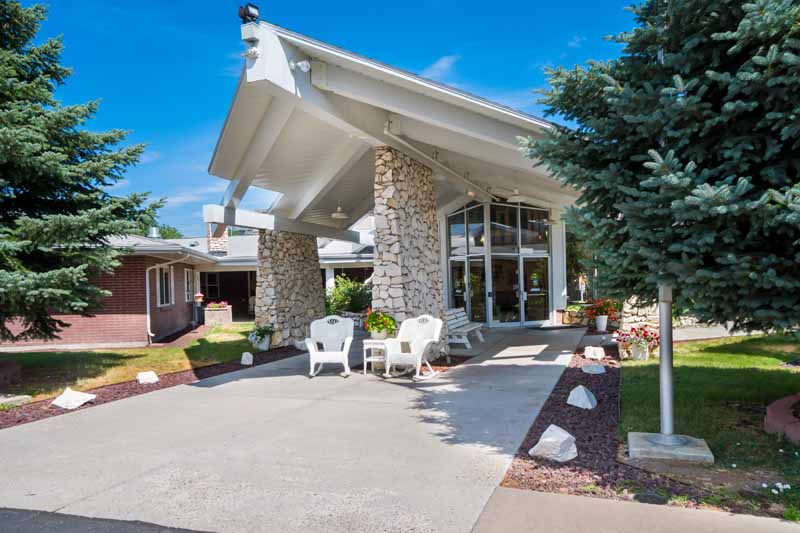
HOPE SPRINGS CARE CENTER

1043 RIDGE ST, MONTROSE, CO 81401 (970) 249-9683
For profit - Corporation 74 Beds RECOVER-CARE HEALTHCARE Data: November 2025
Trust Grade
0/100
#187 of 208 in CO
Last Inspection: December 2024

Within standard 12-15 month inspection cycle. Federal law requires annual inspections.

Overview

Hope Springs Care Center in Montrose, Colorado, has received a Trust Grade of F, indicating significant concerns about the quality of care provided. Ranking #187 out of 208 facilities in Colorado places it in the bottom half statewide, and it is the lowest-ranked facility in Montrose County. Although the facility is showing improvements, going from 20 issues in 2023 to 9 in 2024, the overall situation remains concerning. Staffing is a major weakness, with a low rating of 1 out of 5 stars and a turnover rate of 76%, which is much higher than the state average. Families should also note that the facility has faced $87,079 in fines, signaling compliance problems. Additionally, specific incidents raise red flags: one resident developed a serious pressure injury without the necessary preventive care, while another resident lost a significant amount of weight due to inadequate nutritional support. Residents have also reported a lack of respect from staff and poor response times to their needs, which can lead to feelings of anger and frustration. Overall, while there are some positive trends, potential residents and their families should carefully consider these weaknesses when making a decision.

Trust Score
F
0/100
In Colorado
#187/208
Bottom 11%
Safety Record
High Risk
Review needed
Inspections
Getting Better
20 → 9 violations
Staff Stability
⚠ Watch
76% turnover. Very high, 28 points above average. Constant new faces learning your loved one's needs.
Penalties
✓ Good
$87,079 in fines. Lower than most Colorado facilities. Relatively clean record.
Skilled Nurses
○ Average
Each resident gets 33 minutes of Registered Nurse (RN) attention daily — about average for Colorado. RNs are the most trained staff who monitor for health changes.
Violations
⚠ Watch
37 deficiencies on record. Higher than average. Multiple issues found across inspections.
★☆☆☆☆
1.0
Overall Rating
★☆☆☆☆
1.0
Staff Levels
★★★★☆
4.0
Care Quality
★★☆☆☆
2.0
Inspection Score
Stable
2023: 20 issues
2024: 9 issues

The Good

  • 4-Star Quality Measures · Strong clinical quality outcomes
  • Full Sprinkler Coverage · Fire safety systems throughout facility
  • No fines on record

Facility shows strength in quality measures, fire safety.

The Bad

1-Star Overall Rating

Below Colorado average (3.1)

Significant quality concerns identified by CMS

Staff Turnover: 76%

30pts above Colorado avg (46%)

Frequent staff changes - ask about care continuity

Federal Fines: $87,079

Well above median ($33,413)

Moderate penalties - review what triggered them

Chain: RECOVER-CARE HEALTHCARE

Part of a multi-facility chain

Ask about local staffing decisions and management

Staff turnover is very high (76%)

28 points above Colorado average of 48%

The Ugly 37 deficiencies on record

5 actual harm
Dec 2024 9 deficiencies 2 Harm
SERIOUS (G)

Actual Harm - a resident was hurt due to facility failures

Pressure Ulcer Prevention (Tag F0686)

A resident was harmed · This affected 1 resident

**NOTE- TERMS IN BRACKETS HAVE BEEN EDITED TO PROTECT CONFIDENTIALITY** Based on observations, record review and interviews, the facility failed to provide the necessary treatment and services to trea...

Read full inspector narrative →
**NOTE- TERMS IN BRACKETS HAVE BEEN EDITED TO PROTECT CONFIDENTIALITY** Based on observations, record review and interviews, the facility failed to provide the necessary treatment and services to treat and prevent pressure injuries for two (#46 and #50) of six residents reviewed for pressure ulcers out of 28 sample residents. Resident #46, who was known to be at risk for pressure injuries, was admitted on [DATE]. The resident had diagnoses of dementia, cognitive communication deficit, chronic pain, and generalized muscle weakness. On 11/11/24, Resident #46 developed a facility-acquired stage 2 pressure injury to her sacrum, however, the facility did not initiate further pressure ulcer interventions on the resident's pressure ulcer prevention care plan once the stage 2 pressure injury was identified and did not update the care plan to include the new pressure injury. On 11/19/24, physician documentation indicated Resident #46's pressure wound had worsened to an unstageable pressure injury. Despite the worsening of the pressure injury, the facility failed to implement a low air loss pressure relieving mattress until 11/26/24, 15 days after the initial pressure ulcer was identified. Despite the worsening of the resident's pressure injury, the facility did not initiate Resident #46's pressure injury care plan, which identified the resident had an actual pressure injury, until 12/4/24, two weeks later. Furthermore, observations during the survey revealed the facility failed to ensure Resident #46's low air loss mattress was appropriately set to the correct firmness level, per the physician's orders. Due to the facility's failure to implement timely interventions to prevent the development of pressure injuries and the facility's failure to implement additional interventions following pressure injury development, Resident #46 developed a facility-acquired stage 2 pressure injury, which worsened to an unstageable pressure injury. Additionally, Resident #50, who was at risk for developing pressure injuries, was admitted on [DATE]. On 9/2/24, facility documentation indicated Resident #50 had a new pressure injury located on her left heel. On 9/3/24, the wound note identified the left heel wound as an unstageable pressure injury and further identified pressure relieving heel protector boots were to be worn by the resident. According to the resident's skin integrity care plan, pressure injury prevention interventions were not initiated until 9/2/24, after the resident's left heel wound was identified. Wound care documentation for September 2024, October 2024 and November 2024 revealed wound care treatments and wound care interventions were not documented as occurring on several occasions. Observations during the survey revealed several occasions where Resident #50 was not wearing her pressure relieving heel protector boots. Due to the facility's failure to implement timely interventions to prevent the development of pressure injuries, Resident #50 developed a facility-acquired unstageable pressure injury to her left heel. Findings include: I. Professional reference According to the National Pressure Injury Advisory Panel, European Pressure Injury Advisory Panel and Pan Pacific Pressure Injury Alliance Prevention and Treatment of Pressure Injuries: Clinical Practice Guideline, third edition, [NAME] Haesler (Ed.), EPUAP/NPIAP/PPPIA (2019), retrieved on 12/16/24 from https://www.internationalguideline.com/guideline, Pressure ulcer classification is as follows: Category/Stage 1: Nonblanchable Erythema (discoloration of the skin that does not turn white when pressed, early sign of tissue damage) Intact skin with nonblanchable redness of a localized area usually over a bony prominence. Darkly pigmented skin may not have visible blanching; its color may differ from the surrounding area. The area may be painful, firm, soft, warmer or cooler as compared to adjacent tissue. Category/Stage 1 may be difficult to detect in individuals with dark skin tones. May indicate'at risk' individuals (a heralding sign of risk). Category/Stage 2: Partial Thickness Skin Loss Partial thickness loss of dermis presenting as a shallow open ulcer with a red pink wound bed, without slough. May also present as an intact or open/ruptured serum filled blister. Presents as a shiny or dry shallow ulcer without slough or bruising.This Category/Stage should not be used to describe skin tears, tape burns, perineal dermatitis, maceration or excoriation. Category/Stage 3: Full Thickness Skin Loss Full thickness tissue loss. Subcutaneous fat may be visible, but bone, tendon or muscle are not exposed. Slough may be present but does not obscure the depth of tissue loss. May include undermining and tunneling. The depth of a Category/ Stage 3 pressure ulcer varies by anatomical location. The bridge of the nose, ear, occiput and malleolus do not have subcutaneous tissue and Category/ Stage 3 ulcers can be shallow. In contrast, areas of significant adiposity can develop extremely deep Category/Stage 3 pressure ulcers. Bone/tendon is not visible or directly palpable. Category/Stage 4: Full Thickness Tissue Loss Full thickness tissue loss with exposed bone, tendon or muscle. Slough or eschar may be present on some parts of the wound bed. Often include undermining and tunneling. The depth of a Category/Stage 4 pressure ulcer varies by anatomical location. The bridge of the nose, ear, occiput and malleolus do not have subcutaneous tissue and these ulcers can be shallow. Category/ Stage 4 ulcers can extend into muscle and/ or supporting structures ( fascia, tendon or joint capsule) making osteomyelitis possible. Exposed bone/tendon is visible or directly palpable Unstageable: Depth Unknown Full thickness tissue loss in which the base of the ulcer is covered by slough (yellow, tan, gray, green or brown) and/or eschar (tan, brown or black) in the wound bed. Until enough slough and/or eschar is removed to expose the base of the wound, the true depth, and therefore Category/ Stage, cannot be determined. Stable (dry, adherent, intact without erythema or fluctuance) eschar on the heels serves as' the body's natural (biological) cover' and should not be removed. Suspected Deep Tissue Injury: Depth Unknown Purple or maroon localized area of discolored intact skin or blood-filled blister due to damage of underlying soft tissue from pressure and/or shear. The area may be preceded by tissue that is painful, firm, mushy, boggy, warmer or cooler as compared to adjacent tissue. Deep tissue injury may be difficult to detect in individuals with dark skin tones. Evolution may include a thin blister over a dark wound bed. The wound may further evolve and become covered by thin eschar. Evolution may be rapid, exposing additional layers of tissue even with optimal treatment. II. Facility policy and procedure The Pressure Ulcer policy and procedure, dated 2/29/24, was provided by the nursing home administrator (NHA) on 12/10/24 at 5:52 p.m. It documented in pertinent part, Protecting against the effects of pressure, friction, and shear: reduce pressure over bony prominences by offloading and positioning, develop turning and repositioning plans for residents in bed or the chair, and evaluate the need for a pressure-reducing mattress or overlay - check for bottoming out to ensure appropriateness of mattress choice. Develop a plan of care in conjunction with the multidisciplinary team based on the individual's goals. Evaluate the plan of care and provide revisions and updates as needed. Any changes in pressure injury condition should be reported to the physician. III. Resident #46 A. Resident status Resident #46, age greater than 65, was admitted on [DATE]. According to the December 2024 computerized physician orders (CPO), diagnoses included dementia, cognitive communication deficit, chronic pain, and generalized muscle weakness. The 9/3/24 minimum data set (MDS) assessment documented the resident was cognitively intact with a brief interview for mental status (BIMS) score of 14 out of 15. The assessment documented the resident was independent with eating, required set-up or clean-up assistance with oral hygiene, and required partial or moderate assistance with all other activities of daily living. The assessment documented the resident was independent when rolling left to right in bed and required moderate assistance when changing positions in bed. The assessment indicated the resident was at risk for pressure ulcers and did not have any skin conditions at the time of the assessment. The assessment indicated the resident did not have rejections of care. B. Resident observations On 12/9/24 at 10:03 a.m. Resident #46's wound care was observed with the director of nursing (DON) and licensed practical nurse (LPN) #4. The resident's sacrum had a large crater-like wound with a black scab at the medial base (towards the middle or center) of the wound. The skin around the wound was red and purple in color and extended approximately two centimeters (cm) around the outside of the open wound. The wound measured 6.0 cm long by 3.0 cm wide and 2.0 cm deep, per the DON's measurement. Additionally, the DON measured that the wound had 2.0 cm of tunneling (a channel or tunnel that extends into deeper tissue under the surface of the wound) at the 1:00 and 9:00 position within the wound. The DON cleansed the wound with wound cleanser, applied collagenase to the wound bed and then applied a foam dressing to cover the wound. During a continuous observation on 12/9/24, beginning at 2:24 p.m. and ending at 5:02 p.m., the following was observed: At 3:03 p.m. an unidentified male staff member entered Resident #46's room to assist the resident. At 3:06 p.m. LPN #2 entered and exited Resident #46's room. At 3:06 p.m. Resident #46's low air loss mattress was observed to be firm and taut. The mattress setting level was observed to be set at 400 firmness. -The facility failed to set Resident #46's mattress firmness level in accordance with physician's orders (see physician's order below). At 4:20 p.m. LPN #2 entered and exited Resident #46's room. At 5:02 p.m. LPN #2 again entered and exited Resident #46's room. At 5:02 p.m. Resident #46's mattress was observed to be firm and taut. The mattress setting level was observed to be set at 400 firmness. -The facility failed to set Resident #46's mattress firmness in accordance with physician's orders. On 12/10/24 at 10:22 a.m. Resident #46's mattress was observed to be softer than observations on 12/9/24. The mattress setting level was observed to be set at 125 firmness. A piece of tape with a drawn arrow was on the mattress firmness setting dial to indicate the correct firmness level the mattress should be set at. C. Record review The pressure ulcer prevention plan of care, initiated 6/5/24 and revised 11/26/24, documented that Resident #46 had potential for pressure ulcer development because of her impaired mobility, incontinence and dementia. The care plan goal was to minimize Resident #46's risk of skin breakdown, redness or the development of blisters or discoloration. Interventions included encouraging Resident #46 to reposition herself in bed and to assist the resident when needed, utilizing a low air loss mattress on the resident's bed (initiated 11/26/24), a pressure reducing wheelchair cushion and conducting a weekly skin check by the nurse. -The facility failed to initiate the intervention of a low air loss mattress on the resident's bed until 11/26/24, 15 days after resident #46 was identified as having a stage 2 pressure ulcer and seven days after the initial pressure ulcer had worsened to an unstageable pressure ulcer The pressure ulcer plan of care, initiated 12/4/24 and revised 12/4/24, documented the resident had an unstageable pressure ulcer. Interventions included identifying possible causative factors and resolving them when possible, monitoring and documenting the pressure ulcer, encouraging good nutrition and hydration and following facility protocols for treatment. -The facility failed to initiate a pressure ulcer plan of care for the actual pressure ulcer until three weeks after Resident #46 was identified as having a facility-acquired stage 2 pressure ulcer and two weeks after the initial pressure ulcer worsened to an unstageable pressure ulcer. An encounter note, written by nurse practitioner (NP) #1 and dated 11/11/24, documented that Resident #46 had functional quadriplegia. The encounter note documented Resident #46 had a new pressure wound to the sacral region that was a stage 2 pressure wound. The note documented the resident's sacral region had been moist due to incontinence and resident immobility. The note documented the facility initiated a turning schedule and wound nurse rounding for the resident. A wound assessment report, written by medical doctor (MD) #1 and dated 11/19/24, documented that Resident #46 had an unstageable pressure ulcer on her sacrum measuring 2.5 cm) wide by 2 cm long and 0.6 cm deep. MD #1 documented the periwound (the skin surrounding the wound) was fragile. -The facility failed to implement timely interventions to prevent Resident #46's facility acquired stage two pressure ulcer from progressing to an unstageable pressure ulcer. An encounter note, written by NP #1 and dated 11/22/24, documented that Resident #46 did not want to seek western medicine and wished to pursue a comfort-focused care approach. NP #1 documented that Resident #46 likely experienced several neurological events recently which had contributed to her decline. The note documented that Resident #46's decline was precipitous and unavoidable. A wound assessment report, written by MD #1 and dated 11/25/24, documented that Resident #46 had an unstageable pressure ulcer on her sacrum measuring 2.5 cm wide, 1.5 cm. long and 0.6 cm deep. A Braden Scale assessment (tool used for predicting pressure ulcer risk), dated 11/30/24, documented Resident #46 was at a moderate risk for developing a pressure injury.The assessment documented Resident #46 could make occasional slight changes in body or extremity position but was unable to make frequent changes independently. -However, the 9/3/24 MDS assessment documented that the resident required moderate assistance when changing positions in bed (see resident status above). A wound assessment report, documented by MD #1 and dated 12/3/24, documented that Resident #46 had an unstageable pressure ulcer on her sacrum measuring 4.8 cm wide, 1.5 cm. long and 0.6 cm deep. -The measurements of the wound indicated the wound had worsened. An encounter note, written by NP #1 and dated 12/5/24, documented that Resident #46 had a stage three pressure injury on her sacrum. -However, MD #1's 12/3/24 wound assessment note documented the resident's wound was an unstageable pressure ulcer. NP #1's 12/5/24 encounter note further documented that Resident #46's sacral wound had progressed. The note documented the wound was now reddened and full thickness with some eschar at the base. The note documented the area had been moist due to incontinence and immobility of the resident. The note documented the wound now required a wet-to-dry packing daily for the next seven days. The note documented NP #1 spoke with Resident #46's representative to clarify Resident #46's goals of care. The note documented the plan of care was to continue assisting Resident #46 with ADLs and to continue offering treatments to Resident #46. A review of Resident #46's December 2024 CPO revealed the following physician's orders for wound care: To pressure area on sacrum, cleanse area with wound cleanser, apply [collagenase] to wound bed, cover with dry dressing, change daily and as needed. Observe for abnormalities in wound bed, surrounding skin, or pain associated with wound. Must notify provider of abnormalities and document under progress notes, ordered 12/9/24. Low air mattress to bed. Set at 125 firmness. Check the mattress every shift for proper setting and function, ordered 11/25/24. E. Staff interviews The DON was interviewed on 12/9/24 at 10:08 a.m. The DON said she performed wound care as the wound care nurse for the facility. The DON said she worked with MD #1, who was the wound care physician for the facility. The DON said Resident #46's pressure injury was facility-acquired after Resident #46 experienced a previous change in condition which made her more immobile in bed. The DON said Resident #46's pressure injury looked much worse today (12/9/24) than it did the previous week. The DON said she could not see bone in the wound bed, but there was eschar present in the base of the wound bed. The DON said even though Resident #46's wound was an unstageable pressure ulcer and she did not see bone, the wound appeared to be a stage four pressure wound to her. The DON said the wound physician would classify the wound as an unstageable pressure ulcer that was facility-acquired. The DON said that Resident #46's wound had last been evaluated by MD #1 on 12/3/24 and she would communicate with MD #1 regarding Resident #46's worsening pressure injury on 12/10/24 when he assessed the wound again via telehealth (video monitoring). The DON said the facility had been having difficulty getting a wound doctor to be present in the facility and the facility exclusively used telehealth services for wound care physician services. LPN #4 was interviewed on 12/9/24 at 12:21 p.m. LPN #4 said she had only visualized Resident #46's wound a few times. LPN #4 said Resident #46's wound on her sacrum looked much worse than previously. LPN #4 said she did not know what size the wound was, but she said she knew it was bigger than it had been the previous week. LPN #4 said Resident #46 was being turned every two hours with wedge pillows and had a low air loss mattress to prevent the worsening of the pressure ulcer. -However, the low air loss mattress was not set to the correct firmness level according to physician's orders (see observations above and interview below) MD #1 was interviewed on 12/9/24 at 12:59 p.m. MD #1 said Resident #46 was experiencing an expected decline. MD #1 said Resident #46 had a physician's order that she was experiencing unavoidable weight loss and this was contributing to the development of her pressure ulcer. MD #1 said Resident #46's pressure ulcer on her sacrum was facility-acquired. MD #1 said she did not know the facility had not initiated a plan of care for Resident #46's facility-acquired pressure ulcer until the pressure ulcer had progressed to an unstageable pressure ulcer. MD #1 said that the resident's pressure ulcer was unavoidable. -However, there was no documentation in Resident #46's electronic medical record (EMR) which indicated the pressure ulcer was unavoidable. Certified nursing aide (CNA) #4 was interviewed on 12/9/24 at 6:42 p.m. CNA #4 said she was comforting Resident #46 because it hurt her to sit up in bed to eat. CNA #4 said Resident #46 had to be sat up in bed so she would not choke when she ate, but she said the resident was hurting because of her pressure ulcer. The DON was interviewed again on 12/10/24 at 2:49 p.m. The DON said when a resident developed a pressure ulcer, the facility would complete a documented change of condition, notify the resident's representative and notify her. The DON said physician's orders should always be followed. The DON said Resident #46's bed firmness level had not been set correctly and she did not know how long the resident's bed firmness level was not set correctly. The DON said she noticed the bed appeared to be way too firm this morning (12/10/24), and she observed the firmness level setting to be at 400. The DON said she lowered Resident #46's low air mattress firmness level and added a marker to indicate where the mattress's firmness dial should be set for Resident #46. The DON said it was not acceptable for Resident #46's mattress level firmness to be set at 400 when it should have been set at 125. The DON said she did not know if the mattress's firmness could have contributed to the worsening of Resident #46's pressure ulcer. IV. Resident #50 A. Resident status Resident #50, age greater than 65, was admitted on [DATE]. According to the December 2024 CPO, diagnoses included unspecified dementia, severe without behavioral disturbance, cognitive communication deficit, repeated falls, unsteadiness on feet, muscle weakness, lack in coordination, need for assistance with personal care and age-related osteoporosis without current pathological fracture. The 8/20/24 MDS assessment documented Resident #50 had moderate cognitive impairment with a BIMS score of nine out of 15. The resident used a walker and A wheelchair. The MDS assessment did not identify the resident had a rejection of care behaviors. The MDS assessment indicated Resident #50 was at risk for pressure ulcer development and had an unhealed pressure ulcer. B. Wound care observations and DON interview Resident #50's wound care was observed on 12/9/24 at 9:48 a.m. with the DON. Resident #50 was in bed. She was not wearing pressure relieving boots to protect her heels prior to the wound care. Resident #50 had a black scab covering her entire left heel. The wound measured 2.3 cm by 2.7 cm. The DON said the wound was getting better and smaller. The DON applied wound cleanser and betadyne to the wound and then left the wound open to air (OTA). After completing the wound care, the DON retrieved the resident's pressure relieving boots from her closet and offered them to the resident. Resident #50 allowed the DON to put the pressure relieving boots on her feet without resistance or need for encouragement. During a continuous observation on 12/9/24, beginning at 2:31 p.m. and ending at 4:19 p.m., the following was observed: At 2:31 p.m. Resident #50 was lying in bed on her left side. Resident #50's pressure relieving boots were on the resident's wheelchair instead of on the resident's feet. The resident's heels were not offloaded as she laid on her left side. At 2:58 p.m. the resident remained in the same position and her pressure relieving boots remained on her wheelchair. At 3:03 p.m. LPN #2 entered and exited Resident #50's room. The resident remained on her side without her heels offloaded and without her pressure relieving boots on. At 4:19 p.m. LPN #2 and certified nurse aide (CNA) #1 entered and exited the resident's room. Resident #50 remained on her side without her heels offloaded and her pressure relieving boots remained on her wheelchair. On 12/10/24 at 9:44 a.m. Resident #50 was in bed laying on her left side. Her pressure relieving boots were on her lounge chair next to her bed. The resident's heels were not offloaded. At 9:51 a.m. LPN #2 identified the pillow between the knees of Resident #50 was not floating her heels. LPN #2 pulled the pillow down and placed it under the resident's left foot. He did not offer to put the resident's pressure relieving boots on her feet. C. Record review The skin integrity care plan, revised 12/2/24, identified Resident #50 had a deep tissue injury to her heel related to immobility. Pertinent interventions, initiated 9/2/24, included encouraging the resident to reposition herself throughout the shift and assisting her as needed, utilizing pressure relieving devices/adaptive equipment/soft booties when appropriate to potential pressure areas, floating the resident's heels with pressure relieving heel protectors or pillows at all times and, if the resident refused, conferring with the resident, the interdisciplinary team (IDT) and family to determine the reason for the refusal, trying alternative methods to gain compliance and documenting the alternative methods. -The skin integrity care plan did not identify that Resident #50 refused the pressure relieving boots. The 9/2/24 nursing progress note documented Resident #50 had a new pressure injury to her left heel with new physician orders for betadine and pressure relieving boots when in bed. According to the note, the staff implemented pressure relieving measures and offloading as tolerated. The 9/3/24 weekly wound round note identified Resident #50's left heel pressure injury as unstageable, dark purple in color and fluid-filled. The unstageable pressure ulcer measured 3.5 cm by 4 cm. According to the note, the interventions were to reposition the resident every two hours, float her heels and apply pressure relieving boots. The note documented staff should reapply the pressure relieving boots after wound care treatment. The 9/18/24 wound physician note identified Resident #50's wound as a pressure-induced deep tissue damage of the left heel measuring 3 cm by 4 cm with a 100% eschar. The wound physician recommended the use of heel protectors. The 9/22/24 weekly wound note identified the resident's left heel wound as unstageable and documented it measured 2.5 cm by 3 cm. The 10/23/24 wound physician note identified Resident #50's wound as a pressure-induced deep tissue damage of the left heel measuring 2.3 cm by 3 cm with a 100% eschar. The wound physician recommended the use of heel protectors. The 11/26/24 weekly wound note documented the resident's left heel pressure ulcer measured 2 cm by 2.5 cm. According to the note, the resident was to have her heel pressure offloaded when she was in bed. The 12/2/24 weekly wound note, documented the unstageable pressure wound to Resident #50's left heel measured 2.2 cm by 2.1 cm. The 12/3/24 wound physician note, documented the left heel pressure injury had100% eschar and measured 2.1 cm by 2.4 cm. The wound physician recommended the resident wear heel protectors. -Review of Resident #50's September 2024 treatment administration record (TAR) revealed the intervention to reposition the resident frequently for comfort was not documented as occurring on 9/12/24 and 9/28/24 during the 6:00 p.m. to 6:00 a.m. shift. -The September 2024 TAR did not identify the resident refused the intervention or why the intervention was not provided as ordered on 9/12/24 and 9/28/24. -Review of Resident #50's September 2024 TAR further revealed the intervention to float the resident's heels for pressure relief was additionally not documented as occurring on 9/12/24 and 9/28/24 during the 6:00 p.m. to 6:00 a.m. shift. -The September 2024 TAR did not identify the resident refused the intervention or why the intervention was not provided as ordered on 9/12/24 and 9/28/24. -Review of Resident #50's October 2024 TAR revealed the resident's daily wound care was not documented on 10/7/24, 10/20/24, 10/23/24 and 10/26/24. -The October 2024 TAR did not identify the resident refused the wound care treatment or why the wound care was not provided as ordered on 10/7/24, 10/20/24, 10/23/24 and 10/26/24. -Additional review of Resident #50's October 2024 TAR revealed the intervention to reposition the resident frequently for comfort was not documented as occurring on 10/20/24 during the 6:00 a.m. to 6:00 p.m. shift. -The October 2024 TAR did not identify the resident refused the intervention or why the intervention was not provided as ordered on 10/20/24. -Review of Resident #50's October 2024 TAR further revealed the intervention to float the resident's heels for pressure relief was additionally not documented as occurring on 10/20/24 during the 6:00 a.m. to 6:00 p.m. shift. -The October 2024 TAR did not identify the resident refused the intervention or why the intervention was not provided as ordered on 10/20/24. -Review of Resident #50's November 2024 TAR revealed the resident's daily wound care was not documented on 11/12/24 and 11/26/24. -The November 2024 TAR did not identify the resident refused the wound care treatment or why the wound care was not provided as ordered on 11/12/24 and 11/26/24. -Additional review of Resident #50's November 2024 TAR revealed the intervention to reposition the resident frequently for comfort was not documented as occurring on 11/12/24 and 11/26/24 during the 6:00 a.m. to 6:00 p.m. shift. -The November 2024 TAR did not identify the resident refused the intervention or why the intervention was not provided as ordered on 11/12/24 and 11/26/24. -Review of Resident #50's November 2024 TAR further revealed the intervention to float the resident's heels for pressure relief was additionally not documented as occurring on 11/12/24 and 11/26/24 during the 6:00 a.m. to 6:00 p.m. shift. -The November 2024 TAR did not identify the resident refused the intervention or why the intervention was not provided as ordered on 11/12/24 and 11/26/24. -Review of the CNA task sheet for floating the resident's heels, between 11/10/24 and 12/9/24, did not identify the resident refused to float her heels with either a pillow or pressure relieving boots. The CNA task sheet for floating the resident's heels identified the resident had her heels floated throughout the day on 12/9/24. -However observations did not identify the resident's heels were floated on the afternoon of 12/9/24 (see observations above). Review of Resident #50's progress notes between September 2024 and December 2024 did not identify the resident refused the pressure relieving boots. D. Staff interviews LPN #2 was interviewed on 12/10/24 at 9:45 a.m. LPN #2 said Resident #50 should have minimum pressure to her left heel. He said she spent most of her time in bed but would get up for dinner. He said she preferred to keep a pillow between her legs but she had pressure relieving boots she was supposed to wear to float her heels. He said staff attempted to reposition Resident #50 every two hours but she preferred to lay on her left side. He said she should probably have two pillows in bed with her, one to float her heels and one for her knees as was her preference. The DON was interviewed on 12/10/24 at 11:29 a.m. The DON said Resident #50 had a history of not wanting to reposition herself which resulted in multiple pressure ulcers. The DON said the resident's pressure ulcer was unstageable. She said the pressure injury to the resident's left heel started as a stage 2 pressure wound but became unstageable shortly after it developed. She said the pressure injury remained unstageable. She said the resident had pressure relieving boots available to her but the resident would refuse because the boots made her hot. -However, there was no documentation in the resident's electronic medical record (EMR) to indicate the resident refused to wear her pressure relieving boots (see record review above). The DON said Resident #50 preferred to use a pillow in between her knees. She said staff should still continue to offer the pressure relieving boots to the resident and if she refused, it should be documented. She said the boots would protect and relieve more pressure from the heel then a pillow and the boots would have been more likely to stay in place once they were put on. The DON said staff should not mark that pressure relieving devices were in place when the intervention was not done. The DON said staff should document wound treatments daily or identify why something was not charted on the TAR. She said the staff should document the care they were providing to the resident and not document when the resident had not received the treatment.
SERIOUS (G)

Actual Harm - a resident was hurt due to facility failures

Deficiency F0692 (Tag F0692)

A resident was harmed · This affected 1 resident

**NOTE- TERMS IN BRACKETS HAVE BEEN EDITED TO PROTECT CONFIDENTIALITY** Based on observation, record review and interviews, the facility failed to ensure two (#31 and #50) of four residents reviewed f...

Read full inspector narrative →
**NOTE- TERMS IN BRACKETS HAVE BEEN EDITED TO PROTECT CONFIDENTIALITY** Based on observation, record review and interviews, the facility failed to ensure two (#31 and #50) of four residents reviewed for nutrition out of 28 sample residents received the care and services necessary to meet their nutritional needs and maintain their highest level practicable physical well-being. Resident #31 was admitted to the facility for long-term care on 8/12/24 with diagnoses of hypertension (high blood pressure), depression and atrial fibrillation. Upon admission on [DATE], the resident weighed 120.8 lbs. On 10/17/24, Resident #31 weighed 94 pounds. Resident #31 lost 26.8 lbs (22.1%) in less than three months, which was considered severe. The facility implemented several nutritional interventions on 10/17/24 which included encouraging her family to bring in her favorite food items, that Resident #31 preferred sweet foods, and to provide assistance and cueing as needed, which did not assist Resident #31 to increase her weight. The facility implemented nutritional supplements on 11/1/24 which were occasionally accepted by Resident #31 and also did not increase Resident #31's weight. On 11/20/24, the resident weighed 82.8 pounds. Resident #31 lost 11.2 lbs (11.9%) in less than three months which was considered severe. Due to the facility's failure to effectively implement nutrition interventions timely, Resident #31's weight continued to decline. Additionally, Resident #50 was admitted to the facility on [DATE] with diagnoses of dementia and adult failure to thrive. Upon admission, the resident weighed 119.1 pounds (lbs). Resident #50 sustained 23.1 lbs (19.4%) weight change from 8/16/24 to 11/20/24, in three months, which was considered severe weight loss. On 8/29/24 Resident #50 had an order for a high calorie nutritional supplement (Mighty Shake). Progress notes and the medication administration record (MAR) identified the resident did not receive the nutritional supplement on two occasions because the supplement was not available. Resident #50 lost 7.4 lbs between 9/3/24 and 9/19/24, indicating a 6.18% weight change in two weeks. The new intervention to combat the weight loss was to offer her snacks between meals. The record review identified Resident #50 did not have a nutrition care plan until 10/24/24 and not until after the resident had lost 17.7 lbs with a 14.86% weight change. The review of Resident #50's weights identified potential weight inaccuracies related to large weight gains and a lack of timely and consistent reweighs after the resident had significant weight changes. Findings include: I. Facility policy and procedure The Weight Management policy, dated 2/29/24, was provided by the nursing home administrator (NHA) on 12/10/24 at 5:52 p.m. It documented in pertinent part, Residents are monitored for weight change on a regular basis. Results are reviewed and analyzed by the facility for interventions as appropriate. Residents identified with weight change will be assessed by the interdisciplinary (IDT) team, and further interventions will be implemented to minimize the risk for further weight change where possible and to promote weight stability. Weigh all residents upon admission, then weekly or as indicated by physician orders. Document the results in the medical record. Residents with weight variance (loss or gain) are reweighed. Significant and severe weight variance is defined as 5% change in one month, 7.5% change in three months, or 10% change in six months. The IDT meets weekly to review residents with identified weight change, develops a plan, implements, evaluates, and re-evaluates interventions to minimize the risk for weight change. Nursing staff is to notify food and nutrition services and the registered dietician (RD) of a resident's weight change. The RD further assesses the resident to determine root cause of weight change and makes recommendations to reduce or stabilize the weight change. II. Resident #31 A. Resident status Resident #31, age greater than 65, was admitted on [DATE]. According to the December 2024 computerized physician orders (CPO), diagnoses included hypertension, depression and atrial fibrillation. The 11/12/24 minimum data set (MDS) assessment revealed the resident had severe cognitive impairments with a brief interview for mental status (BIMS) score of five out of 15. The resident required substantial or maximum assistance with bathing, toileting hygiene, lower body dressing, and footwear. The resident required supervision with personal hygiene. The resident required set-up or clean-up assistance with oral hygiene. The assessment documented Resident #31 was able to eat independently with no assistance. -However, the facility documented that the resident required assistance or cueing on the nutritional plan of care. The assessment documented the resident was 60 inches (5 foot) tall. The assessment documented the resident weighed 88 lbs. The assessment documented the resident had experienced 10% or more weight loss in the last six months and was on a physician-prescribed weight loss regimen. B. Observations During a continuous observation in the main dining hall on 12/4/24, beginning at 11:47 a.m. and ending at 12:11 p.m. the following was observed: At 11:56 a.m. Resident #31 received her plate of food which included meatloaf, a dinner roll and a cookie. At 11:58 a.m. Resident #31 was eating a cookie with both hands. An unidentified staff member encouraged her to eat several food options on her plate, which she refused. At 12:06 p.m., Resident #31 had eaten the entire cookie. The unidentified staff member offered an alternative meal option to Resident #31, which she refused. During a continuous observation on 12/9/24, beginning at 5:38 p.m. and ending at 6:43 p.m. the following was observed: At 6:09 p.m. Resident #31 was assisted to the dining room in her wheelchair by an unidentified staff member. At 6:21 p.m. Resident #31 received her plate of food which included shrimp alfredo, toast, peas, and a cookie. Resident #31 immediately picked up the cookie and began eating it. At 6:22 p.m. CNA #1 offered Resident #31 assistance with her meal. CNA #1 was observed to encourage the resident towards the other items on her plate, which Resident #31 refused. At 6:27 p.m., CNA #1 was observed to encourage Resident #31 to eat the other food items on her plate, which she refused. Resident #31 continued to eat the cookie which she held with both hands. At 6:31 p.m., Resident #31 finished eating the entire cookie. Resident #31 then laid her head back in her wheelchair and closed her eyes for several minutes. At 6:40 p.m., Resident #31 picked up her fork, moved the shrimp alfredo on her plate around with the fork, and then she set the fork back down on the table and closed her eyes. At 6:43, CNA #1 asked Resident #31 if she was done eating, which she affirmed. CNA #1 offered Resident #31 an alternative food option, which she refused. C. Record review The nutrition care plan, initiated on 8/12/24 and revised on 10/17/24, revealed a goal of maintaining Resident #31's weight through the review period. Interventions added on 10/17/24 included notifying the nursing staff that Resident #31 had always been a picky eater, Resident #31 preferred sweet foods, encouraging Resident #31's family to bring her favorite foods and providing Resident #31 with assistance and cueing as needed during meals. -A review of the comprehensive care plan revealed there were no new or revised interventions implemented after the resident sustained severe weight loss on 11/20/24. Resident #31's weights were documented in the electronic medical record (EMR) as follows: -On 8/15/24, the resident weighed 120.8 lbs; -On 8/20/24, the resident weighed 122.4 lbs; -On 9/3/24, the resident weighed 120.8 lbs; -On 9/16/24, the resident weighed 119.7 lbs; -On 9/23/24, the resident weighed 119.2 lbs; -On 10/8/24, the resident weighed 94.6 lbs; -On 10/17/24, the resident weighed 94 lbs; -On 10/23/24, the resident weighed 94 lbs; -On 10/29/24, the resident weighed 92.6 lbs; -On 11/6/24, the resident weighed 87.8 lbs; -On 11/13/24, the resident weighed 84 lbs; and, -On 11/20/24, the resident weighed 82.8 lbs. -The resident lost 26.2 lbs (21.7%), from 9/3/24 to 10/18/24, in one month, which was considered severe. -The resident lost 11.2 lbs (11.9%) from 10/17/24 to 11/20/24, in one month, which was considered severe. -The resident lost 38 lbs (31.5%) from 8/15/24 to 11/20/24, in three months, which was considered severe. The food preferences documentation, dated 10/2/24, revealed Resident #31's favorite foods were sweets. The food and nutritional admission assessment, dated 8/22/24, documented Resident #31's admission body weight was 120.8 lbs. The assessment documented Resident #31's weight in the hospital before admission to the facility was 121 lbs. The assessment documented Resident #31 was not at risk for an altered nutrition or hydration status. The assessment documented it was okay to offer the resident smaller portions of food as regular portions may be overwhelming. It also documented the regular portions were providing more than her estimated needs. The quarterly nutritional assessment, dated 11/12/24, documented Resident #31's usual body weight was 112 lbs. The assessment documented Resident #31 had experienced significant weight loss since her admission to the facility. The assessment documented Resident #31 had a poor appetite. -However, the facility failed to implement a person-centered nutrition intervention after Resident #31 was identified to have significant weight loss. The multidisciplinary care conference documentation, dated 11/19/24, revealed a care conference was held on 11/19/24 with the nurse, dietary staff, the MDS nurse, the social worker, a certified nurse aide (CNA), the activities department, the therapy department, medical records, the director of nursing (DON), the provider, the NHA, the resident and the resident's representative. The care conference documented the resident weighed 88 lbs and had lost five pounds in the last week. The care conference documented Resident #31 required cueing, encouragement and occasional assistance with dining. The care conference documented Resident #31's favorite foods were fresh fruit and ice cream. A review of the December 2024 CPO revealed the following physician's orders related to nutrition: Regular diet, regular texture, with regular or thin consistency, ordered on 8/12/24. Mighty shakes (frozen nutritional supplement) three times per day for weight maintenance, record percentage consumed, ordered on 11/1/24. Unavoidable weight loss due to chronic pain and age related adult failure to thrive. Please continue to encourage supplement and food intake and manage pain with medications and non-medication methods, ordered on 12/10/24 at 3:42 p.m (during the survey) by medical doctor (MD) #2. Nutritional supplement intake documentation was reviewed between 11/1/24 and 11/30/24. Out of 90 nutrition supplement intake opportunities, Resident #31 refused to consume the supplement on 15 occasions. The intake documentation revealed 28 occasions where Resident #31 consumed fifty percent or less of the nutritional supplement. The intake documentation included 45 occasions where Resident #31 consumed the entire nutritional supplement offered. Nutritional meal intake documentation was reviewed between 11/6/24 and 12/4/24. Of 85 meal opportunities in the review period, Resident #31 was documented to have refused four meals. The facility documented Resident #31 ate less than fifty percent of her meal on 52 occasions. The facility documented Resident #31 ate 75 to 100 percent of her meal on 12 occasions. CNA task response documentation of the assistance Resident #31 required to eat her meal was reviewed between 11/6/24 and 12/4/24. Of 85 meal opportunities in the review period, the facility documented Resident #31 ate 16 meals independently, five meals with set-up or clean-up assistance, 12 meals with supervision or touching assistance, three meals with moderate assistance, and Resident #31 was dependent on nursing staff to eat 26 meals. The facility documented 23 meals were not applicable. -However, the facility documented the resident was independent with eating on the MDS assessment (see above). D. Staff interviews CNA #1 was interviewed on 12/9/24 at 5:48 p.m. CNA #1 said Resident #31 often refused her meals. CNA #1 said Resident #31 usually ate a cookie or sweet dessert if that was offered to her, but getting her to eat more nutritious food had been difficult. CNA #1 said he felt Resident #31 mostly ate sweets and ignored other foods. Licensed practical nurse (LPN) #3 was interviewed on 12/9/24 at 4:24 p.m. LPN #3 said Resident #31 mostly refused to eat her meals, or would only choose to eat the dessert item. LPN #3 said Resident #31 loved to eat cookies. LPN #3 said the nursing staff tried to get Resident #31 to eat more nutritious foods but it had been difficult to convince her to eat more than dessert. The registered dietitian (RD) was interviewed on 12/10/24 at 12:01 p.m. The RD said she had been working in the facility for approximately 18 months. The RD said when a resident experienced weight loss, she would try to individualize the diet of the resident and utilize a food first approach which included giving the resident their favorite foods using sweet foods, salty foods and ethnic foods as examples. The RD said when a resident lost weight it could be difficult to determine the cause. She said she would review the resident's food preferences to see if the resident was refusing certain kinds of foods often. The RD said that the interdisciplinary (IDT) team reviewed residents experiencing weight loss weekly. The RD said residents who experienced weight loss should have their nutrition plans of care reviewed and updated. The RD said she thought Resident #31 was losing weight because she did not have a desire to eat. The RD said that one time Resident #31's family brought in her favorite chili recipe which the resident refused. The RD said she did not know if Resident #31's weight loss was unavoidable. -However, Resident #31 was observed to eat 100% of the offered dessert on 12/4/24 and 12/9/24. The DON was interviewed on 12/10/24 at 2:49 p.m. The DON said residents who experienced weight loss were reviewed weekly and nutritional interventions were implemented by the RD. The DON said if all possible interventions were in place, then the facility would reach out to the physician or the family to ask for more help. The DON said if a resident was only eating sweet foods but was experiencing weight loss, then the facility should offer the resident additional sweets to give them enough calories to eat. The DON said a review from the physician could also be helpful in determining root causes for the weight loss. The DON said she did not believe a physician review had occurred for Resident #31's weight loss. The DON said the facility could have done more to slow the progression of Resident #31's weight loss. III. Resident #50 A. Resident status Resident #50, age greater than 65, was admitted to the facility on [DATE]. According to the November 2024 computerized physician orders (CPO), diagnoses included unspecified dementia severe without behavioral disturbance, cognitive communication deficit, adult failure to thrive, pressure induced tissue damage to the left heel, muscle weakness and a need for assistance with personal care. The 10/10/24 minimum data set (MDS) assessment documented Resident #50 had moderate cognitive impairments with a BIMS score of nine out of 15. The MDS assessment did not identify the resident had a rejection of care behaviors. The MDS assessment did not indicate Resident #50 had weight loss prior to her admission to the facility. B. Observations During a continuous observation on 12/9/24, between 6:08 p.m. and 6:36 p.m. in the dining room. The following was observed: At 6:08 p.m. Resident #50 was assisted to the dining room for dinner. The resident was placed at the dining table with other residents who required assistance with eating. At 6:19 p.m. Resident #50 continued to wait for her meal to be served. Her tablemates had already been served and were eating their meals. Resident #50 proceeded to push herself away from the dining table in her wheelchair. An unidentified CNA encouraged her to return to the dining table. At 6:29 p.m. Resident #50 was served a pork chop cut in bite sized pieces, peas and garlic bread. The resident was not served pudding or ice cream as identified on her meal ticket and as a nutritional intervention (see interview below). -Resident #50 was the last to be served at her table and waited over 20 minutes before she was served. At 6:36 p.m. Resident #50 attempted to stand up from her wheelchair. The resident was assisted out of the dining room. The resident ate less than 25% of her meal. C. Record review The nutrition care plan, dated 10/24/24, documented Resident #50 had a nutritional problem or a potential for a nutritional problem related to leaving greater than 25% of meals uneaten, unintended weight loss, a body mass index (BMI) of 18% and an increased nutrient need to support wound healing. Interventions, initiated 10/24/24, directed the staff to encourage the resident to dine at the assistance/cue table; offer the resident gentle redirection to table with cues to eat and drink; monitor weights as ordered; provide and serve the resident her supplements as ordered to include Mighty Shake (frozen nutritional supplement) between meals, offer snacks between meals, and Juven twice a day (wound support supplement); provide and serve her diet as ordered; monitor intake and record every meal; and the registered dietitian (RD) to evaluate the resident and make diet change recommendations PRN (as needed). The nutrition care plan intervention, dated 11/7/24, indicated Resident #50 would consume food and fluids at desired pace and amount to her level of comfort. -The review of the nutritional care plan revealed the care plan was not created until 10/24/24, over a month since the resident was admitted to the facility and after the resident sustained a weight loss of 17.7 lbs (and a 14.86%) in just over two months. Resident #50's weights were documented in the resident's EMR as follows: -On 8/16/24, the resident weighed 119.1 lbs, obtained with a chair scale; -On 9/3/24, the resident weighed 119.8 lbs, obtained with a chair scale; -On 9/19/24, the resident weighed 112.4 lbs, obtained with a wheelchair scale; -On 9/24/24, the resident weighed 104.4 lbs, this weight was struck out and indicated a reweigh was completed on 10/8/24; -On 10/2/24, the resident weighed 117.8 lbs, obtained with a standing scale; -On 10/8/24, the resident weighed 105.4 lbs, obtained with a wheelchair scale; -On 10/9/24, the resident weighed 103.6 lbs, obtained with a wheelchair scale; -On 10/23/24, the resident weighed 101.4 lbs, obtained with a wheelchair scale; -On 10/29/24, the resident weighed 102.4 lbs, obtained with a wheelchair scale; -On 11/6/24, the resident weighed 98 lbs, obtained with a wheelchair scale; -On 11/20/24, the resident weighed 96 lbs, obtained with a wheelchair scale; -On 11/27/24, the resident weighed 98 lbs, obtained with a wheelchair scale; and, -On 12/5/24, the resident weighed 99.8 lbs., obtained with a wheelchair scale. -The resident lost 14.7 lbs (12.3%) from 8/16/24 to 9/24/24, in one month, which was considered severe. -The resident lost 23.1 lbs (19.4%) from 8/16/24 to 11/20/24, in three months, which was considered severe. -The facility failed to reweigh the resident after a significant weight loss. The physician order, dated 8/16/24. identified Resident #50 had a regular texture diet. The food and nutrition assessment, dated 8/29/24, identified the RD met and observed Resident #50 eating breakfast in her room. The resident told the RD she had a good appetite, no mouth pain and no swallowing difficulties. According to the assessment, the RD discussed the role of good nutrition and wound healing with the resident. The assessment documented the resident ate on average 26% to 50% of her breakfast, 26% to 50% of her lunch and 50% to 75% of her dinner. The assessment documented the resident was at a healthy weight. The food and nutrition note, dated 9/19/24, documented Resident #50 triggered for significant weight loss in a month. The resident chose to eat in her room for most meals and ate greater than 50% of meals with some meals over 75% intake. According to the note, the resident was offered and consumed 75% of her Mighty Shake (frozen nutritional supplement) and received Juven (oral protein supplement) for wound healing. The note indicated snacks would be offered between meals at the new intervention and continue to monitor intakes and weight. The interdisciplinary team (IDT) note, dated 9/26/24, identified the resident lost 16 lbs in 30 days. According to the note, the supplemental shakes were increased from one to two times a day and staff would offer snacks such as ice cream. The note indicated the resident's weight may fluctuate due to disease process. The food and nutrition note, dated 9/27/24, documented staff would continue to update and adjust the nutritional care plan as needed. -However, the resident did not have a nutritional care plan until 10/24/24. The 10/1/24 administration note read the Mighty Shakes were not available in the kitchen. -The Mighty Shake nutrition supplement was not available to the resident as ordered. The food and nutrition note, dated 10/10/24, documented the resident loss at 8 lbs with a 7% weight change in 30 days. According to the note, the resident had poor appetite over the past few days. The note identified the resident needed redirection to the dining room. -Despite the facility noting the weight loss the facility failed to implement a new person centered intervention to address the resident's eight pound weight loss in 30 days. The administration note, dated 10/15/24 documented the Mighty Shake was not in stock. -The Mighty Shake nutrition supplement was not available to the resident as ordered. The 11/19/24 quarterly food review assessment documented Resident #50 had a weight loss trend/significant weight loss greater than 5% over the last 30 days. According to the food review, the resident's meal intakes varied with an average intake of 25-50%. The review indicated the resident declined her house supplement most of the time and the resident declined speaking to the RD regarding her food preferences. The review identified the resident did not have swallowing or chewing difficulties and the IDT reviewed the resident weekly related to her wounds and weight loss. The 11/19/24 progress note documented RD has attempted to update food preferences however the resident did not want to talk to RD. The note indicated the resident was offered Mighty Shakes, assisted dining, nutrition supplements and an adjustment of timing to attempt to increase acceptance, updated food preferences when the resident allowed, Juven twice a day to support wound healing and an ongoing review with IDT. According to the note, staff were to update the nutrition plan of care as needed and whole milk with meals and ice cream was added to the resident's meal ticket. The 11/22/24 mini nutrition assessment, dated 11/22/24, documented the resident was at risk for malnourishment. According to the assessment, the resident had no weight loss in the last three months and ate about 75% of her meals. -However, a review of the resident's electronic medical record (EMR) identified the resident had lost weight in the past three months and ate less than 75% of her meals. The physician's order for mighty shakes, dated 10/31/24, identified the resident had an order for Mighty Shakes three times a day for weight maintenance, an increase from twice a day that was ordered on 8/29/24. The November 2024 and December 2024 (11/10/24 to 12/10/24) intake record for the amount of food the Resident #50 ate indicated she ate 13 meals at 75% to 100%; 46 meals at 51% to 75%; 22 meals at 26% to 50% and she ate 4 meals at 0% to 25%. According to the record, the resident ate 51% to 75% of her 12/9/24 dinner meal. -However, the resident was observed to have eaten less than 25% of her meal (see observation above). The food and nutrition progress note, dated 12/5/24, indicated the resident's weight was overall stable for the past 30 days. The note identified the resident refused two meals in a seven day look back, refused her house supplement twice since 12/1/24 and had an average meal intake of 50%. According to the note, the IDT would continue the current interventions, routinely monitor the resident's weight and meal and supplement intake and acceptance. An unavoidable weight loss order, dated 12/10/24 (during the survey period), was provided by corporate consultant (CC) #3 on 12/10/24 at 4:25 p.m. The order indicated Resident #50 had unavoidable weight loss due to her adult failure to thrive. The order directed the staff to encourage supplements and food intake using foods the resident preferred. -However, according to the physician orders and the review of the resident's EMR, the resident did not have unavoidable weight loss until 12/10/24, during the survey period, and after the registered dietitian identified Resident #50's weight was stable. The review of the EMR, observations and interviews identified opportunities that would have potentially prevented weight loss. A facility action plan for weight loss, dated 11/27/24, was provided by the nutritional CC #3. The action plan documented the facility had concerns with residents losing weight. The action plan identified new interventions to address the facility weight loss concern, According to the action plan, staff were to weigh the residents on Monday and Tuesday instead of any day of the week, supplemental shakes would be administered by the nurse on the floor, names of residents with weight loss were to be posted at the nurses station, a list of residents with supplement shakes were to be in the nurses book on the cart for easy access and the residents would be encouraged to eat meals in the dining room. D. Staff interviews CC #3 was interviewed on 12/10/24 at 2:46 p.m. CC #3 said she was a nutrition resource to the facility when needed. She said the facility asked her in November 2024 to look at all the residents' nutritional needs. She said she reviewed the residents' nutritional needs and management and reported back to the facility who they should be focusing on. CC #3 said she identified Resident #50 had a calorie deficit and recommended the physician to identify if the resident had possible unavoidable weight loss due to her weight loss versus intake. The RD and CC #3 were interviewed on 12/10/24 at 2:54 p.m. The RD said she had been following Resident #50 weekly related to her weight loss and pressure injury. She said the staff had been trying to encourage the resident to eat in the dining room. The RD said the resident's meal intake varied whether she ate in the dining or in her room. She said the resident was placed at the meal assistance table in the dining room for meal intake encouragement, however if the staff cued the resident she could become frustrated which would be counter productive. The RD said she had had a difficult time obtaining the resident's food preferences. She said the resident was offered high calorie supplements but the resident's consumption of the supplements had been hit or miss. She said the resident received fortified food which could be butter or heavy cream. CC #3 said ice cream or pudding was added to the resident's meal ticket. The RD said she reviewed the resident's weights. She said she believed the wrong weight was stuck out in error. She said the 117.8 lb weight was probably not an accurate weight and the 104.4 lb weight should have been identified as the correct weight because the resident was not eating well. The RD said the facility needed to have the same staff weigh the resident using the same scale at the same time of day to determine an accurate weight. The RD said the resident had severe weight loss since her 8/16/24 admission but the facility was able to slow down the weight loss and put interventions in place. She confirmed the resident did not have a nutritional care plan until 10/24/24. She said the staff could review the physician orders to identify the interventions instead of a care plan. CC #3 said the interventions should have been on the care plan. CC #3 said the care plan needed to be improved. The RD said she had not identified the weight loss was unavoidable and did not believe the resident's physician identified the resident's weight to be unavoidable. She said the resident did not have orders for an unavoidable weight loss. She said the resident was currently maintaining her weight. The RD said she had identified some inaccuracy with the resident's weight record. She said the facility's assistant director of nursing (ADON) used to oversee the residents' weights and management but since she had the facility, the documentation had been inconsistent. She said weight management consistency could help accuracy of the nutrition program. CC #3 said Resident #50 had past trauma in her life and the facility needed to look at if the trauma could contribute to her weight loss. The CC said depression could contribute to the resident's weight loss. CC #3 was interviewed again on 12/10/24 at 3:42 p.m. CC #3 said Resident #50 should have been offered ice cream or pudding on 12/9/24 during the dinner meal. The DON was interviewed on 12/10/24 at 3:48 p.m. The DON said she was aware of the resident's weight loss. She said she accepted the supplement shakes but did not eat a lot. The DON said the mini nutritional assessment, dated 11/22/24 was inaccurate. She said the resident often ate less than 75% and had significant weight loss. She said the point of an accurate assessment was to capture weight loss. She said the staff had not had a recent education on how to identify meal percentages. She said the last time it was reviewed was during the July 2024 skills fair. The DON said the facility needed to have the same staff weigh the residents using the same scale each time to help with accuracy of weights. She said the facility started the process a couple a weeks ago (refer to the above 11/27/24 action plan). The DON said she was not sure why Resident #50 did not have a nutritional care plan until 10/24/24. The DON said the RD was responsible for creating the nutrition care plans but the facility should have identified the need for the care plan prior to 10/24/24 and after the resident's initial weight loss. The DON said adequate nutrition was important for a resident's overall health. The DON said a care plan was a care directive so staff knew to provide the recommended interventions. The DON said it was possible Resident #50's weight loss was not unavoidable. CC #3 was interviewed again on 12/10/24 at 4:24 p.m. CC #3 said the resident had an adult failure to thrive diagnosis that may have contributed to her weight loss but the facility had work to do related to weight management.
CONCERN (D)

Potential for Harm - no one hurt, but risky conditions existed

Resident Rights (Tag F0550)

Could have caused harm · This affected 1 resident

**NOTE- TERMS IN BRACKETS HAVE BEEN EDITED TO PROTECT CONFIDENTIALITY** Based on observations, record review and interviews, the facility failed to ensure care for residents in a manner and in an envi...

Read full inspector narrative →
**NOTE- TERMS IN BRACKETS HAVE BEEN EDITED TO PROTECT CONFIDENTIALITY** Based on observations, record review and interviews, the facility failed to ensure care for residents in a manner and in an environment that maintains or enhances each resident's dignity and respect, in full recognition of his or her individuality for two (#18 and #46) of 28 sample residents reviewed for respect and dignity. Specifically, the facility failed to: -Ensure Resident #18 did not remove his clothing in the common areas of the facility; -Identify communication techniques for Resident #46 to decrease the resident's frustration and allow her to effectively and consistently express her needs and wants; and, -Ensure the staff stopped and listened to Resident #46 when the resident yelled no, hurt and enough as she was pushed with her wheelchair and her foot was dragged under her wheelchair. Findings include: I. Facility policy and procedure The Dignity policy, revised February 2021, was provided by the nursing home administrator (NHA) on 12/10/24 at 1:30 p.m. It read in pertinent part, Each resident shall be cared for in a manner that promotes and enhances his or her sense of well-being, level of satisfaction with life and feelings of self-worth and self-esteem. Residents are treated with dignity and respect at all times. Individual needs and preferences of the resident are identified through the assessment process. Staff promote, maintain and protect resident privacy, including bodily privacy. The Resident Rights policy, revised February 2021, was provided by the NHA on 12/10/24 at 1:30 p.m. It read in pertinent part, Employees shall treat all residents with kindness, respect and dignity. Federal and state laws guarantee certain basic rights to all residents of this facility. These rights include the resident's right to: a dignified existence, be treated with respect, kindness and dignity, communication with and access to people and services, both inside and outside the facility; and, privacy and confidentiality. II. Resident #18 A. Resident status Resident #18, age greater than 65, was admitted on [DATE]. According to the December 2024 computerized physician orders (CPO) diagnoses included dementia, Alzheimer's disease with late onset and need for assistance with personal care. The 11/14/24 minimum data set revealed Resident #18 had severe cognitive impairments with a brief interview for mental status (BIMS) score of zero out of 15. Resident #18 had no behavioral symptoms documented. B. Observations On 12/5/24 at 10:11 a.m. Resident #18 was in the common area without his shirt on and trying to reach out to another resident. During a continuous observations on 12/5/24, beginning at 1:19 p.m. and ending at 1:21 p.m. the following was observed: At 1:19 p.m. Resident #18 was in the common area near the nurse's station sitting in his wheelchair and positioned with his back to the nurse's station. Resident #18 had his right arm in the sleeve of his shirt but the rest of his shirt was off and laid in his lap. There were eight other residents in the common area. At 1:21 p.m. Resident #18 removed his shirt completely and continued reading a newspaper. Two staff members passed the resident in the common area and did not offer the resident assistance with putting on his shirt. At 1:23 p.m. Resident #18 attempted to put his right arm in his sleeve but could not pull the sleeve up past his elbow. One staff passed the resident in the common area and did not offer the resident assistance with putting on his shirt. At 1:24 p.m. Resident #18 again removed his shirt completely. Four staff members walked through the common area passing Resident #18 without his shirt on. At 1:25 p.m. Resident #18 again attempted to put his right arm in his sleeve and pulled his arm out. At 1:27 p.m. Resident #18 placed his right arm in the sleeve to his shirt but was unable to pull the sleeve up past his elbow. Resident #18 sighed loudly, took his arm out of the sleeve and placed his shirt in his lap and looked frustrated. At 1:28 p.m. an unidentified staff member walked through the common area and saw Resident #18 without his shirt on. The staff offered to assist the resident and she put his shirt back on. At 1:35 p.m. Resident #18 was observed in a clean shirt with a pair of overalls on. -Resident #18 was in the common area around other residents without a shirt for 11 minutes. During continuous observations on 12/10/24, beginning at 1:54 p.m. and ending at 1:57 p.m At 1:54 p.m. Resident #18 was in the hallway near the dining room and removed his shirt. 11 other residents were participating in an activity in the dining room. Resident #18 was yelling help over and over outside of the activity room. At 1:55 p.m. a staff walked past Resident #18 and said hi Resident #16 and continued walking past him and did not offer to help him put his shirt back on. At 1:56 p.m. Resident #18 self-propelled in his wheelchair closer to the dining room. The activity director counted how many residents were in the dining room and walked past Resident #18. At 1:57 p.m. certified nurse aide (CNA) #1 walked by the resident and noticed Resident #16 was not wearing his shirt. CNA #1 sat his lunch box and coat on the dining room table and assisted the resident with putting his shirt back on. -Resident #18 was in the common area around other residents without a shirt for three minutes. C. Record review Resident #18's care plan, revised 11/14/24, revealed the resident often took his shirt off in common areas. The intervention was documented as assisting the resident with putting on a clean shirt if he removed his shirt. D. Staff interviews Licensed practical nurse (LPN) #1 was interviewed on 12/10/24 at 12:05 p.m. LPN #1 said Resident #18 removed his shirt in the common areas numerous times every day. LPN #1 said she did not know why the resident removed his shirt. She said the staff tried to redirect the resident to put his shirt back on but he usually removed his shirt anyway. LPN #1 said the other residents laughed and called Resident #18 the facility's stripper. LPN #1 said when Resident #18 removed his shirt, the staff took him to his room and placed two shirts on him or a shirt and overalls to prevent him from taking off his shirt around other residents. LPN #1 said the overalls restricted the resident the best and he was unable to remove his shirt. (Cross-reference F604 failure to be free from restraints) CNA #1 was interviewed on 12/10/24 at 1:59 p.m. CNA #1 said Resident #18 always removed his shirt and the staff were unable to figure out why. CNA #1 said when he saw Resident #18 without his shirt on he assisted the resident with putting it back on. He said other staff placed the resident in two shirts or a shirt and overalls. CNA #1 said it was not necessarily to restrain the resident but the idea was to make it harder for the resident to remove his shirt. The director of nursing (DON) was interviewed on 12/10/24 at 4:11 p.m. The DON said Resident #18 constantly removed his shirt. She said she asked the resident if he was hot, cold, itchy or uncomfortable and the resident was unable to answer. She said staff assisted the resident with putting his shirt back on or getting a clean shirt. She said staff were not supposed to place him in two shirts or a shirt and overalls to restrict or restrain the resident from undressing. The DON said Resident #18 liked wearing overalls because he was a farmer when he worked but the staff were not to use the clothing like a restraint. III. Resident #46 A. Resident status Resident #46, age greater than 65, admitted to the facility on [DATE]. According to the November 2024 CPO, diagnoses included atrial fibrillation (irregular heartbeat), vascular dementia, cognitive communication deficit, chronic pain, unsteadiness on feet, muscle weakness, abnormalities of the gate and mobility and dependence on the wheelchair. The 9/3/24 MDS assessment documented Resident #46 was cognitively intact with a BIMS score of 14 out of 15. She did not have rejection of care behaviors. According the MDS assessment, Resident #46 used a wheelchair for mobility. B. Observations On 12/4/24 at 12:43 p.m. Resident #46 was yelling extremely loud. The resident had garbled speech and repeatedly said no as she was being assisted in her wheelchair to the dining room. Her right foot was dragging underneath her wheelchair for approximately 15 to 20 feet before certified nurse aide (CNA) #2 stopped and told the resident she needed to pick up her feet. CNA #2 attempted to move the resident's wheelchair forward again. Resident #46's feet were not on the foot rests that were attached to the wheelchair. She had her left foot firmly planted on the floor in front of her to prevent the wheelchair from moving forward. The resident's right foot was extended back and under her wheelchair. The resident had garbled speech repeatedly and said no, enough and hurt could be identified. CNA #2 identified the foot under the wheelchair and slightly pulled the wheelchair back. The resident was able to pull her foot forward and lift feet up. The resident was taken to a dining room table. At 12:57 p.m. Resident #46 remained visibly upset. The resident continued to say no repeatedly in a loud and tearful tone as a staff member sat next to her asked her to calm down and if she was hurting. The resident said no proceeded to tap her hand on the table. During a continuous observation on 12/4/24, beginning at 2:35 p.m. and ending at 2:43 p.m., the following was observed: At 2:35 p.m. Resident #46 was heard from the hallway in her room. The resident loudly and repeatedly said no. At 2:39 p.m. CNA #4 exited a resident's room next store to Resident #46 with a bag of soiled items. She placed the soiled items in a hall closet/utility room. At 2:41 p.m. CNA #4 exited the room, walked past Resident #46's room, and left the hall as Resident #46 continued to loudly say no. At 2:42 p.m. CNA #4 returned to the hall and re-entered the neighbor's room. At 2:43 p.m. Resident #46's roommate turned on the call light. CNA #4 entered Resident #46's room. On 12/10/24 at 10:24 a.m the speech therapist (ST) entered Resident 46's room. The ST attempted to find Resident #50's communication sheet in the resident's room. The ST was unable to find the communication sheet. At 12:35 p.m. Resident #46 was in the lobby repeatedly saying no, no, no. LPN #2 approached the resident and offered her water. The resident accepted the water and then repeated the words no. At 12:55 p.m. a staff member approached the resident and asked her what she needed. The resident continued to say no. The staff member left the resident. At 12:56 p.m. the nursing home administrator (NHA) approached the resident and asked her if she wanted to go back to her room and lay down. Resident #46 said yes. The NHA informed the resident that she could lay down and the staff was waiting on two CNA's to be available. C. Resident representative interview Resident #46's representative was interviewed on 12/9/24 at 3:20 p.m. He said Resident #46 would say no but she did not always mean no when she said it. He said the ST used a communication board with pictures and words on it to work with her. He said he had not seen the communication board for a while. D. Record review The cognition care plan, dated 6/4/24, identified the care plan had interventions to help her understand related to cognitive deficits but not how to help her with communicating her needs and wants to staff. The cognitive care plan for communication read in part, use the residents preferred name, reducing any distractions, turing off the television radio and closing the door The care plan documented the resident understood consistent, simple, directive sentences and for staff to provide the resident with necessary cues, stop and return if agitated. -The care plan did not direct staff to use a communication sheet. C. Staff interviews LPN #2 was interviewed on 12/9/24 at 4:26 p.m. LPN #2 said Resident #46 had repetitive verbalization which made communication difficult but she would nod yes and no to indicate what she wanted. CNA #4 was interviewed on 12/9/24 at 6:42 p.m. CNA #4 said Resident #46 would usually repeat the word no so she would try to anticipate the resident's needs. She said the resident would say other words other than no at times. CNA #5 was interviewed on 12/9/24 at 6:51 p.m. CNA #5 said the resident would often say no when she was asked a question. CNA #5 said she would start to walk away and the resident would loudly and urgently say no repeatedly which would let her know Resident #50 meant to say yes. The DON was interviewed on 12/9/24 at 5:19 p.m. The DON said Resident #46 hollered if she needed or wanted something. She said the resident tried to say what she wanted but had difficulty speaking. She said the staff had to guess what she wanted. The DON said if the staff guessed wrong and did not understand the resident, she would become frustrated and raise the tone in her voice. The ST was interviewed on 12/10/24 at 10:02 a.m. The ST said Resident #46 was on her case load from 5/29/24 to 7/10/24. The ST said when the resident was first admitted to the facility (5/29/24) the resident was able to communicate in full sentences. The ST said the resident was at her highest level of ability for speech so speech therapy was discontinued. The ST said Resident #46 was restarted on speech therapy services after the resident had a decline in communication and had signs of dysphagia (difficulty swallowing). The ST said the resident was able to use less words and had expressed more frustration with her communication. The ST said Resident #46 was added to her caseload on 8/16/24 through 9/13/24. The ST said the resident had a generic communication board she received from the hospital but the resident did not respond well to it. She said created a new communication sheet/board using familiar phases and words the resident would use. The ST said she responded well to the new communication board and saw an improvement in her communication. She said she had not seen the staff use the communication board but figured it was somewhere in her room. The ST said the resident was still able to communicate a little when she was not agitated. The ST said Resident #46 was going to be added to her caseload again but was told the resident was possibly going to go on hospice so providing additional speech therapy was halted. The ST said the resident did not go on hospice services so she would request the resident to have speech therapy orders again. The ST said the facility had a lot of staff turnover which could have effected consistent communication with Resident #46 and the use of the communication board. She said once the resident was back on her caseload she would work with the resident again using the communication board. The ST said she could show the staff how to help the resident find her words. She said the use of purposeful sounds could also be effective in her communication. She said she could also educate the staff to anticipate Resident #46's needs and asked basic questions when the resident was agitated. The ST said there was an opportunity to educate staff and improve the resident's communication. The director of rehabilitation (DOR) was interviewed on 12/10/24 at 1:02 p.m. The DOR said the resident required wheelchair assistance and did not self propel her own wheelchair. She said the staff should have listened to the resident as they transported the resident to the dining room on 12/4/24, when the resident expressed there was a problem. LPN #2 was interviewed again on 12/10/24 at 10:44 a.m. LPN #2 said he had been Resident #46's nurse for the past five weeks and was not aware of a communication sheet for her. The ST was interviewed again on 12/10/24 at 1:12 p.m. The ST said a communication sheet was laminated and added to the back of the resident's wheelchair on 12/10/24 (during the survey). She said she was going to do one to one education with the staff to show them how to use it. The ST said CNA #5 was aware of the communication board and knew where it was. She said CNA #5 found the board attached to a pink clip board and on her dresser covered with other items. The ST said some of the other staff may not have known where the board was and it was not readily in view. She said the staff should use the communication board/sheet when they tried to communicate with her. The ST said there had not been a consistent way to communicate with the nursing staff. She said sometimes she would speak directly to them or she would post a sign on the wall in a resident's room but the signage was not always welcomed. She said there had been a breakdown in communication with nursing staff and saw it as an area where improvements could be made. The ST said she would ask the NHA and the DON how they would like to implement the staff education related to communication with Resident #46. The ST said she was not familiar with the care plan process but the communication board/sheet should be added to make sure all staff were on the same page, improved communication for the resident and between the departments and decrease the resident's frustration when trying to communicate with staff. The ST said Resident #46 received new physicians orders for speech therapy as of 12/10/24 (during the survey). CNA #1 was interviewed on 12/10/24 at approximately 2:30 p.m. CNA #1 said Resident #46 had a communication sheet but she did not like it so staff stopped using it. The DON was interviewed again on 12/10/24 at 2:05 p.m. The DON said she was not informed that Resident #46 had a communication board. She said no one including the therapy department informed her of the communication board. She said when therapy had a new intervention, they would put in a request/verbal order and the DON would approve it. The DON said the therapy inventions could also be added to the care plan. She said when she was aware of the therapy intervention, the nursing staff could be educated on the intervention. The DON said there was a need to improve communication between therapists and the nursing department. She said the staff should come together and determine how to communicate with Resident #46, create a plan and add it to the care plan.
CONCERN (D)

Potential for Harm - no one hurt, but risky conditions existed

Deficiency F0578 (Tag F0578)

Could have caused harm · This affected 1 resident

**NOTE- TERMS IN BRACKETS HAVE BEEN EDITED TO PROTECT CONFIDENTIALITY** Based on record review and interviews, the facility failed to ensure each resident had the right to formulate an advanced direct...

Read full inspector narrative →
**NOTE- TERMS IN BRACKETS HAVE BEEN EDITED TO PROTECT CONFIDENTIALITY** Based on record review and interviews, the facility failed to ensure each resident had the right to formulate an advanced directive for one (#8) of four residents out of 28 sample residents. Specifically, the facility failed to ensure Resident #8's proxy selected or refused life-saving treatments within the power of a proxy. Findings include: I. Medical Orders for Scope of Treatment (MOST) form The MOST form documented that a Proxy-by-Statute (decision maker selected through a proxy process) may not decline artificial nutrition or hydration for an incapacitated resident without an attending physician and a second physician trained in neurology who certified that artificial nutrition or hydration would merely prolong the act of dying and was unlikely to result in the restoration of the resident to independent neurological functioning. II. Resident status Resident #8, age greater than 65, was admitted on [DATE]. According to the [DATE] computerized physician orders (CPO), diagnoses included stage 3 chronic kidney disease, hemiplegia affecting right dominant side (paralysis on one side of the body), expressive language disorder, aphasia (difficulty understanding and speaking) following a cerebral infarction (stroke) and schizotypal disorder (personality disorder). The [DATE] minimum data set (MDS) assessment revealed Resident #8 had a moderate cognitive impairment with a brief interview for mental status (BIMS) score of seven out of 15. III. Record review A proxy selection document, completed on [DATE], revealed that Resident #8 lacked decision-making capacity and had a proxy appointed. Resident #8's MOST form, reviewed on [DATE], documented the resident was a do-not-resuscitate (DNR), indicating the resident did not want cardiopulmonary resuscitation (CPR). Resident #8's MOST form was completed by his proxy and the proxy declined artificial nutrition on [DATE]. -However, the facility failed to have a physician's note signed by the resident's physician and a neurologist declaring the artificial nutrition was only prolonging death, as was required and instructed on the MOST form (see above). A quarterly social services evaluation, completed on [DATE], documented Resident #8 had a code status of DNR. Resident #8 was documented as his own decision-maker and had a severe cognitive impairment. -However, according to the [DATE] proxy selection document, Resident #8 lacked decision-making capacity (see above). IV. Staff interviews The business office manager (BOM) and the nursing home administrator (NHA) were interviewed together on [DATE] at 10:00 a.m. The NHA said she was unaware of what a proxy could approve or deny on the MOST form. The BOM said she was unaware of what the difference between a proxy and a medical durable power of attorney (MDPOA) was. The social services director (SSD) was interviewed on [DATE] at 10:05 a.m. The SSD said she reviewed MOST forms and ensured the forms were signed by the physician. The SSD said she had not read the back of the MOST form and was unaware a proxy was unable to decline artificial nutrition on the MOST form. The NHA was interviewed again on [DATE] at 10:30 a.m. The NHA said she was provided information that a proxy was able to refuse artificial nutrition on the MOST form ahead of time as long as when the time came to needing artificial nutrition, the proxy reviewed it with the resident's physician. The NHA said if a resident went to the hospital, the hospital provided treatment based on the MOST form and she saw it was an issue where the hospital probably would not provide the resident with nutrition. The director of nursing (DON) was interviewed on [DATE] at 4:11 p.m. The DON said the SSD trained her on the MOST forms and the DON then trained the nurses. The DON said she had not read the back of the MOST form and was unaware a proxy had different decision-making capabilities than a medical durable power of attorney (MDPOA).
CONCERN (D)

Potential for Harm - no one hurt, but risky conditions existed

Deficiency F0604 (Tag F0604)

Could have caused harm · This affected 1 resident

**NOTE- TERMS IN BRACKETS HAVE BEEN EDITED TO PROTECT CONFIDENTIALITY** Based on observations, record review and interviews, the facility failed to ensure residents were free from physical restraints ...

Read full inspector narrative →
**NOTE- TERMS IN BRACKETS HAVE BEEN EDITED TO PROTECT CONFIDENTIALITY** Based on observations, record review and interviews, the facility failed to ensure residents were free from physical restraints for two (#18 and #39) of four residents out of 28 sample residents. Specifically, the facility failed to: -Identify the staff were using clothing to restrain Resident #18; and, -Ensure Resident #39 had a physician's order for a wander guard restraint. Findings include: I. Facility policy and procedure The Physical Restraint Management policy, revised 9/30/23, was provided by the nursing home administrator (NHA) on 12/10/24 at 1:30 p.m. It read in pertinent part, Physical restraints shall only be used for the safety and wellbeing of resident(s) and only after other alternatives have been tried unsuccessfully. Residents shall only be used to treat the resident's medical symptoms and never for discipline or staff convenience, or for the prevention of falls. Any resident requiring a restraint will have a current physician order with the following components: the specific reason for the restraint (as it relates to the resident's medical symptoms device is to be used for), how and when the device is to be used to benefit the resident's medical symptoms and the type of restraint and period of time for the use of the restraint. The Resident Rights policy, revised February 2021, was provided by the NHA on 12/10/24 at 1:30 p.m. It read in pertinent part, Employees shall treat all residents with kindness, respect and dignity. Federal and state laws guarantee certain basic rights to all residents of this facility. These rights include the resident's right to: -A dignified existence; -Be treated with respect, kindness and dignity; -Be free from corporal punishment or involuntary seclusion and physical or chemical restraints not required to treat the resident's symptoms; and, -Privacy and confidentiality. II. Resident #18 A. Resident status Resident #18, age greater than 65, was admitted on [DATE]. According to the December 2024 computerized physician orders (CPO), diagnoses included dementia, Alzheimer's disease with late onset and need for assistance with personal care. The 11/14/24 minimum data set (MDS) assessment revealed Resident #18 had a severe cognitive impairment with a brief interview for mental status (BIMS) score of zero out of 15. Resident #18 required substantial/maximal assistance with upper body dressing. Resident #18 had no behavioral symptoms and had a wandering device restriction documented. B. Observations At 1:28 p.m. an unidentified staff member walked through the common area and saw Resident #18 without his shirt on. The staff offered to assist the resident and she put his shirt back on. At 1:35 p.m. Resident #18 was observed in a clean shirt with a pair of overalls on. C. Record review Resident #18's care plan, revised on 11/14/24, revealed the resident often took his shirt off in common areas. The intervention was documented as assisting the resident with putting on a clean shirt if he removed his shirt. -Review of Resident #18's electronic medical record (EMR) revealed an assessment and consent for Resident #18's wander guard and not the use of overalls or two shirts to prevent the resident from taking off his clothes. D. Staff interviews Licensed practical nurse (LPN) #1 was interviewed on 12/10/24 at 12:05 p.m. LPN #1 said Resident #18 removed his shirt in the common areas numerous times every day. LPN #1 said she did not know why the resident removed his shirt. She said the staff tried to redirect the resident to put his shirt back on but he usually removed his shirt anyway. LPN #1 said when Resident #18 removed his shirt, the staff took him to his room and placed two shirts on him or a shirt and overalls to prevent him from taking off his shirt around other residents. LPN #1 said the overalls restricted the resident the best and he was unable to remove his shirt. Certified nurse aide (CNA) #1 was interviewed on 12/10/24 at 1:59 p.m. CNA #1 said Resident #18 always removed his shirt and the staff were unable to figure out why. CNA #1 said when he saw Resident #18 without his shirt on he assisted the resident with putting it back on. He said other staff placed the resident in two shirts or a shirt and overalls. CNA #1 said it was not necessarily to restrain the resident but the idea was to make it harder for the resident to remove his shirt. The director of nursing (DON) was interviewed on 12/10/24 at 4:11 p.m. The DON said Resident #18 constantly removed his shirt. She said she asked the resident if he was hot, cold, itchy or uncomfortable and the resident was unable to answer. She said the staff assisted the resident with putting his shirt back on or getting a clean shirt. She said the staff were not supposed to place him in two shirts or a shirt and overalls to restrict or restrain the resident from undressing. The DON said Resident #18 liked wearing overalls because he was a farmer when he worked but the staff were not to use the clothing as a restraint. III. Resident #39 A. Resident status Resident #39, age greater than 65, was admitted on [DATE]. According to the December 2024 CPO, diagnoses included frontotemporal neurocognitive disorder (brain disorder), dementia, senile degeneration of brain (progressive neurological disorder) and anxiety. The 10/16/24 MDS assessment revealed Resident #39 had long and short-term memory problems and her daily decision-making skills were severely impaired per staff assessment. Resident #39 needed supervision or touching assistance with getting dressed, showering and putting on footwear. He required partial/moderate assistance with toileting. He required set up or clean up assistance with oral hygiene and was independent with eating. The assessment indicated Resident #39 used a wander or elopement alarm daily. B. Record review A review of the December 2024 CPO revealed the following physician's orders: Signaling device (wander guard) to be monitored according to the manufacturer's recommendations and as needed to ensure the device functioned properly and to notify the DON if Resident #39's wander guard malfunctioned, ordered on 10/3/24. Assess Resident #39's skin to the right wrist twice a day where the wander guard was placed and staff to notify the provider of any skin changes, ordered on 10/12/24. -The facility failed to have a physician's order for the wander guard device that included the specific reason for the restraint (as it related to the resident's medical symptoms the device was to be used for), how and when the device was to be used to benefit the resident's medical symptoms and the type of restraint and period of time for the use of the restraint. -A review of Resident #39's EMR did not reveal documentation that the facility attempted a less restrictive intervention than the wander guard. C. Staff interviews LPN #1 was interviewed on 12/10/24 at 12:05 p.m. LPN #1 said Resident #39 was not using a restraint. She said she was not aware the wander guard was a restraint. The DON was interviewed on 12/10/24 at 4:11 p.m. The DON said the physician's orders entered for Resident #39 on 10/3/24 and 10/14/24 were not the orders for the restraint itself but for maintenance of the restraint once it was in place. The DON said a physician's order was going to be obtained for the wander guard and documented in the resident's chart on 12/10/24.
CONCERN (D) 📢 Someone Reported This

A family member, employee, or ombudsman was alarmed enough to file a formal complaint

Potential for Harm - no one hurt, but risky conditions existed

Quality of Care (Tag F0684)

Could have caused harm · This affected 1 resident

**NOTE- TERMS IN BRACKETS HAVE BEEN EDITED TO PROTECT CONFIDENTIALITY** Based on observation and interviews, the facility failed to ensure residents received professional standards of care for one (#4...

Read full inspector narrative →
**NOTE- TERMS IN BRACKETS HAVE BEEN EDITED TO PROTECT CONFIDENTIALITY** Based on observation and interviews, the facility failed to ensure residents received professional standards of care for one (#48) resident reviewed for ileostomy care out of 28 sample residents. Specifically, the facility failed to: -Provide appropriate ileostomy care in a timely manner, which caused Resident #48 to develop dermatitis to the skin surrounding his ileostomy; and, -Failed to obtain physician's orders timely for Resident 48's ileostomy care. Findings include: I. Professional reference According to [NAME], P.A., [NAME], A.G., Fundamentals of Nursing, 10 ed. (2020), Elsevier, St. Louis Missouri, pp. 2554, retrieved on 12/14/24, Preserving peristomal (the skin around an ostomy) skin is critical because skin excoriation may cause an ineffective seal between the wafer and the skin and leakage of effluent. This in turn causes more skin and tissue damage. Leakage may indicate the need for a different type of pouch system or sealant. Pouches are usually changed every three to five days, preferable before leakage occurs. To decrease skin irritation, avoid changing the entire system. In a one or two piece pouching system, change the skin barrier only every three to seven days, never daily. II. Facility policy and procedure The Colostomy/Ileostomy care policy, revised October 2010, was provided by the nursing home administrator (NHA) on 12/10/24 at 5:52 p.m. It documented in pertinent part, The purpose of this procedure is the provide guidelines that will aid in preventing exposure of the resident's skin to fecal matter. When evaluating the condition of the resident's skin, note the following: breaks in the skin, excoriation, and signs of infection. Notify the supervisor of any abnormal findings (i.e. breaks in skin, excoriation, signs of infection) III. Resident #48 A. Resident status Resident #48, over the age of 65, was admitted on [DATE] and discharged on 11/22/24. According to the November 2024 computerized physician order (CPO), diagnoses included dehiscence of the gastrointestinal tract with surgical ileostomy placement, chronic obstructive pulmonary disease (COPD) and respiratory failure. According to the 10/29/24 minimum data set (MDS) assessment, Resident #48 was cognitively intact with a brief interview for mental status (BIMS) score of 14 out of 15. The assessment documented Resident #48 had no rejections of care. The assessment documented the resident had major surgery in the 100 days prior to admission to the facility. The assessment documented the resident's surgery required skilled nursing facility care. The assessment documented the resident had a surgical wound that required surgical wound care at the facility. B. Record review The hospital discharge instructions, dated [DATE], documented Resident #48 had an ileostomy placed during the hospital stay. The discharge instructions documented Resident #48 should go to the emergency room if his skin or site of infection was not getting better or looked different or worse, or if his wound is red, painful or smelled. Nursing progress note, dated 11/9/24, documented Resident #48's ileostomy bag was leaking again. The progress note documented Resident #48's peristomal skin was very red, sweating, and had dots of blood present after cleansing the skin. -The facility failed to prevent exposure of fecal matter to Resident #48's skin which caused Resident #48 to develop dermatitis of the skin. Skilled nursing progress note dated 11/9/24 at 5:08 a.m. documented that Resident #48's ileostomy bag was changed multiple times during the shift. The note documented Resident #48 felt upset that the ileostomy bag was not staying sealed. -However, ileostomy bags should never be changed more frequently than every three to five days. (see professional reference above) Mental health provider note, dated 11/9/24 at 11:19 a.m., documented Resident #48's family requested for Resident #48 to be sent to the hospital because his ileostomy bag was constantly leaking. The note documented Resident #48 and his family expressed concerns that Resident #48 was developing an infection transferring between the ileostomy bag and the abdominal dressing with the wound vac. The note documented the director of nursing (DON) was notified and Resident #48 consented to be transported to the hospital. Nursing progress note, dated 11/9/24 at 3:59 p.m., documented Resident #48 arrived back at the facility in good spirits with a new ileostomy bag. The note documented Resident #48 had been diagnosed by MD #4 to have dermatitis of the skin caused by a leaking ileostomy bag. -The facility failed to prevent exposure of fecal matter to Resident #48's skin which caused Resident #48 to develop dermatitis of the skin. Skilled nursing progress note, dated 11/10/24, documented Resident #48's wound dressing was changed multiple times. The progress note documented Resident #48's skin was red, sweating, and bled after being cleansed. -The facility failed to prevent liquid stool from causing dermatitis to the skin between the ileostomy and the midline abdominal wound. Alert progress note, dated 11/11/24, documented Resident #48 had dermatitis to his ostomy site which was currently being treated by being left open to air. The note documented the ostomy site was being cleansed with warm water and pat dry, placing a dry towel over the ostomy site to absorb any liquid stool. -The facility failed to assist Resident #48 to apply an ileostomy bag, which allowed liquid stool from the ileostomy to be uncontained. -The facility failed to obtain a physician's order to leave Resident #48's ileostomy open to air. Skilled nursing note, dated 11/11/24 at 11:04 p.m,. documented =Resident #48's ileostomy had dermatitis to the surrounding skin,and was being treated by cleaning with a warm washcloth and placing a dry washcloth over the ileostomy to absorb any liquid stool. The ostomy clinic initial evaluation, dated 11/13/24, documented Resident #48 was being evaluated in the clinic for ostomy appliance management. The documentation included Resident #48's statement that the facility had been caring for his ileostomy and they had been unable to get any appliance to adhere to his skin. Resident #48 said the facility had been leaving his ileostomy open to air without any appliance on it at all and had been applying Neosporin (antibiotic ointment) to his reddened skin around the ileostomy. Resident #48 said the facility had been cleansing his skin with warm water and towels every 15 minutes between 11/6/24 and 11/13/24. Resident #48 said he went to the emergency room over the weekend to have his ileostomy appliance evaluated as well. The ostomy clinic evaluation documented Resident #48 was alert and oriented to person, place, time, and situation. -A review of the November 2024 CPO did not reveal a physician's order for the nurses to apply Neosporin to the resident's skin around the ileostomy. The ostomy clinic physical exam documented Resident #48's peristomal (skin around the resident's ileostomy) skin condition had irritant contact dermatitis related to liquid stool. The physical exam documented Resident #48's skin was red, raw, open circumferentially around the stoma and had a widespread fungal rash. The ostomy clinic assessment documented Resident #48 arrived with no ostomy device in place. The clinic assessment documented facial tissues were stuck to the stoma and Resident #48 had stool leakage on his pants. The assessment documented the ostomy clinic gave Resident #48 new pants to wear home. The assessment documented Resident #48's wound vac device had failed because stool had gotten underneath the wound vac device. The assessment documented Resident #48's wound vac was also removed during the clinic evaluation and Resident #48's midline incision was soaked and treated before replacing the dressing. The ostomy clinic documented nystatin powder (used to treat fungal infections) was applied and rubbed into the peristomal skin which contained a fungal rash. The ostomy clinic documented pictures and serial numbers of all cremes and devices used to replace Resident #48's ileostomy device in the wound clinic evaluation and treatment. The documentation included pictured nursing instructions of how to clean and replace Resident #48's ileostomy device. The ostomy clinic documentation included that it discussed the case with the DON on 11/13/24. The ostomy clinic documented that they told the DON what devices to order, and that it would fax the facility its recommendations for care including step-by-step instructions. Skilled nursing note dated 11/13/24 at 11:01 p.m. documented that Resident #48's ileostomy bag had been changed earlier that day at his appointment. Nursing progress note, dated 11/22/24, documented Resident #48 had been discharged home with home health services. The note documented Resident #48 and his family had received colostomy care education. Review of the November 2024 CPO included the following orders: Ileostomy directions, please follow instructions on paper in the cart. This was ordered on 11/14/24 and was active until the resident was discharged on 11/22/24. -The facility failed to prevent the progression of the midline abdominal wound which now required a wet to dry dressing and was caused by exposure to liquid stool from Resident #48's ileostomy. -The facility failed to obtain physician's orders for Resident #48's ileostomy care before 11/14/24. IV. Staff interviews Registered nurse (RN) #1 was interviewed on 12/9/24 at 3:45 p.m. RN #1 said she remembered Resident #48 when he was admitted to the facility. RN #1 said the facility had ileostomy supplies. RN #1 said Resident #48's ileostomy was often leaking. RN #1 said Resident #48's ileostomy was left open to air for about a day. RN #1 said Resident #48's ileostomy was a difficult case for the facility. RN #1 said Resident #48's wife and the wound clinic supplied Resident #48's ileostomy supplies after his wound clinic visit. RN #1 said when Resident #48 was discharged he was still using the supply of ileostomy supplies the wound clinic had provided him. RN #2 was interviewed on 12/9/24 at 4:59 p.m. RN #2 said she was the home health nurse that was supposed to admit Resident #48 to home health services on 11/22/24 after he discharged from the facility. RN #2 said when she arrived at the resident's home, Resident #48 only had one spare ileostomy wafer left from the supply provided by the wound clinic on 11/13/24. RN #2 said Resident #48's wife reported that Resident #48 had become increasingly short of breath and had passed out that day when going upstairs. RN #2 said when she first looked at Resident #48's ileostomy, the ileostomy pouch was actively leaking. RN #2 said she and Resident #48's wife attempted to replace the ileostomy pouch and wafer, but were both unsuccessful. RN #2 said she felt uncomfortable about how Resident #48 looked upon assessment that she did not admit him to home health services and recommended that Resident #48 go to the emergency room. RN #2 said Resident #48 and his wife decided to call an ambulance and go to the emergency room. The DON was interviewed on 12/10/24 at 2:49 p.m. The DON said when a resident was seen at the wound clinic and received new orders, those orders were entered into the CPO and central supply ordered the necessary supplies. The DON said if a resident received a physician's order for a specialty product by the wound clinic, then she would review her available vendors to see if she can order the recommended item or a reasonable substitute. The DON said a resident's ileostomy should never be left open to air and nursing staff cannot leave an ileostomy open to air without a physician's order. The DON said if an ileostomy was left open to air, then the skin around the ileostomy could become infected or develop dermatitis. The DON said that dermatitis of the skin was painful and uncomfortable. The DON said Resident #48's ileostomy was difficult for the nursing staff to fit an appliance. The DON said the facility had ordered ileostomy supplies after receiving recommendations from the wound clinic on 11/13/24, but the supplies had not arrived at the facility by the time the resident discharged on 11/22/24. The DON said the specialty ileostomy supplies Resident #48 required took two to four weeks to arrive at the facility.
CONCERN (D)

Potential for Harm - no one hurt, but risky conditions existed

Deficiency F0883 (Tag F0883)

Could have caused harm · This affected 1 resident

**NOTE- TERMS IN BRACKETS HAVE BEEN EDITED TO PROTECT CONFIDENTIALITY** Based on record review and interviews, the facility failed to implement policies and procedures related to pneumococcal and infl...

Read full inspector narrative →
**NOTE- TERMS IN BRACKETS HAVE BEEN EDITED TO PROTECT CONFIDENTIALITY** Based on record review and interviews, the facility failed to implement policies and procedures related to pneumococcal and influenza vaccinations for one (#29) of five residents out of 28 sample residents. Specifically, the facility failed to offer the influenza and pneumococcal vaccinations to Resident #29. Findings include: I. Facility policy and procedure The Immunizations policy, dated 7/28/23, was provided by the social services director (SSD) on 12/4/24 at 11:44 a.m. It documented in pertinent part, Each resident will be offered an influenza immunization October 1 through March 31 annually, unless the immunization is medically contraindicated or the resident has already been immunized during this time period. The facility will determine whether or not a resident has received a pneumococcal immunization at the time of admission to the facility and again after age [AGE] if the resident ages in place to turn 65. Pneumococcal immunizations to be offered as indicated following CDC recommendations. II. Resident #29 A. Resident status Resident #29, over the age of 65, was admitted to the facility on [DATE] and readmitted [DATE]. According to the December 2024 CPO, diagnoses included dementia, diabetes mellitus, and depression. The 11/12/24 MDS assessment revealed the resident had severe cognitive impairments with a BIMS score of three out of 15. The assessment documented the resident had not received the influenza vaccine in the facility for this year's influenza season. The assessment documented the facility did not offer the influenza vaccine. The assessment documented that Resident #29's pneumococcal vaccination was not up to date, and the facility had not offered a pneumococcal vaccination to the resident. B. Record review The state immunization tracking documentation was provided by the director of nursing (DON) on 12/10/24 at 11:38 a.m. It documented that Resident #29 had not received a pneumococcal immunization previously and required a pneumococcal immunization. It documented that Resident #29 last received an influenza vaccination on 10/1/2020 and required an influenza vaccination. -The facility failed to offer Resident #29 a pneumococcal or influenza vaccination III. Staff interviews The DON was interviewed on 12/10/24 at 12:56 p.m. The DON said that her normal process was to begin offering the influenza and pneumococcal vaccinations annually beginning in October. The DON said that Resident #29 had not been offered influenza vaccination or pneumococcal vaccination before 12/10/24 (during the survey) since he was admitted to the facility. The DON said Resident #29 should have been offered influenza and pneumococcal vaccinations earlier. The DON said that the facility would offer influenza and pneumococcal vaccinations to Resident #29 on 12/10/24.
CONCERN (E)

Potential for Harm - no one hurt, but risky conditions existed

Accident Prevention (Tag F0689)

Could have caused harm · This affected multiple residents

**NOTE- TERMS IN BRACKETS HAVE BEEN EDITED TO PROTECT CONFIDENTIALITY** C. Resident #13 1. Resident Status Resident #13, age greater than 65, was admitted on [DATE]. According to the December 2024 CPO...

Read full inspector narrative →
**NOTE- TERMS IN BRACKETS HAVE BEEN EDITED TO PROTECT CONFIDENTIALITY** C. Resident #13 1. Resident Status Resident #13, age greater than 65, was admitted on [DATE]. According to the December 2024 CPO, diagnoses included end stage renal disease, bipolar disorder and anemia. The 10/18/24 MDS assessment revealed the resident was cognitively intact with a BIMS score of 15 out of 15. She required supervision or touching assistance when bathing, set-up or clean-up assistance with personal hygiene, and was independent with all other activities of daily living (ADL). 2. Record review The fall risk care plan, initiated 4/23/24 and revised 6/21/24, documented that Resident #13 was at risk for falling because of problems with her balance. Interventions included ensuring the resident's call light was within reach, anticipating the resident's needs and that the resident should use a shower bench when in the shower. A nursing progress note, dated 5/10/24, documented that Resident #13 experienced an unwitnessed fall. The progress note documented nursing staff found the resident at 7:05 p.m. sitting on the floor of the bathroom. A fall record documentation form, dated 5/10/24, documented that Resident #13 received neurological assessments beginning at 7:05 p.m. The fall record documented that Resident #13 did not receive a neurological assessment at 8:20 p.m. on 5/10/24 because the resident was smoking. The fall record documented that Resident #13 did not receive neurological assessments at 9:20 p.m., 9:50 p.m., 10:50 p.m., or 11:50 p.m. on 5/10/24 because the resident was sleeping. -The facility failed to perform neurological assessments consistently for Resident #13. -The facility failed to implement a new fall intervention on Resident #13's care plan after the 5/10/24 fall. A change of condition progress note, dated 5/20/24, documented that Resident #13 had an unwitnessed fall. The progress note documented the DON and a CNA found Resident #13 on the floor of her bedroom. The progress note documented Resident #13 was not able to follow commands and was experiencing confusion. The progress note documented the DON told the nurse to call for an ambulance. The note documented Resident #13 was transported to the hospital by emergency medical services (EMS). -The facility failed to provide and document a neurological assessment after the resident fell and before EMS arrived at the facility (see interview below). -The facility failed to implement a new fall intervention on Resident #13's care plan after the 5/20/24 fall. D. Resident #32 1. Resident status Resident #32, age greater than 65, was admitted on [DATE]. According to the December 2024 CPO, diagnoses included chronic obstructive pulmonary disease (COPD), incomplete paraplegia and paranoid schizophrenia. The 8/27/24 MDS assessment revealed the resident was moderately cognitively impaired with a BIMS score of nine out of 15. He required moderate assistance with lower body dressing and footwear, required supervision or touching assistance with personal hygiene and showering, required set-up or clean-up assistance with upper body dressing and toileting hygiene and was independent with eating and oral hygiene. 2. Record Review The fall risk care plan, initiated 8/31/22 and revised 11/14/24, documented that Resident #32 was a fall risk because of his impaired mobility, poor safety awareness and medication use. Interventions included physical therapy evaluation for strengthening and transfer training, anticipating Resident #32's needs, ensuring the resident's call light was within reach and ensuring the resident was wearing appropriate footwear. The Morse Fall Risk Scale assessment, dated 5/13/23, documented Resident #32 was a high risk for falling with a score of 75. The fall risk assessment documented a score of 45 or above indicated a resident was a high risk for falling. The assessment documented Resident #32 had a history of falling previously and had an impaired gait. The assessment documented that Resident #32 overestimated or forgot his limits. A fall record documentation form, dated 11/14/24, documented that Resident #32 experienced an unwitnessed fall at 6:15 a.m. The form documented Resident #32 should receive a neurological assessment at 5:10 p.m, however, there was no documentation for the neurological assessment on the form. The form further documented Resident #32 did not receive a neurological assessment at 5:10 a.m. on 11/15/24 because the resident was sleeping. -The facility failed to perform neurological assessments consistently for Resident #32. E. Staff interviews RN #1 was interviewed on 12/9/24 at 3:45 p.m. RN #1 said if a resident experienced an unwitnessed fall, the resident must be assessed immediately by a nurse and neurological assessments should be performed per the neurological assessment form. RN #1 said the facility protocol for neurological assessments was printed on the paper where neurological assessments were documented. RN #1 said that it was never acceptable to skip a resident's neurological assessments. LPN #3 was interviewed on 12/9/24 at 4:24 p.m. LPN #3 said if a resident experienced an unwitnessed fall, the RN would assess the resident right away while the LPN or a CNA obtained vital signs for the resident. LPN #3 said the neurological assessments started immediately after a fall and were conducted according to the protocol on the neurological assessment form. LPN #3 said RNs must perform assessments in the facility. LPN #3 said residents who fell should have their care plans looked at to see if there was anything else that could be done to prevent a resident from falling again. The DON was interviewed on 12/10/24 at 2:49 p.m. The DON said she defined a fall as any unplanned descent to the floor. The DON said neurological assessments were performed immediately and according to the protocol on the neurological assessment documentation form. The DON said it was important to perform the neurological assessments per the protocol to ensure that residents did not have a delayed head injury or suffered trauma. The DON said it was not acceptable for bedside nursing staff to skip or miss a neurological assessment unless the resident refused the assessment. The DON reviewed neurological assessment documentation for Resident #13 and Resident #32. The DON said Resident #13 experienced an unwitnessed fall on 5/10/24 and neurological assessments were not completed appropriately. The DON said on 5/20/24 Resident #13 was sent to the hospital after an unwitnessed fall and she was present. The DON said she performed the neurological assessment before EMS arrived 10 minutes later, but she did not document that neurological assessment. The DON said she should have documented the neurological assessment she obtained because she was the RN working at the time and present in the resident's room. The DON said Resident #32's neurological checks were not appropriately completed after his unwitnessed fall on 11/14/24. The DON said if a resident experienced a fall, the resident's plan of care should be updated with new fall interventions. The DON said she preferred to implement an intervention immediately, if possible. She said the IDT would then review the fall and determine the root cause for the fall. The DON said the fall interventions implemented in the plan of care should closely match the reason for the fall. The DON reviewed Resident #13's plan of care. The DON said Resident #13's fall plan of care was not updated after she fell on 5/10/24 and 5/20/24. Based on observations, record review and interviews, the facility failed to provide adequate supervision during the use of assistive devices to keep residents free from safety hazards for five (#46, #28, #13, #32 and #50) of 12 residents out of 28 sample residents. Specifically, the facility failed to: -Consistently implement new and effective fall interventions in a timely manner for Resident #28, Resident #13, Resident #32 and Resident #50 after each fall; and, -Ensure Resident #46 had footrests on her wheelchair to prevent her foot from getting stuck while the staff pushed the wheelchair. Findings include: I. Fall failures for Resident #28, Resident #13, Resident #32 and Resident #50 A. Facility policy and procedure The Fall Management policy, revised 2/29/24, was provided by the nursing home administrator (NHA) on 12/10/24 at 1:30 p.m. It read in pertinent part, A fall risk evaluation will be completed within the first 24 hours following admission. Each resident will be reevaluated quarterly, annually and when a significant change occurs. Individualized care plan interventions will be implemented for those residents found to be at high risk for falls. Please note interventions are to be reevaluated when a resident falls for efficacy. Educate and communicate implemented interventions to direct care staff via verbal report. Document in the electronic health record the resident's response to interventions and revise interventions if they are not successful. If a resident experiences a fall with head injury, the fall is unwitnessed or a resident self-reports a fall, neurological checks will be initiated. The facility will review all falls daily (Monday through Friday) during the morning quality assurance and performance improvement (QAPI) meeting. Monthly, the QAPI committee will review residents with falls for updated interventions and/or recommendations. Fall review will include the following: -Review the risk management incident to ensure complete and appropriate parties have been notified regarding the incident; -Review the interdisciplinary team (IDT) risk management to ensure complete and appropriate interventions have been implemented; -Review that a care plan has been initiated; and, -Provide revisions to the plan of care as necessary after falls. B. Resident #28 1. Resident status Resident #28, age less than 65, was admitted on [DATE]. According to the December 2024 computerized physician orders (CPO) diagnoses included multiple sclerosis (autoimmune disease), a history of falling, dependence on a wheelchair and epilepsy. The 9/29/24 minimum data set (MDS) assessment revealed Resident #28 had a severe cognitive impairment with a brief interview for mental status (BIMS) score of five out of 15. The resident had no impairment in his lower extremities and used a wheelchair for mobility. The assessment indicated the resident had had two or more falls since his previous assessment. 2. Record review The fall care plan, initiated 10/25/19, revealed Resident #28 was a high fall risk due to exacerbation of multiple sclerosis. Resident #28 often crawled out of bed and chose to crawl in an attempt to meet his own needs instead of asking for help. The falls were identified as unavoidable due to the resident having poor cognition and poor impulse control despite multiple interventions in place. Interventions included encouraging the resident to go to the restroom before meals (initiated 5/6/24), anticipating the resident's needs and offering assistance to the bathroom (initiated 5/17/24, encouraging the resident to consume more fluids (initiated 6/7/24), adding anti-tipper devices to the resident's wheelchair (initiated 6/13/24, reviewing the resident's medications (initiated 7/29/24), strategically placing a soft touch call light in the resident's room (initiated 9/17/24) and activities staff to provide person-centered one-on-one activities for the resident (initiated 12/3/24). -The care plan documented the resident's falls were unavoidable due to the resident's poor cognition and poor impulse control, despite multiple interventions in place, however, Resident #28 had 18 falls from January 2024 to December 2024 and the facility failed to implement new fall interventions for 12 of those falls (see falls below). The 1/2/24 progress note revealed a certified nurse aide (CNA) notified the nurse that Resident #28 was found on the floor sitting cross-legged. The resident said he was looking for his remote control and sat down on the floor. The resident said he felt wobbly and he was unable to get back up. No injuries were noted. -The facility failed to implement a new fall intervention after the resident's fall. The 3/5/24 progress note revealed the nurse was notified Resident #28 was found on the floor on his buttocks with his legs out in front of him. The resident was found with no pants or shoes on, just socks. The resident said he was trying to go to the bathroom and he felt wobbly and fell on his knees then sat on his buttocks. No injuries were noted. -The facility failed to implement a new fall intervention after the resident's fall. The 3/20/24 progress note revealed the resident was found sitting cross-legged on the floor. The resident was unable to recall what happened. No injuries were noted. -The facility failed to implement a new fall intervention after the resident's fall. The 5/2/24 progress note revealed Resident #28 was found sitting on the floor under his sink. The resident said he slid down the wall because it was better than falling. No injuries were noted. On 5/6/24 Resident #28's fall care plan was updated with a new intervention for encouraging the resident to go to the restroom before meals. The 5/13/24 progress note revealed Resident #28 was found on the floor near his sink. He said he felt wobbly and hit his head on the grab bar near the sink. No injuries were noted. -The facility failed to implement a new fall intervention after the resident's fall. The 5/16/24 progress note revealed Resident #28 was found sitting on his floor cross-legged. The resident said he felt wobbly and slipped. No injuries were noted. On 5/17/24 Resident #28's fall care plan was updated with a new intervention for anticipating the resident's needs and offering assistance to the bathroom. The 6/6/24 progress note revealed Resident #28 was found sitting on the floor next to his bed. The resident was drowsy but was somewhat oriented. The resident said he passed out while he was self-transferring and woke up when his forehead hit the floor. The resident had an injury to the palm of his right hand. On 6/7/24 Resident #28's fall care plan was updated with a new intervention for encouraging the resident to consume more fluids. On 6/13/24 Resident #28's fall care plan was updated with a new intervention for anti-tippers to be added to his wheelchair. The 7/26/24 progress note revealed Resident #28 was found sitting on the floor cross-legged in the doorway to his bedroom. The resident said he sat down before he fell because he felt wobbly. No injuries were noted. On 7/29/24 Resident #28's fall care plan was updated with a new invention for reviewing the resident's medications. The 9/1/24 progress note revealed Resident #28 fell in the bathroom while he was self-transferring. The resident was noted to be barefoot and was not using an ambulatory device. The resident said he fell on his bottom in the bathroom and crawled to the side of his bed. No injuries were noted. -The facility failed to implement a new fall intervention after the resident's fall. The 9/16/24 progress note revealed Resident #28 self-reported a fall and was found sitting on his bed. The resident said he fell between his wheelchair and refrigerator and was able to pull himself back up. No injuries were noted. On 9/17/24 Resident #28's fall care plan was updated with a new intervention for strategically placing a soft touch call light in his room. The 10/14/24 progress note revealed Resident #28 was found on the floor between his nightstand and bed with his head resting on the heater vent. The resident said he rolled off his bed. No injuries were noted. -The facility failed to implement a new fall intervention after the resident's fall. The 11/18/24 progress note revealed Resident #28 was found on the floor between his bed and wheelchair. The resident said he was trying to get into his wheelchair. He had a 3 centimeter (cm) by 3 cm skin abrasion (scrape) on his upper left back. -The facility failed to implement a new fall intervention after the resident's fall. The 11/19/24 progress note revealed Resident #28 was assessed for a fall and no injuries were noted. -The facility failed to document the details of the fall or implement a new fall intervention after the resident's fall. The 11/20/24 progress note revealed Resident #28 was found sitting on the floor with his legs crossed. No injuries were noted. -The facility failed to implement a new fall intervention after the resident's fall. A second 11/20/24 progress note revealed Resident #28 was found on the floor right outside his room. The resident said he thought he hit his head. No injuries were noted. -The facility failed to implement a new fall intervention after the resident's fall. The 11/30/24 progress note revealed Resident #28 was found on the floor sitting on his buttocks on the fall mat with his back against the bed. The resident said he hit his forehead. No injuries were noted. -The facility failed to implement a new fall intervention after the resident's fall. The 12/2/24 progress note revealed Resident #28 was found cross-legged on the floor in between his bed and wheelchair on his buttocks. The resident said he was trying to get into bed and hit his head on the mattress. No injuries were noted. -The facility failed to implement a new fall intervention after the resident's fall. The 12/3/24 progress note revealed Resident #28 was found cross-legged on the floor in between his bed and wheelchair on his buttocks. The resident's wheelchair's brakes were engaged and the wheelchair was flipped on its side. The resident said he was trying to get into his wheelchair and he hit his left shoulder on the mattress. On 12/3/24 Resident #28's fall care plan was updated with a new intervention for activities to provide person-centered one-on-one activities for the resident. 3. Staff interviews Licensed practical nurse (LPN) #1 was interviewed on 12/10/24 at 12:05 p.m. LPN #1 said Resident #28 lacked decision-making capacity unless it was simple choice questions. She said the resident often self-transferred and fell a lot. LPN #1 said the resident's fall interventions were to have a floor mat placed by the bed, call light placed in his hand when he was in his room, educating the resident to call for assistance and trying to get the resident in his wheelchair before he sat up in bed. LPN #1 said when a resident fell the registered nurse (RN) had to assess the resident before he was moved and that LPNs did not update care plans after a fall. The director of nursing (DON) was interviewed on 12/10/24 at 4:11 p.m. The DON said Resident #28 fell a lot and the facility worked with the nurse practitioner (NP) to get laboratory (lab) work ordered. The neurologist said the resident was falling a lot because of his multiple sclerosis progressing. She said when a resident fell, the nurses entered a generalized intervention into the resident's care plan, then the IDT met and entered a more individualized intervention into the care plan. She said the interventions implemented depended on what the IDT felt would be effective in preventing falls. The DON said after falls, old interventions needed to be reviewed because if the intervention did not work, a new effective intervention was needed. She said Resident #28's current fall interventions were encouraging the resident to use the call light, anticipating his needs, encouraging the resident to wear non-skid socks and using grab bars. The DON said she was unaware Resident #28's care plan was not revised with new interventions after each fall. She said the resident's care plan should have been updated with new interventions instead of revising old interventions that were not effective.F. Resident #50 1. Resident status Resident #50, age greater than 65, was admitted on [DATE]. According to the December 2024 CPO, diagnoses included unspecified dementia, severe without behavioral disturbance, cognitive communication deficit, repeated falls, unsteadiness on feet, muscle weakness, lack in coordination, need for assistance with personal care and age-related osteoporosis without current pathological fracture. The 8/20/24 MDS assessment documented Resident #50 had moderate cognitive impairment with a BIMS score of nine out of 15. She did not have inattention, disorganized thinking or rejection of care behaviors. The resident required assistance with ADLs and used both a walker and a wheelchair for mobility According to the MDS assessment, Resident #50 had a history of falls in the past six months. 2. Resident observation During a continuous observation on 12/9/24, beginning at 2:33 p.m. and ending at 4:19 p.m., the following was observed: At 2:33 p.m. Resident #50 was asleep in bed and her call light cord was draped over her head board and the call light was lying on the floor on the back side of the head board. Resident #50's call light button was not within reach of the resident. At 3:03 p.m. licensed practical nurse (LPN) #2 and a CNA #1 entered the resident's room and assisted Resident #50's roommate before exiting the room. Resident #50's call light remained draped over the head board of the resident's bed and remained out of reach after LPN #2 and CNA #1 exited the resident's room. At 3:50 p.m. an unidentified housekeeper exited Resident #50's room. The resident's call light cord was on the fall mat and not attached to the wall. The call light was not within reach of the resident and the call light was not operational. At 4:07 p.m. Resident #50's call light remained on the resident's fall mat with the cord pulled out of the wall. At 4:18 p.m. LPN #2 entered and exited the resident's room. The resident's call light remained on the floor after LPN #2 exited the room. At 4:19 PM LPN #2 and CNA #1 entered the resident's room and identified that the call light was not activated when the cord was pulled from the wall. LPN #2 and CNA #1 reattached the resident's call light to the wall prior to exiting the resident's room. On 12/10/24 at 9:53 a.m. the maintenance of director (MTD) was in Resident #50's room repairing the call light wall attachment from the day prior (see interview below). During a continuous observation on 12/10/24, beginning at 1:40 p.m. and ending at 2:31 p.m., the following was observed: At 1:40 p.m. Resident #50 was in bed. The call light was between the wall and the back side of the resident's bed. The call light was not within reach of the resident. At 1:42 p.m. LPN #2 retrieved the call light from the back side of the bed and placed it on the resident's bed within her reach. At 2:31 p.m. the call light was on the floor on the fall mat. The cord remained attached to the wall. 3. Record review The 8/16/24 nursing fall risk assessment identified Resident #50 was at high risk for falls. Resident #50's fall care plan, initiated 8/16/24 and revised 10/24/24, directed staff to ensure Resident #50's call light was within reach and encouraged the resident to use it for assistance as needed. According to the fall care plan, the resident needed prompt response to all requests for assistance. a. Fall with injury on 9/11/24 The 9/11/24 unwitnessed fall incident report documented Resident #50 had an unwitnessed fall on 9/11/24 at 6:05 a.m. The report identified a CNA informed the nurse during the nurse to nurse report that Resident #50 was found on the floor. The LPN and a RN entered the resident's room and observed the resident sitting on the floor with a pillow behind her back against the bed frame. According to the note, the resident could not say what happened other than to tell the staff to get her off the floor. The resident was assessed and did not have an injury as a result of the 9/11/24 fall. -The incident report did not identify if the resident's call light was turned on prior to the fall or if the resident's call light was within reach at the time of the fall. The 9/11/24 skilled nursing progress note indicated education was provided regarding the resident's call light usage. The resident did not have complaints of pain or discomfort noted after the fall. According to the note, the resident was awake in bed with her call light and fluids within reach. The note documented the resident called excessively once she was in bed. The 9/16/24 IDT risk management review note documented the resident had an unwitnessed fall on 9/11/24 at 6:05 p.m. The resident was found sitting on the floor sitting next to her bed with a pillow between herself and the bed. According to the note, the resident was currently working with therapy. The IDT note identified intentional rounding was put in place as an intervention after the resident fell. -The IDT risk management review note did not identify Resident #50 had a second fall on 9/13/24 (see below). b. Fall on 9/13/24 The 9/13/24 nursing progress note documented a CNA informed the nurse during the nurse to nurse report that Resident #50 was found on the floor at 3:46 a.m. The note identified the LPN and the RN entered the room and observed the resident sitting on the floor with a pillow behind her back against the bed frame. According to the note, the resident could not say what happened other than to tell the staff to get her off the floor. The note identified the resident was not injured as a result from the 9/13/24 fall. -The 9/13/24 nursing progress note identified Resident #50 fell in the exact same manner as the fall on 9/11/24. -The 9/13/24 progress note did not identify if the resident's call light was turned on prior to the fall or if the resident's call light was within reach at the time of the fall. The 9/14/24 at 5:03 a.m. nursing progress note documented Resident #50 did not complain of pain or discomfort and she was able to get herself out of bed. According to the note, Resident #50 used her call light frequently on night shift. c. Fall on 9/17/24 The 9/17/24 nursing progress note documented Resident #50 was observed sitting on the floor next to her bed when the nurse was making the rounds. The note identified the resident's call light was in reach at the time of the fall and there were no injuries. -The progress note did not identify if the resident's call light was on at the time of the fall. The 9/17/24 unwitnessed fall incident report documented the fall occurred at 10:40 p.m. and the resident was not able to describe what happened. The 9/19/24 IDT note documented the IDT reviewed Resident #50's fall on 9/17/24. The note identified the resident was self transferring at the time of the fall. The note documented a perimeter defining mattress was placed on the resident's bed to help assist the resident identify the bed's perimeters. According to the note, staff would continue to provide the resident's fall interventions, including the use of a low bed and a fall mat on the floor and the continuation of therapy services. -The IDT note did not indicate the resident fell again the following day, on 9/18/24. d. Fall on 9/18/24 The 9/18/24 nursing progress note identified Resident #50 fell on 9/18/24 without injury. The note documented the resident wore non-skid socks and her walker was close to her at the time of the fall. According to the note, the resident said she was trying to get up. The resident was educated on the spot to call for assistance. -The progress note did not identify if the resident's call light was within her reach at the time of the resident's fall and did not identify if the call light was on at time of the fall. The 9/18/24 IDT risk management review note identified Resident #50 had a fall on 9/18/24 at 10:40 p.m. She had weakness and confusion and was found on the floor next to her bed -The note did not identify additional fall interventions put into place after the 9/18/24 fall. e. Fall on 9/24/24 The 9/24/24 nursing progress note indicated Resident #50 had another unwitnessed fall. The note identified a CNA found Resident #50 on the floor of her room. The note documented the nurse entered the room and saw the resident sitting on the floor with her head down next to the bed. The RN assessed the resident after the unwitnessed fall. According to the note, the resident's call light was within reach at the time of the fall and she was educated on the importance of using a call light to call for assistance when wanting to get up. The resident would be monitored for 72 hours after the 9/24/24 fall. The 9/25/24 IDT risk management review note identified Resident #50 was confused and attempted to self transfer from bed without calling for help on 9/24/24. The note directed staff to encourage the resident to spend time out of bed and engage in activities of choice. The resident continued with physical therapy for strengthening. The IDT note, dated 9/26/24, documented the fall on 9/24/24 was without injury and was caused by the resident's poor safety awareness. f. Fall on 9/27/24 The 9/27/24 nursing progress note , indicated Resident #50 had another unwitnessed fall. The note identified Resident #50 was found lying on the floor in her room by the DON on 9/27/24 at approximately 11:05 a.m. The resident did not have injuries as a result of the fall. According to the note, the resident did not remember what happened to cause the fall. The note documented the call light was within reach and the resident was encouraged to use the call light when she needed assistance. The note indicated the resident verbalized understanding. The 9/30/24 IDT risk management review note documented that staff placed signs in the resident's room that read call don't fall. g. Fall on 10/22/24 The 10/22/24 nursing progress note indicated Resident #50 had another unwitnessed fall. The note identified the resident was found on the floor in her room. The resident's call light was not on. According to the note, the resident was last seen propelling herself in her wheelchair toward her room. The resident was not able to say what happened other than she wanted to go to bed. The 10/23/24 IDT risk management review note documented the resident had another unwitnessed fall. The resident was not injured. The note identified the 10/22/24 fall occurred at 6:45 p.m. while she tried to get into her bed. According to the note, the staff needed to offer the resident assistance to go to bed directly after meals as was her usual preference. h. Fall on 10/25/24 The 10/25/24 nursing progress note indicated Resident #50 had another unwitnessed fall. The note identified the resident fell on the floor next to bed on after attempting to go to the restroom without assistance. The note revealed the call light was not within reach of the resident at the time of the fall. The 10/25/24 f incident report identified Resident #50 was found on the floor without injury on 10/25/24 at 6:50 p.m. with her head near her bed and her feet directed towards her roommate's bed. According to the incident report, the resident did not know what happened. i. Fall on 11/9/24 The 11/9/24 nursing progress note indicated Resident #50 fell on [DATE]. The note identified the resident's nurse was notified by another resident that Resident #50 had fallen. The nurse and a CNA found the resident on the floor of her room with her head pointed towards the window and her feet pointed towards the bed. The resident was lying on her right side. The resident said she wanted to go back to bed. According to the note, the resident was in her recliner prior to the fall. The note revealed the resident's call light was not within reach of the resident. The resident said she wanted to go back to bed. The call lig[TRUNCATED]
CONCERN (F)

Potential for Harm - no one hurt, but risky conditions existed

Infection Control (Tag F0880)

Could have caused harm · This affected most or all residents

Based on record review and interviews, the facility failed to maintain an infection control program designed to provide a safe, sanitary and comfortable environment to help prevent the possible develo...

Read full inspector narrative →
Based on record review and interviews, the facility failed to maintain an infection control program designed to provide a safe, sanitary and comfortable environment to help prevent the possible development and transmission of infectious diseases. Specifically, the facility failed to implement an effective water management plan. Findings include: I. Professional reference According to Center for Disease Control (CDC), Controlling Legionella in Potable Water Systems, last reviewed 3/15/24, was retrieved on 12/11/24 from https://www.cdc.gov/control-legionella/php/toolkit/potable-water-systems-module.html It read in pertinent part, Operation, maintenance, and control limits guidance: Monitor temperature, disinfectant residuals, and pH frequently based on Legionella performance indicators for control. Adjust measurement frequency according to the stability of performance indicator values. For example, increase the measurement frequency if there's a high degree of measurement variability. Hot water: Store hot water at temperatures above 140°F (degrees Fahrenheit) or 60°C (degrees Celsius). Ensure hot water in circulation does not fall below 120°F (49°C). Recirculate hot water continuously, if possible. Cold water: Store and circulate cold water at temperatures below the favorable range for Legionella (77-113°F, 25-45°C). Legionella may grow at temperatures as low as 68°F (20°C). Flushing: Flush low-flow piping runs and dead legs at least weekly. Flush infrequently used fixtures (eye wash stations, emergency showers) regularly as needed to maintain water quality parameters within control limits. Ensure disinfectant residual is detectable throughout the potable water system. Clean and maintain water system components, such as thermostatic mixing valves, aerators, showerheads, hoses, filters, and storage tanks, regularly. Consider testing for Legionella in accordance with the routine testing module of this toolkit. B. Facility policy and procedure The Legionella Water Management Program policy, undated, was provided by the nursing home administrator (NHA) on 12/5/24 at 10:14 a.m. It documented in pertinent part, Health care facilities have been connected with the transmission of legionella to patients. Such cases frequently arise due to the presence of legionella bacteria in facility hot water distribution systems. A number of preventative measures are available including maintenance of appropriate facility hot water temperatures to limit the growth of legionella. Flush unoccupied areas (hot and cold) monthly. -However, the CDC recommended that all dead legs and low flow piping runs should be flushed at least weekly to prevent the growth and spread of legionella (see professional reference above). C. Record Review The water safety plan workbook, not dated, was provided by the NHA on 12/5/24 at 10:14 a.m. The plan documented the facility did not test for legionella bacteria but instead utilized visual inspection and hot water flushing to prevent the growth and spread of legionella. The water management plan documented the facility had a kitchen water system, a main hot water system, a swamp cooler system, and a laundry hot water system. -The water management plan failed to include a process flow diagram of water systems in the facility. On 12/5/24 at 3:05 p.m., the NHA documented that five resident rooms had been unoccupied for seven contiguous days or more in the last 60 days. -The water management plan failed to document when empty resident rooms had low flow piping runs and lead legs flushed. D. Staff interviews The maintenance director (MTD) was interviewed on 12/5/24 at 2:37 p.m. The MTD said he utilized a combination of visual inspection and water temperature testing to prevent the growth and spread of legionella in the facility. The MTD said there was no documentation of process flow diagrams within the facility water management plan. The MTD said he did not know what a process flow diagram was. The MTD said he had not received education on how to complete a process flow diagram of water systems within the water management plan. The MTD said he was not involved in making the current water management plan for the facility. The MTD said the current water management plan which was not dated was completed before he started working at the facility in April 2024. The MTD said that the resources section of the water management plan could be outdated since many of the CDC resources were dated between 2003-2013, which was old information. The MTD said all of the empty rooms in the facility had hot water run though all dead legs and low-flow piping runs of empty resident rooms in the facility every month. The MTD said that monthly flushing of resident rooms was sufficient to prevent the growth and spread of legionella. The MTD said the facility did not document when empty resident rooms were flushed with hot water to prevent the growth of legionella. The director of nursing (DON) was interviewed on 12/10/24 at 12:56 p.m. The DON said she also worked as the infection preventionist (IP) in the facility because the IP role was currently vacant. The DON said she was not directly involved in the water management plan because that was the responsibility of the maintenance department in the facility. The DON said she thought water had to be flushed daily to prevent the spread of waterborne pathogens such as legionella. The DON said she was not aware the facility practice was to flush water in empty resident rooms every month.
Nov 2023 4 deficiencies
CONCERN (D) 📢 Someone Reported This

A family member, employee, or ombudsman was alarmed enough to file a formal complaint

Potential for Harm - no one hurt, but risky conditions existed

Quality of Care (Tag F0684)

Could have caused harm · This affected 1 resident

**NOTE- TERMS IN BRACKETS HAVE BEEN EDITED TO PROTECT CONFIDENTIALITY** Based on observations, record review and interviews, the facility failed to ensure one (#2) resident out of 11 sample residents ...

Read full inspector narrative →
**NOTE- TERMS IN BRACKETS HAVE BEEN EDITED TO PROTECT CONFIDENTIALITY** Based on observations, record review and interviews, the facility failed to ensure one (#2) resident out of 11 sample residents received treatment and care in accordance with professional standards of practice. Specifically, the facility failed to: -Thoroughly assess Resident #2 after the resident reported a new or worsening condition; and, -Ensure the Resident #2 had a timely physician appointment scheduled as requested by the physician. Findings include: I. Facility policy The Changes in Resident Condition policy, dated 11/3/23, was provided by the facility on 11/30/23. The policy read in part: The resident, attending physician and legal representative or interested family member were notified when changes in conditions or certain events occur. Communication with the IDT (interdisciplinary) team and caregivers is also important to ensure that consistency and continuity are maintained for the resident's benefit. A facility must immediately inform the resident; consult the resident's physician; and if known notify the residents legal representative or an interest family member when there is: -An accident involving the resident which results in injury and potential for acquiring physical intervention; -A significant change in the resident's physical, mental, or psychosocial status; -A need to alter treatment significantly; -A decision to transfer or discharge the resident from the facility. The policy directed staff to document in the resident's medical record to include: -The date and time of the change of condition and who was notified regarding the change of condition. -What information was communicated. -The response from the communicated information and/or orders received. -Assessment of the resident's condition and ongoing monitoring of the resident's condition. -The care provided to the resident. II. Facility expectations The Change of Condition procedures, undated, was provided by the director of nursing (DON) on 11/30/23. The change of condition procedures identified what staff should do if a resident had a medical change of condition. According to the procedure the staff should: -Complete an eInteract form to include the physician and family notification. -Place an order for monitoring the change of condition as appropriate. -Complete a detailed nursing note under progress notes with a full assessment, orders received, interventions initiated, and outcome. III. Resident status Resident #2, age under 65, was admitted on [DATE] and readmitted on [DATE]. According to the November 2023 computerized physician orders (CPO), diagnoses included cerebral infarction (stroke) due to thrombosis of the left anterior cerebral artery, aphasia (a language disorder after damage to the brain) following cerebral infarction, depression, chronic pain syndrome, other speech and language deficits following a cerebral infarction. According to the 11/7/23 minimum data set (MDS) assessment, the resident had moderate cognitive impairment with a brief interview for a mental status (BIMS) score of 10 out of 15. The MDS assessment did not identify behavioral symptoms or rejections of care. The MDS assessment indicated the resident had occasional severe pain. The MDS assessment did not identify the resident had signs of symptoms of a possible swallowing disorder. IV. Resident Interview Resident #2 was interviewed on 11/29/23 at 3:59 p.m. She said she did not go to the physician after she reported her severe sore throat to registered nurse (RN) #1 (on 10/25/23). The resident said she was not told why she was not seen by the physician after she had a severe sore throat. She said she went to the physician after she went to the hospital (11/10/23). The resident said sometimes her throat hurt when she swallowed but it was better than it was. V. Frequent facility visitor interview A frequent facility visitor was interviewed on 11/30/23 at 9:19 a.m. The frequent visitor said she was concerned Resident #2 was not assessed or seen by a physician after the resident complained of a severe throat and accompanying pain. The frequent visitor said on 10/25/23, she assisted Resident #2 to RN #1. The resident informed RN #1 of her severe throat pain. The RN said she was already aware of the resident's complaint of a sore throat. The frequent visitor asked the RN if the resident was assessed. According to the frequent visitor, RN #1 said she was not a doctor. VI. Record review A 10/17/23 physician progress note read the Resident #2 was seen by the physician on 10/17/23 for neck swelling, pain and mini seizures. During the appointment, the resident was assessed for a sore throat. The note read Resident #2 was seen on 10/17/23 after three days of a reported sore throat, nasal congestion and shortness of breath. The resident denied a cough, a fever or chills. The resident reported it was hard for her to swallow food because her throat hurt. The physician note identified labs (laboratory testing panel) were ordered for a COVID-19 test and a rapid strep test (a test to diagnose pharyngitis [inflammation of the pharynx] caused by a type of streptococci). The 10/17/23 physician progress note identified Resident #2 should return to the physician if symptoms worsened or there were no improvements in seven days. According to the note, there should be a one week follow up appointment if there was no improvement. The 10/25/23 nursing progress written by RN #1 read: (Resident #2) has aphasia which is a disorder that affects how you communicate. It can impact your speech, as well as the way you write and understand both spoken and written language. (Resident #2) was grabbing (her)throat and crying, no redness or changes assessed. (Resident #2) keeps grabbing at (her) throat. Notified provider. Provider wants her to come in to visit. -A review of the resident's vitals on 10/25/23 did not identify Resident #2's vitals were assessed after the resident reported severe sore throat pain and was crying and continued to grab at her throat. -A review of the resident's pain log and the treatment administration record (TAR) did not identify the resident had pain on 10/25/23 as identified in the 10/25/23 nursing note or the severity level of the pain. -A review of Resident #2's evaluations did not identify an eInteract change in condition evaluation was completed, identifying the results of a nursing assessment and the communication to the physician. A second 10/25/23 nursing progress written by RN #1 read the social service director (SSD) was made aware of the need for an appointment and would follow up with the appointment. The calendar for resident appointments was provided by the facility on 11/30/23. The calendar identified Resident #2 had an appointment scheduled on 11/14/23. -The appointment calendar did not identify the resident was scheduled for an appointment with her physician on or shortly after 10/25/23 as identified in the 10/25/23 nursing notes or before the resident was sent to the hospital ER on [DATE] (see below). -The review of progress notes did not identify why Resident #2 did not have an appointment with her physician on or shortly after 10/25/23 or before the resident was sent to the hospital ER on [DATE]. The 11/10/23 nursing progress note read Resident #2 returned from the emergency room on [DATE] with a diagnosis of probable acute pharyngitis (a rapid onset of a sore throat and pharyngeal inflammation, hypokalemia (a potassium deficiency) and dysphagia (a difficulty or discomfort when swallowing). A 11/14/23 physician note read Resident #2 saw the physician for her worsening aphasia exacerbated by a recent infection. The note identified a comprehensive metabolic panel (CMP) was ordered for low potassium; a swallow study was ordered for dysphagia and a request for a speech therapy evaluation was made. A 11/14/23 order form provided to the facility on [DATE] read a modified barium swallow test for oropharyngeal dysphagia was scheduled with radiology on 11/21/23. VII. Staff interview The SSD was interviewed on 11/29/23 at 1:55 p.m. The SSD said she told the facility van driver (FVD) #1 on 10/25/23 that Resident #2 needed a physician appointment. FVD #1 was interviewed on 11/29/23 at 1:59 p.m. FVD #1 said reviewed her scheduled appointments for Resident #2. She said the resident did not have an appointment with her physician on or shortly after 10/25/23 or was made aware Resident #1 needed an appointment. FVD #1 said the resident had only a hospital follow up appointment on 11/14/23. FVD #1 said she took the position as the facility transportation coordinator a couple of months ago. She said when she took the position, she identified the transportation department was left in a dysfunctional state and so much was left to be done. She said when she accepted the position she was a second van driver, FVD #2. She said maintaining the scheduled appointments, activity outings and booking new appointments was a two person job but the facility determined she was had to do it by herself without the assistance on FVD #2. The FDV said the facility took away the second van driver and she had to do booking of the appointments and drive. She said things such as new admission physician appointments started to fall through the cracks. FVD #1 said she was recently hurt and could not drive so FVD #2 was helping drive again, allowing her to get caught up on scheduling and organizing. FVD #2 entered the interview. FVD #1 and FVD #2 agreed there needed to be improved communication between the departments in relation to appointments that needed to be scheduled. FVD #1 said she often had late notice that a resident needed an appointment or was not notified a resident needed an appointment. FVD #1 said the nurses needed to consistently provide her with appointment requests forms. FVD #1 said the nurses sometimes would not provide the forms or the nurses would just tell her verbally of a needed appointment. The regional operations manager (ROM) was interviewed on 11/29/23 at 2:50 p.m. The ROM said FVD #1 was very new and working on a tracking system. The ROM said FVD #1 attended the morning meetings with the IDT. She said during the morning meetings the IDT reviewed all the upcoming appointments. Licensed practical nurse (LPN) #1 was interviewed on 11/30/23 at 10:43 a.m. She said when a resident had a sore throat, she would check to see if the throat was swollen and have vitals taken. She would review the resident's medical record and determine if the sore throat was a new onset or a worsening condition. LPN #1 said she would find out how soon an appointment could be scheduled and contact the physician. The LPN said she would complete an eInteract change of condition assessment. She said she would do a COVID-19 swab (test) as a precaution if the resident was presenting a sore throat. LPN #1 was interviewed again 11/30/23 at 11:23 a.m. She said the physicians could be contacted by calling their office or faxing them. The DON was interviewed on 11/30/23 at 11:53 a.m. The DON identified the process to access a resident. She said if the resident had something out of the usual and not the resident's baseline, the nurse would complete an eInteract change of condition evaluation. The DON said the eInteract form was an assessment and a communication form between the nurse and the physician. The physician would be notified by phone or by fax. If the resident was presenting potential signs and symptoms of COVID-19 such as a sore throat, the nurse should do a COVID-19 test. The DON said vital signs should be taken and a visual check of the resident's throat done. The DON reviewed the medical chart of Resident #2. She said on 10/25/23 the change of condition form was not completed and vital signs were not taken. The DON said the vital signs should have been taken. The DON said there was no evidence a COVID-19 test was completed. The DON said Resident #2 was negative for COVID-19 after a test on 10/18/23 but was positive on 10/30/23 after facility wide testing was done. The DON said she did not know if RN #1 knew how to properly assess the resident on 10/25/23. The DON said on 11/1/23 she put together an educational checklist folder/packet and presented the packets to the nurses. The DON said the packet was a help book clearing outlined procedures to be followed. She said the packet included assessment procedures when a resident had a change of condition to make sure all the nurses knew the proper steps to take (see above under Change of Condition procedures). FVD #2 was interviewed with DON on 11/30/23 at 1:20 p.m. FVD #2 said the van drivers were having difficulty scheduling appointments at the office/clinic where Resident #2 saw her physician because the available appointments were usually booked up. FVD #2 said he was teaching FVD #1 to document in progress notes any scheduling details or difficulties that may have occurred when attempting to book a physician appointment. The medical assistant (MA) for Resident #2's physician assistant (PA) was interviewed on 11/30/23 at 2:20 p.m. The MA said the physician's office tracked all contacts made from the facility to the physician's office. The MA reviewed all recent contacts between the facility and the physician's office regarding Resident #2. The MA said she did not see anything to show an appointment with the office on or shortly after 10/25/23 and before the resident went to the hospital on [DATE]. The MA said an appointment was made with the physician as an ER follow up appointment.
CONCERN (E) 📢 Someone Reported This

A family member, employee, or ombudsman was alarmed enough to file a formal complaint

Potential for Harm - no one hurt, but risky conditions existed

ADL Care (Tag F0677)

Could have caused harm · This affected multiple residents

**NOTE- TERMS IN BRACKETS HAVE BEEN EDITED TO PROTECT CONFIDENTIALITY** Based on observations, record review and interviews, the facility failed to provide appropriate treatment and services to mainta...

Read full inspector narrative →
**NOTE- TERMS IN BRACKETS HAVE BEEN EDITED TO PROTECT CONFIDENTIALITY** Based on observations, record review and interviews, the facility failed to provide appropriate treatment and services to maintain or improve residents' ability to perform activities of daily living (ADLs) for three (#1, #2 and #3) of five residents reviewed for ADLs out of 11 sample residents. Specifically, the facility failed to ensure: -Resident #3's catheter bag was emptied regularly; -Resident #3 was provided incontinence care and repositioning consistently; -Resident #2 was offered and provided timely bathing and oral care; and, -Resident #1 was offered and provided bathing at least twice a week or as preferred. Findings include: I. Staff assistance with catheter care, repositioning and incontinence care A. Facility policy 1. The Emptying of a Urinary Collection Bag procedure, revised April 2022, was provided by the regional operations manager (ROM) on 11/30/23 at 4:00 p.m. and read in pertinent: The purposes of this procedure are to prevent the collection bag from becoming full and allowing urine to flow back into the bladder. Empty the urinary collection bag at least every eight hours or more often if needed to keep the bag from becoming full. Keep the collection bag below the level of the resident's bladder. Keep the collection bag and tubing off the floor at all times to prevent contamination and damage. Place the clean equipment on the bedside stand or overbed table. Arrange the supplies so they can easily be reached. Wash and dry your hands thoroughly. Put on disposable gloves. Place a paper towel on the floor beneath the drainage bag. Position the measuring container under the collection bag. Remove the drain tube from its holder. Unclamp the valve on the drain spout and let the urine flow into the measuring container. After the drainage bag has been emptied, clamp the valve. Wipe the drain with an alcohol sponge or swap. Discard the sponge or swap into the designate container. Replace the drain spout back into its holder. Pour urine down the commode. Flush the commode. Rinse the measuring container and return to its designated storage area. Discard all disposable items into designated containers. Remove gloves. Wash and dry your hands. Clean the bedside stand or overbed table. Return the overbed table to its proper position. Reposition the bed covers. Make the resident comfortable. Place the call light within easy reach of the resident. Wash and dry your hands. 2. The Pressure Injury policy, revised on 3/10/23, was provided by the ROM on 11/30/23 at 4:00 p.m. and read in pertinent: The purpose of the policy was to assess and implement interventions as appropriate to reduce the likelihood of development of pressure injuries and that a resident who has a pressure injury receives appropriate care and services to promote healing and to prevent additional pressure injuries. General skin care guidelines: Cleanse the skin with warm water and mild soap. Do not massage bony prominences vigorously. Apply cream or lotion to the skin as needed. Use appropriate techniques for repositioning the resident. Keep bed and linen clean, dry, and free of wrinkles or crumbs. Report any abnormal skin conditions to the supervisor. Check residents for incontinence per the plan of care. Cleanse the skin after each incontinent episode. Protecting against the effects of pressure, friction, and shear: Reduce pressure over bony prominences by offloading and positioning. Develop turning and repositioning plans for the resident in bed or chair. Position with the head of the bed no more than 30 degrees if applicable. Maintain good hydration. B. Resident #3's status Resident #3, age [AGE], was admitted to the facility on [DATE] and discharged on 11/3/23. According to the November 2023 computerized physician orders (CPO) diagnoses included fracture of the right femur, hemiplegia (paralysis) and hemiparesis (muscle weakness) following unspecified cerebrovascular disease affecting the right (dominant) side, aphasia (loss of ability to understand or express speech caused by brain damage) following cerebral infarction (stroke), dementia, Parkinson's disease, and B-cell lymphoma (cancer) of the head, face, and neck. The 9/25/23 minimum data set (MDS) assessment showed a severe cognitive impairment with a brief interview for mental status (BIMS) score of zero out of 15. Resident #3 required extensive assistance from two staff for bed mobility, transfers, toileting, showering, and dressing. He required extensive assistance from one staff for dressing and grooming. C. Representative interview Resident #3's representative was interviewed on 11/29/23 at 1:54 p.m. He said he visited Resident #3 every day at the facility and he never had water to drink in his room. He said he saw the resident's catheter bag full of urine and backed up into his bladder which caused a urinary tract infection (UTI). He said the staff did not position Resident #3 frequently and he ended up getting a stage 2 pressure ulcer on his buttocks and sores on his back. He said the resident's hospice nurse informed him of the pressure ulcer and that the resident was not being cleaned or repositioned enough. He said he visited one day and a certified nurse aide (CNA) emptied Resident #3's catheter bag without putting gloves on. The CNA emptied the catheter bag into the plastic receptacle over the resident's eating table and spilled urine on the floor. The CNA did not clean the urine he spilled and did not wash his hands when he left the room. He said he watched the CNA continue to pass fluids to other residents after he left Resident #3's room. He said he cleaned up the urine off the floor after the CNA left. D. Hospice nurse interview Resident #3's hospice registered nurse (RN) was interviewed on 11/30/23 at 10:45 a.m. She said on several occasions when she visited Resident #3 his catheter bag had not been emptied. She said she saw him between mid-morning and early afternoon and his urine was backed up. She said he was unshowered and wore dirty clothes. The hospice RN said the staff told her Resident #3 refused care. She said Resident #3 had expressive dysphagia which meant he had a hard time expressing what he needed or wanted. She said the staff never approached the resident after he refused care the first time. She said she checked his catheter the last few visits because he had issues with it. She noticed his brief was pulled up too tight into his groin. She said the actual stat lock was pulled up into his urethra, when she pulled it to clean it the whole catheter came out and Resident #3 felt immediate relief because it caused him a lot of pain being pulled up too high. The hospice RN said the CNA entered the room and provided a bed bath. She noticed shearing on the resident's buttocks while the CNA provided care. She said she told Resident #3's nurse for the day that he had shearing and asked for the resident to get repositioned every two hours and for the nurse to pass it on to the other nurses. She said she told the nurse the staff needed to reapproach if the resident refused care because it was not good for him to sit soiled. She said about two to three weeks later she ran into the assistant director of nursing (ADON) and asked how Resident #3's shearing was healing and the ADON told her she did not know anything about shearing for him. She said the nurse did not pass on the information and his skin was not being treated to prevent the shearing from worsening. She said Resident #3 was incontinent of his bowels and he did not realize he was incontinent. She said no staff checked on him in the mornings because she would come in and he was soiled with dried feces on him and his catheter bag full. She said one visit was really bad when his catheter back was completely full and backed up into the bladder and he had dried feces on his stomach, face and hands, and coming out of each hole of the brief with feces dried up along his back. She said she grabbed a CNA to help get the resident cleaned and it took them about 45 minutes to get him cleaned up. She said when the brief was removed from the resident the feces made the brief stick to his skin and when the brief was peeled off the shearing was a stage 2 pressure ulcer. The hospice RN said it looked like he had sat in the condition for a while and he was not checked on by the staff all morning. She said there was feces on his sheets and his hospital gown. She noticed a clean cloth pad had been placed on top of a dirty pad and there was feces on both cloth pads. She said at that point she asked for the nurse to come into the room. The ADON was covering the floor that day and the hospice nurse pointed out what was going on with Resident #3. She told the ADON the pressure ulcer was a skin shear a couple of weeks ago and no staff treated it. The ADON grabbed the director of nursing (DON) to inform her of the situation. The hospice RN said she wanted to inform the ADON and DON so they knew what was wrong and to ensure Resident #3 got treated for it. The hospice RN said she cleaned the pressure ulcer and applied a bandage. E. Record review A change of condition was completed for Resident #3 on 6/28/23. It documented the resident experienced 10 out of 10 abdominal pain and was sent to the emergency room to be treated. A nursing progress note was also documented on 6/28/23 at 9:01 a.m. It documented that at 7:50 a.m. the resident reported pain in his abdomen as a 7 out of 10. A bloated abdomen was noted. Simethicone 80mg (relieves pain from gas in the stomach and intestines) and Pantoprazole 40 mg (reduces acid in the stomach) was administered at 6:00 a.m. At 8:40 a.m. the resident still complained of pain but it was in the lower abdomen this time. Vitals were within normal limits. The resident reported his last bowel movement was the previous day on 6/27/23. The resident refused all of his morning medications due to being in pain. The nurse called the physician and spoke to his medical assistant who said the doctor needed to see the resident before any order could be written. In coordination with the DON, the resident was sent to the emergency room. A 6/30/23 progress note documented that when the family was visiting the resident they informed the nurse that the emergency room doctor said Resident #3 was diagnosed with a UTI when he was at the emergency room. The family picked up his Macrobid 100mg (antibiotic) and provided it to the facility. A 7/5/23 progress note documented Resident #3 was continent of bowel and had no skin issues. A 7/18/23 progress note documented Resident #3 was continent of bowel and had no skin issues. A 7/25/23 progress note documented Resident #3 was continent of bowel and had no skin issues. An 8/2/23 progress note documented Resident #3 was continent of bowel and had no skin issues. An 8/14/23 hospice progress note documented that Resident #3 had some discomfort with his catheter. The resident was lying on the tubing and the catheter itself was kinked. The stat lock was attached and was in the urethra. The hospice RN adjusted the catheter and the urine was draining better and Resident #3 felt relief. An 8/15/23 progress note documented Resident #3 was continent of bowel and had no skin issues. An 8/18/23 progress note documented the CNA and nurse went to the resident's room to assist him. It was really difficult to understand his needs due to his communication. He got frustrated with the staff and then said sorry. The resident acted like he wanted to get into his wheelchair and go to the restroom even though he had a catheter and wore a brief. The staff assisted the resident to the edge of the bed and he grabbed the wheelchair bar with his good arm and hand and tried to stand up. His foot slipped out from under him and he started going down to the floor on his bottom. The nurse helped assist him down to the ground in a sitting position. The CNA was sent to find help to get him up off the floor. The staff used a Hoyer (mechanical) lift and got the resident back into bed and the resident mentioned he was not in any pain. No bruises or scrapes were noticed. He did not sustain any injuries. His hospice nurse was notified. The resident was resting in bed and had his call light within reach. An 8/18/23 hospice progress note documented the resident attempted to stand with two staff members assisting him and he fell on his buttocks to the ground. No injuries were noted. An 8/21/23 hospice progress note documented Resident #3 complained about his catheter hurting him. The hospice RN took the catheter out of the stat lock and the discomfort resolved. The hospice RN told the facility nurse about the resident's discomfort. An 8/22/23 progress note documented Resident #3 was incontinent of his bowel and had no skin issues. A 9/19/23 hospice progress note documented Resident #3's catheter bag was emptied. 1300cc of urine was removed from the catheter bag and the urine was dark with sediment in it. A 9/21/23 hospice progress note documented the hospice social worker visited the resident and noticed a smell of infection and the resident appeared to need a shower. The hospice social worker documented she informed the facility staff. A 9/28/23 hospice progress note was documented that the resident's catheter bag was emptied. 650cc was removed from the catheter bag and the urine was dark in color. The hospice CNA documented she provided a bed bath and noticed a vertical red area that was splotchy on his right inner thigh where his brief sat on his leg. A 9/29/23 progress note documented Resident #3 was incontinent of his bowel and had no skin issues. A 10/9/23 hospice progress note documented the hospice RN emptied Resident #3's catheter bag. 675 cc of amber-colored urine with sediment was removed. A 10/10/23 progress note documented the resident's right buttock had a slight rash but was noted to be clearing with the use of protective skin cream. A 10/12/23 hospice progress note documented the hospice CNA emptied Resident #3's catheter bag. She removed 1400cc of dark and cloudy urine. A 10/16/23 hospice progress note documented that Resident #3 had some shearing to his right buttocks in two spots and Cavilon barrier cream was applied. Bruising was also noted on his right upper leg. A 10/18/23 progress note documented the resident had some excoriation to his buttock, heel protectors were placed, and the resident was resistant to position changes and preferred to lay on his back for comfort. Staff offloaded pressure when checking and changing the resident and barrier cream was in place for wound prevention. A 10/25/23 hospice progress note documented upon the hospice RN's arrival she discovered Resident #3 resting comfortably in bed but a foul odor was noticed in his room. The hospice RN checked Resident #3's catheter bag and noticed the resident's brief was full of stool and there was dried stool on his hospital gown and groin area. Resident #3's catheter bag was completely full and the hospice RN drained approximately 3000cc of urine from the bag. The hospice RN located a facility CNA to assist with getting the resident changed. The CNA was documented as very apologetic during the brief change. While the hospice RN cleaned Resident #3's buttocks she discovered a stage two pressure ulcer where skin shearing was discovered the week before. The hospice RN asked the CNA to get the ADON and DON to assess the wound. The wound measured 3.5cm x 2cm x 0.1 (width by length by depth). The hospice RN cleansed the wound thoroughly and applied a barrier film spray and a foam dressing provided by the facility. The hospice RN departed her visit with Resident #3 and attended the facility's interdisciplinary team (IDT) meeting for Resident #3. She expressed her frustration with the situation and reported that the quality of care was unacceptable during the IDT meeting. The facility's social worker, nursing home administrator (NHA) and DON were made aware of the situation during the meeting. A 10/26/23 hospice progress note documented Resident #3's representative requested to move the resident to another facility due to the lack of care he received. The hospice social worker spoke with Resident #3 who agreed he wanted to move to another facility. A 10/27/23 progress note documented Resident #3 had a bowel movement that morning. The CNA and nurse cleaned and changed the resident. The nurse changed the resident's dressing. Another 10/27/23 progress note documented the resident had a telehealth visit with his physician and an order was sent to monitor the resident's pressure wound and change the dressing as ordered. -However, the facility was inconsistent with documenting the weekly nursing notes and did not appropriately track the resident's pressure ulcer. F. Staff interviews A staff member who requested to remain anonymous was interviewed on 11/29/23. The staff member said the facility had a problem with providing good incontinence care. The staff member said residents were sometimes left in wet pants. The ADON was interviewed on 11/30/23 at 12:05 p.m. She said if a resident refused care she sent in another CNA or attempted to approach the resident in a different way. If the resident continued to refuse she documented the refusal and what approaches were tried. She said she had the following shift approach the resident as well. She said she experienced a lot of residents refusing care in the facility. She said the facility provided staff training and she believed the facility covered residents refusing care. The ADON said she remembered the hospice RN told her Resident #3 had not been changed and the hospice RN was upset about it. She said Resident #3 refused care if it was a female staff because he preferred male staff. She said she remembered the resident had a pressure injury on his buttocks before he left the facility but it was the first sore she recalled him having since he was admitted . She said he refused to reposition and preferred to lay flat on his back. She said the staff offered to position him on his side or to transfer him to a recliner and he refused. She said he was not able to verbalize very much but could say no or shake his hand if he did not want something. She said the resident was really stiff if they tried to move him and once he was repositioned he would roll onto his back. She said if the facility staff noticed a skin issue they would have completed a change of condition, started preventative measures and changed the resident more frequently. She said the nurses documented weekly nursing forms which included skin checks. The ADON said catheter bags needed to be emptied frequently and could be emptied by CNAs and RNs. She said the staff should not empty the urine over a table, catheter bags should be emptied over the floor in case the staff spilled the urine. If urine did spill the staff cleaned it up with sani-wipes. She said she had to direct staff to empty catheter bags more frequently because she noticed Resident #3's bag was full and it was important the urine did not back up into the bladder because it caused UTIs. She provided informal education to the staff about emptying catheter bags frequently and for catheter bags to be checked every time the staff entered the resident's room. She said the facility completed a lot of in-services and she felt the staff did not retain the information as well as they did when trained in the moment. She said she worked with the CNAs on bathing and hygiene provided to the residents. She wanted the residents to be cleaned up before they left their rooms. She said the CNAs got overwhelmed and rushed through bathing residents to get all of the baths or showers completed. She said she was actively working on it and bathing had slowly gotten better. Licensed practical nurse (LPN) #1 was interviewed on 11/30/23 at 1:20 p.m. She said she had to talk to the night shift staff that morning because a resident was left soiled when she completed her rounds. She said she had not experienced residents not being changed until 11/30/23 but was aware it happened. The DON was interviewed on 11/30/23 at 3:10 p.m. She said when a resident refused care the staff should document the refusals and approach the resident again. She said if residents refused care constantly the facility needed to do what they could to get the resident to accept the care but it was also their right to refuse. She said catheter bags needed to be emptied every shift but the facility did not document the output of urine. She said the facility and the hospice provider collaborated together for the resident and hospice nurses came out pretty regularly to oversee the resident's care and pain management while the hospice CNAs came out one to two times a week to bathe the residents. She said if the hospice RN discovered a wound they assessed and the facility nurse assessed to make sure they were in agreement with what was going on and how it needed to be treated. The facility nurse was responsible for completing a change of condition. She said Resident #3 was checked and changed every two hours and as needed per the facility's policy. The DON said there were multiple factors to a resident developing a pressure ulcer but the main cause was pressure. She said some residents were at a higher risk for pressure ulcers than others. If the skin was red and it did not dissipate then it was documented as a stage 1 pressure ulcer. She said skin shearing could be caused during the positioning of a resident and that skin shearing could lead to a pressure ulcer. She said she was not aware of how much stool was on Resident #3 when the hospice RN reported it to her. She was told the dried stool was just on his stomach and the cloth pad on his bed. She was unaware of how long the resident sat like that but if the stool was runny then it would not take long to dry. The DON said the staff offloaded the residents if they did not have good mobility to do it themselves. The staff repositioned the resident, even if it was a slight pressure change it helped. She said she saw nothing in Resident #3's medical record that indicated he had a pressure ulcer or what caused it but pressure ulcers could occur in a very short amount of time. She said when hospice provided their progress notes medical records uploaded them to the resident's chart. She was unsure if the facility read through hospice notes before uploading them.II. Personal hygiene A. Facility policy The Resident Shower policy, revised February 2021, was provided by the facility on 11/30/23. The policy read in part: It is the practice of this facility to assist residents with bathing to maintain proper hygiene, stimulate circulation and help prevent skin issues as per current standards of practice. Residents will be provided showers as per request or as per facility schedule protocols and based upon resident safety. B. Resident #2 1. Resident status Resident #2, age under 65, was admitted on [DATE] and readmitted on [DATE]. According to the November 2023 computerized physician orders (CPO), diagnoses included cerebral infarction (stroke) due to thrombosis of the left anterior cerebral artery, aphasia (a language disorder after damage to the brain) following cerebral infarction, depression, chronic pain syndrome, other speech and language deficits following a cerebral infarction. According to the 11/7/23 minimum data set (MDS) assessment, the resident had moderate cognitive impairment with a brief interview for a mental status (BIMS) score of 10 out of 15. The MDS assessment did not identify behavioral symptoms or rejections of care. The MDS assessment indicated the resident had occasional severe pain. The 11/7/23 MDS assessment did not include her current ADL status. The 1/12/2020 admission MDS assessment identified the resident needed assistance with self care. According to the MDS assessment, Resident #2 needed partial to moderate assistance with bathing. She needed supervision to include verbal cues or touching for oral hygiene. 2. Resident interview Resident #2 was interviewed on 11/29/23 at 3:59 p.m. She said she did not have enough showers/bathing offered to her. She said would like a shower at least two to three times a week. She said she received a shower once a week or less. The resident said she last received a shower on 11/27/23. Resident #2 said the staff did not brush her teeth daily. She said she would like to have her teeth brushed everyday in the morning and before she went to bed. Resident #2 said she needed help brushing her teeth and she did not refuse offers from staff to help her brush her teeth. The resident today (11/29/23) staff brushed her teeth well but staff did not often brush her teeth twice a day and sometimes staff did not brush her teeth at all in a day. She said she might have a cavity. 3. Frequent facility visitor interview A frequent facility visitor was interviewed on 11/30/23 at 9:19 a.m. The visitor said on 10/25/23 Resident #2's skin felt dirty on touch, her hair was disheveled and her teeth were not clean. The visitor said the resident did not know the last time she had a shower. 4. Record review The October 2023 and November 2023 progress notes for Resident #2 were reviewed. The notes identified the only documented day Resident #2 refused a shower on 11/22/23. According to the 11/22/23 note, staff would ask the nurse on the next shift (licensed practical nurse #1) to offer a shower to Resident #2 (see below.) The October 2023 bathing/shower record for Resident #2 was provided by the facility on 12/5/23 via fax. The October 2023 bathing/shower record for Resident #2 identified Resident #2 refused a shower on 10/2/23, 10/11/23 and 10/20/23. The bathing record identified the resident received a shower on 10/7/23 and on the evening of 10/25/23. -The resident received two showers out of an estimated eight opportunities for showers. The November 2023 bathing/shower record for Resident #2 was provided by the facility on 11/30/23. The bathing record identified she received a shower on 11/13/23 and 11/27/23. -The record did not identify the resident refused bathing opportunities in November 2023. The November 2023 shower/bathing sheets were reviewed for Resident #2. The bathing sheets identified Resident #2 had three showers in November 2023. According to the bathing sheet, Resident #2 received a shower on 11/13/23, 11/22/23 and 11/27/23. -The resident had only three showers out of an estimated eight opportunities to shower for November 2023. -The bathing sheets did not identify the resident refused other opportunities for bathing. The November 2023 oral hygiene record was provided by the facility on 11/30/23. The oral hygiene record did not identify Resident #2 had her teeth brushed on 11/2/23, 11/6/23, 11/7/23, 11/21/23, 11/22/23 and 11/24/23. The record was marked not applicable for 11/2/23, 11/6/23, 11/7/23, 11/21/23, 11/22/23 and 11/24/23. The oral hygiene record identified Resident #2 had her teeth brushed only once a day on 11/1/23, 11/1/23, 11/4/23, 11/5/23, 11/8/23, 11/9/23, 11/11/23, 11/12/23, 11/15/23, 11/15/23, 11/16/23, 11/17/23, 11/18/23, 11/19/23, 11/26/23, 11/27/23 and 11/28/23. The oral hygiene identified the resident refused on 11/3/23. -There was no other refusals for oral hygiene documented in November 2023 for Resident #2. The activities of daily living (ADL) care plan, initiated on 8/29/23, read Resident #2 had a ADL self-care performance deficit r/t hemiplegia, impaired balance, and limited mobility. The care plan identified the resident required extensive physical assistance from one staff member. The care plan directed staff to observe, document and report as needed any changes, any potential for improvement, reasons for self-care deficit, expected course, and declines in function. -The ADL care plan did not identify the resident refused showers. -The ADL care plan did not identify what staff should do if the resident refused showers. The oral health care plan, initiated on 1/24/2020, read Resident #2 had the potential for dental/oral health problems related to a change in the resident's ADL ability. -The care plan did not identify Resident #2 refused oral care. C. Resident #1 1. Resident status Resident #1, age under 65, was admitted on [DATE] and readmitted on [DATE]. According to the November 2023 CPO, diagnoses included chronic respiratory failure with hypoxia (low oxygen level), morbid (severe) obesity, major depressive disorder, bipolar disorder, anxiety and chronic fatigue. According to the 10/2/23 MDS assessment, the resident's cognition was intact with a BIMS score of 15 out of 15. The MDS assessment did not identify behavioral symptoms or rejections of care. The 10/2/23 MDS assessment did not include her current ADL status. The 7/2/23 MDS assessment identified the resident needed substantial to maximal assistance with bathing, transferring and bed mobility. 2. Resident interview Resident #1 was interviewed on 11/29/23 at 11:33 p.m. Resident #1 said she received bed baths and had not received them as she should. She said she should be offered bed baths at least twice a week. She said she did not receive a bed bath last Friday (11/24/23) or Sunday (11/26/23). She said she only received a partial or mini bed bath on Tuesday (11/28/23). Resident #1 said she had issues with her skin and was concerned that if she did not have routine bed baths, her skin would worsen. Resident #1 indicated she preferred bed baths instead of showers. 3. Record review The bathing care plan, initiated on 4/5/23, read Resident #1 was dependent on staff for bathing related to morbid obesity. The ADL care plan, initiated on 6/3/16, read Resident #1 had an ADL self-care performance deficit related variances in mobility between day and night time abilities and morbid obesity. The November 2023 shower/bathing sheets were reviewed for Resident #1. The bathing sheets identified Resident #1 had three bed baths in November 2023. According to the bathing sheet, Resident #1 received a bed bath on 11/3/23, 11/12/23 and 11/21/23. -The bathing sheets did not identify the resident refused a bed bath on 11/17/23. -The bed bath for 11/19/23 was left blank and did not identify if the resident received a bed bath or refused. The November 2023 bathing/shower record for Resident #1 was provided by the facility on 11/30/23. The bathing record identified she received a bed bath on 11/3/23, 11/12/23, 11/19/23 and 11/28/23. The record identified the resident refused a bed bath on 11/17/23. -The resident had four bed baths out of an estimated eight bathing opportunities for November 2023. The November 2023 progress notes for Resident #1 were reviewed. The progress notes did not identify the resident refused a bed bath. The ADL care plan for Resident #1 was initiated on 6/3/16.Resident #1 has an ADL self-care performance deficit related to variances in mobility between day and night time abilities and morbid obesity. D. Resident council minutes The November 2023 resident council minutes were provided by the ROM on 11/29/23 11:15 a.m. The minutes identified residents in the resident council requested bathing preferences to be updated. An action plan generated on 11/15/23 identified a staff member would be assigned to obtain residents' bathing preferences. E. Staff interviews A staff member who requested to remain anonymous was interviewed on 11/29/23. The staff member said staff did not regularly brush residents' teeth or hair and there was often dried food on the residents' clothing. The activity director (AD) and the ROM was interviewed on 11/29/23 at 11:04 p.m. The AD said residents in the resident council felt the facility needed to update residents' bathing preferences. The ROM said a staff member on light duty was going around to all the residents to ask [TRUNCATED]
CONCERN (E) 📢 Someone Reported This

A family member, employee, or ombudsman was alarmed enough to file a formal complaint

Potential for Harm - no one hurt, but risky conditions existed

Infection Control (Tag F0880)

Could have caused harm · This affected multiple residents

**NOTE- TERMS IN BRACKETS HAVE BEEN EDITED TO PROTECT CONFIDENTIALITY** Based on observations, record review, and interviews the facility failed to effectively follow an infection control program desi...

Read full inspector narrative →
**NOTE- TERMS IN BRACKETS HAVE BEEN EDITED TO PROTECT CONFIDENTIALITY** Based on observations, record review, and interviews the facility failed to effectively follow an infection control program designed to provide a safe, sanitary, and comfortable environment to help prevent the development and transmission of disease and infection for two out of six halls. Specifically, the facility failed to ensure staff wore the appropriate personal protective equipment (PPE) when providing care to the residents in rooms #15, #16, #17 and #43 who were on isolation protocol. Findings include: I. Observations A. 11/29/23 At 9:00 a.m., room [ROOM NUMBER] was observed to not have PPE outside of the door but had a sign posted the resident was on contact precautions. The sign documented that anyone who entered the room needed to clean their hands before entering and when leaving the room and needed to wear a gown, gloves, N95 respirator and eye protection. At 9:00 a.m. room [ROOM NUMBER] was observed to have PPE hanging on the outside of the door which contained surgical masks, gloves, face shields and sugar bags (dissolvable bags to transport clothes to laundry). There was a sign posted that the resident was on contact precautions. The sign documented that anyone who entered the room needed to clean their hands before entering and when leaving the room and needed to wear a gown, gloves, N95 respirator and eye protection. There was a table and trash can located outside of room [ROOM NUMBER]. At 10:34 a.m., room [ROOM NUMBER] was observed to have PPE hanging on the outside of the door which included sugar bags, surgical masks, gloves and gowns. The table and trash can that were outside of room [ROOM NUMBER] were moved in between room [ROOM NUMBER] and room [ROOM NUMBER] with extra gowns and masks placed on it. The PPE was inconsistently stored with the resident rooms on isolation. At 10:37 a.m., the physical therapist (PT) entered room [ROOM NUMBER] wearing only an N95 mask and did not have all the appropriate PPE donned. At 10:46 a.m., room [ROOM NUMBER] was observed to have PPE hanging on the outside of the door. No trash can or gowns were visible for staff to put on before they entered the room. The door had a sign posted that the resident was on contact precautions. The sign documented that anyone who entered the room needed to clean their hands before entering and when leaving the room and needed to wear a gown, gloves, N95 respirator and eye protection. The PPE holder only contained three N95 masks, gloves and sugar bags. At 10:54 a.m., the table between room [ROOM NUMBER] and room [ROOM NUMBER] contained hand sanitizer, N95 masks, and face shields. At 10:58 a.m., the PT entered room [ROOM NUMBER], which was not on contact precautions. She performed hand hygiene before she entered the room however she had previously been in room [ROOM NUMBER] without wearing a gown and provided care to the resident in isolation and then provided care to a resident not in isolation. At 1:24 p.m., room [ROOM NUMBER] did not have gowns for the staff to wear before they entered to provide the resident with care. At 2:42 p.m., certified nurse aide (CNA) #2 was in room [ROOM NUMBER] with the door cracked. CNA #2 removed his gloves and an N95 mask before he left the room. He put on a new surgical mask but did not perform hand hygiene. He was not wearing a gown or goggles, just his normal glasses. At 4:19 p.m., the table with PPE and trash can between room [ROOM NUMBER] and room [ROOM NUMBER] were no longer in the hallway. room [ROOM NUMBER] was prepped for a new admission who would be on isolation protocol. The door to room [ROOM NUMBER] had a PPE holder that held gloves, gowns, N95 masks, hand sanitizer, hazardous material bags and one pair of unwrapped goggles. At 5:55 p.m., CNA #3 brought plastic silverware to room [ROOM NUMBER] for dinner. She put on a gown and added an N95 mask over her surgical mask, which did not allow the N95 to accurately seal to her face since the surgical mask prevented the N95 from touching her skin and put on a face shield and gloves. She entered room [ROOM NUMBER] and closed the door. She exited the room a few minutes later without any PPE on. At 6:14 p.m., the assistant director of nursing (ADON) was administering medications to room [ROOM NUMBER]. She put on a gown and gloves and was already wearing an N95 mask and goggles. When she left room [ROOM NUMBER], she removed all of her PPE except her N95 mask and goggles. At 6:28 p.m., the ADON prepared to enter room [ROOM NUMBER] to administer medications. She put on a new gown and gloves but continued wearing the same N95 mask and goggles. She administered room [ROOM NUMBER]'s medications and gave him his meal tray for dinner. She removed all of her PPE except for her N95 mask and goggles. At 6:32 p.m., CNA #2 was already wearing an N95 mask but put on a gown and goggles to serve room [ROOM NUMBER] his meal tray. CNA #2 did not wear goggles, only his normal glasses. He served room [ROOM NUMBER] the meal tray with the door left wide open. He removed his PPE except for his N95 mask and closed the door as he left the room. He did perform hand hygiene and put on a new gown and gloves while he grabbed room [ROOM NUMBER]'s meal tray. He was not wearing goggles, just his normal glasses as he entered room [ROOM NUMBER] and left the door wide open. He set up room [ROOM NUMBER]'s meal tray then removed his PPE, except for his N95 mask and closed the door when he left the room. CNA #2 then answered a call light in room [ROOM NUMBER], who was not in isolation, with the same N95 mask he wore in the isolation rooms and did not perform hand hygiene prior to entering room [ROOM NUMBER]. II. Staff interviews The ADON was interviewed on 11/29/23 at 1:41 p.m. She said the facility did not have a COVID-19 unit. She said room [ROOM NUMBER] and room [ROOM NUMBER] were admitted to the facility and were already positive for COVID-19. She said room [ROOM NUMBER] tested positive for COVID-19 on 11/29/23 at 6:00 a.m. The ADON said since room [ROOM NUMBER] only had one resident the facility did not move him to the hallway where the other residents with COVID-19 were placed. She said the gowns were worn to protect the staff and other residents so the staff did not carry COVID-19 throughout the building and expose other residents. She said the staff removed their PPE in the residents' room because that was where the trash can was placed and the staff wore an N95 mask in the isolation rooms but switched to a surgical mask when they left the rooms. She said the residents were not able to leave their rooms but staff and family went into the rooms as long as they wore the correct PPE and followed infection control protocols. The director of nursing (DON) and regional operations manager (ROM) were interviewed on 11/29/23 at 7:00 p.m. The DON said the staff needed to wear an N95 mask, eye protection, a gown and gloves before they entered the COVID-19 isolation rooms. The ROM said the staff needed to remove the N95 mask and put on a new mask each time they left an isolation room. She said eyeglasses did not count as eye protection unless the glasses had guards on them. She said if the N95 mask did not have a proper seal the droplets could get through the gap. The staff should only wear an N95 mask not both a surgical mask and an N95 mask. The ROM said she would put together an action plan and train the staff before she left for the night. She said the concern with proper PPE would be shared with the interdisciplinary team (IDT) so they could take over after she left. The DON said the COVID-19 outbreak was more of a trickle outbreak where only one person was positive and they would prepare to come off of COVID-19 outbreak precautions and someone else tested positive and they started over. The ROM said PPE training was provided during orientation for onboarding and reviewed annually and as needed if there was an issue. The ROM was interviewed on 11/30/23 at 11:35 a.m. She said she, the DON and the ADON provided training to the staff members for PPE requirements (see below). She said they completed it the night of 11/29/23 to ensure staff wore the PPE correctly in the isolation rooms. III. Facility follow-up A copy of the COVID-19 Education was provided by the ROM on 11/30/23 at 11:35 a.m. and read in pertinent: PPE required: N95 mask, eye protection (personal eyeglasses do not count must be goggles), gown, and gloves. Donning (putting on) and Doffing (removing): Appropriate masking surgical masks must be removed prior to placing an N95 mask. You will not get a seal if the surgical mask is under the N95 and you will not be protected. Facial hair must be removed so that the N95 mask can seal correctly. If facial hair is present the N95 will be ineffective. All required PPE must be put on before entering an isolation room. All PPE must be removed before exiting an isolation room at the door. This includes your N95 mask every time. Exit room, sanitize hands, and place a clean surgical mask on. Disinfect your face shield or eye protection then sanitize your hands. No PPE can be reused, it must all be discarded each time you leave an isolation room, except for eye protection or a face shield. Enhanced droplet precaution rooms: Doors must be kept closed at all times, when staff enter the room they must close the door behind them. Ensure that appropriate PPE is available on the outside of the isolation room.
CONCERN (F) 📢 Someone Reported This

A family member, employee, or ombudsman was alarmed enough to file a formal complaint

Potential for Harm - no one hurt, but risky conditions existed

Food Safety (Tag F0812)

Could have caused harm · This affected most or all residents

Based on observations, record review and interviews the facility failed to store, prepare, distribute and serve food in a sanitary manner. Specifically, the facility failed to ensure: -The dishwashin...

Read full inspector narrative →
Based on observations, record review and interviews the facility failed to store, prepare, distribute and serve food in a sanitary manner. Specifically, the facility failed to ensure: -The dishwashing machine temperature and sanitizer levels were consistently addressed when not in range; and, -Resident water cups were consistently cleaned and sanitized. Findings include: I. Dishwasher temperatures and sanitation A. Professional reference The Colorado Department of Public Health and Environment (2019) The Colorado Retail Food Establishment Rules and Regulations, https://www.colorado.gov/pacific/sites/default/files/DEHS_RetailFd_6CCR10102_RFFC_EffJan2019.pdf. It read in pertinent part, The temperature of the wash solution in spray-type warewashers that use chemicals to sanitize may not be less 120 F (Fahrenheit). A chemical sanitizer used in a sanitizing solution for a manual or mechanical operation at contact times shall meet the criteria. A chlorine solution shall have a minimum temperature based on the concentration and PH of the solution. Concentration of the sanitizing solution shall be accurately determined by using a test kit or other device. B. Manufacturer's label The manufacturer's label on the dishwashing and sanitizing machine read: Water temperatures: Washing: 120 degrees Fahrenheit minimum, 140 degrees Fahrenheit recommended. Rinsing: 120 degrees Fahrenheit minimum, 140 degrees Fahrenheit recommended. C. Record review The dishwasher temperature record was provided by cook #1 on 11/29/23 at 3:30 p.m. and the incorrect temperature or sanitation levels were: 11/1/23: Breakfast: The water temperature was 120 degrees Fahrenheit and the sanitation level was 200. Lunch: The water temperature was 120 degrees Fahrenheit and the sanitation level was 200. 11/2/23: Lunch: The water temperature was 126 degrees Fahrenheit and the sanitation level was 200. 11/3/23: Lunch: The water temperature was 120 degrees Fahrenheit and the sanitation level was 200. Dinner: The water temperature was 100 degrees Fahrenheit and the sanitation level was 122. 11/5/23: Breakfast: The water temperature was 120 degrees Fahrenheit and the sanitation level was 200. Dinner: The water temperature was 100 degrees Fahrenheit and the sanitation level was 200. 11/6/23: Breakfast: The water temperature was 120 degrees Fahrenheit and the sanitation level was 200. Dinner: The water temperature was 100 degrees Fahrenheit and the sanitation level was 200. 11/7/23: Breakfast: The water temperature was 120 degrees Fahrenheit and the sanitation level was 200. 11/8/23: Lunch: The water temperature was 120 degrees Fahrenheit and the sanitation level was 200. 11/9/23: Breakfast: The water temperature was 120 degrees Fahrenheit and the sanitation level was 200. Lunch: The water temperature was 120 degrees Fahrenheit and the sanitation level was 200. 11/10/23: Breakfast: The water temperature was 120 degrees Fahrenheit and the sanitation level was 200. Lunch: The water temperature was 120 degrees Fahrenheit and the sanitation level was 100. Dinner: The water temperature was 100 degrees Fahrenheit and the sanitation level was 120. 11/11/23: Breakfast: The water temperature was 50 degrees Fahrenheit and the sanitation level was 120. Lunch: The water temperature was 120 degrees Fahrenheit and the sanitation level was 200. Dinner: The water temperature was 100 degrees Fahrenheit and the sanitation level was 120. 11/12/23: Lunch: The water temperature was 120 degrees Fahrenheit and the sanitation level was 200. Dinner: The water temperature was 117 degrees Fahrenheit and the sanitation level was 235. 11/13/23: Lunch: The water temperature was 120 degrees Fahrenheit and the sanitation level was 200. Dinner: The water temperature was 220 degrees Fahrenheit and the sanitation level was 104. 11/16/23: Lunch: The water temperature was 120 degrees Fahrenheit and the sanitation level was 200. Dinner: The water temperature was 118 degrees Fahrenheit and the sanitation level was 217. 11/17/23: Breakfast: The water temperature was 110 degrees Fahrenheit and the sanitation level was 210. Dinner: The water temperature was 119 degrees Fahrenheit and the sanitation level was 218. 11/18/23: Dinner: The water temperature was 123 degrees Fahrenheit and the sanitation level was 20. 11/19/23: Breakfast: The water temperature was 120 degrees Fahrenheit and the sanitation level was 200. Lunch: The water temperature was 100 degrees Fahrenheit and the sanitation level was 200. Dinner: The water temperature was 124 degrees Fahrenheit and the sanitation level was 2. 11/20/23: Breakfast: The water temperature was 120 degrees Fahrenheit and the sanitation level was 200. Lunch: The water temperature was 120 degrees Fahrenheit and the sanitation level was 200. Dinner: The water temperature was 99.9 degrees Fahrenheit and the sanitation level was 215. 11/21/23: Breakfast: The water temperature was 120 degrees Fahrenheit and the sanitation level was 200. Lunch: The water temperature was 120 degrees Fahrenheit and the sanitation level was 200. Dinner: The water temperature was 128 degrees Fahrenheit and the sanitation level was 227. 11/23/23: Dinner: The water temperature was 100 degrees Fahrenheit and the sanitation level was 120. 11/24/23: Dinner: The water temperature was 100 degrees Fahrenheit and the sanitation level was 122. 11/25/23: Dinner: The water temperature was 100 degrees Fahrenheit and the sanitation level was 120. 11/26/23: Dinner: The water temperature was 100 degrees Fahrenheit and the sanitation level was 120. 11/27/23: Breakfast: The water temperature was 100 degrees Fahrenheit and the sanitation level was 105. Lunch: The water temperature was 100 degrees Fahrenheit and the sanitation level was 110. 11/28/23: Breakfast: The water temperature was 100 degrees Fahrenheit and the sanitation level was 100. Lunch: The water temperature was 100 degrees Fahrenheit and the sanitation level was 110. Dinner: The water temperature and sanitation levels were not documented. -On numerous occasions, the staff documented the incorrect water temperature and chemical levels for the sanitizing dishwasher (based on cook #1's interview, see below) and there was no documentation of the machine being serviced except on 11/22/23 and 11/30/23 (see below). C. Staff interviews and observations Cook #1 was interviewed on 11/29/23 at 3:30 p.m. He said the dishwashing staff had left for the day and it was his weekend. He said the kitchen staff scrapped food off the residents' dishes, hand scrubbed the dishes and then ran them through the sanitizing dishwasher. He said he told the staff not to overload the machine so the machine worked properly. He said they ran each tray of dishes twice to ensure the dishes were thoroughly sanitized. He said the dishes air-dried and then were put away in their designated locations. Cook #1 said the machine's water temperatures and chemical levels were checked after each meal. He said the sanitizing dishwasher worked as it should last time he checked. Cook #1 ran the machine twice and the water temperature reached 110 degrees Fahrenheit and the chemical strip showed the chemical was at a 10. He said the sanitizing dishwasher should not reach a temperature over 120 degrees Fahrenheit and the chemicals should be between 50 and 100. He ran another cycle on the machine. The water temperature reached 120 degrees Fahrenheit and the chemical tested at 10 again. He ran the machine again and switched to another tube of chemical strips and the water temperature reached 132 degrees Fahrenheit and the chemical still tested at 10. He primed the machine's chemicals and ran it again. The water temperature reached 138 degrees Fahrenheit and the chemical levels were still at 10. Cook #1 said he reached out to the representative for the machine and someone was going to check the machine. He switched to disposable dishes and cutlery for the next meal and sanitize-ready spray chemicals for the meal trays until the machine was serviced. He said if the machine did not show the correct chemical level, the staff drained the water, primed the chemicals, ran the machine and tested it again. He said he had not seen mold on the residents' dishes. The dietary manager was not available during the survey for an interview. The director of nursing (DON) and regional operations manager (ROM) were interviewed on 11/30/23 at 4:19 p.m. The ROM said if the staff ran the dishwasher at the wrong temperature then they needed more education to correct the situation. She said the kitchen team was fairly new. She said the facility would provide education on the dishwasher and sanitization process. V. Facility follow-up The ROM provided service reports for the sanitizing dishwashing machine on 12/3/23 at 10:33 a.m. She provided the service report for 11/22/23 and 11/30/23. A. 11/22/23 service report The technician stopped in to make sure the dish machine was working properly and placed an order for the dish machine chemical. B. 11/30/23 service report The technician changed the squeeze tubes and lines. The machine worked well. II. Resident water cups A. Representative interview Resident #3's representative was interviewed on 11/29/23 at 1:54 p.m. He said he visited the resident every day and the resident never had water in his room. The representative said he was trained to rinse out the resident's water cup and fill it with fresh water. He said he had seen mold in the resident's water cup on two separate occasions. B. Staff interviews The assistant director of nursing (ADON) was interviewed on 11/30/23 at 12:05 p.m. She said she had seen mold in the residents' pink water cups on three separate occasions. She said it was something the facility was working on correcting. She said she had no idea where the mold came from but assumed the cups sat too long. She said the facility tried to keep the pink cups for iced water only but residents requested other liquids in the cups and then the liquids just sat in the cups. The ROM was interviewed on 11/30/23 at 2:12 p.m. She said she could not find an exact number but mold usually took 24 to 48 hours to grow because there were different types of mold. She said mold did not grow in a couple of hours. She said when staff passed ice, they gave the residents new water cups and took the old cups to the kitchen to be cleaned. She said cups should be swapped out each day by staff. The DON was interviewed on 11/30/23 at 3:10 p.m. She said residents' water cups were swapped out by staff every day. She said it was important for the cups to be swapped out and properly sanitized to prevent the residents from getting sick. She said she was not aware there had been mold seen in the residents' water cups.
Oct 2023 1 deficiency
CONCERN (D) 📢 Someone Reported This

A family member, employee, or ombudsman was alarmed enough to file a formal complaint

Potential for Harm - no one hurt, but risky conditions existed

Deficiency F0760 (Tag F0760)

Could have caused harm · This affected 1 resident

**NOTE- TERMS IN BRACKETS HAVE BEEN EDITED TO PROTECT CONFIDENTIALITY** Based on record review and interviews, the facility failed to ensure proper medication administration without significant medica...

Read full inspector narrative →
**NOTE- TERMS IN BRACKETS HAVE BEEN EDITED TO PROTECT CONFIDENTIALITY** Based on record review and interviews, the facility failed to ensure proper medication administration without significant medication errors for one (#1) resident of three residents reviewed for medications. Specifically, the facility failed to: -Properly transcribe hospital physician discharge orders for digoxin to ensure Resident #1 received his correct dosage as ordered; -Ensure Resident #1 was administered the correct dose of digoxin; and, -Ensure all nursing staff were thoroughly trained on the facility expectations of the 24-hour double-check process, triggered warnings in the electronic medication administration record (EMAR), and the apical pulse monitoring to prevent potential future medication errors. Findings include: I. Facility policy and procedure The Medication Administration policy, revised 11/1/22, was provided by the interim director of nursing (IDON) on 10/11/23. The policy read in pertinent part: Medications are administered by licensed nurses, or other staff who are legally authorized to do so in the state, as ordered by The Physician and in accordance with professional standards of practice, in a manner to prevent contamination or infection. Compare medication source with MAR (medication administration record) to verify resident name, Medication name, form, dose, route, and time. Refer to drug reference material if unfamiliar with this medication, including its mechanism of action or common side effects. Administer within 60 minutes prior to or after scheduled time unless otherwise ordered by the physician. Correct any discrepancies and report to the nurse manager. II. Resident #1 A. Resident status Resident #1, age [AGE], was admitted on [DATE]. He transferred to the hospital on 6/19/23 and did not return to the facility. According to the June 2023 computerized physician orders (CPO), diagnoses included chronic diastolic congestive heart failure (CHF), long standing persistent atrial fibrillation (A-Fib), chronic obstructive pulmonary disease with acute exacerbation (COPD) and acute and chronic respiratory failure. According to the 6/19/23 minimum data set (MDS) assessment, the staff assessment for mental status indicated Resident #1 had modified independence with a short and long term memory problem. He required physical assistance by one person for bed mobility, and dressing, toileting and personal hygiene. Resident #1 needed physical assistance by two staff for transferring. B. Record review 1. The hospital assessment and plan The 6/16/23 discharge hospital assessment and plan read Resident #1 needed a skilled nursing facility and physical and occupational therapy evaluations post post surgery. According to the assessment, a hospice consult had been placed due to his overall decline in the past year, worsening dementia and a current hip fracture. Hospice was declined by his family with hopes to complete therapy and enroll in palliative care. The resident was stable for discharge for long term care placement. 2. Hospital transfer orders The 6/17/23 hospital transfer orders were provided to the facility on 6/17/23. The physician orders from the hospital for digoxin read in part: 125 Mcg (microgram) Tab (tablet), 0.125 MG (milligram) PO (by mouth) Q6PM (every 6:00 p.m.) for 30 days, #30 Tab (number of tablets per physician order). 3. Physician orders The 6/17/23 physician orders as transcribed by the facility for digoxin read Digoxin oral tablet 125 MCG by mouth every six hours for A-Fib. -The physician orders as transcribed in the facility orders, directed staff to administer digoxin every six hours instead of every 6:00 p.m. as prescribed by the hospital physician. 4. Medication administration record The June 2023 medication administration record (MAR) read Resident #1 received digoxin on 6/17/23 at 7:00 p.m. He received dioxin on 6/18/23 at 1:00 a.m. by the former DON, at 7:00 a.m. and 1:00 p.m. by registered nurse (RN) #2; and once again at 7:00 p.m. by RN #1. -The June 2023 MAR facility orders identified facility staff administered digoxin every six hours on 6/18/23 instead of once a day at 6:00 p.m. as prescribed by the hospital physician. 5. Progress notes An alert progress note was generated by the facility's electronic medical record after the physician orders were entered into the system. The alert for the 6/17/23 order note read: This order is outside of the recommended dose or frequency. Digoxin Oral Tablet 125 MCG Give 1 tablet by mouth every 6 hours for A-Fib. This dose fails a general dose range check based on drug inputs and/or the patient information provided. This drug's dose should be adjusted based on renal function. Manual screening is required. The 6/19/23 at 3:28 a.m. nursing progress note read: At approx 0010 (12:10 a.m.) while going through medication cards to look for what (was) needed to be ordered this evening. I found (the) resident's Digoxin card and noticed that it stated to be given once a day at 1800. The EMAR (electronic medication administration record) order showed that it was to be given Q6H. I raced down to resident's room and found him obtunded (slowed responses to stimulation) and aroused with sternal rub, without his O2 (oxygen) cannula on. Nasal cannula put back on. According to the 6/19/23 note, Resident #1's vitals were taken. The resident's blood pressure was 78/47, his heart rate was 104, his respirations were 24, and his oxygen levels were 74% on room air. (The vital signs were outside of the normal limits.) The physician, 911 and his medical power of attorney (MPOA) was contacted. 6. The 6/19/23 hospital records The 6/19/23 Progress and Procedures read in part: Course of Care: [AGE] year old male presents for evaluation after possible over medication of digoxin. He was just discharged from the hospital after an extended stay secondary to a hip fracture. Apparently, yesterday he was started on digoxin at the care facility and they had been accidentally giving him 125 mcg Every 6 hours instead of once a day. He has had a total of four doses in the last 24 hours, the last about 6:00 p.m. Here, he overall seems asymptomatic, his heart rate is okay. His EKG (electrocardiogram) does show some new ST (myocardial infarction/heart attack) changes which could be secondary to digoxin effect versus potentially some ischemia. The patient had no real complaints now, denies any chest pain though he has been weak and generally unwell. It is hard to say how different this is from when he was at the hospital, he has no focal neurological deficit. His vital signs are stable. His other lab work generally looks okay. Troponin (protein that is released into the bloodstream during a heart attack.) is indeterminate. He has not been complaining of chest pain. I discussed the case with poison control. They recommended a second dose of digoxin level at 12 hours from his last dose which would be at 6:00 a.m. I think I will recheck his troponin at this time as well. If either of these are up trending the patient may need more aggressive care. The patient's nieces are at bedside, they stated that if this does turn out to be a more significant cardiac event he does not want catheterization or more aggressive therapy at this time. Care at 6:00 a.m. (6/19/23): Patient was resting comfortably and his digoxin level has returned and is minimally increased to 1.5 troponin came back and has increased from .056-0 through to .154. (Above .4 ng/ml [nanograms per milliliter] indicates a probable heart attack) According to the note, the resident's family identified they wanted to transfer him to a different facility and they recognize that he may have had a heart attack but do not want any aggressive treatment. C. Facility investigation The 6/19/23 facility reported incident read Medication order was erroneously transcribed at time of admission, and the patient was given the wrong dose. Upon identification of error, the patient was sent to ER (emergency room) for evaluation. A full house MAR to cart audit was conducted. Re-education to all nurses was provided related to medication transcription, 24 hr double check process and 5 Rights to medication administration. (Resident #1) was sent to the ER for further diagnostics. He is still in the hospital, but not related to medication error, it is due to preexisting comorbidities. (He is in) stable condition. Resident (#1) was given more than prescribed dose of medication, but upon admission to hospital, was within normal therapeutic range and was not at risk of overdose. No negative impacts occurred due to medication error. (The) employee who transcribed the order is now aware of the error and has been re-educated on 5 rights, transcription process and 24hr (hour) double check. Re-education provided to all nurses involved. Hospital is also re-educating their discharge physicians, as it was noted that the order was written in an abnormal fashion. According to the incident report, Resident #1 was given more than prescribed dose of medication, but upon admission to hospital, was within normal therapeutic range and was not at risk of overdose. No negative impacts occurred due to medication error. Resident #1's medication administration facility investigation regarding the 6/19/23 significant medication error was provided by the IDON on 10/10/23. The facility investigation included the following: Corrective action: It was identified that Resident #1 was admitted on [DATE]. He had an order that was written for Digoxin Q6PM (once a day at 6:00 p.m.) but was transcribed as Q6 hours (once every six hours). The consultant pharmacist reviewed the orders and noted no irregularities on 6/17/23. Digoxin was administered on 6/17/23 at 7:00 p.m., and on 6/18/23 at 1:00 a.m., 7:00 a.m., 1:00 p.m., and 7:00 p.m. At approximately 12:10 a.m. on 6/19/23, the nurse pulled the medication card while she worked on a medication refill order and noticed the medication card said to administer once a day at 6:00 p.m. and not to administer once every six hours. She immediately went to assess the patient. He was arousable with a sternal rub and was hypotensive and bradycardic. She called 911 and the patient was sent back to the hospital at approximately 12:40 a.m. Identification of others: all other residents have the potential to be affected. Systemic change: Nurse managers will conduct a full house medication administration record (MAR) to cart audit to ensure that there are no other transcription errors. The audit will be completed by 6/23/23. Nurses will be interviewed and re-educated on the 24-hour double-check process for all new admissions and new orders. This will also include input of Advanced directives and updating if there is a change to the MOST form. Ongoing monitoring: Nurse managers and the nursing home administrator (NHA) will conduct daily audits, five times a week, for accurate order entry and transcription of all new admissions and new orders for no less than 90 days unless substantial compliance is maintained in 30 days. The facility included the 6/17/23 pharmacist review of Resident #1's medications entered into his electronic medication administration record (EMAR) which said: New admit review- 1. Medication considerations -Medications have been reviewed for appropriateness of dose and indication for use -Please add apical pulse monitoring for digoxin -please add 'rinse mouth after use' to Breo Ellipta order to help prevent oral thrush infection. Thank you for taking the time to review the above. The former DON followed up with the hospital on 6/21/23 regarding Resident #1. She documented her phone call with Resident #1's care coordinator manager at the hospital as follows: Resident #1's Digoxin review with the hospital. This nurse contacted the hospital and was directed to speak with the care coordinator manager. She reports she knew the incident well and was available to review the system breakdown and health of the patient with me. She reports she was notified by the hospital staff of the off-wording of the Digoxin 1.25 micrograms (mcg) 'po Q6PM (by mouth once daily at 6:00 p.m.).' She reports that the standard for an order such as this should read 'Digoxin 1.25 mcg PO daily at 6:00 p.m.' She further reports that this instance resulted in an internal inquiry within the hospital to prevent such further orders which can easily be misinterpreted. She reviewed the lab work of Resident #1 upon entry to the emergency room (ER). He was noted to have a Digoxin level of 1.4 upon arrival to the ER after midnight on 6/19/23. Labs were completed again at 6:00 a.m. on 6/19/23 and his Digoxin level was 1.5. Both levels were within normal limits for Digoxin therapy. His heart rate remained stable while at the ER. The medical director chart review was sent to the facility on 6/19/23 at 5:21 p.m. According to the medical director's review, the resident had a very complicated cardiopulmonary history and was at extremely high risk. The medical director noted he had concerns. The report read: Although we do not frequently use digoxin, that would be a reason for a responsible nurse to look up if he/she had never seen it. For those that had used it before, it would be obvious that it is not a drug you use four times a day. Four different nurses administered it, so there is reasonable expectation that one of the four of them should have recognized that this way was very unusual. According to the medical director chart review, the facility's medical director wanted to see the digoxin levels and felt there are multiple other etiologies that could have explained his change of condition. The 6/19/23 facility's performance improvement note read transcription error of digoxin. Total of five doses. The note identified the transcription error was reviewed with the facility's interdisciplinary team (IDT). D. Training A Rapid Inservice was conducted by staff development coordinator on 6/19/23. The inservice read When a resident admits on a medication like digoxin, ensure how often a medication should be given. If you have questions, look up the medication, reach out to the on call physician (PCP) or pharmacy. If an alert pops up on PCC (electronic medical record) don't ignore it. Also ensure with medication monitoring of apical pulse or blood pressure depending on medication. Ensure you use five rights. Never hesitate to ask questions. Research alerts that pop up on PCC. The rapid inservice indicated education was provided to the former DON, RN #1, RN #2 and RN #3. Education was provided by the former director of nursing (DON) to the nurses involved in the medication error. - However, only the former DON's name was listed on the education as completed by, was undated, and did not include who attended the training. 1. Re-education on the 24-hour check process and order verification for new admissions. a. All orders entered for a new admission should be verified for accuracy by a second nurse prior to activating them b. All orders should be checked for accuracy every night shift by the nurse on duty. If there was a transcription error, that nurse would correct the order and enter a risk console to alert the nurse managers to the error for follow-up. All orders should be signed and dated with a notation that the 24-hour check was completed. 2. 5 rights of medication administration a. The right patient b. The right drug c. The right time d. The right dose e. The right route 3. Procedure for Apical pulse assessment with Digoxin administration: a. When entering the digoxin order, add the apical pulse to the supplementary documentation. This will flag it on the MAR with the administration time. b. Check the apical pulse (heartbeat) with a stethoscope for a full minute prior to medication administration. 4. Alerts with order entry a. If you received a system alert with an order you entered, it is your responsibility to follow up on the alert, not just sign the note. These are safeguards in the system to reduce the likelihood of a medication error or adverse reaction. 5. Advanced directive orders a. Enter the advanced directive order into PCC as written on the discharge/admit orders. This must be done at time of admission, even if a MOST form has not been completed. b. Once a MOST form is completed, verify the resident wishes match the order in (the electronic medical record system). If they do not match, update the order to reflect what the MOST form states. A copy of the completed MOST form with residents/family signature will go into the MOST form binder at the nurses' station and the original goes to Medical Records for MD signature. III. Staff interviews Licensed practical nurse (LPN) #2 was interviewed on 10/10/23 at 1:09 p.m. She was unaware of any residents taking Digoxin on her side of the facility. As LPN #2 checked the residents' orders the assistant director of nursing (ADON) said the facility does not have any residents on Digoxin. LPN #2 confirmed she could not find any orders for Digoxin. The ADON was interviewed on 10/10/23 at 3:45 p.m. She said when the electronic medication administration record (EMAR) triggered a warning for a medication below the daily recommended dose the facility did not expect any follow-up because it would be considered preventive. If the EMAR triggered a warning for a medication above the daily recommended dose then the nurse needed to reach out to a nurse manager or the pharmacy to confirm the order and a separate progress note would be entered into the EMAR. The interim director of nursing (IDON) was interviewed on 10/10/23 at 4:27 p.m. She said the nurses should reach out to the nurse manager, pharmacy or physician if the EMAR triggered for a medication above the daily recommended dose. She said it was more crucial for the follow-up to be provided if the trigger was for above the daily recommended dose because the charting system triggered a lot of warnings for medications below the daily recommended dose which the facility had no control over. The nurse needed to enter a progress note that documented the follow-up for the warning. LPN #1 was interviewed on 10/10/23 at 5:47 p.m. She said when a resident received a new order she entered them into the computer and double-checked everything. She said the DON or the ADON usually provided the double-check to make sure the orders were correct. She said the key components to the five rights of medications were right medication, right dose, right frequency, right patient, and right time. LPN #1 said if she did not know a medication the she looked it up and checked if it had any precautions like checking a pulse before the medication was administered. She said if a medication triggered in the EMAR she verified with the doctor and documented a progress note. She said Digoxin was a medication for the heart and caused nausea for some people. She said the nurses needed to check the resident's apical pulse (check the heartbeat with a stethoscope for 60 seconds) before the medication was administered. She said the medication could not be administered if the pulse was below 60 beats per minute. LPN #1 said she had not received any specific training about Digoxin, the 24-hour double-check process, triggered warnings in the EMAR, or the apical pulse since she started working for the facility. She said she just knew about everything based on her training as a LPN. Registered nurse (RN) #1 was interviewed on 10/10/23 at 6:03 p.m. RN #1 said she primarily worked the night shift and new orders were usually added during the day shift. She said if a new order packet was left on the desk for her, she would double check the packet orders with the current order in record. The RN said she would make sure to follow the five rights of medication administration. She said if she did not know a medication, she would look it up. RN #1 said medication alerts frequently pop up so she would read it. They were usually related to possible allergic reactions or the resident was not getting the standard dose. She said there were lots of reasons older adults, such as many of the facility residents, would not get a standard dose of a medication. She said she would not be too concerned unless the ordered amount was way more than the standard dose. RN #1 said digoxin was a drug that had a narrow therapeutic dose and vitals needed to be taken before it was given and his pulse monitored. Digoxin should not be given if under 50 beats per minute. She said there was a resident (Resident #1) that had too much of the digoxin medication. RN #1 said she gave the resident his scheduled dose at 7:00 p.m. and was preparing to give him his 1:00 a.m. dose. She said she had some spare time was going through Resident #1's medication packet. The RN said that was when she discovered the medication error in the order. She said the order was written funny and not in the standard format. The RN said he should have been receiving digoxin at 6:00 p.m. daily and not every six hours. She said she jumped up, took his blood pressure. She said she sent him to the ER for an evaluation, contacted the physician and the family. RN #1 said she thought she might have had additional education on transcribing orders the 24 hour double check process, and pulse monitoring. She said the facility usually trained staff by passing out a hand out. She said she did not recall anything specific on digoxin or related to the incident. She said the medication hand out could have been in June 2023. RN #1 said the facility did not offer a lot of training to staff. She said there were a lot of agency staff and the director of nursing turnover. The hospital case manager was interviewed on 10/11/23 at 9:04 a.m. She said Resident #1 was sent to the hospital on 6/19/23 after a medication error was identified. The order from the hospital was accurate but not in standard format and it was easy to misinterpret. She reviewed the incident with former DON. The order was missed by the pharmacy review and administered incorrectly by the facility. The hospital has now corrected its medical library to use only standard medication language. She said the resident went to a different facility and was doing alright. The IDON was interviewed on 10/11/23 at 10:20 a.m. She said the facility investigation identified a transfer order for digoxin was confusing and it was incorrectly transcribed. The IDON said multiple nurses did not identify digoxin q6hrs was not the correct medication orders and administered digoxin every 6 hours instead of once a day at 6:00 p.m. Resident #1 received 3 more doses on 6/18/23 then he should have received. She said with digoxin, there was an increased risk of toxicity and slowing of the heart rate. The medical director felt his lower heart rate on 6/19/23 was related to other comorbidities. The IDON said the nursing staff was educated after the incident. She said the facility investigation also identified the 24 hour check process was not completed. The IDON said nursing management should have been reviewing all new orders as extra set out eyes to reduce the risk. She said when the facility received new orders, the nurse should read the orders, reach out to the physician if he/she needed more clarification, and have a second nurse review the orders. The IDON said nurse management should complete a triple check review of the new orders. She said the nurses who administered the digoxin and the nurse who transcribed the digoxin order, received the rapid inservice on 6/19/23. She said all nursing staff received education through medication administration competency review after the incident. The IDON said if there were concerns with the competency, the nurse would have received additional training at that time. She said for new nursing staff, the five rights for medication administration was part of the on boarding process. The IDON said Resident #1 did not return to the facility. She said according to his family, he was discharged from the facility to a different facility. The IDON said the digoxin was within normal limits. The order was not standard and the facility worked with the hospital and the pharmacy to ensure orders sent to the facility were standardized. The IDON said the main focus of the plan of action after the 6/19/23 was auditing all of the residents medical administration records to make sure there were no additional medication order concerns and provide education to staff. The IDON said she was not the IDON at the time of the education but understood the education focused on how to read orders and reach out for assistance if anything triggers a concern. The IDON said the staff were educated on order alerts. She said the order system generates multiple alerts which could be overkill and when there was large number of alerts, the staff has a risk of ignoring them. She said staff should stop and see each alert by reading the order, make sure they understand the order, and notify the physician if there was a concern. She said the stop and see was part of the normal medication training and included in the five rights. The IDON said she was not directly involved in the education but believed staff took the education component seriously and the education was through with an understanding of expectations and process. LPN #3 was interviewed on 10/11/23 at 1:11 p.m. She said there was a bin at the nurses' station that had paper orders in it and the night nurses compared the paper orders to the orders transcribed in the EMAR. If the orders matched the nurse signed the paper order, if they did not match the nurse corrected the transcribed order so they matched. LPN #3 said the key components to the five rights of medication pass were right patient, right dose, right time, right route, and right medication (struggled with the right medication). She said if she had questions about a medication or did not know a medication she texted the on-call doctor to get clarification. She said she held the medication until she received clarification. LPN #3 said if an alert was triggered on the EMAR she double-checked the alert and the order then she reached out to the pharmacy. She said Digoxin was a cardiac (heart) medication and the heart rate should not be below 60 beats per minute prior to administration. She said if the heart rate was close to 60 beats per minute she asked another nurse or nurse manager to take the pulse again to be safe. She said apical pulse monitoring was listening to the heart rate with a stethoscope for 60 seconds. She said she had not received additional training about Digoxin, transcribing orders, the 24-hour double-check process, or pulse monitoring from the facility and just went based on her training as an LPN. LPN #3 said, I never received the facility's expectations or training, I just do what I do for other facilities. The IDON was interviewed on 6/11/23 at 1:25 p.m. She said Digoxin had a high toxicity rate with a very narrow therapeutic index which needed to be monitored with labs and kept a very close eye on. She said the pulse was required before Digoxin would be administered. She said the pulse check would be documented in the EMAR with the medication so the nurses would not be able to mark it as administered without entering the pulse. She said the pulse needed to be greater than 60 beats per minute. If it was lower than 60 beats per minute then the nurses held the medication. The IDON said everything should have been documented on the resident's EMAR and instead of marking administered the nurses marked not administered and explained why it was not given. The nurses were not expected to notify the physician unless the order specified to call every time the medication was held or it ended up as a consistent situation where the medication was held every day.
May 2023 13 deficiencies
CONCERN (D)

Potential for Harm - no one hurt, but risky conditions existed

Grievances (Tag F0585)

Could have caused harm · This affected 1 resident

**NOTE- TERMS IN BRACKETS HAVE BEEN EDITED TO PROTECT CONFIDENTIALITY** Based on interviews and record review, the facility failed to ensure one (#5) out of 33 sample residents were provided prompt ef...

Read full inspector narrative →
**NOTE- TERMS IN BRACKETS HAVE BEEN EDITED TO PROTECT CONFIDENTIALITY** Based on interviews and record review, the facility failed to ensure one (#5) out of 33 sample residents were provided prompt efforts by the facility to resolve grievances. Specifically, the facility failed to document and provide resolutions to Resident #5's missing items. Findings include: I. Facility policy and procedure The Resident and Family Grievances policy, dated 2/17/23, was provided by the nursing home administrator (NHA) on 5/25/23 at 5:24 p.m. It revealed in pertinent part, It is the policy of this facility to support each resident's and family member's right to voice grievances without discrimination, reprisal or fear of discrimination or reprisal. Prompt efforts to resolve include facility acknowledgement of a complaint/grievance and actively working toward a resolution of that complaint/grievance. Concern form: if a resident, a resident representative, or another interested person has a concern, a staff member should encourage and assist the resident, or person acting on the resident's behalf to file a written concern with the facility using the Concern Form. If the facility received a concern orally, staff should document the concern using a Concern Form. Concern decision: a resident, a resident representative, or another interested person may also request a Concern Decision utilizing the Formal Grievance Form and Concern Decision Form. II. Resident #5 A. Resident status Resident #5, under the age of 65, was admitted on [DATE] and readmitted on [DATE]. According to the May 2023 computerized physician orders (CPO), the diagnoses included chronic kidney disease, bipolar disorder, chronic obstructive pulmonary disease (COPD), type two diabetes mellitus and anxiety disorder. The 4/11/23 minimum data set (MDS) assessment revealed the resident was cognitively intact with a brief interview for mental status with a score of 15 out of 15. He required supervision with set-up assistance for bed mobility, transfers, locomotion on and off the unit, eating and personal hygiene. He required limited assistance of one person for dressing. B. Resident interview Resident #5 was interviewed on 5/22/23 at 4:29 p.m. He said he often had clothing items go missing when they were sent to the laundry. Resident #5 said his [NAME] shirt went missing about a month ago and it was expensive. Resident #5 said he was missing two camouflage shirts that had an American eagle on it and an orange Broncos jersey shirt. Resident #5 said he reported the missing items to all staff members that entered his room. He said sometimes the staff would fill out a grievance form when he reported these items, but not always. Resident #5 said the facility had not located his missing items or found a resolution to them missing. C. Record review A request was made for grievance forms related to Resident #5's missing clothing items on 5/23/23. The corporate regional director of operations (CRDO) said there were no grievances regarding Resident #5's missing clothing items. III. Staff interviews The housekeeping manager (HM) was interviewed on 5/25/23 at 11:43 a.m. She said she was not aware Resident #5 had missing clothing items. The HM said she visited with Resident #5 on 5/24/23 (during the survey process) and spoke to him about his missing items. The HM said she did not fill out a grievance form with Resident #5's missing clothing items. The HM said when grievance forms were filled out regarding missing clothing items they were given to her. The HM said she then would visit with the resident and attempt to locate the missing items. The HM said if she was unable to locate the items, the facility would then replace the missing items. The HM said she had not been instructed to fill out grievance forms unless they were given to her. The NHA and the CRDO were interviewed on 5/25/23 at 1:25 p.m. The NHA said when a resident reported missing items a grievance form should be filled out. The NHA said the laundry department would then attempt to locate the items. The NHA said often times Resident #5 would report items missing, but they would be in his closet. The NHA said it would be a good idea to document the resident's concerns on grievance forms to show action was taken. The NHA said anyone could fill out grievance forms.
CONCERN (D)

Potential for Harm - no one hurt, but risky conditions existed

PASARR Coordination (Tag F0644)

Could have caused harm · This affected 1 resident

**NOTE- TERMS IN BRACKETS HAVE BEEN EDITED TO PROTECT CONFIDENTIALITY** Based on record review and interviews, the facility failed to coordinate assessments with the preadmission screening resident re...

Read full inspector narrative →
**NOTE- TERMS IN BRACKETS HAVE BEEN EDITED TO PROTECT CONFIDENTIALITY** Based on record review and interviews, the facility failed to coordinate assessments with the preadmission screening resident review (PASRR) program for (#14) of two reviewed for PASRR out of 33 sample residents. Specifically, the facility failed to: -Maintain PASRR level II form on the medical record; and, -Incorporate the PASRR level II recommendations into the resident's care plan. Findings include: I. Facility policy The Resident Assessment-Coordination with PASRR Program policy, undated, was received on 5/25/23 received by the nursing home administrator (NHA) at 5:24 p.m. read in pertinent part, This facility coordinates assessments with the preadmission screening and resident review (PASRR) program under Medicaid to ensure that individuals with a mental disorder, intellectual disabilities, or a related condition receives care and services in the most integrated setting appropriate to their needs. Recommendations, such as any specialized services, from a PASRR level II determination and/or PASRR evaluation report will be incorporated into the resident's assessment, care planning, and transitions of care. II. Resident #14 A. Resident status Resident #14, age under 75, was admitted on [DATE]. According to the May 2023 computerized physician orders (CPO) diagnoses included disorganized schizophrenia. The 3/21/23 minimum data set (MDS) showed the resident had cognitive impairment with a brief interview for mental status (BIMS) with a score of five out of 15. Resident #14 had a diagnosis with disorganized schizophrenia. The PASRR level II assessment was not coded. B. Record review Resident #14's care plan, revised on 5/9/23, identified the resident had a diagnosis of disorganized schizophrenia. The care plan identified the resident refused medications and care. -However, the care plan did not show any specialized interventions. A PASRR level I was completed on 6/30/22. The physician requested a PASRR II evaluation, as the resident had a major mental health diagnosis. -The medical record failed to show evidence that the facility had downloaded the PASRR level II determination. III. Staff interviews The social service director (SSD) was not available for an interview throughout the survey. The nursing home administrator (NHA) was interviewed 5/25/23 at 3:03 p.m. The NHA said the SSD was not available for an interview as he was out of the facility. The NHA explained only the SSD had access to the PASRR login system. She said there was a performance issue with the former social worker not completing the PASRR level IIs. The former social worker left in July 2022. The current SSD began December 2022. The November 2022 an audit was completed showed Resident #14 needed a PASRR level II. The NHA said she was not aware the resident had level II completed and therefore was not downloaded. The NHA said she needed to look into ensuring another staff member had access to the PASRR system, as the SSD was not always at the facility. IV. Facility follow-up On 5/25/23 the facility obtained a copy of the PASRR level II for Resident #14 which was completed on 7/28/22. Recommendations showed psychiatric case consultation was needed.
CONCERN (D)

Potential for Harm - no one hurt, but risky conditions existed

Deficiency F0678 (Tag F0678)

Could have caused harm · This affected 1 resident

**NOTE- TERMS IN BRACKETS HAVE BEEN EDITED TO PROTECT CONFIDENTIALITY** Based on record review and staff interviews, the facility failed to document resuscitation choices accurately in the medical rec...

Read full inspector narrative →
**NOTE- TERMS IN BRACKETS HAVE BEEN EDITED TO PROTECT CONFIDENTIALITY** Based on record review and staff interviews, the facility failed to document resuscitation choices accurately in the medical record for two (#37 and #16) of 10 residents reviewed for advance directives out of 33 sample residents. Specifically, the facility failed to ensure the medical orders for scope and treatment (MOST) forms matched the resident's electronic medical record (EMR) physician orders for their resuscitation choices. Findings include: I. Facility policy and procedure The Advance Directives policy, dated [DATE], was provided by the nursing home administrator (NHA) on [DATE] at 1:09 p.m. It revealed in pertinent part, The Community recognizes Advance Directives, every attempt will be made to honor Resident;s wishes unless to do so would violate state or federal law. If the Resident has executed any advance directive documents, or if he/she executes any such documents while living in the Community, a copy will be requested and placed in the Resident's record. This is required so that the Community can assist the Resident in ensuing that his/her health care choices are properly communicated to health care professionals. II. Resident #37 A. Resident status Resident #37, age [AGE], was admitted on [DATE]. According to the [DATE] computerized physician orders (CPO), the diagnoses included paroxysmal atrial fibrillation (erratic heart rate), old myocardial infarction (history of heart attack) and hypertension (high blood pressure). The [DATE] minimum data set (MDS) assessment revealed the resident was cognitively intact with a brief interview for mental status (BIMS) with a score of 13 out of 15. She required extensive assistance of one person for bed mobility, dressing and toileting. She required limited assistance of one person for transfers. She required supervision with set-up assistance for locomotion on the unit and eating. She required set-up assistance for locomotion off the unit and supervision of one person for personal hygiene. B. Record review The [DATE] MOST form documented Resident #37 wished to be a full code and receive cardiopulmonary resuscitation (CPR) if her heart was to stop beating. The resident signed the MOST form. The [DATE] CPO documented the following physician order: -DNR (do not resuscitate), ordered [DATE] and discontinued on [DATE] (during the survey process). -Full code, ordered [DATE] (during the survey process). The advanced directive care plan, initiated on [DATE] and revised on [DATE], documented Resident #37 was a DNR. III. Resident #16 A. Resident status Resident #16, age [AGE], was admitted on [DATE] and readmitted on [DATE]. According to the [DATE] CPO, the diagnoses included chronic obstructive pulmonary disease (COPD), type two diabetes mellitus, history of COVID-19 and morbid obesity. The [DATE] MDS assessment revealed the resident had severe cognitive impairments with a BIMS with a score of three out of 15. He required set-up assistance for bed mobility, transfers, walking in his room, walking in the corridor, locomotion on and off the unit, dressing, toileting and personal hygiene. He required supervision with set-up assistance for eating. B. Record review The [DATE] MOST form documented Resident #16 wished to be a full code and receive cardiopulmonary resuscitation (CPR) if his heart was to stop beating. The resident signed the MOST form. The [DATE] CPO documented the following physician order: -DNR, ordered [DATE] and discontinued on [DATE] (during the survey process). -ADC (advanced directive code): Full Code, ordered [DATE] (during the survey process). The advanced directive care plan, initiated on [DATE] (during the survey process), documented Resident #16 wished to receive CPR. IV. Staff interviews Licensed practical nurse (LPN) #4 was interviewed on [DATE] at 2:16 p.m. She said if a resident was found unresponsive she would check for a pulse and call for help. LPN #4 said a nurse or certified nurse aide (CNA) would verify the resident's code status in the electronic medical chart or in the MOST form binder at the nurses station. LPN #4 said she would begin CPR if the resident wished to be full code. LPN #4 said the physical MOST form and the physician order in the electronic medical chart should match. LPN #4 acknowledged Resident #37's MOST form and CPO did not match. The corporate regional director of operations (CRDO) was interviewed on [DATE] at 2:56 p.m. The CRDO acknowledged Resident #16's physical MOST form did not match the electronic CPO. The CRDO said every resident's physical MOST form, electronic CPO and care plan should all match to reflect the resident's wishes. The CRDO said she would complete an audit of all physical MOST forms, CPO and care plans to ensure they matched the resident's wishes. The director of nursing (DON) was interviewed on [DATE] at 2:24 p.m. She said the physical MOST form was filled out upon admission with the resident or the resident representative. The DON said the licensed nurses were responsible for obtaining a physician's signature on the physical MOST form. The DON said the physical MOST form and the electronic CPO should match. The DON said it was important for the two to match because they did not want to complete the wrong course of action.
CONCERN (D)

Potential for Harm - no one hurt, but risky conditions existed

Deficiency F0679 (Tag F0679)

Could have caused harm · This affected 1 resident

**NOTE- TERMS IN BRACKETS HAVE BEEN EDITED TO PROTECT CONFIDENTIALITY** Based on observations, interviews, and record review, the facility failed to ensure one (#250) of three residents reviewed for a...

Read full inspector narrative →
**NOTE- TERMS IN BRACKETS HAVE BEEN EDITED TO PROTECT CONFIDENTIALITY** Based on observations, interviews, and record review, the facility failed to ensure one (#250) of three residents reviewed for activities of 33 sample residents received an ongoing program of activities designed to meet needs and interests and promote physical, mental and psychosocial well-being. Specifically, the facility failed to offer and provide personalized activity programs for Resident #250. Findings include: I. Resident status Resident #250, age under 65, was admitted on [DATE]. According to the May 2023 computerized physician order (CPO) diagnoses included acute respiratory failure with hypoxia (deficiency in the amount of oxygen reaching the tissues) and malignant neoplasm (cancerous tumors) of head, face and neck. The 5/4/23 minimum data set (MDS) assessment showed that a brief interview for mental status (BIMS) was not completed as the resident was recently admitted . The MDS assessment was not completed for activity preferences. II. Resident interview Resident #250 was interviewed on 5/23/23 at 4:40 p.m. Resident #250 had resided at the facility for the past two weeks. He said he enjoyed watching movies however he only had access to one DVD which he was able to watch on his portable player. He did not have access to a television. He said he had not been told how he could obtain more DVDs. The resident stated he enjoyed reading and did not know how to obtain books. III. Observations On 5/22/23 at 3:04 p.m., Resident #250 was sitting in a dark room with the curtains closed, on his bed with earbuds in, watching a [NAME] movie on his portable DVD player. The resident did not have a television in his room, nor any reading materials in his room (as indicated in the care plan). On 5/23/23 at 4:40 p.m., Resident #250 continued to watch the [NAME] movie on his DVD player. On 5/24/23 at 9:15 a.m., Resident #250 was sitting on his bed watching [NAME] with headphones. At 12:30 p.m., Resident #250 continued to watch the same movie [NAME]. On 5/25/23 at 10:45 a.m., Resident #250 was sitting on his bed watching the same [NAME] movie with headphones in. IV. Record review The 5/10/23 care plan documented the resident preferred a quiet, dark environment. The care plan documented he was not big on music, television, or socialization and preferred solo pursuits in his room. Pertinent approaches included offer material for solo interests including magazines and newspapers. -However, contrary to the resident's interview (see above) he enjoyed watching movies. The 5/23/23 MDS assessment showed activity preferences were incomplete. However, the brief interview (BIMS) for cognitive status showed a score of nine out of 15. He required assistance with activities of daily living. -There was no activity assessment completed (see activity director interview below). V. Staff interview Registered nurse (RN) #7 was interviewed on 5/25/23 at 10:55 a.m. The RN stated Resident #250 would usually stay in his room either sleeping or watching a movie on his portable DVD player. The RN stated he had a wheelchair but did not leave his room. The RN said she would only go into his room, to administer his medication or snacks. She said Resident #250 did not like to socialize. The activities director (AD) was interviewed on 5/25/23 at 1:00 p.m. The AD stated he was newly admitted . She said she attempted four times to complete her activity assessment, however, he would fall asleep and therefore was not completed. She said she had not attempted again. The AD was unaware that he liked movies and to read. She was unaware that he was watching the same movie. She was not aware if any staff had oriented him to the available movies and books. She said she would now go back and complete the assessment and ensure he received books and movies. The AD said the one-to-one activity program consisted of hydration and snack pass. Resident #250 was offered snacks, however he could not eat them due to throat cancer. The AD acknowledged the snack and hydration cart did not provide meaningful activity to those residents on a one-to-one program. VI. Facility follow-up The facility provided additional documentation on 5/26/23, which read in pertinent part, Resident #250 was admitted to the facility on [DATE]. I, the Activities Director, attempted multiple times throughout the next two days to complete the assessment with him. Due to his cognitive level at the time he struggled to answer all questions in one visit. He reported to the AD he preferred to sleep, read his personal magazines he brought to the facility, and watch movies on his personal DVD player. He expressed he prefers not to attend activities outside of his room. He had frequent visits in the evenings with his brother, watched movies in his room, and relaxed. He also had frequent visits from the hospice team members, chaplain, and his priest. Activities assistants would offer him snacks & hydration of preference at least 5-6x per week. Activities staff would attempt to socialize during these visits. Resident declined all snack opportunities until 5-21-23. He then asked for a popsicle. He then started to ask for snacks of preference from frequent snack carts and socialized with activities staff. -However, the AD did not attempt to meet with the brother to get the resident's activity preferences after trying to meet with him multiple times. In addition, besides the snack pass there were no other meaningful activities provided to the resident until after being identified during the survey.
CONCERN (E)

Potential for Harm - no one hurt, but risky conditions existed

Deficiency F0565 (Tag F0565)

Could have caused harm · This affected multiple residents

Based on interviews and record review, the facility failed to take timely action to identify, investigate, address and resolve grievances of the resident group. Specifically, the facility failed to ta...

Read full inspector narrative →
Based on interviews and record review, the facility failed to take timely action to identify, investigate, address and resolve grievances of the resident group. Specifically, the facility failed to take action regarding ongoing resident concerns about food quality and lack of sufficient transportation for outings because the second facility van was not operational. Findings include: I. Facility policy The Resident and Family Grievances policy, dated 2/17/23, was provided by the nursing home administrator (NHA) on 5/25/23 at 5:24 p.m. It revealed in pertinent part, It is the policy of this facility to support each resident's and family member's right to voice grievances without discrimination, reprisal or fear of discrimination or reprisal. Prompt efforts to resolve include facility acknowledgement of a complaint/grievance and actively working toward a resolution of that complaint/grievance. II. Resident group interview A resident group interview was conducted on 5/24/23 at 9:30 a.m. with 10 residents (#20, #39, #4, #21, #8, #42, #32, #37, #35 and #11), who were resident council officers or actively participated in resident council and were assessed and identified by the facility as interviewable. During the group interview, residents said the facility did not consider the views of the resident group, act promptly upon grievances and recommendations, respond to concerns or provide a rationale for not doing so. The residents voiced multiple concerns about the quality of the food. Several residents said they had special diets and were served things they could not eat and their food preferences were not honored. Residents said their orders were not taken and food was just served to them or their orders were taken the day before and they had no idea what they wanted to eat the next day. Residents said the facility offered alternates through an always available menu, but the facility ran out of food items. They call it 'always available' but it's not. Residents said the kitchen ran out of lemons for iced tea, crackers for the soup, tamales, corn dogs and chef salad. Residents said they were told, This isn't available until Wednesday when the next food shipment was to arrive and the food service staff would not go to the local grocery store to replenish items they needed. Residents said it had been mentioned multiple times that the soup of the day was never identified. If it's not eaten a lot of food is wasted. Residents said they did not like the quality and flavor of the food served at the facility. They said the dark gravy was too runny, sometimes foods were too salty, the meat was tough and overdone, dry and tasteless and very hard. They said the oven-baked vegetables like cauliflower were tough and residents could not cut through it with a knife and they could not chew it. They felt the vegetables should be cooked in a manner that would preserve the flavor and nutrients. Sometimes the vegetables were dry and tasteless. Sometimes the lettuce was wilted and had black spots. Residents said they were told there was not enough money in the budget for fresh fruits. They never received the fresh fruits that were seasonal and locally grown. Residents said the food temperatures were sometimes not hot enough, which affected different foods at different times. Portions served were inconsistent, sometimes too much and sometimes too little and not consistently measured. They said it would be nice to have fried chicken occasionally. Some residents said the chicken and pork were sometimes undercooked, or the chicken was overcooked and dry. Residents said they were concerned with the lack of outings; the facility had two buses but only one was functional. They said they saw staff writing down notes in resident council meetings, but there was a lack of follow-up on resident concerns. We've been asking why the second bus doesn't work and they say they're working on it. If they had both buses working they could take all the residents out. They said residents got upset when they lined up for outings and they were told not everyone who wanted to go would fit on the bus. It's crazy the facility has two buses and only one that they run. III. Record review Review of resident council and food committee meeting minutes for the past six months revealed repeated resident concerns about food quality (cross-reference F804 food palatability) and the inoperable second facility van. Although the facility generated grievances on most of the residents' concerns, the follow-up involved staff education but insufficient evidence of the training conducted, actions taken or resolutions. IV. Staff interviews The maintenance director was interviewed on 5/25/23 at 11:51 a.m. He said he had no idea the residents were concerned with the lack of access to the second van, which was fine but needed to be licensed and insured. He said they did only have one van driver who took the residents where they wanted to go. The activity director (AD) was interviewed on 5/25/23 at 12:10 p.m. She said the management team responded verbally immediately to the residents' concerns voiced during the meetings. She said she filled out concern forms from the resident council and turned them in to the social services director (SSD), who followed up with the appropriate manager for follow-up. They read the old minutes at each meeting and discussed what was addressed. The AD said they were having the same, repeated concerns being brought up about food. She said those concerns were sent directly to the nursing home administrator (NHA). She said they originally combined the food committee with the resident council, but they started having separate food committee meetings and were now holding two food committee meetings per month because there were so many concerns. That had started around 5/10/23. She said she and the residents had noticed that when the corporate and district team were in the facility, the food got better and then dropped off again. The AD said she was aware of the concern about the inoperative second van. She said only one wheelchair would fit on their van and she had been hearing concerns more recently because the weather had been nice. She said they created a sign-up sheet for outings and tried to involve the residents who were unable to get out very much. She said they had to wait a long time to get the second van, waited a long time to get it repaired and were not having to wait a long time to get it licensed. The residents were excited about getting a second van. The AD said when she reviewed the grievances generated by the resident council, she did notice some grievances were missing. I thought I had more concern forms than this. She said she knew residents felt there was no follow-up on their food concerns. She said the residents were frustrated and she was frustrated too. The NHA and corporate operations director were interviewed on 5/25/23 at 1:35 p.m. The NHA said the facility did have repeated concerns about food quality and tried to get corporate involvement through their dietary contracting company leadership and their corporate dietitian, to ensure the residents' concerns were addressed and resolved. She said their contractor and corporate leadership staff were evaluating the appropriateness of the staff in the kitchen, ensuring they had the appropriate training and followed up to hold staff accountable to ensure the residents received good quality food and their concerns were responded to. She said they would implement change. She said they had another registered dietitian before and she would let their new RD know the residents needed to feel they had access to him. Regarding the van situation, she said while they continued to work on the van project, the activities department was mindful of alternating residents who went on outings so it was not always the same residents and to ensure everyone had the opportunity for outings. She said the second van had been there for a couple of months. She said they would consider increasing the frequency of outings until they could get a resolution. She said the second facility van was a work in progress, definitely a project.
CONCERN (E)

Potential for Harm - no one hurt, but risky conditions existed

Free from Abuse/Neglect (Tag F0600)

Could have caused harm · This affected multiple residents

**NOTE- TERMS IN BRACKETS HAVE BEEN EDITED TO PROTECT CONFIDENTIALITY** Based on interviews, observations, and record review, the facility failed to take steps to protect three (#145, #22 and #32) of ...

Read full inspector narrative →
**NOTE- TERMS IN BRACKETS HAVE BEEN EDITED TO PROTECT CONFIDENTIALITY** Based on interviews, observations, and record review, the facility failed to take steps to protect three (#145, #22 and #32) of 10 residents reviewed for abuse out of 33 sample residents. Specifically, the facility failed to: -Ensure Resident #145 was free from physical abuse from Resident #21; -Ensure Resident #22 was free from physical abuse from Resident #35; and, -Ensure Resident #32 was free from physical abuse from Resident #16. Findings include: I. Facility policy and procedure The Elder Justice Act and Reporting Suspected Crimes Against Residents policy and procedure, dated October 2017, was provided by the nursing home administrator (NHA) on 5/22/23 at approximately 11:00 a.m. It revealed in pertinent part, Purpose: to facilitate efforts to prevent, detect, treat, intervene in, and prosecute elder abuse, neglect, and exploitation and to protect elders with diminished capacity while maximizing their autonomy and their right to be free of abuse, neglect, and exploitation. Abuse: the willful infliction of injury, unreasonable confinement, intimidation, or punishment with resulting harm, pain, or mental anguish. Injuries of unknown origin may occur as a result of abuse. Physical abuse: includes, but is not limited to, hitting, slapping, pinching, and kicking. It also includes controlling behavior through corporal punishment. All negative interactions involving residents can potentially be abuse and the administrator must be notified. II. Incident of physical abuse between Resident #145 and Resident #21 on 2/25/23. The 2/20/23 SBAR (situation, background, assessment and recommendation) communication assessment documented in Resident #145's electronic medical record (EMR) had entered Resident #21's room. Resident #145 was hit in the nose by Resident #21. The assessment documented Resident #21's primary diagnosis was dementia and he was admitted for long term care. Resident #21 did not have a change in mental status, function status, respiratory, abdomen or urine. The family and physician were notified of the resident-to-resident interaction. The 2/21/23 weekly head to toe skin check documented in Resident #145's EMR documented Resident #145 had minimal redness and excoriation to his bottom and had a laceration to his nose from an incident that was already noted. The 2/20/23 SBAR communication assessment documented in Resident #21's EMR documented another resident wandered into Resident #21's room. Resident #21 became upset and hit the other resident in the nose. The nursing note in the assessment documented the other resident was removed from Resident #21's room. Police, family and the physician were notified. The 2/19/23 nursing progress note documented in Resident #21's EMR documented Resident #145 wandered into Resident #21's room. Resident #21 became upset and hit Resident #145 on the nose. Resident #145 sustained a laceration to the nose with minimal bleeding. Resident #145 had no complaints of pain. The 2/20/23 incident note documented in Resident #21's EMR documented Resident #145 was removed from Resident #21's room after he was hit on the nose. The 2/21/23 nursing progress note documented in Resident #21's EMR documented Resident #21 would like a stop sign placed on his door as a preventative measure. The 2/20/23 abuse investigation documented the staff heard residents arguing. Upon arrival to Resident #21's room they discovered Resident #145 had entered Resident #21's room and had sat on the bed. Resident #21 had asked Resident #145 to leave, but Resident #145 was hard of hearing and did not leave. Resident #21 became upset and hit Resident #145 in the face with a shoe causing an abrasion to Resident #145's nose where his glasses were. The staff immediately serrated the residents. Resident #145 received first aide care after being removed from Resident #21's room. Resident #21 was offered a stop sign and he agreed to have the stop sign placed on his door. Resident #21 was interviewed and said Resident #145 had entered his room and would not leave upon asking. Resident #21 said he hit Resident #145 with a whole. Resident #21 said he wanted a stop sign for his door. The abuse investigations conclusion documented the event was isolated and a stop sign was placed on Resident #21's door to prevent future occurrences. A. Resident #145 1. Resident status Resident #145, age [AGE], was admitted on [DATE] and discharged on 4/26/23. According to the April 2023 computerized physician orders, the diagnoses included vascular dementia, delusional disorders, depression and bilateral hearing loss. The 4/26/23 minimum data set (MDS) assessment revealed the resident had severe cognitive impairment with a brief interview for mental status with a score of three out of 15. He required extensive assistance for bed mobility, transfers, locomotion on and off the unit, dressing, toileting and personal hygiene. He required limited assistance for walking in his room and in the corridor. 2. Record review The elopement care plan, initiated on 1/19/23 and revised on 4/7/23, documented Resident #145 was an elopement risk related to his diagnosis of vascular dementia. Resident #145 had a wander guard. The interventions included: distracting the resident from wandering, giving medications as ordered, monitoring the placement of the wander guard, identifying patterns of wandering, redirecting the resident, intervening if the resident become agitated or upset, observing the resident for his location frequently, offering emotional and psychological support, orienting the resident to his environment, providing structured activities, reorienting and validating as needed and approaching the resident in a calm manner when he becomes exit seeking. The cognitive impairment care plan, initiated on 1/23/2020 and revised on 4/7/23, documented Resident #145 had impaired cognitive function and impaired thought process related to his diagnosis of vascular dementia. The interventions included: allowing the resident extra time to respond as needed, facing the resident and speak clearly when communicating and offering yes or no choices. B. Resident #21 1. Resident status Resident #21, age [AGE], was admitted on [DATE]. According to May 2023 CPO, the diagnoses included Wernicke's encephalopathy (degenerative disease of the brain), severe protein-calorie malnutrition, auditory hallucinations, anxiety disorder, cognitive communication deficit and disorientation. The 3/3/23 MDS assessment the resident had severe cognitive impairment with a BIMS score of five out of 15. He required limited assistance of one person bed mobility, transfers, dressing, toileting and personal hygiene. He required supervision with set-up assistance for locomotion on and off the unit and eating. The MDS assessment documented the resident did not have behaviors during the review period. 2. Record review The behavior care plan, initiated on 2/23/23, documented Resident #21 was uncomfortable with other residents in his room and could react aggressively if the residents did not leave when asked. Resident #21 had a stop sign attached to his door frame with velcro to deter others from entering his room. Resident #21 was able to remove the stop sign without assistance. The interventions included: educating Resident #21 to notify staff with conflict or if another resident were to enter his room, encouraging Resident #21 to utilize the stop sign when he was in his room and ensure that the stop sign was in place upon exiting Resident #21's room. The stop sign care plan, initiated on 2/25/23 and revised on 5/24/23 (during the survey process), documented Resident #21 had a stop sign as needed as he did not always desire to have it on his door to prevent unwanted visitors. Resident #21 was in agreement with the placement as needed. The intervention was to ensure that the stop sign was placed on the door when the resident was in his room as needed or desired. The intervention was initiated on 3/20/23 and revised on 5/24/23 (during the survey process). -However, the facility did not have the the stop sign in place so it could be used as needed, until it was brought up for disucssion during the survey. The cognitive impairment care plan, initiated on 9/10/22 and revised on 2/23/23, documented Resident #21 had impaired cognitive function ir impaired thought process related to encephalopathy (brain disease that alters brain function). The interventions included: asking yes or no questions to determine the residents needed, cuing and reorienting the resident as needed and reducing distractions as needed. 3. Observations On 5/25/23 -At 10:59 a.m. a stop sign was not placed on Resident #21's door. -At 2:14 p.m. a stop sign was not placed on Resident #21's door. C. Staff interviews Registered nurse (RN) #1 was interviewed on 5/25/23 at 10:59 a.m. RN #1 said she had worked at the facility for approximately five months. RN #1 said she was not aware Resident #21 had any negative resident-to-resident altercations. RN #1 said she did not know of any interventions in place for Resident #21 to prevent negative resident-to-resident altercations. Certified nurse aide (CNA) #14 was interviewed on 5/25/23 at 11:11 a.m. She said she was contracted through an agency. CNA #14 said she was not notified of any resident-to-resident altercations for Resident #21. CNA #14 said she was not aware of any interventions in place for Resident #21 to prevent negative resident-to-resident altercations. The NHA and the corporate regional director of operations (CRDO) was interviewed on 5/25/23 at 1:25 p.m. The NHA said she was the abuse coordinator. The NHA said Resident #145 had entered Resident #21's room. The NHA said Resident #21 became upset and hit Resident #145 with a shoe causing a laceration on his nose. The NHA said Resident #21 agreed to have a stop sign placed as needed to his door frame. The NHA said RN #1 and CNA #14 were agency staff members, so they might not be aware of all interventions for residents. The NHA said care plans should be updated timely with any current interventions. The NHA said when new interventions were put into place, she would verbally tell staff on the units of the new intervention. The NHA said the care plan was in place for staff to refer to for interventions. -However, the abuse investigation intervention documented the stop sign was to be placed to Resident #21's door and the care plan intervention documented to ensure the stop sign was in place prior to leaving Resident #21's room this was not observed to be in place during the survey. III. Incident of physical abuse between Resident #22 and Resident #35 on 4/29/23. The 4/29/23 abuse investigation documented Resident #22 and Resident #35 were found in the dining room slapping at each other and were separated immediately. One resident was upset that the other resident was reportedly wearing a shirt that was not his. The two residents were separated and the Resident #22 was placed on frequent checks. The investigation documented: Resident #35 had a historical pattern of being irritated by Resident #22 and lashed out at him at times. Resident #35 had a recent behavior of pouring beverages on other residents when he was upset or yelled at other residents. Resident #35 had two previous physical altercations on 1/20/23 and 2/12/23. Resident #22 was interviewed and said Resident #35 had accused him of doing things he did not do and called him names. Resident #22 said he was going to stay away from Resident #35. Resident #35 was interviewed and said he approached Resident #22 and told him to take off his shirt, because it did not belong to him. Resident #35 said Resident #22 swung at him and hit his arm. Another resident was interviewed during the investigation as a witness and said Resident #35 told Resident #22 he was wearing my shirt. Resident #35 started the fight, but she was not sure if Resident #35 hit Resident #22. The follow-up action taken was to monitor the residents proximity to one another and keep separated, remove the resident if others were becoming frustrated with him and redirect with foods, fluids or activities, educating Resident #35 to ask for staff assistance when bothered or upset by others and staff were to monitor the two residents and keep them separated. The abuse investigation concluded the intention to initiate and altercation was substantiated, but the intention to harm was unsubstantiated. The 4/30/23 SBAR communication assessment documented in Resident #22's EMR documented Resident #22 was in a physical altercation on 4/29/23. The assessment documented at approximately 7:10 p.m the nurse was notified that Resident #22 was involved in a physical altercation with another resident that resulted in Resident #22 being hit on his left arm. The resident did not have any injury. The family, police, management and physician were notified of the altercation. The 4/30/23 SBAR communication assessment documented in Resident #35's EMR documented Resident #35 was in an altercation with another resident, which resulted in Resident #35 striking another resident on the left arm. The family, police, management and the physician were notified of the altercation. The 4/30/23 behavior progress note documented in Resident #22's EMR revealed Resident #22 was in a physical altercation with another resident that resulted in him being hit on his left arm. No injuries were noted and all parties were notified of the incident. The 4/30/23 behavior progress note documented in Resident #35's EMR revealed at approximately 7:10 p.m. the nurse was notified that Resident #35 was involved in a physical altercation that resulted in Resident #35 striking another resident on his left arm. No injuries were noted. The family, police, management and the physicians were signed. The 5/1/23 late entry social services progress note effective on 5/24/23 (during the survey process) documented by the NHA revealed the executive director followed up with Resident #35 after an altercation with another resident over the weekend. Resident #35 was reminded to ask for staff assistance when he became upset or bothered by others. The progress note documented the resident expressed understanding and agreement. The 5/1/23 late entry social services progress note documented the executive director followed up with the resident after an altercation with another resident. The resident was unable to recall the event and was at baseline. The 5/2/23 behavior progress note documented in Resident #35's EMR revealed the AD (activities director) met with Resident #23 to discuss interactions with fellow residents. The note documented Resident #35 had a tendency to get easily irritated with another male resident and was aware his actions were inappropriate at times. Resident #35 was encouraged to ask for assistance if other residents were causing him frustrations. Resident #35 acknowledged understanding and agreed to rely on staff for assistance for future interactions. A. Resident #22 1. Resident status Resident #22, age [AGE], was admitted on [DATE]. According to the May 2023 CPO, the diagnoses included Alzheimer's disease, dementia with agitation and cognitive communication deficit. The 3/13/23 MDS assessment revealed the resident had severe cognitive impairment with a BIMS with a score of four out of 15. He required extensive assistance of one person for bed mobility, transfers, locomotion on and off the unit, dressing, toileting and personal hygiene. 2. Record review The behavior care plan, initiated on 11/30/23 and revised on 5/23/23 (during the survey process), revealed Resident #22 had a history of calling our 'help' frequently, although most of the time he was just attempting to say hello to staff and did not need help. This behavior negatively affected other residents. The interventions initiated on 11/30/23 included: encouraging the resident to participate in the activities of his choice, redirecting the resident to other areas if he became disruptive, ensuring the residents needs were met, monitoring if the resident needs something when yelling help or if he was just saying hello and providing medications as ordered. The interventions initiated on 5/23/23 (during the survey process) included: removing the resident if other residents were feeling frustrated with Resident #22 and monitoring for signs or symptoms of fear or psychosocial trauma related to an altercation and providing support as necessary. The wandering care plan, initiated on 8/2/23 and revised on 5/9/23 documented Resident #22 wandered in the facility and was at risk for elopement. The interventions included: distracting the resident from wandering by offering pleasant diversions, identifying a pattern of wandering, observing for fatigue and weight loss,offering emotional and psychological support and reorienting and redirecting resident as needed. The impaired cognition care plan, initiated on 5/2/22 and revised on 5/22/23 documented the resident had impaired cognitive function or impaired thought process related to dementia. The interventions included: allowing the resident to make daily decisions, approaching the resident in a gentle manner, asking yes or no questions to determine the residents needs, using the residents preferred name, cuing and reporting as needed, monitoring for changes in cognitive function and presenting one thought at a time and using task segmentation to support short term memory deficits. B. Resident #35 1. Resident status Resident #35, age [AGE], was admitted on [DATE]. According to the May 2023 CPO, the diagnoses included depression and dependence on a wheelchair. The 4/1/23 MDS assessment revealed the resident had moderate cognitive impairment with a BIMS with a score of 11 out of 15. He required supervision with set-up assistance for bed mobility, transfers, locomotion on and off the unit, dressing, eating, toileting and personal hygiene. 2. Record review The behavior care plan, initiated on 2/18/23, documented Resident #35 had a new behavior of pouring beverages on other residents when he became upset with them. Resident #35 was aware this was not a reasonable or acceptable way to respond to others, but may forget at times. The interventions included: anticipating and meeting the residents needs, providing positive interactions and educating the resident on successful coping and interaction strategies. The cognitive impairment care plan, initiated on 7/4/22 and revised on 4/25/23, revealed Resident #35 had impaired cognitive function and impaired thought process. The interventions included: asking yes or no questions, using the residents preferred name, cueing and reorienting as needed and checking on the resident. The MDS assessment documented the resident did not have behaviors in the review period. C. Staff interviews RN #1 was interviewed on 5/25/23 at 10:59 a.m. RN #1 said Resident #35 attempted to stay away from Resident #22. RN #1 said Resident #35 and Resident #22 were doing alright with each other recently. CNA #14 was interviewed on 5/25/23 at 11:11 a.m. CNA #14 said she was not aware of any resident-to-resident altercations for Resident #35. The NHA and the CRDO were interviewed on 5/25/23 at 1:25 p.m. The NHA said Resident #35 often became upset with Resident #22. The NHA said Resident #22 often yelled out help instead of saying hello to the staff. The NHA said Resident #35 and Resident #22 with each other had two previous physical altercations prior to 4/29/23. The CRDO said the resident's care plans should be updated immediately with any new interventions following a physical altercation. The CRDO said typically the resident's care plans would be updated during the investigation or if other identified opportunities thereafter arose to implement safety or oversight. IV. Abuse incident involving Resident #16 against Resident #32 on 5/21/23 A. Facility investigation Review of facility investigative reports revealed on 5/21/23 at 5:00 p.m., female Resident #32 was in the dining room with male Resident #16. Resident #16 became frustrated with Resident #32 and bumped his walker into her legs. The certified nurse aide (CNA) who witnessed the incident said the residents were sitting at a small table. The male resident (#16) spread his legs causing the table to move; the female resident (#32) asked that he not move the table and moved it back. Resident #16 was offered a different table and he declined. Resident #32 moved to an alternate chair. When Resident #16 got up, he bumped into Resident #32 with his walker and proceeded to walk away. No injuries or behavioral changes were identified. Resident #32 was involved in another abuse incident on 5/30/22, about a year before. Resident #16 had not been involved in other abuse incidents. The family representative, local police and State Agency were notified. Eight other residents were interviewed; they denied threats or fear of other residents. The facility investigation was still in process at the time of the survey exit on 5/25/23. B. Record review 1. Resident #32 Resident #32, age [AGE], was admitted in 2/18/22. According to the May 2023 CPO, diagnoses included neurocognitive disorder with Lewy bodies; traumatic ischemia of muscle, sequela; major depressive disorder and anxiety disorder. According to the 4/21/23 MDS assessment, Resident #32 had severe cognitive impairment with a BIMS score of three out of 15. She had no behavioral symptoms. She needed supervision, oversight and set-up assistance for most ADLs. Her diagnoses included dementia. (Cross-reference F744, dementia care.) Resident #32's 5/22/23 care plan identified cognitive impairments due to a dementia/Alzheimer's diagnosis. She enjoyed being around others and socializing with friends in the common areas and at the dining table. She participated in all group activities offered. She received physical aggression from another resident and the goal was no fear or trauma related to aggression. Interventions included assessing for injury, fear, anxiety or psychosocial trauma related to the incident, provide support if fear or other signs/symptoms were noted; and provide routine check-ins and refer to external agencies if appropriate. Review of social services progress notes revealed documentation on 5/21/23 at 5:30 p.m. that Resident #32 had an altercation with another resident. Resident #32 said she was fine, was not upset or scared, but annoyed. She did not recall the entire event, but expressed that she had no injury and no further concerns. 2. Resident #16 Resident #16, age [AGE], was admitted on [DATE]. According to the May 2023 CPO, diagnoses included cognitive communication deficit and other symptoms and signs involving cognitive functions and awareness. According to the 4/13/23 MDS assessment, Resident #16 had severe cognitive impairment with a BIMS score of three out of 15. (Cross-reference F744, dementia care.) He had delirium indicators of inattention and disorganized thinking, and a behavioral symptom of care rejection. He was independent with set-up assistance needs for most ADLs, and used a walker for ambulation. Resident #16's care plan, initiated 10/30/2020 and revised 5/22/23, identified when he got angry, he sometimes would curse and throw things at staff. He had poor impulse control when frustrated. He had run into another resident with his walker. The goal was he would not harm himself or anyone else. Interventions included: encourage him to involve staff with conflict or times or frustration, remove him from the source of frustration, he preferred to cool off in his room, encourage and validate his feelings, he enjoyed going outside, it helped to use humor with him as he liked to joke with staff, use a calm approach, if agitated let him be and re-approach later, and when I get angry, it helps me if you sit and talk with me. -There were no social services or nursing notes regarding the 5/21/23 abuse incident in Resident #16's medical record. C. Staff interview The NHA was interviewed on 5/25/23 at 2:10 p.m. She said when the above incident occurred, Residents #32 and #16 were at a table, became annoyed, and Resident #16 came back and ran his walker into Resident #32. She said there were no injuries to Resident #32 and there was no intent by Resident #16 to harm Resident #32. The NHA said to avoid further conflicts in the common areas, they had implemented more activities, music, impromptu dance parties, and a little more staff engagement when residents were out at the common area. -There was no documentation of an interview or statement from Resident #32 at the time of the incident. -The facility investigation documented Resident #16's physical abuse against Resident #32 was willful, indicating that abuse was substantiated.
CONCERN (E)

Potential for Harm - no one hurt, but risky conditions existed

Deficiency F0744 (Tag F0744)

Could have caused harm · This affected multiple residents

**NOTE- TERMS IN BRACKETS HAVE BEEN EDITED TO PROTECT CONFIDENTIALITY** Based on record review and interviews, the facility failed to provide adequate dementia care and services to ensure the highest ...

Read full inspector narrative →
**NOTE- TERMS IN BRACKETS HAVE BEEN EDITED TO PROTECT CONFIDENTIALITY** Based on record review and interviews, the facility failed to provide adequate dementia care and services to ensure the highest practicable psychosocial well-being for three (#22, #32 and #16) of 10 residents reviewed for dementia care out of 33 sample residents. Specifically, the facility failed to provide dementia care and services to ensure Residents #22, #32 and #16 were free from abuse from their peers. Cross-reference F600, free from resident-to-resident abuse Findings include: I. Resident #22 A. Resident status Resident #22, age [AGE], was admitted on [DATE]. According to the May 2023 computerized physician orders (CPO), diagnoses included Alzheimer's disease, dementia with agitation and cognitive communication deficit. The 3/13/23 minimum data set (MDS) assessment revealed the resident had severe cognitive impairment with a brief interview for mental status (BIMS) score of four out of 15. He required extensive assistance of one person for bed mobility, transfers, locomotion on and off the unit, dressing, toileting and personal hygiene. B. Record review The behavior care plan, initiated on 11/30/23 and revised on 5/23/23 (during the survey process), revealed Resident #22 had a history of calling our 'help' frequently, although most of the time he was just attempting to say hello to staff and did not need help. This behavior negatively affected other residents. The interventions initiated on 11/30/23 included: encouraging the resident to participate in the activities of his choice, redirecting the resident to other areas if he became disruptive, ensuring the resident's needs were met, monitoring if the resident needs something when yelling help or if he was just saying hello and providing medications as ordered. The interventions initiated on 5/23/23 (during the survey process) included: removing the resident if other residents were feeling frustrated with Resident #22 and monitoring for signs or symptoms of fear or psychosocial trauma related to an altercation and providing support as necessary. The impaired cognition care plan, initiated on 5/2/22 and revised on 5/22/23, documented the resident had impaired cognitive function or impaired thought process related to dementia. The interventions included allowing the resident to make daily decisions, approaching the resident in a gentle manner, asking yes or no questions to determine the resident's needs, using the resident's preferred name, cueing and reporting as needed, monitoring for changes in cognitive function, presenting one thought at a time and using task segmentation to support short term memory deficits. C. Incident of physical abuse between Resident #22 and Resident #35 on 4/29/23 The 4/29/23 abuse investigation documented Resident #22 and Resident #35 were found in the dining room slapping at each other and were separated immediately. One resident was upset that the other resident was reportedly wearing a shirt that was not his. The two residents were separated and the Resident #22 was placed on frequent checks. The investigation documented Resident #35 had a historical pattern of being irritated by Resident #22 and lashed out at him at times. Resident #35 had a recent behavior of pouring beverages on other residents when he was upset or yelled at other residents. Resident #35 had two previous physical altercations on 1/20/23 and 2/12/23. Resident #22 was interviewed and said Resident #35 had accused him of doing things he did not do and called him names. Resident #22 said he was going to stay away from Resident #35. Resident #35 was interviewed and said he approached Resident #22 and told him to take off his shirt, because it did not belong to him. Resident #35 said Resident #22 swung at him and hit his arm. Another resident was interviewed during the investigation as a witness and said Resident #35 told Resident #22 he was wearing my shirt. Resident #35 started the fight, but she was not sure if Resident #35 hit Resident #22. The follow-up action taken was to monitor the residents' proximity to one another and keep separated, remove the resident if others were becoming frustrated with him and redirect with foods, fluids or activities, educating Resident #35 to ask for staff assistance when bothered or upset by others and staff were to monitor the two residents and keep them separated. The abuse investigation concluded the intention to initiate an altercation was substantiated, but the intention to harm was unsubstantiated. D. Staff interview The nursing home administrator (NHA) was interviewed on 5/25/23 at 2:10 p.m. She said interventions for Resident #22 involved trying to redirect him from calling out, sitting with him, spending time, providing food, being mindful of location and monitoring him in the presence of other residents. The NHA said the facility updated care plans accordingly and discussed any changes in approach with staff. -The facility failed to provide adequate dementia care for vulnerable Resident #22 to meet his psychosocial needs and keep him safe from resident-to-resident abuse by assessing and implementing approaches to mitigate the root cause of the resident's behavioral symptoms that were disturbing to other residents. II. Resident #32 A. Resident status Resident #32, age [AGE], was admitted on [DATE]. According to the May 2023 CPO, diagnoses included neurocognitive disorder with Lewy bodies; traumatic ischemia of muscle, sequela; major depressive disorder and anxiety disorder. According to the 4/21/23 MDS assessment, Resident #32 had severe cognitive impairment with a BIMS score of three out of 15. She had no behavioral symptoms. She needed supervision, oversight and set-up assistance for most ADLs. Her diagnoses included dementia. B. Record review Resident #32's 5/22/23 care plan identified cognitive impairments due to a dementia/Alzheimer's diagnosis. She enjoyed being around others and socializing with friends in the common areas and at the dining table. She participated in all group activities offered. She received physical aggression from another resident and the goal was no fear or trauma related to aggression. Interventions included assessing for injury, fear, anxiety or psychosocial trauma related to the incident, provide support if fear or other signs/symptoms were noted; and provide routine check-ins and refer to external agencies if appropriate. Review of social services progress notes revealed documentation on 5/21/23 at 5:30 p.m. that Resident #32 had an altercation with another resident. Resident #32 said she was fine, was not upset or scared, but annoyed. She did not recall the entire event, but expressed that she had no injury and no further concerns. C. Abuse incident involving Resident #16 against Resident #32 on 5/21/23 Review of facility investigative reports revealed on 5/21/23 at 5:00 p.m., female Resident #32 was in the dining room with male Resident #16. Resident #16 became frustrated with Resident #32 and bumped his walker into her legs. The certified nurse aide (CNA) who witnessed the incident said the residents were sitting at a small table. The male resident (#16) spread his legs causing the table to move; the female resident (#32) asked that he not move the table and moved it back. Resident #16 was offered a different table and he declined. Resident #32 moved to an alternate chair. When Resident #16 got up, he bumped into Resident #32 with his walker and proceeded to walk away. No injuries or behavioral changes were identified. Resident #32 was involved in another abuse incident on 5/30/22, about a year before. Resident #16 had not been involved in other abuse incidents. The family representative, local police and State Agency were notified. Eight other residents were interviewed; they denied threats or fear of other residents. The facility investigation was still in process at the time of the survey exit on 5/25/23. -The facility failed to provide adequate dementia care for vulnerable Resident #32 to ensure her highest practicable psychosocial well-being and keep her free from abuse by other residents, by intervening effectively before the negative interactions occurred and assessing and implementing measures to identify and address root causes when Resident #32 was in the common areas with Resident #16 and other residents. III. Resident #16 A. Resident status Resident #16, age [AGE], was admitted on [DATE]. According to the May 2023 CPO, diagnoses included cognitive communication deficit and other symptoms and signs involving cognitive functions and awareness. According to the 4/13/23 MDS assessment, Resident #16 had severe cognitive impairment with a BIMS score of three out of 15. He had delirium indicators of inattention and disorganized thinking, and a behavioral symptom of care rejection. He was independent with set-up assistance needs for most ADLs and used a walker for ambulation. B. Record review Resident #16's care plan, initiated 10/30/2020 and revised 5/22/23, identified when he got angry, he sometimes would curse and throw things at staff. He had poor impulse control when frustrated. He had run into another resident with his walker. The goal was he would not harm himself or anyone else. Interventions included: encourage him to involve staff with conflict or times or frustration, remove him from the source of frustration, he preferred to cool off in his room, encourage and validate his feelings, he enjoyed going outside, it helped to use humor with him as he liked to joke with staff, use a calm approach, if agitated let him be and re-approach later, and when I get angry, it helps me if you sit and talk with me. The resident's impaired cognitive function care plan, initiated 8/15/2020 and revised on 3/31/23, identified a goal of being able to communicate basic needs on a daily basis. Approaches included he was easily redirected with positive reassurance and needed frequent reminders, stop and return if agitated. -There were no social services or nursing notes regarding the 5/21/23 (see above) abuse incident in Resident #16's medical record. -There were no dementia care plan revisions after 5/21/23 with specific details on positive reassurance and ensuring his psychosocial well-being needs were met and to prevent further altercations with other residents by assessing and developing approaches to be mindful of and mitigating Resident #16's behavioral symptoms to keep him and other residents safe and treated respectfully. IV. Staff interview The NHA was interviewed on 5/25/23 at 5:15 p.m. She said to address dementia care needs and prevent resident-to-resident altercations, they were trying to alleviate some of the residents' idle time by providing more outside time, dog visits and other opportunities for engagement. She said they would be providing dementia care classes for facility staff through the National Council of Certified Dementia Practitioners (NCCDP) in June 2023.
CONCERN (E)

Potential for Harm - no one hurt, but risky conditions existed

Menu Adequacy (Tag F0803)

Could have caused harm · This affected multiple residents

**NOTE- TERMS IN BRACKETS HAVE BEEN EDITED TO PROTECT CONFIDENTIALITY** Based on observations, record review and interviews, the facility failed to ensure menus were followed to meet the resident's nu...

Read full inspector narrative →
**NOTE- TERMS IN BRACKETS HAVE BEEN EDITED TO PROTECT CONFIDENTIALITY** Based on observations, record review and interviews, the facility failed to ensure menus were followed to meet the resident's nutritional needs. Specifically, the facility failed to: -Ensure residents were served the correct diets; and, -Follow the correct portion sizes to ensure adequate nutrition was provided to the residents. Findings include: I. Professional reference Dysphagia indicates difficulty swallowing. According to The Nutrition Care Manual website, Transitioning Texture-Modified Diet Terminology and Definitions to IDDSI (International Dysphagia Standardization Initiative) Framework, https://www.nutritioncaremanual.org/auth.cfm (Retrieved 8/6/23), Dysphagia Level 3: Advanced or mechanical soft diet: no hard sticky, or crunchy foods, foods should be moist, mixed-consistency foods are allowed if tolerated and should be assessed by clinician (Speech language pathologist), food particles are served in bite-sized pieces (less than 1 inch), meats are cut up, chopped or ground (moist), crusty dry breads not allowed, most other moist breads are bread products allowed, salad, raw vegetables, and most fresh fruit are not allowed, adequate dentition and chewing ability expected. II. Facility policy and procedure The Food: Quality and Palatability policy, dated September 2017, was provided by the dining district manager (DDM) on 5/25/23 at 3:36 p.m. It revealed in pertinent part, The Dining Services Director and Cook(s) are responsible for food preparation. Menu items are prepared according to the menu, production guidelines, and standardized recipes. III. Failure to ensure residents were served the correct therapeutic and mechanically altered diets. A. Observations and record review During a continuous observation during the lunch meal on 5/24/23 beginning at 11:19 a.m. and ended at 12:55 p.m. the following was observed: -Dietary aide (DA) #2 placed lemon bars on the resident's meal trays who were on a carbohydrate controlled diet. The menu extensions documented that residents on a carbohydrate controlled diet should have received a sugar cookie. -At 12:30 p.m. cook #1 cut off a piece of meatloaf and used two spatulas to chop the meat up. The meatloaf was variable in size, some pieces were over one inch. It was served to the resident in room [ROOM NUMBER]-2, who was on a dysphagia advanced diet with ground meat. [NAME] #1 continued this method for residents in room [ROOM NUMBER]-1, 11-1 and 45-1 who were on a dysphagia advanced diet with ground meats according to their meal tickets. -The resident in room [ROOM NUMBER]-1 requested a cookie with his lunch. The menu specified residents on a dysphagia advanced diet should receive a sugar cookie. The resident in room [ROOM NUMBER]-1 received an M&M cookie. -The resident in room [ROOM NUMBER]-1 was prescribed a therapeutic lifestyle diet. The menu specified he should have received a 3 ounce (oz) hamburger steak instead of the meatloaf. [NAME] #1 served the resident in room [ROOM NUMBER]-1 the meatloaf. IV. Failure to follow correct portion sizes to ensure adequate nutrition was provided to residents. A. Observations and record review During a continuous observation during the lunch meal on 5/24/23 beginning at 11:19 a.m. cook #1 used the following scoop sizes: A three ounce (oz) spoodle for the carrots for the regular and mechanically altered diets; Tongs for the alternative chicken; A spatula for the dysphagia advanced ground meatloaf; and, A #16 (four tablespoons) scoop for the pureed meat. The three oz spoodle was one oz less than the four oz portion size specified on the meal tickets for the sliced carrots for the regular and mechanically altered diets. Cook #1 weighed the chicken breast upon prompting and it weighed two oz. The chicken breast was two oz less than the four oz that was specified on the resident's meal tickets for the alternative menu item. After prompting cook #1 began serving two pieces of chicken to the residents. The menu revealed residents who were prescribed a dysphagia advanced diet with ground meat should have received a #8 scoop (four oz) of ground meatloaf. The meatloaf was not measured by cook #1 prior to serving the meatloaf. The #16 scoop (0.25 cup), measuring two oz, was three oz less than the 0.5 cup (four oz) specified on the recipe sheet for the pureed meatloaf. The residents on the pureed diet received meatloaf, bread and carrots. They did not receive four ounces of mashed potatoes that was listed on their meal tickets. B. Resident interviews Resident #20 was interviewed on 5/22/23 at 2:09 p.m. He said the portion sizes were too small sometimes. He said at times he did not get enough to eat and left the meal hungry. Resident #5 was interviewed on 5/22/23 at 4:32 p.m. He said the portion sizes were often too small, so he was hungry after meals. V. Staff interviews Cook #1 was interviewed on 5/24/23 at 12:00. He said he knew what items to serve each resident based on their meal ticket. [NAME] #1 said the portion sizes and diets were on the meal tickets. Cook #1 said the chicken was only two oz. He said the chicken that had been delivered lately had been smaller and he could not control the size of the chicken. The dietary manager (DM) and the DDM were interviewed on 5/25/23 at 10:02 a.m. The DDM said the cooks followed the meal tickets to ensure the correct portion sizes and diets were followed. The DDM said cook #1 should have utilized the food processor to grind the meatloaf to ensure all pieces were even and did not vary in size and then utilized a scoop to ensure the residents received the correct portion size. The DDM said the residents diet order was physician ordered and should be followed. The DDM said the resident in room [ROOM NUMBER]-1 should have received the cookie that was on the menu. The DDM said the M&M cookie could have been a choking hazard. The DDM said the meal tickets should have been followed to ensure the residents received the correct menu items. The DDM acknowledged the residents on a carbohydrate controlled diet received the wrong dessert. The DDM said it was important for the cooks to use the correct portion sizes to ensure the residents received adequate nutrition. The DDM said the residents on a pureed diet should have received mashed potatoes. The DM said she would look into purchasing bigger pieces of chicken to ensure the residents received adequate nutrition. The DDM said he would put together education to staff on diet types and portion sizes. The nursing home administrator (NHA) and the corporate regional director of operations (CRDO) were interviewed on 5/25/23 at 1:25 p.m. The NHA said the DDM would be visiting the facility more frequently to ensure the issues were addressed.
CONCERN (E)

Potential for Harm - no one hurt, but risky conditions existed

Deficiency F0804 (Tag F0804)

Could have caused harm · This affected multiple residents

Based on interviews, observations and record review, the facility failed to consistently serve food that was palatable and attractive. Specifically, the facility failed to ensure resident food was pa...

Read full inspector narrative →
Based on interviews, observations and record review, the facility failed to consistently serve food that was palatable and attractive. Specifically, the facility failed to ensure resident food was palatable in taste, texture and appearance. Findings include: I. Facility policy and procedure The Food: Quality and Palatability policy, dated September 2017, was provided by the dining district manager (DDM) on 5/25/23 at 3:36 p.m. It revealed in pertinent part, Food will be prepared by methods that conserve nutritive value, flavor and appearance. Food will be palatable, attractive and served at a safe and appetizing temperature. Food attractiveness refers to the appearance of the food when served to the residents. Food palatability refers to the taste and/or flavor of the food. The Cook(s) prepare food in accordance with the recipes, and season for region and/or ethnic preferences, as appropriate. Cook(s) use proper cooking techniques to ensure color and flavor retention. II. Resident group interview A group interview was conducted on 5/24/23 at 9:30 a.m. with ten alert and oriented residents (#35, #32, #20, #4, #11, #8, #37, #39, #21 and #42) per the facility and assessment. All the residents in the group interview said the food was not palatable. Some of the comments were as follows: -The food was often too salty; -They did not take food orders, they just serve whatever they want; -The kitchen frequently ran out of food on the alternative menu; -The meat was so tough it could not cut it; -The food was often dry, tasteless and hard; -The vegetables were hard, plain and tasteless; and, -They were afraid the pork and chicken were not cooked properly at times. III. Resident interviews All residents were identified by facility and assessment as interviewable. Resident #20 was interviewed on 5/22/23 at 2:09 p.m. Resident #20 said the food did not look good or taste good. Resident #20 said he was often hungry after meals because he was not served enough food or the food he was served was not good. Resident #20 said there was an alternative menu, but when he tried to order off the alternative menu the kitchen staff would tell him they were out of those items until later in the week. Resident #20 said the food quality was extremely poor. He said it was frustrating to him to see the facility order in food from an outside restaurant for the staff only and the residents were served a poorly made turkey and cheese sandwich with no condiments. Resident #20 said the residents had brought up food complaints in the resident council and food committee, but as the resident council president he did not feel the resident's concerns were being addressed. Resident #35 was interviewed on 5/22/23 at 4:04 p.m. He said the food was often terrible. He said the quality of the meat was not good and it often caused him not to eat it. Resident #5 was interviewed on 5/22/23 at 4:32 p.m. He said he had lived at the facility for several years. He said the food quality in the last few months had decreased tremendously. Resident #5 said he was served pork a couple days ago that was so hard it bent his fork when he tried to pick it up. Resident #5 said the meat was often so tough that he was unable to eat it. Resident #5 said there was an always available menu, but when he tried to order off of it he was told the kitchen did not have those items. Resident #5 said he was often hungry after meals because the portion sizes were too small or the quality and taste of the food was so bad he did not eat it. Resident #5 said he received spaghetti the other day that was dried and crusted over. Resident #37 and Resident #11 were interviewed on 5/23/23 at 9:35 a.m. Resident #37 said the food was terrible and no residents ate it. Resident #37 said the food had no taste to it. Resident #11 said she agreed with Resident #37. Resident #37 said her family brought in snacks for her and Resident #11, so if they were hungry after meals they had something to eat. Resident #1 was interviewed on 5/23/23 at 9:39 a.m. Resident #1 said the food did not look good or taste good. Resident #1 said there were no choices or alternatives. Resident #6's son was interviewed on 5/23/23 at 11:33 a.m. He said he visited the facility at meal times three to four times a week. He said the food was often terrible and he had noticed most residents did not eat his food. He said Resident #6 was often served foods that were too hard to cut. Resident #6 said he had voiced his concerns about the food quality to the nursing home administrator (NHA), but nothing had been changed. IV. Observations On 5/23/23 at 12:25 p.m. Resident #37 was observed in the dining room for lunch. She said she had received some sort of chicken enchilada casserole that had very little chicken in it, Mexican corn and chicken noodle soup with nothing in it. Resident #37 took a few bites of her meal and said she did not want anymore because it did not taste good. The chicken casserole did not appear to have chicken in it and was slopped onto the resident's plate. The corn looked dry and the chicken noodle soup had no chicken or noodles in it. A test tray for a regular diet was evaluated by three surveyors immediately after the last resident had been served their room tray for lunch on 5/24/23 at 1:00 p.m. The test tray consisted of meatloaf, a roll, mashed potatoes, carrots and a lemon bar. -The meatloaf was extremely dry and gritty. It had no flavor. -The roll was a Hawiian sweet roll versus the poppyseed roll that was on the menu. -The mashed potatoes were bland with no taste. There was no gravy on the mashed potatoes. -The glazed carrots were overcooked, had no texture and did not require chewing. V. Record review The 1/18/23 food committee notes revealed the residents voiced the following concerns: -Residents were reminded that if food come out burnt or not edible to return it to the kitchen immediately; -The burritos served yesterday (1/17/23) were cold; -The vegetables were too salty; and, -The residents did not like the allspice on the spiced fruits. A concern form dated 1/18/23 documented the burritos that were served on 1/17/23 were cold, the toast was burnt at breakfast, the food was too salty, especially vegetables and they did not like allspice on the fruit. The housekeeping manager (HM) conducted the investigation on 1/19/23. The summary of the resolution and action plan was to inservice all kitchen employees (again) on how to properly take the temperature of all foods. The burritos were new to the kitchen and needed a recap on how to cook them. The form documented the kitchen rarely used salt in the recipes, but the concern was discussed with the cooks again. The spiced apples and spiced pears called for allspice in the recipe, but they made note to decrease the amount the recipe calls for and the toaster would be turned down to a lower setting. -The concern form did not have a follow-up date or a resident signature for approval. A request was made for the education that was provided to the staff in response to the 1/18/23 concern form on 5/25/23. The DDM said there were no documented in-services (see interview below). The 2/23/23 food committee notes revealed the residents voiced the food was too salty. A concern from dated 2/23/23 documented the residents would like a list of all always available menu items on the tables. The residents felt this would be helpful when they are sick to see what other items may help their stomachs. The DDM documented the summary of the resolution and action plan was the always available menu was printed below the daily menu; however, she could create a laminated large print of the always available menu. The dietary manager (DM) signed the concern form on 2/28/23. -The concern form was not approved by any residents. Another concern form dated 2/23/23 documented the residents said the barbeque crusted pork chop was too tough. The summary of the resolution and action plan was the kitchen would be looking at the time and temperatures to make sure the pork was not over cooked and would be served juicy. The DM signed the concern form on 2/28/23. -The concern form did not reveal the resolution was reviewed with a resident. Another concern form dated 2/23/23 documented the residents said the food was too salty, especially the vegetables and soup. The summary of the resolution and action plan documented the DM would do a training with the cooks on not having salty foods. The concern form documented that the dining department would enhance the soup, so it was not salty. The DM signed the concern form on 2/28/23. -The concern form did not reveal the resolution was reviewed with a resident. A request was made for the education provided to staff in response to the 2/23/23 concern forms 5/25/23. The DDM said there were no documented in-services (see interview below). The 3/15/23 food committee notes revealed the residents voiced the following concerns: -The food was still very salty; -There was too much rice being served and they would like to have a different type of rice; and, -They would like to see more sandwiches served at lunch. The food committee notes documented a concern from was generated for the concerns brought forward. A request for the concern form was made on 5/23/23; however, it was not received (see interview below). The 4/19/23 food committee notes revealed the residents voiced the following concerns: -The meat was not cooked well, the pork was often too tough and dry when served; -The grilled cheeses were served without the cheese melted; -They would like to see less rice served and more noodles; -The kielbasa and turkey soups were very salty and have hardly any noodles; -The lemonade had no flavor; and, -The would like to see more snacks at the nurses stations at night. A concern form dated 4/20/23 documented the following concerns: -The pork served on 4/18/23 was touch and dry; -The grilled cheese being served did not have the cheese melted; -The meatloaf was very greasy; -The residents would like to have more noodles and less rice; -The kielbasa and turkey noodle soups were very salty and the residents would like to have more noodles in the soups; and, -The residents would like a low-sodium soup base to be used. The summary of the resolution and action plan was documented by the DM on 4/21/23. It revealed the following resolutions: -The cooks would be retrained on cooking pork; -Before grilled cheese sandwiches were served the cooks would ensure the cheese was melted; -The cooks would be trained to cook the meatloaf with a drip pan to prevent greasy meatloaf; -When the menus called for rice, they would substitute noodles; -The cooks would be retrained on proper steps to making soups hearty and flavorful; -The DM would look into purchasing a low sodium soup base; and, -Rice was a part of a well balanced meal and was generated by the menu program. -The concern form did not reveal the resolution was reviewed with a resident. A request was made for the education provided to staff in response to the 4/20/23 concern form on 5/25/23. The DDM said there were no documented in-services (see interview below). Another concern form dated 4/20/23 documented the following concerns: -The residents would like to have more snacks available at night; -The residents would like to have chips always available; and, -The residents would like to have tamales served at meals. The summary of the resolution and action plan was documented by the DM on 4/21/23. It revealed the following resolutions: -The cooks could offer more snacks being placed in the refrigerator at nights; and, -A vote would be taken to see what menu item they would like to remove to have chips and tamales replace. -The concern form did not reveal the resolution was reviewed with a resident. Although the concerns were reviewed in the next food committee meeting, several of the concerns were still brought up and not addressed to the residents' satisfaction. The 5/17/23 food committee notes revealed the residents voiced the following concerns: -The meat continued to be tough and dry; -The residents wanted the soup of the day listed on the menu; -Too much rice was being served; -There were not enough snacks for the residents at night; -Meals were being served late; -The oven baked vegetables were too hard to chew for residents with dentures, they would prefer to have steamed vegetables; -The items on the always available menu were not available to order; and, -The cheesesteak dinner served on 5/13/23 was not good, it was a thin piece of meat with two to three peppers, the cheese was dry and half the residents received the correct buns while the other half received their meals on hamburger buns. A concern form dated 5/18/23 documented the following concerns: -The residents still felt the meat was dry and touch; -The residents would like to see the soup of the day listed on the menu; -The residents still felt there was too much rice being served; -The lemonade still had no flavor; -The ice tea was too strong; -There were not enough snacks at the nurses station at night; -The meals were not being served on time; -The Mother's day meal did not taste good; -The oven baked vegetables were too hard for residents to chew and they would like to have their vegetables steamed; -The cheesesteak served on 5/13/23 was not good, it was once piece of meat that only had one to two peppers and no melted cheese. The sandwich was dry with crumbled cheese. Some residents received their sandwich on the correct bread, while others received it on a hamburger bun; and, -The items on the always available menu were not always available. The summary of the resolution and action plan was documented by the DM on 5/23/23. It revealed the following resolutions: -The cooks would prepare meats like chicken and pork in a broth to prevent meat from drying out and cook meats to the proper temperatures; -The soup of the day was not posted on the menu; -Obtain preference for residents who want pasta over rice; -Have a vendor come look at the juice machine; -Use less tea to brew the ice tea; -The kitchen will provide snacks at night; -Educate staff on proper internal cooking temperatures for proteins and vegetables; -The soup of the day will be on the resident's meal tickets; -The dietary department would follow up with the lemonade and ice tea to ensure the directions were followed; -Ensure residents have choices for snacks throughout the night; and, -The DM would follow up with the dietary staff every meal to ensure the meals were served on time. -The concern form did not reveal the resolution was reviewed with a resident. A request was made for the education provided to staff in response to the 5/18/23 concern form on 5/25/23. The DDM said there were no documented in-services (see interview below). VI. Staff interviews The DM and the DDM were interviewed on 5/24/23 at 3:35 p.m. The DM said she attended food committee meetings monthly. The DM said the activities director (AD) filled out grievance forms for any concerns brought up. The DM said she frequently educated staff to help with the concern. The DM said all of the education was done verbally and was not documented. The DM and the DDM were interviewed again on 5/25/23 at 10:02 a.m. The DDM said he would look into catering in food once a month for the residents since they were concerned the staff received catered food. The DDM said he would review the last 30 days of food committee notes and begin implementing changes. The DDM said he would educate all staff. The DDM said he would implement holding food committee meetings twice a month, until they were able to make the food better for the residents. The AD was interviewed on 5/25/23 at 12:10 p.m. She said she attended the food committee meeting monthly. The AD said she was responsible for filling out concern forms for any concerns brought up by the residents. The AD said she then gave the concerns forms to the social services director to distribute to the correct department. The AD said she has noticed the same food concerns being brought up month after month. The AD said next month they were going to hold a food committee twice to help address the food concerns. The AD said at times she noticed that some of the concern forms she filled out during the food committee were not returned. The NHA and the corporate regional director of operations (CRDO) were interviewed on 5/25/23 at 1:34 p.m. The NHA said the food services department was contracted through an outside agency. The NHA said she had raised the concerns to the outside agencies' corporate level. The NHA said the DDM was recently assigned this facility and would be visiting more frequently. The NHA and the CRDO said they were aware of the residents' ongoing food concerns. The NHA said she would keep a closer eye on the resolutions of the concern forms.
CONCERN (E)

Potential for Harm - no one hurt, but risky conditions existed

Deficiency F0806 (Tag F0806)

Could have caused harm · This affected multiple residents

**NOTE- TERMS IN BRACKETS HAVE BEEN EDITED TO PROTECT CONFIDENTIALITY** Based on observations, record review and interviews, the facility failed to provide each resident with a nourishing, well-balanc...

Read full inspector narrative →
**NOTE- TERMS IN BRACKETS HAVE BEEN EDITED TO PROTECT CONFIDENTIALITY** Based on observations, record review and interviews, the facility failed to provide each resident with a nourishing, well-balanced diet that meets his or her daily nutritional and special dietary needs, taking into consideration the preferences of each resident for four (#34, #1, #250 and #5) of seven residents out of 33 sample residents. Specifically, the facility failed to: -Ensure Resident #28's requests and preferences for gluten free and lactose free foods were served to her; -Obtain, document and honor Resident #42, #1 and #250 food preferences; -Ensure Resident #5 received his preferred breakfast prior to going to dialysis; and, -Provide a balanced meal per resident's choices from the alternative menu. Findings include: I. Facility policy and procedure The Food: Quality and Palatability policy, dated September 2017, was provided by the dining district manager (DDM) on 5/25/23 at 3:36 p.m. It revealed in pertinent part, Food and liquids are prepared and served in a manner, form, and texture to meet resident's needs. The Cook(s) prepare food in accordance with the recipes, and season for region and/or ethnic preferences, as appropriate. II. Resident #42 A. Resident status Resident #42, age [AGE], was admitted on [DATE]. According to the May 2023 computerized physician orders, the diagnoses included hypokalemia (low potassium, protein calorie malnutrition, dehydration and vitamin D deficiency. The 3/29/23 minimum data set (MDS) assessment revealed the resident was cognitively intact with a brief interview for mental status (BIMS) with a score of 13 out of 15. The resident did not need any assistance with eating and drinking. B. Resident interview and observation Resident #42 was interviewed on 5/23/23 at 9:43 a.m. Resident #42 said she was allergic to gluten and lactose. Resident #42 said the kitchen did not accommodate her gluten and lactose intolerances. Resident #42 said she was often unable to consume the protein option for the meal. Resident #42 said she frequently purchased foods from outside sources, so that she was able to consume foods without gluten or lactose. On 5/23/23 at 12:25 p.m. Resident #42 was in the dining room. She had a piece of gluten free bread that she said she purchased from an outside source, a cup of broth and a scoop of mashed potatoes. Resident #42 said she had removed the noodles from the soup, so she was able to consume it. Resident #42 said she was not offered any gluten free protein sources for lunch that day. Resident #42 was interviewed on 5/25/23 at 12:55 p.m. She said for lunch today she had ordered fruit cocktail and the soup of the day. Resident #42 said she was served a side salad. Resident #42 said she did not order the side salad. Resident #42 said she frequently served foods that she did not order. She said this was frustrating to her because they were not honoring her food requests and it caused a lot of food waste. C. Record review The nutritional care plan, initiated on 3/8/23, revealed Resident #42 had a nutritional problem or potential for nutritional problem related to protein calorie malnutrition and a gluten allergy. The interventions included: monitoring for signs of dysphagia (swallowing difficulty), monitoring for signs of malnutrition, providing and serving the diet as ordered and having the registered dietitian (RD) evaluate and make changes as needed. The 5/23/23 nutritional progress note documented the RD met with the resident in response to questions Resident #42 had. Resident #42 said she desired to gain weight while on a gluten free and lactose free diet. The progress note documented Resident #42 consumed several fruit and vegetable shakes a day from an outside source that contained 30-45 grams of sugar. Resident #42 asked how much protein she needed to consume in a day. The RD encouraged limiting high sugar beverages to one per day and provided alternative options such as peanut butter or hummus with vegetables, encouraged 50-70 grams of protein per day and discussed several different sources of protein and encouraged intakes for beneficial weight gain (documented during the survey process). The May 2023 CPO had the following physician order for Resident #42's diet: Gluten free diet, regular texture, regular thin consistency, no gluten or food additives, ordered on 2/28/23. A request was made for Resident #42's documented food preferences on 5/24/23. The dietary manager (DM) said she was unable to locate the documented food preferences (see interview below). III. Resident #1 A. Resident status Resident #1, age [AGE], was admitted on [DATE]. According to the May 2023 CPO, the diagnoses included protein calorie malnutrition and anxiety. The 3/23/23 MDS assessment revealed the resident had moderate cognitive impairment with a BIMS with a score of 12 out of 15. He did not require assistance for eating or drinking. B. Resident interview Resident #1 was interviewed on 5/23/23 at 9:39 a.m. Resident #1 said the facility did not honor his food preferences. He said he was often served foods he did not like, so he did not eat. Resident #1 said there were no food alternatives offered. C. Record review A review of Resident #1's comprehensive care plan revealed the resident did not have a nutritional plan of care. A request was made for Resident #1's documented food preferences on 5/24/23. The DM said she was unable to locate the documented food preferences (see interview below). IV. Resident #250 A. Resident status Resident #250, under the age of 65, as admitted on [DATE]. According to the May 2023 CPO, the diagnoses included pneumonia, malignant neoplasm of the head, face and neck (cancer of the head, face and neck), dysphagia (difficulty swallowing) and severe protein calorie malnutrition. The 5/11/23 MDS revealed Resident #250 had moderate cognitive impairment with a BIMS with a score of nine out of 15. He did not require assistance for eating or drinking. B. Resident interview and observation Resident #250 was interviewed on 5/23/23 at 12:31 p.m. Resident #250 said he had throat cancer. Resident #250 said it was very painful for him to swallow due to the lesions in his throat. Resident #250 said he preferred to have pureed, soft foods. He said he was often served foods he was unable to consume. Resident #250 said he liked food items like Jell-O, pudding and milkshakes. On 5/23/23 at 4:40 p.m. Resident #250 was in his room. His lunch meal tray was regular textured food and he had not consumed it. On 5/24/23 at 1:00 p.m. Resident #250 was served his lunch meal in his room. He had requested Jell-O, coffee, vanilla ice cream, cranberry juice and a milkshake. Resident #250 did not receive a milkshake. Resident #250 pressed his call light and requested a milkshake. An unidentified certified nurse aide (CNA) said the kitchen staff did not make milkshakes. The CNA said the resident would need to request a milkshake from the nursing staff. The CNA said she would notify the nurse of the resident's request. C. Record review The nutritional care plan, initiated on 5/4/23, revealed Resident #250 was at increased potential nutrition risk related to pneumonia, cancer, severe protein calorie malnutrition, dysphagia, homelessness, underweight and alcohol dependence.The interventions included: encouraging fluids with and between meals, encouraging meal intakes, encouraging the resident to request large or second portions, encouraging juice and milk with meals for extra calories, monitoring monthly weights as indicated, providing nutrition education as needed, monitoring labs as available, notifying the RD of any changes in oral intake, offering preferred foods when available, offering meal alternatives and snacks as needed and providing a liberalized diet as ordered that offers adequate calories and protein. The May 2023 CPO had the following physician order for Resident #250's diet: -Regular diet, regular texture, regular/thin consistency, prefers puree, ordered 5/5/23. A request was made for Resident #250's documented food preferences on 5/24/23. The DM said she was unable to locate the documented food preferences (see interview below). V. Resident #5 A. Resident status Resident #5, under the age of 65, was admitted on [DATE] and readmitted on [DATE]. According to the May 2023 CPO, the diagnoses included chronic kidney disease, bipolar disorder, type two diabetes mellitus and depression. The 4/11/23 MDS assessment revealed the resident was cognitively intact with a BIMS with a score of 15 out of 15. The resident did not need assistance with eating or drinking. B. Resident interview Resident #5 was interviewed on 5/22/23 at 4:32 p.m. He said he went to dialysis on Monday, Wednesday and Fridays. Resident #5 said he left the building around 6:15 a.m. Resident #5 said he did not like to bring breakfast with him to dialysis as he often became nauseous. Resident #5 said he would prefer to have an English muffin prior to going to dialysis to help settle his stomach. Resident #5 said he was told he could not have it because the kitchen was not open at that time. Resident #5 said the facility had an always available menu, but whenever he tried to order food off that menu he was told the kitchen was out of those items. C. Record review The nutrition care plan, initiated on 11/1/16 and revised on 5/9/23, documented Resident #5 was on a CCD and renal diet related to diabetes and end stage renal disease with dialysis. He had potential for weight fluctuations related to dialysis treatment. Resident #5's blood sugars were not managed well. Resident #5's preferred diet choices were to drink apple juice in a large mug with four sugars and eat potato chips. Resident #5 preferred to keep his blood sugars elevated because he was fearful of low blood sugar episodes. Resident #5 was resistant to nutrition education and non-adherent to the diet recommendations. The interventions included: inviting the resident to activities that promote intake, providing preferred snacks of hard boiled eggs and cottage cheese, providing and serving the diet as ordered, providing and serving supplements as ordered, following the residents food allergies and having the RD evaluate and make diet changes as needed. The May 2023 CPO had the following physician order for Resident #5's diet: -CCD (controlled carbohydrate diet) renal diet, regular texture, regular/thin consistency, ordered on 1/5/23. VI. Resident group interview A group interview was conducted on 5/24/23 at 9:30 a.m. with ten alert and oriented residents (#35, #32, #20, #4, #11, #8, #37, #39, #21 and #42) per the facility and assessment. All the residents in the group interview said the kitchen frequently ran out of food on the alternative menu. They said they had to eat the main menu item, which they often did not like. VII. Staff interviews The DM and the DDM were interviewed on 5/24/23 at 3:35 p.m. The DM said when a resident admitted to the facility she met with the resident to obtain their food preferences. The DM said she documented the food preferences on a sheet and stored them in a file cabinet in her office. The DM said no staff had access to the food preference sheets. The DM said she did not document the residents' food preferences in their care plans. The DM said they had to make changes to the menu two to three times a week due to running out of food. The DM acknowledged the kitchen as frequently out of the always available menu items. The DDM said he would begin reviewing the weekly food orders to ensure the DM ordered enough food. The DDM said the resident's food preferences should be honored. The DM and the DDM were interviewed again on 5/25/23 at 10:02 a.m. The DM said she was unable to locate a food preference form for Resident #42, Resident #1 and Resident #250. The DDM said he was going to repreference all of the residents in the facility. The DDM said he was going to reimplement that the residents' food preferences were reviewed with them quarterly. The DDM said he would ensure all staff had access to the resident's food preferences. The DM and DDM said Resident #5 was able to have an English muffin prior to leaving for dialysis. The DM said she would meet with the resident to see what he wanted prior to dialysis treatments and implement his preferences. The nursing home administrator (NHA) and the corporate regional director of operations (CRDO) were interviewed on 5/25/23 at 1:25. The NHA and the CRDO acknowledged the facility had resident food concerns. The NHA said the DDM was newly assigned to the building and would be implementing changes to help address the resident concerns.
CONCERN (E)

Potential for Harm - no one hurt, but risky conditions existed

QAPI Program (Tag F0867)

Could have caused harm · This affected multiple residents

Based on interviews and record review, the facility failed to ensure its quality assurance and process improvement (QAPI) committee prioritized its improvement activities, developed and implemented ac...

Read full inspector narrative →
Based on interviews and record review, the facility failed to ensure its quality assurance and process improvement (QAPI) committee prioritized its improvement activities, developed and implemented action plans, measured the success of those actions, tracked performance, regularly reviewed and analyzed and acted on data collected. Specifically, the facility failed to identify and implement effective action plans to address repeat deficiencies and resident quality of life issues related to abuse prevention and palatable foods in keeping with residents' preferences. Findings include: I. Repeat deficiencies A. Cross-reference F600 resident-to-resident abuse. This deficiency was cited during the previous recertification survey on 3/24/22 and was cited again during the current recertification survey on 5/25/23. B. Cross-reference F804 and F805 palatable foods, resident preferences and substitutes. F804 was cited during the previous recertification survey on 3/24/22 and was cited again during the current recertification survey on 5/25/23. F806 was cited during the abbreviated survey on 3/1/23 and cited again during the current recertification survey on 5/25/23. II. Staff interviews The nursing home administrator (NHA), interim director of nursing and corporate operations director were interviewed on 5/25/23 at 5:15 p.m. regarding QAPI. The NHA said they had not developed an action plan related to abuse but they would make one. She said they had reviewed their abuse policy quite a few times, but had developed no specific action plans related to resident-to-resident abuse. Regarding palatable foods, preferences and substitutes, the NHA said their action plan involved bringing resident concerns to the forefront with the current leadership. Their dietary contractor leadership team was working diligently with the dietary manager to make sure her training was thorough and she received the support needed. The NHA said the facility was working with the dietary contractor to ensure resident preferences were followed, substitutes were provided and food was palatable and of good quality. The corporate operations director said that before the current dietary manager started, there was considerable improvement with their dietary services, but those staff left and the food quality declined again. The NHA said the facility was working on a strategic plan for improvement. The NHA said the action plan was initiated on 5/12/23. The dietary contractor head chef was actively searching for a replacement for the dietary manager as they determined it was time to make a change.
CONCERN (E)

Potential for Harm - no one hurt, but risky conditions existed

Safe Environment (Tag F0921)

Could have caused harm · This affected multiple residents

**NOTE- TERMS IN BRACKETS HAVE BEEN EDITED TO PROTECT CONFIDENTIALITY** Based on observations, staff interviews and record review, the facility failed to provide a safe, functional, sanitary and comfo...

Read full inspector narrative →
**NOTE- TERMS IN BRACKETS HAVE BEEN EDITED TO PROTECT CONFIDENTIALITY** Based on observations, staff interviews and record review, the facility failed to provide a safe, functional, sanitary and comfortable environment for residents, staff and the public. Specifically, the facility failed to: -Keep the biohazard room locked, with chemicals and broken glass accessible to residents; -Keep the maintenance office locked, with tools accessible to residents; -Keep the facility's wing under construction locked, with chemicals and power tools accessible to residents; -Keep a storage closet locked, with hand sanitizer cases accessible to residents; and, -Keep keys that unlock biohazardous rooms out of reach of ambulating residents. Findings include: I. Facility policy The Material Handling Equipment and Storage policy, effective 2/18/22, provided on 5/24/23 at 5:24 p.m by the nursing home administrator (NHA) read in pertinent part, (Name of facility) will use material handling equipment and store materials in compliance with Occupational Safety and Health Administration (OSHA) Standards. II. Observation and interview On 5/24/23 at 2:00 p.m. the room labeled as Electrical Room on the short-term rehabilitation portion of the building was unlocked and was the maintenance office. Upon opening the door, aerosol cans, hammers, wrenches, screwdrivers, electric saw, and a lot of other maintenance tools and chemicals were all over the office. At 2:05 p.m. the biohazard room on the short-term rehabilitation side of the building was unlocked. The sign on the door documented, For the safety of our residents; please keep door locked. The key that unlocked the door was hanging on the upper right side of the doorframe on the wall, eye level to someone standing but within grabbing reach of anyone. On the countertop, there were two, one-gallon jugs of Clorox Pro Results Outdoor Bleach. There were three, one-gallon jugs of Clorox Disinfectant Bleach on the countertop. All five jugs were on the countertop by the sink. There was broken glass on the floor to the right of the sink. Staff were not within line of sight to the rooms or on the halls in the unit. At 2:08 p.m. the wing closed for construction on the short-term rehabilitation side had doors closed, however, they were unlocked. room [ROOM NUMBER]: contained an electric drill on a dresser, plaster scraping tool with a sharp point on the sink, a can of semi-gloss Pro[DATE] deep base, concrete mix and 5-gallon buckets of paint/primer in the closet. The hallway contained Great Stuff Gaps & Cracks Insulating Foam, [NAME] 440 cove base adhesive caulk 30oz open tube and screws. room [ROOM NUMBER] contained a medium-sized electric saw. room [ROOM NUMBER] contained Kilz Up Shot overhead stain sealer, 10 ounce (oz) can. room [ROOM NUMBER] had a large drill and nail gun. Observations at this time showed an independently ambulatory female resident was sitting out in the common area near both the biohazard room and construction wing with no staff around. Certified nurse aide (CNA) #3 was completing the hydration pass. He stated the nurse was on her break and he was the only CNA covering the area. At 2:15 p.m. one hall on the short-term rehabilitation side had a storage closet that was unlocked containing: Soap Box hand sanitizer, 8 fluid ounces (fl oz) containing 70% alcohol, Germ-X moisturizing hand sanitizer, 8 fl oz containing 62% alcohol and Zep hand sanitizer, 16.91 oz containing 70% alcohol. The closet was full of cases with the three types of sanitizers. III. Staff interviews The admissions and marketing director (AMD) was interviewed on 5/24/23 at 2:19 p.m. The AMD was notified of the above observations. She said six to seven residents resided on the same hall as the biohazard room and electrical panel. The AMD said the maintenance office and biohazard room should be locked when unattended. The AMD was unsure if the wing under construction should be locked or not, however, said if residents were able to enter then it was unsafe. The NHA was interviewed on 5/24/23 at 2:35 p.m. The NHA said she provided education to the maintenance supervisor (MS) that the office needed to be locked when unattended. She said the MS was removing all of the tools from the construction area and locked them in his office. The nurses were verbally educated on locking the biohazard room behind them whenever they left the room and the keys were kept with the nurses instead of hanging outside the doors. After identifying where the hand sanitizer was located, the NHA had it moved to a secure location. The MS was interviewed on 5/25/23 at 11:30 a.m. The MS said the short-term rehabilitation wing was under construction. He said the work was almost done and said the power tools and chemicals should have been locked up. He said he was the only one who entered the construction area but understood the safety issues. The MS stated the biohazard rooms were the responsibility of the nursing department. IV. Facility follow-up The education provided to staff was provided 5/25/23 at 4:00 p.m. One training was for maintenance office, housekeeping, and biohazard closets must be locked at all times. The other training was for hand sanitizer 70% or higher, paint, chemicals, bleach, and tools must be in a locked area at all times.
CONCERN (F)

Potential for Harm - no one hurt, but risky conditions existed

Food Safety (Tag F0812)

Could have caused harm · This affected most or all residents

Based on observations, interviews and record review the facility failed to store, prepare, distribute, and serve food in a sanitary manner in the main kitchen and in the activities room. Specifically...

Read full inspector narrative →
Based on observations, interviews and record review the facility failed to store, prepare, distribute, and serve food in a sanitary manner in the main kitchen and in the activities room. Specifically, the facility failed to: -Ensure food was labeled and dated in the walk-in refrigerators, dry storage and reach-in refrigerator in the main kitchen and in the activities room refrigerator; -Ensure expired food was disposed of in a timely manner; -Ensure cooked food items were monitored and cooled properly; -Ensure artificial nails with policy were not worn by a food worker; -Ensure appropriate use of gloves when handling ready-to-eat foods; and, -Ensure food was stored off the floor in the main kitchen/walk-in freezer. Findings include: I. Ensure food was labeled and dated correctly A. Professional reference The Colorado Department of Public Health and Environment (2019) The Colorado Retail Food Establishment Rules and Regulations, retrieved from: https://www.colorado.gov/pacific/sites/default/files/DEHS_RetailFd_6CCR10102_RFFC_EffJan2019.pdf. It revealed in pertinent part, A date marking system that meets the criteria stated in (1) and (2) of this section may include: Using a method approved by the Department for refrigerated, ready-to eat potentially hazardous food (time/temperature control for safety food) that is frequently rewrapped, such as lunch meat or a roast, or for which date marking is impractical, such as soft serve mix or milk in a dispensing machine; Marking the date or day of preparation, with a procedure to discard the food on or before the last date or day by which the food must be consumed on the premises, sold, or discarded as specified in (a) of this section; Marking the date or day the original container is opened in a food establishment, with a procedure to discard the food on or before the last date or day by which the food must be consumed on the premises, sold, or discarded as specified in (b) of this section; or Using calendar dates, days of the week, color-coded marks, or other effective marking methods, provided that the marking system is disclosed to the Department upon request. (Retrieved 5/30/23). B. Facility policy and procedure The Labeling and Dating policy, dated 2017, was provided by the dining district manager (DDM) on 5/25/23 at 3:36 p.m. It revealed in pertinent part, Importance of labeling and dating: proper labeling and dating ensures that all foods are stored, rotated, and utilized in a First In First Out (FIFO) manner. This will minimize waste and also ensure that items that are passed their due date are discarded. Food labels must include: the food item name, the date of preparation/receipt/removal from freezer, the 'use by' date as outlined in the attached guidelines. Leftovers must be labeled and dated with the date they are prepared and the 'use by' date. C. Observations On 5/22/23 at 10:36 a.m. the initial kitchen you was conducted and the following was observed: -In the walk-in refrigerator, there were three burritos and a corn dog in a metal container labeled 5/21, a bag of chopped celery labeled 5/21, a bag of green chili not labeled, a container of alfredo sauce labeled 5/21, a container with cooked burgers labeled 5/21, a container of hot dogs labeled 5/21, a carton of liquid eggs opened with no open date, a piece of ham wrapped in plastic wrap labeled 5/19, half a watermelon wrapped in plastic wrap not labeled, a cut-up cantaloupe in a bag labeled 5/17, a piece of deli meat in a bag labeled 5/20/23, a chunk of raw beef labeled 5/15, an unknown piece of raw meat opened to air with no label or date and a raw pork loin wrapped in plastic wrap dated 5/21. -In the dry storage there was a bag of powdered mashed potatoes opened and not labeled and a plastic container of oatmeal labeled 5/18. On 5/24/23 at 11:19 a.m. at the lunch meal the following was observed: -In the walk-in refrigerator there was a container of cooked chicken labeled 5/22, two bags of green beans labeled 5/23, a bag of chopped celery labeled, a container of hot dogs labeled, a container of cooked hamburgers labeled 5/23, a piece of ham wrapped in plastic wrap where the date was not legible, a half of a watermelon wrapped in plastic wrap labeled 5/20, a chunk of beef labeled 5/15 and a cut-up cantaloupe labeled 5/22. -In the reach-in refrigerator there was a container of chocolate pudding labeled 5/20, a container of grape jelly labeled 5/17, a container of ranch labeled 5/22, a container of onion that was not labeled or dated, a container of pickles that was not labeled or dated, a container of shredded cheese that was not labeled or dated and a container of Jell-O that was labeled 5/20. -In the main kitchen there was a bag of corn starch with a manufacturer label of 8/2/22, a container of soy sauce that was opened on 4/11 that documented to refrigerate after opening and a container of teriyaki sauce that was opened on 3/22 that documented to refrigerate after opening. On 5/24/23 at 3:10 p.m. the following was observed in the activities room refrigerator: -An opened jar of cherries with no open date; -An opened jar of salsa with no open date; -An individual serving of pineapple tidbits that expired on 10/22/22; -Another individual serving of pineapple tidbits with no expiration date; -Three individual servings of pear apple sauce that expired on 5/11/23; -An opened bottle of lavender syrup with no open date; -A bottle of Snapple with no open date; -Two cups of cut-up lemons with no date; -An opened container of pre cut watermelon with no date; -A container of french onion dip with no open date; -A sandwich from an outside source with no date; and, -There was not a thermometer in the refrigerator. -In the freezer, there was a bag of frozen buns that expired on 4/22/23 and an opened bag of marshmallows with no date. D. Staff interviews The activities assistant (AA) was interviewed on 5/24/23 at 3:20 p.m. The AA said the food that was stored in the refrigerator in the activities room was used for activities for the residents. The AA said all staff were responsible for cleaning the refrigerator in the activities room. The AA said she had not been instructed to monitor the temperature of the refrigerator in the activities room. The activities director (AD) was interviewed on 5/25/23 at 9:53 a.m. She said she did not know how to label and date food properly. The AD said the kitchen staff were responsible for cleaning the refrigerator in the activities room. The AD said she would go through the refrigerator and dispose of any expired foods. The dietary manager (DM) and the district dietary manager (DDM) were interviewed on 5/25/23 at 10:02 a.m. The DM said all dining staff were responsible for labeling and dating food items in the kitchen. The DM said all foods though have a received date, a preparation or open date and a use-by date. The DM said she would correct the items in the kitchen that only had one date. The DDM said he was not aware there was a refrigerator in the activities room. He said he would order a thermometer and have the dining staff monitor the refrigerator. The DDM said he would educate all staff on proper labeling and dating of foods. II. Ensure expired food was disposed of in a timely manner A. Professional reference The Colorado Department of Public Health and Environment (2019) The Colorado Retail Food Establishment Rules and Regulations, retrieved from: https://www.colorado.gov/pacific/sites/default/files/DEHS_RetailFd_6CCR10102_RFFC_EffJan2019.pdf. The day or date marked by the food establishment may not exceed a manufacturer's use-by-date if the manufacturer determined the use-by date based on food safety. (Retrieved 5/30/23). B. Facility policy and procedure The Labeling and Dating policy, dated 2017, was provided by the DDM on 5/25/23 at 3:36 p.m. It revealed in pertinent part, The manufacturer's expiration date, when available, is the 'use by' for unopened items. The manufacturer's instructions for the discarding of opened items supersedes the general guide below. C. Observations On 5/22/23 at 10:36 a.m. the initial kitchen you was conducted and the following was observed: -In the walk-in refrigerator, there were three gallons of chocolate milk that expired on 5/21/23. -In the reach-in refrigerator there were two gallons of chocolate milk that expired on 5/21/23. On 5/24/23 at 11:19 a.m. at the lunch meal the following was observed: -In the walk-in refrigerator, there was a gallon of chocolate milk that expired on 5/21/23. -Dietary aide (DA) #2 created a serving station for drinks and placed a gallon of chocolate milk in the bucket of ice that expired on 5/21/23. Three cups of chocolate milk were served to residents. -At 11:55 a.m. the DM was notified of the expired chocolate milk. The DM removed all expired chocolate milks. -However, without prompting the expired chocolate milk would have continued to be served to the residents. D. Staff interviews The DM and the DDM were interviewed on 5/25/23 at 10:02 a.m. The DM said she removed the expired chocolate milk out of service immediately after she was notified the milk was expired. The DM said expired foods should not be utilized in the kitchen and should be disposed of when they expire. The infection preventionist (IP) was interviewed on 5/25/23 at approximately 12:50 p.m. The IP said she was not aware expired chocolate milk was served to the residents. The IP said all foods needed to be labeled with an open date and discarded timely. The nursing home administrator (NHA) and corporate regional director of operations (CRDO) were interviewed on 5/25/23 at 1:25 p.m. The NHA said she was not aware expired chocolate milk was served to the residents. The NHA said foods should be disposed of timely. III. Ensure cooked food items were monitored and cooled properly A. Professional reference The Colorado Department of Public Health and Environment (2019) The Colorado Retail Food Establishment Rules and Regulations, https://www.colorado.gov/pacific/sites/default/files/DEHS_RetailFd_6CCR10102_RFFC_EffJan2019.pdf. It revealed in pertinent part, Maintain the records required to confirm that cooling and cold holding refrigeration time/temperature parameters are required as part of the HACCP (hazard analysis critical control point) plan. (Retrieved 5/30/23). B. Facility policy and procedure The Cooling Log policy, undated, was provided by the DDM on 5/25/23 at 3:36 p.m. It revealed in pertinent part, All cooked foods not prepared for immediate service must be cooled from 135°F (degree fahrenheit) to 70°F within two hours of preparation and from 70°F to 41°F or colder within an additional four-our period. If an item does not reach the target temps in the allotted windows, it may be reheated one time to 165°F and the cooling process can begin a second time. If temps are not reached after a second attempt the item must be discarded. C. Observations On 5/22/23 at 10:36 a.m. the initial kitchen you was conducted and the following was observed: -In the walk-in refrigerator there was a container of cooked hamburgers labeled 5/21 and cooked alfredo sauce labeled 5/12. On 5/24/23 at 11:19 a.m. at the lunch meal the following was observed: -In the walk-in refrigerator there was a container of cooked chicken labeled 5/22, a container of cooked hamburgers labeled 5/23. D. Record review A request was made for the documented cooling monitor system on 5/25/23. -The DDM said the facility did not have a documented cooling monitor log in place (see interview below). E. Staff interviews The DM and the DDM were interviewed on 5/25/23 at 10:02 a.m. The DM said they utilized a cooling log to monitor the cooling of leftover foods. The DM said it was important to ensure food was cooled properly to prevent bacteria growth. The DDM was interviewed again on 5/25/23 at 2:44 p.m. He said the facility did not have a current documented cooling log in place. He said he would educate all dining staff on proper cooling procedures and implement the use of a cooling log. IV. Ensure artificial nails were not worn by a food service worker A. Professional reference The Colorado Department of Public Health and Environment (2019) The Colorado Retail Food Establishment Rules and Regulations, https://www.colorado.gov/pacific/sites/default/files/DEHS_RetailFd_6CCR10102_RFFC_EffJan2019.pdf. It read in pertinent part, Unless wearing intact gloves in good repair,a food employee may not wear fingernail polish or artificial fingernails when working with exposed food. (Retrieved 5/30/23). B. Observations On 5/24/23 at 11:19 a.m. at the lunch meal the following was observed: -The DM was assisting in serving plates on the line with no gloves on. The DM had artificial painted nails. -At 3:06 p.m. the DM was preparing a cake with no gloves on and she had artificial painted nails. C. Staff interviews The DM and the DDM were interviewed on 5/25/23 at 10:02 a.m. The DM said she had removed her artificial nails. The DM said artificial nails or painted nail polish should not be worn in the kitchen as it could be a physical contaminate. V. Ensure appropriate use of gloves when handling ready-to-eat foods A. Professional reference The Colorado Department of Public Health and Environment (2019) The Colorado Retail Food Establishment Rules and Regulations, retrieved from: https://www.colorado.gov/pacific/sites/default/files/DEHS_RetailFd_6CCR10102_RFFC_EffJan2019.pdf. -Ready-to-eat is considered a food without further washing, cooking, or additional preparation and that is reasonably expected to be consumed in that form. -Single-use gloves shall be used for only one task, such as working with ready-to-eat food, or with raw animal food. Single-use gloves shall be used for no other purpose, and discarded when damaged, when interruptions occur in the operation, or when the task is completed. (Retrieved 5/30/23). B. Observations During a continuous observation on 5/22/23 beginning at 11:38 a.m. and ended at 12:46 p.m. the following was observed: -At 12:24 p.m. certified nurse aide (CNA) #13 began assisting a resident with eating. She picked up half of a sandwich with her bare hands and handed it to the resident. On 5/24/23 at 11:19 a.m. at the lunch meal the following was observed: -DA #2 was filling pitchers of water and ice to put on the tables in the dining room. She used her bare hand to guide the ice into the pitchers. DA #2 was touching the ice with her bare hands that would be put into the resident's drinking water. C. Staff interviews The NHA and the CRDO were interviewed on 5/25/23 at 1:25 p.m. The NHA said ready-to-eat foods should not be handled with bare hands. The DDM was interviewed on 2/25/23 at 3:36 p.m. He said ready-to-eat foods such as ice and sandwiches should not be handled with bare hands. The DDM said he would conduct and in-service with all staff regarding proper handling of ready-to-eat foods. VI. Ensure food was stored off the floor A. Professional reference The Colorado Department of Public Health and Environment (2019) The Colorado Retail Food Establishment Rules and Regulations, retrieved from: https://www.colorado.gov/pacific/sites/default/files/DEHS_RetailFd_6CCR10102_RFFC_EffJan2019.pdf. Food shall be protected from contamination by storing the food, in a clean dry location, where it is not exposed to splash, dust or other contamination and at least 15 centimeters (6 inches) above the floor. (Retrieved 5/20/23). B. Facility policy and procedure The Food Storage: Cold Foods policy, reviewed September 2017, was provided by the DDM on 5/25/23 at 3:36 p.m. It revealed in pertinent part, All food items will be stored 6 inches above the floor and 18 inches below the sprinkler unit. The Food Storage: Dry Good policy, reviewed September 2017, was provided by the DDM on 5/25/23 at 3:36 p.m. It revealed in pertinent part, All items will be stored on shelves at least 6 inches above the floor. C. Observations On 5/22/23 at 10:36 a.m. the initial kitchen was conducted and the following was observed: -In the walk-in freezer there were two boxes of nutritional supplements and a box of cauliflower stored directly on the ground. On 5/24/23 at 11:19 a.m. at the lunch meal the following was observed: -In the walk-in freezer, there was a box of spinach, a box of asparagus and a box of green beans directly on the ground. -In the main kitchen, there was a bag of opened corn starch, a crate of mayo, jelly, spices and vinegar and a box of vanilla wafers were directly on the ground. -In the parking lot outside of the main kitchen, the weekly food had been delivered. There were five boxes of food that were stored directly on the ground. D. Staff interviews The DM and the DDM were interviewed on 5/25/23 at 10:02 a.m. The DM said all foods should be stored at least six inches off the ground. The DM said the food delivery person put the food directly on the parking lot ground. The DM acknowledged food was stored on the kitchen floor. The DDM said he would conduct training with all staff regarding the storage of foods.
Mar 2023 2 deficiencies
CONCERN (D) 📢 Someone Reported This

A family member, employee, or ombudsman was alarmed enough to file a formal complaint

Potential for Harm - no one hurt, but risky conditions existed

Deficiency F0806 (Tag F0806)

Could have caused harm · This affected 1 resident

**NOTE- TERMS IN BRACKETS HAVE BEEN EDITED TO PROTECT CONFIDENTIALITY** Based on record review and interviews; the facility failed to provide food that accommodated resident allergies, intolerances, a...

Read full inspector narrative →
**NOTE- TERMS IN BRACKETS HAVE BEEN EDITED TO PROTECT CONFIDENTIALITY** Based on record review and interviews; the facility failed to provide food that accommodated resident allergies, intolerances, and preferences for one (#4) of four residents out of 12 sample residents. Specifically, the facility failed to honor and support the residents' diet preferences related to healthy supplemental snack options of yogurt, affecting the resident's feeling of well-being. Findings include: I. Facility policy and procedure The Resident Rights policy, dated 2022, was provided by the nursing home administrator (NHA) on 3/1/23. The explanation of resident rights, read under self-determination, identified the resident had the right to and the facility must promote and facilitate resident self-determination through support of resident choice. II. Resident status Resident #4, age [AGE], was admitted on [DATE] and readmitted on [DATE]. According to the March 2023 computerized physician orders (CPO) diagnoses included morbid (severe) obesity with alveolar hypoventilation (a disorder in which a person does not take enough breaths per minute), sleep apnea, major depression, anxiety disorder, bipolar disorder, current episode depressed, moderate. The 12/23/22 minimum data set (MDS) assessment indicated the resident was cognitively intact with a brief interview of mental status (BIMS) score of 15 out of 15. The resident did not have rejections of care. She required extensive assistance of two staff for bed mobility, transfers, dressing, personal hygiene and toileting. Resident #4 required extensive assistance from one staff member for locomotion on and off the unit. The MDS assessment identified the resident needed to set up assistance for eating. III. Resident interview Resident #4 was interviewed on 3/1/23 at 9:02 a.m. She said she was concerned about her health and wanted to try to eat better. She said the facility no longer provided yogurt and she has to now buy it herself. She said she had spoken to the dietary training manager (DTM) and her concerns have been expressed in the resident council. The DTM told her that she and another resident were the only residents who wanted yogurt so it was not cost effective for her to purchase it for her and more residents wanted ice cream. Resident #4 said the facility had limited healthy snack options and yogurt could be part of her therapeutic diet. She said she would like yogurt to be available and preferably at each meal, and at times could serve as a meal replacement. She said yogurt helped her stomach feel better, her physical disposition and in turn, her mental state. The resident became tearful because she wanted to have the option to have snacks that supported her health and her food preferences. She said the facility just wanted to give her sugary options like ice cream and pudding. Resident #4 was interviewed again on 3/1/23 at 12:26 p.m. She said yogurt had not been an option for a couple of months. She said she started writing yogurt on her meal request card but dietary would scratch it out and write they did not have yogurt. Resident #4 said she felt she was starting to make the staff mad so she wrote on her meal card that she would buy her own yogurt. She said it was difficult for her to buy her own yogurt but felt it was physically healing for her and buying it herself was her only option. IV. Record review The 12/20/22 all staff inservice was provided by the NHA on 3/1/23. According to the inservice under person-centered care, management works with staff, residents, and family members to accommodate resident choice and preferences. Residents are given a choice and have input surrounding their care and care plans are based on their needs and preferences. The inservice read person-centered care helped residents have the ability to direct their own care, have choices which could encourage engagement and improve quality of life, and receive care from staff that was dialed in to the resident preferences and needs. The 1/5/23 CPO identified the resident was on a controlled carbohydrate diet. The 2/2/23 nutritional/dietary services progress note read the registered dietitian (RD) provided the resident with general healthful eating tips to help her make some guided decisions around food. According to the note, the RD provided the resident with a website and contact numbers for RD's who specialize in eating disorders such as binge eating. The March 2023 nutrition care plan read the resident was on a controlled carbohydrate diet per her preference but was not always compliant with it. The care identified weight loss was desirable by Resident #4, the facility's interdisciplinary team and the resident's physician. According to the care plan, the physician prescribed weight loss as tolerated. The care plan indicated the resident would benefit from weight loss with independence with care. The care plan interventions included: -Explain to the resident and reinforce the importance of maintaining her diet as ordered. -Provide and serve the resident's diet as ordered. -Registered dietitian (RD) to evaluate and make diet change recommendations as needed. -Self determination, the resident was able to voice her preferences. The March 2023 GERD (gastroesophageal reflux disease) care plan read the resident should avoid foods or beverages that tended to irritate the esophageal lining such as chocolate, caffeine, cola, and acidic, fried or fatty foods. According to the care plan, the resident should be encouraged to have a bland diet. A snack list was provided by the NHA on 3/1/23. According to the NHA, the list identified snacks available for residents. The list read: -Chips -Graham crackers -Peanut butter crackers -Chocolate and vanilla pudding -Apple sauce -Cookies -Cottage cheese -Yogurt The 2/15/23 facility community meeting minutes identified as town hall meeting were provided on 2/29/23 by the facility. The town meeting minutes revealed one resident was frustrated that yogurt was not available. The minutes also indicated the ice cream the residents preferred was available. A 1/12/23 all staff education was provided by the facility on 2/19/23. According to the education, staff must ask each resident what they would like for each meal every day. Staff should write what the resident requested on the ticket and submit it to the dietary department. V. Staff interviews The DTM was interviewed on 3/1/23 at 9:50 a.m. The DTM said he was aware Resident #4 was concerned that yogurt was not available through the facility. He said yogurt was not currently available for residents because it was not cost effective. He said only two residents wanted yogurt and more residents wanted ice cream instead. He said yogurt would return as a snack option when at least five or six residents request it. She said Resident #4 wanted yogurt several times a day. He said he felt it would be more cost effective for her to purchase her own yogurt from her budget then from his budget. The DTM was interviewed again on 3/1/23 at 10:10 a.m. He said the residents get five choices of snacks in the facility snack program and the residents did not choose it as their snack option. The NHA was interviewed on 3/1/23 at 10:55 a.m. She was under the impression that yogurt was still part of the snack options. She said if a resident eats the yogurt supply quickly then it would be ordered for the next meal delivery unless the residents choose to take yogurt out of the snack cycle. She said she would prefer residents to have healthy snacks options such as yogurt and cottage cheese but some residents like to have sweet options. She said the facility offered both sweet and healthy options. The registered dietitian (RD) and the RD supervisor was interviewed on 3/1/23 at 3:00 p.m. She said she has been working with Resident #4 because the resident has expressed that she wanted to lose weight and also have a sleep study (for her sleep apnea). She was not a candidate for the sleep study until she lost weight. The RD said she had provided the resident with education on mind full eating and has provided her with resources for eating disorders. The RD and the RDS said if she adhered to her diet of controlled carbohydrates, it could help with her weight loss, and yogurt could be part of a controlled carbohydrate diet. They said yogurt would be a better option because it was lower in calories. The RD said she would her meet with Resident #4 on 3/2/23 and review the resident's preferences. She said she was happy the resident was trying to follow her education and make better choices. The RD was interviewed again on 3/1/23 at 4:46 p.m. The RD said the resident would often binge on snacks that were not healthy. She said if the resident wanted to make good food choices such as yogurt, then that should be available to her. The NHA and the director of operations (DO) was interviewed on 3/1/23 at 5:56 p.m. The NHA said the resident was the only one who wanted yogurt and she would eat four to eight in a day. She said the DTM has spoken to her about it. The DO said the resident currently had 12 yogurts available for her. The DO confirmed the 12 yogurts were yogurts the resident purchased. The NHA said they were not aware that it was a big deal to the resident and it would be something they would offer. The NHA said she would add it in the resident's care plan; yogurt helped the resident's well-being.
CONCERN (E) 📢 Someone Reported This

A family member, employee, or ombudsman was alarmed enough to file a formal complaint

Potential for Harm - no one hurt, but risky conditions existed

Report Alleged Abuse (Tag F0609)

Could have caused harm · This affected multiple residents

**NOTE- TERMS IN BRACKETS HAVE BEEN EDITED TO PROTECT CONFIDENTIALITY** Based on record review and staff interviews, the facility failed to report allegations of abuse to the State Survey and Certific...

Read full inspector narrative →
**NOTE- TERMS IN BRACKETS HAVE BEEN EDITED TO PROTECT CONFIDENTIALITY** Based on record review and staff interviews, the facility failed to report allegations of abuse to the State Survey and Certification Agency in accordance with State law involving four (#3, #7, #5 and #6) of six residents reviewed for abuse out of 12 sample residents. Specifically, the facility failed to timely report: -Resident to resident physical abuse incident for Residents #3 and #7; and, -Potential allegations of abuse for Resident #5 and Resident #6. Findings include: I. Facility policies and procedures The Elder Justice Act and Reporting Suspected Crimes Against Residents policy and procedure, dated 2017, was provided by the nursing home administrator (NHA) on 3/1/23. The purpose of the policy was: To facilitate efforts to prevent, detect, treat, intervene in, and prosecute elder abuse, neglect, and exploitation and to protect elders with diminished capacity while maximizing their autonomy and their right to be free of abuse, neglect, and exploitation. According to the policy, all staff had a duty to report any reasonable suspicion of a crime against any individual who is a resident or receiving care from the facility. The facility had a duty to report all alleged violations of abuse, neglect, exploitation or mistreatment including injuries of unknown source and misappropriation of resident property, as well as the results of all investigations of alleged violations. The policy identified alleged violations should be reported immediately for abuse, neglect, exploitation or mistreatment including injuries of unknown source and misappropriation of resident property, but not later than two hours if the alleged violation involved abuse or resulted in serious bodily injury. The policy identified the facility had 24 hours to report if an alleged violation did not involve abuse. The policy indicated all alleged violations should be reported to the State Survey Agency in the proper time frame and thoroughly investigated. II. Allegations of resident to resident abuse not reported timely to the State Agency between Resident #3 and Resident #7. A. Resident status 1. Resident #3 Resident #3, age [AGE], was admitted on [DATE]. According to the March 2023 computerized physician orders (CPO) diagnoses included Alzheimer's disease, dementia in other diseases classified elsewhere, moderate with agitation, and acute on chronic diastolic (congestive) heart failure. The 12/6/22 minimum data set (MDS) assessment indicated the Resident #3 was cognitively impaired with a brief interview of mental status (BIMS) score of four out of 15. He required extensive assistance of one staff member for bed mobility, transfers, dressing, personal hygiene, toileting and locomotion on and off the unit. The MDS assessment identified the resident needed set up assistance for eating. According to the MDS assessment, Resident #3 had verbal behaviors directed towards others. 2. Resident #7 Resident #7, age [AGE], was admitted on [DATE]. According to the March 2023 CPO diagnoses included unspecified systolic (congestive) heart failure, chronic obstructive pulmonary disease, and major depressive disorder. The 1/5/23 MDS assessment indicated the Resident #7 had moderate cognitive impairment with a brief interview of mental status (BIMS) score of 11 out of 15. He required supervision with set up for all activities of daily living (ADLs). According to the MDS assessment, he did not have behavioral symptoms directed towards others. B. Allegation of abuse between Resident #3 and Resident #7 The suspected abuse investigation packet between Resident #3 and Resident #7 was provided by the facility on 2/28/23. The investigation identified the alleged physical abuse incident between Resident #3 and Resident #7 occurred on 2/12/23. Resident #7 was witnessed to pour water on Resident #3 because Resident #7 seemed annoyed with Resident #3. The investigation packet included a progress note written by the charge nurse, licensed practical nurse (LPN) #2 on 2/12/23 at 1:34 p.m. The note read a nurse aide reported the resident (Resident #7) poured water on another resident and stated You need to start doing things for yourself. The resident was instructed that the behavior was inappropriate and redirected. The investigation identified the NHA was not made aware of the incident by staff until the following day on 2/13/23. The NHA reported the incident to the State Agency on 2/13/23 at 2:40 p.m. The investigation packet included an education on abuse reporting and responsibilities. The education identified on 2/14/23, LPN #2 was educated through a verbal discussion. The education read nurses needed to report any type of abuse allegations to NHA, who was the facility's abuse investigator, and report to the director of nursing (DON). The education read it was always better to report, even if the allegation seemed minor, than not to report at all. The investigation identified the NHA was not made aware of the incident by staff until the following day on 2/13/23. The NHA reported the incident to the State Agency on 2/13/23 at 2:40 p.m. C. Staff interview The NHA was interviewed on 3/1/23 at 3:24 p.m. The 1/20/23 and 2/12/23 suspected abuse investigations between Resident #3 and Resident #7 were reviewed by the NHA. The NHA said there was a pattern of behavior and willful intent with Resident #7 related to the abuse incident. She said staff have been educated to report to her any concerns of potential abuse so it could be timely reported to the State agency and interventions put in place. III. Allegation of potential abuse not reported timely to the State Agency for Resident #6 A. Resident #6 status Resident #6, age [AGE], was admitted on [DATE]. According to the March 2023 computerized physician orders (CPO) diagnoses included heart failure, pulmonary hypertension, chronic kidney disease, stage three and acute respiratory failure with hypoxia (low oxygen). The 1/5/23 minimum data set (MDS) assessment indicated the Resident #6 was cognitively impaired with a brief interview of mental status (BIMS) score of four out of 15. He required supervision with set up for all activities of daily living (ADLs). According to the MDS, he had verbal behaviors directed towards others. B. Staff interview LPN #1 was interviewed on 2/28/23 at 5:50 p.m. She said sometime in December 2022, Resident #6 was in the lobby yelling out bad words. LPN #1 said a nurse who no longer was at the facility, placed the resident into his room and told him if he was going to talk like that, he could stay in his room. LPN #1 said she educated the nurse that her action was not appropriate. She said she felt the nurse was treating and talking down to him like a child. The resident's door was not shut. LPN #1 said she did not report the incident to the NHA or the DON or document it. She said she did not know she should have reported the incident in December 2022. She said she recently attended an abuse reporting education and now knew that next time she had a potential abuse concern, she should report all incidents to management. LPN #1 was interviewed on 3/1/23 at 5:05 p.m. The LPN confirmed the NHA was not made aware of the December 2023 incident and expressed concern with her training at the facility. She said she did not receive abuse training when she was hired. She said the first training she received on abuse was in February (two months after LPN #1 was hired). She said she did not have a facility orientation and review of facility procedures before or after she started her employment and worked her scheduled shifts. She said she expected to receive a facility orientation but the former staff development coordinator told her that as a traveling (agency) nurse, she would not have a facility orientation. C. Record review Review of the medical record of Resident #6 did not identify the incident in December 2022. The 12/1/22, one to one education packet for LPN #1 was provided by the NHA on 3/1/23. The packet noted as General Agency Orientation included checklists on facility policies and procedures, including the policy and procedure for abuse and reporting. The checklists were left blank (not checked off as reviewed). The packet was signed by the former staff development coordinator but the two locations for LPN #1 to sign were left blank. D. Management interview The NHA was interviewed on 3/1/23 at 1:23 p.m. The NHA said all staff received a facility orientation and were informed that they were mandatory reporters for abuse. She said the staff had to sign off that they understood the abuse policy and procedures. She said about a week ago, the facility conducted an education on abuse and dignity, and were informed to contact the NHA were also informed to contact the NHA on any potential abuse and dignity concerns. She said on the nursing cart there was a nurse help book that identified step by step procedures of facility practices including what to do if there was suspected abuse. The NHA said if staff were aware of any potential concerns of residents put in their room against their will, the NHA said she would report and investigate. The NHA said putting someone in their room could be considered involuntary seclusion. The NHA was interviewed again on 3/1/23 at 2:10 p.m. She said the orientation packet for agency staff should be completed with the agency staff member on the first day of employment. She said it would have an expectation that abuse and dignity would be reviewed. The NHA was interviewed on 3/1/23 at 3:24 p.m. She said she would conduct a facility staff training audit to ensure all current employees including agency staff had training on abuse and reporting. The NHA was interviewed again on 3/1/23 at 5:56 p.m. She confirmed that LPN #1 did not inform her of the December 2023 incident with Resident #6 and would follow up and conduct an audit to ensure all new staff had abuse training on orientation. IV. Allegation of potential abuse not reported timely to the State Agency for Resident #5 A. Resident #5 status Resident #5, age [AGE], was admitted on [DATE]. According to the March 2023 computerized physician orders (CPO) diagnoses included schizoaffective disorder, depressive type, cognitive communication deficit, and a pleural effusion (fluid buildup between the tissues of the lung and chest). The 1/13/22 minimum data set (MDS) assessment indicated the Resident #5 was cognitively impaired with a brief interview of mental status (BIMS) score of 15 out of 15. She required extensive assistance of two staff for bed mobility, transfers, and toileting. She required extensive assistance of one person for dressing, personal hygiene, and locomotion on the unit. The MDS assessment identified the resident needed physical assistance in part from one person with bathing. The MDS assessment did not identify the resident rejections of care. B. Resident interview Resident #5 was interviewed on 3/1/23 at 11:30 a.m. She said the staff were teasing her because she did not want to take a shower. She said she thought the incident was a couple of months ago but she was blind and her perception of time may not always be correct. She said staff wanted her to take a shower but she did not want to have a shower at that time. The resident said the staff continued to ask her for over an hour to take a shower. She said she felt their repeated asking was teasing her. She did not identify that she was afraid related to the shower or the teasing staff. The medical record of Resident #5 was reviewed for potential concerns related to showers. The 8/27/22 progress note for Resident #5 read: Resident (#5) refused to shower today stating she was scared. (The) resident was reapproached at a later time and the resident said that she was not going to take a shower at the time offered and she wanted to take the shower the following day. The director of operations (DO) was interviewed on 3/1/23 at 1:15 p.m. She said she reviewed the facility investigation and there were no investigations in house or reportable incidents conducted for Resident #5. The NHA was interviewed on 3/1/23 at 1:23 p.m. She reviewed the 8/27/22 progress note and said when the resident reported she was scared as documented. The NHA said she was not the NHA at the time of the incident but the concern should have been reported and investigated to determine if there was potential abuse involved in her feelings of being scared related to the shower. The NHA said scared would be a reason to investigate to make sure there was no potential trauma related to the shower and ask the resident why she felt scared. The NHA confirmed nothing was reported regarding the 8/27/22 progress note but according to the NHA, it should have been reported and investigated. She said she would immediately report and start an investigation.
Mar 2022 8 deficiencies 3 Harm
SERIOUS (G)

Actual Harm - a resident was hurt due to facility failures

Resident Rights (Tag F0550)

A resident was harmed · This affected 1 resident

Based on interviews and record review, the facility failed to ensure residents were treated with respect and dignity. Residents reports that staff did not consistently: -Respond to their call lights i...

Read full inspector narrative →
Based on interviews and record review, the facility failed to ensure residents were treated with respect and dignity. Residents reports that staff did not consistently: -Respond to their call lights in a timely manner; -Treat them and speak to them in a dignified manner; and, -Respond appropriately and timely when concerns were brought to their attention. Residents said it was wrong the way they were sometimes disrespected by staff and treated like children. As a result, residents used the words angry, aggravated, ridiculous and hurt to describe how they felt. Findings include: I. Resident interviews Interviews with residents who were cognitively capable and interviewable revealed the following concerns regarding dignity and respect. Residents #1 and #27, who were roommates, were interviewed on 3/21/22 at 4:05 p.m. Resident #27 mentioned a fall off the bedside commode on 2/25/22 (cross-reference F689). Resident #1 said she rang the call light to get help, but staff didn't come, didn't come, didn't come, to answer the call light. Resident #27 said she had fallen on both her stumps and it hurt. Resident #27 said if she waited for transfer assistance to the toilet there would've been a big mess. She said the fall scared the heck out of me. Resident #1 said she had to use the sit-to-stand lift for transfers and cares, but there's a wait because it takes two people. Resident #1 said, and it was observed, that she had edema to her lower legs and ankles which were wrapped, but her feet were not elevated. She said the only solution they had offered was to have her lie down in bed, but she said no because if they put her to bed she would have to stay there because call light response took so long. Resident #1 further stated she had a urinary tract infection (UTI), probably from sitting in urine for too long due to her incontinence and delayed call light response, which meant delayed incontinence care, which made her skin burn. She said call light response sometimes took 25 minutes to an hour. If I sit in a wet diaper for very long my skin starts burning and I punch the light immediately. She said having to wait for call light response and care felt uncomfortable and wrong. Cross-reference F760 for significant medication errors related to treating her UTI. A group of residents (#27, #1, #31, #140, #6 and #21) who were active in resident council were interviewed on 3/23/22 at 3:10 p.m. Residents said call light response had been a problem discussed in resident council meetings several times, and it was still a problem. Resident #1 said she had recently had to wait 45 minutes for assistance to the bathroom because they had a find a second staff person to come, and ended up having an accident. I get so upset when I have an accident. The other day an aide got really nasty at me, and said 'You should've held it. 'I was pissed and I felt bad. Resident #1 said the night her roommate, Resident #27, fell (cross-reference F689) and nobody answered the light, she hollered and they fussed at me for hollering and asked, 'Why are you yelling? Because (Resident #27's) on the floor.' Resident #27 said, Then they told me to calm down. I felt just as bad as (Resident #1). I felt ridiculous and (the fall) hurt really bad. Resident #1 said staff sometimes placed residents' call lights out of reach when they made their beds, and you can't get to it. They need to put it back down on the bed. Resident #1 said she and Resident #27 got grippers so they could access their call lights from behind the beds. Resident #1 said, If they're short staffed, I put myself to bed using the slide board, which doesn't feel safe. Resident #6 said she agreed. Resident #1 said staff gripe about having to help and move things around, just to move my fan and my scooter, and they ask 'Why didn't you do that before you got back into bed?' Resident #1 said this type of staff treatment made her feel aggravated and like she was being treated like a child. Residents #27 and #6 nodded their heads in agreement. II. Resident council minutes Review of resident council minutes for the past six months revealed the resident council group had complained about call light response and dignity for several months. Specifically, minutes documented in pertinent part: On 12/29/21: Group concern for call lights in the evening. On 1/26/22: CNAs (certified nurse aides) are slow to answer call lights. CNA will come ask the resident what they need then leave without helping. Residents hear CNAs complaining about answering call lights when they are sitting in the common area. On 2/23/22: Nursing staff not asking to come in (to resident rooms) or announcing themselves. Staff on phones while in residents' rooms. Answering call light times become longer, 15-30 minutes. Need more aides. On 3/23/22 (just before the resident group interview above): The DON addressed old concerns regarding nursing and floor staff. She let residents know we have hired a new set of traveling staff. DON provided education to staff about dignity, respect, and cell phone policies. Call light response time is low (still a problem). Additional RA (resident assistant) staff hired for morning and evening, and managers will do call light audits and follow-ups. Status: ongoing. -However, call light audits and follow-up were not noted previous to 3/23/22 until identified on survey, to show the facility was actively addressing long call light times when residents expressed concern in December 2021, and January and February 2022. III. Staff interviews The therapy director was interviewed on 3/22/22 at 4:39 p.m. about some of Resident #1's concerns. She said she would visit with Resident #1 about options to help her elevate her legs, like an up/down schedule, alleviating her concerns about call light response. She said Resident #1 should be able to get up and down per her choice and request. CNA #2 was interviewed on 3/24/22 at 10:30 a.m. She said Resident #1 was probably one of our most understanding residents because she's been a nurse. Once in a while she'll have a bowel incontinence issue but she's pretty good about letting us know when she's got to go to the toilet. She said delayed call light response could be a problem sometimes, but not often on the day shift, although it could get very busy at times and the nurse was not always able to help with call lights. CNA #6 was interviewed on 3/24/22 at 11:00 a.m. She said he recalled hearing concerns from Residents #1 and #27 about call light response and staff responses to them. She said she had overheard a couple of other residents talking between themselves about staff saying 'Don't call me.' She said she had also heard stories about residents not getting their dinner or not getting to bed timely, and that's really bad. She said she had also overheard contract staff raising their voices to residents and had intervened and reported them, and she did not see them in the facility after that. She said that was a month or two before. The nurse manager (NM) and social services director (SSD) were interviewed on 3/24/22 at 12:18 p.m. The NM said she recalled one of the former agency CNAs had raised her voice at a resident. She reported to the DON and it was investigated and the agency staff did not return. The SSD said they reviewed resident grievances as an interdisciplinary team and it was turned in to the appropriate department for investigation. The results were reported to the residents. The activity director was interviewed on 3/24/22 at 12:42 p.m. about follow-up on resident council concerns. She said residents requested more staff and they responded by adding more agency staff. A new corporation was newly on board and they had halted admissions until they were able to hire and retain stable staff. The director of nursing (DON) was interviewed on 3/24/22 at 1:30 p.m. She said she had investigated concerns about former agency staff, and their contracts were not reviewed and the concerns were reported to the agency manager. She said she was in the process of investigating resident concerns. She said so far, all but three of the residents she interviewed had told her they were satisfied with their care and the way staff treated them. She said they would proceed with investigations and staff training to address the residents' concerns regarding dignity, call light response and care provision.
SERIOUS (G)

Actual Harm - a resident was hurt due to facility failures

Free from Abuse/Neglect (Tag F0600)

A resident was harmed · This affected 1 resident

**NOTE- TERMS IN BRACKETS HAVE BEEN EDITED TO PROTECT CONFIDENTIALITY** Based on observations, interviews and record review, the facility failed to ensure two out of six residents reviewed for abuse o...

Read full inspector narrative →
**NOTE- TERMS IN BRACKETS HAVE BEEN EDITED TO PROTECT CONFIDENTIALITY** Based on observations, interviews and record review, the facility failed to ensure two out of six residents reviewed for abuse out of 24 residents were kept free from abuse. Resident #32 and #3 expressed fear and anxiety about a situation that occurred with Resident #4 on 1/11/22. Resident #4 entered their room while they were inside, blocked the door, and began to yell at them. She told them she was going to shoot them and they were afraid she was going to start throwing items at them that were near the sink. Residents #32 and #3 both turned on their call lights for help but they were unable to get staff assistance during the situation and felt like they were being held hostage. They were scared and did not feel safe. There was one intervention implemented after the event, which was to place a Velcro stop sign in the doorway entrance in an attempt to deter Resident #4 from entering the room again. However, the stop sign was not monitored for placement consistently and was not present during the survey. A. Facility policy and procedure The Abuse, Neglect and Exploitation policy, dated 3/1/22, was provided by the corporate nurse consultant (CNC) on 3/24/22 at 4:51 p.m., and included in pertinent part: Involuntary seclusion referred to the separation of a resident from other residents or from their room or confinement to their room against the resident's will. The facility would establish a safe environment and monitor residents with needs and behaviors, which might lead to conflict or neglect. B. Resident #4 status Resident #4, age [AGE], was admitted [DATE]. According to the March 2022 computerized physician orders (CPO), diagnoses included depressive episodes, severe morbid obesity and dementia with behavioral disturbance. The 12/28/21 minimum data set (MDS) assessment revealed the resident was severely cognitively impaired with a brief interview for mental status (BIMS) score of five out of 15. Psychosis behaviors present included hallucinations and delusions with physical behavioral symptoms directed toward others that occurred one to three days, and verbal behavioral symptoms that occurred four to six days. She required extensive assistance with activities of daily living (ADL) and used a wheelchair for mobility. She received antipsychotic medication on a routine basis. The care plan, initiated 11/5/21 and revised 12/28/21, identified Resident #4 received antipsychotic medication related to a psychiatric condition that caused her to act in ways that were inappropriate for her setting and situation. This was evidenced by distressing auditory and visual hallucinations, continuous wandering and exit seeking with increased anxiety and agitation. The approaches included going outside with staff, wandering around the facility and people watching, and reminiscing about her family. When she acted in ways that were inappropriate for her setting and situation, it helped if staff sat and talked with her. C. Resident #32 status Resident #32, age [AGE], was admitted [DATE]. According to the March 2022 CPO, diagnoses included left fibula fracture and generalized muscle weakness. The 2/15/22 MDS assessment revealed the resident was cognitively intact with a BIMS score of 14 out of 15. She had no delirium, psychosis or behavioral symptoms, and no rejection of care. She required extensive assistance with ADLs. D. Resident #3 status Resident #3, age [AGE], was admitted [DATE]. According to the March 2022 CPO, diagnoses included respiratory failure with hypoxia and generalized muscle weakness. The 12/27/21 MDS assessment revealed the resident was cognitively intact with a BIMS score of 14 out of 15. She had no delirium, psychosis or behavioral symptoms, and no rejection of care. She required extensive assistance with most ADLs. E. Resident #32 and #3 interviews Resident #32 and #3, who were roommates, were interviewed on 3/21/22 at 11:55 a.m. They were asked if they had any confrontations with any other residents, and they described the following situation: Resident #32 said approximately two to three months ago, Resident #4 entered their room, uninvited, while they were in there. Resident #4 blocked the door with her wheelchair and prevented them from leaving. Resident #4 began screaming and yelling at them, which scared them and made them feel like they were being held hostage. Resident #4 told them she was going to shoot them. They both turned on their call lights for assistance, but said no one came to help them. They were afraid Resident #4 was going to start throwing things at them that were near the sink area. Resident #4 remained in their room for approximately 15 minutes until she decided to leave on her own. Resident #3 said they told the nurse or certified nurse aide (CNA) who was working that day, and told the nursing home administrator (NHA) about the incident. However, they were unable to remember the names of the staff members they had informed. She said a Velcro stop sign had been placed across the door entrance to their room after the incident occurred. On 3/24/22 at 11:17 a.m., Residents #32 and #3 were interviewed again and asked if they were still afraid of Resident #4. Resident #32 said, It makes me very uncomfortable and I don't know what she is capable of. If she came in here again I would not like it at all. I wouldn't feel safe. Resident #3 said Resident #4 returned to their room approximately three weeks ago and asked if she could use their bathroom. Resident #3 told her someone else was using the restroom so she could not use it, and Resident #4 removed the Velcro stop sign from the door entrance, wadded it up and took it with her as she left. She said the staff did not replace the stop sign, and they preferred to keep their door open because it got warm in their room. Resident #3 said they did not know what Resident #4 was capable of and did not know if they should be afraid of her or not. F. Resident #4 observations On 3/22/22 at 12:00 p.m., Resident #4 was sitting in her wheelchair at the Telluride Street unit doors that were closed because they led to the COVID-19 isolation neighborhood. She attempted to propel herself down the hallway and was yelling the name of a housekeeper and cursing at her loudly when she was not allowed to enter the hallway. CNA #7 approached the resident and attempted to distract her, but the resident continued to yell and curse loudly for approximately six minutes. At 12:10 p.m., registered nurse (RN) #5 approached the resident and informed her she was not allowed to enter the isolation neighborhood. Resident #4 yelled at the RN to leave her alone, and the RN walked away. The resident was left alone and not within line of site of any staff members, and became quiet and calm for a few minutes. She was then was assisted to her room by RN #5, who propelled her backwards in her wheelchair down the hallway to her room. On 3/22/22 at 4:14 p.m., Resident #4 was propelling herself independently around the common area of the progressive care unit (PCU). She went to the window and looked outside for a few minutes, then approached the nurses' station briefly, then propelled herself down the hallway towards the dining room. She was able to move about the area independently. On 3/23/22 at 3:03 p.m., Resident #4 was sitting alone in the common area of the PCU. She became agitated and said she wanted to go home, repeating the request loudly multiple times. RN #4 spoke with her briefly, and then walked away. A CNA approached her a few minutes later and offered her a baby doll to hold, but the resident did not want it. The resident was left alone for a few minutes, and then suddenly propelled herself across the common area to another resident who was sitting quietly holding another baby doll. Resident #4 asked the other resident to give her the baby doll and when the resident did not hand it over, Resident #4 grabbed the doll out of the other resident's hands, and then propelled herself back across the common area. Resident #4 went over to where another resident was talking with a visitor and told him or her, I'm not going anywhere. I'm giving you the same treatment I'm getting. CNA #8 was able to encourage Resident #4 to move away from the visitor and back to her room. G. Record review The behavior tracking for Resident #4 was reviewed from 3/1/22 through 3/22/22, and revealed the following: There were a total of three days when she exhibited distressing behaviors of agitation, hallucinations, wandering and exit seeking; There were a total of three days when she exhibited tearfulness, hopelessness and withdrawing from activities of interest. -There was no interdisciplinary team review of the incident that occurred with Residents #4, #32 and #3 documented in any of the residents' electronic medical records. On 3/24/22 at 10:20 a.m., the DON provided documentation of the incident that occurred among Residents #4, #32 and #3 on 1/11/22, and included the following information: Resident #4 entered the room of Residents' #32 and #3, closed the door and threatened to shoot them. Resident #4 left the room independently and staff were aware of the incident and were to keep Resident #4 within line of sight. The police were notified and the victims were interviewed, Resident #4 was assessed and no weapon was found in her room or on her person, and during the investigation, nursing staff monitored her. The report documented that during the interview with Residents #32 and #3, both expressed fear of Resident #4 in relation to her threat. The investigation revealed no other residents had any concerns or fear, and the psychoactive medications for Resident #4 would be reviewed. The facility was unable to substantiate abuse because Resident #4 had advanced dementia and was unaware of her actions. There were no other interventions put in place to help prevent a recurrence. Call light audits were reviewed from January 2022 through March 2022, but there were none completed on 1/11/22 to check the length of time Resident #32 and #3's call light was going off. H. Staff interviews CNA #3 was interviewed on 3/24/22 at 12:30 p.m., and she said she was an agency worker who had worked at the facility for 10 days. She said Resident #4 was able to propel herself in her wheelchair independently and had moments when she got upset. She said if Resident #4 did not get her way, she became agitated, and that happened quite often, in the mornings. She said it helped her to de-escalate if she was allowed to propel herself around the building and she liked to go from place to place. CNA #4 was interviewed on 3/24/22 at 3:36 p.m., and he said he routinely worked with Resident #4. He said she had verbal outbursts or aggressive behavior frequently and sees a lot that is not there. He said he was not at the facility when the incident happened among the three residents on 1/11/22, but said it really scared Residents #32 and #3. He said the facility placed a Velcro stop sign up to deter Resident #4 from entering their room again and stated, we as CNAs have to keep a better eye on her. He said he thought the stop sign was still across their doorway but he did not think it would stop Resident #4 from entering their room again and said, the real intervention is us keeping a better eye on her. He said they could not keep her from roaming, but they could redirect her. The SSD was interviewed on 3/24/22 at 1:19 p.m., and she said the facility was trying to maintain her safety and the safety of others. She said the facility was not aware of the extent of her aggressive outbursts when they accepted her (to the facility), and when they learned more about her behaviors after she was admitted , she began working with Resident #4's husband to transfer her to a secured unit. However, they had not been able to find a facility that would accept her. The facility had tried a combination of medication management and one on one interventions to calm her down when needed, and said it was successful at times and at other times, it was not, because of her dementia process. She said Resident #4 was delusional and it was important to meet her where she was in her memory. She said they had tried offering task-oriented activities like folding towels, puzzles and coloring, but found that validation and reminiscing worked best with her. The SSD said Resident #4 was not aware of her aggressive outbursts so she was not sure how the facility would be able to prevent her from doing something like that again as she did with Residents #32 and #3. RN #2 was interviewed on 3/24/22 at 3:16 p.m., and she said she routinely worked with Resident #4. She said Resident #4 did not like to be engaged with other people, but liked to be directing and telling them what to do-mostly staff. She said most of the other residents usually ignored her, but she needed attention. She said the staff would talk about stories with her, what it was like when she was young, and the clothes her mother used to make for her. The RN said they tried to keep her in the PCU, which was a calm, predictable environment, rather than going down the hallway to other units. RN #2 explained the location of Residents' #32 and #3's room was near a glass exit door, and she thought the incident occurred earlier in her stay at the facility when she was doing more exit seeking. She said she would look out the door, see the cars in the parking lot, and think she needed to leave. RN #2 said put a stop sign barrier up to try to keep her away from that area, and was not aware the stop sign was no longer there. The RN said she was not working the day the incident occurred, but did not believe their call light was going off for 15 minutes and explained in a situation like the one they experienced, three minutes might seem like a much longer period of time. RN #2 said Residents #32 and #3 were wary and watch her (Resident #4) RN #2 said the medication changes the facility had made had helped tremendously and she was not aware of any more incidents that had occurred with Resident #4. The DON was interviewed on 3/24/22 at 2:30 p.m., and she said she was working in the PCU as a CNA on 1/11/22, the day the incident happened. She recalled there were three call lights going off at the same time, including Resident #32 and #3's, and she prioritized answering the call light of a resident who was at high risk for falls and needed assistance with toileting. She said when she finally arrived at Resident #32 and #3's room, approximately 10 to 12 minutes later, Resident #4 was already leaving, and they were very upset about it. She said she offered them reassurance that they were safe and that Resident #4 had left on her own. She said she informed the former NHA immediately and he assumed responsibility for the investigation and interventions from there, including putting up a stop sign to deter Resident #4 from entering again. The DON said since that episode occurred, they have been able to steer Resident #4 away from that hallway. The DON explained when the incident occurred, Resident #4 was in the process of a medication change at that time and they were waiting for a therapeutic level to take effect. She said once the medications had been changed, Resident #4 had become calmer and had fewer aggressive outbursts. The DON was not aware the Velcro stop sign was no longer across the entrance to Resident #32 and #3's room and said it was never reported to her that Resident #4 had ripped it off the wall. She said she was not aware Resident #4 had returned to their room again three weeks ago and had asked to use their restroom. The DON said she would find out where the stop sign had gone and get another one placed across their door immediately.
SERIOUS (G)

Actual Harm - a resident was hurt due to facility failures

Deficiency F0760 (Tag F0760)

A resident was harmed · This affected 1 resident

**NOTE- TERMS IN BRACKETS HAVE BEEN EDITED TO PROTECT CONFIDENTIALITY** Based on interviews and record review, the facility failed to ensure one (#1) of six residents reviewed was free from significan...

Read full inspector narrative →
**NOTE- TERMS IN BRACKETS HAVE BEEN EDITED TO PROTECT CONFIDENTIALITY** Based on interviews and record review, the facility failed to ensure one (#1) of six residents reviewed was free from significant medication errors out of 24 sample residents. Resident #1 was symptomatic and diagnosed with a urinary tract infection (UTI) and prescribed an antibiotic on 3/17/22. However, she did not receive the first dose of her antibiotic until seven days later on 3/23/22. The resident experienced discomfort, burning and delayed treatment of her UTI. The resident expressed right now I have a UTI and the infection feels like it's eating my skin, and said she felt discomfort, burning, and if I sit in a wet diaper for very long my skin starts burning and I punch the light immediately. Findings include: I. Facility policy The Unavailable Medications policy, undated, was provided on 3/23/22 at 5:17 p.m. by the corporate nurse consultant (CNC). It included the following: The facility maintains a contract with a pharmacy provider to supply the facility with routine, prn (as-needed), and emergency medications. -A STAT (immediate) supply of commonly used medications is maintained in-house for timely initiation of medications. -Medications may be unavailable for a number of reasons. Staff shall take immediate action when it is known that the medication is unavailable: a. Determine reason for unavailability, length of time medication is unavailable, and what efforts have been attempted by the facility or pharmacy provider to obtain the medication. b. Notify physician of inability to obtain medication upon notification or awareness that medication is not available. Obtain alternative treatment orders and/or specific orders for monitoring resident while medication is on hold. -If a resident misses a scheduled dose of the medication, staff shall follow procedures for medication errors, including physician/family notification, completion of a medication error report, and monitoring the resident for adverse reactions to omission of the medication. II. Resident status Resident #1, under age [AGE], was admitted on [DATE]. According to the March 2022 computerized physician orders, diagnoses included metabolic encephalopathy, heart failure, respiratory failure and major depressive disorder. According to the 12/22/21 minimum data set (MDS) assessment, Resident #1 was cognitively intact with a brief interview for mental status (BIMS) score of 15 out of 15. No mood or behavioral symptoms were documented. There was no evidence of care rejection. Resident #1 needed extensive two-plus-person assistance with transfers, dressing, toilet use, personal hygiene, and bathing. She took antibiotics and diuretics, and had a UTI within the last 30 days of the assessment. III. Interviews Resident #1 was interviewed on 3/21/22 at 4:15 p.m. She said she had a real bad (urinary) incontinence problem, and right now I have a UTI and the infection feels like it's eating my skin. She said antibiotics were ordered for her Thursday (3/17/22) after a physician visit and the pharmacy told the nursing staff they don't deliver on the weekend. Resident #1 said she discussed this with her nurse (licensed practical nurse #3) this morning (3/21/22). Resident #1 said she had discomfort, burning, and if I sit in a wet diaper for very long my skin starts burning and I punch the light immediately. Resident #1 was interviewed a second time on 3/22/22 at 8:45 a.m. She said she still had not received her antibiotic and she was burning. Licensed practical nurse (LPN) #3 was interviewed on 3/22/22 at 8:50 a.m. She said Resident #1's antibiotic had not come in yet from the pharmacy. She said she was not sure what the process was, they had just changed pharmacies, she was off Friday, Saturday and Sunday, and came back yesterday to find the resident had not received her antibiotic. She confirmed the resident saw her doctor on Thursday and needed the antibiotic. She said the pharmacy was on her list of calls to make that day. LPN #3 said she did not know the facility policy for acquiring medications from the emergency kit or from a local pharmacy, if residents did not have their medications available. The nursing home administrator (NHA) and corporate nurse consultant (CNC) were notified on 3/22/22 at 9:00 a.m. The CNC reported on 3/22/22 at 11:45 a.m. that she had just talked with and educated LPN #3. The CNC said they had the medication in the emergency kit. The resident will get the medication now. The CNC said she would follow up with the pharmacy to find out the reason for the delay on their end, and would do a full house audit to ensure other residents had not missed their medications. Resident #1 was interviewed again on 3/22/22 at 4:14 p.m. She said she got her antibiotic today, which they took from the emergency kit, but the prescription still had not arrived from the pharmacy. The resident's antibiotic was delayed for six days. IV. Record review Review of nursing progress notes and the March 2022 medication administration record (MAR) revealed in pertinent part: On 3/17/22 at 4:17 p.m., LPN #3 documented, res(ident) in to see provider, main issues discussed were concerns over possible UTI, Macrobid 100 mg cap, 1 cap by mouth every 12 hrs with food for 7 days, drink plenty of fluids, OTC (over the counter) pyridium (analgesic to relieve UTI symptoms) PRN (as needed) for painful urination, will add new orders. The resident's March 2022 MAR revealed an order for Macrobid capsule 100 mg every 12 hours for a UTI was ordered on 3/17/22. The Pyridium was not added to the MAR. On 3/17/22 at 5:30 p.m., LPN #3 documented the antibiotic had not yet arrived from the pharmacy. There was no documentation that pyridium was offered or given, and it was not added to the MAR. There was no documentation of a call to the physician. On 3/18/22 at 5:56 p.m., another nurse documented waiting on pharmacy to deliver the antibiotic. There was no documentation pyridium was offered and no call to the physician. On 3/19/22 at 5:01 a.m., a third nurse documented medication pending from pharmacy. There was no documentation pyridium was offered and no call to the physician. On 3/19/22 at 5:01 p.m., a fourth nurse documented the Macrobid was unavailable not delivered. There was no documentation pyridium was offered and no call to the physician. On 3/20/22 there was no nursing note about the Macrobid. On 3/21/22 at 7:30 a.m., LPN #3 documented they were waiting on pharm (pharmacy) to deliver the Macrobid. On 3/22/22 at 7:09 a.m., LPN #3 documented they were waiting on pharm to deliver the Macrobid. On 3/22/22 at 8:00 p.m., the MAR documented the resident received her first dose of Macrobid. The last dose was scheduled to be given at 8:00 a.m. on 3/29/22. -There was no documentation the resident was monitored for symptoms such as painful urination, that pyridium was provided for the burning symptoms she experienced (see resident interview above), that the pharmacy was contacted, or that nursing management or the physician were notified that the medication was not received and instructions requested for how to acquire the resident's medications. The care plan, initiated on 3/23/22, identified a urinary tract infection. The goal was resolution without complications. Interventions were: encourage adequate fluid intake; give antibiotic therapy as ordered, monitor/document for side effects and effectiveness; monitor/document/report to physician as needed for signs/symptoms of UTI: frequency, urgency, malaise, foul smelling urine, dysuria (painful urination), fever, nausea and vomiting, flank pain, suprapubic pain, hematuria (blood in urine), cloudy urine, altered mental status, loss of appetite, behavioral changes; obtain and monitor lab/diagnostic work as ordered, report results to physician and follow up as indicated. V. Facility follow-up On the morning of 3/23/22, the CNC reported that no other residents had missed critical medications. She provided an undated medication error report and process improvement plan which included the following: One resident with antibiotic ordered 3/17/22 and as of 3/22/21, medication had not been received by pharmacy or administered to resident. Corrective action: Medication removed from StatSafe and administered to resident. Resident assessed and physician notified of delay and assessment findings. (Name of pharmacy) pharmacy contacted with concern of delay. Pharmacy representative researched the issue and the pharmacy had not received the order for the antibiotic due to the computer systems not being integrated at this time. The order would have to be called in or faxed. The order was entered, and the med was dispensed to the resident 3/22/22. ID (identification) of others: An audit of medication orders x 2 weeks was completed 3/22/22 to assess for missing medications. One order for Oragel received by the facility on 2/21 was found to not have been administered. Central Supply notified and medication will be purchased for use 3/23. Licensed nurse education was provided to six nurses regarding use of the StatSafe (emergency kit) and what to do when a new order was received. Education was ongoing for each oncoming nurse to their shift.
CONCERN (D)

Potential for Harm - no one hurt, but risky conditions existed

Deficiency F0553 (Tag F0553)

Could have caused harm · This affected 1 resident

**NOTE- TERMS IN BRACKETS HAVE BEEN EDITED TO PROTECT CONFIDENTIALITY** Based on interviews and record review, the facility failed to ensure one (#22) of one resident reviewed for the care planning pr...

Read full inspector narrative →
**NOTE- TERMS IN BRACKETS HAVE BEEN EDITED TO PROTECT CONFIDENTIALITY** Based on interviews and record review, the facility failed to ensure one (#22) of one resident reviewed for the care planning process out of 24 sample residents had the right to participate in the development and implementation of their person-centered plan of care. Specifically, the facility failed to schedule and invite Resident #22 to routine care conferences. Findings include: I. Facility policy The Care Planning-Resident Participation policy and procedure, dated 3/1/22, was provided by the corporate nurse consultant (CNC) on 3/24/22 at 4:51 p.m., and included in pertinent part: The facility would inform the resident of his or her rights regarding planning and implementing care, including the right to be informed of his or her total health status. The facility would discuss the plan of care with the resident and/or representative at regularly scheduled care plan conferences, and allow them to see the care plan, initially, at routine intervals, and after significant changes. The facility would make an effort to schedule the conference at the best time of the day for the resident/resident's representative. The facility would obtain a signature from the resident and/or resident representative after discussion or viewing of the care plan. II. Lack of scheduled care plan conferences for Resident #22 A. Resident #22 status Resident #22, age [AGE], was admitted on [DATE]. According to the March 2022 computerized physician orders (CPO), diagnoses included chronic kidney disease, chronic respiratory failure with hypoxia, and major depressive disorder. The 2/8/22 minimum data set (MDS) assessment revealed the resident was cognitively intact with a brief interview for mental status (BIMS) score of 13 out of 15. She required extensive assistance with dressing and toilet use, and supervision with personal hygiene. She had no behavioral symptoms or rejection of care, and it was very important to her to be involved in decisions about her care. B. Resident interview Resident #22 was interviewed on 3/21/22 at 3:07 p.m., and she said she had not been invited to participate or attend a care conference for quite some time, but would like to attend them. She said the social services director (SSD) was involved in scheduling that process and had not invited her for a while. C. Record review The resident's electronic medical record was reviewed and the last scheduled care conference was 5/28/21, which was 10 months prior. The resident and her responsible party attended the care conference on 5/28/21. -There were no additional care conferences scheduled or attended by the resident or her responsible party after 5/28/21. III. Staff interviews The SSD was interviewed on 3/24/22 at 1:19 p.m., and she confirmed she was responsible for arranging care conferences and inviting residents and their representatives to attend. She said the last documented care conference for Resident #22 was 5/28/21 and was unable to confirm any additional care conferences had been held for her since that date. She explained she had been away from the facility for periods of time during the past six months for personal reasons, but the interdisciplinary team (IDT) should have conducted the care conferences in her absence. The director of nurses (DON) was interviewed on 3/24/22 at 4:20 p.m., and she said resident care conferences should be held upon admission and quarterly. She said the care conferences that were held were documented in a social services progress note and were routinely attended by the IDT, which included herself, the nursing home administrator, director of rehabilitation, admission coordinator, SSD, maintenance director, dietary manager, activities director, MDS coordinator, staff development coordinator, and the medical records coordinator. The DON said she thought Resident #22 had more care conferences conducted since 5/28/21, but was unable to provide any documentation of such, and was unable to explain why.
CONCERN (D)

Potential for Harm - no one hurt, but risky conditions existed

Deficiency F0685 (Tag F0685)

Could have caused harm · This affected 1 resident

**NOTE- TERMS IN BRACKETS HAVE BEEN EDITED TO PROTECT CONFIDENTIALITY** Based on observations, interviews and record review, the facility failed to provide treatment and devices to maintain hearing in...

Read full inspector narrative →
**NOTE- TERMS IN BRACKETS HAVE BEEN EDITED TO PROTECT CONFIDENTIALITY** Based on observations, interviews and record review, the facility failed to provide treatment and devices to maintain hearing in a timely manner for one (#27) of one resident reviewed out of 24 sample residents. Specifically, the facility had knowledge that Resident #27 had hearing loss and needed hearing aids. A physician ordered hearing aids on 12/27/21, but as of 3/24/22, three months later, the hearing aids had not been provided for Resident #27. Findings include: I. Resident status Resident #27, under age [AGE], was admitted on [DATE]. According to the March 2022 computerized physician orders, diagnoses included type 2 diabetes mellitus and acquired absence of left and right leg below knee. According to the 2/17/22 minimum data set (MDS) assessment, Resident #27 had moderate cognitive impairment with a brief interview for mental status (BIMS) score of 10 out of 15. No behavioral symptoms or care rejection were documented. She needed limited one-person physical assistance with most activities of daily living. The resident's hearing was assessed as adequate without hearing aids. II. Resident interview Resident #27 was interviewed on 3/21/22 at 4:00 p.m. She had difficulty hearing, and said she had some hearing loss. She said she had a hearing evaluation in December (2021) but had not heard the outcome. III. Staff interview The social services director (SSD) was interviewed on 3/23/22 at 9:30 a.m. She acknowledged Resident #27 had been waiting a long time for hearing aids, and said another resident was experiencing the same issue. On 3/23/22 at 11:15 a.m., she provided follow-up emails between herself and the facility's former management corporation. She said Resident #27 had been waiting for hearing aids since December 2021 and the delay was from the former corporation several months ago. She said going forward, the facility's new management corporation would pay for Resident #27's hearing aids, she would order them right away, and they would get reimbursed by PETI (post eligibility treatment of income). She said she would provide the hearing aid evaluation and order. She said the new corporation was much better about follow-up and social services consultant support. IV. Record review -Review of the resident's comprehensive care plan revealed she did not have a care plan regarding hearing. A 12/27/21 physician visit record documented in pertinent part that Resident #27 had hearing loss in both ears for five years or more, and constant tinnitus (ringing in the ears). Previous hearing aid use in both ears with satisfactory results. Problems associated with hearing/understanding: background noise . Severe HF (high frequency) sensorineural hearing loss bilaterally. Word rec (recognition): fair in the right, poor in the left. Recommend: discuss new hearing amplification . hearing aids. Hearing protection in loud noise. Aural rehabilitation. The SSD emailed the former corporation on 1/26/22 and 1/28/22, one month after the order was received, and informed them she was having problems logging in to the state portal for PETI and that her account was disabled. She emailed again on 2/8/22, saying it was an urgent issue, she had not been able to submit requests, and it was very important for the resident. -There was no response from the former corporation.
CONCERN (E)

Potential for Harm - no one hurt, but risky conditions existed

Accident Prevention (Tag F0689)

Could have caused harm · This affected multiple residents

**NOTE- TERMS IN BRACKETS HAVE BEEN EDITED TO PROTECT CONFIDENTIALITY** Based on observations, interviews and record review, the facility failed to ensure residents received adequate supervision and a...

Read full inspector narrative →
**NOTE- TERMS IN BRACKETS HAVE BEEN EDITED TO PROTECT CONFIDENTIALITY** Based on observations, interviews and record review, the facility failed to ensure residents received adequate supervision and assistance, and were free from accident hazards and risks in their environment for one (#27) of six residents reviewed out of 24 sample residents, and in two of two resident shower areas. Resident #27, who had recent bilateral below-the-knee amputations, fell to the floor during a transfer and experienced severe pain during the incident and for several days afterward. The facility failed to provide timely standby assistance and failed to ensure the resident's bedside commode and wheelchair were sturdy and adapted for safety. The facility further failed to ensure both resident shower areas had grab bars for resident safety, that the floors were free from standing water, and that the shower walls and floors were free from toxic mold. Findings include: I. Fall prevention A. Facility policy The Fall Management policy, revised November 2017, was provided by the corporate nurse consultant on the afternoon of 3/23/22. The policy included: A proactive approach would be taken for residents with regard to fall risk. Upon admission, the admitting nurse would complete the fall risk assessment and plan of care, address risk factors related to the resident in the plan of care, and implement appropriate interventions as identified. The interdisciplinary team (IDT) would review all resident falls within 24-72 hours to evaluate circumstances and probable cause for the fall. The IDT designee would discuss recommended changes to the care plan to minimize repeat falls with the resident. The care plan would be reviewed and/or revised as indicated. Residents who had experienced actual falls would be reviewed each week during the at risk review meeting. The DON or designee would ensure communication to staff members regarding changes to interventions related to fall risk were completed. B. Resident status Resident #27, under age [AGE], was admitted on [DATE]. According to the March 2022 computerized physician orders, diagnoses included type 2 diabetes mellitus and acquired absence of left and right leg below knee. According to the 2/17/22 minimum data set (MDS) assessment, Resident #27 had moderate cognitive impairment with a brief interview for mental status (BIMS) score of 10 out of 15. No behavioral symptoms or care rejection were documented. She needed limited one-person physical assistance with transfers, and supervision with one-person physical assistance for toilet use. She used a wheelchair for ambulation and was always continent of bowel and bladder. C. Resident interviews and observations Resident #27 was interviewed on 3/21/22 at 4:05 p.m. in her room. The resident said she had a fall recently while transferring from her wheelchair to her bedside commode. Resident #27's roommate (Resident #1) said she called for assistance after Resident #27 fell to the floor, but staff didn't come, didn't come, didn't come, to answer the call light so she yelled for assistance. Resident #27 said she fell on both her stumps and it hurt. She said she hurt all night long after her fall, and her legs throbbed for three to four days after her fall. If they'd had the rubber things on the feet of the bedside commode, it wouldn't have slipped. I kept asking them, telling them, I needed another wheelchair and rubber feet on the bedside commode. She said she transferred independently to the bedside commode because if she waited for call light response and help there would've been a big mess. Resident #27 said the fall scared the heck out of me. The wheelchair went backwards and the commode went that way and I was stuck. The resident pointed out that her bedside commode had rubber feet, but said they were not added until after her fall. She said her old bedside commode was in the bathroom, and it was observed that there were no rubber feet on the stored bedside commode to prevent the chair from sliding on the tile floor. The resident said she needed a new wheelchair and demonstrated that her chair was wobbly and unstable, front to back and side to side, it tipped backward and forward and felt unsafe, felt wobbly when she wheeled it down the hall, and goes all over the place. She said the brakes did not consistently work properly, and that it had slid away from her in the past, and it did not have anti-tipping devices. On 3/22/22 at 4:12 p.m., Resident #27 pointed out the new wheelchair she was using, which therapy staff had just provided for her (following a request for evaluation during the survey). Resident #27 said her new wheelchair was more sturdy, easier for her to wheel with her back straight and not leaned forward, had anti-tip-backs, the brakes worked well, and she was satisfied with it. During the resident council group interview on 3/23/22 at 3:06 p.m., Resident #27 and her roommate (Resident #1) discussed the 2/25/22 fall incident when the topic of call light response was being discussed. Resident #27 said it hurt when she fell and she was in throbbing pain for several days after the incident. They said not only was call light response delayed after the resident's fall, but staff yelled at the resident's roommate for yelling and yelled at Resident #27 for being on the floor (cross-reference F550 dignity/respect). D. Record review The 11/23/21 ADL (activities of daily living) self-care performance care plan identified, I am independent with my bed mobility, dressing, and hygiene. I am limited assist with a slide board for my transfers, toileting and bathing. I am able to eat independently with staff set up. The 11/23/21 fall prevention care plan identified: (Resident #27) is (SPECIFY High, Moderate, Low) risk for falls related to (blank). Interventions included: -(Resident #27) is a bilat BKA (bilateral below knee amputation). Ensure extremities are appropriately dressed and seeks assist for transfers, toileting and bed mob as needed for fall risk reduction. -Anticipate and meet the resident's needs. -Be sure the resident's call light is within reach and encourage the resident to use it for assistance as needed. The resident needs prompt response to all requests for assistance. -(Resident) needs a safe environment with: even floors, safe transfer abilities and staff assistance as needed daily -Remind me to use slide board when transferring (2/28/22). -The resident's care plan was not individualized or updated with her actual fall history, fall risk assessment, specific needs for safe equipment, or her individual goals for independence and safety. The 2/19/22 fall risk assessment revealed Resident #27 was assessed at low risk for falls, with a score of eight; at risk was 10 or higher. -The facility did not complete a new fall risk assessment after the resident's 2/25/22 fall (see below). Nursing progress notes on 2/25/22 at 11:32 p.m. revealed Resident #27 had an unwitnessed fall at 2010 (8:10 p.m.). Res(ident) was trying to transfer from w/c (wheelchair) to bed side commode when w/c slid away and she fell to floor in front of bed side commode on her buttocks. Wheelchair was locked. Res reported she hit her left leg on the ground when falling. Stump was assessed and no injuries or concerns noted at the time. Res reported 7/10 (severe) pain to wound on left leg. Wound vac remains intact. ROM (range of motion) per usual. Hand grips per usual. Res assisted up to bed side commode with staff assist x2. Neuros initiated. Dr. (doctor) and DON (director of nursing) notified. The 2/25/22 post fall review documented the narrative as above. No injury was documented. Although the resident's roommate, who had a BIMS score of 15 out of 15, said she witnessed the fall and called for help (see interview above), the fall was documented as unwitnessed, and that no witnesses (were) found. The resident was taking diuretics and diabetic agents. Intervention recommendations were check W/C and bedside commode for function and safety, educated res regarding slide board use for safe transfers, IDT recommends cont all other current interventions. Care plan revision. Predisposing environmental factors were documented as none. Nursing notes on 3/3/22 at 12:51 p.m. documented, IDT met to review POC (plan of care) due to recent fall, equipment was changed out and BSC (bedside commode) has rubber stoppers in place, W/C brakes assessed and functional, slide board education completed and res agrees, cont(inue) all other current interventions. E. Staff interviews Certified nurse aide (CNA) #2 was interviewed on 3/24/22 at 10:23 a.m. She said she was not working when Resident #27 fell, but the resident told her about the incident. She thought Resident #27 moved too fast on her slide board and it went out from under her. She said it was sometimes difficult to answer call lights timely because they all seemed to go off at the same time. If I'm in there with her when she transfers to the toilet I'll remind her to go slow, and she reminds herself. I've watched her and she does well with it. She knows to call if she needs help. CNA #6 was interviewed on 3/24/22 at 10:58 a.m. She said she was not working when Resident #27 fell. She's really good at transfers and doesn't need even standby assist. The director of nursing (DON) was interviewed on 3/24/22 at 12:04 p.m. She said Resident #27's fall would have been avoidable if the equipment had been safe. II. Shower area safety issues A. Professional standards regarding grab bars and mold exposure 1. Grab bars in showers According to the Medical News Today website, https://www.medicalnewstoday.com/articles/shower-grab-bars, 12/21/21, accessed on 3/30/22, in pertinent part: Shower grab bars help support older individuals and others who have a higher risk of falling. According to the Centers for Disease Control and Prevention (CDC) Trusted Source, about 3 million older adults fall and receive treatment for these falls in the emergency room each year. -Among other suggestions, the CDC recommends that people at risk of falling consider installing grab bars around the toilet and shower. -A person may find correctly installed grab bars helpful when they are: getting into and out of the tub or shower bathing changing positions, such as bending or standing from sitting. 2. Mold exposure risks According to the Senior News website https://seniornews.com/dangerous-effect-mold-can-have-on-seniors, 3/19/22, accessed on 3/30/22, in pertinent part: General health impacts of mold: The symptoms and severity someone will have when exposed to mold will depend on the type of mold, concentration level, and their overall health, but symptoms generally include nasal and sinus problems, a cough, sore throat, tightness in the chest, and breathing problems. People with asthma and some allergies are likely to notice their symptoms exacerbate. -Seniors are more at risk of health problems from mold exposure as lung function declines with age. The nervous system also changes and nerves that trigger coughing can become less sensitive, meaning they won ' t cough out mold spores and other contaminants that enter the airways which can then build up in the body. -Mold can have detrimental effects on anyone's health, but elderly people are more susceptible as their health is generally poorer and their bodies are weaker. This is why it's so important to keep their home mold-free and regularly check for problems. B. Resident interview, observations and staff interviews Resident #1, who was cognitively intact with a BIMS score of 15 out of 15, was interviewed on 3/21/22 at 4:43 p.m. She reported, There are no grab rails in the shower room and there's a leak and always water on the floor, which is a hazard to staff and residents. She said the shower needed a sturdy grab bar on the side wall for stability and a horizontal grab bar under the shower nozzle so residents could safely stand up from the shower chair, and to provide stability. Observation of the extended care unit (ECU) shower room on 3/22/22 at 1:30 p.m. with the corporate nurse consultant (CNC) revealed there were no grab bars in the shower. The shower nozzle was actively leaking and there was standing water on the tile floor. Slimy orange mold was observed around the bottom of the shower wall, extended approximately eight inches up the wall. The shower, floor and wall tiles had mold, mildew, rust, and damaged areas, with uncleanable and sharp surfaces throughout the bath house. The progressive care unit (PCU) shower floor had cracked tiles, with black mold between the tiles and in the cracks. The one grab bar in the shower had come loose from one end and was unstable. The CNC confirmed the shower rooms were unsightly, dirty and unsafe. She said they would address it right away. A few minutes later the NHA said they had closed both shower rooms to repair the safety concerns. Observations with the NHA on 3/23/22 at 11:00 a.m. revealed they had closed the PCU shower room for complete remodeling. They had installed sturdy grab bars in front and on the side of the shower wall, added non-skid strips to the floor outside the shower area, and the shower nozzle was no longer leaking. The shower had been cleaned of mold and mildew and the shower curtain replaced with a new one. The DON was interviewed on 3/24/22 at 12:07 p.m. She said they found out about the shower and fixed it. She said she was not at the last resident council meeting (see below) and had not been in the shower room for a couple of months, so she was previously unaware of the shower safety concerns. C. Resident council Resident council meeting minutes 2/23/22 documented residents reported there was no water pressure in shower and needs more grab bars on ECU. The resident council follow-up form documented, Plan to rework both showers/bathrooms to install more grab bars. Replaced hose/head to ECU shower. -The safety concerns were not completely evaluated and repaired in both shower rooms on 2/23/22 when residents reported the lack of grab bars. During the resident group interview on 3/23/22 at 3:00 p.m., residents said the shower rooms had been a problem for years. One resident said the ECU shower room wasn't safe, even if you could walk. D. Facility follow-up On 3/22/22 at 2:07 p.m., after identification during the survey, the CNC provided a process improvement document which read as follows: Immediate corrective action for shower rooms on both PCU and ECU. 1. Showers will be temporarily closed for repair. 2. Nursing staff will be educated to alternates for showers or offering different shower daytime during the temporary closures. 3. Housekeeping to deep clean all surfaces. 4. Maintenance will install grab bars in ECU shower and will repair/replace grab bars in PCU shower room. 5. Temporary barrier will be created between shower and floor in ECU shower room. 6. Shower head and curtain in disrepair in ECU shower room will be replaced. Further corrective action: 1. NHA, CNC and maintenance manager will audit both shower rooms to identify all areas of concern or in disrepair. 2. CNC will work with corporation maintenance to determine timeline of correction with prioritization of needs. 3. Items to be addressed: tiling, shower structures, dry wall repair, cove base repair, fixture repair, lighting, paint and homelike decor. Other items will be addressed and added with identification.
CONCERN (E)

Potential for Harm - no one hurt, but risky conditions existed

Deficiency F0804 (Tag F0804)

Could have caused harm · This affected multiple residents

**NOTE- TERMS IN BRACKETS HAVE BEEN EDITED TO PROTECT CONFIDENTIALITY** Based on observations, interviews and record review, the facility failed to provide palatable food to the residents in two of tw...

Read full inspector narrative →
**NOTE- TERMS IN BRACKETS HAVE BEEN EDITED TO PROTECT CONFIDENTIALITY** Based on observations, interviews and record review, the facility failed to provide palatable food to the residents in two of two dining rooms and for resident room trays. Specifically, the residents complained of cold, poorly seasoned food, monotonous menus and lack of certain foods being available to them consistently. Findings include: I. Facility policy and procedure The Food: Quality and Palatability policy, revised 9/2017, was provided by the dietary manager (DM) on 3/25/22 at 2:19 p.m. It documented food would be prepared by methods that conserve nutritive value, flavor and appearance. Food should be palatable, attractive and served at a safe and appetizing temperature. It documented the dining services director and cook (s) were responsible for food preparation. Menu items were to be prepared according to the menu, production guidelines and standardized recipes. [NAME] (s) should use proper cooking techniques to ensure color and flavor retention. II. Resident interviews The following interviews with residents who were deemed to be interviewable by the facility made the following comments about food palatability: Resident #32 was interviewed on 3/21/22 at 11:47 a.m. She said the facility served too many Brussel sprouts. She said they also served too much broccoli and a lot of cheese products. She said the food was not seasoned well. She said the food was not very hot when she received it. She said she did not know if the facility had a resident food committee or not, but they should. Resident #24 was interviewed on 3/21/22 at 1:19 p.m. He said the facility food was cold and not seasoned well. He said, I know there is a process for preparing the food and the voices of the residents are not being heard. Resident #21 was interviewed on 3/21/22 at 1:30 p.m. He said he wanted the facility to serve cream of mushroom soup on occasion. He said the facility needed to serve better pizza with some meat on the pizza. He said the facility only served cheese pizza. He said the meat served as entrees were usually overcooked, tough and hard to chew. He said the facility needed to use more vegetables, such as asparagus, in their soups and casseroles. He gave the example that on the evening of 3/20/22, the facility served the residents chicken noodle casserole for dinner, but he received nothing but noodles; there was no chicken or vegetables in the casserole. He said the facility had run out of regular cranberry juice recently and he was served diet juice, which did not taste good to him. He said the food was often served cold. He said a snack cart usually went around during the morning, but snacks were not always passed to the residents at night. Resident #19 was interviewed on 3/21/22 at 2:19 p.m. He said the facility was supposed to be bringing him a plate of various lunch meats for extra protein and to help stabilize his blood sugar, but he had not received the plate for almost a week. He said the bread on the pre-made sandwiches was often stale. He said the facility served too much pork and chicken and he wanted some beef as an entrée. Resident #10 was interviewed on 3/21/22 at 2:46 p.m. She said the green beans she was served were not warm at all; they were cold and greasy. She said her taste was somewhat institutionalized at this point. She said, I've been here so long, I just now eat the food and get it over with. I wish it (the food) was better. I try not to get a salad because it's warm and wilted by the time I receive it. Resident #27 was interviewed on 3/21/22 at 3:52 p.m. The resident said the food was bland, with no seasoning at all. The resident said they wished the facility made real mashed potatoes because they could not stand instant potatoes. Resident #1 was interviewed on 3/21/22 at 4:24 p.m. The resident stated the facility should serve real mashed potatoes and it did not take that long for kitchen staff to peel potatoes and all the residents would be much happier. The resident said a lot of the residents were not eating their food and losing weight. Resident #21 was interviewed on 3/22/22 at 3:00 p.m. He said lunch earlier that day was not that great. He said the chicken taco tasted so bland he could not eat it. He said he ate the garlic potato wedges, but they were just alright. Resident #10 was interviewed again on 3/22/22 at 3:10 p.m. She said for lunch earlier that date, the pork chop was served cold and that it was kind of hard for her to cut. She said she went down to the dining room for all her meals and breakfast was always cold. She said, I haven ' t enjoyed a meal here in quite some time. Resident #19 was interviewed again on 3/22/22 at 3:20 p.m. He said the lunch served earlier that day was horrible. He said he was served a small pork chop and that was so tough, he could not even stick his fork into it. He said the pork chop was inedible. He said he was given such a small amount of gravy that he could not really even taste it to say how it was. He said the garlic potato wedges were cool when they were served. He said he did not eat most of his meal and had to return to his room and eat some Pringles potato chips and Goldfish crackers that he purchased himself and kept in his room in case he could not eat the food served in the facility. Resident #21 was interviewed again on 3/23/22 at 9:00 a.m. He said he only wanted to eat his baked potato last evening for dinner, but the facility had run out of onions, so he couldn ' t have his potato the way he liked. He said the facility served baked ziti for dinner last evening, but it looked unappetizing and he did not eat his. III. Record review A. Resident council minutes: The resident council minutes dated 10/27/21 documented the residents had asked for more tortilla and beets. The minutes dated November 2021 documented the residents had requested more fajitas . The minutes dated 12/29/21 documented the residents felt that most of the time, their meat was served dry. They said they had completed group concern forms, but the issue continued. The residents stated their waffles were undercooked on Christmas morning. The minutes dated 1/26/22 documented the residents were again voicing concerns with the meat. They said it was well overdone and could barely be cut by residents. They said the food was not good and was being served cold. It documented, The food gives residents diarrhea and makes them vomit. The minutes dated 2/23/22 again documented the residents complaining about the meat being overcooked. They also said the baked potatoes were now overcooked. They said the meat had no taste. They said some food was good and some food was bad. They specifically mentioned the chicken fried steak was overcooked and the baked ziti made residents sick. They also complained that the kitchen was being shut down before the residents were finished eating. They said the soup was too watery and they wanted more of a variety for their breakfast meals. It should be noted that baked ziti was served to the residents again the evening of 3/22/22 during the survey. B. Resident council task comments Resident council members were interviewed about food palatability as part of the resident council task conducted during the recertification survey on 3/23/22 at 3:06 p.m. Residents made the following comments: -Grievances were a problem with lack of facility follow-up, particularly with food concerns; -Vegetables were much too soggy; -Too much cheese and not enough meat; -Residents requested pepperoni on their pizza; -Too many jarred and canned marinara sauces. The residents wanted homemade red sauce; -Brussels sprouts had been served four days in a row that week and there was no substitute vegetables if residents did not like Brussel sprouts; -Baked potatoes are too old to be served and are over-baked; -Residents requested just spaghetti and meatballs. They said ziti is a no-go and they need to get rid of it.; -We should have good food.; -We should have salmon every now and then. They serve that nasty whitefish, not cooked well and makes it slimy.; -Catfish and tuna would be good occasionally; -They make sandwiches so far ahead that they're soggy and the bread's hard; -Real mashed potatoes, not boxed. Red potatoes would be better for us.; -More chili, more lasagna; -The [NAME] broil (meal of the month) was good, but stringy because it wasn't cut right; -They serve us shredded, dry meat without a sauce; -The staff get huffy if they have to go back and get residents a sauce or condiment; -It would be good to have butter instead of margarine; -This morning the French toast was cold and the bacon wasn't cooked; and -The food is too bland. C. Food committee minutes: The food committee minutes dated 2/23/22 documented a continued discussion about the logistics related to ordering enough food and having requested food items available. It documented the facility had provided retraining to kitchen staff about food textures. Resident concerns documented the ziti served was making residents sick and the menu was getting old and repetitive. Residents' specific food requests included spaghetti with meatballs, salmon, hash browns, biscuits and gravy and stuffed bell peppers. It documented residents felt potatoes were undercooked. It documented, in relation to the resident ' s stating the soup was watery, the staff told the residents it was supposed to be. It documented they wanted green chili added to meals. Related to the baked ziti, the residents again stated they were sick after and there was a notation that the wrong noodles were used. The food committee minutes dated 3/14/22 documented residents disliked the lettuce being ordered and served; they stated it did not taste good and the residents could not eat it. Additional resident concerns were baked potatoes and white sauce for white pizza. D. Week-at-a-glance menus The week one through four menus were reviewed. The menus confirmed the facility only served thin crust cheese pizzas to the residents. The menus did not have any soups listed on the menus. The week one menu documented Brussel sprouts was served for lunch on Sundays, Wednesdays and Saturdays. The week two menu documented Brussel sprouts were served for lunch on Mondays and Wednesdays. The week three menu documented Brussel sprouts were served for lunch on Sundays and Wednesdays. The week four menu documented Brussel sprouts were served for lunch on Mondays and dinner on Wednesdays. IV. Staff interviews The nursing home administrator (NHA), dietary manager (DM), assistant dietary manager (ADM), corporate nurse consultant (CNC) corporate kitchen consultant (CKC) were interviewed together on 3/24/22 at 10:30 a.m. They said the facility had two snack refrigerators on each side of the building. They said the CNC had just updated the resident preferred snack list from the most recent resident food committee suggestions. They said they would be furnishing the snack refrigerators with enough resident preferred snacks to last all residents the entire evening. They said the kitchen would start putting the pre-made sandwiches in zip-lock bags instead of just plastic wrap in order to keep the bread from getting stale. They said they would ask the resident food committee what time they wanted their evening snacks passed and would possibly trial two different evening snack pass times. The CKC stated COVID-19 really put a negative impact on room trays and cold temperatures and said the facility would start to move forward to give the residents the best dining experience possible. The NHA suggested holding the resident food committee meeting a few days prior to the resident council meeting every month in order to have a better discussion about food during the resident council, However, the DM voted to hold the meetings on the same day so he could attack all resident complaints at once. The CKC suggested having more food-related activities, such as baking pies with the residents, when COVID-19 permitted those type of activities. She said the kitchen could get to know residents and their preferences better with these types of communal activities. The NHA suggested activities such as blind taste testing of various types of spaghetti sauces in order to assist the kitchen in deciding what brand of store bought sauces the residents prefer versus making their own marinara sauce by scratch. The CKC said the corporate menus were being repetitive and residents were currently not having much choice on the menus. She said the facility had been having residents choose a meal of the month, but she liked the idea of also having meals of the week and giving residents the power to choose spaghetti and meatballs or lasagna instead of ziti, as long as the category of food and flavor profiles of the preferred meal more suited to the resident ' s taste remained consistent to the meal listed on the corporate menu. The NHA said the facility would take food palatability to the QAPI (Quality Assurance Performance Improvement) committee, as well as completing satisfaction surveys with the residents related to all their palatability concerns. He said the facility would be tracking and trending and taking the information gathered back to the resident council. He said a variety of staff members, including resident ambassadors, would be following up with residents who had continued concerns. The CKC said the cooks or dietary aides would also be required to do rounds and sit down with the residents with concerns to find out exactly why residents are having continued concerns about food palatability. She said continued concerns would be addressed with the residents in real time and not waiting to discuss the concerns with them until the next resident council or food committee. The NHA said, Group think is very powerful. We will pull back a bit and do some true QAPI work and root cause analysis related to cooking and serving food. He said they would look into related items such as the manager on duty assisting, room trays and the subjective audience of the residents. He said there were so many variations and opportunities for kinks to happen '' in relation to food service and the palatability of food. He said the kitchen staff should be interviewing residents upon admission and with COVID-19 changes of condition and the fact that the resident's taste can change following COVID-19. The NHA said, Let ' s fix this the right way with multiple departments and a multi-disciplinary approach.
CONCERN (E)

Potential for Harm - no one hurt, but risky conditions existed

Infection Control (Tag F0880)

Could have caused harm · This affected multiple residents

Based on observations, interviews and record review, the facility failed to maintain an infection control program designed to prevent the spread of infection during medication administration observati...

Read full inspector narrative →
Based on observations, interviews and record review, the facility failed to maintain an infection control program designed to prevent the spread of infection during medication administration observation for two of three nurses. Specifically, the facility: -Failed to implement appropriate hand hygiene practices and glove use during medication administration, and -Failed to discard spilled medication rather than administer it to Resident #25. Findings include: I. Professional standard According to the Centers for Disease and Prevention (CDC) Hand Hygiene in Healthcare Settings, last up updated 1/8/21, retrieved from https://www.cdc.gov/handhygiene/providers/index.html, on 3/30/22, included the following recommendations: Multiple opportunities for hand hygiene may occur during a single care episode. Following are the clinical indications for hand hygiene: Use an alcohol-based hand sanitizer immediately before touching a patient, before performing an aseptic task (e.g., placing an indwelling device) or handling invasive medical devices, before moving from work on a soiled body site to a clean body site on the same patient, after touching a patient or the patient's immediate environment, after contact with blood, body fluids or contaminated surfaces, and immediately after glove removal. Wash with soap and water when hands are visibly soiled, after caring for a person with known or suspected infectious diarrhea, and after known or suspected exposure to spores. When using alcohol-based hand sanitizer, put the product on hands and rub hands together. Cover all surfaces until hands feel dry. This should take around 20 seconds. II. Facility policy The Hand Hygiene policy and procedure, dated 3/1/22, was provided by the nursing home administrator (NHA) on 3/24/22 at 1:55 p.m., and included in pertinent part: All staff will perform proper hand hygiene procedures to prevent the spread of infection to other personnel, residents, and visitors. Staff will perform hand hygiene when indicated, using proper technique consistent with accepted standards of practice. The use of gloves does not replace hand hygiene. If your task requires gloves, perform hand hygiene prior to donning gloves, and immediately after removing gloves. III. Hand hygiene and glove use during medication administration A. RN #3 observations and interview Registered nurse (RN) #3 was observed preparing and administering medications on 3/23/22 at 7:55 a.m.; RN #3 completed a medication administration with a resident, and did not perform hand hygiene prior to starting the medication preparation for Resident #25. RN #3 touched the medication cart drawer pulls and computer keyboard during the process, and as she pushed a pill out of a blister pack, it missed the soufflé cup and landed on top of the medication cart. She donned a pair of gloves without performing hand hygiene, picked up the pill and placed it inside the soufflé cup to administer to the resident. She doffed the gloves, did not perform hand hygiene, picked up the soufflé cup, and walked to the resident's room. The nurse administered the oral medications to Resident #25 at 8:02 a.m. but she should have discarded it and replaced it with a pill that had not been contaminated. She administered the medication without performing hand hygiene. At 8:02 a.m., RN #3 handed a Flonase nasal spray to Resident #25 and instructed her to spray once in each nostril, which the resident did. The RN dropped the nasal spray on the floor, picked it up and placed it back inside the box without wiping it off. She returned to the medication cart and placed the medication in the cart. RN #3 was interviewed on 3/23/22 at 8:19 a.m., and she said she worked at the facility for a little over one year. She said she had received education on how to properly administer medications to residents, and that included hand hygiene. She said hand hygiene should be performed after she touched a resident, each time she went in and out of rooms, and when she prepared medications between residents. She explained that if she accidently popped a pill out of a blister pack and it landed outside of the soufflé cup, she routinely picked it back up and placed it inside the cup. She said she did not discard the pill because she had wiped down the top of the medication cart earlier that morning with a CaviWipe (towelette used to kill organisms). B. Licensed practical nurse (LPN) #2 LPN #2 was observed preparing and administering medications on 3/23/22 at 9:06 a.m. for Resident #29. She adjusted her eye protection, touched the computer mouse and keys, and then prepared five medications for the resident without performing hand hygiene. The LPN donned a pair of gloves without performing hand hygiene, placed a medication tablet inside a pill cutter, and cut the pill in half. She removed one-half of the pill with her gloved hand and placed it in the soufflé cup to administer to the resident. She discarded the other half of the pill in the sharps container and then wiped down the top of the medication cart and inside the pill cutter with a CaviWipe. She doffed her gloves, did not perform hand hygiene, and administered the medications to the resident at 9:22 a.m. LPN #2 was interviewed on 3/23/22 at 9:23 a.m. She said she was an agency nurse and had worked at the facility since November 2021, usually on the night shift. She said she had been provided with on the job training and orientation for three days in November 2021, that included the proper medication administration process. She said hand hygiene should be performed between each resident, when going in and out of residents' rooms, and when preparing insulin. She was not aware she had touched her eye protection or other items without performing hand hygiene prior to preparing the medications. IV. Director of nurses (DON) interview The DON was interviewed on 3/24/22 at 2:30 p.m. She said she provided formal hand hygiene education to all staff upon hire and annually, as well as on the spot if a new hand hygiene issue was identified. She explained hand hygiene should be performed during medication administration when the nurse first approached the cart when they started preparing the resident's new medications, when their hands became soiled or contaminated at any time during that process, then again right before they gave the medications because they've had contact with the computer keys, the drawer pulls, and other items that could potentially cross contaminate their hands. She added that hand hygiene should also be performed immediately after they gave the medications to the resident. She said hand-washing stations were easily accessible to nursing staff in the medication rooms, resident rooms and the break room, and ABHR was available on every medication cart and throughout the facility. The DON said if a medication was accidentally popped out of a blister pack and missed the soufflé cup; the nurse should destroy the medication and get another one to give to the resident. She said if a multi-dose medication was dropped on the floor, it should be wiped down with a CaviWipe prior to placing it back in its box and into the medication cart.
Understanding Severity Codes (click to expand)
Life-Threatening (Immediate Jeopardy)
J - Isolated K - Pattern L - Widespread
Actual Harm
G - Isolated H - Pattern I - Widespread
Potential for Harm
D - Isolated E - Pattern F - Widespread
No Harm (Minor)
A - Isolated B - Pattern C - Widespread

Questions to Ask on Your Visit

  • "Why is there high staff turnover? How do you retain staff?"
  • "Can I speak with families of current residents?"
  • "What's your RN coverage like on weekends and overnight?"

Our Honest Assessment

Strengths
  • • Licensed and certified facility. Meets minimum state requirements.
Concerns
  • • Multiple safety concerns identified: 5 harm violation(s), $87,079 in fines. Review inspection reports carefully.
  • • 37 deficiencies on record, including 5 serious (caused harm) violations. Ask about corrective actions taken.
  • • $87,079 in fines. Extremely high, among the most fined facilities in Colorado. Major compliance failures.
  • • Grade F (0/100). Below average facility with significant concerns.
Bottom line: Trust Score of 0/100 indicates significant concerns. Thoroughly evaluate alternatives.

About This Facility

What is Hope Springs's CMS Rating?

CMS assigns HOPE SPRINGS CARE CENTER an overall rating of 1 out of 5 stars, which is considered much below average nationally. Within Colorado, this rating places the facility higher than 0% of the state's 100 nursing homes. A rating at this level reflects concerns identified through health inspections, staffing assessments, or quality measures that families should carefully consider.

How is Hope Springs Staffed?

CMS rates HOPE SPRINGS CARE CENTER's staffing level at 1 out of 5 stars, which is much below average compared to other nursing homes. Staff turnover is 76%, which is 30 percentage points above the Colorado average of 46%. High turnover can affect care consistency as new staff learn residents' individual needs. RN turnover specifically is 82%, which is notably high. RNs provide skilled clinical oversight, so turnover in this role can affect medical care quality.

What Have Inspectors Found at Hope Springs?

State health inspectors documented 37 deficiencies at HOPE SPRINGS CARE CENTER during 2022 to 2024. These included: 5 that caused actual resident harm and 32 with potential for harm. Deficiencies causing actual harm indicate documented cases where residents experienced negative health consequences.

Who Owns and Operates Hope Springs?

HOPE SPRINGS CARE CENTER is owned by a for-profit company. For-profit facilities operate as businesses with obligations to shareholders or private owners. The facility is operated by RECOVER-CARE HEALTHCARE, a chain that manages multiple nursing homes. With 74 certified beds and approximately 45 residents (about 61% occupancy), it is a smaller facility located in MONTROSE, Colorado.

How Does Hope Springs Compare to Other Colorado Nursing Homes?

Compared to the 100 nursing homes in Colorado, HOPE SPRINGS CARE CENTER's overall rating (1 stars) is below the state average of 3.1, staff turnover (76%) is significantly higher than the state average of 46%, and health inspection rating (2 stars) is below the national benchmark.

What Should Families Ask When Visiting Hope Springs?

Based on this facility's data, families visiting should ask: "How do you ensure continuity of care given staff turnover, and what is your staff retention strategy?" "Can you walk me through typical staffing levels on day, evening, and night shifts?" "Can I visit during a mealtime to observe dining assistance and food quality?" "How do you handle medical emergencies, and what is your hospital transfer rate?" These questions are particularly relevant given the facility's high staff turnover rate and the below-average staffing rating.

Is Hope Springs Safe?

Based on CMS inspection data, HOPE SPRINGS CARE CENTER has a clean safety record: no substantiated abuse findings (meaning no confirmed cases of resident harm), no Immediate Jeopardy citations (the most serious violation level indicating risk of serious injury or death), and is not on the Special Focus Facility watch list (a federal program monitoring the lowest-performing 1% of nursing homes). The facility has a 1-star overall rating and ranks #100 of 100 nursing homes in Colorado. While no facility is perfect, families should still ask about staff-to-resident ratios and recent inspection results during their visit.

Do Nurses at Hope Springs Stick Around?

Staff turnover at HOPE SPRINGS CARE CENTER is high. At 76%, the facility is 30 percentage points above the Colorado average of 46%. Registered Nurse turnover is particularly concerning at 82%. RNs handle complex medical decisions and coordinate care — frequent RN changes can directly impact care quality. High turnover means new staff may not know residents' individual needs, medications, or preferences. It can also be disorienting for residents, especially those with dementia who rely on familiar faces. Families should ask: What is causing the turnover? What retention programs are in place? How do you ensure care continuity during staff transitions?

Was Hope Springs Ever Fined?

HOPE SPRINGS CARE CENTER has been fined $87,079 across 9 penalty actions. This is above the Colorado average of $33,950. Fines in this range indicate compliance issues significant enough for CMS to impose meaningful financial consequences. Common causes include delayed correction of deficiencies, repeat violations, or care failures affecting resident safety. Families should ask facility leadership what changes have been made since these penalties.

Is Hope Springs on Any Federal Watch List?

HOPE SPRINGS CARE CENTER is not on any federal watch list. The most significant is the Special Focus Facility (SFF) program, which identifies the bottom 1% of nursing homes nationally based on persistent, serious quality problems. Not being on this list means the facility has avoided the pattern of deficiencies that triggers enhanced federal oversight. This is a positive indicator, though families should still review the facility's inspection history directly.