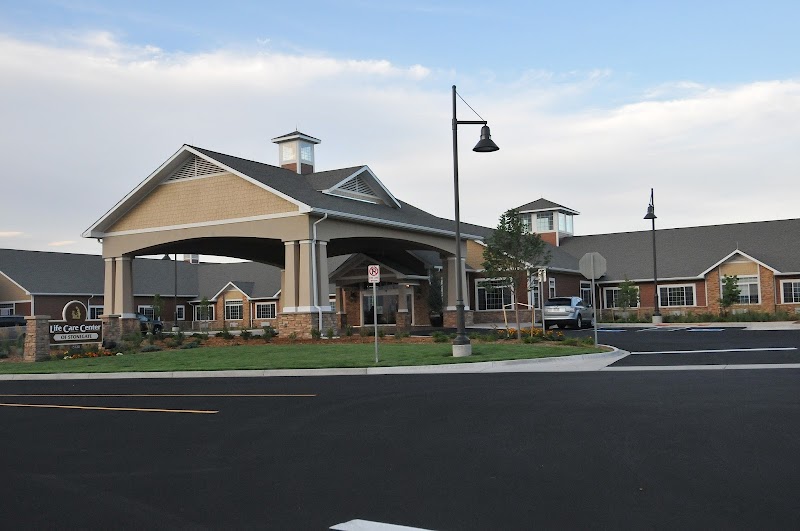
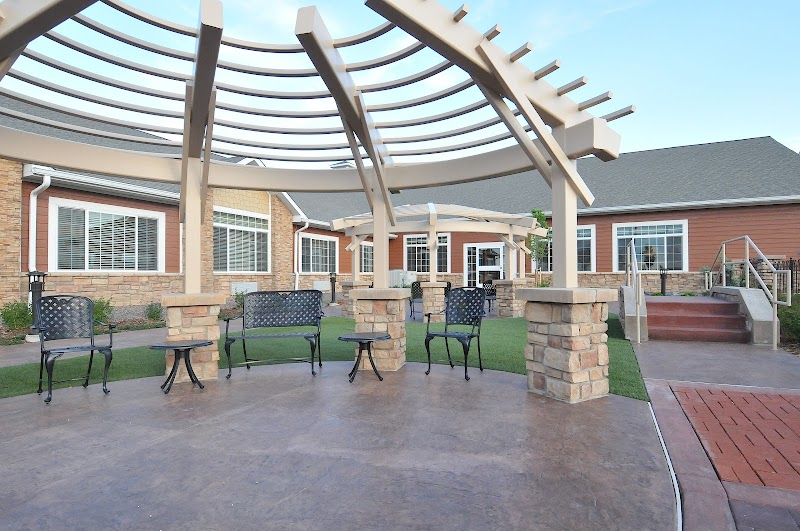
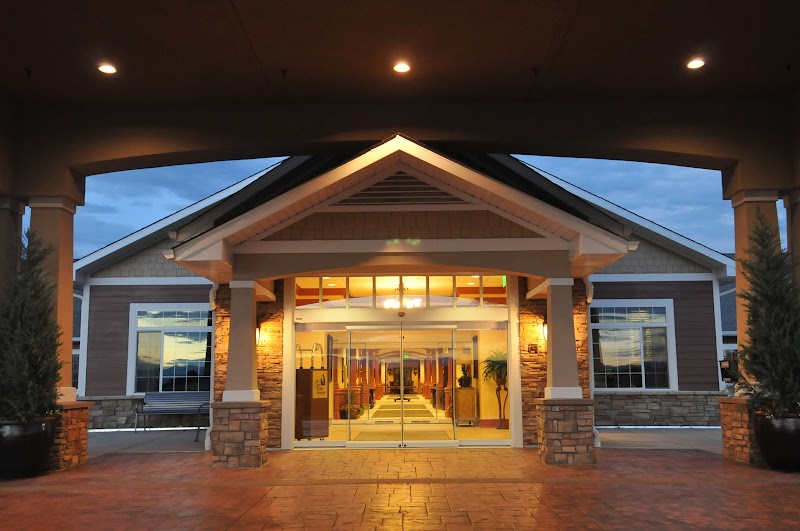
LIFE CARE CENTER OF STONEGATE

15720 GARDEN PLAZA DR, PARKER, CO 80134 (303) 805-2085
For profit - Corporation 120 Beds LIFE CARE CENTERS OF AMERICA Data: November 2025
Trust Grade
48/100
#112 of 208 in CO
Last Inspection: October 2024

Within standard 12-15 month inspection cycle. Federal law requires annual inspections.

Overview

Life Care Center of Stonegate in Parker, Colorado, has received a Trust Grade of D, indicating below-average performance with some significant concerns. The facility ranks #112 out of 208 in Colorado, placing it in the bottom half of nursing homes in the state, but it is #3 out of 7 in Douglas County, meaning only two local options are worse. While the trend shows improvement, with issues decreasing from 7 in 2024 to 2 in 2025, there are still notable staffing challenges, as evidenced by a 64% turnover rate, which is higher than the state average. The facility has some strengths, including good RN coverage, surpassing 83% of Colorado facilities, but there have been serious incidents, such as a resident falling due to inadequate supervision and another experiencing significant medication errors. Overall, while there are areas of excellence, families should weigh these against the concerning findings before making a decision.

Trust Score
D
48/100
In Colorado
#112/208
Bottom 47%
Safety Record
Moderate
Needs review
Inspections
Getting Better
7 → 2 violations
Staff Stability
⚠ Watch
64% turnover. Above average. Higher turnover means staff may not know residents' routines.
Penalties
⚠ Watch
$6,293 in fines. Higher than 84% of Colorado facilities, suggesting repeated compliance issues.
Skilled Nurses
✓ Good
Each resident gets 77 minutes of Registered Nurse (RN) attention daily — more than 97% of Colorado nursing homes. RNs are the most trained staff who catch health problems before they become serious.
Violations
⚠ Watch
19 deficiencies on record. Higher than average. Multiple issues found across inspections.
★★★☆☆
3.0
Overall Rating
★★★☆☆
3.0
Staff Levels
★★★★★
5.0
Care Quality
★★☆☆☆
2.0
Inspection Score
Stable
2024: 7 issues
2025: 2 issues

The Good

  • 5-Star Quality Measures · Strong clinical quality outcomes
  • Full Sprinkler Coverage · Fire safety systems throughout facility
  • No fines on record

Facility shows strength in quality measures, fire safety.

The Bad

3-Star Overall Rating

Near Colorado average (3.1)

Meets federal standards, typical of most facilities

Staff Turnover: 64%

18pts above Colorado avg (46%)

Frequent staff changes - ask about care continuity

Federal Fines: $6,293

Below median ($33,413)

Minor penalties assessed

Chain: LIFE CARE CENTERS OF AMERICA

Part of a multi-facility chain

Ask about local staffing decisions and management

Staff turnover is elevated (64%)

16 points above Colorado average of 48%

The Ugly 19 deficiencies on record

2 actual harm
Aug 2025 2 deficiencies 1 Harm
SERIOUS (G) 📢 Someone Reported This

A family member, employee, or ombudsman was alarmed enough to file a formal complaint

Actual Harm - a resident was hurt due to facility failures

Accident Prevention (Tag F0689)

A resident was harmed · This affected 1 resident

**NOTE- TERMS IN BRACKETS HAVE BEEN EDITED TO PROTECT CONFIDENTIALITY** Based on observations, record review and interviews, the facility failed to ensure two (#2 and #4) three residents reviewed for ...

Read full inspector narrative →
**NOTE- TERMS IN BRACKETS HAVE BEEN EDITED TO PROTECT CONFIDENTIALITY** Based on observations, record review and interviews, the facility failed to ensure two (#2 and #4) three residents reviewed for accidents and hazards received adequate supervision to prevent accidents out of four sample residents.Resident #2, who had severe cognitive impairment, was admitted to the facility on [DATE] with diagnoses of Alzheimer's disease, a right ankle fracture and right shoulder ligament repair following a fall at home. The resident's right ankle was immobilized in an orthopedic boot and her right arm was immobilized in a sling. The facility identified upon admission that the resident was a high risk for falling and initiated a baseline fall care plan. However, the baseline fall care plan failed to include interventions to prevent falls for the resident. On 8/17/25 Resident #2 sustained a fall in her room and complained of right wrist pain. The physician ordered an Xray of the resident's wrist to be completed at the facility and the resident was diagnosed with a right wrist fracture. Resident #2 was transferred to the emergency department for further evaluation of her right wrist fracture.Additionally, Resident #4, who had moderate cognitive impairment, was admitted to the facility on [DATE] with diagnoses that included a history of falling, a history of stroke, muscle weakness, malnutrition, cognitive impairment, thoracic spine fracture, and multiple fractures of ribs and post-back surgery on 8/1/25. The facility initiated a fall care plan on 8/5/25 with interventions that included placing the call light within the resident's reach and assisting the resident with activities of daily living (ADL). However, observation and resident interview during the survey revealed Resident #4 was unable to demonstrate that she could locate and activate her call light to call for staff assistance. On 8/19/25, Resident #4 sustained a fall in her room and was bleeding from her head. The resident was sent to the hospital for evaluation and was diagnosed with an open skull fracture.Resident #4 was readmitted to the facility on [DATE] and the facility implemented a fall intervention for the resident to wear gripper socks. Specifically, the facility failed to:-Implement a baseline care plan with effective fall prevention interventions in order to prevent a fall with major injury on 8/17/25 for Resident #2; and,-Implement appropriate person-centered and effective fall interventions in order to prevent a fall with major injury on 8/19/25 for Resident #4.Findings include:I. Facility policy and procedureThe Fall Management policy, revised 3/11/25, was provided by the nursing home administrator (NHA) on 8/25/25 at 10:36 a.m. It revealed in pertinent part, The facility will assess the resident upon admission, readmission, with a change in condition and with any fall event for any fall risks and will identify appropriate interventions to minimize the risk of injury related to falls. During the assessment, a care plan will be developed and initiated by the admitting nurse on any residents assessed to be at risk for falls. The interdisciplinary team (IDT) will review and revise the care plan if indicated upon a fall event. The interventions to reduce the risk of falls should be individualized based on the resident risk factors and fall history.II. Resident # 2A. Resident statusResident #2, age greater than 65, was admitted on [DATE]. According to the August 2025 computerized physician orders (CPO), diagnoses included Alzheimer's disease, right ankle fracture, right shoulder ligament repair and malnutrition.The 8/15/25 minimum data sets (MDS) assessment revealed the resident had severe cognitive impairment with a brief interview for mental status (BIMS) score of five out of 15. The resident required partial to moderate assistance from staff for med mobility, was dependent on staff for sitting and standing, transferring and using a manual wheelchair. B. Resident interviewResident #2 was interviewed on 8/20/25 at 12:10 p.m. Resident #2 said she fell when she tried to get out of bed in the morning (on 8/17/25). Resident #2 said was unhappy that she fell and fractured her wrist. Resident #2 said before she fell, she had her right foot in a brace and her right shoulder was already in a sling. Resident #2 said she fractured her right wrist when she fell on 8/17/25 and now had a cast on her right arm. Resident #2 said she was worried the cast on her right arm might interfere with her right shoulder healing after her recent shoulder surgery.C. Record reviewResident #2's baseline care plan, initiated 8/11/25, revealed Resident #2 was at risk for falls. The care plan was not developed and did not include interventions for fall prevention.Cross-reference F655 for failure to initiate a thorough baseline care plan for fall prevention.The 8/11/25 Fall Risk Evaluation revealed Resident #2 had a fall risk score of 16, which indicated the resident had a high risk for falling.The 8/17/25 7:04 a.m. nurse progress note revealed Resident #2 was observed on the floor in her room. The resident's call light was not on and Resident #2 was leaning on the closet door with no shoes on. Resident #2 complained of severe pain in her right wrist. Staff assisted Resident #2 to her bed and the physician was notified about the fall. The physician ordered a mobile Xray of the wrist to be completed at the facility. The Xray was completed on 8/17/25 and revealed a wrist fracture. The physician was notified and Resident #2 was transferred to the hospital for evaluation and treatment of the right wrist fracture. The 8/17/25 3:30 p.m. nurse progress note revealed Resident #2 returned from the hospital and Resident #2's right wrist was in a splint due to a wrist fracture.The 8/17/25 fall investigation revealed Resident #2 did not have her call light on, wore one sock, and was unable to recall details of why and how she got out of her bed. The facility investigation determined the cause of the fall was Resident #2 got out of bed without assistance from staff. The 8/22/25 8:57 a.m. physician progress note revealed Resident #2 was evaluated by the orthopedic specialist and Resident #2 would require future surgery for the right wrist fracture. The orthopedic specialist ordered Resident #2 to continue wearing the right wrist splint and to encourage Resident #2 to complete finger and thumb range of motion exercises.On 8/25/25 the facility updated Resident #2's fall care plan that included placing fall mats on both sides of Resident 2's bed.-There was no documentation that Resident #2 was assessed for understanding that she could locate and activate a call light to request assistance when she wanted to get out of bed (see director of nursing (DON) interview below). -There was no care plan initiated for fracture care for Resident #2's fractured ankle and shoulder that were present at admission or for the wrist fracture sustained at the facility on 8/17/25.Cross-reference F655 for failure to initiate a baseline care plan for fracture care. III. Resident #4A. Resident statusResident #4, age greater than 65, was admitted on [DATE], discharged to the hospital on 8/19/25 and was readmitted on [DATE]. According to the August 2025 CPO, diagnoses included history of falling, history of stroke, muscle weakness, malnutrition, cognitive impairment, skull fracture, thoracic spine fracture, and multiple fractures of ribs and back surgery on 8/1/25.The 8/7/25 MDS assessment revealed the resident had moderate cognitive impairment with a BIMS score of 10 out of 15. Resident #4 was dependent on staff for bed mobility and required substantial to maximum assistance from staff for standing. The resident was not evaluated for transfer assistance and mobility assistance needs. B. Resident observation and interviewOn 8/25/25 at 2:03 p.m. Resident #4 was resting on her bed. She had a call light button within her reach. When asked, Resident #4 was unable to locate her call light and said she did not know if she would remember to use the call light to call staff. C. Record reviewResident #4's fall care plan, initiated 8/5/25, revealed the resident was at risk for falls. Interventions included assisting the resident with ADLs, placing the resident's call light in reach, orienting the resident to her room and completing a fall risk assessment.The 8/22/25 Fall Risk Evaluation revealed Resident #4 had a fall risk score of 22, which indicated the resident had a high risk for falling.The 8/19/25 at 11:04 a.m. nurse progress note revealed Resident #4 fell and was found on the floor near her bed and was bleeding from her head The nurse documented Resident #4 remained conscious and was assisted to her bed until she was transferred to the hospital.The 8/19/25 fall investigation revealed Resident #4 was found on the floor next to her bed and was bleeding from a laceration on the back of her head. Staff provided first aid, called 911, and Resident #4 was transferred to the emergency department for evaluation. Resident #4 was diagnosed with an open skull fracture, and returned to the facility on 8/22/25. The facility investigation determined the cause of the fall was the resident got out of bed without assistance when the resident believed it was time to get out of bed for the day. The 8/22/25 hospital summary documented that Resident #4 was diagnosed with an open fracture of the temporal (skull) bone and was at her usual level of cognition.On 8/22/25 the facility updated Resident #4's fall care plan that included wearing grip socks at all times.-There was no documentation that Resident #4 was assessed for understanding that she could locate and activate a call light to request assistance when she wanted to get out of bed (see DON interview below). IV. Staff interviewsLicensed practical nurse (LPN) #1 was interviewed on 8/25/25 at 2:12 p.m. LPN #1 said when residents were admitted to the facility they were assessed to determine their risk for falling. LPN #1 said when a resident had a risk for falling, the admitting nurse completed a baseline care plan for fall prevention and initiated fall prevention interventions. LPN #1 said the fall prevention interventions were assigned to nurses and certified nurse aides (CNA) for monitoring and observations as indicated by the intervention. LPN #1 said when residents were identified as a high risk for falling, the fall risk information was included during the shift-to-shift report so that oncoming staff were able to identify which residents had a high risk of falling.CNA #1 was interviewed on 8/25/25 at 2:30 p.m. CNA #1 said she knew which residents were at risk for falling because she was familiar with the residents on her assigned unit. CNA #1 said she thought every resident had a risk of falling and she made sure residents had their call lights and personal items within their reach. CNA #1 said she was informed about residents with recent falls, injuries and special care needs during the shift-to-shift reports. The DON was interviewed on 8/25/25 at 3:03 p.m. The DON said when residents were admitted to the facility, they had a fall risk assessment completed by the admitting nurse and were assigned a fall risk score. The DON said that every resident with a score of 10 and above was considered to be a fall risk and should have a care plan initiated with interventions to reduce falls or prevent serious injury if a fall occurred. The DON said Resident #2 had a high risk for falling and should have had interventions initiated upon admission to prevent falls.The DON said Resident #4 had a fall risk score of 22 and had a high risk for falling. The DON said Resident #4 was confused and wanted to get out of bed earlier and get dressed earlier than her normal routine. The DON said when residents were admitted to the facility, they were oriented to their rooms and received instruction regarding where their call lights were located and residents were asked to demonstrate that they could press the button to call for assistance. -However, Resident #4 was unable to locate her call light during observation and said she did not know if she would remember to use the call light to call staff (see observation above).The DON said the room and call light orientation did not include specific steps to ensure a cognitively impaired resident retained understanding and could later locate and activate the call light without staff assistance.
CONCERN (D) 📢 Someone Reported This

A family member, employee, or ombudsman was alarmed enough to file a formal complaint

Potential for Harm - no one hurt, but risky conditions existed

Deficiency F0655 (Tag F0655)

Could have caused harm · This affected 1 resident

**NOTE- TERMS IN BRACKETS HAVE BEEN EDITED TO PROTECT CONFIDENTIALITY** Based on observations, record review and interviews, the facility failed to develop and implement a baseline care plan for withi...

Read full inspector narrative →
**NOTE- TERMS IN BRACKETS HAVE BEEN EDITED TO PROTECT CONFIDENTIALITY** Based on observations, record review and interviews, the facility failed to develop and implement a baseline care plan for within 48 hours of admission that included the minimum healthcare information necessary to properly care for the immediate needs for two (#2 and #4) of three residents reviewed out of four sample residents. Specifically, the facility failed to:-Implement a baseline care plan that included fall prevention interventions in order to prevent a fall with major injury on 8/17/25 for Resident #2; and,-Implement a baseline care plan that included information for fracture care in order to properly care for Resident #2's admitting diagnoses of a right ankle fracture and right shoulder ligament repair and Resident #4's admitting diagnoses of thoracic spine and rib fractures.Findings include:I. Resident # 2A. Resident statusResident #2, age greater than 65, was admitted on [DATE]. According to the August 2025 computerized physician orders (CPO), diagnoses included Alzheimer's disease, right ankle fracture and right shoulder ligament repair and malnutrition.The 8/15/25 minimum data sets (MDS) assessment revealed the resident had severe cognitive impairment with a brief interview for mental status (BIMS) score of five out of 15. The resident required partial to moderate assistance from staff for bed mobility and was dependent on staff for sitting and standing, transferring and using a manual wheelchair. B. Resident interviewResident #2 was interviewed on 8/20/25 at 12:10 p.m. Resident #2 said she fell when she tried to get out of bed in the morning (on 8/17/25). Resident #2 said was unhappy that she fell and fractured her wrist. Resident #2 said before she fell, she had her right foot in a brace and her right shoulder was already in a sling. Resident #2 said she fractured her right wrist when she fell on 8/17/25 and now had a cast on her right arm. Resident #2 said she was worried the cast on her right arm might interfere with her right shoulder healing after her recent shoulder surgery. Resident #2 said some staff were unaware how to care for her arm sling and leg brace. Resident #2 said some staff left her leg brace in place all night and some staff were unable to remove her arm sling to help her with dressing.C. Record reviewResident #2's baseline care plan, initiated 8/11/25, revealed Resident #2 was at risk for falls. -However, the baseline care plan did not include interventions for fall prevention.-The record review revealed there was not a baseline initiated for fracture care or shoulder care for Resident #2.The 8/17/25 at 3:30 p.m. nurse progress note revealed Resident #2 returned from the hospital following a fall and Resident #2's right wrist was in a splint due to a wrist fracture.Cross reference F689 for failure to prevent a fall with major injury.II. Resident #4 A. Resident statusResident #4, age greater than 65, was admitted on [DATE], discharged to the hospital on 8/19/25 and was readmitted on [DATE]. According to the August 2025 CPO, diagnoses included history of falling, history of stroke, muscle weakness, malnutrition, cognitive impairment, thoracic spine fracture, multiple fractures of ribs and back surgery on 8/1/25.The 8/7/25 MDS assessment revealed the resident had moderate cognitive impairment with a BIMS score of 10 out of 15. Resident #4 was dependent on staff for bed mobility and required substantial to maximum assistance from staff for standing. The resident was not evaluated for transfer assistance and mobility assistance needs.B. Resident interviewResident #4 was interviewed on 8/25/25 at 2:03 p.m. Resident #4 said staff were not careful with helping her move in bed and she worried about having increased pain in her back because staff were not careful when they assisted her. C. Record review -Review of Resident #4's baseline care plan revealed the care plan did not include interventions for spine fracture or spinal precautions following the resident's post-operative care following spine surgery while turning, repositioning or transferring the resident. III. Staff interviewsLicensed practical nurse (LPN) #1 was interviewed on 8/25/25 at 2:12 p.m. LPN #1 said when residents were admitted to the facility they were assessed to determine their risk for falling. LPN #1 said when a resident had a risk for falling, the admitting nurse completed a baseline care plan for fall prevention and initiated fall prevention interventions. LPN #1 said the fall prevention interventions were assigned to nurses and certified nurse aides (CNA) for monitoring and observations as indicated by the intervention. LPN #1 said when residents were identified as a high risk for falling, the fall risk information was included during the shift-to-shift report so that oncoming staff were able to identify which residents had a high risk of falling. LPN #1 said she was unable to find any baseline care plan interventions for Resident #2 and Resident #4 pertaining to caring for their fractures and immobilized joints.CNA #1 was interviewed on 8/25/25 at 2:30 p.m. CNA #1 said she was informed about residents with recent falls, injuries and special care needs during the shift-to-shift reports. CNA #1 said she was unaware of specialized care needs for Resident #2 and Resident #4 when she assisted with transfers and positioning of the residents. CNA #1 said she assisted Resident #2 with applying her orthopedic ankle brace but she did not know what to assess to ensure the brace was applied correctly. CNA #1 said she was careful with all the residents. The director of nursing (DON) was interviewed on 8/25/25 at 3:03 p.m. The DON said when residents were admitted to the facility, they had a fall risk assessment completed by the admitting nurse and were assigned a fall risk score. The DON said that every resident with a score of 10 and above was considered to be a fall risk and should have a care plan initiated with interventions to reduce falls or prevent serious injury if a fall occurred. The DON said Resident #2 had a high risk for falling and should have had interventions initiated upon admission to prevent falls.The DON said nurses should check and assess residents that had fractures for swelling, circulation and check devices (braces/spints) for safety and proper use. The DON said Resident #4 should have had spinal precautions in place on her baseline care plan. The DON said she was unable to locate baseline care plans for Resident #2 and Resident #4's fracture care.
Oct 2024 7 deficiencies 1 Harm
SERIOUS (G) 📢 Someone Reported This

A family member, employee, or ombudsman was alarmed enough to file a formal complaint

Actual Harm - a resident was hurt due to facility failures

Deficiency F0760 (Tag F0760)

A resident was harmed · This affected 1 resident

**NOTE- TERMS IN BRACKETS HAVE BEEN EDITED TO PROTECT CONFIDENTIALITY** Based on record review and interviews, the facility failed to ensure one (#287) of five residents out of 35 sample residents was...

Read full inspector narrative →
**NOTE- TERMS IN BRACKETS HAVE BEEN EDITED TO PROTECT CONFIDENTIALITY** Based on record review and interviews, the facility failed to ensure one (#287) of five residents out of 35 sample residents was free from significant medication errors. Resident #287 was admitted to the facility on [DATE] for skilled nursing care after a failed left total knee revision. Secondary diagnoses included hypertension (high blood pressure), post-procedural pain and a history of heart failure. Resident #287's physician's orders for medications, upon his admission to the facility from the hospital on 6/20/24, included an order for carvedilol (a medication used to treat high blood pressure and heart failure) 6.25 milligrams (mg) twice daily for heart rate and blood pressure (BP). The hospital's list of physician ordered medications was verified by the facility's physician. The medication orders were entered into Resident #287's electronic medical record (EMR) by licensed practical nurse (LPN) #2 on 6/20/24 at 3:55 p.m. and confirmed by LPN #3 on 6/20/24 at 4:51 pm. However, LPN #2 incorrectly entered the physician's order for carvedilol as 25 mg by mouth two times a day for hypertension, if systolic blood pressure was under 100 mm/hg (millimeters of mercury), notify the physician and document in a progress note. LPN #2 incorrectly entered the dose of the carvedilol as 25 mg instead of the physician ordered 6.25 mg, four times the dose the resident was ordered to receive. LPN #3 failed to catch the discrepancy when confirming the entered physician's orders one hour after they were entered into Resident #287's EMR. Resident #287 was administered the 25 mg dose of carvedilol on the evening of 6/20/24 and the morning of 6/21/24. As a result of LPN #2's and LPN #3's failure to accurately transcribe and confirm a physician's medication order, Resident #287 received two doses of the medication that were excessively high. He sustained hypotension (low blood pressure) and was transferred to the hospital intensive care unit on 6/21/24. He was treated for a medication overdose that required intravenous medications to support his blood pressure and circulation. Findings include: Record review and interviews confirmed the facility corrected the deficient practice prior to the onsite investigation on 9/30/24 to 10/3/24, resulting in the deficiency being cited as past noncompliance with a correction date of 6/28/24. I. Incident on 6/20/24 and 6/21/24 On 6/20/24 at 7:28 pm, Resident #287's BP was 112/59 mm/hg and the nurse administered the carvedilol medication to the resident. -The resident was administered an incorrect dose of carvedilol 25 milligrams (mg) instead of the correct dose of 6.25 mg. On 6/21/24 at 7:05 am, Resident #287's BP was 102/52 mm/hg and the nurse administered the carvedilol medication to the resident. -The resident was administered an incorrect dose of carvedilol 25 mg instead of the correct dose of 6.25 mg. At 1:59 p.m., Resident #287's blood pressure was 73/94 [sic] mm/hg. -LPN #2 and LPN #3 failed to follow professional standards of nursing practice when entering and confirming physician's medication orders into the EMR. As a result of LPN #2 and LPN #3's failure to accurately transcribe and confirm a physician's medication order, Resident #287 received two doses of the medication that were excessively high. He sustained hypotension (low blood pressure) and was transferred to the hospital intensive care unit on 6/21/24. He was treated for a medication overdose that required intravenous medications to support his blood pressure and circulation. Record review and interviews confirmed the facility corrected the deficient practice prior to the onsite investigation on 9/30/24 to 10/3/24, resulting in the deficiency being cited as past noncompliance with a correction date of 6/28/24. II. Facility's plan of correction The corrective action plan implemented by the facility in response to Resident #287's medication administration failure on 6/20/24 and 6/21/24 was provided by the nursing home administrator (NHA) on 10/3/24 at 6:15 p.m. The plan revealed the following: A. Corrective action Resident #287 was assessed following the administration of the two larger doses of carvedilol. The physician was promptly notified and new orders for the correct dose were obtained. The resident was notified of the error and sent to the hospital for further evaluation. The resident's primary care physician at the facility reviewed the medical record and supplied the facility with his findings. Education was done with the two nurses who transcribed and verified the medication order upon admission. A root cause analysis was completed with the involved nurses, and corrective action was implemented based on the findings. B. Identification of others The facility reviewed hospital discharge medication orders and facility admission medication orders. Out of 41 admissions that were reviewed, there was one other error noted. That error had no adverse outcomes. The physician was notified and corrective action was implemented. C. Systemic changes admission orders education was conducted from 6/25/24-6/28/24 and included the following: -All admission orders will have a second check completed by a nurse -The second check should consist of verifying the correct admission orders were entered by the first nurse -Orders should not be confirmed unless they meet the 10 rights of medication administration: right patient, medication, time, dose, route, right education/advice, right to refuse, right assessment, right evaluation/response and right documentation. -52 staff completed education on admission orders. -112 staff completed education regarding double checking blood pressures if abnormal results were obtained the first time. D. Monitoring -Review of medications will be done by the pharmacist upon admission and as needed. -admission orders from the hospital are reviewed and entered by a nurse. A second nurse reviews the orders, comparing them to the transfer orders from the hospital. -If a medication error is identified, the process for medication variance will be followed, including prompt action to maintain safety for the resident, communicating with the physician, and implementing any provided orders. Additional education will be done with the nurses involved. This will be done within 24 hours of admission, and for two weeks or longer based on the level of compliance. The DON or designee, will conduct this review 3-5 (three to five) times per week for two weeks. -If significant abnormal vital signs are obtained, a second check will be completed using a manual cuff (for blood pressures). The DON will identify significantly abnormal vital signs and determine if re-checks have been completed. This will be done 3-5 (three to five) times per week for four weeks, and based on the results, additional training will be done with nurses. -The DON or designee will report audit findings and medication regimen review findings to the Facility quality assurance process improvement (QAPI) committee. The committee will review the findings and determine if the facility has achieved substantial compliance. The frequency of ongoing monitoring will be determined by the facility QAPI committee. -Education for nurses will be done upon hire and as needed regarding the facility process for transcribing and checking medication orders upon admission, rechecking abnormal vital signs, and the policy/procedure related to medication administration and errors. Date of correction was 6/28/24. III. Professional reference According to [NAME], P.A., [NAME], A.G., et.al., Fundamentals of Nursing, 10 ed. (2020), Elsevier, St. Louis Missouri, pp. 606-607, retrieved on 10/7/24, Take appropriate actions to ensure the patient receives medication as prescribed and within the times prescribed and in the appropriate environment. Professional Standards such as nursing scope and standards of practice apply to the activity of medication administration. To prevent medication errors, follow the seven rights of medication administration consistently every time you administer medications. Many medication errors can be linked in some way to an inconsistency in adhering to these seven rights: the right medication, the right dose, the right patient, the right route, the right time, the right documentation and the right indication. IV. Resident #287 A. Resident status Resident #287, age [AGE], was admitted on [DATE] and transferred to the hospital on 6/21/24. According to the June 2024 computerized physician orders (CPO), diagnoses included a failed left total knee revision, post-procedural pain and hypertension. The minimum data set (MDS) assessment was not completed on the resident due to being in progress at the time of the resident's discharge. B. Record review A review of Resident #287's BP documentation revealed the following: -On 6/20/24 at 5:51 p.m. the resident's BP was 160/94; -On 6/20/24 at 7:28 p.m. the resident's BP was 112/59; -On 6/21/24 at 7:05 a.m. the resident's BP was 102/52; -On 6/21/24 at 8:56 a.m. the resident's BP was 112/60; and, -On 6/21/24 at 1:59 p.m. the resident's BP was 73/94 [sic]. A nursing progress note dated 6/21/24 at 10:55 a.m. documented that Resident #287 received two doses of carvedilol 25 mg per the admission order, which was transcribed incorrectly. There were no adverse effects noted. The nurses were educated, the order was corrected, the physician was notified, and a new order was received to monitor vital signs every four hours for 24 hours. The resident was informed of the error. The June 2024 CPO revealed a new physician's order for carvedilol oral tablet 6.25 mg was entered on 6/21/24 at 10:23 a.m. The June 2024 CPO revealed a physician's order for vital signs every four hours for one day, entered on 6/21/24 at 12:00 p.m. A medical provider note dated 6/21/24 at 12:26 p.m. documented the medication error resulted in significant hypotension. The resident was seen laying in bed and was easily arousable, but lethargic and mildly dizzy. Staff was unable to establish an intravenous (IV) line to give him fluids, so the recommendation was to send him to the emergency room (ER). An order for a one time dose of Midodrine HCL (a medication used to treat low blood pressure) oral tablet 2.5 mg for hypotension, was entered on 6/21/24 at 1:15 p.m. A hospital transfer summary note, dated 6/21/24 at 3:15 p.m., documented that nursing gave Resident #287 Midodrine HCL 2.5 mg at 1:00 pm for hypotension as ordered by the physician. A nurse could not start an IV on Resident #287, so the resident was transferred to the hospital. The resident's wife and daughter, the DON, and the hospital emergency room were notified. An emergency room clinician note, dated 6/21/24 at 4:50 p.m., revealed Resident #287 received approximately 1400 milliliters (mls) of IV fluids. Given the resident's history of heart failure, the ER clinician started IV blood pressure medications, put in a central IV catheter, and admitted him to the intensive care unit. The medical director's investigation, not dated, was provided by the divisional director of clinical services (DDCS) on 10/3/24 at 5:38 p.m. The investigation revealed that the resident's prior hospital discharge summary showed he was on carvedilol (Coreg) 6.25 mg twice a day. The investigation documented the initial error was in the transcription of this order during admission to the facility of carvedilol as a 25 mg dose. The resident received two doses (an evening dose on 6/20/24 and morning dose on 6/21/24), with a first BP of 112/59 mm/hg and a second of 102/52 mm/hg. The investigation documented other medications that could have contributed to the low blood pressure were diazepam, furosemide, hydromorphone, loratadine, losartan, methocarbamol, mirtazapine, pramipexole and spironolactone. V. Staff interviews LPN #1 and LPN #4 were interviewed on 10/3/24 at 9:36 a.m. LPN #1 and LPN #4 said, when a resident was admitted from the hospital, the facility received the resident's discharge summary before they arrived. They said the admissions department entered the discharge summary information into the EMR, including the list of the resident's medications given by the hospital. LPN #1 and LPN #4 said the facility nurses looked at that information, the physician verified it, and then the nurses entered the orders into the computer. The director of nursing (DON) and the DDCS were interviewed together on 10/3/24 at 3:13 p.m. The DON said the new facility procedure for entering residents' admission medications was for the physician, the DON, and the unit manager to check orders for new residents. The DON said, previously, staff had not been doing adequate admissions for new residents and that staff should have triple checked new admission physician orders as part of the admission process. The DON revealed that now the facility had a nurse who audited resident charts and ensured all the assessments, plans, diagnoses and physician's orders were entered correctly. The DDCS was interviewed again on 10/3/24 at 5:27 p.m. The DDCS said Resident #287 was at the facility for a very short time. She said there was a medication error that occurred which resulted in the resident receiving an incorrect dose of his blood pressure medication. She said the resident was admitted to the hospital's intensive care unit following the medication error. The DDCS said when the error occurred, the nurses responsible for entering the order, LPN #2 and LPN #3, admitted the error immediately. She said LPN #1, who administered the medication to the resident, took the resident's vital signs and then the resident was sent out for evaluation. The DDCS said she wrote a summary recommending the medical director review the resident's EMR, and if there were any concerns he should share them. She said the facility wrote a variance, reported the error, and called the doctor. She said the pharmacist reviewed the resident's medications and found the error. The DDCS said the physician and the resident were notified promptly that he got two doses of the 25 mg dose of the medication. She said vital signs equipment was checked to make sure it worked and the blood pressures were accurate. The DDCS said education was done with the two LPNs who were responsible for entering the physician's order and verifying it incorrectly and a plan of correction was done to ensure the error would not occur again.
CONCERN (D)

Potential for Harm - no one hurt, but risky conditions existed

Deficiency F0698 (Tag F0698)

Could have caused harm · This affected 1 resident

**NOTE- TERMS IN BRACKETS HAVE BEEN EDITED TO PROTECT CONFIDENTIALITY** Based on observations, record review and interviews, the facility failed to ensure one (#23) of two residents reviewed for dialy...

Read full inspector narrative →
**NOTE- TERMS IN BRACKETS HAVE BEEN EDITED TO PROTECT CONFIDENTIALITY** Based on observations, record review and interviews, the facility failed to ensure one (#23) of two residents reviewed for dialysis care out of 35 sample residents received dialysis services consistent with professional standards of practice. Specifically, the facility failed to consistently complete the pre- and post-dialysis facility assessment section on dialysis communication forms for Resident #23. Findings include: I. Facility policy and procedure The Hemodialysis policy, reviewed 9/6/24, was received from the nursing home administrator (NHA) on 9/30/24 at 1:00 p.m. It revealed in pertinent part, The facility assures that each resident receives care and services for the provision of offsite hemodialysis consistent with the professional standards of practice. This includes ongoing assessment of the resident's condition and monitoring for complications before and after dialysis treatments received at a certified dialysis facility, and ongoing communication and collaboration with the dialysis facility regarding dialysis care and services. Day of dialysis: follow physician orders regarding medication administration pre- and post-dialysis. Observe the vascular access site prior to dialysis and initiate the pre/post dialysis communication form to be sent to the dialysis clinic with the resident. Post-dialysis: obtain vital signs of the resident upon return from dialysis and complete the pre-post dialysis communication form. Maintain dialysis transfer forms in the resident's record-do not destroy. II. Resident #23 A. Resident status Resident #23, age greater than 65, was admitted on [DATE]. According to the September 2024 computerized physician orders (CPO), diagnoses included end stage renal disease (decreased kidney function), dependence on renal dialysis, anemia in chronic kidney disease and protein-calorie malnutrition. The 9/14/24 minimum data set (MDS) assessment revealed the resident was cognitively intact with a brief interview for mental status (BIMS) score of 15 out of 15. The resident needed substantial assistance with transfers, and partial/moderate assistance with bathing, lower body dressing, and toileting hygiene. She was independent with eating and oral hygiene. The MDS assessment documented the resident received dialysis care. B. Record review Review of Resident #23's September 2024 CPO revealed a physician's order for Resident #23 to receive dialysis on Tuesdays, Thursdays and Saturdays, ordered 8/17/24. Review of Resident #23's pre- and post-dialysis communication forms located in the dialysis communication binder, revealed the communication forms had three sections which were to be filled out on dialysis days. The pre-dialysis section on the dialysis communication form was to be completed by the facility with the resident's vital signs, including temperature, pulse, respirations and blood pressure. The section included comments to identify any assessment concerns or medication changes which the facility wished to be communicated with the dialysis center, the condition of the access/site, and whether a meal was given to the resident to take to the dialysis center. A signature, staff title, date and time the assessment was completed were to be filled in by the facility staff. The second section on the dialysis communication form was to be completed by the dialysis center after the resident completed their dialysis session. The section included vital signs, pre-weight, post-weight, condition of the access site, whether any medications were given at the dialysis center and any recommendations or follow up from the dialysis center. A signature and date were to be filled in by the dialysis center nurse. The post-dialysis section on the dialysis communication form was to be completed by the facility with the resident's vital signs, including temperature, pulse, respirations and blood pressure and the condition of the access site. A signature, staff title, date and time the assessment was completed were to be filled in by the facility staff. Review of Resident #23's dialysis communication forms from 8/31/24 to 9/26/24 revealed the communication form was not completed appropriately on the following dates: -On 8/31/24 the facility did not complete the pre-dialysis or post-dialysis sections of the dialysis communication form. -On 9/3/24 the facility did not complete the pre-dialysis section of the dialysis communication form. -On 9/5/24 the facility did not complete the pre-dialysis section of the dialysis communication form. -On 9/14/24 the facility did not complete the vital signs information in the pre-dialysis section, sign the pre-dialysis section or complete the post-dialysis section of the dialysis communication form. -On 9/17/24 the facility did not complete the vital signs information in the pre-dialysis section, sign the pre-dialysis section or complete the post-dialysis section of the dialysis communication form. -On 9/19/24 the facility did not document the resident's pre-dialysis weight in the dialysis communication form or complete the post-dialysis section of the dialysis communication form. III. Staff interviews Licensed practical nurse (LPN) #1 was interviewed on 10/3/24 at 11:30 a.m. LPN #1 said Resident #23's vital signs should have been checked prior to the resident going to dialysis. LPN #1 said usually a certified nurse aide (CNA) checked vital signs but a nurse was also able to check vital signs. LPN #1 said staff should get the resident's vital signs the day of their dialysis appointment by 10:45 a.m. LPN #1 said she was not aware there was missing documentation on Resident #23's dialysis paperwork but she said, at times, Resident #23's blood pressure could get low and could explain some of the missing documentation in the dialysis binder if the resident did not attend the dialysis treatment. LPN #1 said the staff was supposed to weigh the resident at the facility prior to the resident going to dialysis. She said the vital signs and weights should be recorded on the dialysis communication forms in the binder prior to the resident going to dialysis. The director of nursing (DON) and the divisional director of clinical services (DDCS) were interviewed together on 10/3/24 at 3:08 p.m. The DDCS said the dialysis communication forms should be filled out consistently, including the pre-dialysis section, prior to the residents going to their dialysis appointments. The DON said when a resident returned to the facility from dialysis with the communication binder, the facility nurse should call the dialysis center to follow up and get a report for how much fluid was taken off the resident at dialysis and document the information in the resident's electronic medical record (EMR). The DON said the dialysis communication forms should include the necessary information because it could indicate the resident experienced a fluid volume loss that affected the resident's blood pressure and the physician might make further recommendations based on that information.
CONCERN (E) 📢 Someone Reported This

A family member, employee, or ombudsman was alarmed enough to file a formal complaint

Potential for Harm - no one hurt, but risky conditions existed

Deficiency F0561 (Tag F0561)

Could have caused harm · This affected multiple residents

**NOTE- TERMS IN BRACKETS HAVE BEEN EDITED TO PROTECT CONFIDENTIALITY** V. Resident #183 A. Resident status Resident #183, age greater than 65, was admitted on [DATE]. According to the September 2024 ...

Read full inspector narrative →
**NOTE- TERMS IN BRACKETS HAVE BEEN EDITED TO PROTECT CONFIDENTIALITY** V. Resident #183 A. Resident status Resident #183, age greater than 65, was admitted on [DATE]. According to the September 2024 CPO, the diagnoses included paraplegia (paralysis of the lower body), high blood pressure, pressure ulcer, muscle weakness and a complication of an internal fixation device (surgical implant) of the vertebrae. The 10/2/24 MDS assessment revealed the resident was cognitively intact with a BIMS score of 13 out of 15. He was dependent on staff for assistance with toileting hygiene, lower body dressing and transfers; he needed substantial/maximum assistance for bed mobility (movement back and forth in bed, sitting to lying/lying to sitting) and set-up help only with eating. The MDS assessment documented the resident's shower/bathing had not occurred due to a medical condition or safety concerns. B. Resident interview Resident #183 was interviewed on 10/1/24 at 9:12 a.m. Resident #183 said he had not been offered a shower since he was admitted to the facility on [DATE]. The resident said he needed assistance bathing because he was unable to use his legs and was unsure of his scheduled shower days. C. Record review Resident #183's comprehensive care plan, initiated 9/25/24, included focus areas for falls, pain medication, nutrition, skin integrity, and urinary incontinence. The care plan failed to address the resident's preferred or scheduled shower days as well as his needed level of assistance. Resident #183's bathing task sheet in his electronic medical record (EMR) failed to specify the resident's bathing schedule or his preferred bathing days,. -Review of the resident's EMR did not reveal documentation indicating the resident had been offered or provided a shower from 9/25/24 to 10/1/24 Resident #183's [NAME] as of 10/2/24 documented to assist the resident with ADL's as needed and did not include his bathing schedule, preferences or level of assistance needed. On 10/2/24 the residents bathing records stored in a binder at the nurses were reviewed and there was no record Resident #183 was offered a shower or bath since his admission on [DATE]. VI. Resident #186 A. Resident status Resident #186, age greater than 65, was admitted on [DATE] and discharged on 12/15/23. According to the December 2023 CPO, the diagnoses included encephalopathy (brain dysfunction), high blood pressure, dementia, dysphagia and weakness. The 12/15/23 MDS assessment revealed the resident had severe cognitive impairments with a BIMS score of two out of 15. She was dependent on maximum assistance for toileting hygiene, and needed substantial to maximum assistance with bathing, lower body dressing, transfers and all bed mobility, and supervision only with eating and oral hygiene. B. Record review Resient #186's ADL care plan documented she had self-care performance deficit due to a recent hospitalization, a recent urinary tract infection, weakness, decreased mobility, dementia and incontinence. -However, the resident's comprehensive care plan and ADL care plan focus failed to include Resident #186's staff level of assistance required for bathing or her preferred or scheduled bathing days. Resident #186's ADL task report was provided by the divisional director of clinical services (DDCS) on 10/2/24 at 11:00 a.m. The task report revealed the resident's bathing schedule was Tuesday and Friday. -However, the task sheet did not include if the showers were provided and a review of the resident's electronic medical record revealed the facility did not document the resident refusing any showers or baths offered. VII. Staff interviews CNA #2 was interviewed on 10/2/24 at 11:30 a.m. CNA #2 said she provided Resident #183 a shower on 10/1/24 six days after his admission and documented the shower in the resident's EMR. -However, CNA #2 was unable to show where Resident #183's shower was documented. CNA #2 said if a resident refused a shower the staff will ask the resident again if they would like a shower, and if the resident continued to refuse a nurse was then notified of the resident's refusal. CNA #2 said if a could also be offered a bed bath if they did not want to take a shower or bath, and if the resident refused altogether the resigned signed the paper copy of their daily bathing record. LPN #1 said she assisted transferring Resident #183 out of his bed on either 9/30/24 or 10/1/24 so he could have a shower. LPN #1 said the staff should record in the residents EMR if they received any kind of shower or bath, and a bathing record should also be stored in the binder. LPN #1 said she was unable to see where Resident #183's shower was recorded. The director of nursing (DON) and the DDCS were interviewed together on 10/3/24 at 3:08 p.m. The DON said the shower schedule for residents was set according to the room numbers of the residents, so specific rooms numbers were scheduled for specific days, and the schedule was on the binder at the nurses station containing the residents bathing records. The DON said she had not yet identified any gaps that residents had not received their showers as scheduled. She said some residents preferred different bathing days of the week than their scheduled days and the facility could accommodate that, and residents could bathe more frequently if they preferred. The DDCS said once the resident was admitted the facility should immediately have the resident on the bathing schedule. The DDCS said the facility did audits and pulled shower reports out of the EMRs for all residents in the facility to ensure residents were getting showers as scheduled. The DDCS said the facility had previous shower documentation issues and have had to retrain staff on bathing documentation. The DDCS said the facility did not have a record of Resident #186's shower schedule as offered by the facility or documentation Resident #186 was provided a shower or bath as scheduled. Based on record review and interviews, the facility failed to honor resident choices for four (#71, #130, #183, and #186) of eight residents reviewed for self-determination out of 35 sample residents. Specifically, the facility failed to provide bathing for Resident #71, #130, #183 and #186 per their preferences. Findings include: I. Facility policy and procedure The Activities of Daily Living (ADL) policy, reviewed 9/10/24, was provided by the nursing home administrator (NHA) on 10/9/24 at 4:13 p.m. It read in pertinent part, The resident will receive assistance as needed to complete activities of daily living (ADLs). The facility must provide care and services in accordance with paragraph (a) for the following activities of daily living: bathing, dressing, grooming, and oral care. A resident who is unable to carry out activities of daily living receives the necessary services to maintain good nutrition, grooming, and personal and oral hygiene. II. Resident #71 A. Resident status Resident #71, age greater than 65, was admitted on [DATE]. According to the October 2024 computerized physician orders (CPO), diagnoses included fracture of left lower tibia and fibula (leg bone), chronic embolism and thrombosis of deep veins of lower extremities (blood clots), type 2 diabetes mellitus, chronic kidney disease stage 4, depression and anxiety disorder. The 9/9/24 minimum data set (MDS) assessment revealed the resident was cognitively intact with a brief interview for mental status (BIMS) score of 15 out of 15. She required substantial/maximal assistance with shower/bathe, upper/lower body dressing, putting on/taking off footwear, sit to stand and toilet transfers. The MDS assessment indicated the resident did not have behaviors or rejection of care during the review period. B. Resident interview Resident #71 was interviewed on 10/3/24 at 4:03 p.m. Resident #71 said she felt good, fresh, cozy and clean when she got her regular showers. She said when she got her showers her hair felt good. Resident #71 said she did not feel as clean and comfortable when she did not get her regular showers. Resident #71 said she refused a shower one time. She said because there was a new certified nurse aide (CNA), her therapy had run late, it was after 4:00 pm and approaching dinner so she told the CNA she did not want her shower but unfortunately the shower did not get rescheduled. Resident #71 said she preferred a shower two times per week. C. Record review A review of Resident #71's ADL care plan, initiated 9/2/24, revealed it did not address the resident's specific shower/bathing preferences or needs. The care plan revealed to assist with mobility and ADLs as needed and therapy services as ordered. The [NAME] (a tool utilized by staff to provide consistent care for residents) report, dated 10/3/24, revealed no specific references to the residents shower/bathing preferences or needs. Resident #71's bathing task records were reviewed from 9/2/24 to 10/3/24. The records revealed the resident preferred to receive a shower twice per week on Tuesdays and Fridays. The bathing task records further revealed the following: According to review of Resident #71's bathing task records from 9/2/24 to 10/3/24 the resident received a shower on 9/10/24, 9/13/24, 9/24/24 and 10/1/24. The resident received a sponge bath on 9/27/24. The resident received a shower four out of nine opportunities. From 9/2/24 to 9/9/24 (eight days) there were no showers documented for Resident #71. The documentation revealed the resident refused a shower on 9/17/24, however there was not a progress note to document why or the circumstances. III. Resident #130 A. Resident status Resident #130, age greater than 65, was admitted on [DATE] and discharged on 8/2/24. According to the August 2024 CPO, diagnoses included metabolic encephalopathy (brain dysfunction), urinary catheter infection, congestive heart failure and dementia. The 7/30/24 MDS assessment revealed the resident had severe cognitive impairment with a brief interview for mental status (BIMS) score of five out of 15. He was dependent on staff assistance with eating, hygiene, shower/bath and upper/lower body dressing. He required substantial/maximal assistance with bed mobility, sit to stand and transfers. The MDS assessment indicated the resident did not have behaviors or rejection of care during the review period. B. Record review A review of Resident #130's ADL care plan, initiated 7/24/24, revealed it did not address the resident's specific shower/bathing preferences or needs. The care plan revealed to assist with mobility and ADLs as needed and therapy services as ordered. Resident #130's bathing task records were reviewed from 7/23/24 to 8/2/24. The records revealed the resident preferred a shower twice per week on Tuesdays and Fridays. From 7/23/24 to 8/1/24 (ten days) there was no documentation indicating the resident had received or been offered a shower. Documentation revealed the resident had one shower on 8/2/24 the day of his discharge. IV. Staff interviews Licensed practical nurse (LPN) #5 was interviewed on 10/3/24 at 1:52 p.m. LPN #5 said it was important for the residents to have regular showers to prevent infections, it felt good, it promoted a good mood and it was good for the skin. LPN #5 said she would also do a skin check during a shower if the CNA would tell her there was something she needed to look at. LPN #5 said if a resident refused a shower she would give them time and offer again many times. She said she also talked to a supervisor if the resident did refuse and charted in the progress notes. CNA #4 was interviewed on 10/3/24 at 2:01 p.m. CNA #4 said it was important for the residents to have regular showers because it promoted good hygiene, so they would feel good and it gave them energy. CNA #4 said if a resident refused a shower she tried to encourage them. She said if they continued to refuse the resident would sign a paper and she would sign a paper and put it in the bath book. CNA #4 said she documented the refusal in the task section of the medical record and she would tell the nurse who would chart the refusal reason in the progress notes.
CONCERN (E) 📢 Someone Reported This

A family member, employee, or ombudsman was alarmed enough to file a formal complaint

Potential for Harm - no one hurt, but risky conditions existed

Quality of Care (Tag F0684)

Could have caused harm · This affected multiple residents

**NOTE- TERMS IN BRACKETS HAVE BEEN EDITED TO PROTECT CONFIDENTIALITY** II. Failure to ensure Resident #240's provider was notified timely of a delay in starting antibiotics and ensure the resident's ...

Read full inspector narrative →
**NOTE- TERMS IN BRACKETS HAVE BEEN EDITED TO PROTECT CONFIDENTIALITY** II. Failure to ensure Resident #240's provider was notified timely of a delay in starting antibiotics and ensure the resident's vital signs were monitored during a change in condition A. Professional references According to Kizior, R. J., [NAME], K. J. (2023). Ampicillin. [NAME] Nursing Drug Handbook. Elsevier. Pp.66-67, Continue antibiotics for the full length of treatment. Space doses evenly. According to [NAME], I. J., et al. (2019). The value of vital sign trends in predicting and monitoring clinical deterioration: A systematic review. National Institute of Health (NIH), National Library of Medicine (NLM), retrieved on [DATE] from https://www.ncbi.nlm.nih.gov/pmc/articles/PMC6333367/, Changes in vital signs prior to clinical deterioration are well documented and early detection of preventable outcomes is key to timely intervention. B. Facility policy and procedure The Changes in Resident's Condition or Status policy and procedure, reviewed [DATE], was provided by the NHA on [DATE] at 5:55 p.m. It read in pertinent part, A facility must immediately inform the resident, consult with the resident's physician and notify, consistent with his or her authority, the resident representative when there is a significant change in the resident's physical, mental or psychosocial status in either life threatening conditions or clinical complications. When making notification, the facility must ensure that all pertinent information is available and provided upon request to the physician. C. Resident #240 1. Resident status Resident #240, age [AGE], was admitted on [DATE] and expired at the facility on [DATE]. According to the [DATE] CPO, diagnoses included infection of right hip prosthesis and thrombosis (blood clot) of right femoral and popliteal vein. The [DATE] MDS assessment revealed the resident's short and long term memory were intact and he was independent in his daily decision making. The resident was dependent with mobility and transfers. 2. Delayed antibiotic administration a. Record review Review of Resident #240's [DATE] hospital records documented active medications on discharge from the hospital included Ampicillin sodium (antibiotic) 2 grams (gms) intravenously (IV) every four hours. The [DATE] CPO documented a physician's order for Ampicillin sodium 2 gms IV every four hours for hip infection and abscess, ordered [DATE]. Resident #240's [DATE] medication administration record (MAR) documented the following: -On [DATE] at 8:00 p.m. Ampicillin was unavailable for administration; -On [DATE] at 12:00 a.m. Ampicillin was unavailable for administration; -On [DATE] at 4:00 a.m. Ampicillin was unavailable for administration; and, -On [DATE] at 8:00 a.m. Ampicillin was unavailable for administration. A comprehensive review of Resident #240's EMR failed to reveal documentation that indicated the provider was notified that four doses of Ampicillin were missed after Resident #240 was admitted to the facility. b. Staff interviews Registered nurse (RN) #1 was interviewed on [DATE] at 11:40 a.m. RN #1 said the facility had some antibiotics in the automated manual medication dispensing system (a system used for emergency medications). She said if antibiotics were not in the automated manual medication dispensing system, they were ordered from the pharmacy and were received the same day with the last delivery occurring around 9:00 p.m. She said if there was a delay in receiving an antibiotic from the pharmacy, the provider should be notified. She said residents on antibiotic therapy should receive their doses of medications on time so that their infections did not come back. The DON and the DDCS were interviewed on [DATE] at 3:39 p.m. The DDCS said antibiotics for newly admitted residents should be received on the same day the resident was admitted from the pharmacy. She said the pharmacy's last delivery every day was at approximately 9:00 p.m. She said if there was any delay in a resident's antibiotic therapy, the provider should be notified. She said she did not know why Resident #240's antibiotic therapy was not started timely. The DON said report should have been received by the facility's admitting nurse from the hospital regarding what antibiotics the resident was on and when the next dose of antibiotic was due. 3. Vital sign monitoring a. Record review A nursing progress note, dated [DATE] at 4:00 p.m., documented Resident #240 was more somnolent (drowsy, sleepy) and sitting up in a wheelchair. He was still speaking with the nurse and waiting to be put back in bed. His dose of pain medication was held (due to his somnolence) and his IV (intravenous) was started. The nurse called the provider regarding his current condition and orders were received for laboratory (lab) blood work to be done stat (immediately). If the lab work could not be done immediately, staff was to give a Fleet enema one time, monitor the resident and await a rounding provider to evaluate the resident in the morning. Staff was in the room putting the resident back into bed and the nurse returned to the family to explain what the provider wanted. The family, who were at the bedside, called the resident's name and said to the nursing staff they needed to call 911. The nurse supervisor was asked to call 911 because that was what the family wanted. The nurse then entered the room and the resident was lying flat and the nurse instructed the resident to breathe. The resident was able to grasp and squeeze the nurse's hand while they were waiting for paramedics to arrive. The paramedics arrived and as a report was being given to them by the facility nurse, the resident became unresponsive, despite paramedics calling his name. The paramedics started cardiopulmonary resuscitation (CPR) and the resident was pronounced deceased at 6:24 p.m. The [DATE] vital signs documentation revealed Resident #240's oxygen saturation levels (measure of oxygen in the blood) were as follows: -At 9:03 a.m. the resident's oxygen saturation level was 90% (percent) on room air; -At 9:57 a.m. the resident's oxygen saturation level was 90% via nasal cannula (no flow rate); -At 1:23 p.m. the resident's oxygen saturation level was 91% on room air; and, -At 4:30 p.m. the resident's oxygen saturation level was 95% on room air. -A comprehensive review of Resident #240's EMR failed to reveal documentation of any other vital signs (blood pressure, pulse, respirations) taken on [DATE]. -However, according to the [DATE] progress note, the resident was somnolent, the provider was notified of the resident's condition but the EMR failed to reveal documentation of a head to toe physical assessment conducted on the resident to assess his change of condition or of the resident's current vital signs prior to the provider being notified of the change of condition. Furthermore, the EMR failed to reveal any resident monitoring, documentation of vital signs or a physical assessment of the resident after the family requested 911 and before the paramedics arrived. b. Staff interviews RN #1 was interviewed on [DATE] at 11:40 a.m. RN #1 said when a resident was having a change or suspected change of condition, a head to toe physical assessment should be done and vital signs should be taken. She said the provider should be notified of the change of condition, the physical assessment and the vital signs. She said the change of condition, physical assessment and vital signs should all be documented in the EMR. The director of nursing (DON) and the DDCS were interviewed on [DATE] at 3:39. The DDCS said when a resident had a change of condition, nurses should complete a head to toe physical assessment with vital signs. She said the provider should be notified with the change of condition, the results of the physical assessment and the vital signs. She said this all should be documented in the resident's EMR. Based on observations, record review and interviews, the facility failed to ensure residents received treatment and care in accordance with professional standards of practice for three ( #181, #177 and #240) of nine residents reviewed out of 35 sample residents. Specifically, the facility failed to: -Ensure Resident #181 and Resident #177 received skin care as ordered by the physician; and, -Ensure Resident #240's provider was notified timely of a delay in starting antibiotics and ensure the resident's vital signs were monitored during a change in condition. Findings include: I. Failure to ensure Resident #181 and Resident #177 received skin care as ordered by the physician A. Facility policy and procedure The Skin Integrity and Pressure Ulcer/Injury Prevention and Management policy, revised [DATE], was provided by the nursing home administrator (NHA) on [DATE] at 5:00 p.m. It revealed in pertinent part, The policy provides associates and licensed nurses with procedures to manage skin integrity, prevent pressure ulcer/injury, complete wound assessment/documentation, and provide treatment and care of skin and wounds utilizing professional standards of the NPIAP (National Pressure Injury Advisory Panel) and (WOCN) Wound, Ostomy, Continent Nurses Society. Measures to maintain and improve the resident's tissue tolerance to pressure are implemented in the plan of care. All residents upon admission are considered to be at risk for pressure injury development due to medical issues requiring nursing care related to disease process and illness or need for rehabilitation services. Upon admission and throughout stay at a minimum pressure redistribution surface is in use with turning and repositioning with ADL care/assistance, incontinent care if needed to include skin barriers application as needed, and preventative wheelchair cushion if indicated. When skin breakdown occurs, it requires attention and a change in the plan of care may be indicated to treat the resident. B. Resident #181 1. Resident status Resident #181, age greater than 65, was admitted on [DATE]. According to the [DATE] computerized physician orders (CPO), diagnoses included congestive heart failure, acute respiratory failure and osteoarthritis. The [DATE] hospice assessment and care plan revealed the resident was bed bound due to weakness and her inability to get out of bed and bear weight. She needed assistance for all ADLs including bathing, dressing, feeding, transfers, and toileting (incontinence of bowel and bladder). 2. Record review The [DATE] nursing admission collection tool for skin condition documented Resident #181 had a skin alteration of blanchable redness on her coccyx (base of the spine). Resident #181's hospice care plan revealed a physician's order for the hospice nurse to provide instructions related to the prevention and management of skin breakdown. Barrier cream was initiated for redness on the resident's coccyx on [DATE]. A review of Resident #181's [DATE] CPO revealed a physician's order to apply barrier cream to the resident's buttocks twice a day and as needed for moisture associated skin damage (MASD), ordered on [DATE]. -However, a review of Resident #181's [DATE] treatment administration record (TAR) revealed the barrier cream was documented as administered only once a day instead of twice a day on [DATE], [DATE], [DATE] and [DATE]. C. Resident #177 1. Resident status Resident #177, age less than 65, was admitted on [DATE]. According to the [DATE] CPO, diagnoses included lower left limb cellulitis (skin infection), major depressive disorder, pruritus (itching), bullous disorder (skin disorder causing blisters), benign prostatic hyperplasia (enlarged prostate) and anxiety. Resident #177's minimum data set assessment (MDS) was still in progress at the time of the survey. The [DATE] progress notes in the resident's electronic medical record (EMR) documented the resident was moderately cognitively impaired with a brief interview for mental status (BIMS) score of 11 out of 15. 2. Record review The [DATE] nursing admission collection tool for skin condition documented Resident #177 had a skin alteration of an open area on his buttocks. Resident #177's EMR revealed documentation on [DATE] that the resident likely would need a follow up appointment with an infectious disease specialist and the resident was at high risk for readmission to the hospital due to his significant wounds. A review of Resident #177's physician orders revealed an order on [DATE] to cleanse the area with normal saline (NS), pat dry, and apply triad cream (sterile coating for broken skin) three times a day and additionally as needed for MASD. -However, a review of Resident #177's [DATE] TAR revealed treatments were not documented as provided on the evening shift of [DATE] and [DATE] and only administered two times each day instead of three. D. Staff interviews Licensed practical nurse (LPN) #1 was interviewed on [DATE] at 11:30 a.m. LPN #1 said she was unsure why Resident #177 and #181 had missing documentation in their TARs and she would have to follow up as to why the physician's orders were not documented as completed on those dates (see dates above). The director of nursing (DON) and the divisional director of clinical services (DDCS) were interviewed together on [DATE] at 3:08 p.m. The DON said Resident #177 refused some of his care and wound dressing changes which the nursing staff reported to her. The DON said the residents did have the right to decline any treatment and she spoke to the Resident #177 about his refusal of care because she wanted to address the refusals as soon as possible. -However, a review of Resident #177's EMR revealed the first documented refusal of triad cream applied to his buttocks was on [DATE]. There were no refusals of the treatment documented on [DATE] and [DATE]. The DON said the nurse should have documented a refusal of care or treatment administration in the TAR on [DATE] and [DATE]. The DON said refusals of wound care or dressing changes could negatively impact a resident's healing. The DDCS said, for any treatment listed in the TAR, the staff should have documented if the treatment was administered or not, including if a resident refused, and the TAR should not have blank spaces left on it.
CONCERN (E)

Potential for Harm - no one hurt, but risky conditions existed

Pressure Ulcer Prevention (Tag F0686)

Could have caused harm · This affected multiple residents

**NOTE- TERMS IN BRACKETS HAVE BEEN EDITED TO PROTECT CONFIDENTIALITY** X. Resident #21 A. Resident status Resident #21, age greater than 65, was admitted on [DATE] and readmitted on [DATE]. Accordin...

Read full inspector narrative →
**NOTE- TERMS IN BRACKETS HAVE BEEN EDITED TO PROTECT CONFIDENTIALITY** X. Resident #21 A. Resident status Resident #21, age greater than 65, was admitted on [DATE] and readmitted on [DATE]. According to the September 2024 CPO, diagnoses included infection and inflammatory reaction due to an internal fixation device and a stage 3 pressure ulcer on the right upper back. The 8/31/24 MDS assessment revealed the resident had moderate cognitive impairment with a BIMS score of 12 out of 15. He was independent with rolling in bed and required maximal assistance with transfers and dressing. The assessment revealed he was at risk of developing pressure ulcers and had no current, non-healed pressure ulcers. B. Resident #21 and resident representative interview Resident #21 and his representative were interviewed together on 9/30/24 at 3:27 p.m. Resident #21 and his representative said Resident #21 got the back wound at the hospital. They could not verify the date it was first noticed at the hospital. Resident #21 and his representative said the physician who treated the resident's elbow wound prescribed antibiotics that they thought were to treat the back wound as well. B. Observation On 10/2/24 at 3:40 p.m. Resident #21 was observed while LPN #2 performed wound care. Resident #21 sat in his wheelchair and leaned forward. LPN #2 removed the dressing on the resident's back. One wound was observed on Resident #21's middle back (on a part of his spine that protruded). The wound measured 2.0 cm by 0.6 cm by 0.2 cm and had white slough present in the wound bed. The slough was surrounded by a margin of redness. There was no odor or drainage. C. Record review Resident #21's care plan, revised 9/18/24, revealed the resident requested that staff not do full skin checks. The care plan documented that the resident had declined an air mattress. Interventions included allowing the resident to make decisions about his treatment regimen and encourage participation during care activities. Other interventions included educating the resident and family on the benefits of an air mattress and possible outcomes of not complying with treatment. The care plan revealed Resident #21 was at risk for a break in skin integrity. Interventions, initiated on 9/30/24 (during the survey) included cleaning and drying the resident's skin after each incontinence episode, providing a pressure reducing mattress, providing treatments as ordered, performing weekly skin checks and providing a wheelchair cushion. The Braden Scale assessment dated [DATE] indicated the resident was at mild risk for pressure ulcers due to slightly limited perception and mobility, occasional walking, and a potential for friction and shear. On 9/12/24 at 4:16 p.m., a nursing readmission assessment revealed that Resident #21 was not available for a skin assessment when he returned to the facility. A wound progress note, dated 9/17/24 at 8:01 a.m., revealed Resident #21 was assessed for concerns of a chronic sore to his lower back. The progress noted documented the resident said it had been there for a while but since he was at the hospital sleeping on his back, it hurt more. The area was 50% slough 50% granulation (healing) tissue, and had no drainage or redness on the surrounding skin. The resident was offered an air mattress and declined it. The resident was educated on the importance of repositioning himself often and he confirmed he would lay on his side. The physician, the DON, and the resident's representative were notified. -However, the wound being treated was on the resident's mid-back, not on his lower back (see observation above and WCP progress note below). A wound observation tool, dated 9/18/24 at 11:57 a.m., documented Resident #21 was admitted with a stage 3 pressure ulcer on his back. It revealed the wound was initially noticed on 9/16/24. The observation tool indicated the resident and the physician were notified of the wound on the resident's admission date, which was documented as 9/16/24. -However, the resident was readmitted to the facility on [DATE], not 9/16/24, and no skin assessment was completed on that date. On 9/18/24 a wound care physician note revealed the resident had a stage 3 pressure injury on his mid-back acquired on 9/17/24 which was not healed at the time of the note. The initial wound measurements were 2.5 cm by 2.3 cm by 0.1 cm. There was no drainage noted and the wound had 100% granulation with normal skin surrounding the wound. The patient reported no pain. Treatments included cleansing the wound with a wound cleanser, applying a dressing and changing it twice per week. A weekly skin assessment, dated 9/19/24 at 6:42 p.m. and signed by LPN #1, documented Resident #21's skin was normal. -LPN #1 failed to accurately document Resident #21 had a pressure wound on his mid-back. On 9/25/24 at 2:39 p.m., a nursing wound care note revealed the resident was followed by the wound team for a stage 3 pressure wound to his back. The pressure wound was decreasing in size and new treatment orders included applying medi-honey to the wound. The resident was offered an air mattress again but he declined. The wound team would continue to see him weekly. Review of Resident #21's September 2024 CPO revealed the following physician's orders: Complete weekly nursing skin integrity data collection, ordered 9/12/24. Give 90 milliliters (ml) of 2 Cal med pass (nutritional supplement) two times a day for weight loss and skin impairment, ordered 9/17/24. Apply duoderm one time a day every Wednesday and Sunday for Stage 3 pressure wound to back, ordered 9/18/24 and discontinued 9/25/24. Apply duoderm twice a week to wound as needed for soiled or damaged dressing, ordered 9/18/24 and discontinued 9/25/24. Cleanse wound with normal saline and pat dry. Apply medi honey to the wound bed using a cotton swab and cover with a bordered dressing one time a day for lower back stage 3 pressure wound, ordered 9/25/24. Cleanse wound with normal saline and pat dry. Apply medi-honey to the wound bed using a cotton swab and cover with bordered dressing as needed for a soiled or damaged dressing, ordered 9/25/24. Perform wound care twice a week (on Thursday and Sunday) to middle back wound. Use a long spinal dressing, ordered 9/27/24. XI. Staff interviews The director of nursing (DON) and the wound nurse (WN) were interviewed on 10/1/24 at 4:15 p.m. The WN said the skin assessment process was for the admitting nurse to do a skin assessment on admission and document it under the skin assessment section in the comprehensive admission assessment. The WN said she would follow up within the next two days and assess the residents that had been admitted . She said she would document her follow up in a skin progress note. She said she would complete the Braden Scale assessment. The WN said she identified resident's pre-existing wounds by reviewing the hospital records. She said that any open pressure wounds or surgical wounds were followed by the wound physicians. She said she rounded with the wound physician and documented the wound assessments in the wound observation tool. She said care plans should be updated when wounds were identified. The WN said when a new wound was identified, the nursing staff should notify the DON and the WN and then it went to risk management for further review. She said facility-acquired wounds were reviewed by the DON and the IDT. The WN was interviewed again on 10/2/24 at 3:40 p.m., during Resident #21's wound care observation. She said Resident #21 acquired his mid-back wound at the hospital but she could not verify the date. She said the wound was improving and there was no infection in the wound. The WN said every resident received a weekly skin assessment. She said if a wound was noticed, the WCP came and did an additional assessment. The DON and the WN were interviewed together a second time on 10/3/24 at 11:00 a.m. The WN said a resident that was identified with a stage 3 or higher pressure wound was automatically placed on an air mattress. She said interventions should be placed on the care plan and then the Kardex (a tool utilized to provide consistent care for residents). She said Resident #231 should have an air mattress and it was on order. She said with his foot wounds, he should also have protective heel boots on when he was in bed and she would make sure he had some ordered. The WN said Resident #239's wound was a facility-acquired pressure wound. She said Resident #239 was able to reposition herself but often would sit for long periods of time in one position and would not reposition herself. She said physical therapy (PT) and nursing staff had provided her with education on the importance of repositioning. The WN said Resident #59's care plan incorrectly identified her wounds as unstageable. She said the wounds were stage 2 wounds. The DON said dependent residents required frequent rounds, every one to two hours to check for incontinence and dependent residents should be repositioned frequently. She said this information should be in the care plan and the Kardex and documented in the CNA tasks. She said she did not know why Resident #59 had a sign to turn every two hours in her room and why it was not in the care plan or Kardex and was not being documented. Licensed practical nurse (LPN) #1 was interviewed on 10/3/24 at 11:30 a.m. LPN #1 said skin assessments should be performed weekly by the nurses. She said the admission skin assessment was completed on the day of the resident's admission and then weekly thereafter. LPN #1 said if the nurse completing the resident's skin assessment observed something of concern, the wound nurse and the physician were notified because the physician might prescribe a new order for the resident. She said the facility would then enter a risk management note and notify the director of nursing (DON). LPN #1 said, in the initial admission skin assessment, a notes section should indicate if the wound was present upon admission. LPN #1 said someone else would stage the wound, such as a wound nurse, or a physician might see the resident the following day. LPN #1 said she was unsure why there were dates with missing documentation in the TARs for Resident #183 and Resident #23 and she would have to follow up as to why the physician's orders were not documented as completed on those dates. The wound care physician (WCP) was interviewed on 10/3/24 at 12:27 p.m. The WCP said he rounded on residents once a week. He said the facility's process was to provide him with a list of residents that he needed to see. He said he did not know how the facility identified the residents that needed to be seen by him. He said preventative measures for residents that had a pressure wound or were at risk for a pressure wound should include an air mattress, offloading, preventative boots and frequent repositioning. He said a dietitian should also be consulted for residents who were at risk for pressure wounds. The WCP said Resident #239 was often not cooperative with her care which was a hindrance in helping the wound heal. He said, due to Resident #231's peripheral vascular disease and wounds on his foot, he should have an air mattress and preventative boots in place while he was in bed. He said it was important to have timely and accurate skin assessments to be able to place interventions early to prevent pressure wounds from developing or further deteriorating. The WCP said he did not know when Resident #21's wound was acquired. He said staff usually documented the date and time they first observed a wound. The divisional director of clinical services (DDCS) was interviewed on 10/3/24 at 3:08 p.m. The DDCS said a resident's skin assessment was conducted as a whole body check. The DDCS said if there was a physician's order in the resident's TAR, the staff should document if the treatment was provided or not. The DDCS said turning and repositioning dependent residents was a standard of care in the prevention of pressure wounds. She said there should be a root cause analysis why admission and weekly skin assessments were not completed timely and accurately. She said the facility was currently working on a performance improvement action plan (PIP). The DDCS said the facility did a full sweep for skin assessments of the facility on 10/2/24 (during the survey). She said the facility was checking all of the residents to make sure they had air mattresses in place and they were in the process of checking residents to ensure they had treatment orders in place. The DDCS said the facility was putting together education for staff nurses to get everyone on the same page on how to conduct a skin assessment. The DDCS said if a resident was at risk for skin breakdown, interventions should be put in place right away. The DDCS said Resident #21's pressure wound occurred in the hospital. She said documentation on admission noted that the resident had a compression fracture on his back and she said she originally thought that was how the nurse had documented his pressure wound. The DDCS said if staff had done a full skin assessment upon Resident #21's readmission on [DATE], staff would have caught the pressure wound and documented it. She said if the skin assessment could not be completed at the time of admission a nurse should have gone back later that night to complete it. Licensed practical nurse (LPN) #3 was interviewed on 10/3/24 at 4:35 p.m. LPN #3 said an admission skin assessment was done by the admitting nurse and a wound nurse evaluation was done after admission on every resident. She said a nursing weekly skin assessment order was to be completed every week. LPN #3 said if a new skin issue was found, the wound team, the provider and the family were all notified and the skin issue was documented. XII. Facility followup A performance improvement plan (PIP), dated 9/17/24, was provided by the DDCS on 10/2/24. It documented that the facility had identified several areas of concern related to wound care and skin assessments. The PIP had two signatures on it dated for 9/17/24 -However, the PIP contained no target dates for when action plans/corrections or staff education would be put in place and there were no staff members designated as the responsible party for following up on each action item. -Additionally, the PIP was created on 9/17/24, however, the facility did not conduct a full sweep of residents' skin assessments or check to ensure residents with wounds or resident who were at risk for wounds, had air mattresses and appropriate treatment orders in place until 10/2/24, 15 days after the PIP was written (see DDCS interview above). -Furthermore, the facility had not provided education to nurses regarding wounds or conducting thorough skin assessments, despite the need for nurse education being identified on the PIP on 9/17/24 (see DDCS interview above). Based on observations, record review and interviews the facility failed to ensure eight (#239, #59, #232, #231, #183, #23, #36, #21) of 12 residents out of 35 sample residents received the necessary treatment and services according to professional standards of practice to prevent or heal pressure injuries. Specifically, the facility failed to: -Ensure timely and accurate skin assessments were conducted and interventions were in place to prevent Resident #239 from developing a facility-acquired unstageable coccyx wound; -Ensure Resident #59, who was at risk for developing pressure wounds, had effective personalized preventative measures in place, accurately documented a pressure wound and was provided pressure ulcer treatment per physician orders; -Ensure Resident #232, who was admitted with an unstageable coccyx pressure wound, had timely effective personalized preventative measures in place and accurately documented skin assessments; -Ensure Resident #231, who had a right heel deep tissue injury (DTI) had an accurate admission nursing skin assessment and had personalized skin prevention interventions in place; -Ensure Resident #183, who had a stage 3 pressure wound, was provided pressure ulcer treatments per physician orders; -Ensure Resident #23, who had a stage 3 coccyx wound, had his air mattress consistently checked; -Ensure Resident #36, who had a stage 2 pressure wound performed a skin assessment; and, -Ensure Resident #21, who was admitted with a stage 3 pressure wound, had a timely skin assessment. Findings include: I. Professional reference According to the National Pressure Injury Advisory Panel, European Pressure Injury Advisory Panel and Pan Pacific Pressure Injury Alliance Prevention and Treatment of Pressure Injuries: Clinical Practice Guideline, third edition, [NAME] Haesler (Ed.), EPUAP/NPIAP/PPPIA: 2019, retrieved from https://www.internationalguideline.com/guideline on 10/8/24, Category/Stage 1: Nonblanchable Erythema (discoloration of the skin that does not turn white when pressed, early sign of tissue damage) Intact skin with non blanchable redness of a localized area usually over a bony prominence. Darkly pigmented skin may not have visible blanching; its color may differ from the surrounding area. The area may be painful, firm, soft, warmer or cooler as compared to adjacent tissue. Category/Stage 1 may be difficult to detect in individual with dark skin tones. May indicate 'at risk' individuals (a heralding sign of risk). Category/Stage 2: Partial Thickness Skin Loss. Partial thickness loss of dermis presenting as a shallow open ulcer with a red pink wound bed, without slough. May also present as an intact or open/ruptured serum filled blister. Presents as a shiny or dry shallow ulcer without slough or bruising. The Category/Stage should not be used to describe skin tears, tape burns, perineal dermatitis, maceration or excoriation. Category/Stage 3: Full Thickness Skin Loss. Full thickness tissue loss. Subcutaneous fat may be visible, but bone, tendon or muscle are not exposed. Slough may be present but does not obscure the depth of tissue loss. May include undermining and tunneling. The depth of a Category/Stage3 pressure ulcer varies by anatomical location. The bridge of the nose, ear, occiput and malleolus do not have subcutaneous tissue and Category/Stage 3 ulcers can be shallow. In contrast, areas of significant adiposity can develop extremely deep Category/Stage 3 pressure ulcers. Bone/tendon is not visible or directly palpable. Category/Stage 4: Full Thickness Tissue Loss. Full thickness tissue loss with exposed bone, tendon or muscle. Slough or eschar may be present on some parts of the wound bed. Often include undermining and tunneling. The depth of a Category/Stage 4 pressure ulcer varies by anatomical location. The bridge of the nose, ear, occiput and malleolus do not have subcutaneous tissue and these ulcers can be shallow. Category/Stage 4 ulcer can extend into muscle and/or supporting structures (fascia, tendon or joint capsule) making osteomyelitis possible. Exposed bone/tendon is visible or directly palpable. Unstageable: Depth Unknown. Full thickness tissue loss in which the base of the ulcer is covered by slough (yellow, tan, gray, green or brown) and/or eschar tan, brown or black) on the wound bed. Until enough slough and/or eschar is removed to expose the base of the wound, the true depth,and therefore Category/Stage, cannot be determined. Stable (dry, adherent, intact without erythema or fluctuance) eschar on the heels serves as the body's natural (biological) cover and should not be removed. Suspected Deep Tissue Injury: Depth Unknown. Purple or maroon localized area of discolored intact skin or blood-filled blister due to damage of underlying soft tissue from pressure and/or shear. The area may be preceded by tissue that is painful, firm, mushy, boggy, warmer or cooler as compared to adjacent tissue. Deep tissue injury may be difficult to detect in individuals with dark skin tones. Evolution may include a thin blister over a dark wound bed. The wound may further evolve and become covered by thin eschar. Evolution may be rapid, exposing additional layers of tissue even with optimal treatment. II. Facility policy and procedure The Skin Integrity and Pressure Ulcer/Injury Prevention and Management policy and procedure, revised 7/9/24, was provided by the nursing home administrator (NHA) on 10/2/24 at 5:55 p.m. It read in pertinent part, A comprehensive skin inspection/assessment is completed on admission and readmission to the facility. A skin assessment/inspection should be performed weekly by a licensed nurse. Measures to maintain and improve the resident's tissue tolerance to pressure are implemented in the plan of care. All residents upon admission are considered to be at risk for pressure injury development due to medical issues requiring nursing care related to disease process and illness or need for rehabilitation services. Measures to protect the resident against the adverse effects of external mechanical forces, such as pressure, friction, and shear are implemented in the plan of care. III. Resident #239 A. Resident status Resident #239, age [AGE], was admitted on [DATE]. According to the October 2024 computerized physician orders (CPO), diagnoses included chronic obstructive pulmonary disease (COPD), rheumatoid arthritis (RA), dementia and an unstageable sacral pressure wound. The 9/30/24 minimum data set (MDS) assessment revealed the resident had moderate cognitive impairment with a brief interview for mental status (BIMS) score of 12 out of 15. She required substantial/maximal assistance with toileting and personal hygiene. She required supervision with bed mobility and transfers and setup assistance with eating. The assessment indicated the resident did not have any unhealed pressure wounds that were stage 1 or higher. The assessment indicated the resident was at risk for developing pressure wounds. B. Observations and resident interview On 10/3/24 at 10:15 a.m. Resident #239 was standing at her bedside with a piece of medipore tape dated 10/3/24 taped at the top of her sacrum. The resident had an air mattress on her bed. No dressing was observed over the sacral wound. The wound bed contained slough (yellow white material). No purulent drainage (drainage containing pus) or odor was noted. The wound nurse (WN) cleaned the area with clean gauze and sterile saline and packed the area with quarter strength Dakin's solution (an antibacterial solution) soaked gauze and placed a dated Mepilex dressing over the wound. Resident #239 said she was not sure why the dressing was not in place on her wound, but she said nursing staff did not always do the twice a day wound care. C. Record review The unstageable coccyx pressure wound care plan, initiated 9/25/24, documented the resident had actual impairment to skin integrity related to fragile skin and non-compliance with nursing and therapy education regarding not sitting in one position. Interventions included administering treatments as ordered, assessing wound healing and documenting the status of the wound perimeter, wound bed and healing progress, reporting improvements and declines to the provider, educating the resident/caregiver on the causes of skin breakdown, including transfering/positioning requirements good nutrition, frequent repositioning, enhanced barrier precautions, if the resident refused treatment, staff was to confer with the resident, interdisciplinary team (IDT) and family to determine alternative methods, providing the resident with pressure relieving devices on her chair and cleaning and drying the resident's skin after each incontinence episode. The skin integrity care plan, initiated on 9/27/24 and revised on 9/30/24, indicated the resident was at risk for skin breakdown. Interventions included cleaning and drying the resident's skin after each incontinence episode, providing a pressure reducing mattress, performing treatments as ordered, weekly skin checks and providing a wheelchair cushion. -The unstageable coccyx wound care plan was not initiated until 9/25/24, two days after the wound was initially identified (see progress notes below). -The skin care plan was not initiated until 9/27/24, four days after the wound was identified (see progress notes below). The 9/14/24 admission nursing skin assessment documented the resident had blanchable redness over her sacrum. The 9/14/24 Braden Scale assessment (an assessment tool used to predict pressure ulcers) indicated Resident #239 was not at risk for developing pressure ulcers. The 9/17/24 nursing skin/wound progress note documented the resident complained of discomfort to her lower back and she had redness to her lower back. The note documented the resident was educated to reposition herself often and call for assistance when needed. The 9/23/24 nursing skin/wound progress note documented the resident was seen by the wound nurse with complaints of an open area to her lower mid-back. The wound presented with moderate serosanguinous drainage (blood tinged yellow fluid). Its measurements were 3.6 centimeters (cm) by 4 cm by 0 cm. An air mattress was ordered for resident. The 9/23/24 physician order documented to cleanse the wound with normal saline, pat dry and apply medihoney using a cotton swab and cover with foam dressing. The order was discontinued on 9/25/24. A 9/23/24 physician order documented to check that the air mattress was on and functioning every shift. -The order to check for air mattress function was not initiated until after the unstageable coccyx wound was identified. A 9/25/24 nursing weekly skin assessment documented Resident #239 had an open area to her coccyx that contained slough and a large amount of drainage. The 9/25/24 nursing wound assessment documented Resident #239 had an acquired unstageable coccyx pressure wound. It had 100% slough on the wound bed with serosanguinous (blood tinged yellow) drainage. Measurements were 4.6 cm by 5 cm. It documented the provider and family were notified on 9/25/24. The 9/25/24 nurse practitioner progress notes documented an unstageable pressure ulcer to Resident #239's sacral area. The 9/25/24 wound care physician's (WCP) progress note revealed an unstageable coccyx pressure wound with measurement of 4.6 cm by 5 cm. A debridement (a surgical procedure that removes dead or damaged tissue from a wound) was conducted and final measurements were 4.6 cm by 5 cm by 0.3 cm. The 9/25/24 physician orders documented to cleanse the area with normal saline, pat dry and apply quarter strength Dakin's solution gauze and cover with ABD (abdominal) pad and secure with tape twice a day. -The comprehensive nursing weekly skin assessment and the nursing wound observation tool were not completed until 11 days after the initial admission skin assessment was done on 9/14/24 and two days after the wound was identified on 9/23/24. The 9/26/24 nurse practitioner progress note documented the sacral wound bed had thick yellow slough with moderate serosanguinous drainage and tenderness present. The 9/27/24 treatment administration record (TAR) revealed no documentation of wound care being provided at bedtime. The 9/28/24 Braden Scale assessment indicated the resident was not at risk for developing a pressure ulcer. -However, Resident #239 was identified as having an unstageable coccyx wound on 9/25/24. -The 10/2/24 TAR revealed there was no documentation of wound care being provided to Resident #239's wound in the morning. The 10/3/24 nursing wound assessment documented an unstageable coccyx pressure wound with 90% slough with serosanguinous drainage. Its measurements were 4.4 cm by 5 cm by 3.7 cm. -A comprehensive review of the electronic medical record (EMR) failed to reveal documentation of an interdisciplinary team (IDT) risk management assessment of Resident #239's wound. IV. Resident #59 A. Resident status Resident #59, age [AGE], was admitted on [DATE] and readmitted on [DATE]. According to the October 2024 CPO, the diagnoses included metabolic encephalopathy, protein calorie malnutrition and non Hodgkin's lymphoma. The 9/5/24 MDS assessment revealed the resident had severe cognitive impairment with a BIMS score of three out of 15. She was dependent on staff for toileting, personal hygiene and bed mobility. Transfers were not attempted due to medical/safety concerns and the resident was dependent with eating due to being on tube feedings. The assessment indicated the resident did not have any unhealed pressure wounds that were stage 1 or higher and did not document that the resident had moisture associated skin damage (MASD). The assessment indicated the resident was at risk for developing pressure ulcers. B. Observations On 10/3/24 at 9:30 a.m. Resident #59 was lying on an air mattress with an incontinence brief and a urinary catheter in place. No dressings were in place after the incontinence brief was removed. Three small wounds were observed over the resident's sacrum. The wound beds were shallow and pink. The WN cleaned the wounds with normal saline soaked gauze and applied Triad cream over the sacral area. The measurements for the top coccyx wound were 1.2 cm by 0.3 cm by 0.1 cm. The left wound measurement was 0.1 cm by 0.1 cm and the right wound measurement was 0.5 cm by 0.4 cm by 0.1 cm. C. Record review The skin breakdown care plan, initiated 8/3/24, documented Resident #59 was at risk for skin breakdown. Interventions included cleaning and drying the resident's skin after each incontinence episode, providing pressure reducing mattress, performing treatment as ordered and weekly skin checks. The unstageable pressure ulcer to coccyx care plan, initiated 9/30/24, indicated Resident #59 had a pressure ulcer related to immobility. Interventions included administering medications and treatments as ordered, assessing wound healing and documenting the wound status and reporting improvements or decline, educating resident/family/caregivers regarding transferring/positioning requirements, good nutrition and frequent repositioning, enhanced barrier precautions and following facility policies and protocols. -The skin breakdown care plan failed to reveal personalized preventative interventions for skin breakdown. -The unstageable pressure ulcer to coccyx care plan was initiated on 9/30/24, during survey, without documentation of an unstageable coccyx wound and a month after MASD was first identified for Resident #59. The 8/3/24 admission nursing skin assessment documented the resident had a surgical incision over the left ear. -The admission skin assessment did not document pressure wounds. The 8/3/24 Braden Scale assessment documented indicated the resident was at mild risk for pressure wounds. -The 8/5/24 nursing weekly skin assessment did not document the presence of pressure wounds. The 8/10/24 physician orders documented repositioning every four hours, ordered 8/10/24 and discontinued 8/15/24. The 8/10/24 physician orders documented barrier cream to be applied twice a day. The order was discontinued 8/15/24. -The 8/12/24 nursing weekly skin assessment did not document the presence of pressure wounds. The 8/29/24 Braden Scale assessment indicated the resident was at very high risk for pressure wounds. The 8/30/24 nursing skin/wound progress note documented the resident was seen by the wound nurse and she had skin breakdown to her bottom due to incontinence. She was on an air mattress as well as frequent brief checks and changes. The 9/3/24 physician order documented to check that the air mattress was on and functioning every shift. The order was discontinued on 9/17/24. The 9/3/24 physician orders documented Triad cream twice a day and as necessary for MASD. The order was discontinued on 9/17/24. The 9/5/24 nursing weekly skin assess[TRUNCATED]
CONCERN (E) 📢 Someone Reported This

A family member, employee, or ombudsman was alarmed enough to file a formal complaint

Potential for Harm - no one hurt, but risky conditions existed

Infection Control (Tag F0880)

Could have caused harm · This affected multiple residents

**NOTE- TERMS IN BRACKETS HAVE BEEN EDITED TO PROTECT CONFIDENTIALITY** V. Glucometer and vital signs machine disinfecting failures A. Professional reference The Centers for Disease Control and Preven...

Read full inspector narrative →
**NOTE- TERMS IN BRACKETS HAVE BEEN EDITED TO PROTECT CONFIDENTIALITY** V. Glucometer and vital signs machine disinfecting failures A. Professional reference The Centers for Disease Control and Prevention (CDC) Guidelines for Environmental Infection Control in Healthcare Facilities (2019), was retrieved on 10/10/24 from https://www.cdc.gov/infection-control/hcp/environmental-control/index.html. It read in pertinent part, Careful cleaning of patient rooms and medical equipment contributes substantially to the overall control of Methicillin-resistant Staphylococcus aureus (MRSA), Vancomycin-intermediate Staphylococcus aureus (VISA) and Vancomycin-resistant Enterococci (VRE) transmission. Direct patient-care items (blood pressure cuffs) should be disposable whenever possible when used in contact isolation settings for patients with multiply resistant microorganisms. Non-critical items (those that come in contact with intact skin but not mucous membranes), are divided into noncritical resident care items (blood pressure cuffs, stethoscopes, wheelchairs, therapy equipment) and noncritical environmental surfaces (bed rails, bedside tables). They require cleaning followed by either low or intermediate level disinfection following manufacturers' instructions. Disinfection should be performed with an Environmental Protection Agency (EPA)-registered disinfectant labeled for use in healthcare settings. All applicable label instructions on EPA-registered disinfectant products must be followed (use-dilution, shelf life, storage, material compatibility, safe use and disposal). B. Facility policy and procedure The Cleaning and Disinfecting The Glucometer policy, revised 9/23/24, was provided by the nursing home administrator (NHA) on 10/2/24 at 5:34 p.m. It read in pertinent part, To prevent the spread of infection, specifically blood borne pathogens through the use of point of care blood glucose monitoring, by cleaning and disinfecting glucometers after each resident use. C. Observations During a continuous observation on 10/2/24, beginning at 8:54 a.m. and ending at 10:51 a.m., the following was observed: One glucometer was observed in the top drawer of the medication cart. RN #2 took the glucometer into room [ROOM NUMBER]. -At 9:24 a.m., after using the glucometer for the resident in room [ROOM NUMBER], RN #2 placed the glucometer on top of the medication cart and did not disinfect it. -At 9:28 a.m. she took the glucometer back into the same resident's room to do another blood sugar check. Upon returning to her cart, RN #2 placed the glucometer on top of the medication cart and did not disinfect it. -10:51 a.m., after another blood sugar check on the same resident in room [ROOM NUMBER], RN #2 put the glucometer in her pocket and left the area. She did not disinfect the glucometer. At 10:07 a.m. RN #2 took a vital signs machine into room [ROOM NUMBER]. At 10:08 a.m. RN #2 brought the machine out of room [ROOM NUMBER]. At 10:09 a.m. RN #2 took the vital signs machine into room [ROOM NUMBER]. -RN #2 did not disinfect the vital signs machine in between residents At 10:13 a.m., an unidentified male CNA brought the vital signs machine out of room [ROOM NUMBER] and placed it in the hall near the [NAME] Creek nurses' station. -The unidentified CNA did not disinfect the vital signs after removing it from room [ROOM NUMBER]. At 10:16 a.m., the same unidentified male CNA took another vital signs machine, which had also been in room [ROOM NUMBER], out of the room and placed it in the hallway near room [ROOM NUMBER]. -The unidentified CNA did not disinfect the vital signs after removing it from room [ROOM NUMBER]. At 10:40 a.m., the same male CNA took the vital signs machine from near room [ROOM NUMBER] and brought it around the corner to sit next to the other vital signs machine near the [NAME] Creek nurses' station. One of the blood pressure (BP) cuffs fell on the floor and the CNA picked it up and placed it back in the basket attached to the machine. -The BP cuff and the vital signs machine were not cleaned. C. Staff interviews RN #2 was interviewed on 10/2/24 at 2:04 p.m. RN #2 said she was not taught the facility's policy for cleaning glucometers. RN #2 said there was only one resident who used the glucometer for blood sugar checks. She said she should have disinfected the vital signs machine in between residents but she forgot. The DON and divisional director clinical services (DDCS) were interviewed together on 10/3/24 at 3:13 p.m. The DDCS said the facility's policy was to use the glucometers for one patient and disinfect it according to the manufacturer's guidance, ideally as soon as it was used for the resident. The DON said that vital signs machines should be cleaned after each use on a resident to prevent the spread of any infection. Based on observations, interviews and record review, the facility failed to maintain an infection control program designed to provide a safe, sanitary and comfortable environment to help prevent the development and transmission of disease on three of three units. Specifically, the facility failed to: -Ensure hand hygiene was consistently performed during wound care; -Ensure enhanced barrier precautions (EBP) were followed during wound care and for residents with an indwelling medical device (foley catheter) and/or a wound; -Ensure a suction canister containing oral secretions was handled in a sanitary manner; -Ensure blood glucose meters were cleaned in a sanitary manner after each use according to manufacturer recommendations; and, -Ensure vital sign machines were cleaned in a sanitary manner. Findings include: I. Facility policy and procedure The Infection Prevention and Control Program (IPCP) and Plan, revised 6/13/24, was provided by the nursing home administrator (NHA) on 9/30/24 at 1:30 p.m. It revealed in pertinent part, The facility has an ongoing infection prevention and control program (IPCP) to prevent, recognize, and control the onset and spread of infection to the extent possible and reviews and updates the IPCP annually and as necessary. The facility must establish an infection prevention and control program (IPCP) that must include, at a minimum, the following elements: a system for preventing, identifying, reporting, investigating, and controlling infections and communicable diseases for all residents, staff, volunteers, visitors, and other individuals providing services under a contractual arrangement based upon the facility assessment and following accepted national standards; written standards, policies, and procedures for the program, which must include, but are not limited to: standard and transmission-based precautions to be followed to prevent spread of infections; and the hand hygiene procedures to be followed by staff involved in direct resident contact. General procedures included to ensure staff followed the IPCP's standards, policies and procedures (hand hygiene and appropriate use of PPE). II. Hand hygiene and EBP failures during wound care. A. Professional references According to the Centers for Disease Control and Prevention (CDC) Hand Hygiene for Healthcare Workers, updated 2/27/24, retrieved on 10/10/24 from https://www.cdc.gov/clean-hands/hcp/clinical-safety/index.html, Know when to clean your hands: immediately before touching a patient, before performing an aseptic task such as placing an indwelling device or handling invasive medical devices, before moving from work on a soiled body site to a clean body site on the same patient, after touching a patient or patient's surroundings, after contact with blood, body fluids, or contaminated surfaces and immediately after glove removal. Gloves are not a substitute for hand hygiene. If your task requires gloves, perform hand hygiene before donning gloves and touching the patient or the patient's surroundings, always clean your hands after removing gloves, remember to remove gloves carefully to prevent hand contamination as dirty gloves can soil your hands. According to the CDC Implementation of Personal Protective Equipment (PPE) Use in Nursing Homes to Prevent Spread of Multidrug-resistant Organisms (MDRO)'s, updated 4/2/24, retrieved on 10/10/24 from https://www.cdc.gov/long-term-care-facilities/hcp/prevent-mdro/PPE.html, Enhanced Barrier Precautions (EBP) are an infection control intervention designed to reduce transmission of resistant organisms that employ target gown and glove use during high contact resident activities. EBP may be indicated (when contact precautions do not otherwise apply) for residents with any of the following: wounds or indwelling medical devices, regardless of MDRO colonization status and infection or colonization with an MDRO. Examples of high contact resident are activities requiring gown and glove use for EBP include: dressing, bathing/showering, transferring, providing hygiene, changing linens changing briefs or assisting with toileting, device care or use (central line urinary catheter, feeding tube, tracheostomy/ventilator), wound care (any skin opening requiring a dressing). B. Observations On 10/2/24 at 3:10 p.m. infection preventionist, who was also the facility's wound nurse, (IP) and the director of nursing (DON) entered Resident #38's room to perform wound care for the resident. The following observations were made: The IP performed hand hygiene and put on a gown and gloves before entering the resident's room. The DON performed hand hygiene and donned (put on) a pair of gloves. The DON proceeded to assist the IP with positioning Resident #38 onto his side and held him in place during the wound care. -The DON did not don a gown prior to entering the resident's room and assisting with the resident's wound care. The IP cleansed the resident's upper back wound with normal saline soaked gauze, then removed her gloves and disposed of them in trash. She immediately put on a pair of new gloves and placed medi-honey (a wound treatment) with a cotton swab into the wound bed. -The IP did not perform hand hygiene after the removal and disposal of her old gloves and before donning new gloves. On 10/2/24 at 3:20 p.m. the IP and the DON entered Resident #36's room to perform wound care for the resident.was The following observations were made: The IP performed hand hygiene and put on a gown and gloves before entering the resident's room. The DON performed hand hygiene and donned (put on) a pair of gloves. The DON proceeded to assist the IP with positioning Resident #36 onto his side and held him in place during the wound care. -The DON did not don a gown prior to entering the resident's room and assisting with the resident's wound care. The IP measured Resident #36's coccyx wound and removed her gloves. She immediately donned new gloves and cleaned the wound with normal saline soaked gauze. -The IP did not perform hand hygiene after removal of her old gloves and before donning new gloves. C. Staff interviews The DON and the IP were interviewed on 10/2/24 at 3:30 p.m. The DON said she was not the one who usually assisted the IP with wound care. She said she was not aware that she still needed to don a gown when coming into close contact with Resident #38 and Resident #36 during wound care, even if she was not directly providing the wound care. The DON said now that it had been brought to her attention, she would put on a gown, per EBP guidelines, when assisting with wound care. The IP said hand hygiene should be performed before and after resident contact with hand sanitizer. She said hands should be washed with soap and water if they were visibly soiled. She said hand hygiene should be performed after the removal of gloves and before putting on a new pair of gloves to help prevent the contamination of hands by the soiled gloves. III. Suction canister failure A. Observations On 9/30/24 at 1:39 p.m. room [ROOM NUMBER]-A was observed to have a used suction canister at the bedside. The suction canister was less than half full of yellow tinged clear to white liquid. The suction canister was undated. A suction tubing and an uncovered yankauer suction device were connected to the suction canister and hanging off the edge of the resident's bedside table. On 10/1/24 at 12:00 p.m. the used suction canister in room [ROOM NUMBER]-A was observed in the same position on the resident's bedside table as it was the day prior. The suction canister contained the to have the same level of oral secretions in it. The suction canister continued to be undated and the suction tubing and yankauer suction device continued to hang off the edge of the bedside table. B. Staff interviews Licensed practical nurse (LPN) #6 was interviewed on 10/2/24 at 12:20 p.m. LPN #6 said she did not know how long the suction canister had been sitting on the resident's bedside table. She said therapy had been working with the resident for approximately one week prior to suctioning out her oral secretions. She said, once a suction canister was used, it should be disposed of at the end of the shift. She said the yankauer suction device should have a cover on it to keep it clean. She said the oral secretions in the suction canister contained microorganisms which could be a medium for growth of other infectious microorganisms. The DON was interviewed on 10/2/24 at 1:00 p.m. The DON said the resident in room [ROOM NUMBER]A did not have a current physician's order to be suctioned. She said it was difficult to determine how long the suction canister had been sitting at the bedside. She said the soiled suction canister should have been disposed of as it was a source of microorganisms.IV. Additional EBP failures A. Observations On 9/30/24 at 2:13 p.m. an unidentified staff member knocked on the door to Resident #177's room. Resident #177 had an indwelling foley catheter. Prior to entering the resident's room, the staff member donned a surgical mask, opened the door, entered Resident #177's room and told the resident he was going to have wound care. A second unidentified staff member then entered room Resident #177's room. At 2:23 p.m. the two unidentified staff members exited Resident #177's room. One staff member exited with a clear trash bag of disposable items. At 2:25 p.m. another unidentified staff member knocked on Resident #177's door, entered the resident's room holding a stack of clean, folded bedding and told the resident they were there to change the resident's bedding. A second staff member, certified nurse aide (CNA) #3, donned a yellow gown, a surgical mask and gloves and entered Resident #177's room. At 2:30 p.m. the unidentified staff member exited Resident #177's room with crumpled bedding in a clear trash bag. At 2:44 p.m. CNA #3 exited Resident #177's room. CNA #3 was no longer wearing PPE and was carrying two full clear trash bags, one of which contained a crumpled yellow gown. At 4:45 p.m. an EBP sign was observed posted outside Resident #177's door. The sign revealed in pertinent part, Everyone must clean their hands, including before entering and when leaving the room. Providers and staff must also wear gloves and a gown for the following high contact activities: dressing, bathing/showering, transferring, changing linens, providing hygiene, changing briefs or assisting with toileting, device care or use. On 10/2/24 at 9:26 a.m. an EBP sign was posted next to Resident #183's door to his room. The sign revealed in pertinent part, Everyone must clean their hands, including before entering and when leaving the room. Providers and staff must also wear gloves and a gown for the following high contact activities: dressing, bathing/showering, transferring, changing linens, providing hygiene, changing briefs or assisting with toileting, device care or use. On 10/2/24 at 10:21 a.m. an unidentified staff member knocked on the door to Resident #183's room and entered. At 10:22 a.m. CNA #1 entered Resident #183's room. Neither staff member donned a gown or surgical face mask prior to entering Resident #183's room. While in Resident #183's room, one of the staff members told Resident #183 he was going to be transferred into his chair. At 10:29 a.m. CNA #1 exited the resident's room. At 10:31 a.m. the unidentified staff member exited the room. B. Staff interviews CNA #3 was interviewed on 9/30/24 at 2:26 p.m., prior to entering Resident #177's room. CNA #3 said there were no gowns in Resident #177's room and gloves were the only PPE in his room. CNA #3 said the PPE was outside the door for residents who received wound care. CNA #1 was interviewed on 10/2/24 at 10:29 a.m., immediately after she exited Resident #183's room. CNA #1 said she and another CNA transferred the resident from his bed to a chair. CNA #1 said the resident was unable to use his legs, so both CNAs held the resident under his arms while they transferred him from his bed to the chair. CNA #1 said she was not aware the EBP sign posted outside Resident #183's room provided instructions to don a gown to transfer a resident with EBP. CNA #1 said she knew staff had to don a gown, gloves and mask to change a resident's bedding using EBP. -However, observation revealed CNA #1 did not don the appropriate PPE prior to transferring Resident #183 to his chair (see observations above). LPN #1 was interviewed on 10/3/24 at 11:30 a.m. LPN #1 said staff should don a gown and PPE according to the EBP sign and when doing wound care, bathing or transferring the residents with EBP. The DON) was interviewed on 10/3/24 at 3:08 p.m. The DON said the IP provided staff training on EBP, and followed up to ensure that all residents who required EBP had signs posted correctly. The DON said staff should don a gown for resident contact during transfers or lifting and changing residents bedding.
CONCERN (E) 📢 Someone Reported This

A family member, employee, or ombudsman was alarmed enough to file a formal complaint

Potential for Harm - no one hurt, but risky conditions existed

Deficiency F0940 (Tag F0940)

Could have caused harm · This affected multiple residents

Based on record review and interviews, the facility failed to develop, implement and maintain an effective training program for all staff, including contract agency staff, based on the facility assess...

Read full inspector narrative →
Based on record review and interviews, the facility failed to develop, implement and maintain an effective training program for all staff, including contract agency staff, based on the facility assessment and resident population. Specifically, the facility failed to complete orientation skills checklists and receipt of orientation packets, which included information for general orientation of the facility, medication administration, electronic medical record access, laundry procedures, resident transfers, gait belt usage and information on nursing documentation and admission of residents, for agency nursing staff. Findings include: I. Record review Review of agency nurse and certified nurse aide (CNA) records who were working in the facility revealed the following: Registered nurse (RN) #3 had an orientation packet receipt, signed 4/24/23. -RN #3 did not have an orientation skills checklist. CNA #7 had an orientation packet receipt, signed 2/10/23. -CNA #7 did not have an orientation skills checklist. -CNA #8 did not have an orientation packet receipt or a completed orientation skills checklist. CNA #9 had a skills orientation checklist, completed 8/15/23. -CNA #9 did not have an orientation packet receipt. -RN #4 did not have an orientation packet receipt or a skills orientation checklist. -Licensed practical nurse (LPN ) #7 did not have an orientation packet receipt or a skills orientation checklist. RN #2 had an orientation packet receipt, signed in February 2023. -RN #2 did not have a completed skills orientation checklist. II. Staff interviews RN #2 was interviewed on 10/2/24 at 1:00 p.m. She said she had been working at the facility for a year and did not recall any formal orientation to the facility. She said she did not receive a packet or an orientation skills checklist. She said she figured out what she needed to do or know on her own. RN #2 said she was not formally assigned to a mentor or preceptor but she asked other staff members and management if she had any questions. -However, a signed receipt of the orientation packet was provided by the staffing coordinator (SC) (see above). The director of nursing (DON) was interviewed on 10/2/24 at 1:09 p.m. The DON said she was new to the facility in the last two weeks and she did not know the process to orient outside agency nursing staff to the facility. She said the SC was in charge of ensuring agency staff received orientation. The SC and the DON were interviewed together on 10/2/24 at 1:20 p.m. The SC said she had taken over the role of orienting agency staff members in the last week due to an abrupt resignation of another staff member that had previously been in charge of orienting agency staff to the facility. She said agency staff should be given an orientation packet and assigned to a mentor. The SC said agency staff were given an orientation skills checklist to complete. She said the orientation skills checklist was not started until May of 2023. The SC said the facility had not used any outside agency staff again until recently within the last two weeks. She said if the facility had any changes to their existing policies, agency staff would be given a refresher of the information. The SC said she did not know why agency staff that currently worked at the facility, and had worked at the facility a year prior, did not have completed orientation packet receipts and orientation skills checklists.
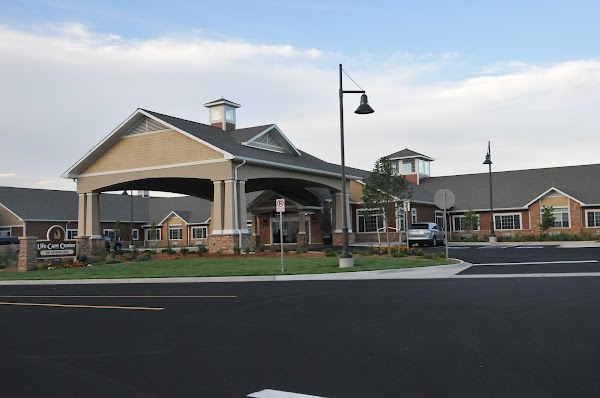
Dec 2023 1 deficiency
CONCERN (E) 📢 Someone Reported This

A family member, employee, or ombudsman was alarmed enough to file a formal complaint

Potential for Harm - no one hurt, but risky conditions existed

Grievances (Tag F0585)

Could have caused harm · This affected multiple residents

Based on observations, interviews and record review, the facility failed to ensure residents and or their representatives were provided prompt efforts by the facility to resolve grievances for three (...

Read full inspector narrative →
Based on observations, interviews and record review, the facility failed to ensure residents and or their representatives were provided prompt efforts by the facility to resolve grievances for three (#1, #2 and #6) of three residents reviewed out of five sample residents. Specifically, the facility failed to address, resolve, document and follow up on grievances for: -Resident #1 regarding cold shower temperatures; -Resident #2 regarding cold shower temperatures and call light response times; and, -Resident #6 regarding call light response times. -Additionally, unnamed residents in the resident council complained of call light response times with no follow up documented by the facility. Findings include: I. Facility policy and procedure The facility policy on grievances was requested from the director of nursing (DON) on 12/13/23 at 12:04 p.m. -The facility did not provide the requested policy by the end of the survey. II. Resident and resident representative interviews Resident #1 was interviewed on 12/7/23 1:14 p.m. He said the shower water temperatures were too cold. Resident #1 said he had reported it to the nursing staff multiple times in the last two weeks. Resident #1 said the nursing staff told him maintenance would fix the water temperatures but he had not heard anything back and the water temperature was still cold. Resident #2 was interviewed on 12/13/23 at 9:46 a.m. He said the water temperatures in the shower rooms were cold. He said he had reported this to the activity director (AD) since they were in charge of the resident council. He said he had begun refusing showers due to the water temperatures. He said he had reported about three weeks ago that the water temperature coming from the faucet in his room was very hot and he had to pull his hands out of the water due to the temperature. He said he thought the water temperatures may have been turned down at that time. Resident #2 said he had spoken with other residents in the facility who had concerns with the shower water being too cold. He said some of these residents had already moved out of the facility due to the cold shower water temperatures. Additionally, Resident #2 said call light wait times were a concern. He said this had been reported at the resident council meeting. Resident #2 said he had to wait over 30 minutes for his call light to be answered at times. He said it was difficult to wait when he needed to go to the bathroom or was uncomfortable in his wheelchair and needed to get back in bed. The resident representative for Resident #6 was interviewed on 12/14/23 at 11:51 a.m. She said her mother waited for her call light to be answered for over an hour and a half. She said she reported this to the admissions director (AMD) and the nursing home administrator (NHA). The resident representative said her mother was usually continent of urine but had occasional urine leakage. She said her mother waited so long for the call light to be answered she was soaked with urine through her clothing. The representative said the certified nurse aides (CNA) told her they were short staffed and therefore had not been able to get to her mother timely. The representative said she had reported this to the NHA. The NHA told the representative this was not true and they were not short staffed. The representative said the next day the nursing staff told her there was a staff meeting and the nursing staff were told not to talk to families about staffing concerns. III. Observations The shower temperatures in the facility's two shower rooms were checked with the MTD on 12/12/23 at 9:12 a.m. The MTD did not know the location of the shower rooms and asked the nurse at the nurse station to show him where the shower room was. The Winter Park shower temperature after three minutes on hot was 102.9 degrees F. The Steam Boat shower temperature after three minutes on hot was 92.5 degrees F. The MTD said the shower temperature was too cool and someone must be doing laundry. IV. Staff Interviews The social services director (SSD) was interviewed on 12/07/23 at 12:42 p.m. She said she was not responsible for the grievance program. She said the NHA was responsible. The SSD said anyone could fill out a grievance. She said all grievances went to the NHA and then were reviewed in the daily morning meeting with the department leaders. She said if a concern was brought up in resident council a grievance card should be completed and the same process was followed. The NHA was interviewed on 12/7/23 at 12:47 p.m. She said grievance cards could be filled out by staff, residents or families. She said all grievances came to her and she reviewed them with the department leaders in the morning meeting. She said the department involved in the grievance should follow up on the grievance within three days and follow up with the person who submitted the grievance. See said the same process was followed if a grievance was brought up in resident council. Grievances related to call light response times and shower water temperatures for September 2023, October 2023 and November 2023 were requested from the NHA. The NHA was interviewed again on 12/7/23 at 1:30 p.m. She said she knew of one concern from Resident #1 regarding shower temperatures but she did not have a grievance card. The NHA said a grievance should have been filled out and completed for the residents concerned with water temperatures. The NHA said she had one grievance from October 2023 regarding call light response times and she would provide a copy. The NHA provided the September and October 2023 resident council notes on 12/7/23 at 12:23 p.m. She said she did not have any resident council notes for November 2023 because the activity coordinator (AC) was on vacation and had not provided the notes from that month. The maintenance director (MTD) was interviewed on 12/12/23 at 8:50 a.m. with the NHA The MTD said about a month ago (November 2023) he got a call in the evening from a nurse who said the water temperatures were cold in the evening. He said he came in that evening and the shower temperature was 90 degrees Fahrenheit (F) in one shower room and 98 degrees F in the second shower room. He said he adjusted the temperature. He said he did not know which resident was concerned or which nurse called him or on what day. The NHA said had heard about it from the unit manager but she had no documentation of the concern or follow up. She said there should have been a grievance completed. The MTD said he checked the shower temperatures daily at 6:00 a.m. but he had no record of the checks. He said ideally he liked to keep the showers at a temperature of 110 degrees F to 116 degrees F. The DON was interviewed on 12/12/23 at 2:54 p.m. She said she did not have any documentation of call light audits. She said there was no formal process for auditing the call lights, she said the nurse managers checked them on their rounds. V. Record review The September and October 2023 resident council notes were reviewed on 12/7/23/ at 12:23 p.m. There were no November 2023 resident council notes. On 9/27/23 at 1:30 p.m. the resident council notes documented the residents were concerned with call light response times. The facility documented on the notes a call light audit would be done. On 10/25/23 at 1:30 p.m. the resident council notes documented the residents were concerned with call light response time again. The notes documented the DON responded and said she was waiting on the results of call light audits. On 12/7/23 at 2:02 p.m., the NHA provided a grievance form she said she had found on call light response times. On 10/26/23 a Comment and Concern form documented a resident representative reported concerns with call light response time. On 10/26/23, the NHA documented that this was at the beginning of the resident's stay and had improved since the resident moved to a new area of the facility. -There were no call light audits for review based on the September 2023 and October 2023 resident council notes -There was no documentation of shower temperature audits by maintenance for review. III. Observations The shower temperatures in the facility's two shower rooms were checked with the MTD on 12/12/23 at 9:12 a.m. The MTD did not know the location of the shower rooms and asked the nurse at the nurse station to show him where the shower room was. The Winter Park shower temperature after three minutes on hot was 102.9 degrees F. The Steam Boat shower temperature after three minutes on hot was 92.5 degrees F. The MTD said the shower temperature was too cool and someone must be doing laundry.
Apr 2023 8 deficiencies
CONCERN (D)

Potential for Harm - no one hurt, but risky conditions existed

Deficiency F0561 (Tag F0561)

Could have caused harm · This affected 1 resident

**NOTE- TERMS IN BRACKETS HAVE BEEN EDITED TO PROTECT CONFIDENTIALITY** Based on observations, record review and interviews, the facility failed to promote self-determination for two (#36 and #205) of...

Read full inspector narrative →
**NOTE- TERMS IN BRACKETS HAVE BEEN EDITED TO PROTECT CONFIDENTIALITY** Based on observations, record review and interviews, the facility failed to promote self-determination for two (#36 and #205) of six residents reviewed for preferences and choices of 28 sample residents. Specifically, the facility failed to honor the resident preferences for bathing and implement bathing care based on the resident self-determined preferences. Identified resident preferences included: -Being able to take a bath when requested (Resident #36 and #205); and, -Being asked about daily routine and being able to have a plan for staff to follow particularly for bathing needs (Resident #36 and #205). Findings include: I. Facility policy The Person Centered Care Planning policy, dated 8/16/22, was provided by the nursing home administrator (NHA) on 4/13/23 at 6:30 p.m. It read in pertinent part: Policy: Each resident will have a person-centered comprehensive care plan developed and implemented to meet his or her preferences and goals, and address the resident's medical, physical, mental and psychosocial needs. The comprehensive care plan must describe the following: In consultation with the resident and the resident's representative(s): The resident's goals for admission and desired outcomes. The care plan will be developed and implemented to ensure consistency with implementation across all shifts. II. Resident #36 A. Resident status Resident #36, over the age of 65, was admitted on [DATE]. According to the April 2023 computerized physician's orders (CPO) diagnoses included hemiplegia and hemiparesis (loss of strength or paralysis on one side of the body) following cerebrovascular disease affecting the right dominant side, congestive heart failure (CHF), and chronic obstructive pulmonary disease (COPD). According to the 2/20/23 minimum data set (MDS) assessment, the resident had a moderate cognitive impairment with a brief interview for mental status (BIMS) score of 12 out of 15; no mood or behavioral symptoms were documented. The resident needed extensive assistance from two staff for activities of daily living (ADL) such as personal hygiene and bathing due to weakness, limited range of motion, poor coordination, poor balance, visual impairment, and pain, and the use of a sit to stand device for transfers between surfaces. B. Resident interview Resident #36 was interviewed on 4/11/23 at 1:02 p.m. Resident #36 said it gets very cold in the shower and she would much rather take a hot bath than a shower; but the staff would not honor that request. Resident #36 said none of the staff she asked would let her have a tub bath when requested. C. Record review The comprehensive care plan revised on 3/29/23, documented a care focus for bathing/showering preferences. Interventions included one staff to provide bathing/showering assistance on Monday evenings, to prepare the shower with a warming light, keep the bathroom door closed during showers and keep the resident warm prior to the resident getting into the shower. -The care plan did not document the resident preference for a tub bath. III. Resident #205 A. Resident status Resident #205, age [AGE], was admitted on [DATE]. According to the April 2023 CPO diagnoses included chronic respiratory failure with hypoxia, heart failure and depression. The 4/6/23 MDS assessment was not complete, but did reveal in part that the resident had intact cognitive ability with a BIMS score of 15 out of 15; no mood or behavioral symptoms were documented. The resident required limited assistance by one person for personal hygiene but the MDS document had not yet revealed details of the resident's bathing needs. B. Resident interview Resident #205 was interviewed on 4/11/23 at 10:26 a.m. Resident #205 said he has only had one shower since admission 3/31/23; and had asked staff about using the spa tub as he would like to have a tub bath instead of a shower at least occasionally but he was told by the staff that no one uses the bathtub in the spa. C. Record review The comprehensive care plan initiated 4/6/23 documented a care focus for admission and depression needs. Interventions included Provide opportunities for the resident and family to participate in care. -Neither the baseline care plan or the comprehensive care plan address the resident's daily living preferences. IV. Staff Interviews Certified nurse aide (CNA) #1 was interviewed on 4/13/23 3:14 p.m CNA #1 said when each resident was admitted they were asked if they preferred a shower or a tub bath and preferred days of bathing; this information was uses to develop the resident bathing plan and used on bathing days; staff did not ask the residents each time if they would like a bath or shower each bathing day, instead staff followed exactly what was care planned. CNA #1 said residents could refuse their bath or showers if they did not want to bathe. CNA #1 said a bathtub is available in the spa on each unit if that was the resident's care plan choice. The social services director (SSD) was interviewed on 4/13/23 at 10:16 a.m. The SSD said residents had the right to determine daily preferences and change their minds about daily routine.
CONCERN (D)

Potential for Harm - no one hurt, but risky conditions existed

Deficiency F0757 (Tag F0757)

Could have caused harm · This affected 1 resident

**NOTE- TERMS IN BRACKETS HAVE BEEN EDITED TO PROTECT CONFIDENTIALITY** Based on record review and interviews, the facility failed to ensure drug regimens were free from unnecessary medications for on...

Read full inspector narrative →
**NOTE- TERMS IN BRACKETS HAVE BEEN EDITED TO PROTECT CONFIDENTIALITY** Based on record review and interviews, the facility failed to ensure drug regimens were free from unnecessary medications for one (#36) of five residents out of 28 sample residents. Specifically, the facility failed to ensure Resident #36 drug regimen must be free from unnecessary drugs, in excessive doses where there was potential for adverse consequences which indicate s the dose should be reduced or discontinued; and for excessive duration without clinical justification. Findings include: I. Facility policy A request was made to the director of nursing (DON) for the facility's policy on monthly pharmacy review or resident medication and for responding to pharmacy recommendation was made on 4/13/23; however the policy was not provided by the end of the survey. II. Resident #36 A. Resident status Resident #36, over the age of 65, was admitted on [DATE]. According to the April 2023 computerized physician's orders (CPO) diagnoses included hemiplegia and hemiparesis (loss of strength or paralysis on one side of the body) following cerebrovascular disease affecting the right dominant side, congestive heart failure (CHF) and chronic obstructive pulmonary disease (COPD). According to the 2/20/23 minimum data set (MDS) assessment, the resident had a moderate cognitive impairment with a brief interview for mental status (BIMS) score of 12 out of 15; no mood or behavioral symptoms were documented. The resident needed assistance from two staff to move between surfaces and the use of a sit to stand lift for transfers. B. Record review According to the April 2023 CPO, the resident had the following orders: -Omeprazole 40 milligrams (mg), give by mouth once per day, as needed for GERD (gastroesophageal reflux disease), start date 8/5/22; -Guaifenesin liquid 100mg/5ml ( milliliters) give 10 ml,by mouth, every six hour as needed; for chronic cough guaifenesin (10ml Dose), start date 2/19/21; -Tessalon [NAME] capsule 100 mg, give one capsule by mouth, every eight hours, as needed, for for chronic cough, start date 5/2./21; and, -Zofran 4 mg disintegrating (crush and dissolve in water) given by mouth every six hours, , as needed for nausea and vomiting, start date 1/5/22. Monthly pharmacy review documentation dated 11/24/22, 12/27/22, 1/24/23, and 3/25/23 revealed the pharmacy had made repeated recommended since 11/24/22 that the dosage of prescribed omeprazole be reduced from 40 mg to 20 mg to reduce the risk of the resident developing clostridium difficile or C. difficile (a germ bacterium that causes diarrhea and colitis, an inflammation of the colon) infections, bone loss and fractures. The pharmacy recommendation read in part: Rationale for Recommendation: Long-term PPI (proton pump inhibitors) use (greater than 8 weeks) is associated with increased risk of C. difficile infections, bone loss and fractures. References: 1) Centers for Disease Control and Prevention. National Center for Injury Prevention and Control. STEADI - Stopping elderly accidents, deaths & injuries. 2019 Sep. 2) American Geriatrics Society 2019 updated AGS Beers Criteria. There was no physician response to the recommendation that had been made consistently since 11/24/23 and there were no changes in the resident CPO order for omeprazole per the pharmacy recommendations, as of 4/12/23. Monthly pharmacy review documentation dated dated 9/26/22, 10/24/22, 11/24/22, and 3/25/23 revealed the pharmacy had made repeated recommendation since 9/26/22 that prescribed medication guaifenesin, tessalon [NAME], and zofran be discontinued from the residents orders due to lack of use over the past 120 days. At the time of survey (4/10/13-4/13/13), none of these recommendations had been followed and the physician had not responded to the pharmacy recommendations. III Staff interview The director of nursing (DON) was interviewed on 4/13/23 at 2:09 p.m. The DON said she was new to the facility. When the pharmacist sends prescribing recommendations to the facility it is the DON's responsibility to provide the recommendation to the physician and ensure the physician's response to agree, disagree, or provide other prescribing orders were documented in the resident record and followed immediately. If the provider did not respond in a timely manner the DON would provide the pharmacy request to the facility medical director for review and a decision on the recommendation(s).
CONCERN (E)

Potential for Harm - no one hurt, but risky conditions existed

Deficiency F0679 (Tag F0679)

Could have caused harm · This affected multiple residents

**NOTE- TERMS IN BRACKETS HAVE BEEN EDITED TO PROTECT CONFIDENTIALITY** Based on observations, record review and interviews, the facility failed to provide activities that meet the interests and choic...

Read full inspector narrative →
**NOTE- TERMS IN BRACKETS HAVE BEEN EDITED TO PROTECT CONFIDENTIALITY** Based on observations, record review and interviews, the facility failed to provide activities that meet the interests and choices of residents for three (#32, #15 and #205) of four out of 28 sample residents. Specifically, the facility failed to to offer and provide personalized activity programs for Resident #32, #15 and #205. Findings include: I. Facility policy and procedure The Therapeutic Activities Program policy and procedure, last revised 4/1/22, was provided by the director of nursing (DON) on 4/13/23. It read in pertinent part, The facility activities program will be directed by a qualified activities director.The director is responsible for directing the development, implementation, supervision and ongoing evaluation of the activities program. This includes the completion and/or directing/delegating the completion of the activity's component of the comprehensive assessment. Directing the activity program includes scheduling of activities, both individual and groups, implementing and/or delegating the implementation of the programs, monitoring the response and/or reviewing/evaluating the response to the programs to determine if the activities meet the assessed needs of the resident, and making revisions as necessary.The facility should implement an ongoing resident centered activities program that incorporates the resident's interests, hobbies and cultural preferences which is integral to maintaining and/or improving a resident's physical, mental, and psychosocial well-being and independence. To create opportunities for each resident to have a meaningful life by supporting his/her domains of wellness (security, autonomy, growth, connectedness, identity, joy and meaning). II. Resident #32 A. Resident status Resident #32, age [AGE], was admitted on [DATE]. According to the April 2023 computerized physician orders (CPO) diagnoses included anxiety disorder, insomnia and major depressive disorder. According to the 2/15/23 minimum data set (MDS) assessment, the resident had intact cognition as evidenced by a brief interview for mental status (BIMS) score of 15 out of 15. The resident required extensive assistance with one person physical assistance for: bed mobility, transfers, walking and toilet use. Additionally, the resident required supervision assistance with one person physical assistance for personal hygiene, eating, and dressing. The resident was not having any behaviors or refusal of care. The MDS assessment documented that the resident said it was very important to engage in his favorite activities. B. Resident interview Resident #32 was interviewed on 4/12/23 at 9:22 a.m. Resident #32 said he would prefer to participate in activities such as playing cards and games; or get together with like minded individuals with similar cognitive ability who could have a conversation and socialize with her. The resident was not interested in most group activities hosted by the facility because the only options were bingo and television (TV), which made him feel warehoused. The resident was unaware of what options he had at the facility to find like minded peers and said none of the staff have offered him alternatives or made any attempts to meet his activities needs. C. Observations On 4/12/23 from 8:43 a.m. until 12:00 p.m., Resident #32 was observed continuously. The resident was in his room watching television the entire time and no staff entered the resident room during this time. -Neither group or independent activities were offered to Resident #32 between 8:43 a.m. until 12:00 p.m., however, the activities schedule revealed a group activity of chapel was to take place on 4/12/22 at 11:00 a.m. D. Record review The comprehensive care plan, last revised on 12/12/22, documented Resident #32 had little or no activity involvement in group activities. The resident continued to decline daily invitations to participate. Resident #32 preferred activities were: watching TV in his room, live music and chapel. The activities evaluation dated 8/16/22 revealed Resident #32 enjoyed playing cards, interacting with small groups of people and reading. -The care plan failed to incorporate individualized preferences as identified in the activities assessment. The resident confirmed in an interview that his activities preferences more accurately reflected the activities evaluation and the comprehensive care plan was not individualized to the resident preferred activities choices. The activity participation flow sheet for the month of April 2023 revealed Resident #32 refused all activities offered including activities held on 4/12/23, which was in contrast with observations (see above) as the resident was not offered the opportunity to accept or refuse attendance at the morning activity. Additionally, the resident was not given the opportunity to express his desire for an alternative activity. E. Staff interviews CNA #4 was interviewed on 4/13/23 at 11:41 a.m. The CNA said Resident #32 is independent and could make his needs known. The resident spent all day in his room watching television. The resident did not participate in activities because he did not enjoy the activities at the facility. CNA #4 said the resident watched TV or wanted to be in his room and get into his chair. CNA #4 said every Monday activities were not offered because the activity staff were busy charting, occasionally some Fridays, activities were not offered because activity staff were busy charting. The activities director (AD) was interviewed on 4/13/23 at 11:53 a.m. The AD said Resident #32 had intermittently participated in activities. The resident continued to be invited daily to encourage the resident to participate in activities. The facility provided and ordered reading material for the resident. The AD said Resident #32 had his own TV with on demand station selections. Resident #32 enjoyed connecting in a spiritual sense with things, book club, and acknowledged he seemed to want to connect more intellectually with people and play bridge. The AD would expect the resident's care plan to be individualized to the resident's preferred activities. If a resident refused activities the activity staff would re-approach the resident for a later offering. Activities staff should offer the resident an independent or alternative activity when the resident failed to show interest in group activities. If a resident refused activities on a habitual basis, the activity team would assess the resident daily and update the care plan to meet the resident's individual needs. The AD would expect residents to be offered individual interventions, daily encouragement, and to offer residents to do something independently. Activity staff should attempt to offer activities 45 minutes prior to group starting. The AD said Resident #32 was offered activities on 4/12/22 as evidenced by the documented refusal on the activity participation flow sheet. -The documentation the AD referred to was in contrast with the continuous observation of Resident #32 (see above). The AD acknowledged that the resident's care plan was not individualized. The resident's care plan failed to incorporate playing cards, intellectual development courses, reading and playing bridge.III. Resident #15 A. Resident status Resident #15, over the age of 90, was admitted on [DATE]. According to the April 2023 CPO diagnoses included inclusion body myositis (chronic, progressive muscle inflammation accompanied by muscle weakness), Bell's palsy (paralysis or weakness on one side of the face) and congestive heart failure. The 2/9/23 MDS assessment documented the resident had intact cognitive ability with a brief interview for mental status (BIMS) score of 15 out of 15; no mood or behavioral symptoms were documented. The 5/16/22 annual MDS assessment interview for daily preferences documented the resident said it was very important to be able to choose to have books, newspapers and magazines available to read; music to listen to; keep up with the news; do things with groups of people; and do favorite activities. B. Observations On 4/11/23 from 10:30 a.m to 2:30 p.m., observations revealed: -At 10:30 a.m. Resident #15 was sitting in her wheelchair in her room with the television on. -At 11:10 a.m. the resident remained in her room without change. -At 2:30 p.m. the resident was in her bed with the television on. -No staff approached the resident to offer any type of activity either independent activity or attendance to attend a scheduled group activity. On 4/12/23 from 10:25 a.m. to 2:21 p.m. the resident was up in a wheelchair with no activity provided except independent television watching. No staff approached the resident to offer any type of activity either independent activity or attendance to attend a scheduled group activity. On 4/13/23 form 9:53 a.m. to 2:17 p.m. the resident was up in a wheelchair with no activity provided except independent television watching. No staff approached the resident to offer any type of activity either independent activity or attendance to attend a scheduled group activity. C. Resident interview Resident #15 was interviewed on 4/11/23 at 11:44 a.m. Resident #15 said that she would like to participate in more activities but the activities that she would have been interested in did not occur on most days until 2:00 p.m. Most days the resident liked to go back to bed between 2:00 p.m. and 2:30 p.m. due to her health condition. The resident said she would really like it if the activities department would schedule more activities in the morning, so she could participate and she would really enjoy playing cards. D. Record review The resident's comprehensive care plan, revised on 1/13/23, revealed Resident #15 enjoyed watching TV (television), doing word search puzzles, and reading. The care focus goal documented the resident would engage in self-directed activities daily. The interventions included: staff would invite, encourage and assist the resident to activities of assessed preference, with an emphasis on crafts, bingo, other games, trivia, movies and gardening. E. Staff Interview Licensed practical nurse (LPN) #3 was interviewed on 4/13/23 at 3:40 p.m. LPN #3 said Resident #15 liked to go to bed very early in the afternoon, so the resident did not attend many group activities. LPN #3 was not aware that the resident would like to play cards. IV. Resident #205 A. Resident status Resident #205, age [AGE], was admitted on [DATE]. According to the April 2023 CPO diagnoses included chronic respiratory failure with hypoxia, heart failure and depression. According to the 4/6/23 MDS assessment, the resident had intact cognitive ability with a BIMS score of 15 out of 15; no mood or behavioral symptoms were documented. The resident had an inability to perform activities of daily living (ADL) without significant physical assistance. The 4/8/23 activity preferences section documented the resident enjoyed reading, small group activities, and visits from friends and family. B. Observations On 4/11/23 at 10:23 a.m. Resident #205 was in his room with the television on and he was looking off towards the window and was unfocused on the television. On 4/12/23 from 1:00 p.m. to 4:48 p.m. Resident #205 was sitting in his room with the television on with no other options for activity. No staff approached the resident to offer any type of activity either independent activity or attendance to attend a scheduled group activity. On 4/13/23 from 10:05 a.m. to 11:00 a.m. Resident #205 was sitting in his room with the television on with no other options for activity. No staff approached the resident to offer any type of activity either independent activity or attendance to attend a scheduled group activity. C. Resident interview Resident #205 was interviewed on 4/11/23 at 10:24 a.m. Resident #205 said that he had not chosen to participate in activities because he would prefer to interact with people who were closer in age and cognition. The resident said staff had suggested the names of three other residents he could go and meet but did not offer to set up any introductions with the other residents. I guess I would have to go and find these people on my own? I don't really feel comfortable going to a strangers' room on my own. Resident #205 said he would like to go to the dining room to eat his meals but he does not want to sit by himself and did not know who or if anyone in the dining room would be like minded and able to have a conversation with him. Resident #205 said he would like to play cards with other residents but was told no one else in the facility would be interested in card games. -However, in a previous interview with Resident #15 the resident said she was interested in a group to play cards (see Resident #15's interview above). D. Record review The comprehensive care plan initiated on 4/6/23, documented a care focus management of depression symptoms related to adjustment to being newly admitted to the facility for previously living in a private home. Interventions included Provide opportunities for the resident to participate in care. E. Staff Interview LPN #3 was interviewed on 4/13/23 at 3:40 p.m. LPN #3 said the nursing staff gave Resident #205 the name of a few residents they felt would be appropriate for him to interact with. However, they did not set up the introductions and were not aware that he had not introduced himself to anyone yet.
CONCERN (E)

Potential for Harm - no one hurt, but risky conditions existed

Accident Prevention (Tag F0689)

Could have caused harm · This affected multiple residents

**NOTE- TERMS IN BRACKETS HAVE BEEN EDITED TO PROTECT CONFIDENTIALITY** Based on observations, interviews, and record review, the facility failed to ensure the residents' environment remained as free ...

Read full inspector narrative →
**NOTE- TERMS IN BRACKETS HAVE BEEN EDITED TO PROTECT CONFIDENTIALITY** Based on observations, interviews, and record review, the facility failed to ensure the residents' environment remained as free of accident hazards as possible. Specifically, the facility failed to: -Maintain how water temperatures coming out of the tap and showers in resident care areas for resident bathing and grooming tasks at a safe water temperature to avoid scalding and residents from sustained burns to the body; and -Ensure the Resident #36 was being assisted with the current methods of transfer assistance as documented in the resident's care plan. Findings include: I. Hot temperatures A. Professional reference According to the U.S. Consumer Product Safety Commission (CPSC) Avoiding Tap Water Scalds, Document #5098, retrieved from chrome-extension://efaidnbmnnnibpcajpcglclefindmkaj/https://www.cpsc.gov/s3fs-public/5098-Tap-Water-Scalds.pdf on 4/24/23: All users are urged to lower water heaters to 120 degrees Fahrenheit. Most adults will suffer third-degree burns if exposed to 150-degree water for two seconds. Burns will also occur with a six-second exposure to 140-degree water or with a thirty second exposure to 130-degree water. Even if the temperature is 120 degrees; a five-minute exposure could result in third-degree burns. B. Facility policy The Water Temperature Inspection policy, last reviewed 12/19/22, was provided by the nursing home administrator (NHA) on 4/13/23 at 3:25 p.m. It read in pertinent part, Policy: The facility monitors all water temperatures on a weekly basis or more often, if needed. The facility will ensure the residents' environment remains as free from accident hazards as possible. Procedure: Shower/faucet temperatures: 1. Temperatures will be taken weekly from one resident's room on each wing on a rotating basis. To ensure safety, include a room close to the hot water tank and a room in which the residents are able to use the sink independently. 2. Satisfactory temperature range is maintained per state regulations. C. Observations Water temperatures from random rooms were checked on 4/10/23 the findings revealed: -At 5:43 p.m. the water temperature of room [ROOM NUMBER] was measured and found to be 136.3 degrees F. -At 5:45 p.m. the water temperature of room [ROOM NUMBER] was measured and found to be 136.4 degrees F. -At 5:47 p.m. the water temperature of room [ROOM NUMBER] was measured and found to be 135.6 degrees F. -At 5:49 p.m. the water temperature of the sink in the common area was measured and found to 138.6 degrees F. -At 5:51 p.m. the water temperature of room [ROOM NUMBER] was measured and found to be 122.1 degrees F. -At 6:33 p.m. the maintenance director (MTD) was observed adjusting the boiler room water holding tank temperature at the mixing valve. The MTD said the holding tank temperature needed to be adjusted for maintaining proper temperatures at the tap in the resident rooms. In order to do so he was using a screwdriver to make an adjustment of the mixing valve to allow more cold water into the system, which would lower the temperatures of the water in resident room faucets. -At 6:37 p.m. water temperatures at the resident's sink and shower in the same rooms as tested above were measured again with the MTD to confirm the findings. The water at the tap in resident room [ROOM NUMBER] was measured at 134.1 degrees F, the common area sink was measured at 134 degrees F, room [ROOM NUMBER] was measured at 133.1 degrees F and room [ROOM NUMBER] was measured at 132 degrees F. -The water temperatures were lowered but still were found to be unsafe for resident use. The MTD acknowledged it would take time to lower the temperatures to safe bathing temperatures and said he would continue to monitor the temperature until the water in the resident rooms tested at a safe level for resident use. D. Staff interviews Certified nurse aide (CNA) #1 was interviewed on 4/10/23 at 6:20 p.m. CNA #1 said she tested the water temperature on her forearm and then instructed the residents to test the temperature with their arm or hand before she sprayed the water on their body. CNA #1 said there were a couple of residents that required minimal assistance but even in those situations the CNA adjusted the water temperature for the resident and remained in the room with the residents during their shower in case the resident needed any assistance. CNA #1 said most residents needed full assistance with bathing. The MTD and NHA were interviewed on 4/10/23 at 6:45 p.m. The MTD said he would remain on site this evening until the water temperature were safe for resident use and would return in the morning at 5:30 a.m. to conduct another test to the resident water to ensure the water was safe for the resident us as they started to get up in the morning to bath and dress for the day. The MTD said the facility had been having problems with one of the hot water holding tanks maintaining proper temperature for resident use. Additionally, the mixing valve which controlled the amount of hot and cold water flowing through the tank was not functioning properly; the holding tank was leaking water and black sludge was coming from the piping; and the plumbing system had a heavy build up calcification due to hard water. After several attempts by the MTD to maintain the holding temperature for safe hot water temperatures for resident use, and not being able to obtain and maintain safe bathing temperature (of 100 degrees F, see professional references above). The facility contracted a plumber to assess repairs and schedule a time for the system to be repaired. The MTD said the plumber scheduled a repair session but there was a 12 week wait time to get the repairs completed. Repairs were scheduled to occur 4/11/23, however when this survey started the repairs were delayed for one week, due to the facility not wanting the survey and plumbing repairs to be occurring simultaneously. The MTD said while waiting for the scheduled repairs to occur he was conducting weekly water tests since February 2023 so he could make necessary adjustments to keep the hot water from being too cold. Since the discovery of the excessive hot water temperature in resident rooms and until the contractor was available to complete the needed plumbing work the MTD planed to check water temperatures twice daily and adjust the mixing valve as indicated by the temperature checks to ensure none exceed 120 degrees F at the tap and have the holding tanks set between 150 and 170 degrees F. -The MTD was reminded that a person could sustain a burn from water coming out to the tap at 120 degrees F and that safe bathing temperatures were 100 degrees F (referring to professional reference above). The NHA was interviewed on 4/10/23 at 7:00 p.m. The NHA said as a precaution the evening and night time staff would be provided a thermometer so they could test the water temperatures if any resident wanted to take an evening night time shower, but was sure that no resident was scheduled to take a shower this evening. The MTD was required to staff on site until the hot water temperature lowered to a safe level for resident use and would be back at 5:30 a.m. to test the water temperatures in resident rooms to make sure the temperature did not rise overnight. It was unlikely for the temperatures to rise overnight because the problem was that the hot water holding tank was not maintaining temperature and had to be adjusted up to maintain hot water for resident showering and bathing. The NHA said water temperature would continue to be checked every shift to ensure safe water temperatures until the plumbing repairs were completed. Additionally, the NHA agreed that staff would receive education on safe water temperatures for resident use and education on how to check the temperature of the water in the showers. The MTD was interviewed on 4/12/23 at 10:12 a.m. The MTD said he contacted the contracted plumbing company and was able to reschedule them to complete a portion of the repair project. The plumber was scheduled to arrive later in the afternoon on 4/13/23 to repair the mixing valve so the hot water would be mixing to a safe temperature for resident use. II. Improper transfer A. Resident status Resident #36, age over 65, was admitted on [DATE]. According to the April 2023 computerized physician's orders (CPO) diagnoses included hemiplegia and hemiparesis (loss of strength or paralysis on one side of the body) following cerebrovascular disease affecting the right dominant side, congestive heart failure (CHF) and chronic obstructive pulmonary disease (COPD). According to the 2/20/23 minimum data set (MDS) assessment, the resident had a moderate cognitive impairment with a brief interview for mental status (BIMS) score of 12 out of 15; no mood or behavioral symptoms were documented. The resident needed assistance from two staff to move between surfaces and the use of a sit to stand lift for transfers. B. Resident interview Resident #36 was interviewed on 4/13/23 at 11:05 a.m. Resident #36 said that she used a slide board for transfers between surfaces in the morning and used a sit to stand mechanical lift for transfers in the evening when getting into bed. Resident #36 said she did sustain injuries on both of her upper arms and left index finger when an agency certified nurse aide (CNA) transferred her using the Bair Hugger technique a few weeks ago. C. Transfer incident on 3/12/23 The facility investigation dated 3/13/23 revealed on 3/12/23 at 10:00 p.m. Resident #36 was transferred from her wheelchair to her bed using a bear hugging technique. As described, the CNA assigned to provide care to the resident used an unprescribed transfer technique where the CNA placed her arm s under the resident's shoulders and wrapped her arms tightly around the resident's body and lifted the resident up from the wheelchair pivoting the resident's body from the seat of the wheelchair to a seated position onto the bed. The resident complained of pain during the transfer; however, the CNA did not stop the transfer process or call the floor nurse for assistance. Resident #36 said the CNA responded to her yelling out in pain by saying you just think it hurts. The nurse on duty was not aware the resident had concerns and did not notice any bruises or redness on the resident's body. Resident #36 told investigators that the CNA on duty did not follow her directions when she told the CNA to provide a slide board for the transfer; instead the CNA responded by saying the slidboard was not needed and proceeded to wrap her arms around me and squeezed so tightly that I screamed in pain. The resident said the CNA practically threw her on the bed and she did not want that CNA to take care of her anymore because he CNA did not listen to transfer instructions. The social services (SS) staff met with the resident on 3/13/23 at 9:15 a.m. The resident told the SS staff the night of the transfer in question she pointed out the transfer instruction that were posted on the closet door for the agency CNA to follow in order to perform the transfer from wheelchair to bed; the CNA told said she did not know how to use either transfer method posted (slide board method or the sit to stand mechanical lift) and she was not going to use either method. The CNA proceeded to a hug type transfer method to pull the resident up off the bed. The resident said she screamed in pain and the CNA disregarded her complaints of pain. The agency CNA (alleged assailant) was interviewed and acknowledged she did not follow the prescribed transfer method and the resident had complained of pain during the transfer. Other residents were interviewed during the course of the investigation to determine if he had a similar experience with staff. The male resident said some staff were very distant or business-like. There had been a couple of CNAs that were difficult to work with; those staff got upset if a resident disagreed with what they were saying. Another male resident said he had to give new CNAs some guidance with transfering assistance and felt a sense of community was missing here. At the time of the investigation the resident's care plan documented the resident's transfer interventions included: transfer using a sit to stand lift only, due to a history of falling. As a result of the facility investigation the facility provided education for the CNAs to notify the nurse immediately with the resident complaint of pain. The CNA was terminated after the incident on 3/12/23. D. Record review The comprehensive care plan, created 2/20/23, revealed the resident had activities of daily living (ADL) and self-care deficits. The care plan focus documented the resident required assistance by two staff to move between surfaces and the use of a sit to stand mechanical lift for transfers. E. Staff interviews CNA #2 was interviewed on 4/13/23 at 11:11 a.m. CNA #2 said when she got Resident #36 up this morning she did not use a sit to stand device, instead she transferred the resident by herself using a slide board and a gait belt and did not ask for or receive assistance from any other staff members while transferring the resident. CNA #2 acknowledged she was aware of the transfer instruction posted in the resident's room which instructed staff to use a sit to stand device on all transfers; and still did not follow the posted transfer instructions. -CNA #2 made an independent decision to perform a transfer that was not the prescribed care plan intervention. The director of nursing (DON) was interviewed on 4/13/23 at 2:09 p.m. The DON said each resident was evaluated on admission and with a change of condition to determine their strength and ability to move safely in the facility. Nursing staff were able to refer to a resident's physical and occupational therapy notes for additional guidance on transferring recommendations. Transfer recommendations were documented in the resident's care plan and bedside [NAME] care plan resource for CNA. The DON said staff were to refer to the resident care plan for reference prior to initiating care. The DON said safe procedures for transfer training and education was to all clinical staff upon hire and repeated annually. The nursing staff recently received annual transfer training this past February 2023. Additionally, staff would be provided resident specific transfer education if a resident had changes to their transfer ability; that information was provided during the shift change huddle that the entire interdisciplinary team (IDT) team attended. Agency staff were expected to walk each room with a seasoned facility CNA and receive a detailed report of expectations and care plan interventions for each resident. The DON said adherence to the resident's care plan was expected as a CNA was not permitted to determine how to transfer residents and only the nurses were allowed to downgrade a resident's transfer status after assessment. If a resident needed to be upgraded there would need to be a therapy assessment to reevaluate and determine the most appropriate method of transfer. The physical therapist (PT) was interviewed on 4/13/23 at 3:34 p.m. The PT said resident #36 was working with a therapist to strengthen her ability to perform safe transfers without the sit to stand mechanical lift. The slide board transfer method ring had not been determined safe for the CNAs to provide, because the resident had the tendency to become fatigued and could fall if not monitored and supported properly during the transfer. The CNA staff were to provide Resident #36 transfer assistance with two staff present, the sit to stand mechanical lift, a gait belt and never a stand pivot or slide board transfer. This was what was in the resident's care plan. These instructions were posted in the resident's room on the closet door for staff to read and follow. The PT said the slide board was removed from resident's room so staff would not be tempted to use it when assisting Resident #36 with transfers.
CONCERN (E)

Potential for Harm - no one hurt, but risky conditions existed

Deficiency F0726 (Tag F0726)

Could have caused harm · This affected multiple residents

Based on record review and interviews, the facility failed to ensure facility nurses and certified nurse aides (CNA) were able to demonstrate competencies in skills and techniques necessary to care fo...

Read full inspector narrative →
Based on record review and interviews, the facility failed to ensure facility nurses and certified nurse aides (CNA) were able to demonstrate competencies in skills and techniques necessary to care for residents' needs, as identified through resident assessments, and described in the plan of care. Specifically, the facility failed to ensure nursing staff had completed competencies prior to providing skilled services as ordered by the physician for three out of three nurses reviewed for competencies. Findings include: I. Facility acuity On 4/12/23, per the facility census and condition the facility had a census of 56 total residents; of those residents: -54 residents needed assistance of one to two staff to transfer from surface to surface; -42 residents needed assistance of one to two staff with bathing and an additional 11 residents were totally dependent on staff for bathing; -54 residents needed assistance of one to two staff with dressing; -52 residents needed assistance of one to two staff with use of the toilet and an additional two residents were totally dependent on staff for use of the toilet; and, -49 residents needed assistance from one to two staff with eating meals. II. Competency records The nursing facility held a competency fair on 12/20/22 to test the nursing staff skills for caring for residents. The training record documented nursing staff in attendance but did not include an accompanying check to show which tasks the nursing staff had successfully completed by return demonstration or if any of the nursing staff needed additional training in any of the areas tested. Training records also revealed: -Twenty-two facility hired certified nurse aides (CNAs) were reviewed for competencies; nine CNAs failed to participate in the skills fair. The facility did not have any additional records to show if the nine CNAs not in attendance participated in a skills check for competencies by return demonstration for direct care assistance within the scope of practice for a CNA, in the past 12 months of employment. -Fifteen nurses were reviewed for competencies, nine registered nurses (RNs) and six licensed practical nurses (LPNs); five nurses failed to participate in the skills fair. The facility did not have any additional records to show if the five nurses not in attendance participated in a skills check for competencies by return demonstration competencies performed by the nurses providing direct care to the residents as ordered by the provider and identified in the plan, in the past 12 months of employment. III. Interview The staff development coordinator (SDC) was interviewed on 4/13/23 at 2:37 p.m. The SDC said the facility had not held a skill fair to test the performance of nursing staff since December 2022; participation at the December 2022 skills fair had only approximately 80 percent of the nursing staff in attendance. The facility recognized that not all staff participated in the last skills fair and planned to hold a skills fair to test staff competence with return demonstration of nursing skills in the next month. The director of nurses (DON) was interviewed on 4/12/23 at 6:01 p.m. The DON acknowledged not all nursing staff had participated in an annual skills competence check within the last 12 months of employment and the facility planned to hold a skills fair to test nursing competencies for scope of practice in the coming months.
CONCERN (E)

Potential for Harm - no one hurt, but risky conditions existed

Deficiency F0761 (Tag F0761)

Could have caused harm · This affected multiple residents

Based on observations and interviews the facility failed to ensure two out of three medication refrigerators stored and secured drugs and biologicals in accordance with accepted professional standards...

Read full inspector narrative →
Based on observations and interviews the facility failed to ensure two out of three medication refrigerators stored and secured drugs and biologicals in accordance with accepted professional standards. Specifically, the facility failed to: -Ensure controlled medications were in a double locked storage area where the locked controlled substance medication containment unit was secured to the refrigerator; -Ensure each medication cart was locked when nurse was not at the cart; -Ensure alcohol for resident consumption was not stored in the same refrigerator as resident medications; and, -Ensure controlled medications for disposal were kept in a double locked area until disposal. Findings include: I. Facility policy and procedure The Storage and Expiration Dating of Medications policy and procedure, last revised 7/21/22, was provided by the director of nursing (DON) on 4/13/23 at 4:35 p.m. It read in pertinent part; Facility should ensure that only authorized Facility staff, as defined by Facility, should have possession of the keys, access cards, electronic codes, or combinations which open medication storage areas. Authorized staff may include nursing supervisors, charge nurses, licensed nurses, and other personnel authorized to administer medications in compliance with Applicable Law. Facility should store Schedule II - V Controlled Substances, in a separate compartment within the locked medication carts and should have a different key or access device -Store all drugs and biologicals in locked compartments, including the storage of Schedule 11-V medications in separately locked, permanently affixed compartments, -Facility should ensure that Schedule II -V controlled substances are only accessible to licensed nursing, Pharmacy , and medical personnel designated by Facility. Facility should ensure that resident medication and biological storage areas are locked and do not contain non-medication/biological items. Facility should ensure that food is not to be stored in the refrigerator, freezer, or general storage areas where medications and biologicals are stored. III. Observations and interviews On 4/10/23 at 2:33 p.m., a medication cart on the 200 hall was observed to be unlocked and the nurse was not within direct line of sight with the cart for several minutes. On 4/12/23 at 8:52 a.m. the medication room on the 200 unit did not have the box storing the refrigerated controlled medications permanently affixed inside the refrigerator. At 2:14 p.m. the 100 unit medication room was observed. Resident alcohol was stored in the medication refrigerator and the controlled medication box was not permanently affixed to the refrigerator. On 4/13/23 at 2:01 p.m. a medication cart on the 300 unit was observed unlocked, and there was no nurse within the vicinity of the cart. This medication cart was not in use, but had several unsecured medicions inside. This medication cart contained several medications including two bottles of calcium 600 mg (milligrams) with vitamin D-3 10 mg tablets; docusate sodium (stool softener) 100 mg; two bottles of tylenol 325 mg; aspirin 325 mg; omeprazole 20 mg; tums, insulin syringes and 3 milliliter (ml) syringes with needles. The controlled medication compartment was locked under single lock and unable to be viewed. IV. Staff interviews The DON was interviewed on 4/13/23 at 2:09 p.m. The DON acknowledged that narcotic medications needed to be in a double locked affixed compartment; the DON said she was responsible for moving the controlled medications scheduled for disposal when discontinued from the medication carts and medication rooms when the medications were no longer in use; medication for disposal was moved to a double locked filing cabinet in the DON office. In addition to the double lock the DON's office door was locked when DON was not in the office. The DON said she was behind on destroying the controlled medications and when she opened the drawer for observation several of the medications started to fall out of the back side of the drawer due to it being overfilled. The DON was advised of the medications in the unlocked medication cart on the 300 hall and when the interview ended she said she was going to remove the medications from the medication cart immediately.
CONCERN (E)

Potential for Harm - no one hurt, but risky conditions existed

Infection Control (Tag F0880)

Could have caused harm · This affected multiple residents

**NOTE- TERMS IN BRACKETS HAVE BEEN EDITED TO PROTECT CONFIDENTIALITY** Based on observations and interviews, the facility failed to maintain an infection control program designed to provide a safe, s...

Read full inspector narrative →
**NOTE- TERMS IN BRACKETS HAVE BEEN EDITED TO PROTECT CONFIDENTIALITY** Based on observations and interviews, the facility failed to maintain an infection control program designed to provide a safe, sanitary and comfortable environment to help prevent the development and transmission of diseases and infection for one out of two units at the facility. Specifically, the facility failed to: -Ensure housekeeping staff engaged in hand hygiene; -Ensure housekeeping staff cleaned resident rooms appropriately; -Ensure nursing staff disinfected shared equipment (vitals machines and lifts) between residents; -Ensure nursing staff had appropriate infection control practices during wound care; and, -Ensure nursing staff performed hand hygiene between residents. Finding include: I. Housekeeping A. Professional reference Assadian O, Harbarth S, Vos M, et al. Practical recommendations for routine cleaning and disinfection procedures in healthcare institutions: a narrative review. The Journal of Hospital Infection. 2021 Jul;113:104-114 was retrieved on 4/14/23 revealed, in pertinent part: High-touch surfaces, on the other hand, are usually close to the patient, are frequently touched by the patient or nursing staff, come into contact with the skin and, due to increased contact, pose a particularly high risk of transmitting pathogens (virus or microorganism that can cause disease) Healthcare-associated infections (HAIs) are the most common adverse outcomes due to delivery of medical care. HAIs increase morbidity and mortality, prolonged hospital stay, and are associated with additional healthcare costs. Contaminated surfaces, particularly those that are touched frequently, act as reservoirs for pathogens and contribute towards pathogen transmission. Therefore, healthcare hygiene requires a comprehensive approach. This approach includes hand hygiene in conjunction with environmental cleaning and disinfection of surfaces and clinical equipment. The Centers for Disease Control (CDC) Environment Cleaning Procedures https://www.cdc.gov/hai/prevent/resource-limited/cleaning-procedures.html# retrieved on 4/10/23 read in pertinent part, High-Touch Surfaces: The identification of high-touch surfaces and items in each patient care area is a necessary prerequisite to the development of cleaning procedures, as these will often differ by room, ward and facility. Common high-touch surfaces include: -bedrails -IV (intravenous) poles -sink handles -bedside tables -counters -edges of privacy curtains -patient monitoring equipment (keyboards, control panels) -call bells -door knobs Proceed From Cleaner To Dirtier Proceed from cleaner to dirtier areas to avoid spreading dirt and microorganisms. Examples include: -During terminal cleaning, clean low-touch surfaces before high-touch surfaces. -Clean patient areas (patient zones) before patient toilets. -Within a specified patient room, terminal cleaning should start with shared equipment and common surfaces, then proceed to surfaces and items touched during patient care that are outside of the patient zone, and finally to surfaces and items directly touched by the patient inside the patient zone. In other words, high-touch surfaces outside the patient zone should be cleaned before the high-touch surfaces inside the patient zone. -Clean general patient areas not under transmission-based precautions before those areas under transmission-based precautions. B. Facility policy and procedure The Cleaning and Disinfection of Non-Critical Patient Care Equipment policy and procedure, revised 3/13/2020, was provided by the nursing home administrator (NHA) on 4/13/23 at 4:55 p.m. It read in pertinent part, To establish a process for the cleaning and disinfecting of non-critical, reusable patient care equipment. The following defines and establishes standards for assuring that non-critical reusable patient care equipment (defined by CDC as items that come into contact with intact skin but not mucous membranes) is cleaned daily and before and after reuse with an EPA (Environmental Protection Agency)-registered hospital disinfectant, or other approved disinfectant based on manufacturer guidelines. Examples of non-critical items include, but are not limited to: Stethoscopes, blood pressure cuffs, countertops, portable pumps, pulse oximeters, tablets used for charting or digital communication. The Equipment policy and procedure, revised 6/29/21, was provided by the NHA on 4/13/23 at 4:35 p.m. It read in pertinent part, The facility will provide a safe, clean, comfortable and homelike environment. Cleaning and disinfection In patient care areas, resident rooms, and for medical devices and equipment, the employer must follow standard practices for cleaning and disinfection of surfaces and equipment in accordance with CDC's 'COVID-19 Infection Prevention and Control Recommendations' and CDC's 'Guidelines for Environmental Infection Control' In all other areas, the employer must: Clean high-touch surfaces and equipment at least once a day, following manufacturers' instructions for application of cleaners; and When the employer is aware that a person who is COVID-19 positive has been in the workplace within the last 24 hours, clean and disinfect, in accordance with CDC's 'Cleaning and Disinfecting Guidance' any areas, materials, and equipment under the employer's control that have likely been contaminated by the person who is COVID-19 positive (rooms they occupied, items they touched). The employer must provide alcohol-based hand rub that is at least 60% alcohol or provide readily accessible hand washing facilities. Routine Cleaning: 1. Keep housekeeping surfaces visibly clean on a regular basis, and clean spills promptly. 2. Ensure alcohol-based hand sanitizer is available in every resident room (ideally both inside and outside of the room) and other resident care and common areas (outside dining hall, in therapy gym). Keep dispensers filled and notify the supervisor if additional dispensers are needed. 3. Ensure sinks are well-stocked with soap and paper towels for handwashing. 4. Proceed with cleaning/disinfecting only after a visual preliminary site assessment to determine if: a. The patient status could pose a challenge to safe cleaning b. There is any need for additional personal protective equipment (PPE) and/or supplies c. There are any obstacles or issues that could pose a challenge to safe cleaning d. There is any damaged or broken furniture or surfaces to be reported to supervisor 5. Proceed from cleaner to dirtier areas to avoid spreading dirt and microorganisms. 6. Proceed from high to low (top to bottom) to prevent dirt and microorganisms from dripping/falling down and contaminating already cleaned areas. 7. Proceed in a methodical, systematic manner to avoid missing areas. 8. Use fresh cleaning cloths at the beginning of each cleaning session. 9. Change cleaning cloths for a new, wetted cloth when they are no longer saturated with solution. Soiled cloth should be stored for reprocessing. 10. For higher risk areas, change cleaning cloths between each patient zone. 11. Never double-dip cleaning cloths into portable containers used for storing environmental cleaning products or solutions. 12. Never shake mop heads and cleaning cloths - it disperses dust or droplets into the air that could contain microorganisms. 13. Never leave soiled mop heads and cleaning cloths soaking in buckets. 14. Clean surfaces and objects BEFORE disinfecting. Disinfection should be done using a facility-approved cleaning solution. 15. Clean and disinfect all high-touch surfaces at least once daily. Examples of high-touch surfaces include: bed rails, IV poles, sink handles, bedside tables, wheelchair handles, call bells, door knobs, and light switches. 16. Clean and disinfect low-touch surfaces on a routine basis and as needed. Examples of low touch surfaces include walls, curtains, and blinds. 17. Other Surfaces: Dust daily to remove particles from the air and surfaces in the resident area. 18. Resident rooms should not be cleaned during meal service. 19. Cleaning carts should be removed from resident halls while meal trays are being passed. C. Manufacturer recommendations The disinfectants in the facility were identified as: Bleach The product label was reviewed which read in pertinent part, For General Disinfecting and Deodorizing Hard, Nonporous Surfaces: Pre-wash surface. Mop or Wipe with bleach solution. Allow the solution to contact the surface for at least 6 minutes. Rinse well and air dry. Crew Clinging Toilet Bowl Cleaner The product label was reviewed which read in pertinent part, Ready-to-use, heavy duty toilet bowl disinfectant cleaner. Cleans and disinfects toilet bowls in 1 minute while leaving a fresh floral scent. Thickened formula clings to vertical surfaces to effectively clean and disinfect. Quickly cleans away organic soils and eliminates rust, lime, and hard water and uric acid deposits. Glance RTU Glass and Multi-Surface Cleaner The product label was reviewed which read in pertinent part, A streak-free cleaner for glass and other surfaces such as chrome, stainless steel, sinks, bathroom fixtures and laminate countertops. Ammoniated glass cleaner that quickly dries and leaves a streak-free shine on mirrors, windows and glass, cuts through grease, grime, soap films, finger marks, and smoke film. Oxivir 1 RTU Disinfectant Cleaner The product label was reviewed which read in pertinent part, Use Instructions as a One-Step Hospital Disinfectant Cleaner. Pre-clean heavily soiled areas. Spray 6 - 8 inches from hard, non-porous inanimate surfaces, making sure to wet thoroughly. Allow the surface to remain wet for 1 minute. Air Dry, wipe surfaces to dry and remove any residue, or rinse with potable water as necessary. Prominence TM/MC Heavy Duty Floor Cleaner Highly effective cleaner designed to remove soils and oils without dulling or altering the appearance of the floor. Quickly emulsifies dirt for fast removal. Offers the flexibility of multiple dilution ratios to handle all types of soil loads. Clear yellow-green in color with a fruity scent. PDI Super Sani-Cloth Germicidal Disposable Wipe Always dispense wipe through the lid. Find the center of the wipe roll, remove the first wipe for use, thread the next wipe through the hole in the canister lid. Pull through at least one inch. Replace lid. To secure wipe, pull wipe down into a small opening. Cover the opening half way with one hand. Remove wipe(s) with a uniform pull away from face and eyes. Dispense single wipes as necessary by pulling out at an angle through the small opening. Pull down into a small opening to tear. If present, use a wipe to remove visible soil prior to disinfecting. Unfold a clean wipe and thoroughly wet surface Allow the treated surface to remain wet for two (2) minutes. Let air dry. D. Observations On 4/12/23 housekeeper (HSKP) #1 was continuously observed from 10:21 a.m. to 11:48 a.m. The observations showed the surface disinfectant application method and surface disinfectant time was not adhered to (see above). room [ROOM NUMBER] -At 10:21 a.m., HSKP #1 entered the resident room with a soaked disinfectant cloth and wiped the entire room with the same rag, including the bathroom. -At 10:23 a.m., HSKP #1 re-entered the room with the Crew Clinging toilet bowl cleaner and dispensed the product in the toilet bowl and immediately flushed the toilet. -At 10:25 a.m., HSKP #1 submerged her contaminated gloves into the mop pad bucket and placed a mop pad on the mop and cleaned the entire room first then proceeded to mop the bathroom with the same mop pad. -At 10:30 a.m., HSKP #1 completed the cleaning and did not disinfect any high frequency touch areas. room [ROOM NUMBER] -At 10:34 a.m., HSKP #1 entered room [ROOM NUMBER] after she completed the cleaning of room [ROOM NUMBER]. HSKP #1 did not perform hand hygiene and changed her gloves. -At 10:36 a.m., HSKP #1 sprayed Crew Clinging toilet bowl cleaner on the toilet and immediately wiped it with a disinfectant soaked wet wiping cloth. HSKP #1 used the same rag to clean the sink and rails in the bathroom. -At 10:37 a.m., HSKP #1 proceeded to wipe the counters in the room. -At 10:38 a.m., HSKP #1 obtained a mop pad by submerging her contaminated gloves into the mop pad bucket and placed it on her mop and cleaned the bathroom floor and then the room floor. HSKP#1 did not disinfect any high frequency touch areas. -At 10:40 a.m., HSKP #1 left room [ROOM NUMBER] and proceeded to enter room [ROOM NUMBER] without performing hand hygiene and changing her gloves. -At 10:41 a.m., HSKP #1 used contaminated gloves to obtain personal protective equipment (PPE) prior to entering room [ROOM NUMBER] due to a sign on the door prompting enhanced barrier precautions with PPE required. room [ROOM NUMBER] -At 10:43 a.m., HSKP #1 began cleaning the bathroom using a disinfectant soaked wet wiping cloth. HSKP #1 wiped the toilet, toilet seat and sink. -At 10:44 a.m., HSKP #1 cleaned the resident room with the same rag. -At 10:45 a.m., HSKP #1 submerged her contaminated gloves into the mop pad bucket and placed it on the mop and mopped the entire room to include the bathroom. -At 10:46 a.m., HSKP #1 sprayed the bathroom bowl and toilet, and obtained a new disinfectant soaked wiping cloth and wiped the toilet, the sink and bathroom rails. -At 10:49 a.m., HSKP #1 completed the room cleaning, no high frequency touch areas disinfected. room [ROOM NUMBER] -At 10:49 a.m., HSKP #1 used contaminated gloves that have not been changed between three other rooms that were cleaned including a room on enhanced barrier precautions. -At 10:54 a.m., HSKP #1 entered room [ROOM NUMBER] to clean the room. -At 10:55 a.m., HSKP #1 obtained a disinfectant soaked wet wiping cloth and began to wipe the exterior door to the room and the exterior door handle. HSKP #1 stopped her cleaning and went to the resident hall. HSKP #1 placed the wet cloth back into the bucket with the same pair of contaminated gloves. -At 10:56 a.m., HSKP #1 assisted registered nurse (RN) #4 to put his PPE on prior to entering room [ROOM NUMBER] for a wound dressing change without changing her gloves. -At 10:57 a.m., HSKP #1 obtained a disinfectant soaked wet wiping cloth and began to wipe the bathroom sink, toilet seat and hand rails for 10 seconds. HSKP #1 proceeded to clean the entire room with the same wiping cloth. -At 10:59 a.m., HSKP #1 wiped the bathroom sink with the same wiping cloth. -At 11:00 a.m., HSKP #1 took the air conditioner (AC) filter out of the AC and wiped the filters with the same wiping cloth and ran water through them. Once HSKP #1 ran water through the AC filters, she placed them on the floor. -At 11:02 a.m., HSKP #1 obtained a new disinfectant soaked wiping cloth, sprayed the toilet with Crew Clinging toilet cleaner and immediately wiped the toilet and flushed the bowl. -At 11:03 a.m., HSKP #1 proceeded to use the same wiping cloth that was used to clean the toilet and wiped the hand rails, call light and toilet paper dispenser. -At 11:04 a.m., HSKP #1 ran water on the disinfectant soaked wiping cloth and then wiped the toilet seat, bathroom rails, half the string of the call light and the toilet paper dispenser. -At 11:05 a.m., HSKP #1 picked up the AC filters off the ground and placed them into the AC. -At 11:06 a.m., HSKP #1 picked up the disinfectant soaked wiping cloth and cleaned the sink. -At 11:07 a.m., HSKP #1 submerged her gloved hands into the mop bucket to obtain a disinfectant soaked mop pad and placed it on the mop, and mopped the room. -At 11:10 a.m., HSKP #1 replaced the disinfectant soaked mop pad with a new one and mopped the bathroom floor. room [ROOM NUMBER] -At 11:51 a.m., HSKP #1 was informed by the maintenance director (MTD) to stop cleaning until education was provided after being notified of concerns related to housekeeping procedures. The MTD notified the housekeeping supervisor (HS) to conduct on the spot training and education related to housekeeping procedures with HSKP #1 to include: hand hygiene between rooms, gloves to be changed between different areas of room, use of new rags between different areas within room, disinfecting high frequency touch areas, consistent housekeeping procedures, change gloves and disinfect entire cleaning cart to include mops and disinfectant and use new wiping cloth. E. Staff interviews HSKP #1 was interviewed on 4/12/23 at 11:18 a.m. HSKP #1 said she used many different cleaning agents and techniques to clean a resident's room. Bleach was sometimes used for the bathroom and when it was used it should be left for eight to 10 minutes. Oxivir was used around some places in the room and bathroom and should be left for 10 to 15 minutes. Glance was used for the bathroom and the marble for one minute. Prominence was what was used on the floor for 10 minutes. Crew bathroom cleaner was used for the entire bathroom and should be sprayed in the entire room and should be used for five to 10 minutes. HSKP #1 mentioned she was trained when she was hired three weeks prior by the HS. HSKP #1 was unable to explain what the surface disinfectant times and what high touch areas were. The HS and the MTD were interviewed on 4/12/23 at 11:34 a.m. The HS said the cleaning procedure for a resident room was to spray Oxivair in the toilet, shower and sink and wait 10 minutes for the surface disinfectant time. Bleach should be used in rooms that have transmission based precautions, for example COVID. The HS said for enhanced barrier precaution rooms (residents with catheters, open wounds and ventilators) housekeeping staff should use bleach, Oxivair and Prominence. All products used at the facility have a surface disinfectant time of 10 minutes. All high frequency touch areas should always be cleaned which included: call lights, light switches, phones, tablets and televisions. The HS said bathrooms should be cleaned with two disinfectant soaked wiping cloths; one for the toilet and one for the sink and other areas in the bathroom. The floor should be cleaned with two different disinfectant soaked mop pads; one for the room and one for the bathroom. The toilet bowl should be cleaned with Crew cleaner and then a brush should be used in the bowl to clean it. Every three rooms housekeepers should wash hands and they should change gloves after every room and use hand sanitizer. If a housekeeper entered an enhanced barrier precaution room then staff should wash their hands before entering another resident's room. The HS acknowledged she observed HSKP #1 did not wash her hands after exiting an enhanced barrier precaution room. The HS said the surface disinfectant times meant the surface did not need to stay wet and she did not know how long surfaces would take to dry when wiped. The HS acknowledged when housekeeping staff were not cleaning correctly it could spread infections from room to room. The HS acknowledged HSKP #1 did not adhere to the facility's housekeeping policy. The infection preventionist (IP) was interviewed on 4/12/23 at 2:37 p.m. The IP said she was minimally involved with the housekeeping department in regards to infection control, the IP only conducted observations of housekeeping staff to ensure they clean top down, use correct chemicals, and use disinfectant soaked wiping cloths and mop pads correctly in the room between different zones (bathroom and room). The IP said she had not observed HSKP #1 clean rooms and she did not have an answer as to how she ensured staff are competent in infection control practices before they started working in resident care areas. The IP said she did not have any involvement with HSKP #1 regarding training and or education due to HSKP #1's language barrier and she believed the HS should have trained her in infection control. The IP said high frequency touch areas included: door knobs, counters, tables, bedside table, bathroom and anything in it, grab bars, call lights, light switches, chairs and window sills. The IP said the surface disinfectant times were how long the surface should stay wet in order for the disinfectant to work. If surface disinfectant times were not adhered to, infections could spread everywhere in the building and infect everyone to include both residents and staff. The IP was unable to recall the surface disinfectant times of any products used at the facility. The MTD was interviewed on 4/13/23 at 3:38 p.m. The MTD said the HS was incorrect related to surface disinfectant times verbalized during an interview; The HS said the surface disinfectant time for all disinfectants used at the facility were 10 minutes for all products. The statement made was in contrast with the manufacturer's recommendations for each product that the MTD provided. II. Failure to clean medical equipment A. Observations Certified nurse aide (CNA) #1 was observed continuously on 4/10/23 from 2:47 p.m. to 3:05 p.m. -At 2:47 p.m., CNA #1 entered room [ROOM NUMBER] and obtained a resident's vitals without disinfecting the blood pressure cuff and vitals machine after she had taken another residents vitals prior to entering room [ROOM NUMBER]. -At 2:53 p.m., CNA #1 entered room [ROOM NUMBER] and obtained a resident's vitals without disinfecting the blood pressure cuff and vitals machine after she had taken another residents vitals in room [ROOM NUMBER]. -At 2:59 p.m., CNA #1 entered room [ROOM NUMBER] and obtained a resident's vitals without disinfecting the blood pressure cuff and vitals machine after she had taken two other residents' vitals. CNA #3 was observed continuously on 4/11/23 from 2:40 p.m. to 2:49 p.m. -At 2:41 p.m., CNA #3 entered room [ROOM NUMBER] and obtained a resident's vitals without disinfecting the blood pressure cuff and vitals machine after she had taken another resident's vitals in the common area. -At 2:44 p.m., CNA #3 entered room [ROOM NUMBER] and obtained a resident's vitals without engaging in hand hygiene and or put on gloves and did not disinfect the blood pressure cuff and vitals machine after she had taken another resident's vitals. -At 2:49 p.m., CNA #3 entered room [ROOM NUMBER] and obtained a resident's vitals without engaging in hand hygiene and or put on gloves and did not disinfect the blood pressure cuff and vitals machine after she had taken two other residents' vitals. CNA #6 was observed continuously on 4/12/23 from 9:03 a.m. to 9:16 a.m. -At 9:03 a.m., CNA #6 obtained a resident vitals in room [ROOM NUMBER] without disinfecting the blood pressure cuff and vitals machine. CNA #4 did not engage in hand hygiene prior to obtaining the resident's vitals. -At 9:07 a.m., CNA #6 obtained a resident's vitals in room [ROOM NUMBER] without disinfecting the blood pressure cuff and vitals machine. CNA #4 did not engage in hand hygiene prior to obtaining vitals. -At 9:13 a.m., CNA #6 obtained a resident's vitals in room [ROOM NUMBER] without disinfecting the vitals machine and blood pressure cuff. CNA #4 did not engage in hand hygiene after she obtained the resident's vitals and proceeded to go to another resident room to obtain vitals. -At 9:15 a.m., CNA #6 entered room [ROOM NUMBER] to obtain a resident's vitals without disinfecting the vitals machine and blood pressure cuff. CNA #4 did not engage in hand hygiene after she obtained the resident's vitals and proceeded to go to another resident room to obtain vitals. B. Interviews CNA #6 was interviewed on 4/12/23 at 11:58 a.m. CNA #6 said she obtained vitals by knocking on a resident door, announced herself and asked the resident if she may take their vitals. If the resident agreed, CNA #6 would ask which arm and obtain the resident's vitals. CNA #6 said she used sanitizer between residents and maybe after two or three residents she would wash her hands. The vitals machine was cleaned only once; in the morning time. CNA #6 acknowledged that two years ago during COVID-19 they would clean the vitals machine and shared equipment between each resident but now staff were told they did not do that anymore. CNA #6 said she did not clean the vitals machine and the blood pressure cuff for the vitals she took on 4/12/23 and she did not remember if she used sanitizer between each room. CNA #6 acknowledged it was important to disinfect shared equipment in order to not spread disease, however, she did not know what surface disinfectant times meant. CNA #5 was interviewed on 4/12/23 at 12:05 p.m. CNA #5 said she obtained vitals by knocking on a resident door, announced herself and asked the resident if she may take their vitals. If the resident agreed, CNA #5 would ask which arm and obtain the resident's vitals. CNA #5 said she wiped the machine with the sani-cloth between residents, by wiping it once then immediately placing it on another resident. CNA #5 did not understand what surface disinfectant times meant. RN #4 was interviewed on 4/12/23 at 12:11 p.m. RN #4 said he obtained vitals by knocking on a resident door, announced himself and ask the resident if he may take their vitals. If the resident agreed, RN #4 will place the blood pressure cuff on the side that was clinically appropriate. Prior to entering the room, the vitals machine and blood pressure cuff should be disinfected with the sani-cloth for 20 to 30 seconds then proceed to use the vitals machine and or blood pressure cuff. RN #4 said between each resident he would wash his hands and or use sanitizer. RN #4 said if he observed staff not carrying out the appropriate infection control procedures between residents and rooms that he would immediately correct them. RN #4 said surface disinfectant times were how long the surface should stay wet for the product to work. RN #4 acknowledged that two of three vitals machines were observed without any sani-cloths and said the surface disinfectant time for sani-cloths was two minutes and not 20 to 30 seconds.III. Wound care A. Facility policy The Treatment of Wounds: Wound Care Treatment Clean Dressing Change policy, dated 10/3/19, was provided by the director of nursing (DON) on 4/13/23 at 3:36 p.m. It read in pertinent part: To perform a non-sterile dressing application in a manner to cleanse the wound to remove non adherent debris, prevent grossly cross-contaminating the wound and to prevent introducing new bacteria into the wound bed. These steps are in addition to following the manufacturer's instruction. 1.Follow hand hygiene protocol. 2.Prepare a clean field with the necessary equipment. 3.Greet the resident, introduce self, and explain the procedure. 4.Put on gloves and position the patient to expose the area to be treated. 5.Remove the soiled dressing and place in bag for disposal. 6. Remove your gloves and discard them. 7. Follow hand hygiene protocol. 8. Put on new gloves. 9. Cleanse the wound as directed. 10. Remove your gloves and discard them. 11. Follow hand hygiene protocol. 12. Put on new gloves and perform wound care as ordered. Follow the manufacturer's instructions for product. 13. Secure the dressing with tape if indicated. 14. Remove your gloves and discard them. 15. Attend to the resident's comfort and safe, ensure the call light is within reach. 16. Put all contaminated materials in appropriate disposal bag. 17. Disinfect or clean the work area as required. 18. Follow hand hygiene protocol. 19. Dispose of all soiled materials in appropriate container. 20. Documentation treatment performed. B. Observation On 4/12/23 at 10:55 a.m. licensed practical nurse (LPN) #1 was observed performing wound care for for the resident in room [ROOM NUMBER]. The resident was on enhanced barrier precautions. LPN #1 performed hand hygiene and gathered wound care supplies and placed the supplies on the resident's bedside table. The LPN did not remove any of the resident personal care items that had been on the table nor did the LPN clean or sanitize the resident bedside table prior to placing the supplies on its surface and touching the personal care items. LPN #1 put personal protective PPE including a procedure gown; but was unable to tie the back of the gown; housekeeper HSKP #1, who had just finished cleaning a residents' room, came over and tied the back of his gown without performing hand hygiene and with the same used gloves that the HSKP had just used to clean a different resident room (see observations above). Once the gown was tied the nurse continued to use hand sanitizer and put gloves on, then entered the resident's room. With PPE on LPN #1 went into the residents' room where he had previously placed a disposable pad with all the gathered wound care supplies and picked up the residents' wooden back scratcher from the bedside table and moved it to another location. LPN #1 went into the resident's bathroom and touched the paper towel dispenser to get a paper towel from the wall dispenser. The LPN gathered additional clean gloves from the box on the wall; the LPN did this with the gloves that were used to touch the resident's back scratcher and other sanitized items on the bedside table. The LPN placed the paper towel obtained from the resident's bathroom dispenser and without cleaning or disinfecting the surface set the paper towel on the resident's nightstand and the unused gloves on top of the paper towel. The resident asked the LPN to perform the dressing change from the other side of the bed so the LPN picked up the disposable pad with the wound care supplies and placed the pad on top of the pile of clean gloves on the paper towel, so that the bottom surface that was placed on the unsanitized bedside table top was now on top of the gloves the LPN intended to use for the wound care procedure. LPN #1 continued to open the padded gauze dressing, and for the first time since starting to set up the clean field for wound care he removed his gloves to write the date on the top surface of the resident new wound dressing. LPN #1 used hand sanitizer and applied new gloves obtained from underneath the pad that was placed on the unsanitized bedside table on top of the gloves. The LPN removed the old soiled dressing and without performing hand hygiene or changing gloves proceeded to clean the wound, wearing the same gloves. After cleansing the wound, LPN #1 removed gloves and got another pair of gloves from underneath the disposable pad. The LPN proceeded to pat the wound dry with dry two inch by two-inch gauze and used skin prep around the wound. LPN #1 took the glove on his right hand off and got a new glove from underneath the disposable pad for his right hand but did not perform hand hygiene. LPN #1 opened the package of silver alginate packing and inserted it partially into the wound with a cotton tipped swab. The dressing was applied and the resident was informed the procedure was finished. LPN #1 removed his gloves and without performing hand hygiene gathered the unused supplies into a pile on the resident's night stand. The LPN gathered and removed the trash from the table and removed the filled trash bag from the trash can and replaced it with a new bag. LPN #1 removed all PPE and picked up the full trash bag and the unused supplies in the same trip without performing hand hygiene, and after handling the used wound supplies and trash. The LPN carried the unused wound supplies and trash to the soiled utility room to throw out the trash; the LPN was still carrying the unused wound care supplies and still had not performed any hand hygiene. Once the trash was thrown out the LPN opened the treatment cart and put the unused supplies back in the wound supply cart. The treatment cart and wound supplies contained within the cart were for multi patient use and not exclusive to each resident. C. Staff interviews The IP was interviewed on 4/12/23 at 2:54 p.m. The IP said that residents were placed on enhanced barrier precautions if they had an open wound because[TRUNCATED]
CONCERN (E)

Potential for Harm - no one hurt, but risky conditions existed

Deficiency F0943 (Tag F0943)

Could have caused harm · This affected multiple residents

Based on record review and interview, the facility failed to provide training to their staff that at a minimum educate staff on activities that constitute abuse, neglect, exploitation, and misappropri...

Read full inspector narrative →
Based on record review and interview, the facility failed to provide training to their staff that at a minimum educate staff on activities that constitute abuse, neglect, exploitation, and misappropriation of resident property as set forth, procedures for reporting incidents of abuse, neglect, exploitation, or misappropriation of resident property and dementia management and resident abuse prevention. Specifically, the facility failed to: -Provide annual abuse identification and prevention training for one of five certified nurse aides (CNA) and one of two nurses reviewed; and, -Provide initial hire orientation and/or annual dementia management training for three out of five CNAs and one of two nurses reviewed. Findings include: I. Facility policy and procedures The Protection of Residents: Reducing the Threat of Abuse and neglect policy, revised 2/27/2020, was provided by the nursing home administrator (NHA) on 4/10/23 at 11:12 a.m., read in part: To minimize the threat of abuse and/or neglect, nursing homes must incorporate clear-cut policies and practices that demonstrate a hardline, zero-tolerance approach to resident abuse. It is the policy of this facility to develop, implement, and maintain an effective training program on abuse prohibition including but not limited to the following topics: -Prohibiting and preventing all forms of abuse, neglect, misappropriation of resident property and exploitation, including sexual abuse; -Identifying what constitutes abuse, neglect, exploitation and misappropriation of resident property; -Recognizing signs of abuse, neglect, exploitation, and misappropriation of resident property; -Reporting abuse, neglect, exploitation, and misappropriation of resident property, including injuries of unknown sources; -Understanding behavioral symptoms of residents that may increase the risk of abuse and neglect and how to respond. Procedure: Refer to the In-Service Education Policy for complete training requirements. The facility policy on staff training was requested on 4/13/23; the policy was not provided by the end of the survey on 4/13/23. II. Training records A request was made for training records for the past 12 months (4/10/22 to 4/10/23) for six randomly selected CNAs that showed proof of the CNAs participation in orientation (new hire) or annual abuse identification, prevention, and reporting; and dementia management training. The facility staff development coordinator (SDC) provided employee records. The training records revealed not all reviewed employees were up to date with annual and new hire abuse identification, prevention, and reporting, and dementia management training. Training records revealed: -CNA #8 was hired on 12/15/22. CNA #8's training records revealed the CNA was not provided annual dementia management training in the last 12 months. -CNA #9 was hired on 2/2/23. CNA #9's training records revealed CNA #9 was not provided initial/annual dementia management training. -CNA #10 was hired on 7/22/22. CNA #10's training records revealed CNA #10 was not provided annual training for abuse identification, prevention, and reporting or dementia management training. -Registered nurse (RN) #2's training records revealed RN #2 was not provided annual training for abuse identification, prevention, and reporting or dementia management training. III. Staff interviews The staff development coordinator (SDC) was interviewed on 4/12/23 at 2:37 p.m. The SDC said she was in charge of staff training and she provided staff assignments on the expected training sessions. Training consisted of a composed based training developed by an outside vendor. Training content was composed of information based on nursing facilities industry standards and not specifically developed by the facility itself. Staff were assigned to attend regularly scheduled all staff meetings where leadership would present in-service topics as relevant to the activities of the community. All staff meetings were usually presented on multiple topics and were not specific to one issue of concern. Staff were expected to complete the computerized training for abuse identification, prevention, and reporting or dementia management training upon her and annually thereafter. The SDC said she was responsible for assigning the training to staff; the human resources department maintained all training records. The human resource director (HRD) was interviewed on 4/13/23 at 4:15 p.m. The HRD said employee training records were tracked through a computerized program that provided course status reports for compliance of each employee's training records. The HRD looked in the training system and was unable to find proof of employee records to verify all staff were in compliance with the requirement for participation in annual abuse identification, prevention, and reporting or dementia management training.
Jan 2022 1 deficiency
CONCERN (D)

Potential for Harm - no one hurt, but risky conditions existed

Assessment Accuracy (Tag F0641)

Could have caused harm · This affected 1 resident

**NOTE- TERMS IN BRACKETS HAVE BEEN EDITED TO PROTECT CONFIDENTIALITY** Based on record review and interviews, the facility failed to ensure the minimum data set assessment (MDS) accurately reflected ...

Read full inspector narrative →
**NOTE- TERMS IN BRACKETS HAVE BEEN EDITED TO PROTECT CONFIDENTIALITY** Based on record review and interviews, the facility failed to ensure the minimum data set assessment (MDS) accurately reflected residents' status for three (#4, #7 and #25) of 12 out of 24 sample residents. Specifically, the facility failed to appropriately assess, according to the Resident Assessment Instrument (RAI): -Cognitive patterns, mood and behavior for Resident #4; -Health conditions for Resident #7; and, -Functional status and health conditions for Resident #25. Findings include: I. Resident #4 A. Resident status Resident #4, age [AGE], was admitted on [DATE] with diagnoses of dementia and unspecified protein-calorie malnutrition. B. Record review The 1/2/22 minimum data set (MDS) assessment revealed in section B, the resident had clear speech, made self-understood and was able to understand others. Section C (Cognitive Patterns) was not completed, not assessed. Section D (Mood) was not completed, not assessed. Section E (Behavior) was not completed, not assessed. Resident #4 medical record review revealed no documentation related to the lack of appropriate completion of sections C, D and E of the MDS assessment. The facility failed to ensure Resident #4's mental and psychosocial status assessment reflected an accurate picture of the resident's status during the observation period of the MDS. II. Resident #7 A. Resident status Resident #7, age [AGE], was admitted on [DATE] with diagnoses of Parkinson's disease, dysphagia, encounter for attention to gastrostomy, unspecified severe protein-calorie malnutrition, adult failure to thrive and neuromuscular dysfunction of bladder. B. Record review The 10/16/21 MDS assessment revealed the resident's cognition was intact with a brief interview for mental status (BIMS) score 14 out of 15. No rejection of care behavior. He required extensive assistance of two staff with bed mobility and transfers, extensive assistance of one person with dressing, eating, toilet use, and limited assistance with personal hygiene. He had an indwelling urinary catheter. Section J (Health Conditions) revealed the resident received scheduled pain medications and the pain assessment interview should be conducted. The pain assessment part in this section was not completed, not assessed. Review of the current physician orders (CPO) and medication administration record (MAR) for October 2021, revealed the resident was prescribed and administered pain medication Tylenol 650 mg three times a day for pain. The order date was 3/17/21. The 7/16/21 MDS assessment (Section J) revealed the pain assessment interview was not completed, not assessed. The 4/15/21 MDS assessment (Section J) revealed the pain assessment interview was not completed, not assessed. III. Resident #25 A. Resident status Resident #25, age [AGE], was admitted on [DATE] with diagnoses of atherosclerotic heart disease, chronic kidney disease stage four, obstructive and reflux uropathy and depression. B. Record review The 12/3/21 MDS assessment revealed the resident's cognition was intact with a brief interview for mental status (BIMS) score 15 of 15. Section G (Functional Status) revealed he required extensive assistance of two staff with bed mobility, transfers and toilet use, extensive assist of one with dressing, limited assistance with personal hygiene, and supervision with eating. Further review revealed two parts of Section G, balance during transition and walking, and functional limitation in range of motion, were not completed, not assessed. Section J (Health Conditions) revealed the resident received PRN (as needed) pain medications and the pain assessment interview should be conducted. The pain assessment part in this section was not completed, not assessed. Review of the current physician orders (CPO) and medication administration record (MAR) for November and December 2021, revealed the resident was prescribed and administered pain medication Acetaminophen Tablet 325 MG, give 2 tablet by mouth every 6 (six) hours as needed for pain , order date 11/20/21, and Oxycodone HCl tablet 5 mg, give 1 (one) tablet by mouth every 4 (four) hours as needed for pain, order date 11/20/21. The facility failed to ensure Resident #25's functional and health conditions status assessment reflected an accurate picture of the resident's status during the observation period of the MDS. C. Staff interview The director of nursing (DON) was interviewed on 1/4/22 at 12:20 p.m. She said the facility was in between MDS coordinators and it was her responsibility to ensure assessments were appropriately and timely completed. The DON was interviewed again on 1/6/22 at 1:05 p.m. She reviewed the MDS assessments for Residents' #4, #7 and #25 and said the assessments were not completed appropriately.
Understanding Severity Codes (click to expand)
Life-Threatening (Immediate Jeopardy)
J - Isolated K - Pattern L - Widespread
Actual Harm
G - Isolated H - Pattern I - Widespread
Potential for Harm
D - Isolated E - Pattern F - Widespread
No Harm (Minor)
A - Isolated B - Pattern C - Widespread

Questions to Ask on Your Visit

  • "Why is there high staff turnover? How do you retain staff?"
  • "Can I speak with families of current residents?"
  • "What's your RN coverage like on weekends and overnight?"

Our Honest Assessment

Strengths
  • • Licensed and certified facility. Meets minimum state requirements.
Concerns
  • • 19 deficiencies on record, including 2 serious (caused harm) violations. Ask about corrective actions taken.
  • • Grade D (48/100). Below average facility with significant concerns.
  • • 64% turnover. Above average. Higher turnover means staff may not know residents' routines.
Bottom line: Trust Score of 48/100 indicates significant concerns. Thoroughly evaluate alternatives.

About This Facility

What is Life Of Stonegate's CMS Rating?

CMS assigns LIFE CARE CENTER OF STONEGATE an overall rating of 3 out of 5 stars, which is considered average nationally. Within Colorado, this rating places the facility higher than 0% of the state's 100 nursing homes. This mid-range rating indicates the facility meets federal standards but may have areas for improvement.

How is Life Of Stonegate Staffed?

CMS rates LIFE CARE CENTER OF STONEGATE's staffing level at 3 out of 5 stars, which is average compared to other nursing homes. Staff turnover is 64%, which is 18 percentage points above the Colorado average of 46%. High turnover can affect care consistency as new staff learn residents' individual needs. RN turnover specifically is 67%, which is notably high. RNs provide skilled clinical oversight, so turnover in this role can affect medical care quality.

What Have Inspectors Found at Life Of Stonegate?

State health inspectors documented 19 deficiencies at LIFE CARE CENTER OF STONEGATE during 2022 to 2025. These included: 2 that caused actual resident harm and 17 with potential for harm. Deficiencies causing actual harm indicate documented cases where residents experienced negative health consequences.

Who Owns and Operates Life Of Stonegate?

LIFE CARE CENTER OF STONEGATE is owned by a for-profit company. For-profit facilities operate as businesses with obligations to shareholders or private owners. The facility is operated by LIFE CARE CENTERS OF AMERICA, a chain that manages multiple nursing homes. With 120 certified beds and approximately 69 residents (about 57% occupancy), it is a mid-sized facility located in PARKER, Colorado.

How Does Life Of Stonegate Compare to Other Colorado Nursing Homes?

Compared to the 100 nursing homes in Colorado, LIFE CARE CENTER OF STONEGATE's overall rating (3 stars) is below the state average of 3.1, staff turnover (64%) is significantly higher than the state average of 46%, and health inspection rating (2 stars) is below the national benchmark.

What Should Families Ask When Visiting Life Of Stonegate?

Based on this facility's data, families visiting should ask: "How do you ensure continuity of care given staff turnover, and what is your staff retention strategy?" "Can I visit during a mealtime to observe dining assistance and food quality?" "How do you handle medical emergencies, and what is your hospital transfer rate?" "Can I speak with family members of current residents about their experience?" These questions are particularly relevant given the facility's high staff turnover rate.

Is Life Of Stonegate Safe?

Based on CMS inspection data, LIFE CARE CENTER OF STONEGATE has a clean safety record: no substantiated abuse findings (meaning no confirmed cases of resident harm), no Immediate Jeopardy citations (the most serious violation level indicating risk of serious injury or death), and is not on the Special Focus Facility watch list (a federal program monitoring the lowest-performing 1% of nursing homes). The facility has a 3-star overall rating and ranks #100 of 100 nursing homes in Colorado. While no facility is perfect, families should still ask about staff-to-resident ratios and recent inspection results during their visit.

Do Nurses at Life Of Stonegate Stick Around?

Staff turnover at LIFE CARE CENTER OF STONEGATE is high. At 64%, the facility is 18 percentage points above the Colorado average of 46%. Registered Nurse turnover is particularly concerning at 67%. RNs handle complex medical decisions and coordinate care — frequent RN changes can directly impact care quality. High turnover means new staff may not know residents' individual needs, medications, or preferences. It can also be disorienting for residents, especially those with dementia who rely on familiar faces. Families should ask: What is causing the turnover? What retention programs are in place? How do you ensure care continuity during staff transitions?

Was Life Of Stonegate Ever Fined?

LIFE CARE CENTER OF STONEGATE has been fined $6,293 across 1 penalty action. This is below the Colorado average of $33,142. While any fine indicates a compliance issue, fines under $50,000 are relatively common and typically reflect isolated problems that were subsequently corrected. Families should ask what specific issues led to these fines and confirm they've been resolved.

Is Life Of Stonegate on Any Federal Watch List?

LIFE CARE CENTER OF STONEGATE is not on any federal watch list. The most significant is the Special Focus Facility (SFF) program, which identifies the bottom 1% of nursing homes nationally based on persistent, serious quality problems. Not being on this list means the facility has avoided the pattern of deficiencies that triggers enhanced federal oversight. This is a positive indicator, though families should still review the facility's inspection history directly.