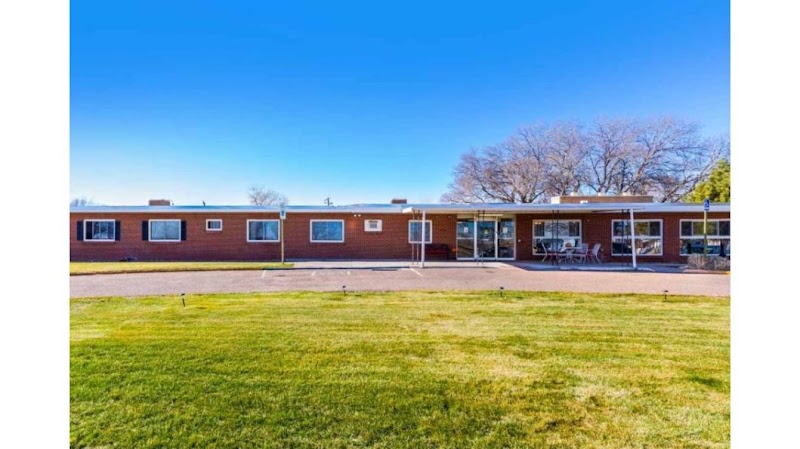
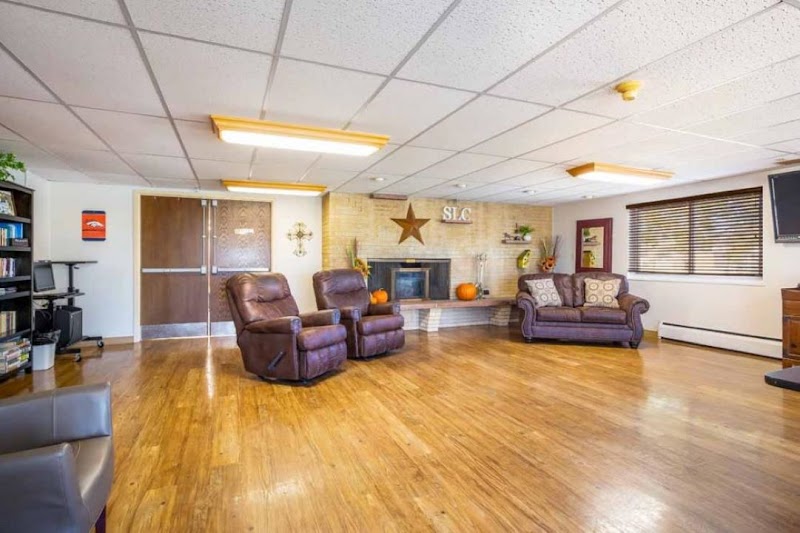
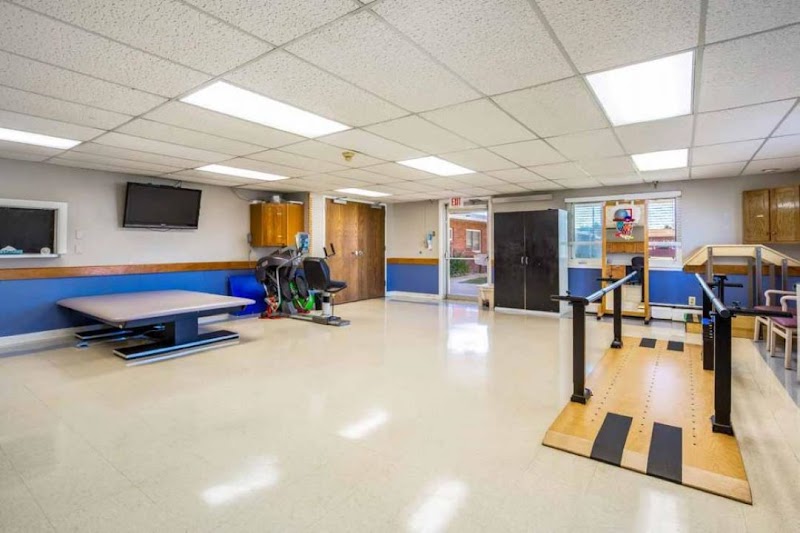
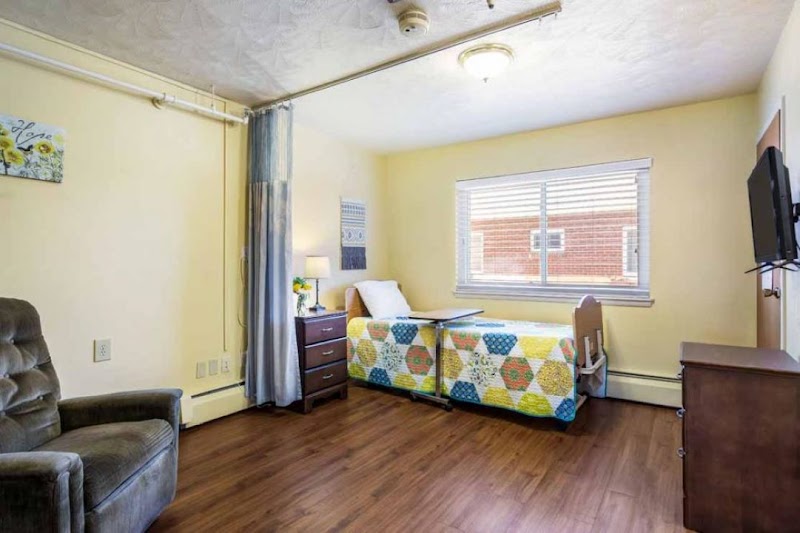
STERLING REHABILITATION AND NURSING, LLC

1420 S 3RD AVE, STERLING, CO 80751 (970) 522-2933
For profit - Corporation 63 Beds THE CHARLY BELLO FAMILY, THE MAZE FAMILY, THE SWAIN FAMILY, & WALTER MYERS Data: November 2025 1 Immediate Jeopardy citation
Trust Grade
0/100
#204 of 208 in CO
Last Inspection: September 2023

Over 2 years since last inspection. Current conditions may differ from available data.

Overview

Sterling Rehabilitation and Nursing, LLC has received a Trust Grade of F, indicating significant concerns and poor performance. It ranks #204 out of 208 facilities in Colorado, placing it in the bottom half, and is the second lowest in Logan County, with only one other facility being a local alternative. While the facility is improving in terms of issues reported, going from five in 2024 to four in 2025, it still faces serious challenges. Staffing is a major concern, rated at 1 out of 5 stars, with a turnover rate of 69%, which is much higher than the state average. Additionally, the facility has incurred $72,387 in fines, which is higher than 94% of Colorado facilities, indicating repeated compliance problems. Specific incidents include a critical failure to respond adequately when a resident experienced shortness of breath, where proper assessments were not conducted, and serious issues with fall prevention, including a resident suffering frostbite while waiting to re-enter the facility after smoking. Overall, while there are some positive aspects in quality measures, the significant weaknesses in staffing and safety protocols raise serious concerns for families considering this nursing home for their loved ones.

Trust Score
F
0/100
In Colorado
#204/208
Bottom 2%
Safety Record
High Risk
Review needed
Inspections
Getting Better
5 → 4 violations
Staff Stability
⚠ Watch
69% turnover. Above average. Higher turnover means staff may not know residents' routines.
Penalties
✓ Good
$72,387 in fines. Lower than most Colorado facilities. Relatively clean record.
Skilled Nurses
⚠ Watch
Each resident gets only 28 minutes of Registered Nurse (RN) attention daily — below average for Colorado. Fewer RN minutes means fewer trained eyes watching for problems.
Violations
⚠ Watch
41 deficiencies on record. Higher than average. Multiple issues found across inspections.
★☆☆☆☆
1.0
Overall Rating
★☆☆☆☆
1.0
Staff Levels
★★★★☆
4.0
Care Quality
★★☆☆☆
2.0
Inspection Score
Stable
2024: 5 issues
2025: 4 issues

The Good

  • 4-Star Quality Measures · Strong clinical quality outcomes
  • Full Sprinkler Coverage · Fire safety systems throughout facility
  • No fines on record

Facility shows strength in quality measures, fire safety.

The Bad

1-Star Overall Rating

Below Colorado average (3.1)

Significant quality concerns identified by CMS

Staff Turnover: 69%

23pts above Colorado avg (46%)

Frequent staff changes - ask about care continuity

Federal Fines: $72,387

Well above median ($33,413)

Moderate penalties - review what triggered them

Chain: THE CHARLY BELLO FAMILY, THE MAZE F

Part of a multi-facility chain

Ask about local staffing decisions and management

Staff turnover is elevated (69%)

21 points above Colorado average of 48%

The Ugly 41 deficiencies on record

1 life-threatening 5 actual harm
Apr 2025 2 deficiencies 1 IJ
CRITICAL (J) 📢 Someone Reported This

A family member, employee, or ombudsman was alarmed enough to file a formal complaint

Immediate Jeopardy (IJ) - the most serious Medicare violation

Quality of Care (Tag F0684)

Someone could have died · This affected 1 resident

**NOTE- TERMS IN BRACKETS HAVE BEEN EDITED TO PROTECT CONFIDENTIALITY** Based on record review and interviews, the facility failed to ensure residents received treatment and care in accordance with pr...

Read full inspector narrative →
**NOTE- TERMS IN BRACKETS HAVE BEEN EDITED TO PROTECT CONFIDENTIALITY** Based on record review and interviews, the facility failed to ensure residents received treatment and care in accordance with professional standards of practice, the comprehensive person-centered care plan, and the residents' choices for one (#6) of five residents out of nine sample residents. Resident #6 was admitted to the facility on [DATE] with diagnoses of right leg above the knee amputation, left arm paralysis following stroke, peripheral vascular disease (reduced blood flow to limbs), dysphagia (difficulty swallowing), respiratory failure and diabetes. On [DATE] at 6:20 a.m. Resident #6 told the certified nurse aides (CNA) he was experiencing shortness of breath. The CNAs observed the resident was experiencing shortness of breath and informed licensed practical nurse (LPN) #1 of the resident's significant change in condition. LPN #1 failed to collect information regarding Resident #6's condition, notify a registered nurse (RN) to conduct a complete physical assessment of the resident or report Resident #6's concern and significant change in condition to a physician. Resident #6 was later found unresponsive and not breathing. Resident #6 expired at the facility on [DATE] at 9:00 a.m. The facility failed to ensure staff promptly identified and intervened appropriately when Resident #6 experienced a significant change in condition, which resulted in a situation of serious harm. Findings include: Record review and interviews confirmed the facility corrected the deficient practice prior to the onsite investigation on [DATE] to [DATE], resulting in the deficiency being cited as past noncompliance with a correction date of [DATE]. I. Situation of serious harm On the morning of [DATE] at 6:20 a.m. Resident #6 reported a change of condition (shortness of breath) to the CNAs. The CNAs observed Resident #6's shortness of breath and conveyed the resident's concern and status to LPN #1. LPN #1 failed to collect information regarding Resident #6's condition, notify a RN to conduct a complete physical assessment of the resident or report Resident #6's concern and significant change in condition to a physician. Resident #6 was later found unresponsive and not breathing. Resident #6 expired at the facility on [DATE] at 9:00 a.m. The facility began an investigation immediately following the incident on [DATE]. LPN #1 was suspended on [DATE] following the incident, and terminated from employment at the conclusion of the facility's investigation. II. Facility's plan of correction The corrective action plan implemented by the facility in response to Resident #6's change of condition failure on [DATE] was provided by the regional director of operations (RDO) on [DATE] at 8:30 a.m. The stated purpose of the plan was the facility's immediate action plan to remove the likelihood that serious harm to a resident would occur or recur. The plan revealed the following: 1. Identification of residents affected or likely to be affected. The facility took the following actions to address and prevent any additional residents from suffering an adverse outcome: (Completion date: [DATE]). -The DON or designee notified the facility medical director of the incident. -Nursing supervisors/designees completed physical assessments/interviews on all residents to identify any changes in condition and notification was made to the physician of any noted changes. Concerns were not identified. -The DON suspended the licensed nurse who was aware of significant change, but did not report it to the physician, pending investigation. 2. Actions to prevent occurrence/recurrence- The facility took the following actions to prevent an adverse outcome from reoccurring: (Completion date [DATE]). -The licensed nurse was terminated on [DATE]. She remained on suspension from [DATE] until termination on [DATE]. -All licensed nurses were educated by the DON/designee on appropriate addressing of urgent changes of condition, physician notification regulations, and facility policy and procedure. -Nurse aides were educated by the DON/designee on escalating resident changes in condition to other licensed nurses in the facility if they do not receive an adequate response from the nurse assigned to the patient. -Staff members were not permitted to work a shift until education was completed. -New hires (licensed nurses and nurse aides) will be educated on change of condition and physician notification regulations, as well as facility policy and procedure, accordingly in orientation by human resources/designee. -The DON implemented a Quality Assurance Performance Improvement (QAPI) Performance Improvement Project (PIP) with a focus on physician notification of significant changes. -The PIP resulted in implementation of five times/week DON/designee audits of the 24-hour report and conducting nursing staff huddles to monitor for change in resident condition. -The DON/designee will also complete chart audits as follows, three residents weekly for four weeks then two residents weekly for two weeks then two residents a month for two months. -The regional consultant nurse will visit the facility two times per month to provide general oversight and monitoring of the PIP. Date facility asserts likelihood for serious harm no longer exists: [DATE]. III. Facility policy and procedure The Change in a Resident's Condition or Status policy, revised February 2021, was provided by the RDO on [DATE] at 4:04 p.m. It read in pertinent part, The nurse will notify the resident's attending physician or physician on call when there has been a significant change in the resident's physical/emotional/mental condition. A significant change in condition is a major decline or improvement in the resident's status that will not normally resolve itself without intervention by staff or by implementing standard disease-related clinical interventions (is not self-limiting); impacts more than one area of the resident's health status; requires interdisciplinary review and/or revision to the care plan; and ultimately is based on the judgment of the clinical staff and the guidelines outlined in the Resident Assessment Instrument. Prior to notifying the physician or healthcare provider, the nurse will make detailed observations and gather relevant and pertinent information for the provider, including information prompted by the eInteract Change of Condition evaluation form. IV. Facility investigation of incident on [DATE] and education provided in response to incident The facility's plan of correction/performance improvement plan (PIP) binder was provided by the RDO on [DATE] at 8:30 a.m. The binder included a documented interview of LPN #1 which occurred on [DATE]. It read in pertinent part, The nurse reports that she checked on the resident (Resident #6). She said he seemed normal and she measured his oxygen saturation level (level of oxygen in the blood), which read 92% (percent). She admits she did not listen to his heart, lungs, ask him questions, obtain a full set of vital signs (temperature, heart rate, blood pressure and respiratory rate), complete additional assessment or notify the physician. A description of the facility's education and inservice training documents conducted in response to the incident were included in the PIP binder. The documentation included the following, in pertinent part: Interventions that were put into place to help prevent a recurrence: Education as done with all nurses and CNAs prior to their next scheduled shift to ensure they understand policies and procedures regarding resident complaints of acute symptoms. This education was provided by the DON and the ADON (assistant director of nursing) and included a post-education quiz for nurses. CNAs were educated to always report to their nurse the residents' complaints and to escalate the complaint to another nurse, the DON/NHA if their complaint was not properly addressed by their nurse. Additionally, beginning the week of [DATE] and ongoing, all nurses will be evaluated for competency in performing head-to-toe evaluations by the DON/designee. The medical director will conduct additional training with nursing staff related to response to resident changes in condition. New nursing staff will receive this education during orientation. Audits are in place to ensure residents who are experiencing a change of condition have proper follow up. The results of the audits will be reviewed by the QAPI (quality assurance and performance improvement) committee. The [DATE] nursing assessment training document included signed verification of training for 15 nursing staff members. The [DATE] inservice training document for change of condition education provided by the medical director included signed verification of training for 46 facility staff members. Review of 24-hour report audits and resident chart audits revealed the DON audits had been completed through [DATE]. The education record (prior to [DATE]) for LPN #1 was provided by the RDO on [DATE] at 3:40 p.m. It revealed the following: LPN #1 had attended an inservice education regarding residents' change of condition a year prior to the incident, on [DATE]. The inservice education read in pertinent part, A change in a resident's condition may mean that he or she is at risk. Action can be taken only if changes are noticed and reported, the earlier the better. Changes that are not reported can lead to serious outcomes, including medical complications, transfer to a hospital or even death. V. Resident #6 A. Resident status Resident #6, age less than 65, was admitted on [DATE] and expired at the facility on [DATE]. According to the February 2025 computerized physician orders (CPO), diagnoses included right leg above the knee amputation, left arm paralysis following stroke, peripheral vascular disease, dysphagia, respiratory failure and diabetes. The [DATE] minimum data sets (MDS) assessment revealed the resident was cognitively intact with a brief interview of mental status (BIMS) score of 14 out of 15. He required set up assistance with eating, substantial assistance with hygiene and dressing and was dependent on staff for toileting and showering. B. Record review Review of Resident #6's February 2025 CPO revealed the resident had a physician's order indicating the resident was to be a do not resuscitate (DNR) status, ordered [DATE]. Review of Resident #6's Medical Orders for Scope of Treatment (MOST) form, signed on [DATE], revealed the following: -Resident #6 did not wish to receive cardiopulmonary resuscitation (CPR); -He wished to have selective treatment, which included using intravenous (IV) antibiotics and IV fluids, if indicated, and to transfer to the hospital, if indicated, but avoid intubation and intensive care; and, -The resident wished to receive artificial nutrition by tube for short term/temporary only. A review of Resident #6's electronic medical record (EMR) revealed the following progress notes: A nurse progress note, dated [DATE] at 7:33 p.m., documented Resident #6 was complaining of pain in his left shoulder. The ADON was notified and asked to go visit with him. Resident #6 told the ADON staff rolled him too far on his left side Sunday ([DATE]) and it made his left shoulder pop with pain. Resident #6 was repositioned in bed for comfort control. The ADON asked the nurse to call the PA (physician's assistant). The nurse told the PA about Resident #6's complaint and the PA said she saw the resident yesterday ([DATE]) but he never mentioned his shoulder pain. The PA ordered an MRI (magnetic resonance imaging) of the resident's left shoulder. Resident #6 was encouraged to take Tylenol routinely for pain management prior to initiating something stronger. A nurse progress note, dated [DATE] at 12:30 p.m., documented, a nurse spoke with Resident #6 regarding his MRI and when it would be scheduled. The nurse informed the resident that the physician's order had been faxed to central scheduling and the facility was awaiting a call back. When the nurse entered the resident's room, the resident was moving his fan with his right hand and said his fingers were numb and he could not grab with them. The nurse reported the findings to the nurse practitioner (NP). The NP said it was not an emergent situation. Resident #6 was offered lidocaine patches which he refused. Resident #6 accepted a physical therapy (PT) evaluation and the facility would obtain a MRI as soon as it was scheduled. A nurse progress note, dated [DATE] at 6:30 a.m. and written by LPN #1, documented a CNA reported that Resident #6 was having a difficult time breathing. LPN #1 checked the resident a few minutes later and Resident #6 was breathing at his baseline, with no shortness of breath noted. Resident #6's oxygen saturation level was 92% on room air. Resident #6 did open eyes and said hey to LPN #1. A nurse progress note, dated [DATE] at 7:59 a.m. and written by the DON, documented a CNA contacted the DON and said that Resident #6 was not breathing. Upon assessment, the resident was noted with no heartbeat, breaths or blood pressure. The DON called the resident's representative. The DON attempted to call the representative four times with no answer. The coroner was contacted and Resident #6 was pronounced deceased at 9:00 a.m. Multiple more attempts were made to contact the resident's representative with no answer. Review of Resident #6's vital signs documentation revealed the following: -On [DATE] at 1:41 p.m., the resident's temperature was 97.0 degrees fahrenheit (F); -On [DATE] at 1:41 p.m., the resident's respiration rate was 18 breaths per minute; -On [DATE] at 1:41 p.m., the resident's pulse was 80 beats per minute (bpm); -On [DATE] at 1:41 p.m., the resident's blood pressure was 112/82 millimeters of mercury (mm/Hg); -On [DATE] at 1:41 p.m., the resident's oxygen saturation was 92% on room air; -On [DATE] at 9:23 p.m., the resident's pulse was 87 bpm; and, -On [DATE] at 9:23 p.m., the resident's blood pressure was 96/68. -Review of Resident #6's EMR did not reveal that a full set of vital signs was obtained on the resident on the morning of [DATE]. VI. Staff interviews The NP was interviewed on [DATE] at 1:00 p.m. The NP said she ordered an ultrasound to evaluate Resident #6's right hand on [DATE], and later changed the order on [DATE] to an MRI of his hand for nerve impingement. The NP said sometimes MRI scheduling could take longer in rural locations, and the resident was still waiting for the MRI procedure when he expired. The NP said she was at the facility the day prior to his death. She said she did not examine him at the time, but was told he had the same symptoms on his right side (from [DATE]), including numbness of his right wrist with decreased grip strength. She said he had no new or acute pain on his left side. The NP said Resident #6's roommate at the time said Resident #6 asked a staff person to go to the hospital the day he expired ([DATE]). She said she was not certain if the staff person was LPN #1. The NP said there should have been an immediate call to the provider when Resident #6 said he wanted to go to the hospital, was short of breath or said he could not breathe. The NP said Resident #6 had a do not resuscitate order and the DON called her when he expired and she pronounced his death. CNA #4 was interviewed on [DATE] at 3:07 p.m. CNA #4 said when she arrived for her shift at 6:00 a.m. on [DATE] and received report, the previous CNA told her and CNA #5 that Resident #6 was not feeling well during the night and was awake and used his call light a lot. CNA #4 said she and CNA #5 entered Resident #6's room at 6:20 a.m. ([DATE]) and the resident said he was not feeling well. She said she and CNA #5 observed Resident #6 could not catch his breath, so she elevated the head of his bed and informed LPN #1 of Resident #6's shortness of breath. CNA #4 said LPN #1 did not respond or acknowledge either of the CNAs when they told her of the resident's change in condition. CNA #4 said she repeated the information to LPN #1 and LPN #1 again did not respond to her. CNA #4 said after she reported the information to LPN #1, she and CNA #5 monitored Resident #6's room to see if LPN #1 went to evaluate the resident. She said they did not see LPN #1 enter Resident #6's room. CNA #4 said Resident #6's roommate put his call light on at approximately 7:00 a.m. and told her Resident #6 needed assistance. She said Resident #6 said he felt like he was having a stroke and could not breathe. CNA #4 said she told LPN #1 of Resident #6's statements again at 7:09 a.m. and LPN #1 again did not acknowledge or reply to CNA #4's statements. CNA #4 said LPN #1 just looked at me. CNA #4 said she continued to work together with CNA #5 to assist residents who were getting up for the day. CNA #4 said another CNA (CNA #6) checked on Resident #6 at approximately 7:20 a.m. and told her that he was breathing and appeared to be sleeping. CNA #4 said an additional CNA arrived to work at 7:50 a.m. and CNA #4 asked the CNA to check on the resident. CNA #4 said the CNA checked on Resident #6 and then called out to the DON and said the resident was cold and not breathing. CNA #4 said she had worked with LPN #1 before and LPN #1 never responded to her verbally. She said she and other CNAs were educated after the event with Resident #6 and instructed to go up the chain of command by contacting a registered nurse (RN) or the DON, whether it was day or night, if a nurse did not respond to a resident's change of condition or to their concerns. Resident #6's former roommate, who no longer resided at the facility, (Resident #11) was interviewed on [DATE] at 3:35 p.m. Resident #11 said Resident #6 was not feeling well during the night ([DATE]) and was having difficulty breathing in the morning hours of [DATE]. Resident #11 said he yelled for help several times and the call light was on for an extended period of time. Resident #11 said Resident #6 slowly drifted off after 7:30 a.m. Resident #11 said Resident #6 always had some problems with breathing, but that day it got really bad. Resident #11 said nobody was in the room when Resident #6 died. CNA #5 was interviewed on [DATE] at 12:06 p.m. CNA #5 said Resident #6 was not acting like his usual self and she was told in the shift report that he might be very tired, as he was uncomfortable and awake a lot during the night. CNA #5 said Resident #6 said he could have been having a stroke and she reported this information to LPN #1 and LPN #1 did not respond. CNA #5 said she probably would have told another nurse, but she was concerned that LPN #1 would get back at me. CNA #5 said she thought LPN #1 would ask her to do vital signs, including checking Resident #6's temperature, blood pressure, heart rate and respiratory rate. CNA #5 said LPN #1 did not ask her to do this. CNA #5 said it was possible LPN #1 did go into the resident's room, however, she said she never saw LPN #1 in Resident #6's room. CNA #6 was interviewed on [DATE] at 11:02 a.m. CNA #6 said she was a CNA on a different unit that day ([DATE]), however, she said she stopped over to the nurses station on Resident #6's unit. CNA #6 said CNA #4 and CNA #5 asked CNA #6 to check on Resident #6. CNA #6 said she stood next to the resident for a few minutes and he was breathing, did not appear to be short of breath and appeared to be sleeping. RN #1 was interviewed on [DATE] at 12:41 p.m. RN #1 said she was working when Resident #6 expired. She said she did not know he was having issues or had passed away until after it happened. RN #1 said she had been told LPN #1 should have responded to the CNAs concerns and told her about Resident #6's shortness of breath. RN #1 could not recall who told her this. RN #2 was interviewed on [DATE] at 10:43 a.m. RN #2 said she worked the three nights before Resident #6 expired. RN #2 said she remembered asking Resident #6 if he wanted her to send him to the hospital due to his continued right arm pain and he declined. RN #2 said Resident #6 had complained of right arm pain for a month and was scheduled to have a MRI. RN #2 said Resident #6 did not complain of left shoulder or arm pain on the last night before he expired ([DATE]). RN #2 said after she had given report to the oncoming nurse (on [DATE]), she overheard CNAs tell LPN #1 that Resident #6 was sick to his stomach. RN #2 said she had told LPN #1 in report the resident wanted arthritis cream in more locations than he usually did. She said Resident #6 refused his insulin that night, as he often did. RN #2 said she asked LPN #1 about Resident #6's condition before she left the building and LPN #1 said he was fine. CNA #7 was interviewed on [DATE] at 12:49 p.m. CNA #7 said Resident #6 was a little off that night ([DATE]). She said he could not sleep and was using the call light for things he usually could handle. CNA #7 he could not grab the bar for turning as well as he usually did and it required one more person for repositioning him. She said he was in more pain than usual and became angry, so she told RN #2 about this and RN #2 went to see the resident. CNA #7 said Resident #6 did not complain or appear to have shortness of breath and did not ask to go to the hospital. She said the resident did ask when his MRI was scheduled. The DON and the RDO were interviewed together on [DATE] at 2:06 p.m. The DON said she had arrived at the facility on [DATE] and was called to the resident's room when he expired. She said an investigation was started immediately and she discovered LPN #1 did not respond appropriately to Resident #6's complaints, including his shortness of breath. The DON said Resident #6 did not have any concerning symptoms the day before (on [DATE]) beyond existing right hand numbness/weakness which was ongoing for several weeks, of which the NP was aware. The DON said LPN #1 did not collect data from Resident #6 that was needed to assess the situation. The RDO said LPN #1 should have elevated the concern to a RN and reported the resident's condition change to the provider. The RDO said the CNAs should have reported the concerns to another floor nurse on duty if they were not getting a response from LPN #1. The DON said there were no complete assessments or RN assessments documented in Resident #6's record after he began experiencing a change of condition. She said a RN assessment of the resident should have been conducted. The DON said there was negligence on the part of LPN #1 as she did not collect all of the appropriate information or notify the RN and provider of the resident's change of condition. The DON said the CNAs were educated after the incident with Resident #6 and now understood to go up the chain of command (report to another nurse and the DON) as needed if a resident's concerns were not addressed. The DON said all nursing staff completed nurse competencies regarding change of condition response, including assessment and notification to providers following the incident.
CONCERN (D) 📢 Someone Reported This

A family member, employee, or ombudsman was alarmed enough to file a formal complaint

Potential for Harm - no one hurt, but risky conditions existed

Deficiency F0620 (Tag F0620)

Could have caused harm · This affected 1 resident

**NOTE- TERMS IN BRACKETS HAVE BEEN EDITED TO PROTECT CONFIDENTIALITY** Based on record review and interviews, the facility failed to update the admissions agreement so it did not waive the facilities...

Read full inspector narrative →
**NOTE- TERMS IN BRACKETS HAVE BEEN EDITED TO PROTECT CONFIDENTIALITY** Based on record review and interviews, the facility failed to update the admissions agreement so it did not waive the facilities liability for loss of resident's personal property for one (#3) of two residents out of nine sample residents. Specifically, the facility failed to ensure Resident #3 did not waive her rights for reimbursement for the loss of personal property (five rings) during her stay in the facility. Findings include: I. Facility policy and procedures The Resident Personal Belongings policy, dated 2024, was provided by the nursing home administrator (NHA) on 3/25/25 at 12:48 p.m. The policy revealed this facility protected the resident's right to possess personal belongings, such as clothing and furnishings, for their use while in the facility. The facility would ensure that personal belongings and/or possessions were rightfully returned to the resident, or to the resident's representative, in the event of the resident's death or discharge from the facility. The facility would support the resident's right to retain and use personal possessions to promote a homelike environment and maintain their independence. All resident personal items would be inventoried at the time of admission by the social services designee, or another designated staff member and documentation shall be retained in the medical record. Additional possessions brought in during the duration of the individual's stay should be added to the existing personal belongings inventory listing. The facility would support the resident's right to retain and use personal possessions to promote a homelike environment and maintain their independence. All resident personal items would be inventoried at the time of admission by the social services designee, or another designated staff member and documentation should be retained in the medical record. Additional possessions brought in during the duration of the individual's stay should be added to the existing personal belongings inventory listing. Following the discharge or death of a resident, all personal clothing and items of a customized personal nature were to be given to the designated resident representative. Inventories of all items were to be reviewed and examined by the Social Services designee and the resident's representative. Recipients of such personal items at the time of discharge or death should sign-off with their legal signature, acknowledging receipt of all personal belongings presented. II. Resident #3 A. Resident status Resident #3, age greater than 65, was admitted on [DATE] and discharged on 11/1/24. According to the November 2024 computerized physician orders (CPO), diagnoses diabetes mellitus, chronic systolic (congestive heart failure), post-procedural, infection/inflammation due to cardiac and vascular devices, implants and/or grafts. The 10/7/24 minimum data set (MDS) assessment revealed the resident was cognitively intact with a brief interview for mental status (BIMS) score of 15 out of 15. The resident required substantial/maximal staff (staff did more than half of the effort by lifting or holding the trunk or limbs and provided more than half of the effort) assistance for toileting. The resident required partial/moderate staff (staff did less than half of the effort by lifting, holding or supporting the trunk or limbs less than half of the effort) assistance for upper and lower body dressing. B. Record review Resident #3 signed the Standard admission Agreement on 10/3/24. The agreement revealed the facility was not responsible for the theft, misplacement, loss or damage otherwise incurred to the resident's personal property and the facility would not be responsible for the repayment or replacement of personal property. Resident #3's admission personal belongings inventory form, dated 10/3/24, revealed the resident entered the facility with five rings. This form was signed by the resident and a registered nurse (RN). The form explained to the resident that all items retained in the resident's possession were the responsibility of the resident. The facility assumed no responsibility for lost or damaged items. A grievance report form, dated 10/31/24, submitted by the resident and their legal representative revealed at discharge the resident reported not having her five rings. One of the rings was her wedding ring. The admission personal belongings inventory form confirmed the resident had five rings on admission. The steps taken to resolve the grievance revealed the staff searched all the rooms the resident resided in during her stay and were unable to locate the rings. The resident and family told facility staff that they would search all of the resident's personal belongings once they got home. The resident and family would let the facility know if they were able to find the rings. On 11/18/24 the facility received a message from the family and they were unable to locate the missing rings. The corrective action portion of the form revealed the facility reported the missing rings as an occurrence related to misappropriation of property on 11/18/24. An event note dated 11/19/24 at 10:00 a.m., revealed it was reported on 11/18/24 by a family member of Resident #3 that the resident was missing five rings that the family was not able to locate. Resident #3 discharged to home on [DATE]. The risk factors and root cause identification revealed the resident tested positive for a COVID-19 infection during her stay at the community. The resident changed rooms twice during her stay. The resident was encouraged to use the secured lockbox to safeguard her valuables but the resident chose not to. The preventative measures in place prior to the incident revealed the resident discharged home with her family on 11/1/24. Upon admission, residents were being informed and encouraged to use secured to the wall lockboxes that were in each residents' rooms. The new interventions put in place were upon admission, residents were being informed and encouraged to use secured to the wall lockboxes located in residents' rooms. III. Staff interviews RN #1 was interviewed on 3/25/25 at 4:05 p.m. She reviewed Resident #3's admission personal belongings inventory form, dated 10/3/24, and agreed that the resident had five rings listed on the form. She said she completed the discharge summary with Resident #3 when she was discharged from the facility. RN #1 said this included the discharge personal belongings inventory form. She said the resident did not have the five rings at discharge. RN #1 said the resident told her the rings were in a plastic bag. She said to her knowledge the plastic bag containing the five rings was never located. She said she made a copy of the discharge personal belongings inventory form and gave it to the resident. She said the facility was unable to find this form. The SSD was interviewed on 3/26/25 at 9:55 a.m. The SSD said she reviewed the admission Agreement form with the resident and/or their representative. She said she also asked them if they have any questions about the agreement. She said the agreement explained to the residents that personnel property brought into the facility; the facility was not liable for if it were damaged, missing or stolen. She said the residents were encouraged to keep their valuables locked up and they were offered a metal lock box with a key for their room. The NHA and the regional director of operations (RDO) were interviewed on 3/26/25 at 10:18 a.m. The NHA said the facility was trying to find a compromise with the family regarding the missing five rings. The NHA said according to the admission personal belongings inventory form dated 10/3/24, the resident had five rings upon admission. He said the facility had contacted the family and requested an appraisal or a receipt for the rings. He said the resident had a lock box in the rooms that she resided in during her stay in the facility. He said the facility was unable to find the discharge personal belongings inventory form and asked the family to provide a copy of the form to the facility. The NHA was interviewed again at 12:24 pm. He said the family told the facility the five rings were worth $3,000.00 dollars. The NHA said he asked the family for at least a description of the rings.
Feb 2025 2 deficiencies
CONCERN (D) 📢 Someone Reported This

A family member, employee, or ombudsman was alarmed enough to file a formal complaint

Potential for Harm - no one hurt, but risky conditions existed

Free from Abuse/Neglect (Tag F0600)

Could have caused harm · This affected 1 resident

**NOTE- TERMS IN BRACKETS HAVE BEEN EDITED TO PROTECT CONFIDENTIALITY** Based on record review and interviews, the facility failed to prevent verbal abuse for one (#5) of seven residents reviewed for ...

Read full inspector narrative →
**NOTE- TERMS IN BRACKETS HAVE BEEN EDITED TO PROTECT CONFIDENTIALITY** Based on record review and interviews, the facility failed to prevent verbal abuse for one (#5) of seven residents reviewed for abuse out of 14 sample residents. Specifically, the facility failed to ensure Resident #5 was free from verbal abuse from Resident #6. Findings include: I. Facility policy and procedure The Abuse Policy, revised 6/11/24, was provided by the regional nurse consultant (RNC) on 1/27/25 at 1:31 p.m. The policy revealed every resident had the right to be free from all forms of abuse: verbal, sexual, physical, mental, neglect, corporal punishment and involuntary seclusion. The facility did not condone resident abuse and would take every precaution to prevent resident abuse. All occurrences of resident abuse, suspected abuse, neglect and injuries of unknown source would be promptly reported to the facility abuse coordinator for investigation. Resident abuse was the willful infliction of injury, unreasonable confinement, intimidation, or punishment of a resident resulting in physical harm or pain, mental anguish or deprivation of goods or services that were necessary to attain or maintain physical, mental or psychosocial well-being. Abuse included any type of abuse that was facilitated or enabled through use of technology or social media. Verbal abuse was the use of oral, written or gestured language that included disparaging or derogatory terms to residents or within their hearing distance, regardless of their ability to comprehend. The facility would ensure that all alleged violations involving abuse, neglect, exploitation or mistreatment, including injuries of unknown origin and misappropriation of resident property were reported immediately, but no later than two hours, after the allegation was made if the event that caused the allegation involved abuse or resulted in serious bodily injury; or not later than 24- hours if the events that caused the allegation did not involve abuse and did not result in serious bodily injury, to the administrator of the facility and to other officials (including to the State Survey Agency and Adult Protective Services (APS) where state law provided jurisdiction in long term care facilities and office of long term care ombudsman) in accordance with state law through established procedures. All employees of the facility would immediately report any suspected, observed or reported incidents of resident abuse, neglect, misappropriation of resident property, whether by staff members, family members or any other persons to the administrator or administrator's designee. The administrator served as the abuse coordinator of the facility. The facility permitted the administrator or the administrator's designee to report suspected crimes or allegations of abuse to law enforcement, the State Survey Agency, and/or APS in place of the staff member who witnessed the suspected crime or reported the allegation of abuse. The director of nursing (DON) or designee would ensure that the medical director and resident representative (as applicable) was notified of all incidents or suspected incidents of resident abuse, mistreatment, neglect or injury of unknown source. Should an incident or suspected incident of resident abuse, mistreatment, neglect or injury of unknown source be reported, the administrator, or his/her designee, would conduct an investigation of the alleged incident. The administrator or designee would interview any staff members, residents, family members or any others who might have knowledge of the incident and document a summary of interviews completed. The administrator or designee would report the results of all investigations to the State Survey Agency within five working days of the incident and other agencies as required by state law or regulation. If the alleged violation was substantiated, the appropriate corrective action would be taken. The facility would ensure that all residents were protected from physical and psychosocial harm during and after abuse investigations, including but not limited to, responding immediately to protect the alleged victim, examining the alleged victim for any sign of injury, including a physical examination and/or psychosocial assessment as indicated, increased supervision of the alleged victim and other residents as indicated, room or staffing changes, if necessary, to protect the resident(s) from the alleged perpetrator, protection from retaliation and provide emotional support and/or counseling to the resident during and after the investigation as needed. Residents with aggressive or abusive behaviors would have their care plans written and revised as needed to include approaches to reduce or eliminate the risk for abuse. If one resident jeopardized the safety of another resident, alternative placement might be considered for that resident. II. Incident of verbal abuse between Resident #5 and Resident #6 on 1/1/25. The facility's incident report for verbal aggression, dated 1/1/25 at 8:35 a.m., revealed Resident #6 was yelling obscenities at Resident #5. No physical altercations occurred. The floor nurse immediately intervened and stopped the altercation. Resident #6 was asked to leave the shared room. Resident #6 went back into the room six times and starting yelling at Resident #5. Resident #6 reported being upset because of a shared television. Resident #6 was offered to move rooms and accepted. Resident #5 denied being fearful of Resident #6. Resident #5 stated that she was very upset with the way she was spoken to during the verbal altercation. Resident #5 said that her roommate, Resident #6, was fighting with her over the television channel. Resident #6 was moved out of the shared room, until the staff could decide where the resident could be moved to a different room. No injuries were observed on either resident. The nursing home administrator (NHA) and the director of nursing (DON) were notified and both residents were put on 15-minute checks for 72 hours. The nursing home administrator (NHA) provided typed documentation of the interviews that he conducted on 1/1/25 (no time given). The document revealed the NHA interviewed Resident #5 who said she wanted to finish her television show but Resident #6 wanted to watch another show. Resident #6 argued with Resident #5 but then left the room. Resident #6 continued to come into the room and escalated the conversation. Resident #6 got upset with Resident #5, insulted her by calling her obscenities and pointed her finger at Resident #5. Registered nurse (RN) #1 and some certified nurse aides (CNA) went in to console Resident #5 as she was crying and said she would rather go to her grave. The NHA interviewed Resident #6 who said she asked to watch a television show and Resident #5 wanted to continue to watch her television show. Resident #6 got upset when Resident #5 did not want to change the television show. Resident #6 requested to change rooms. The NHA interviewed RN #1. RN #1 said Resident #5 and Resident #6 were arguing about the television. RN #1 tried to find a compromise but was unable to find one. When the situation between the residents escalated, RN #1 asked Resident #6 if she would come to the nurse's station while a solution could be found. The NHA summarized that the residents were arguing about the television. Resident #6 wanted to watch a television program but Resident #5 wanted to finish the program that she was watching. Both residents starting arguing, which resulted in Resident #5 crying and Resident #6 requesting to have her own room. Resident #6 was immediately given her own room, which alleviated her television frustrations. Mental health services were offered to both residents. The facility concluded that Resident #6 yelled at Resident #5. III. Resident #5 - victim A. Resident status Resident #5, age greater than 65, was admitted on [DATE] and readmitted on [DATE]. According to the January 2025 computerized physician's orders (CPO), diagnoses included schizoaffective disorder, depression, anxiety and metabolic encephalopathy. The 12/2/24 minimum data set (MDS) assessment documented the resident had intact cognitive ability with a brief interview for mental status (BIMS) score of 15 out of 15 with no behaviors. The resident had no impairments in functional ranges of motion. The resident was independent in sit to stand with the ability to come to a standing position from sitting in a chair, wheelchair, or on the side of the bed. The resident was also independent with chair/bed-to chair transfers and had the ability to transfer to and from a bed to a chair (or wheelchair). B. Resident interview Resident #5 was interviewed on 1/28/25 at 2:07 p.m. Resident #5 said Resident #6 wanted to change the television channel and she did not want her to change the channel to a news station. She said Resident #6 was not yelling at her but only wanted to change the television channel. She said she had no concerns with Resident #6. C. Record review Resident #5's care plan for the potential to be physically aggressive, verbally aggressive and accusatory related to a history of swatting and yelling at staff was initiated on 11/18/23 and revised on 11/5/24. The interventions included providing the resident with positive feedback. The resident escalated toward verbal aggression when staff wanted to wash her clothes, asking about personal hygiene and dentures. The resident's behaviors were de-escalated by calmly walking away, not arguing with the resident, changing the subject and talking about something else. Resident #5's care plan for impaired cognitive function related to developmental delays from birth was initiated on 11/4/23. The interventions included for staff to observe/document/report as needed any changes in cognitive function, specifically, changes in decision-making ability, memory, recall, general awareness, difficulty expressing self, difficulty understanding others, level of consciousness and/or mental status. The resident would maintain her current level of decision-making ability by the review date. The staff were to cue, reorient and supervise the resident as needed. The staff were to communicate with the resident/family/caregivers regarding the resident's capabilities and needs. A care plan for a pre-admission screening resident review (PASRR) Level II related to the resident meeting the criteria for major mental illness (MMI) with a primary diagnosis of schizoaffective disorder, depressive type was initiated on 4/30/24. The interventions included allowing the resident to answer questions and to verbalize her feelings, perceptions and fears as needed, encouraging the resident to participate in non-pharmacological interventions based on interests, evaluating the resident's cognitive abilities for participation in recommended services and notifying the physician of any changes. The resident had signed up for behavioral health services for medication management with counseling, which she refused. A care plan, initiated on 1/1/25, revealed to monitor Resident #5 for any signs or symptoms related to verbal abuse for 90 days. The interventions included engaging the resident to express her feelings and monitoring/reporting any signs or symptoms of trauma, such as heightened emotions, to a nurse immediately. A nurse note, dated 1/1/25 at 1:17 p.m. and written by RN #1, revealed she heard a verbal altercation between Resident #5 and her roommate (Resident #6). Resident #5 was watching a television show and Resident #6 began yelling at Resident #5 to change the channel on the television. Resident #6 was using profanities/obscenities at Resident #5. After Resident #5's television show was over, she turned the television to the channel Resident #6 wanted to watch. Resident #6 started yelling at Resident #5 again for not turning the volume up on the television. The television was quite loud when RN #1 entered the room a second time. Resident #6 was asked to leave the room and sat outside of the shared room. RN #1 walked away from the residents' room. About three minutes after RN #1 walked away from the area, Resident #6 went back into the shared room and started yelling at Resident #5 again. RN #1 went into the room and removed Resident #6 from the room, to the nurse's station. The NHA interviewed all that were involved in the incident. A nurse note, dated 1/1/25 at 8:35 a.m. and written by the DON, revealed it was reported that Resident #6 was yelling obscenities at Resident #5. No physical altercation occurred. The floor nurse (RN #1) immediately intervened. Resident #6 reported being upset because of a shared television. Resident #6 was offered to move rooms and accepted. Resident #5 denied being fearful of Resident #6. The DON, the NHA, the social service director (SSD) and the floor nurses were notified and were to monitor the residents. A psychological follow up note, dated 1/2/25 at 9:00 a.m. and written by a nurse practitioner (NP), reiterated RN #1's note on 1/1/25 at 1:17 p.m. It further revealed Resident #5 had good eye contact and was guarded. The resident was depressed and anxious. The resident had appropriate thought processes and associations were logical. The resident had no hallucinations, suicidal ideations or homicidal ideations. A physician's note, dated 1/2/25 at 7:49 p.m., revealed nursing reported that there was resident to resident conflict and that Resident #5 was a victim of verbal abuse by another resident. Resident #5 initially said that she did not want to live but nursing said she had improved since yesterday (1/1/25) when the incident happened. Resident #5 no longer felt that she would be better off dead. IV. Resident #6 - assailant A. Resident status Resident #6, age greater than 65, was admitted on [DATE]. According to the January 2025 CPO, diagnoses included depression, major depression, polyneuropathy, anxiety and chronic pain syndrome. The 12/6/24 MDS assessment documented the resident had intact cognition with a BIMS score of 15 out of 15 with no behaviors. The resident had little interest or pleasure in doing things. The resident felt down, depressed or hopeless. The resident was independent with indoor mobility (ambulation). The resident needed some staff help with functional cognition (planning regular tasks). B. Resident interview Resident #6 was interviewed on 1/28/25 at 3:41 p.m. Resident #6 said she did not want to discuss the verbal altercation involving Resident #5. C. Record review Resident #6's care plan for a mental health diagnosis of depression that required the use of an antipsychotic was initiated on 12/11/24. The interventions included administering medications as ordered, monitoring for any side effects and notifying the physician of any adverse or consistent side effects that occurred related to the use of a psychotropic medication, documenting target behaviors each shift, notifying a physician of any new/worsened symptoms of mental illness that were not effectively managed with current pharmacological and non-pharmacological interventions and the psychotropic committee would review the resident's medication regimen, target symptoms/side effects at least quarterly and make recommendations as indicated. Resident #6's care plan for the potential to be verbally aggressive related to a diagnosis of depression and anxiety was initiated on 1/1/25. The interventions included administering medications as ordered, monitoring/documenting any side effects/effectiveness of medications, behavioral health consults as needed and assisting the resident in developing and providing the resident with a program of activities that was meaningful and of interest. The staff were to encourage and provide opportunities for exercise and physical activity. A nurse note, dated 1/1/25 at 1:17 p.m., and written by RN #1, revealed she heard a verbal altercation between Resident #6 and her roommate (Resident #5). Resident #5 was watching a television show and Resident #6 began yelling at Resident #5 to change the channel on the television. Resident #6 was using profanities/obscenities at Resident #5. After Resident #5's television show was over, she turned the television to the channel Resident #6 wanted to watch. Resident #6 started yelling at Resident #5 again for not turning the volume up on the television. The television was quite loud when RN #1 entered the room a second time. Resident #6 was asked to leave the room and sat outside the shared room. RN #1 walked away from the residents' room. About three minutes after RN #1 walked away from the area, Resident #6 went back into the shared room and started yelling at Resident #5 again. RN #1 went into the room and removed Resident #6 from the room, to the nurse's station. The NHA interviewed all that were involved in the incident. A nurse note, dated 1/1/25 at 8:35 a.m. and written by the DON, revealed it was reported that Resident #6 was yelling obscenities at Resident #5. No physical altercation occurred. The floor nurse (RN #1) immediately intervened. Resident #6 reported being upset because of a shared television Resident #6 was offered to move rooms and accepted. Resident #5 denied being fearful of Resident #6 The DON, the NHA, the SSD and the floor nurses were notified and were to monitor the residents. A follow up note dated 1/2/25 at 7:55 p.m., by a physician revealed this resident was verbally abusive to another resident (her roommate) yesterday. They have since been separated. An event note template, dated 1/3/25 at 9:13 a.m., revealed Resident #6 was verbally aggressive towards another resident (Resident #5). The risk factors/root cause was the television channel. The resident had a diagnosis of major depression disorder and was in a new environment. The residents were separated and provided independent rooms. V. Staff interviews RN #1 was interviewed on 1/28/25 at 1:17 p.m. RN #1 said she was conducting a medication pass and heard a verbal altercation between Resident #5 and Resident #6. Resident #6 was yelling at Resident #5 because she wanted to watch a news channel and Resident #5 wanted to finish watching the program currently on the television. She said there was only one television in the room. She said Resident #6 was yelling foul names and profanities at Resident #5. RN #1 said she asked Resident #6 to step out of the room and talk with the staff. RN #1 said Resident #6 stepped out of the room and she thought the incident had been settled. RN #1 said she continued with her medication administration. She said Resident #6 went back into the room and started yelling at Resident #5 about the volume on the television. RN #1 said she went into the room and asked Resident #6 to leave the room a second time. She said Resident #6 came out of the room and sat down near the nurse's station. She said Resident #6 sat at the nurse's station for about 30-45 minutes to drink a cup of coffee and talk with staff. RN #1 said Resident #5 became very emotional after being verbally attacked by Resident #6. Rn #1 said Resident #6 was told that she would be moved to another room and she was okay with this decision. She said once the residents were in separate rooms, staff started 15-minute checks on both residents. RN #1 said Resident #5 never said she was fearful of Resident #6. The RNC and the DON were interviewed together on 1/28/25 at 4:19 p.m. The RNC said it was reported that Resident #5 and Resident #6 got into a verbal altercation because Resident #6 wanted to watch a news channel. The RNC and the DON said they did not witness any of the altercations. The RNC and the DON said, to their knowledge, this was the first and only altercation between the two residents The NHA was interviewed on 1/29/25 at 10:21 a.m. The NHA said Resident #5 and Resident #6 had a verbal disagreement. He said to his knowledge, this was the first and only altercation between the two residents. The NHA said after the altercation, he came into the facility and started doing interviews of those involved in the incident.
CONCERN (D) 📢 Someone Reported This

A family member, employee, or ombudsman was alarmed enough to file a formal complaint

Potential for Harm - no one hurt, but risky conditions existed

Deficiency F0740 (Tag F0740)

Could have caused harm · This affected 1 resident

**NOTE- TERMS IN BRACKETS HAVE BEEN EDITED TO PROTECT CONFIDENTIALITY** Based on record review and interviews, the facility failed to provide the necessary behavioral health care and services to attai...

Read full inspector narrative →
**NOTE- TERMS IN BRACKETS HAVE BEEN EDITED TO PROTECT CONFIDENTIALITY** Based on record review and interviews, the facility failed to provide the necessary behavioral health care and services to attain and maintain the highest practicable physical, mental, and psychosocial well-being for one (#4) of seven residents reviewed for behavioral and emotional status out of 14 sample residents. Specifically, the facility failed to coordinate timely necessary behavioral, mental and emotional health care and services for Resident #4 after the resident expressed suicidal ideation. Findings include: I. Resident #4 A. Resident status Resident #4, age greater than 65, was admitted on [DATE] and discharged to home on 1/23/25. According to the January 2025 computerized physician orders (CPO), diagnoses included alcohol abuse with withdrawal, dementia, psychotic disturbance, mood disturbance, anxiety and hemiplegia and hemiparesis following a cerebral infarction that affected the right dominant side. The 12/30/24 minimum data set (MDS) assessment revealed the resident had moderate cognitive impairment with a brief interview for mental status (BIMS) score of eight out of 15. The assessment indicated the resident had no behaviors. The assessment indicated the resident had no thoughts that she would be better off dead or of hurting herself in some way, did not feel down, depressed or hopeless and did not have little interest or pleasure in doing things. B. Record review The admit/readmit screener form, dated 12/26/24 at 2:55 p.m., revealed Resident #4 was admitted from the hospital. The form did not reveal the resident had depression or any behaviors. The resident's baseline care plan for social services, dated 12/27/24, revealed the resident had a history of alcohol dependence combined with a diagnosis of dementia. There was a significant concern with suicidal ideation, depression and anxiety. The interventions included frequent checks for 72-hours, referral to the emergency room for a psychological evaluation and referral to behavioral health services for psychological treatment. The care plan also revealed the pertinent initial care plan focus statement, goals and interventions related to mental health needs: the resident had mental health (diagnosis/diagnoses) of (SPECIFY) and requires the use of (SPECIFY: anti-depressant, anti-anxiety, antipsychotic, sedative/hypnotic, mood stabilizer). -The facility failed to develop Resident #4's social services baseline care plan to specify the resident's mental health diagnosis/diagnoses or what medications the resident's mental health diagnosis/diagnoses required for treatment. Additional interventions included administering medication per physician's order, monitoring for side effects and notifying the physician of any adverse or consistent side effects that occurred related to psychotropic drug use, staff were to document target symptoms each shift and notify the physician of any new/worsened symptoms of mental illness that were not effectively managed with current pharmacological and non-pharmacological interventions. If the resident's mental health symptoms became unmanageable in-house or a mental health crisis occurred, staff were to call the crisis line or notify the physician to obtain transfer orders for a psychiatric evaluation in the hospital setting and the psychotropic committee would review medication regimen, target symptoms and side effects at least quarterly and make recommendations as indicated. A Colorado Suicide Lethality Screening Tool (CSLST), dated 1/1/25 at 5:54 p.m., revealed in the past weeks, Resident #4 wished she was dead. In the past weeks, the resident felt she or her family would be better off if she was dead. In the past weeks, the resident had thoughts about killing herself. The resident was currently having thoughts of killing herself right now. The resident told a licensed practical nurse (LPN) that she wished she was dead and if she had a gun, she would shoot herself and if she had a knife, she would stab herself. -There was no documentation in Resident #4's electronic medical record (EMR) to indicate the resident was placed on increased monitoring or that the resident's physician, the nursing home administrator (NHA) or the director of nursing (DON) were notified of the resident's suicidal ideation after the CSLST was completed on the evening of 1/1/25 and identified that the resident expressed wanting to kill herself. The Healthcare Resident Safety Plan was signed by the resident on 1/1/25 (no time documented). The purpose of the safety plan was to identify triggers/warning signs the resident might experience during a mental health crisis. It was also used to remind the resident of helpful activities and people that could help keep the resident safe, if the resident experienced a mental health crisis. A social services note, dated 1/2/25 at 10:00 a.m., revealed Resident #4 was placed on frequent checks for 72 hours. A nurse note, dated 1/2/25 at 10:12 a.m., revealed the resident's primary care physician (PCP) was notified of the resident's suicidal ideations and the PCP would evaluate the resident during today's (1/2/25) rounding. -Review of Resident #4's EMR did not reveal documentation of the 15-minute checks. An eINTERACT situation, background, assessment and recommendations (SBAR) summary for providers note, dated 1/2/25 at 1:44 p.m. by Resident #4's physician, revealed the resident had a change in condition. Nursing observations, evaluations, and recommendations revealed the resident said if she had a way to kill herself, she would. The resident made mention of a gun, knife and pills. The resident said the only thing that was stopping her, was that she had nothing (to help her commit the act). The PCP recommended sending the resident to the emergency room (ER) at the hospital for evaluation and treatment. A nurse note, dated 1/2/25 at 2:25 p.m., revealed Resident #4 was sent to the ER for evaluation and treatment related to recent ideations of self-harm. A call was made to the ER and a report was provided. The resident said that if she had a gun she would shoot herself and if she had a knife, she would stab herself. Resident #4 said if she had medication available, she would take it all. A non-emergent ambulance was called and given the same report. The non-emergent ambulance arrived and left the building at 2:35 p.m. The resident's physician and power of attorney (POA) were notified according to the DON and the social services director (SSD). -The facility failed to send Resident #4 to the ER for a mental health evaluation until almost 24 hours after the resident initially expressed wanting to kill herself. The ER report revealed Resident #4 arrived at the hospital on 1/2/25 at 2:44 p.m., by ambulance. The resident was brought to the ER by emergency medical services (EMS) for an evaluation of depression and verbalizing possible suicidal thoughts. The resident said, on Christmas Eve, she did not have any visitors and was not allowed to participate in the holiday party at the facility. This occurred again on New Year's Eve and she became very depressed. However, she was currently feeling better and did not feel like she wanted to hurt herself. When asked what she would like, she said she wanted to go back to her room at the facility and get into her bed. The resident was discharged from the ER on [DATE] at 3:07 p.m., with education materials for depression. A nurse note, dated 1/2/25 at 3:48 p.m., revealed Resident #4 returned to the facility with no new orders. The resident was alert and had no pain or discomfort. The resident made no further ideations. A skilled charting note, dated 1/2/25 at 7:24 p.m., revealed Resident #4 had not made any further ideations of self-harm after returning from the ER. The resident was alert and able to make her needs known. The resident was mobile with the use of a wheelchair. The resident was resting in bed. A history and physical note, dated 1/2/25 at 7:56 p.m. and written by Resident #4's physician, revealed the resident reported suicidal ideations today (1/2/25) to the nursing staff. The resident said if she had a way to kill herself, she would, regardless of the method. The facility sent the resident to the ER for evaluation. The ER physician called this physician and reported that the resident's mood had improved, she was no longer suicidal and the resident wanted to come back to the facility. -However, Resident #4 had reported suicidal ideations to the facility staff on 1/1/25, not 1/2/25 (see above). A physician's order, dated 1/4/25 at 3:40 p.m., revealed to administer Sertraline HCl oral tablet 25 milligrams (mg), one tablet by mouth once a day for anxiety. -The physician's order was not obtained until 1/4/25, three days after Resident #4 expressed wanting to kill herself. Review of Resident #4's baseline care plan for social services, locked on 1/6/25, revealed the resident had mental health needs/behavioral concerns for behavioral health services following suicidal ideations. The interventions to address mental health needs/behavioral concerns were for frequent monitoring. The care plan also revealed the pertinent initial care plan focus statement, goals and interventions related to mental health needs: the resident had a mental health diagnosis of major depressive disorder and required the use of an antidepressant. The interventions further revealed if the resident's mental health symptoms became unmanageable in-house or a mental health crisis occurred, staff were to call the crisis line or notify the physician to obtain transfer orders for a psychiatric evaluation in the hospital setting. Staff were to obtain informed consent for the use of psychotropic medication. The medication regimen included black box warnings that would be reviewed in each care conference meeting. The psychotropic committee would review medication regimen, target symptoms and side effects at least quarterly and make recommendations as indicated. The baseline care plan for social services further revealed the staff should use the following non-pharmacological interventions to help manage the resident's behavioral symptoms of: (SPECIFY symptoms/behaviors that resident displays) (SPECIFY). Additional interventions were to provide opportunities for socialization, provide encouragement, support and active listening, provide reality orientation if appropriate, do not provide reality orientation if the resident was unable to be oriented to reality or it was distressing to the resident and avoid resident's triggers: (specify). -The facility failed to develop Resident #4's social services baseline care plan to specify the symptoms/behaviors the resident displayed that staff should use non-pharmacological interventions for or what the resident's triggers for the behaviors were. A comprehensive care plan focus for Resident #4's history of suicidal ideations was initiated on 1/6/25. The interventions included a behavioral health service referral was to be completed, having a safety plan and suicide contract in place, staff would monitor and manage any undesirable behaviors, if the resident posed a potential threat to injure herself or others, the staff were to notify her provider, if the resident was safe, staff was to allow the resident personal space and if the resident wandered or paced, staff were to initiate visual supervision during the acute episode. -However, there was no documentation in Resident #4's EMR to indicate the facility referred the resident for behavioral health services. Additional interventions included staff were to maintain a consistent schedule with daily rounding, minimize the resident's environmental stimuli, monitor for cognitive, emotional or environmental factors that might contribute to violent behaviors, monitor the resident for signs/symptoms of agitation, offer the resident acceptable alternatives to unacceptable situations, provide clear, simple instructions, provide reorientation to situations and provide verbal feedback to the resident regarding behaviors. -The facility failed to initiate a comprehensive care plan focus for suicidal ideations until 1/6/25, five days after the resident expressed wanting to kill herself. An interdisciplinary team (IDT) event note template, dated 1/6/25 at 9:44 a.m., revealed Resident #4 had suicidal ideations on 1/2/25. The root cause was the resident had a recent hospitalization and a history of alcohol use. The ER physician had cleared the resident from harm/ideations and the new intervention was to refer the resident for behavioral health services. -However, Resident #4 had reported suicidal ideations to the facility staff on 1/1/25, not 1/2/25 (see above). -Additionally, there was no documentation in Resident #4's EMR to indicate the facility referred the resident for behavioral health services. A care conference summary note, dated 1/7/25 at 11:40 a.m., revealed Resident #4 was in attendance and had no nursing or medication concerns. The resident said she had frequent discomfort (pain). The Psychological Assessment, dated 1/9/25 at 10:37 a.m., revealed Resident #4's cognition was moderately impaired. The resident did not require assistance with communicating. The resident had significant trouble adjusting to the facility upon admission but had since adjusted appropriately. The resident had alcohol abuse with severe withdrawals. The resident's psychological factors included mental health conditions, trauma, post-traumatic stress disorder (PTSD), substance abuse, behavioral issues, self-efficacy deficits, and lack of coping skills. The resident's social factors included lack of social support, strained family relationships, social isolation, desire for community involvement, desire for physical/sexual intimacy while in the facility and sexual identity concerns. The resident had diagnoses that included dementia, alcohol abuse, major depressive disorder, anxiety, suicidal ideation, isolation, tearfulness, and suicidal ideation by informing some staff of the ideation while denying the ideation to others. -The facility failed to conduct a Psychological Assessment until 1/9/25, eight days after the resident expressed wanting to kill herself. II. Staff interviews The activity director (AD) was interviewed on 1/27/25 at 10:34 a.m. She said Resident #4 attended the New Year's Eve party on 12/31/24 at 1:30 p.m. She said the resident only stayed at the party for about five minutes and did not mention any suicidal ideations. The SSD was interviewed on 1/27/25 at 11:07 a.m. She said Resident #4 told her, on 1/2/25, that she was actively suicidal, if she had a way to complete the act. She said the resident completed and signed the Healthcare Resident Safety Plan on 1/1/25 (not time documented). She said by signing the safety plan, Resident #4 acknowledged that she would not kill herself. She said the resident's physician assessed the resident on 1/2/25 and completed his note at 7:56 p.m. She said the resident was placed on frequent checks that were documented on a form. She said the resident also had an order for a referral to go to the ER on [DATE]. The SSD said she was not made aware of the resident's lethality assessment until the morning of 1/2/25. She said if the lethality assessment was conducted, she should have been notified and if the resident was suicidal, she should have been notified immediately. -However, the facility was unable to provide documentation of the 15-minute checks. LPN #2 was interviewed on 1/27/25 at 11:28 a.m. LPN #2 said she interviewed Resident #4 and completed the Colorado Suicide Lethality Screening Tool (CSLST) on 1/1/25 at 5:54 p.m. She said she searched the resident's room for any type of item that the resident could use to harm herself and nothing was found. She said after the CSLST was completed, the staff rounded on the resident more often. LPN #2 said the resident stayed in her room and slept on and off. She said when the resident woke up, she was in a better mood. She said she started the resident on 15-minute checks and parked the medication cart by the resident's entrance door, so she could watch the resident. She said she told the oncoming registered nurse (RN) #2 for the next shift about the resident's suicidal ideations and handed RN #2 the 15-minute check form. She said she was very busy and did not call the DON or the NHA. She said she told additional staff and the DON about the resident's statements the next day, on 1/2/25. -However, the facility was unable to provide documentation of the 15-minute checks. The regional nurse consultant (RNC) and the DON were interviewed together on 1/27/25 at 11:41 p.m. The DON said she first became aware of Resident #4's suicidal ideations during the 1/2/25 morning meeting. She said after she saw the CSLST, she called the resident's physician at 10:12 a.m. The DON said the frequent checks started when she saw the CSLST. She said frequent checks did not have to be 15-minute checks that were documented on a form. The DON said Resident #4's physician assessed the resident and gave the order to send the resident to the ER on [DATE] at 1:43 p.m. She said when staff used the CSLST, she should be notified that the form was used, regardless of the outcome on the form. She said she was not notified that the CSLST had been used to assess Resident #4 and she was not made aware of its findings after it had been completed. RN #1 was interviewed on 1/27/25 at 12:11 p.m. RN #1 said on 1/1/25 at approximately 10:30 a.m., Resident #4 was down the hall and she heard the resident mention suicidal ideations. She said she brought the resident to the nurse's station for one-to-one supervision. She said Resident #4 sat at the nurse's desk for a few hours and did not make any additional comments. She said the resident said she was not happy with her care. RN #2 was interviewed on 1/27/25 at 12:40 p.m. RN #2 said she came to work on 1/1/25 and during the report meeting, LPN #2 said Resident #4 had suicidal ideations and wanted to kill herself. RN #2 said she filled out the 15-minute check form, starting at 1/1/25 at 6:30 p.m. She said the 15-minute check form was continued until there were no more lines on the form. She said she filed the form in a folder at the nurse's station, for the possibility of the checks starting the next day. She said Resident #4 never told her of any suicidal ideations. She said the resident wanted coffee and Tylenol all during the night. She said the next day (1/2/25), LPN #2 came back to work and she already knew what the resident had said. The DON and LPN #2 were interviewed together on 1/27/25 at 1:50 p.m. LPN #2 said she was providing direct supervision of Resident #4 by placing her medication cart outside the resident's room and looking in on the resident during medication administration. She said when she came back to work the next morning, RN #2 did not give her the 15-minute check form. The DON said when a resident expressed suicidal ideations, the resident's physician should be notified and the resident should be placed on one-to-one supervision. The DON said the physician would provide a crisis assessment and/or possibly send the resident to the ER for a mental health assessment. The DON said Resident #4's physician did an assessment on the resident on 1/2/25 and decided he wanted to send the resident to the ER. The DON said the resident was not sent to the ER immediately on 1/1/25, because she was not aware of the resident's statements until the morning meeting on 1/2/25. The social services director (SSD) was interviewed again on 1/29/25 at 10:31 a.m. The SSD said from the time the resident entered the facility on 12/26/24 to 1/1/25, the resident had not exhibited any behaviors. She said she completed the Colorado Suicide Lethality Screening Tool (CSLST) on 1/1/25 for Resident #4. She said after the resident returned from the ER, she denied having any more suicidal ideations. The minimum data set coordinator (MDSC) was interviewed on 1/29/25 at 10:45 a.m. The MDSC said Resident #4's baseline care plan was developed on 12/27/24 and was updated and locked on 1/6/25. She said the admit/readmit screener assessment, dated 12/26/24 at 2:55 p.m., did not mention that the resident had depression or any behaviors. She said the first progress note to mention the resident had behaviors and was on frequent checks was on 1/2/25. She said the resident went to the ER on [DATE] and the intervention for the behavioral health services for psychological treatment was on 1/6/25 at 9:44 a.m. The RNC and the SSD were interviewed together on 1/29/25 at 12:01 p.m. The RNC and the SSD said Resident #4 was assessed on admission and had no behaviors until she made the statement of suicidal ideation on 1/1/25. The RNC and the SSD said the resident was on skilled services and staff did a daily nurse assessment on the resident which included monitoring of cognition and mood/behaviors. The RNC and the SSD said until 1/1/25, there was no mention of any behaviors for Resident #4 in the nurse notes. The RNC said before the resident's suicidal ideation statement on 1/1/25, the facility's corporate office had provided training to all the social workers on psychosocial topics and this had been an ongoing process. The RNC said additional audits had been conducted at the facility to review resident progress notes for changes in condition, psychotropic medication orders and PASRR (pre-admission screening and resident review), and five selected residents' daily progress notes were audited for dignity. The RNC said the facility looked to see if any residents had suicidal ideations and if the facility responded appropriately.
Dec 2024 4 deficiencies 2 Harm
SERIOUS (G) 📢 Someone Reported This

A family member, employee, or ombudsman was alarmed enough to file a formal complaint

Actual Harm - a resident was hurt due to facility failures

Quality of Care (Tag F0684)

A resident was harmed · This affected 1 resident

**NOTE- TERMS IN BRACKETS HAVE BEEN EDITED TO PROTECT CONFIDENTIALITY** Based on record review and interviews, the facility failed to ensure that residents received treatment and care in accordance wi...

Read full inspector narrative →
**NOTE- TERMS IN BRACKETS HAVE BEEN EDITED TO PROTECT CONFIDENTIALITY** Based on record review and interviews, the facility failed to ensure that residents received treatment and care in accordance with professional standards of practice for one (#4) of four residents out of 15 sample residents. Resident #4, who had diagnoses of type 2 diabetes mellitus with chronic kidney disease and foot ulcers, heart failure and osteomyelitis (infection of the bone) of the left ankle and foot, was admitted from the hospital on 9/16/24 with surgical wounds to both heels following surgical debridement (removal of dead tissue) of his diabetic wounds and placement of a wound vacuum (negative pressure wound therapy) on the left heel. Hospital discharge instructions included the resident was to be non-weight bearing to bilateral lower extremities and Prevalon boots (soft heel protection boots) were to be worn on both feet. However, the facility failed to enter physician's orders for Resident #4's non-weight bearing status or Prevalon boots into the resident's electronic medical record (EMR) upon the resident's admission to the facility. Additionally, the facility failed to include the use of Prevalon boots or Resident #4's non-weight bearing status on the skin and pressure ulcer care plan initiated on 9/17/24. Resident #4 began receiving weekly visits by the wound care physician on 9/18/24. However, documentation revealed the resident was not seen by the wound care physician on 10/1/24, 10/23/24, 11/6/24 and 11/26/24. The 11/20/24 wound care physician visit record revealed the wound on Resident #4's left heel had worsened and increased in size since the last visit on 11/13/24. Resident #4 declined sharp debridement (removing dead or unhealthy tissue) on 11/20/24 and the wound care physician removed the wound vacuum. The wound care physician changed the treatment order and planned to re-evaluate in one week. On 11/24/24 the nursing skin assessment documented Resident #4's left heel wound was improving without the wound vacuum, but had eschar (black, scab-like dead tissue) and a mild odor. There was no documentation the physician was notified of the eschar or odor. The wound care physician did not evaluate the resident's left heel wound on 11/26/24. The nurse documented completing the wound care on 11/26/24 but did not complete a skin assessment or wound progress note on 11/26/24. The nursing progress note dated 11/28/24 documented the left heel wound was described as having a blackened area to the wound bed and as having a foul odor. The wound care physician was contacted and recommended sending Resident #4 to the emergency department for treatment of a worsening wound. Findings include: I. Facility policy and procedure The Wound Care policy, dated 12/19/16, was provided by the regional director of quality and compliance (RDQC) on 12/31/24 at 2:28 p.m. It read in pertinent part, The purpose of this procedure is to provide guidelines for the care of wounds to promote healing. Verify that there is a physician's order for treatment/wound care to be provided. Dress wounds in accordance with the physician's order. Notify the resident's attending physician if the resident refused wound care. Report other information in accordance with professional standards of practice. II. Resident #4 A. Resident status Resident #4, age [AGE], was admitted on [DATE] and discharged to the hospital on [DATE]. According to the November 2024 computerized physician orders (CPO), diagnoses included type 2 diabetes mellitus with chronic kidney disease and foot ulcers, heart failure, atherosclerotic heart disease (plaque build-up in arteries), atrial fibrillation (irregular heart rhythm) and osteomyelitis of the left ankle and foot. The 9/19/24 minimum data set (MDS) assessment revealed the brief interview for mental status (BIMS) was not completed. However, a BIMS assessment was completed on 9/26/24 and Resident #4 had a BIMS score of 13 out of 15, indicating his cognition was intact. He required minimal assistance with bed mobility and maximum assistance with transfers. The assessment documented the resident had an infection of the foot, diabetic foot ulcers, other open lesions of the foot and surgical wounds. He had a pressure reducing device for his bed and wheelchair and he was not on a turning or repositioning program. The assessment documented the resident had an application of dressings to his feet (with or without topical medications). B. Record review Review of Resident #4's 9/16/24 hospital discharge instructions revealed the resident was to be non-weight bearing to bilateral lower extremities and Prevalon boots (soft heel protection boots) were to be worn on both feet. The skin and pressure ulcer care plan, initiated 9/17/24, revealed Resident #4 had the potential for altered skin integrity due to limited mobility, had moisture associated skin damage on the buttocks and groin and had open surgical wounds on both heels. Interventions included educating the resident on frequent repositioning, providing treatments per physician's orders and notifying the physician if wounds did not respond to treatment, encouraging good nutrition, monitoring for signs of infection (redness, warmth, odor, pain), providing wound consultation weekly and changing the wound vacuum every Wednesday and Saturday. -The care plan failed to include the use of Prevalon boots or Resident #4's non-weight bearing status. -The care plan did not include an intervention of an air mattress or a pressure reduction mattress (see physician's orders below). Review of Resident #4's September 2024 CPO revealed a physician's order for an air mattress to the resident's bed, ordered 9/17/24. The physician's order did not include air mattress settings or checking to assure the mattress was working every shift. The physician's order was discontinued on 9/20/24. Review of Resident #4's November 2024 CPO revealed the following physician's orders: Change the wound vacuum to the left heel every Wednesday and Saturday, ordered 10/31/24, discontinued 11/12/24, restarted 11/14/24 and discontinued a second time on 11/20/24. Weekly skin checks on Tuesdays, ordered 9/16/24. -Review of Resident #4's October 2024 treatment administration record (TAR) revealed the resident's wound vacuum was not changed on 10/1/24. -There was no documentation to indicate the wound care physician was notified that the resident's wound vacuum was not changed or why it was not changed on 10/1/24. The 10/24/24 at 2:05 a.m. nurse progress note documented the resident refused to have the wound vacuum changed (on 10/23/24) because it was too late and the resident did not want it changed. -However, there was no documentation to indicate the resident's wound vacuum was changed on the following day or that the wound care physician was notified of the resident's refusal to have the wound vacuum changed. -Resident #4's November 2024 TAR revealed no documentation that the resident's wound vacuum was changed on 11/6/24 or 11/13/24. -There was no documentation to indicate the wound care physician was notified that the resident's wound vacuum was not changed or why it was not changed on 11/6/24 or 11/13/24. -Additionally, the November 2024 TAR revealed there was no documentation that weekly skin checks were completed for Resident #4 on 11/19/24 or 11/26/24. A 11/24/24 skin check assessment documented Resident #4's left heel wound was draining serosanguineous fluid (fluid that contains the liquid part of blood and blood and is generally clear/yellowish in color) and the wound edges had thick slough. There was a mild odor noted and eschar was present. -There was no documentation in Resident #4's EMR to indicate that the nurse notified the physician of the changes noted in the resident's left heel wound. Review of Resident #4's wound care physician consultations revealed the resident's left heel wound was not seen by the wound care physician on 10/1/24, 10/23/24, 11/6/24 and 11/26/24. Progress notes revealed the wound care physician was not available on 10/1/24, however, no alternate visit was scheduled. -There was no progress note documenting why the 10/23/24 wound care physician visit did not occur. The 11/6/24 wound care physician visit was cancelled due to bad weather and was not rescheduled. A 11/26/24 progress note revealed the wound care physician came to the facility on [DATE] but did not see any residents because there was not a facility nurse available to make rounds with the physician. The 11/20/24 wound care physician care visit note revealed the wound on Resident #4's left heel had worsened and increased in size from 4.5 centimeters (cm) in length by 4.7 cm in width by 0.2 cm in depth with 100% granulation (healing tissue) and no undermining (erosion under the skin) to 5.2 cm in length by 5.5 cm in width by 0.2 cm in depth with 40% slough (refers to dead tissue within a wound, often appearing as a yellow, tan, or white fibrous material) and 60% granulation (healing tissue) with no eschar (hard scab-like tissue) and 0.6 cm undermining since the last visit on 11/13/24. Resident #4 declined sharp debridement (removing dead or unhealthy tissue) on 11/20/24 and the wound care physician removed the wound vacuum. The wound care physician changed the treatment order to cleanse the wound, apply oil immersion gauze to the wound bed, cover with one-half strength Dakin's solution (wound treatment solution used to prevent infection) soaked gauze and secure with an abdominal (ABD) pad (a highly absorbent, cushioning dressing), kerlix (rolled gauze bandage) and an elastic rolled bandage to secure the wound dressings three times per week. The wound care physician planned to re-evaluate in one week. The wound care physician recommended following up with podiatry if there was no improvement. The 11/26/24 nurse progress note documented the wound care physician was in the building but did not see residents because the facility's wound care nurse was not available to assist with wound rounds. Resident #4 was documented as being very upset because the wound care physician did not see him and the resident was worried his wounds were not healing. The nurse documented completing the wound care but did not complete a wound care progress note on 11/26/24. -There was no documentation in the EMR to indicate the wound care physician was notified that the resident was concerned his wound was not healing. The 11/28/24 nurse progress note documented Resident #4's left heel wound had a blackened area to the wound bed and was noted to have a foul odor. The wound care physician was contacted and the physician recommended sending Resident #4 to the emergency department for treatment of a worsening wound. III. Staff interviews The RDQC, the nursing home administrator (NHA) and the director of nursing (DON) were interviewed together on 12/31/24 at 12:07 p.m. The RDQC said Resident #4 was admitted on [DATE] after a two week acute hospital stay. The RDQC said the resident's heel wounds started as diabetic ulcers and the resident had surgical repair, including bone grafts, to both heels. The RDQC said there were inconsistencies in the medical record regarding whether the wounds were caused by pressure or diabetic ulcers. The RDQC said the resident's wounds were stable until approximately 11/8/24 when the resident started declining and wanted to change to comfort care. -However, Resident #4's left heel wound was not seen by the wound care physician on 10/1/24, 10/23/24 or 11/6/24 and the wound vacuum was not changed per the physician's orders on 10/23/24 (see record review above). The RDQC said Resident #4 was wavering on whether to continue the wound vacuum and it was stopped for one day on 11/13/24 and returned to the rental company. The RDQC said the wound vacuum was initiated again on 11/15/24 until the wound care physician decided to discontinue it again on 11/20/24. The RDQC said she was unaware the wound care physician came to the facility on [DATE] and left without seeing residents. The RDQC said timeliness of weekly skin checks was part of a performance improvement plan (PIP) initiated by the facility on 10/15/24. The RDQC said the facility was still working on the accuracy of care plans. -However, despite the initiation of the 10/15/24 PIP, Resident #4's care plan was not updated to include the use of Prevalon boots or the resident's non-weight bearing status. Additionally, weekly skin assessments were not completed for the resident on 11/19/24 or 11/26/24 (see record review above). The DON said she knew the wound care physician was scheduled to visit on 11/26/24 but he was late and when he arrived, the facility did not have a nurse to make wound rounds with him. The DON said if the wound care physician was unavailable she would expect the nurses to do the wound rounds without the physician. The DON said nurses were to notify the wound care physician if there was a change in a resident's wound. The DON said weekly skin assessments should be documented in the EMR. The NHA said if the facility had identified any issues with Resident #4's weekly skin assessments in their audits and reported them to the QAPI committee in November 2024, he would provide the documentation. -There was no documentation indicating Resident #4's weekly skin assessments were discussed at the November 2024 QAPI meeting provided by the NHA by the survey exit on 12/31/24. IV. Additional information The NHA provided the facility's 10/15/24 PIP on 12/31/24 at 12:49 p.m. The PIP indicated resident care plans were to be reviewed and updated by 10/28/24. Weekly audits of skin assessments began on 10/24/24 and findings were to be reported to the quality assurance and performance improvement committee (QAPI) for 12 weeks. -However, Resident #4's care plan was not updated to include the use of Prevalon boots or the resident's non-weight bearing status. Additionally, weekly skin assessments were not completed for the resident on 11/19/24 or 11/26/24 (see record review above).
SERIOUS (G) 📢 Someone Reported This

A family member, employee, or ombudsman was alarmed enough to file a formal complaint

Actual Harm - a resident was hurt due to facility failures

Pressure Ulcer Prevention (Tag F0686)

A resident was harmed · This affected 1 resident

**NOTE- TERMS IN BRACKETS HAVE BEEN EDITED TO PROTECT CONFIDENTIALITY** Based on observations, record review and interviews, the facility failed to ensure residents received care consistent with profe...

Read full inspector narrative →
**NOTE- TERMS IN BRACKETS HAVE BEEN EDITED TO PROTECT CONFIDENTIALITY** Based on observations, record review and interviews, the facility failed to ensure residents received care consistent with professional standards of practice to prevent pressure injuries from occurring or worsening for one (#8) of four residents reviewed out of 15 sample residents. Resident #8, who was at risk for developing pressure ulcers and had a history of pressure ulcers, was admitted on [DATE] and readmitted to the facility on [DATE] after a three-day hospital stay. The readmission skin assessment, dated 11/6/24, documented the resident had a 1.0 centimeter (cm) by 1.0 cm scabbed area on his coccyx which the nurse covered with a foam dressing. However, there was no documentation that a treatment order was requested or that the facility's wound nurse or the wound care physician were notified of the skin concern. The 11/6/24 primary care physician's readmission history and physical examination documentation did not indicate Resident #8 had any current skin issues. The weekly nursing skin assessment, dated 11/13/24, documented Resident #8 had a reddened area to his coccyx measuring 1.0 cm by 1.0 cm and a foam dressing was applied for comfort. Again, there was no documentation that a treatment order was requested or that the facility's wound nurse or the wound care physician were notified of the skin concern. The 12/9/24 weekly nursing skin assessment documented Resident #8 did not have redness or any open area to his coccyx. However, the 12/16/24 weekly nursing skin assessment documented the resident had a 1.0 cm round open area on his sacrum/coccyx. On 12/18/24 the wound care physician documented Resident #8 had an unstageable pressure injury to his sacrum measuring 1.6 cm by 1.5 cm by 0.2 cm in depth and covered with 100% slough (refers to dead tissue within a wound, often appearing as a yellow, tan, or white fibrous material). The wound care physician recommended treatment orders to cleanse the wound, apply Medihoney (wound treatment that prevents bacterial growth) and cover with a border gauze every other day and as needed. The facility failed to notify the wound care nurse and the wound care physician of the skin concern noted to Resident #8's coccyx upon his readmission to the facility and obtain appropriate physician's orders for treatment. Due to the facility's failures, the resident's skin concern developed into an unstageable pressure injury to his coccyx which increased in size from 1.0 cm by 1.0 cm on 11/6/24 to 1.6 cm by 1.5 cm by 0.2 cm by the time the resident was assessed by the wound care physician on 12/18/24. Findings include: I. Professional reference According to the National Pressure Injury Advisory Panel, European Pressure Injury Advisory Panel and Pan Pacific Pressure Injury Alliance Prevention and Treatment of Pressure Injuries: Clinical Practice Guideline, third edition, [NAME] Haesler (Ed.), EPUAP/NPIAP/PPPIA: 2019, retrieved on 1/2/25 from https://www.internationalguideline.com/guideline on, Pressure ulcer classification is as follows: Category/Stage 1: Nonblanchable Erythema (discoloration of the skin that does not turn white when pressed, early sign of tissue damage) Intact skin with nonblanchable redness of a localized area usually over a bony prominence. Darkly pigmented skin may not have visible blanching; its color may differ from the surrounding area. The area may be painful, firm, soft, warmer or cooler as compared to adjacent tissue. Category/Stage 1 may be difficult to detect in individuals with dark skin tones. May indicate 'at risk' individuals (a heralding sign of risk). Category/Stage 2: Partial Thickness Skin Loss Partial thickness loss of dermis presenting as a shallow open ulcer with a red pink wound bed, without slough. May also present as an intact or open/ruptured serum filled blister. Presents as a shiny or dry shallow ulcer without slough or bruising. This Category/Stage should not be used to describe skin tears, tape burns, perineal dermatitis, maceration or excoriation. Category/Stage 3: Full Thickness Skin Loss Full thickness tissue loss. Subcutaneous fat may be visible, but bone, tendon or muscle are not exposed. Slough may be present but does not obscure the depth of tissue loss. May include undermining and tunneling. The depth of a Category/ Stage 3 pressure ulcer varies by anatomical location. The bridge of the nose, ear, occiput and malleolus do not have subcutaneous tissue and Category/ Stage 3 ulcers can be shallow. In contrast, areas of significant adiposity can develop extremely deep Category/Stage 3 pressure ulcers. Bone/tendon is not visible or directly palpable. Category/Stage 4: Full Thickness Tissue Loss Full thickness tissue loss with exposed bone, tendon or muscle. Slough or eschar may be present on some parts of the wound bed. Often include undermining and tunneling. The depth of a Category/Stage 4 pressure ulcer varies by anatomical location. The bridge of the nose, ear, occiput and malleolus do not have subcutaneous tissue and these ulcers can be shallow. Category/ Stage 4 ulcers can extend into muscle and/ or supporting structures ( fascia, tendon or joint capsule) making osteomyelitis possible. Exposed bone/tendon is visible or directly palpable Unstageable: Depth Unknown Full thickness tissue loss in which the base of the ulcer is covered by slough (yellow, tan, gray, green or brown) and/or eschar (tan, brown or black) in the wound bed. Until enough slough and/or eschar is removed to expose the base of the wound, the true depth, and therefore Category/ Stage, cannot be determined. Stable (dry, adherent, intact without erythema or fluctuance) eschar on the heels serves as 'the body's natural (biological) cover' and should not be removed. Suspected Deep Tissue Injury: Depth Unknown Purple or maroon localized area of discolored intact skin or blood-filled blister due to damage of underlying soft tissue from pressure and/or shear. The area may be preceded by tissue that is painful, firm, mushy, boggy, warmer or cooler as compared to adjacent tissue. Deep tissue injury may be difficult to detect in individuals with dark skin tones. Evolution may include a thin blister over a dark wound bed. The wound may further evolve and become covered by thin eschar. Evolution may be rapid, exposing additional layers of tissue even with optimal treatment. II. Facility policy and procedure The Prevention of Pressure Ulcers/Injuries policy, dated 12/19/16, was provided by the regional director of quality and compliance (RDQC) on 12/31/24 at 2:28 p.m. It read in pertinent part, Newly identified skin impairments should be reported by the licensed nurse to the attending physician to obtain new treatment orders. Routine skin assessments should be performed by the licensed nurse after admission in accordance with the physician's order. III. Resident #8 A. Resident status Resident #8, age less than 65, was admitted on [DATE], discharged to the hospital on [DATE] and readmitted on [DATE]. According to the December 2024 computerized physician orders (CPO), diagnoses included bipolar disorder, generalized anxiety disorder, cerebral palsy (a neurological disorder affecting the ability to move, maintain balance and control muscles), hypomagnesemia (low magnesium) and chronic pain syndrome. The 9/29/24 minimum data set (MDS) assessment revealed the resident was cognitively intact with a brief interview for mental status (BIMS) score of 15 out of 15. The resident was independent or required minimal assistance with bed mobility and dressing and was independent with transfers. The assessment indicated the resident was at risk of developing pressure ulcers. B. Resident interview and observation Resident #8 was interviewed on 12/30/24 at 11:34 a.m. Resident #8 was sitting in his wheelchair. There was no specialty air mattress on his bed. He said he had a sore on his bottom that was caused at the facility because they gave him a new wheelchair cushion that was too hard and thin. Resident #8 pointed out the wheelchair cushion lying near his roommate's dresser. Resident #8 said he was now using his old wheelchair cushion which was thicker and softer. Resident #8 said he had a history of a sore, open to the bone, on his bottom but it was healed. Resident #8 said he should have had a dressing put on the wound on his bottom this morning (12/20/24) after his shower, but the nurse kept putting it off. He said he did not currently have a protective dressing on his bottom. On 12/30/24 at 12:15 p.m. Resident #8 was lying in bed and prepared for wound care by RN #2. Resident #8 did not have a dressing covering the wound. RN #2 cleansed and measured the wound. The wound was covered in yellow slough and measured 1.3 cm by 1.0 cm. C. Record review The skin care plan, initiated 10/17/19 and updated 11/13/24, documented Resident #8 had the potential for skin issues related to limited mobility, with the goal to maintain clean and dry skin through the next review date. -The care plan documented the resident had a history of several pressure ulcers but did not indicate a current pressure injury was present. Care plan interventions included doing skin checks weekly (which he frequently refused), encouraging the resident to lie down during the day to relieve pressure to the coccyx (which he frequently refused), ensuring adequate protein and nutritional intake, observing wound healing (he sometimes removed wound dressings) and providing a pressure relieving cushion in his wheelchair. An update to the care plan interventions was added on 11/13/24 and documented Resident #8 had pain to the tailbone, the area was reddened, and the nurse applied a foam dressing. -However, there was no documentation in Resident #8's electronic medical record (EMR) to indicate the wound care physician was notified or a treatment order was obtained. The December 2024 CPO documented the following physician's orders: Weekly skin checks on Wednesdays, ordered 11/12/24. Cleanse sacrum/coccyx wound, apply Medihoney and cover with a border gauze every other day and as needed, ordered 12/18/24. Review of Resident #8's November 2024 and December 2024 treatment administration records (TAR) indicated the resident refused the weekly skin check on 11/20/24 but no other weekly skin checks were refused by the resident. The readmission skin assessment, dated 11/6/24, revealed Resident #8 had a dry, scabbed over area on the coccyx. The 11/6/24 readmission nursing progress note documented the resident had intact skin except for a 1.0 cm by 1.0 cm area on the coccyx. No further description of the skin concern was documented. -There was no documentation in the resident's EMR to indicate that a treatment order was requested or that the facility's wound nurse or the wound care physician were notified of the skin concern. The weekly nursing skin assessment, dated 11/13/24, documented Resident #8 had a reddened area to his coccyx measuring 1.0 cm by 1.0 cm and a foam dressing was applied for comfort. -There was no documentation in the resident's EMR to indicate that a treatment order was requested or that the facility's wound nurse or the wound care physician were notified of the skin concern. The 12/9/24 weekly nursing skin assessment documented Resident #8 did not have redness or any open area to his coccyx. The 12/16/24 weekly nursing skin assessment documented the resident had a 1.0 cm round open area on his sacrum/coccyx. The nurse documented a change of condition progress note for the physician but there were no recommendations from the physician documented. The 12/18/24 wound care physician documentation revealed Resident #8 had a 1.6 cm length by 1.5 cm width by 0.2 cm depth unstageable pressure injury to the sacrum covered in 100% slough. The wound care physician recommended treatment orders to cleanse the wound, apply Medihoney and cover with a border gauze every other day and as needed. IV. Staff interviews Registered nurse (RN) #2 was interviewed on 12/30/24 at 12:25 p.m. RN #2 said Resident #8 had a shower that morning (12/20/24) at 6:30 a.m. RN #2 said she got busy and was not able to do his wound care and apply the protective dressing following the resident's shower. -Resident #8 did not have a protective wound dressing covering his wound from 6:30 a.m. until 12:15 p.m., almost six hours. The director of rehabilitation (DOR) was interviewed on 12/31/24 at 9:38 a.m. The DOR said she provided a new wheelchair cushion for Resident #8 within the past four weeks. The DOR said Resident #8 kept his previous wheelchair cushion in case he did not like the new one, but she was not aware he did not like it and was not using the new cushion. The RDQC was interviewed on 12/31/24 at 12:07 p.m. The RDQC said a performance improvement plan (PIP) was initiated on 10/15/24 for pressure ulcers. The RDQC said the facility was still working on the accuracy of care plans. -Despite the initiation of the 10/15/24 PIP, Resident #8's care plan was not updated to include the resident's current unstageable pressure injury to his coccyx (see record review above). The director of nursing (DON) was interviewed on 12/31/24 at 12:25 p.m. The DON said a round 1.0 cm open area was found on Resident #8's sacrum on 12/16/24. The DON said Resident #8 had a history of not sleeping in his bed even though staff encouraged him to lie down. The DON said Resident #8 was not using an air mattress because it made it difficult for him to transfer in and out of bed independently. The DON said she was not aware Resident #8 had any skin impairment issues on his coccyx or sacrum prior to 12/16/24. The DON said when the nurse identified Resident #8's skin issue to his coccyx on 11/6/24, the nurse should have notified the physician and requested treatment orders. The DON said the nurses should have notified the wound nurse and communicated the skin issues on the 24-hour report so the resident could have been seen by the wound care physician timely. The DON said Resident #8 should have had a protective dressing covering the wound on his sacrum as soon as possible after his shower on 12/30/24. The DON said she added a physician's order on 12/31/24 for as needed dressing changes for the nurses to document replacing Resident #8's dressing after showers or when soiled. The nursing home administrator (NHA) was interviewed on 12/31/24 at 12:35 p.m. The NHA said Resident #8 received the new wheelchair cushion from the therapy staff on 12/4/24. The NHA said he was not aware Resident #8 was unhappy with the new cushion. V. Additional information The NHA provided the facility's 10/15/24 PIP on 12/31/24 at 12:49 p.m. The PIP indicated care plans were to be reviewed and updated by 10/28/24. The PIP documented the nurses were provided education beginning 10/24/24 on procedures to follow for any new skin issues identified. When a new skin issue was identified, the nurses were to do alert charting for 72 hours, notify the physician and request treatment orders. -However, Resident #8's care plan was not updated to include the resident's current unstageable pressure injury to his coccyx (see record review above). -Despite the nursing education documented on the PIP, Resident #8's skin issue, identified on 11/6/24, was not reported until 12/16/24 and treatment orders were not received until 12/18/24.
CONCERN (D) 📢 Someone Reported This

A family member, employee, or ombudsman was alarmed enough to file a formal complaint

Potential for Harm - no one hurt, but risky conditions existed

Deficiency F0604 (Tag F0604)

Could have caused harm · This affected 1 resident

**NOTE- TERMS IN BRACKETS HAVE BEEN EDITED TO PROTECT CONFIDENTIALITY** Based on record review and interviews, the facility failed to ensure residents were free from physical restraints for one (#3) o...

Read full inspector narrative →
**NOTE- TERMS IN BRACKETS HAVE BEEN EDITED TO PROTECT CONFIDENTIALITY** Based on record review and interviews, the facility failed to ensure residents were free from physical restraints for one (#3) of one resident out of 15 sample residents. Specifically, the facility failed to ensure Resident #3 was not restrained in his wheelchair using a Hoyer lift (mechanical lift) sling. Findings include: I. Facility policy and procedures The Abuse Policy, revised 6/11/24, was provided by the nursing home administrator (NHA) on 12/30/24 at 10:50 a.m. The policy revealed every resident had the right to be free from all forms of abuse: verbal, sexual, physical, mental, neglect, corporal punishment and involuntary seclusion. The facility did not condone resident abuse and should take every precaution to prevent resident abuse. All occurrences of resident abuse, suspected abuse, neglect and injuries of unknown source should be promptly reported to the facility abuse coordinator for investigation. Resident abuse was the willful infliction of injury, unreasonable confinement, intimidation, or punishment of a resident resulting in physical harm or pain, mental anguish or deprivation of goods or services that were necessary to attain or maintain physical, mental or psychosocial well being. Abuse included any type of abuse that was facilitated, enabled through use of technology or social media. Physical abuse was abuse that resulted in bodily harm with intent. This included hitting, slapping, pinching, kicking and controlling behavior through corporal punishment and willful neglect of the resident's basic needs. Willful was defined as the individual might have acted deliberately, not that he/she must have intended to inflict injury or harm. Mistreatment was defined as an inappropriate treatment or exploitation of a resident. All new employees would complete training modules on Abuse & Neglect, The Elder Justice Act, Resident Rights Essentials, Behavioral Health Options for Older Adults and Handling Aggressive Behaviors upon hire during the orientation period. All employees would complete semi-annual training modules on Abuse & Neglect and the Elder Justice Act and annual training modules on Resident Rights Essentials, Behavioral Health Options for Older Adults, and Handling Aggressive Behaviors. General staff meetings were regularly held and might include in-services, training or reminders regarding facility policy on abuse, neglect, exploitation and/or misappropriation of resident property as indicated. The facility would ensure all alleged violations involving abuse, neglect, exploitation or mistreatment, including injuries of unknown origin and misappropriation of resident property were reported immediately, but no later than two hours after the allegation was made, if the events that caused the allegation involved abuse or resulted in serious bodily injury. The report could be no later than 24-hours if the events that caused the allegation did not involve abuse and did not result in serious bodily injury. The report would go to the administrator of the facility, to other officials (including to the State Survey Agency and Adult Protective Services where state law provided jurisdiction in long term care facilities and the office of long term care ombudsman) in accordance with State law through established procedures. All employees of this facility must immediately report any suspected, observed or reported incidents of resident abuse, neglect, misappropriation of resident property, whether by staff members, family members or any other persons to the administrator or the administrator's designee. The administrator served as the abuse coordinator of the facility. This facility permitted the administrator or the administrator's designee to report suspected crimes or allegations of abuse to law enforcement, the State Survey Agency, Adult Protective Service in place of the staff member who witnessed the suspected crime or reported the allegation of abuse. The director of nursing or designee would ensure that the medical director and the resident's representative (as applicable) were notified of all incidents or suspected incidents of resident abuse, mistreatment, neglect or injury of unknown source. Should an incident or suspected incident of resident abuse, mistreatment, neglect or injury of unknown source be reported; the administrator, or his/her designee, should conduct an investigation of the alleged incident. The administrator or designee should interview any staff members, residents, family members or any others who may have knowledge of the incident and document a summary of interviews completed. The administrator or designee should report the results of all investigations to the State Survey Agency within five working days of the incident and other agencies as required by state law or regulation. If the alleged violation were substantiated, appropriate corrective action would be taken. When an employee of the facility abused or was suspected of abuse of a resident, the employee would be placed on immediate suspension, directly escorted by a staff member out of the facility and not permitted to return until the investigation was completed. When the investigation showed that abuse did not occur, the employee was reinstated. When the investigation showed abuse did occur, the employee would be subject to disciplinary action up to and including termination. The facility would report to the appropriate licensing authority and/or other required agencies any confirmed occurrences of abuse or any knowledge it had of any actions by a court of law which would indicate an employee was unfit for service. II. Incident of physical restraint involving Resident #3 on 3/30/24 The NHA provided the facility's investigative documents related to the physical restraint of Resident #3 on 12/30/24 at 4:22 p.m. The documents revealed: The NHA received a phone call on 3/30/24 at 10:30 p.m. from certified nurse aide (CNA) #4. CNA #4 reported that during shift report, she was told by the evening shift CNAs that Resident #3 had been observed sitting in a wheelchair near the nurses station with a Hoyer lift sling brought up between his legs, brought up across his shoulders and hooked onto his wheelchair handles. The investigative documents included a typed statement from CNA #6 that was dated 3/31/24 (not timed) and revealed CNA #6 observed (Hoyer) leg straps pulled through (between) Resident #3's legs, under his arms and hooked to his wheelchair handles. The resident was in this position when she arrived for her shift at 2:00 p.m. CNA #6 did not think about this position since the director of nursing (DON) was there. CNA #6 did not observe the resident in a different position or having the straps removed. The investigative documents included a typed statement from CNA #5 that was dated 3/31/24 (not timed) and revealed CNA #5 observed Resident #3 at the nurses station and the resident was having a bad night. She observed a (Hoyer) lift sling was brought up between his legs, over his shoulders and hooked on the wheelchair handles. CNA #5 did not observe who put the resident in this position, however she noticed the resident in this position when she was getting the resident ready for bed. The investigative documents included a typed statement from CNA #3 that was dated 3/31/24 (not timed, dated/signed) and revealed CNA #3 observed the resident kept sliding out of his wheelchair. The DON and registered nurse (RN) #3 were the only two staff members that were at the nurses station with the resident. CNA #3 did not observe who placed the resident in this position. CNA #3 first observed the resident at 4:00 p.m. with the bottom part of the (Hoyer) lift sling crossed over and placed on the handles of the wheelchair. RN #3's typed and signed statement, dated 3/31/24 at 8:04 a.m., revealed the DON was in charge of Resident #3 and was having trouble getting the resident to stay in bed. The resident had ripped out his ostomy, was really restless and trying to get out of bed. The resident said he had to go drive a tractor. The DON said it was safer to get him up so he did not end up on the floor. The statement documented RN #3 and the DON got the resident up in his wheelchair and placed him by the nurses station. Right away he was already trying to get up and walk. RN #3 and the DON had to get him up multiple times to scoot him back into his wheelchair. A member from therapy got foot pedals to see if this would help with positioning. The foot pedals did not help, because the resident kept putting his feet over them and sliding down. The DON said to hook the sling (Hoyer) straps to the wheelchair. The DON was hoping to catch his bottom before he slid down from the wheelchair. According to RN #3's statement, Resident #3 never left their sight, one of them always had eyes on the resident. The lift sling straps (Hoyer) at one time went between his legs, over his shoulder and then attached to the handles of the wheelchair. The resident was able to move his arms and it was not tight, even when he slid down in the wheelchair. The resident was always within arms distance of either the DON or RN #3. The statement documented it was not the DON or RN #3's intention to restrain Resident #3 in the wheelchair. It was more of a fail safe to keep the resident from sliding forward and falling. The alleged assailant summary of the interview, dated 3/31/24 at 7:00 a.m., with the DON revealed the resident was having a bad night. The DON said they had to have the resident up at the nurses station quite a bit. The DON said there was nothing about the sling (Hoyer) that was different, they were just hanging there. -However, the DON admitted to the police that she placed the sling (Hoyer) between Resident #3's legs and attached the straps to the wheelchair handles. A witness interview summary form, dated 3/31/24 at 12:15 p.m., by CNA #1 revealed she observed Resident #3 at the nurses station with the DON and RN #3. The resident kept trying to get out of his wheelchair. CNA #1 observed the DON take the (Hoyer) straps, wrap them over his shoulders and hook them onto the handles of his wheelchair. The observations occurred around 3:00 p.m. CNA #1 said the position looked wrong, but she did not know what to do since it was her boss that did it. The NHA received a follow up call from the police officer (named) on 4/1/24 (not timed). The officer interviewed both the DON and RN #3. The DON admitted placing the (Hoyer) sling in such a position on the resident. RN #3 admitted she observed the DON placing Resident #3 in this position. III. Resident #3 A. Resident status Resident #3, age greater than 65, was admitted on [DATE], readmitted on [DATE] and discharged on 11/27/24. According to the November 2024 computerized physician orders (CPO), diagnoses included malignant neoplasm of the prostate (prostate cancer), malignant neoplasm of the bladder (bladder cancer), intraspinal abscess with granuloma (abscess in the spine), acute/chronic respiratory failure with hypoxia and acute/chronic systolic (congestive) heart failure. The 6/19/24 minimum data set (MDS) assessment revealed the resident was cognitively intact with a brief interview for mental status (BIMS) score of 15 out of 15. The resident had no impairments in functional limitation in range of motion. The resident utilized a wheelchair. B. Record review The care plan for activities of daily living (ADL) self-care performance deficit was initiated on 3/29/24. The interventions included Resident #3 required the use of a wheelchair for mobility. The resident required two staff assistance by full body lift for staff to move between surfaces. The care plan did not reveal that the resident required a Hoyer lift for transfers. The care plan for actual impairment to the skin of the perineal area with abscess was initiated on 3/29/24. The interventions included using a draw sheet or lifting device to move the resident. -Review of Resident #3's electronic medical record (EMR) did not reveal any documentation regarding the incident on 3/30/24. IV. Staff Interviews CNA #1 was interviewed on 12/30/24 at 3:09 p.m. CNA #1 said a Hoyer lift was typically used to get Resident #3 out of bed and into his wheelchair. She said the resident was sitting on the lift sling and he was at the nurses station on 3/31/24. She said he was not in any pain and he was not yelling out. She said the straps from the sling were pulled between his legs over his shoulders and they were not attached to anything. -However, her witness interview summary documented the Hoyer lift sling straps were attached to the resident's wheelchair handles. CNA #1 said this event occurred a long time ago and she could not remember if the sling was attached to the wheelchair handles. RN #1 was interviewed on a telephone conference call with the NHA on 12/30/24 at 5:04 p.m. RN #1 said she did not observe who placed the resident in this restraint position. She said a CNA called her at home and said the DON and RN #3 had used a Hoyer lift sling to tie the resident to his wheelchair. She said the CNA who called her did not witness who placed the resident in this position, however the CNA was told by other CNAs how the resident was positioned in his wheelchair by the Hoyer lift straps. She said she came to the facility and performed an assessment of the resident and to report the incident as an occurrence. She said it was in the middle of the night and close to midnight. She said the resident was already in bed, when she and another staff member conducted the assessment. RN #1 said the resident had no obvious injuries from being placed in the position that was described by the CNA. She said CNA #1 was one of the staff members who witnessed the resident being secured to his wheelchair with the Hoyer lift straps and told her of the event. RN #1 said she placed this statement in the occurrence that was sent to the State Agency. RN #1 said she notified the Board of Nursing and they started their own investigation of the event. RN #1 said, according to a police officer, the DON and RN #3 admitted tying the resident to the wheelchair to keep him from falling out of the chair. RN #1 said on 3/30/24, both the DON and RN #3 were suspended and on 4/3/24 they were both terminated from the facility. CNA #3 was interviewed on 12/30/24 at 10:15 p.m. CNA #3 said the resident was seated in his wheelchair at the nurses station. She said the resident was sitting on a lift (Hoyer) sling. She said the sling (split leg) and the straps were brought up between his legs, over his shoulders and attached to his wheelchair handles. She said he was in this position for a few hours. She said the resident did not appear to be in pain and was not yelling out. She said she did not know who placed the resident in this position. CNA #3 said she told the other staff members this was a restraint. She said when she took the resident to bed, she removed him from this position. She said the DON and RN #3 were working on that unit. She said to her knowledge, both the DON and RN #3 were aware of the resident being placed in this position. She said she had never seen the resident in this position before or after this event. RN #3, the NHA and the regional director of quality and compliance (RDQC) were interviewed together on 12/31/24 at 12:57 p.m. RN #3 said she and the DON were working at the nurses station. RN #3 said the staff used a Hoyer lift for transfers for Resident #3. She said the resident was confused and talking with people that were not there. She said he tried to stand up and slid out of the chair. She said he was at the nurses station and had a Hoyer lift sling under him. She said at one point in time the slings of the lift were brought up between his legs, the straps were under his arms and then attached to the handles of the wheel chair. She said she did not know who placed the straps in this position. The RDQC said the DON placed the straps in this position. The RDQC said the DON felt this was the safest position for Resident #3 to be placed in for his own safety. The RDQC said the resident had a history of sliding out of his wheelchair and falling related to a diagnosis of tuberculosis of the spine. The RDQC said the configuration of the straps was not for punishment nor convenience, but as a medical necessity to keep him from siding out of the chair and falling. The RDQC said Resident #3 did not incur any injuries from this positioning. The RDQC said the resident was sent to the hospital the next day related to increased hallucinations. The RDQC said both the DON and RN #3 were reprimanded and terminated. The RDQC said the investigation of the event was sent to the Board of Nursing. The RDQC said the Board of Nursing cleared RN #3 of any misconduct on 4/8/24. The RDQC said the police found there was no criminal intent by either the DON or RN #3. The RDQC said the CNAs who witnessed this event were given written warnings, in-serviced and re-educated on abuse. The RDQC said RN #3 was rehired at the facility because no actions were taken by the Board of Nursing and the police found no evidence of criminal intent. RN #3 was rehired, in-serviced and retrained on abuse. The RDQC said the DON was not rehired.
CONCERN (D) 📢 Someone Reported This

A family member, employee, or ombudsman was alarmed enough to file a formal complaint

Potential for Harm - no one hurt, but risky conditions existed

Infection Control (Tag F0880)

Could have caused harm · This affected 1 resident

Based on observations and interviews, the facility failed to maintain an infection prevention and control program designed to provide a safe, sanitary and comfortable environment and to help prevent t...

Read full inspector narrative →
Based on observations and interviews, the facility failed to maintain an infection prevention and control program designed to provide a safe, sanitary and comfortable environment and to help prevent the development and transmission of communicable diseases and infection. Specifically, the facility failed to: -Ensure wound care supplies were placed on a clean field; -Ensure a clean barrier was placed under the wound; -Ensure gloves were changed and hand hygiene performed during wound care; -Ensure each wound was cleaned and treated separately; and, -Ensure enhanced barrier precautions (EBP) were used during wound care. Findings include: I. Professional reference According to the Centers for Disease Control and Prevention (CDC) Hand Hygiene in Healthcare Settings, updated 2/27/24, retrieved from https://www.cdc.gov/clean-hands/hcp/clinical-safety on 1/2/25, the following were recommendations for hand hygiene in healthcare settings: Clean your hands immediately before touching a patient, before performing an aseptic task such as placing an indwelling device or handling invasive medical devices, before moving from work on a soiled body site to a clean body site on the same patient, after touching a patient or patient's surroundings, after contact with blood, body fluids, or contaminated surfaces and immediately after glove removal. According to the CDC Implementation of Personal Protective Equipment (PPE) Use in Nursing Homes to Prevent Spread of Multidrug-resistant Organisms (MDROs) (4/2/24), was retrieved on 1/6/25 from https://www.cdc.gov/long-term-care-facilities/hcp/prevent-mdro/PPE.html. It read in pertinent part, Enhanced Barrier Precautions (EBP) are an infection control intervention designed to reduce transmission of resistant organisms that employs targeted gown and glove use during high contact resident care activities. II. Facility policy and procedure The Enhanced Barrier Precautions policy, revised 4/1/24, was provided by the regional director of quality and compliance (RDQC) on 12/31/24 at 2:28 p.m. It read in pertinent part, Implement enhanced barrier precautions for individuals with chronic wounds such as pressure ulcers, diabetic foot ulcers or surgical wounds. In addition to the use of standard precautions, staff should wear gloves and a gown during high-contact resident care activities including wound care. The Wound Care policy, dated 12/19/16, was provided by the RDQC on 12/31/24 at 2:28 p.m. It read in pertinent part, Use a disposable barrier to establish a clean field on the resident's overbed table or other flat surface. Place all items to be used during the procedure on the clean field. Position the resident. Place a disposable barrier next to the resident, (under the wound) to serve as a barrier to protect the bed linen and other body sites. III. Observations On 12/30/24 at 12:15 p.m. registered nurse (RN) #2 was providing wound care for Resident #8's pressure ulcer on his coccyx. RN #2 placed the wound care supplies on the resident's bed, directly on the sheet. RN #2 donned (put on) gloves and assisted Resident #8 to turn onto his side. RN #2 did not put on a gown. RN #2 cleansed the wound and obtained measurements. Resident #8 was unable to maintain his position on his side and rolled back onto the bed, causing his wound to touch the incontinence brief that he was wearing. RN #2 assisted Resident #8 back onto his side and applied Medihoney (wound treatment) to the wound with a cotton applicator, while wearing the same gloves that she had cleansed the wound with. RN #2 said she needed to label the border gauze dressing, removed her soiled gloves, borrowed a pen from the roommate and wrote the date on the clean dressing. RN #2 donned clean gloves without performing hand hygiene. RN #2 applied the border gauze dressing to the wound, removed her gloves and performed hand hygiene. RN #2 told Resident #8 he needed his incontinence brief changed and assisted him to put on a clean incontinence brief. -RN #2 did not prepare a clean field to place supplies on; -RN #2 did not follow EBP and don a gown prior to performing wound care; -RN #2 did not place a clean barrier on the bed, under the resident's wound; -RN #2 did not change gloves after cleansing the wound and before applying medication to the wound; and, -RN #2 did not perform hand hygiene after she removed her soiled gloves and before donning clean gloves and handling the clean dressing. On 12/30/24 at 2:52 p.m. the infection preventionist (IP) was providing wound care for Resident #10's pressure ulcer on his left heel and an open wound caused by gout on his third toe of the right foot. The IP placed a disposable barrier on the floor under Resident #10's feet, performed hand hygiene and donned clean gloves. The IP did not put a gown on prior to starting wound care. The IP cleansed the wound on the third toe of the right foot and then cleansed the wound on the heel of the left foot heel. Without changing gloves, the IP applied the treatments and dressings to the wounds. -The IP did not follow EBP and don a gown prior to performing wound care; -The IP did not change gloves after cleansing the wounds and before applying treatment to the wounds; and, -The IP did not treat each wound separately. IV. Staff interviews RN #2 was interviewed on 12/30/24 at 12:25 p.m. RN #2 said she should have performed hand hygiene after removing her soiled gloves and before putting on clean gloves to apply the dressing. RN #2 said she usually did not change her gloves after cleansing a wound, unless her gloves were visibly soiled. RN #2 said she did not put down a clean field for wound care supplies unless she was doing a sterile dressing change. The IP was interviewed on 12/30/24 at 3:00 p.m. The IP said she should have changed her gloves between wounds and treated each wound separately. The IP said she should have changed her gloves after cleaning the wound and before applying the treatment and the clean dressing. The director of nursing (DON) was interviewed on 12/31/24 at 12:25 p.m. The DON said EBP should be followed when providing wound care. The DON said the IP and RN #2 should have donned a gown and gloves before they provided wound care. The DON said when wound care was provided, a clean field should be set up for supplies and clean barrier should be placed under the wound. The IP said soiled gloves should be removed and hand hygiene performed after cleaning the wound and before applying a new dressing. The DON said if there was more than one wound, each wound should be treated separately to prevent cross contamination.
Apr 2024 1 deficiency
CONCERN (D) 📢 Someone Reported This

A family member, employee, or ombudsman was alarmed enough to file a formal complaint

Potential for Harm - no one hurt, but risky conditions existed

Deficiency F0685 (Tag F0685)

Could have caused harm · This affected 1 resident

**NOTE- TERMS IN BRACKETS HAVE BEEN EDITED TO PROTECT CONFIDENTIALITY** Based on interviews and record review, the facility failed to ensure proper treatment and services to maintain hearing for one (...

Read full inspector narrative →
**NOTE- TERMS IN BRACKETS HAVE BEEN EDITED TO PROTECT CONFIDENTIALITY** Based on interviews and record review, the facility failed to ensure proper treatment and services to maintain hearing for one (#3) of three residents reviewed for hearing problems out of eight sample residents. Specifically, the facility failed to ensure an audiology referral for Resident #3 was followed up on timely when recommended and ordered by the physician. Findings include: I. Resident #3 A. Resident status Resident #3, age [AGE], was admitted on [DATE]. According to the April 2024 computerized physician orders (CPO), diagnoses included falls, dementia with mild agitation and anxiety disorder. The 4/11/24 minimum data set (MDS) assessment revealed the resident had severe cognitive impairment with a brief interview for mental status score of five out of 15. She required physical assistance with all activities of daily living. B. Resident representative interview Resident #3's representative was interviewed on 4/23/24 at 9:00 a.m. She said she was the legal power of attorney for the resident. She said the resident's physician had ordered an audiology consult because the resident had been complaining of dizziness and headaches and all the other testing had not revealed any abnormalities. She said the physician had ordered the referral on 4/9/24 and the facility had yet to arrange the consult. Resident #3's representative said she felt like the facility was delaying potential treatment for Resident #3. C. Record review The 3/1/24 nursing progress note documented the resident's representative called the nurse to Resident #3's room to show her a knot on the right side of the resident's head, directly above her ear. The resident said her head felt like it was splitting open. The nurse practitioner (NP) ordered for the resident to be sent to the emergency room for an evaluation and treatment for uncontrollable head pain. The 3/6/24 nursing progress note documented the resident had returned from the emergency room with a recommendation for a referral to an ENT (ear, nose and throat physician). It indicated the nurse would follow up on making an appointment for Resident #3. The 3/20/24 nursing progress note documented an order was received from the NP to see a specific ENT physician. It indicated the NP faxed the paperwork to the ENT physician's office. -However, according to the director of nursing (DON) the specific physician was not an ENT, but rather an audiologist (see DON interview below). The 4/16/24 nursing progress note documented the nurse reached out to the physician regarding the audiology referral. The physician said they sent the referral on 4/9/24. -This was 34 days after the original referral was recommended by the emergency room physician on 3/6/24. -The facility failed to follow up to ensure the resident saw the audiologist timely. The resident did not see the audiologist until 51 days after the initial recommendation. II. Staff interviews The nursing home administrator (NHA) and DON were interviewed on 4/23/24 at 10:50 a.m. The DON said she was responsible for follow-up on any referrals and recommendations to outside providers made by the physicians. She said she was not the DON at the time of the emergency department recommendation made on 3/6/24 for Resident #3. She said the former DON did not follow up on the recommendation timely. The DON said she reached out to Resident #3's primary care physician (PCP) on 4/1/24 (a month after the recommendation was made by the emergency room physician). She said the PCP wanted to have the resident see an audiologist prior to an ENT. She said she did not send the referral information to the audiologist until 4/23/24. The DON said the appointment was confirmed the day before (4/22/24) for Resident #3 to see the audiologist on 4/26/24 at 10:30 a.m. The DON confirmed the appointment was not made until 45 days after the initial recommendation.
Sept 2023 4 deficiencies
CONCERN (D)

Potential for Harm - no one hurt, but risky conditions existed

Deficiency F0552 (Tag F0552)

Could have caused harm · This affected 1 resident

**NOTE- TERMS IN BRACKETS HAVE BEEN EDITED TO PROTECT CONFIDENTIALITY** Based on record review and interviews, the facility failed to ensure one (#14) of five residents reviewed out of 21 sample resid...

Read full inspector narrative →
**NOTE- TERMS IN BRACKETS HAVE BEEN EDITED TO PROTECT CONFIDENTIALITY** Based on record review and interviews, the facility failed to ensure one (#14) of five residents reviewed out of 21 sample residents had the right to be informed of, and participate in, his or her treatment including the right to be informed, in advance, of the care to be furnished. Specifically, the facility failed to ensure informed consent to review the risks associated for clonazepam (a benzodiazepine) was obtained prior to administration for Resident #14. Findings include: I. Professional reference [NAME], T., [NAME], M., et al. (October, 2020). Benzodiazepine Overuse in Elders: Defining the Problem and Potential Solutions. Cureus. National Library of Medicine. https://www.ncbi.nlm.nih.gov/pmc/articles/PMC7673272/ retrieved on 10/4/23 at 1:42. p.m. Known dangers of benzodiazepines for older patients include lethargy, increased confusion, increased risk of falls and fractures, significant impairment of driving skills with increased crash risk and increased risk of an emergency room visit. Long term benzodiazepine use fosters dependence and exposure to potentially serious consequences, such as withdrawal induced delirium, seizures, and death. II. Resident #14 A. Resident status Resident #14, age [AGE], admitted on [DATE]. According to the September 2023 computer physician orders (CPO), the diagnoses included generalized anxiety disorder and bipolar disorder. The 8/6/23 minimum data set (MDS) assessment revealed the resident was cognitively intact with a brief interview for mental status score of 15 out of 15. She required the extensive assistance of one person for transfers, dressing, toileting, personal hygiene, limited assistance of one person for bed mobility and set up only for eating. B. Record review The September 2023 CPO documented the physician order of clonazepam 0.5 milligrams at bedtime, ordered on 4/15/23. A comprehensive review of Resident #14's medical record failed to reveal an informed consent for clonazepam to review the risks associated with the medication. III. Staff interviews The social services director (SSD) was interviewed on 9/28/23 at 12:30 p.m. She said she was responsible for obtaining psychotropic medications consents until two months ago. She reviewed the residents orders and looked for new orders for psychotropic medications and obtained the consents with family, designated representative or residents as soon as possible. She said it was not always possible to obtain consent prior to administration of medication, depending on when the medication was ordered. She said the registered nurses (RN) were now responsible for obtaining the consent prior to administration of the psychotropic medication. The assistant director of nursing (ADON) was interviewed on 9/29/23 at 12:35 p.m. She said all psychotropic medications were reviewed by RNs with resident, family or designated representative and informed consent obtained prior to the psychotropic medication being administered.
CONCERN (D)

Potential for Harm - no one hurt, but risky conditions existed

Unnecessary Medications (Tag F0759)

Could have caused harm · This affected 1 resident

Based on observations, record review and staff interviews, the facility failed to ensure the medication error rate was not greater than five percent. Specifically, the facility's medication error rate...

Read full inspector narrative →
Based on observations, record review and staff interviews, the facility failed to ensure the medication error rate was not greater than five percent. Specifically, the facility's medication error rate was 8% with two errors out of 25 opportunities. Findings include: I. Professional reference According to the Humalog Kwikpen manufacturer guidelines, last updated August 2023, retrieved from https://uspl.lilly.com/humalog/humalog.html#ug1 and the Basaglar Kwikpen manufacturer guidelines, last updated November 2022, retrieved from https://uspl.lilly.com/basaglar/basaglar.html#ug0 retrieved on 10/3/23 included the following recommendations, Priming your pen means removing the air from the Needle and Cartridge that may collect during normal use and ensures that the Pen is working correctly. If you do not before each injection, you may get too much or too little insulin. To prime your Pen, turn the Dose Knob to select 2 units. Hold your Pen with the Needle pointing up. Tap the Cartridge Holder gently to collect air bubbles at the top. Continue holding your Pen with Needle in until it stops, and '0' is seen in the Dose Window. Hold the Dose Knob in and count to 5 slowly. You should see insulin at the tip of the Needle. II. Facility policy and procedure The Medication Administration policy and procedure, implemented 10/1/22, was provided by the quality mentor (QM) on 9/27/23 at 11:39 a.m. It read in pertinent part, Compare medication source (bubble pack, vial) with medication administration record to verify resident name, medication name form, dose, route, and time. Refer to drug reference material if unfamiliar with the medication, including its mechanism of action or common side effects. III. Medication administration to Resident #57 On 9/27/23 at 7:30 a.m. registered nurse (RN) #2 checked Resident #57's insulin order of Humalog 4 units for blood sugars of 140-180 (Resident #57's blood sugar before breakfast was 156) to be administered at the morning meal. She obtained his labeled Humalog insulin pen. She then placed the disposable needle onto the Humalog Kwikpen. She then entered Resident #57's room and dialed Humalog 4 units into the pen. She administered the 4 units of insulin and she did not prime the pen before administration of the insulin. At 7:30 a.m. RN #2 checked Resident #57's insulin order of Basglar 10 units every morning. RN dialed 10 units into the insulin pen. She entered Resident #57's room and administered insulin into the left upper arm. She did not prime the pen prior to administration of the insulin. IV. Staff interview RN #2 was interviewed on 9/27/23 at 7:35 a.m. She said that insulin pens were only primed only when the pen was brand new so that air would not be injected with the first administration. The director of nursing (DON) was interviewed on 9/27/23 at 7:48 a.m. She said insulin pens should be primed by pushing two units through the pen prior to administering the ordered dose of insulin. She said this needed to be done to ensure air was eliminated in the pen and ensure the resident received the correct dosage of insulin before every administration.
CONCERN (D)

Potential for Harm - no one hurt, but risky conditions existed

Deficiency F0760 (Tag F0760)

Could have caused harm · This affected 1 resident

**NOTE- TERMS IN BRACKETS HAVE BEEN EDITED TO PROTECT CONFIDENTIALITY** Based on observations, record review and interviews, the facility failed to ensure that residents were free from significant med...

Read full inspector narrative →
**NOTE- TERMS IN BRACKETS HAVE BEEN EDITED TO PROTECT CONFIDENTIALITY** Based on observations, record review and interviews, the facility failed to ensure that residents were free from significant medication errors for one (#57) of 10 residents reviewed for medication errors out of 21 sample residents. Specifically, the facility failed to ensure that Resident #57 was administered the correct doses of insulin by properly priming the insulin pens before insulin administration. Findings include: I. Professional reference According to the Humalog Kwikpen manufacturer guidelines, last updated August 2023, retrieved from https://uspl.lilly.com/humalog/humalog.html#ug1 and the Basaglar Kwikpen manufacturer guidelines, last updated November 2022, retrieved from https://uspl.lilly.com/basaglar/basaglar.html#ug0 retrieved on 10/3/23 included the following recommendations, Priming your pen means removing the air from the Needle and Cartridge that may collect during normal use and ensures that the Pen is working correctly. If you do not before each injection, you may get too much or too little insulin. To prime your Pen, turn the Dose Knob to select 2 units. Hold your Pen with the Needle pointing up. Tap the Cartridge Holder gently to collect air bubbles at the top. Continue holding your Pen with Needle in until it stops, and '0' is seen in the Dose Window. Hold the Dose Knob in and count to 5 slowly. You should see insulin at the tip of the Needle. II. Resident #57 A. Resident status Resident #57, age [AGE], was admitted on [DATE]. According to the September 2023 computerized physician orders (CPO), the diagnoses included heart disease and type II diabetes mellitus. The 9/27/23 minimum data set (MDS) assessment revealed the resident had moderate cognitive impairment with a brief interview for mental status score of 13 out of 15. B. Observations On 9/27/23 at 7:30 a.m. registered nurse (RN) #2 checked Resident #57's insulin order of Humalog 4 units for blood sugars of 140-180 (Resident #57's blood sugar before breakfast was 156) to be administered at the morning meal. She obtained his labeled Humalog insulin pen. She then placed the disposable needle onto the Humalog Kwikpen. She then entered Resident #57's room and dialed Humalog 4 units into the pen. She administered the 4 units of insulin and did not prime the pen before administration of the insulin. On 9/27/23 at 7:30 a.m. RN #2 checked Resident #57's insulin order of Basglar 10 units every morning. RN dialed 10 units into the insulin pen. She entered Resident #57's room and administered insulin into the left upper arm. She did not prime the pen prior to administration of the insulin. C. Record review The 9/21/23 CPO revealed lispro (brand name Humalog) insulin 100 units/milliliter subcutaneously per sliding scale before meals. The 9/21/23 CPO revealed glargine (brand name Basaglar) insulin 10 units subcutaneously every morning. III. Staff interviews RN #2 was interviewed on 9/27/23 at 7:35 a.m. She said that insulin pens were only primed only when the pen was brand new so that air would not be injected. The director of nursing (DON) was interviewed on 9/27/23 at 7:48 a.m. She said insulin pens should be primed by pushing two units through the pen prior to administering the ordered dose of insulin. She said this needed to be done to ensure air was eliminated in the pen and ensure the resident received the correct dosage of insulin.
CONCERN (E)

Potential for Harm - no one hurt, but risky conditions existed

Infection Control (Tag F0880)

Could have caused harm · This affected multiple residents

**NOTE- TERMS IN BRACKETS HAVE BEEN EDITED TO PROTECT CONFIDENTIALITY** Based on observations, interviews and record review, the facility failed to maintain an infection control program designed to pr...

Read full inspector narrative →
**NOTE- TERMS IN BRACKETS HAVE BEEN EDITED TO PROTECT CONFIDENTIALITY** Based on observations, interviews and record review, the facility failed to maintain an infection control program designed to provide a safe, sanitary and comfortable environment to help prevent the development and transmission of disease and infection in three of 15 rooms. Specifically, the facility failed to: -Ensure resident rooms were cleaned in a sanitary manner; and, -Ensure manufacturer recommended surface contact times were followed for effective disinfection. Findings include: I. Professional reference Centers for Disease Control. (5/4/23). Environment Cleaning Procedures. https://www.cdc.gov/hai/prevent/resource-limited/cleaning-procedures.html#anchor/1505929362118 retrieved on 10/3/23. Proceed from cleaner to dirtier areas to avoid spreading dirt and microorganisms. Clean patient areas (patient zones) before patient toilets. Proceed from high to low to prevent dirt and microorganisms from dripping or falling and contaminating already cleaned areas. During terminal cleaning, clean low touch surfaces before high touch surfaces. II. Manufacturer's recommendations According to the Ecolab Peroxide Multi Surface Cleaner and Disinfectant manufacturer guidelines, last updated in 2023, retrieved from https://www.ecolab.com/offerings/all-purpose-cleaning/peroxide-multi-surface-cleaner-and-disinfectant on 10/3/23 included the following recommendations, This EPA (Environmental Protection Agency) registered product disinfects in three to five minutes with hospital disinfection claims. III. Facility policy and procedure The Five Step Daily Patient Room Cleaning and Seven Step Daily Washroom Cleaning policy and procedure, not dated, was provided by the quality mentor (QM) on 9/28/23 at 10:43 a.m. It read in pertinent part, Follow the efficacy data sheet for the specific germicide you are using to know the specified amount of time the chemical must stay wet on the surface to keep certain bacteria. Using a separate rag and a germicide solution, wipe every area of the commode moving from clean to dirty. Use [NAME] mop (type of toilet bowl brush) sparingly and only on the inside of the bowl. IV. Observations 1. Housekeeper (HSK) #1 cleaned room [ROOM NUMBER] on 9/28/23 at 9:10 a.m. HSK #1 mopped the bathroom floor and continued half way up the bathroom door. She failed to dispose of the mop head after mopping the bathroom floor and before cleaning the bathroom door going from a dirty area to a cleaner area. HSK #1 wiped down the B side of the room. She wiped the top of the bedside table then down the call light cord hanging down to the floor and the stand of the bedside table closest to the floor. She then wiped the bottom of the nightstand and continued to wipe working her way back up the nightstand. The surfaces were not wet for the three minute surface disinfectant time.She failed to change gloves and obtain a new rag after cleaning a dirty area and before proceeding to a clean area. She failed to ensure the surfaces remained wet for the three minute surface disinfectant time. HK #1 wiped down the A side of the room. She wiped the top of a bedside table and dropped the rag on the floor. She picked up the rag and continued to wipe down the top of the night stand. She continued with the same rag to wipe the top of the joint vanity countertop and wiped the rooms inside the door handle. She failed to obtain a new rag, change gloves and perform hand hygiene after the rag touched the floor and before cleaning clean surfaces in the room. She failed to ensure the surfaces remained wet for the three minute surface disinfectant time. 2. HSK #1 cleaned room [ROOM NUMBER] at 9:30 a.m. HSK #1 wiped down the B side of the room. She wiped down the bathroom door handle of the room, wiped the top of the nightstand, resident's bedside lamp, wiped down the front of the nightstand and wiped the top of the bedside table. She wiped the top of the joint vanity countertop. The surfaces were not wet for the three minute surface disinfectant time. She failed to clean low touch surfaces before cleaning high touch surfaces. She failed to change gloves and perform hand hygiene and obtain a new rag after wiping a dirty area and before wiping a clean area. She failed to ensure the surfaces remained wet for the three minute surface disinfectant time. HSK #1 wiped down the A side of the room. She wiped down the room door handle, wiped the top of the bedside table and wiped down the bed control lying on the floor. She then placed the bed control back on the floor after wiping it down. She wiped down the front of the nightstand, the top of the nightstand and then the call plate on the wall. The surfaces were not wet for the three minute surface disinfectant time. She failed to wipe low touch surfaces before wiping down the high touch surfaces. She failed to change gloves and perform hand hygiene and dispose of rag after wiping a dirty area and before wiping a clean area. She failed to ensure that surfaces remained wet for the three minute surface disinfectant time. 3. HSK #1 cleaned room [ROOM NUMBER] at 9:35 a.m. HSK #1 wiped down the bathroom first starting with the mirror, the inside of the sink, the sink fixtures and the towel dispenser. She immediately dried the mirror and towel dispenser with paper towels. She then wiped down the top of the heat register in the bathroom. She obtained the toilet brush in its designated container and used the brush to clean the top of the toilet seat, then the inside of the toilet seat and then inside of the bowl and placed the brush back into the container. She then obtained a rag and immediately wiped down the top and underneath the toilet seat and down the outside of the toilet bowl. She failed to change gloves and perform hand hygiene after cleaning dirty surface areas and before wiping clean areas. She failed to use the toilet brush only on the inside of the toilet bowl. She failed to ensure that surfaces remained wet during the three minute surface disinfectant time. She failed to clean areas before cleaning toilets. HSK #1 wiped down the B side of the room. She wiped the top of the bedside table, the call light plate on the wall, the remote control, the down the front of the night stand and the top of the night stand and the lamp. She then wiped the call light cord, bed controls, changed the trash liner and removed trash, wiped the top of the television stand and wiped the bathroom door handle. The surfaces were not wet for the three minute surface disinfectant time. She failed to change gloves, perform hand hygiene after wiping low surfaces and before wiping high surfaces. She failed to ensure that surfaces remained wet for the three minute surface disinfectant time. V. Staff interviews HSK #1 was interviewed on 9/28/23 at 10:05 a.m. She said the cleaning solution required a three minute wet time. She said she started in the bathroom because it was easier to start there. She said high surfaces needed to be wiped first and after wiping low surfaces should not return and wipe high surfaces. She said when cleaning the bathroom the outside of the toilet needs to be cleaned first before the inside of the toilet and the outside of the toilet should be cleaned with a rag. The housekeeping supervisor (HSKS) was interviewed 9/28/23 at 10:32 a.m. She said housekeepers start with the bathroom first before cleaning the room areas. She said the toilet should be the last item to be cleaned in the bathroom starting with the outside of the toilet. She said the toilet bowl should be the last item to be cleaned on the toilet. She said the toilet brush should never be used to clean the outside of the toilet. She said resident care areas should be wiped from high to low and high surfaces should not be wiped after wiping low surfaces. She said low touch areas should be cleaned before high touch areas. She said after low surfaces and high touch areas were wiped, gloves were changed and hand hygiene performed. She said the bathroom was a dirty area and should be cleaned after cleaning the room. She said all surfaces needed to remain wet for at least three minutes to ensure proper surface disinfection. The infection preventionist (IP) was interviewed on 9/28/23 at 11:50 a.m. She said it was important to start from clean to dirty and top to bottom to not track dirty back to clean as it may potentially spread infectious agents.
Jun 2022 5 deficiencies 1 Harm
SERIOUS (G)

Actual Harm - a resident was hurt due to facility failures

Free from Abuse/Neglect (Tag F0600)

A resident was harmed · This affected 1 resident

**NOTE- TERMS IN BRACKETS HAVE BEEN EDITED TO PROTECT CONFIDENTIALITY** Based on record review and interviews, the facility failed to ensure all residents were free from abuse, neglect, and exploitati...

Read full inspector narrative →
**NOTE- TERMS IN BRACKETS HAVE BEEN EDITED TO PROTECT CONFIDENTIALITY** Based on record review and interviews, the facility failed to ensure all residents were free from abuse, neglect, and exploitation, for one (#101) of two out of 29 sample residents. Specifically, the facility failed to ensure Resident #101 was not neglected by staff from 8/24/21 to 8/30/21 by providing the care and services the resident required to maintain the highest practicable well-being. The facility failed to implement timely treatment for Resident #101 who had a history of osteomyelitis (bone infection) to her right tibia/fibula (lower leg bone). Resident #101 readmitted to the facility following a below the knee amputation (BKA) to her right lower extremity (RLE) on 8/24/21. The facility failed to implement treatment to the surgical wound upon admission. The facility failed to notify the physician and obtain physician orders for treatment for six days. Due to the facility's failure, Resident #101's RLE became infected (had a foul odor) and the wound dehisced (burst open). Resident #101 was subsequently hospitalized on [DATE] to correct the facility's failure and was treated with a wound VAC (vacuum assisted wound closure), (see record review below). Findings include: Record review and interviews confirmed the facility corrected the deficient practice prior to the onsite investigation on 6/26/22-6/29/22, resulting in the deficiency being cited as past noncompliance with a correction date of 9/7/21. I. Facility policy The Freedom from Abuse, Neglect, and Exploitation policy and procedure, dated 2017, was provided by the nursing home administrator (NHA) on 6/27/22 at 8:00 a.m. It documented, in pertinent part, It is the Facility's policy to provide for the safety and dignity of all its residents by implementing proper procedures for enforcing the residents' right to be free from abuse, neglect, misappropriation of resident property, and exploitation. This includes but is not limited to freedom from corporal punishment, involuntary seclusion and any physical or chemical restraint not required to treat the resident's medical symptoms. The facility shall develop and implement written policies and procedures that: -Prohibit and prevent abuse, neglect, and exploitation of residents and misappropriation of resident property; -Establish policies and procedures to investigate any such allegations; -Include training on preventing abuse, neglect, and exploitation to all staff, service providers and volunteers, consistent with their expected roles. Training must include education on those activities which constitute abuse, neglect, misappropriation of property and exploitation; procedures for reporting relevant incidents; and dementia management and resident abuse prevention. Staff and volunteers shall receive training on preventing abuse, neglect, and exploitation upon hire, annually, and as needed. -Coordinates this policy with quality assurance and performance improvement (QAPI) program; and -Complies with section 1150B of the Social Security Act (requiring facilities to report any suspicion of crime for those in long term care facilities). In response to allegations of abuse, neglect, exploitation, or mistreatment, (name of facility) shall: -Ensure that all alleged violations involving abuse, neglect, exploitation or mistreatment, including injuries of unknown source and misappropriation of resident property, are reported in the proper time frame pursuant to this policy; -Have evidence that all alleged violations are thoroughly investigated; -Prevent further potential abuse, neglect, exploitation, or mistreatment while the investigation is in progress; and -Report the results of all investigations to the administrator or his or her designated representative and to other officials in accordance with State law, including to the State Survey Agency, within 5 (five) working days of the incident, and if the alleged violation is verified appropriate corrective action must be taken. II. Resident status Resident #101, age less than 60, was admitted on [DATE] and discharged to the hospital on 3/17/22. According to the August 2021 computerized physician orders (CPO) diagnoses included osteomyelitis of right tibia and fibula (right lower extremity), dissection of artery of lower extremity, surgical amputation, and dehiscence of amputation stump. The 7/8/21 minimum data set (MDS) assessment revealed Resident #101 was cognitively intact with a brief interview for mental status (BIMS) score of 14 out of 15. She required one-person limited assistance with most activities of daily living (ADLs) and did not reject care. Resident #101 had one venous/arterial ulcer with application of dressing for treatment. III. Facility investigation The facility investigation was provided by the NHA on 6/28/22 at 2:30 p.m. Review of the facility's investigation revealed on 9/1/21 the facility started an investigation related to Resident #101 being sent to the hospital on 8/30/21 for a wound dehiscence (see record review below). The facility documented they started an action plan as staff did not contact the physician to obtain treatment orders for Resident #101's right stump resulting in a wound dehiscence and infection. It was documented the only order that was obtained to treat Resident #101's surgical site was Iodosorb Gel 9%, an antimicrobial wound gel (see below). The facility interviewed nursing staff who cared for Resident #101 from 8/24/21 to 8/30/21 and revealed staff did not implement treatment orders. Staff were suspended pending the investigation and the DON later fired on 9/3/21. A full house audit was conducted of all residents to ensure treatment orders were in place, care plans were updated to reflect wound care and prevention for wounds. Education regarding skin management and change in condition was initiated on 9/1/21 with the individuals who cared for Resident #101. -However, the education did not include all nursing staff (see interviews below). Additionally, all staff were re-educated on abuse per facility policy above and the facility reported the incident to the State Survey Agency. The facility's investigation concluded that neglect was substantiated. IV. Record review 1. Hospital record The 8/24/21 hospital discharge record revealed Resident #101 had a right BKA on 8/6/21 and a BKA formalization (two-staged amputation) on 8/10/21. Wound care instructions read, Change dressing twice weekly or as needed. Place ABD (absorbent dressing) over the incision line, wrap in figure 8 (eight) pattern with kerlix gauze and re-apply sock and rigid removable dressing. 2. Progress note The 8/24/21 at 11:04 p.m. nursing note documented report was received from the previous shift that Resident #101 admitted to the facility at 1:00 p.m. Resident #101's skin assessment was completed with notation of multiple bruises, skin tears, open area to her left thigh, and incision to her right stump with a staple line incision (measured 4 centimeters) and incision line at the base of the stump which measured 23 cm (centimeters), the dressing was changed due to the wound having increased blood drainage. -However, there was no further documentation of treatment being provided to Resident #101's wound or assessment of the wound from 8/25/21 to 8/30/21 until she was sent to the hospital on 8/30/21 (see below). 3. admission Data Collection There was no admission data collection on the day of admission 8/24/21. The 8/28/21 admission data collection documented the resident had a most recent admission on [DATE]. It documented Resident #101 had a non-pressure vascular wound to the front of her left thigh and a non-pressure vascular wound to the front of her right lower leg. Resident #101 had pain in the wound. The acute care plan was blank. 4. Medication administration record (MAR) Review of the August 2021 MAR revealed an order dated 8/25/21 read, Iodosorb Gel 0.9% (antimicrobial prescription to treat wounds), apply to incision site topically one time a day every other day for infection prevention. It was documented the Iodosorb Gel 0.9% was applied on 8/25/21 and 8/29/21. On 8/27/21 it was not documented as being applied (see progress note below). 5. Treatment administration record (TAR) Review of the August 2021 TAR revealed no treatment orders for Resident #101's surgical right BKA site. 6. Care plan Review of Resident #101's care plan revealed there was no care plan initiated for her BKA until after the resident was re-hospitalized on [DATE] and returned to the facility on 9/16/21. The care plan initiated 9/20/21 and revised on 9/23/21 revealed Resident #101 had an amputation to her RLE and she had a history of repeatedly picking at her skin and wound dressing. Interventions included to monitor the wound and document any signs and symptoms of infection, drainage, bleeding, impaired circulation, edema and pain. Change dressing as ordered, and encourage compliance with treatment. 7. Additional progress notes The 8/26/21 at 1:00 a.m. administration note documented Resident #101 complained of pain to the RLE stump, and pain was not relieved by positioning. The 8/27/21 at 10:52 a.m. administration note documented Resident #101 was picking at her skin and was not cooperative with care. The 8/27/21 at 3:26 p.m. administration note documented waiting at the pharmacy for Iodosorb Gel 0.9%. The 8/30/21 at 1:57 p.m. situation, background, assessment and recommendation (SBAR) summary note documented right BKA dehiscence and possible infection. The wound was very odorous with yellow/light green drainage. The physician and family were notified. The 8/30/21 at 2:18 p.m. nursing note documented the director of nursing (DON) assessed Resident #101's dressing which was intact with yellow/green drainage. The DON removed Resident #101's dressing to her right stump for further inspection and noted the wound to be dehisced at the incision site. The resident was sent to the ER (emergency room) for evaluation and treatment. Resident #101 readmitted to the facility on [DATE] with a wound VAC to her right BKA. V. Staff interviews The NHA and clinical nurse consultant (CNC) were interviewed on 6/28/22 at 6:50 p.m. The NHA said she started working at the facility in October of 2021. They said they were not involved with the investigation. They contacted the senior vice president of operations (SVPO) for additional documentation of when the action plan was started and completed along with all nursing staff training. VI. Facility follow-up On 6/29/22 at 8:00 a.m. the NHA provided documentation of all staff training, this included 12 additional nurses dated 9/7/21 and quality assurance and performance improvement (QAPI) which was dated 9/7/21. The NHA, CNC and SVPO were interviewed on 6/29/22 at 1:27 p.m. They acknowledged neglect occurred for Resident #101 and corrected the non-compliance prior to the start of survey 6/26/22 to 6/29/22 resulting in the deficiency being cited as past noncompliance with a correction date of 9/7/21.
CONCERN (D)

Potential for Harm - no one hurt, but risky conditions existed

Quality of Care (Tag F0684)

Could have caused harm · This affected 1 resident

**NOTE- TERMS IN BRACKETS HAVE BEEN EDITED TO PROTECT CONFIDENTIALITY** Based on observation, record review and staff interviews, the facility failed to ensure two (#31 and #18) of two residents, rece...

Read full inspector narrative →
**NOTE- TERMS IN BRACKETS HAVE BEEN EDITED TO PROTECT CONFIDENTIALITY** Based on observation, record review and staff interviews, the facility failed to ensure two (#31 and #18) of two residents, received medication management treatment and care in accordance with professional standards of practice and the comprehensive person-centered care plan for 29 sample residents. Specifically, the facility failed to ensure Resident #31 and Resident #18, who were taking anticoagulant medications, were: -Consistently monitored for signs and symptoms of bleeding; and, -A care plan developed while taking an anticoagulant medication. Findings include: I. Facility policies and procedures The Comprehensive Care Plans policy, implemented 10/1/22, was provided by the health information manager (HIM) on 6/29/22 at 7:12 p.m. It read in pertinent part, It is the policy of this facility to develop and implement a comprehensive person-centered care plan for each resident, consistent with resident rights, that includes measurable objectives and timeframes to meet a resident's medical, nursing, and mental and psychosocial needs that are identified in the resident's comprehensive assessment. II. Resident #31 A. Resident status Resident #31, age [AGE], was admitted on [DATE]. According to the June 2022 computerized physician orders (CPO), diagnoses included chronic obstructive pulmonary disease, arthrosclerotic heart disease, and presence of cardiac pacemaker. The 4/25/22 minimum data set (MDS) assessment revealed the resident with moderate cognitive impairment with a brief interview for mental status (BIMS) score of 12 out of 15. He required supervision assistance with one person for bed mobility, transfers, dressing, toilet use and personal hygiene. He received anticoagulant medication for five days during the last seven days or since his admission/entry. B. Resident observation and interviews Resident #31 was observed on 6/27/22 at 9:10 a.m. His nose was bleeding and he was using portable oxygen via a nasal cannula. Both his hands were bruised black and blue on the back of hands and the right hand went up to the wrist. Resident #31 was interviewed on 6/28/22 at 12:13 p.m. He reported no nose bleeds today. He said yesterday he had a bad nosebleed that lasted 15 minutes. He said his nose was dry from the portable oxygen and said the nurses did not give him any lotion for his nose. Resident #31 was interviewed on 6/29/22 at 9:35 a.m. He was seated in a wheelchair and had a bandage on his right hand and index finger. He said he fell out of bed last night. C. Record review Review of June 2022 CPO revealed: Xarelto tablet 20 milligrams (MG) (Rivaroxaban). Give one tablet by mouth in the evening for blood thinner, start date 1/6/22. Aspirin EC tablet delayed release 81 MG (Aspirin). Give 1 tablet by mouth one time a day for Atrial fibrillation, start date 1/7/22. -Review of the comprehensive care plan revealed there was no care plan related to preventing/monitoring bleeding risk related to anticoagulant use. -The resident started taking the blood thinner 1/6/22, the resident went over 24 weeks without an anticoagulant care plan or physician orders to monitor for bleeding, which was brought to the facility's attention during the survey. Review of progress notes revealed the following: Review of the 3/28/22 at 4:07 p.m. change of condition progress note revealed change of condition: Change in skin color or condition, multiple bruises to bilateral upper extremities (BUE). -The evaluation report documented that the resident was not on anticoagulant medication. Review of the 4/15/22 at 12:33 a.m. progress note revealed a nose bleed due to dryness. Review of the 5/7/22 at 8:13 p.m. nutrition progress note revealed bruising throughout BUE. Review of the 6/5/22 at 4:25 p.m.change in condition summary for providers progress note revealed the change of condition was: Diarrhea gastrointestinal (GI) bleeding. -The evaluation report documented that the resident was not on anticoagulant medication. Review of the 6/29/22 at 1:34 a.m. change of condition summary for provider progress note revealed the change of condition was/were: Falls. -The evaluation report documented that the resident was not on anticoagulant medication. -There were no physician orders related to monitoring for signs and symptoms related to his anticoagulant medication. D. Staff interview The director of nursing (DON) and clinical nurse consultant (CNC) were interviewed 6/29/22 at 5:17 p.m. The DON said bruising due to anticoagulant medications usually took a resident from days to weeks to heal. The DON said Resident # 31 had been forever bruised. The DON said he bumped himself, but she would check his orders. The DON said there should have been a care plan to monitor the resident while he was taking anticoagulant medication. The CNC had her laptop computer open and said she was going to his electronic medical record in order to update his care plan. The corporate pharmacist was interviewed 6/29/22 at 6:12 p.m. via telephone. He acknowledged that it would be usual to monitor Resident #31 through an anticoagulant care plan. III. Resident #18 A. Resident status Resident #18, age [AGE], was admitted on [DATE] and readmitted on [DATE]. According to the June 2022 CPO, diagnoses included embolus, acute embolism and thrombosis of the left lower extremity, cerebral infarction (stroke) and chronic obstructive pulmonary disease. The 4/9/22 MDS assessment revealed Resident #18 was cognitively impaired with a BIMS score of eight out of 15. She required extensive one-person assistance with most ADLs. It documented Resident #18 had taken an anticoagulant for seven days during the look back period. B. Record review The June 2022 CPO revealed an order dated 3/12/22 which read, Xarelto (anticoagulant) 20 mg (milligram) by mouth daily. -Review of all Resident #18's care plans, initiated on 11/1/21 and revised on 6/27/22 revealed there was no care plan indicating the resident was taking an anticoagulant. There was no monitoring for signs and symptoms of bleeding such as bruising, blood in urine or stool in place or any interventions if such side effects occurred. C. Staff interviews The director of nursing (DON) and clinical nurse consultant (CNC) was interviewed on 6/29/22 at 5:17 p.m. The DON said residents who receive anticoagulants should be monitored for bleeding and it should be care planned. They acknowledged Resident #18 did not have an order in place to monitor for bleeding and/or care plan to reflect she was taking an anticoagulant. The CNC said during interview she added orders to monitor Resident #18 and #31 for signs of bleeding and updated the care plan. D. Facility follow-up On 6/29/22 Resident #18 had an order entered in her clinical record to monitor for signs and symptoms of bleeding and her care plan was updated to reflect use of an anticoagulant.
CONCERN (D)

Potential for Harm - no one hurt, but risky conditions existed

Pressure Ulcer Prevention (Tag F0686)

Could have caused harm · This affected 1 resident

**NOTE- TERMS IN BRACKETS HAVE BEEN EDITED TO PROTECT CONFIDENTIALITY** IV. Resident #16 A. Resident status Resident #16, under [AGE] years old, was admitted initially on 10/16/19 and readmitted on [D...

Read full inspector narrative →
**NOTE- TERMS IN BRACKETS HAVE BEEN EDITED TO PROTECT CONFIDENTIALITY** IV. Resident #16 A. Resident status Resident #16, under [AGE] years old, was admitted initially on 10/16/19 and readmitted on [DATE]. According to the June 2022 computerized physician orders (CPO), diagnoses included cerebral palsy (motor disability from childhood causing stiff muscles, uncontrolled movements, poor balance and coordination), peripheral neuropathy (weakness, numbness, and pain from nerve damage), and protein-calorie malnutrition (combination of poor nutrient absorption and illness that causes increased nutrient requirements). The 4/8/22 minimum data set (MDS) assessment revealed the resident was cognitively intact with a brief interview for mental status (BIMS) score of 15 out of 15. He required extensive assistance with two persons physical assistance for bed mobility, transfers, dressing, toilet use, personal hygiene, and total dependence for bathing. Supervision of one person for locomotion on/off the unit using a wheelchair. Eating required supervision with set up help only. No presence of behavioral symptoms and no rejection of care. Functional limitation in range of motion with impairment on one side of the upper extremity (shoulder, elbow, wrist, and hand) and impairment on both sides of the lower extremities (hip, knee, ankle, foot). He was frequently incontinent of bowel and bladder. The MDS assessed that the resident was at risk for developing pressure ulcers/injuries. The resident had one unhealed pressure ulcer/injury, stage 2. This was not present upon admission/entry/or reentry. The MDS documented there was a pressure reducing device for chairs and a pressure reducing device for bed. B. Resident observation and interviews Resident #16 was interviewed on 6/28/22 at 9:21 a.m. He said the pressure ulcer on his sacrum was almost closed. He said the facility puts on a new bandage every three days. At 3:49 p.m. the resident's wound care was observed. The resident was incontinent and needed a wound dressing. Resident #16 was observed being assisted by three certified nursing aides (CNA #2, #5 and #6). Two were assisting the resident with incontinent care while the resident stood in a sit to stand lift and the third CNA was operating the lift. The resident's wheelchair was observed to have a foam cushion with a cloth incontinent pad and pillow to the back of the wheelchair. The resident said he used the cloth incontinent pad so that he would not soil his wheelchair. The unit manager (UM) said the staff used chucks (disposable incontinence pads) on air mattresses only and they were not utilized on wheelchair cushions. -The chucks are a thinner incontinence pad, while the cloth incontinence pads are thicker. While the resident was standing in the lift, the resident's sacrum was observed when the UM entered the room. She gathered the resident's supplies which were in a plastic container with his name on it. The resident's sacrum did not have a dressing on it. The resident's wound was red, pink with rolled edges, the edges were white in color. At the distal end of the resident's wound there was a small opening. The UM said the resident did not have the opening to distal the edge of the wound prior. She palpated the resident wound with a Q-tip but was not able to see how much depth was to the small opening. She palpated the surrounding skin of the wound and said it was hard and she did not feel any fluid. The UM said she did not know what stage the wound would be if the wound base was not visible. She asked one of the CNAs to ask the director of nursing (DON) to come down and assess the resident's wound. She cleansed the resident's wound with normal saline. The DON entered the room at 3:55 p.m. she assessed the resident's wound and palpated the resident's wound with the back of the Q-tip, she said the wound had no undermining and only depth to opening at the distal edge which measured 0.3 centimeters (cm). She said the wound was a stage 2. The DON said the wound was chronic and had always been determined to be a stage 2. She said the resident was non-compliant with care and the director of rehabilitation (DOR) would have more information regarding the resident refusing to use a specific wheelchair cushion and the resident wanting to use the cloth incontinent pad instead of chucks to his wheelchair. She said he was transferred over from another facility and had always been non-compliant. Resident #16 was interviewed on 6/29/22 at 11:04 a.m. He said he was only able to lay down for three to four hours at a time because his legs started hurting and he had to get up. He said when he moved to the facility he did not have a wheelchair or a wheelchair cushion. He said the facility provided him a standard foam wheelchair cushion, then they gave him a foam wheelchair cushion with a sacral cut out but the cushion was too small and did not fit the wheelchair correctly; they had just placed an order for a gel wheelchair cushion. He said he had not received it yet. Resident #16 said he preferred to use the cloth incontinence pad because he occasionally overflowed from his incontinence and did not want to be embarrassed. He said he was educated by the nurse yesterday that he could use a disposable chuck on his wheelchair since it was better for him, which he agreed with what the nurse told him. C. Record review The Braden scale for predicting pressure sore risk, dated 10/6/21, with a score of 12.0 indicated a high risk. The residents ability to respond meaningfully to pressure-related discomfort was completely limited. Degree to which skin was exposed to moisture was occasionally. Degree of physical activity was chairfast. Ability to change and control body position was very limited. Usual food intake pattern was probably inadequate. Friction and shear was a potential problem. The June 2022 CPO revealed the following wound care orders: -Apply zinc oxide to the sacral area as a preventative measure at bedtime for history of pressure wound, start date 5/24/22. -Wash sacrum with wound wash and pat dry, Apply medi honey and cover with bordered gauze. Change every three days and as needed (PRN) when soiled, every day shift, every 3 day(s) for wound care, start date 6/26/22. 1. Care plan The resident's activities of daily living (ADL) comprehensive care plan, initiated 10/17/19 and revised 1/27/20, revealed impaired mobility and ability to care for himself and dependent assistance with ADLs. The resident's bladder incontinence comprehensive care plan, initiated 3/31/22, revealed he has incontinence. Interventions include to check often if he needs to go to the bathroom, help with clothing when he needs to use the bathroom, and make sure he can reach his urinal when he is in his room. The resident's preventative skin measures comprehensive care plan initiated 3/31/22, revised 4/12/22, revealed the resident was at risk for skin breakdown based on the Braden scale assessment. Interventions included to use commercial moisture barrier on skin as indicated; To avoid over drying the skin; Do not massage reddened bony prominences; Do not use donut type devices; Ensure adequate protein intake; Increase caloric intake when indicated; Maintain good hydration; Monitor closely for sensory impairment; Observe and assess weekly; Supplement with vitamins when indicated; Use absorbent incontinent briefs that hold moisture away from the skin. The resident's potential skin issues related to moisture-associated skin damage (MASD) comprehensive care plan initiated 10/17/19, revised 5/18/22, revealed history of numerous pressure areas that were able to be healed. Interventions included to assess and record wound healing every week, document changes, improvement/decline in wounds report to medical doctor/registered dietician; Resident frequently refuses to lie down during the day, as he prefers to sit in wheelchair in breezeway listening to music and anticipating smoke breaks; Resident frequently refuses weekly skin checks; Resident is encouraged to lie down a couple of times a day to relieve pressure to coccyx, however consistently refuses; Education with staff regarding proper thromboembolic deterrent (TED) hose application; Follow facility policies/protocols for the prevention/treatment of breakdown; Gloves provided to resident to wear when sitting up in wheelchair to provide grip and comfort with independence in wheelchair; History of several pressure areas; Observe wound healing. The resident sometimes refuses to allow inspection of wounds. The resident will remove dressing to his wound in spite of education not to interfere with treatment; Pressure reducing cushion in wheelchair; Provide incontinence care after each incontinent episode; Skin checks weekly per facility protocol, document findings; Staff to offer to lay resident down after last smoke break of the day. The resident will often refuse, preferring to sleep in a wheelchair. -The resident's care plan did not indicate the resident after 6/8/22 when the resident had an open area (see progress notes below). 2. Progress notes/assessments Review of wound care physician progress note found in the residents record, dated 5/3/22, revealed consultation was held via telemedicine. The DON and patient were present for the video call using the FaceTime app, which lasted 10 minutes. Assessed sacrum wound. Measurements were provided by the DON. Sacrum pressure ulcer, not healed, 1 cm length x 1 cm width x0.1 depth. Stage 2 pressure injury. Treatment-apply zinc oxide daily. Review of the weekly pressure ulcer record, dated 5/10/22, revealed the resident had a stage 2 sacral pressure ulcer, with date of onset 3/11/22, that was acquired at the facility, that was now healed and the area resolved. Review of the weekly head to toe skin check, dated 5/11/22, revealed intact skin, recent sacral pressure ulcer healed. Review of the weekly head to toe skin check, dated 5/13/22, 5/20/22, 5/25/22, 5/27/22, 6/1/22, 6/3/22, revealed intact skin, 5/18/22 resident refused skin check. A progress note dated 6/7/22 at 3:40 a.m., that documented if the resident slept in his bed at night and hours of sleep in bed. It revealed the resident did not sleep in his bed, he slept in his wheelchair. -However, there was no documentation to discover and resolve why the resident was not comfortable sleeping in his bed with the resident being at high risk due to a history of a sacral pressure wound. Review of the weekly head to toe skin check, dated 6/8/22 revealed open area to sacrum. Review of the weekly pressure ulcer record, dated 6/8/22, revealed a new sacral pressure ulcer with date on onset 6/8/22, that was acquired at the facility. The length measured 1 centimeter (cm) x 1.4 cm width x zero depth. Documentation revealed the wound bed was pink with a small amount of yellowish drainage. No odor was noticed and the wound edges were approximated and the skin around the wound was pink and blanches. There was no undermining or tunneling. Speciality interventions included a wheelchair cushion. Response to treatment was no change, note reveals treatment order was to apply zinc oxide at bedtime. Plan was to continue this treatment. Primary care physician (PCP) was notified 6/8/22. -However the nurse failed to stage the wound when the sacral wound developed again. Review of the progress notes from 6/1-6/27/22 revealed there was no documentation of the discovery of a new sacral pressure ulcer on 6/8/22. Review of progress note, dated 6/9/22 at 12:56 a.m. revealed the resident refused to lie down. -However, there was no documentation to discover and resolve why the resident was not comfortable sleeping in his bed with the resident being at high risk due to the sacral wound developing on 6/8/22. Review of progress noted, dated 6/11/22 at 1:10 a.m. revealed the resident refused to lie down in bed. Review of progress note, dated 6/11/22 at 11:23 p.m. revealed to apply zinc oxide to sacral area as a preventative measure at bedtime for history of pressure wound and documented the resident refusing to lie down. Review of progress note, dated 6/13/22 at 2:10 a.m. revealed to apply zinc oxide to sacral area as a preventative measure at bedtime for history of pressure wound and documented the resident refusing to lie down. Review of the weekly pressure ulcer record, dated 6/14/22, revealed measurement of sacral wound 1 cm x 1.4 cm x zero depth. The sacral pressure ulcer was identified as a stage 2. Review of progress note, dated 6/15/22 at 7:16 at 12:29 a.m., revealed the resident refused to sleep in bed three times. Review of the 6/15/22 weekly skin review progress note revealed the resident refused skin check. Review of the progress note, dated 6/17/22 at 12:03 a.m. revealed to apply zinc oxide to sacral area as a preventative measure at bedtime for history of pressure wound and documented the resident refusing to go to bed. And at 2:54 a.m. the resident refused to lie in his bed. Review of the progress note, nursing note, dated 6/17/22 at 8:00 a.m. revealed the resident refused shower and skin check due to leaving for an appointment. Review of progress note, date 6/18/22 at 12:14 a.m. revealed the resident would not lie down to have the zinc oxide applied to the sacral area as a preventative measure at bedtime for history of pressure wound. Review of progress note, dated 6/19/22 at 12:51 a.m. revealed the resident was seated at the nurses station and fell asleep at 10:30 p.m. and could not keep his eyes open, he would try to sit up but would flutter eyes and bend over on lap as he did when sleeping. He did wake up when peer came up at 11:00 p.m. to go out to smoke. The resident came back in and got a nicotine pouch and then was unable to remain awake and slumped over lap in chair as he did when sleeping. The nurse at 12:30 a.m. pushed the resident in a wheelchair down to his room and the resident did not rouse at all and remained asleep (eyes closed, respirations even) in the room. Review of the weekly pressure ulcer record, dated 6/21/22, revealed measurement of sacral wound 1 cm x 1.4 cm x zero depth. There was no staging documented. Review of progress note dated 6/22/22 at 10:17 a.m. revealed weekly skin check not completed due to resident in the hospital. Review of progress note, dated 6/23/22 at 3:23 a.m. revealed the resident refused to lie in his bed. Review of progress note, dated 6/23/22 at 10:29 p.m. revealed the resident stated that applying zinc oxide to the sacral area makes it worse. Review of progress note, dated 6/24/22 at 10:40 p.m. revealed that the resident refused to lie down. Review of the weekly pressure ulcer record, dated 6/26/22, revealed measurements of sacral wound 1 cm x 1.4 cm x zero depth. There was no staging documented. Treatment change to wash area with wound wash and pat dry. Apply medi honey and cover with foam bordered gauze dressing. Change dressing every three days and PRN when soiled. Review of progress note, dated 6/26/22 at 10:15 p.m. revealed the first progress noted from 6/1-6/26/22 that referenced the resident's new sacral wound. It revealed that the nurse spoke with the provider regarding the resident's sacral wound and obtained orders to change treatment from zinc oxide at bedtime to wash area with wound wash and pat dry. Then apply medi honey and cover with bordered gauze dressing and change every three days and as needed (PRN) when soiled. -However, the sacral wound was discovered 6/8/22 and the first wound care orders occurred 6/26/22, 19 days later. -There was no documentation in the progress notes from 6/1-6/26/22 of the IDT determining the cause of why the resident was not consistently sleeping in his bed to help off load from being in his wheelchair for prolonged periods. In addition, implementing an upgraded wheelchair cushion for those at high risk of pressure injuries (as indicated by the director of rehab, see interview below). D. Staff interview The DON was interviewed on 6/28/22 at 3:45 p.m. She said staging should be documented when discovering a new wound. The DON acknowledged that the UM did not stage Resident #16's wound when discovered on 6/8/22. The DOR was interviewed on 6/29/22 at 10:00 a.m. She said the therapy department provided the wheelchair cushions and assesses if the resident had the right one. She said if the resident had wounds she recommended sacral cut outs depending on what was needed. She said the therapy department would look at how mobile the resident was, if dependent they would be more at high risk. The DOR said if the resident was thin they were at high risk and if the resident had a prior wound or acquired a wound the resident would be at high risk. The DOR said the therapy department liked the gel cushions for those at high risk. The DOR said she had just ordered a new cushion for Resident #16 on 6/16/22, a [NAME] deluxe gel-foam cushion. -However, Resident #16 was identified as high risk and already had a wound. The DOR said that Resident #16 switches back and forth between sleeping in bed to sleeping in a wheelchair. She did not know why and did not know if anyone had explored why Resident #16 was not comfortable sleeping in his bed. The DOR did not know if nursing or therapy had assessed the root cause of why his bed was uncomfortable. The DOR said she would provide the interdisciplinary team (IDT) notes concerning Resident #16's wound, however the notes were not provided before the exit of the survey on 6/29/22. The nurse consultant (NC) and DON were interviewed on 6/29/22 at 5:23 p.m. They said the nurse would measure the depth of a wound by using a sterile Q-tip end and also do the same to measure tunneling. They said it was also important to describe the drainage, odor, and to palpate the wound. The DON said the wound care physician used to come in one time per week but now sometimes used telehealth. The DON said the wound care physician would come in person next week. The DON said a wound care assessment could be completed through a telehealth visit. The DON said it was important to stage and measure a wound to know the extent of how to appropriately treat it. The DON said that the UM corrected her missing documentation and added that Resident #16's sacral wound was a stage 2. The DON said there were discussions with therapy concerning wheelchair cushions and therapy would select the cushion based on the residents' risk factors. The DON said she did not know why Resident #16 did not want to be in his bed. The DON said she had never asked him. E. Facility follow-up A pressure ulcer care plan was initiated 6/27/22, after being brought to the facility's attention, and revised 6/28/22. The focus revealed that Resident #16 had a stage 2 pressure ulcer on sacrum related to immobility. The wound was chronic, will heal and then reopen. The goal revealed the pressure ulcer would show signs of healing and remain free from infection through the review date. Interventions revealed to administer treatments as ordered and observe for effectiveness. Assess/record/observe wound healing weekly measure length, width and depth where possible. Assess and document status of wound perimeter, wound bed and healing progress. Report improvements and declines to the medical doctor. Complete a full body check weekly and document. IDT referrals as indicated. Based on observations, interviews and record review, the facility failed to ensure that residents received care, consistent with professional standards of practice, to prevent pressure ulcers and did not develop pressure ulcers unless the individual's clinical condition demonstrated that they were unavoidable for two (#41 and #16) of four out of 29 sample residents. Specifically, the facility failed to ensure: -Resident #41's wound was thoroughly assessed and accurately documented; and, -Resident #16's sacral wound was assessed thoroughly and a review of the current measures/interventions in place to prevent the recurrence of the resident's sacral wound. Findings include: I. Profesional reference According to the National Pressure Ulcer Advisory Panel dated 1/24/2017, retrieved from http://www.npuap.org/resources/educational-and-clinical-resources/npuap-pressure-injury-stages/ on 7/5/22. Pressure ulcer classifications include: Pressure Injury: A pressure injury was localized damage to the skin and underlying soft tissue usually over a bony prominence or related to a medical or other device. The injury could present as intact skin or an open ulcer and may be painful. The injury occurred as a result of intense and/or prolonged pressure or pressure in combination with shear. The tolerance of soft tissue for pressure and shear might also be affected by microclimate, nutrition, perfusion, co-morbidities and condition of the soft tissue. Stage 1 Pressure Injury: Non-blanchable erythema of intact skin Intact skin with a localized area of non-blanchable erythema, which might appear differently in darkly pigmented skin. The presence of blanchable erythema or changes in sensation, temperature, or firmness might precede visual changes. Color changes would not include purple or maroon discoloration; these might indicate deep tissue pressure injury. Stage 2 Pressure Injury: Partial-thickness skin loss with exposed dermis Partial-thickness loss of skin with exposed dermis. The wound bed would be viable, pink or red, moist, and might also present as an intact or ruptured serum-filled blister. Adipose (fat) was not visible and deeper tissues were not visible. Granulation tissue, slough and eschar were not present. These injuries commonly resulted from adverse microclimate and shear in the skin over the pelvis and shear in the heel. This stage should not be used to describe moisture associated skin damage (MASD) including incontinence associated dermatitis (IAD), intertriginous dermatitis (ITD), medical adhesive related skin injury (MARSI), or traumatic wounds (skin tears, burns, abrasions). Stage 3 Pressure Injury: Full-thickness skin loss Full-thickness loss of skin, in which adipose (fat) was visible in the ulcer and granulation tissue and epibole (rolled wound edges) are often present. Slough and/or eschar might be visible. The depth of tissue damage varied by anatomical location; areas of significant adiposity could develop deep wounds. Undermining and tunneling might occur. Fascia, muscle, tendon, ligament, cartilage and/or bone were not exposed. If slough or eschar obscured the extent of tissue loss this is an Unstageable Pressure Injury. Stage 4 Pressure Injury: Full-thickness skin and tissue loss Full-thickness skin and tissue loss with exposed or directly palpable fascia, muscle, tendon, ligament, cartilage or bone in the ulcer. Slough and/or eschar might be visible. Epibole (rolled edges), undermining and/or tunneling often occurred. The depth varied by anatomical location. If slough or eschar obscures the extent of tissue loss this was an Unstageable Pressure Injury. Unstageable Pressure Injury: Obscured full-thickness skin and tissue loss Full-thickness skin and tissue loss in which the extent of tissue damage within the ulcer cannot be confirmed because it was obscured by slough or eschar. If slough or eschar is removed, a Stage III or Stage IV pressure injury would be revealed. Stable eschar (i.e. dry, adherent, intact without erythema or fluctuance) on the heel or ischemic limb should not be softened or removed. Deep Tissue Pressure Injury: Persistent non-blanchable deep red, maroon or purple discoloration Intact or non-intact skin with localized area of persistent non-blanchable deep red, maroon, purple discoloration or epidermal separation revealing a dark wound bed or blood filled blister. Pain and temperature change often preceded skin color changes. Discoloration might appear differently in darkly pigmented skin. This injury resulted from intense and/or prolonged pressure and shear forces at the bone-muscle interface. The wound might evolve rapidly to reveal the actual extent of tissue injury, or may resolve without tissue loss. If necrotic tissue, subcutaneous tissue, granulation tissue, fascia, muscle or other underlying structures are visible, this indicates a full thickness pressure injury (Unstageable, Stage 3 or Stage 4). Do not use DTPI to describe vascular, traumatic, neuropathic, or dermatologic conditions. According to Woundsource dated 2021, retrieved from https://www.coundsource.com on 7/5/22. Moisture associated skin damage (MASD) was a general term for inflammation or skin erosion caused by prolonged exposure to a source of moisture such as urine, stool, sweat, wound drainage, saliva, or mucus. It was postulated that for MASD to occur, another complicating factor was required in addition to mere moisture exposure. The possibilities included mechanical factors (friction), chemical factors (irritants contained in the moisture source), or microbial factors (microorganisms). When exposed to excessive amounts of moisture, the skin would soften, swell, and become wrinkled, all of which make the skin more susceptible to damage from one of the complicating factors mentioned above. II. Facility policies and procedures The Pressure Injury Surveillance policy, implemented on 10/1/12, was provided by the nursing home administrator (NHA) on 6/29/22 at 5:00 p.m. The policy revealed the facility utilized a system of surveillance for preventing, identifying, reporting and investigating any new or worsened pressure and non-pressure injuries in the facility. -Registered nurses (RNs) and licensed practical nurses (LPNs) participate in surveillance through assessment of residents and report changes in conditions to the resident's physician, management staff, per protocol for notification of changes, and in-house reporting of new or worsened pressure ulcers or non-pressure injuries. -Surveillance activities would be monitored facility-wide and might be broken down by role or unit, depending on the measuring being observed. A combination of process and outcome measures would be utilized. -All pressure and non-pressure injuries would be tracked. A focused review would be completed on pressure and non-pressure injuries that developed or worsened in the facility. Corrective actions would be taken immediately and as needed. -Data to be used in the surveillance activities might include, but were not limited to: (a) 24-hour shift reports, incident reports, focused incident reviews, (b) Pressure and non-pressure injury/wound assessments, (c) Medication and treatment records, (d) Skills validations for dressing changes, turning/repositioning and/or perineal care, (e) Skin assessment data, and (f) Rounding observation data. -Pressure and non-pressure injury/wounds would be discussed/reviewed during Quality Assurance and Performance Improvement (QAPI) meetings. The Pressure Injury Prevention and Management policy, implemented on 10/1/22, was provided by the NHA on 6/29/22 at 5:00 p.m. The policy revealed the facility was committed to the prevention of avoidable pressure injuries and the promotion of healing of existing pressure injuries. A pressure ulcer/injury was defined as a localized damage to the skin and/or underlying soft tissue usually over a bony prominence or related to a medical or other device. A moisture associated skin damage (MASD) was defined as superficial skin damage by sustained exposure to moisture such as incontinence, wound exudate or perspiration. Non-pressure was defined as a primary mechanism other than shear or pressure. (2) The facility should establish and utilize a systematic approach for pressure injury prevention and management, including prompt assessment and treatment; intervene to stabilize, reduce or remove underlying risk factors; monitor the impact of the interventions; and modify the interventions as appropriate. (3b) A licensed nurse would conduct a full body skin assessment on all residents upon admission and/or re-admission, weekly and after any newly identified pressure injury. Any findings would be documented in the medical record. (3c) Assessments of pressure injuries would be performed by a licensed nurse and documented on the pressure or non-pressure assessment. The staging of pressure injuries would be clearly identified to ensure correct coding on the minimum data set (MDS). (3e) Training in the completion of the Braden Scale, full body assessment, pressure and non-pressure injury assessment would be provided as needed. (4a) After completing a thorough assessment/evaluation, the interdisciplinary team should develop a care plan that included measurable goals for prevention and management of pressure and non-pressure injuries with appropriate interventions. (4b) Interventions would be based on specific factors identified in the Braden Scale, skin assessment, any pressure and/or non-pressure injury assessment (e.g., moisture management, impaired mobility, nutritional deficit, staging or wound characteristics). (4c) Evidence-based interventions for prevention would be implemented for all residents who were assessed at risk or who had a present pressure injury. Basic or routine care interventions could include, but were not limited to: redistribute the pressure (such as repositioning and/or offloading heels, etc.); minimize exposure to moisture, and keep the skin clean, especially of fecal contamination; provide appropriate pressure redistributing support surfaces; and maintain or improve nutrition and hydration status, where feasible. (4d) Evidence-based treatments in accordance with current standards of practice would be provided for all residents who had a pressure and/or non-pressure present injury. Pressure injuries would be differentiated from non-pressure injuries; such as arterial, venous, diabetic, moisture or incontinence related skin damage. Treatment decisions would be based on the characteristic of the wound; including the stage, sixe, amount of exudate, presence of pain, infection and/or non-viable tissue. (5a) The DON or designee would review all relevant documentation regarding skin assessments, pressure injury risks, progression toward healing, compliance at least weekly and document a summary of findings in the medical record. (5b) The attending physician would be notified of the presence of a new pressure injury upon identification; the progression towards healing, lack of healing or any pressure injuries weekly; and any complications (such as infection, development of a sinus tract, etc.) as needed. III. Resident #41 A. Resident status Resident #41, age [AGE], was admitted on [DATE]. According to the June 2022 computerized physician orders (CPO), diagnoses included Alzheimer's disease, dementia with behaviors, hemiplegia (paralysis) and hemiparesis (partial paralysis, muscle weakness) following non-traumatic intracerebral hemorrhage (stroke) affecting left the nondominant side, diabetes mellitus and abnormalities of gait and mobility. The 5/27/22 minimum data set (MDS) revealed the resident did not have a brief interview for mental status (BIMS) score and did not have any behaviors. The resident had both short and long term memory problems. The resident was severely impaired in cognitive skills for daily decision making. The resident required extensive staff assistance for bed mobility, dressing, toileting and personal hygiene. The resident required total staff assistance for transfers. The resident was at risk for the development of pressure ulcers/injuries. The resident did not have one or more unhealed pressure ulcers/injuries. The resident had a pressure reducing device for his bed. The section for the pressure reducing device for the resident's chair was not coded. B. Resident observation On 6/28/22 at 11:53 a.m., the resident sat on a seat cushion located within a high backed wheelchair in the dining room. The resident was being encouraged and assisted by a staff member with his meal. On 6/29/22 at 8:18 a.m., the resident sat on a seat cushion located w[TRUNCATED]
CONCERN (D)

Potential for Harm - no one hurt, but risky conditions existed

Accident Prevention (Tag F0689)

Could have caused harm · This affected 1 resident

**NOTE- TERMS IN BRACKETS HAVE BEEN EDITED TO PROTECT CONFIDENTIALITY** Based on observation, record review, and interviews, the facility failed to ensure the residents environment remained as free of...

Read full inspector narrative →
**NOTE- TERMS IN BRACKETS HAVE BEEN EDITED TO PROTECT CONFIDENTIALITY** Based on observation, record review, and interviews, the facility failed to ensure the residents environment remained as free of accident hazards are possible, and the resident received adequate supervision and assistive devices to prevent accidents for one (#27) of two out of 29 sample residents. Specifically, the facility failed to conduct an assessment for Resident #27, who was at risk for bleeding due to taking an anticoagulant, to ensure she was capable of shaving her own facial hair with a hand held razor blade, and updating the care plan to include these interventions. Findings include: I. Facility policies and procedures The Incidents and Accidents policy and procedure, dated 10/1/22, was provided by the Nursing home administrator on 6/28/22 at 8:00 a.m. It documented, in pertinent part, It is the policy of this facility for staff to utilize Risk Management to report, investigate, and review any accidents or incidents that occur or allegedly occur, on facility property and may involve or allegedly involve a resident. The purpose of incident reporting can include: -Assuring that appropriate and immediate interventions are implemented and corrective actions are taken to prevent recurrences and improve the management of resident care; -Interdisciplinary team (IDT) discusses root cause analysis to determine if intervention is appropriate; -Alert risk management and/or administration of occurrences that could result in claims or further reporting requirements; and, -Meeting regulatory requirements for analysis and reporting of incidents and accidents. The Activities of Daily Living (ADLs) policy and procedure, dated 10/1/22, was provided by the NHA on 6/28/22 at 8:00 a.m. It documented, in pertinent part, The facility will, based on the resident's comprehensive assessment and consistent with the resident's needs and choices, ensure a resident's abilities in ADLs do not deteriorate unless deterioration is unavoidable. Care and services will be provided for the following activities of daily living: -Bathing, dressing, grooming and oral care; -Transfer and ambulation; -Toileting; -Eating to include meals and snacks; and -Using speech, language or other functional communication systems. A resident who is unable to carry out activities of daily living will receive the necessary services to maintain good nutrition, grooming, and personal oral hygiene. The facility will maintain individual objectives of the care plan and periodic review and evaluation. II. Resident status Resident #27, age [AGE], was admitted on [DATE]. According to the June 2022 computerized physician orders, diagnoses included bipolar disorder, rheumatoid arthritis (RA) abnormalities of gait and mobility and repeated falls. The 4/26/22 minimum data set (MDS) assessment, revealed Resident #27 was cognitively intact with a brief interview for mental status (BIMS) score of 15 out of 15. She did not exhibit behaviors or reject care. She required supervision and one-person assistance with hygiene. III. Observations and resident and staff interview On 6/27/22 at 10:28 a.m. Resident #27 was dressed and observed sitting in her recliner. She had several Ziploc bags in her lap with multiple items. In one Ziploc bag were several razor blades. Resident #27 said she had just finished shaving her facial hair to her chin. She said she usually took care of her facial hair. She said she got the razor blades from the shower room. -At 11:15 a.m. licensed practical nurse (LPN) #1 was interviewed. She said she was unaware Resident #27 had razor blades. She said the family often brought in items for the resident to use. She went to Resident #27's room to assess the resident. Resident #27 was observed to have razor burn/razor rash to the right side of her chin. LPN #1 took the razor blades from the resident and educated the resident that it was not safe for her to shave herself, the resident agreed. LPN #1 said she would check the resident's room to ensure all the razor blades were removed from her room. The shower room was observed with LPN #1, the exact razor blades were located in an unlocked cabinet in the shower room. LPN #1 said she did not know if Resident #27 had an order or an assessment to ensure she was safe to independently shave since she was at risk for bleeding due to being prescribed an anticoagulant. She said she did not know if Resident #27 had a care plan to independently shave herself. Resident #27 was interviewed a second time on 6/27/22 at 2:45 p.m. She said staff set her up to shower that morning, but did not offer to shave her facial hair. IV. Record review Review of Resident #27's June 2022 CPO revealed an order dated 1/28/2020 for Apixaban (anticoagulant) 2.5 mg (milligram) by mouth twice daily. -There were no orders for shaving or grooming. Review of Resident #27's ADL care plan, initiated 12/29/18 and revised on 3/14/22, revealed Resident #27 required supervision and assistance of one staff member with hygiene. -The care plan was not updated again by the facility until brought to their attention on 6/27/22. It read, Resident #27 at times required supervision, assistance of one staff member, otherwise she was independent with showering, and staff will offer to remove girlfriend hair as the resident allowed. -Review of Resident #27's clinical record revealed no assessment to ensure she was safe to independently shave her facial hair and/or education provided to the resident regarding safety while shaving. The 6/27/22 at 4:03 p.m. situation, background, assessment and recommendation (SBAR) revealed Resident #27 had red areas where she was using a straight edge razor to shave herself. Razors were removed from the resident's room. The physician and family were notified. The 6/27/22 at 6:35 p.m. change in condition evaluation documented Resident #27 was shaving her whiskers and caused a small area on her right jaw to bleed, the area was cleansed with no further bleeding. All razors were taken from the resident's room and education was provided to the resident to not use straight edge razors. V. Additional interviews The director of nursing (DON) was interviewed on 6/27/22 at 1:45 p.m. She said she completed an investigation of how Resident #27 retrieved the razor blades. She said the resident ambulated independently and was independent with ADLs. She said the resident must have gone into the shower room on her own to get the razor blades. She said staff were not aware that she had them. She said after the incident, staff provided the resident education on how it was not safe for the resident to use the razor because she was on an anticoagulant and they planned to request the family bring in an electric razor for use. Certified nurse aide (CNA) #1 was interview on 6/27/22 at 3:00 p.m. She would usually set Resident #27 up for her showers and typically did not stay in the shower room with the resident, but today the resident asked her to stay until she was finished. She said she did not offer to shave Resident #27, but if a resident needed a shave she would assist them. She said the resident did not retrieve the razor during the time she was showered and the supply cabinet was locked. CNA #2 was interviewed on 6/27/22 3:40 p.m. She said she worked the evening shift and typically would complete showers if they were not given on day shift. She said Resident #27 scheduled showers were on Mondays and Thursdays. She said she had not helped the resident with her showers in the last couple of weeks, but she supervised the resident during her showers because she was unsteady and she was afraid she would slip on the water. She said she did not observe the resident obtain any razors from the shower room during her showers. The DON and clinical nurse consultant (CNC) were interviewed on 6/27/22 at 3:45 p.m. The CNC said they planned to have an occupational therapist assess Resident #27 for safety and independence with removing her chin hair. They acknowledged Resident #27 remained at risk while taking an anticoagulant and Resident #27's care plan had not been updated to reflect her preference to independently shave until brought to their attention.
CONCERN (E)

Potential for Harm - no one hurt, but risky conditions existed

Infection Control (Tag F0880)

Could have caused harm · This affected multiple residents

III. Failure to ensure residents were offered hand hygiene prior to eating ready to eat food A. Observations and interviews On 6/26/22 at 4:59 p.m. Observation of the dinner meal in the main dining ro...

Read full inspector narrative →
III. Failure to ensure residents were offered hand hygiene prior to eating ready to eat food A. Observations and interviews On 6/26/22 at 4:59 p.m. Observation of the dinner meal in the main dining room revealed the following breaks in infection control related to hand hygiene: -As meals were served to residents, no hand hygiene was offered to them prior to eating and no sanitizing hand wipes were on the tray when the meal was delivered. All residents had a cookie on their plates to be eaten with their hands. -At 5:30 p.m. observed residents arriving at the dining room for dinner. One resident came in seated in a wheelchair and self-propelling with both hands, he also used portable oxygen. An unnamed dietary aide brought him two glasses of milk which he drank, and then he proceeded to eat his meal. No hand hygiene was offered and there were no hand sanitizer wipes available to the resident at the table. -At 5:31 p.m. Resident #15 walked into the dining room using a front wheeled walker with both hands. She had a right brace on her wrist and hand. No hand hygiene was offered and there were no hand sanitizer wipes available to the resident at the table. The unnamed staff brought her coffee and juice, then she was served a hamburger. She ate the hamburger by picking up the sandwich with both hands, later she ate her cookie holding it with her hands. -At 5:41 p.m. Resident #16 arrived in the dining room wearing two fingerless gloves on both hands. He self-propelled his wheelchair with both hands. He also had a band-aid on his left index finger and a cell phone on his lap. Resident #16 picked up his bread with his gloved hands, but decided to save it for later. He later ate his cookie with his right gloved hand. He also used his fingers to cover his tracheostomy site when speaking to his tablemates. No hand hygiene was offered and there were no hand sanitizer wipes available to the resident at the table. On 6/28/22 at 12:19 p.m. certified nursing aide (CNA) #3 delivered a lunchroom tray to Resident #2. CNA #3 helped the resident sit up on the edge of bed and set up lunch. However, no hand hygiene was offered to the resident and there were no hand sanitizer wipes available to the resident on her tray. Residents #38, #16, and #7 were interviewed on 6/29/22 at 11:46 a.m. they were seated at the same table in the dining room for lunch. They said they had not been offered or assisted to wash hands prior to the meal and there was no hand sanitizer gel or hand sanitizer wipes available on the table. Resident #38 said they used to have hand sanitizer on the tables but they took that away. Resident #16 said the staff did not offer to take off his gloves and help him wash his hands prior to meals. Resident #16 ate two hamburgers with his hands, with his gloves on. Resident #16 used his fingers regularly over his tracheotomy, in order to talk to his dinner mates and said he thought hand sanitizer was important in keeping his tracheostomy site safe from infection. All three residents ate hamburgers with their hands. B. Staff interviews CNA #7 was interviewed on 6/29/22 at 12:02 p.m. She said she usually washed the residents hands with a wet washcloth and soap in the residents room before they went to the dining room. CNA #7 said it was important to wash the residents hands to keep the residents healthy and stop the spread of infection. CNA #7 said if a resident used a front wheeled walker to go to the dining room they should use a hand sanitizer wipe when they get to the dining room. CNA #8 was interviewed on 6/29/22 at 12:10 p.m. She said the process for resident hand hygiene was for residents to use the hand sanitizer gel as they come into the dining room. CNA #8 said it was important for the residents to wash their hands for cleanliness for them and other residents, so they did not spread around any germs. The director of nursing (DON) was interviewed on 6/29/22 at 1:35 p.m. She said she was the infection preventionist (IP) at the facility. The DON said hand hygiene should be offered to the residents before and after meals. The DON said she preferred to have the staff wash the residents hands with a washcloth using soap and water in their rooms, or if the resident was out and about to use alcohol based hand sanitizer. The DON said when meal trays were delivered to the residents rooms, resident hand hygiene should be offered at time of delivery and hands cleansed at that time. The DON acknowledged that the staff should have offered to perform hand hygiene prior to the residents meals per the observations above. Based on observations, interviews and record review, the facility failed to maintain an infection control program designed to provide a safe, sanitary and comfortable environment to help prevent the development and transmission of disease and infection. Specifically, the facility failed to: -Ensure glucose monitor was disinfected after use; -Ensure proper hand hygiene before and after glove use and administration of medications; and, -Ensure residents were offered hand hygiene prior to eating ready to eat foods. Findings include: I. Facility policies and procedures The Infection Prevention and Control Program policy and procedure, dated 10/1/21, was provided by the nursing home administrator (NHA) on 6/27/22 at 8:00 a.m. It documented, in pertinent part, The facility has established and maintains an infection prevention and control program designed to provide a safe, sanitary, and comfortable environment and to help prevent the development and transmission of communicable diseases and infections. All staff shall assume that all residents are potentially infected or colonized with an organism that could be transmitted during the course of providing resident care services. Hand hygiene shall be performed in accordance with our facility's established hand hygiene procedures. All staff shall use personal protective equipment (PPE) according to established facility policy governing the use of PPE. Licensed staff shall adhere to safe injection and medication administration practices, as described in relevant facility policies. Environmental cleaning and disinfection shall be performed according to facility policy. All staff have responsibilities related to the cleanliness of the facility, and are to report problems outside of their scope to the appropriate department. All reusable items and equipment requiring special cleaning, disinfection, or sterilization shall be cleaned in accordance with our current procedures governing the cleaning and sterilization of soiled or contaminated equipment. All staff shall receive training, relevant to their specific roles and responsibilities, regarding the facility's infection prevention and control program, including policies and procedures related to their job function. All staff shall demonstrate competence in resident care procedures established by our facility. The Hand Hygiene for staff and residents' policy and procedure, dated 10/1/22, was provided by the NHA on 6/29/22 at 3:05 p.m. It documented, in pertinent part, All staff will perform proper hand hygiene procedures to prevent the spread of infection to other personnel, residents, and visitors. This applies to all staff working in all locations within the facility. Staff will offer/encourage residents to perform hand hygiene before and after meals and as necessary. The use of gloves does not replace hand hygiene. If your task requires gloves, perform hand hygiene prior to donning gloves, and immediately after removing gloves. II. Failure to ensure the glucose monitor was disinfected, and proper hand hygiene with glove use and medication administration. 1. Observation and staff interview The following was observed during medication administration on 6/29/22 at 8:22 a.m. Registered nurse (RN) #2 was observed taking Resident #6's blood glucose. She retrieved Resident #6's glucose monitor from out of the medication cart in its secured black bag labeled with the resident's name. She walked in the resident's room and donned gloves and took the resident's blood sugar. She doffed her gloves and placed the glucose monitor back into the resident's black bag on the cart. Then RN #2 dialed up Resident #6's insulin FlexPens (Lantus Insulin 21 units and Insulin Aspart 5 units). She walked back into the resident's room donned gloves and administered the insulin to the resident. She doffed her gloves and placed the FlexPens back in the medication cart. RN #2 did not perform hand hygiene. RN #2 started preparing Resident #2's medications. She poured Synthroid (thyroid medication) 25 mcg (microgram), Seroquel (antipsychotic medication) 25 mg (milligram), Oxybutynin (overactive bladder medication) 5 mg and Amlodipine (blood pressure medication) 5 mg into a medicine cup and administered them to the resident. RN #2 started preparing Resident #40's medications. She poured Aspirin 81 mg, multivitamin 1 tab, Omeprazole (heartburn medication) 20 mg, Topamax (seizure medication) 50 mg, Depakote (antipsychotic) 500 mg, Tylenol 325 mg 2 tabs into a medicine cup, retrieved from the cart Pulmicort (inhaler) 90 mcg along with Miralax which in a cup with water. She then used alcohol based hand sanitizer which was located on the top of her medication cart, and walked into Resident #40's room and administered his medication. This was the first time RN #2 performed hand hygiene during the observation. RN #2 was interviewed immediately after the above observation. She said she thought she washed her hands after taking Resident #6's blood sugar. She acknowledged she did not sanitize her hands before and after donning/doffing her gloves. She said she typically did not sanitize resident glucose monitors after each use because the night nurse cleaned all the monitors with CAVI (disinfectant) wipe during night shift when she completed glucose control checks. 2. Additional staff interviews RN #1 was interviewed on 6/29/22 at 9:42 a.m. She said nursing staff were supposed to disinfect glucose monitors after each use with the CAVI wipes. The director of nursing (DON) and the clinical nurse consultant (CNC) were interviewed on 6/29/22 at 1:05 p.m. The DON said her expectation was that nursing staff sanitize the glucose monitor after each use. They said the nurse should have performed hand hygiene before and after glove use and in between medication passes. They said they would provide education to RN #2. -Documentation of the education to RN #2 was not provided by the exit of the survey on 6/29/22.
Mar 2021 23 deficiencies 2 Harm
SERIOUS (G)

Actual Harm - a resident was hurt due to facility failures

Deficiency F0697 (Tag F0697)

A resident was harmed · This affected 1 resident

**NOTE- TERMS IN BRACKETS HAVE BEEN EDITED TO PROTECT CONFIDENTIALITY** Based on interviews and record review, the facility failed to manage the pain of one (#18) of three residents reviewed out of 29...

Read full inspector narrative →
**NOTE- TERMS IN BRACKETS HAVE BEEN EDITED TO PROTECT CONFIDENTIALITY** Based on interviews and record review, the facility failed to manage the pain of one (#18) of three residents reviewed out of 29 sample residents in a manner consistent with professional standards of practice, the comprehensive person-centered care plan and the resident's goals and preferences. The facility failed to identify when Resident #18 was having increased complaints of pain and failed to perform a current comprehensive pain evaluation to determine the root cause of the resident's increasing complaint of pain and adjust the resident's plan of care to provide optimal pain management. Resident #18 had frequent complaints of moderate sacral pain during her dialysis sessions that were communicated to the facility but were not addressed or treated by the facility. These failures led to the resident ending her dialysis sessions early frequently due to her unresolved pain. Findings include: I. Facility policy and procedure The Pain Management policy and procedure, last revised July 2017, provided by the corporate consultant (CC) on 3/29/21 at 3:00 p.m., revealed in pertinent part, The facility will evaluate and identify residents experiencing pain; evaluate the existing pain and cause (s); determine the type and severity of the pain; and develop a care plan for pain management consistent with the comprehensive care plan and the resident's goals and preferences. An evaluation of pain should be completed when the resident has a new complaint of pain or when pain is suspected to be present. Consult with the resident or resident's representative when developing an individualized care plan related to the signs and symptoms of their pain. Interventions should be focused on approaches that help to control the resident's level of pain, whether it is by managing pain by the use of pain medication or other non-pharmacological approaches. Staff should be proactive to address the resident's pain to aid in achieving relief. Evaluation of pain, implementation of interventions, monitoring the resident response to those interventions, and communicating with the care team regarding pain management strategies are important components of a successful pain management system. II. Resident #18 A. Resident status Resident #18, age [AGE], was admitted [DATE]. According to the March 2021 computerized physician orders (CPO), diagnoses included end stage renal disease with dependence on dialysis. The 1/28/21 minimum data set (MDS) assessment revealed the resident had no cognitive impairment with a brief interview for mental status (BIMS) score of 15 out of 15. She was dependent or required the extensive assistance of two people for her activities of daily living (ADLs). The resident did not have any complaints of pain during the assessment period. She had one stage 2 pressure ulcer at the time of the assessment and was receiving pressure ulcer care. She had a pressure reducing device for her chair and bed. B. Resident interview and observation Resident #18 was interviewed on 3/24/21 at 4:00 p.m. She said she left dialysis early that day because her bottom hurt. She said it was hurting, even after lying in bed for a while. She said she was not offered any pain medications when she returned from dialysis. She said she rated her pain 3 out of 10 (on a scale of 0 - no pain to 10 - severe pain) at that time because she could lay down, but it was a 6 out of 10 when she was sitting up in the chair at dialysis. She said she could tolerate a pain level of 3 out of 10 but not much more. She said she did not know if she had orders for any pain medications other than Tylenol and it did not work for the pain to her bottom. Observations revealed an approximate two centimeter (cm) diameter, nonblanchable, dark pink, stage 1 pressure area to the resident's coccyx surrounded by approximately 4 cm diameter lighter pink skin that was blanchable. No open areas were seen. The resident was lying on an air mattress and had a pressure relieving cushion in her wheelchair. C. Record review Coccyx and sacral to describe the location of the resident's pain will be used interchangeably throughout the citation. According to the March 2021 CPO, the resident had the following orders for pain management: -Tylenol Extra Strength 500 milligrams (mg) give one tablet by mouth every eight hours as needed for pain, ordered 10/21/2020; and -Observe pain every shift. If pain present, complete pain flow sheet and treat trying non-pharmacological interventions prior to medication if appropriate and document in the progress notes, ordered 10/22/2020. The 10/28/2020 pain evaluation revealed the resident complained of generalized pain, treated with non-medication interventions. It indicated the resident had no complaints of pain during the assessment period and no further evaluation was needed. -Review of the record on 3/25/21 revealed the resident did not have another pain evaluation completed, even after the resident started having new complaints of pain (see below). Review of the Dialysis Communication Records from 2/1/21 until 3/25/21 revealed the resident's dialysis session (dialysis sessions are usually four to six hours long) was terminated (termed) early due to the resident complaining of pain on the following days: 2/6/21 - termed one hour and 40 minutes early due to pain; 2/9/21 - termed treatment early due to pain; 2/11/21 - Tylenol given at dialysis; 2/16/21 - resident signed out against medical advice (AMA); 2/18/21- termed early per her request; 2/20/21 - termed treatment two and a half hours early due to pain; 2/25/21 - termed early due to pain; 2/27/21 - resident chose to end treatment 100 minutes early; 3/2/21 - resident only had 50 minutes of treatment done; 3/4/21 - resident termed early for discomfort and signed AMA; 3/9/21 - termed 100 minutes early due to pain; 3/13/21 - resident complained of pain in her coccyx immediately going into the dialysis chair. She was repositioned with no relief and refused Tylenol. She stated she was in too much pain to treat. 3/16/21- termed three hours early per resident request due to her bottom hurting despite repositioning. AMA signed; 3/18/21 - termed early due to pain; 3/20/21 - termed early due to pain; and 3/25/21 - termed early due to pain. A 2/5/21 physician progress note revealed the dialysis staff was getting on the resident about early termination due to complaints of pain to the dialysis staff, however the resident stated to the facility she was incontinent during the dialysis session due to diarrhea and had to be changed. It indicated the resident started routine Imodium on dialysis days in January (2021) with improvement in compliance. -No new orders were implemented regarding the resident's complaint of pain during dialysis. Review of the progress notes on 3/26/21 revealed the facility frequently documented the resident returned from dialysis early due to pain but did not document any interventions to address the resident's pain. A 2/20/21 nursing progress note revealed the resident terminated dialysis treatment two and a half hours early related to pain and the physician was notified. A 2/27/21 nursing progress note revealed the resident returned from dialysis after she chose to end treatment 100 minutes early and the physician was notified. A 3/4/21 nursing progress note revealed the resident returned from dialysis after requesting to stop treatment early due to being uncomfortable and she signed AMA. It indicated the resident denied any pain or discomfort when she returned to the facility. A 3/13/21 nursing progress note revealed the resident returned from dialysis early after dialysis reported the resident had a complaint of pain in the coccyx area immediately after going into the dialysis chair. It indicated the resident had no complaints of pain after returning to the facility and being put back into bed. A 3/20/21 nursing progress note revealed the resident returned from dialysis early with a complaint of pain. Another 3/20/21 nursing progress note revealed the resident's primary physician made rounds via telehealth and all concerns were addressed. (See physician progress note below). A 3/20/21 physician progress note revealed the resident was having sacral pain during dialysis treatment despite changes to position and cushioning. It indicated the resident would be evaluated for optimal pain relief. The plan was to use Lidocaine in the wound bed. -Review of the record revealed this did not occur. A 3/23/21 nursing progress note revealed the resident complained of having more pain that day after returning from dialysis. An order was written by the physician on 3/24/21 at 4:15 p.m. that revealed on dialysis days, at least one hour prior to dialysis, Lidocaine 5% cream was to be applied to the sacral area and covered with a bordered foam dressing to cushion. The dressing was to be removed after the dialysis session on Tuesday, Thursday and Saturday due to sacral pain. -This order was not entered into the electronic medical record (EMR) until the following day, 3/25/21 at 4:41 p.m. so the resident did not get it done prior to going to dialysis on the morning of 3/25/21. A 3/25/21 nursing progress note revealed the resident got off dialysis early due to pain. The February 2021 MAR revealed the resident received Tylenol one time during the month, on 2/27/21 at 5:22 a.m., for neck pain rated 4 out of 10 and the effectiveness was documented as being unknown due to the resident being at dialysis. The February 2021 MAR also revealed the observation of pain was being done twice a day at 6:00 a.m. and 6:00 p.m. The resident's pain was documented 0 out of 10 (no pain) for the entire month except on 2/19/21, when the resident had a pain rating of 2 out of 10. The March 2021 MAR revealed the observation of pain, done twice a day from 3/1 until 3/24/21, documented the resident rated her pain 2-4 out of 10, 21 times, showing an increase in the resident's complaint of pain. The MAR revealed the resident did not receive any Tylenol. Review of the record revealed the resident was not offered any non-pharmacological pain interventions. The resident did not have a care plan to address her complaints of pain. III. Staff interviews Certified nurse aide (CNA) #3 was interviewed on 3/24/21 at 4:25 p.m. She said the resident usually spent most of her time in bed when she was not at dialysis. She said she would get up in her wheelchair for short periods of time and usually did not complain of any pain. The registered nurse (RN) at the dialysis center was interviewed on 3/26/21 at 11:45 a.m. She said the resident received dialysis three times a week for four to six hours at a time. She said when the resident arrived she was transferred into the dialysis chair with the use of a full weight bearing lift. She said the resident had frequently requested to stop her dialysis session early due to complaints of pain to her coccyx. She said she thought it was possible the resident had a pressure ulcer on her coccyx but she was unsure. She said they frequently repositioned the resident but it usually did not help. She said the resident was offered Tylenol but did not want to take it because she had a hard time swallowing pills and the resident said it did not work anyway. She said the dialysis center communicated this information with the facility in hopes that maybe they would be able to pre-medicate her before dialysis, or provide some other type of intervention to assist with the resident's pain control. Licensed practical nurse (LPN) #1 was interviewed on 3/26/21 at 10:31 a.m. She said Resident #18 stayed in bed most of the time when she was not at dialysis. She said she would sit up in her wheelchair for short periods of time and did not complain of pain when she was up. She said the resident was frequently sent back from dialysis early due to complaints of pain, but once she got here she never complained of pain so she did not give her anything. She said the physician had seen her last weekend after her dialysis appointment and did not write any orders but the physician was contacted again two days ago (during the survey) and new orders were obtained for lidocaine to be applied before the resident went to dialysis. Certified medication aide (CMA) #1 was interviewed on 3/29/21 at 12:15 p.m. She said she always asked the residents if they were in any pain whenever she had any contact with them. She said if the resident was non-verbal, she tried to use the PAINAD (Pain Assessment in Advanced Dementia) scale to determine if they were having any pain. She said she would offer a non-pharmacological intervention first and if it was not effective, then she would give the resident pain medication. She said if the pain medication was ineffective, she would notify the nurse so a request could be made from the physician for something stronger or a different alternative. She said Resident #18 usually did not complain of pain when she was lying in bed. She said it seemed like the resident only had complaints of pain when she was at dialysis. She said she did not give the resident any pain medication because she did not request it. The director of nursing (DON) was interviewed on 3/29/21 at 6:24 p.m. She said pain evaluations were done upon admission, quarterly and with any change in the residents' complaints of pain. She said a resident's acceptable level of pain should be part of that evaluation. She said the nurse should offer non-pharmacological interventions first then pain medication. If the interventions and medication were ineffective, the physician should be notified. She said the physician was addressing the resident's complaint of pain during dialysis. She said she was not aware the resident was not completing her dialysis sessions due to pain until this past week (during survey).
SERIOUS (H)

Actual Harm - a resident was hurt due to facility failures

Accident Prevention (Tag F0689)

A resident was harmed · This affected multiple residents

**NOTE- TERMS IN BRACKETS HAVE BEEN EDITED TO PROTECT CONFIDENTIALITY** Based on interviews and record review, the facility failed to ensure the resident environment remained as free of accident hazar...

Read full inspector narrative →
**NOTE- TERMS IN BRACKETS HAVE BEEN EDITED TO PROTECT CONFIDENTIALITY** Based on interviews and record review, the facility failed to ensure the resident environment remained as free of accident hazards as possible, and failed to provide supervision and assistance to prevent falls with injuries. The facility failed to ensure one (#13) of two residents reviewed for smoking safety was safe while in the facility smoking area. The facility further failed to failed to prevent falls for three of five residents (#15, #16, and #19) reviewed for falls out of 29 sample residents. Record review and interviews revealed the facility failed to ensure Resident #13 had adequate access back into the facility after smoking outside in sub-zero temperatures. The resident suffered frostbite to his fingers while outside, and when he attempted to gain entry back into the facility he became stuck between the door and the wall, and waited for approximately 20 minutes before staff found him and assisted him back into the facility. Resident #16 sustained six falls over a period of two months. Two of the falls resulted in major injuries. One fall caused re-opening of the surgical wound on his amputated leg, and another fall resulted in a head injury with subdural hematoma. The facility failed to provide adequate and timely supervision and assistance to prevent multiple falls, resulting in two major injuries for Resident #16. Resident #15 had four consecutive falls in less than one month. The facility failed to put in place interventions to prevent the falls after the third fall. The fourth fall resulted in a fracture of the resident's left arm. Resident #15 was not assessed by an RN for any injuries after the fall. The next morning the resident developed arm discoloration and swelling. She called 911 herself and was transferred to the emergency room for evaluation. The facility failures contributed to the resident's fall with fracture. For Resident #19, the facility failed to properly assess, develop and implement interventions to prevent recurring falls. Fall risk assessments were not consistently documented accurately or timely, neurological checks were not consistently performed, and the resident was not consistently assessed by registered nurses after falls. Findings include: I. Facility policies and procedures The Safe Smoking/Tobacco Use policy and procedure was provided by the director of nursing (DON) on 3/24/21 at 11:00 a.m. and read in pertinent part: The interdisciplinary team (IDT) members determine if a resident may safely use tobacco products or e-cigarettes before the resident is permitted the privilege to do so. -A resident who smokes, uses smokeless tobacco or uses an e-cigarette is evaluated to determine whether the resident is safe or unsafe to use tobacco products or e-cigarettes using the following forms: -Upon admission or readmission: If the Nursing admission Data Collection (UDS) identifies that the resident uses tobacco or an e-cigarette, then the Safe Smoking/Tobacco Use Evaluation (UDA) is completed. -Quarterly, annually, with significant change of condition, and/or an infraction of facility smoking policy: The Safe Smoking/Tobacco Use Evaluation (UDA) is completed for residents who continue to use tobacco or e-cigarettes. -The degree of supervision is determined based on the Safe Smoking/Tobacco Use Evaluation (UDA), the physical attributes of the smoking area, and other relevant factors. The Incident/Accident Reporting for Residents policy and procedure was provided by the clinical coordinator (CC) on 3/29/21 at 3:46 p.m. and read in pertinent part: All indecent, accidents, and unusual occurrences involving a resident are investigated, documented and reported in accordance with Federal and State law. -Relevant facts regarding the Incident are recorded in the Progress Notes (Electronic Health Record). Relevant facts may include, but are not limited to: the location the resident was found, assessments conducted, care provided, follow-up care provided etc. The Fall Management policy, revised in July 2017, was provided on 3/29/2021 by the nursing home administrator (NHA). The policy read in pertinent part: The facility assists each resident in attaining/maintaining his or her highest practicable level of function by providing the resident adequate supervision, assistive devices and /or functional programs, as appropriate, to minimize the risk for falls. The Interdisciplinary Team (IDT) evaluates each resident's fall risk. A care plan is developed and implemented, based on this evaluation, with ongoing review. II. Failure to ensure Resident #13's safety by providing access into the facility from the smoking patio A. Resident #13 status Resident #13, age under 60, was initially admitted on [DATE] and most recently re-admitted on [DATE]. According to the March 2021 computerized physician orders (CPOs), diagnoses included cerebral palsy, chronic pain, insomnia and bipolar disorder. According to the 1/12/21 minimum data set (MDS) assessment, the resident was cognitively intact with the brief interview for mental status (BIMS) score of 15 out of 15. He had behavioral symptoms not directed towards others one to three days during the review period. The resident rejected care for four to six days. He required set-up assistance with eating; one person assistance with locomotion on and off the unit and bed mobility; and two person extensive assistance with transfers, dressing, toilet use and personal hygiene. B. Resident interview The resident was interviewed on 3/24/21 at 10:45 a.m. He said he had been outside smoking on 2/13/21 in late morning or early afternoon, he could not recall, and suffered frostbite to the tips of his fingers on his right hand. The resident said he had gone outside to smoke and it was about zero (0) degrees outside. The resident said he was an independent smoker, and his smoking materials were kept in a locker outside per facility policy. He said when he touched the lock his fingers froze to the lock and he had to pull them off, which caused blisters on his thumb and fingers. He said when he was finished smoking he propelled his wheelchair to the handicap accessible door. He said he used the blue handicap button to open the door, and he made it halfway through the door before it closed with him in between the door jam. He said he was basically stuck inside and outside and it took about 20 minutes before staff found him and assisted him into the facility. The resident said he did not notify staff about his fingers until the following day when the raised blisters formed. He said when staff became aware of the blisters they educated him on the importance of telling staff members when he was going to go outside to smoke. He said they also provided him with two additional pairs of gloves, and made sure he had a winter coat to wear when he was outside. The resident said staff continued to state the frostbite occurred when he touched his wheelchair wheels, but he insisted it happened when he touched the lock on his smoking locker. He said staff replaced the lock on his locker and also placed material on his wheelchair so he was not touching metal when he propelled himself. The resident said he always brought his cellular phone outside when he went to smoke, but he had forgotten it that day. He said he always makes sure he has his phone now, and will go back to his room if he forgets to bring it. C. Record review A 2/14/21 nursing note documented the following: Note Text: Pt (patient) has multiple blisters from his fingers sticking to wheelchair outside in the freezing cold weather. Pt (patient) got stuck outside in the snow and his fingers froze to the wheelchair because it was 0 degrees outside. Educated resident on letting staff know when he goes out to smoke so that staff could set a timer for 15 minutes so that staff can check to see if he is ok. Educated resident to possibly not go out to smoke as often when the temperature drops outside. (name of physician) and wife made aware of the blisters right hand. A 2/14/21 SBAR (situation background assessment recommendation) Communication Form and Progress Note documented the following: This started on 2/13/21, Pt (patient) got stuck outside in the snow and his fingers froze to the wheelchair because it was 0 degrees outside. A 2/14/21 Smoking Injury Investigation documented the following: Nursing description: Pt (patient) had multiple blisters from his fingers sticking to the wheelchair outside in the freezing cold weather. Pt (patient) got stuck outside in the snow and his fingers froze to the wheelchair because it was 0 degrees outside. Resident description: I got stuck at the door try(ing) to get in, I yelled for help and no one came. Immediate action taken: Educated resident on letting staff know when he goes out to smoke so that staff could set a timer for 15 minutes so that staff can check to see if he is ok. Educated resident to possibly not go out to smoke as often when the temperature drops outside. Resident was not taken to the hospital. A 2/15/21 Resident/Family Education Record documented the following: Resident educated on safe smoking in subzero temperatures. Resident is to tell staff when he goes out to smoke so that he will be able to have some help when needed. The skin care plan, last revised on 3/23/21 (during the survey) identified the resident as having frostbite to his right hand from smoking in below zero temperatures. The goal was for the resident's wounds to show signs of healing by the next review. The pertinent interventions included: - Resident agreeing to not go out to smoke if maintenance has not cleared the snow from the ground in the smoking area. - Gloves provided to the resident to wear outside while smoking in below zero temperatures. - Maintenance to move rubber grips to the right wheelchair to ensure the resident does not have to touch cold metal in below zero temperatures. The smoking care plan, last revised 2/15/21, identified the resident as being a smoker. The goal was for the resident not to suffer an injury from unsafe smoking practices. Pertinent interventions included: - Resident agreeing to not go outside if the snow had not been cleared in the smoking area. - Education provided to the resident on risk of smoking outside in below zero temperatures. - Gloves provided to the resident while he is outside smoking in below zero temperatures. - Maintenance to move rubber grips to the right wheel of the residents wheelchair to ensure the resident does not have to touch cold metal in below zero temperatures. D. Staff interviews The staff development coordinator (SDC) was interviewed on 3/24/21 at 1:28 p.m. She said she was the staff member who completed the education to the resident on 2/15/21 regarding safer smoking practices. The SDC said she was part of the investigation and making sure all of the residents who smoke continued to be safe. The SDC said the resident was agreeable to the interventions such as notifying staff when he was going out to smoke and wearing gloves. The SDC said she thought the frostbite occurred from the resident's wheelchair wheels, and when she was completing the investigation she should have asked the resident more questions regarding how he got the injuries. The director of nursing (DON), nursing home administrator (NHA) and clinical coordinator (CC) were interviewed on 3/25/21 at 12:17 p.m. The CC said the facility had identified the concern with the resident following his injury from smoking in sub zero temperatures. The CC said the facility assessed all of the residents who were smokers and had only identified one additional resident who was a smoker, who was not currently smoking as she did not like to smoke when the weather was cold outside. The CC said the facility immediately notified the resident's physician for treatment orders for the blisters from the frostbite. She said they also reviewed the resident's care plan to ensure there were appropriate interventions. Additionally, the maintenance department made sure the smoking area was safe including making sure the door and handicap accessible button were functioning properly. The director of nursing said a safe smoking assessment should have been completed with the resident following the incident, but nursing staff did not complete an updated smoking assessment until 3/23/21, during the time of the survey. The CC said she had educated nursing staff, during the time of the survey, on the facilities policy and procedure of making sure smoking assessments were completed timely. III. Failure to properly assess, develop and implement interventions to prevent recurring falls A. Resident #19 status Resident #19, age [AGE], was admitted on [DATE]. According to the March CPO, diagnoses included spondylosis (age related changes to bones in the spine), generalized weakness, unsteadiness on feet and other abnormalities of gait and mobility. The 1/30/21 MDS assessment revealed the resident had severe cognitive impairment with a BIMS score of three out of 15. The resident required the extensive assistance of one to two people for his activities of daily living (ADLs). The resident had one fall with injury (not major) during the assessment period. B. Record review The care plan, last revised 3/23/21, revealed the resident had an actual safety and fall risk related to decreased safety awareness and due to his cognitive deficits, education and frequent reminders may not be retained. Interventions included: -Lipped mattress; -Initiate frequent checks as needed for frequent falls; -Place wheelchair next to bed for resident to self-transfer, as his cognitive status does not allow him to remember to call for assistance with transfers; and -Anti-roll backs and remind him to lock his brakes. The 10/7/2020 Fall Risk Assessment revealed a score of 12. It indicated if the total score was 10 or greater the resident should be considered HIGH RISK for potential falls and prevention protocol should be initiated immediately and documented on the care plan. 12/26/2020 fall According to a 12/26/2020 SBAR (situation, background, assessment, recommendation) communication form and progress note, the resident was found lying on the floor on his right side next to his bed. It indicated neurological checks were started and notifications were made to the family and provider. -The SBAR did not indicate what time the resident fell, if any injuries were sustained, or if any immediate interventions were initiated to prevent a recurrence. -Review of the record on 3/24/21 revealed no neurological checks were done for this fall and no assessment was completed by a registered nurse (RN). The 12/26/2020 Fall Risk Assessment revealed a score of 18, high risk. (This assessment was not completed and locked until 2/11/21.) The 12/27/2020 Interdisciplinary Post Fall Review revealed the resident had an unwitnessed fall on 12/26/2020 at 2:30 p.m., resulting in a skin tear to the left elbow. It indicated the resident was found lying on the floor next to his bed on his right side and the resident stated he was walking and slipped on his soda but the resident was unable to walk and was at times delusional related to cognitive deficits. The plan was that if the resident awakened and attempted to ambulate, the staff was encouraged to leave the restroom light on and the restroom door partially open so the resident could see. -This review was not signed until 1/4/21. The fall care plan was updated on 12/28/2020 to include: leave the restroom light on at night, in case the resident awakens and believes he can ambulate, a light will be on to assist him. Leave the restroom door slightly open so light can be seen. 1/26/21 fall According to a 1/26/21 SBAR communication form and progress note, the resident had an unwitnessed fall on 1/25/21 with bruising noted to his right elbow. It indicated notifications were made to the family and physician. -The SBAR did not include what time the fall occurred or if any interventions were initiated to prevent recurrence. Review of the record on 3/24/21 revealed no neurological checks were done for this fall and the resident was not monitored for at least 72 hours post fall. No RN assessment was documented immediately after the fall. The 1/26/21 Fall Risk Assessment revealed a score of 10, high risk. This assessment was inaccurate. It did not include medications the resident was currently taking which would have added an additional two points, making the score 12. The 1/26/21 Interdisciplinary Post Fall Review revealed the resident had an unwitnessed fall on 1/25/21 at 7:30 p.m., resulting in bruising to his right elbow. It indicated the resident was found lying on the floor next to his bed with his pants halfway down and with only one boot on. The plan was to keep the resident's beds in the lowest position. The fall care plan was updated on 1/26/21 to include: bed in lowest position. 2/3/21 fall According to a 2/3/21 SBAR communication form and progress note, the resident had an unwitnessed slip off the bed when he tried to move on his own. It indicated the physician was notified on 2/3/21, however the family was not notified until 2/4/21. -The SBAR did not indicate what time the resident fell, if any injuries were sustained, or if any immediate interventions were initiated to prevent a recurrence. Review of the record on 3/24/21 revealed no neurological checks were done for this fall and the resident was not monitored for at least 72 hours post fall. No RN assessment was documented immediately after the fall. The 2/3/21 Fall Risk Assessment revealed a score of eight, low risk. The mental status, history of falls, and medications were coded incorrectly, making the score inaccurate. The 2/4/21 Interdisciplinary Post Fall Review revealed the resident had an unwitnessed slip from the chair on 2/3/21 at 3:20 p.m., resulting in no injuries. The plan was that although the resident may not remember, his call light was to be placed within reach and he was to be reminded to use it if he needed assistance. -This review was not signed until 3/23/21 (during the survey). The fall care plan was updated on 2/4/21 to include: offer toileting upon awakening. The care plan was updated again on 3/21/21 to include: although the resident may not remember, please place the call light within reach and remind him to use it if he needs assistance. C. Staff interviews The DON and CC were interviewed on 3/25/21 and confirmed Resident #19 did not have thorough assessments, including neurological checks or RN assessments, documented after his falls. III. Failure to provide adequate supervision and assistance to prevent falls with injuries A. Resident #16 1. Resident status Resident #16, age under 50, was admitted on [DATE]. According to the March 2021 computerized physician orders (CPO), diagnoses included acquired absence of left leg, diabetes type two, end stage renal disease, and dependence on dialysis. The 1/18/21 minimum data set (MDS) assessment revealed the resident was cognitively intact with a brief interview for mental status (BIMS) score 15 out of 15. The resident required extensive two person physical assistance for bed mobility, transfers, dressing, toileting and personal hygiene. He was occasionally incontinent of bowel and bladder. The fall section revealed the resident had at least one fall in the last six months prior to admission that resulted in minor injuries. The behavior section indicated the resident did not resist care, and had no hallucinations, delusions or other types of behaviors. 2. Resident interview The resident was interviewed on 3/23/21. He said he was admitted to the facility after a recent below the knee amputation of his left foot. He said he was very dissatisfied with the care he received in the facility. Specifically, he had multiple falls since he was admitted that complicated his physical condition and resulted in the longer need for care at the facility. He said due to his amputation he was no longer able to use his left leg for ambulation and was dependent on staff for everyday care, such as transfers and bathroom use. He said when he called for assistance, it frequently took 35 to 45 minutes for someone to answer his call lights. He said on multiple occasions he was trying to get to the bathroom and had a fall. He said he complained about the call light response time to the director of nursing (DON) and nurses on the floor, but never received any feedback from anyone. The staff did not discuss falls with him and did not ask him what would help to prevent falls in the future. He felt as if he was treated as an old man who can't remember anything. He said staff kept telling him to use the call light and kept putting signs on the walls as a reminder to use the call light, but that was not the problem. He said the problem was that no one responded to the call light on time, and he ended up transferring independently. He said he felt like no one really cared about anything and was not trying to make things better for him. (Cross reference F725, sufficient nursing staffing.) 3. Record review The admission assessment on 1/13/21 documented the resident was at risk for falls. The care plan for falls was initiated on 1/18/21 (five days after admission, and after two falls on 1/14/21 and 1/17/21), and revealed that the resident was at risk for falls. Interventions included to assist with transfers, make sure call light was within reach and encourage the resident to use it for assistance as needed, and to provide prompt response to all requests for assistance. Fall #1 - 1/14/21 According to the situation, background, assessment report (SBAR) on 1/14/21 resident had an unwitnessed fall in his room. He was assessed by a licensed practical nurse (LPN). The resident stated he was trying to transfer from wheelchair to the recliner and slid to the floor. Resident verbalized difficulty adjusting to left leg amputation. Resident was educated regarding the use of call light. -The SBAR note did not mention what footwear the resident was wearing and if his call light was on or off. -No progress notes were documented that a registered nurse (RN) was contacted to complete the assessment. The fall assessment was completed on 1/14/21, and documented a score of 14 (high risk). The care plan was updated with an intervention Education for resident to remember to call for help when the need to transfer arises. The IDT review was initiated on 1/14/21 and completed (locked) on 1/18/21. The review revealed the resident was able to use the call light correctly, however the intervention was to continue to teach the resident to use the call light. Fall #2 - 1/17/21 According to the SBAR on 1/17/21, the resident had a witnessed fall in his room. He was assisted by a certified nurse aide (CNA) in the bathroom, lost his balance and was lowered to the floor. At that time the incision broke open. Area was cleansed and pressure dressing applied. -The physician was not notified until the next day, 1/18/21 at 8:00 a.m. -The resident per MDS assessment (see above) needed extensive two-person assistance for transfers and toilet use, however it was documented that one CNA performed the transfer. The resident's vital signs were documented by an LPN. There was no evidence that the resident was assessed by an RN. There were no further notes regarding the resident's wounds that opened up. The fall assessment was completed on 1/17/21, and documented a score of 10 (high risk). The care plan was updated with an intervention: Be sure resident's call light is within reach and encourage the resident to use it for assistance as needed. The resident needs prompt response to all requests for assistance. The IDT review was initiated on 1/18/21 and completed (locked) on 1/26/21. Interventions included to provide two person assistance to the resident. Fall #3 - 1/30/21 According to the SBAR completed on 1/31/21 (one day after the fall), the resident had an unwitnessed fall in his room on 1/30/21. During the fall he bumped his leg that resulted in the dehiscence of the wound. The resident was sent to the emergency room to stop the bleeding. The residents' vital signs and SBAR form were completed by an LPN. There was no evidence that the resident was assessed by an RN. There were no further notes regarding the resident's wound that opened up. The IDT review was initiated on 1/31/21 and completed (locked) on 2/1/21. The note read: resident states, he was sitting in recliner trying to pull the pillow out from under him. Resident states that in the process he somehow 'slid' out of the recliner and bumped his stump as he went to the floor. Interventions included moving the resident closer to the nurses station and conducting frequent checks. The fall assessment was completed on 1/30/21, and documented a score of 12 (high risk). The care plan was updated with an intervention to initiate frequent checks as needed for frequent falls. The emergency room (ER) admission note, dated 1/30/21, revealed that the resident arrived at the ER with a leg injury. Assessment revealed some wound dehiscence, sutures in place, no active bleeding. Wound was redressed and the resident was sent back to the facility. Fall #4 - 2/10/21 According to the SBAR on 2/10/21, the resident had an unwitnessed fall in his room. It was documented that the resident had an unattended fall with no apparent injury. No additional information was documented on the SBAR about where the resident was found, what he was wearing and the status of the call light. The resident's vital signs were documented by an LPN. There was no evidence that the resident was assessed by an RN. The fall assessment was completed on 2/10/21, and documented a score of 10 (high risk). The care plan was updated with an intervention: Bedside commode for shorter distance transfers, resident refuses to use commode. The IDT review was initiated on 2/10/21 and completed (locked) on 2/16/21. The note indicated the resident was found by a CNA during rounds. There were no notes regarding the exact location of the fall, the status of the call light or the resident's footwear. The facility initiated the following intervention: offer bedside commode, resident refuses use of commode. No further clarification was added on why the commode was provided to the resident, the reason for resident refusal of the commode, or any additional interventions. According to the physician note dated 2/24/21, the resident had a dehiscence of amputation stump after the fall on 1/30/21 with re-opening of the surgical incision to the stump. The ortho surgeon started a wound vac on 2/17/21 to promote improved healing. The wound vac was in place, and the resident was followed by a wound care team after 2/17/21 and during the survey. Fall #5 - 2/28/21 According to the SBAR on 2/28/21, the resident had an unwitnessed fall in his room. It was documented, resident found on the floor, stated he fell head first on the floor while trying to transfer. Resident has a knot on the side of the forehead. The physician was notified and the resident was sent to the ER for evaluation. There were no fall risk assessment after the fall on 2/28/21 and there were no IDT notes. The care plan was not updated with any new interventions. The ER admission record dated 2/28/21 documented the resident was admitted with a headache and left stump pain after sustaining a fall at the nursing facility. In the ER he was diagnosed with a subdural hematoma and was admitted to the hospital overnight for observations. Fall #6 - 3/7/21 According to the SBAR on 3/7/21, the resident had an unwitnessed fall in his room. A note documented, Resident attempted to self transfer from wheelchair to recliner, wound vac got caught on wheelchair and resident fell to his knees. The resident's vital signs were documented by an LPN. There was no evidence that the resident was assessed by an RN. The fall assessment was completed on 2/10/21, with a documented score of 10 (high risk). The care plan was updated with an intervention: resident at times refuses to use call light for assist with transfers. Staff to continue to encourage call light use. Staff to offer frequent help with ADL's (activities of daily living). The IDT review was initiated on 3/7/21 and completed (locked) on 3/23/21. The note documented the resident at most times refuses to use call light for assist with transfers. Staff to continue to encourage call light use. Staff to offer frequent help with ADL's. The facility failed to provide supervision and assistance to prevent repeated falls with injuries for Resident #16. 4. Staff interviews CNA #3 was interviewed on 3/29/21 around noon. She said the Resident #16 needed one-person assist with transfers and mobility, and was mostly independent with other tasks. She said the resident was at risk for falls and they were frequently checking on him, making sure his call light was answered promptly. She said the resident did not have behaviors and did not refuse care. LPN #3 was interviewed on 3/29/21 around noon. She said Resident #16 was alert and oriented, and required one person assistance with most tasks. She said the resident was at risk for falls, but had no falls recently. She said the resident used his call light frequently and had no memory problems and no behaviors. She said he did not refuse care. The rehab program manager (RPM) was interviewed on 3/29/21 around 4:00 p.m. She said Resident #16 was currently working with physical therapy (PT) and occupational therapy (OT). He required one person assistance with ambulation and transfers. She said the resident had multiple falls and at times was impulsive. She said he made several attempts to self transfer and sometimes did not use his call light. The MDS coordinator was interviewed on 3/29/21 around 5:00 p.m. She said she was an RN and MDS coordinator. She said she participated in IDT meetings and was responsible for the update of the care plans. Regarding Resident #16, she said she recalled discussing the falls in IDT meetings. She said the resident refused to use his call light and was not cooperative with care. She said Resident #16 was continuously educated to use the call light and the facility came up with many interventions to prevent his falls. She said the resident refused most of the interventions including a bedside commode. She said she did not talk to the resident in person and did not ask him why he was refusing the bedside commode. She said she did not provide direct care to the resident, but heard it from a third party that the resident was refusing care. The director of nursing (DON) was interviewed on 3/29/21 around 5:00 p.m. in the presence of the corporate consultant (CC). She said Resident #16 had several falls and they reviewed all falls in IDT meetings. She said she did not talk to the resident about refusals to use the call light, and she did not know why he would refuse it. She said they continued to educate him and remind him to call for assistance. B. Resident #15 1. Resident status Resident #15, age [AGE], was admitted on [DATE]. According to the March 2021 CPO, diagnoses included cerebral infarction, encephalopathy, kidney failure, heart failure, hypertension, abnormal weight and mobility. The 1/5/21 MDS assessment revealed the resident was cognitively intact with a BIMS score 13 out of 15. The resident required limited assistance of one person and ph[TRUNCATED]
CONCERN (D)

Potential for Harm - no one hurt, but risky conditions existed

Deficiency F0578 (Tag F0578)

Could have caused harm · This affected 1 resident

**NOTE- TERMS IN BRACKETS HAVE BEEN EDITED TO PROTECT CONFIDENTIALITY** Based on record review and interviews, the facility failed to ensure each resident had the right to formulate an advance directi...

Read full inspector narrative →
**NOTE- TERMS IN BRACKETS HAVE BEEN EDITED TO PROTECT CONFIDENTIALITY** Based on record review and interviews, the facility failed to ensure each resident had the right to formulate an advance directive for one (#19) of five residents reviewed out of 29 sample residents. Specifically, the facility failed to ensure Resident #19's advance directive was accurate, up-to-date and matched the physician's orders. Findings include: I. Facility policy and procedure The Advance Directive policy and procedure, last revised February 2017, provided by the corporate consultant (CC) on [DATE] at 3:00 p.m., revealed in pertinent part, If a resident has executed an advanced directive the facility must obtain a copy from the resident or the legal representative which is stored in the resident's medical record file. Nursing notifies the physician of the resident's or the legal representative's wishes, obtains orders as appropriate and enters the information in the electronic health record. The facility must document in a prominent part of the resident's clinical record whether the resident has issued an advanced directive. Decisions or instructions made by a resident's legal representative are only valid if they are consistent with the restrictions or specific instructions that the resident included in his or her advance directive. Similarly, a do not resuscitate (DNR) order that conflicts with a resident's wishes, as stated in an advance directive, may not be valid. II. Resident #19's status Resident #19, age [AGE], was admitted on [DATE]. According to the [DATE] computerized physician orders (CPO), diagnoses included dementia with behavioral disturbance. The [DATE] minimum data set (MDS) assessment revealed the resident had severe cognitive impairment with a brief interview for mental status (BIMS) score of three out of 15. The resident required the extensive assistance of one to two people for his activities of daily living (ADLs). III. Record review The medical orders for scope of treatment (MOST) form revealed the resident wanted cardiopulmonary resuscitation (CPR) attempted if he did not have a pulse and was not breathing. It indicated this form was signed by the resident on [DATE] and was last reviewed by the MDS coordinator on [DATE]. A [DATE] physician telephone order revealed an order for social services to ensure the resident's MOST form was consistent with the resident's living will. It indicated if it was inconsistent, a new MOST form needed to be completed to align with the living will and to have the power of attorney (POA) sign due to the resident's lack of capacity. The care plan, last revised [DATE], revealed the resident was a Full Code and his goal was to have his wishes and advance directives honored as desired through the next review. Interventions included: -Specific wishes include: CPR, full treatment, no artificial nutrition; -Review advance directive and end of life requests with resident, family and the interdisciplinary team (IDT) periodically to ensure they are current and provide education as needed; and -Notify the physician for potential changes or needs for treatment changes. The [DATE] CPO revealed the resident had orders to Do Not Resuscitate (DNR), ordered [DATE]. -This did not match with the resident's MOST form. IV. Staff interviews The certified medication aide (CMA) was interviewed on [DATE] at 12:15 p.m. She said she would look in the electronic health record, to see if a resident was a DNR or not. Licensed practical nurse (LPN) #1 was interviewed on [DATE] at 12:30 p.m. She said if she needed to know if a resident was a DNR or not, she would go to the hard chart and look at the MOST form. The corporate consultant (CC) and the director of nursing (DON) were interviewed on [DATE] at 6:24 p.m. They said upon admission, the nurse should go over the MOST form with the resident or resident's representative and determine if the resident is a full code or a DNR, then they should contact the physician and get orders to match. They said the MOST form should be reviewed quarterly. They said they needed to have clarification to determine what code status Resident #19 was.
CONCERN (D)

Potential for Harm - no one hurt, but risky conditions existed

Comprehensive Assessments (Tag F0636)

Could have caused harm · This affected 1 resident

**NOTE- TERMS IN BRACKETS HAVE BEEN EDITED TO PROTECT CONFIDENTIALITY** Based on observations, record review and staff interviews, the facility failed to maintain accurate minimum data set (MDS) asses...

Read full inspector narrative →
**NOTE- TERMS IN BRACKETS HAVE BEEN EDITED TO PROTECT CONFIDENTIALITY** Based on observations, record review and staff interviews, the facility failed to maintain accurate minimum data set (MDS) assessment for one (#19) resident out of 29 sample residents. Specifically, the facility failed to identify the use of a wander/elopement alarm for Resident #19. Findings include: I.Resident status Resident #19, age [AGE], was admitted on [DATE]. According to the March computerized physician orders (CPO), diagnoses included dementia with behavioral disturbances. The 1/30/21 minimum data set (MDS) assessment revealed the resident had severe cognitive impairment with a brief interview for mental status (BIMS) score of three out of 15. The resident required the extensive assistance of one to two people for his activities of daily living (ADLs). The resident wandered four to six days during the assessment period. Wander/elopement alarm was not coded as being used. II. Observation On 3/24/21 at 2:28 p.m. the resident was sitting in his wheelchair in the hallway next to the medication cart. The wander guard alarm was on the back of the resident ' s wheelchair and the date on the wander guard was to be used by 1/6/21. III. Record review The March 2021 CPO revealed the following orders: -Ensure wander guard is in place every shift, last revised 8/18/2020; -Change wander guard every 90 days, last revised 8/18/2020; -Check alarm device via electronic machine every day, last revised 8/18/2020. The care plan, last revised 6/22/2020, revealed the resident was an elopement risk/wanderer related to adjustment to nursing home, disoriented to place, impaired safety awareness and has a history of attempts to leave the facility unattended. Interventions included: -Frequent checks as indicated for elopement behavior; -Check placement and function of safety monitoring device every shift; -Observe location at regular and frequent intervals. Document wander behavior and attempted diversional interventions; -Offer emotional and psychological support; -Offer snacks as diversion; -Orient resident to environment; -Reorient/validate and redirect resident as needed; and -Wander guard in place. Review of all the MDS assessments previously submitted to the state reveal the use of a wander/elopement alarm was not coded. IV. Staff interviews The MDS coordinator was interviewed on 3/29/21 at 1:11 p.m. She said had been doing the MDS assessments at the facility for three years. She said she completed all parts of the MDS assessment except for the therapies section and activities section. She said in order to complete the assessment she did her own observations and interviews, reviewed nursing documentation in progress notes and monthly summaries. She said she knew of two residents that currently had wander guard alarms on. She said the wander guard should be coded on the MDS assessment. She said the wander guard not being coded for Resident #19 was an oversight and she would submit a new assessment right away. The corporate consultant (CC) and director of nursing (DON) were interviewed on 3/29/21 at 6:24 p.m. They confirmed Resident #19 had a wander guard alarm on and agreed the wander guard should be identified on the MDS assessment.
CONCERN (D)

Potential for Harm - no one hurt, but risky conditions existed

Quality of Care (Tag F0684)

Could have caused harm · This affected 1 resident

**NOTE- TERMS IN BRACKETS HAVE BEEN EDITED TO PROTECT CONFIDENTIALITY** Based on observations, record review and interviews, the facility failed to provide treatment and care in accordance with profes...

Read full inspector narrative →
**NOTE- TERMS IN BRACKETS HAVE BEEN EDITED TO PROTECT CONFIDENTIALITY** Based on observations, record review and interviews, the facility failed to provide treatment and care in accordance with professional standards of practice for two (#18 and #32) residents out of 29 sample residents. Specifically, the facility failed to: -Ensure nursing staff followed physician orders for wound care for Resident #18; and -Monitor existing bruises for Resident #32. Findings include: I. Following physician orders A. Facility policy and procedure The Physician Orders policy and procedure, last revised 11/17, provided by the corporate consultant on 3/29/21 at 3:00 p.m., revealed in pertinent part, After noting an order, the receiving licensed nurse enters the order into the electronic health record (EHR) and ensures it is active in the electronic administration record as appropriate. B. Resident status Resident #18, age less than 65, was admitted [DATE]. According to the March 2021 computerized physician orders (CPO), diagnoses included open wound of the abdominal wall. The 1/28/21 minimum data set (MDS) assessment revealed the resident had no cognitive impairment with a brief interview for mental status (BIMS) score of 15 out of 15. The resident required extensive assistance of one to two people for her activities of daily living (ADL). The assessment did not include the resident's open wound to her abdominal wall. C. Observations On 3/24/21 at 4:00 p.m. licensed practical nurse (LPN) #2 was observed removing an undated dressing off the left lower quadrant of Resident #18's abdomen. She then removed a small brown dressing from inside the wound bed. The wound was approximately 2.5 centimeters (cm) in length by 1.5 cm in width with approximately 0.3 cm depth. The wound bed was pink and the surrounding skin was pink. There was a small amount of yellow drainage around the edges of the wound. The nurse did not cleanse the wound. She applied zinc oxide cream to the wound with her gloved finger and left the wound open to air. LPN #2 said she checked the physician order prior to entering the room. D. Record review The March 2021 CPO revealed the following: -On 2/25/21 orders were obtained to cleanse the wound to the right lower abdomen with wound cleanser, pat dry and apply zinc oxide to the wound and leave open to air daily until healed. This order was discontinued on 3/22/21. -On 3/22/21 orders were obtained for wound care for the abdominal fold dehiscence wound to cleanse with wound cleanser, apply silver alginate and cover with a secondary foam dressing every night shift. The March 2021 treatment administration record (TAR) revealed the order for the zinc oxide was discontinued on 3/22/21 and the order for the wound care obtained on 3/22/21 for the silver alginate was not scheduled to start on the TAR until 3/27/21 instead of on the day it was ordered. This transcription error meant the resident would not receive any treatment to the area for five days. This error was corrected on 3/25/21 after the above observation was made. E. Staff interviews LPN #2 was interviewed on 3/24/21 at 4:22 p.m. She said she checked the physician orders before entering Resident #18's room and the orders were to apply zinc and leave it open to air. She said she must have missed that the order had been discontinued. LPN #1 was interviewed on 3/29/21 at 12:30 p.m. She said before doing any treatments, she would check the TAR to make sure she knew what the current treatment orders were. She said if an order had been discontinued, it would not show up on the current TAR. The director of nursing (DON) was interviewed on 3/29/21 at 6:24 p.m. She said the nurse should always look at the TAR and check the orders prior to providing any type of wound care. She said she expected the nurse to clean the wound prior to applying any type of medication or dressing. She said LPN #2 was being educated and education was being provided to the other nurses as well. II. Failure to complete skin assessments timely and monitor existing bruising for Resident #32 A. Facility policy and procedure The skin assessment policy was provided by the director of nursing (DON) on 3/29/21. The policy read: On admission residents are assessed for skin integrity. Residents admitted with skin impairment will have interventions implemented to promote healing and physician orders for treatment. B. Resident #32 status Resident #32, age less than 60, was admitted on [DATE]. According to the March 2021 computerized physician orders (CPO), diagnoses included orthopedic aftercare, tibial fracture, edema, epilepsy, traumatic brain injury, and developmental disorder. The 12/21/20 minimum data set (MDS) assessment revealed the resident was cognitively intact, her brief interview for mental status (BIMS) score of 13 out of 15. She required extensive assistance of two people with bed mobility and transfers. She was at risk for developing skin conditions and she was admitted with surgical wounds. C. Resident interview and observations The resident was interviewed on 3/23/21 at 3:57 p.m. She was sitting in the wheelchair, looking out the window. She said she was here because of this and pointed to her legs. The resident had dressings on both of her legs and large multicolored bruises on both of her forearms. The bruises extended from elbow to wrist on both hands. She said her hands were bruised by a dog who lived with her at home before she came to the facility. She said she wanted to go home. D. Record review According to the admission note on 12/22/2020, the resident arrived at the facility from the hospital after surgery on her tibia. Prior to the surgery she was residing at a group home. The skin assessment on admission revealed the resident had extensive bruising to both of her forearms. The bruises were not measured at the time of admission. All consecutive skin assessments after the admission mentioned the resident's wounds on both legs. Bruises were not included on the skin assessments. Review of the progress notes since admission revealed no mention of the bruising on both of the resident's arms. Review of the March 2021 CPO revealed no orders to monitor the bruising. Review of the treatment administration record (TAR) for March 2021 revealed no orders to monitor the bruising. The care plan, inticiated on 12/21/2020 documented monitor skin per facility protocol. E. Staff interviews Licensed practical nurse (LPN) #4 was interviewed on 3/28/21 at 4:45 p.m. She said she was familiar with the resident and had taken care of her for the last few weeks. She said she was aware of the bruises on her arms and looked at them every shift. She said she did not document the healing of the bruises. She said she probably should document that on the skin assessment with other skin conditions. She said she would ask the director of nursing (DON) where it should be documented. The DON was interviewed on 3/29/21 at 11:21 a.m. She said it was brought to her attention that bruises for Resident #32 were not documented on the skin assessments. She said she provided education to the nurses to document all skin issues including bruises on weekly skin assessments. In addition, all bruises should be monitored every shift on the TAR. She said she reviewed Resident #32's orders and would make changes to the record immediately.
CONCERN (D)

Potential for Harm - no one hurt, but risky conditions existed

Deficiency F0687 (Tag F0687)

Could have caused harm · This affected 1 resident

**NOTE- TERMS IN BRACKETS HAVE BEEN EDITED TO PROTECT CONFIDENTIALITY** Based on observations, record review and interviews the facility failed to ensure one (#25) of three residents reviewed for anci...

Read full inspector narrative →
**NOTE- TERMS IN BRACKETS HAVE BEEN EDITED TO PROTECT CONFIDENTIALITY** Based on observations, record review and interviews the facility failed to ensure one (#25) of three residents reviewed for ancillary services, such a podiatry services, out of 29 sample residents received proper foot care and treatment according to standards of practice. Specifically, the facility failed to ensure podiatry care was provided timely and as requested by Resident #25. Findings include: I. Facility policy The Podiatry Policy and Procedure was requested on 3/29/21, but was not provided by the facility. II. Resident status Resident #25, under the age of 87, was admitted on [DATE]. According to the March 2021 computerized physician orders (CPO), diagnoses included bipolar disorder, essential hypertension, need for assistance with personal care, and muscle weakness. The 1/1/21 minimum data set (MDS) assessment revealed the resident was cognitive intact with a brief mental status (BIMS) score of 14 out of 15. She did not have any rejections of care or behaviors. She required one person assistance with bed mobility, transfering, walking, toilet use, and personal hygiene. She required one person physical assistance with bed mobility, locomotion on and of the unit, and personal hygiene. She required set-up assistance with transfers, walking, eating, and toilet use. III. Resident interview Resident #25 was interviewed on 3/23/21 at 4:17 p.m. She said her toenails had been really bothering her, and she finally had to make her own podiatry appointment because the facility staff were not assisting her. The resident said her toenails were digging into the sides of her other toes and not only was it painful, it was making it difficult to walk. IV. Record review A 1/27/2020 Social Service Progress note documented the following: Resident #25 has stated that she would like to see the visiting podiatrist when he is here on 2/11/2020. A 2/4/2020 Social Service Progress note documented the following: Resident #25 is scheduled to see the podiatrist on 2/11/2020. No other ancillary needs at this time. A 3/29/21 review of the resident's medical revealed no additional documentation regarding the resident receiving podiatry services from January 2020 to March 2021. V. Staff interviews The social work consultant (SWC) was interviewed on 3/28/21 at 2:56 p.m. She said she was in the facility on a part time basis and in her role she was working on completing new admission social services assessments, and also working with residents who were discharging. She said the responsibility of podiatry care was currently the responsibility of the nursing department and she was unaware of the last time podiatry services had been provided. She said the podiatry provider should be in the facility at least every 90 days to offer podiatry services. The SWC was interviewed a second time on 3/28/21 at 3:15 p.m. She said she had followed-up with nursing regarding podiatry services, and the last the provider was in the facility was 8/5/2020. She said she was unsure when the provider would be back in the facility. The director of nursing (DON) was interviewed on 3/29/21 at 6:08 p.m. She said the podiatrist had not come into the facility in December 2020 due to the facility's COVID-19 outbreak, but she was unsure why they had not been in this year. The DON said if the podiatrist was unable to enter the facility, the facility needed to be setting up outside appointments for the residents.
CONCERN (D)

Potential for Harm - no one hurt, but risky conditions existed

Deficiency F0692 (Tag F0692)

Could have caused harm · This affected 1 resident

**NOTE- TERMS IN BRACKETS HAVE BEEN EDITED TO PROTECT CONFIDENTIALITY** Based on observations, record review and interviews, the facility failed to ensure the nutritional and hydration needs were cons...

Read full inspector narrative →
**NOTE- TERMS IN BRACKETS HAVE BEEN EDITED TO PROTECT CONFIDENTIALITY** Based on observations, record review and interviews, the facility failed to ensure the nutritional and hydration needs were consistently met for one (#142) resident out of three reviewed out of 29 sample residents. Specifically, the facility failed to ensure Resident #142, who was on thickened liquids, consistently received a sufficient amount of fluids throughout the day. Findings include: I. Facility policy and procedure The Hydration Management policy and procedure, last revised July 2017, provided by the corporate consultant (CC) on 3/29/21 at 3:00 p.m., revealed in pertinent part, Residents are provided with sufficient fluid intake to maintain proper hydration and nutritional status. Residents' hydration status will be monitored on a regular basis. Sufficient fluid means the amount of fluid needed to prevent dehydration and maintain health. The amount needed is specific for each resident, and fluctuates as the resident's condition fluctuates. II. Resident #142 A. Resident status Resident #142, age [AGE], was admitted [DATE]. According to the March 2021 computerized physician orders (CPO), diagnoses included diabetes, gastro-esophageal reflux disease (GERD) and cognitive communication deficit. The 12/30/2020 minimum data set (MDS) assessment revealed the resident had severe cognitive impairment with a brief interview for mental status (BIMS) score of four out of 15. The resident required extensive assistance of one to two staff members for his activities of daily living (ADLs) except he was independent with set up assistance only for eating. The resident did not have any signs or symptoms of a possible swallowing disorder however he was on a mechanically altered diet. B. Resident observations and interview On 3/23/21 at 4:27 p.m. the resident was lying in bed. He had an empty water pitcher and an empty Coke can, within reach, on the table in front of him. He said he was thirsty. His lips were dry. On 3/24/21 at 5:22 p.m. the resident was lying in bed. He did not have a water pitcher in his room. He had an empty Coke can sitting on the table in front of him. He said he was thirsty. His lips were dry. On 3/25/21 at 10:01 a.m. the resident was lying in bed with his head under the covers. He did not have a water pitcher in his room. He had an empty Coke can sitting on the table in front of him. Continuous observations were made on 3/26/21 from 10:42 a.m. until 1:35 p.m. The resident was lying in bed with the head of the bed up 30 degrees. He did not have a water pitcher in his room. He was provided with 240 ml of a thickened red fluid with his lunch meal. He was not offered any fluids before or after his meal and no fluids were placed within his reach while he was in bed. C. Record review The March 2021 CPO revealed the following orders: -Dysphagia diet-pureed texture, nectar consistency liquids; -May have non-thickened Coke two times a week for pleasure; and -House supplement 4 ounces (oz) three times a day. According to the 6/26/2020 nutrition registered dietitian (RD) assessment the resident estimated fluid needs were 1,725-2,070 milliliters (ml) a day. This was based on the ideal body weight (IBW) of 69 kilograms (kg) or 25-30 ml/kg. It indicated the resident had swallowing difficulty related to speech therapy findings and had a need for pureed textures and nectar thickened liquids. The January 2021 documentation survey report for the amount of fluids consumed revealed the resident's average fluid intake during meals was 498 ml/day. His average meal intake was 0-50%. The February 2021 documentation survey report for the amount of fluids consumed revealed the resident's average fluid intake during meals was 569 ml/day. His average meal intake was 0-50%. The March 2021 documentation survey report for the amount of fluids consumed revealed the resident's average fluid intake during meals was 694 ml/day. His average meal intake was 0-50%. III. Staff interviews Certified nurse aide (CNA) #1 was interviewed on 3/26/21 at 1:22 p.m. She said [NAME] should be passed to each resident at least once a shift but they did not always have time to get it done (cross-reference F725 sufficient staff). She said Resident #142 got his fluids during meals since he was on thickened liquids. She said he did have thickened liquids in the refrigerator in his room that could be given to him when he requested. She said it should also be offered frequently but when she got busy she would frequently forget. She said she had not had time to give him any fluid that day but was going to get him a cup with thickened fluids at that time. The registered dietitian (RD) was interviewed on 3/29/21 at 11:00 a.m. He said he had just started with the company at the beginning of March 2021 and had not had the opportunity to do an in-facility visit yet. He said he was reviewing the resident's records remotely. He said a resident's fluid needs should be based on the resident's body weight with a calculation of 30 ml/kg. He said when he was trying to determine a resident's intakes, he would have to see how much fluid was in the meal being provided and monitor their meal intakes. He said a resident's hydration status should be reviewed quarterly. He said to ensure a resident is getting the amount of fluids needed, the staff should offer increased fluids at meals if their intakes were good and the staff should also be offering fluids in between meals. He agreed documentation showed Resident #142 was not meeting his fluid intake needs. CNA #2 was interviewed on 3/29/21 at 12:09 p.m. She said [NAME] should be passed to all resident's one to two times a shift and as needed. She said that included resident's on thickened liquids. She said Resident #142 got most of his fluids at meal times but had Cokes in his fridge if he wanted one. The director of nursing (DON) was interviewed on 3/29/21 at 6:24 p.m. She said fresh water should be passed every shift and as needed. She said this included residents on thickened liquids. She said staff should be offering the residents a drink whenever they pass the fresh water and anytime they go into the resident's room.
CONCERN (D)

Potential for Harm - no one hurt, but risky conditions existed

Deficiency F0698 (Tag F0698)

Could have caused harm · This affected 1 resident

**NOTE- TERMS IN BRACKETS HAVE BEEN EDITED TO PROTECT CONFIDENTIALITY** Based on record review and staff interviews, the facility failed to ensure one (#16) out of two residents reviewed for dialysis ...

Read full inspector narrative →
**NOTE- TERMS IN BRACKETS HAVE BEEN EDITED TO PROTECT CONFIDENTIALITY** Based on record review and staff interviews, the facility failed to ensure one (#16) out of two residents reviewed for dialysis care, out of 29 sample residents received dialysis services consistent with professional standards of practice. Specifically, the facility failed to: -Check fistula (a connection that's made between an artery and vein for dialysis access) on the left arm for bruit and thrill (an audible vascular sound associated with turbulent blood flow and occasionally palpated) every shift since Resident #16 was admitted on [DATE]; -Have an order not to take blood pressure on the left arm with dialysis fistula/shunt; -Monitor peritoneal dialysis (PD) port from admission 1/13/21 until 2/5/21; and, -Update the dialysis care plan with PD port care. Findings include: 1. Facility policy and procedure The Hemodialysis, Care of Residents policy and procedure, last revised August 2017, was provided by the corporate consultant (CC) on 3/29/21 at 3:00 p.m. and read in pertinent part: Review and ensure orders upon admission are received for follow-up dialysis center appointments, shunt care, diet and fluid restrictions. -Do not take blood pressure on the arm with dialysis shunt. -Provide routine arteriovenous access (AV) shunt or hemodialysis catheter care and monitor in accordance with physician's orders and facility policies and procedures. -Check vital signs every shift for the 24 hours post-dialysis or in accordance with physician's orders. -Upon return from dialysis, the nurse will check for thrill and bruit of the AV shunt twice during the first eight hours after the resident's return. -The nurse will assess the condition of the access site for bleeding, redness, tenderness or swelling. If any of these conditions are noted, contact physician and document findings. 2. Resident #16 a. Resident's status Resident #16, age under 60, was admitted on [DATE]. According to the March 2021 computerized physician orders (CPO), diagnoses included acquired absence of left leg, diabetes type two, end stage renal disease, and dependence on dialysis. The 1/18/21 minimum data set (MDS) assessment revealed the resident was cognitively intact with a brief interview for mental status (BIMS) score 15 out of 15. The resident required extensive two person physical assistance for bed mobility, transfers, dressing, toileting and personal hygiene. He was occasionally incontinent of the bowel and bladder. Resident was receiving dialysis services three times a week. b. Resident interview Resident #16 was interviewed on 3/23/21. He said he was receiving dialysis services outside the facility three times a week. He said he had two ports, an abdominal port that was not used, and fistula on his left arm that was used for dialysis every other day. He said both ports were monitored by dialysis staff every time he visited the dialysis center. He said nurses at the facility did not look at the fistula or other port. c. Record review The dialysis care plan initiated on 1/18/21 read resident was receiving dialysis services. Interventions included checking for thrill and bruit twice per shift every day, maintain communication with the dialysis center, to monitor vital signs every shift for 24 hours post-dialysis, and to notify the physician about significant changes. The care plan did not mention that the resident had a second port on his abdomen. Review of the March 2021 CPO revealed there were no orders to monitor Resident #16's fistula on the left arm, additionally there was no order to not take the blood pressure in the residents left arm. According to the medical administration record (MAR) for March 2021, resident had following order: -Visually ensure every shift that white cap is on the resident's PD port. If it is not, replace it with white cap immediately and notify the nurse at the dialysis center. The order was initiated on 2/5/2021, a month after the resident was admitted . There was no order on the MAR to monitor the fistula on the left arm for bruit and thrill and no order not to take blood pressure in the resident's left arm. Progress notes reviewed from admission to survey (3/23/21 to 3/29/21) revealed only two notes by nursing staff, one on the day of the admission 1/13/21 and a second on 3/25/21 during survey to monitor dialysis fistula on the left arm. d. Staff interviews Licensed practical nurse (LPN) #4 was interviewed on 3/29/21 at 12:30 p.m. She said she was a primary nurse for Resident #16. She said she was a traveling nurse but was familiar with the resident and had worked with him for the last several weeks. She said the resident was receiving dialysis three times a week and she was monitoring his fistula side every time he returned from the clinic. She did not document that anywhere but was monitoring it daily. Registered nurse (RN) #2 was interviewed 3/29/21 around 12:40 p.m. He said he was a charge nurse for the day shift. He said the resident had two ports for dialysis. The abdominal port was not used and only the left forearm port was used. He said nurses monitored both ports every shift. He said the order to monitor the ports should be on the MAR and on the care plan. He said he was not aware the fistula monitoring was not on the MAR. The director of nursing (DON) was interviewed on 3/29/21 around 2:30 p.m. She said she did not know why the order to monitor both ports was not initiated on admission. She said both dialysis ports must be monitored every shift to ensure proper functioning of the fistula, and to assess for signs and symptoms of infection. In addition, all dialysis care for boths ports should be documented on the care plan. She said she will review current orders and the care plan and correct it immediately.
CONCERN (D)

Potential for Harm - no one hurt, but risky conditions existed

Deficiency F0740 (Tag F0740)

Could have caused harm · This affected 1 resident

**NOTE- TERMS IN BRACKETS HAVE BEEN EDITED TO PROTECT CONFIDENTIALITY** Based on record review and staff interviews, the facility failed to provide the necessary behavioral health care and services to...

Read full inspector narrative →
**NOTE- TERMS IN BRACKETS HAVE BEEN EDITED TO PROTECT CONFIDENTIALITY** Based on record review and staff interviews, the facility failed to provide the necessary behavioral health care and services to attain and maintain the highest practicable physical, mental, and psychosocial well-being for one (#7) of three residents reviewed for mood and behavior of 29 sampled residents. Specifically, the facility failed to follow-up on a physician order for a mental health screening to determine if Resident #7 would have benefitted from mental health services following an inpatient psychiatric hospitalization. Findings include: I. Facility policy and procedure The Behavioral Management System policy and procedure, last revised March 2018, was provided by the corporate consultant (CC) on 3/29/21 at 3:00 p.m. and read in pertinent part: Residents receive behavioral health care and services, including those residents diagnosed with mental disorder or psychosocial adjustment difficulty, to attain or maintain their highest practicable physical, mental, and psychosocial well-being in accordance with the resident's comprehensive assessment and care plan. II. Resident status Resident #7, under the age of 60, was admitted on [DATE]. According to the Mach 2021 computerized physician orders (CPO), diagnoses included fibromyalgia, anxiety disorder, altered mental status, major depressive disorder, obsessive-compulsive disorder and insomnia. The 1/1/21 minimum data set (MDS) assessment revealed the resident had moderate cognitive impairment with a brief mental status (BIMS) score of nine out of 15. She did not have any rejections of care or behaviors. The resident wandered one to three days. She required two person assistance with bed mobility, transfering, walking, toilet use, and personal hygiene. She required one person physical assistance with bed mobility, walking in her room and in the corridor, dressing, toilet use and personal hygiene, she was independent with eating. III. Record review A 12/16/2020 physician order documented the following: (Name of behavioral health outside provider) may provide psychological services. Please schedule patient for intake eval/treat(ment) due to recent inpatient psych hospitalization at (name of facility). The 12/28/2020 Initial Social Services Assessment document the following: (Name of resident's husband) was unable to take care of the physical, mental, and emotional needs of his wife. She requires supervision with almost all ADLs (activities of daily living) as well and for med (medication) management. (Name of resident's husband) reports that he feels the needs of Resident #7 has and the care that she needs for her mental and emotional state are way more that he can handle. He reports that Resident #7 needs LTC (long term care). A 3/29/21 review of the resident's medical revealed no additional documentation regarding behavioral health services being offered to the resident, including the physician ordered behavioral health consultation. VI. Staff interviews The director of nursing (DON) was interviewed on 3/29/21 at 9:20 a.m. She said at the time of the physician order (December 2020), the outside behavioral health facility was not seeing residents due to the pandemic. The DON said starting January 2021 they began seeing residents. The DON said Resident #7 behavioral health consultation was never set-up and she was unsure why. The DON said the resident was currently doing much better and the facility had notified the physician regarding not completing the physician order. The DON said the physician felt the resident was now stable, and would reassess her need for a psychiatric consult. The social work consultant (SWC) was interviewed on 3/29/21 at 4:04 p.m. She she had reviewed the resident's medical record and confirmed the physician order for Resident #7 to have a behavioral health consultation. The SWC said the resident should have been evaluated as soon as possible, even if that initial needed to be completed via telehealth due to the COVID-19 outbreak in the facility at the time of the physician order. The SWC said she had spoken with Resident #7 and she was doing much better than when she was admitted in December of 2020, but that it would still be important to follow-up with the outside behavioral health provider to ensure the resident did not need any additional services.
CONCERN (D)

Potential for Harm - no one hurt, but risky conditions existed

Unnecessary Medications (Tag F0759)

Could have caused harm · This affected 1 resident

**NOTE- TERMS IN BRACKETS HAVE BEEN EDITED TO PROTECT CONFIDENTIALITY** Based on observations and interviews, the facility failed to ensure the medication error rate was not greater than five percent....

Read full inspector narrative →
**NOTE- TERMS IN BRACKETS HAVE BEEN EDITED TO PROTECT CONFIDENTIALITY** Based on observations and interviews, the facility failed to ensure the medication error rate was not greater than five percent. Specifically, nursing staff failed to prime the insulin needle prior to administering an insulin injection, resulting in an eight percent medication error rate. Findings include: I. Resident #16 status Resident #16, age under 50, was admitted on [DATE]. According to the March 2021 computerized physician orders (CPO), diagnoses included acquired absence of left leg, diabetes type two, end stage renal disease, and dependence on dialysis. A. Record review According to the medical administration record (MAR) for March 2021,the resident was scheduled to receive the following medications: -Novolog flex pen solution 100 Units per milliliter (U/ml) per sliding scale. B. Observations On 3/24/21 at 5:10 p.m., licensed practical nurse (LPN) #2 was observed during medication administration. She prepared to administer five units of insulin to the resident. She turned the dial on the flex pen to five units, attached the needle and administered the insulin. The above observations were reported to the director of nursing 3/24/21 around 5:15 p.m. LPN #2 was interviewed 3/24/21 around 5:20 p.m. She said priming the needle meant to check the needle for any defects. She said she did not recall the last time she received education about insulin pens. The director of nursing (DON) was interviewed on 3/24/21 around 5:30 p.m. She said the insulin needle has to be primed prior to an insulin injection to ensure that the resident received the appropriate amount of insulin. She said she would provide immediate education to all nurses on the floor and for the incoming shift as well, and she would contact the resident's physician to report the insulin administration error. II. Resident #5 status Resident #5, age [AGE], was admitted on [DATE]. According to the March 2021 CPO, diagnoses included major depressive disorder and type two diabetes. A. Record review According to the medical administration record (MAR) for March 2021, the resident was scheduled to receive the following medications: -Novolog flex pen solution 100 Units per milliliter (U/ml) per sliding scale. B. Observations On 3/28/21 at 6:20 p.m. licensed practical nurse (LPN) #4 was observed during medication administration. She prepared to administer ten units of insulin to the resident. She turned the dial on the flex pen to two units, squirted insulin into a trash bin, attached the needle to the flex pen, set the dial to ten units, and administered the insulin. (Cross-reference F760, significant medication errors.) C. Staff interviews LPN #4 was interviewed 3/28/21 around 6:30 p.m. She said she was a traveling nurse. She said she received the education on priming insulin pens before her shift. She said what she remembered from the training was that insulin pen needed to be primed and this is what she did when she set the pen to two units and squirted insulin into the trash bin. She did not recall anything about priming the needle. The DON was interviewed on 3/28/21 around 6:40 p.m. She said she provided education to all nursing staff. She demonstrated written material that was presented to nurses on proper insulin pen priming and a list of nurses who completed the education. She said she would contact the resident's physician and report the insulin administration error, and she would re-educate the nurse and implement a return demonstration to make sure staff understood the instructions correctly. III. Facility follow-up On 3/29/21 around 8:30 a.m. the DON provided logs of staff education and written material that was presented to staff. All nurses that were on the schedule received education on proper insulin administration with return demonstrations.
CONCERN (D)

Potential for Harm - no one hurt, but risky conditions existed

Deficiency F0760 (Tag F0760)

Could have caused harm · This affected 1 resident

**NOTE- TERMS IN BRACKETS HAVE BEEN EDITED TO PROTECT CONFIDENTIALITY** Based on observations and interviews, the facility failed to keep two (#5 and #16) of four residents on one of two hallways free...

Read full inspector narrative →
**NOTE- TERMS IN BRACKETS HAVE BEEN EDITED TO PROTECT CONFIDENTIALITY** Based on observations and interviews, the facility failed to keep two (#5 and #16) of four residents on one of two hallways free of any significant medication errors. Specifically, the facility failed to prime the flex pen insulin needles prior to administering insulin injections for Residents #5 and #16. Findings include: I. Facility standards The Medication Administration policy, revised June 2008, was provided by the clinical nurse consultant (CNC) on 1/14/2020 at 10:45 a.m. It read, in pertinent part: Resident medications are administered in an accurate, safe, timely, and sanitary manner. II. Manufacturer ' s recommendations The Novolog flexpen package insert (2020) read in pertinent part: Before each injection small amounts of air may collect in the cartridge during normal use. To avoid injecting air and to ensure proper dosing: -Turn the dose selector to select 2 units. -Hold your NovoLog FlexPen with the needle pointing up. Tap the cartridge gently with your finger a few times to make any air bubbles collect at the top of the cartridge. - Keep the needle pointing upwards, press the push-button all the way in. The dose selector returns to 0. -A drop of insulin should appear at the needle tip. If not, change the needle and repeat the procedure no more than 6 times. -If you do not see a drop of insulin after 6 times, do not use the NovoLog FlexPen. -A small air bubble may remain at the needle tip, but it will not be injected. -Check and make sure that the dose selector is set at 0. -Turn the dose selector to the number of units you need to inject. The pointer should line up with your dose. III. Resident #16 status Resident #16, age under 50, was admitted on [DATE]. According to the March 2021 computerized physician orders (CPO), diagnoses included acquired absence of left leg, diabetes type two, end stage renal disease, and dependence on dialysis. A. Record review According to the medical administration record (MAR) for March 2021, the resident was scheduled to receive the following medications: -Novolog flex pen solution 100 Units per milliliter (U/ml) per sliding scale. B. Observations On 3/24/21 at 5:10 p.m. licensed practical nurse (LPN) #2 was observed during medication administration. She prepared to administer five units of insulin to the resident. She turned the dial on the flex pen to five units, attached the needle and administered the insulin. The above observations were reported to the director of nursing on 3/24/21 around 5:15 p.m. LPN #2 was interviewed 3/24/21 around 5:20 p.m. She said priming the needle meant to check the needle for any defects. She said she did not recall the last time she received education about insulin pens. The director of nursing (DON) was interviewed on 3/24/21 around 5:30 p.m. She said the insulin needle had to be primed prior to insulin injection to ensure that the resident received the appropriate amount of insulin. She said she would provide immediate education to all nurses on the floor and for oncoming shifts as well, and she would contact the resident's physician to report the inaccurate insulin administration. IV. Resident #5 status Resident #5, age [AGE], was admitted on [DATE]. According to the March 2021 CPO, diagnoses included major depressive disorder and type two diabetes. A. Record review According to the medical administration record (MAR) for March 2021, the resident was scheduled to receive the following medications: -Novolog flex pen solution 100 Units per milliliter (U/ml) per sliding scale. B. Observations On 3/28/21 at 6:20 p.m. licensed practical nurse (LPN) #4 was observed during medication administration. She prepared to administer ten units of insulin to the resident. She turned the dial on the flex pen to two units, squirted insulin into a trash bin, attached the needle to the flex pen, set the dial to ten units, and administered the insulin. C. Staff interviews LPN #4 was interviewed 3/28/21 around 6:30 p.m. She said she was a traveling nurse. She said she received the education on priming insulin pens before her shift. She said what she remembered from the training was that the insulin pen needs to be primed and this is what she did when she set the pen to two units and squirted insulin into the trash bin. She did not recall anything about priming the needle. The DON was interviewed on 3/28/21 around 6:40 p.m. She said she provided education to all nursing staff. She demonstrated written material that was presented to nurses on proper insulin pen priming and a list of nurses who completed the education. She said she would contact the resident's physician and report the insulin administration, and she would re-educate the nurse and implement a return demonstration to make sure staff understood the instructions correctly. V. Facility follow-up On 3/29/21 around 8:30 a.m. the DON provided logs of staff education and written material that was presented to staff. All nurses that were on the schedule received education on proper insulin administration with return demonstrations.
CONCERN (D)

Potential for Harm - no one hurt, but risky conditions existed

Medical Records (Tag F0842)

Could have caused harm · This affected 1 resident

**NOTE- TERMS IN BRACKETS HAVE BEEN EDITED TO PROTECT CONFIDENTIALITY** Based on observations, record review and interviews, the facility failed to ensure accuracy of medical records for one (#13) out...

Read full inspector narrative →
**NOTE- TERMS IN BRACKETS HAVE BEEN EDITED TO PROTECT CONFIDENTIALITY** Based on observations, record review and interviews, the facility failed to ensure accuracy of medical records for one (#13) out of 29 sample residents. Specifically, the facility failed to ensure Resident #13's Medical Orders for Scope of Treatment (MOST) form was complete and signed by the physician. Findings include: I. Resident #13's status Resident #13, age under 65, was admitted on [DATE]. According to the March 2021 computerized physician orders (CPO), diagnoses included cerebral palsy. The 1/12/21 minimum data set (MDS) assessment revealed the resident had no cognitive impairment with a brief interview for mental status (BIMS) score of 15 out of 15. The resident required extensive assistance of one person for bed mobility and locomotion on the unit and the extensive assistance of two people for transfers, dressing, toilet use and personal hygiene. II. Record review The Medical Orders for Scope of Treatment (MOST) signed by the resident on 12/11/2020 was incomplete. It did not have a physician signature, physician address or phone number, or a date of signature by the physician. (Cross-reference F578, right to formulate advance directives.) III. Staff interviews The certified medication aide (CMA) was interviewed on 3/29/21 at 12:15 p.m. She said she would look in the electronic health record, to see if a resident was a DNR or not. She was not aware of the MOST form or who was responsible to have it completed. Licensed practical nurse (LPN) #1 was interviewed on 3/29/21 at 12:30 p.m. She said if she needed to know if a resident was a DNR (do not resuscitate) or not, she would go to the hard chart and look at the MOST form. She said it was medical records' responsibility to get the MOST form signed by the physician. The health information coordinator (HIC) was interviewed on 3/29/21 at 3:43 p.m. He said he was responsible for the medical records in the facility. He said he had been in the position since June 2020. He said it was his responsibility to get physician orders signed and ensure MOST orders were signed. He said he was not aware Resident #13 ' s MOST form was incomplete and said he would take it to the physician to get it filled out right away. The corporate consultant (CC) and the director of nursing (DON) were interviewed on 3/29/21 at 6:24 p.m. They said upon admission, the nurse should go over the MOST form with the resident or resident's representative and determine if the resident is a full code or a DNR, then they should contact the physician and get orders to match. They said it was medical records' responsibility to get the MOST form signed by the physician.
CONCERN (E)

Potential for Harm - no one hurt, but risky conditions existed

Safe Environment (Tag F0584)

Could have caused harm · This affected multiple residents

**NOTE- TERMS IN BRACKETS HAVE BEEN EDITED TO PROTECT CONFIDENTIALITY** Based on observations, record review and interview, the facility failed to provide a safe, functional, sanitary, and comfortable...

Read full inspector narrative →
**NOTE- TERMS IN BRACKETS HAVE BEEN EDITED TO PROTECT CONFIDENTIALITY** Based on observations, record review and interview, the facility failed to provide a safe, functional, sanitary, and comfortable environment for residents, staff and the public in two out of two units. Specifically, the facility failed to: -Ensure multiple resident rooms throughout the facility were free from drywall damage and missing paint; -Ensure the carpeting throughout the facility was free from stains; -Ensure one hallway wall was completed and without potential hazards (sharp plastic molding to the corner); and -Ensure the one of two nurses station was attached to the wall. Findings include: I. Facility policies and procedures The Preventive Maintenance Program policy and procedure, last revised December 2010, was provided by the corporate consultant (CC) on 3/29/21 at 3:00 p.m. and read in pertinent part: A basic preventive maintenance program results in cleaner, safer and more efficient operations with fewer deficiencies and emergency repairs. Schedule: A successful preventative maintenance system is dependent on a routine schedule. Some preventative maintenance tasks are performed weekly while others are conducted monthly, quarterly, semi-annually, or annually. Touch-up painting: -Touch-up painting is a part of the preventive maintenance program, and is essential for extending the useful life of the physical plant. Each facility is required to develop a touch-up painting schedule that, over time, will address the painting needs of the entire building. The Physical Plant Interior Maintenance policy and procedure, last revised March 2008, was provided by the CC on 3/29/21 at 3:00 p.m. and read in pertinent part: All interior areas of the building are inspected within a one-month period to ensure proper condition and function. Interior maintenance of the physical plant is an essential function of the preventive maintenance program to assure employee and resident safety. II. Observations Two environmental tours of the facility were conducted: on 3/23/21 at 4:45 p.m., and on 3/25/21 at 10:00 a.m. with the facility maintenance service director (MSD). The observations of resident rooms, bathrooms, hallways and nurses stations revealed: room [ROOM NUMBER] bedroom: The wall behind the head of the residents bed had the paint removed to the drywall with large scratches in the drywall. room [ROOM NUMBER] bedroom: The wall behind the head of the residents bed had a large area where the paint had been removed. room [ROOM NUMBER]: bedroom: One of the bedroom walls had a large area of missing paint where the bed had been. The area had a recline in front of the damage. room [ROOM NUMBER] bathroom: The heater had large areas of scraped off paint on the heater. Common hallways with carpeting all with brown and black stains in varying sizes. The threshold between carpet and tile areas was cracked and missing in small chunks. The nurses station on the back hallway had come off the wall and was supported by a cabinet at one end. The area not easily accessible to the residents and no residents were seen during survey 3/23-3/29/21 in that area. The nurses station was tipped at an angle which was unusable. There was no signage indicating to staff or residents not to use or enter the area near the broken nurses station. The wall across from the damaged nurses station was sheetrock that had not been finished and had only been painted over. There was a large vertical crack in the middle of the wall. The corner of the wall was protected by clear plastic molding which was pulling away from the wall and had sharp exposed top and waist height (no residents were seen in that area during survey 3/23-3/29/21). III. Staff interviews The MSD was interviewed on 3/25/21 at 10:00 a.m. during the second environmental tour. He said he was aware of the wall and paint damage behind multiple resident rooms as well as the missing paint on the bathroom heater vents. He said he had tried different things like bumpers on the bed and nothing seemed to help. The MSD said he needed to do a walk through and determine all of the rooms with paint and wall damage, and paint the damaged areas more often. The MSD said the carpeting in the facility was old and did not have any backing which made it difficult to clean. The MSD said the carpeting had just been cleaned Monday (3/22/21), and it did not matter how much they cleaned it the stains were not able to be removed. He said the nurses station had broken about a year ago, and he had the supplies to fix it, but he had just not found a good opportunity to block off the nurses station. The MSD said it was on his list of projects to complete. The MSD said there had been a leak in the shower room a while ago, and the wall across from the nurses station had been damaged, he said it had not been completed properly and was something he needed to look into fixing. The nursing home administrator (NHA) was interviewed on 3/25/21 at approximately 4:00 p.m. She said maintenance projects should be completed as needed throughout the facility. The NHA did not provide a timeframe for completion of any of the above mentioned environmental concerns. Licensed practical nurse (LPN) #2 was interviewed 3/29/21 at 10:30a.m. She said the clear plastic molding that was pulling away from the wall, the facility had placed a towel over it to ensure would not be an accident hazard for any resident. She said that the nurse station desk was not used by anyone and residents never entered that area. IV. Facility follow-up LPN #2 was interviewed on 4/8/21 at 5:00 p.m. She said the nurses station desk was removed from the area and the area was empty.
CONCERN (E)

Potential for Harm - no one hurt, but risky conditions existed

Deficiency F0604 (Tag F0604)

Could have caused harm · This affected multiple residents

**NOTE- TERMS IN BRACKETS HAVE BEEN EDITED TO PROTECT CONFIDENTIALITY** III. Resident #7 A. Resident status Resident #7, under the age of 60, was admitted on [DATE]. According to the March 2021 comput...

Read full inspector narrative →
**NOTE- TERMS IN BRACKETS HAVE BEEN EDITED TO PROTECT CONFIDENTIALITY** III. Resident #7 A. Resident status Resident #7, under the age of 60, was admitted on [DATE]. According to the March 2021 computerized physician orders (CPO), diagnoses included fibromyalgia, anxiety disorder, altered mental status, major depressive disorder, obsessive-compulsive disorder and insomnia. The 1/1/21 minimum data set (MDS) assessment revealed the resident had moderate cognitive impairment with a brief mental status (BIMS) score of nine out of 15. She did not have any rejections of care. The resident wandered one to three days during the review period. She required two person assistance with bed mobility, transfering, walking, toilet use, and personal hygiene. She required one person physical assistance with bed mobility, walking in her room and in the corridor, dressing, toilet use and personal hygiene, she was independent with eating. The resident did not have the wanderguard at the time of the MDS assessment. B. Record review At 12:22 a.m. on 3/10/21 a nursing progress note documented the following: Resident went outside via courtyard door and walked around building pulling on door by dining area. At 3:11 a.m. on 3/10/21 a nursing progress note documented the following: Resident has been exhibiting wandering behaviors. I put a wander guard on (the) resident's left ankle. Patient tolerated without complications. There is room between the skin and the braclet (sic). Skin checks will be done. The 3/10/21 Elopement Risk Assessment documented the following: The resident was mobile with a device, she verbalized desire or a plan to leave the facility unauthorized/unsupervised. The resident scored a 12 on the elopement risk, meaning that she was identified as at risk for elopement. A 3/11/21 Physician order documented the following physician order: Device alarm: visually check alarm to the left ankle every shift. The wanderguard care plan, initiated 3/11/21, documented the resident had a wanderguard and wandered inside the building frequently with no particular destination in mind. The care plan identified the resident had wandered outside and walked around the building. The resident was also noted to wander through offices and open refrigerators. The goal was for the resident not attempting to leave the building or property through the next review. The pertinent interventions included the fact the resident was easily redirectable, and to redirect her in a calm manner when she is wandering. Other interventions included placing a wanderguard on the resident to alert staff that she has left the building. The 3/10/21 Physical Restraint Consent form documented the resident had the following restraint: wanderguard to target the specific behavior of wandering. The consent form documented the following less restrictive, alternative non-restraint approaches had proven to be ineffective: redirection. The Physical Restraint Consent acknowledgement was signed by the resident on 3/10/21. -The resident's spouse was listed as her emergency contact, and was active in decision making regarding her care in the facility. He was not notified of the use of the wander guard being used, risks and the least restrictive interventions tried for the resident's wandering. A 3/29/21 review of the resident's medical revealed no additional documentation of the resident exhibiting wandering or exit seeking behaviors. C. Staff interviews Licensed practical nurse (LPN) #2 was interviewed on 3/24/21 at 10:38 a.m. She said she was the nurse who had requested the order for the resident's wanderguard. She said she had come on for her day nursing shift and learned Resident #7 had been outside, and she thought it would be best for the resident's safety to get an order for the wanderguard. The LPN said she did not recall calling the husband to obtain consent, but if she had she said she would have documented the verbal consent in a nursing progress note. The LPN reviewed the residents record and stated she could not locate any documentation regarding the husband providing consent. The LPN said she was not documenting the resident's continued wandering/exit seeking behavior. She said she simply knew the resident and her behaviors. The LPN reviewed the resident record and said there were only two documented wandering progress notes for the resident. She said the only wandering/exit seeking documentation was on 12/28/2020 and 3/10/21. The LPN said that was not an accurate representation of how the resident was observed wandering in the facility. The LPN said she had not seen the resident exit seeking and that was a behavior she exhibited more on the night nursing shift (10:00 p.m. to 6:00 a.m.). The social work consultant (SWC) was interviewed on 3/29/21 at approximately 4:00 p.m. She said if staff were not documenting a behavior as occurring, it made it difficult to assess interventions to determine if they were working. She said specifically in regards to wanderguards, if the facility was not documenting wandering or more importantly exit seeking behavior, when assessments were reviewed it made it difficult to justify the continued use of the wanderguard. The SWC consultant said it was best practice to document the behavior to determine if the staff were using the correct intervention. The SWC said she would want consent for a wanderguard, which could either be a verbal understanding or a signed consent. She said if a resident had been identified as needing a wanderguard, the resident should not be signing or giving their own consent. Based on observation, record review and interviews, the facility failed to ensure two (#19 and #7) of the 29 sample residents were free from restraints and had the least restrictive alternative for the least amount of time and documented ongoing re-evaluation of the need for the restraint. Specifically, the facility failed to: -Have a consent with the risks and benefits for wander guard use for Resident #19; -Ensure Resident #7, who had severe cognitive impairment, did not sign their own consent for a wander guard; -Ensure Residents #19 and #7 were being monitored for elopement behavior to warrant the continued use of wander guards; and, -Re-evaluate the need for the wander guard for Resident #19. Findings include: I. Facility policy and procedure The Elopement Management policy and procedure, last revised July 2017, provided by the corporate consultant (CC) on 3/29/21 at 3:00 p.m., revealed in pertinent part, If the resident is identified to be at risk for elopement, interventions are developed and implemented in accordance with the care plan. Care plan interventions may include the placement of a signaling device. If a signaling device is determined to be an appropriate safety device, the facility is to: -Notify the resident and/or the resident representative of the need for its use; -Document the intervention in the resident's record; -The signaling device will be replaced if it is missing or fails to function; and -The licensed nurse will notify the attending physic of the implementation of the signaling device. Signaling devices should be placed on the resident, not on a wheelchair, geri-chair, walker, merry-walker, etc. Only one device should be placed to avoid malfunction of the device. II. Resident #19 A. Resident status Resident #19, age [AGE], was admitted on [DATE]. According to the March 2021 computerized physician orders (CPO), diagnoses included dementia with behavioral disturbances. The 1/30/21 minimum data set (MDS) assessment revealed the resident had severe cognitive impairment with a brief interview for mental status (BIMS) score of three out of 15. The resident required the extensive assistance of one to two people for his activities of daily living (ADLs). The resident wandered four to six days during the assessment period. Wander/elopement alarm was not coded as being used. B. Observation On 3/24/21 at 2:28 p.m. the resident was sitting in his wheelchair in the hallway next to the medication cart. The wander guard alarm was on the back of the resident's wheelchair and the date on the wander guard was to be used by 1/6/21. C. Record review The March 2021 CPO revealed the following orders: -Ensure wander guard is in place every shift, last revised 8/18/2020; -Change wander guard every 90 days, last revised 8/18/2020; -Check alarm device via electronic machine every day, last revised 8/18/2020. The care plan, last revised 6/22/2020, revealed the resident was an elopement risk/wanderer related to adjustment to nursing home, disoriented to place, impaired safety awareness and has a history of attempts to leave the facility unattended. Interventions included: -Frequent checks as indicated for elopement behavior; -Check placement and function of safety monitoring device every shift; -Observe location at regular and frequent intervals. Document wander behavior and attempted diversional interventions; -Offer emotional and psychological support; -Offer snacks as diversion; -[NAME] resident to environment; -Reorient/validate and redirect resident as needed; and, -Wander guard in place. No consent with the risks and benefits for the use of a wander guard was found in the resident's record. A 4/9/2020 nursing note the interdisciplinary team (IDT) met for the resident's quarterly review. It indicated the resident was at risk for elopement, had wander guard interventions in place and the resident had no elopement attempts since the last review. A 5/28/2020 nursing note the IDT met for resident's annual review. It indicated the resident was at high risk for elopement, had wander guard intervention in place and the resident had no elopement attempts since the last review. -Review of the record on 3/26/21 revealed the IDT did not meet again for any reviews since 5/28/2020. The 7/7/2020 elopement risk assessment revealed the resident was at risk with a score of 12 due to the resident verbalizing a desire or plan to leave the facility unauthorized/unsupervised and was mobile with a device (wheelchair). According to the assessment, if a resident has verbalized to leave the facility and could self-propel, the resident was automatically considered at risk and no further assessment was required. -Review of the record revealed no documentation of the resident verbalizing a desire to leave the facility or any attempts of the resident trying to leave the facility. The 10/7/2020 elopement risk assessment revealed no risk was identified with a score of 11. According to the assessment, a score of 0-11 is low risk and 12 or higher is at risk. The 12/18/2020 elopement risk assessment revealed no risk was identified with a score of 7. According to the December 2020 treatment administration record (TAR), the wander guard was replaced on 12/28/2020. The 1/7/21 elopement risk assessment revealed no risk was identified with a score of 7. The 1/29/21 elopement risk assessment revealed the resident was at risk with a score of 12 due to the resident verbalizing a desire to leave the facility unauthorized/unsupervised. -Review of the record revealed no documentation of the resident verbalizing a desire to leave the facility or any attempts of the resident trying to leave the facility. D. Staff interviews The nursing home administrator (NHA), the director of nursing (DON) and the corporate consultant (CC) were interviewed on 3/25/21 at 3:44 p.m. They said elopement risks were being done quarterly on Resident #19 and should reflect that the resident was a high risk for wandering because he frequently went to the doors to try and get out. They agreed that this behavior had not been documented in the resident's record but should have been to show the on-going need for the wander guard. Certified nurse aide (CNA) #1 was interviewed on 3/16/21. She said Resident #19 had a wander guard on his wheelchair because he was not able to ambulate and was only able to get around in his wheelchair. She said in the evenings, he used to go around to the doors and try and get out but had not done it in several months. The social work consultant (SWC) was interviewed on 3/28/21 at 3:04 p.m. She said usually the social worker at the facility should do the elopement assessment and ensure it was care planned. She said the use of a wander guard should be reassessed at least quarterly to determine if the use of the wander guard was still necessary. The MDS coordinator was interviewed on 3/29/21 at 1:11 p.m. She said Resident #19 frequently went to the facility doors to get out of them and would say he wanted to leave. She said these behaviors should have been documented by the nursing staff and other staff in the progress notes. She said she coded wandering on the MDS based on her personal observations of the resident trying to go out the doors. She said the MDS should have been coded with the wander guard also and a new MDS would be done. The DON and the CC were interviewed on 3/29/21 at 6:24 p.m. The DON said the wander guard should be checked for placement every shift and function daily. She said the facility should re-evaluate the need for a wander guard at least quarterly. She said to do this, the IDT team would review the progress notes and see if there were any behaviors documented that warranted the continued use of the wander guard. She said Resident #19 was observed to frequently go to the doors in the evening to get out and the staff should have been documenting this.
CONCERN (E)

Potential for Harm - no one hurt, but risky conditions existed

Deficiency F0657 (Tag F0657)

Could have caused harm · This affected multiple residents

**NOTE- TERMS IN BRACKETS HAVE BEEN EDITED TO PROTECT CONFIDENTIALITY** Based on record review and interviews, the facility failed to ensure the comprehensive care plans for three (#39, #13 and #142) ...

Read full inspector narrative →
**NOTE- TERMS IN BRACKETS HAVE BEEN EDITED TO PROTECT CONFIDENTIALITY** Based on record review and interviews, the facility failed to ensure the comprehensive care plans for three (#39, #13 and #142) of three out of 29 sample residents were reviewed and revised by the interdisciplinary team after each assessment, including both the comprehensive and quarterly review assessments. Specifically, the facility failed to ensure: -Timely care conferences were conducted with Resident #39; -Residents #39 had care plans specific to participation in the restorative nursing program; -Resident #13's transfer status was updated on their care plan; and, -Resident #142's care plan was updated with the resident's hydration preferences. Findings include: I. Facility policies and procedures The Comprehensive Care Plan policy and procedure, last revised November 2017, was provided by the corporate consultant (CC) on 3/29/21 at 3:00 p.m. and read in pertinent part: The facility will develop a comprehensive person-centered care plan that identifies each resident's medical, nursing, mental, and psychosocial needs within seven days after the completion of the comprehensive assessment . The plan includes measurable objectives and timetables agreed to by the resident to meet such objectives. -The care plan is reviewed on an ongoing basis and revised as indicated by the resident's needs, wishes, or a change in condition. At a minimum, the care plan is updated with each comprehensive and quarterly assessment in accordance with Resident Assessment Instrument (RAI) requirements. The Care Plan Conferences policy and procedure, last revised November 2017, was provided by the CC on 3/29/21 at 3:00 p.m. and read in pertinent part: The interdisciplinary team, in conjunction with the resident and/or the resident representative, will develop the plan of care based on the comprehensive assessment. The care plan conference is held to identify resident needs and establish obtainable goals. -Since the comprehensive care plan must be developed within seven days of the completion of the comprehensive assessment, care plan conferences are held: at intervals every 90 days thereafter; with any subsequent completed assessments, and when there is a change in resident status or condition. -The following individuals must be involved in the development of the care plan: resident, resident representative, attending physician, registered nurse responsible for the resident, resident care specialist (certified nurse aide), and a member of food service. II. Failure to have timely care conferences for Resident #39 A. Resident #39 status Resident #39, age [AGE], was admitted on [DATE]. According to the Mach 2021 computerized physician orders (CPO), diagnoses included nondisplaced fracture of the medial malleolus right tibia, reduced mobility, other abnormalities of gait and mobility, and muscle weakness. The 3/12/21 minimum data set (MDS) assessment revealed the resident was cognitively intact with a brief mental status (BIMS) score of 15 out of 15. She was independent in all activities of daily living (ADLs) except for dressing and personal hygiene in which she required one person physical assistance. She did not have any behaviors or rejections of care. B. Resident interview Resident #39 was interviewed on 3/23/21 at 3:32 p.m. She said she had been in the facility for a few years. She said the facility had been hit or miss when it came to having care conferences, and in the past year only one or two staff members attended the care conferences. The resident said it would be helpful if other people would attend the meetings if she had questions. C. Record review A review of the resident's medical record revealed the following care conference notes for the resident for 2020 to current: 11/12/2020 Care conference note documented a care conference was held with the social service director (SSD), the minimum data set coordinator (MDSC), and the activity director (AD). 6/18/2020 Care conference note documented a care conference was held with the SSD, MDSC and AD. No other care care conferences were documented in the resident's medical record. D. Staff interviews The AD was interviewed on 3/29/21 at 1:05 p.m. She said there had been a lack of care conferences in the facility during the past year. She said it had been quite a while since the interdisciplinary team (IDT) participated in care conferences, and typically it was just her and the SSD, and occasionally the MDSC. The MDSC was interviewed on 3/29/21 at 1:38 p.m. She said care conferences should follow the MDS calendar, and the IDT should be participating along with the resident and/or their representative. The MDSC said care conferences were not happening in the past year on a regular basis. She said when they were happening it was typically the AD and the SSD attending the care conferences. The director of nursing (DON) was interviewed on 3/29/21 at 6:08 p.m. She said care conferences should be happening in accordance with the MDS schedule and as needed or requested by residents or their families. The DON said the IDT needed to attend the care conferences, and the care conference needed to be documented in the resident's medical record. III. Failure to ensure Resident #39 had a restorative care plan A, Record review On 3/29/21 at 10:00 a.m. Resident #39 care plan was reviewed. There was no restorative care plan for the resident. (Cross reference F688, restorative program). B. Staff interviews The DON was interviewed on 3/29/21 at 6:08 p.m. She said if a resident had a restorative program, that program needed to be care planned. The DON said the care plan was important to know what the goals and interventions were for each resident. IV. Failure to ensure Resident #13's ADL care plan was updated A. Resident status Resident #13, age less than 65, was admitted on [DATE]. According to the March 2021 CPO, diagnoses included cerebral palsy. The 1/12/21 MDS assessment revealed the resident had no cognitive impairment with a BIMS score of 15 out of 15. The resident required extensive assistance of one person for bed mobility and locomotion on the unit and the extensive assistance of two people for transfers, dressing, toilet use and personal hygiene. B. Record review The fall care plan, last revised 3/11/2020, revealed the following interventions: -Full body lift for all transfers; and, -The resident is able to squat pivot transfer with two staff. These were initiated on 1/15/2020 and revised 3/11/2020. The activity of daily living (ADL) care plan, last revised 12/15/2020, revealed the following interventions: -Requires extensive assistance of one to two staff for transfers, last revised 12/15/2020; and -Requires extensive assistance of one to two staff for toilet use, last revised 8/18/2020. A 2/4/21 in-house communication form from the rehab program manager (RPM) revealed the resident had a change in transfers. It indicated the resident may use the sit to stand lift to assist with toileting tasks. A 2/5/21 progress note revealed the RPM assessed the resident for use of the sit to stand lift to assist with toileting tasks. It indicated the resident demonstrated good body mechanics and the staff were released to use the lift for toileting tasks only. The residents care plan was not updated with this information. V. Failure to ensure Resident #142 hydration care plan was updated. A. Resident status Resident #142, age [AGE], was admitted [DATE]. According to the March 2021 computerized physician orders (CPO), diagnoses included diabetes, gastro-esophageal reflux disease (GERD) and cognitive communication deficit. The 12/30/2020 minimum data set (MDS) assessment revealed the resident had severe cognitive impairment with a brief interview for mental status (BIMS) score of four out of 15. The resident required extensive assistance of one to two staff members for his activities of daily living (ADLs) except he was independent with set up assistance only for eating. The resident did not have any signs or symptoms of a possible swallowing disorder however he was on a mechanically altered diet. B. Resident observations and interview On 3/23/21 at 4:27 p.m. the resident was lying in bed. He had an empty Coke can on the table in front of him. On 3/24/21 at 5:22 p.m. the resident was lying in bed. He had an empty Coke can sitting on the table in front of him. On 3/25/21 at 10:01 a.m. the resident was lying in bed with his head under the covers. He had an empty Coke can sitting on the table in front of him. C. Record review The March 2021 CPO revealed the following orders: -Dysphagia diet-pureed texture, nectar consistency liquids, ordered 4/7/2020; and -May have non-thickened Coke two times a week for pleasure, ordered 10/31/19. The nutrition care plan, last revised 6/27/19, revealed the following interventions: -Provide diet as ordered, with pureed texture and nectar liquids, which offers adequate calories and protein for estimated needs. -Encourage fluids with and between meals, last revised 5/17/19; and, -Provide and encourage fluids of choice with each encounter, last revised 5/21/19. The care plan did not include the resident's ability to have a non-thickened Coke two times a week for pleasure. VI. Staff interviews The rehabilitation program manager (RPM) was interviewed on 3/24/21 at 6:12 p.m. She said a resident's transfer ability should be care planned. She said it was the MDS coordinators responsibility to update the care plan with any changes. Certified nurse aide (CNA) #1 was interviewed on 3/26/21 at 1:22 p.m. She said the CNAs used the [NAME] (a way to communicate important information about how to take care of a resident) to know what type of care to provide for each resident. She said the [NAME] was not updated with the resident's current information. She said she was not sure who was responsible for updating the [NAME]. She said she had been present when therapy evaluated Resident #13 for his lift use so she knew that he was cleared to use the lift for toileting needs but was unable to find it on the resident's [NAME]. She said knew Resident #142 could have a non-thickened coke and she thought it was care planned once a day or once a shift but could not remember for sure and she was unable to find it on the resident's [NAME]. The MDS coordinator was interviewed on 3/29/21 at 1:11 p.m. She said it was her responsibility to update the resident's care plans. She said she came in early in the morning to review the 24 hour report in the electronic health record system and get updates in the morning meeting then she would update the care plan after the meeting. She said when updating the care plan, if she puts the CNA as the responsible party, then it would populate onto the [NAME] for the CNAs to see. She said she did not realize Resident #142's coke was not on the care plan or [NAME]. She agreed Resident #13's transfer status needed to be updated on his care plan and [NAME].
CONCERN (E)

Potential for Harm - no one hurt, but risky conditions existed

ADL Care (Tag F0677)

Could have caused harm · This affected multiple residents

**NOTE- TERMS IN BRACKETS HAVE BEEN EDITED TO PROTECT CONFIDENTIALITY** Based on observations, record review and interviews, the facility failed to ensure residents who were unable to carry out activi...

Read full inspector narrative →
**NOTE- TERMS IN BRACKETS HAVE BEEN EDITED TO PROTECT CONFIDENTIALITY** Based on observations, record review and interviews, the facility failed to ensure residents who were unable to carry out activities of daily living received the necessary services to maintain good grooming and personal hygiene for three (#34, #35, and #18) of three residents reviewed of 29 sample residents. Specifically, the facility failed to: -Ensure Resident #34, #35 and #18 received assistance with showers as scheduled; and -Ensure facial hair was removed for Resident #34, #35 and #18. Findings include: I. Facility policy and procedure The Routine Resident Care policy and procedure, last revised 9/11, provided by the corporate consultant (CC) on 3/29/21 at 3:00 p.m., revealed in pertinent part, Residents receive the necessary assistance to maintain food grooming and person/oral hygiene. Showers, tub baths, and/or shampoos are scheduled at least twice weekly and more often as needed. Daily personal hygiene minimally includes assisting or encouraging residents with washing their faces and hands, combing their hair each morning and brushing their teeth and or providing denture care. II. Resident #34 Resident #34, age [AGE], was admitted on [DATE]. According to the March 2021 computerized physician orders (CPO), diagnoses included vascular dementia with behavioral disturbance, depression, polyosteoarthritis (multiple joints affected with pain), unspecified lack of coordination and need for assistance with personal care. The 3/2/21 minimum data set (MDS) assessment revealed the resident had severe cognitive function with a brief interview for mental status (BIMS) score of two out of 15. She required the supervision of one person for personal hygiene and was totally dependent on one person for bathing. A. Resident observations and interviews On 3/23/21 at 4:36 p.m. the resident was sitting on her bed. Her hair was greasy and she had long facial hair covering her chin. On 3/24/21 at 2:40 p.m. the resident was sitting in a chair in her room. Her hair was greasy and she had long facial hair covering her chin. She said the hair on her chin really bothered her and if the facility would let her have a razor she would take care of it herself. She said she wished they would do it at least every other day. She said she would like to have showers at least twice a week but they didn't do them so she just washed up at the sink. The nursing home administrator (NHA) was standing in the hallway outside the resident's door. She was notified of the resident's desire to have her facial hair removed. The NHA said she would have it done right away. B. Record review Review of the response history for the task of bathing for January 2021 revealed the resident received assistance with a shower four out of nine opportunities it was scheduled to be done. There were no signed refusals for the month. Review of the response history for the task of bathing for February 2021 revealed the resident received assistance with a shower six out of eight opportunities it was scheduled to be done. There were no signed refusals for the month. Review of the response history for the task of bathing from 3/1-3/24/21 revealed the resident received assistance with a shower five out of seven opportunities it was scheduled to be done. There were several other times documented that the resident had performed the task independently with no supervision or the supervision of one person. Interviews with staff revealed this was done when the resident washed herself at the sink in her room. It did not include a shower. There were no signed refusals for the month. The care plan, last revised 11/6/19, revealed the resident had an ADL self-care performance deficit related to confusion and dementia. Interventions included: -Provide cuing with tasks as needed; and -Requires limited assistance of one staff for bathing/showering. III. Resident #35 Resident #35, age [AGE], was admitted [DATE]. According to the March 2021 CPO, diagnoses included congestive heart failure (CHF), generalized muscle weakness, lack of coordination, abnormalities of gait and mobility and need for assistance with personal care. The 3/2/21 MDS assessment revealed the resident had no cognitive impairment with a BIMS score of 13 out of 15. She required supervision with the assistance of one person for personal care and was totally dependent on one person for bathing. A. Resident observations and interviews On 3/23/21 at 4:36 p.m. the resident was sitting in her wheelchair in her room. Her hair was greasy and she had long facial hair covering her chin. On 3/24/21 at 2:40 p.m. the resident was sitting in her wheelchair in her room. Her hair was greasy and she had long facial hair covering her chin. She said she needed assistance from the staff with bathing and with removing her facial hair. She said if she could get the hair removed during her showers, that would be often enough for her but she did not always get help with her showers. B. Record review Review of the response history for the task of bathing for January 2021 revealed the resident received assistance with a shower three out of nine opportunities it was scheduled to be done. The resident had two signed refusals for the month. Review of the response history for the task of bathing for February 2021 revealed the resident received assistance with a shower four out of eight opportunities it was scheduled to be done. There were no signed refusals for the month. Review of the response history for the task of bathing from 3/1-3/24/21 revealed the resident received assistance with a shower three out of seven opportunities it was scheduled to be done. There were no signed refusals for the month. The care plan, last revised 1/7/2020, revealed the resident had an ADL self-care performance deficit and preferred to be involved in her daily care and bathing. Interventions included: -She preferred her showers two times a week on Monday and Friday; and -Requires supervision to limited assistance of one staff member for bathing/showering. IV. Resident #18 Resident #18, age [AGE], was admitted [DATE]. According to the March 2021 CPO, diagnoses included end stage renal disease with dependence on dialysis, generalized muscle weakness and need for assistance with personal care. The 1/28/21 MDS assessment revealed the resident had no cognitive impairment with a BIMS score of 15 out of 15. She required the extensive assistance of two people for personal care and was dependent on two people for bathing. A. Resident observations and interview On 3/24/21 at 9:11 a.m. the resident was lying in bed. She had long facial hair covering her chin and cheeks. The resident had body odor. On 3/26/21 at 9:56 a.m. the resident was lying in bed. She had a significant amount of long facial hair covering her chin and cheeks. The resident said she wished the staff would remove it more often, especially before she left the facility to go to dialysis. She said it was embarrassing to her. The resident had strong body odor. B. Record review Review of the response history for the task of bathing for January 2021 revealed the resident received assistance with a shower two out of eight opportunities it was scheduled to be done. There were no signed refusals for the month. Review of the response history for the task of bathing for February 2021 revealed the resident received assistance with a shower three out of eight opportunities it was scheduled to be done. She had two signed refusals for the month. Review of the response history for the task of bathing from 3/1-3/25/21 revealed the resident received assistance with a shower six out of nine opportunities it was scheduled to be done. There were no signed refusals for the month. The care plan, last revised 11/3/2020, revealed the resident had an ADL self-care performance deficit due to increased lethargy/decreased interaction. Interventions included: -Provide cuing with tasks as needed, -Requires extensive assistance of one to two staff for bathing/showering; and -Requires extensive assistance from one person for personal hygiene. V. Staff interviews The NHA was interviewed on 3/24/21 at 3:55 p.m. She said she was going to have a CNA assist Resident #34 to have her facial hair removed right away. She said it should be done with the resident's shower and any other time it was needed or requested by the resident. Certified nurse aide (CNA) #1 was interviewed on 3/26/21 at 1:22 p.m. She said the CNA working the floor was responsible for doing their own showers. She said sometimes it was very difficult to get showers done daily if they did not have enough help. She said if a resident refused their shower, she would tell the nurse and have the resident sign a refusal form. She said the refusal forms then went to the director of nursing (DON). She said facial hair on females should be removed as often as needed to keep the resident's face free from hair. CNA #2 was interviewed on 3/29/21 at 12:09 p.m. She said the facility used to have a shower aide but now they were responsible for bathing the residents on the hall they were assigned. She said showers were offered to the residents two to three times a week depending on their preference. She said they did not always have the time to get the showers done if they were short handed. She said if a resident refused their shower, then she would go back later and ask them again. If they still refused, then she would have them sign a refusal form. She said facial hair, whether on a man or woman, should be removed during their shower. She said Resident #18 was supposed to be showered every morning before she went to dialysis. The director of nursing (DON) was interviewed on 3/29/21 at 6:24 p.m. She said showers should be offered to the resident's twice a week or depending on the resident's preference. She said the CNAs were responsible for providing scheduled showers to the resident's they were assigned to that day. She said if a resident refused their shower, the CNA should notify the nurse and fill out a refusal form that was signed by the resident, CNA and the nurse. She said facial hair should be removed per the resident's preference.
CONCERN (E)

Potential for Harm - no one hurt, but risky conditions existed

Deficiency F0688 (Tag F0688)

Could have caused harm · This affected multiple residents

**NOTE- TERMS IN BRACKETS HAVE BEEN EDITED TO PROTECT CONFIDENTIALITY** III. Resident #39 A. Resident #39 status Resident #39, age of 74, was admitted on [DATE]. According to the Mach 2021 computeriz...

Read full inspector narrative →
**NOTE- TERMS IN BRACKETS HAVE BEEN EDITED TO PROTECT CONFIDENTIALITY** III. Resident #39 A. Resident #39 status Resident #39, age of 74, was admitted on [DATE]. According to the Mach 2021 computerized physician orders (CPO), diagnoses included nondisplaced fracture of the medial malleolus right tibia, reduced mobility, other abnormalities of gait and mobility, and muscle weakness. The 3/12/21 minimum data set (MDS) assessment revealed the resident was cognitively intact with a brief mental status (BIMS) score of 15 out of 15. She was independent in all ADLs except for dressing and personal hygiene in which she required one person physical assistance. She did not have any behaviors or rejections of care. The MDS documented the resident did not receive services from the therapy (physical, occupational, or speech) program or from the restorative nursing program. B. Resident interview Resident #39 was interviewed on 3/23/21 at 3:32 p.m. She said she had been in the facility for a few years, and had participated in therapies on and off with most recently having therapy at the end of 2020. The resident said when she came off of therapy she was told she would be placed on a restorative program. The resident said she had never participated in any type of restorative program, and she was worried she might lose the strength she had built up while in therapy. C. Record review The 8/20/2020 Transition to Restorative Therapy form documented the following: Functional areas included in this restorative plan: walking and range of motion. Range of motion: upper and lower body range of motion, to maintain current level of ambulation. Range of motion upper body: Encourage pt (patient) to ambulate with fww (front wheeled walker) outside of (the) room at least once daily. Encourage pt (patient) to ambulate to (the) gym and back. Problems: decreased ROM (range of motion) to rt (righ) ankle. Pt (patient) is safe to ambulate on (her) own with fww (front wheeled walker) around (the) facility as pt (patient) tolerates. Pt (patient) may require encouragement on most days in getting out of her room to improve quality of life. How often is activity to be completed: five days per week for 12 weeks. Range of motion lower body: Goal: To maintain current level of strength and functional endurance on BLE (bilateral extremities). Plan- Activities to be completed: standing LE (lower extremity) with up to three pound ankle weights: march, knee flexion, hip abduction, heel raises time two sets of 10 each. How often: five times a week for 12 weeks. On 3/24/21 at 1:23 p.m. a review of the resident's medical record revealed there was no restorative care plan, or restorative progress notes for the resident. Cross reference: F657 for resident care plans, the facility failed to create and update restorative care plans for the residents. D. Staff interviews The rehabilitation program manager (RPM) was interviewed on 3/24/21 at 4:00 p.m. She said Resident #39 had been on the therapy caseload last year, and when she was discharged from therapy she had an order for restorative therapy. The RPM said the resident had an order on 8/6/2020 for restorative therapy. The RPM said it had been identified by the facility about a year ago that the restorative therapy program was not working the way the facility would prefer and was basically nonexistent. The RPM said a certified nurse aide (CNA) had been assigned to completed the restorative programs for the residents was frequently pulled to the floor to work as a CNA due to staffing concerns, the RMP said the staffing concerns were happening prior to COVID-19, and that COVID-19 had only made nursing staffing more difficult. Cross reference: F725 sufficient nursing staff, the facility failed to provide sufficient nursing staff to meet the needs of the residents. The RPM said the facility had been working on a PIP (performance improvement plan) for the restorative program in the facility. The RMP said yesterday and today (during the time of the survey) she had trained two CNAs who would be completing the restorative nursing program for all of the residents. The RPM reviewed Resident #39 medical records and stated she could not find any documentation in her chart regarding any type of restorative nursing program participation, including a care plan. The director of nursing (DON) was interviewed on 3/25/21 at 2:46 p.m. She said the facility was in the process of fixing and implementing a new restorative nursing program in the facility. The DON said the process would include screening all of the residents to identify who would benefit from a restorative program. The DON said when those residents had been identified, the therapy department would create individualized programs, which would be care planned and participation would be documented in the resident's medical records. Based on observations, record review and interviews, the facility failed to ensure two (#13 and #39) of three residents with limited range of motion received appropriate treatment and services out of 29 sample residents reviewed. Specifically, the facility failed to establish a restorative program within the facility to ensure Resident #13 and #39 did not have a decline in activities of daily living (ADL). I. Facility policy and procedure The Restorative Nursing Management System policy and procedure, dated April 2018, was provided by the corporate consultant (CC) on 3/29/21 at 3:00 p.m. and documented the following: A resident may be started on a restorative nursing program when he or she is admitted to the facility with restorative needs, but is not a candidate for formalized rehabilitation therapy, or when restorative needs arise during the course of a longer-term stay, or in conjunction with formalized rehabilitation therapy. Generally, restorative nursing programs are initiated when a resident is discharged from formalized physical, occupational, or speech rehabilitation therapy. Based on identified needs, services are: -Individualized, -Care planned with measurable goals and interventions, -Implemented to assist the resident to attain and/or maintain their physical, mental, and psychosocial well-being to the extent possible, in accordance with the resident's own needs and preferences, and: -Documented in the resident's health record. II. Resident #13 A. Resident status Resident #13, age less than 55, was admitted [DATE]. According to the March 2021 computerized physicians orders (CPO), diagnosis included cerebral palsy. The 1/12/21 minimum data set (MDS) assessment revealed the resident had no cognitive impairment with a BIMS score of 15 out of 15. The resident required extensive assistance of one person for bed mobility and locomotion on the unit and the extensive assistance of two people for transfers, dressing, toilet use and personal hygiene. The resident received physical and occupational therapy six days during the assessment period. The resident did not receive a restorative nursing program. B. Record review According to an 8/20/2020 in-house communication from the physical therapist, the resident's mode of locomotion changed. It indicated the resident was cleared for modified independent transfers from/to bed and wheelchair and to provide assistance only as needed. The 8/20/2020 transition to restorative therapy form revealed the resident was to receive upper body range of motion (ROM) to decrease the risk of loss of ROM to the left upper extremity. It indicated the resident was to receive passive range of motion (PROM), active assistive range of motion (AAROM) and active range of motion (AROM) to left upper extremity joints, all planes. The activity was to be completed six days per week for 12 weeks. -Review of the record on 3/26/21 revealed no documentation of a restorative program occurring. The care plan, last revised 12/15/2020, revealed the resident had an ADL self-care performance deficit. It also indicated the resident was a high risk for falls. Interventions included: -Observe/document/report and signs and symptoms of immobility: contractures forming or worsening, skin breakdown or fall related injury; -Requires extensive assistance of one to two staff for transfers, last revised 12/15/2020; -Full body lift for all transfers, initiated 1/15/2020 -Resident is able to squat pivot transfer with two staff, last revised 3/11/2020. The resident did not have a care plan for a restorative nursing program. A 2/4/21 in-house communication form from the rehab program manager (RPM) revealed the resident may use the sit to stand lift to assist with toileting tasks. A 3/25/21 nursing progress note revealed the resident requested to go back to doing restorative. C. Interviews The RPM was interviewed on 3/24/21 at 6:12 p.m. She said Resident #13 would definitely benefit from a restorative program but would need to be reassessed to see what type of program would be best for him. She said he should have been put on a program when he was discharged from therapy services.
CONCERN (E)

Potential for Harm - no one hurt, but risky conditions existed

Deficiency F0712 (Tag F0712)

Could have caused harm · This affected multiple residents

**NOTE- TERMS IN BRACKETS HAVE BEEN EDITED TO PROTECT CONFIDENTIALITY** Based on record review and interviews, the facility failed to ensure two (#142 and #14) of five residents reviewed for physician...

Read full inspector narrative →
**NOTE- TERMS IN BRACKETS HAVE BEEN EDITED TO PROTECT CONFIDENTIALITY** Based on record review and interviews, the facility failed to ensure two (#142 and #14) of five residents reviewed for physician visits out of 29 sample residents, were seen by a physician at least once every 30 days for the first 90 days after admission and at least once every 60 days thereafter. Specifically, the facility failed to ensure: -Resident #142 was seen by the physician every 60 days; and, -Resident #14 was seen by the physician every 30 days for the first 90 days after admission. Findings include: I. Resident #142 A. Resident status Resident #142, age [AGE], was admitted [DATE]. According to the March 2021 computerized physician orders (CPO), diagnoses included chronic obstructive pulmonary disease (COPD), cerebrovascular disease and convulsions. The 12/30/2020 minimum data set (MDS) assessment revealed the resident had severe cognitive impairment with a brief interview for mental status (BIMS) score of four out of 15. The resident required extensive assistance of one to two staff members for his activities of daily living (ADLs) except he was independent with set up assistance only for eating. B. Record review Review of the resident's record on 3/28/21 revealed the resident had not had a visit done by any provider, physician, physician assistant or nurse practitioner since 12/1/2020. II. Resident #14 A. Resident status Resident #14, over the age of 80, was admitted [DATE]. According to the March 2021 CPO, diagnoses included osteoporosis, hypertension and hypothyroidism. The 1/18/21 MDS assessment revealed the resident had no cognitive impairment with a BIMS score of 13 out of 15.The resident required limited to extensive assistance of one staff member for her ADLs. B. Record review Review of the resident's record on 3/28/21 revealed the resident had not had a visit done by any provider, physician, physician assistant or nurse practitioner since 1/27/21. III. Staff interviews The health information coordinator (HIC) was interviewed on 3/28/21 at 3:43 p.m. He said he was responsible for keeping track of the physician visits and ensuring they were done timely. He said it had been more difficult because of the COVID-19 restrictions and the start of telehealth. The corporate consultant (CC) and the director of nursing (DON) were interviewed on 3/29/21 at 6:24 p.m. They said it was medical records responsibility to track physician visits to ensure they were being done according to regulation. They said it had been an ongoing battle with the physicians to get them to do their visits. They said the medical director was aware and had spoken with the other physicians and it had been brought up to the quality assurance performance improvement (QAPI) committee.
CONCERN (E)

Potential for Harm - no one hurt, but risky conditions existed

Medication Errors (Tag F0758)

Could have caused harm · This affected multiple residents

**NOTE- TERMS IN BRACKETS HAVE BEEN EDITED TO PROTECT CONFIDENTIALITY** Based on record review and interviews, the facility failed to ensure three (#25, #16 and #15) of five residents reviewed out of ...

Read full inspector narrative →
**NOTE- TERMS IN BRACKETS HAVE BEEN EDITED TO PROTECT CONFIDENTIALITY** Based on record review and interviews, the facility failed to ensure three (#25, #16 and #15) of five residents reviewed out of 29 sample residents were as free from unnecessary medications as possible. Specifically the facility failed to accurately track behaviors, and failed to document interdisciplinary team (IDT) meetings regarding discussions about the continued needed for psychotropic medications for Resident #25, #16, and #15. Findings include: I. Facility policy and procedure The Psychotropic Management System policy and procedure, last revised November 2017, was provided by the corporate consultant CC) on 3/29/21 at 3:00 p.m. and read in pertinent part: The licensed nurse will institute the appropriate behavior monitoring form associated with the medication category via the behavior care record and the side effects record to: -Identify and document objective and quantifiable specific behaviors; -Document the number of episodes of behaviors; -Document the interventions and outcomes; and -Document the presence or absence of side effects and interventions implemented to address the identified side effects. The IDT (interdisciplinary team) will individualize the resident's care plan and address: -The reason for the medication; -Opportunities for non-pharmacological interventions; -The goal for reducing or eliminating the medication, if not contraindicated; -The resident's goals and preferences; and -The expected outcomes. Monitoring and evaluation of the resident for the potential reduction psychotropic medication will be reviewed at the resident's quarterly care plan meeting. II. Behavior monitoring A. Resident #25 1. Resident status Resident #25, age of 87, was admitted on [DATE]. According to the March 2021 computerized physician orders (CPO), diagnoses included bipolar disorder, essential hypertension, need for assistance with personal care, and muscle weakness. The 1/1/21 minimum data set (MDS) assessment revealed the resident was cognitive intact with a brief mental status (BIMS) score of 14 out of 15. She did not have any rejections of care or behaviors. She required one person assistance with bed mobility, transfering, walking, toilet use, and personal hygiene. She required one person physical assistance with bed mobility, locomotion on and of the unit, and personal hygiene. She required set-up assistance with transfers, walking, eating, and toilet use. She was coded as taking antipsychotic and antianxiety medication for six days. 2. Record review The care plan, initiated 1/31/19, revealed the resident used antipsychotic and anti-anxiety medications related to bipolar disorder. Interventions included: -Discussion with physician and family regarding the ongoing need for the use of the medication. -Review behaviors/interventions and alternate therapies attempted and their effectiveness as per facility policy. -Observe and record occurrence of targeted behavior symptoms and document per facility protocol. The March 2021 CPO revealed the following orders: Lithium carbonate capsule 150 MG (milligrams) give one capsule by mouth three times a day related to bipolar disorder. Order date 3/2/21 Lorazepam concentrate 2 MG/ML (milligrams per milliliter) give 0.125 ML by mouth two times a day related to bipolar disorder. Order date 3/4/21 Observation: Antipsychotic Medication (Lithium) - Observe for behavior: hallucinations. Document: Y (yes) if resident is free of behaviors. N (no) if the resident is not free of behaviors. If no document behaviors in the progress notes- ordered 3/22/2020 Observation: Anti-Anxiety Medication: Observe behavior: pacing, air hunger. Document: Y (yes) if resident is free of side effects. N (no) if the resident is not free of side effects. If no document behaviors in the progress notes- ordered (2/9/21) A review of the residents medication administration record (MAR) from January 2021 through March 2021 revealed the facility nursing staff was documenting the resident's behavior with a checkmark. It was unclear if the check mark indicated the resident was experiencing the behavior or was free from the behavior. 3. Staff interviews Certified nurse aide (CNA) #1 was interviewed on 3/29/21 at 11:15 a.m. She said every resident in the facility had the same behaviors listed on the CNA tracking sheets. She said it made it difficult to know if a resident had specific behaviors CNAs should be monitoring. The CNA said she was providing care for Resident #25 today (3/29/21) and she was unsure of all the behaviors she should be monitoring for the resident. Licensed practical nurse (LPN) #1 was interviewed on 3/29/21 at 11:22 a.m. She said the behavior tracking on the MAR was not very clear as to if a resident was or was not having a specific behavior. The LPN said when she was working she would create her own list of specific behaviors for each resident and would use it to monitor if they were having behaviors. The LPN said she would chart those behaviors in progress notes if they were occurring. The LPN said she was not aware of any behaviors Resident #25 was having. The social work consultant (SWC) was interviewed on 3/29/21 at 4:04 p.m. She said for each antipsychotic medication there should be specific behaviors for the staff should monitor. The SWC reviewed Resident #25 MAR and stated it was unclear if the resident was having any of the behaviors or not. The SWC said during the pandemic many of the providers, including herself, had been working off-site and accessing medical records off-site. She said it made it difficult to review behaviors and the overall well being of the residents when the documentation was not clear. The SWC said behavior tracking should be consistent among all disciplines, and all staff should be aware of resident specific behaviors. B. Resident #16 1. Resident status Resident #16, age under 50, was admitted on [DATE]. According to the March 2021 computerized physician orders (CPO), diagnoses included acquired absence of left leg, diabetes type two, end stage renal disease, and dependence on dialysis. The 1/18/21 minimum data set (MDS) assessment revealed the resident was cognitively intact with a brief interview for mental status (BIMS) score 15 out of 15. The resident required extensive two person physical assistance for bed mobility, transfers, dressing, toileting and personal hygiene. He was coded as taking antidepressant medication. 2. Record review The care plan, initiated 1/25/21, revealed the resident used antidepressant medication related to depression. Interventions included: -Administer antidepressant medications as ordered by a physician. -Observe/document side effects and effectiveness every shift. -Observe/document/report adverse reactions to antidepressant therapy. The March 2021 CPO revealed the following orders: Escitalopram Oxalate tablet, give 20 mg by mouth one time a day every Monday, Wednesday, Friday, and Sunday for depression. Order date 2/24/2021 Observation: Antidepressant medication: Escitalopram Observe for behavior: agitation. Document: Y (yes) if resident is free of behaviors. N (no) if the resident is not free of behaviors. If no document behaviors in the progress notes- ordered 2/9/21. A review of the residents medication administration record (MAR) from January 2021 through March 2021 revealed the facility nursing staff was documenting the resident's behavior with a checkmark. It was unclear if the check mark indicated the resident was experiencing the behavior or was free from the behavior. 3. Staff interviews Certified nurse aide (CNA) #1 was interviewed on 3/29/21 at 12:15 p.m. She said Resident #16 did not have any behaviors. She said he was alert and oriented, able to tell what he needs and she never observed any behaviors. She was not sure what behaviors she was supposed to watch for. Licensed practical nurse (LPN) #5 was interviewed on 3/29/21 at 1:22 p.m. She said Resident #16 did not have any behaviors. She said he was monitored for high risk for fall and use of call light, but not any other behaviors. She said usually everything they needed to monitor the resident for was on the MAR or treatment administration record (TAR) and they were monitoring him for side effects of medications that he was on. C. Resident #15 1. Resident Status Resident #15, age [AGE], was admitted on [DATE]. According to the March 2021 computerized physician orders (CPO), diagnoses included cerebral infarction, encephalopathy, kidney failure, heart failure, hypertension, abnormal weight and mobility. The 1/5/21 minimum data set (MDS) assessment revealed the resident was cognitively intact with a brief interview for mental status (BIMS) score 13 out of 15. The resident required limited assistance of one person and physical assistance for bed mobility, transfers, dressing, toileting and personal hygiene. The behavior section indicated the resident did not resist care, and had no hallucinations, delusions or other types of behaviors. She was coded as taking antipsychotic medication for seven days. 2. Record review The care plan, initiated 1/4//21, revealed the resident used antipsychotic medication related to anxiety and agitation. Interventions included: -Administer antipsychotic medications as ordered by a physician. -Observe/document side effects and effectiveness every shift. -Observe/record occurrence of for target behavior symptoms (pacing, wandering, disrobing, inappropriate response to verbal communication, violence/aggression towards staff/others. etc.) and document per facility protocol. The March 2021 CPO revealed the following orders: Seroquel Tablet 25 mg (Quetiapine Fumarate) give 0.5 tablet by mouth two times a day for anxiety/agitation 12.5mg twice a day -order date 1/18/2021 Observation: Antipsychotic medication: Seroquel Observe for behavior: exit seeking, verbal aggression, delusions. Document: Y (yes) if resident is free of behaviors. N (no) if the resident is not free of behaviors. If no document behaviors in the progress notes- ordered 1/18/21. A review of the residents medication administration record (MAR) from January 2021 through March 2021 revealed the facility nursing staff was documenting the resident's behavior with a checkmark. It was unclear if the check mark indicated the resident was experiencing the behavior or was free from the behavior. 3. Staff interviews CNA #4 was interviewed on 3/29/21 at 2:15 p.m. She said Resident #15 did not have any behaviors. She said when the resident initially came, she was having an exit seeking behaviors, and was talking to the ghosts. Now, she did not have any behaviors, always used her call light and was always asking for anything she needed. LPN #5 was interviewed on 3/29/21 at 1:22 p.m. She said Resident #15 was alert and oriented, she did not wander around and always asked if she could go to the library. She was always cooperative with care, used her call light and did not display any behaviors. She said Resident #15 was not observed for any behaviors, they just made sure they know where she was due to the history of wandering behaviors. III. Failure to have documentation of IDT (interdisciplinary team) reviews for resident on psychotropic medications A. Resident #25 Record review A review of the resident's medical record revealed the resident had been reviewed by the psychotropic IDT on the following dates regarding her use of psychotropic medications (see physician orders above): - 4/23/2020 IDT review of psychotropic medications - 2/13/2020 IDT review of psychotropic medications No additional IDT psychotropic team notes were noted in the residents medical record. B. Resident #16 Record review A review of the resident's medical record revealed no IDT psychotropic team notes. C. Resident #15 Record review A review of the resident's medical record revealed no IDT psychotropic team notes. D. Staff interviews The SWC was interviewed on 3/29/21 at 9:13 a.m. She said she was unsure if the facility had been having monthly psychotropic IDT meetings. She said she was unable to locate documentation regarding the meeting, including which residents had been reviewed, and if there were any recommendations from the meeting. The SWC was interviewed a second time on 3/29/21 at 5:50 p.m. She said she had contacted the pharmacist who participated in the IDT meeting, and she had notes she would provide to the facility. The SWC said that was a good place to start but she would review all of the residents currently taking psychotropic medications and ensure they were reviewed at the next psychotropic IDT meeting. The SWC said moving forward a note would be created in the resident's electronic medical record so all providers had access to that information. The director of nursing (DON) was interviewed on 3/29/21 at 6:08 p.m. She said she participated in the psychotropic IDT meeting, which was held monthly following the facility's QAPI (quality assurance performance improvement) meeting. The DON said she was unsure who in the facility was documenting the meeting, but moving forward the notes of the meeting would be documented in the resident's medical record.
CONCERN (E)

Potential for Harm - no one hurt, but risky conditions existed

Deficiency F0804 (Tag F0804)

Could have caused harm · This affected multiple residents

Based on observations and interviews, the facility failed to provide food that was palatable, attractive, and appetizing for residents on two out two hallways. Specifically, the facility failed to ser...

Read full inspector narrative →
Based on observations and interviews, the facility failed to provide food that was palatable, attractive, and appetizing for residents on two out two hallways. Specifically, the facility failed to serve food at a palatable temperature. I. Facility policy and procedure The Food and Nutrition Services policy and procedure, last revised February 2017, was provided by the corporate consultant (CC) on 3/29/21 at 3:00 p.m. and read in pertinent part: The facility takes reasonable steps to ensure that: Each resident is served food that is: -Palatable, attractive, and at the proper temperature. II. Observations and staff interviews Lunch meal service observations on 3/23/21 on the middle hallway. The kitchen staff brought the metal holding cart to the unit, and then left the unit, one certified nurse aide (CNA) #4 was observed passing all the meal trays. -At 11:39 a.m. the metal holding cart with resident food trays was brought to the hallway. -At 11:47 a.m. the first lunch tray was pulled from the metal cart and served to a resident. -At 12:15 p.m. the last meal tray was served to a resident on the middle hallway. The total time from when the resident trays arrived on the unit until the last tray was passed was 36 minutes. CNA #4 was interviewed on 3/23/21 at 12:15 p.m. following passing all the resident meals. The CNA said she was the only CNA for the hallway, and she had to get the residents their drinks, and then pass the meal tray which was not a fast process. The CNA said she also set-up the tray for the residents offering them assistance cutting their meal. She said it took her at least 30 minutes to pass all the trays, and that was if she did not have to answer a call light. The CNA said there was not enough nursing staff in the building to help pass the meal trays. Cross-reference F725 for sufficient nurse staffing. Breakfast meal service observations on 3/29/21 on the back hallway, three CNAs were observed passing all the meal trays. -At 7:53 a.m. the metal holding cart with resident food trays was brought to the unit by the kitchen staff. -At 8:10 a.m. the last meal tray was served on the back hallway. The total time from when the resident meal trays arrived on the unit until the last tray was passed was 17 minutes. CNA #2 was interviewed on 3/29/21 at 8:10 a.m. She said there were typically three CNAs who worked on the back hallway. She said the residents had been eating meals in their rooms for almost a year on and off because of the COVID-19 pandemic. The CNA said although there were three CNAs passing the trays, it still took them about 30 minutes to pass drinks and trays. III. Test tray evaluation A test tray was received on 3/29/21 at 8:11 a.m. It contained the following: -Pancakes and bacon. The temperature of the pancakes were 78 degrees, and the temperature of the bacon was 72 degrees. Both food items were bland and served too cold. IV. Administrative interview The corporate dietary manager (CDM) and dietary manager (DM) were interviewed on 3/29/21 at 11:00 a.m. The DM said it was difficult to ensure food was served quickly when it left the dining room since the nursing staff, specifically the CNAs, were responsible for passing the food trays. The CDM said he was sure the food would not be served at the correct temperature if it was sitting for 30 minutes prior to being served. The CDM said hot food should be served hot and cold food should be served cold. The DM said the temperatures of the test tray items would not have been palatable. The DM said the facility had been doing room trays for all of the residents for the past year due to the COVID-19 pandemic. The DM said the facility had a plan for reopening communal dining, and was in the process of beginning communal dining in the coming weeks. The DM said she would work with the facility managers to develop a plan for facility management to assist with the meal service.
CONCERN (F)

Potential for Harm - no one hurt, but risky conditions existed

Deficiency F0725 (Tag F0725)

Could have caused harm · This affected most or all residents

Based on interviews, record review and observations, the facility failed to provide sufficient nursing staff to ensure the resident's received the care and services they required in maintaining their ...

Read full inspector narrative →
Based on interviews, record review and observations, the facility failed to provide sufficient nursing staff to ensure the resident's received the care and services they required in maintaining their comprehensive plans of care, to achieve and maintain their highest practicable physical, mental and psychosocial well-being. Specifically, the facility failed to consistently provide adequate nurse staff, which considered the acuity and diagnoses of the facility's resident population, resident census and daily care. As a result of inadequate staffing, the facility failed to provide assistance with activities of daily living (ADLs), ensure residents were provided meals in a timely manner, ensure fall interventions were in place to prevent resident injury and provide an effective restorative nursing program. Cross-reference F677: the facility failed to provide assistance with activities of daily living (ADL) for dependent residents. Cross-reference F688: the facility failed to have an effective restorative nursing program. Cross-reference F689: the facility failed to ensure resident safety while smoking, failed to implement interventions to prevent falls with injuries and failed to have an assessment completed by a registered nurse (RN) after residents fell. Cross-reference F692: the facility failed to ensure residents were provided sufficient fluids to maintain hydration status. Cross- reference F804: the facility failed to provide palatable food. I. Resident census and condition The Census and Conditions of Residents form, provided by the facility and dated 3/23/21, revealed 42 residents resided at the facility. Care needs of the residents were documented as follows: -15 residents were dependent on staff for bathing and 22 residents needed the assistance of one or two staff to bathe; -37 residents needed the assistance of one or two staff to dress; -One resident was dependent on transferring and 31 residents needed the assistance of one or two staff to transfer; -One resident was dependent on toilet use and 35 residents needed the assistance of one or two staff for toilet use; -18 residents needed the assistance of one or two staff to eat; -29 residents were occasionally or frequently incontinent of bladder; -22 residents were occasionally or frequently incontinent of bowel; -One resident had an intellectual and/or developmental disability; -12 residents had a diagnosis of dementia; -14 residents had behavioral healthcare needs; -10 residents had psychiatric diagnosis; -27 residents were in their wheelchair all or most of the time; -42 residents received preventative skin care; -Six residents were receiving respiratory treatment; -One resident received ostomy care; -Six residents had contractures; and, -22 residents were on a pain management program. II. Resident interviews Residents, who per facility and assessment were interviewable, made the following statements when asked if the facility provided sufficient nursing staffing. Resident #30 was interviewed on 3/23/21 at 11:55 a.m. He said the staffing in the building had been bad for as long as he could remember. He said it took staff at least 20 minutes to answer his call light. He said he had gotten used to waiting for staff, and tried to put his light on before he really needed anything. Resident #10 was interviewed on 3/23/21 at 12:05 p.m. She said she was a two person transfer, meaning it required two staff members to assist her with ADLs (activities of daily living). The resident said the least amount of time she waited for staff on a daily basis was 20 minutes. The resident said she did not like it, but she had adjusted to it. The resident said she had not told management about her concerns, because they already knew that staffing was a problem in the building. Resident #10 was interviewed on 3/23/21 at 3:45 p.m. She stated she had to wait a long time for her call light to be answered at times. Resident #37 was interviewed on 3/23/21 at 2:02 p.m. She said when she would ask for help it would take so long for them to come into the room. Resident #12 was interviewed on 3/23/21 3:20 p.m. She said she often has to wait 10 minutes but usually around 30 minutes for her call light to be answered. Resident #34 was interviewed on 3/24/21 at 2:40 p.m. She said she would like to have her shower at least twice a week and have the hair shaved off her chin at least every other day but she did not think the staff had enough time or help for her to be able to get it done that often. Resident #35 was interviewed on 3/24/21 at 2:40 p.m. She said she needed assistance form the staff with bathing and with removing her facial hair but she often did not get it because they were short handed and did not have the time. III. Staff interviews Certified nurse aide (CNA) #4 was interviewed on 3/23/21 at 11:50 a.m. She said the staffing in the building had been really hit or miss. She said today (3/23/21) she was not scheduled to work, but accidentally showed up for work. She said she was the only person working on her hall, which had 11 residents. She said the building was frequently short staffed, especially CNAs. She said it was difficult to get everything done during her shift, and often she would have to delay showers for residents and try to do them the following day. The CNA said when she had to assist a resident that was a two person transfer, meaning two staff members were needed, she would have to find a nurse or another CNA to assist her, but that would often take at least 10 minutes to locate assistance and get back to the resident. Licensed practical nurse (LPN) #2 was interviewed on 3/24/21 at 10:38 a.m. She said she was the only nurse for the back hallway which had 32 residents. She said it was hard to get all of her daily nursing tasks, done plus assist the CNAs as needed. She said there had been an increase in falls in the facility, mostly on the evening and night shift. The LPN said the residents had been isolated in their room due to a recent COVID-19 outbreak, and there were not enough nursing staff members available to make sure all of the residents were safe. The nursing home administrator (NHA), the director of nursing (DON) and the corporate consultant (CC) were interviewed on 3/25/21 at 3:44 p.m. They said they had been working on their staffing problems since 2019, trying to hire more staff by offering incentives and bonuses. They said 30% of the certified nurse aides (CNAs) working were agency staff. They said they had two full time staff interested in being restorative aides and would be providing restorative services only and would not be pulled to the floor to work as CNAs. CNA #1 was interviewed on 3/26/21 at 1:22 p.m. She said staffing in the facility was really bad and the management was talking about decreasing it even more. She said she had a hard time getting all her tasks done already and it would only get worse if they decreased the staffing even more. She said tasks such as showers, passing water, changing bed linens were often not done because they did not have enough time or staff. She said fresh water should be passed to each resident at least once a shift but they did not always have time to get it done. She said the CNAs were responsible for passing meal trays also and sometimes the residents had to wait to get their food if the staff was providing personal care to other residents. She said sometimes it felt like all she could do was try to keep up with answering the call lights. CNA #2 was interviewed on 3/29/21 at 12:09 p.m. She said the residents were scheduled to receive showers two to three times a week but if they were short handed, they did not always get done. She said fresh water should be passed one to two times a shift and as needed but this also did not always get done if they did not have enough staff. Certified medication aide (CMA) #1 was interviewed on 3/29/21 at 12:15 p.m. She said she was responsible for passing all the resident's medications but was often pulled to assist the CNAs with resident's personal care because they did not have enough help. Licensed practical nurse (LPN) #1 was interviewed on 3/29/21 at 12:30 p.m. She said it was very difficult to get all tasks done timely if they did not have enough staff on the floor. She said showers were often skipped and other tasks, such as linen changes or passing ice, often did not get done either. She said the CNAs did the best they could with what they had. She said if a resident fell, she would call the director of nursing (DON) and give her the details on the phone and the DON would determine if further assessment was needed. The minimum data set (MDS) coordinator was interviewed on 3/29/21 at 1:11 p.m. She said several of the managers had multiple responsibilities in the facility. She said, for example, the staff development coordinator (SDC) was also the infection control nurse, a unit manager, the restorative nurse and had also been the RN coverage on nights for the last couple of weeks. She said they had been without a social worker on and off for several months and the nursing department was covering a lot of the social worker duties, such as behavior tracking and monitoring, ensuring consents for restraints and psychoactive medications were obtained, scheduling and following through with ancillary services. She said with the multiple tasks each person was responsible for, some things were falling through the cracks and getting missed. The CC, NHA and DON were interviewed again on 3/29/21 at 4:06 p.m. They said their RN waiver had expired the previous month so the DON and the SDC, being the only RNs in the building, were covering all the RN shifts during the day and night. They said if there was a fall in the building, they would come in to do the assessment. They said they just recently hired two traveling RNs to cover all the shifts and this would allow the DON and SDC to focus more on their responsibilities.
CONCERN (F)

Potential for Harm - no one hurt, but risky conditions existed

Administration (Tag F0835)

Could have caused harm · This affected most or all residents

Based on observation, record review, and interview, the facility failed to be administered in a manner that enabled it to use its resources effectively and efficiently to attain or maintain the highes...

Read full inspector narrative →
Based on observation, record review, and interview, the facility failed to be administered in a manner that enabled it to use its resources effectively and efficiently to attain or maintain the highest practicable physical, mental, and psychosocial well-being of each resident. Specifically, the facility failed to provide sufficient leadership to address and/or avoid significant concerns. Findings include: I. Accidents Cross-reference F689 for being free from falls and accidents. The facility failed to create a safe environment for Resident #13, #15 and #16. II. Pain management Cross-reference F697 for pain management. The facility failed to keep Resident #18 free from pain. III. Staffing Cross-reference F725 for sufficient staffing. The facility failed to consistently provide adequate nurse staff, which considered the acuity and diagnoses of the facility's resident population, resident census and daily care. IV. Quality of care Cross-reference F684 for quality of care, F688 for restorative services and F712 for physician visits . The facility failed to complete skin assessments in a timely manner. In addition, the facility failed to provide assistance with activities of daily living (ADL) for dependent residents, to have an effective restorative nursing program, and to provide physician's visits to residents every 30 days for the first 90 days after admission. V. Quality assurance and performance improvement (QAPI) Cross-reference F865 for the quality assurance and performance improvement (QAPI) program and having a good faith attempt. The failicy failed to identify multiple concerns related to behavior tracking/psychotropic medication reviews, skin concerns, accident hazards and homelike and safety environmental concerns. VI. Leadership Interviews The nursing home administrator (NHA) and corporate consultant (CC) were interviewed on 3/29/21 at 5:00 p.m. The NHA said the facility was recovering from the recent outbreak of COVID-19. For the last several months, their primary focus was on infection prevention and dedicated less time to other ongoing concerns in order to contain the spread of COVID-19. She said the facility was in the process of getting back to normal since outbreak status was lifted a few days ago. The CRC said they were working with a lot of travelling nurses and agency staff due to inability to hire more local staff. In addition, the facility applied for a waiver for a registered nurse (RN) as it was difficult to find staff due to the location of the facility. The NHA and CRC said they would begin educating all of the staff, including management, to ensure that all of the staff were on the same page. The NHA said that COVID-19 had really caused problems in the facility and that has caused everything else in the building to struggle, but that the areas identified management would be working on.
CONCERN (F)

Potential for Harm - no one hurt, but risky conditions existed

Deficiency F0865 (Tag F0865)

Could have caused harm · This affected most or all residents

Based on observations, interviews and record review, the facility failed to develop, implement, monitor and reevaluate its quality assurance performance improvement (QAPI) program to ensure the unique...

Read full inspector narrative →
Based on observations, interviews and record review, the facility failed to develop, implement, monitor and reevaluate its quality assurance performance improvement (QAPI) program to ensure the unique care and services the facility provided were maintained at acceptable levels of performance and continuously improved. Specifically, the facility's QAPI program failed to systematically self-identify, investigate, analyze and correct problems relating to staffing, quality of care and resident safety. This failure contributed to serious adverse outcomes and the likelihood of further serious adverse outcome. Cross-reference F689 for accident hazards, F697 for pain, and F725 for sufficient staffing. Findings include: I. Facility policy and procedure The QAPI Committee policy and procedure were requested from the nursing home administrator (NHA) on 3/29/21 at approximately 9:00 a.m. The facility policies were not located among provided documents. II. The recertification survey (3/23/21- 3/29/21) revealed multiple areas in which the facility failed to deliver care and services to its complex and unique resident population at an acceptable level of performance. According to 4/28/2020 facility assessment, the facility's resident profile included the following diseases/conditions, physical and cognitive disabilities: psychiatric/mood disorders including, psychosis, impaired cognition, anxiety disorder and behaviors that need interventions. The services and care the facility offered based on resident need included hospice, bariatric care, palliative care and respite care. The recertification survey findings revealed deficiencies in the facility's level of performance in keeping residents free from accidents, in ensuring residents ' safety, in delivering quality resident care and in promoting residents ' quality of life that were neither new nor uncommon. However, there was little evidence the findings had triggered a QAPI plan with corrective actions prior to survey. (Cross-reference F835 for administration). Specifically: A. Cross-reference F689 for failure to ensure resident safety from accidents, cited at H level, actual harm with a pattern. Survey findings revealed the facility failed to ensure Resident #13 had adequate access back into the facility after smoking outside in sub-zero temperatures. The resident suffered frostbite to his fingers while outside, and when he attempted to gain entry back into the facility he became stuck between the door and the wall, and waited for approximately 20 minutes before staff found him and assisted him back into the facility. Resident #16 sustained six falls over a period of two months. Two of the falls resulted in major injuries. One fall caused re-opening of the surgical wound on his amputated leg, and another fall resulted in a head injury with subdural hematoma. The facility failed to provide adequate and timely supervision and assistance to prevent multiple falls, resulting in two major injuries for Resident #16. Resident #15 had four consecutive falls in less than one month. The facility failed to put in place interventions to prevent the falls after the third fall. The fourth fall resulted in a fracture of the resident's left arm. Resident #15 was not assessed by a registered nurse (RN) for any injuries after the fall. The next morning the resident developed arm discoloration and swelling. She called 911 herself and was transferred to the emergency room for evaluation. The facility failures contributed to the resident's fall with fracture. For Resident #19, the facility failed to properly assess, develop and implement interventions to prevent recurring falls. Fall risk assessments were not consistently documented accurately or timely, neurological checks were not consistently performed, and the resident was not consistently assessed by registered nurses after falls. B. Cross-reference F697 for failure to manage resident's pain. Cited at G level, actual harm that is isolated. Survey findings revealed he facility failed to identify when Resident #18 was having increased complaints of pain and failed to perform a current comprehensive pain evaluation to determine the root cause of the resident's increasing complaint of pain and adjust the resident's plan of care to provide optimal pain management. Resident #18 had frequent complaints of moderate sacral pain during her dialysis sessions that were communicated to the facility but were not addressed or treated by the facility. These failures led to the resident ending her dialysis sessions early frequently due to her unresolved pain. C. Cross-reference F725 for failure to provide sufficient nursing stuffing. Cited at F level, no actual harm with potential for more than minimal harm that is widespread. Survey findings revealed the facility failed to consistently provide adequate nurse staff, which considered the acuity and diagnoses of the facility's resident population, resident census and daily care. As a result of inadequate staffing, the facility failed to provide assistance with activities of daily living (ADLs), ensure residents were provided meals in a timely manner, ensure fall interventions were in place to prevent resident injury and provide an effective restorative nursing program. D. Cross-reference F677, F688 and F712 for failure to provide assistance with activities of daily living (ADL) for dependent residents, to have an effective restorative nursing program, and to provide physician's visits to residents every 30 days for the first 90 days after admission. Cited at E level, a pattern with the potential for more than minimal harm. F. Cross-reference F684 for failure to complete resident care (skin assessments and wound care) in a timely manner. The facility's failure to complete skin assessments timely, cited at a D level, a potential for more than minimal harm that is isolated. These failures contributed to the facility's inability to effectively care plan and promote each resident's highest practicable level of physical, mental and psychosocial well-being. III. Leadership interviews The nursing home administrator (NHA) and corporate consultant (CC) were interviewed on 3/29/21 around 3:00 p.m. The NHA said the facility currently had a QAPI committee which consisted of herself, the medical director, the director of nursing, the infection control nurse, the dietary manager, and the maintenance director. The NHA stated the QAPI committee had identified some concerns. Specifically, number of falls in the facility, assessments after the falls, accurate documentation and effective interventions. They had developed plans and corrective actions for identified problems. In addition, NHA said the current issues the facility had identified were staffing, and infection control. However, the facility failed to identify the lack of restorative programs, social services assessments, availability of electronic medical records, timeliness of the physician visits, and inadequate assistance with ADLs. The CC said she and the other corporate manager provided support to the facility.She said the facility was visited by a corporate manager on at least a monthly basis. She personally visited the facility a few months previously and was working on the falls and accidents concerns. The CRC said QAPI would be one of the systems she and her team would be working on to ensure the facility was able to self-identify system failures, and hopefully implement systems to correct any problems.
Understanding Severity Codes (click to expand)
Life-Threatening (Immediate Jeopardy)
J - Isolated K - Pattern L - Widespread
Actual Harm
G - Isolated H - Pattern I - Widespread
Potential for Harm
D - Isolated E - Pattern F - Widespread
No Harm (Minor)
A - Isolated B - Pattern C - Widespread

Questions to Ask on Your Visit

  • "What changes have you made since the serious inspection findings?"
  • "What safeguards are in place to prevent abuse and neglect?"
  • "Why is there high staff turnover? How do you retain staff?"
  • "Can I speak with families of current residents?"
  • "What's your RN coverage like on weekends and overnight?"

Our Honest Assessment

Strengths
  • • Licensed and certified facility. Meets minimum state requirements.
Concerns
  • • Multiple safety concerns identified: Federal abuse finding, 1 life-threatening violation(s), 5 harm violation(s), $72,387 in fines. Review inspection reports carefully.
  • • 41 deficiencies on record, including 1 critical (life-threatening) violation. These warrant careful review before choosing this facility.
  • • $72,387 in fines. Extremely high, among the most fined facilities in Colorado. Major compliance failures.
  • • Grade F (0/100). Below average facility with significant concerns.
Bottom line: This facility has a substantiated abuse finding. Extreme caution advised. Explore alternatives.

About This Facility

What is Sterling Rehabilitation And Nursing, Llc's CMS Rating?

CMS assigns STERLING REHABILITATION AND NURSING, LLC an overall rating of 1 out of 5 stars, which is considered much below average nationally. Within Colorado, this rating places the facility higher than 0% of the state's 100 nursing homes. A rating at this level reflects concerns identified through health inspections, staffing assessments, or quality measures that families should carefully consider.

How is Sterling Rehabilitation And Nursing, Llc Staffed?

CMS rates STERLING REHABILITATION AND NURSING, LLC's staffing level at 1 out of 5 stars, which is much below average compared to other nursing homes. Staff turnover is 69%, which is 23 percentage points above the Colorado average of 46%. High turnover can affect care consistency as new staff learn residents' individual needs. RN turnover specifically is 69%, which is notably high. RNs provide skilled clinical oversight, so turnover in this role can affect medical care quality.

What Have Inspectors Found at Sterling Rehabilitation And Nursing, Llc?

State health inspectors documented 41 deficiencies at STERLING REHABILITATION AND NURSING, LLC during 2021 to 2025. These included: 1 Immediate Jeopardy (the most serious level, indicating potential for serious harm or death), 5 that caused actual resident harm, and 35 with potential for harm. Immediate Jeopardy findings are rare and represent the most serious regulatory concerns. They require immediate corrective action.

Who Owns and Operates Sterling Rehabilitation And Nursing, Llc?

STERLING REHABILITATION AND NURSING, LLC is owned by a for-profit company. For-profit facilities operate as businesses with obligations to shareholders or private owners. The facility is operated by THE CHARLY BELLO FAMILY, THE MAZE FAMILY, THE SWAIN FAMILY, & WALTER MYERS, a chain that manages multiple nursing homes. With 63 certified beds and approximately 63 residents (about 100% occupancy), it is a smaller facility located in STERLING, Colorado.

How Does Sterling Rehabilitation And Nursing, Llc Compare to Other Colorado Nursing Homes?

Compared to the 100 nursing homes in Colorado, STERLING REHABILITATION AND NURSING, LLC's overall rating (1 stars) is below the state average of 3.1, staff turnover (69%) is significantly higher than the state average of 46%, and health inspection rating (2 stars) is below the national benchmark.

What Should Families Ask When Visiting Sterling Rehabilitation And Nursing, Llc?

Based on this facility's data, families visiting should ask: "What changes have been made since the serious inspection findings, and how are you preventing similar issues?" "What safeguards and monitoring systems are in place to protect residents from abuse or neglect?" "How do you ensure continuity of care given staff turnover, and what is your staff retention strategy?" "Can you walk me through typical staffing levels on day, evening, and night shifts?" These questions are particularly relevant given the facility's Immediate Jeopardy citations, the substantiated abuse finding on record, the facility's high staff turnover rate, and the below-average staffing rating.

Is Sterling Rehabilitation And Nursing, Llc Safe?

Based on CMS inspection data, STERLING REHABILITATION AND NURSING, LLC has documented safety concerns. The facility has 1 substantiated abuse finding (meaning confirmed case of resident harm by staff or other residents). Inspectors have issued 1 Immediate Jeopardy citation (the most serious violation level indicating risk of serious injury or death). The facility has a 1-star overall rating and ranks #100 of 100 nursing homes in Colorado. Families considering this facility should ask detailed questions about what corrective actions have been taken since these incidents.

Do Nurses at Sterling Rehabilitation And Nursing, Llc Stick Around?

Staff turnover at STERLING REHABILITATION AND NURSING, LLC is high. At 69%, the facility is 23 percentage points above the Colorado average of 46%. Registered Nurse turnover is particularly concerning at 69%. RNs handle complex medical decisions and coordinate care — frequent RN changes can directly impact care quality. High turnover means new staff may not know residents' individual needs, medications, or preferences. It can also be disorienting for residents, especially those with dementia who rely on familiar faces. Families should ask: What is causing the turnover? What retention programs are in place? How do you ensure care continuity during staff transitions?

Was Sterling Rehabilitation And Nursing, Llc Ever Fined?

STERLING REHABILITATION AND NURSING, LLC has been fined $72,387 across 3 penalty actions. This is above the Colorado average of $33,803. Fines in this range indicate compliance issues significant enough for CMS to impose meaningful financial consequences. Common causes include delayed correction of deficiencies, repeat violations, or care failures affecting resident safety. Families should ask facility leadership what changes have been made since these penalties.

Is Sterling Rehabilitation And Nursing, Llc on Any Federal Watch List?

STERLING REHABILITATION AND NURSING, LLC is not on any federal watch list. The most significant is the Special Focus Facility (SFF) program, which identifies the bottom 1% of nursing homes nationally based on persistent, serious quality problems. Not being on this list means the facility has avoided the pattern of deficiencies that triggers enhanced federal oversight. This is a positive indicator, though families should still review the facility's inspection history directly.