GEER NURSING AND REHABILITATION

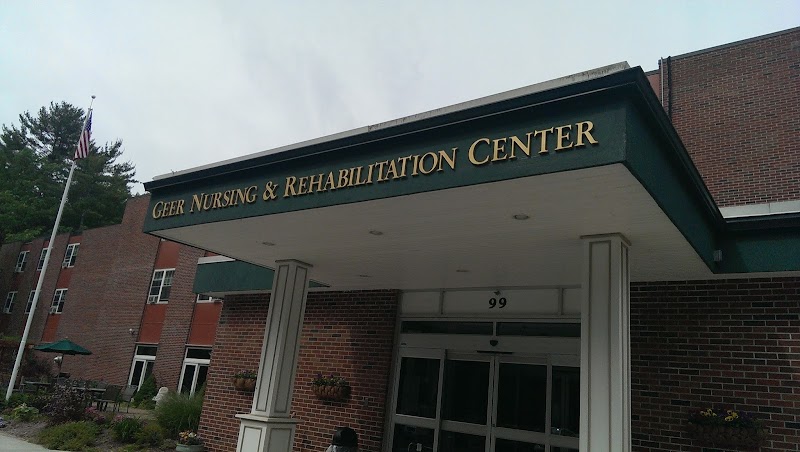
99 SOUTH CANAAN RD, CANAAN, CT 06018 (860) 824-5137
Non profit - Corporation 120 Beds Independent Data: November 2025
Trust Grade
75/100
#16 of 192 in CT
Last Inspection: August 2024

Within standard 12-15 month inspection cycle. Federal law requires annual inspections.

Overview

Geer Nursing and Rehabilitation has a Trust Grade of B, indicating it is a good choice but not the best option available. It ranks #16 out of 192 facilities in Connecticut, placing it in the top half, and is the best facility among 9 in Nw Hills County. However, the facility is experiencing a worsening trend, with issues increasing from 2 in 2021 to 12 in 2024. Staffing is a strength, with a 5-star rating and a turnover rate of 33%, which is below the state average, suggesting that staff members are dedicated and familiar with the residents. On the downside, the facility has incurred fines totaling $56,750, which is concerning as it is higher than 91% of Connecticut facilities, indicating potential compliance issues. Recent inspector findings revealed that the facility failed to ensure that staff were properly trained in administering intravenous therapy and neglected to maintain appropriate refrigerator temperatures for storing medications, risking their effectiveness. Additionally, there were lapses in administering pneumococcal vaccines to residents even after obtaining consent. Overall, while there are strengths in staffing and care ratings, families should consider these compliance concerns when researching this facility.

Trust Score
B
75/100
In Connecticut
#16/192
Top 8%
Safety Record
Moderate
Needs review
Inspections
Getting Worse
2 → 12 violations
Staff Stability
○ Average
33% turnover. Near Connecticut's 48% average. Typical for the industry.
Penalties
✓ Good
$56,750 in fines. Lower than most Connecticut facilities. Relatively clean record.
Skilled Nurses
○ Average
Each resident gets 39 minutes of Registered Nurse (RN) attention daily — about average for Connecticut. RNs are the most trained staff who monitor for health changes.
Violations
⚠ Watch
18 deficiencies on record. Higher than average. Multiple issues found across inspections.
★★★★★
5.0
Overall Rating
★★★★★
5.0
Staff Levels
★★★☆☆
3.0
Care Quality
★★★★☆
4.0
Inspection Score
Stable
2021: 2 issues
2024: 12 issues

The Good

  • 5-Star Staffing Rating · Excellent nurse staffing levels
  • Full Sprinkler Coverage · Fire safety systems throughout facility
  • No fines on record
  • Staff turnover below average (33%)

    15 points below Connecticut average of 48%

Facility shows strength in staffing levels, fire safety.

The Bad

Staff Turnover: 33%

13pts below Connecticut avg (46%)

Typical for the industry

Federal Fines: $56,750

Above median ($33,413)

Moderate penalties - review what triggered them

The Ugly 18 deficiencies on record

Nov 2024 3 deficiencies
CONCERN (D) 📢 Someone Reported This

A family member, employee, or ombudsman was alarmed enough to file a formal complaint

Potential for Harm - no one hurt, but risky conditions existed

Free from Abuse/Neglect (Tag F0600)

Could have caused harm · This affected 1 resident

**NOTE- TERMS IN BRACKETS HAVE BEEN EDITED TO PROTECT CONFIDENTIALITY** Based on clinical record review, facility documentation review, facility policy review, and interviews for one of three resident...

Read full inspector narrative →
**NOTE- TERMS IN BRACKETS HAVE BEEN EDITED TO PROTECT CONFIDENTIALITY** Based on clinical record review, facility documentation review, facility policy review, and interviews for one of three residents (Resident #1) reviewed for abuse, the facility failed to ensure the resident was free from verbal abuse. The findings include: Resident #1's diagnoses included vascular dementia, Parkinson's disease, depression, psychotic disorder, and anxiety disorder. The quarterly Minimum Data Set (MDS) assessment dated [DATE] identified Resident #1 had a Brief Interview for Mental Status (BIMS) score of eight out of fifteen (08/15), indicative of moderately impaired cognition and was independent for mobility with a wheelchair. The Resident Care Plan (RCP) dated 10/02/2024 identified Resident #1 had Parkinson's and dementia, and had the potential for physical aggressive behaviors. Interventions directed to administer medications per physician orders, psychiatric follow up as needed, if agitated, intervene before escalates and guide away from the source of distress. A facility reportable event form and investigation dated 10/17/2024 at 8:45 PM identified NA #1 reported she witnessed LPN #1 swear at Resident #1 on 10/16/2024 at 8:00 PM. Resident #1 alleged LPN #1 was rude and stated that LPN #1 told him/her to get lost when he/she requested eye drop medication. Resident #1 said he/she would come back, and when Resident #1 reapproached, LPN #1 told Resident #1 to f*** off. Review of NA #1's written statement dated 10/17/2024 identified on 10/16/2024 NA #1 observed Resident #1 ask LPN #1 for eye drops and LPN #1 responded stop asking me and get the f*** away from me. Review of LPN #1's written statement dated 10/18/2024, identified on 10/16/2024 at about 4:38 PM Resident #1 asked for eye drops, and she administered the eye drops. Resident #1 then accused LPN #1 of taking his/her shampoo, face cream, body cream and body soap out of his/her room during the 7 AM to 3 PM shift. LPN #1 explained she did not work that shift and Resident #1 then accused LPN #1 of lying and swore at LPN #1 and said f*** off. The statement further indicated that when LPN #1 received report from the day shift nurse, she was told that someone removed shampoo, face cream, body cream and body soap from his/her room, and that Resident #1 had a history of accusatory behavior. Facility summary dated 10/21/2024 identified NA #1 overheard LPN #1 be rude to and swear at Resident #1. The allegation of verbal abuse was substantiated and LPN #1's employment was terminated. Interview with RN #1 on 11/7/2024 at 11:50 AM identified she was the supervisor on 10/17/2024 and was notified NA #1 heard LPN #1 tell Resident #1 to f*** off during the 3 to 11 PM shift on 10/16/2024. NA #1 reported when Resident #1 initially approached LPN #1 and asked for eye drops, LPN #1 told Resident #1 to get lost. When Resident #1 reapproached, LPN #1 responded f*** off. RN #1 stated both Resident #1 and NA #1's statements matched, and the allegation was substantiated. Interview with LPN #1 on 11/7/2024 at 1:20 PM identified on 10/16/2024 at 3:00 to 3:30 PM, Resident #1 requested his/her eye drops. LPN #1 told Resident #1 that she had just got the order in, and he/she will need to wait once she finished administering medications. Later, Resident #1 became angry because items were removed from his/her room, and he/she accused LPN #1 of removing them. LPN #1 denied all allegations and indicated she would never say any of those things to a resident. Interview with DON on 11/7/2024 at 12:55 PM identified she was notified on 10/17/2024 at 8:00 PM that NA #1 reported an allegation of abuse against Resident #1 by LPN #1 occurred on 10/16/2024. The DON stated NA #1 reported LPN #1 swore at Resident #1 when he/she asked for eyedrops. The investigation identified the allegation was substantiated, and the facility subsequently terminated LPN #1's employment. Although attempted, interview with NA #1 was unable to be obtained during the survey. Review of facility Resident Rights and Responsibilities Policy dated 4/2021 identified residents have the right to exercise their rights without fear of discrimination, restraint, interference, or punishment. Residents have the right to be treated with consideration, respect and full recognition of their dignity and individuality. Review of the facility Abuse Prevention Policy dated 8/2020, directed in part, the facility will not condone any form of resident abuse. The policy further directed, verbal abuse is defined as the use of oral, written, or gestured language that willfully includes disparaging and derogatory terms to residents or their families or within their hearing distance, regardless of their age, ability to comprehend, or disability. Examples of verbal abuse include, but not limited to: threats of harm; saying things to frighten a resident.
CONCERN (D) 📢 Someone Reported This

A family member, employee, or ombudsman was alarmed enough to file a formal complaint

Potential for Harm - no one hurt, but risky conditions existed

Report Alleged Abuse (Tag F0609)

Could have caused harm · This affected 1 resident

**NOTE- TERMS IN BRACKETS HAVE BEEN EDITED TO PROTECT CONFIDENTIALITY** Based on clinical record review, facility documentation review, facility policy review, and interviews for one of three resident...

Read full inspector narrative →
**NOTE- TERMS IN BRACKETS HAVE BEEN EDITED TO PROTECT CONFIDENTIALITY** Based on clinical record review, facility documentation review, facility policy review, and interviews for one of three residents (Resident #1) reviewed for abuse, the facility failed to ensure staff reported an allegation of mistreatment timely. The findings include: Resident #1's diagnoses included vascular dementia, Parkinson's disease, depression, psychotic disorder, and anxiety disorder. The quarterly Minimum Data Set (MDS) assessment dated [DATE] identified Resident #1 had a Brief Interview for Mental Status (BIMS) score of eight out of fifteen (08/15), indicative of moderately impaired cognition and was independent for mobility with a wheelchair. The Resident Care Plan (RCP) dated 10/02/2024 identified Resident #1 had Parkinson's and dementia and had the potential for physical aggressive behaviors. Interventions directed to administer medications per physician orders, psychiatric follow up as needed, if agitated, intervene before escalates and guide away from the source of distress. A facility reportable event form and investigation dated 10/17/2024 at 8:45 PM identified NA #1 reported she witnessed LPN #1 swear at Resident #1 on 10/16/2024 at 8:00 PM. Resident #1 alleged LPN #1 was rude and stated that LPN #1 told him/her to get lost when he/she requested eye drop medication. Resident #1 said he/she would come back, and when Resident #1 reapproached, LPN #1 told Resident #1 to f*** off. Facility summary dated 10/21/2024 identified NA #1 overheard LPN #1 be rude to and swear at Resident #1. The summary further identified NA #1 heard the incident on 10/16 but did not report the allegation until 10/17/2024, and NA #1 was provided re-education regarding timely reporting. Review of NA #1's written statement dated 10/17/2024 identified on 10/16/2024 NA #1 observed Resident #1 ask LPN #1 for eye drops and LPN #1 responded stop asking me and get the f*** away from me. The statement further indicated NA #1 reported the allegation the following day to RN #2 due to fear of retaliation from LPN #1. Although attempted, interview with NA #1 was unable to be obtained during the survey. Interview with DON on 11/7/2024 at 12:55 PM identified although NA #1 heard the incident on 10/16, NA #1 did not report the allegation until 10/17/2024 (one day after it occurred). The DON stated NA #1 should have reported the incident event immediately, and NA #1 was provided with educated regarding reporting allegations of abuse. Review of the facility Abuse Prevention Policy dated 8/2020 directed in part, all staff are required to report an observation or verbal allegation of abuse to their supervisor immediately.
CONCERN (D) 📢 Someone Reported This

A family member, employee, or ombudsman was alarmed enough to file a formal complaint

Potential for Harm - no one hurt, but risky conditions existed

Quality of Care (Tag F0684)

Could have caused harm · This affected 1 resident

**NOTE- TERMS IN BRACKETS HAVE BEEN EDITED TO PROTECT CONFIDENTIALITY** Based on clinical record review, facility documentation review, facility policy review, and interviews for one of three resident...

Read full inspector narrative →
**NOTE- TERMS IN BRACKETS HAVE BEEN EDITED TO PROTECT CONFIDENTIALITY** Based on clinical record review, facility documentation review, facility policy review, and interviews for one of three residents (Resident #2) reviewed for quality of care, the facility failed to ensure orders were accurately entered into the electronic medical record, resulting in staples not being removed timely in accordance with physician orders. The findings include: Resident #2's diagnoses included a displaced fracture of right femur, dementia, Alzheimer's Disease, venous insufficiency, and a pilonidal sinus abscess with open wound. The hospital Discharge summary dated [DATE] directed to remove staples from Resident #2's incision in 14 days. Physician orders dated 7/2/2019 directed to nursing to remove Resident #2's staples on 7/13/2019. The admission Minimum Data Set (MDS) assessment dated [DATE] identified Resident #2 had a Brief Interview for Mental Status (BIMS) score of fifteen out of fifteen (15/15), indicative of cognitively intact and limited assistance with ADL's (activities of daily living). The Resident Care Plan (RCP) dated 7/12/2019 identified Resident #2 had a right hip fracture due to a fall. Interventions directed to monitor the incision site and right lower extremity for signs of infection, thrombus, or contracture. Record review failed to identify Resident #2's staples were removed on 7/13/2019. Interview and record review with the DON on 11/7/2024 at 12:55 PM identified Resident #2's discharge instructions directed to remove the staples in 14 days, and a physician order was written to direct the staples to be removed on 7/13/2019. The DON identified that although there was a physician order for the removal of staples, there was an error in the way the order was entered into the electronic charting system. The DON stated the error would prevent the staple removal from showing up on the Medication/Treatment Administration Record on 7/13/2019. The DON stated the entry error is why the staple removal order may have been missed and not performed, and stated the staples should have been removed on 7/13/2019. Review of the facility Medication Order Policy dated 7/2023 directed in part, to enter the new order on the MAR/TAR.
Aug 2024 8 deficiencies
CONCERN (D)

Potential for Harm - no one hurt, but risky conditions existed

Comprehensive Care Plan (Tag F0656)

Could have caused harm · This affected 1 resident

**NOTE- TERMS IN BRACKETS HAVE BEEN EDITED TO PROTECT CONFIDENTIALITY** Based on clinical record reviews, facility policy review and interviews for 1 of 3 sampled residents (Resident #21) reviewed for...

Read full inspector narrative →
**NOTE- TERMS IN BRACKETS HAVE BEEN EDITED TO PROTECT CONFIDENTIALITY** Based on clinical record reviews, facility policy review and interviews for 1 of 3 sampled residents (Resident #21) reviewed for dementia care, the facility failed develop a care plan that identified a resident with dementia and individualized care needs and for (Resident #4) reviewed for nutrition, the facility failed to ensure daily weights were implemented according to the plan of care for a resident at risk for fluid overload and for 2 of 2 residents, (Resident #47 and # 278)) reviewed for medication administration, the facility failed to ensure medications were administered in accordance to the plan of care and for for 1 of 5 residents, (Resident #7) reviewed for unnecessary medications, the facility failed to report a significant change in blood pressure per plan of care and for 1 of 1 resident ( Resident # 60 reviewed for Hospice/ End of Life Services, the facility failed to ensure staff transcribed special diet instructions for a resident with dysphagia upon admission to the facility per plan of care The findings included: 1.Resident #21's diagnoses included Parkinson's disease and dementia without behavioral disturbance. The Minimum Data Set (MDS)assessment dated [DATE] identified Resident #21 as cognitively intact, independent/required set up assist with activities of daily living and noted a diagnosis that included dementia. The Resident Care Plan dated 6/26/24 identified Resident #21 had Parkinson's disease. Interventions included to monitor/document and report signs of Parkinson's disease complications such as tremors, mood changes and decline in cognitive function. The Resident Care Plan failed to identify Resident #21 had a diagnosis of dementia or any interventions that would support h/her individualized care needs. An interview with the Director of Nursing Services (DNS) on 8/27/24 at 12:10 PM identified the care plan should have been individualized to reflect Resident #21's diagnosis of dementia and h/her care needs. A review of the facility policy for Care Plans dated 3/2024 notes a resident care plan is a communication tool that guides all members of the healthcare team on how to meet each resident's needs. Developed and implemented within the first 48 hours of admission, the care plan should focus on preventing avoidable decline, managing risks factors, preserving resident strengths, evaluating progress towards goals and respecting a resident right to decline treatment. 2.Resident #4 's diagnoses included chronic atrial fibrillation and chronic diastolic congestive heart failure (CHF). The quarterly Minimum Data Set (MDS) assessment dated [DATE] identified Resident #47 as cognitively intact and required extensive two-person assist with activities of daily living, supervision with eating. The physician orders 5/23/24 directed daily weights. The Resident Care Plan 5/29/24 identified Resident #4 had altered cardiac status, was at risk for fluid overload related to CHF and had a potential for a nutritional problem related to heart disease. Interventions directed to monitor/document/report any signs and symptoms of coronary artery disease and to obtain weight according to facility guidelines. A review of the weight log dated 7/2/24 through 8/26/24 identified Resident #4's weight was recorded 11 out of 30 days in July 2024 and 19 out of 26 days in August. An interview with the Director of Nursing Services ( DNS) on 8/27/24 at 1:22 PM identified that weights should have been obtained in accordance with physician orders. An interview with Nurse Practitioner, NP #1 on 8/27/24 at 1:41 PM identified monitoring weights assisted in evaluating how a resident with CHF was doing clinically as there were risks for fluid overload and abnormal laboratory. NP #1 identified the weights should be done in accordance with physician orders. Although requested, a facility policy for monitoring weights for a resident with CHF was not provided. 3. Resident #47's diagnoses that included asthma and hyperlipidemia (elevated cholesterol). The quarterly Minimum Data Set (MDS) assessment dated [DATE] identified Resident #47 as cognitively intact and independent with activities of daily living (ADL). The Resident Care Plan dated 7/18/24 identified Resident #47 had a communication deficit related to hearing loss and an ADL deficit related to gait imbalance and history of seizures. Interventions directed to provide a white board for communication and maintain a clutter free environment. The physician's orders dated 7/22/24 directed Atorvastatin 40 Milligrams (MG) one time a day for hyperlipidemia and Cetirizine hydrochloride (HCL) 10mg one time a day for dry skin. An observation on 8/26/24 at 10:02 AM identified Licensed Practical Nurse, LPN #1 retrieved a blister pack from the medication cart. Instructions directed Atorvastatin 40mg one time a day at bedtime. The medication administration record (MAR) directed to administer the medication at 8:30 AM LPN #1 retrieved a second blister pack with instructions that directed Cetirizine hydrochloride (HCL) 10mg one time a day at bedtime. The MAR directed the medication at 8:30 AM. LPN #1 placed both medication blister packs aside and contacted the pharmacy to address the discrepancy and received clarification that both medications were ordered to be given at bedtime. The medications were subsequently held, and Resident #47 received the remainder of h/her prescribed medications. A review of the physician orders dated 6/1/24 through 8/22/24 identified that physician prescription renewal orders dated 6/10/24 directed Atorvastatin 40mg one time a day at bedtime for hyperlipidemia. Additionally, physician prescription renewal orders dated 6/12/24 directed Cetirizine hydrochloride (HCL) 10mg one time a day at bedtime for dry skin. A review of the Medication Administration Record (MAR) dated 6/11/24 through 7/22/24 identified the Atorvastatin was administered at 8:30 AM instead of bedtime as prescribed. A review of the Medication Administration Record (MAR) dated 6/13/24 through 7/22/24 identified the Cetirizine HCL was administered at 8:30 AM instead of bedtime as prescribed. An interview and facility documentation review with the facility Pharmacist on 8/22/24 at 1:15 PM identified he reached out to the provider directly for any medication renewals. The prescriptions for renewals were stored in a separate system used by the pharmacy and were not integrated with the facility MAR. The Pharmacist obtained a medication renewal for Atorvastatin on 6/10/24 once daily at bedtime and Cetirizine HCL10 mg at bedtime on 6/12/24. The Pharmacist filled the prescriptions and sent the medication with instructions to the unit. The Pharmacist further identified Resident #47 was readmitted to the facility on [DATE]. However, no orders were sent following that readmission with any medication changes. An interview and clinical record review with the Director of Nursing Services (DNS) on 8/26/24 at 9:49 AM identified the Pharmacist reaches out to the provider independently for medication renewals. The system utilized by the Pharmacist was not integrated into the electronic medical record. However, any discrepancies between the administration instructions on the blister packs and the MAR should have been clarified by nursing staff and changed according to the most accurate order. A review of the facility policy for Medication Orders dated 7/2023 directed that Medications are administered only upon clear, complete, and signed orders of a person lawfully authorized to prescribe. Elements of the medication order and specify the name of the medication, strength, dose, time and frequency of administration and route, duration and indication for use. 4. Resident #278 was admitted to the facility on [DATE]. The resident diagnosis includes Parkinson's disease. The admission MDS assessment dated [DATE] identified Resident #278 as cognitively intact and required extensive assistance with bed mobility, toileting, and personal hygiene. The hospital discharge instructions dated 7/25/2023 directed Resident #278 to continue taking carbidopa-levodopa (a medication to treat Parkinson's disease) 25-100 milligrams (mg) three times a day but did not indicate the number of tablets to be taken. The hospital discharge instructions also indicated Resident #278 would continue taking one tablet of carbidopa-levodopa 25-100mg extended release (a version designed to release medication gradually in the body) twice daily at 1:00 PM and noon. A nursing note dated 7/25/2023 indicated the nursing supervisor Registered Nurse (RN#5) had spoken to Resident #278's family member regarding the resident's medications, including the preferred schedule. The preferred schedule was observed to be handwritten over the hospital discharge instructions and indicated the resident was to have one and a half tablets of carbidopa-levodopa 25-100mg at 6;00 AM, 9:00 AM, 3:00 PM, 6:00 PM, and 9:00 PM. The handwritten note also indicated the resident was to have one tablet of carbidopa-levodopa 25-100mg extended release at noon and at bedtime. A physician's order dated 7/26/2023 directed to administer one and a half tablets of carbidopa-levodopa 25-100mg five times a day. Additionally, a physician's order dated 7/27/2023 directed to administer one tablet of carbidopa-levodopa 25-100mg extended release once in the day and once before bed. A nursing note dated 8/4/2023 written by RN #3 identified Resident #278's family member had indicated Resident #278 should have been receiving one tablet of carbidopa-levodopa 25-100mg at noon along with one tablet of carbidopa-levodopa 25-100mg extended-release. A physician's note dated 8/4/2023 identified the physician clarified with the resident's family member the medication and ordered carbidopa-levodopa 25-100mg to be administered at noon. A physician's order dated 8/5/2023 directed to administer one tablet of carbidopa-levodopa 25-100mg with the noon dose of carbidopa-levodopa 25-100mg extended release. A review of the medication administration record (MAR) from 7/25/23 through 8/15/23 failed to provide evidence that one and a half tablets of carbidopa-levodopa 25-100mg were administered as ordered for the following dates and times: 7/26/2023 at 2:30 PM, 7/28/2023 at 2:30 PM, 7/31/2023 at 2:30 PM, 8/3/2023 at 2:30 PM, 8/6/2023 at 2:30 PM, 8/13/2023 at 6:00 AM and 8/14/2023 at 2:30 PM. A review of nursing progress notes from 7/25/23 through 8/15/23 did not identify any reason for the not administering carbidopa-levodopa 25-100mg. In an interview on 8/26/2024 at 1:57 PM, RN #3 indicated s/he could not recall how the conversation with Resident #278 family member came about but identified the family member had requested that carbidopa-levodopa 25-100mg be administered as per the resident's home schedule including the doses for noon. RN#3 indicated s/he notified the physician and had the noon dose ordered. Additionally, RN#3 indicated on admission to the facility, the hospital Intra-Agency Report (W10), discharge instructions, and discussion with the resident or family are used to determine what medications a resident should be ordered. RN #3 indicated s/he was not aware of any complaints prior to or after her/his conversation with Resident #278's family member. In an interview on 8/27/2024 at 11:15 AM, APRN #2 indicated s/he could not recall specifics regarding the conversation with the resident's spouse. APRN #2 also indicated s/he placed an order for carbidopa-levodopa but could not recall the dose or the scheduled time and referred to her/his note and physician's orders. On 8/27/2024 at 11:45 AM, a record review and interview with the DNS identified the discharge paperwork from the hospital was not always accurate regarding specific regimens, especially with Parkinson's medications. The DNS indicated that verifying a resident's particular medication regimen with the family was important. Additionally, the DNS was unable to identify why there were blanks in the MAR for carbidopa-levodopa 25-100mg for the scheduled times of 7/26/2023 at 2:30 PM, 7/28/2023 at 2:30 PM, 7/31/2023 at 2:30 PM, 8/3/2023 at 2:30 PM, 8/6/2023 at 2:30 PM, 8/13/2023 at 6:00 AM and 8/14/2023 at 2:30 PM. The DNS further indicated that if a dose of medication was not given or was held, s/he would expect a nursing note. On 8/27/2024 at 12:13PM an interview with RN#5 identified s/he had spoken to Resident #278's family member and verified the schedule of the residents Parkinson medications. In an interview and record review on 8/27/2024 at 1:57 PM, LPN #3 indicated that based on his/her documentation in the MAR, the resident did not receive the 2:30 PM dose of carbidopa-levodopa on 7/26/2023 because the medication was not available. LPN #3 could not recall why the medication was not available at the time. Additionally, LPN #3 could not identify a reason why the MAR had blanks on 7/31/2023 at 2:30 PM, 8/3/2023 at 2:30 PM, and 8/14/2023 at 2:30 PM (times on which s/he was on duty). LPN #3 indicated that s/he most likely gave the medications but was not sure since s/he could not recall the resident. A review of the facility policy for medication administration identified the individual who administers the medication records the administration on the resident's MAR directly after it is given. Additionally, the facility policy indicated an individual who administered medications should not report off-duty without first recording the administration of any medications. 5. Resident #7's diagnoses included Alzheimer's disease, insomnia, and anxiety. The quarterly Minimum Data Set assessment dated [DATE] identified Resident #7 as severely cognitively impaired and required extensive assistance for transfers, toileting, and supervision for eating. The Resident Care Plan dated 7/1/24 identified Resident #7 has a diagnosis of anxiety. Interventions included mood assessment and provision of supportive care through one-on-one visits. A physician's order dated 7/18/24 directed to obtain orthostatic blood pressures monthly for postural hypotension. Report a decrease in systolic blood pressure of 20mmHg or more and decrease in diastolic blood pressure of 10 mmHg or more with change in position. A nursing note written by LPN #5 dated 7/2724 at 3:00 PM identified Resident # 7's orthostatic blood pressures as 146/69 ( 120/80 Normal Range ) lying, 177/68 sitting, and 95/71 standing. The pharmacy reports dated 6/14/24, and 8/18/24 recommend monitoring orthostatic blood pressures at least monthly to monitor for postural hypotension. The report also directed to report a decrease in systolic blood pressure of 20mmHg or more and decrease in diastolic blood pressure of 10 mmHg or more with change in position. In an interview and clinical record review with the DNS on 8/28/24 at 11:00 AM identified the clinical record failed to reflect documentation that the decrease in blood pressure on 7/27/24 was reported to the Medical Doctor (MD)/APRN. The parameters state to report a decrease in BP greater than 20 mmHg systolic or 10 mmHg diastolic with position change to the MD/APRN. Resident # 7's BP on 7/27/24 indicated a pressure of 146/69 Lying, 177/68 sitting, and 95/71 standing. The systolic pressure decreased by 82 mmHg from sitting to standing. When asked, the DNS identified the decrease from sitting to standing should have been reported to the MD/APRN. The DNS also stated staff should be documenting in the nursing notes any notification to the MD/APRN. The DNS indicated s/he could not provide evidence of the notification to the MD/APRN on 7/27/24 per physician's parameters for blood pressure monitoring. Review of the Orthostatic Blood Pressure Monitoring policy 3/07 directed, in part, to report newly or unexpectedly abnormal orthostatic changes as follows: systolic BP is decreased by 20 or more, with or without change in diastolic BP. 6. Resident #60's diagnoses included pneumonitis, dysphagia (difficulty swallowing), a progressive neurogenerative disorder and palliative care. The hospital Discharge summary dated [DATE] at 11:34 AM directed to provide an easy to chew diet cut into bite sized pieces with discharge special instruction to provide Strict Aspiration Precautions with upright posture while eating. A physician's order dated 7/17/2024 directed to provide a puree texture diet with nectar thick liquids. A physician's order dated 7/18/2024 directed to provide a regular chopped texture diet with nectar thick liquids due to Resident #60 and family preferring a more palatable texture. The RCP dated 7/19/2024 indicated Resident #60 had a swallowing problem related to couching, choking during meals or swallowing medications and difficulty with thin liquids. Interventions included in part for all staff to be informed of Resident #60's special dietary and safety needs, instruct resident to eat in an upright position, eat slowly and chew each bite thoroughly and to provide food for comfort. The admission Minimum Data Set (MDS) assessment dated [DATE] indicated Resident #60 as cognitively intact and noted coughing or choking during meals and or with medications and indicated the resident was on a mechanically altered diet. A facility Reported Incident dated 8/23/2024 at 8:30 AM identified Resident #60 required the successful application of the Heimlich Maneuver after choking on a piece of fruit provided at breakfast. The physician's orders obtained post episode of choking dated 8/23/2024 at 3:00 PM directed to provide supervision with eating with aspiration precautions every shift and provide a regular diet, puree consistency. The RCP was updated on 8/23/2024 indicated Resident #60 was to eat only with supervision with aspiration precautions (37 days after admission) and to mash banana. An interview and record review on 8/26/2024 at 1:20 PM with RN #3 indicated on part The admission discharge summary from the hospital indicated strict aspiration precautions which was not transcribed onto the admission orders and did not mention in the plan of care but indicated supervision while eating and cleanse mouth before and after eating and to have head of bed elevated. An interview on 8/26/2034 at 1:40PM with the DNS indicated if strict aspiration precautions was on the discharge summary it should have been transcribed as an order. The facility policy labeled Aspiration Precautions indicated in part the facility was to provide guidelines in the policy when ordered by a physician to reduce the risk of aspiration: clear oral cavity of residual food and fluid following all oral intake including medications and to position to approximately 90 degrees for all oral intakes including fluids. However, the facility policy makes no indication if staff must remain present when a resident is taking food and or fluids.
CONCERN (D)

Potential for Harm - no one hurt, but risky conditions existed

Deficiency F0657 (Tag F0657)

Could have caused harm · This affected 1 resident

**NOTE- TERMS IN BRACKETS HAVE BEEN EDITED TO PROTECT CONFIDENTIALITY** Based on clinical record reviews, facility policy review and interviews for 1 of 3 sampled residents reviewed for care planning ...

Read full inspector narrative →
**NOTE- TERMS IN BRACKETS HAVE BEEN EDITED TO PROTECT CONFIDENTIALITY** Based on clinical record reviews, facility policy review and interviews for 1 of 3 sampled residents reviewed for care planning for( Resident # 71), the facility failed to conduct a Resident Care Conference (RCC) within the appropriate timeframe and invite the resident's responsible party/ family and for 1 of 1 resident ( Resident # 60), reviewed for End of Life Services, the facility failed to revise the care plan to address the resident's wishes to received non prescribe foods for comfort. The findings included: 1. Resident #71 's diagnoses included unspecified dementia, cognitive communication deficit and aphasia. A review of the admission record identified Resident #71 was admitted on [DATE] The admission Minimum Data Set assessment dated [DATE] identified Resident #71 was cognitively impaired and required one person assistance in bed mobility and transfers and requires set up for food. The RCP dated 7/18/24 identified the need for long-term care. Interventions included collaborating with residents, family and Interdisciplinary Team (IDT) to determine emotional needs and to maintain quality of care. A review of progress notes dated 7/17/24 through 8/26/24 failed to indicate that RCC was held for Resident # 71. Interview with Person #1 on 8/22/24 at 11:54 AM indicated s/he has not been invited to a care plan meeting for Resident # 71. Person #1 also indicated it has been over 4 weeks since Resident # 71 was admitted . On 8/28/24 at 10: 37 AM a review of the RCC sign off sheet was requested; however, the facility was unable to provide the requested document. Interview Social Worker (SW #1) on 8/28/24 at 10:43 AM indicated residents on long term units care plan completed quarterly. For new residents the care plan is completed with in 2.5 months of admission. SW#1 further indicated Resident #71 has an upcoming MDS assessment and care plan review in October 2024. SW #1 further indicated care conference is done after the MDS assessment. When asked about MDS completed on 7/22/24, SW #1 indicated s/he was not aware the RCC could have been completed based on the MDS assessment completed on 7/22/24. 2. Resident #60's diagnoses included pneumonitis, dysphagia (difficulty swallowing), a progressive neurogenerative disorder and palliative care. Resident #60 elected Hospice services on 7/19/2024. The Resident Care Plan (RCP) dated 7/24/2024 indicated Resident #60 was receiving End of Life Services. Interventions included collaboration between End-of-Life Services and the Skilled Nursing Facility and directed the social worker to provide support to the resident and family. An interview on 8/26/2024 at 1:24 PM with Hospice Agency Nurse (RN #6) identified eating food for comfort in the consistency Resident # 60 preferred though not recommended by physician due to progressive dysphagia diagnosis, was one of the most important needs expressed by the resident and family while on Hospice/ End of Life Services. An interview and record review with the Director of Nursing Services (DNS) on 8/28/2024 indicated Resident #60's care plan would need to be updated/ revised to reflect Resident # 60's choice to eat food in a consistency not recommended by physician. Interventions to assist the resident by providing the safest eating experience while providing food for comfort and to prevent further choking episodes.
CONCERN (D)

Potential for Harm - no one hurt, but risky conditions existed

Deficiency F0658 (Tag F0658)

Could have caused harm · This affected 1 resident

**NOTE- TERMS IN BRACKETS HAVE BEEN EDITED TO PROTECT CONFIDENTIALITY** Based on clinical record review, observations and staff interviews for 1 of 5 Residents (#60) reviewed for accidents, the facili...

Read full inspector narrative →
**NOTE- TERMS IN BRACKETS HAVE BEEN EDITED TO PROTECT CONFIDENTIALITY** Based on clinical record review, observations and staff interviews for 1 of 5 Residents (#60) reviewed for accidents, the facility failed to ensure the resident's discharge summary physician's orders for aspiration precautions were transcribed to meet professional standards of practice. The findings include. Resident #60's diagnoses included pneumonitis, dysphagia (difficulty swallowing), a progressive neurogenerative disorder and palliative care. The hospital Discharge summary dated [DATE] at 11:34 AM directed to provide an easy to chew diet cut into bite sized pieces with discharge special instruction to provide Strict Aspiration Precautions with upright posture while eating. A physician's order dated 7/17/2024 directed to provide a puree texture diet with nectar thick liquids. A physician's order dated 7/18/2024 directed to provide a regular chopped texture diet with nectar thick liquids due to Resident #60 and family preferring a more palatable texture. Resident #60 elected Hospice services on 7/19/2024. The admitting note indicated Resident #60 and family were made aware of risks of recurring aspiration due to disease progression by choosing not to follow a recommended diet consistency of puree and opting for a chopped consistency diet. The RCP dated 7/19/2024 indicated Resident #60 had a swallowing problem related to couching, choking during meals or swallowing medications and difficulty with thin liquids. Interventions included in part for all staff to be informed of Resident #60's special dietary and safety needs, instruct resident to eat in an upright position, eat slowly and chew each bite thoroughly and to provide food for comfort. Additionally, the care further indicated Resident #60 had a self-care deficit related to activity intolerance related to aspiration pneumonia and a progressive neurodegenerative disorder. Interventions included in part for staff to provide supervision for eating, to cleanse mouth with wet swabs prior to and post eating and to position plate or bowl in lap, use an inner lip plate at all meals and to keep drinks on right hand side of the table. The admission Minimum Data Set (MDS) assessment dated [DATE] indicated Resident #60 as cognitively intact and noted coughing or choking during meals and or with medications and indicated the resident was on a mechanically altered diet. A facility Reported Incident dated 8/23/2024 at 8:30 AM identified Resident #60 required the successful application of the Heimlich Maneuver after choking on a piece of fruit provided at breakfast. The physician's orders obtained post episode of choking dated 8/23/2024 at 3:00 PM directed to provide supervision with eating with aspiration precautions every shift and provide a regular diet, puree consistency. The RCP was updated on 8/23/2024 indicated Resident #60 was to eat only with supervision with aspiration precautions (37 days after admission) and to mash banana. A physician's order dated 8/24/2024 at 6:48 PM directed to provide a regular diet, ground texture, with nectar thick liquids and mashed bananas aspiration precautions. Resident #60 had declined the puree consistency as it did not meet his/her comfort needs while on hospice. An observation on 8/25/2024 at 12:38 PM found Resident #60 sitting upright in bed alone and without supervision, the tray table was noted in front of the resident with two full beverages within reach. On 8/25/2024 at 12:40 PM an interview with NA #1 who was sitting at the nurse's station at the end of hallway 2 rooms down from Resident #60's indicated s/he supervises Resident #60 while eating by walking up and down the hall, looking in and checking on the resident, s/he sometimes sits with the resident, but Resident # 60 does not always like someone sitting with him/her. NA #1 further indicated Resident#60's diet required food to be cut into small pieces, was not on duty the day Resident #60 choked and further indicated Resident # 60 had not received a banana for breakfast this am. NA #1 indicated s/he thought the kitchen would mash the banana before sending the tray up from the kitchen. On 8/25/2024 at 12:45 PM and interview with the unit charge nurse LPN #3 indicated s/he supervises Resident #60 while eating by walking up and down the hallway looking in the room, sometimes staying with the resident and sometimes observing from the doorway. LPN #3 indicated Resident #60 did not like to be watched. LPN #3 further indicated staff is not required to stay with Resident #60 while eating or drinking, just to supervise and check in on the resident and instructed the surveyor to talk with the unit manager RN #3. On 8/25/2024 at 12:48 PM an interview with the Unit Manager, RN#3 indicated a staff member is expected to stay with Resident #60 while eating and drinking. However, hospice election notes Resident #60 chooses to eat for comfort despite the consistency recommended. RN #3 acknowledged a difference in interpretation of what supervision requires staff members caring for Resident #60 to do and indicated s/he would find a copy of the facility policy. On 8/25/2024 12:48 PM during interview, record review with RN #3 at nurses' station and direct observation with charge nurse LPN #3, LPN #3 indicated aspiration precautions was put in place and updated on the care card. Observation of Resident #60 with charge nurse LPN #3 found Resident # 60 alone in room in bed without supervision with the tray table pulled up to the chest and two beverage cups upright and empty and the contents of one spilled on the tray table. LPN #3 checked on Resident #60 and cleaned the spill. LPN #3 provided the NA care card updated on 8/23/24 which indicated supervision with meals, aspiration precautions and to provide mashed bananas. An interview and record review on 8/26/2024 at 1:20 PM with RN #3 indicated in part the admission discharge summary from the hospital indicated strict aspiration precautions which were not transcribed onto the admission orders but was not noted in the plan of care. However, the plan of care indicated supervision while eating and cleanse mouth before and after eating and to have head of bed elevated. An interview on 8/26/2034 at 1:40PM with the DNS indicated if strict aspiration precautions were noted on the discharge summary the strict aspiration precautions should have been transcribed as an physician's order.
CONCERN (D)

Potential for Harm - no one hurt, but risky conditions existed

Pressure Ulcer Prevention (Tag F0686)

Could have caused harm · This affected 1 resident

**NOTE- TERMS IN BRACKETS HAVE BEEN EDITED TO PROTECT CONFIDENTIALITY** Based on clinical record review, review of facility policy and staff interview for 1 of 2 residents (Resident #32) reviewed for ...

Read full inspector narrative →
**NOTE- TERMS IN BRACKETS HAVE BEEN EDITED TO PROTECT CONFIDENTIALITY** Based on clinical record review, review of facility policy and staff interview for 1 of 2 residents (Resident #32) reviewed for Pressure Ulcer, the facility failed to ensure weekly skin assessments were completed per plan of care for a resident who developed a pressure ulcer. The findings include. Resident #32's diagnoses included Stage 2 pressure ulcer and Alzheimer's disease. A physician's order dated 5/9/2024 directed to complete a weekly skin check for skin assessment. The quarterly Minimum Data Set (MDS) assessment dated [DATE] indicated Resident #32 as severely cognitively impaired and at risk for pressure ulcer and noted no pressure ulcers. The clinical record on 8/16/24 identified the wound physician identified a Stage 2 pressure ulcer on 8/16/2024 on the resident's right buttocks. The RCP for potential for development of a pressure ulcer care plan revised on 8/21/2024 indicated Resident #32 had a stage 2 pressure ulcer on the right buttock. Interventions included to follow up with the wound Advanced Practice Registered Nurse ( APRN) weekly, to maintain enhanced barrier precautions while wound is open. An interview and record review with the unit manager RN #3 on 8/26/2024 at 10:45 AM identified weekly skin checks were not documented on 7/10/24 and 8/7/2024. RN # 3 unit manager indicated s/he would expect the Treatment Administration Record (TAR) to have signatures to note completion of weekly skin checks assessment along with documentation of findings. RN #3 further indicated s/he could not find any weekly nursing skin assessment completed for 7/10/24 or 8/7/2024 or any documentation in the nurses' notes on 7/10/24 and 8/7/24 regarding a skin assessment. The facility policy labeled pressure ulcers given on survey indicated in part, all residents will have a total body skin check at least weekly by the licensed professional nurse and results will be documented.
CONCERN (D)

Potential for Harm - no one hurt, but risky conditions existed

Accident Prevention (Tag F0689)

Could have caused harm · This affected 1 resident

**NOTE- TERMS IN BRACKETS HAVE BEEN EDITED TO PROTECT CONFIDENTIALITY** Based on clinical record review, observation, review of facility policy and interviews for 1 of 5 Residents (#60) reviewed for a...

Read full inspector narrative →
**NOTE- TERMS IN BRACKETS HAVE BEEN EDITED TO PROTECT CONFIDENTIALITY** Based on clinical record review, observation, review of facility policy and interviews for 1 of 5 Residents (#60) reviewed for accidents, the facility failed to ensure a resident with at risk for aspiration while eating and drinking provided necessary supervision to ensure the resident did not have access to fluids not on recommended and failed to ensure all staff were educated and demonstrated the understanding of a resident's need for supervision while eating and drinking. The findings include. Resident #60's diagnoses included pneumonitis, dysphagia (difficulty swallowing), a progressive neurogenerative disorder and palliative care. a. The hospital Discharge summary dated [DATE] at 11:34 AM directed to provide an easy to chew diet cut into bite sized pieces with discharge special instruction to provide Strict Aspiration Precautions with upright posture while eating. A physician's order dated 7/17/2024 directed to provide a puree texture diet with nectar thick liquids. A physician's order dated 7/18/2024 directed to provide a regular chopped texture diet with nectar thick liquids due to Resident #60 and family preferring a more palatable texture. Resident #60 elected Hospice services on 7/19/2024. The admitting note indicated Resident #60, and family were made aware of risks of recurring aspiration due to disease progression by choosing not to follow a recommended diet consistency of puree and opting for a chopped consistency diet. The RCP dated 7/19/2024 indicated Resident #60 had a swallowing problem related to couching, choking during meals or swallowing medications and difficulty with thin liquids. Interventions included in part for all staff to be informed of Resident #60's special dietary and safety needs, instruct resident to eat in an upright position, eat slowly and chew each bite thoroughly and to provide food for comfort. Additionally, the care further indicated Resident #60 had a self-care deficit related to activity intolerance related to aspiration pneumonia and a progressive neurodegenerative disorder. Interventions included in part for staff to provide supervision for eating, to cleanse mouth with wet swabs prior to and post eating and to position plate or bowl in lap, use an inner lip plate at all meals and to keep drinks on right hand side of the table. The admission Minimum Data Set (MDS) assessment dated [DATE] indicated Resident #60 as cognitively intact and noted coughing or choking during meals and or with medications and indicated the resident was on a mechanically altered diet. A facility Reported Incident dated 8/23/2024 at 8:30 AM identified Resident #60 required the successful application of the Heimlich Maneuver after choking on a piece of fruit provided at breakfast. The physician's orders obtained post episode of choking dated 8/23/2024 at 3:00 PM directed to provide supervision with eating with aspiration precautions every shift and provide a regular diet, puree consistency. The RCP was updated on 8/23/2024 indicated Resident #60 was to eat only with supervision with aspiration precautions (37 days after admission) and to mash banana. A physician's order dated 8/24/2024 at 6:48 PM directed to provide a regular diet, ground texture, with nectar thick liquids and mashed bananas aspiration precautions. Resident #60 had declined the puree consistency as it did not meet his/her comfort needs while on hospice. An observation on 8/25/2024 at 12:38 PM found Resident #60 sitting upright in bed alone and without supervision, the tray table was noted in front of the resident with two full beverages within reach. On 8/25/2024 at 12:40 PM an interview with NA #1 who was sitting at the nurse's station at the end of hallway 2 rooms down from Resident #60's indicated s/he supervises Resident #60 while eating by walking up and down the hall, looking in and checking on the resident, s/he sometimes sits with the resident, but Resident # 60 does not always like someone sitting with him/her. NA #1 further indicated Resident#60's diet required food to be cut into small pieces, was not on duty the day Resident #60 choked and further indicated Resident # 60 had not received a banana for breakfast this am. NA #1 indicated s/he thought the kitchen would mash the banana before sending the tray up from the kitchen. On 8/25/2024 at 12:45 PM and interview with the unit charge nurse LPN #3 indicated s/he supervises Resident #60 while eating by walking up and down the hallway looking in the room, sometimes staying with the resident and sometimes observing from the doorway. LPN #3 indicated Resident #60 did not like to be watched. LPN #3 further indicated staff is not required to stay with Resident #60 while eating or drinking, just to supervise and check in on the resident and instructed the surveyor to talk with the unit manager RN #3. On 8/25/2024 at 12:48 PM an interview with the Unit Manager, RN#3 indicated a staff member is expected to stay with Resident #60 while eating and drinking. However, hospice election notes Resident #60 chooses to eat for comfort despite the consistency recommended. RN #3 acknowledged a difference in interpretation of what supervision requires staff members caring for Resident #60 to do and indicated s/he would find a copy of the facility policy. On 8/25/2024 12:48 PM during interview, record review with RN #3 at nurses' station and direct observation with charge nurse LPN #3, LPN #3 indicated aspiration precautions was put in place and updated on the care card. Observation of Resident #60 with charge nurse LPN #3 found Resident # 60 alone in room in bed without supervision with the tray table pulled up to the chest and two beverage cups upright and empty and the contents of one spilled on the tray table. LPN #3 checked on Resident #60 and cleaned the spill. LPN #3 provided the NA care card updated on 8/23/24 which indicated supervision with meals, aspiration precautions and to provide mashed bananas. An interview with the DNS on 8/25/2024 at 1:30 PM indicated h/she would expect staff to stay with a resident while eating of there was an order for supervision. An interview with the primary physician Medical Doctor (MD #2) on 8/27/2024 at 8:42 AM indicated s/he would expect a resident with an order for supervision at mealtime and a history of aspiration to have a staff member with the resident while eating and drinking and when staff is not able to stay with the resident food and drink should be out of resident's reach. Interview on 8/27/2024 at 10:07 AM with MD #1 indicated s/he would expect staff to be with a resident at all times while eating and drinking if there is an order for supervision with meals and staff should not leave the food or drinks with the resident when unable to supervise. The facility's mechanically soft chopped diet: National Dysphagia Diet level 3 provides foods that are moist, in bite sized pieces and nearly regular in texture. Hard, sticky and crunchy foods are excluded. Fruits allowed include, ripe banana, melon peeled peaches and pears, cooked or frozen fruit soft berries with small seeds(strawberries). The facility policy labeled Aspiration Precautions indicated in part the facility directs to follow guidelines in the policy when ordered by a physician to reduce the risk of aspiration: clear oral cavity of residual food and fluid following all oral intake including medications and to position approximately 90 degrees for all oral intakes including fluids. However, the facility policy makes no indication if staff must remain present when a resident is taking food and or fluids b. An observation on 8/28/2024 at 9:50 AM found Resident #60 alone in room without the benefit of supervision sitting upright in bed with the tray table across lap with beverages placed on table within resident's reach. NA#3 and NA#4 were noted sitting at the nurses' station 2 doors down from Resident #60's room. NA#3 and NA#4 indicated Resident #60 was supervised while eating food, but they were not aware Resident # 60 could not be left alone. Interview with Charge Nurse LPN #3 on 8/28/2024 at 9:52 AM indicated s/he informed the nurse aides on duty to stay with Resident #60 while eating and felt the resident could be left alone with the fluids. On 8/28/2024 at 10:05AM an interview with the DNS indicated s/he verbally quizzed and reviewed supervision at meals with staff members on 8/27/2024 but did not have staff sign an in-service sheet. The DNS indicated LPN#3 was in-serviced and should have known, NA#3 and 4 were not on duty on 8/27/24. The DNS further indicated the need to provide in-servicing today for safety and the unit manager would assist the DNS in completing the task. The facility policy labeled, Following the Occurrence of a Resident Choking Requiring the Heimlich Maneuver indicated in part the diet would be downgraded to ground or puree and in the event of the resident refusing a downgrade, the resident would be educated regarding the risks and benefits and the care plan and care card would be updated following the incident to include potential for choking. Although requested, the facility was unable to produce a policy and procedure that defined staff members responsibility while supervising residents during meals for residents requiring this safety measure.
CONCERN (E)

Potential for Harm - no one hurt, but risky conditions existed

Deficiency F0726 (Tag F0726)

Could have caused harm · This affected multiple residents

Based on review of facility documentation, facility policy and interview, the facility failed to ensure staff education was completed and competencies up to date for the provision of Intravenous Thera...

Read full inspector narrative →
Based on review of facility documentation, facility policy and interview, the facility failed to ensure staff education was completed and competencies up to date for the provision of Intravenous Therapy (IV) services. The findings include: An interview and review of staff education for the initiation of intravenous therapy and competencies for intravenous services with the Director of Nursing Services on 8/27/24 at 9:44 AM failed to identify licensed staff were certified in the implementation of IV therapy and when staff competencies were last evaluated. The DNS further identified s/he was responsible for ensuring the completion of the education and competencies which were to be completed on an annual basis. A review of the Facility Assessment Tool identified the facility assessment is to be updated at least annually or as needed and includes staff training, education and competencies.
CONCERN (E)

Potential for Harm - no one hurt, but risky conditions existed

Deficiency F0761 (Tag F0761)

Could have caused harm · This affected multiple residents

Based on observations, interviews, and review of the facility policies, the facility failed to keep refrigerators at the appropriate temperatures for maintaining medications and for 2 of 2 medication ...

Read full inspector narrative →
Based on observations, interviews, and review of the facility policies, the facility failed to keep refrigerators at the appropriate temperatures for maintaining medications and for 2 of 2 medication rooms, the facility failed to dispose of expired medications. The Findings included: 1. Observation of the Harmany Lane medication room with LPN #3 on 8/24/24 around 10:00 AM identified the Medication Room refrigerator Temperature Log was found to be below 36 degrees on 9 days out of 27 days logged, the dates included 8/1/24, 8/2/24, 8/3/24, 8/19/24, 8/20/24, 8/21/24, 8/22/24, 8/23/24, and 8/24/24. The refrigerator contained the following: A package of Humalog containing 100 per milliliters 3 Flex pens of insulin 1 package of Lantus insulin 3 packages of Lorazepam (Anti-Anxiety) containing 30cc each LPN #2 identified that none of the medications were being used and the medications were for emergency only and that 3-11 PM shift was responsible for logging the refrigerator temperatures. Observation of the Cardinal Court medication room with LPN #2 on 8/24/24 at 10:30 AM identified the Medication Room refrigerator Temperature Log was found to be below 36 degrees on 27 days of the month of July which include 7/2/24, 7/3/24, 7/5/24, 7/6/24, 7/7/24, 7/8/24, 7/9/24, 7/10/24, 7/11/24, 7/12/24, 7/13/24, 7/14/24, 7/15/24, 7/16/24, 7/18/24, 7/19/24, 7/20/24, 7/21/24, 7/22/24, 7/23/24, 7/24/24,7/25/24, 7/26/24, 7/27/24, 7/28/24, 7/29/24 and 7/30/24 and missing temperatures from 4 of the days for July 2024 which include 7/1/24, 7/4/24, 7/17/24, and 7/31/24. Review of the August 2024 Refrigerator Temperature Log identified 7 days were logged below 36 degrees which included 8/1/24,8/2/24, 8/3/24, 8/5/24, and 8/22/24. Further observations also identified missing temperature logged for 8/15/24, and 8/16/24. The refrigerator contained the following: 2.2 packages of influenza vaccine 5 milliliter dose with an expiration date of 6/24. 2 packages of lorazepam 30cc. A box of 8 influenza high dose which contained 7 vials of 0.7 milliliters with an expiration date of 6/24, and it was noted 1 dose was missing. 1 Package of Levemir insulin flex pen. On 8/24/24 at 10:50 AM interview with LPN #2 identified s/he was unsure of when the last time the influenza vaccine was given, and s/he would find out. LPN #2 also identified s/he had planned to give the supervisor the expired medication but just had not had the time. LPN #2 also identified that s/he will give the refrigerated medications to the supervisor and order replacements. On 08/27/24 at 11:09 AM an interview with RN#3 identified if the medication refrigerator temperatures are below 36 degrees the supervisor and maintenance should have been notified. RN#3 provided evidence that no one was given expired influenza, and the last time an influenza vaccine was given was 2/24. On 08/27/24 at 11:18 AM an interview with the DNS identified that the 11:00 -7:00 AM shift was responsible to monitor the Medication Refrigerator Temperature Logs and to report any issues to maintenance. The DNS also identified the facility policy for Medication Refrigerator Temperatures noted not between 36-46 degrees directs that the supervisor and maintenance be notified. The DNS also indicated monthly audits are performed for the Medication Refrigerator Temperature Logs. The DNS Identified that the policy for expired medication was for the unit nurse to notify the supervisor who then collects the medication, and a double signed destruction sheet was to be filled out. After that a company comes to the facility to pick up the expired medications. On 8/2/4/24 at 12:00 PM an interview with the Director of Maintenance identified s/he was unaware the refrigerators had issues with the temperatures, and no one had placed a ticket. The Director of Maintenance further identified that a ticket should have been placed and staff should have notified her/ him of the policy. Review of the facility policy dated 7/23 for Refrigerator in Kitchenettes, Unit Lounges and Medication Rooms, temperature was to be between 36-46 degrees, that the temperatures will be checked and logged in daily by the 11:00 PM-7:00 AM by shift Nursing Aide staff. If temperatures were outside of the acceptable ranges a maintenance work ticket needs to be entered and the Nursing Supervisor needs to be notified. If the temperature is more than 5 degrees off, the medication needs to be replaced by the pharmacy. Review of the facility policy for Medication Storage in the Facility identified that outdated medications were to be immediately removed from the stock, disposed of according to procedures for supplies and reordered from the pharmacy. Medications are to be stored in a clean, well-lit, free from clutter, and extreme temperatures. Medications storage containers are monitored monthly and corrective action was to be taken if any problems were identified.
CONCERN (E)

Potential for Harm - no one hurt, but risky conditions existed

Deficiency F0883 (Tag F0883)

Could have caused harm · This affected multiple residents

Based on clinical record reviews, facility documentation, facility policy and interviews for 3 of 5 sampled residents (Residents #4, #14 and #71) reviewed for immunizations, the facility failed to ens...

Read full inspector narrative →
Based on clinical record reviews, facility documentation, facility policy and interviews for 3 of 5 sampled residents (Residents #4, #14 and #71) reviewed for immunizations, the facility failed to ensure pneumococcal vaccines were administered after obtaining consent. The findings included: A clinical record review of the pneumococcal immunization record identified the following: 1.For Resident #4, a Pneumococcal Vaccine Informed Consent/Declination Form dated 5/29/24 identified consent was obtained from Resident #4 to receive the Pneumovax vaccine with no documented history of administration following consent. An interview with the Director of Nursing Services (DNS) on 8/27/24 at 9:44 AM identified availability for the vaccine was inconsistent. An alternate vaccination could have been offered to Resident #4 but was not. Additionally, there was a community pharmacy that offered pneumococcal vaccinations that could have been utilized but were not. Resident #4 was scheduled to receive the Pneumovax vaccine after surveyor inquiry. 2. For Resident #14, a Pneumococcal Vaccine Informed Consent/Declination Form dated 2/17/23 identified consent was obtained from the responsible party to receive the Pneumovax vaccine with no documented history of administration following consent. An interview with the DNS on 8/27/24 at 9:44 AM identified availability for the vaccine was inconsistent. An alternate vaccination could have been offered to Resident #14 but was not. Additionally, the was a community pharmacy that offered pneumococcal vaccinations that could have been utilized but were not. Resident #14 received Prevnar 20 on 7/23/24. 3. For Resident #71, a Pneumococcal Vaccine Informed Consent/Declination Form dated 7/17/24 identified consent was obtained from the responsible party to receive the Prevnar 20 vaccine with no documented history of administration following consent. An interview with the DNS on 8/27/24 at 9:44 AM identified availability for the vaccine was inconsistent. An alternate vaccination could have been offered to Resident #71 but was not. Additionally, there was a community pharmacy that offered pneumococcal vaccinations that could have been utilized but were not. Resident #71 was scheduled to receive the Prevnar 20 vaccine after surveyor inquiry. Review of the facility policy for Pneumonia Vaccine Administration Guidelines dated 2/2023 directed pneumococcal vaccines will be administered in accordance with best practice immunization guidelines.Vaccine information Sheets (VIS) will be reviewed and informed consent must be obtained.
Jul 2024 1 deficiency
CONCERN (D) 📢 Someone Reported This

A family member, employee, or ombudsman was alarmed enough to file a formal complaint

Potential for Harm - no one hurt, but risky conditions existed

Quality of Care (Tag F0684)

Could have caused harm · This affected 1 resident

**NOTE- TERMS IN BRACKETS HAVE BEEN EDITED TO PROTECT CONFIDENTIALITY** Based on clinical record review, facility documentation review, facility policy review, and interviews for one of three resident...

Read full inspector narrative →
**NOTE- TERMS IN BRACKETS HAVE BEEN EDITED TO PROTECT CONFIDENTIALITY** Based on clinical record review, facility documentation review, facility policy review, and interviews for one of three residents (Resident #1) reviewed for quality of care, the facility failed to ensure an RN assessment was performed timely after a change in condition was identified. The finding includes: Resident #1's diagnoses included dementia, non-displaced fracture of olecranon (bony prominence of the elbow) process, hypertension, and cognitive communication deficit. The admission Minimum Data Set (MDS) assessment dated [DATE] identified Resident #1 had severely impaired cognition and required moderate assistance with one person for all ADL's except eating. The Resident Care Plan (RCP) dated 6/24/2024 identified Resident #1 had a decline in cognition. Interventions directed to monitor for changes in cognition. Record review identified Resident #1's room was on the 3rd floor and on 6/27/2024 Resident #1 left the facility for an appointment. Upon return to the facility, the elevator was not working, and Resident #1 was placed temporarily in a room on the 1st floor unit. Review of the MAR/TAR (medication/treatment administration record) identified on 6/28/2024, Resident #1 received his/her medications at 10:13 AM. Review of the Grievance Log dated 7/1/2024 identified Person #1 had a concern that there was a delay in addressing unresponsiveness prior to hospital transfer on 6/28/2024. The form identified at approximately 11:00 AM, two NAs noted Resident #1 was difficult to arouse when they attempted to provide care and the nurse was notified. The nurse evaluated Resident #1 and called his/her usual unit (3rd floor) to obtain information regarding Resident #1's baseline. NA #1 informed the 1st floor Charge Nurse that at times Resident #1 is groggy in the morning and can be difficult to arouse if he/she is tired. Lunch was served at approximately 12:45 PM, and Resident #1 was out of bed, but remained difficult to arouse. At 1:15 PM, Resident #1 was transferred back to his/her original unit, and the RN Supervisor was notified of Resident #1's condition. The RN performed an assessment, and noted Resident #1 was different from baseline and confirmed with other 3rd floor staff. APRN #1 and MD #1 were updated and directed to transfer Resident #1 to the hospital; transfer occurred at 1:30 PM (2 ½ hours after the change was noted). Resident #1 returned from the hospital with a diagnosis of altered mental status and no new orders. The form further identified staff were provided education regarding changes in resident condition, notifying the physician/APRN, and to notify the RN supervisor to assess a resident with a change in condition. Interview with NA #2 on 7/25/2024 at 11:15 AM identified on 6/28/2024 at approximately 10:30 AM, she and NA #3 went to provide care for Resident #1 and identified Resident #1 was not waking up. LPN #1 was notified, and LPN #1 evaluated the resident. LPN #1 determined Resident #1 was at his/her baseline, and the NAs continued with morning care. Approximately one (1) hour after lunch, NA #2 assisted with transporting Resident #1 back to the 3rd floor and reported to the NAs on that unit that Resident #1 had been difficult to wake up. NA #2 stated MD #1 saw Resident #1 and Resident #1 was transferred to the hospital for further evaluation. Interview with NA #3 on 7/25/2024 at 11:50 AM identified at approximately 10:30 to 11:00 AM, she and NA #2 attempted to provide care and identified Resident #1 was difficult to wake. LPN #1 was notified, and they were directed that Resident #1 was at his/her baseline and to continue care. Interview with LPN #1 on 7/25/2024 at 11:55 AM identified on 6/28/2024 between 10:30 to 11:00 AM, the NAs reported to LPN #1 that Resident #1 was not responding. LPN #1 evaluated Resident #1 and identified Resident #1 was opening eyes, responding verbally, vital signs were stable, and was lethargic overall. LPN #1 stated she contacted NA #1 (on the 3rd floor), and asked if this type of behavior was Resident #1's normal routine and NA #1 confirmed Resident #1 can be tired after breakfast. LPN #1 identified she accepted the answer from NA #1, and she did not notify the RN Supervisor to report Resident #1's condition, suspected change in condition or to request an RN assessment of Resident #1. Interview with LPN #2 on 7/25/2024 at 1:30 PM identified on 6/28/2024 during the 7 AM to 3 PM shift she was working on the 3rd floor and administered medications for Resident #1 while he/she was temporarily on the 1st floor unit. LPN #2 stated when she administered medications, Resident #1 was at his/her cognitive baseline and was not displaying any change in condition. LPN #2 identified that her shift ended at 1:00 PM, and while giving report to the oncoming nurse, Resident #1 was being brought back up to the 3rd floor to his/her assigned room. LPN #2 overheard the NA staff indicating Resident #1 was more lethargic and LPN #2 notified RN #1 of the change of condition. Interview with NA #1 on 7/25/2024 at 1:50 PM identified on 6/28/2024 she worked on the 3rd floor, and at an unknown time, LPN #1 questioned NA #1 on whether it was hard for Resident #1 to wake up in the morning. When Resident #1 was brought back up to the 3rd floor at approximately 1:30 to 2:00 PM, Resident #1 was slumped over in bed, and NA #2 reported that he/she was more tired than in the morning. NA #1 indicated this was not normal for Resident #1, and the 3rd floor staff obtained vital signs, glucose level, applied oxygen and Resident #1 was sent to the hospital. Interview with the DON on 7/25/2024 at 3:00 PM identified on 6/28/2024, LPN #1 did not notify the RN Supervisor regarding the change in condition and stated the supervisor should have been notified, and Resident #1 should have been assessed timely when the change was identified. Review of the facility Change in Condition Policy dated 1/2020 identified a change in condition as a significant clinical symptom or development, which requires assessment and intervention. A change in condition may be, but is not limited to, the development of the following, including changes in mentation. Any time there is an actual or potential change in condition, the Charge Nurse should: complete a full assessment of the resident and report the findings to the RN Supervisor.
Dec 2021 2 deficiencies
CONCERN (D)

Potential for Harm - no one hurt, but risky conditions existed

Comprehensive Care Plan (Tag F0656)

Could have caused harm · This affected 1 resident

**NOTE- TERMS IN BRACKETS HAVE BEEN EDITED TO PROTECT CONFIDENTIALITY** Based on clinical record review, observations, facility documentation review, and interviews for one of two residents (Resident ...

Read full inspector narrative →
**NOTE- TERMS IN BRACKETS HAVE BEEN EDITED TO PROTECT CONFIDENTIALITY** Based on clinical record review, observations, facility documentation review, and interviews for one of two residents (Resident #42) reviewed for accidents, the facility failed to ensure interventions were implemented in accordance with the plan of care. The findings include: Resident #42 had diagnoses that included Parkinson's disease, dementia, Traumatic Brain Injury (TBI) and osteoarthritis. The quarterly Minimum Data Set (MDS) assessment dated [DATE] identified Resident #42 had severe cognitive impairment with delusions and required extensive assistance with activities of daily living. The Resident Care Plan (RCP) dated 11/7/2021 identified Resident #42 was at risk for falls. Interventions directed to ensure the call light was within reach. Review of facility incident report dated 11/11/2021 identified Resident #42 had a fall without injury, a nursing action directed every 30-minute safety checks, and the RCP was updated on 11/12/2021 to direct staff to perform every 30-minute safety checks. Nurses note dated 12/9/2021 identified at 11:05 PM staff observed Resident #42 on the floor in the bathroom entryway. Resident #42 did not ring the call bell to call for assistance. An RN assessment was completed, no injuries were noted, and Resident #42 was lifted back into bed. Review of the facility incident investigation dated 12/9/2021 failed to identify every 30-minute safety checks were completed for Resident #42 prior to the fall on 12/9/2021 in accordance with the resident care plan. Interview and clinical record review with NA #1 on 11/16/2021 at 2:51 PM identified NA #1 was the regular 3 to 11 PM shift NA assigned to Resident #42 and on 12/9/2021 had last provided care for Resident #42 at about 9:30 PM. NA #1 indicated that he/she did not perform every 30-minute safety checks, as directed per the RCP, because he/she did not think every 30-minute safety checks were directed for Resident #42. Interview with LPN #1 on 12/1520/21 at 11:45 AM identified that he was not aware Resident #42 required every 30-minute safety checks. In an interview and facility documentation review with NA #2 on 12/16/2021 at 12:30 PM identified that she was the regular 7 AM to 3 PM shift NA assigned to Resident #42. NA #2 indicated that she was not aware Resident #42 required every 30-minute checks, and review of the NA care card failed to identify every 30-minute checks were directed. Facility did not provide a policy for surveyor review.
CONCERN (E)

Potential for Harm - no one hurt, but risky conditions existed

Deficiency F0804 (Tag F0804)

Could have caused harm · This affected multiple residents

Based on facility documentation review and interviews for the dining services, the facility failed to ensure fresh fruit were provided on a consistent basis. The findings included: During the residen...

Read full inspector narrative →
Based on facility documentation review and interviews for the dining services, the facility failed to ensure fresh fruit were provided on a consistent basis. The findings included: During the resident council meeting with the survey team on 12/13/2021 at 10:30 AM the residents voiced concerns that canned fruits were served more often than fresh fruits. Review of facility documentation (order invoices) in comparison with the facility's 4-week seasonal menu cycle for spring/summer (which was in effect during the period of 10/24 to 11/20/2021) identified the following fresh fruits were ordered and delivered on the following dates: 10/27/2021 - bananas, cantaloupe melons, prunes, seedless watermelon, 11/3/2021 - strawberries and oranges 11/5/2021 - petite bananas and seedless watermelon 11/10/2021 - petite bananas and seedless watermelon 11/12/2021 - strawberries 11/17/2021 - petite bananas, prunes, and blueberries A review of the spring/summer menu in comparison with the fresh fruits that were received by the facility during the period of 10/24 to 11/20/2021 identified that the residents were served more canned fruit than fresh fruit during the 4-week seasonal cycle. It was noted that on 19 occasions, when fruits were offered, the residents received canned fruits which consisted of canned pears, fruit cocktail, apricots, peaches, emerald pears, mandarin oranges, and pineapples and on seven (7) occasions the residents received fresh fruits that consisted of watermelon, tropical fruit cup and a fresh fruit cup. Review of facility documentation (order invoices) in comparison with the facility's 4-week seasonal menu cycle for fall/winter currently in effect during the period of 11/21 to 12/17/2021 identified the following fresh fruits were ordered and delivered on the following dates: 11/26/2021 - petite bananas, seedless watermelon, blueberries. 12/3/2021 - blueberries 12/8/2021 - oranges and petite bananas 12/15/2021 - petite bananas, strawberries A review of the fall/winter menu in comparison with fresh fruits that were received by the facility during the period of 11/21 to 12/17/2021 identified that the residents were served more canned fruit than fresh fruit during the 4-week seasonal cycle. It was noted that on 20 occasions, when fruits were offered, the residents received canned fruits which consisted of pears, fruit cocktail, apricots, peaches, emerald pears, mandarin oranges, and pineapples and on five (5) occasions the residents received fresh fruits that consisted of watermelon, tropical fruit cup and a fresh fruit cup. On 12/15/2021 at 10:45 AM an interview and review of facility documentation with the Food Service Director (FSD) identified that although fresh fruits are ordered and served to the residents on a regular basis along with canned fruits, the FSD noted that during the time frames referred to, canned fruits were served more often.
Jul 2019 4 deficiencies
CONCERN (D)

Potential for Harm - no one hurt, but risky conditions existed

Notification of Changes (Tag F0580)

Could have caused harm · This affected 1 resident

**NOTE- TERMS IN BRACKETS HAVE BEEN EDITED TO PROTECT CONFIDENTIALITY** Based on review of the clinical record, review of facility policy and/or procedures, and interviews, for one of two Residents re...

Read full inspector narrative →
**NOTE- TERMS IN BRACKETS HAVE BEEN EDITED TO PROTECT CONFIDENTIALITY** Based on review of the clinical record, review of facility policy and/or procedures, and interviews, for one of two Residents reviewed for impaired skin integrity (Resident #49), the facility failed to notify the physician and/or Advanced Practice Registered Nurse (APRN) in a timely manner when a change in condition was noted. The findings include: Resident #49 was admitted to the facility on [DATE] with diagnoses that included chronic pressure ulcers, fracture around internal left hip joint, chronic atrial fibrillation, and a history of falling. An admission assessment dated [DATE] identified Resident #49 as cognitively intact, requiring extensive assistance from staff for activities of daily living, and as having frequent pain. The Resident Care Plan (RCP) dated 5/31/19 identified potential and/or actual skin impairment and/or pressure ulcers as the focus. Interventions included weekly treatment documentation to include measurement of each area of skin breakdown's width, length, depth, type of exudate and any other notable changes or observations; assess/record/monitor wound healing; report improvements and declines to the physician (MD) and follow up wound APRN weekly. Nurse's progress notes dated 5/31/19 at 9:14 P.M. identified in part, Resident #49 as being pleasant, confused at times, and with multiple dressings to upper and lower extremities. Wound-vac in place to left hip with edema noted to all extremities. Review of nurse's progress notes during the period of 6/1/19 to 6/4/19 noted in part, Resident #49's left hip had a wound vac in place draining serous drainage. On 6/3/19 at 7:01 A.M. and 3:34 P.M. identified that 100 ml (milliliters) of serious drainage was emptied from the wound-vac canister. In addition, two calls were made to Resident #49's orthopedic surgeon (MD #2) with messages left regarding the resident's wound-vac with no return call as of yet from MD #2. It was further noted that Resident #49 had a follow-up appointment on 6/10/19 with the MD #2. Review of nurse's progress notes dated 6/5/19 4:06 P.M. and 11:21 P.M. identified after three days of calling MD #2 regarding the resident's wound vac which was beeping with the collection chamber being full, the facility continued to wait for a pending response from MD #2. MD #2's office stated if the facility could get the resident to MD #2's office (which out of the state), the wound-vac would be changed. Although it was noted by the facility that Resident #49 could not be transported to MD #2's office at the time, the facility offered to change Resident #49's wound-vac with their services and/or their own wound-vac due to the facility not having the supplies needed for current wound-vac which was in place and was draining tan serous drainage. The faciltiy was still seeking MD #2's wishes for Resident #49's wound-vac. The note further identified Resident #49 was found to be sobbing at times due to pain stating, he/she was ashamed and should not be taking these meds. The importance of taking the meds in a timely manner was explained to stay ahead of the pain, Resident #49 agreed. Vital signs stable. Review of the clinical record failed to reflect that the facility's MD/APRN were notified of these changes on 6/12 and/or 6/13/19. A late entry APRN progress note dated 6/6/19 at 11:56 A.M. identified surgical wound times two to left hip, 63 staples intact with copious drainage present. Nursing progress notes from 6/6/19 to 6/10/19 identified in part, Resident #49 with intermittent and/or occasional confusion with signs and/or symptoms of depression, dressing changed times 2 due to increased and/or large amounts of copious drainage requiring a bed change, 63 stapes intact and wound edges well approximated with no signs and/or symptoms of infection. Vital signs stable, resident afebrile, and new dry clean dressings applied. The follow up appointment with MD #2 scheduled for 6/10/19 was rescheduled for 6/26/19. A review of nurse's progress notes dated 6/12/19 at 11:10 P.M. authored by Licensed Practical Nurse (LPN) #1 noted in part, a dressing changed to left hip with moderate amount of yellow/brown drainage on old dressing. Surrounding skin to upper portion of incision line reddened. Staples appear to be pulling way from incision with discolored drainage. Distal portion of incision, dry with staples intact and no redness noted. Review of the APRN note dated 6/14/19 at 8:21 P.M. identified in part, an evaluation of Resident #49's left hip surgical wound grossly infected with significant redness present. There were 63 staples in place, with most of them draining yellow greenish fluids. The top of staple line was darker red than the other part of the left. Resident was mildly tachycardic at 101-110 p. Resident #49 reported the leg was tender to touch, culture obtained from drainage and resident to be started on IV antibiotics (Rocephin 1 GM). Call placed to MD #2, waiting for call back. On 7/18/19 at 2:01 P.M. an interview and review of the clinical record with APRN #1 indicated that although the resident had copious amounts of serous drainage from the very beginning and/or from the time of the resident's admission, he/she was not made aware of the change in the condition of the resident's left hip incision until 6/14/19, two days after it was identified by LPN #1. APRN #1 further indicated he/she would have been expected to be notified when the change was first noted, but identified MD #1 may have been notified at the time LPN #1 first noted the change in the resident's incision. On 7/28/19 at 2:10 P.M. an interview and review of the clinical record with MD #1 (Resident #49's attending physician) indicated he/she was not made aware of a change in the condition of the resident's wound on 6/12/19 when it was initially identified. MD #1 indicated he/she would have expected to be notified and/or APRN #1 when a change in the resident's wound was first noted. On 7/18/19 at 3:20 P.M. an interview and review of the clinical record with LPN #1 regarding a change in the resident's left hip surgical wound indicated that although he/she recognized signs and/or symptoms of infection he/she didn't notify the resident's physician MD #1 and/or MD #2 and/or APRN# 1 regarding a change in the resident's condition. LPN #1 further indicated had he/she notified the physicians and/or APRN #1 it would have been written in his/her nursing note. On 7/19/18 at 10:20 A.M. an interview and review of the clinical record with the Director of Nurses (DNS) indicated the physician and/or the APRN were to have been notified by LPN #1 when he/she noticed a change in the resident's left hip incision. According to the facility's policy and/or procedures for a change in condition, which noted in part, that any time there is an actual or potential change of condition, the Charge Nurse should notify the physician.
CONCERN (D)

Potential for Harm - no one hurt, but risky conditions existed

Comprehensive Care Plan (Tag F0656)

Could have caused harm · This affected 1 resident

**NOTE- TERMS IN BRACKETS HAVE BEEN EDITED TO PROTECT CONFIDENTIALITY** Based on observation, interview, record review, and review of facility documentation, for one sampled Resident reviewed for Acti...

Read full inspector narrative →
**NOTE- TERMS IN BRACKETS HAVE BEEN EDITED TO PROTECT CONFIDENTIALITY** Based on observation, interview, record review, and review of facility documentation, for one sampled Resident reviewed for Activities of Daily Living (ADL), (Resident #61), the facility failed to ensure the Resident's Functional Maintenance Program for walking was consistently implemented. The findings include: Resident #61 was admitted on [DATE] and diagnoses included vascular dementia and trouble walking. The quarterly Minimum Data Set (MDS) dated [DATE] identified Resident #61 had severe cognitive impairment, walked in the room with limited assistance of two staff, and walked in the corridor with limited assistance of two staff. Physical Therapy (PT) Discharge summary dated [DATE] directed ambulation program twice a day with rolling walker and assist of one 100 feet with wheelchair follow. The annual MDS dated [DATE] identified Resident #61 had severe cognitive impairment, walked in the room with extensive assistance of two staff and walked in the corridor with extensive assistance of two staff. The care plan dated 6/20/19 identified an ADL deficit related to dementia and impaired balance. Interventions included an ambulation program: provide unit ambulation program twice daily as the Resident is able and allows, up to 100 feet with rolling walker and assist of one followed by wheelchair. Multiple observations on the Resident's unit on 7/16/19, 7/17/19, 7/18/19 and 7/18/19 failed to reflect staff ambulating with Resident #61. Nurse Aide Ambulation documentation from 6/20/19 to 7/17/19 identified for day and/or evening shifts, twenty-two (22) shifts as not applicable, five shifts as no ambulation, ten shifts as ambulated and thirteen shifts as refused, for Nurse Aide ambulation documentation. The Nurse Aide care card did not identify an ambulation or functional maintenance program for the Resident. Interview and record review with the Director of Nurses (DNS) on 7/19/19 at 10:32 AM identified the documentation does not reflect implementation of the functional maintenance program for walking as per therapy guidelines. Interview with Nurse Aide (NA) #9 on 7/19/19 at 12:39 PM identified that NA #9 did not assist Resident #61 with ambulation. Interview with NA #8 on 7/19/19 at 12:43 PM identified Resident #61 did not have a regular aide, and that NA #8 did not assist Resident #61 with ambulation and did not think that Resident #61 had a walking program in Nurse Aide electronic documentation. Interview with NA #9 at 7/19/19 at 12:45 PM identified that NA #9 does walk the Resident at times with a family member pushing the wheelchair to follow. Interview with the DNS on 7/19/19 at 12:49 PM identified that there is no facility policy for Functional Maintenance Programs, it is a nursing expectation. The facility lacked documentation that staff consistently assisted Resident #61 with ambulation according to PT recommendations and/or the resident care plan.
CONCERN (D)

Potential for Harm - no one hurt, but risky conditions existed

Quality of Care (Tag F0684)

Could have caused harm · This affected 1 resident

**NOTE- TERMS IN BRACKETS HAVE BEEN EDITED TO PROTECT CONFIDENTIALITY** Based on review of the clinical record, review of facility documentation, review of facility policy and/or procedures, and inter...

Read full inspector narrative →
**NOTE- TERMS IN BRACKETS HAVE BEEN EDITED TO PROTECT CONFIDENTIALITY** Based on review of the clinical record, review of facility documentation, review of facility policy and/or procedures, and interviews, for one of four Residents reviewed for Nurse Staffing (Residents #46), the facility failed to ensure medication was administered as ordered and/or for one of two Residents reviewed for skin impairment, (Resident #49), the facility failed to provide a weekly tracking of a wound until resolution. The findings include: a. Resident #46 was admitted on [DATE] and diagnoses included renal failure and diabetes. The annual Minimum Data Set (MDS) assessment dated [DATE] identified Resident #46 had intact cognition and received antianxiety, antidepressant, diuretic, and opioid medications. The care plan dated 6/13/19 identified Resident #46 was at risk for pain and had an anxiety disorder and depression. Interventions related to these included to provide medications as ordered. Physician's orders reviewed on 5/20/19 directed Suboxone film 4-1 mg sublingually at bedtime, acetaminophen 500 mg by mouth at bedtime, Gabapentin 100 mg by mouth at bedtime, Amitriptyline 10 mg by mouth at bedtime, atorvastatin 40 mg by mouth at bedtime, Prilosec delayed release 20 mg by mouth at bedtime, and clonazepam 0.5 mg by mouth at bedtime. Medication administration audit form for 7/12/19 identified administration times of Suboxone film 4-1 mg sublingually at bedtime, acetaminophen 500 mg by mouth at bedtime, Gabapentin 100 mg by mouth at bedtime, Amitriptyline 10 mg by mouth at bedtime, atorvastatin 40 mg by mouth at bedtime, Prilosec delayed release 20 mg by mouth at bedtime, and clonazepam 0.5 mg by mouth at bedtime were all administered after 10:44 PM on 7/12/19. Nurses' notes reviewed for July of 2019 failed to identify any information regarding late administration of medications on 7/12/19. Interview with Resident #46 on 7/18/19 at 12:26 PM identified Registered Nurse (RN) #6 had administered medications that were to be given by 8:30 PM after 11:00 PM on 7/12/19 and that the nurses were aware the Resident wanted them prior to 8:30 PM as he needs to be up very early for ongoing appointments. Interview with RN #6 on 7/18/19 at 1:28 PM identified that she/he did work on 7/12/19 and did administer the medications late. RN #6 was aware the resident wanted medication by 8:30 PM, and RN #6 told Resident #46 that he/she was running late, and Resident #46 said O.K. so RN #6 did not go directly to administer Resident #46's medications because he/she thought he/she would get to Resident #46 by 9:00 PM. RN #6 identified the physician was not notified of the late administrations and identified that if RN #6 had known the unit he/she would have started with Resident #46 and then went to the other end of the unit. Interview and record review with RN #2 and the Director of Nurses (DNS) on 7/18/19 at 2:40 PM identified the late administration of 7/12/19 8:30 PM scheduled medications administered between 10:45 PM and 10:50 PM. Interview with the DNS on 7/19/19 at 1:08 PM identified he/she expects the medications to be given within the time window and as per physician's orders. The DNS further identified that there was no specific facility policy and this was a nursing expectation. b. Resident #49 was admitted to the facility on [DATE] with diagnoses that included chronic pressure ulcers, fracture around internal left hip joint, chronic atrial fibrillation, and a history of falling. An admission MDS assessment dated [DATE] identified Resident #49 as cognitively intact, requiring extensive assistance from staff for activities of daily living, and as having frequent pain. The Resident Care Plan (RCP) dated 5/31/19 identified potential and/or actual skin impairment and/or pressure ulcers as the focus. Interventions included weekly treatment documentation to include measurement of each area of skin breakdown's width, length depth, type of exudate, and any other notable changes or observations; assess/record/monitor wound healing, report improvements and declines to the physician (MD); and follow up wound APRN weekly. Review of nurse's notes dated 7/10/19 at 11:11 P.M authored by Licensed Practical Nurse (LPN)#1 identified Resident #49 with a V-shaped skin tear to the left inner wrist measuring 1.8 centimeters (cm) x 2.0 cm and the resident did not know how the wound was sustained. On 7/19/18 at 10:20 A.M. an interview and review of the clinical record with the Director of Nurses (DNS) failed to reflect documentation of weekly skin assessments and/or weekly wound tracking and/or a skin integrity report were initiated when the skin tear was first identified through its resolution. The DNS further indicated he/she would have expected weekly tracking until the skin tear healed. According to the facility policy for non-pressure wound protocol noted in part, that for non-pressure wound, initiate skin integrity report and/or wound tracking tool. If not resolved in one week, re-evaluate treatment plan and notify physician.
CONCERN (D)

Potential for Harm - no one hurt, but risky conditions existed

Pressure Ulcer Prevention (Tag F0686)

Could have caused harm · This affected 1 resident

**NOTE- TERMS IN BRACKETS HAVE BEEN EDITED TO PROTECT CONFIDENTIALITY** Based on observation, review of the clinical record, interviews, and review of facility policy, for one of two Residents reviewe...

Read full inspector narrative →
**NOTE- TERMS IN BRACKETS HAVE BEEN EDITED TO PROTECT CONFIDENTIALITY** Based on observation, review of the clinical record, interviews, and review of facility policy, for one of two Residents reviewed for Pressure Ulcers, (Resident #10), the facility failed to ensure the wound was assessed and/or measured weekly. The findings include: Resident #10 was admitted on [DATE] and diagnoses included Parkinson's, vascular dementia, and type II diabetes. The quarterly Minimum Data Set (MDS) assessment dated [DATE] identified Resident #10 had moderate cognitive impairment, required extensive assistance of two staff for bed mobilty, had no pressure ulcers, and was at risk for pressure ulcer development. The care plan dated 5/2/19 identified a risk for developing pressure wounds and interventions included to report changes in skin. A physician's order dated 7/6/19 directed Allevyn gentle border dressing to left medial malleolus one time a day every three days and as needed, for deep tissue injury (DTI). A nurse's note written by Registered Nurse (RN) #8, dated 7/6/19, identified the Resident had a small DTI to left medial malleolus 1.5 cm x 1.5 cm, Advanced Practice Registered Nurse (APRN) and responsible party aware. Subsequent nurses' notes did not reflect any further measurement of this wound nor were any wound assessment documents related to this wound reflected in the record. Interview and record review with Registered Nurse (RN) #2 on 7/17/19 at 11:00 AM failed to reflect any wound measurements/wound assessment except for the initial measurements in the nurses' note dated 7/6/19. RN #2 further identified there should have been a wound assessment form in the record completed weekly. Interview with the DNS on 7/19/19 at 12:35 PM identified that weekly wound assessments are a nursing expectation, including for DTI wounds.
Understanding Severity Codes (click to expand)
Life-Threatening (Immediate Jeopardy)
J - Isolated K - Pattern L - Widespread
Actual Harm
G - Isolated H - Pattern I - Widespread
Potential for Harm
D - Isolated E - Pattern F - Widespread
No Harm (Minor)
A - Isolated B - Pattern C - Widespread

Questions to Ask on Your Visit

  • "Can I speak with families of current residents?"
  • "What's your RN coverage like on weekends and overnight?"

Our Honest Assessment

Strengths
  • • 33% turnover. Below Connecticut's 48% average. Good staff retention means consistent care.
Concerns
  • • 18 deficiencies on record. Higher than average. Multiple issues found across inspections.
  • • $56,750 in fines. Extremely high, among the most fined facilities in Connecticut. Major compliance failures.
Bottom line: Generally positive indicators. Standard due diligence and a personal visit recommended.

About This Facility

What is Geer Nursing And Rehabilitation's CMS Rating?

CMS assigns GEER NURSING AND REHABILITATION an overall rating of 5 out of 5 stars, which is considered much above average nationally. Within Connecticut, this rating places the facility higher than 99% of the state's 100 nursing homes. This rating reflects solid performance across the metrics CMS uses to evaluate nursing home quality.

How is Geer Nursing And Rehabilitation Staffed?

CMS rates GEER NURSING AND REHABILITATION's staffing level at 5 out of 5 stars, which is much above average compared to other nursing homes. Staff turnover is 33%, compared to the Connecticut average of 46%. This relatively stable workforce can support continuity of care.

What Have Inspectors Found at Geer Nursing And Rehabilitation?

State health inspectors documented 18 deficiencies at GEER NURSING AND REHABILITATION during 2019 to 2024. These included: 18 with potential for harm.

Who Owns and Operates Geer Nursing And Rehabilitation?

GEER NURSING AND REHABILITATION is owned by a non-profit organization. Non-profit facilities reinvest revenue into operations rather than distributing to shareholders. The facility operates independently rather than as part of a larger chain. With 120 certified beds and approximately 78 residents (about 65% occupancy), it is a mid-sized facility located in CANAAN, Connecticut.

How Does Geer Nursing And Rehabilitation Compare to Other Connecticut Nursing Homes?

Compared to the 100 nursing homes in Connecticut, GEER NURSING AND REHABILITATION's overall rating (5 stars) is above the state average of 3.1, staff turnover (33%) is significantly lower than the state average of 46%, and health inspection rating (4 stars) is above the national benchmark.

What Should Families Ask When Visiting Geer Nursing And Rehabilitation?

Based on this facility's data, families visiting should ask: "Can I visit during a mealtime to observe dining assistance and food quality?" "How do you handle medical emergencies, and what is your hospital transfer rate?" "Can I speak with family members of current residents about their experience?"

Is Geer Nursing And Rehabilitation Safe?

Based on CMS inspection data, GEER NURSING AND REHABILITATION has a clean safety record: no substantiated abuse findings (meaning no confirmed cases of resident harm), no Immediate Jeopardy citations (the most serious violation level indicating risk of serious injury or death), and is not on the Special Focus Facility watch list (a federal program monitoring the lowest-performing 1% of nursing homes). The facility has a 5-star overall rating and ranks #1 of 100 nursing homes in Connecticut. While no facility is perfect, families should still ask about staff-to-resident ratios and recent inspection results during their visit.

Do Nurses at Geer Nursing And Rehabilitation Stick Around?

GEER NURSING AND REHABILITATION has a staff turnover rate of 33%, which is about average for Connecticut nursing homes (state average: 46%). Moderate turnover is common in nursing homes, but families should still ask about staff tenure and how the facility maintains care continuity when employees leave.

Was Geer Nursing And Rehabilitation Ever Fined?

GEER NURSING AND REHABILITATION has been fined $56,750 across 10 penalty actions. This is above the Connecticut average of $33,646. Fines in this range indicate compliance issues significant enough for CMS to impose meaningful financial consequences. Common causes include delayed correction of deficiencies, repeat violations, or care failures affecting resident safety. Families should ask facility leadership what changes have been made since these penalties.

Is Geer Nursing And Rehabilitation on Any Federal Watch List?

GEER NURSING AND REHABILITATION is not on any federal watch list. The most significant is the Special Focus Facility (SFF) program, which identifies the bottom 1% of nursing homes nationally based on persistent, serious quality problems. Not being on this list means the facility has avoided the pattern of deficiencies that triggers enhanced federal oversight. This is a positive indicator, though families should still review the facility's inspection history directly.