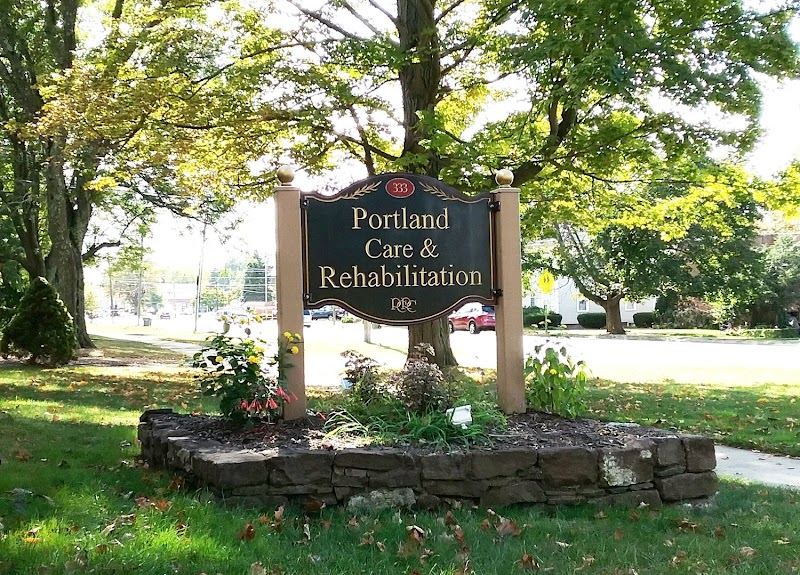
PORTLAND CARE & REHAB CENTER
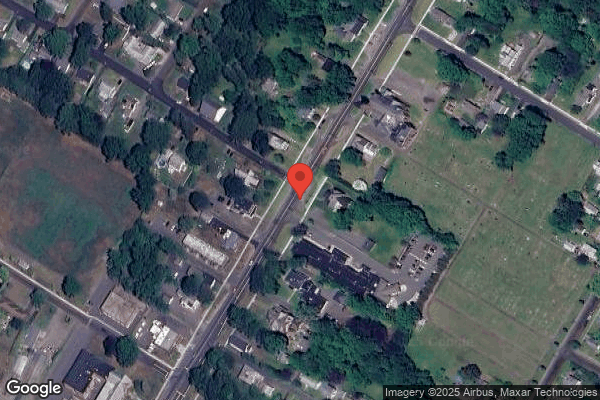
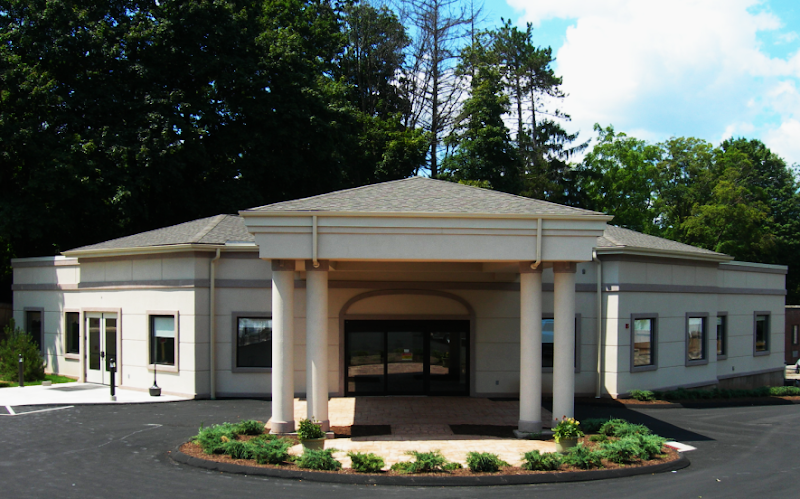
333 MAIN ST, PORTLAND, CT 06480 (860) 342-0370
For profit - Limited Liability company 65 Beds Independent Data: November 2025
Trust Grade
78/100
#35 of 192 in CT
Last Inspection: June 2024

Within standard 12-15 month inspection cycle. Federal law requires annual inspections.

Overview

Portland Care & Rehab Center has a Trust Grade of B, indicating it is a good choice for families, though not the highest-rated option. It ranks #35 out of 192 facilities in Connecticut, placing it in the top half, and #3 out of 17 in its county, suggesting only two local facilities are better. However, the facility's trend is concerning as the number of issues has worsened from 2 in 2022 to 7 in 2024. Staffing is a strong point, with a perfect 5-star rating and a turnover rate of 34%, which is below the state average, indicating that staff are experienced and familiar with residents. On the downside, the facility has incurred fines of $10,033, which is average but still raises questions about compliance. Specific incidents noted during inspections include a serious fall involving a resident who was not assisted with a gait belt during transfer, leading to injury. Additionally, there were concerns about food safety, including uncovered food items and unsanitary conditions in the dietary area. The facility also failed to maintain a clean and safe environment in the first-floor shower, which had issues like mildew and broken tiles. Overall, while the staffing and general care are strengths, there are significant areas needing improvement, particularly regarding safety and cleanliness.

Trust Score
B
78/100
In Connecticut
#35/192
Top 18%
Safety Record
Moderate
Needs review
Inspections
Getting Worse
2 → 7 violations
Staff Stability
○ Average
34% turnover. Near Connecticut's 48% average. Typical for the industry.
Penalties
✓ Good
$10,033 in fines. Lower than most Connecticut facilities. Relatively clean record.
Skilled Nurses
✓ Good
Each resident gets 54 minutes of Registered Nurse (RN) attention daily — more than average for Connecticut. RNs are trained to catch health problems early.
Violations
⚠ Watch
14 deficiencies on record. Higher than average. Multiple issues found across inspections.
★★★★★
5.0
Overall Rating
★★★★★
5.0
Staff Levels
★★★★★
5.0
Care Quality
★★★☆☆
3.0
Inspection Score
Stable
2022: 2 issues
2024: 7 issues

The Good

  • 5-Star Staffing Rating · Excellent nurse staffing levels
  • 5-Star Quality Measures · Strong clinical quality outcomes
  • Full Sprinkler Coverage · Fire safety systems throughout facility
  • No fines on record
  • Staff turnover below average (34%)

    14 points below Connecticut average of 48%

Facility shows strength in staffing levels, quality measures, fire safety.

The Bad

Staff Turnover: 34%

12pts below Connecticut avg (46%)

Typical for the industry

Federal Fines: $10,033

Below median ($33,413)

Minor penalties assessed

The Ugly 14 deficiencies on record

1 actual harm
Jun 2024 7 deficiencies 1 Harm
SERIOUS (G)

Actual Harm - a resident was hurt due to facility failures

Accident Prevention (Tag F0689)

A resident was harmed · This affected 1 resident

**NOTE- TERMS IN BRACKETS HAVE BEEN EDITED TO PROTECT CONFIDENTIALITY** Based on review of the clinical record, review of facility documentation, and interviews for 1 of 3 sampled residents (Resident ...

Read full inspector narrative →
**NOTE- TERMS IN BRACKETS HAVE BEEN EDITED TO PROTECT CONFIDENTIALITY** Based on review of the clinical record, review of facility documentation, and interviews for 1 of 3 sampled residents (Resident #18) who were reviewed for falls, the facility failed to utilize a gait belt during a transfer resulting in a major injury from a fall. The findings include: Resident #18's diagnosis included chronic obstructive pulmonary disease, heart failure, and history of falling. Review of the Resident Transfer Policy dated 6/14/22 directed that gait belts are used with all transfers unless contraindicated. A Fall Risk assessment dated [DATE] identified Resident #18 was at a moderate risk of falling. Review of the Reportable Event dated 6/23/23 identified Resident #18 fell while being transferred back to bed with the assistance of Nursing Assistant #1 (NA#1). Review of the submitted conclusion summary, written by the DNS, dated 6/28/23 identified that the investigation led to conflicting information from staff, however, after all staff were interviewed it was determined that NA #1 had not followed the care card for Resident #18's transfer status (had failed to utilize a gait belt). The quarterly Minimum Data Set assessment dated [DATE] identified Resident #18 was cognitively intact and required partial/moderate assistance from staff with toileting, bathing, transfers, and dressing. The Resident Care Plan dated 5/4/23 identified Resident #18 was at risk of falling. Interventions directed to transfer as ordered, encourage/remind the resident to call for assistance when needed, and to report any difficulties or changes in transfers or ambulation. The physician's orders dated 5/26/23 directed the assistance of 1 staff for transfers, including toileting using a 2 wheeled walker. A nurse's note dated 6/23/23 at 7:53 PM identified Resident #18 lost his/her balance and had a witnessed fall. Resident #18 complained of pain in his/her right hip along with a skin tear to his/her right elbow. Resident #18 was unable to move his/her legs and the Advanced Practice Nurse directed that the resident be sent to the emergency room for an evaluation. The nurse's note dated 6/23/23 at 11:29 PM identified that the hospital called the facility stating that Resident #18 had a right hip spiral fracture of the proximal right femur which required surgery. Interview with NA #1 on 6/12/24 at 10:16 AM identified that she did not use a gait belt on 6/23/23 when she transferred Resident #18 to bed. NA#1 stated she did not use a gait belt because it was a quick transfer and was not a long distance. NA#1 identified that although the facility policy directed that all NA were to use a gait belt when transferring residents, she did not utilize a gait belt during this transfer. NA#1 stated that she did not try to prevent the fall because she was afraid of hurting herself. Interview and review of facility documentation with Physical Therapist #1 (PT #1) on 6/12/24 at 11:18 AM identified an Interdisciplinary Screening Form (PT/OT/ST) dated 4/20/23 directed Resident #18 required the assistance of 1 for transfers up to 100 feet using a 2 wheeled walker. PT #1, after reading and reviewing the reportable event, indicated that NA#1 should have used a gait belt and a 2 wheeled walker while transferring Resident #18, but NA #1 had utilized a wheelchair for the transfer instead of the 2 wheeled walker and failed to use a gait belt. PT#1 stated that a gait belt would not prevent a fall but is used to assist/lower a resident to the floor, preventing a hard impact should the resident fall. PT#1 identified that all staff are trained on the policy of transfers utilizing a gait belt and NA #1 was trained on 5/8/23 which directed that gait belts will be used on all residents during transfers and ambulation unless contraindicated (which was not the case for Resident #18). PT #1 indicated that if NA #1 had utilized a gait belt, Resident #18 may have had a fall with a less severe injury. Interview with the Director of Nurses (DNS) on 6/13/24 at 10:08 AM identified during the facility investigation that NA#1 stated that she utilized a gait belt while transferring Resident #18, however, the DNS indicated that through interviews with other staff, a gait belt had not been used during Resident #18's transfer. The DNS indicated that the NA Care Card (care plan) for Resident #18, had not been followed. The DNS indicated that the facility policy was to use a gait belt with all residents and that NA #1 did not follow the facility policy. Additionally, NA#1 had been educated on 5/8/23 on the gait belt policy with transfers.
CONCERN (D)

Potential for Harm - no one hurt, but risky conditions existed

Respiratory Care (Tag F0695)

Could have caused harm · This affected 1 resident

**NOTE- TERMS IN BRACKETS HAVE BEEN EDITED TO PROTECT CONFIDENTIALITY** Based on observations, interviews, review of the clinical record, and facility policy for the only sampled resident (Resident #5...

Read full inspector narrative →
**NOTE- TERMS IN BRACKETS HAVE BEEN EDITED TO PROTECT CONFIDENTIALITY** Based on observations, interviews, review of the clinical record, and facility policy for the only sampled resident (Resident #5) reviewed for oxygen use, the facility failed to ensure oxygen tubing was connected to the concentrator providing oxygen on 2 occasions. The findings include: Resident #5's diagnoses included chronic obstructive pulmonary disease (COPD), chronic diastolic heart failure, obstructive sleep apnea, and chronic pain syndrome. The quarterly Minimum Data Set assessment dated [DATE] identified Resident #5 was severely cognitively impaired and required total assistance with bathing and dressing, set up assistance with eating, partial moderate assistance with bed mobility, and total assistance with transfers and mobility. The Resident Care Plan dated 5/3/24 identified oxygen therapy since 2019, chronic respiratory failure with long term oxygen use, choosing to remove oxygen and Chronic Obstructive Pulmonary Disease (COPD). Interventions included to remind to keep oxygen on, monitor for signs or symptoms of respiratory distress and report to the physician as needed, oxygen as ordered, position to facilitate ventilation upright position whenever possible. A nurse practitioner's note dated 6/12/24 identified a diagnosis of obstructive sleep apnea, asthma, and chronic respiratory failure with hypoxia or hypercapnia and that Resident #5 was dependent on the use of oxygen noting an oxygen saturation of 94% on 6/11/24. Interview and observation on 6/12/24 at 1:47 PM with NA #4 identified Resident #5 lying in bed and complaining of pain. The nasal cannula oxygen tubing providing oxygen was found disconnected from the oxygen concentrator which prevented the delivery of oxygen to Resident #5. NA #4 reconnected the oxygen tubing at the concentrator and notified LPN #2. Interview and observation on 6/12/24 at 1:48 PM with LPN #2 identified that Resident #5 had taken her oxygen tubing off at times out of her nose. Additionally, the oxygen tubing had been disconnected from the oxygen concentrator to the humidifier bottle, however the nasal cannula was in place. LPN #2 obtained Resident #5's oxygen saturation of 93% which LPN #2 identified as Resident #5's baseline. A physician's order dated 6/13/24 directed to administer oxygen at 3 liters per minute via nasal cannula and attach humidifier filled with distilled water to the compressor. Observation on 6/13/24 at 10:02 AM identified Resident #5 was lying in bed with his/her oxygen nasal cannula in place and complaining of nausea. Additionally, the oxygen tubing was found disconnected from the oxygen concentrator to the humidifier bottle preventing Resident #5 from receiving his/her prescribed oxygen. Interview and observation on 6/13/24 at 10:07 AM with LPN #2 identified the oxygen tubing was disconnected from the oxygen concentrator to the humidifier bottle. LPN #2 identified she did not know how the oxygen tubing became disconnected, but suspected it was getting bumped when Resident #5 was being transferred via mechanical lift into bed. Additionally, LPN #2 identified that she would start education with the staff to ensure that the oxygen connection was secure after mechanical lift transfers. Review of the Oxygen policy for nasal cannula oxygen administration identified, in part, attach the cannula to the nipple adapter of the oxygen device and or humidifier bottle as needed. Humidifier bottle use directed, in part, to attach oxygen delivery device to the outlet nipple of the humidifier bottle and confirm that oxygen is flowing through the bottle by observing bubbling in the bottle.
CONCERN (D)

Potential for Harm - no one hurt, but risky conditions existed

Drug Regimen Review (Tag F0756)

Could have caused harm · This affected 1 resident

Deficiency Text Not Available

Read full inspector narrative →
Deficiency Text Not Available
CONCERN (D)

Potential for Harm - no one hurt, but risky conditions existed

Medication Errors (Tag F0758)

Could have caused harm · This affected 1 resident

**NOTE- TERMS IN BRACKETS HAVE BEEN EDITED TO PROTECT CONFIDENTIALITY** Based on clinical record review, interviews, and facility policy for 1 of 5 sampled residents (Resident #14) reviewed for unnece...

Read full inspector narrative →
**NOTE- TERMS IN BRACKETS HAVE BEEN EDITED TO PROTECT CONFIDENTIALITY** Based on clinical record review, interviews, and facility policy for 1 of 5 sampled residents (Resident #14) reviewed for unnecessary medications, the facility failed to attempt a Gradual Dose Reduction (GDR) for a psychotropic medication. The findings include: Resident #14 was admitted on [DATE] with diagnoses of major depressive disorder and personal history of other mental and behavioral disorders. A physician order dated 1/25/23 directed the administration of Lexapro (an antidepressant medication) 20 milligrams daily. An admission MDS dated [DATE] identified Resident #14 had intact cognition, was independent with eating, required supervision with oral hygiene, and partial to moderate staff assistance with transfers. Additionally, Resident #14 had a diagnosis of depression and received an antidepressant. The Resident Care Plan dated 5/1/23 identified Resident #14 was on an antidepressant, interventions included monitoring ongoing signs and symptoms of depression and monitoring side effects and effectiveness of the medication. An Advanced Practice Registered Nurse (APRN) progress note dated 3/6/24 at 6:18 PM identified Resident #14 sometimes having sad days but overall did not feel depressed. Review of the clinical record from 1/25/23 through 6/12/24 failed to indicate a change in the dose of Resident #14's Lexapro or an attempt to complete a GDR. An interview with the psychiatric APRN, (APRN #1) on 6/12/24 at 11:05 AM identified that a GDR should be considered for a resident taking antidepressants. If a GDR was not indicated, then the reason for not attempting the GDR should be documented in the clinical record. APRN #1 further identified that psychiatry did not follow Resident #14 so she could not explain why a GDR was not attempted for the resident. Interview and clinical record review with the DNS on 6/12/24 at 3:12 PM failed to provide information that a GDR was ever attempted for Resident #14's Lexapro. The DNS was unable to explain the reason a GDR was never attempted but indicated that the pharmacist and facility providers who follow Resident #14 were responsible to ensure GDRs were recommended and attempted. The DNS further identified she was unaware that a GDR needed to be attempted for antidepressant medications and did not know the facility policy. Interview with the primary care APRN (APRN #2) on 6/13/24 at 10:59 AM identified that the psychiatric practitioner normally handles the GDR but if they are not following the resident, then the primary care provider would be responsible to address any required GDR attempts. APRN #2 further stated that she did not attempt a GDR because no one brought it to her attention. APRN #2 identified that a GDR attempt should be made 1 or 2 times in a calendar year. Review of facility policy for Psychotropic Medication Management identified review of psychotropic medication management should include verification that adequate indications for use of the psychotropic medication exist, the medications are not being used for extended duration, and residents are free of duplicate therapy and being monitored for adverse consequences, per current professional standards of practice and in accordance with federal and state guidelines.
CONCERN (D)

Potential for Harm - no one hurt, but risky conditions existed

Room Equipment (Tag F0908)

Could have caused harm · This affected 1 resident

**NOTE- TERMS IN BRACKETS HAVE BEEN EDITED TO PROTECT CONFIDENTIALITY** Based on observation and interviews for 1 of 5 sampled residents (Resident #1) reviewed for the environment, the facility failed...

Read full inspector narrative →
**NOTE- TERMS IN BRACKETS HAVE BEEN EDITED TO PROTECT CONFIDENTIALITY** Based on observation and interviews for 1 of 5 sampled residents (Resident #1) reviewed for the environment, the facility failed to maintain adequate temperatures for a resident refrigerator on the 2nd floor. The findings include: Resident #1 was admitted to the facility on [DATE] with diagnoses of anxiety, dysphagia, and gastro-esophageal reflux disease. Observation of resident rooms on 6/13/24 identified Resident #1's refrigerator tempeature guage read 50 degrees and the following foods were stored in the refrigerator, yogurt and leftover food from dining service. Additionally, the temperatures recorded on a log for June 2024 ranged between 48 and 50 degrees Fahrenheit (F) (normal at or below 41 degrees F). Interview with the Director of Maintenance on 6/13/24 at 11:00 AM identified the refrigerators belonged to the facility and that housekeeping was responsible to check the temperatures of the refrigerators. If the temperatures were out of range, the facility would replace the malfunctioning refrigerator with a new one. The Director of Maintenance further identified that refrigerator temperatures were supposed to be between 36 to 42 degrees F. The Director of Maintenance could not recall if the abnormal temperature of Resident #1's refrigerator had been reported for maintenance during the month of June. Interview with Housekeeper #1 on 6/13/24 at 11:25 AM identified housekeepers checked the refrigerator temperatures daily for all the rooms on the 2nd floor that had a refrigerator, and if the temperature was out of range, they reported it to their supervisor who then informed maintenance. Housekeeper #1 also identified that they would report temperatures that were below 50 or 60 degrees F but was unaware of what the acceptable refrigerator temperatures ranges should have been. Interview with the Director of Housekeeping on 6/13/24 at 11:40 AM identified that housekeeping was supposed to check the refrigerator temperatures in resident rooms and if the temperatures were out of range, they were supposed to tell him or maintenance. The Director of Housekeeping identified that temperatures were supposed to be between 36 to 46 degrees and was unable to explain why the out of range temperatures in Resident #1's room were not reported. The Director of Housekeeping further identified that each new hire for housekeeping was shown the temperature log indicating what to do if temperatures were out of range. Review of the facility Refrigerator/Freezer policy identified the temperature readings would be entered daily in the appropriate box on the calendar log. If a housekeeping staff member notices a temperature outside the range, they were to adjust the coolness dial and recheck the temperature in 1 or 2 hours. Food should be labeled and moved to the pantry until the temperature resolves. If the temperature remains outside of range, housekeeping would contact maintenance for service.
CONCERN (E)

Potential for Harm - no one hurt, but risky conditions existed

Safe Environment (Tag F0921)

Could have caused harm · This affected multiple residents

Based on observations and interviews for 1 of 2 shower rooms, the facility failed to provide a homelike, sanitary, and safe environment for the first-floor shower. The findings included: Observation d...

Read full inspector narrative →
Based on observations and interviews for 1 of 2 shower rooms, the facility failed to provide a homelike, sanitary, and safe environment for the first-floor shower. The findings included: Observation during the initial facility tour on 6/10/24 at 12:30 PM on the first floor in the shower room identified the following: 1 broken ceiling tile, A black substance on the floor, walls, and ceiling, Lack of a drain cover over the floor drain, 3 unlabeled wash basins, A dirty linen cart, An empty bucket, A baseball cap, and The top of a spray bottle with no bottle. Interview with Registered Nurse #1 (RN #1 the Infection Prevention nurse) on 6/10/23 at 12:30 PM identified that the shower room was the only shower for the first floor residents. RN #1 indicated that the black substance was mildew on the floor, chipping was noted on the wall, the ceiling was falling apart, and the dirty laundry cart should not be stored in the shower room. RN #1 further stated that there was a brown/black coloring on wall but was unable to identify the type of substance noted. Subsequent to surveyor inquiry, RN#1 removed the dirty linen cart from the shower room. RN#1 stated her last environmental rounds for checking the shower room were performed on 3/20/23 and that rounds were performed quarterly. Interview with Nursing Assistant #3 (NA#3), on 6/10/24 at 2:55 PM identified that she utilized the shower on the first floor that day, but she stated that it was a quick shower and did not notice anything concerning the shower room. When she looked at the ceiling tiles, she stated that she reported the problem by placing the information in the maintenance book. Following NA #3's interview the maintenance request log was reviewed from 5/11/24 through 6/10/25 but failed to indicate that the first floor shower room required repairs. No other maintenance logs were available for review. Interview with NA#4 on 6/10/24 at 3:00 PM identified that the first-floor shower room was not homelike, was not maintained in a clean manner, and that the shower room was old. NA #4 indicated that the 11:00 PM to 7:00 AM shift was responsible to maintain and clean the shower room. Interview with Housekeeper #3 on 6/12/24 at 12:10 PM identified that she was unsure of what the buildup on the wall was and although she sprayed the area daily, she had not scrubbed the unknown substance to try to eliminate the debris. Interview with Director of Maintenance on 6/12/24 at 2:20PM identified that the first-floor shower did not have a drain cover and the opening measured 5 round and 1.5 in depth. Subsequent to surveyor inquiry, the Director of Maintenance indicated that he would be covering the open drain. Although requested a policy for shower room cleaning and maintenance was not provided, however, according to the DNS, the housekeeping staff was overseen by the Director of Nurses, Infection Control Nurse, and Human Resources.
CONCERN (F)

Potential for Harm - no one hurt, but risky conditions existed

Food Safety (Tag F0812)

Could have caused harm · This affected most or all residents

**NOTE- TERMS IN BRACKETS HAVE BEEN EDITED TO PROTECT CONFIDENTIALITY** Based on the tour of the Dietary Department, staff interview, and facility documentation, the facility failed to ensure open foo...

Read full inspector narrative →
**NOTE- TERMS IN BRACKETS HAVE BEEN EDITED TO PROTECT CONFIDENTIALITY** Based on the tour of the Dietary Department, staff interview, and facility documentation, the facility failed to ensure open food items were dated, failed to ensure canned foods in the emergency stock were not expired, and failed to ensure food was served under sanitary conditions. The findings included: During a tour of the Dietary Department on 6/10/24 10:31 AM with the Dietary Director the following was identified: a. 2 ceiling fans directly over the prep area were noted to be oscillating with a heavy accumulation of dust. A dietary worker was cutting a cake directly under one of the fans. In addition, the ceiling fan in the dish room was noted with a heavy accumulation of dust. b. An uncovered pan of gravy and flour mixture was observed to be on top of the preparation (prep) table. The side and underneath area of the prep table were noted to have a heavy accumulation of dirt and debris. c. The pipes behind the conventional convection oven and the flooring behind the oven was observed with a heavy accumulation of dust, grime, and dirt. The top of the convection oven was observed with a heavy accumulation of dirt, debris, and grime. d. The hood vent area was noted to have heavy accumulation of dirt and dust. e. The eye wash station adjacent to the prep area was noted to have dirt, debris, and stains on the stainless sink and the area behind the sink. f. The microwave was noted with a heavy accumulation of stains and finger prints on the outside. Interview and observations with the cook on 6/10/24 at 10:56 AM identified that he cleaned the microwave on the previous day, and he only removed some and not all of the debris. g. The refrigerator door and handles were noted to have a heavy accumulation of dirt, debris, drip marks, and accumulation of finger prints. Interview and observations with the Dietary Director at 6/10/24 at 10:57 AM indicated that he cleaned the top of the stove a few days ago. He further identified that he didn't know the reason the convection oven was still soiled. h. The beverage cooler which contained milk and health shakes had a 5-foot gasket section under the door that was noted to have a heavy accumulation of black like substance/material. i. The walk-in freezer was noted to contain a 2-pound bag of broccoli that was half full and 7 individually wrapped pieces of cake that were not labeled/dated when opened. j. The dry storage room had the following food items with no open dates and time: 10 lbs. (half full) bag of pasta, ¼ lbs. of orzo that was open to air, ½ full box of gluten free pasta and flour in a 10-gallon container that was ¼ full and the lid and handle had heavy accumulation of dried on white substance. k. A 3-day emergency supply of food was noted to have expired expiration dates and included: 12 (28 oz) boxes of cream of wheat with an expiration of 8/17/23, 6 (108 oz) cans of Beef Ravioli with an exp of 1/10/24, 4 cans of 6 lbs. 10 oz, 4 (10 oz) cans of mandarin oranges with an exp of 03/24, 12(10 oz) cans of tomato soup with an exp of (01/24), 6 (4 lbs. 2.5 oz) cans of Tuna fish with no expiration date. Interview and observation with Dietary Director on 6/10/24 at 11:35 AM indicated that he was responsible for checking the 3-day emergency food supply and expiration dates. Additionally, he noted that food items in the 3 day supply were also used whenever needed for in-house stock, were rotated whenever they are low, and were discarded when expired and replaced. l. The steam table which contained roasted chicken, baked fish, macaroni and cheese, green beans, peas, mashed potatoes, cream of chicken soup and pasta fagioli, on 6/12/24 at 12:20 PM was noted to have a heavy accumulation of dirt and debris on the bottom drawer and the front of the steam table. In addition, the steam table was observed being transported from the Dining Room to room [ROOM NUMBER] (approximately 80 feet in distance) without the benefit of covering the catering pans. The meals were plated from the steam table for residents who were eating in their rooms. After residents who ate in their rooms were served, the steam table was brought from room [ROOM NUMBER] to 201 (approximately 22 feet) without the benefit of covering the catering pans, however the lids were noted to be on the bottom shelf of the steam table. Interview and observations with the cook on 6/12/24 at 1:07 PM identified that food should be covered with lids while being transported in the hallway. He further stated that he forgot to cover the food. Interview with the Maintenance Manager on 6/13/24 at 2:00 PM identified that distance from the dining room to room [ROOM NUMBER] as 80 feet and from room [ROOM NUMBER] to room [ROOM NUMBER] as 22 feet. The facility was unable to provide a policy regarding labeling and dating of foods, however, an interview with the Dietary Director on 6/13/24 at 12:30 PM stated that opened food should be dated when opened and discarded by the expiration date on the container.
Apr 2022 2 deficiencies
CONCERN (D)

Potential for Harm - no one hurt, but risky conditions existed

Deficiency F0810 (Tag F0810)

Could have caused harm · This affected 1 resident

**NOTE- TERMS IN BRACKETS HAVE BEEN EDITED TO PROTECT CONFIDENTIALITY** Based on observations, clinical record review, facility documentation review, and interviews for one of two dining rooms observe...

Read full inspector narrative →
**NOTE- TERMS IN BRACKETS HAVE BEEN EDITED TO PROTECT CONFIDENTIALITY** Based on observations, clinical record review, facility documentation review, and interviews for one of two dining rooms observed, the facility failed to ensure that adaptive dining equipment was in place for one observed resident (Resident #12) during a meal in accordance with the resident plan of care. The findings include: Resident #12's diagnoses included Alzheimer's Dementia, failure to thrive, Macular Degeneration and bilateral cataracts. Occupational Therapy treatment note dated 7/22/2021 directed use of a non-slip mat under dishes, a lip plate, and Nosey Cup for drinks, and noted orders were written for staff to provide feeding equipment at all meals. The quarterly Minimum Data Set (MDS) assessment dated [DATE] identified that Resident #12 had moderate cognitive impairment and required supervision (oversight, encouragement, or cueing) with eating. The Resident Care Plan (RCP) dated 1/18/2022 identified Resident #12 was at risk for weight loss due to dementia. Interventions directed use of a Nosey Cup or a cup with lid and straw, use of a lip plate and a non-slip table mat under dishes during meals. Review of facility dietary information sheet for facility residents from the [NAME] dietary book dated 4/7/2022 identified Resident #12 required appliances of a Nosey Cup or a cup with lid and straw, lip plate and non-slip mat with meals. Observations on 4/11/2022 at 12:23 PM identified Resident #12 was in the East/West dining room with a meal placed on the table in front of him/her. The meal was on a circular flat plate directly on the table. There was no non-slip pad or lip plate observed to be in place. Interview on 4/11/2022 at 12:37 PM with NA #3 identified that she was unsure why the adaptive equipment was not in place and indicated that the non-slip pad and lip plate should be used. NA #3 indicated that the information that directed what Resident #12 needed for meals was located in the [NAME] book and that the book should be checked by whoever brings a meal to the resident. Interview and observation on 4/11/22 at 12:42 PM with Dietary Aide #1/Cook identified he was plating food to be served to residents in the East [NAME] dining room. Dietary Aide #1/Cook indicated he did not know why Resident #12 did not have a lip plate and non-slip mat. He indicated there were a lot of staff in the dining room, and he did not know if he had a lip plate available on the serving table for use. Review of the undated facility Feeding Equipment Policy directed in part, that the facility was to provide feeding equipment such as utensils, cups, bowls, plates, and other tools to allow for highest level of independence with eating and or drinking. Procedures directed some specialized equipment/utensils may be issued/provided by therapy upon screening or evaluation, otherwise feeding equipment would be provided by the dietary department.
CONCERN (D)

Potential for Harm - no one hurt, but risky conditions existed

Infection Control (Tag F0880)

Could have caused harm · This affected 1 resident

Based on observations, interviews, and facility policy review, the facility failed to ensure the laundry room and linens were maintained in a clean manner. The findings include: Observations with RN #...

Read full inspector narrative →
Based on observations, interviews, and facility policy review, the facility failed to ensure the laundry room and linens were maintained in a clean manner. The findings include: Observations with RN #2 on 4/13/2022 at 2:03 PM in the facility laundry area, identified a heavy accumulation of white, fluffy debris on the laundry room walls, tops of the laundry machines, tops of the soap dispenser, water pipes, door hinges, ceiling, and on the top of a wall mounted heater. Strands of the white, fluffy debris were observed hanging downward approximately three (3) to six (6) inches from the ceiling and door closure arm. A large industrial-sized fan was observed located on a green plastic chair. The fan was observed to have a large accumulation of white, fluffy debris on the grill cover in front of the fan blades. The fan was turned on and blowing toward a hanging rack with clean clothing and linens and toward folded, clean laundry located on a multi-level linen cart with the protective cover left open, and clean blankets on a table next to the linen cart. Additional linens were observed on top of the clean linen, including multiple non-slip socks, a lamp shade, a small and black wrap-style brace. Interview completed with RN #2 on 4/13/2022 at the time of the observation identified she was unsure what the policy was regarding clean linen storage, use of the fan with the described debris, and the cleanliness of the laundry area. RN #2 also identified that maintenance was responsible for cleaning any debris in the laundry room, and the staff working in the laundry room were responsible for notifying maintenance of any needs. Interview completed with the Maintenance Director on 4/13/2022 at 2:11 PM identified that he was responsible to maintaining the laundry area. The Maintenance Director identified that the area was difficult to address due to the type of cleaning needed to remove the debris, and indicated the debris was caused by use of the dryers. He identified that we have to blow it off. He indicated that he would schedule the cleaning, the cleaning should be completed weekly, and that it was completed the week prior. An additional interview completed with the Maintenance director and Maintenance Assistant on 4/13/2022 at 2:25 PM identified that the laundry area and dryer vent had not been cleaned in the prior two weeks. The Maintenance Director identified the cleaning should have been done and he did not know why it was not completed. No facility policy was provided for surveyor review.
Sept 2019 5 deficiencies
CONCERN (D)

Potential for Harm - no one hurt, but risky conditions existed

Resident Rights (Tag F0550)

Could have caused harm · This affected 1 resident

**NOTE- TERMS IN BRACKETS HAVE BEEN EDITED TO PROTECT CONFIDENTIALITY** Based on clinical record reviews review of facility policy, review of facility documentation and interviews for one of three sa...

Read full inspector narrative →
**NOTE- TERMS IN BRACKETS HAVE BEEN EDITED TO PROTECT CONFIDENTIALITY** Based on clinical record reviews review of facility policy, review of facility documentation and interviews for one of three sampled residents (Resident#22) reviewed for assistance with Activities of Daily Living (ADL), the facility failed to ensure the resident received incontinent care in respectful manner that enhanced the resident's quality of life and/or for one of three sampled resident reviewed for mistreatment ( Resident # 35), the facility failed to treat the resident in a respectful and dignified manner . The findings included: 1.Resident # 22's diagnoses included Epilepsy, glaucoma, hypertension, Alzheimer's dementia without behavioral disturbances, glaucoma and left shoulder dislocation. The annual Minimum Data Set (MDS) assessment dated [DATE] identified the resident was severely cognitively impaired, required extensive assistance of one person for physical assistance for bed mobility, transfers, locomotion on and off the unit and personal hygiene. The assessment further indicated the resident required extensive assistance two people for toileting. The Resident Care Plan (RCP) for needs assistance with toileting and ADL due to dementia and glaucoma. Interventions included to provide assistance with ADL, toileting /incontinent care approximately every two hours and when needed. Observation 9/17/19 from 2:15 P.M. to 2:45 P.M. identified Resident # 22 out of bed in the wheelchair in the hallway. NA #4 was noted bringing Resident # 22 into the room. NA #2 was noted operating the stand to sit lift and speaking to the resident in calm, gentle and soft manner prior to providing care to the resident. Resident # 22 was transferred by NA # 2 and NA#4 from the wheelchair to the bed without difficulty. Resident # 22 was noted at 2:35 P.M. with moderate amount of strong saturated urine in his/her brief, skin was noted with minimal wrinkles, pink and intact. NA # 4 and NA # 2 was noted on 9/17/19 at 2:38 P.M. pulling Resident# 22's sweat pants 3/4 quarters down the resident's leg in bed. NA # 4 then proceeded to provide incontinent care to the resident with the resident's sweat pants 3/4 down the resident's leg. Surveyor intervened and NA #4 stated I am sorry and immediately pull the resident's off. Interview with NA # 4 on 9/17/19 at 2:40 P.M. identified she/he was unaware the resident's sweat pants were pulled 3/4 down during incontinent care and indicated she /he was just trying to complete the incontinent care. Interview with the DNS on 9/17/19 at 2:50 P.M. identified she/he was unaware that NA # 4 and NA # 2 provided incontinent care while the resident was in bed with sweat pants 3/4 down the resident's leg. The DNS on 9/19/19 further indicated she/he believed it was fine for NA #2 and NA # 4 to provide incontinent in room with Resident # 22's sweat pants ¾ down his/her leg as long as the door was closed, curtain pull and the resident was out of public view. 2. Resident #35 was admitted on [DATE] with diagnoses that included dementia with behaviors, diabetes, chronic kidney disease, atrial fibrillation and right hip fracture. The significant change MDS assessment dated [DATE] identified Resident #35 had severe cognitive impairment, required extensive assistance of one person for bed mobility, transfers toileting and personal hygiene and ambulation in the corridor. Additionally, the MDS assessment identified Resident #35 had verbal behavioral symptoms directed toward others. The RCP dated 9/17/19 identified Resident #35 had ineffective coping (verbal and physical aggression) related to the problematic manner in which the resident acts, secondary to cognitive impairment, sun-downing, forgetfulness and agitation with care, swearing at staff and making racial comments. An observation on 9/17/19 at 9:45 A.M. identified Resident #35 was sitting in the sit to stand lift yelling at NA #2 and NA #6. NA #6 was kneeling beside the stand lift with what appear to be frustration on his/her face. Resident #35 requested NA #6 smile and he/she continued to appear frustrated. NA #2 calmed Resident #35 and NA #2 and NA #6 completed the toilet transfer. An observation on 9/17/19 at 10:05 A.M. identified NA #6 standing by Resident #35 in the hallway across from the nurse's station near the dining room. NA #6 was discussing Resident #35 in a frustrated tone with the Occupational Therapist (OT) #1 in the presence of Resident #35. NA #6 told OT #1 that Resident #35 had slapped a nurse aide, was using inappropriate language and indicated that NA #6 hoped Resident # 35 would be good for OT #1. OT # 1 proceeded to wheel Resident #35 away in his/her wheelchair. Interview with NA #6 on 9/17/19 at 10:10.A.M. identified NA #6 had reported Resident #35's behavior to OT #1 prior to his/her therapy session. NA #6 identified Resident #35 exhibiting behaviors of fighting with staff during the day, speaking inappropriately to staff and made attempts to kiss and /or touch staff. NA #6 also indicated he/she should have pulled OT #1 aside and discussed the behavior away from Resident #35. Interviewed DNS on 9/17/19 at 10:45 A.M. identified NA #6 was likely busy due to the no call no show of staff on his/her unit and indicated NA # 6 was probably trying to get everything done. Additionally, the DNS identified NA #6 could have involved Resident #35 in the conversation rather than speaking about Resident #35 in front of him/her. Interview with OT #1 on 9/17/19 11:45 A.M. identified NA #6 was giving report to him/her ( OT #1) in the hallway in front of Resident #35 prior to the resident's therapy session. Additionally, OT #1 indicated NA #6 informed OT #1 that Resident # 35 had smashed a nurse aide hand, had used inappropriate language and that NA #6 hoped Resident #35 would be good for him/her. Additionally, OT # 1 identified that he /she usually speak with staff on the side, however, she/he did not speak to the staff out of the resident's presence because it was busy day. Interview with the DNS on 9/17/19 at 12:00 P.M. identified the DNS sent NA #6 home and initiated the investigative protocol. Interview with the DNS on 9/18/19 at 11:30 A.M. identified NA #6 returned to work after the investigation was completed and indicated he/she would educate staff not to give report in front of the resident unless the resident was alert and oriented and could be a part of the conversation. Review of an in-service bulletin for all staff dated 9/18/19 identified NA # 6 was educated on showing and expressing interest in resident care and directed staff to engage residents in conversation during care. Review of the Resident's [NAME] of Rights identified residents have the right to be treated with consideration, respect and full recognition of dignity and individuality.
CONCERN (D)

Potential for Harm - no one hurt, but risky conditions existed

Report Alleged Abuse (Tag F0609)

Could have caused harm · This affected 1 resident

**NOTE- TERMS IN BRACKETS HAVE BEEN EDITED TO PROTECT CONFIDENTIALITY** Based on review of the clinical record, facility documentation, facility policy and/or procedures and interviews for one of thre...

Read full inspector narrative →
**NOTE- TERMS IN BRACKETS HAVE BEEN EDITED TO PROTECT CONFIDENTIALITY** Based on review of the clinical record, facility documentation, facility policy and/or procedures and interviews for one of three residents reviewed for abuse/ mistreatment (Resident # 41), the facility failed to report an allegation of inappropriate physical interaction in a timely manner to the state agency. The findings include: Resident#41's diagnoses included cerebral vascular disease, atrial fibrillation, right and left eye blepharitis, osteoarthritis and degenerative joint disease. The RCP dated 7/15/19 identified need assistance with ADLs as the focus. Interventions included assist with ADL as needed and encourage the resident to do as much as able. An annual MDS assessment dated [DATE] identified the resident as moderately impaired for decision-making skills, requiring extensive assistance from staff for most activities of ADL, noted utilization of a walker and wheelchair for mobility, and as having an unsteady balance during transition and walking. On 9/18/19 at 9:35 A.M. during an observation of medication administration pass with Resident #41 and the unit charge nurse (RN#2) identified that when Resident # 41 is transferred from the wheelchair to a recliner it does not go well when the person (staff and/or nurse aide) who is assisting Resident #41 becomes frustrated with the resident. Staff becomes frustrated because Resident # 41 is moving too slow and has not had the chance to stretch his/her legs after sitting for a long period of time. Subsequent to RN#2's inquiry in the presence of the surveyor, Resident #41 indicated on the previous day (9/17/19 in the late morning) a staff member and/or nurse aide, became frustrated with him/her( Resident #41) because the resident moved too slow during the transfer. Resident #41 further indicated and demonstrated how the staff member and/or nurse aide touched him/her on the left upper arm to get him/her (Resident # 41) to move and when the resident asked the nurse aide to wait a minute, the staff member would not listen to the resident and began to exhibit increase frustration while helping the resident transfer into his/her chair. Although Resident #41 indicated the person who had assisted him/her had blonde hair and indicated he/she didn't know the person's name. Resident # 41 also indicated he/she refused to identify the person and/or the name of the staff so the staff would not get into trouble. On 9/18/19 at 9:46 A.M. an interview with the DNS regarding Resident #41's reported allegation of staff becoming frustrated and inappropriately touching him/her during the assistance of care. The DNS further indicated he/she would speak with the resident regarding the allegation and would get back to the surveyor with the outcome. On 9/18/19 at 3:40 P.M interview with the DNS regarding his/her follow up with Resident #41 identified Resident # 41 didn't want to share the nurse aide name, could not remember much about the incident and was not able to tell him/her (DNS) when the event occurred yesterday or today. The DNS also indicated the facility's response to the resident's allegation was to initiate staff educational training. On 9/19/19 at 3:10 P.M. an interview and review of the clinical record, facility documentation and the facility policy and/or procedures for abuse with the DNS in the presence of the Administrator and survey team members indicated the DNS did not report to the state agency Resident #41's allegation of staff inappropriate touching (Resident # 41 to get the resident to move' during a transfer), because he/she was able to substantiate that the resident had not been abused immediately. On 9/19/19 at 3:10 P.M. an interview and review of the clinical record, facility documentation, the facility policy and/or procedure and the Federal interpretive guidelines for reporting abuse timeframe with the Administrator indicated that based on the resident's dementia, the facility's investigation and the facility's inability to substantiate the resident's allegation of abuse, the facility was not obligated to report the resident's allegation to a state agency. According to the facility's policy and/or procedure for abuse which noted in part, report all allegations and all substantiated incidents immediately to the following person: Nurse Supervisor, DNS or designee, the Administrator, physician, family, social worker, police if indicated and state agency and all other agencies required within 2 hours. The policy also directed to take necessary action depending on the result of the investigation. Subsequent to surveyor inquiry, on 9/19/19 at 8:34 P.M. an email was sent to the state agency with attachment for a Reportable Event regarding Resident # 41's allegation.
CONCERN (D)

Potential for Harm - no one hurt, but risky conditions existed

Investigate Abuse (Tag F0610)

Could have caused harm · This affected 1 resident

**NOTE- TERMS IN BRACKETS HAVE BEEN EDITED TO PROTECT CONFIDENTIALITY** Based on review of the clinical record, facility documentation, facility policy and/or procedures and interviews for one of thre...

Read full inspector narrative →
**NOTE- TERMS IN BRACKETS HAVE BEEN EDITED TO PROTECT CONFIDENTIALITY** Based on review of the clinical record, facility documentation, facility policy and/or procedures and interviews for one of three residents reviewed for potential abuse/ mistreatment (Resident # 41), the facility failed to provide evidence that the facility followed their policy and procedure for investigating an allegation of inappropriate touching. The findings include: Resident#41's diagnoses included cerebral vascular disease, atrial fibrillation, right and left eye blepharitis, osteoarthritis and degenerative joint disease. The RCP dated 7/15/19 identified need assistance with ADLs as the focus. Interventions included assist with ADL as needed and encourage the resident to do as much as able. An annual MDS assessment dated [DATE] identified the resident as moderately impaired for decision-making skills, requiring extensive assistance from staff for most activities of ADL, noted utilization of a walker and wheelchair for mobility, and as having an unsteady balance during transition and walking. On 9/18/19 at 9:35 A.M. during an observation of medication administration pass with Resident #41 and the unit charge nurse (RN#2) identified that when Resident # 41 is transferred from the wheelchair to a recliner it does not go well when the person (staff and/or nurse aide) who is assisting Resident #41 becomes frustrated with the resident. Staff becomes frustrated because Resident # 41 is moving too slow and has not had the chance to stretch his/her legs after sitting for a long period of time. Subsequent to RN#2's inquiry in the presence of the surveyor, Resident #41 indicated on the previous day (9/17/19 in the late morning) a staff member and/or nurse aide, became frustrated with him/her( Resident #41) because the resident moved too slow during the transfer. Resident #41 further indicated and demonstrated how the staff member and/or nurse aide touched him/her on the left upper arm to get him/her (Resident # 41) to move and when the resident asked the nurse aide to wait a minute, the staff member would not listen to the resident and began to exhibit increase frustration while helping the resident transfer into his/her chair. Although Resident #41 indicated the person who had assisted him/her had blonde hair and indicated he/she didn't know the person's name. Resident # 41 also indicated he/she refused to identify the person and/or the name of the staff so the staff would not get into trouble. On 9/18/19 at 9:46 A.M. an interview with the DNS regarding Resident #41's reported allegation of staff becoming frustrated and inappropriately touching him/her during the assistance of care. The DNS further indicated he/she would speak with the resident regarding the allegation and would get back to the surveyor with the outcome. On 9/18/19 at 3:40 P.M interview with the DNS regarding his/her follow up with Resident #41 identified Resident # 41 didn't want to share the nurse aide name, could not remember much about the incident and was not able to tell him/her (DNS) when the event occurred yesterday or today. The DNS also indicated the facility's response to the resident's allegation was to initiate staff educational training. On 9/19/19 at 3:10 P.M. an interview and review of the clinical record, facility documentation and the facility policy and/or procedures for abuse with the DNS in the presence of the Administrator and survey team members indicated the DNS did not report to the state agency Resident #41's allegation of staff inappropriate touching (Resident # 41 to get the resident to move' during a transfer), because he/she was able to substantiate that the resident had not been abused immediately. Subsequent to surveyor's inquiry regarding the facility's investigation and a review of facility documentation dated 9/18/19 regarding Resident #41's allegation identified 3 pages of handwritten notes transcribed by the DNS on a small note pad, with excerpts of Resident #41's stating, he/she was unable to really remember conversation with the surveyor. The facility documentation further noted the DNS providing instructions to resident to feel free to contact the DNS at any time, if this happens again however, no statements were provided by the facility staff within the investigation to reflect whether or not the staff had any knowledge of the incident and/ or to substantiate that the facility could rule out abuse / mistreatment within 2 hours. On 9/19/19 at 3:10 P.M. an interview and review of the clinical record, facility documentation, the facility policy and/or procedure and the Federal interpretive guidelines for reporting abuse with the Administrator in the presence of the DNS indicated that based on the facility's investigation which was conducted within the time frame of 2 hours and based on the resident's dementia, the facility was unable to substantiate the resident's allegation of abuse. The facility policy for Abuse Policy and Procedure notes the facility investigate different types of incidents, and identify the staff member responsible for the initial reporting, investigate all alleged violations and directs that any findings of potential abuse, neglect, mistreatment are immediately investigated.
CONCERN (D)

Potential for Harm - no one hurt, but risky conditions existed

Deficiency F0657 (Tag F0657)

Could have caused harm · This affected 1 resident

**NOTE- TERMS IN BRACKETS HAVE BEEN EDITED TO PROTECT CONFIDENTIALITY** Based on clinical record review, review of facility documentation and staff interview for one of three residents (Resident # 22)...

Read full inspector narrative →
**NOTE- TERMS IN BRACKETS HAVE BEEN EDITED TO PROTECT CONFIDENTIALITY** Based on clinical record review, review of facility documentation and staff interview for one of three residents (Resident # 22) reviewed for accidents, the facility failed to revise and/or re-evaluate the resident's mechanical lift to ensure the lift was appropriate for a resident with increased agitation after an injury occurred. The findings include: Resident # 22's diagnoses included Epilepsy, glaucoma, hypertension, Alzheimer's dementia without behavioral disturbances and left shoulder dislocation. The annual MDS assessment dated [DATE] identified the resident was severely cognitively impaired, required extensive assistance of one person physical assistance for bed mobility, transfers, locomotion on and off the unit and personal hygiene and indicated the resident required extensive assistance two people for toileting. The RCP for striking out, agitation sadness, and refusal of care related to dementia dated 4/26/19. Intervention included: to modify environment, reduce noise, dim lights as needed, observe behavior and attempted interventions in the behavior log and directed staff to intervene before agitation escalates, guide away from source of distress, engage calmly in conversation, if response is aggressive, staff to walk away calmly and re-approach later. The RCP at risk for falls due to dementia, history of falls and on medications that may increase fall risk for falls. Interventions included: ant tippers as ordered, bed in low position, mats next to bed on both sides when in bed and to report any difficulties with transfer status. The nurse's progress note dated 5/14/19 at 11:10 P.M. identified the resident was in the room when a nurse aides called the licensed staff around 10:30 P.M. and said there was something wrong with Resident # 22's shoulder. Vital signs noted blood pressure and was 200/100. An assessment of Resident # 22's shoulder identified the left shoulder was in pain and Resident # 22 could not squeeze the licensed staff hand hard. Resident # 22 complained of pain in the left shoulder upon movement. The Medical Doctor (MD) was notified and directed staff to transport the resident to an acute care facility for an evaluation. Additionally, the nurse's progress note dated 5/14/19 identified Resident # 22's POA and family were notified. The Reportable Event dated 5/14/19 at 10:30 P.M. identified while Resident # 22 was being transferred in a Sara lift to bed by NA # 2, NA# 3, and NA#1, Resident # 22 moved his/her left arm and the resident's left arm appeared abnormal. Resident # 22 was noted with left arm pain upon movement and was sent to the emergency room for an evaluation. The facility investigation dated 5/14/19 identified the resident was being transferred to bed via sit to stand mechanical lift with NA #3 and NA#1 when the resident became agitated , swinging her/his arms and kicking. The resident's arm landed under the sling pad of the sit to stand mechanical lift. Subsequently, NA # 1, NA#2 and NA #3 transferred the resident to bed and noticed the resident's left shoulder was injured and immediately notified the nurse. A statement from NA # 1 identified while Resident #22 was in the sit and stand Sara lift the resident became agitated and moved her/his hand out of the sling which causing the resident to sustain an abnormality to the left shoulder area. The emergency room Discharge Instructions dated 5/14/19 identified the resident was diagnosed with a dislocated left shoulder and noted the utilization of a sling, directed to apply an ice pack over the injured area for 20 minutes every 1-2 hours the first day and to continue the ice packs 3-4 times a day for the next two days. Recommended Tylenol and Motrin/Advil to control pain. Interview with NA # 3 on 9/16/19 at 4:30 P.M. identified while she/he was in the process of doing charting she/he overheard NA #1 and Resident # 22 who appeared to be very agitated. NA #3 indicated she/he went into the room to see if she/he could assist NA # 1 with Resident # 22. When she/he (NA # 3) entered the room Resident # 22 was already in the [NAME] coat and the sit to stand pad was buckled on the resident. The resident appeared calm at the time. NA # 3 then asked NA # 1 if she/he wanted to proceed to get Resident # 22 in the bed and hook the resident to the [NAME] sit to stand lift, NA # 1 said yes, the resident was calm. Resident # 22 indicated she/he wanted to go to bed therefore NA #1 and NA # 3 proceed to hook the resident up to the sit to stand mechanical lift properly. However, once Resident # 22 was transferred from the wheelchair and lifted up in the air, Resident # 22 became agitated when she/he stood up. Resident # 22 was calm when NA #3 and NA # 1 moved the wheelchair out of the room, NA # 3 further indicated when she/he and NA #1 started to provided incontinent care while the resident was in the sit to stand lift, Resident # 22 became very agitated. NA # 3 further indicated because the resident was agitated she/he (NA# 3) and NA #1 did not get a change to pull the resident's pants down before Resident # 22 became agitate. NA # 3 further indicated we do not know how it happen but Resident # 22's arm slipped through the pad. Interview with NA # 2 on 9/16/19 at 5: 15 P.M. identified she/he was walking in the hall overhead NA #1 and NA #3 with the resident who was already hook to [NAME] sit stand lift. NA # 2 indicated that she/he was informed by NA #1 before she/he came to assist NA #1 and NA #3 that Resident # 22 was agitated prior to her/him (NA#2) arrival. NA # 2 further indicated and indicated once they left the resident up in the air Resident # 22 became agitated swinging his/her arm outside the lift at which time NA #1, NA # 3 and NA # 1 safely transferred the resident to the bed and noticed something was abnormal about the resident's shoulder . NA # 2 indicated they immediately notified the charge nurse of the resident's abnormal shoulder and indicated they did not have time to call and/or notify the licensed staff when Resident # 22 first became agitated. Interview with the RN 2 on 9/16/19 at 4:09 P.M. identified she/he was called to Resident # 22's room to assess the resident's shoulder because the nurse aides told her/him something was wrong. When she/he arrived to assess Resident # 22 the resident's shoulder look abnormal but the resident did not express any pain, RN # 2 immediately notified the MD who directed staff to send the resident to emergency room for an evaluation. Interview with the DNS on 9/17/19 at 2:50 P.M. and 9/19/19 at 2:30 P.M. identified while NA #1 and NA #3 was in the process of getting Resident # 22 ready to transfer the resident with the [NAME] Sit to Stand lift, NA # 2 came in to offer to assistance NA #1 and NA #3 with the transfer because she /he ( NA # 2) was outside Resident # 22 's room and thought they could use some help. During the transfer NA # 2 operated the Sit to Stand lift and NA #1 and NA # 3 provided support on each side of the resident. However, once the resident was in the air Resident # 22 became agitated and began moving his/her arms about causing Resident # 22's left arm to be caught in the lift sling device. Additionally, the DNS indicated the root cause analysis of the accident was due to Resident # 22 agitation which can be unpredictable secondary to the resident's diagnosis of dementia. Several attempts made to reach NA #1 were unsuccessful. A review of Resident # 22's care plans on 9/19/19 at 3:00 P.M. identified no revision and/or re- evaluation of the resident's lift device to ensure the [NAME] Sit to stand lift was still appropriate for a resident with agitation.
CONCERN (D)

Potential for Harm - no one hurt, but risky conditions existed

Deficiency F0761 (Tag F0761)

Could have caused harm · This affected 1 resident

Based on observations interviews and review of the facility policy, the facility failed to store medications in a safe manner to ensure only authorized personnel have access. The findings include: Obs...

Read full inspector narrative →
Based on observations interviews and review of the facility policy, the facility failed to store medications in a safe manner to ensure only authorized personnel have access. The findings include: Observation of the second floor medication room on 9/18/19 at 6:10 A.M. identified the medication room door was opened with a garbage can holding the door place. Additionally, an open shelf on the wall of the medication room was visible from the hallway. The opened medication room contained multiple bottles of medications that was not in a locked cabinet. Further, the medication cart was sitting in the entrance of the medication room and the medication room was unattended by a licensed staff. Interview with RN # 1 on 9/18/19 at 6:15 A.M. identified he/she had left the door open when she/he left to attend to Resident # 52 who was yelling and had a history of wandering. Additionally, RN #2 identified it is not her/his usual practice to leave the medication room door open and unattended. RN #1 also indicated the medication bottles on the shelf of the medication room were over the counter medication. Interview with the ADNS on 9/18/19 at 6:35A.M. identified RN #1 should have closed the medication room door when he/she left the room to attend to Resident # 52. Review of the medication storage in the medication room policy identified it is the policy of the facility to store medication safely and medication room doors will be locked when unattended.
Understanding Severity Codes (click to expand)
Life-Threatening (Immediate Jeopardy)
J - Isolated K - Pattern L - Widespread
Actual Harm
G - Isolated H - Pattern I - Widespread
Potential for Harm
D - Isolated E - Pattern F - Widespread
No Harm (Minor)
A - Isolated B - Pattern C - Widespread

Questions to Ask on Your Visit

  • "Can I speak with families of current residents?"
  • "What's your RN coverage like on weekends and overnight?"

Our Honest Assessment

Strengths
  • • 34% turnover. Below Connecticut's 48% average. Good staff retention means consistent care.
Concerns
  • • 14 deficiencies on record, including 1 serious (caused harm) violation. Ask about corrective actions taken.
  • • $10,033 in fines. Above average for Connecticut. Some compliance problems on record.
Bottom line: Generally positive indicators. Standard due diligence and a personal visit recommended.

About This Facility

What is Portland Care & Rehab Center's CMS Rating?

CMS assigns PORTLAND CARE & REHAB CENTER an overall rating of 5 out of 5 stars, which is considered much above average nationally. Within Connecticut, this rating places the facility higher than 99% of the state's 100 nursing homes. This rating reflects solid performance across the metrics CMS uses to evaluate nursing home quality.
How is Portland Care & Rehab Center Staffed?

CMS rates PORTLAND CARE & REHAB CENTER's staffing level at 5 out of 5 stars, which is much above average compared to other nursing homes. Staff turnover is 34%, compared to the Connecticut average of 46%. This relatively stable workforce can support continuity of care.

What Have Inspectors Found at Portland Care & Rehab Center?

State health inspectors documented 14 deficiencies at PORTLAND CARE & REHAB CENTER during 2019 to 2024. These included: 1 that caused actual resident harm and 13 with potential for harm. Deficiencies causing actual harm indicate documented cases where residents experienced negative health consequences.
Who Owns and Operates Portland Care & Rehab Center?

PORTLAND CARE & REHAB CENTER is owned by a for-profit company. For-profit facilities operate as businesses with obligations to shareholders or private owners. The facility operates independently rather than as part of a larger chain. With 65 certified beds and approximately 57 residents (about 88% occupancy), it is a smaller facility located in PORTLAND, Connecticut.
How Does Portland Care & Rehab Center Compare to Other Connecticut Nursing Homes?

Compared to the 100 nursing homes in Connecticut, PORTLAND CARE & REHAB CENTER's overall rating (5 stars) is above the state average of 3.1, staff turnover (34%) is significantly lower than the state average of 46%, and health inspection rating (3 stars) is at the national benchmark.

What Should Families Ask When Visiting Portland Care & Rehab Center?

Based on this facility's data, families visiting should ask: "Can I visit during a mealtime to observe dining assistance and food quality?" "How do you handle medical emergencies, and what is your hospital transfer rate?" "Can I speak with family members of current residents about their experience?"

Is Portland Care & Rehab Center Safe?

Based on CMS inspection data, PORTLAND CARE & REHAB CENTER has a clean safety record: no substantiated abuse findings (meaning no confirmed cases of resident harm), no Immediate Jeopardy citations (the most serious violation level indicating risk of serious injury or death), and is not on the Special Focus Facility watch list (a federal program monitoring the lowest-performing 1% of nursing homes). The facility has a 5-star overall rating and ranks #1 of 100 nursing homes in Connecticut. While no facility is perfect, families should still ask about staff-to-resident ratios and recent inspection results during their visit.

Do Nurses at Portland Care & Rehab Center Stick Around?

PORTLAND CARE & REHAB CENTER has a staff turnover rate of 34%, which is about average for Connecticut nursing homes (state average: 46%). Moderate turnover is common in nursing homes, but families should still ask about staff tenure and how the facility maintains care continuity when employees leave.

Was Portland Care & Rehab Center Ever Fined?

PORTLAND CARE & REHAB CENTER has been fined $10,033 across 1 penalty action. This is below the Connecticut average of $33,179. While any fine indicates a compliance issue, fines under $50,000 are relatively common and typically reflect isolated problems that were subsequently corrected. Families should ask what specific issues led to these fines and confirm they've been resolved.

Is Portland Care & Rehab Center on Any Federal Watch List?

PORTLAND CARE & REHAB CENTER is not on any federal watch list. The most significant is the Special Focus Facility (SFF) program, which identifies the bottom 1% of nursing homes nationally based on persistent, serious quality problems. Not being on this list means the facility has avoided the pattern of deficiencies that triggers enhanced federal oversight. This is a positive indicator, though families should still review the facility's inspection history directly.