WASHINGTON REHABILITATION AND NURSING CENTER
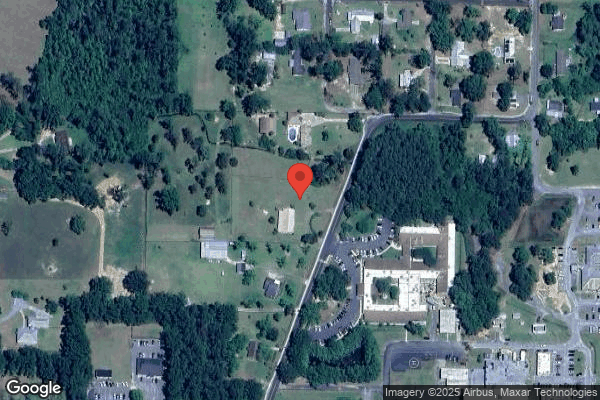
879 USERY ROAD, CHIPLEY, FL 32428 (850) 638-4654
For profit - Corporation 180 Beds VENTURA SERVICES FLORIDA Data: November 2025
Trust Grade
88/100
#142 of 690 in FL
Last Inspection: June 2025

Inspected within the last 6 months. Data reflects current conditions.

Overview

Washington Rehabilitation and Nursing Center has a Trust Grade of B+, indicating it is above average and recommended for families considering care options. It ranks #142 out of 690 facilities in Florida, placing it in the top half, and is the top-rated nursing home in Washington County. The facility's performance has been stable, with a consistent number of issues over the past two years. However, staffing is a concern, with a rating of 2 out of 5 stars and a high turnover rate of 54%, significantly above the state average. Families should also note that while there are no serious or critical issues reported, there are five concerns, including residents receiving unpalatable meals and staff not following proper hygiene protocols, which could risk infection. Additionally, there is less RN coverage than 97% of Florida facilities, which may affect the quality of care. Overall, while there are strengths in the facility's overall rating and cleanliness, attention should be paid to staffing and specific care issues.

Trust Score
B+
88/100
In Florida
#142/690
Top 20%
Safety Record
Low Risk
No red flags
Inspections
Holding Steady
1 → 1 violations
Staff Stability
⚠ Watch
54% turnover. Above average. Higher turnover means staff may not know residents' routines.
Penalties
○ Average
$11,184 in fines. Higher than 59% of Florida facilities. Some compliance issues.
Skilled Nurses
⚠ Watch
Each resident gets only 19 minutes of Registered Nurse (RN) attention daily — below average for Florida. Fewer RN minutes means fewer trained eyes watching for problems.
Violations
✓ Good
Only 5 deficiencies on record. Cleaner than most facilities. Minor issues only.
★★★★★
5.0
Overall Rating
★★☆☆☆
2.0
Staff Levels
★★★☆☆
3.0
Care Quality
★★★★★
5.0
Inspection Score
Stable
2024: 1 issues
2025: 1 issues

The Good

  • Full Sprinkler Coverage · Fire safety systems throughout facility
  • No fines on record

Facility shows strength in fire safety.

The Bad

Staff Turnover: 54%

Near Florida avg (46%)

Higher turnover may affect care consistency

Federal Fines: $11,184

Below median ($33,413)

Minor penalties assessed

Chain: VENTURA SERVICES FLORIDA

Part of a multi-facility chain

Ask about local staffing decisions and management

The Ugly 5 deficiencies on record

Jun 2025 1 deficiency
CONCERN (D)

Potential for Harm - no one hurt, but risky conditions existed

Infection Control (Tag F0880)

Could have caused harm · This affected 1 resident

Resident #116 An observation of Resident #116 was conducted on 6/16/25 at 1:18 PM. Contact precautions signage was observed to be on the resident's room door. (Photographic evidence was obtained.) The...

Read full inspector narrative →
Resident #116 An observation of Resident #116 was conducted on 6/16/25 at 1:18 PM. Contact precautions signage was observed to be on the resident's room door. (Photographic evidence was obtained.) The signage instructed everyone to clean their hands before entering the room, and providers and staff to put on gown and gloves before entering the room. Employee A (Laundry Aide) was observed to enter the room and deliver Resident #116's laundry. Employee A did not apply a gown or gloves prior to entering the room. Employee A was observed to touch Resident #116's bare hand with her bare hand and then left the room. An interview was conducted with Employee A on 6/16/25 at 2:30 PM. She stated she recalled touching Resident #116's hand when she delivered her laundry. She observed the signage on the door but she did not know she had to apply a gown and gloves before entering the room. She was not sure if she had training regarding isolation procedures. A review of Resident #116's electronic medical record revealed a physician's order dated 6/16/25 for contact isolation precautions every shift due to her urine testing positive with a multi-drug resistant organism. A review of the undated facility policy for Standard and Transmission-based Precautions revealed that contact precautions are implemented most often for residents who have an infection due to an epidemiologically important organism such as multi-drug resistant organism (MDRO). Staff are to put on gowns and gloves upon entry and remove gowns and gloves upon exit of the resident room. Based on observation, record review, staff interview, and policy review, the facility failed to ensure staff followed appropriate infection control practices during wound care for 1 of 1 resident sampled with a pressure ulcer (Resident #95) and 1 of 1 residents reviewed for contact isolation precautions (Resident #116). The findings include: Resident #95 A wound care observation was conducted concerning Resident #95 on 6/18/25 at approximately 8:50 AM. Staff B (Wound Care Nurse) put on gloves upon entering the resident's room. The nurse set up the wound care dressing supplies on the draped bedside table and repositioned the resident to her left side for access to the wound sites. It was observed that the resident's adult brief contained urine. The brief was rolled and tucked underneath the resident and the old dressings from resident's right hip and coccyx pressure ulcer wounds were removed. At this point, wound care was performed, and new dressings were placed. At no time while performing the wound care was Staff B observed to perform hand hygiene and change her gloves. An interview was conducted with Staff B after this wound care was completed. She was asked about the infection control practice of changing gloves and if she should have changed her gloves before performing wound care and placing new dressings. She stated that Yes, I know that I know should have changed my gloves, I don't know how I missed that. An interview was conducted at approximately 9:05 AM with the Director of Nursing (DON). She was asked about her expectations regarding infection control practices for nurses when performing wound care and dressing changes. She stated that she expected that nurses will follow infection control practices and change their gloves as trained while performing wound care and dressing changes. The facility's undated wound care policy and procedure entitled Infection Control- Clean Dressing Change stated, 9. Position the resident for comfort 10. Perform hand hygiene 11. Put on clean gloves 12. Remove dressing and place in the resident's trash can 13. Remove gloves and perform hand hygiene. 14. Put on clean gloves. 15. Cleanse wound . 16.pat wound dry. 17. Remove gloves and perform hand hygiene. 18. Put on clean gloves. 19. Apply clean dressing as ordered and ensure dressing is dated.
Mar 2024 1 deficiency
CONCERN (D) 📢 Someone Reported This

A family member, employee, or ombudsman was alarmed enough to file a formal complaint

Potential for Harm - no one hurt, but risky conditions existed

Comprehensive Care Plan (Tag F0656)

Could have caused harm · This affected 1 resident

Based on interviews and record review, the facility failed to implement the care plan for 1 of 3 residents sampled for wound care. (Resident #308) The findings include: On 3/5/24 at 8:35 AM, an interv...

Read full inspector narrative →
Based on interviews and record review, the facility failed to implement the care plan for 1 of 3 residents sampled for wound care. (Resident #308) The findings include: On 3/5/24 at 8:35 AM, an interview was conducted with Resident # 308's representative. During the telephone interview, she indicated Resident #308's wound care treatments were not being done. A review of Resident # 308's record was conducted. The record revealed that Resident #308 was discharged from the facility on 2/16/24 and could not be observed or interviewed. Therefore, a review of the closed record was performed. The medical record revealed the resident was admitted to facility on 11/5/23 from a hospital related to brain mass that resulted in the resident having a partial right frontal lobectomy (a surgical removal). A review of the physician's orders revealed an order to apply skin prep to a blister on the right side of her forehead daily and as needed one time a day, starting on 11/7/23 and discontinued on 11/28/23. A review of the Treatment Administration Record (TAR) revealed there was missing documentation on 11/10/23. Another physician's order stated Right side of forehead denude blister: cleanse with NS, pat dry, apply a piece of collagen sheet to area and cover with a dry dressing daily, to start 11/28/23 and discontinued on 1/16/24. The TAR review revealed there was missing documentation on 12/3/23, 12/6/23, 12/19/23, 12/21/23, 12/22/23, 12/25/23, 1/4/24, 1/11/24, and 1/16/24. Another physician's order stated, Cleanse wound to right temporal lobe with normal saline, pat dry, apply calcium alginate to open area and cover with dry dressing every day shift for wound care with a start date 1/17/24 to be discontinued on 2/18/24. The TAR here had missing documentation on 1/18/24, 1/25/24, 2/1/24, and 2/8/24. The plan of care included the goal of wound care as ordered. On 3/07/24 at 9:51 AM, an interview was conducted with the Director of Nursing (DON). She reviewed Resident #308's medical record and confirmed the TARs were not completed related to wound care. She further stated there was no reason for the documentation to not be completed.
Dec 2022 3 deficiencies
CONCERN (D)

Potential for Harm - no one hurt, but risky conditions existed

Deficiency F0552 (Tag F0552)

Could have caused harm · This affected 1 resident

Based on observation, interview, and record review the facility failed to offer adequate language assistance to residents who have limited English proficiency for 1 of 1 resident sampled for communica...

Read full inspector narrative →
Based on observation, interview, and record review the facility failed to offer adequate language assistance to residents who have limited English proficiency for 1 of 1 resident sampled for communication (#61). The findings include: On 11/28/22 at approximately 1:17 PM, a family interview was conducted with the family of residents #61. During the interview the family member explained that her mother does not speak English and the facility does not provide adequate language assistance when it comes to interpretation. On 11/30/ 22 at approximately 8:20 AM, Staff F Certified Nursing Assistant (CNA) and Staff G, CNA were observed as they assisted Resident #61 with turning and repositioning in the bed. The two staff members did not verbally interact with Resident #61 before or during care. The CNA' s did not explain the care that would be performed prior to assisting the resident. As the CNA's finished repositioning Resident #61. She repeated the same phrase several times to each of the CNA's in Spanish. Staff G, CNA and Staff F, CNA made no effort to understand the phrase the resident was repeating. The surveyor asked how they communicate with the resident. Staff F, CNA explained that they have a sheet posted at the head of her bed with some Spanish words. She also explained that the resident's son was a resident at the facility. He is available to interpret when needed. They were asked what they do when the son in not available. Staff F, CNA explained that there had been a Spanish speaking nurse on day shift previously. That nurse had been moved to another unit a few months ago. The CNA's were asked if they had access to a Spanish translator service. Staff G, CNA and Staff F, CNA indicated that they were not aware of any translator service. Staff F, CNA explained that if the son was not available then they can call her daughter to translate. Both CNA's were asked if they had been trained or knew how to use a translator service in the event that Resident #61's son or daughter were unavailable. They both indicated that they had no knowledge about how to utilize a translator. On 11/30/22 at approximately 10:14 AM, an interview was conducted with Nurse J, Licensed Practical Nurse (LPN) who supervises the MDS (Minimum Data Set) office. She was asked how the verbal portion of the Brief Interview Of Mental Status (BIMS) was conducted for residents who do not speak English. She indicated that Speech Therapy and Social Services complete the BIMS part of the assessment. Nurse K, LPN was in the room during the interview and stated: I don't know if we have ever had a resident that needed an interpreter. It Depends on what language. 11/30/22 at approximately 10:30 AM, interviews were conducted with Nurse L, Registered Nurse (RN), Nurse C, LPN, and Staff E, CNA. They were asked to explain how they communicate with Resident #61. Nurse L, RN explained that they utilize her son and daughter to interpret when necessary. The surveyor asked how they communicate with the resident when the son and daughter are unavailable. Nurse L, RN indicated there was a nurse that worked in another part of the facility that spoke Spanish. They were asked if there was an interpreter service available at the facility for times when family might not be available or if they knew how to utilize an interpreter service. Each of the staff members indicated that they did not know if an interpreter service was available and that they had not been trained how to use one if it was available. 11/30/22 at approximately 11:00 AM, an interview was conducted with the Social Services Director. She was asked to explain how they communicate with Resident #61. The Social Services Director indicated that she utilizes the resident's daughter and son to translate when needed. The Social Services Director mentioned communication words posed on the wall above the bed and indicated that the resident she can point to specific things to communicate. The director indicated that an interpreter service was previously available through the previous management company but she did not have information on what interpreter service was currently available. 1/30/22 at approximately 10:30 AM, an interview was conducted with the Director of Nursing (DON). She was asked to explain how staff adequately communicate with Resident #61. She explained that there is a communication board posted in the room. She also indicated that there had previously been a Spanish speaking nurse who worked with the resident. She explained that staff members utilize the Residents' family members to interpret. The surveyor notified the DON that observations revealed concerns in how some of the staff were communicating with the resident. Several nurses and staff had been asked how to communicate with Resident #61 if family members were not available. All of the staff members except social services were unable to explain the process for contacting or utilizing an interpreter service. The DON indicated that she would obtain the number for the interpreter service, get it posted and complete in-services for the nurses. A review of the facility's policy titled Translation and or Interpretation was conducted. The policy states when a staff member fluent in the patient's language is not available. Written and verbal translation is available 24 hours an day 7 days a week.
CONCERN (D)

Potential for Harm - no one hurt, but risky conditions existed

Infection Control (Tag F0880)

Could have caused harm · This affected 1 resident

Based on observation, interview and recorded review the facility failed to comply with the facility's infection control policy and procedure for instilling eye medications for 1 of 1 sampled residents...

Read full inspector narrative →
Based on observation, interview and recorded review the facility failed to comply with the facility's infection control policy and procedure for instilling eye medications for 1 of 1 sampled residents. (Resident # 89) The findings include: On 11/30/22 at approximately 2:11 PM, staff member D, Licensed Practical Nurse (LPN) was observed administering medications to resident # 89. The staff member proceeded to instill 1 drop of Prednisolone AC 1% eye medication into the resident's right and left eyes without wearing gloves. On 11/30/22 at approximately 4:00 PM, an interview was conducted with staff member D, LPN. She indicated she was aware she was to put on gloves before instilling eye drops but just forgot. A review of the facility's policy and procedure for Eye Drops dated 11/2001 revealed staff were to put on gloves prior to instilling eye drop medications.
CONCERN (E)

Potential for Harm - no one hurt, but risky conditions existed

Deficiency F0804 (Tag F0804)

Could have caused harm · This affected multiple residents

**NOTE- TERMS IN BRACKETS HAVE BEEN EDITED TO PROTECT CONFIDENTIALITY** Based on observation, resident interviews, staff interviews and record review, the facility failed to provide a palatable diet t...

Read full inspector narrative →
**NOTE- TERMS IN BRACKETS HAVE BEEN EDITED TO PROTECT CONFIDENTIALITY** Based on observation, resident interviews, staff interviews and record review, the facility failed to provide a palatable diet that took resident preferences and feedback into consideration for 9 of 20 residents sampled who consume meals from the facility (#s 6, 7, 8, 10, 27, 34, 55, 66, and 109). The findings include: On 11/28/22 at approximately 12:01 PM, an interview was conducted with Resident #7 who stated, the food is horrible. An observation was made of the resident eating beans and macaroni and cheese from a plastic container. Resident #7 revealed her family brings food to her because the food at the facility is so horrible. On 11/29/22 at approximately 11:44 AM, Resident #7 revealed to the surveyor that she went to the kitchen and ordered a salad for lunch and further stated the salad consists of lettuce and tomatoes. On 11/29/22 at approximately 12:34 PM an observation was made of Staff B, Registered Nurse (RN) supervisor serve resident #7 lunch tray. The tray included the regular menu of meat balls and noodles. The resident refused the lunch tray and stated, I went to the kitchen and told the kitchen staff I wanted a salad for lunch. Observed Staff B remove the meal ticket from the tray and notified Resident #7 she would go to the kitchen to get her a salad, after she finished serving the trays to the other residents. On 11/28/22 at approximately 2:26 PM, resident #6 was interviewed regarding requesting alternate food choices. He indicated sometimes when he asks for an alternate the kitchen staff have an attitude. On 11/29/22 at approximately 8:44 AM, an interview was conducted with Resident #109 who stated, the food is horrible, it's like prison food. On 11/29/22 at approximately 12:22 PM, an observation was made of staff B, RN Supervisor, serving Resident #109 lunch tray. The resident stated when asked if that was what he wanted for lunch, there's nothing I can do about it. Staff B offered to get Resident #109 an alternative food choice, the resident stated, it doesn't matter. On 11/30/22 at approximately 9:21 AM, an follow-up interview was conducted with Resident #109 who stated breakfast was the same as always, with powdered eggs and blah. Resident #109 stated the staff do not offer him a choice of meals before the meal is served, and then stated he did not know there was an option for an alternate meal choice. Resident #109 then stated the food is not fit to eat, but he has to eat it. A review of Resident #109 record revealed the resident has a medical diagnosis to include Type II diabetes with an order for carbohydrate-controlled diet. The Quarterly Minimum Data Set (MDS) dated [DATE] revealed the resident had a Brief Interview for Mental Status, (BIMS) score of 10 which indicates moderate impairment. The care plan, with a problem start date of 7/1/22 indicated the resident is at risk for malnutrition related to the resident's disease processes. On 11/28/22 at approximately 3:28 PM, an interview was conducted with resident #10 who stated the food is not good. On 11/29/22 at approximately 12:28 PM an observation was made of Resident #10 sitting in her wheelchair in her room who stated she did not want to eat her lunch. The lunch tray was observed to be meatballs with noodles and carrots. On 11/30/22 at approximately 9:33 AM an observation was made of Resident #10 breakfast tray which was partially eaten. Resident #10 stated the food is not fit to eat and stated the staff do not offer an alternate meal. A review of Resident #10 record revealed the annual MDS dated [DATE] with a BIMS of 08 which indicates moderate impairment. The Care plan with a problem start date of 4/16/19 indicated the resident is at risk of malnutrition related to intake of less than 75% for most meals. On 11/28/22 at approximately 11:59 AM, an interview was conducted with Resident #8 who stated the food is terrible, but she just accepts the meals and either eats it or leaves it. On 11/30/22 at approximately 9:17 AM, a follow-up interview was conducted with Resident #8 who stated the staff do not ask for meal preference prior to serving the meal, they just bring the meal in. Resident #8 stated if she doesn't like the meal, she will pick what she can tolerate and leave the rest. The resident revealed the meals are getting worse and provided an example of Thanksgiving Day meal. The resident stated the lima beans were so hard she could not eat them. Resident #8 stated she has a refrigerator in her room, so she can keep food, condiments, etc. On 11/28/22 at approximately 2:00 PM, an interview was conducted with Resident #34, who's roommate stated the food is not very good. Resident #34 was asked if she liked the food, and the resident shook her head no. Review of the resident's medical record revealed the resident was non-verbal, but communicated by shaking her head yes or no. On 11/28/22 at approximately 10:16 AM, an observation was made of the menus posted on 3 North nursing unit, located across from the nurse's station. The menus posted were for Sunday breakfast, lunch, and dinner. An additional observation was made on 11/29/22 at approximately 11:44 AM, the menus posted were for Sunday breakfast, lunch, and dinner. Photographic evidence obtained. On 11/28/22 at approximately 03:27 PM, Resident #55 indicated that she was unsatisfied with the food served at the facility. She explained that residents had met and repeatedly requested fried chicken, they have not been served fried chicken. She explained that for the Thanksgiving meal they were served turkey with lima beans. She described the lima beans as being undercooked and hard. She also said that vegetables served were often either undercooked and hard or overcooked and mushy. She indicated that alternates served were often left overs from the last meal. She explained the residents have met and complained on numerous occasions; but have seen no improvement in food quality. On 11/29/22 at approximately 11:55 AM, an interview was conducted with Resident #66. He said: The food is never palatable. The food is either over cooked or under cooked. He had a case of canned food and a refrigerator in his room. He said: I have to stay stocked with my own food because I cannot eat the food here. It has gotten worse in recent months. We have complained but the food does not get any better. He was asked to specifically describe the issues with the food. He said: The food has a poor consistency and a poor temperature. On 11/29/22 at approximately 11:55 AM, Resident #27 said he also wanted to talk about the food. He had eaten cheerios, milk, and a banana provided by the facility for lunch. He said: I ask for cheerios all the time because I do not like the food here. I can eat cheerios. He was asked if he has requested food choices from the alternate menu. Resident #27 explained that the problem with the food is the way that it is cooked. He explained that alternate food choices were just as poorly cooked as the main menu items . On 11/29/22 at approximately 12:22 PM, an interview was conducted with Staff B, RN Supervisor who stated residents who get up can review the posted menus and then request an alternate food choice. She stated if the residents do not get up or go outside of their room the staff will review what is on the menu and will then notify the kitchen of the request. She confirmed she gets a lot of complaints related to food and stated she tells the dietary department when a resident complains or will notify the administrator depending on the complaints. She stated she was not aware the menus had not been changed since Sunday. On 11/30/22 at approximately 9:00 AM, an interview was conducted with Staff A, CNA who stated residents who get up can review the menus and tell the staff what they want for lunch. Staff A revealed the requests must be to the dietary department by 10:00 AM so the dietary department can prepare the appropriate tray. She stated for the residents that do not get up, or leave their rooms, the staff will go to the resident and let them know what is on the menu, then will submit the request to the kitchen. Staff A, CNA stated, the kitchen does not always respond, and the residents don't always get the requested tray. Staff A, CNA revealed the kitchen staff is usually the problem with getting the correct trays to the resident. A follow up interview was conducted on 11/30/22 at approximately 12:48 PM, with Staff A who stated, the kitchen sucks, and stated the kitchen staff are rude and get mad if the CNA's go to the kitchen for alternates. Staff A, CNA stated residents don't always get silverware or the right specialized plates, such as a lip plate. Staff A revealed there are a lot of food complaints and stated, the food is so bad, I wouldn't feed it to a dog. On 11/30/22 at approximately 11:29 AM, an interview was conducted with the Registered Dietician, (RD) who revealed she splits management of the kitchen with the Certified Dietary Manager (CDM). She revealed she is typically at the facility 3 days per week, and the CDM comes in 2 days per week. The RD stated the menus are on a 4-week rotation cycle and the menu is changed every 6 months. The RD revealed the facility has a resident food council, and the residents voice what they like and don't like. The RD stated meal preferences are obtained on admission and quarterly and are entered in the meal tracker system and further stated preferences change more frequently for residents who are alert and oriented. The RD stated the process for the residents to get an alternate meal is for the resident to tell the CNA and the CNA would go to the kitchen and ask for a tray. She stated the kitchen staff may need to finish a tray line prior to fixing the requested tray, and then the dietary staff would send it to the floor. The RD stated the kitchen manager and herself follow up on the grievances, and indicated if the resident grievance is not specific, such as a complaint that the food sucks she can't do much with the complaint and stated, I eat the food and it doesn't suck. She stated if the grievance can be fixed, it will be fixed on the spot. She stated if it is fixed immediately, she does not complete a grievance or document the complaint and stated if it is a complaint such as I always get what is on my dislike list, she will write a grievance and will work to resolve the complaint. The RD stated the dialysis patients have a liberalized diet which is supported by the literature for residents in a long-term setting, and she tries to teach them it is ok to eat the diet provided. She stated she coordinates with the dietician at the dialysis center. The RD was told the residents had complaints of food not cooked well, and she stated, I don't doubt there are complaints of food. She was told the beans were hard, and not fully cooked on Thanksgiving and the biscuit was so hard the resident could not eat it. She stated when there is a complaint of how the food is cooked if it is reported when it happens, she would look at trays and remove items that were not good and substitute for something else and stated they would just fix it on the spot and keep the line moving. She stated they do try to accommodate the requests and stated the kitchen staff try to accommodate the residents and stated she really advocates for the kitchen staff because they try hard. She confirmed the menus on the units are changed daily and confirmed the menus on 3 North were not changed. A follow up interview was conducted with the RD on 12/1/22 at approximately 10:13 AM who stated she is at the facility most of the time and primarily runs the kitchen and indicated the CDM is at the facility 1-2 days per week. The RD stated she is part of the QAPI team and discusses weights primarily and confirmed she follows up with each complaint. The RD stated the facility has had a hard time getting a CDM and stated they have had 3 in the last year. The RD stated the kitchen staff can be gruff with the staff and stated she might be gruff sometimes as well. On 11/30/22 at approximately 10:45 AM, staff member C, LPN, was interviewed. She indicated nursing staff advocate for the residents and their choices of alternate meals, however the dietary staff can be difficult to deal with. On 12/1/22 at approximately 10:26 AM, a telephone interview was conducted with the facility CDM who confirmed he is at the facility 2 times per week and stated he covers 4 other facilities. The CDM confirmed the RD focuses more on clinical issues and the CDM is more operational and confirmed the facility has a dietary manager. The CDM revealed the residents give suggestions for menu items, but the kitchen staff follow the agreed upon 4-week menu cycle and stated they will work to give what the residents want as long as the RD signs off and it meets nutritional standards. The CDM revealed the residents prefer fried chicken over baked and stated fried chicken was on the menu for today. The CDM stated the residents will notify the CNA's when they want the alternate meal, the CNA would then go to the kitchen to get the meal. The CDM stated the dietary manager follows up on the food/dietary grievances and will then give the completed grievance to social services. The CDM confirmed that the dietary department does not track or trend grievances. On 12/1/22 at approximately 10:46 AM, an interview was conducted with Staff H, dietary manager who stated she is required to follow the menus and must stick to the budget and can only use the substitute menu if items do not come in on the truck. She stated the residents like fried chicken, but baked chicken is usually on the menu. She revealed she has discussed with the RD and CDM the requests made by the residents, but she is told she must follow the menus and confirmed the residents are not happy, but she must go by the menus. The dietary manager confirmed she follows up on the grievances by talking with the residents, then discusses with the social worker, who completes the grievance form, she then signs the form. A review of the Resident Council Minutes was completed, for the time period of January 2022 to October 2022, which revealed complaints related to food on 1/11/22, 2/3/22, 3/3/22, 4/7/22, 6/7/22, 8/4/22, and 10/16/22. A review of grievances from January 2022 to November 2022 revealed continued food complaints throughout the period. Two grievances were generated through the resident Council meeting on 1/11/22 and 8/4/22. Resident #79 filed a grievance related to food on 1/17/22, 5/2/22, 6/6/22. Resident #46 filed a grievance related to food on 5/2/22. Resident # 6 filed a grievance related to food on 5/2/22 and on 10/26/22. Resident #55 filed a grievance on 11/6/22. Additional grievances related to food were completed on 2/3/22, 4/7/22, 3 additional grievances on 5/2/22, 6/6/22, 6/7/22, 8/16/22, 8/29/22. All of the grievances reviewed were documented as resolved.
Understanding Severity Codes (click to expand)
Life-Threatening (Immediate Jeopardy)
J - Isolated K - Pattern L - Widespread
Actual Harm
G - Isolated H - Pattern I - Widespread
Potential for Harm
D - Isolated E - Pattern F - Widespread
No Harm (Minor)
A - Isolated B - Pattern C - Widespread

Questions to Ask on Your Visit

  • "Can I speak with families of current residents?"
  • "What's your RN coverage like on weekends and overnight?"

Our Honest Assessment

Strengths
  • • Grade B+ (88/100). Above average facility, better than most options in Florida.
  • • No major safety red flags. No abuse findings, life-threatening violations, or SFF status.
  • • Only 5 deficiencies on record. Cleaner than most facilities. Minor issues only.
Concerns
  • • $11,184 in fines. Above average for Florida. Some compliance problems on record.
Bottom line: Generally positive indicators. Standard due diligence and a personal visit recommended.

About This Facility

What is Washington Rehabilitation And Nursing Center's CMS Rating?

CMS assigns WASHINGTON REHABILITATION AND NURSING CENTER an overall rating of 5 out of 5 stars, which is considered much above average nationally. Within Florida, this rating places the facility higher than 99% of the state's 100 nursing homes. This rating reflects solid performance across the metrics CMS uses to evaluate nursing home quality.

How is Washington Rehabilitation And Nursing Center Staffed?

CMS rates WASHINGTON REHABILITATION AND NURSING CENTER's staffing level at 2 out of 5 stars, which is below average compared to other nursing homes. Staff turnover is 54%, compared to the Florida average of 46%. RN turnover specifically is 56%, which is notably high. RNs provide skilled clinical oversight, so turnover in this role can affect medical care quality.

What Have Inspectors Found at Washington Rehabilitation And Nursing Center?

State health inspectors documented 5 deficiencies at WASHINGTON REHABILITATION AND NURSING CENTER during 2022 to 2025. These included: 5 with potential for harm.

Who Owns and Operates Washington Rehabilitation And Nursing Center?

WASHINGTON REHABILITATION AND NURSING CENTER is owned by a for-profit company. For-profit facilities operate as businesses with obligations to shareholders or private owners. The facility is operated by VENTURA SERVICES FLORIDA, a chain that manages multiple nursing homes. With 180 certified beds and approximately 158 residents (about 88% occupancy), it is a mid-sized facility located in CHIPLEY, Florida.

How Does Washington Rehabilitation And Nursing Center Compare to Other Florida Nursing Homes?

Compared to the 100 nursing homes in Florida, WASHINGTON REHABILITATION AND NURSING CENTER's overall rating (5 stars) is above the state average of 3.2, staff turnover (54%) is near the state average of 46%, and health inspection rating (5 stars) is much above the national benchmark.

What Should Families Ask When Visiting Washington Rehabilitation And Nursing Center?

Based on this facility's data, families visiting should ask: "Can you walk me through typical staffing levels on day, evening, and night shifts?" "Can I visit during a mealtime to observe dining assistance and food quality?" "How do you handle medical emergencies, and what is your hospital transfer rate?" "Can I speak with family members of current residents about their experience?" These questions are particularly relevant given the below-average staffing rating.

Is Washington Rehabilitation And Nursing Center Safe?

Based on CMS inspection data, WASHINGTON REHABILITATION AND NURSING CENTER has a clean safety record: no substantiated abuse findings (meaning no confirmed cases of resident harm), no Immediate Jeopardy citations (the most serious violation level indicating risk of serious injury or death), and is not on the Special Focus Facility watch list (a federal program monitoring the lowest-performing 1% of nursing homes). The facility has a 5-star overall rating and ranks #1 of 100 nursing homes in Florida. While no facility is perfect, families should still ask about staff-to-resident ratios and recent inspection results during their visit.

Do Nurses at Washington Rehabilitation And Nursing Center Stick Around?

WASHINGTON REHABILITATION AND NURSING CENTER has a staff turnover rate of 54%, which is 8 percentage points above the Florida average of 46%. Moderate turnover is common in nursing homes, but families should still ask about staff tenure and how the facility maintains care continuity when employees leave.

Was Washington Rehabilitation And Nursing Center Ever Fined?

WASHINGTON REHABILITATION AND NURSING CENTER has been fined $11,184 across 3 penalty actions. This is below the Florida average of $33,191. While any fine indicates a compliance issue, fines under $50,000 are relatively common and typically reflect isolated problems that were subsequently corrected. Families should ask what specific issues led to these fines and confirm they've been resolved.

Is Washington Rehabilitation And Nursing Center on Any Federal Watch List?

WASHINGTON REHABILITATION AND NURSING CENTER is not on any federal watch list. The most significant is the Special Focus Facility (SFF) program, which identifies the bottom 1% of nursing homes nationally based on persistent, serious quality problems. Not being on this list means the facility has avoided the pattern of deficiencies that triggers enhanced federal oversight. This is a positive indicator, though families should still review the facility's inspection history directly.