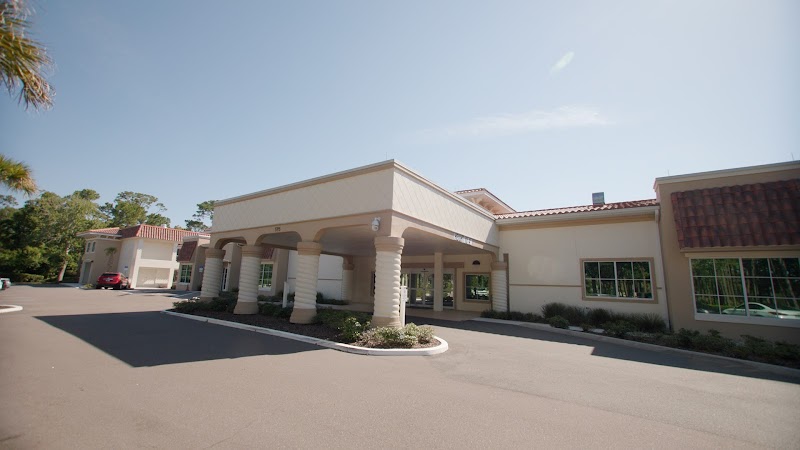
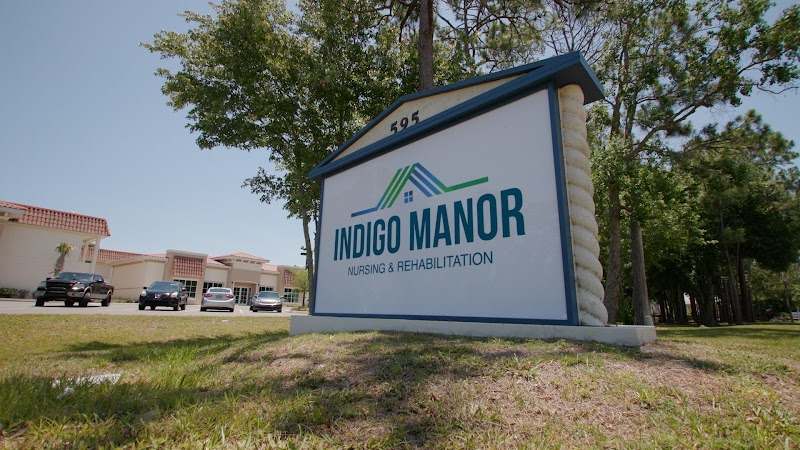
INDIGO MANOR

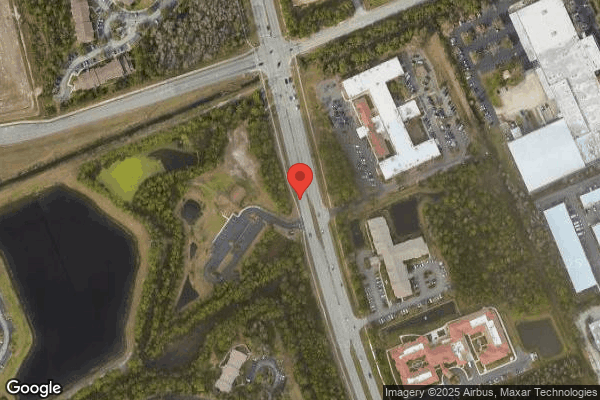
595 N WILLIAMSON BLVD, DAYTONA BEACH, FL 32114 (386) 257-4400
For profit - Limited Liability company 173 Beds BEDROCK HEALTHCARE Data: November 2025 1 Immediate Jeopardy citation
Trust Grade
23/100
#510 of 690 in FL
Last Inspection: March 2025

Within standard 12-15 month inspection cycle. Federal law requires annual inspections.

Overview

Indigo Manor in Daytona Beach, Florida, has received a Trust Grade of F, indicating a poor level of care with significant concerns. Ranked #510 of 690 facilities in Florida, it falls in the bottom half, and at #27 of 29 in Volusia County, only one local option is worse. While the facility is showing signs of improvement, as evidenced by a decrease in issues from 16 in 2023 to 5 in 2025, there are still serious concerns including $67,419 in fines, which is higher than 81% of Florida facilities, and a staffing turnover rate of 67%, well above the state average. Specific incidents have raised alarms, such as a resident being allowed to leave the premises unsupervised, risking serious harm, and unsafe food handling practices that could lead to illness. Despite these issues, the facility does have a strong quality rating at 5/5 for quality measures, indicating some positive aspects in resident care.

Trust Score
F
23/100
In Florida
#510/690
Bottom 27%
Safety Record
High Risk
Review needed
Inspections
Getting Better
16 → 5 violations
Staff Stability
⚠ Watch
67% turnover. Above average. Higher turnover means staff may not know residents' routines.
Penalties
✓ Good
$67,419 in fines. Lower than most Florida facilities. Relatively clean record.
Skilled Nurses
○ Average
Each resident gets 33 minutes of Registered Nurse (RN) attention daily — about average for Florida. RNs are the most trained staff who monitor for health changes.
Violations
⚠ Watch
25 deficiencies on record. Higher than average. Multiple issues found across inspections.
★★☆☆☆
2.0
Overall Rating
★★☆☆☆
2.0
Staff Levels
★★★★★
5.0
Care Quality
★☆☆☆☆
1.0
Inspection Score
Stable
2023: 16 issues
2025: 5 issues

The Good

  • 5-Star Quality Measures · Strong clinical quality outcomes
  • Full Sprinkler Coverage · Fire safety systems throughout facility
  • No fines on record

Facility shows strength in quality measures, fire safety.

The Bad

2-Star Overall Rating

Below Florida average (3.2)

Below average - review inspection findings carefully

Staff Turnover: 67%

20pts above Florida avg (46%)

Frequent staff changes - ask about care continuity

Federal Fines: $67,419

Well above median ($33,413)

Moderate penalties - review what triggered them

Chain: BEDROCK HEALTHCARE

Part of a multi-facility chain

Ask about local staffing decisions and management

Staff turnover is elevated (67%)

19 points above Florida average of 48%

The Ugly 25 deficiencies on record

1 life-threatening
Mar 2025 5 deficiencies
CONCERN (D)

Potential for Harm - no one hurt, but risky conditions existed

ADL Care (Tag F0677)

Could have caused harm · This affected 1 resident

Based on observations, interviews, and record review, the facility failed to provide toenail care for one (Resident #33) of four residents reviewed for Activities of Daily Living (ADLs), from a total ...

Read full inspector narrative →
Based on observations, interviews, and record review, the facility failed to provide toenail care for one (Resident #33) of four residents reviewed for Activities of Daily Living (ADLs), from a total survey sample of 41 residents. Resident #33's toenails extended approximately one half inch beyond the nailbed and were jagged. The findings include: An observation made on 03/10/25 at 1:43 PM, revealed that Resident #33's toenails extended approximately one half inch beyond the nail bed and were jagged on both feet. (Photographic evidence obtained) An interview was attempted with the resident, but he did not respond. On 03/11/25 at 10:44 AM, Resident #33's toenails were observed and were in the same condition as the previous day's ovservation. They extended approximately one half inch beyond the nail bed and were jagged on both feet. (Photographic evidence obtained) An interview was again attempted with the resident, but he did not respond. During an interview with Certified Nursing Assistant (CNA) B on 03/13/25 at 11:37 AM, she reported that she had been employed by the facility since July 2024 and was familiar with Resident #33 and his care needs. She stated the resident was dependent for ADLs and further explained that she considered toenails extending a half inch beyond the nailbed as too long and that they should be trimmed. She said that while she provided residents' ADL care, she made observations of their personal hygiene needs. If, during provision of care, she discovered a resident had long toenails, she would ask the resident for permission to trim the nails. She would then check the electronic medical record (EMR) to determine whether facility staff were permitted to trim the resident's toenails. If the resident was able to have their nails trimmed by staff, she would use nail clippers, which were located in the clean supply room near the nurses' station. After trimming the nails, she would document it in the task tab of the EMR. When asked if she saw Resident #33's toenails, she stated she did not look at his toes when she recently changed his brief and hospital gown. During an interview with Licensed Practical Nurse (LPN) C on 03/13/25 at 12:00 PM, she stated she had been employed by the facility for three months and was familiar with Resident #33 and his care needs. She stated she considered excessive toenail length as any growth beyond the nail bed. She said that long nails could result in snagging and scratching hazards. She stated while administering medication, if she noticed a resident had long toenails, she would ask the resident for permission to arrange for their toenails to be trimmed. She would then ask Social Services to place the resident on the list for podiatry. She stated even if a resident was not diabetic, facility staff were not permitted to trim toenails. She reported that she did not notice Resident #33's toenail length while recently administering his medication. On 03/13/25 at 12:11 PM, CNA B was accompanied to Resident #33's room to observe his toenails. She verified that his toenails were too long and could be a scratching hazard. During an interview with the Assistant Director of Social Services on 03/13/25 at 1:50 PM, she stated the nurse unit managers notified her when a resident needed to be added to the list for a podiatrist visit. Her process to arrange podiatrist visits for residents included sending an email to the podiatrist's office, and receiving confirmation of when the podiatrist would come to the facility to see the residents. After checking her records, she stated no requests were noted for trimming Resident #33's toenails, and the last time he was seen by the podiatrist was for a routine foot care visit on 05/23/24. A review of Resident #33's medical record revealed an admission date of 07/24/22 and diagnoses including metabolic encephalopathy, diabetes mellitus, diabetic retinopathy, traumatic subdural hemorrhage, other cerebral infarction, hemiplegia and hemiparesis following cerebral infarction affecting left non-dominant side, aphasia (language disorder affecting a person's ability to communicate) following cerebral infarction, diabetic polyneuropathy, tinea unguium (fungal infection of the nails), age-related cataracts bilaterally, altered mental status, contracture of left elbow, contracture of left hand, and epilepsy. A review of the Minimum Data Set (MDS) assessment for Resident #33, dated 01/17/25, revealed no brief interview of mental status (BIMS) score. The resident had no hallucinations or delusions; no verbal or physical behavioral symptoms directed toward others; and did not exhibit wandering or refusal of care. The resident had impairment on one side of the upper and lower extremities. The resident was assessed as dependent in all selfcare ADLs and received enteral nutrition. All mobility was assessed as either dependent or not applicable. A review of the resident's care plan revealed a focus area for Physical Functioning Deficit related to mobility impairment and range of motion limitations. The care plan goal documented that the resident would receive passive range of motion to the left elbow, left wrist and left hand up to seven days a week through next review. Resident will tolerate left hand and elbow splints up to seven days a week through next review. The resident will maintain his current level of physical functioning and have no complications through next review date. Initiation date was 05/10/22 and revision was 11/19/24. The target date of the care plan was documented as 01/17/25. Interventions included nail care as needed. Initiation date was 08/09/22 and revision was 11/09/22. Interventions also included personal hygiene, dependent with assistance of one. Initiation date was 08/09/22 and revision was 08/23/24. A review of the facility's policy for Activities of Daily Living (ADLs) (implemented: 01/01/2022; date reviewed/revised (blank); reviewed/revised by: (blank) revealed: Policy: . Care and services will be provided for the following activities of daily living: 1. Bathing, dressing, grooming and oral care . Policy Explanation and Compliance Guidelines: 3. A resident who is unable to carry out activities of daily living will receive the necessary services to maintain good nutrition, grooming, and personal and oral hygiene . 5. The facility will maintain individual objectives of the care plan and periodic review and evaluation. .
CONCERN (D)

Potential for Harm - no one hurt, but risky conditions existed

Accident Prevention (Tag F0689)

Could have caused harm · This affected 1 resident

**NOTE- TERMS IN BRACKETS HAVE BEEN EDITED TO PROTECT CONFIDENTIALITY** Based on observations, interviews, and record review, the facility failed to ensure that the resident environment remained as fr...

Read full inspector narrative →
**NOTE- TERMS IN BRACKETS HAVE BEEN EDITED TO PROTECT CONFIDENTIALITY** Based on observations, interviews, and record review, the facility failed to ensure that the resident environment remained as free of accident hazards as was possible; and that each resident received adequate supervision to prevent accidents for one (Resident #7) of three residents reviewed for accidents, from a total survey sample of 41 residents. Resident #7 was discovered keeping smoking materials on self. The findings include: On 03/10/25 at 9:55 AM, an observation was made of Resident #7 holding a cigarette lighter while seated in his wheelchair on the elevator going to the first floor. On 03/13/25 at 10:29 AM, Resident #7 was observed in his room and was interviewed. He reported that he was a smoker and smoked during the 8:00 AM, 10:00 AM, 1:00 PM and 3:00 PM smoking breaks. He further reported that he kept his cigarette lighter in the dresser next to his bed. He became agitated and yelled that the facility could just take his lighter and take it all away. During an interview with the Assistant Director of Nursing (ADON) on 03/13/25 at 10:50 AM, the ADON explained that Resident #7 had been a cigarette smoker for a long time and often asked visitors to borrow a lighter. He would never return it and would then pocket the lighter. The ADON stated the resident often arrived to smoke breaks and produced a lighter from his pocket to light his cigarette. Facility staff continually found the resident with lighters and took them away for safe storage. The ADON further explained that the resident had been informed that he could not keep lighters on himself or in his room, as it posed a safety hazard, yet the resident continued to produce lighters during smoke breaks. During an interview with Certified Nursing Assistant (CNA) D on 03/13/25 at 11:27 AM, she reported she had been employed by the facility since April 2023 and was assigned as the smoking attendant. She explained that the Staffing Coordinator trained her on the facility's smoking policy. She stated safety precautions included only issuing residents one cigarette at a time during smoke breaks. Residents were permitted to smoke two cigarettes during the 15-minute break but they were not permitted to use lighters. She was responsible for lighting cigarettes. Facility staff kept resident lighters and cigarettes in individual plastic bags labeled with the residents' names. The bags containing resident cigarettes and lighters were stored in a bin at the receptionist area. She further explained that safety precautions included smoking bibs for residents assessed as a risk, and oxygen tanks were not permitted in the smoking area. At the end of each smoke break, she emptied ashtrays with cigarette butts in a designated red metal bin, which was not accessible to residents. She reported that if she were to see a resident produce a cigarette or lighter, she would inform the Director of Social Services. If the resident refused or was noncompliant with smoke break rules, she would inform the ADON or DON. She said she did not see Resident #7 with a cigarette lighter. During an interview with the ADON at 2:30 PM on 03/13/25, she explained that she had spoken to Resident #7 numerous times about not using lighters and that they posed a safety risk to the resident. She stated she had reviewed the resident smoking agreement with the resident several times, and the resident continued to be noncompliant with the facility's smoking policy. A review of Resident #7's medical record revealed that he was admitted to the facility on [DATE] with diagnoses including dementia with other behavioral disturbance, vascular dementia with psychotic disturbance and agitation, age-related bilateral cataracts, repeated falls, major depressive disorder, other specified persistent mood disorders, and paranoid schizophrenia. A review of the Minimum Data Set (MDS) assessment dated [DATE], revealed that Resident #7 had a brief interview for mental status (BIMS) score of 7 out of 15 possible points, indicating severe cognitive impairment. Verbal behavior directed toward others occurred 4-6 days during the look-back period. The resident had no impairment in upper or lower extremity mobility; used a walker, and was independent in all self-care and mobility. He received antidepressant, antiplatelet and anticonvulsant medications. A review of Resident #7's care plan revealed a focus area for At Risk for Smoking-Related Injury related to: smokes independently during designated times under supervision of facility staff per agreed upon policy. He will keep his own smoking material and does not always adhere to smoking policy. Date focus initiated: 08/29/22. The care plan goal documented the resident was to maintain independence safely while smoking during designated times under supervision of facility staff per agreed upon policy through next review. Date goal initiated: 08/29/22; revision date: 11/29/24; target date: 02/26/25. Care plan interventions included: document any episodes of non-compliance with smoking policy. Date initiated: 02/28/23. Explain to resident danger of non-compliance, including risk for facility fire. Date initiated: 02/28/23. Observe patient for unsafe smoking behaviors or attempts to obtain smoking material from outside sources. Immediately inform facility management. Date initiated: 08/29/22. Patient not to have cigarettes or smoking material on person. Date initiated: 12/03/22. Storage of smoking materials per Living Center policy. Date initiated: 08/29/22. A review of the progress notes for Resident #7 revealed no documented evidence of incidents related to smoking or possession of smoking material. A review of the facility's smoking list confirmed that Resident #7 did smoke. A review of smoke break assignment sheet revealed that staff were assigned to supervise residents during smoke breaks at 8:00 AM, 10:00 AM, 1:00 PM, 3:30 PM, 6:00 PM and 8:00 PM. It further documented that each department manager would be responsible for making sure the smoke breaks were assigned. Smoking materials could be picked up at the reception desk in the front lobby. A review of the resident smoking agreement, signed by Resident #7 on 01/03/25, and witnessed and signed by facility staff revealed: 1. Smoking times. 2. All smoking materials will be maintained by nursing staff . 11. If you do not abide by the smoking policy (e.g. smoking materials are provided directly to the resident . the plan of care may be revised to include additional safety measures. A review of Attachment D, titled Tobacco-Restrictive Policy Acknowledgement, revealed that it was the policy of the facility to discourage any smoking in the facility. However, we are also understanding of the fact that as a skilled nursing and rehabilitation facility, some of our residents may choose to smoke . Purpose . to reduce the risk of fire. Procedure: Every resident who smokes will be assessed for safety . Staff will dispense the resident's cigarettes, light the cigarette, and stay with the resident until the cigarette is properly extinguished . For qualified residents, cigarettes, lighters and any other smoking materials will be kept at the nurses' station . .
CONCERN (D)

Potential for Harm - no one hurt, but risky conditions existed

Respiratory Care (Tag F0695)

Could have caused harm · This affected 1 resident

Based on observation, interview, record review, and policy and procedure review, the facility failed to ensure ensure that one (Resident #137) of 39 residents receiving respiratory care, was provided ...

Read full inspector narrative →
Based on observation, interview, record review, and policy and procedure review, the facility failed to ensure ensure that one (Resident #137) of 39 residents receiving respiratory care, was provided such care, consistent with professional standards of practice, the comprehensive person-centered care plan, and the residents' goals and preferences. Resident #137 was not receiving oxygen at the ordered flow rate. The findings include: On 03/10/25 at 1:51 PM, Resident #137 was observed lying in bed receiving oxygen via nasal cannula (NC). The oxygen concentrator located next to the head of her bed had a flow rate setting of 3.25-3.50 Liters per minute (L/min). (Photographic evidence obtained) On 03/13/25 at 12:50 PM, while checking the resident's oxygen flow rate, Licensed Practical Nurse (LPN) K verified that Resident #137's oxygen flow rate setting was currently set at 4 L/min, but the oxygen order was for a flow rate of 2 L/min. She stated nurses provided ongoing monitoring of the resident's oxygen therapy. Nursing was responsible for ensuring that the resident was receiving the correct oxygen flow rate per the physician's order. Correct oxygen settings were identified by checking the resident's chart on the computer. Nursing staff on the night shift were responsible for changing the resident's oxygen tubing and concentrator. Correct settings were communicated from one staff person to another through shift reports. Resident #137 would remove her nasal cannula but did not change her own flow rate settings. When Resident #137 refused oxygen therapy, nursing staff ensured her oxygen was at saturation level; she would comply when provided with an explanation of why the oxygen was needed. On 03/13/25 at 4:52 PM, the Director of Nursing confirmed that correct oxygen settings were identified by reviewing the physician's orders. A review of Resident #137's medical record revealed the following active orders: Oxygen at 2 L/min via NC as needed for oxygen saturation below 92% every shift. Place NC or mask in bag when not in use (3/11/2025). No oxygen order was located in the medical record prior to 3/11/25 when the resident was observed receiving oxygen at 3.25-3.50 L/min. Other orders related to oxygen included: Change oxygen tubing every Thursday night on 7 PM to 7 AM shift every night shift every Thursday (3/11/2025); May remove oxygen for transport and showers every shift (3/12/2025). (Photographic evidence obtained) A review of the resident's medical record revealed an admission date of 12/17/24. Her diagnoses included: hypertensive heart disease without heart failure; major depressive disorder; insomnia; anxiety disorder; other specified depressive episodes; dementia; and encounter for palliative care. A review of the Quarterly minimum data set (MDS) assessment, dated 02/27/25, revealed that the resident was not identified as requiring oxygen. A review of the active care plan, focus and goals revealed no care plan for oxygen therapy. A review of the Medication Administration Record (MAR) for March 2025 revealed an order for providing oxygen at 2 L/min via nasal cannula as needed for oxygen saturation below 92% every shift. Place NC or mask in bag when not in use. The date ordered by the physician was 3/11/25. (Copy obtained) A review of the facility's policy and procedure titled Medication Administration (dated: 01/01/24), revealed: Policy: Medications are administered by licensed nurses, or other staff who are legally authorized to do so in this state, as ordered by the physician and in accordance with professional standards of practice, in a manner to prevent contamination or infection. Policy Explanation and Compliance Guidelines . 14. Administer medication as ordered in accordance with manufacturer specifications. (Copy obtained) .
CONCERN (D)

Potential for Harm - no one hurt, but risky conditions existed

Unnecessary Medications (Tag F0759)

Could have caused harm · This affected 1 resident

**NOTE- TERMS IN BRACKETS HAVE BEEN EDITED TO PROTECT CONFIDENTIALITY** Based on observations, staff interviews, medical record review, and facility policy and procedure review, the facility failed to...

Read full inspector narrative →
**NOTE- TERMS IN BRACKETS HAVE BEEN EDITED TO PROTECT CONFIDENTIALITY** Based on observations, staff interviews, medical record review, and facility policy and procedure review, the facility failed to ensure that its medication error rate was not 5% or greater. Two medication errors out of 25 opportunities for error, resulted in an error rate of 8 % and involved Residents #45 and #113. The findings include: On 03/12/25 at 12:44 PM, Registered Nurse (RN) L was observed preparing Oxycodone-Acetaminophen 10/325 mg (milligrams), 1 tablet by mouth every 6 hours routinely for Resident #45 in room [ROOM NUMBER]-2. RN L was then accompanied into room [ROOM NUMBER]-1 where Resident #77 was lying in bed. RN L greeted the resident and explained that she was going to administer pain medication the resident had requested. The nurse asked Resident #77 what her pain level was and at that point, was asked to hold the medication and step outside of the resident's room. RN L was asked if she had chosen the right patient, medication, dose, time, and frequency. RN L was accompanied back to the medication cart to review Resident #45's Narcotic Reconciliation Sheet and current MAR (medication administration record). RN L acknowledged that she almost medicated the wrong resident. On 03/13/25 at 8:37 AM, Licensed Practical Nurse (LPN) M was observed preparing medication to administer to Resident #113. Among the medications pulled for administration was Docusate Sodium 100 mg. After LPN M prepared the medications she intended to administer, she was asked if she intended to administer the medications that she had prepared. She confirmed that she was going to administer them. She was asked to recheck the over-the-counter medication bottles that she poured from against the resident's MAR (medication administration record). LPN M acknowledged that the resident did not have an order for Docusate Sodium. The resident had an order for Senna 8.6 mg by mouth daily. LPN M acknowledged that she almost administered medication that had not been ordered for Resident #113. A review of the facility's policy and procedure for Medication Administration (implemented: 01/01/2024), revealed: Policy: Medications are administered by licensed nurses, or other staff who are legally authorized to do so in this state, as ordered by the physician and in accordance with professional standards of practice, in a manner to prevent contamination or infection. Policy Explanation and compliance guidelines: 3. Identify resident by photos in the MAR (medication administration record) 10. Review MAR to identify medication to be administered 11. Compare medication source (bubble pack, vial, etc.) with MAR to verify resident name, medication name, form, dose, route, and time. .
CONCERN (F)

Potential for Harm - no one hurt, but risky conditions existed

Food Safety (Tag F0812)

Could have caused harm · This affected most or all residents

Based on kitchen food service observations, staff interviews, record review, and facility policy and procedure review, the facility failed to follow proper sanitation and food handling practices to pr...

Read full inspector narrative →
Based on kitchen food service observations, staff interviews, record review, and facility policy and procedure review, the facility failed to follow proper sanitation and food handling practices to prevent the outbreak of foodborne illness, with the potential to affect all residents who consumed foods from the facility's kitchen, by failing to log proper temperatures for the dish machine and chemical sanitization for the 3-compartment sink, and clean food buildup stuck on the back handle and under the safety guard of the mixer. Food handling and sanitation is important in health care settings serving nursing home residents. Unsafe food handling practices represent a potential source of pathogen exposure. The findings include: A tour of the kitchen was conducted on 03/10/25 at 11:07 AM. During the tour, a review of the dish machine temperature logs for January, February, and March 2025, revealed a wash temperature of 140 degrees Fahrenheit (F) and a rinse temperature of 145 degrees F, consistently. Further, a review of the 3-compartment sink, Pot/Pan temperature logs for January (29th, 30th, and 31st), February, and March 2025 revealed chemical sanitation at 190 ppm (parts per million), consistently. Dietary Aide J explained ware washing of the 3-compartment sink and stated the ppm should be 190 followed by 400. Dietary Aide J completed another sanitization test and stated the ppm reading was 200 - 400, and again at 400 - 500. When asked if he had been provided with training on ware washing at the 3-compartment sink, he replied that his last training was four years ago. [NAME] L explained ware washing of the 3-compartment sink and stated, Dishes are air dried and sanitation should be above 150. (Copy obtained) A follow-up tour of the kitchen was conducted on 03/12/25 at 11:30 AM. During the tour, the mixer located next to the oven had brownish-colored food buildup stuck on the back handle and under the safety guard of the mixer. On 3/13/25 at 10:33 AM, the same observations were made again of the mixer located next to the oven with brownish colored food buildup stuck on the back handle and under the safety guard of the mixer. (Photographic evidence obtained) An interview was conducted on 03/13/25 at 10:40 AM with Dietary Aide F. She reported that Dietary Aide staff rotated using the dish machine. She had been assigned to the dish machine for about one month. She was usually assigned to prep, work the tray line, and take resident meal orders using the tablet. Dietary Aide F reported that the dish machine was a high-temperature machine and the wash temperature should reach 104 degrees. Sanitation strips were used to test the dish machine's sanitation. The pot staff were responsible for washing dishes in the 3-compartment sink. She was not sure about the chemical sanitation or what was prepared using the mixer. She stated the mixer had not been used. An interview was conducted on 03/13/25 at 11:02 AM with [NAME] H. She stated Dietary Aides were responsible for use of the dish machine. The dish machine was a low-temperature machine and the temperature should be greater than 120 degrees. The pot washer was responsible for use of the 3-compartment sink. When asked how staff tested for proper chemical sanitation and where that was logged, she replied, Dip the strip in water but she was not sure of the ppm. When asked what was prepared using the mixer, she replied, Nothing, it has not been used since I started one year ago. [NAME] H stated she received training on the dish machine and 3-compartment sink a couple of months ago in January 2025. An interview was conducted on 03/13/25 at 11:08 AM with Dietary Aide I. She stated Dietary Aides rotated working the dish machine. The dish machine was a low-temperature machine with temperatures ranging from 120-140 degrees. Chemical sanitation using test strips should read 50 ppm. The pot washer was responsible for use of the 3-compartment sink. When asked how staff tested for proper chemical sanitation, she replied, Test strips and the ppm should be 50. When asked who was responsible for logging the temperatures on the log, she replied, Whoever is the dish washer. I logged this morning because I was the dish washer. When asked what was prepared using the mixer, she replied, cakes and cookies. She had not seen the mixer used since her employment at the facility, over approximately one month's time. Dietary Aide I stated she recently received training on the dish machine and 3-compartment sink. An interview was conducted on 03/13/25 at 11:16 AM with Dietary Aide J. He reported that Dietary Aides were responsible for the use of the dish machine. Dietary Aide J was not sure what the proper temperature should be to show that the machine was working accurately. He stated he was responsible for washing pots and pans in the 3-compartment sink. He stated he tested sanitation using the test strip and the ppm should be 200. Dietary Aide J was also responsible for cleaning the mixer. He stated meat loaf was prepared last Friday using the mixer. His last training on the dish machine and 3-compartment sink was two years ago. During an interview with the Certified Dietary Manager (CDM) on 03/13/25 at 11:23 AM, the CDM confirmed that the Dietary Aides were responsible for use of the dish machine. When asked how staff tested for sanitation of the dish machine and what the proper ppm was, the CDM replied, Staff should run the dishwasher until it gets up to temperature and test using a test strip. The ppm should be 50. The pot washer is responsible for use of the 3-compartment sink. Use a test strip to determine proper chemical sanitation by dipping the strip in the sanitation sink to compare the strip to the card; it should read 200 ppm. The CDM confirmed sanitation for ware washing was 200 ppm and sanitation for the dish machine was 50 ppm. The cook is responsible for cleaning the mixer after each use. She confirmed the mixer is not a piece of equipment Dietary use on a regular basis; it was last used about one year ago. The CDM provided a copy of the kitchen and equipment cleaning schedule but stated she did not currently have a tracking method to show duties completed. (copy obtained) A review of the facility's policy and procedure titled Procedures for Cleaning Equipment Sanitation (undated), revealed: Procedure for cleaning food mixer. Immediately after use; 1. As soon as the food has been emptied from the mixer, disconnect the electric power; 2. Remove the bowl and beaters to the dishwasher; run through the wash and rinse cycle and air dry; 3. Wash the base of the unit with warm detergent solution; rinse and air dry. Be sure to wash splash-up areas. A review of the facility's policy and procedure titled 3-Compartment Sink (dated 3/1/23), revealed: Food and nutrition services staff must be trained to properly utilize the 3-compartment sink to manually wash, rinse, and sanitize food equipment, dishes, utensils, and removable parts from equipment. Compliance Guidelines: pre-scrape all dishes before proceeding . c. utilizing the Hydrion tester dip a 1-inch piece of the strip in the sanitized water. Compare the color of the strip to the chart in the case. The sanitizer level should be 200 ppm. Record the ppm and initials on the pot and pan log provided. A review fo the facility's policy and procedure titled Low-Temp Conveyor Dish Machine (dated 3/1/23), revealed: Food and nutrition staff must be trained to properly utilize the Low-Temp Conveyor Dish Machine to wash, rinse, and sanitize food equipment, dishes, utensils, and removable parts from equipment. Compliance Guidelines: Pre-scrape all dishes before proceeding . 2. Close the dish machine door and allow the machine to run a complete cycle. Do this a minimum of 2 times to ensure the water is getting hot . 3a. Check machine's temperature gauge is operating while it is running in both the wash and rinse cycles; wash temp of min 120-150 max, rinse temp of min 120-150 max; record the temp on the dish log provided; do not move to the next step if these criteria were not met. Notify Dietary Director, Dietitian, or Kitchen Manager immediately for next step. 4. After the cycle completes test the sanitizer ppm level utilizing a chlorine test strip. 4a. touch the strip to the surface of the plate and compare to ppm chart on the bottle; approved chlorine rate is 50-100 ppm at 120-140 degrees; record the ppm on the dish log provided; do not move to the next step if these criteria were not met. Notify Dietary Director, Dietitian, or Kitchen Manager immediately for next step. (Copy obtained) Reference: FDA Food Code 2022 Page 126. https://www.fda.gov/media/164194/download?attachment (Accessed on 3/14/2025): Chapter 4 Equipment, Utensils, and Linens, 4-6 Cleaning of Equipment and Utensils; 4-601 objective; 4-601.11 Equipment, Food-Contact Surfaces, Nonfood-Contact Surfaces, and Utensils. (A) Equipment food contact surfaces and utensils shall be clean to sight and touch. (B) The food-contact surfaces of cooking equipment and pans shall be kept free of encrusted grease deposits and other soil accumulations. (C) Nonfood-contact surfaces of equipment shall be kept free of an accumulation of dust, dirt, food residue, and other debris. .
Oct 2023 2 deficiencies
CONCERN (E) 📢 Someone Reported This

A family member, employee, or ombudsman was alarmed enough to file a formal complaint

Potential for Harm - no one hurt, but risky conditions existed

Deficiency F0569 (Tag F0569)

Could have caused harm · This affected multiple residents

**NOTE- TERMS IN BRACKETS HAVE BEEN EDITED TO PROTECT CONFIDENTIALITY** Based on interview, record review, and review of facility policy, the facility failed to convey within 30 days upon discharge th...

Read full inspector narrative →
**NOTE- TERMS IN BRACKETS HAVE BEEN EDITED TO PROTECT CONFIDENTIALITY** Based on interview, record review, and review of facility policy, the facility failed to convey within 30 days upon discharge the resident's funds, and a final accounting of those funds for 2 (Residents #2 and #7) of 4 residents reviewed for personal funds; and failed to notify the resident or the resident's representative when the amount in the residents account reached $200 less than the eligibility limit for 1 (Resident #6) of 4 residents reviewed, from a total sample of 8 residents. The findings include: 1. A closed record review for Resident #2 revealed that she was admitted on [DATE] and discharged on 1/21/23. A review of the discharge return not anticipated minimum data set (MDS) assessment dated [DATE] revealed that Resident #2 had a brief interview for mental status (BIMS) score of 3 out of 15, indicating severe cognitive impairment. Resident had a planned discharge to hospice and her daughter was listed as the power of attorney (POA). During a phone interview with Resident #2's POA on 10/2/23 at. 1:30 pm, she stated that she had contacted the facility several times and spoke with the Business Office Manager (BOM) at the facility regarding her mother's refund. She went on to say, It has been over 6 months and we had not received it. During an interview with the BOM on 10/3/23 at 10:17 am, she was asked how residents accounts were maintained and monitored. She explained that she and her assistant have access to the accounts and ensure that residents are not above the $2000 threshold. She added that she sends quarterly statements to Resident's and/or resident POA/guardian. For residents that are discharged a refund is issued within 30 days. When asked if there was a process ensuring that resident(s) do not go over the limit and refunds are issued timely. She said that she was still new to the facility, and she had not established a process yet and that the billing was conducted by a third-party company. A review of the billing statement for Resident #2, dated 9/26/23 revealed a credit balance of $510.65. (Photographic evidence obtained) 2. A review of the billing statement for Resident #7, dated 9/26/23 revealed a credit balance of $1,247.76. (Photographic evidence obtained) 3. A review of the billing statement for Resident #6, dated 9/26/23 revealed a credit balance of $2,213.13. (Photographic evidence obtained) During a follow-up interview with the BOM on 10/3/23 at 1:00 pm, she confirmed the account balances above were correct for Residents #2, #6, and #7. She also confirmed that Residents #2 and #7 had been discharged for more than 30 day and their refunds had not been issued. Resident #6 was still at the facility. When asked if Resident #6 was notified for being over the limit of $2000, she said, No. A review of the facility's policy titled Resident Personal Funds (dated 1/20/2019) revealed the following: Notice of Certain Balances: The facility must notify each resident that received Medicaid benefits; a. When the amount in the resident 's account reaches $200 less than the SSI resource limit for one person and; b. If the amount in the account, in addition to the value of the resident's other nonexempt resources, reaches the SSI resource limit for one person , the person may lose eligibility for Medicaid or SSI. Conveyance upon Discharge, Eviction or Death: Upon discharge, eviction or death of a resident with a personal fund deposited with the facility, the facility will convey with 30 days the resident's funds and a final account of those funds to the resident or in case of death, the individual or probate jurisdiction administering the resident's estate, in accordance with State law. (Photographic evidence obtained) .
CONCERN (F) 📢 Someone Reported This

A family member, employee, or ombudsman was alarmed enough to file a formal complaint

Potential for Harm - no one hurt, but risky conditions existed

Safe Environment (Tag F0921)

Could have caused harm · This affected most or all residents

Based on observations, interviews, and facility policy review, the facility failed to maintain the kitchen in a safe and sanitary manner due to a ceiling area having a plastic sheet covering an openin...

Read full inspector narrative →
Based on observations, interviews, and facility policy review, the facility failed to maintain the kitchen in a safe and sanitary manner due to a ceiling area having a plastic sheet covering an opening that was dripping liquid where food is prepared, and by failing to maintain missing ceiling tiles in the dish room. The findings include: During a visit to the kitchen on 10/02/23 at 12:06 pm, the ceiling was observed with three plastic bags covering an opening. One of the areas was covered by a bag near the tray line taped with black and red duck tap. A brown liquid was observed dropping water on the floor. Water was also observed on the floor at the tray line where the carts were parked. In the dish room there were missing tiles in the ceiling. (Photographic evidence obtained) During an interview with the certified dietary manager (CDM) on 10/02/23 at 12:15 pm, she confirmed there was liquid dripping close to the tray line and there were missing tile pieces in the dish room. When asked what the status was to repair these areas, she stated the maintenance manager would have more details. An interview was conducted with the Maintenance Director on 10/02/23 at 12:48 pm. He stated the issue had been going on for the last 6 months. He explained the issue started with the duct work main on the second floor and they were waiting for the issue to be fixed first before repairing the kitchen. He added that he had contacted several companies, but they were not willing to do the job, because it was just too much. He stated that he just called another company and was waiting for their quote. When asked to provide the invoices of the inspections or communication for the companies that he had contacted without success, he said that she did not have it. He provided a list of Alternating Current (AC) repair companies names and phone number, but no information of when they were contacted or the feedback. (Copy obtained). When asked about the liquid observed dripping from the plastic bag, he said, I have been draining the water holding up on the plastic bags weekly. When asked about the missing tiles in the dish room, he said, Yes I am aware of missing tiles, I just haven't had gotten the time to fix it. On 10/03/23 at 3:00 pm, the Administrator was asked about the condition of the kitchen ceiling. He said, It was like this when I came on board about a month ago and I'm working on it. He added that there was an issue on the second floor and Occupation Safety and Health Administrator (OSHA) officials were involved and therefore they had to take care of that first. He had no updates on the status of the repair of the kitchen. He mentioned that the facility had developed a PIP for repair of the dish room tiles and resident's would be informed that they would be served on disposable utensils as the repair is done. A review of the facility's policy titled Preventative Maintenance Program reveled the following: A Preventive Maintenance Program shall be developed and implemented to ensure the provision of safe, functional, sanitary, and comfortable environment for residents, staff and the public. Policy Explanation and Complained Guidelines: 1. The Maintenance Director is responsible for developing and maintaining a schedule of maintenance services to ensure that the building, grounds and equipment are maintained in a safe and operable manner. 2. The Maintenance Director shalt assess all aspects of the physical plant to determine if Preventative Maintenance (PM) is required. Required PM may be determined from manufactures' recommendations, maintenance requests, grand rounds, life safety requirements or experience. (Photographic evidence obtained) .
Apr 2023 14 deficiencies 1 IJ
CRITICAL (J) 📢 Someone Reported This

A family member, employee, or ombudsman was alarmed enough to file a formal complaint

Immediate Jeopardy (IJ) - the most serious Medicare violation

Free from Abuse/Neglect (Tag F0600)

Someone could have died · This affected 1 resident

**NOTE- TERMS IN BRACKETS HAVE BEEN EDITED TO PROTECT CONFIDENTIALITY** Based on observations, a review of resident records and facility policies, and interviews with staff, the facility failed to ens...

Read full inspector narrative →
**NOTE- TERMS IN BRACKETS HAVE BEEN EDITED TO PROTECT CONFIDENTIALITY** Based on observations, a review of resident records and facility policies, and interviews with staff, the facility failed to ensure residents were free from neglect, by failing to provide supervision and interventions to maintain safety, prevent elopement (leaving the premises without supervision or permission) and minimize the risk of injury or death for one (Resident #92) of three residents reviewed for elopement risk, from a total of 52 residents in the sample. The facility's neglect to provide appropriate services and interventions to prevent elopement after identifying the resident as at risk, permitted Resident #92 to exit the facility and wander to a busy intersection without staff supervision, placing him at risk for serious bodily harm or death. On 2/27/23, Resident #92 was admitted to the facility's first floor. The same day, at 2:15 p.m., he was assessed as an elopement risk and a Wanderguard (alarm bracelet) was to have been applied. On 2/28/23 at 6:29 a.m., the resident was noted as wandering the unit checking exit doors. An order and placement of a Wanderguard was to be obtained this AM. On 2/28/23 between 2:20 p.m. and 2:30 p.m., Resident #92 left the facility and was located wandering down a busy boulevard at approximately 2:31 p.m. He was brought back to the facility, moved to a more secure floor, and a Wanderguard was placed. The resident was identified by the facility as an elopement risk upon admission. Due to the failure of three nurses to adequately supervise Resident #92 and put safety interventions in place, the resident was able to elope and was found wandering down the busy boulevard. The resident likely could have fallen, been hit by a car, and/or have gotten lost. The facility census was 152 and there were nine residents identified as at risk for elopement as of 4/12/23. The Immediate Jeopardy (IJ) began on 2/28/2023 at 2:30 p.m. and was identified on 4/12/2023 at 11:30 a.m. The Administrator was notified of the IJ determination at 2:30 p.m. on 4/13/23, and the Immediate Jeopardy was ongoing as of the survey exit on 4/13/23. The findings include: Cross reference to F689. A record review for Resident #92 found he was admitted to the facility on [DATE]. A Clinical admission Evaluation and corresponding nursing progress note was completed by Registered Nurse (RN) A on 2/27/23 at 2:15 p.m. She indicated Resident #92 was not alert and oriented to person, place or time. He ambulated with a steady gait and was described as confused, with disorganized thought and moderate cognitive impairment (memory loss). Resident #92 was verbal but incoherent. Narrative notes reported him wandering about the floor and that the previous nurse was to obtain a Wanderguard. Staff were to monitor him closely for wandering. (Photographic evidence was obtained.) An Elopement Evaluation completed 2/27/23 at 3:43 p.m. by RN A indicated Resident #92 had verbally expressed a desire to go home, packed his belongings to go home, or stayed near an exit door. Both goal-directed and aimless wandering were observed. Resident #92 was assessed as being recently admitted and had not accepted the situation. Wandering was likely to affect the privacy of others. Resident #92 scored a 5 and was identified as At Risk. (Photographic evidence obtained) Licensed Practical Nurse (LPN) C wrote a progress note on 2/28/23 at 6:29 a.m., indicating that Resident #92 was non-compliant with COVID-19 isolation, was wandering the unit, and was checking exit doors. Every hour checks were initiated. Resident #92 was to be checked on frequently by staff. Order and placement for Wanderguard to be obtained this morning. (Photographic evidence obtained) A 2/28/23 progress note written at 4:00 p.m. by LPN D, revealed that Resident #92 was found walking down the boulevard by staff members. He was escorted back to the facility. His room was changed to [the second floor], and a Wanderguard was placed on his left ankle to ensure his safety. (Photographic evidence obtained) Observations of the facility and surrounding areas were conducted during the survey between 4/10/23 and 4/13/23. The facility is situated on the northeast intersection of a busy four to six lane boulevard (turn lanes considered) with a speed limit of 45 miles per hour (mph). The boulevard intersects with a three lane road (speed limit 30 mph) at the northwest end of the property. The facility's front glass sliding doors face [NAME] and are approximately 200 feet from the boulevard. The doors open to a covered portico then a two-lane parking lot. Between the lot and the boulevard is a grassy treed area. The terrain is uneven, with dips and rises in its surface. A sidewalk runs parallel to the boulevard just beyond the grass. Using a step counter application and timer, the distance from the front door, across the grass to the sidewalk was calculated at 135 steps. Traversing that distance took one minute 16 seconds. The diagonal distance from the front door to the corner intersection is approximately the same distance. On admission, Resident #92's room was on the first floor on the north wing. He would have had to walk approximately 200 feet to get from his room, past the nurses' station, down another hallway, turn and pass administrative offices and the reception desk to reach the front door. (Photographic evidence was obtained of all areas described.) A review of a facility report dated 2/28/23, revealed that Resident #92 was seen walking in the hallway on the Certified unit (1st floor, 1 North) on 2/28/23. He was ambulating up and down the hallways. At approximately 2:20 p.m., staff saw him walking in the hallway on the Certified unit. At approximately 2:30 p.m., staff were unable to locate him. A possible elopement alarm was initiated and approximately one minute later, at 2:31 p.m., Resident #92 was found on the front lawn of the facility. He willingly got into a staff member's car and was transported back to the facility. He was too confused to explain what he was trying to do, but he did tell the nurse who was in the car that he was looking for a woman. The facility's report revealed that on 2/28/23, between 2:20 p.m. and 2:30 p.m., Resident #92 walked out the front lobby doors to take a walk. He was found by staff at approximately 2:31 p.m. He was too confused to provide an explanation about what he was trying to do other than he was looking for a woman. Resident #92 was identified as an elopement risk on admission and triggered At Risk on his elopement assessment. Staff statements revealed he was walking on the sidewalk in non-skid socks. Despite nurses documenting wandering and exit-seeking behavior, no Wanderguard was placed. Nursing notes on 2/28/23 at 6:29 a.m. indicated that Resident #92 was wandering the unit and checking exit doors. Every hour and frequent checks were initiated. Order and placement for Wanderguard to be obtained this a.m. This same day at 2:31 p.m., Resident #92 was found walking down the boulevard and escorted back to the facility. His room was relocated and a Wanderguard was applied. The report concluded that Resident #92 had been recognized as an elopement risk but not moved to a more secure location on the second floor. As a result, three nurses received warnings for failing to provide Resident #92 with a Wanderguard which may have prevented this elopement. The report stated staff were re-educated on elopement. (Photographic evidence obtained) An interview was conducted with LPN B on 4/12/23 at 9:13 a.m. She explained that on admission, the assigned nurse was to obtain a brief history of the resident, conduct a skin assessment, and must complete multiple additional assessments and consents. She reported it was a little much on the nurses at times. When a resident exhibited wandering behavior, staff redirected them to another location. If the behavior persisted, she presumed a Wanderguard would be placed. The devices were stored on site in central storage. The nurse was to notify the Nurse Practitioner if a patient was wandering or exit-seeking. Nurses instructed Certified Nursing Assistants (CNAs) to keep an eye on residents who wandered. An interview was conducted with Certified Nursing Assistant (CNA) G on 4/12/23 at 9:29 a.m. She explained the standard for supervision was to check on residents every two hours. For residents who wandered, checks would be every 45 minutes to an hour. If a resident was exit-seeking, she redirected them away from the door and told the nurse. The doctor decided which resident got a personal alarm, which went on the resident's ankle or wrist. There were alarms on all facility doors. In an interview with LPN E on 4/12/23 at 9:37 a.m., she explained that if a resident was observed wandering, she would notify the supervisor and get a Wanderguard. They were stored in the facility and could be obtained right away. Residents were assessed on admission using an elopement risk assessment. If a resident still tried to leave after being oriented to the facility and provided with reassurance they could call their family, they were reassessed for cognition and elopement risk. If a resident was confused, staff would place the Wanderguard. Sometimes residents who wandered or were exit-seeking could be moved upstairs, especially when there was a risk. The elevator was code-operated and only alert and oriented residents had the code. Supervision would be increased from the standard every two to three hours to hourly for more confused residents. If the need for a Wanderguard was identified, it could be placed immediately, then the nurse could contact the physician and write a telephone order for its use. LPN E stated there was an elopement book at the nurses' station for identifying residents at risk. She reviewed the book at this time and confirmed Resident #92's information was not included. An interview was conducted with the front desk receptionist on 4/12/23 at 10:02 a.m. She reported she worked Mondays through Fridays from 8:00 a.m. to 5:30 p.m. Another staff member relieved her when she went to lunch. The facility was not a locked facility. The receptionist was asked how she knew which residents were at risk for elopement and who could sign out and leave independently. She said she knew residents who wandered had the alarm (Wanderguard). The sensor is right here on the side of the wall. (She gestured to the wall flanking the reception desk.) If they went past it by themselves, she knew that was not good. When the alarm went off, staff came running. She said she kind of knows which residents could come and go, but she just started here mid-March, so was still learning. There was an elopement risk book in the drawer. She was not sure if it was up to date, but she had access to the electronic medical records. She retrieved the elopement book from the drawer and confirmed upon review that Resident #92's information was not included. LPN F was interviewed on 4/12/23 at 10:22 a.m. She was assigned to the second floor south unit where Resident #92 now resided. LPN F said all residents were assessed on admission, and if they were identified as at-risk for elopement, or if they exhibited wandering behaviors, the family and physician were called and a Wanderguard was placed. Normally, the Wanderguards were kept downstairs on the Certified unit or in central storage. When the need was identified, the device could be placed within five to ten minutes. LPN F explained that she would not want to put that off since residents could be quick on their feet when they wanted to be. It only takes a split second when you take your eye off of them. LPN F again reinforced that she wouldn't wait to place a device when needed. The other option would be to get a physician's order and put the resident on one-on-one supervision. More frequent checks would also be a suggestion, but she would check more frequently than every hour. A lot can happen in one hour. LPN F produced the elopement book for unit 2 south, and Resident #92's information was included. The second floor north wing elopement book was reviewed and found Resident #92 was on the list of residents who wore a Wanderguard, however, further review found no photograph or demographic information for him. LPN K looked through the book on 4/12/23 at 10:38 a.m. She confirmed that Resident 92's information was not in the book. Certified Nursing Assistant (CNA) I was interviewed on 4/13/23 at 10:17 a.m. She explained that she was one of the staff who found Resident #92 after his elopement. On the day of the event after the Code Indigo (elopement) was announced, she and the Assisted Living Facility (ALF) Administrator immediately drove off-campus and located Resident #92 at the north end of the property at the intersection. Resident #92 willingly got into the car and was returned to the facility. An interview was conducted with the Administrator at 12:40 p.m. on 4/13/23. When asked if the elopement book was what the receptionists used for identifying residents at risk, she confirmed it was. The facility's records were reviewed. A written statement from the Assisted Living Facility (ALF) Administrator was included, which verified on the day of the event, she and CNA I went to search for Resident #92. They rode down [boulevard name] boulevard and found Resident #92 walking along the sidewalk in non-skid socks. He stated he was looking for a woman and was unaware he had eloped. The statement was signed by the ALF Administrator on 3/3/23. The file contained the meeting sign-in sheet for the elopement training that the facility report said was provided in response. The training was conducted on 3/1/23 with 14 staff members in attendance. Only three of the staff were floor nurses; two LPNs and one registered nurse (RN). The remainder of the staff were all department heads, including but not limited to, the Maintenance Director, the Human Resources Director, Admissions Coordinator, ALF Administrator and Dietician. A review of the employee roster at the time of the survey revealed there were 211 staff members. Thirty-two (32) were licensed nurses (RNs and/or LPNs). There was no evidence any of the floor nurses had received any re-training on elopement risk identification or prevention. One elopement response drill was conducted on 2/28/23 with 24 staff members signing as having been in attendance. A review of the facility's policy on Abuse/Neglect/Exploitation (not dated) revealed: It is the policy of this facility to provide protections for the health, welfare, and rights of each resident by developing and implementing written policies and procedures that prohibit and prevent abuse, neglect, exploitation and misappropriation . Neglect is defined as failure of the facility, its employees or service providers to provide goods and services to a resident that are necessary to avoid physical harm, pain, mental anguish, or emotional distress. Under the section Prevention of Abuse, Neglect and Exploitation it read: The facility will implement its policies to prevent and prohibit neglect that achieves: D. The identification, ongoing assessment, care planning for appropriate interventions and monitoring of resident with needs and behaviors which might lead to conflict or neglect. (Photographic evidence obtained) A review of the facility's policy titled Elopement (undated) read: The facility ensures residents who exhibit wandering behavior and/or are at risk for elopement receive adequate supervision to prevent accidents and receive care in accordance with their person-centered-plan addressing the unique factors contributing to wandering or elopement risk. Policy Explanation and Compliance Guidelines: 1. Wandering is random or repetitive locomotion that may be goal-directed (e.g., The person appears to be searching for something such as an exit) or non-goal directed or aimless. 2. Elopement occurs when a resident leaves the premises of a safe area without authorization (e.g., an order for discharge or leave of absence) and/or any necessary supervision to do so. 3. The facility is equipped with door locks/alarms to help avoid elopements. 4. Alarms are not a replacement for necessary supervision. Staff are to be vigilant in responding to alarms in a timely manner. 5. The facility shall establish and utilize a systematic approach to monitoring and managing residents at risk for elopement or unsafe wandering including identification and assessment of risk, evaluation and analysis of hazards and risks, implementing interventions to reduce hazards and risks and monitoring for effectiveness and modifying interventions when necessary. 6. Monitoring and Managing Residents at Risk for Elopement or Unsafe Wandering: a. Resident will be assessed for risk of elopement and unsafe wandering upon admission and throughout their stay by the interdisciplinary care plan meeting. b. The ID (Interdisciplinary) Team will evaluate the unique factors contributing to risk in order to develop a person-centered care plan. c. Interventions to increase staff awareness of the resident's risk, modify the resident's behavior or minimize risks associated with hazard will be added to the care plan and communicated with appropriate staff. d. Adequate supervision will be provided to help prevent accidents or elopement. e. Charge nurses and UMs will monitor the implementation of interventions, response to interventions and document accordingly. f. The effectiveness of interventions will be evaluated, and changes will be made as needed. Any changes or new interventions will be communicated to relevant staff. The section titled Tips for Prevention of Elopement included, but were not limited to: -Involve family in the prevention strategy by supervising resident during key risk times. -Room placement for easy observation . -. Involve the activities department in the prevention strategy; involve resident in small groups and activities that engage resident's attention at key risk times . -Never assume everyone knows the resident is a wanderer; make it clear to dining room aides, new staff and whoever is involved in the resident's care . -Consider color coded wristbands as an alert to staff. -Consider the use of a personal alarm for the resident . (Photographic evidence obtained) On 4/13/23 at approximately 1:00 p.m., after being advised of concerns about Resident #92's elopement and the facility's lack of response, the Administrator and Director of Nursing (DON) entered the conference room. They asked why relocating Resident #92 to a secure floor and placing a Wanderguard was not a sufficient response to his elopement. They were advised of the following investigative findings and resulting concerns: 1. Three different floor nurses failed to act appropriately and provide needed services and interventions to protect Resident #92. None placed a Wanderguard, implemented sufficient supervision, or relocated Resident #92 to a secure unit. The in-service training the facility provided in response to the incident only included three of 32 licensed floor nurses. Most training attendees did not work the floor and were not responsible for assessing risk or implementing interventions. Due to the lack of training, there was a likelihood other residents could be affected. 2. Three of four of the facility's elopement books had not been updated to contain Resident #92's information after he was assessed as at risk or since the event. 3. The facility's policy for elopement was vague and allowed for subjective decision-making by nurses related to the implementation of safeguards; and 4. Only one drill had been conducted in response to the incident with only three of 32 floor nurses in attendance. When advised that the lack of urgency and appropriate response to correct the problem contributed to a likelihood of recurrence, the Administrator and DON acknowledged the concern. .
CONCERN (D)

Potential for Harm - no one hurt, but risky conditions existed

Deficiency F0582 (Tag F0582)

Could have caused harm · This affected 1 resident

**NOTE- TERMS IN BRACKETS HAVE BEEN EDITED TO PROTECT CONFIDENTIALITY** Based on a review of facility records and interviews with staff, the facility failed to provide advanced notice to two (Resident...

Read full inspector narrative →
**NOTE- TERMS IN BRACKETS HAVE BEEN EDITED TO PROTECT CONFIDENTIALITY** Based on a review of facility records and interviews with staff, the facility failed to provide advanced notice to two (Residents #36 and #63) of three Medicare beneficiaries reviewed when Medicare skilled services were terminating, from a total of 52 residents in the sample. The findings include: 1. A record review found that Resident #36 was admitted to the facility on [DATE]. Her diagnoses included, but were not limited to, diabetes mellitus, Parkinson's disease, malnutrition, and depression. Further review of the record found that Resident #36 was issued a Notice of Medicare Non-Coverage (NOMNC) informing her that skilled nursing services (occupational therapy/physical therapy/speech therapy (OT/PT/ST) would end on 3/9/23. The notice indicated that Resident #36's Medicare provider and/or health plan had determined Medicare would likely not pay for current skilled services after the effective date. The resident may have to pay for services received after that date. Resident #36 signed the form on 3/9/23, the day services ended. Resident #36 was also issued an Advanced Beneficiary Notice (ABN) informing her that her Medicare Part A skilled services episode, starting 2/13/23, would terminate on 3/9/23. The facility initiated a discharge from the services before Resident #36's benefit days were exhausted. Resident #36's last day of Part A services were terminating on 3/9/23. The ABN advised skilled services were ending due to the resident not meeting her therapy goals. OT and PT costs were estimated at $65.00 per therapy evaluation and $35.00 per unit. Room and board estimated costs were $270.00 per day. Section G of the form asked that the resident choose one of the following: Option 1. I want the PT and OT listed above. You may ask to be paid now, but I also want Medicare billed for an official decision on payment, which is sent to me on a Medicare Summary Notice (MSN). I understand if Medicare doesn't pay, I am responsible for payment, but I can appeal to Medicare by following the directions on the MSN. If Medicare does pay, you will refund any payments I made to you, less co-pays or deductibles. Option 2. I want the OT and PT listed above but do not bill Medicare. You may ask to be paid now as I am responsible for payment. I cannot appeal if Medicare is not billed. Option 3. I don't want the PT, OT listed above. I understand with this choice I am not responsible for payment and cannot appeal to see if Medicare would pay. None of the options were marked in response. In addition, the notice was signed by the resident on 3/9/23; the same day the services ended. 2. A record review for Resident #63 revealed that she was admitted to the facility on [DATE]. Her diagnoses included, but were not limited to, COVID-19, heart failure and aftercare following hip joint prosthesis. Further review found that Resident #63 had a physician's order dated 1/4/23 for occupational therapy five times a week for four weeks as per the plan of care (POC) for ADLs (activities of daily living), re-education, therapeutic activities, and therapeutic exercises as appropriate. A NOMNC was issued on 2/10/23 to Resident #63 related to her skilled nursing services starting on 1/2/23. The last day of Part A services was 2/10/23. The facility initiated the discharge when Resident #63's skilled benefit days were not exhausted. The NOMNC was signed by the resident on 2/10/23, the day services ended. An ABN was also issued on 2/10/23 for PT and OT ending on 2/10/23, due to Resident #63 meeting her therapy goals. Estimated costs were listed and Resident #36 selected Option 3: I do not want the therapy listed above. She signed the form the same day, 2/10/23. An interview was conducted with the facility Social Worker (SW) on 4/13/23 at 5:14 p.m. She stated as soon as insurance sent an e-mail notification indicating that skilled services were terminating, the resident was notified in writing that same day. Sometimes insurance notified two days in advance but that was not always the case. The Admissions Coordinator (AC) was interviewed on 4/13/23 at 5:19 p.m. When asked about Resident #36's and Resident #63's termination of benefits, she explained both were long-term care residents. She stated each had skilled nursing services open back up in-house. The determination was made in advance that services would terminate when the in-house benefits ended. The facility always knew the termination date a couple of days in advance. When shown the forms and asked about Resident #36's and Resident #63's same-day notification, the AC shook her head no. She said, Unfortunately, there was always a couple days notice. The termination is discussed by the management team during the Utilization Review meetings on Wednesdays. [Residents #36 and #63] should have been given advanced notice. .
CONCERN (D)

Potential for Harm - no one hurt, but risky conditions existed

Deficiency F0583 (Tag F0583)

Could have caused harm · This affected 1 resident

Based on observations, staff interviews, and facility document and policy review, the facility failed to protect the residents' right to personal privacy and confidentiality of his or her personal/med...

Read full inspector narrative →
Based on observations, staff interviews, and facility document and policy review, the facility failed to protect the residents' right to personal privacy and confidentiality of his or her personal/medical records for three (Residents # 26, 31, and 28) out of a total sample of 52 residents. The findings include: On 4/11/23 at 9:04 a.m., an observation was made on the 2600 hallway. Licensed Practical Nurse (LPN) B, assigned to the medication cart on this hallway, was not observed anywhere in the vicinity. Her medication cart was halfway down the residential hallway. The laptop computer on the cart was open, unlocked, and displaying Resident #26's personal health information. (Photographic evidence obtained) LPN B returned to the cart at 9:07 a.m. and began preparing medications. On 4/12/23 at 8:20 a.m. during a medication administration observation with LPN B, she left her medication cart to deliver medications to Resident #31. The medication cart laptop screen was left open with Resident #31's personal medication information visible. When LPN B returned to her medication cart five minutes later, she was asked if she had left the medication screen open with resident medical information visible. She replied, Oh, I did. I didn't mean to do that. The hallway was observed to have various staff and residents walking past the medication cart during this time who could have seen Resident #31's personal medical information. On 4/13/23 at 9:15 a.m., an observation on the 2600 hallway revealed a medication cart left unattended with the laptop computer screen open and displaying the personal medical information for Resident #28. No nurse was observed in the area. LPN E returned to the medication cart at 9:18 a.m. She was asked if she realized she had left the computer screen open and unattended with resident medical information visible. She stated, I know. I had to go get his blood pressure and I left it up. I didn't mean to. A review of Resident Rights contained in the facility's admission Agreement (dated 9/1/22) revealed: (h) Privacy and confidentiality: The resident has a right to personal privacy and confidentiality of his or her personal and medical records. A review of the facility's policy titled Administration Procedures for All Medications (effective date 9/2018) revealed: Procedures: II. Privacy: 2. Secure (cover) records containing protected health information, such as Medication Administration Records (MARs). .
CONCERN (D)

Potential for Harm - no one hurt, but risky conditions existed

PASARR Coordination (Tag F0644)

Could have caused harm · This affected 1 resident

**NOTE- TERMS IN BRACKETS HAVE BEEN EDITED TO PROTECT CONFIDENTIALITY** Based on a review of resident records, facility policies, and interviews with staff, the facility failed to coordinate with the ...

Read full inspector narrative →
**NOTE- TERMS IN BRACKETS HAVE BEEN EDITED TO PROTECT CONFIDENTIALITY** Based on a review of resident records, facility policies, and interviews with staff, the facility failed to coordinate with the state pre-admission screening and resident review (PASARR) program under Medicaid to determine whether a Level II screening was indicated after one (Resident #25) of two residents reviewed for PASARR, from a total of 52 residents in the sample, received a post-admission diagnosis of serious mental illness (SMI). The findings include: A record review for Resident #25 found she was admitted to the facility on [DATE]. She had a Level 1 PASARR screening, dated 1/24/22, that indicated she had no SMI or intellectual disability (ID) and did not require a Level II screening (an evaluation that determines the appropriate setting and recommends specialized services needed for individuals with SMI or ID). (Photographic evidence obtained) Further review revealed that Resident #25's cumulative diagnoses list reflected that on 7/19/22, a diagnosis of schizoaffective disorder, bipolar type (a mental illness that results in symptoms of schizophrenia, such as hallucinations, delusions and psychosis, and bi-polar disorder, marked by episodes of alternating mania and depression) was added. Based on the newly diagnosed mental illness, the facility was required to contact the entity/administrator of the PASARR program to determine whether a Level II assessment was indicated. The facility's policy titled Resident Assessment-Coordination with PASARR Program (implemented on 1/1/23) read: This facility coordinates assessments with the PASARR program under Medicaid to ensure individuals with a mental disorder, intellectual disability (ID), or related condition receives care and services in the most integrated setting appropriate to their needs. Under the Policy Explanation and Compliance Guidelines it read: 1. All applicants to this facility will be screened for serious mental disorders or ID and related conditions in accordance with the state's Medicaid rules for screening . . 9. Any resident who exhibits a newly evident or possible SMI, ID, or related condition, will be referred promptly to the state mental health or ID authority for a level II review. (Photographic evidence obtained) An interview was conducted with the Social Worker (SW) on 4/13/23 at 2:52 p.m. She reviewed Resident #25's record, the post-admission SMI diagnosis, and confirmed a redetermination by the state authority was required. The SW stated she would send Resident #25's information to the state authority. .
CONCERN (D) 📢 Someone Reported This

A family member, employee, or ombudsman was alarmed enough to file a formal complaint

Potential for Harm - no one hurt, but risky conditions existed

Accident Prevention (Tag F0689)

Could have caused harm · This affected 1 resident

**NOTE- TERMS IN BRACKETS HAVE BEEN EDITED TO PROTECT CONFIDENTIALITY** Based on observations, a review of resident records and facility policies, and interviews with staff, the facility failed to pro...

Read full inspector narrative →
**NOTE- TERMS IN BRACKETS HAVE BEEN EDITED TO PROTECT CONFIDENTIALITY** Based on observations, a review of resident records and facility policies, and interviews with staff, the facility failed to provide supervision and implement interventions to maintain resident safety, prevent elopement (leaving the premises without supervision or permission) and minimize the risk of injury or death for one (Resident #92) of three residents reviewed for elopement risk, from a total of 52 residents in the sample. The facility's failure to provide appropriate supervision and implement identified and/or available interventions, allowed Resident #92 to exit the facility and wander to a busy intersection without staff supervision, placing him at risk for serious bodily harm or death. On 2/27/23, Resident #92 was admitted to the facility's first floor. The same day, at 2:15 p.m., he was assessed as an elopement risk and a Wanderguard (alarm bracelet) was to have been applied. On 2/28/23 at 6:29 a.m., the resident was noted as wandering the unit checking exit doors. An order and placement of a Wanderguard was to be obtained this AM. On 2/28/23 between 2:20 p.m. and 2:30 p.m., Resident #92 was located wandering down a busy boulevard. He was brought back to the facility, moved to a more secure floor, and a Wanderguard was placed. The resident was identified by the facility as an elopement risk upon admission. Due to the failure of three nurses to adequately supervise Resident #92 and put safety interventions in place, the resident was able to elope and was found wandering down the busy boulevard. The resident likely could have fallen, been hit by a car, and/or have gotten lost. The facility census was 152 and there were nine residents identified as at risk for elopement as of 4/12/23. The Immediate Jeopardy (IJ) began on 2/28/2023 at 2:30 p.m. and was identified on 4/12/2023 at 11:30 a.m. The Administrator was notified of the IJ determination at 2:30 p.m. on 4/13/23, and the Immediate Jeopardy was ongoing as of the survey exit on 4/13/23. On 4/26/23, a revisit determined that Immediate Jeopardy was removed on 4/13/23, and scope and severity were reduced to a D. The findings include: Cross reference to F600. A record review for Resident #92 found he was admitted to the facility on [DATE]. A Clinical admission Evaluation and corresponding nursing progress note was completed by Registered Nurse (RN) A on 2/27/23 at 2:15 p.m. She indicated Resident #92 was not alert and oriented to person, place or time. He ambulated with a steady gait and was described as confused, with disorganized thought and moderate cognitive impairment (memory loss). Resident #92 was verbal but incoherent. Narrative notes reported him wandering about the floor and that the previous nurse was to obtain a Wanderguard. Staff were to monitor him closely for wandering. (Photographic evidence obtained) An Elopement Evaluation completed 2/27/23 at 3:43 p.m. by RN A indicated Resident #92 had verbally expressed a desire to go home, packed his belongings to go home, or stayed near an exit door. Both goal-directed and aimless wandering were observed. Resident #92 was assessed as being recently admitted and had not accepted the situation. Wandering was likely to affect the privacy of others. Resident #92 scored a 5 and was identified as At Risk. (Photographic evidence obtained) Licensed Practical Nurse (LPN) C wrote a progress note on 2/28/23 at 6:29 a.m., indicating that Resident #92 was non-compliant with COVID-19 isolation, was wandering the unit, and was checking exit doors. Every hour checks were initiated. Resident #92 was to be checked on frequently by staff. Order and placement for Wanderguard to be obtained this morning. (Photographic evidence obtained) A 2/28/23 progress note written at 4:00 p.m. by LPN D, revealed that Resident #92 was found walking down the boulevard by staff members. He was escorted back to the facility. His room was changed to [the second floor], and a Wanderguard was placed on his left ankle to ensure his safety. (Photographic evidence obtained) Observations of the facility and surrounding areas were conducted during the survey between 4/10/23 and 4/13/23. The facility is situated on the northeast intersection of a busy four to six lane boulevard (turn lanes considered) with a speed limit of 45 miles per hour (mph). The boulevard intersects with a three lane road (speed limit 30 mph) at the northwest end of the property. The facility's front glass sliding doors face [NAME] and are approximately 200 feet from the boulevard. The doors open to a covered portico then a two-lane parking lot. Between the lot and the boulevard is a grassy treed area. The terrain is uneven, with dips and rises in its surface. A sidewalk runs parallel to the boulevard just beyond the grass. Using a step counter application and timer, the distance from the front door, across the grass to the sidewalk was calculated at 135 steps. Traversing that distance took one minute 16 seconds. The diagonal distance from the front door to the corner intersection is approximately the same distance. On admission, Resident #92's room was on the first floor on the north wing. He would have had to walk approximately 200 feet to get from his room, past the nurses' station, down another hallway, turn and pass administrative offices and the reception desk to reach the front door. (Photographic evidence was obtained of all areas described.) A review of a facility report dated 2/28/23, revealed that Resident #92 was seen walking in the hallway on the Certified unit (1st floor, 1 North) on 2/28/23. He was ambulating up and down the hallways. At approximately 2:20 p.m., staff saw him walking in the hallway on the Certified unit. At approximately 2:30 p.m., staff were unable to locate him. A possible elopement alarm was initiated and approximately one minute later, at 2:31 p.m., Resident #92 was found on the front lawn of the facility. He willingly got into a staff member's car and was transported back to the facility. He was too confused to explain what he was trying to do, but he did tell the nurse who was in the car that he was looking for a woman. The facility's report revealed that on 2/28/23, between 2:20 p.m. and 2:30 p.m., Resident #92 walked out the front lobby doors to take a walk. He was found by staff at approximately 2:31 p.m. He was too confused to provide an explanation about what he was trying to do other than he was looking for a woman. Resident #92 was identified as an elopement risk on admission and triggered At Risk on his elopement assessment. Staff statements revealed he was walking on the sidewalk in non-skid socks. Despite nurses documenting wandering and exit-seeking behavior, no Wanderguard was placed. Nursing notes on 2/28/23 at 6:29 a.m. indicated that Resident #92 was wandering the unit and checking exit doors. Every hour and frequent checks were initiated. Order and placement for Wanderguard to be obtained this a.m. This same day at 2:31 p.m., Resident #92 was found walking down the boulevard and escorted back to the facility. His room was relocated and a Wanderguard was applied. The report concluded that Resident #92 had been recognized as an elopement risk but not moved to a more secure location on the second floor. As a result, three nurses received warnings for failing to provide Resident #92 with a Wanderguard which may have prevented this elopement. The report stated staff were re-educated on elopement. (Photographic evidence obtained) On 4/12/23 at 9:00 a.m., the Director of Nursing (DON) was asked if this was the only elopement incident since the last survey. He stated yes, but that Resident #92 had been admitted from an assisted living facility (ALF) and simply didn't know he couldn't just go outside. He was asked for the elopement policy and procedures, Wanderguard guidelines, and anything related to elopement prevention at this time. An interview was conducted with LPN B on 4/12/23 at 9:13 a.m. She explained that on admission, the assigned nurse obtained a brief history of the resident and conducted a skin assessment. Multiple additional assessments had to be completed and consents had to be signed. LPN B said she wished the process was smoother; it was a little much on the nurses at times. Depending on the time of admission, the paperwork was expected to be completed during the same shift. If it could not be completed, the oncoming nurse had to finish it. She tried to leave as many cues as possible regarding outstanding tasks. When a resident exhibited wandering behavior, staff redirected them to another location. If the behavior persisted, she presumed a Wanderguard would be placed or the Unit Manager (UM) would be asked if a Wanderguard was appropriate. The devices were stored on site in central storage. Nurses instructed Certified Nursing Assistants (CNAs) to keep an eye on residents who wandered. Fifteen-minute checks were only used for neuros (neurological checks, implemented after a fall with potential head injury), but she would note any increased supervision for wandering in a progress note. The nurse notified the Nurse Practitioner if a patient was wandering or exit-seeking. LPN B said she had worked in the facility since November 2022 but had not participated in an elopement drill. When asked if she received training on elopement prevention and response, she said no, but she just knows what the signs are. An interview was conducted with CNA G on 4/12/23 at 9:29 a.m. She explained the standard for supervision was to check on residents every two hours. For residents who wandered, checks would be every 45 minutes to an hour. If a resident was exit-seeking, she redirected them away from the door and told the nurse. The doctor decided which residents got a personal alarm, which went on the resident's ankle or wrist. There were alarms on all facility doors. CNA G said she had elopement training when hired in October 2022, but none since. She had not participated in any elopement drills. In an interview with LPN E on 4/12/23 at 9:37 a.m., she explained that there was an elopement book at the nurses' station, and everyone had access to it. It included the names and pictures of residents at risk for elopement. If a resident was observed wandering, she would notify the supervisor and get a Wanderguard. They were stored in the facility and could be obtained right away. Residents were assessed on admission using an elopement risk assessment. If a resident still tried to leave after being oriented to the facility and provided with reassurance that they could call their family, they were reassessed for cognition and elopement risk. If a resident was confused, staff would place the Wanderguard. Sometimes residents who wandered or exit-seeked could be moved upstairs, especially when there was a risk. The elevator was code-operated and only alert and oriented residents had the code. Supervision would also be increased. Staff usually checked on residents every two to three hours but for more confused residents, they checked hourly. These frequent checks were communicated verbally but not documented except maybe in a nurse's note. The nurse's note would explain hourly rounding was being conducted due to the resident's increased confusion. It could be recorded on the medication or treatment administration records (MARs or TARs), but it would be a lot of checking off. If the need for a Wanderguard was identified, it could be placed immediately, then the nurse could contact the physician and write a telephone order for its use. Elopement training was provided quarterly, and the elopement books were updated at that time by the UM, but the nurse could do it too. The book on the certified unit was reviewed at this time but contained no photograph or identifying information for Resident #92. LPN E reviewed the book on request and confirmed that Resident #92's information was not there. LPN E said she had worked in the facility for almost two years. When asked if she had ever participated in an elopement drill, she said no, not on her shift. Perhaps they were conducted on her days off. An interview was conducted with the front desk receptionist on 4/12/23 at 10:02 a.m. She reported she worked Mondays through Fridays from 8:00 a.m. to 5:30 p.m. Another staff member relieved her when she went to lunch. The facility was not a locked facility. The receptionist was asked how she knew which residents were at risk for elopement and who could sign out and leave independently. She said she knew residents who wandered had the alarm (Wanderguard). The sensor is right here on the side of the wall. (She gestured to the wall flanking the reception desk.) If the residents went past the sensor by themselves, she knew that was not good. When the alarm went off, staff came running. She kind of knew which residents could come and go, but she just started here mid-March, so she was still learning. There was an elopement risk book in the drawer. She was not sure if it was up to date, but she had access to the electronic medical records. The receptionist retrieved the elopement book from the drawer. Upon review, it identified nine residents as at risk for elopement in the front section of the book. Resident #92's information was not included. The Receptionist was asked if she could locate Resident #92's information or photograph in the book. She reviewed the electronic medical record, then the elopement binder, explaining where his information should be. After searching the binder, the receptionist was unable to locate any photo or information for Resident #92. LPN F was interviewed on 4/12/23 at 10:22 a.m. She was working the second floor south unit, where Resident #92 now resided. LPN F said all residents were assessed on admission, and if they were identified as at-risk for elopement, or if they exhibited wandering behaviors, the family and physician were called and a Wanderguard was placed. The Nurse Practitioner could authorize the device's use. Normally, the Wanderguards were kept downstairs on the certified unit or in central storage. When the need was identified, the device could be placed within five to ten minutes. LPN F explained that she would not want to put that off since residents could be quick on their feet when they wanted to be. It only takes a split second when you take your eye off of them. LPN F again reinforced that she wouldn't wait to place a device when needed. The other option would be to get a physician's order and put the resident on one-on-one supervision. More frequent checks would be a suggestion, but she would check more frequently than every hour. A lot can happen in one hour. The UM updates the elopement books, but the nurse could probably do it too. Elopement training is done several times a year and they do drills, but she was not sure how often. She said she heard about Resident #92's elopement. Resident #92 was ambulatory with a fairly stable gait and was quick on his feet. She explained that since the incident, he had been placed on this unit and a Wanderguard was applied. LPN F produced the elopement book for 2 south, and Resident #92's information was included. The second floor north wing Elopement book was reviewed and found Resident #92 was on a list of residents who wore a Wanderguard, however, further review found no photograph or demographic information for him. LPN K looked through the book on 4/12/23 at 10:38 a.m. She confirmed Resident 92's information was not in the book. LPN K was asked how the elopement binders were used. She replied that, in all honesty, she did not use the book at all. The Director of Nursing (DON) was interviewed on 4/13/23 at 9:39 a.m. He stated elopement training was provided on hire and elopement drills were conducted every six to 12 months, or in response to an incident. He stated there were no written procedures for elopement drills or for obtaining and placing Wanderguards. CNA I was interviewed on 4/13/23 at 10:17 a.m. She explained she was one of the staff who found Resident #92 after his elopement. On the day of the event after the Code Indigo (elopement) was announced, CNA I asked who the resident was. She and the Assisted Living Facility (ALF) Administrator immediately went to her car and drove off-campus. They turned right onto the boulevard and found Resident #92 at the north end of the property at the intersection. He was standing on the corner facing North. They pulled the car up to him, and he said, I am allowed to leave. He said he was looking for a woman, so CNA I replied, Here I am, I am here! Resident #92 then willingly got into the car and was returned to the facility. An interview was conducted with the Administrator at 12:40 p.m. on 4/13/23. She was asked if there was a receptionist on duty when Resident #92 left the building on the day of the incident. She stated she did not know if the receptionist was at the desk at the time, and stated this was not a locked facility. When asked if the elopement book was what the receptionists used for identifying residents at risk, she confirmed it was. The Administrator returned to the conference room at 1:00 p.m. to report that there was a manager at the desk the day of the incident, as they were between receptionists. The facility's records were reviewed. A written statement from the Assisted Living Facility (ALF) Administrator was included, which verified on the day of the event, she and CNA I went to search for Resident #92. They rode down [boulevard name] boulevard and found Resident #92 walking along the sidewalk in non-skid socks. He stated he was looking for a woman and was unaware that he had eloped. The statement was signed by the ALF Administrator on 3/3/23. The file contained the meeting sign-in sheet for the elopement training that the facility report said was provided in response. The training was conducted on 3/1/23 with 14 staff in attendance. Only three of the staff were floor nurses; 2 LPNs and 1 registered nurse (RN). The remainder of the staff were all department heads, including but not limited to, the Maintenance Director, the Human Resources Director, Admissions Coordinator, ALF Administrator and Dietician. A review of the employee roster at the time of the survey revealed there were 211 staff members. Thirty-two (32) were licensed nurses (RNs and/or LPNs). There was no evidence any of the floor nurses had received any re-training on elopement risk identification or prevention following the event. One elopement response drill was conducted on 2/28/23 with 24 staff members signed as having been in attendance. A review of the facility's policy titled Elopement (undated) read: The facility ensures residents who exhibit wandering behavior and/or are at risk for elopement receive adequate supervision to prevent accidents and receive care in accordance with their person-centered-plan addressing the unique factors contributing to wandering or elopement risk. Policy Explanation and Compliance Guidelines: 1. Wandering is random or repetitive locomotion that may be goal-directed (e.g., The person appears to be searching for something such as an exit) or non-goal directed or aimless. 2. Elopement occurs when a resident leaves the premises of a safe area without authorization (e.g., an order for discharge or leave of absence) and/or any necessary supervision to do so. 3. The facility is equipped with door locks/alarms to help avoid elopements. 4. Alarms are not a replacement for necessary supervision. Staff are to be vigilant in responding to alarms in a timely manner. 5. The facility shall establish and utilize a systematic approach to monitoring and managing residents at risk for elopement or unsafe wandering including identification and assessment of risk, evaluation and analysis of hazards and risks, implementing interventions to reduce hazards and risks and monitoring for effectiveness and modifying interventions when necessary. 6. Monitoring and Managing Residents at Risk for Elopement or Unsafe Wandering: a. Resident will be assessed for risk of elopement and unsafe wandering up on admission and throughout their stay by the interdisciplinary care plan meeting. b. The ID (Interdisciplinary) Team will evaluate the unique factors contributing to risk in order to develop a person-centered care plan. c. Interventions to increase staff awareness of the resident's risk, modify the resident's behavior or minimize risks associated with hazard will be added to the care plan and communicated with appropriate staff. d. Adequate supervision will be provided to help prevent accidents or elopement. e. Charge nurses and UMs will monitor the implementation of interventions, response to interventions and document accordingly. f. The effectiveness of interventions will be evaluated, and changes will be made as needed. Any changes or new interventions will be communicated to relevant staff. The section titled Tips for Prevention of Elopement included, but were not limited to: -Involve family in the prevention strategy by supervising resident during key risk times. -Room placement for easy observation . -.Involve the activities department in the prevention strategy; involve resident in small groups and activities that engage resident's attention at key risk times . -Never assume everyone knows the resident is a wanderer; make it clear to dining room aides, new staff and whoever is involved in the resident's care . -Consider color coded wristbands as an alert to staff. -Consider the use of a personal alarm for the resident . (Photographic evidence obtained) On 4/13/23 at approximately 1:00 p.m., after being advised of concerns about Resident #92's elopement and the facility's response, the Administrator and Director of Nursing entered the conference room. They asked why relocating Resident #92 to a secure floor and placing a Wanderguard was not a sufficient response to his elopement. They were advised of the following investigative findings and resulting concerns: 1. Three of four of the facility's elopement books failed to contain Resident #92's information. 2. The in-service training the facility provided in response to the incident only included three of 32 licensed floor nurses. Most training attendees did not work the floor and were not responsible for assessing risk or implementing interventions. Because three different floor nurses failed to act appropriately and either place a Wanderguard, implement sufficient supervision or relocate Resident #92 to a secure unit, there was a likelihood the mistake would be repeated if nurses were not retrained. 3. The facility policy on elopement was vague and allowed for subjective decision-making by nurses related to the implementation of interventions. There were no specific guidelines for nurses on how to respond when residents were actively exit-seeking or wandering persistently; and 4. Only one drill had been conducted in response to the incident. Fourteen out of 211 employees participated. Three (3) of 4 licensed staff interviewed during the survey had never participated in an elopement drill, including one nurse of two years. When advised the lack of urgency and appropriate response to correct the systemic problem contributed to a likelihood of recurrence, the Administrator and DON acknowledged the concern. The facility's acceptable Immediate Jeopardy removal plan included the following immediate actions to remove the IJ that were verified on 4/26/2023: Resident #92 was assessed with no injuries, moved to the second floor of the facility, and a Wanderguard was applied on 2/28/2023. Verified on site on 4/13/2023 during recertification survey. On 4/13/2023, nine residents identified as at risk for elopement had their care plans reviewed and updated by the DON/designee to reflect current wandering and elopement risk. The facility's list of at-risk residents was reviewed on 4/26/2023, which now included a 10th new admission. All at risk residents were residing on the secure second floor as of 4/26/2023. The facility's Assessment Scoring report, dated 4/14/2023, included all residents on all floors and their elopement assessment risk scores. Anyone at risk with a score of one or higher was checked off and noted as at risk. Three of the 10 residents' care plans were reviewed, indicating they had been updated appropriately per the IJ removal plan. The DON/designee re-evaluated all residents for risk for wandering/elopement using the Elopement Risk assessment on 4/13/23. 100% of residents were assessed and marked as at risk if their score was above 1. The Assessment Scoring report, dated 4/14/2023, confirmed the review included all residents on all floors. The DON and Administrator received education on abuse, neglect, and exploitation by Corporate representatives on 4/13/2023. On 4/13/2023, all nursing staff working on all shifts received education on abuse, neglect, and exploitation (ANE) from the DON/designee. All staff received education on their next scheduled workday. On 4/14/2023, ANE training was provided to 68 staff. 26 more were trained by 4/21/2023. 100% of working staff were documented as having been trained in ANE as of 4/21/2023. The facility's Elopement and Wandering Residents policy was reviewed/revised on 4/13/2023 to include Wanderguard placement for all residents identified at risk. Verified through staff interviews and review of the facility policy addendum, which was updated 4/13/2023 to include Wanderguard application to residents identified at risk. It read that all residents would be assessed, and a score of 1 or greater would result in the placement of a Wanderguard. The DON and Administrator would be notified. If the device was unavailable, 1:1 supervision would be implemented. One Elopement Drill was conducted on 2/28/2023 during the 7-3 shift. Twenty-four staff members were in attendance. Additional drills were conducted and documented on: 4/13/23 on 7-3 shift with 10 staff participating. Exercise Planning and After Action Report was completed and the Drill Evaluation form was completed. 4/14/23 on 7-3 shift with 13 staff participating. Exercise Planning and After Action Report was completed and the Drill Evaluation form was completed. 4/17/23 on 3-11 shift with 23 staff participating. Exercise Planning and After Action Report was completed and the Drill Evaluation form was completed. 4/19/23 on 11-7 shift with 14 staff participating. Exercise Planning and After Action Report was completed and the Drill Evaluation form was completed. A Quality Assurance Performance Improvement (QAPI) Performance Improvement Project (PIP) was implemented on 4/13/2023. The facility's PIP for F689 with start date 4/13/23 was reviewed. Goal: appropriately assess resident for elopement and provide appropraute interventions to keep residents safe from harm in a timely manner. Delay may be construed as abuse and neglect. Root cause analysis was identical and barriers were identified. Tasks included education of staff about wandering, elopement, resident safety (including DON and Administrator), current residents to have risk evaluations, at risk residents would have wanderguards placed, care plans were updated for those residents, elopement drills to be conducted monthly on alternating shifts, new admissions to be assessed, books to be updated and audited daily in the morning meeting and in the afternoon at the stand-down meeting. All audits were to be reviewed at QAPI meetings for recommendations. Upon notification of an elopement risk score of greater than or equal to 1, the care plan will be updated by the DON/designee. Staff interviews and a review of the facility's policy addendum on 4/26/2023, which was updated on 4/13/2023 to include Wanderguard application to residents identified at risk verified the IJ removal plan was followed. The policy read that all residents would be assessed, and a score of 1 or greater would result in the placement of a Wanderguard. The DON and Administrator would be notified. If the device was unavailable, 1:1 supervision would be implemented. During a 4/26/2023 interview with LPN T at 9:48 a.m., she stated she had recently received traning in elopement prevention and response. There was a class and the Administrator comes around and quizzes us. One of the training sessions was in the last week or so. All new admissions are to be assessed immediately, and if they scored higher than a zero, they were fit with a Wanderguard or assigned 1:1 (one staff member to one resident supervision) until the device could be placed. She stated she had participated in an elopement drill. She knew that there was a list of residents who were at risk in the binder at the nurses' station. The Elopement book was reviewed and contained 10 residents at risk. During a 4/26/2023 interview with LPN K at 9:50 a.m., she stated she recently received training and had to particpate in an elopement drill. Each unit designated a nurse and assigned responsibilities. We have a resident who volunteers to hide. On admission all residents were assessed for elopement risk as soon as possible. If they scored a 1 or higher, they were fitted with a Wanderguard or provided 1:1 supervision until a Wanderguard was available. She was to notify the DON, Unit Manager, and Administrator. A list of residents at risk was in the binder at every nurses' station, and they updated it now with every single new admission. Wanderguards were on the medication carts. During a 4/26/2023 interview with LPN F at 10:00 a.m., she stated she recently received elopement training and participated in elopement drills. On admission, if a resident was assessed as at risk, and they scored a 1, they were fitted with a Wanderguard, or 1:1 supervision was provided until aWanderguard could be located. Usually, they were available. Now they are making sure Wanderguards were on the medication carts and were easily accessible. They could still move residents upstairs too, away from the exit doors where they could see outside. There was an elopement book that listed residents who were at risk for elopement. During a 4/26/2023 interview with Unit Manager S at 10:10 a.m., she stated the elopement policy was recently updated and training was recevied on abuse; everyone was trained. On admssion, every resident received an elopement assessment, and if they scored a 1 or higher, they were to have a Wanderguard. The DON and Administrator were to be notified and the elopement book was to be updated. We put them on 1:1 supervision if the cart (medication cart) does not have a device, but we now keep one on every cart so they are always available. After hours you need to be able to get to them easily; they don't do much good locked in an office. We did a bunch of elopement drills, I cant even tell you how many. She stated she did at least three or four, and they did them on different shifts. We hid a patient volunteer who loved doing the drills. She felt like the star of the show. It was good. Everyone did really good the more we did it. Communication between the units was good too. During a 4/26/2023 interview with Receptionist J at 10:20 a.m., she stated she she knew which residents were at risk for elopement and could not be left unattended. The elopement risk book was observed on the desk behind her chair. She knew which residents were at risk because of their Wanderguards, and she was learning who was at risk so she could identify them each by sight. She kept her eye on everyone now, even on the residents who were not at risk. The binder was updated and included an updated (4/13/2023) Elopement policy and all face pages for at risk residents. Ten residents were currently listed.
CONCERN (D)

Potential for Harm - no one hurt, but risky conditions existed

Respiratory Care (Tag F0695)

Could have caused harm · This affected 1 resident

**NOTE- TERMS IN BRACKETS HAVE BEEN EDITED TO PROTECT CONFIDENTIALITY** Based on observations, interviews, and record reviews, the facility failed to ensure that one (Resident #70) of 26 residents rec...

Read full inspector narrative →
**NOTE- TERMS IN BRACKETS HAVE BEEN EDITED TO PROTECT CONFIDENTIALITY** Based on observations, interviews, and record reviews, the facility failed to ensure that one (Resident #70) of 26 residents receiving respiratory treatment, from a total of 52 residents in the sample, was provided respiratory care consistent with professional standards of practice and the resident's comprehensive care plan. The facility was administering oxygen at a greater flow rate than was ordered. The findings include: On 4/10/23 at 12:17 p.m., Resident #70 was observed in his room sitting in a wheelchair and receiving oxygen (O2) via nasal cannula from an O2 concentrator. The oxygen flow rate was set at three liters per minute (L/min). (Photographic evidence obtained) On 4/11/23 at 10:12 a.m., Resident #70 was observed lying in his bed. He was receiving O2 via nasal cannula at a flow rate of three L/min. (Photographic evidence obtained) When the resident was asked what his oxygen flow rate should be, he replied, I don't know. On 4/12/23 at 11:56 a.m., Resident #70 was observed in his room resting in bed. He was receiving O2 via nasal cannula at a flow rate of three L/min. (Photographic evidence obtained) Certified Nursing Assistant (CNA) O was asked to check Resident #70's oxygen concentrator and confirm that the O2 level was three L/min. After looking at the O2 concentrator, she confirmed the resident's flow rate was three L/min. When asked how she knew what the resident's oxygen flow rate should be, she stated CNAs did not touch that equipment and if she had questions, she would ask a nurse. A review of Resident #70's medical record revealed that he was admitted to the facility on [DATE] with diagnoses including, but not limited to, chronic obstructive pulmonary disease (COPD) with acute exacerbation and pneumonia. A review of the physician's order, dated 2/4/23, revealed: Oxygen at two L/min via mask, continuously every shift for shortness of breath (SOB). A review of the resident's Minimum Data Set (MDS) assessment, dated 2/10/23, revealed that Resident #70 had a brief interview for mental status (BIMS) score of 12 out of a possible 15 points, indicating minimal to moderate cognitive impairment. He was noted as requiring the use of oxygen. A review of the resident's care plan, dated 2/17/23, with a target date of 5/07/23 revealed: Focus: Alteration in Respiratory Status due to chronic obstructive pulmonary disease, started on steroid medication, on antibiotics for pneumonia. Interventions included: Administer oxygen as needed per physician's order. Monitor oxygen saturations on room air and/or oxygen. Monitor oxygen flow rate and response. A review of the resident's April 2023 electronic medication administration record (eMAR) revealed the following order: O2 at two L/min via mask continuously every shift for shortness of breath (SOB). Nursing staff were documenting that the resident was receiving oxygen at two L/min. On 4/12/23 at 12:07 p.m., an interview was conducted with Licensed Practical Nurse (LPN) F, who was assigned to Resident #70. She confirmed that the oxygen flow rate on Resident #70's concentrator was set at three L/min. When she was asked how she knew the correct flow rate for Resident #70, she replied, By looking at the order in the computer. She was asked to check the resident's physician's order. After doing so, LPN F stated, I have it to two L/min. I'm going to fix it now. On 4/13/23 at 11:36 a.m., LPN P stated oxygen flow rates were set based on physicians' orders and they were checked in the computer by the nursing staff at the start of every shift. On 4/13/23 at 12:13 p.m., an interview was conducted with the Director of Nursing (DON). When asked how the correct oxygen flow rate settings on oxygen concentrators were communicated from one staff person to another, she replied, They look at the orders. There should be a doctor's order for the settings. When asked whether the facility provided the nursing staff with specific training on respiratory interventions or care, including oxygen and nebulizer treatments, the DON stated, It has not been provided since I've been here for five months, but we will be having a career fair on April 4th and there will be education with the respiratory therapist present. When she was asked if a higher flow rate than was ordered could result in harm to the resident, she replied, It depends on the resident and his/her condition, but yes, it can. A review of the facility's undated policy and procedure titled Oxygen Administration revealed: Oxygen is administered to residents who need it, consistent with professional standards of practice, comprehensive person-centered care plans, and the residents' goals and preferences. Oxygen is administered under the orders of a physician, except in the case of an emergency. According to the PSNet (Patient Safety Network - Accessed on 4/14/23 at 7:00 p.m.) at https://www.psnet.ahrq.gov, an official website of the Department of Health and Human Services, Harms of excessive oxygen administration can cause a number of adverse effects including absorption atelectasis (loss of lung volume caused by the resorption of air within the alveoli, the small air sacs of the lungs) and increased mismatch between ventilation (the process of air flowing into the lungs during inhalation and out of the lungs during exhalation) and perfusion (blood flowing within lungs), which impairs elimination of carbon dioxide and thus leads to acidosis (acid builds up). The hypercarbia (increased carbon dioxide) can lead to dyspnea, fatigue, and confusion. .
CONCERN (D)

Potential for Harm - no one hurt, but risky conditions existed

Deficiency F0698 (Tag F0698)

Could have caused harm · This affected 1 resident

Based on observations, staff and resident interviews, medical record review, and a review of the facility's dialysis agreement, the facility failed to ensure shared communication between the nursing h...

Read full inspector narrative →
Based on observations, staff and resident interviews, medical record review, and a review of the facility's dialysis agreement, the facility failed to ensure shared communication between the nursing home and the dialysis center for one (Resident #269) of two residents receiving hemodialysis services, from a total of 52 residents in the sample. The findings include: A medical record review for Resident #269 revealed no communication with the dialysis clinic she attended. A review of the resident's current physician's orders revealed an order dated 3/31/23 for [Dialysis Center Name] Dialysis: M/W/F (Mondays, Wednesdays, and Fridays). On 4/13/23 (Thursday) at 9:30 a.m., Resident #269 was observed in her room, awake. She stated she went to dialysis yesterday. She was asked if she brought a communication book or binder with her to and from her dialysis appointments. She stated, I bring a magazine to read. She was asked if facility staff give her a binder for dialysis staff to chart her weights and vital signs and any medications given at dialysis as a communication tool for the dialysis center and the facility. She stated, No, I don't bring anything like that. On 4/13/23 at 9:40 a.m., Licensed Practical Nurse (LPN) D was asked if Resident #269 had a dialysis communication book that she brought with her to her dialysis appointments. LPN D stated, No, I'm putting one together now. She was observed putting together a white binder with blank dialysis communication sheets (with Resident #269's name on each sheet). She was asked if the resident had a communication book before this one that she was currently making. She stated no. She was asked how facility nursing staff communicated with the dialysis center for weights, vital signs, and medications given during the appointments as well as other pertinent information. She stated, We can call them. She was asked if any of this information from dialysis was charted in the resident's medical record. She replied, Not the weights and vital signs. I have charted my phone calls with dialysis about the medication that we didn't have for her. I was on the medication cart on Monday doing medication pass and I saw she didn't have her Cinacalcet (Medication used to treat hyperparathyroidism (overactive parathyroid gland) in the dialysis patient according to www.ncib.nlm.nih.gov, accessed on 4/14/23 at 2:00 p.m.) on the cart. So, I made several calls back and forth between the dialysis center and our pharmacy. I charted those calls. She was asked how many doses of this medication the resident missed. She stated, It looks like about six doses were missed. She was asked if a dialysis communication book could have prevented some of the doses from being missed. She replied, possibly. A review of the facility's Nursing Home Dialysis Transfer Agreement (with the Dialysis Center being utilized by Resident #269) revealed: Page 2; Section 3: Designated Resident Information: Facility shall ensure that all appropriate medical, social, administrative, and other information accompany all Designated Residents at the time of transfer to the Center. (h) Any other information that will facilitate the adequate coordination of care, as reasonably determined by the Center. .
CONCERN (D)

Potential for Harm - no one hurt, but risky conditions existed

Pharmacy Services (Tag F0755)

Could have caused harm · This affected 1 resident

Based on staff and resident interviews, and medical record review, the facility failed to provide routine medications to one (Resident #269) in a total sample of 52 residents. The findings include: ...

Read full inspector narrative →
Based on staff and resident interviews, and medical record review, the facility failed to provide routine medications to one (Resident #269) in a total sample of 52 residents. The findings include: On 4/10/23 at 3:20 p.m., a medical record review for Resident #269 revealed the resident had not been receiving Cinacalcet (Medication used to treat hyperparathyroidism (overactive parathyroid gland) in the dialysis patient according to www.ncib.nlm.nih.gov, accessed on 4/14/23 at 2:00 p.m.) 90 mg (milligrams), one tablet by mouth daily for chronic kidney disease CKD (ordered on 4/1/23). A progress note written on 4/10/23, revealed, [Provider name] at the dialysis center is saying they don't provide this medication, Cinacalcet. [Provider name] said the pharmacy is supposed to fill it, that the resident is not part of the bundle. Writer called pharmacy again from the facility phone at 1907 (7:07 p.m.) on 4/10/23. Pharmacy sending a 5-day supply of the medication. The medication will be on the next run. MD (physician's) office and family aware that the resident has missed doses of the medication. (authored by Licensed Practical Nurse (LPN) D) A review of electronic medication administration record (eMAR) revealed six doses were missed between 4/1/23 and 4/10/23. Further review of Resident #269's medical record revealed an admission date of 4/1/23 and diagnoses which included end-stage renal disease (ESRD) and dependence on renal dialysis. A review of her physician's orders revealed an order dated 4/1/23: Cinacalcet tablet 90 mg, one tablet by mouth daily for chronic kidney disease. A review of the progress notes revealed: 4/4/23: Contacted [Provider name] dialysis to see if they provide Cinacalcet 90 mg for the resident, because the pharmacy says they do not supply the medication. They would need to get authorization and dialysis does not provide the medication as well. (Authored by LPN L) 4/5/23: Spoke with the pharmacist, stated medication is being sent out with this afternoon's delivery, NP informed. (Authored by LPN E) 4/10/23: Never received from pharmacy, writer contacted pharmacy. Waiting to hear back. Resident, MD (physician), and family aware of missed dose. (Authored by LPN D) 4/10/23: Spoke to pharmacy about medication Cinacalcet. Facility hasn't received medication since admission. Pharmacy saying because dialysis center is supposed to give this medication even on days resident isn't at dialysis. Writer reached out to dialysis center. Waiting for a call back. (Authored by LPN D) On 4/11/23 at 9:25 a.m., Resident #269 was asked who administered her medication Cinacalcet. She stated, I don't know. The facility says the dialysis center should give it, and the dialysis center says the facility should give it. She was asked if she had missed any doses. She stated, I don't know. Yes, I think I have missed some doses because they can't figure out who is supposed to be giving it. On 4/13/23 at 9:30 a.m., LPN L was asked if she was caring for Resident #269 today. She stated yes. She was asked if the resident had received her Cinacalcet today. LPN L stated yes. She was asked to provide the medication card for review. She produced two medication cards from the medication cart. One with three tablets (one missing two left) and a second card with two tablets (one left). She was asked if the resident had received the medication each day she had been here. She stated, No, I called the pharmacy and went back and forth, because the pharmacy said dialysis should be providing it and dialysis said the nursing home should be providing it. Our pharmacy finally sent it, so she received the dose yesterday and today. On 4/13/23 at 9:40 a.m., LPN D was asked to explain the doses of Cinacalcet that had not been administered to Resident #269. LPN D stated, I was on the medication cart on Monday (4/10/23) doing medication pass, and I saw she didn't have her Cinacalcet on the cart. So, I made several calls back and forth between the dialysis center and our pharmacy. Dialysis said they don't provide the medication and our pharmacy said dialysis should provide it. Our pharmacy finally agreed to send a 5-day supply. That was on Monday 4/10/23. She was asked if the medication was available in the facility's emergency medication kit/device. She stated, We use a Pyxis machine and no, it's not available in there. .
CONCERN (D)

Potential for Harm - no one hurt, but risky conditions existed

Deficiency F0757 (Tag F0757)

Could have caused harm · This affected 1 resident

**NOTE- TERMS IN BRACKETS HAVE BEEN EDITED TO PROTECT CONFIDENTIALITY** Based on a review of resident records and interviews with staff, the facility failed to ensure psychotropic medications were onl...

Read full inspector narrative →
**NOTE- TERMS IN BRACKETS HAVE BEEN EDITED TO PROTECT CONFIDENTIALITY** Based on a review of resident records and interviews with staff, the facility failed to ensure psychotropic medications were only utilized with appropriate monitoring for one (Resident #63) of five residents reviewed for unnecessary medications, from a total of 52 residents in the sample. The findings include: A record review for Resident #63 found she was admitted on [DATE]. A review of the quarterly minimum data set (MDS) assessment, with an assessment reference date of 3/10/23, revealed that Resident #63 had a brief interview for mental status (BIMS) score of 14 out of a possible 15 points, indicating she was cognitively intact and independent with daily decision making. She required limited assistance with activities of daily living. Active diagnoses included heart failure, malnutrition, depression, schizophrenia, insomnia and aftercare following hip joint prosthesis. Resident #63 received antipsychotics and antidepressants on seven of seven days during the MDS look-back period. Antipsychotics were received on a routine basis and a gradual dose reduction (GDR) had not been attempted. This was documented as clinically contraindicated by a physician on 2/28/23. Resident #63 was care planned on 9/2/22 (last reviewed/revised 3/14/23) for her multiple medical conditions and for the potential for drug-related complications related to her psychotropic medication use (antipsychotics, antidepressants and sleep aids). The goal was to be free of psychotropic medication complications through the next review date. Interventions included but were not limited to: Monitor for side effects and report to physician. Antipsychotic medication- sedation, drowsiness, dry mouth, constipation, blurred vision, extrapyramidal side effects (EPS - drug-induced movement disorders), weight gain, edema, postural hypotension, sweating, loss of appetite, and urinary retention. Monitor for target behaviors/symptoms of antipsychotic medication and document. Monthly pharmacy review, consent from patient, and medications as ordered. (Photographic evidence obtained) Resident #63 had a physician's order dated 9/1/22 for Mirtazapine 7.5 milligrams (mg) every night at bedtime for depression, Risperidone 3 mg every 12 hours for paranoid schizophrenia (dated 11/15/22) and Venlafaxine HCL (hydrochloride) 25 mg, give 0.5 tab (12.5 mg) every night at bedtime for depression (3/29/23). (Photographic evidence obtained) A review of the psychiatric notes revealed that the psychiatrist saw Resident #63 last on 3/28/23 and noted the resident was at baseline. He reported the team considered a GDR on 8/19/22, 9/1622, 10/21/22, 11/29/22, 2/28/23 and 3/28/23, but it could not be achieved as Resident #63 would not have tolerated it. Further review of the clinical record including the medication administration records (MARs), found there was no indication the resident's episodes of psychosis or depression, and related behaviors were being monitored by nursing staff. There was no indication the facility was monitoring for the use, efficacy or side-effects of anti-psychotic and anti-depressant medication for this resident. An interview was conducted with Licensed Practical Nurse (LPN) F on 4/13/23 at 1:34 p.m. She explained that residents with behaviors and psychotropic medications were monitored for the medication side effects and the behavior on the MAR. She was asked to review Resident #63's record. After doing so, she confirmed there was no monitoring being conducted. LPN F said the admitting nurse was expected to set that up on the MAR, and that it needed to be added for Resident #63. .
CONCERN (D)

Potential for Harm - no one hurt, but risky conditions existed

Unnecessary Medications (Tag F0759)

Could have caused harm · This affected 1 resident

Based on observations, staff interviews, medical record review, and facility policy review, the facility failed to ensure its medication error rate was less than 5%, based on three errors over 27 oppo...

Read full inspector narrative →
Based on observations, staff interviews, medical record review, and facility policy review, the facility failed to ensure its medication error rate was less than 5%, based on three errors over 27 opportunities for two (Residents #31 and #260) of five residents observed during medication administration, and resulting in an error rate of 11.11%. The findings include: On 4/12/23 at 8:17 a.m., Licensed Practical Nurse (LPN) B was observed preparing medication for Resident #31. After administering the resident's pills, she held her Budesonide Formoterol Fumarate Inhalation Aerosol 160-4.5 micrograms per actuation (mcg/act) and puffed it twice into her mouth. The nurse did not offer the resident water, nor did she instruct the resident to rinse her mouth and spit after administering the inhaler. On 4/12/23 at 8:28 a.m., LPN B was observed preparing medications for Resident #260. Reading an order which read Aspirin 81mg (milligrams) oral chewable, give two tablets by mouth daily, LPN B poured two tablets from the enteric-coated aspirin 81 mg bottle. The expiration date on the bottle was illegible. (Photographic evidence obtained) LPN B was asked if she could read the expiration date. She confirmed she was unable to read/confirm an expiration date on the bottle. She proceeded to leave two enteric-coated aspirin tablets in the medication cup. She was asked what she would do with a medication that she can't confirm an expiration date for. Without answering, she tossed the full bottle into her open trash container on the side of medication cart and left the two poured tablets in the medication cup. LPN B brought medications to Resident #260 and was stopped just inside the resident's room. She was asked if she was going to administer the medication in the cup. She stated yes. She was advised she could not administer the enteric-coated aspirin if she could not confirm an expiration date. She went back to her medication cart and removed the two aspirin tablets and tossed them into the open trash can on the side of her medication cart. She was asked if she realized she had also poured the incorrect form of aspirin. She stated no. During a medical record review for Resident #31, her current orders revealed: 3/27/23: Budesonide Formoterol Fumarate Inhalation Aerosol, 160-4.5 micrograms per actuation (mcg/act), two puffs, inhale orally two times a day for COPD. Rinse mouth and spit after use. During a medical record review for Resident #260, her current orders revealed: 4/8/23: Aspirin 81 mg oral tablet chewable, give two tablets by mouth one time daily for clot prevention. Information on Budesonide Formoterol Fumarate Inhalation Aerosol (trade name: Symbicort) found on the manufacturer's website, www.mysymbicort.com (accessed on 4/12/23 at 1:45 p.m.) stated: Symbicort may cause serious side effects, including: Fungal infection in your mouth or throat (thrush). Rinse your mouth with water without swallowing after using Symbicort to help reduce your chances of getting thrush. A review of the facility's policy titled Administration Procedures for All Medications (revised 8/2020) revealed: III. Five rights (at a minimum) 1. Check the expiration date on the package/container before administering any medication. 2. Prior to removing the medication from the container: a. Check the label against the order on the MAR (Medication Administration Record). .
CONCERN (D)

Potential for Harm - no one hurt, but risky conditions existed

Medical Records (Tag F0842)

Could have caused harm · This affected 1 resident

Based on observations, staff and resident interviews, and medical record review, the facility failed to maintain resident medical records that were accurately documented for one (Resident #269) in a t...

Read full inspector narrative →
Based on observations, staff and resident interviews, and medical record review, the facility failed to maintain resident medical records that were accurately documented for one (Resident #269) in a total sample of 52 residents. The findings include: On 4/10/23 a medical record review for Resident #269 revealed the resident had not been receiving Cinacalcet 90 mg, one tablet by mouth daily (ordered 4/1/23). Further review of the record revealed a progress note written by Licensed Practical Nurse (LPN) D on 4/10/23, which read, [Dialysis center employee] at the dialysis center is saying they don't provide this medication, Cinacalcet. [Dialysis center employee] said the pharmacy is supposed to fill it; that the resident is not part of the bundle. Writer called pharmacy again from the facility phone at 1907 (7:07 p.m.) on 4/10/23. The pharmacy is sending a 5-day supply of the medication. The medication will be on the next run. MD (physician's) office and family aware that the resident has missed doses of the medication. A review of the electronic medication administration record (eMAR) revealed the medication was signed out as having been administered on April 1, 2, 3, and 7, 2023. On April 4, 5, 6, 8, 9, and 10, 2023, the medication is signed out as not available. On 4/11/23 at 9:25 a.m., during an interview with Resident #269, she was asked who administered her Cinacalcet medication. She stated, I don't know. The facility says the dialysis center should give it, and the dialysis center says the facility should give it. She was asked if she had missed any doses. She stated, I don't know. Yes, I think I have missed doses because they can't figure out who is supposed to be giving it. On 4/13/23 at 9:40 a.m., LPN D was asked if Resident #269 had missed any doses of her prescribed medication, Cinacalcet. She confirmed that the resident had missed doses of the medication since it was ordered. She was asked if she knew why the medication was signed off as having been given on April 1, 2, 3, and 7, 2023, if it was not available. She stated, No, I don't. On 4/13/23 at 10:03 a.m., in an interview with LPN K, she was asked if she had signed out and administered the medication Cinacalcet for Resident #269 on April 1 and 2, 2023. She stated, I'm not sure, that was too long ago for me to remember for sure. She was asked if she signed the medication out on the eMAR as administered. She stated yes. On 4/13/23 at 10:15 a.m., in an interview with LPN M, she was asked if she had signed out and administered the medication Cinacalcet for Resident #269 on April 7, 2023. She stated, Honestly, I can't remember if I gave it. She was asked if she signed the medication out on the eMAR as administered. She stated yes. On 4/13/23 at 10:25 a.m., in an interview with LPN L, she was asked if she had signed out and administered the medication Cinacalcet for Resident #269 on April 3, 2023. She stated, I thought I went back and struck that out. She was asked again if she signed the medication out on the eMAR as administered. She stated, Yes, but I didn't administer it. I meant to go back and strike it out as not given. .
CONCERN (E)

Potential for Harm - no one hurt, but risky conditions existed

Deficiency F0761 (Tag F0761)

Could have caused harm · This affected multiple residents

Based on observations, staff and resident interviews, medical record review, and facility policy review, the facility failed to store all drugs and biologicals in locked compartments for three (Reside...

Read full inspector narrative →
Based on observations, staff and resident interviews, medical record review, and facility policy review, the facility failed to store all drugs and biologicals in locked compartments for three (Residents #31, #260, and #133) in a total sample of 52 residents. The findings include: On 4/10/23 at 12:45 p.m., a bottle of Flonase nasal spray was observed on Resident #31's bedside table in plain sight. She stated, Oh, they forgot and left it there this morning. I'll remind them when they come back. I only take it once a day. (Photographic evidence obtained) On 4/11/23 at 8:40 a.m., a bottle of Flonase nasal spray was observed on Resident #31's bedside table. (Photographic evidence obtained) On 4/12/23 at 8:28 a.m., Licensed Practical Nurse (LPN) B was observed administering medications to Resident #260. She started to administer a Trelegy Ellipta Aerosol Powder breath-activated inhaler, but the resident stopped her and said she already took that inhaler this morning. The resident pointed to a box on her bedside table which revealed several medications in plain sight. These medications included: Trelegy inhaler, Symbicort inhaler, Albuterol inhaler, ear wax removal drops, and a small see-through plastic container with nine various pills inside. LPN B asked the resident why she had the Trelegy inhaler in her room. The resident said she had it from home. The nurse did not ask about the other visible medications, nor did she ask the resident whether she had already self-administered the Trelegy inhaler. LPN B told the resident, I'll have to find out if you can keep this at bedside, but it's fine. She left the resident's room without removing any of the medications. (Photographic evidence obtained) On 4/12/23 at 8:38 a.m., LPN D was asked if medications should be left in residents' rooms. She stated, No, not unless they have an order for self-administration. She was asked to observe Resident #260's bedside table. Upon entering the room, LPN D confirmed the presence of a Trelegy inhaler, an Albuterol inhaler, a Symbicort inhaler, ear wax drops, and a small clear plastic pill box with nine unidentified pills inside. The nurse explained to the resident that she could not keep medications at her bedside unsecured. The resident became upset and stated, I do my Trelegy inhaler every morning at around 6:00 in the morning and I rinse my mouth out. I don't want to wait for the nurse because I don't know when she's coming in, and they don't give me anything to rinse my mouth out after I use it. I have my Albuterol inhaler because it's my rescue inhaler. My doctor told me I can use it for two puffs up to four times a day as needed. Yesterday I used it once after therapy. I only use it usually once or twice a day. She was asked if she told staff when she had used her inhalers. She stated, No, none has ever asked. The resident was agreeable to allowing the nurse to remove medications from her room until she was assessed for self-administration of medications. On 4/13/23 at 9:33 a.m., Resident #133 was observed sitting up in bed, awake. Medication was observed on her bedside table in her bucket, in plain sight. She was asked what the medication was. She stated, Oh, those are for if I have gas. She was asked if the staff knew she had them. She replied, I don't know, nobody has asked. They are right there; you can see them. (Photographic evidence obtained) The medication package revealed Simethicone softgels. There were 16 tablets remaining. The baggie also contained one unidentifiable oval shaped white tablet. LPN L entered the room. She was asked if she was caring for Resident #133 today. She stated yes. She was asked if she was aware that the resident had medications on her bedside table. She stated, No, I didn't know those were there. She was asked if the resident should have medications on her bedside table. She stated, As long as she has an order for them, but she is alert and oriented. She was asked if the resident had an order to have medications at the bedside. She stated, I'm not sure, I'll have to look it up. She left the resident's room, leaving the medications on the bedside table. LPN L looked the resident up on her medication cart laptop and stated, No, she doesn't have an order. She was asked what she would do now. She stated, I'll notify her provider and my unit manager. On 4/13/23 at 12:41 p.m., Resident #133 was observed in her room, sitting up in her wheelchair, watching TV. The same medications observed earlier in the day were observed on her bedside table, in her bucket, visible without moving any items. The resident was asked if any staff had asked her about the medication in her bucket. She stated no. A review of the medical record for Resident #31 revealed an order for: 3/26/23: Feluccas nasal suspension 50 mcg/act: 2 sprays in both nostrils one time daily for allergies. There was no order found for self-administration of medication. A review of the medical record for Resident #133 did not reveal an order for Simethacone. There was no order found for self-administration of medication. A review of the medical record for Resident #260 revealed an order for: 4/8/23: Trelegy Ellipta Inhalation Aerosol Powder Breath Activated 200-62.5-25 mcg/act: 1 inhalation, inhale orally one time a day for SOB/COPD, rinse mouth and spit after administering. There were no orders found for the Symbicort Inhaler, Albuterol Inhaler, ear wax drops, or self-administration of medications. A review of the facility's policy titled Self-Administration of Medications (revised 8/2020) read: Policy: In order to maintain the resident's highest level of independence, residents who desire to self-administer medications are permitted to do so if the facility's interdisciplinary team (or equivalent) has determined that the practice would be safe for the resident and other residents of the facility and there is a prescriber's order to self-administer. A review of the facility's policy titled Storage of Medications (revised 8/2020) stated: Policy: Medications and biologicals are stored safely, securely, and properly, following the manufacturers' recommendations or those of the supplier. The medication supply is accessible to the licensed nursing personnel, pharmacy personnel, or staff members lawfully authorized to administer medications. .
CONCERN (E)

Potential for Harm - no one hurt, but risky conditions existed

Infection Control (Tag F0880)

Could have caused harm · This affected multiple residents

Based on observations, staff interviews, and facility policy and procedure review, the facility failed to ensure process surveillance, the review of practices by staff directly related to resident car...

Read full inspector narrative →
Based on observations, staff interviews, and facility policy and procedure review, the facility failed to ensure process surveillance, the review of practices by staff directly related to resident care, specifically hand hygiene, for two residents (#31 and #260) from a total sample of 52 residents. The findings include: On 4/12/23 at 8:17 a.m., Licensed Practical Nurse (LPN) B was observed preparing medications for Resident #31. Gloves were not donned during this preparation. LPN B did not perform hand hygiene prior to preparing the medications, or before or after administering the medications. Gloves were not donned during this medication administration. The nurse returned to the medication cart at 8:27 a.m., and without performing hand hygiene, she proceeded to prepare medications for Resident #260. Gloves were not donned during this preparation or during medication administration. LPN B did not perform hand hygiene prior to preparing the medications, or before or after administering the medications. She returned to her medication cart at 8:35 a.m. and proceeded to prepare medications for her next resident. She was stopped and asked if she performed hand hygiene before beginning a medication pass, before handling medication, and before contact with a resident. She stated, I usually do. She was asked if anyone from management had observed her during her medication pass. She stated no. On 4/12/23 at 8:38 a.m., in an interview with LPN D, she was asked what the expectation for hand hygiene was during medication pass/administration. She stated, The nurse should be either washing with soap and water or using hand sanitizer in between each resident and whenever they are coming in or out of a resident room. They should always use soap and water if their hands are visibly soiled. She was asked if it was acceptable to pass medications to residents without performing hand hygiene between residents. She stated no. She was asked if staff were monitored for compliance with hand hygiene during medication pass. She stated, If there is a problem identified, yes. A review of the facility's policy titled Administration Procedures for All Medications (effective date 9/2018), revealed: Policy: Medications will be administered in a safe and effective manner. Procedures: Administration: 3. Cleanse hands using anti-microbial soap and water or facility approved hand sanitizer before beginning a med pass, before handling medication, and before contact with a resident. 12. When finished administering medication to each resident, wash hands with antimicrobial soap and water or facility approved hand sanitizer. .
CONCERN (F)

Potential for Harm - no one hurt, but risky conditions existed

Food Safety (Tag F0812)

Could have caused harm · This affected most or all residents

Based on kitchen food service observations, staff interviews, and facility policy and procedure review, the facility failed to follow proper food safety and sanitation practices to prevent the outbrea...

Read full inspector narrative →
Based on kitchen food service observations, staff interviews, and facility policy and procedure review, the facility failed to follow proper food safety and sanitation practices to prevent the outbreak of foodborne illness, with the potential to affect all residents who consumed foods from the facility, by failing to ensure the ice machine located in the kitchen and one of three microwaves located on the 1st floor at the nursing station was clean. Food safety and sanitation is important in health care settings serving nursing home residents. Unsafe food handling practices represent a potential source of pathogen exposure. The findings include: A tour of the kitchen was conducted on 4/12/23 at 10:50 a.m. The ice machine located next to the three-compartment sink was observed with a pink, slimy substance that was in close proximity to the ice in the internal shoot of the ice machine. (Photographic evidence obtained) During the tour, the microwave in Nourishment Room One of three located at the nursing station on the 1st floor was observed with a buildup resembling fungal growth. (Photographic evidence obtained) An interview was conducted on 4/12/23 at 2:24 p.m. with Licensed Practical Nurse (LPN) M, who confirmed that the microwave was used to reheat residents' food. An interview was conducted on 4/12/23 at 2:36 p.m. with LPN D, Unit Manager, who confirmed that the night shift staff was responsible for cleaning the microwave. She stated, They are making plans to take the microwave out. An interview was conducted on 4/13/23 at 2:24 p.m. with Dietary Aide Q, who reported she was not sure who was responsible for cleaning the ice machine and did not know how often it was cleaned. An interview was conducted on 4/13/23 at 2:47 p.m. with Certified Dietary Manager R, who confirmed that the Dietary Department staff wiped the outside of the ice machine daily and the Maintenance Department provided deep cleaning of the ice machine monthly. Nursing was responsible for cleaning the microwave, and to keep the nourishment room and area near the nursing station clean. A review of the facility's policy and procedure titled Cleaning and Sanitizing Dietary Areas and Equipment Overview (undated), revealed: All kitchen areas and equipment shall be maintained in a sanitary manner and be free of buildup of food, grease, or other soil. The facility will provide sanitary food service that meets state and federal regulations. (Copy obtained) Reference: FDA Food Code 2022. https://www.fda.gov/media/164194/download (Accessed on 4/14/23 at 3:15 p.m.) Annex 3. Public Health Reasons/Administrative Guidelines. 4-602.11 Equipment Food-Contact Surfaces and Utensils. Page 461 . Surfaces of utensils and equipment contacting food that is not time/temperature control for safety food such as iced tea dispensers, carbonated beverage dispenser nozzles, beverage dispensing circuits or lines, water vending equipment, coffee bean grinders, ice makers, and ice bins must be cleaned on a routine basis to prevent the development of slime, mold, or soil residues that may contribute to an accumulation of microorganisms. Some equipment manufacturers and industry associations, e.g., within the tea industry, develop guidelines for regular cleaning and sanitizing of equipment. If the manufacturer does not provide cleaning specifications for food-contact surfaces of equipment that are not readily visible, the person in charge should develop a cleaning regimen that is based on the soil that may accumulate in those particular items of equipment. Annex 4. Equipment, Utensils, and Linens. 4-602.12. Cooking and Baking Equipment. Page 129. (B) The cavities and door seals of microwave ovens shall be cleaned at least every 24 hours by using the manufacturer's recommended cleaning procedure. 4-602.13 Nonfood-Contact Surfaces. Nonfood-Contact Surfaces of Equipment shall be cleaned at a frequency necessary to preclude accumulation of soil residues. .
Jul 2021 4 deficiencies
CONCERN (D)

Potential for Harm - no one hurt, but risky conditions existed

Incontinence Care (Tag F0690)

Could have caused harm · This affected 1 resident

**NOTE- TERMS IN BRACKETS HAVE BEEN EDITED TO PROTECT CONFIDENTIALITY** Based on observation, interviews and record review, the facility failed to ensure that residents with an indwelling catheter wer...

Read full inspector narrative →
**NOTE- TERMS IN BRACKETS HAVE BEEN EDITED TO PROTECT CONFIDENTIALITY** Based on observation, interviews and record review, the facility failed to ensure that residents with an indwelling catheter were assessed for removal of the catheter as soon as possible for one (Resident #52) of seven residents with Foley catheters, out of a total sample of 38 residents. Failure to assess residents for indwelling catheter removal predisposes residents to catheter acquired urinary tract infections (CAUTI). The findings include: During the initial tour on 7/6/21 at 12:52 PM, Resident #52 was observed lying in the bed. The Foley catheter tubing was draining clear yellow liquid with an infusion pump at bedside. On 7/6/21 at 12:55 PM, Resident #52 stated that she had just completed the antibiotic therapy for urinary tract infection (UTI). She added that the facility does not change her catheter per physician orders and certified nursing assistants do not empty the bag often. Record review indicated that Resident #52 was admitted to the facility on [DATE]. Diagnoses included COVID 19, type 2 diabetes, morbid obesity due to excess calories, and UTI. Physician orders revealed: Change Foley catheter bag every 2 weeks, Change Foley catheter every month, Foley catheter care and measure output every shift, Change Foley catheter and bag PRN per protocol. Review of Resident #52's care plan revealed that the resident was admitted with a Foley catheter in place due to stage 4 sacral ulcer. She is continent of bowel with interventions to monitor for signs and symptoms of UTI. Care plan for stage 4 sacral pressure ulcer indicated that it would be resolved on 2/2/21. (Photographic evidence obtained) A review of the Quarterly minimum date set (MDS) dated [DATE], showed that Resident #52 had a brief interview of mental status (BIMS) score of 15, indicating resident was cognitively intact. Resident was assessed to require extensive assistance with bed mobility, total dependence for transfer, extensive assistance for toilet use and independent for eating; had an indwelling catheter, continent of bowel and no pressure injuries. On 7/9/21 at 12:34 PM, Employee I, Licensed Practical Nurse (LPN) was asked if Resident #52 had any open areas. He stated he was not sure, so he checked the chart and confirmed the resident had orders for A&D ointments. He then contacted the wound care nurse and stated that resident had no wounds. When he was asked if Resident #52 have any indication/diagnosis for the catheter, Employee I, checked the resident's clinical record and acknowledged he did not. He then contacted the Assistant Director of Nursing (ADON) for assistance. On 7/9/21 at 12:38 PM, Employee M, LPN and wound care nurse was asked if Resident #52 had any open areas. She stated that resident has an excoriation/redness but no actual open wounds. She added that resident had orders for A& D ointment. When asked about resident's stage IV wound, she confirmed it was resolved on 2/2/2021. On 7/9/21 at 12:54 PM, the ADON arrived at the nurse's station to assist Employee I. Upon review of the Resident #52's clinical record, she stated that he had a Foley catheter due to his stage four pressure wound. She was then asked if Resident #52 still had the wound. She confirmed that the wound was resolved on 2/2/21. When asked why the catheter was not removed, she stated that resident had a UTI and was being followed by urologist for bladder spasm. When asked if there was any documentation indicating resident's need for catheter, she stated that she could not find anything in the resident's records. She mentioned that she would contact the physician to get the orders. .
CONCERN (D)

Potential for Harm - no one hurt, but risky conditions existed

Deficiency F0697 (Tag F0697)

Could have caused harm · This affected 1 resident

**NOTE- TERMS IN BRACKETS HAVE BEEN EDITED TO PROTECT CONFIDENTIALITY** Based on resident observations, interviews, and record review, the facility failed to ensure pain management was provided to res...

Read full inspector narrative →
**NOTE- TERMS IN BRACKETS HAVE BEEN EDITED TO PROTECT CONFIDENTIALITY** Based on resident observations, interviews, and record review, the facility failed to ensure pain management was provided to residents requiring such services, consistent with professional standards of practice by failing to appropriately assess pain and provide interventions for pain relief for one (Resident #102) of one sampled resident reviewed for pain management, out of a total sample of 38 residents. The findings include: On 7/7/21 at 10:50 AM, Resident #102 was observed lying on his bed. When he was asked how he was, he said, I am hurting all over. On 7/8/21 at 10:14 AM, Resident #102 was asked if he was in pain, he stated, Yes. Record review indicated that Resident #102 was admitted to the facility on [DATE]. Diagnoses included disorder of urea, right side hemiplegia, angina pectoris, schizophrenia, mood disorder, and cerebral infraction. Physician orders with start date of 3/6/20 revealed an order for pain rating scale every shift. There were no orders for pain medications. Review of Resident #102's care plan revealed the risk for pain related to right sided hemiplegia with interventions, which included to administer pain medication as ordered, observe for effectiveness of medication, and observe for signs of pain/discomfort. (Photographic evidence obtained) Review of the Medication Administration record (MAR) for Resident #102 during the month of July 2021 revealed the following pain rating: 7/2/21 at 10 PM - pain rating of 5 7/3/21 at 6 AM - pain rating of 2 No pain medication was administered during these two days nor was the practitioner notified of pain. There were no progress notes at the time pain was assessed on the MAR. (Photographic evidence obtained) On 7/8/21 at 2:15 PM, Employee H, LPN stated that if a resident is monitored for pain and pain is scored for even a 1 out of 10, the resident would receive pain medications, and if they are not on pain medications, the practitioner would be notified. When Employee H was asked what pain medication Resident #102 was currently on, she stated, None. Employee H was then asked what pain medications Resident #102 received on 7/2/21 at 10:00 PM, when his pain level was a 5 out 10. She replied, None. When she was asked what pain medications Resident #102 received on 7/3/21 at 6:00 AM, She replied, None. Employee H confirmed that Resident #102 can make his needs known. On 7/8/21 at 02:28 PM, Employee G, CNA stated that if a resident mentions pain, she would notify the nurse. Employee G communicated that Resident #102 will grimace sometimes when moving his arm on the side of his body where he had a stroke, but he does not often mention pain. A review of the facility's policy on pain management, last updated on 1/21/2021 states, that facility must ensure that pain management is provided to residents who require such services, consistent with professional standards of practice, the comprehensive person-centered care plan, and the resident's goals and preferences. (Photographic evidence obtained) .
CONCERN (D)

Potential for Harm - no one hurt, but risky conditions existed

Deficiency F0761 (Tag F0761)

Could have caused harm · This affected 1 resident

Based on observation, interview, and review of manufacturers information for use, the facility failed to appropriately store the Glucose Control Solutions (GCS) on three of five medication carts obser...

Read full inspector narrative →
Based on observation, interview, and review of manufacturers information for use, the facility failed to appropriately store the Glucose Control Solutions (GCS) on three of five medication carts observed. The findings include: On 7/8/21 at 09:00 AM during an observation of medication administration for the 2400 and 2600 halls, two vials of GCS revealed an open date of 1/23/21 written on the vial. Manufacturer's expiration date was 11/3/2021 for both vials. On 7/8/2021 at 12:30 PM during an observation of the medication cart for 2West, two vials of GCS were opened but did not have a date written on the vial indicating the date it was opened. Manufacturer's expiration date of 11/3/21. On 7/8/2021 at 12:40 PM during an observation of the medication cart for 2East, two vials of GCS were opened but did not have a date written on the vial indicating the date it was opened. Manufacturer's expiration date of 11/3/21. On 7/8/21 at 09:05 AM, Employee A, Registered Nurse (RN) who was assigned to the medication carts for the 2400 and 2600 halls was asked how long controls can be open before discarding. She stated, she did not know since the night shift was responsible for the control checks. A review of the Information for Use (IFU) for the Evencare G3 Glucose Control Solutions from Medline states under Storage and Handling, Discard any unused control solution 90 days after first opening or after expiration date, whichever comes first. .
CONCERN (F)

Potential for Harm - no one hurt, but risky conditions existed

Food Safety (Tag F0812)

Could have caused harm · This affected most or all residents

Based on the observations, interview, record review and facility policy and procedure review, the facility failed to store food in accordance with professional standards for food service safety by fai...

Read full inspector narrative →
Based on the observations, interview, record review and facility policy and procedure review, the facility failed to store food in accordance with professional standards for food service safety by failing to ensure that staff implemented the facility policy and procedures for monitoring refrigerator and freezer temperatures. The findings include: On 7/6/21 at 10:25 AM, an initial kitchen tour was conducted. Upon inspection of the refrigerator and freezer temperatures, the monthly temperature logs were requested from the Kitchen Manager. She produced seven documents, each dated July 2021 at the top, and each had a refrigerator description as follows: 1. Reach In Cooler 2. Cold Cart Cooler 3. Juice Cooler 4. Sm. [NAME] Freezer 5. Ice Cream Freezer 6. Walk In Freezer 7. Walk In Cooler A review of the seven temperature logs revealed there were no temperatures filled in for the month of July. A review of the same titled logs dated June 2021 revealed the following dates with no or missing temperatures for AM and PM. June 1 June 2 June 5 (PM temp not filled in) June 7 (AM temp not filled in) June 23 (PM temp not filled in) June 24 (PM temp not filled in) June 27 (AM temp not filled in) June 30 (PM temp not filled in). On 7/8/21 at 10:00 AM, during a third a third observation of the kitchen, the July 2021 temperature logs were requested. It was observed that July 6 (PM temperature) and July 8 (AM temperature) were filled in, while July 7 temperature for both AM and PM remained blank. In an interview on 7/8/21 at 10:05 AM, the Kitchen Manager was asked why the temperature logs for July 1-5 and 7, and some of the June 2021 dates were not filled out. She stated, Honestly, just with being short on staff, the CDM and I have been on the line, and it just didn't get done. She was then asked if any kitchen/dietary staff can check the temperatures and log them. She stated, Yes, anyone can do that. A review of the facility policy and procedure titled Refrigerator/Freezer Temperatures read: Refrigerator and freezer temperatures will be noted at the beginning and end of each day. 1. At the start of each day and after the supper tray line, the cook will note and record the temperature of all refrigerators and freezers in the dietary department. 2. The food service manager and/or the food service supervisor will be notified of any refrigerator temperature >40 F and any freezer temperature >10 F. .
Understanding Severity Codes (click to expand)
Life-Threatening (Immediate Jeopardy)
J - Isolated K - Pattern L - Widespread
Actual Harm
G - Isolated H - Pattern I - Widespread
Potential for Harm
D - Isolated E - Pattern F - Widespread
No Harm (Minor)
A - Isolated B - Pattern C - Widespread

Questions to Ask on Your Visit

  • "What changes have you made since the serious inspection findings?"
  • "Why is there high staff turnover? How do you retain staff?"
  • "Can I speak with families of current residents?"
  • "What's your RN coverage like on weekends and overnight?"

Our Honest Assessment

Strengths
  • • Licensed and certified facility. Meets minimum state requirements.
Concerns
  • • Multiple safety concerns identified: 1 life-threatening violation(s), $67,419 in fines, Payment denial on record. Review inspection reports carefully.
  • • 25 deficiencies on record, including 1 critical (life-threatening) violation. These warrant careful review before choosing this facility.
  • • $67,419 in fines. Extremely high, among the most fined facilities in Florida. Major compliance failures.
  • • Grade F (23/100). Below average facility with significant concerns.
Bottom line: Trust Score of 23/100 indicates significant concerns. Thoroughly evaluate alternatives.

About This Facility

What is Indigo Manor's CMS Rating?

CMS assigns INDIGO MANOR an overall rating of 2 out of 5 stars, which is considered below average nationally. Within Florida, this rating places the facility higher than 0% of the state's 100 nursing homes. A rating at this level reflects concerns identified through health inspections, staffing assessments, or quality measures that families should carefully consider.

How is Indigo Manor Staffed?

CMS rates INDIGO MANOR's staffing level at 2 out of 5 stars, which is below average compared to other nursing homes. Staff turnover is 67%, which is 20 percentage points above the Florida average of 46%. High turnover can affect care consistency as new staff learn residents' individual needs. RN turnover specifically is 65%, which is notably high. RNs provide skilled clinical oversight, so turnover in this role can affect medical care quality.

What Have Inspectors Found at Indigo Manor?

State health inspectors documented 25 deficiencies at INDIGO MANOR during 2021 to 2025. These included: 1 Immediate Jeopardy (the most serious level, indicating potential for serious harm or death) and 24 with potential for harm. Immediate Jeopardy findings are rare and represent the most serious regulatory concerns. They require immediate corrective action.

Who Owns and Operates Indigo Manor?

INDIGO MANOR is owned by a for-profit company. For-profit facilities operate as businesses with obligations to shareholders or private owners. The facility is operated by BEDROCK HEALTHCARE, a chain that manages multiple nursing homes. With 173 certified beds and approximately 131 residents (about 76% occupancy), it is a mid-sized facility located in DAYTONA BEACH, Florida.

How Does Indigo Manor Compare to Other Florida Nursing Homes?

Compared to the 100 nursing homes in Florida, INDIGO MANOR's overall rating (2 stars) is below the state average of 3.2, staff turnover (67%) is significantly higher than the state average of 46%, and health inspection rating (1 stars) is much below the national benchmark.

What Should Families Ask When Visiting Indigo Manor?

Based on this facility's data, families visiting should ask: "What changes have been made since the serious inspection findings, and how are you preventing similar issues?" "How do you ensure continuity of care given staff turnover, and what is your staff retention strategy?" "Can you walk me through typical staffing levels on day, evening, and night shifts?" "Can I visit during a mealtime to observe dining assistance and food quality?" These questions are particularly relevant given the facility's Immediate Jeopardy citations, the facility's high staff turnover rate, and the below-average staffing rating.

Is Indigo Manor Safe?

Based on CMS inspection data, INDIGO MANOR has documented safety concerns. Inspectors have issued 1 Immediate Jeopardy citation (the most serious violation level indicating risk of serious injury or death). The facility has a 2-star overall rating and ranks #100 of 100 nursing homes in Florida. Families considering this facility should ask detailed questions about what corrective actions have been taken since these incidents.

Do Nurses at Indigo Manor Stick Around?

Staff turnover at INDIGO MANOR is high. At 67%, the facility is 20 percentage points above the Florida average of 46%. Registered Nurse turnover is particularly concerning at 65%. RNs handle complex medical decisions and coordinate care — frequent RN changes can directly impact care quality. High turnover means new staff may not know residents' individual needs, medications, or preferences. It can also be disorienting for residents, especially those with dementia who rely on familiar faces. Families should ask: What is causing the turnover? What retention programs are in place? How do you ensure care continuity during staff transitions?

Was Indigo Manor Ever Fined?

INDIGO MANOR has been fined $67,419 across 4 penalty actions. This is above the Florida average of $33,753. Fines in this range indicate compliance issues significant enough for CMS to impose meaningful financial consequences. Common causes include delayed correction of deficiencies, repeat violations, or care failures affecting resident safety. Families should ask facility leadership what changes have been made since these penalties.

Is Indigo Manor on Any Federal Watch List?

INDIGO MANOR is not on any federal watch list. The most significant is the Special Focus Facility (SFF) program, which identifies the bottom 1% of nursing homes nationally based on persistent, serious quality problems. Not being on this list means the facility has avoided the pattern of deficiencies that triggers enhanced federal oversight. This is a positive indicator, though families should still review the facility's inspection history directly.