SEASIDE HEALTH AND REHABILITATION CENTER
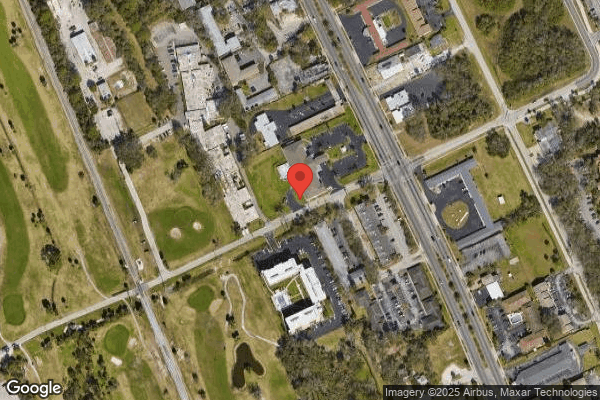
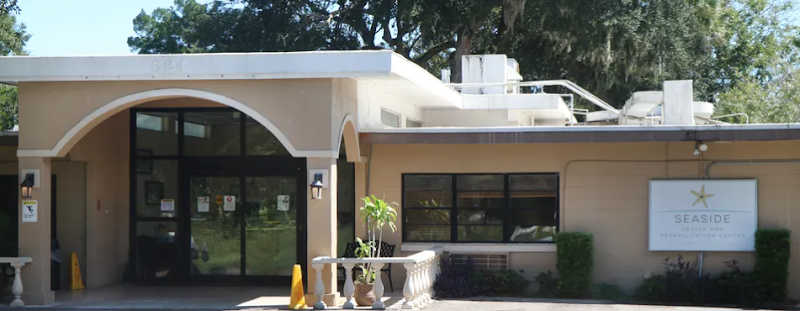
324 WILDER BLVD, DAYTONA BEACH, FL 32114 (386) 252-2600
For profit - Limited Liability company 192 Beds ASTON HEALTH Data: November 2025
Trust Grade
80/100
#274 of 690 in FL
Last Inspection: August 2024

Within standard 12-15 month inspection cycle. Federal law requires annual inspections.

Overview

Seaside Health and Rehabilitation Center has a Trust Grade of B+, which means it is above average and recommended for families considering care options. It ranks #274 out of 690 facilities in Florida, placing it in the top half, and #17 out of 29 in Volusia County, indicating that there are only a few local facilities with better rankings. However, the facility's trend is worsening, with issues increasing from 1 in 2022 to 3 in 2024. Staffing is rated at 4 out of 5 stars, with a turnover rate of 41%, slightly below the state average, suggesting that staff members tend to stay longer and know the residents well. While there are no fines on record, which is a positive sign, recent inspections revealed concerns, including a resident not receiving proper grooming and another not getting oxygen as prescribed, highlighting areas that need improvement.

Trust Score
B+
80/100
In Florida
#274/690
Top 39%
Safety Record
Low Risk
No red flags
Inspections
Getting Worse
1 → 3 violations
Staff Stability
○ Average
41% turnover. Near Florida's 48% average. Typical for the industry.
Penalties
✓ Good
No fines on record. Clean compliance history, better than most Florida facilities.
Skilled Nurses
○ Average
Each resident gets 31 minutes of Registered Nurse (RN) attention daily — about average for Florida. RNs are the most trained staff who monitor for health changes.
Violations
○ Average
9 deficiencies on record. Average for a facility this size. Mostly minor or procedural issues.
★★★★☆
4.0
Overall Rating
★★★★☆
4.0
Staff Levels
★★★★☆
4.0
Care Quality
★★★★☆
4.0
Inspection Score
Stable
2022: 1 issues
2024: 3 issues

The Good

  • 4-Star Staffing Rating · Above-average nurse staffing levels
  • 4-Star Quality Measures · Strong clinical quality outcomes
  • Full Sprinkler Coverage · Fire safety systems throughout facility
  • No fines on record
  • Staff turnover below average (41%)

    7 points below Florida average of 48%

Facility shows strength in staffing levels, quality measures, fire safety.

The Bad

Staff Turnover: 41%

Near Florida avg (46%)

Typical for the industry

Chain: ASTON HEALTH

Part of a multi-facility chain

Ask about local staffing decisions and management

The Ugly 9 deficiencies on record

Aug 2024 3 deficiencies
CONCERN (D)

Potential for Harm - no one hurt, but risky conditions existed

ADL Care (Tag F0677)

Could have caused harm · This affected 1 resident

Based on observations, interviews, record review, and facility policy and procedure review, the facility failed to ensure that a resident who was unable to carry out activities of daily living, receiv...

Read full inspector narrative →
Based on observations, interviews, record review, and facility policy and procedure review, the facility failed to ensure that a resident who was unable to carry out activities of daily living, received necessary care and services to maintain good grooming and personal hygiene for one (Resident #25) of two residents reviewed for ADL care from 30 residents in the total survey sample. The findings include: On 8/19/24 at 11:44 AM, Resident #25's fingernails were observed to be long and soiled. (Photographic evidence obtained) On 8/21/24 at 3:23 PM, the resident's fingernails were observed to be long and soiled. When he was asked who usually cleaned and trimmed his fingernails, he replied, The girls take care of my nails. (Photographic evidence obtained) A review of the resident's medical record revealed diagnoses including, but not limited to, osteoarthritis, cataracts, major depressive disorder, dementia without behavioral disturbance, psychotic disturbance, mood disturbance, and anxiety. A review of the quarterly minimum data set (MDS) assessment, dated 7/30/24, revealed a brief interview for mental status (BIMS) score of 9 out of 15 possible points, indicating moderate cognitive impairment. The resident was also documented as dependent on staff for personal hygiene. A review of the resident's care plan (initiated 3/15/2024, revised 8/2/2024) revealed the following Focus Areas: Resident needs assistance with ADL (activities of daily living) care related to general weakness and impaired mobility. ADL needs and participation vary. Extensive assistance is required for transfers/toileting with increased incontinence noted. Intervention: ADL Care: the resident may need limited assistance x1 or x2 for ADL care. This may fluctuate with weakness, fatigue, and weight bearing status. Impaired visual function related to cataracts, glaucoma. Has had surgery to the right eye but with little improvement to vision. On 8/21/24 at 3:27 PM, an interview was conducted with Certified Nursing Assistant (CNA) F. When she was asked who was responsible for the residents' fingernail care, she replied, We are, the CNAs, it's part of our daily care. She was asked to observe Resident #25's fingernails to determine whether he needed fingernail care. Upon observation of the resident's hands, she stated, Yes he does. On 8/21/24 at 3:20 PM, an interview was conducted with Licensed Practical Nurse (LPN) G. When she was asked who was responsible for providing the residents' fingernail care, she replied, The CNAs do nailcare on the residents' shower days and as needed. A review of the facility's policy titled ADL Care and Services, Quality of Care (issued: 4/2020, revised 1/2024), revealed the following: Guideline: Residents who are unable to carry out activities of daily living independently will recieve the services necessary to maintain good nutrition, grooming, and personal and oral hygiene. Procedure: 1. Residents will be provided with care , treatment, and services to ensure that their activities of daily living(ADLs) are met. 4. Appropriate care and services will be provided for residents who are unable to carry out ADLs independently, with the consent of the resident and in accordance with the plan of care, including appropriate support and assistance with: a. hygiene (bathing, dressing, grooming, nail care and oral care) .
CONCERN (D)

Potential for Harm - no one hurt, but risky conditions existed

Respiratory Care (Tag F0695)

Could have caused harm · This affected 1 resident

**NOTE- TERMS IN BRACKETS HAVE BEEN EDITED TO PROTECT CONFIDENTIALITY** Based on observation, interview, and record review, the facility failed to ensure that one (Resident #51) of two residents sampl...

Read full inspector narrative →
**NOTE- TERMS IN BRACKETS HAVE BEEN EDITED TO PROTECT CONFIDENTIALITY** Based on observation, interview, and record review, the facility failed to ensure that one (Resident #51) of two residents sampled for respiratory therapy review, from 30 residents in the total survey sample, received oxygen according to their physician's order. The findings include: On 8/19/24 at 11:49 AM, an observation was made of Resident #51 with her oxygen flow rate set at 1.5 liters per minute (L/min). (Photographic evidence obtained) The resident reported that she was not physically capable of adjusting the oxygen concentrator flow rate. On 8/20/24 at 9:49 AM, another observation was made of Resident #51's oxygen concentrator. The oxygen flow rate was set at 1.5 L/min. (Photographic evidence obtained) On 8/21/24 at 3:41 PM, another observation was made of Resident #51's oxygen concentrator. The oxygen flow rate was set at 1.5 L/min. (Photographic evidence obtained) A review of Resident #51's medical record revealed an admission date of 8/11/22 with diagnoses including chronic obstructive pulmonary disease (COPD), hemiplegia affecting the left non-dominant side, cerebral infarction, epilepsy, schizoaffective disorder, hypertension, depressive disorder, anxiety disorder, and bipolar disorder. A review of the 6/25/24 Minimum Data Set (MDS) assessment revealed a Brief Interview for Mental Status (BIMS) score of 15 out of 15 possible points, indicating intact cognition. The resident was documented with upper and lower extremity impairment on one side. She was documented with shortness of breath. A quarterly MDS conducted on 3/26/24 documented the same information. A review of Resident #51's care plan revealed Focus Area for [NAME] for Altered Respiratory Status/Difficulty Breathing related to chronic obstructive pulmonary disease (COPD), at risk for respiratory complications, continuous oxygen (O2) via nasal cannula (NC). Date Initiated: 04/02/24. Revision: 06/28/24. The care plan goal documented the resident would maintain normal breathing pattern as evidenced by normal respirations, normal skin color, and regular respiratory rat/pattern through the review date. Date Initiated 04/02/24. Revision: 06/27/24. Care plan interventions included the following: Administer oxygen as ordered. Monitor O2 saturations as ordered and as needed. Change tubing per facility protocol/physician order and as needed. Notify physician as indicated. Date Initiated: 04/02/2024. A review of the resident's physician's orders revealed an active order for: Oxygen (O2) at two liters (L) via nasal cannula (NC) continuous, with a start date of 11/10/22. A review of the medication administration record (MAR) for August 2024 revealed O2 2L NC continuous every shift was documented as having been administered according to the physician's order. A review of the facility's policy titled Oxygen Administration (Issued: 10/2019 and Revised 12/2023), revealed: Review the physician's order or facility protocol for oxygen administration and General Guidelines 1: Oxygen therapy is administered by way of an oxygen mask, nasal cannula, and/or other device per physician't order. On 8/22/24 at 11:10 AM, an interview was conducted with Certified Nursing Assistant (CNA) A, who reported that she had worked at the facility for eight and a half years. She confirmed that Resident #51 had an order for oxygen at a flow rate of 2 L/min. The standard process for checking residents on oxygen was to conduct a visual check to ensure that the oxygen flow rate was set as ordered by the physician. She also noted that Resident #51 was not physically capable of adjusting the oxygen flow rate herself. On 8/22/24 at 11:44 AM, an interview was conducted with Licensed Practical Nurse (LPN) B, who reported that she was an agency nurse and had worked at the facility for three weeks. Her responsibility for residents' oxygen was to follow the physician's order to ensure the oxygen flow rate was set according to the physician's order. She reported that she checked the liter flow for all of her assigned residents receiving oxygen when she started her shift. If the flow rate was not set correclty, she would check the physician's order to see if the order had changed. LPN B could not recall Resident #51's oxygen order. She checked the electronic medical record for the resident and verified the physician's order for oxygen was for two liters per minute. .
CONCERN (D)

Potential for Harm - no one hurt, but risky conditions existed

Deficiency F0919 (Tag F0919)

Could have caused harm · This affected 1 resident

Based on observations, interviews, record review, and facility policy and procedure review, the facility failed to ensure that its residents had a means of directly contacting caregivers for one (Resi...

Read full inspector narrative →
Based on observations, interviews, record review, and facility policy and procedure review, the facility failed to ensure that its residents had a means of directly contacting caregivers for one (Resident #13) of 30 residents in the total survey sample. The call bell must be placed in a way that makes it accessible to the resident while in their bed. The findings include: On 8/19/24 at 11:52 AM, Resident #13 was observed in bed. She was alert to her name and able to express her needs. She complained of left foot pain. She stated she informed the nurse that she was in pain. When she was asked if she knew how to get help if she needed it, she replied, Yes, I have a bell. When she was asked where her call bell was located, she tried to reach for it. It was observed to be out of her reach on the left side of the bed. (Photographic evidence obtained) On 8/21/24 at 10:39 AM, Resident #13 was observed in bed, alert and able to express pain on her left side, especially her left foot and ankle. On a pain scale of 1-10 with 10 being the highest level of pain, she described her pain as 15. She stated, I get pain medication every four hours, but I need something right now. I'm hurting. The resident's call bell was observed on the left side of her bed. She was unable to reach it. (Photographic evidence obtained) A review of Resident #13's medical record revealed diagnoses including hemiplegia/hemiparesis following cerebrovascular disease affecting the left non-dominant side, and contractures of the left elbow, left ankle, left hand, left wrist, and left shoulder. A review of her quarterly minimum data set (MDS) assessment, dated 7/2/2024, revealed she was able to make herself understood, and understand others. She had a brief interview for mental status (BIMS) score of 14 out of 15 possible points, indicating intact cognition. No behavioral concerns were documented, and the resident was dependent on staff assistance for eating, bed mobility, transfers, toileting, and personal hygiene. She was noted as complaining of frequent pain at a level 10 on a scale of 1-10 with 10 being the most severe pain, that occasionally interfered with sleep. She was also noted as receiving hospice services. A review of the resident's care plan (initiated 4/3/2024, revised 7/3/2024) revealed the following Focus Areas: Hospice: admitted to service of [hospice provider name] related to coronary artery disease, CVA (cerebrovascular accident) left side effect. Resident is at risk for general decline. (initiated 9/21/2023, revised 7/3/2024) ADL/Self-Care Deficit: Needs assistance with all ADLs (activities of daily living). Prefers to stay in bed related to chronic pain. Resident has pain and/or is at risk for pain related to old CVA. Under care of [hospice provider name]. Resident presents with chronic pain, neuropathy, hemiplegia with associated pain to left side, pain left leg, ankle, arm. Continues with routine opioid pain medication. A review of the resident's physician's orders revealed that the resident was receiving Furosemide (diuretic) 20 mg (milligrams) by mouth daily (6/08/24 10:39 AM), Baclofen (muscle relaxer) 10 mg by mouth three times daily (1/26/22), Lexapro (antidepressant) 20 mg by mouth daily (1/27/22), Morphine Sulfate (narcotic pain medication) 5 mg by mouth every 4 hours for pain/DC Norco (narcotic pain medication) when morphine sulfate arrives (7/31/0224), DNR (do not resuscitate) (7/19/2028), Under care of [hospice provider name] for a diagnosis of CAD (Coronary Artery Disease) (4/8/2024), Monitor pain every shift (4/29/2017). On 8/21/24 at 10:43 AM, an interview was conducted with Housekeeper C. She was observed conversing with Resident #13. The housekeeper was asked about her conversation with the resident. She stated, She told me she was in pain. She was asked what she usually did when a resident told her that they were in pain. She stated, I tell the nurse. Housekeeper C was observed at the nurses' desk reporting Resident #13's complaint of pain at 10:46 AM. On 8/21/24 at 10:52 AM, Licensed Practical Nurse (LPN) E responded to the resident's complaint of pain. The nurse was asked if Resident #13 was able to use her left arm or hand. She stated, No, she had a stroke and has no use of her left side. The nurse was asked if the resident was able to reach her call light if she needed help. The nurse moved the call light from the left side of the bed where it had been since the surveyor entered the room, and stated, It's usually on her right side so she can use it. A review of the facility's policy titled Call lights, Quality of Care (issued: 03/2018, revised: 01/2024), revealed the following: Standard: Resident will have a call light to summon facility personnel to ensure the resident's needs will be met. Guideline: Resident's call light is to be within reach and answered promptly by the facility personnel. .
Aug 2022 1 deficiency
CONCERN (D)

Potential for Harm - no one hurt, but risky conditions existed

Respiratory Care (Tag F0695)

Could have caused harm · This affected 1 resident

Based on observation, interview, and record review, the facility failed to ensure that one (Resident #109) of two residents receiving oxygen therapy, from a total of 47 residents in the sample, was ad...

Read full inspector narrative →
Based on observation, interview, and record review, the facility failed to ensure that one (Resident #109) of two residents receiving oxygen therapy, from a total of 47 residents in the sample, was administered oxygen at the flow rate ordered by the physician. The findings include: On 8/22/2022 at 11:02 am, Resident #109 was observed lying in bed with his covers pulled to his chest and was receiving oxygen via nasal cannula. He complained that he was not receiving enough oxygen. The resident stated he should receive 3 liters per minute (L/min). The oxygen concentrator located at bedside was observed to be set at 1.5 L/min. (Photographic evidence obtained) A review of Resident #109's physician's order, dated 4/07/2022, revealed he was to receive oxygen at 2 L/min continuously every shift. On 8/23/2022 at 11:58 am, another observation of Resident #109's oxygen concentrator revealed it was set at 1.5 L/min. (Photographic evidence obtained) A medical record review revealed the resident was admitted into the facility on 4/06/2022. His diagnoses included chronic respiratory failure, unspecified whether with hypoxia or hypercapnia; other specified disorders of kidney and ureter; and heart failure, unspecified. A review of the August 2022 Medication Administration Record (MAR) revealed an order for oxygen at 2 L/min via nasal cannula continuously, with nursing initials indicating the oxygen had been provided per the order. (Photographic evidence obtained) Resident #109's vital signs revealed oxygen saturations for August 2022 ranging between 96 to 98 percent for both room air and oxygen via nasal cannula. A review of the quarterly minimum data set (MDS) assessment, dated 7/11/2022, revealed Resident #109 had a Brief Interview for Mental Status (BIMS) score of 8 out of a possible 15 points, indicating moderately impaired cognition. The assessment also documented that he was receiving oxygen therapy. A review of the active care plan, dated 4/11/2022, revealed he was at risk for respiratory complications related to obesity, history of respiratory issues, and continuous oxygen via nasal cannula. Interventions included: check oxygen saturation levels as needed, and oxygen as ordered via nasal canula at 2 L/min. A review of Resident #109's vital signs for August 2022, revealed oxygen saturations ranging between 96 to 98 percent for both room air and oxygen via nasal cannula. A review of the medication administration note dated 8/6/2022 at 1:41am, revealed oxygen 2 L/min continuously every shift. Resident using oxygen only when he wants. On 08/25/2022 at 10:00 am, accompanied by Licensed Practical Nurse (LPN) A, observed the oxygen concentrator for Resident #109 set to administer oxygen at 1.5 L/min (Photographic evidence obtained). LPN A confirmed that Resident #109's physician's order was for oxygen at a flow rate of 2 L/min. She stated the resident's oxygen saturation was between 96 to 97 percent and he had no distress. Changes in Resident #109's condition regarding his respiratory care was communicated to the Director of Nursing (DON) and his physician. Correct oxygen settings were communicated from one staff person to another by reviewing the medication administration record and through shift reports. On 08/25/2022 at 11:38 am, the DON confirmed that the correct oxygen settings were identified in the MAR and reviewed on the shift-to-shift report. She stated, We have some residents that play with them. Staff respond by educating the residents on their oxygen therapy. It is the nurse's responsibility to ensure that oxygen therapy is provided as ordered. A review of the facility's policy and procedure for Oxygen Administration (undated), revealed procedures for preparation included: Verify that there is a physician's order for this procedure. Review the physician's orders or facility protocol for oxygen administration. .
Feb 2021 5 deficiencies
CONCERN (D)

Potential for Harm - no one hurt, but risky conditions existed

Resident Rights (Tag F0550)

Could have caused harm · This affected 1 resident

Based on observations and staff interviews, the facility failed to promote resident dignity by leaving a urinary catheter bag uncovered for one (Resident #85) of three residents observed with urinary ...

Read full inspector narrative →
Based on observations and staff interviews, the facility failed to promote resident dignity by leaving a urinary catheter bag uncovered for one (Resident #85) of three residents observed with urinary catheters, from a total sample of 43 residents. The findings include: During an interview with Resident #85 on 2/8/21 at 2:30 pm, he was observed sitting in his wheelchair in the hallway. A urinary catheter bag was hanging from the underside of the chair. There was urine observed in the tubing and in the bag. There was no privacy cover on the catheter bag. On 2/10/21 at 9:18 am, Resident #85 was observed sitting up in his bed finishing breakfast. His catheter bag was hanging on the side of the bed facing the doorway. There was no privacy cover on the catheter bag. An interview was conducted with Employee C, Certified Nursing Assistant (CNA), at 10:05 am. He confirmed there was no cover on the catheter bag. On 2/11/21 at 9:14 am, Resident #85 was observed sitting up in bed. The catheter bag was hanging at the side of the bed facing out to the hallway. Neither the catheter tubing or the catheter bag had a privacy cover. An interview was conducted on 2/11/21 at 9:24 am with Employee D, Licensed Practical Nurse (LPN), who confirmed there was no cover on the catheter bag. .
CONCERN (D)

Potential for Harm - no one hurt, but risky conditions existed

Comprehensive Care Plan (Tag F0656)

Could have caused harm · This affected 1 resident

**NOTE- TERMS IN BRACKETS HAVE BEEN EDITED TO PROTECT CONFIDENTIALITY** Based on observations, interviews and record review, the facility failed to implement interventions in a fall risk care plan to ...

Read full inspector narrative →
**NOTE- TERMS IN BRACKETS HAVE BEEN EDITED TO PROTECT CONFIDENTIALITY** Based on observations, interviews and record review, the facility failed to implement interventions in a fall risk care plan to ensure appropriate use of restraints for one of one (Resident #70) resident reviewed for restraints in a total sample of 43 residents. The findings include: On 02/08/21 at 11:00 AM, Resident #70 was observed sitting in his wheelchair on the secure unit of the facility. He was observed wearing a cloth-type lap belt that tied behind the wheelchair on both sides and went between his legs. Resident #70 did not respond to questions and spent the majority of time that he was observed looking up toward the ceiling with his eyes both open and closed. Record review for Resident #70 revealed he was admitted to the facility on [DATE] with diagnoses including schizophrenia, generalized anxiety disorder, psychoactive substance abuse with psychoactive substance-induced anxiety disorder, auditory hallucinations, pseudobulbar affect, and dementia with behavioral disturbance. Record review of the 1/11/2021 Quarterly Minimum Data Set (MDS) assessment found that he had a Brief Interview for Mental Status (BIMS) score that could not be assessed. He was severely impaired for decision making. He had short- and long-term memory problems. He required extensive, two-person physical assistance for bed mobility and transfers. He required extensive assistance of one person for eating. Record review of the current physician's orders for Resident #70 found a 2/2/2021 order for a slider belt while up in a chair due to schizophrenia, poor safety awareness, and poor impulse control with a history of dizziness. It was to be released for medications, activities of daily living (ADLs), meals and activities. Record review of the fall risk care plan found the 2/11/2020 intervention of slider seat belt when in wheelchair release for meals, ADLs, toileting, and supervised activities. On 2/09/2021 at 2:44 PM, Resident #70 was observed sitting in his wheelchair in the small dining/activity room on the secure unit. The TV was on. Resident #70 had the cloth lap belt on. An interview was conducted at the time of observation with Employee A, the certified nursing assistant (CNA) that was in the room. She stated Resident #70 wore the lap belt at all times except when he went to sleep. She stated she gave him lunch today and she kept the lap belt on. On 2/10/2021 at 11:50 AM, Resident #70 was observed sitting in the dining room on the secure unit waiting for lunch. The restorative nurse (Employee B) was observed placing a food tray in front of Resident #70. A few minutes later, she was observed sitting down next to the resident. She informed Resident #70 it was time to eat and removed his mask. She then began assisting him with the meal. Employee B was asked if the resident's slider belt needed to be removed while he was eating. She stated, I thought someone else had removed it. She was asked if she was aware there were physician's orders and the resident was care planned to remove the slider belt when she was eating and she stated she was aware. .
CONCERN (D)

Potential for Harm - no one hurt, but risky conditions existed

Deficiency F0761 (Tag F0761)

Could have caused harm · This affected 1 resident

**NOTE- TERMS IN BRACKETS HAVE BEEN EDITED TO PROTECT CONFIDENTIALITY** Based on observations and staff interviews, the facility failed to ensure all emergency drug boxes were kept locked at all times...

Read full inspector narrative →
**NOTE- TERMS IN BRACKETS HAVE BEEN EDITED TO PROTECT CONFIDENTIALITY** Based on observations and staff interviews, the facility failed to ensure all emergency drug boxes were kept locked at all times for one of four medication rooms. The facility also failed to ensure there were no expired over-the-counter medications on the medication carts for one of six medication carts. The findings include: An observation of the medication room on Station 3 was conducted on [DATE] at 10:45 am with the Unit Manager (UM). There was a bag of intravenous fluid (IV) 0.9% Sodium Chloride (NaCl) solution 1000 ml (milliliters) found on the counter. The bag did not have a resident's name. The UM was asked if there was a resident currently receiving IV fluids. She said there was a resident that was ordered fluids and IV antibiotics. She stated she assumed the nurse who took the order removed the IV fluid from the IV emergency box. She was asked what date it was removed, and she said she would need to check the Medication Administration Record (MAR) to see which nurse received the order. She was asked how the facility documented when medications were removed from the emergency boxes. She provided a log book that contained entries for medications removed from the emergency boxes. She was asked if there was an entry for the removal of the NaCl fluid. She said she could find no entry. Inspection of the IV emergency box found that the box was not locked. The UM verified that the IV box was unlocked and had not been resealed after opening. An inspection of the front hall medication cart on Station #3 was conducted on [DATE] at 11:00 am with Licensed Practical Nurse (LPN) F. During the observation of the over-the-counter medications in the top drawer, an opened bottle of Aspirin 325 mg (milligrams) that expired in [DATE] was found. She immediately removed the bottle. .
CONCERN (D)

Potential for Harm - no one hurt, but risky conditions existed

Dental Services (Tag F0791)

Could have caused harm · This affected 1 resident

Based on record review and interviews, the facility failed to ensure routine and 24-hour emergency dental care was provided for one (Resident #107) of two residents reviewed for dental services, from ...

Read full inspector narrative →
Based on record review and interviews, the facility failed to ensure routine and 24-hour emergency dental care was provided for one (Resident #107) of two residents reviewed for dental services, from a sample of 43 residents. The findings include: During an interview with Resident #107 on 2/9/2021 at 9:28 AM, he stated, I've been asking to see a dentist for eleven months. I chipped my tooth last month while eating rice and beans. They keep blaming COVID and putting it off. I've asked different people more than once. A tooth on the right upper side of the resident's mouth was observed with a chip in it. Resident #107 was asked whether the chipped tooth was causing him any pain. He stated, Yes, off and on, not constantly. A review of the Quarterly Minimum Data Set (MDS) assessment, dated 1/18/2021, revealed a Brief Interview for Mental Status (BIMS) score of 13 out of a possible 15 points, indicating the resident was cognitively intact. No oral pain was reported during this assessment reference period. A review of the Annual MDS assessment, dated 4/20/2020, revealed the following documentation under the dental section: Obvious or likely cavity or broken natural teeth? Yes. Inflammed or bleeding gums or loose natural teeth? Yes. Mouth or facial pain, discomfort, or difficulty with chewing? No. Unable to examine? No. A medical record review for Resident #107 revealed a care plan conference sign-in sheet, dated 4/3/2020, was signed as having been attended by the Minimum Data Set (MDS) Nurse, the Social Services Director, Life Enrichment Director and Dietary Manager. There were hand-written notes on the sheet, one of which was concern about teeth. Further review of the medical record revealed a nurse's note written on 4/7/2020 that read, Pt (patient) complains of a rough tooth, appears that a tooth on upper left region of mouth is broken. Dental consult recommended. No evidence of a dental consult was found in the doctor's orders in the resident's chart. A review of the care plans revealed no focus, goal, or interventions related to the resident's dental status. The facility's dental services policy was reviewed: Dental Services Policy (November 2001) Dental services shall be made available to all residents requiring such services. Policy Interpretation and Implementation: 1. Dental services are available to all residents requiring routine and emergency dental care. 2. Social services or designee will be responsible for assisting the resident (and family) in making necessary appointments. 3. All requests for routine and emergency dental services should be directed to the social services department or designee as soon as possible so that adequate arrangements can be made. On 2/10/2021, during an interview with the Social Services Director (SSD), he was asked to explain how dental services worked at the facility. He stated, Yes, we have two dental programs. One works with residents who have liability insurance, and one is for residents who have no dental insurance. We make sure all residents who want dental services can get them. When asked whether dental services were an admission order, or did they need to be requested, the SSD stated, It needs to be requested, it's not an admission order. It was explained to the SSD that no dental orders, dentist notes, referrals, consults or appointments could be found in Resident #107's medical record. When asked whether the SSD could show when the resident had been seen by a dentist in the past 11 months, he stated,I have this roster from [dental provider] that his guardian refused a dental consult. It's not dated, but it's a report for May 19, 2020 thru July 7, 2020. She is no longer his guardian. She was relieved of all guardian duties in the state of Florida. He has a new guardian, and I'll approach him to ask if he wants [Resident #107] re-enrolled in dental services. I'll also talk to [Resident #107] and ask him if he wants to re-enroll in dental services. When asked whether the SSD had any documentation verifying that the resident had a dental appointment at any time during his stay of almost three years, the SSD stated, No, I don't see anything in his chart. I looked at my notes, and I don't have anything written about him having seen a dentist since he's been here. A review of additional documentation submitted by the facility on 2/16/21 regarding Resident #107's dental status revealed the following: 1. A Notice of Declined Dental Services dated 1/27/2020. 2. A 4/7/2020 nurse's note indicated the resident complained about his tooth and a dental consult was recommended. 3. An 8/16/2020 nurse's note indicated the resident had no complaints of pain or discomfort. Nothing specific to oral status/pain was mentioned in the note. 4. A list of resident weights indicated no significant weight loss from April 2019 through Febryuary 2021. 5. A Social Services note dated 2/12/21, after the survey, revealed that the SSD spoke with the resident that day about his dental concerns and arranged a dental appointment for 3/3/21, after speaking with the resident's guardian, whose name was not the same as the guardian documented on 1/27/2020 Notice of Declined Dental Services. 6. Four hand-written statements, dated 2/12/21, after the survey, from two nurses and two other unidentified facility employees indicated Resident #107 had never complained to them of tooth problems or pain. 7. A statement from the Social Services Director, dated 2/15/21, indicated that he spoke with Resident #107 on a regular basis, and the resident made him aware of any concerns he had. The SSD stated the resident never complained about any dental problems. The SSD went on to say that Resident #107 and his guardian had been encouraged to sign up for the facility's dental plan, but the resident and his guardian declined. No date was provided indicating when this conversation occurred. There was no indication that there had been a change in the resident's guardian. After the 1/27/2020 Notice of Declined Dental Services and the change in the resident's guardian, there was no documented evidence that the SSD ever approached either the resident or his new guardian about emergent or routine dental services, even though the SSD stated he spoke with the resident on a regular basis. The resident's previous guardian may have declined services, but the new guardian was not approached until after this survey. The resident was alert and oriented and complained about intermittent oral pain and having asked repeatedly for a dental appointment when he was interviewed on 2/9/2021. The facility must assist residents in obtaining routine and emergent dental services as per the regulation. The facility's policy and procedure supports that. When the SSD was prompted by the surveyor at the time of the survey, he then approached the resident and guardian, dental services were not declined by this guardian or the resident, and the SSD was able to arrange dental services. .
CONCERN (F)

Potential for Harm - no one hurt, but risky conditions existed

Food Safety (Tag F0812)

Could have caused harm · This affected most or all residents

Based on observation and interview, the facility failed to maintain the ice machine in the facility kitchen to prevent the spread of foodborne illness and ensure the safety of the 138 residents that r...

Read full inspector narrative →
Based on observation and interview, the facility failed to maintain the ice machine in the facility kitchen to prevent the spread of foodborne illness and ensure the safety of the 138 residents that resided at the facility. The findings include: During a tour of the facility kitchen on 2/08/2021 at 11:09 AM, the interior of the ice machine was observed. The metal running across the interior top of the ice machine was covered with spots of a brown substance that ran the length of the metal. There was water condensation on the metal that could drop into the ice below. (Photographic evidence obtained) The Certified Dietary Manager (CDM) was asked at the time of observation if she could wipe the substance off. She obtained a paper towel, wiped the surface of the machine, and the substance transferred to the paper towel. During the interview with the CDM, she stated the maintenance department cleaned the interior of the ice machine once a month and the kitchen staff wiped it each day. .
Understanding Severity Codes (click to expand)
Life-Threatening (Immediate Jeopardy)
J - Isolated K - Pattern L - Widespread
Actual Harm
G - Isolated H - Pattern I - Widespread
Potential for Harm
D - Isolated E - Pattern F - Widespread
No Harm (Minor)
A - Isolated B - Pattern C - Widespread

Questions to Ask on Your Visit

  • "Can I speak with families of current residents?"
  • "What's your RN coverage like on weekends and overnight?"

Our Honest Assessment

Strengths
  • • Grade B+ (80/100). Above average facility, better than most options in Florida.
  • • No major safety red flags. No abuse findings, life-threatening violations, or SFF status.
  • • No fines on record. Clean compliance history, better than most Florida facilities.
  • • 41% turnover. Below Florida's 48% average. Good staff retention means consistent care.
Concerns
  • • No significant concerns identified. This facility shows no red flags across CMS ratings, staff turnover, or federal penalties.
Bottom line: Generally positive indicators. Standard due diligence and a personal visit recommended.

About This Facility

What is Seaside Center's CMS Rating?

CMS assigns SEASIDE HEALTH AND REHABILITATION CENTER an overall rating of 4 out of 5 stars, which is considered above average nationally. Within Florida, this rating places the facility higher than 99% of the state's 100 nursing homes. This rating reflects solid performance across the metrics CMS uses to evaluate nursing home quality.

How is Seaside Center Staffed?

CMS rates SEASIDE HEALTH AND REHABILITATION CENTER's staffing level at 4 out of 5 stars, which is above average compared to other nursing homes. Staff turnover is 41%, compared to the Florida average of 46%. This relatively stable workforce can support continuity of care.

What Have Inspectors Found at Seaside Center?

State health inspectors documented 9 deficiencies at SEASIDE HEALTH AND REHABILITATION CENTER during 2021 to 2024. These included: 9 with potential for harm.

Who Owns and Operates Seaside Center?

SEASIDE HEALTH AND REHABILITATION CENTER is owned by a for-profit company. For-profit facilities operate as businesses with obligations to shareholders or private owners. The facility is operated by ASTON HEALTH, a chain that manages multiple nursing homes. With 192 certified beds and approximately 147 residents (about 77% occupancy), it is a mid-sized facility located in DAYTONA BEACH, Florida.

How Does Seaside Center Compare to Other Florida Nursing Homes?

Compared to the 100 nursing homes in Florida, SEASIDE HEALTH AND REHABILITATION CENTER's overall rating (4 stars) is above the state average of 3.2, staff turnover (41%) is near the state average of 46%, and health inspection rating (4 stars) is above the national benchmark.

What Should Families Ask When Visiting Seaside Center?

Based on this facility's data, families visiting should ask: "Can I visit during a mealtime to observe dining assistance and food quality?" "How do you handle medical emergencies, and what is your hospital transfer rate?" "Can I speak with family members of current residents about their experience?"

Is Seaside Center Safe?

Based on CMS inspection data, SEASIDE HEALTH AND REHABILITATION CENTER has a clean safety record: no substantiated abuse findings (meaning no confirmed cases of resident harm), no Immediate Jeopardy citations (the most serious violation level indicating risk of serious injury or death), and is not on the Special Focus Facility watch list (a federal program monitoring the lowest-performing 1% of nursing homes). The facility has a 4-star overall rating and ranks #1 of 100 nursing homes in Florida. While no facility is perfect, families should still ask about staff-to-resident ratios and recent inspection results during their visit.

Do Nurses at Seaside Center Stick Around?

SEASIDE HEALTH AND REHABILITATION CENTER has a staff turnover rate of 41%, which is about average for Florida nursing homes (state average: 46%). Moderate turnover is common in nursing homes, but families should still ask about staff tenure and how the facility maintains care continuity when employees leave.

Was Seaside Center Ever Fined?

SEASIDE HEALTH AND REHABILITATION CENTER has no federal fines on record. CMS issues fines when nursing homes fail to meet care standards or don't correct problems found during inspections. The absence of fines suggests the facility has either maintained compliance or corrected any issues before penalties were assessed. This is a positive indicator, though families should still review recent inspection reports for the full picture.

Is Seaside Center on Any Federal Watch List?

SEASIDE HEALTH AND REHABILITATION CENTER is not on any federal watch list. The most significant is the Special Focus Facility (SFF) program, which identifies the bottom 1% of nursing homes nationally based on persistent, serious quality problems. Not being on this list means the facility has avoided the pattern of deficiencies that triggers enhanced federal oversight. This is a positive indicator, though families should still review the facility's inspection history directly.