SOLARIS HEALTHCARE DAYTONA
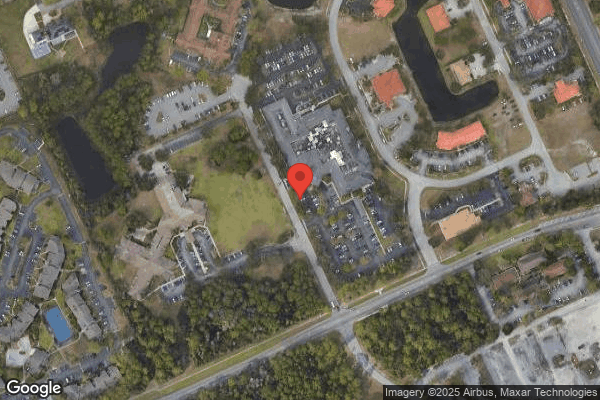
550 NATIONAL HEALTHCARE DRIVE, DAYTONA BEACH, FL 32114 (386) 257-6362
Non profit - Corporation 73 Beds SOLARIS HEALTHCARE Data: November 2025
Trust Grade
90/100
#111 of 690 in FL
Last Inspection: July 2025

Inspected within the last 6 months. Data reflects current conditions.

Overview

Solaris Healthcare Daytona has received a Trust Grade of A, which indicates excellent quality and is highly recommended for families considering this nursing home. It ranks #111 out of 690 facilities in Florida, placing it in the top half, and #8 out of 29 in Volusia County, suggesting only a few local options are better. However, the facility is experiencing a concerning trend as the number of issues has increased from 1 in 2023 to 2 in 2025. Staffing is rated at 4 out of 5 stars, but the 44% turnover rate is average, meaning that while staff are generally experienced, some turnover is occurring. On the positive side, there have been no fines recorded, which is a good sign of compliance, and the facility provides more RN coverage than many of its peers, ensuring better oversight of resident care. However, there are specific concerns, such as failures in dietary staff training, leading to unclean dishware and unlabeled food items in the nourishment room, which could pose risks to residents. Additionally, there was an incident where one resident was not receiving oxygen at the correct settings, highlighting potential gaps in care that need to be addressed. Overall, while Solaris Healthcare Daytona has many strengths, families should be aware of these issues when making their decision.

Trust Score
A
90/100
In Florida
#111/690
Top 16%
Safety Record
Low Risk
No red flags
Inspections
Getting Worse
1 → 2 violations
Staff Stability
○ Average
44% turnover. Near Florida's 48% average. Typical for the industry.
Penalties
✓ Good
No fines on record. Clean compliance history, better than most Florida facilities.
Skilled Nurses
○ Average
Each resident gets 34 minutes of Registered Nurse (RN) attention daily — about average for Florida. RNs are the most trained staff who monitor for health changes.
Violations
✓ Good
Only 3 deficiencies on record. Cleaner than most facilities. Minor issues only.
★★★★★
5.0
Overall Rating
★★★★☆
4.0
Staff Levels
★★★★★
5.0
Care Quality
★★★★★
5.0
Inspection Score
Stable
2023: 1 issues
2025: 2 issues

The Good

  • 4-Star Staffing Rating · Above-average nurse staffing levels
  • 5-Star Quality Measures · Strong clinical quality outcomes
  • Full Sprinkler Coverage · Fire safety systems throughout facility
  • No fines on record
  • Staff turnover below average (44%)

    4 points below Florida average of 48%

Facility shows strength in staffing levels, quality measures, fire safety.

The Bad

Staff Turnover: 44%

Near Florida avg (46%)

Typical for the industry

Chain: SOLARIS HEALTHCARE

Part of a multi-facility chain

Ask about local staffing decisions and management

The Ugly 3 deficiencies on record

Jul 2025 2 deficiencies
CONCERN (D)

Potential for Harm - no one hurt, but risky conditions existed

Deficiency F0802 (Tag F0802)

Could have caused harm · This affected 1 resident

Based on observation, interviews and record reviews, the facility failed to provide sufficient support personnel to safely and effectively carry out the functions of the food and nutrition service. Th...

Read full inspector narrative →
Based on observation, interviews and record reviews, the facility failed to provide sufficient support personnel to safely and effectively carry out the functions of the food and nutrition service. This could have a potentially negative outcome on its current census of 67 residents. At the time of the survey, none of the dietary staff had current dietary training. The findings include: A tour of the kitchen was conducted on 6/29/2025 at 11:23 a.m. [NAME] C was observed and Dietary Aide D was also present. On 6/29/2025 at 11:35 a.m. Dietary Aide D was observed in the sanitation area of the kitchen. She was asked if the dishwasher was a high-temperature or low-temperature machine. She stated she was not sure. She was asked how she would determine whether or not the dishes were clean and sanitized. She again stated she was not sure and added that she eyeballs it. Observed the dishwasher temperature log hanging on the wall. The temperature had not been recorded for five shifts. The Certified Dietary Manager (CDM) arrived on 6/29/2025 at 11:57 a.m. He was made aware of the incomplete temperature log. He confirmed that it should have been completed. During an interview on 6/29/2025 at 12:15 p.m. with the CDM, he was asked to provide any dietary education provided to the staff within the last six months. A follow-up tour of the kitchen was conducted on 6/30/2025 at 9:18 a.m. Observed that the dishwasher temperature log had not been completed for any shift on 6/29/2025. (Photographic Evidence Obtained) During an interview conducted on 7/01/2025 at 11:45 a.m. with the CDM, he stated he was unable to locate any of the recent training for the dietary staff. On 7/02/2025 at 11:05 a.m., the Human Resources Manager provided training rosters for all of the dietary staff. Observed multiple training topics were marked Not Attempted. She was asked what this meant. She stated it meant the training was assigned but the employer had not completed the training. (Photographic Evidence Obtained) During an interview conducted on 7/02/2025 at 11:40 a.m. with the CDM, he stated the dietary staff were required to complete annual training. He confirmed that none of the dietary staff had completed any of their required training. He stated this was not discovered until June 2025. He stated they started doing the basic facility required training and that all of the dietary-related training remained undone. A review of the facility's policy titled Storage of Foods Brought to Residents by Family/Visitors (revised 1/18/2018), revealed: Policy Statement: Staff must be aware of, and approve, food(s) brought to a resident by family/visitors to ensure safe and sanitary storage, handling and consumption of foods. Policy Interpretation and Implementation: * Family members / responsible parties should inform nursing staff of their desire to bring foods into the facility, The Dietitian or a Nurse Supervisor should assure that the food is not in conflict with the resident's prescribed diet plan. * If necessary, the nursing staff or Dietitian will discuss with the Physician whether a diet can be liberalized. * The Dietitian will counsel residents or families about requests that conflict with residents' dietary restrictions and whenever diets cannot be liberalized. *The Dietitian or a nurse will document any such discussions in the residents' medical records. * Non-perishable foods retained in the residents' rooms must be stored in re-sealable containers with tight-fitting lids. Intact fresh fruit may be stored without a lid. Perishable foods must be stored in a manner which minimizes risk of cross contamination in the designated resident refrigerators. These foods will be labeled with the resident's name, and dated. * The nursing staff is responsible for discarding perishable foods within 3 days or before the use by/ expiration date, whichever comes first. * The nursing and/or food service staff must discard any foods prepared for the resident that show obvious signs of potential foodborne danger (or example, mold growth, foul odor, past due package expiration dates). 9. Home-prepared and home-preserved foods are permitted if brought by family or visitors for individual residents. Such foods may not be shared or distributed to other residents. 10. Facility staff only will assist with reheating food to ensure safe food handling practices. 11. Potentially hazardous foods that are left out for the resident without a source of heat or refrigeration longer than 2 hours will be discarded. Reviewed the facility's policy: Food Receiving and Storage revised 1/30/2024 Policy Statement Foods shall be received and stored in a manner that complies with safe food handling practices. Policy Interpretation and Implementation: 1. Food Services, or other designated staff, will maintain clean food storage areas at all times, 2. When food is delivered to the facility it will be inspected for safe transport and quality before being accepted. 3. Foods that are prepared off site will only be accepted from institutions that are subject to federal, state or local inspection. The Food Service Manager shall verify the latest approved inspection and also monitor the food quality of the supplier. 4. Non-refrigerated foods, disposable dishware and napkins will be stored in a designated dry storage unit which is temperature and humidity controlled, free of insects and rodents and kept clean. 5. Food in designated dry storage areas shall be kept off the floor (at least 6 inches) and clear of sprinkler heads, sewage/waste disposal pipes and vents. 6. Dry foods that are stored in bins will be removed from original packaging, labeled and dated. Such foods will be rotated using a first in - first out system. 7. All foods stored in the refrigerator or freezer will be covered, labeled and dated. 8. Refrigerated foods must be stored at 41°F or below. 9. Refrigerated foods will be stored in such a way that promotes adequate air circulation around food storage containers. 10. Freezer temperature maintained to keep frozen food solid. Frozen food wrapping must stay intact until thawing. 11. Functioning of the refrigeration and food temperatures will be monitored at designated intervals throughout the day by the Food Service Manager or designee and documented on an approved log. 12. Uncooked and raw animal products and fish will be stored separately in drip-proof containers with a date and below fruits, vegetables and other ready-to-eat foods. 13. Food items and snacks kept on the nursing units must be maintained as indicated below: *Perishable food items will be covered/labeled and dated under refrigeration at 41°F or below. *Frozen food items will be covered/labeled and dated at a temperature maintained to keep frozen *All foods belonging to residents must be labeled with the resident's name, room number and food solid. *Refrigerators and freezers must have working thermometers and be monitored for temperature. date. *Other opened containers (food/beverage) must be dated and sealed or covered during storage and held no longer than 72hrs *Partially eaten food may not be kept in the refrigerator. *Medications, blood or blood products may not be stored in the same refrigerator with food 14. Pesticides and other toxic substances and drugs will not be stored in the kitchen area or in storerooms for food or food preparation equipment and utensils. 15. Soaps, detergents, cleaning compounds or similar substances will be stored in separate storage areas from food storage. .
CONCERN (D)

Potential for Harm - no one hurt, but risky conditions existed

Food Safety (Tag F0812)

Could have caused harm · This affected 1 resident

Based on observations, record reviews and interviews, the facility failed to store food kept in the nourishment room refrigerator in accordance with professional standards for food service safety. Foo...

Read full inspector narrative →
Based on observations, record reviews and interviews, the facility failed to store food kept in the nourishment room refrigerator in accordance with professional standards for food service safety. Food stored in the nourishment room refrigerator was observed to be unlabeled and undated, which could result in residents receiving other residents' food items, or food items that were potentially unsafe due to extended storage in the refrigerator. The findings include: A tour of the facility's nourishment room was conducted on 6/30/2025 at 10:18 a.m. Signage attached to the door of the refrigerator revealed Resident Food Only. Any resident food stored here must be labeled with: Resident name and date. Any food items stored here that are open/already prepared must be thrown away if > 3 days old. Food items may be kept until expiration date only if prepackaged and sealed/unopened. No staff food. Several undated and unlabeled items were observed in the refrigerator and freezer. (Photographic Evidence Obtained) A follow-up tour of the nourishment room was conducted on 7/1/2025 at 2:32 p.m. Undated and unlabeled items remained in the refrigerator and freezer. Additional items had been added since 6/30/2025 at 10:18 a.m. which were not dated or labeled. (Photographic Evidence Obtained) On 7/2/2025 at 11:28 a.m., undated and unlabeled items remained in the refrigerator and freezer of the nourishment room. (Photographic Evidence Obtained) An interview was conducted on 7/2/2025 at 11:36 a.m. with Licensed Practical Nurse (LPN)/Unit Manager E. She stated all staff were responsible for the upkeep of the nourishment room. She stated it was usually checked in the morning by herself, the Assistant Director of Nursing (ADON), or a Dietary Staff member. She stated all items had to be labeled with the residents' names and room numbers. She also stated that open items had to be discarded within three days. A review of the facility's policy titled Storage of Foods Brought to Residents by Family/Visitors (revised 1/18/2018), revealed: Policy Statement: Staff must be aware of, and approve, food(s) brought to a resident by family/visitors to ensure safe and sanitary storage, handling and consumption of foods. Policy Interpretation and Implementation: - Family members/responsible parties should inform nursing staff of their desire to bring foods into the facility, The Dietitian or a Nurse Supervisor should assure that the food is not in conflict with the resident's prescribed diet plan. - If necessary, the nursing staff or Dietitian will discuss with the Physician whether a diet can be liberalized. - The Dietitian will counsel residents or families about requests that conflict with residents' dietary restrictions and whenever diets cannot be liberalized. - The Dietitian or a nurse will document any such discussions in the residents' medical records. - Non-perishable foods retained in the residents' rooms must be stored in re-sealable containers with tight-fitting lids. Intact fresh fruit may be stored without a lid. Perishable foods must be stored in a manner which minimizes risk of cross contamination in the designated resident refrigerators. These foods will be labeled with the resident's name, and dated. - The nursing staff is responsible for discarding perishable foods within 3 days or before the use by/ expiration date, whichever comes first. - The nursing and/or food service staff must discard any foods prepared for the resident that show obvious signs of potential foodborne danger (or example, mold growth, foul odor, past due package expiration dates). 9. Home-prepared and home-preserved foods are permitted if brought by family or visitors for individual residents. Such foods may not be shared or distributed to other residents. 10. Facility staff only will assist with reheating food to ensure safe food handling practices. 11. Potentially hazardous foods that are left out for the resident without a source of heat or refrigeration longer than 2 hours will be discarded. A reviewed the facility's policy titled Food Receiving and Storage (revised 1/30/2024), revealed: Policy Statement: Foods shall be received and stored in a manner that complies with safe food handling practices. Policy Interpretation and Implementation: 1. Food Services, or other designated staff, will maintain clean food storage areas at all times, 2. When food is delivered to the facility it will be inspected for safe transport and quality before being accepted. 3. Foods that are prepared off site will only be accepted from institutions that are subject to federal, state or local inspection. The Food Service Manager shall verify the latest approved inspection and also monitor the food quality of the supplier. 4. Non-refrigerated foods, disposable dishware and napkins will be stored in a designated dry storage unit which is temperature and humidity controlled, free of insects and rodents and kept clean. 5. Food in designated dry storage areas shall be kept off the floor (at least 6 inches) and clear of sprinkler heads, sewage/waste disposal pipes and vents. 6. Dry foods that are stored in bins will be removed from original packaging, labeled and dated. Such foods will be rotated using a first in - first out system. 7. All foods stored in the refrigerator or freezer will be covered, labeled and dated. 8. Refrigerated foods must be stored at 41°F or below. 9. Refrigerated foods will be stored in such a way that promotes adequate air circulation around food storage containers. 10. Freezer temperature maintained to keep frozen food solid. Frozen food wrapping must stay intact until thawing. 11. Functioning of the refrigeration and food temperatures will be monitored at designated intervals throughout the day by the Food Service Manager or designee and documented on an approved log. 12. Uncooked and raw animal products and fish will be stored separately in drip-proof containers with a date and below fruits, vegetables and other ready-to-eat foods. 13. Food items and snacks kept on the nursing units must be maintained as indicated below: *Perishable food items will be covered/labeled and dated under refrigeration at 41°F or below. *Frozen food items will be covered/labeled and dated at a temperature maintained to keep frozen *All foods belonging to residents must be labeled with the resident's name, room number and food solid. *Refrigerators and freezers must have working thermometers and be monitored for temperature. date. *Other opened containers (food/beverage) must be dated and sealed or covered during storage and held no longer than 72hrs *Partially eaten food may not be kept in the refrigerator. *Medications, blood or blood products may not be stored in the same refrigerator with food 14. Pesticides and other toxic substances and drugs will not be stored in the kitchen area or in storerooms for food or food preparation equipment and utensils. 15. Soaps, detergents, cleaning compounds or similar substances will be stored in separate storage areas from food storage. .
Aug 2023 1 deficiency
CONCERN (D)

Potential for Harm - no one hurt, but risky conditions existed

Respiratory Care (Tag F0695)

Could have caused harm · This affected 1 resident

**NOTE- TERMS IN BRACKETS HAVE BEEN EDITED TO PROTECT CONFIDENTIALITY** Based on observations, medical record review, and interviews, the facility failed to ensure that one (Resident #25) of ten resid...

Read full inspector narrative →
**NOTE- TERMS IN BRACKETS HAVE BEEN EDITED TO PROTECT CONFIDENTIALITY** Based on observations, medical record review, and interviews, the facility failed to ensure that one (Resident #25) of ten residents receiving oxygen, from a total sample of 27 residents, received oxygen at the correct settings as ordered by the physician. The findings include: An observation was made of Resident #25 on 8/22/23 at 9:00 a.m. in her room. She was lying in bed with oxygen infusing at 3 liters per minute via an oxygen concentrator. (Photographic evidence obtained) On 8/22/23 at 3:01 p.m., Resident # 25 was observed sitting in a wheelchair at bedside with oxygen flowing at a rate of 3 liters per minute via nasal cannula via the oxygen concentrator. Resident #25 did not know what the flow rate setting should have been. (Photographic evidence obtained) An observation was made of Resident #25 on 8/23/23 at 12:25 p.m. receiving a.m. care. Oxygen was observed infusing at 3 Liters per minute via nasal cannula. (Photographic evidence obtained) An observation was made of Resident #25 on 8/23/23 at 1:26 p.m. sitting up in a wheelchair at bedside. She had just finished her lunch. Oxygen was infusing at 3 Liters per minute via nasal cannula. (Photographic evidence obtained) A review of Resident #25's electronic medical record revealed that she was admitted on [DATE] with diagnoses including congestive heart failure, atrial fibrillation and neoplasm of the uterus. A physician's order dated 7/27/23, noted oxygen continuous at 2 liters per minute via nasal cannula in the medical record. A review of the Medication Administration Record (MAR) for August 2023, revealed that the physician's order dated 7/27/23 for oxygen continuous at 2 Liters per minute via nasal cannula, was signed off daily as having been administered per the order. The care plan, updated on 7/28/23, noted the resident was at risk for complications related to respiratory disease, shortness of breath, and congestive heart failure. The intervention was to administer oxygen as ordered by the resident's physician. An interview was conducted with Registered Nurse (RN) A at 1:28 p.m. on 8/23/23. The RN was asked how many Liters of oxygen Resident #25 was receiving, and she stated she needed to review the resident's physician's orders. She reviewed the orders and reported that oxygen should be infusing at 2 Liters per minute. RN A was accompanied to Resident #25's room to check the resident's oxygen flow rate. RN A confirmed that the resident's oxygen was set at 3 Liters per minute and she changed the setting to 2 Liters per minute. An interview was conducted with the Director of Nursing (DON) on 8/23/23 at 1:45 p.m. The DON reported continuous oxygen settings should be checked every shift by the assigned nurse. A review of the facility's policy for Oxygen (revised on 1/25/23) revealed the following: Steps in setting up the oxygen: Number 2: Turn on oxygen. Start flow at ordered rate. Under step #4: Adjust the oxygen delivery device so that it is comfortable for the resident and the proper flow of oxygen is being administered. .
Understanding Severity Codes (click to expand)
Life-Threatening (Immediate Jeopardy)
J - Isolated K - Pattern L - Widespread
Actual Harm
G - Isolated H - Pattern I - Widespread
Potential for Harm
D - Isolated E - Pattern F - Widespread
No Harm (Minor)
A - Isolated B - Pattern C - Widespread

Questions to Ask on Your Visit

  • "Can I speak with families of current residents?"
  • "What's your RN coverage like on weekends and overnight?"

Our Honest Assessment

Strengths
  • • Grade A (90/100). Above average facility, better than most options in Florida.
  • • No major safety red flags. No abuse findings, life-threatening violations, or SFF status.
  • • No fines on record. Clean compliance history, better than most Florida facilities.
  • • Only 3 deficiencies on record. Cleaner than most facilities. Minor issues only.
Concerns
  • • No significant concerns identified. This facility shows no red flags across CMS ratings, staff turnover, or federal penalties.
Bottom line: Generally positive indicators. Standard due diligence and a personal visit recommended.

About This Facility

What is Solaris Healthcare Daytona's CMS Rating?

CMS assigns SOLARIS HEALTHCARE DAYTONA an overall rating of 5 out of 5 stars, which is considered much above average nationally. Within Florida, this rating places the facility higher than 99% of the state's 100 nursing homes. This rating reflects solid performance across the metrics CMS uses to evaluate nursing home quality.

How is Solaris Healthcare Daytona Staffed?

CMS rates SOLARIS HEALTHCARE DAYTONA's staffing level at 4 out of 5 stars, which is above average compared to other nursing homes. Staff turnover is 44%, compared to the Florida average of 46%. This relatively stable workforce can support continuity of care.

What Have Inspectors Found at Solaris Healthcare Daytona?

State health inspectors documented 3 deficiencies at SOLARIS HEALTHCARE DAYTONA during 2023 to 2025. These included: 3 with potential for harm.

Who Owns and Operates Solaris Healthcare Daytona?

SOLARIS HEALTHCARE DAYTONA is owned by a non-profit organization. Non-profit facilities reinvest revenue into operations rather than distributing to shareholders. The facility is operated by SOLARIS HEALTHCARE, a chain that manages multiple nursing homes. With 73 certified beds and approximately 68 residents (about 93% occupancy), it is a smaller facility located in DAYTONA BEACH, Florida.

How Does Solaris Healthcare Daytona Compare to Other Florida Nursing Homes?

Compared to the 100 nursing homes in Florida, SOLARIS HEALTHCARE DAYTONA's overall rating (5 stars) is above the state average of 3.2, staff turnover (44%) is near the state average of 46%, and health inspection rating (5 stars) is much above the national benchmark.

What Should Families Ask When Visiting Solaris Healthcare Daytona?

Based on this facility's data, families visiting should ask: "Can I visit during a mealtime to observe dining assistance and food quality?" "How do you handle medical emergencies, and what is your hospital transfer rate?" "Can I speak with family members of current residents about their experience?"

Is Solaris Healthcare Daytona Safe?

Based on CMS inspection data, SOLARIS HEALTHCARE DAYTONA has a clean safety record: no substantiated abuse findings (meaning no confirmed cases of resident harm), no Immediate Jeopardy citations (the most serious violation level indicating risk of serious injury or death), and is not on the Special Focus Facility watch list (a federal program monitoring the lowest-performing 1% of nursing homes). The facility has a 5-star overall rating and ranks #1 of 100 nursing homes in Florida. While no facility is perfect, families should still ask about staff-to-resident ratios and recent inspection results during their visit.

Do Nurses at Solaris Healthcare Daytona Stick Around?

SOLARIS HEALTHCARE DAYTONA has a staff turnover rate of 44%, which is about average for Florida nursing homes (state average: 46%). Moderate turnover is common in nursing homes, but families should still ask about staff tenure and how the facility maintains care continuity when employees leave.

Was Solaris Healthcare Daytona Ever Fined?

SOLARIS HEALTHCARE DAYTONA has no federal fines on record. CMS issues fines when nursing homes fail to meet care standards or don't correct problems found during inspections. The absence of fines suggests the facility has either maintained compliance or corrected any issues before penalties were assessed. This is a positive indicator, though families should still review recent inspection reports for the full picture.

Is Solaris Healthcare Daytona on Any Federal Watch List?

SOLARIS HEALTHCARE DAYTONA is not on any federal watch list. The most significant is the Special Focus Facility (SFF) program, which identifies the bottom 1% of nursing homes nationally based on persistent, serious quality problems. Not being on this list means the facility has avoided the pattern of deficiencies that triggers enhanced federal oversight. This is a positive indicator, though families should still review the facility's inspection history directly.