PARKSIDE HEALTH AND REHABILITATION CENTER
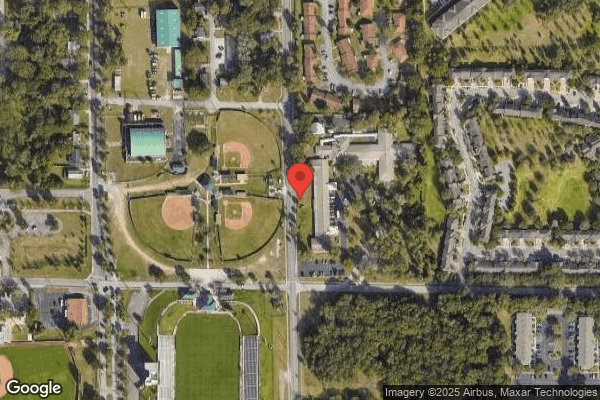
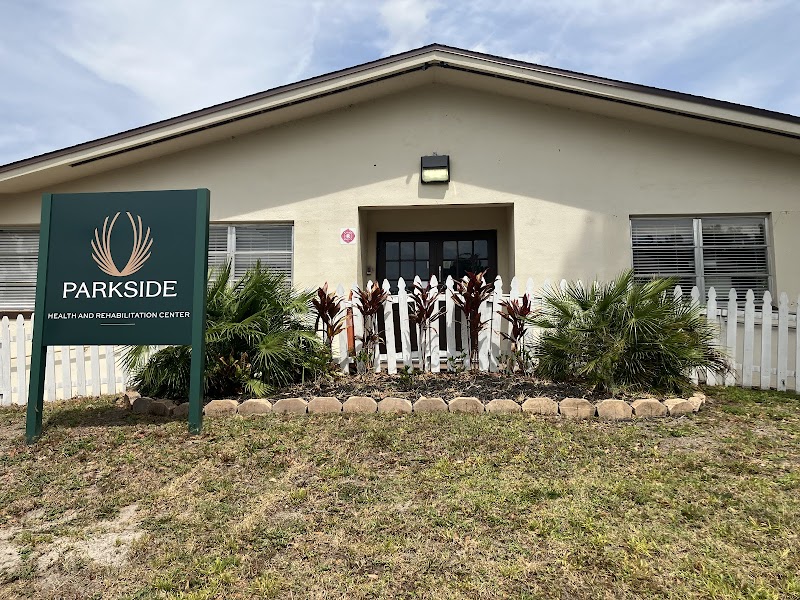
451 S AMELIA AVE, DELAND, FL 32720 (386) 734-8614
For profit - Corporation 122 Beds ASTON HEALTH Data: November 2025
Trust Grade
75/100
#255 of 690 in FL
Last Inspection: October 2024

Within standard 12-15 month inspection cycle. Federal law requires annual inspections.

Overview

Parkside Health and Rehabilitation Center in DeLand, Florida, has a Trust Grade of B, indicating it is a good option for families considering nursing home care. It ranks #255 out of 690 facilities in Florida, placing it in the top half, and #15 out of 29 in Volusia County, meaning there are only a few better local options available. However, the facility's trend is worsening, with issues increasing from one in 2022 to two in 2024. Staffing is a concern, with a 57% turnover rate that is higher than the state average, indicating that staff may not remain long enough to build strong relationships with residents. On a positive note, the facility has no fines on record, which is a good sign of compliance. However, there are some specific incidents to be aware of, including failures in food service safety, such as unclean ice and juice machines that could pose health risks, and a lack of proper storage for dishware that could lead to contamination. Additionally, there was a failure to update a resident's care plan regarding their code status, which could lead to confusion about their medical wishes. Overall, while there are strengths like the absence of fines, families should also consider these concerns carefully.

Trust Score
B
75/100
In Florida
#255/690
Top 36%
Safety Record
Low Risk
No red flags
Inspections
Getting Worse
1 → 2 violations
Staff Stability
⚠ Watch
57% turnover. Above average. Higher turnover means staff may not know residents' routines.
Penalties
✓ Good
No fines on record. Clean compliance history, better than most Florida facilities.
Skilled Nurses
⚠ Watch
Each resident gets only 29 minutes of Registered Nurse (RN) attention daily — below average for Florida. Fewer RN minutes means fewer trained eyes watching for problems.
Violations
✓ Good
Only 5 deficiencies on record. Cleaner than most facilities. Minor issues only.
★★★★☆
4.0
Overall Rating
★★★☆☆
3.0
Staff Levels
★★★★☆
4.0
Care Quality
★★★★☆
4.0
Inspection Score
Stable
2022: 1 issues
2024: 2 issues

The Good

  • 4-Star Quality Measures · Strong clinical quality outcomes
  • Full Sprinkler Coverage · Fire safety systems throughout facility
  • No fines on record

Facility shows strength in quality measures, fire safety.

The Bad

Staff Turnover: 57%

10pts above Florida avg (46%)

Frequent staff changes - ask about care continuity

Chain: ASTON HEALTH

Part of a multi-facility chain

Ask about local staffing decisions and management

Staff turnover is elevated (57%)

9 points above Florida average of 48%

The Ugly 5 deficiencies on record

Oct 2024 2 deficiencies
CONCERN (D)

Potential for Harm - no one hurt, but risky conditions existed

Deficiency F0657 (Tag F0657)

Could have caused harm · This affected 1 resident

**NOTE- TERMS IN BRACKETS HAVE BEEN EDITED TO PROTECT CONFIDENTIALITY** Based on record review, interview, and a review of the facility's policy, the facility failed to revise the resident's code stat...

Read full inspector narrative →
**NOTE- TERMS IN BRACKETS HAVE BEEN EDITED TO PROTECT CONFIDENTIALITY** Based on record review, interview, and a review of the facility's policy, the facility failed to revise the resident's code status in the care plan for one (Resident #68) of a total survey sample of 36 residents. Failure to update the resident's care plan for code status could result in staff confusion and the resident's wishes not being followed. The findings include: A review of Resident #68's medical record revealed an admission date of [DATE] and diagnoses including sepsis, partial intestinal obstruction, anemia, dementia-mild with mood disturbance, unspecified sequelae of cerebral infarction, major depressive disorder, schizoaffective disorder-depressive type, generalized anxiety disorder, and chronic kidney disease. A review of the resident's active Care Plan revealed the following Focus Areas, Goals and Interventions: Focus: Resident/Representative/Proxy has requested DNR (Do Not Resuscitate) status indicating (CPR) cardiopulmonary resuscitation measures are not performed (initiated [DATE], revised [DATE]). Goal: Resident or resident representative will communicate any desired changes to code status through next review (initiated: [DATE], revision: [DATE], target date: [DATE]). Interventions: Communicate resident/representative choice to appropriate staff members (initiated [DATE]). Notify physician of changes in code status preference (initiated [DATE]). Review/discuss Advanced Directives with the resident/resident representative as needed (initiated: [DATE], revision: [DATE]). Further review of the record revealed that an Advanced Directives Discussion Document was signed on [DATE] by the resident's health care proxy to establish the resident's wish to have CPR administered in the event of sudden cardiac arrest for any reason. (photographic evidence obtained) A review of the active physician's orders revealed the resident's Full Code status was ordered on [DATE] and signed by the physician on [DATE]. On [DATE] at 11:48 AM, the DNR Binder at the nurse's station was reviewed and revealed that Resident #68's status was Full Code. On [DATE] at 12:49 PM, a performance improvement plan (PIP) for Care Plan Interventions, initiated on [DATE], was reviewed, including periodic audits, which were documented as having been completed by [DATE]. No audits specific to care plan revisions/updates were made available for review. The PIP was reviewed in the monthly QAPI (Quality Assurance and Performance Improvement) meeting for three months after the plan was initiated. There was no indication that further monitoring of care plans was in place. (photographic evidence obtained) On [DATE] at 11:02 AM, an interview was conducted with Licensed Practical Nurse (LPN) A, the minimum data set (MDS) assistant. She explained that the baseline care plan was initiated by the admitting nurse and MDS staff worked on the comprehensive care plan. She explained that the purpose of the care plan was to address all of the problems the resident had and the goals and interventions they needed. She reported that all staff had access to the care plan. Care plan meetings were held at least every quarter and more often if the resident had a significant change in status. The meetings were attended by the Dietary Manager, Activities Director, Social Services, Unit Manager, and Therapy. The family comes if they want to and whoever they request to attend. Sometimes the resident wants to come, oh and me, I usually do the long-term people. She was asked what was discussed during care plan meetings. She stated, We discuss the plan, any skin issues, any concerns the resident has, any dietary issues, any problems, any discharges and what needs to be done prior to discharge. We talk about therapy issues, just a lot of different things. She was asked how often care plans were updated. She stated, Anytime we get any new orders and quarterly when we do their assessment. She explained that sometimes other staff asked the MDS staff to add things to the resident's care plan and they did so. A copy of Resident #68's care plan was requested. A review of the facility's policy titled Standards and Guidelines: Care Plans, Development Baseline and Comprehensive (effective 11/2001, revised 5/2023) revealed: 13. Assessments of residents are on-going, and care plans are revised as information about the residents and the resident's conditions change. 14. The Interdisciplinary Team must review and update the care plan: a. When there has been a significant change in the resident's condition b. When the desired outcome is not met c. When the resident has been readmitted to the facility from a hospital stay d. At least quarterly, in conjunction with the required quarterly (MDS) minimum data set assessment. .
CONCERN (F)

Potential for Harm - no one hurt, but risky conditions existed

Food Safety (Tag F0812)

Could have caused harm · This affected most or all residents

Based on observations, interviews, and record review, the facility failed to serve beverages in accordance with professional standards for food service safety, by failing to clean the ice and juice ma...

Read full inspector narrative →
Based on observations, interviews, and record review, the facility failed to serve beverages in accordance with professional standards for food service safety, by failing to clean the ice and juice machines in the kitchen. Failure to maintain the cleanliness of the ice and juice machines could result in potential health risks to any resident receiving ice or beverages from the facility's kitchen. The findings include: On 10/21/24 at 11:10 AM during the initial tour of the kitchen, the ice machine was observed with a pink slimy substance resembling pink biological growth along the entire bottom edge of the ice dispenser chute. When wiped with a clean napkin, the substance described above transferred onto the napkin. (Photographic evidence obtained). An observation of the external distribution lines of the kitchen's juice machine at the area where they delivered juice into the machine, were observed with a black slimy substance resembling biological growth on and around the lines. When wiped with a clean napkin, the substance described above transferred onto the napkin. (Photographic evidence obtained). When the findings were shown to Dietary Aide C, she reported that the kitchen staff only cleaned the juice dispenser spouts, not the delivery lines. She wiped some of the black substance off the lines and said it looked like mildew. Adjacent to the juice machine was a yellow 8-outlet power strip. Three pieces of kitchen equipment were plugged into the power strip, which was covered in a red sticky dried-on substance resembling juice splatters. The splatters were on and around the live outlets and the on/off breaker switch. When asked about the substance on the strip, Dietary Aide C acknowledged its presence. Without identifying the substance, she stated she would wipe it down with a wet rag. She was stopped from obtaining a wet rag and was reminded that it was a live outlet. A cleaning schedule for the ice machine was observed hanging on the side of the machine indicating it was last cleaned on 10/01/2024. (Photographic evidence obtained) On 10/21/24 at 11:30 AM, an interview with the Dietary Manager related to the above concerns was conducted. He stated the machines were cleaned monthly. The Dietary Manager observed the areas of concern described above and confirmed the findings. He then stated the ice machine would be cleaned immediately, and he would change the cleaning schedule to bi-weekly. He also stated the juice lines would be cleaned immediately and added to the bi-weekly cleaning schedule. .
Dec 2022 1 deficiency
CONCERN (D)

Potential for Harm - no one hurt, but risky conditions existed

ADL Care (Tag F0677)

Could have caused harm · This affected 1 resident

**NOTE- TERMS IN BRACKETS HAVE BEEN EDITED TO PROTECT CONFIDENTIALITY** Based on observations, staff and resident interviews, medical record review and facility policy review, the facility failed to p...

Read full inspector narrative →
**NOTE- TERMS IN BRACKETS HAVE BEEN EDITED TO PROTECT CONFIDENTIALITY** Based on observations, staff and resident interviews, medical record review and facility policy review, the facility failed to provide assistance with activities of daily living (ADLs), specifically nail care, for one dependant resident (#73) in a sample of 30 residents. The findings include: On 12/12/22 at 12:40 PM, Resident #73 was observed lying in bed, awake. His right hand was out of his bed covers and all fingernails were observed to be elongated with brown debris under each nail. The resident was asked if he could show his left hand. He pulled his covers back and picked up his left hand with his right hand to show his left hand. The nails were also elongated with brown debris under each nail. On 12/13/22 at 10:27 AM, Resident #73 was observed lying in bed, awake. Both hands had elongated nails with brown debris under the nails. The resident was asked if he preferred his nails to be trimmed and clean. He stated Yes, they used to trim my nails but no one has trimmed or cleaned them in months. He was asked if he had asked the staff to trim and clean his nails during that time frame. He stated, Yes, I have, many times, but no one has come back to do it. On 12/14/22 at 9:50 AM, Resident #73 was observed lying in bed, awake. Both hands had elongated nails with brown debris under the nails. He was asked when he last had a shower. He stated, This week. Yesterday. He was asked if staff tended to his nails during his shower. He stated No, they used to come by and trim my nails, but no one does that anymore; it's been months now. On 12/14/22 at 2:12 PM, Resident #73 was observed lying in bed, awake. He put his right hand out to show that his nails were trimmed and clean. He was asked if he was happy with the length of the nails. He stated yes. A medical record review revealed that Resident #73 was admitted on [DATE] with diagnoses including CVA (cerebral vascular accident) affecting the left non-dominant side, and contracture of the left hand. In a record review for Resident #73, it was revealed that a doctor's order, dated 11/28/22, read, Restorative nursing: Check and complete skin and nail hygiene as tolerated. Complete nails and skin hygiene to promote skin integrity. A review of the Minimum Data Set (MDS) quarterly assessment, dated 11/18/22, revealed a Brief Interview for Mental Status (BIMS) score of 9 out of 15, indicating moderately impaired cognition. Further review of the MDS quarterly assessment, revealed rejection of care behaviors were not exhibited. The functional status assessment revealed that Resident #73 required extensive assistance and one person physical assistance for personal hygiene, including washing and drying hands. A review of the Care Plan revealed: Focus: 4/1/20 (revised 9/21/20) Needs assistance with ADL care, dependent on staff care, related to CVA with left-sided weakness. Goals: Will be clean, dressed and well groomed through next review date (revised 9/8/22) Will accept care daily through next review. Will be able to to complete at least one simple ADL task through the next review date. Interventions: Extensive assist with all ADLs, encourage participation in some simple upper body tasks. Focus: 11/30/22: Resident has a need for the restorative nursing program for PROM LUE. (Passive Range of Motion, Left Upper Extremity) Goal: Resident will maintain current level of function and mobility through the next review period. Interventions: PROM gentle to LUE from bed/wheelchair level. Check and complete skin and nail hygiene as tolerated. Complete nails and skin hygiene to promote skin integrity. A review of the Certified Nursing Assistants' (CNAs) Plan of Care task documentation for 11/15/22 thru 12/14/22 revealed: Personal Hygiene self performance: How resident maintains personal hygiene (including washing/drying hands): extensive assistance/one person physical assist. Behavior Symptoms: None of the above observed (rejection of care behavior not documented as observed). In an interview with CNA A on 12/14/22 at 1:34 pm, she was asked who assisted residents with nail care. She replied We do, the CNAs do. She was asked if she was caring for Resident #73 today. She replied yes. She was asked if he needed assistance with his nail care. She replied, Yes, he always tells me he wants the podiatrist to do his fingernails, but I told him they only do the toenails. He did let me me cut his fingernails and clean under them today, after four months of me asking him to do them. She was asked about the brown debris under his nails. She stated, He does refuse that too, but he let me clean them today. He only let me trim the nails on both hands but clean under right hand nails. He wouldn't let me clean under the left hand fingers. She was asked if the restorative aides worked with him. She stated, Yes, they work with him for a brace on his left hand. She was asked if they ever trimmed his nails or cleaned under his nails. She stated, Not that I'm aware of. She was asked what she did when Resident #73 refused nail care. She stated, I let the nurse know. She was asked if he ever refused showers. She stated, No, he gets showers twice a week. In an interview with Licensed Practical Nurse (LPN) B on 12/14/22 at 2:32 PM, she was asked if she was caring for Resident #73 today. She stated yes. She was asked if he had every refused fingernail trimming or cleaning. She stated No, not that I'm aware of. She was asked how she was made aware if any resident refused any aspect of their care. She stated, The CNAs will tell us; they tell the nurse. She was asked if the CNAs always let her know if a resident refused any ADL care, such as bathing, mouth care, or nail care. She stated, Yes, they do. She was asked if she charted anywhere when care was refused. She stated, Yes, I'll write a progress note, and the CNAs will mark refused in their documentation. In an interview with Occupational Therapist (OT) C on 12/14/22 at 1:53 PM, she was asked if she had seen Resident #73 for Occupational Therapy (OT). She stated yes. She was asked if she had completed a Restorative Program referral for this resident in November 2022. She stated yes. She was asked if OT provided nail care for the resident. She stated, I'm not sure. The restorative aide would be following the plan of care. She was asked if she had provided any nail care for the resident. She stated, No, we have nail brushes and emery boards to file nails. She was asked if the resident had declined or refused any care or treatments. She stated, Not with me. In an interview with LPN D on 12/14/22 at 2:50 PM, she was asked if she was the manager of the Restorative Nursing Program. She stated yes. She was asked if Resident #73 was current on restorative services. She stated yes. She was asked who created the restorative plan of care. She stated, Physical Therapy or Occupational Therapy create the plan of care during their initial evaluation. She was asked who followed that plan of care. She stated, We have two restorative aides. They are also CNAs. I also help out hands on, like if one of them is out on a transport with a resident. She was asked what was in the restorative plan of care for Resident #73. She stated, Passive range of motion to his left upper extremity is done daily, he wears a splint on his left hand, and restorative applies the splint. Ensure skin is clean and dry where the splint is, and his palm and in-between fingers. Provide nail and skin hygiene. She was asked if the resident was receiving nail care. She stated, They haven't trimmed them in a while, but they have been cleaning under them. She was asked if Resident #73 ever declined nail care. She stated, He has in the past; he has refused the cleaning sometimes. They try to do the best they can so they are charting that they are doing it. She was asked if it was charted anywhere when he refused nail care. She stated, They can put refused on the care. She was asked if anyone had charted any of his care as refused. She stated, No, they have not charted his nail care as refused. She was asked how she was made aware if the resident declined the care. She stated, Normally they tell me, but they have not told me he's refused any care. A review of the facility policy titled Activities of Daily Living, Supporting (revised 3/2018) revealed a policy statement which read: Residents who are unable to carry out activities of daily living independently will receive the services necessary to maintain good nutrition, grooming, and personal and oral hygiene. .
Apr 2021 2 deficiencies
CONCERN (D)

Potential for Harm - no one hurt, but risky conditions existed

Deficiency F0676 (Tag F0676)

Could have caused harm · This affected 1 resident

**NOTE- TERMS IN BRACKETS HAVE BEEN EDITED TO PROTECT CONFIDENTIALITY** Based on observation, interviews, and record reviews, the facility failed to ensure it provided restorative services for one (Re...

Read full inspector narrative →
**NOTE- TERMS IN BRACKETS HAVE BEEN EDITED TO PROTECT CONFIDENTIALITY** Based on observation, interviews, and record reviews, the facility failed to ensure it provided restorative services for one (Resident #40) resident sampled for restorative care provided, from a total sample of 44 residents. This placed Resident #40 at risk for functional decline. The findings include: During an interview with Resident #40 on 4/26/21 at 11:36 AM, he was observed using a wheelchair as a mobility aid. He reported that he was supposed to be on restorative programs for stand-to-sit and for walking, but it was not happening. During another interview with Resident #40 on 4/28/21 at 09:30 AM, he revealed that he spoke with the Physical Therapy Manager/Therapist who told him his services would start on 5/03/21. A record review for Resident #40 revealed he was admitted to the facility on [DATE]. His diagnoses included, but were not limited to, coronary artery disease, heart failure, hypertension, diabetes mellitus, arthritis, osteoporosis, and morbid obesity. A review of Resident #40's Significant Change Minimum Data Set assessment, dated 3/6/21, revealed a Brief Interview for Mental Status (BIMS) score of 15, indicating intact cognitive response. The assessment was documented that he required extensive assistance of 2 people with bed mobility and transfers, and 1-person extensive assistance to walk in his room and in the corridors. His balance during transitions and walking was not steady, and he used a walker and a wheelchair as mobility aids. The care plan for Resident #40 was reviewed and documented that Resident #40 was a fall risk and non-compliant with waiting for assistance and using his walker for transfers and ambulation. Approaches included refer to physical therapy as needed. A review of Resident #40's physician's orders dated 4/19/21 read: Discontinue skilled PT services and continue with RNP (restorative nursing program). A review of the RNP Occupational Therapy Functional Maintenance Program for Resident #40, dated 4/16/21, revealed the goal: Sit to stand transfers x 5 repetitions at the hall rail or parallel bars with minimal assistance and cues for hand/foot placement, scoot to edge of chair. (Photographic evidence obtained) A review of the CNA [NAME] for Resident #40, asking how Resident #40 ambulated in corridors and his room revealed many of the fields over the last 30 days were marked not applicable. The [NAME] section titled Nursing Rehab: Transfers: Sit to stand transfers x 5 repetitions at hall rail and cues for hand/foot placement, scoot to edge of chair for staff to fill in was left blank for the past 30 days. The Nursing Rehab: Walking, assist to toilet using 2 WW (wheeled walker) from elevated EOB (edge of bed), 3 x's a week as tolerated section for staff to complete was also blank for the past 30 days. (Photographic evidence was obtained) An interview was conducted with Employee A, Restorative Certified Nursing Assistant, on 4/29/21 at 10:27 AM. She stated that Resident #40 was put on restorative services a week ago and his goals are to walk to the bathroom and move from sitting to standing position for 5 repetitions. During the interview, Employee A revealed that due to short staffing and restorative department having to finish monthly weights, they had not been able to provide Resident #40's restorative services. .
CONCERN (F)

Potential for Harm - no one hurt, but risky conditions existed

Food Safety (Tag F0812)

Could have caused harm · This affected most or all residents

Based on observations and staff interviews, the facility failed to store dishware, covered or inverted, in a location where it was not exposed to splash, dust and other contamination. This deficient p...

Read full inspector narrative →
Based on observations and staff interviews, the facility failed to store dishware, covered or inverted, in a location where it was not exposed to splash, dust and other contamination. This deficient practice potentially affected all residents in the facility who took their meals from the facility's kitchen. The findings include: During a kitchen visit on 04/28/21 at 11:31 AM, the plate dispenser was observed next to the stove and partially under the vent hood. The plates were stored face-up and were not covered in a manner to prevent food, grease splatters, or dust and debris from landing on the face or lip of the plates. A second kitchen visit and interview with Employee C, Dietary [NAME] was conducted on 04/29/21 at 09:45 AM. The plate dispenser was once again observed full of plates partially under the vent hood with plates face-up not inverted. The Dietary [NAME] acknowledged the potential for cross-contamination of the eating surface of the plates and confirmed they should be stored face down or covered. During an interview with the Certified Dietary Manager on 4/29/21 at 10:00 AM, he acknowledged the potential for contamination of the eating surfaces of the plates. .
Understanding Severity Codes (click to expand)
Life-Threatening (Immediate Jeopardy)
J - Isolated K - Pattern L - Widespread
Actual Harm
G - Isolated H - Pattern I - Widespread
Potential for Harm
D - Isolated E - Pattern F - Widespread
No Harm (Minor)
A - Isolated B - Pattern C - Widespread

Questions to Ask on Your Visit

  • "Why is there high staff turnover? How do you retain staff?"
  • "Can I speak with families of current residents?"
  • "What's your RN coverage like on weekends and overnight?"

Our Honest Assessment

Strengths
  • • No major safety red flags. No abuse findings, life-threatening violations, or SFF status.
  • • No fines on record. Clean compliance history, better than most Florida facilities.
  • • Only 5 deficiencies on record. Cleaner than most facilities. Minor issues only.
Concerns
  • • 57% turnover. Above average. Higher turnover means staff may not know residents' routines.
Bottom line: Generally positive indicators. Standard due diligence and a personal visit recommended.

About This Facility

What is Parkside Center's CMS Rating?

CMS assigns PARKSIDE HEALTH AND REHABILITATION CENTER an overall rating of 4 out of 5 stars, which is considered above average nationally. Within Florida, this rating places the facility higher than 99% of the state's 100 nursing homes. This rating reflects solid performance across the metrics CMS uses to evaluate nursing home quality.

How is Parkside Center Staffed?

CMS rates PARKSIDE HEALTH AND REHABILITATION CENTER's staffing level at 3 out of 5 stars, which is average compared to other nursing homes. Staff turnover is 57%, which is 10 percentage points above the Florida average of 46%. High turnover can affect care consistency as new staff learn residents' individual needs.

What Have Inspectors Found at Parkside Center?

State health inspectors documented 5 deficiencies at PARKSIDE HEALTH AND REHABILITATION CENTER during 2021 to 2024. These included: 5 with potential for harm.
Who Owns and Operates Parkside Center?

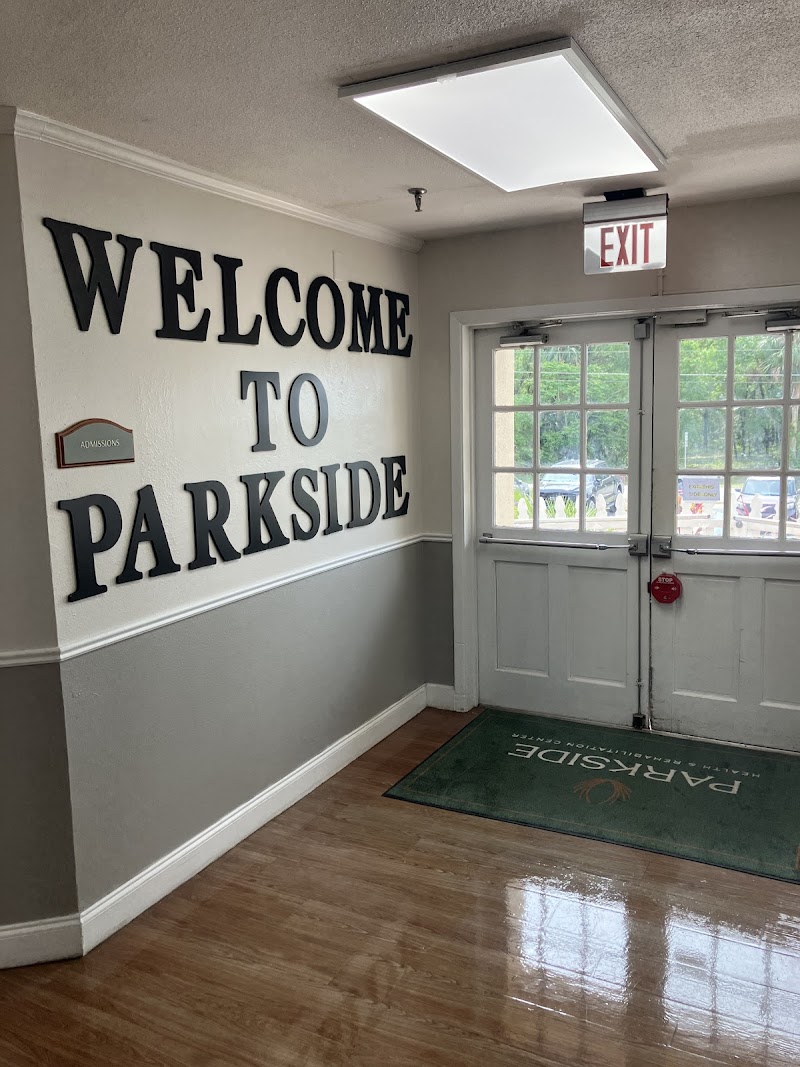
PARKSIDE HEALTH AND REHABILITATION CENTER is owned by a for-profit company. For-profit facilities operate as businesses with obligations to shareholders or private owners. The facility is operated by ASTON HEALTH, a chain that manages multiple nursing homes. With 122 certified beds and approximately 108 residents (about 89% occupancy), it is a mid-sized facility located in DELAND, Florida.
How Does Parkside Center Compare to Other Florida Nursing Homes?

Compared to the 100 nursing homes in Florida, PARKSIDE HEALTH AND REHABILITATION CENTER's overall rating (4 stars) is above the state average of 3.2, staff turnover (57%) is significantly higher than the state average of 46%, and health inspection rating (4 stars) is above the national benchmark.

What Should Families Ask When Visiting Parkside Center?

Based on this facility's data, families visiting should ask: "How do you ensure continuity of care given staff turnover, and what is your staff retention strategy?" "Can I visit during a mealtime to observe dining assistance and food quality?" "How do you handle medical emergencies, and what is your hospital transfer rate?" "Can I speak with family members of current residents about their experience?" These questions are particularly relevant given the facility's high staff turnover rate.

Is Parkside Center Safe?

Based on CMS inspection data, PARKSIDE HEALTH AND REHABILITATION CENTER has a clean safety record: no substantiated abuse findings (meaning no confirmed cases of resident harm), no Immediate Jeopardy citations (the most serious violation level indicating risk of serious injury or death), and is not on the Special Focus Facility watch list (a federal program monitoring the lowest-performing 1% of nursing homes). The facility has a 4-star overall rating and ranks #1 of 100 nursing homes in Florida. While no facility is perfect, families should still ask about staff-to-resident ratios and recent inspection results during their visit.

Do Nurses at Parkside Center Stick Around?

Staff turnover at PARKSIDE HEALTH AND REHABILITATION CENTER is high. At 57%, the facility is 10 percentage points above the Florida average of 46%. High turnover means new staff may not know residents' individual needs, medications, or preferences. It can also be disorienting for residents, especially those with dementia who rely on familiar faces. Families should ask: What is causing the turnover? What retention programs are in place? How do you ensure care continuity during staff transitions?

Was Parkside Center Ever Fined?

PARKSIDE HEALTH AND REHABILITATION CENTER has no federal fines on record. CMS issues fines when nursing homes fail to meet care standards or don't correct problems found during inspections. The absence of fines suggests the facility has either maintained compliance or corrected any issues before penalties were assessed. This is a positive indicator, though families should still review recent inspection reports for the full picture.

Is Parkside Center on Any Federal Watch List?

PARKSIDE HEALTH AND REHABILITATION CENTER is not on any federal watch list. The most significant is the Special Focus Facility (SFF) program, which identifies the bottom 1% of nursing homes nationally based on persistent, serious quality problems. Not being on this list means the facility has avoided the pattern of deficiencies that triggers enhanced federal oversight. This is a positive indicator, though families should still review the facility's inspection history directly.