SUWANNEE VALLEY NURSING CENTER
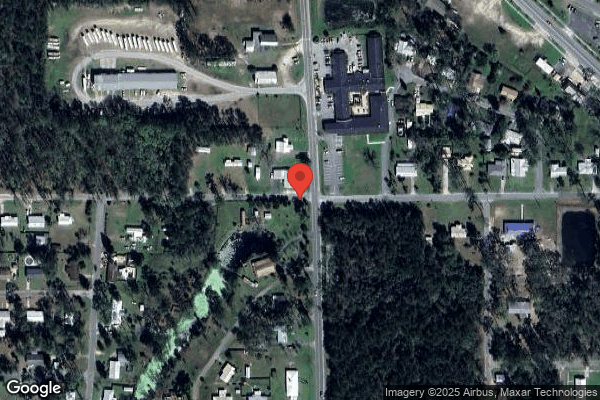
427 15TH AVENUE NORTHWEST, JASPER, FL 32052 (386) 792-1868
For profit - Limited Liability company 60 Beds SIMCHA HYMAN & NAFTALI ZANZIPER Data: November 2025
Trust Grade
90/100
#124 of 690 in FL
Last Inspection: March 2025

Within standard 12-15 month inspection cycle. Federal law requires annual inspections.

Overview

Suwannee Valley Nursing Center in Jasper, Florida has an excellent Trust Grade of A, indicating that it is highly recommended and performs well compared to other facilities. It ranks #124 out of 690 in Florida, placing it in the top half, and is the only option in Hamilton County. The facility's trend is stable, with the same number of issues reported in both 2024 and 2025, but there are some concerns, including a staffing turnover rate of 53%, which is higher than the Florida average. There have been no fines, suggesting compliance with regulations, and the nursing coverage is better than 85% of Florida facilities, ensuring that residents receive attentive care. However, there have been specific incidents of concern, such as failing to accurately document residents' use of respiratory equipment and not properly labeling and storing food, which could lead to safety risks. Additionally, an issue was noted where staff did not follow hand hygiene protocols during medication administration, raising infection control concerns. Overall, while the facility has strong ratings and no fines, families should be aware of these weaknesses.

Trust Score
A
90/100
In Florida
#124/690
Top 17%
Safety Record
Low Risk
No red flags
Inspections
Holding Steady
2 → 2 violations
Staff Stability
⚠ Watch
53% turnover. Above average. Higher turnover means staff may not know residents' routines.
Penalties
✓ Good
No fines on record. Clean compliance history, better than most Florida facilities.
Skilled Nurses
✓ Good
Each resident gets 59 minutes of Registered Nurse (RN) attention daily — more than average for Florida. RNs are trained to catch health problems early.
Violations
⚠ Watch
12 deficiencies on record. Higher than average. Multiple issues found across inspections.
★★★★★
5.0
Overall Rating
★★★★★
5.0
Staff Levels
★★★★☆
4.0
Care Quality
★★★★☆
4.0
Inspection Score
Stable
2024: 2 issues
2025: 2 issues

The Good

  • 5-Star Staffing Rating · Excellent nurse staffing levels
  • 4-Star Quality Measures · Strong clinical quality outcomes
  • Full Sprinkler Coverage · Fire safety systems throughout facility
  • No fines on record

Facility shows strength in staffing levels, quality measures, fire safety.

The Bad

Staff Turnover: 53%

Near Florida avg (46%)

Higher turnover may affect care consistency

Chain: SIMCHA HYMAN & NAFTALI ZANZIPER

Part of a multi-facility chain

Ask about local staffing decisions and management

The Ugly 12 deficiencies on record

Mar 2025 2 deficiencies
CONCERN (D)

Potential for Harm - no one hurt, but risky conditions existed

Food Safety (Tag F0812)

Could have caused harm · This affected 1 resident

Based on observation, interview, and record review, the facility failed to ensure foods were properly labeled and stored. Findings include: During an observation on 3/24/2025 at 9:20 AM while conducti...

Read full inspector narrative →
Based on observation, interview, and record review, the facility failed to ensure foods were properly labeled and stored. Findings include: During an observation on 3/24/2025 at 9:20 AM while conducting the initial tour of the kitchen with the Certified Dietary Manager (CDM), there were thirteen bags of frozen variety of meats, without an identifying label, and one bag that was left open exposing chicken with ice particle buildup and the appearance of freezer burn in the reach-in freezer. During an interview on 3/24/2025 at 9:25 AM, the CDM confirmed that there were thirteen bags of a variety of meats without an identifying label and one bag of chicken that was completely open exposing the product to the elements and freezer burn. Review of the facility policy and procedure titled Date Marking for Food Safety dated 11/2020 and revised on 1/2025 showed it read, Policy Explanation and Compliance Guidelines for Staffing . 4. The marking system shall consist of a color-coded label, the day/date of opening, and the day/date the item must be consumed or discarded.
CONCERN (D)

Potential for Harm - no one hurt, but risky conditions existed

Infection Control (Tag F0880)

Could have caused harm · This affected 1 resident

Based on observation, interview, and record review, the facility failed to ensure staff performed hand hygiene and followed infection control standard of practice during medication administration for ...

Read full inspector narrative →
Based on observation, interview, and record review, the facility failed to ensure staff performed hand hygiene and followed infection control standard of practice during medication administration for 1 of 4 residents observed for medication administration, Resident #7, to prevent the possible spread of infection and communicable diseases. Findings include: During an observation on 3/26/2025 at approximately 9:10 AM, Staff A, Licensed Practical Nurse (LPN), prepared medications for administration to Resident #7, which included Baby Shampoo on a wet washcloth. Staff A donned a gown and gloves and proceeded to clean Resident #7's eyelids with the washcloth containing Baby Shampoo and placed the soiled washcloth on a piece of aluminum foil. Staff A did not remove her gloves or did not perform hand hygiene and proceeded to administer medications to Resident #7 through her gastrostomy tube (G-tube: a thin, flexible tube inserted through the abdominal wall and into the stomach. It is used to provide nutrition and medication to individuals who cannot eat or drink adequately by mouth.) While holding a medicine cup containing a crushed pill of Amlodipine (a medicine for treating high blood pressure) mixed with a small amount of water, Staff A used her gloved finger to stir the mixture before she administered it through Resident #7's G-tube. Review of Resident #7's physician order dated 3/18/2025 showed it read, Enhanced Barrier for tube feeding. During an interview on 3/26/2025 at approximately 9:30 AM, Staff A, LPN, stated, I should have washed my hands and changed my gloves after I washed her eyes, before I gave her meds. I shouldn't have mixed the medicine with my finger. During an interview on 3/26/2025 at 10:50 AM, the Director of Nursing (DON) stated, For a resident who was on Enhanced Barrier Precautions who had a procedure requiring cleaning on her eyes, the nurse should wash her hands and change her gloves before administering any medications through the gastric tube. The nurse should only use a spoon to mix the crushed medication suspended in water in a medication cup. Review of the facility's policy and procedures titled Medication Administration last reviewed on 1/19/2025 showed it read, Policy: Medications are administered by licensed nurses, or other staff who are legally authorized to do so in this state, as ordered by the physician and in accordance with professional standards of practice, in a manner to prevent contamination or infection. Review of the facility's policy and procedures titled Infection Prevention and Control Program last reviewed on 1/19/2025 showed it read, Policy: This facility has established and maintains an infection prevention and control program designed to provide a safe, sanitary, and comfortable environment and to help prevent the development and transmission of communicable diseases and infection as per accepted national standards and guidelines . Policy Explanation and Compliance Guidelines . 4. Standard Precautions . b. Hand hygiene shall be performed in accordance with our facility's established hand hygiene procedures. Review of the facility's policy and procedures titled Hand Hygiene last reviewed on 1/19/2025, showed it read, Policy: All staff will perform proper hand hygiene procedures to prevent the spread of infection to other personnel, residents, and visitors. This applies to all staff working in all locations within the facility . Policy Explanation and Compliance Guidelines: 1. Staff will perform hand hygiene when indicated, using proper technique consistent with accepted standards of practice. 2. Hand hygiene is indicated and will be performed under the conditions listed in, but not limited to, the attached hand hygiene table . Hand Hygiene Table - Condition . Before preparing or handling medications . After handling items potentially contaminated with blood, body fluids, secretions, or excretions . When, during resident care, moving from a contaminated body site to a clean body site.
May 2024 2 deficiencies
CONCERN (D) 📢 Someone Reported This

A family member, employee, or ombudsman was alarmed enough to file a formal complaint

Potential for Harm - no one hurt, but risky conditions existed

Respiratory Care (Tag F0695)

Could have caused harm · This affected 1 resident

**NOTE- TERMS IN BRACKETS HAVE BEEN EDITED TO PROTECT CONFIDENTIALITY** Based on observation, interview, and record review, the facility failed to ensure an attending practitioner's orders and indicat...

Read full inspector narrative →
**NOTE- TERMS IN BRACKETS HAVE BEEN EDITED TO PROTECT CONFIDENTIALITY** Based on observation, interview, and record review, the facility failed to ensure an attending practitioner's orders and indication of use for CPAP (Continuous Positive Airway Pressure) or BIPAP (Bi-level Positive Airway Pressure) devices for 1 (Resident #5) of 3 residents reviewed for respiratory care services. Findings include: Review of the admission record documented Resident #5 was readmitted to the facility on [DATE] with diagnoses including CHF (Congestive Heart Failure), COPD (Chronic Obstructive Pulmonary Disease), and Pulmonary Edema. Review of the physician's orders for Resident #5 as of 5/21/24 documented no orders for the use or care of a CPAP or BIPAP machine. During an observation on 5/21/24 at 11:40 AM, Resident #5 was observed in his bedroom with a CPAP machine on the nightstand next to the bed. During an interview on 5/21/24 at 11:41 AM, Resident #5 stated, That is my CPAP machine on the table there, indicating the device on the nightstand next to the bed. Review of the care plan dated 7/25/22 for Resident #5 documented at risk for respiratory complications related to dx (diagnosis) of: CHF, COPD, Pulmonary Edema, with interventions that include Monitor use of Bi-Pap machine use as ordered. During an interview on 5/21/24 at 1:45 PM, the Director of Nursing confirmed the facility did not have any current orders for Resident #5's use of a CPAP or BIPAP machine. A policy on physician's orders was not provided during the survey.
CONCERN (E) 📢 Someone Reported This

A family member, employee, or ombudsman was alarmed enough to file a formal complaint

Potential for Harm - no one hurt, but risky conditions existed

Assessment Accuracy (Tag F0641)

Could have caused harm · This affected multiple residents

**NOTE- TERMS IN BRACKETS HAVE BEEN EDITED TO PROTECT CONFIDENTIALITY** Based on observation, interview, and record review, the facility failed to ensure resident assessments accurately reflect the re...

Read full inspector narrative →
**NOTE- TERMS IN BRACKETS HAVE BEEN EDITED TO PROTECT CONFIDENTIALITY** Based on observation, interview, and record review, the facility failed to ensure resident assessments accurately reflect the resident's status for 2 (Resident #1 and #5) of 3 residents reviewed for respiratory care. Findings include: 1.) Review of the admission record documented Resident #1 was admitted to the facility on [DATE] with diagnoses that include COPD (Chronic Obstructive Pulmonary Disease and OSA (Obstructive Sleep Apnea). During an interview on 5/21/24 at 9:59 AM, Resident #1 confirmed it was her CPAP (Continuous Positive Airway Pressure) machine sitting on the nightstand. She stated that she is still using the machine; she just cannot clean it with her SoClean® [CPAP cleaner and sanitizer machine]. Review of Minimum Data Set (MDS) Quarterly assessment dated [DATE] documented Resident #1 is not using a CPAP machine. 2.) Review of the admission record documented Resident #5 was readmitted to the facility on [DATE] with diagnoses including CHF (Congestive Heart Failure), COPD (Chronic Obstructive Pulmonary Disease), and Pulmonary Edema. During an observation on 5/21/24 at 11:40 AM, Resident #5 was observed in his bedroom with a CPAP machine on the nightstand next to the bed. During an interview on 5/21/24 at 11:41 AM, Resident #5 stated, That is my CPAP machine on the table there, indicating the device on the nightstand next to the bed. Review of the care plan dated 7/25/22 for Resident #5's care plan dated 7/25/22 documented at risk for respiratory complications related to dx (diagnosis) of: CHF, COPD, Pulmonary Edema, with interventions that include Monitor use of Bi-Pap (Bilevel Positive Airway Pressure) machine use as ordered. Review of the MDS Quarterly assessment dated [DATE] documented Resident #5 as not using a CPAP machine. During an interview on 5/21/24 at 1:30 PM, the Minimum Data Set Coordinator confirmed Resident #1 and Resident #5's MDS assessments documented that they were not using CPAP machines.
Dec 2023 5 deficiencies
CONCERN (D)

Potential for Harm - no one hurt, but risky conditions existed

Assessment Accuracy (Tag F0641)

Could have caused harm · This affected 1 resident

**NOTE- TERMS IN BRACKETS HAVE BEEN EDITED TO PROTECT CONFIDENTIALITY** Based on observation, interview, and record review, the facility failed to ensure the accuracy of Minimum Data Set (MDS) assessm...

Read full inspector narrative →
**NOTE- TERMS IN BRACKETS HAVE BEEN EDITED TO PROTECT CONFIDENTIALITY** Based on observation, interview, and record review, the facility failed to ensure the accuracy of Minimum Data Set (MDS) assessments for 1 of 4 residents reviewed for mood and behavior, Resident #33. Findings include: Review of Resident #33's admission record showed the resident was admitted on [DATE] and diagnosed with major depressive disorder on 12/5/2020. Review of Resident #33's Quarterly MDS dated [DATE] showed no diagnosis of depression under Section I. Active Diagnosis. During an interview on 12/12/2023 at 12:17 PM, the MDS Coordinator stated, The system pulls it through and it missed that. I normally will review and when I find this, I modify and correct it. Review of the facility's policy and procedures titled MDS 3.0 Completion with the last review date of 1/4/2023 reads, Policy: Residents are assessed, using a comprehensive assessment process, in order to identify care needs and to develop an interdisciplinary care plan.
CONCERN (D)

Potential for Harm - no one hurt, but risky conditions existed

Quality of Care (Tag F0684)

Could have caused harm · This affected 1 resident

Based on record review and interview, the facility failed to ensure residents received medications in accordance with standard of practice for 1 of 7 residents reviewed, Resident #4. Findings include:...

Read full inspector narrative →
Based on record review and interview, the facility failed to ensure residents received medications in accordance with standard of practice for 1 of 7 residents reviewed, Resident #4. Findings include: Review of Resident #4's Medication Administration Record revealed Amlodipine Besylate was administered on 12/5/2023 with a pulse of 53 and on 12/6/2023 with a pulse of 55. Review of Resident #4's physician order dated 11/14/2023 reads, Amlodipine Besylate oral tablet 10 mg (Amlodipine Besylate) Give 1 tablet by mouth in the morning for hypertension related to essential (primary) hypertension (110) Administer 1 tablet by mouth in the morning. If pulse is below 60 hold and recheck BP [Blood Pressure] and pulse in two hours. Administer if within parameters. During an interview on 12/12/2023 at 1:27 PM, the Medical Director stated, The staff should let me know if parameters are not being met. The order should be followed. During an interview on 12/13/2023 at 7:27AM, Staff A, Licensed Practical Nurse (LPN), stated, It depends on the resident if it is close to the parameter, I will ask the resident. I prefer not to give it since I have worked in a hospital setting and here you do not have all the things you do in a hospital. During an interview on 12/13/2023 at 10:58 AM, the Director of Nursing stated, It all depends on the resident. If the staff wants to give medication out of parameters, they should contact the doctor and get clarification. I spoke to the doctor, and he said that the parameters should have been 50. Medication should never be given out of parameters. Review of the facility policy and procedures titled Medication Administration with the last review date of 1/4/2023 reads, Policy Explanation and Compliance Guidelines . 8. Obtain and record vital signs, when applicable or per physician orders. when applicable, hold medication for those vital signs outside the physician's prescribed parameters.
CONCERN (D)

Potential for Harm - no one hurt, but risky conditions existed

Medical Records (Tag F0842)

Could have caused harm · This affected 1 resident

2. Review of Resident #57's Progress Notes dated 12/1/2023 at 9:10 PM reads, Insulin Glargine-yfgn 100 Unit/ML [milliliter] Solution pen-injector, Inject 50 unit subcutaneously at bedtime related to t...

Read full inspector narrative →
2. Review of Resident #57's Progress Notes dated 12/1/2023 at 9:10 PM reads, Insulin Glargine-yfgn 100 Unit/ML [milliliter] Solution pen-injector, Inject 50 unit subcutaneously at bedtime related to type 2 diabetes mellitus without complications (E11.9), Resident refused 50 units per order, she stated, I only want 25 units. Review of Resident #57's Medication Administration Record (MAR) showed staff initials indicating administration of 50 units of Insulin Glargine-yfgn on 12/1/2023. Review of Resident #57's Progress Notes dated 11/27/2023 at 9:29 PM reads, Insulin Glargine-yfgn 100 Unit/ML Solution pen-injector, Inject 50 unit subcutaneously at bedtime related to type 2 diabetes mellitus without complications (E11.9), Resident refused to be administered the 50 units, she only wanted 25 units at this time. Review of Resident #57's MAR showed staff initials indicating administration of 50 units of Insulin Glargine-yfgn on 11/27/2023. Review of Resident #57's Progress Notes dated for 11/26/2023 at 8:52 PM reads, Glargine-yfgn 100 Unit/ML Solution pen-injector, Inject 50 unit subcutaneously at bedtime related to type 2 diabetes mellitus without complications (E11.9), Resident stated she feels 50 units at night is too much for her because she stated she is dropping at night, resident agreed to 25 units tonight and would like the dosage revaluated. Review of Resident #57's MAR showed staff initials indicating administration of 50 units of Insulin Glargine-yfgn on 11/26/2023. During an interview on 12/10/2023 at 2:30 PM, the DON stated, When staff is not giving the prescribed dosage, they are supposed to document in a progress note and refer to it on the MAR with the number 9. I see that they didn't do that. We will have to re-educate them. Based on observation, interview, and record review, the facility failed to maintain medical records on each resident that are accurately documented for 1 of 3 residents reviewed for nutrition, Resident #4, and for 1 of 2 residents reviewed for insulin administration, Resident #57. Findings include: 1. During an observation on 12/11/2023 at 8:10 AM, Resident #4 was eating independently in his room. The meal tray contained eggs, grits, ground sausage, orange juice, and coffee. Review of Resident #4's physician order dated 11/14/2023 reads, Regular diet regular texture. Review of Resident #4's Medical Certification for Medicaid Long-Term Care Services and Patient Transfer Form (3008) dated 11/13/2023 reads, Q. Nutrition/Hydration: Regular soft/thin liquids. Review of Resident #4's Dietary Profile dated 11/14/2023 reads, A. Diet. 1. Current diet order: Regular Mech [Mechanical] Soft Diet. During an interview on 12/12/2023 at 11:08 AM, the Registered Dietician (RD) stated, Usually the registered nurse from the facility or the director of nursing will put in the diet orders. Usually, first orders are what the hospital sends and the facility match the orders. His orders were regular soft/thin liquids that would be equivalent to mechanical soft. We follow the 3008 form. During an interview on 12/12/2023 at 11:22 AM, the Director of Nursing (DON) stated, We were following his home diet. It was a preference. The resident did not need that kind of meal. I do not know. Maybe the CDM [Certified Dietary Manager] made a documentation error. During an interview on 12/13/2023 at 9:12 PM, the CDM stated, [Resident #4's name] has no teeth and wanted his food really soft because he could not chew. After I do the dietary preference, the DON or the RD put the diet orders in place. Mechanical Soft diet is ground meats. Review of the facility policy and procedures titled Documentation in Medical Record with the last review date of 1/4/2023 reads, Policy: Each resident's medical record shall contain an accurate representation of the actual experiences of the resident and include enough information to provide a picture of the resident's progress through complete, accurate and timely documentation. Policy Explanation and Compliance Guidelines . 3. Principles of Documentation include, but are not limited to: a. Documentation shall be factual, objective, and resident centered.
CONCERN (D)

Potential for Harm - no one hurt, but risky conditions existed

Infection Control (Tag F0880)

Could have caused harm · This affected 1 resident

Based on observation, interview, and record review, the facility failed to ensure staff followed infection control standards of practice while administering medications. Findings include: During an ob...

Read full inspector narrative →
Based on observation, interview, and record review, the facility failed to ensure staff followed infection control standards of practice while administering medications. Findings include: During an observation on 12/12/2023 at 8:59 AM, Staff B, Licensed Practical Nurse (LPN), removed 4 tablets for Resident #41 from the pill blister pack and medication bottle by grabbing the medication with her hands without wearing gloves. Staff B placed the medications in the medication cup, which contained other medications. Staff B entered Resident #41's room and administered medications. Staff B exited the room and used hand sanitizer stored in the medication cart to sanitize her hands. During an interview on 12/12/2023 at 9:10 AM, Staff B, LPN, stated, I did not realize I was touching the medication with my hands. Normally, I pop them straight into the medication cup. During an interview on 12/12/2023 at 9:40 AM, the Director of Nursing stated, Staff should not be touching medication with their hands while preparing medication. Review of the facility policy and procedures titled Medication Administration with the last review date of 1/4/2023 reads, Policy Explanation and Compliance Guidelines . 13. Remove medication from source, taking care not to touch medication with bare hand.
MINOR (C)

Minor Issue - procedural, no safety impact

Staffing Information (Tag F0732)

Minor procedural issue · This affected most or all residents

Based on observation, interview, and record review, the facility failed to post the nurse staffing information on a daily basis. Findings include: During an observation on 12/10/2023 at 9:15 AM, the f...

Read full inspector narrative →
Based on observation, interview, and record review, the facility failed to post the nurse staffing information on a daily basis. Findings include: During an observation on 12/10/2023 at 9:15 AM, the facility's staffing information posted on the bulletin board adjacent to the A Hall Nursing Station was dated 9/7/2023. During an interview on 12/10/2023 at 9:40 AM, the Director of Nursing (DON) confirmed that the staffing information was dated 9/7/2023 and stated it was supposed to be updated daily and the facility did not have the records from 9/8/2023 until current. Review of the facility policy and procedures titled Nurse Staffing Posting Information with the last review date of 1/4/2023 reads, Policy: It is the policy of this facility to make nurse staffing information readily available in a readable format to residents and visitors at any given time. Policy Explanation and Compliance Guidelines: 1. The Nurse Staffing sheet will be posted on a daily basis and will contain the following information: a. Facility name, b. The current date, c. Facility's current resident census, d. The total number and the actual hours worked by the following categories of licensed and unlicensed nursing staff directly responsible for resident care per shift: i. Registered Nurses, ii. Licensed Practical Nurses/ Licensed Vocational Nurses, iii. Certified Nurse Aides. 2. The facility will post the Nurse Staffing sheet at the beginning of each shift.
Jun 2022 3 deficiencies
CONCERN (D)

Potential for Harm - no one hurt, but risky conditions existed

Tube Feeding (Tag F0693)

Could have caused harm · This affected 1 resident

Based on observation, interview, and record review, the facility failed to prevent possible complications of enteral feeding including but not limited to aspiration pneumonia, diarrhea, and vomiting f...

Read full inspector narrative →
Based on observation, interview, and record review, the facility failed to prevent possible complications of enteral feeding including but not limited to aspiration pneumonia, diarrhea, and vomiting for 1 of 3 residents, Resident #34. Findings include: During an observation on 6/14/22 at 7:58 AM, Resident #34 was observed to have tube feeding being administered. The head of the resident's bed was flat. During an interview on 6/14/22 at 8:00 AM, Staff A, Registered Nurse (RN), confirmed the head of the bed was not elevated and stated it should be elevated to at least 30 degrees. During an interview on 6/14/22 at 8:05 AM, Staff D, Certified Nursing Assistant (CNA), stated that the head of the bed should be elevated. During an interview on 6/14/22 at 8:10 AM, the Director of Nursing (DON) stated her expectations were for the staff to make sure to elevate the bed 30-45 degrees while tube feeding was running and for any staff rendering care to ensure they raised the bed back after finishing the task. Review of Resident #34's care plan reads, Problem/Need - Requires G-tube [gastrostomy tube] feedings for adequate nutritional intake due to resident's inability to swallow nutrients without chocking aspiration (CVA with dysphagia). Goal: Will remain adequately nourished & hydrated and without s/s [signs/symptoms] of aspiration/infection. Gtube will remain viable daily. Approaches: HOB [head of bed] elevated 30 degress [sic] @ [at] all times when in bed. Monitor for s/s aspiration, infection, dehydration. Review of the policy and procedure titled, Enteral Feedings--Safety Precautions reads, Preventing Aspiration: 3. Elevate the head of the bed (HOB) at least 30 degrees during tube feeding and at least 1 hour after feeding.
CONCERN (D)

Potential for Harm - no one hurt, but risky conditions existed

Respiratory Care (Tag F0695)

Could have caused harm · This affected 1 resident

Based on observation and interview, the facility failed to ensure residents receiving respiratory care were provided such care consistent with professional standards of practice for 1 of 3 residents, ...

Read full inspector narrative →
Based on observation and interview, the facility failed to ensure residents receiving respiratory care were provided such care consistent with professional standards of practice for 1 of 3 residents, Resident #48. Findings include: During an observation of Resident #48's room on 6/13/22 at 11:36 AM, his oxygen and nebulizer tubing were uncovered and laying on the floor. His nebulizer mask was uncovered and sitting on a chair in the room, and the nebulizer machine was sitting on the floor. The oxygen and nebulizer tubing did not have a date to show when the oxygen and nebulizer tubing were changed. During an observation of Resident #48's room on 6/13/22 at 2:26 PM, the oxygen and nebulizer tubing were on the floor, undated and uncovered. His nebulizer mask was uncovered and sitting on a chair in the room, and the nebulizer machine was on the floor. During an interview on 6/14/22 at 3:55 PM, the Director of Nursing (DON) stated, The day nurse or unit managers are supposed to change and date the tubing changes weekly.
CONCERN (D)

Potential for Harm - no one hurt, but risky conditions existed

Deficiency F0761 (Tag F0761)

Could have caused harm · This affected 1 resident

Based on observation, interview, and record review, the facility failed to ensure all drugs and biologicals used in the facility were labeled in accordance with currently accepted professional princip...

Read full inspector narrative →
Based on observation, interview, and record review, the facility failed to ensure all drugs and biologicals used in the facility were labeled in accordance with currently accepted professional principles and failed to separate expired medications from active use medications in 2 of 2 medication storage rooms and 1 of 2 medication carts. Findings include: During an observation of the drug/medication storage room on Unit A on 6/13/22 at 10:03 AM, there were four (4) 12.5 mg (milligram) Promethazine suppositories stored in the medication refrigerator with active use medications that showed an expiration date of 5/2022. During an interview on 6/13/22 at 10:05 AM, the Director of Nursing (DON) confirmed the Promethazine was expired. The DON stated, The medication nurse is supposed to check the drug room refrigerator every night. During an observation of the B-Hall medication storage room on 6/13/22 at 10:18 AM, there was one (1) sterile culture swab II diagnostic tube that showed an expiration date of 4/20/2022. During an interview on 6/13/22 at 10:20 AM, the DON confirmed the sterile culture swab diagnostic tube was expired. During an observation of the medication cart with Staff A, Registered Nurse (RN), on 6/13/22 at 10:27 AM, there were one (1) opened bottle of Lidocaine 20 ml (milliliters) with an expiration date of 3/2022 and no label showing resident name or an open date; two (2) bottles of Levemir insulin injection with no label showing open date and a label from the pharmacy that reads, Medication expires 42 days after open. During an interview on 6/13/22 at 12:13 PM, Staff A, RN, stated, The Lidocaine is used to mix Rocephin with Lidocaine for intramuscular injections for Resident #8. Staff B, licensed Practical Nurse (LPN), stated, Every nurse is responsible for checking each medication cart. Review of the policy and procedure titled, Labeling of Medication Containers with a revision date of December 2021 reads, All medications maintained in the facility shall be properly labeled in accordance with current state and federal regulations. Policy Interpretation and Implementation: 1. Medication labels must be legible at all times. 2. Any medication packaging or containers that are inadequately or improperly labeled shall be returned to the issuing pharmacy. 3. Labels for individual drug containers shall include all necessary information, such as: a) The residents' name. b) The prescribing physicians name. d) The name, strength, and quantity of the drug. f) The date that the medication was dispensed and i) Direction for use. Review of the document titled Expiration Dates For The Following Medications After Opening provided by the facility reads, Levemir Insulin vial expires in 42 days. All other multi-dose vials 28 days unless manufacturer states a shorter or longer date.
Understanding Severity Codes (click to expand)
Life-Threatening (Immediate Jeopardy)
J - Isolated K - Pattern L - Widespread
Actual Harm
G - Isolated H - Pattern I - Widespread
Potential for Harm
D - Isolated E - Pattern F - Widespread
No Harm (Minor)
A - Isolated B - Pattern C - Widespread

Questions to Ask on Your Visit

  • "Can I speak with families of current residents?"
  • "What's your RN coverage like on weekends and overnight?"

Our Honest Assessment

Strengths
  • • Grade A (90/100). Above average facility, better than most options in Florida.
  • • No major safety red flags. No abuse findings, life-threatening violations, or SFF status.
  • • No fines on record. Clean compliance history, better than most Florida facilities.
Concerns
  • • 12 deficiencies on record. Higher than average. Multiple issues found across inspections.
Bottom line: Generally positive indicators. Standard due diligence and a personal visit recommended.

About This Facility

What is Suwannee Valley Nursing Center's CMS Rating?

CMS assigns SUWANNEE VALLEY NURSING CENTER an overall rating of 5 out of 5 stars, which is considered much above average nationally. Within Florida, this rating places the facility higher than 99% of the state's 100 nursing homes. This rating reflects solid performance across the metrics CMS uses to evaluate nursing home quality.

How is Suwannee Valley Nursing Center Staffed?

CMS rates SUWANNEE VALLEY NURSING CENTER's staffing level at 5 out of 5 stars, which is much above average compared to other nursing homes. Staff turnover is 53%, compared to the Florida average of 46%.

What Have Inspectors Found at Suwannee Valley Nursing Center?

State health inspectors documented 12 deficiencies at SUWANNEE VALLEY NURSING CENTER during 2022 to 2025. These included: 11 with potential for harm and 1 minor or isolated issues.

Who Owns and Operates Suwannee Valley Nursing Center?

SUWANNEE VALLEY NURSING CENTER is owned by a for-profit company. For-profit facilities operate as businesses with obligations to shareholders or private owners. The facility is operated by SIMCHA HYMAN & NAFTALI ZANZIPER, a chain that manages multiple nursing homes. With 60 certified beds and approximately 54 residents (about 90% occupancy), it is a smaller facility located in JASPER, Florida.

How Does Suwannee Valley Nursing Center Compare to Other Florida Nursing Homes?

Compared to the 100 nursing homes in Florida, SUWANNEE VALLEY NURSING CENTER's overall rating (5 stars) is above the state average of 3.2, staff turnover (53%) is near the state average of 46%, and health inspection rating (4 stars) is above the national benchmark.

What Should Families Ask When Visiting Suwannee Valley Nursing Center?

Based on this facility's data, families visiting should ask: "Can I visit during a mealtime to observe dining assistance and food quality?" "How do you handle medical emergencies, and what is your hospital transfer rate?" "Can I speak with family members of current residents about their experience?"

Is Suwannee Valley Nursing Center Safe?

Based on CMS inspection data, SUWANNEE VALLEY NURSING CENTER has a clean safety record: no substantiated abuse findings (meaning no confirmed cases of resident harm), no Immediate Jeopardy citations (the most serious violation level indicating risk of serious injury or death), and is not on the Special Focus Facility watch list (a federal program monitoring the lowest-performing 1% of nursing homes). The facility has a 5-star overall rating and ranks #1 of 100 nursing homes in Florida. While no facility is perfect, families should still ask about staff-to-resident ratios and recent inspection results during their visit.

Do Nurses at Suwannee Valley Nursing Center Stick Around?

SUWANNEE VALLEY NURSING CENTER has a staff turnover rate of 53%, which is 7 percentage points above the Florida average of 46%. Moderate turnover is common in nursing homes, but families should still ask about staff tenure and how the facility maintains care continuity when employees leave.

Was Suwannee Valley Nursing Center Ever Fined?

SUWANNEE VALLEY NURSING CENTER has no federal fines on record. CMS issues fines when nursing homes fail to meet care standards or don't correct problems found during inspections. The absence of fines suggests the facility has either maintained compliance or corrected any issues before penalties were assessed. This is a positive indicator, though families should still review recent inspection reports for the full picture.

Is Suwannee Valley Nursing Center on Any Federal Watch List?

SUWANNEE VALLEY NURSING CENTER is not on any federal watch list. The most significant is the Special Focus Facility (SFF) program, which identifies the bottom 1% of nursing homes nationally based on persistent, serious quality problems. Not being on this list means the facility has avoided the pattern of deficiencies that triggers enhanced federal oversight. This is a positive indicator, though families should still review the facility's inspection history directly.