TERRACE OF KISSIMMEE, THE
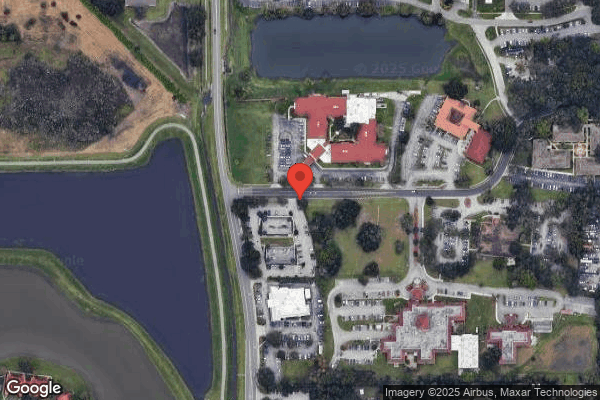

221 PARK PLACE BLVD, KISSIMMEE, FL 34741 (407) 935-0200
For profit - Limited Liability company 120 Beds Independent Data: November 2025 2 Immediate Jeopardy citations
Trust Grade
6/100
#572 of 690 in FL
Last Inspection: April 2025

Within standard 12-15 month inspection cycle. Federal law requires annual inspections.

Overview

Families researching the Terrace of Kissimmee should be aware that the nursing home has received a Trust Grade of F, indicating a poor performance with significant concerns. It ranks #572 out of 690 facilities in Florida, placing it in the bottom half, and #9 out of 10 in Osceola County, meaning only one local option is better. The facility is worsening, with issues doubling from 6 in 2024 to 12 in 2025. Staffing is average with a rating of 3 out of 5 stars and a turnover rate of 50%, which is the state average. However, concerning fines of $38,724 suggest compliance issues, and incidents noted include a failure to initiate CPR for a resident who needed it and inadequate food safety practices in the kitchen. These findings highlight both weaknesses in critical care and basic operational standards.

Trust Score
F
6/100
In Florida
#572/690
Bottom 18%
Safety Record
High Risk
Review needed
Inspections
Getting Worse
6 → 12 violations
Staff Stability
⚠ Watch
50% turnover. Above average. Higher turnover means staff may not know residents' routines.
Penalties
○ Average
$38,724 in fines. Higher than 69% of Florida facilities. Some compliance issues.
Skilled Nurses
○ Average
Each resident gets 39 minutes of Registered Nurse (RN) attention daily — about average for Florida. RNs are the most trained staff who monitor for health changes.
Violations
⚠ Watch
23 deficiencies on record. Higher than average. Multiple issues found across inspections.
★★☆☆☆
2.0
Overall Rating
★★★☆☆
3.0
Staff Levels
★★★★☆
4.0
Care Quality
★★☆☆☆
2.0
Inspection Score
Stable
2024: 6 issues
2025: 12 issues

The Good

  • 4-Star Quality Measures · Strong clinical quality outcomes
  • Full Sprinkler Coverage · Fire safety systems throughout facility
  • No fines on record

Facility shows strength in quality measures, fire safety.

The Bad

2-Star Overall Rating

Below Florida average (3.2)

Below average - review inspection findings carefully

Staff Turnover: 50%

Near Florida avg (46%)

Higher turnover may affect care consistency

Federal Fines: $38,724

Above median ($33,413)

Moderate penalties - review what triggered them

The Ugly 23 deficiencies on record

2 life-threatening
Apr 2025 9 deficiencies
CONCERN (D)

Potential for Harm - no one hurt, but risky conditions existed

Deficiency F0554 (Tag F0554)

Could have caused harm · This affected 1 resident

**NOTE- TERMS IN BRACKETS HAVE BEEN EDITED TO PROTECT CONFIDENTIALITY** Based on observation, interview, and record review, the facility failed to ensure proper administration of medications for one o...

Read full inspector narrative →
**NOTE- TERMS IN BRACKETS HAVE BEEN EDITED TO PROTECT CONFIDENTIALITY** Based on observation, interview, and record review, the facility failed to ensure proper administration of medications for one of one resident assessed for self administration of medications, of a total sample of 44 residents, (#94). Findings: Review of the medical record revealed resident #94 a [AGE] year-old male, was admitted to the facility on [DATE] and readmitted on [DATE]. His diagnoses included Parkinson's disease, peripheral neuropathy, mixed anxiety disorders, neuralgia. On 4/14/25 at 1:44 PM, resident #94's spouse was observed assisting the resident with his lunch in his room. On the overbed table next to the lunch tray were two 30 milliliter (ml) medication cups with multiple pills inside the cups. The resident's spouse stated the medications included eight pills including Tylenol, Parkinson's medication, antihistamine medication, neuropathy medication, stool softener, and laxative. Resident #94's spouse stated, the nurse always left the medications with her to give to the resident with the meal. On 4/14/25 at 1:49 PM, Registered Nurse (RN) C observed the medication cups that held resident #94's medications on the overbed table. RN C acknowledged she had left the medications with resident 94's spouse. On 4/14/25 at 1:56 PM, the South Wing Unit Manager confirmed RN C should not have left medications at the bedside. She stated the nurse should always administer the medication, not leave it at bedside. On 4/14/25 at 1:52 PM, the Director of Nursing stated the nurse should have taken the pills with her if she had to leave the room. A review of the policy and procedure for Administering Medications dated December 2012 revealed, medications shall be administered in a safe and timely manner and as prescribed. The document read, Only persons licensed or permitted by the state to prepare, administer, and document the administration of medications may do so.
CONCERN (D)

Potential for Harm - no one hurt, but risky conditions existed

Assessment Accuracy (Tag F0641)

Could have caused harm · This affected 1 resident

**NOTE- TERMS IN BRACKETS HAVE BEEN EDITED TO PROTECT CONFIDENTIALITY** 3. Resident #93 was admitted to the facility on [DATE] with diagnoses including metabolic encephalopathy (brain dysfunction), se...

Read full inspector narrative →
**NOTE- TERMS IN BRACKETS HAVE BEEN EDITED TO PROTECT CONFIDENTIALITY** 3. Resident #93 was admitted to the facility on [DATE] with diagnoses including metabolic encephalopathy (brain dysfunction), sepsis, general anxiety disorder, and unspecified psychosis. A review of the MDS significant change assessment with an assessment reference date of 2/13/25 revealed the MDS Lead incorrectly coded under the resident's active diagnoses, psychotic disorder other than schizophrenia. Section I-Active diagnoses psychiatric/mood disorder, I5950: psychotic disorder (other than schizophrenia was checked off as an active disease). A review of the resident's medical record revealed no diagnosis of psychotic disorder. On 4/17/25 at 10:49 AM, the Director of Nursing acknowledged the resident had no psychotic disorder diagnosis. Review of the Centers for Medicare and Medicaid Services Resident Assessment Instrument Version 3.0 Manual dated 10/01/24 revealed, Active diagnoses: Physician-documented diagnoses in the last 60 days that have a direct relationship to the resident's current functional status, cognitive status, mood or behavior, medical treatments, nursing monitoring during the last 7 days. Check off each active disease. Based on observation, interview and record review, the facility failed to ensure the Minimum Data Set (MDS) assessment accurately reflected resident's tobacco use for 1 of 1 residents reviewed for smoking (#511); reflected oxygen (O2) therapy for 1 of 1 residents reviewed for respiratory care, (#511); and accurately reflected active diagnoses for 1 of 1 residents reviewed for psychiatric diagnoses, (#93), of a total sample of 44 residents. Findings: 1. Review of resident #511's medical record revealed he was admitted to the facility on [DATE] with diagnoses including chronic obstructive pulmonary disease, type 2 diabetes, chronic respiratory failure, and dependence on supplemental O2. Review of resident #511's medical record revealed an admission Observation Report form dated 3/24/25 which indicated he used O2 via nasal cannula (NC). Review of resident #511's physician orders revealed an order dated 4/10/24 for O2 at 3 liters per minute (LPM) via NC. On 4/16/25 at 1:37 PM, resident #511 was observed lying in bed, using O2 via NC flowing at 3 LPM. Review of resident #511's admission MDS assessment with Assessment Reference Date (ARD) of 3/31/25 revealed Section O, Respiratory Treatments, O2 therapy was incorrectly not selected as one of the options. 2. Review of resident #511's physician orders revealed an order dated 4/10/24 for O2 at 3 liters per minute (LPM) via NC. May remove O2 for smoking. Review of resident #511's medical record revealed a Smoking Risk report dated 3/25/25 which determined he was a safe smoker. Review of resident #511's medical record revealed he signed a Smoking Policy & Procedure on 3/24/25. On 4/15/25 at 9:37 AM, resident #511 stated he was a smoker. He explained he wore an apron while smoking and the facility kept his cigarettes and lighter. On 4/15/25 at 11:38 AM, resident #511 was observed smoking on the patio, wearing an apron, accompanied by a Certified Nursing Assistant. Review of resident #511's admission MDS assessment with ARD of 3/31/25 revealed Section J, tobacco user was incorrectly answered, NO. On 4/17/25 at 11:38 AM, the MDS Lead explained the purpose of the MDS was to capture the resident's whole picture and needs. She validated Sections J and O of the admission MDS assessment for resident #511 were inaccurate. She acknowledged tobacco use and O2 use should have been answered yes. She explained the MDS assessment was used to develop the care plan, and it was important it reflected an accurate picture of the resident. The Resident Assessment Instrument (RAI) instructions for Section J1300 read, Code 1, yes: if the resident or any other source indicates that the resident used tobacco in some form during the look-back period. The RAI instructions for Section O0100c read, Code continuous or intermittent oxygen administered via mask, cannula, etc., delivered to a resident to relieve hypoxia in this item.
CONCERN (D)

Potential for Harm - no one hurt, but risky conditions existed

PASARR Coordination (Tag F0644)

Could have caused harm · This affected 1 resident

**NOTE- TERMS IN BRACKETS HAVE BEEN EDITED TO PROTECT CONFIDENTIALITY** Based on interview, and record review, the facility failed to ensure individuals with a mental disorder, intellectual disability...

Read full inspector narrative →
**NOTE- TERMS IN BRACKETS HAVE BEEN EDITED TO PROTECT CONFIDENTIALITY** Based on interview, and record review, the facility failed to ensure individuals with a mental disorder, intellectual disability (ID), or other related disorders had accurate Level I Preadmission Screening and Resident Reviews (PASARR) completed upon admission and/or updated as needed to receive appropriate care and services in the most integrated setting appropriate for 2 of 5 residents reviewed for PASARRs, of a total sample of 44 residents, (#4 and #98). Findings: 1. Resident #4 was admitted to the facility on [DATE] with the diagnoses of hypertension, bipolar disease type II, depression, anxiety disorder, and insomnia. Resident #4's medication orders included medications for the diagnoses of bipolar disorder, and anxiety. Review of the Level I PASARR dated 6/29/22 performed pre-admission to the facility did not include the admitting diagnoses such as anxiety, depression, and bipolar disease type II. Review of the most recent quarterly Minimum Data Set (MDS) assessment dated [DATE], revealed resident #4's Brief Interview for Mental Status (BIMS) score was 15/15 indicating he had no cognitive impairment. Review of the Psychiatrist Progress Note dated 1/08/25 revealed resident #4 had irritability, anger outbursts, and manipulative behaviors and was ordered six psychotropic medications. A Psychotherapy Note dated 2/13/25 indicated a treatment plan of individual psychotherapy 3 to 4 times per month, yet the consulting physician provided treatment monthly for the resident. On 2/24/25, the physician disagreed with a request for gradual dose reduction by the consulting pharmacist, describing the patient screamed, yelled, was anxious and could be agitated. The Medication Administration Report for the March and April 2025 indicated resident #4 regularly exhibited anxious behaviors. The resident's care plan indicated resident #4 had behavioral symptom's of fabrication and confabulation. On 4/17/25 at 12:28 PM, the Assistant Director of Nursing (ADON) stated the MDS staff was responsible to ensure the accuracy of Level I PASARR documentation and update the assessment when new diagnoses were realized. She acknowledged that without an accurate Level I PASARR, the resident's need for a Level II PASARR assessment was undetermined. 2. Resident #98 was admitted on [DATE] with the diagnoses of epilepsy, depressive episodes, adjustment disorder with mixed anxiety and depressed moods. Review of the medical record revealed active physician orders for anti-depression medication. On 4/14/25 at 1:07 PM, resident #98's daughter stated her mom usually yelled and cried. She explained it was hard for staff to change her mother's brief as she physically fought with them, due to her condition. Review of the Level I PASARR completed upon admission did not include any psychiatric diagnoses. Review of psychotherapy notes dated 4/02/25 and 4/09/25 indicated the resident had depressed/anxious mood. Review of the MDS dated [DATE] indicated active diagnoses of anxiety disorder and depression. Resident #98 had active care plans for anxiety and depression and noted she used psychoactive medications. On 4/17/25 at 5:32 PM, the Director of Nursing (DON), Regional Nurse, and the Administrator agreed the Level I PASARR was reviewed within 24 hours of admission by the Interdisciplinary team (IDT). The Social Services Director ensured the Level I PASARR was received and the DON ensured its accuracy. They explained PASARRs were reviewed quarterly by MDS staff. The DON, Regional Nurse and Administrator acknowledged there was a disconnect in their process when they realized discrepancies found during the survey with psychiatric diagnoses. They agreed the system didn't work in these cases. The facility's policy dated January 2024, entitled PASARR, indicated all new admissions and readmissions were screened for mental disorders, intellectual disorders, or related disorders per the PASARR to ensure only residents whose medical and nursing care needs could be met. The policy continued, the facility staff would notify the Social Worker as needed and make referrals to the appropriate state-designated authority. In addition, the policy indicated the facility would complete a Level II screening when a resident had a significant change in condition.
CONCERN (D)

Potential for Harm - no one hurt, but risky conditions existed

Quality of Care (Tag F0684)

Could have caused harm · This affected 1 resident

Based on observation, interview, and record review, the facility failed to obtain physician's order for the care and treatment of catheter dressings for 1 of 5 residents sampled for skin conditions, o...

Read full inspector narrative →
Based on observation, interview, and record review, the facility failed to obtain physician's order for the care and treatment of catheter dressings for 1 of 5 residents sampled for skin conditions, of a total sample of 44 residents, (#412). Findings: Review of resident #412's medical record revealed an admission date of 4/10/25. His diagnoses included iron deficiency anemia secondary to blood loss, end stage renal disease, and need for assistance with personal care. On 4/11/25 his Brief Interview for Mental Status was assessed to be a 13/15, indicating intact cognitive function. Review of resident #412's weekly skin audit dated 4/10/25 noted in the new skin problems section that resident #412 had a surgical wound from a right chest Permacath and a chemoport on the left upper clavicle. A Permacath is a special catheter used for short term dialysis treatment that is tunneled under the skin and leads to a blood vessel going to the heart, (retrieved on 4/28/25 from www.drugs.com). A chemotherapy port is a small implantable device that attaches to a vein usually in the upper chest that can remain in place for weeks, months or even years, (retrieved on 4/28/25 from www.clevelandclinic.org). On 4/15/25 at 1:27 PM, resident #412 said that during his hospitalization prior to admission to the facility a Permacath was removed and he pulled down the right side of the neckline of his shirt to reveal a white gauze dressing in his upper chest area. He also said in the past he received hemodialysis; however, that was discontinued during his recent hospitalization because it was no longer needed. He pulled down the left side of his neckline to show a foam border dressing which he said covered a chemotherapy port. Neither dressing was marked with initials or a date they were placed. Resident #412 said the facility staff had not changed nor removed either dressing since his admission. On 4/15/25 at 5:33 PM, Registered Nurse (RN) B verified there were no physician's orders regarding the dressings covering the right upper chest area nor the left upper chest area. She said she thought resident #412 received hemodialysis. RN B said she had been his assigned nurse prior to today and she had not changed either dressing that were presently on his upper chest. On 4/15/25 at 5:50 PM, the North Unit Manager said she recalled that resident #412 was supposed to keep the right and left upper chest dressings in place until his upcoming speciality appointment. She confirmed she could not find a physician's order which stated the dressings should not be removed. The North Unit Manager verified nursing staff would not know to provide care to resident #412's chest dressing without a physician's order. On 4/16/25 at 11:36 AM, the North Unit Manager stated she was unable to find a physician's order that indicated resident #412's bilateral chest dressings should not be changed until his speciality appointment. She stated last night after being made aware there was no order, she obtained a physician's order to remove the dressings.
CONCERN (D)

Potential for Harm - no one hurt, but risky conditions existed

Incontinence Care (Tag F0690)

Could have caused harm · This affected 1 resident

**NOTE- TERMS IN BRACKETS HAVE BEEN EDITED TO PROTECT CONFIDENTIALITY** Based on observation, interview, and record review, the facility failed to ensure timely assessment and follow-up for removal of...

Read full inspector narrative →
**NOTE- TERMS IN BRACKETS HAVE BEEN EDITED TO PROTECT CONFIDENTIALITY** Based on observation, interview, and record review, the facility failed to ensure timely assessment and follow-up for removal of an indwelling urinary catheter including a urology referral, for 1 of 2 residents reviewed for urinary catheters, of a total sample of 44 residents, (#95). Findings: Resident #95 was admitted to the facility on [DATE] with a diagnosis of acute urinary tract infection. In the hospital discharge paperwork it noted resident #95 had a urinary catheter placed on 3/16/25 related to urinary retention. The discharge paperwork noted the catheter needed to be changed every 30 days and the resident needed a follow-up appointment with a urology specialist. There was no documentation in resident #95's medical record that a urology follow-up had been scheduled by the facility. On 4/16/25 at 5:50 PM, the Director of Nursing (DON) stated Advanced Practice Registered Nurse (APRN) H, had told her he did not want resident #95 to have the indwelling urinary catheter removed until he had a urology consultation. Attempts to contact APRN H were unsuccessful. On 4/17/25 at 10:10 AM, the DON and the Regional Nurse Consultant reviewed resident #95's medical record and verified that no interventions for the removal of the urinary catheter, such as intermittent catheterization, had been attempted since his admission on [DATE], including a urology consult. On 4/17/25 at 10:17 AM, the facility's Scheduler, with the DON present, verified that no urology consults had been scheduled for resident #95. She did not know why there had been a delay in scheduling the consult. Review of the facility's undated, Urinary Incontinence-Clinical Protocol it noted that if a resident was admitted from the hospital with a newly placed indwelling catheter, the attending physician and the staff would evaluate the potential for removing it.
CONCERN (D)

Potential for Harm - no one hurt, but risky conditions existed

Deficiency F0692 (Tag F0692)

Could have caused harm · This affected 1 resident

**NOTE- TERMS IN BRACKETS HAVE BEEN EDITED TO PROTECT CONFIDENTIALITY** Based on interview, and record review, the facility failed to follow up on a triggered excessive weight loss for 1 of 13 residen...

Read full inspector narrative →
**NOTE- TERMS IN BRACKETS HAVE BEEN EDITED TO PROTECT CONFIDENTIALITY** Based on interview, and record review, the facility failed to follow up on a triggered excessive weight loss for 1 of 13 residents reviewed for food and nutrition, of a total sample of 44 residents, (#26). Findings: Review of the medical record revealed resident #26 was admitted to the facility on [DATE] with diagnoses including aphasia (language disorder) following cerebral infarction, dysphagia (difficulty swallowing), dementia, and need for assistance with personal care. Review of the Minimum Data Set Quarterly assessment with Assessment Reference Date of 3/30/25 revealed resident #26 had a Brief Interview for Mental Status score of 3/15 which indicated he had severe cognitive impairment. The MDS assessment showed the resident exhibited weight loss although he was not on a physician-prescribed weight loss prevention regimen. Review of resident #26's weights revealed on 1/10/25, the resident weighed 111.2 lbs. On 3/07/25 resident #26 weighed 109.8 lbs. and on 3/14/25 he weighed 100.4 lbs., an 8% loss in one week. On 4/11/25, the resident weighed 98.4 pounds which is -11.51% in 90 days. There was no evidence in resident #26's medical record the significant weight loss on 3/14/25 was addressed for over three weeks. Review of a progress note entered by the Registered Dietician (RD) on 1/31/25 confirmed the weights and weight loss noted in the medical record by nursing staff. Review of a progress note entered by the RD dated 4/09/25 read, Resident triggered for significant weight loss of 11.5% x 30 days. Weight loss was addressed last week with further weight loss of 2.2# (lbs.). Review of resident #26's care plan for nutritional status revised on 3/31/25 revealed he had potential for alteration in nutrition. A long-term goal read, Resident will consume 50-75% of meals as evidence by no significant weight loss through next review date. On 4/16/25 at 11:47 AM, the RD indicated she had been in the facility for a couple of weeks and was not familiar with resident #26. She stated the former RD last saw resident #26 on 3/31/25. She indicated the initial evaluation mentioned he had variable intakes and the RD recommended med pass (nutritional supplement). She indicated on 3/14/25, resident #26 showed a significant weight loss of 8% from the previous week. She stated since the RD did not attend the weekly meetings, the facility should have alerted the RD when the significant weight loss was noted. The RD indicated they did annual, admission, significant change assessments but resident #26 did not trigger for a 30-day review until she saw the weight last week. She indicated they needed to pay more attention to weekly weights. She stated they did not look at actual pounds, just percentages and mainly the 30 and 90 day data. On 4/16/25 at 4:57 PM, the Regional Nurse Consultant (RNC), and former Director of Nursing (DON) explained Standards of Care (SOC) meetings were held weekly and included discussion of residents who had significant weight loss. The stated the Certified Dietary Manager (CDM) would pull a weight variance report to identify anyone who had lost or gain five or more percent of weight in 30 days, 7.5% in 90 days or 10% in 180 days. She stated they would discuss the interventions that were in place during the meeting and inform the RD and physician of any changes. The DON indicated she did not recall the CDM bringing resident #26 to the SOC meetings. She mentioned if she had known of a significant weight loss they would have discussed it and ensured the interventions were appropriate. They validated there was no progress notes from the CDM and explained they were not previously aware of resident #26's significant change in weight. They acknowledged the current interventions were not working, and resident #26 continued to lose weight. Review of the facility's policy and procedure for Food and Nutrition Services revised on October 2017 read, The multidisciplinary staff, including nursing staff, the attending physician and the dietician will assess each resident's nutritional needs, food likes, dislikes, and eating habits, as well as physical, functional, and psychological factors that affect eating and nutritional intake and utilization.
CONCERN (D)

Potential for Harm - no one hurt, but risky conditions existed

Infection Control (Tag F0880)

Could have caused harm · This affected 1 resident

**NOTE- TERMS IN BRACKETS HAVE BEEN EDITED TO PROTECT CONFIDENTIALITY** Based on observation, interview, and record review, the facility failed to provide a system for preventing and controlling infec...

Read full inspector narrative →
**NOTE- TERMS IN BRACKETS HAVE BEEN EDITED TO PROTECT CONFIDENTIALITY** Based on observation, interview, and record review, the facility failed to provide a system for preventing and controlling infections and communicable diseases for residents by not offering hand hygiene to residents prior to meals and not maintaining a catheter bag dragging on the floor. This had the potential to affect 43 residents eating meals in the dining room, and one of one resident reviewed for urinary tract infections, (#95) of a total sample of 44 residents. Findings: 1. On 4/14/25 at 12:22 PM, during dining observation, 43 residents in the main dining room and the small room off the main dining room, were observed waiting for lunch to be served. At 12:38 PM, the first of three carts with meal trays were delivered from the kitchen and were served to residents. None of the residents were offered hand hygiene before the meal. On 4/15/25 at 12:35 PM, 39 residents were observed waiting for their lunch meal in the main dining room. Five visitors and three residents confirmed they had not been offered hand hygiene before the meal nor had they previously been offered hand hygiene before meals that they could recall. On 4/15/25 at 1:08 PM, Certified Nursing Assistant (CNA) F assisted a resident with their meal and acknowledged she had not offered hand hygiene to the resident before they ate. The CNA stated hand sanitizer was available if they found a resident needed it, but was unsure if the residents were provided any hand hygiene before coming to the dining room to eat. On 4/16/25 at 12:50 PM, 36 residents were in the main dining room either eating or awaiting their meal to be served. A few minutes later at 1:15 PM, CNA G assisted a resident with his meal and explained they used to offer hand hygiene to residents in the dining room, but not as a hard rule. She said over time, the staff forgot to ask residents if they wanted to clean their hands. She stated it was important for the residents to have clean hands because many of them touched their food with their hands which could have a lot of germs on them. She added they had disinfectant in the cabinets in the dining room if a resident needed it, but did not say why it wasn't offered to the residents. On 4/17/25 at 3:08 PM, the Infection Control nurse, stated she realized this week, on Monday, 4/14/25, the facility did not provide hand hygiene to residents prior to meals. She added, she was surprised about that and explained her goal was to provide individualized packets of hand wipes to residents prior to meals so they could clean their hands when they wanted to. The facility's policy entitled Standard Precautions, dated 2024, contained procedures to limit or stop the spread of transmissible infectious agents. It indicated facility personnel assisted residents with hand hygiene before meals, after toileting, and when indicated. 2. Resident #95 was admitted on [DATE] with diagnoses that included lower urinary tract symptoms after prostate removal surgery, unspecified dementia with unspecified severity, and need for assistance with personal care. He had a physician's order dated 4/02/25 for a urinary catheter due to prostate diagnoses. On 4/14/25 at 10:26 AM, resident #95 was seated in his wheelchair, the bottom of his urinary catheter drainage bag was dragging along the facility's floor as he was pushed in his wheelchair by a staff member. On 4/14/25 at 12:55 PM, resident #95 was seated in his wheelchair in the facility's dining room. The bottom portion of the urine drainage bag of his catheter was lying on the ground under his wheelchair. Multiple staff were present in the dining room including the facility's Infection Preventionist. No one noticed or picked up the bag from the floor at that time. On 4/14/25 at 4:00 PM, resident #95's urine collection bag and the tubing scraped the right wheel of his wheelchair as he self propelled himself down the hallway from the nursing station to his room. On 4/17/25 at 10:10 AM, the Director of Nursing and the Regional Nurse Consultant confirmed that urinary catheter tubing and collection bags should not touch the floor nor the wheels of wheelchairs to prevent potential infection. Review of the facility's undated policy entitled Urinary Tract Infections (Catheter-Associated), Guidelines for Preventing, noted the urinary catheter drainage bag should not be placed on the floor.
CONCERN (E)

Potential for Harm - no one hurt, but risky conditions existed

QAPI Program (Tag F0867)

Could have caused harm · This affected multiple residents

Based on interview, and review of facility documentation, the facility failed to ensure implementation of policies to the extent of including thorough monitoring of previously identified areas of conc...

Read full inspector narrative →
Based on interview, and review of facility documentation, the facility failed to ensure implementation of policies to the extent of including thorough monitoring of previously identified areas of concern and adequately tracking performance to ensure prior improvement measures were realized and sustained for two of ten concerns identified during the survey, (F554, and F880). Findings: Review of the facility's undated policy, Quality Assurance and Performance Improvement (QAPI) Program, revealed the purpose of the QAPI Program was to establish data driven, facility wide processes to improve the quality of care, quality of life and clinical outcomes of their residents. The policy included Action Steps to support and enhance the QAPI Program. The document included, Gathering and using QAPI data in an organized and meaningful way. Areas that may be appropriate to monitor and evaluate include: . State surveys and deficiencies . The facility had concerns related to infection control and self-administration/improper administration of medications which led to deficiencies at F880 in the last recertification survey of 9/14/23 and F554 for the recertification survey of 1/13/22. During this survey, the following deficiencies were again identified, F554 and F880. As a result of these repeat citations, it was identified there was insufficient auditing and oversight of the mentioned citations. On 4/17/25 at 4:57 PM, the Administrator stated during their monthly QAPI meetings they discussed areas in need of improvement. He explained Performance Improvement Projects (PIPs) may be developed and implemented accordingly. He mentioned the length of PIP's depended on how long it took to correct the problem. He stated they performed consistent audits of medication related concerns but had not identified any recent trends of medication variances. He acknowledged the QAPI committee did not adequately implement, monitor, and review the identified areas to prevent repeat non-compliance.
CONCERN (F)

Potential for Harm - no one hurt, but risky conditions existed

Food Safety (Tag F0812)

Could have caused harm · This affected most or all residents

Based on observation, interview, and record review the facility failed to store food in accordance with professional standards for food service safety by failing to label, date, and discard food after...

Read full inspector narrative →
Based on observation, interview, and record review the facility failed to store food in accordance with professional standards for food service safety by failing to label, date, and discard food after an acceptable time period and by failing to air-dry glasses, cups, and trays prior to their use in meal service, in one of one walk-in refrigerator/freezer, one of one dry storage room and one of one kitchen. Findings: On 4/14/25 at 9:45 AM, during the initial kitchen tour with the Consultant Certified Dietary Manager (CDM) S, there were multiple leftover/previously opened food items found unlabeled and undated in the walk-in refrigerator as listed: four packages of wrapped American Cheese slices, two packages of shredded cheese, a half-pan of what appeared to be chicken breasts floating in water, a 1/3 steamtable pan of rice, a 1/6 pan of what appeared to be egg salad, a 1/3 pan of what appeared to be au gratin potatoes, a 1/2 pan of jello and a deep pan of some kind of ground, cooked meat. In addition, there was a number of leftover food items, undated as to when they were prepared and stored including a 1/3 steamtable pan labeled as 'chicken for soup', a 1/3 pan of leftover lemon pepper chicken, and previously opened sliced ham in the original packaging. There was multiple steamtable pans of leftover food items that contained labels but were expired, including a 1/3 pan of corned beef dated 3/30/25 (15 days prior), a 1/6 pan of what appeared to be sausage patties, unlabeled as to the contents but dated 4/05/25 (9 days prior), a 1/3 pan of gravy dated 3/28/25 (17 days prior), a 1/3 pan of leftover hot dogs dated 4/8/25 (6 days prior), a 1/3 pan of glazed cauliflower dated 4/1/25 (13 days prior), a 1/3 pan of baked beans dated 4/8/25 (6 days prior), a 1/3 pan of potato salad, dated 4/8/25 (6 days prior), and a 1/3 pan of ham slices dated 4/16/25 (2 days in the future). There were also four packages of raw meat in their original box/packaging that were held and unused longer than recommended: one case of ground turkey, received 4/01/25 (13 days prior), 2 cases with pork legs and one case of chicken breast, received 4/08/25 (6 days prior). In addition, an unopened case of hard-boiled eggs was found to be sitting on the ground. The consultant CDM S stated it appeared the cooks just wrapped and kept most food items from tray line instead of throwing away the leftovers. He stated if food items were retained, they needed to be labeled and dated so the other staff could identify the food items and know when they should be discarded. He stated these procedures were necessary to make sure foods that were going bad would not be served to residents. There was no signage to reference acceptable storage periods for perishable foods posted in the kitchen. A short time later, n the walk-in freezer, two boxes of chicken breasts were sitting on the floor of the freezer with two additional boxes of food stacked on top of them. The consultant CDM added that no food should be stored on the ground for sanitary reasons. In the dish machine area, four trays of plastic drinking glasses and four trays of coffee cups sat inverted on wet trays, upside down. Dietary staff D stated they would use a towel to dry the cups before using them for service to residents. The Consultant CDM informed the dietary staff the glasses and cups needed to be air-dried and not dried with a towel for sanitary reasons. In the dry storage room, a large bin labeled sugar, dated 1/10/25 was noted to have a round plastic container sitting inside the container of sugar. The round container did not have a handle but was being used as a scoop. In addition, there was a large plastic container of cereal, along with a box of cake mix and a box of artificial sweetener, sitting on the floor. On 4/14/25 at 12:22 PM, 42 residents in the main dining room were observed waiting for lunch to be served. While they waited, the residents were offered and served beverages. It was noted the drinking glasses and coffee cups were brought from the kitchen on, and served from, wet trays with the lip of the cup sitting in the water of the trays. On 4/17/25 at 2:43 PM, CDM T stated everyone in the kitchen was responsible to label and date foods put into the refrigerator. She explained it was important that food items were labeled and dated so staff knew when food items would expire so they could be discarded. The CDM stated the facility didn't want any cases of food poisoning at the facility, wanted residents to be safe. She clarified food items should not be stored on the ground to ensure they were not contaminated. The CDM unlabeled and undated food was not acceptable standards of food service safety. On 4/17/25 at 2:50 PM, the tour of the nourishment room with the CDM T revealed a previously opened, undated carton of liquid nutrition supplement and thickened juice. The South Wing Unit Manager acknowledged all food items should be dated when opened and he was unsure how long they could be used after opening. He acknowledged if the products were bad, it could make residents sick. The Unit Manager said he should ensure nursing staff dated items after they were opened. The facility's undated policy entitled Perishable Food Storage revealed leftovers could typically be safely stored for three to four days, raw poultry and ground meat for one to two days, cooked ham for seven days, and prepared lunchmeats for a week after being opened. The facility's policy entitled Food Receiving and Storage dated 2001, indicated stored food should be kept at least six inches off the floor; beverages in the nursing unit refrigerators should be dated when opened and discarded after 24 hours. In addition, the policy entitled Refrigerators and Freezers, dated 2001 indicated all food should be properly dated with received dates and with use by dates.
Jan 2025 3 deficiencies
CONCERN (D) 📢 Someone Reported This

A family member, employee, or ombudsman was alarmed enough to file a formal complaint

Potential for Harm - no one hurt, but risky conditions existed

Free from Abuse/Neglect (Tag F0600)

Could have caused harm · This affected 1 resident

**NOTE- TERMS IN BRACKETS HAVE BEEN EDITED TO PROTECT CONFIDENTIALITY** Based on observation, interview, and record review, the facility failed to provide necessary care and services according to asse...

Read full inspector narrative →
**NOTE- TERMS IN BRACKETS HAVE BEEN EDITED TO PROTECT CONFIDENTIALITY** Based on observation, interview, and record review, the facility failed to provide necessary care and services according to assessed needs, to promote the highest practicable physical and psychosocial well-being; and failed to follow required processes to prevent neglect by appropriately identifying and communicating care needs and ensuring continuity of care for 1 of 3 residents reviewed for neglect, out of a total sample of 9 residents, (#2). Findings: Review of the facility's policy and procedure for Abuse Prevention Program, dated March 2024, revealed residents had the right to be free from abuse and neglect. The policy defined neglect as the failure of the facility, its employees or service providers to provide goods and services to a resident that are necessary to avoid physical harm, pain, mental anguish. or emotional distress. The document indicated the facility would develop and implement policies to prevent abuse and neglect. Review of the medical record revealed resident #2, a [AGE] year-old male, was admitted to the facility on [DATE] and re-admitted on [DATE]. His diagnoses included prostate gland enlargement, chronic pain syndrome, and generalized muscle weakness. Review of the Minimum Data Set (MDS) Significant Change in Status assessment, with assessment reference date of 12/05/24, revealed resident #2 had adequate hearing and vision, clear speech, was able to express his ideas and wants, and had clear comprehension. The resident had a Brief Interview for Mental Status score of 9/15, which indicated he had moderate cognitive impairment. The MDS assessment revealed the resident exhibited no physical or verbal behavioral symptoms, but rejected evaluation or care on one to three days in the look back period. The document showed resident #2 was always incontinent of bowel and urine. On 1/27/25 at 10:12 AM, resident #2 was in bed and there was strong odor of urine in the room. He held the the hem of his hospital-type gown over the side rail and said, It's wet. I'm wet. The resident explained his brief had not been changed during the overnight shift, nor since the start of the day shift. Resident #2 lifted his sheet which had a round, yellow-stained, brown-bordered area at the level of his brief. A folded towel at his right side and the right edge of the drawsheet was a dark yellow to light brown color. The bed protector pad under the resident's buttocks had a large yellow-stained area with a brown border. The resident explained his gown and bed were soaked with urine. He recalled seeing a male nurse during the night shift, but no Certified Nursing Assistant (CNA). On 1/27/25 at 10:18 AM, CNA B confirmed she was assigned to care for resident #2 for the day shift, but she had not yet had a chance to perform activities of daily living (ADL) care for him. She explained she had been busy since she arrived for the 7:00 AM shift, and was still occupied. When CNA B checked resident #2's bed linen, brief, and gown, she had a shocked facial expression and stated she had never seen him so wet. She said, Whoever was on night shift did not do it. The resident informed CNA B that he was not changed during the night, and stated the last time he received incontinence care was yesterday. The Director of Nursing (DON) entered the room and verified the resident's bed was urine-soaked. Resident #2 repeated his previous statement and told the DON he had not been changed on the overnight shift. On 1/27/25 at 11:03 AM, CNA B stated she usually did walking rounds with off-going staff at the change of shift, but she did not do so this morning. CNA B said, I did not know who worked with him last night. I did not see anyone. She explained this was her regular assignment and she knew the residents well. She stated she did not provide care for this resident earlier as he was usually clean and dry in the morning. CNA B said, If I was told that there was a problem, I would have checked him. The nurse, nobody, said anything to me. She acknowledged she had been at work for almost four hours, since about 7:00 AM, but would not have checked resident's brief or provided care until almost 11:00 AM if she had not been prompted to do so by State Survey Agency staff. On 1/27/25 at 11:13 AM, the Staffing Coordinator explained night shift CNAs were scheduled from 10:45 PM to 7:15 AM, and the day shift CNAs were scheduled from 6:45 AM to 3:15 PM to facilitate a 30-minute overlap of both shifts to conduct shift change activities. She reviewed punch clock times and stated resident #2's night shift CNA clocked out at 7:01 AM this morning, and the day shift CNA clocked in at 6:44 AM. The Staffing Coordinator stated she could not explain why CNA B did not see or receive report from CNA D, as they were both in the building for approximately 15 minutes at the change of shift. On 1/27/25 at 11:20 AM, the DON provided an activities of daily living (ADL) flow sheet that showed at 6:25 AM, CNA D documented resident #2 had no urine output for the shift. He was informed the resident's assigned CNAs did not communicate or conduct walking rounds at the change of shift. He said, When staff come in the morning they should do walking rounds with off-going shift to verify residents' status and condition. The DON confirmed the expected interval related to provision of incontinence care was at the start of every shift and every two hours thereafter. He acknowledged resident #2 did not receive ADL care for almost four hours after the start of the day shift. On 1/27/25 at 11:32 AM, the Social Services Director (SSD) confirmed she interviewed resident #2 and he informed her that he had not been changed on the 11:00 PM to 7:00 AM shift. She explained the resident was alert and had experienced a decline in his physical health status recently. The SSD verified she was the facility's Abuse Coordinator and the resident's report of not being changed for an entire shift in conjunction with the condition he was found in, met the criteria for reporting and investigation of an allegation of neglect. On 1/27/25 at 12:03 PM, in a telephone interview, CNA E stated he was one of the three CNAs assigned to resident #2's unit last night. He described the shift as a regular night. CNA E denied knowledge of any issues including shouting or aggressive, combative residents. He stated the other CNAs never mentioned not being able to care for a resident and nobody asked him for assistance. He did not recall what time CNA D left the unit in the morning, and he stated he did not receive report from her on her assigned residents before she left. CNA E stated staff were expected to make rounds at least every two hours, check and change incontinent residents during those rounds, and before leaving at the end of the shift, they should walk from room to room with the oncoming staff. On 1/27/25 at 12:22 PM, the DON stated his expectation was nursing staff would follow residents' individualized care plans and professional standards which included rounding every two hours and at the change of shift. He confirmed it was essential for all nursing staff to do walking rounds to ensure all residents were alive and appropriately cared for at shift change. The DON explained walking rounds provided staff an opportunity to identify any issues, ask questions, and explain or clarify residents' care needs. On 1/27/25 at 1:34 PM, the MDS Coordinator stated resident #2 was assessed as having a significant change in status after a recent hospitalization due to a decline in his ADL abilities. She explained the resident used to walk, but not anymore. On 1/27/25 at 2:06 PM, in a telephone interview, CNA D confirmed she was assigned to resident #2's hallway last night. She explained it was not her regular assignment as she worked in different areas throughout the building. She was informed resident #2 reported he did not see her on the night shift and did not receive incontinence care. She verified none of her assigned residents refused care last night. CNA D said, I have not been over there for a while, not really sure if that resident walks. He used to be independent. I think I cleaned all of them.I went into all the rooms and maybe I was mixed him up and thought he was independent. She recalled on arrival for her shift last night, the off-going evening shift CNA did not do walking rounds with her. When asked how she knew what type and level of care each resident on her assignment required, CNA D stated she knew the residents who were heavy wetters and needed to be changed often. She explained she usually asked the residents if they needed staff to change them or if they went to the bathroom themselves. CNA D was asked how she would obtain information on the care needs for residents who were confused or non-verbal. She stated she could possibly look at the electronic medical record to see what the previous CNA documented. CNA D said, I think there is a care plan in there, not sure though. I did not use the computer to do that last night. CNA D stated she did not know what time the day shift staff arrived, but she usually saw them standing in a huddle at the nurses' station for a while. She explained she did not always do walking rounds at the change of shift and said, I think some people do it and some don't. I am not sure if it is a requirement here to do rounds. When asked why she did not remain on the unit to give report to CNA C and conduct walking rounds, CNA D said, I had to leave to take my daughter to school. On 1/27/25 at 3:49 PM, the DON confirmed it was significant concern that the night shift CNA left her assigned residents and went home without giving a change of shift report. He validated it was unacceptable that the CNAs did not do rounds. On 1/28/25 at 10:29 AM and 1:29 PM, the DON confirmed if any resident refused ADL care, he expected the CNA to return and try again. He explained if that method was not effective, the assigned CNA should ask another CNA to assist or re-approach, and if unsuccessful, then the nurse should be informed. The DON stated CNAs should report repeated refusal of care to the nurse as he/she would intervene, document, and report to the UM, family, DON, and/or physician as appropriate. Review of Resident Progress Notes revealed no nursing progress notes between 1/22/25 an 1/27/25. There was no documentation regarding resident #2 refusing ADL care and no documentation of the resident's status by the off-going night shift nurse. On 1/28/25 at 11:20 AM, the Regional Nurse Consultant (RNC) explained the facility interviewed CNA D yesterday and she informed them she offered to care for resident #2 and he declined. The RNC said, The resident is in his right mental capacity and he can either refuse or accept care. She stated she did not expect the CNA to force care upon the resident. The RNC did not respond when asked if resident #2 was his own person and in his right mental capacity, why would the facility decline to accept his report of not seeing the CNA during the night shift and not being changed. The RNC provided a written statement from CNA D which contained information that contradicted resident #2's statements to the State Survey Agency staff, the SSD, the DON, CNA B, and CNA C. The RNC was informed the written statement also conflicted with CNA D's verbal statement obtained in a telephone interview. On 1/28/25 at approximately 11:24 AM and 2:20 PM, the DON stated the facility reviewed camera footage and observed CNA D enter resident #2's room every two hours during the night shift. He acknowledged there were no cameras inside the resident's room and she might have given care to the resident's incontinent roommate. The DON stated he could not say where CNA D was at the end of her shift yesterday between 6:45 and 7:00 AM. He acknowledged she left the unit and her assigned residents without giving report or doing change of shift rounds to ensure residents had no acute needs, and to discuss any concerns, behaviors, or accidents that occurred during the shift. The DON validated CNA D failed to follow the accepted standard of practice for nursing professionals by leaving her assigned residents without endorsement to another staff member.
CONCERN (D) 📢 Someone Reported This

A family member, employee, or ombudsman was alarmed enough to file a formal complaint

Potential for Harm - no one hurt, but risky conditions existed

ADL Care (Tag F0677)

Could have caused harm · This affected 1 resident

**NOTE- TERMS IN BRACKETS HAVE BEEN EDITED TO PROTECT CONFIDENTIALITY** Based on observation, interview, and record review, the facility failed to provide adequate activities of daily living (ADL) car...

Read full inspector narrative →
**NOTE- TERMS IN BRACKETS HAVE BEEN EDITED TO PROTECT CONFIDENTIALITY** Based on observation, interview, and record review, the facility failed to provide adequate activities of daily living (ADL) care for a dependent resident related to incontinence care, fingernail care, and shaving facial hair for 1 of 3 residents reviewed for ADL status, out of a total sample of 9 residents, (#2). Findings: Review of the medical record revealed resident #2, a [AGE] year-old male, was admitted to the facility on [DATE] and re-admitted on [DATE]. His diagnoses included prostate gland enlargement, chronic pain syndrome, and generalized muscle weakness. Review of the Minimum Data Set (MDS) Significant Change in Status assessment, with assessment reference date of 12/05/24, revealed resident #2 had a Brief Interview for Mental Status score of 9/15, which indicated he had moderate cognitive impairment. The MDS assessment revealed the resident exhibited no physical or verbal behavioral symptoms, but rejected evaluation or care on one to three days in the look back period. The document showed resident #2 was always incontinent of bowel and urine. Resident #2 had a care plan for bowel and bladder function, initiated on 7/03/20, that indicated he was at risk for functional incontinence and associated skin breakdown. The goal was he would remain .clean, dry, and odor free with staff assistance. The care plan approaches instructed nursing staff to assist the resident with toileting needs and incontinence care on routine rounds and as needed, provide assistance with toileting hygiene and skin care, and assist with changing his incontinence garments. A care plan for ADLs Functional Status, dated 7/03/20, revealed resident #2 required staff assistance with ADLs. The goal was he .will have ADL needs met with staff assistance, will be clean, neat, odor free and appropriately dresses. An approach instructed nursing staff not to force care if the resident resisted; instead, staff should re-approach at a later time to complete care. The document was updated on 1/27/25 to include provide assistance with nail care as needed. On 1/27/25 at 10:12 AM, resident #2 was in bed and there was strong odor of urine in the room. He held the the hem of his hospital-type gown over the side rail and said, It's wet. I'm wet. The resident explained his brief had not been changed during the overnight shift, nor since the start of the day shift. Resident #2 lifted his sheet which had a round, yellow-stained, brown-bordered area at the level of his brief. A folded towel at his right side and the right edge of the drawsheet was a dark yellow to light brown color. The bed protector pad under the resident's buttocks had a large yellow-stained area with a brown border. The resident had a Biliary drainage tube with no leakage noted from the insertion site or the collection bag. He explained his gown and bed were soaked with urine and confirmed his drainage bag did not have a leak. Resident #2's fingernails were long, uneven, and dirty, and there was a brown substance noted under all nails. The resident had unshaved facial hair on his cheeks and chin and had an unkempt appearance. He stated staff had not cut his fingernails for a while, and he could not remember when he was last shaved. The resident rubbed his chin and face and said, They are supposed to shave me. They don't give a [expletive]. On 1/27/25 at 10:18 AM, Certified Nursing Assistant (CNA) B, resident #2's assigned day shift staff, confirmed she had not yet had a chance to perform ADL care for him. She explained she had been busy since she arrived for the 7:00 AM shift, and was still occupied. When asked if she had a few minutes to check resident #2, she pointed to another resident in the hallway and stated she had to assist that resident with breakfast first, and then planned to check resident #2. The resident in the hallway informed CNA B that he would wait. When CNA B checked resident #2's bed linen, brief, and gown, she had a shocked facial expression and stated she had never seen him so wet. She said, Whoever was on night shift did not do it. The resident informed CNA B that he was not changed during the night, and the last time he received incontinence care was yesterday. The Director of Nursing (DON) entered the room and verified the resident's bed was urine-soaked. Resident #2 repeated his previous statement and told the DON he had not been changed on the overnight shift. On 1/27/25 at 10:27 AM, the North Wing Unit Manager (UM) stated none of the off-going night shift or oncoming day shift nursing staff reported any concerns to him regarding resident #2. He stated to his knowledge, the resident had no behavioral issues or rejection of care during the night shift. The North Wing UM was informed of the condition of the resident's fingernails and he verified nail care should be done whenever necessary. He explained resident #2 was scheduled for showers three times weekly, but he was not sure if CNAs were required to do nail care on shower days. On 1/27/25 at 10:41 AM, Licensed Practical Nurse (LPN) A stated the night shift nurse did not inform her of any issues regarding resident #2 refusing care last night. On 1/27/25 at 10:43 AM, CNA B stood at resident #2's bedside. She explained she had just washed his face and needed to complete a bed bath and change all the sheets. She stated she shaved the resident last week and his facial hair was also heavy then. She verified his fingernails were long and dirty and explained all CNAs were responsible for cleaning his fingernails, and the nurses should cut them as he was diabetic. Resident #2 interjected to clarify that most times when his nails were cut, staff provided the clippers and he cut them himself. CNA C entered the room and CNA B asked her to assist as resident #2 was crying out when she tried to roll him from side to side to perform care. When resident #2 was turned to his right side, closer observation of the drawsheet revealed it was stained yellow to the level of the base of his neck. Both CNAs removed all urine-soaked bedding and placed a clean incontinence brief and sheets. CNA C spoke to resident #2 in English and Spanish and he reiterated that he never saw the night shift CNA, and had not received incontinence care since yesterday. CNA C explained the resident refused care at times but said, It's our job to give care. If he says no, we have to go back. It is our job. CNAs B and C validated resident #2 was incontinent and depended on staff for incontinence care. Both CNAs confirmed the expectation was staff would check and/or change residents at least every two hours and when necessary. On 1/27/25 at 11:20 AM and 12:22 PM, the DON provided an ADL flow sheet that showed earlier this morning at 6:25 AM, CNA D noted resident #2 had no urine output during the night shift. There was no documentation on the flow sheet regarding refusal of ADL care. He explained the resident was care planned for refusing care and showers, and required constant re-education. The DON stated his expectation was nursing staff would follow residents' individualized care plans and adhere to professional standards which included checking and changing residents every two hours. He was informed in addition to the resident's report of no incontinence care during the 8-hour night shift, the day shift CNA had not provided ADL care during the almost 4-hour period after the start of her shift, until she was prompted to do so. When asked about the resident's ADL status this morning, the DON said, I cannot say I am satisfied with his condition. Review of Resident Progress Notes for January 2025 revealed nursing documentation that showed resident #2 was alert, oriented, and able to make his needs known. Although there was documentation regarding refusal medications and insulin, there was no evidence the resident refused ADL care. On 1/27/25 at 2:06 PM, in a telephone interview, CNA D confirmed she was assigned to resident #2's hallway last night. She explained it was not her regular assignment as she worked in different areas throughout the building. She was informed resident #2 reported he did not see her on the night shift and did not receive incontinence care. CNA D said, I have not been over there for a while, not really sure if that resident walks. He used to be independent. I think I cleaned all of them.I went into all the rooms and maybe I was mixed him up and thought he was independent. CNA D was not aware resident #2 had a Biliary drain tube and bag and stated to her knowledge the only resident on her assignment with a tube was a female resident with a Foley catheter. On 1/28/25 at 10:29 AM, and 1:29 PM, the DON confirmed if any resident refused ADL care, including nail care, shaving, and incontinence care, he expected the CNA to return and try again. He explained if that method was not effective, the assigned CNA should ask another CNA to assist or re-approach, and if unsuccessful, then the nurse should be informed. The DON stated CNAs should document refusal of care on shower sheets, and nurses should be told about repeated refusal of care as he/she would intervene, document, and report to the UM, family, DON, and/or physician as appropriate. Review of the facility's policy and procedure for Supporting Activities of Daily Living , dated December 2023, read, residents who are unable to carry out activities of daily living independently will receive the services necessary to maintain good nutrition, grooming and personal and oral hygiene. The document indicated if residents with cognitive impairment resisted care staff would not just assume the resident is refusing or declining care. The policy instructed staff to re-approach the resident in a different way or at a different time, or ask another staff member to speak with the resident. Review of the job description of Certified Nursing Assistant (undated) revealed the primary purpose of the job was was to provide assigned residents with routine nursing care and services in accordance with assessments and the care plan. The document listed job functions including assist residents with bath functions, shave male residents, and assist with clipping, trimming, and cleaning fingernails
CONCERN (D) 📢 Someone Reported This

A family member, employee, or ombudsman was alarmed enough to file a formal complaint

Potential for Harm - no one hurt, but risky conditions existed

Pharmacy Services (Tag F0755)

Could have caused harm · This affected 1 resident

**NOTE- TERMS IN BRACKETS HAVE BEEN EDITED TO PROTECT CONFIDENTIALITY** Based on observation, interview, and record review, the facility failed to provide appropriate pharmaceutical services to preven...

Read full inspector narrative →
**NOTE- TERMS IN BRACKETS HAVE BEEN EDITED TO PROTECT CONFIDENTIALITY** Based on observation, interview, and record review, the facility failed to provide appropriate pharmaceutical services to prevent administration of a prescription ointment by unlicensed nursing staff, for 1 of 1 resident reviewed for medication administration, out of a total sample of 9 residents, (#2). Findings: Review of the medical record revealed resident #2, a [AGE] year-old male, was admitted to the facility on [DATE] and re-admitted on [DATE]. His diagnoses included dermatitis (skin inflammation), pruritis (itching), psoriasis, xerosis (dry, scaly skin), and bacterial skin infection of his left leg. Resident #2 had a care plan, started on 9/19/24, for impaired skin integrity related dermatitis. The goal was the resident's skin would exhibit signs of healing or resolution. The approaches instructed nurses to provide medications as ordered, observe for improvement or decline in condition for the possible need for change in treatment, and obtain/provide treatment as ordered by physician. Review of the Physician Order Report revealed resident #2 had an order dated 1/16/25 for Triamcinolone Acetonide 0.1% cream for psoriasis, to be applied to his arms, chest, abdomen, and legs twice daily, after the areas were washed and dried. Triamcinolone Acetonide is a potent steroid cream used to reduce itching and inflammation and calm an overactive immune system (retrieved on 2/13/25 from www.drugs.com/triamcinolone-acetonide-cream.html). On 1/27/25 at 10:12 AM, resident #2 waited in bed for his assigned Certified Nursing Assistant to provide incontinence care. A small plastic medicine cup on the resident's tray table, at the right side of his bed, was approximately one-third full of a white ointment or cream. On 1/27/25 at 10:41 AM, Licensed Practical Nurse (LPN) A was informed there was a cup with a white ointment or cream at resident #2's bedside. She confirmed she gave the cup with the cream to CNA B earlier that morning for the CNA to apply to the resident's skin. On 1/27/25 at 10:43 AM, CNAs B and C gave resident #2 a bed bath and changed his bed linen. Throughout the procedure, as CNA B washed and dried his body, the resident continuously scratched his arms and torso and described the itching as so severe that it was driving him crazy. CNA B explained the nurse gave her the cream and told her to put it on the resident. When asked where on the resident's body the cream was supposed to be applied, CNA B said, Wherever it is itching. CNA C picked up the medicine cup and while resident #2 vigorously scratched his arms and upper body, she applied the white cream to his shoulders, upper back, and buttocks. On 1/27/25 at 11:10 AM, LPN A stated CNA B came to her that morning, told her resident #2 complained of itching, and asked her to provide the cream. LPN A retrieved the tube of medication from the treatment cart and showed a tube of Triamcinolone Acetonide 0.1% cream, labeled for resident #2. She was informed CNA C applied the cream to the resident's shoulders, upper back, and buttocks. LPN A reviewed the medication administration record and explained the ointment was prescribed for use on resident #2's arms, chest, abdomen, and legs. She acknowledged the cream was ordered by a physician, dispensed by the pharmacy, and should not have been administered by CNAs. On 1/27/25 at 1:43 PM, the North Wing Unit Manager verified only licensed nurses had keys to the medication and treatment cart. He confirmed CNAs should not be instructed or permitted to apply medicated ointment or cream. On 1/28/25 at 10:29 AM, the Director of Nursing discussed LPN A's decision to provide a prescription cream to a CNA for application to resident #2's skin. He stated it was unacceptable as medications and treatments should managed by a licensed nurse. Review of the job description for Licensed Practical Nurse/Floor Nurse (undated) revealed drug administration functions that included prepare and administer medications as ordered by the physician in accordance with federal, state and local laws and regulations and facility policy. The document indicated LPNs would comply with established regulatory and professional standards and guidelines. Review of the policy and procedure for Administering Medications, dated February 2024, revealed medications would be administered in a safe manner, as ordered. The document read, Only persons licensed or permitted by this state to prepare, administer and document the administration of medications may do so [and] medications must be administered in accordance with the orders.
Oct 2024 3 deficiencies 2 IJ
CRITICAL (J) 📢 Someone Reported This

A family member, employee, or ombudsman was alarmed enough to file a formal complaint

Immediate Jeopardy (IJ) - the most serious Medicare violation

Free from Abuse/Neglect (Tag F0600)

Someone could have died · This affected 1 resident

**NOTE- TERMS IN BRACKETS HAVE BEEN EDITED TO PROTECT CONFIDENTIALITY** Based on interviews, and record review, the facility failed to protect the resident's right to be free from neglect by failing t...

Read full inspector narrative →
**NOTE- TERMS IN BRACKETS HAVE BEEN EDITED TO PROTECT CONFIDENTIALITY** Based on interviews, and record review, the facility failed to protect the resident's right to be free from neglect by failing to honor the resident's wishes for life saving measures, by failing to follow physician's order for Full Code and failing to initiate Cardiopulmonary Resuscitation (CPR) for 1 of 6 residents reviewed for Advanced Directives, of a total sample of 8 residents, (#2). On [DATE] at approximately 10:05 PM, resident #2 was found not breathing by Certified Nursing Assistant (CNA) D. The CNA notified Licensed Practical Nurse (LPN) C who evaluated the resident with no vital signs. LPN C did not check the resident's code status nor provide CPR but instead informed the Weekend Supervisor Registered Nurse (RN) E of the situation at approximately 10:08 PM. RN E found resident #2 without any vital signs and failed to initiate CPR although he knew the resident had a physician order for Full Code. Both nurses failed to provide CPR, failed to call a code overhead for additional support, failed to call 911 and failed to notify the Assistant Director of Nurses (ADON) that they failed to provide CPR for a resident who was a full code. The facility's failure to provide CPR per the resident's Advanced Directives, care plan and physician's orders, resulted in Immediate Jeopardy beginning on [DATE]. On [DATE] there were 84 residents with full code orders in the facility. The Immediate Jeopardy was removed on [DATE] and the scope and severity of the deficiency was decreased to D, no actual harm with potential for more than minimal harm that is not Immediate Jeopardy. Findings: Cross reference F678 Review of the Facility Assessment updated [DATE] read, Services and Care We Offer Based on our Resident's Needs Provide person-centered/directed care .Record and discuss treatment and care preferences .Prevent abuse and neglect .Offer and assist resident and family caregivers [or other proxy as appropriate] to be involved in person-centered care planning and advance care planning .Resident rights and facility responsibilities-ensure that staff members are educated on the rights of the resident and responsibilities to properly care for its residents . Review of the facility's undated Abuse/Neglect policy read, Neglect: Harming the person in your care; either physically, mentally, or emotionally by failing to provide needed care .Passive Neglect: Unintentionally harming a person physically, mentally, or emotionally by failing to provide needed care. Caregiver may not know how to properly care for the person or may not understand the person's needs . Review of the medical record revealed resident #2, an [AGE] year-old male admitted to the facility on [DATE] and readmitted on [DATE] from an acute care hospital with diagnoses of dementia, psychotic disturbance, cerebrovascular disease (stroke), sepsis, influenza A with pneumonia, anemia, atrial fibrillation (irregular heartbeat), chronic kidney disease, muscle weakness, dysphagia (difficulty swallowing) and adult failure to thrive. Review of resident 2's medical record revealed a physician's order dated [DATE] for Full Code Status. Review of resident #2's Annual Minimum Data Set, dated [DATE] revealed he had a Brief Interview of Mental Status score of 1 out of 15 which indicated he was severely cognitively impaired. He required partial to moderate assistance for toileting, bathing, and upper body dressing and maximum assistance for personal hygiene and mobility. Review of the resident's care plan for Advanced Directives dated [DATE] read, resident has the following Advanced Directives in place: DPOA [Designated Power of Attorney]. He is a full code status and goal for Advance Directives to be honored as written. Resident Progress Notes dated [DATE] by LPN A read, Resident returned to facility at approximately 7:49 PM, on stretcher Resident is FULL CODE .confused, non-verbal and bed bound .on hospice care . Review of resident Progress Notes dated [DATE] by the Social Services Assistant revealed, readmitted to facility from hospital stay. He's currently on .hospice services .continues as a full code status . Review of resident Progress Notes dated [DATE] at 2:06 PM, by Advanced Practice Registered Nurse (APRN) B read, CODE STATUS: Full Code .hospice .History of Present Illness: This is a long term patient .Pt [patient] found to be septic secondary to influenza A & LLL [left lower lobe] pna [pneumonia]. He was treated with Tamiflu & IV [intravenous] abx [antibiotics] .Hospitalization complicated by afib [irregular heartbeat] Once stabilized pt [patient] transferred back .under the care of .hospice. The note indicated resident #2's son was at his bedside that day, the plan was for supportive care and he was a Full Code. Review of the resident Progress Notes dated [DATE] at 10:40 PM, by LPN C revealed at 10:05 PM the CNA called and let her know she thought resident #2 had died. The LPN documented she, Went to room and [found the resident] .died. Shift supervisor called right away at 10:08. PCP [primary care provider] made aware at 10:15 PM. Son called at 10:20 PM. Hospice also called. At this time, body still in bed waiting for final decision by Family and Hospice. Review of the Resident Progress Notes dated [DATE] at 11:16 PM, read, Summoned to resident room. Resident has ceased to breathe. HR [heartrate] 0. Resident pronounced dead at 10:05 PM. On call [Supervisor] .made aware as well as ADON and .Hospice. Family notified of resident passing and [asked to] verify funeral home .Arrangements made for pick up at 12 AM. On [DATE] at 4:06 PM, an interview was conducted with the facility South Wing Unit Manager (UM), the Director of Nursing (DON), and the ADON who was the Risk Manager. When asked regarding resident #2 having orders in place for Full Code resuscitation but no documentation in the medical record to support he received CPR on [DATE] when he was found by staff with no vital signs, they acknowledged they were unaware of the concerns until the time of the survey. The UM said she did talk with hospice nurse RN F and the hospice Social Worker (SW) as well about the resident code status and was aware they had been working with the son in regards to obtaining DNR orders however he remained a Full Code until that physician order was obtained. The ADON, DON and the UM verified that residents must remain Full Code until they had DNR orders in place. They explained if a resident was found by the CNA that they preferred the CNA to get the nurse and then the nurse would start CPR, and the CNA could help to call the code/overhead page and 911. The DON stated, if no DNR, the staff need to initiate CPR. The UM verified she did have abuse/neglect training in the last three months and understood the definition of neglect was not providing the goods and services needed for a resident's care. On [DATE] at 5:03 PM, a telephone interview was conducted with resident #2's son who verified he was the Power of Attorney (POA) and Health Care Surrogate. Resident #2's son said, after his dad returned to the facility from the hospital his condition was fragile. The son explained, I did not return the facility or hospice's calls because I was not comfortable signing the DNR due to a conflict within the family where 3 of the 5 siblings in his family wanting resuscitation, but the others did not. On [DATE] at 2:45 PM, in an interview with the facility Social Services Director and Social Services Assistant. The assistant said, she had reviewed advanced directives with the son who had POA for financial and health after the resident returned from the hospital on [DATE]. She talked to the son over the phone on [DATE] and saw the resident as well who could not make his own decisions. She knew the hospice staff was working with the son regarding obtaining the DNR, however he had a large family, and it ultimately was a family decision. The Social Services Director explained the process that once the hospice had the DNR signed they would email or fax a copy to the facility and then she would immediately inform nursing staff of the resident's/family's wishes so they could be honored. The Social Services Director, who was the Abuse Coordinator, validated for nurses not to provide the care and services needed it was considered neglect. On [DATE] at 12:40 PM, a telephone interview was conducted with CNA D who worked on [DATE] on the 3-11 PM shift. She was not resident #2's usual CNA and explained that earlier in her shift she saw the resident had shallow breathing. She recalled she checked on him every 30 minutes and asked LPN C about his breathing and was told by the nurse, he is passing on. The CNA verified the last time she saw the resident breathing was approximately 9:45 PM that night. She remembered that around 10:05 PM she informed LPN C he had passed because resident #2 was no longer breathing but verified he was not cold either. She stated the nurse got up right away and they both went into the resident's room. CNA D said she saw the nurse check for a pulse, take off the oxygen nasal cannula and then go back to the desk to talk with the supervisor. She did not see any of the nurses rush into resident #2's room to provide or assist with CPR, call a code or call for emergency services. On [DATE] at 10:53 AM, a telephone interview was conducted with assigned LPN C who explained she worked every weekend, double shifts from 7 AM to 3 PM and 3 PM to 11 PM. LPN C said she was not informed in the nursing report by the off going nurse that resident #2 was a Full Code. The off-going nurse only said told her he was not feeling well, slept most of the day and did not eat his lunch. During her shift she went to his room, and he only took a couple of sips of a nutritional shake that she offered. LPN C said, CNA D told me at 10:05 PM, the resident passed away, he was not moving at all and seemed like he expired. She then ran to the room with the blood pressure (BP) machine and verified he had no BP, and no pulse in his arm or neck. LPN C then a few minutes later had RN E, the supervisor come to the resident's room at 10:08 PM, who told her, He's dead. LPN C said she did not check resident #2's code status because her report sheet showed under code status he was hospice. She confirmed she failed to initiate CPR prior to getting supervisor RN E to come to the room. LPN C explained that even in a code situation she would not call 911 until approved by the supervisor because she was afraid of getting in trouble. LPN C said she knew she was supposed to check the computer for the resident's code status but did not because the computer was slow, instead she waited for the supervisor to come. LPN C denied any knowledge of a book at the nurses' station that contained residents' DNRO (Do Not Resuscitate Orders) nor did she check the book to ascertain resident #2's code status. While sitting at the nurses' station and calling the physician, family, hospice and finally the funeral home she found out resident #2 was a Full Code when she looked in the medical record and spoke to RN E about it. RN E told her since he was already dead, they didn't have to do CPR. LPN C said if she had known resident #2 was a Full Code she would have provided CPR and paged a code over the facility phone. LPN C again added that even in a code situation she would not have called 911 unless approved by a supervisor. On [DATE] at 12:05 PM, a telephone interview was conducted with RN E who was the Weekend Supervisor and usually worked from 7 AM to 11 PM on Saturday and Sunday. RN E verified that on [DATE] LPN C came to get him between 10:00 PM and 10:10 PM while he was shredding documents in the front office area near the lobby. He stated he was not at the nurse's station and because he was wearing earbuds and shredding documents, he could not hear anything. RN E explained LPN C came to the front of the building to get his attention, then he removed his earbuds, and she informed him resident #2 was dead. RN E recalled he went down to resident #2's room with LPN C and verified he was deceased by checking respirations, apical (chest), and radial (wrist) pulse which were not found. He explained he did not feel it was appropriate for him to initiate CPR since he was the 2nd nurse on the scene. He explained he knew the DNR was in process for resident #2 with hospice and the family and did not think it was reasonable to put the resident through being resuscitated. RN E notified the ADON via text message that resident #2 passed away that night but did not inform her the resident was a Full Code and had not received CPR. RN E said he did not have any conversations with facility administration regarding resident #2 not getting CPR until late yesterday afternoon when he was informed by the DON there was a major concern. RN E said he now knew that he should have provided CPR and informed ADON that night when the resident did not get CPR per his wishes and the physician order. The facility reported a complaint against LPN C to Florida Health Medical Quality Assurance (MQA) on [DATE] regarding the incident dated [DATE] which read, LPN, holding position of floor nurse, was called to resident's room .by assigned CNA related to resident was nonresponsive without respirations or pulse on [DATE] at approximately 10:08 PM .LPN did not follow Standards of Care related to verifying Code Status of resident. Resident was a Full Code and .LPN did not perform CPR. The facility reported a complaint against RN E to Florida Health MQA on [DATE] due to incident dated [DATE] which read, RN, holding position of weekend supervisor, was called to resident's room .by assigned floor nurse related to resident was nonresponsive without respirations or pulse on [DATE] at approximately 10:08 PM . RN did not follow Standards of Care related to verifying Code Status of resident. Resident was a Full Code and .RN did not perform CPR and pronounced resident deceased . On [DATE] at 2:00 PM, the DON stated, nurses should know their residents' code status and they have to initiate a code if the resident is a Full Code. The DON acknowledged he was not informed that resident #2 did not get CPR until three days later on [DATE] during the survey. The DON explained he was not aware that resident #2's death was imminent and if he had known he could have gotten the medical director involved to call the son and try to get the DNR in place. Review of CNA D's employment records revealed signed acknowledgment she received the facility Abuse Prohibition Packet and Risk Management upon hire on [DATE]. She did computer training on Abuse, Neglect, and Exploitation: Mandatory Reporter on [DATE] and attended an in-person training on Abuse and Neglect on [DATE]. LPN C's records revealed she acknowledged receipt of the facility Abuse Prohibition and Risk Management packets upon hire on [DATE]. She had training via computer on Abuse, Neglect, and Exploitation: Mandatory Report on [DATE] and attended in-person training on Abuse and Neglect on [DATE]. RN E's records revealed he acknowledged receipt of the facility Risk Management and Abuse Prohibition Packet upon hire on [DATE]. He did computerized training on Abuse Neglect and Exploitation: Mandatory Reporter on [DATE] and attended in person inservice on Abuse and Neglect on [DATE]. According to recent education provided to staff between [DATE] and [DATE] regarding the facility's policies and procedures on Abuse/Neglect, neglect was defined as harming the person in your care; either physically, mentally, or emotionally by failing to provide needed care. Review of the immediate actions to remove the Immediate Jeopardy implemented by the facility as stated in their accepted Immediate Jeopardy Removal Plan revealed the following, which were verified by the surveyors: *On [DATE], the facility identified that resident #2 (who is deceased ) had a code status of Full Code; however, on [DATE], upon finding resident#2 with no respirations or pulse, the facility nurse failed to initiate Cardiopulmonary Resuscitation (CPR) in accordance with the physician's order and the resident/resident representative's advanced directives in place at the time of the incident. *A root cause analysis was conducted using a combination of data collection methods, including interviews, surveys, and review of patient records. Conclusion: Root Cause was that the Resident's Code Status was not verified and CPR was not initiated by floor nurse or nurse supervisor. *On [DATE] at approximately 4:00 PM, the facility initiated an investigation. Self-report called into Department of Children and Family Services/Adult protective services and an Immediate report sent into the State Agency at approximately 6:45 PM by Abuse Coordinator. The LPN involved in the incident provided a statement and was suspended per facility policy pending investigation. The supervisor involved in the incident provided a statement and was suspended per facility policy pending investigation. *On [DATE], the facility began re-education of all facility staff on Abuse/Neglect. As of [DATE], 119 of 182 staff members have received education (documentation obtained). Education is at 65% and will remain ongoing until all staff members, including part-time and PRN (as needed) staff, are educated prior to the next scheduled shift. *On [DATE] Emergency Quality Assurance Performance Improvement (QAPI) Meeting held to discuss problem identified and immediate actions needed, as noted above, with QAPI team present in person and Medical Director via telephone. *On [DATE] the Medical Director reviewed emergency QAPI on paper and signed off. *On [DATE] Licenses of LPN and RN Supervisor who did not initiate CPR reported to the Board of Nursing and were relieved of employment. Staff interviews conducted on [DATE] included 8 CNAs and 8 licensed nurses (4 RNs and 4 LPNs) revealed all were knowledgeable regarding the facility's Abuse/Neglect policies and procedures including definition of neglect and immediate reporting. Staff verbalized knowledge that failure to provide care and services meets the definition of neglect.
CRITICAL (J) 📢 Someone Reported This

A family member, employee, or ombudsman was alarmed enough to file a formal complaint

Immediate Jeopardy (IJ) - the most serious Medicare violation

Deficiency F0678 (Tag F0678)

Someone could have died · This affected 1 resident

**NOTE- TERMS IN BRACKETS HAVE BEEN EDITED TO PROTECT CONFIDENTIALITY** Based on interview, and record review, the facility failed to honor the resident's/family's wishes and failed to follow the phys...

Read full inspector narrative →
**NOTE- TERMS IN BRACKETS HAVE BEEN EDITED TO PROTECT CONFIDENTIALITY** Based on interview, and record review, the facility failed to honor the resident's/family's wishes and failed to follow the physician's order to provide basic life support (BLS) and initiate Cardiopulmonary Resuscitation (CPR) for 1 of 6 residents reviewed for Advanced Directives, of a total sample of 8 residents, (#2). On [DATE] at approximately 10:05 PM, resident #2 was found unresponsive in bed, not breathing by Certified Nursing Assistant (CNA) D. The CNA notified Licensed Practical Nurse (LPN) C who evaluated the resident had no vital signs. LPN C did not verify the resident's code status, or initiate CPR and instead asked Registered Nurse (RN) Supervisor E at approximately 10:08 PM to come to the resident's room. RN E evaluated resident #2 with no vital signs, disregarded the physician order for Full Code or Full Resuscitation status and did not initiate CPR. The facility's failure to ensure staff followed the resident/family's wishes and physician's order to initiate CPR resulted in Immediate Jeopardy starting on [DATE]. Immediate Jeopardy was removed on [DATE] and the scope and severity of the deficiencies were decreased to D, no actual harm with potential for more than minimal harm that is not Immediate Jeopardy. Findings: Cross Reference F600 Resident #2, an [AGE] year-old male admitted to the facility on [DATE] and readmitted on [DATE] from an acute care hospital with diagnoses of dementia, psychotic disturbance, cerebrovascular disease (stroke), sepsis, influenza A with pneumonia, atrial fibrillation (irregular heartbeat), chronic kidney disease, muscle weakness, dysphagia (difficulty swallowing) and adult failure to thrive. Review of resident #2's Annual Minimum Data Set, dated [DATE] revealed he had a Brief Interview of Mental Status score of 1 out of 15 indicating he was severely cognitively impaired. Review of the resident's care plan for Advanced Directives revised on [DATE] read, He is a Full Code status with goal that Advanced Directives will be honored as written. Review of the facility's resident rights policies and procedures for Advanced Directives, dated 11/2023 read, Advance directives will be respected in accordance with state law and facility policy .Upon admission, the resident will be provided with written information concerning the right to refuse or accept medical or surgical treatment and to formulate an Advanced Directive if he or she chooses to do so .If the resident is incapacitated and unable to receive information about his or her right to formulate Advance Directive, the information may be provided the resident's legal representative .The plan of care for each resident will be consistent with his or her documented treatment preferences and/or Advance Directive . Review of the facility's Emergency Procedure-Cardiopulmonary Resuscitation policy and procedure dated 11/2023 read, If a resident is found unresponsive and not breathing normally, a licensed staff member who is certified in CPR/BLS shall initiate CPR unless. a. It is know that a Do Not Resuscitate [DNR]order that specifically prohibits CPR . If the resident's DNR status is unclear, CPR will be initiated until it is determined that there is a DNR or a physician's order not to administer CPR . On [DATE] LPN A documented, Resident returned to the facility at approximately 7:49 PM on stretcher, via medical transport and two [2] medical personnel . Resident is FULL CODE . On [DATE] at 1:09 PM, the facility Social Services Assistant documented, readmitted to facility from hospital stay. He's currently on .hospice services .continues as a full code status . On [DATE] at 4:53 PM, a telephone interview was conducted with hospice RN F and Social Worker G who saw resident #2 at the facility on [DATE]. The hospice staff explained they had extensive conversations with resident #2's son and the Social Worker sent him the DNR form, and he was going to send it back to hospice once the siblings agreed. RN F explained she sat down with the facility South Wing Unit Manager and told her on [DATE], As of this movement he is a Full Code, and we must maintain code status until we see the DNR. He can be on hospice and a Full Code. The hospice nurse indicated she had a serious conversation as well with the son who requested some time to talk to his siblings. On [DATE] at 5:03 PM, a telephone interview was conducted with resident #2's son who verified he was the Power of Attorney (POA) and health care surrogate for his father. Resident #2's son said after his dad returned to the facility from the hospital his condition was fragile. The son explained, I did not return the facility's or hospice's calls because I was not comfortable signing the DNR due to 3 of the 5 siblings in his family wanting resuscitation and 2 of them did not. On [DATE] at 2:06 PM, Advance Practice Registered Nurse (APRN) B documented a visit note that the resident was on hospice and had Full Code status. On [DATE] at 3:13 PM, APRN B said she last saw resident #2 on [DATE] and did not think he was dying. She explained at that time his son was feeding him soup. The APRN said she was unable to comment and needed further information from the facility,when she was asked about staff not providing CPR to resident #2 when he had Full Code orders. On [DATE] at 2:45 PM, in an interview with the Social Services Director and Social Services Assistant, the assistant said she reviewed Advance Directives with the son who had POA for financial and health matters after the resident returned from the hospital on [DATE]. She explained she talked to the son over the phone on [DATE] and saw the resident as well who could not make his own decisions. She said she knew the hospice staff was working with the son regarding obtaining the DNR, however he also had a large family, and it was a family decision. The Social Services Director explained the process that once the hospice had the DNR signed by the POA and the physician, they would email or fax a copy to the facility and then she would immediately inform nursing staff of the resident's/family's wishes so they could be honored. On [DATE] at 12:40 PM, a telephone interview was conducted with CNA D who worked on [DATE] on the 3 PM to 11 PM shift. She said she was not resident #2's usual CNA and recalled that earlier in her shift she saw the resident had shallow breathing. She explained she checked on him every 30 minutes and had asked LPN C about his breathing and was told, he is passing on. The CNA verified the last time she saw the resident breathing was approximately 9:45 PM that night. She recalled that about 10:05 PM she informed LPN C resident #2 had passed because he was no longer breathing at all. She remembered resident #2 was still warm when she went to tell LPN C of what happened. She said she saw the nurse get up and they both went into the resident's room. CNA D said she saw the nurse check for a pulse, take off the oxygen nasal cannula and then go back to talk with the Supervisor. She did not see any of the other nurses' rush into resident #2's room to provide assistance with CPR. She then saw LPN C and Supervisor RN E at the nurses' station making phone calls. CNA D verified she had CPR training and could have assisted with calling the code over facility intercom and 911 emergency services had she been directed by the nurse. On [DATE] LPN C documented, at 10:05 PM, the CNA had called to let her know that she thought resident #2 had died. She wrote, Nurse went to room and find [resident #2] died. Shift supervisor called right away at 10:08, PCP [primary care provider] made aware at 10:15 PM. Son called at 10:20 PM. Hospice also called. At this time, body still in bed waiting for final decision by family and hospice. On [DATE] at 10:53 AM, a telephone interview was conducted with LPN C who was assigned to resident #2 on [DATE]. She explained she worked double shifts every weekend from 7 AM to 3 PM and 3 PM to 11 PM. LPN C said she was not informed in the nursing report by the off going nurse that he was a Full Code. The off-going nurse only said that he was not feeling well, slept most of the day and did not eat his lunch. During her shift she went to his room, and he only took a couple of sips of nutritional shake that she offered. LPN C said, CNA D told me at 10:05 PM the resident had passed away, he was not moving at all and seemed like he expired. She recalled she then ran to the room with the blood pressure (BP) machine and verified he had no BP, and no pulse in his arm or neck. LPN C said she then had RN E the supervisor come to the resident's room at 10:08 PM and he told her, he's dead. LPN C said she did not check resident #2's code status because her report sheet showed under code status he was hospice. She acknowledged she failed to initiate CPR prior to getting supervisor RN E to come to the room. LPN C explained that even in a code situation she would not call 911 until approved by supervisor because she was afraid of getting in trouble. LPN C said she knew she was supposed to check the computer for the resident code status and did not because the computer was slow, so she waited for the supervisor to come. LPN C denied any knowledge of a book at the nurses' station that contained the residents' DNRO (Do Not Resuscitate Orders) nor did she the check book to ascertain resident #2's code status. LPN C said while she was at the nurses' station she called the physician, the family, hospice and the funeral home. She discovered resident #2 had Full Code orders when she looked in the medical record and spoke to RN E about it. RN E told her since he was already dead, they didn't have to do it. LPN C acknowledged she should have provided CPR and paged the code over the facility phone, however she stated she still would not have called 911/emergency services unless approved by the supervisor even in a code situation. On [DATE] at 10:05 PM, RN E documented, Summoned to resident room. Resident has ceased to breathe. HR [heartrate] 0. Resident pronounced dead at 10:05 PM. On call .made aware as well as ADON [Assistant Director of Nursing] and .Hospice. Family notified of resident passing and verify funeral home On [DATE] at 12:05 PM, a telephone interview was conducted with RN E who was the Weekend Supervisor and usually worked from 7:00 AM to 11:00 PM on Saturdays and Sundays. RN E verified that on [DATE] LPN C asked him to come to resident #2's room, between 10:00 to 10:10 PM while he was shredding documents in the front office area near the lobby and not at the nurse's station. RN E said he had earbuds in and could not hear anything until he took out his earbuds and LPN C said, resident #2 was dead. He then went to the resident's room with LPN C and checked resident #2's respirations, apical (chest), and radial (wrist) pulse and found there were none. RN E stated he verified resident #2 was deceased and he thought he had been down for little bit. He explained he did not feel that it was appropriate for him to initiate CPR since he was the 2nd nurse on the scene. He recalled he knew the DNR was in process for resident #2 with hospice/family and did not think it was reasonable to put the resident through being resuscitated. RN E stated he notified the Assistant Director of Nursing (ADON) via text message that resident #2 passed away that night but did not inform her the resident had orders for Full Code and did not receive CPR. RN E said he did not have any conversations with facility administration regarding resident #2 not getting CPR until late yesterday afternoon. He was informed by the Director of Nursing (DON) that there was a major concern. RN E said he now knew he should have provided CPR to resident #2 and he should have informed the ADON right away that the first nurse that found him did not initiate/perform CPR per the physican orders. Review of CNA D's employment record revealed she had completed BLS training through the American Heart Association on [DATE]. BLS training was in effect for two years exceeding the issue date and was not due to renew till 4/2026. Review of LPN C's employment record revealed she had completed BLS training through the American Heart Associate on [DATE]. Review of RN E's employment record did not reveal current BLS training present as requested at the time of the survey. On [DATE] at 2:00 PM, the DON stated, nurses should know their resident code status and they have to initiate a code if the resident is a full code. The DON acknowledged that he was not informed that resident #2 did not get CPR until [DATE] when informed at the time of survey. The DON explained he was not aware that resident #2 was close to death and said if he had known he could have gotten the medical director involved to call the son and try to get DNR in place. The facility reported a complaint against LPN C to Florida Health Medical Quality Assurance (MQA) on [DATE] regarding incident dated [DATE] which read, LPN, holding position of floor nurse, was called to resident's room .by assigned CNA related to resident was nonresponsive without respirations or pulse on [DATE] at approximately 10:08 pm .LPN did not follow Standards of Care related to verifying Code Status of resident. Resident was a Full Code and .LPN did not perform CPR. The facility reported a complaint against RN E to Florida Health MQA on [DATE] due to incident dated [DATE] which read, RN, holding position of weekend supervisor, was called to resident's room .by assigned floor nurse related to resident was nonresponsive without respirations or pulse on [DATE] at approximately 10:08 pm . RN did not follow Standards of Care related to verifying Code Status of resident. Resident was a Full Code and .RN did not perform CPR and pronounced resident deceased . Review of the Facility Assessment last updated [DATE] revealed the facility provided services and care based on residents' needs. The staff training/education/competencies were ongoing, and topics included Resident Rights, Abuse/Neglect/Exploitation and Advanced Care Planning. The facility was responsible for ensuring staff were educated on these topics, their responsibility to properly care for its residents and procedures for reporting incidents. Review of the immediate actions to remove the Immediate Jeopardy implemented by the facility as stated in their accepted Immediate Jeopardy Removal Plan revealed the following, which were verified by the surveyors: * On [DATE], the facility identified that resident #2 (who is deceased ) had a code status of Full Code; however, on [DATE], upon finding resident#2 with no respirations or pulse, the facility nurse failed to initiate CPR in accordance with the physician's order and the resident/resident representative's advanced directives in place at the time of the incident. * A root cause analysis was conducted using a combination of data collection methods, including interviews, surveys, and review of patient records. Conclusion: Root Cause is that the Resident's Code Status was not verified and CPR was not initiated by floor nurse or nurse supervisor. * Upon identification, on [DATE] at approximately 4:00 PM, the facility initiated an investigation. Self-report called to law enforcement and Adult Protective Services on [DATE] at approximately 5:48 PM by Abuse Coordinator and per Adult Protective Services no report was generated. Immediate report sent to State Agency at approximately 6:45 PM by Abuse Coordinator. * On [DATE] the facility conducted audited 4 of 4 current residents who were under hospice care. Three of the 4 residents were DNR and 1 was Full Code. The Social Services Director spoke with the family of the resident who was a Full Code, and the family wished to continue with the same status. * On [DATE] the Social Services Director completed an audit of all in-house residents to ensure physician's code status order, face sheet, care plans and documentation of resident's advanced directives matched all matched. * On [DATE] an emergency Quality Assurance Performance Improvement (QAPI) meeting was held to discuss problems identified and immediate actions needed, with the QAPI team present in person and the Medical Director via telephone. * On [DATE] the Medical Director reviewed the emergency QAPI meeting on paper and signed off. * On [DATE] licenses of nurses who did not initiate CPR were reported to the Board of Nursing. *On [DATE] Mock Code Blue Drills performed for all licensed nursing staff for night shift and day shift. The 3-11 PM shift will be completed on [DATE]; then going forward to be continued all 3 shifts each week times 4 weeks; all 3 shifts each month times 12 months. * On [DATE] re-education on Code Blue/CPR Policy/Protocol initiated. Education was at 45% completed with 49 of 109 licensed nurses completed and will remain ongoing until all staff members including part-time and PRN (as needed) staff are educated prior to the next scheduled shift. Staff interviews conducted on [DATE] included 8 CNAs and 8 licensed nurses (4 RNs and 4 LPNs) revealed all were knowledgeable regarding the facility's Advance Directive and CPR Policies.
CONCERN (D) 📢 Someone Reported This

A family member, employee, or ombudsman was alarmed enough to file a formal complaint

Potential for Harm - no one hurt, but risky conditions existed

Report Alleged Abuse (Tag F0609)

Could have caused harm · This affected 1 resident

**NOTE- TERMS IN BRACKETS HAVE BEEN EDITED TO PROTECT CONFIDENTIALITY** Based on interview, and record review, the facility failed to ensure staff reported neglect of a resident related to not perform...

Read full inspector narrative →
**NOTE- TERMS IN BRACKETS HAVE BEEN EDITED TO PROTECT CONFIDENTIALITY** Based on interview, and record review, the facility failed to ensure staff reported neglect of a resident related to not performing cardiopulmonary resuscitation (CPR) to the Risk Manager or Administrator which resulted in late reporting to the State Agency and Adult Protective Services for 1 of 2 residents reviewed for neglect, of a total sample of 8 residents, (#2). Findings: Resident #2 was re- admitted to the facility from the hospital on [DATE] with diagnoses that included dementia, cerebrovascular disease and adult failure to thrive. The medical record revealed he was readmitted on hospice services. Progress notes dated [DATE] at 10:40 PM and 11:16 PM, revealed that at approximately 10:05 PM, Licensed Practical Nurse (LPN) C was notified by the Certified Nursing Assistant (CNA) that resident #2 was not breathing. LPN C assessed the resident and found he had no pulse or blood pressure. The note did not indicate that she checked the resident's code status and initiated CPR as per the physican order, but instead went to notify the Weekend Supervisor Registered Nurse (RN) E at the front of the building. RN E immediately went to the resident's room and confirmed he had no vital signs, but also failed to initiate or provide CPR. The facility staff failed to follow the physician order, and their policies and procedures for CPR by not checking the resident's code status. They failed to immediately report the incident once they realized the neglected to perform CPR as ordered to the appropriate facility staff. As a result of this failure the facility failed to report the possible neglect within the required time frames. On [DATE] at 12:05 PM, the Weekend Supervisor RN E stated that after resident #2's death he called the Assistant Director of Nursing (ADON) and the resident's family member to let them know that the resident had expired but he confirmed he failed to mention that CPR had not been performed even though the resident had an order for a Full Code. RN E stated he was aware that resident #2 was on hospice and stated he felt it was inappropriate to attempt CPR due to the resident's declining state. He later acknowledged that not following the physician's orders and the resident's wishes was neglect. RN E said that looking back at the situation he would have called a code, performed CPR, and reported that LPN C did not perform CPR as ordered to the ADON. He further confirmed he had previously received education on reporting all abuse, neglect, misappropriation, or suspected criminal activity within 2 hours of the occurrence regardless of whether the situation met the requirements for reporting. On [DATE] at 2:00 PM, the Director of Nursing (DON) said that staff were supposed to report suspected abuse or neglect to the Social Services Director who was the Abuse Coordinator, but when the Social Services Director was not available, they could report to either the Nursing Home Administrator, Risk Manager/ ADON, or to the DON. She confirmed the Weekend Supervisor, RN E, should have informed the ADON, when he called her to report the death, that CPR had not been provided for resident #2 even though there was an order for a full code. The DON said the expectation was for staff to report any suspected abuse, neglect, or misappropriation of property per facility policies and procedures. On [DATE] at 2:45 PM, the Social Service Director confirmed she was the facility's Abuse Coordinator. She explained that resident #2 was readmitted to the facility on [DATE] from the hospital and the hospice election form had been signed prior to his return on [DATE]. The Social Service Director stated resident #2 remained a Full Code as per his family's wishes due to disagreements within the family about making him a Do Not Resuscitate (DNR). The Social Service Director said that at the time of the resident's passing, he was still a Full Code and therefore CPR should have been performed. The Social Service Director validated that the nurses did not provide the care and services for the resident which was considered neglect. She acknowledged RN E should have reported LPN C to her or the Administrator the moment he realized the resident was a Full Code, and CPR was not performed. Review of the facility's undated document with the policies and procedures Abuse/Neglect, neglect was defined as harming the person in your care; either physically, mentally, or emotionally by failing to provide needed care. It further stated that any allegations or suspicions of abuse or neglect must be reported immediately and listed the ADON/Risk Manager, and the Abuse Coordinator/Social Service Director.
Jul 2024 2 deficiencies
CONCERN (D) 📢 Someone Reported This

A family member, employee, or ombudsman was alarmed enough to file a formal complaint

Potential for Harm - no one hurt, but risky conditions existed

Deficiency F0558 (Tag F0558)

Could have caused harm · This affected 1 resident

**NOTE- TERMS IN BRACKETS HAVE BEEN EDITED TO PROTECT CONFIDENTIALITY** Based on observation, interview, and record review the facility failed to ensure accommodation for residents who needed their ca...

Read full inspector narrative →
**NOTE- TERMS IN BRACKETS HAVE BEEN EDITED TO PROTECT CONFIDENTIALITY** Based on observation, interview, and record review the facility failed to ensure accommodation for residents who needed their call bell within their reach to alert staff to care needs for 2 of 4 sample residents, (#1 and #2). Findings: 1. Resident #1 was admitted on [DATE], pertinent diagnoses included: cerebral infarction (stroke) and hemiplegia and hemiparesis (paralysis and weakness on one side of the body) following cerebral infarction affecting right dominant side. Review of resident #1's Minimum Data Set (MDS) assessment dated [DATE] showed she was impaired on one side of her upper and lower extremities. The assessment revealed she was dependent on staff for bed mobility and to move from a position from lying to sitting. Walking 10 feet was not attempted because the resident did not perform this activity prior to the current illness/injury. The self-care section indicated resident #1 was totally dependent on staff for oral, toileting, and personal hygiene, showers/baths, and upper and lower body dressing. Resident #1's Activities of Daily Living (ADL) care plan regarding Functional Status/Rehabilitation Potential noted the resident required staff assistance with ADLs and an approach dated 12/03/20 stated keep call light within easy reach. On 7/16/24 at 9:43 AM, resident #1 was observed lying in bed, right arm flexed at her elbow with her hand toward her face and her fingers were flexed to her palm. The call bell was on the floor near the wall at the head of her bed on her right side, out of her reach. On 7/16/24 at 12:10 PM, resident #1 was again observed lying in bed, with her right arm flexed at her elbow and her hand toward her face with her fingers flexed to her palm. The call bell remained on the floor near the wall at the head of her bed on her right side. On 7/16/24 at 12:45PM, Certified Nursing Assistant (CNA) A stated call bells should be placed in reach of a resident before the CNA left the resident's room so they could be used. CNA A verified she provided care for resident #1 earlier in the day. On 7/16/24 at 12:46PM, resident #1 was observed in the company of the South wing Unit Manager (UM) lying in her bed. The UM verified resident #1's call bell was on the floor at the wall by the head of the bed on her right side. 2. Resident #2 was admitted [DATE] with diagnoses that included history of falling, other lack of coordination, abnormal posture, cerebral infarction due to occlusion or stenosis of small-artery-chronic Lacunar infarction (stroke), and type 2 diabetes mellitus with diabetic neuropathy, and unspecified (nerve pain/numbness). Review of resident #2's MDS assessment dated [DATE] in the self-care section it was noted the resident needed substantial/maximal assistance from staff for oral, toileting, and personal hygiene, showers/baths, and upper and lower body dressing. Review of resident #2's Care Plan for risk for falls had an approach, dated 10/22/19, to keep her call light within reach, encourage its use, and for staff to answer call light promptly. On 7/16/24 at 9:40 AM, resident #2 was observed lying in bed leaned to her left side, the call bell on the floor, by the wall at the head of her bed toward her right side. Soft fall mats were on both sides of the bed. A Breakfast tray was present on the table at her left side. On 7/16/24 at 12:37 PM, resident #2 was again observed lying in bed, with a blanket over her body. The breakfast tray at her bedside had been removed. The call bell was still laying on the floor, near the wall, on her right-hand side. On 7/16/24 at 12:40 PM, during an observation with the South wing UM, she verified resident #2's call bell was on the floor at the head of the bed out of reach of the resident. She verified Resident #2 had been provided care in their room by staff prior to this observation. On 7/16/24 at 1:37 PM, during an interview with the UM and Assistant Director of Nursing (ADON) the ADON stated resident #1 and resident #2 should both have their call bells within reach because they needed staff to help them with care. They confirmed staff should check that all residents had their call bells accessible for them to use before they left resident rooms.
CONCERN (D) 📢 Someone Reported This

A family member, employee, or ombudsman was alarmed enough to file a formal complaint

Potential for Harm - no one hurt, but risky conditions existed

ADL Care (Tag F0677)

Could have caused harm · This affected 1 resident

**NOTE- TERMS IN BRACKETS HAVE BEEN EDITED TO PROTECT CONFIDENTIALITY** Based on observation, interview, and record review the facility failed to ensure a dependent resident received the necessary ser...

Read full inspector narrative →
**NOTE- TERMS IN BRACKETS HAVE BEEN EDITED TO PROTECT CONFIDENTIALITY** Based on observation, interview, and record review the facility failed to ensure a dependent resident received the necessary services to maintain activities of daily living (ADL) regarding nail and oral care for 1 of 4 sampled residents, (#1). Resident #1 was admitted on [DATE], with diagnoses to include cerebral infarction (stroke) and hemiplegia and hemiparesis (paralysis and weakness on one side of the body) following cerebral infarction affecting right dominant side. Review of resident #1's Minimum Data Set (MDS) Quarterly assessment dated [DATE] noted in the functional abilities self-care section the resident was dependent, meaning the resident was unable to provide any effort, to complete her oral and personal hygiene. The MDS showed her Brief Interview for Mental Status Summary Score was 7/15 which indicated severe cognitive impairment. Section E of the assessment indicated resident #1 did not exhibit physical or verbal behavioral symptoms towards others nor did she display other behavioral symptoms not towards others during the look back period. Resident #1 had care plans with problem start dates of 5/12/23 for having behavioral symptoms, e.g. screaming and yelling out during routine ADL care as well as resisting routine ADL care by pushing back during repositioning, bathing, and incontinence care. She refused to get out of bed was also noted. Interventions included avoid power struggles, reiterate the purpose and advantages of treatment and if the resident resisted care stop and try the task later. No care planning for oral care nor nail care refusal was noted. On 7/16/24 at 12:10 PM, resident #1 was observed lying in her bed, her eyes open and alert to self with Certified Nursing Assistant (CNA) A at her bedside. CNA A confirmed resident #1's fingernails all extended beyond their fingertips with varying degrees of dark, soiled material underneath the nails. CNA A with resident #1's permission removed resident #1's socks and observed her toenails. CNA A verified resident #1's toenails extended beyond the toenail tips and were to varying degrees curved and thickened. When resident #1 was asked if she would like CNA A to trim and clean her fingernails today she smiled and nodded her head affirmatively. CNA A stated she had informed resident #1's nurse recently that her nails needed trimming. She explained resident #1 had sometimes refused cleaning and trimming nail care, but admitted the resident preferred her to some other staff. Resident #1 opened her mouth on request to show her dentition which was noted to have a thick yellow-white build-up of debris. CNA A said resident #1 had sometimes refused oral cleaning. CNA A was unsure when the resident had last received oral care. Review of the undated Certified Nursing Assistant's Job Description, Duties and Responsibilities section under Personal Nursing Care Functions the document noted the CNA should assist residents with daily dental and mouth care as well as nailcare including clipping, trimming and cleaning the fingernails. On 7/16/24 at 12:25 PM, the South Wing Unit Manager (UM) observed resident #1 in her bed and verified her fingernails all extended beyond the fingertips and had varying degrees of dark, soiled material underneath the nails. Then the UM with resident #1's permission to remove her socks, observed her toenails. Verified with UM that all toenails extended beyond the toenail tips and were to varying degrees curved and thickened. UM said she would be able to cut the resident's fingernails and toenails except for her great toes due to the nails' long length and thickness. On 7/16/24 at 12:46 PM, the UM observed the interior of resident #1's mouth, and she verified the buildup of yellowed material on resident #1's dentition and the yellow/white debris in her mouth. On 7/16/24 at 1:37 PM, during an interview with the UM and the Assistant Director of Nursing (ADON) they verified they could find no documentation of when resident #1's nail care or nail trimming had been done. When asked for documented refusals the ADON provided two occasions, 7/02/24 and on 7/11/24, that nail care was refused by resident #1. The UM and ADON verified there was no documentation of the resident's refusals about nail care had been communicated to the resident's family nor her physician. The ADON said it was an expectation that all residents received oral care in order to maintain oral hygiene even if a physician orders nothing by mouth. The UM said oral care for residents was usually provided in the morning, again in the evening, and when the resident requested care. For residents with dentures the dentures would be removed and cleaned in the evening, even if the resident did not take in nutrition via their mouth. Neither the UM nor ADON could find documentation in resident #1's record of when she last had oral care. The UM stated there was one refusal of oral care on 9/23 but the ADON presented documentation of only two refusals of oral care by resident #1 dated: 7/02/24 and 7/06/24. The ADON said she was working on educating the facility nurses on the importance of documenting refusals of care. The ADON verified resident #1's family nor physician were notified about oral care refusals. The Activities of Daily Living policy most recently reviewed 12/2023 noted residents who were unable to carry out ADLs themselves would receive services necessary to maintain good grooming and personal and oral hygiene. The policy implementation included if residents with cognitive impairment resisted care, staff would attempt to identify the underlying cause and not just assume the resident was refusing or declining care.
Apr 2024 1 deficiency
CONCERN (E) 📢 Someone Reported This

A family member, employee, or ombudsman was alarmed enough to file a formal complaint

Potential for Harm - no one hurt, but risky conditions existed

Resident Rights (Tag F0550)

Could have caused harm · This affected multiple residents

**NOTE- TERMS IN BRACKETS HAVE BEEN EDITED TO PROTECT CONFIDENTIALITY** Based on observation, interview, and record review, the facility failed to promote dignity in dining for 1 of 1 resident reviewe...

Read full inspector narrative →
**NOTE- TERMS IN BRACKETS HAVE BEEN EDITED TO PROTECT CONFIDENTIALITY** Based on observation, interview, and record review, the facility failed to promote dignity in dining for 1 of 1 resident reviewed for dignity, of a total sample of 16 residents, (#4). Findings: Review of resident #4's medical record revealed she was admitted to the facility on [DATE] with diagnoses including Alzheimer's disease, dementia, and legal blindness. Review of resident #4's Minimum Data Set (MDS) annual assessment with Assessment Reference Date 2/22/24 revealed a Brief Interview for Mental Status score of 0 out of 15, which indicated she was cognitively impaired. The MDS assessment noted resident #4 was totally dependent on staff for activities of daily living (ADLs), including eating. Review of resident #4's care plan, revised on 2/23/24, revealed she required staff assistance with ADLs. Approaches included to, Assure dignity by providing privacy during care, and Provide assistance with meals as needed. Review of resident #4's nutritional status care plan, revised on 2/29/24, revealed she received a mechanically altered diet and required feeding assistance. On 4/10/24 at 1:20 PM and 1:25 PM, Certified Nursing Assistant (CNA) A was observed feeding resident #4 while standing over her in the hallway. On 4/10/24 at 1:31 PM, CNA A acknowledged she was standing while feeding resident #4 her lunch. She indicated resident #4 usually ate in the dining room but was unable to make it there because she had an appointment with the podiatrist just before lunch. She mentioned she had asked her co-worker to bring her a chair, but the other CNA was busy. She validated she should sit down when she fed residents who needed assistance to eat but was unable to explain why she had not been sitting. She said, I know I am not supposed to be standing because of safety and positioning. On 4/10/24 at 2:10 PM, CNA B explained she had a new resident who required eating assistance and she performed this task while standing. She indicated when the resident ate in bed, it was more comfortable for her to stand next to the resident to feed her. She added she knew she should sit down but could see what was going on with the resident better while standing. On 4/10/24 at 2:46 PM, CNA C explained when one of her residents returned from dialysis, she warmed his food up and fed him because he was a, Feeder. When asked if she referred to residents who needed eating assistance as, Feeders, she stated she was not sure if she should refer to them as, Feeders, or not. On 4/10/24 at 4:02 PM, CNA D stated her unit had, A lot of Feeders. When asked if residents who required eating assistance should be referred to in that way, she apologized. On 4/11/24 at 10:09 AM, the Unit Manager (UM) for the South Wing explained she tried to send the Feeders to the dining room because they had more help there. She indicated she sent one to two CNAs to the dining room and always the unit secretary for each meal to assist with the Feeders. She added there was an assigned area for the Feeders. The UM stated she did not observe CNA A assisting resident #4 to eat while standing and acknowledged it was not the facility's practice to do so. When asked if staff should refer to residents as Feeders, she said it was their culture and they needed to fix it. On 4/11/24 at 4:31 PM, the Assistant Director of Nursing explained they had an area for residents who required staff assistance in the dining room, and they were served last. She indicated residents who preferred to stay in their rooms, were assisted by their assigned CNAs. She stated CNAs were expected to be seated at resident's eye level, while assisting them to eat. She indicated staff were expected to refer to residents who required eating assistance as, Assisted diners. She said, It is a dignity issue. She explained they often reviewed resident rights and covered these topics. The Assistant Director of Nursing stated she was very surprised by these findings. Later at 5:30 PM, she indicated they had 13 residents who were dependent on staff for eating assistance. Review of the facility's policy titled Resident Rights dated 11/23/20 read, Employees shall treat all residents with kindness, respect, and dignity. Review of the facility's policy titled Assistance with Meals dated 2001 read, Residents shall receive assistance with meals in a manner that meets the individual needs of each resident. The form included a section for Residents Requiring Full Assistance which read, residents who cannot feed themselves will be fed with attention to safety, comfort, and dignity, for example: Not standing over residents while assisting them with meals; . avoid the use of labels when referring to residents (e.g. Feeders) .
Dec 2023 1 deficiency
CONCERN (D) 📢 Someone Reported This

A family member, employee, or ombudsman was alarmed enough to file a formal complaint

Potential for Harm - no one hurt, but risky conditions existed

Deficiency F0554 (Tag F0554)

Could have caused harm · This affected 1 resident

**NOTE- TERMS IN BRACKETS HAVE BEEN EDITED TO PROTECT CONFIDENTIALITY** Based on observation, interview, and record review, the facility failed to ensure 1 of 5 residents was assessed for self-adminis...

Read full inspector narrative →
**NOTE- TERMS IN BRACKETS HAVE BEEN EDITED TO PROTECT CONFIDENTIALITY** Based on observation, interview, and record review, the facility failed to ensure 1 of 5 residents was assessed for self-administration of medications of a total sample of 5 residents, (#1). Findings: Resident #1 was admitted to the facility on [DATE] with diagnoses of multiple sclerosis, dermatitis, rosacea, post mastectomy lymphedema syndrome, and anxiety disorder. On 12/04/23 at 12:24 PM, resident #1 sat in her wheelchair at the side of her bed. On the resident's bedside table was a plastic bag, with label that read Ketoconazole Cre 2%. The plastic bag contained Metronidazole gel 1%, and tube of Clindamycin Phosphate gel 1%. On the bedside table was a vial of Thera Tears and a vial of Ivizia eye drops. Resident #1 stated she used the gels herself but had not used them in two to three days, because they were not doing anything. She stated the eye drops were given to her by her eye doctor and she used the drops daily. Resident #1 could not say if she was assessed for self-administration of medications. She stated she last used the medications approximately two or three days ago. Metronidazole topical gel is used to treat inflammatory lesions (pimples and red bumps) caused by rosacea. (Retrieved from www.nhs.uk>medicines 12/12/23). Clindamycin is an antibiotic which works by stopping the growth of bacteria. (Retrieved from webmd.com 12/12/23). Thera Tears and Ivizia eye drops are used for relief of dry eyes and eye irritation. Review of the resident's physician orders revealed an order dated 8/16/23 for Clindamycin Phosphate gel 1% apply to red area on nose cheeks and forehead 4 times daily at 9 AM, 1 PM, 5 PM, 9 PM. The order noted the medication was discontinued on 8/21/23. A physician order on 9/28/23 read Metronidazole gel 1% apply topical daily to face for rosacea for 7 days. Documentation indicated the medication was discontinued on 10/02/23A. A physician's order for self-administration of the medications was not identified. On 12/04/23 at 12:59 PM, the South Wing Licensed Practical Nurse/Unit Manager (LPN/UM) stated the facility did not allow residents to administer their own medications. She said if a resident was admitted with medications from home, the medications would be kept in the medication cart, and would be administered by the nurse. On 12/04/23 at 1:41 PM, the Director of Nursing (DON) stated there were not any residents in the facility that were assessed for self-administration of medication. She verbalized that a physician order must be obtained for residents to take their own medications. She added that a care plan would be developed and the medication for self-administration would be kept in the medication cart. The DON stated resident #1 did not have an order for self-administration of medications and was not supposed to have medications at her bedside. On 12/04/23 at 1:48 PM, observation conducted with the DON showed the medications Clindamycin, Metronidazole, Thera Tears, and Ivizia on the resident's bedside table. Resident #1 stated she was given the medications by the dermatologist, and the eye doctor. The resident explained she used the eye drops daily on awakening, a couple of times during the day, and before sleeping. The DON confirmed resident#1 was not assessed for self-administration of medications, and the medications should not be at bedside. On 12/04/23 at 2:10 PM, the DON stated the gels found on the resident's bedside table came from the pharmacy that supplied the facility, so the medications must have been given to the resident by a nurse. She stated the eye drops were not from the facility's pharmacy. The resident's physician orders were reviewed with the DON, and an order for Lubricant eye drops 0.25% 1 drop twice per day at 9 AM, and 9 PM, and for Artificial Tears 1 drop to both eyes as needed. The DON could not say if those eye drops were being administered along with the ones at the resident's bedside. The facility's policy, Administering Medications revised April 2010, read, Residents may self-administer their own medications only if the Attending Physician in conjunction with the Interdisciplinary Care Planning Team, has determined that they have the decision- making capacity to do so safely.
Sept 2023 1 deficiency
CONCERN (D)

Potential for Harm - no one hurt, but risky conditions existed

Infection Control (Tag F0880)

Could have caused harm · This affected 1 resident

**NOTE- TERMS IN BRACKETS HAVE BEEN EDITED TO PROTECT CONFIDENTIALITY** 2. On 9/11/23 at 12:43 PM, the lunch meal cart arrived on the 300-hall of the North wing and 2 staff members delivered trays to ...

Read full inspector narrative →
**NOTE- TERMS IN BRACKETS HAVE BEEN EDITED TO PROTECT CONFIDENTIALITY** 2. On 9/11/23 at 12:43 PM, the lunch meal cart arrived on the 300-hall of the North wing and 2 staff members delivered trays to the resident rooms. The two staff utilized alcohol-based gel (ABG) to sanitize their hands before picking up a resident tray and again after they came out of a resident room. A few minutes later at approximately 12:50 PM Certified Nursing Assistant (CNA) A approached the cart and started to assist the other two staff to deliver trays. Without washing her hands or using the ABG from the dispensers located every few rooms to sanitize her hands, CNA A took a tray off the cart and proceeded to a room to deliver the tray. A few minutes later CNA A came out of the resident's room and headed back to the cart without washing her hands or sanitizing. CNA A got drinks and took a new lunch tray without cleaning her hands and headed to another room. CNA A was observed repeatedly going in and out of 4 resident rooms delivering and uncovering resident's food without washing or sanitizing her hands. On 9/11/23 at approximately 1:02 PM, CNA A stated she was supposed to wash her hands or sanitize them using the ABG before and after each tray she delivered. She did not explain why she did not clean her hands while delivering the trays and going in and out of resident rooms and said, it just slipped her mind. On 9/13/23 at 12:14 PM, the Infection Preventionist stated she did weekly audits in the facility for hand-washing and reported to the Quality Assurance committee as well as attended all clinical meetings at the facility. She stated if she heard of someone who did not clean their hands she would do a hands-on education that included when to use ABG to sanitize, when to wash hands, and give a return demonstration of the process. The Infection Preventionist stated she tried to encourage the staff to make it a habit to use the alcohol gel when going both in and out of each room, even if they had washed their hands. She said her expectation was for staff to sanitize their hands, then pick up the meal tray, deliver it to the room and then sanitize their hands using the ABG or wash their hands before coming out of each room and taking the next tray. She stated CNA A was a new CNA and explained she may not have developed the habit to clean her hands every time. Review of the Handwashing/Hand Hygiene policy revised August 2015, revealed the facility considered hand hygiene the primary mean to prevent the spread of infection. The procedure included staff to use an alcohol-based hand rub or wash with soap and water both before preparing or handling medications, before handling any invasive device such as an intravenous catheter line, after handling equipment in a resident's room, after removing gloves, and before and after handling food or assisting a resident with meals. The policy described the use of gloves not a replacement for hand hygiene and using gloves along with routine hand hygiene as the best practice for preventing healthcare associated infections. The undated Infection Prevention and Control Program described the primary mission to establish and maintain an infection prevention and control program to provide a safe, sanitary and comfortable environment to help prevent the development and transmission of communicable diseases and infections. This policy included written standards and procedures including hand hygiene to be followed by staff involved in direct resident contact. Review of the Facility Assessment reviewed by the Quality Assurance & Performance Improvement Committee on 11/16/22 revealed staff received education and were competent in infection control processes. Based on observation, interview, and record review, the facility failed to follow appropriate hand hygiene practices while administering intravenous (IV) antibiotics for 1 of 5 residents reviewed for medication administration of a total sample of 44 residents, (#260), and the facility failed to follow appropriate hand hygiene practices during meal delivery per infection control standards. Findings: 1. Review of resident #260's medical record revealed he was admitted to the facility on [DATE] for orthopedic aftercare, the presence of a right artificial knee joint, and type 2 diabetes. Review of resident #260's 5-day Minimum Data Set (MDS) assessment with Assessment Reference Date of 8/29/23 revealed he had a Brief Interview for Mental Status score of 14 out of 15 which indicated he was cognitively intact. The MDS assessment showed resident #260 required supervision for bed mobility and transfers. Review of resident #260's physician orders revealed an order dated 8/22/23 for Cefepime 2 grams IV every 8 hours for right knee infection. A second IV antibiotic order was dated 8/29/23 for Vancomycin 1.25 grams IV every 12 hours for knee infection. Review of resident #260's Antibiotic Therapy care plan initiated on 8/22/23 noted he had an active right knee infection and received IV antibiotics through 9/22/23. Interventions directed staff to practice good infection control and use Personal Protective Equipment (PPE) as indicated. On 9/11/23 at 6:04 PM, Licensed Practical Nurse (LPN) B prepared the 6:00 PM medication for resident #260. She pulled a bag of Vancomycin from the last drawer in her cart along with a sealed package of tubing without first performing hand hygiene. While walking toward the resident's room, a piece of paper fell on the floor. LPN B picked the item from the floor and discarded it in trash bin next to her medication cart. She then continued walking to resident #260's room without performing hand hygiene. As she entered the room, she grabbed a pair of gloves. She discarded the empty bag of IV antibiotic hanging from the IV pole and donned her gloves without performing hand hygiene. LPN B proceeded to clean the cap at the end of the IV line with an alcohol wipe, flushed the peripherally inserted central catheter line using normal saline, spiked the antibiotic bag with the new tubing, reset the infusion pump to the correct setting, started the infusion, and told the resident it would take two hours to run. She then removed her gloves, discarded them in a trash can inside resident #260's room and stepped out of his room without performing hand hygiene. When asked why she had not performed hand hygiene, she stated she had washed her hands in the kitchen just before removing the antibiotic bag from the medication cart. After discussing the steps taken from the moment she removed the medication from her cart, she recalled she discarded the empty IV bag located on the IV pole and donned her gloves without washing her hands. She stated since she had performed hand hygiene in the kitchen, she did not think it was necessary to do it again. She indicated the purpose of performing hand hygiene was to avoid cross contamination and said, my bad. She indicated hand washing helped prevent bacteria from traveling through the IV and worsening an infection. She acknowledged she did not perform hand hygiene before or after the medication was administered to resident #260 as she should. Review of resident #260's Medications Administration History revealed LPN B administered Vancomycin at least 7 times to this resident since 8/29/23. On 9/13/23 at 11:05 AM, the Nurse Educator explained she assigned Healthcare Academy classes to all staff but classes or in-services regarding infection control were provided by Infection Preventionist. She noted nurses were expected to wash their hands prior to entering residents' rooms and both hand sanitizer and soap and water were acceptable. She explained when administering IV antibiotics, the nurses were expected to wash their hands before and after administration. On 9/13/23 at 12:13 PM, the Infection Preventionist stated her responsibilities included in-servicing staff regarding infection control policies and procedures. She stated she performed weekly hand hygiene and PPE audits. She explained during medication administration, the nurses were expected to perform hand hygiene when going from one resident to another, during administration for the same resident if changing route of administration or needed to go out of the room for any reason. She stated hand hygiene must be performed prior to donning and after doffing gloves. The Infection Preventionist explained LPN B told her she washed her hands too early. She shared resident #260 was receiving IV antibiotic for a knee infection and was already immunocompromised. She indicated not performing proper hand hygiene could expose him to bacteria worsening his infection and extending his IV therapy. On 9/13/23 at 4:56 PM, the Director of Nursing (DON) stated nurses were expected to follow infection control procedures when administering medications. She indicated competency was checked with LPNs to ensure proficiency during IV medication administration. Review of the policy and procedure titled Administering Medications revised in December 2020 read, Staff follows established facility infection control procedures (e.g. handwashing, antiseptic technique, gloves, isolation precautions, etc.) for the administration of medications, as applicable.
Feb 2023 1 deficiency
CONCERN (D) 📢 Someone Reported This

A family member, employee, or ombudsman was alarmed enough to file a formal complaint

Potential for Harm - no one hurt, but risky conditions existed

Report Alleged Abuse (Tag F0609)

Could have caused harm · This affected 1 resident

**NOTE- TERMS IN BRACKETS HAVE BEEN EDITED TO PROTECT CONFIDENTIALITY** Based on interview and record review, the facility failed to ensure facility investigative findings for allegations of abuse/neg...

Read full inspector narrative →
**NOTE- TERMS IN BRACKETS HAVE BEEN EDITED TO PROTECT CONFIDENTIALITY** Based on interview and record review, the facility failed to ensure facility investigative findings for allegations of abuse/neglect were submitted to the Agency for Healthcare Administration (AHCA) within the 5 working day requirement for 2 of 3 residents reviewed for allegations of abuse and neglect (#1 & #4). Findings: Resident #4's medical record reflected that he was admitted to the facility on [DATE] with diagnoses of Myocardial Infarction, Diabetes Mellitus, Chronic Obstructive Pulmonary Disease, Adult Failure to Thrive, Pancreatitis, and Metabolic Encephalopathy. Resident #1's medical record reflected that she was admitted to the facility on [DATE] with diagnoses of Congestive Heart Failure, Dysphagia, and difficulty walking. On 1/28/23 at approximately 2 AM, resident #1 fell out of bed while trying to retrieve her cell phone which had fallen from her bed to the floor. She sustained a skin tear to her forehead and her physician was notified. An order was obtained to send her to the hospital for a Computed Tomography (CT) Scan since the fall was unwitnessed and she was currently on an anticoagulant medication. On 02/15/23 at 10 AM, the Director of Nursing (DON) and Risk Manager (RM) were interviewed to review residents #1's allegation of abuse and #4's allegation of neglect. The RM explained with any allegation of abuse/neglect, an Immediate AHCA Report is required to be submitted to AHCA within 24 hours and then a 5 Day AHCA Report is required to be submitted with the facility's determination within 5 working days. The RM revealed a Department of Children and Families (DCF) investigator had entered the facility on 01/16/23 with an allegation of neglect for resident #4's wounds not healing. The RM explained the Immediate AHCA Report for the allegation of neglect had been submitted on 01/16/23 and the 5 Day AHCA Report had been submitted on 01/24/23. The RM stated, The 5 Day AHCA Report should have been submitted on 01/23/23, it was 1 day late. On 01/30/23, the RM said a DCF investigator entered the facility with an allegation of abuse related to a fall with head injury for resident #1. The RM said the Immediate AHCA Report had been submitted on 01/30/23 and the 5 Day AHCA Report had been submitted on 02/08/23. The RM and DON confirmed the 5 Day AHCA Report had been submitted 2 days late. The RM stated, It should have been submitted on 02/06/23, which was not in compliance with the 5-day regulation. Review of the Facility's AHCA Nursing Homes Reporting Report revealed resident #4's Immediate Report had been submitted on 01/16/23 at 3:30 PM and the 5-Day Report had been submitted on 01/24/23 at 2:24 PM. Resident #1's Immediate Report was submitted on 01/30/23 at 3:30 PM and the 5-Day Report was submitted on 02/08/23 at 11:39 AM. On 02/15/23 at 5 PM, the Administrator stated that the Social Services Director (SSD) was responsible for submitting the Immediate and 5 Day AHCA Reports and the facility is required to ensure compliance with the regulations. On 02/16/23 at 1:30 PM, the SSD explained she was the person responsible for submitting the Immediate and 5 Day AHCA reports. She said the process is When an allegation of abuse/neglect is made, the team including the DON, RM, Administrator and I meet. I then send the Immediate Report to AHCA. An investigation is completed by RM and DON, they submit the determination of substantiated or not substantiated to me and I send the 5-Day Report to AHCA. The SSD explained she keeps track 5- Day reports due to be submitted, It is within 5 working days. She explained that for resident #4, The 5-Day Report was late because the RM asked me if she could give me the information the next day and I told her 'Yes'. I should not have told her yes because the 5-Day Report was submitted 1 day late. For [resident #1's name], I received all the information, but I just forgot to submit the 5-Day Report, so it was also late. Review of the Facility's AHCA Nursing Home Federal Reporting Policy revealed Immediate Reports should be submitted no later than 24 hours of discovery of the incident and the 5 Day Report must be submitted within 5 working days from the date of the incident: Any reports received after that time will be considered out of compliance with Federal Regulations.
Jan 2022 2 deficiencies
CONCERN (D)

Potential for Harm - no one hurt, but risky conditions existed

Deficiency F0554 (Tag F0554)

Could have caused harm · This affected 1 resident

**NOTE- TERMS IN BRACKETS HAVE BEEN EDITED TO PROTECT CONFIDENTIALITY** Based on observation, interview, and record review, the facility failed to ensure a resident was assessed to self-administer ant...

Read full inspector narrative →
**NOTE- TERMS IN BRACKETS HAVE BEEN EDITED TO PROTECT CONFIDENTIALITY** Based on observation, interview, and record review, the facility failed to ensure a resident was assessed to self-administer antihistamine nasal spray for 1 of 1 resident of a total sample of 45 residents, (#16). Findings: Resident #16 was admitted to the facility on [DATE] with diagnoses including chronic obstructive pulmonary disease, schizophrenia, and allergic rhinitis. The resident's annual Minimum Data Set (MDS) assessment with reference date 10/1/21 revealed the resident's cognition was moderately impaired with a Brief Interview for Mental Status score of 9/15. On 1/10/22 at 11:54 AM, an 11.1 milliliters Fluticasone Propionate allergy relief nasal spray was observed on the overbed table next to the resident's bed. Resident #16 said she took the nasal spray twice a day because her nose was always runny. On 1/11/22 at 10:19 AM, the Fluticasone Propionate allergy spray remained on the over-bed table next to the resident's bed. When questioned about the spray, the resident got into her wheelchair and took the nasal spray to the License Practical Nurse (LPN) D. LPN D stated she administered the spray to the resident yesterday but recalled she did not leave the nasal spray at the bedside. This medication is given twice daily, so someone may have left it there. LPN D said residents needed to be assessed for self administration of medications and we must have orders for the resident to self-administer their medications. She noted the resident was able to administer the spray into each nostril while she watched her, but explained the spray needed to be kept in the medication cart. On 1/13/22 at 3:19 PM, the Regional Nurse stated, When we find medication at the bedside, it is removed, and nurses are provided in-service to always check for medications at the bedside. All residents must be assessed before they can self-administer medication. The meds must be kept in a safe and secure place, not accessible to other residents. Review of the medical record revealed resident #16 was not assessed to self-administer medications. There were no recommendations or orders for self-administration of medications. Review of the most recent plan of care completed on 10/7/21 revealed no plan of care for self -administration of medications. The Medication Pass Self-Administration of Medication: Evaluation of Resident's Ability dated 12/2016, read, . the staff and practitioner will assess each resident's mental and physical abilities to determine whether self-administering medications is clinically appropriate for the resident.
CONCERN (D)

Potential for Harm - no one hurt, but risky conditions existed

Medical Records (Tag F0842)

Could have caused harm · This affected 1 resident

**NOTE- TERMS IN BRACKETS HAVE BEEN EDITED TO PROTECT CONFIDENTIALITY** Based on observation, interview, and record review, the facility failed to ensure the medical record accurately reflected the re...

Read full inspector narrative →
**NOTE- TERMS IN BRACKETS HAVE BEEN EDITED TO PROTECT CONFIDENTIALITY** Based on observation, interview, and record review, the facility failed to ensure the medical record accurately reflected the resuscitation status of 1 of 1 resident reviewed for Advanced Directives out of 45 total sampled residents, (#9). Findings: Resident #9 was admitted to the facility on [DATE] and re-admitted on [DATE] from an acute care hospital with diagnoses that included lung disease, traumatic brain injury, and partial paralysis. Review of resident #9's Minimum Data Set quarterly assessment with Assessment Reference Date of 12/28/21 revealed he had a Brief Interview for Mental Status score of 7 which indicated severe cognitive impairment. A care plan for Advanced Directives, Do Not Resuscitate (DNR) code status initiated 9/24/21 indicated family would provide copies of the DNR form. Interventions included a quarterly review of his Advanced Directives and as needed to ensure, Decisions made were still desired. An additional care plan for Advanced Directives initiated on 10/29/21 revealed resident #9 elected DNR as of 6/23/21. Interventions directed staff to obtain physician's order and to follow physician's orders. In telephone interviews on 01/11/22 at 10:27 AM and at 4:11 PM, resident #9's wife stated that as his Power of Attorney, she did not wish for him to be resuscitated with Cardiopulmonary Resuscitation (full code) if he was unresponsive. Resident #9's wife said she signed the DNR form before he was admitted to the facility and sent the form to the facility within a few weeks of his admission in September. Review of resident #9's medical record revealed a State of Florida Do Not Resuscitate form was scanned into the electronic file on 11/01/21 at 11:06 AM. It was signed by the physician on 6/23/21 and by resident #9's POA on 6/7/21. Review of the Order Summary Report dated 1/11/22 revealed a physician's order dated 12/20/21 for Full Code. An additional physician's order for Full Code was in place from the date of resident #9's admission on [DATE] until 12/20/21. On 1/11/22 at 11:24 AM, resident #9's nurse, Registered Nurse (RN) A explained that knowing a resident's code status was important because, You need to know what they want, either full code or DNR, you don't want to do something that is against their wishes. On 1/11/22 at 11:53 AM, RN A confirmed resident #9 had a DNR form in the North wing DNR notebook, but her report sheet and the physician's order in the medical record showed he was a Full Code. She stated the conflicting information could be confusing for staff. On 1/11/22 at 11:55 AM, during a review of the North wing DNR notebook with the North wing Unit Manager (UM), she validated resident #9 had a State of Florida Do Not Resuscitate form signed on 6/23/21 by the physician. She then acknowledged resident #9 had a physician's order for Full Code dated 12/20/21. On 1/11/22 at 11:59 AM, the Social Service Director stated there was an admission note on 9/24/21 written by the Social Service Assistant that showed resident #9 was a full code. She said the Social Service readmission note on 12/17/21 also showed him as a full code. She stated that when the Social Services department received a DNR form, they would notify the UM and the nurse who were responsible to change the orders immediately. She was unable to say if the UM or nurse were notified when Social Services received resident #9's DNR form. On 1/13/22 at 9:35 AM, the Social Service Director stated having a full code order when a resident had a signed DNR allowed for confusion and agreed there was potential for a grave error to be made because the orders did not match the wishes of the resident. She confirmed it would be very serious if a staff member misunderstood the code status and the wishes of the resident were not honored. Review of the Transfer Form dated 12/11/21 used to provide information about the resident when transferred outside the facility, revealed resident #9 was sent to an acute care hospital on [DATE] at 12:40 AM to rule out bleeding. The code status on the form was marked as full code by the nurse who called the report to the hospital. Review of the Social Services Quarterly Assessment dated 12/29/21, revealed the summary, Advance directives were reviewed, no changes at this time and he continues to be a full code status. On 1/13/22 at approximately 9:55 AM, the Social Services Director was asked to provide a copy of the Social Services Quarterly Assessment dated 12/29/21. Review of the electronic medical record revealed changes were made to the form a few minutes ago, on 1/13/22 at 10:01 AM, by the Social Services Assistant. On 1/13/22 at 10:25 AM, the Social Service Assistant stated when she went to print the Social Services Quarterly Assessment dated 12/29/21, she reviewed the information and realized the summary was wrong because she wrote resident #9 was a full code. She explained she then changed the form to read DNR and printed it for the surveyor. She further explained she did not understand how she had documented resident #9 was a full code in the summary so she changed it. On 1/13/22 at approximately 10:28 AM, the Regional Nurse acknowledged the change made in the documentation by the Social Service Assistant and stated that documents should not be changed by staff when surveyors ask for copies. Review of the document Advance Directives revised December 2016, revealed, The Director of Nursing or designee will notify the Attending Physician of the resident's advance directives so that appropriate orders can be documented in the resident's medical record .
Understanding Severity Codes (click to expand)
Life-Threatening (Immediate Jeopardy)
J - Isolated K - Pattern L - Widespread
Actual Harm
G - Isolated H - Pattern I - Widespread
Potential for Harm
D - Isolated E - Pattern F - Widespread
No Harm (Minor)
A - Isolated B - Pattern C - Widespread

Questions to Ask on Your Visit

  • "What changes have you made since the serious inspection findings?"
  • "What safeguards are in place to prevent abuse and neglect?"
  • "Can I speak with families of current residents?"
  • "What's your RN coverage like on weekends and overnight?"

Our Honest Assessment

Strengths
  • • Licensed and certified facility. Meets minimum state requirements.
Concerns
  • • Multiple safety concerns identified: Federal abuse finding, 2 life-threatening violation(s), $38,724 in fines. Review inspection reports carefully.
  • • 23 deficiencies on record, including 2 critical (life-threatening) violations. These warrant careful review before choosing this facility.
  • • $38,724 in fines. Higher than 94% of Florida facilities, suggesting repeated compliance issues.
  • • Grade F (6/100). Below average facility with significant concerns.
Bottom line: This facility has a substantiated abuse finding. Extreme caution advised. Explore alternatives.

About This Facility

What is Terrace Of Kissimmee, The's CMS Rating?

CMS assigns TERRACE OF KISSIMMEE, THE an overall rating of 2 out of 5 stars, which is considered below average nationally. Within Florida, this rating places the facility higher than 0% of the state's 100 nursing homes. A rating at this level reflects concerns identified through health inspections, staffing assessments, or quality measures that families should carefully consider.

How is Terrace Of Kissimmee, The Staffed?

CMS rates TERRACE OF KISSIMMEE, THE's staffing level at 3 out of 5 stars, which is average compared to other nursing homes. Staff turnover is 50%, compared to the Florida average of 46%. RN turnover specifically is 64%, which is notably high. RNs provide skilled clinical oversight, so turnover in this role can affect medical care quality.

What Have Inspectors Found at Terrace Of Kissimmee, The?

State health inspectors documented 23 deficiencies at TERRACE OF KISSIMMEE, THE during 2022 to 2025. These included: 2 Immediate Jeopardy (the most serious level, indicating potential for serious harm or death) and 21 with potential for harm. Immediate Jeopardy findings are rare and represent the most serious regulatory concerns. They require immediate corrective action.

Who Owns and Operates Terrace Of Kissimmee, The?

TERRACE OF KISSIMMEE, THE is owned by a for-profit company. For-profit facilities operate as businesses with obligations to shareholders or private owners. The facility operates independently rather than as part of a larger chain. With 120 certified beds and approximately 120 residents (about 100% occupancy), it is a mid-sized facility located in KISSIMMEE, Florida.
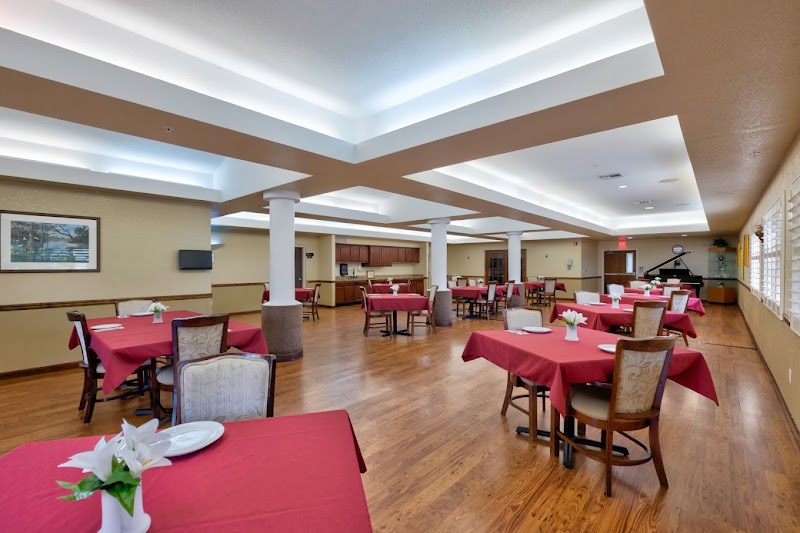
How Does Terrace Of Kissimmee, The Compare to Other Florida Nursing Homes?

Compared to the 100 nursing homes in Florida, TERRACE OF KISSIMMEE, THE's overall rating (2 stars) is below the state average of 3.2, staff turnover (50%) is near the state average of 46%, and health inspection rating (2 stars) is below the national benchmark.

What Should Families Ask When Visiting Terrace Of Kissimmee, The?

Based on this facility's data, families visiting should ask: "What changes have been made since the serious inspection findings, and how are you preventing similar issues?" "What safeguards and monitoring systems are in place to protect residents from abuse or neglect?" "Can I visit during a mealtime to observe dining assistance and food quality?" "How do you handle medical emergencies, and what is your hospital transfer rate?" These questions are particularly relevant given the facility's Immediate Jeopardy citations and the substantiated abuse finding on record.

Is Terrace Of Kissimmee, The Safe?

Based on CMS inspection data, TERRACE OF KISSIMMEE, THE has documented safety concerns. The facility has 1 substantiated abuse finding (meaning confirmed case of resident harm by staff or other residents). Inspectors have issued 2 Immediate Jeopardy citations (the most serious violation level indicating risk of serious injury or death). The facility has a 2-star overall rating and ranks #100 of 100 nursing homes in Florida. Families considering this facility should ask detailed questions about what corrective actions have been taken since these incidents.

Do Nurses at Terrace Of Kissimmee, The Stick Around?

TERRACE OF KISSIMMEE, THE has a staff turnover rate of 50%, which is about average for Florida nursing homes (state average: 46%). Moderate turnover is common in nursing homes, but families should still ask about staff tenure and how the facility maintains care continuity when employees leave.

Was Terrace Of Kissimmee, The Ever Fined?

TERRACE OF KISSIMMEE, THE has been fined $38,724 across 1 penalty action. The Florida average is $33,466. While any fine indicates a compliance issue, fines under $50,000 are relatively common and typically reflect isolated problems that were subsequently corrected. Families should ask what specific issues led to these fines and confirm they've been resolved.

Is Terrace Of Kissimmee, The on Any Federal Watch List?

TERRACE OF KISSIMMEE, THE is not on any federal watch list. The most significant is the Special Focus Facility (SFF) program, which identifies the bottom 1% of nursing homes nationally based on persistent, serious quality problems. Not being on this list means the facility has avoided the pattern of deficiencies that triggers enhanced federal oversight. This is a positive indicator, though families should still review the facility's inspection history directly.