REHABILITATION CENTER OF WINTER PARK
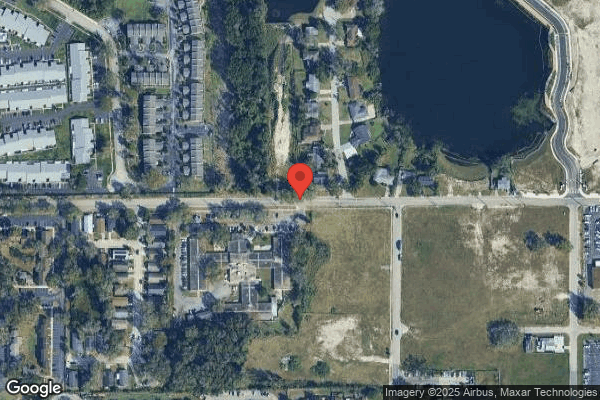
1700 MONROE AVE, MAITLAND, FL 32751 (407) 647-2092
For profit - Limited Liability company 180 Beds BEDROCK CARE Data: November 2025
Trust Grade
45/100
#553 of 690 in FL
Last Inspection: August 2024

Within standard 12-15 month inspection cycle. Federal law requires annual inspections.

Overview

The Rehabilitation Center of Winter Park has received a Trust Grade of D, indicating below-average quality and some concerns regarding care. It ranks #553 out of 690 facilities in Florida, placing it in the bottom half of nursing homes statewide, and #28 out of 37 in Orange County, meaning there are only a few local options that are better. While the facility is showing improvement in its trend, reducing reported issues from 23 in 2024 to just 1 in 2025, it still struggles with staffing, earning only 2 out of 5 stars and experiencing a high turnover rate of 58%, which is above the state average. There have been no fines recorded, which is a positive aspect, but RN coverage is low, falling below that of 92% of Florida facilities, potentially impacting the quality of care. Specific incidents include a requirement for residents to waive liability for the loss of personal property, which raises concerns about accountability, and issues with television service in multiple rooms, where residents reported fuzzy channels and inadequate maintenance responses. Overall, while there are some strengths such as the lack of fines and improvement in issues, families should weigh these against the serious concerns regarding care quality and staffing.

Trust Score
D
45/100
In Florida
#553/690
Bottom 20%
Safety Record
Low Risk
No red flags
Inspections
Getting Better
23 → 1 violations
Staff Stability
⚠ Watch
58% turnover. Above average. Higher turnover means staff may not know residents' routines.
Penalties
✓ Good
No fines on record. Clean compliance history, better than most Florida facilities.
Skilled Nurses
⚠ Watch
Each resident gets only 21 minutes of Registered Nurse (RN) attention daily — below average for Florida. Fewer RN minutes means fewer trained eyes watching for problems.
Violations
⚠ Watch
50 deficiencies on record. Higher than average. Multiple issues found across inspections.
★★☆☆☆
2.0
Overall Rating
★★☆☆☆
2.0
Staff Levels
★★★★☆
4.0
Care Quality
★★☆☆☆
2.0
Inspection Score
Stable
2024: 23 issues
2025: 1 issues

The Good

  • 4-Star Quality Measures · Strong clinical quality outcomes
  • Full Sprinkler Coverage · Fire safety systems throughout facility
  • No fines on record

Facility shows strength in quality measures, fire safety.

The Bad

2-Star Overall Rating

Below Florida average (3.2)

Below average - review inspection findings carefully

Staff Turnover: 58%

12pts above Florida avg (46%)

Frequent staff changes - ask about care continuity

Chain: BEDROCK CARE

Part of a multi-facility chain

Ask about local staffing decisions and management

Staff turnover is elevated (58%)

10 points above Florida average of 48%

The Ugly 50 deficiencies on record

Jan 2025 1 deficiency
CONCERN (D) 📢 Someone Reported This

A family member, employee, or ombudsman was alarmed enough to file a formal complaint

Potential for Harm - no one hurt, but risky conditions existed

Deficiency F0849 (Tag F0849)

Could have caused harm · This affected 1 resident

**NOTE- TERMS IN BRACKETS HAVE BEEN EDITED TO PROTECT CONFIDENTIALITY** Based on interview, and record review, the facility failed to notify and update the hospice provider regarding a fall for 1 of 1...

Read full inspector narrative →
**NOTE- TERMS IN BRACKETS HAVE BEEN EDITED TO PROTECT CONFIDENTIALITY** Based on interview, and record review, the facility failed to notify and update the hospice provider regarding a fall for 1 of 1 resident reviewed for notification of change, out of a total sample of 5 residents, (#1). Findings: Resident #1 was admitted to the facility on [DATE] for respite care. His diagnoses included dementia, Neurocognitive disorder, depressive disorder, and insomnia. Resident #1 was discharged home from the facility on 10/10/24. Review of resident #1's medical record revealed a late entry nursing progress note as well as a Situation Background Assessment and Recommendation (SBAR) note dated 10/08/24 at 4:15 AM. The notes showed resident #1 was found on the floor next to his bed, the facility Nurse Practitioner was notified on 10/08/24, and the document revealed the responsible party was not yet known, therefore not notified at that time. There was no documentation to show facility nurses contacted resident #1's hospice provider regarding the fall. On 1/13/25 at 12:32 PM, Registered Nurse (RN) A stated if a resident was on hospice services the facility process was to notify the physician, the representative, and the hospice service as a fall was a change in condition. On 1/14/25 at 12:28 PM, the interim Director of Nursing (DON) stated if a resident had a change in condition such as fall, then nursing was responsible for notifying the responsible party, the physician, and the contracted hospice. On 1/14/25 at 12:45 PM, the interim DON placed a telephone call to resident #1's hospice service. The Hospice Team Manager stated by phone that resident #1's wife called them on 10/10/24 at 10:21 AM, to report that her husband had a fall in the facility a few days before. The Hospice Team Manager stated the facility did not call or notify the hospice of resident #1's fall, instead it was his wife. On 1/14/25 at 12:50 PM, the interim DON validated there was no documentation in resident #1's medical record to show that resident #1's hospice service was notified of his change in condition regarding his fall on 10/08/24. The facility policy and procedure, Change in Condition revised 4/04/23, revealed a purpose to communicate changes in condition, regarding notification about changes in conditions as required. The policy Hospice Services with a revision date of 3/10/23 showed the facility will have an agreement with Hospice that includes the communication process for care of the resident including any changes in condition.
Dec 2024 3 deficiencies
CONCERN (D) 📢 Someone Reported This

A family member, employee, or ombudsman was alarmed enough to file a formal complaint

Potential for Harm - no one hurt, but risky conditions existed

Deficiency F0655 (Tag F0655)

Could have caused harm · This affected 1 resident

**NOTE- TERMS IN BRACKETS HAVE BEEN EDITED TO PROTECT CONFIDENTIALITY** Based on interview, and record review, the facility failed to ensure baseline care plan summaries were reviewed with or a copy p...

Read full inspector narrative →
**NOTE- TERMS IN BRACKETS HAVE BEEN EDITED TO PROTECT CONFIDENTIALITY** Based on interview, and record review, the facility failed to ensure baseline care plan summaries were reviewed with or a copy provided to the resident and/or the resident representative for 2 of 4 residents reviewed for baseline care plan, of a total sample of 10 residents, (#1, and #2). Findings: 1. Resident #1's electronic medical record (EMR) revealed the resident was admitted on [DATE] with diagnoses of cerebral infarction (stroke), hemiplegia, type 2 diabetes, speech and language deficits, abnormal posture, need for assistance with activities of daily living (ADLs). He resided in the facility for 10 days and was discharged on 11/07/24. On 12/12/24 at 2:57 PM, Registered Nurse (RN) C stated the care plan was initiated upon admission, then Minimum Data Set (MDS) nurses completed the comprehensive care plan. She stated that resident #1 did not receive a baseline care plan from the nurse on admission and there were other people who had to sign off on it as well, as part of a team effort. RN C explained the resident was supposed to get a copy of the baseline care plan once it was finished. On 12/12/24 at 3:51 PM, Licensed Practical Nurse (LPN) B stated nurses completed the baseline care plans in the computer. She explained she thought the MDS nurse reviewed the care plans with residents and then gave them a copy once they were completed. On 12/13/24 at 12:26 PM, and 1:12 PM, the Director of Nursing (DON) stated the nurse who held the key was expected to do the initial admission assessment, and the nursing baseline care plan. She explained the care plan should be signed by the resident, family or representative, and a copy given to them. The DON conveyed the baseline care plan stayed with the admission packet and was placed with the admission paperwork for the clinical team to review in the morning. She stated the clinical team reviewed the packets in the morning for accuracy and completeness. Resident #1's EMR was reviewed with the DON which revealed there was no baseline care plan present for resident #1. The DON confirmed there was no baseline care plan scanned into the computer record for resident #1. On 12/13/24 at 5:15 PM, the Lead MDS Coordinator, stated nursing was responsible for the residents' baseline care plans, and it was a team effort to complete it. 12/13/24 at 5:20 PM, the DON provided a paper copy of resident #1's baseline care plan. The document revealed an admission date of 10/28/24 with baseline care plan dated 10/29/24. The care plan included a summary of goals, interventions, physician orders, services, and treatments. Further review showed on page six under the section, Date reviewed with resident/representative, the line was blank with no date for review, signature, or provided copy of the baseline care plan summaries to the resident or the resident's representative. Review of resident #1's EMR revealed no documentation that the resident or the representative refused to review or sign the baseline care plan summary. 2. Resident #2's EMR showed the resident was admitted to the facility on [DATE], with a previous admission on [DATE]. Diagnoses included subsequent fall with fracture, cognitive communication deficit, dementia, depressive disorder, and need for assistance with ADLs. Resident #2 resided in the facility for 26 days and was discharged on 11/14/24. Review of the EMR for resident #2 revealed there was no baseline care plan summary for the admission date of 10/18/24 and the medical record did not reveal documentation of a copy of the baseline care plan provided to the resident or the representative or their refusal to review and sign the baseline care plan summary. On 12/13/24 at 5:30 PM, the DON provided a copy of the baseline care plan summary for resident #2. The form presented by the DON was dated for the previous admission of 8/22/24, and page 6, the signature page for date reviewed with the resident or representative was not included. The DON stated nurses were responsible for the baseline care plans, and she was unsure if any audits or education had been completely recently regarding care plans. Review of the facility's Baseline Care Plan, Comprehensive Care Plan and Ongoing Care Plan Updates dated 4/1/22 showed the facility would provide the resident and their representative with a summary of the baseline care plan when requested and a written summary must be provided to the resident or representative by completion of the comprehensive care plan.
CONCERN (D) 📢 Someone Reported This

A family member, employee, or ombudsman was alarmed enough to file a formal complaint

Potential for Harm - no one hurt, but risky conditions existed

Medical Records (Tag F0842)

Could have caused harm · This affected 1 resident

**NOTE- TERMS IN BRACKETS HAVE BEEN EDITED TO PROTECT CONFIDENTIALITY** Based on interview, and record review, the facility failed to maintain complete, accurate, and readily accessible medical record...

Read full inspector narrative →
**NOTE- TERMS IN BRACKETS HAVE BEEN EDITED TO PROTECT CONFIDENTIALITY** Based on interview, and record review, the facility failed to maintain complete, accurate, and readily accessible medical records for 2 of 2 residents reviewed for medical record review,of a total sample of 10 residents, (#1, and #2). Findings: 1. Resident #1 was admitted to the facilty on 10/28/24 with diagnoses of hypertension, muscle weakness, cerebral infarction (stroke), hemiplegia, cognitive and social or emotional deficit, and type 2 diabetes. Resident #1 remained in the facility for 10 days and was discharged on 11/07/24 Review of resident #1's medical record revealed resident #1's admission Agreement paperwork was missing from the medical record and the baseline care plan for the admission date of 10/28/24 had date discrepancies regarding the discharge plans section and incomplete documentation regarding no date or signature for review with the resident or representative for the baseline care plan summary. On 12/13/24 at 1:40 PM, the Director of Community Relations stated there was no scanned copy of the admission Agreement in the computer for resident #1. On 12/13/24 at 1:44 PM, the Admissions Director stated she was unable to locate the signed admission agreement in the computer or in the record. She said, Don't know what happened there. On 12/13/24 at 4:20 PM, the Admissions Director explained the admission packet was, a part of the electronic medical record. She stated the main thing was getting the packet signed. She stated the timeframe for getting the admission packet paperwork completed, signed and into the medical record was 24-48 hours or longer if you have to contact the family for a signature if the resident was unable to sign. She stated it was important because it was the agreement between the resident and the facility for the services provided. The admission Director confirmed she was responsible for the admission Agreement and explained the packed contained information so the residents knew their rights and the protocols for the facility. On 12/13/24 at 5:20 PM, the Director of Nursing (DON) provided a copy of the resident baseline care plan which reflected an admission date of 10/28/24, and a completion date of 10/29/24 with a staff signature. Discrepancies were noted on page 4 of the baseline care plan, which showed no date, and under the section for Discharge Plans, showed a location for transfer to another skilled facility with home health care. Review of a progress note by the Assistant Administrator dated 11/05/24 at 10:41 AM, revealed, Patient and family requested to transfer . Referral sent. A progress note by the Assistant Administrator dated 11/06/24 at 1:41 PM, showed she confirmed resident #1's transfer to the skilled nursing facility. Comparison of the progress notes dated 11/05/24 at 10:41 AM, and 11/06/24 at 1:41 PM, conflict with date of completion on the baseline care plan of 10/29/24. On 12/13/24 at 5:30 PM, the DON acknowledged that the copy of the baseline care plan summary was incomplete and stated nursing was responsible for baseline care plans. 2. Resident #2 was admitted to the facility on [DATE] with a previous admission on [DATE]. She had diagnoses of fractured nasal bones, contusions-scalp, subsequent falls, chronic obstructive pulmonary disease, disorders of the brain, depressive disorder and hypertension. She resided in the facility for 26 days and was discharged on 11/14/24. Record review showed resident #2's admission of 10/18/24 base line care plan summary was missing from the electronic record. On 12/13/24 at 1:08 PM, the DON reviewed resident #2's medical record and confirmed there were no scanned documents for the baseline care plan. On 12/13/24 at 5:30 PM, the DON provided a paper copy of the baseline care plan that showed the previous admission date of 8/22/24, that was missing page 6 which contained the baseline care plan summary completion date, the date reviewed with resident or representative and staff signature. The DON stated this was all she could find. Review of the EMR did not reveal documentation of the resident or the representative refusing to review or sign the baseline care plan summary for 10/18/24 admission. Review of the Resident Rights Policy dated 4/01/22 revealed the purpose was to ensure the preservation for resident's right to a dignified existence, and communication with access to services inside and outside of the facility. Review of the facility admission Agreement indicated the agreement contained the entire understanding between the facility and the resident and/or representative. The facility accepted the application for admission subject to the resident or representative executing consent for admission, and medical treatment. The resident and/or representative acknowledged that they had been fully informed, and signed their signature to indicate they executed the agreement on the date and year written. The admission Policy dated 9/26/22, revised 5/15/23 showed the facility would provide admissions according to State and Federal regulations and no potential or current resident would be requested or required to waive their rights. Review of the signed job description dated 12/22/22 for admission Director reflected advising residents and /or families of admission requirements as established by the facility, ensures proper completion, signing and distribution of paperwork, and ensure residents and families received the highest quality of service.
CONCERN (E) 📢 Someone Reported This

A family member, employee, or ombudsman was alarmed enough to file a formal complaint

Potential for Harm - no one hurt, but risky conditions existed

Safe Environment (Tag F0921)

Could have caused harm · This affected multiple residents

**NOTE- TERMS IN BRACKETS HAVE BEEN EDITED TO PROTECT CONFIDENTIALITY** Based on observation, interview, and record review, the facility failed to ensure residents were provided necessary maintenance ...

Read full inspector narrative →
**NOTE- TERMS IN BRACKETS HAVE BEEN EDITED TO PROTECT CONFIDENTIALITY** Based on observation, interview, and record review, the facility failed to ensure residents were provided necessary maintenance services to maintain a comfortable, homelike environment regarding functional television (TV) channels with audio, channel programming, and availability of remote controls for 4 rooms on the 100 unit, 6 rooms on the 200 unit and 1 room on the 300 unit, out of a total of 27 sampled rooms reviewed, (Rooms 111-B, 112-B, 114-A, 128-A, 128-B, 204-A, 207-A, 215-A, 215-B, 219-A, 219-B, 223-A, 230-A, 230-B, 301-A, and 301-B). Findings: 1. On 12/12/24 at 3:24 PM, during a tour of the 200-nursing unit, resident #3 in room [ROOM NUMBER]-A was laying in bed with the TV remote in his hand. He stated the TV channels were fuzzy and to make it worse it only got a handful of channels. He said he, reported it 2 times within the last week and a half. One maintenance guy came in and said it was the mount on the wall that holds the TV that was causing the problem something about the coax cable. He explained he repaired things, and knew that was not the issue. He said he informed the maintenance person and said, No one has come back since then to follow up or fix the issue. He stated when his roommate's television was on, it did not have any channels showing. Review of the work order report created on 11/13/24 for TV being fuzzy, and some channels not working had a status of completed on 12/11/24. A work order created on 11/22/24 for the resident having difficulty with his TV also had a status of completed on 12/11/24. Observations on 12/12/24 and 12/13/24 showed the TV channels continued to be fuzzy. On 12/12/24 at 3:31 PM, Licensed Practical Nurse (LPN) A stated she was aware that the TV for the A bed was not clear, and it had been verbally reported maintenance one day last week. On 12/12/24 at 3:39 PM, the Maintenance Director stated he was responsible for facility maintenance. He received work orders verbally, and on the computer, he checked the maintenance books on the units daily, and then took care of it. On 12/13/24 at 2:48 PM, the Maintenance Director stated we replace whatever TV was broken, or static coax cables, and explained they couldn't replace anything in the walls. He said they would have to contract out to a cable company for those repairs. He stated, they had not had to contract anything out to the cable company recently, within the last six months. On 12/13/24 at 3:25 PM, resident #3 in room [ROOM NUMBER]-A stated yesterday (12/12/24) confirmed they changed the TV and gave him a new TV. He stated the TV still had fuzzy channels, and now his remote control worked both his and his roommate's TV. He stated he could turn both TV's on, and off, as well as change the channels on both TV's. He stated he didn't get some TV channels. The Maintenance Director confirmed resident #3's TV channels were not clear, and his remote control did turn on, and off, and changed the channels on his TV. 2. On 12/12/24 at 3:27 PM, resident #4 in room [ROOM NUMBER]-B was observed laying in bed. He stated the TV didn't work when you turned it on. He proceeded to attempt to turn on his TV by pushing the button on the remote control to change the channels. The TV display showed a guide listing for the channels, however when he attempted to select several channels there were no visual images displayed for any of the channels selected, and there was no sound. 3. On 12/13/24 at 2:57 PM, A walk-through was conducted with the Maintenance Director, and the Administrator to inspect reported and completed TV and/or remote-control work orders. In room [ROOM NUMBER]-B the Maintenance Director confirmed there was only 1 remote control in the room to operate both residents' TVs. 4. On 12/13/24 at 3:06 PM, observations of room [ROOM NUMBER]-B with the Maintenance Director revealed the TV channels were fuzzy, and unclear for both TVs. There was only one remote control in the room for both residents. Closer observation showed a crossover of the one remote control, as it turned both TVs on, off, and changed channels. 5. On 12/13/24 at 3:08 PM, in room [ROOM NUMBER]-A the TV check by the Maintenance Director showed the picture on the TV channels was not clear. 6. On 12/13/24 at 3:10 PM, a TV check for room [ROOM NUMBER] revealed resident #6 in 128-B in bed watching TV. She stated her roommate did not have a remote control for her TV. The Maintenance Director searched and was not able to locate the remote control for the A bed. He validated there was no remote control for room [ROOM NUMBER]-A's television. Resident #6 stated her TV was currently playing on the antenna only. She stated it was the only way to see the channels clearly. She explained her husband worked with the cable company and he fixed her TV because all of her channels were fuzzy. She stated some channels did not even show up and she could not get any of the higher channels on the TV. Resident #6 then proceeded to switch her TV from antenna mode to the facility cable which revealed all channels were fuzzy as well as missed channels on the TV channel selection. She confirmed she had previously reported this concern to the facility. 7. On 12/13/24 at 3:15 PM, resident #7 in 204-A, stated the TV was loud, and the volume and TV channels were not responsive with the remote control. He stated it was not synced and it woke up his roommate with the loud volume. The Maintenance Director checked his TV and stated it was an issue with the guide setting. 8. On 12/13/24 at 3:17 PM, resident #8 in 207-A stated the TV did not pick up some of the channels. The Maintenance Director stated the TV needed to be reprogrammed. Further review of the facility work order report revealed there was a work order created on 10/24/24 for reprogramming resident #8's TV. The status showed completed on 11/06/24, however, the TV required frequent reprogramming. 9. On 12/13/24 at 3:23 PM, the Maintenance Director revealed the remote control for room [ROOM NUMBER]-A would turn on and off the TV for 215-B. Observation revealed neither TV had pictures displayed on the channels. 10. On 12/13/24 at 3:34 PM, in room [ROOM NUMBER]-A, resident #9 stated the remote control did not work properly. He stated if he turned on his TV with his remote control it would turn on both TVs in the room, his TV and the roommate's TV. The Maintenance Director confirmed both TVs in the room could be turned on and off from resident #9's remote control. 11. On 12/13/24 at 3:38 PM, the TV check with the Maintenance Director revealed both beds 230-A and 230-B's TV channels were unclear, the images were fuzzy as displayed on the TVs, and the remote controls turned on both A and B bed's TVs. 12. On 12/13/24 at 3:34 PM, in room [ROOM NUMBER]-A resident #10 stated when it rained all the channels went out and you couldn't see any channels on the TV. He stated when he turned on his TV it also turned on his roommate's TV and that woke him up. He said, I asked for a computer TV and they stated they can't do that because they would have to re-wire everything. The Maintenance Director confirmed 301-B had no remote control for the TV. On 12/13/24 at 3:45 PM, Maintenance Director confirmed it was not homelike, and not normal for TVs to be fuzzy, and not showing pictures on the channels. He stated each resident should have their own remote control. He said, The remote control for one resident's TV should not turn on or off the TV for the roommate. He stated he had not done any audits on the functionality of the TVs display of pictures, availability of channels, or checked to make sure each resident had their own remote control which operated their individual TV in the rooms. On 12/13/24 at 3:56 PM, the Administrator stated the TVs should work better, should not be fuzzy or have channels that the residents couldn't get. Review of the facility Work Order policy dated 4/01/22 showed that work orders should be completed in order to establish maintenance service and were addressed. Review of the Resident Rights Policy dated 4/01/22 revealed the purpose was to ensure the preservation of the resident's right to a dignified existence, with access to services inside and outside of the facility. The policy detailed that each resident had the right to a safe, clean comfortable, homelike environment with maintenance services to maintain a comfortable interior.
Oct 2024 4 deficiencies
CONCERN (D) 📢 Someone Reported This

A family member, employee, or ombudsman was alarmed enough to file a formal complaint

Potential for Harm - no one hurt, but risky conditions existed

Deficiency F0552 (Tag F0552)

Could have caused harm · This affected 1 resident

**NOTE- TERMS IN BRACKETS HAVE BEEN EDITED TO PROTECT CONFIDENTIALITY** Based on record review, and interview, the facility failed to notify a resident's Power of Attorney (POA) of changes in conditio...

Read full inspector narrative →
**NOTE- TERMS IN BRACKETS HAVE BEEN EDITED TO PROTECT CONFIDENTIALITY** Based on record review, and interview, the facility failed to notify a resident's Power of Attorney (POA) of changes in condition for 1 of 3 residents reviewed for change in condition, of a total sample of 5, (#1). Findings: Review of resident #1's medical record revealed their responsible party/durable POA was family member #1. Review of resident #1's Quarterly Minimum Data Set Assessment (MDS) dated [DATE] and Annual MDS dated [DATE] indicated she rarely/never understood regarding communication and a mental status examination should not be conducted. One of her diagnoses included unspecified dementia with unspecified severity. Review of resident #1's medical record revealed a nursing note dated 3/17/24 that the resident had a skin tear to the right forearm. There was no documentation about what caused this injury. There was no description of the size of the wound, nor its placement on the forearm. A nursing note dated 3/18/24 revealed a physician was made aware of the skin tear and treatment orders were obtained for the right forearm skin tear noted in the 3/17/24 nursing note. On 10/22/24 at 11:19 AM, the Director of Nursing (DON) reviewed resident #1's nursing note dated 3/17/24 that indicated a skin tear to her right forearm. She verified there was no documentation that resident #1's POA was notified of this injury. She said she did not know why the POA was not notified. Review of resident #1's medical record revealed a nursing note dated 4/13/24 which indicated resident #1 had bruises to the forehead and side of left eye. There was no documentation about what caused these injuries. There was no documentation with a description of the injury including the approximate size, shape, coloration of the bruising nor more detailed placement of location. It was documented the physician was notified. There was no mention the POA was notified. On 10/22/24 at 11:11 AM, the Assistant Administrator verified there was no documentation that resident #1's bruising to the forehead and side of left eye injuries from 4/13/24 were reported to her POA. Review of resident #1's record revealed a nursing note dated 5/09/24 that resident #1 was observed coughing, the physician was contacted, and new orders were received for a chest x-ray, 2 views. On 10/22/24 at 11:00 AM, the DON verified that there was no documentation that the POA was notified for this change in condition of resident #1 coughing as noted in the 5/09/24 nursing note nor notification of the follow-up order for a chest x-ray. Review of resident #1's medical record revealed a note dated 5/28/24 that resident #1's psychotropic medications were discussed among nursing staff and the psychiatric providers. There was a physician's order to change her Trazadone (antidepressant medication) to 50 milligrams (mg). Review of resident #1's treatment administration record indicated that 100 mg of Trazadone HCl was administered on 5/27/24 and the dose was decreased to 50 mg of Trazadone HCl, which was administered beginning on 5/28/24. On 10/22/24 at 10:49 AM, the DON verified there was no documentation that resident #1's POA had been notified of the Trazadone dosage decrease. Review of resident #1's record revealed a nursing note dated 7/11/24 that resident #1 had itchy skin due to little pink dots on back, buttocks, and front areas. The physician was notified and new orders were obtained for Permethrin External Liquid 1% (an insecticide). There was no mention resident #1's POA was notified. On 10/22/2024 at 10:48 AM, the DON verified it was not documented that resident #1's POA was notified of this change to using Permethrin External Liquid 1% medication for resident #1's rash. Review of the facility's change in condition policy, dated 4/01/22 included content in the procedure section that the facility would consult the resident's physician and if known, notify the resident's legal representative or an interested family member when there was an acute illness or a significant change in the resident's physical, mental or psychosocial status or a need to alter treatment significantly. Review of the facility's policy and guidelines for Abuse, dated 4/1/22 included content that injuries of unknown origin must be immediately investigated to rule out abuse and indicated Social Service staff or designee should keep in frequent contact with the resident and/or resident representative.
CONCERN (D) 📢 Someone Reported This

A family member, employee, or ombudsman was alarmed enough to file a formal complaint

Potential for Harm - no one hurt, but risky conditions existed

Abuse Prevention Policies (Tag F0607)

Could have caused harm · This affected 1 resident

**NOTE- TERMS IN BRACKETS HAVE BEEN EDITED TO PROTECT CONFIDENTIALITY** Based on record review, and interview, the facility failed to follow their policy and family member request to thoroughly invest...

Read full inspector narrative →
**NOTE- TERMS IN BRACKETS HAVE BEEN EDITED TO PROTECT CONFIDENTIALITY** Based on record review, and interview, the facility failed to follow their policy and family member request to thoroughly investigate injuries of unknown origin for 2 of 3 residents reviewed for injuries of unknown origin, of a total sample of 5, (#1 and #4). Findings: 1. Review of resident #1's Quarterly Minimum Data Set (MDS) dated [DATE] and Annual MDS dated [DATE] indicated she rarely/never understood regarding communication and a mental status exam should not be conducted. One of her diagnoses included unspecified dementia, with unspecified severity. Review of resident #1's medical record revealed a nursing note dated 3/17/24 that the resident has a skin tear to the right forearm. There was no documentation about what caused this injury. There was no description of the size of the wound, nor its placement on the forearm. On 10/22/2024 at 11:19 AM, the Director of Nursing (DON) reviewed resident #1's nursing note dated 3/17/24 that indicated a skin tear to right forearm. She verified that there was no documentation about how this injury occurred and there was no documentation of an investigation about how it occurred. On 10/22/2024 at 11:30 AM, the Administrator stated that he did not recall this situation regarding a skin tear documented in the 3/17/24 nursing note. He does not have any additional investigation documentation, and this injury of unknown origin was not reported to the State Agency,nor other required entities. Review of resident #1's medical record revealed a nursing note dated 4/13/24 which indicated resident #1 had bruises to the forehead and the side of her left eye. There was no documentation about what caused these injuries. There was no documentation about the approximate size, shape, coloration of the bruising nor more detailed placement of location. It was documented the physician was notified. On 10/22/2024 at 11:11 AM, the Assistant Administrator verified there was no documentation how resident #1's bruising to the forehead and side of left eye injuries occurred, and no documentation an investigation was performed to understand what caused resident #1's injuries of unknown origin observed by nursing staff on 4/13/24. The Assistant Administrator described resident #1 as combative toward staff who offered care in August of 2024 and received care planning at that time regarding such behavior. She confirmed there was no such documentation of any such behavior occurring on 4/13/24 when the bruising to the forehead and the side of left eye was noted in her record. She verified there was no witness to this injury when it occurred, and was unable to say how these injuries occurred. She verified there was no reporting about this injury to State Agency, nor other required entities. Review of resident #1's medical record revealed a nursing note dated 5/21/24 which indicated resident #1 had a skin tear to the right elbow. It described the resident moved her upper extremities frequently and hit the wall. There was no documentation about the size of the skin tear. Review of resident #1's medical record revealed a nursing note dated 5/26/24 that resident #1's family was concerned about the origin of the injury on her right elbow which was noted in the 5/21/24 nursing note. The facility described the wound as a tear and the family member was concerned it was instead a cut. The family requested an investigation about the origin of the injury, last week, but they had not been provided a follow-up response. On 10/22/24 at 11:06 AM, the Administrator and Assistant Administrator verified they were never notified by any staff that resident #1's family was concerned about the causation of the injury to resident #1's right elbow. They verified there was no witness to this injury and no follow-up investigation was documented about the injury to understand its causation or to implement interventions. They verified the injury was not reported to the State agency nor to other required entities. Review of resident #1's medical record revealed a nursing note dated 7/30/24 which indicated resident #1 had a skin tear to her right lower leg. There was no documentation about what caused this injury. There was no description of the size of the wound, nor its placement on the lower leg. On 10/22/24 at 10:35 AM, the Assistant Administrator verified there was no documentation about what caused the injury to resident #1's right lower leg which was observed 07/30/24, and said there was no additional documentation of an investigation having been done to understand what caused resident #1's injury. She verified the injury was not reported to the State Agency for possible abuse or neglect or to any other required entities. 2. Resident #4 was admitted to the facility on [DATE]. Her Quarterly MDS assessment dated [DATE] revealed she had a Brief Interview for Mental Status score of 2 out of 15 which indicated severe cognitive impairment. Review of resident #4's medical record revealed a nursing note dated 7/04/24 in which a nurse observed purplish, red internal bruising on resident #4's right and left hands and right lateral forearm. On 10/22/24 at 4:18 PM, the Assistant Administrator reviewed the investigation about bruising on resident #4's hands and right lateral forearm that was observed by the nurse on 7/04/24. No witnesses had noted when the injuries occurred. She explained they were believed to have been caused by blood draws for specimen collection that were done on 6/29/24. She said the blood draw company was contacted, but it did not have documentation of how many blood draws were attempted. Although the number of attempted blood draws was not verified by the blood draw company the Assistant Administrator verified there was no additional investigation, such as interviewing staff from various shifts or assessing other residents' skin who have severe cognitive impairment, to understand how the injuries occurred. She verified the injuries were not reported to the State Agency or other required entities for possible abuse or neglect. In a telephone interview on 10/23/24 at 1:34 PM, the blood lab draw Assistant Operations Manager verified there was no record of how many times a blood draw was attempted on resident #4, nor what site or sites on her body the specimen was collected from on 6/29/24. Review of the medical record revealed a Licensed Nurse Weekly Skin Observation dated 9/01/24 which indicated there were no skin issues. A nursing note dated 9/02/24 indicated the resident's family member observed bruising on the resident. The nurse indicated that on assessment a purplish bruise was noted on top of her right hand, the top of her left hand, the right wrist and left lower arm. There was no documentation about what caused these injuries, but the nurse documented the physician and Risk Manager were notified. On 10/23/24 at 9:13 AM, the Assistant Administrator confirmed the facility was aware resident #4's daughter had concerns that Certified Nursing Assistant (CNA) B abused her mother and the CNA was suspended while the facility investigated. The Assistant Administrator verified that as part of the facility's investigation regarding the abuse allegations from 9/02/24 the facility did not assess the skin of other severely cognitively impaired residents who were not able to self report but were provided care by the same staff to investigate if there were other injuries of unknown origin which could exist. Review of the facility's policy and guidelines for implementation, abuse policy, dated 4/01/22 included content regarding injuries of unknown origin. The document revealed it was the policy of the facility that reports of abuse (mistreatment, neglect, or abuse, including injuries of unknown source. ) were promptly and thoroughly investigated. Additionally, it noted that investigation of injuries of unknown origin or suspicious injuries must be immediately investigated to rule out abuse. The policy included examples of injuries, and remarked they were not limited to, bruising of the face, bruises of unusual size, multiple unexplained bruises, and/or bruising in an area not typically vulnerable to trauma.
CONCERN (D) 📢 Someone Reported This

A family member, employee, or ombudsman was alarmed enough to file a formal complaint

Potential for Harm - no one hurt, but risky conditions existed

Report Alleged Abuse (Tag F0609)

Could have caused harm · This affected 1 resident

**NOTE- TERMS IN BRACKETS HAVE BEEN EDITED TO PROTECT CONFIDENTIALITY** Based on record review, and interview, the facility failed to report injuries of unknown origin in a timely manner per regulatio...

Read full inspector narrative →
**NOTE- TERMS IN BRACKETS HAVE BEEN EDITED TO PROTECT CONFIDENTIALITY** Based on record review, and interview, the facility failed to report injuries of unknown origin in a timely manner per regulations for 2 of 3 residents reviewed for injuries of unknown origin, of a total sample of 5 residents, (#1 and #4). Findings: 1. Resident #4 was admitted to the facility on [DATE]. Her Quarterly Minimum Data Set (MDS) assessment dated [DATE] revealed she had a Brief Interview for Mental Status score of 2 out of 15, which indicated severe cognitive impairment. Review of resident #4's medical record revealed a nursing note dated 9/02/24 by Registered Nurse (RN) A that the resident's family member observed bruising on the resident. The nurse indicated that upon assessment a purplish bruise was noted on top of the right hand, top of left hand, right wrist and left lower arm. There was no documentation about what caused these injuries, but the nurse documented she reported the concerns to the physician and the Risk Manager. In interviews on 10/22/24 at 4:36 PM, and on 10/23/24 at 9:14 AM, with the Administrator and the Assistant Administrator, the Assistant Administrator confirmed the facility was aware resident #4's daughter had concerns that Certified Nursing Assistant (CNA) B abused her mother and the CNA was suspended while the facility investigated. She acknowledged the facility did report the allegations but verified there was an over 24-hour delay in reporting to the State agency, and other entities per the regulations regarding the bruising injuries of unknown origin documented on the nursing note by RN A dated 9/02/24. The Administrator said he did not know why he didn't know about the bruising injuries earlier. He said the Director of Nursing (DON), at the time of the survey, now a former employee, was the Risk Manager at the time. Review of resident #4's medical record revealed a nursing note dated 7/04/24 in which the nurse observed purplish, red bruising on resident #4's right and left hands and right forearm. There was no documentation about what caused the injuries. On 10/22/24 at 4:18 PM, the Assistant Administrator reviewed the investigation about the bruising on resident #4's hands and right forearm that was observed by the nurse on 7/04/24. She acknowledged no witnesses were noted when the injury occurred. She explained it was believed to have been caused by blood draws for specimen collection that was done on 6/29/24. She said the blood draw company was contacted, but it did not have documentation of how many blood draws were attempted. Although the number of attempted blood draws by the blood draw company was not verified by the facility, the Assistant Administrator verified no additional investigation, such as interviewing staff from various shifts or assessing other residents' skin who had severe cognitive impairment, to understand how the injuries might have occurred was completed. There was no documentation that the facility notified the State agency nor other entities of the injuries of unknown origin or possible abuse/neglect. In a telephone interview on 10/23/24 at 1:34 PM, the blood lab draw Assistant Operations Manager verified there was no record of how many times a blood draw was attempted on resident #4, nor what from what site or sites on resident #4's body the specimen was collected from on 6/29/24. 2. Resident #1 was most recently admitted to the facility on [DATE] and discharged on 9/05/24. Review of resident #1's Quarterly MDS assessment dated [DATE] and Annual MDS dated [DATE] indicated she rarely/never understood regarding communication and a mental status exam should not be conducted. One of her diagnoses included unspecified dementia, with unspecified severity. Review of resident #1's medical record revealed a nursing note dated 3/17/24 noting the resident had a skin tear to the right forearm. There was no documentation about what caused this injury. There was no description of the size of the wound, nor its placement on the forearm. A nursing note dated 3/18/24 revealed the skin tear was reported to the physician and treatment orders were given. On 10/22/24 at 11:19 AM, the Director of Nursing (DON) reviewed resident #1's nursing note dated 3/17/24 which indicated she had a skin tear to her right forearm. She verified there was no documentation about how the injury occurred nor was there documentation of an investigation about how it occurred. On 10/22/24 at 11:30 AM, the Administrator stated he did not recall the situation regarding resident #1's skin tear as documented in the 3/17/24 nursing note. The Administrator confirmed the facility did not have any additional investigation documentation and he confirmed the incident was not reported to to the appropriate entities or state agency for possible abuse or neglect. Review of resident #1's medical record revealed a nursing note dated 4/13/24 which indicated resident #1 had bruises to the forehead and the side of her left eye. There was no documentation about what caused these injuries. There was no documentation about the approximate size, shape, coloration of the bruising nor more detailed placement of location. It was documented the physician was notified. On 10/22/2024 at 11:11 AM, the Assistant Administrator verified there was no documentation how resident #1's bruising to the forehead and side of left eye injuries occurred, and no documentation an investigation was performed to understand what caused resident #1's injuries of unknown origin observed by nursing staff on 4/13/24. The Assistant Administrator described resident #1 as combative toward staff who offered care in August of 2024 and received care planning at that time regarding such behavior. She confirmed there was no such documentation of any such behaviors occurring on 4/13/24 when the bruising to the forehead and the side of left eye was noted in her record. She verified there was no witness to this injury when it occurred, and she was unable to say how these injuries occurred. She verified there was no reporting about this injury to the State Agency, nor other required entities. Review of resident #1's record revealed a nursing note dated 5/21/24 which indicated that resident #1 had a skin tear to the right elbow. It described the resident moved her upper extremities frequently and hit the wall. There was no documentation about the size of the skin tear noted. Review of resident #1's medical record revealed a nursing note dated 5/26/24 that resident #1's family was concerned about the origin of the injury on her right elbow which was also noted in the 5/21/24 nursing note. The nursing staff described the injury as a tear and the Power of Attorney (POA) was concerned it was more like a cut. The document indicated the POA requested an investigation to the Unit Manager about the origin of the injury, last week, but had not received a follow-up response. On 10/22/24 at 11:06 AM, the Administrator and Assistant Administrator verified they were not notified by any staff that resident #1's family was concerned about the causation of the injury on resident #1's right elbow. They verified there was no witness to this injury and no follow-up investigation was documented about this injury to understand its causation. They confirmed that this injury was not reported to the State agency or other required entities for possible abuse or neglect. Review of resident #1's record revealed a nursing note dated 7/30/24 that resident #1 had a skin tear to her right lower leg. There was no documentation about what caused this injury. There was no description of the size of the wound, nor its placement on the lower leg. On 10/22/24 at 10:35 AM, the Assistant Administrator verified there was no documentation about what caused the injury to resident #1's right lower leg which was observed 7/30/24, and said there was no additional documentation of an investigation or subsequent reporting for possible abuse or neglect having been done to understand what caused resident #1's injury. Review of the facility's abuse policy, dated 04/01/22 included content regarding injuries of unknown origin. In the reporting and response portion of the policy it indicated abuse allegations including (abuse, neglect, exploitation, or mistreatment, including injuries of unknown source.) were reported per Federal and State law. The facility would ensure all alleged violations involving abuse, neglect, exploitation or mistreatment, including injuries of unknown source. were reported immediately, but not later than two hours after the allegation was made, if the events that cause the allegation involve abuse or result in serious bodily injury, or not later than 24 hours if the events that caused the allegation did not involve abuse and did not result in serious bodily injury, to the administrator of the facility and to other officials. in accordance with State law through established procedures. It stated the Administrator or designee would make an initial (immediate or within 24 hours) report to the State Agency. A follow-up investigation would be submitted to the State Agency within five (5) days. The Administrator/ Designee would notify the agency for Adult Protective Services, the Statewide Abuse Hotline, would utilize the State agency Nursing Home Reporting System for Immediate and 5 day reports, and would utilize the State agency Reporting System to submit the 15-day Adverse Report.
CONCERN (D) 📢 Someone Reported This

A family member, employee, or ombudsman was alarmed enough to file a formal complaint

Potential for Harm - no one hurt, but risky conditions existed

Incontinence Care (Tag F0690)

Could have caused harm · This affected 1 resident

**NOTE- TERMS IN BRACKETS HAVE BEEN EDITED TO PROTECT CONFIDENTIALITY** Based on record review, and interview, the facility failed to remove an indwelling urinary (foley) catheter and collect a urine ...

Read full inspector narrative →
**NOTE- TERMS IN BRACKETS HAVE BEEN EDITED TO PROTECT CONFIDENTIALITY** Based on record review, and interview, the facility failed to remove an indwelling urinary (foley) catheter and collect a urine specimen in a timely manner which led to a delay in treatment for 1 of 2 residents reviewed for urinary catheters, of a total sample of 5 residents, (#1). Findings: Review of resident #1's Annual Minimum Data Set assessment dated [DATE] indicated she rarely/never understood regarding communication and a mental status exam should not be conducted. Her diagnoses included unspecified dementia, with unspecified severity. Review of resident #1's record revealed a nursing note dated 7/30/24 at 2:55 PM, that resident #1 was straight catheterized for urine with 600 cubic centimeters (cc) output due to no urine output. The physician was notified, and orders were received that day for a urinalysis with a culture and sensitivity and to place an indwelling foley catheter for three days pending the urinalysis results. Review of resident #1's medical record revealed a nursing note dated the next day on 7/31/24 at 8:08 AM, that a foley catheter had been placed. The note did not mention that a urine sample for urinalysis was collected. Resident #1 had a care plan for risk for urinary tract infection (UTI) and complications of indwelling foley catheter related to retention initiated on 7/31/24. The goal was for the risk for UTI and complications to be minimized with the use of current interventions through the next review. Interventions included check for catheter patency every shift and as needed and labs as ordered dated 7/31/24. Review of resident #1's Treatment Administration Record (TAR) revealed an order for foley catheter check for patency every shift and change as needed with a start date of 7/31/24 and was discontinued on 8/10/24. The order did not contain the direction for the removal of the catheter after three days as documented in a verbal order from the physician on 7/30/24. Also the TAR documentation showed there were two shifts the patency check was missing, one on 08/04/24 and again on 08/07/24, from the start of the order on 7/31/24 until the first shift of 8/10/24 when the catheter was discontinued. Review of resident #1's medical record revealed a nursing note dated 8/05/24 that the foley catheter had been removed, five days after it was inserted. This note conflicted with documentation by nurses on the TAR which on six shifts nurses documented they checked the patency of the foley catheter even though the nurse documented it was removed on 8/05/24. Nurses on 8/09/24 did not document the patency check on the TAR and instead documented 9- other/see Progress notes. Review of resident #1's medical record revealed a urinalysis lab report with a collection date of 8/05/24 at 6:45 AM, with results reported on 8/07/24, six days after the verbal order was initially received as noted by the nurse on 7/30/24. Review of resident #1's record revealed a physician's note dated 8/08/24 that the urine culture and sensitivity had been received, a urinary tract infection was diagnosed, and an antibiotic which the bacteria was sensitive to was ordered, nine days after the original order date for a urine analysis with culture and sensitivity. On 10/22/24 at 10:33 AM, the Director of Nursing (DON) acknowledged the urine collection for resident #1's urinalysis was not done until 8/05/24. She stated resident #1 should have been straight catheterized again on 7/31/24 in the morning for specimen collection for the urinalysis and culture and sensitivity, as it had not been collected on 7/30/24. The DON was unable to explain why it had not been done with the insertion of the foley catheter, nor why the order for the foley catheter did not specify it was for three days per the verbal order of the physician. She confirmed there was a delayed collection for the urinalysis and verified the foley catheter was in longer than three days. She verified the late urinalysis collection caused the ordered treatment (antibiotics) to be delayed.
Aug 2024 11 deficiencies
CONCERN (D)

Potential for Harm - no one hurt, but risky conditions existed

Resident Rights (Tag F0550)

Could have caused harm · This affected 1 resident

**NOTE- TERMS IN BRACKETS HAVE BEEN EDITED TO PROTECT CONFIDENTIALITY** Based on observation, interview, and record review, the facility failed to treat residents who required assistance with meals in...

Read full inspector narrative →
**NOTE- TERMS IN BRACKETS HAVE BEEN EDITED TO PROTECT CONFIDENTIALITY** Based on observation, interview, and record review, the facility failed to treat residents who required assistance with meals in a dignified and respectful manner for 1 of 1 residents reviewed for dignity, of a total sample of 49 residents, (#42). Findings: Review of resident #42's medical record documented she was readmitted to the facility on [DATE] with diagnoses of dysphagia (difficulty swallowing), aphasia (comprehension and communication disorder), stroke, and contracture of right hand. Review of the Quarterly Minimum Data Set (MDS) assessment with Assessment Reference Date of 6/02/24 revealed resident #42's Brief Interview for Mental Status was not obtained because she was rarely or never understood. The MDS showed she was dependent of staff for most Activities of Daily Living. Review of the Follow Up Question Report for August 2024 revealed resident #42 was dependent for eating. On 8/26/24 at 8:43 AM, Certified Nursing Assistant (CNA) K stated resident #42 was not interviewable and she was, a feeder. On 8/27/24 at 4:50 PM, CNA H explained this was her first time caring for resident #42. She shared resident #42 did not talk and said, She is a feeder too. When asked why she referred to resident #42 as a feeder she stated that was the term they used. On 8/29/24 at 3:40 PM, CNA J stated although she had not been assigned to resident #42, she knew whoever was assigned to her had to assist her to eat because she was, a feeder. On 8/29/24 at 11:49 AM, the Keys Unit Manager (UM) stated CNAs should refer to residents who needed assistance to eat, as dependent diners. She indicated it was not appropriate to refer to the residents as feeders. She said it was, not politically correct and was a dignity issue. On 8/30/24 at 10:00 AM, the Director of Nursing (DON) stated residents who required assistance with meals were called dependent diners, not feeders. Later at 12:28 PM, the DON explained a checklist was used to validate CNAs competencies for tasks such as eating and swallowing. She stated they also reviewed the facility's Resident Rights policy with the CNAs. During the exit conference on 8/30/24 at approximately 4:10 PM, the Resident Council President stated she had heard the CNAs refer to some residents as feeders before which she had brought to staff attention. She indicated this was, demeaning and demoralizing. Review of the CNA's job description revealed CNAs were to provide, Care in a manner that protects and promotes Resident Rights, dignity, self-determination and active participation . Refers to residents by proper names unless residents request otherwise. Avoids use of all pet names . Review of the facility's policy and procedure titled Resident Rights dated 4/01/22 revealed a purpose to preserve every resident's right to a dignified existence. The document indicated it was the facility's policy to, . treat each resident with respect and dignity and care for reach resident in a manner and in an environment that promotes maintenance or enhancement of his or her quality of life, recognizing each resident's individuality.
CONCERN (D)

Potential for Harm - no one hurt, but risky conditions existed

Safe Environment (Tag F0584)

Could have caused harm · This affected 1 resident

**NOTE- TERMS IN BRACKETS HAVE BEEN EDITED TO PROTECT CONFIDENTIALITY** Based on observation and interview the facility failed to provide a sanitary, comfortable and homelike interior for one out of 1...

Read full inspector narrative →
**NOTE- TERMS IN BRACKETS HAVE BEEN EDITED TO PROTECT CONFIDENTIALITY** Based on observation and interview the facility failed to provide a sanitary, comfortable and homelike interior for one out of 10 residents reviewed for environment, of a total sample of 42, (#126). Findings: Resident #126 was admitted to the facility on [DATE] with diagnoses which included left leg above the knee amputation, other abnormalities of gait and mobility and the need for assistance with personal care. On 8/26/24 at 8:53 AM, resident #126 was observed in his room, alert and oriented, sitting up in his wheelchair eating breakfast. He indicated the bedside commode next to his table had not been emptied for two days. When he lifted the lid of the commode, there was a foul odor and a large amount of feces and urine were observed. He explained he asked the staff that morning during breakfast service to empty it but was told it was not their job. On 8/26/24 at 1:30 PM, observation of the bedside commode in resident #126's room revealed it remained dirty with a foul odor in the room and still had not been emptied. A few minutes later, outside the resident's room, Certified Nursing Assistant (CNA) B, stated she had not been asked by resident #126 to empty his bedside commode. She stated that resident #126 used the bathroom and not the bedside commode. The next day, on 8/27/24 at 10:19 AM, resident # 126 was again observed sitting in his wheelchair in his room with assigned CNA A present. The bedside commode was in the same place beside his bedside table and the odor of old feces and urine continued to be present in the room. CNA A opened the bedside commode and verified it was dirty with old feces and urine. CNA A stated she was not aware of the commode being full and said the resident did not tell her it needed to be emptied. CNA A explained she had noticed the odor in the room, but thought the odor came from the resident after he soiled himself, so she took him to the shower room. On 8/27/24 at 4:33 PM, assigned Licensed Practical Nurse (LPN) D, confirmed she was aware of resident #126's dirty bedside commode and had directed the CNA yesterday to empty it. She stated she did not realize the CNA yesterday had not emptied it. She indicated she also asked the assigned CNA the present morning to empty the commode because resident #126 again mentioned it had not been emptied for two days. LPN D confirmed it was part of the CNA's responsibility to empty the commode. On 8/30/24 at 9:12 AM, the Director of Nursing stated it was the responsibility of any staff to check and empty the commodes and urinals. She continued, it was not acceptable for resident #126 to have a dirty commode for such a long time without it neither being checked nor emptied. The undated facility's Job Description for CNAs under the section of Specified Duties indicated CNAs were responsible for maintaining a safe, clean, orderly and pleasant physical environment throughout the facility. The duties described CNAs were to assist in keeping a clean, orderly area, and were involved in cleaning equipment. The facility's policy and guidelines for implementation on Resident Rights- Safe/Clean/Comfortable Homelike Environment dated April 1st, 2022, stated it was the policy of the facility to provide a safe, clean comfortable homelike environment in such a manner to acknowledge and respect resident rights.
CONCERN (D)

Potential for Harm - no one hurt, but risky conditions existed

Assessment Accuracy (Tag F0641)

Could have caused harm · This affected 1 resident

**NOTE- TERMS IN BRACKETS HAVE BEEN EDITED TO PROTECT CONFIDENTIALITY** Based on interview, and record review, the facility failed to ensure the Minimum Data Set (MDS) assessments were accurate for ea...

Read full inspector narrative →
**NOTE- TERMS IN BRACKETS HAVE BEEN EDITED TO PROTECT CONFIDENTIALITY** Based on interview, and record review, the facility failed to ensure the Minimum Data Set (MDS) assessments were accurate for eating assistance for 1 of 3 residents reviewed for nutrition, of a total sample of 49 residents, (#42). Findings: Cross Reference F550 Review of resident #42's medical record revealed she was readmitted to the facility on [DATE] with diagnoses of dysphagia (difficulty swallowing), aphasia (comprehension and communication disorder), stroke, and contracture of right hand. On 8/27/24 at 5:26 PM, resident #42 was observed in bed, wearing a splint on her right arm and her both of her hands were contracted. Review of the Quarterly MDS assessment with Assessment Reference Date (ARD) of 6/02/24 revealed resident #42's Brief Interview for Mental Status was not obtained because she was rarely or never understood. The MDS incorrectly showed she needed partial/moderate assistance for eating. Review of the previous Quarterly MDS assessment with ARD dated 3/02/24 also showed resident #42 needed partial/moderate assistance for eating. Review of the Certified Nursing Assistant (CNA) [NAME] dated 8/30/24 revealed for eating, resident required extensive assistance by one staff for participation to eat. Review of the Follow Up Question Report from 5/26/24 to 6/02/24 in which CNA responses were recorded for Activities of Daily Living (ADL) abilities revealed resident #42 was dependent on staff for eating 16 of 19 times, (with three responses recorded as not applicable or refused). Review of the Follow Up Question Report from 2/25/24 to 3/02/24 in which CNA responses were recorded for ADL abilities revealed resident #42 was dependent on staff for eating on 6 out of the 7 days. CNAs documented 8 times out of the 13 documented responses that resident #42 was dependent on staff or needed maximum assistance from staff to eat, (with six responses recorded as not applicable). Resident #42 had a Care Plan for ADL Self Care Performance Deficit dated 10/23/23. Interventions included for eating resident required extensive staff assistance from one staff for participation to eat. An additional Care Plan for Risk for Malnutrition dated 10/25/23 included an intervention for staff to, Provide adequate supervision/assistance as indicated with meals, supplements and snacks. On 8/30/24 at 10:51 AM, the MDS Lead explained she verified the medical record and conducted interviews with staff and residents to complete the MDS assessments. She indicated section GG was completed in collaboration with therapy and nursing. She validated resident #42's Quarterly assessments for March and June 2024 showed the resident required partial/moderate assistance for eating. She indicated she could not tell when the change from partial to dependent occurred as the information was collected during the lookback period through review of documentation and interviews. She mentioned any MDS coded incorrectly would require revision. She stated accuracy of the MDS assessment was important so staff could take proper care of the resident. She indicated they used the Resident Assessment Instrument (RAI) as their guide to complete the MDS assessment. Review of the Resident Assessment Instrument instructions for Section GG read, Code 03, Partial/moderate assistance: if the helper does LESS THAN HALF the effort. Helper lifts, holds, or supports trunk or limbs, but provides less than half the effort. Code 01, Dependent: if the helper does ALL of the effort. Resident does none of the effort to complete the activity; or the assistance of two or more helpers is required for the resident to complete the activity. Review of the facility's policy and procedure titled Resident assessment dated [DATE] read, The facility will conduct an initial and periodic comprehensive, accurate assessment of a resident's functional capacity which will include needs, strengths, goals, life history and preferences utilizing the RAI. It also included, The assessments will be conducted by individuals with the knowledge to complete an accurate assessment of relevant care areas and knowledgeable about the resident's status, physical, mental and psychological needs, strengths and areas of decline.
CONCERN (D)

Potential for Harm - no one hurt, but risky conditions existed

Deficiency F0645 (Tag F0645)

Could have caused harm · This affected 1 resident

**NOTE- TERMS IN BRACKETS HAVE BEEN EDITED TO PROTECT CONFIDENTIALITY** Based on interview and record review, the facility failed to request a Preadmission Screening and Resident Review (PASARR) level...

Read full inspector narrative →
**NOTE- TERMS IN BRACKETS HAVE BEEN EDITED TO PROTECT CONFIDENTIALITY** Based on interview and record review, the facility failed to request a Preadmission Screening and Resident Review (PASARR) level I and level II evaluations for 2 of 6 residents reviewed for PASARR,of a total sample of 49 residents, (#100, and #93). Findings: 1. Review of the medical record revealed resident #100 was admitted to the facility on [DATE] from the hospital. Her diagnoses included psychosis and major depressive disorder. Resident #100's Quarterly Minimum Data Set (MDS) with an assessment reference date of 8/02/24 revealed the resident had diagnoses of depression and psychotic disorder. The Quarterly assessment also noted the resident had severely impaired cognitive skills for daily decision making. Review of resident #100's medical record revealed her care plan noted the resident had alteration in thought processes related to psychosis and major depressive disorder. On 8/28/24 at 11:13 AM, the Social Service Director accessed resident #100's Level I PASARR dated 7/30/21, (prior to admission), in the medical record and confirmed it noted a Level II evaluation was required because there was a diagnosis or suspicion of a serious mental illness. The Social Service Director acknowledged she could not locate the Level II PASARR and did not know if one was submitted. She also acknowledged the resident should have had the Level II PASARR prior to admission and did not know why there was not one submitted. On 8/28/24 at 3:17 PM, Director of Nursing (DON) stated she had been working at the facility for 1 year. She conveyed it was the Social Service Director's responsibility to oversee the PASARR process and make sure the facility was compliant. She specified when the Social Service Director was absent, it would be the DONs responsibility to ensure the PASARRs were accurate and submitted timely. She acknowledged a Level I PASARR was required prior to admission and a Level II be submitted when triggered. She confirmed resident #100's Level I PASARR dated 7/30/21 prior to admission triggered a Level II evaluation to be submitted. The DON conveyed she was unable to locate it or know if she had one submitted. She reiterated the Level II should have been submitted in July 2021 prior to the resident being admitted to the facility and was unsure how it was missed. Review of resident #100's PASARR re-submitted on 8/28/24 after it was brought to the Social Service Director's attention noted a Level II evaluation was required because there was a diagnosis or suspicion of a serious mental illness. 2. Review of the medical record revealed resident #93 was admitted to the facility on [DATE] from the hospital. His diagnosis included severe dementia with agitation, bipolar disorder, depressive episodes, anxiety disorder, psychosis, and insomnia. Resident #93's Quarterly MDS with an assessment reference date of 6/14/24 revealed the resident had a diagnosis of anxiety disorder, bipolar, psychotic disorder, and schizophrenia. The Quarterly MDS noted the resident received antipsychotic, antianxiety, and antidepressant medications. The Quarterly MDS assessment also noted the resident scored 3 out of 15 on the Brief Interview for Mental Status that indicated he had severe cognitive impairment. Review of resident #93's medical record revealed his care plan noted the resident had cognitive impairment related to schizophrenia, bipolar, general anxiety disorder, and major depressive disorder. On 8/28/24 at 11:30 AM, the Social Service Director stated it was her and the DONs responsibility to ensure the residents' Level I and Level II PASARRs were accurate and submitted timely. She also stated residents were to have Level I PASARRs submitted prior to admission, if a resident was diagnosed with a new mental illness, or if there was a change in condition. The Social Service Director confirmed resident #93 was admitted on [DATE] but was uncertain if a Level I PASARR was submitted prior to admission since she was unable to locate it. She acknowledged the resident's diagnoses included anxiety disorder, bipolar disorder, depressive disorder, insomnia, psychosis, and severe dementia agitation. She also acknowledged a Level I PASARR should have been submitted prior to admission to the facility. On 8/28/24 at 3:25 PM, the DON stated it was the Social Service Director's responsibility to oversee the PASARR process and make sure the facility was compliant with the regulations. She specified when the Social Service Director was absent, it would be the DONs responsibility to ensure that PASARRs were accurate and submitted timely. She also confirmed a Level I PASARR was required prior to admission. She confirmed resident #93 was admitted to the facility on [DATE] and was unable to determine if a Level I PASARR was submitted prior to admission. She acknowledged the Level I should have been submitted prior to admission and was unsure why it was not completed. Facility policy dated 4/01/22 read, It is the facility's policy to assure that all residents admitted to the facility receive a Pre-admission Screening and Resident Review, in accordance with State and Federal Regulations.
CONCERN (D)

Potential for Harm - no one hurt, but risky conditions existed

Comprehensive Care Plan (Tag F0656)

Could have caused harm · This affected 1 resident

**NOTE- TERMS IN BRACKETS HAVE BEEN EDITED TO PROTECT CONFIDENTIALITY** Based on interview and record review, the facility failed to develop a comprehensive person-centered care plan for a resident wi...

Read full inspector narrative →
**NOTE- TERMS IN BRACKETS HAVE BEEN EDITED TO PROTECT CONFIDENTIALITY** Based on interview and record review, the facility failed to develop a comprehensive person-centered care plan for a resident with diabetes for 1 of 5 residents reviewed for high-risk medications, of a total of 49 residents, (#571). Findings: Review of resident #571's medical record revealed she was readmitted to the facility on [DATE] with diagnoses of type 2 diabetes mellitus, lupus, and congestive heart failure. Review of resident #571's admission Minimum Data Set (MDS) assessment with Assessment Reference Date of 8/04/24 revealed a Brief Interview for Mental Status score of 15 out of 15, which indicated intact cognition. The assessment showed resident #571 received insulin injections. Review of resident #571's physician orders dated 8/20/24 showed medication orders dated the same day for Steglatro 5 milligrams (mg) daily, 24 units of Insulin Glargine two times a day and 10 units of Insulin Lispro with meals for diabetes. Review of resident #571's medical record revealed a comprehensive care plan for diabetes was not developed for the resident after the completion of the admission MDS assessment. On 8/30/24 at 10:51 AM, the MDS Lead explained her responsibilities included to oversee the MDS assessments and development of care plans. Later at 1:41 PM, the MDS Lead indicated the comprehensive care plan included medications and diagnoses. She stated resident #571 had been, in and out of the hospital, since she was admitted to the facility, therefore, a full care plan was not done. She validated a care plan for diabetes was not developed until 8/28/24 and indicated a full care plan should had been developed when the admission MDS assessment was completed. She explained the care plan painted the picture of the resident's needs. She said, It should have been done but it was missed. Review of the facility's policy and procedure titled Resident assessment dated [DATE] read, The results of the assessment will be used to develop, review and revise the resident's comprehensive care plan.
CONCERN (D) 📢 Someone Reported This

A family member, employee, or ombudsman was alarmed enough to file a formal complaint

Potential for Harm - no one hurt, but risky conditions existed

Pressure Ulcer Prevention (Tag F0686)

Could have caused harm · This affected 1 resident

**NOTE- TERMS IN BRACKETS HAVE BEEN EDITED TO PROTECT CONFIDENTIALITY** Based on observation, interview, and record review, the facility failed to provide appropriate care consistent with professional...

Read full inspector narrative →
**NOTE- TERMS IN BRACKETS HAVE BEEN EDITED TO PROTECT CONFIDENTIALITY** Based on observation, interview, and record review, the facility failed to provide appropriate care consistent with professional standards of practice, and treatment to promote healing of a sacral pressure ulcer (PU) for 1 of 4 residents reviewed for pressure ulcers, of a total sample of 42 residents, (#42). Findings: Resident #42 was readmitted to the facility on [DATE] with a diagnosis of dysphagia (trouble swallowing) following unspecified cerebrovascular disease, end stage renal disease, need for assistance with personal care, aphasia (difficulty speaking), and unspecified protein-calorie malnutrition. Review of the Minimum Data Set quarterly assessment, with Assessment Reference Date 6/02/24 revealed resident # 42's Brief Mental Status score was 3 out of 15 which indicated severe cognitive impairment. The assessment indicated she had no behaviors or refusal of care and was dependent on staff to roll from left to right. Further review of the assessment showed resident #42 required substantial assistance for personal hygiene; was at risk for developing pressure ulcers, but did not have any pressure ulcers or injuries, or other skin problems at the time of the assessment. On 8/27/24 at 4:22 PM, resident #42 was observed lying on a low air loss mattress with her eyes opened. She did not respond to questions. Review of the Weekly Skin Observations dated 7/06/24 to 8/16/24 showed resident # 42 had no skin issues. On 8/23/24 the Weekly Skin Observation revealed resident #42 had a dialysis port on her right upper chest and an opened area on her buttocks. Review of a change in condition note for 8/23/24 (a late entry dated 8/27/24) revealed, The symptom, sign, change I called about is the following: Left buttocks skin impairment; open area noted. This change started 08/23/2024. Review of the Wound Physician progress note dated 8/23/24 revealed a sacral PU that measured 6 x 3 x 0.3 centimeters (cm) with necrotic adipose (fat tissue) exposed, scant amount of serous drainage, with no odor. The wound bed contained 26-50 % epitheliazation (new layer of skin cells). necrosis 20%, epithelial 30%, dermis 50%. Wound orders included Xeroform, and cover with border dressing every day, as needed. Recommendations included a low-air-loss mattress, float heels, and apply pressure ulcer precautions. Review of the Treatment Administration Record for the month of August 2024 revealed wound treatment per the Wound Physician's orders commenced 8/27/24, three days after the wound was initially found. The physician's order was started on 8/27/24, three days after the Wound Physician's consultation on 8/23/24 with wound orders, which read, Wound #1 Sacral, Cleanse wound Normal Saline Solution. Apply Xeroform, cover with border dressing. Per the medical record, a care plan for resident #42's skin/wound was also not initiated until 8/27/24 for the pressure ulcer to her sacrum. A Stage 3 pressure ulcer is a Full-thickness loss of skin, in which subcutaneous fat may be visible in the ulcer and granulation tissue and epibole (rolled wound edges) are often present. Slough and/or eschar may be visible but does not obscure the depth of tissue loss, (Retrieved on 9/06/24 from the CMS Appendix PP Manual). On 8/29/24 at 11:49 AM, the [NAME] Unit Manager (UM), stated the facility had a Wound Care Nurse whose sole task was wound care. Once they were notified, about wound care orders, the UM said she assumed they were handled by the Wound Care Nurse whom she said recently resigned. The UM was unsure of when she last checked resident # 42's bottom and had not seen any skin impairments. The UM validated there was no documentation after she saw resident #42's bottom. She recalled she had learned sometime before Friday 8/23/24, the Wound Care Physician needed to see resident #42 but could not recall how she learned of it. The UM stated she saw two residents on [NAME] Unit with the Wound Care Physician on Friday 8/23/24 and one of them was resident #42. She stated the Wound Care Physician debrided resident #42's wound and, placed a pressure gauze or something, then he covered the wound. The UM explained the Wound Care Physician would have given orders later with his consult note however, she found out later that the Wound Care Physician had left the note somewhere on the nurses' station desk. She confirmed the physician orders for resident #42 wound care were not entered or started until 8/27/24, three days after the wound was found and the Wound Physician consulted on the resident's wound. The UM stated it was fair to say resident #42 had not received wound care for a few days and she validated the physician orders were not followed. On 8/30/24 at 11:51 AM, RN L, the former Wound Care Nurse, stated via telephone, she did not recall if she had seen resident #42 or if she had any skin breakdown. Review of Policy and Procedures, Skin Integrity, dated 7/05/23 revealed the objective was to decrease the prevalence and incidence of residents who developed pressure injuries and provide a guideline for optimal care to promote healing to residents with all identified alterations in skin integrity.
CONCERN (D)

Potential for Harm - no one hurt, but risky conditions existed

Tube Feeding (Tag F0693)

Could have caused harm · This affected 1 resident

**NOTE- TERMS IN BRACKETS HAVE BEEN EDITED TO PROTECT CONFIDENTIALITY** Based on observation, interview, and record review, the facility failed to provide appropriate care for a resident on tube feedi...

Read full inspector narrative →
**NOTE- TERMS IN BRACKETS HAVE BEEN EDITED TO PROTECT CONFIDENTIALITY** Based on observation, interview, and record review, the facility failed to provide appropriate care for a resident on tube feedings in relation to feeding rate and time for 1 of 1 resident reviewed for tube feedings, of a total sample of 49, (#48). Findings: Resident #48 was re-admitted to the facility on [DATE] from an acute care hospital with diagnoses that included metabolic encephalopathy, diabetes mellitus type II, moderate protein-calorie malnutrition, anemia in chronic kidney disease, dysphagia, and vascular dementia. The quarterly Minimum Data Set (MDS) assessment dated [DATE], revealed resident #48 was severely cognitively impaired and was dependent on staff for all care. Resident #48 had diagnoses listed for aphasia (lost or impaired speech), malnutrition, and gastrostomy status. Services received included feeding tube care and wound care for a stage 3 pressure ulcer. The assessment also indicated he received hospice services. Review of resident #48's order summary report dated 8/28/24 revealed an order for nothing by mouth (NPO) as of 8/07/24. He also had a tube feeding order for Glucerna 1.2 kilocalorie (kcal) to be given daily via percutaneous endoscopic gastrostomy (PEG) tube and feeding pump at a continuous rate of 75 milliliters (ml)/ an hour (hr) for 20 hours. The tube feeding was to be turned off at 10:00 AM and turned back on at 2:00 PM daily. A PEG tube is a tube that allows you to receive nutrition through your stomach if you have difficulty swallowing or can't get enough nutrition by mouth, (retrieved on 9/10/24 from www.clevelandclinic.org). On 8/27/24 at 9:55 AM, resident #48 was in bed with eyes closed and head of bed elevated. He was connected to a feeding pump that was actively running and the feeding bag was labeled Glucerna 1.2 kcal at 75 ml/hr. There was 900 ml out of 1000 ml still left in the bag and the pump was running at a rate of 60 ml/hr. On 8/27/24 at 4:40 PM, resident #48 was in bed with eyes closed and tube feeding turned off. Licensed Practical Nurse (LPN D), stated the tube feeding for resident #48 had been stopped later than 10:00 AM due to staff being busy. She said he was supposed to have a 4-hour break after 20 hours of continuous feeding, so she had a timer going to start the next feeding. LPN D said the facility allowed for medications to be administered 1 hour before or 1 hour later than scheduled to accommodate delays in administration. She acknowledged the feeding was late because it had been stopped at 11:30 AM and it was now 4:20 PM (more than two hours past the scheduled restart time). When questioned about the rate at which the feeding was running, LPN D confirmed the resident had an order to run the feeding at a rate of 75 ml/hr. Review of resident #48's medical record revealed a Mini Nutritional Assessment was completed by the Regional Dietician (RD) on 8/14/24 which recommended continuing Glucerna 1.2 kcal via feeding pump at a rate of 75 ml/hr continuously for 20 hours. Resident #48 had a care plan initiated on 8/09/24 that addressed feedings and skin integrity. Interventions included administer feedings via gastric tube as ordered and encourage good nutrition and hydration to promote healthier skin. On 8/28/24 at 3:17 PM, resident #48's tube feeding was still running at rate of 60 ml/hr. LPN D was asked why the resident's tube feeding was running at 60 ml/hr instead of the physician ordered rate. She stated when she hung the feeding bag, she turned on the machine and that was the rate that was preset. She acknowledged when a resident received an order for tube feeding, the nurse was responsible for hanging the feeding and setting the rate on the feeding pump. LPN D explained for resident #48 she was not the original nurse who received the order so she did not set up the pump. She said she hung the feeding, then turned on the machine but did not verify the rate. LPN D confirmed she had received education on tube feeding care from the facility. On 8/28/24 at 5:23 PM, LPN I, stated she cared for another resident with tube feeding orders. She stated she did not always compare the rate on the feeding pump with the physician order because she knew the resident's orders very well. On 8/28/24 at 5:29 PM, the LPN Unit Manager (UM) for the Keys unit, confirmed resident #48 had physician orders for tube feeding to run at a rate of 75 ml/hr starting at 2:00 PM and ending at 10:00 AM the following day. She said nurses could stop and start the feeding up to 1 hour before or 1 hour after if they were busy, but if there was a longer delay they would need to document the reason and contact the physician. The UM stated it was the nurses' responsibility to verify the order in the medical record, and set the rate on the feeding pumps per the physician order. On 8/28/24 at 5:51 PM, the Director of Nursing (DON) said the expectation was for nurses to follow physician orders when administering enteral (tube) feedings. All nurses received competencies on tube feeding when they were hired. She further explained if the nurse had to delay the feeding for any reason, they should document in the medical record and call the physician. On 8/29/24 at 11:04 AM, the Registered Dietitian explained if a resident was on the incorrect rate for a prolonged period it could cause unintentional weight loss, a calorie deficit, and poor wound healing. The expectation was for nurses to follow the physician orders. Review of the facility's Enteral Feeding policy dated 1/01/22, revealed the licensed nurse was responsible to assure patency of the feeding tube, administration of nutritional products and medications per physician's orders, assessment of the tube and skin site, and documentation of the enteral feeding process. The purpose of this policy was to ensure the safe and effective administration of enteral formulas and medications.
CONCERN (D)

Potential for Harm - no one hurt, but risky conditions existed

Deficiency F0760 (Tag F0760)

Could have caused harm · This affected 1 resident

**NOTE- TERMS IN BRACKETS HAVE BEEN EDITED TO PROTECT CONFIDENTIALITY** Based on interview, and record review, the facility failed to ensure the manufacturer's specifications regarding the preparation...

Read full inspector narrative →
**NOTE- TERMS IN BRACKETS HAVE BEEN EDITED TO PROTECT CONFIDENTIALITY** Based on interview, and record review, the facility failed to ensure the manufacturer's specifications regarding the preparation and administration of an over-the-counter medication was followed to ensure accurate and safe administration of medication for 1 of 1 residents reviewed for dialysis, of a total sample of 49 residents, (#18). Findings: Resident #18 was admitted to the facility on [DATE] and readmitted on [DATE] with diagnoses that included pulmonary edema, acute and chronic respiratory failure, lupus, end stage renal disease, congestive heart failure, hypertension, dependence on renal dialysis. Review of resident #18's physician orders revealed an order for Diclofenac Sodium External Gel 1 % (Topical) dated 7/26/24. The order indicated the nurse was to apply to neck topically four times a day for pain. Diclofenac is a Nonsteroidal anti-inflammatory drug (NSAID), people who use NSAIDS such as topical Diclofenac may have a higher risk of having a heart attack or stroke than people who do not use these medications. These events happen without warning and may cause death. You should always use the dosing card to measure out the correct dose of Diclofenac. For the upper body area use 2 grams, (retrieved from www.mayoclinic.org on 8/30/24). Monitor renal function in patients with renal impairment. Avoid use of Diclofenac Sodium gel in paitents with advanced renal disease, (retrieved from www.drugs.com on 9/11/24). On 8/29/24 at 5:29 PM, Licensed Practical Nurse (LPN) M stated resident #18 received Diclofenac topical gel for pain. When asked how she administered the medication to the resident she replied, I squeeze some into a plastic medication cup to take to her room. When asked how much she put in the cup she said about a fourth of the cup. She confirmed she was not aware the medication required a dose in grams and it should be measured prior to use. On 8/29/24 at 5:56 PM, LPN G explained if she was going to administer Diclofenac topical gel, she would remove the tube and squeeze some gel into a little medication cup and take it to the resident's room. When asked if she knew the medication had dosing instructions for upper and lower body parts, she confirmed she was not aware of that and did not know it should be measured before it was put on the resident. On 8/30/24 at 9:03 AM, the Director of Nursing stated Diclofenac topical gel had a dosing stick for nurses to measure the dose of medication. She explained if the dose was not included in the order, pharmacy would usually let us know. She stated the order should have a specific dose to administer. She said, It can't be 2-4 grams because a nurse could not make the determination of how much to apply. The dose should be clarified by the nurse when it is not included in the order. On 8/30/24 at 9:32 AM, the Consultant Pharmacist stated, typically the order would have a dose specified, and it would have an amount in grams. If we were dispensing the medication, we would send a fax to the facility to clarify that dose. She explained Diclofenac gel was an over the counter medication so the pharmacy did not supply it to the facility, instead it was in the facility stock. The Pharmacist explained a fax should have been sent to the facility for clarification of the dose, but she explained she could do not confirm whether this process was done. She confirmed if the resident who received the Diclofenac topical gel received dialysis and the dose was not measured, the resident could be at risk for increased side effects of the medication because their kidneys were already compromised. The facility policy, Physician Medication Orders dated 4/01/22 indicated orders for medication must include the name and strength of the drug, quantity or specific duration of therapy, and the dosage and frequency of administration.
CONCERN (D)

Potential for Harm - no one hurt, but risky conditions existed

Deficiency F0919 (Tag F0919)

Could have caused harm · This affected 1 resident

**NOTE- TERMS IN BRACKETS HAVE BEEN EDITED TO PROTECT CONFIDENTIALITY** Based on observation, interview, and record review, the facility failed to ensure residents were able to call for staff assistan...

Read full inspector narrative →
**NOTE- TERMS IN BRACKETS HAVE BEEN EDITED TO PROTECT CONFIDENTIALITY** Based on observation, interview, and record review, the facility failed to ensure residents were able to call for staff assistance through a call bell system for 2 of 2 residents reviewed for call bells, of a total sample of 49 residents, (#71 and #95). On 8/26/24 at 8:59 AM, residents #71 and #95 were observed in their shared room, each lying in their own bed, each, awake and alert. Resident #71 was asked if staff responded in a timely manner when he activated his call bell, and the resident responded, I don't even have a call bell. At that moment, resident #71's roommate, resident #95 stated, Neither do I. Upon observation, both residents' call bells were noted to be attached by a hook to the wall behind the head of their beds, which was out of reach for both residents. Resident #71 was asked what would he do if he needed help, he replied, Yell, I guess. A few minutes later assigned Registered Nurse (RN) E was asked to come to the room. She confirmed the call bells were attached to the walls out of reach of both residents. RN E stated there was no reason the residents should not have their call bells in reach. The nurse then unhooked the call bell from the wall and handed the call bells to each resident. Review of #71's medical record revealed he was admitted on [DATE] with diagnoses including type 2 diabetes mellitus with neuropathy, morbid obesity, repeated falls, dementia, muscle weakness and anxiety disorder. The resident's mobility status revealed he was dependent on staff to roll side to side, as well as a two person assist with a mechanical lift for transfers. Review of #95's medical record revealed the resident was admitted on [DATE] with diagnoses including chronic kidney disease stage 3, cognitive communication deficit, type 2 diabetes, orthostatic hypotension and muscle weakness. The resident's mobility status revealed he needed supervision to roll side to side, as well as a minimum assist of one person with transfers. Review of the facility's call bell policy dated 4/01/22 titled, Call Bells revealed that, . all residents are to have access to call bells at all times, even if it is generally believed that the resident is unable to use it. Staff are expected to be as vigilant as possible in keeping the call bell within reach of the residents. The call system must be accessible to the residents while in their bed.
CONCERN (E)

Potential for Harm - no one hurt, but risky conditions existed

PASARR Coordination (Tag F0644)

Could have caused harm · This affected multiple residents

**NOTE- TERMS IN BRACKETS HAVE BEEN EDITED TO PROTECT CONFIDENTIALITY** 2. Resident #134's medical record revealed he was admitted to the facility on [DATE] with diagnoses of severe protein-calorie ma...

Read full inspector narrative →
**NOTE- TERMS IN BRACKETS HAVE BEEN EDITED TO PROTECT CONFIDENTIALITY** 2. Resident #134's medical record revealed he was admitted to the facility on [DATE] with diagnoses of severe protein-calorie malnutrition, muscle weakness, delusional disorders, psychotic disorder with delusions due to known physiological condition, dementia without behaviors, adult failure to thrive, and myocardial infarction type 2. The resident's PASARR form dated 6/09/23 was completed prior to admission to the facility. The form incorrectly indicated no diagnosis listed under Section IA Mental Illness or suspected Mental Illness. Under Section II, a secondary diagnosis of Dementia was listed. A Psychiatry evaluation note dated 7/03/23 revealed the resident had a diagnosis of delusional disorder, psychotic disorder, and dementia. Review of resident #134's physician medication orders revealed the resident was ordered Buspirone Hydrochloride (HCl) 5 milligrams (MG) for anxiety with a start date of 8/07/24, Seroquel 200 MG for psychotic disorder with delusions with a start date of 5/29/24, Depakote sprinkles 375 MG for mood disorder with a start date of 3/18/24 and ABH GEL 1 milliliter (0.5 MG Ativan / 25 MG Benadryl/ 0.5 MG Haldol) every 8 hours for agitation with a start date of 1/16/24. Review of resident #134's care plan dated 7/02/24 revealed focuses included history of refusing medications and activities of daily living care related to dementia/delusions, and being verbally and physically abusive to staff related to psychosis and cognitive status. Another focus listed that the resident was observed playing with feces, not easily redirected, hallucinations, anxious behaviors, naked, restless and easily agitated. He again was noted to be fighting staff and striking at staff when re-directed. Review of resident medical record revealed no updates had been made to the PASARR form to include these mental illnesses. 3. Resident #22 was admitted to the facility on [DATE] with diagnoses that included dementia, anxiety, and convulsions. After admission the resident was newly diagnosed with psychotic disorder, major depression, and schizoaffective disorder Review of resident #22's Level I PASARR Screen dated 6/26/15, revealed no mental or intellectual diagnosis were indicated. There were no other PASARRs completed after admission. The MDS Quarterly assessment dated [DATE], revealed resident #22 had a Brief Interview for Mental Status score of 14 out of 15 which indicated she was cognitively intact. The assessment showed she did not show any moods or behaviors in the look back period but was actively taking antidepressants. Her active diagnoses included dementia, anxiety disorder, depression, psychotic disorder, and schizophrenia. Review of resident #22's order summary report dated 8/28/24, revealed she was took Donepezil for dementia, and Escitalopram to treat anxiety disorder and depression. The Medical record for resident #22 revealed she actively received psychiatric services once per week to treat anxiety and insomnia. A psychiatric note dated 8/13/24 revealed a recommendation for resident #22 to continue on Escitalopram for anxiety. Resident #22 had a care plan revised on 8/09/23 with a focus on her behavior of fixating on other resident's care, removing her dressings, removing her oxygen, and refusing medications as well as care. The goal of this care plan, with revision date 7/10/24, was for resident to show less behaviors. Interventions included behavior monitoring, medication administration, and psychiatric consult. She also had a care plan initiated on 5/08/23 to monitor antidepressant medication use. On 8/28/24 at 9:46 AM, the Social Service Director acknowledged the Level I PASARR for resident #22 was incorrect because she was admitted to the facility with several mental health diagnoses and other diagnoses were added later. She stated a PASARR audit had been initiated on 7/31/24 to identify and correct all PASARRs in the facility. The goal was to correct the PASARRs and then submit them for review. However, she said she went on medical leave after completing the audit and could not continue with the next step which would have been to submit them for review. She stated that the DON was the only other person qualified to complete and submit PASARRs in her absence. The Social Service Director revealed she had a conversation with the Regional Nurse Consultant about PASARRs still not being submitted. There was an active Performance Improvement Plan (PIP) for PASARRs that was presented to the Quality Assurance and Performance Improvement (QAPI) committee, but they had yet to meet to discuss the issue. On 8/28/24 at 9:54 AM, the Regional Nurse Consultant acknowledged she was aware of the delay with correcting and submitting PASARRs. She stated she was working with the Social Service Director to get them completed as soon as possible. She explained that the PIP for PASARRs was ineffective because there were no target dates for completion of the tasks identified in the plan and delegation of tasks should have been done when the Social Service Director was on medical leave to prevent delays. The facility PASARR policy dated 4/01/22 revealed it was the facility's policy to assure that all residents admitted to the facility receive a Pre-admission Screening and Resident Review, in accordance with State and Federal Regulations. Furthermore, the facility must refer all level I and II residents with newly evident or possible serious mental disorder, intellectual disability, or a related condition for level II resident review upon significant change in status assessment. Based on interview, and record review, the facility failed to ensure completion and accuracy of Level I Preadmission Screening and Resident Reviews (PASARRs) on admission, and/or failed to make referrals for newly evident or possible mental disorders, to evaluate the need for specialized mental health services or alternate placement for 3 of 6 residents reviewed for PASARR, of a total sample of 49 residents, (#90, #134, and #22). for 3 of 3 residents reviewed for PASARRs, out of a total sample of 47 residents, Findings: 1. Review of the medical record revealed resident #90 was originally admitted to the facility on [DATE] from the hospital, with a most recent readmission on [DATE]. Her diagnoses included bipolar disorder, anxiety, major depressive disorder and psychoactive substance abuse with onset date of 6/29/23. Resident #90's 5-day Minimum Data Set (MDS) with an assessment reference date of 7/05/24 revealed the resident had a diagnosis of anxiety, depression, and bipolar disorder. The MDS assessment noted the resident was taking antianxiety and antidepressant medications. Review of resident #90's medical record revealed a care plan which indicated the resident was at risk for alteration in mood secondary to bipolar disorder, anxiety, and tended to have emotional outburst at times. The care plan also indicated the resident received antidepressants for depression. Review of the State of Florida Agency for Health Care Administration Preadmission Screening and Resident Review Level I screen dated 6/26/23 and signed by the admitting hospital Social Worker, Section I for decision making listed mental illness or suspected mental illness as Bipolar disorder and Substance abuse, but did not include diagnoses of anxiety and major depressive disorder. Section II of the decision making (Other Indications) did not indicate any functional limitations in major life activities such as interpersonal functioning, which would help to trigger additional screening for a Level II PASARR. On 8/28/24 at 11:20 AM, the Social Service Director stated she and the Director of Nursing (DON) were responsible to ensure the residents' Level I and Level II PASARRs were accurate and submitted timely. She also stated residents were to have Level I PASARRs submitted prior to admission, if a resident was diagnosed with a new mental illness diagnosis, or if there was a change in condition. The Social Service Director viewed resident #90's Level I PASARR dated 6/26/23 and verified the diagnoses listed were bipolar and substance abuse. The Social Service Director confirmed the resident had an additional diagnosis of anxiety disorder and major depressive disorder on 6/29/23 which was not included on the 6/26/23 Level I PASARR. She acknowledged a new Level I PASARR should have been submitted with the new diagnosis listed. On 8/28/24 at 3:40 PM, the DON stated she had been working at the facility for one year. She conveyed it was the Social Service Director's responsibility to oversee the PASARR process and make sure the facility was compliant. She specified when the Social Service Director was absent, it would be the DONs responsibility to ensure the PASARRs were accurate and submitted timely. She also stated a Level I PASARR was required prior to admission or when there was a new diagnosis. The DON verified resident #90 had a Level I PASARR submitted on 6/26/23 with bipolar and substance abuse diagnosis listed. She confirmed the resident had a new anxiety and major depressive disorder diagnosis on 6/29/23 but a new Level I PASARR was not submitted. The DON reiterated a new Level I should have been submitted but did not know why it was missed.
CONCERN (E)

Potential for Harm - no one hurt, but risky conditions existed

QAPI Program (Tag F0867)

Could have caused harm · This affected multiple residents

Based on interview, and record review, the facility failed to ensure the Quality Assessment & Assurance (QAA) / Quality Assurance and Performance Improvement (QAPI) committee conducted performance imp...

Read full inspector narrative →
Based on interview, and record review, the facility failed to ensure the Quality Assessment & Assurance (QAA) / Quality Assurance and Performance Improvement (QAPI) committee conducted performance improvement activities to ensure prior improvement measures were sustained. Findings: Review of the policy and procedure, Quality Assurance and Performance Improvement (QAPI) dated 6/01/21, revealed the facility would take actions aimed at performance improvement and would measure the success of those actions and track performance to ensure that improvements were realized and sustained. The facility had deficiencies cited at F641 for accuracy of assessments and F693 for concerns with tube feeding per physician orders and standards of care during the previous recertification survey conducted 10/17/22 through 10/20/22. During this survey, the facility was found to be in noncompliance with F641 and F693. As a result of these repeat deficiencies, it was identified there was insufficient auditing and oversight to prevent the citation. On 8/30/24 at 2:20 PM, the Administrator stated the facility had a QAPI committee that met monthly. He explained the committee reviewed several areas which included reportable incidents, clinical metrics, care issues, grievances and survey activity to include deficiencies cited. He stated when an issue was identified, the QAPI committee would create a performance improvement plan to address the concern to bring it back into compliance. Concerns from the current survey were reviewed with the Administrator. He acknowledged there were repeat citations from the previous recertification survey and stated, The process failed.
Jun 2024 1 deficiency
CONCERN (D) 📢 Someone Reported This

A family member, employee, or ombudsman was alarmed enough to file a formal complaint

Potential for Harm - no one hurt, but risky conditions existed

Pharmacy Services (Tag F0755)

Could have caused harm · This affected 1 resident

**NOTE- TERMS IN BRACKETS HAVE BEEN EDITED TO PROTECT CONFIDENTIALITY** Based on observation, interview and record review the facility failed to ensure the availability of routine medications to enabl...

Read full inspector narrative →
**NOTE- TERMS IN BRACKETS HAVE BEEN EDITED TO PROTECT CONFIDENTIALITY** Based on observation, interview and record review the facility failed to ensure the availability of routine medications to enable continuity of care for a newly admitted resident (#4), resulting in resident leaving the facility Against Medical Advice (AMA). The facility also failed to administer medications as ordered, resulting in resident (#12) receiving incorrect medication, for 2 of 2 residents reviewed for medication administration, of a total sample of 12 residents. Findings: 1. Resident #4 was admitted to the facility on [DATE] with diagnoses that included cellulitis of the right lower limb, acute respiratory failure with hypoxia, pneumonia, chronic lung disease, and tobacco use. She was promptly discharged , Against Medical Advice (AMA), the next day on 4/10/24 at 2:00 PM. Review of the medical record for resident #4 revealed she had a Brief Interview for Mental Status Score (BIMS) of 15/15 which meant she was cognitively intact. Review of the Order Summary Report revealed resident #4 had 12 routine medications ordered on 4/10/24. Further review of the Medication Administration Record (MAR) revealed resident #4 never received 8 of the 12 routine medications scheduled for twice a day while at the facility. Some of the medications not given included Calcium-Vitamin D for supplementation, Fenofibrate for cholesterol, Prednisone for swelling, Trelegy Ellipta Inhaler for asthma, Amoxicillin for cellulitis of right lower limb, Lisinopril for hypertension, Verapamil for hypertension and chest pain, and Gabapentin for nerve pain. On 6/24/24 at 10:31 AM, in a phone interview with resident #4, she confirmed she was admitted to the facility from the hospital around 3:00 PM on 4/09/24, due to an infection of her right lower limb that required skilled nursing care. She said the facility did not have any of her evening medications and was told by staff they were working on getting the ordered medications from the pharmacy. Furthermore, on the morning of 4/10/24, she asked her husband to bring her own home medications to the facility because the facility still did not have them for her to take. When the facility found out she had her home medications, she was told by a nurse and the Director of Nursing (DON), she could not have her home medications at the bedside due to safety concerns. Resident #4 said she was very upset and decided to leave AMA that same day at around 2:00 PM. Review of Progress Notes for resident #4 revealed on 4/10/24 at 10:53 AM, the Unit Manager (UM) and DON were notified resident #4 was observed with her home medications at the bedside and was encouraged to allow nursing to secure the medications until she was discharged home. The note described resident #4 had refused the education and told staff she was leaving AMA at 02:00 PM that day. An entry at 1:11 PM revealed resident #4 told the Advanced Practice Registered Nurse (APRN) she would be leaving the facility AMA and would get her medications from the pharmacy. On 6/24/24 at 2:41 PM, Registered Nurse (RN) A, revealed on the morning of 4/10/24 resident #4 told her she had not received some of her medications that morning so she left AMA that afternoon. RN A stated they were trying to get the pharmacy to deliver the medications but were having issues with the orders. She further explained when a resident arrived from the hospital, they waited to receive the medication orders, then the pharmacy would deliver to the facility at 6:00 AM and 2:00 PM. The facility had an automated medication dispensing cabinet, which the nurses were allowed to pull certain medications from if available. She said for resident #4, there were some medications they pulled from the automated medication dispensing cabinet but had to wait on the others. On 6/24/24 at 3:10 PM, RN B said she did not remember resident #4 but based on the time of her admission, she would have been on shift. She stated when a resident arrived at the facility, medications were not always available right away and the pharmacy delivered them early in the morning. She further explained the facility had a automated medication dispensing cabinet, but not all nurses had access to it. On 6/24/24 at 3:52 PM, the DON stated she did not remember resident #4. She explained the facility had asked the hospital to medicate the residents prior to the transfer to the facility due to the pharmacy cutoff of 5:00 PM. She said they had an automated medication dispensing cabinet machine but there were certain medications that needed a prescription or a pharmacy code to be taken out of the machine. She also stated there were occasions when the pharmacy would deliver medications at 3:00 AM. A short time later at 5:29 PM, the DON reported that based on review of the MAR and progress notes for resident #4, she was unsure why her evening medications on 4/09/24 and some of her morning medications on 4/10/24 were not given. There was no documentation in the medical record to explain why the medications were still not available. She explained that their admissions process was to obtain medication orders as soon as the resident arrived at the facility. If there were any issues with obtaining the medications from the pharmacy, a call should be made to the doctor and a note would be written in the medical record. Regarding residents bringing medications from home, the DON explained in situations where the facility had made every attempt to obtain the medication from the pharmacy, the resident was allowed to bring medications from home, but nursing staff would need to administer and store the medications based on the facility policy. 2. Resident #12 was admitted to the facility on [DATE] with diagnoses that included muscle wasting and atrophy, history of transient ischemic attack (TIA), stroke affecting left side, and type II diabetes. Review of the medical record for resident #12 revealed he had a BIMS of 12/15 which indicated mild cognitive impairment. On 6/25/24 at 9:39 AM, RN C was observed in the hall at the medication cart administering medications to resident # 12. She performed hand hygiene and proceeded to administer Refresh Tears eye drops in both of his eyes. Then she pulled out a medication cup and added one tablet of Amlodipine 5 milligram (mg), one tablet of Metformin 500 mg, and one tablet of Vitamin C. RN C handed the medications to resident #12 and he took them with a sip of water. Review of resident #12's medical record revealed he had an order for Cholecalciferol (Vitamin D-3)125 micrograms (5000 UT) one tablet given daily. Resident #12 did not have a physician's order for Vitamin C. On 6/25/24 at 11:00 AM, RN C was notified by the DON she had incorrectly administered Vitamin C instead of Vitamin D as ordered by the physician to resident #12. RN C explained she was not resident #12's usual nurse since she worked at the facility on an as needed basis. The DON stated the process for reporting medication errors was to complete an incident report, contact the physician, and monitor the resident for any adverse reaction. Review of the policy and procedure for Administering Medications, revised 6/18/24, revealed a protocol that the individual administering the medication must check the label to verify the right medication, right dosage, right time, and right method of administration before giving the medication.
Feb 2024 4 deficiencies
CONCERN (D) 📢 Someone Reported This

A family member, employee, or ombudsman was alarmed enough to file a formal complaint

Potential for Harm - no one hurt, but risky conditions existed

Report Alleged Abuse (Tag F0609)

Could have caused harm · This affected 1 resident

**NOTE- TERMS IN BRACKETS HAVE BEEN EDITED TO PROTECT CONFIDENTIALITY** Based on interview, and record review, the facility failed to report an allegation of neglect to the Agency for Health Care Admi...

Read full inspector narrative →
**NOTE- TERMS IN BRACKETS HAVE BEEN EDITED TO PROTECT CONFIDENTIALITY** Based on interview, and record review, the facility failed to report an allegation of neglect to the Agency for Health Care Administration (AHCA) for one resident (#1) and failed to report an allegation of neglect timely to AHCA for one of three residents reviewed for abuse/neglect of a total sample of 9 residents, (#2) . Findings: 1. Review of resident #1's medical record revealed he was readmitted to the facility on [DATE] with diagnoses including injury of urethra, quadriplegia, muscle wasting and atrophy. Review of the Minimum Data Set (MDS) 5-day assessment with Assessment Reference Date of 12/26/23 revealed resident #1's Brief Interview for Mental Status (BIMS) score was 15 out of 15 which indicated intact cognition. Review of resident #1's care plan for Activities of Daily Living (ADL) self-care performance deficit was initiated on 11/14/23. The care plan revealed resident #1 required substantial/maximal assist of one staff member for toileting, bed mobility, bathing, personal hygiene and dressing and total assist for transfers using a mechanical lift device and two staff. The assessment noted no rejection of care necessary to obtain goals for his health and well-being. On 2/13/24 at 10:53 AM, resident #1 shared that last Monday, despite asking more than once, he did not receive personal care and was not transferred to his wheelchair until late afternoon. He stated he was frustrated and after the incident he spoke with the Unit Manager (UM) and filed a grievance. Review of the Monthly Grievance Log revealed resident #1 filed a grievance on 2/05/24. The Grievance Report read, Resident had concerns that he was not assisted out of bed or given a bed bath even after 2 PM in the afternoon. The form showed the investigation was assigned to the UM. The UM wrote, 2/4/24 4 PM Spoke with [resident #1's name] who said, it was not a big deal. Resident requested he be assisted out of bed after breakfast, before lunch. CNA (Certified Nursing Assistant) educated. CNA suspended. The form included, AHCA Reported Yes / No and No was selected. Review of the Incident Log for February 2024 did not include evidence of an abuse report submitted to AHCA. 2. Review of resident #2's medical record revealed he was admitted to the facility on [DATE]. Resident #2's diagnoses included cholecystitis, type 2 diabetes, and hemiplegia and hemiparesis following a stroke affecting the left non-dominant side. Review of the MDS annual assessment dated [DATE] revealed resident #2's BIMS score was 15 out of 15 which indicated intact cognition. The MDS assessment showed resident #2 required substantial/maximum assistance for toileting and personal hygiene, shower/bath self, and upper body dressing. The assessment noted no rejection of care necessary to obtain goals for his health and well-being. Review of resident #2's care plan revealed he required staff assistance with ADLs to promote potential for functional improvement and avoid deficit related to impaired mobility. The care plan was revised on 5/09/23. On 2/13/24 at 10:26 AM, resident #2 stated he filed a grievance recently regarding not receiving care one day last week. He explained during the 7 AM to 3 PM shift, CNA G provided care to his roommate but not to him. He stated about 6 weeks ago he had requested not to have CNA G assigned to him again. He explained CNA G would not shower him on his assigned days, and she provided water, mouthwash, or care to his roommate but not to him. He said she was not doing her job. He indicated CNA G was supposed to get him out of bed after morning care, but she did not always do it. He stated he mentioned his concern about CNA G during his care plan meetings and was told it would be taken care of. He shared he would ask CNA G to get the UM and she would not do it. He explained he had to wait until he was taken to the shower room to talk to the UM because her office was next to the shower room. He mentioned to the UM not to have CNA G assigned to him, but last week she was assigned to him again. Review of the Monthly Grievance Log revealed resident #2 filed a grievance on 2/05/24. The Grievance Report, written by Registered Nurse (RN) E assigned to him that day, read, Patient is upset with CNA, patient reports that he have not received any ADL care and that no one came in his room to clean him up today. Patient reports that he turned his light on at 2:30 PM . CNA [Name of Staff H] came in and picked up his tray and told him that she will be back in to clean him up and never returned. The form included, AHCA Reported Yes / No and No was selected. Review of the Incident Log for February 2024 revealed an immediate report was submitted to AHCA on 2/09/24. Review of the Nursing Homes Federal Reporting revealed the Immediate Report for resident #2 was submitted to AHCA on 2/09/24 and listed the event occurred on 2/09/24. The AHCA report was completed by the Director of Nursing (DON). The Background Information section included, On 2/9/24 at 11:30 AM [Administrator Assistant] - voiced concerns that grievance was an allegation of neglect to [name of Administrator and name of DON]. On 2/13/24 at 2:26 PM, the Social Services Director (SSD) stated she was the Grievance Officer, and the DON was the Abuse Coordinator. She explained all grievances were discussed daily in the morning and standdown meetings. She indicated if a grievance was an abuse allegation, they reported it to the State following the appropriate timeframes, which was up to 2 hours for abuse and within 24 hours if neglect. She stated the UM spoke with resident #1 who said it was not a big deal, but CNA G was educated and suspended. The SSD stated she received this complaint directly from resident #1 when he called the facility's main number, and the call was transferred to her. The SSD explained residents #1's and #2's grievances were received the same day and both were reported to the State. On 2/14/24 at 11:08 AM, RN E explained one day last week resident #2 had his call light on and she answered it. She recalled resident #2 told her he had been wet for a while. She stated she asked him who his CNA was. She explained he responded it was CNA H and when CNA H picked his meal tray up, he told her he needed to be changed and she told him she would return to change him but never did and it had been a few hours. She recalled she turned the call light off and went to the nursing station and saw CNA H sitting there. She stated she asked CNA H why she did not return to change resident #2 and her response was he was not her resident, and she was not assigned to him. RN E indicated she looked at the assignment board and noticed CNA G was assigned to resident #2. She stated she clarified with resident #2 his assigned CNA was CNA G and he told her CNA G could not be assigned to him. She mentioned she did not ask him why and told CNA H to provide care, which she did with the incoming 3-11 PM CNA. She stated she returned to his room with a grievance form, but resident #2 could not complete it because he could not use his right hand, so she completed the form for him, and he signed it. She explained she gave the completed form to the SSD. On 2/14/24 at 12:23 PM, the UM explained last week they received two grievances involving the same CNA. She confirmed CNA G was assigned to residents #1 and #2 during the 7 AM to 3 PM shift on 2/05/24. She indicated CNA G had already left for the day when she learned about the issue from the staff that Monday. The UM said she texted the CNA and told her to return to the facility to assist with care and transfer of resident #1. She indicated resident #1 came to her the next day in his wheelchair and told her CNA G did not get him out of bed during the shift and she completed a grievance form for him. The UM stated she was aware CNA G was not supposed to be assigned to resident #2. The UM recalled she had written a grievance from resident #2 within the last 90 days where he requested CNA G not to be his assigned to him, but he would not elaborate about it. She stated at that time she told CNA G she needed to be out of that room and discussed it with scheduling and the DON. The UM explained the nurses in conjunction with the CNAs completed the shift assignments daily. She added, in the past, she had received grievances involving CNA G when she was suspended for similar concerns, and they educated her. She explained when a resident requested a staff member not to be assigned to him or her, they switched the room assignment not to make that resident feel uncomfortable. She indicated she was not sure why last week CNA G did not mention to the nurse or to her she had been assigned resident #2 so they could adjust the assignment. She recalled CNA H would switch one room with CNA G in the past. The UM stated when she asked CNA H what happened her response was she did not know but confirmed she had delivered resident #2's breakfast and lunch trays. She indicated resident #2 confirmed he had read the grievance RN E wrote up on his behalf before he signed it. On 2/13/24 at 2:47 PM, the DON stated they initially received a grievance dated 2/05/24 from resident #2, written by his nurse, which he signed. She explained the grievance was discussed on 2/06/24 during the morning meeting. She recalled resident #2 was upset because he told his CNA when she picked up the lunch tray he needed to be changed and the CNA did not return. The DON stated management was not aware he did not want CNA G to take care of him. She stated CNA G worked the swapping of assignment among CNAs and did not inform management. She stated CNA H was not aware she was assigned to resident #2. On 2/15/24 at 5:05 PM, the DON stated the abuse coordinator was the SSD, but she completed the abuse report for resident #2 because she was the only one with access. She explained all grievances were discussed in morning and standdown meetings. She indicated when a grievance was determined to be an abuse or neglect allegation, they reported it to the State within 2 hours if abuse or 24 hours if neglect. The DON stated reporting was not done within 24 hours for resident #2 because there was confusion if care had been provided or not. Later at 7:15 PM, the DON stated she did not recall discussion with the management team to submit an immediate report to AHCA for the allegation of neglect from resident #1. She stated the UM had spoken with resident #1 and he did not express any concerns. In response to a phone call made by the surveyor, on 2/16/24 at 4:50 PM, via telephone interview, the Assistant Administrator stated two allegations of neglect were brought up in morning meeting last Tuesday 2/06/24. She recalled the SSD shared 2 residents complained they did not get ADL care during the 7 AM to 3 PM shift on Monday 2/05/24. She stated the Administrator and the DON were present during the meeting. She indicated the DON told her she was going to submit a State report and asked her to assist with the investigation. She explained she went to the Rehab Unit to look for but was unable to locate Monday's assignment sheet to confirm which CNA was assigned to those residents. She said she informed the DON and Administrator the forms could not be located and asked what else was needed for the investigation. She stated the DON told her she was going to discuss next steps with the Regional Nurse Consultant and the report to the State was not submitted. She recalled by Thursday 2/08/24 she was very disturbed the reports were not yet filed so she emailed the Corporate Team and included the Administrator and DON noting the noncompliance she was aware of at that time, including the allegation of neglect by the two residents. Review of the facility policy and procedure titled Abuse Policy - FL dated 12/04/23 read, It is the policy of this facility that reports of abuse (mistreatment, neglect or abuse . ) are promptly and thoroughly investigated. The policy revealed all abuse allegations were reported per Federal and State Law. The facility will ensure that all alleged violations involving abuse, neglect, . are reported immediately ., or not later than 24 hours if the events that cause the allegation do not involve abuse and do not in serious bodily injury, to the administrator of the facility and to other officials (including the State Survey Agency and adult protective services .) in accordance with State law through established procedures. If an incident or allegation is considered reportable, the Administrator or designee will make an initial (immediate or within 24 hours) report to the State Agency.
CONCERN (D) 📢 Someone Reported This

A family member, employee, or ombudsman was alarmed enough to file a formal complaint

Potential for Harm - no one hurt, but risky conditions existed

Deficiency F0839 (Tag F0839)

Could have caused harm · This affected 1 resident

**NOTE- TERMS IN BRACKETS HAVE BEEN EDITED TO PROTECT CONFIDENTIALITY** Based on interview and record review, the facility failed to ensure a Licensed Practical Nurse (LPN) with an expired license did...

Read full inspector narrative →
**NOTE- TERMS IN BRACKETS HAVE BEEN EDITED TO PROTECT CONFIDENTIALITY** Based on interview and record review, the facility failed to ensure a Licensed Practical Nurse (LPN) with an expired license did not provide care to residents, for 1 out of 5 nurses selected for employee record review, (LPN A). Findings: Review of employee records revealed LPN A was hired by the facility on [DATE]. Review of the Nursing Homes Federal Reporting revealed the Immediate Report was submitted to the Agency for Health Care Administration (AHCA) on [DATE] and listed the event occurred on [DATE] at 10:00 AM. The AHCA report was completed by the Director of Nursing (DON). The Background Information section included the facility had self-reported from an audit conducted on [DATE] to [DATE] where it was discovered LPN A's nursing license status was delinquent. On [DATE] at 8:23 AM, LPN A stated she worked at the facility for two years and was the Unit Manager (UM) for the Palms unit for approximately a year. She explained she had been a nurse for 7 years. She indicated her nursing license was good until [DATE]. She shared she went on maternity leave last May and after she had her new baby everything went off her mind. She stated she returned to work sometime in [DATE] and never made a payment to renew her nursing license which expired in [DATE]. She stated she never heard anything from the facility regarding her license and did not receive notice that her license was inactive. She said, It totally went out of my mind until the DON mentioned they were going to perform an audit on all the licenses. She stated she immediately went online to check her license and saw it was inactive. She recounted she called the Board of Nursing (BON) and found out what she needed to do to make it active again. She stated the next day her nursing license was cleared and active. She acknowledged she administered medications and provided nursing care to residents in the facility from [DATE] to February 2024 without an active license She said, I totally get it is my responsibility, but HR never said anything was wrong with it either. She mentioned in addition to an inactive nursing license, she learned on Wednesday [DATE] her fingerprints were expired. She indicated her address was incorrect with the BON because when she moved at the end of 2022, she did not update it. She stated she did not know she had to update her address with the BON every time she moved. On [DATE] at 3:12 PM, during a telephone interview, the Human Resources (HR) Director stated she had been in the role for less than 6 months and did not have previous HR experience. She indicated she checked licensed personnel's licenses when onboarding new employees. She explained the facility used a payroll system that showed the professional license's expiration dates, and it would alert them when renewal was due. The HR Director stated she requested assistance from the Administrator to audit the employee files. She recalled the Assistant Administrator performed the employee HR files audit in [DATE]. She stated the Assistant Administrator never mentioned any licenses were expired. She recalled when the expired license issue was uncovered, the Assistant Administrator sent a message to their corporate team informing them LPN A's nursing license had expired on [DATE] and had left a note in the employee's file on top of a file cabinet in the HR Director's office. The HR Director stated training did not include going over license verification for active employees. She stated she began working as the HR Director the 3rd week of August and the expiration of LPN A's license was on [DATE]. She explained the [NAME] President of HR covered the HR Director role before her and she learned she was covering two buildings at that time. On [DATE] at 12:17 PM, the [NAME] President of HR stated she worked as the HR Director from May to [DATE] because the facility did not have an HR Director at the time. She explained it was the HR Director's responsibility to perform audits of employee files and review professional licenses. She indicated they entered license expiration dates in their payroll system which assisted with tracking. She recalled there was a glitch in the system which showed license compliance in red and they were told to ignore it. She mentioned license verification was relayed in the date entered in the payroll system because they could generate a report and review licenses that would expire within a specific timeframe and get notification via email. She stated noting LPN A's expired license was probably missed during the time of the glitch in their payroll system. She said the HR Director was not responsible for the license mishap, That would have been me. She explained everyone in the facility reported to the Administrator and the role of the regional or corporate team was to offer support. She stated if they feel there is a problem, they come to the Administrator and mention it, because the Administrator was ultimately responsible. She mentioned she did not perform any file audits during the months she was the Interim HR Director. She recalled she learned the facility found LPN A's had been working with an expired nursing license it was stressful to hear about it and very unfortunate. She explained a nurse with an expired license should not be allowed to work as this posed a risk to the residents. She indicated as a nurse LPN A was aware she had to maintain an active nursing license especially as she was a nursing manager. The [NAME] President of HR stated, It was disheartening and definitely stressful. On [DATE] at 2:47 PM, the DON and Administrator explained during an HR audit, LPN A's nursing license status was delinquent. The DON stated LPN A's license expired on [DATE]. She stated she was concerned because LPN A had been working with an inactive license. Later on [DATE] at 5:25 PM, the DON provided 23 dates LPN A was assigned to directly care for residents. The DON and Administrator did not provide an answer as to why they did not know there was staff with a delinquent license working with residents. The DON stated that was the HR Director's responsibility. The following day, on [DATE] at 5:55 PM, the Administrator acknowledged he was responsible for the oversight of the facility. Review of the facility policy and procedure titled Abuse Policy - FL dated [DATE] revealed one of the seven step approaches of the abuse policy was screening. The policy revealed employees were screened prior to working with residents. Screening components included verification of references, certification and verification of license and criminal background check. Review of the Facility assessment dated and reviewed with Quality Assurance Performance Improvement committee on [DATE] listed under Staff training / education and competencies, We ensure our staff are licensed/certified as applicable for their position.
CONCERN (E) 📢 Someone Reported This

A family member, employee, or ombudsman was alarmed enough to file a formal complaint

Potential for Harm - no one hurt, but risky conditions existed

Abuse Prevention Policies (Tag F0607)

Could have caused harm · This affected multiple residents

**NOTE- TERMS IN BRACKETS HAVE BEEN EDITED TO PROTECT CONFIDENTIALITY** Based on observation, interview and record review, the facility failed to implement components of the abuse prohibition policy a...

Read full inspector narrative →
**NOTE- TERMS IN BRACKETS HAVE BEEN EDITED TO PROTECT CONFIDENTIALITY** Based on observation, interview and record review, the facility failed to implement components of the abuse prohibition policy and failed to ensure two ineligible employees did not work with vulnerable residents of a total sample of 16 employees reviewed for background screening, (Certified Nursing Assistant C, Licensed Practical Nurse D). Findings: 1. Review of employee records revealed Certified Nursing Assistant (CNA) C was hired by the facility on [DATE]. Review of the Agency for Health Care Administration (AHCA) Level 2 Background Screening Result revealed the status was Screening in Process with no Eligibility Determination Date. The employment record included a copy of an AHCA Level 2 Background Screening Result printed [DATE] which noted CNA C was eligible as of [DATE] and the Retained Print Expiration Date was on [DATE]. Review of the facility's nursing assignment sheet and Keys CNA Assignment sheet for Monday, [DATE] revealed CNA C worked from 7 AM to 3 PM. On [DATE] at 5:25 PM, the Administrator stated the Director of Nursing (DON) had access to the AHCA Background Screening site and expiration alerts, and any notification would have been sent to her. The DON recalled she received a notification of expiration of fingerprints for an employee but not for CNA C. On [DATE] at 7:15 PM, the DON stated she noticed the fingerprints had expired for CNA C during a facility-wide audit conducted on [DATE]. She stated she informed the employee to get fingerprinted before returning to work. 2. Review of employee records revealed Licensed Practical Nurse (LPN) D was hired by the facility on [DATE]. Review of AHCA Level 2 Background Screening Result completed on [DATE] revealed status of Screening in Process with no Eligibility Determinate Date. On [DATE] at 11:34 AM, LPN D was observed working in the Keys Unit and was assigned to care for residents. On [DATE] at 5:25 PM, the Administrator and DON presented a copy of Employee D's AHCA Level 2 Background Screening Result page showing Screening in Process. The DON stated during the audit of background screenings, the AHCA system prompted them to Initiate Resubmission for some employees. She stated she thought that message meant the expiration was coming up and she initiated the resubmission. The Administrator stated while the screening was in process, the employee was eligible to work. He then presented a copy of AHCA Level 2 Background Screening result printed on [DATE] that noted LPN D was eligible as of [DATE] and the Retained Print Expiration Date was [DATE]. He explained they resubmitted because the system prompted them with a message in red. He stated although the status read Screening in Process, LPN D's fingerprints expired on [DATE], therefore, she was eligible to work. The DON stated she did not receive notification of expiration of fingerprints for LPN D. On [DATE] at 3:12 PM, during a telephone interview, the Human Resources (HR) Director stated she had been in the HR role for less than 6 months and did not have previous HR experience. She explained she received week long training from the [NAME] President of HR. She indicated her responsibilities included onboarding new staff, running background checks, processing payroll, and working on various reports. She explained she checked the AHCA Background Screening website when new staff were hired by using the DON's credentials as she did not have her own. She explained the DON was the only person in the facility who received notifications or alerts from the AHCA Background system as she was the only one in the facility with access. She indicated in [DATE] the new Administrator signed a form requesting credentials for the facility's Background Screening account for her, but it was declined because he was not the Administrator on record. She shared she received only one email forwarded by the DON last September regarding an upcoming expiration of fingerprints due in October, but it was not for CNA C or LPN D. She said she mainly entered and reviewed the new employees Background Screening, not the existing employees. She stated she knew if fingerprints expired, the employee would be suspended and sent for fingerprinting. She explained on [DATE], the DON reviewed an employee file for disciplinary action and discovered 5 or 6 employees with expired fingerprints. On [DATE] at 12:17 PM, the [NAME] President of HR stated she was responsible for the overall HR Operations. She explained when she started working in May, she covered the HR Director role in the facility as they did not have anyone in that role. She explained during that time she assisted 2 facilities and received assistance from the DON and former Administrator with some of the tasks she was unable to complete. She said she was on survival mode at that point. She stated she used the former Administrator's credentials to access the AHCA Background Screening website. She explained the authorized registered users with AHCA Background Screening website received notifications when fingerprints were due to expire, as well as arrests and status change alerts. She mentioned in a perfect world, that person would get the report, review, and address it. She stated when the Initiate Resubmission was selected in the AHCA Background Screening website, the eligibility status changed from eligible to pending. She indicated before she initiated the resubmission, she printed the report showing the eligibility status, but the employee would continue to work during that process because he/she was eligible to work. She said when the fingerprints had not expired, technically that person is eligible and added, Most of the time it will come back clear. If not clear we remove the person from working, but if employee was eligible with fingerprints not expired, there is a fair assumption the employee is eligible. She stated during the time she worked in the facility she did not review the fingerprint expiration dates for existing employees. Review of the HR Manager job description revealed she was responsible for the overall administration, coordination and evaluation of the HR function at the facility level. The job description read, Implements all Human Resources Policies and Procedures. Manages facility employees on the provision of care and services rendered in accordance with professional standards, and in compliance with state and federal laws and regulations. Review of the facility policy and procedure titled Abuse Policy - FL dated [DATE] read, The objective of the abuse policy is to comply with the seven-step approach to abuse and neglect detection and prevention. One of the seven step approaches of the abuse policy was screening. The policy revealed employees were screened prior to working with residents. Screening components included verification of references, certification and verification of license and criminal background check.
CONCERN (E) 📢 Someone Reported This

A family member, employee, or ombudsman was alarmed enough to file a formal complaint

Potential for Harm - no one hurt, but risky conditions existed

Administration (Tag F0835)

Could have caused harm · This affected multiple residents

**NOTE- TERMS IN BRACKETS HAVE BEEN EDITED TO PROTECT CONFIDENTIALITY** Based on observation, interview and record review, Administration failed to effectively oversee and monitor the eligibility stat...

Read full inspector narrative →
**NOTE- TERMS IN BRACKETS HAVE BEEN EDITED TO PROTECT CONFIDENTIALITY** Based on observation, interview and record review, Administration failed to effectively oversee and monitor the eligibility status of active employees working with residents in the facility. Findings: 1. Review of employee records revealed Certified Nursing Assistant (CNA) C was hired by the facility on [DATE]. Review of the Agency for Health Care Administration (AHCA) Level 2 Background Screening Result revealed the status was Screening in Process with no Eligibility Determination Date. The employment record included a copy of an AHCA Level 2 Background Screening Result printed on [DATE] which revealed CNA C was eligible as of [DATE] and the Retained Print Expiration Date was [DATE]. Review of the facility's nursing assignment sheet and Keys CNA assignment for Monday, [DATE] revealed CNA C worked the 7 AM to 3 PM shift. On [DATE] at 7:15 PM, the Director of Nursing (DON) stated she noticed fingerprints had expired for CNA C during a facility wide audit conducted on [DATE]. She stated she informed the employee, who was on vacation, to get fingerprints before returning to work. 2. Review of employee records revealed Licensed Practical Nurse (LPN) D, was hired by the facility on [DATE]. Review of AHCA Level 2 Background Screening Result completed on [DATE] revealed a status of Screening in Process with no Eligibility Determinate Date. On [DATE] at 11:34 AM, LPN D was observed working in the Keys Unit and was assigned to care for residents. On [DATE] at 5:25 PM, the Administrator and Director of Nursing (DON) showed a copy of LPN D's AHCA Level 2 Background Screening Result page showing Screening in Process. The DON stated the AHCA system prompted Initiate Resubmission for some employees during their audit. She stated she thought that message meant the expiration was coming up and she initiated the resubmission. The Administrator stated while the screening was in process, the employee was eligible to work. He then presented a copy of AHCA Level 2 Background Screening result printed on [DATE] showing LPN D was eligible as of [DATE] and the Retained Print Expiration Date was [DATE]. He explained they resubmitted because the system prompted them with a message in red. He stated although the status read Screening in Process, Employee D's fingerprints expired on [DATE], therefore, she was eligible to work. 3. Review of employee records revealed LPN A was hired by the facility on [DATE]. Review of the Nursing Homes Federal Reporting revealed the Immediate Report was submitted to AHCA on [DATE] and listed the event occurred on [DATE] at 10:00 AM. The AHCA report was completed by the DON. The Background Information section included the facility was self-reporting from an audit conducted on [DATE] to [DATE] where it discovered LPN A's nursing license status was delinquent. On [DATE] at 3:12 PM, during a telephone interview, the Human Resources (HR) Director stated she had to use the DON's credentials to access AHCA background website as she did not have her own. She explained the DON was the only person in the facility who received emails from the AHCA background unit when alerts and notifications were sent. She shared she received only one email which was forwarded by the DON last September regarding the upcoming expiration of fingerprints for LPN A. She said she had reviewed new employees' background screening, not the existing ones. She explained while reviewing an employee's file for disciplinary action, the DON discovered there were 5 or 6 employees whose fingerprints were expired for months. She recalled in [DATE] the Administrator signed the forms for the HR Director to obtain her own credentials for the facility's background screening website, but it was declined because he was not listed as the Administrator on record for the facility. She added she checked licensed personnel's licenses when onboarding because they had a payroll system that alerted them of professional licenses expiration dates. The HR Director stated she requested assistance to audit the employee files and the Assistant Administrator performed the audits in [DATE]. She stated the Assistant Administrator never mentioned any licenses nor fingerprints had expired. She shared the Assistant Administrator sent a message to their corporate team informing them she noticed LPN A's nursing license expired [DATE] and she had left a note in the employee's file for the HR Director but did not tell her she needed to check urgently. The HR Director stated when she received HR training it did not include license verifications for active employees. She stated she began working as the HR Director the 3rd week of August and the expiration of LPN A's license was on [DATE]. She explained the [NAME] President of HR covered the HR Director role before her. On [DATE] at 12:17 PM, the [NAME] President of HR stated they were responsible for the overall HR Operations for facilities in Florida. She explained she was the HR Director in the facility for a few months until one was hired in mid-August. She stated during that time, she covered two facilities filling the HR Director roles. She recalled she processed payroll, onboarded new hires, processed background checks, and addressed employee relation issues and questions. She stated the DON and former Administrator assisted with some of the HR tasks she was unable to perform because she was covering the two facilities. She said she was on survival mode at that point. She stated she used the former Administrator's credentials to access the AHCA Background Screening website. She explained the authorized registered users with the AHCA Background website received the notifications the system generated before fingerprints expired, and any arrest and status change alerts. She mentioned in a perfect world, that person would get the report, review, and address it. She stated during the time she worked in the facility she did not check fingerprint expiration dates for existing employees. She stated LPN A's expired license was probably missed during a time the payroll system had a glitch. She said the HR Director was not responsible for the license mishap that would have been me. She explained everyone in the facility reported to the Administrator and the role of the regional or corporate team was to offer support. She stated if they feel there is a problem, they come to the Administrator and mention it because the Administrator was ultimately responsible. On [DATE] at 2:47 PM, the DON and Administrator explained during the audit they identified 6 staff members with expired fingerprints and 5 employees with eligible background status but were not included on the facility roster. The DON explained LPN A was one of the six employees with expired fingerprints. She indicated during the audit, she found out LPN A's nursing license status was delinquent. She stated the license renewal due date was [DATE]. She stated she was concerned because LPN A had been working with an inactive license. On [DATE] at 7:15 PM, the DON showed copies of emails she received with notification of fingerprints to expire [DATE] for LPN A. The first email was dated [DATE] with a subject line that read, Clearinghouse BGS (Background Screening) Notification: Background and Retained Prints Expiration Dates. The email read, The screening and retained prints expiration date for the individual(s) listed below are set to expire over the next 60 days from the date of this notification followed by LPN A's name and the expiration date [DATE]. The second email dated [DATE] read, The screening and retained prints expiration date for the individual(s) listed below are set to expire over the next 60 days from the date of this notification. Expiring within 21 days followed by LPN A's name and the expiration date [DATE]. On [DATE] at 5:25 PM, the Administrator stated while screening was in progress, the employee was eligible to work. He explained when he started in October, he did not submit a change of Administration application to AHCA and the Administrator of record was inaccurate. He indicated because of this oversight, when he tried to make changes and grant the HR Director access to the background screening it was denied. He stated she was using the DON's access and the expiration alerts, or any notification would have been sent to the DON. The DON recalled she received LPN A's notification of expiration of fingerprints because someone from another facility within the corporation forwarded it to her. The DON and Administrator did not provide an answer as to why they did not know there were staff with expired fingerprints and delinquent license working with residents. The DON stated that was the HR Director's responsibility. On [DATE] at 5:55 PM, the Administrator stated he reviewed the survey history of the facility and performed one on one meetings with department managers to better understand their work and challenges. The Administrator acknowledged he was responsible for the overall oversight of the facility. In a response to a telephone call on [DATE] at 5:00 PM, the Assistant Administrator stated during a telephone conversation on [DATE], the [NAME] President of HR asked the DON if she updated the expiration date for the Background and license in their payroll system for LPN A. She stated the LPN A's nursing license expired on [DATE] and her fingerprints had also expired. She said she heard the Regional Nursing Consultant say if they reported it was going to open a can of worms. She stated there were questions about expiration dates. She stated after the call, the DON told her the [NAME] President of HR was aware of LPN A's fingerprints expiration since [DATE] because she had forwarded the notification to her. She stated she was asked by the Administrator to assist the HR Director to audit the physical HR files starting on [DATE]. She stated she found the physical files had not been updated in a while and she told the HR Director her findings while she was going through the audit. She indicated she told the HR Director there were many items missing when she started the review and there was a lot not found. She stated the Administrator and DON were aware of the situation because when she began auditing the HR files on [DATE] the DON came in the HR Director's office and told her, Oh girl those files are a hot mess, before (name of HR Director) was here I was HR, DON, and Administrator, so I know those files are not complete. The Assistant Administrator stated she told the Administrator about her findings but he said to allow time for the HR Director to get through payroll system to determine if the documents were there. She recalled noting LPN A's license and fingerprint expiration but since she had no computer access, she wrote a note of the checklist and left for the HR Director to check as instructed by the Administrator. She stated she did not believe she mentioned LPN A name specifically to the Administrator or the DON. She stated she should have probably done a bit more to help the HR Director during the audit process. She stated she knew there were regulations on screening and licensing of healthcare professionals for the safety of the residents. She said if she would have thought unlicensed staff were working in the facility, she would have requested access to verify. She said, I completely regret it and take full responsibility for not looking deeper into those files.
Jun 2023 6 deficiencies
CONCERN (D) 📢 Someone Reported This

A family member, employee, or ombudsman was alarmed enough to file a formal complaint

Potential for Harm - no one hurt, but risky conditions existed

Notification of Changes (Tag F0580)

Could have caused harm · This affected 1 resident

**NOTE- TERMS IN BRACKETS HAVE BEEN EDITED TO PROTECT CONFIDENTIALITY** Based on interview and record review, the facility failed to ensure change in treatment was communicated to the responsible part...

Read full inspector narrative →
**NOTE- TERMS IN BRACKETS HAVE BEEN EDITED TO PROTECT CONFIDENTIALITY** Based on interview and record review, the facility failed to ensure change in treatment was communicated to the responsible party for 1 of 3 residents reviewed for pressure wounds out of a total sample of 16 residents, (#1). Findings: Review of resident #1's medical record revealed he was admitted to the facility on [DATE] with diagnoses of urinary retention, multiple myeloma, and dementia. Review of the Medicare 5 Day/Discharge Return Not Anticipated Minimum Data Set assessment dated [DATE] noted he had severe cognitive impairment, required extensive assistance with activities of daily living, an indwelling urinary catheter and utilized a wheelchair for mobility. The admission Nursing assessment dated [DATE] showed a reddened (Stage 1) area to his sacrum. On 06/13/23 at 4:50 PM, the Wound Care Nurse explained she had obtained pressure wound treatment orders from the resident's attending physician. She entered an order for Calcium Alginate to the pressure wound on his sacrum into the electronic medical record (EMR). Review of the attending physician's progress note (obtained on 06/14/23) documented resident #1 was seen on 05/10/23. The Assessment Plan included wound care to the sacrum and bilateral buttocks (Stage 1 and Stage 2), macerated, with measurements of 5.0 centimeter (cm) x 6.0 cm x 0.5 cm. The pressure wound treatment included to cleanse with normal saline, pat dry, apply skin prep to periwound, apply Calcium Alginate to the wound bed, and to secure with foam dressing every day shift. According to www.clevelandclinic.org, Healthcare providers use a staging system to determine the severity of a pressure ulcer. Stage 1 skin is red or pink, but not opened. Stage 2 is a shallow wound with a pink or red base. You may see skin loss, abrasions and blisters . Review of resident #1's medical record did not reveal any documentation that the resident's responsible party was made aware of the pressure wounds or the treatment orders for the pressure wounds. On 05/14/23 at 2:15 PM, the Director of Nursing and Regional Nurse Consultant stated all resident changes in condition were to be communicated to the resident's responsible party. Review of the Facility Assessment Tool dated 05/27/2023, indicated staff are education and competent to provide person-centered care related to education of resident and family/resident representative about treatments.
CONCERN (D) 📢 Someone Reported This

A family member, employee, or ombudsman was alarmed enough to file a formal complaint

Potential for Harm - no one hurt, but risky conditions existed

Deficiency F0655 (Tag F0655)

Could have caused harm · This affected 1 resident

**NOTE- TERMS IN BRACKETS HAVE BEEN EDITED TO PROTECT CONFIDENTIALITY** Based on interview and record review, the facility failed to ensure a baseline care plan was developed within 48 hours of admiss...

Read full inspector narrative →
**NOTE- TERMS IN BRACKETS HAVE BEEN EDITED TO PROTECT CONFIDENTIALITY** Based on interview and record review, the facility failed to ensure a baseline care plan was developed within 48 hours of admission for 1 of 3 residents reviewed for pressure ulcer care out of a total sample of 16 residents, (#1). Findings: Review of resident #1's medical record revealed he was admitted to the facility on [DATE] with diagnoses of urinary retention, multiple myeloma, and dementia. The resident was transferred to an acute care hospital on [DATE]. Review of the Medicare 5 Day/Discharge Return Not Anticipated Minimum Data Set assessment dated [DATE] noted the resident had severe cognitive impairment, required extensive assistance with activities of daily living, had an indwelling urinary catheter and utilized a wheelchair for mobility. Review of resident #1's medical record revealed a Baseline Care Plan that included only his name, admission date, admission time, allergies and code status. The areas directing his care for dietary, therapy, safety, activities of daily living, skin issues, discharge plans, goals were all blank. The form was not signed or discussed with the resident or representative. Review of resident's comprehensive care plan revealed grooming and transfer deficits were initiated on 05/10/23 and cognitive/social and sensory stimulation, and risk for malnutrition were initiated on 05/24/23 (8 days after transfer to the acute care hospital). On 6/13/23 at 5 PM, the Director of Nursing (DON) and Regional Nurse Consultant (RNC) confirmed the baseline care plan had not been completed. The DON explained the baseline care plan was to be completed by the nursing staff within 48 hours. The RNC said, that a copy of the completed baseline care plan should then be given to the resident and/or responsible party. Review of the Facility's Baseline Care Plan, Comprehensive Care Plan and Ongoing Care Plan Updates Policy, dated April 1. 2022, read, Policy Statement: (Facility Name) will follow a uniform process for initiating the baseline care plan upon admission . Baseline Care Plan: . The baseline care plan will: Be developed within 48 hours of a resident's admission; The admitting nurse will initiate the baseline care plan . written summary of the baseline care plan must be provided to the resident and/or the representative by completion of the comprehensive care plan .
CONCERN (D) 📢 Someone Reported This

A family member, employee, or ombudsman was alarmed enough to file a formal complaint

Potential for Harm - no one hurt, but risky conditions existed

Accident Prevention (Tag F0689)

Could have caused harm · This affected 1 resident

**NOTE- TERMS IN BRACKETS HAVE BEEN EDITED TO PROTECT CONFIDENTIALITY** Based on observation, interview, and record review, the facility failed to prevent a physically impaired resident from exiting t...

Read full inspector narrative →
**NOTE- TERMS IN BRACKETS HAVE BEEN EDITED TO PROTECT CONFIDENTIALITY** Based on observation, interview, and record review, the facility failed to prevent a physically impaired resident from exiting the facility unsupervised and failed to provide adequate supervision and a secure environment for 1 of 3 residents reviewed for elopement, out of a total sample of 16 residents, (#4). Findings: Review of the medical record revealed resident #4 was admitted to the facility on [DATE] and readmitted on [DATE] from an acute care hospital with diagnoses including aftercare following joint replacement surgery, displaced fracture of base of neck of left femur, repeated falls, abnormality of gait and mobility, cognitive communication deficit, compression of brain, and traumatic subdural hemorrhage with loss of consciousness. Review of the quarterly Minimum Data Set (MDS) assessment with Assessment Reference Date (ARD) of 3/01/23 revealed resident #4's Brief Interview for Mental Status (BIMS) score of 15 out of 15, which indicated intact cognition. She required supervision for bed mobility, and extensive staff assistance for transfers, locomotion on and off unit, and toilet use. A significant change in status MDS assessment with ARD of 5/04/23 noted resident #4's BIMS score was 6 out of 15 which indicated severe cognitive impairment. The assessment noted resident #4 needed extensive assistance with all activities of daily living (ADL), had unsteady balance and was only able to stabilize herself with staff assistance. She used a wheelchair for mobility. A discharge MDS assessment with ARD of 4/23/23 revealed she sustained two falls since admission, one with major injury. Review of the resident's care plan revised on 5/08/23 showed impaired thought processes related to possible craniectomy. Interventions included Provide calm, safe, structured environment, and provide reassurance and emotional support. A care plan for behavior problem revised on 5/08/23 revealed the resident was impulsive, emotional and hyper [sic] fixated. Unaware of safety needs. The interventions included to, Discuss behavior with resident, watch for behavioral clues to understand. A craniectomy is a surgery done to remove a part of the skull in order to relieve pressure in that area when the brain swells. A craniectomy is usually performed after a traumatic brain injury. (Retrieved from www.healthline.com on 6/17/23). Review of Elopement Risk Evaluation forms dated 2/24/23, 3/01/23, 3/08/23, and 4/27/23 revealed resident #4's risk scores were 14, 10, 14, and 14 respectively. The form noted that, If the total score is 10 or greater, the resident should be considered to be at risk for elopement. Prevention protocols should be followed and documented on the care plan. The form dated 2/24/23 listed Encourage diversional recreational activities as safety measure implemented due to risk for elopement. There were no safety measures selected for the evaluations dated 3/01/23 and 3/08/23. The evaluation dated 4/27/23 listed Wander bracelet / roam alert as safety measure implemented. Review of a nursing Progress Note dated 5/08/23 showed there resident wanted to go home with her husband. Review of a Physician Progress Notes dated 5/15/23 read, patient is trying to transfer to ALF (Assisted Living Facility) by her brother who lives up north . Review of a SBAR (Situation-Background-Assessment-Recommendation) Communication Form dated 5/27/23 read, Resident was agitated wanting a cigarette, resident was found outside by a staff member and returned to the unit. Resident was placed on a one on one. On 6/12/23 at 10:27 AM, resident #4 explained on the day she eloped from the facility, she first went to the smoking patio. She noted she was not a smoker, and another resident told her to go back inside because she did not belong there. She explained this remark made her cry and she went inside and headed to the front of the facility. She indicated she had seen other residents in scooters going in and outside the facility by the front door. She said she knew where the button to open the main door was located and since there was no one at the front desk, she pressed the button and opened the front door. She stated she was not going anywhere in particular, she just wanted to get out of here, still want out of here to be closer to family. On 6/12/23 at 11:03 AM, the Assistant Director of Therapy stated resident #4 was not ambulatory and pretty sick when she was admitted to the facility. He explained therapy had worked with her throughout her stay and she had progressed from total assistance with bed mobility and transfers to ambulating. He stated they began working on problem solving and at the time resident #4 left the facility, it was not safe for her to be out by herself. On 6/12/23 at 1:05 PM, the Director of Maintenance stated on Saturday 5/27/23 he came to the facility because a power outage triggered the emergency generator. He explained after the power returned and everything was back to normal, he left the facility. He recalled he drove away and as he approached the first stop sign, he saw resident #4 by the sidewalk in her wheelchair. He indicated he pulled his car over and came out to speak to her and she told him she wanted to smoke but no one would give her a cigarette. He indicated she was about 40 feet past the stop sign. He explained when he first saw the resident outside, he called the Administrator and asked if she was supposed to be out, and she told him no. He asked her how she get out and she told him she pushed a button and let herself out. He said he did not understand how she let herself out when the receptionist was at the front desk. He stated upon returning to the facility, there was a Certified Nursing Assistant (CNA) at the receptionist desk and her eyes got real big when he told her he found resident #4 outside. On 6/12/23 at 2:32 PM, during a telephone interview, resident #4's brother and Power of Attorney (POA) explained his sister had never left the facility by herself until another resident told her just go away and leave and she did. He stated he did not feel she would be safe outside in a wheelchair by herself. He indicated he did not know how she got out of the facility because someone always had to buzz you in or out and the facility did not explain it to him. He indicated his sister said she left through the gate, so he assumed it was the gate from the smoking patio. He was not aware she wanted to smoke again until that day. On 6/12/23 at 3:13 PM, CNA A explained she worked as receptionist on 5/27/23. She indicated she was responsible for letting visitors in and out. She stated someone was supposed to cover her for breaks but sometimes there was no one available. She noted at around 2:35 PM on 5/27/23, the power went out and the rehab unit entrance was used to enter and leave the facility during the power outage. She indicated she remained in the reception area directing visitors to the rehab unit entrance. She explained she received a call from the Administrator soon after the power went out asking her to to go to each unit and relay directions to the nurses. She recalled no one relieved her at reception because everyone was working in the power situation. She explained at around 3:35 PM, a CNA told her she was assigned to work with her. She indicated she stepped out of the reception area with the CNA and went to the rehab unit to talk to the nurse. She stated the power returned just as she got back to the reception area. She recalled she was sitting at the receptionist desk, when the Director of Maintenance returned pushing resident #4 in the wheelchair. She reported she had no idea the resident had left the facility until the Director of Maintenance returned with her. On 6/12/23 at 4:05 PM, during a telephone interview, CNA B explained she was not familiar with resident #4 because she worked on a different unit than where resident lived. She indicated on 5/27/23 she worked a double shift and was taking her break at about 3:40 PM near the vending machines with view of the parking lot, next to the main entrance. She stated she saw a resident outside the facility, but there were always some residents out side and there was always someone sitting at the front desk watching the door. She noted she called the nurse supervisor and asked her to come outside to see if resident #4 was supposed to be outside. She indicated she did not see the supervisor come outside to check the resident by the time her break ended at approximately 3:50 PM. On 6/12/23 at 4:27 PM, during a telephone interview, Licensed Practical Nurse (LPN) C explained she was at the medication cart in the rehab unit on 5/27/23 when she received a phone call from CNA B informing her of a resident outside. She indicated she asked CNA B the resident's name, or the room number and the CNA said she did not know. She stated she left her medication cart and went outside to check. She stated CNA B told her the resident made a left then a right turn. LPN C recalled she went outside from the rehab side, looked outside but did not see anyone. She remembered as she returned to the facility, the nurse assigned to resident #4 called her and told her someone returned the resident. She stated she then performed a headcount of all the residents and called the Director of Nursing (DON). On 6/12/23 at 4:50 PM, during a telephone interview, LPN D indicated she was assigned to resident #4 on 5/27/23. She explained resident #4 was not ambulatory when readmitted from the hospital but started ambulating with therapy. She recalled that Saturday was a normal day for resident #4 and she noted no changes in her behavior during the day. She noted resident #4 spent her morning in bed and got out of bed when the power went out. She stated resident #4 was not a smoker, but she liked to be outside. She explained on the day of the incident, she was getting ready to administer medications when someone from activities brought resident #4 back to the unit and informed her the resident was found outside. She said resident #4 told her she wanted to smoke, and showed her how she was able to press the button at reception and exit the facility. LPN D stated resident #4 was not safe to be outside the facility and she could have been hurt. On 6/13/23 at 11:13 AM, the Social Services Director (SSD) explained she performed cognition assessments and confirmed resident #4's BIMS scores fluctuated from 14 to 6 then back to 14. She recalled resident #4 had brain surgery and after returning from the hospital, she started improving. She said the resident was more mobile, more active and looked happier. She was not aware resident #4 was a smoker and the resident's brother had not mentioned smoking either. On 6/13/23 at 3:43 PM, the Keys Unit Manager (UM) stated when resident #4 returned from the hospital, she was confused and required cues to perform various tasks. She indicated about 2 to 3 weeks prior to the elopement, she did a 360 and started to gain more independence, came to the nursing station, and asked. She noted resident #4 had never visited the smoking patio before the incident and she did not know she was a smoker. The UM recalled she asked resident #4 how she would have crossed the busy street and she stated she would have figured it out. The UM indicated it was not safe for the resident to be out there by herself. On 6/13/23 at 1:09 PM, the Administrator explained on 5/27/23 she received a frantic call from the Maintenance Director informing her resident #4 was out side. She stated she learned the receptionist was not at the front desk and CNA B saw the resident outside but did not approach or question her. She indicated CNA A told her she did not tell anyone she was stepping away from the front desk and did not lock the main door. She indicated CNA A's rationale was with power outage, the door had not opened as she had pushed the button before and the door did not open. She explained the expectation was the receptionist did not leave the front desk unless someone was there to cover. She stated resident #4 should not have been outside alone because she had decreased safety awareness due to recent brain surgery. The Administrator explained resident #4 was not an elopement risk when assessed and the Elopement Risk Evaluation completed on 4/27/23 was incorrect. The DON stated the reason the score identified resident #4 as an elopement risk was the way the questions are worded that make you score high but she was not considered at risk. The Administrator said this could have been worse and the resident could have been hurt in the parking lot or the main road. Review of the Receptionist job description, not dated, revealed essential duties and responsibilities included, Maintains established departmental policies and procedures, objectives, quality assurance program, and safety standards. Review of the policy and procedure titled Elopement revised on 3/01/23 read, It is the policy of the facility to provide a safe and secure environment for all residents. The policy revealed its purpose, To assure the safety and security of all residents. To train and maintain staff awareness of the importance of resident safety and security. Review of the Facility Assessment Tool updated on 5/27/23 revealed the facility was able to care for residents with psychiatric/mood disorders including impaired cognition, post-traumatic stress disorder, anxiety disorder and behaviors that needed interventions. The document indicated the facility would identify and implement interventions to help support individuals with issues such as dealing with anxiety and care of someone with cognitive impairment. Care and services were individualized and personalized to each resident preference. The form listed the training staff received at New Hire Orientation and annually which included Elopement Drill and Procedure.
CONCERN (D) 📢 Someone Reported This

A family member, employee, or ombudsman was alarmed enough to file a formal complaint

Potential for Harm - no one hurt, but risky conditions existed

Deficiency F0808 (Tag F0808)

Could have caused harm · This affected 1 resident

**NOTE- TERMS IN BRACKETS HAVE BEEN EDITED TO PROTECT CONFIDENTIALITY** Based on observation, interview ad record review the facility failed to ensure 3 of 3 residents with physician ordered purred di...

Read full inspector narrative →
**NOTE- TERMS IN BRACKETS HAVE BEEN EDITED TO PROTECT CONFIDENTIALITY** Based on observation, interview ad record review the facility failed to ensure 3 of 3 residents with physician ordered purred diets were provided with the foods listed on their meal ticket out of a total sample of 16 residents, (#10, #12, #14). Findings: Review of the Facility's 06/12/23 Lunch Meal read, Entree: Barbeque (BBQ) Chicken, Parmesan Chicken, Brussels Sprouts. Desert: Pineapple Tidbits. Alternate: Beef Hot Dog, Mashed Potatoes and Yellow Squash. 1. Review of resident #10's medical record revealed she was admitted to the facility on [DATE] with diagnoses of Epilepsy, Dysphagia or difficulty swallowing, Gastrostomy, and Functional Quadriplegia. Review of the resident's annual Minimum Data Set (MDS) assessment dated [DATE] noted she had a feeding tube and was on a mechanically altered diet - routine change in texture of food or liquids (e.g., pureed food, thickened liquids). Review of the physician orders showed no added salt diet, pureed texture. On 06/12/23 at 1:30 PM, an observation of resident #10's meal was conducted with the Kitchen Director. The meal ticket on her lunch tray revealed Pureed BBQ Chicken - 4 ounce (oz), Extra BBQ Sauce - 2 oz, Pureed Parmesan Bowtie Pasta - 4 oz, Gravy - 2 oz, Pureed Brussels Sprouts - 4 oz. Pureed Crushed Pineapple (Drained) - 4 oz. Iced Tea - 1 each and Pepper - 1 Packet. The food on her plate revealed no pureed parmesan bowtie pasta. The Kitchen Director stated he did not know why resident #10 had received mashed potatoes instead of pureed parmesan bowtie pasta. 2. Review of resident #12's medical record revealed she was admitted to the facility on [DATE] with diagnoses that included Malnutrition, Dysphagia, and Dementia. Review of the resident's annual MDS assessment dated [DATE] noted she was on a mechanically altered diet - routine change in texture of food or liquids (e.g., pureed food, thickened liquids). Review of the physician's orders documented Regular diet, Pureed texture, and Fortified foods with every meal. On 6/12/23 at 1:40 PM, an observation of resident #12's meal was conducted with the Kitchen Director. The meal ticket on her lunch tray revealed Pureed BBQ Chicken -4 ounce (oz), Extra BBQ Sauce - 2 oz, Fortified Mashed Potatoes - 4 oz, Pureed Parmesan Bowtie Pasta - 4 oz, Gravy - 2 oz, Pureed Brussels Sprouts - 4 oz. Pureed Crushed Pineapple (Drained) - 4 oz. Iced Tea - 1 each, Nutritional Treat - 1 each, Salt and and Pepper - 1 Each. The food on her plate revealed no pureed parmesan bowtie pasta and no nutritional treat which was confirmed with the Kitchen Director. The Kitchen Director did not explain why the resident had not received the pureed parmesan bowtie pasta and nutritional treat as indicated on the meal ticket. 3. Review of resident #14's medical record revealed he was admitted to the facility on [DATE] with Parkinson's Disease, Dysphagia, Malnutrition, and Dementia. Review of his quarterly MDS assessment dated [DATE] noted he was on a mechanically altered diet, pureed food with thickened liquids. Review of the resident's physician's orders documented Regular diet, Pureed texture, Fortified foods, Allow soft mechanical pleasure foods/snacks. On 06/12/23 at 1:45 PM, an observation of resident #14's meal was conducted with the Kitchen Director. The meal ticket on his lunch tray revealed Pureed BBQ Chicken - 4 oz, Extra BBQ Sauce - 2 oz, Pureed Parmesan Bowtie Pasta - 4 oz, Gravy - 2 oz, Fortified Mashed Potatoes - 4 oz, Pureed Brussels Sprouts - 4 oz. Pureed Crushed Pineapple (Drained) - 4 oz, Nutritional Treat - 1 each, Salt and and Pepper - 1 Each. The food on his plate revealed no pureed parmesan bowtie pasta, no pureed crushed pineapple(drained) - 4 oz and no nutritional treat which was confirmed by the Kitchen Director. The tray contained chocolate pudding. The Kitchen Director had no explanation why the resident had not received the pureed parmesan bowtie pasta and nutritional treat as indicated on his meal ticket. He explained the chocolate pudding was in place of the pureed crushed pineapple. On 06/12/23 at 2 PM, the facility's [NAME] stated she had made both the regular parmesan bowtie pasta and the pureed parmesan bowtie pasta for the lunch meal. She was unsure as to why resident's #10, #12 and #14 had not not received the purred parmesan bowtie pasta. On 06/12.23 at 2:15 PM, Dietary Aide J explained she was on the middle of the tray line today. She explained it was the responsibility of the middle line person to ensure the ticket matched the items on the plate. When presented with the 3 residents' meal tickets and informed the 3 residents did not receive the pureed parmesan bowtie pasta, she had no answer as to why this had happened. She said the nutritional treats were on the line because she remembered seeing them. Review of the Facility's Accuracy and Quality of Tray Line Service, dated 01/17/2019, read, Policy: Tray line positions and set up procedures are planned for an efficient and orderly delivery system. All tray are checked by food service personnel for accuracy. Trays are also checked by the employees serving the trays before giving the tray to the individual. Procedure: . 4. The tray is checked to ensure that foods are served as listed on the menu .
CONCERN (D) 📢 Someone Reported This

A family member, employee, or ombudsman was alarmed enough to file a formal complaint

Potential for Harm - no one hurt, but risky conditions existed

Safe Environment (Tag F0921)

Could have caused harm · This affected 1 resident

Based on observation, and interview, the facility failed to ensure a clean and safe environment for resident food storage in 1 of 3 pantry freezers (Keys/300 unit). Findings: On 06/12/23 at 3:30 PM, a...

Read full inspector narrative →
Based on observation, and interview, the facility failed to ensure a clean and safe environment for resident food storage in 1 of 3 pantry freezers (Keys/300 unit). Findings: On 06/12/23 at 3:30 PM, an observation of the Keys (300 unit) pantry freezer was conducted with the Keys Unit Manager. She explained that the 11 PM -7 AM shift were responsible for cleaning the pantry and refrigerator/freezer. The base of the internal freezer compartment was covered with a red sticky substance. A plastic bag containing 2 Styrofoam containers containing food and a plastic container with food was stuck to the red substance. When the plastic bag was removed from the base of the freezer compartment, the freezer thermometer was stuck to the bag. The Keys Unit Manager confirmed the findings and stated, The freezer needed to be cleaned and resident food should not be stored in the freezer. 06/12/23 at 5:30 PM, the Director of Nursing (DON) said the 11 PM -7 AM staff were responsible for ensuring the refrigerators and freezers used to store resident food were clean.
CONCERN (E) 📢 Someone Reported This

A family member, employee, or ombudsman was alarmed enough to file a formal complaint

Potential for Harm - no one hurt, but risky conditions existed

Deficiency F0813 (Tag F0813)

Could have caused harm · This affected multiple residents

Based on observation, interview, and record review the facility failed to ensure food brought in from outside of the facility for resident consumption was properly stored, labeled, and discarded to pr...

Read full inspector narrative →
Based on observation, interview, and record review the facility failed to ensure food brought in from outside of the facility for resident consumption was properly stored, labeled, and discarded to prevent food-borne contamination in 3 of 3 pantry refrigerators/freeze, (Palms/100 unit, Rehabilitation/200 unit, and Key/300 unit) and failed to ensure employee food was not stored with resident food in 2 of 3 unit pantries, (Keys/300 unit and Rehabilitation/200 unit). Findings: On 06/12/23 at 3:30 PM, Certified Nursing Assistant (CNA) F was observed in the Keys Unit (300) pantry eating food she had heated up in the microwave oven. She stated Am I in trouble? I should be eating in the employee break room. On 06/12/23 at 3:35 PM, an observation of the Keys Unit (300) pantry was conducted with the Keys Unit Manager. She explained the 11 PM -7 AM shift was responsible for ensuring the unit's pantry and refrigerator/freezer were checked daily and were clean. She stated, All food for the residents were to be labeled with the resident's name, room number (#) and date placed in the refrigerator/freezer. The freezer contained a plastic bag with 2 Styrofoam containers containing food and 1 plastic container with lid. One of the Styrofoam containers had the resident's name and room # but no date. The other Styrofoam container and plastic container had no resident name, room # and no date. A Styrofoam cup with a straw through the lid which was frozen solid had no resident name, no room #, and no date. The refrigerator contained: an open bottle of Pepsi, Sprite and Kombucha with no resident name, room # and no date. Two Styrofoam cups were observed on the pantry counter. One of the cups had a straw through the cup's lid and the cup contained a small amount of brown fluid with no resident name, room #, and no date. The second Styrofoam cup contained a small amount of brown fluid with a straw laying on the top of the cup's lid with no resident name, room # and date. The Keys Unit Manager confirmed the findings and stated, The pantry needed to be cleaned and all food needed to be thrown out. On 06/12/23 at 4:30 PM, an observation of the Palms Unit (100) was conducted with Licensed Practical Nurse (LPN) G. The refrigerator contained a large clear plastic container with lid containing a salad. LPN G explained the salad belonged to her and she she was not supposed to have her food along with the residents' food. She said the 11 PM -7 AM staff were responsible for checking and cleaning the pantry. The refrigerator contained a plastic container containing food with no resident name, room # and no date. A plastic container with purple lid contained macaroni and cheese with no resident name, room #, and no date. A plastic container of salad and 3 small containers of salad dressing had no resident name, room #, and no date. LPN G confirmed the findings and stated, The unlabeled foods needed to be thrown away and the items in the pantry were for residents only. On 06/12/23 at 5 PM, an observation of the Rehabilitation (Rehab) Unit (200) pantry was conducted with the Rehab Unit Manager. The freezer contained a frozen solid plastic cup with lid labeled, mango juice blend with sticker Must Use By 05/23/23 (20 days outdated) with no resident name, room #, and no date. A second frozen solid plastic cup with lid which had been punctured and covered with white paper and foil was labeled mango juice blend with sticker, Must Use by 05/12/23 (31 days outdated) had no resident name, room # and no date. The Rehab Unit Manager stated the cup must have been used and then placed in the freezer. A 20 fluid (fl) ounce (oz) plastic bottle of water with no resident name, room # and no date. A plastic container with blue lid containing food which was frozen solid with no resident name, room #, and no date. A 17.6 oz plastic container with lid labeled Mini Cream Puffs with a piece of tape attached to the lid with hand written 3 PM -11 PM, 11 PM -7 AM shifts. The Rehab Unit Manager stated, Employee food should not be in the freezer with the residents food. Observation of the refrigerator revealed two 8 oz plastic bottle of salad dressing with no resident name, room #, and no date. A clear plastic container containing salad with 2 forks and a knife. The top container was upside down on the container (not sealed) and the container had no resident name, no room #, and no date. A small glass container with cover containing white rice which was dried out with no resident name, no room # and no date. There was a bag of lettuce which had started to turn brown had no label with the resident's name, room # and date. A small round glass container with red lid containing food with no resident name, room # and no date. A small brown bag contained two dried out looking pastries had no resident name, room # and no date. An opened 23.9 oz plastic bottle of liquid had no resident name, room # and no date. The Rehab Unit Manager confirmed the findings and stated, The pantry needs to be cleaned and all the food needs to be discarded. On 06/12/23 at 5:30 PM, the Director of Nursing (DON) explained the 11 PM -7 AM staff were responsible for checking the unit pantry refrigerators/freezers. She said, All resident food containers were to be labeled with the resident's name, room # and date placed in the refrigerator. On 06/13/23 at 10:30 AM, the Administrator and Regional Nurse Consultant explained all resident items were to be labeled and no employees were to have their food items in the pantry. Review of the Facility's Guidelines for Foods Brought from the outside by Family and Visitors Policy,dated -1/17/2019, read, Policy: . 6. Perishable food must be stored in re-sealable containers with tight fitting lids in the refrigerator. Containers will be labeled with the resident's name, the items name and the use by date. The date should be 5 days after the food is brought in . 8. The nursing and or food service staff or housekeeping staff must discard any foods prepared for the resident that shows obvious signs of potential foodborne danger (example mold) .
Dec 2022 1 deficiency
CONCERN (E) 📢 Someone Reported This

A family member, employee, or ombudsman was alarmed enough to file a formal complaint

Potential for Harm - no one hurt, but risky conditions existed

Quality of Care (Tag F0684)

Could have caused harm · This affected multiple residents

**NOTE- TERMS IN BRACKETS HAVE BEEN EDITED TO PROTECT CONFIDENTIALITY** Based on interview, and record review, the facility failed to provide treatment and care in accordance with professional standar...

Read full inspector narrative →
**NOTE- TERMS IN BRACKETS HAVE BEEN EDITED TO PROTECT CONFIDENTIALITY** Based on interview, and record review, the facility failed to provide treatment and care in accordance with professional standards of practice pertaining to a fall, and blood glucose monitoring for 1 of 3 residents, of a total sample of 5 residents, (#1). Findings: Clinical record review revealed resident #1 admitted to the facility on [DATE] with diagnoses of convulsions, diabetes type II, Alzheimer's disease, unsteadiness on feet, and abnormalities of gait and mobility. The resident's Medicare 5-day Minimum Data Set (MDS) assessment with Assessment Reference Date 12/08/22 revealed the resident's cognition was severely impaired with a Brief Interview For Mental Status (BIMS) Score of 3 out of 15. The assessment noted the resident required extensive assistance for some activities of daily living, and required limited assistance with transfers, to walk in her room and locomotion on the unit. Review of a Fall Incident Report indicated on 12/10/22 at 1:00 AM, staff observed the resident lying on the floor on her right side next to her bed. Actions taken were documented as care plan updated, fall assessment completed, neuro checks initiated, pain assessment, range of motion assessment, and skin assessment completed. Documentation read, Monitor for further behaviors, resident kept under continuous supervision, routine safety checks. Review of the resident's Neuro check form dated 12/10/22 revealed the time of the incident was 1:15 AM, and neuro checks were initiated at 6:30 AM, five hours and 15 minutes after the fall. On 12/28/22 at 10:32 AM, the Director of Nursing (DON) acknowledged the resident's neurological checks were not initiated until 6:30 AM as the resident would not allow staff near her. The DON stated the resident's nurse, Licensed Practical Nurse (LPN) B called her on 12/10/22 to inform the resident was found on the floor and when staff tried to assist her back into bed, the resident was mad and started swinging at staff. She explained when the 7 AM-3 PM staff came on duty, they got the resident into her bed. The DON stated LPN B reported she found a knot on the resident' s forehead and placed a cold compress. She recalled the resident's daughter visited in the afternoon and wanted the resident to be transferred to the hospital for evaluation. She said the resident's vital signs were stable and she was transported to the hospital by her daughter. The DON indicated the resident's daughter called her to inform the resident was admitted to the hospital for observation. She stated on Monday 12/12/22 the resident's daughter called and said the physician at the hospital said the reason the resident fell, was because the facility had not given her seizure medication, Keppra, and the facility was totally at fault. The DON verbalized the resident had behavior of refusing her medications. Review of the resident's physician orders revealed an order for Levetiracetam (Keppra) 500 milligram (mg) every morning and night for seizures. Review of the resident's Medication Administration Record (MAR) from 12/01/22 to 12/10/22 indicated the resident refused Levetiracetam on 12/09/22 at 9 AM, and the code 6 was documented on 12/10/22 at 9 PM, and on 12/11/22 at 9 AM and 9 PM indicating the resident was hospitalized . This was confirmed by the DON. On 12/28/22 at 12:07 PM, LPN B stated on 12/10/22, she received report from the off going nurse LPN A, that resident #1 was found on the floor and refused to let staff get her up off the floor. LPN B explained the resident was in bed when she arrived on duty and during her rounds, she noted a knot to the resident's left forehead. She verbalized that LPN A had already started neuro checks on the resident, and she continued the neuro checks. She said there were no changes from the resident's baseline, and she placed an ice pack to her forehead. LPN B stated the physician had called back and said the facility should call if there were any changes in the resident's condition. She stated the resident's daughter visited and asked if a scan could be done. LPN B said she explained to the daughter the resident would not be sent via 911 if her vital signs were stable, and her neuro checks were stable and within normal limits. She tried to see if a non-emergent transport could be done, but that would take hours and the daughter got permission from the DON to personally transport the resident to the emergency department. LPN B said the resident was diabetic, had a physician order for accuchecks every morning at 6 AM, and was placed on sliding scale insulin on 12/10/22. Review of the resident's MAR showed the resident's blood sugar was not monitored on 12/04/22, 12/07/22, and NA was documented on 12/10/22. Code 2 indicated the resident refused, and 9 directed to see progress note were entered. LPN B stated if the resident refused medications/treatment, the physician would be notified. A review of the resident's clinical records revealed no documentation regarding notification to the physician of the resident's refusals. On 12/28/22 at 4:47 PM, the DON stated that if a fall was unwitnessed or the resident sustained a head injury, neuro checks should be started at the time of the fall. The resident's fall was reviewed with the DON, along with the Neuro Check Sheet. The DON confirmed the resident was found on floor on 12/10/22 at 1:10 AM, and that the Neuro check sheet showed neuro checks were initiated at 6:30 AM, approximately 5 hours after the resident's fall. She said the resident would not allow staff near her and stated that safety checks were done. When asked how this was done, the DON said staff did not have to touch the resident to do safety check, they had to observe that the resident's chest was rising. The DON could not say how long the resident remained on the floor before being transferred to bed. She verbalized that an investigation was done pertaining to the fall, however she did not interview LPN A, who was the resident's nurse at the time of the fall. There were no witness statements, the DON said she spoke with the 7 AM-3 PM Nurse, LPN B, and the resident was sent out to the hospital, per the daughter's request. Clinical review of progress note documented by LPN A on 12/10/22 at 6:39 AM read, Resident had a fall at 1:15 AM with no injuries noted, VSS (vital signs stable), no c/o (complaint) pain or discomfort noted. Daughter (name) and message left on [the] on call provider phone. A second progress note documented by LPN A on 12/10/22 revealed the resident's blood sugar read Hi, and documentation indicated a message was left on the physician's answering machine and read awaiting call back. There was no documentation to indicate the resident's blood sugar was addressed. The progress note was discussed with the DON. She stated she did not speak with LPN A and did not have control over the Agency nurse. On 12/29/22 at 7:46 AM, LPN A recalled that on 12/10/22 resident #1 was found on the floor at approximately 1:15 AM. LPN A stated she was rounding on her residents and found resident #1 on the floor on the right side of her bed. LPN A verbalized she tried to get the resident up from the floor, but the resident was combative. She stated she did not observe any injuries, open areas, or bleeding, and she and another staff got the resident into bed, but she kept getting out, until she fell asleep. LPN A stated she took the resident's vital signs, and they were stable, and kept doing safety checks on her. She stated she called the physician, got no response, but did get the in house on call physician who said resident #1 was not their resident. The LPN could not say how long the resident was on the floor, except to say it was not long. She verbalized neuro checks were initiated at approximately 6 AM, because she did not have the form to do the neuro checks. She said she made sure the resident was not in pain and did safety checks. LPN A said she did not know if the resident hit her head, since she did not witness the fall. She stated she did not receive any education from the facility regarding the procedure for an unwitnessed fall and explained that she asked the other nurse on the unit what else she should do and was told to make sure the physician and family were notified. LPN A said she was not instructed to complete an incident form, and the DON never spoke to her regarding the resident's fall. Progress notes documented by LPN A were discussed with the nurse, she stated that when the resident's blood sugar registered Hi, she called the physician, and received a telephone order for sliding scale insulin, along with an order for Humalog, which she administered. She could not recall if the administration was documented. Record review of the resident's progress notes, and MAR revealed no documentation to indicate the resident's blood sugar was treated at that time. This was confirmed by the DON. On 12/29/22 at 9:37 AM, during a telephone interview, the resident's physician stated he was on call on 12/09/22 to 12/10/22 and was notified of the resident's fall. The physician recalled he was told the resident was okay. He stated he had worked in the Emergency Department (ED) for 25 years, and if the resident had no injury/trauma/laceration he would not advise transfer to the ED. He said, if the resident hit their head, had a bump, or altered mental status, he would advise transfer to the hospital via 911. The resident's fall and neuro checks were discussed with the physician, and he said neuro checks should have been started as soon as he was notified, and it was not the normal for neuro checks to be initiated five hours after the resident was observed on the floor. The physician said, it was a bit late. On 12/29/22 at 12:28 PM, the DON stated she spoke with LPN B, regarding the resident's blood sugar, and LPN B said she heard the physician give orders for 12 units of Humalog, and a sliding scale insulin order. The DON stated the order was placed wrong and the nurses should have placed a one-time order which would have allowed LPN A to document on the resident's MAR, then place the order for the sliding scale insulin. The DON confirmed there was no documentation to indicate the resident received 12 units of Humalog when her blood sugar registered hi. The investigation regarding the fall was again discussed with the DON. She said the resident fell, an x ray was done to rule out fracture, she only spoke with LPN B, and did not interview anyone else. The DON stated she did not know who completed the fall incident report, stating it could have been the nurse who was on duty with LPN A. She verbalized that she did not speak with or interview her. On 12/29/22 at 1:25 PM in a telephone interview, LPN C stated she worked the 11 PM-7 AM shift, and vaguely recalled the incident with resident #1 on 12/10/22. LPN C stated she knew the resident was constantly walking, wandering, and she had seen her sitting on the side of her bed. She said she never worked with the resident and did not witness the resident on the floor. The LPN stated that LPN A as an Agency nurse did not have access to the facility's incident report portal, so LPN A told her what happened, and she completed the Fall Incident Report for her. She said the DON did not interview her regarding the resident's fall. The facility's policy Falls Management Guideline dated April 1, 2022, instructed that witness statements should be completed by any staff members at the time of the fall * Staff member who found the resident post-fall*any other staff (from any department) that may have witnessed the event. The resident's baseline care plans dated 12/01/22, at risk for falls related to seizures approaches included cue for safety awareness, and assist for toileting, transfer as needed. The care plan potential for hypo/hyperglycemia related to diagnosis of diabetes, approaches included, fingerstick blood sugar checks as ordered. Review of the resident's Emergency Medicine Provider Note with date of service 12/10/23 at 3:58 PM revealed, the resident's chief complaint was Patient presents with fall documentation read, Patient presents with area of hematoma and ecchymosis to left forehead The Medical Decision Making included: closed head injury, hyperglycemia, and syncope. Additional documentation read, On workup, patient's blood work shows subtherapeutic levels of her Keppra, hyperglycemia indicated she may not be given her medications at her nursing facility She was given a dose of her Keppra while in the emergency department In regard to hyperglycemia, she was given insulin. The resident's blood sugar was 533 at 4:33 PM in the ED.
Oct 2022 8 deficiencies
CONCERN (D)

Potential for Harm - no one hurt, but risky conditions existed

Tube Feeding (Tag F0693)

Could have caused harm · This affected 1 resident

Based on observation, interview and record review, the facility failed to follow physician ordered tube feedings for 1 of 2 residents receiving tube feeds, in a total sample of 64 residents, (#119). F...

Read full inspector narrative →
Based on observation, interview and record review, the facility failed to follow physician ordered tube feedings for 1 of 2 residents receiving tube feeds, in a total sample of 64 residents, (#119). Findings: Review of resident #119's medical record revealed his diagnoses included intracerebral hemorrhage, and dysphagia. A physician's order dated 10/5/22 read, Osmolite 1.5 at 60 milliliters (ml) per hour for 20 hours to start at 2 PM and turned off at 10 AM, the next morning. On 10/17/22 at 11:12 AM, resident #119 was observed in bed and his tube feeding pump was noted to be off. On 10/19/22 a new physician order for tube feedings read, Osmolite 1.5 at 80 ml for 12 hours. The tube feed pump was to be turned on at 7 PM and turned off at 7 AM, the next morning. On 10/19/22 at 5:38 PM, the resident was observed sitting up in bed. The tube feeding pump was on and the formula was infusing at a rate of 60 ml per hour. At 5:41 PM, the resident's direct care Licensed Practical Nurse, (LPN) C observed the tube feeding pump and acknowledged the tube feed formula infused at a rate of 60 ml per hour. LPN C reviewed the physician's order on the electronic Medication Administration Record (MAR) and reported the tube feeding orders had been changed to 80 ml per hour. She said she was unsure when the 80 ml per hour feeds were to start. She explained LPN B had received the new order by telephone and entered it electronically to start at 11:00 PM this evening but the physician ordered it to start at 7:00 PM and stop at 7:00 AM the next morning. She added LPN B did not inform her of the changed order during shift change report. She said she would get clarification for the tube feeding order from the Director of Nursing, (DON) and/or the physician. On 10/20/22 at 12:41 PM, the DON explained LPN B started the tube feeding pump at 2 PM yesterday and later in the afternoon, she received a telephone order from the physician to increase the tube feedings to 80 ml per hour with the start time of 7 PM and stop at 7 AM, the next morning. The DON stated LPN B should have turned off the the tube feed pump when she received the new order and informed the oncoming nurse of the changes at shift report. The DON acknowledged LPN B had entered the new tube feed orders incorrectly in the electronic system.
CONCERN (D)

Potential for Harm - no one hurt, but risky conditions existed

Respiratory Care (Tag F0695)

Could have caused harm · This affected 1 resident

**NOTE- TERMS IN BRACKETS HAVE BEEN EDITED TO PROTECT CONFIDENTIALITY** Based on observation, interview, and record review, the facility failed to ensure oxygen [O2] therapy was administered per physi...

Read full inspector narrative →
**NOTE- TERMS IN BRACKETS HAVE BEEN EDITED TO PROTECT CONFIDENTIALITY** Based on observation, interview, and record review, the facility failed to ensure oxygen [O2] therapy was administered per physician's order for 1 of 4 residents reviewed for O2 therapy of a total sample of 64 residents, (#94). Findings: Review of resident #94's clinical records noted he was admitted to the facility on [DATE], with his most recent readmission on [DATE]. His diagnoses included acute respiratory failure with hypoxia, bipolar disorder, Parkinson's Disease, dementia, psychotic disorder, and schizoaffective disorder. A physician's order dated 6/06/22 read, oxygen [O2] 2 Liters/per minute [LPM] via nasal cannula [NC] continuously. A progress note dated 6/07/22 read, on oxygen 2 L continuously. On 10/18/22 at 9:55 AM, resident #94's oxygen was noted at 3 LPM. On 10/18/22 at 10:09 AM, Licensed Practical Nurse [LPN] D stated resident #94 had physician orders for O2 at 2 LPM. LPN D observed the resident's oxygen setting and acknowledged it was set at 3 LPM, and not 2 LPM as ordered. LPN D verbalized that O2 was considered a medication, and nurses were the ones to monitor the resident's O2 settings. She explained that at the start of her shift, she reviewed physician orders for her assigned residents, and verified O2 settings to ensure O2 was infusing as ordered. The LPN acknowledged she did not verify O2 settings for resident #94. On 10/18/22 at 10:35 AM, the Director of Nursing [DON] stated O2 was considered a medication, and a physician's order was required for administration. The DON stated that since O2 was a medication, it had to be associated with the five rights of medication administration, which included the right dose. She explained if the resident was on O2 continuously, the expectation was that the O2 would be monitored throughout the shift to ensure it was being administered as per the physician's order. Record review of resident #94's physician orders conducted with the DON revealed an active order for O2 at 2 LPM continuously. This was confirmed by the DON. The resident's care plan At risk for impaired gas exchange and shortness of breath related to acute respiratory failure with hypoxia created on 4/18/22, with revision on 9/21/22 included intervention, Oxygen as ordered. The facility's policy Oxygen Therapy with effective date of 4/01/22, read, Oxygen therapy is administered per MD [Medical Doctor] order or as an emergency measure until an order can be obtained.
CONCERN (D)

Potential for Harm - no one hurt, but risky conditions existed

Deficiency F0761 (Tag F0761)

Could have caused harm · This affected 1 resident

Based on observation, interview, and record review, the facility failed to ensure medications were accurately labeled on the South/Keys unit medication cart for 1 of 6 residents reviewed for medicatio...

Read full inspector narrative →
Based on observation, interview, and record review, the facility failed to ensure medications were accurately labeled on the South/Keys unit medication cart for 1 of 6 residents reviewed for medication administration of a total sample of 64 residents, (#53). Findings: Medication administration pass was observed on South/Keys unit on 10/17/22 at 12:10 PM, with Licensed Practical Nurse (LPN) A. LPN A confirmed she administered Levetiracetam 250 milligrams (mg) tablet by mouth to resident #53. Observation of the medication label listed on blistex package revealed label instructions for Levetiracetam 250 mg tab give 1 tab via gastrostomy (G)-tube twice a day. Review of resident #53's physician orders with LPN A revealed order dated 8/8/22 that read, may crush meds all crushable meds and put in applesauce, pudding, or yogurt every shift. Observation of blister card packs located in the medication cart with LPN A for resident #53 showed medication labels for Clopidogrel Bisulfate Tablet 75 mg give 1 tablet via G-Tube in the evening, and Escitalopram Oxalate tablet 10 mg give 1 tablet via G-Tube in the evening. LPN A stated that the resident's medications were to be crushed and acknowledged the label on the blistex cards did not match the physician order for the right route. She stated in order for the blistex cards to have the correct label, each order would have to be discontinued in the computer and the right route entered. Once it is updated in the computer then it is linked to the pharmacy system. She stated it would have been the nurse's responsibility who received the new medication order on 8/8/22. She stated she received education on medication administration, physician orders within the last month or two. On 10/17/22 at 1:21 PM, the Director of Nursing (DON) stated nurses must follow the physician orders when administering medications. She stated if a new order was received, it was to be updated in electronic system. The DON noted that new orders were reviewed in the morning clinical meetings and the expectation was for nursing clinical staff to follow the 5 rights for medication administration. Review of the facility's Medical Labeling Policy dated April 1, 2022 revealed Purpose: To ensure that all medications within the facility are labeled and are labeled in a consistent manner. Policy: All medications dispensed and/or provided by the Provider Pharmacy and/or another pharmacy will be labeled in accordance with all federal and state regulations. Review of the facility's Medication Preparation for Dispensing Policy section 6: Administration of Medications no date showed Policy All medications will be prepared (blister card, vials, Artromick Box) and administered in a manner consistent with the general requirements outlined in this policy Procedure G. Prior to Medication Administration: 1. Verify each medication preparation that the medication is the RIGHT DRUG, at the RIGHT DOSE, the RIGHT ROUTE, at the RIGHT RATE, at the RIGHT TIME, for the RIGHT CUSTOMER. Review of POLICY AND GUIDELINES FOR IMPLEMENTATION ADMINISTERING MEDICATIONS dated April 1, 2022 revealed, Protocol: 6. The individual administering the medication must check the label to verify the right medication, right dosage, right time and right method of administration before giving the medication.
CONCERN (D)

Potential for Harm - no one hurt, but risky conditions existed

Deficiency F0887 (Tag F0887)

Could have caused harm · This affected 1 resident

**NOTE- TERMS IN BRACKETS HAVE BEEN EDITED TO PROTECT CONFIDENTIALITY** Based on interview and record review, the facility failed to obtain consent for administration of a Coronavirus Disease 2019 (CO...

Read full inspector narrative →
**NOTE- TERMS IN BRACKETS HAVE BEEN EDITED TO PROTECT CONFIDENTIALITY** Based on interview and record review, the facility failed to obtain consent for administration of a Coronavirus Disease 2019 (COVID-19) vaccine for 1 of 5 residents reviewed for immunization out of a total sample of 64 residents, (#106). Findings: Review of resident #106's medical record revealed she was admitted to the facility on [DATE]. Her diagnoses included Alzheimer's disease and dementia. The record showed resident #106's spouse was the responsible party. Review of the Minimum Data Set (MDS) quarterly assessment with Assessment Reference Date of 9/15/22 revealed the facility did not attempt to complete a Brief Interview for Mental Status for resident #106 due to severely impaired cognition. Review of resident #106's immunization record revealed the facility administered a booster for COVID-19 on her left deltoid on 12/16/21. No evidence of education or consent from resident #106's responsible party was found in the medical record. On 10/20/22 at 6:05 PM, the Staff Development nurse stated the resident or her responsible party was required to sign a consent every time a resident was vaccinated. At 8:19 PM, she indicated she did not find resident #106's signed consent form for the third COVID vaccine administered on 12/16/21. Review of the policy titled COVID - Vaccination Program (Florida) dated 4/01/22 revealed all residents/representatives would receive education on the COVID-19 vaccine in a manner they can understand to include the FDA EUA Fact Sheet. The policy read, If the vaccine involves two doses .resident/representatives will be provided with the same counseling .before requesting consent for the second dose, and The facility will maintain documentation for all residents .on COVID-19 vaccination.
CONCERN (E)

Potential for Harm - no one hurt, but risky conditions existed

Deficiency F0582 (Tag F0582)

Could have caused harm · This affected multiple residents

Based on interview and record review, the facility failed to ensure the Skilled Nursing Facility Advanced Beneficiary Notice (SNFABN) CMS [Center for Medicare &Medicaid Services]-10055 form was provid...

Read full inspector narrative →
Based on interview and record review, the facility failed to ensure the Skilled Nursing Facility Advanced Beneficiary Notice (SNFABN) CMS [Center for Medicare &Medicaid Services]-10055 form was provided to inform beneficiaries of potential liability for payment and related standard claim appeal rights for 3 of 3 residents reviewed for Beneficiary Protection Notification of a total sample of 64 residents, (#94, #129, #180). Findings: Review of the SNF Beneficiary Protection Notification Review forms revealed the question Was an SNFABN, Form CMS-10055 provided to the resident? was answered yes for residents #94, #129, and #180. The CMS form-10055 was not provided, instead CMS-R-131 form with missing date, and residents' names was given to the residents. On 10/19/22 at 11:58 AM, the Case Manager stated the SNF Beneficiary Protection Notification Review forms were completed by her, and the CMS -R-131 forms were provided by the previous Social Services Director. The CMS-R-131 forms were reviewed with the Case Manager and revealed the residents' names were not on the forms, and the forms were not signed by the residents/representatives to indicate the notice was received/or that the residents understood the notice. She stated the forms were incomplete, and did not explain if residents were fully informed, or made aware of their potential liability for payment, or appeal rights, based on the forms provided to them. She indicated the notices were usually completed by the previous Social Services Director but the responsibility was now hers. She verbalized she was not trained to do cut letters, and that she had not reviewed the regulatory requirements. On 10/20/22 at 7:44 PM, the Administrator stated at the time the notifications were given, the facility had a full time Social Services Director who was responsible to ensure the correct forms were provided to the residents. The Administrator said she did not know why the CMS-R-131 form was used, instead of the CMS-10055 form.
CONCERN (E)

Potential for Harm - no one hurt, but risky conditions existed

Assessment Accuracy (Tag F0641)

Could have caused harm · This affected multiple residents

**NOTE- TERMS IN BRACKETS HAVE BEEN EDITED TO PROTECT CONFIDENTIALITY** Based on observation, interview and record review, the facility failed to ensure sections C, D and E of the Minimum Data Set (MD...

Read full inspector narrative →
**NOTE- TERMS IN BRACKETS HAVE BEEN EDITED TO PROTECT CONFIDENTIALITY** Based on observation, interview and record review, the facility failed to ensure sections C, D and E of the Minimum Data Set (MDS) assessments were accurately completed for 3 of 8 residents reviewed, (#17, #23 and #117), failed to accurately complete the MDS assessment pertaining to oxygen use for 2 of 3 residents reviewed for oxygen therapy (#94 and #108), and failed to ensure accurate assessment for 1 of 5 residents reviewed for comprehensive assessment accuracy, (#123), of a total sample of 64 residents. Findings: 1. Review of resident #17's medical record revealed he was admitted to the facility on [DATE]. His diagnoses included cerebrovascular disease, major depressive disorder, B-cell lymphoma, and polyarthritis. Review of the quarterly MDS assessment with Assessment Reference Date (ARD) of 7/17/22 revealed resident #17 was not interviewed for the Brief Interview for Mental Status (BIMS) in Section C or the Mood assessment in Section D. The MDS showed both sections were completed by interviewing staff instead of the resident. Review of the previous quarterly MDS dated [DATE] revealed a score of 15, which indicated he was cognitively intact. 2. Review of resident #23's medical record revealed she was readmitted to the facility on [DATE]. Her diagnoses included anxiety disorder, schizoaffective disorder, chronic obstructive pulmonary disease, and heart failure. Review of the quarterly MDS assessment with ARD of 7/24/22 revealed resident #23 was not interviewed to obtain her BIMS score in Section C and her Mood assessment in Section D. The MDS showed both sections were completed by interviewing staff instead of the resident. Review of the quarterly MDS with ARD of 4/23/22 and the 5-day with ARD of 2/14/22 revealed a score of 13 and 15, respectively, which indicated she was cognitively intact. 3. Review of resident #117's medical record revealed she was readmitted to the facility on [DATE] with diagnoses of stroke and type 2 diabetes. Review of the quarterly MDS assessment with ARD of 9/23/22 revealed resident #117's BIMS score was 15 which indicated she was cognitively intact. Section E titled Behaviors of the quarterly MDS was not completed. On 10/20/22 at 5:20 PM, the MDS Coordinator explained Sections B, C, D, E and Q of the MDS assessments were completed by the Social Services Director (SSD). She indicated the facility did not have a SSD at the moment. She said, at some point, the sections required to be completed by the SSD were not being done because there was not anyone in the facility that could complete them. The MDS Coordinator noted they did not have a staff person in the facility to provide oversight of the MDS assessments but explained there were 2 corporate Registered Nurses who assisted and signed the MDS assessments. She confirmed resident #17 and #23's sections C and D of the quarterly MDS were not accurately completed. She also confirmed section E of the quarterly MDS for resident #117 was not completed as required. The MDS Coordinator did not know why the SSD did not assess residents #17 and #23. She stated it was important to assess the competency of the residents for their provision of care. On 10/20/22 at 6:52 PM, the Administrator explained they did not have a designated person in the facility overseeing the MDS assessments. She said she was aware of the incomplete and inaccurate MDS assessments, and added, that was part of the problem why the SSD is no longer here. She explained they had been trying to catch up with the assessments since the SSD left. She noted it was important to complete the assessments correctly in order to provide the care each resident needed. She explained they realized there was an issue and were trying to work on correcting it. The Administrator indicated the Director of Nursing (DON) helped a little with MDS assessments. The Administrator stated that she and the DON were ultimately responsible for the residents' assessments. 6. Resident #123 was admitted to the facility on [DATE] with previous admission on [DATE] from a skilled nursing facility with diagnoses of sepsis due to Escherichia Coli, acute and chronic respiratory failure with hypoxia, and ischemic heart disease. Review of skilled nursing facility (SNF) history and physical dated 5/25/22 revealed the resident was on hospice care services. On 10/19/22 at 11:24 AM, the Administrator stated resident #123 was a long term care resident on hospice services. Review of the resident's physician order dated 5/24/22 revealed hospice care. A physician progress note dated 6/15/22 at 12:59 PM read, follow up on chronic conditions, now on hospice care. A review of the resident's care plan revealed a focus for hospice care initiated on 6/7/22. Review of the resident's MDS Significant Change assessment dated [DATE] Under Section J inaccurately showed No as the answer to Does the resident have a condition or chronic disease that may result in a life expectancy of less than 6 months? Section O of the assessment showed no documentation for Hospice care. In an interview and review of resident #123 medical record with MDS assistant on 10/22/22 at 6:42 PM, noted she had been working as MDS assistant for less than 3 months and was still learning how to do significant change MDS assessments. She stated information was obtained from documentation in the resident's medical record, and interviews with staff and residents. She was unsure if there was an audit or check system to ensure accuracy of assessments. On 10/20/22 at 6:55 PM, the Administrator stated ultimately, me and the DON oversee MDS assessments at the facility level. She stated they did not have a MDS director and Corporate RN's usually signed for the accuracy of the assessments. The Centers for Medicare & Medicaid Services Long Term Care Facility Resident Assessment Instrument 3.0 Manual Version 1.17.1 October 2019 Section O read, The intent of the items in this section is to identify any special treatments, procedures, and programs that the resident received during the specified time periods Oxygen therapy: Code continuous or intermittent oxygen administered via mask, cannula. Review of the Facility CLINICAL SERVICES POLICY AND GUIDELINES FOR IMPLEMENTATION SUBJECT RESIDENT ASSESSMENT NUMBER 636 dated 11/2017 revealed PURPOSE: to utilize the Resident Assessment Instrument (RAI) to conduct comprehensive significant change of condition and quarterly assessments, and others as required, to reflect the resident's status and identify the resident's preferences and goals of care Further review of the policy revealed, GUIDELINES: 9. The assessments will be conducted by individuals with the knowledgeable to complete an accurate assessment of relevant care areas and are knowledgeable about the resident's status, physical, mental and psychological needs, strengths and areas of decline. 10. Assessments will be coordinated by a registered nurse. 11. Individuals who complete a portion of the assessment will sign and certify the accuracy of that portion of the assessment. 4. Review of resident #94's clinical records noted he was admitted to the facility on [DATE], with his most recent readmission on [DATE]. His diagnoses included acute respiratory failure with hypoxia, bipolar disorder, Parkinson's Disease, dementia, psychotic disorder, and schizoaffective disorder. A physician's order dated 6/06/22 noted oxygen [O2] 2 Liters/per minute [LPM] via nasal cannula [NC] continuously. The resident's quarterly MDS assessment with ARD 9/13/22 revealed the resident's cognition was intact with a Brief Interview for Mental Status (BIMS) score of 14/15. Section O: Special Treatments, Procedures, and Programs indicated the resident had not received O2 while a resident of the facility, and within the last 14 days. Review of the resident's clinical records for the period 9/01/22 to 10/19/22 revealed his O2 saturations were between 93% to 99% on room air and on O2. 5. Resident #108 was admitted to the facility on [DATE] with her most recent readmission on [DATE]. Her diagnoses included diabetes type II, cerebral palsy, anemia, asthma with acute exacerbation, and post traumatic stress disorder. A physician order dated 7/28/22 read, O2 2 LPM continuous via NC. The resident's quarterly MDS assessment with ARD of 9/16/22 revealed the residents' cognition was intact with a BIMS score of 15/15. Section O: Special Treatments, Procedures, and Programs indicated the resident had not received O2 while a resident of the facility, and within the last 14 days. On 10/20/22 at 11:40 AM, the MDS Assistant stated MDS assessments were conducted by doing a seven day look back, which included review of the residents' medical records, observations of the residents, and interview with the resident/responsible party and staff as needed. Residents #94's and #108's quarterly MDS assessments, and their relevant clinical records were reviewed with the MDS Assistant. She acknowledged the MDS quarterly assessment with ARD 9/13/22 for resident #94, and ARD 9/16/22 for resident #108 did not document the residents received O2 therapy. The MDS Assistant acknowledged the residents were on O2 therapy during the look back period and the assessments were not accurate.
CONCERN (E)

Potential for Harm - no one hurt, but risky conditions existed

Menu Adequacy (Tag F0803)

Could have caused harm · This affected multiple residents

Based on observation, record review, and interview, the facility failed to follow the menus to meet the residents needs and choices for 4 of 64 sampled residents, (#113, #127, #432, and #433). Finding...

Read full inspector narrative →
Based on observation, record review, and interview, the facility failed to follow the menus to meet the residents needs and choices for 4 of 64 sampled residents, (#113, #127, #432, and #433). Finding On 10/17/22 at 9:28 AM, resident #113 was reclining in bed, listening to music. He stated he did not get the meal that was noted on his meal tray ticket. The tray ticket indicated he would receive French Toast. The resident stated he did not get any French Toast and he had to go to the kitchen to get the French Toast himself. He explained he did not eat pork and staff were aware, but they had sent him pork sandwiches in the past. He stated he had a problem with his meals daily as they were never correct. On 10/17/22 at 10:31 AM, Certified Nursing Assistant, (CNA) E stated resident #113 often went to the kitchen himself when his meal tray did not have the right food. Review of the lunch menu for 10/17/22 revealed the residents would receive Swedish meatballs with gravy, egg noodles, cauliflower with pimento, dinner roll with margarine, chilled peaches and beverage of choice. On 10/17/22 at 12:39 PM, on the Rehab Wing, resident #433 was in bed eating lunch. He pointed to his meal tray ticket and stated he did not get dinner roll. The kitchen was observed and the kitchen staff were in the middle of tray line. There was a pan of dinner rolls on the steam table. The Registered Dietician (RD) was informed resident #433 did not get dinner roll. The RD went to the resident's room and asked him if still wanted the roll and the resident replied yes. The RD then went into resident #432's room and there was no dinner roll on the meal tray. Resident #432 stated she had just started to eat. The RD checked several rooms on the Rehab Wing and it was discovered none of the residents on the Rehab Wing had received dinner rolls. On 10/17/22 at 12:57 PM, resident #127 was in his room but did not have a lunch tray. The resident stated he had finished with Therapy about 20 minutes ago. There were 2 CNAs in the hallway and they were asked about resident #127's lunch tray. The CNAs looked in the meal tray cart and said resident #127's lunch tray was not on the cart. One of the CNAs went to the kitchen and returned with a lunch tray for resident #127 and said the kitchen could not find the resident's meal tray ticket. On 10/17/22 at 1:11 PM, the cook, 2 dietary aides and the kitchen supervisor were interviewed. The staff stated the last person on the tray line was supposed to check the trays for completeness. The supervisor stated when she came into the kitchen staff had already started the lunch tray line but the dinner rolls were still in the oven. The supervisor stated that the Rehab Wing was first to be served.
CONCERN (F)

Potential for Harm - no one hurt, but risky conditions existed

Deficiency F0620 (Tag F0620)

Could have caused harm · This affected most or all residents

Based on record review and interview, the facility failed to ensure residents were not asked to waive facility's liability for losses of personal property as a condition for admission for 122 resident...

Read full inspector narrative →
Based on record review and interview, the facility failed to ensure residents were not asked to waive facility's liability for losses of personal property as a condition for admission for 122 residents currently residing in the facility. Findings: Review of the facility's admission agreement/contract revealed the facility required residents to waive facility's liability for losses of personal property. Section 9a of the contract read, .The Facility will also offer the Resident with a private closet and a locked storage space in his/her room. The facility will only be responsible for failing to take reasonable care in protecting residents' personal property including to protect personal property specifically placed into safekeeping at the facility, with the Facility's consent and in accordance with the Facility established policies or in the Resident's locked storage space. Facility shall insure against loss of valuable items (such as money or jewelry) only if such items are deposited with the management or placed in locked storage provided to the Resident by the facility. The facility's contract noted only only money and jewelry as valuable, and did not consider what was valued or sacred to the resident. Section 9 b of the contract read, Except as otherwise provided herein, the Resident and the Resident Representative assume all responsibility for the Resident and the Resident's personal property and hereby release and agree to hold harmless the Facility, its Board of Directors, officers, agents and employees from any and all responsibility for the welfare of the Resident, for injury, or death, or for damage of loss to any personal property. On 10/20/22 at 7:30 PM, the Business Office Manager and the Director of Community Liaison stated the facility was purchased by another company on 4/1/22. The Director of Community Liaison stated she reviewed admission contracts with newly admitted residents within 48 hours of admission. She did not provide a reason why there was a waiver for lost or damaged personal property in the admission contract. The contract was reviewed and she could not explain why the residents' personal property was not safe in their room in the facility. On 10/20/22 at 7:57 PM, the Facility Administrator stated when the new company took over, all the residents signed a new admission contract. The Administrator could not explain why the waiver for the facility's liability for the loss or damage of resident property, was in the facility's admission agreement.
Feb 2021 11 deficiencies
CONCERN (D)

Potential for Harm - no one hurt, but risky conditions existed

Assessment Accuracy (Tag F0641)

Could have caused harm · This affected 1 resident

**NOTE- TERMS IN BRACKETS HAVE BEEN EDITED TO PROTECT CONFIDENTIALITY** Based on interview and record review, the facility failed to accurately complete the Minimum Data Set (MDS) assessment for skin ...

Read full inspector narrative →
**NOTE- TERMS IN BRACKETS HAVE BEEN EDITED TO PROTECT CONFIDENTIALITY** Based on interview and record review, the facility failed to accurately complete the Minimum Data Set (MDS) assessment for skin integrity for 1 of 4 residents reviewed for pressure ulcers, of a total sample of 62 residents, (#234). Findings: Resident #234 was admitted to the facility on [DATE]. Her diagnoses included left femur fracture, end stage renal disease (ESRD), diabetes type II, age related osteoporosis, and pleural effusion. The resident's admission Nursing Data dated 1/27/21 at 8:45 PM, indicated the resident had an .open area to sacrum with discoloration, scant bleed, Tx (treatment) initiated. The resident's physician orders dated 1/27/21 included skin prep to bilateral heels every shift, cleanse sacrum with normal saline, pat dry, apply foam dressing daily. On 2/03/21 the physician orders were changed to clean sacrum with normal saline, pat dry, apply Santyl, Calcium Alginate and secure with foam dressing every day. Santyl is used to help the healing of burns and skin ulcers .an enzyme. It works by helping to break up and remove dead skin and tissue. (retrieved from medicinenet.com 2/22/2021). The admission MDS assessment with assessment reference date (ARD) 2/03/21 revealed the resident's cognition was intact, with a Brief Interview of Mental Status (BIMS) score of 14/15. Section M- Skin conditions indicated the resident was at risk for developing pressure ulcers/injuries, and had no unhealed pressure ulcers/injuries. The Medicare 5-day MDS with ARD 2/03/21, also indicated the resident had no unhealed pressure ulcers/injuries. The Weekly Wound Information form dated 1/28/21, revealed resident #234 was admitted with an unstageable pressure ulcer to her sacrum, measuring 5.0 x 6.0 x 0.2 centimeters (cm) with 100% eschar. Documentation read, Observation of sacrum completed by wound care, resident has 100% eschar, this is the initial observation of this area. Treatment in place: Cleanse with normal saline, pat dry, skin prep peri-wound, apply Santyl, cover with Ca alginate, and secure with dry dressing daily. On 2/03/21 the resident's Weekly Wound Information documentation read, Observation of sacrum completed by wound care nurse, resident has 100% slough .Treatment continues: cleanse with normal saline, pat dry, skin prep peri wound, apply Santyl, cover with Ca Alginate and secure with dry dressing once daily. Measurements remained the same as documented on 1/28/21. Eschar: is dead tissue that sheds or falls off from skin. It is commonly seen with pressure ulcer wounds. (Retrieved from www.healthline.com 2/22/2021) On 02/16/21 at 4:23 PM, the MDS Coordinator stated that to complete an MDS assessment, a look back in the resident's medical records would be completed, the resident would be assessed, and interviews would be conducted with the resident/responsible party as needed, and the resident's nurse. If the resident had any skin issue, Section M of the MDS assessment, would be completed by the wound care nurse. On 02/17/21 at 2:35 PM, the resident's admission and Medicare five-day MDS assessment was reviewed with the MDS coordinator. She stated that resident #234 was admitted to the facility with an open area to her sacrum, and Section M0210 Unhealed Pressure Ulcers/Injuries should have been coded with 1 indicating yes to the question Does this resident have one or more unhealed pressure ulcers/injuries ?. The MDS coordinator stated, I made a mistake.
CONCERN (D)

Potential for Harm - no one hurt, but risky conditions existed

Comprehensive Care Plan (Tag F0656)

Could have caused harm · This affected 1 resident

**NOTE- TERMS IN BRACKETS HAVE BEEN EDITED TO PROTECT CONFIDENTIALITY** Based on record review and interview, the facility failed to develop a comprehensive care plan to reflect the goals of treatment...

Read full inspector narrative →
**NOTE- TERMS IN BRACKETS HAVE BEEN EDITED TO PROTECT CONFIDENTIALITY** Based on record review and interview, the facility failed to develop a comprehensive care plan to reflect the goals of treatment and necessary care and services for pain management, for 1 of 6 residents reviewed for pain, of a total sample of 62 residents, (#3). Findings: Resident #3 was admitted to the facility on [DATE] with diagnoses including left shoulder pain, osteoarthritis and difficulty walking. The Minimum Data Set (MDS) admission assessment with assessment reference date of 11/08/20 revealed resident #3 did not receive scheduled or as needed (PRN) pain medication during the lookback period. She denied experiencing pain in the previous 5 days. Resident #3's medical record revealed an Order Summary Report and Medication Record for February 2021 with the following physician's orders: 10/27/20 Check for pain every shift 11/12/20 Acetaminophen 325 milligrams (mg), 2 tablets every 6 hours PRN for pain 11/16/20 Gabapentin 100 mg twice daily for pain 11/16/20 Tramadol 50 mg every 6 hours PRN for pain 11/30/20 Right knee x-ray for pain 11/30/20 Biofreeze ointment, apply to right knee twice daily for pain 12/04/20 Diclofenac 50 mg twice daily for 7 days for pain 12/05/20 Salonpas Patch transdermally once daily, apply patch to right knee for pain 12/10/20 Gabapentin 100 mg increased to three times daily for pain 12/10/20 Acetaminophen Extra Strength 500 mg, 1 tablet three times daily for pain 12/18/20 Orthopedic consult for right knee tricompartment disease and pain. Tricompartmental osteoarthritis affects the three compartments that make up the knee. The main symptom of this disease is gradually worsening pain (Retrieved on 2/26/21 from www.webmd.com). 1/18/21 Ibuprofen 200 mg, 2 tablets every 6 hours PRN for pain 2/08/21 Magnetic Resonance Imagining (MRI) for a diagnosis of right knee internal derangement, a knee injury that results from inflammation or trauma (Retrieved on 2/26/21 from www.webmd.com). 2/08/21 Diclofenac 1% gel applied to the right knee twice daily for osteoarthritis 2/08/21 Meloxicam 15 mg once daily for severe right knee osteoarthritis Resident #3's medical record did not include care plans for pain or osteoarthritis to address these concerns, as evidenced by numerous orders for medications, treatments and diagnostic tests related to severe right knee pain and disease. On 2/15/21 at 9:49 AM, resident #3 stated she had severe, continuous right knee pain that she currently rated as 10 on a scale of 0 to 10. She stated she received various medications, but they were not effective. Resident #3 explained she was being followed by an orthopedic specialist and expected to have knee surgery in the near future. She had pronounced facial grimacing with minimal movement of her right leg. On 2/17/21 at 2:04 PM, Licensed Practical Nurse (LPN) F stated she was resident #3's regularly assigned nurse. She confirmed resident #3 had chronic knee pain, and usually described pain level as 9 or 10 on a 0 to 10 scale. LPN F explained she administered multiple scheduled and PRN pain medications as ordered for resident #3. The Centers for Medicare & Medicaid Services Resident Assessment Instrument (RAI) Version 3.0 Manual provides guidance on care planning. The manual indicated . the comprehensive care plan is an interdisciplinary communication tool . that should reflect a resident's written plan of care. The care plan development process should incorporate interviewing the resident and/or direct-care staff and reviewing assessments, medical history, current diagnoses, goals, current treatments and effectiveness of interventions. The document revealed the RAI did not comprise the entire assessment, and additional investigation was often necessary to develop an individualized care plan. On 02/18/21 at 11:41 AM, the LPN MDS Coordinator stated comprehensive care plans were created within 21 days of admission and reviewed at least quarterly. She stated care plans should be updated on an as needed basis if there were changes in resident status between scheduled assessments and care plan reviews. The LPN MDS Coordinator explained Assistant Directors of Nursing (ADONs) could create new care plans or notify MDS staff of necessary changes. She stated MDS staff attended the facility's daily clinical team meeting where ADONs reviewed new physicians' orders. The LPN MDS Coordinator reviewed resident #3's medical record and validated there were multiple pain medications with various order dates that were added after the initial comprehensive care plans were created. She acknowledged resident #3's admission diagnosis list included osteoarthritis and left shoulder pain, and noted a care plan should have been developed to reflect the diagnoses and on-going treatments. She explained she usually initiated a care plan for pain for most residents on admission due to the high likelihood of pain in the aging process. The LPN MDS Coordinator said, It would be an expectation that the elderly have pain issues such as arthritis and generalized pain, worse if resident has a diagnosis that causes more pain. On 2/18/21 03:10 PM, the Director of Nursing (DON) stated a care plan for pain should have been developed for resident #3. She confirmed daily clinical meetings were attended by herself, three ADONs and MDS staff. The DON explained care plans should be developed as indicated by changes in condition noted during review of all new medication orders. She said, It is a team approach. The facility's policy and procedure Care Plan - Comprehensive (November 2019) revealed the comprehensive care plan should Incorporate identified problem areas . Reflect treatment goals and objectives in measurable outcomes . The document indicated care plans should be reviewed at least quarterly and . revised as changes in the resident's condition dictate.
CONCERN (D)

Potential for Harm - no one hurt, but risky conditions existed

Deficiency F0658 (Tag F0658)

Could have caused harm · This affected 1 resident

**NOTE- TERMS IN BRACKETS HAVE BEEN EDITED TO PROTECT CONFIDENTIALITY** Based on observation, interview and record review, the facility failed to follow accepted professional nursing standards of clin...

Read full inspector narrative →
**NOTE- TERMS IN BRACKETS HAVE BEEN EDITED TO PROTECT CONFIDENTIALITY** Based on observation, interview and record review, the facility failed to follow accepted professional nursing standards of clinical practice for obtaining medication, following a physician's order and maintaining an accurate medical record for 1 of 62 sampled residents, (#3). Findings: Florida Board of Nursing, Nurse Practice Act, 464.003 (3)(a)(1)(2), states that the practice of professional nursing means the performance of those acts requiring substantial specialized knowledge, judgment, and nursing skill based upon applied principles of psychological, biological, physical, and social sciences which shall include, but not be limited to: (1) the observation, assessment, nursing diagnosis, planning, intervention, and evaluation of care; health teaching and counseling of the ill, injured, or informed; and the promotion of wellness, maintenance of health, and prevention of illness of others, (2) the administration of medications and treatments as prescribed or authorized by a duly licensed practitioner authorized by the laws of this state to subscribe such medications and treatments, (3) the supervision and teaching of other personnel in the theory and performance of any of the above acts. Resident #3 was admitted to the facility on [DATE] with diagnoses that included left shoulder pain, osteoarthritis and difficulty walking. The Minimum Data Set (MDS) admission assessment with assessment reference date of 11/08/20 revealed resident #3 had clear speech, was usually able to express her ideas and wants and usually understood others. She did not receive scheduled or as needed (PRN) pain medication during the lookback period. On 2/15/21 at 9:49 AM, resident #3 stated she had severe, continuous right knee pain and explained the physician recently ordered a new ointment for her knee pain, but she had not yet received it. On 2/16/21 at 10:02 AM, resident #3 reiterated she still had not received the new ointment for pain. On 2/16/21 at 10:08 AM, the Keys Unit treatment cart was inspected with the Unit Manager (UM). There were no tubes or packages of Diclofenac Sodium 1% Gel labeled for resident #3 in the treatment cart. Later that day, on 2/16/21 at 12:46 PM, Licensed Practical Nurse (LPN) F stated she applied Diclofenac Sodium 1% Gel to resident #3's knee earlier that morning as ordered. When asked to provide the tube of Diclofenac ointment, LPN F briefly searched the treatment cart and acknowledged it was not there. She explained she used the last of the ointment that morning and re-ordered it from the pharmacy electronically. LPN F stated pharmacy staff made scheduled deliveries once per shift and the refill should arrive in time for resident #3's scheduled 5:00 PM dose. Review of the Order Summary Report revealed resident #3 had an order dated 2/08/21 for Diclofenac Sodium 1% Gel to be applied to her right knee twice daily for osteoarthritis. Review of the Order Audit Report for Diclofenac Sodium 1% Gel for resident #3 revealed the ointment was not re-ordered by LPN F that morning. Instead, the document showed the UM initiated a new order for the ointment and submitted it to the pharmacy on 2/16/21 at 1:27 PM, approximately 45 minutes after LPN F checked the treatment cart. Review of the pharmacy Proof of Delivery form for the period 2/01/21 to 2/17/21 revealed the only shipment of Diclofenac Sodium 1% Gel for resident #3 was received by the facility on 2/16/21 at 4:55 PM. There was no evidence this ointment had been requested from or shipped by the pharmacy when ordered by the physician on 2/08/21. Review of the Medication Administration Record (MAR) for February 2021 revealed a physician's order dated 2/08/21 for Diclofenac Sodium 1% Gel twice daily, that was discontinued on 2/16/21. During the 8-day period, the MAR was initialed twice daily by a total of 7 nurses, LPNs F, J, V, W, X, and agency nurses T and U, to verify the medication was administered as prescribed. The MAR indicated a new order for this medication was entered on 2/16/21. On 2/18/21 at 8:21, the UM stated she entered the order for resident #3's Diclofenac Sodium 1% Gel incorrectly on 2/08/21. She explained LPN W called her to discuss the concern, and to her knowledge LPN W clarified the medication order with the pharmacy. The UM said, Nobody mentioned it to me again. She acknowledged the ointment was delivered on 2/16/21, 8 days after it was ordered. She said, I can't explain why the nurses were documenting the medication was given. On 2/18/21 at 8:26 AM, the Director of Nursing (DON) was informed 7 nurses signed off on the MAR to verify resident #3's Diclofenac Sodium 1% Gel was administered twice daily for 8 days although the medication was never delivered by the pharmacy. The DON stated her expectation was nurses would follow up with the pharmacy and/or physician if a medication was not available. She stated documentation in the medical record should accurately reflect what was done for resident #3. On 2/18/21 at 8:43 AM, LPN F was interviewed regarding her initials on the MAR for administration of the Diclofenac ointment on 6 of 8 days when the drug was not available. LPN F was adamant that she administered the Diclofenac, but changed her previous statement regarding the timeframe for re-ordering the drug. LPN F stated she re-ordered the drug on 2/15/21 and called the pharmacy on 2/16/21 regarding rush delivery. This conflicted with the Order Audit Report which indicated the UM ordered the drug on 2/16/21. When LPN F was informed resident #3 denied receiving the new ointment she replied, [She] is very, very confused. On 2/18/21 from 9:06 AM to 9:14 AM, a tour of the Keys Unit and Palms Unit medication rooms and central supply storage areas was conducted with the DON. She confirmed the facility did not have Diclofenac Sodium 1% Gel available as a stock medication. The Central Supply staff member stated he was not familiar with the ointment and did not recall ever being asked to order it in the 3 years he held that position. He provided a list of over-the-counter items provided by the facility's supplier and validated Diclofenac Sodium 1% Gel was not listed. On 2/18/21 at 3:10 PM, the DON stated she investigated the issue regarding resident #3's Diclofenac Sodium 1% Gel and determined nursing staff required education on communication and documentation. She said, I never document on something I did not do. I cannot understand how so many people could do it. It's a big lie. The DON stated she called several of the nurses involved and none could offer an explanation. Review of the policy and procedure Medication Delivery Expectations (February 2018) revealed a purpose To ensure all residents will receive their medications as ordered. The document indicated nurses were responsible for obtaining medications, and if not available, they were expected to escalate the issue to the attention of the DON, administrator and/or physician to ensure the medication was obtained within four hours. The policy and procedure Charting (November 2001) revealed medications given and services performed should by documented in the medical record by the person who rendered the service. The policy and procedure for Administration of Drugs (October 2019) revealed nurses would sign the electronic MAR after administration of drugs as ordered by the physician. The job description for Licensed Practical Nurse (LPN) effective 5/28/18 indicated essential duties and responsibilities included performing required documentation in accordance with established policies and procedures, administering medication as ordered by the physician, and ordering prescribed medication.
CONCERN (D)

Potential for Harm - no one hurt, but risky conditions existed

ADL Care (Tag F0677)

Could have caused harm · This affected 1 resident

**NOTE- TERMS IN BRACKETS HAVE BEEN EDITED TO PROTECT CONFIDENTIALITY** 3) Resident #6's medical record revealed she was admitted to the facility on [DATE] with diagnoses that included stroke with lef...

Read full inspector narrative →
**NOTE- TERMS IN BRACKETS HAVE BEEN EDITED TO PROTECT CONFIDENTIALITY** 3) Resident #6's medical record revealed she was admitted to the facility on [DATE] with diagnoses that included stroke with left sided weakness, and muscle weakness. The quarterly Minimum Data Set (MDS) assessment dated [DATE], reflected short term memory problems, extensive assistance with dressing, toilet use, and personal hygiene. A review of the resident's plan of care noted extensive assistance from staff with activities of daily living (ADLs) that included dressing, toilet use, daily bathing, and personal hygiene. On 2/15/21 at 11:13 AM, resident #6 was sitting up in bed. She stated she had facial hair on her chin and wanted it removed, I don't want them. A review of the CNA flowsheet revealed the resident was bathed on 2/15/21 at 2:50 PM. On 2/16/21 at 10:08 AM, the resident was sitting up in bed and was wearing a hospital gown. She had facial hair on her chin approximately 0.5-inch long. On 2/17/21 at 11:50 AM, the resident still had facial hair that had not been removed. She said, Yes, I want them removed. On 2/17/21 at 11:55 AM, Certified Nursing Assistant (CNA) L said that removing facial hair was part of resident care and should be completed during bathing. She added that resident #6 received showers twice per week on Mondays and Wednesdays on the day shift. CNA L did not explain why she did not remove the resident's facial hair during scheduled bathing time. On 2/17/21 at 12:00 PM, the Unit Manager (UM) confirmed CNAs should offer to remove facial hair for residents on shower days and as needed. She acknowledged resident #6's long facial hair to chin area. If a resident refuses a shower, then ADLs are provided in bed. CNAs are to notify the resident's nurse and family if a resident refuses. The CNA Flowsheet dated 1/19/21 - 2/15/21, documented that resident #6 received a bath 9 times and refused a bath twice. Resident #6's last bath was charted 2/15/21 at 2:50 PM. According to the CNA [NAME], resident #6's showers days were Monday, Wednesday, and Friday on 7AM-3 PM shift. Resident care included - ensure fingernails cleaned and facial hair removed as allowed. The Job Description of the Certified Nursing Assistant (CNA), effective date 5/1/2018, described the following as one of the Essential Duties and Responsibilities of the Certified Nursing Assistant: Provide personal care to residents, including bathing (bed, shower, tub, whirlpool), shampooing, combing hair, oral care, personal hygiene, shaving, nail care, and dressing. Based on observation, interview and record review, the facility failed to (1) provide podiatry care to 1 of 6 dependent residents reviewed for activities of daily living (ADL), (#124), (2) ensure that a dependent resident was assisted with eating in a timely manner for 1 of 6 residents, (#17), and (3) provide assistance with ADLs related to removal of facial hair for dependent female residents (#6 & #31), of a total sample of 62 residents. Findings: 1) Resident #124 was admitted on [DATE] with diagnoses of dementia, cerebral infarction, and collapsed vertebra. The quarterly Minimum Data Set (MDS) assessment dated [DATE] revealed that resident #124 required extensive assistance of 1 person with dressing, toilet use, personal hygiene and bathing. On 02/15/21 at 10:05 AM, resident #124 was resting in bed. Her feet were swollen and her toenails to both feet were long and jagged, measuring about 1 centimeter from the skin. On 02/16/21 at 11:06 AM, the resident was sitting in her wheelchair. Her toenails remained long and jagged. On 02/17/21 at 12:33 PM, Certified Nursing Assistant (CNA) D stated that if she observed any skin abnormalities, she reported it to the nurse. She said she was responsible for trimming the resident's finger nails but not toenails. She added that if the resident's toenails needed to be trimmed, they would be referred to the podiatrist. On 02/18/21 at 10:43 AM, Licensed Practical Nurse (LPN) E stated there was a list of residents for the podiatrist to see when he visited the facility. LPN E said she was not sure if resident #124 was included on the podiatry list. On 02/18/21 at 10:49 AM, the Unit Manager (UM) acknowledged the resident's toenails were long and sharp and needed to be cut. She checked the podiatry list and stated the resident's name was not on the list to be seen by the podiatrist. She stated that CNAs were responsible for informing the nurse when a resident's toenails needed to be trimmed. The nurse would then include the resident's name on the podiatrist's list for the next visit. The UM could not provide any documentation as to when the resident was last seen by podiatry. A review of the podiatry list for the month of February 2021 did not include the resident's name. Review of physician orders showed a podiatry consult was ordered on 07/27/20. There was no documentation in the medical record that resident #124 had been seen and evaluated by the podiatrist for the past 7 months. 4) Resident #31 was admitted to the facility on [DATE] with diagnoses including stroke, vascular dementia, Alzheimer's disease and generalized muscle weakness. The MDS quarterly assessment with assessment reference date (ARD) of 11/24/20 revealed resident #31 had clear speech, was usually able to express her ideas or wants, and usually understood most conversation. Her Brief Interview for Mental Status (BIMS) score was 9, indicating moderate cognitive impairment. The MDS assessment indicated resident #31 was totally dependent on staff for the ADL tasks of personal hygiene and bathing. Review of the medical record revealed resident #31 had a care plan for ADLs initiated on 9/06/20. The care plan goals indicated resident #31 would . receive staff assistance as needed to complete ADLs on a daily ongoing basis . The approaches included assisting with bathing, encouraging resident #31 to allow personal hygiene care daily and removal of facial hair as allowed. The care plan directed staff to speak to resident #31 in preparation for and during ADL care. On 2/15/21 at 9:40 AM, resident #31 was observed with a significant amount of facial hair on her chin and above her top lip. The hair on her chin was gray and approximately 1 inch long. When asked if she knew she had facial hair, resident #31 reached up to touch her chin, confirmed she was aware and stated she wanted the facial hair removed. On 2/16/21 at 9:57 AM, resident #31's facial hair was unchanged. She was pleasant and remained able to make her needs known. On 2/17/21 at 12:05 PM, CNA G stated she was regularly assigned to care for resident #31. She explained she was responsible for assisting resident #31 with all ADL care including showers and her daily grooming needs. CNA G acknowledged the hairs on resident #31's chin were at least 1 inch long. She explained resident #31 sometimes refused care, but could not recall any recent refusals of care. While CNA G stood at the bedside, resident #31 was asked if she wanted her facial hair removed. Resident #31 quickly put her hand to her chin and said, Yes, I sure do. On 2/17/21 at 12:07 PM, the Keys Unit Manager (UM) validated resident #31 had a significant amount facial hair. She confirmed the hair on resident #31's chin was approximately 1 inch long and the hair above her lip was approximately 1/2 inch long, forming a moustache. The Keys UM asked resident #31 if she wanted her facial hair to be shaved. Resident #31 again put her fingers to her face, touched the hairs and said, It gets so bad that I just can't stand it. She informed the Keys UM she was not able to remove the hair herself, but in the past a family member used to do it for her. On 2/17/21 at 12:11 PM, the Keys UM stated her expectation was all residents would receive personal hygiene care as needed. She explained assigned CNAs were responsible for completing daily personal hygiene care, at a minimum on shower days. The Keys UM confirmed resident #31's facial hair was too long and had obviously not been shaved for a long time. She said, It was a lot. If they refuse ADL care the expectation is to notify the nurse, and if it continues we notify the family. Review of the CNA job description effective 5/01/18 revealed essential duties and responsibilities included provision of personal hygiene care and shaving. The Shower Schedule Keys Unit indicated resident #31 had showers scheduled on Tuesdays, Thursdays and Saturdays, on the 7:00 AM to 3:00 PM shift. Review of the progress notes from 1/01/21 to 2/17/21 revealed no documentation of resident #31 refusing showers or personal hygiene care during this period. 2) Resident #17 was admitted to the facility on [DATE]. His diagnoses included cerebrovascular disease, hemiplegia and hemiparesis, and contracture of left elbow. Review of the resident's care plan, Resident at risk for malnutrition due to dependence on staff for eating and drinking ., created on 11/11/20 and revised on 2/12/21, revealed an intervention that, Resident must be fed. The Visual/Bedside [NAME] Report read, CNA (Certified Nursing Assistant) to assist resident with breakfast, lunch, and dinner. On 02/15/21 at 11:50 AM, resident #17 was lying on his back in bed with eyes closed. He had contracted fingers of bilateral hands, and rolled washcloth were in both hands. The resident's lunch tray was on his tray table to the left side of the resident's bed. The meal tray was untouched. The diet slip revealed the resident was served pureed, fortified foods, and honey thickened liquids. There were no staff in the room to assist the resident with his lunch meal. When asked if he was hungry, the resident nodded. On 02/15/21 at 12:22 PM, Registered Nurse (RN) BB went into the resident's room to administer medications. Resident #17's meal tray was still on his tray table untouched. There still were no staff to assist the resident with his lunch meal. On 02/15/21 at 12:43 PM, (CNA) AA stated the resident required assistance with eating and had to be fed. CNA AA stated she was going to assist the resident with eating. The CNA stated she was busy giving incontinence care to another resident, and then answered a call light of another resident, and was just getting the time to assist the resident. The resident's meal tray was sitting on his tray table for approximately fifty-three (53) minutes before he was assisted to eat his lunch meal. On 02/15/21 at 12: 47 PM, the 200 Unit Manager (UM) stated that Restorative CNAs usually assisted with feeding dependent residents, but there were no Restorative CNAs on the floor for the lunch meal. RN BB stated that when she went to administer medications to resident #17 at 12:22 PM, the resident had not been fed. She said she looked for the CNA, but did not locate her. On 02/15/21 at 12:49 PM, CNA Y stated that CNAs worked together, and if one CNA was busy, another CNA would assist with feeding dependent residents. CNA Y stated that usually meal trays were not left in the resident's room but were to remain on the meal cart until someone was available to feed the resident. She stated she did not know who served the resident his meal tray. CNA Y stated that resident #17's tray should not have been left in the resident's room unless someone was available to assist him. On 02/18/21 at 11:23 AM, the Director of Nursing (DON) stated that meal trays for dependent residents who required assistance with eating, should be kept on the meal cart until a CNA was available to assist the resident. The DON said the CNA should go with the tray, ready to assist the resident. She said resident #17's meal tray should not have been left on the resident tray table, and the resident should have been assisted with eating in a timely manner. The facility's policy Supervision of Resident Nutrition dated [DATE] read, Residents needing assistance in eating must be promptly assisted upon being served.
CONCERN (D)

Potential for Harm - no one hurt, but risky conditions existed

Quality of Care (Tag F0684)

Could have caused harm · This affected 1 resident

**NOTE- TERMS IN BRACKETS HAVE BEEN EDITED TO PROTECT CONFIDENTIALITY** Based on observation, interview and record review, the facility failed to identify new skin impairment under the right breast fo...

Read full inspector narrative →
**NOTE- TERMS IN BRACKETS HAVE BEEN EDITED TO PROTECT CONFIDENTIALITY** Based on observation, interview and record review, the facility failed to identify new skin impairment under the right breast for 1 of 3 residents reviewed for skin conditions, (#86). Findings: Resident #86 was admitted to the facility on [DATE] with diagnoses that included morbid obesity and generalized weakness. A review of the 5-day Minimum Data Set (MDS) assessment dated [DATE] noted the resident had moisture associated skin damage. On 2/15/21 at 9:38 AM, resident #86 was observed resting in bed. She stated that she had soreness under her right breast. She pulled up her clothing and exposed reddened sore area under the breast. She stated that she the area was sore and painful and she had told the Certified Nursing Assistant (CNA) earlier this morning when she gave her a bed bath. A nursing weekly skin observation note dated 2/15/21 at 11:51 PM revealed redness to buttock treatment continue. There was no documentation of the reddened area under the right breast. On 2/17/21 at 5:18 PM, the Wound Nurse stated that any skin alterations observed by a CNA were to be marked on the Resident Shower CNA Skin Check sheet. She explained the skin check sheet should be given to the resident's nurse. The resident's nurse would then forward the skin check sheet to the Wound Nurse. The Wound Nurse said there was no evidence of documented skin alteration for resident #86's right breast. On 2/18/21 at 11:22 AM, the Wound Nurse acknowledged that resident #86 had redness under her right breast. On 2/18/21 at 12:28 PM, CNA S stated that she told License Practical Nurse (LPN) BB about resident #86's right breast redness and pain 3 days ago on the 2/15/21. CNA S explained that she was told to complete a shower sheet if she saw anything on the resident such as broken skin, sores, or redness. I was not told to use the sheet for a resident with a bed bath. Review of the shower schedule revealed that resident #86's shower days were Mondays, Wednesdays, and Friday evening shift. On 2/18/21 at 12:39 PM, LPN R stated she was first made aware of resident #86's right breast redness yesterday. LPN R stated she forgot to perform the skin assessment after getting the information. A review of the Facility's Assessment listed Licensed nurses to meet the needs of the residents population and ensure staff has yearly competencies in resident assessment and examinations.
CONCERN (D)

Potential for Harm - no one hurt, but risky conditions existed

Respiratory Care (Tag F0695)

Could have caused harm · This affected 1 resident

**NOTE- TERMS IN BRACKETS HAVE BEEN EDITED TO PROTECT CONFIDENTIALITY** Based on observation, interviews and record review, the facility failed to follow the physician's order for oxygen (O2) for 1 of...

Read full inspector narrative →
**NOTE- TERMS IN BRACKETS HAVE BEEN EDITED TO PROTECT CONFIDENTIALITY** Based on observation, interviews and record review, the facility failed to follow the physician's order for oxygen (O2) for 1 of 6 residents reviewed for O2 use in a total sample of 62 residents, (#66). Findings: Resident #66 was readmitted from an acute care hospital on [DATE], with diagnoses that included chronic obstructive pulmonary disease (COPD), asthma, coronary artery disease, and pneumonia. Resident #66's most recent 5 day Minimum Data Set assessment dated [DATE] revealed her Brief Interview for Mental Status score was 4 out of 15, which indicated severely impaired cognition. The hospital transfer form dated 12/30/20 specified resident #66 was in the hospital due to tachycardia. The transfer form noted continuous O2 at 2 liters (L) via nasal canula (NC). Tachycardia is a condition that makes the heart beat more than 100 times per minute (Retrieved from www.webmd.com on 2/19/21). O2 is a drug and should always be prescribed (retrieved from www.oxfordmedicaleducation.com on 2/19/21). A review of the resident's medical record revealed a physician's order dated 2/15/21 that read, O2 at 2 L/MN (liters per minute) via NC for saturation below 90% every shift. Saturation is obtained using a pulse oximetry (Pulse Ox or SpO2). Pulse ox is a noninvasive, pain free way of measuring the O2 in a person's blood. Oxygen saturation is a crucial measure of how well the lungs are working (Retrieved from www.yalemedicine.org on 2/19/21). On 02/15/21 at 9:50 AM and 12:45 PM, and on 02/16/21 at 9:03 AM and 4:13 PM, resident #66 was resting in bed. She received oxygen via NC with the concentrator set at 2.5 liters per minute (LPM). On 02/16/21 at 5:51 PM, Licensed Practical Nurse (LPN) A entered resident #66's room and acknowledged the O2 concentrator flow rate was set at 2.5 LPM. LPN A then reviewed the physician orders and read, O2 at 2 L via NC for saturation below 90. She noted the order was dated 2/15/21 but added that a previous order, initiated on 10/29/29 and discontinued on 2/15/21 read the same. LPN A said that oxygen therapy was ordered at 2 L, but the concentrator was set incorrectly at 2.5 L. She said that she usually checked the oxygen flow rates routinely but she probably looked at it hurriedly. On 02/17/21 at 12:17 PM, Registered Nurse (RN) C stated that as part of shift assessments she performed, she checked the SPO2 levels, reviewed O2 concentrator readings, and ensured O2 tubing was changed every 24 hours. RN C reviewed the oxygen order for resident #66. She said she checked the flow rate setting this morning and it was set at 2 LPM. She added the SPO2 in the morning was 96% on room air but the resident wanted to keep the oxygen on for comfort and would not allow her to remove it. On 02/17/21 at 1:47 PM, the Advanced Registered Nurse Practitioner (ARNP) said that resident #66 was recently hospitalized with pneumonia and that prior to hospitalization, she used oxygen when needed. She stated the physician order dated 2/15/21 did not indicate continuous use of O2. On 02/17/21 at 2:20 PM, the Palms Unit Manager (UM) said that resident #66 was oxygen dependent and explained the order should have read O2 continuous to maintain O2 saturation above 90%. She could not say why nurses who had cared for resident #66 since she returned from the hospital in December 2020 did not notice the order needed to be clarified. She acknowledged the order read O2 2 LPM for saturation under 90% and SPO2 had been over 93% since 1/1/21. She also stated the physician should have been notified if a resident refused to remove O2 when it was not needed. On 02/18/21 at 9:24 AM, the Director of Nursing (DON) explained that nursing assessment for residents using O2 included obtaining SPO2 every shift. If an as needed (PRN) O2 order was required, it should clearly state something like PRN O2 for SPO2 less than 90%. Nurses should contact the physician if an O2 PRN order needs to be changed from PRN to continuous, then update the resident's care plan. The DON confirmed that nurses needed to verify the O2 concentrator alongside the O2 orders. A review of the facility Administration of Drugs policy not dated read, Drugs will be administered in a timely manner and as prescribed by the resident's attending physician or the Center's Medical Director.
CONCERN (D)

Potential for Harm - no one hurt, but risky conditions existed

Deficiency F0697 (Tag F0697)

Could have caused harm · This affected 1 resident

**NOTE- TERMS IN BRACKETS HAVE BEEN EDITED TO PROTECT CONFIDENTIALITY** 2) Resident #3 was admitted to the facility on [DATE] with diagnoses that included left shoulder pain, osteoarthritis and diffic...

Read full inspector narrative →
**NOTE- TERMS IN BRACKETS HAVE BEEN EDITED TO PROTECT CONFIDENTIALITY** 2) Resident #3 was admitted to the facility on [DATE] with diagnoses that included left shoulder pain, osteoarthritis and difficulty walking. The Minimum Data Set (MDS) admission assessment with assessment reference date of 11/08/20 revealed resident #3 had clear speech, was usually able to express her ideas and wants and usually understood others. Resident #3 required extensive assistance for walking and used either a walker or wheelchair. She did not receive scheduled or as needed (PRN) pain medication during the lookback period. On 2/15/21 at 9:49 AM, resident #3 stated she had severe, continuous right knee pain that she currently rated as 10 on a scale of 0 to 10. She stated she received various medications that were not effective. Resident #3 explained she was being followed by an orthopedic specialist and expected to have knee surgery in the near future. She had pronounced facial grimacing with minimal movement of her right leg and stated she did not want to get out of bed because her knee hurt so much. Resident #3 explained she used to get an ointment for her right knee in the past, but she last received that ointment a long time ago. Resident #3 stated the physician recently ordered a new ointment for her knee pain but she had not yet received it. Review of an Order Summary Report revealed resident #3 had two physician's orders for analgesic ointments. An order dated 11/30/20 directed nurses to apply Biofreeze ointment to resident #3's right knee twice daily for pain. Another order dated 2/08/21 for Diclofenac Sodium Gel 1% directed nurses to apply the ointment to her right knee twice daily for osteoarthritis. On 2/16/21 at 10:02 AM, resident #3 remained in bed. She stated her current pain level was between 9 and 10. She said, It never changes. It won't get better until they operate. Resident #3 reiterated nurses had not applied her regular ointment for weeks, and she still had not received a new ointment. On 2/16/21 at 10:08 AM, the Keys Unit treatment cart was inspected with the Unit Manager (UM). There were no tubes or packages of Diclofenac Sodium Gel 1% ointment labeled for resident #3 in the treatment cart. A large multi-use bottle of Biofreeze gel was noted in the bottom drawer. On 2/16/21 at 12:46 PM, resident #3's regularly assigned nurse, Licensed Practical Nurse (LPN) F, stated she applied Biofreeze ointment to resident #3's knee early that morning and then applied Diclofenac Sodium Gel 1% ointment soon after. When asked to provide the tube of Diclofenac ointment she used that morning, LPN F briefly searched the treatment cart and acknowledged it was not there. She explained she used the last of the ointment that morning and re-ordered it from the pharmacy electronically. LPN F stated pharmacy staff made scheduled deliveries once per shift and the refill should arrive in time for resident #3's scheduled 5:00 PM dose. Review of the Order Audit Report for Diclofenac Sodium 1% Gel for resident #3 revealed the ointment was not re-ordered by LPN F that morning. Instead, the document showed the Keys UM initiated a new order for the ointment and submitted it to the pharmacy on 2/16/21 at 1:27 PM. Review of the pharmacy Proof of Delivery form for the period 2/01/21 to 2/17/21 revealed the only shipment of Diclofenac Sodium 1% Gel for resident #3 was received by the facility on 2/16/21 at 4:55 PM. There was no evidence this ointment had been requested from or shipped by the pharmacy when ordered by the physician on 2/08/21. On 2/16/21 at 4:57 PM, the Keys UM confirmed resident #3's Diclofenac Sodium Gel 1% had just been delivered. On 2/17/21 at 2:04 PM, LPN F confirmed resident #3 had chronic knee pain, and usually described pain level as 9 or 10 on a 0 to 10 scale. On 02/17/21 at 2:12 PM, resident #3 stood in the doorway of her room with a walker. She stated she got the new ointment on her knee that morning and got some relief. Resident #3 explained her knee pain had returned and she was on her way to request pain medication from LPN F. On 2/18/21 at 8:12 AM, resident #3 stated she was not satisfied with the way her pain medication was administered. She described an incident that occurred early that morning. Resident #3 said, At about 1:45 AM, I was crying for pain and it was not until almost 6:00 AM that I got the pain medicine, Tylenol. They are not giving the medication on time. I have to go out in the hallway sometimes and point to my knee. On 2/18/21 at 8:21 AM, the Keys UM explained resident #3's orthopedic specialist ordered Diclofenac gel to treat worsening pain. The Keys UM stated she entered the strength of the ointment incorrectly and the pharmacy requested clarification. She stated the issue was resolved to her knowledge and said, Nobody mentioned it to me again. On 2/18/21 at 08:26 AM, the Director of Nursing (DON) was informed although nurses had signed the Medication Administration Record (MAR) to verify administration of resident #3's Diclofenac ointment from 2/09/21, it was not obtained from the pharmacy until 2/16/21. The DON said, My expectation is that nurses will follow up if medication is not received. On 2/18/21 at 9:06 AM, the DON and the Regional Nurse Consultant stated Diclofenac was an over-the-counter (OTC) ointment that resident #3 possibly received from the facility's stock medication supplies. During a tour of Keys Unit medication room, the DON carefully inspected all the shelves and acknowledged there was no Diclofenac Sodium 1% Gel in the room. A few minutes later at 9:09 AM, the DON checked stock medication supplies in the Palms Unit medication room and confirmed there was no Diclofenac Sodium 1% Gel there either. On 2/18/21 from 9:14 AM to 9:21 AM, the DON toured the facility's two central supply storage areas, and after careful inspection of all ointments she acknowledged the facility did not have any Diclofenac Sodium 1% Gel in stock. The Central Supply staff member provided the OTC supply list used to select products from the facility's supplier. He validated Diclofenac Sodium 1% Gel was not listed and he denied ever receiving a request to order that product. The facility's Pain Observation and Record policy (November 2017) read, The management of pain is essential to enhance the quality of life . providing and managing pain control in collaboration with the attending physician. The policy and procedure for Administration of Drugs (October 2019) revealed nurses would administer drugs as prescribed by the physician, in a timely manner, according to the schedule. Based on observation, interview and record review the facility failed to adequately manage pain for 2 of 6 residents reviewed for pain management of a total sample of 62 residents, (#234, #3). Findings: 1) Resident #234 was admitted to the facility on [DATE]. Her diagnoses included, left femur intertrochanteric fracture, end stage renal disease (ESRD), diabetes type II, age related osteoporosis, and pleural effusion. The resident's history and physical revealed the resident was admitted to the hospital on [DATE], and read, Present to the ED (Emergency Department) with left hip pain after fall .she was unable to bear any weight on her left leg. She reports increased pain with movement and decreased pain with narcotics. The resident's admission Minimum Data Set (MDS) assessment with assessment reference date (ARD) 2/03/21, revealed the resident's cognition was intact, with a Brief Interview of Mental Status (BIMS) score of 14/15. Section J, Health Conditions, indicated the resident received as needed pain medications. A review of the resident's current physician order dated 1/28/21 read, Acetaminophen tablet, give 500 milligram (mg) every six (6) hours as needed for pain. A physician order dated 2/11/21 read, IBU (Ibuprofen) 400 mg every eight (8) hours as needed for mild pain. The Weekly Wound Information dated 1/28/21, revealed resident #234 was admitted with an unstageable pressure ulcer to her sacrum, measuring 5.0 x 6.0 x 0.2 centimeters (cm) with 100% eschar. On 02/15/21 at 10:49 AM, resident #234 stated she was having pain to her buttock. The resident said she asked for pain medication but had not received it. The resident was restless, lying on her right side, then sitting on the side of her bed, then went back to lying to her right side. On 02/16/21 at 2:45 PM, Licensed Practical Nurse (LPN) N stated the resident had orders for as needed (PRN) Ibuprofen and Tylenol. LPN N said if the medications were not effective, the facility's protocol was to notify the physician for review of the medications and any additional orders. LPN N stated the resident received PRN Tylenol 500 mg at 12 Noon. At that time her pain scale was 5/10. She said at 12:35 PM, she re-assessed the resident's pain, and the scale was 3/10. LPN N stated she asked the resident if her pain medication was working and the resident told her she would like something stronger. LPN stated she placed a phone call to the physician for something stronger and was awaiting a call back. LPN N stated the resident did not receive pain medication prior to dialysis. She said that both Tylenol and Ibuprofen were PRN and the resident had no scheduled pain medications. On 02/16/21 at 2:57 PM, resident #234 stated that she was having pain at her buttock. She said the pain nearly killed me at dialysis yesterday (2/15/21), I cried. The resident said she was receiving Tylenol and Ibuprofen but needed something stronger. She said her pain medication was, a joke, it does not help. Resident #234 said she told the nurses that the medication was not strong enough. She added the medication she received in the hospital helped, but not in here. The resident said, every day I have to suffer, suffer, I am too old to suffer like this. Resident # 234 stated she was scared to go to dialysis tomorrow (2/17/21) because of pain, and said she was not given any pain medication prior to dialysis. On 02/17/21 at 8:28 AM, prior to wound care the resident said that a physician came to see her wound yesterday (2/16/21), and she asked, how could you give Tylenol for a pain such as this. She said, I do not wish this pain on any one for one second. I am from a Communist country, this is America. Resident #234 said she told the nurses everyday about her pain, and she was told, we give what the doctor prescribed. On 02/17/21 at 9:39 AM, the 200 Unit Manager (UM) stated that resident #234 was admitted to facility with orders for Tylenol. The UM said that when the resident started to complain of pain, the physician was made aware, and prescribed Ibuprofen. On 2/16/21 the facility called the physician to get something stronger. The UM acknowledged the resident was seen by the Wound Care physician on 2/16/21 who wrote an order for Tramadol. The UM stated that if the resident was seen earlier by the Wound Care physician, her pain management could have been addressed earlier. A review of the resident's Medication Administration Record (MAR) for the period 1/27-2/16/21 showed the following: Acetaminophen was administered on 1/31/21 at 1:03 PM, 1/06/21 at 9 AM, 1/07/21 at 11:57 AM, 1/11/21 at 9:20 AM, 1/12/21 at 8:22 AM, 1/13/21 at 11:37 AM, 1/14/21 at 8:41 AM, 1/15/21 at 6:08 PM, and 1/16/21 at 12 PM. IBU: was administered on 2/11/21 at 9:19 AM, 2/12/21 at 8:22 AM, 2/13/21 at 3:21 PM, 2/14/21 at 8:40 AM, and 2/15/21 at 10:55 AM, and 9:59 PM. On 02/17/21 at 12:30 PM, the resident's MAR for the period 1/27-2/16/21 was reviewed with the Director Of Nursing (DON). The DON stated that a numerical scale was not used for reassessment of pain, but nurses would document E for effective, or I for ineffective. I was documented for Acetaminophen on 2/07/21, 2/11/21, 2/13/21, and on 2/15/21, and for IBU on 2/11/21. The DON said that the nurses who completed the reassessment should notify the physician, give treatment as ordered, and document interventions in the resident's clinical record. A review of the resident's clinical records was conducted with the DON. No documentation could be identified to indicate the physician was made aware when the resident's pain medications were ineffective on the dates listed. Documentation could not be identified to indicate interventions taken to address the resident's response to the administered pain medication. On 02/17/21 at 1:52 PM, the 200 Unit Manager (UM) stated that when nurses documented ineffective response to pain medication administration, the nurses should have documented a progress note indicating the actions or interventions done, and that the physician was notified. The resident's progress notes were reviewed with the UM for the dates identified, and a progress note could not be identified to indicate pain was addressed on the dates when the pain medication was coded as being ineffective. The UM stated that a progress note should have been documented. She stated that the resident's pain was not adequately addressed. She stated that if she was made aware the pain medication was ineffective, she could have escalated the concern to the Medical Director. She added that if progress notes were documented as required, she would have identified the concern and the resident's pain management would have been addressed in a timely manner. On 02/17/21 at 3:22 PM the Regional Nurse Consultant (RNC) compared administration of the resident's Acetaminophen, and Ibuprofen. She said that when reassessment was coded I meaning the medication was ineffective, Acetaminophen (Tylenol)/Ibuprofen was given. The comparison was reviewed with the RNC and revealed the following: Acetaminophen was administered on 2/07/21 at 11:57 AM and the reassessment indicated the medication was ineffective. No documentation could be identified to indicate what action/intervention was taken. On 2/11/18 IBU 400 mg was administered at 9:19 AM, and Acetaminophen 500 mg was administered at 9 :20 AM. Reassessment indicated the medications were ineffective. Documentation could not be identified to indicate what actions/interventions were done. On 2/13/21 Acetaminophen was administered at 11:37 AM and reassessment indicated the medication was ineffective. IBU 400 mg was administered at 3:21 PM, approximately 3 hours and 24 minutes after the reassessment. On 2/15/21 Acetaminophen 500 mg was administered at 6:08 PM, and reassessment indicated the medication was ineffective. IBU was administered at 10:55 PM, four hours and forty-eight minutes after the reassessment. The RNC stated the review/comparison of the medications, Acetaminophen and Ibuprofen showed that interventions for the resident's pain management were not timely. She acknowledged there was no documentation to indicate the physician was made aware of the resident's response to the current pain management. The resident's care plan Potential for alteration in comfort/pain created on 2/05/21 and revised on 2/10/21 noted goal that, Pain will be decreased after pain medication is given. An intervention was, Check and evaluate effectiveness of present pain medication ordered and inform physician if pain is not controlled. The facility's policy Pain Observation and Record dated [DATE] read, If a resident states, or shows signs that he/she is having pain and does not currently have prescribed pain medications, or is not receiving relief from current type dosage or frequency of pain medication .the nurse will contact the attending physician to discuss pain observations and interventions and develop a plan of care to better control the pain.
CONCERN (D)

Potential for Harm - no one hurt, but risky conditions existed

Pharmacy Services (Tag F0755)

Could have caused harm · This affected 1 resident

**NOTE- TERMS IN BRACKETS HAVE BEEN EDITED TO PROTECT CONFIDENTIALITY** Based on observation, interview and record review, the facility failed to ensure medications were appropriately given for 1 of 6...

Read full inspector narrative →
**NOTE- TERMS IN BRACKETS HAVE BEEN EDITED TO PROTECT CONFIDENTIALITY** Based on observation, interview and record review, the facility failed to ensure medications were appropriately given for 1 of 62 sampled residents, (#21) Findings: Resident #21 was admitted to the facility on [DATE] with diagnoses that included Type 2 Diabetes, heart failure, hypertension, unspecified psychosis and depression. The resident's morning medications included Carvedilol 12.5 milligrams (MG), Clonidine HCl 0.1 MG, Cyanocobalamin tablet 500 micrograms (MCG) Docusate Sodium Capsule 100 MG, Escitalopram table 10 MG, Gabapentin capsule 100 MG, Hydralazine HCL tablet 25 MG, Hydrochlorothiazide tablet 25 MG, Lisinopril tablet 40 MG, Metformin HCl tablet 1000 MG, Multivitamin with Iron tablet, Tylenol 325 MG 2 tablets, Vitamin A 3000 units 1 tablet, Vitamin D3 1000 International Units 1 tablet. On 2/16/21 at 10:28 AM, resident #21 was sitting near her window with bedside tablet to her side. There were two medication cups on the table. One cup had one pill in it and the other cup had 5 pills. The resident said she was waiting for another pill from the nurse. The nurse just gave me my medications and left the room. On 2/16/21 at 10:35 AM, Licensed Practical Nurse (LPN) N came into the resident's room and acknowledged she had left the medications with the resident. LPN N said she left resident #21 her medicine when another resident asked for a pain medication. She said she had to go to the automated medication dispensing cart to get it. I should have held off giving resident #21 her medications until I took care of the other resident or finished with her first. I knew it wasn't proper, I take full responsibility. On 2/16/21 at 4:14 PM, Registered Nurse O said, I do not leave medication with her when I pass medications. Review of the Minimum Data Set quarterly assessment with reference date of 11/12/20 signed as complete on 11/24/20 assessed the behavior of the resident to include rejection of care including taking medication that were necessary to achieve her goals and well-being. The type of behavior occurred 1 to 3 days during the assessment period. The resident had not been evaluated to self- administer medications. A review of the resident's medical record noted she was under the care of a Psychiatric Mental Health Nurse Practitioner. The most recent medication management assessment dated [DATE] noted that resident #21 continued to frequently refuse medication and blood sugar checks and was educated by nursing staff when it occurred.
CONCERN (D)

Potential for Harm - no one hurt, but risky conditions existed

Deficiency F0761 (Tag F0761)

Could have caused harm · This affected 1 resident

Based on observation, interview and record review, the facility failed to ensure medications that required refrigeration were stored at an appropriate temperature in 1 of 3 medication rooms, (Palms Un...

Read full inspector narrative →
Based on observation, interview and record review, the facility failed to ensure medications that required refrigeration were stored at an appropriate temperature in 1 of 3 medication rooms, (Palms Unit). Findings: On 2/16/21 at 10:49 AM, during an inspection of the Palms Unit medication room, a thermometer in the refrigerator read 60 degrees Fahrenheit (F). Another thermometer in the freezer read -2 degrees F. The temperature log posted on the appliance read, Temperature range must be between: Refrigerator: 36-46 [and] Freezer: 0 degrees or below. The temperature log indicated on 2/16/21, a nurse noted the freezer temperature was 0 degrees F and the refrigerator was 40 degrees F. The Palms Unit Manager (UM) validated the thermometer in the refrigerator read 60 degrees. She confirmed the refrigerator was stocked with medications including insulin, that required a specific temperature range per manufacturers' directions. She explained night shift nurses were responsible for checking refrigerator and freezer temperatures, then recording them on the log. The Palms UM stated she would get another thermometer from the maintenance department to re-check the temperature in the refrigerator. On 2/16/21 at 10:58 AM, the Palms UM obtained a new thermometer. She opened the sealed package and placed the device in the refrigerator and transferred the thermometer that read 60 degrees F to the freezer. On 2/16/21 at 11:11 AM, the Palms UM returned to the medication room to check the thermometer. She validated the thermometer she placed in the freezer had dropped to read 0 degrees F and was therefore working. The Palms UM confirmed the new thermometer she had placed in the refrigerator still showed a temperature of 60 degrees F. On 2/16/21 at 11:25 AM, the Maintenance Director used an infrared laser thermometer to check the refrigerator temperature. The device read 59 degrees F. He confirmed the refrigerator was not functioning properly and needed to be replaced immediately. The Palms UM removed medication from the refrigerator, all of which required storage temperatures of 36 to 46 degrees F according to manufacturers' instructions. A Standard Refrigerator EKit or emergency kit contained 10 milliliters (ml) Lantus insulin, 1 ml Lorazepam 2 milligrams (mg)/ml, 10 ml Novolin 70-30 insulin, 10 ml Novolin N insulin, 10 ml Novolin R insulin and 3 Promethazine suppositories. In addition, the Palms UM confirmed the refrigerator also contained two 0.5 ml vials of Pneumovax, eight 1 ml vials Lorazepam 2 mg/ml, 23 vials Procrit 2000 units/ml, 12 vials Procrit 3000 units/ml, 5 ml Aplisol 5T unit/0.1ml, 10 ml Lantus insulin, two bottles Latanoprost 0.005%, and one 150 ml bottle of Vancomycin 250 mg/ml. On 2/16/21 at 4:23 PM, the Maintenance Director was informed the Palms Unit refrigerator temperature log read, Broken on 2/01/21 with corrective action W/O. The Maintenance Director confirmed W/O indicated a staff member created a work order for the refrigerator. He provided documentation of work order #21735 dated 2/01/21, regarding replacement of medication room and pantry refrigerator thermometers. He said, My assistant dealt with it and provided thermometers. The Maintenance Director confirmed he was never informed there was a concern with the function of the refrigerator. He explained he inspected the malfunctioning refrigerator that afternoon and discovered there was ice buildup blocking the flow of cold air. He acknowledged this condition would have occurred gradually over time and would not have caused a 20 degree temperature change from 40 degrees F as noted on the temperature log to 60 degrees F within 12 hours. On 2/17/21 at 1:11 PM, the Maintenance Assistant recalled providing new thermometers for the Palms Unit medication room as requested by nursing staff. He stated he did not use a thermometer to check the temperature and was not told the refrigerator needed repairs. He said, I was told they needed thermometers . I used my hand to check the temperature and it felt cold. Review of the policy and procedure for Storage and Expiration Dating of Medications, Biologicals, Syringes and Needles revised on 10/28/19 read, Facility should ensure that medications and biologicals are stored at their appropriate temperatures according to the United States Pharmacopeia guidelines . The document revealed refrigeration temperatures should be 36 to 46 degrees F. The United States Pharmacopeia recommends adhering to medication storage temperature ranges to ensure maximum efficacy of drugs, prevent harm to patients and decrease financial losses (Retrieved on 2/24/21 from www.usp.org).
CONCERN (E)

Potential for Harm - no one hurt, but risky conditions existed

Deficiency F0657 (Tag F0657)

Could have caused harm · This affected multiple residents

Based on observation, interview and record review, the facility failed to revise the plan of care related to passive range of motion (ROM) exercises for 1 of 5 residents reviewed for positioning/mobil...

Read full inspector narrative →
Based on observation, interview and record review, the facility failed to revise the plan of care related to passive range of motion (ROM) exercises for 1 of 5 residents reviewed for positioning/mobility out of a total sample of 62 residents (#32). Findings: Resident #32 was admitted to the facility in 2017 with diagnoses that included multiple sclerosis, muscle weakness, cramps/spasms and paraplegia. On 2/15/21 at 10:27 AM, resident #32 was noted laying in bed. His legs were extended and resting on a positioning device. He said that he had therapy a few months ago. He stated that since therapy was completed, no one has come in to move or exercise my arms. A review of the current physician orders noted restorative nursing program for passive ROM to both arms to reduce the risk of contractures. The order was last revised on 9/09/20. Interviews on 02/18/21 from 10:07 AM to 11:26 AM revealed that Certified Nursing Assistant (CNA) Q was trained by the Restorative Program Nurse (RPN) on passive ROM exercises. CNA Q explained the lower extremity passive ROM program. CNA Q said he did not perform exercises to the resident's arms. CNA Q said the passive ROM exercise form was in the restorative program office and he did not have a copy of the program. At this time, the resident acknowledged that CNAs were not doing range of motion exercises to his arms. The RPN said that she had trained CNA Q and Licensed Practical Nurse (LPN) P on the PROM procedures. She acknowledged that all the CNAs interacting with the resident #32 had not been trained on the procedures. The program was to be completed daily. LPN P said she monitored staff providing the PROM program. When questioned how the other CNAs were educated on the program, she said she did not educate them. The program should have been on the CNA task flow sheets (CNA care plans) for PROM. The most recent Minimum Data Set quarterly assessment with reference date of assessment 11/24/20 and signed as complete on 12/08/20 assessed resident #21 with Range of Motion (ROM) impairment both sides of upper and lower extremities. His most recent occupational therapy was 8/25/20 -9/7/20, physical therapy 6/12/20-6/25/20 and Restorative nursing PROM for 4 days of the assessment period. The care plan for Activities of daily living and range of motion noted resident #32 was ROM receiving restorative program PROM of the upper and lower extremities. Initiated on 6/12/20 and reviewed on 12/07/20. The goal was to maintain the resident's function with the PROM program. Interventions included the restorative CNA or designee to provide verbal and/or physical asst to complete program. The care plan was not revised when the resident was transferred from restorative nursing program to direct care staff. (CNAs) Review of task flow sheet from 1/19/21 to 2/16/21 documented ROM with care as tolerated bilateral boots on daily. The task guidance for the CNAs did not include the PROM program or frequency. On 2/18/21 at 11:50 AM the Director of Nursing was not aware that resident #32 was not receiving the PROM program, the care plan was not updated to include the PROM to the CNAs including the transfers of the program to the CNA Task care plan flow sheets.
CONCERN (E)

Potential for Harm - no one hurt, but risky conditions existed

Room Equipment (Tag F0908)

Could have caused harm · This affected multiple residents

Based on observation and interview the facility failed to ensure the lint traps were cleaned as recommended for 3/3 dryers in the laundry. Findings: On 2/18/21 at 10:16 AM during a tour of the facilit...

Read full inspector narrative →
Based on observation and interview the facility failed to ensure the lint traps were cleaned as recommended for 3/3 dryers in the laundry. Findings: On 2/18/21 at 10:16 AM during a tour of the facility's laundry, there was lint build- up in three of three dryers. This was confirmed by the Environmental Supervisor. A review of the Lint Trap Checksheet revealed no documentation to indicate the lint trap was cleaned as required on the following days: Sunday 2/08/21 at 9 AM, 11 AM, 1 PM, 2:50 PM, 5 PM, 7 PM, 9 PM, 11 PM, 12:50 AM. Wednesday 2/10/21 at 9 AM, 11 AM, 1 PM, and at 2:50 PM. Thursday 2/11/21 at 5 PM, 7 PM, 9 PM, 11 PM, and 12:50 AM. Tuesday 2/16/21 at 5 PM, 7 PM, 9 PM, 11 PM, 12:50 AM. Wednesday 2/17/21 at 9 AM, 11 AM, 1 PM, and 2:50 PM . The Lint Trap Checklist was reviewed with the Environmental Supervisor. She confirmed the findings, and stated that lint should be removed from the lint trap every two hours as required. The supervisor said the lint build-up was a potential for fire. The facility's policy Procedure for dryer cleaning read, Clean filter area and filter after every load
Understanding Severity Codes (click to expand)
Life-Threatening (Immediate Jeopardy)
J - Isolated K - Pattern L - Widespread
Actual Harm
G - Isolated H - Pattern I - Widespread
Potential for Harm
D - Isolated E - Pattern F - Widespread
No Harm (Minor)
A - Isolated B - Pattern C - Widespread

Questions to Ask on Your Visit

  • "Why is there high staff turnover? How do you retain staff?"
  • "Can I speak with families of current residents?"
  • "What's your RN coverage like on weekends and overnight?"

Our Honest Assessment

Strengths
  • • No major safety red flags. No abuse findings, life-threatening violations, or SFF status.
  • • No fines on record. Clean compliance history, better than most Florida facilities.
Concerns
  • • 50 deficiencies on record. Higher than average. Multiple issues found across inspections.
  • • Grade D (45/100). Below average facility with significant concerns.
  • • 58% turnover. Above average. Higher turnover means staff may not know residents' routines.
Bottom line: Trust Score of 45/100 indicates significant concerns. Thoroughly evaluate alternatives.

About This Facility

What is Rehabilitation Center Of Winter Park's CMS Rating?

CMS assigns REHABILITATION CENTER OF WINTER PARK an overall rating of 2 out of 5 stars, which is considered below average nationally. Within Florida, this rating places the facility higher than 0% of the state's 100 nursing homes. A rating at this level reflects concerns identified through health inspections, staffing assessments, or quality measures that families should carefully consider.

How is Rehabilitation Center Of Winter Park Staffed?

CMS rates REHABILITATION CENTER OF WINTER PARK's staffing level at 2 out of 5 stars, which is below average compared to other nursing homes. Staff turnover is 58%, which is 12 percentage points above the Florida average of 46%. High turnover can affect care consistency as new staff learn residents' individual needs. RN turnover specifically is 93%, which is notably high. RNs provide skilled clinical oversight, so turnover in this role can affect medical care quality.

What Have Inspectors Found at Rehabilitation Center Of Winter Park?

State health inspectors documented 50 deficiencies at REHABILITATION CENTER OF WINTER PARK during 2021 to 2025. These included: 50 with potential for harm.

Who Owns and Operates Rehabilitation Center Of Winter Park?

REHABILITATION CENTER OF WINTER PARK is owned by a for-profit company. For-profit facilities operate as businesses with obligations to shareholders or private owners. The facility is operated by BEDROCK CARE, a chain that manages multiple nursing homes. With 180 certified beds and approximately 164 residents (about 91% occupancy), it is a mid-sized facility located in MAITLAND, Florida.

How Does Rehabilitation Center Of Winter Park Compare to Other Florida Nursing Homes?

Compared to the 100 nursing homes in Florida, REHABILITATION CENTER OF WINTER PARK's overall rating (2 stars) is below the state average of 3.2, staff turnover (58%) is significantly higher than the state average of 46%, and health inspection rating (2 stars) is below the national benchmark.

What Should Families Ask When Visiting Rehabilitation Center Of Winter Park?

Based on this facility's data, families visiting should ask: "How do you ensure continuity of care given staff turnover, and what is your staff retention strategy?" "Can you walk me through typical staffing levels on day, evening, and night shifts?" "Can I visit during a mealtime to observe dining assistance and food quality?" "How do you handle medical emergencies, and what is your hospital transfer rate?" These questions are particularly relevant given the facility's high staff turnover rate and the below-average staffing rating.

Is Rehabilitation Center Of Winter Park Safe?

Based on CMS inspection data, REHABILITATION CENTER OF WINTER PARK has a clean safety record: no substantiated abuse findings (meaning no confirmed cases of resident harm), no Immediate Jeopardy citations (the most serious violation level indicating risk of serious injury or death), and is not on the Special Focus Facility watch list (a federal program monitoring the lowest-performing 1% of nursing homes). The facility has a 2-star overall rating and ranks #100 of 100 nursing homes in Florida. While no facility is perfect, families should still ask about staff-to-resident ratios and recent inspection results during their visit.

Do Nurses at Rehabilitation Center Of Winter Park Stick Around?

Staff turnover at REHABILITATION CENTER OF WINTER PARK is high. At 58%, the facility is 12 percentage points above the Florida average of 46%. Registered Nurse turnover is particularly concerning at 93%. RNs handle complex medical decisions and coordinate care — frequent RN changes can directly impact care quality. High turnover means new staff may not know residents' individual needs, medications, or preferences. It can also be disorienting for residents, especially those with dementia who rely on familiar faces. Families should ask: What is causing the turnover? What retention programs are in place? How do you ensure care continuity during staff transitions?

Was Rehabilitation Center Of Winter Park Ever Fined?

REHABILITATION CENTER OF WINTER PARK has no federal fines on record. CMS issues fines when nursing homes fail to meet care standards or don't correct problems found during inspections. The absence of fines suggests the facility has either maintained compliance or corrected any issues before penalties were assessed. This is a positive indicator, though families should still review recent inspection reports for the full picture.

Is Rehabilitation Center Of Winter Park on Any Federal Watch List?

REHABILITATION CENTER OF WINTER PARK is not on any federal watch list. The most significant is the Special Focus Facility (SFF) program, which identifies the bottom 1% of nursing homes nationally based on persistent, serious quality problems. Not being on this list means the facility has avoided the pattern of deficiencies that triggers enhanced federal oversight. This is a positive indicator, though families should still review the facility's inspection history directly.