ORLANDO HEALTH CENTER FOR REHABILITATION
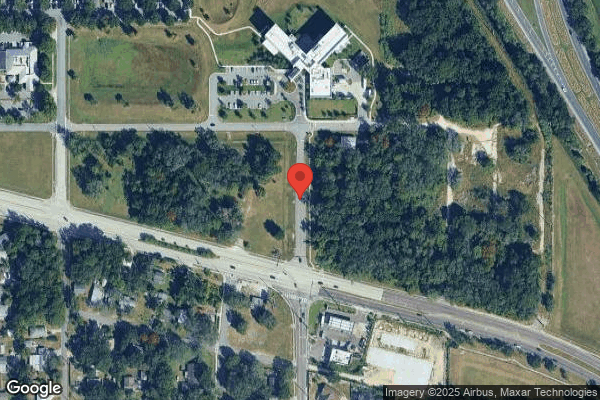

1300 HEMPEL AVENUE, OCOEE, FL 34761 (407) 407-9000
For profit - Corporation 10 Beds Independent Data: November 2025
Trust Grade
80/100
#248 of 690 in FL
Last Inspection: February 2025

Within standard 12-15 month inspection cycle. Federal law requires annual inspections.

Overview

Orlando Health Center for Rehabilitation has a Trust Grade of B+, indicating it is above average and recommended for families seeking care. It ranks #248 out of 690 facilities in Florida, placing it in the top half, and #8 out of 37 facilities in Orange County, meaning only seven local options are better. The facility is improving, having reduced issues from 2 in 2023 to none in 2025, which is encouraging. Staffing is a concern, with a low rating of 1 out of 5 stars, but the turnover rate is an impressive 0%, which is significantly better than the state average of 42%. There have been no fines, which is a positive sign, and while the RN coverage is not available, the facility has faced issues such as failing to report potential abuse for multiple residents and not completing required assessments in a timely manner, which indicates areas needing attention. Additionally, expired food was found in the kitchen, raising concerns about food safety practices. Overall, while there are strengths in the facility's recent improvements and low turnover, families should be aware of the reported deficiencies and ensure these issues are addressed.

Trust Score
B+
80/100
In Florida
#248/690
Top 35%
Safety Record
Low Risk
No red flags
Inspections
Getting Better
2 → 0 violations
Staff Stability
○ Average
Turnover data not reported for this facility.
Penalties
✓ Good
No fines on record. Clean compliance history, better than most Florida facilities.
Skilled Nurses
○ Average
RN staffing data not reported for this facility.
Violations
○ Average
8 deficiencies on record. Average for a facility this size. Mostly minor or procedural issues.
★★★★☆
4.0
Overall Rating
★☆☆☆☆
1.0
Staff Levels
★★★★☆
4.0
Care Quality
★★★★★
5.0
Inspection Score
Stable
2023: 2 issues
2025: 0 issues

The Good

  • 4-Star Quality Measures · Strong clinical quality outcomes
  • Full Sprinkler Coverage · Fire safety systems throughout facility
  • No fines on record

Facility shows strength in quality measures, fire safety.

The Bad

No Significant Concerns Identified

This facility shows no red flags. Among Florida's 100 nursing homes, only 0% achieve this.

The Ugly 8 deficiencies on record

Apr 2023 2 deficiencies
CONCERN (D)

Potential for Harm - no one hurt, but risky conditions existed

Food Safety (Tag F0812)

Could have caused harm · This affected 1 resident

Based on observation and interview, the facility failed to discard expired food in the kitchen. Findings: On 4/24/23 at 11:20 AM, a tour of the kitchen was conducted with the Dietetic Technician, Re...

Read full inspector narrative →
Based on observation and interview, the facility failed to discard expired food in the kitchen. Findings: On 4/24/23 at 11:20 AM, a tour of the kitchen was conducted with the Dietetic Technician, Registered. The dry food storage had four single serving 7.25-ounce cans of chicken noodle soup with an expiration date of 2/23/2023. Below those four cans was another carton containing 24 single serving 7.25-ounce cans of cream of chicken soup with the same outdated expiration date. The Dietetic Technician stated they do not really use that supply and instructed a dietary aide to discard the expired soups. On 4/26/23 at 9:37 AM, the Dietetic Technician stated the cans of soup were discarded and the others were checked for expiration dates. She explained the soups were single serving cans and only used if a resident requested soup. She acknowledged she could not be absolutely certain whether or not any of the expired soups had been used since the expiration date. Review of the United States Food and Drug Administration (FDA) Food Code 2017 documented, Manufacturer's use-by dates is not the intent of this provision to give a product an extended shelf life beyond that intended by the manufacturer. Manufacturers assign a date to products for various reasons, and spoilage may or may not occur before pathogen growth renders the product unsafe. The manufacturer's use-by date is its recommendation for using the product while its quality is at its best. Although it is a guide for quality, it could be based on food safety reasons. It is recommended that food establishments consider the manufacturer's information as good guidance to follow to maintain the quality (taste, smell, and appearance) and salability of the product. If the product becomes inferior quality-wise due to time in storage, it is possible that safety concerns are not far behind.
CONCERN (D)

Potential for Harm - no one hurt, but risky conditions existed

Deficiency F0825 (Tag F0825)

Could have caused harm · This affected 1 resident

**NOTE- TERMS IN BRACKETS HAVE BEEN EDITED TO PROTECT CONFIDENTIALITY** Based on observation, interview, and record review, the facility failed to provide timely assessments and treatments for therapy...

Read full inspector narrative →
**NOTE- TERMS IN BRACKETS HAVE BEEN EDITED TO PROTECT CONFIDENTIALITY** Based on observation, interview, and record review, the facility failed to provide timely assessments and treatments for therapy services for 1 of 1 resident reviewed for rehabilitation and restorative services from a total sample of 20 residents, (#239). Findings: Review of the medical record revealed resident #239 was admitted to the facility on [DATE] from a skilled nursing facility with diagnoses including dysphagia (difficulty swallowing), repeated falls, difficulty in walking, cognitive communication deficit, and Alzheimer's disease. The Minimum Data Set (MDS) admission comprehensive assessment with Assessment Reference Date 4/16/2023 identified the resident was unable to complete the Brief Interview for Mental Status and noted the resident was severely cognitively impaired. The assessment indicated the resident did not exhibit any rejection of evaluation or care necessary for health and well-being. He required extensive staff assistance to eat and complete activities of daily living and was totally dependent on staff for transfers, locomotion, toilet use, and bathing. The assessment showed there were no special treatments for Physical Therapy (PT), Occupational Therapy (OT), Speech Therapy (ST), or Restorative Nursing services provided during the look back period. The care plan completed 4/10/2022 included a Therapy Plan of Care for PT, OT, and ST services. Review of the Physician's Order Summary Report included physician's orders for PT, ST, and OT to evaluate and treat as needed dated 4/13/2023. Review of the therapy progress note dated 4/11/23 and 4/25/23 showed Speech Language Pathologist (SLP) A completed a note that a speech therapy screening had been completed and that a further ST evaluation was required. On 4/25/2023 at 9:06 AM, the resident was observed in the memory care unit common area sitting in a wheelchair at a table being assisted by staff to eat his breakfast. The resident was noted to be coughing while attempting to eat. On 4/27/2023 at 10:30 AM, SLP A said she completed resident #239's speech therapy screen on 4/11/2023 and determined the resident required further evaluation. She stated she completed the evaluation on 4/25/2023 when she observed the resident coughing while swallowing medications and eating. She explained she was concerned the resident had a high risk for aspiration, and she recommended a downgrade of his food texture to mechanically altered on 4/25/23. She explained an unidentified decline in residents' swallowing abilities could cause aspiration pneumonia. She explained she typically completed resident evaluations within 2 days after screening, and she did not explain why resident #239's evaluation was delayed for 14 days. She conveyed it was best clinical practice to complete them, right away. A review of the therapy progress notes showed resident #239 was screened for Physical Therapy on 4/25/23, twelve days after the physician's order. The screening noted a further evaluation was required. The record did not show an Occupational Therapy screening assessment was completed. On 4/26/2023 at 10:06 AM, the Director of Rehabilitation stated all physician orders for admission screening assessments for PT, OT, and ST were expected to be completed within 48 hours. She explained any screening that indicated further evaluation was required should have been completed within 1 day. She acknowledged resident #239's therapy care services were completed late. She said residents were at risk for decline when care and services were delayed. Review of the facility's policies and procedures titled, Functional Impairment - Clinical Protocol, dated revised September 2012, read, 1. Upon admission to the facility . staff will assess the resident's physical condition and functional status. Review of, Resident Screening (5006) document #88 read, 1. The screening procedure will be performed and documented within 2 working days of admission.
Jun 2021 6 deficiencies
CONCERN (D)

Potential for Harm - no one hurt, but risky conditions existed

Deficiency F0635 (Tag F0635)

Could have caused harm · This affected 1 resident

**NOTE- TERMS IN BRACKETS HAVE BEEN EDITED TO PROTECT CONFIDENTIALITY** Based on interview and record review, the facility failed to obtain admission physician orders for insulin to treat a diagnosis ...

Read full inspector narrative →
**NOTE- TERMS IN BRACKETS HAVE BEEN EDITED TO PROTECT CONFIDENTIALITY** Based on interview and record review, the facility failed to obtain admission physician orders for insulin to treat a diagnosis of diabetes, for 1 of 5 newly admitted residents of a total sample of 50 residents, (#110). Findings: Resident #110 was admitted to the facility on [DATE] with diagnoses including Type 2 diabetes, right leg above the knee amputation, and peripheral vascular disease. On 6/07/21 at 1:01 PM, resident's #110's daughter stated on the previous morning, she visited the facility and asked the assigned nurse about her father's blood sugar levels. The daughter stated she was surprised to learn from the nurse there were no orders to check her father's blood sugar or administer insulin. The daughter stated the nurse checked his blood sugar in response to her request and informed her the reading was greater than 500 milligrams (mg)/deciliter (dL), unreadable by the machine. Resident #110's daughter stated she discovered although her father's blood sugars had not been checked and he did not receive insulin for his first 3 days in the facility despite being insulin dependent diabetic. The daughter said, He was sleepier and did not look like himself. He is usually alert and talkative. She recalled during the 3-day period she informed nurses that her father did not seem normal, and she was told his symptoms could be side effects of the anesthesia he received in surgery approximately 2 weeks before. A normal blood sugar level for adults with diabetes is between 80-130 mg/dL (retrieved from www.cdc.gov on 6/15/21). Review of the hospital Discharge Summary dated 6/02/21, revealed resident #110 had a diagnosis of uncontrolled Type 2 diabetes. The Medical Certification for Medicaid Long-Term Care Services and Patient Transfer Form, AHCA form 3008 dated 6/03/21 indicated the resident required insulin. Review of the New admission Report Sheet completed by the nurse who received telephone report from the hospital nurse on 6/03/21 included resident #110 was on insulin & sliding scale. Review of the facility admission evaluation form dated 6/03/21 indicated resident #110 received insulin. His physician orders and Medication Administration Record for June 2021 showed a one-time administration of 2 units of Humalog insulin on 6/04/21 at 1:40 AM. Review of the progress notes revealed no documentation to show why resident #110 required this medication. There were no orders to monitor blood sugar or administer insulin regularly until 6/06/21, after his family notified the facility he was diabetic. On 6/08/21 at 4:37 PM, Licensed Practical Nurse (LPN) I stated it was important to review all hospital paperwork for newly admitted residents including the medication list and the History and Physical (H&P) because the information was necessary to obtain admitting orders from the attending physician. LPN I explained the medication list should be verified with the resident and/or family during the admission process. LPN I confirmed residents with a diagnosis of diabetes should have their blood sugar checked on admission along with other vital signs. On 6/09/21 at 11:32 AM, LPN G explained that prior to admission, nurses received verbal report on new residents from the hospital. She added that managers also had electronic access to hospital records. In addition, LPN G explained a packet of documents was supposed to arrive with the new resident. She stated during admission assessments, she reviewed the medication list with the resident or called the family if the resident was cognitively impaired. LPN G stated the admission process also involved notifying the physician of the new resident's arrival and reviewing medication list and assessment findings. She recalled she worked on the previous Sunday, 6/06/21, when resident #110's nurse could not find physician orders for blood sugar monitoring or insulin in the electronic health record. LPN G stated she went to the resident's room to assist the assigned nurse and his family told her prior to his hospital stay he required long-acting insulin at night and short-acting insulin if necessary. LPN G said, He was confused and disoriented, and I could see why. LPN G stated she attempted to obtain his blood sugar level but was unsuccessful as the reading was too high to register on the glucometer. LPN G said she contacted the physician and received orders to administer insulin and initiate scheduled blood sugar monitoring. A nursing progress note written by LPN G on 6/06/21 at 11:00 AM read, Resident with increased confusion, decreased alertness, [blood glucose] showed too high to read. On 6/09/21 at 4:18 PM, the Rehab Unit Manager (UM) explained the admission nurse was expected to review the hospital transfer form, History and Physical (H&P) form, and the medication list prior to contacting the on-call physician who would verify the orders. The UM stated she was aware resident #110 did not arrive with a complete medication list from the hospital. She said she contacted the Director of Nursing (DON), who obtained a Discharge Summary from the hospital electronic medical record. The UM said that new admissions process included a chart review by the clinical team. On 6/10/21 at 2:27 PM, Advanced Practice Registered Nurse (APRN) P stated she first assessed resident #110 on 6/04/21, the day after admission. She said she could not recall the existing medication orders or medical history from the chart. The APRN P said, I would think that if a patient is diabetic, the hospital orders for insulin carry over to the facility. She was informed the hospital Discharge Summary indicated resident #110 had uncontrolled diabetes and the H&P included laboratory results that supported this diagnosis. The APRN P said, I probably missed it, I could not remember. She acknowledged a patient with untreated uncontrolled diabetes could suffer complications including re-hospitalization. Review of APRN P's progress note dated 6/04/21 showed Humalog insulin listed as one of his medications and Type 2 diabetes listed under his previous medical history. The note showed APRN did not give new orders for insulin for resident #110. On 6/10/21 at 2:43 PM, the Director of Nursing (DON) explained the admission process occurred over a 24-hour period and included medication review and assessments. The DON confirmed that on the day resident #110 was admitted she was informed the facility did not receive discharge orders from the hospital. She stated she retrieved the discharge summary and emailed it to the nursing supervisor. The DON was informed the Discharge Summary did not contain a complete list of resident's #110 medications. The DON explained the discharge summary was the only document used by nurses for initial medication reconciliation. The DON explained all new admissions were discussed in daily clinical meeting, but the team did not review hospital discharge paperwork as part of the process. The DON could not explain why the admission nurse gave a one-time dose of Humalog 2 units with no documentation of blood sugar level. The facility policy & procedure titled, admission Assessment and Follow Up: Role of the Nurse (undated) read, The purpose of this procedure is to gather information about the resident's physical, emotional, cognitive, and psychosocial condition upon admission for the purpose of managing the resident, initiating the care plan . The document indicated nurses would conduct an admission assessment including a summary of the resident's recent medical history and a list of active diagnosis. The policy revealed nurses would reconcile the list of medication from the discharge summary and admitting according to established procedures .contact the Attending Physician to communicate and review the findings of the initial assessment and any other pertinent information and obtain orders that are based on these findings.
CONCERN (D)

Potential for Harm - no one hurt, but risky conditions existed

Assessment Accuracy (Tag F0641)

Could have caused harm · This affected 1 resident

**NOTE- TERMS IN BRACKETS HAVE BEEN EDITED TO PROTECT CONFIDENTIALITY** Based on interview and record review, the facility failed to ensure a Minimum Data Set (MDS) assessment accurately reflected hea...

Read full inspector narrative →
**NOTE- TERMS IN BRACKETS HAVE BEEN EDITED TO PROTECT CONFIDENTIALITY** Based on interview and record review, the facility failed to ensure a Minimum Data Set (MDS) assessment accurately reflected health conditions related to falls for 1 of 4 residents reviewed for accidents, out of a total sample of 50 residents, (#60). Findings: Resident #60 was admitted to the facility on [DATE] and readmitted from an acute care hospital on 2/26/21. Her diagnoses included history of falls with fractures of the right arm, multiple ribs, and left jawbone. Review of the medical record for resident #60 revealed a Change in Condition form dated 9/25/20 regarding a fall at 5:30 AM. The document indicated the resident was injured, sustaining a hematoma on the back of her head. Review of the quarterly MDS assessment with assessment reference date of 10/19/20 revealed in Section J Health Conditions .J1800. Any Falls Since Admission/Entry or Reentry or Prior Assessment resident #60 was assessed as not having any falls. On 6/10/21 at 4:47 PM, the MDS Manager acknowledged the quarterly MDS dated [DATE] did not reflect resident #60's fall on 9/25/20. The MDS Manager indicated that question J1800 of the assessment should have been marked Yes and with option B selected to indicate an injury. The MDS Manager noted Section J of the assessment was inaccurate. The Resident Assessment Instrument instructions for Section J1800 read, Code 1, yes: if the resident has fallen since the last assessment. The document defined injuries to include hematomas. The facility policy and procedure titled Resident Assessment Instrument (undated) read, All persons who have completed any portion of the MDS Resident Assessment Form MUST sign such document attesting to the accuracy of such information.
CONCERN (D)

Potential for Harm - no one hurt, but risky conditions existed

Respiratory Care (Tag F0695)

Could have caused harm · This affected 1 resident

**NOTE- TERMS IN BRACKETS HAVE BEEN EDITED TO PROTECT CONFIDENTIALITY** Based on observation, interview and record review, the facility failed to follow physician's order for oxygen administration for...

Read full inspector narrative →
**NOTE- TERMS IN BRACKETS HAVE BEEN EDITED TO PROTECT CONFIDENTIALITY** Based on observation, interview and record review, the facility failed to follow physician's order for oxygen administration for 1 of 1 resident reviewed for respiratory care out of a total sample of 50 residents, #47. Findings: Resident #47 was admitted on [DATE] with diagnoses of Alzheimer's disease, and Asthma. The Minimum Data Set (MDS) assessment with assessment reference date 05/10/21 revealed that resident #47's cognition was severely impaired and he had memory problem. He required extensive assistance of 2 person for bed mobility and toilet use. He exhibited shortness of breath with exertion, while sitting at rest and when lying flat. He received oxygen while at the facility. Review of the resident's clinical record revealed a physician order dated 07/15/20 for oxygen at 2 liters per minute (LPM) via nasal cannula as needed for oxygen saturation below 90% and shortness of breath. On 06/07/21 at 11:42 AM, resident #47 was laying in bed with oxygen via nasal cannula attached to a concentrator located on the left side of his bed with the control knob set between 3.5 to 4 LPM. On 06/07/21 at 12:57 PM, resident #47 was sitting in a reclining chair in his room still attached to the oxygen concentrator set at 3.5 to 4 LPM. On 06/07/21 at 1:40 PM, Licensed Practical Nurse (LPN) A stated that resident #47 was on oxygen because his oxygen saturation levels had tendency to drop. LPN A stated resident #47 was on continuous oxygen at 4 LPM. She said she last checked his oxygen saturation before 1:30 PM which was 95% while on nasal cannula. On 06/07/21 at 1:53 PM, LPN A confirmed the oxygen setting for resident #47 was 4 LPM. She checked his physician orders and said the order was to give oxygen at 2 LPM via nasal cannula as needed for oxygen saturation below 90% and shortness of breath. She noted that resident #47 would not be able to touch his concentrator on his own. On 06/07/21 at 2:23 PM, the Unit Manager (UM) said that nurses were expected to check oxygen setting of residents whenever vitals signs were taken, usually once a shift. She explained the resident was on continuous oxygen and his concentrator was set at 3 LPM. The UM added that resident #47 did not usually have his oxygen when he was out of bed. She added that he could remove his nasal cannula but was unable to adjust concentrator. The UM checked the orders and acknowledged the current physician order did not state he could have oxygen continuously. Record review revealed that oxygen saturation readings from 06/03/21 to 06/06/21 ranged from 92% to 98%. The undated policy and procedure for oxygen administration indicated that a physician's order must be verified and reviewed according to facility protocol.
CONCERN (D)

Potential for Harm - no one hurt, but risky conditions existed

Deficiency F0757 (Tag F0757)

Could have caused harm · This affected 1 resident

**NOTE- TERMS IN BRACKETS HAVE BEEN EDITED TO PROTECT CONFIDENTIALITY** Based on interview and record review, the facility failed to follow up on pharmacy recommendations for 2 of 2 residents reviewed...

Read full inspector narrative →
**NOTE- TERMS IN BRACKETS HAVE BEEN EDITED TO PROTECT CONFIDENTIALITY** Based on interview and record review, the facility failed to follow up on pharmacy recommendations for 2 of 2 residents reviewed for unnecessary medications out of a total sample of 50 residents, (#22 and #35). Findings: 1) Resident #22 was readmitted to the facility on [DATE] with diagnoses of Alzheimer's disease, Dementia, Anxiety and Gastro-Esophageal Reflux Disease (GERD). Review of the resident's current physician orders revealed an order dated 10/20/20 for Lanzoprazole Capsule Delayed Release 30 milligrams (mg) by mouth in the morning for GERD. Review of Medication Administration Record (MAR) revealed that resident #22 received Lanzoprazole since it was ordered on 10/20/20. The Medication Regimen Review (MRR) form dated 03/23/21 revealed that the consultant pharmacist made a recommendation to the attending physician that read, the patient is currently receiving a Proton Pump Inhibitor (PPI) for more than 12 weeks. Due to the updated F757, Unnecessary Medication Tag, the use of PPI should be periodically reviewed and the necessity for continuation documented as well as monitoring done for any adverse consequences. The Advanced Practice Registered Nurse (APRN) placed a check mark for the choice, This resident's PPI therapy has been re-evaluated and is appropriate for the continued use; dose reduction is contraindicated and the benefit of use outweighs the risks; Continue PPI therapy for 6 months; Continued use of any PPI therapy requires diagnosis and supportive documentation in the progress note. There was no progress note or any supporting documentation for its continued use. On 06/10/21 at 12:01 PM, the Director of Nursing (DON) acknowledged there was no progress note documented for the continued use of PPI. 2) Resident #35 was admitted on [DATE] with diagnoses of Alzheimer's disease, Dementia, Psychosis, Bipolar disorder, Major Depressive disorder, Mood (Affective) disorder and Anxiety disorder. Record review revealed that on 08/17/20, the physician ordered Risperidone tablet 0.5 mg by mouth in the morning and 1 mg in the evening for bipolar disorder. The MRR form dated 02/12/21 indicated that Risperidone requires an Abnormal Involuntary Movement Scale (AIMS) evaluation as soon as the medication is started and then every 6-12 months. The form did not indicate that it was reviewed or completed. On 06/10/21 at 4:40 PM, the Consultant Pharmacist recommendation read that it was necessary for AIMS evaluation to be completed to monitor for abnormal movements or adverse side effects. He also added that this would help in determining whether psychotropic medications needed to be adjusted or discontinued. On 06/10/21 at 4:52 PM, the DON acknowledged the APRN did not complete an AIMS evaluation until 03/19/21. Policy and procedure on Consultant Pharmacist Reports dated February 2019 indicated that all non-urgent recommendations or irregularities must be addressed/reviewed within 30 days of consultant's monthly visit.
CONCERN (E)

Potential for Harm - no one hurt, but risky conditions existed

Abuse Prevention Policies (Tag F0607)

Could have caused harm · This affected multiple residents

**NOTE- TERMS IN BRACKETS HAVE BEEN EDITED TO PROTECT CONFIDENTIALITY** Based on interview and record review, the facility failed to implement the Abuse Prohibition Policy and Procedure related to rep...

Read full inspector narrative →
**NOTE- TERMS IN BRACKETS HAVE BEEN EDITED TO PROTECT CONFIDENTIALITY** Based on interview and record review, the facility failed to implement the Abuse Prohibition Policy and Procedure related to reporting of abuse for 6 of 6 residents reviewed for abuse, (#8, #16, #361, #41, #20, #43) and failed to initiate interventions to protect 40 of 40 vulnerable residents in the Memory Care Unit. Findings: 1. Resident #16 was admitted to the facility on [DATE] with diagnoses including dementia, depression, and anxiety. Review of the resident's Minimum Data Set (MDS) quarterly assessment dated [DATE] revealed resident #16 had a Brief Interview for Mental Status (BIMS) score of 99 which indicated she was unable to complete the interview. The assessment revealed her cognitive skills for daily decision making were severely impaired. Review of resident #16's medical record revealed a care plan initiated on 3/27/20 for potential physically aggressive behavior. The care plan focus described her as showing impulsive, combative behavior toward others, having poor impulse control, and hitting others for no reason. On 6/08/21 at 11:10 AM, Activity Assistant K stated resident #16 did not usually participate in group activities. He explained she preferred to do 1 on 1 activities with her. Sometimes I have her sit next to me while I am doing a class because she has sporadic behaviors which are not provoked but more spontaneous. She likes to wander around and as she is walking, she will randomly stop and bop somebody. Activity Assistant K stated during the previous week resident #16 hit two residents in one day. He stated staff were to report these types of incidents to the nurse as soon as they happened. On 6/08/21 at 10:25 AM, Certified Nursing Assistant (CNA) J said, [Resident #16] does have a habit of tapping on people. I have not witnessed it but I have heard about it. She likes a certain spot at the table and she will tell the person to move and tap her. We try to keep the residents away from her spot. She has never hit me, always hugs me but other staff have said she has hit them. We have to keep a close eye on her. On 6/08/21 at 10:46 AM, Licensed Practical Nurse (LPN) C said, [Resident #16] has unpredictable behavior. If we see her getting close to another resident we have been instructed to distract her and move her away. She has hit the cat when he is in the room. On 6/08/21 at 11:00 AM, CNA O stated resident #16 should not be allowed to get close to the residents because she might hit them. He recalled other staff told him she usually approached people and hit them for no reason. Review of resident #16's nursing progress notes from 3/05/20 to 5/27/21 revealed 18 notes that described the resident exhibiting aggressive behavior. A note dated 3/05/20 at 6:15 PM read, Resident was observed making contact with another resident's right cheek with an open palm. A note dated 6/15/20 at 3:40 PM read, Resident observed making hand contact with another resident's face. On 6/27/20 at 4:00 PM a note read, Resident observed making hand contact with a male resident's face. A note dated 12/03/20 at 2:30 PM read On 12/02 resident again displayed aggressive behaviors towards others and on 12/3 resident was observed by writer walking up to neighborhood cat and kicking the cat. A note dated 5/27/21 at 10:52 AM read, During activity resident was roaming around and slapped the face of another resident and exited quickly to her room. On 6/10/21 at 2:08 PM, the Risk Manager (RM) confirmed the facility was not able to identify all the residents involved in altercations with resident #16 and who were affected by her aggressive behaviors since March 2020. None of the notes identified individual residents or staff who were affected by the aggressive behavior. On 6/07/21 at 3:57 PM, the Director of Nursing (DON) was informed that on 5/27/21 resident #16 slapped resident #8 in the head. The DON stated the facility typically did not report incidents between residents that occurred on the Memory Care Unit. She explained the RM did not consider these incidents to be reportable to the State Survey Agency as residents on the Memory Care Unit were cognitively impaired and therefore did not have the intent to abuse each other. On 6/07/21 at 4:11 PM, the RM stated resident #16 had behavior issues. She confirmed the incident had an episode when resident #16 walked by resident #8 and smacked her in the head for no reason and kept on walking. The RM said, when I look at the definition in the policy, I do not believe this was a willful act by [resident #16]. She could not even recollect that she did it. She had history of hitting residents in the past. If the resident was higher functioning or the resident was smacked willfully, we would have reported the incident. In this case, both residents were severely impaired cognitively. On 6/10/21 at 8:19 AM, LPN L said, I wish I could figure out when or why she strikes out at other residents. It is hard to say because she just randomly walks past someone and flips her hand out at them. She is not provoked into doing it and she does not appear to single any particular person out to do it. You have to stay on guard with her because many times she will walk up to you and give you a big hug and other times she slaps. She has slapped me. It is hard to say what she is going to do. She is very random. On 6/10/21 at 8:35 AM, the Advanced Practice Registered Nurse (APRN) M said, I do not know what sets [resident #16] off, she is very unpredictable The staff have been better at keeping a close eye on her but they cannot be with her all the time. 2. Resident #8 was admitted to the facility on [DATE] with diagnoses including dementia, depression, anxiety, and history of falls. Review of the MDS significant change assessment dated [DATE] revealed she had a BIMS score of 3 which indicated her cognitive skills were severely impaired. Review of resident #8's medical record revealed a progress note dated 6/07/21 at 3:24 PM, that read, slapped in head by another resident at breakfast on 5/27/21. 3. Resident # 361 was admitted to the facility on [DATE] with diagnoses including dementia and anxiety. Review of the incident log revealed she was slapped in the face by another resident while participating in activities on 5/27/21. 4. Resident # 41 was admitted to the facility on [DATE] with diagnoses including dementia, Alzheimer's disease, and anxiety. Review of the medical record revealed a progress note dated 3/21/21 at 7:54 PM, that read, Resident stated that he was hit in the head by another Memory Care resident. 5. Resident #43 was admitted to the facility on [DATE] with diagnoses including dementia, depression, and anxiety. On 6/10/21 at 2:08 PM, during review of the incident log with the RM, she confirmed there was an incident between residents #43 and #20 that resulted in resident #20 suffering a bruise on her arm. The RM explained resident #43 was confused and thought resident #20 was in her room. 6. Resident #20 was admitted to the facility on [DATE] with diagnoses including dementia and encephalopathy. Review of her medical record revealed a progress note dated 5/08/21 at 6:45 AM, that read, During AM medication administration resident [#20] informed this writer that a woman in a wheelchair came into my room last night and grabbed my arm and said get out of my house. On 6/10/21 at 2:08 PM, the RM stated the resident-to-resident altercations were not reported to the State Survey Agency because none of the incidents resulted in any physical harm to the residents. The RM explained she felt the incidents were not willful acts and said, because they really do not know what they are doing. The RM acknowledged these types of incidents would have been reported if they had occurred between residents who were not cognitively impaired. Review of the Resident to Resident Altercations policy and procedure (undated) revealed the facility would, Report incidents, findings and corrective measures to appropriate agencies as outlined in our facility's abuse reporting policy. The policy included the direction to Make any necessary changes in the care plan approaches to any or all of the involved individuals. Review of the Abuse Prevention Program Policy Statement (undated) revealed the intent to protect residents from abuse by anyone including staff and other residents. The document indicated the facility would Identify and assess all possible incidents of abuse [and] investigate and report any allegations of abuse within timeframes as required by federal requirements.
CONCERN (E)

Potential for Harm - no one hurt, but risky conditions existed

Comprehensive Assessments (Tag F0636)

Could have caused harm · This affected multiple residents

**NOTE- TERMS IN BRACKETS HAVE BEEN EDITED TO PROTECT CONFIDENTIALITY** Based on record review and interview, the facility failed to complete Minimum Data Set (MDS) comprehensive admission assessments...

Read full inspector narrative →
**NOTE- TERMS IN BRACKETS HAVE BEEN EDITED TO PROTECT CONFIDENTIALITY** Based on record review and interview, the facility failed to complete Minimum Data Set (MDS) comprehensive admission assessments for 13 residents, (#263, 264, 265, 260, 113, 269, 270, 271, 275, 276, 4, 277, 28) and discharge assessments for 10 residents, (#7, 266, 267, 268, 272, 273, 274, 265, 18, 271) within the required timeframe for 21 residents reviewed for assessments of a total sample of 50 residents. Findings: Review of the medical records revealed the following 13 residents were admitted on the following dates and did not have admission comprehensive assessment completed within the required 14-day period, residents #263, #264, and #265 were admitted on [DATE], resident #260 was admitted on [DATE], residents #113 and #269 were admitted on [DATE], residents #270 and #271 were admitted on [DATE], resident #275 was admitted on [DATE], residents #276, #4, and #277 were admitted on [DATE] and resident #28 was admitted on [DATE]. The following 10 residents did not have their discharge MDS assessment completed as required, resident #7 who was discharged from the facility on 5/13/21, resident #266 discharged on 5/15/21, residents #267 and #268 discharged on 5/16/21, resident #272 discharged on 5/18/21, resident #273 discharged on 5/20/21, resident #274 discharged on 5/21/21, resident #265 discharge on [DATE], resident #18 discharged on 5/25/21 and resident #271 was discharged on 5/26/21. On 6/9/21 at 2:51 PM, the Director of Nursing acknowledged the facility was not timely in completing residents' MDS assessments and said, we know that we are late and are doing the best we can. On 6/10/21 at 11:29 AM, the MDS Manager verified the list of 13 residents who did not have their admission comprehensive assessment completed within 14 days of admission, and 10 residents who did not have their discharge assessment completed in the 14-day requirement. This was a total of 21 residents who did not have either admission and/or discharge assessments completed timely. Residents #265 and #271 did not have either assessment completed. There was a total of 23 assessments out of compliance. Section 5.2 of the RAI Version 3.0 Manual indicated that for all non-admission Omnibus Budget Reconciliation Act (OBRA) and Prospective Payment System (PPS) assessment the MDS completion date (Z0500B) must be no later than 14 days after the Assessment Reference Date (A2300). For the admission assessment, the MDS completion date (Z0500B) must be no later than 13 days after the Entry Date (A1600)
Understanding Severity Codes (click to expand)
Life-Threatening (Immediate Jeopardy)
J - Isolated K - Pattern L - Widespread
Actual Harm
G - Isolated H - Pattern I - Widespread
Potential for Harm
D - Isolated E - Pattern F - Widespread
No Harm (Minor)
A - Isolated B - Pattern C - Widespread

Questions to Ask on Your Visit

  • "Can I speak with families of current residents?"
  • "What's your RN coverage like on weekends and overnight?"

Our Honest Assessment

Strengths
  • • Grade B+ (80/100). Above average facility, better than most options in Florida.
  • • No major safety red flags. No abuse findings, life-threatening violations, or SFF status.
  • • No fines on record. Clean compliance history, better than most Florida facilities.
Concerns
  • • No significant concerns identified. This facility shows no red flags across CMS ratings, staff turnover, or federal penalties.
Bottom line: Generally positive indicators. Standard due diligence and a personal visit recommended.

About This Facility

What is Orlando For Rehabilitation's CMS Rating?

CMS assigns ORLANDO HEALTH CENTER FOR REHABILITATION an overall rating of 4 out of 5 stars, which is considered above average nationally. Within Florida, this rating places the facility higher than 99% of the state's 100 nursing homes. This rating reflects solid performance across the metrics CMS uses to evaluate nursing home quality.

How is Orlando For Rehabilitation Staffed?

CMS rates ORLANDO HEALTH CENTER FOR REHABILITATION's staffing level at 1 out of 5 stars, which is much below average compared to other nursing homes.

What Have Inspectors Found at Orlando For Rehabilitation?

State health inspectors documented 8 deficiencies at ORLANDO HEALTH CENTER FOR REHABILITATION during 2021 to 2023. These included: 8 with potential for harm.
Who Owns and Operates Orlando For Rehabilitation?

ORLANDO HEALTH CENTER FOR REHABILITATION is owned by a for-profit company. For-profit facilities operate as businesses with obligations to shareholders or private owners. The facility operates independently rather than as part of a larger chain. With 10 certified beds and approximately 0 residents (about 0% occupancy), it is a smaller facility located in OCOEE, Florida.
How Does Orlando For Rehabilitation Compare to Other Florida Nursing Homes?

Compared to the 100 nursing homes in Florida, ORLANDO HEALTH CENTER FOR REHABILITATION's overall rating (4 stars) is above the state average of 3.2 and health inspection rating (5 stars) is much above the national benchmark.

What Should Families Ask When Visiting Orlando For Rehabilitation?

Based on this facility's data, families visiting should ask: "Can you walk me through typical staffing levels on day, evening, and night shifts?" "Can I visit during a mealtime to observe dining assistance and food quality?" "How do you handle medical emergencies, and what is your hospital transfer rate?" "Can I speak with family members of current residents about their experience?" These questions are particularly relevant given the below-average staffing rating.

Is Orlando For Rehabilitation Safe?

Based on CMS inspection data, ORLANDO HEALTH CENTER FOR REHABILITATION has a clean safety record: no substantiated abuse findings (meaning no confirmed cases of resident harm), no Immediate Jeopardy citations (the most serious violation level indicating risk of serious injury or death), and is not on the Special Focus Facility watch list (a federal program monitoring the lowest-performing 1% of nursing homes). The facility has a 4-star overall rating and ranks #1 of 100 nursing homes in Florida. While no facility is perfect, families should still ask about staff-to-resident ratios and recent inspection results during their visit.

Do Nurses at Orlando For Rehabilitation Stick Around?

ORLANDO HEALTH CENTER FOR REHABILITATION has not reported staff turnover data to CMS. Staff turnover matters because consistent caregivers learn residents' individual needs, medications, and preferences. When staff frequently change, this institutional knowledge is lost. Families should ask the facility directly about their staff retention rates and average employee tenure.

Was Orlando For Rehabilitation Ever Fined?

ORLANDO HEALTH CENTER FOR REHABILITATION has no federal fines on record. CMS issues fines when nursing homes fail to meet care standards or don't correct problems found during inspections. The absence of fines suggests the facility has either maintained compliance or corrected any issues before penalties were assessed. This is a positive indicator, though families should still review recent inspection reports for the full picture.

Is Orlando For Rehabilitation on Any Federal Watch List?

ORLANDO HEALTH CENTER FOR REHABILITATION is not on any federal watch list. The most significant is the Special Focus Facility (SFF) program, which identifies the bottom 1% of nursing homes nationally based on persistent, serious quality problems. Not being on this list means the facility has avoided the pattern of deficiencies that triggers enhanced federal oversight. This is a positive indicator, though families should still review the facility's inspection history directly.