ALWYN C CASHE STATE VETERANS NURSING HOME
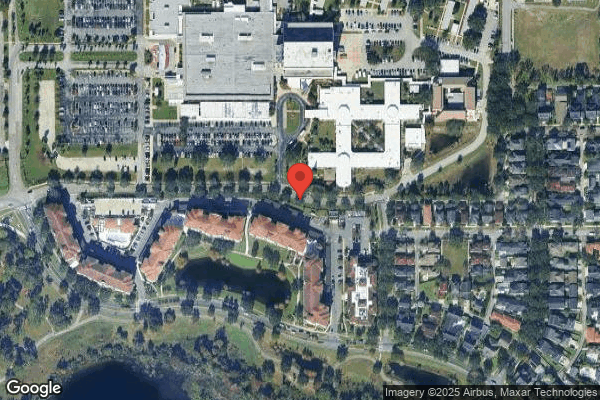
5255 RAYMOND ST, ORLANDO, FL 32803 (407) 741-4614
Government - State 112 Beds FLORIDA DEPARTMENT OF VETERANS' AFFAIRS Data: November 2025 2 Immediate Jeopardy citations
Trust Grade
0/100
#594 of 690 in FL
Last Inspection: February 2025

Within standard 12-15 month inspection cycle. Federal law requires annual inspections.

Overview

Alwyn C Cashe State Veterans Nursing Home has received a Trust Grade of F, indicating significant concerns about the facility's quality of care. Ranked #594 out of 690 in Florida and #31 out of 37 in Orange County, this places the facility in the bottom half of both state and county rankings, suggesting limited options for improvement. The trend is worsening, with the number of serious issues increasing from 4 in 2024 to 12 in 2025. Staffing is a relative strength with a rating of 4 out of 5 stars, although the 66% turnover rate is concerning compared to the state average. However, the facility has incurred $51,386 in fines, which is higher than 83% of Florida facilities, indicating ongoing compliance problems. Specific incidents of concern include a critical failure to protect a resident from elopement, where a resident with severe cognitive impairment was found outside the facility unsupervised, risking serious harm. Additionally, another resident was improperly restrained in a wheelchair, which could lead to physical and psychological harm. While there are strengths in staffing, the facility's numerous critical issues and high fines raise serious concerns for families considering this nursing home for their loved ones.

Trust Score
F
0/100
In Florida
#594/690
Bottom 14%
Safety Record
High Risk
Review needed
Inspections
Getting Worse
4 → 12 violations
Staff Stability
⚠ Watch
66% turnover. Above average. Higher turnover means staff may not know residents' routines.
Penalties
⚠ Watch
$51,386 in fines. Higher than 99% of Florida facilities. Major compliance failures.
Skilled Nurses
✓ Good
Each resident gets 80 minutes of Registered Nurse (RN) attention daily — more than 97% of Florida nursing homes. RNs are the most trained staff who catch health problems before they become serious.
Violations
⚠ Watch
18 deficiencies on record. Higher than average. Multiple issues found across inspections.
★☆☆☆☆
1.0
Overall Rating
★★★★☆
4.0
Staff Levels
★☆☆☆☆
1.0
Care Quality
★☆☆☆☆
1.0
Inspection Score
Stable
2024: 4 issues
2025: 12 issues

The Good

  • 4-Star Staffing Rating · Above-average nurse staffing levels
  • Full Sprinkler Coverage · Fire safety systems throughout facility
  • No fines on record

Facility shows strength in staffing levels, fire safety.

The Bad

1-Star Overall Rating

Below Florida average (3.2)

Significant quality concerns identified by CMS

Staff Turnover: 66%

20pts above Florida avg (46%)

Frequent staff changes - ask about care continuity

Federal Fines: $51,386

Above median ($33,413)

Moderate penalties - review what triggered them

Chain: FLORIDA DEPARTMENT OF VETERANS' AFF

Part of a multi-facility chain

Ask about local staffing decisions and management

Staff turnover is elevated (66%)

18 points above Florida average of 48%

The Ugly 18 deficiencies on record

2 life-threatening 2 actual harm
Sept 2025 2 deficiencies 2 IJ
CRITICAL (J) 📢 Someone Reported This

A family member, employee, or ombudsman was alarmed enough to file a formal complaint

Immediate Jeopardy (IJ) - the most serious Medicare violation

Free from Abuse/Neglect (Tag F0600)

Someone could have died · This affected 1 resident

**NOTE- TERMS IN BRACKETS HAVE BEEN EDITED TO PROTECT CONFIDENTIALITY** Based on observation, interview, and record review, the facility failed to protect the residents' right to be free from neglect ...

Read full inspector narrative →
**NOTE- TERMS IN BRACKETS HAVE BEEN EDITED TO PROTECT CONFIDENTIALITY** Based on observation, interview, and record review, the facility failed to protect the residents' right to be free from neglect by not ensuring the staff maintained a secure environment and implemented measures to mitigate the risks to prevent elopement for 1 of 7 residents reviewed for elopement, of a total sample of 11 residents, (#1). These failures contributed to the elopement of resident #1 and placed him at risk for serious injury/impairment/death. While resident #1 was outside the facility unsupervised, there was reasonable likelihood he could have fallen, become lost, been accosted/harmed by a stranger or been hit by a car. On 8/07/25 at approximately 4:32 AM, the facility failed to prevent a resident with severe cognitive impairment from exiting the facility unsupervised. The facility was unaware of resident #1's whereabouts until day shift staff coming to work found him in the front vestibule at approximately 6:00 AM. The facility failed to ensure the unit was secured and that resident #1 was adequately supervised to ensure vulnerable residents did not exit the facility without staff knowledge. Review of information provided by the facility revealed a total of 23 residents were identified as at risk for elopement on the first day of survey. The facility's failure to provide adequate supervision and a secure environment contributed to resident #1's elopement and threatened all residents who were at risk of elopement. This failure resulted in Immediate Jeopardy which started on 8/07/25 and was removed on 8/11/25 after verification of the immediate actions implemented by the facility. The scope and severity was decreased to a D, no actual harm with potential for more than minimal harm that is not Immediate Jeopardy. Substandard Quality of Care was identified at F600 and F689. A partial extended survey was conducted on 9/05/25. The noncompliance at F600 was determined to be past noncompliance as of 8/20/25. The census at the start of the survey was 89.Findings: Cross reference F689. Review of the medical record revealed resident #1, an [AGE] year-old male, was admitted to the facility on [DATE]. His diagnoses included Alzheimer's disease, muscle weakness, difficulty in walking, unspecified dementia, cognitive communication deficit, brief psychotic disorder, major depressive disorder and need for assistance with personal care. Review of the Minimum Data Set quarterly assessment with assessment reference date of 6/19/25 revealed resident #1 had a Brief Interview for Mental Status score of 4/15 which indicated he had severe cognitive impairment. The assessment indicated resident #1 exhibited wandering behavior and walked independently up to 150 feet. A care plan initiated 4/21/25 and revised 8/07/25 indicated resident #1 exhibited wandering behavior and moved with no rational purpose, seemingly oblivious to needs or safety. The care plan included that resident #1 was identified as an elopement risk. Interventions included placement of an electronic wander alert bracelet on resident #1 and hourly rounding. Review of physician orders revealed an active order dated 10/23/24 for an electronic wander alert bracelet to be applied to resident #1's left lower leg. In a phone interview on 9/02/25 at 2:25 PM, Certified Nursing Assistant (CNA) C verified resident #1 was on her assignment on 8/07/25. She recalled there were two CNAs and one nurse assigned to the unit for the shift. She stated while she monitored the resident in the common area, resident #1 fell asleep in a chair nearby and she requested he move closer, but he refused. She explained the other CNA on the unit asked her for help, so she asked the nurse to keep an eye on the residents including resident #1 when she left the area. CNA C reported when the nurse agreed she went to help the other CNA. She recalled that later as she was coming out of a resident's room with the other CNA, they were approached by another nurse from Administration who told them resident #1 had gotten outside of the facility. She said she was not aware he was missing until that time. CNA C explained the exit doors were equipped with alarms, but she did not recall hearing any alarms go off during the shift. On 9/04/25 at 6:07 AM, CNA D stated she worked on the secured unit the night resident #1 got outside the building. She confirmed there were two CNAs and one nurse assigned to work on the unit that night. CNA D explained she was not resident #1's assigned CNA and did not know him very well. She recalled seeing him wandering in the hallways, going to the doors leading to other units and the fire exit door during the shift. CNA D remembered she asked CNA C to assist her with other residents at approximately 4:30 AM. She explained she thought the nurse was supposed to be watching the residents in the common area. CNA C stated she later learned resident #1 had left the facility while she and CNA C were getting other residents out of bed. She said she was unaware resident #1 was missing until a staff member informed them. CNA D recalled she never heard an alarm sound. In a phone interview on 9/02/25 at 3:56 PM, License Practical Nurse (LPN) B recalled working 8/07/25. She explained she was not very familiar with the residents as she was an agency nurse, and it was her second day working at the facility. She stated she monitored the residents in the common area while the two CNAs worked together to get residents out of bed. LPN B reported the time came for her to start morning medication administration, so she left to go to the carts. She explained she was the only nurse on the unit for that shift and had to use two medication carts to pass medications. LPN B stated she was aware she had to keep an eye on the residents but had not been told to watch resident #1 specifically nor that he was exit seeking. She stated she never heard an alarm go off and was not aware resident #1 had left the facility until he was returned by another staff member around 6:30 AM. She recalled someone from Administration asked her if she saw resident #1 when she went to her medication cart. LPN B wondered aloud how would she have seen resident #1 since she had to do medication pass for the entire unit. LPN B stated when the wander/elopement alarm was tested that morning, it malfunctioned. She recalled the Unit Manager on the secured unit tested residents #1's electronic wander alert bracelet and it did not work. LPN B was unaware of whether resident #1's electronic wander bracelet was replaced when it was found not to be working. On 9/02/25 at 3:10 PM, LPN A stated she came to work around 6:00 AM on the morning of 8/07/25 and saw someone in the front vestibule and identified him as resident #1. LPN A stated she approached resident #1 and got him to come inside to her office in the front lobby. She recalled placing several phone calls including one to the Administrator alerting her that resident #1 had been outside the facility. She explained resident #1 remained in her office with her for about 45 minutes before she brought him back to the secured unit. LPN A stated the staff on the unit were totally unaware resident #1 was missing until she returned with him to the unit at 6:45 AM. She reminded the staff resident #1 had to be supervised and returned to her office. LPN A stated she was personally upset resident #1 had left the facility and the unit staff were unaware for over two hours. She explained he could have been hit by a car or bitten by a wild animal while outside. She reported resident #1 could also have boarded a bus that left the facility around 6:00 AM and took patients to the Veterans Administration (VA) clinic across town in another city. On 9/04/25 at 12:58 PM, LPN F confirmed she assisted in evaluating resident #1 when he returned to the unit. She recalled she clocked in at 6:45 AM that morning and entered the secured unit with LPN A who had resident #1 with her. She was informed at that time that he had gotten outside the facility. LPN F stated resident #1 did wander throughout the unit but did not recall him to be exit seeking. LPN F conveyed that he did go to doors, but she did not believe he was looking to leave. She explained he was looking for his room or the bathroom. On 9/03/25 at 1:10 PM, the Unit Manager for the secured unit reported she came to work around 7:40 AM the morning of 8/07/25. She explained she was made aware at that time that resident #1 exited the facility earlier that morning. She stated she did a body check of the resident, and he had no injuries. She stated she checked the electronic wander alert bracelet on his ankle which was functional. The Unit Manager reviewed the progress note she wrote on 8/07/25 which indicated she placed an electronic wander alert bracelet on resident #1 and he was placed on one-to-one supervision. She acknowledged she applied a new electronic wander alert bracelet but was unable to explain why she had done so if the previous bracelet was functional. The Unit Manager elaborated that the electronic wander alert system at the emergency exit door was not working so now an employee was stationed there to monitor the door until it was repaired. On 9/03/25 at 10:33 AM, the Utilities and Maintenance Superintendent stated he was notified on 8/07/25 around 6:00 AM, that resident #1 eloped from the facility. He recalled he checked with LPN A and then went to check the doors on the secured unit. He reported that the electronic wander alert system worked when he checked it, but the system did not reset after resident #1 had pushed on the door the first time, earlier in the evening. The Utilities and Maintenance Superintendent stated there was also a red screamer alarm on the door that would alarm when its contacts were broken by opening the door, but the alarm shut itself off once the door closed and did not reset. The Utilities and Maintenance Superintendent recalled contacting a vendor to have the door and alarms evaluated. He stated someone was stationed at the fire exit door until the facility installed an upgraded electronic wander alert system to replace the one that had previously been there. In a follow up phone interview with the Utilities and Maintenance Superintendent on 9/04/25 at 11:20 AM, he stated that maintenance personnel inspected all the exit doors including the screamer alarms, electronic wander alert sensors, door code panels and fire exit door alarms. He explained they were currently being checked daily, and the logs were kept in a book which the Maintenance Mechanic could provide. The Utilities and Maintenance Superintendent reported that no door had malfunctioned previously. He did recall the electronic wander alert sensor at the fire exit door on the secured unit had been alarming in error one day prior to the elopement, as if a resident was nearby but was not. He stated the facility placed a call out for service to the door. The Utilities and Maintenance Superintendent confirmed the sensor had malfunctioned prior to resident #1 getting outside of the facility while they were still waiting for the repair appointment. On 9/04/25 at 11:45 AM, the Maintenance Mechanic returned with door checks audits. Review of the audit sheets revealed on 8/02/25 the wander alert system at the [NAME] fire exit door was alarming. A vendor was called to evaluate, and an emergency purchase order was submitted. On 8/07/25 and 8/08/25, audits showed that the sensor was out of order on the [NAME] exit door on the secured unit. On 9/05/25 at 12:38 PM, the Utilities and Maintenance Superintendent stated it had taken a little longer for the repair of the alarm at the [NAME] fire exit door because the sensor was out of stock. He explained now an employee was stationed at the door after resident #1 eloped until the wander alert was repaired. The Utilities and Maintenance Superintendent did not explain why the facility waited until after a resident eloped out the door to station an employee there. In a meeting with the Risk Manager and Deputy Director Risk Manager on 9/03/25 at 2:06 PM, the Risk Manager stated the Quality Assurance and Performance Improvement (QAPI) Committee met and reviewed the event and investigation in an ad Hoc meeting on 8/07/25. She stated the committee noted several areas of opportunity for improvement and began education on several topics which included functionality of doors, reporting and immediate initiation of door monitoring process if doors did not function appropriately, initiation of repairs, abuse and neglect, elopement, responding to alarms and appropriate supervision. The Risk Manager stated the QAPI Committee conducted a root cause analysis and determined the facility staff failed to provide appropriate supervision and failed to secure the fire exit door after resident #1 attempted to exit earlier during the shift. She elaborated that the setting of the alarms and door function also played a role in the elopement. The Risk Manager verified alarms were meant to assist in preventing elopement but did not substitute for staff supervision. She acknowledged staff should have been more aware of resident #1's movement through the facility and should have ensured the fire door exit was secured and re-engaged. She stated the facility investigation verified the allegation of neglect due to inadequate supervision. On 9/04/25 at 11:30 AM, the Director of Nursing (DON) stated the expectation was for staff to conduct rounds on residents every couple of hours and as needed. The DON reviewed resident #1's care plan and stated the documentation for rounding was kept in a notebook at the nurse's station on the unit. On 9/04/25 at 12:27 PM, the DON returned and confirmed she had located the rounding notebook. She acknowledged there was no documentation by staff to show rounds were conducted every hour on resident #1 as instructed in his care plan. Review of the facility's policy and procedure for Abuse, Neglect and Exploitation/Misappropriation of Resident property revised 3/01/24 revealed neglect meant a failure to provide goods and services necessary to avoid physical harm, mental anguish or mental illness. The document added that neglect could also be defined as carelessness which causes or could reasonably cause a serious physical or psychological injury or a substantial risk of death to a resident. The document identified one of the potential signs of physical neglect as leaving someone unattended who needed supervision. Review of corrective measures implemented by the facility revealed the following, which were verified by the survey team at the time of the survey: *On 8/07/25 at 6:45 AM, resident #1 returned to the secured unit with facility staff. He was assessed on return to the facility and had no injuries. A head count was conducted to verify the safety of all residents. Resident #1 was placed on one-to-one supervision. *Patient Health Questionnaire (PHQ) evaluations were completed by the Licensed Clinical Social Worker for resident #1 for three consecutive days- 8/07/25, 8/08/25 and 8/09/25. Resident #1 did not exhibit any signs or symptoms of mental anguish or distress. *On 8/07/25, employees were assigned to sit near the exit door on every shift until all the alarm settings and door functions were completed on 8/19/25. The person designated to monitor the door had full view of the other two doors located on the secured unit. *On 8/07/25 hourly unit monitoring was initiated and facility management increased their presence on the floor. *On 8/07/25, the facility conducted an elopement drill and continued daily drills from 8/07/25 to 8/13/25 on every shift. Elopement Drills were completed weekly on each shift starting on 8/14/25 to present. *On 8/08/25, the maintenance team was educated by the Administrator to ensure doors functioned appropriately and if identified as dysfunctional to immediately initiate door monitoring process, notify the Nursing Home Administrator (NHA), DON and Operations Review Specialist and begin repairs as appropriate *On 8/07/25, staff education began which included abuse, neglect, responding to alarms, resident monitoring/supervision and accountability:8/07/25 - Tota1: 48 employees- 36%8/08/25 - Tota1: 58 employees- 43%8/09/25 - Total: 71 employees- 53%8/10/25 - Total: 78 employees- 58%8/11/25 - Total: 91 employees- 67%8/13/25 - Total: 108 employees-80%8/14/25 - Tota1: 128 employees-95% Remaining staff will be educated upon return from leave and are scheduled to work. *All audits for corrective measures were reviewed in the Ad HOC QAPI meetings held on 8/07/25, 8/08/25, 8/12/25, 8/13/25, 8/15/25, 8/22/25, and 8/29/25. *All audits for corrective measures were reviewed in monthly QAPI meeting held on 8/20/25 and will be reviewed monthly for a minimum of three months or more until substantial compliance is achieved *Interviews were conducted on 9/05/25 with 14 staff members representing all shifts (6 CNAs, 1 Registered Nurse, 3 LPNs, 2 environmental services and 2 dietary staff). Staff interviews revealed they were knowledgeable of the elopement policy and procedures, appropriate response to alarms and supervision of all residents to include those at risk for elopement, abuse and neglect. The resident sample was expanded during the survey to include four additional residents who were at risk for elopement. Observations, interviews, and record reviews conducted revealed no concerns related to elopement risk evaluations, care plans and physician orders for residents #8 through #11. Based on the facility's corrective actions, the survey team determined the facility was in substantial compliance on 8/20/25.
CRITICAL (J) 📢 Someone Reported This

A family member, employee, or ombudsman was alarmed enough to file a formal complaint

Immediate Jeopardy (IJ) - the most serious Medicare violation

Accident Prevention (Tag F0689)

Someone could have died · This affected 1 resident

**NOTE- TERMS IN BRACKETS HAVE BEEN EDITED TO PROTECT CONFIDENTIALITY** Based on observation, interview, and record review, the facility failed to provide adequate supervision to maintain a secure env...

Read full inspector narrative →
**NOTE- TERMS IN BRACKETS HAVE BEEN EDITED TO PROTECT CONFIDENTIALITY** Based on observation, interview, and record review, the facility failed to provide adequate supervision to maintain a secure environment to ensure vulnerable residents did not exit the facility without supervision for 1 of 7 residents reviewed for elopement, of a total sample of 11 residents, (#1). These failures contributed to the elopement of resident #1 and placed him at risk for serious injury/impairment/death. While resident #1 was outside the facility unsupervised, there was reasonable likelihood he could have fallen, become lost, been accosted/harmed by a stranger or been hit by a car. On 8/07/25 at approximately 4:32 AM, the facility failed to prevent a resident with severe cognitive impairment from exiting the facility unsupervised. The facility was unaware of resident #1's whereabouts until staff located him in the front entrance hall outside the facility at approximately 6:00 AM. The facility failed to ensure resident #1 was adequately supervised to ensure vulnerable residents did not exit the facility without staff knowledge. Review of information provided by the facility revealed a total of 23 residents were identified as at risk for elopement on the first day of survey. The facility's failure to provide adequate supervision resulted in Immediate Jeopardy starting on 8/07/25 and was removed on 8/11/25. The scope and severity of the deficiency was decreased to a D, no actual harm with potential for more than minimal harm that is not Immediate Jeopardy. The noncompliance at F689 was determined to be past noncompliance as of 8/20/25.Findings: Cross reference F600. Resident #1, an [AGE] year-old male, was admitted to the facility on [DATE]. His diagnoses included Alzheimer's disease, muscle weakness, difficulty in walking, unspecified dementia, cognitive communication deficit, brief psychotic disorder, major depressive disorder and need for assistance with personal care. Review of the Minimum Data Set quarterly assessment with assessment reference date of 6/19/25 revealed resident #1 had a Brief Interview for Mental Status score of 4/15 which indicated he had severe cognitive impairment. The assessment indicated resident #1 exhibited wandering behavior and walked independently up to 150 feet. A care plan initiated 4/21/25 and revised 8/07/25 indicated resident #1 exhibited wandering behavior and moved with no rational purpose, seemingly oblivious to needs or safety. The care plan detailed resident #1 was identified as an elopement risk. Interventions included placement of an electronic wander alert bracelet on resident #1 and hourly rounding. Review of physician orders revealed an active order dated 10/23/24 for an electronic wander alert bracelet to be applied to resident #1's left lower leg. In a phone interview on 9/02/25 at 2:25 PM, Certified Nursing Assistant (CNA) C verified resident #1 was on her assignment on 8/07/25. She recalled providing him with a snack at some point during the night while he sat at a table across from where she was monitoring residents in the dayroom. CNA C explained there were two CNAs on the unit that night. The other CNA asked her for help, so she asked the nurse to keep an eye on the residents in the dayroom. She conveyed the nurse agreed to help watch the residents so she went to help the other CNA. CNA C recalled as she was coming out of a resident's room with the CNA D, they were approached by another nurse who worked in Administration who told them resident #1 had gotten outside of the facility. She said she was not aware he was missing until that time. CNA C explained the exit doors were equipped with alarms, but she did not hear any alarms go off during the shift. On 9/04/25 at 6:07 AM, CNA D stated she worked on the secured unit the night resident #1 got outside the building. She confirmed there were only two CNAs and one nurse working that night. CNA D explained she was not his assigned CNA. She did recall seeing resident #1 wandering in the hallways and that he had gone to the fire exit door during the night. She had last seen him in the common area at some point during the early hours of the morning but could not recall exactly what time. CNA D did recall she asked CNA C to assist her with getting some of the residents up around 4:30 AM. She stated the nurse was supposed to watch the residents. CNA C stated she later learned resident #1 had left the facility while her and CNA D assisted other residents out of bed. She was unaware he was missing until a staff member informed them. She stated she never heard an alarm sound. In a phone interview on 9/02/25 at 3:56 PM, License Practical Nurse (LPN) B recalled working on 8/07/25. She stated she monitored the residents in the common area while the two CNAs worked together but had to start her medication administration, so she left. LPN B explained she was the only nurse on the unit for that shift and had to use two different medication carts to pass medications. She stated she never heard any alarms go off and was not aware resident #1 had left the facility until he was returned by another staff member which she believed was around 6:30 AM. On 9/02/25 at 3:10 PM, LPN A stated she normally worked in the Admissions department and usually worked 8:00 AM to 4:30 PM. She explained she came in early and would stay late as needed due to admissions. LPN A recalled she came to work early on 8/07/25. She reported she arrived at approximately 6:00 AM and saw someone in the front vestibule. She realized the person was resident #1. LPN A stated she approached resident #1 and got him to come inside with her to her office in the front lobby. She recalled placing several phone calls including one to the Administrator alerting her of resident #1 being found outside the facility. She explained resident #1 remained in her office with her for about 45 minutes until she brought him back to the secured unit. LPN A stated the staff on the unit were not aware resident #1 was missing until she returned him to the unit at 6:45 AM. She reminded the staff he should be supervised and returned to her office. She recalled it was dark outside when she arrived at work that morning. LPN A stated she was upset resident #1 had gotten outside of the facility. She explained he could have been hit by a car or bitten by a wild animal while outside. She reported resident #1 could also have boarded the bus that departed the facility around 6:00 AM and took patients to another Veterans Administration clinic in another city. On 9/04/25 at 12:58 PM, LPN F confirmed she assisted in evaluating resident #1 when he returned to the unit the morning he eloped. She recalled she clocked in at 6:45 AM that morning and entered the secured unit with LPN A who had resident #1 with her. She was informed at that time he was found outside the facility. LPN F stated resident #1 usually did wander throughout the unit but she had not known him to be exit seeking. She explained he may go to the door, but he was not looking to exit. In a phone interview on 9/03/25 at 12:15 PM, resident #1's daughter confirmed she was notified by the Director of Nursing (DON) that her father had left the facility unsupervised. She recalled being told he pushed on the fire door once around 12:30 AM but was unable to get out but repeated his actions again around 4:30 AM. She stated she was told that no one heard an alarm. Resident #1's daughter expressed she did not understand why no one heard the alarms as they were loud. She stated she had no idea how he found his way to the front of the building. She verified she was aware her father entered the front vestibule but was unable to get himself back into the facility. The daughter wanted to express she was happy with the facility except in the case of this event. In a meeting with the Risk Manager and Deputy Director Risk Manager on 9/03/25 at 2:06 PM, the Risk Manager stated the Quality Assurance and Performance Improvement (QAPI) Committee initially met to review the event and investigation on 8/07/25. She stated the committee noted several areas of opportunity for improvement and began education on several topics which included abuse and neglect, elopement, responding to alarms and appropriate supervision. The Risk Manager stated the QAPI Committee conducted a root cause analysis and determined the facility staff failed to provide appropriate supervision. She elaborated that the setting of the alarms and door function also played a role in the elopement. The Risk Manager verified alarms were meant to assist in preventing elopement but did not substitute for staff supervision. She acknowledged staff should have been more aware of resident #1's movement through the facility. Review of the policy and procedure for Elopement/Wandering Residents revised 6/02/21 revealed an elopement occurred when a resident left the premises or a safe area without authorization and/or necessary supervision to do so. The document indicated that a resident who left a safe area may be at risk of (or has the potential to experience) heat or cold exposure, dehydration, and/ or medical complication, drowning or being struck by a motor vehicle. The document provided information that while wander, door or building alarms can help to monitor a resident's activities, they did not replace necessary supervision. On 9/03/25, resident #1's likely elopement route was retraced. He exited the facility through the secured unit's [NAME] fire exit door, walked in the dark across a paved parking area and entered a two-lane road. He proceeded down the road until he reached a sidewalk access. Resident #1 walked along the sidewalk until he reached another exit door area and entered the grassy area next to it alongside a fence. He continued to walk around the grassy area and through several landscaped beds until he reached the front of the building and entered the vestibule through the sliding glass doors. He was unable to enter the front lobby through the next set of locked sliding glass doors. Resident #1 was located sitting in the vestibule area by a staff member coming to work at approximately 6:00 AM. Along the route, he passed an electric generator, commercial dumpsters and a fenced retention pond with an unlocked gate. He walked along uneven surfaces and passed through areas with yard debris, sprinklers and landscape lighting. Requests to view video footage from cameras located in and out of the facility were not met. In a joint interview on 9/03/25 at 9:58 AM, the Nursing Home Administrator (NHA), the Deputy Director, Deputy Director Risk Manager, and Facility Risk Manager confirmed the facility originally had video footage from inside the facility, and of some locations outside the facility from the morning of 8/07/25, but said they did not consider saving the footage as they did not think it would be needed. Historical weather data revealed that on the morning resident #1 eloped, 8/07/25, the temperature at 3:53 AM was 77 degrees Fahrenheit and fair skies. The temperature reached 78 degrees Fahrenheit by 4:53 AM. Sunrise occurred at 6:51 AM, (retrieved on 9/03/25 from www.wunderground.com). Review of immediate corrective measures implemented by the facility revealed the following, which were verified by the survey team at the time of the survey: *On 8/07/25 at 6:45 AM, resident #1 returned to the secured unit with facility staff. He was assessed on return to the facility and had no injuries. A head count was conducted to verify the safety of all residents. The required notifications were made to the physician and family. Resident #1 was placed on one-to-one supervision. *Patient Health Questionnaire (PHQ) evaluations were completed by the Licensed Clinical Social Worker for resident #1 for three consecutive days- 8/07/25, 8/08/25 and 8/09/25. Resident #1 did not exhibit any signs or symptoms of mental anguish or distress. *On 8/07/25, resident #1 was re-evaluated for elopement risk and the elopement risk care plan was updated. *On 8/07/25, employees were assigned to sit near the exit door on every shift until all the alarm settings and door functions were completed on 8/19/25. *On 8/07/25, a vendor was called and came in to assess the door and submit work order. *On 8/07/25, the red screamer alarm annunciator was changed to alarm continuously until silenced by use of a key. *On 8/07/25, all resident wander alert bracelets were checked for all residents identified as at risk for elopement and verified as functional. *On 8/07/25, all residents were reassessed for elopement risk and re-evaluated on 8/11/25. *On 8/07/25, all elopement binders in place were reviewed by Registered Nurse (RN) Supervisor and found to be accurate with 23 residents identified as at risk for elopement. Elopement binders were updated with every new admission, new elopement assessment, discharge and as needed. *On 8/07/25, all locations of the wander alert system were evaluated and found to be in working order. *On 8/07/25, Maintenance Department staff audited wander alert system for functionality at all locations and conducted daily audits for one month and then weekly thereafter. *On 8/07/25, maintenance checked all doors to ensure they locked and latched; and audited the doors for functionality daily for week then weekly for three months then monthly thereafter. *On 8/08/25, care plans were reviewed for all residents identified to be at risk for elopement. *Wander alert bracelets are checked daily for functioning and noted on the Treatment Administration Record. *On 8/07/25, the facility conducted an elopement drill and continued daily drills from 8/07/25 to 8/13/25 on every shift. Elopement Drills were completed weekly on each shift starting on 8/14/25 to present. *On 8/08/25, the maintenance team was educated by the Administrator to ensure doors functioned appropriately and if identified as dysfunctional to immediately initiate door monitoring process, notify the Administrator, DON and Operations Review Specialist and begin repairs as appropriate. *On 8/07/25, staff education began which included abuse, neglect, elopement policy and responding to alarms, and door alarm function: 8/07/25 - Tota1: 48 employees- 36%8/08/25 - Tota1: 58 employees- 43%8/09/25 - Total: 71 employees- 53%8/10/25 - Total: 78 employees- 58%8/11/25 - Total: 91 employees- 67%8/13/25 - Total: 108 employees-80%8/14/25 - Tota1: 128 employees-95%Remaining staff will be educated upon return from leave and are scheduled to work. *On 8/12/25, the magnetic lock on the fire exit door was repaired *On 8/19/25, the elopement/wander alert device was upgraded on the identified fire exit door. *All audits for corrective measures were reviewed in the Ad HOC QAPI meetings held on 8/07/25, 8/08/25, 8/12/25, 8/13/25, 8/15/25, 8/22/25, and 8/29/25. * All audits for corrective measures were reviewed in monthly QAPI held on 8/20/25 and will be reviewed monthly for a minimum of three months or more until substantial compliance is achieved. *Interviews were conducted on 9/05/25 with 14 staff members representing all shifts (6 CNAs, 1 RN, 3 LPNs, 2 environmental services and 2 dietary staff). Staff interviews revealed they were knowledgeable of the elopement policy and procedures, appropriate response to alarms and supervision of all residents to include those at risk for elopement, abuse and neglect. The resident sample was expanded during the survey to include four additional residents who were at risk for elopement. Observations, interviews, and record reviews conducted revealed no concerns related to elopement risk evaluations, care plans and physician orders for residents #8 through #11. Based on the facility's corrective actions, the survey team determined the facility was in substantial compliance on 8/20/25.
Feb 2025 5 deficiencies
CONCERN (D)

Potential for Harm - no one hurt, but risky conditions existed

Comprehensive Care Plan (Tag F0656)

Could have caused harm · This affected 1 resident

**NOTE- TERMS IN BRACKETS HAVE BEEN EDITED TO PROTECT CONFIDENTIALITY** 2. Resident #10 was admitted to the facility on [DATE] with diagnoses including cognitive communication deficit, Parkinson's dis...

Read full inspector narrative →
**NOTE- TERMS IN BRACKETS HAVE BEEN EDITED TO PROTECT CONFIDENTIALITY** 2. Resident #10 was admitted to the facility on [DATE] with diagnoses including cognitive communication deficit, Parkinson's disease without dyskinesia, vascular dementia, neurocognitive disorder with Lewy bodies and unspecified hearing loss. Review of the Minimum Data Set (MDS) admission assessment with assessment reference date (ARD) of 12/12/24 revealed resident #10 had a Brief Interview for Mental Status (BIMS) score of 07 which indicated he had severe cognitive impairment. The MDS indicated resident #10 had moderate difficulty with hearing with use of hearing aids. The Care Area Assessment (CAA) associated with the admission MDS dated [DATE] indicated resident had conditions which required further evaluation. The identified areas included communication due to hearing impairment. The care planning decision was to address this triggered area through the care planning process. Review of resident #10's electronic medical record (EMR) revealed a comprehensive person-centered care plan was not developed to address his communication deficit related to his hearing loss. On 02/27/25 at 9:14 AM, the MDS Coordinator reviewed resident #10's admission MDS, CAA triggers and care plan. She verified no care plan was developed to identify resident #10's hearing loss. She explained a care plan should have been developed to address the triggered area. Review of the job description for MDS Coordinator revealed the coordinator's duties and responsibilities included actively participating with clinical assessment team to assure prompt and accurate update of resident care plan to maximize resident outcome. Based on interview, and record review, the facility failed to develop a comprehensive person-centered care plan to meet the resident's medical, nursing, mental and psychosocial needs for 2 of 2 residents reviewed for comprehensive care plans out of a total sample of 25 residents, (#10 and #49). Findings: 1. Resident #49 was admitted to the facility on [DATE] with diagnoses including dementia, metabolic encephalopathy, obstructive sleep apnea, dysphagia and type 2 diabetes. Review of the Minimum Data Set (MDS) quarterly assessment with assessment reference date (ARD) of 12/30/24 revealed resident #49 had short-term and long-term memory problems and had severely impaired cognitive skills for daily decision making. The assessment revealed resident #49 was on a mechanically altered therapeutic diet and was dependent on staff for eating. A care plan initiated 11/19/24 indicated resident #49 had a feeding self-care deficit. Interventions included staff to provide assistance with eating and drinking. The care plan did not indicate the level of assistance resident #49 required for eating and drinking. On 2/24/25 at 1:58 PM, resident #49's wife stated he had lost weight since being admitted to the facility. She expressed concern that the staff were not assisting him with meals. On 2/27/25 at 1:56 PM, the MDS Coordinator acknowledged resident #49's care plan indicated he required assistance with eating but did not specify the amount of assistance required.
CONCERN (D)

Potential for Harm - no one hurt, but risky conditions existed

Respiratory Care (Tag F0695)

Could have caused harm · This affected 1 resident

**NOTE- TERMS IN BRACKETS HAVE BEEN EDITED TO PROTECT CONFIDENTIALITY** Based on observation, interview, and record review the facility failed to provide appropriate care and services to maintain and ...

Read full inspector narrative →
**NOTE- TERMS IN BRACKETS HAVE BEEN EDITED TO PROTECT CONFIDENTIALITY** Based on observation, interview, and record review the facility failed to provide appropriate care and services to maintain and clean a Continuous Positive Airway Pressure (CPAP) machine for 1 of 1 residents reviewed for respiratory services, of a total sample of 25 residents, (#49). Findings: Resident #49 was admitted on [DATE] with diagnoses including dementia, metabolic encephalopathy, dysphagia, obstructive sleep apnea (OSA), Diabetes Mellitus (DM) Type II, and was assessed to be dependent for all activities of daily living (ADL). On 02/26/25 at 12:39 PM, resident #49's spouse stated the CPAP machine was working fine but the distilled water used in the machine was still in the cannister and staff needed to empty it daily, then leave the canister to dry. On 2/26/25 at 12:41 PM, Registered Nurse (RN) C was asked to come into resident #49's room to observe the CPAP machine. Observations at that time noted water remained in the cannister and it was not clean. RN C stated it was everyone's responsibility to remove the cannister and clean the machine but that the night shift staff was responsible for putting the machine on and off in the morning. Review of physician orders dated 9/24/24 noted apply CPAP and check setting with auto CPAP setting 11-18 centimeters (cm) water (h2o), and if the resident refused CPAP, to monitor oxygen saturation and document result. There were no physican orders regarding the cleaning of the machine. Review of the 9/24/24 admission care plan for resident #49 noted a revision date of 1/14/25 to reflect resident had an ineffective breathing pattern related to OSA and noted he/she refused to use CPAP with the intervention to apply CPAP machine as ordered. Care plan did not reflect interventions to provide and maintain a clean CPAP machine for use.
CONCERN (D)

Potential for Harm - no one hurt, but risky conditions existed

Unnecessary Medications (Tag F0759)

Could have caused harm · This affected 1 resident

**NOTE- TERMS IN BRACKETS HAVE BEEN EDITED TO PROTECT CONFIDENTIALITY** Based on observation, interview, and record review the facility failed to prevent medication errors greater than 5 percent (%) f...

Read full inspector narrative →
**NOTE- TERMS IN BRACKETS HAVE BEEN EDITED TO PROTECT CONFIDENTIALITY** Based on observation, interview, and record review the facility failed to prevent medication errors greater than 5 percent (%) for 3 of 4 residents sampled for medication administration, (#29, & #18), of a total sample of 25 residents. There were 4 errors in 30 opportunities by 2 of 3 nurses observed, for a medication error rate of 13.3 %. Findings: 1. Resident #29 was most recently admitted to the facility on [DATE] with diagnoses that included unspecified dementia, stroke, chronic leg ulcer, rash and pruritic (itchy skin). Review of physician orders for February 2025 revealed an order for Lidocaine adhesive patch, medicated 5 per cent (%), administer 5%, topically. Special instructions included apply patch daily for 12 hours on lower back, then remove. Other orders included Resident #29 had an additional physician order for Lac-Hydrin (ammonium lactate) lotion, 12% administer 12% topically which was to be administered twice a day at 10:00 AM and 2:30 PM for dryness of bilateral extremities. On 2/25/25 at 9:58 AM, agency Licensed Practical Nurse (LPN) A was observed as she prepared 10:00 AM medications for resident #29. She prepared resident #29's medications including his 5% Lidocaine patch. When LPN A applied the patch to the resident's back, another Lidocaine patch was seen on resident #29's back from the previous day. LPN A removed the old patch and replaced it with the new one. She acknowledged the patch should have been removed previously. LPN A did not apply the Lac-Hydrin lotion as ordered at that time, but stated she administered her medications first then returned later to administer the treatments like lotion. Review of the Medication Administration Record for February 2025 revealed Registered Nurse (RN) C documented she had removed the Lidocaine patch the night before, 2/24/25. LPN A did not administer the Lac-Hydrin lotion until 12:00 PM, 2 hours late. 2. Resident #18 was most recently admitted to the facility on [DATE] with diagnoses that included Alzheimer's disease, hypertension, atrial fibrillation and peripheral venous disease. Review of physician orders for resident #18 revealed an order for Eliquis (Apixaban) tablet, 5 milligrams (mg) administer 5 mg orally, twice a day for atrial fibrillation. The administration time was scheduled for 10:00 AM and 8:00 PM. Resident #18 had an order for Sertraline 50 mg, administer 50 mg daily by mouth. The medication was scheduled for 10:00 AM, daily. On 2/26/25 at 1:09 PM, RN B was observed preparing the 10:00 AM medications for resident #18 at her medication cart. She stated she was new at the facility and had a hard time with medication administration because she did not know the residents very well. RN B explained sometimes the residents were located all over the building. She explained sometimes if the resident was away from the area on an activity they would receive their medications late. RN B was observed to prepare and administer resident #18's Eliquis 5 mg tablet scheduled for 10:00 AM and Sertraline 50 mg tablet scheduled at 10:00 AM, at approximately 1:10 PM, over two hours late. On 2/27/25 at 12:26 PM, the interim Director of Nursing (DON) acknowledged the medication error rate and problem with late medications administered by nurses. She stated the facility used a liberal medication pass policy, and explained there was a lot of late documentation. She stated nurses should document in real time and that sometimes they did not ask for help. The interim DON stated they notified the provider of the late medications. She said the expectation was that all residents received their medication and treatments prior to leaving the unit so they were not late or missed. Review of the facility policy for Medication Administration dated 12/31/21 revealed medications must be administered in accordance with the orders including any required time frame.
CONCERN (E)

Potential for Harm - no one hurt, but risky conditions existed

Resident Rights (Tag F0550)

Could have caused harm · This affected multiple residents

Based on observation, interview and record review, the facility failed to treat each resident with respect and dignity by failing to recognize each resident's individual preference whether to wear a c...

Read full inspector narrative →
Based on observation, interview and record review, the facility failed to treat each resident with respect and dignity by failing to recognize each resident's individual preference whether to wear a clothing protector at meals for 31 residents observed on the memory care unit out of a total sample of 25 residents. Findings: On 2/24/25 at 11:59 AM, in the Freedom memory care unit dining room, facility staff were observed putting clothing protectors on all 19 resident without first asking if they wanted to wear one. Staff informed residents they were putting the clothing protector on them, but did not ask the resident their preference. On 2/25/25 at 12:08 PM, Certified Nursing Assistant (CNA) G was observed as she put clothing protectors on residents without first asking them if they wanted to wear one. A short time later at 12:35 PM, a total of twelve residents dining on the Patriot Unit were all wearing clothing protectors over their clothes before lunch was served. On 2/27/25 at 12:01 PM, CNA H was observed while she put clothing protectors on residents without first asking them if they wanted one. CNA H explained she told residents she was putting the protector on but confirmed she didn't ask them if they wanted it, because they were used to wearing them. She stated she was not aware she needed to ask the residents their preference first. On 2/27/25 at 2:05 PM, the Director of Nursing (DON) and the Regional DON indicated they were not aware staff had put clothing protectors on residents without asking their preference first. They confirmed staff should ask the residents before putting a clothing protector on the resident, since getting the resident's preference was their right. The facility's policy entitled, Dining-Assisting Residents with Eating, dated 6/05/20 indicated staff were to offer clothing protectors to residents.
CONCERN (E)

Potential for Harm - no one hurt, but risky conditions existed

Infection Control (Tag F0880)

Could have caused harm · This affected multiple residents

Based on observation, interview and policy review, the facility failed to establish and maintain an infection prevention and control program designed to provide a safe, sanitary and comfortable enviro...

Read full inspector narrative →
Based on observation, interview and policy review, the facility failed to establish and maintain an infection prevention and control program designed to provide a safe, sanitary and comfortable environment and to help prevent the development and transmission of communicable diseases and infections when linen was folded without demonstrating proper folding techniques and hygiene protocols. Findings: On 02/27/25 at 1:34 PM the facility's laundry area was observed. The clean area and the dirty section were separated by a door. In the clean area a laundry aide was observed at the folding table and also in the room was the administrator, housekeeping manger and the laundry supervisor. The laundry aid began folding a bed sheet. The bed sheet was folded in half, then the aid placed the bed sheet against his/her body and folded it again. The laundry aide said he/she had infection control training but could not remember the date. When informed that he/she was holding the linen against his/her body, the aide appeared to get irritated and tossed the bed sheet on previously folded items. The housekeeping manager stated the bed sheet would be re-washed. Informed the housekeeping manager the bed sheet in question was now touching other clean items. Several minutes later the administrator could not explain why the managers/supervisors in attendance at that time, herself included, did not correct the laundry aide to prevent the potential cross contamination. Review of the facility policy for laundry/laundry workers noted, Folding clothes in a nursing home requires attention to detail, hygiene . The section titled Training and Protocol noted, Ensure all staff are trained in proper folding techniques and hygiene protocols. On 02/27/25 at 3:18 PM the Infection Preventionist said the laundry supervisor trains the laundry staff on infection control. He spoke about random spot checks to ensure staff are following infection control policies and protocols but that the spot checks were not documented. The Infection Preventionist talked about empowering the other managers to correct the staff when there are breaks in infection control observed. He added it was about reminding staff to get out of bad habits.
Jan 2025 5 deficiencies
CONCERN (D) 📢 Someone Reported This

A family member, employee, or ombudsman was alarmed enough to file a formal complaint

Potential for Harm - no one hurt, but risky conditions existed

Deficiency F0773 (Tag F0773)

Could have caused harm · This affected 1 resident

**NOTE- TERMS IN BRACKETS HAVE BEEN EDITED TO PROTECT CONFIDENTIALITY** Based on interview, and record review, the facility failed to promptly report a critical result to the ordering physician for 1 ...

Read full inspector narrative →
**NOTE- TERMS IN BRACKETS HAVE BEEN EDITED TO PROTECT CONFIDENTIALITY** Based on interview, and record review, the facility failed to promptly report a critical result to the ordering physician for 1 of 3 residents reviewed for laboratory test results, of a total sample of 4 residents, (#1). Findings: Review of the medical record revealed resident #1, a [AGE] year-old male, was admitted to the facility on [DATE] with diagnoses including dementia, hypertension, atrial fibrillation, and a cardiac pacemaker. He was transferred to the hospital on [DATE] and re-admitted to the facility on [DATE] with a new diagnosis of acute on chronic congestive heart failure. Review of the Minimum Data Set Discharge-Return Anticipated assessment, with assessment reference date of 12/06/24, revealed resident #1 had an unplanned discharge to the hospital. The document indicated the resident received diuretic medication or water pills during the 7-day look back period. Review of a care plan for return to the community, dated 10/31/24, revealed resident #1 required a higher level of care that was unable to be met in the community. The goal was he would remain in the long-term care setting to receive supportive services. A care plan for cognitive loss, dated 12/02/24, revealed the resident had impaired decision-making related to dementia. A nursing progress note dated 11/28/24 at 4:04 PM, revealed Advanced Practice Registered Nurse (APRN) B increased the dosage of resident #1's diuretic medication Lasix from 10 milligrams (mg) to 20 mg daily for seven days to treat edema or swelling of his legs. A nursing progress note dated 11/29/24 at 6:06 AM, read, Resident labs collected and result pending. Review of resident #1's medical record revealed a laboratory result for a Brain Natriuretic Peptide (BNP) test dated 11/29/24. The document showed a critically high value of 432.10 picograms per milliliter (pg/mL), outside the reference range of 0 to 100 pg/mL. This test measures the amount of BNP hormone made by the heart and released into the bloodstream when it has to work harder than normal to pump blood. It is used to confirm or rule out heart failure in patients with symptoms (retrieved on 1/29/25 from www.medlineplus.gov/lab-tests/natriuretic-peptide-tests-bnp-nt-probnp/). Review of Resident Progress Notes revealed on 11/29/24 at 2:27 PM, Registered Nurse (RN) A received telephone notification from a laboratory technician regarding resident #1's critically high BNP level. The note showed she left a message with the physician's answering service and was awaiting a return call. A nursing progress noted dated 11/29/24 at 4:35 PM indicated RN A called the physician again to report the abnormal lab result and left a voicemail message. The medical record did not show any additional actions by RN A to ensure a physician was notified of the lab result before she left the facility at the end of her shift. There was no evidence she shared the information with a supervisor or the oncoming overnight shift nurse, and no documentation by the night shift nurse to indicate she was either made aware of or addressed the unreported lab result. A nursing progress note dated 11/30/24 at 11:45 AM revealed Licensed Practical Nurse (LPN) C verbally notified the on-call physician of resident #1's critical laboratory test result, almost 24 hours after it was reported to the facility. On 1/23/25 at 12:33 PM, and 1:03 PM, in telephone interviews, RN A stated she did not recall resident #1's critically high BNP laboratory result or her unsuccessful attempts to reach a medical provider. She stated her usual practice was to notify the physician, inform the nursing supervisor, and write a nursing progress note regarding every laboratory result. RN A stated she felt it was appropriate to leave a message if she could not reach a provider, and explained privacy laws prevented her from including the resident's name or specific laboratory result. RN A said, Maybe I would have left a message to call the facility. On 1/23/25 at 1:34 PM, APRN B recalled she assessed resident #1 and noted both his legs were swollen. She confirmed she increased his diuretic medication and ordered laboratory tests including a BNP level. She acknowledged the resident's BNP result was over 400, which was a critically high level, and she would have expected the nurse to promptly notify a provider in the practice. APRN B was informed RN A's documentation showed that she made two attempts to contact a physician in the practice on 11/29/24. APRN B stated she was not sure why the nurse had a hard time reaching a provider as their practice maintained physician coverage at all times, including after standard working hours and on the weekend. She explained the floor nurses and nurse managers regularly communicated with her by text or direct phone calls. APRN B stated she could not be sure whether the nurse called, or what number she called. On 1/23/25 at 2:07 PM, LPN C stated she was at work on 11/28/24, the day APRN B ordered laboratory tests for resident #1. She recalled she returned to work two days later, on 11/30/24, and after reviewing progress notes in the resident's medical record, she discovered there was no documentation to show a physician was notified of the critical BNP laboratory result. LPN C explained she followed up by contacting the on-call physician to report the BNP result. She validated an abnormal or critical laboratory result should have been reported to the physician immediately. On 1/23/25 at 4:25 PM, the Interim Director of Nursing (DON) stated her expectation was nurses would immediately notify medical providers of abnormal diagnostic test results to ensure timely and appropriate interventions as indicated. She explained nurses should speak to a provider, not just leave a message, and document details regarding the notification in the resident's medical record. The Interim DON stated if a nurse could not contact an attending physician, he/she should escalate the issue to a supervisor who could reach out to the facility's Medical Director. Review of the facility's policy and procedure for Nursing Shift Communication and 24-Hour report, effective 8/27/19, revealed communication between members of the clinical team was an important component of quality of care. The document indicated the shift-to-shift communication process between nurses would involve a complete oral report on topics such as new physician orders, changes in condition, and laboratory values or diagnostic studies.
CONCERN (D) 📢 Someone Reported This

A family member, employee, or ombudsman was alarmed enough to file a formal complaint

Potential for Harm - no one hurt, but risky conditions existed

Deficiency F0777 (Tag F0777)

Could have caused harm · This affected 1 resident

**NOTE- TERMS IN BRACKETS HAVE BEEN EDITED TO PROTECT CONFIDENTIALITY** Based on interview, and record review, the facility failed to promptly report an abnormal chest x-ray result to the ordering phy...

Read full inspector narrative →
**NOTE- TERMS IN BRACKETS HAVE BEEN EDITED TO PROTECT CONFIDENTIALITY** Based on interview, and record review, the facility failed to promptly report an abnormal chest x-ray result to the ordering physician for 1 of 4 residents reviewed for diagnostic test results, of a total sample of 4 residents, (#1). Findings: Review of the medical record revealed resident #1, a [AGE] year-old male, was admitted to the facility on [DATE] with diagnoses including dementia, hypertension, atrial fibrillation, and a cardiac pacemaker. He was re-admitted to the facility on [DATE] with a new diagnosis of acute on chronic congestive heart failure (CHF) and transferred to the hospital on 1/17/25. Review of the Minimum Data Set Discharge-Return Anticipated assessment, with assessment reference date of 12/06/24, revealed resident #1 had an unplanned discharge to the hospital. The document indicated the resident received diuretic medication or water pills during the 7-day look back period. Resident #1 had a care plan for excess fluid volume related to CHF, dated 12/11/24, that instructed nursing staff to assess him for signs and symptoms of excess fluid including shortness of breath, a moist cough, and abnormal lung sounds caused by fluid in the lungs. Review of Resident Progress Notes revealed a nursing note dated 1/14/25 at 1:54 PM, that showed resident #1 was observed coughing at lunchtime and, bits of food observed came out of his mouth. A note dated 1/14/25 at 3:28 PM, indicated Licensed Practical Nurse (LPN) C notified Advanced Practice Registered Nurse (APRN) B, who ordered a chest x-ray to rule out aspiration or accidental inhalation of food and liquids into the lungs. A nursing note dated 1/15/25 at 6:59 AM, revealed the chest x-ray was pending and still to be performed. Review of resident #1's medical record revealed a physician order dated 1/14/25 for a chest x-ray due to coughing. A Radiology Report indicated a date of service of 1/15/25, and the x-ray result was reported on 1/15/25 at 1:37 PM. The document showed resident #1 had patchy bibasilar infiltrates, worse than prior, when compared to a chest x-ray done on 12/24/24. This abnormal finding describes inflammation or fluid build up in the bases of both lungs, (retrieved on 1/29/25 from www. radiopaedia.org/articles/pulmonary-infiltrates). Review of Resident Progress Notes for 1/15/25 and 1/16/25 revealed no documentation to indicate nursing staff notified the ordering physician of resident #1's abnormal chest x-ray result. A nursing note dated 1/17/25 at 11:52 AM, revealed resident #1 complained of shortness of breath. On evaluation, the nurse discovered his oxygen saturation level was 68% on room air, and increased to 72% after administration of supplemental oxygen at 5 liters per minute (L/min) via nasal cannula. A normal blood oxygen level is between 95% and 100% and low levels may be caused by heart and/or lung conditions (retrieved on 1/29/25 from www.my.clevelandclinic.org/health/diagnostics/22447-blood-oxygen-level). The document indicated the resident's lung sounds were absent in the upper lobes and diminished in the bases, and nursing staff had to increase his oxygen flow rate to 10 L/min via non-rebreather mask. The note indicated the nurse received an order for an antibiotic medication to treat his bibasilar infiltrates prior to the resident's change in condition. However, when she notified APRN B of the resident's chest x-ray results, condition, and oxygen needs, she was given a new order to send him to the hospital Emergency Department for evaluation and treatment. Review of resident #1's Physician Order Report revealed an order dated 1/17/25 for the antibiotic Doxycycline Hyclate 100 milligrams, twice daily for bibasilar infiltrates. On 1/23/25 at 4:25 PM, the Interim Director of Nursing (DON) stated her expectation was nurses would immediately notify medical providers of abnormal diagnostic test results to ensure timely and appropriate interventions as indicated. She explained nurses should speak to the provider and document details regarding the notification in the resident's medical record. On 1/23/25 at 4:41 PM, during review of resident #1's medical record with the Assistant DON, he confirmed the physician order for the chest x-ray was entered on 1/14/25 and the radiology report was completed on 1/15/25. He validated there was no documentation to show nurses notified the physician or APRN of the abnormal result until two days later, on 1/17/25. Review of the facility's policy and procedure for Nursing Shift Communication and 24-Hour report, effective 8/27/19, revealed communication between members of the clinical team was an important component of quality of care. The document indicated issues such as abnormal x-rays would be documented in the medical record, and reported to the physician for initiation of new orders if necessary.
CONCERN (E) 📢 Someone Reported This

A family member, employee, or ombudsman was alarmed enough to file a formal complaint

Potential for Harm - no one hurt, but risky conditions existed

Abuse Prevention Policies (Tag F0607)

Could have caused harm · This affected multiple residents

**NOTE- TERMS IN BRACKETS HAVE BEEN EDITED TO PROTECT CONFIDENTIALITY** Based on interview, and record review, the facility failed to implement its policy and procedures for the prohibition of abuse a...

Read full inspector narrative →
**NOTE- TERMS IN BRACKETS HAVE BEEN EDITED TO PROTECT CONFIDENTIALITY** Based on interview, and record review, the facility failed to implement its policy and procedures for the prohibition of abuse and neglect related to providing staff education, conducting a thorough incident investigation, and protecting residents in response to an allegation of neglect for 1 of 2 residents reviewed for neglect, of a total sample of 4 residents, (#1); and failed to minimize the risk for neglect for residents who had abnormal diagnostic test results. Findings: Review of the facility's policy and procedure for Abuse, Neglect and Exploitation / Misappropriation of Property, revised on 3/01/24, revealed the facility's intent to achieve and maintain an abuse-free environment. The document indicated the seven components of the abuse prohibition program were screening, training, prevention, identification, investigation, protection, and reporting. The procedure defined neglect as the failure to provide necessary goods and services and the .failure to make reasonable effort to protect a resident from abuse, neglect. The policy revealed staff would be educated on occurrences and actions that could be regarded as neglect. The document provided guidance on the elements of a thorough investigation including interviewing staff, obtaining written statements, and describing actions to protect resident(s). The policy revealed residents would be protected from harm during the investigation by reassigning involved staff to duties that did not involve resident contact and agency staff will not be allowed to work during the investigation. Review of the medical record revealed resident #1, a [AGE] year-old male, was admitted to the facility on [DATE] with diagnoses including dementia, hypertension, atrial fibrillation, and a cardiac pacemaker. He was transferred to the hospital on [DATE] and re-admitted to the facility on [DATE] with a new diagnosis of acute on chronic congestive heart failure (CHF). Resident #1's medical record revealed a laboratory result for a Brain Natriuretic Peptide (BNP) test dated 11/29/24. The document showed a critically high value of 432.10 picograms per milliliter (pg/mL), outside the reference range of 0 to 100 pg/mL. This test measures the amount of BNP hormone made by the heart and released into the bloodstream when it has to work harder than normal to pump blood. It is used to confirm or rule out heart failure in patients with symptoms, (retrieved on 1/29/25 from www.medlineplus.gov/lab-tests/natriuretic-peptide-tests-bnp-nt-probnp/). Review of Resident Progress Notes revealed on 11/29/24 at 2:27 PM, Registered Nurse (RN) A received telephone notification from a laboratory technician regarding resident #1's critically high BNP level. The note showed she left a message with the physician's answering service and was awaiting a return call. A nursing progress noted dated 11/29/24 at 4:35 PM, indicated RN A called the physician again to report the abnormal lab result and left a voicemail message. The medical record did not show any additional actions by RN A to ensure a physician was notified of the lab result before she left the facility at the end of her shift. There was no evidence she shared the information with a supervisor or the oncoming overnight shift nurse, and no documentation by the night shift nurse to indicate she was either made aware of or addressed the unreported lab result. On 1/23/25 at 12:33 PM, and 1:03 PM, in telephone interviews, RN A stated she did not recall resident #1's critically high BNP laboratory result or her unsuccessful attempts to reach a medical provider. She stated she felt it was appropriate to leave a message if she could not reach a provider, and explained privacy laws prevented her from including the resident's name or specific laboratory result. RN A said, Maybe I would have left a message to call the facility. On 1/23/25 at 4:25 PM, the Interim Director of Nursing (DON) stated her expectation was nurses would immediately notify medical providers of abnormal diagnostic test results to ensure timely and appropriate interventions as indicated. She explained nurses should speak to a provider, not just leave a message, and if a nurse could not contact an attending physician, he/she should escalate the issue to a supervisor who would reach out to the facility's Medical Director. On 1/23/25 at 10:26 AM, during review of the Reportable Tracking Log for December 2024, the Risk Manager (RM) confirmed an allegation of neglect was made by resident #1's daughter on 12/06/24. She explained the resident's daughter reported her father's eyes had milky drainage and his face appeared to be swollen. The RM stated the resident's daughter chose to transport him to an urgent care clinic for evaluation and he was transferred to the hospital and diagnosed with CHF. The RM recalled during review of resident #1's medical record, she noted he had a BNP laboratory test done on 11/29/24 and RN A attempted to report the abnormal result to the physician's answering service. The RM stated RN A misspoke and left a voicemail for the provider regarding a Basic Metabolic Panel (BMP) result rather then a BNP. The RM indicated there was no evidence in the medical record that RN A made an effort to inform the DON or another provider about the critical test result. She stated the attending physician signed off on the laboratory result a few days later without making recommendations, and it was unknown if the physician was aware of the delay in reporting. The RM stated the facility substantiated the allegation of neglect as RN A did not follow up to ensure a critical laboratory test result was reported promptly to the physician. On 1/23/25 at 11:34 AM, the Administrator stated when she was informed of the neglect allegation and the investigative finding related to resident #1's laboratory result that was not reported to the physician timely, she followed up with facility's Medical Director. She explained the Medical Director was supposed to speak with the physician who signed off on the test result to ascertain if there was a need to re-educate her on facility processes. The Administrator stated the Medical Director never got back to her and she had no written statement regarding whether or not an intervention was necessary. On 1/24/25 at 9:08 AM and 10:36 AM, the Staffing Coordinator explained she met with the Administrator and DON daily to review the facility's staffing needs and followed their instructions regarding schedules and assignments. She stated she had never been told to remove any staff members from the schedule due to an allegation of abuse or neglect. She provided documentation of RN A's completed shifts which showed she worked in December 2024 on on 12/06/24, 12/13/24, 12/17/24, 12/19/24, and 12/21/24. On 1/24/25 at 9:11 AM, and 10:36 AM, the Administrator explained since the Staffing Coordinator was new to the position, removal of staff from the schedule during an investigation in December 2024 would have been done by herself and/or the previous DON. The Administrator stated she did not inform the staffing agency nor remove RN A from the schedule during investigation of the allegation of neglect. She acknowledged the facility had not followed the policy, which required the removal of staff involved in an incident to ensure residents were protected during the investigation period. On 1/24/25 at 9:18 AM, and 9:34 AM, the RM verified she was responsible for the investigation of resident #1's neglect allegation. However, she acknowledged she never obtained statements from RN A, the Medical Director, the resident's attending physician, or Advanced Practice Registered Nurse B who ordered the laboratory test. The RM stated she was informed of the allegation of neglect by email on 12/06/24, but she was not at work that day. She explained she did not identify the concern with the laboratory test result on either 12/10/24 or 12/11/24. The RM was informed RN A continued to work after the concern was discovered as her time sheet showed she worked on 12/13/25, while investigation was ongoing. The RM said, I did not pull her [from the schedule] during the investigation. In hindsight, she should have been pulled at least until the final findings were submitted. The RM verified the facility normally required all staff to participate in education on the abuse and neglect prohibition policy and procedures after any allegation. She acknowledged the facility focused on education related to the clinical aspect of the nurse's failure to report the laboratory result appropriately. The RM said, The neglect allegation was substantiated. We should have done abuse and neglect education with all staff to make sure they understand. On 1/24/25 at 9:15 AM and 10:10 AM, the Staff Developer stated the last all-staff education provided on the topic of abuse and neglect prohibition was done in October 2024. He explained whenever there was an allegation of abuse or neglect, the expectation was all staff would be re-educated. The Staff Developer stated the process was to initiate education immediately when an allegation was received. He said, If the allegation is verified, we definitely do 100% of staff. That is important. He stated he was on leave from 12/05/24 to 12/24/24 and was not involved in the investigation or corrective actions and did not initiate re-education on abuse and neglect. The Staff Developer stated when he returned from leave, he was not informed verbally or by email that there was a verified allegation of neglect, and he vaguely recalled hearing about the issue recently. On 1/24/25 at 9:59 AM, the Interim DON stated she was unable to find evidence that the facility educated all staff on the abuse and neglect prohibition policy and procedures in response to the identification of neglect for resident #1. She stated all staff involved should have been removed from resident care, management should have collected statements and conducted a thorough investigation, and all staff should have be re-educated on the facility's policy and procedures. The Interim DON explained the rationale for these actions was to prevent the same thing from happening again. Review of the Facility Assessment Tool, dated 1/21/25, revealed the facility would provide residents with person-centered social support including the prevention of abuse and neglect.
CONCERN (E) 📢 Someone Reported This

A family member, employee, or ombudsman was alarmed enough to file a formal complaint

Potential for Harm - no one hurt, but risky conditions existed

Drug Regimen Review (Tag F0756)

Could have caused harm · This affected multiple residents

**NOTE- TERMS IN BRACKETS HAVE BEEN EDITED TO PROTECT CONFIDENTIALITY** Based on interview, and record review, the facility failed to conduct a thorough medication regimen review and ensure adequate m...

Read full inspector narrative →
**NOTE- TERMS IN BRACKETS HAVE BEEN EDITED TO PROTECT CONFIDENTIALITY** Based on interview, and record review, the facility failed to conduct a thorough medication regimen review and ensure adequate monitoring of a high-risk drug to minimize adverse consequences for 1 of 3 residents reviewed for laboratory test results, of a total sample of 4 residents, (#3). Findings: Review of the medical record revealed resident #3, an [AGE] year-old male, was originally admitted to the facility on [DATE] and re-admitted on [DATE] with diagnoses including traumatic brain injury, dementia, repeated falls, major depressive disorder, and persistent mood disorders. Review of the Minimum Data Set Discharge-Return Anticipated assessment, with assessment reference date of 12/24/24 revealed resident #3 had an unplanned discharge to the hospital. The document indicated the resident took medications in high-risk drug classes in the 7-day look back period, including an antidepressant and an anticonvulsant. Resident #3 had a care plan dated 3/13/24 for risk for adverse consequences related to medications prescribed for the treatment of depression and a mood disorder. The goal was the resident would not exhibit signs of drug related side effects or adverse drug reaction. The approaches included monitor mood and response to medications, psychiatry and psychology consultations as needed, and pharmacy consultant review. A care plan for signs and symptoms of mood distress, dated 4/30/24, indicated the resident's primary mood disorder would be treated according to psychiatry recommendations. Review of the Physician Order Report revealed resident #3 had an order dated 2/27/24 for Divalproex delayed release sprinkle capsule 250 milligrams (mg) twice daily for mood disorder. Divalproex or Depakote is an anti-seizure drug that is also used to treat other conditions including migraine headaches and manic episodes. The manufacturer's instructions indicate the drug can cause severe liver damage and patients may need to have frequent blood tests, (retrieved on 2/06/25 from www.drugs.com/mtm/divalproex-sodium.html). On 3/21/24, the physician ordered laboratory tests to check the resident's Depakote levels every three months, on the 21st of March, June, September, and December. Review of resident #3's medical record revealed his Depakote level was checked only when initially ordered in March 2024. There was no evidence the laboratory tests were done in June, September, and December 2024 as ordered by the physician. Review of the monthly Consultant Pharmacist's Reports from March 2024 to January 2025 revealed recommendations in July and December 2024 to attempt a gradual dose reduction for resident #3's Divalproex 250 mg. The physician declined the recommendations and noted the resident experienced positive outcomes from the current dosage and no adverse effects. The reports did not include recommendations regarding monitoring of resident #3's Depakote level. On 1/24/25 at 12:35 PM, and 12:55 PM, the Interim Director of Nursing (DON) reviewed resident #3's medical record and validated laboratory tests to determine his Depakote levels were not done every three months as ordered by the physician. She stated the resident was hospitalized a few times over the past ten months and his Depakote level was checked there. She provided hospital laboratory results dated [DATE] and 12/24/24 and explained the Psychiatric Advanced Practice Registered Nurse (APRN) had access to and reviewed those results. The Interim DON stated the resident's Depakote levels were therefore checked at the approximate intervals they were due. She acknowledged the tests should have been done 6/21/24, 9/21/24, and 12/21/24; therefore they were not done at the required intervals. She stated the DON and Unit Managers were responsible for ensuring orders were accurately transcribed and implemented, and should follow up on results. The Interim DON was informed the monthly medication regimen review for resident #3 did not identify the absence of laboratory tests to monitor his Depakote level. She verified the missing lab should have been caught during monthly reviews by the consultant pharmacist. On 1/24/25 at 12:56 PM, in a telephone interview, the Psychiatric APRN confirmed resident #3 was on her caseload and she saw him at least every other week in the facility. She stated since resident #3 was admitted with an order for Depakote, the attending physician would have ordered laboratory tests to monitor his drug levels. The Psychiatric APRN explained if she either ordered that medication or adjusted the dose for a resident, she automatically gave orders for laboratory tests every three months to ensure Depakote levels were not outside safe and/or recommended limits. She was informed although the resident's attending physician ordered the test to be done every three months, the drug level was checked only once in the facility, in March 2024, and not monitored over the following ten months. She confirmed she expected all physician orders to be followed. The Psychiatric APRN denied the Interim DON's claim that she accessed and reviewed resident #3's hospital laboratory results. When asked if she reviewed the resident's medical record during her visits to the facility, she said, It was probably an oversight on my part and I should have probably noticed and ordered the lab. On 1/24/25 at 2:04 PM, in a telephone interview, the facility's Consultant Pharmacist verified she conducted monthly medication regimen reviews for all the facility's residents. She was informed resident #3 had physician orders for Depakote 250 mg twice daily and Depakote level laboratory tests every three months. She was not aware the requested tests had not been done by the facility for almost one year and explained laboratory tests were the responsibility of the facility's nursing department. The Consultant Pharmacist stated the monthly review task did not include laboratory tests as she did not see physician orders. When asked if she ever checked to ensure common laboratory tests usually associated with high-risk drugs were ordered or done, she said, I try to do the labs on residents yearly. On 1/24/25 at 2:11 PM, the Interim DON expressed surprise that the Consultant Pharmacist did not review laboratory tests used to monitor high-risk drugs in her monthly medication regimen review. She stated the Consultant Pharmacist should have access to orders and lab results and her expectation was that the facility would receive recommendations for appropriate laboratory tests as indicated. The Interim DON reiterated nursing management was responsible for review of physician orders to ensure accurate transcription and timely implementation. She stated the pharmacy review process involved chart review by members of the interdisciplinary team including the Consultant Pharmacist, clinical providers, and the DON. Review of the facility's policy and procedures for Medication Regimen Review, effective 10/06/17, revealed the Consultant Pharmacist would conduct a medication regimen review for each resident, at least once a month, to identify concerns including potential adverse consequences which may result from, or be associated with medications. The procedures indicated the medication regimen review was to include all drugs ordered for the resident. The document read, The review is also to include other information such as but not limited to the resident's medical diagnosis, the medication administration record, physician's progress notes, nursing notes, laboratory test results, vital signs and other pertinent information.
CONCERN (E) 📢 Someone Reported This

A family member, employee, or ombudsman was alarmed enough to file a formal complaint

Potential for Harm - no one hurt, but risky conditions existed

QAPI Program (Tag F0867)

Could have caused harm · This affected multiple residents

Based on interview, and record review, the facility failed to utilize its Quality Assurance and Performance Improvement (QAPI) program to monitor a Performance Improvement Project (PIP) and determine ...

Read full inspector narrative →
Based on interview, and record review, the facility failed to utilize its Quality Assurance and Performance Improvement (QAPI) program to monitor a Performance Improvement Project (PIP) and determine the effectiveness of selected interventions related to preventing recurrence of deficient practices for 1 of 4 residents reviewed for diagnostic test results, of a total sample of 4 residents, (#1); and failed to implement the QAPI policy and procedures to maintain adequate oversight of a PIP to ensure all residents with abnormal diagnostic test results received timely and appropriate care and services. Findings: On 1/23/25 at 10:26 AM, the facility's Risk Manager (RM) discussed an allegation of neglect, made by resident #1's daughter, on 12/06/24. She explained during the investigation, she reviewed his medical record and discovered a critically high laboratory result, indicative of heart failure, had not been promptly reported to the physician. The RM stated the resident was hospitalized approximately one week later with a new diagnosis of congestive heart failure. She stated the facility initiated a PIP on 12/12/24 for Critical lab results are not being followed up and addressed timely. The RM stated the root cause analysis showed the resident's assigned nurse failed to follow up on a critical lab result. She explained the facility's monitoring process involved daily use and review of the 24-hour report. The RM indicated nurses did not document the critical test result on 24-hour report and there was no communication at the change of shift to ensure continuity of care. She stated the QAPI committee developed an audit tool to ensure all critical and abnormal laboratory test results were noted and reported. The RM indicated the audits were ongoing and the previous Director of Nursing (DON) was responsible for collecting and reviewing the 24-hour reports and comparing them to residents' medical records. When asked if additional concerns were identified by auditing, the RM stated she did not have access to the completed audit forms. She explained the DON was no longer on staff at the facility, but she would check her office for the audit forms. On 1/23/25 at 11:15 AM, the Administrator and Assistant Director of Nursing (ADON) presented the facility's QAPI binder and prepared to discuss the PIP for critical and abnormal laboratory test results. The Administrator stated they contacted the previous DON a few minutes ago and she informed them she might have shredded the audits. She stated management staff were in the process of searching the previous DON's office and inspecting the contents of the shred bin for the missing audit forms, but as of now, they were unable to find the paperwork. The Administrator provided an attendance sheet for an Ad Hoc QAPI meeting held on 12/13/24 and confirmed the PIP was initiated at that time. Review of the PIP revealed the DON was responsible for reviewing the 24-hour report and ensuring all abnormal and critical laboratory test results were addressed. The PIP read, Audits will be reviewed in the QAPI meeting monthly times for 3 months or until substantial compliance is achieved. The Administrator stated the next scheduled monthly QAPI meetings were held on 12/18/24 and 1/15/25. However, she had no documentation related to the PIP for the meeting in December and although Critical Lab Monitoring was listed as New in January, there was no associated documentation. The ADON stated he was never involved in completing the audit forms as the DON was solely responsible for that task. On 1/23/25 at 11:53 AM, the RM stated the search of the shred bin and the previous DON's office was unsuccessful. She explained they contacted the previous DON again and she said she might have thrown the audit forms in the trash. The RM stated she got the key to the dumpster and searched that location too, but did not find any audit forms for the PIP. On 1/23/25 at 4:04 PM, the RM was informed that during the complaint investigation survey, review of resident #1's medical record revealed he had a chest x-ray that showed an abnormal result, but the provider was not notified for two days. She was told the x-ray was done on 1/15/25, approximately six weeks after the incident with the resident's critical laboratory result, and the agency nurse who failed to make appropriate notification in the first incident was one of the staff assigned to care for him after the chest x-ray was done and not reported. The RM provided a 24-hour report that showed documentation for the night shift on 1/15/25 that read, Xray still pending, lab collected, result pending. The RM acknowledged if the 24-hour report had been reviewed according to the auditing process she described, the DON or the Unit Manger should have followed up. On 1/24/25 at 9:30 AM, the Administrator stated the QAPI committee discussed the concern related to the critical laboratory test result for resident #1. She explained the facility's PIP and interventions were developed to prevent the situation from occurring again, mainly by reviewing orders and results in daily clinical meetings. The Administrator acknowledged the review process did not catch resident #1's abnormal x-ray or that it was not reported promptly to the physician. She verified that without documentation of audits and review of the findings by the QAPI committee, it was not possible to evaluate the effectiveness or success of the existing PIP. Review of the facility's policy and procedures for the Quality Assurance / Risk Management Program, revised on 3/01/24, revealed the facility would develop, implement, and maintain an ongoing facility-wide program designed to monitor, evaluate, and improve the quality of care for residents and to resolve identified problems. The policy indicated the facility would develop PIPs to gather information, clarify issues, design and implement interventions, assess results, and sustain improvements. The document revealed a qualified staff member would be selected to lead the PIP, and findings from audits would be reported to the QAPI committee every month and noted in the minutes.
Sept 2024 4 deficiencies 2 Harm
SERIOUS (G) 📢 Someone Reported This

A family member, employee, or ombudsman was alarmed enough to file a formal complaint

Actual Harm - a resident was hurt due to facility failures

Deficiency F0604 (Tag F0604)

A resident was harmed · This affected 1 resident

**NOTE- TERMS IN BRACKETS HAVE BEEN EDITED TO PROTECT CONFIDENTIALITY** Based on interview and record review, the facility failed to ensure freedom from a physical restraint that inhibited movement an...

Read full inspector narrative →
**NOTE- TERMS IN BRACKETS HAVE BEEN EDITED TO PROTECT CONFIDENTIALITY** Based on interview and record review, the facility failed to ensure freedom from a physical restraint that inhibited movement and activity for 1 of 2 residents reviewed for restraints, of a total sample of 10 residents, (#1). The facility's failure to promote resident #1's rights to be treated with respect and dignity and to be free from abuse resulted in psychosocial harm. Using the reasonable person concept there was potential for outcomes such as continued agitation and anxiety, loss of dignity, dehumanization, and feelings of fear and imprisonment. Resident #1, a cognitively impaired resident, was inappropriately restrained in his wheelchair and he struggled to move freely and stand. Improper use and monitoring of an improvised restraint placed resident #1 at risk for skin breakdown, injury during attempts to free himself, and accidents including falls and strangulation. Findings: Cross reference F741. Review of the medical record revealed resident #1, a [AGE] year-old male, was admitted to the facility on [DATE]. His diagnoses included Alzheimer's disease, severe dementia with agitation, right clavicle fracture, generalized muscle weakness, difficulty walking, repeated falls, cognitive communication deficit, and depression. The resident was discharged to a hospice inpatient unit on [DATE], where he died the following day. Review of the Minimum Data Set (MDS) admission assessment with assessment reference date of [DATE] revealed resident #1 had clear speech, was rarely or never able to express his ideas and wants, and rarely or never understood verbal content. He had short-term memory problems, severely impaired cognitive skills for daily decision making, and exhibited continuous inattention and disorganized thinking. The MDS assessment revealed on one to three days during the 7-day look back period, the resident displayed physical behavioral symptoms that put others at risk for physical injury and significantly disrupted his care or living environment. During this period, resident #1 wandered on one to three days. The MDS assessment indicated resident #1 required partial to moderate assistance for bed mobility, transfers, and ambulation. The document showed the resident did not use restraints. Review of resident #1's medical record revealed a care plan for his need for a higher level of care than could be met in the community was initiated on [DATE]. The goal was the resident would remain in the long-term care setting to receive biopsychosocial services. The care plan interventions included monitor his mood, behavior, or changes in condition, and report to the physician. A care plan for physical behavioral symptoms toward others was initiated on [DATE]. The interventions instructed staff to assess and intervene, offer one step verbal interventions, and provide care that resembled his prior lifestyle. Resident #1 had a care plan for risk for falls due to poor safety awareness, initiated on [DATE], with an intervention to review his medications. On [DATE] at 4:15 PM, the Director of Nursing (DON) stated resident #1 was admitted to the facility's Memory Care Unit and he was normally agitated. She recalled he was also at risk for falls as he was impulsive and would suddenly stand and walk although he was unsteady on his legs. She recalled on the morning of [DATE], there was an incident that involved this resident. The DON stated Speech Therapist F arrived to the Memory Care Unit and noted resident #1 in his wheelchair with his sweater hooked over the handles of the wheelchair. The DON verified the use of any type of restraint was unacceptable without the proper assessments and a physician order. On [DATE] at 5:07 PM, Registered Nurse (RN) Supervisor D recalled on [DATE] she observed resident #1 seated in his wheelchair in the Memory Care Unit's common area with the back of his t-shirt covering the handles of the wheelchair. RN Supervisor D stated she asked RN Supervisor B if it was safe to have the shirt pulled over the wheelchair handles, and RN Supervisor B told her it was to keep the resident seated in his wheelchair. RN Supervisor D confirmed she did not remove the t-shirt from the handles. On [DATE] at 5:18 PM, the DON confirmed she was made aware that resident #1 was also restrained on [DATE], the day prior to the incident she described in the previous interview. She stated video footage from the Memory Care Unit showed on [DATE], RN Supervisor B utilized the resident's shirt as a restraint to secure him to the wheelchair. On [DATE] at 5:29 PM, Certified Nursing Assistant (CNA) E stated she never witnessed application of resident #1's t-shirt as a restraint but she observed it in place. She recalled an afternoon, date unknown, between the lunch and dinner hours, when she looked across the Memory Care Unit's common area and noted the resident in his wheelchair at one of the tables. She explained he caught her attention because he made repeated attempts to stand but, he couldn't get very far. CNA E stated when she looked closely at resident #1, she discovered he was pulling and straining against the shirt he wore, which was applied over the back of the wheelchair. CNA E stated in her opinion, the resident was restrained, and she said so to RN Supervisor G. CNA E stated RN Supervisor G told her another RN Supervisor replaced resident #1's t-shirt with the one he then wore, as it could stretch more to better cover the back of the wheelchair and secure the resident. On [DATE] at 12:45 PM, in a telephone interview, Speech Therapist F recalled on the morning of [DATE] she entered the Memory Care Unit and resident #1 was seated in the common area. She stated she immediately noticed the resident rocking back and forth in his wheelchair. Speech Therapist F stated on closer inspection, she noticed resident #1 was secured to the chair by his shirt. She said, It was completely over the chair. There is no way he could have gotten it off himself. The entire back of the chair was covered. Speech Therapist F stated she asked a nearby CNA about the situation and the CNA informed her resident #1 was, locked in. Speech Therapist F confirmed she was alarmed as there was a danger of the resident choking if he tried to slide down out of the t-shirt to free himself. On [DATE] at 1:02 PM, in a telephone interview, CNA C recalled on Monday [DATE] at about lunchtime, resident #1 was in the Memory Care Unit's common area. She described the resident as, getting rowdy and getting up, trying to stand and walk around. She stated the resident's wife and staff tried to get him to sit in the wheelchair and calm down. CNA C stated their efforts were not successful for long, and resident #1 sat for a short time then began pushing and shouting at everyone as he again tried to stand. CNA C stated RN Supervisor B called RN Supervisor H to assist with the resident but they were not able to calm him fully. She stated RN Supervisor B then went to the resident's room, retrieved a stretchy gray shirt, and returned to the unit's common area. She recalled RN Supervisor B removed the t-shirt resident #1 wore, and replaced it with the stretchy shirt which she pulled down over the back of the entire back of the wheelchair. CNA C confirmed RN Supervisor B undressed resident #1 and secured him to the wheelchair with the second shirt in the unit's open common area. She stated he remained like that until he fell asleep in the chair, and was assisted to bed at about dinnertime. On [DATE] at 1:16 PM, in a telephone interview, RN Supervisor H validated on [DATE], she observed resident #1 with his shirt over the back of his wheelchair. She stated RN Supervisor B, who was the resident's assigned nurse at that time, assured her the resident was not restrained as he could still move his arms. On [DATE] at 2:37 PM, in a telephone interview, resident #1's wife confirmed her husband sometimes had impulsive and agitated behaviors which increased his risk for falls. She surmised the symptoms were probably exacerbated by pain from his broken clavicle whenever he moved his right arm. The resident's wife recalled during a lunchtime visit to the facility, staff were having difficulty keeping her husband seated in the wheelchair when a nurse said, I know what to do! The wife stated the nurse got one of her husband's short-sleeved polyester shirts from his room and returned to the common area. She recalled the nurse removed his t-shirt, placed the polyester shirt on him and pulled it over the wheelchair's handles and backrest. Resident #1's wife said, It was incredibly effective. She explained although her husband continued to try to stand, the garment prevented him from doing so as it consistently pulled him back into a seated position. On [DATE] at 3:40 PM, in a telephone interview, Licensed Practical Nurse (LPN) J recalled she observed resident #1 in his wheelchair when she arrived for her shift on [DATE]. She stated the resident was seated in front of the nurses' station and his t-shirt was tied behind the back of his wheelchair to restrain him. LPN J stated RN Supervisor B and the off-going nurse informed her the resident was out of control. LPN J explained all residents, including those on the Memory Care Unit, should be treated with dignity, and staff were responsible for identifying effective approaches to manage behaviors that did not include restraints. When asked about use of the improvised t-shirt restraint for resident #1, she stated she felt the concept started with RN Supervisor B and another nurse, and continued on from there. On [DATE] at 4:01 PM, in a telephone interview, RN Supervisor G stated she worked on the night shift from 6:45 PM to 8:45 AM. She recalled one evening, close to the start of her shift, she found resident #1 in his wheelchair, with one sleeve of his t-shirt hooked over a handle. RN Supervisor G stated she could not recall the date nor the nurse(s) involved. She stated she did not remove the t-shirt from the handle. On [DATE] at 11:03 AM, in a telephone interview, CNA I stated she was assigned to resident #1 on the morning of [DATE] at about 5:00 AM when she observed him standing in the doorway of his room. CNA I explained she got the resident dressed and left him in his wheelchair in the common area. She stated she asked the nurse on the Memory Care Unit to watch the resident while she went to ask RN Supervisor G to sit with him. CNA I recalled she searched the facility and was unable to locate RN Supervisor G, but another nurse agreed to supervise resident #1 while she returned to care for her assigned residents. CNA I stated a short while later, she returned to the common area and the nurse she left with resident #1 was no longer there, but RN Supervisor G was present. CNA I stated she noted resident #1 was still in his wheelchair, but now had both sleeves of his t-shirt placed over the handles of the wheelchair. On [DATE] at 11:08 AM, the facility's Risk Manager (RM) stated on [DATE] she was made aware that Speech Therapist F found resident #1 restrained in his wheelchair the day before. The RM validated any device or approach used to restrict a resident's free movement was a restraint. On [DATE] at 10:53 AM, RN Supervisor B confirmed on [DATE] she applied a shirt to resident #1 in a manner that prevented him from moving freely. She explained the resident was violent and posed physical harm to himself and others. She stated he was pushing and hitting staff and even punched her in the chest. RN Supervisor B verbalized she did not want to continue putting her hands on the resident so she inhibited his movements with the shirt as a restraint. She explained during previous employment at a hospital, she restrained patients using that technique. She stated to her knowledge, a resident could be restrained for a certain amount of time without a physician order. However, RN Supervisor B acknowledged she never attempted to obtain an order for a restraint. She verified she did not contact the physician or the DON on that day to inform them she felt resident #1's behavior was so unmanageable that she needed to restrain him. RN Supervisor B stated she was not at work on the morning of [DATE] when Speech Therapist F discovered resident #1 restrained in the Memory Care Unit's common area. She explained RN Supervisor G was the nurse in charge on that morning, at the time the resident was restrained. Review of the facility's policy and procedure for Abuse, Neglect and Exploitation/Misappropriation of Property, revised [DATE], revealed a goal to achieve and maintain an abuse-free environment for all residents. The policy indicated abuse included unreasonable confinement and improper use of restraints. Review of the facility's Restraint Protocol, effective [DATE], revealed the facility would ensure the right of each resident to be free from unnecessary restraints. The document indicated a restraint included any physical or mechanical device or material attached to or adjacent to the body that the individual could not easily remove. The definition revealed a restraint restricted freedom of movement or normal access to one's body and environment. The Restraint Protocol indicated the facility's clinical team would conduct a pre-restraint evaluation to review alternative interventions. If deemed appropriate, the facility would then seek informed consent for the restraint from the resident's representative and licensed nursing staff would obtain the associated physician order. The document read, Physician orders will include: Specific type of restraint. Medical symptoms that warrant use of restraints. Restraint release intervals inclusive of activities of daily living.
SERIOUS (G) 📢 Someone Reported This

A family member, employee, or ombudsman was alarmed enough to file a formal complaint

Actual Harm - a resident was hurt due to facility failures

Deficiency F0741 (Tag F0741)

A resident was harmed · This affected 1 resident

**NOTE- TERMS IN BRACKETS HAVE BEEN EDITED TO PROTECT CONFIDENTIALITY** Based on interview and record review, the facility failed to ensure the Memory Care Unit had sufficient staff with appropriate c...

Read full inspector narrative →
**NOTE- TERMS IN BRACKETS HAVE BEEN EDITED TO PROTECT CONFIDENTIALITY** Based on interview and record review, the facility failed to ensure the Memory Care Unit had sufficient staff with appropriate competencies and skill sets to meet the needs and ensure the safety of 1 of 4 residents reviewed for behavioral symptoms, of a total sample of 10 residents, (#1). The facility's failure to ensure there were adequate staff to supervise and monitor residents on the specialized Memory Care Unit; and failure to ensure staff demonstrated competencies related to recognizing behavior patterns and implementing appropriate approaches, resulted in psychosocial harm. Using the reasonable person concept there was potential for outcomes such as continued agitation and anxiety, loss of dignity, dehumanization, and feelings of fear and imprisonment for resident #1, and placed all residents on the unit at risk. Resident #1, a cognitively impaired resident, was physically restrained by nursing staff as a method to manage his verbal and physical behavioral symptoms and address his safety needs. Findings: Cross reference F604. Review of an Application for admission to the Veterans Association nursing home program dated 8/07/24, completed by resident #1's wife, revealed the facility was made aware of the resident's diagnoses and behaviors prior to admission. The document indicated resident #1 had Alzheimer's disease or dementia, sundowning and exit-seeking or eloping behaviors. The application showed the resident had hallucinations, delusions, paranoia, and wandered. Review of resident #1's Hospital Discharge summary, dated [DATE], revealed resident #1's discharge medication orders included an antipsychotic drug, Seroquel 100 milligrams (mg), to be given at 8:00 AM and 12:00 PM daily, and Tramadol 50 mg every eight hours as needed for moderate pain. The note revealed resident #1 was agitated and required a one-to-one sitter at his bedside until the day before he was discharged from the hospital to the facility. The Discharge Summary indicated the physician deemed resident #1 appropriate for hospice services. Review of the facility medical record revealed resident #1, a [AGE] year-old male, was admitted on [DATE]. His diagnoses included Alzheimer's disease, severe dementia with agitation, right clavicle fracture, generalized muscle weakness, difficulty walking, repeated falls, cognitive communication deficit, and depression. Review of the Minimum Data Set (MDS) admission assessment with assessment reference date of 8/21/24 revealed resident #1 had clear speech, was rarely or never able to express his ideas and wants, and rarely or never understood verbal content. He had short-term memory problems, severely impaired cognitive skills for daily decision making, and exhibited continuous inattention and disorganized thinking. The MDS assessment revealed during the 7-day look back period, the resident displayed physical behavioral symptoms that put others at risk for physical injury and significantly disrupted his care or living environment on one to three days. During this period, resident #1 wandered on one to three days. The MDS assessment indicated resident #1 required partial to moderate assistance for bed mobility, transfers, and ambulation. The document showed the resident did not use restraints. Review of resident #1's medical record revealed a care plan for his need for a higher level of care than could be met in the community, initiated on 8/15/24. The goal was the resident would remain in the long-term care setting to receive biopsychosocial services. The care plan interventions included determine of the resident and his representative were satisfied with his care; and monitor his mood, behavior, or changes in condition, and report findings to the physician. A care plan for nutritional status, initiated on 8/15/24, instructed staff to administer medication for agitation as ordered. A care plan for physical behavioral symptoms such as hitting, kicking, punching, scratching and abusing others was initiated on 8/19/24. The goal was the resident would not harm others secondary to physically abusive behavior. The interventions instructed staff to assess whether behaviors endangered the resident or others and intervene if necessary; offer one step verbal interventions and allow extra time to process information; and provide care, activities, and a daily schedule that resembled his prior lifestyle. Resident #1 had a care plan for risk for falls due to poor safety awareness, initiated on 8/22/24. The care plan interventions included a comprehensive review of his medications by the pharmacist and continue current medications per psychiatry. On 9/12/24 at 4:15 PM, the Director of Nursing (DON) stated resident #1 was admitted directly to the facility's Memory Care Unit and he was normally agitated. She recalled he was also at risk for falls as he was impulsive and would suddenly stand and walk although he was unsteady on his legs. She recalled on the morning of 8/20/24, Speech Therapist F arrived in the Memory Care Unit and noted resident #1 in his wheelchair with his sweater hooked over the handle of the wheelchair. The DON verified the use of any type of restraint was unacceptable without the proper assessments and a physician order. She stated her expectation was staff would try behavioral approaches and medication interventions before even considering a restraint. On 9/13/24 at 2:37 PM, in a telephone interview with resident #1's wife, she stated her husband experienced a rapid decline in the 2-month period before he was admitted to the facility. She described him as very strong and stubborn and confirmed he sometimes had impulsive and agitated behaviors which increased his risk for falls. The resident's wife stated there was definitely a pattern to his behaviors as he became particularly agitated everyday at lunchtime. She said, He would start ratcheting up and doing whatever his brain told him to do. They would medicate him in the hospital at that time. It was usually at about 11:00 AM. You could almost tell the time. The resident's wife recalled in the hospital, her husband had a one-to-one sitter and adequate medication to keep him calm. She confirmed she observed nursing staff in the facility's Memory Care Unit restrain her husband by securing him to the wheelchair with a shirt during one of his lunchtime episodes. The resident's wife recalled another day when she noticed the same escalating agitation starting at about 11:30 AM. She asked the nurse to medicate her husband, but was told he would have to wait another two hours until the medication was due. She surmised the symptoms were probably exacerbated by pain from his broken clavicle whenever he moved his right arm. The resident's wife explained to her knowledge, he did not receive regular pain mediation for the broken bone, and she got the impression the facility's physician would not order the amount of medication necessary to keep her husband calm. She said, I told them this can't keep going on. It was painful to watch what he was going through.I would have expected the staff to have specialized knowledge of his medication and how to handle his behavior. The result was the entire experience was unpleasant for my husband, myself, and the staff. Review of the Physician Order Report revealed the administration time of resident #1's Seroquel 100 mg dose was changed from 12:00 PM as noted in the hospital discharge summary to 2:00 PM. Review of the General Administration History indicated although ordered on admission, the resident did not receive any doses of Tramadol 50 mg for pain until 8/22/24 at 4:41 PM, eight days after admission. Review of Resident Progress Notes revealed the following: On 8/15/24, the facility's Social Services Director met with resident #1 but she was unable to communicate effectively with him. Later that day, she met with his wife who informed her resident #1 was not allowed to refuse medication. On 8/15/24 at approximately 9:20 AM, resident #1 hit his assigned nurse in the abdomen. The facility notified his wife and asked her to come to the facility to assist with calming him. On 8/15/24 at 8:29 PM, resident #1 was agitated and aggressive throughout the shift and medication was not effective. The note read, Provider aware of behavior, consult placed for [psychiatrist]. On 8/16/24 at 11:13 AM, a note indicated the resident began exhibiting agitation and aggression again. On 8/17/24 at 12:48 PM, staff had difficulty redirecting resident #1, and by approximately 4:00 PM his behaviors escalated and he ultimately became aggressive with staff and refused to take his medication. On 8/17/24 at approximately 9:00 PM, resident #1 was transported to the hospital for mental health evaluation and treatment. On 8/18/24 at 5:57 AM, resident #1 returned to the facility. He was calm and had a new order for an over-the-counter sleep aid, Melatonin. On 8/19/24 at 2:00 PM, resident #1 was again agitated and Registered Nurse (RN) Supervisor B documented that she gently placed arms around patient to subdue any potential harmful behavior and ensure the patient's safety. This description conflicted with the wife's description of how the nurse restrained resident #1 with his shirt. The note indicated the DON, Assistant DON, Administrator, Advanced Practice Registered Nurse (APRN), and RN Supervisor H were made aware of the resident's behaviors. The document revealed the APRN was onsite, and she ordered an immediate consultation with the psychiatry provider, and staff continued plan of care. The progress note did not indicate input from nurse management staff regarding any immediate changes in interventions or increased supervision by assigned staff members to manage resident #1's behavior. On 8/20/24 at 10:49 AM, and 12:06 PM, RN Supervisor D noted resident #1 began to show agitated behaviors which continued to escalate despite attempts to redirect him and administration of medication. On 8/20/24 at 8:19 PM, RN Supervisor G noted she was informed resident #1 kicked a Certified Nursing Assistant (CNA) without any provocation. She informed the assigned nurse and wrote, Plan of care continues. On 9/13/24 at 4:38 PM, and 9/14/24 at 9:50 AM, the DON validated she reviewed resident #1's hospital record which included his diagnoses, medication orders, and physician notes prior to his admission, and she determined facility staff were able to meet the resident's needs. The DON explained resident #1 had a physician order for antipsychotic medication and his behavior should have been monitored by nurses every shift to determine if the medication and behavior management approaches were effective. However, during joint review of the resident's medical record with the DON, she verified behavior monitoring was never initiated as a scheduled task to provide information for analysis of behaviors and to identify successful non-pharmacological interventions. She confirmed the resident's chart showed no physician order or care plan intervention related to increased supervision or specific behavioral management approaches during resident #1's periods of extreme agitation. The DON stated she believed nursing staff cared for resident #1 adequately during his stay, except for the single nurse who made the bad decision to restrain him. When reminded that investigative findings showed the resident was restrained on at least three days, by and with the knowledge of an unknown number of nursing staff, she acknowledged they all made bad decisions. The DON stated she was not aware staff felt resident #1's behavior required restraints and she did not know the details of how and when this approach was used. She recalled on 8/17/24, he was highly agitated with physically aggressive behavior. She stated a psychiatry provider gave an order to transfer the resident to the hospital for temporary, involuntary detention to receive emergency mental health services. The DON explained resident #1 was not admitted to the hospital and returned less than 12 hours later with no new psychotropic medication orders. The DON acknowledged the nursing progress notes did not clearly show the physician was notified of the resident's refusal of medication, or patterns and severity of his behaviors. She was not able to show the facility attempted one-to-one supervision by a designated CNA prior to 8/21/24. She confirmed the facility never initiated a hospice consult until requested by resident #1's wife the day before his discharge. On 9/12/24 at 5:07 PM, RN Supervisor D recalled on 8/19/24 she observed resident #1 seated in his wheelchair in the Memory Care Unit's common area with the back of his t-shirt covering the handles of the wheelchair. RN Supervisor D stated she asked RN Supervisor B if it was safe, and RN Supervisor B told her it was to keep the resident seated in his wheelchair. RN Supervisor D stated she deferred to the other supervisor's knowledge and did not release the resident. When asked if she received education from the facility on abuse and neglect prevention and the use of restraints prior to 8/19/24, RN Supervisor D said, To be very honest, we did a lot of training, but I don't honestly remember. On 9/12/24 at 5:35 PM, CNA A explained resident #1 would have needed constant supervision to ensure he was safe. She confirmed she received education on prevention of abuse and neglect and the use of restraints on hire. However, CNA A expressed uncertainty regarding whether the use of the resident's t-shirt to keep him in the wheelchair was a concern. She said, It could be a restraint I guess, but it didn't hurt him. CNA A offered the justification that the intervention was done to prevent the resident from falling. On 9/13/24 at 12:45 PM, in a telephone interview, Speech Therapist F recalled on the morning of 8/20/24 she entered the Memory Care Unit and resident #1 was seated in the common area. She stated she immediately noticed the resident was rocking back and forth in his wheelchair. Speech Therapist F stated on closer inspection, she noticed resident #1 was secured to the chair by his shirt which she recognized as a restraint. Speech Therapist F stated she never received education from the facility during almost two years that she worked with its residents. Review of a written statement by Speech Therapist F, dated 8/20/24, revealed after she removed the resident#1's shirt from the back of the wheelchair, he remained seated and calm for 30 minutes while she conversed with him. On 9/13/24 at 1:02 PM, in a telephone interview, CNA C stated she was present on Monday 8/19/24 at lunchtime, when RN Supervisors B and H attempted to redirect and calm resident #1. She recalled RN Supervisor B applied a shirt to the resident and pulled it over the back of his wheelchair to prevent him from getting out of the chair. CNA C stated she and the other CNA on the unit thought he was restrained but they deferred to the RN Supervisors' decision. CNA C did not recall if or when she received education on restraints prior to this incident. She stated she used to work on the Memory Care Unit on the night shift and sometimes she was only CNA assigned to care for all the residents. She explained if residents required increased monitoring due to behaviors or safety issues, either the nurse or the RN Supervisor would help if possible. CNA C said, Without them, I don't think I could do it all. On 9/13/24 at 1:16 PM, in a telephone interview, RN Supervisor H explained on 8/19/24, she observed resident #1 had a shirt over the back of in his wheelchair. She stated she did not look at the resident closely and accepted RN Supervisor B's explanation that it was not a restraint. RN Supervisor H stated she received education since that day and now realized the resident was restrained and use of the shirt was not an acceptable way to keep him safe. On 9/13/24 at 3:40 PM, in a telephone interview, Licensed Practical Nurse (LPN) J stated she was assigned to the residents on the Memory Care Unit on the night shift. She recalled she arrived for her shift on 8/17/24 and observed resident #1 in his wheelchair at the nurses' station, with his shirt tied behind the back of the chair. LPN J stated she never had any issues with resident #1 related to physically aggressive behaviors. She explained her philosophy was all residents were approachable and nursing staff were to identify and implement appropriate, individualized interventions to address their behaviors. LPN J stated the situation was very stressful for resident #1's family as nurses repeatedly called them to intervene when he was agitated. LPN J did not recall receiving education from the facility on restraints and management of behaviors for residents with dementia, until after resident #1 was found restrained. LPN J confirmed the Memory Care Unit was often staffed with one nurse and one CNA. She recalled an incident about two months ago when she left a resident unsupervised in the common area to provide care to another resident. LPN J stated the resident in the common area attempted to stand and slid to the floor. She stated even within the last week she needed to pull a CNA from the other unit, which left them with only two CNAs. LPN J explained when there was only one CNA, she had to assist with washing residents and providing incontinence care. She stated if the CNA was occupied, she would have to supervise residents in the common area. LPN J explained in those circumstances, she would complete medication administration tasks while she brought the residents who needed supervision with her. She described how she placed residents outside the doorway of the room so she was able to watch them while she gave medication or checked blood sugars for other residents. On 9/13/24 at 4:01 PM, in a telephone interview, RN Supervisor G stated she observed resident #1's shirt over the handle of the wheelchair. She said, I did not ask anyone as I had never seen that before. I did not consider it a restraint due to lack of knowledge. She confirmed she had worked as a nurse on the Memory Care Unit on the night shift with only one CNA, and she had to assist with supervising residents. She explained in a supervisor's role she would sometimes monitor residents in the unit's common area if she was free. She validated the Memory Care Unit required two CNAs on the night shift to adequately meet the care and safety needs of the cognitively impaired residents. On 9/13/24 at 4:15 PM, in a telephone interview, CNA K stated she sometimes worked on the Memory Care Unit as the only CNA. She acknowledged it was not possible to give care to her assigned residents and supervise the ones who wandered or were at risk for falls without assistance from the nurse. She said, If the nurse does not help it is difficult. On 9/13/24 at 4:22 PM, in a telephone interview, CNA L confirmed when there was only one CNA scheduled to work on the Memory Care Unit, it was very difficult to care for the residents. She explained the nurse would have to assist with monitoring residents. On 9/14/24 at 10:53 AM, RN Supervisor B confirmed she kept resident #1 seated by placing his shirt over the back of the wheelchair. She stated she was not aware using that method of addressing his behavior met the criteria of a restraint. RN Supervisor B explained she had used this method to restrain patients at a previous job. She stated to her knowledge residents could be restrained for a certain timeframe without a physician order. RN Supervisor B confirmed she did not notify the DON or the physician that the resident's behavior was so unmanageable that she had to restrain him. When asked if she received education on hire related to abuse, neglect, and the use of restraints, RN Supervisor B explained when she was hired there was no Human Resources Manager on staff, and she did a self-paced orientation. She confirmed the Memory Care Unit was regularly staffed with one CNA on the overnight shift. She explained although the staffing assignment sheets provided to State Survey Agency staff by the facility reflected two CNAs worked on the unit on 8/19/24, that was not so. RN Supervisor B stated they often had to pull one Memory Care Unit CNA to adequately staff the other larger unit, but the assignment sheets were not always updated to reflect the changes. On 9/14/24 at 11:03 AM, in a telephone interview, CNA I stated she was assigned to resident #1 on the overnight shift that ended on the morning of 8/20/24, the day Speech Therapist F discovered him restrained in his wheelchair. She recalled she was the only CNA on the Memory Care Unit that night, assigned to care for and supervise nine residents. When asked if it was difficult to complete all her duties when she was the only CNA on the unit, she said, That's ok if everyone is in bed and everything goes perfect. If not, I do what I have to do. I try to manage one resident and ask the nurse to help out with another. CNA I explained her ability to complete all tasks d adequately supervise the residents depended on which nurse was assigned to the Memory Care Unit. She said, One of the nurses at night has no memory care experience and she is no help with the residents. I don't think she had specific training since she really doesn't seem to know what to do about behaviors and when they are acting up. CNA I stated she never received special education prior to being assigned to the Memory Care Unit, but she utilized training and experience gained from previous jobs. On 9/13/24 at 9:56 AM and 9/14/24 at 10:22 AM, the Administrator confirmed the purpose of the facility's Memory Care Unit was to provide a secure environment in which cognitively impaired residents could move around freely and receive appropriate levels of supervision and specialized care. She acknowledged the residents on the Memory Care Unit represented a higher level of acuity than the other unit and the residents' care needs supported higher staffing ratios and/or nursing hours. The Administrator verified the unit was sometimes staffed with one CNA on the night shift. When asked if the staffing ratio took into account typical sundowning behaviors of residents with dementia, which included increased wandering, anxiety, agitation, confusion in the evenings and nights, the Administrator stated she felt one CNA was appropriate for the night shift as the nurse was there to help. On 9/13/24 at 11:08 AM, the Risk Manager (RM) verified the Memory Care Unit was a setting that gave specialized care to cognitively impaired residents. When asked why the staffing ratio would be lower at night if that population often required more supervision at that time of day, the RM stated she could neither answer nor provide a rationale for decreased staffing at night. Review of the Facility Assessment Tool, reviewed by the Quality Assurance and Performance Improvement committee on 8/07/24 and updated on 9/06/24, revealed the facility would admit and care for residents with common diseases and conditions, physical and cognitive disabilities, and behavioral health needs. The document listed psychiatric and mood disorders including psychosis (hallucinations and delusions), impaired cognition, mental disorder, depression, anxiety, behavior that needs interventions, and behavioral and psychological symptoms of dementia. The Facility Assessment indicated the facility could also meet the needs of residents with neurological disorders including Alzheimer's disease and dementia. The document revealed the facility would provide care and services for activities of daily living, fall prevention, and pain management. In addition, the assessment tool indicated the facility would identify and implement interventions to support residents with medical and mental health conditions related to psychiatric symptoms, behaviors, Alzheimer's and dementia. In order to provide person-centered care, facility staff would identify residents' preferences, routines, and things that upset them so staff assigned to the resident would have the necessary information.
CONCERN (D) 📢 Someone Reported This

A family member, employee, or ombudsman was alarmed enough to file a formal complaint

Potential for Harm - no one hurt, but risky conditions existed

Report Alleged Abuse (Tag F0609)

Could have caused harm · This affected 1 resident

**NOTE- TERMS IN BRACKETS HAVE BEEN EDITED TO PROTECT CONFIDENTIALITY** Based on interview and record review, the facility failed to implement its abuse prohibition policy and procedures by ensuring f...

Read full inspector narrative →
**NOTE- TERMS IN BRACKETS HAVE BEEN EDITED TO PROTECT CONFIDENTIALITY** Based on interview and record review, the facility failed to implement its abuse prohibition policy and procedures by ensuring frontline staff recognized and reported the use of an unauthorized physical restraint for 1 of 2 residents reviewed for restraints, of a total sample of 10 residents, (#1), and failed to ensure thorough and accurate reporting of investigative findings. Findings: Review of the facility's policy and procedure for Abuse, Neglect and Exploitation/Misappropriation of Resident Property, revised on 3/01/24, revealed a goal to achieve and maintain an abuse-free environment for all residents. The policy indicated abuse was any willful act or failure to act which caused or was likely to cause significant negative physical, mental and/or emotional outcomes. The document revealed the definition of abuse also included threats, intimidation, and unreasonable confinement or punishment. The policy read, All employees are responsible for reporting all suspicions of abuse.If a case involves an employee who is licensed or certified, notify the Department of Health as appropriate. The facility's Restraint Protocol, effective 3/15/15, revealed the facility would ensure the right of each resident to be free from a restraint imposed for any purpose other than to treat medical symptoms. The document indicated a restraint could not be removed easily and restricted freedom of movement or normal access to the body and environment. The Restraint Protocol indicated the facility's clinical team would conduct a pre-restraint evaluation to review alternative interventions. If deemed appropriate, the facility would then seek informed consent for the restraint from the resident's representative, and licensed nursing staff would obtain the associated physician order. Review of the medical record revealed resident #1, a [AGE] year-old male, was admitted to the facility on [DATE]. His diagnoses included Alzheimer's disease, severe dementia with agitation, clavicle fracture, generalized muscle weakness, difficulty walking, repeated falls, cognitive communication deficit, and depression. Review of the Minimum Data Set (MDS) admission assessment with assessment reference date of 8/21/24 revealed resident #1 had clear speech, was rarely or never able to express his ideas and wants, and rarely or never understood verbal content. He had short-term memory problems, severely impaired cognitive skills for daily decision making, and exhibited continuous inattention and disorganized thinking. The MDS assessment revealed during the 7-day look back period, the resident displayed physical behavioral symptoms that put others at risk for physical injury and significantly disrupted his care or living environment on one to three days. During this period, resident #1 wandered on one to three days. The document showed the resident did not use restraints. Review of resident #1's medical record revealed a care plan for his need for a higher level of care than could be met in the community, initiated on 8/15/24. The goal was the resident would remain in the long-term care setting to receive biopsychosocial services. The care plan interventions included monitor his mood, behavior, or changes in condition, and report to the physician. A care plan for physical behavioral symptoms toward others was initiated on 8/19/24. The interventions instructed staff to assess and intervene, offer one step verbal interventions, and provide care that resembled his prior lifestyle. Review of the facility's investigation report revealed on 8/20/24 at approximately 8:30 AM, the Administrator was notified by the Director of Nursing (DON) that Speech Therapist F observed resident #1 seated in his wheelchair with the back of his sweater pulled over the handles of his wheelchair. The document indicated Speech Therapist F, a contracted employee, removed the resident's garment from the handles of the wheelchair and notified her direct supervisor, the Director of Rehabilitation. The report indicated the facility conducted a detailed investigation which included record review and staff interviews. Interviews were conducted with staff who interacted with the resident that morning. The assigned night shift and day shift nurses and Certified Nursing Assistants (CNAs), a nurse from the adjacent unit, and Registered Nurse (RN) Supervisor H all denied knowledge of who restrained resident #1. RN Supervisors D and G confirmed they observed resident #1 secured in the wheelchair with his shirt, but they were not aware it was classified as a restraint. The facility's investigation showed RN Supervisor B, who was not at work on 8/20/24, confirmed she had previously used the resident's shirt to keep him seated in his wheelchair for safety purposes. According to the investigative findings, RN Supervisor B stated she was also not aware it was a restraint. The report revealed the facility verified the allegation of physical abuse of resident #1. Review of written employee statements provided by the facility and interviews with nursing staff revealed resident #1 was also restrained in his wheelchair on other days. In a statement dated 8/20/24 by CNA C, she noted on 8/19/24 she observed a Nurse Supervisor retrieve a shirt from resident #1's room, return to the common area on the Memory Care Unit, and remove the t-shirt the resident wore. The statement indicated the Nurse Supervisor applied the other shirt to the resident and pulled it over the back of the wheelchair and he remained like that until CNA C put him to bed. She noted RN Supervisor H, resident #1's wife, and other residents were present in the common area at the time of the incident. In a statement dated 8/20/24 by RN Supervisor D, she indicated on an unknown date/time she observed resident #1 in his wheelchair with his shirt pulled over the handles. She noted that when she asked RN Supervisor B if the resident was safe, she was told, It was to keep him sitting in his chair. In a statement dated 8/20/24 by RN Supervisor H, she noted on 8/19/24 at an unknown time, she arrived on the Memory Care Unit and saw resident #1's t-shirt pulled back over the handles of his wheelchair. The statement indicated an unnamed nurse on the unit said it was not a restraint. On 9/12/24 at 5:07 PM, RN Supervisor D confirmed during rounds one day, she saw resident #1 in the common area of the Memory Care Unit, with the back of his t-shirt covering the handles of his wheelchair. She stated she deferred to RN Supervisor B who explained the resident was not restrained. RN Supervisor D said, I wasn't OK with what she said. It was not something that I personally would have done. RN Supervisor D validated although she received education on abuse and neglect when she was hired, she did not report her concern to the DON or the Administrator. On 9/12/24 at 5:29 PM, CNA E stated to her knowledge, resident #1 was restrained with his t-shirt on at least two days. She described observing the resident unsuccessfully straining and struggling to get out of his wheelchair. CNA E stated upon closer observation she noted his shirt was placed over the back of the wheelchair. She said, I thought it was a restraint and said it to [name of RN Supervisor G], but she told me the other supervisor changed the shirt and gave him one that could stretch more. CNA E acknowledged she did not report her observations to the DON or the Administrator. On 9/13/24 at 1:02 PM, in a telephone interview, CNA C confirmed she observed RN Supervisor B openly remove and replace resident #1's shirt in the common area of the Memory Care Unit on 8/19/24. CNA C stated RN Supervisor H worked that day and assisted with efforts to calm the resident prior to application of the shirt. She recalled the resident fell asleep in the wheelchair and CNA E assisted her to put him to bed. CNA C recalled as she removed the resident's shirt from the back of the wheelchair, CNA E asked her if it was not considered a restraint. CNA C responded, I said a nurse did it, but I was pretty sure it was a restraint. CNA C confirmed she did not report the incident to another supervisor or the Administrator. On 9/13/24 at 1:16 PM, in a telephone interview, RN Supervisor H recalled on 8/19/24 at about 11:15 AM, she observed resident #1 with his shirt over the back of the chair. She stated RN Supervisor B told her it was not a restraint as the resident could move his arms. RN Supervisor H said, I told her I did not think it is appropriate. However, RN Supervisor H acknowledged she did not report the possible restraint to the DON or the Administrator. On 9/13/24 at 3:40 PM, in a telephone interview, Licensed Practical Nurse (LPN) J stated on 8/17/24, she observed resident #1 in his wheelchair with his shirt tied behind the back of the chair. LPN J validated she did not report this observation to management staff. On 9/13/24 at 4:01 PM, in a telephone interview, RN Supervisor G recalled seeing resident #1 with his t-shirt over one of the handles of his wheelchair. She could not remember the date, but stated it was close to the start of a night shift. RN Supervisor G explained she did not report her observation to administration. On 9/14/24 at 11:03 AM, in a telephone interview, CNA I stated she got resident #1 dressed in the early morning hours of 8/20/24 and left him in the Memory Care Unit's common area under the supervision of a nurse. She recalled when she returned a short time later, the nurse was gone, RN Supervisor G was now with resident #1, and both sleeves of his shirt were over the handles of the wheelchair. CNA I said, When I saw it, I kind of like, I thought it was wrong, but I went along with what I was doing. Next time I will report. On 9/14/24 at 10:53 AM, RN Supervisor B confirmed she utilized resident #1's shirt to keep him seated in his wheelchair as he had aggressive behaviors. She stated she was not aware this approach met the definition of a restraint. She explained on one of the occasions she secured the resident to his wheelchair with his shirt over the handles, the Advanced Practice Registered Nurse (APRN) was at the nurses' station. She stated the APRN saw it and even commented that she did not know what we were going to do with him. RN Supervisor B recalled on 8/20/24, the facility notified her she was being suspended and/or placed on administrative leave related to resident #1's restraint. She stated since she was not at work that day, she asked the Administrator if RN Supervisor G would also be suspended since she was in charge that morning. RN Supervisor B stated to her knowledge, no other staff were suspended. On 9/12/24 at 4:15 PM, the DON stated once Speech Therapist F informed her supervisor that resident #1 was restrained in his wheelchair with his shirt, the facility initiated its abuse and neglect protocol. The DON stated staff who worked on the Memory Care Unit that morning were interviewed but nobody admitted to restraining the resident. She verified there were cameras in the Memory Care Unit and the facility reviewed footage, but they were not able to identify who applied the resident's shirt as a restraint on the morning of 8/20/24 as it was done in a blind spot. The facility was asked to provide a copy of the video footage. On 9/12/24 at 5:18 PM, the DON stated the facility suspended RN Supervisor B once the investigation showed she restrained resident #1 with a t-shirt. The DON stated she was off work for a while during the investigation, but when she returned, she saw the video that confirmed RN Supervisor B's actions. A second request was made to view video footage used in the facility's investigation. On 9/12/24 at 5:57 PM, the Administrator stated she checked her computer and discovered video footage for the entire timeframe resident #1 was on the Memory Care Unit no longer existed. She explained in the past, it was her practice to write a statement based on video observations. The Administrator was not able to clearly describe the video footage she watched related to occurrences of resident #1's behaviors and the frequency and duration of his shirt being used as a restraint. The Administrator acknowledged she neither saved a copy of the video(s) for the resident's medical record nor wrote a narrative statement to described what she watched. On 9/13/24 at 9:56 AM, the DON stated during the incident investigation she discovered staff felt use of the resident's shirt to restrain him was inappropriate, yet nobody reported it to her, the Administrator, or the Risk Manager (RM). The DON verified the facility's investigation report did not clearly indicate the facility's finding that the use of the improvised restraint was not a one-time occurrence. She was informed staff interviews indicated the resident was restrained on at least three days. The DON validated the facility reviewed video footage of RN Supervisor B switching the resident's t-shirt in the common area and securing him to the wheelchair with another one. She acknowledged that information was not included in the report. On 9/13/24 at 11:08 AM, the facility's RM stated she was responsible for completion and submission of the final report regarding restraint use for resident #1. The RM confirmed she included the findings of the investigation and the corrective action taken. She stated the facility viewed the incident as an isolated case. She was informed that staff statements and interviews showed this was not a one-time incident, and none of the many nursing staff who observed resident #1 secured to his wheelchair reported it appropriately as an allegation of abuse. The RM acknowledged written statements referred to an incident on 8/19/24, which was not documented in the investigative findings, but should have been included. She stated she never reviewed video footage of the incident(s), therefore she did not reference those findings in the final report. The RM confirmed although the allegation of abuse was verified, the facility did not report licensed staff who were involved to the appropriate agencies, per the policy and procedure. Review of the Facility Assessment Tool, reviewed by the Quality Assurance and Performance Improvement committee on 8/07/24 and updated on 9/06/24, revealed the facility would provide care and services to identify risks and hazards for residents and prevent abuse and neglect.
CONCERN (E) 📢 Someone Reported This

A family member, employee, or ombudsman was alarmed enough to file a formal complaint

Potential for Harm - no one hurt, but risky conditions existed

QAPI Program (Tag F0867)

Could have caused harm · This affected multiple residents

Based on interview and record review, the facility failed to utilize its Quality Assurance and Performance Improvement (QAPI) program to identify the root cause of an incident related to unauthorized ...

Read full inspector narrative →
Based on interview and record review, the facility failed to utilize its Quality Assurance and Performance Improvement (QAPI) program to identify the root cause of an incident related to unauthorized restraint of a cognitively impaired resident, for 1 of 4 residents reviewed for behavioral symptoms, of a total sample of 10 residents, (#1); and failed to develop and implement a performance improvement plan (PIP) to ensure the safety and provision of appropriate care and services for all residents on the specialized Memory Care Unit. Findings: Cross reference F604 and F741. On 9/12/24 at 4:15 PM, the Director of Nursing (DON) discussed an incident that occurred in the facility's Memory Care Unit on the morning of 8/20/24. She stated Speech Therapist F found resident #1 restrained in his wheelchair in the unit's common area. The DON explained the Administrator and other management staff were informed that the resident's sweater was hooked over the handles of the wheelchair. The DON stated resident #1 was often agitated, sometimes had aggressive behaviors, and was at risk for falls, but physically restraining him was unacceptable without the proper assessments and a physician order. When asked about corrective and preventative actions taken by the facility in response to this incident, the DON stated involved staff were provided with one-to-one education immediately after the incident, and all-staff education began that day. She explained the facility did not develop a PIP or conduct audits after this incident. On 9/12/24 at 3:11 PM, and 4:09 PM, the Staff Developer stated he was responsible for ensuring all staff received education on the topics of abuse and neglect and restraints after the incident that involved resident #1. The Staff Developer explained he educated staff across all shifts, and each staff member signed the in-service attendance sheet to confirm receipt of the education. He stated the education was verbal and there was no post-test given to validate comprehension. He said, I covered almost everyone. I would say about 80%. Review of all-staff education attendance sheets for the topics Abuse, Neglect and Exploitation/Misappropriation of Resident Property and Restraint Protocol, dated 8/20/24, showed a total of 64 signatures on five pages. Reconciliation of the attendance sheets with the 64 names on the facility's employee list revealed one of the five pages of attendees' signatures included dietary staff who were not listed as employees. The other four pages reflected signatures for 33 staff on the employee list, approximately 50% of facility staff, significantly less than the 80% reported by the Staff Developer. In addition, the attendance sheets showed multiple duplicate signatures. The Administrator, DON, Assistant DON, and Registered Nurse (RN) Supervisor D each signed twice. There were two signatures each for CNAs E, M, and N; CNA A's signature was noted three times; and two signatures were illegible. The Staff Developer also provided an attendance sheet for training on the topic Caring for Patients with Dementia. This in-service was provided on 8/18/24, before Speech Therapist F reported resident #1's restraint, and was attended by 28 staff. On 9/13/24 at 9:36 AM, the Administrator reviewed the QAPI binder with the committee's activities for August and September 2024. The Administrator stated the facility held monthly QAPI meetings which were attended by herself, the Medical Director, the DON, the Risk Manager (RM), and all department heads. She stated the last scheduled meeting was held on 8/21/24, the day after the facility submitted the required mandatory reports related to the physical restraint of resident #1. She stated during that meeting, the committee discussed issues that occurred in the previous month, July 2024; therefore, the restraint incident was not on the agenda. The Administrator confirmed although the agenda included a section for other business, the incident was not discussed. She acknowledged the purpose of QAPI committee was to identify quality concerns and address them by implementing QAPI policy and procedures. The Administrator explained the ultimate goal of the QAPI committee was to ensure the highest possible quality of care and quality of life for all residents. On 9/13/24 at 9:56 AM, the DON verified the QAPI committee did not convene an Ad Hoc meeting to address any other issues after the scheduled monthly meeting on 8/21/24. She explained although the facility conducted investigations for all incidents, it did not always complete a detailed root cause analysis. The DON stated the interdisciplinary team discussed the restraint incident in the daily clinical meeting, and they determined the cause was RN Supervisor B restrained resident #1 and all staff followed her lead. She confirmed the facility did not explore or identify other possible causative factors including lower than optimal staffing ratios, the need for additional, specialized education for staff on the Memory Care Unit, and/or inadequate pre-admission case reviews for potential Memory Care Unit residents. On 9/13/24 at 11:08 AM, the RM stated she returned to work the day after the facility was notified resident #1 was restrained in his wheelchair. She acknowledged either she or the Administrator would usually initiate the QAPI process for an incident or occurrence that was significantly outside the norm of facility operations, especially if there was a negative outcome or the potential to affect multiple residents. The RM said, Now that I think about it, in hindsight, we could have done an Ad Hoc or discussed as other business in the QAPI meeting. Review of the facility's Quality Assurance/Risk Management Program, revised 3/01/24, revealed the facility would develop, implement, and maintain an ongoing facility-wide program designed to monitor, evaluate, and improve the quality of care for residents and to resolve identified problems. The policy indicated the QAPI plan encompassed issues related to clinical care, quality of life, and resident choice that could be identified by internal monitoring, incident reports, resident/family concerns, and rounding. In response to priority concerns, the facility would develop process improvement projects to clarify issues, develop interventions, assess the results, and sustain improvements.
Sept 2023 2 deficiencies
CONCERN (E)

Potential for Harm - no one hurt, but risky conditions existed

Unnecessary Medications (Tag F0759)

Could have caused harm · This affected multiple residents

**NOTE- TERMS IN BRACKETS HAVE BEEN EDITED TO PROTECT CONFIDENTIALITY** Based on observation, interview and record review, the facility failed to prevent medication errors greater than 5% for 2 of 6 r...

Read full inspector narrative →
**NOTE- TERMS IN BRACKETS HAVE BEEN EDITED TO PROTECT CONFIDENTIALITY** Based on observation, interview and record review, the facility failed to prevent medication errors greater than 5% for 2 of 6 residents sampled for medication administration, (#154, #302). There were 2 errors in 31 opportunities by 2 of 2 nurses observed for a medication error rate of 6.45%. Findings: 1. Review of resident #154's medical record revealed he was admitted to the facility on [DATE] with diagnoses that included Alzheimer's' disease, heart failure and deficiency of other vitamins. Review of resident #154's physician's orders read, 6/30/23, Vitamin (Vit) D3 50 micrograms (mcg) (1000 units) give 2 tablets (tab) by mouth (PO) for vitamin D deficiency; Senna Plus 8.6-50 milligrams (mg) give 2 tab PO at morning and bedtime for constipation; amiodarone 200 mg give 1 tab PO one time per day for atrial fibrillation; isosorbide mononitrate 60 mg give 1 tab per day for hypertension; and Depakote (divalproex) 250 mg give 2 tab (2x125 mg=250 mg) twice a day for mood. On 9/06/23 at 9:05 AM, Licensed Practical Nurse (LPN) A prepared 10:00 AM medications for resident #154. She pulled 1 tab of Vit D3, 2 tab of Senna Plus 8.6-50 mg, 1 tab of amiodarone 200 mg, 1 tab of isosorbide mononitrate 60 mg, and 2 tab of divalproex 125 mg. LPN A confirmed she had prepared a total of 7 pills for resident #154. At approximately 9:15 AM, she administered the medications to the resident. On 9/06/23 at 2:25 PM, LPN A was asked to review the order for Vit D3. She pulled the blister package for Vit D3 and stated it read, Vitamin D3 25 mcg (1000 IU [international unit]). She compared the label on the Vit D3 to the physician's orders in the electronic system. She then read the order electric order, Vitamin D3 50 mcg 2 tabs, in parenthesis 1000 units. She stated even though the order reads 50 mcg it also indicated 1000 units and the blister pack read 25 mcg / 1000 units. She stated she had questioned this to a charge nurse who no longer worked in the facility and was told to follow the instructions in the packet. LPN A validated she gave 1 tab of Vit D3 that morning. 2. Review of resident #302's medical record revealed she was admitted to the facility on [DATE] with diagnoses that included chronic obstructive pulmonary disease (COPD), congestive heart failure (CHF), rheumatoid arthritis, type 2 diabetes, and vitamin deficiency. Review of resident #302's physician's orders read, 8/23/23 Colace 100 mg give 2 capsules (cap) PO every 12 hours for constipation; Simbrinza 1-0.2% instill 1 drop in right eye two times a day for macular degeneration; Wixela 100/50 mcg one puff inhale orally twice daily for COPD; ferrous sulfate 325 mg 1 tab PO every 8 hours for anemia; 8/24/23, amiodarone 200 mg, give one (tab PO once a day for atrial fibrillation; ascorbic acid (vitamin C) give 1 tab (1000 mg) PO for RDA [recommended dietary allowance] support; empagliflozin 10 mg give 1 tab PO daily for diabetes, and furosemide 20 mg give 1 tab PO daily for CHF. On 9/06/23 at 10:02 AM, LPN B prepared 10:00 AM medications for resident #302. She pulled 1 Amiodarone 200 mg, 1 vitamin C 500 mg, 1 Docusate 100 mg, 1 Ferrous sulfate 325 mg, 1 furosemide 20 mg, 1 empagliflozin 10 mg, 1 bottle of Simbrinza 1-0.2% and 1 Wixela 100/50 mcg inhaler. LPN B confirmed she had prepared a total of 6 pills for resident #302. At approximately 10:15 AM, she administered the medications to the resident. On 9/06/23 at 2:13 PM, LPN B was asked to review the orders for Vitamin C and Docusate for resident #302. LPN B compared the medication bottles to the physician's orders in the electronic system. She acknowledged resident #302 received 1 tab of vitamin C 500 mg and 1 cap of Docusate 100 mg instead of 2 of each. She stated the resident did not get the correct dose and she should have been given 2 pills of each of these medications. LPN B indicated it was important to thoroughly read the order and the medication label for accuracy. On 9/07/23 at 9:36 AM, the Director of Nursing (DON) explained her expectation from nurses included timely administration of medications, following the 5 rights of medication administration, and following the physician's orders. She stated if there were any concerns or discrepancies during medication administration, the nurse needed to stop, discuss with the supervisor, and call the physician to clarify. The DON verbalized the nurse should look at the medication packet and compare it to the electronic order to ensure accuracy and note any discrepancies. She added the over-the-counter medications were problematic at sometimes as the dosage did not always come as ordered by the physician. She indicated regardless, it was the nurse's responsibility to ask and clarify. Review of the Medication Pass Observation Report / Consultant Pharmacist Report dated 6/22/23 identified the following opportunity for improvement: Read labels of OTC and prescription products and reconcile order written on eMAR [electronic Medication Administration Record]. Medication pass recommendations listed, Read all medication labels and follow instructions. The report included, Consultant's recommendations are above to have a successful and safe medication pass for our veterans. Review of the Medication Pass Observation Report completed on 6/22/23 by the Pharmacy Consultant showed an error rate of 12%. Review of the Medication Pass Observation Report / Consultant Pharmacist Report for July and August 2023 identified the following opportunity for improvement: Read labels of prescription products and reconcile order written on eMAR. Review of the Medication Pass Observation Report completed on 7/26/23 by the Pharmacy Consultant showed an error rate of 23%. On 09/08/23 at 6:29 PM, the Pharmacy Consultant stated she made observations of medication pass monthly or as needed. She indicated she notified nursing of any medication changes needed on the physician's orders based on table formulation they have on hand. She explained nursing was responsible for notifying the physician and updating the orders. She explained she made notations on the orders she reviewed and gave a copy to nursing. She indicated the strength for Vitamin D3 was 25 mcg / 1000 units. She explained this vitamin did not come in 50 mcg strength, therefore, the nurse needed to give 2 tablets. She stated they carried Vitamin C 500 mg and Docusate 100 mg. She said, You have to read the labels. She shared she looked for these things during her monthly medication pass audits. She indicated when she presented her audit findings at the Quality Assurance & Performance Improvement (QAPI) meetings and recommended re-education to the nurses. She explained the DON and Staff Developer were responsible for the nurses education unless they requested pharmacy's assistance. Review of LPN B's Agency Nurse Orientation booklet revealed she acknowledged and attested she had a chance to review these policies and procedures on 5/17/23. Review of the Medication Pass/Treatment section read, Remember the 10 R's: right resident, right medication, right dose . The Nurse Skills / Education Competency Checklist form signed on 5/17/23 LPN B revealed she was competent for Medication Administration. Review of the facility's policy and procedure titled Medication Administration dated 12/31/21 read, The facility will ensure that Medications are administered in a safe and timely manner, and as prescribed. The procedures revealed Medications must be administered in accordance with the orders, including any required timeframe. It specified the individual administering the medication must check the label to verify the right resident, right medication, right dosage, right time and right method (route) of administration prior to giving the medication. Review of the Facility Assessment reviewed by the QAPI Committee on 7/26/23 revealed the facility provided services and care based on their residents' needs including administration of medications.
MINOR (C)

Minor Issue - procedural, no safety impact

Staffing Information (Tag F0732)

Minor procedural issue · This affected most or all residents

Based on observation, interview and record review, the facility failed to post the nurse staffing hours daily and failed to identify the facility in the form posted. Findings: On 9/05/23 at 11:38 AM ...

Read full inspector narrative →
Based on observation, interview and record review, the facility failed to post the nurse staffing hours daily and failed to identify the facility in the form posted. Findings: On 9/05/23 at 11:38 AM and 12:53 PM, the Daily Nurse Staffing Form located by the receptionist in the lobby was dated Friday 9/01/23. On 9/05/23 at 12:53 PM, the Receptionist stated she did not know who was responsible for posting the form and was going to ask the Director of Nursing (DON). On 9/07/23 at 10:21 AM, the DON explained the 11 PM to 7 AM nurse was responsible for completing the Daily Nursing Staffing Form and posting it by the nursing unit and the main reception area. She stated this past weekend they had a newer agency nurse for the night shift and the assignment to complete this task did not make it to her. The DON validated the form posted was dated 9/1/23 and the form was not updated for 3 days on 9/2, 9/3, or 9/4/23. On 9/08/23 at 9:12 AM, the Administrator stated they had worked hard in getting the same agency staff which would alleviate someone new coming and not knowing what to do. The DON indicated their policy revealed the form was to be posted daily in the morning and should have included the facility name. The facility's policy and procedure titled Public Information Postings dated 3/11/22 read, The facility will post, in a prominent place(s), documents and postings for the benefit of the residents, visitors, and the general public. It included, 6. Nurse Staffing Information a. The facility must post the following information on a daily basis - i. Facility name, ii. Current date. iii. Total number of actual hours worked by the following categories of licensed and unlicensed nursing staff directly responsible for resident care per shift: 1. registered nurses 2. licensed practical nurses 3. certified nurse's aides. iv. Resident census. b. The above data must be posted on a daily basis at the beginning of each shift. Review of the Facility Assessment reviewed by the Quality Assurance & Performance Improvement Committee on 7/26/23 revealed the facility posted the Daily Nursing Staffing Form daily for public view.
Understanding Severity Codes (click to expand)
Life-Threatening (Immediate Jeopardy)
J - Isolated K - Pattern L - Widespread
Actual Harm
G - Isolated H - Pattern I - Widespread
Potential for Harm
D - Isolated E - Pattern F - Widespread
No Harm (Minor)
A - Isolated B - Pattern C - Widespread

Questions to Ask on Your Visit

  • "What changes have you made since the serious inspection findings?"
  • "What safeguards are in place to prevent abuse and neglect?"
  • "Why is there high staff turnover? How do you retain staff?"
  • "Can I speak with families of current residents?"
  • "What's your RN coverage like on weekends and overnight?"

Our Honest Assessment

Strengths
  • • Licensed and certified facility. Meets minimum state requirements.
Concerns
  • • Multiple safety concerns identified: Federal abuse finding, 2 life-threatening violation(s), 2 harm violation(s), $51,386 in fines. Review inspection reports carefully.
  • • 18 deficiencies on record, including 2 critical (life-threatening) violations. These warrant careful review before choosing this facility.
  • • $51,386 in fines. Extremely high, among the most fined facilities in Florida. Major compliance failures.
  • • Grade F (0/100). Below average facility with significant concerns.
Bottom line: This facility has a substantiated abuse finding. Extreme caution advised. Explore alternatives.

About This Facility

What is Alwyn C Cashe State Veterans's CMS Rating?

CMS assigns ALWYN C CASHE STATE VETERANS NURSING HOME an overall rating of 1 out of 5 stars, which is considered much below average nationally. Within Florida, this rating places the facility higher than 0% of the state's 100 nursing homes. A rating at this level reflects concerns identified through health inspections, staffing assessments, or quality measures that families should carefully consider.

How is Alwyn C Cashe State Veterans Staffed?

CMS rates ALWYN C CASHE STATE VETERANS NURSING HOME's staffing level at 4 out of 5 stars, which is above average compared to other nursing homes. Staff turnover is 66%, which is 20 percentage points above the Florida average of 46%. High turnover can affect care consistency as new staff learn residents' individual needs. RN turnover specifically is 68%, which is notably high. RNs provide skilled clinical oversight, so turnover in this role can affect medical care quality.

What Have Inspectors Found at Alwyn C Cashe State Veterans?

State health inspectors documented 18 deficiencies at ALWYN C CASHE STATE VETERANS NURSING HOME during 2023 to 2025. These included: 2 Immediate Jeopardy (the most serious level, indicating potential for serious harm or death), 2 that caused actual resident harm, 13 with potential for harm, and 1 minor or isolated issues. Immediate Jeopardy findings are rare and represent the most serious regulatory concerns. They require immediate corrective action.

Who Owns and Operates Alwyn C Cashe State Veterans?

ALWYN C CASHE STATE VETERANS NURSING HOME is owned by a government entity. Government-operated facilities are typically run by state, county, or municipal agencies. The facility is operated by FLORIDA DEPARTMENT OF VETERANS' AFFAIRS, a chain that manages multiple nursing homes. With 112 certified beds and approximately 76 residents (about 68% occupancy), it is a mid-sized facility located in ORLANDO, Florida.

How Does Alwyn C Cashe State Veterans Compare to Other Florida Nursing Homes?

Compared to the 100 nursing homes in Florida, ALWYN C CASHE STATE VETERANS NURSING HOME's overall rating (1 stars) is below the state average of 3.2, staff turnover (66%) is significantly higher than the state average of 46%, and health inspection rating (1 stars) is much below the national benchmark.

What Should Families Ask When Visiting Alwyn C Cashe State Veterans?

Based on this facility's data, families visiting should ask: "What changes have been made since the serious inspection findings, and how are you preventing similar issues?" "What safeguards and monitoring systems are in place to protect residents from abuse or neglect?" "How do you ensure continuity of care given staff turnover, and what is your staff retention strategy?" "Can I visit during a mealtime to observe dining assistance and food quality?" These questions are particularly relevant given the facility's Immediate Jeopardy citations, the substantiated abuse finding on record, and the facility's high staff turnover rate.

Is Alwyn C Cashe State Veterans Safe?

Based on CMS inspection data, ALWYN C CASHE STATE VETERANS NURSING HOME has documented safety concerns. The facility has 1 substantiated abuse finding (meaning confirmed case of resident harm by staff or other residents). Inspectors have issued 2 Immediate Jeopardy citations (the most serious violation level indicating risk of serious injury or death). The facility has a 1-star overall rating and ranks #100 of 100 nursing homes in Florida. Families considering this facility should ask detailed questions about what corrective actions have been taken since these incidents.

Do Nurses at Alwyn C Cashe State Veterans Stick Around?

Staff turnover at ALWYN C CASHE STATE VETERANS NURSING HOME is high. At 66%, the facility is 20 percentage points above the Florida average of 46%. Registered Nurse turnover is particularly concerning at 68%. RNs handle complex medical decisions and coordinate care — frequent RN changes can directly impact care quality. High turnover means new staff may not know residents' individual needs, medications, or preferences. It can also be disorienting for residents, especially those with dementia who rely on familiar faces. Families should ask: What is causing the turnover? What retention programs are in place? How do you ensure care continuity during staff transitions?

Was Alwyn C Cashe State Veterans Ever Fined?

ALWYN C CASHE STATE VETERANS NURSING HOME has been fined $51,386 across 10 penalty actions. This is above the Florida average of $33,593. Fines in this range indicate compliance issues significant enough for CMS to impose meaningful financial consequences. Common causes include delayed correction of deficiencies, repeat violations, or care failures affecting resident safety. Families should ask facility leadership what changes have been made since these penalties.

Is Alwyn C Cashe State Veterans on Any Federal Watch List?

ALWYN C CASHE STATE VETERANS NURSING HOME is not on any federal watch list. The most significant is the Special Focus Facility (SFF) program, which identifies the bottom 1% of nursing homes nationally based on persistent, serious quality problems. Not being on this list means the facility has avoided the pattern of deficiencies that triggers enhanced federal oversight. This is a positive indicator, though families should still review the facility's inspection history directly.