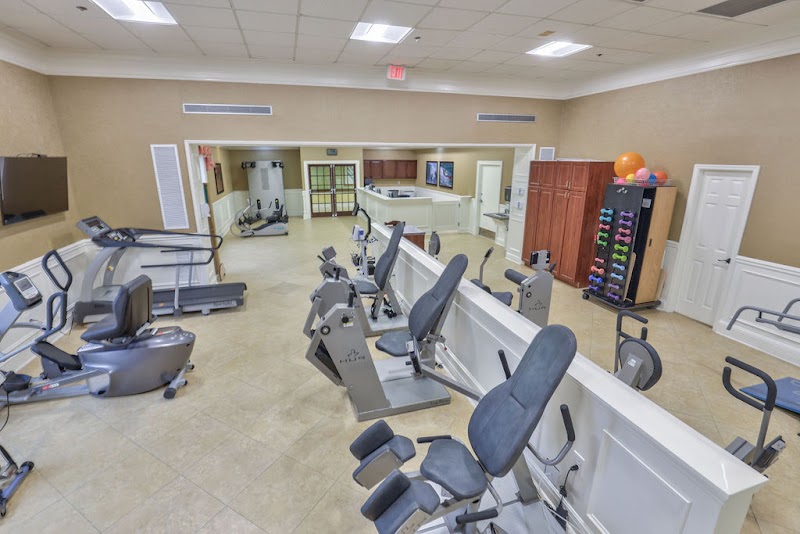
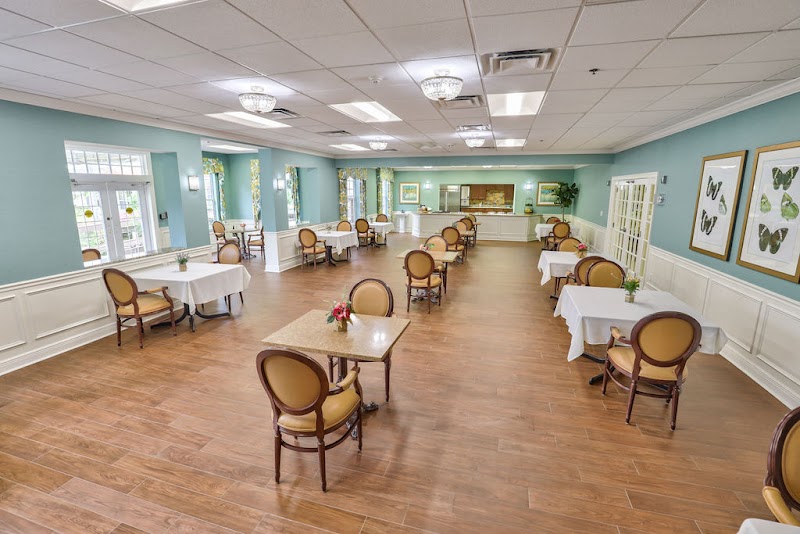
CONWAY LAKES HEALTH & REHABILITATION CENTER

5201 CURRY FORD ROAD, ORLANDO, FL 32812 (407) 384-8838
For profit - Partnership 120 Beds CLEAR CHOICE HEALTHCARE Data: November 2025 2 Immediate Jeopardy citations
Trust Grade
0/100
#627 of 690 in FL
Last Inspection: September 2025

Inspected within the last 6 months. Data reflects current conditions.

Overview

Conway Lakes Health & Rehabilitation Center in Orlando has received a Trust Grade of F, indicating poor performance with significant concerns about care quality. It ranks #627 out of 690 facilities in Florida, placing it in the bottom half of nursing homes statewide, and #33 out of 37 in Orange County, suggesting very few local options are better. Unfortunately, the facility is worsening, as the number of reported issues increased from 6 in 2024 to 15 in 2025. Staffing is a relative strength, with a 4 out of 5-star rating and a turnover rate of 50%, which is average but still concerning for consistency in care. However, the facility has incurred $102,491 in fines, which is higher than 88% of Florida facilities, raising red flags about compliance issues. Specific incidents of concern include a failure to provide adequate care for a cognitively impaired resident who developed a pressure ulcer and later suffered severe complications leading to hospitalization and hospice care. Additionally, another resident required more assistance than provided for personal hygiene and other daily activities, indicating a gap in meeting care needs. Overall, while staffing levels are decent, the facility's troubling trends and serious incidents highlight significant weaknesses that families should consider carefully.

Trust Score
F
0/100
In Florida
#627/690
Bottom 10%
Safety Record
High Risk
Review needed
Inspections
Getting Worse
6 → 15 violations
Staff Stability
⚠ Watch
50% turnover. Above average. Higher turnover means staff may not know residents' routines.
Penalties
○ Average
$102,491 in fines. Higher than 61% of Florida facilities. Some compliance issues.
Skilled Nurses
✓ Good
Each resident gets 44 minutes of Registered Nurse (RN) attention daily — more than average for Florida. RNs are trained to catch health problems early.
Violations
⚠ Watch
31 deficiencies on record. Higher than average. Multiple issues found across inspections.
★☆☆☆☆
1.0
Overall Rating
★★★★☆
4.0
Staff Levels
★★★☆☆
3.0
Care Quality
★☆☆☆☆
1.0
Inspection Score
Stable
2024: 6 issues
2025: 15 issues

The Good

  • 4-Star Staffing Rating · Above-average nurse staffing levels
  • Full Sprinkler Coverage · Fire safety systems throughout facility
  • No fines on record

Facility shows strength in staffing levels, fire safety.

The Bad

1-Star Overall Rating

Below Florida average (3.2)

Significant quality concerns identified by CMS

Staff Turnover: 50%

Near Florida avg (46%)

Higher turnover may affect care consistency

Federal Fines: $102,491

Well above median ($33,413)

Significant penalties indicating serious issues

Chain: CLEAR CHOICE HEALTHCARE

Part of a multi-facility chain

Ask about local staffing decisions and management

The Ugly 31 deficiencies on record

2 life-threatening 1 actual harm
Sept 2025 4 deficiencies
CONCERN (D)

Potential for Harm - no one hurt, but risky conditions existed

PASARR Coordination (Tag F0644)

Could have caused harm · This affected 1 resident

Based on interview, and record review, the facility failed to ensure referrals to the appropriate state designated authority for Preadmission Screening and Resident Review (PASARR) Level II evaluation...

Read full inspector narrative →
Based on interview, and record review, the facility failed to ensure referrals to the appropriate state designated authority for Preadmission Screening and Resident Review (PASARR) Level II evaluation and determination were made for two of three residents reviewed for PASARR, of a total sample of 25 residents, (#11, and #80). Findings:1.Record review of resident #11's most recent Level l PASARR, dated 2/08/24, revealed resident #11 was assessed as having, No diagnosis or suspicion of Serious Mental Illness or Intellectual Disability indicated. Level II PASARR evaluation not required. A review of the Facility Resident Matrix dated 9/08/25 indicated resident #11 had a diagnosis and/or was being treated for PTSD (Post Traumatic Stress Disorder); [Resident #11 name].On 9/10/25 at 11:50 AM, the Director of Nursing (DON) stated the facility did not have documentation that indicated resident #11's Level I PASRR had been revised to show the diagnosis of PTSD, nor was a Level II PASARR screening initiated.2. Record review revealed resident #80 had a Level I PASARR completed on 5/16/22. Further review revealed a diagnosis of bipolar disorder was made on 11/20/24, and a diagnosis of major depressive was initiated on 5/14/25. Resident #80 had a care plan for bipolar disorder related to potential for behavior problems, such as calling out, r/t Bipolar Date Initiated: 03/13/2025 There was no evidence in the medical record of a Level II PASARR evaluation after the new diagnoses were made. On 9/10/25 at 12:35 PM, the DON confirmed a Level II PASARR should have been completed for both residents, #11 and #80, due to the new diagnoses they received.
CONCERN (D)

Potential for Harm - no one hurt, but risky conditions existed

Deficiency F0761 (Tag F0761)

Could have caused harm · This affected 1 resident

Based on observation, interview, and record review, the facility failed to ensure medications were securely stored in one of two residential halls in the facility, (100s hall, resident #7). Findings:R...

Read full inspector narrative →
Based on observation, interview, and record review, the facility failed to ensure medications were securely stored in one of two residential halls in the facility, (100s hall, resident #7). Findings:Review of resident #7's medical record revealed diagnoses that included sepsis, bacteremia, urinary tract infection, type II diabetes, and need for assistance with personal care. Review of active physician orders revealed no orders related to self-administration of medications. Review of the Minimum Data Set assessment revealed resident #7 had severely impaired cognition. On 9/09/25 at 9:49 AM, resident #7 was in his room in bed. Two pills were observed on the bedside table. Resident #7 explained why the nurse had left the pills on the table, saying, that's my medicine they left me to take. (Photo evidence obtained) On 9/10/25 at 8:00 AM, the Unit Manager (UM) confirmed resident #7's medications shouldn't have been left at bedside by the nurse. The Unit Manager verified a self-administration order was needed otherwise the nurse should not leave medications with residents to take on their own.
CONCERN (D)

Potential for Harm - no one hurt, but risky conditions existed

Infection Control (Tag F0880)

Could have caused harm · This affected 1 resident

Based on observation and interview the facility failed to maintain infection control practices by not keeping the urine collection bag and the tubing off the floor and away from unsanitary surfaces fo...

Read full inspector narrative →
Based on observation and interview the facility failed to maintain infection control practices by not keeping the urine collection bag and the tubing off the floor and away from unsanitary surfaces for one of one resident reviewed for urinary catheters, of a total sample of 25 residents, (#7).Findings:On 9/08/25 at 10:51 AM, resident #7's catheter bag was found to be clipped to a trash can located at the side of his bed. The base of the urine collection bag was resting on the floor. (Photo evidence obtained)On 9/08/25 at 12:38 PM, resident #7's catheter bag was lying flat on the floor of his room.On 9/09/25 at 10:15 AM, the catheter bag was again clipped to the trash can with the base of the collection bag lying on the floor. On 9/10/25 at 9:17 AM, in resident #7's room, the Director of Nursing (DON) confirmed resident #7's urinary catheter bag clipped to the trash can. A few minutes later the DON stated she was the Infection Prevention Nurse and verified it was not appropriate for the urinary collection catheter bag to be attached to the trash can. She confirmed the catheter urine collection bag should not be on the floor to prevent infection.
CONCERN (E)

Potential for Harm - no one hurt, but risky conditions existed

Food Safety (Tag F0812)

Could have caused harm · This affected multiple residents

Based on observation, interview, and record review, the facility failed to ensure food was safely stored and/or discarded in the areas of the main reach-in coolers, the pot/pan sink sanitizing solutio...

Read full inspector narrative →
Based on observation, interview, and record review, the facility failed to ensure food was safely stored and/or discarded in the areas of the main reach-in coolers, the pot/pan sink sanitizing solution was at the correct concentration and failed to ensure food preparation surfaces were not cross-contaminated during production in accordance with professional standards for food service safety. Findings:1.On 9/08/25 at 9:36 AM, an initial walk-through tour of the kitchen was conducted with the Dietary Manager (DM). In the reach-in cooler a white plastic container had a label that read: Turkey Prepared date 7/07/25, Use by 7/10/25. The DM confirmed the date on the label of the white plastic container read, Turkey Prepared date 7/07/25 Use by 7/10/25 and should have been discarded almost two months prior. (Photo evidence obtained) 2. On 9/08/25 at approximately 9:45 AM, the sanitizing solution in pot/pan sink was tested and was <100 parts per million (ppm). The sanitizing solution concentration should have been 150 - 200 ppm along with the contact time per the manufacturer's instructions. Th DM confirmed the sanitizing solution was not at the proper ppm in order to safely sanitize any kitchen items that were washed and sanitized there. 3. On 9/09/25 at approximately 12:10 PM, the lunch tray line was served in the dining room kitchenette. The cook used a wiping cloth to wipe excess food off of plates and placed the dirty cloth on the counter and not in a cleaning or sanitizing solution. 4. On 9/09/25 at 12:30 PM, the lunch tray line was served in the main kitchen. The cook used a wiping cloth and placed the dirty cloth on the counter and not in a cleaning or sanitizing solution. A few minutes later at 12:35 PM, the DM confirmed she observed the cook place the dirty wiping cloth on the counter after use. The DM stated the wiping cloths should have been placed in the sanitizing solution after use to prevent potential cross contamination. The facility's undated policy entitled, Dietary Guidelines Manual, Subject Cleaning Cloths indicated, cleaning cloths were to be kept in a container of clean sanitizing solution between uses.
Jul 2025 5 deficiencies
CONCERN (D) 📢 Someone Reported This

A family member, employee, or ombudsman was alarmed enough to file a formal complaint

Potential for Harm - no one hurt, but risky conditions existed

Investigate Abuse (Tag F0610)

Could have caused harm · This affected 1 resident

**NOTE- TERMS IN BRACKETS HAVE BEEN EDITED TO PROTECT CONFIDENTIALITY** Based on interview, and record review, the facility failed to thoroughly investigate and report an allegation of neglect and an ...

Read full inspector narrative →
**NOTE- TERMS IN BRACKETS HAVE BEEN EDITED TO PROTECT CONFIDENTIALITY** Based on interview, and record review, the facility failed to thoroughly investigate and report an allegation of neglect and an injury of unknow origin resulting in serious bodily injury to the Agency for Healthcare Administration (AHCA). The facility failed to report the allegation to AHCA within the federally required 2-hour timeframe, and the 5-day investigation report lacked sufficient detail, as required under federal regulation, for 1 of 1 resident reviewed for neglect, of a total sample of 8 residents, (#1).Findings:Resident #1 was originally admitted to the facility on [DATE] and readmitted from an acute care hospital on 4/09/24. Her most recent diagnoses included speech and language deficits after a stroke, reduced mobility, history of falling, muscle weakness, fracture of upper end of right humerus, and osteoarthritis.Review of the Minimum Data Set Quarterly assessment with Assessment Reference Date 3/09/25 revealed resident #1's was nonverbal, and cognitively impaired with bilateral upper extremity impairments. The assessment indicated she was dependent on staff for all care and mobility. Review of resident #1's progress notes revealed she was found on 6/01/25 with unexplained bruising, swelling, and guarding of the right upper arm (RUA). Later that evening, X-rays confirmed a fracture of the proximal humerus. The resident was transferred to the hospital, where significant bruising was noted to the RUA, the fracture of the proximal humerus was confirmed and concern for possible elder abuse was documented by hospital staff. In a telephone interview on 6/29/25 at 1:16 PM, Certified Nursing Assistant (CNA) A stated she had worked in the facility for 10 months and was assigned to resident #1 on 6/01/25 during the 7:00 AM to 3:00 PM shift. She reported CNA B assisted her with transferring resident #1 to her wheelchair at approximately 9:00 AM. CNA A stated resident #1 ate breakfast and spent the remainder of the day in the day room. She denied observing any bruising or signs of pain during her shift. She shared later that day she received a call from a supervisor who inquired about swelling and bruising noted on resident #1's right arm by the next shift's CNA. She stated she consistently used two staff to transfer resident #1, who was dependent and unable to assist with transfers. CNA A indicated she always sought assistance for transfers due to resident #1's weight and contractures. She expressed concern that CNA B denied helping with the transfer of resident #1 on 6/01/25 and confirmed she demonstrated her transfer technique to management the day after the incident. On 6/29/25 at 2:16 PM, with translation assistance from CNA H, CNA B explained that on 6/01/25 she asked CNA A for equipment between 7:00 AM and 7:30 AM and later returned it during her break around 2:00 PM. CNA B denied assisting CNA A with any transfers that day. She stated she could not recall how transfers were conducted when she previously trained with CNA A. In a telephone interview on 6/29/25 at 3:19 PM, resident #1's son stated his mother was nonverbal and physically unable to inflict injury on herself. He expressed concern about the lack of clear information from the facility regarding the incident on 6/01/25. He reported the facility later informed the family that resident #1 was mishandled during a transfer and that the employee involved was terminated. He expressed skepticism with the facility's explanation, citing the hospital's suspicion of potential abuse. Resident #1's son emphasized his mother had always previously required a two-person assist, but staff were observed performing single-person transfers, despite repeated complaints from the family. On 6/29/25 at 3:59 PM, CNA C recounted resident #1 required total assistance and prior to the incident, was transferred by one person using a gait belt. She indicated she observed a purple bruise on resident #1's RUA while changing her clothes on 6/01/25. She shared she immediately informed the nurse who was unaware of the injury. CNA C stated resident #1 was nonverbal and guarded the injured arm during care. She described resident #1's upper extremities as contracted and difficult to assess for pain unless physical signs were present. She stated after the nurses assessed resident #1, she transferred her back to bed with caution. CNA C indicated a few days after the incident, she was called into the DON's office and gave a verbal report of what she had observed. She recalled receiving an in-service training on transfers but was not required to demonstrate how she actually performed them. A gait belt is a device used by caregivers to help stabilize and guide a patient who walks but is not steady on their feet. The belts help enable safe functional mobility and reduce patient falls as well as patient and staff injuries. Staff should know when and how to use the gait belt as an important part of safe patient handling, (retrieved on 7/16/25 from www.medline.com). On 6/29/25 at 5:02 PM, Registered Nurse (RN) D recounted she was the nurse assigned to resident #1 on 6/01/25 and was informed of the bruising by CNA C. She indicated she observed a large purple bruise extending from the resident's right shoulder to her elbow. RN D confirmed there were no prior fall reports and initiated a telehealth visit with the on-call provider, who ordered a STAT (immediate) X-ray. She stated she reported the incident to her supervisor and the physician. She acknowledged she did not administer pain medication and stated she was instructed to wait for imaging results before notifying the family. In a telephone interview on 6/30/25 at 6:49 AM, Licensed Practical Nurse (LPN) E stated she was called to resident #1's room by RN D after CNA C discovered the bruising. She indicated she observed resident #1 grimacing and guarding her RUA. She confirmed a telehealth consultation was initiated and a STAT X-ray was ordered. LPN E indicated she ended her shift before the X-ray was completed and was unsure if pain medication was administered. She stated she attempted to contact the 11:00 PM to 7:00 AM shift CNA without success and called CNA A, who reported no unusual findings during her shift. LPN E confirmed she contacted the Director of Nursing (DON) to report the incident and followed the facility's protocol. She stated shortly after the injury was discovered she spoke with the DON who instructed her to contact the physician and investigate further. On 6/30/25 at 2:36 PM, the Director of Rehabilitation (DOR) shared resident #1's incident was discussed during the clinical meeting on 6/02/25 and re-education on transfers was initiated. She stated resident #1 was previously a one-person assist for transfers, but after returning from the hospital, a mechanical lift was considered. On 7/01/25 at 10:53 AM, the DOR confirmed therapy was not involved in CNA A's reenactments of the transfer incident during the investigation into the incident, nor did therapy staff participate in the review of the incident's transfer mechanics for the investigation.On 6/30/25 at 12:43 PM, CNA I reported resident #1 required assistance from two to three staff for transfers prior to the injury due to whole-body contractures and rigidity. She noted a gait belt was not used when three CNAs transferred resident #1. On 7/01/25 at 10:53 AM, Physical Therapy Assistant F stated resident #1 required maximum assistance of one staff and transfers always required use of the gait belt. He described standard one-person and two-person pivot techniques. The DOR, present during the interview, stated resident #1 was not considered complex despite her inability to assist or communicate and acknowledged resident #1 had strength in her legs, but did not assist by pushing up during transfers. In a telephone interview on 7/01/25 at 2:33 PM, via a translator, CNA A confirmed she did not ever use a gait belt with resident #1 and did not recall seeing any except those used by therapy staff. She indicated she was never instructed to use a gait belt for transfers with resident #1, nor for transfers with any other resident. Step by step, she explained her stand pivot transfer method for resident #1, which involved lifting the resident by the waist and under the arms, despite the resident's contractures and nonverbal status. CNA A confirmed she had previously documented residents as a one-person assist even when a two-person assist was needed. She explained she only documented a two-person assist when using a mechanical lift. CNA A confirmed she demonstrated her transfer technique to facility management during a reenactment following the incident but was never asked if she utilized the gait belt. Review of the facility's five-day report submitted to the State Agency on 6/06/25 revealed the facility first reported the allegations on 6/02/25 at 5:41 PM, the day after resident #1's fracture was found. The facility's five-day report concluded the allegations had No supportive findings, and not verified. The Allegation Details section included, Resident identified to have a humeral fracture having occurred during transfer. Resident sent to the ER (emergency room) for evaluation and treatment, returned to the facility with a sling in place. Physician visited, pain assessed, and medication regimen adjusted. Met with resident's son and daughter in law in person; discussed resident's status and plan of care updates. Conversation productive, both appreciative of the facility actions. The Analysis section read, Investigation-summary of interview (alleged victim/resident representative): Resident is unable to provide information, and family offered no additional information. Investigation-summary of interview with witnesses: N/A no witnesses identified. Investigation-summary of interview with alleged perpetrators: Interview and recap of events with the identified staff member demonstrates that the resident's physician ordered plan of care was carried out as intended. Investigation-summary of interview with other residents in contact with alleged perpetrator: Interviews unremarkable, resident's roommate who is alert and oriented . reports no concerns. Investigation-summary of interview staff: Staff interviews unremarkable, no concerns noted. A follow-up request made by the State Agency on 6/10/25 cited the lack of detail, failure to describe the transfer method, staff involvement, protection plans for resident #1 and others, and failure to identify staff status. The facility did not update or correct the report as directed.In a joint interview on 6/30/25 at 3:27 PM, with the Nursing Home Administrator (NHA) and the DON, the NHA indicated he was the Abuse Coordinator, and the DON was the Risk Manager. The DON stated she was informed of resident #1's bruising by the Weekend Supervisor on 6/01/25 and that a STAT X-ray had been ordered by the physician. The DON continued, that after imaging confirmed a fracture, resident #1 was transferred to the hospital, and she began collecting data regarding the incident the following morning. She reported she spoke with all staff who worked the Sunday shift, including those assigned to resident #1 and those who were not. The DON stated no staff were able to provide information about how the injury occurred at that time. She stated she interviewed the Weekend Supervisor, assigned nurse and assigned CNAs but no one reported witnessing a fall or other injury. The DON indicated she interviewed resident #1's roommate but she did not see or hear anything. She stated she interviewed CNA A in person that morning. The DON explained CNA A demonstrated how she transferred resident #1 in resident #1's room. The DON recalled CNA A reported that at approximately 10:00 AM, CNA B assisted her to transfer resident #1 from bed to her wheelchair. CNA A demonstrated how she held resident #1 under her right arm but and confirmed she did not mention the use of a gait belt. The DON recalled CNA B told her she did not assist CNA A to transfer anyone. The DON stated she and the NHA called CNA A to his office, but CNA A was adamant that CNA B assisted her to transfer resident #1. The DON shared CNA B re-confirmed she had not helped CNA A with the transfer. The DON stated CNA B reported that CNA A had told her to say she helped her, to cover for her, but CNA B refused. The DON stated due to the reported inconsistencies they decided to watch the video footage of the hallway outside resident #1's room from the previous day. The DON shared that based on CNA A's reenactment, which was observed by the DON, NHA, the Unit Manager and a fourth person the DON could not recall, it was determined the fracture likely occurred due to the transfer technique used. The DON described CNA A's technique as involving a lift under the resident's right upper side and mentioned the upward jerking during the maneuver may have caused the injury. The DON related that how CNA A executed the transfer, was a bit aggressive for a resident being contracted. The DON said, You do not pull someone who is contracted like CNA demonstrated. The DON acknowledged CNA A never mentioned the use of a gait belt and they did not inquire as to whether she used one. The DON concluded, The upward jerking motion under resident #1's arm may have caused the fracture. The DON stated the mechanism of the transfer was correct but the CNA's motion under resident #1's arm may have caused the fracture. The DON confirmed CNA A told them that was how she always transferred resident #1. The NHA explained the harm was unintentional. The DON confirmed the facility did not address the additional information requested by the State Agency for complete investigation and reporting. She stated she was under the impression the reports were to give a rough synopsis of what the investigation showed. They confirmed no witness statements or specific details of their investigation were included in the report.On 7/01/25 at 11:28 AM, the DON reported observing three reenactments of CNA A's transfer technique. Later at 1:28PM, the NHA and DON validated during the three reenactments no one ever inquired if CNA A used a gait belt to transfer resident #1 according to facility procedure for transfers. They both acknowledged CNA A did not indicate whether she used a gait belt in her demonstrations of stand to pivot transfer. They did not say how the investigation could be complete without knowing all of the pertinent details of CNA A's transfer of resident #1. A contracture is a medical condition characterized by fixed tightening of the muscles, tendons, ligaments or skin which can prevent normal movement of the affected body part leading to joint deformity and rigidity. This can limit the range of motion and cause pain, (retrieved on 7/17/25 from www.mountsinai.org).In a telephone interview on 7/02/25 at 3:52 PM, resident #1's primary care physician (PCP) described resident #1 as one of the most vulnerable residents in the facility due to her physical and cognitive deficits. She stated the injury significantly impacted the resident's quality of life and pain medication was required. The PCP affirmed the lack of firsthand accounts in the investigation and the resident's communication status complicated it. She noted if two-person assistance was needed, it should have been clearly communicated and documented. The PCP expected staff to follow any facility policies and protocols regarding the care of the residents. During a telephone interview on 7/02/25 at 4:25 PM, the Medical Director stated he was informed the injury occurred due to transfer conducted by a single CNA without assistance. He reported the transfer technique used by the CNA was improper and emphasized all staff should be trained with hands-on demonstrations, not just checklists to ensure their understanding and compliance. He expressed concern that therapy staff was not involved in reviewing the incident to complete a thorough investigation.Review of the Administrator job description signed by the NHA on 2/20/25 revealed duties included to ensure quality resident care was provided in accordance with state and federal laws, rules and regulations. The form listed Essential Job Duties of this position to include, Ensures quality resident care is provided to meet and exceed company expectations and in accordance with state and federal laws, rules and regulations. Responsible for the compliance of legal, regulatory, accreditation and reimbursement laws, regulations and expectations. Oversees the completion of forms and documents to ensure compliance with company guidelines and other laws and regulations. Ensures accurate and timely reporting of incidents related to resident rights or abuse to the appropriate state agency; reports any findings of internal investigations. Actively participates in investigations related to resident or employee matters. Review of the DON job description signed by the DON on 7/02/25 revealed she was Responsible for developing, directing and managing the nursing services department to ensure the delivery of high-quality nursing care and services in accordance with all laws, regulations and facility guidelines. The form listed Essential Job Duties of this position included, Appointed as facility Risk Manager and is responsible for overseeing investigations related to resident events. Review of the policy and procedure titled Risk Management Incident Guidelines, dated 2015, revealed all incidents that occurred in the facility would be documented, investigated and recorded in their electronic tracking system. The form indicated the Incident Report & Investigation was to develop initiatives for the improvement of care and quality of life for residents. The policy indicated the investigation was completed by the DON, charge nurse, or Nursing Supervisor and the Risk Manager with a goal to identify the underlying cause, referred to as root cause analysis. The policy further detailed that the Federal 2 Hour/Immediate/5-Day Allegation Investigation Worksheet should be completed for all incidents categorized as allegations of mistreatment, abuse, neglect, injury of unknow origin, and submit the appropriate Federal and State reports as required. Review of the facility policy and procedure titled Resident Mistreatment, Abuse and Neglect Prohibition, dated 2017, indicated the facility was required to identify, correct, and intervene in suspected situations of abuse, or neglect. The policy detailed that the facility should regularly monitor staff to determine whether inappropriate behaviors occurred; assess care plans and monitor residents with needs or behaviors which may lead to abuse or neglect. The document also indicated that the facility would thoroughly investigate injuries of unknow origin and any suspected or alleged abuse or neglect in accordance with federal and state regulations.
CONCERN (D) 📢 Someone Reported This

A family member, employee, or ombudsman was alarmed enough to file a formal complaint

Potential for Harm - no one hurt, but risky conditions existed

Comprehensive Care Plan (Tag F0656)

Could have caused harm · This affected 1 resident

**NOTE- TERMS IN BRACKETS HAVE BEEN EDITED TO PROTECT CONFIDENTIALITY** Based on observation, interview, and record review, the facility failed to develop, implement, and revise a person-centered, com...

Read full inspector narrative →
**NOTE- TERMS IN BRACKETS HAVE BEEN EDITED TO PROTECT CONFIDENTIALITY** Based on observation, interview, and record review, the facility failed to develop, implement, and revise a person-centered, comprehensive care plan to address communication needs for 1 of 4 residents reviewed for care planning, of a total sample of 8 residents, (#1).Findings: Cross Reference F689 Review of the medical record revealed resident #1 was originally admitted to the facility on [DATE] and readmitted on [DATE] from an acute care hospital. Her most recent diagnoses included stroke with residual speech and language deficits, impaired mobility, right humerus fracture, type 2 diabetes, and osteoarthritis. Review of the Minimum Data Set (MDS) signification change in condition assessment with Assessment Reference Date (ARD) of 6/10/25 revealed resident #1's preferred language was Spanish. Resident #1 had bilateral upper extremities impairment and was dependent on staff for all Activities of Daily Living, mobility and transfers. The MDS quarterly assessment with ARD of 3/09/25 showed resident #1's preferred language was Spanish. In a telephone interview on 6/29/25 at 3:19 PM, resident #1's son stated after his mother suffered two strokes, she could no longer speak but she only spoke Spanish. He explained he posted a note with reminders for staff which included she only understood Spanish. On 7/01/25 at 8:03 AM, resident #1's son described how his mother became frightened and withdrawn due to her inability to understand staff. He shared he contacted the facility leadership about his concerns and provided a copy of an email he sent to the former Director of Nursing (DON) dated 9/10/23 stating, in part, . Between her weight and her immobility, we know she is not easy to maneuver. Especially if they are not speaking Spanish to her, she will not understand a word they are saying. A review of an undated sign observed posted in resident #1's room on 6/30/25 at 11:20 AM read: Reminders: -NOT ABLE TO SPEAK -ONLY UNDERSTANDS SPANISH . Review of resident #1's care plan for communication problems related to weak or absent voice, language barrier, and impaired cognition, revised on 12/13/24, did not reflect the resident's preferred language or outline individualized communication strategies for addressing the language barrier. Review of the Kardex (Certified Nursing Assistant care plan) revealed a Communication section which read, Use task segmentation to support short term deficits. Break tasks into one step at a time. The document did not reference resident #1's language preference. On 6/29/25 at 3:59 PM Certified Nursing Assistant (CNA) C stated she explained what she would be doing with resident #1 in English, even though the resident only Speaks Spanish. On 7/01/25 at 12:18 PM, CNA G indicated resident #1 understood some English, but she only knew a few words in Spanish. CNA G stated resident #1 was totally dependent and could not do anything for herself.On 7/02/25 at 11:56 AM, the East Wing Unit Manager (UM) acknowledged the sign posted in resident #1's room, which included the resident only understood Spanish. She explained the facility could not always accommodate language preferences. She mentioned no formal Spanish-speaking staff assignments were in place for resident #1. She then shared they had some nursing or therapy staff who spoke Spanish and staff could ask one of them to translate when needed. She validated resident's preferred language should be included in the care plan but was unsure if resident #1's reflected it. She stated every nurse had the ability to update the care plan if needed. On 6/30/25 at 1:30 PM, the MDS Coordinator stated the care plan should be person-centered and reflect a clear picture of the resident's status across all disciplines. She explained her role in updating care plans during clinical meetings. On 7/02/25 at 10:43, the MDS Coordinator validated the resident's primary language should have been included in the care plan so staff would know. She stated she did not recall if this was discussed during any of the care plan meetings she attended. Review of the Facility assessment dated [DATE] showed the facility identified the presence of Hispanic residents and that care would be directed as culturally appropriate. The assessment also referred to the use of a Cultural Competency and the goal of ensuring staff could meet the cultural and linguistic needs of residents.
CONCERN (D) 📢 Someone Reported This

A family member, employee, or ombudsman was alarmed enough to file a formal complaint

Potential for Harm - no one hurt, but risky conditions existed

Accident Prevention (Tag F0689)

Could have caused harm · This affected 1 resident

**NOTE- TERMS IN BRACKETS HAVE BEEN EDITED TO PROTECT CONFIDENTIALITY** Based on observation, interview, and record review, the facility failed to ensure a Certified Nursing Assistant (CNA) followed f...

Read full inspector narrative →
**NOTE- TERMS IN BRACKETS HAVE BEEN EDITED TO PROTECT CONFIDENTIALITY** Based on observation, interview, and record review, the facility failed to ensure a Certified Nursing Assistant (CNA) followed facility protocol when transferring a physically and cognitively impaired vulnerable resident from bed to wheelchair; and failed to ensure staff transferred residents safely for 1 of 4 resident reviewed for accidents, of a total sample of 8 residents, (#1). On 6/01/25 at approximately 10:40 AM, resident #1, vulnerable and dependent on staff for all Activities of Daily Living (ADLs), mobility and transfers, sustained a displaced fracture of the right humerus when the 7:00 AM to 3:00 PM shift CNA transferred the resident by herself without the use of a gait belt. After CNA A transferred resident #1 from her bed to the wheelchair she transported her to the dayroom. Hours later, when resident #1 was taken back to her room by the next shift CNA, she noticed a bruise on the resident's right upper arm (RUA) and notified the nurse. Resident #1 was assessed by her assigned Registered Nurse (RN) and via telehealth by a medical provider who ordered a STAT (immediately) X-ray of the right shoulder. At approximately 8:00 PM, an X-ray revealed an acute displaced proximal humerus fracture. Resident #1 was transferred to the hospital for evaluation, where it was determined surgical repair was not recommended due to comorbidities and age. Findings:Cross Reference F726Resident #1, a [AGE] year-old female, was originally admitted to the facility on [DATE] and readmitted from an acute care hospital on 4/09/24. Her most recent diagnoses included speech and language deficits after a stroke, reduced mobility, history of falling, muscle weakness, fracture of upper end of right humerus (upper arm bone), type 2 diabetes, and osteoarthritis.Review of the Minimum Data Set (MDS) quarterly assessment with Assessment Reference Date 3/09/25 revealed resident #1's Brief Interview for Mental Status was not obtained because the resident was rarely or never understood. Instead, a Staff Assessment for Mental Status was conducted, and short and long-term memory were selected. The MDS assessment indicated resident #1 had severely impaired cognitive skills for daily decision making. The MDS assessment noted no behavioral issues or rejection of care during the lookback period. Resident #1 had bilateral upper extremity impairment and no lower extremity impairment. She was dependent on staff for all ADLs, mobility, transfers and locomotion on and off the unit. A sit-to-stand test was Not attempted due to medical condition or safety concerns.Review of resident #1's care plan for ADL self-care performance deficit related to generalized weakness, impaired mobility, impaired cognition, revised on 12/13/24, revealed resident #1 required the assistance of one staff for transfers until 6/02/25. An intervention dated 5/16/23 directed staff to report changes in ADL self-performance to the nurse.Resident #1 had a care plan for risk for falls related to confusion, impaired mobility, and incontinence. Another care plan was for communication problems related to weak or absent voice, language barrier, and impaired cognition; both revised on 12/13/24.Review of the Nursing Quarterly Evaluation dated 4/21/25 revealed resident #1 was always disoriented to person, place, and time. The evaluation indicated resident #1 had a balance problem while standing/sitting/walking and required the use of a wheelchair. Review of resident #1's medical record revealed a progress note by the on-call provider on 6/01/25 at 5:12 PM, which detailed, Nurse notified clinician that new bruising was noted to the patient's RUA, and she is guarding with touch and attempted movement. She is nonverbal so unable to verbalize any possible injuries. Per the nurse, there are no recent documented falls. She is a total care patient. Will obtain STAT (immediate) X-rays of right shoulder and humerus. The note revealed a physical exam per nurse and video observation showed skin bruising to RUA, guarding right shoulder with touch and range of motion (ROM), and pain in RUA. Review of a progress note dated 6/01/25 at 5:38 PM, by Licensed Practical Nurse (LPN) E indicated, she was called into the resident's room by the evening shift CNA after she found right shoulder bruising, and left bloodshot eye was also noted. The nurse documented that the patient was noted to be grimacing and guarding upon movement of the extremity. She noted the physician was notified, and a STAT X-ray was ordered.Review of a progress noted by the on-call provider on 6/01/2025 at 8:29 PM, revealed the Xray showed a visible fracture at the upper end of the humerus. The note detailed that due to the location of the fracture and possible dislocation the resident would be sent to the hospital emergency department (ED) for orthopedic evaluation.Review of resident #1's Change in Condition & Transfer form dated 6/01/25 at 9:58 PM, revealed the change of condition was an abnormal X-ray finding which occurred on 6/01/25 at 7:45 PM which resulted in a transfer to an acute care hospital. The narrative summary identified that at 7:00 PM the evening shift CNA notified the nurse of bruising on the right shoulder. In conflict with the nurse's progress note from 5:38 PM, the form indicated resident #1 did not show signs of pain.Review of an Emergency Department Provider Note dated 6/01/25 revealed, Emergency Medical Services (EMS) reported resident #1 was found to have bruising of the right arm and an X-ray showed a proximal humerus fracture. EMS noted there was no reported falls or trauma at the facility. The ED provider note included, Significant bruising noted to the right upper arm. X-rays confirmed proximal humerus fracture. Had long discussion with family about concern for possible elder abuse at the nursing home. Offered admission if family wants patient transferred to a different facility. The provider indicated a report was to be initiated with Adult Protective Services concerning the possible abuse.Review of a Progress Note from resident #1's primary care provider dated 6/05/25 revealed a sling was in place to resident #1's right shoulder, and the resident had pain present secondary to the humeral head fracture. The note detailed that ED notes including imaging were reviewed, and the plan was for non-operative management.In a telephone interview on 6/29/25 at 1:16 PM, CNA A explained she held this position for about 10 months which was her first as a CNA in the nursing home setting. She indicated she was familiar with resident #1 and had cared for her often before Sunday 6/01/25 on the 7:00 AM to 3:00 PM shift. CNA A recalled on 6/01/25, she asked CNA B to help transfer resident #1 to her wheelchair. She stated they both went into the resident's room and CNA B assisted with the transfer at approximately 9:00 AM. CNA A remembered resident #1 ate half of her breakfast in the wheelchair and was later wheeled to the day room, where she spent the rest of the day. CNA A mentioned she observed resident #1 had a red eye but could not recall on which side, and she notified the nurse. CNA A stated the nurse checked resident #1's eye and asked her to retake the blood pressure which she reported as normal. She shared later that day she received a call from the supervisor who inquired whether she had noticed anything unusual with resident #1 because the next shift CNA had noted bruising and swelling to the right arm. CNA A stated she observed redness on resident #1's arm the following day. She explained resident #1 was never transferred using a mechanical lift but instead was a two-person transfer. The CNA indicated she demonstrated to management how she transferred resident #1 from the bed to her wheelchair. She said, The problem is the other CNA is saying she did not help me. CNA A reiterated resident #1 was a two-person transfer and conveyed she always had someone to assist because resident #1 was heavy. She emphasized resident #1 was dependent and unable to assist herself. CNA A explained she held up resident #1 by the right shoulder and assisted her by lifting her to a sitting position, and both CNAs then helped her transfer into the wheelchair. She stated she had received training on transfers and was very familiar with transfer techniques. On 6/29/25 at 2:16 PM, with English to Creole translation CNA B recalled on Sunday 6/01/25 she was scheduled to be assigned to a team independently for the first time, as she was new to the facility at that time. She recalled between 7:00 and 7:30 AM, she approached CNA A and asked to borrow her blood pressure cuff and pulse oximeter to complete her morning vital signs. CNA B reported after collecting the supplies she needed, she returned to her assigned wing. CNA B stated CNA A never asked her for assistance with transferring any residents, including resident #1. CNA B stated she later returned the borrowed supplies to CNA A in the breakroom around 2:00 PM, during her scheduled break. CNA B shared she had trained with CNA A the prior Sunday but did not recall if or how resident #1 was transferred at that time. She confirmed the day after the incident; she told her supervisor she had not helped CNA A with the transfer. In a telephone interview conducted on 6/29/25 at 3:19 PM, resident #1's son shared his mother had suffered two strokes, was nonverbal, and unable to move independently. He said there was no way she could hurt herself this badly on her own. He mentioned he and his wife could only guess what had occurred, as the facility had not provided them with full details about the incident. He shared the facility recently completed an internal investigation and informed the family that his mom had been mishandled during a transfer and the involved employee had been terminated. The son expressed frustration, stating the facility tried to make it appear as though the injury was accidental or mishandling instead of mistreatment. He explained, To get her socket where it is at, there would have had to have some major force against it. He mentioned resident #1 had always required a two-person assist, but there were multiple instances when the family observed his mother being transferred by just one staff member. He shared that each time they had brought the concerns to the attention of facility leadership, but the issue continued, so the family started placing signs in the room to instruct staff on what to do in hopes it would help. The son stated the former Director of Nursing (DON) repeatedly told them staff would be retrained to ensure two-person transfers were utilized. He mentioned he felt that due to high staff turnover this issue continued to occur. Resident #1's son further explained many staff members had difficulty communicating with his mother because she only spoke and understood Spanish and would become frightened or withdrawn when she could not understand what was happening. He lamented, My poor mom, her last few years, living in pain, and scared. He indicated he felt like he had to supervise the staff himself. He added staff often failed to read or follow the reminders he had placed in her room. He shared he had placed full trust in the facility to care for his mother with humanity and respect. The son expressed sadness his mother would now require long term pain management, as the Orthopedic surgeon had advised surgical repair was not an option for her fractured shoulder.On 6/30/25 at 11:20 AM, in resident #1's room one of various undated signs posted on the wall indicated: Reminders: -NOT ABLE TO SPEAK -ONLY UNDERSTANDS SPANISH -DO NOT GRAB HER BY HER HANDS, WRISTS OR ARMS WHEN TRANSFERRING.On 7/01/25 at 8:03 AM, resident #1's son shared an instance when he contacted facility leadership about his concerns over the handling of his mother during transfers. He provided a copy of an email he sent to the former Director of Nursing (DON) on 9/10/23. The email read, Since significant bruising has shown up a couple of times, we are concerned that maybe the nurse that's assigned is having a hard time handling my mother when it comes to transferring or showering. Between her weight and her immobility, we know she is not easy to maneuver. Especially if they are not speaking Spanish to her she will not understand a word they are saying. A second email he sent to the Unit Manager (UM) with copy to the former DON dated 6/21/24 read, Two Person Transfer - it concerns us that when we see someone getting her ready that there is always just one person; she has always been a two-person transfer. The response from the DON on 6/25/24 indicated, I have received the email, will meet with the team, and will get back to you regarding the plan of action.On 6/29/25 at 3:59 PM, CNA C recalled on Sunday 6/01/25 she was assigned to provide care and was going change resident #1 into a gown as the resident had spent the day in the facility's day room. CNA C stated upon removing the resident's top, she noticed a purple bruise and swelling on her right upper arm. She indicated she immediately informed the nurse, who was not aware of any prior injury. CNA C noted resident #1's left arm was more contracted than the right, and the bruised arm was considered her good arm. She recalled resident #1 required total assistance with her care and prior to the incident on 6/01/25, the resident was a one-person assist for transfers. CNA C reported when she transferred resident #1, she used a gait belt, ensured the wheelchair was locked, and pivoted the resident from chair to bed. CNA C further described resident #1 was nonverbal and did not express pain verbally, but when she removed the resident's clothing, she moved her arm as if protecting the area. She shared she did not observe obvious signs of pain or discomfort while providing care, adding, You cannot tell when she is in pain. She is always protecting herself. Unless you see a bruise or swelling, you would not know. CNA C stated she transferred the resident back to bed, carefully with one person assist during the transfer. She said, As soon as I saw the bruise I knew not to touch that area.A contracture is a medical condition characterized by fixed tightening of the muscles, tendons, ligaments or skin which can prevent normal movement of the affected body part leading to joint deformity and rigidity. This can limit the range of motion and cause pain, (retrieved on 7/17/25 from www.mountsinai.org).A gait belt is a device used by caregivers to help stabilize and guide a patient who walks but is not steady on their feet. The belts help enable safe functional mobility and reduce patient falls as well as patient and staff injuries. Staff should know when and how to use the gait belt as an important part of safe patient handling, (retrieved on 7/16/25 from www.medline.com). On 6/29/25 at 5:02 PM, RN D stated she was the assigned nurse for resident #1 on 6/01/25. She explained she routinely worked double shifts on Saturdays and Sundays, and this had been her second time caring for the resident. RN D reported the 7:00 to 3:00 shift CNA did not mention anything unusual that occurred with resident #1 at the beginning of her shift. She explained while administering medications later that day, the evening shift CNA C asked her to assess resident #1 due to a concern. She stated upon her assessment; she noted a large purple bruise that extended from resident #1's right shoulder/mid-clavicle down to her elbow. She indicated she immediately left the room, notified her supervisor, and reviewed resident #1's medical record to check for any recent falls. She recalled CNA A had earlier mentioned some redness on the resident's eye, which she had evaluated and described like a little dot. RN D stated she reported the bruising to her supervisor and the physician. She shared a head-to-toe assessment was completed by her and LPN E with no other areas of concern identified. She indicated a telehealth provider visit was initiated. She stated the provider saw the bruise and ordered a STAT X-ray of the right shoulder. She stated the X-ray was completed a few hours later and the provider directed resident #1 to be transferred to the hospital. She recalled she administered resident #1's scheduled medications but did not give any pain medication at the time. She stated she had asked resident #1 if she was in pain, but the resident did not respond and showed no obvious signs of discomfort. RN D indicated she was unaware of how many staff were required to assist with transfers for resident #1 and did not recall any CNAs calling for additional help during transfers that day. She explained she was instructed not to contact the family upon discovery of the bruise and, instead, wait for the X-ray results to have something to tell them. RN D indicated another nurse on the evening shift later contacted resident #1's family and informed them of the bruise, imaging results, and hospital transfer. In a telephone interview on 6/30/25 at 6:49 AM, LPN E stated she was working on the [NAME] Wing when she received a call from RN D asking her to come to resident #1's room. LPN E indicated she was informed CNA C was changing resident #1's clothes when the bruise was discovered. She indicated she observed resident #1 grimacing and guarding her RUA. She recalled the on-call provider was contacted and a STAT X-ray was ordered after the provider was informed of the bruising, guarding behavior and pain indicators. She noted her shift had ended when the X-ray technician arrived at the facility. LPN E recalled when they tried to assess resident #1's right arm, she squinted her eyes. She stated she was not sure if RN D administered pain medication. She recalled a head-to-toe assessment was completed but did not recall assisting CNA C in transferring the resident back to bed. She shared she attempted to reach the 11:00 PM to 7:00 AM CNA to gather more information but was unsuccessful. She stated she also contacted CNA A who stated she did not observe anything unusual with resident #1 during her shift. LPN E stated she reported the incident to the DON and followed facility protocol. She stated the DON instructed her to notify the physician, determine what had occurred and keep leadership informed. She indicated they did notify the family immediately as the team was waiting for X-rays to be completed in order to provide accurate information. She stated she learned of resident #1's fracture only after leaving her shift. On 6/30/25 at 2:36 PM, the Director of Rehabilitation (DOR) stated resident #1's incident was discussed during a clinical meeting on 6/02/25, and nursing staff were involved in the investigation. The DOR said after the incident she was asked to clarify resident #1's transfer status, including how resident #1 got out of bed. She indicated the investigation revealed deficiencies in transfer technique, prompting staff re-education. She confirmed resident #1 returned from the hospital with a sling. The Director indicated prior to the incident, resident #1 had been on therapy caseload and was noted to be an extensive assist of one. She clarified this meant only one staff member was needed to transfer the resident, even though resident #1 did not actively participate in transfers. She explained after resident #1 went to the orthopedic appointment, the facility contacted the family to discuss the potential need for a mechanical lift going forward. She shared resident #1 would become anxious during the use of the lift, even though it would have been the safer option. The DOR indicated the mechanical lift was not used before this because resident #1 would get anxious and was nonverbal. She stated previous lift attempts had resulted in her holding her breath and becoming visibly distressed, which the DOR described as her face got red, it stressed her out a lot. She was unable to say when prior attempts to use the mechanical lift occurred and stated she would have to follow up with others for that information. She reviewed Physical Therapy (PT) and Occupational Therapy (OT) notes during 2025 but was unable to find documentation of recent use or attempts to transfer the resident with a mechanical lift. The DOR did not explain why another plan for transfer of resident #1 was not put into place when the facility felt a mechanical lift was needed but not able to implement successfully. On 6/30/25 at 12:43 PM, CNA I stated she was familiar with resident #1's care. She conveyed resident #1 currently required a mechanical lift but prior to the incident on 6/01/25, two or three CNAs were needed to transfer her. She explained additional CNAs were needed because resident #1 had contractures of her whole body and when you touched her, she moved her hands towards her body and was stiff. On 7/01/25 at 12:18 PM, CNA G shared she was a Restorative CNA for over 10 years and said resident #1 had always needed help. She recalled resident #1 had been in the restorative program for over a year, was totally dependent and could not do anything for herself. She remembered helping CNAs numerous times in the past with resident #1's transfers. She indicated it was always safer to have two staff assist for transfers when the resident was rigid and pushed back like resident #1. She said she felt another person should help, for safety reasons. On 7/1/25 at 10:53 AM, in a joint interview with Physical Therapist Assistant (PTA) F and the DOR, they explained residents were evaluated by therapy to determine the type of transfer and by how many staff which should be used. This information and any needed training were passed along to the nursing staff by the therapy department. PTA F stated resident #1 was always documented as a maximum assist of one and transfers always required the use of a gait belt. He explained for a stand pivot transfer there were typically two approaches: one involving one person at the front holding the gait belt and another behind to guide, or two CNAs in front holding the gait belt together. The DOR stated resident #1 did not use her arms during transfers due to contractures and was not able to communicate verbally. The DOR indicated although resident #1 had strength in her legs, she still required staff use of a gait belt for all stand pivot transfers. Both the DOR and PTA F confirmed they had not received any requests from staff for additional gait belt instruction related to resident #1. The DOR stated she was not present for CNA A's re-enactment of the transfer and was unsure if any therapy staff had been involved. She also noted if CNAs had concerns or questions about safe transfers, she expected they could refer to therapy staff who were available for guidance.In a telephone interview conducted on 7/01/25 at 2:33 PM, with a Creole to English translator, CNA A stated she never used a gait belt to transfer resident #1 or any other resident during her time working at the facility. She did not recall ever seeing a gait belt used by CNAs in the facility, only by therapy staff. CNA A shared she received gait belt training in CNA school but none from the facility. She stated while CNAs were permitted to use gait belts, they were stored in the therapy room, not in resident care areas. CNA A emphasized she had not received instruction to use a gait belt when transferring resident #1, or any other resident. CNA A described her typical transfer technique, which involved rolling resident #1 to a seated position at the edge of the bed, placing her feet between the resident's feet, using one arm around the resident's waist and the other behind her to assist the pivot from bed to wheelchair. CNA A clarified a gait belt was not used for a two-person transfer, instead the second CNA would be on the opposite side, mirroring her actions, as resident #1 could not hold on to anything due to her upper extremity contractures. CNA A explained she had documented one-person assist in the medical record, even though resident #1 was a two-person assist. She said this was because she was not using a mechanical lift, which required two people. She stated no one had informed her she was required to document a two-person assist for other types of transfers using two staff. CNA A repeated she knew resident #1 was completely dependent, could not assist with transfers, and was fully aware of the resident's contractures when she transferred resident #1 without a gait belt. CNA A confirmed she demonstrated her transfer technique to facility management during a reenactment following the incident but was never asked if she utilized the gait belt.The facility had a security system, and the video footage was reviewed to provide this timeline:*On 6/01/25 at 7:24 AM, RN D entered and exited resident #1's room.*On 6/01/25 at 7:31 AM, CNA A entered resident #1's room and exited at 7:33 AM.*On 6/01/25 at 7:48 AM, both CNAs A and B entered resident #1's room to retrieve equipment and exited room at 7:49 AM.*On 6/01/25 at 8:03 AM, CNA A entered the room carrying a food tray and exited the room at 8:04 AM.*On 6/01/25 at 8:26 AM, CNA A walked into resident's room and exited the room carrying a food tray at 8:35 AM.*On 6/01/25 at 10:40 AM, CNA A walked into resident's room and closed the door.*On 6/01/25 at 11:06 AM, CNA A exited resident #1's room with soiled bag.*On 6/01/25 at 11:08 AM, CNA A reentered resident #1's room and exited the room with resident #1 in the wheelchair at 11:08 AM. CNA A proceeded down the hall and was stopped by RN D. RN D kneeled in front of resident #1 then stood back up and CNA A continued to walk resident in wheelchair to the day room. Resident #1 remained in the day room with others for the afternoon, which is her typical routine.*On 6/01/25 at approximately 3:45-4:00 PM, CNA C reported new bruising to RN D and LPN E. Resident #1 was evaluated and bruising was confirmed. Facial grimacing noted.On 6/30/25 at 6:21 PM, the Administrator (NHA) reported that upon reviewing video footage, the correct time resident #1 was returned to her room was approximately 4:45 PM on 6/01/25. The DON stated she was initially contacted by LPN E at 4:56 PM and later received an update from LPN E at 6:52 PM regarding interviews she had conducted. The DON mentioned the next communication from LPN E occurred around 7:59 PM, likely following receipt of the X-ray results. On 7/01/25 at 11:28 AM, in a joint interview with the DON and NHA the DON explained she observed multiple reenactments by CNA A demonstrating the transfer of resident #1, all occurring the Monday following the incident. She indicated the first reenactment was performed in resident #1's room in the presence of the DON, the Unit Manager (UM), and the Advanced Practice Registered Nurse (APRN). The DON stated during the demonstration, CNA A showed how she placed her left hand on the back of resident #1 and her right arm under the resident's right armpit, assisting her from a seated position. The DON stated the second reenactment occurred with the DON and the NHA in his office. The NHA noted when resident #1 was moved forward from the bed, by default she extends and retro-pulses. The DON indicated the third reenactment was conducted in front of the facility's legal counsel and the DON. The NHA stated prior to the incident, there were no documented issues with resident #1's transfers. The NHA surmised discrepancies in documentation of the number of CNAs utilized to transfer resident #1 could be due to inaccurate documentation, CNAs may have had bad days or sought assistance when resident #1's condition varied. The NHA acknowledged new staff unfamiliar with the resident's needs may have contributed to inconsistent transfer practices. The NHA explained the lack of pain management documentation by RN D, when she had noted resident #1 was grimacing in pain, was that pain was subjective, or it may have been missed or misinterpreted due to RN D's focus on doing the right thing. Later at 1:28 PM, the NHA and DON validated during their investigation neither one of them asked CNA A if she used a gait belt during resident #1's transfer. They acknowledged CNA A did not indicate gait belt use during her demonstration.In a telephone interview on 7/02/25 at 3:52 PM, resident #1's primary care physician (PCP) shared she had been the resident's physician for approximately two years and saw her monthly and as needed. She stated resident #1 had been pretty much stable, with no major changes until recently. She recalled she was informed about resident #1's fracture on the evening of the event. She indicated at that time the facility launched an internal investigation as it was difficult to ascertain the circumstances around incident as resident #1 was nonverbal and the facility did not have much information at the time. She explained resident #1 was one of the more vulnerable patients, thus a potential for things to happen. She shared they had many care plan meetings with the family and therapy, and she deferred the assessments concerning assistance to therapy. She indicated she was aware resident #1 required a transfer by one person. She stated she was unaware resident #1 required two person transfers at times. She did not feel as that was communicated to her but said it was a very important piece of information. She stated she could only speculate if they communicated among themselves in the facility but said if CNAs were requiring two staff then the facility should have communicated that. The PCP confirmed resident #1's pain from the fracture should have been addressed by nurses as she was nonverbal, and said, Yes, certainly pain should have been addressed after the bruise was noted and the suspicion of fracture. The PCP pointed out she was not the provider on call, and she did not know the specifics but typically they would want to medicate the resident for pain. She shared she was not sure if it was overlooked by the on-call provider or the facility nurse, but based on the documentation, it would have made sense to dispense pain medication for this case. She mentioned the fracture and dislocation would affect resident #1's quality of life going forward. She validated resident #1 was now required to be transferred by mechanical lift and needed pain medication daily. She said it would probably be a few more months for resident #1's right shoulder to heal.During a telephone interview on 7/02/25 at 4:25 PM, the Medical Director stated he was not the attending physician for resident #1 but he was made aware of resident #1's incident shortly after it occurred. He shared he had discussions with the facility staff about how the injury happened. The Medical Director reported he was told there was an error in lifting and there was no second person who was present to assist during the transfer. He shared he learned the CNA did not use the proper transfer technique with resident #1. He indicated he attended an Ad Hoc meeting regarding the incident in which he emphasized to leadership that transfer education must include hands on demonstration and validation, not just a checklist. He stated he was not aware therapy was not involved in the reenactments by CNA A and said, That's crazy, they should have been. He reiterated gait belt use and proper staffing during transfers should be non-negotiable expectations and noted multiple opportunities to prevent this incident were missed.Review of a Progress Note dated 6/23/25 from the Orthopedic Surgeon indicated, . her family shared that she was pulled by her right arm by a health aide when transferring from the wheelchair to the bed which resulted in her current injury. DCF (Department of Children and Families) is managing this case. The patient is nonverbal, uses a wheelchair, and has limited functional abilities. Her family shares that she expresses pain of the right arm by grimacing. Patient is currently utilizing a right arm sling. The note included, Two views of the right shoulder demonstrate a right proximal humerus fracture dislocation. There is significant displacement.Review of the policy and procedure titled Resident Transfers, dated 2008, revealed the purpose, To increase or maintain a resident's activity level. To improve and/or maintain highest optimum level of function, both mentally and physically. The document indicated, Always choose the safest transfer method for the resident and you. The resident's ability to follow directions and cooperate during transfer needs to be considered before choosing the method of transfer.Review of the Facility Assessment updated in May 2025 revealed the facility was able to assist residents with mobility and transfers based on resid[T
CONCERN (D) 📢 Someone Reported This

A family member, employee, or ombudsman was alarmed enough to file a formal complaint

Potential for Harm - no one hurt, but risky conditions existed

Deficiency F0726 (Tag F0726)

Could have caused harm · This affected 1 resident

**NOTE- TERMS IN BRACKETS HAVE BEEN EDITED TO PROTECT CONFIDENTIALITY** Based on observation, interview, and record review, the facility failed to provide the appropriate level of transfer assistance ...

Read full inspector narrative →
**NOTE- TERMS IN BRACKETS HAVE BEEN EDITED TO PROTECT CONFIDENTIALITY** Based on observation, interview, and record review, the facility failed to provide the appropriate level of transfer assistance for a cognitively and physically impaired vulnerable resident and failed to ensure nursing staff demonstrated competency in all aspects of the transfer process. The facility failed to validate staff retained education provided and monitor Certified Nursing Assistants (CNAs) for adherence to facility transfer processes for 1 of 4 resident reviewed for accidents, of a total sample of 8 residents, (#1). On 6/01/25 at approximately 10:40 AM, resident #1, vulnerable and dependent on staff for all Activities of Daily Living (ADLs), mobility and transfers, sustained a displaced fracture of the right humerus when the 7 AM to 3 PM shift CNA transferred the resident by herself without the use of a gait belt. After CNA A transferred resident #1 from her bed to the wheelchair, she spent approximately six hours in the dayroom. Resident #1 was taken back to her room by the 3 to 11 PM shift CNA, who noticed a bruise on the right upper arm (RUA) and notified the nurse. Resident #1 was assessed by her assigned Registered Nurse (RN) and via telehealth by a medical provider who ordered a STAT (immediately) X-ray of the right shoulder. At approximately 8:00 PM, an X-ray revealed an acute displaced proximal humerus fracture. Resident #1 was transferred to the hospital for evaluation. The hospital determined surgical repair was not recommended due to comorbidities and age. Findings:Cross Reference F689Review of the medical record revealed resident #1, a [AGE] year-old female, was originally admitted to the facility on [DATE] and readmitted from an acute care hospital on 4/09/24. Her most recent diagnoses included speech and language deficits after a stroke, reduced mobility, history of falling, muscle weakness, fracture of upper end of right humerus, and osteoarthritis. Review of the Minimum Data Set (MDS) quarterly assessment with Assessment Reference Date of 3/09/25 revealed resident #1 had severely impaired cognitive skills for daily decision making. Resident #1 had bilateral upper extremity impairment and no lower extremity impairment. She was dependent on staff for all Activities of Daily Living, mobility and transfers. Review of resident #1's care plan for ADL self-care performance deficit related to generalized weakness, impaired mobility, impaired cognition, revised on 12/13/24, revealed resident #1 required the assistance of one staff for transfers until 6/02/25, when it was revised to the assistance of two. An intervention dated 5/16/23 directed staff to report changes in ADL self-performance to the nurse. Resident #1 had care plans for risk for falls related to confusion, impaired mobility, and incontinence and for communication problems related to weak or absent voice, language barrier, and impaired cognition. Both care plans were revised on 12/13/24. Review of resident #1's medical record revealed a progress note by the on-call provider on 6/01/25 at 5:12 PM, which detailed, Nurse notified clinician that new bruising was noted to the patient's RUA, and she is guarding with touch and attempted movement. She is nonverbal so unable to verbalize any possible injuries. Per the nurse, there are no recent documented falls. She is a total care patient. Will obtain STAT X-rays of right shoulder and humerus. The note revealed a physical exam per nurse and video observation showed skin bruising to RUA, guarding right shoulder with touch and range of motion (ROM), and pain in RUA.Review of a progress note dated 6/01/25 at 5:38 PM, by Licensed Practical Nurse (LPN) E indicated, she was called into the resident's room by the evening shift CNA after she found right shoulder bruising, and left bloodshot eye was also noted. The nurse documented the patient was noted to be grimacing and guarding upon movement of the extremity. She noted the physician was notified, and a STAT X-ray was ordered.Review of a progress noted by the on-call provider on 6/01/2025 at 8:29 PM, revealed the Xray showed a visible fracture at the upper end of the humerus (upper arm bone) The note detailed that due to the location of the fracture and possible dislocation the resident would be sent to the hospital emergency department (ED) for orthopedic evaluation. A Change in Condition & Transfer form dated 6/01/25 at 9:58 PM, revealed the change of condition was an abnormal X-ray finding which occurred on 6/01/25 at 7:45 PM which resulted in a transfer to an acute care hospital. The narrative summary identified that at 7:00 PM the evening shift CNA notified the nurse of bruising on the right shoulder. In conflict with the nurse's progress note from 5:38 PM, the form indicated resident #1 did not show signs of pain. Review of an Emergency Department Provider Note dated 6/01/25 revealed, Emergency Medical Services (EMS) reported resident #1 was found to have bruising of the right arm and an X-ray showed a proximal humerus fracture. EMS noted there was no reported falls or trauma at the facility. The ED provider note included, Significant bruising noted to the right upper arm. X-rays confirmed proximal humerus fracture. In a telephone interview on 6/29/25 at 1:16 PM, CNA A explained she held this position for about 10 months which was her first as a CNA in the nursing home setting. She indicated she was familiar with resident #1 and had cared for her often before Sunday 6/01/25 on the 7:00 AM to 3:00 PM shift. CNA A recalled on 6/01/25, she asked CNA B to help transfer resident #1 to her wheelchair. She stated they both went into the resident's room and CNA B assisted with the transfer at approximately 9:00 AM. CNA A remembered resident #1 ate half of her breakfast in the wheelchair and was later wheeled to the day room, where she spent the rest of the day. CNA A mentioned she observed resident #1 had a red eye but could not recall on which side, and she notified the nurse. CNA A stated the nurse checked resident #1's eye and asked her to retake the blood pressure which she reported as normal. She shared later that day she received a call from the supervisor who inquired whether she had noticed anything unusual with resident #1 because the next shift CNA had noted bruising and swelling to the right arm. CNA A stated she observed redness on resident #1's arm the following day. She explained resident #1 was never transferred using a mechanical lift but instead was a two-person transfer. The CNA indicated she demonstrated to management how she transferred resident #1 from the bed to her wheelchair. She said, The problem is the other CNA is saying she did not help me. CNA A reiterated resident #1 was a two-person transfer and conveyed she always had someone to assist because resident #1 was heavy. She emphasized resident #1 was dependent and unable to assist herself. CNA A explained she held up resident #1 by the right shoulder and assisted her by lifting her to a sitting position, and both CNAs then helped her transfer into the wheelchair. She stated she had received training on transfers and was very familiar with transfer techniques. In a subsequent telephone interview conducted on 7/01/25 at 2:33 PM, with a Creole to English translator, CNA A stated she never used a gait belt to transfer resident #1 or any other resident during her time working at the facility. She said she did not recall ever seeing a gait belt used by CNAs in the facility, only by therapy staff. CNA A shared she received gait belt training in CNA school but none from the facility. She stated while CNAs were permitted to use gait belts, they were stored in the therapy room, not in resident care areas. CNA A emphasized she had not received instruction to use a gait belt when transferring resident #1. CNA A described her typical transfer technique, which involved rolling resident #1 to a seated position at the edge of the bed, placing her feet between the resident's feet, using one arm around the resident's waist and the other behind her to assist the pivot from bed to wheelchair. CNA A clarified for a two-person transfer, the second CNA would be on the opposite side, mirroring her actions, as resident #1 could not hold on to anything due to her upper extremity contractures. CNA A explained she had documented one-person assist in the medical record, even though resident #1 was a two-person assist. She said this was because she was not using a mechanical lift, which required two people. She stated no one had informed her she was required to document a two-person assist for other types of transfers using two staff. CNA A repeated she knew resident #1 was completely dependent, could not assist with transfers, and was fully aware of the resident's contractures when she transferred resident #1 without a gait belt. CNA A confirmed she demonstrated her transfer technique to facility management during a reenactment following the incident but was never asked if she utilized the gait belt.A gait belt is a device used by caregivers to help stabilize and guide a patient who walks but is not steady on their feet. The belts help enable safe functional mobility and reduce patient falls as well as patient and staff injuries. Staff should know when and how to use the gait belt as an important part of safe patient handling, (retrieved on 7/16/25 from www.medline.com). On 6/29/25 at 2:16 PM, with English to Creole translation CNA B recalled on Sunday 6/01/25 she was scheduled to be assigned to a team independently for the first time, as she was new to the facility. CNA B expressed CNA A never asked her for assistance with transferring any residents, including resident #1. She confirmed the day after the incident; she told her supervisor she had not helped CNA A with the transfer. In a telephone interview conducted on 6/29/25 at 3:19 PM, resident #1's son shared his mother had suffered two strokes, was nonverbal, and unable to move independently. He shared the facility recently completed an internal investigation and informed the family that his mom had been mishandled during a transfer and the involved employee had been terminated. He said he felt for her arm to be displaced as it was, there would have had to have some major force against it. He mentioned resident #1 had always required a two-person assist, but there were multiple instances when the family observed his mother being transferred by just one staff member. He shared that each time the concerns were brought to the attention of facility leadership, but the issue continued. The son explained the family resorted to placing signs in the room to instruct staff on what to do in hopes it would help. Resident #1's son stated the former Director of Nursing (DON) repeatedly told them staff would be retrained to ensure two-person transfers were utilized. He mentioned he felt that due to high staff turnover this issue continued. He lamented, My poor mom, her last few years, living in pain, and scared. He indicated he felt like he had to supervise the staff himself. The son added staff often failed to read or follow the reminders he had placed in her room. The son expressed sadness his mother would now require long term pain management, as the Orthopedic surgeon had advised surgical repair was not an option for her fractured shoulder.On 6/30/25 at 11:20 AM, in resident #1's room one of various undated signs posted on the wall indicated: Reminders: -NOT ABLE TO SPEAK -ONLY UNDERSTANDS SPANISH -DO NOT GRAB HER BY HER HANDS, WRISTS OR ARMS WHEN TRANSFERRING.On 6/29/25 at 3:59 PM, CNA C stated resident #1 required total assistance with her care. She recalled on Sunday 6/01/25 while changing resident #1 into a gown, she noticed a purple bruise and swelling on her RUA. She indicated she immediately informed the nurse. CNA C noted resident #1's left arm was more contracted than the right, and the bruised arm was considered her good arm. CNA C stated she transferred the resident back to bed carefully and one assisted her during the transfer. CNA C recalled she received an in-service training on transfers but was not required to demonstrate how she performed them. On 6/29/25 at 5:02 PM, RN D stated she was the assigned nurse for resident #1 on 6/01/25, which was her second time caring for her. RN D indicated she was unaware of how many staff were required to assist with transfers for resident #1 and did not recall any CNAs calling for additional help during transfers that day. On 6/30/25 at 2:36 PM, the Director of Rehabilitation (DOR) stated resident #1's incident was discussed during a clinical meeting on 6/02/25, and the nursing staff was involved in the investigation. The DOR said she was asked to clarify resident #1's transfer status, including how resident #1 got out of bed. She indicated the investigation revealed deficiencies in transfer technique, prompting staff re-education. She indicated prior to the incident, resident #1 had been on therapy caseload and was noted to be an extensive assist of one. She clarified this meant only one staff was assigned to transfer the resident, even though resident #1 did not actively participate in transfers. On 6/30/25 at 12:43 PM, CNA I stated she had worked at the facility for seven months and was familiar with resident #1 care needs. She reported resident #1 required a mechanical lift now but prior to the incident on 6/01/25, it would typically take two to three CNAs to complete a safe transfer of resident #1. She indicated the need for additional staff was attributed to resident #1's contractures, and said, when you touched her, she moved her hands towards her body and was stiff. CNA I emphasized before the incident resident #1 would require one to two additional staff, depending on staff availability and resident response. She indicated a gait belt was not used even when 3 CNAs helped with the transfer. On 7/01/25 at 12:18 PM, CNA G shared she was a Restorative CNA for over 10 years and said resident #1 had always needed help. She recalled resident #1 had been in the restorative program for over a year, was totally dependent and could not do anything for herself. She remembered helping CNAs numerous times in the past with resident #1's transfers. She indicated it was always safer to have two staff assist for transfers when the resident was rigid and pushed back like resident #1. She said she felt another person should help, for safety reasons. On 7/1/25 at 10:53 AM, in a joint interview with Physical Therapist Assistant (PTA) F and the DOR, PTA F stated resident #1 was always documented as a maximum assistance of one and transfers always required the use of a gait belt. He explained for a stand pivot transfer there were typically two approaches: one involving one person at the front holding the gait belt and another behind to guide, or two CNAs in front holding the gait belt together. The DOR stated resident #1 did not use her arms during transfers due to contractures and was not able to communicate verbally. The DOR indicated although resident #1 had strength in her legs, she still required staff use of a gait belt for all stand pivot transfers. Both the DOR and PTA F confirmed they had not received any requests from staff for additional gait belt instruction related to resident #1. The DOR stated she was not present for CNA A's re-enactment of the transfer and was unsure if any therapy staff had been involved. She also noted if CNAs had concerns or questions about safe transfers, she expected they could refer to therapy staff who were available for guidance. On 7/01/25 at 11:28 AM, the DON and NHA explained she observed multiple reenactments by CNA A demonstrating the transfer of resident #1, all occurring the Monday following the incident. She indicated the first reenactment was performed in resident #1's room in the presence of the DON, the Unit Manager (UM), and the Advanced Practice Registered Nurse (APRN). The DON stated during the demonstration, CNA A showed how she placed her left hand on the back of resident #1 and her right arm under the resident's right armpit, assisting her from a seated position. The DON stated the second reenactment occurred with the DON and the NHA in his office. The NHA noted when resident #1 was moved forward from the bed, by default she extends and retro-pulses. The DON indicated the third reenactment was conducted in front of the facility's legal counsel and the DON. The NHA stated prior to the incident, there were no documented issues with resident #1's transfers. The NHA surmised discrepancies in documentation of the number of CNAs utilized to transfer resident #1 could be due to inaccurate documentation, CNAs may have had bad days or sought assistance when resident #1's condition varied. The NHA acknowledged new staff unfamiliar with the resident's needs may have contributed to inconsistent transfer practices. Later at 1:28 PM, the NHA and DON validated during their investigation neither of them asked CNA A if she used a gait belt during resident #1's transfer. They acknowledged CNA A did not indicate gait belt use during her demonstration, as was indicated by therapy for all non-mechanical lift transfers.In a telephone interview on 7/02/25 at 3:52 PM, resident #1's primary care physician (PCP) stated she deferred the assessment for resident #1's transfer needs and mobility status to therapy. The PCP stated if resident #1 required a two person assist for transfers, it should have been communicated to everyone. She validated the injury would have a significant impact on resident #1's quality of life given her age, contractures, and current dependence on pain medication. The PCP estimated several months of recovery would be required for resident #1's right shoulder to heal. During a telephone interview on 7/02/25 at 4:25 PM, the Medical Director stated he had discussions with the facility staff about how the injury happened. The Medical Director reported he was told there was an error in lifting and there was no second person present to assist during the transfer. He shared he learned the CNA did not use the proper transfer technique with resident #1. He indicated he attended an Ad Hoc meeting regarding the incident in which he emphasized to leadership that transfer education must include hands on demonstration and validation, not just a checklist that a task was completed. He reiterated gait belt use and proper staffing during transfers should be non-negotiable expectations and noted multiple opportunities to prevent this incident were missed. Review of the policy and procedure titled Resident Transfers, dated 2008, revealed the purpose To increase or maintain a resident's activity level. To improve and/or maintain highest optimum level of function, both mentally and physically. The document indicated, Always choose the safest transfer method for the resident and you. The resident's ability to follow directions and cooperate during transfer needs to be considered before choosing the method of transfer. Review of the Facility Assessment updated in May 2025 revealed the facility was able to assist residents with mobility and transfers based on resident's needs. The assessment indicated staff were educated and knowledgeable to provide residents with needed care and services. Review of the Administrator job description signed by the NHA on 2/20/25 revealed Competencies of the Position which read, Safety Awareness: Follows safety program guidelines; ensures the immediately reporting of accidents and incidents based on company guidelines; identifies unsafe working areas; promotes safety by working as safely and efficiently as possible; . identifies and corrects hazardous conditions; . Review of the Director of Nursing job description signed by the DON on 7/02/25 revealed Competencies of the Position which detailed, Safety Awareness: Follows safety program guidelines; immediately reports accidents and incidents to supervisors; identifies unsafe working areas and promptly reports to supervisors; promotes safety by working as safely and efficiently as possible; . identifies and corrects or reports hazardous conditions to supervisors; . Undated job description for RNs, LPNs, and CNAs included the same competency. Review of the CNA Competency Skills Checklist dated 9/24/24 revealed CNA A was deemed competent for transfers and demonstrated proper transfer technique with the assist of one, two, and a mechanical lift.Review of the Safe Patient/Resident Transfers Competency dated 9/24/24 included the following instructions, 1) Complete with each CNA/Licensed nurse 2) Complete upon HIRE/ANNUALLY/& or as indicated. 3) Complete ALL sections with return demonstration 4) Record any additional comments as indicated 5) Employee and facilitator to sign and date. The form revealed the steps to perform a stand pivot transfer and indicated, 8. Position the patient/resident so his/her strong side is closest to the surface her or she is transferring onto. Scoot the patient out of the edge of the bed or chair sliding hips forward. If the patent/resident has strength in his her/her legs, have him or her move hips toward the edge of the sitting surface (bed, chair or toilet). Keep the upper body straight and steady. Patient/resident may be able to move forward in the chair by pushing his/her shoulder into the back of the chair and sliding his/her hips outward toward the edge of the chair.9. Put the gait belt around the person's waist.10. Ask the patient/resident to place or help place his/her feet flat on the floor. Have his/her stronger foot slightly behind the weaker foot. Have the patient/resident shift his/her body weight forward, keeping trunk up and straight.11. Place your hands on the backside of the gait belt around the patient/resident's waist.12. To perform a safe transfer and to give stability to the patient's legs, block the legs by placing your feet and knees outside of the patient/resident's feet and knees. This prevents the patient/resident's knees from buckling.13. The patient/places his/her arms around your upper back or elbows. This provides control of the patient/resident's upper body.14. Assist the patient to lean his/her trunk forward over his/her knees. The patient/resident is to have a straight trunk. Give the patient/resident the cue to [NAME] on a count of three. Count 1 and 2 while rocking forward on each number to build up momentum. Come to a standing position on the number 3, as you straighten your legs and lift the patient/resident from the chair or bed. Allow the patient/resident's knees to come forward during the first part of standing. You should be careful to maintain a straight back and trunk and bend your knees for proper posture in order not to injure yourself. Keep your balance as you stand.15. Pivot your feet toward the transfer surface, rotating the patient/resident to the proper position for sitting on the transfer surface. Do not pivot until the patient/resident is upright and under control.16. Slowly lower the patient/resident's body onto the transfer surface. Have the patient/resident reach back to the armrest or surface to help lower himself/herself down.17. Hold on to the patient until he/she is in a position that he/she can maintain by himself/herself.18. If the transfer was to a chair, the patient/resident should try to scoot his/her hips back to the back of the chair. This will support his/her back in the best position possible.All steps were checked off on CNA A's competency as, Yes, except #9. Step #9 read, Put the gait belt around the person's waist.Review of a Safe Patient/Resident Transfers posttest form revealed it was not completed by CNA A.
CONCERN (D) 📢 Someone Reported This

A family member, employee, or ombudsman was alarmed enough to file a formal complaint

Potential for Harm - no one hurt, but risky conditions existed

QAPI Program (Tag F0867)

Could have caused harm · This affected 1 resident

Based on interview, and record review, the facility failed to ensure effective implementation of policies, including thorough monitoring of previously identified areas of concern and adequate tracking...

Read full inspector narrative →
Based on interview, and record review, the facility failed to ensure effective implementation of policies, including thorough monitoring of previously identified areas of concern and adequate tracking of performance to verify improvement measures were realized and sustained. Findings: Review of the facility's policy titled QAPI (Quality Assurance and Performance Improvement)/Risk Management Program, dated 2017, read, The purpose of QAPI is to take a proactive approach to continual improvement of the care is given to residents, . The policy also referenced the QAPI Guiding Principles, stating, . QAPI focuses on systems and processes in order to examine and improve care or services in areas that are identified through the performance improvement plan (PIP) teams, as needing attention and setting priorities for action based on the information gathered. Data is obtained through the QAPI process from caregivers, residents, healthcare practitioners, families and others in the community, in order to systematically clarify areas of concentration focusing on root cause to determine proper interventions for improvement and to prevent future events and promote sustained improvement.The facility was previously cited for deficiencies under F689 and F610 on the complaint survey of 2/01/25. During the current survey, repeat deficiencies under F689 and F610 were again identified, indicating prior corrective actions were not adequately monitored or sustained. This demonstrated a lack of sufficient auditing and oversight in addressing the cited concerns.During an interview conducted on 7/02/25 at 6:16 PM, with the Nursing Home Administrator (NHA) and Director of Nursing (DON), the NHA reported that upon assuming his role as Administrator, the facility had recently submitted a Plan of Correction for deficiencies cited under F689 and F610, which included two Immediate Jeopardy situations. The NHA stated audits were conducted and environmental modifications were implemented as required. He explained the facility received significant support from corporate leadership since that time. He acknowledged they were unaware of issues related to residents' transfers. The DON shared regional leadership was involved in reviewing all reports prior to submission to the State Survey Agency. The NHA added although efforts were being made to address the concerns, the process remained a work in progress, and there was still need for cultural change and continued improvement in QAPI practices.
Jun 2025 1 deficiency
CONCERN (D) 📢 Someone Reported This

A family member, employee, or ombudsman was alarmed enough to file a formal complaint

Potential for Harm - no one hurt, but risky conditions existed

Incontinence Care (Tag F0690)

Could have caused harm · This affected 1 resident

**NOTE- TERMS IN BRACKETS HAVE BEEN EDITED TO PROTECT CONFIDENTIALITY** Based on interview, and record review, the facility failed to provide appropriate care and services to a long-term resident with...

Read full inspector narrative →
**NOTE- TERMS IN BRACKETS HAVE BEEN EDITED TO PROTECT CONFIDENTIALITY** Based on interview, and record review, the facility failed to provide appropriate care and services to a long-term resident with a suprapubic catheter (SPC) after hospitalization for 1 of 3 residents reviewed for urinary catheters, of a total sample of 4 residents, (#2). Findings: Review of the medical record revealed resident #2 was initially admitted to the facility on [DATE] and readmitted on [DATE]. His diagnoses included quadriplegia (paralysis that affects all limbs and body from the neck down), traumatic brain injury, and neuromuscular dysfunction of the bladder. Review of the annual Minimum Data Set assessment with Assessment Reference Date of 4/11/25 revealed resident #2 was in a persistent vegetative state. The assessment indicated he had an indwelling catheter. A suprapubic catheter is a surgically implanted device that helps to drain urine from your bladder through your abdomen. It is important to keep the area around the suprapubic catheter clean, to flush the catheter regularly to prevent clots and if placed long term, to change the catheter at least every four weeks, (retrieved on 6/23/25 from www.myclevelandclinic.org). Review of the Florida Agency for Health Care Administration 5000-3008 Medical Certification for Medicaid Long-Term Care Services and Patient Transfer (3008) Form dated 5/01/25 revealed resident #2's primary diagnosis was sepsis. The document indicated the resident had a suprapubic catheter inserted on 4/18/25. Review of the 3008 Form from a previous hospitalization, dated 3/12/25 revealed resident #2's suprapubic catheter was inserted on 3/07/25. Review of resident #2's hospital urology consultation note dated 4/20/25 indicated, His urologic history is significant for complicated recurrent UTIs (urinary tract infections), left obstructive uropathy, bilateral nephrolithiasis, atrophic right kidney, hematuria, and SPC (suprapubic catheter). Patient has had numerous interventions by .urology group. Patient recently underwent cystoscopy, left ureteroscopy, laser lithotripsy, ureteral stent exchange, and suprapubic catheter exchange . on 4/18/25 for left renal calculi. The note revealed resident #2 presented to the hospital from the facility, with fevers and rapid heart rate. The urologist detailed that the initial laboratory workup showed abnormalities with white blood cells (high), and the urinalysis showed blood and white blood cells in the urine. Review of resident #2's hospital urology consultation note dated 4/21/25 read, Patient now admitted with urine for catheter related UTI and sepsis. Review of a Care Plan focus initiated on 5/02/25 read, The resident has suprapubic catheter: Neurogenic bladder with obstruction right and left nephrostomy tube. The interventions directed the nurses to change the catheter as needed for blockage or leakage; to irrigate as ordered and as needed; and to provide catheter care. On 6/10/25 at 11:20 AM, during a telephone interview, resident #2's sister mentioned the suprapubic catheter was supposed to be changed monthly by the nursing staff in the facility. She explained the catheter had been changed twice at the hospital in recent months. Resident #2's sister continued, she was misinformed and thought the urologist appointment scheduled for 6/03/25 was a virtual visit. She indicated it was not until 6/03/25 when she received a call from the urologist office explaining the visit was in person so she told them he required transfer by stretcher and was told the office could not accommodate it. She indicated the last time she spoke with the nurse at the facility they were trying to obtain orders to change the suprapubic catheter . She indicated the urologist in the hospital gave her verbal instructions when he was discharged from the hospital that the catheter needed daily flushes and monthly changes. She stated she mentioned the discharge instructions to a nurse in the facility but couldn't recall who. She said she assumed those instructions were included in the discharge paperwork or documented in her brother's medical record. Resident #2's sister said she had a care plan meeting with the Unit Manager (UM) last week who informed her there was no orders for changing the suprapubic catheter. She said, she guessed it wasn't ordered because she received a call today asking for clarification of this information. On 6/10/25 at 10:01 AM, the East Wing Unit Manager UM explained they had a care plan meeting on 6/03/25 with resident #2's sister. She indicated during the meeting she learned resident #2 had a follow up appointment with the urologist but the sister had canceled the appointment because she thought it was a virtual one. The UM indicated the care and monthly suprapubic catheter changes were discussed during the meeting. She stated she obtained orders from the primary care provider and entered them in the medical record. The UM stated the batch order did not include the catheter change. She indicated they reached out to urology for clarification. In a subsequent interview on 6/10/25 at 1:43 PM, the UM reiterated resident #2's sister wanted to make sure the facility had orders in place for flushes and a suprapubic catheter change. Review of the After Visit Summary from 4/20/25 - 5/01/25 listed an appointment with urology on 6/03/25. Review of resident #2's order summary at the start of survey on 6/09/25 revealed physician orders including to drain and record suprapubic catheter output every shift for monitoring, dated 5/02/25; check suprapubic catheter tubing for kinks and flow of urine, secure tubing to prevent pulling out/trauma every shift for surveillance, dated 6/03/25; and irrigate suprapubic urinary catheter with 60 of cc (milliliter) of normal saline for blockage or sluggish output, dated 6/03/25. There were no orders to change the suprapubic catheter itself. Review of Progress Notes for May and June 2025 did not reveal evidence of contact with the urologist or the primary care provider to clarify when the suprapubic catheter needed to be changed. Review of the discontinued physician orders revealed a physician order dated 11/11/24 to change the suprapubic catheter every evening shift every 30 days. The order was discontinued on 3/04/25, when resident #2 was sent to the hospital, it was not restarted or reordered when he returned. Review of the Treatment Administration Record from November 2024 to June 2025 revealed the suprapubic catheter was changed at the facility on 11/11/24, 12/11/24, 1/10/25, 2/08/25 and 2/27/25. Review of the medical record showed the suprapubic catheter was changed in the hospital on 3/07/25 and 4/18/25. There was no evidence of a physician order to change the suprapubic catheter after he returned from the hospital on 5/01/25. On 6/10/25 at 11:38 AM, Registered Nurse (RN) A explained he looked at the hospital orders and the packet received when residents were readmitted . He shared there were batch orders for catheters. RN A stated he knew resident #2's suprapubic catheter was changed monthly, and they needed to check it every shift to ensure it was worked properly. He recalled he readmitted resident #2 but could not recall if batch orders were entered. He stated he was aware the UM reviewed the orders and hospital paperwork the day after the readmission to ensure everything was all right. He stated no one mentioned anything was missing or asked any questions after resident #2's readmission. He indicated he did not recall noticing the order for care or to change the suprapubic catheter was missing or finding out when the next change would be. He stated it was important to ensure the suprapubic catheter was patent to avoid or decrease chances of urinary retention and UTIs. He mentioned the use of urinary catheters itself, could lead to UTI's which resident #2 had a history of. On 6/10/25 at 12:54 PM, RN B stated she was familiar with resident #2's care. She indicated she flushed the suprapubic catheter daily with 60 cc of normal saline to ensure it flowed well and it was patent. She stated she assessed the site and the tubing. She mentioned the Certified Nurses Assistants emptied the bag and reported the urine output to the nurses. She shared she had never changed resident #2's suprapubic catheter. She indicated when he returned from the hospital, there were no specific instructions for flushes, which she had been doing before, but she thought they were no longer required because of the stents placed during his hospital stay. She had flushed the suprapubic catheter before but since she did not see specific instructions or orders she had not flushed the suprapubic catheter any of the 19 times she was assigned to resident #2 in May 2025. She confirmed she did not ask the physician for orders for this care. RN B stated the physician visited resident #2 multiple times, he placed orders for labs, and she thought if it was necessary he would have entered the order. On 6/10/25 at 2:18 PM, The [NAME] Wing UM explained hospital documents for admissions and readmissions were reviewed, including medications, treatments, and compared with the orders entered in the medical record. She indicated they also ensured there was a care plan in place. She stated resident #2's orders should have included flushes and an assessment of the site. The UM or nurses would have been responsible to ensure the care / irrigation or flushes orders were in place, anyone who looked in the chart would be responsible. She indicated the suprapubic catheter change was when soiled, there was leakage or blockage. She stated she did not recall talking to resident #2's sister after he returned from the hospital on 5/01/25. The UM looked in resident #2's medical record and confirmed there were no orders entered for suprapubic catheter care or changes upon readmission from the hospital. She shared there were only orders to drain and record the output and to irrigate every 8 hours as needed and both orders were entered in May. She validated resident #2 had a history of UTIs. She shared when she was in the East Wing, nurses did not ask her about suprapubic catheter changes or flushes. She shared halfway through May she switched wings, and she missed it too. Review of the facility's undated policy titled Suprapubic Catheter Care indicated any care should be documented in the resident record, as indicated.
Feb 2025 5 deficiencies 2 IJ
CRITICAL (J) 📢 Someone Reported This

A family member, employee, or ombudsman was alarmed enough to file a formal complaint

Immediate Jeopardy (IJ) - the most serious Medicare violation

Investigate Abuse (Tag F0610)

Someone could have died · This affected 1 resident

**NOTE- TERMS IN BRACKETS HAVE BEEN EDITED TO PROTECT CONFIDENTIALITY** 2. Review of the medical record revealed resident #5 was initially admitted to the facility on [DATE] and readmitted on [DATE], ...

Read full inspector narrative →
**NOTE- TERMS IN BRACKETS HAVE BEEN EDITED TO PROTECT CONFIDENTIALITY** 2. Review of the medical record revealed resident #5 was initially admitted to the facility on [DATE] and readmitted on [DATE], 12/17/24, and 1/15/25. Her diagnoses included Alzheimer's disease, dementia, falls, muscle weakness and fracture of shafts of humerus on the right and left arms. Review of the admission Minimum Data Set (MDS) assessment with Assessment Reference Date (ARD) of 12/22/24 revealed resident #5's BIMS score of 0 out of 15, which indicated severe cognitive impairment. The assessment indicated resident #5 had no behavioral symptoms or rejection of care necessary to achieve goals for health and well-being were noted. The MDS showed she required partial/moderate assistance for eating and upper body dressing, substantial/maximal assistance for oral hygiene, shower/bathe, lower body dressing and personal hygiene and was dependent on staff for toileting hygiene. The MDS assessment noted resident #5 was independent with rolling from left to right in bed, sit to lying and lying to sitting on the side of bed. She needed partial/moderate assistance to sit to stand, chair/bed-to-chair transfer, toilet transfer and to walk 50 feet with two turns. The assessment indicated she used a walker for mobility. A discharge MDS assessment with ARD of 1/12/25 revealed she sustained two falls, one with major injury, since admission. Review of the facility's October 2024 to January 2025 Incident Logs revealed resident #5 fell on [DATE], 11/14/24 and 1/11/25. A progress note in the medical record revealed resident #5 also fell on 1/04/25, which was not indicated on the Incident Log. Review of a Care Plan focus initiated on 12/18/24 read, The resident is at risk for falls. The Care Plan Goal was for the resident's potential for fall/fall-related injuries to be minimized through the next review date. On 12/18/24 the following interventions were initiated: Use fall screen to identify risk factors, encourage the resident to use call light for assistance as needed, medication review as needed, educate resident/family/caregiver about safety reminders and what to do if a fall occurs, labs as ordered and notify MD (physician) of abnormal labs, encourage resident to wear appropriate non skid footwear. No additional interventions were added until after resident #5 returned from the hospital on 1/15/25. Review of resident #5's medical record revealed the Progress Note entered on 1/04/25 at 10:53 PM, by LPN L which included the resident reported a fall in the morning when she went to the bathroom. The nurse documented bruising and swelling noted to the right cheek and bruising on the chin. The nurse recorded resident #5 complained of pain on her right shoulder and she administered Tylenol, with positive result. She documented the physician was notified and ordered a right shoulder x-ray but resident #5 refused the x-ray when the technician arrived to the facility. The nurse noted the on-call physician and resident #5's daughter were notified, and the neuro-check was within normal. Review of the medical record did not reveal pertinent details of the fall that occurred the morning of 1/04/25. There was no evidence in the medical record that the IDT reviewed resident #5's fall on 1/04/25, or that new fall prevention interventions were initiated. Two unsuccessful attempts were made on 1/31/25 at 5:14 PM, and on 2/01/25 at 2:51 PM, to contact LPN L by telephone. Review of a Progress Note dated 1/11/25, by the on-call provider a week after the 1/04/25 fall, revealed LPN I now reported finding resident #5 on the floor after her roommate alerted staff. The note read, Prior to the fall, she was calm and had been put to bed. Five minutes after being put to bed, she was found on the floor. Following the fall, she became agitated and restless, which is noted to be an acute change from her baseline. Resident is refusing vital signs or other care. Nursing staff have resident at the nursing station to closely monitor her. No head injury or obvious trauma was noted during assessment. The pain level was documented as 4 on a scale of 0-10. The resident appeared agitated/anxious, cognition at baseline, restless with no apparent injury. The plan included to Continue to monitor for delayed symptoms or changes in condition . Facility does not have Hydroxyzine available for acute agitation. Treatment planned: Diphenhydramine to be administered. Neurological checks to be continued. Monitor for changes in mental status. Family to be contacted regarding update in status/behavior. Consider further evaluation if pharmacological intervention ineffective: UA(urinalysis), C&S (culture and sensitivity). Orders : Please administer Benadryl 1 tab (tablet) PO (by mouth) x1 (one time) now for agitation and restlessness. Notify a clinician of any change in condition. The on-call provider documented this was an audio and video call with LPN I with resident #5 present. Review of a Change of Condition for an unwitnessed fall on 1/11/25 at 10:50 PM, revealed resident #5 had noted cognitive impairment and indicators of hurting a little bit or a pain level of 1-2. The documentation included resident #5's roommate alerted staff of resident's fall. The resident was observed on the floor near her roommate's bed on her left side. The note indicated the resident was assessed, and no injury was noted. Resident #5 refused staff to obtain her vital signs and staff assisted her to a wheelchair. The follow-up section included an order for UA with C&S but there was no mention of neurological checks. Review of a Change in Condition form completed the day after the fall on 1/12/25 revealed an order was received to transfer resident #5 to the hospital. The form included resident #5 was hurting a lot more or a pain level of 7-8. The form detailed the resident had an unwitnessed fall in her room on Saturday during the 3:00 PM - 11:00 PM shift. The resident was complaining of shoulder pain and PRN (as needed) Tylenol was given with no relief. Orders were received to obtain x-ray and once results were received, the new order was to send the resident to the hospital due to shoulder fractures. The resident exhibited/expressed localized bruising, swelling, or pain over joint or bone as a result of the fall. Review of a Progress Note dated 1/12/25 read, Report given that the resident had a fall last night and complained of left shoulder pain immediately after the fall. Overnight, the patient continued to experience pain, which persisted into the morning. The resident reported increased discomfort when moving the left shoulder. [Name of oncall group] was notified and orders were received to do imaging. The results from imaging showed a left shoulder fx (fracture). MD (physician) was notified along with family. Orders were received to send patient to ER (Emergency Room). A Progress Note completed five days after the fall, dated 1/16/25 revealed an IDT note which read, January 11th at approximately 10:50 PM resident observed on the floor near her roommates bed on her left side. Resident's roommate notified staff that the resident was trying to get to her candy and ended up losing her balance and falling to the floor. Resident denied pain at time of fall, next morning complained of shoulder pain. X-rays performed and noted humorous [sic] fracture and sent to ER. Resident returned 1/15/25 IDT discussed circumstances of fall and recommends reassess upon return, increased observation, therapy to re-eval [re-evaluate]. Review of the undated Fall Investigation Information sheet, included the following details: *patient was attempting to get candy from roommate. *She was found on the floor on the left side. *Roommate placed call light. Call light was within reach. *Patient was placed in bed 5 minutes prior to fall. *She had socks and house shoes on. *Patient ambulates independently. *Unwitnessed fall, no staff proving care/assist. *She was assisted off the floor with a gait belt. *No injuries identified. *Neuro checks were not initiated. *Physician was notified. New order of Benadryl received and initiated. *Resident representative notified. *New interventions implemented: patient was placed near nursing station. Review of the Interview Record statement from CNA M dated 1/12/25 read, I entered the room because I heard screaming. I saw [resident #5] on the floor on her left side. I immediately called the nurse. I asked the patient what happen [sic]. Patient was unable to answer only said no, no, no. We used a gait belt to place pt (patient) her in the wheelchair. Then we took her vitals but pt refused. Review of the Interview Record statement from LPN I dated 1/12/25 read, I entered the room because I heard screaming and staff report patient on the floor. Patient was on the floor on her left side. Patient was unable to report on the situation. I assess the patient, no apparent injuries observed. Patient refused any VS (vital signs). Patient was ambulated to wheelchair with gait belt and place near nursing station. MD (physician) notified. Family call. Review of a History and Physical Note from the hospital dated 1/13/25 revealed the results of resident #5's x-ray to the left and right shoulders. The note read, Acute comminuted left proximal humerus fracture with displaced surgical neck and greater tuberosity components and on the right side, Acute, comminuted, impacted fracture through the surgical neck and greater tuberosity humeral head with soft tissue swelling. The Assessment & Plan included bilateral acute humeral fractures status post fall. A comminuted fracture of the humerus is a type of bone fracture that occurs when the large bone in the upper arm breaks into several pieces. This type of fracture usually occurs as the result of a severe impact such as a car accident or a fall from a significant height. These fractures can be challenging to treat and often require surgery, (retrieved on 2/14/25 from www.orthoinfo.aaos.org). In interviews on 1/30/25 at 9:56 AM, and on 2/01/25 at 2:31 PM, the NHA stated she was the Abuse Coordinator. She explained abuse could be physical, mental, or sexual and must be handled immediately and an investigation initiated as soon as possible. She indicated neglect was anything that could cause harm to a resident. The NHA explained not providing appropriate care that could lead to harm was considered neglect. She indicated an allegation of abuse or neglect required an investigation which included interviewing residents, roommates, staff present during the reported incident, call to the abuse hot line, the police and on-line reporting to State Agency. The NHA confirmed she met with resident #5's family a few times after the fall with fracture on 1/11/25. She recalled the meetings were mostly in person and said there no concerns brought to her attention from the family. She did not recall resident #5's daughter presenting any concerns from the hospital about the falls. In a telephone interview on 1/31/25 at 9:57 AM, resident #5's daughter stated the facility called her on Saturday 1/11/25 at approximately 10:30 to 11:30 PM reporting her mom had fallen. She shared the previous week, the facility told her they were going to do an x-ray but her mother had refused. She indicated she could not understand why the x-ray was not performed because her mom was not in charge of her care, she was her Power of Attorney. She shared when her mother was transferred to the hospital, the physician mentioned something was not right, they were not sure why both of her mother's shoulders were broken, and said they would bring the matter to the social worker's attention. Resident #5's daughter indicated the hospital's social worker shared her concerns and asked questions about the fall(s) that caused the fractures on both shoulders. She shared the hospital physician felt the bruises on her arms did not match up to the reports of the fall. She stated she had a meeting with the facility administration on Friday 1/17/25 at 2:00 PM, to go over the incident and tell them her concerns. Resident #5's daughter shared her mom now required a 2-staff assistance to change her briefs and could not even feed herself. She shared during the meeting she asked why her mom had not been sent to the hospital immediately after she fell and instead waited many hours until the next afternoon to be sent. She indicated their response was she was fine after the fall but may have hurt herself more moving around after she fell. Resident #5's daughter shared before her mother fell on 1/11/25, she had a good appetite, and was able to eat by herself but now her appetite was poor. She indicated she was first shocked, then mad, then sad and scared when she learned about her mother's fractures on both shoulders. She shared she had so many questions such as why was she up so late because she usually went to bed no later than 9:00 PM, did someone try to get her up and could not, because her mom was heavy and how long was she lying on the floor before anyone noticed what was going on which were never answered by the facility. On 1/31/25 at 12:19 PM, during an interview with the NHA and the DON, the DON explained resident #5's fall on 1/11/25 was discussed with the IDT two days later, during the clinical meeting on 1/13/25. She mentioned they decided to wait to add new interventions in the care plan until resident #5 returned from the hospital. The DON stated they reviewed the statements from the two staff members assigned to resident #5 when she fell, and the Fall Investigation Information sheet completed by the Weekend Supervisor who had spoken with resident #5's roommate. The DON stated staff had checked on resident #5 five minutes prior to her fall and assisted her back to bed. The DON indicated prior to the fall with major injury, resident #5 was independently ambulatory, and she used to get up at night and throughout the day. She stated she did not recall if the neurological checks were documented. She indicated they increased observation on 1/15/25 and placed her in a room near the nurses' station, which was more traveled. The DON validated the increased observation intervention did not specify to staff how often observation should occur and the intervention was begun after the second fall with major injury had occurred. The DON indicated she did not have investigative notes for the fall on 1/04/25 and did not recall if it was discussed with the IDT. The DON confirmed there was no review of the care plan interventions after the fall on 1/04/25. The DON explained that during the IDT meeting on 1/13/25, they discussed what else the facility could have done to prevent the fall and determined she was independent with ambulation. She stated that although resident #5 was at risk for falls, they wanted to maintain her independence. The DON confirmed the facility did not increase resident #5's supervision after the fall on 1/04/25, which may have prevented future falls, and her cognitive impairment was not considered in the decision. She validated resident #5 suffered a functional decline with all ADLs as a result of the fall with major injury. She did not give an explanation of why the facility did not investigate after resident #5's fall on 1/4/25 which likely caused the fracture of her right shoulder, nor why they did not initiate an investigation after they learned of the right sided fracture after her hospitalization. Review of the facility's policy, Resident Mistreatment, Abuse and Neglect Prohibition undated revealed a purpose to protect the physical and emotional well-being of every resident. The policy included facility practices which assisted in monitoring or identifying potential abuse and neglect included incident reporting. The document read, Investigation: Each facility will thoroughly investigate injuries of unknown origin and any suspected or alleged abuse, neglect, misappropriation of resident property in accordance with federal and state regulations. Based on interview, and record review, the facility failed to conduct an accurate and thorough investigation for a potential allegation of neglect related to elopement for 1 of 8 residents reviewed for elopement risk, (#3), and for a fall with major injury for 1 of 3 residents reviewed for falls, (#5), of a total sample of 10 residents. The facility's failure to investigate and determine the root cause of the elopement prevented them from implementing interventions and safeguards to mitigate elopement and prevent other cognitively impaired residents from exiting the facility unsupervised. On 10/29/24 between approximately 5:00 AM and 6:00 AM, resident #3, a cognitively impaired woman who resided in the facility's west wing, exited the facility unbeknownst to staff through the east wing door along the front of the facility. Resident #3 traversed the facility's unevenly paved parking lot and crossed over a 45 mile-per-hour, moderately high trafficked four-lane road in the dark. She was found approximately 30 minutes later by the facility's Night Supervisor, sitting on the ground in front of a gas station convenience store approximately 0.3 miles from the facility, and ultimately returned to the facility. While resident #3 was out of the facility unsupervised, she had a fall as evidenced by her muddy and wet clothing her daughter found. There was a likelihood resident #3 could have been seriously injured, lost or hit by a motor vehicle while outside the supervision of the facility. The facility's failure to complete a thorough investigation, maintain accurate record of investigation findings, and ensure appropriate corrective actions were in place, placed resident #3 and other cognitively impaired residents at a risk of elopement. This failure resulted in Immediate Jeopardy starting on 10/29/24. There were a total of three residents currently at the facility identified as at risk for elopement. Findings: Cross Reference F689 1. Resident #3, a [AGE] year-old female, was admitted to the facility from an acute care hospital for short term rehabilitation after a diagnoses of syncope on 10/27/24. Her diagnoses included syncope with collapse, postural low blood pressure, Parkinson's disease, dementia with agitation, abnormalities of gait and mobility, and cognitive communication deficit. She resided on the west wing of the facility. Review of the 5000-3008 State Agency's Medical Certification for Medicaid Long-Term Care Services and Patient Transfer form, dated 10/26/24, by hospital staff, revealed resident #3 was a fall risk, required a surrogate for decision making, and was alert but disoriented. Review of the Physical Therapy (PT) and Occupational Therapy (OT) evaluation dated 10/28/24, revealed resident #3 required some help with her functional cognition and had impaired safety awareness. Review of a written complaint made to the state agency on 1/13/25 by an anonymous staff member revealed that a male resident eloped out the front door of the facility on 1/09/25, and the facility failed to supervise the resident or intervene when he had exhibited elopement behaviors. The anonymous staff member stated previously a female resident eloped from the facility on the night shift and went all the way up the street. The anonymous staff member indicated that the facility did not do education or drills after these elopements occurred and did not properly report the incidents. On 1/27/25 at 2:19 PM, Registered Nurse (RN) C stated she recalled a female resident who eloped from the facility a few months prior, but she could not recall the resident's name. She remembered the resident got out from the side door and, went to the end of the street. She recounted that staff were alerted and attempted to search for the resident. RN C stated from the video that was seen of the resident after the elopement you could tell the resident had everything planned and she knew what she was doing. RN C stated she did not recall receiving any education or training after the incident, about elopements including preventing elopements or what to do if a resident was to elope. Review of the facility's reportable and adverse incidents log for six months from August 2024 through January 2025 revealed the facility had no documented incidents or reports of neglect related to elopement. On 1/28/25 at 3:35 PM, and at 5:30 PM, the Director of Nursing (DON) and Nursing Home Administrator (NHA) were asked if there were any possible elopements, and they denied there were any residents who had eloped or attempted to elope from the facility. Later at 6:00 PM, the DON returned and stated that after speaking to the Assistant Director of Nursing (ADON) she now recalled a near miss with resident #3, but that she only went to the door and the alarms went off. She explained the resident wanted to, take a stroll so the Night Supervisor walked outside with the resident. The DON said the facility had cameras on the property, but they were antiquated, so video of the incident was not available to view. The DON acknowledged that although she did not consider what happened to be an elopement, after the near miss she interviewed staff regarding the event, reviewed the incident during the Interdisciplinary Team (IDT) meeting, and had maintenance check all the doors. She said they concluded the incident was not an elopement because the resident did not leave the property, and she had been supervised the whole time. On 1/28/25 at 5:08 PM, in a telephone interview Licensed Practical Nurse (LPN) A stated she had worked at the facility over four years and was the Night Supervisor on most nights at the facility. She recalled on 10/29/24 she was assigned to work the medication cart on the west wing on the overnight shift. She remembered on 10/29/24 sometime between the hours of 5:45 AM and 6:00 AM she was passing medications on the west wing and a female resident from that wing was following her around trying to go into other resident's rooms. The Night Supervisor said she did not know the female resident very well as the resident was newly admitted and she herself had just returned from an extended leave. The Night Supervisor explained the woman, (resident #3) appeared lonely and wanted attention but she was busy passing out medications, so she guided her back to her room and asked her to wait for the Certified Nursing Assistant (CNA) to come and change her brief. The Night Supervisor left resident #3 unattended in her room and went to ask a CNA B to assist the resident with incontinence care. The Night Supervisor said she continued passing out medications when sometime later a nurse from the east wing informed her the east wing door had alarmed. The east wing nurse told her she did not see anyone outside, so she closed the door. The Night Supervisor recalled she could not hear the door alarm on the west wing but had staff perform a head count of all residents. The Night Supervisor remembered resident #3 wandering around her medication cart earlier and realized she was unaccounted for, so she started to search for the resident. She stated she went outside to look for resident #3 and when she walked toward the road from the parking lot she saw resident #3 down the road, across the street, walking towards a gas station. The Night Supervisor explained she went back, got her personal vehicle and drove down toward the gas station where resident #3 was sitting on the ground near the door of the closed convenience store. The resident was dressed in a pair of pants, short sleeve shirt, and gripper socks but was not wearing shoes. The Night Supervisor recalled resident #3 was combative and resistant to get in her car to return to the facility so three police officers who were parked nearby assisted her. She explained the police officers spoke with the facility Administrator via the Night Supervisor's personal cell phone to confirm resident #3 resided at the facility before assisting to get the resident into the Supervisor's car. The Night Supervisor confirmed she had attempted to notify the NHA, and DON when she learned of resident #3's elopement from the facility but was initially unable to reach them. She recalled she was able to reach the ADON first and then eventually spoke with the NHA while she was at the gas station prior to returning to the facility. She explained resident #3 was returned to the facility at approximately 7:00 AM. The Night Supervisor said she was instructed by the DON by phone to complete a head-to-toe assessment, place an electronic wander bracelet on resident #3 and place her on one-to-one supervision. The Night Supervisor stated she performed the assessment on resident #3, completed a new elopement risk assessment, placed the electronic wander bracelet and initiated one to one supervision to ensure resident #3 did not attempt to elope again. The Night Supervisor recalled when the DON, NHA, and ADON arrived she watched video captured by cameras at the facility and was able to see resident #3 exiting the facility via the east wing door on the front of the building (photo evidence was received). She recalled they could see resident #3 walk across the parking lot toward the road through an area with low tree branches and finally disappear from the camera's view as she left the property. The Night Supervisor described they watched video that captured the east wing nurse close the door that resident #3 left from without going outside to look for any residents. She said she sent a written statement about what happened that morning via email to the DON and was interviewed about it on the day of the incident. The Night Supervisor recalled she was told by the DON not to document about the incident in the resident's medical record or the facility's internal incident reporting system. Review of resident #3's medical record revealed the only documentation related to the incident on 10/29/24 was an IDT note entered on 10/30/24 at 12:30 PM, by the DON. The DON documented resident #3, ambulated over to the door pressed on the egress bar and sounded the alarm. She indicated in her documentation that staff, Responded to the resident and redirected her back to her room. She was alert and oriented to person, place, and time and said she just wanted to go for a walk. She said she was not feeling quite herself and this happened when she had a UTI [urinary infection]. Review of laboratory results for resident #3, revealed on 10/30/24 a urine culture that was ordered to rule out urinary infection was negative. Further review of the medical record revealed no orders placed for any antibiotics to treat any urinary infection for resident #3 at that time. In interviews on 1/28/25 at 6:00 PM, and 1/30/25 at 4:10 PM, the DON confirmed she was the Risk Manager at the facility. She said she was aware resident #3 had exited the facility but said she only got to the parking lot not to the gas station. She recalled that on 10/29/24 the ADON received a call from the Night Supervisor to inform him resident #3 had opened the east wing front door which triggered the alarm to go off. She said the Night Supervisor said the resident went out into the parking lot, but she immediately went behind her and brought her back inside. The DON said she viewed the camera footage with the NHA and ADON and confirmed that was what happened. She stated other staff members on duty provided similar statements. The DON said the incident was determined to be a near miss, not an elopement. She recalled she had reviewed resident #3's hospital records which showed she had, some impaired cognition but was not aware the resident had dementia. The DON stated she evaluated the resident's mental status after the incident and she was alert and oriented to person, place, and situation with a Brief Interview for Mental Status (BIMS) score of 8/15. The DON acknowledged a BIMS score of 8/15 indicated impaired cognition and that resident #3 was not alert and oriented to person, place and time. The DON confirmed she handwrote all of the witness statements she collected by interview, and explained the Night Supervisor was the first witness she spoke with. The next day, 1/29/25 at 2:15 PM, the DON gave her definition of an elopement as when a resident got out of the facility without staff knowledge. She added resident #3 did not elope because she was just in the parking lot. She did not explain how as the Risk Manager she thoroughly investigated the incident of 10/29/24 if she was not aware resident #3 left the facility property, was found at a gas station down the street and was later returned by the Night Supervisor to the facility in her car. Review of investigation documents from the event on 10/29/24, provided on 1/30/25, revealed the facility determined resident #3 knew what she was doing, did not have exit-seeking behaviors prior to the incident, was not outside of her determined safe space, and was able to recognize and mitigate any potential safety risks. The investigation consisted of an audit tool for the magnetic locks performed on 10/29/24 by the Maintenance Supervisor for seven magnetic door locks in the facility, Review of the investigation document, Missing Resident Accident Plan completed by the DON and dated 10/29/24 revealed the screamer sounded at 5:55 AM. The document indicated the Night Supervisor was notified at that same time and the search was initiated at that time as well. The DON documented the resident was found and returned to the facility three minutes later between 5:57 AM and 6:00 AM. The Activity section indicated staff, Complete an Incident Report and conduct a thorough Incident investigation, and included for staff to follow facility Incident Report and Investigative Guidelines including appropriate state and federal reporting requirements, was checked off and dated 10/29/24 by the DON. Review of the Interview Record for the Night Supervisor was signed and dated 10/29/24 by the DON. The document revealed the reason for interview, Unplanned exit. The content of the interview written by the DON indicated, the Night Supervisor was alerted to the alarm on the east wing by RN P and then she went out the front door and saw the resident in the parking lot. She indicated she returned with the resident to the facility between 5:00 AM and 6:00 AM. The interview form was written in the DON's handwriting and never signed by the Night Supervisor to indicate her acknowledgement of the accuracy of the interview. A total of five interview records included the handwritten content of interview, dated 10/29/24 and signed only by the DON were presented as part of the facility investigation. None of the five interviews documented where resident #3 was actually found or revealed who actually found the door open that resident #3 exited from. The interviews did not reveal any information of when resident #3 was last seen by staff or of any behaviors she may have had before leaving the facility that would be pertinent for prevention of future elopements. The records did not include whether staff heard the alarm, any mention of whether staff went outside to look for a missing resident as soon as the open door was found and included conflicting information about which door alarm sounded. Review of resident #3's hospital records from 10/22/24 until 10/27/24 revealed documentation she experienced hallucinations, decreased awareness of need for safety, and impulsiveness. On 1/30/25 at 9:56 AM, the NHA confirmed she was the facility Abuse Coordinator and was responsible for overseeing day-to-day operations in the facility. She recalled that on 10/29/24 she received a call from the Night Supervisor who told her resident #3 had gotten out the door but was safe. She stated that witness interviews were obtained, and she watched the video of resident #3 leaving the facility. The NHA explained the video was not clear because it was dark outside but s[TRUNCATED]
CRITICAL (J) 📢 Someone Reported This

A family member, employee, or ombudsman was alarmed enough to file a formal complaint

Immediate Jeopardy (IJ) - the most serious Medicare violation

Accident Prevention (Tag F0689)

Someone could have died · This affected 1 resident

**NOTE- TERMS IN BRACKETS HAVE BEEN EDITED TO PROTECT CONFIDENTIALITY** 2. Review of the medical record revealed resident #5 was initially admitted to the facility on [DATE] and readmitted on [DATE], ...

Read full inspector narrative →
**NOTE- TERMS IN BRACKETS HAVE BEEN EDITED TO PROTECT CONFIDENTIALITY** 2. Review of the medical record revealed resident #5 was initially admitted to the facility on [DATE] and readmitted on [DATE], [DATE], and [DATE]. Her diagnoses included Alzheimer's disease, dementia, falls, need for assistance with personal care, muscle weakness and fracture of shafts of humerus on the right and left arms. Review of the admission Minimum Data Set (MDS) assessment with dated [DATE] revealed resident #5's BIMS score of 0 out of 15, which indicated severe cognitive impairment. No behavioral symptoms or rejection of care necessary to achieve goals for health and well-being were noted. The Preferences for Customary Routine and Activities section noted it was somewhat important for her to have snacks available between meals and very important for her to choose her own bedtime. The MDS showed she required partial/moderate assistance for eating and upper body dressing, substantial/maximal assistance for oral hygiene, shower/baths, lower body dressing and personal hygiene and was dependent on staff for toileting hygiene. The MDS assessment noted resident #5 was independent with rolling from left to right in bed, sit to lying and lying to sitting on the side of bed. She needed partial/moderate assistance to sit to stand, chair/bed-to-chair transfer, toilet transfer and to walk 50 feet with two turns. She used a walker for mobility and was frequently incontinent of bladder and bowel functions. Review of resident #5's Admission/readmission form dated [DATE] revealed she required staff assistance with ADLs. She ambulated with assistance or assistive device and used a wheelchair. The form showed poor trunk control affected her gait/balance. She had 1 to 2 falls in the last three months and was determined to be a fall risk. Review of a Care Conference Note dated [DATE] read, Patient increased fall risk, improved ambulation status and wandering safety addressed with family, during the care plan meeting. Review of the facility's [DATE] to [DATE] Incident Log revealed resident #5 fell on [DATE], [DATE], and [DATE]. A progress note in the medical record revealed resident #5 also fell on [DATE]. Review of resident #5's medical record revealed the Progress Note entered on [DATE] at 10:53 PM, included the resident had reported a fall in the morning, when she went to the bathroom. The nurse documented bruising and swelling was noted to the right cheek and bruising on the chin. The nurse recorded resident #5 complained of pain to her right shoulder for which she administered Tylenol, with positive result. The physician was notified and ordered a right shoulder x-ray. The note indicated the x-ray technician came to the facility but resident #5 refused the x-ray at that time. The nurse noted the on-call physician and resident #5's daughter were notified, and neuro-check was within normal. Review of a Progress Note by the on call provider dated [DATE] revealed LPN I reported finding resident #5 on the floor after her roommate alerted the staff. The note read, Prior to the fall, she was calm and had been put to bed. Five minutes after being put to bed, she was found on the floor. Following the fall, she became agitated and restless, which is noted to be an acute change from her baseline. Resident is refusing vital signs or other care. Nursing staff have resident at the nursing station to closely monitor her. No head injury or obvious trauma was noted during assessment. The pain level was documented as 4 on a scale of 0-10. The note included, the resident appeared agitated/anxious, cognition at baseline, restless with no apparent injury. The plan read to, Continue to monitor for delayed symptoms or changes in condition. Facility does not have Hydroxyzine available for acute agitation. Treatment planned: Diphenhydramine to be administered. Neurological checks to be continued. Monitor for changes in mental status. Family to be contacted regarding update in status/behavior. Consider further evaluation if pharmacological intervention ineffective: UA (urinalysis), C&S (culture and sensitivity). Orders : Please administer Benadryl 1 tab (tablet) PO (by mouth) x1 (one time) now for agitation and restlessness. Notify a clinician of any change in condition. The on call provider documented this was an audio and video call with LPN I and resident #5 present. Review of a Change in Condition for an unwitnessed fall on [DATE] at 10:50 PM, revealed resident #5 had noted cognitive impairment and indicators of, hurting a little bit or a pain level of 1-2. The documentation included resident #5's roommate alerted staff of resident's fall. The note included the resident was assessed, and no injury was noted. The note revealed resident #5 refused vital signs to be obtained and was assisted to a wheelchair. The follow up section included an order for UA with C&S but there was no mention of neurological checks performed. Review of a Change in Condition form dated [DATE] revealed an order was received to transfer resident #5 to the hospital. The form included resident #5 was hurting a lot more, or a pain level of 7-8. The resident had an unwitnessed fall in her room on Saturday during the 3:00 PM-11:00 PM shift. The resident complained of shoulder pain and PRN (as needed) Tylenol was given with no relief. Orders were received to obtain an x-ray and once results were received and reviewed by the physician, a new order to send the resident to the hospital due to shoulder fractures. The form included the resident exhibited/expressed localized bruising, swelling, or pain over joint or bone as a result of the fall. Review of a Progress Note dated [DATE] read, Report given that the resident had a fall last night and complained of left shoulder pain immediately after the fall. Overnight, the patient continued to experience pain, which persisted into the morning. The resident reported increased discomfort when moving the left shoulder. [Name of oncall group] was notified and orders were received to do imaging. The results from imaging showed a left shoulder fx (fracture). MD (physician) was notified along with family. Orders were received to send patient to ER (Emergency Room). Review of resident #5's Progress Notes with date of service [DATE] showed the on-call Physician Assistant (PA) documented Radiology review: abnormal results. Patient had a fall on the day prior. Initially not noted to have injury. Then was complaining of pain this morning. XR (x-ray) of the pelvis with right hip and bilateral shoulders were imaged. Pictures were sent to me which shows a displaced humeral head fracture. The PA noted resident #5 was distressed due to left shoulder pain, and deformity. The Diagnostic Results revealed an unspecified displaced fracture of surgical neck of left humerus, initial encounter for closed fracture. The condition was listed as worsening and an acute new problem. Patient had a displaced fracture of the humeral head - likely a non-surgical fracture. Patient needed additional evaluation. Will send to the ER for additional care. Orders to transfer to the Emergency Department. A discharge MDS assessment dated [DATE] revealed resident #5 sustained two falls, one with major injury, since she was readmitted on [DATE]. An IDT Progress Note dated [DATE] read, [DATE]th at approximately 10:50 PM resident observed on the floor near her roommates bed on her left side. Resident's roommate notified staff that the resident was trying to get to her candy and ended up losing her balance and falling to the floor. Resident denied pain at time of fall, next morning complained of shoulder pain. X-rays performed and noted humorous [sic] fracture and sent to ER. Resident returned [DATE] IDT discussed circumstances of fall and recommends reassess upon return, increased observation, therapy to re-eval (re-evaluate). Review of a care plan focus initiated on [DATE] and revised on [DATE] read, The resident is at risk for falls. The Care Plan Goal was for the resident's potential for fall/fall-related injuries to be minimized through the next review date. On [DATE] the following interventions were initiated: Use fall screen to identify risk factors, encourage the resident to use call light for assistance as needed, medication review as needed, educate resident/family/caregiver about safety reminders and what to do if a fall occurs, labs as ordered and notify MD (physician) of abnormal labs, encourage resident to wear appropriate non-skid footwear. Additional interventions added after resident #5 had fallen four times and returned from the hospital on [DATE] after the fracture, included increased observation, therapy to reassess, catheter to decrease unassisted ambulation and fall mats while in bed. Review of an additional Care Plan Focused initiated on [DATE] read, Resident is a risk for abnormal bleeding/bruising because of anticoagulant/antiplatelet usage. Review of the medical record revealed a new fall screen was not conducted after resident #5's falls on [DATE] and [DATE]. Review of the OT Evaluation & Plan of Treatment dated [DATE] revealed resident #5's decision making ability for routine activities was moderately impaired and her safety awareness was impaired. The evaluation showed resident #5 required partial /moderate assistance with eating and upper body (UB) dressing. She needed substantial/maximum assistance with oral hygiene, personal hygiene, shower/bathe, lower body dressing, and putting on/taking off footwear. She was dependent on staff for toileting hygiene. Review of the OT Discharge summary dated [DATE] showed resident #5 functional skills improved to eating with set up assistance. The form indicated she required supervision or touching assistance for oral hygiene, toileting hygiene, toilet transfer, and upper body dressing. Resident #5 needed partial/moderate assistance with showers, lower body dressing, and putting on/taking off footwear. Review of the OT Evaluation & Plan of Treatment dated [DATE], after her fall and fracture revealed resident #5 was referred to OT due to exacerbation of impaired balance, impaired UB strength, and deconditioning impacting ADL performance. The Functional Skills Assessment showed resident #5 now required substantial/maximum assistance for eating and was dependent on staff for other ADLs and functional mobility. Review of the PT Evaluation & Plan of Treatment dated [DATE] revealed a Fall Risk Assessment with history of falls and a head laceration injury. The assessment included the patient felt unsteady when standing and walking and worried about falling. The reason for referral included, found on ground with unwitnessed fall. Review of the PT Discharge summary dated [DATE] revealed resident #5 required supervision or touching assistance for bed mobility, transfers, and ambulation. Review of the PT Evaluation & Plan of Treatment dated [DATE], after her fall with fracture, revealed the patient presented with bilateral humeral fractures and significant reported pain. The evaluation included resident #5's functional mobility prior to humeral fractures was independent. The form read, Per documentation, patient fell on [DATE]. Patient fell again on 1/12 at night at SNF (Skilled Nursing Facility) and started complaining of shoulder pain and sent to the ER. Review of a History and Physical Note from the hospital dated [DATE] revealed resident #5's x-ray to the left and right shoulders results. The note read, Acute comminuted left proximal humerus fracture with displaced surgical neck and greater tuberosity components and the right side, Acute, comminuted, impacted fracture through the surgical neck and greater tuberosity humeral head with soft swelling. The Assessment & Plan included bilateral acute humeral fractures status post fall. A comminuted fracture of the humerus is a type of bone fracture that occurs when the large bone in the upper arm breaks into several pieces. This type of fracture usually occurs as the result of a severe impact such as a car accident or a fall from a significant height. These fractures can be challenging to treat and often require surgery, (retrieved on [DATE] from www.orthoinfo.aaos.org). In a telephone interview on [DATE] at 9:57 AM, resident #5's daughter stated the facility called her on Saturday [DATE] at approximately 10:30 PM to 11:30 PM to report her mom had fallen. She indicated she was told a doctor checked on her mom and said she was fine. She shared her mother had fallen a couple of times before, including the week prior. Resident #5's daughter indicated the previous week when staff called after she fell, she was told her mom was fine too. She shared the previous week, the facility told her they were going to do an x-ray but her mother refused. She indicated she could not understand why the x-ray was not performed or followed up on because her mom was not in charge of her care, she was her Power of Attorney. She indicated she called the next morning for a status update on her mom and was told she was sitting by the lobby and was fine, but they were getting her back into her room to get her dressed. Resident #5's daughter recalled she was told her mom had been there since 6:00 AM, which she found strange. She stated she received a call later from the facility the same day after 1:00 PM to inform her that her mom was being transferred to the hospital. She explained she was not in town, so she asked her niece to go to the hospital. Resident #5's daughter indicated her niece told her that her mom's shoulders were broken and she had to be transferred to another hospital because it would require surgery. She shared the hospital's physician told her niece, something was not right, not sure why both shoulders were broken, and said they would bring this to the social worker's attention. Resident #5's daughter explained due to cardiac concerns and her mom's age, it was decided not to proceed with the surgery. She indicated the hospital's social worker shared the concerns and asked questions about the fall(s) causing fractures on both shoulders and they felt the bruises on her arms did not match up to the report of the falls. She stated she had a meeting with the facility on Friday [DATE] at 2:00 PM, to go over the incident and her concerns. She shared her mom now required 2 person-staff assistance to change her briefs and could not feed herself. She shared during the meeting she asked why her mom was not sent to the hospital immediately when she fell and instead had to wait until the next afternoon to be sent. She indicated their response was she was fine after the first fall but may have hurt herself more moving around after she fell. She shared before she fell on [DATE], her mom had a good appetite and she was able to eat by herself but now she was eating poorly. Resident #5's daughter indicated she was first shocked, then mad, sad and scared when she learned about her mom's fractures on both shoulders. She shared she had so many questions such as why was she up so late because she usually went to bed no later than 9:00 PM, did someone try to get her up and could not, because her mom was heavy and how long was she lying on the floor before anyone noticed what was going on? On [DATE] at 11:50 AM, LPN J resident #5's assigned nurse on [DATE], stated she was familiar with resident #5 but was not aware of any previous falls. She shared during shift change at 7:00 AM on [DATE], she learned resident #5 fell the previous day on the 3-11 PM shift. She indicated resident #5 spoke Spanish, rambled on, and she couldn't really understand her. She explained that morning, resident #5 was very agitated. She shared that resident #5 was in the day room at the beginning of her shift because she did not want to be moved. LPN J stated she did not know how long she had been there. She recalled resident #5 was like talking and rocking softly back and forth, sounded like rambling. She indicated she could not recall if pain was mentioned on report, but resident #5 had been given something for anxiety. She shared at around 9:00 AM, before she began passing medications to her assigned residents, another nurse and herself went to get resident #5, who was sitting in her wheelchair, and brought her to her room. LPN J stated when the other nurse touched resident #5 by her shoulders, she became, a little hysterical and they noticed she was in pain. She shared they got her to the room, while the resident kept saying bathroom, so she told her assigned CNA to help her to the bathroom. She recounted the CNA returned and told her the resident did not want to be touched even though she said she needed to use the bathroom. She indicated she contacted the on call physician and informed him resident #5 was in pain. She stated she received an order for x-rays. She stated she administered Tylenol for pain and eventually they got her in bed but it took a few of them to transfer her. She stated resident #5 was changed in bed by her CNA as she did not go to the bathroom. She mentioned before this fall, resident #5 went on her own to the bathroom because she was independent to a point. She stated the x-ray technician came to the facility around lunch time and she accompanied her to resident #5's room. She recalled the x-ray order was for bilateral shoulders and the technician started with the left shoulder. She indicated once the technician saw the image, she stated to turn resident #5 over to her left would cause her too much pain, so the technician stopped. She shared she obtained the image from the technician and sent it to on call provider. She indicated the provider said resident #5 had a fracture and received an order to call 911. She stated she called the family and informed them about the fracture, and she was sent to the hospital. She mentioned the weekend supervisor was aware of resident #5's fracture and transfer to the hospital. She stated after that, she was not interviewed by anyone and never completed a witness statement. She indicated the 11:00 PM to 7:00 AM nurse did not mention neuro-checks during report and she did not perform neuro-checks during her shift. She explained when the provider was contacted, the neuro-checks were ordered. She stated no one explained the details of the fall to her and she did not read any of the progress notes about the incident. When asked when she administered Tylenol, she said she may have forgotten to document she gave it, but stated she gave it once to resident #5 during her shift. Review of resident #5's physician orders revealed an order dated [DATE] for Acetaminophen (Tylenol) 325 milligram (mg), 2 tablets every 6 hours as needed for pain scale 1-10. Resident #5's medications included Pradaxa (a blood thinner) 150 mg two times a day for deep vein thrombosis. Review of the Medication Administration Record from [DATE] to [DATE] showed Tylenol was administered once on [DATE] at 4:45 PM. On [DATE] at 12:19 PM, during an interview with the NHA and the DON, the DON explained resident #5's fall on [DATE] was discussed with the IDT during the clinical meeting on [DATE]. She mentioned they decided to wait to add new interventions in the care plan until resident #5 returned to the facility from the hospital. The DON stated they reviewed the interview statements from the two staff members assigned to resident #5's care when she fell, and the Fall Investigation Information sheet completed by the Weekend Supervisor who spoke with resident #5's roommate. The DON stated staff had checked on resident #5 five minutes prior to her fall and assisted her back to bed. The DON indicated prior to the fall with major injury, resident #5 was independently ambulatory, and she used to get up at night and throughout the day. She stated she did not recall if the neuro-checks were documented. She indicated they increased observations on [DATE] and placed her in a room near the nurses' station, which was more traveled. The DON validated the increased observation intervention was very vague and it was done after the fall with major injury had already occurred. The DON indicated she did not have investigative notes for the fall on [DATE] and did not recall if it was discussed by IDT. The DON confirmed there was no review of the care plan interventions after the fall on [DATE]. The DON explained during the IDT meeting on [DATE], they discussed what else the facility could have done to prevent the fall and it was determined she was independent with ambulation and although at risk for falls, they wanted to maintain her independence. The DON agreed increased supervision due to her cognitive impairment was not considered. She validated resident #5 suffered a functional decline with all ADLs as a result of the fall with fractures. Two unsuccessful attempts were made on [DATE] at 5:14 PM, and on [DATE] at 2:51 PM to contact LPN L by telephone. In a telephone interview on [DATE] at 6:08 PM, LPN I explained the procedure for an unwitnessed fall included assessing the resident for any apparent injury, performing frequent neuro-checks, taking vital signs, notifying the physician and the family, and documenting it in a Change in Condition form and a health status note under Progress Notes. She shared she took care of resident #5 once before she fell on [DATE]. She indicated resident #5 was mobile, and her primary language was Spanish, and she understood a few Spanish words. She mentioned resident #5 walked around, in and out of her room, with no assistive device before she fell. LPN I explained she was in another resident's room providing care when CNA M informed her resident #5 fell in her room. She indicated she observed resident #5 on her left side, near her roommate's bed. She stated she asked what happened, and was told by resident #5's roommate the resident was trying to get something from the roommate's side table and she slipped and fell. She indicated resident #5 could not explain what happened and CNA M spoke Spanish and could translate. She stated CNA M told her resident #5's speech was incomprehensible. LPN I recalled resident #5 was very agitated, therefore, she was unable to obtain her vital signs at the time. She mentioned CNA M asked resident #5 if she was in pain and she responded, no, no, no. She shared resident #5 allowed her to perform most of the assessment including touching her head, arm, and checking her body for any bruises. She indicated resident #5 was lying on her left side, her head was resting on her left arm. She stated resident #5' roommate said the resident did not hit her head. LPN I stated CNA M and her got a gait belt around resident #5's abdomen and stood her up and transferred her to a wheelchair. She indicated resident #5 did not complain of pain when moving her but she kept saying no, no, no. She stated she reassessed pain using CNA M as a translator. She explained once in the wheelchair, resident #5 was placed near the nursing station for observation. She mentioned she did a video call with the on call physician group and resident #5 was a little agitated, so she received a one-time order of Benadryl. She mentioned she called resident #5's daughter, informed her of her mother's fall, the call she placed to the physician and offered for her to talk to her mother, which she did. LPN I indicated she communicated with the physician for a UA order per the daughter's request which was obtained and entered. LPN I said, Unfortunately the patient was extremely agitated, so we were unable to collect the UA. She indicated she did not contact the physician to let him know she was unable to collect it because she gave report to the upcoming shift nurse and asked him to attempt to collect it later. When asked about the facility's criteria to send a resident to the hospital, LPN I mentioned it included observation of an apparent injury or if the resident took an anticoagulant medication, but she did not recall if resident #5 was on anticoagulants. She stated she did not remember if neuro-checks were initiated. She recalled she administered the Benadryl as ordered but did not give resident #5 Tylenol. She explained the Advanced Practice Registered Nurse (APRN) discussed the possibility of ordering something else, a different medication almost like Benadryl but when they checked the automatic dispensing medication machine it was not available, so the APRN ordered Benadryl. She stated resident #5 was very agitated and restless while sitting in the wheelchair by the nurses' station. LPN I recalled there was no supervisor in the facility when that happened and she could not remember if she called the DON or ADON. She noticed resident #5 was still restless, but she had already given report and handed her care over to the other nurse. LPN I said she left the facility after 2:00 AM and resident #5 was still agitated sitting in her wheelchair by the nurse's station. LPN I stated the next day she was assigned a different hallway but she learned resident #5 was sent to the hospital because she had hurt both of her shoulders. She indicated she knew fractures were painful and said explaining resident #5's restlessness, Looking back most likely she was in pain but unable to express it. In a telephone interview on [DATE] at 7:06 PM, LPN K recalled taking care of resident #5 on [DATE] and stated that was his first time assigned to her. He indicated he was told on shift change report at 11:00 PM resident #5 fell 15-30 minutes earlier and she had dementia. He mentioned she was placed in the common area to prevent another fall. He stated he offered more than once to put her to bed, but resident #5 could not express herself clearly, and he assumed she was afraid to be left alone in the room or fall again. He explained he spoke Spanish, and he asked 3 or 4 times if she was in pain, and each time she answered no. He mentioned she was not placed on one to one (1:1) but kept by the nurses station so CNAs and nurses could keep an eye on her. He indicated she was agitated for some time, but after 4:00 AM she was calm, nodding off to sleep while in the wheelchair. He explained after 4:00 to 4:30 AM, he started medication pass to his assigned residents and the CNAs were providing care to their residents. He stated he did not think about getting her back in bed. He mentioned he did not have someone assigned to do a one-to-one, but he did not try to find someone either. He recalled at change of shift at 7:00 AM, he reported to the oncoming nurse that resident #5 fell at 10:45 PM, she had been okay all night, and she was kept by the nurses' station overnight to avoid another fall. He shared he received a call from the facility on [DATE] or [DATE] and was told they did not take care of resident #5 correctly. Review of the undated Fall Investigation Information sheet, included the following details: *patient was attempting to get candy from roommate. *She was found on the floor on the left side. *Roommate placed call light. Call light was within reach. *Patient was placed in bed 5 minutes prior to fall. *She had socks and house shoes on. *Patient ambulates independently. *Unwitnessed fall, no staff proving care/assist. *She was assisted off the floor with a gait belt. *No injuries identified. *Neuro checks were not initiated. *Physician was notified. New order of Benadryl received and initiated. *Resident representative notified. *New interventions implemented: patient was placed near nursing station. Review of the Interview Record statement from CNA M dated [DATE] read, I entered the room because I heard screaming. I saw [resident #5] on the floor on her left side. I immediately called the nurse. I asked the patient what happen [sic]. Patient was unable to answer only said no, no, no. We used a gait belt to place pt (patient) her in the wheelchair. Then we took her vitals but pt refused. Review of the Interview Record statement from LPN I dated [DATE] read, I entered the room because I heard screaming and staff report patient on the floor. Patient was on the floor on her left side. Patient was unable to report on the situation. I assess the patient, no apparent injuries observed. Patient refused any VS (vital signs). Patient was ambulated to wheelchair with gait belt and place near nursing station. MD (physician) notified. Family call. Review of the 2025 Facility Assessment, reviewed by the facility's Quality Assurance and Performance Improvement committee on [DATE], revealed services provided were based on residents' needs. The document indicated they provided care for residents including mobility and fall management and, transfers, ambulation, restorative nursing . supporting resident independence in doing as much as they can on their own but still maintaining safety. Under Staffing Assignments, the document read, Both CNA and licensed nurse staffing is adjusted on a daily and shift by shift basis depending on census and acuity. The Education/In-Services section included a topic of Identification of resident changes in condition, including how to identify medical issues appropriately, how to determine if symptoms represent problems in need of intervention, how to identify when medical interventions are causing rather than helping relieve suffering and improve quality of life. It mentioned all nursing staff were educated upon hire during general orientation, annually, and as needed. The document indicated all staff were competent to care for people with Dementia, Alzheimer's and Cognitive Impairments. Based on observation, interview, and record review, the facility failed to appropriately evaluate, monitor, and prevent a cognitively impaired resident from exiting the facility unsupervised, for 1 of 8 residents reviewed for elopement risk, (#3) and failed to develop and implement appropriate interventions that included adequate supervision to prevent a fall with fractures for a cognitively impaired resident for 1 of 3 residents reviewed for falls, (#5), of a total sample of 10 residents. These failures contributed to the elopement of resident #3 and placed her at risk for serious injury, impairment, and/or death. While resident #3 was outside the facility unsupervised for over 30 minutes, she fell and there was likelihood she could have been seriously injured, harmed, become lost, accosted by a stranger, or hit by a vehicle and died. The facility's failure to develop and implement appropriate interventions including increased supervision for a resident with history of repeated falls and cognitive impairment resulting in actual harm for resident #5 who sustained bilateral humerus fractures. On [DATE] between approximately 5:00 AM and 6:00 AM, resident #3, exited the facility without staff knowledge through the east wing door to the front of the facility. Resident #3 traversed the facility's unevenly paved parking lot and crossed over a 45 mile-per-hour, moderately high trafficked four-lane road in the dark. She was found approximately 30 minutes later by the facility's Night Supervisor, sitting on the ground in front of a closed gas station approximately 0.3 miles from the facility. The facility's failure to appropriately identify exit-seeking behaviors, provide adequate supervision for cognitively impaired residents, and ensure a safe environment for all residents, contributed to the elopement of resident #3 and placed all elopement risk residents at risk. This failure resulted in Immediate Jeopardy starting on [DATE]. There were a total of three current residents identified at risk for elopement. Findings: Cross Reference F610 Resident #3, a [AGE] year-old female, was admitted to the facility for short term rehabilitation on [DATE] with diagnoses that included syncope (fainting) with collapse, orthostatic hypotension (postural [TRUNCATED]
CONCERN (D) 📢 Someone Reported This

A family member, employee, or ombudsman was alarmed enough to file a formal complaint

Potential for Harm - no one hurt, but risky conditions existed

Assessment Accuracy (Tag F0641)

Could have caused harm · This affected 1 resident

**NOTE- TERMS IN BRACKETS HAVE BEEN EDITED TO PROTECT CONFIDENTIALITY** Based on interview, and record review, the facility failed to ensure the initial comprehensive assessment was accurately complet...

Read full inspector narrative →
**NOTE- TERMS IN BRACKETS HAVE BEEN EDITED TO PROTECT CONFIDENTIALITY** Based on interview, and record review, the facility failed to ensure the initial comprehensive assessment was accurately completed and reflective of the resident's mental status for 1 of 2 cognitively impaired residents reviewed for elopement, of total sample of 10 residents, (#3). Findings: Resident #3 was admitted to the facility on [DATE] with diagnoses that included syncope (fainting) with collapse, orthostatic hypotension (postural low blood pressure), Parkinson's disease, dementia with agitation, and cognitive communication deficit. She was admitted for short term rehabilitation and was discharged on 11/02/24. Review of resident #3's medical record revealed an admission assessment was completed on 10/27/24 which noted she was alert and oriented to person, place, and situation with no cognitive deficits. An elopement risk assessment completed on the same day noted she was not an elopement risk because she ambulated independently with a walker, did not exhibit wandering or exit-seeking behaviors, and had no memory issues. Hospital records for resident #3 revealed that on 10/22/24 she was evaluated by physical therapy (PT), while at the hospital and the evaluation noted she was experiencing hallucinations, had decreased awareness of the need for safety, and impulsiveness. The 5000-3008 State Agency's Medical Certification for Medicaid Long-Term Care Services and Patient Transfer form, dated 10/26/24 noted resident #3 required a surrogate for decision making, and was alert, but disoriented, and could follow simple instructions. The hospital transfer form indicated resident #3 was a fall risk. Review of PT and Occupational Therapy (OT)'s evaluation and treatment plan dated 10/28/24, revealed resident #3 required some help with her functional cognition and had impaired safety awareness. A care plan initiated on 10/28/24 noted resident #3 had impaired cognitive function or impaired thought process related to her diagnosis of dementia. Interventions included reorienting, cuing, and supervision as needed. On 10/29/24 resident #3 exited the facility via the east wing door and walked to a gas station located across the street, approximately 0.3 miles down the road. She did not have elopement interventions including increased supervision or an electronic wander prevention bracelet in place at the time of the incident. A post-elopement assessment completed on 10/29/24 noted resident #3 was pacing in a limited area, was alert and oriented, with memory intact, and with no desires to leave. Review of the Discharge Minimum Data Set (MDS) assessment dated [DATE] revealed resident #3 had a Brief Interview for Mental Status (BIMS) score of 8/15, which indicated moderate cognitive impairment. The assessment noted she had poor recall and was unable to say what day of the week it was. On 1/31/25 at 4:29 PM, the MDS Coordinator said that assessments were completed by the Interdisciplinary Team. She stated that baseline care plans were completed based on the admission assessment completed by the nurse, which captured the resident's cognition and behavior and the hospital orders received. The MDS Coordinator explained they looked at hospital records to obtain diagnoses as well as notes related to the resident's condition and behaviors when assessing a resident. On 1/30/25 at 4:10 PM, the Director of Nursing (DON) did not say how resident #3 was alert and oriented to person, place, and time per her documentation if her BIMS score was 8/15 which indicated she was cognitively impaired.
CONCERN (D) 📢 Someone Reported This

A family member, employee, or ombudsman was alarmed enough to file a formal complaint

Potential for Harm - no one hurt, but risky conditions existed

Medical Records (Tag F0842)

Could have caused harm · This affected 1 resident

**NOTE- TERMS IN BRACKETS HAVE BEEN EDITED TO PROTECT CONFIDENTIALITY** 3. Review of the medical record revealed resident #5 was initially admitted to the facility on [DATE] and readmitted on [DATE], ...

Read full inspector narrative →
**NOTE- TERMS IN BRACKETS HAVE BEEN EDITED TO PROTECT CONFIDENTIALITY** 3. Review of the medical record revealed resident #5 was initially admitted to the facility on [DATE] and readmitted on [DATE], 12/17/24, and 1/15/25. Her diagnoses included Alzheimer's disease, dementia, falls, need for assistance with personal care, muscle weakness and fracture of shafts of humerus on the right and left arms. A discharge MDS assessment dated [DATE] revealed she sustained two falls, one with major injury, since admission. Review of the facility's October 2024 to January 2025 Incident Log revealed resident #5 fell on [DATE], 11/14/24 and 1/11/25. A progress note in the medical record revealed resident #5 also fell on 1/04/25, which was not indicated on the Incident Log. Review of the Progress Notes or Evaluations did not reveal pertinent details of the fall that occurred the morning of 1/04/25. There was no evidence in the medical record that the Interdisciplinary Team reviewed resident #5's fall on 1/04/25, nor initiated new, individualized fall prevention interventions. On 1/31/25 at 11:50 AM, LPN J stated she learned resident #5 fell the previous day on the 3:00 PM-11:00 PM shift. She explained that morning resident #5 was very agitated. She indicated she could not recall if pain was mentioned but she recalled something had been given for anxiety. She shared at around 9:00 AM, before she began passing medications, another nurse and herself went to get resident #5, who had been sitting in her wheelchair, and brought her to her room. LPN J stated when the other nurse touched the resident on her shoulders, resident #5 became a little hysterical and they noticed she was in pain. She shared they got her to the room, while the resident kept saying bathroom, so she told her assigned CNA to help her to the bathroom. She recounted the CNA returned and told her the resident did not want to be touched even though she said she needed to use the bathroom. LPN J indicated she contacted the on-call physician to report resident #5 was in pain. She stated she received an order for x-rays, then she administered Tylenol for pain. LPN J said she may have forgotten to document giving resident #5 Tylenol for her pain, but recalled she gave it only once during her 7:00 AM to 3:00 PM shift on 1/12/25. In a telephone interview on 1/31/25 at 6:08 PM, LPN I stated she entered the order she received for Benadryl later than when she received it and said when she documented she forgot to change the time. She explained she gave the Benadryl approximately 15 minutes after resident #5 fell on 1/11/25. She recalled she was still at the facility until approximately 1:30 to 2:00 AM that morning. In a telephone interview on 1/31/25 at 7:06 PM, LPN K recalled he took care of resident #5 on 1/11/25. He indicated he was told on shift change report at 11:00 PM resident #5 fell 15-30 minutes before and was told she had dementia. He mentioned she was placed in the common area to prevent another fall. LPN K stated he offered more than once for resident #5 to go to bed, but she could not express herself clearly, and he assumed she was afraid to be left alone in the room or fall again. He stated he gave her Tylenol, when she complained of some pain after 4:00 AM. He corrected his statement and said he administered Tylenol at the beginning of his shift, and he documented it. He stated he did not recall who gave the Benadryl. Review of resident #5's physician orders revealed an order dated 12/17/24 for Acetaminophen (Tylenol) 325 milligrams (mg), 2 tablets every six hours as needed for pain scale 1-10. An order for Benadryl 25 mg for one time only was entered on 1/12/25. Review of resident #5's Medication Administration Record from 1/01/25 to 1/12/25 showed Tylenol was documented as administered one time on 1/04/24 at 4:45 PM. Benadryl was documented as given on 1/12/25 at 1:25 AM, by LPN K. Review of a Progress Note by the on-call provider dated 1/11/25, revealed after resident #5's fall on 1/11/25 the plan included neurological checks were to be continued. Further review of the medical record revealed no neurological checks documented after the fall on 1/11/25. In a joint interview on 1/31/25 at 12:19 PM, with the Nursing Home Administrator (NHA) and the Director of Nursing (DON), they were asked to provide documentation of neurological checks for residents #5's fall on 1/11/25. The DON confirmed confirmed no interventions were put into place, nor did the IDT team discuss the fall of 1/04/25 until after resident #5 fell again on 1/11/25. By the end of the survey on 2/01/25, the facility was unable to provide documentation of neurological checks performed after the unwitnessed fall on 1/04/25. Based on interview, and record review, the facility failed to maintain complete and accurate medical records in accordance with professional standards of practice related to missing or omitted information pertaining to an elopement for 2 of 4 residents, (#1, and #3); medications administered and fall prevention interventions for 1 of 4 residents reviewed for falls, (#5); and activities of daily living assessments for 1 of 3 residents reviewed for admission assessments, (#8), of a total sample of 10 residents. Findings: 1. Resident #3 was admitted to the facility on [DATE] with diagnoses that included syncope (fainting) with collapse, orthostatic hypotension (postural low blood pressure), Parkinson's disease, dementia with agitation, and cognitive communication deficit. During the early morning hours of 10/29/24 resident #3 exited the facility unnoticed through the east wing door that faced the front of the facility. She walked across the parking lot and a 4-lane road ending up at a gas station 0.3 miles away. The Night Supervisor found her about 30 minutes later and drove her back to the facility. Review of resident #3's medical record revealed no progress notes or change in condition documentation detailing the elopement by resident #3's nurse or other staff who were present during the incident. An Interdisciplinary Team (IDT) note was entered by the Director of Nursing (DON) on 10/30/24 which read, Resident ambulated over to the door pressed on the egress bar and sounded the alarm. Staff responded to the resident and redirected back to her room. In discussion with resident who is alert and oriented to person, place, and time, she stated she just wanted to go for a walk. She also stated she was not feeling quite herself and this happens when she had a UTI [urinary tract infection]. There was no documentation to show the physician or family had been notified of the incident. In a phone interview with the Night Supervisor on 1/28/25 at 5:08 PM, and on 1/29/25 at 5:00 PM, she recalled she had reported the incident to the DON, the Assistant Director of Nursing (ADON), and the Nursing Home Administrator (NHA) but was told not to document in the resident's record. She stated she completed a head-to-toe assessment with no injuries noted and placed resident #3 on one to one supervision after the incident but did not document the occurrence. She said it was her regular practice to document any changes or incidents in the resident's record but was told not to do so by the administration of the facility. The Night Supervisor stated the DON, NHA, and ADON were the only staff authorized to document incidents in the resident's medical record as an IDT note. Review of resident #3's assessments revealed that on 10/29/24, she was evaluated for elopement risk and found to be at risk, so an electronic wander prevention bracelet was recommended. There were no head-to-toe assessments documented for that day. Review of the facility's reportable and adverse incidents log from 8/2024 through 1/2025 revealed no elopements on 10/29/24. On 1/29/25 at 4:12 PM, in a telephone interview with anonymous Licensed Practical Nurse (LPN) N, she asked to not give her name as she was afraid of retaliation from the facility. LPN N recounted she had been assigned to resident #3 previously and worked the morning she was found at the gas station by the Night Supervisor. She revealed the DON had asked staff not to document resident #3's elopement in the Electronic Tracking System used by the facility for risk management, and was the computer application used for completing incident reports. LPN N recalled nursing staff were told not to complete a change in condition form as well. On 1/30/25 at 4:10 PM, the DON stated staff were educated to document any changes in condition such as new behaviors, falls, or incidents in the resident's medical record. She confirmed a change in condition should have been documented by nurses to note the new exit-seeking behavior since resident #3 had not exhibited the behaviors prior to exiting the facility. The DON explained since there was so much going on that morning, she entered the IDT note after their morning clinical meeting the next day. 2. Resident #1 was admitted to the facility on [DATE] with diagnoses which included Alzheimer's disease, Parkinson's disease, and metabolic encephalopathy (disturbed brain function). Review of the 5000-3008 State Agency's Medical Certification for Medicaid Long-Term Care Services and Patient Transfer form dated 12/17/24 revealed resident #1 was being treated for a Urinary tract infection (UTI) and altered mental status. The hospital transfer form indicated he was alert, disoriented, but could follow simple instructions and was admitted to the facility for rehabilitation. The admission Minimum Data Set (MDS) assessment dated [DATE] noted resident #1 had severe cognitive impairment. Review of the admission Elopement assessment dated [DATE] noted resident #1 was alert, but disoriented, ambulatory with assistance, had no wandering behaviors or desire to leave, and had a dementia diagnosis. The summary of these indicators determined he was not at risk for elopement. A progress note dated 12/27/24 documented by nursing staff read, Alerted by spouse around 15:45 [3:45 PM] that resident packed up and wished to go home. Reporter went into room and spoke with resident and spouse on the need for and importance of getting stronger prior to going home and the implications of unapproved D/C [discharge]. Resident expressed understanding of the implications and changed mind to stay longer. However, a [sic] (electronic wander prevention bracelet) was initiated and resident declined and screamed at the reporter to not put that on him. No exit seeking was noted on resident and resident is calm and compliant at this time. UA (urinalysis) and C&S (culture and sensitivity) to be done tonight as a follow up. Will continue to monitor. On 1/27/24 at 3:30 PM, LPN E confirmed he was assigned to care for resident #1 on 12/27/24. He said he notified the physician of the resident's behaviors and the physician gave orders for labs, but confirmed he did not document that. Review of resident #1's physician orders revealed that on 1/09/25 an electronic wander prevention bracelet had been ordered to be placed on his right ankle for safety. Review of an Elopement Risk assessment dated [DATE], revealed resident #1 was now independent with wheelchair, had prior episodes of elopement or exit-seeking, and had behaviors of packing items which put him at a high risk for elopement. Review of resident #3's medical record revealed no documentation or change in condition by nurses to explain why resident #3 was re-assessed for elopement and now ordered an electronic wander prevention bracelet on 1/09/25. On 1/29/25 at 4:25 PM, in a telephone interview with anonymous Certified Nursing Assistant (CNA) O, she stated she worked the day shift at the facility and recounted resident #1 spoke often of wanting to leave the facility. She recounted resident #1 left the facility during the day shift one day in January but was brought back immediately by the parking attendant who was outside the door. She stated staff were told not to document the incident and expressed this was not the first time they had been told this. On 1/28/25 at 12:12 PM, LPN H in an interview with the DON present, confirmed he was resident #3's nurse 1/09/25. He explained resident #1 was more combative than usual that day and kept trying to leave the facility. LPN H stated he was able to wheel himself around and would often sit in the front lobby waiting for his wife. LPN H explained this was what prompted him to obtain an order for the electronic wander prevention bracelet in order to keep the resident safe. LPN H recalled that he was very busy that day and must have missed documenting what happened. 4. Resident #8 was admitted to the facility on [DATE] with diagnoses including diverticulitis of intestine without perforation and type 2 diabetes. The Florida Agency for Health Care Administration 5000-3008 Medical Certification for Medicaid Long Term Care Services and Patient Transfer Form dated 1/23/25 revealed the resident was non-ambulatory and required assistance of two people for transfers. The hospital transfer form also revealed she needed assistance with eating and was noted to be disoriented but could follow simple instructions. Review of resident #8's admission assessment on 1/23/25 revealed she needed supervision when rolling left to right, and when going from sitting to laying down. The assessment revealed the areas of personal hygiene, dressing of the upper and lower body, going from lying to sitting on the side of the bed, sitting to standing, transferring on and off the toilet and transferring from the chair to the bed were not assessed and not documented by the nurse. Review of resident #8's GG Functional Abilities and Goals assessment dated [DATE] revealed the sections of the assessment for activities for mobility and self care including personal hygiene, sitting to standing, transferring on and off the toilet and transferring from the chair to the bed were documented as not assessed. Review of resident #8's Certified Nursing Assistant (CNA) Kardex on 1/31/25, revealed the sections of activities of daily living (ADLs) for bed mobility, eating, personal hygiene, dressing, locomotion off unit, locomotion on unit and transferring were not completed and did not specify to staff what level of assistance was required for the resident. On 1/31/25 at 4:42 PM, the Minimum Data Set (MDS) Coordinator revealed the CNA Kardex was used by CNAs to know what type or level of care a resident needed. She indicated that the information for resident care plans and the CNA Kardex could be transmitted automatically from the GG assessment or entered manually by the MDS Coordinator. The MDS Coordinator explained sections of the admission assessment could be automatically transmitted. The MDS Coordinator confirmed that on the CNA Kardex, seven of the activities were not documented by the nurse as assessed nor were they individualized to the resident. She explained she did not manually enter the information such as ADLs that was missing. The MDS Coordinator acknowledged that since the GG assessment activities were not completed and documented as 'not assessed', the CNA Kardex sections had no information regarding how resident #8 needed to be cared for by staff. She confirmed she was not aware the sections of the Kardex were incomplete and had not checked them previously.
CONCERN (F) 📢 Someone Reported This

A family member, employee, or ombudsman was alarmed enough to file a formal complaint

Potential for Harm - no one hurt, but risky conditions existed

Deficiency F0895 (Tag F0895)

Could have caused harm · This affected most or all residents

Based on interview, and record review, the facility failed to effectively communicate and implement the standards of its compliance and ethics program to promote ethical conduct, and failed to adequat...

Read full inspector narrative →
Based on interview, and record review, the facility failed to effectively communicate and implement the standards of its compliance and ethics program to promote ethical conduct, and failed to adequately enforce those requirements to deter violations, ensure the provision of quality care and promote the highest practicable well-being for resident #3 and all residents in the facility. Findings: According to the facility's undated Code of Conduct and Ethics Policy the organization believed in creating a culture of respect, integrity, and compassion. They were committed to providing the highest quality of care and expected each team member to utilize legitimate practices that aligned with their mission and values. Employees were to be educated on the Compliance Program upon hire and must acknowledge the I Pledge acknowledgement agreeing to follow corporate values and report unethical behavior. Honesty, respect and care in performing duties while dealing with residents should be a standard benchmark of employee conduct. Employees were to freely report any violations without fear of retaliation. Review of a written complaint made to the state agency on 1/13/25 by an anonymous staff member revealed that a male resident eloped out the front door of the facility on 1/09/25, and the facility failed to supervise the resident or intervene when he had exhibited elopement behaviors. The anonymous staff member stated previously a female resident eloped from the facility on the night shift and went all the way up the street. The anonymous staff member indicated that the facility did not do education or drills after these elopements occurred and did not properly report the incidents. On 1/27/25 at 2:19 PM, Registered Nurse (RN) C stated she recalled an incident of a female resident who exited the facility through the east wing door and ended up across the street at a gas station. She said it happened during the overnight shift and the overnight supervisor had to drive in her personal vehicle to get the resident. She remembered the east wing door alarm going off which prompted staff to do a head count of all the residents, but was unable to recall the specific date of the incident or name of the resident. On 1/28/25 at 10:04 AM, RN D in a phone interview on 10/29/24, said she arrived to work at around 7:00 AM and was told a female resident from the west wing room had exited the facility via the east wing door. She recounted the resident had walked across the street and to a gas station down the road before the overnight supervisor found her. RN D said resident #3 was confused and was not wearing an electronic wander prevention bracelet . Review of the facility's reportable and adverse incidents log for six months from August 2024 through January 2025 revealed the facility had no documented incidents or reports of neglect related to elopement. On 1/28/25 at 3:35 PM, the Director of Nursing (DON), confirmed she was the Risk Manager. She was informed that staff had expressed information regarding an elopement that occurred the last few months of 2024. She stated she was not aware of any elopements. On 1/28/25 at 5:08 PM, in a telephone interview Licensed Practical Nurse (LPN A) stated she was the Night Supervisor at the facility Monday through Fridays. The Night Supervisor stated she would truthfully recount the incident that occurred a few months ago because she would, rather lose her job, than lose her license. She confirmed resident #3 had exited the facility and ended up at the gas station down the street. She recounted she had to use her personal vehicle to transport the resident back to the facility. She recalled the resident was unsupervised outside the facility for at least 30 minutes. The Night Supervisor stated she was unable to reach the DON but reported the incident to the Nursing Home Administrator (NHA), and the Assistant Director of Nursing (ADON) at that time. She said later she watched video footage of the elopement with the DON, NHA, and ADON the morning of the incident. The Night Supervisor recalled the video showed resident #3 exiting the facility via the east wing door, walk towards the road through an area with low tree branches, and disappear from the camera's view when she left the facility property. On 1/28/25 at 5:30 PM, the DON and NHA were again asked of any elopements that occurred in the past few months that might have been left out of the reportables and incident logs. They both answered no. The DON and NHA were informed of the Night Supervisor's interview statement regarding resident #3's elopement. Again both the DON and NHA stated they had no knowledge of any incidents. Approximately thirty minutes later, at 6:00 PM, the DON returned and said she had spoken with the ADON who recalled an incident on 10/29/24 that involved resident #3 but said it had been determined to be a near miss. The DON explained resident #3 went to open the east wing door but the alarm went off. She described that the Night Supervisor was immediately behind resident #3 and walked outside with her. The DON said the resident told the her she just wanted to go for a stroll. The DON explained they considered the incident a near miss not an elopement. On 1/29/25 at 1:45 PM, Regional [NAME] President #1 stated he was not very familiar with the elopement investigation since he worked in a different region but was here to help the new Regional [NAME] President #2. Regional [NAME] President #1 explained there were different definitions for elopement depending on the facility. He said at some facilities if the resident was in line of sight on the property, then it was not an elopement. He declined to say what the facility's definition of an elopement was because he no longer served this region. On 1/29/25 at 2:15 PM, the DON said an elopement, was when a resident got out of the building without staff knowledge, but she did not consider this incident an elopement because the resident was just in the parking lot. She said she was very confused because the Night Supervisor and other staff told her the resident never left the parking lot. She was asked if she spoke to the Night Supervisor on the phone on 10/29/24 during the elopement and she said she did not speak to her until she arrived at the facility. The DON stated the NHA and ADON were the ones in communication with her during the incident. Review of cell phone records and cell numbers provided by the Night Supervisor revealed that on 10/29/24 she spoke with the ADON, and NHA multiple times after resident #3 had exited the facility, and with the DON later in the morning. The resident was believed to have exited the facility between the hours of 5:45 AM and 6:00 AM. In total between 6:20 AM and 7:10 AM the Night Supervisor's phone record revealed four calls with the ADON for a total call time of 15 minutes. There were also three calls to the NHA between that time, for a total calltime of six minutes. On 1/29/25 at 4:12 PM, in a telephone interview with anonymous LPN N she asked to not give her name due to fear of retaliation by the facility administration. She revealed she saw resident #3 and the Night Supervisor at the gas station on her way to work at approximately 6:30 AM a few months back. She said many staff felt the NHA and DON were very hush-hush about the elopement, and told staff who did not witness the incident, that the resident only got out to the parking lot. She explained she thought everything was odd about the way they handled the incident because the Regional [NAME] President of Clinical Services came to the morning meeting and read statements that seemed to indicate resident #3 had never left the property or actually eloped. Anonymous LPN N recounted that the Regional [NAME] President of Clinical Services had never done anything like that at a morning meeting in the past. Anonymous LPN N stated staff had been told not to document in the medical record. She reiterated that she and other staff feared retribution if they spoke up now. Anonymous LPN N recounted other incidents had occurred at the facility that were not sufficiently documented and/or the details hidden by the administration. She explained in December a confused male resident (resident #1) had also gotten out of the facility and brought back inside by the parking attendant. Anonymous LPN N stated this was not documented in the medical record or reported. On 1/29/25 at 4:25 PM, day shift Certified Nursing Assistant (CNA) O, in a telephone interview stated she wanted to remain anonymous for fear of retaliation from the Administration. She corroborated the Night Supervisor's recollection of the event and said she witnessed the Night Supervisor at the gas station on her way to work that morning with resident #3. CNA O expressed there had been other incidents that were swept under the rug by the administration. In a second telephone interview on 1/29/24 at 5:00 PM, the Night Supervisor re-confirmed she had been working on the early morning of 10/29/24 when resident #3 opened a door on the east wing of the facility, exited the building into the parking lot and was found down the street at the gas station. She recalled she provided a statement about the incident via email to the DON the day of the event, but the ADON called her later and told her to change her statement. She said the NHA told her to keep the statement, short and sweet and not to overshare. She said she was told not to call the resident's daughter and not to document a change of condition or note about the event. Eventually the DON made the call and wrote an Interdisciplinary Team (IDT) note the next day. The Night Supervisor expressed that now the NHA said she never told her resident #3 had gotten outside or to the gas station. The Night Supervisor disclosed that since she spoke with surveyors by phone on 1/28/25, the NHA had told other staff not to speak to her, and she feared for her job. On 1/30/25 at 9:29 AM, the Maintenance Director stated that on the morning of 10/29/24 he was asked to check the east wing door by administrative staff because a resident had exited the building. He said that he first learned of the elopement during the morning IDT meeting with leadership and they told clinical staff that the resident got out into the parking lot. On 1/30/25 at 9:56 AM, in a joint interview with the DON and the NHA, the NHA confirmed that on 10/29/24 she viewed the camera footage and saw when resident #3 exited the facility via the east wing door into the parking lot. She said she was unable to see when the resident was brought back in by the nurse because it was dark outside. The NHA said she was very impressed with the staff's response time in getting the resident back into the facility. She said that based on staff statements and video they were able to create a timeline of events as follows: *5:55 AM: door alarm sounded East Wing; staff member observed the resident through the door in parking lot. *5:55 AM- 5:56 AM: resident head count completed. *5:57 AM- 6:00 AM: resident returned inside to room. *6:15 AM- 6:30 AM: DON/NHA notified. The NHA said they informed the Medical Director at that time and felt like they had handled everything appropriately. The DON explained as the Abuse Coordinator she educated staff on reporting care concerns and provided them with her cell phone number because she preferred if they over-communicated. In conflict with statements from staff members, the NHA said she believed in an open-door policy for staff, residents, and families. On 1/30/25 at 4:10 PM, the ADON, DON, and NHA were interviewed jointly. The ADON provided his account of the elopement, which mirrored the description given by the DON and NHA. He said that resident #3 only got out to the parking lot. He recounted he received a call from the Night Supervisor on the morning of 10/29/24 but he told her to call the NHA because he was on his way to work. He said he had no other communication with her until she returned to the facility with the resident. He said staff had been told to document any change in condition such as new behaviors, falls, and accidents. The NHA said she spoke with the Night Supervisor only once over the phone that morning after she had already communicated with the ADON. The DON acknowledged retaliation against employees would hinder relations between the staff and administration because they wanted employees to talk to them. On 1/30/25 at 4:51 PM, in a telephone interview resident #3's daughter stated she never received a call from the facility on 10/29/24 to report the incident with her mother. She said she did not receive the information from the DON per her documentation and had attempted to reach out to the DON herself several times to get more details about what happened. She stated her mother told her sister that she got out of the building and walked to the gas station. On 1/31/25 at 9:22 AM, in a joint interview with Regional [NAME] President #1 and #2, and the Regional [NAME] President of Clinical Services, Regional [NAME] President #1 said their company was built on integrity and doing the right thing all the time. Regional [NAME] President #1 confirmed he was the first regional person to receive a call from the facility when the incident happened. He expressed they had identified trust issues within the facility administration after they reviewed their investigation and spoke with witnesses themselves. Regional [NAME] President #1 stated the difference in what they had been told by the facility administration and what they had learned from staff was, egregious, so per facility policy the NHA and DON had been suspended pending results of the new investigation they had initiated. Regional [NAME] President #1 stated they now knew the facility had internal issues which needed to be addressed. He said, You can't blame us because we only know what we are told. On 1/31/25 at 1:33 PM, the Director of Corporate Compliance stated that in her role she was responsible for oversight of all facilities to ensure compliance with regulations and adherence to legal and ethical standards. She explained that each facility had a compliance officer that would assist with reporting. She said staff received education upon hire, during orientation and were made to sign an I Pledge acknowledgement. She explained that their pledge was a statement for employees saying they would do the right thing and if they saw something that was wrong, they would report it. The Director of Corporate Compliance stated it was unethical, and an omission of truth to tell employees not to document an incident, to ask them to change their statements, or to falsify documentation. On 2/01/25 at 10:37 AM, Regional [NAME] President #2 stated that they strived to maintain the highest level of ethics. On 2/1/25 at 11:58 AM, in a telephone interview the Medical Director stated he attended the ad hoc Quality Assurance and Performance Improvement meetings held previously regarding elopement. He acknowledged he was aware of the male resident (resident #1) who had elopement behaviors, and was found in the parking lot, commenting, He was brought right back in. The Medical Director was informed resident #3 had left the facility in October 2024, unsupervised and was found across the street approximately 0.3 miles away by the Night Supervisor. He said, He didn't know what we were talking about, and stated he was not aware of resident #3's elopement because he had not been told about it. The Medical Director was informed of staff who stated they were told not to document the details of incidents, told to keep their statements short and sweet, and felt they would face retaliation from administration if they did. He was also informed the NHA and DON did not acknowledge the incidents with residents #1 and #3 had occurred for several days until confronted with staff statements by surveyors. The Medical Director said that should absolutely not be happening with higher ups, and, Every incident needs to be documented, and reported. He continued, Even if they get only part ways out, it needs to be looked into, even if they didn't get out the door. The Medical Director explained that from an ethical standpoint, This could have been handled better, and added that, .he got into the business to take care of the elderly. The Medical Director said, I'm so disgusted, and added he didn't know what to say.
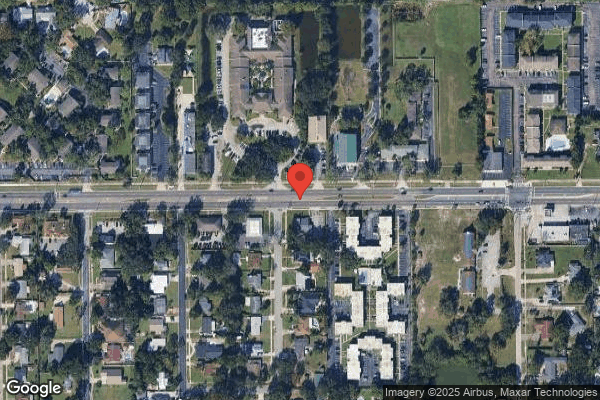
Aug 2024 3 deficiencies 1 Harm
SERIOUS (G) 📢 Someone Reported This

A family member, employee, or ombudsman was alarmed enough to file a formal complaint

Actual Harm - a resident was hurt due to facility failures

Pressure Ulcer Prevention (Tag F0686)

A resident was harmed · This affected 1 resident

**NOTE- TERMS IN BRACKETS HAVE BEEN EDITED TO PROTECT CONFIDENTIALITY** Based on interview, and record review, the facility failed to ensure necessary care and services were provided to promote healin...

Read full inspector narrative →
**NOTE- TERMS IN BRACKETS HAVE BEEN EDITED TO PROTECT CONFIDENTIALITY** Based on interview, and record review, the facility failed to ensure necessary care and services were provided to promote healing and prevent infection of a facility acquired pressure ulcer for 1 of 2 cognitively impaired residents reviewed for pressure ulcer management, of a total sample of 20 residents, (#1). The facility's failure to ensure timely and adequate care and treatments for pressure injury and infection resulted in actual harm for a cognitively impaired resident at risk for development of pressure wounds. Resident #1 subsequently was transferred to a higher level of care with an admitting hospital diagnosis of sepsis with hypotension, and sacral wound. Resident #1 was placed on Hospice services on [DATE] and expired four days later on [DATE]. Findings: Resident #1, a [AGE] year-old-male was admitted to the facility on [DATE]. His diagnoses included type II diabetes mellitus, vascular dementia, Parkinson's disease, atrial fibrillation, and atherosclerotic heart disease. Resident #1 was transferred to the hospital on [DATE]. The resident's quarterly Minimum Data Set (MDS) assessment, with Assessment Reference Date (ARD) of [DATE], revealed the resident was rarely/never understood. The assessment noted the resident had functional limitation in range of motion to both sides of his upper and lower extremities, he required substantial/maximal assistance for toileting hygiene, and mobility, and was dependent on staff assistance for personal hygiene and transfer. The assessment noted the resident was at risk for pressure ulcer, but had no unhealed pressure ulcer. Review of the Order Summary Report revealed resident #1 had physician orders dated [DATE] for Nutrashield cream 1% to be applied to bilateral buttocks every shift daily and as needed. On [DATE] the wound care order was, cleanse with normal saline (NS), pat dry and apply calcium alginate to wound bed, cover with border gauze every day shift. An order on [DATE] was for Sulfamethoxazole-Trimethoprim 800-160 milligram (mg) every 12 hours for wound infection, start date was [DATE], with an end date of [DATE]. Another physician's order dated [DATE] was for Acetic acid to be applied to the coccyx every day shift, and directed the wound should be cleanse with NS, pat dry, apply skin prep to peri-wound, pack with Acetic acid-soaked gauze and cover with bordered gauze until healed, and as needed. Nutrashield cream, is used to treat and prevent diaper rash and other minor skin irritations .It works by forming a barrier on the skin to protect it from irritants/moisture, (retrieved on [DATE] from webmd.com). Calcium alginate dressings are wound dressings made from seaweed used to treat a moderate to heavily draining wound, (retrieved on [DATE] from wound pros.com). Sulfamethoxazole-Trimethoprim is .is a combination of two antibiotics used to treat a wide variety of bacterial infections, (retrieved on [DATE] from webmd.com). Acetic acid, also known as vinegar, is a topical agent that can be used to treat wounds because it kills microorganisms and promotes healing, (retrieved on [DATE] from dermatologytimes.com). A Weekly skin observation dated [DATE] read, new area of skin irregularities: coccyx- pressure ulcer- stage 3 . Nurse on duty and CNA (Certified Nursing Assistant) getting resident up for the day . As resident was rolled to one side, a dressing with drainage was observed. Resident open wound has been cleansed with normal saline, calcium alginate and border gauze applied. A Change in Condition & Transfer form with effective date of [DATE] revealed a new area of skin impairment located on the resident's coccyx was identified, and the physician, and the resident's representative were notified. Documentation indicated the area was cleansed with normal saline, and calcium alginate with border gauze was applied. Review of the Skin & Wound Evaluation document with effective date of [DATE] revealed an impairment to the resident's coccyx, was in-house acquired on [DATE], and was described as Moisture Associated Skin Damage (MASD) measuring 9.0 x 6.9 centimeters (cm) with light serosanguineous drainage, with no odor noted after cleaning, and no infection present. Serosanguineous fluid is a combination of serous fluid and blood. It's usually a light pink to red color . and isn't a concern in normal amounts, (retrieved on [DATE] from my.clevelandclinic.org.) A review of the wound care provider's, Evaluation and Management Report dated [DATE], revealed a consultation was done for a chief complaint of open wound, and also revealed the coccyx wound was in-house acquired, and classified as MASD, measuring 9.8 x 6.9 x 0.1 cm, and the treatment was calcium alginate, covered with bordered gauze daily. Documentation read, wound coccyx: New moisture associated skin damage. The wound care provider's Evaluation and Management Report dated [DATE], revealed the resident's coccyx wound was now classified as an unstageable pressure wound, and measured 8 x 5.6 x 0.4 cm with 20 % necrotic tissue, and purulent green drainage with moderate odor. The treatment was changed to Acetic acid moistened gauze covered with bordered gauze. Documentation read, Wound etiology has been changed from MASD to pressure because there is now an open wound. Tissue depth changed because there is necrotic tissue in the wound bed. Wound stage has been changed from N/A to Unstageable for the reason the depth of the wound is unable to be measured due to the necrotic tissue in the wound bed. Due to the peri-wound erythema, purulent drainage and foul odor, will update treatment and start oral antibiotics .Plan: Sulfamethoxazole- trimethoprim 800-160 mg PO (by mouth) Q 12 hours for 10 days for wound infection. Necrosis is the death of body tissue. It occurs when too little blood flows to the tissue . Necrosis cannot be reversed, (retrieved on [DATE] from medlineplus.gov). Purulent drainage is a sign of infection The fluid may also have an unpleasant smell, (retrieved on [DATE] from webmd.com.). Review of the Skin & Wound Evaluation document with effective date of [DATE] addressed the coccyx wound, however, the date the wound was acquired was now documented as [DATE]. Measurements were 8.0 x 5.6 cm with 10% epithelial tissue, and 90% slough. Documentation indicated there was no evidence of infection, and the wound had moderate, serous drainage with no odor noted after cleansing. The Goal of Care selected read, Slow to Heal: wound healing is slow or stalled but stable, little/no deterioration. The treatment was Acetic acid-soaked gauze, and improving was selected for wound progress. Documentation by the wound care provider, and by nursing staff in the Skin & Wound Evaluation completed on the same date [DATE], contained conflicting information regarding the appearance, and odor of the wound. Nursing documented the wound had serous drainage with no evidence of infection, odor, and indicated the wound was improving. However, the wound care provider documented the wound had purulent drainage, foul odor, and was, Not improved. A Quality of Care Note documented by the East Wing Unit Manager dated [DATE], read, Resident was seen by Wound MD on [DATE]. Resident has area to left leg, right leg and coccyx . Coccyx is treated with acetic acid-soaked gauze and bordered gauze . Resident will be started on Bactrim DS (double strength) for 10 days for wound infection. Three days later, a Change in Condition & Transfer form with effective date of [DATE] read, Identified on [DATE] 12:00 AM . Pt has a necrotic wound on the sacrum with a foul odor . Family requested IV (intravenous) ABX (antibiotic) rather than PO (by mouth) ABX. Provider was notified . 911 was called and pt(patient) was transferred to (name of hospital). On [DATE] at 1:10 PM, the Registered Nurse (RN) East Wing Unit Manager (UM) stated a skin issue to resident #1's coccyx was identified on [DATE], was classified as MASD, and treated with calcium alginate. The UM recalled the resident was first seen by the wound care provider two days later on [DATE] with no change in the treatment. She recalled a week later on [DATE] the resident was seen by the wound care provider again, the treatment was changed to Acetic acid, and Bactrim DS was started for a wound infection. The UM explained that on [DATE], the wound was still smelling, and the facility's Supervisor suggested the resident could be started on IV antibiotic, but the family wanted the resident to be sent to the hospital. On [DATE] at 1:23 PM, Licensed Practical Nurse (LPN) B stated she recalled the resident, he had contracted bilateral lower extremities but was able to use his upper extremities. LPN B stated resident #1 had a wound to his sacrum, and she did wound care as ordered by the physician. She recalled there was drainage to the wound, but no odor, and the resident was on an antibiotic when she cared for him. On [DATE] at 9:56 AM, the Director of Nursing (DON) stated the primary nurse did daily wound care for the residents, and explained she would think if there was anything different from the prior day, the change would be documented by nursing staff and reported. She stated weekly wound rounds were conducted with the Wound Care Provider, and included the DON, and UMs. The DON explained that during the weekly wound round, the progress of wounds was discussed with the Wound Care Provider, and any changes, or recommendations would be implemented as indicated. Resident #1's clinical records were reviewed with the DON, who acknowledged no documentation could be identified regarding daily wound care, apart from signatures on the Treatment Administration Record (TAR). She acknowledged there was no documentation identified regarding any changes in the wound characteristics, nor was there any documentation by nurses to indicate any communication was made with the Wound Care Provider between [DATE] and [DATE] when the Wound Care Physician noted the wound now had 20 % necrotic tissue and purulent, malodorous green drainage. On [DATE] at 11:14 AM, LPN A stated she has worked at the facility on an as needed basis since [DATE] and floated to the different wings as needed. LPN A stated she recalled resident #1 was very contracted, with fragile skin, and a pressure wound on his buttock. The LPN recalled resident #1's wound was tunneling when she worked with him on [DATE], the day before the Wound Provider noted the changes in the wound. She recalled the CNA had washed and cleaned the resident, and the dressing to his buttock had been removed due to soilage. LPN A remembered she asked the resident's assigned CNA, When did this happen? She confirmed she did not document a note about the change in resident #1's wound condition nor contact the physician but explained that the wound care order simply popped up on the TAR to be signed off. Review of the resident's TAR for the period [DATE] through [DATE] revealed the signature of LPN A on [DATE], [DATE], [DATE], and [DATE] which indicated she provided wound care for the resident on those dates. There was no documentation by the LPN, describing the tunneling of wound, or other change in the resident's wound. On [DATE] at 11:41 AM, the resident's clinical records were reviewed with the East Wing UM. She acknowledged there was no previous wound care order in place for the resident prior to [DATE]. She said the physician order on [DATE] was for Nutrashield cream, but there was no order or documentation regarding any open area to the resident's coccyx prior to the weekly skin evaluation dated [DATE]. She confirmed the nurse applied calcium alginate, and a physician order for the treatment was entered on [DATE]. The East Wing UM stated she was not aware of drainage from the resident's wound prior to [DATE]. She recalled that when she rounded with the wound care provider on [DATE], the resident had an open area, and the wound drainage was, malodorous. She stated the Advance Practice Registered Nurse (APRN)) changed the dressing to Acetic acid and started the antibiotic Bactrim. On [DATE] at 12:10 PM, in a second interview with the DON, she stated the open area to the resident's coccyx was identified on [DATE] and was addressed appropriately by the nurse. She said the treatment in place on [DATE] was calcium alginate, and a physician's order entered in the resident's medical records on [DATE] was for calcium alginate. However, the DON confirmed the order did not specify where the calcium alginate was to be applied. When asked about the progress of the wound from [DATE] through [DATE], the DON stated there was no documentation by nursing regarding drainage, or odor of the wound, prior to the documentation on [DATE]. The DON again verbalized the facility's process was if there were a change in condition, the expectation was staff would complete a change in condition form, notify the physician, the DON, and the respective UM. She verbalized that a change in condition was not completed regarding the resident's wound since [DATE] when the nurse initially identified the open area to the resident's coccyx. On [DATE] at 5:14 PM, LPN D stated she worked on the 3 PM to 11 PM shift and recalled having resident #1 in her assignment. The resident's TAR for the period [DATE] through [DATE] was reviewed with the LPN, and she acknowledged her signature on orders completed on [DATE]. LPN D stated resident #1's wound was on his lower back, above the buttocks. She described the area as stable, with no drainage, and no odor. LPN D recalled that at the time she did the dressing on [DATE], it was stable, but looked as if, someone took some skin and peeled it off, which indicated the skin was, denuded. On [DATE] at 5:43 PM, a telephone interview was conducted with the wound care providers, APRN H, and APRN G, with the DON present in the conference room. APRN H recalled she was consulted regarding the resident's wound on [DATE]. She stated he had a left leg traumatic wound, right leg traumatic wound, and MASD to his coccyx at that time. APRN H said the coccyx wound measured 9.8 x 6.9 x 0.1 cm, with 100 % dermal tissue, and treatment was calcium alginate with silicone border gauze daily. She recalled she next saw the resident on [DATE] and changed the etiology of the coccyx wound from MASD to unstageable pressure ulcer. She said the resident now had an open wound, with necrotic tissue in the wound bed, peri-wound erythema (redness), with green, purulent, malodorous drainage; a change from [DATE]. She indicated she changed the treatment to fill the wound with Acetic acid moistened gauze, and cover with silicone daily, and started the resident on an oral antibiotic for the infection, but did not obtain/order a wound culture. APRN G said they typically do not obtain culture of a wound with 100% slough, they would recommend debridement first, and once they got healthy tissue, they could culture it to identify what antibiotic the wound would be sensitive to. She stated a broad-spectrum antibiotic along with topical treatment would be recommended for the resident. APRN G stated the green drainage from the resident's coccyx wound indicated a Pseudomonas infection and the Bactrim ordered covered this type of gram-negative bacteria. When asked what could have caused the worsening of the resident's coccyx wound, APRN H stated that given the patient's immobility, and his comorbidity, there were multiple factors that could have caused the worsening of his wound. APRN H stated that between visits to the resident, if there were any status change with the wound, the facility could contact her to get an order change based on the progression or change in the wound. When asked if the facility notified her of any change in the status of resident #1's wound between her visit on [DATE] and [DATE], APRN H stated the East Wing UM had notified her of a change in the resident's wound between her weekly assessments. However, she could not recall the specific date the communication happened, or the details of the change that was reported. When asked what actions were taken after she was notified of the change in status of the resident's wound, APRN H said she believed they kept the dressing the same. APRN G stated if she was made aware by nursing staff of a change in the status of a wound, she would inquire about the details of the change and get, something else on board to address it. The DON stated she did not believe facility staff contacted APRN H between her visits, since she recalled seeing the drainage from the resident's wound on [DATE] during the wound round. On [DATE] at 11:14 AM, in a second interview with APRN H and APRN G who were at the facility for wound rounds, APRN H stated she miss-spoke during the telephone interview on [DATE]. She stated she was not contacted by the East Wing UM as she previously shared and was not aware of the change in the condition of the resident's wound prior to [DATE] during her wound rounds. She reiterated that if there was any change in a wound status between her visits, the expectation was for staff to notify her. On [DATE] at 12:17 PM, LPN C recalled she was the resident's primary nurse on [DATE] on the East Wing, and she completed a change in condition for the decline of resident #1's coccyx wound. LPN C stated she did not work on the East Wing often, and recalled the resident had a wound to his coccyx, and the last time she provided wound care for him, the wound to his coccyx was circular. The resident's Change in Condition form with effective date [DATE] was reviewed with the LPN. She confirmed the form was completed by her, and said she recalled one day she could not recall the specific day, the resident's CNA called her to say that when she provided morning care, resident #1's dressing had fallen off. LPN C remembered when she went to apply a new dressing, the wound had an odor. She explained she completed the change in condition and obtained an order for an antibiotic from the physician. On [DATE] at 1:36 PM, in a telephone interview, CNA E stated she usually worked on the 7 AM to 3 PM shift and resident #1 was in her assignment. She recalled resident #1 had an open area to his coccyx, and had assisted the nurse during wound care. CNA E could not recall any odor or drainage from resident #1's pressure wound, but said she had an allergy. Review of the receiving Hospital's Emergency Department (ED) Provider notes dated [DATE] revealed the resident's pressure wound as, weeping, with redness, and bleeding. The Emergency Department Attending/Resident Note dated [DATE] indicated the resident presented at the ED for evaluation of sacral wound and read, Wound on left side, being seen by wound care at (Skilled Nursing Facility name) progressed since [DATE]rd. The Physical exam conducted showed a stage IV sacral wound with, exposure of the coccyx bone tunneling underneath the skin ranging about 6 cm. Surrounding skin necrosis. Diagnoses listed on the document included hypotension, sepsis with hypotension, and wound of sacral region. The facility's policy Skin Integrity with copyright date of 2008 indicated the purpose of the policy was, To provide consistent assessment and evaluation, monitoring, documentation, and implementation of therapeutic interventions to heal and maintain skin integrity . To promote the prevention of pressure ulcer/injury development; To promote the healing of existing pressure ulcers/injuries (including prevention of infection to the extent possible). Review of the Facility Assessment, last reviewed [DATE], revealed the services provided were based on resident need and included, pressure injury prevention and care . wound care management.
CONCERN (D) 📢 Someone Reported This

A family member, employee, or ombudsman was alarmed enough to file a formal complaint

Potential for Harm - no one hurt, but risky conditions existed

Deficiency F0635 (Tag F0635)

Could have caused harm · This affected 1 resident

**NOTE- TERMS IN BRACKETS HAVE BEEN EDITED TO PROTECT CONFIDENTIALITY** Based on interview, and record review, the facility failed to obtain admission physician orders for immediate care of a surgical...

Read full inspector narrative →
**NOTE- TERMS IN BRACKETS HAVE BEEN EDITED TO PROTECT CONFIDENTIALITY** Based on interview, and record review, the facility failed to obtain admission physician orders for immediate care of a surgical site for 1 of 2 residents reviewed for surgical site admission orders, of a total sample of 20 residents, (#7). Findings: Resident #7, a [AGE] year-old-male was admitted to the facility on [DATE] and readmitted on [DATE]. His diagnoses included displaced fracture of the right calcaneous, end stage renal disease, chronic obstructive pulmonary disease, and hemiplegia and hemiparesis following cerebrovascular disease affecting unspecified side. Review of the resident's hospital records revealed an Open reduction and internal fixation (ORIF) of the resident's right ankle was performed on 7/31/24. ORIF .a type of surgery that is used to repair broken bones that need to be put back together .only needed for severe fractures, (retrieved on 9/03/2024 from webmd.com). The resident's admission Note dated 8/02/24 revealed the resident had a splint. Review of the resident's physician orders revealed no admission order(s) for care of the resident's right ankle, or for any follow up visit with Orthopedic physician. Review of the Communication with physician note dated 8/03/24 at 6:32 PM, revealed the Patient presented with large amounts of serosanguinous drainage from his surgical site. Site is covered by a soft splint and ACE bandage patient is status post right ankle fixation due to a closed fracture he sustained after a fall.On-call surgeon was contacted who then contacted main surgeon . Per MD if conditions worsen send out patient via emergency. A Physician Progress note dated 8/05/24 at 7:20 AM, revealed this was an initial visit by the physician, and read, RN notified me pt (patient) had oozing from RLE's (Right Lower Extremity) wound over the weekend which she re-dressed . Today's impression: Acute and in need of urgent evaluation .Hbg (Hemoglobin) 5.3 this morning. A progress note on 8/05/24 revealed resident #7 was hospitalized for a critical lab. Hospital records documented by Inpatient Medicine dated 8/06/24 read, Recent right ankle surgery transferred from [rehabilitation] for low hemoglobin and ongoing right ankle incision site bleeding. [Orthopedics] consulted . Staple placed for minimal bleeding from surgical incision, covered with soft dressing, and splint reapplied. Resident #7 was readmitted to the facility on [DATE], and documentation in the resident's electronic records on 8/12/24 read, Per resident, leave RLE (right lower extremity) surgical site clean and intact till seen by surgeon. There was no documentation to indicate this was clarified with Orthopedics, when the resident was to be seen by the surgeon, and there was no directive regarding the removal of the staple placed in the hospital on 8/06/24. On 8/20/24 at 2:25 PM, resident #7 was sitting in his wheelchair in the facility's courtyard. An Ace wrap/bandage was noted to his RLE, extending from his toes up to his knee. The resident said after he was admitted to the facility on [DATE], his right foot was bleeding, and he was transferred to the hospital where he spent a week. He stated he was readmitted to the facility three weeks ago, and nothing had been done about his right leg dressing, nor had he seen the surgeon since his readmission. On 8/21/24 at 10:47 AM, and at 12:38 PM, in interviews with the East Wing Registered Nurse/ Unit Manager (RN/UM), and the Regional Nurse Consultant (RNC), the RN/UM recalled resident #7 was transferred from the [NAME] Wing to the East Wing on 8/15/24. She explained that normally residents came to the facility with instructions regarding their care on their discharge paperwork, which would be entered into the electronic medical record (EMR) by the admission nurse. She stated she called the Orthopedic Office on 8/15/24, but no appointment was available that week, and she was told the office would contact the facility. She verbalized she was still waiting on a response from the office. The RN/UM stated she was not aware the resident had a staple in his surgical incision as documented in the hospital records. She reviewed the resident's discharge papers, and stated the discharge papers addressed medication, but did not address care/ instruction for the surgical site to resident #7's right lower extremity. The RN/UM acknowledged there were no orders in place for continuity of care for the resident's surgical site, and said if a resident was admitted without orders, the expectation was that the physician would be notified, and orders obtained. The RNC said the expectation was that physician orders would be clarified and obtained as needed/identified for a new admission. On 8/21/24 at 12:43 PM, the resident's clinical records were reviewed with the Director of Nursing (DON). The findings regarding no physician orders for care of the resident's surgical site, or for removal of the staple placed in the hospital were discussed. The DON stated the expectation was for the facility to obtain orders for continuity of care. On 8/21/24 at 2:09 PM, the [NAME] Wing Licensed Practical Nurse/UM (LPN/UM) stated that when resident #7 was first admitted to the facility, they had issues with his dialysis transportation, and she did not recall obtaining orders for monitoring of the surgical site to his RLE. She explained, that if a resident was admitted to the facility with no orders, the staff who completed the admission, should obtain orders. The LPN/UM stated she had the resident on her unit twice, and both times, it was a two days turn around, and the focus was on his dialysis. She said hospital discharge instructions had no mention of the surgical site to the resident's right lower extremity, and acknowledged she should have called for admission orders pertaining to the resident's surgical site. The facility did not have a policy regarding admission orders but indicated nurses should follow the facility's admission Completion Check Off List Mandatory Forms. Instructions listed on the document directed staff that, All shifts are responsible for follow up and completion of admission paperwork. Tasks listed on the document for completion included, Admit/Re-admit orders verified with practitioner: Verification of orders documented on the POS (Physician Order Sheet) and discharge orders received from the hospital Treatment orders for all skin areas/wounds noted upon admission Telephone orders written for any clarifications not noted on discharge orders and/or 3008. The 3008 Is a Medicaid form for folks looking for long-term care services, (retrieved on 9/03/24 from elderneedslaw.com).
CONCERN (E) 📢 Someone Reported This

A family member, employee, or ombudsman was alarmed enough to file a formal complaint

Potential for Harm - no one hurt, but risky conditions existed

Infection Control (Tag F0880)

Could have caused harm · This affected multiple residents

**NOTE- TERMS IN BRACKETS HAVE BEEN EDITED TO PROTECT CONFIDENTIALITY** Based on observation, interview, and record review, the facility failed to maintain proper infection control practices to preven...

Read full inspector narrative →
**NOTE- TERMS IN BRACKETS HAVE BEEN EDITED TO PROTECT CONFIDENTIALITY** Based on observation, interview, and record review, the facility failed to maintain proper infection control practices to prevent the potential of dangerous bacteria from spreading between residents during use of shared vital sign equipment during blood pressure monitoring on 2 of 2 Wings. Findings: 1. Resident #16 was admitted to the facility on [DATE] with diagnoses including dementia, non-St elevation myocardial infarction, and age-related physical debility. On 8/21/24 at 3:50 PM, Certified Nursing Assistant (CNA) K, entered resident #16's room with the wheeled portable vital signs monitor to measure her blood pressure. Resident #17 was admitted to the facility on [DATE] with diagnoses including pneumonia, congestive heart failure, and chronic obstructive pulmonary disorder. On 8/21/24 at 3:55 PM, CNA K was observed as she walked to the next bed where resident #17 lay in the same room, measured her blood pressure, but did not clean the reusable equipment between the two residents. On 8/21/24 at 4:01 PM, CNA K stated, I clean the vital sign machine when I come on shift, then when I am done checking all of my resident's vitals. On 8/21/24 at 5:35 PM, the [NAME] Unit Manager stated CNAs were supposed to clean the blood pressure equipment between each resident. They use the Caviwipes to clean the vital sign machine. She state the CNAs were trained upon hire and annually on the cleaning of equipment. A review of the facility's infection control manual read, Ensure that reusable equipment is not used for the care of another resident until it has been cleaned . 2. On 8/21/24 at 3:28 PM, CNA I was observed doing vital signs for residents, utilizing the vital signs machine which had a blood pressure cuff, thermometer, and pulse oximetry monitor. CNA I obtained the vital signs for resident #18, then proceeded to obtain the vital signs for resident #19. The CNA did not clean/ disinfect the equipment between the residents. On exit from the room, the CNA entered a room across from residents #18 and #19's room to obtain the vital signs for the residents in that room. When asked if she cleaned the equipment between residents, the CNA said she cleaned the equipment with Premium Adult Washcloths, that was kept in the basket attached to the vital sign equipment. Cleaning of the equipment was not observed prior to the surveyor's interview. On 8/21/24 at 3:58 PM, CNA J stated the vital sign machine was normally cleaned with bleach wipes between residents, if not she used the Premium Adult washcloths. CNA J, then went to a vital sign machine located in the hallway and indicated the wipes used. It was noted to be the Premium Adult washcloths. On 8/21/24 at 4:02 PM, the Assistant Director of Nursing (ADON)/ Infection Preventionist stated Sani-cloth wipes were to be used to clean/disinfect the vital sign machine, and not the Premium adult washcloths. The ADON/Infection Preventionist explained the equipment should be clean/disinfected between each resident, and when CNAs had completed their vital signs for the residents assigned to them, the equipment was to be cleaned with Sani-cloth wipes, and a label indicating the equipment was cleaned/disinfected should be placed. The facility's policy, Isolation- Two Tier Transmission Based Precautions- Standard Precautions with copyright date of 2013 read, Ensure that reusable equipment is not used for the care of another resident until it has been cleaned and disinfected appropriately.
May 2024 3 deficiencies
CONCERN (D)

Potential for Harm - no one hurt, but risky conditions existed

Comprehensive Care Plan (Tag F0656)

Could have caused harm · This affected 1 resident

**NOTE- TERMS IN BRACKETS HAVE BEEN EDITED TO PROTECT CONFIDENTIALITY** Based on interview, and record review, the facility failed to develop a comprehensive person-centered care plan to meet the resi...

Read full inspector narrative →
**NOTE- TERMS IN BRACKETS HAVE BEEN EDITED TO PROTECT CONFIDENTIALITY** Based on interview, and record review, the facility failed to develop a comprehensive person-centered care plan to meet the resident's medical, nursing, mental and psychosocial needs for 2 of 3 residents reviewed for comprehensive care plans out of a total sample of 40 residents, (#33 and #99). Findings: 1. Resident #33 was admitted to the facility on [DATE] with diagnoses including dementia, and depression. Review of the Minimum Data Set (MDS) admission assessment with assessment reference date (ARD) of 3/05/24 revealed resident #33 had a Brief Interview for Mental Status (BIMS) score of 12 out of 15 which indicated he had moderate cognitive impairment. He reported feeling down, depressed or hopeless 2-6 days a week. The assessment indicated the resident sometimes experienced social isolation. Review of resident #33's electronic medical record (EMR) revealed progress notes by resident's physician, psychiatric and psychological services. The notes indicated the resident had diagnoses of post-traumatic stress disorder (PTSD) and history of inpatient psychiatric treatment for combat exposure with PTSD as well as ongoing outpatient treatment for the same. A psychotherapy progress note dated 3/13/24 indicated resident #33 experienced symptoms of depression and anxiety as well as audio/visual hallucinations and mild paranoia. Review of resident #33's EMR, revealed a comprehensive person-centered care plan was not developed to address trauma informed care related to his diagnosis of PTSD. On 5/13/24 at 12:51 PM, resident #33 was observed seated in his wheelchair in his room with his daughter at his side. Resident #33's daughter reported she was upset because she found her dad crying. She noted he had episodes of crying. Resident #33 spoke about having served in 3 wars during his time in the military. On 5/16/24 at 10:47 AM, the Social Services Director (SSD) stated she was aware resident #33 served in the military but was not aware he had PTSD. She acknowledged she did not read the psychological services notes that were included into the EMR. The SSD reviewed resident #33's EMR and confirmed a care plan was not developed to address trauma informed care. 2. Resident #99 was admitted to the facility on [DATE] with diagnoses including unspecified dementia, hypertensive chronic kidney disease stage 2, chronic obstructive pulmonary disease and benign prostatic hyperplasia with lower urinary tract symptoms. Review of the MDS quarterly assessment with assessment reference date of 4/05/24 revealed resident #99 had a BIMS score of 09 out of 15 which indicated he had moderate cognitive impairment. His active diagnoses included dementia, anxiety and depression (other than bipolar). The assessment indicated resident #99 did not exhibit any behaviors. Review of physician orders revealed active orders for Quetiapine Fumarate (Seroquel) for behaviors secondary to dementia and Buspirone HCI (Buspar) for dementia with behaviors. Review of resident #99's EMR, revealed a comprehensive person-centered care plan was not developed to address his cognitive impairment, dementia care or behaviors. On 5/16/24 at 10:11 AM, the SSD stated she was not aware resident #99 was prescribed antipsychotic, antianxiety and antidepressant medications. She reviewed the EMR and acknowledged a care plan was not developed to address cognition, dementia or behaviors. The SSD was unaware of what behaviors resident #99 exhibited prior to the medication being prescribed. On 5/16/24 at 12:32 PM, the Director of Nursing (DON) reviewed the medical record for resident #33. She verified a care plan was not in place to address resident #33's PTSD. The DON stated resident #33 received psychological services for counseling. She acknowledged if no one was reading the notes and a care plan was not developed then there was no coordination of services. The DON reviewed the medical record for resident #99 and verified a care plan was not developed to address his cognition and dementia care. She was not aware of what behaviors resident #99 exhibited prior to being prescribed psychoactive medications and could not locate any documentation regarding his behaviors. The DON acknowledged staff should have obtained the necessary information and care plans developed to address each of the identified areas.
CONCERN (D)

Potential for Harm - no one hurt, but risky conditions existed

Quality of Care (Tag F0684)

Could have caused harm · This affected 1 resident

**NOTE- TERMS IN BRACKETS HAVE BEEN EDITED TO PROTECT CONFIDENTIALITY** Based on observation, interview, and record review, the facility failed to ensure a resident received treatment and care in acco...

Read full inspector narrative →
**NOTE- TERMS IN BRACKETS HAVE BEEN EDITED TO PROTECT CONFIDENTIALITY** Based on observation, interview, and record review, the facility failed to ensure a resident received treatment and care in accordance with professional standards of practice regarding non-pressure related skin wounds, specifically, treating a wound without a physician order, and not documenting treatment for 1 of 1 resident reviewed for non pressure wounds out of a total sample of 40 residents, (#17). Findings: Resident #17 was admitted to the facility on [DATE] with the diagnoses of Rhabdomyolysis, Major Depressive Disorder, recurrent, moderate venous insufficiency (chronic) (peripheral), Type 2 Diabetes Mellitus without complications, and Bipolar Disorder. She was hospitalized on [DATE] due to an unwitnessed fall. Review of the Minimum Data Set (MDS) assessment dated [DATE], noted the resident had a Brief Interview for Mental Status (BIMS) score of 5 out of 15 that indicated severe cognition impairment. On 05/13/24 at 9:08 AM , the resident was observed resting in bed with the head of bed elevated. There was a discolored area to her lower left leg with an undated gauze dressing on her left shin. On 05/13/24 at 1:33 PM, the resident was observed sitting in a chair. The undated gauze dressing remained on the lower left leg. On 05/14/24 at 12:39 PM , the resident was observed sitting at a table in the dining room. The undated gauze dressing remained on the lower left leg. On 05/15/24 at 1:29 PM, the resident still had the undated bandage on her left leg. Licensed Practical Nurse (LPN) D stated she did not know why the resident had the gauze dressing and was not aware of any treatment orders to the left lower leg. She said she would take the resident to her room and see what was under the dressing. On 05/15/24 at 3:02 PM, LPN D explained there was a very small scab which started bleeding when she took the dressing off. She did not explain how the resident sustained the scab or why the dressing was not dated. On 05/15/24 at 3:08 PM, the Director of Nursing reported that LPN D was the first staff member to make note in the resident's chart regarding skin care in the weekly skin check note dated 5/08/24. The DON added that LPN D did not remember applying a dressing or seeing the dressing on the resident's left lower leg. Review of a nursing progress note dated 4/30/24 indicated the resident's weekly skin check was completed with no prior and no new areas of skin impairment. A progress note dated 5/06/24 indicated the resident was found on the floor by her chair. The note indicated the resident was found lying on her back, screaming out in pain to her right hip and leg area. There were no abrasions, erythema, bleeding, or obvious signs of injury and the resident was transferred to the hospital's emergency department for evaluation. A progress note dated 5/07/24 at 2:45 AM, showed the resident returned from the hospital with no injuries identified. Another progress noted dated 5/08/24, completed by LPN D, indicated the resident's weekly skin check was completed. It noted, prior areas of skin impairment included skin tears and there were no new areas of skin impairment noted on completion of skin check. On 05/15/24 at 1:33 PM, the DON stated she did not know how the resident sustained the scab to the left lower leg or who had applied the gauze dressing. The DON explained it was facility policy and procedure, that if a resident needed a wound dressing, the nurse would obtain an order from the Physician. She added that if a resident needed wound dressing right away, the nurse would apply the dressing then contact the physician for an order including any treatment orders.
CONCERN (D)

Potential for Harm - no one hurt, but risky conditions existed

Deficiency F0694 (Tag F0694)

Could have caused harm · This affected 1 resident

**NOTE- TERMS IN BRACKETS HAVE BEEN EDITED TO PROTECT CONFIDENTIALITY** 2. Review of resident #182's medical record revealed she was admitted to the facility on [DATE] from an acute care hospital with...

Read full inspector narrative →
**NOTE- TERMS IN BRACKETS HAVE BEEN EDITED TO PROTECT CONFIDENTIALITY** 2. Review of resident #182's medical record revealed she was admitted to the facility on [DATE] from an acute care hospital with diagnoses including closed displaced comminuted fracture of the shaft of the right femur, hyponatremia, and acute kidney injury. On 5/13/24 at 9:52 AM, resident #182 was observed lying in bed in her room. She had a peripheral IV line inserted into her right upper arm with a dressing dated 5/8/24. She was unaware of the last time someone had changed her dressing. A peripheral IV is a thin, flexible tube. It's used to deliver treatments into a vein for different health conditions (www.mycleavelandclinic.org). On 5/14/24 at 8:47 AM, LPN B, who was responsible for resident #182's care, was in her room and observed the peripheral line tip exposed and transparent film dressing that was loose and not secure on the right upper arm dated 5/8/24. LPN B stated the dressing should be changed every 3 days and sooner if soiled or loose. On 5/14/24 at 8:54 AM, the [NAME] Wing Unit Manager confirmed the IV dressing was dated 5/8/24. The [NAME] Wing Unit Manager stated the resident was getting fluids related to abnormal labs. She noted the protocol was to change the IV dressing weekly. A review of the physician orders revealed an order dated 5/8/24 that read, IVF (IV fluids) please place now. There were no physician orders to monitor or flush the IV or to change the IV dressing. On 5/14/24 at 4:14 PM, the DON stated batch orders for IV fluid should have been entered by the nurse who obtained the IV order. The DON added those orders included monitoring, dressing changes, and flushes. The nurses should have noticed the IV dressing and obtained orders for a dressing change. The policy is to change every 72 to 96 hours or immediately if the clear film dressing is coming off or lifting up. The facility's policy for Catheter Insertion and Care, revised on 12/2013, reads, Change the dressing at the time of catheter site rotation (every 72 to 96 hours) or immediately upon observing that the integrity of the dressing has been compromised. Based on observation, interview, and record review, the facility failed to provide intravenous (IV) care and services according to standards of practice for 2 of 2 residents reviewed for IV care, out of 40 total sampled residents, (#321, #182). Findings: 1. Resident #321 was admitted to the facility from an acute care hospital on 5/3/24 with diagnoses including osteomyelitis (infection of the bone) metatarsal stump, right foot infection, revision of transmetatarsal resection of 5 digits right foot on 5/1/24, diabetes, and peripheral vascular disease. Review of the AHCA (Agency for Healthcare Administration) Form 5000-3008 dated 5/2/24 showed he had a peripherally inserted central catheter (PICC) line inserted at the hospital on 5/2/24. A PICC line is a thin, flexible tube that is inserted into a vein in the upper arm and guided (threaded) into a large vein above the right side of the heart called the superior vena cava. It is used to give intravenous fluids, blood transfusions, chemotherapy, and other drugs. Retrieved on 5/17/24 at 12:31 PM from (https://www.cancer.gov). On 5/13/24 at 9:40 AM, resident #321 was observed lying in bed in his room. He had a PICC noted in his right upper arm with clear dressing dated 5/2/24. There was an empty bag of IV antibiotics (Ceftazidime Avibactam) hanging from the IV pole. The resident who was alert and oriented said he was getting the medication for infection in his foot and the dressing had not been changed since they put it in at the hospital on 5/2/24. Review of resident #321's medical record revealed physician orders dated 5/3/24 until 5/23/24 for IV (intravenous) Ceftazidime Avibactam 2.5 grams (GM) every 8 hours for Enterobacter (gram negative bacteria). An order dated 5/4/24 noted to flush PICC with normal saline 10 ml (milliliters) prior to and post administration of IV medication. An order dated 5/3/24 was for nursing staff to monitor IV insertion site every shift for pain, redness, and warmth. There was also a physician order dated 5/11/24 to change dressing and measure PICC line length every week and prn (as needed). Review of the medical record did not show any evidence the PICC line IV dressing had been changed at the facility from the time the resident was admitted on [DATE] to the present dated of 5/13/24. The nurses were giving IV medication every 8 hours and failed to identify the dressing should have been changed by 5/9/24. On 5/13/24 at 10:05 AM, Licensed Practical Nurse (LPN) A said she was resident #321's assigned nurse today as well as last week on the day shift. LPN A was not aware the dressing on resident 321's right arm PICC was dated 5/2/24. LPN A said she had not looked at the dressing date today or last week. LPN A went into the resident room and acknowledged the IV dressing was dated 5/2/24. The LPN said the standard of practice was to change IV dressings weekly and the resident's PICC line dressing should have been changed on 5/9/24, 4 days ago. She acknowledged she had administered IV antibiotics and had flushed the PICC line and did not think to look at the IV dressing date. LPN A added that any of the nurses that administered the resident's IV antibiotics every 8 hours on 3 shifts should have noticed his IV dressing needed to be changed, obtained appropriate physician orders, and changed the dressing sooner. On 5/14/24 at 4:15 PM, the Director of Nursing (DON) explained the admission nurse should have entered the appropriate batch orders for PICC line care which included dressing changes, monitoring site, changing cap and flushes. The DON added that nurses had documented they monitored the IV site every shift but failed to identify the dressing was due to be changed per their policy. The DON verified the standard of nursing practice was to change a clear IV dressing every 7 days and sooner if loose or soiled. Review of the facility policy and procedure revised July 2011 for Catheter Insertion and Care of Central Venous Catheter Dressing Changes read, Central venous catheter dressings will be changed at specific intervals, or when needed, to prevent catheter related infections Change transparent semi-permeable membrane [TSM] dressings every 5-7 days and PRN
Feb 2023 10 deficiencies
CONCERN (D)

Potential for Harm - no one hurt, but risky conditions existed

Deficiency F0554 (Tag F0554)

Could have caused harm · This affected 1 resident

**NOTE- TERMS IN BRACKETS HAVE BEEN EDITED TO PROTECT CONFIDENTIALITY** Based on observation, interview and record review, the facility failed to ensure that a resident was assessed to safely self-adm...

Read full inspector narrative →
**NOTE- TERMS IN BRACKETS HAVE BEEN EDITED TO PROTECT CONFIDENTIALITY** Based on observation, interview and record review, the facility failed to ensure that a resident was assessed to safely self-administer medications for 1 of 1 resident reviewed for self-administration of medications, from a total sample of 45 residents (#67). Findings: Resident #67's medical record revealed the resident was admitted to the facility on [DATE] with diagnoses including chronic obstructive pulmonary disease (COPD), acute and chronic respiratory failure with hypoxia, lung cancer, congestive heart failure, and depression. The resident's Minimum Data Set (MDS) quarterly assessment with assessment reference date 12/23/2022 identified the Brief Interview for Mental Status score as 13 out of 15, indicating the resident was cognitively intact. There were no indications of psychosis, behavioral symptoms, or rejection of care noted. On 2/06/2023 at 10:49 AM, resident #67 said the Combivent inhaler she kept on her overbed table was just taken away by the nurse. The resident described the inhaler had an orange top and turn base. She explained she also took Trelogy Ellipta for COPD, and Flonase nasal spray for allergies. She placed her hand on the overbed table and stated the medications were always on top where she could reach and use them when she needed to, and emphasized she always used the medications when she needed them since she came to the facility, 7 months prior. The resident stated, I'm very upset they took my Combivent. Resident #67's medications, ordered 2/06/2023, included Combivent Respimat Aerosol Solution 20-100 micrograms (mcg.) 1 puff inhale orally every 8 hours as needed for shortness of breath/cough, ok to leave at bedside may self-admin, Flonase Suspension 50 mcg. 1 spray in both nostrils every 12 hours as needed for allergies, and Trelogy Ellipta Aerosol Power breath activated 200-6.25-25 mcg. 1 inhalation orally one time a day for COPD exacerbation, may self-administer and keep at bedside. Resident #67's medical record did not contain a completed assessment for safe self-administration of medications. The comprehensive care plan did not indicate the resident self-administered medications. On 2/07/2023 at 10:15 AM, resident #67 held a Combivent inhaler and said, I keep my Combivent right here because it's my rescue inhaler. On 2/07/2023 at 5:11 PM, licensed practical nurse (LPN) B said she saw medications on resident #67's overbed table in the morning on 2/06/2023. She stated the resident was upset when the medications were taken away by the Unit Manager. LPN B explained she thought the medications were kept on the overbed table because she was using them. On 2/08/2023 at 5:40 PM, the Director of Nursing stated the resident's self-administration of medications required completion of a self-administration of medication evaluation. The facility's policies and procedures, Clinical Forms Manual, Subject: Self-Administration of Medications read in part, 1. If a resident desires to participate in self-administration, the interdisciplinary team will assess the competence of the resident to participate, by completing a Self-Administration of Medication Evaluation . 7. Storage of self-administered medications will comply with state and federal requirements for medication storage.
CONCERN (D)

Potential for Harm - no one hurt, but risky conditions existed

Deficiency F0561 (Tag F0561)

Could have caused harm · This affected 1 resident

**NOTE- TERMS IN BRACKETS HAVE BEEN EDITED TO PROTECT CONFIDENTIALITY** Based on interview and record review, the facility failed to ensure showers were provided per schedule/preference for 1 of 12 re...

Read full inspector narrative →
**NOTE- TERMS IN BRACKETS HAVE BEEN EDITED TO PROTECT CONFIDENTIALITY** Based on interview and record review, the facility failed to ensure showers were provided per schedule/preference for 1 of 12 residents reviewed for choices, of a total of 45 residents (#4). Findings: Resident #4's medical record revealed she was admitted to the facility on [DATE], with her most recent readmission on [DATE]. The resident's diagnoses included paraplegia, generalized muscle weakness, contracture, other myelitis, and multiple sclerosis. Resident #4's annual Minimum Data Set (MDS) assessment with Assessment Reference Date of 11/04/22 revealed the resident's cognition was intact with a Brief Interview of Mental Status (BIMS) score of 15/15, which indicated the resident did not have any cognitive impairment. She did not have any mood/behavior, and resident required extensive assistance of 1 person for bed mobility, dressing, and toilet use. The resident's care plan for Activities of Daily Living self-care performance deficit related to paraplegia, multiple sclerosis, and limited mobility with lower extremities, initiated on 12/13/17 with revision on 2/07/23, indicated the resident required assistance of one staff for bathing/showering. On 2/06/23 at 10:07 AM, resident #4 stated she would prefer to have two showers per week, but had only been getting one shower on Tuesday. She stated she has not had her hair washed in three months. On 2/07/23 at 4:26 PM, the East Wing Registered Nurse (RN) Unit manager (UM) stated resident showers were scheduled three days per week, unless the resident has some cardiac issue, and required daily showers. The UM explained that if the resident refused their scheduled shower, the residents' Certified Nursing Assistant (CNA) would report to the nurses. Nurses would then talk with the residents, and if the bath/shower was still refused, the refusal would be documented on the resident's shower sheet, and a bed bath would be offered if that was preferred. The UM stated that when resident #4 was given a shower, it would be documented in the CNA's electronic record or on the resident's shower sheet. On 2/08/23 at 11:06 AM, CNA A stated resident #4 was scheduled for showers on Tuesdays and Fridays, and she gave the showers and documented on the resident's shower sheet. CNA A stated she did not work on Fridays, and if the resident refused showers, it would be documented on the shower sheet. On 2/08/23 at 1:37 PM, resident #4 denied refusing her showers, she said that on Fridays, there was always someone new who did not know what to do. She explained that on her shower days, she had to be placed back to bed to be dressed, and her showers took time. She said she would prefer to have two showers weekly but stated that was not possible if she had a new CNA. On 2/08/23 at 1:56 PM, the East Wing UM stated resident #4 was scheduled for showers on Tuesdays, Fridays, and Saturdays, on the 7 AM - 3 PM shift, and when showers were given, a skin check form was to be completed by the CNA. The form had the date, time, resident's name, nurse's signature, CNA's signature, areas to document/check if the resident's skin was intact, or if the resident refused his/her shower. The UM verbalized that showers would also be documented on the CNA electronic record. The resident's skin check forms provided by the UM, revealed a bed bath was given on seven days: 11/22/22, 12/13/22, 12/27/22, 1/03/23, 1/10/23, 1/17/23, 1/24/23. This was confirmed by the UM. Other skin check forms could not be identified. On 02/08/23 at 2:06 PM, CNA A stated that in January 2023, bed baths were provided for the resident because the resident told her she was on bedrest, due to a wound to her sacrum. She stated nurses were aware. On 02/08/23 at 2:23 PM the skin check forms were reviewed with the UM. She confirmed that documentation indicated bed baths were given, and there was no documentation to indicate the resident refused her showers. The UM stated bed rest did not mean no showers, and stated she did not know what was in the CNAs electronic record notes. A 30-day look back on the CNA's notes revealed the resident received bed baths; showers were not documented as given. This was confirmed by the UM. Review of the facility's Follow Up Question Report for bathing indicated the resident was scheduled for showers on Tuesdays, Fridays, and Saturdays. Documentation indicated the type of bath the resident received. For the period October 1, 2022, to January 31, 2023, the resident received two showers on 10/11/22 and 10/18/22. Bed baths were documented 18 times: 10/08/22, 10/29/22,11/01/22, 11/05/22, 11/12/22, 11/15/22, 11/18/22, 11/22/22, 12/02/22, 12/10/22, 12/16/22, 12/17/22, 12/23/22, 12/30/22, 1/14/23, 1/19/23, 1/20/23, and 1/21/23. Documentation indicated the resident refused her bath/shower on 10/14/22, 10/28/22, 11/22/22 and was not available on 11/08/22, 11/29/22, 12/06/22, and 1/28/23. She received one shower on 2/06/23.
CONCERN (D)

Potential for Harm - no one hurt, but risky conditions existed

Safe Environment (Tag F0584)

Could have caused harm · This affected 1 resident

**NOTE- TERMS IN BRACKETS HAVE BEEN EDITED TO PROTECT CONFIDENTIALITY** Based on observation, interview and record review, the facility failed to ensure a clean and homelike environment in 1 of 32 roo...

Read full inspector narrative →
**NOTE- TERMS IN BRACKETS HAVE BEEN EDITED TO PROTECT CONFIDENTIALITY** Based on observation, interview and record review, the facility failed to ensure a clean and homelike environment in 1 of 32 rooms on the [NAME] wing (219A). Findings: On 02/07/23 at 4:12 PM, an observation in 219A revealed the wall behind the head of the bed with multiple dry brown streaks from the ceiling down the wall to the floor. On 02/08/23 at 9:45 AM, the [NAME] Wing Unit Manager confirmed the multiple brown streaks on the wall behind the head of the bed. She stated, The wall should not look like that. At 9:50 AM, the Maintenance Director observed the wall in room [ROOM NUMBER]A and stated, The wall should not look like that. Housekeeping is responsible for cleaning of the resident rooms. At 10 AM the Regional Director of Clinical Services observed the wall in room [ROOM NUMBER]A and stated, That should not be on the wall. He then attempted to remove the brown substance from the wall with water but the substance was not able to be removed. On 02/08/23 at 10:55 AM, the Housekeeping Manager explained that the housekeeper assigned to the room is responsible for the daily cleaning of the room. Cleaning includes floors, bathrooms, furniture, and walls. He stated, The wall should not look like that. On 02/08/23 at 11:00 AM, Housekeeper H stated she had worked on the unit yesterday and she was assigned to room [ROOM NUMBER]. She said, I am responsible for cleaning the room which includes doorknobs, furniture, bathrooms, floors, and the walls. Housekeeper H then observed the wall behind 219A's bed and stated, The wall was dirty and I did not see it today or yesterday. Review of the Housekeeping's 8-Step Room Cleaning Procedure, read, . Step 5. Horizontal and Vertical Cleaning: walls, doors, dressers, cabinets, furniture, windows, overbed tables . On 02/09/23 at 9:16 AM, an interview with the Administrator revealed the facility has a Guardian Angel Program. Management staff are assigned to a resident, and they are responsible for visiting the resident daily. They complete the Guardian Angel Rounds Checklist which is then turned in to the Administrator daily or weekly. The Administrator explained the checklist includes what items are to be reviewed in the resident's room and what questions are to be addressed with the resident. Issues are then discussed at the daily morning meeting and assigned to the proper department head so the issue can be resolved. The Administrator said the Human Resources Director was assigned to room [ROOM NUMBER]. The Guardian Angel Rounds Checklist included inspecting Walls, jambs, equipment, furniture, doorknobs, privacy curtains, holes . On 02/09/23 at 4:38 PM, the Human Resources Coordinator explained she was the Guardian Angel assigned to room [ROOM NUMBER]. She explained that she had used the Guardian Angel Rounds form when doing her room rounds. She said, On Monday and Tuesday I completed room [ROOM NUMBER]'s room rounds in the morning, but I did not see the brown streaks on the wall. Once the brown streaks were brought to my attention, I saw them.
CONCERN (D)

Potential for Harm - no one hurt, but risky conditions existed

PASARR Coordination (Tag F0644)

Could have caused harm · This affected 1 resident

**NOTE- TERMS IN BRACKETS HAVE BEEN EDITED TO PROTECT CONFIDENTIALITY** Based on interview and record review, the facility failed to complete a Preadmission Screening and Resident Review (PASRR) level...

Read full inspector narrative →
**NOTE- TERMS IN BRACKETS HAVE BEEN EDITED TO PROTECT CONFIDENTIALITY** Based on interview and record review, the facility failed to complete a Preadmission Screening and Resident Review (PASRR) level 1 screen for newly evident possible Serious Mental Illness (SMI) for 1 of 1 resident reviewed for PASRR from a total sample of 45 residents (#9). Findings: Resident #9's medical record revealed the resident was admitted to the facility on [DATE] and readmitted on [DATE] with diagnoses of schizophrenia, epilepsy, brain disorders, speech and language deficits following stroke, dependence on renal dialysis, type 2 diabetes mellitus, and chronic osteomyelitis. A level I PASRR screen was completed on 1/31/2022 by hospital staff. Section I noted, Depressive Disorder based on documented history, behavioral observations, and medications. The medical record showed a diagnosis of schizophrenia, unspecified was added to resident #9's plan of care, effective 2/01/2022. On 2/08/2023 at 5:23 PM, the Director of Nursing (DON) said the resident's PASRR was reviewed for accuracy on readmission by the Interdisciplinary Team (IDT). She explained residents who receive antipsychotic medications and may have possible SMI are reviewed during monthly meetings. On 2/09/2023 at 2:06 PM, the DON stated a level 1 PASRR screen for newly evident or possible SMI with a diagnosis of schizophrenia was not completed for resident #9. The DON said the diagnosis of schizophrenia was valid for a while. On 2/09/2023 at 2:10 PM, the DON said the facility did not have a policy and procedure for the PASRR regulation.
CONCERN (D)

Potential for Harm - no one hurt, but risky conditions existed

Comprehensive Care Plan (Tag F0656)

Could have caused harm · This affected 1 resident

**NOTE- TERMS IN BRACKETS HAVE BEEN EDITED TO PROTECT CONFIDENTIALITY** Based on observation, interview and record review, the facility failed to develop a comprehensive care plan to address the use o...

Read full inspector narrative →
**NOTE- TERMS IN BRACKETS HAVE BEEN EDITED TO PROTECT CONFIDENTIALITY** Based on observation, interview and record review, the facility failed to develop a comprehensive care plan to address the use of 4 side rails for 1 resident reviewed for restraint, of a total sample of 45 residents (#10). Findings: Resident #10's medical record revealed the resident was admitted to the facility on [DATE] with diagnoses including quadriplegia, contracture, neuromuscular dysfunction of bladder, and generalized muscle weakness. The resident's Quarterly Minimum Data Set (MDS) assessment with Assessment Reference Date of 1/02/23 revealed the resident's cognition was intact, with a Brief Interview for Mental Status score of 15/15. The resident required extensive assistance with physical assistance for bed mobility and dressing and total dependence with two persons physical assistance for transfer. A physician's order for resident #10 dated 1/02/18 was (4) 1/4 side rails. Review of the Side Rail Screen, completed for the resident in 2013, indicated the type of side rail checked was for Full Rail. The Nursing Quarterly Evaluation, dated 1/10/23, read, Is the resident totally immobile and unable to change position without assistance? The answer was Yes. On 2/06/23 at 11:26 AM, resident #10 sat up in bed. Four side rails were up, with the bilateral bottom side rails padded. On 2/06/23 at 3:36 PM, resident #10 stated he was paraplegic, gets spasms and shakes, and needed 4 side rails up to prevent falls. On 2/07/23 at 4:08 PM, Licensed Practical Nurse (LPN) D stated resident #10 was awake, alert and oriented, and was able to make his needs known. His diagnoses included quadriplegia, and he required total assistance from staff with all activities of daily living (ADLs). Observation with LPN D showed 4 side rails up, with the bilateral lower rails padded. This was confirmed by the LPN. On 2/07/23 at 4:18 PM, Certified Nursing Assistant (CNA) E stated resident #10 required total assistance for all his ADLs, and always had 4 side rails in place. On 2/07/23 at 4:23 PM, the East Wing Unit Manager (UM) confirmed that 4 side rails were used for resident #10. When asked if 4 side rails were considered a form of restraint, the UM stated that for the resident it was not considered a restraint. She verbalized that the resident had been using 4 side rails for years, and stated a physician order and care plan was required for the use of 4 side rails. On 2/07/23 at 5:01 PM, and on 2/08/23 at 10:00 AM, the Director of Nursing (DON) stated resident #10's diagnoses included quadriplegia, and the 4 side rails did not restrict his movement. She stated a physician order for 4 side rails had been in place since 1/02/18. The DON stated it was the resident's preference to have 4 side rails although he did not move by himself in bed because he had a fear of falling out of bed. The DON stated the use of side rails were reviewed quarterly by the Interdisciplinary Team (IDT), and a decision made regarding the use, or continuation of the intervention. The decision would be documented in the resident's clinical record. The resident's care plan ADL self-care performance deficit related to quadriplegia initiated on 11/02/17, with revision on 5/14/21 was reviewed with the DON. Interventions documented were, Resident uses 1/4 side rails up x 2 for (bed mobility, transfers, resident representative request), 1/4 side rails to assist with positioning. The care plan did not identify the resident's reason/preference for 4 side rails, and documentation could not be identified regarding the continued use of 4 side rails for resident #10. This was confirmed by the DON. The care plan contradicted the side rail screen conducted on 1/10/23, which indicated the resident did not use the side rails for positioning, support, or bed mobility. On 2/08/23 at 11:41 AM, resident #10 stated his hands were not good, and he could not use the side rails for positioning. He stated he wanted all 4 side rails up, due to shaking, was afraid of falling out of bed, and he believes the side rails would prevent him from falling. However, this was not reflected in the resident's ADL care plan, and no other care plan could be identified that addressed the use of the 4 side rails. The facility's policy Baseline, Resident Centered Comprehensive Care Plans & Care Plan Summary copyright 2018 read, Comprehensive Care Plans must be developed within 7 days after completion of the comprehensive assessment (Admission, Annual or Significant Change in Status) and review and revise the care plan after each assessment.
CONCERN (D)

Potential for Harm - no one hurt, but risky conditions existed

Quality of Care (Tag F0684)

Could have caused harm · This affected 1 resident

Based on observation, interview, and record review, the facility failed to ensure follow-up wound care and services were provided to 1 of 3 residents reviewed for non-pressure skin conditions from a t...

Read full inspector narrative →
Based on observation, interview, and record review, the facility failed to ensure follow-up wound care and services were provided to 1 of 3 residents reviewed for non-pressure skin conditions from a total sample of 45 residents (#568). Findings: Resident #568's medical record revealed the resident was admitted to the facility from an acute care hospital on 1/27/2023 with diagnoses including dementia, type 2 diabetes mellitus, peripheral vascular disease, anemia, deficits following stroke, and chronic kidney disease. The resident had a history of falling, The Minimum Data Set (MDS) admission assessment was in progress. The Baseline Care Plan Summary, dated 1/28/2023, identified the resident had been admitted to the facility after being hospitalized for a fall with laceration to the head, and required, Special Treatments/Procedures Wound Care: head/hand lacerations. On 2/06/2023 at 3:37 PM, resident #568 was observed in his room sitting in a wheelchair. The resident had multiple healing wounds at various stages on his face. There was a peeling foam type dressing dated 2/05/2023 with a penny sized dark red breakthrough stain attached to the resident's head where sutures were intact, and 2 bandaid type dressings covered the left hand between the thumb and fingers. The resident said he had fallen at home and sustained injuries after hitting his head on a rock. Review of the physician's orders included to Check dressing to posterior left hand and posterior occipital area every shift for intactness. Check surrounding skin for any signs and symptoms of infection or pain every shift, start date 1/27/2023 at 11:00 PM, Hydrogel to left hand and occipital area topically every 2 days for skin management, monitor site for signs and symptoms of infection and notify MD as needed. Cleanse wound with normal saline (NS) then apply skin prep wipes to periwound skin and apply hydrogel. Cover with border gauze until resolved, start date 1/28/2023 at 3:00 PM, NS apply to top of head topically every day shift for skin management. Monitor site for signs and symptoms of infection and notify MD as needed. Cleanse area with NS and apply betadine solution, start 1/31/2023 at 7:00 AM, discontinue 2/06/2023 at 3:33 PM. It was restarted on 2/09/2023 at 7:00 AM. Care of the scalp sutures was not addressed in the physician's orders. Review of the medical record did not contain follow-up documentation or physician's orders to address care of the suture area and the removal of the sutures on the resident's scalp. On 2/08/2023 at 12:15 PM, the East Wing Unit Manager stated there were no physician's orders or progress notes for follow-up about removal of resident #48's scalp sutures. On 2/08/2023 at 5:50 PM, the Director of Nursing (DON) said the expectation for residents admitted with suture wounds is for nurses to contact the previous provider for removal and/or referral care recommendations. Provider notes were requested and the facility's wound care physician was asked to assess resident #48 on 2/08/2023. She said the wound required softening of the tissue and the wound doctor indicated the sutures were to be removed during the next visit the following week. The facility's policy and procedure Clinical Guideline Manual, Skin Integrity, dated 09/2017, read, PURPOSE To provide consistent assessment and evaluation, monitoring, documentation, and implementation of therapeutic interventions to heal and maintain skin integrity . Documentation should address: The progress toward healing and identification of potential complications . 7. A weekly IDT note will be documented to address current areas, any new areas, progress of healing and any changes to treatments or interventions.
CONCERN (D)

Potential for Harm - no one hurt, but risky conditions existed

Respiratory Care (Tag F0695)

Could have caused harm · This affected 1 resident

**NOTE- TERMS IN BRACKETS HAVE BEEN EDITED TO PROTECT CONFIDENTIALITY** Based on observation, interview and record review, the facility failed to ensure specialty respiratory Chest Percussion Therapy ...

Read full inspector narrative →
**NOTE- TERMS IN BRACKETS HAVE BEEN EDITED TO PROTECT CONFIDENTIALITY** Based on observation, interview and record review, the facility failed to ensure specialty respiratory Chest Percussion Therapy (CPT) care and services were provided in accordance with professional standards of practice for 1 of 2 residents reviewed for respiratory care from a total sample of 45 residents (#48). Findings: Resident #48's medical record revealed the resident was admitted to the facility on [DATE] and readmitted on [DATE] with diagnoses including chronic obstructive pulmonary disease (COPD), congestive heart failure, atrial fibrillation, type 2 diabetes mellitus, hemiplegia and dysphagia following stroke, and dementia. The Minimum Data Set (MDS) 5-day assessment with Assessment Reference Date (ARD) of 1/24/2023 identified the resident had memory problems, was severely cognitively impaired, required extensive staff assistance for activities of daily living (ADLs), and no special treatments, procedures, or programs for Respiratory Therapy were provided during the look back period. On 2/07/2023 at 4:42 PM, Certified Nursing Assistant (CNA) I said she worked the 3 to 11 PM shift, and said nurses used the CPT device located in resident #48's room. Review of resident #48's current orders did not contain any physician's orders for CPT. The resident's Treatment Administration Record (TAR) did not contain documentation that CPT was given to the resident. On 2/07/2023 at 4:48 PM, Licensed Practical Nurse (LPN) D stated the CPT device is regularly administered by nurses to resident #48 in the evening before bed. The LPN said CPT required physician's orders and nurses sign off for administration on the TAR. LPN D checked the medical record software and acknowledged there were no physicians' orders or TAR for treatment and monitoring of CPT for the resident, and said, There should be. On 2/07/2023 at 4:56 PM, the Director of Nursing (DON) said CPT was a specialty respiratory therapy that required physician's orders and nurse documentation on the TAR if treatments were administered. The DON explained resident readmissions are reviewed for order reconciliation during daily clinical meetings. She acknowledged the medical record did not include physician's orders or a TAR for CPT for resident #48. The facility respiratory policy and procedures Oxygen Therapy did not include respiratory therapy and services other than oxygen. The facility assessment dated as completed and updated 1/2023, included Special Treatments and Conditions for Respiratory Treatments included, Oxygen therapy, Suctioning, Tracheostomy Care, BIPAP/CPAP.
CONCERN (D)

Potential for Harm - no one hurt, but risky conditions existed

Deficiency F0757 (Tag F0757)

Could have caused harm · This affected 1 resident

**NOTE- TERMS IN BRACKETS HAVE BEEN EDITED TO PROTECT CONFIDENTIALITY** Based on observation, interview and record review, the facility failed to ensure nursing documented behavior monitoring and side...

Read full inspector narrative →
**NOTE- TERMS IN BRACKETS HAVE BEEN EDITED TO PROTECT CONFIDENTIALITY** Based on observation, interview and record review, the facility failed to ensure nursing documented behavior monitoring and side effects for antipsychotic medication for 1 of 5 residents reviewed for unnecessary medication review out of a total sample of 45 resident (#19). Findings: Resident #19's medical record revealed the resident was initially admitted to the facility on [DATE] and re admitted on [DATE] with diagnoses of type 2 diabetes, dementia, hypertension, and rheumatoid arthritis. The entry assessment minimum data Set (MDS) with assessment reference date of 1/28/23 did not indicate a Brief Interview of Mental Status (BIMS) score, cognitive skills level or behaviors. The care plan showed focus for risk of adverse reactions related to psychotropic medications use of antipsychotic. The intervention read, Administer ANTI-PSYCHOTIC medications as ordered by physician. Monitor for side effects and effectiveness Q shift. Date Initiated 1/28/23. Physician orders for February 2023 included Risperdal 1 milligram (mg.) by mouth at bedtime for bipolar depression. Risperidone (Risperdal) is used to treat certain mental/mood disorders (such as schizophrenia, bipolar disorder, irritability associated with autistic disorder). Risperidone belongs to a class of drugs called atypical antipsychotics. It works by helping to restore the balance of certain natural substances in the brain. (retreived on 2/13/2023 webmd.com). Risperdal was ordered on 1/28/23. Resident #19's medication administration records (MARs) for January and February 2023 did not contain documentation for adequate behavior or side effect monitoring. On 2/07/23 at 4:00 PM, the Director of Nursing (DON) stated behavior monitoring for psychotropic medications is included in the batch orders for residents and batch orders are added to the MARs with new orders for medications. She stated nursing documentation is reviewed by MDS staff and unit mangers. She stated the unit manager is responsible for monitoring nursing documentation. On 2/08/23 at 10:46 AM, Licensed Practical Nurse (LPN) B stated any resident receiving antipsychotic medications have to have behavior monitoring; the questions address behaviors and side effects. On 2/09/23 at 12:06 PM, LPN J stated resident behavior monitoring and side effects are documented in the computer. LPN J stated she did not have any behavior monitoring for resident #19. She confirmed resident #19 should have behavior and side effect monitoring for anti-depressant medication. She stated once the medication is entered into the computer, the batch order should be checked so the resident's behavior is monitored. On 2/09/23 at 12:17 PM, the [NAME] Unit Manager Registered Nurse (RN) stated that to ensure orders are not missed, physician orders are checked by the unit managers the next day and then orders go to the DON. She validated resident #19 did not have any documentation for behavior monitoring on the MAR. She stated unit managers are responsible for checking physician orders. On 2/09/23 at 2:13 PM, the Regional Nurse provided a copy of the facility Using Order Sets Quick Reference Guide. It read, This quick reference guide provides the steps required to create orders using order sets. She stated instructions are covered in orientation with nursing on inputting batch orders. The DON's signed Position Overview, dated 8/20/18, read, Essential Job Duties . 1. Responsible for overall supervision of the Nursing Department and providing guidance to both management and non-management Nursing Staff . 4. Recruits, selects and orients qualified team members for the Nursing Department . 7. Directs and develops the nursing department to ensure the delivery of high quality care and services in accordance with all laws, regulations and facility guidelines. The facility's policy Psychotropic Medication Evaluation & Monitoring read, PURPOSE: To administer, and monitor the effects of psychotropic medications . and did not have an effective date. The facility assessment completed/updated 1/2023 read, Caring for Residents with Mental and Psychosocial disorders . All staff upon hire during general orientation and annually during All Staff meetings and/or scheduled in-services. Individual training done if/when the need arises.
CONCERN (D)

Potential for Harm - no one hurt, but risky conditions existed

Deficiency F0773 (Tag F0773)

Could have caused harm · This affected 1 resident

**NOTE- TERMS IN BRACKETS HAVE BEEN EDITED TO PROTECT CONFIDENTIALITY** Based on interview and record review, the facility failed to promptly inform the physician of a laboratory report for 1 of 3 res...

Read full inspector narrative →
**NOTE- TERMS IN BRACKETS HAVE BEEN EDITED TO PROTECT CONFIDENTIALITY** Based on interview and record review, the facility failed to promptly inform the physician of a laboratory report for 1 of 3 residents reviewed for hospitalization, of a total sample of 45 residents (#4). Findings: Resident #4's medical record revealed the resident was admitted to the facility on [DATE] and readmitted recently on 2/04/23. The resident's diagnoses included paraplegia, generalized muscle weakness, contracture, other myelitis, and multiple sclerosis. On 2/06/23 at 10:07 AM, resident #4 revealed she had an indwelling catheter in place to prevent her sacral wound from getting infected. She stated she did not like how her urine looked, and mentioned to her nurse that it looked as if she had a urinary tract infection (UTI). Resident #4 stated she believed the nurse got a urine sample, but she heard nothing about the results. She stated she became unresponsive on 1/28/23, was hospitalized for a week, and returned to the facility on 2/04/22. She said she believe that if staff had acted sooner, she would not have been so sick. On 2/07/23 at 4:04 PM and at 4:26 PM, the East Wing UM stated a urine analysis (UA) was completed on 1/23/23. The facility received the report on 1/25/23, which showed mixed gram negative and gram-positive flora. The UM stated she did not think any treatment was started, since she could not identify any order for any new medication on 1/25/23. When asked if the physician was made aware of the UA results, the UM stated, I can't prove to you that the physician was made aware. On 2/07/23 at 5:08 PM, the Director of Nursing (DON) stated the primary nurse had the responsibility to review lab results, then communicate with the physician. On 2/07/23 at 5:55 PM, the DON provided a copy of the resident's UA report dated 1/23/23 at 11:20 AM and stated she could not say if the lab result was reviewed by the physician. There was no documentation on the report to indicate the lab was reviewed. This was confirmed by the DON. On 2/08/23 at 9:20 AM, the DON provided another copy of the resident's UA results. Documentation on the report read, No new orders and explained that it was signed by the physician. However, a date was not on the form. The DON stated the physician visited on 1/26/23, and reviewed the lab result, but did not visit the resident. The resident's clinical record was reviewed with the DON; physician documentation could not be identified for 1/26/23. On 2/08/23 at 11:21 AM, the resident's primary care physician (PCP) stated she reviewed the resident's UA results Around the time the resident went to the hospital. The PCP verbalized that she saw the resident monthly and depended on communication from staff pertaining to the residents. She verbalized the last time she saw the resident was on 1/12/23 but visited the facility weekly. The PCP stated the facility has her phone number and could always communicate with her or the answering service. She said, If someone is having symptoms, it could be identified, and could help to prevent hospitalization. On 2/09/23 at 11:41 AM, Licensed Practical Nurse (LPN) B stated the nurse who received the report should notify the physician, discuss the results with the resident, and document communication with the physician in the resident's medical record. LPN B reviewed resident #4's medical record and confirmed documentation was not seen to indicate the physician and resident were notified of the UA result when the report was received. The facility's policy Notification of Change in Condition, copyright 2016, read, The licensed nurse is to document the notification of change to the family/legal representative/resident and Health Care Provider in the medical record.
CONCERN (D)

Potential for Harm - no one hurt, but risky conditions existed

Infection Control (Tag F0880)

Could have caused harm · This affected 1 resident

**NOTE- TERMS IN BRACKETS HAVE BEEN EDITED TO PROTECT CONFIDENTIALITY** Based on observation, interview, and record review the facility failed to ensure Personal Protective Equipment (PPE) was discard...

Read full inspector narrative →
**NOTE- TERMS IN BRACKETS HAVE BEEN EDITED TO PROTECT CONFIDENTIALITY** Based on observation, interview, and record review the facility failed to ensure Personal Protective Equipment (PPE) was discarded appropriately to prevent transmission of highly contagious microorganisms for 1 of 1 resident requiring Transmission Based Precaution on the [NAME] Wing (#520). Findings: Resident #520's medical record revealed he was admitted to the facility on [DATE] with diagnoses of Methicillin Resistant Staphylococcus Aureus (MRSA), Bacteremia, and post-surgical intervention for Psoas Muscle Abscess. Physician orders included contact isolation for diagnosis of MRSA, correct door signage and equipment present and Teflaro Intravenous Solution 600 milligrams (mg.) every 8 hours for Psoas infection until 03/23/2023. The Psoas muscles are up to 16 inches long and extend from each side of your lower spine through your hips and connect to your upper thigh bone, called the femur. (Retrieved 2/23/23 webmd.com). MRSA stands for methicillin-resistant Staphylococcus aureus, a type of bacteria that is resistant to several antibiotics . MRSA can cause severe problems including blood stream infections, pneumonia, surgical infections, sepsis, and death. MRSA is usually spread by direct contact with an infected wound or from contaminated hands, usually those of healthcare providers. (Retrieved on 2/23/23 cdc.gov Centers for Disease Control and Prevention). On 02/07/23 at 10:41 AM, an observation in resident #520's room revealed PPE supplies on the door with signage for Contact Precautions. After visiting with resident #520, the resident's bathroom was entered. Discarded gloves were on the sink countertop and a discarded isolation gown was on the bathroom floor. An interview with resident #520's roommate revealed he uses the bathroom for washing up. On 02/07/23 at 10:44 AM, the [NAME] Wing Unit Manager confirmed that used PPE should not be on the floor and on the countertop in the bathroom. She stated, Used PPE should be discarded into the covered PPE container to contain infectious microorganisms and to prevent exposure to staff and the other resident in the room. On 02/08/23 at 5:15 PM, the Infection Control Practitioner (ICP) explained that staff discarding used PPE on the sink countertop and on the floor in the bathroom was not appropriate infection control practice. She stated, All PPE is to be discarded into a covered container to prevent other residents, staff, family members and vendors from exposure to infectious microorganisms. On 02/09/23 at 3:30 PM, an observation in resident #520's room now revealed 2 open waste baskets. The waste basket in the entry to the room contained multiple discarded gloves and the waste basket in the bathroom contained multiple discarded gowns. On 02/09/23 at 3:35 PM, Licensed Practical Nurse (LPN) F explained that resident #520 was on contact isolation for MRSA which required the use of PPE. LPN F stated, This is wrong. The used PPE should have been discarded into the covered step on container to prevent cross-contamination and exposure to MRSA. On 02/09/23 at 3:40 PM, the ICP observed the discarded PPE in the open baskets. She stated All used PPE is required to be discarded into the covered container located just inside the room door to prevent exposure to any infection. On 02/09/23 at 4:45 PM, Certified Nursing Assistant (CNA) G said she was the CNA assigned to resident #520 that day. She explained he was on isolation, and she needed to use PPE when caring for him. CNA G stated, I discarded my used PPE into the open baskets. She then said that she should have discarded the used PPE into the covered container to prevent exposure to infection. The facility's Isolation - Isolation Precautions Overview Policy, dated 2013, read, Purpose to provide a system of isolation precautions to prevent the transmission of infection and to prevent transmission of infectious disease . Transmission-Based Precautions - Consists of measures designed to be used in addition to Standard Precautions to further reduce the risk of disease transmission . Contact Precautions - designed to reduce the risk of epistemologically important microorganisms by direct or indirect contact: I. Direct contact transmission involves skin to skin contact and physical transfer of microorganisms to a susceptible host. II. Indirect-contact transmission involves contact from a susceptible host with a contaminated object in the environment .
Understanding Severity Codes (click to expand)
Life-Threatening (Immediate Jeopardy)
J - Isolated K - Pattern L - Widespread
Actual Harm
G - Isolated H - Pattern I - Widespread
Potential for Harm
D - Isolated E - Pattern F - Widespread
No Harm (Minor)
A - Isolated B - Pattern C - Widespread

Questions to Ask on Your Visit

  • "What changes have you made since the serious inspection findings?"
  • "Can I speak with families of current residents?"
  • "What's your RN coverage like on weekends and overnight?"

Our Honest Assessment

Strengths
  • • Licensed and certified facility. Meets minimum state requirements.
Concerns
  • • Multiple safety concerns identified: 2 life-threatening violation(s), 1 harm violation(s), $102,491 in fines. Review inspection reports carefully.
  • • 31 deficiencies on record, including 2 critical (life-threatening) violations. These warrant careful review before choosing this facility.
  • • $102,491 in fines. Extremely high, among the most fined facilities in Florida. Major compliance failures.
  • • Grade F (0/100). Below average facility with significant concerns.
Bottom line: Trust Score of 0/100 indicates significant concerns. Thoroughly evaluate alternatives.

About This Facility

What is Conway Lakes Health & Rehabilitation Center's CMS Rating?

CMS assigns CONWAY LAKES HEALTH & REHABILITATION CENTER an overall rating of 1 out of 5 stars, which is considered much below average nationally. Within Florida, this rating places the facility higher than 0% of the state's 100 nursing homes. A rating at this level reflects concerns identified through health inspections, staffing assessments, or quality measures that families should carefully consider.

How is Conway Lakes Health & Rehabilitation Center Staffed?

CMS rates CONWAY LAKES HEALTH & REHABILITATION CENTER's staffing level at 4 out of 5 stars, which is above average compared to other nursing homes. Staff turnover is 50%, compared to the Florida average of 46%.

What Have Inspectors Found at Conway Lakes Health & Rehabilitation Center?

State health inspectors documented 31 deficiencies at CONWAY LAKES HEALTH & REHABILITATION CENTER during 2023 to 2025. These included: 2 Immediate Jeopardy (the most serious level, indicating potential for serious harm or death), 1 that caused actual resident harm, and 28 with potential for harm. Immediate Jeopardy findings are rare and represent the most serious regulatory concerns. They require immediate corrective action.

Who Owns and Operates Conway Lakes Health & Rehabilitation Center?

CONWAY LAKES HEALTH & REHABILITATION CENTER is owned by a for-profit company. For-profit facilities operate as businesses with obligations to shareholders or private owners. The facility is operated by CLEAR CHOICE HEALTHCARE, a chain that manages multiple nursing homes. With 120 certified beds and approximately 113 residents (about 94% occupancy), it is a mid-sized facility located in ORLANDO, Florida.

How Does Conway Lakes Health & Rehabilitation Center Compare to Other Florida Nursing Homes?

Compared to the 100 nursing homes in Florida, CONWAY LAKES HEALTH & REHABILITATION CENTER's overall rating (1 stars) is below the state average of 3.2, staff turnover (50%) is near the state average of 46%, and health inspection rating (1 stars) is much below the national benchmark.

What Should Families Ask When Visiting Conway Lakes Health & Rehabilitation Center?

Based on this facility's data, families visiting should ask: "What changes have been made since the serious inspection findings, and how are you preventing similar issues?" "Can I visit during a mealtime to observe dining assistance and food quality?" "How do you handle medical emergencies, and what is your hospital transfer rate?" "Can I speak with family members of current residents about their experience?" These questions are particularly relevant given the facility's Immediate Jeopardy citations.

Is Conway Lakes Health & Rehabilitation Center Safe?

Based on CMS inspection data, CONWAY LAKES HEALTH & REHABILITATION CENTER has documented safety concerns. Inspectors have issued 2 Immediate Jeopardy citations (the most serious violation level indicating risk of serious injury or death). The facility has a 1-star overall rating and ranks #100 of 100 nursing homes in Florida. Families considering this facility should ask detailed questions about what corrective actions have been taken since these incidents.

Do Nurses at Conway Lakes Health & Rehabilitation Center Stick Around?

CONWAY LAKES HEALTH & REHABILITATION CENTER has a staff turnover rate of 50%, which is about average for Florida nursing homes (state average: 46%). Moderate turnover is common in nursing homes, but families should still ask about staff tenure and how the facility maintains care continuity when employees leave.

Was Conway Lakes Health & Rehabilitation Center Ever Fined?

CONWAY LAKES HEALTH & REHABILITATION CENTER has been fined $102,491 across 6 penalty actions. This is 3.0x the Florida average of $34,104. Fines at this level are uncommon and typically indicate a pattern of serious deficiencies, repeated violations, or failure to correct problems promptly. CMS reserves penalties of this magnitude for facilities that pose significant, documented risk to resident health or safety. Families should request specific documentation of what issues led to these fines and what systemic changes have been implemented.

Is Conway Lakes Health & Rehabilitation Center on Any Federal Watch List?

CONWAY LAKES HEALTH & REHABILITATION CENTER is not on any federal watch list. The most significant is the Special Focus Facility (SFF) program, which identifies the bottom 1% of nursing homes nationally based on persistent, serious quality problems. Not being on this list means the facility has avoided the pattern of deficiencies that triggers enhanced federal oversight. This is a positive indicator, though families should still review the facility's inspection history directly.