COURTYARDS OF ORLANDO CARE CENTER AND REHAB
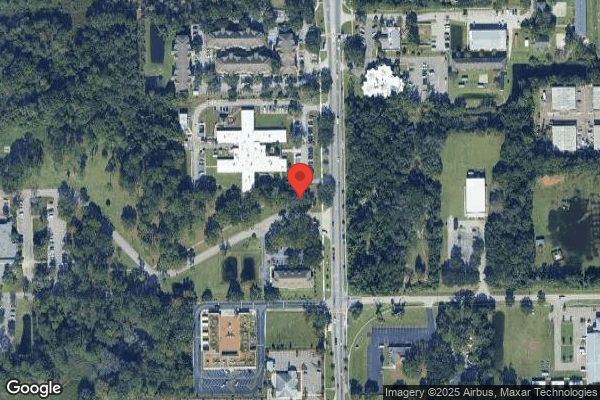
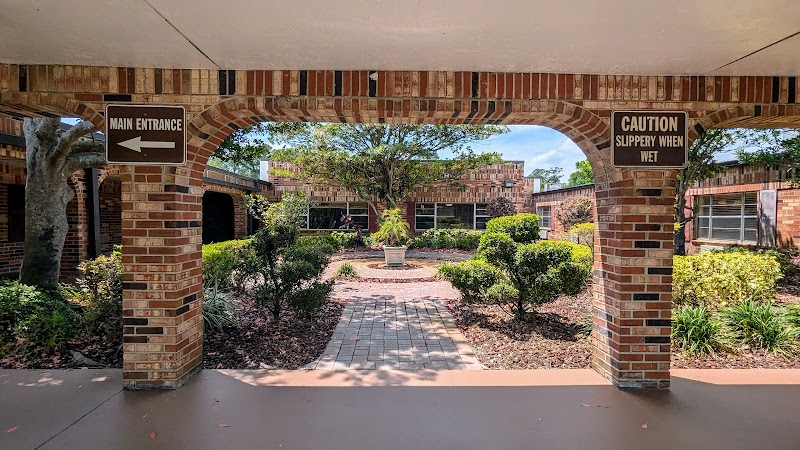
1900 MERCY DRIVE, ORLANDO, FL 32808 (407) 299-5404
For profit - Limited Liability company 120 Beds GOLD FL TRUST II Data: November 2025 3 Immediate Jeopardy citations
Trust Grade
12/100
#488 of 690 in FL
Last Inspection: August 2025

Inspected within the last 6 months. Data reflects current conditions.

Overview

The Courtyards of Orlando Care Center and Rehab has received a Trust Grade of F, indicating significant concerns about its operations and care quality. Ranking #488 out of 690 facilities in Florida places it in the bottom half, and #24 out of 37 in Orange County suggests that there are only a few local options that are better. While the facility is improving in some areas, reducing issues from 9 in 2024 to 5 in 2025, it still faces serious staffing concerns with less RN coverage than 96% of Florida facilities. Notably, critical incidents have occurred, including allowing an unlicensed staff member to provide nursing care to 68 residents for 16 shifts, raising concerns about neglect and safety. While the average staffing turnover rate and fines suggest some stability, the facility's overall performance remains below average, with serious implications for resident care.

Trust Score
F
12/100
In Florida
#488/690
Bottom 30%
Safety Record
High Risk
Review needed
Inspections
Getting Better
9 → 5 violations
Staff Stability
⚠ Watch
48% turnover. Above average. Higher turnover means staff may not know residents' routines.
Penalties
✓ Good
$15,764 in fines. Lower than most Florida facilities. Relatively clean record.
Skilled Nurses
⚠ Watch
Each resident gets only 19 minutes of Registered Nurse (RN) attention daily — below average for Florida. Fewer RN minutes means fewer trained eyes watching for problems.
Violations
⚠ Watch
28 deficiencies on record. Higher than average. Multiple issues found across inspections.
★★☆☆☆
2.0
Overall Rating
★★★☆☆
3.0
Staff Levels
★☆☆☆☆
1.0
Care Quality
★★★☆☆
3.0
Inspection Score
Stable
2024: 9 issues
2025: 5 issues

The Good

  • Full Sprinkler Coverage · Fire safety systems throughout facility
  • No fines on record

Facility shows strength in fire safety.

The Bad

2-Star Overall Rating

Below Florida average (3.2)

Below average - review inspection findings carefully

Staff Turnover: 48%

Near Florida avg (46%)

Higher turnover may affect care consistency

Federal Fines: $15,764

Below median ($33,413)

Minor penalties assessed

Chain: GOLD FL TRUST II

Part of a multi-facility chain

Ask about local staffing decisions and management

The Ugly 28 deficiencies on record

3 life-threatening
Aug 2025 5 deficiencies
CONCERN (D)

Potential for Harm - no one hurt, but risky conditions existed

Comprehensive Care Plan (Tag F0656)

Could have caused harm · This affected 1 resident

**NOTE- TERMS IN BRACKETS HAVE BEEN EDITED TO PROTECT CONFIDENTIALITY** Based on observation, interview, and record review, the facility failed to develop an individualized care plan with intervention...

Read full inspector narrative →
**NOTE- TERMS IN BRACKETS HAVE BEEN EDITED TO PROTECT CONFIDENTIALITY** Based on observation, interview, and record review, the facility failed to develop an individualized care plan with interventions to address the resident's preference and needs for administration of oxygen for a resident who smokes, for 1 of 1 resident reviewed for respiratory care, of a total sample of 45 residents, (#40).Findings: Resident #40 was admitted to the facility on [DATE] with diagnoses that included chronic obstructive pulmonary disease (COPD), tachycardia (fast heartbeat), and mood disorder. Review of the quarterly Minimum Data Det, (MDS) assessment dated [DATE], revealed the resident was assessed to be cognitively intact. On 8/11/25 at 10:54 AM, resident #40 was sitting in bed wearing a nasal cannula connected to an oxygen concentrator set to deliver oxygen at 5 liters per minute (LPM). Resident# 40 explained he liked to go out to smoke and felt he was comfortable without oxygen during that time. He continued that he had been on 5 LPM of oxygen for a few weeks, but explained he needed it more when he exerted himself. On 8/11/25 at 1:30 PM, resident #40 was sitting comfortably outside on the smoking patio, not wearing his oxygen while he smoked. The next day, on 8/12/25 at 1:54 PM, resident #40 was in his wheelchair comfortably wheeling down the 200 Hallway without oxygen. He was at ease and not in any distress without the oxygen. Review of the medical record revealed physician's orders for resident #40's oxygen was for 3 LPM, continuously via nasal cannula. Resident #40 had a care plan for smoking dated 4/23/25 that included, the resident was assessed as able to smoke with supervision, resident/responsible party informed of the facility smoking policy. Further review revealed no care plan focus or interventions related to resident #40's use of oxygen including his preference to not use oxygen so he could go outside to smoke, nor a care plan for any behaviors for rejection of care or non-compliance. On 8/14/2025 at 10:22 AM, assigned Licensed Practical Nurse (LPN) J verified resident #40's oxygen concentrator was set at 5 LPM. LPN J confirmed the resident's order was always for 5 LPM of oxygen since admission but said he adjusted the flow rate himself. The nurse explained to the resident that the physician's order was for 3 LPM, not 5 LPM and that the facility would have to inform the physician if they desired to change the order. She conveyed she was aware the resident went outside to smoke without the use of oxygen; therefore, he did not use the oxygen continuously as it was ordered by the physician. In interviews on 8/14/25 at 10:30 AM, and on 8/14/25 at 12:49 PM, the Director of Nursing (DON) in regard to resident #40's oxygen usage said that the resident often adjusted the amount by himself therefore he was noncompliant with the oxygen order. She was unable to show documentation of the noncompliance in the medical record. The DON explained the staff who was responsible to update care plans was no longer here, but that everyone helps with them. She said the expectation was for nurses to assess resident #40 and update the care plan as needed. The DON acknowledged resident #40's care plan was not personalized regarding his preference to smoke and not use oxygen as the physician had ordered it. The Facility's Policy on Comprehensive Assessments and Care Plans dated 4/01/22 indicated the standard of the facility was to make an accurate and comprehensive assessment of a resident's needs, strengths, goals, life history and preferences, which would be reviewed and revised by the interdisciplinary team regularly.
CONCERN (D)

Potential for Harm - no one hurt, but risky conditions existed

ADL Care (Tag F0677)

Could have caused harm · This affected 1 resident

**NOTE- TERMS IN BRACKETS HAVE BEEN EDITED TO PROTECT CONFIDENTIALITY** Based on observation, interview, medical record review, and facility policy review, the facility failed to provide the necessary...

Read full inspector narrative →
**NOTE- TERMS IN BRACKETS HAVE BEEN EDITED TO PROTECT CONFIDENTIALITY** Based on observation, interview, medical record review, and facility policy review, the facility failed to provide the necessary assistance with Activities of Daily Living (ADL) for one of three residents reviewed for ADL care, of a total sample of 45 residents, (#75). This failure resulted in resident #75 not receiving timely and adequate support for personal grooming and hygiene, which could contribute to a decline in the resident's physical and psychosocial well-being. Findings: On 8/11/25 at 11:40 AM, resident #75 was awake, lying in his bed. His fingernails on both hands were elongated with brown debris visible under the nails. The resident stated he spoke Creole. He was able to answer yes/no questions appropriately, and able to gesture. Resident #75 indicated he preferred to keep his fingernails long by shaking his head to gesture no and showing his elongated fingernails. On 8/12/25 at 9:25 AM, resident #75's fingernails on both hands continued to be elongated with brown debris visible under the fingernails. The resident permitted photos to be taken of his fingernails. (Photographic evidence obtained) On 8/13/25 at 1:00 PM, resident #75 was in bed, and awake. The fingernails on both hands were elongated with visible brown debris under the nails. On 8/14/25 at 10:00 AM, resident #75 was awake and in bed. His fingernails on both hands remained elongated with brown debris visible under the nails. On 8/14/25 at 10:05 AM, Certified Nurse's Assistant (CNA) B, stated activities personnel provided fingernail care including cleaning and trimming for residents. She conveyed all CNAs including herself could provide fingernail care to residents. CNA B confirmed she was assigned to resident #75 that day but had not ever provided fingernail care to the resident. She said she used assistance from other staff to communicate with the resident in his preferred language (Creole). The CNA explained she provided fingernail care weekly. At that time CNA D entered the resident's room and asked the resident if he'd like to have his fingernails cleaned and trimmed in his preferred language. CNA D stated the resident replied, Yes, I am here for you to help me. I cannot do that myself. On 8/14/25 at 10:15 AM, Licensed Practical Nurse (LPN) C, confirmed she was assigned to care for resident #75 today. She stated the CNAs provided fingernail care including cleaning and trimming to residents, unless they were diabetic then a podiatrist would do it. She denied the podiatrist trimmed residents' fingernails and explained the nurses trimmed the fingernails for diabetic residents. LPN C stated a schedule for when the care would be provided was kept in the chart, but explained if the nails were long or dirty, staff should just provide the care, regardless of the schedule. Review of resident #75's medical record revealed her diagnoses included diabetes mellitus type 2, Alzheimer's Disease, and seizures. Review of the quarterly Minimum Data Set assessment dated [DATE], revealed moderately impaired cognitive function, and no behavioral symptoms present including refusals of care. Review of resident #75's progress notes from 7/22/25 thru 8/14/25 did not reveal any notations of refusal of care of any type. Review of the person-centered care plan initiated 1/30/19 and revised 2/28/22, for resident #75 revealed a focus for risk for self-care deficit in ADLs related to need for assistance with daily care. The care plan indicated resident #75 required some assistance with dressing and bathing due to weakness and cognition and impaired communication (Creole speaking) and he was at risk for decline in functional status. The care plan interventions detailed the resident required assistance of one staff with dressing, hygiene and bathing. On 8/14/25 at 10:52 AM, the Administrator stated the expectation was for fingernails to be cleaned and trimmed per the resident's preference, with care provided by direct care CNAs and Activities staff. The Administrator explained each resident was assessed at admission to determine if they need assistance with the task, and whether the resident allowed it. She expressed staff should try to reapproach at a different time, or with different staff, if a resident refused care, and the behavior should be documented in the medical record. The Administrator stated it would be part of the resident's care plan, and refusals of care should also be documented in the Minimum Data Set assessments. A review of the facility policy titled ADL Care and Assistance dated 4/01/22 revealed, the facility's policy was to provide the resident with ADL care and assistance while attempting to maintain the highest practicable level of function for the resident.
CONCERN (D)

Potential for Harm - no one hurt, but risky conditions existed

Deficiency F0778 (Tag F0778)

Could have caused harm · This affected 1 resident

**NOTE- TERMS IN BRACKETS HAVE BEEN EDITED TO PROTECT CONFIDENTIALITY** Based on interview, and record review, the facility failed to assist in making transportation arrangements to diagnostic and phy...

Read full inspector narrative →
**NOTE- TERMS IN BRACKETS HAVE BEEN EDITED TO PROTECT CONFIDENTIALITY** Based on interview, and record review, the facility failed to assist in making transportation arrangements to diagnostic and physician's appointments for 1 out of 1 resident reviewed for choices, of a total sample of 45 residents, (#97).Findings: A review of the electronic medical record revealed resident # 97 was admitted to the facility on [DATE] with diagnoses which included acute embolism and thrombosis (blood clot) of other specified deep vein of the right lower extremity, paraplegia (partial paralysis), hyperlipidemia, and unspecified heart transplant status. Resident #97 's quarterly Minimum Data Set with an assessment reference date of 7/12/25 revealed the resident scored 15 out of 15 on the Brief Interview for Mental Status which indicated he was cognitively intact. A review of resident #97 's plan of care revealed he had the potential for complications related to an alteration in cardiac function due to his diagnoses, heart transplant status initiated on 4/23/25. Interventions included labs and diagnostic tests as ordered; update physician of results initiated 4/23/25. On 8/11/25 at 11:48 AM, resident #97 was in bed, alert and oriented to person, place and time. He stated he had missed several doctor's appointments and an echocardiogram (cardiac test) due to transportation not being arranged. The resident continued that he had appointment cancellations due to the lack of communication between facility staff and the transport coordinator. Review of the medical record progress notes from the B Wing Unit Manager (UM) revealed the following: On 6/11/25 the UM documented, Called resident transplant coordinator on last week, received message of (coordinator), being out on vacation. Attempted to reach on 6/10 to received appointment updated information for resident. Unable to reach. Left voice mail. Called this am 6/11, and was able to reach coordinator, informed to call for updated scheduling information. Unable to get receptionist online. Left message will reattempt call in 1 hour.On 8/01/25 the UM documented, resident states he received call for appointment cancellation of ECHO [echocardiogram]. Nurse attempted to call office to receive follow up time and date for makeup appointment. Message left with answering service. Awaiting response from [name of hospital] transplant office. Transplant coordinator. A review of the medical record progress notes and documents written by the Advance Practice Registered Nurse (APRN) revealed the following excerpts: On 6/21/25 and 7/19/25, the APRN documented, NO acute issues. Per resident, he went to have a bone scan last month and was told by ID [infectious disease] doctor that, everything looks good for Echo/transplant f/u [follow up] on 7/31/25. On 8/12/25 the APRN wrote, Wound care rendered by nurse, r/o [rule out] cellulitis/infection. I called the transplant center to schedule a follow up appointment. Apparently, he had missed 3 f/u visits due to dates not entered to PCC. I left a message to the answering service, Awaiting return call. On 8/13/25 at 3:31 PM, in a joint interview with the Social Worker (SW) and Director of Nursing (DON) they explained the team including the UMs, and Staffing and Transportation Coordinator had an app (application) they used to coordinate the facility's van and arrange transportation. This app was used to manage arrangements to transport residents to and from doctor's appointments or for any other transport within the community. The SW and DON described that residents who relied solely on their insurance for transportation, still had access to the facility's van because sometimes those services were unreliable. The DON and SW acknowledged resident #97 had missed some appointments with his physician at his heart transplant center as well as an echocardiogram appointment that was cancelled because no transportation was arranged. The DON explained she believed the resident had an outside coordinator to arrange transportation; however, she acknowledged the UM, and nurses were responsible for following up to ensure the arrangements were made. The DON stated they dropped the ball on this one. The DON was unsure if resident #97's echocardiogram was ever rescheduled. On 8/13/25 at 4:10 PM, in a joint interview with the SW and the Transportation Coordinator, the Transportation Coordinator explained she would get the appointment paperwork from nurses or on the resident's return from an appointment. She would then place it in the transport book, and the nurses would log the appointment in the computer. She said she would call the physician's offices and make appointments for residents who were unable to. The Transportation Coordinator described that for residents who made their own appointments but did not have transportation the facility would set transportation up through her. She explained for resident #97, she believed he made his own appointments, and the facility had never taken him anywhere. The SW said that even though the resident made the appointments himself, he communicated to nurse, and the nurse would have to put the appointment into the computer. The SW was unable to find any information that the missed echocardiogram was rescheduled. On 8/13/25 at 4:22 PM, the B Wing UM acknowledged she was aware resident #97 missed his appointments for heart transplant follow up and of the echocardiogram cancellation because transportation was not arranged. The UM stated, he mentioned missing appointments due to transportation and that the transplant center sent him a message that he missed an appointment. She continued to explain that she tried to get in touch with the transplant scheduler but had not rescheduled yet at that time. The UM said the facility's process was to put the appointment in the computer and acknowledged she never followed up with rescheduling the missed appointment after the note written on 6/11/25. On 8/13/2025 at 4:57 PM, resident #97 clarified the only time he went out for an appointment was for a scan on 5/21/25, but not with the heart transplant center nor for the echocardiogram. He continued to explain that at the end of April or May it was the facility's fault he missed his appointment. Resident #97 said he did not arrange transportation to the appointments himself, instead the facility was supposed to arrange them. He explained he got a paper with the information and gave it to facility staff, and they made the arrangements. Resident #97 said the only time he called to reschedule an appointment was the time the nurse could not do it. He said he was able to reschedule the appointment, so he wrote the information on a piece of paper and gave it to the nurse, who told him she would put it in the system, but she never did. The resident recalled he spoke to the SW about his frustration but did not hear anything back from the facility regarding his concerns. Review of the Treatment Administration Record (TAR) for May, June, July and August 2025 revealed no appointments were scheduled except on 5/06/25 for the unrelated scan and follow-up appointments for the scan which took place on 5/12/25 and 5/21/25. The TAR was reviewed for June, July and August 2025 which showed no scheduled appointments for the heart transplant center nor for the echocardiogram. On 8/13/25 at 5:13 PM, the SW confirmed the resident previously reached out to her about his frustrations on 6/15/25 and that he was waiting on the B Wing UM to reschedule the appointment. On 8/14/25 at 11:27 AM, the APRN stated that on 7/31/25 someone called the facility and told them to cancel resident #97's appointment, but she confirmed this was not documented anywhere. She continued to explain she wrote the note on 8/11/25 because the resident told her he missed all of his appointments which is why she felt she had to reach out to the transplant center herself to make the appointment. The APRN confirmed nurses were not entering the appointments into the computer which contributed to resident #97 missing his appointments. On 8/14/25 at 12:44 PM, the DON said there was a breakdown in communication when staff did not enter the dates of appointments as given by the resident. She confirmed staff should have kept calling the transplant center and followed up on rescheduling resident #97's appointments. The Regional Nurse Consultant stated the facility had a Transportation Policy (which was not provided) but explained the policy did not have anything that spoke specifically to scheduling appointments.
CONCERN (E) 📢 Someone Reported This

A family member, employee, or ombudsman was alarmed enough to file a formal complaint

Potential for Harm - no one hurt, but risky conditions existed

Pharmacy Services (Tag F0755)

Could have caused harm · This affected multiple residents

**NOTE- TERMS IN BRACKETS HAVE BEEN EDITED TO PROTECT CONFIDENTIALITY** Based on interview, and record review, the facility failed to follow physician orders for medication administration for 5 of 5 r...

Read full inspector narrative →
**NOTE- TERMS IN BRACKETS HAVE BEEN EDITED TO PROTECT CONFIDENTIALITY** Based on interview, and record review, the facility failed to follow physician orders for medication administration for 5 of 5 residents reviewed for medication administration, of a total sample of 45 residents, (#112, #3, #94, #5, and #67).Findings:1. Resident #112 was admitted to the facility on [DATE] with diagnoses including esophagitis (inflammation of the esophagus) without bleeding, other psychoactive substance dependence, hypertension, nicotine dependence, chronic pain syndrome, opioid dependency, and anxiety. Review of the resident's care plan initiated 6/26/25 revealed a focus related to antianxiety medication use with an intervention to administer medication as prescribed. During a phone interview with the resident on 8/13/25 at 11:17 AM, he stated he had missed medications while at the facility. Review of resident #112's physician orders revealed an order for Xanax 1 milligram (mg) to be given twice a day for anxiety with a start date of 6/26/25 and end date of 7/10/25. Review of the Electronic Medical Record (EMAR) revealed the following:On 7/07/25 at 9:00 AM, the resident did not receive the morning dose of medications with no progress note documentation as to the reason.On 7/07/25 at 5:00 PM, the resident did not receive the afternoon dose of medications with a progress note which read, ‘pharmacy' as the reason documented.On 7/08/25 at 9:00 AM, the resident did not receive the morning dose of medications with no progress note documentation for the reason the medication was not given.On 7/08/25 at 5:00 PM, the resident did not receive the afternoon dose of medications with no progress note documentation for the reason the medication was not given. On 8/13/25 at 12:24 PM, the DON explained the investigation of resident #112's missed medication was initiated on 7/16/25 when the Department of Children and Families investigator came to the facility in regard to allegations of neglect due to the resident's concerns over not receiving his Xanax. The facility acknowledged at the time the resident missed four doses of the medication due to it needing a new prescription for it to be refilled. Further review of the medical record revealed a physician order for Xanax 1 mg by mouth now to be given three times day for anxiety starting on 7/10/25. Review of the EMAR revealed the following:On 7/16/25 at 9:00 AM, the resident did not receive the medications with no progress note documentation for the reason it was not given.On 7/26/25 at 2:00 PM, the resident did not receive the afternoon dose of medication with no progress note documenting the reason it was not given.On 7/26/25 at 9:00 PM, the resident did not receive the medication, but contained a note that documented, on order for the reason it was not given. A progress note written on 7/26/25 at 10:00 PM, revealed resident #112's Xanax was not available to be administered. The note indicated the pharmacy notified the facility that a new prescription was needed in order for the medication to be refilled. 2. Resident #3 was admitted to the facility on [DATE] with diagnoses including anxiety disorder, polyneuropathy (nerve pain), hypertension, and stroke complications. Resident #3's care plan initiated 3/07/25 revealed a focus for the risk of abnormal bleeding related to the use of anticoagulants with an intervention to administer medications as ordered. The resident also had care plan focus for the potential for adverse side effects related to use of psychotropic medications, potential of complications related to alteration in cardiac function due to diagnosis of hypertension and potential for alteration in comfort related to stroke, generalized discomfort and impaired mobility. The interventions listed included administering medications as ordered. On 8/12/25 at 1:20 PM, resident #3 stated it seemed she had a problem with availability of medication every month, but not always with the same medication being unavailable. The resident reported yesterday she was told the facility was out of her Lyrica medication. Lyrica is a prescription medication used to treat nerve pain for neuropathy and other disorders. Take exactly as prescribed by your physician, at the same time each day, Do not stop using Lyrica suddenly, (retrieved on 8/27/25 from www.drugs.com). A self-reported grievance filed on 6/09/25 by resident #3 revealed a concern that Xarelto was not available to be given. Review of the grievance revealed the investigation found the resident was out of the medication which was to be delivered that day. The resolution indicated the medication arrived the next day on 6/10/25 and education was provided to staff, that nurses were to reorder medications within five days of stock depletion, and if the medication was not present, nurses were to call the provider to either place the medication on hold or obtain a substitute. Although this education was noted on the grievance, resident #3 continued to miss doses of her medication due to it not being available per the EMAR. Xarelto is a prescription medication used mainly to prevent blood clots. It blocks the action of substances in the blood to prevent formation of blood clots. Do not stop taking Xarelto without your doctor's advice, it can increase your risk for blood clots or stroke, (retrieved on 8/27/25 from www.drugs.com). Review of the medical record revealed resident #3 had physician orders including Duloxetine HCl delayed release (DR) 20 mg daily for anxiety, Nifedipine extended release (ER) 30 mg daily for hypertension, Rivaroxaban (Xarelto) 10 mg daily for anticoagulation, and Lyrica 75 mg two times a day for neuropathy pain. Review of EMAR for June 2025 revealed the following:On 6/06/25 at 9:00 AM, the resident did not receive her Xarelto 10 mg. There was no progress note documentation for the reason it was not given.On 6/07/25 at 9:00 AM, the resident did not receive her Xarelto 10 mg. There was no progress note documentation for the reason it was not given.On 6/08/25 at 9:00 AM, the resident did not receive her Xarelto 10 mg. There was no progress note documentation for the reason it was not given.On 6/09/25 at 9:00 AM, the resident did not receive her Xarelto 10 mg. There was no progress note documentation for the reason it was not given.On 6/20/25 at 9:00 AM, the resident did not receive her Xarelto 10 mg. There was no progress note documentation for the reason it was not given. Review of the EMAR for August 2025 revealed the following:On 8/02/25 at 9:00 AM, the resident did not receive her Tizanidine 2 mg, Xarelto 10 mg, Duloxetine DR 30 mg nor her Nifedipine ER 30 mg. A progress note for these medications indicated the medications were, on delivery.On 8/02/25 at 2:00 PM, the resident did not receive her Tizanidine 2 mg. A progress note indicated, on delivery.On 8/11/25 at 9:00 AM, the resident did not receive her Lyrica 75 mg. A progress note was documented by the nurse, pharmacy was called, and order will be delivered evening. On 8/11/25 at 2:00 PM, resident #3 did not receive her Lyrica 75 mg. A progress note indicated, medication is a new order, medication will arrive at 4. 3. Resident #94 was admitted to the facility on [DATE] with diagnoses including hypertension, stage 2 chronic kidney disease, hyperlipidemia, osteoarthritis, anxiety, atrial fibrillation, peripheral vascular disease and atherosclerotic heart disease. Review of the resident's care plan initiated 2/06/25 revealed a focus for the potential of complications related to an alteration in cardiac function due to a diagnosis history of hypertension, atrial fibrillation and hyperlipidemia. One of the interventions was to administer medications as ordered and observe for effectiveness. Review of the medical record revealed physician orders for Labetalol HCL 100 mg two times a day for hypertension. Labetalol HCL is a prescription medication used to treat high blood pressure. Use this medication as directed by the physician, do not stop taking Labetalol suddenly, it may make your condition worse, (retrieved on 8/27/25 from www.drugs.com). Review of the EMAR for August 2025 showed the following:On 8/05/25 at 6:00 PM, Labetalol HCL 100 mg was not administered as ordered. There was no progress note documentation for the reason it was not given.On 8/06/25 at 6:00 AM, Labetalol HCL 100 mg was not administered as ordered. A progress note by the nurse indicated, ran out of medication. On 8/07/25 at 6:00 AM, Labetalol HCL 100 mg was not administered as ordered. A progress note by the nurse indicated, ran out of medication. On 8/07/25 at 6:00 PM, Labetalol HCL 100 mg was not administered as ordered. A progress note documented by the nurse read, waiting for delivery. On 8/08/25 at 6:00 AM, the Labetalol HCL 100 mg was not administered, and a progress note was documented by the nurse, waiting for delivery, e-kit did not have it. 4. Resident #5 was admitted to the facility on [DATE] with diagnoses that included dementia without behaviors, hypothyroidism, paranoid schizophrenia and bipolar disorder. Review of the medical record revealed physician orders for Synthroid 50 micrograms (mcg) daily for hypothyroidism. Synthroid is a prescription medication used to replace the hormone normally produced by the thyroid gland to regulate energy and metabolism. Take this medication exactly as prescribed, (retrieved on 8/27/25 from www.drugs.com). Review of the EMAR for August 2025 showed the following:On 8/02/25 at 6:30 AM, the medication was not administered and a progress note indicated, patient ran out of medication.On 8/03/25 at 6:30 AM, the Synthroid was not administered as ordered. A progress note documented by the nurse indicated, ran out of medication. 5. Resident #67 was admitted to the facility on [DATE] with diagnoses including anxiety, schizoaffective disorder, psychosis not due to substances, Gastro-esophageal Reflux disease (GERD), dementia, seizures, hypertension and depression. Review of resident #67's care plan initiated 8/19/20 revealed foci including potential for complications related to alteration in cardiac function due to diagnosis of hypertension, potential for adverse side effects related to the use of psychiatric medications, potential for injury or complications related to seizures and actual behaviors including combativeness, yelling and being verbally inappropriate. The interventions included administer medications as ordered. Review of the medical record revealed physician orders for Iron 325 mg daily for supplementation; Amlodipine 10 mg daily for hypertension; Cholecalciferol 1000 units (give 2 tabs) daily for bone health; Cyanocobalamin 1000 mcg daily for macrocytic anemia; Pepcid 20mg daily for GERD; Lidocaine patch 4% daily for low back pain; Valproic acid 250 mg/ml, give 10 milliliters (ml) twice daily for mood stabilization; Ativan gel 2 mg/ml three times a day for anxiety and Tylenol 650 mg daily for pain . Review of the EMAR for August 2025 revealed the following:On 8/03/25 at 8:00 AM, resident #67 did not receive her Iron 325 mg. There was no documentation to indicate why it was not administered as ordered.On 8/03/25 at 9:00 AM, resident #67 did not receive her Amlodipine 10mg, Cholecalciferol 2000 units, Cyanocobalamin 1000mcg, Pepcid 20mg, Lidocaine external patch 4%, Valproic acid 10ml, nor her Ativan gel 2 mg/ml. There was no documentation to indicate why the medications were not administered as ordered.On 8/03/25 at 10:00 AM, resident #67 did not receive her Tylenol 650 mg. There was no documentation to indicate why the medication was not administered as ordered.On 8/03/25 at 2:00 PM, resident #67 did not receive her Ativan gel 2 mg/ml. There was no documentation to indicate why it was not administered as ordered. On 8/14/25 at 12:57 PM, the DON said she was unaware residents #3, #5, #67, #94 and #112 had missed doses of medications since the time they became aware of resident #112's neglect allegation for missed medications this past July. She stated regular reordering of medications and audits were the actions initiated following that investigation. She was unable to say why residents missed multiple medication doses due to the drugs not being available, but confirmed she never verified the nurses were reordering and auditing as planned. The DON stated the expectation for staff when a medication was unavailable was to check the emergency medication kit, call the pharmacy and call the physician to ask for a hold order for the medication or an alternative. The facility's policy entitled Medication Administration dated 4/01/22 indicated that medications should be administered in a timely manner and in accordance with the physician's orders. If medications are unavailable at the time of medication administration, the nurse should check the Emergency Drug Kit (EDK) system for availability. If the medication is not available the nurse should notify the physician for new orders and contact the pharmacy, as needed.
CONCERN (E)

Potential for Harm - no one hurt, but risky conditions existed

Food Safety (Tag F0812)

Could have caused harm · This affected multiple residents

Based on observation, interview, and facility policy review, the facility failed to ensure proper handling and food safety practices when staff failed to sanitize a food thermometer between checking f...

Read full inspector narrative →
Based on observation, interview, and facility policy review, the facility failed to ensure proper handling and food safety practices when staff failed to sanitize a food thermometer between checking food items, and ice bath calibration. The deficient practice had the potential to affect all residents who received a regular or puree diet by increasing the risk of cross-contamination and foodborne illness. Findings: On 8/13/25 at 11:10 AM, kitchen preparation for the lunch service began with cook G and Dietitian F present. At 11:37 AM, cook G used a food thermometer to check food temperatures of the prepared foods held on the steam table line prior to plating the food for service. The cook did not sanitize the food thermometer prior to placing the tip of the thermometer inside the pureed garlic bread, the regular garlic bread, and then the ziti bake. The cook said she cleans the thermometer between each food items. She acknowledged she did not sanitize the thermometer prior to checking the food items, nor had she cleaned it between the food items. The cook explained it was her practice to clean the thermometer between food items but said, We run out of them [the alcohol wipes] so fast, I'm constantly using them. On 8/13/25 at 11:47 AM, Dietitian F explained the process for checking the temperature of foods on the steam table. She stated, All foods are checked for their temperature before service is started. They are supposed to clean the thermometer with a sanitizing wipe in between each food item, that's the proper way. The Dietitian acknowledged she did not notice when cook G did not sanitize the thermometer between the food items in preparation for the lunch service. On 8/13/2025 at 11:50 AM, Kitchen Supervisor E explained the facility process for checking the temperature of foods on the steam table. She confirmed staff should check each food item, record the reading of the thermometer, and then clean the thermometer with an alcohol wipe between each food item.On 8/13/25 at 5:00 PM, in the kitchen, preparation for the dinner service commenced. Kitchen Supervisor E checked the temperature of a tray of turkey ranch wraps (a cold sandwich item) with a food thermometer. She then calibrated the food thermometer in an ice bath but did not sanitize the thermometer between checking the temperature of the wraps and inserting the thermometer in the ice bath. Kitchen Supervisor E proceeded to use the same un-sanitized thermometer to check the puree turkey wrap (a hot item) temperature without sanitizing the thermometer. On 8/13/25 at 5:15 PM, Kitchen Supervisor E acknowledged she had not sanitized the thermometer between checking the temperature of the cold turkey ranch wrap and the ice bath calibration, then again between the ice bath and checking the temperature of the (hot) puree turkey wrap. Kitchen Supervisor E stated, Oh I thought I did, and acknowledged she did not sanitize the thermometer between the food items and the ice bath calibration. Review of the facility policy, Final Cooking Temperatures, revised 10/01/23, revealed food was to be cooked to specific temperatures and times to mitigate the presence of dangerous microorganisms. The policy continued that food thermometers used to check food temperatures should be clean, sanitized, and calibrated for accuracy.
Aug 2024 1 deficiency
CONCERN (D) 📢 Someone Reported This

A family member, employee, or ombudsman was alarmed enough to file a formal complaint

Potential for Harm - no one hurt, but risky conditions existed

Deficiency F0569 (Tag F0569)

Could have caused harm · This affected 1 resident

**NOTE- TERMS IN BRACKETS HAVE BEEN EDITED TO PROTECT CONFIDENTIALITY** Based on interview and record review, the facility failed to provide a refund, and a final accounting of the resident's funds de...

Read full inspector narrative →
**NOTE- TERMS IN BRACKETS HAVE BEEN EDITED TO PROTECT CONFIDENTIALITY** Based on interview and record review, the facility failed to provide a refund, and a final accounting of the resident's funds deposited with the facility within 30 days of the resident's discharge, for 1 of 3 residents sampled for personal funds, (#1). Resident #1 was admitted to the facility on [DATE] and discharged from the facility to the community on 6/27/24. Review of the facility's admission Agreement signed by resident #1's financial power of attorney on 1/13/22 revealed the facility would refund any deposits held by them within thirty days from the resident's date of discharge. Review of the facility's Policy and Procedure Manual in the section regarding Resident Personal Funds, issued 4/01/22 and revised 1/01/24, under the Procedure section item 6. Within thirty (30) days of a resident's discharge or death, the facility will refund the resident's personal funds and provide a final accounting of those funds to the resident, the resident's representative or to the resident's estate, as applicable. In a telephone interview on 8/19/24 at 8:31 AM, resident #1's financial power of attorney said she had received one refund check for $3,266 from the facility since resident #1's discharge over 30 days after resident #1's discharge. She said she was told the facility held funds and there was still an outstanding refund of $813.00 due. The financial power of attorney said she had requested an itemized statement of how resident #1's funds had been disbursed since resident #1's original admission on [DATE] but had yet to receive the statement. On 08/19/24 at 12:41 PM, the Business Office Manager she said she believed resident #1's financial power of attorney was still owed $813.00. She verified the resident was discharged from the facility 06/27/2024. The Business Office Manager explained the money was overdue by 23 days beyond the 30 days from Resident #1's facility discharge. In a telephone interview on 8/19/24 at approximately 12:45 PM, the Accounts Receivable Specialist of the facility's contracted Accounting Group verified Resident #1 was discharged on 6/27/24. She verified the facility owed Resident #1's financial power of attorney a refund from Resident #1's facility held account related to July 2024 and August 2024. She said it usually took about 30 days to provide a refund from a resident's date of discharge. She verified the refund was currently late over 30 days since resident #1's discharge and a full refund had not yet been issued to resident #1's financial power of attorney. She said she would contact her colleague in Accounts Payable who had the authority and ability to issue checks to have a refund check cut that day and mailed to resident #1's financial power of attorney. On 8/19/24 at 1:20 PM, the Business Office Manager, with the Director of Nursing and Administrator present, provided a document titled Resident Statement Landscape related to the facility held bank account and pointed to the line dated 7/01/24 that showed a balance of $818.02. The next line dated 7/03/24 indicated resident #1's Social Security funds of $1,212.00 had been credited to the account. The total was then $2,030.02. Also, on 7/03/24 a line item indicated, CARE COST AUTO WDL (withdrawal), with a debit of $813.00 which the Business Office Manager said indicated what the facility charged to provide care. She verified resident #1 was no longer at the facility at that time, but the facility still received resident #1's Social Security money on 7/03/24 and had an automated withdrawal regarding facility care that was not provided. The total was $1, 217.02. There was a credit adjustment on 07/25/2024 of $2,049.55 which the Business Office Manager said related to a bank account balance that had been transferred from one bank to another when a change in resident fund banks had been made earlier in the year. The total of $3,266.60 was provided by check to resident #1's financial power of attorney later than 30 days after resident #1 was discharged . The Business Office Manager could not explain why she could only see that $813.00 from July 2024 was still due to Resident's #1's financial power of attorney which was less than the refund amount confirmed by the facility's contracted Accounts Receivable Specialist. On 8/19/24 at 3:12 PM, the facility's contracted Accounts Receivable Specialist said resident #1's facility held account did not get closed soon enough after Resident #1's discharge which caused resident #1's July 2024 Social Security funds to be deposited into the account. She explained there was a further delay by the facility in closing resident #1's facility held account, and resident #1's Social Security funds related to August 2024 were also received. The Accounts Receivable Specialist said these deposits should not have happened.
Mar 2024 8 deficiencies
CONCERN (D)

Potential for Harm - no one hurt, but risky conditions existed

Deficiency F0554 (Tag F0554)

Could have caused harm · This affected 1 resident

**NOTE- TERMS IN BRACKETS HAVE BEEN EDITED TO PROTECT CONFIDENTIALITY** Based on observation, interview, and record review, the facility failed to ensure 1 of 1 resident was evaluated for safe self-ad...

Read full inspector narrative →
**NOTE- TERMS IN BRACKETS HAVE BEEN EDITED TO PROTECT CONFIDENTIALITY** Based on observation, interview, and record review, the facility failed to ensure 1 of 1 resident was evaluated for safe self-administration of medications and failed to obtain a physician order for self-administration of medication for 1 of 1 resident reviewed for choices, of a total sample of 45 residents, (#47). Findings: Resident #47 was admitted to the facility on [DATE] and readmitted on [DATE]. Her diagnoses included acute and chronic respiratory failure with hypoxia, chronic obstructive pulmonary disease, diabetes type II, obstructive sleep apnea, atrial fibrillation, acute on chronic diastolic (congestive) heart failure, hypertension, and major depressive disorder. The resident's quarterly Minimum Data Set assessment with Assessment Reference Date of 12/12/23 revealed the resident's cognition was intact with a Brief Interview For Mental Status score of 14 out of 15. Observations on 3/18/24 at 11:52 AM, and on 3/19/24 at 10:04 AM showed resident # 47 lying in bed on her back. On the resident's tray table in a graduated container was Medi-honey wound gel, two vials of Deep Sea nasal spray, and a bottle of Bio Freeze. The resident stated she did most of the administration of the nasal spray herself because she tried not to cause any problems for the staff. Medi-honey gel is used to treat open wounds, to prevent gangrene and infection, (retrieved on 3/22/24 from www.carewell.com). Bio Freeze is used to provide temporary relief of muscle or joint pain caused by strains, arthritis, bruising, or backaches in adults, (retrieved on 3/22/24 from www.drugs. com). Review of the resident's clinical records revealed no documentation to indicate a self-administration evaluation was conducted for the resident, and a physician order for self-administration of medication was not identified. On 3/19/24 at 10:04 AM, observation of the resident's tray table was conducted with Licensed Practical Nurse (LPN) A. She acknowledged the findings, and stated the resident should not have any medications in her room. LPN A removed the medications from the resident's room, and stated she would inform the B Wing Unit Manager (UM), so that a physician's order for self-administration of medications could be obtained for the resident. On 3/19/24 at 10:12 AM, the Director of Nursing (DON) stated residents should not have medications in their rooms. She acknowledged that a self-administration evaluation was not conducted for resident #47, and the resident did not have a physician order for self-administration of medications. On 3/19/24 at 10:14 AM, the B Wing Unit Manager (UM) explained medications should not be in a resident's room, unless there was a physician order for self-administration of medications, and an order to keep the medications at the resident's bedside. The B Wing UM stated that nurses were aware of the process. On 3/20/24 at 6:00 PM, the DON explained if a resident wanted to self-administer medications, a self- administration evaluation needed to be completed, and a physician's order for self-administration of medications obtained. The facility's policy, Self-Administration of Medications issued on 4/01/22 read, As part of the overall evaluation, the staff and practitioner will assess or evaluate resident's mental and physical abilities to determine whether a resident is capable of self-administering medications . Self-administered medications should be stored in a safe and secure place, which is not accessible by other residents.
CONCERN (D)

Potential for Harm - no one hurt, but risky conditions existed

Deficiency F0568 (Tag F0568)

Could have caused harm · This affected 1 resident

**NOTE- TERMS IN BRACKETS HAVE BEEN EDITED TO PROTECT CONFIDENTIALITY** Based on interview and record review, the facility failed to send quarterly personal fund account balance statements to resident...

Read full inspector narrative →
**NOTE- TERMS IN BRACKETS HAVE BEEN EDITED TO PROTECT CONFIDENTIALITY** Based on interview and record review, the facility failed to send quarterly personal fund account balance statements to resident's responsible party for 1 of 7 sampled residents reviewed for personal funds, out of a total sample of 45 residents, (#71). Findings: Resident #71 was admitted to the facility on [DATE] and re-admitted on [DATE] for long term care. Her diagnoses included cerebral infarction, attention to gastrostomy, pressure ulcer- sacral region, dementia, epilepsy, seizures, sepsis, hypertensive heart, and chronic kidney disease. A review of the census information revealed resident #71's payor source was Medicaid as of 8/28/23. A review of the medical record revealed admission Minimum Data Set (MDS) assessment dated [DATE] which showed her Brief Interview for Mental Status score of 00 which meant she was severely cognitively impaired. Her quarterly MDS assessments dated 11/15/23 and 2/15/24 showed she was rarely/never understood, had both long term and short-term memory problems, and had severely impaired cognitive skills for daily decision making. On 3/19/24 at 11:35 AM, a phone interview was conducted with resident #71's designated responsible party and Durable Power of Attorney (POA). She acknowledged the resident was a Medicaid recipient. She said she had a trust fund account with the facility's business office but had not received statements of her account balance from the facility business office for greater than 6 months. Review of the electronic medical record (EMR) showed the Durable POA form signed and dated 7/3/2008 in resident #71's chart. The form included the resident representative's mailing address. On 3/19/23 at 3:55 PM, an interview with the Business Office Manager (BOM) revealed she had been working at the facility for 5 years and was in the role of BOM for 3 years. She explained that the resident's trust fund accounts were set up when they became Long Term Care residents, and they got an allowance of $160 per month. She stated, we don't regularly send out statements and only give them out if the balance is over $2000 so the family would know that they need to spend down the money. She added, the statements did not come from me, and she would have to find out if the Medicaid Specialist was sending them out because they were not being generated by the business office over the 3 years that she had been in that role. Review of the Resident Fund Statements dated 9/29/23 and 12/29/23 for resident #71 showed they were addressed to the resident and included the facility address and not the DPOA/resident's representative address. On 3/21/24 at 9:48 AM, a telephone interview was conducted with the [NAME] President of Finance and the Medicaid Specialist was present in person. The staff verified that they did assist resident #71's daughter with the Medicaid application process which became the payer source as of 8/28/23. They acknowledged the Durable POA paperwork with the daughter's address was contained in the EMR scanned items since August 2023 as well. They acknowledged that resident #71 had a personal trust fund account with the facility. They also acknowledged the resident had severe cognitive impairment and had a responsible party/financial and medical POA family member. The facility directly received the resident's monthly Social Security checks for direct payment. They acknowledged that because the resident was not her own decision maker that the quarterly statements should have gone to her responsible party and not the resident. The staff explained they would have to manually go into the Resident Trust management account to edit the address to ensure that it would be mailed to the resident representative at the correct address. Review of the facility's admission paperwork regarding Personal Funds, Trust Account read, The resident may choose to deposit personal funds with Center in a resident trust fund account pursuant to trust fund agreement and beneficiary designation form in accordance with applicable state and federal laws. The Center will not charge additional fees for trust account services .The resident may see records of his/her account through quarterly statements .
CONCERN (D)

Potential for Harm - no one hurt, but risky conditions existed

Deficiency F0578 (Tag F0578)

Could have caused harm · This affected 1 resident

**NOTE- TERMS IN BRACKETS HAVE BEEN EDITED TO PROTECT CONFIDENTIALITY** Based on interview, and record review, the facility failed to ensure documentation for code status Do Not Resuscitate (DNR) matc...

Read full inspector narrative →
**NOTE- TERMS IN BRACKETS HAVE BEEN EDITED TO PROTECT CONFIDENTIALITY** Based on interview, and record review, the facility failed to ensure documentation for code status Do Not Resuscitate (DNR) matched the clinical records for 1 of 1 resident reviewed for Advance Directives, of a total sample of 45 residents, (#47). Findings: Resident #47 was admitted to the facility on [DATE] and readmitted on [DATE]. Her diagnoses included acute and chronic respiratory failure with hypoxia, chronic obstructive pulmonary disease, diabetes type II, obstructive sleep apnea, atrial fibrillation, acute on chronic diastolic (congestive) heart failure, hypertension, and major depressive disorder. Review of the resident's clinical records revealed a physician order dated 3/16/24 for Full Code status. The Electronic Medical Record (EMR) banner noted full code status. Scanned documents revealed a canary yellow form State of Florida Do Not Resuscitate Order dated 9/11/23, signed by the resident, and physician on 9/11/23. Review of the DNR Binder located at the nurses' station on the B Wing revealed a State of Florida DNR order for resident #47. On 3/18/24 at 5:43 PM, the Director of Nursing (DON) explained that if a resident was found unresponsive, the nurse would review the resident's code status in the facility's electronic medical record. The resident's clinical records, and the DNR binder were reviewed with the DON. She acknowledged that the documentation was conflicting, since there was an order for full code, and a DNR order in place. The DON stated, if a resident changed his/her mind regarding their code status, an order would be obtained to revoke the DNR order, and the information would be documented in the resident's clinical record. Clinical record review revealed no documentation to indicate the resident revoked her DNR order. This was confirmed by the DON. On 3/18/24 at 5:52 PM, resident # 47 stated she had a DNR order in her clinical records, which would remain in place. On 3/18/24 at 5:53 PM, the B Wing Unit Manager (UM) stated if a resident was found unresponsive, nurses would confirm the resident's code status by checking the electronic medical record, and the DNR binder. She acknowledged that the information in the EMR and the DNR binder were conflicting. The UM stated that when the resident was readmitted to the facility on [DATE], she placed the order for full code status in the resident's EMR based on her review of the Medical Certification For Medicaid Long Term Care Services And Patient Transfer Form (3008) dated 3/16/24. She said she did not clarify the code status with the resident, and stated it was an error on her part. An Advance Directive Note documented by the Social Service Assistant dated 3/18/24 at 5:56 PM indicated the resident's code status was discussed, and the resident wish to stay a DNR. The resident's care plan for advance directives initiated 11/07/23 noted the resident had a DNR in place and could make informed consent regarding her health care decisions. An intervention was to honor the resident's wishes regarding Advanced Directives/Code status. The facility's policy Determination of Code Status issued 4/01/2022 read, The resident's Code Status will be determined by a physician's order and/or validly executed State of Florida DNR order form .and/or documented evidence of the resident wishes being in place .Upon admission the nurse completing the admission assessment will ascertain resident's desired code status (Full Code or DNR) .The electronic record (including electronic chart, point of care kiosk or eMAR (electronic medication administration record)) will serve as the primary source of validation of code status should a resident be found unresponsive.
CONCERN (D)

Potential for Harm - no one hurt, but risky conditions existed

Assessment Accuracy (Tag F0641)

Could have caused harm · This affected 1 resident

**NOTE- TERMS IN BRACKETS HAVE BEEN EDITED TO PROTECT CONFIDENTIALITY** Based on observation, interview and record review, the facility failed to ensure Minimum Data Set (MDS) assessments accurately r...

Read full inspector narrative →
**NOTE- TERMS IN BRACKETS HAVE BEEN EDITED TO PROTECT CONFIDENTIALITY** Based on observation, interview and record review, the facility failed to ensure Minimum Data Set (MDS) assessments accurately reflected vision and edentulous (without teeth) status for 1 of 3 residents reviewed for vision and dental services, of a total sample of 45 residents, (#69). Findings: Review of resident #69's medical record revealed he was originally admitted to the facility on [DATE] and readmitted from an acute care hospital on 4/07/22. His diagnoses included legal blindness and type 2 diabetes. Review of resident #69's MDS Annual assessment with Assessment Reference Date (ARD) of 3/05/24 revealed a Brief Interview for Mental Status score of 14 out of 15 which indicated intact cognition. On 3/18/24 at 4:25 PM, resident #69 stated he previously had upper and lower dentures, but he lost them approximately 2 years ago. He stated he was recently measured and was still waiting for his new dentures. During the conversation, his mouth opened to reveal he had no upper or lower teeth. Resident #69 stated he was also waiting for cataract surgery and mentioned he could not see well. Review of resident #69's medical record revealed an admission Nursing Comprehensive Evaluation dated 2/26/22. It showed his visual acuity was severely impaired/blind: can only see shapes/lights or NO vision. It indicated glasses were used. The dental evaluation section included questions about the condition of the natural teeth and if the resident used dentures/partials. These were answered as, All teeth intact, no dental issues. Does not have dentures/partials. Review of resident #69's medical record revealed a Social Services admission Evaluation date 2/28/22. The summary included, Resident reports adequate vision without the use of glasses. Resident has natural teeth with no reports of pain while chewing. Review of resident #69's medical record revealed care plans initiated on 3/07/22 for self-care deficit related to visual limitation, which read legally blind and risk for falls related to alteration in visual function as evidence by legally blind. Review of the Florida Agency for Health Care Administration 5000-3008 Medical Certification for Medicaid Long-Term Care Services and Patient Transfer Form signed by the hospital's physician on 4/04/22 revealed resident #69 was blind legally. Review of resident #69's medical record revealed an admission Nursing Comprehensive Evaluation dated 4/07/22. It showed his visual acuity was severely impaired/blind: can only see shapes/lights or NO vision. It indicated no corrective devices were used. The dental evaluation section included questions about the condition of the natural teeth and if the resident used dentures/partials. These were answered as, All teeth intact, no dental issues. Does not have dentures/partials. Review of a hospital Bedside Swallow Assessment note dated 4/05/22 revealed resident #69 was observed eating a turkey sandwich with little difficulty without dentures. The note included the patient was edentulous and he reported eating meals without dentures in place. Review of a dental Screening Report dated 8/04/22 for resident #69 read, Upper and lower edentulous. Patient interested in dentures. Review of a Nutrition Risk Evaluation dated 3/07/23 read, Independent diner, edentulous and interested in dentures - dental following. Review of a dental Screening Report dated 11/16/23 for resident #69 read, Patient has upper and lower edentulous. Patient states he doesn't have dentures . Review of resident #69's MDS Annual assessments with ARD of 3/05/23 and 3/05/24 revealed his dental status was incorrectly assessed. Section L - Oral/Dental Status, Subsection L0200B, was not coded or check-marked to indicate the resident was edentulous. The MDS assessments indicated resident #69 did not have any problems with his teeth. Review of resident #69's care plan for nutrition and hydration initiated on 3/05/22 with target review date of 3/29/24 did not include the resident's edentulous status. Review of resident #69's MDS Annual assessment with ARD of 3/05/23, Quarterly assessment with ARD of 6/05/23 and Quarterly assessment with ARD of 9/05/23 revealed his vision status was incorrectly assessed. Section B - Hearing, Speech, and Vision, Subsection B1000, was coded as adequate. The MDS assessments indicated resident #69 did not have any problems with his vision. On 3/21/24 at 2:23 PM, MDS Coordinator C explained she was responsible for completing sections A, B, GG, H, I, J, L, M, N, O, and P of the MDS assessments and creating or updating residents' care plans. She stated she spoke with residents, collaborated with therapy and other departments such as dietary, activities, and reviewed the admission documents to complete the MDS assessment accurately. She stated all admissions were discussed during clinical meetings and the documentation received was reviewed during that meeting. She explained the Social Services Director also spoke with residents and found out if they needed dental and vision services. She mentioned she reviewed dental evaluation notes for long-term residents to determine if they had any loose teeth or dental issues. She acknowledged during the assessment and conversation with a resident, she would notice if the resident was edentulous. She reviewed resident #69's care plan and said there was no dental care plan, and the nutrition care plan did not mention he was edentulous. She reflected if a resident was edentulous, it would be included in the care plan because that was pertinent information for his care. She stated this was information the staff needed to know although Staff would not go in there; it (the care plan) does not do anything because the Certified Nursing Assistants or nurses do not utilize it at all. She then reviewed section B of the Annual MDS dated [DATE], the Quarterly MDS dated [DATE] and Quarterly MDS dated [DATE] and confirmed they showed resident #69's vision was adequate. She acknowledged this was incorrectly coded on the 3 mentioned MDS assessments because there was documentation that indicated he was legally blind. She also acknowledged Section L of the Annual MDS assessments dated 3/05/23 and 3/05/24 were answered incorrectly when no dental issues was selected. She confirmed she completed the MDS assessment dated [DATE] and could not offer an explanation why section L was incorrectly coded. She validated when the assessment was submitted, she attested the information was accurate. On 3/21/24 at 5:13 PM, the Director of Nursing stated she was aware of the incorrect documentation in resident #69's MDS assessments and stated the dental status was not updated because there were no concerns with his eating. She acknowledged the vision and dental sections were inaccurately coded and did not reflect the resident's vision impairment and edentulous status. She stated the assessment and care plan should be accurate and resident centered. Review of the Centers for Medicare & Medicaid Services (CMS) Resident Assessment Instrument (RAI) Version 3.0 Manual Section B: Hearing, Speech, and Vision directed the user to code 1 if vision was impaired, code 2 if moderately impaired and code 4 if severely impaired. Review of the CMS RAI Manual revealed coding instructions for Section L: Oral/Dental Status which directed the user to place a check mark by Subsection L0200B if the resident was edentulous. Review of the facility's policy and procedure titled, Comprehensive Assessments and Care Plans dated 4/01/2022 revealed the intent to compile a comprehensive assessment by obtaining the resident's needs, goals, life history and preferences, using the RAI specified by CMS. It provided a list of areas for the assessment which included vision and dental. The Guidelines read, The facility will conduct initially and periodically a comprehensive, accurate, standardized reproducible assessment of each resident's functional capacity. Review of the facility's policy and procedure titled MDS Assessments dated 4/01/2022 read, It will be the policy of this facility to complete MDS assessments in accordance with the RAI manual guidelines.
CONCERN (D)

Potential for Harm - no one hurt, but risky conditions existed

Deficiency F0694 (Tag F0694)

Could have caused harm · This affected 1 resident

**NOTE- TERMS IN BRACKETS HAVE BEEN EDITED TO PROTECT CONFIDENTIALITY** Based on observation, interview, and record review, the facility failed to ensure a midline dressing was changed as per professi...

Read full inspector narrative →
**NOTE- TERMS IN BRACKETS HAVE BEEN EDITED TO PROTECT CONFIDENTIALITY** Based on observation, interview, and record review, the facility failed to ensure a midline dressing was changed as per professional guidelines to prevent the potential for infection, and failed to obtain physician's order for a midline dressing for 1 of 1 resident of a total sample of 45 residents, (#107). A midline catheter is a small tube used to give treatments and to take blood samples. The catheter is inserted into a vein in your arm .can stay in place for up to 30 days. (Retrieved on 3/22/24 from drugs.com) Findings: Resident #107 was admitted to the facility on [DATE] with diagnoses which included diabetes type II, anemia in chronic kidney disease, hypertension, Alzheimer's Disease, major depressive disorder, generalized anxiety disorders, and bipolar disorder. Observations on 3/18/24 at 4:17 PM, 3/19/24 at 9:44 AM, and on 3/20/24 at 9:38 AM, showed resident #107 reclining in her bed watching television. A midline was noted to the resident's left upper arm, and the dressing was dated 3/13/24. Resident #107 stated she was no longer receiving any medication via the midline, and shared that staff flushed the midline. On 3/21/24 at 9:56 AM, resident #107 was lying in bed positioned to her left side. The midline dressing to her left upper arm was dated 3/13/24, and the area below the midline was swollen/infiltrated. Review of the resident's physician orders revealed an order for the insertion of the midline on 2/28/24, and orders dated 3/07/24 for staff to check the midline site for signs/symptoms of infection or bleeding, and to flush the midline with 10 milliliters of normal saline every shift. A physician order for dressing change of the midline was not identified. On 3/21/24 at 9:59 AM, the resident's midline was observed with the resident's assigned nurse, Registered Nurse (RN) E. She acknowledged that the date on the midline dressing was 3/13/24, and that the area below the midline was swollen/infiltrated. RN B stated the midline dressing was to be changed every week and as needed. The resident's physician orders were reviewed with the RN, and she verbalized that an order for the midline dressing could not be identified. She stated if an order for the midline dressing was not in place, the nurse should notify the physician, and obtain an order. On 3/21/24 at 10:09 AM, the B Wing Unit Manager (UM) stated a dressing for a midline should be changed every seven (7) days. Observations of the midline dressing dated 3/13/24 was shared with the B Wing UM, she stated the midline dressing should have been changed by the resident's assigned nurse, or the wound care nurse on 3/20/24. The resident's physician orders were reviewed with the UM, who acknowledged that an order for the resident's midline dressing change could not be identified. The resident's midline was observed with the UM, and she confirmed that the date on the dressing was 3/13/24 and acknowledged that the area below the midline was swollen/infiltrated. The UM said nurses knew the resident had a midline, and if there was no order for dressing changes, nurses should notify the physician, and obtain an order. On 3/21/24 at 10:18 AM, the Assistant Director of Nursing/Infection Preventionist stated midline dressings should be changed every 7 days for prevention of infection, and the UMs were supposed to ensure that midline dressings were changed on a weekly basis. On 3/21/24 at 12:59 PM, the Registered Nurse (RN)/Wound Care Nurse recalled he completed the dressing for resident #107's midline on 3/13/24 and stated the dressing should have been changed on 3/20/24. The Wound Care nurse stated he was not aware the resident did not have an order for the dressing change. He said he should have verified the order and if an order was not in place, he should have called the physician to obtain an order. The policy PICC (Peripherally inserted central catheter)/Midline IV (Intravenous) Line issued on 4/01/22 read, Sterile dressing change using transparent dressing is performed: . at least weekly.
CONCERN (D)

Potential for Harm - no one hurt, but risky conditions existed

Respiratory Care (Tag F0695)

Could have caused harm · This affected 1 resident

**NOTE- TERMS IN BRACKETS HAVE BEEN EDITED TO PROTECT CONFIDENTIALITY** Based on observation, interview, and record review, the facility failed to obtain a physician order for Oxygen (O2) therapy for ...

Read full inspector narrative →
**NOTE- TERMS IN BRACKETS HAVE BEEN EDITED TO PROTECT CONFIDENTIALITY** Based on observation, interview, and record review, the facility failed to obtain a physician order for Oxygen (O2) therapy for 1 of 1 resident reviewed for respiratory care, of a total sample of 45 residents, (#47). Findings: Resident #47 was admitted to the facility on [DATE] and readmitted on [DATE]. Her diagnoses included acute and chronic respiratory failure with hypoxia, chronic obstructive pulmonary disease, diabetes type II, obstructive sleep apnea, atrial fibrillation, acute on chronic diastolic (congestive) heart failure, hypertension, and major depressive disorder. Review of the resident's quarterly Minimum Data Set assessment dated [DATE] revealed the resident's cognition was intact with a Brief Interview for Mental Status (BIMS) score of 14 out of 15. The assessment indicated the resident was on oxygen therapy. Observations on 3/18/24 at 11:52 AM, and on 3/19/24 at 9:50 AM showed resident #47 reclining in bed, with O2 infusing via nasal cannula at 6 liters per minute (LPM). The resident stated she was on 4 to 6 LPM of O2 continuously. In a review of the resident's physician orders, an order for O2 therapy was not identified. On 3/19/24 at 9:57 AM, Licensed Practical Nurse (LPN) A stated she was the resident's assigned nurse. She recalled that during the shift to shift report she received, she was told that resident #47 was on O2, but she was not told the LPM. Observation of the O2 flow rate was conducted with the LPN, she acknowledged the O2 therapy was infusing at 6 LPM. A review of the resident's physician orders conducted with LPN A revealed an order for O2 therapy could not be identified. This was acknowledged by the LPN, and she verbalized she had not reviewed the resident's physician orders, or checked the O2 therapy the resident was receiving. On 3/19/24 at 10:14 AM, and at 10:20 AM, the B Wing Unit Manager (UM) stated resident #47 was readmitted to the facility on [DATE]. The UM explained she completed the readmission process, and entered the resident's orders in the resident's electronic medical record after they were reviewed and verified with the physician. The resident's physician's orders were reviewed with the B Wing UM. She acknowledged that an order for O2 therapy could not be identified for the resident and said, I missed it. The B Wing UM said the expectation was that residents would receive the correct O2 therapy/setting, and if an order for O2 therapy was not identified, nurses should call the physician and obtain orders. On 3/19/24 at 10:22 AM, the Director of Nursing (DON) stated that the Interdisciplinary team (IDT) reviewed the clinical records of all new admissions to the facility on the day following the resident's admission/readmission. She explained if the admission was on a weekend, the clinical records would be reviewed by the Supervisor, or by the IDT on the following Monday. She said the resident's readmission was completed and reviewed by the B Wing UM who was the supervisor on 3/16/24. The DON stated the expectation for O2 therapy, was that nurses should be checking and ensuring that O2 was infusing at the right LPM and follow up with maintenance of the O2 tubing. She said O2 was considered a medication, administered by physician orders, and if the resident did not have an order for the O2 therapy, nurses should notify the physician, and obtain orders. A care plan for oxygen therapy initiated on 9/06/23 with revision on 11/07/23 indicated the resident needed oxygen constantly or intermittently to aid breathing, and an intervention was for oxygen at 6 LPM. The policy Respiratory Care issued on 4/01/2022 read, Verify that there is a physician's order for respiratory procedures or oxygen use. Review the physician's orders for oxygen administration.
CONCERN (D)

Potential for Harm - no one hurt, but risky conditions existed

Drug Regimen Review (Tag F0756)

Could have caused harm · This affected 1 resident

**NOTE- TERMS IN BRACKETS HAVE BEEN EDITED TO PROTECT CONFIDENTIALITY** Based on interview, and record review, the facility failed to ensure pharmacy recommendations were acted upon in a timely manner...

Read full inspector narrative →
**NOTE- TERMS IN BRACKETS HAVE BEEN EDITED TO PROTECT CONFIDENTIALITY** Based on interview, and record review, the facility failed to ensure pharmacy recommendations were acted upon in a timely manner for 1 of 5 residents reviewed for unnecessary medications, of a total sample of 45 residents, (#47). Findings Resident #47 was admitted to the facility on [DATE] and readmitted on [DATE]. Her diagnoses included acute and chronic respiratory failure with hypoxia, chronic obstructive pulmonary disease, diabetes type II, atrial fibrillation, acute on chronic diastolic (congestive) heart failure, hypertension, and major depressive disorder. Pharmacy recommendations for resident #47 on 9/18/23 indicated the resident was currently taking Digoxin and recommended that an apical pulse be obtained prior to administration of the medication. The physician/prescriber agreed to the recommendation on 10/16/23. A second pharmacy recommendation dated 12/15/23 addressed the same concern and read, Obtain an apical pulse prior to administration of the medication. The physician/prescriber response dated 1/17/24 was agree. Digoxin is used to treat heart failure and abnormal heart rhythms (arrhythmias). It helps the heart work better and helps control your heart rate (Retrieved 3/27/24 from www.medlineplus.gov). Review of the resident's physician orders revealed an order for Digoxin 125 microgram (mcg) in the morning for heart failure. There was no directive to monitor apical pulse prior to the administration of the medication as recommended by the Consultant Pharmacist on 9/18/23, and on 12/15/23. On 3/20/24 at 1:30 PM, and on 3/21/24 at 9:00 AM, the Director of Nursing (DON) stated pharmacy recommendations were received by her via mail, hand delivered or email. She explained that pharmacy recommendations regarding labs, diagnosis, and apical pulse would be entered in the identified resident's electronic medical record by the Advanced Practice Registered Nurse, DON, or the Unit Managers. The DON said the facility's protocol was that pharmacy recommendations would be addressed and responded to prior to the next monthly pharmacy recommendation. The resident's pharmacy recommendations dated 9/18/23 and 12/15/23, the physician/prescriber's responses to the recommendations dated 10/16/23, and 1/17/24, and the resident's physician orders were reviewed with the DON. She acknowledged the pharmacy recommendations, and physician's responses, and acknowledged there was no documentation for staff to obtain an apical pulse prior to administration of the resident's Digoxin. She stated she was not sure if the directive would be placed on the physician order sheet but would be on the Medication Administration Record (MAR). However, review of the resident's MAR for the period January 2024 through March 2024 revealed no documentation to indicate the resident's apical pulse was monitored prior to administration of the Digoxin, this was acknowledged by the DON. She stated apical pulse should be monitored for the resident prior to administering the Digoxin, because if the apical pulse was below 60 beats per minute, the medication should be held. On 3/21/24 at 11:58 AM, the Medical Director stated resident #47 was recently hospitalized , and was discharged to the facility on the Digoxin. The pharmacy recommendations regarding the Digoxin was shared with the Medical Director. He stated he was not sure about the nursing protocol but had placed some parameters for the Digoxin until the medication could be discussed with the resident's cardiologist. The policy Pharmacist Recommendations issued 4/01/22, read It will be the policy of this facility to provide pharmacist services to meet the needs of the residents through monthly regimen review (MRR) and properly addressing recommendations per federal and state guidelines . The pharmacist must report any irregularities to the attending physician .and the facility's medical director and director of nursing, and these reports must be acted upon as soon as reasonably able, but prior to the following month's MRR.
CONCERN (E)

Potential for Harm - no one hurt, but risky conditions existed

Transfer Notice (Tag F0623)

Could have caused harm · This affected multiple residents

**NOTE- TERMS IN BRACKETS HAVE BEEN EDITED TO PROTECT CONFIDENTIALITY** 3. Resident #18 was admitted to the facility on [DATE] with diagnoses including muscle weakness, primary osteoarthritis, atheros...

Read full inspector narrative →
**NOTE- TERMS IN BRACKETS HAVE BEEN EDITED TO PROTECT CONFIDENTIALITY** 3. Resident #18 was admitted to the facility on [DATE] with diagnoses including muscle weakness, primary osteoarthritis, atherosclerosis of coronary artery bypass graft(s) without angina pectoris, dementia, other sequelae of cerebral infarction, and Alzheimer's disease. Review of resident #18's medical record revealed she was hospitalized on [DATE] and readmitted to the facility on [DATE] as a result of a displaced fracture of the right femur. The medical record did not contain a copy of the Nursing Home Notice of Transfer and Discharge Notice or evidence of Ombudsman notification of the transfer. On 3/20/24 at 4:13 PM, the SSD stated social services was responsible for notifying the Ombudsman of transfers and discharges. She explained the forms were faxed to the Ombudsman office and a copy of the fax confirmation was kept in the social services office. On 3/21/24 at 10:15 AM, the SSD provided a copy of the Nursing Home Transfer and Discharge Notice. She stated she had missed sending the notice to the Ombudsman. Based on interview, and record review, the facility failed to provide written Notification of Transfer or Discharge forms to the Ombudsman for 4 of 6 residents reviewed for hospitalizations, out of a total sample of 45 residents, (#42, #79, #18, and #21). Findings: 1. Resident #42 was admitted to the facility on [DATE] with diagnoses to include unspecified dementia, major depressive disorder, end stage renal disease and hypertension. The Minimum Data Set Annual Assessment noted resident #42 scored 3 on the Brief Interview for Mental Status evaluation which indicated the resident's cognition was severely impaired. A Nursing Home to Hospital Transfer Form dated 07/07/2023 revealed resident #42 had generalized weakness, and had a fall. Review of the medical record revealed resident #42 was in the hospital from [DATE] and returned to the facility on [DATE]. On 3/21/2024 at 10:18 AM, the Social Service Director (SSD) was unable to provide documentation of notice to the state Ombudsman of resident #42's emergent transfer to the hospital. The facility was unable to provide documentation of written notice made to the state Ombudsman. 2. Resident # 79 was admitted to the facility on [DATE] with diagnoses that included unspecified dementia- unspecified severity without behavioral disturbance and hypertension. A progress note dated 01/12/23 revealed resident #79 had swelling on the right side the forehead. The resident had projectile vomiting, abdominal pain and dizziness and was transferred to the hospital. The resident returned to the facility five days later, on 1/17/23. Review of resident #79's medical record revealed a written Notification of Transfer or Discharge form for hospitalization dated 01/12/23 signed by the Nursing Home Administrator/Designee. The notice was not signed as received by the resident or representative nor was there indication of notification to the state Ombudsman's office. On 3/21/2024 at 10:18 AM, the SSD was unable to provide documentation of notice to the state Ombudsman of resident #79's emergent transfer to the hospital. The facility was unable to provide documentation of written notice made to the state Ombudsman. 4. Resident #121 was admitted to the facility on [DATE] with diagnoses that included metabolic encephalopathy, dementia, atrial fibrillation, and heart failure. A physician's order dated 6/06/23, read, send the resident to the emergency room for evaluation due to altered mental status. On 3/20/24 at 4:14 PM, the SSD stated the Social Service Department was responsible to submit notification of transfer/discharges to the Ombudsman. She explained the forms were submitted weekly to the Ombudsman, and a copy of the form was placed in a binder at the facility. Clinical record review revealed no documentation or evidence that the transfer/discharge notification of the hospital transfer was submitted to the Ombudsman. On 3/21/24 at 2:42 PM, the SSD stated she was unable to locate any documents to confirm the discharge/transfer notification for resident #121 was submitted to the Ombudsman. The facility's policy Transfer and Discharge issued 4/01/2022 read, If the facility initiates the discharge, a copy of the Notice of intent to Transfer or Discharge should be sent to the Office of the State Long-Term Care Ombudsman In situations where the facility has decided to discharge the resident while the resident is still hospitalized , the facility will send a notice of the discharge notice to a representative of the Office of the State LTC Ombudsman.
May 2023 3 deficiencies 3 IJ (3 affecting multiple)
CRITICAL (K) 📢 Someone Reported This

A family member, employee, or ombudsman was alarmed enough to file a formal complaint

Immediate Jeopardy (IJ) - the most serious Medicare violation

Free from Abuse/Neglect (Tag F0600)

Someone could have died · This affected multiple residents

**NOTE- TERMS IN BRACKETS HAVE BEEN EDITED TO PROTECT CONFIDENTIALITY** Based on interview, and record review, the facility failed to protect the residents' right to be free from neglect by failing to...

Read full inspector narrative →
**NOTE- TERMS IN BRACKETS HAVE BEEN EDITED TO PROTECT CONFIDENTIALITY** Based on interview, and record review, the facility failed to protect the residents' right to be free from neglect by failing to verify the identity, credentials, and licensure of individual prior to employment as a Licensed Practical Nurse, (LPN) providing care to 68 residents using a sample of 30 residents of a total of 117 residents in the facility, (#1 to #30). The unlicensed staff, Employee A to worked in the capacity of a Licensed Practical Nurse (LPN) starting on 02/07/2023 at the facility. The facility failed to validate information and documents presented, and Employee A who was not a licensed nurse worked as a LPN for 16 shifts at the facility from 2/07/23 to 3/07/23. Employee A was assigned to care for 68 residents including administering oral, optic (relating to eyes), inhalation, subcutaneous (beneath the skin), and gastrostomy (an opening into the stomach from the abdominal wall, made surgically for the introduction of food) tube medications. Employee A provided insulin injections, blood glucose monitoring, performed wound care, respiratory care, monitored midline intravenous (IV) catheters, and completed nursing assessments. The facility failed to verify the education, training, and validation of nursing licensure for Employee A which allowed Employee A to perform the duties of a nurse without the assurance of safe, professional and ethical practice and accountability of a nursing license, which placed 68 residents under her care at likelihood of serious injury, harm or death due to possible medication and treatment errors and incorrect interpretation of laboratory tests. This resulted in Immediate Jeopardy starting on 02/07/2023. The Immediate Jeopardy was removed on 03/07/2023. The facility's noncompliance at F600 was corrected on 05/08/2023 and determined to be past noncompliance. Findings: Cross reference F607, and F835 Review of Employee A's Employment Application form revealed an application for employment at the facility was completed on 12/22/22. A professional license was verified by the facility via the Florida Department of Health License Verification website, using the license number provided by Employee A on her application. Data as of 12/22/2022 indicated the license was for a LPN, and was originally issued on 10/24/14, with expiration date of 7/31/23. The license status was documented to be clear and active. The Agency for Health Care Administration Care Provider Background Screening Clearinghouse (the state agency process for background screening results for health care providers in Florida currently licensed by the Agency for Health Care Administration) website page Person Profile showed employee A was determined to be eligible for employment on, 12/22/22, and on 1/26/23. The name on the Background Screening Clearinghouse reslts webpage was spelled differently from the name on the professional license, and the middle initial/names were different. A job description for LPN was signed by Employee A and dated 2/07/23. Employee A was employed at the facility from 2/07/23 to 3/07/23, and worked a total of sixteen shifts, beginning with orientation on 2/07/23 on the 3 PM to 11 PM shift. Review of the facility's staff schedules for the period 2/07/23 to 3/07/23, revealed employee A worked the following shifts, 3 PM to 11 PM, on 2/09/23, and 2/14/23, from 2:45 PM to 11:15 PM on 2/18/23, 3/04/23, and 3/06/23. Employee A did double shifts from 2:45 PM to 11:15 PM, and 10:45 PM to 7:15 AM on 2/19/23, 2/20/23, 2/25/23, 2/26/23, and on 3/05/23, and provided care and services for sixty-eight residents in teh capacity of a licensed nurse while not having a valid Florida nursing license. Review of clinical records revealed the following residents were provided with care and services from Employee A. Resident #1 was admitted to the facility on [DATE], and readmitted on [DATE]. Her diagnoses included sprain of anterior cruciate ligament of right knee, unilateral primary osteoarthritis, diabetes mellitus type II, psychosis, dementia, hyperlipidemia (high blood cholesterol), and peripheral vascular disease (a slow and progressive circulation disorder). Review of the Medication Administration Record (MAR) showed resident #1's administered medications on 2/09/23 at 5:00 PM included Loratadine 10 milligram (mg) by mouth for allergies, Fluticasone Propionate suspension 50 microgram (mcg)/Act 1 spray in each nostril for rhinitis, at 6:00 PM, Namenda 10 mg for dementia, Insulin Glargine injection 15 units for diabetes, at 9:00 PM, Latanoprost solution 1 drop in both eyes for glaucoma, Atorvastatin 40 mg by mouth for high cholesterol, and at 10:00 PM, Hydralazine 50 mg by mouth for high blood pressure, and Gabapentin 100 mg by mouth for neuropathy (damage to the peripheral nerves, and signs may include a prickling, burning or numb sensation). Resident #2 was admitted to the facility on [DATE], and readmitted on [DATE] with diagnoses including, Alzheimer's disease, dementia, major depressive disorder, and malignant carcinoid tumor. Resident #2's administered medications on the MAR dated 2/25/23 at 6:00 PM included Divalproex 125 mg by mouth for seizures, at 6:30 PM, Aricept 5 mg by mouth for Alzheimer's, and at 9:00 PM, Trazadone 50 mg by mouth for depression. Resident #3 was admitted to the facility on [DATE]. His diagnoses included diabetes, major depressive disorder, anxiety disorder, Parkinson's disease, hypertension (HTN), and hyperlipidemia. The resident's MAR showed he received the following medications on 2/09/23, and 2/26/23 at 6:00 PM, Insulin Glargine injection 20 units, and at 9:00 PM Mirtazapine 30 mg by mouth for depression, and Topiramate 50 mg by mouth for mood disorder. Resident #4 was admitted to the facility on [DATE]. His diagnoses included high blood pressure, DM type II, atrial fibrillation (irregular and often very rapid heart rhythm that can lead to blood clots in the heart), and hyperlipidemia. The MAR noted resident #4's administered oral medications on 2/09/23 at 5:00 PM included, Memantine 10 mg, Metformin 1000 mg for diabetes, Gabapentin 500 mg, at 9:00 PM, Atorvastatin 20 mg, and Ropinirole 0.5 mg for Parkinson's. Employee A performed blood glucose monitoring for the resident at 4:30 PM, and 9:00 PM. Resident #5 was admitted to the facility on [DATE] with diagnoses that included heart failure, HTN, colostomy, chronic respiratory failure with hypoxia (a below normal level of oxygen in the blood), hyperlipidemia, quadriplegia, and chronic obstructive pulmonary disease (COPD). Resident #5's administered medications noted on the MAR dated 2/09/23 at 6:00 PM included Baclofen 20 mg by mouth for pain, at 9:00 PM Carvedilol 3.125 mg by mouth for heart failure, Acetylcysteine inhalation 20% for shortness of breath, and the resident's midline intravenous catheter (a samll tube used to give treatments and to take blood samples) was flushed with 10 milliliters (ml) of normal saline. Resident #6 was admitted to the facility on [DATE]. His diagnoses included cerebrovascular disease, aphasia (a disorder that results from damage to portions of the brain that are responsible for language), dysphagia (difficulty swallowing), HTN, and hyperlipidemia. The MAR showed the resident's administered medication on 2/09/23, and on 2/26/23 at 9:00 PM, included Atorvastatin 80 mg by mouth. Resident #7 was admitted to the facility on [DATE], with diagnoses which included HTN, dementia, COPD, and stroke. Resident #7's administered medications as per the MAR on 2/09/23, and on 2/26/23 at 6:00 PM included oral medications, Amlodipine 5 mg for high blood pressure, and Memantine 10 mg. Resident #8 was admitted to the facility on [DATE], with diagnoses that included depression HTN, seizures, DM type II, cerebrovascular disease, and hemiplegia (paralysis of one side of the body). The MAR showed the resident's administered medications on 2/09/23, and on 2/26/23 at 5:00 PM included oral medications, Levetiracetam 1000 mg for seizures, Metformin 500 mg, at 9:00 PM, Atorvastatin 80 mg, Baclofen 10 mg for muscle pain, Mirtazapine 30 mg, Gabapentin 600 mg, and at 10:00 PM Clindamycin 600 mg for infection. Blood glucose monitoring was documented as completed at 6:00 AM on 2/25/23 and 3/05/23. Resident #9 was admitted to the facility on [DATE]. His diagnoses included Alzheimer's disease, HTN, dementia, anxiety disorder, major depressive disorder, and bone cancer. Resident #9's administered medications on 2/09/23, and 2/26/23 at 5:00 PM included Docusate 100 mg by mouth for constipation, at 6:30 PM, Tamsulosin 0.4 mg by mouth for enlarged prostate, at 9:00 PM, Latanoprost 0.005% 1 drop in both eyes, and at 10:00 PM Brimonidine Tart 0.2% 1 drop in both eyes for glaucoma. Resident #10, a [AGE] year-old male was admitted to the facility on [DATE] and readmitted on [DATE]. His diagnoses included schizoaffective disorder (a mental health disorder that is marked by a combination of schizophrenia symptoms, such as hallucinations or delusions, and mood disorder symptoms such as depression or mania), delusional disorders, anxiety disorder, major depressive disorder, HTN, COPD, dementia, and traumatic brain injury. Resident #10's administered medications on 2/09/23, and 2/26/23 at 5:00 PM included Valproate Sodium 15 ml by mouth for mood disorder, 9:00 PM Latanoprost 0.005% 1 drop in both eyes, Mirtazapine 7.5 mg by mouth, Quetiapine 400 mg by mouth for schizoaffective disorder, and at 10:00 PM Baclofen 10 mg by mouth for muscle spasm. Resident #11 was admitted to the facility on [DATE] and readmitted on [DATE]. His diagnoses included acute osteomyelitis (infection of bone), DM type II, hemiplegia/hemiparesis affecting left non-dominant side, long term use of anticoagulants (blood thinners), HTN, atrial fibrillation, and hyperlipidemia. Resident #11's administered medications on the MAR on 2/09/23, and 2/26/23 at 9:00 PM included oral medications, Atorvastatin 10 mg, Apixaban 5 mg for blood clot prevention, and Glimepiride 4 mg for diabetes. Resident #12 was admitted to the facility on [DATE] and readmitted on [DATE]. His diagnoses included aphasia, frontal lobe and executive function deficit, metabolic encephalopathy (metabolism problems that cause brain dysfunction), DM type II, HTN, and peripheral vascular disease. Resident #12's administered medications on the MAR dated 2/09/23, and 2/26/23 at 5:00 PM included Carvedilol 12.5 mg by mouth, at 9:00 PM Insulin Glargine 10 units injection, Lisinopril 20 mg by mouth for high blood pressure, Gabapentin 100 mg, and Hydralazine 100 mg, both by mouth. Resident #13, an [AGE] year-old female was admitted to the facility on [DATE] and readmitted on [DATE]. Her diagnoses included DM type II, major depressive disorder, Alzheimer's disease, and dementia. Resident #13's administered medications on 2/09/23, and 2/26/23 at 9 PM included oral medications, Atorvastatin 20 mg, and Norvasc 5 mg for high blood pressure. Resident #14 was admitted to the facility on [DATE], with diagnoses which included HTN, aphasia, depression, hemiplegia, and hyperlipidemia. Resident #14's administered oral medications on 2/09/23, and 2/26/23 at 5 PM included, Loratadine 10 mg for rhinitis, and at 9 PM, Lipitor 20 mg for high cholesterol, Mirtazapine 15 mg, Levetiracetam 1000 mg, Lisinopril 20 mg, and Gabapentin 300 mg. Resident #15, a [AGE] year-old male was admitted to the facility on [DATE]. His diagnoses included hyperlipidemia, hypothyroidism (low thyroid hormones), dementia, psychosis, convulsions, bipolar disorder, major depressive disorder, and schizoaffective disorder. Resident #15's oral administered medications on 2/18/23, and 2/19/23 at 4:30 PM included Keppra 1000 mg for seizures, at 5 PM Depakote 500 mg, and at 6 PM Potassium Chloride 20 milliequivalents (MEQ). On 2/19/23, 2/20/23, and 2/26/23, at 6 AM employee A administered Levothyroxine 150 microgram (mcg) for hypothyroidism, at 6:30 AM Keppra 1000 mg, at 6 PM Lasix 40 mg, Lasix 20 mg for edema, at 6:30 PM Aptiom 400 mg for convulsions, at 9 PM, Seroquel 150 mg for schizoaffective disorder, Simvastatin 20 mg. On 3/04/23, 3/05/23, and 3/06/23 at 4:30 PM Keppra 1000 mg, 6 PM Lasix 20 mg, Lasix 40 mg, Potassium Chloride 20 milliequivalents (MEQ), at 6:30 PM Aptiom 400 mg, and at 9 PM Seroquel 150 mg, Simvastatin 20 mg for high cholesterol, Carvedilol 12.5 mg, and Depakote 500 mg for bipolar disorder. Resident #16, a 59- year-old female was admitted on [DATE]. Her diagnoses included hemiplegia/hemiparesis, anxiety disorder, insomnia, major depressive disorder, hypercholesterolemia, and epilepsy. Resident #16's oral administered medications on 2/09/23, and 2/26/23 at 5 PM included Keppra 1000 mg, Ciprofloxacin 500 mg for abscess, and at 9 PM Pravastatin 20 mg for cholesterol, Clonazepam 2 mg for anxiety, and Temazepam 7.5 mg for insomnia. Resident #17, a [AGE] year-old male was admitted to the facility on [DATE], with diagnoses which included aphasia, atrial fibrillation, Alzheimer's disease, hyperlipidemia, insomnia, HTN, and Parkinson's disease. Resident #17's oral administered medications on 2/09/23, and 2/26/23 at 6 PM included Coumadin 5 mg for blood clot prevention, and at 9 PM Atorvastatin 10 mg. Resident #18, a [AGE] year-old male was admitted to the facility on [DATE] and readmitted on [DATE]. His diagnoses included dementia, DM type II, tachycardia (fast heart rate over 100 beats/minute), HTN, cerebral infarction, and hyperglycemia (high blood sugar). Resident #18's administered medications on 2/09/23, and 2/26/23 at 5 PM included, Humalog insulin injection 3 units, at 9 PM Atorvastatin 40 mg by mouth, Insulin Glargine 15 units injection, Metoprolol 25 mg by mouth for high blood pressure, Baclofen 10 mg by mouth, and Gabapentin 300 mg by mouth. Resident #19, a [AGE] year-old male was admitted to the facility on [DATE] and readmitted on [DATE]. His diagnoses included DM type II, HTN, hyperlipidemia, and gastroesophageal reflux disease (GERD). Resident #19's administered medications on 2/09/23, and 2/26/23 at 5 PM included Humalog insulin injection 20 units, at 6 PM Losartan Potassium 50 mg for high blood pressure by mouth, Metformin 500 mg by mouth, and at 9 PM, Atorvastatin 40 mg by mouth, Lantus insulin injection 73 units, and Hydralazine 100 mg by mouth. Resident #20, a [AGE] year-old female was admitted to the facility on [DATE], with diagnoses which included heart failure, hyperlipidemia, hypokalemia, atrial fibrillation, DM type II, and HTN. Resident #20's administered oral medications on 2/09/23, and 2/26/23 at 9 PM included, Apixaban 5 mg, and Metoprolol 50 mg. Resident #21, a [AGE] year-old female was admitted to the facility on [DATE] and readmitted on [DATE]. Her diagnoses included major depressive disorder, chronic kidney disease, hyperlipidemia, HTN, gastrostomy, and dementia. Resident #21's administered medications by gastrostomy tube on 2/09/23 at 6 PM included Carvedilol 3.125 mg, at 4 PM and 8 PM Employee A's signature on the Medication Administration Record indicated the resident's gastrostomy tube was flushed with 150 ml of water. Documentation indicated the gastrostomy tube was checked for placement (in the digestive tract), patency (tube being blocked) residual (volume of feeding remaining in the stomach), the site was observed for signs and symptoms of infection and the tube was flushed with 30 ml of water before and after medication administration through the tube. Resident #22, a [AGE] year-old female admitted to the facility on [DATE] and readmitted on [DATE]. Her diagnoses included COPD, hemiplegia/hemiparesis, anxiety disorder, HTN, major depressive disorder, and hyperlipidemia. Resident #22's administered oral medications on 2/09/23 at 9 PM included Atorvastatin 40 mg, Levothyroxine 150 mg, Melatonin 6 mg for insomnia, and Ciprofloxacin 500 mg for infection. Resident #23, a [AGE] year-old male was admitted to the facility on [DATE]. His diagnoses included bipolar disorder, anxiety disorder, and pneumonia. Resident #23's oral administered medications on 2/14/23, and 2/25/23 at 9 PM included, Seroquel 100 mg, Trazadone 50 mg, Alprazolam mg for anxiety, and at 10 PM Gabapentin 300 mg. Resident #24, a [AGE] year-old female was admitted to the facility on [DATE]. Her diagnoses included DM type II, Alzheimer's disease, HTN, and COPD. Resident #24's administered oral medications on 2/25/23, and on 2/26/23 at 6 AM included, Eliquis 2.5 mg for clot prevention, at 6 PM Eliquis 2.5 mg (for blood clot prevention), and at 9 PM Atorvastatin 20 mg. Resident #25, a [AGE] year-old male was admitted to the facility on [DATE] and readmitted on [DATE]. His diagnoses included cerebral infarction, major depressive disorder, atrial fibrillation, heart failure, paranoid schizophrenia, hyperlipidemia, hemiplegia/hemiparesis, DM type II, and HTN, PVD. Resident #25's administered medications on 2/09/23, and 2/26/23 at 6 PM included digoxin 125 mcg by mouth for atrial fibrillation, Apixaban 5 mg by mouth, Baclofen 5 mg by mouth, Carvedilol 25 mg by mouth, Valproate Sodium 200 mg by mouth, at 9 PM Lantus insulin injection 50 units, Diltiazem 90 mg by mouth for high blood pressure, and at 10 PM Keppra 500 mg by mouth, and Hydralazine 100 mg by mouth. Resident #26, a [AGE] year-old female was admitted to the facility on [DATE]. Her diagnoses included major depressive disorder, anxiety disorder, HTN, and hyperlipidemia. Resident #26's administered medications on 2/09/23, and on 2/26/23 at 10 PM included, Atorvastatin 40 mg by mouth. Resident #27, a [AGE] year-old male was admitted to the facility on [DATE] and readmitted on [DATE]. His diagnoses included end stage renal disease (ESRD), major depressive disorder, insomnia, hypokalemia, and convulsion. Resident #27's oral administered medications on 2/09/23, and 2/26/23 at 9 PM included, Trazadone 50 mg, Pregabalin 50 mg for neuropathy, Melatonin 3 mg, and Valproic Acid 15 ml for tremors. Resident #28, a [AGE] year-old male was admitted to the facility on [DATE], with diagnoses which included metabolic encephalopathy, dementia, HTN, and dysphagia. Resident #28's administered medications on 2/14/23 at 2 PM included Medrol 4 mg by mouth for cellulitis, at 6:30 PM Medrol 4 mg by mouth, at 9 PM, Clonazepam 0.5 mg by mouth for anxiety, Atorvastatin 20 mg by mouth, Medrol 4 mg by mouth, Risperidone 0.25 mg by mouth for mood, and Trazadone 50 mg by mouth. At 2:58 PM documentation on the resident's Medication Administration Record indicated Employee A interpreted tuberculosis skin test for the resident and administered the Pneumovax vaccine (vaccine helps protect against pneumonia) by injection at 3:02 PM. Resident #29, a [AGE] year-old female was admitted to the facility on [DATE]. Her diagnoses included DM type II, cancer of the pancreas, dementia, hypothyroidism, hyperlipidemia, and HTN. Resident #29's administered medications on 2/14/23 at 9 AM included Amlodipine 2.5 mg by mouth, Latanoprost solution 0.005% 1 drop in both eyes, Toprol 50 mg by mouth for high blood pressure, at 5 PM Rivaroxaban 20 mg by mouth for atrial fibrillation, and at 9 PM Simvastatin 20 mg by mouth. Resident #30, a [AGE] year-old female was admitted to the facility on [DATE], and readmitted on [DATE]. Her diagnoses included major depressive disorder, hyperlipidemia, DM type II, HTN, heart disease, ventricular tachycardia, and dementia. Resident #30's administered medications via gastrostomy tube on 2/14/23, and 2/25/23 at 10 AM included, Amlodipine 5 mg, Furosemide 20 mg for heart disease, at 9 PM Atorvastatin 20 mg, Metoprolol 25 mg, and on 2/25/23 at 5 PM Doxycycline 100 mg for wound infection. Brimonidine-Timolol ophthalmic solution 0.5% 1 drop in both eyes for glaucoma was adminstered at 9 PM. Employee A's signature on the resident's Medication Administration Record indicated the resident's gastrostomy tube was flushed with 150 ml of water, and the tube feed formula Osmolite 1.5 was administered at 45 ml per hour. Documentation indicated the gastrostomy tube was checked for placement, patency, residual, observed for signs and symptoms of infection and the tube was flushed with 30 ml of water before and after medication administration through the tube. On 5/10/23 at 10:26 AM, the Director of Nursing (DON) stated that on 5/03/23 at approximately 2:30 PM the Human Resource (HR) Director was notified via telephone by a Law Enforcement Officer, from the criminal investigation division, that they had initiated an investigation related to identity theft, and were questioning the accuracy of nursing license for Employee A. On 5/10/23 at 10:49 AM, and on 5/25/23 at 9:56 AM, the Business Office Manager/ Human Resources (HR) Director stated the process for new hires, included a completed application, and an interview with the DON. She explained that if the applicant was approved, HR would do a license verification through the Florida Department of Health (the Florida state agency responsible for regualtion of licensed health care practitioners) and the Agency For Healthcare Administration (AHCA) Level II background screening and would conduct a search via the Office of the Inspector General (OIG) to see if the prospective employee was eligible to work. The Business Office Manager/ HR Director stated Employee A applied to the facility on 12/ 22/22 via, Indeed .com (an American worldwide employment website for job listings) and an interview was conducted by the DON on 12/22/22. References were obtained for Employee A from a skilled nursing facility, and from a past coworker whom she worked with on a Rapid Response team, and the professional license was verified, and pulled from the Department of Health website. The Business Office Manager/HR Director recalled she contacted both references, and received positive feedback regarding Employee A. The Business Office Manager/HR Director stated Employee A needed fingerprints done, so she was sent out to a company contracted by the facility to have her fingerprints done. She stated Employee A's information was submitted to the company on 12/22/22, and she was determined to be eligible to work on 12/28/22. The Business Office Manager/ HR Director recalled that Employee A stated she could not start at that time since she had another job, and her background was run again on 1/17/23. She explained that it was the practice of the facility to resubmit the request for background screen, so that if something comes up, AHCA (Background Screening Clearinghouse) would catch it. The Business Office Manager/HR Director stated Employee A was eligible to work on 1/26/23, and her first day of work at the facility was on 2/07/23. The Business Office Manager/HR Director stated that when she ran the professional license, using the license number provided by Employee A nothing flagged indicating the license was clear and active. She recalled she also checked employee A's Social Security (SS) card and driver's license. The Business Office Manager/ HR Director recalled the name on the professional license and Employee A's driver's license were different, the first names were spelt differently, and there were different middle names. She stated she did not compare the names on the professional license and the driver's license and did not ask Employee A about the different spelling of the names. The Business Office Manager/HR Director stated she did not notice the discrepancy at that time. She stated she did not line up all the documents and review them thoroughly for accuracy On 5/25/23 at 11:02 AM, the DON recalled she interviewed Employee A on 12/22/22, and verbalized the employee had good customer service, was very knowledgeable, and showed knowledge regarding the fundamentals of nursing. The DON stated she reviewed Employee A's application, discussed her schooling, but never reviewed her license/certificate or asked for a transcript. She stated her level II background screen had to be cleared before she could start working, and she started orientation on 2/07/23 with mostly observation. On 2/09/23 she had an assignment with oversight from a preceptor, and on 2/14/23, Employee A was on a medication cart by herself. The DON verbalized that no one picked up the discrepancy with the names on Employee A's driver's license, SS card, and the LPN license. She confirmed employee A administered medications via gastrostomy tube, maintained gastrostomy tube feeding, administered insulin injections and other oral and optic medications. On 5/25/23 at 11:24 AM, the Administrator stated Employee A was already hired at the facility when she started, and she recalled she was made aware of the issues with the Employee's license when the detective notified the facility on 5/03/23. The Administrator said Employee A was already terminated due to absenteeism, and being late frequently. She stated the facility did not verify the spelling of the names on the documents provided by Employee A. On 5/25/23 at 11:28 AM, the Medical Director explained he was made aware of the employee working at the facility as a LPN without a license when he attended a meeting with the Administrator, Regional Consultant Nurse, and the DON on 05/03/2023. He stated he was shocked, and was concerned if any resident was harmed. He said he was pleased the facility had assessed the residents by doing clinical reviews of records and interviews and also reviewing all transfers to the hospital that identified there was no harm done to the residents. The Medical Director stated he attended the Ad Hoc Quality Assurance Performance Improvement (QAPI) and agreed with steps taken to address the issue. He stated nurses usually paged him on his paging service, but he had no recollection of having any interaction with Employee A. 5/26/23 at 3:50 PM, the Administrator, and the Regional Nurse Consultant stated the facility did not have a policy regarding the hiring process, but followed the State guidelines, and the facility's policy and procedure for Abuse, Neglect, Exploitation (ANE). Review of the facility's policy and procedure ANE and Investigations issued 4/01/2022, revealed the screening process for potential employees included a Level II FBI (Federal Bureau of Investigation) finger printing if they have not had one conducted in the previous 5 years. The document read, All health care providers that require licensure or certification will be verified prior to provision of care of residents. The job description for Human Resources Manager with revision date of 1/01/2015 read, The primary purpose of your position is to provide Human Resources in accordance with current applicable federal, state, and local standards, guidelines, and regulations, and as directed by the Administrator, to assure that quality personnel are interviewed, trained and employed Ensure hiring .procedures comply with established policies and procedures .Hire personnel in accordance with established hiring practices. Review of the job description for Director of Nursing Services with revision date of 1/1/2015 revealed, the job duties and responsibilities included recommendation of the number and level of nursing personnel to be employed .Develop, maintain, and periodically update the written procedure for ensuring that professional nursing personnel, including private duty nurses, have valid and current licenses as required by this State Ensure that direct nursing care be provided by LPNs . qualified to perform the procedure .Assist the Administrator and/or the HR Director in the recruitment and selection of nursing service personnel . Ensure that direct nursing care be provided by LPNs .qualified to perform the procedure. The job description for Licensed Practical Nurse/Registered Nurse with revision date of 1/01/2015 read, The primary purpose of your position is to provide direct nursing care to the residents, . Ensure that direct nursing care be provided by a licensed nurse .Administer professional services such as: catheterization, tube feedings, suction, applying and changing dressings and bandages, packs, colostomy, and drainage bags . as required . Take and record TPRs, blood pressures, .Monitor seriously ill residents as necessary . Must possess, at a minimum, a Nursing Degree from an accredited college or university, or graduate from an approved LPN/LVN/RN program. Must possess a current, unencumbered, active license to practice as an .LPN/LVN (Licensed Vocational Nurse) in this state. Review of the Facility Assessment 2023 updated 4/12/23, reviewed on 4/17/23 indicated that resources needed to provide competent support and care for our resident population every day and during emergencies, included Nursing services-LPN Review of the corrective actions implemented by the facility revealed the following which were verified by the surveyor: Employee A was terminated on 3/07/23, and her last working day at the facility was 3/06/23. *On 5/03/23 the HR Director was notified via telephone by a detective from the criminal investigation division, that an investigation related to identity theft, and the accuracy of nursing license was initiated pertaining to Employee A. *On 5/03/23 the facility conducted an Ad Hoc Quality Assurance Performance Improvement (QAPI) meeting, and revealed the root cause(s) were, Identity theft, and that Employee A's driver's license, and level II background screen was not validated for accuracy of demographics. A Performance Improvement Plan (PIP) was initiated, objective and goal was, Services are provided by qualified personnel: Focused area: Licensed Nurse. *On 5/03/23 the facility initiated an investigation regarding validity Employee A's license. *Initiated investigation to ensure care and services were provided to residents the employee was assigned to. * Employee Record review conducted revealed Employee A worked from 2/07/23 to 3/06/23. Terminated on 3/07/23 for absence attendance, and tardiness. Verified absence of nursing license, Law enforcement notified, and Florida Department Of Health (FL DOH) reporting filed via practitioner complaint process. * Cross check for applicable employees holding a licensure/certification done to ensure: Licensed nurse/CNA/Therapist/ verification report retrieved from FL DOH website Nurses' professional license validated with driver's license and Level II background screen (BGS), verified by two employees (HR and Administrator/designee). *Current employees verified via employee roster, BGS clearinghouse website. *Residents currently in facility assessed by licensed nurse-(oversight by RN) any issues/concerns communicated to attending physician/family/responsible party *Resident interviews conducted with residents with Brief Interview for Mental Status (BIMS) score of 12 out of 15 or greater, skin checks conducted for those with BIMS 11 out of 15 and below to ensure facility was free from Abuse, Neglect, Exploitation, Misappropriation, Mistreatment, and Injury of unknown source (ANEMMI). No concerns were noted. A BIMS score of 0 to 7 indicates severely impaired cognition, a score of 8 to 12 indicates moderately impaired cognition, a score of 13 to 15 indicates intact cognition. *Medication carts were reviewed to ensure narcotic counts correct; no concerns noted. *Comprehensive review of care and services carried out to include Risk management and AHCA federal reportable events from 2/07/23 to 3/07/23 reviewed to ensure there were no deviations from practice regarding: nursing care, reviewed falls, grievance log, concerns, hotline complaints, return to hospital, to ensure no deviation of practice. Resident representatives of residents' Employee A cared for were notified of unlicensed activity. *Licensed Nursing hours reviewed for days Employee A worked, hours for days identified removed. *Initiated educ
CRITICAL (K) 📢 Someone Reported This

A family member, employee, or ombudsman was alarmed enough to file a formal complaint

Immediate Jeopardy (IJ) - the most serious Medicare violation

Abuse Prevention Policies (Tag F0607)

Someone could have died · This affected multiple residents

**NOTE- TERMS IN BRACKETS HAVE BEEN EDITED TO PROTECT CONFIDENTIALITY** Based on interview, and record review, the facility failed to implement policies and procedures to prevent medical neglect by fa...

Read full inspector narrative →
**NOTE- TERMS IN BRACKETS HAVE BEEN EDITED TO PROTECT CONFIDENTIALITY** Based on interview, and record review, the facility failed to implement policies and procedures to prevent medical neglect by failing to verify identification, and licensure of Employee A prior to employment as a Licensed Practical Nurse (LPN)providing care and services to 68 residents during 16 shifts using a sample of 30 residents of a total of 117 residents in the facility, (#1 to #30). The unlicensed staff, Employee A worked in the capacity of a Licensed Practical Nurse (LPN) starting on 02/07/2023 at the facility. The facility failed to validate information and documents presented, and Employee A who was not a licensed nurse worked as a LPN for 16 shifts at the facility from 2/07/23 to 3/07/23. Employee A was assigned to care for 68 residents including administering oral, optic (related to eyes), inhalation, subcutaneous (beneath the skin), and gastrostomy (an opening into the stomach from the abdominal wall, made surgically for the introduction of food) tube medications. Employee A provided insulin injections, blood glucose monitoring, performed wound care, respiratory care, monitored midline intravenous (IV) catheters, and completed nursing assessments. The facility failed to implement policies and procedures for verification of identification, and licensure for nursing staff prior to performing nursing duties which allowed Employee A to perform the duties of a nurse without the assurance of safe, professional and ethical practice and accountability of a nursing license, and placed 68 residents under her care at a likelihood of serious, injury, harm or death due to possible medication and treatment errors and incorrect interpretation of laboratory tests. This resulted in Immediate Jeopardy starting on 2/07/23. The Immediate Jeopardy was removed on 03/07/2023. The facility's noncompliance at F607 was corrected on 05/08/2023 and determined to be past noncompliance. Findings Cross reference F600 and F835 Review of Employee A's Employment Application form revealed an application for employment at the facility was completed on 12/22/22. A professional license was verified by the facility via the Florida Department of Health License Verification website, using the license number provided by Employee A on her application. Data as of 12/22/2022 indicated the license was for an LPN, and was originally issued on 10/24/14, with an expiration date of 7/31/23. The license status was documented to be clear and active. The Agency for Health Care Administration Care Provider Background Screening Clearing House (the state agency process for background screening results for health care providers in Florida currently licensed by the Agency for Health Care Administration) website page) Person Profile showed Employee A was determined to be eligible for employment on, 12/22/22, and on 1/26/23. The name on the Background Screening Clearinghouse results webpage was spelled differently from the name on the professional license, and the middle initial/names were different. Employee A was employed at the facility from 2/07/23 to 3/07/23, and worked a total of sixteen shifts, beginning with orientation on 2/07/23 on the 3 PM to 11 PM shift. Review of the facility's staff schedules for the period 2/07/23 to 3/07/23, revealed Employee A worked the following shifts, 3 PM to 11 PM, on 2/09/23, and 2/14/23, from 2:45 PM to 11:15 PM on 2/18/23, 3/04/23, and 3/06/23. Employee A did double shifts from 2:45 PM to 11:15 PM, and 10:45 PM to 7:15 AM on 2/19/23, 2/20/23, 2/25/23, 2/26/23, and on 3/05/23, and provided care and services for sixty-eight residents in the capacity of a licensed nurse while not having a valid Florida nursing license. Review of thirty sampled residents' clinical records revealed they were provided with care and service from Employee A including administering oral, optic, inhalation, subcutaneous, and gastrostomy tube medications. Employee A provided insulin injections, blood glucose monitoring, monitored midline IV catheter, interpreted tuberculin test, provided pneumococcal vaccine, wound care, respiratory care and completed nursing assessments, with the likelihood of serious harm or death due to lack of credentials and competency. On 5/10/23 at 10:26 AM, the Director of Nursing (DON) stated that on 5/03/23 at approximately 2:30 PM, the Human Resource (HR) Director was notified via telephone by Law Enforcement Officer, from the criminal investigation division, that they had initiated an investigation related to identity theft, and were questioning the accuracy of nursing license for Employee A. On 5/10/23 at 10:49 AM, and on 5/25/23 at 9:56 AM, the Business Office Manager/ Human Resources (HR) Director stated the process for new hires, included a completed application, and an interview with the DON. She stated that if the applicant was approved, HR would do a license verification through the Florida Department of Health, (the Florida state agency responsible for regulation of licensed health care practitioners) and the Agency for Healthcare Administration (AHCA) Level II background screening and would conduct a search via the Office of the Inspector General (OIG) to ensure the prospective employee was eligible to work. The Business Office Manager/HR Director stated Employee A completed her application to the facility on [DATE]. She noted the results of her fingerprint and background screening were received on 12/28/22, and Employee A started orientation at the facility on 2/07/23. The Business Office Manager/HR Director explained that when she verified the professional license, using the license number provided by Employee A, nothing flagged, which indicated the license was clear and active. She recalled she also checked Employee A's Social Security (SS) card and recalled the name on the professional license and Employee A's driver's license were different. The first names were spelled differently, and there were different middle names. She stated she did not compare the names on the professional license and the driver's license and did not ask Employee A about the different spelling of the names. The Business Office Manager/HR Director stated she did not notice the discrepancy at that time, and did not review all the required documents thoroughly prior to the hiring of Employee A. On 5/25/23 at 11:02 AM, the DON recalled she interviewed Employee A on 12/22/22. She stated Employee A had good customer service, was very knowledgeable, and showed knowledge regarding the fundamentals of nursing. The DON stated she reviewed Employee A's application, discussed her schooling, but never reviewed her license/ certificate or asked for a transcript. She stated no one picked up on the discrepancy with the names on Employee A's driver's license, SS card, and the LPN's license. She acknowledged Employee A administered medications via gastrostomy tube, maintained gastrostomy tube feedings, and administered insulin injections and other oral and optic medications during the period she worked at the facility. On 5/25/23 at 11:24 AM, the Administrator stated Employee A was already hired at the facility when she started, and she recalled she was made aware of the issues with the employee's license when the detective notified the facility on 5/03/23. The Administrator said Employee A was already terminated due to absenteeism, and being late frequently. She stated the facility did not verify the spelling of the names on the documents provided by Employee A prior to her hire. On 5/26/23 at 3:50 PM, the Administrator, and the Regional Nurse Consultant stated the facility did not have a policy regarding the hiring process, but followed the State guidelines, and the facility's policy and procedure for Abuse, Neglect, Exploitation (ANE). Review of the facility's policy and procedure ANE and Investigations issued 4/01/2022, revealed the screening process for potential employees included a Level II Federal Bureau of Investigation (FBI) finger prints if one was not done in the previous 5 years. The document read, All health care providers that require licensure or certification will be verified prior to provision of care of residents. The job description for Human Resources Manager with revision date of 1/01/2015 read, The primary purpose of your position is to provide Human Resources in accordance with current applicable federal, state, and local standards, guidelines, and regulations, and as directed by the Administrator, to assure that quality personnel are interviewed, trained and employed Ensure hiring .procedures comply with established policies and procedures .Hire personnel in accordance with established hiring practices. Review of the job description for Director of Nursing Services with revision date of 1/1/2015 revealed, part of the job duties and responsibilities was to Develop, maintain, and periodically update the written procedure for ensuring that professional nursing personnel, including private duty nurses, have valid and current licenses as required by this State Ensure that direct nursing care be provided by LPNs .qualified to perform the procedure. Review of the corrective actions implemented by the facility revealed the following which were verified by the surveyor: Employee A was terminated on 3/07/23, and her last working day at the facility was 3/06/23. *On 5/03/23 the HR Director was notified via telephone by a detective from the criminal investigation division, that an investigation related to identity theft, and the accuracy of nursing license was initiated pertaining to Employee A. *On 5/03/23 the facility conducted an Ad Hoc Quality Assurance Performance Improvement (QAPI) meeting, and revealed the root cause(s) were, Identity theft, and that Employee A's driver's license, and level II background screen was not validated for accuracy of demographics. A Performance Improvement Plan (PIP) was initiated, objective and goal was, Services are provided by qualified personnel: Focused area: Licensed Nurse. *On 5/03/23 the facility initiated an investigation regarding validity Employee A's license. *Initiated investigation to ensure care and services were provided to residents the employee was assigned to. * Employee Record review conducted revealed Employee A worked from 2/07/23 to 3/06/23. Terminated on 3/07/23 for absence attendance, and tardiness. Verified absence of nursing license, Law enforcement notified, and Florida Department Of Health (FL DOH) reporting filed via practitioner complaint process. * Cross check for applicable employees holding a licensure/certification done to ensure: Licensed nurse/CNA/Therapist/ verification report retrieved from FL DOH website Nurses' professional license validated with driver's license and Level II background screen (BGS), verified by two employees (HR and Administrator/designee). *Current employees verified via employee roster, BGS clearinghouse website. *Residents currently in facility assessed by licensed nurse-(oversight by RN) any issues/concerns communicated to attending physician/family/responsible party *Resident interviews conducted with residents with Brief Interview for Mental Status (BIMS) score of 12 out of 15 or greater, skin checks conducted for those with BIMS 11 out of 15 and below to ensure facility was free from Abuse, Neglect, Exploitation, Misappropriation, Mistreatment, and Injury of unknown source (ANEMMI). No concerns were noted. A BIMS score of 0 to 7 indicates severely impaired cognition, a score of 8 to 12 indicates moderately impaired cognition, a score of 13 to 15 indicates intact cognition. *Medication carts were reviewed to ensure narcotic counts correct; no concerns noted. *Comprehensive review of care and services carried out to include Risk management and AHCA federal reportable events from 2/07/23 to 3/07/23 reviewed to ensure there were no deviations from practice regarding: nursing care, reviewed falls, grievance log, concerns, hotline complaints, return to hospital, to ensure no deviation of practice. Resident representatives of residents' Employee A cared for were notified of unlicensed activity. *Licensed Nursing hours reviewed for days Employee A worked, hours for days identified removed. *Initiated education- Abuse, Neglect, Exploitation 138/139 staff educated, 100% completed on 5/05/23. *On 5/03/23 Abuse, Neglect, Exploitation (ANE) completed for residents in Employee A's assignment on 2/09/23, 2/14/23, 2/18/23, 2/19/23, 2/20/23, 2/24/23, 2/25/23, 2/26/23, 2/27/23, 3/04/23, 3/05/23, and 3/06/23 indicated no concerns, interviewed families of residents with BIMS below 10. *Conducted full house audit for ANE: to ensure no care concerns. Questions included: Do you have any safety concerns? Do you have any care concerns? Do you have any concerns or feel that you may have been neglected, abused, mistreated, exploited and/or misappropriation. *On 5/03/23 4 of 4 persons responsible for obtaining initial verification and ongoing monitoring of licensure and certification status re-educated on facility process for: validating License/Certification status/obtaining BGS and license verification with validation of demographics by two staff members for accuracy. Licensed nurse verification of demographic accuracy to be validated with (HR and administrator) for all active licensed nurses. *Licensed Nurse verification report validation with driver's license and level II BGS for validation of demographic accuracy to be validated with (HR and Administrator) for all active licensed nurses. *Systemic Changes: The facility initiated a cross-check process to include Onboarding- facility will determine and validate proper education, certification, licensing for positions applying for- by HR and director of hiring department. Obtain copy of driver's license/government issued ID, verify license through FL DOH Medical Quality Assurance (MQA) site and validate demographics accuracy on level II AHCA background clearing house, to be reviewed/validated by HR and Administrator and/or DON. *Beginning 5/03/23 the facility Administrator/designee reviewed concern/grievance log, 24/72 -hour report, resident/family council meetings, facility compliance /complaint line, risk management portal, electronic health record, alert reporting during the stand up/stand down administrative/clinical morning meetings. *On 5/04/23 an Immediate ACHA report was submitted. * SBAR (Situation, Background, Assessment, Recommendation) Communication Form and progress note for RNs/LPN/LVNs for all residents in Employee A's assignment evaluated by Licensed nurse, medical records reviewed with the Medical Director, plan of care reviewed- no changes in condition noted. Responsible parties made aware of unlicensed staff activity. * On 5/08/23 an additional Ad Hoc QAPI was held to review actions implemented. Review of the in-service attendance sheets revealed staff signatures to reflect participation in education on Abuse, Neglect, Exploitation, Misappropriation, Mistreatment, and Injury of unknown origin, and the importance of licensure/certification rules and regulations for applicable employees such as nursing/CNA/Therapist. Review of the audit titled, Licensed Nurse/Agency/Student/volunteer Log revealed the log would be utilized by the Human Resources Director/designee and Director of Nursing/designee to review photo identification, licensure/certification (if applicable) and Level II Background Screening/State specific background screening. The log indicated audits were conducted on 5/05/23 and 5/08/23, and all components were identified, and in compliance with required regulations and facility's policy and procedures. On 5/10/23, and 5/26/23, interviews were conducted with three Registered Nurses, five LPNs, three CNAs, three Rehab staff, one Receptionist, and one housekeeping staff, All verbalized understanding of the education provided. On 5/26/23, interviews were conducted with four of four people responsible for obtaining initial verification and ongoing monitoring of licensure and certification status. They verbalized understanding of the education provided. The surveyor determined based on the facility's corrective actions, the facility was in substantial compliance.
CRITICAL (K) 📢 Someone Reported This

A family member, employee, or ombudsman was alarmed enough to file a formal complaint

Immediate Jeopardy (IJ) - the most serious Medicare violation

Administration (Tag F0835)

Someone could have died · This affected multiple residents

**NOTE- TERMS IN BRACKETS HAVE BEEN EDITED TO PROTECT CONFIDENTIALITY** Based on interview, and record review, the facility's administration failed to use its resources effectively to ensure policies ...

Read full inspector narrative →
**NOTE- TERMS IN BRACKETS HAVE BEEN EDITED TO PROTECT CONFIDENTIALITY** Based on interview, and record review, the facility's administration failed to use its resources effectively to ensure policies and procedures were implemented to prevent medical neglect placing 68 residents in the facility at risk by not verifying identification and licensure of an individual prior to employment as a Licensed Practical Nurse (Employee A) assigned to provide nursing care and services for 68 residents on 16 shifts while working in the capacity of a LPN without a valid license. The unlicensed staff, Employee A worked in the capacity of a Licensed Practical Nurse (LPN) starting on 02/07/2023 at the facility. The facility failed to validate information and documents presented, and Employee A who was not a licensed nurse, worked as a LPN for 16 shifts at the facility from 2/07/23 to 3/07/23. Employee A was assigned to care for 68 residents including administering oral, optic (relating to eyes), inhalation, subcutaneous (beneath the skin), and gastrostomy (an opening into the stomach from the abdominal wall, made surgically for the introduction of food) tube medications. Employee A provided insulin injections, blood glucose monitoring, performed wound care, respiratory care, monitored midline intravenous (IV) catheters, and completed nursing assessments. The facility failed to verify the education, training, and validation of nursing licensure for Employee A, which allowed Employee A to perform the duties of a nurse, without the assurance of safe, professional and ethical practice and accountability of a nursing license, which placed the 68 residents under her care at a likelihood of serious injury, harm, or death. The facility administration's failure to use its resources effectively to ensure policies and procedures were implemented to prevent medical neglect resulted in Immediate Jeopardy starting on 2/07/23. The Immediate Jeopardy was removed on 03/07/2023. The facility's noncompliance at F835 was corrected on 05/08/2023 and determined to be past noncompliance. Findings Cross reference F600, F607 Employee A was employed at the facility from 2/07/23 to 3/07/23, and worked a total of sixteen shifts, beginning with orientation on 2/07/23 on the 3 PM to 11 PM shift. Review of the facility staff schedule for the period 2/07/23 to 3/07/23, revealed Employee A worked the following shifts, 3 PM to 11 PM, on 2/09/23, and 2/14/23, from 2:45 PM to 11:15 PM on 2/18/23, 3/04/23, and 3/06/23. Employee A did double shifts from 2:45 PM to 11:15 PM, and 10:45 PM to 7:15 AM on 2/19/23, 2/20/23, 2/25/23, 2/26/23, and on 3/05/23, and provided care and services for sixty-eight residents in the capacity of a licensed nurse while not having a valid Florida nursing license. On 5/10/23 at 10:49 AM, and on 5/25/23 at 9:56 AM, the Business Office Manager/ Human Resources (HR) Director stated the process for new hires, included a completed application, and an interview with the Director of Nursing (DON). She stated that if the applicant was approved, HR would do a license verification through the Florida Department of Health (the Florida state agency responsible for regulation of licensed health care practitioners), and the Agency For Healthcare Administration (AHCA) Level II background screening and would conduct a search via the Office of the Inspector General (OIG) to ensure the prospective employee was eligible to work. The Business Office Manager/HR Director stated Employee A completed her application to the facility on [DATE]. She said the results of her fingerprint and background screening were received on 12/28/22, and Employee A started orientation at the facility on 2/07/23. The Business Office Manager/HR Director explained that when she verified the professional license, using the license number provided by Employee A, nothing flagged, which indicated the license was clear and active. She recalled she also checked Employee A's Social Security (SS) card and recalled the name on the professional license and Employee A's driver's license were spelled differently, and the middle names/initials were different. She stated she did not compare the names on the professional license and the driver's license and did not ask Employee A about the different spelling of the names. The Business Office Manager/HR Director stated she did not notice the discrepancy then, and did not review all the required documents thoroughly prior to the hiring of Employee A. On 5/25/23 at 11:02 AM, the Director of Nursing (DON) stated she interviewed Employee A on 12/22/22. She said Employee A had good customer service, was very knowledgeable, and showed knowledge regarding the fundamentals of nursing. The DON recalled she reviewed Employee A's application, discussed where she went to school, but never reviewed her license/certificate. She said no one picked up on the discrepancy regarding the names on her driver's license, Social Security card, and the professional license. The DON noted Employee A had two days of orientation, beginning on 2/07/23 with shadowing and on 2/09/23 she was given an assignment with oversight from a preceptor. She said on 2/14/23, Employee A was on a medication cart by herself. The DON confirmed Employee A administered medications via gastrostomy tube, maintained gastrostomy tube feedings, and administered insulin injections and other oral and optic medications during the period she worked at the facility. On 5/25/23 at 11:24 AM, the Administrator stated employee A was already hired at the facility when she started, and she recalled she was made aware of the issues with the employee's license when the detective notified the facility on 5/03/23. The Administrator said employee A was already terminated due to absenteeism, and being late frequently. She stated the facility did not verify the spelling of the names on the documents provided by Employee A. On 5/25/23 at 11:28 AM, the Medical Director explained he was made aware of the Employee working at the facility as a LPN without a license when he attended a meeting with the Administrator, Regional Consultant Nurse, and the DON on 05/03/2023. He stated he was shocked, and was concerned if any resident was harmed. He said he was pleased the facility had assessed the residents by doing clinical reviews of records and interviews and also reviewing all transfers to the hospital that identified there was no harm done to the residents. The Medical Director stated he attended the Ad Hoc Quality Assurance Performance Improvement (QAPI) and agreed with steps taken to address the issue. He stated nurses usually paged him on his paging service, but he had no recollection of having any interaction with Employee A. Review of the job description for Administrator with revision date of 1/1/2015 revealed, the primary purpose of the Administrator was to direct the day-to-day functions of the Facility in accordance with current federal, state, and local standards guidelines, and regulations that govern nursing facilities to assure that the highest degree of quality care can be provided to our residents at all times. The duties and responsibilities were to, Ensure that appropriate employment identification and work documents are presented prior to the employment of personnel and that appropriate documentation is filed in the employee's personnel record in accordance with current regulations mandating such documentation The job description for Human Resources Manager with revision date of 1/01/2015 read, The primary purpose of your position is to provide Human Resources in accordance with current applicable federal, state, and local standards, guidelines, and regulations, and as directed by the Administrator, to assure that quality personnel are interviewed, trained and employed Ensure hiring .procedures comply with established policies and procedures .Hire personnel in accordance with established hiring practices. Review of the job description for Director of Nursing Services with revision date of 1/1/2015 revealed, a part of the job duties and responsibilities was to Develop, maintain, and periodically update the written procedure for ensuring that professional nursing personnel, including private duty nurses, have valid and current licenses as required by this State Ensure that direct nursing care be provided by LPNs .qualified to perform the procedure Review of the corrective actions implemented by the facility revealed the following which were verified by the surveyor: Employee A was terminated on 3/07/23, and her last working day at the facility was 3/06/23. *On 5/03/23 the HR Director was notified via telephone by a detective from the criminal investigation division, that an investigation related to identity theft, and the accuracy of nursing license was initiated pertaining to Employee A. *On 5/03/23 the facility conducted an Ad Hoc Quality Assurance Performance Improvement (QAPI) meeting, and revealed the root cause(s) were, Identity theft, and that Employee A's driver's license, and level II background screen was not validated for accuracy of demographics. A Performance Improvement Plan (PIP) was initiated, objective and goal was, Services are provided by qualified personnel: Focused area: Licensed Nurse. *On 5/03/23 the facility initiated an investigation regarding validity Employee A's license. *Initiated investigation to ensure care and services were provided to residents the employee was assigned to. * Employee Record review conducted revealed Employee A worked from 2/07/23 to 3/06/23. Terminated on 3/07/23 for absence attendance, and tardiness. Verified absence of nursing license, Law enforcement notified, and Florida Department Of Health (FL DOH) reporting filed via practitioner complaint process. * Cross check for applicable employees holding a licensure/certification done to ensure: Licensed nurse/CNA/Therapist/ verification report retrieved from FL DOH website Nurses' professional license validated with driver's license and Level II background screen (BGS), verified by two employees (HR and Administrator/designee). *Current employees verified via employee roster, BGS clearinghouse website. *Residents currently in facility assessed by licensed nurse-(oversight by RN) any issues/concerns communicated to attending physician/family/responsible party *Resident interviews conducted with residents with Brief Interview for Mental Status (BIMS) score of 12 out of 15 or greater, skin checks conducted for those with BIMS 11 out of 15 and below to ensure facility was free from Abuse, Neglect, Exploitation, Misappropriation, Mistreatment, and Injury of unknown source (ANEMMI). No concerns were noted. A BIMS score of 0 to 7 indicates severely impaired cognition, a score of 8 to 12 indicates moderately impaired cognition, a score of 13 to 15 indicates intact cognition. *Medication carts were reviewed to ensure narcotic counts correct; no concerns noted. *Comprehensive review of care and services carried out to include Risk management and AHCA federal reportable events from 2/07/23 to 3/07/23 reviewed to ensure there were no deviations from practice regarding: nursing care, reviewed falls, grievance log, concerns, hotline complaints, return to hospital, to ensure no deviation of practice. Resident representatives of residents' Employee A cared for were notified of unlicensed activity. *Licensed Nursing hours reviewed for days Employee A worked, hours for days identified removed. *Initiated education- Abuse, Neglect, Exploitation 138/139 staff educated, 100% completed on 5/05/23. *On 5/03/23 Abuse, Neglect, Exploitation (ANE) completed for residents in Employee A's assignment on 2/09/23, 2/14/23, 2/18/23, 2/19/23, 2/20/23, 2/24/23, 2/25/23, 2/26/23, 2/27/23, 3/04/23, 3/05/23, and 3/06/23 indicated no concerns, interviewed families of residents with BIMS below 10. *Conducted full house audit for ANE: to ensure no care concerns. Questions included: Do you have any safety concerns? Do you have any care concerns? Do you have any concerns or feel that you may have been neglected, abused, mistreated, exploited and/or misappropriation. *On 5/03/23 4 of 4 persons responsible for obtaining initial verification and ongoing monitoring of licensure and certification status re-educated on facility process for: validating License/Certification status/obtaining BGS and license verification with validation of demographics by two staff members for accuracy. Licensed nurse verification of demographic accuracy to be validated with (HR and administrator) for all active licensed nurses. *Licensed Nurse verification report validation with driver's license and level II BGS for validation of demographic accuracy to be validated with (HR and Administrator) for all active licensed nurses. *Systemic Changes: The facility initiated a cross-check process to include Onboarding- facility will determine and validate proper education, certification, licensing for positions applying for- by HR and director of hiring department. Obtain copy of driver's license/government issued ID, verify license through FL DOH Medical Quality Assurance (MQA) site and validate demographics accuracy on level II AHCA background clearing house, to be reviewed/validated by HR and Administrator and/or DON. *Beginning 5/03/23 the facility Administrator/designee reviewed concern/grievance log, 24/72 -hour report, resident/family council meetings, facility compliance /complaint line, risk management portal, electronic health record, alert reporting during the stand up/stand down administrative/clinical morning meetings. *On 5/04/23 an Immediate AHCA report was submitted. * SBAR (Situation, Background, Assessment, Recommendation) Communication Form and progress note for RNs/LPN/LVNs (Licensed Vocational Nurse) for all residents in Employee A's assignment evaluated by Licensed nurse, medical records reviewed with the Medical Director, plan of care reviewed- no changes in condition noted. Responsible parties made aware of unlicensed staff activity. * On 5/08/23 an additional Ad Hoc QAPI was held to review actions implemented. Review of the in-service attendance sheets revealed staff signatures to reflect participation in education on Abuse, Neglect, Exploitation, Misappropriation, Mistreatment, and Injury of unknown origin, and the importance of licensure/certification rules and regulations for applicable employees such as nursing/CNA/Therapist. Review of the audit titled, Licensed Nurse/Agency/Student/volunteer Log revealed the log would be utilized by the Human Resources Director/designee and Director of Nursing/designee to review photo identification, licensure/certification (if applicable) and Level II Background Screening/State specific background screening. The log indicated audits were conducted on 5/05/23 and 5/08/23, and all components were identified, and in compliance with required regulations and facility's policy and procedures. On 5/10/23, and 5/26/23, interviews were conducted with three Registered Nurses, five LPNs, three CNAs, three Rehab staff, one Receptionist, and one housekeeping staff, All verbalized understanding of the education provided. On 5/26/23, interviews were conducted with four of four people responsible for obtaining initial verification and ongoing monitoring of licensure and certification status. They verbalized understanding of the education provided. The surveyor determined based on the facility's corrective actions, the facility was in substantial compliance.
Nov 2022 3 deficiencies
CONCERN (D) 📢 Someone Reported This

A family member, employee, or ombudsman was alarmed enough to file a formal complaint

Potential for Harm - no one hurt, but risky conditions existed

Deficiency F0553 (Tag F0553)

Could have caused harm · This affected 1 resident

**NOTE- TERMS IN BRACKETS HAVE BEEN EDITED TO PROTECT CONFIDENTIALITY** Based on interview, and record review, the facility failed to ensure care plan meeting was scheduled in a timely manner to ensur...

Read full inspector narrative →
**NOTE- TERMS IN BRACKETS HAVE BEEN EDITED TO PROTECT CONFIDENTIALITY** Based on interview, and record review, the facility failed to ensure care plan meeting was scheduled in a timely manner to ensure participation in the plan of care for 1 of 1 resident of a total sample of 8 residents, (#6). Findings: Review of resident #6's clinical records revealed he was admitted to the facility on [DATE] with diagnoses including diabetes, pain, and generalized muscle weakness. The resident's quarterly Minimum Data Set (MDS) assessment, with Assessment Reference Date 10/01/22 revealed the resident's cognition was intact, with a Brief Interview For Mental Status score of 15/15. On 11/15/22 at 10:08 AM, resident #6 stated he was admitted to the facility on [DATE], and his first care plan meeting was held in August 2022. He said he was never invited to a care plan meeting before, and this one happened because he requested the meeting. On 11/15/22 at 3:49 PM and 4:06 PM, the Registered Nurse (RN) MDS Coordinator explained care plan meetings were arranged by MDS staff, and sometimes by the Social Services Director at the resident's request. She stated a care plan meeting would be held within a week to fourteen days after the resident's admission. Documentation of the resident's care plan meeting was requested from the RN MDS Coordinator. A form dated 8/04/22 was provided, which indicated that MDS, activities, dietary, social services, Unit Manager, and the resident attended this meeting. The RN MDS coordinator stated she could not find any documented evidence to indicate a care plan meeting was held with the resident prior to 8/04/22. She verbalized the process to have a sign in sheet to capture persons present at the meeting was not a new process and was in place prior to her being at the facility. The RN MDS Coordinator said she believed at the time the facility was between MDS coordinator. On 11/15/22 at 4:41 PM, the Director of Nursing (DON) said the MDS department had not been stable, and a new MDS coordinator was hired in June 2022. She stated that in review, concerns with care plans were identified and placed in the facility's Quality Assurance Performance Improvement (QAPI). The DON provided documentation of the problem identified and placed in QAPI as of October 2022. However, the problem identified was for missing Care Plans and did not address care plan meetings. The DON confirmed the resident was admitted to the facility on [DATE], and a care plan meeting was not held with the resident until 8 months later, on 8/02/22. The facility's care plan Care Plans, Comprehensive Person-Centered revised December 2016 read, Each resident's comprehensive person-centered care plan will be consistent with the resident's rights to participate in the development and implementation of his or her plan of care, including the right to: Participate in the planning process .The care planning process will: Facilitate resident and/or representative involvement.
CONCERN (D) 📢 Someone Reported This

A family member, employee, or ombudsman was alarmed enough to file a formal complaint

Potential for Harm - no one hurt, but risky conditions existed

Grievances (Tag F0585)

Could have caused harm · This affected 1 resident

**NOTE- TERMS IN BRACKETS HAVE BEEN EDITED TO PROTECT CONFIDENTIALITY** Based on interview, and record review, the facility failed to complete and resolve a grievance as per protocols and guidelines f...

Read full inspector narrative →
**NOTE- TERMS IN BRACKETS HAVE BEEN EDITED TO PROTECT CONFIDENTIALITY** Based on interview, and record review, the facility failed to complete and resolve a grievance as per protocols and guidelines for 1 of 3 residents reviewed for grievances, of a total of 8 sampled resident (#6). Findings: Review of resident #6's clinical records showed he was admitted to the facility on [DATE]. His diagnoses included diabetes, pain, pneumonia, and generalized muscle weakness. The resident's quarterly Minimum Data Set (MDS) assessment, with Assessment Reference Date (ARD) 10/01/22 revealed the resident's cognition was intact, with a Brief Interview For Mental Status (BIMS) score of 15/15. On 11/15/22 at 10:08 AM, resident #6 stated that on 8/28/22 while he was in bed, his nurse on the 3-11 PM shift kicked his door open. He verbalized he pulled back his privacy curtain, got to the door, closed it, and went back to rest. Resident #6 said that fifteen seconds later, the door was pushed back, and the only person in the hallway was the nurse. He said the nurse kept looking at him, and mean mugging him. He said he finally asked her why she was was looking at him and she said something like, I got eyes. The resident explained the nurse, Licensed Practical Nurse (LPN) A had been his nurse before, and on two occasions while she was in his room, residents came into his room to talk to her. He said he told LPN A he did not feel comfortable with residents coming into his room. He indicated he was not aware the nurse was so upset, that she would karate kick in his door. Resident #6 stated he spoke to the lady in Human Resources, who told him she would write a grievance on his behalf and give it to the Social Services Director (SSD). He noted the SSD was aware and was supposed to have done some investigation. The resident stated when he spoke to the SSD on 9/28/22 she said the incident did not happen on her watch, so she would not know how to go about it. He said she told him she was told the nurse was fired. The resident did not know what was documented in the grievance, and he did not know the outcome. On 11/15/22 at 1:07 PM, the Director of Nursing (DON) stated a grievance was documented on the resident's behalf, by the Business Office Manager/Human Resources staff who was the resident's assigned Guardian Angel. She verbalized the SSD saw the resident, and he wanted to be left alone. The DON stated she spoke to the resident, and he did not voice any concerns regarding resolution of his grievance. The Grievance-Complaint Report for resident #6 was reviewed with the DON. The form revealed the grievance was made on 8/29/22 with the date of the grievance on 8/28/22. It read, Resident stated the nurse did not give him any medications, and the nurse kicked the door. Resident did not specify which nurse. Documentation on the form revealed the Coordinator received the grievance on 9/01/22, and indicated the SSD spoke with the resident to get additional information, and he denied he made a grievance, and stated that most likely a staff member wrote it on his behalf. On 11/15/22 at 2:16 PM, the SSD stated 8/29/22 was her first day working at the facility, and the grievance for resident #6 was brought to her at the morning meeting. She stated she went to speak with the resident, and he denied anything had taken place with the nurse. The SSD verbalized that when she read the progress note documented by LPN A on 8/28/22, she went back to the resident, read the progress note to him, and he denied the actions documented by the LPN. Nothing further was done about the incident. She said the incident took place before her time, and she was not aware of the involvement of law enforcement. The SSD said she dealt with the grievance regarding the resident not getting his medications. The SSD stated that since the incident between LPN A and the resident was not a resident-to-resident issue, but a resident to staff issue, she could not speak to the process for investigation. She stated she was not aware if any witness statements were obtained from the Certified Nursing Assistant (CNA), or the other residents mentioned in the progress note documented by LPN A. The Grievance- Complaint Report for resident #6 was reviewed with the SSD and the DON. They confirmed there was no documentation to indicate the steps taken to investigate and resolve the resident's grievance. On 11/15/22 at 1:41 PM, the Business Office Manager/Human Resources staff stated during room rounds on 8/29/22, resident #6 said the nurse did not give him his medications and the nurse kicked his door. She indicated she told the resident she would write a grievance and give it to the SSD for follow-up. The Business Office Manager/Human Resources staff said at stand down meeting that day, the SSD said the resident denied anything happened. She noted she thought it was strange, stating the resident was very verbal. She said she did not go back to see the resident to follow up on his grievance. On 11/16/22 at 10:09 AM, resident #6 denied he told the facility the nurse did not kick his door. He said, why should I tell them that, she called the police on me, I didn't call the police. He said a statement was not taken from him, and when he spoke to the SSD sometime around 9/28/22 she said from her understanding they had fired the nurse. The facility's policy Grievances issued 4/01/22 read, Facility will ensure all written grievance decisions include: the date the grievance was received: a summary statement of the resident's grievance; the steps taken to investigate the grievance; a summary of the pertinent findings or conclusions regarding the resident's concerns; a statement as to whether the grievance was confirmed or not confirmed; any corrective action taken or to be taken by the facility as a result of the grievance; and the date the written decision was issued.
CONCERN (D) 📢 Someone Reported This

A family member, employee, or ombudsman was alarmed enough to file a formal complaint

Potential for Harm - no one hurt, but risky conditions existed

Abuse Prevention Policies (Tag F0607)

Could have caused harm · This affected 1 resident

**NOTE- TERMS IN BRACKETS HAVE BEEN EDITED TO PROTECT CONFIDENTIALITY** Based on interview, and record review, the facility failed to thoroughly investigate an incident of alleged abuse for 1 of 1 res...

Read full inspector narrative →
**NOTE- TERMS IN BRACKETS HAVE BEEN EDITED TO PROTECT CONFIDENTIALITY** Based on interview, and record review, the facility failed to thoroughly investigate an incident of alleged abuse for 1 of 1 resident of a total sample of 8 residents, (#6). Findings: Review of resident #6's clinical records revealed he was admitted to the facility on [DATE] with diagnoses including diabetes, pain, pneumonia, and generalized muscle weakness. The resident's quarterly Minimum Data Set (MDS) assessment, with Assessment Reference Date (ARD) 10/01/22 revealed the resident's cognition was intact, with a Brief Interview For Mental Status (BIMS) score of 15/15. A progress note documented by Licensed Practical Nurse (LPN) A dated 8/28/22 at 5:15 PM read, This writer went in room (#) to give 5:00 pm medications and to obtain blood sugars, the resident starting yelling and cursing at this writer about other residents conversations to me outside of his room door. Resident was verbally abusive towards this writer with cursed words and gesturing when he hit this writer in the face, a few minutes later resident came to his door with his walker being verbally abusive with curse words while chasing this writer down the hall. I was in fear for my safety since he had already struck my face and threatened to physically harm me. I backed away and called my ADON (Assistant Director of Nursing) who instructed me to call the police. On 11/15/22 at 10:08 AM, resident #6 stated that on 8/28/22 while he was in bed, his nurse on the 3-11 PM shift banged in his door. He verbalized he used his grabber to pull back his privacy curtain, got to the door, closed it, and went back to rest. Resident #6 stated that fifteen seconds later the door was pushed back, and the only person in the hallway was the nurse. He said he could not understand why his door was pushed back, and he verbalized that the nurse kept looking at him, stating she was mean mugging him. He stated he asked the nurse why she was looking at him and said he could not recall specifically what the nurse said, but think it was something about having eyes. Resident #6 stated LPN A had been his nurse before, and on two occasions while she was in his room, residents came into his room to talk to the nurse. The resident said he told LPN A that he did not feel comfortable with the residents coming into his room. He said he did not know the nurse was so upset, that she would karate kick in his door. Resident #6 stated the nurse ended up calling the police, they came to him, read him his rights, which to him was a precursor to be arrested. He said he was not prepared to answer any questions the police asked, and he was told the nurse told the police that he walked up to her, kicked her, and slapped her. The resident said he walked with a walker, and that would be hard for him to do. He stated he never went beyond the entrance of his room door. The resident said it was mind boggling to him, that the nurse kicked in his door, and the police read him his rights. He said the facility started an investigation and spoke to two residents who were witnesses, but the facility did not speak with him. On 11/15/22 at 1:07 PM, the Director of Nursing (DON) stated she was the facility's Abuse Coordinator. She said LPN A had stated resident #6 got in her face, and started yelling at her, and to protect herself she called the police. The DON noted the Law Enforcement Officer (LEO) was called by LPN A, who no longer worked at the facility. She explained the officer spoke with resident #6. She said she spoke with the resident also, but it was not that serious. The DON could not provide evidence the facility did a thorough investigation of the incident. There were no witness statement from LPN A, resident #6, the Certified Nursing Assistant (CNA), or the residents mentioned in the progress note documented by LPN A. The DON stated the facility did not speak with the officer, and noted the Department of Children and Families (DCF) and the Agency For Health Care Administration (AHCA) were not notified. On 11/15/22 at 1:54 PM, the ADON stated that on 8/28/22 she was at home, when LPN A called to report she was in resident #6's room to give him medications, when he yelled at her about other residents talking outside his door. The ADON said LPN A verbalized she tried to calm the resident down, and the resident got up in her face acting as if he was going to hit her. The ADON stated LPN A told her she was going to call the police, and she told her if she felt threatened, she should go ahead and call the police. She said LPN A did not report being hit by the resident, and she was made aware of that when she read the progress note documented by the LPN. The ADON indicated she provided a written statement dated 8/29/22, and after that day, she heard nothing more about the incident. On 11/15/22 at 2:38 PM, the DON stated if there was an altercation between a resident toward a staff, the process included completing an employee incident report. She said they would speak to the resident, and document a grievance if the resident had any concern. The DON said LPN A did not inform her about being hit by resident #6. She said the facility took everything seriously and reported everything. However, documentation could not be identified to indicate the incident was investigated or reported to the relevant agencies. On 11/16/22 at 10:09 AM, resident #6 denied he told the facility the nurse did not kick his door. He said, why should I tell them that, she called the police on me, I didn't call the police. The resident stated he spoke to the lady in Human Resources, and she said she wrote a grievance on his behalf and gave it to the Social Services Director (SSD) for follow-up. The resident verbalized the facility did not obtain a statement from him, or the two residents who were witnesses and were no longer at the facility. On 11/16/22 at 11:10 AM, the DON explained that a thorough investigation included speaking with the involved parties, the resident, LPN A, the Certified Nursing Assistant (CNA) mentioned in the progress note, and completing a skin check. The DON stated LPN A did not report to her that she was hit by the resident. She confirmed with the ADON who took the call from LPN A on 8/28/22, and the ADON verbalized that LPN A did not report that she was hit by the resident. The DON stated that when she read the progress note documented by LPN A, she asked the CNA mentioned in the note, and the CNA said the resident did not hit LPN A. However, a statement was not obtained from the CNA, or any witnesses. The DON stated she spoke to resident #6, and the two residents LPN A mentioned, but they did not want to be involved. She said she asked LPN A for a statement, and she said it was documented in her progress note. The DON verbalized she failed to obtain witness statements and did not do her due diligence to thoroughly investigate the incident and report to the appropriate agencies. The facility's policy ANE (Abuse, Neglect, Exploitation) and Investigations issued on 10/11/22 read, The facility will conduct their own internal investigation including but not limited to staff .resident The facility must take all necessary corrective actions depending on the results of their investigation and must notify the proper agencies.
May 2022 8 deficiencies
CONCERN (D)

Potential for Harm - no one hurt, but risky conditions existed

Assessment Accuracy (Tag F0641)

Could have caused harm · This affected 1 resident

**NOTE- TERMS IN BRACKETS HAVE BEEN EDITED TO PROTECT CONFIDENTIALITY** Based on interview and record review, the facility failed to ensure Minimum Data Set (MDS) assessments accurately reflected heal...

Read full inspector narrative →
**NOTE- TERMS IN BRACKETS HAVE BEEN EDITED TO PROTECT CONFIDENTIALITY** Based on interview and record review, the facility failed to ensure Minimum Data Set (MDS) assessments accurately reflected health conditions for 1 of 3 residents reviewed for falls (#314), use of a monitoring device for 1 of 2 residents reviewed for mood and behaviors (#94), and edentulous status for 1 of 2 residents reviewed for dental services (#7), out of a total sample of 50 residents. Findings: 1. Review of resident #314's medical record revealed she was admitted to the facility on [DATE] with diagnoses that included dementia, type 2 diabetes, and failure to thrive. Review of the medical record for resident #314 revealed a SBAR [Situation, Background, Assessment, Recommendation] Communication Form dated 4/13/22 which listed a change of condition for falls. A Nursing Home to Hospital Transfer Form dated 4/13/22 included the reason for transfer was a fall. Resident #314's MDS Discharge assessment with assessment reference date (ARD) of 4/13/22 revealed in Section J - Health Conditions, question J1800 related to falls, the resident did not have any falls since his most recent Admission/Entry or Prior Assessment. On 5/19/22 at 4:34 PM, the Director of Nursing (DON) confirmed resident #314 sustained a fall and question J1800 was assessed incorrectly. The DON indicated the facility did not have a policy for MDS assessment accuracy. She explained the MDS Coordinator used the Resident Assessment Instrument as a guide. The DON explained it was management's expectations for the MDS Department to perform self-audits to ensure assessment accuracy. Review of the Centers for Medicare & Medicaid Services (CMS) Resident Assessment Instrument Version 3.0 Manual instructions for J1800 read, Code 1, yes: if the resident has fallen since the last assessment. 2. Resident #94's medical record revealed he was readmitted to the facility on [DATE]. His diagnoses included Alzheimer's disease, dementia with behavioral disturbance, malnutrition, depressive disorder, mood affective disorder, and anxiety. On 5/18/22 at 11:26 AM, resident #94 was observed with an electronic monitoring device on his right ankle. On 5/18/22 at 12:44 PM, Licensed Practical Nurse I confirmed resident #94 wore a monitoring device on his right ankle. She explained she checked and documented the presence of the device daily. A electronic monitoring device is used to alert caregivers whenever a person with dementia who wore the device breached a perimeter or strayed too far (retrieved from www.themedichannel.com on 5/22/22). Review of the medical record for resident #94 revealed a physician's order dated 10/29/21 that read, Check placement of [brand of electronic monitoring device] every shift. A second order dated 10/29/21 instructed nurses to check the function of the device every night shift. Review of the Treatment Administration Records for April and May 2022 showed nurses' documentation regarding daily verification of the resident's monitoring device. The MDS Quarterly assessments with ARDs of 1/21/22 and 4/23/22, and the MDS admission assessment with an ARD of 11/1/21 revealed in Section P0200 related to alarms, that the resident did not use a wander/elopement alarm. On 5/19/22 at 4:31 PM, the DON confirmed resident #94 wore an electronic monitoring device. She acknowledged the three above-mentioned assessments were inaccurate. The DON indicated the MDS Coordinator was expected to conduct observations during assessments of residents to accurately document the presence of electronic monitoring devices. Review of the CMS Resident Assessment Instrument Version 3.0 Manual instructions for P0200: Alarms read, Identify all alarms that were used at any time (day or night) during the 7-day look-back period. After determining whether or not an item listed in P0200 was used during the 7-day look-back period, code the frequency of use .Code 2, used daily: if the device was used on a daily basis during the look-back period. 3. Resident #7's medical record revealed she was admitted to the facility on [DATE] for long term care services. Her diagnoses included type 2 diabetes, chronic kidney disease, and dementia. On 5/16/22 at 12:56 PM, resident #7 smiled when greeted and her open-mouthed smile revealed she had no upper or lower teeth. There were no dentures noted on her nightstand or overbed table. On 5/18/22 at 11:15 PM, review of resident #7's personal inventory sheet dated 3/04/19 with the Director of Nursing (DON) revealed the resident was admitted with full upper and lower dentures. The DON acknowledged resident #7 was edentulous and used to wear upper and lower dentures which had been lost. Review of resident #7's MDS Annual Assessment with ARD of 2/04/22 revealed her dental status was incorrectly assessed. Section L - Oral and Dental Status, Subsection L-200 B, was not coded or check-marked to indicate the resident was edentulous. The MDS assessment indicated resident #7 did not have any problems with her teeth. Resident #7's comprehensive nutritional and hydration at risk care plan initiated on 3/19/19 with target review date of 8/11/22 did not include the resident's edentulous status and/or her use of full upper and lower dentures. On 5/18/22 11:35 AM, the DON reviewed resident #7's MDS Annual assessment with ARD of 2/4/22 and acknowledged dental assessment was inaccurate and did not reflect the resident's edentulous status. The CMS Resident Assessment Instrument Version 3.0 Manual provided coding instructions for Section L - Oral and Dental Status, which directed the user to place a check mark by Subsection L-200 B if the resident was edentulous.
CONCERN (D)

Potential for Harm - no one hurt, but risky conditions existed

Comprehensive Care Plan (Tag F0656)

Could have caused harm · This affected 1 resident

**NOTE- TERMS IN BRACKETS HAVE BEEN EDITED TO PROTECT CONFIDENTIALITY** Based on observation, interview and record review, the facility failed to develop a resident-centered care plan for use of a rig...

Read full inspector narrative →
**NOTE- TERMS IN BRACKETS HAVE BEEN EDITED TO PROTECT CONFIDENTIALITY** Based on observation, interview and record review, the facility failed to develop a resident-centered care plan for use of a right hand palm guard by a dependent resident and personal hygiene and bathing needs for the right hand for 1 of 7 residents reviewed for activities of daily living (ADL) care out of a total sample of 50 residents, (#106). Findings: Resident #106's medical record revealed she was admitted to the facility on [DATE]. Her diagnoses and conditions included a cerebral vascular accident (CVA) or stroke, functional range of motion limitations in both upper extremities, osteoarthritis, dementia, and legal blindness. On 5/16/22 at 4:40 PM, resident #106 had both arms and hands positioned close to her upper chest. She wore a soft right hand palm guard with a sheepskin closure. The outer fabric of the palm guard was discolored with gray residue. The portion of the palm splint located snuggly between her thumb and index finger was tangled. The fingers on both hands were curled inward toward her palms. On 5/17/22 at 10:59 AM, on 5/18/22 at 10:45 AM, and on 5/19/22 at 8:35 AM, resident #106 was observed wearing the right hand soft palm guard which was soiled with light gray to dark gray residue and crusty substance. On 5/19/22 at 9:35 AM, Certified Nursing Assistant (CNA) E confirmed she neither removed the resident's palm guard nor washed her hand on the previous day, 5/18/22, which was the resident's scheduled shower day. CNA E stated she thought therapy staff took care of the palm guard and cleaned the resident's hand. On 5/19/22 at 9:40 AM, Occupational Therapy Aide (OTA) H clarified floor nurses and CNAs were responsible for removing resident #106's palm guard and cleaning her hand. The Minimum Data Set (MDS) Quarterly assessment with an assessment reference date of 4/27/22 indicated resident #106 had functional range of motion limitations in both upper extremities. She was totally dependent on one staff person for personal hygiene and bathing care. Her Brief Interview for Mental Status (BIMS) score was 00, which indicated she had severely impaired cognition. Review of the physician's orders for resident #106 revealed there was no order for the right hand palm guard. The Treatment Administration Record for May 2022 did not include an order to direct nurses to apply the right hand palm guard or care for the resident's right hand. Review of resident #106's comprehensive care plans revealed there was no care plan that included the use of the right palm guard. Review of the CNA care plans or [NAME] did not mention the resident's palm guard or direct CNAs on how to care for her right hand. On 5/19/22 at 2:44 PM, the Director of Nursing (DON) acknowledged none of resident #106's comprehensive care plans documented the use of her right hand palm guard, information on the persons responsible for the care of the palm guard, and/or instructions on cleaning the right hand. The policy and procedure for ADL Care and Assistance, issued 4/01/22, included: ADL assistance needs should be reflected on the person-centered plan of care.
CONCERN (D)

Potential for Harm - no one hurt, but risky conditions existed

ADL Care (Tag F0677)

Could have caused harm · This affected 1 resident

**NOTE- TERMS IN BRACKETS HAVE BEEN EDITED TO PROTECT CONFIDENTIALITY** Based on observation, interview and record review, the facility failed to provide personal hygiene care for 1 of 7 dependent res...

Read full inspector narrative →
**NOTE- TERMS IN BRACKETS HAVE BEEN EDITED TO PROTECT CONFIDENTIALITY** Based on observation, interview and record review, the facility failed to provide personal hygiene care for 1 of 7 dependent residents reviewed for activities of daily living (ADL) care of a total of 50 sampled residents, (#106) . Findings: Review of resident #106 medical record revealed she was a long-term care resident who was admitted to the facility on [DATE]. Her diagnoses and conditions included cerebral vascular accident (CVA) or stroke, non-Alzheimer's dementia, legal blindness, osteoarthritis, and functional range of motion limitations in both upper extremities. On 5/16/22 at 4:40 PM, resident #106's elbows were bent at her waist with both arms and hands positioned against her chest. The fingers on both hands were curled into her palms. A soft, palm guard with sheepskin closure to her right hand was discolored and soiled. On 5/17/22 at 10:59 AM, resident #106 was in bed and did not respond when greeted or when asked a question. The resident's right hand palm guard had crusty yellowish residue between her thumb and index finger. Review of the Nursing Unit's Shower Schedule revealed resident #106 was scheduled to receive a shower every Wednesday and Saturday on the 7 AM to 3 PM shift. On Thursday, 5/19/22 at 9:35 AM, resident #106 was observed with Certified Nursing Assistant (CNA) E. The palm guard remained discolored with crusty residue. CNA E reported she had given the resident a full bed bath yesterday, her scheduled shower day. She explained it was more comfortable for the resident to receive a bed bath rather than a shower. CNA E verbalized she did not remove the resident's palm guard during bed baths. She stated it was too difficult to remove the device because of the resident's hand and finger contractures. She reported the resident would pull away during care, so she cleaned the area underneath the palm guard the best she could. CNA E acknowledged the palm guard was soiled with gray residue and crusty substance. CNA E stated she thought therapy staff was responsible to remove the resident's palm guard, and clean it along with her hand. On 5/19/22 at 9:40 AM, during an observation of resident #106's right hand and palm guard the Occupational Therapy Aide (OTA) H stated the resident was not currently on occupational therapy services for the palm guard. OTA H recalled the resident had not been on Occupational Therapy (OT) caseload since last year. She stated after OT services were completed, the resident was referred to restorative nursing care, and then passed on to the nurses and CNAs on the unit for palm guard and hand care. OTA H removed the resident's right palm guard and confirmed the palm guard and the resident's hand were soiled. On 5/19/22 at 9:50 AM, during an observation of resident #106 with the Unit Manager (UM), she confirmed the soiled condition of the resident's palm guard and hand. The UM verbalized nurses and CNAs were responsible to remove the device and wash resident #106's hand during baths and shower. Resident #106's Minimum Data Set (MDS) Quarterly Assessment with an assessment reference date (ARD) of 4/27/22 indicated she had a functional range of motion limitations in both upper extremities, had not received occupational therapy services and/or restorative nursing services during the ARD timeframe, and indicated splint or brace assistance was not received. The MDS assessment revealed the resident was totally dependent on one staff person for personal hygiene and bathing care. Her Brief Interview for Mental Status (BIMS) score was 00, which indicated severely impaired cognition. Resident #106's ADL care plan related to self-care deficit with dressing, grooming, and bathing was initiated on 7/30/2020 with a target date of 8/05/22. The care plan indicated she was totally dependent on staff for assistance with dressing, grooming and bathing due to her cognitive deficit, dementia, impaired mobility, CVA, and limited range of motion in her upper extremities. The document read, The resident does not participate in ADLs and did not include interventions for the use and care of the right hand palm guard The policy and procedure for ADL Care and Assistance, issued 4/1/22, included: It will be the policy of this facility to provide the resident with ADL care and assistance while attempting to maintain the highest practicable level of function for the resident. The policy indicated personal hygiene and bathing included the following: . washing/drying face and hands . and full-body bath/shower, sponge bath .
CONCERN (D)

Potential for Harm - no one hurt, but risky conditions existed

Quality of Care (Tag F0684)

Could have caused harm · This affected 1 resident

**NOTE- TERMS IN BRACKETS HAVE BEEN EDITED TO PROTECT CONFIDENTIALITY** Based on observation, interview, and record review, the facility failed to address the wheelchair positioning needs of a residen...

Read full inspector narrative →
**NOTE- TERMS IN BRACKETS HAVE BEEN EDITED TO PROTECT CONFIDENTIALITY** Based on observation, interview, and record review, the facility failed to address the wheelchair positioning needs of a resident with limited range of motion for 1 of 2 residents reviewed for positioning of a total of sample of 50 residents, (#22). Findings: Resident #22's medical record revealed he was admitted to the facility on [DATE]. His diagnoses and conditions included a cerebral vascular accident (CVA) or stroke, right intractability hemorrhage (ICH) with right cranioplasty and external ventricular drain (EVD) surgical interventions, left sided flaccid paralysis, functional range of motion of right upper and lower extremities,difficulty walking, and muscle weakness. Resident #22's Medical Certification for Medicaid Long-Term Care Services and Patient Transfer Form revealed he was hospitalized from [DATE] to 5/25/21 prior to the facility admission. He was initially admitted to the facility for services that included nursing, physical therapy, and occupation therapy. On 5/16/22 at 11:30 AM, resident #22 sat in his wheelchair in the hallway by the nurses' station. He held a phone in his right hand and his left upper and lower extremity leaned to the left side of the wheelchair. There were no positioning devices observed in the wheelchair. His left arm pressed up against the arm rest and his left leg pressed up against the metal bar that connected the arm rest to the seat of the chair. His left foot rested on the left side foot rest. No staff members in the vicinity attempted to reposition resident #22. On 5/16/22 at 1:35 PM, resident #22 was observed outside in the smoking area. His left side continued to lean against the left side of his wheelchair. The Certified Nursing Assistants (CNAs) who assisted residents in the smoking area did not offer to reposition the resident in his wheelchair On 5/17/22 at 10:40 AM, resident #22 was assisted with walking in the hallway by CNAs G and F. He became fatigued and when he sat in the wheelchair he promptly leaned to the left side and was once again pressed up against the left side of his wheelchair. There were still no positioning devices utilized to help resident #22 to maintain an upright body position. On 5/18/22 at 12:55 PM, resident #22 was again observed in front of the nurses' station leaning to the left side of his wheelchair. There was a red mark or impression from the metal bar of the wheelchair observed on the resident's thigh just above his knee. The resident stated it would be nice for his left leg not to be pushed up against the metal bar and his left arm not to be pressed against the armrest. On 5/18/22 at 1:50 PM, the Therapy Director discussed resident #22's wheelchair positioning concerns. She stated the Therapy department had not received any screening referrals for the resident's positioning needs. She explained nurses could enter a therapy screening request in the electronic medical record. She confirmed CNAs did not have access to the electronic screening referral forms. She reported the last time the resident was as on Occupational Therapy (OT) caseload was in 2021. On 5/18/22 at 2:05 PM, OTA H confirmed resident #22's last OT evaluation was done on 5/27/21 for balance and strengthening. She stated the resident was discharged from OT caseload on 7/15/21. OTA H conveyed there were no referrals to screen for his positioning needs since that time. She explained OT was responsible for upper body positioning which included wheelchair positioning. She stated it was possible the resident gained weight and therefore required a larger wheelchair. Review of the resident's weights with OTA H revealed since his discharge from OT caseload on 7/15/21, he gained 40 pounds to date. She verified he weighed 190 pounds on 8/03/21 and 10 months later on 5/09/22, he weighed 230 pounds. OTA H acknowledged resident #22 had remained in the same wheelchair since discharge from OT caseload. On 5/18/22 at 2:20 PM, resident #22's positioning was observed with the Therapy Director and OTA H as he sat in his wheelchair in the dining room. Both staff acknowledged the resident leaned to the left and his left leg was pressed up against the metal bar that connected the armrest and the seat. The Therapy Director and OTA H validated the red mark on the resident's left upper outer leg was shaped like the metal bar and measured about 1 inch wide and 4 inches long. They stated screening and probable evaluation from OT services would be appropriate for this finding. The Therapy Director confirmed while regular quarterly screenings had been conducted for the resident, most recently on 2/01/22 and 5/02/22, his wheelchair positioning was not identified as a concern and/or addressed. Review of resident #22's Minimum Data Set (MDS) Quarterly Assessment with an assessment reference date of 2/20/22 indicated he had a Brief Interview for Mental Status (BIMS) score of 15 which indicated he was cognitively intact. He had functional limitation in range of motion (ROM) on one upper and lower side. The MDS assessment indicated the resident was not steady in his balance during transitions and walking, moving from a seated position to standing positions, turning and facing the opposite direction, and during surface to surface transfers, and he required staff assistance for stabilization. Resident #22's comprehensive care plan dated 6/21/21 with target date of 6/02/22 indicated he had self-care and impaired mobility deficits related to generalized muscle weakness and impaired sitting and standing balance due to the effects of CVA with left sided weakness. The facility's policy and procedure Positioning Refer to P/P Resident Mobility and ROM read: . Residents with limited mobility will receive appropriate services, equipment and assistance to maintain or improve mobility .
CONCERN (D)

Potential for Harm - no one hurt, but risky conditions existed

Dental Services (Tag F0791)

Could have caused harm · This affected 1 resident

**NOTE- TERMS IN BRACKETS HAVE BEEN EDITED TO PROTECT CONFIDENTIALITY** Based on observation, interview, and record review, the facility failed to refer a resident with lost upper and lower dentures f...

Read full inspector narrative →
**NOTE- TERMS IN BRACKETS HAVE BEEN EDITED TO PROTECT CONFIDENTIALITY** Based on observation, interview, and record review, the facility failed to refer a resident with lost upper and lower dentures for dental services in a timely manner, and failed to conduct a reassessment for appropriate diet texture for 1 of 2 residents reviewed for dental services of a total sample of 50 residents, (#7). Findings: The medical record for resident #7 revealed she was admitted to the facility on [DATE]. Her diagnoses included type 2 diabetes, pulmonary hypertension, chronic kidney disease, and dementia. Business office records indicated the resident's payor source was Medicaid as of 11/02/2020. On 5/16/22 at 12:56 PM, resident #7 smiled when greeted. Her open-mouthed smile revealed she had no upper or lower teeth. On 5/17/22 at 12:39 PM, resident #7 prepared to eat lunch. She smiled and was noted to be edentulous. There were no dentures or denture cup on her nightstand or overbed table. A thick slice of ham on her plate measured about 5 inches by 6 inches, and the other foods on the plate were of regular texture. None of the food had been cut into smaller, manageable pieces. The resident's meal ticket on the tray revealed she received a No Added Salt (NAS) and Carbohydrate Controlled (CCHO), regular textured diet. The resident indicated through gestures and pointing motions that she had dentures but did not know where they were. She said, lost and shrugged her shoulders then raised both hands in the air. The physician's diet order for resident #7, dated 4/05/22, revealed instructions for a NAS/CCHO diet, regular texture, thin consistency liquids, no fried foods, and ensure she received a bedtime snack. Resident #7's comprehensive nutritional and hydration care plan initiated on 3/19/19 with target review date of 8/11/22, revealed she was at risk due to food and nutrition knowledge deficit related to confusion. There was no documentation on the care plan of the resident's edentulous status and/or her use of full upper and lower dentures. The document included an intervention for a dental consult as needed. Review of resident #7's personal inventory sheet dated 3/04/19 revealed she was admitted to the facility with full upper and lower dentures. The facility's monthly complaint log dated April 2022 included an entry for resident #7 dated 4/06/22 regarding missing dentures. The log indicated resident #7's grievance was resolved on 4/14/22. On 5/18/22 at 9:25 AM, the facility's complaint investigation and follow-up of resident #7's missing dentures was reviewed with the Social Services Director (SSD). The SSD verbalized the resident reported her missing dentures on 4/06/22. She stated they started a facility-wide search for the dentures, but after a couple of days they were not found. The facility's resolution for the grievance regarding the resident's missing dentures was to arrange a dental appointment. A facility appointment form revealed resident #7 was referred to the dentist on 4/12/22 for the dental appointment, 6 days after her dentures were reported missing. The SSD confirmed the dental appointment was scheduled for 5/25/22, approximately 7 weeks after the resident's dentures were reported missing. Review of resident #7's medical record did not reveal any documented evidence that a reassessment for an appropriate diet texture had been conducted with the resident. On 5/18/22 at 9:45 AM, the SSD validated the facility did not arrange or conduct a therapy screen and reassessment to determine a safe and appropriate diet texture for resident #7. On 5/18/22 at 10:00 AM, the Interim Therapy Director confirmed a therapy screen and reassessment had not been done for resident #7. The Therapy Director confirmed a reassessment would be the ideal or expected step to determine an appropriate diet texture for resident who had lost their dentures and was on a regular textured food diet. She explained the reason was to ensure the resident was able to safely chew and swallow her food. She explained a therapy assessment would have determined if resident #7's regular diet needed to be downgraded or changed to a mechanical soft diet until she obtained new dentures. On 5/18/22 at 1:00 PM, resident #7 stated she did not know what happened to her upper and lower dentures. She explained they were lost somewhere in the facility. The resident explained it was difficult for her to chew hard and tough foods, especially meats. When asked if she had any difficulty eating the large piece of ham served at lunch on the previous day, the resident stated she had to cut the ham into tiny pieces to eat it. The resident stated it would be nice and much easier for her to eat the tough meats if the facility served them already cut up. The facility's policy and procedure Dental Services/Oral Services issued 4/01/22, included the following: . Beginning 11/28/17, the facility must promptly, within 3 [business] days, refer residents with lost or damaged denture for dental services. If a referral does not occur within 3 days, the facility must provide documentation of what they did to ensure the resident could still eat and drink adequately while awaking dental services and the extenuating circumstances that led to the delay . Specific dental/oral needs should be identified in the resident's plan of care.
CONCERN (D)

Potential for Harm - no one hurt, but risky conditions existed

Medical Records (Tag F0842)

Could have caused harm · This affected 1 resident

**NOTE- TERMS IN BRACKETS HAVE BEEN EDITED TO PROTECT CONFIDENTIALITY** Based on observation, interview, and record review, the facility failed to ensure the medical record was complete for 1 of 1 res...

Read full inspector narrative →
**NOTE- TERMS IN BRACKETS HAVE BEEN EDITED TO PROTECT CONFIDENTIALITY** Based on observation, interview, and record review, the facility failed to ensure the medical record was complete for 1 of 1 resident reviewed for edema, of a total sample of 50 residents, (#32). Findings: Review of the medical record revealed resident #32 was admitted to the facility on [DATE] with diagnoses that included muscle weakness, dementia, hypertension and depressive disorder. On 5/16/22 at 11:00 AM, resident #32's lower legs were wrapped in orange, self-adhesive bandages. The left leg bandage was torn and white gauze was visible under the edges. The resident's skin was shiny on his left lower leg in the area that showed through the large hole in the bandage. The resident stated someone applied the bandages to his legs several weeks before, but he was unable to recall exactly when they were applied or who applied them. Resident #32 also had long, thickened, yellowish toenails on both his feet. The nails on both big toes curled over the front of his toes and pointed downward. Resident #32 stated he wished someone would cut his toenails as it had not been done for a while. On 5/18/22 at 1:32 PM, resident #32 stated someone recently cut his toenails and changed the wraps on his legs. He was unable to say who provided these services. Review of resident #32's Order Summary Report dated 5/18/22 revealed a physician's order dated 5/31/18 for a podiatry consult, with an indefinite end date. There were no physician's orders for lymphedema physician specialist consult or application of lymphedema wraps to the resident's legs. Lymphedema is tissue swelling, often in the arms and legs, caused by a build up of fluid that is usually drained by a part of the circulatory system (retrieved on 5/25/22 from www.mayoclinic.org). On 5/18/22 at 1:37 PM, Licensed Practical Nurse (LPN) B confirmed she cared for resident #32 for the last three days, but did not notice his long toenails. She checked the unit's podiatry book and was unable to find resident #32's name on the list of residents scheduled to be seen by the podiatrist. LPN B verified there was no referral to request podiatry services and she did not know of a podiatrist's visit in the last three days. She confirmed resident #32 had lymphedema wraps on his legs and stated she was not aware if the lymphedema physician specialist assessed and treated resident #32 recently. LPN B recalled seeing an outside provider with the resident that morning, but she did not know which specialty the provider represented, what services were rendered, nor if any follow up was necessary. Review of resident #32's medical record revealed no documentation of podiatry visits since 1/16/21 and no progress notes from the lymphedema physician specialist. On 5/18/22 at approximately 1:54 PM, in a telephone interview, the lymphedema physician specialist stated he visited the facility weekly. He explained he made hand-written progress notes after each visit and brought them to medical records at the following week's visit. The lymphedema physician specialist stated resident #32 had never refused lymphedema care and services. He stated he changed resident #32's leg wraps on Wednesday of the past week. He recalled during that visit he noticed resident #32 had long, thickened toenails and said, They looked bad. He stated he told someone at the facility resident #32 needed a podiatry consult to address the condition of his toenails. On 5/18/22 at 2:21 PM and 4:46 PM, the Social Service Director (SSD) confirmed resident #32's medical record did not contain any documentation by the consultant lymphedema physician specialist nor of progress notes for any recent visits by the podiatrist. She stated after she had been informed there were no podiatry progress notes in the resident's chart since last year, she contacted the podiatrist's office. The SSD explained she was informed the office had internal documentation that resident #32 refused toenail care every month since December 2021. She confirmed the facility had no evidence of these refusals as the podiatrist did not provide written notes regarding failed attempts. The SSD stated there was currently no system in place to keep track of which residents refused visits, so the facility was not aware of who was not seen by the podiatrist. The SSD acknowledged if the facility was not aware, staff could not develop or implement appropriate interventions to promote acceptance of podiatry care. On 5/18/22 at 4:16 PM, the Medical Records staff stated there was a binder at the nurses' station on both units for consultant notes that needed to be scanned into the medical record. She explained she checked the binder every morning, five days a week. She opened the binder for the 100 unit and confirmed there was no documentation present for resident #32's recent visits from the podiatrist or lymphedema physician specialist. The Medical Records staff stated within the past couple hours the Administrator provided her with the lymphedema physician specialist's progress notes for resident #32's treatments on 3/09/22, 3/16/22, 3/23/22, 3/30/22, 4/06/22, 4/13/22, 4/20/22, 4/27/22, 5/04/22 and 5/11/22. The Medical Records staff confirmed she never received any of these notes before. She stated the medical record was not complete if consulting physicians did not provide progress notes and/or documentation related to residents' care. She explained most of the attending physicians who visited residents in the facility had access to the electronic medical record and the expectation was for them to either enter an electronic note or provide a hand-written note at every visit. On 5/18/22 at 4:26 PM, the Medical Director stated his expectation was for physicians to enter their consult notes in the computer or ensure written consult notes were available to the facility at the time of, or soon after, the visit. He explained the consult notes should be part of the medical record. The Medical Director acknowledged the facility needed to streamline the process for entry of consultant physicians' notes into the medical record. On 5/19/22 at 12:11 PM, LPN B stated she had never seen the podiatrist herself, nor was she notified a resident had refused care. She stated she would typically look in the medical record under the Documentation section for consults and would expect the documents to be there. On 5/19/22 at 4:22 PM, the Director of Nursing stated the expectation was for consultants to give report to the nurse or leave the consultant report within a few days. She explained staff needed to know what was going on to promote continuity of care for the resident, even if the resident refused. She said, Otherwise, the nurse might not know what was going on, or that the consultant even came to see the resident. Review of the facility's policy and procedure for Physician Services revised January 2022 revealed the physician will . provide adequate, timely information about the resident's condition and medical needs . Additionally, the document included, Physician orders and progress notes shall be maintained in accordance with current [Omnibus Budget Reconciliation Act] OBRA regulations and facility policy.
CONCERN (E)

Potential for Harm - no one hurt, but risky conditions existed

Deficiency F0694 (Tag F0694)

Could have caused harm · This affected multiple residents

**NOTE- TERMS IN BRACKETS HAVE BEEN EDITED TO PROTECT CONFIDENTIALITY** Based on observation, interview, and record review, the facility failed to provide intravenous (IV) care and services according ...

Read full inspector narrative →
**NOTE- TERMS IN BRACKETS HAVE BEEN EDITED TO PROTECT CONFIDENTIALITY** Based on observation, interview, and record review, the facility failed to provide intravenous (IV) care and services according to standards of practice and plan of care for 2 of 2 residents reviewed for IV care out of 50 total sampled residents, (#103 and #109). Findings: 1. Review of resident #103's medical record revealed he was admitted to the facility on [DATE] with diagnoses including osteomyelitis and infective myositis to the left hip. Review of the Minimum Data Set (MDS) admission assessment dated [DATE] showed a Brief Interview for Mental Status (BIMS) score of 15 which indicated resident #103 was cognitively intact. Review of the admission Nursing Comprehensive Evaluation form dated 4/19/22 showed resident #103 was admitted to the facility with a Peripherally Inserted Central Catheter (PICC) line to the right upper arm for administration of antibiotics intravenously. Review of the medical record for resident #103 revealed a physician's order dated 4/19/22 that read, Change PICC line dressing to right upper arm every Friday on 7-3 shift. A PICC line is a long, thin tube that's inserted through a vein in your arm and passed through to the larger veins near your heart . A PICC line gives your doctor access to the large central veins near the heart. It's generally used to give medications . A PICC line requires careful care and monitoring for complications, including infection and blood clots (retrieved on 5/22/22 from www.mayoclinic.org). Resident #103's IV therapy care plan, initiated on 4/21/22, included intervention to, Perform IV site care as ordered. On 5/17/22 at approximately 10:15 AM, Licensed Practical Nurse (LPN) I confirmed resident #103 received IV antibiotic three times a day, and specifically twice during her shift. LPN I stated she did not recall the date on resident #103's PICC line dressing. Review of resident #103's Treatment Administration Record (TAR) showed the PICC line dressing was checked off as completed on 5/06/22 and 5/13/22 On 5/17/22 at 10:27 AM, the Director of Nursing (DON) assessed resident #103's IV site and stated the PICC line dressing was dated 5/7. The DON said, the dressing is coming off, so partially intact. The DON indicated she wanted to review resident #103's progress notes as she thought he had refused the change of dressing. The DON reviewed resident #103's medical record and noted there was no evidence he had refused his PICC line dressing change. She confirmed the TAR showed the PICC line dressing was changed on 5/6 and 5/13, which did not match the date on the dressing. The DON noted the staff should have changed the dressing on 5/7/22 and 5/13/22 and did not explain why it was not changed. 2. Review of resident #109's medical record revealed she was admitted to the facility on [DATE] with diagnoses that included osteomyelitis of left foot, cellulitis, dementia, and type 2 diabetes. Review of the MDS admission assessment dated [DATE] showed a BIMS score of 5 which indicated resident #109's cognition was severely impaired. Review of the admission Nursing Comprehensive Evaluation form dated 4/20/22 showed resident #109 was admitted to the facility with a PICC line to the right upper arm for administration of IV antibiotics. On 5/17/22 at 9:05 AM, resident #109's IV antibiotic, Ertapenem infused at 100 milliliter per hour through the PICC line located in her right upper arm. The PICC line dressing was dated 4/20/22 and the upper and lower edges on the right side of the dressing were lifted. Resident #109 was unable to explain when the dressing was last changed. Review of the medical record for resident #109 revealed a physician's order dated 4/20/22 that read, Change PICC line dressing to right upper arm every Wednesday on 7-3 shift. Review of the resident's TAR showed the PICC line dressing was checked off as completed on 4/27/22 and 5/4/22 which did not match the date of 4/20/22 on the dressing. There was no checkmark or exception code noted on 5/11/22, when the PICC line dressing change should have been done. The medical record contained no evidence of resident #109's refusal of the dressing change on 5/11/22. Resident #109's IV therapy care plan, initiated on 4/21/22, included an intervention that read, Perform IV site care as ordered. On 5/17/22 at 9:59 AM, LPN I stated she had 3 residents on her assignment who received IV therapy. She stated she checked the residents' IV sites to ensure there was no infiltration or redness, and the dressing was intact. LPN I explained when PICC line dressings were due to be changed, an alert showed up in the electronic TAR. LPN I explained the PICC line dressing change process included writing the date, time and initials on the new dressing. LPN I stated it was important to change IV site dressings as scheduled to prevent further infections that could compromise the resident's health. During an observation of resident #109's PICC dressing with LPN I, she acknowledged the date on the dressing was 4/20, and had initials. She said, the right upper and right lower sides are not intact, no drainage noted, not red, looks good. LPN I did not explain why a dressing still remained since 4/20/22. LPN I checked the resident's TAR and confirmed the document indicated the dressing change was not done on 5/11/22. She explained she did not pay attention to the date on the dressing, instead she just checked if the dressing was intact. Review of resident #109's TAR for April and May 2022 revealed LPN I flushed the IV line with normal saline and administered the ordered dosages of Ertapenem 1 gram IV 10 times during the 27 days since the IV site dressing was last changed. Her initials were noted on the TAR on 4/30/22, 5/05/22, 5/0622, 5/08/22, 5/09/22, 5/10/22, 5/11/22, 5/15/22, 5/16/22, and 5/17/22. On 5/17/22 at 10:22 AM, the DON explained when nurses administered IV antibiotics, they were expected to look at PICC line dressing and IV site for signs of infection and infiltration. The DON stated resident #109's dressing was to be changed weekly. The DON explained if a resident refused the dressing change, the nurse was to notify the physician and educate the resident on the importance of dressing changes to decrease the risk of infection. Review of the facility's policy and procedure titled Central Venous Catheter dated February 2009 revealed the purpose was To provide a general procedure regarding central venous catheters. The steps to site care included label the dressing and include the date and nurse's initials.
CONCERN (E)

Potential for Harm - no one hurt, but risky conditions existed

Pharmacy Services (Tag F0755)

Could have caused harm · This affected multiple residents

**NOTE- TERMS IN BRACKETS HAVE BEEN EDITED TO PROTECT CONFIDENTIALITY** Based on observation, interview, and record review, the facility failed to ensure medications were not crushed prior to administ...

Read full inspector narrative →
**NOTE- TERMS IN BRACKETS HAVE BEEN EDITED TO PROTECT CONFIDENTIALITY** Based on observation, interview, and record review, the facility failed to ensure medications were not crushed prior to administration according to manufacturers' and pharmacy instructions for 1 of 9 residents reviewed for medication administration, (#76); and failed to obtain appropriate dosage orders for medications for 2 of 5 residents reviewed for unnecessary medications, (#96 & #38) of a total sample of 50 residents. Findings: 1. Review of the medical record revealed resident #76 was admitted to the facility on [DATE] with diagnoses that included vascular dementia, stroke, anxiety and seizures. The Minimum Data Set (MDS) Quarterly assessment dated [DATE], showed resident #76 had memory problems and severely impaired cognition. The MDS assessment revealed she required extensive assistance from one staff person for eating and had a mechanically altered diet. Resident #76 had a care plan for nutritional risk related to difficulty with swallowing. Interventions included staff to give medications as ordered, observe for signs or symptoms of aspiration and a pureed diet. The Order Summary Report dated 5/19/22 revealed a physician order dated 5/31/18 that noted medications may be given as solid, liquid or crushed as resident #76's condition required, unless contraindicated. Resident #76 also had physician orders for a pureed texture diet, and the medications Levetiracetam (Keppra) 500 milligrams (mg) by mouth for seizures and Divalproex (Depakote) Delayed Release 250 mg by mouth for mood. On 5/18/22 at 4:58 PM, Licensed Practical Nurse (LPN) A prepared to administer resident #76's medications. He stated the resident required a pureed diet, and her medications needed to be crushed and mixed with pudding. On 5/19/22 at 12:17 PM, LPN B stated she cared for resident #76 regularly and had crushed all her medications for at least a couple of weeks. She explained resident #76 required her medications crushed because she had trouble swallowing and could not swallow the pills whole. LPN B confirmed the resident's physician ordered Depakote Delayed Release tablets should not be crushed, but she acknowledged she crushed the medication anyway. LPN B validated the blister packs for resident #76's Depakote Delayed Release and the Levetiracetam tablets warned Do Not Crush on the packaging. LPN B could not give a reason why she knowingly crushed the medications and confirmed she was aware she should have called the physician for clarification of the orders. Review of the Medication Administration Record (MAR) from February 2022 to May 2022 revealed resident #76 received Levetiracetam tablet twice a day and Depakote Delayed Release tablet three times a day from 2/01/22 until 5/18/22 as documented by all assigned nurses. On 5/19/22 at 12:50 PM, in a telephone interview, the facility's licensed Consultant Pharmacist, stated a list of medications that should never be crushed was located on medication carts in the facility. He explained blister pack medication labels also had warnings from the pharmacist if medications should not be crushed. The Consultant Pharmacist confirmed the manufacturers of Levetiracetam and Depakote Delayed Release tablets recommended that patients take the pills whole, and not crush or chew them. He explained Depakote Delayed Release tablets were designed to release the medication at a slow rate, and if crushed or chewed, the resident would get the entire dose at once. He stated his expectation was for nurses to follow the pharmacy's recommendations. He verified alternate forms of delivery were available for these medications. Review of the manufacturer's Prescribing Information for Levetiracetam tablets dated October 2020 revealed the direction, Swallow the tablets whole. In bold lettering the guide advised, Do Not chew or crush tablets. Further, the guide directed users to ask their healthcare provider for the oral solution if they could not swallow whole tablets (retrieved on 5/25/22 from www.ucb.com). Review of the manufacturer's Medication Guide for Depakote Delayed Release tablets revised October 2021, noted medication to be swallowed whole. The guide advised patients not to crush or chew tablets, and inform the healthcare provider if they could not swallow the tablets whole as a different medicine might be necessary (retrieved on 5/25/22 from www.depakote.com). On 5/19/22 at 4:25 PM, the Director of Nursing (DON) stated her expectation was for nurses to call the doctor if there was an order for medications that should not be crushed but the resident required crushed medications. She stated nurses should read the directions noted on the medication blister packs provided by the pharmacy. She confirmed crushing extended-release medications would deliver the whole dose of a medication at once, instead of over time. Review of the facility's Policy and Procedure Administering Medications revised January 2022, revealed if a medication was identified as having potential adverse consequences or was associated with potential adverse consequences for the resident, the person who prepared or administered the medication should contact the attending physician or Medical Director to discuss the concerns. 2. Review of the medical record revealed resident #96 was admitted to the facility on [DATE] with diagnoses including left foot pain, schizophrenia, and depression. The Order Summary Report included a physician order dated 4/22/22 for Diclofenac Sodium 1%, with directions to apply the medication to the resident's left foot and ankle topically for pain, every day and evening shift. The order did not include a dosage amount. Diclofenac Sodium is a medication used to treat pain. Manufacturer's instructions indicated no more than 16 grams of Diclofenac should be applied to any single joint of the lower body per day. The document revealed measuring cards were included with the medication to ensure an accurate dose was administered (retrieved on 5/20/22 from www.WebMD.com). On 5/19/22 at 10:47 AM, Registered Nurse (RN) C prepared Diclofenac for resident #96. She opened the tube and squeezed the medication into a cup. She then took the medication into the room and applied the Diclofenac to resident #96's left foot and ankle. When asked how she measured the medication she did not respond. During review of the physician order with RN C, she acknowledged the order did not include a specific dosage amount for the medication. She stated she was not aware Diclofenac required a dosage. Review of the Treatment Administration Record for April 2022 and May 2022 revealed resident #96 received Diclofenac 50 times during this period without the pharmacist or nurses obtaining clarification from the physician regarding the dose to be administered. 3. Review of the medical record revealed resident #38 was admitted to the facility on [DATE] with diagnoses to include heart failure, end stage renal disease, right knee pain, and depression. Review of the MAR for April and May 2022 revealed the resident had a physician order for Diclofenac Sodium Gel 1% that directed nurses to apply it to the right knee topically for pain, twice daily. The MAR indicated resident #38 received Diclofenac 97 times during this period without the pharmacist or nurses obtaining clarification from the physician regarding the dose to be administered. On 5/19/22 at 10:49 AM, the B Wing Unit Manager (UM) stated physician orders were reviewed in the daily clinical meetings. She explained the night shift nurse was responsible for double checking all new orders added to residents' charts after admission. The UM acknowledged resident #38's Diclofenac order did not have the required dosage. She stated the pharmacist reviewed each resident's chart every month and the facility had never been instructed to obtain clarification regarding the dosage for this medication. On 5/19/22 at 12:50 PM, the facility's Consultant Pharmacist stated he reviewed all residents' medications monthly. He said, I look at medication dose, strength, interaction, and frequency. Every medication should have a dose. He reviewed the order for Diclofenac for resident #38 and acknowledged the order did not have a dose to indicate the amount of the medication to be used. He explained the dose should have been noted as either 2 or 4 grams as selected by the physician. The Administering Medications policy revised January 2022 read, The individual administering the medication must check the label THREE (3) times to verify the right resident, right medication, right dosage, right time and right method (route) of administration before giving the medication.
Understanding Severity Codes (click to expand)
Life-Threatening (Immediate Jeopardy)
J - Isolated K - Pattern L - Widespread
Actual Harm
G - Isolated H - Pattern I - Widespread
Potential for Harm
D - Isolated E - Pattern F - Widespread
No Harm (Minor)
A - Isolated B - Pattern C - Widespread

Questions to Ask on Your Visit

  • "What changes have you made since the serious inspection findings?"
  • "Can I speak with families of current residents?"
  • "What's your RN coverage like on weekends and overnight?"

Our Honest Assessment

Strengths
  • • Licensed and certified facility. Meets minimum state requirements.
Concerns
  • • Multiple safety concerns identified: 3 life-threatening violation(s). Review inspection reports carefully.
  • • 28 deficiencies on record, including 3 critical (life-threatening) violations. These warrant careful review before choosing this facility.
  • • $15,764 in fines. Above average for Florida. Some compliance problems on record.
  • • Grade F (12/100). Below average facility with significant concerns.
Bottom line: This facility has 3 Immediate Jeopardy findings. Serious concerns require careful evaluation.

About This Facility

What is Courtyards Of Orlando And Rehab's CMS Rating?

CMS assigns COURTYARDS OF ORLANDO CARE CENTER AND REHAB an overall rating of 2 out of 5 stars, which is considered below average nationally. Within Florida, this rating places the facility higher than 0% of the state's 100 nursing homes. A rating at this level reflects concerns identified through health inspections, staffing assessments, or quality measures that families should carefully consider.
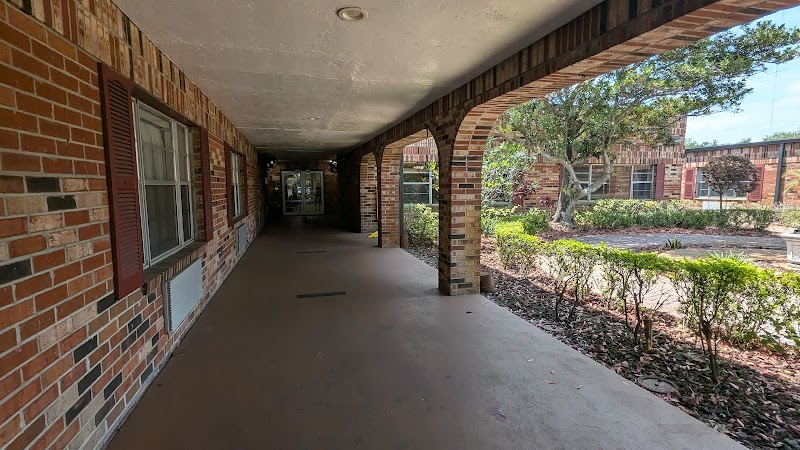
How is Courtyards Of Orlando And Rehab Staffed?

CMS rates COURTYARDS OF ORLANDO CARE CENTER AND REHAB's staffing level at 3 out of 5 stars, which is average compared to other nursing homes. Staff turnover is 48%, compared to the Florida average of 46%. RN turnover specifically is 60%, which is notably high. RNs provide skilled clinical oversight, so turnover in this role can affect medical care quality.

What Have Inspectors Found at Courtyards Of Orlando And Rehab?

State health inspectors documented 28 deficiencies at COURTYARDS OF ORLANDO CARE CENTER AND REHAB during 2022 to 2025. These included: 3 Immediate Jeopardy (the most serious level, indicating potential for serious harm or death) and 25 with potential for harm. Immediate Jeopardy findings are rare and represent the most serious regulatory concerns. They require immediate corrective action.
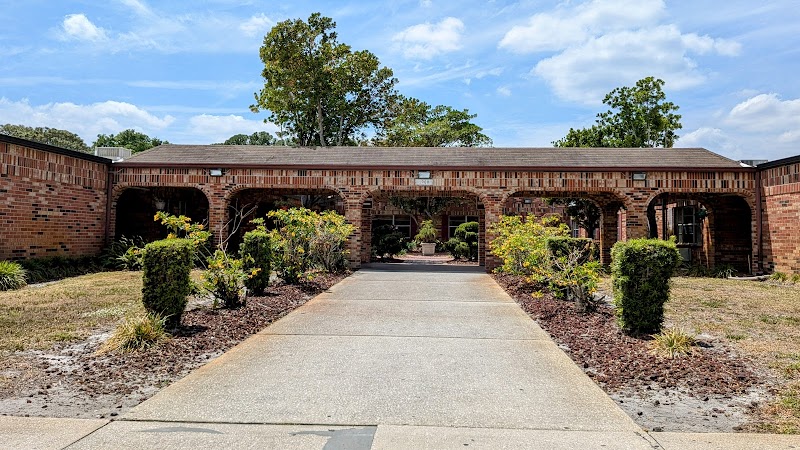
Who Owns and Operates Courtyards Of Orlando And Rehab?

COURTYARDS OF ORLANDO CARE CENTER AND REHAB is owned by a for-profit company. For-profit facilities operate as businesses with obligations to shareholders or private owners. The facility is operated by GOLD FL TRUST II, a chain that manages multiple nursing homes. With 120 certified beds and approximately 114 residents (about 95% occupancy), it is a mid-sized facility located in ORLANDO, Florida.

How Does Courtyards Of Orlando And Rehab Compare to Other Florida Nursing Homes?

Compared to the 100 nursing homes in Florida, COURTYARDS OF ORLANDO CARE CENTER AND REHAB's overall rating (2 stars) is below the state average of 3.2, staff turnover (48%) is near the state average of 46%, and health inspection rating (3 stars) is at the national benchmark.

What Should Families Ask When Visiting Courtyards Of Orlando And Rehab?

Based on this facility's data, families visiting should ask: "What changes have been made since the serious inspection findings, and how are you preventing similar issues?" "Can I visit during a mealtime to observe dining assistance and food quality?" "How do you handle medical emergencies, and what is your hospital transfer rate?" "Can I speak with family members of current residents about their experience?" These questions are particularly relevant given the facility's Immediate Jeopardy citations.

Is Courtyards Of Orlando And Rehab Safe?

Based on CMS inspection data, COURTYARDS OF ORLANDO CARE CENTER AND REHAB has documented safety concerns. Inspectors have issued 3 Immediate Jeopardy citations (the most serious violation level indicating risk of serious injury or death). The facility has a 2-star overall rating and ranks #100 of 100 nursing homes in Florida. Families considering this facility should ask detailed questions about what corrective actions have been taken since these incidents.

Do Nurses at Courtyards Of Orlando And Rehab Stick Around?

COURTYARDS OF ORLANDO CARE CENTER AND REHAB has a staff turnover rate of 48%, which is about average for Florida nursing homes (state average: 46%). Moderate turnover is common in nursing homes, but families should still ask about staff tenure and how the facility maintains care continuity when employees leave.

Was Courtyards Of Orlando And Rehab Ever Fined?

COURTYARDS OF ORLANDO CARE CENTER AND REHAB has been fined $15,764 across 3 penalty actions. This is below the Florida average of $33,237. While any fine indicates a compliance issue, fines under $50,000 are relatively common and typically reflect isolated problems that were subsequently corrected. Families should ask what specific issues led to these fines and confirm they've been resolved.

Is Courtyards Of Orlando And Rehab on Any Federal Watch List?

COURTYARDS OF ORLANDO CARE CENTER AND REHAB is not on any federal watch list. The most significant is the Special Focus Facility (SFF) program, which identifies the bottom 1% of nursing homes nationally based on persistent, serious quality problems. Not being on this list means the facility has avoided the pattern of deficiencies that triggers enhanced federal oversight. This is a positive indicator, though families should still review the facility's inspection history directly.