



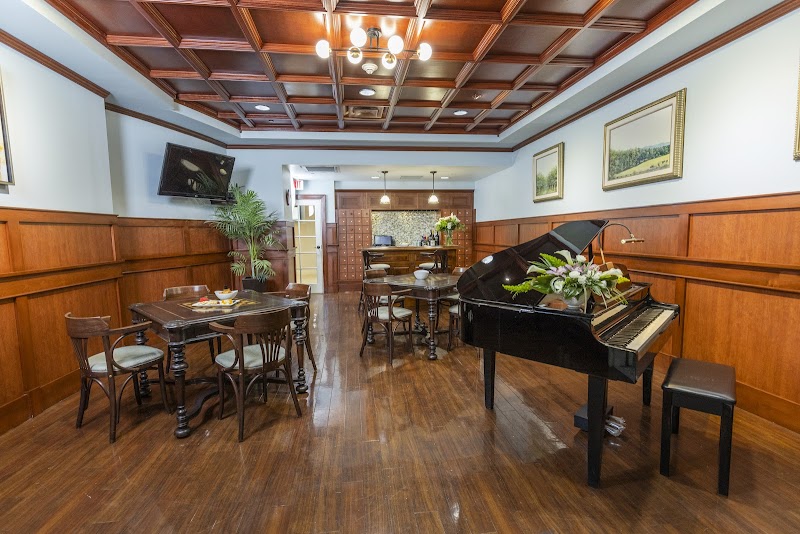
WESTMINSTER TOWERS

70 WEST LUCERNE CIRCLE, ORLANDO, FL 32801 (407) 841-1310
Non profit - Corporation 120 Beds WESTMINSTER COMMUNITIES OF FLORIDA Data: November 2025 1 Immediate Jeopardy citation
Trust Grade
46/100
#443 of 690 in FL
Last Inspection: March 2025

Within standard 12-15 month inspection cycle. Federal law requires annual inspections.

Overview

Westminster Towers in Orlando, Florida, has a Trust Grade of D, indicating below-average performance with some concerning issues. It ranks #443 out of 690 facilities in Florida, placing it in the bottom half, and #22 out of 37 in Orange County, suggesting limited better options nearby. The facility's conditions are worsening, with reported issues increasing from six in 2024 to seven in 2025. Staffing is a relative strength, rated at 4 out of 5 stars with a turnover of 37%, which is better than the state average. However, there have been serious incidents, including a failure to provide CPR as per a resident's advance directive, which contributed to a resident's death, along with issues of not following physician orders for medication management. While RN coverage is above average, these critical concerns highlight significant weaknesses alongside some strengths in staffing.

Trust Score
D
46/100
In Florida
#443/690
Bottom 36%
Safety Record
High Risk
Review needed
Inspections
Getting Worse
6 → 7 violations
Staff Stability
○ Average
37% turnover. Near Florida's 48% average. Typical for the industry.
Penalties
○ Average
$22,133 in fines. Higher than 62% of Florida facilities. Some compliance issues.
Skilled Nurses
✓ Good
Each resident gets 60 minutes of Registered Nurse (RN) attention daily — more than 97% of Florida nursing homes. RNs are the most trained staff who catch health problems before they become serious.
Violations
⚠ Watch
22 deficiencies on record. Higher than average. Multiple issues found across inspections.
★★★☆☆
3.0
Overall Rating
★★★★☆
4.0
Staff Levels
★★★★★
5.0
Care Quality
★★☆☆☆
2.0
Inspection Score
Stable
2024: 6 issues
2025: 7 issues

The Good

  • 4-Star Staffing Rating · Above-average nurse staffing levels
  • 5-Star Quality Measures · Strong clinical quality outcomes
  • Full Sprinkler Coverage · Fire safety systems throughout facility
  • No fines on record
  • Staff turnover below average (37%)

    11 points below Florida average of 48%

Facility shows strength in staffing levels, quality measures, fire safety.

The Bad

3-Star Overall Rating

Near Florida average (3.2)

Meets federal standards, typical of most facilities

Staff Turnover: 37%

Near Florida avg (46%)

Typical for the industry

Federal Fines: $22,133

Below median ($33,413)

Minor penalties assessed

Chain: WESTMINSTER COMMUNITIES OF FLORIDA

Part of a multi-facility chain

Ask about local staffing decisions and management

The Ugly 22 deficiencies on record

1 life-threatening
Mar 2025 6 deficiencies
CONCERN (D)

Potential for Harm - no one hurt, but risky conditions existed

Deficiency F0554 (Tag F0554)

Could have caused harm · This affected 1 resident

**NOTE- TERMS IN BRACKETS HAVE BEEN EDITED TO PROTECT CONFIDENTIALITY** Based on observation, interview, and record review, the facility failed to ensure residents' self-administration of medication f...

Read full inspector narrative →
**NOTE- TERMS IN BRACKETS HAVE BEEN EDITED TO PROTECT CONFIDENTIALITY** Based on observation, interview, and record review, the facility failed to ensure residents' self-administration of medication for 2 of 2 residents reviewed for self-administration of medications, of a total sample of 33 residents, (#57, and #83). 1. Resident #57 was admitted to the facility on [DATE] and readmitted on [DATE] with diagnoses including drug-induced secondary Parkinsonism, bipolar disorder, hypertensive heart disease, and dementia. A review of the Minimum Data Set (MDS) quarterly assessment with an assessment reference date of 12/23/24, revealed resident #57 had a Brief Interview for Mental Status (BIMS) score of 13/15, indicating he was cognitively intact. On 3/10/25 at 1:58 PM, resident #57 was sitting on the right side of his bed. His nightstand was observed with a one-ounce Neosporin ointment. He stated he used it on the small rash on his right thigh. On 3/10/25 at 2:05 PM, the resident's nightstand was observed by primary Registered Nurse (RN) C. She acknowledged the Neosporin ointment on the nightstand. A few minutes later the resident's physician orders were reviewed with RN C, which revealed no physician orders for Neosporin. The RN explained that the resident had no orders and it should not be on his nightstand. RN C explained the nurse gave the medications ordered by the physician, and if a resident had medications unknown to the nurse, it could cause interaction with other medicines. On 3/12/25 at 12:09 PM, the Director of Nursing (DON) acknowledged resident #57's assessment revealed he was not to self-administer his own medications. The DON explained according to facility policy, residents must be evaluated, deemed appropriate and have physician orders to self-administer medication. 2. Resident #83 was admitted to the facility on [DATE] with diagnoses including Covid-19, weakness, acute kidney failure, and hypertension. A review of the MDS admission assessment with an assessment reference date of 1/25/25 revealed resident #83 had a BIMS score of 13/15, which indicated she was cognitively intact. On 3/10/25 at 11:43 AM, resident #83 was seated in her wheelchair in her room. She stated she had arthritis pain in both knees. She said she rubbed her knees with the cream in her nightstand drawer and pointed to the drawer. Resident #83 indicated to open the drawer where a tube of Voltaren cream 50-grams was found. Resident #83 stated her daughter brought it for her to use on her knees as she did at home. On 3/10/25 at 4:48 PM, the resident's nightstand was observed with RN D, the 3:00-11:00 PM supervisor, and the primary nurse who observed the tube of Voltaren at the bedside. A few minutes later resident #83's physician orders were reviewed with RN D who acknowledged there were no orders for the Voltaren. RN D stated he would contact the physician for an order to administer the Voltaren. He acknowledged the medication should not be kept at bedside for self-administration and placed the Voltaren in a plastic bag for safekeeping on the treatment cart. On 3/12/25 at 12:09 PM, the DON stated residents were assessed for self-administration upon admission. The DON stated the resident's assessment revealed she was not to self-administer her own medications. The DON said that facility policy was residents must be evaluated, deemed appropriate and have physician orders to self-administer medication. A review of the facility's policy and procedure for Resident Self-Administration of Medication dated 6/2023 revealed, A resident may only self-administer medications after the facility's interdisciplinary team has determined which medications may be self-administered safely.
CONCERN (D)

Potential for Harm - no one hurt, but risky conditions existed

Deficiency F0655 (Tag F0655)

Could have caused harm · This affected 1 resident

**NOTE- TERMS IN BRACKETS HAVE BEEN EDITED TO PROTECT CONFIDENTIALITY** Based on interview, and record review, the facility failed to ensure a written summary of the baseline care plan was provided to...

Read full inspector narrative →
**NOTE- TERMS IN BRACKETS HAVE BEEN EDITED TO PROTECT CONFIDENTIALITY** Based on interview, and record review, the facility failed to ensure a written summary of the baseline care plan was provided to 1 of 2 residents reviewed for care plans, (#390); and failed to provide a written summary of the baseline care plan within the required time frame for 1 of 2 residents reviewed for care plans, (#546), of a total sample of 34 residents. Findings: 1. Resident #390, a [AGE] year-old male was admitted to the facility on [DATE]. His diagnoses included right ankle osteomyelitis, asthma, generalized anxiety disorder, and open wound, right foot. Review of the admission Minimum Data Set (MDS) assessment dated [DATE], revealed the resident's cognition was intact, with a Brief Interview For Mental Status (BIMS) score of 15 of 15. On 3/10/25 at 2:46 PM, resident #390 stated he did not recall receiving a written summary of his initial care plan. Review of the resident's Baseline Care Plan Assessment with effective date of 2/23/25, and lock date of 2/24/25, revealed signatures for staff who completed the plan, however a signature for the resident or his representative was not identified. On 3/12/25 at 11:13 AM, the Social Service Director (SSD) stated baseline care plans were initiated on admission. He explained that the Interdisciplinary Team (IDT) would review the baseline care plan with the resident/ family, the baseline care plan would then be signed by the members of the IDT, the resident/ family, and nursing would provide a copy of the baseline care plan to the resident/family. On 3/12/25 at 12:41 PM, the 2nd Floor Unit Assistant Director of Nursing (ADON) stated he completed the baseline care plans, reviewed them with the residents/ families, signed the baseline care plan, and provided a copy to the residents/families. Resident #390's Baseline Care Plan Assessment was reviewed with the ADON. He confirmed he completed the baseline care plan and acknowledged that a signature for the resident/ representative was not documented on the baseline care plan. The ADON verbalized the baseline care plan should be signed by the resident, printed and a copy provided to the resident, then the signed, printed copy would be uploaded to the resident's medical record. He could not say if a copy was provided to resident #390 as required. A review of the resident's clinical records, revealed documentation to indicate a copy of the baseline care plan was provided to the resident/representative could not be identified. This was acknowledged by the ADON. On 3/12/25 at 2:32 PM, the Director of Nursing (DON) explained that when there was a new admission, the baseline care plan was triggered, should be completed by the IDT, printed, and a copy provided to the resident/representative. She said the ADONs were responsible to obtain a signature from the resident/representative. On 3/12/25 at 3:12 PM, the DON, and Administrator stated they could not locate a copy of the resident's baseline care plan. The Administrator stated they spoke with the resident, showed him the document and the resident said he did not recall seeing the document. The facility could not identify any documentation or locate a copy of the signed baseline care plan to indicate a copy was provided to the resident/representative. 2. Resident #546 was admitted to the facility on [DATE] with diagnoses including aftercare following surgery on the digestive system, weakness, low back pain, and fistula of the intestines. Review of the MDS admission assessment with an assessment reference date of 3/06/25 revealed resident #546 had a BIMS score of 14/15, which indicated she was cognitively intact. On 3/10/25 at 2:20 PM, resident #546 stated she was admitted to the facility for care following surgery on Friday, 2/28/25, and had received an explanation of her care plan. The resident stated she remembered signing many papers since admission but was not given a copy of the care plan. A review of the resident's clinical records revealed a baseline care plan, which indicated resident #546's admission date was 2/28/25. The summary and signature areas revealed the document was not signed until 3/03/25 by the ADON and by the resident on 3/04/25. On 3/13/25 at 1:03 PM, the 2nd floor ADON said resident #546 was admitted on a Friday. The ADON said he did not work Saturdays, so the Weekend Supervisor should have completed the baseline care plan that day. The ADON stated he finished the baseline care plan on 3/03/25 and gave it to the resident to sign on 3/04/25. He acknowledged that the baseline care plan should have been completed and signed within 48 hours of admission, so the resident could be knowledgeable of the care plan. Review of the facility's policy and procedure for baseline care plan dated 7/2023 revealed, The baseline care plan will be developed within 48 hours of a resident's admission. A supervising nurse shall verify within 48 hours that a baseline care plan has been developed .A written summary of the baseline care plan shall be provided to the resident and representative .the person providing the written summary of the baseline care plan shall: a. Obtain a signature from the resident/representative to verify that the summary was provided. b. Make a copy of the summary for the medical record.
CONCERN (D)

Potential for Harm - no one hurt, but risky conditions existed

ADL Care (Tag F0677)

Could have caused harm · This affected 1 resident

**NOTE- TERMS IN BRACKETS HAVE BEEN EDITED TO PROTECT CONFIDENTIALITY** Based on observation, interview and record review, the facility failed to provide showers per resident preference and as schedul...

Read full inspector narrative →
**NOTE- TERMS IN BRACKETS HAVE BEEN EDITED TO PROTECT CONFIDENTIALITY** Based on observation, interview and record review, the facility failed to provide showers per resident preference and as scheduled for 1 of 2 resident reviewed for Activities of Daily Living (ADLs), of a total sample of 34 residents, (#75). Findings: Review of resident #75's medical record revealed he was originally admitted to the facility on [DATE] and readmitted from a short-term, acute hospital on [DATE]. His diagnoses included atrial fibrillation, chronic pain syndrome, spinal stenosis (narrowing of the space around the spinal cord or nerves) and fusion of spine. Review of resident #75's quarterly Minimum Data Set (MDS) assessment with Assessment Reference Date of 2/17/25 revealed he had a Brief Interview for Mental Status score of 15 out of 15 which indicated intact cognition. The MDS assessment showed resident #75 was dependent on staff for showers/baths and required extensive assistance for personal hygiene. The MDS assessment noted no rejection of care necessary to obtain goals for his health and well-being. Review of resident #75's comprehensive care plan with ADL focus revised on 2/26/25 revealed he preferred showers three times a week and as needed. The interventions showed he required transfers with a mechanical lift by two staff. Review of resident #75's [NAME] Report (plan of care used by Certified Nursing Assistants (CNAs)) revealed showers were scheduled every Monday, Wednesday, and Friday during the 7 AM to 3 PM shift. On 3/10/25 at 11:22 AM, resident #75 stated he took daily showers prior to his admission to the facility. He shared he had not received showers as scheduled in the facility. He explained he was not asked if he wanted his shower on the scheduled shower days and at times received a bed bath instead, but he preferred showers. Review of resident #75's ADL - Showers Report from February to March 2025 revealed he did not receive a shower or bed bath on the following scheduled days: 2/05, 2/12, 2/19, 2/28, 3/03, 3/05, and 3/10. Review of resident #75's Progress Notes from February to March 2025 revealed no refusals of showers or care documented. On 3/12/25 at 1:30 PM, CNA E stated resident #75 required total care for showers. She explained when resident #75 refused showers, she offered, and he agreed to bed bath. She indicated she informed the nurse when he received a bed bath instead of a shower so the nurse could document why she gave a bed bath. On 3/12/25 at 1:46 PM, CNA F stated resident #75 required transfer assistance with a mechanical lift and was dependent on staff for showers. She shared he sometimes refused showers. She explained she informed the nurse when he refused showers, even when she provided a bed bath. She indicated she documented what he received in his medical record. She stated documentation should reflect a bed bath or shower three times per week. On 3/12/25 at 2:46 PM, Registered Nurse (RN) G stated the facility honored resident wishes. RN G indicated when a resident refused showers, she entered a progress note in the medical record. She stated she was not aware of any refusals for showers for resident #75. RN G said, No one has reported any refusals to me. On 3/12/25 at 3:52 PM, the Unit Manager (UM) for the 3rd floor unit stated she was not aware of any refusals of showers from resident #75. Later at 5:05 PM, the UM indicated she could not say why showers were not documented when scheduled. She mentioned she checked the nursing staff documentation on her unit, but said she did not feel comfortable discussing her findings with the surveyor. On 3/12/25 at 5:39 PM, the Director of Nursing (DON) explained residents received showers based on the schedule in the [NAME]. She stated she was not aware resident #75 was not getting showers as scheduled or refusing showers. The DON indicated she expected CNAs to ask residents if they wanted to take a shower on their scheduled days and if they refused, the CNAs should offer a bed bath. She shared that refusals should be documented in the medical record. Review of the Resident Showers policy and procedure revised on 8/2023 read, Residents will be provided showers as per request or as per facility schedule protocols .
CONCERN (D)

Potential for Harm - no one hurt, but risky conditions existed

Deficiency F0840 (Tag F0840)

Could have caused harm · This affected 1 resident

**NOTE- TERMS IN BRACKETS HAVE BEEN EDITED TO PROTECT CONFIDENTIALITY** Based on observation, interview, and record review, the facility failed to obtain an outside eye specialist appointment for 1 of...

Read full inspector narrative →
**NOTE- TERMS IN BRACKETS HAVE BEEN EDITED TO PROTECT CONFIDENTIALITY** Based on observation, interview, and record review, the facility failed to obtain an outside eye specialist appointment for 1 of 1 residents reviewed for care coordination, of a total sample of 34 residents, (#45). Findings: Review of resident #45's medical record revealed an admission date of 6/24/22. His diagnoses included quadriplegia unspecified (paralysis), slurred speech, polyneuropathy, and mild vascular dementia with anxiety. His record included that he had no known allergies. His annual Minimum Data Set, dated [DATE] indicated his Brief Interview of Mental Status score was 13/15, meaning his cognition was intact. Review of resident #45's medical record revealed a current order that resident #45 may have vision consults as needed for medical necessity with a start date of 6/24/22. Review of resident #45's current medications included artificial tears solution 1% drop in both eyes two times a day for eye irritation, with a start date of 3/06/25. Review of resident #45's January 2025 medication administration record revealed an order for Artificial Tears Solution 1%, 2 drops in both eyes every 4 hours as needed for eye irritation. The record indicated the medication was administered four times that month. Review of resident #45's February 2025 medication administration record revealed an order for Artificial Tears Solution 1%, 2 drops in both eyes every 4 hours as needed for eye irritation and on 2/28/25 the drops were indicated on the medication administration record as not being effective. Review of resident #45's administration note dated 2/28/25 regarding the ineffectiveness of the Artificial Tears Solution detailed that the resident was complaining of right eye discomfort. It was noted that the physician was aware and that resident #45 was waiting to be seen by an eye medical doctor. Review of resident #45's medication administration record for February 2025 indicated Moxifloxacin HCl ophthalmic solution 0.5% (an antibiotic eye drop) was administered, 1 drop in right eye three times a day for pink eye. The doses were documented as being administered three times a day from 2/03/25 to 2/10/25. Review of resident #45's progress note dated 3/06/25 revealed that resident #45's physician had been notified of the resident's eye complaints and ordered artificial tears twice a day as well as an eye doctor consult. On 3/10/25 at 10:13 AM, resident #45 was observed with watering eyes and reddened conjunctivas (the white part of the eye surrounding the pupil). A few days later on 3/13/25 at 12:23 PM, resident #25 said the pain in his right eye was an 8/10 this morning, but described the pain as, not too bad now. Both of the resident's eyes were tearing and had red conjunctivas. On 3/12/25 at 9:08 AM, the Assistant Director of Nursing (ADON)/Unit Manager (UM) of the 3rd floor reviewed an email she had sent 1/08/25 to the Social Services Director requesting the resident be seen by an eye specialist provider. She verified there had been no lab sampling of eye fluid to assess if resident #45 had a bacterial infection or had received a course of antibiotic eyedrops in 2025. On 3/12/25 at 9:18 AM, the Social Services Director verified that he received the ADON/UM 3rd floor's email sent 1/08/25 requesting eye specialist care for resident #45. He said the plan was for resident #45 to be seen by the eye care specialist that provides services within the facility on 1/13/25. The Social Services Director called the office of the eye care specialist group who is the facility's in-house eye specialist provider by phone. They confirmed they had not seen resident #45 as a patient in 2025. The Social Services Director could not explain why resident #45 did not have the eye specialist consult on 1/13/25. The Social Services Director provided documentation that was dated 2/06/25 that indicated the eye specialist who provided services in the facility was out of network for resident #45's health insurance. The Social Services Director could not recall when nor did he document when he told resident #45 that his insurance would not cover the eye specialist provider who visited the facility. The Social Services Director stated that resident #45 had told him he did not have enough money to pay for the eye specialist service that comes to the facility out of pocket. The Social Services Director verified he did not do any additional coordination of care for resident #45 to see an eye specialist after resident #45 said he could not pay out of pocket for the care. The Social Services Director said that he could request from the facility's Administration to pay for resident #45 to get care from the eye specialist service who provides care within the facility, and he had no explanation why he had not previously arranged for that.
CONCERN (D)

Potential for Harm - no one hurt, but risky conditions existed

Medical Records (Tag F0842)

Could have caused harm · This affected 1 resident

**NOTE- TERMS IN BRACKETS HAVE BEEN EDITED TO PROTECT CONFIDENTIALITY** Based on interview, and record review, the facility failed to ensure documentation was accurate and complete for 1 of 1 resident...

Read full inspector narrative →
**NOTE- TERMS IN BRACKETS HAVE BEEN EDITED TO PROTECT CONFIDENTIALITY** Based on interview, and record review, the facility failed to ensure documentation was accurate and complete for 1 of 1 resident reviewed for accidents, of a total sample of 34 residents, (#55). Findings: Resident #55, a 98- year-old male was admitted to the facility on [DATE]. His diagnoses included heart failure, weakness, unsteadiness on feet, difficulty walking, dementia, cardiac pacemaker, and acute embolism and thrombosis of right femoral vein Review of the resident's admission Minimum Data Set (MDS) assessment dated [DATE], revealed the resident's cognition was moderately impaired with a brief interview for mental status score of 8 of 15, moderate cognitive impairment. The assessment indicated the resident required substantial/maximal assistance for toileting hygiene, and partial/moderate assistance for sit to stand, and for chair/bed-to chair transfer. A care plan for at risk for falls and injuries related to need for physical assistance, and weakness was initiated on 1/13/25. Interventions included, assist resident with toileting, incontinence care, and provide physical assistance for transfers. The resident's care plan for impaired mobility and self-care deficit related to cognitive impairment related to dementia, medical conditions, and weakness was initiated on 1/13/25. Interventions revealed the resident required one person assist with transfers. On 3/10/25 at 12:44 PM, the resident's family member stated there was limited help on nights and weekend at the facility. He verbalized that a couple of Mondays ago the resident was wandering by the elevators, trying to get out, but he did not have his walker. Since that incident, the family decided to hire private sitters, 24/7. On 3/12/25 at 9:57 AM, resident #55 was lying in bed on his back, his eyes were closed, his family member and a private sitter were in the room. The family member stated that the resident's wandering happened approximately four Mondays ago. He said the resident wandered into the hallway, was at the elevator, and ended up in the bathroom of another resident in a room next to his room. He stated that another family member was notified and spoke to the supervisor about the incident. The family member stated that when that happened, the family increased the private sitter to 24/7. Review of the resident's clinical records for the period 1/10/25 to 3/12/25 revealed no documentation regarding the incident reported by the resident's family, and there were no entries on the facility's incident log pertaining to the resident for the same period. On 3/12/25 at 2:16 PM, an interview was conducted with the Administrator, the Director of Nursing (DON), and the Administrator in Training. The Administrator stated that about a month ago close to the resident's admission he was confused and went to the wrong bathroom, he went out of his room to the room next to his at approximately 6:30 AM-7:00 AM. The Administrator stated the resident was not exit seeking, and said it was a singular incident, not a pattern. The DON explained the resident did not wander; they recalled the night shift nurse found the resident in the next room. On 3/13/25 at 9:21 AM, the DON stated she called all of the night nurses, and they were not aware of the incident. She stated she checked documentation in the resident's clinical record and could not identify the incident described by the resident's family. On 3/13/25 at 9:30 AM, the Administrator stated that on 2/26/25, he met with the resident's son, and he voiced concern that the resident was found in the room next to his room. The Administrator said the incident was reported to the 11 PM-7 AM nurse by the resident's primary care giver that came in on 2/25/25 at 6:30 AM. He verbalized the resident had a private care giver since his admission, but this service was increased to 24/7. The Administrator recalled he sent an email to the team that comprised of the Director of Rehabilitation, the Social Service Director, the DON, and Assistant DON on 2/26/25, because the son had additional concerns he wanted to address. Record review of the resident's clinical record revealed no documentation regarding the incident, and no documentation could be identified to indicate a skin assessment was completed, or to indicate if any monitoring of the resident's condition was performed status post the incident on 2/25/25. There was also no documentation by the nurse whom the Administrator stated the incident was reported to. This was acknowledged by the Administrator. On 3/13/25 at 10:45 AM, in a telephone interview, Registered Nurse (RN) A stated she worked as the 11:00 PM to 7:00 AM supervisor. She said she was off at the time she was told the incident occurred, and when she returned to work the following night Certified Nursing Assistant (CNA) B told her that resident #55 was found in another resident's bathroom. The RN stated she passed the information on in report to the oncoming nurse the following morning. RN A said usually a note would be documented when an incident occurred. However, no documentation could be identified. On 3/13/25 at 11:12 AM, a telephone call was made to CNA B. However, the interview could not be completed due to her inability to hear adequately. The policy Documentation in Medical Record reviewed/revised 6/2023 read, Each resident's medical record shall contain an accurate representation of the actual experiences of the resident and include enough information to provide a picture of the resident's progress through complete, accurate, and timely documentation . Documentation shall be completed at the time of service, but no later than the shift in which the assessment, observation, or care service occurred.
CONCERN (E)

Potential for Harm - no one hurt, but risky conditions existed

Quality of Care (Tag F0684)

Could have caused harm · This affected multiple residents

**NOTE- TERMS IN BRACKETS HAVE BEEN EDITED TO PROTECT CONFIDENTIALITY** Based on interview, and record review, the facility failed to follow physician orders and ensure the comprehensive care plan was...

Read full inspector narrative →
**NOTE- TERMS IN BRACKETS HAVE BEEN EDITED TO PROTECT CONFIDENTIALITY** Based on interview, and record review, the facility failed to follow physician orders and ensure the comprehensive care plan was implemented for 1 of 5 residents reviewed for unnecessary medications and medication regimen, of a total sample of 34 residents, (#43). Findings: Review of resident #43's medical record revealed she was originally admitted to the facility on [DATE] and readmitted from a short-term, acute hospital on 1/13/25. Her diagnoses included atrial fibrillation, hypertension (HTN), type 2 diabetes, and stroke. Review of resident #43's comprehensive care plan with a cardiac focus revised on 3/12/25 revealed potential for altered cardiovascular status. The interventions included, Administer cardiac medications as ordered . Monitor vital signs as ordered. Review of resident #43's medical record revealed a physician order dated 1/13/25 for Hydralazine 100 milligrams (mg) three times a day (TID) for HTN. The order directed the nurses to hold the medication if the systolic blood pressure (SBP) was less than 110 and the heart rate (HR) was less than 65. Review of the Pharmacist's Report to Nursing form dated 6/22/24 read, This resident has the following order which includes blood pressure (BP) and/or heart rate parameters to follow prior to administration. The form listed Hydralazine 100 mg TID for HTN, hold if SBP was less than 110 or HR less than 65. The pharmacist's recommendation included, Suggest ensure parameters are understood, followed and documented accurately. Per EMAR (Electronic Medication Administration Record), HR has been less than 65 and medication was administered or checked as administered multiple times. The form had a check mark with the Director of Nursing (DON)'s initials and dated 9/11/24. Review of resident #43's Medication Administration Record (MAR) for February 2025 revealed Hydralazine 100 mg was administered outside of the ordered parameters, 27 times with a HR of less than 65 as follows: 6:00 AM dose: 2/2, 2/3, 2/7, 2/10, 2/13, 2/14, 2/18, 2/23, 2/24, 2/26, and 2/28 2:00 PM dose: 2/2, 2/3, 2/9, 2/11, 2/12, 2/18, 2/19, 2/20, 2/21, and 2/28 10:00 PM dose: 2/4, 2/7, 2/11, 2/15, 2/16, and 2/21 Review of resident #43's MAR for March 2025 revealed Hydralazine 100 mg was administered outside of the ordered parameters, 13 times with a HR of less than 65 as follows: 6:00 AM dose: 3/2, 3/3, 3/4, and 3/9 2:00 PM dose: 3/2, 3/3, 3/4,3/7, and 3/10 10:00 PM dose: 3/1, 3/3, 3/9, and 3/12 On 3/13/25 at 11:45 AM, Licensed Practical Nurse (LPN) H explained not all the medications for HTN included parameters. She was asked to review resident #43's order for Hydralazine. LPN H stated she would review the BP and HR before administering the medication. LPN H reviewed the MAR for March 2025 and confirmed she documented she administered Hydralazine on 3/03/25, 3/04/25, and 3/10/25 even though the HR was less than 65. When asked why medication was given outside of the parameters, she did not respond. LPN H then said, the parameter used to be different and she may have been going by what the previous parameter was. She stated she did not realize the order had been changed. She agreed she should follow the current physician orders. Review of resident #43's MAR for February 2025 revealed Hydralazine 100 mg was administered by LPN H seven times with a HR of less than 65 on 2/3, 2/9, 2/11, 2/18, 2/19, 2/20, and 2/28. In March 2025, she administered the medication three times with a HR of less than 65 on 3/3, 3/4, and 3/10. On 3/13/25 at 12:33 PM, the DON acknowledged nurses documented Hydralazine was given outside the parameters set by the physician. She explained the nurses were not reading resident #75's order for Hydralazine correctly. The DON indicated she expected nurses to follow the physician orders. Review of the Medication Regimen Review policy and procedure revised on 6/2023 read, Facility staff shall act upon all recommendations according to procedures for addressing medication regimen review irregularities. Review of the Medication Administration policy and procedure revised on 7/2023 revealed an intent to administer medications as ordered by the physician and in accordance with professional standards of practice. The guidelines read, Obtain and record vital signs, when applicable or per physician orders. When applicable, hold medication for those vital signs outside the physician's prescribed parameters.
Mar 2025 1 deficiency 1 IJ
CRITICAL (J) 📢 Someone Reported This

A family member, employee, or ombudsman was alarmed enough to file a formal complaint

Immediate Jeopardy (IJ) - the most serious Medicare violation

Deficiency F0678 (Tag F0678)

Someone could have died · This affected 1 resident

**NOTE- TERMS IN BRACKETS HAVE BEEN EDITED TO PROTECT CONFIDENTIALITY** Based on interview, and record review, licensed nurses failed to follow the facility's policy and procedure for Cardiopulmonary ...

Read full inspector narrative →
**NOTE- TERMS IN BRACKETS HAVE BEEN EDITED TO PROTECT CONFIDENTIALITY** Based on interview, and record review, licensed nurses failed to follow the facility's policy and procedure for Cardiopulmonary Resuscitation (CPR) related to verification of code status in an emergency for 1 of 13 residents reviewed for advance directives, (#1). On [DATE] at approximately 7:00 PM, resident #1 was observed unresponsive in her bed. Registered Nurse (RN) A took her vitals and notified RN C resident #1 had passed away. RN A failed to verify resident #1's code status and failed to provide CPR per her wishes. Emergency Medical Services was never called. The facility failed to honor the resident's wish to be resuscitated and the physician order for Full Code status. The facility's failure to ensure staff followed procedures related to honoring an advance directive to provide lifesaving measures including CPR for a resident on hospice care contributed to resident #1's death. This action placed all residents who received hospice care at risk of not having their wishes honored. This failure resulted in Immediate Jeopardy starting on [DATE]. The Immediate Jeopardy was removed on [DATE]. The scope and severity of the deficiency was decreased to a D, no actual harm with potential for more than minimal harm that is not Immediate Jeopardy. Findings: Resident #1 was an [AGE] year-old female admitted to the facility on [DATE] with diagnoses including unspecified sequelae of cerebral infarction (stroke), adult failure to thrive, moderate protein-calorie malnutrition, major depressive disorder and atherosclerotic heart disease (hardening of the blood vessels). Review of the Minimum Data Set (MDS) quarterly assessment with assessment reference date of [DATE] revealed resident #1 had a Brief Interview for Mental Status score of 06/15 which indicated she had severe cognitive impairment. The document revealed she had a prognosis that might result in a life expectancy of less than six months and she received hospice care. Review of the electronic medical record (EMR) revealed a social services progress note dated [DATE] which indicated the Social Services Director (SSD) spoke with resident #1 and her husband regarding her code status. The resident and her husband rescinded her previous Do Not Resuscitate (DNR) order to become a full code. Resident #1's husband stated to the SSD that was what his wife wanted. Resident #1 had a care plan for advanced directives initiated on [DATE]. The focus indicated the advanced directives had been reviewed and included, FULL CODE. The goal was the resident's wishes would be honored through the next review date. Interventions included for staff to make the resident's wishes known through the care continuum. Resident #1's EMR contained a physician order dated [DATE] which read, Full Code. The words Full Code were displayed under the Advance Directive section on the Medication Administration Record for February 2025. A care plan meeting was held on [DATE] with resident #1's husband. Code status was reviewed and no changes were made to her advanced directives. A progress note dated for [DATE] read, She remains a Full Code status currently. A Health Status Note dated [DATE] at 4:02 PM, indicated resident #1 had an oxygen saturation rate of 80% and an order was obtained for 2 liters of oxygen via nasal cannula. Hospice was contacted and orders for Morphine and Ativan were received. No other notes were recorded until [DATE] at 9:11 PM which indicated resident #1 was pronounced deceased at approximately 8:15 PM. The note indicated family and hospice were present at that time after being contacted by the facility. In a phone interview on [DATE] at 1:22 PM, RN A verified she was assigned to resident #1 on the 3:00-11:00 PM shift on [DATE]. She recalled the nurse from the previous shift reported resident #1 was not doing well and hospice had been notified. RN A stated resident #1's husband approached her earlier on the 3:00-11:00 PM shift and requested she contact hospice again for someone to come and evaluate her for crisis care. She explained the resident's husband expressed he wanted her to be comfortable and not suffer. RN A recalled she entered resident #1's room later at approximately 7:00 PM and observed the resident was unresponsive and did not appear to be breathing. She stated she checked resident #1's vital signs and did not find a pulse or respirations. RN A explained she asked RN C to assist and they provided postmortem care. RN A verified she did not initiate CPR. She explained resident #1 received hospice services and she had always known resident #1 to be a DNR code status. RN A acknowledged she was not aware resident #1 had Full Code status. She stated the facility procedure was to look in the resident's chart to verify the resident's code status. RN A acknowledged she would have realized the resident was a Full Code and not a DNR if she had looked in the chart. In a phone interview on [DATE] at 3:24 PM, RN C verified she was working on the 3:00-11:00 PM shift on [DATE] but was not assigned to resident #1. RN C recalled she was in a room with another resident when RN A approached her and informed her resident #1 had expired. RN C stated she went to resident #1's room afterwards and asked if everything had been done and was told it had. She reported she assisted RN A in providing postmortem care. RN C explained she did not hear a Code Blue announcement and thought RN A had verified resident #1's code status prior to alerting her to resident #1's death. RN C stated procedure was to call a Code Blue if a resident was found unresponsive and staff would come with the crash cart and the resident's chart to verify code status prior to initiating CPR. In a phone interview on [DATE] at 12:54 PM, RN Supervisor B confirmed she was working the 3:00-11:00 PM shift on [DATE]. She recalled being on a different floor orienting a new resident and their answering questions when RN A called to let her know resident #1 had expired. RN Supervisor B stated she went to the other floor and confirmed resident #1 had no vital signs. She proceeded to call the hospice and inform them of the resident's death. RN Supervisor B explained she assumed resident #1 was a DNR because she was under hospice care. She stated she was not aware a resident could be Full Code under hospice care. RN Supervisor B explained that RN A did not inform her resident #1 was a Full Code. She acknowledged she did not verify the resident's code status as she thought RN A had already done so. RN Supervisor B expressed she was not aware there was an error until the Director of Nursing contacted her a few days later on [DATE]. On [DATE] at 2:14 PM, resident #1's husband confirmed she desired to have resuscitative measures and be a Full Code. He explained his wife had been very active in the community prior to her stroke in [DATE] but had not been the same since. He recalled signing up for hospice care a couple of months ago but was not sure what could be done for her as she refused a lot of care. He reported during the last week of her life, he would ask how she was doing, and she would reply, I am still here, if she said anything at all. Resident #1's husband recalled she was not very responsive during his visit earlier in the day on [DATE]. He left to go to dinner and was later notified he needed to return to the health center because she had passed away. Resident #1's husband again confirmed she was a Full Code and explained he did not think CPR would benefit her, but it was her wish to have it performed. He expressed he was not going to argue with her. On [DATE] at 2:41 PM, the Administrator stated he and the Director of Nursing (DON) were notified of resident #1's death on [DATE] but were not notified she had full code orders. He recalled the 3rd Floor Assistant Director of Nursing notified him and the DON of discrepancies in the documentation regarding resident #1's death. The documentation was reviewed and did not appear to support the events of that evening. The Administrator reported they could not reach RN A until 1:52 PM on [DATE] to get details of what had occurred. He stated from the interviews with RN A, RN C and RN Supervisor B, they determined a Code Blue was not called and resident #1 was not provided CPR. The Administrator acknowledged RN A failed to verify resident #1's code status per facility policy and therefore did not initiate CPR. He reported resident #1 was later pronounced deceased by the hospice nurse and her body was removed by the funeral home. The Facility's policy and procedure for CPR dated [DATE] read, If a resident experiences a cardiac arrest, facility staff will provide basic life support, including CPR, prior to the arrival of emergency medical services, and in accordance with the resident's advance directives. Review of the immediate corrective measures implemented by the facility revealed the following, which were verified by the survey team: *On [DATE] Administrator and DON were made aware of discrepancies in resident #1's chart regarding her passing, and initiated an investigation. *On [DATE] the facility completed an in-house audit for code status of all residents. No additional issues were identified. *On [DATE] through [DATE] current licensed nurses were educated on the facility's CPR policy and on the procedure for verifying code status prior to initiating or withholding lifesaving procedures including CPR. Code Blue drills were conducted to validate comprehension. *On [DATE] resident #1's husband was notified regarding discrepancies found and investigation. *On [DATE] law enforcement and elderly affairs were notified out of abundance of caution. An immediate report was filed with the state agency. *On [DATE] a record review of resident #1 was completed by the DON. *On [DATE] Social Service Director completed an audit of all current residents' code status. No additional residents were identified with concerns. * On [DATE] the RN Supervisor B and RN A received personal training from the DON on checking residents' code status and starting Code Blue procedures. Both nurses were suspended pending investigation. * On [DATE] Nursing Supervisors received individual education on checking code status when residents were unresponsive and initiating Code Blue procedures from the DON. * On [DATE] a mass text was sent to all nursing staff containing education regarding if a resident was found unresponsive, it was the responsibility of the nurse to verify code status in the chart and initiate CPR if Full Code *64 of 81 total licensed nurses received education; 79% of nurses: On [DATE] 48 out of 81 nurses completed the education, 24% of nurses On [DATE] an additional 10 of 81 nurses completed their education, 71% of nurses On [DATE] an additional 6 of 81 nurses completed their education, 79% of nurses Remaining licensed nurses would receive education prior to working next shift *New hire nurses at the facility would receive the above education during orientation and prior to working an assignment. *On [DATE] through [DATE] mock Code Blue drills were conducted every shift for 72 hours to validate education received was retained. Starting [DATE] weekly code blue drills to be conducted on varying shifts and days to include all shifts for three months to include all shifts. Random weekly audits to be completed three times a week for three months to ensure staff follow facility procedure for verifying residents' code status prior to initiating or withholding CPR. *New hire nurses at the facility to participate in a mock code drill during orientation and prior to working an assignment. *Ad Hoc Quality Assurance and Performance Improvement (QAPI) held on [DATE] to review the recommendations made from the investigation. Those in attendance included the Medical Director, Administrator, Director of Nursing, Assistant Director of Nursing, Social Service Director, Admissions Director, Therapy Director, Unit Managers, Director of Dietary, Activities Director and MDS nurses. The QAPI committee reviewed education in progress and code blue drills. Interviews conducted on [DATE] with 6 licensed nurses and 11 Certified Nursing Assistants across all shifts indicated they were knowledgeable of advanced directives and facility procedures to verify the resident's code status prior to providing CPR. The surveyor validated the education with attendance sheets for code blue drills and in-services. Review of QAPI audits revealed daily code blue drills were conducted per performance improvement plan. The resident sample was expanded to include five additional residents currently receiving hospice services and three additional residents who expired in the facility in the last 60 days. Interviews and record reviews revealed no concerns for residents #2 through #13 related to provision of CPR related to wishes expressed through advanced directives. Based on the facility's corrective actions, the survey team determined the Immediate Jeopardy was removed on [DATE].
Aug 2024 2 deficiencies
CONCERN (D) 📢 Someone Reported This

A family member, employee, or ombudsman was alarmed enough to file a formal complaint

Potential for Harm - no one hurt, but risky conditions existed

Report Alleged Abuse (Tag F0609)

Could have caused harm · This affected 1 resident

**NOTE- TERMS IN BRACKETS HAVE BEEN EDITED TO PROTECT CONFIDENTIALITY** Based on interview and record review, the facility failed to report timely an alleged violation of neglect for 1 of 1 resident r...

Read full inspector narrative →
**NOTE- TERMS IN BRACKETS HAVE BEEN EDITED TO PROTECT CONFIDENTIALITY** Based on interview and record review, the facility failed to report timely an alleged violation of neglect for 1 of 1 resident reviewed for neglect, of a total sample of 3 residents, (#1). Findings: Resident #1 was admitted to the facility on [DATE] with diagnoses including Alzheimer's disease, dementia, abnormalities of gait and mobility and major depressive disorder. Review of the Minimum Data Set admission assessment with assessment reference date of 7/15/24 revealed resident #1 had a Brief Interview for Mental Status score of 10/15 which indicated she had moderate cognitive impairment. The document indicated she used a wander/elopement alarm daily. A care plan for wandering and at risk for elopement was initiated 7/08/24. Interventions included the use of a wander/elopement alarm daily. Review of resident #1's progress notes for the month of August 2024 revealed she was unable to be located on the morning of 8/07/24 during rounds by the 7:00 AM - 3:00 PM nurse. A facility search was initiated. The facility discovered resident #1 left the facility unsupervised and walked to a nearby hospital where she was located. On 8/21/24 at 11:00 AM, the Administrator confirmed he was responsible for filing reports of allegations of abuse or neglect per state and federal guidelines. The administrator recalled he was in the facility at the time resident #1 was discovered missing on 8/07/24 at 7:14 AM. He stated the immediate report of neglect was filed on 8/08/24 around 3:00 PM. The Administrator acknowledged the report was filed late but stated he wanted to be sure the investigation was complete before submitting. Review of the facility's policy and procedure for Abuse, Neglect and Exploitation revealed alleged violations would be reported no later than 24 hours after the allegation was made if the event did not involve abuse and did not result in serious bodily injury.
CONCERN (D) 📢 Someone Reported This

A family member, employee, or ombudsman was alarmed enough to file a formal complaint

Potential for Harm - no one hurt, but risky conditions existed

Accident Prevention (Tag F0689)

Could have caused harm · This affected 1 resident

**NOTE- TERMS IN BRACKETS HAVE BEEN EDITED TO PROTECT CONFIDENTIALITY** Based on observation, interview, and record review, the facility failed to provide adequate supervision to prevent elopement for...

Read full inspector narrative →
**NOTE- TERMS IN BRACKETS HAVE BEEN EDITED TO PROTECT CONFIDENTIALITY** Based on observation, interview, and record review, the facility failed to provide adequate supervision to prevent elopement for 1 of 1 resident reviewed for actual elopement, of a total sample of 3 residents reviewed for elopement, (#1). Findings: Resident #1 was admitted to the facility on [DATE] with diagnoses including Alzheimer's disease, dementia, abnormalities of gait and mobility and major depressive disorder. Review of the Minimum Data Set admission assessment with assessment reference date of 7/15/24 revealed resident #1 had a Brief Interview for Mental Status score of 10/15 which indicated she had moderate cognitive impairment but did not exhibit disorganized thinking. The document indicated she used a walker for independent mobility and did not have any impairment to her upper or lower extremities. The assessment revealed resident #1 wore a wander/elopement alarm daily. Review of the medical record revealed an elopement evaluation dated 7/05/24. The evaluation indicated resident #1 wandered and had a history of elopement or attempted elopement. A care plan for wandering and at risk for elopement was initiated 7/08/24. Interventions included staff to distract from wandering by offering pleasant diversions, identify pattern of wandering and the use of a wander/elopement alarm daily applied to resident #1 and her walker. Review of the progress notes revealed resident #1 could not be located on the morning of 8/07/24. The code for missing resident was announced at approximately 7:14 AM. Resident #1's wander/elopement alarm was located in the top drawer of her dresser and her walker was located in another resident's room. The walker from the other resident's room was missing and was almost identical to resident #1's walker. The facility staff discovered resident #1 left the facility unsupervised and walked to a nearby hospital where she was admitted . In a phone interview on 8/20/24 at 5:47 PM, Registered Nurse (RN) A confirmed resident #1 was on her assignment the night of 8/06/24. She stated resident #1 usually walked the hallways in the evening after she ate and before going to bed. RN A recalled resident #1 usually sat with a particular resident during meals but that resident stayed in her room that day. She stated resident #1 asked about the other resident and then went to the other resident's room to visit between 7:30 PM to 7:45 PM. RN A recalled resident #1 came out, received her medications and went to her room. She reported resident #1 usually went to bed at 8:00 PM, closed her door and did not like to be disturbed after she went to sleep. She explained resident #1 usually had that same routine so she did not disturb her. On 8/19/24 at 3:12 PM, Certified Nursing Assistant (CNA) B confirmed she was assigned to resident #1 on 8/06/24. She recalled seeing resident #1 in the dining/common area in front of the nurse's station for most of the evening. CNA B explained she observed resident #1 in bed around 7:50 PM. Resident #1 told her to get out of her room, so CNA B left. She did not see resident #1 for the rest of the shift. On 8/19/24 at 5:59 PM, Dietary Aide E confirmed resident #1 got on the elevator with him on the night of 8/06/24. He explained he was taking the food cart back to the kitchen, opened the elevator and she followed him as he pulled the cart into the elevator. He stated from how she appeared/acted he was not aware she was a resident and no alarm sounded when she entered the elevator to let him know otherwise. Dietary Aide E recalled she exited the elevator behind him on the bottom floor but he did not see where she went. He explained he pulled the dietary cart toward the kitchen and could not see her due to the cart being tall and blocking his view. In a phone interview on 8/20/24 at 2:22 PM, CNA D verified she worked the night shift on 8/06/24. She stated her shift started at 11:00 PM. CNA D explained she performed her routine rounds and checked every room. She reported when she went to resident #1's room, the resident was out, the bed was made up and the room was tidy. She thought resident #1 may be leave of absence or at the hospital because the rooms were usually cleaned up and the bed made when a resident was out of the facility. She recalled the assigned nurse was late getting to work. She stated she assumed if there was an issue someone would have told her. In a phone interview on 8/20/24 at 3:36 PM, Licensed Practical Nurse (LPN) C confirmed she was assigned to resident #1 on the night shift on 8/06/24. She reported she arrived late, at about midnight and took over from RN A. She explained CNA D had made rounds and gave her a thumbs up when she asked if everything was okay. LPN C stated resident #1 was usually in bed when she started her shift and did not like to be disturbed. She recalled going into her room in the morning of 8/07/24 at approximately 4:30 AM and saw the bathroom light was on. LPN C stated she thought resident #1 was in the bathroom as she usually woke up at 5:00 AM. LPN C stated she was not aware resident #1 was not in her room or the bathroom until shift change when she made rounds with LPN F. LPN C acknowledged she had not checked on resident #1 throughout the night. On 8/20/24 at 12:24 PM, LPN F verified she worked the morning shift on 8/07/24. She recalled as she made rounds, she did not see resident #1. She explained they searched the unit but could not find her. LPN F stated she notified the night supervisor and immediately called the code for a missing resident. She helped in the search and recalled the resident was located at a nearby hospital. LPN F reported resident #1 returned to the facility later that day. She confirmed the walker resident #1 took from another resident was similar to hers in color and style, but did not have a wander alarm attached to it. In interviews on 8/19/24 at 2:29 PM, and on 8/20/24 at 3:52 PM, resident #1 was pleasant with clear speech. Resident #1 recalled leaving the facility and called it her, escape. She explained she missed her friend who lived next door at the Assisted Living Facility and decided to go outside for a walk. Resident #1 recalled she cut off her wander/elopement alarm so she could get out of the facility without the alarms sounding. She stated she stopped at the nearby hospital as she was tired and wanted something to drink. Resident #1 expressed she knew to cross a street at a crosswalk and not in the middle of the street. She explained she would either wait for a light to cross or would wait until no cars were coming before crossing. In a meeting with the Administrator and Director of Nursing (DON) on 8/21/24 at 10:34 AM, the Administrator reviewed the facility investigation and reported resident #1 was seen on camera on 8/06/24 at 7:58 PM, walking toward the elevator on her unit. She was observed following Dietary Aide E into the elevator on the third floor and was seen on camera exiting the elevator on the first floor at 8:00 PM. He reported she then exited the facility through the employee entrance/exit door. The Administrator explained, through their investigation, they discovered resident #1 cut her wander/elopement alarm bracelet off and hid it in her dresser drawer. She then swapped her walker with a walker that looked like hers before entering the elevator. The Administrator reported resident #1 walked into the hospital emergency room at approximately 9:00 PM per hospital records. He stated the expectation was staff should see each of their assigned residents every 2 hours at a minimum and more frequently if they were deemed to be at risk for elopement. He acknowledged alarms were not a substitute for supervision and the staff should have checked on resident #1 more frequently. Review of the policy and procedure, Elopements and Wandering Residents revealed an elopement occurred when a resident left the premises or a safe area without authorization and/or necessary supervision to do so. The document indicated alarms were not a replacement for necessary supervision.
May 2024 4 deficiencies
CONCERN (D) 📢 Someone Reported This

A family member, employee, or ombudsman was alarmed enough to file a formal complaint

Potential for Harm - no one hurt, but risky conditions existed

Deficiency F0554 (Tag F0554)

Could have caused harm · This affected 1 resident

**NOTE- TERMS IN BRACKETS HAVE BEEN EDITED TO PROTECT CONFIDENTIALITY** Based on observation, interview, and record review, the facility failed to ensure a physician's order was obtained for medicatio...

Read full inspector narrative →
**NOTE- TERMS IN BRACKETS HAVE BEEN EDITED TO PROTECT CONFIDENTIALITY** Based on observation, interview, and record review, the facility failed to ensure a physician's order was obtained for medications at bedside for 1 of 3 residents reviewed for pressure ulcer care, of a total sample of 8 residents, (#2). Findings: Resident #2, an [AGE] year-old male was admitted to the facility on [DATE]. His diagnoses included cellulitis to his right lower limb, diabetes type II, lymphedema, anxiety disorder, and stage III pressure ulcer to his right and left buttocks. Review of the resident's Minimum Data Set (MDS) admission assessment dated [DATE] revealed the resident's cognition was intact with a Brief Interview For Mental Status score of 14 out of 15. The assessment revealed the resident had impairment in functional limitation in range of motion on both sides of his upper and lower extremities. On 5/13/24 at 10:32 AM, resident #2 was sitting in his wheelchair in his room to the right of his bed. His tray table was positioned in front of him, and a tube of Ammonium lactate 12% cream, and a tube of Santyl ointment was noted on the resident's tray table. Ammonium Lactate is used to treat xerosis (dry or scaly skin) . it works by increasing skin hydration. (retrieved on 5/28/24 from www.medlineplus.gov) Santyl Ointment is an FDA (Food and Drug Administration) approved prescription medicine that removes dead tissue from wounds so they can start to heal. (retrieved on 5/28/24 from www.santyl.com). On 5/13/24 at 11:03 AM, Licensed Practical Nurse (LPN) C confirmed she was resident #2's primary nurse. She stated the resident was admitted to the facility with a pressure ulcer to his shin, had a facility acquired pressure ulcer to his buttock, and daily wound care was done by the resident's assigned nurse. Observation conducted with LPN C showed Santyl, and Ammonium lactate 12% on the resident's tray table. The findings were acknowledged by the LPN, and she stated medications should not be left at the resident's bedside. Review of the medical record revealed a physician's order dated 5/02/24 for the application of Santyl to the resident's right lateral shin wound daily and as needed. An order for self-administration of medication, or medication storage at bedside was not identified. On 5/13/24 at 11:10 AM, the 3rd floor Assistant Director of Nursing (ADON), stated LPN C made her aware of medications at the resident's bedside. She stated medications should not be at the resident's bedside unless the resident had a physician's order for self-administration of medication. The ADON acknowledged that a physician's order regarding self-administration, and bedside storage of medication was not identified for the resident. On 5/13/24 at 1:57 PM, the Director of Nursing (DON) stated Santyl was considered a treatment, and treatments were 'handled differently from medications. When asked about the protocol, the DON stated treatments could be stored at the resident's bedside if there was a physician's order in place for medications/treatments to be stored at bedside. Review of the resident's medical records revealed a physician's order for self-administration of medication, or for medication storage at bedside was not identified. This was acknowledged by the DON. The facility's policy Resident Self-Administration of Medication, reviewed/revised 6/23 read, A resident may only self-administer medications after the facility's interdisciplinary team determined which medications may be self-administered safely .The results of the interdisciplinary team assessment are recorded on the Medication Self-Administration Assessment Form, which is placed in the resident's medical record . Bedside medication storage is permitted only when it does not present a risk to confused residents who wander into the other resident's rooms .The care plan must reflect resident's self-administration and storage arrangements for such medications.
CONCERN (D) 📢 Someone Reported This

A family member, employee, or ombudsman was alarmed enough to file a formal complaint

Potential for Harm - no one hurt, but risky conditions existed

Pressure Ulcer Prevention (Tag F0686)

Could have caused harm · This affected 1 resident

**NOTE- TERMS IN BRACKETS HAVE BEEN EDITED TO PROTECT CONFIDENTIALITY** Based on interview, and record review, the facility failed to ensure wound care for pressure ulcers was completed per physician'...

Read full inspector narrative →
**NOTE- TERMS IN BRACKETS HAVE BEEN EDITED TO PROTECT CONFIDENTIALITY** Based on interview, and record review, the facility failed to ensure wound care for pressure ulcers was completed per physician's orders for 2 of 3 residents reviewed for pressure ulcers, of a total sample of 8 residents, (#1, and #2). Findings: 1. Resident #1, a [AGE] year-old male was admitted to the facility on [DATE]. His diagnoses included malignant neoplasm of tongue, gastrostomy, and pneumonia. Review of the Medical Certification For Medicaid Long-Term Care Services and Patient Transfer Form (3008) dated 1/02/24 revealed the resident had an unstageable pressure ulcer to his sacrum, and pressure ulcers to his left and right ischium, stages were not documented. Documentation on the Wound Physicians wound evaluation and summary management dated 3/14/24 revealed the resident had a stage IV pressure wound to his coccyx which measured 3.3 x 2.3 x 1.2 centimeters(cm) with undermining of 3.5 cm at 12 o'clock position. The dressing treatment plan was Gentamicin ¼ strength Dakins solution, Santyl, and gauze roll twice daily. Documentation read, Please apply Santyl and Gentamicin directly to wound bed followed by Kerlix moistened with Dakin's. Surgical excisional debridement was performed to, Remove necrotic tissue and establish the margins of viable tissue. On 3/28/24 the pressure wound to the coccyx measured 6.0 x 3.9 x 1.5 cm, with undermining of 3.7 cm at 12 0' clock. The dressing treatment plan remained the same. The wound progress was documented as, Improved evidenced by decreased surface area, decreased undermining, decreased necrotic tissue, increased granulation. A non-pressure wound was identified to the sacrum, identified as moisture associated skin damage, measured 7.2 x 5.3 x 0.1 cm, and treatment was zinc ointment every shift. Review of the resident's physician orders revealed the following orders: on 3/14/24 Cleanse coccyx with normal saline, pat dry, apply Gentamicin, then Santyl to wound bed, then ¼ Dakin's moistened gauze roll, cover with protective dressing daily every day and evening shift and as needed. On 3/28/24, cleanse sacrum with soap and water, pat dry, apply zinc ointment every shift. Review of the resident's Treatment Administration Record (TAR) showed missing entries on various dates, and no documentation to indicate wound care was provided as ordered. Coccyx wound care was not completed on 3/14/24, 3/15/24, was not completed on the evening shift on 3/20/24, and on the day shift on 3/27/24. The physician's order for the sacrum was not completed on the evening shift on 3/07/24, and on 3/20/24, and on the day shift on 3/14/24, and 3/27/24. On 5/14/24 at 11:20 AM, the resident's TAR was reviewed with the Director of Nursing (DON), and the Wound Care Registered Nurse (RN). They acknowledged there were missing entries (holes) in the resident's TAR on the dates identified. The DON stated Gentamycin for the resident's wound care was placed on the resident's MAR, due to pharmacy regulations, and stated at a minimum, dressings were done once per day. The DON acknowledged wound care was not provided for resident #1 as ordered/recommended by the wound care physician. A care plan for stage III pressure ulcer to the coccyx, and moisture associated skin damage wounds was initiated on 1/03/24. Interventions indicated staff was to administer treatments as ordered for pressure wounds. 2. Resident #2, an 86- year-old male was admitted to the facility on [DATE]. His diagnoses included cellulitis to his right lower limb, diabetes type II, lymphedema, anxiety disorder, and stage III pressure ulcer to his right and left buttocks. Review of the resident's physician orders revealed wound care orders dated 5/02/24 to cleanse right shin wound, and right lateral shin wound with wound cleanser, pat dry, apply 1 application of Santyl to wound bed then cover with dry protective dressing daily and as needeed (PRN). The physician's orders on 5/09/24 were, cleanse right and left buttock with normal saline (NS), pat dry, apply collagen powder then calcium alginate cover with protective dressing daily and PRN. Cleanse right lateral calf with NS, pat dry, apply collagen powder, then Xeroform, cover with dry protective dressing daily and PRN. Cleanse right lateral heel with NS, pat dry, apply Betadine daily and PRN. On 5/13/24 at 11:03 AM, Licensed Practical Nurse (LPN) C stated resident #2 was admitted with pressure ulcer to his shin, and had a facility acquired pressure ulcer to his buttock. The LPN stated the facility had a wound care physician who visited every Thursday, and daily wound care was completed by the resident's assigned nurse. On 5/14/24 at 10:47 AM, the Wound Care RN stated the resident was admitted to the facility with multiple wounds, that were classified as venous, non-pressure, and pressure related. The resident's TAR was reviewed with theWound Care RN, he acknowledged there was no documentation to indicate wound care was provided for the resident on 5/11/24 for the right buttock, right lateral calf, and right lateral heel. On 5/14/24 at 10:53 AM, the DON stated clinical records were reviewed in the morning clinical meetings and included review of TARs and Medication Administration Record for completeness. She stated there should not be any blank entries in the TAR. The resident's care plans for actual impairment to skin integrity related to multiple wounds was initiated on 5/03/24. An intervention was to provide wound care as ordered.
CONCERN (D) 📢 Someone Reported This

A family member, employee, or ombudsman was alarmed enough to file a formal complaint

Potential for Harm - no one hurt, but risky conditions existed

Deficiency F0694 (Tag F0694)

Could have caused harm · This affected 1 resident

**NOTE- TERMS IN BRACKETS HAVE BEEN EDITED TO PROTECT CONFIDENTIALITY** Based on observation, interview, and record review, the facility failed to ensure a Peripheral Inserted Central Catheter (PICC) ...

Read full inspector narrative →
**NOTE- TERMS IN BRACKETS HAVE BEEN EDITED TO PROTECT CONFIDENTIALITY** Based on observation, interview, and record review, the facility failed to ensure a Peripheral Inserted Central Catheter (PICC) line dressing was changed as per physician's order, and professional standard of practice to prevent the potential for infection for 1 of 8 residents, (#2). A PICC is a thin, flexible tube that is inserted into a vein in the upper arm . It is used to give intravenous fluids, . chemotherapy, and other drugs. (retrieved on 5/31/24 from www.cancer.gov). Findings: Resident #2, an [AGE] year-old male was admitted to the facility on [DATE]. His diagnoses included cellulitis to his right lower limb, diabetes type II, lymphedema, anxiety disorder, and stage III pressure ulcer to his right and left buttocks. Review of the resident's Minimum Data Set admission assessment dated [DATE] revealed the resident's cognition was intact with a Brief Interview For Mental Status score of 14 out of 15. The assessment revealed the resident was on antibiotic therapy and had a central line for intravenous (IV) access. Review of the medical record revealed a physician order dated 5/03/24 to change the PICC line dressing every 7 days on the evening shift. On 5/13/24 at 10:32 AM, a PICC line was observed on the resident's right upper arm. The dressing to the PICC line was dated 5/04/24. On 5/13/24 at 11:03 AM, Licensed Practical Nurse (LPN) C confirmed she was resident #2 's assigned nurse. She stated the resident had a PICC line to his right upper arm, and the PICC line dressing should be changed every seven days by the resident's nurse. Observation of the resident's PICC line dressing was conducted with LPN C. She acknowledged the date on the dressing was 5/04/24. LPN C stated the resident's PICC line dressing should have been changed on 5/11/24. On 5/13/24 at 11:10 AM, observation of the resident's PICC line dressing was conducted with the 3rd floor Assistant Director of Nursing (ADON). She acknowledged the PICC line dressing was dated 5/04/24. Review of the resident's physician's orders conducted with the ADON, revealed an order to change the PICC line dressing every 7 days. The ADON stated PICC line dressings should be changed every Friday on the 3:00 PM to 11:00 PM shift and should have been done on 5/11/24. Review of the resident's Medication Administration Record, and the Treatment Administration Record revealed signatures by nurses, indicated the resident's PICC line dressing was changed on 5/03/24, and on 5/10/24. However, both the 3rd floor ADON, and LPN C acknowledged the actual date documented on resident #2's PICC line dressing was 5/04/24. On 5/13/24 at 1:57 PM, and 4:14 PM, the Director of Nursing (DON) stated she was made aware of resident #2's PICC line dressing dated 5/04/24. She stated there were two orders for the PICC line dressing in the system, dated 5/03/24, and 5/04/24, and she was in the process of clarifying the orders. She acknowledged whichever order was used, the PICC line dressing was not done every seven days as per the physician's orders and according to professional practice. The DON stated she expected nurses to read and complete tasks as ordered by the physician. Resident #2's care plans for IV antibiotic therapy for wound infection and admitted with wound infection/receiving IV antibiotic were initiated on 5/03/24. Interventions included PICC line to right arm .Change dressing and record observations of site as ordered and monitor and provide PICC care as ordered. The policy PICC/Midline/CVAD Dressing Change revised on 7/23 read, It is the policy of this facility to change peripherally inserted central catheter, midline or central venous access device (CVAD) dressings, weekly or if soiled, in a manner to decrease potential for infection and/or cross-contamination.
CONCERN (D) 📢 Someone Reported This

A family member, employee, or ombudsman was alarmed enough to file a formal complaint

Potential for Harm - no one hurt, but risky conditions existed

Medical Records (Tag F0842)

Could have caused harm · This affected 1 resident

**NOTE- TERMS IN BRACKETS HAVE BEEN EDITED TO PROTECT CONFIDENTIALITY** Based on interview, and record review, the facility failed to ensure medical records were accurate regarding a Peripheral Insert...

Read full inspector narrative →
**NOTE- TERMS IN BRACKETS HAVE BEEN EDITED TO PROTECT CONFIDENTIALITY** Based on interview, and record review, the facility failed to ensure medical records were accurate regarding a Peripheral Inserted Central Catheter (PICC) line dressing for 1 of 1 residents reviewed for PICC lines, of a total sample of 8 residents, (#2). A PICC is a thin, flexible tube that is inserted into a vein in the upper arm . It is used to give intravenous fluids, . chemotherapy, and other drugs. (retrieved on 5/31/24 from www.cancer.gov). Findings: 1. Resident #2, an [AGE] year-old male was admitted to the facility on [DATE]. His diagnoses included cellulitis to his right lower limb, diabetes type II, lymphedema, anxiety disorder, and stage III pressure ulcer to his right and left buttocks. Review of the medical record revealed a physician order dated 5/03/24 to change the PICC line dressing every 7 days on the evening shift. On 5/13/24 at 10:32 AM, a PICC line was observed on the resident's right upper arm. The dressing to the PICC line was dated 5/04/24. Review of the resident's Medication Administration Record, and the Treatment Administration Record (TAR) revealed signatures by nurses, which indicated the resident's PICC line dressing was changed on 5/03/24, and again on 5/10/24. However, the actual date on the PICC line dressing was 5/04/24. On 5/13/24 at 4:00 PM, the Registered Nurse (RN) Supervisor, confirmed he was resident #2's primary nurse. He was made aware of resident #2's PICC dressing dated 5/04/24. The RN Supervisor reviewed the resident's TAR and acknowledged signatures indicated the resident's PICC line dressing was changed on 5/03/24, and again on 5/10/24. He stated the expectation was for nurses to complete the task as ordered, and document when the task was completed. On 5/13/24 at 4:12 PM, the resident's TAR was reviewed with the Assistant Director of Nursing (ADON). She acknowledged the date observed on the resident's PICC line dressing was 5/04/24, revealing the PICC line dressing was not actually changed on 5/03/24, or on 5/10/24 as documented by nurses on the TAR. On 5/14/24 at 1:32 PM, Licensed Practical Nurse (LPN) C stated she did not change resident #2's PICC line dressing on 5/03/24, or on 5/10/24, but signed off on the resident's TAR on 5/10/24, thinking she was signing off on the standing order to ensure the PICC line dressing was dated. The policy Documentation in Medical Record reviewed/revised on 6/2023 read, Each resident's medical record shall contain an accurate representation of the actual experiences of the resident . Documentation shall be factual .False information shall not be documented . Documentation shall be accurate, relevant, and complete.
Aug 2023 4 deficiencies
CONCERN (D)

Potential for Harm - no one hurt, but risky conditions existed

Deficiency F0561 (Tag F0561)

Could have caused harm · This affected 1 resident

**NOTE- TERMS IN BRACKETS HAVE BEEN EDITED TO PROTECT CONFIDENTIALITY** Based on interview, and record review, the facility failed to honor resident preferences for showers for 1 of 3 residents review...

Read full inspector narrative →
**NOTE- TERMS IN BRACKETS HAVE BEEN EDITED TO PROTECT CONFIDENTIALITY** Based on interview, and record review, the facility failed to honor resident preferences for showers for 1 of 3 residents reviewed for choices, of a total sample of 34 residents, (#101). Findings: Resident #101 was admitted to the facility on [DATE]. Her diagnoses included wedge compression fracture of thoracic vertebra, weakness, difficulty walking, low back pain, and history of falls. The resident's admission Minimum Data Set (MDS) assessment with Assessment Reference Date of 7/23/23, revealed the resident's cognition was intact with a Brief Interview for Mental Status (BIMS) score of 13/15. Assessment of resident #101's daily preferences revealed it was somewhat important for the resident to choose between a tub bath, shower, bed bath, or sponge bath, and noted she required extensive assistance of one person for bed mobility, transfers, dressing, toilet use, and personal hygiene. Review of the resident's clinical records revealed the resident was scheduled for showers on Monday, Wednesday, and Friday on the 7 AM-3 PM shift. Review of the POC (Point of Care) Response History from 7/18/23 through 8/01/23, revealed the resident received a shower on 7/22/23, and on 7/28/23. Resident #101 should have received six showers during this period. The resident's Baseline Care plan assessment dated [DATE] revealed her daily preferences included, receiving showers. On 8/01/23 at 1:51 PM, resident #101 stated she had not received a shower since she was admitted to the facility, and only had bed baths. Resident #101 said she had never refused a shower and had never been offered a shower. The resident's daughter who was visit at the time stated the resident had not had a shower since she was admitted to the facility. On 8/01/23 at 3:58 PM, Licensed Practical Nurse (LPN) A, stated showers were scheduled three times weekly, and if a resident refused a shower, the Certified Nursing Assistant (CNA) would inform the resident's primary nurse. LPN A verbalized the primary nurse would check on the resident and try to encourage the resident to have their shower. If the resident still refused, the refusal would be documented. The LPN stated there was no report that resident #101 refused showers. On 8/01/23 at 4:18 PM, CNA B stated showers were scheduled for each resident three days per week, and the schedule could be viewed in the shower book/binder kept at the nurses' station. She explained when CNAs provided showers, a shower sheet was completed, and placed in the shower binder. CNA stated she had worked with resident #101, and she had not refused any care. On 8/01/23 at 4:33 PM, the Assistant Director Of Nursing (ADON) C stated showers were scheduled three times weekly for each resident. She explained the facility had a generic schedule, but if the resident/family wanted something different, they would be accommodated, and their preferences followed. ADON C stated resident #101's cognition was intact. The POC response history for the resident was reviewed with the ADON. She confirmed the resident was scheduled for showers three times weekly, and documentation indicated the resident had two showers for the period 7/18/23 through 8/01/23. The ADON stated showers were not provided per the resident's preference or facility's schedule. On 8/02/23 at 2:28 PM, resident #101 stated she was happy, because she received a shower this AM. The resident said it was her first shower since admission to the facility on 7/17/23. On 8/03/23 at 9:42 AM, the Director of Nursing (DON) stated that during record review of the resident's clinical record, documentation could not be identified regarding any refusal of care by resident #101. She stated the resident's preference for showers should be honored. The policy Resident Showers reviewed/revised April 2022, read, Residents will be provided showers as per request or as per facility schedule protocols.
CONCERN (D)

Potential for Harm - no one hurt, but risky conditions existed

Comprehensive Assessments (Tag F0636)

Could have caused harm · This affected 1 resident

**NOTE- TERMS IN BRACKETS HAVE BEEN EDITED TO PROTECT CONFIDENTIALITY** Based on interview, and record review, the facility failed to ensure that an accurate comprehensive, Minimum Data Set assessment...

Read full inspector narrative →
**NOTE- TERMS IN BRACKETS HAVE BEEN EDITED TO PROTECT CONFIDENTIALITY** Based on interview, and record review, the facility failed to ensure that an accurate comprehensive, Minimum Data Set assessment was completed for 1 of 34 sampled residents who were admitted to the facility, (#36). Findings: Resident #36 was admitted to the facility on [DATE] with diagnoses that included Cardiovascular disease, unspecified, Polyneuropathy, unspecified, Diabetes Mellitus, Depression, essential hypertension, cerebral ischemia, Chronic Obstructive Pulmonary Disease, Pulmonary fibrosis, chronic kidney disease, There was no inclusion of Hypothyroidism listed under the diagnosis section on the resident's admission record. Review of the resident's Agency for Health Care Transfer Form 5000-3008 provided to the skilled facility by the transferring hospital documented the diagnosis of Hypothyroidism under the category of Medical Conditions. Review of the resident's History and Physical from the transferring hospital documented the resident with a diagnosis of Hypothyroidism. Review of the resident's medication administration record for the months of June, July, and August documented she received the medication Levothyroxine Sodium 5 micrograms by mouth one time daily (6:00 AM) for Hypothyroidism. In an interview with resident #36 on 9/2/23 at 12:40 PM, she replied she had a diagnosis of hypothyroidism and had had it for many years Review of the residents admission Comprehensive Assessment Minimum Data Set (MDS) for September 2022, and continued MDS assessments showed a section of resident diagnosis, and Hypothyroidism was not checked or included as a current diagnosis for the resident. In an interview with the MDS Coordinator E on 8/3/23 at 1:10 PM, she confirmed the MDS assessment did not document the diagnosis of Hypothyroidism for resident #36. She noted when completing the MDS, staff reviewed the hospital records, the ordered medications, and everything about the resident's condition. She explained the MDS assessment was not accurate and did not include the resident's diagnosis which was an active diagnosis as the resident received daily medication for it
CONCERN (D)

Potential for Harm - no one hurt, but risky conditions existed

PASARR Coordination (Tag F0644)

Could have caused harm · This affected 1 resident

**NOTE- TERMS IN BRACKETS HAVE BEEN EDITED TO PROTECT CONFIDENTIALITY** Based on interview and record review, the facility failed to complete a Preadmission Screening and Resident Review (PASRR) for 2...

Read full inspector narrative →
**NOTE- TERMS IN BRACKETS HAVE BEEN EDITED TO PROTECT CONFIDENTIALITY** Based on interview and record review, the facility failed to complete a Preadmission Screening and Resident Review (PASRR) for 2 of 5 residents reviewed for PASRR that were later identified with Intellectual Disability (ID) or Serious Mental Illness (SMI) out of a total sample of 34 residents, (#76, #48). Findings: 1. Review of resident #76's medical record revealed the resident was admitted to the facility on [DATE] from a nursing home. The resident had diagnoses that included autism, bipolar disorder, major depressive disorder, frontal lobe (brain) syndrome, dementia, malnutrition, failure to thrive, and sarcopenia (progressive skeletal muscle disorder). The Minimum Data Set (MDS) quarterly assessment with Assessment Reference Date (ARD) 7/19/2023 noted the resident scored 13 out of 15 on the Brief Interview for Mental Status, which indicated the resident was cognitively intact. The assessment showed he rejected evaluation or care for health and well-being 1 to 3 days out of 7, required staff supervision to complete activities of daily living (ADL), received antidepressant medication for 7 out of 7 days, and he had active diagnoses that included dementia, malnutrition, depression, and bipolar disorder during the look back period. The Comprehensive Care Plan noted the resident was resistive to care and services, refused medications and laboratory tests, had impaired nutritional status, weight loss, episodes of mood swings, and he required staff assistance to complete ADLs. The plan of care noted staff were to monitor the resident for adverse effects of psychotropic medications prescribed for diagnoses of bipolar disorder and major depressive disorder. The Nutritional Evaluation dated 7/07/2023 noted the resident had a 5.6% weight loss over the previous 30 days with an intervention to increase nutritional supplements, and the resident had, recent behavioral changes. The PASRR was completed on 4/19/2021 by the previous nursing home provider. Section I noted there was no Mental Illness (MI) or Intellectual Disability (ID) suspected or present. The Psychiatric Progress Notes from 7/06/2022 to 6/30/2023 showed the resident's Diagnosis, Assessment, and Plan included mental illness, . F84.0: Autistic disorder . F31.31: bipolar disorder, current episode depressed, mild . 2. Resident #48 was admitted to the facility on [DATE] with diagnoses including arthritis, heart failure, neurocognitive disorder with Lewy bodies, dementia and atrial fibrillation, Review of the MDS significant change assessment with ARD of 7/11/23 revealed resident #48 had a Brief Interview for Mental Status (BIMS) score of 03 which indicated he was significantly cognitively impaired. The document indicated his active diagnoses included depression (other than bipolar), bipolar disorder and psychotic disorder (other than schizophrenia). Review of resident #48's electronic medical record (EMR) revealed diagnoses of psychotic disorder with delusions and bipolar disorder at time of admission and major depressive disorder with an onset date of 2/03/23. The record contained a Level I PASRR screening form dated 9/16/21 which did not indicate resident #48 had a mental illness (MI) or suspected MI. The record did not contain a Level II PASRR screening form. On 8/02/2023 at 10:13 AM, the Director of Nursing said residents' PASRRs were reviewed by the Social Services Director who was responsible for their accuracy. On 8/02/2023 at 1:23 PM, the Social Services Director stated he was responsible for completing and updating PASRR's and he was familiar with the process. He checked resident #76's medical record and acknowledged the PASRR dated 5/25/2021 did not include the resident's SMI or ID diagnoses identified on Psychiatric Progress Notes since 7/6/2022. He checked resident #48's medical record and verified the PASRR dated 9/16/21 did not include the resident's MI diagnoses. He explained there should have been another PASRR completed for each to ensure the residents did not require additional evaluations or services.
CONCERN (D)

Potential for Harm - no one hurt, but risky conditions existed

Quality of Care (Tag F0684)

Could have caused harm · This affected 1 resident

**NOTE- TERMS IN BRACKETS HAVE BEEN EDITED TO PROTECT CONFIDENTIALITY** Based on interview and record review the facility failed to ensure blood glucose monitoring was conducted as per the physician's...

Read full inspector narrative →
**NOTE- TERMS IN BRACKETS HAVE BEEN EDITED TO PROTECT CONFIDENTIALITY** Based on interview and record review the facility failed to ensure blood glucose monitoring was conducted as per the physician's orders for 1 of 1 resident of a total sample of 34 residents, (#358). Findings: Resident #358, a [AGE] year-old male was admitted to the facility on [DATE], with diagnoses including acute kidney failure, Rhabdomyolysis, dementia, and diabetes type II. Record review of the resident's active physician's orders revealed an order dated 7/27/23 for blood glucose monitoring (accuchecks) two times per day. A Physician note dated 7/27/23 read, Patient's blood sugar was in the 145 and daughter wants blood sugars to be checked. The physician's plan on 7/27/23, and 7/31/23 included: monitor accuchecks. On 8/01/23 at 11:03 AM, resident #358 stated prior to his admission to the facility, he had blood sugar monitored daily. Record review of the resident's clinical records revealed no documentation of blood glucose monitoring. On 8/02/23 at 3:56 PM, the resident's physician orders were reviewed with the Assistant Director of Nursing (ADON) C. She confirmed a physician's order dated 7/27/23 for accucheck two times daily was in place, but the order did not populate to the resident's Medication Administration Record/Treatment Administration Record (MAR /TAR). The ADON confirmed that documentation could not be identified to indicate the resident's blood glucose was monitored as per physician's order. On 8/02/23 at 4:01 PM, Registered Nurse (RN) D confirmed that resident #358 was assigned to her. She said the resident did not have an order for blood glucose monitoring. A review of the resident's physician orders were conducted with RN D and showed order for accucheck dated 7/27/23. RN D acknowledged blood glucose was not monitored. On 8/02/23 at 4:12 PM, ADON C stated that when the physician's orders were received, orders must be confirmed by the nurses for the order to populate to the resident's MAR/TAR. A review of the resident's physician's order history revealed the order for accucheck was confirmed on 7/27/23. The ADON stated orders were reviewed the following day by the ADON, DON, and nursing leadership for accuracy, and the accucheck order was reviewed. She confirmed there was no documentation to indicate accuchecks were completed two times daily as per the physician's order. On 8/03/23 at 9:30 AM, the Director of Nursing (DON) stated physician orders were reviewed daily by the ADONs for completion, and to ensure orders populated to the resident's MAR/TAR. She verbalized that resident #358's order for accucheck was signed off as reviewed, and stated her expectation was that staff would follow the physician's order. The facility did not have a policy to address blood glucose monitoring.
Oct 2021 5 deficiencies
CONCERN (D)

Potential for Harm - no one hurt, but risky conditions existed

Assessment Accuracy (Tag F0641)

Could have caused harm · This affected 1 resident

**NOTE- TERMS IN BRACKETS HAVE BEEN EDITED TO PROTECT CONFIDENTIALITY** Based on interview and record review, the facility failed to accurately complete the Minimum Data Set (MDS) assessment regarding...

Read full inspector narrative →
**NOTE- TERMS IN BRACKETS HAVE BEEN EDITED TO PROTECT CONFIDENTIALITY** Based on interview and record review, the facility failed to accurately complete the Minimum Data Set (MDS) assessment regarding hospice services for 1 of 3 residents reviewed for hospice services, of a total sample of 35 residents, (#17). Findings: Resident #17 was admitted to the facility on [DATE] and was readmitted on [DATE]. Her diagnoses included cerebral atherosclerosis, Alzheimer's disease, dementia, and anxiety disorder. A physician order dated 7/07/21 revealed the resident was on hospice services for diagnosis of cerebral atherosclerosis. Review of the resident's clinical records revealed documentation by hospice staff of visits made, and services provided for the residents from 7/06/21- September 2021. Documentation in the resident's physical chart revealed the name, the team number, and contact information of the hospice provider for services rendered to resident #17. The admission MDS assessment with ARD 7/12/21 revealed the question in section J1400 prognosis: Does the resident have a condition or chronic disease that may result in a life expectancy of less than 6 months? was coded 0 meaning No. Hospice care was not checked in Section O- Special treatments, procedures, and programs. On 10/07/21 at 2:10 PM, Registered Nurse (RN) MDS Coordinator D stated assessments were completed by doing a 7 day look back, review of the resident's physician orders, medication administration record (MAR), observation of activities of daily living (ADLs) as needed, and interviews of resident/family /nurse as needed. The MDS Coordinator stated if the resident was on hospice services, hospice documentation, contract, and certification would be reviewed. The resident's admission MDS was reviewed with the MDS Coordinator. She stated that section J1400 should have been coded 2' meaning yes, and hospice care should have been checked in section O. She acknowledged the assessment was not accurate. The facility's policy MDS 3.0 Completion revised 7/20 read, According to federal regulations, the facility conducts initially and periodically a comprehensive, accurate and standardized assessment of each resident's functional capacity.
CONCERN (D)

Potential for Harm - no one hurt, but risky conditions existed

Comprehensive Care Plan (Tag F0656)

Could have caused harm · This affected 1 resident

**NOTE- TERMS IN BRACKETS HAVE BEEN EDITED TO PROTECT CONFIDENTIALITY** 2. Resident #34 was admitted to the facility on [DATE] with diagnoses including joint replacement for left hip fracture. The Qu...

Read full inspector narrative →
**NOTE- TERMS IN BRACKETS HAVE BEEN EDITED TO PROTECT CONFIDENTIALITY** 2. Resident #34 was admitted to the facility on [DATE] with diagnoses including joint replacement for left hip fracture. The Quarterly MDS assessment dated [DATE] indicated the resident was cognitively intact. On 10/04/21 at 10:34 AM, during a joint observation of resident #34 with the 3rd floor ADON, he validated the resident had a midline intravenous (IV) catheter inserted in his right upper arm. Review of the physician orders reflected the midline catheter was inserted on 9/15/21. Another order dated 9/17/21 read, Change IV dressing every week and as needed. On 10/07/21 at 11:20 AM, the Infection Preventionist stated new orders were reviewed in daily clinical meetings. She explained the clinical ADON checked the orders to ensure they were entered correctly. She stated the MDS Coordinator would then create a care plan. The Infection Preventionist said, The care plan gives the nurses guidance on how to care for each individual resident. A review of the resident's care plans noted no care plan was developed for IV midline catheter care. On 10/07/21 at 2:11 PM, MDS Coordinator RN J stated resident #34 should have a care plan with goals and interventions for the midline IV catheter. She explained the care plan process involved review of new orders, and creation or revision and updating of care plans to reflect the resident's individual needs. MDS Coordinator RN J stated it was important to create and update care plans in a timely manner so that staff would have all information to provide necessary care and services for residents. The policy Comprehensive Care Plans reviewed in July 2020 read, The comprehensive care plan will be developed within 7 days after the completion of the comprehensive MDS assessment. All Care Assessment Areas (CAAs) triggered by the MDS will be considered in developing the plan of care. Other factors identified by the interdisciplinary team . will also be addressed in the plan of care. The document indicated each resident would have a comprehensive person centered care plan to meet all needs identified in assessments. Based on interview and record review, the facility failed to develop a person-centered care plan for hospice and ensure care plans reflected the goals of hospice services for 1 of 3 residents reviewed for hospice services, (#17); and failed to develop a person-centered care plan for intravenous antibiotic therapy for 1 of 1 resident reviewed for antibiotic therapy, (#34), of a total sample of 35 residents. Findings: 1. Resident #17 was admitted to the facility on [DATE] and was readmitted on [DATE]. Her diagnoses included cerebral atherosclerosis, Alzheimer's disease, dementia, and anxiety disorder. A physician order dated 7/07/21 revealed the resident was on hospice services for diagnosis of cerebral atherosclerosis. Review of the resident's clinical records revealed documentation by a hospice agency of visits made and services provided for the resident from 7/06/21 through September 2021. Documentation in the resident's medical record revealed the name, the team number, and contact information of the hospice agency that provided services for resident #17. Progress notes dated 7/31/21 and 8/08/21 revealed the resident Continued on hospice service. On 10/05/21 at 12:47 PM, the resident's family member stated she was on hospice care for comfort. On 10/06/21 at 1:54 PM, Registered Nurse (RN) B stated resident #17 was on hospice services and hospice staff visited her on a weekly basis. RN B stated hospice documentation was in the resident's medical record under the hospice tab along with their contact information On 10/07/21 at 2:10 PM, RN Minimum Data Set (MDS) Coordinator D stated care plans were developed using the Care Assessment Areas triggered by the MDS assessment, observation, and review and discussion of the resident's clinical record in the Interdisciplinary Team (IDT) meetings. She stated all care plans, except dietary, social services, and activities were developed by MDS staff. Resident #17's care plans were reviewed with the MDS Coordinator D, and a care plan for hospice services was not identified. She explained a care plan was usually developed for residents on hospice services. She stated social services would document hospice services, and the MDS coordinator would ensure a care plan was developed for hospice, and that other care plans for the resident were in line with the hospice agency's goals. MDS Coordinator D validated a hospice care plan was not developed for the resident, and her other care plans, specifically the care plan for pain, did not incorporate or reflect hospice services. On 10/07/21 at 2:34 PM, the 2nd floor Assistant Director of Nursing (ADON) stated MDS staff developed and updated care plans. The ADON reviewed resident #17's clinical records and confirmed although the resident was on hospice services, a care plan was not developed to reflect hospice services. On 10/07/21 at 3:04 PM, the Interim DON stated if the resident was on hospice services, a care plan for hospice should be developed.
CONCERN (D)

Potential for Harm - no one hurt, but risky conditions existed

ADL Care (Tag F0677)

Could have caused harm · This affected 1 resident

**NOTE- TERMS IN BRACKETS HAVE BEEN EDITED TO PROTECT CONFIDENTIALITY** Based on observation, interview and record review, the facility failed to provide nail care for 1 of 4 dependent residents revie...

Read full inspector narrative →
**NOTE- TERMS IN BRACKETS HAVE BEEN EDITED TO PROTECT CONFIDENTIALITY** Based on observation, interview and record review, the facility failed to provide nail care for 1 of 4 dependent residents reviewed for activities of daily living (ADL) care, of a total sample of 35 residents, (#59). Findings: Resident #59 was admitted to the facility on [DATE] with diagnoses including cerebral palsy, contractures of both hands and his left upper arm, and stroke with partial paralysis. The quarterly Minimum Data Set (MDS) assessment with assessment reference date of 8/26/21 revealed resident #59's cognition was moderately impaired, with a Brief Interview for Mental Status score of 12/15. Resident #59 was assessed as being totally dependent on staff for personal hygiene and he required extensive assistance with dressing. Resident #59 had functional limitation in range of motion and impairments of his upper and lower extremities on both sides. On 10/04/21 at 9:57 AM, and on 10/05/21 at 9:36 AM, resident #59 sat in his motorized wheelchair. The resident's fingernails on both hands were long and untrimmed, and there was a dark substance noted underneath the left thumbnail and the fingernails of his contracted right hand. Resident #59 stated his fingernails needed trimming. On 10/05/21 at 5:46 PM, the 2nd floor Assistant Director of Nursing (ADON) stated nail care was provided by the Certified Nursing Assistants (CNAs), Occupational Therapy staff, and nurses. On 10/05/21 at 5:55 PM, CNA G stated she worked on the 3 PM to 11 PM shift, and resident #59's nail care was scheduled to be done on the 7 AM to 3 PM shift. On 10/05/21 at 5:56 PM, the resident's fingernails were observed with the ADON and CNA G. They both acknowledged his fingernails were untrimmed and dirty. The ADON stated nail care was not confined to any specific shift and could also be provided upon the resident's request. Resident #59 again stated he wanted his fingernails to be trimmed. On 10/06/21 at 10:15 AM, the Interim Director of Nursing stated nail care was provided by the CNAs. She explained there was no specific time scheduled for nail care, and nurses should supervise residents' ADL care to ensure the required care was provided. On 10/06/21 at 1:41 PM, CNA F stated resident #59 did not resist care and was able to make his needs known. CNA F confirmed nail care was a part of ADL care and should be provided as needed. She stated she was assigned to resident #59 on 10/05/21 but did not provide nail care for him that day. On 10/06/21 at 1:54 PM, Registered Nurse (RN) B stated resident #59 was alert and oriented, could make his needs known, and was dependent on staff for all his ADL care. RN B stated nail care was provided on shower days and as needed by CNAs or nurses, and the intervention should be in the resident's care plan. The resident's care plan for self-care deficit related to diagnosis of cerebral palsy, history of stroke with paralysis, and contractures was created 3/10/21. The interventions included assist with grooming and provide nail care as needed. The policy Providing Nail Care reviewed/revised in July 2020 read, Routine cleaning and inspection of nails will be provided during ADL care on an ongoing basis. Routine nail care, to include trimming and filing, will be provided on a regular schedule. Nail care will be provided between scheduled occasions as the need arises.
CONCERN (D)

Potential for Harm - no one hurt, but risky conditions existed

Accident Prevention (Tag F0689)

Could have caused harm · This affected 1 resident

**NOTE- TERMS IN BRACKETS HAVE BEEN EDITED TO PROTECT CONFIDENTIALITY** Based on observation, record review and interview, the facility failed to ensure wheelchair anti-tippers were positioned correct...

Read full inspector narrative →
**NOTE- TERMS IN BRACKETS HAVE BEEN EDITED TO PROTECT CONFIDENTIALITY** Based on observation, record review and interview, the facility failed to ensure wheelchair anti-tippers were positioned correctly to prevent accidents for 1 of 5 residents reviewed for falls and accident hazards, of a total sample of 35 residents, (#44). Findings: Resident #44 was admitted to the facility on [DATE] with diagnoses including dementia, anxiety, and diabetes. Review of the Quarterly Minimum Data Set (MDS) dated [DATE] revealed a Brief Interview for Mental Status evaluation was not done because the resident was rarely or never understood. The MDS assessment noted resident #44 required extensive assistance of one staff member for transfers and locomotion on the unit and used a wheelchair for mobility. On 10/04/21 at 3:34 PM, resident #44 was seated in his wheelchair in the third-floor common area. The back of the resident's wheelchair had anti-tippers that were not positioned correctly. The anti-tipper devices were positioned upwards, pointing towards the ceiling instead of downwards, towards the floor. Wheelchair anti-tippers keep a wheelchair from tipping over backwards and prevent users from having accidents and being injured by falling over backwards (retrieved on 10/19/21 from www.wheelchairparts.com). Further review of resident #44's medical record revealed there was no physician's order for the wheelchair anti-tippers nor were the anti-tippers addressed on the resident #44's Fall/Accident care plan. On 10/6/21 at 12:05 PM, resident #44 was seated in his wheelchair in the atrium. The wheelchair anti-tippers were still positioned incorrectly, pointing upwards towards the ceiling. On 10/07/21 at 11:01 AM, the resident was again seated in his wheelchair in the atrium, with the wheelchair anti-tippers still incorrectly positioned. On 10/07/21 at 12:54 PM, during an observation of resident #44's wheelchair with the Therapy Manager (TM), he validated the anti-tippers were not in the correct position. He stated the anti-tippers should point downward, toward the floor. The Therapy Manager looked around the atrium and acknowledged resident #44 was the only resident in the area whose wheelchair anti-tippers were positioned incorrectly. He did not explain if nursing staff were responsible for ensuring residents' safety devices were in the correct position, and stated he could not speak to that. He was not able to provide an explanation as to why resident #44's anti-tippers were not correctly placed.
CONCERN (D)

Potential for Harm - no one hurt, but risky conditions existed

Deficiency F0694 (Tag F0694)

Could have caused harm · This affected 1 resident

**NOTE- TERMS IN BRACKETS HAVE BEEN EDITED TO PROTECT CONFIDENTIALITY** Based on observation, interview and record review, the facility failed to provide dressing changes for a midline intravenous (IV...

Read full inspector narrative →
**NOTE- TERMS IN BRACKETS HAVE BEEN EDITED TO PROTECT CONFIDENTIALITY** Based on observation, interview and record review, the facility failed to provide dressing changes for a midline intravenous (IV) catheter according to current professional standards of practice, for 1 of 1 resident reviewed for IV catheters of a total sample of 35 residents, (#34). Findings: Resident #34 was admitted to the facility on [DATE] with diagnoses including joint replacement for left hip fracture. The Quarterly Minimum Data Set (MDS) assessment dated [DATE] indicated the resident was cognitively intact. Review of the physician orders reflected a midline catheter was inserted on 9/15/21. Another order dated 9/17/21 read, Change IV dressing every week and as needed. A midline catheter is inserted into a vein near the elbow or upper arm and ends in a vein below the armpit. A midline catheter may allow you to receive long-term intravenous (IV) medicine or treatments. (retrieved on 10/18/21 from www.drugs.com). A review of the Medication Administration Record showed the resident's midline IV dressing was marked with a check mark indicating the dressing was changed on 9/24/21 and 10/1/21. On 10/04/21 at 10:34 AM, during a joint observation of resident #34 with the 3rd floor Assistant Director of Nursing (ADON), he validated the resident had a midline IV catheter inserted in his right upper arm. The ADON confirmed the transparent dressing at the site was dated 9/24/21 and was loosely secured with surgical tape. He acknowledged the dressing at the IV site should have been changed weekly to minimize infection, according to facility policy. The ADON stated resident #34's dressing should have been changed on 10/01/21 but it was not. Review of nursing progress notes revealed no documentation to show the resident's IV dressing change was done after 9/24/21. On 10/07/21 at 11:20 AM, the Infection Preventionist stated the clinical ADONs were responsible for checking all residents with IVs on their units. She explained a contracted IV specialty nurse from an outside company came to the facility to insert midlines. The Infection Preventionist stated facility nurses were responsible for obtaining and entering physician orders for IV flushes and weekly dressing changes. She stated orders would be transcribed to the medication and/or treatment administration records with specific days and shifts identified for each task. Review of the policy and procedure for Intravenous Therapy dated July 2020 revealed,6) IV dressing changes will be done every 7 days and [as needed] per the doctors' orders.10) IV documentation is recorded in the nurses' notes and or Medication Administration Record.
Understanding Severity Codes (click to expand)
Life-Threatening (Immediate Jeopardy)
J - Isolated K - Pattern L - Widespread
Actual Harm
G - Isolated H - Pattern I - Widespread
Potential for Harm
D - Isolated E - Pattern F - Widespread
No Harm (Minor)
A - Isolated B - Pattern C - Widespread

Questions to Ask on Your Visit

  • "What changes have you made since the serious inspection findings?"
  • "Can I speak with families of current residents?"
  • "What's your RN coverage like on weekends and overnight?"

Our Honest Assessment

Strengths
  • • 37% turnover. Below Florida's 48% average. Good staff retention means consistent care.
Concerns
  • • Multiple safety concerns identified: 1 life-threatening violation(s). Review inspection reports carefully.
  • • 22 deficiencies on record, including 1 critical (life-threatening) violation. These warrant careful review before choosing this facility.
  • • $22,133 in fines. Higher than 94% of Florida facilities, suggesting repeated compliance issues.
  • • Grade D (46/100). Below average facility with significant concerns.
Bottom line: Trust Score of 46/100 indicates significant concerns. Thoroughly evaluate alternatives.

About This Facility

What is Westminster Towers's CMS Rating?

CMS assigns WESTMINSTER TOWERS an overall rating of 3 out of 5 stars, which is considered average nationally. Within Florida, this rating places the facility higher than 0% of the state's 100 nursing homes. This mid-range rating indicates the facility meets federal standards but may have areas for improvement.

How is Westminster Towers Staffed?

CMS rates WESTMINSTER TOWERS's staffing level at 4 out of 5 stars, which is above average compared to other nursing homes. Staff turnover is 37%, compared to the Florida average of 46%. This relatively stable workforce can support continuity of care.

What Have Inspectors Found at Westminster Towers?

State health inspectors documented 22 deficiencies at WESTMINSTER TOWERS during 2021 to 2025. These included: 1 Immediate Jeopardy (the most serious level, indicating potential for serious harm or death) and 21 with potential for harm. Immediate Jeopardy findings are rare and represent the most serious regulatory concerns. They require immediate corrective action.

Who Owns and Operates Westminster Towers?

WESTMINSTER TOWERS is owned by a non-profit organization. Non-profit facilities reinvest revenue into operations rather than distributing to shareholders. The facility is operated by WESTMINSTER COMMUNITIES OF FLORIDA, a chain that manages multiple nursing homes. With 120 certified beds and approximately 93 residents (about 78% occupancy), it is a mid-sized facility located in ORLANDO, Florida.

How Does Westminster Towers Compare to Other Florida Nursing Homes?

Compared to the 100 nursing homes in Florida, WESTMINSTER TOWERS's overall rating (3 stars) is below the state average of 3.2, staff turnover (37%) is near the state average of 46%, and health inspection rating (2 stars) is below the national benchmark.

What Should Families Ask When Visiting Westminster Towers?

Based on this facility's data, families visiting should ask: "What changes have been made since the serious inspection findings, and how are you preventing similar issues?" "Can I visit during a mealtime to observe dining assistance and food quality?" "How do you handle medical emergencies, and what is your hospital transfer rate?" "Can I speak with family members of current residents about their experience?" These questions are particularly relevant given the facility's Immediate Jeopardy citations.

Is Westminster Towers Safe?

Based on CMS inspection data, WESTMINSTER TOWERS has documented safety concerns. Inspectors have issued 1 Immediate Jeopardy citation (the most serious violation level indicating risk of serious injury or death). The facility has a 3-star overall rating and ranks #100 of 100 nursing homes in Florida. Families considering this facility should ask detailed questions about what corrective actions have been taken since these incidents.

Do Nurses at Westminster Towers Stick Around?

WESTMINSTER TOWERS has a staff turnover rate of 37%, which is about average for Florida nursing homes (state average: 46%). Moderate turnover is common in nursing homes, but families should still ask about staff tenure and how the facility maintains care continuity when employees leave.

Was Westminster Towers Ever Fined?

WESTMINSTER TOWERS has been fined $22,133 across 2 penalty actions. This is below the Florida average of $33,300. While any fine indicates a compliance issue, fines under $50,000 are relatively common and typically reflect isolated problems that were subsequently corrected. Families should ask what specific issues led to these fines and confirm they've been resolved.

Is Westminster Towers on Any Federal Watch List?

WESTMINSTER TOWERS is not on any federal watch list. The most significant is the Special Focus Facility (SFF) program, which identifies the bottom 1% of nursing homes nationally based on persistent, serious quality problems. Not being on this list means the facility has avoided the pattern of deficiencies that triggers enhanced federal oversight. This is a positive indicator, though families should still review the facility's inspection history directly.